Mike LeSage
-
Posts
243 -
Joined
-
Last visited
-
Days Won
1
Content Type
Profiles
Toronto Blue Jays Videos
2026 Toronto Blue Jays Top Prospects Ranking
Toronto Blue Jays Free Agent & Trade Rumors, Notes, & Tidbits
Guides & Resources
2025 Toronto Blue Jays Draft Pick Tracker
News
2026 Toronto Blue Jays Draft Tracker: Picks & Bonuses
Forums
Blogs
Events
Store
Downloads
Gallery
Everything posted by Mike LeSage
-
.jpg.ae36d7bca626a78c2d4b2ab17446017c.jpg) In July 1994, Disney released the movie Angels in the Outfield. It featured a star-studded cast of actors, including Danny Glover, Tony Danza, Christopher Lloyd, Joseph Gordon-Levitt, Neal McDonough, Adrien Brody and Matthew McConaughey. They all played characters on the Angels' side of the ball, though, so we won’t concern ourselves with them. Instead, let's talk about their first opponent. The first time we see the Angels in action, it’s in a series against the Toronto Blue Jays. Many movies have been made about baseball, and the Jays are still waiting for their chance to feature. Even when not the focus, you can’t make a baseball movie without an opponent. Still, we almost never see Toronto make an appearance. At most, we’ve been relegated to "montage team" status when the team that is the focus of the movie inevitably goes on a winning streak. So, this “family sports fantasy comedy-drama film” (great descriptor, Wikipedia) represents the most screen time the Blue Jays have been afforded. The first game we see of the series is pretty limited (JG-L is watching through binoculars from a tree outside the stadium), and we join the game in the top of the eighth inning. A glimpse of the scoreboard shows the Jays are up 7-0 with 12 hits so far. Right-handed hitter Ackers is up to bat, and his .282 batting average is displayed on the screen. The last Blue Jay to hit .282 was Corey Dickerson in his 46 games with Toronto in 2021. What should be a routine flyout leads to a collision in the outfield, and the ensuing pitching change sparks a benches-clearing brawl. The Toronto manager, played by the director of the film (one of only two credited Blue Jays), calls his team back, yelling, “Not our fight.” Blue Jays win. Images courtesy of Walt Disney Pictures. The second game sees JG-L getting inside the stadium, and we get a pitchers duel. Leading off for the Jays we have third basemen, Warren Barley. He hits an absolute rocket up the middle, almost taking out the Angels pitcher. The launch angle couldn’t be more than a degree or two – if Barley can add some lift to his swing, he could be in for a monster season. I timed it out going frame-by-frame, and by my calculation, this hit had an exit velocity of 136 mph. Vladimir Guerrero Jr. has the hardest hit ball in the league so far this year, which clocked in at 120.4 mph. We jump to the top of the 6th, and the Jays have only managed three more hits after that leadoff blast. The Angels’ play-by-play announcer notes that they’ve “kept the hard-hitting Blue Jays silent,” so we know, at least relative to the Angels, the Jays can rake. That brings Toronto left fielder Asher Lazzato to the plate. He’s hitting .293 on the season, and if he can keep that pace up, he’ll leapfrog George Bell’s 1984 and Carlos Delgado’s 1998 seasons for 49th place on the Jays' single-season leaderboard. Lazzato makes LOUD contact with the first pitch he sees. The movie elects to switch to slo-mo here, which makes statistical analysis tricky. Based on the trajectory of the ball, it looks like more bark than bite and should be a catchable ball at the warning track. Angels right fielder Ben Williams gets a terrible jump and takes a worse route tracking the fly, which makes his divine catch all the more unbelievable. We don’t get to see the next batter, but his announced name/nickname combo is enough that we’ve gotta note it here: “Batting next for the Blue Jays, number 58 ‘The Irminator’ Irving Nator.” Just perfect. 10 out of 10, no notes. The Irminator must not have gotten a hit, because we jump to the bottom of the ninth and the Toronto stat line hasn't changed. An unnamed Blue Jays pitcher (number 20 in your programs) stands on the mound. Considering this is 1994 and there’s a one-hit shutout in play, we’re going to assume this is the starter. We don’t see complete games much anymore – Kevin Gausman had two last season and led the league! Back in ‘94, though, the Jays had at least one complete game from every starter in the rotation. Pat Hentgen led the team with 6, Todd Stottlemyre had three, Juan Guzmán did it twice, and Dave Stewart and Al Leiter had one each. Number 20, whose last name might be Brown, is unfortunately on the wrong side of another divine intervention, and the game ends with an Angels walk-off home run. Just like that, it’s the end of the Jays' time in the movie. There’s a flash in a montage of a play at third base, but it doesn’t offer much to analyze. The biggest takeaway from this exercise should be that it’s time for Toronto to get a leading role. Lights up, let’s go!
In July 1994, Disney released the movie Angels in the Outfield. It featured a star-studded cast of actors, including Danny Glover, Tony Danza, Christopher Lloyd, Joseph Gordon-Levitt, Neal McDonough, Adrien Brody and Matthew McConaughey. They all played characters on the Angels' side of the ball, though, so we won’t concern ourselves with them. Instead, let's talk about their first opponent. The first time we see the Angels in action, it’s in a series against the Toronto Blue Jays. Many movies have been made about baseball, and the Jays are still waiting for their chance to feature. Even when not the focus, you can’t make a baseball movie without an opponent. Still, we almost never see Toronto make an appearance. At most, we’ve been relegated to "montage team" status when the team that is the focus of the movie inevitably goes on a winning streak. So, this “family sports fantasy comedy-drama film” (great descriptor, Wikipedia) represents the most screen time the Blue Jays have been afforded. The first game we see of the series is pretty limited (JG-L is watching through binoculars from a tree outside the stadium), and we join the game in the top of the eighth inning. A glimpse of the scoreboard shows the Jays are up 7-0 with 12 hits so far. Right-handed hitter Ackers is up to bat, and his .282 batting average is displayed on the screen. The last Blue Jay to hit .282 was Corey Dickerson in his 46 games with Toronto in 2021. What should be a routine flyout leads to a collision in the outfield, and the ensuing pitching change sparks a benches-clearing brawl. The Toronto manager, played by the director of the film (one of only two credited Blue Jays), calls his team back, yelling, “Not our fight.” Blue Jays win. Images courtesy of Walt Disney Pictures. The second game sees JG-L getting inside the stadium, and we get a pitchers duel. Leading off for the Jays we have third basemen, Warren Barley. He hits an absolute rocket up the middle, almost taking out the Angels pitcher. The launch angle couldn’t be more than a degree or two – if Barley can add some lift to his swing, he could be in for a monster season. I timed it out going frame-by-frame, and by my calculation, this hit had an exit velocity of 136 mph. Vladimir Guerrero Jr. has the hardest hit ball in the league so far this year, which clocked in at 120.4 mph. We jump to the top of the 6th, and the Jays have only managed three more hits after that leadoff blast. The Angels’ play-by-play announcer notes that they’ve “kept the hard-hitting Blue Jays silent,” so we know, at least relative to the Angels, the Jays can rake. That brings Toronto left fielder Asher Lazzato to the plate. He’s hitting .293 on the season, and if he can keep that pace up, he’ll leapfrog George Bell’s 1984 and Carlos Delgado’s 1998 seasons for 49th place on the Jays' single-season leaderboard. Lazzato makes LOUD contact with the first pitch he sees. The movie elects to switch to slo-mo here, which makes statistical analysis tricky. Based on the trajectory of the ball, it looks like more bark than bite and should be a catchable ball at the warning track. Angels right fielder Ben Williams gets a terrible jump and takes a worse route tracking the fly, which makes his divine catch all the more unbelievable. We don’t get to see the next batter, but his announced name/nickname combo is enough that we’ve gotta note it here: “Batting next for the Blue Jays, number 58 ‘The Irminator’ Irving Nator.” Just perfect. 10 out of 10, no notes. The Irminator must not have gotten a hit, because we jump to the bottom of the ninth and the Toronto stat line hasn't changed. An unnamed Blue Jays pitcher (number 20 in your programs) stands on the mound. Considering this is 1994 and there’s a one-hit shutout in play, we’re going to assume this is the starter. We don’t see complete games much anymore – Kevin Gausman had two last season and led the league! Back in ‘94, though, the Jays had at least one complete game from every starter in the rotation. Pat Hentgen led the team with 6, Todd Stottlemyre had three, Juan Guzmán did it twice, and Dave Stewart and Al Leiter had one each. Number 20, whose last name might be Brown, is unfortunately on the wrong side of another divine intervention, and the game ends with an Angels walk-off home run. Just like that, it’s the end of the Jays' time in the movie. There’s a flash in a montage of a play at third base, but it doesn’t offer much to analyze. The biggest takeaway from this exercise should be that it’s time for Toronto to get a leading role. Lights up, let’s go! -
With the Blue Jays in Anaheim to take on the Angels, we look back at a classic "series" from the mid-90s. In July 1994, Disney released the movie Angels in the Outfield. It featured a star-studded cast of actors, including Danny Glover, Tony Danza, Christopher Lloyd, Joseph Gordon-Levitt, Neal McDonough, Adrien Brody and Matthew McConaughey. They all played characters on the Angels' side of the ball, though, so we won’t concern ourselves with them. Instead, let's talk about their first opponent. The first time we see the Angels in action, it’s in a series against the Toronto Blue Jays. Many movies have been made about baseball, and the Jays are still waiting for their chance to feature. Even when not the focus, you can’t make a baseball movie without an opponent. Still, we almost never see Toronto make an appearance. At most, we’ve been relegated to "montage team" status when the team that is the focus of the movie inevitably goes on a winning streak. So, this “family sports fantasy comedy-drama film” (great descriptor, Wikipedia) represents the most screen time the Blue Jays have been afforded. The first game we see of the series is pretty limited (JG-L is watching through binoculars from a tree outside the stadium), and we join the game in the top of the eighth inning. A glimpse of the scoreboard shows the Jays are up 7-0 with 12 hits so far. Right-handed hitter Ackers is up to bat, and his .282 batting average is displayed on the screen. The last Blue Jay to hit .282 was Corey Dickerson in his 46 games with Toronto in 2021. What should be a routine flyout leads to a collision in the outfield, and the ensuing pitching change sparks a benches-clearing brawl. The Toronto manager, played by the director of the film (one of only two credited Blue Jays), calls his team back, yelling, “Not our fight.” Blue Jays win. Images courtesy of Walt Disney Pictures. The second game sees JG-L getting inside the stadium, and we get a pitchers duel. Leading off for the Jays we have third basemen, Warren Barley. He hits an absolute rocket up the middle, almost taking out the Angels pitcher. The launch angle couldn’t be more than a degree or two – if Barley can add some lift to his swing, he could be in for a monster season. I timed it out going frame-by-frame, and by my calculation, this hit had an exit velocity of 136 mph. Vladimir Guerrero Jr. has the hardest hit ball in the league so far this year, which clocked in at 120.4 mph. We jump to the top of the 6th, and the Jays have only managed three more hits after that leadoff blast. The Angels’ play-by-play announcer notes that they’ve “kept the hard-hitting Blue Jays silent,” so we know, at least relative to the Angels, the Jays can rake. That brings Toronto left fielder Asher Lazzato to the plate. He’s hitting .293 on the season, and if he can keep that pace up, he’ll leapfrog George Bell’s 1984 and Carlos Delgado’s 1998 seasons for 49th place on the Jays' single-season leaderboard. Lazzato makes LOUD contact with the first pitch he sees. The movie elects to switch to slo-mo here, which makes statistical analysis tricky. Based on the trajectory of the ball, it looks like more bark than bite and should be a catchable ball at the warning track. Angels right fielder Ben Williams gets a terrible jump and takes a worse route tracking the fly, which makes his divine catch all the more unbelievable. We don’t get to see the next batter, but his announced name/nickname combo is enough that we’ve gotta note it here: “Batting next for the Blue Jays, number 58 ‘The Irminator’ Irving Nator.” Just perfect. 10 out of 10, no notes. The Irminator must not have gotten a hit, because we jump to the bottom of the ninth and the Toronto stat line hasn't changed. An unnamed Blue Jays pitcher (number 20 in your programs) stands on the mound. Considering this is 1994 and there’s a one-hit shutout in play, we’re going to assume this is the starter. We don’t see complete games much anymore – Kevin Gausman had two last season and led the league! Back in ‘94, though, the Jays had at least one complete game from every starter in the rotation. Pat Hentgen led the team with 6, Todd Stottlemyre had three, Juan Guzmán did it twice, and Dave Stewart and Al Leiter had one each. Number 20, whose last name might be Brown, is unfortunately on the wrong side of another divine intervention, and the game ends with an Angels walk-off home run. Just like that, it’s the end of the Jays' time in the movie. There’s a flash in a montage of a play at third base, but it doesn’t offer much to analyze. The biggest takeaway from this exercise should be that it’s time for Toronto to get a leading role. Lights up, let’s go! View full article
-
Love any analysis that comes with the caveat "This could certainly be a coincidence. It probably is." Those are always the most fun. Well done!
-
.jpg.84e671b0ce2a05baf0b3397a0068b7c6.jpg) I was fortunate to be gifted a pair of tickets to the Jays game last Thursday evening. On the train in, there were a lot of fans in jerseys, but for every Guerrero Jr. or Bichette in the crowd, twice as many said Matthews or Marner. You see, while the Red Sox were in town to take on the Jays, the main focus of the city was on a game 450 km away in Ottawa, where the Leafs had a(nother) chance to close out their series with the Senators. The Jays are still in the early days of the season (how long do we get to say “there’s a lot of season left”?) while the NHL is into the playoffs, so the imbalance in importance and focus is understandable. If we’re being honest, though, this is a hockey-first city 365 days a year. For those in the Rogers Centre (announced attendance of 24,198), I would estimate about 1-in-5 had a phone out, keeping tabs on what was happening in Ottawa – myself included. Between innings, there was a lot of “any updates?” chatter in the seats and on the concourse. There was a divided focus I’ve never witnessed before at a live sporting event. Confession time. I was born in Toronto, grew up in Toronto, and currently live in Toronto, but I have never been a Leafs fan. The closest I’ve come to supporting the Leafs was in 2003 when they signed Joe Nieuwendyk. I was a big fan of the Oshawa-native and had hoped he would sign in Detroit, but we’ll come back to him. Nikolai Borschevsky in ‘93 still shows up occasionally in my nightmares and was probably the peak of my hatred for the Blue and White. After that crushing loss, the Red Wings moved to the Western Conference, and their rivalry with the Leafs faded. For the two decades that followed, I was mostly happy to see the Leafs succeed. When a Toronto team is winning, there’s a better energy in the city. I’m not a huge basketball fan, but when the Raptors won the championship in 2019, Toronto was electric. Back to the Thursday night Jays. It was a quiet night early on in the Dome. Through six innings, the Jays had mustered three hits, and it looked like they were cruising towards another no-offense, disappointing evening. Daulton Varsho made a signature catch that got a few people out of their seats and making some noise after he crashed into the outfield wall. Addison Barger had a pair of defensive highlights that elicited some oohs and aahs from the crowd. But by far, the loudest reaction in the stadium came from some simple text flashed up on the jumbotron: “Leafs 2 : Sens 0 - 2nd period.” Daulton Varsho’s home run in the bottom of the seventh started the comeback. Around the same time, David Perron was scoring the tying goal in Ottawa to knot that game at two. Thankfully, a Nathan Lukes single, followed by a Bo Bichette double, brought Vladimir Guerrero Jr. to the plate with the tying run 90 feet away in the bottom of the eighth. I have to imagine that far fewer people were checking their phones at this point. Working his way to a full count, Guerrero hammered (111.8 mph exit velocity) a Justin Slaten fastball over the wall in left-center to give the Jays a 4-2 lead. Yimi García would come in for the top of the ninth to earn the save and lock up the Toronto win. By the time the players had celebrated on the field and the ceremonial Gatorade had been dumped on Vladdy, the attention had shifted back to Ottawa – the game there was still tied. Before we were clear of the concourse, Max Pacioretty had scored to give the Leafs a 3-2 lead with about six minutes left in the game. By the time we hit the SkyWalk on the way to Union Station, William Nylander was putting his second of the game into an empty net to lock up another Toronto win. The “Go, Leafs, Go!” chants, which had been sporadic before, kicked up another gear and continued in every direction (and I assume, well into the night). This time it was Nylander with a pair. Back in 2004, it was Joe Nieuwendyk with a pair, leading the Leafs over the Sens in an elimination game to advance beyond the first round. At the same time, it was Roy Halladay and Pedro Martinez dueling in a 4-2 game, this time with Boston taking the win. Some things change, some things stay the same. That year, the Leafs only went as far as the second round, falling to the Philadelphia Flyers. The Jays would go on to finish fifth in the AL East. What might change this year? What might stay the same? The longer the Leafs can extend their run and the more runs the Jays can put up, the more exciting the city will be.
I was fortunate to be gifted a pair of tickets to the Jays game last Thursday evening. On the train in, there were a lot of fans in jerseys, but for every Guerrero Jr. or Bichette in the crowd, twice as many said Matthews or Marner. You see, while the Red Sox were in town to take on the Jays, the main focus of the city was on a game 450 km away in Ottawa, where the Leafs had a(nother) chance to close out their series with the Senators. The Jays are still in the early days of the season (how long do we get to say “there’s a lot of season left”?) while the NHL is into the playoffs, so the imbalance in importance and focus is understandable. If we’re being honest, though, this is a hockey-first city 365 days a year. For those in the Rogers Centre (announced attendance of 24,198), I would estimate about 1-in-5 had a phone out, keeping tabs on what was happening in Ottawa – myself included. Between innings, there was a lot of “any updates?” chatter in the seats and on the concourse. There was a divided focus I’ve never witnessed before at a live sporting event. Confession time. I was born in Toronto, grew up in Toronto, and currently live in Toronto, but I have never been a Leafs fan. The closest I’ve come to supporting the Leafs was in 2003 when they signed Joe Nieuwendyk. I was a big fan of the Oshawa-native and had hoped he would sign in Detroit, but we’ll come back to him. Nikolai Borschevsky in ‘93 still shows up occasionally in my nightmares and was probably the peak of my hatred for the Blue and White. After that crushing loss, the Red Wings moved to the Western Conference, and their rivalry with the Leafs faded. For the two decades that followed, I was mostly happy to see the Leafs succeed. When a Toronto team is winning, there’s a better energy in the city. I’m not a huge basketball fan, but when the Raptors won the championship in 2019, Toronto was electric. Back to the Thursday night Jays. It was a quiet night early on in the Dome. Through six innings, the Jays had mustered three hits, and it looked like they were cruising towards another no-offense, disappointing evening. Daulton Varsho made a signature catch that got a few people out of their seats and making some noise after he crashed into the outfield wall. Addison Barger had a pair of defensive highlights that elicited some oohs and aahs from the crowd. But by far, the loudest reaction in the stadium came from some simple text flashed up on the jumbotron: “Leafs 2 : Sens 0 - 2nd period.” Daulton Varsho’s home run in the bottom of the seventh started the comeback. Around the same time, David Perron was scoring the tying goal in Ottawa to knot that game at two. Thankfully, a Nathan Lukes single, followed by a Bo Bichette double, brought Vladimir Guerrero Jr. to the plate with the tying run 90 feet away in the bottom of the eighth. I have to imagine that far fewer people were checking their phones at this point. Working his way to a full count, Guerrero hammered (111.8 mph exit velocity) a Justin Slaten fastball over the wall in left-center to give the Jays a 4-2 lead. Yimi García would come in for the top of the ninth to earn the save and lock up the Toronto win. By the time the players had celebrated on the field and the ceremonial Gatorade had been dumped on Vladdy, the attention had shifted back to Ottawa – the game there was still tied. Before we were clear of the concourse, Max Pacioretty had scored to give the Leafs a 3-2 lead with about six minutes left in the game. By the time we hit the SkyWalk on the way to Union Station, William Nylander was putting his second of the game into an empty net to lock up another Toronto win. The “Go, Leafs, Go!” chants, which had been sporadic before, kicked up another gear and continued in every direction (and I assume, well into the night). This time it was Nylander with a pair. Back in 2004, it was Joe Nieuwendyk with a pair, leading the Leafs over the Sens in an elimination game to advance beyond the first round. At the same time, it was Roy Halladay and Pedro Martinez dueling in a 4-2 game, this time with Boston taking the win. Some things change, some things stay the same. That year, the Leafs only went as far as the second round, falling to the Philadelphia Flyers. The Jays would go on to finish fifth in the AL East. What might change this year? What might stay the same? The longer the Leafs can extend their run and the more runs the Jays can put up, the more exciting the city will be. -
With the Jays at home and the Leafs on the road it was a night of shifting focus, and this time Toronto coming out on top. I was fortunate to be gifted a pair of tickets to the Jays game Thursday evening. On the train in there were a lot of fans in jerseys, but for every Guerrero Jr. or Bichette in the crowd there were twice as many Matthews and Marner ones. You see, while the Red Sox were in town to take on the Jays, the main focus of the city was on a game 450km away in Ottawa where the Leafs had a(nother) chance to close out their series with the Senators. The Jays are still in the early days of the season (how long do we get to say “there’s a lot of season left”?) while the NHL is into the playoffs, so the imbalance in importance and focus is understandable. If we’re being honest though, this is a hockey-first city 365 days a year. For those in the Rogers Centre (announced attendance of 24,198) I would estimate about 1-in-5 had a phone out keeping tabs on what was happening in Ottawa - myself included. Between innings there was a lot of “any updates?” chatter in the seats and on the concourse. There was a divided focus I’ve never witnessed before at a live sporting event. Confession time. I was born in Toronto, grew up in Toronto, currently live in Toronto, but I have never been a Leafs fan. The closest I’ve come to supporting the Leafs was in 2003 when they signed Joe Nieuwendyk. I was a big fan of the Oshawa-native and had hoped he would sign in Detroit, but we’ll come back to him. Nikolai Borschevsky in ‘93 still shows up occasionally in my nightmares and was probably the peak of my hatred for the Blue and White. After that crushing loss the Red Wings moved to the Western Conference and the rivalry with the Leafs faded. For the two decades that followed I was mostly happy to see the Leafs be successful. When a Toronto team is winning there’s a better energy in the city. I’m not a huge basketball fan, but when the Raptors won the championship in 2019 Toronto was electric. Back to the Thursday night Jays - it was a quiet night early on in the Dome. Through 6 innings the Jays had mustered three hits and it looked like they were cruising towards another no-offense disappointing evening. Daulton Varsho made a signature catch crashing into the outfield wall that got a few people out of their seats and making some noise. Addison Barger had a pair of defensive highlights that elicited some oohs and aahs from the crowd. But by far, the loudest reaction in the stadium came from some simple text flashed up on the jumbotron: “Leafs 2 : Sens 0 - 2nd period”. Daulton Varsho’s home run in the bottom of the 7th started the comeback. Around the same time, David Perron was scoring the tying goal in Ottawa to knot that game at 2. Thankfully, a Nathan Lukes single, followed by a Bo Bichette double brought Vladimir Guerrero Jr. to the plate with the tying run 90-feet away in the bottom of the 8th. I’ve got to imagine that a lot fewer people were checking their phones at this point. Working his way to a full count Guerrero hammered (111.8mph exit velocity) a Justin Slaten fastball over the wall in left-center to give the Jays a 4-2 lead. Yimi García would come in for the top of the 9th to earn the save and lock up the Toronto win. By the time the players had celebrated on the field and the ceremonial Gatorade had been dumped on Vladdy the attention had shifted back to Ottawa - the game there was still tied. Before we were clear of the concourse Max Pacioretty had scored to give the Leafs a 3-2 lead with about 6 minutes left in the game. By the time we hit the SkyWalk on the way to Union Station, William Nylander was putting his 2nd of the game into an empty net to lock up another Toronto win. The “Go, Leafs, Go!” chants, which had been sporadic before kicked up another gear and continued in every direction (and I assume, well into the night). This time it was Nylander with a pair. Back in 2004 it was Joe Nieuwendyk with a pair leading the Leafs over the Sens in an elimination game to advance beyond the first round. At the same time it was Roy Halladay and Pedro Martinez dueling in a 4-2 game, this time with Boston taking the win. Some things change, some things stay the same. That year the Leafs only went as far as the 2nd round, falling to the Philadelphia Flyers. The Jays would go on to finish 5th in the AL East. What might change this year? What might stay the same? The longer the Leafs can extend their run and the more runs the Jays can put up the more exciting the city will be. View full article
-
With a couple more series in the rearview, Jays Centre takes a moment to look back at the week that was. Weekly Snapshot: Mon, 4/28 through Sun, 5/4 *** Record Last Week: 3-3 (Overall: 16-18) Run Differential Last Week: -6 (Overall: -33) Standings: Fourth Place in AL East (3.0 GB), 11th in AL (2.5 GB of Third Wild Card) Last Week’s Results Game 29: TOR 2 - BOS 10 Francis: 3.0 IP, 8 H, 7 ER, 0 BB, 1 K (5 HRs!) Vladdy - 3rd HR Varsho - Ridiculous catch Game 30: TOR 7 - BOS 6 (10 innings) Lauer: 4.0 IP, 3 H, 2 ER, 2 BB, 4 K (Yariel Rodríguez pitched one inning as opener) HRs from Varsho, Kirk and Santander. Comeback from 6-0. Hoffman - Career K #500, two perfect innings Game 31: TOR 4 - BOS 2 Berríos: 6.2 IP, 7 H, 2 ER, 1 BB, 8 K Varsho: HR Vladdy: 3-run HR Game 32: TOR 5 - CLE 3 Bassitt: 5.1 IP, 7 H, 3 ER, 0 BB, 4 K Springer: HR, 2 BB Kirk: 3-for-4, 2 RBI Game 33: TOR 3 - CLE 5 Gausman: 6.0 IP, 1 H, 0 ER, 1 BB, 9 K Bichette - First dinger of the season Game 34: TOR 4 - CLE 5 Francis: 4.1 IP, 6 H, 4 ER, 1 BB, 2 K Giménez: 2-for-4 with a run and 2 RBI Highlights Daulton Varsho came off the IL in a big way this week. He only had three hits over five games (14 ABs), but two of them left the yard. On a team struggling for power, he’s now tied for fifth in homers with about 100 fewer at-bats than the guys around him. Weeks from now, it’s not the power we’re going to remember, though. It’s not even this catch against Boston. It’s this one: The thumbnail on the video says, “Is this the best catch ever?!” Mike Wilner of the Toronto Star called it “the greatest thing he’s ever seen on a baseball field.” Statcast rates the ball as having 95% catchability, but that doesn’t take into account the mid-stride tumble, somersault and recovery. Pure highlight. Nathan Lukes only had eight at-bats this week, but he made the most of them. Batting ninth against Boston in the final game of that series, he had a pair of hits and, importantly, reached base in front of Bo and Vladdy, who turned the tide in that game. He also had a timely hit against the Guardians the next night and drove in the winning run against Cleveland. A 271 wRC+ on the week is nothing to complain about. Vladimir Guerrero Jr. had the kind of week we’re all hoping to see more of. First, he was named Hitter of the Month. Then he came through with two home runs and six RBI (both team highs on the week) with some defensive highlights mixed in. Kevin Gausman pitched a gem against the Guardians on Minecraft Day at the Dome. Six innings of one-hit ball against Cleveland with nine strikeouts and a solitary walk is the kind of performance we love to see from Gausman. He was in line for the win that day, but… Lowlights Yimi García had a nightmare of a performance on Saturday. Fresh on the heels of finishing third in our Pitcher of the Month rankings, he dug himself into an early hole for the May rankings. He’s been fantastic this season, but when you give up your first, second, third and fourth runs on the season on a single swing of the bat, you’re going to find yourself in the lowlights section. Bowden Francis didn’t have his best week either. His 4.1 IP against Cleveland weren’t great, but were a marked improvement from his start in Boston at the beginning of the week. Giving up five home runs in three innings of work and forcing the ‘pen to come in early is always tough. It doesn’t seem like he was tipping pitches, and if he was, Cleveland didn’t get the memo for his next start, so hopefully this was a one-off and we don’t see Francis back here again. We can’t say Leo Morgenstern didn’t warn us, though. News, Notes and Not Playing Toronto reached agreements with free agent pitchers Spencer Turnbull and José Ureña. Turnbull has been optioned to the FCL Blue Jays to start ramping up. Will Wagner was (surprisingly?) sent down to Buffalo. Day-to-day: Daulton Varsho Varsho’s impact was felt right away, as he came off the 10-day IL and had a big week for the team, but he was a late scratch ahead of Sunday’s game. I expect he will be good to go for the upcoming series, but with a pair of lefty starters on the horizon, he may get an extra maintenance day or two. 15-day IL: Nick Sandlin 60-day IL: Max Scherzer, Erik Swanson Scherzer threw a “heavy bullpen” session this week, and his recovery from that will determine the next move in his return to the roster. Swanson met with another doctor for a second opinion on his forearm, but there are no signs of structural damage. Both Scherzer and Swanson were shifted to the 60-day as corresponding moves for the Turnbull and Ureña signings. Trending Storyline Power and Runs: This feels like it’ll be trending all season. The Texas Rangers just fired their offensive coordinator, as their club sits last in the AL in runs (113), 27th in the league in OPS (.644) and 19th in homers (31). The Jays, by comparison, are third-worst in the AL in runs (120), 24th in MLB in OPS (.661) and dead last in homers (23). The Jays hit eight home runs this week, and they all came from the names we expect to see doing damage, so maybe the calendar flipping over to May is all they need to buck the trend. Looking Ahead Toronto is back on the road, starting with a series in Los Angeles taking on the Angels and then heading up to Seattle to battle the Mariners. Former Jay, Yusei Kikuchi, is the expected starter on Wednesday and is still looking for his first win of the season. View full article
-
.jpg.482c548495c5a79642a6fce2bb7f88aa.jpg) Weekly Snapshot: Mon, 4/28 through Sun, 5/4 *** Record Last Week: 3-3 (Overall: 16-18) Run Differential Last Week: -6 (Overall: -33) Standings: Fourth Place in AL East (3.0 GB), 11th in AL (2.5 GB of Third Wild Card) Last Week’s Results Game 29: TOR 2 - BOS 10 Francis: 3.0 IP, 8 H, 7 ER, 0 BB, 1 K (5 HRs!) Vladdy - 3rd HR Varsho - Ridiculous catch Game 30: TOR 7 - BOS 6 (10 innings) Lauer: 4.0 IP, 3 H, 2 ER, 2 BB, 4 K (Yariel Rodríguez pitched one inning as opener) HRs from Varsho, Kirk and Santander. Comeback from 6-0. Hoffman - Career K #500, two perfect innings Game 31: TOR 4 - BOS 2 Berríos: 6.2 IP, 7 H, 2 ER, 1 BB, 8 K Varsho: HR Vladdy: 3-run HR Game 32: TOR 5 - CLE 3 Bassitt: 5.1 IP, 7 H, 3 ER, 0 BB, 4 K Springer: HR, 2 BB Kirk: 3-for-4, 2 RBI Game 33: TOR 3 - CLE 5 Gausman: 6.0 IP, 1 H, 0 ER, 1 BB, 9 K Bichette - First dinger of the season Game 34: TOR 4 - CLE 5 Francis: 4.1 IP, 6 H, 4 ER, 1 BB, 2 K Giménez: 2-for-4 with a run and 2 RBI Highlights Daulton Varsho came off the IL in a big way this week. He only had three hits over five games (14 ABs), but two of them left the yard. On a team struggling for power, he’s now tied for fifth in homers with about 100 fewer at-bats than the guys around him. Weeks from now, it’s not the power we’re going to remember, though. It’s not even this catch against Boston. It’s this one: The thumbnail on the video says, “Is this the best catch ever?!” Mike Wilner of the Toronto Star called it “the greatest thing he’s ever seen on a baseball field.” Statcast rates the ball as having 95% catchability, but that doesn’t take into account the mid-stride tumble, somersault and recovery. Pure highlight. Nathan Lukes only had eight at-bats this week, but he made the most of them. Batting ninth against Boston in the final game of that series, he had a pair of hits and, importantly, reached base in front of Bo and Vladdy, who turned the tide in that game. He also had a timely hit against the Guardians the next night and drove in the winning run against Cleveland. A 271 wRC+ on the week is nothing to complain about. Vladimir Guerrero Jr. had the kind of week we’re all hoping to see more of. First, he was named Hitter of the Month. Then he came through with two home runs and six RBI (both team highs on the week) with some defensive highlights mixed in. Kevin Gausman pitched a gem against the Guardians on Minecraft Day at the Dome. Six innings of one-hit ball against Cleveland with nine strikeouts and a solitary walk is the kind of performance we love to see from Gausman. He was in line for the win that day, but… Lowlights Yimi García had a nightmare of a performance on Saturday. Fresh on the heels of finishing third in our Pitcher of the Month rankings, he dug himself into an early hole for the May rankings. He’s been fantastic this season, but when you give up your first, second, third and fourth runs on the season on a single swing of the bat, you’re going to find yourself in the lowlights section. Bowden Francis didn’t have his best week either. His 4.1 IP against Cleveland weren’t great, but were a marked improvement from his start in Boston at the beginning of the week. Giving up five home runs in three innings of work and forcing the ‘pen to come in early is always tough. It doesn’t seem like he was tipping pitches, and if he was, Cleveland didn’t get the memo for his next start, so hopefully this was a one-off and we don’t see Francis back here again. We can’t say Leo Morgenstern didn’t warn us, though. News, Notes and Not Playing Toronto reached agreements with free agent pitchers Spencer Turnbull and José Ureña. Turnbull has been optioned to the FCL Blue Jays to start ramping up. Will Wagner was (surprisingly?) sent down to Buffalo. Day-to-day: Daulton Varsho Varsho’s impact was felt right away, as he came off the 10-day IL and had a big week for the team, but he was a late scratch ahead of Sunday’s game. I expect he will be good to go for the upcoming series, but with a pair of lefty starters on the horizon, he may get an extra maintenance day or two. 15-day IL: Nick Sandlin 60-day IL: Max Scherzer, Erik Swanson Scherzer threw a “heavy bullpen” session this week, and his recovery from that will determine the next move in his return to the roster. Swanson met with another doctor for a second opinion on his forearm, but there are no signs of structural damage. Both Scherzer and Swanson were shifted to the 60-day as corresponding moves for the Turnbull and Ureña signings. Trending Storyline Power and Runs: This feels like it’ll be trending all season. The Texas Rangers just fired their offensive coordinator, as their club sits last in the AL in runs (113), 27th in the league in OPS (.644) and 19th in homers (31). The Jays, by comparison, are third-worst in the AL in runs (120), 24th in MLB in OPS (.661) and dead last in homers (23). The Jays hit eight home runs this week, and they all came from the names we expect to see doing damage, so maybe the calendar flipping over to May is all they need to buck the trend. Looking Ahead Toronto is back on the road, starting with a series in Los Angeles taking on the Angels and then heading up to Seattle to battle the Mariners. Former Jay, Yusei Kikuchi, is the expected starter on Wednesday and is still looking for his first win of the season.
Weekly Snapshot: Mon, 4/28 through Sun, 5/4 *** Record Last Week: 3-3 (Overall: 16-18) Run Differential Last Week: -6 (Overall: -33) Standings: Fourth Place in AL East (3.0 GB), 11th in AL (2.5 GB of Third Wild Card) Last Week’s Results Game 29: TOR 2 - BOS 10 Francis: 3.0 IP, 8 H, 7 ER, 0 BB, 1 K (5 HRs!) Vladdy - 3rd HR Varsho - Ridiculous catch Game 30: TOR 7 - BOS 6 (10 innings) Lauer: 4.0 IP, 3 H, 2 ER, 2 BB, 4 K (Yariel Rodríguez pitched one inning as opener) HRs from Varsho, Kirk and Santander. Comeback from 6-0. Hoffman - Career K #500, two perfect innings Game 31: TOR 4 - BOS 2 Berríos: 6.2 IP, 7 H, 2 ER, 1 BB, 8 K Varsho: HR Vladdy: 3-run HR Game 32: TOR 5 - CLE 3 Bassitt: 5.1 IP, 7 H, 3 ER, 0 BB, 4 K Springer: HR, 2 BB Kirk: 3-for-4, 2 RBI Game 33: TOR 3 - CLE 5 Gausman: 6.0 IP, 1 H, 0 ER, 1 BB, 9 K Bichette - First dinger of the season Game 34: TOR 4 - CLE 5 Francis: 4.1 IP, 6 H, 4 ER, 1 BB, 2 K Giménez: 2-for-4 with a run and 2 RBI Highlights Daulton Varsho came off the IL in a big way this week. He only had three hits over five games (14 ABs), but two of them left the yard. On a team struggling for power, he’s now tied for fifth in homers with about 100 fewer at-bats than the guys around him. Weeks from now, it’s not the power we’re going to remember, though. It’s not even this catch against Boston. It’s this one: The thumbnail on the video says, “Is this the best catch ever?!” Mike Wilner of the Toronto Star called it “the greatest thing he’s ever seen on a baseball field.” Statcast rates the ball as having 95% catchability, but that doesn’t take into account the mid-stride tumble, somersault and recovery. Pure highlight. Nathan Lukes only had eight at-bats this week, but he made the most of them. Batting ninth against Boston in the final game of that series, he had a pair of hits and, importantly, reached base in front of Bo and Vladdy, who turned the tide in that game. He also had a timely hit against the Guardians the next night and drove in the winning run against Cleveland. A 271 wRC+ on the week is nothing to complain about. Vladimir Guerrero Jr. had the kind of week we’re all hoping to see more of. First, he was named Hitter of the Month. Then he came through with two home runs and six RBI (both team highs on the week) with some defensive highlights mixed in. Kevin Gausman pitched a gem against the Guardians on Minecraft Day at the Dome. Six innings of one-hit ball against Cleveland with nine strikeouts and a solitary walk is the kind of performance we love to see from Gausman. He was in line for the win that day, but… Lowlights Yimi García had a nightmare of a performance on Saturday. Fresh on the heels of finishing third in our Pitcher of the Month rankings, he dug himself into an early hole for the May rankings. He’s been fantastic this season, but when you give up your first, second, third and fourth runs on the season on a single swing of the bat, you’re going to find yourself in the lowlights section. Bowden Francis didn’t have his best week either. His 4.1 IP against Cleveland weren’t great, but were a marked improvement from his start in Boston at the beginning of the week. Giving up five home runs in three innings of work and forcing the ‘pen to come in early is always tough. It doesn’t seem like he was tipping pitches, and if he was, Cleveland didn’t get the memo for his next start, so hopefully this was a one-off and we don’t see Francis back here again. We can’t say Leo Morgenstern didn’t warn us, though. News, Notes and Not Playing Toronto reached agreements with free agent pitchers Spencer Turnbull and José Ureña. Turnbull has been optioned to the FCL Blue Jays to start ramping up. Will Wagner was (surprisingly?) sent down to Buffalo. Day-to-day: Daulton Varsho Varsho’s impact was felt right away, as he came off the 10-day IL and had a big week for the team, but he was a late scratch ahead of Sunday’s game. I expect he will be good to go for the upcoming series, but with a pair of lefty starters on the horizon, he may get an extra maintenance day or two. 15-day IL: Nick Sandlin 60-day IL: Max Scherzer, Erik Swanson Scherzer threw a “heavy bullpen” session this week, and his recovery from that will determine the next move in his return to the roster. Swanson met with another doctor for a second opinion on his forearm, but there are no signs of structural damage. Both Scherzer and Swanson were shifted to the 60-day as corresponding moves for the Turnbull and Ureña signings. Trending Storyline Power and Runs: This feels like it’ll be trending all season. The Texas Rangers just fired their offensive coordinator, as their club sits last in the AL in runs (113), 27th in the league in OPS (.644) and 19th in homers (31). The Jays, by comparison, are third-worst in the AL in runs (120), 24th in MLB in OPS (.661) and dead last in homers (23). The Jays hit eight home runs this week, and they all came from the names we expect to see doing damage, so maybe the calendar flipping over to May is all they need to buck the trend. Looking Ahead Toronto is back on the road, starting with a series in Los Angeles taking on the Angels and then heading up to Seattle to battle the Mariners. Former Jay, Yusei Kikuchi, is the expected starter on Wednesday and is still looking for his first win of the season. -
Jays Centre Blue Jays Pitcher of the Month - March/April 2025
Mike LeSage posted an article in Blue Jays
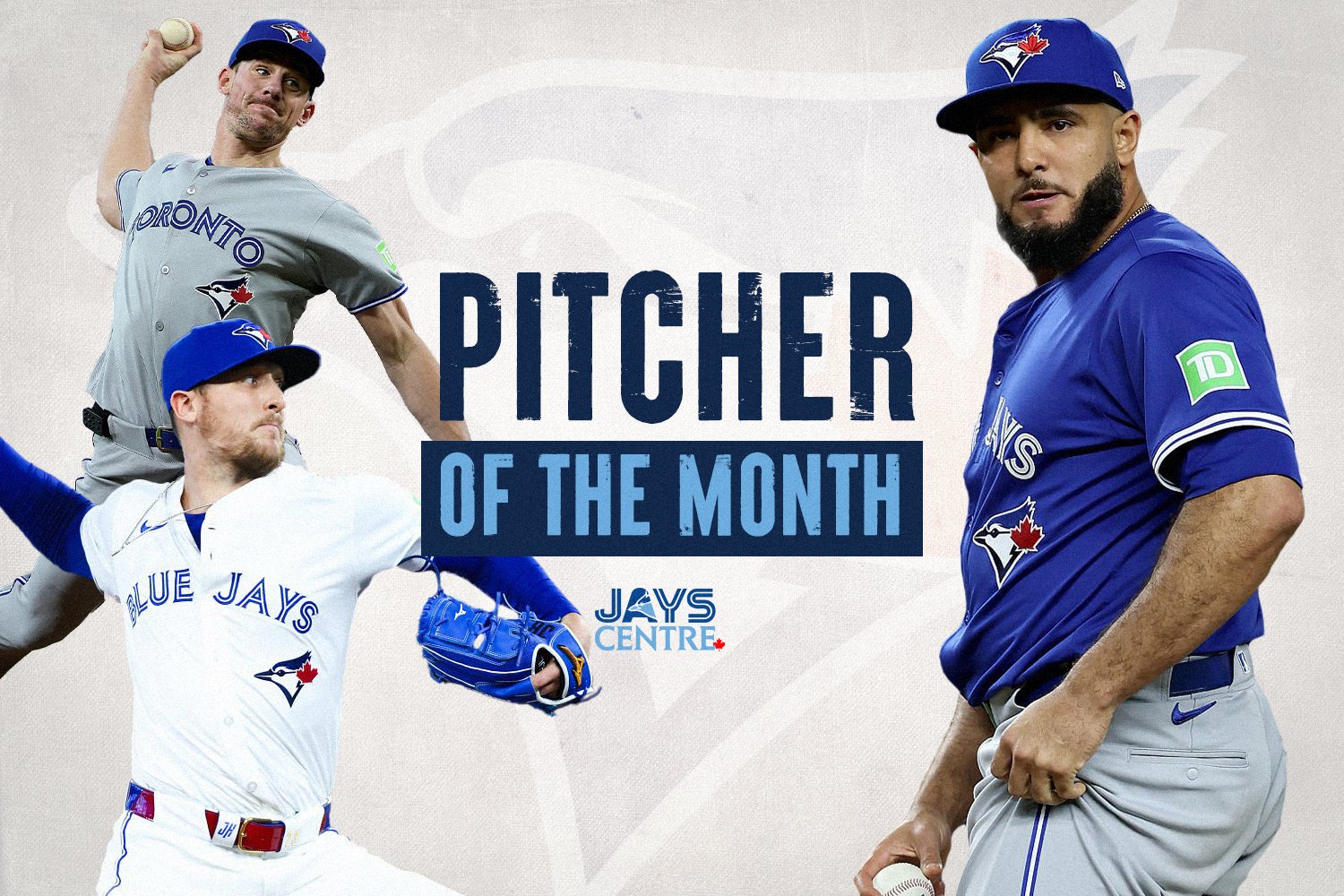 For a team fighting to get back to .500, you can imagine there have been some divergent pitching performances. Three pitchers that made appearances on Opening Day are no longer on the active roster, and for every flash of brilliance, there seems to be an accompanying moment where we as fans bury our faces in our hands. As a team, the Blue Jays currently sit 22nd for ERA (4.31), 24th for FIP (4.41), and 20th for fWAR (1.8), and they have given up more home runs than any other team in baseball. March/April Pitchers of the Month #3 - Yimi García - 13 IP, 0 ER, 16 K, 4 BB, 4 HLD García is the only pitcher the Jays have who has yet to give up a run. He struck out all four batters he faced in the April 16 game against Atlanta, helping propel Toronto to a new team record. He’s mixed his pitches well and sports a 1.77 FIP, good for second on the team. He’s even picked up a save on a night when our #2 pitcher was unavailable. #2 - Jeff Hoffman - 15.1 IP, 2 ER, 22 K, 1 BB, 6 SV Apologies to (future Hall of Famer) Max Scherzer, but Jeff Hoffman has been, by far, Toronto's most impactful offseason pitching acquisition. Hoffman’s only walk issued on the season was an intentional one in an extra-innings game against Boston in which he pitched the ninth and 10th innings and picked up the win. He’s secured the save in every opportunity he’s been given and has earned three bonus wins with late Jays victories - each time pitching two scoreless innings. When Hoffman was signed, Ross Atkins said, “Jeff will get an opportunity to close games.” He has certainly made the most of that opportunity. #1 - Chris Bassitt - 34.1 IP, 10 ER, 39 K, 7 BB, 2.32 FIP He was projected to be a stable, middle-of-the-rotation, inning-eating pitcher. What he’s been so far is outstanding. He’s our pitcher of the month: Chris Bassitt. They call him the Hound on the Mound, and going into his last start, he led the AL in FIP; in other words, he got that dog in him. Even on the heels of his worst performance of the season, he still ranks fourth in the AL in FIP and top ten in bWAR, BB/9, K/9, Ks, K/BB, and ERA+. His performances have also allowed him to lead the team in innings pitched, and considering the way the Jays have had to lean on their bullpen, that’s a level of value slightly more difficult to quantify. Bassitt was also one of the vocal veterans towards the end of a disappointing season last year, saying that the Jays had ‘unfixable’ problems. He walked those comments back some, but a lot of people (myself included) didn’t fully buy his reframing of the initial statement. That makes statements like the one above, shared with Keegan Matheson a couple of weeks ago, even more impactful. If that attitude is supplying a positive feedback loop culminating in Bassitt's results, that would be another theoretical feather in the front office's cap. Bassitt is 36 years old and in the last year of his contract. If he can keep Father Time at a distance and continue putting in performances like he has through March/April, this won’t be the last time we see him in this column.
 -
For a team fighting to get back to .500, you can imagine there have been some divergent pitching performances. Three pitchers that made appearances on Opening Day are no longer on the active roster, and for every flash of brilliance, there seems to be an accompanying moment where we as fans bury our faces in our hands. As a team, the Blue Jays currently sit 22nd for ERA (4.31), 24th for FIP (4.41), and 20th for fWAR (1.8), and they have given up more home runs than any other team in baseball. March/April Pitchers of the Month #3 - Yimi García - 13 IP, 0 ER, 16 K, 4 BB, 4 HLD García is the only pitcher the Jays have who has yet to give up a run. He struck out all four batters he faced in the April 16 game against Atlanta, helping propel Toronto to a new team record. He’s mixed his pitches well and sports a 1.77 FIP, good for second on the team. He’s even picked up a save on a night when our #2 pitcher was unavailable. #2 - Jeff Hoffman - 15.1 IP, 2 ER, 22 K, 1 BB, 6 SV Apologies to (future Hall of Famer) Max Scherzer, but Jeff Hoffman has been, by far, Toronto's most impactful offseason pitching acquisition. Hoffman’s only walk issued on the season was an intentional one in an extra-innings game against Boston in which he pitched the ninth and 10th innings and picked up the win. He’s secured the save in every opportunity he’s been given and has earned three bonus wins with late Jays victories - each time pitching two scoreless innings. When Hoffman was signed, Ross Atkins said, “Jeff will get an opportunity to close games.” He has certainly made the most of that opportunity. #1 - Chris Bassitt - 34.1 IP, 10 ER, 39 K, 7 BB, 2.32 FIP He was projected to be a stable, middle-of-the-rotation, inning-eating pitcher. What he’s been so far is outstanding. He’s our pitcher of the month: Chris Bassitt. They call him the Hound on the Mound, and going into his last start, he led the AL in FIP; in other words, he got that dog in him. Even on the heels of his worst performance of the season, he still ranks fourth in the AL in FIP and top ten in bWAR, BB/9, K/9, Ks, K/BB, and ERA+. His performances have also allowed him to lead the team in innings pitched, and considering the way the Jays have had to lean on their bullpen, that’s a level of value slightly more difficult to quantify. Bassitt was also one of the vocal veterans towards the end of a disappointing season last year, saying that the Jays had ‘unfixable’ problems. He walked those comments back some, but a lot of people (myself included) didn’t fully buy his reframing of the initial statement. That makes statements like the one above, shared with Keegan Matheson a couple of weeks ago, even more impactful. If that attitude is supplying a positive feedback loop culminating in Bassitt's results, that would be another theoretical feather in the front office's cap. Bassitt is 36 years old and in the last year of his contract. If he can keep Father Time at a distance and continue putting in performances like he has through March/April, this won’t be the last time we see him in this column. View full article
- 1 reply
-
- 1
-

-
- chris bassitt
- yimi garcia
- (and 1 more)
-
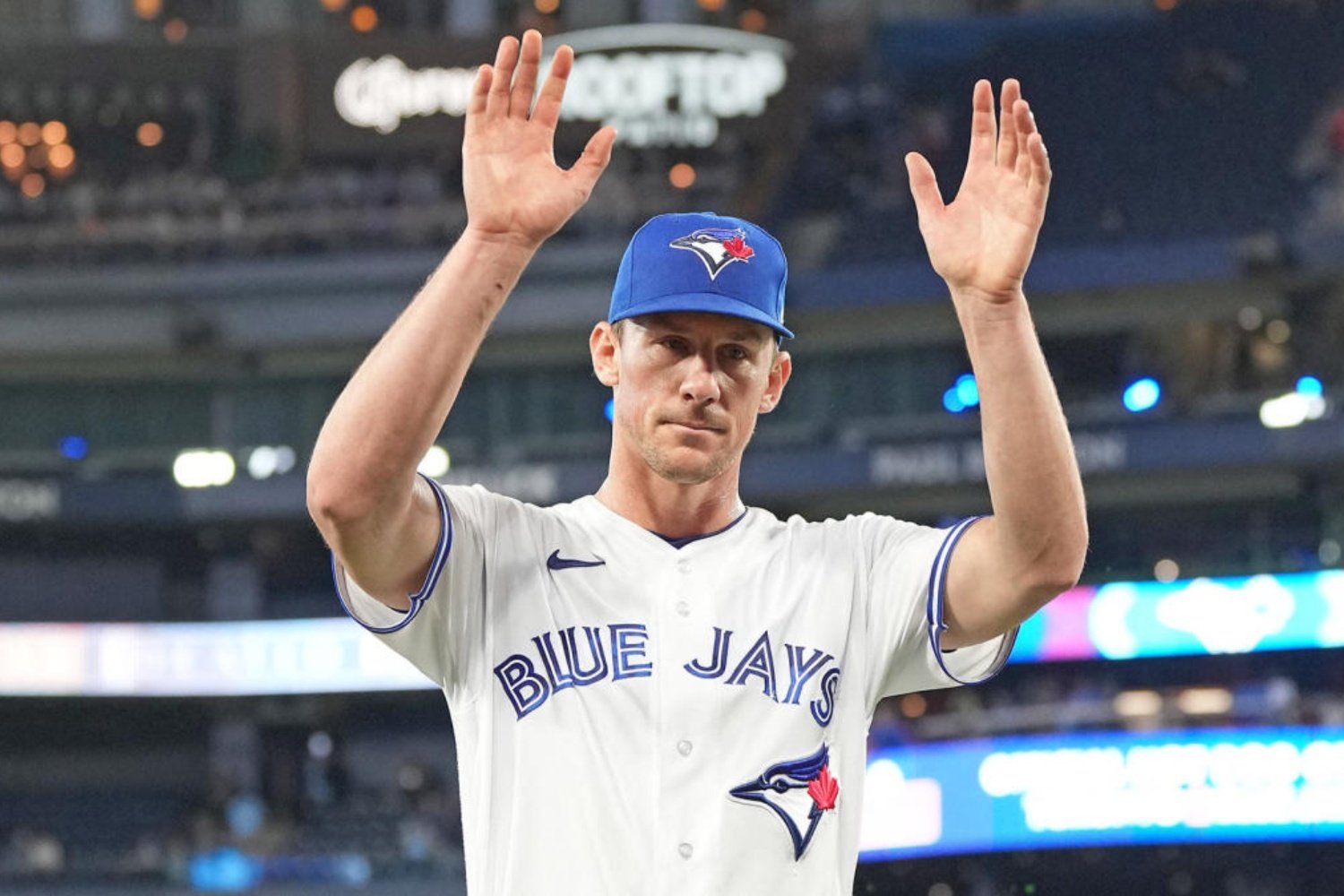 Weekly Snapshot: Mon, 4/14 through Sun, 4/20 *** Record Last Week: 3-3 (Overall: 12-10) Run Differential Last Week: -6 (Overall: +2) Standings: Second Place in AL East (2.0 GB), 3rd Place in AL Wildcard (0.0 GB) Last Week's Results: Game 17: | ATL 8 - TOR 4 Lucas: 5.0 IP, 6 H, 8 ER, 4 BB, 3 K Straw: 1-for-2, HR Game 18: | ATL 3 - TOR 6 Gausman: 6.0 IP, 6 H, 2 ER, 0 BB, 6 K Roden: first career home run. Santander: 3-run HR same inning Game 19: | ATL 1 - TOR 3 Bassitt: 5.0 IP, 3 H, 0 ER, 2 BB, 10 K Guerrero Jr.: 2-for-3 with first HR of the season Team record for K’s in a nine-inning game Game 20: | SEA 1 - TOR 3 Francis: 6.0 IP, 5 H, 1 ER, 1 BB, 5 K Barger: 3 OF assists Game 21: | SEA 8 - TOR 4 (12 innings) Berríos: 6.0 IP, 4 H, 3 ER, 4 BB, 3 K 12 team hits - none when it counted (nine chances to win) Game 22: | SEA 8 - TOR 3 Lucas: 1.2 IP, 7 H, 6 ER, 2 BB, 5 K Shultz: 4.1 IP, 2 H, 0 ER, 0 BB, 8 K Highlights Chris Bassitt and his 10 Ks against Atlanta led the charge and set the tone for the Jays to set the team record for strikeouts in a nine-inning game. The bullpen as a whole had a pretty good week. Brendon Little, Nick Sandlin, Yimi García and Jeff Hoffman combined for four innings of one-run ball while striking out nine to set the team record in Bassitt’s start. The next game, Mason Fluharty, Chad Green, García and Hoffman combined for three shutout innings in the win over Seattle. Little, Sandlin, Green and Yariel Rodríguez kept the Jays in it through 11 innings (Berríos’ start) the next game. There were some hiccups – Jacob Barnes took the loss in the 12th inning of that game and has already been DFA’d – but considering the state of the bullpen last season, this has been a bright spot. Paxton Schultz made his first MLB appearance and tied the league record for strikeouts by a reliever in their debut with eight. He pitched 4.1 scoreless innings and kept the Jays within striking distance. Can’t ask for more than that! Addison Barger made his way back to the big club this week and made a couple of highlight-reel plays with his arm. In the span of two innings, he made the first, third and seventh-fastest thrown outfield assists of the season. That includes a 98.8-mph cannon, which was faster than any pitch thrown in the game (Hoffman and Bryan Woo each threw a 98.0-mph fastball to tie for the fastest pitches). Lowlights Run creation. This was especially clear in the extra-innings loss to Seattle. The Jays had nine opportunities where a single would have won the game but came up empty. Outside of the double-HR inning that saw Alan Roden and Anthony Santander go deep, it was really an issue all week. It’s not even a power-drought issue, but the fact that Rowdy Tellez was on the other side of it, crushing a grand slam for the win, was a real exclamation point. No team in the American League has had more plate appearances with RISP than Toronto, but their 82 wRC+ in those situations flat out isn’t good enough. After acing his first two starts, Easton Lucas’ two starts this week were more from the bottom of the deck. 14 earned runs given up in less than seven innings of work (he didn’t see the end of the second inning against Seattle) is a tough look. With this spot in the rotation due up next weekend in the Bronx, we might see a rotation shakeup before then. News, Notes and Not Playing Yimi García celebrated 10 years of service time in the league and has now pitched more innings with Toronto than any other franchise he has been a part of. Nathan Lukes and Daulton Varsho had babies. A time for celebration to be sure, but also a time to reflect on the passage of time. Former Jays Centre managing editor Davy Andrews took a deep dive over at FanGraphs to see if we could learn anything more. Day-to-day: George Springer Springer missed most of the Atlanta series dealing with a wrist issue, but was back in the lineup for the Seattle games. This is his second day-to-day mention and one we’ll be keeping an eye on. 10-day IL: Daulton Varsho Varsho has started a rehab assignment and could be back with the Jays by the end of the month. 15-day IL: Erik Swanson, Ryan Burr, Max Scherzer, Nick Sandlin Sandlin joins the list of pitchers on the 15-day. He had been feeling a lat issue and pitched through it, but the club is taking the cautious route to reevaluate over the next couple of weeks. Scherzer received another cortisone shot in his thumb and is expected to join the Jays on their road trip this week. However, his timeline to return to game action remains unclear. Trending Storyline With just four home runs hit last week, we’re still looking for the power switch to be flipped fully on. Straw’s homer was as satisfying as it was unlikely, Roden and Santander going deep in the same inning was transcendent, and Vladdy getting his first of the season was a good start – but that was it. Only the light-hitting Royals have fewer long balls than Toronto, and considering the Jays' success with getting runners on base, the lack of power production has been especially frustrating. Looking Ahead A three-game set in Houston to start the week and another in New York to take on the Yankees to end it. Daikin Park and Yankee Stadium offer shorter porches in both left and right field than the Rogers Centre… maybe that will kick-start some Toronto power.
 -
The Jays won a series, lost a series and left a lot of runners on base. Let's look back at the week that was. Weekly Snapshot: Mon, 4/14 through Sun, 4/20 *** Record Last Week: 3-3 (Overall: 12-10) Run Differential Last Week: -6 (Overall: +2) Standings: Second Place in AL East (2.0 GB), 3rd Place in AL Wildcard (0.0 GB) Last Week's Results: Game 17: | ATL 8 - TOR 4 Lucas: 5.0 IP, 6 H, 8 ER, 4 BB, 3 K Straw: 1-for-2, HR Game 18: | ATL 3 - TOR 6 Gausman: 6.0 IP, 6 H, 2 ER, 0 BB, 6 K Roden: first career home run. Santander: 3-run HR same inning Game 19: | ATL 1 - TOR 3 Bassitt: 5.0 IP, 3 H, 0 ER, 2 BB, 10 K Guerrero Jr.: 2-for-3 with first HR of the season Team record for K’s in a nine-inning game Game 20: | SEA 1 - TOR 3 Francis: 6.0 IP, 5 H, 1 ER, 1 BB, 5 K Barger: 3 OF assists Game 21: | SEA 8 - TOR 4 (12 innings) Berríos: 6.0 IP, 4 H, 3 ER, 4 BB, 3 K 12 team hits - none when it counted (nine chances to win) Game 22: | SEA 8 - TOR 3 Lucas: 1.2 IP, 7 H, 6 ER, 2 BB, 5 K Shultz: 4.1 IP, 2 H, 0 ER, 0 BB, 8 K Highlights Chris Bassitt and his 10 Ks against Atlanta led the charge and set the tone for the Jays to set the team record for strikeouts in a nine-inning game. The bullpen as a whole had a pretty good week. Brendon Little, Nick Sandlin, Yimi García and Jeff Hoffman combined for four innings of one-run ball while striking out nine to set the team record in Bassitt’s start. The next game, Mason Fluharty, Chad Green, García and Hoffman combined for three shutout innings in the win over Seattle. Little, Sandlin, Green and Yariel Rodríguez kept the Jays in it through 11 innings (Berríos’ start) the next game. There were some hiccups – Jacob Barnes took the loss in the 12th inning of that game and has already been DFA’d – but considering the state of the bullpen last season, this has been a bright spot. Paxton Schultz made his first MLB appearance and tied the league record for strikeouts by a reliever in their debut with eight. He pitched 4.1 scoreless innings and kept the Jays within striking distance. Can’t ask for more than that! Addison Barger made his way back to the big club this week and made a couple of highlight-reel plays with his arm. In the span of two innings, he made the first, third and seventh-fastest thrown outfield assists of the season. That includes a 98.8-mph cannon, which was faster than any pitch thrown in the game (Hoffman and Bryan Woo each threw a 98.0-mph fastball to tie for the fastest pitches). Lowlights Run creation. This was especially clear in the extra-innings loss to Seattle. The Jays had nine opportunities where a single would have won the game but came up empty. Outside of the double-HR inning that saw Alan Roden and Anthony Santander go deep, it was really an issue all week. It’s not even a power-drought issue, but the fact that Rowdy Tellez was on the other side of it, crushing a grand slam for the win, was a real exclamation point. No team in the American League has had more plate appearances with RISP than Toronto, but their 82 wRC+ in those situations flat out isn’t good enough. After acing his first two starts, Easton Lucas’ two starts this week were more from the bottom of the deck. 14 earned runs given up in less than seven innings of work (he didn’t see the end of the second inning against Seattle) is a tough look. With this spot in the rotation due up next weekend in the Bronx, we might see a rotation shakeup before then. News, Notes and Not Playing Yimi García celebrated 10 years of service time in the league and has now pitched more innings with Toronto than any other franchise he has been a part of. Nathan Lukes and Daulton Varsho had babies. A time for celebration to be sure, but also a time to reflect on the passage of time. Former Jays Centre managing editor Davy Andrews took a deep dive over at FanGraphs to see if we could learn anything more. Day-to-day: George Springer Springer missed most of the Atlanta series dealing with a wrist issue, but was back in the lineup for the Seattle games. This is his second day-to-day mention and one we’ll be keeping an eye on. 10-day IL: Daulton Varsho Varsho has started a rehab assignment and could be back with the Jays by the end of the month. 15-day IL: Erik Swanson, Ryan Burr, Max Scherzer, Nick Sandlin Sandlin joins the list of pitchers on the 15-day. He had been feeling a lat issue and pitched through it, but the club is taking the cautious route to reevaluate over the next couple of weeks. Scherzer received another cortisone shot in his thumb and is expected to join the Jays on their road trip this week. However, his timeline to return to game action remains unclear. Trending Storyline With just four home runs hit last week, we’re still looking for the power switch to be flipped fully on. Straw’s homer was as satisfying as it was unlikely, Roden and Santander going deep in the same inning was transcendent, and Vladdy getting his first of the season was a good start – but that was it. Only the light-hitting Royals have fewer long balls than Toronto, and considering the Jays' success with getting runners on base, the lack of power production has been especially frustrating. Looking Ahead A three-game set in Houston to start the week and another in New York to take on the Yankees to end it. Daikin Park and Yankee Stadium offer shorter porches in both left and right field than the Rogers Centre… maybe that will kick-start some Toronto power. View full article
-
Alan Roden hit his first career home run this week and has been a bright spot in the Jays lineup so far. He has a chance to walk a path that few other Jays players have before. Last month, Alan Roden was added to FanGraphs' list of the top 100 prospects. Simon Li wrote about it and noted that the Jays “haven't drafted and developed a solid starting outfielder in a long while.” That got me thinking about it, so I went back and looked at the players who have made up the Blue Jays outfielders the last few seasons. First off, for a player to be considered here they had to play at least a third of the games in a season in the outfield. In a typical 162-game year, that’s a threshold of 54 games (I adjusted appropriately for shortened seasons). In the last six seasons, only the recently demoted Davis Schneider and his 93 outfield starts in 2024 qualify. Going back to 2011, the only other name that gets added to the list is Kevin Pillar. Not happy with that, I took it all the way back to 1977! In the history of the Toronto Blue Jays 68 players have taken a spot in the outfield for at least a third of the games. In the early days of the franchise, the Jays relied on the expansion draft and purchasing contracts to fill their roster. In 1980, Toronto saw the debut of their first drafted outfielder: Lloyd Moseby, who had been taken in the first round of the 1978 draft, would play 104 games. Jesse Barfield, who was drafted a year earlier, would join Moseby in 1982 and anchor the outfield with Rule 5 acquisition George Bell for the majority of the '80s. In the 49-year history of the franchise, Toronto has drafted 14 outfielders who were able to work their way through the minors and contribute at the major league level. Almost two-thirds of those players were drafted before Alan Roden was born! In fact, the top six by bWAR were all drafted before the turn of the millennium (Roden was born December 22, 1999). Without hyperbole, Roden has a real chance to move into the top 10 of this list before the 2025 season is over. Interestingly, of those drafted players, nine were taken in the first three rounds of the draft, and six were first-rounders. Without a doubt, the best value the Jays have ever found in the draft is Jesse Barfield. Barfield's 28.8 bWAR not only tops the list, but he was taken in the ninth round! The deepest into a draft we’ve ever pulled a player who made this list is Kevin Pillar, who was selected in the 32nd round of the 2011 draft. The Jays selected four other outfielders ahead of him that year. None of them ever made the majors. A couple of other fun tidbits to come out of this exercise. One is Fred Lewis, who played 99 games in the Jays outfield in 2010. On Baseball Refernce, Lewis is listed as being “sent” to the Jays as part of a conditional deal. Typically, these moves are phrased as “traded to the Jays…” and that’s how I classified it for the purposes of this article. I can’t find the other half of the deal - it was for a PTBNL or cash, but that either never happened, or I just haven't been able to find a record of it. Another is Candy Maldonado, who was acquired by Toronto in a trade and then also signed later as a free agent. Rather than count him twice, he went in the trade column. To bring this back to Roden, it has absolutely been a long time since we’ve had a drafted player who made it as far as he has. Sure, it’s only 18 games into his Blue Jays career and the road could fork in many different directions, but we’re in the business of dreaming for the future. View full article
-
Alan Roden Has Taken a Surprisingly Rare Route to the Show
Mike LeSage posted an article in Blue Jays
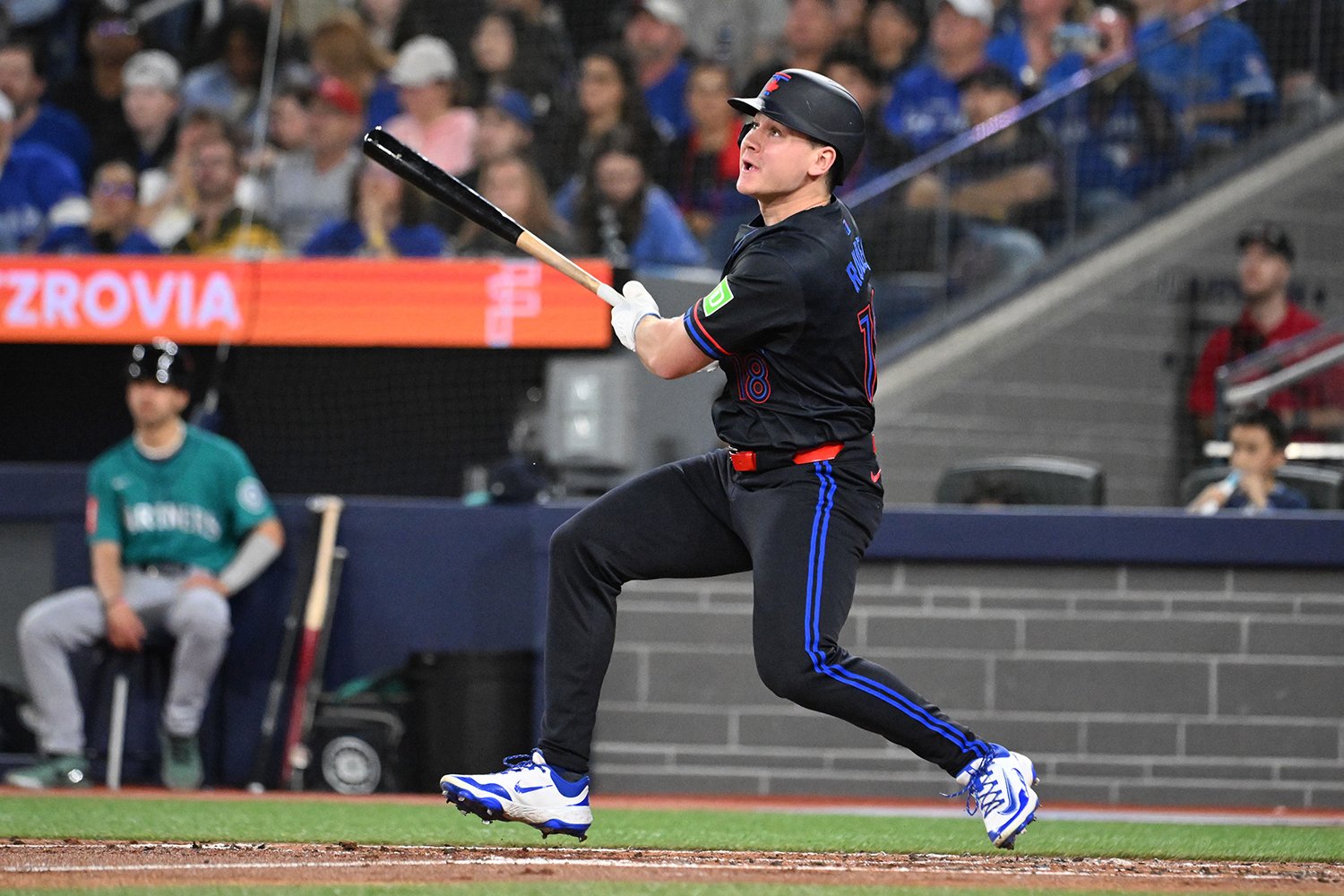 Last month, Alan Roden was added to FanGraphs' list of the top 100 prospects. Simon Li wrote about it and noted that the Jays “haven't drafted and developed a solid starting outfielder in a long while.” That got me thinking about it, so I went back and looked at the players who have made up the Blue Jays outfielders the last few seasons. First off, for a player to be considered here they had to play at least a third of the games in a season in the outfield. In a typical 162-game year, that’s a threshold of 54 games (I adjusted appropriately for shortened seasons). In the last six seasons, only the recently demoted Davis Schneider and his 93 outfield starts in 2024 qualify. Going back to 2011, the only other name that gets added to the list is Kevin Pillar. Not happy with that, I took it all the way back to 1977! In the history of the Toronto Blue Jays 68 players have taken a spot in the outfield for at least a third of the games. In the early days of the franchise, the Jays relied on the expansion draft and purchasing contracts to fill their roster. In 1980, Toronto saw the debut of their first drafted outfielder: Lloyd Moseby, who had been taken in the first round of the 1978 draft, would play 104 games. Jesse Barfield, who was drafted a year earlier, would join Moseby in 1982 and anchor the outfield with Rule 5 acquisition George Bell for the majority of the '80s. In the 49-year history of the franchise, Toronto has drafted 14 outfielders who were able to work their way through the minors and contribute at the major league level. Almost two-thirds of those players were drafted before Alan Roden was born! In fact, the top six by bWAR were all drafted before the turn of the millennium (Roden was born December 22, 1999). Without hyperbole, Roden has a real chance to move into the top 10 of this list before the 2025 season is over. Interestingly, of those drafted players, nine were taken in the first three rounds of the draft, and six were first-rounders. Without a doubt, the best value the Jays have ever found in the draft is Jesse Barfield. Barfield's 28.8 bWAR not only tops the list, but he was taken in the ninth round! The deepest into a draft we’ve ever pulled a player who made this list is Kevin Pillar, who was selected in the 32nd round of the 2011 draft. The Jays selected four other outfielders ahead of him that year. None of them ever made the majors. A couple of other fun tidbits to come out of this exercise. One is Fred Lewis, who played 99 games in the Jays outfield in 2010. On Baseball Refernce, Lewis is listed as being “sent” to the Jays as part of a conditional deal. Typically, these moves are phrased as “traded to the Jays…” and that’s how I classified it for the purposes of this article. I can’t find the other half of the deal - it was for a PTBNL or cash, but that either never happened, or I just haven't been able to find a record of it. Another is Candy Maldonado, who was acquired by Toronto in a trade and then also signed later as a free agent. Rather than count him twice, he went in the trade column. To bring this back to Roden, it has absolutely been a long time since we’ve had a drafted player who made it as far as he has. Sure, it’s only 18 games into his Blue Jays career and the road could fork in many different directions, but we’re in the business of dreaming for the future.
 -
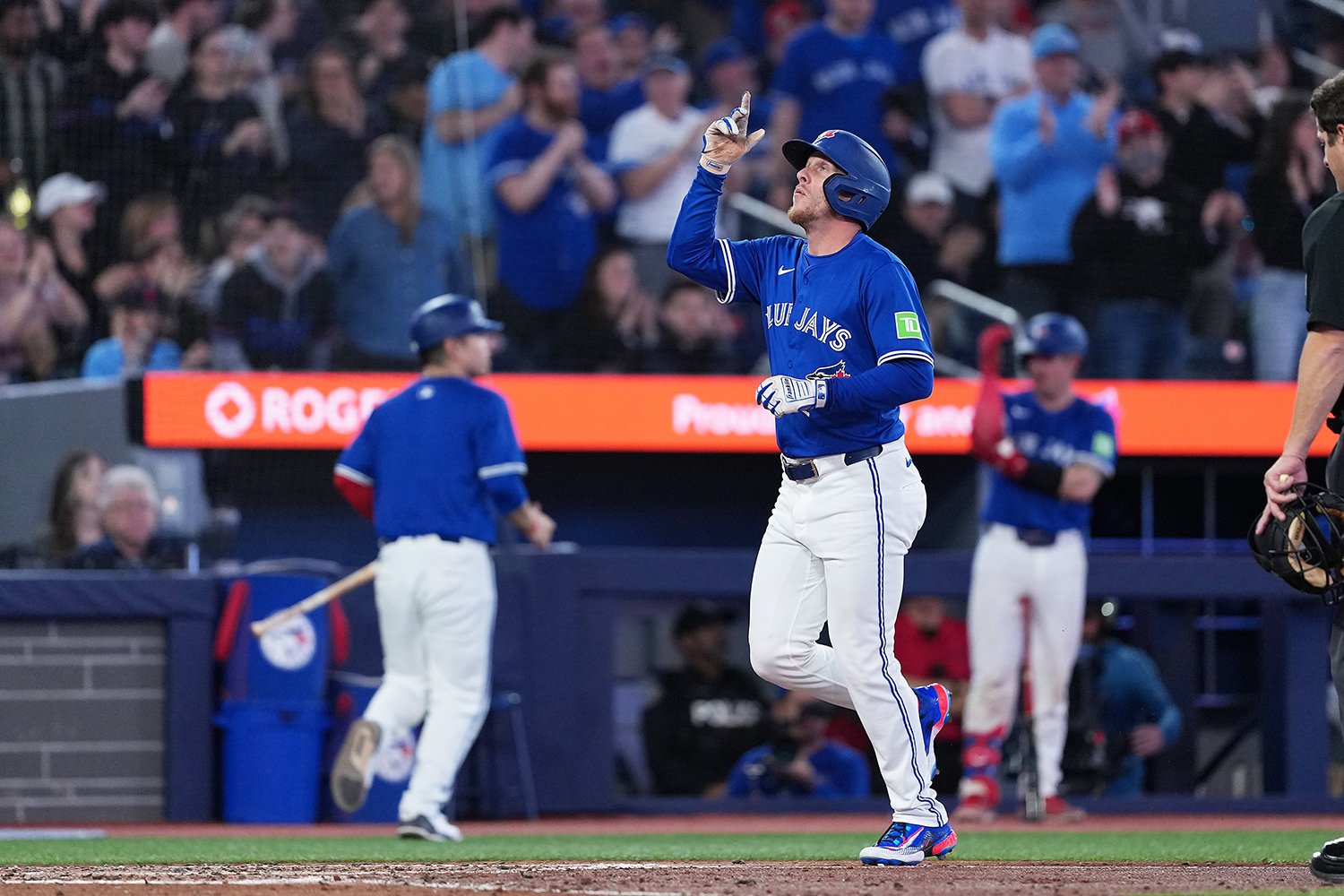 Before we get to the “clunk” let’s flash back to Toronto’s offseason. General manager Ross Atkins had previously identified power as “lowhanging fruit” in the free agent market, and after finishing 26th in the league in home runs, the Blue Jays were hungry. Naturally, when scouring the league for power potential, the Jays turned their eyes toward the team with the lowest exit velocity and hard-hit rate in the league: the Cleveland Guardians. After a season in which an eight-headed monster comprised of — deep breath — Davis Schneider, Isiah Kiner-Falefa, Spencer Horwitz, Cavan Biggio, Leo Jiménez, Will Wagner, Ernie Clement, and Orelvis Martínez shared second base, the Jays saw a chance to grab a player that would nail down the position and bring the power the team had been lacking. Enter Andrés Giménez. All he’s done so far this season is start at second base over 94% of the time and lead the team in homers. Just like we all knew he would. Not satisfied with adding a power-first infielder to the roster, Toronto wanted to make some additions to the outfield. Maybe the previous call hadn’t disconnected. Maybe Ross Atkins instinctively dials the 216 area code because of all the time he spent in Cleveland. Either way, the Jays had Kevin Kiermaier’s four 2024 home runs to replace, and Cleveland had just the man for the job. Myles Straw, pack up your big bat, you’re headed North! Sure, some might have looked at the timing of the trade and come to the conclusion that he was just the straw that stirred the drink in a Rokie Sasaki bonus pool cocktail. Of course, Sasaki went to the Dodgers as expected, so that couldn’t have ever been part of the plan. No, the headline of the deal was surely Straw’s bat anchoring the outfield, even if it was just meant as Daulton Varsho insurance. Look, I’ll level with you, I didn’t believe in Straw’s power either. I left him off of both of Toronto’s pre-season roster projections. I looked at his ISO+ and I believed what I saw. I saw a player with a career ISO+ of 40. Forty. FORTY. As in, 60% below the league average. That's tied for the lowest in the majors over the last decade. In the history of the AL and NL dating back to 1871, Straw's ISO+ is the tied for the 57th-lowest. Ever. There are 3,871 harder-hitting players ranked above him. That’s enough to fill the active roster of 148 separate teams, almost five leagues worth of players! Of course, that’s one of the great things about the game of baseball. When you buy a ticket to a game or put it on the TV, there’s always a chance you’re going to see something special. Something historic. Here’s where we get to Myles Straw’s home run - do yourself a favour and turn the volume all the way up to 11 for this one: So often it’s the crack of the bat on the ball we love to hear, and that’s an undeniably beautiful sound. But this? A ball with a 100.3 mph exit velocity slamming into the front row railing 397 feet away (the third-farthest Straw has ever hit a ball) and the resonating clunk it produces? Almost magical. A clunk with enough reverberation to propel that ball another 8-9 rows into the stands. Straw really has given us more than we expected and I hope the fan who walked away with that souvenir appreciates the gift they were given.
 -
Monday night in Toronto, Myles Straw hit a homer that had to be seen and heard to be believed. Before we get to the “clunk” let’s flash back to Toronto’s offseason. General manager Ross Atkins had previously identified power as “lowhanging fruit” in the free agent market, and after finishing 26th in the league in home runs, the Blue Jays were hungry. Naturally, when scouring the league for power potential, the Jays turned their eyes toward the team with the lowest exit velocity and hard-hit rate in the league: the Cleveland Guardians. After a season in which an eight-headed monster comprised of — deep breath — Davis Schneider, Isiah Kiner-Falefa, Spencer Horwitz, Cavan Biggio, Leo Jiménez, Will Wagner, Ernie Clement, and Orelvis Martínez shared second base, the Jays saw a chance to grab a player that would nail down the position and bring the power the team had been lacking. Enter Andrés Giménez. All he’s done so far this season is start at second base over 94% of the time and lead the team in homers. Just like we all knew he would. Not satisfied with adding a power-first infielder to the roster, Toronto wanted to make some additions to the outfield. Maybe the previous call hadn’t disconnected. Maybe Ross Atkins instinctively dials the 216 area code because of all the time he spent in Cleveland. Either way, the Jays had Kevin Kiermaier’s four 2024 home runs to replace, and Cleveland had just the man for the job. Myles Straw, pack up your big bat, you’re headed North! Sure, some might have looked at the timing of the trade and come to the conclusion that he was just the straw that stirred the drink in a Rokie Sasaki bonus pool cocktail. Of course, Sasaki went to the Dodgers as expected, so that couldn’t have ever been part of the plan. No, the headline of the deal was surely Straw’s bat anchoring the outfield, even if it was just meant as Daulton Varsho insurance. Look, I’ll level with you, I didn’t believe in Straw’s power either. I left him off of both of Toronto’s pre-season roster projections. I looked at his ISO+ and I believed what I saw. I saw a player with a career ISO+ of 40. Forty. FORTY. As in, 60% below the league average. That's tied for the lowest in the majors over the last decade. In the history of the AL and NL dating back to 1871, Straw's ISO+ is the tied for the 57th-lowest. Ever. There are 3,871 harder-hitting players ranked above him. That’s enough to fill the active roster of 148 separate teams, almost five leagues worth of players! Of course, that’s one of the great things about the game of baseball. When you buy a ticket to a game or put it on the TV, there’s always a chance you’re going to see something special. Something historic. Here’s where we get to Myles Straw’s home run - do yourself a favour and turn the volume all the way up to 11 for this one: So often it’s the crack of the bat on the ball we love to hear, and that’s an undeniably beautiful sound. But this? A ball with a 100.3 mph exit velocity slamming into the front row railing 397 feet away (the third-farthest Straw has ever hit a ball) and the resonating clunk it produces? Almost magical. A clunk with enough reverberation to propel that ball another 8-9 rows into the stands. Straw really has given us more than we expected and I hope the fan who walked away with that souvenir appreciates the gift they were given. View full article
-
José Berríos joined the 100-win club on Monday at Fenway Park. José Berríos got the win in his last start, and with that he joined the triple-digit club, earning his 100th career win. In our preseason Milestones to Watch For piece we had this in the Ironclad Lock section, and rightfully so (Andrés Giménez has already hit 100 career stolen bases). Fifty-five of those wins came with Minnesota, where Berríos played before joining the Jays. He was a first-round draft pick (32nd overall) in 2012 and made his major league debut in 2016. He bounced between Triple-A and the majors, picking up his first three wins before cementing himself with the big club in May of 2017. He was a two-time all-star with the Twins (2018 and ‘19), and headed into the 2021 trade deadline, he was rumored to be available. Interestingly, two other high-profile pitchers said to be available that year were Max Scherzer, who ultimately went to the Dodgers, and Yusei Kikuchi, who stuck around with the Mariners until the end of the season. Both, of course, would go on to sign as with the Jays as free agents in later years, Kickuchi in ‘22 and Scherzer this season. After the Scherzer trade “fell through” (the Jays were said to be interested, but I can’t find any historical record that says they were front-runners), Toronto turned their sights towards Minnesota and agreed on a deal for Berríos, giving up prospects Austin Martin and Simeon Woods-Richardson. Berríos wasted no time getting into the win column with Toronto, picking up the W in his first start with his new team: a 5-1 win over the Royals in the Rogers Centre. It was an emotional win for both Berríos and the city as it gave the Jays a sweep over the Royals in the first series played in Toronto since the end of the 2019 season. The Jays played home games in Buffalo and Florida due to travel restrictions in the early days of the pandemic. That off-season saw the Jays award Berríos a seven-year, $131 million contract, buying out the last year of arbitration and securing his spot in the rotation for years to come. Since then, he has been Toronto’s Opening Day starter in three out of four seasons and moved up to 18th in franchise history in wins. There are 18 active players with 100 wins or more. At 31, Berríos is the youngest. Only Aaron Nola (age 32, 104 wins) and Michael Wacha (age 33, 101 wins) are within two years of his age. Berríos also has two teammates ahead of him on the list. Kevin Gausman is close (two wins and three years ahead of him), and Scherzer is an entire career ahead (10 years and 116 wins). Eleven of those players ahead of him, including Gausman, are within 12 wins, so depending on how this season shakes out, we could see Berríos leapfrog a few names. I mentioned earlier that Berríos’s 45 wins with the Jays have him 18th in franchise history. He would only need seven more wins to move all the way 11th and to put Kelvim Escobar (58 wins) and J.A. Happ (59 wins) on notice. A 15-win season (something Berríos has only done once) would give him sole possession of ninth and bring Juan Guzmán and Todd Stottlemyre into range for the 2026 season.. Before we get too far ahead of ourselves, let's just take a moment to appreciate the here and now, and hope that Berríos notches 101 in Baltimore tomorrow. View full article
-
 José Berríos got the win in his last start, and with that he joined the triple-digit club, earning his 100th career win. In our preseason Milestones to Watch For piece we had this in the Ironclad Lock section, and rightfully so (Andrés Giménez has already hit 100 career stolen bases). Fifty-five of those wins came with Minnesota, where Berríos played before joining the Jays. He was a first-round draft pick (32nd overall) in 2012 and made his major league debut in 2016. He bounced between Triple-A and the majors, picking up his first three wins before cementing himself with the big club in May of 2017. He was a two-time all-star with the Twins (2018 and ‘19), and headed into the 2021 trade deadline, he was rumored to be available. Interestingly, two other high-profile pitchers said to be available that year were Max Scherzer, who ultimately went to the Dodgers, and Yusei Kikuchi, who stuck around with the Mariners until the end of the season. Both, of course, would go on to sign as with the Jays as free agents in later years, Kickuchi in ‘22 and Scherzer this season. After the Scherzer trade “fell through” (the Jays were said to be interested, but I can’t find any historical record that says they were front-runners), Toronto turned their sights towards Minnesota and agreed on a deal for Berríos, giving up prospects Austin Martin and Simeon Woods-Richardson. Berríos wasted no time getting into the win column with Toronto, picking up the W in his first start with his new team: a 5-1 win over the Royals in the Rogers Centre. It was an emotional win for both Berríos and the city as it gave the Jays a sweep over the Royals in the first series played in Toronto since the end of the 2019 season. The Jays played home games in Buffalo and Florida due to travel restrictions in the early days of the pandemic. That off-season saw the Jays award Berríos a seven-year, $131 million contract, buying out the last year of arbitration and securing his spot in the rotation for years to come. Since then, he has been Toronto’s Opening Day starter in three out of four seasons and moved up to 18th in franchise history in wins. There are 18 active players with 100 wins or more. At 31, Berríos is the youngest. Only Aaron Nola (age 32, 104 wins) and Michael Wacha (age 33, 101 wins) are within two years of his age. Berríos also has two teammates ahead of him on the list. Kevin Gausman is close (two wins and three years ahead of him), and Scherzer is an entire career ahead (10 years and 116 wins). Eleven of those players ahead of him, including Gausman, are within 12 wins, so depending on how this season shakes out, we could see Berríos leapfrog a few names. I mentioned earlier that Berríos’s 45 wins with the Jays have him 18th in franchise history. He would only need seven more wins to move all the way 11th and to put Kelvim Escobar (58 wins) and J.A. Happ (59 wins) on notice. A 15-win season (something Berríos has only done once) would give him sole possession of ninth and bring Juan Guzmán and Todd Stottlemyre into range for the 2026 season.. Before we get too far ahead of ourselves, let's just take a moment to appreciate the here and now, and hope that Berríos notches 101 in Baltimore tomorrow.
 -
Article: The Questionable April 5 Bullpen Decisions
Mike LeSage replied to Bob Ritchie's topic in Jays Centre Front Page News
I want to put you in a room with John Schneider and listen to you discuss the Monty Hall Problem.- 3 replies
-
- 1
-
-
- yimi garcia
- jeff hoffman
- (and 1 more)
-
A good sweep, a bad sweep and a split. The classic recipe for a .500 team. The Blue Jays won some, the Blue Jays lost some. We’ve got highlights and lowlights. Let’s dig into the week that was. Weekly Snapshot: Thurs, 3/27 through Sun, 4/6 *** Record Last Week: 5-5 (Overall: 5-5) Run Differential Last Week: -6 (Overall: -6) Standings: Third Place in AL East (1.5 GB), 3rd Place in AL Wildcard (0.0 GB) Last Week's Results: Game 1: BAL 12 - TOR 2 Berríos: 5.0 IP, 9 H, 6 ER, 2 BB, 5 K Giménez: 1-for-3, HR, 2 RBI Game 2 | BAL 2 - TOR 8 Gausman: 6.0 IP, 3 H, 2 ER, 1 BB, 5 K Bichette, Guerrero Jr., Santander, Springer, and Wagner all with two hits each Game 3: BAL 9 - TOR 5 Scherzer: 3.0 IP, 3 H, 2 ER, 0 BB, 1 K Bichette 4-for-4 Game 4: BAL 1 - TOR 3 Bassitt: 6.0 IP, 8 H, 1 ER, 2 BB, 7 K Heineman 1-for-3, HR Game 5: WAS 2 - TOR 5 Francis: 6.0 IP, 2 H, 2 ER, 3 BB, 4 K Giménez: Double, HR, three runs scored Game 6: WAS 3 - TOR 5 Berríos: 5.2 IP, 4 H, 2 ER, 3 BB, 8 K Bichette, Kirk, Springer, Wagner and Roden with two hits each Game 7: WAS 2 - TOR 4 Lucas: 5.0 IP, 1 H, 0 ER, 2 BB, 3 K Straw 3-for-4; Springer HR Game 8: TOR 0 - NYM 5 Gausman: 5.1 IP, 2 H, 3 ER, 2 BB, 0K Springer: 2-for-4 with a triple Game 9: TOR 2 - NYM 3 Bassitt: 6.2 IP, 4 H, 0 ER, 0 BB, 9 K Roden 2-for-3 with two runs scored Game 10: TOR 1 - NYM 2 Francis: 5.1 IP, 6 H, 2 ER, 0 BB, 6 K Kirk: 2-for-4 Highlights Before the season started, we tagged Bo Bichette as a Make or Break candidate, and so far he’s been making it. Hitting leadoff, he leads the team in hits. He’s been hitting to all fields, and at his best he’s always been a free-swinging bat, so the low walk count isn’t a cause for concern. When the Jays acquired Andrés Giménez, we often said “if he can just be a league-average hitter, the glove will provide enough value.” He’s already made some great defensive plays, but the power surge in the first five games was a delightful addition. He hit the Jays' first home run of the season and currently leads the team with three. For the pessimists in the crowd, I will allow that he’s 3-for-19 in the last five games, but the offensive powerhouse itch has been scratched, and fairly or not, we’ll be looking for more pop all season. George Springer has certainly been a highlight reel player early on. He’s one of only three Jays with a homer (plus a pair of doubles that hit high up on the wall at Rogers Centrel; this one would’ve been a homer in 13 other ballparks). His 1.076 OPS leads the team, and he tried to run through an outfield wall to make a play. He was listed as day-to-day after that wall collision on Saturday, but was well enough on Sunday to pinch run and steal a base, so hopefully that’s all the maintenance these back spasms needed. Jesse Burrill made the case for Alan Roden to be on the active roster to start the season. Roden started Opening Day and has continued to make the case for himself. He belongs here. He’s come up with some timely hits, has the fewest strikeouts on the team (with more ABs than five other players) and has shown some great range playing the field. Chris Bassitt (also known as the Hound on the Mound) probably had fewer words written about him than any other Jays starter heading into this season. Two times through the rotation and he’s the early season ace. Bassitt has 12 2/3 innings pitched, one earned run, and 16 strikeouts. He got the win in the last game of the Baltimore series and was on track for a win against the Mets following an even better start before that game slipped away. To say Easton Lucas wasn’t expected to start in the first 10 games would be an incredible understatement. He was called upon though, and absolutely aced his first test. Five innings of one-hit shutout ball is enough to give him the ball the next time through the order. If he can have half as good of a game at Fenway as he did in his Rogers Centre debut, start he’ll be back in this highlight section soon. Lowlights It wasn’t all good news though. The beginning of the Max Scherzer era in Toronto lasted 45 pitches before he landed on the IL. We knew the risks when Scherzer was signed, he’s a 40-year-old pitcher after all. To only get three innings despite the "imminent danger” felt disappointing, not to mention the strain it put on the bullpen Just kidding! We’re absolutely going to mention the bullpen. After being called on for seven innings of work through the first two games, the ‘pen had to put up another six innings in game three, and the ripple effects from that, plus the pre-season injuries led to some…inconsistent results. Maybe it isn’t fair to lump the whole ‘pen in here together. Jeff Hoffman has three saves and Yimi García has yet to give up a run. On the heels of wasting Bassitt’s last start though, we’ve got to note that bullpen (and maybe its management) hasn’t been stellar. How early is too early to worry about the lack of home run power from the lineup? Vladimir Guerrero Jr. and Anthony Santander were expected to be the major source of power in this Jays lineup, and so far they’ve combined for zero round-trippers. Granted, they’re not alone. Only Giménez, Springer and Tyler Heineman(!) have homers so far. The Jays rank third-worst in barrel rate. They’re just inside the top 10 for hard-hit rate and exit velocity, so maybe it’s too early to worry. Dingers make good highlights and put runs on the board, though, and after a series where 33% of the Jays runs came via HBP, we could use some long balls. News, Notes and Not Playing Can you believe we waited until this far into a review of the week before mentioning the biggest news this franchise has seen since the unveiling of a retractable roof? Vladimir Guerrero Jr. agreed to a $500-million, 728-week extension to stay in Toronto! A huge deal for the player, a massive deal for the franchise, and more angles to cover than I think we’ve even realized yet. Day-to-day: George Springer 10-day IL: Daulton Varsho 15-day IL: Erik Swanson, Ryan Burr, Max Scherzer 60-day IL: Alek Manoah, Angel Bastardo Trending Storyline How long can Davis Schneider stick with the big club? He’s only had 10 at-bats so far this season, but he has zero hits and six strikeouts to show for it. He's a pinch-hitter or a spot starter who's in there to face lefties, but he won't have the role for very long if he's not hitting. Last season’s 0.0 bWAR and this early season’s -26 OPS+ can’t leave him with too long of a leash. Looking Ahead The road trip continues with two AL East stops: four games in Boston followed by a three-game set in Baltimore. With the division expected to be extremely tight all season, this is a pivotal week even though we’re only 10 games into the season. View full article
-
Toronto Blue Jays Week in Review: Sweeps, Both Good & Bad
Mike LeSage posted an article in Blue Jays
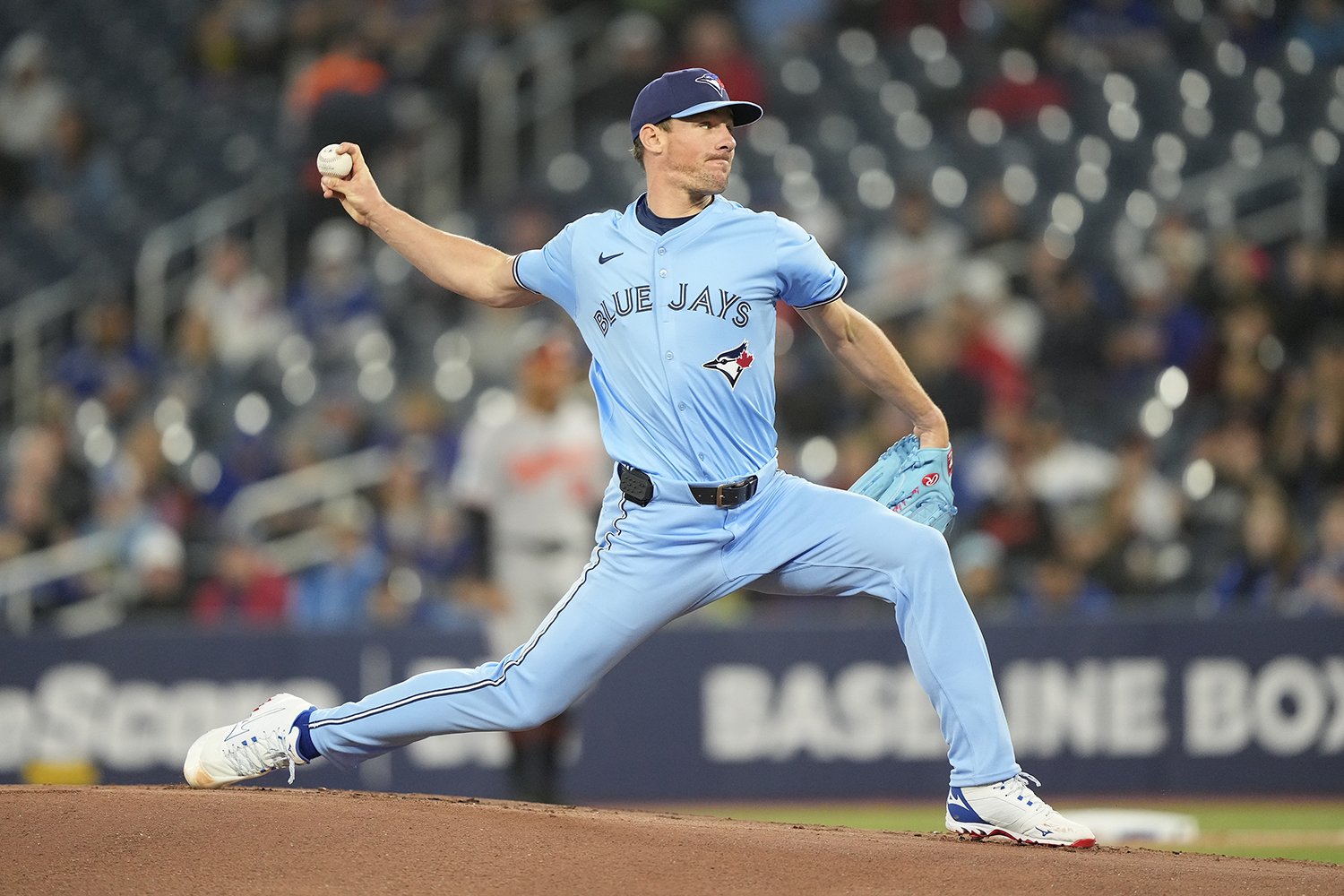 Weekly Snapshot: Thurs, 3/27 through Sun, 4/6 *** Record Last Week: 5-5 (Overall: 5-5) Run Differential Last Week: -6 (Overall: -6) Standings: Third Place in AL East (1.5 GB), 3rd Place in AL Wildcard (0.0 GB) Last Week's Results: Game 1: BAL 12 - TOR 2 Berríos: 5.0 IP, 9 H, 6 ER, 2 BB, 5 K Giménez: 1-for-3, HR, 2 RBI Game 2 | BAL 2 - TOR 8 Gausman: 6.0 IP, 3 H, 2 ER, 1 BB, 5 K Bichette, Guerrero Jr., Santander, Springer, and Wagner all with two hits each Game 3: BAL 9 - TOR 5 Scherzer: 3.0 IP, 3 H, 2 ER, 0 BB, 1 K Bichette 4-for-4 Game 4: BAL 1 - TOR 3 Bassitt: 6.0 IP, 8 H, 1 ER, 2 BB, 7 K Heineman 1-for-3, HR Game 5: WAS 2 - TOR 5 Francis: 6.0 IP, 2 H, 2 ER, 3 BB, 4 K Giménez: Double, HR, three runs scored Game 6: WAS 3 - TOR 5 Berríos: 5.2 IP, 4 H, 2 ER, 3 BB, 8 K Bichette, Kirk, Springer, Wagner and Roden with two hits each Game 7: WAS 2 - TOR 4 Lucas: 5.0 IP, 1 H, 0 ER, 2 BB, 3 K Straw 3-for-4; Springer HR Game 8: TOR 0 - NYM 5 Gausman: 5.1 IP, 2 H, 3 ER, 2 BB, 0K Springer: 2-for-4 with a triple Game 9: TOR 2 - NYM 3 Bassitt: 6.2 IP, 4 H, 0 ER, 0 BB, 9 K Roden 2-for-3 with two runs scored Game 10: TOR 1 - NYM 2 Francis: 5.1 IP, 6 H, 2 ER, 0 BB, 6 K Kirk: 2-for-4 Highlights Before the season started, we tagged Bo Bichette as a Make or Break candidate, and so far he’s been making it. Hitting leadoff, he leads the team in hits. He’s been hitting to all fields, and at his best he’s always been a free-swinging bat, so the low walk count isn’t a cause for concern. When the Jays acquired Andrés Giménez, we often said “if he can just be a league-average hitter, the glove will provide enough value.” He’s already made some great defensive plays, but the power surge in the first five games was a delightful addition. He hit the Jays' first home run of the season and currently leads the team with three. For the pessimists in the crowd, I will allow that he’s 3-for-19 in the last five games, but the offensive powerhouse itch has been scratched, and fairly or not, we’ll be looking for more pop all season. George Springer has certainly been a highlight reel player early on. He’s one of only three Jays with a homer (plus a pair of doubles that hit high up on the wall at Rogers Centrel; this one would’ve been a homer in 13 other ballparks). His 1.076 OPS leads the team, and he tried to run through an outfield wall to make a play. He was listed as day-to-day after that wall collision on Saturday, but was well enough on Sunday to pinch run and steal a base, so hopefully that’s all the maintenance these back spasms needed. Jesse Burrill made the case for Alan Roden to be on the active roster to start the season. Roden started Opening Day and has continued to make the case for himself. He belongs here. He’s come up with some timely hits, has the fewest strikeouts on the team (with more ABs than five other players) and has shown some great range playing the field. Chris Bassitt (also known as the Hound on the Mound) probably had fewer words written about him than any other Jays starter heading into this season. Two times through the rotation and he’s the early season ace. Bassitt has 12 2/3 innings pitched, one earned run, and 16 strikeouts. He got the win in the last game of the Baltimore series and was on track for a win against the Mets following an even better start before that game slipped away. To say Easton Lucas wasn’t expected to start in the first 10 games would be an incredible understatement. He was called upon though, and absolutely aced his first test. Five innings of one-hit shutout ball is enough to give him the ball the next time through the order. If he can have half as good of a game at Fenway as he did in his Rogers Centre debut, start he’ll be back in this highlight section soon. Lowlights It wasn’t all good news though. The beginning of the Max Scherzer era in Toronto lasted 45 pitches before he landed on the IL. We knew the risks when Scherzer was signed, he’s a 40-year-old pitcher after all. To only get three innings despite the "imminent danger” felt disappointing, not to mention the strain it put on the bullpen Just kidding! We’re absolutely going to mention the bullpen. After being called on for seven innings of work through the first two games, the ‘pen had to put up another six innings in game three, and the ripple effects from that, plus the pre-season injuries led to some…inconsistent results. Maybe it isn’t fair to lump the whole ‘pen in here together. Jeff Hoffman has three saves and Yimi García has yet to give up a run. On the heels of wasting Bassitt’s last start though, we’ve got to note that bullpen (and maybe its management) hasn’t been stellar. How early is too early to worry about the lack of home run power from the lineup? Vladimir Guerrero Jr. and Anthony Santander were expected to be the major source of power in this Jays lineup, and so far they’ve combined for zero round-trippers. Granted, they’re not alone. Only Giménez, Springer and Tyler Heineman(!) have homers so far. The Jays rank third-worst in barrel rate. They’re just inside the top 10 for hard-hit rate and exit velocity, so maybe it’s too early to worry. Dingers make good highlights and put runs on the board, though, and after a series where 33% of the Jays runs came via HBP, we could use some long balls. News, Notes and Not Playing Can you believe we waited until this far into a review of the week before mentioning the biggest news this franchise has seen since the unveiling of a retractable roof? Vladimir Guerrero Jr. agreed to a $500-million, 728-week extension to stay in Toronto! A huge deal for the player, a massive deal for the franchise, and more angles to cover than I think we’ve even realized yet. Day-to-day: George Springer 10-day IL: Daulton Varsho 15-day IL: Erik Swanson, Ryan Burr, Max Scherzer 60-day IL: Alek Manoah, Angel Bastardo Trending Storyline How long can Davis Schneider stick with the big club? He’s only had 10 at-bats so far this season, but he has zero hits and six strikeouts to show for it. He's a pinch-hitter or a spot starter who's in there to face lefties, but he won't have the role for very long if he's not hitting. Last season’s 0.0 bWAR and this early season’s -26 OPS+ can’t leave him with too long of a leash. Looking Ahead The road trip continues with two AL East stops: four games in Boston followed by a three-game set in Baltimore. With the division expected to be extremely tight all season, this is a pivotal week even though we’re only 10 games into the season.
 -
After a saga that has lasted months, the Blue Jays get their man and Guerrero gets very, very paid. It wasn't always pretty. The debate about whether the Blue Jays would extend Vladimir Guerrero Jr. — about whether they should extend Vladimir Guerrero Jr., about what would constitute a fair deal for both sides, about whether the counteroffers and strategic leaks would poison the negotiations — has served as the backdrop for every piece of news about the team for months now. This extension was the talk of the offseason, spring training, and Opening Day. There were rumours, sources, and speculation, but now we have confirmation. Vladimir Guerrero Jr. will be a Blue Jay for life. On Sunday night, just after midnight, Shi Davidi of Sportsnet announced that Guerrero and the Blue Jays were in agreement on a 14-year deal for $500 million, none of it deferred. After all that buildup and a series of cryptic rumors that the two sides were getting closer, perhaps it was fate that the eye-opening news would go down right when no one was expecting it, just after Toronto went to sleep. Sunday evening on ESPN Countdown, Jeff Passan said that Guerrero and the Blue Jays were hoping to have the extension finalized “at some point this week.” Just hours later, Davidi delivered the news of the agreement, which is not yet official, pending a physical. As befits a moment this monumental, Matthew Trueblood has already jumped in with analysis about the deal. Fourteen years and $500 million dollars is a lot no matter how you break it down, but without any deferred money to drag down the present value, it trails only Juan Soto's 15-year, $765-million deal with the Mets as the largest contract in the history of baseball. It breaks down to an average annual value of $35.7 million, a huge amount for any player, but especially for a first baseman. This confirmation won't bring silence, however. If anything, it raises more questions than it answers, but we’ll save those for the coming days. The Blue Jays got their guy, and they've now made sure that they'll be holding onto him from age 16 to age 40. It’s a good time to go out and get that Guerrero jersey you’ve been hesitant to buy! Guerrero has been the face of the franchise for years now, and this extension gives him the potential to cement his name above Luis Leal's as the all-time career Jay. The alternative is that he becomes the Vernon Wells to a new generation of Blue Jays fans. Guerrero's deal will pay him like his seasons of putting up at least 6.0 bWAR (2021 and 2024) will be the norm, not the exception, from here on out. Early in March, Mark Shapiro told Keegan Matheson about his optimism that an extension would happen and about the desire for Guerrero to be a “legacy player” in Toronto. This deal will bring momentary relief to the Jays front office, but one player and $500 million does not make a championship team. Everyone around baseball will take note of this contract, none moreso Daulton Varsho and Bo Bichette, who are overdue for their moments in the rough glare of the extension conversation spotlight. Again, we’ll be covering all the permutations in the coming days. For now, before they worry about the financial ramifications, the rest of the roster, and the 14 years of wondering whether Guerrero can possibly live up to the terms of such a mammoth deal, Blue Jays fans can just breathe a sigh of relief that the team's biggest star isn't going anywhere. Plakata, indeed. View full article
-
BREAKING: Vladimir Guerrero Agrees to 14-Year Extension With Blue Jays
Mike LeSage posted an article in Blue Jays
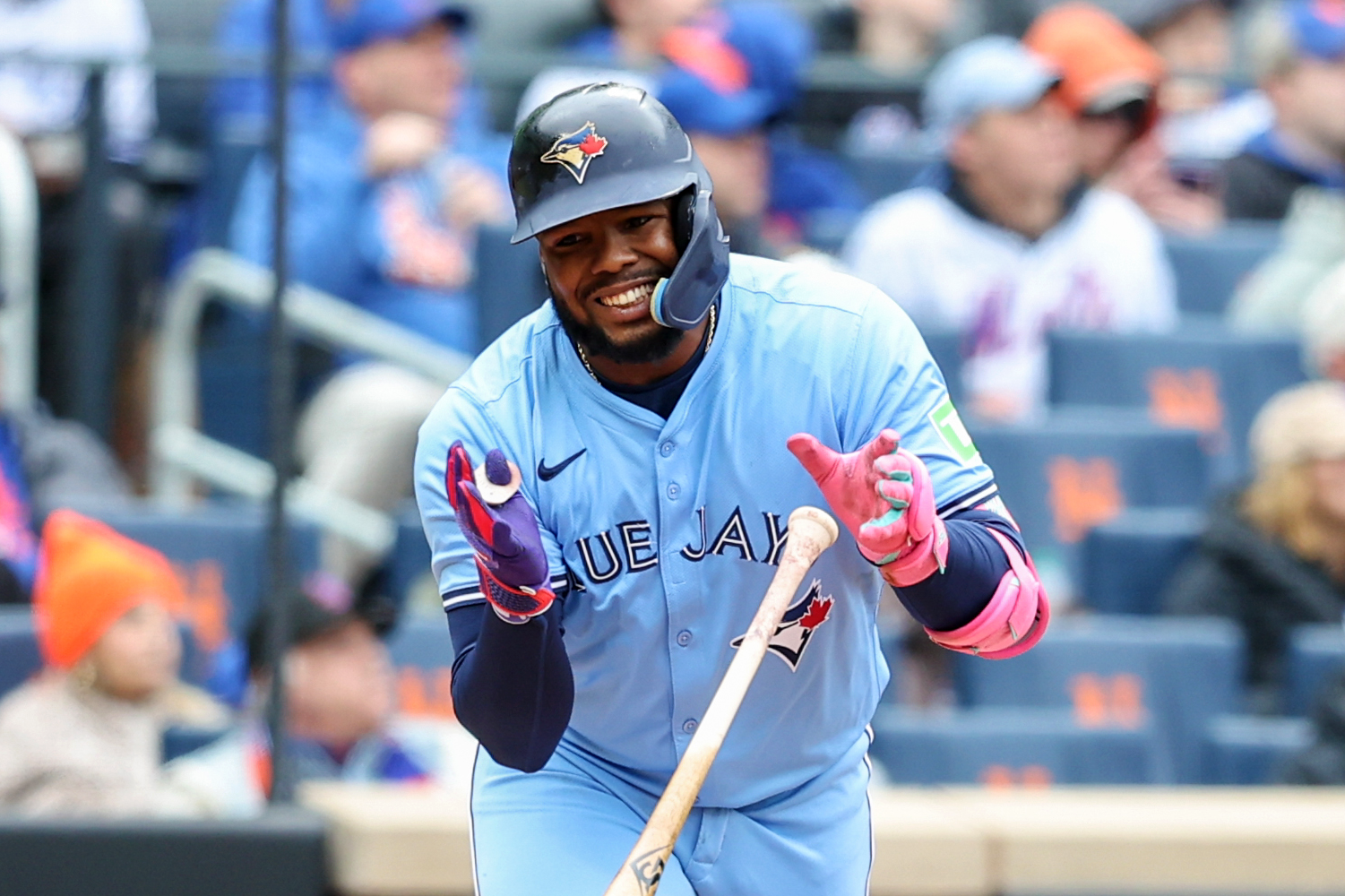 It wasn't always pretty. The debate about whether the Blue Jays would extend Vladimir Guerrero Jr. — about whether they should extend Vladimir Guerrero Jr., about what would constitute a fair deal for both sides, about whether the counteroffers and strategic leaks would poison the negotiations — has served as the backdrop for every piece of news about the team for months now. This extension was the talk of the offseason, spring training, and Opening Day. There were rumours, sources, and speculation, but now we have confirmation. Vladimir Guerrero Jr. will be a Blue Jay for life. On Sunday night, just after midnight, Shi Davidi of Sportsnet announced that Guerrero and the Blue Jays were in agreement on a 14-year deal for $500 million, none of it deferred. After all that buildup and a series of cryptic rumors that the two sides were getting closer, perhaps it was fate that the eye-opening news would go down right when no one was expecting it, just after Toronto went to sleep. Sunday evening on ESPN Countdown, Jeff Passan said that Guerrero and the Blue Jays were hoping to have the extension finalized “at some point this week.” Just hours later, Davidi delivered the news of the agreement, which is not yet official, pending a physical. As befits a moment this monumental, Matthew Trueblood has already jumped in with analysis about the deal. Fourteen years and $500 million dollars is a lot no matter how you break it down, but without any deferred money to drag down the present value, it trails only Juan Soto's 15-year, $765-million deal with the Mets as the largest contract in the history of baseball. It breaks down to an average annual value of $35.7 million, a huge amount for any player, but especially for a first baseman. This confirmation won't bring silence, however. If anything, it raises more questions than it answers, but we’ll save those for the coming days. The Blue Jays got their guy, and they've now made sure that they'll be holding onto him from age 16 to age 40. It’s a good time to go out and get that Guerrero jersey you’ve been hesitant to buy! Guerrero has been the face of the franchise for years now, and this extension gives him the potential to cement his name above Luis Leal's as the all-time career Jay. The alternative is that he becomes the Vernon Wells to a new generation of Blue Jays fans. Guerrero's deal will pay him like his seasons of putting up at least 6.0 bWAR (2021 and 2024) will be the norm, not the exception, from here on out. Early in March, Mark Shapiro told Keegan Matheson about his optimism that an extension would happen and about the desire for Guerrero to be a “legacy player” in Toronto. This deal will bring momentary relief to the Jays front office, but one player and $500 million does not make a championship team. Everyone around baseball will take note of this contract, none moreso Daulton Varsho and Bo Bichette, who are overdue for their moments in the rough glare of the extension conversation spotlight. Again, we’ll be covering all the permutations in the coming days. For now, before they worry about the financial ramifications, the rest of the roster, and the 14 years of wondering whether Guerrero can possibly live up to the terms of such a mammoth deal, Blue Jays fans can just breathe a sigh of relief that the team's biggest star isn't going anywhere. Plakata, indeed.
-
- 1
-
-
- vladimir guerrero jr
- luis leal
- (and 2 more)
-
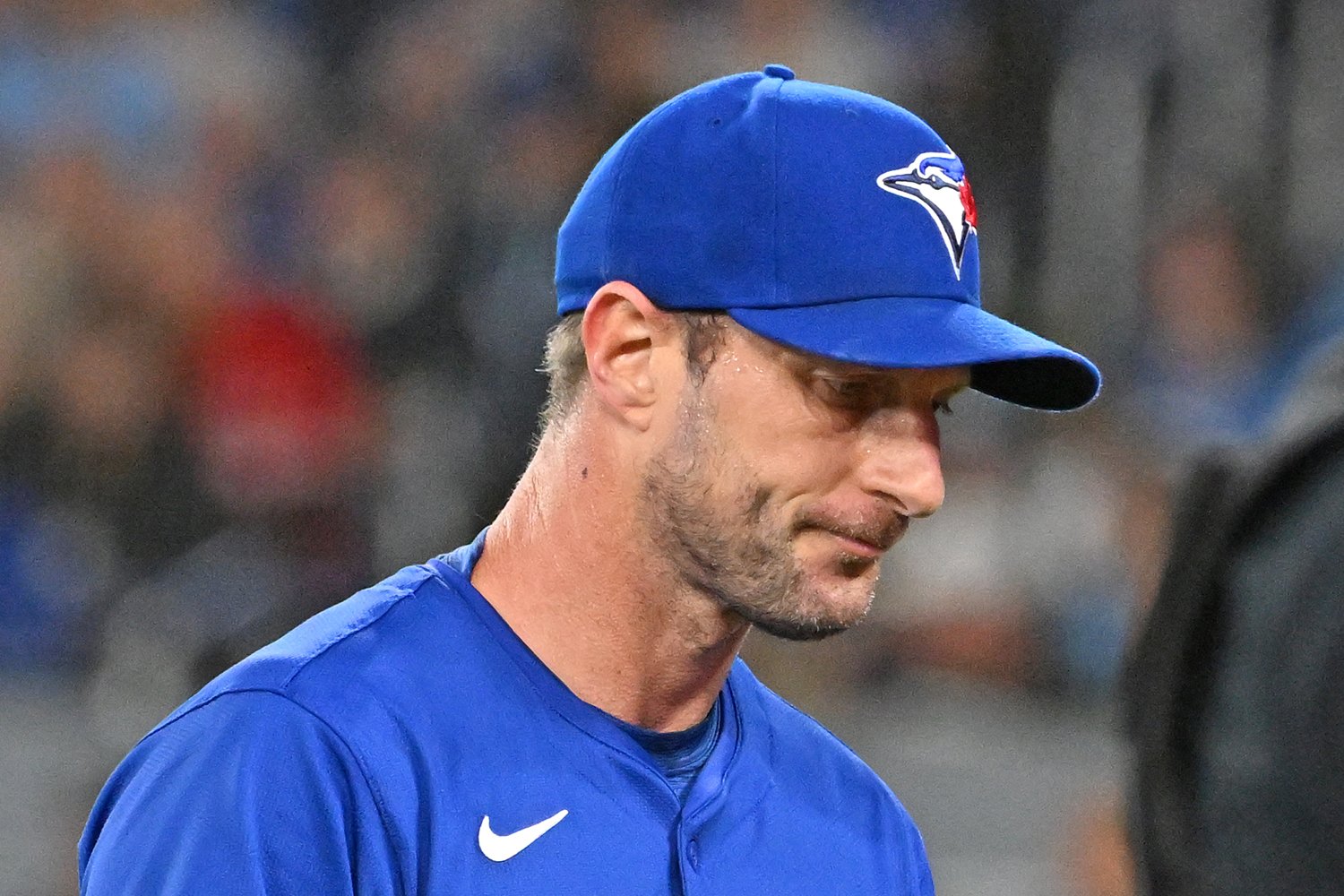 All of our preseason talk and excitement surrounding the signing of future Hall of Famer (we’re contractually obligated to refer to his impending enshrinement in Cooperstown at least once per article) Max Scherzer came with the caveat “if healthy.” Well, if healthy lasted 45 pitches into his debut start. If we’re being honest, if healthy didn’t even make it to the start of the season. During spring training, Scherzer had an MRI to look into a thumb issue that caused him to miss his last scheduled start. At the time, it was noted that while there wasn’t nerve involvement, the thumb was connected to the injuries that plagued Scherzer’s last two years in Texas. Ahead of his debut start, manager John Schneider told reporters Scherzer would end up around 80 pitches, saying and “He’s been rip-roaring, ready to go. Mad Max, engaged.” Two pitches into that debut, Colton Cowser was rounding the bases after putting a four-seam fastball over the wall in straight-away centre. Ten pitches after that, it was Jordan Westburg driving a slider 434 into the seats. The second and third innings were less eventful, with the Orioles going three-up, three-down. But upon his return to the dugout after that third inning, it was clear that was all the Mad Max we were going to see. After the game it was revealed that Scherzer had felt lat tightness during warmups but tried to pitch through it. Given that it ended with a trip to the IL (officially with right thumb inflammation). Maybe pitching through it wasn’t the right approach. Maybe the IL trip was going to happen no matter what action Scherzer and the Jays took on Saturday. Now all we can do is look forward. The first question is: Who fills Scherzer’s spot in the rotation? Before the season, we kind of assumed that when anyone in the starting rotation missed time, Yariel Rodríguez would be the first to jump into the spot. After his relief appearances so far (particularly in earning the hold on Sunday) it seemed there might be some hesitancy to bounce him around. In comments to reporters, John Schnieider has tipped either Rodríguez or Easton Lucas to make the start this coming Friday, depending on “where we land after the next couple games.” Bowden Francis, José Berríos, and Kevin Gausman are the expected starters for the three-game set against Washington before an off-day Thursday, then a 10-game road trip through New York (Mets), Boston, and Baltimore. I haven’t seen this suggested yet, but after the Jays see where they land, the off-day on April 3 could be treated as Scherzer’s day. The team could then go with Chris Bassitt and Francis for the first two games on the road. The last game of that road trip coincides with Scherzer’s (current) last day on the IL. As with many dynamic situations, new information continues to roll in. We've gone from Schneider touting Rodríguez or Lucas for Friday's start to now saying, according to Keegan Matheson, that Lucas pitching on Wednesday (at home against Washington) is "Plan A." He left open the possibility for more change depending on how Tuesday evening's game shakes out. So that makes it Berríos on Tuesday and Lucas on Wednesday. Kevin Gausman will take the Mets home opener at Citi Field to shield the less experienced Lucas from what could be an intimidating environment. So what does the bullpen look like now? Through the opening series with Baltimore, the 'pen was counted on to throw 16 innings and just over 300 pitches. Richard Lovelady’s 1 2/3 innings and 46 pitches have already been DFA’d. Lucas joins the team with another lefty, Mason Fluharty. Simon Li has a great introduction to the two new arms here. They join Jacob Barnes, Yimi García, Chad Green, Jeff Hoffman, Brendon Little, and Nick Sandlin, all of whom have been a mix of solid, serviceable, and just enough this side of Lovelady to keep their spot through four games. As we’ve already seen, a lot can change in the course of just one series. As more information comes in and more games are played, there could be a few more permutations in the rotation and the 'pen. One silver lining amongst all the early concern, though, is that the organization seems to be willing to make early moves.
-
- 1
-
-
- max scherzer
- yariel rodriguez
- (and 1 more)
-
Max Scherzer visited a hand specialist and will be spending (at least) 15 days on the IL. What does that mean for the rest of the rotation and the bullpen? All of our preseason talk and excitement surrounding the signing of future Hall of Famer (we’re contractually obligated to refer to his impending enshrinement in Cooperstown at least once per article) Max Scherzer came with the caveat “if healthy.” Well, if healthy lasted 45 pitches into his debut start. If we’re being honest, if healthy didn’t even make it to the start of the season. During spring training, Scherzer had an MRI to look into a thumb issue that caused him to miss his last scheduled start. At the time, it was noted that while there wasn’t nerve involvement, the thumb was connected to the injuries that plagued Scherzer’s last two years in Texas. Ahead of his debut start, manager John Schneider told reporters Scherzer would end up around 80 pitches, saying and “He’s been rip-roaring, ready to go. Mad Max, engaged.” Two pitches into that debut, Colton Cowser was rounding the bases after putting a four-seam fastball over the wall in straight-away centre. Ten pitches after that, it was Jordan Westburg driving a slider 434 into the seats. The second and third innings were less eventful, with the Orioles going three-up, three-down. But upon his return to the dugout after that third inning, it was clear that was all the Mad Max we were going to see. After the game it was revealed that Scherzer had felt lat tightness during warmups but tried to pitch through it. Given that it ended with a trip to the IL (officially with right thumb inflammation). Maybe pitching through it wasn’t the right approach. Maybe the IL trip was going to happen no matter what action Scherzer and the Jays took on Saturday. Now all we can do is look forward. The first question is: Who fills Scherzer’s spot in the rotation? Before the season, we kind of assumed that when anyone in the starting rotation missed time, Yariel Rodríguez would be the first to jump into the spot. After his relief appearances so far (particularly in earning the hold on Sunday) it seemed there might be some hesitancy to bounce him around. In comments to reporters, John Schnieider has tipped either Rodríguez or Easton Lucas to make the start this coming Friday, depending on “where we land after the next couple games.” Bowden Francis, José Berríos, and Kevin Gausman are the expected starters for the three-game set against Washington before an off-day Thursday, then a 10-game road trip through New York (Mets), Boston, and Baltimore. I haven’t seen this suggested yet, but after the Jays see where they land, the off-day on April 3 could be treated as Scherzer’s day. The team could then go with Chris Bassitt and Francis for the first two games on the road. The last game of that road trip coincides with Scherzer’s (current) last day on the IL. As with many dynamic situations, new information continues to roll in. We've gone from Schneider touting Rodríguez or Lucas for Friday's start to now saying, according to Keegan Matheson, that Lucas pitching on Wednesday (at home against Washington) is "Plan A." He left open the possibility for more change depending on how Tuesday evening's game shakes out. So that makes it Berríos on Tuesday and Lucas on Wednesday. Kevin Gausman will take the Mets home opener at Citi Field to shield the less experienced Lucas from what could be an intimidating environment. So what does the bullpen look like now? Through the opening series with Baltimore, the 'pen was counted on to throw 16 innings and just over 300 pitches. Richard Lovelady’s 1 2/3 innings and 46 pitches have already been DFA’d. Lucas joins the team with another lefty, Mason Fluharty. Simon Li has a great introduction to the two new arms here. They join Jacob Barnes, Yimi García, Chad Green, Jeff Hoffman, Brendon Little, and Nick Sandlin, all of whom have been a mix of solid, serviceable, and just enough this side of Lovelady to keep their spot through four games. As we’ve already seen, a lot can change in the course of just one series. As more information comes in and more games are played, there could be a few more permutations in the rotation and the 'pen. One silver lining amongst all the early concern, though, is that the organization seems to be willing to make early moves. View full article
-
The Blue Jays might not be projected for a winning season, but the new food offerings at the Rogers Centre have projections of their own. The Toronto Blue Jays have announced a number of new menu items that will be available at the Rogers Centre this season. Using a proprietary set of metrics, we’ve crunched some numbers to determine what kind of value fans can expect from the rookie foods at the park this season. First let's familiarize ourselves with the metrics and methodology we’ll be using in this evaluation. Meals Above Replacement (MAR): In the early years of baseball, a ballpark meal was nothing more than some peanuts and cracker-jack. Real replacement-level stuff. With each advancement in food technology, the envelope has been pushed. Mary Brown’s Original Big Mary with Taters has been averaging 4.2 MAR since its rookie season in 2022. The Hot Maple & Bacon Footlong Hotdog won last season’s MVF (Most Valuable Food) with a 7.8 MAR. On-Mind Percentage (OMP): This is how many of your thoughts are occupied pre-game by a given food item. A basic hot dog clocks in around 3% on a regular game day. Loonie Dog Tuesdays can see this number get as high as 25%. Novelty Factor (NF+): This measures how likely you are to repurchase an item. As you can tell by the plus, this is weighted to the league-average. Anything above 100 is better than average. Last season, the rookie Stuffed Jamaican Patties and Snow Fries ended up on opposite ends of the spectrum. The patties seeing a lot of repeat purchases and a 122 NF+, while the fries underperformed and logged a 87. Clockwise from top left: Crunchy Pickle Dog, Blueberry Pancakes, Plakata Chicken Skewers, Cotton Candy Fries. Courtesy of the Blue Jays. First up, we’ve got the two new dogs, the Mojo Hot Dog and the Crunchy Pickle Hot Dog. Following in the maple and bacon footsteps of last year’s MVF isn’t going to be easy. The standard versions are projected for 3.5 MAR, but the footlong jumps to a 6.0 MAR. These are sturdy-looking dogs. The novelty factor is where the projections differ however. The Mojo Pork is expected to keep people coming back, and that’s reflected in its 118 NF+. Pre-season concerns about how the pretzels are going to interact with the shoestring pickles have the Crunchy Pickle Dog slightly below league average at 98 NF+. This is a race we’ll want to follow all season. Next up is the OMP star of the preseason: The Cotton Candy Fries. We haven’t seen an on-mind percentage this high since the McDonald’s hot dogs that marked the SkyDome’s debut, making it one of the only locations in the world that sold McHotDogs at the time. A high OMP doesn’t always correlate to a high NF+, and the projections have these cotton candy-topped fries going in opposite directions. The 40% OMP is justified, and it jumps to 50% amongst children aged 10 and under, but the 85 NF+ suggests a one-and-done experience. The Plakata Skewers are projected to be a solid contributor to the rotation this season. These chicken skewers covered in sazon, ancho chipotle aioli, and pico de gallo take their name from the home run cry Vladimir Guerrero Jr. has made famous in Toronto. Could these skewers get renamed next season if Guerrero is skewering line drives elsewhere? With a projected 4.0 MAR, 110 NF+, and a solid 15% OMP this offering could be around for many seasons to come without any need for extension negotiations. The Blueberry Mini Pancakes (also available in Oreo flavour) haven’t been getting a tonne of press this preseason, but could be a dark horse breakout candidate. If they can carve out a spot as the go-to offering during the seventh-inning stretch, they could see themselves outperforming their projected 105 NF+. My pick for RFotY (Rookie Food of the Year) is the Korean Fried Chicken Wings. Coming in two flavours, sweet and spicy and with soy garlic, the flavour profile projects to be top-tier and is reflected in the 3.8 MAR and 22% OMP. The Novelty Factor is what we’ll want to keep an eye on. If the wings can avoid the messy-fingers pitfall of some predecessors (pulled pork sliders, I’m looking at you), they could put up historic numbers. Korean Fried Chicken Wings The utility-option season is looking to lock down a position in The Stop (located on the 100 level behind the Batter’s Eye). The Stop is offering both bao and rice bowls with four new flavours: Crispy Pork Belly, Lemongrass Chicken, Soy Marinated Beef, and Smoked Tempeh. If things go right, the mix-and-match potential of the four flavours and two bases could see this utility option move from playing the matchups into an everyday player. View full article
-
- 1
-
.jpg.ae36d7bca626a78c2d4b2ab17446017c.jpg)
.jpg.84e671b0ce2a05baf0b3397a0068b7c6.jpg)
.jpg.482c548495c5a79642a6fce2bb7f88aa.jpg)