


Mack Longpre
-
Posts
10 -
Joined
-
Last visited
Recent Profile Visitors
777 profile views

Mack Longpre's Achievements




-
 Orgfiller reacted to a post in a topic:
Article: The Greatest Opening Day Performances in Blue Jays History
Orgfiller reacted to a post in a topic:
Article: The Greatest Opening Day Performances in Blue Jays History
-
Spanky__99 reacted to a post in a topic:
Article: The Greatest Opening Day Performances in Blue Jays History
-
Using Win Probability Added to determine the most valuable Opening Day players in franchise history. Joyeux Noel baseball fans! Opening Day is upon us! Every year I make the not-really-a-joke to my family and friends that this is the only holiday I care to celebrate, and this year is no different. I will be taking the afternoon off to watch with friends over hot dogs and beer, doing the usual prognosticating and finger-crossing for the season to come — predicting lineups, call-ups, rotation variations, bullpens, over- and under-performers, and figuring out any way to overly-optimistically arrange the Blue Jays into first place in the fantastical, subjectively theorized division race I've played out in my head. Opening Day is also a fun occasion to look back on all of the Opening Days of my past — to fondly remember the thrill of a new season and the eagerly felt hope of the fresh starts baseball fans get to enjoy every spring. I remember some pretty fantastic Opening Days (and some pretty lousy ones). And there are plenty I don't remember or for which I was not yet online. As this is a season of celebration and happiness, I thought it might be a good time to revisit some of the best individual Opening Day performances in Blue Jay history. To do this, I'll be looking at players' Opening Day WPA (win probability added) to find out who contributed the most to the Blue Jays' chances of winning game number one. In case you're not familiar with WPA, FanGraphs has a primer here, but the gist is that a WPA shows how much an individual player (or even an individual play) changed the team's win expectancy. Below is a top-ten list of Blue Jay Opening Day performances ranked by WPA in ascending order. All the numbers in this article came via the indispensable Stathead. Before we dive in, maybe it's a good idea to calibrate expectations and look at the highest Opening Day WPAs of all time. On the pitching side, Walter Johnson shows up twice in the top three, with WPAs of 1.552 during a fifteen-inning complete game shutout in 1926, and 1.163 during a thirteen-inning complete game shutout in 1919. On the offensive side, the highest Opening Day WPA was generated by former Blue Jay Raúl Mondesi while he was with the Dodgers. He set a mark of 1.056 in 1999 by going 4-5 with two homers and a walk, while collecting ten total bases in an 8-6 win over the Diamondbacks. With that, now that our brains are tuned to great Opening Day WPA marks, let's dive in. 10. Jim Clancy – 1984 (0.362 WPA): Opening Day 1984. Hope is in the air. The Blue Jays finally fielded a winning team the year before and are expected to keep that momentum rolling and compete for the division. The 1984 Jays started on the road in Seattle and, spoiler alert, lost the game, 3-2, in 10 innings. But Jim Clancy twirled a gem. He went 7 2/3 innings, allowed just five hits and one run (a Ken Phelps solo shot in the seventh), walked three, and struck out five. Aside from the homer, Clancy pitched around four singles and didn't allow a runner to get past second base. Poor Dennis Lamp was the goat for the Jays. He was tagged with a blown save and the loss. He came on in relief of Clancy, allowed the Mariners to tie the game in the ninth, then gave up the game-winning single in the 10th. Lamp's WPA for the game was -0.551. 9. Roberto Alomar – 1994 (0.376 WPA): The reigning World Series champions took on their ALCS nemeses from the year before, hosting the White Sox for the season opener. Cito Gaston fielded essentially the same squad from 1993, with the addition of young phenoms Carlos Delgado and Alex Gonzalez. On the bump, Juan Guzmán faced off against Cy Young Award winner Jack McDowell. Alomar's first-inning single led to a caught stealing, but it was his lead-changing three-run home run in the seventh that netted him all of that WPA and helped the Jays trounce the Sox, 7-3. 8. Teoscar Hernandez – 2022 (0.402 WPA): After a 2021 season that may have been the strongest this current core has seen, but without a playoff appearance to show for it, the 2022 Blue Jays were out for blood. They opened at home against the Rangers. José Berrios lasted all of one out before getting yanked, having been tagged for four runs. Down 7-0 in the fourth, Hernandez's walk kept the line moving during a three-run inning. In the fifth, he followed a Vladimir Guerrero Jr. RBI single with a three-run, game-tying blast off of Josh Sborz. With the game knotted at 8-8 in the seventh, Hernandez drew another walk before scoring from first on a Lourdes Gurriel Jr. double. A Danny Jansen homer in the eighth put the game away, and the Jays came out on top, 10-8. 7. Jack Morris – 1992 (0.435 WPA): Making his first start since arguably the greatest pitching performance in World Series history (during which he accumulated 0.845 WPA and 77.59% cWPA), Jack Morris was one of two shiny new toys for the Blue Jays heading into 1992. The other, Dave Winfield, was DH'ing and batting fourth in this game, which was played at Morris's old office in Detroit against the Tigers. Bill Gullickson started for the Tigers and surrendered three runs. That was more than enough for Morris, as he allowed only two runs on five hits, walked three, struck out seven, and pitched a complete game. The only two Tiger runs came in the ninth inning on solo home runs by Cecil Fielder and Rob Deer, as the Jays cruised to a 4-2 Opening Day victory. 6. George Bell – 1988 (0.443 WPA): The reigning American League MVP wasted no time showing out for the 1988 season. This may be the Opening Day performance most fondly remembered by Jays fans. The Jays beat the Royals, 5-3, in Kansas City. Jimmy Key, David Wells, Mark Eichhorn, and Tom Henke took care of the mound duties for the Jays, while Bret Saberhagen pitched eight innings before giving way to Dan Quisenberry. Saberhagen's only real blemishes were created by George Bell. Bell led off the second inning with a solo home run, clobbered a two-run shot in the fourth to take the lead, then hit a third homer in the eighth to put the Jays up 5-3. Bell became the first player in Major League history to homer thrice in a season opener, a feat which has been equaled only three times since. 5. Julian Merryweather – 2021 (0.451 WPA): Remember the promise of Julian Merryweather? This feels like a baseball lifetime ago. He really made his mark on this day in New York and had Yankee fans shaking in their boots. I remember the chatter from Yankees fans. They were legitimately scared of this guy! Hyun Jin Ryu and Gerrit Cole toed the rubber in this game and left with almost identical box scores, each having given up two runs over 5 1/3 innings pitched. The game was tied at two heading into the tenth. With the zombie runner rule in full effect, Randal Grichuk's leadoff double put the Jays up 3-2. Jordan Romano was used in the ninth, so the bottom of the tenth belonged to Merryweather. Aaron Judge was the Yankees' zombie runner, and Aaron Hicks, Giancarlo Stanton, and Gleyber Torres were due up. Merryweather set them down in order in the most decisive fashion. That inning was near-immaculate, and certainly one of the most dominant innings of pitching I've ever watched - one strikeout looking and two swinging and the Jays had their Opening Day victory. 4. Marcus Stroman – 2019 (0.456 WPA): The 2019 was one to forget, but at least Marcus Stroman started off strong. The Tigers came to Toronto for the season opener and threw Jordan Zimmermann against a pretty limp Blue Jay lineup. Stroman and Zimmermann matched zeroes (and WPAs) over seven innings. Both packed it in after that and allowed their bullpens to sort things out. The Tiger bullpen only allowed one hit the rest of the way. The Jays' bullpen allowed two hits, both coming in the 10th inning, the second a home run by Christian Stewart to put the Tigers in front for the final score of 2-0. Over his seven innings, Stroman only allowed two hits, while striking out seven and walking four. Stroman would become a Met in July and net the Jays Anthony Kay and Simeon Woods-Richardson. 3. George Springer – 2023 (0.501 WPA): After their death-defying comeback against the Rangers in the season opener the year before, the Blue Jays enjoyed yet another absolutely bizarre season-opening victory. The Jays started the year on the road in St. Louis, providing the first glimpse of a faltering Alek Manoah. Adam Wainwright sang the national anthem. All of that was bizarre enough. But this back-and-forth game just kept delivering oddity after oddity. George Springer was the leadoff man and he went 5-for-6 with one RBI and one run scored. He led off the game with a single and scored on a Daulton Varsho double as the Jays jumped out in front, 3-0. He singled again in the second and again scored on a double, this time from Bo Bichette, putting Toronto up 4-1. Springer singled again to lead off the fourth and came around later on a sacrifice fly, making it 5-3 Toronto. Trailing 7-6 in the eighth, he led off that inning with his fourth single and scored his fourth run two batters later on a two-run single from Vladdy, flipping the score to 8-7. Yimi García blew the save in the eighth, allowing two runs to score. Down a run in the ninth, and with the first two batters on base, Springer collected his fifth single of the day to tie the game, before Guerrero put the Jays ahead for good, capping a 10-9 Opening Day victory. 2. Tony Batista – 2000 (0.599 WPA): Perhaps you remember this one from yesterday. Jim Fregosi's 2000 Blue Jays were a respectable team, playing in a bad era to be anyone but the Yankees or Red Sox. They opened the season at home against the Royals, featuring Johnny Damon, Carlos Beltrán, Jermaine Dye, and the Blue Jays' current third base coach, Carlos Febles. David Wells started for the Jays, while Jeff Suppan went to the hill for the Royals. Third baseman Tony Batista batted sixth and his three hits and three RBI helped the Jays win the game, 5-4. He padded the Jays' lead to 3-0 with a two-run homer in the fourth. He led off the seventh, trying unsuccessfully to stretch his leadoff single into a double. In the ninth, with Toronto leading 4-2, Royals' pinch hitter, Gregg Zaun, tied the game with a two-run single off of Billy Koch. In the bottom of the tenth, Batista came to bat with the game tied, two out, and none on. On the second pitch of the at-bat, he drilled his second home run of the game, this one a walk-off, to deep left field. Batista's 0.599 WPA in this game is the 33rd-most valuable Opening Day performance by an offensive player in AL/NL history. 1. Luis Pérez – 2012 (0.732 WPA): Luis Pérez played parts of three seasons in the big leagues, all with the Jays. He was a middle reliever tucked away on the team's depth charts. And his performance out of the Toronto bullpen during game number one in Cleveland netted him the top Opening Day WPA in Blue Jay history, which is also the 26th all-time for pitchers in Opening Day history. This contest was the longest season opener by duration in the history of the game. The sixteen-inning affair looked like it should have ended in a tidy Cleveland win in regulation, but a Blue Jay rally in the ninth scored three runs and deadlocked the game at four. This tie held through six extra innings before JP Arencibia knocked a three-run homer in the sixteenth to put the Jays ahead for good. Pérez entered in relief of Carlos Villanueva in the bottom of the twelfth with two on and one out. He walked the first batter he faced to load the bases, then induced a double play into the teeth of a five-man infield to end the inning. He worked around a one-out walk for a scoreless thirteenth, pitched a clean fourteenth, then pitched around another walk en route to a scoreless fifteenth. After the Arencibia home run, Pérez started the bottom of the sixteenth by getting a groundout before relinquishing the ball to closer Sergio Santos to lock down the save and the Opening Day victory. All told, Pérez earned the win with four innings of scoreless, no-hit ball, including three walks and three strikeouts. It was a masterful relief performance, and it kept the Jays in the game for a lot longer than what this uninspiring 2012 squad deserved. There are a handful of surprising and not-so-surprising names and performances on this list. George Springer and his 5-for-6 day in 2023, Tony Batista with his walk-off homer in 2000, and George Bell, with his history-making three-homer game are all no brainers. Jack Morris, Jim Clancy, Marcus Stroman, and Julian Merryweather, though dominant in their outings, maybe flew under my personal WPA radar. And in particular, one might think that JP Arencibia, with his sixteenth-inning homer in 2012, would have taken the WPA crown for that game. Seeing that the honour went to little-known reliever Luis Pérez is a fun discovery. Maybe we'll see another name added to this list after Opening Day 2025. While you're tuning in and tucking into hot dogs and beer, keep an eye out on both sides of the ball for valuable contributions in either a winning or losing effort. If we've learned anything from this WPA top-ten, it's that Richard Lovelady is as likely to make history as Guerrero this Opening Day. View full article
-
- 2
-
-
- luis perez
- tony batista
- (and 2 more)
-
The Greatest Opening Day Performances in Blue Jays History
Mack Longpre posted an article in History
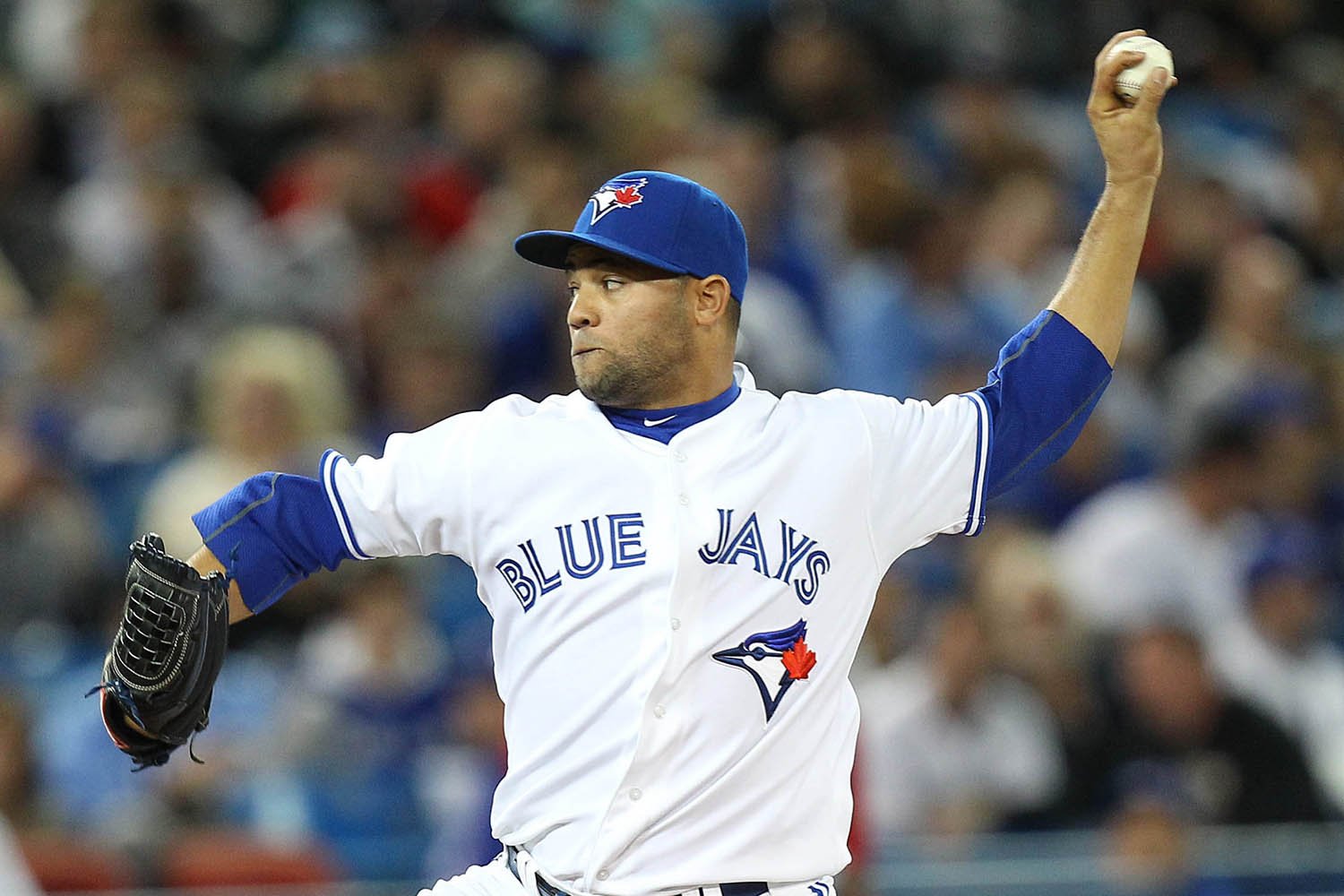 Joyeux Noel baseball fans! Opening Day is upon us! Every year I make the not-really-a-joke to my family and friends that this is the only holiday I care to celebrate, and this year is no different. I will be taking the afternoon off to watch with friends over hot dogs and beer, doing the usual prognosticating and finger-crossing for the season to come — predicting lineups, call-ups, rotation variations, bullpens, over- and under-performers, and figuring out any way to overly-optimistically arrange the Blue Jays into first place in the fantastical, subjectively theorized division race I've played out in my head. Opening Day is also a fun occasion to look back on all of the Opening Days of my past — to fondly remember the thrill of a new season and the eagerly felt hope of the fresh starts baseball fans get to enjoy every spring. I remember some pretty fantastic Opening Days (and some pretty lousy ones). And there are plenty I don't remember or for which I was not yet online. As this is a season of celebration and happiness, I thought it might be a good time to revisit some of the best individual Opening Day performances in Blue Jay history. To do this, I'll be looking at players' Opening Day WPA (win probability added) to find out who contributed the most to the Blue Jays' chances of winning game number one. In case you're not familiar with WPA, FanGraphs has a primer here, but the gist is that a WPA shows how much an individual player (or even an individual play) changed the team's win expectancy. Below is a top-ten list of Blue Jay Opening Day performances ranked by WPA in ascending order. All the numbers in this article came via the indispensable Stathead. Before we dive in, maybe it's a good idea to calibrate expectations and look at the highest Opening Day WPAs of all time. On the pitching side, Walter Johnson shows up twice in the top three, with WPAs of 1.552 during a fifteen-inning complete game shutout in 1926, and 1.163 during a thirteen-inning complete game shutout in 1919. On the offensive side, the highest Opening Day WPA was generated by former Blue Jay Raúl Mondesi while he was with the Dodgers. He set a mark of 1.056 in 1999 by going 4-5 with two homers and a walk, while collecting ten total bases in an 8-6 win over the Diamondbacks. With that, now that our brains are tuned to great Opening Day WPA marks, let's dive in. 10. Jim Clancy – 1984 (0.362 WPA): Opening Day 1984. Hope is in the air. The Blue Jays finally fielded a winning team the year before and are expected to keep that momentum rolling and compete for the division. The 1984 Jays started on the road in Seattle and, spoiler alert, lost the game, 3-2, in 10 innings. But Jim Clancy twirled a gem. He went 7 2/3 innings, allowed just five hits and one run (a Ken Phelps solo shot in the seventh), walked three, and struck out five. Aside from the homer, Clancy pitched around four singles and didn't allow a runner to get past second base. Poor Dennis Lamp was the goat for the Jays. He was tagged with a blown save and the loss. He came on in relief of Clancy, allowed the Mariners to tie the game in the ninth, then gave up the game-winning single in the 10th. Lamp's WPA for the game was -0.551. 9. Roberto Alomar – 1994 (0.376 WPA): The reigning World Series champions took on their ALCS nemeses from the year before, hosting the White Sox for the season opener. Cito Gaston fielded essentially the same squad from 1993, with the addition of young phenoms Carlos Delgado and Alex Gonzalez. On the bump, Juan Guzmán faced off against Cy Young Award winner Jack McDowell. Alomar's first-inning single led to a caught stealing, but it was his lead-changing three-run home run in the seventh that netted him all of that WPA and helped the Jays trounce the Sox, 7-3. 8. Teoscar Hernandez – 2022 (0.402 WPA): After a 2021 season that may have been the strongest this current core has seen, but without a playoff appearance to show for it, the 2022 Blue Jays were out for blood. They opened at home against the Rangers. José Berrios lasted all of one out before getting yanked, having been tagged for four runs. Down 7-0 in the fourth, Hernandez's walk kept the line moving during a three-run inning. In the fifth, he followed a Vladimir Guerrero Jr. RBI single with a three-run, game-tying blast off of Josh Sborz. With the game knotted at 8-8 in the seventh, Hernandez drew another walk before scoring from first on a Lourdes Gurriel Jr. double. A Danny Jansen homer in the eighth put the game away, and the Jays came out on top, 10-8. 7. Jack Morris – 1992 (0.435 WPA): Making his first start since arguably the greatest pitching performance in World Series history (during which he accumulated 0.845 WPA and 77.59% cWPA), Jack Morris was one of two shiny new toys for the Blue Jays heading into 1992. The other, Dave Winfield, was DH'ing and batting fourth in this game, which was played at Morris's old office in Detroit against the Tigers. Bill Gullickson started for the Tigers and surrendered three runs. That was more than enough for Morris, as he allowed only two runs on five hits, walked three, struck out seven, and pitched a complete game. The only two Tiger runs came in the ninth inning on solo home runs by Cecil Fielder and Rob Deer, as the Jays cruised to a 4-2 Opening Day victory. 6. George Bell – 1988 (0.443 WPA): The reigning American League MVP wasted no time showing out for the 1988 season. This may be the Opening Day performance most fondly remembered by Jays fans. The Jays beat the Royals, 5-3, in Kansas City. Jimmy Key, David Wells, Mark Eichhorn, and Tom Henke took care of the mound duties for the Jays, while Bret Saberhagen pitched eight innings before giving way to Dan Quisenberry. Saberhagen's only real blemishes were created by George Bell. Bell led off the second inning with a solo home run, clobbered a two-run shot in the fourth to take the lead, then hit a third homer in the eighth to put the Jays up 5-3. Bell became the first player in Major League history to homer thrice in a season opener, a feat which has been equaled only three times since. 5. Julian Merryweather – 2021 (0.451 WPA): Remember the promise of Julian Merryweather? This feels like a baseball lifetime ago. He really made his mark on this day in New York and had Yankee fans shaking in their boots. I remember the chatter from Yankees fans. They were legitimately scared of this guy! Hyun Jin Ryu and Gerrit Cole toed the rubber in this game and left with almost identical box scores, each having given up two runs over 5 1/3 innings pitched. The game was tied at two heading into the tenth. With the zombie runner rule in full effect, Randal Grichuk's leadoff double put the Jays up 3-2. Jordan Romano was used in the ninth, so the bottom of the tenth belonged to Merryweather. Aaron Judge was the Yankees' zombie runner, and Aaron Hicks, Giancarlo Stanton, and Gleyber Torres were due up. Merryweather set them down in order in the most decisive fashion. That inning was near-immaculate, and certainly one of the most dominant innings of pitching I've ever watched - one strikeout looking and two swinging and the Jays had their Opening Day victory. 4. Marcus Stroman – 2019 (0.456 WPA): The 2019 was one to forget, but at least Marcus Stroman started off strong. The Tigers came to Toronto for the season opener and threw Jordan Zimmermann against a pretty limp Blue Jay lineup. Stroman and Zimmermann matched zeroes (and WPAs) over seven innings. Both packed it in after that and allowed their bullpens to sort things out. The Tiger bullpen only allowed one hit the rest of the way. The Jays' bullpen allowed two hits, both coming in the 10th inning, the second a home run by Christian Stewart to put the Tigers in front for the final score of 2-0. Over his seven innings, Stroman only allowed two hits, while striking out seven and walking four. Stroman would become a Met in July and net the Jays Anthony Kay and Simeon Woods-Richardson. 3. George Springer – 2023 (0.501 WPA): After their death-defying comeback against the Rangers in the season opener the year before, the Blue Jays enjoyed yet another absolutely bizarre season-opening victory. The Jays started the year on the road in St. Louis, providing the first glimpse of a faltering Alek Manoah. Adam Wainwright sang the national anthem. All of that was bizarre enough. But this back-and-forth game just kept delivering oddity after oddity. George Springer was the leadoff man and he went 5-for-6 with one RBI and one run scored. He led off the game with a single and scored on a Daulton Varsho double as the Jays jumped out in front, 3-0. He singled again in the second and again scored on a double, this time from Bo Bichette, putting Toronto up 4-1. Springer singled again to lead off the fourth and came around later on a sacrifice fly, making it 5-3 Toronto. Trailing 7-6 in the eighth, he led off that inning with his fourth single and scored his fourth run two batters later on a two-run single from Vladdy, flipping the score to 8-7. Yimi García blew the save in the eighth, allowing two runs to score. Down a run in the ninth, and with the first two batters on base, Springer collected his fifth single of the day to tie the game, before Guerrero put the Jays ahead for good, capping a 10-9 Opening Day victory. 2. Tony Batista – 2000 (0.599 WPA): Perhaps you remember this one from yesterday. Jim Fregosi's 2000 Blue Jays were a respectable team, playing in a bad era to be anyone but the Yankees or Red Sox. They opened the season at home against the Royals, featuring Johnny Damon, Carlos Beltrán, Jermaine Dye, and the Blue Jays' current third base coach, Carlos Febles. David Wells started for the Jays, while Jeff Suppan went to the hill for the Royals. Third baseman Tony Batista batted sixth and his three hits and three RBI helped the Jays win the game, 5-4. He padded the Jays' lead to 3-0 with a two-run homer in the fourth. He led off the seventh, trying unsuccessfully to stretch his leadoff single into a double. In the ninth, with Toronto leading 4-2, Royals' pinch hitter, Gregg Zaun, tied the game with a two-run single off of Billy Koch. In the bottom of the tenth, Batista came to bat with the game tied, two out, and none on. On the second pitch of the at-bat, he drilled his second home run of the game, this one a walk-off, to deep left field. Batista's 0.599 WPA in this game is the 33rd-most valuable Opening Day performance by an offensive player in AL/NL history. 1. Luis Pérez – 2012 (0.732 WPA): Luis Pérez played parts of three seasons in the big leagues, all with the Jays. He was a middle reliever tucked away on the team's depth charts. And his performance out of the Toronto bullpen during game number one in Cleveland netted him the top Opening Day WPA in Blue Jay history, which is also the 26th all-time for pitchers in Opening Day history. This contest was the longest season opener by duration in the history of the game. The sixteen-inning affair looked like it should have ended in a tidy Cleveland win in regulation, but a Blue Jay rally in the ninth scored three runs and deadlocked the game at four. This tie held through six extra innings before JP Arencibia knocked a three-run homer in the sixteenth to put the Jays ahead for good. Pérez entered in relief of Carlos Villanueva in the bottom of the twelfth with two on and one out. He walked the first batter he faced to load the bases, then induced a double play into the teeth of a five-man infield to end the inning. He worked around a one-out walk for a scoreless thirteenth, pitched a clean fourteenth, then pitched around another walk en route to a scoreless fifteenth. After the Arencibia home run, Pérez started the bottom of the sixteenth by getting a groundout before relinquishing the ball to closer Sergio Santos to lock down the save and the Opening Day victory. All told, Pérez earned the win with four innings of scoreless, no-hit ball, including three walks and three strikeouts. It was a masterful relief performance, and it kept the Jays in the game for a lot longer than what this uninspiring 2012 squad deserved. There are a handful of surprising and not-so-surprising names and performances on this list. George Springer and his 5-for-6 day in 2023, Tony Batista with his walk-off homer in 2000, and George Bell, with his history-making three-homer game are all no brainers. Jack Morris, Jim Clancy, Marcus Stroman, and Julian Merryweather, though dominant in their outings, maybe flew under my personal WPA radar. And in particular, one might think that JP Arencibia, with his sixteenth-inning homer in 2012, would have taken the WPA crown for that game. Seeing that the honour went to little-known reliever Luis Pérez is a fun discovery. Maybe we'll see another name added to this list after Opening Day 2025. While you're tuning in and tucking into hot dogs and beer, keep an eye out on both sides of the ball for valuable contributions in either a winning or losing effort. If we've learned anything from this WPA top-ten, it's that Richard Lovelady is as likely to make history as Guerrero this Opening Day.
 -
Spanky__99 reacted to a post in a topic:
Article: Dave Collins And A Precarious Franchise Record
-
Mack Longpre reacted to a post in a topic:
Article: Dave Collins And A Precarious Franchise Record
-
 Mack Longpre reacted to a post in a topic:
Article: Dave Collins And A Precarious Franchise Record
Mack Longpre reacted to a post in a topic:
Article: Dave Collins And A Precarious Franchise Record
-
Orgfiller reacted to a post in a topic:
Article: Dave Collins And A Precarious Franchise Record
-
Spanky__99 reacted to an article:
Dave Collins And A Precarious Franchise Record
-
When you think of all-time Blue Jays speedsters, Dave Collins isn't likely to be at the front of your mind, but maybe he should be. The Toronto Blue Jays' single-season record books are littered with all of the legendary Blue Jay names you would expect, and many of these records you likely know offhand. Highest Batting Average: .363 (John Olerud – 1993) Most Hits: 215 (Vernon Wells – 2003) Most Doubles: 57 (Carlos Delgado – 2000) Most Home Runs: 54 (José Bautista – 2010) Most RBI: 145 (Carlos Delgado – 2003) Most Walks: 132 (José Bautista – 2011) Most Wins: 22 (Roy Halladay – 2003) Lowest ERA: 2.05 (Roger Clemens – 1997) Most Strikeouts: 292 (Roger Clemens – 1997) Most Saves: 45 (Duane Ward – 1993) And then there's the Blue Jays' single-season record holder for stolen bases. Most Stolen Bases: 60 (Dave Collins – 1984) You may be forgiven for recognizing neither the name nor the record. Dave Collins is barely a tertiary character in the story of the Toronto Blue Jays, let alone in the long history of baseball. Like most who fill out the rank and file of major league rosters, Collins' impact on the game during his career was minimal. But here we are, forty years hence, and his single-season club record for stolen bases still stands. Through decades of Blue Jay teams featuring notable speedsters like Moseby, Garcia, Alomar, Nixon, Stewart, and Davis, Collins' 1984 (60 SB) remains atop the ledger. With the recent rule changes around pickoffs and increased base sizes, stolen base rates are on the rise around the game. For the first time in the last couple of decades, Collins' now forty-one-year-old record feels at risk of being surpassed. The Blue Jays may only be one speedster away from creating a new, single-season stolen base record. Someone like Andrés Giménez or Jonatan Clase, given enough playing time, maybe the next to etch their name into the club's record books. Until such time, Collins has been the leader here. So, let's learn more about the man and dive deeper into his contributions to some very good mid-1980s Blue Jays teams. Collins, a speedy outfielder from South Dakota, was drafted four times in the 1970s. He was drafted by the Reds and Royals in 1971 and 1972, respectively, but did not sign either time. In the 1972 June draft, he finally signed with the Angels as the sixth overall pick. He played parts of two seasons in California before being drafted by the Mariners in the 1976 expansion draft. He played in Seattle for just one year, but he made history as the first batter, first base hit, and first run scored in the history of the Mariners franchise. He was traded to Cincinnati ahead of the 1978 season, and he stayed with the Reds for four years, where he slashed a respectable .293/.358/.371 with 128 stolen bases over 463 games. 1980 proved to be a career year for Collins as he posted a 3.3 bWAR, collected 167 hits, and stole 79 bases over 144 games. He then signed as a free agent with the Yankees for the 1982 season, where he played below his standard in a part-time role. That offseason, Collins was a part of one of the most important trades in Blue Jays history. He was packaged with Fred McGriff and Mike Morgan and sent to Toronto in exchange for Tom Dodd and Dale Murray. Collins flourished in his two seasons in Toronto, slashing .291/.355/.389 with 91 stolen bases at an 81% success rate. His 1984 campaign was arguably his best season as a big leaguer. That year, he batted .308, logged a 120 OPS+, set the club's stolen base record, led the American League with fifteen triples, and racked up 3.1 bWAR. 1984 was a watershed season for the Blue Jays, as they parlayed their first winning record the previous year into 89 wins (second-most in the American League) and proved to be a legitimate threat to the eventual World Series champion Detroit Tigers. Collins’ invaluable contributions to this excellent team should not be understated. But the Blue Jays' promising outfield core of Bell, Moseby, and Barfield was emerging as a cornerstone of the franchise, and Collins found himself the odd man out. He and Alfredo Griffin were sent to Oakland after the '84 season for pitcher Bill Caudill. From there, Collins bounced to Detroit, back to Cincinnati, then rounded out his career in 1990 with the Cardinals. After leaving Toronto, he declined precipitously, never again hitting or running as well as he did in 1984. So, what's the deal with this relatively unknown player holding the top spot on a prestigious franchise leaderboard? Well, across all thirty major league teams, some incredibly niche names hold a good portion of single-season stolen base records. Along with Collins in Toronto, here are nine other single-season stolen base record holders who may surprise even ardent fans of their respective clubs: Chicago White Sox: Rudy Law (77 in 1983) Minnesota Twins (Washington Senators): Clyde Milan (88 in 1912) Texas Rangers: Bump Wills (52 in 1978) Houston Astros: Gerald Young (65 in 1988) Colorado Rockies: Willy Taveras (68 in 2008) Chicago Cubs: Bill Lange (84 in 1896) St. Louis Cardinals: Arlie Latham (129 in 1887) Cincinnati Reds: Hugh Nicol (138 in 1887) Washington Nationals (Montreal Expos): Ron LaFlore (97 in 1980) Collins' place atop the Blue Jays' leaderboard is not an aberration. Anonymous and largely forgotten, yes, but Collins' record was well-earned. He stole 60 bases on 74 attempts, giving him an efficient 81% stolen base success rate. For context, Rickey Henderson had one of the greatest base-stealing seasons of all time two years earlier, racking up a still modern-day record of 130 stolen bases. In that season, he had a technically inefficient 74.7% success rate. Make no mistake, even in his best years, Dave Collins was not a better base stealer than Rickey, but it's a helpful comparison to understand Collins' contributions to the Jays in 1984. A more useful comparison we can make is to hold Collins' 1984 season up against the other great base-stealing seasons in Blue Jay franchise history. Using the ten best single-season stolen base totals, let's compare Collins to the rest of the field using the first stolen base success rate: 84% Success - Roberto Alomar (49 SB in 1992) 83% Success - Roberto Alomar (53 SB in 1991) 82% Success - Otis Nixon (47 SB in 1997) 81% Success - Dave Collins (60 SB in 1984) 81% Success - Otis Nixon (54 SB in 1996) 79% Success - Roberto Alomar (55 SB in 1993) 79% Success - Damaso Garcia (46 SB in 1984) 78% Success - Rajai Davis (46 SB in 2012) 74% Success - Shannon Stewart (51 SB in 1998) 73% Success - Damaso Garcia (54 SB in 1982) And now, let's use weighted stolen bases (wSB) (wSB is a statistic that shows how many runs a player contributes to their team through their stolen bases relative to an average player): 6.5 wSB - Dave Collins (60 SB in 1984) 6.2 wSB - Roberto Alomar (53 SB in 1991) 6.1 wSB - Roberto Alomar (49 SB in 1992) 4.9 wSB - Roberto Alomar (55 SB in 1993) 4.8 wSB - Otis Nixon (54 SB in 1996) 4.4 wSB - Otis Nixon (47 SB in 1997) (Nixon ended the 1997 season with 6.7 wSB but was traded to the Dodgers in August) 4.4 wSB - Damaso Garcia (46 SB in 1984) 3.5 wSB - Rajai Davis (46 SB in 2012) 2.9 wSB - Damaso Garcia (54 SB in 1982) 2.4 wSB - Shannon Stewart (51 SB in 1998) A handful of inferences can be gleaned from the above rankings. First, Collins holds the single-season club record for stolen bases by five swipes and did so with an excellent 81% success rate. Though not the highest percentage among the most productive thieves in the Blue Jays record books, his is still in the top five. That top five includes Hall of Famer Roberto Alomar twice and the game's sixteenth most prolific base stealer, Otis Nixon. Second, perhaps more importantly, he supplied more value to the Blue Jays through his base stealing than anyone else on the list. Collins' 6.5 wSB outranks even Alomar's most productive base-stealing seasons. In fact, in only two seasons with the Blue Jays, Collins' cumulative 9.8 wSB ranks sixth all-time in club history, behind Roberto Alomar (22.1), Devon White (15.7), Lloyd Moseby (15.6), Rajai Davis (12.1), and Otis Nixon (9.9). Among these players, Collins had the fewest plate appearances by a wide margin, and only Otis Nixon made it into fewer games. Looking at Collins' two seasons in Toronto, we can extrapolate an average per-season wSB of 4.9. Using this average, if Collins had played for Toronto as long as Alomar, he would have accrued 24.5 wSB and claimed the top spot in the record book. I know this is crude and faulty logic, but the point must be made that his place on the franchise leaderboard is astonishing, given how much less he played for the Jays than the others on the list. Stolen base success rate and wSB only tell us about a player's value regarding stolen bases. Dave Collins, a great base stealer, was more generally a valuable base runner. To measure this, we can use base running runs (BsR). (Think of this as WAR, but purely for base running.) Among the ten most prolific base-stealing seasons in club history, Collins' BsR of 6.5 in 1984 still ranks at the top. And in his two seasons with Toronto, he sits 13th on the all-time Blue Jays BsR leaderboard. (Imagine my surprise at seeing ERIC HINSKE at number five on that leaderboard.) Beyond just his base running, Collins had a nice season at the plate in 1984, posting a 16.32 RE24. (RE24 is a win probability statistic that establishes run expectancy during a plate appearance based on the twenty-four base-out states while crediting batters for stolen bases.) Again, ranked among the Jays' ten best base-stealing seasons, Collins' 1984 RE24 is fourth behind Roberto Alomar's three prime seasons from 1991-1993. Dave Collins was on some sort of heater in 1984. Outside of that season and his excellent 1980 campaign, Collins' career numbers hovered around the league average for 14 years. How fun is it that a ballplayer with such a short Toronto tenure, largely forgotten by Blue Jays fans, holds a relatively esteemed club record with sixty stolen bases in a season? Whether we know it or not, Collins continues to be the yardstick against which all Blue Jay speedsters will be compared. With new pickoff rules and larger bases, base stealing is having a slight comeback of sorts. It feels more possible now than in the last few decades that a speedy new Jay might come about to challenge Collins' now forty-one-year-old mark. If this proves to be a prescient statement, consider yourself now well-equipped to discuss an overlooked great season from our obscure franchise record holder. View full article
-
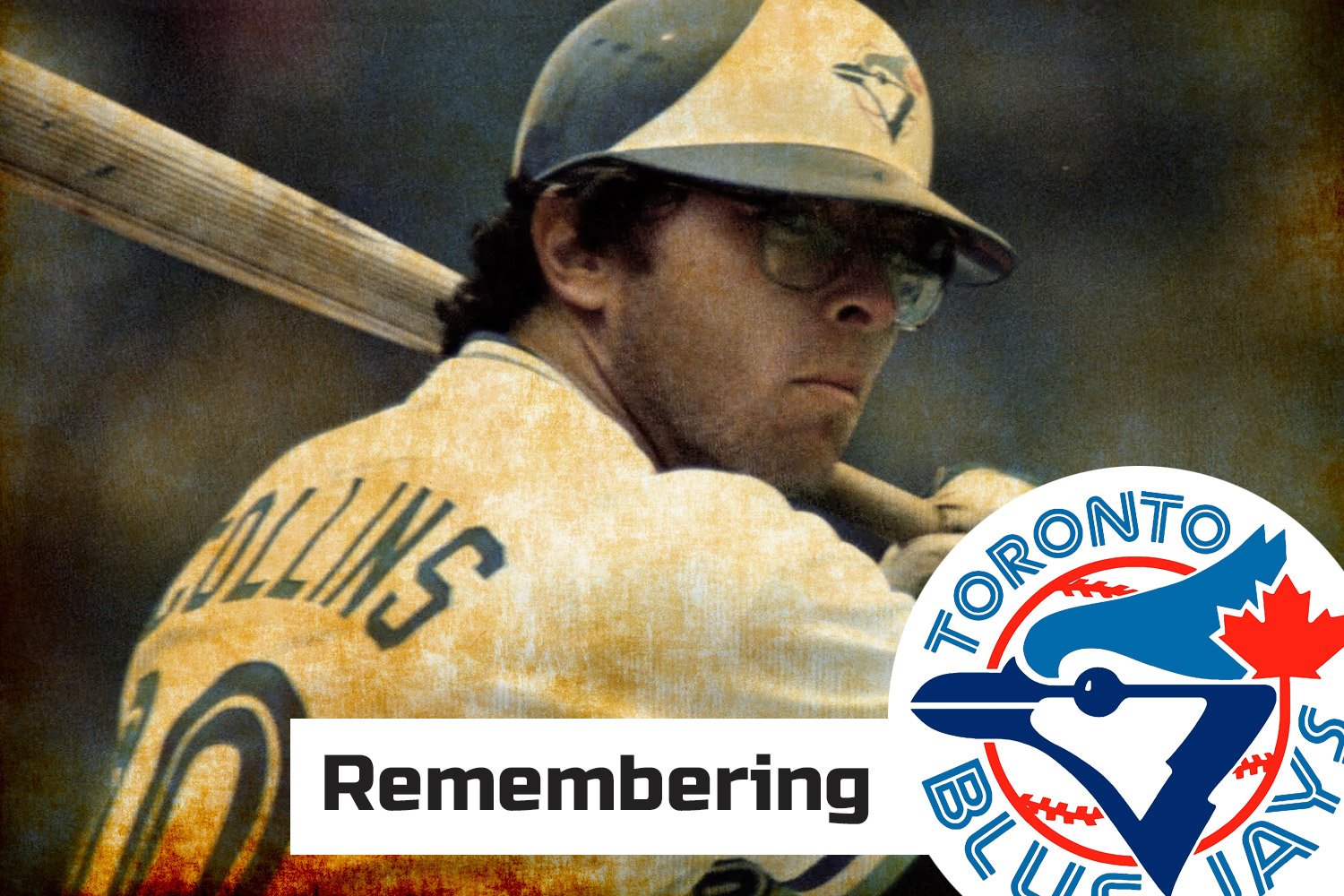 The Toronto Blue Jays' single-season record books are littered with all of the legendary Blue Jay names you would expect, and many of these records you likely know offhand. Highest Batting Average: .363 (John Olerud – 1993) Most Hits: 215 (Vernon Wells – 2003) Most Doubles: 57 (Carlos Delgado – 2000) Most Home Runs: 54 (José Bautista – 2010) Most RBI: 145 (Carlos Delgado – 2003) Most Walks: 132 (José Bautista – 2011) Most Wins: 22 (Roy Halladay – 2003) Lowest ERA: 2.05 (Roger Clemens – 1997) Most Strikeouts: 292 (Roger Clemens – 1997) Most Saves: 45 (Duane Ward – 1993) And then there's the Blue Jays' single-season record holder for stolen bases. Most Stolen Bases: 60 (Dave Collins – 1984) You may be forgiven for recognizing neither the name nor the record. Dave Collins is barely a tertiary character in the story of the Toronto Blue Jays, let alone in the long history of baseball. Like most who fill out the rank and file of major league rosters, Collins' impact on the game during his career was minimal. But here we are, forty years hence, and his single-season club record for stolen bases still stands. Through decades of Blue Jay teams featuring notable speedsters like Moseby, Garcia, Alomar, Nixon, Stewart, and Davis, Collins' 1984 (60 SB) remains atop the ledger. With the recent rule changes around pickoffs and increased base sizes, stolen base rates are on the rise around the game. For the first time in the last couple of decades, Collins' now forty-one-year-old record feels at risk of being surpassed. The Blue Jays may only be one speedster away from creating a new, single-season stolen base record. Someone like Andrés Giménez or Jonatan Clase, given enough playing time, maybe the next to etch their name into the club's record books. Until such time, Collins has been the leader here. So, let's learn more about the man and dive deeper into his contributions to some very good mid-1980s Blue Jays teams. Collins, a speedy outfielder from South Dakota, was drafted four times in the 1970s. He was drafted by the Reds and Royals in 1971 and 1972, respectively, but did not sign either time. In the 1972 June draft, he finally signed with the Angels as the sixth overall pick. He played parts of two seasons in California before being drafted by the Mariners in the 1976 expansion draft. He played in Seattle for just one year, but he made history as the first batter, first base hit, and first run scored in the history of the Mariners franchise. He was traded to Cincinnati ahead of the 1978 season, and he stayed with the Reds for four years, where he slashed a respectable .293/.358/.371 with 128 stolen bases over 463 games. 1980 proved to be a career year for Collins as he posted a 3.3 bWAR, collected 167 hits, and stole 79 bases over 144 games. He then signed as a free agent with the Yankees for the 1982 season, where he played below his standard in a part-time role. That offseason, Collins was a part of one of the most important trades in Blue Jays history. He was packaged with Fred McGriff and Mike Morgan and sent to Toronto in exchange for Tom Dodd and Dale Murray. Collins flourished in his two seasons in Toronto, slashing .291/.355/.389 with 91 stolen bases at an 81% success rate. His 1984 campaign was arguably his best season as a big leaguer. That year, he batted .308, logged a 120 OPS+, set the club's stolen base record, led the American League with fifteen triples, and racked up 3.1 bWAR. 1984 was a watershed season for the Blue Jays, as they parlayed their first winning record the previous year into 89 wins (second-most in the American League) and proved to be a legitimate threat to the eventual World Series champion Detroit Tigers. Collins’ invaluable contributions to this excellent team should not be understated. But the Blue Jays' promising outfield core of Bell, Moseby, and Barfield was emerging as a cornerstone of the franchise, and Collins found himself the odd man out. He and Alfredo Griffin were sent to Oakland after the '84 season for pitcher Bill Caudill. From there, Collins bounced to Detroit, back to Cincinnati, then rounded out his career in 1990 with the Cardinals. After leaving Toronto, he declined precipitously, never again hitting or running as well as he did in 1984. So, what's the deal with this relatively unknown player holding the top spot on a prestigious franchise leaderboard? Well, across all thirty major league teams, some incredibly niche names hold a good portion of single-season stolen base records. Along with Collins in Toronto, here are nine other single-season stolen base record holders who may surprise even ardent fans of their respective clubs: Chicago White Sox: Rudy Law (77 in 1983) Minnesota Twins (Washington Senators): Clyde Milan (88 in 1912) Texas Rangers: Bump Wills (52 in 1978) Houston Astros: Gerald Young (65 in 1988) Colorado Rockies: Willy Taveras (68 in 2008) Chicago Cubs: Bill Lange (84 in 1896) St. Louis Cardinals: Arlie Latham (129 in 1887) Cincinnati Reds: Hugh Nicol (138 in 1887) Washington Nationals (Montreal Expos): Ron LaFlore (97 in 1980) Collins' place atop the Blue Jays' leaderboard is not an aberration. Anonymous and largely forgotten, yes, but Collins' record was well-earned. He stole 60 bases on 74 attempts, giving him an efficient 81% stolen base success rate. For context, Rickey Henderson had one of the greatest base-stealing seasons of all time two years earlier, racking up a still modern-day record of 130 stolen bases. In that season, he had a technically inefficient 74.7% success rate. Make no mistake, even in his best years, Dave Collins was not a better base stealer than Rickey, but it's a helpful comparison to understand Collins' contributions to the Jays in 1984. A more useful comparison we can make is to hold Collins' 1984 season up against the other great base-stealing seasons in Blue Jay franchise history. Using the ten best single-season stolen base totals, let's compare Collins to the rest of the field using the first stolen base success rate: 84% Success - Roberto Alomar (49 SB in 1992) 83% Success - Roberto Alomar (53 SB in 1991) 82% Success - Otis Nixon (47 SB in 1997) 81% Success - Dave Collins (60 SB in 1984) 81% Success - Otis Nixon (54 SB in 1996) 79% Success - Roberto Alomar (55 SB in 1993) 79% Success - Damaso Garcia (46 SB in 1984) 78% Success - Rajai Davis (46 SB in 2012) 74% Success - Shannon Stewart (51 SB in 1998) 73% Success - Damaso Garcia (54 SB in 1982) And now, let's use weighted stolen bases (wSB) (wSB is a statistic that shows how many runs a player contributes to their team through their stolen bases relative to an average player): 6.5 wSB - Dave Collins (60 SB in 1984) 6.2 wSB - Roberto Alomar (53 SB in 1991) 6.1 wSB - Roberto Alomar (49 SB in 1992) 4.9 wSB - Roberto Alomar (55 SB in 1993) 4.8 wSB - Otis Nixon (54 SB in 1996) 4.4 wSB - Otis Nixon (47 SB in 1997) (Nixon ended the 1997 season with 6.7 wSB but was traded to the Dodgers in August) 4.4 wSB - Damaso Garcia (46 SB in 1984) 3.5 wSB - Rajai Davis (46 SB in 2012) 2.9 wSB - Damaso Garcia (54 SB in 1982) 2.4 wSB - Shannon Stewart (51 SB in 1998) A handful of inferences can be gleaned from the above rankings. First, Collins holds the single-season club record for stolen bases by five swipes and did so with an excellent 81% success rate. Though not the highest percentage among the most productive thieves in the Blue Jays record books, his is still in the top five. That top five includes Hall of Famer Roberto Alomar twice and the game's sixteenth most prolific base stealer, Otis Nixon. Second, perhaps more importantly, he supplied more value to the Blue Jays through his base stealing than anyone else on the list. Collins' 6.5 wSB outranks even Alomar's most productive base-stealing seasons. In fact, in only two seasons with the Blue Jays, Collins' cumulative 9.8 wSB ranks sixth all-time in club history, behind Roberto Alomar (22.1), Devon White (15.7), Lloyd Moseby (15.6), Rajai Davis (12.1), and Otis Nixon (9.9). Among these players, Collins had the fewest plate appearances by a wide margin, and only Otis Nixon made it into fewer games. Looking at Collins' two seasons in Toronto, we can extrapolate an average per-season wSB of 4.9. Using this average, if Collins had played for Toronto as long as Alomar, he would have accrued 24.5 wSB and claimed the top spot in the record book. I know this is crude and faulty logic, but the point must be made that his place on the franchise leaderboard is astonishing, given how much less he played for the Jays than the others on the list. Stolen base success rate and wSB only tell us about a player's value regarding stolen bases. Dave Collins, a great base stealer, was more generally a valuable base runner. To measure this, we can use base running runs (BsR). (Think of this as WAR, but purely for base running.) Among the ten most prolific base-stealing seasons in club history, Collins' BsR of 6.5 in 1984 still ranks at the top. And in his two seasons with Toronto, he sits 13th on the all-time Blue Jays BsR leaderboard. (Imagine my surprise at seeing ERIC HINSKE at number five on that leaderboard.) Beyond just his base running, Collins had a nice season at the plate in 1984, posting a 16.32 RE24. (RE24 is a win probability statistic that establishes run expectancy during a plate appearance based on the twenty-four base-out states while crediting batters for stolen bases.) Again, ranked among the Jays' ten best base-stealing seasons, Collins' 1984 RE24 is fourth behind Roberto Alomar's three prime seasons from 1991-1993. Dave Collins was on some sort of heater in 1984. Outside of that season and his excellent 1980 campaign, Collins' career numbers hovered around the league average for 14 years. How fun is it that a ballplayer with such a short Toronto tenure, largely forgotten by Blue Jays fans, holds a relatively esteemed club record with sixty stolen bases in a season? Whether we know it or not, Collins continues to be the yardstick against which all Blue Jay speedsters will be compared. With new pickoff rules and larger bases, base stealing is having a slight comeback of sorts. It feels more possible now than in the last few decades that a speedy new Jay might come about to challenge Collins' now forty-one-year-old mark. If this proves to be a prescient statement, consider yourself now well-equipped to discuss an overlooked great season from our obscure franchise record holder.
 -
Mack Longpre reacted to a post in a topic:
Article: Max Scherzer, The Blue Jays, & The Hall of Fame
-
Spanky__99 reacted to an article:
Max Scherzer, The Blue Jays, & The Hall of Fame
-
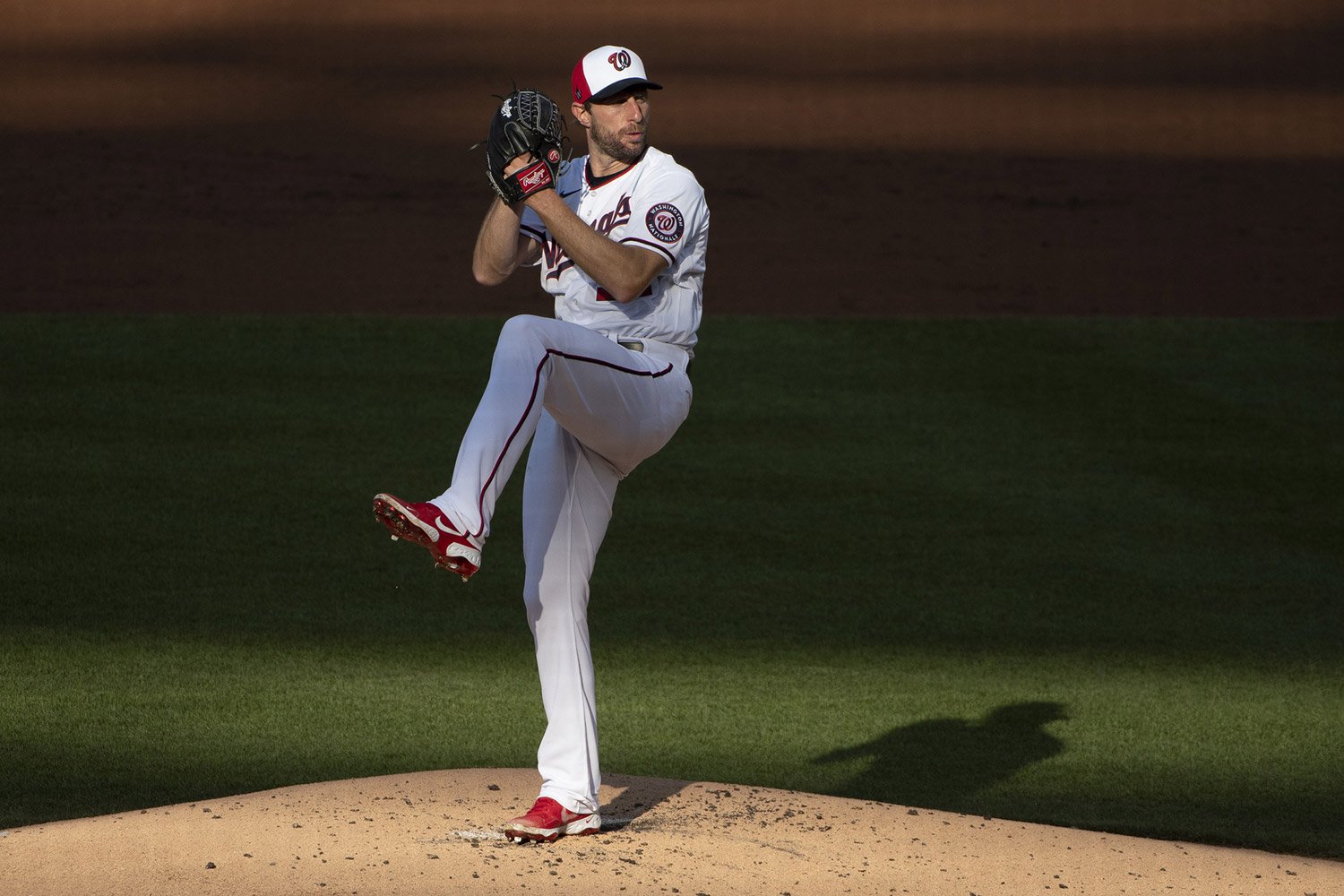 Even though Max Scherzer's likeness will not be wearing a Jays cap, having your team represented in the Hall in any way is nothing to sniff at. There are currently eleven former Blue Jays in the Hall of Fame. Using Scherzer's current career fWAR of 78.1, it's apparent that he will probably be the third most valuable former Blue Jay in Cooperstown when he goes into the Hall of Fame. Here, he is ranked among the 11 Blue Jay Hall of Famers: Rickey Henderson: 106.3 fWAR Phil Niekro: 78.1 fWAR Max Scherzer: 73.2 fWAR Frank Thomas: 72 fWAR Scott Rolen: 69.9 fWAR Paul Molitor: 67.6 fWAR Roy Halladay: 65.4 fWAR Roberto Alomar: 63.6 fWAR Dave Winfield: 59.9 fWAR Fred McGriff: 56.9 fWAR Jack Morris: 55.8 fWAR Dave Parker: 41.1 fWAR To broaden the picture beyond the Blue Jays and look at Scherzer's place in baseball history, we can look at how he compares to all of the pitchers already enshrined in Cooperstown. (I have been using fWAR to this point, but will now convert to bWAR because I favour Baseball-Reference's Hall of Fame register.) Scherzer's career bWAR is 75.4. The current average Hall of Fame pitcher bWAR is 66. If Scherzer retired today, he would be the 25th-best Hall of Fame pitcher by bWAR, just ahead of Tom Glavine and Old Hoss Radbourn. Though unlikely, it is not out of the realm of possibility that Scherzer puts up a few more good seasons and overtakes 24th place Bob Gibson and his 81.7 bWAR. We don't know whether Scherzer will continue increasing his WAR or regress precipitously and lose some points. Still, the above rankings accurately reflect the kind of player the Blue Jays just added. Max Scherzer is a generationally great pitcher. Along with Justin Verlander, Clayton Kershaw, and Zack Greinke, he may be the last of a dying breed of starting pitchers to enter the Hall of Fame. After C.C. Sabathia's election and Felix Hernandez's low vote total, a lot of Hall of Fame discourse has centred around how the criteria for starting pitching is going to have to evolve over the next handful of election cycles to take into account the changing nature of starting pitching in today's game. Still, everyone points to Scherzer, Verlander, Kershaw, and Greinke as the final cohort of great starting pitchers in the “classical mould” of the starter. They all routinely logged over 200 innings pitched per season, each with over 200 career wins, and Scherzer and Verlander have surpassed the mythical 3,000 strikeout mark (Greinke sits twenty-one strikeouts shy of the threshold, Kershaw thirty-two). These kinds of counting stats are facing extinction from the game due to pitcher usage limitations. It's quite likely that these four will be the final pitchers to have reached all of these marks. Let's narrow our scope again to his place among all-time great Blue Jays. Suppose we separate just the pitchers from the above list of former Blue Jay Hall of Famers and add in former Blue Jay greats Roger Clemens and Dave Stieb (neither in the Hall for different reasons). In that case, Scherzer nets out as the third most valuable pitcher to pass through Toronto (I will also revert to using fWAR): Roger Clemens: 133.7 fWAR Phil Niekro: 78.1 fWAR Max Scherzer: 73.2 fWAR Roy Halladay: 65.4 fWAR Jack Morris: 55.8 fWAR Dave Stieb: 43.8 fWAR For good reason, we remember Halladay and Stieb as the greatest pitchers in Blue Jays' history. Unlike Clemens, Niekro, Morris, and Scherzer, Halladay and Stieb compiled most of their fWARs in Toronto over long tenures with the Jays. But contextualizing these pitchers in the larger narrative of baseball history shows that Scherzer, Niekro, and Clemens far outperformed Halladay and Stieb over their careers. Looking at WAR totals is a great way to get a sense of a player's overall value, but we can also compare these six former Blue Jay pitchers by a few pitching-specific metrics. Scherzer's greatest pitcher strengths are his acumen for strikeouts and impeccable control. As such, let's look at how he compares with this same group of pitchers' career strikeout percentages (K%) and their strikeout minus walk percentages (K-BB%). Strikeout Percentage (K%): Scherzer: 29.3% Clemens: 23.1% Halladay: 18.8% Morris: 15.4% Niekro: 14.7% Stieb: 13.8% Strikeout minus Walk Percentage (K-BB%): Scherzer: 22.8% Clemens: 15.3% Halladay: 13.5% Niekro: 6.8% Morris: 6.7% Stieb: 5.3% On a rate basis, Scherzer has struck out a greater percentage of batters in his career than everyone on this list, including Roger Clemens, who has the third most career strikeouts in Major League history. Not just that, his K-BB% is lightyears ahead of Clemens and Halladay, the latter of whom was held up as a paragon of control. Scherzer is that rare blend of pitcher who is both a strikeout artist and master of control. In fact, Scherzer's control is so impeccable that he has the highest K-BB% of any pitcher with over 3,000 strikeouts. We can also compare these pitchers' win probability statistics to see how they impacted game outcomes throughout their careers. Let's see how Scherzer ranks in the same group of pitchers when measuring win probability added (WPA) and run expectancy based on 24 base-out states (RE24). (Note: win probability statistics only date back to 1974, so the first ten seasons of Niekro's career are unaccounted for). WPA: Clemens: 76.57 Halladay: 38.03 Scherzer: 37.68 Stieb: 20.11 Morris: 14.08 Niekro (minus ten seasons): 6.99 RE24: Clemens: 761.5 Scherzer: 362.82 Halladay: 340.76 Stieb: 231.18 Morris: 125.33 Niekro (minus ten seasons): 119.24 Not surprisingly, Clemens, arguably a top-five all-time pitcher, comes out on top. Halladay and Scherzer are neck and neck in both categories, outpacing fourth-place Stieb by a significant margin. Thinking about what Scherzer has done in his career to positively impact his team's game outcomes means simply remembering the tremendous security we all felt every fifth day when Halladay was on the bump. That's a unique feeling, one Blue Jay fans likely haven't felt since Doc's departure after the 2009 season. All of these statistical rankings are a demonstration of what Scherzer has done in his career to date. Of course, we cannot, nor should we expect, this type of production from a now forty-year-old starter. I'm simply hoping to illuminate how Scherzer fits into the broader picture among the handful of generationally great pitchers who have passed through Toronto for any amount of time in their careers. However, he can contribute to the 2025 Blue Jays, which should be savoured and enjoyed because fans have only been able to enjoy five such pitchers in the now forty-eight seasons of Blue Jay baseball.
 -
With the signing of Max Scherzer on Thursday, the Blue Jays have secured their newest Hall of Fame player. And barring a veterans committee vote in the next few years for one of Dave Stieb or Carlos Delgado, Scherzer will almost certainly be the next Hall of Famer to have “Toronto, A.L.” listed on his plaque. Even though Max Scherzer's likeness will not be wearing a Jays cap, having your team represented in the Hall in any way is nothing to sniff at. There are currently eleven former Blue Jays in the Hall of Fame. Using Scherzer's current career fWAR of 78.1, it's apparent that he will probably be the third most valuable former Blue Jay in Cooperstown when he goes into the Hall of Fame. Here, he is ranked among the 11 Blue Jay Hall of Famers: Rickey Henderson: 106.3 fWAR Phil Niekro: 78.1 fWAR Max Scherzer: 73.2 fWAR Frank Thomas: 72 fWAR Scott Rolen: 69.9 fWAR Paul Molitor: 67.6 fWAR Roy Halladay: 65.4 fWAR Roberto Alomar: 63.6 fWAR Dave Winfield: 59.9 fWAR Fred McGriff: 56.9 fWAR Jack Morris: 55.8 fWAR Dave Parker: 41.1 fWAR To broaden the picture beyond the Blue Jays and look at Scherzer's place in baseball history, we can look at how he compares to all of the pitchers already enshrined in Cooperstown. (I have been using fWAR to this point, but will now convert to bWAR because I favour Baseball-Reference's Hall of Fame register.) Scherzer's career bWAR is 75.4. The current average Hall of Fame pitcher bWAR is 66. If Scherzer retired today, he would be the 25th-best Hall of Fame pitcher by bWAR, just ahead of Tom Glavine and Old Hoss Radbourn. Though unlikely, it is not out of the realm of possibility that Scherzer puts up a few more good seasons and overtakes 24th place Bob Gibson and his 81.7 bWAR. We don't know whether Scherzer will continue increasing his WAR or regress precipitously and lose some points. Still, the above rankings accurately reflect the kind of player the Blue Jays just added. Max Scherzer is a generationally great pitcher. Along with Justin Verlander, Clayton Kershaw, and Zack Greinke, he may be the last of a dying breed of starting pitchers to enter the Hall of Fame. After C.C. Sabathia's election and Felix Hernandez's low vote total, a lot of Hall of Fame discourse has centred around how the criteria for starting pitching is going to have to evolve over the next handful of election cycles to take into account the changing nature of starting pitching in today's game. Still, everyone points to Scherzer, Verlander, Kershaw, and Greinke as the final cohort of great starting pitchers in the “classical mould” of the starter. They all routinely logged over 200 innings pitched per season, each with over 200 career wins, and Scherzer and Verlander have surpassed the mythical 3,000 strikeout mark (Greinke sits twenty-one strikeouts shy of the threshold, Kershaw thirty-two). These kinds of counting stats are facing extinction from the game due to pitcher usage limitations. It's quite likely that these four will be the final pitchers to have reached all of these marks. Let's narrow our scope again to his place among all-time great Blue Jays. Suppose we separate just the pitchers from the above list of former Blue Jay Hall of Famers and add in former Blue Jay greats Roger Clemens and Dave Stieb (neither in the Hall for different reasons). In that case, Scherzer nets out as the third most valuable pitcher to pass through Toronto (I will also revert to using fWAR): Roger Clemens: 133.7 fWAR Phil Niekro: 78.1 fWAR Max Scherzer: 73.2 fWAR Roy Halladay: 65.4 fWAR Jack Morris: 55.8 fWAR Dave Stieb: 43.8 fWAR For good reason, we remember Halladay and Stieb as the greatest pitchers in Blue Jays' history. Unlike Clemens, Niekro, Morris, and Scherzer, Halladay and Stieb compiled most of their fWARs in Toronto over long tenures with the Jays. But contextualizing these pitchers in the larger narrative of baseball history shows that Scherzer, Niekro, and Clemens far outperformed Halladay and Stieb over their careers. Looking at WAR totals is a great way to get a sense of a player's overall value, but we can also compare these six former Blue Jay pitchers by a few pitching-specific metrics. Scherzer's greatest pitcher strengths are his acumen for strikeouts and impeccable control. As such, let's look at how he compares with this same group of pitchers' career strikeout percentages (K%) and their strikeout minus walk percentages (K-BB%). Strikeout Percentage (K%): Scherzer: 29.3% Clemens: 23.1% Halladay: 18.8% Morris: 15.4% Niekro: 14.7% Stieb: 13.8% Strikeout minus Walk Percentage (K-BB%): Scherzer: 22.8% Clemens: 15.3% Halladay: 13.5% Niekro: 6.8% Morris: 6.7% Stieb: 5.3% On a rate basis, Scherzer has struck out a greater percentage of batters in his career than everyone on this list, including Roger Clemens, who has the third most career strikeouts in Major League history. Not just that, his K-BB% is lightyears ahead of Clemens and Halladay, the latter of whom was held up as a paragon of control. Scherzer is that rare blend of pitcher who is both a strikeout artist and master of control. In fact, Scherzer's control is so impeccable that he has the highest K-BB% of any pitcher with over 3,000 strikeouts. We can also compare these pitchers' win probability statistics to see how they impacted game outcomes throughout their careers. Let's see how Scherzer ranks in the same group of pitchers when measuring win probability added (WPA) and run expectancy based on 24 base-out states (RE24). (Note: win probability statistics only date back to 1974, so the first ten seasons of Niekro's career are unaccounted for). WPA: Clemens: 76.57 Halladay: 38.03 Scherzer: 37.68 Stieb: 20.11 Morris: 14.08 Niekro (minus ten seasons): 6.99 RE24: Clemens: 761.5 Scherzer: 362.82 Halladay: 340.76 Stieb: 231.18 Morris: 125.33 Niekro (minus ten seasons): 119.24 Not surprisingly, Clemens, arguably a top-five all-time pitcher, comes out on top. Halladay and Scherzer are neck and neck in both categories, outpacing fourth-place Stieb by a significant margin. Thinking about what Scherzer has done in his career to positively impact his team's game outcomes means simply remembering the tremendous security we all felt every fifth day when Halladay was on the bump. That's a unique feeling, one Blue Jay fans likely haven't felt since Doc's departure after the 2009 season. All of these statistical rankings are a demonstration of what Scherzer has done in his career to date. Of course, we cannot, nor should we expect, this type of production from a now forty-year-old starter. I'm simply hoping to illuminate how Scherzer fits into the broader picture among the handful of generationally great pitchers who have passed through Toronto for any amount of time in their careers. However, he can contribute to the 2025 Blue Jays, which should be savoured and enjoyed because fans have only been able to enjoy five such pitchers in the now forty-eight seasons of Blue Jay baseball. View full article
-
Spanky__99 reacted to an article:
Anthony Santander & The History Of Switch-Hitters In Toronto
-
Spanky__99 reacted to a post in a topic:
Article: Anthony Santander & The History Of Switch-Hitters In Toronto
-
wilko reacted to a post in a topic:
Article: Anthony Santander & The History Of Switch-Hitters In Toronto
-
Anthony Santander & The History Of Switch-Hitters In Toronto
Mack Longpre posted an article in Blue Jays
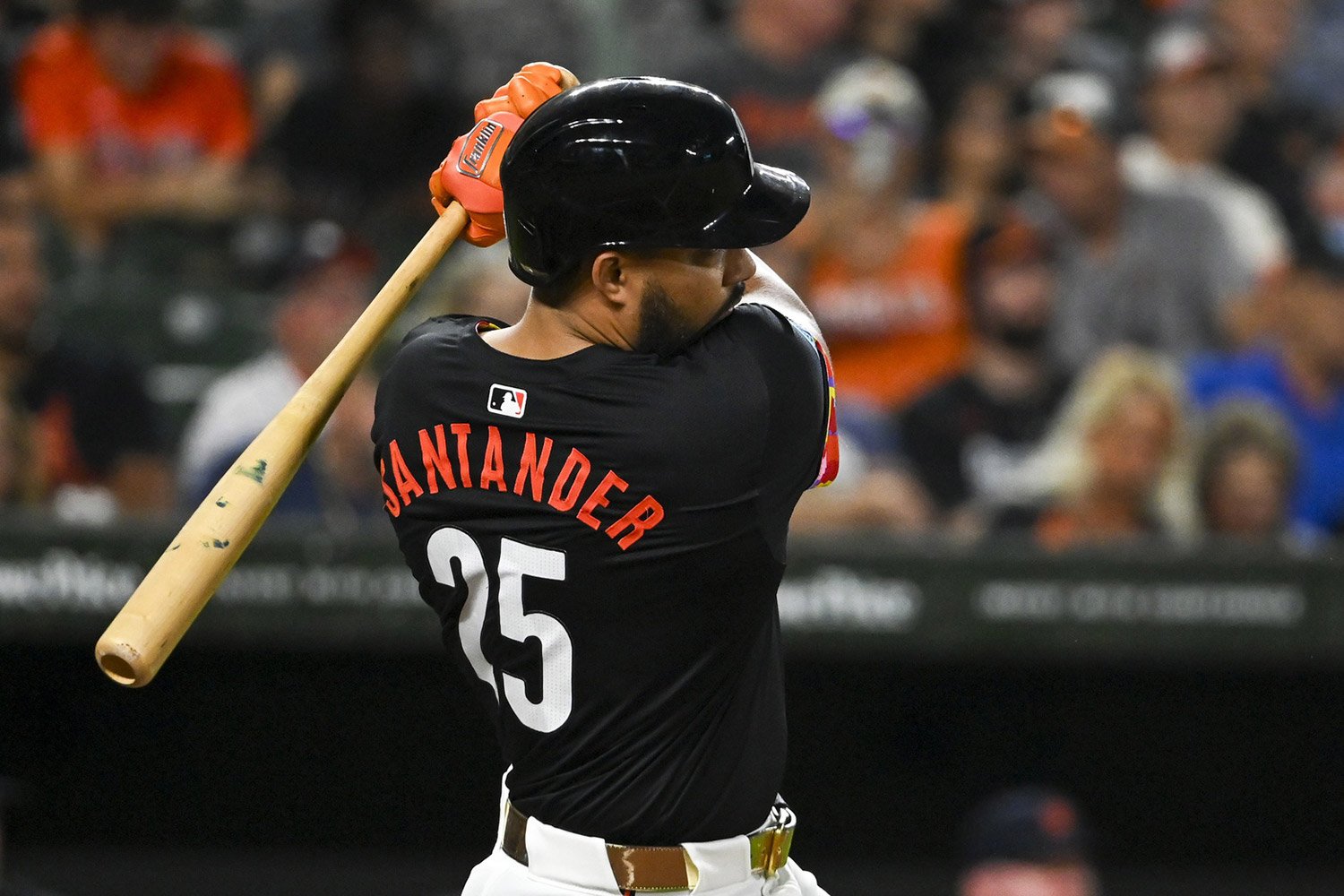 It feels like the deal with Anthony Santander is a long time coming, so the benefits and detriments of adding Santander into the Jays’ lineup have been written about and discussed for weeks. I think one of the things I’m most excited about, as cosmetic as it may seem in the game today, is adding an impact switch-hitter onto the team. Santander feels like the first switch-hitting threat for the Blue Jays since Kendrys Morales (apologies to Yangervis Solarte). As of the close of the 2024 season, the Blue Jays have employed 939 players throughout their history. Only 72 of those 939 have been switch-hitters (this includes twelve pitchers, none of whom ever swung a bat for the Jays). As such, switch-hitters make up just 7.68% of all people who have suited up for the Blue Jays. Most of the 60-position player switch-hitters in franchise history were not on the team for long, and many were underwhelming at the plate. Though, for every Dave McKay and Ray Olmedo in the switch-hitting ranks, there is the occasional Roberto Alomar, Rubén Sierra, and Devon White – diamonds in the both-ways rough. Random switch-hitting trivia tidbit: the Blue Jays have had at least one switch-hitter on the team every year, except for a three-season stretch from 2009 to 2011. I thought it might be fun to look at all the switch-hitters in franchise history and see how Santander stacks up. As it seems to be one of the better catch-alls for offensive bombast, I've ranked each switch-hitter based on their career wRC+ (listed next to each name in parentheses). Of course, Santander is in the middle of his career, as are a few players on the following list, so take into account that he is sure to undergo some pro- and regression during the lifespan of his contract with the Jays and beyond. Maybe I'll update this list and check in again once Santander retires. For now, let's just use this list as a nice snapshot in time and accept Santander's current wRC+ as an accurate representation of his abilities throughout his career. Current players are listed in bold. John Hattig (128) (This was achieved over only 29 plate appearances, so...grain of salt.) Roberto Alomar (118) Anthony Santander (113) Lee Mazzilli (112) Tony Phillips (112) Dave Hollins (110) Kendrys Morales (110) David Segui (110) Orlando Merced (107) José Reyes (103) Justin Smoak (103) Tony Fernández (102) Mitch Webster (102) Mark Whiten (102) Melky Cabrera (101) José Cruz (101) Bobby Kielty (101) Rubén Sierra (101) Junior Félix (98) Orlando Hudson (98) Devon White (98) Yangervis Solarte (97) Mookie Wilson (96) Dave Collins (95) Brian McRae (94) Jonathan Villar (94) Alan Ashby (92) Gregg Zaun (92) Maicer Izturis (91) Felipe López (91) Jarrod Saltalamacchia (90) Turner Ward (88) Jonatan Clase (87) Felipe Crespo (84) Nelson Liriano (84) Dioner Navarro (83) Dalton Pompey (83) Omar Vizquel (83) Otis Nixon (81) Bobby Brown (80) Freddy Galvis (80) Cliff Pennington (79) Darnell Sweeney (79) Jimmy Paredes (77) Emilio Bonifácio (76) Steward Berroa (74) Manny Lee (73) Richard Ureña (72) Breyvic Valera (70) Domingo Cedeño (67) Alen Hanson (67) Alfredo Griffin (65) Tyler Heineman (65) César Izturis (61) Tomás Pérez (61) Dave McKay (60) Brian Simmons (60) Ray Olmedo (47) Chris Latham (45) Luis Figueroa (-32) Ted Wilborn (-39) And because I know you're all just itching to know, here are the Blue Jays' plate-appearance-less switch-hitting pitchers (I'll be kind and not list each pitcher's career wRC+): Steve Cummings Huck Flener Lucas Harrell John Hudek Gary Lavelle Mickey Mahler Tomo Ohka Mike Romano Glenn Sparkman Drew Storen Pat Venditte Victor Zambrano So there Santander sits at the top of the leaderboard, just behind Roberto Alomar and John Hattig, a September call-up who collected eight hits (only one for extra bases) and five walks over twenty-nine plate appearances. If we eliminate Hattig, Santander slots in as the second-best switch-hitter by wRC+ employed by the Blue Jays. And with Santander's 2025 ZIPs projection penciling him in for a 122 wRC+ this season, he stands a good chance to inch closer to Alomar on the above list. Switch-hitting is a dying art, arguably not nearly as valued a skill as it once was. But for someone who still relishes the discourse around Mickey Mantle, Eddie Murray, or Chipper Jones and whose all-time favourite ballplayer is Bernie Williams, switch-hitting still tugs at this old head's heartstrings. Over the past few years, I've often lamented some of the Jays' lineup inflexibility. Remember 2022 and the seemingly entirely right-handed lineup that sometimes felt all too easy to game plan against? Or the clumps of righties who continue to occupy the top of the order without a good enough lefty to break them up? I've often felt that an impact switchie would be sweet relief for those managing lineup construction. For all that Santander can bring to this team, rightly or wrongly, his ambidexterity is the attribute I am most excited about.
- 2 comments
-
- 1
-
-
- anthony santander
- roberto alomar
- (and 4 more)
-
In one of the few pieces of good news for Blue Jay fans this offseason, Anthony Santander has decided to come north and play in Toronto. Where does he rank among switch-hitters in franchise history? It feels like the deal with Anthony Santander is a long time coming, so the benefits and detriments of adding Santander into the Jays’ lineup have been written about and discussed for weeks. I think one of the things I’m most excited about, as cosmetic as it may seem in the game today, is adding an impact switch-hitter onto the team. Santander feels like the first switch-hitting threat for the Blue Jays since Kendrys Morales (apologies to Yangervis Solarte). As of the close of the 2024 season, the Blue Jays have employed 939 players throughout their history. Only 72 of those 939 have been switch-hitters (this includes twelve pitchers, none of whom ever swung a bat for the Jays). As such, switch-hitters make up just 7.68% of all people who have suited up for the Blue Jays. Most of the 60-position player switch-hitters in franchise history were not on the team for long, and many were underwhelming at the plate. Though, for every Dave McKay and Ray Olmedo in the switch-hitting ranks, there is the occasional Roberto Alomar, Rubén Sierra, and Devon White – diamonds in the both-ways rough. Random switch-hitting trivia tidbit: the Blue Jays have had at least one switch-hitter on the team every year, except for a three-season stretch from 2009 to 2011. I thought it might be fun to look at all the switch-hitters in franchise history and see how Santander stacks up. As it seems to be one of the better catch-alls for offensive bombast, I've ranked each switch-hitter based on their career wRC+ (listed next to each name in parentheses). Of course, Santander is in the middle of his career, as are a few players on the following list, so take into account that he is sure to undergo some pro- and regression during the lifespan of his contract with the Jays and beyond. Maybe I'll update this list and check in again once Santander retires. For now, let's just use this list as a nice snapshot in time and accept Santander's current wRC+ as an accurate representation of his abilities throughout his career. Current players are listed in bold. John Hattig (128) (This was achieved over only 29 plate appearances, so...grain of salt.) Roberto Alomar (118) Anthony Santander (113) Lee Mazzilli (112) Tony Phillips (112) Dave Hollins (110) Kendrys Morales (110) David Segui (110) Orlando Merced (107) José Reyes (103) Justin Smoak (103) Tony Fernández (102) Mitch Webster (102) Mark Whiten (102) Melky Cabrera (101) José Cruz (101) Bobby Kielty (101) Rubén Sierra (101) Junior Félix (98) Orlando Hudson (98) Devon White (98) Yangervis Solarte (97) Mookie Wilson (96) Dave Collins (95) Brian McRae (94) Jonathan Villar (94) Alan Ashby (92) Gregg Zaun (92) Maicer Izturis (91) Felipe López (91) Jarrod Saltalamacchia (90) Turner Ward (88) Jonatan Clase (87) Felipe Crespo (84) Nelson Liriano (84) Dioner Navarro (83) Dalton Pompey (83) Omar Vizquel (83) Otis Nixon (81) Bobby Brown (80) Freddy Galvis (80) Cliff Pennington (79) Darnell Sweeney (79) Jimmy Paredes (77) Emilio Bonifácio (76) Steward Berroa (74) Manny Lee (73) Richard Ureña (72) Breyvic Valera (70) Domingo Cedeño (67) Alen Hanson (67) Alfredo Griffin (65) Tyler Heineman (65) César Izturis (61) Tomás Pérez (61) Dave McKay (60) Brian Simmons (60) Ray Olmedo (47) Chris Latham (45) Luis Figueroa (-32) Ted Wilborn (-39) And because I know you're all just itching to know, here are the Blue Jays' plate-appearance-less switch-hitting pitchers (I'll be kind and not list each pitcher's career wRC+): Steve Cummings Huck Flener Lucas Harrell John Hudek Gary Lavelle Mickey Mahler Tomo Ohka Mike Romano Glenn Sparkman Drew Storen Pat Venditte Victor Zambrano So there Santander sits at the top of the leaderboard, just behind Roberto Alomar and John Hattig, a September call-up who collected eight hits (only one for extra bases) and five walks over twenty-nine plate appearances. If we eliminate Hattig, Santander slots in as the second-best switch-hitter by wRC+ employed by the Blue Jays. And with Santander's 2025 ZIPs projection penciling him in for a 122 wRC+ this season, he stands a good chance to inch closer to Alomar on the above list. Switch-hitting is a dying art, arguably not nearly as valued a skill as it once was. But for someone who still relishes the discourse around Mickey Mantle, Eddie Murray, or Chipper Jones and whose all-time favourite ballplayer is Bernie Williams, switch-hitting still tugs at this old head's heartstrings. Over the past few years, I've often lamented some of the Jays' lineup inflexibility. Remember 2022 and the seemingly entirely right-handed lineup that sometimes felt all too easy to game plan against? Or the clumps of righties who continue to occupy the top of the order without a good enough lefty to break them up? I've often felt that an impact switchie would be sweet relief for those managing lineup construction. For all that Santander can bring to this team, rightly or wrongly, his ambidexterity is the attribute I am most excited about. View full article
- 2 replies
-
- 2
-
-
- anthony santander
- roberto alomar
- (and 4 more)
-
Spanky__99 reacted to a post in a topic:
Article: Blue Jays Fans Deserve a Vladimir Guerrero Jr. Extension
-
At the core of Toronto fans’ anxiety over extension talks between the club and Vladimir Guerrero Jr. is the fear of losing a twenty-four year old franchise icon, along with the very real possibility that he could finally be our first truly great career Blue Jay. I’m a baseball romantic first and foremost, and what’s more romantic than the player who perfectly embodies your franchise and decides to stay put for his entire career? The Blue Jays have not yet had one of those. Our best and longest-serving players have gone to and/or come from elsewhere. Roy Halladay, Carlos Delgado, George Bell, Jesse Barfield, Lloyd Moseby, Fred McGriff, Jimmy Key, Tony Fernandez, John Olerud, and David Wells all left or were traded after rising through the organization and excelling in the big leagues. Bautista, Encarnacion, Alomar, and Carter arrived in Toronto via other teams, had dominant career peaks, and then left again. Dave Stieb would easily be our man if not for a terrible four-game sojourn with the White Sox in 1993. Looking at a list of all the players who were exclusively Blue Jays is depressingly underwhelming. Using an arbitrary four-season minimum caveat to weed out all of the cup of coffee guys, here is a list of all the career Blue Jays ranked by their bWAR: Luis Leal (1980-1985) 10.6 bWAR Ricky Romero (2009-2013) 10.1 bWAR Jerry Garvin (1977-1982) 7.1 bWAR Devon Travis (2015-2018) 5.8 bWAR Jesse Litsch (2007-2011) 4 bWAR Garth Iorg (1978-1987) 3.5 bWAR Mike Willis (1977-1981) 1.8 bWAR Chad Jenkins (2012-2015) 1.5 bWAR Dalton Pompey (2014-2018) 0.5 bWAR Russ Adams (2004-2009) 0.0 bWAR Scott Richmond (2008-2012) -0.1 bWAR And here are the four-season-minimum lifer-Jays currently on the team, also ranked by bWAR: Vladimir Guerrero Jr. (2019-2024) 21.5 bWAR Bo Bichette (2019-2024) 17.5 bWAR Alejandro Kirk (2020-2024) 9 bWAR Alek Manoah (2021-2024) 7.3 bWAR If Vladimir Guerrero Jr. decides to quit playing baseball tomorrow to spend more time cross-stitching, he would be the greatest career Blue Jay by a significant margin, more than double second-place Leal. No matter how good the embroidery patterns at Michael’s might be, I’m guessing that will not come to pass. What will happen is one of two things: Guerrero signs a massive contract extension to remain with the Jays until he nearly hangs 'em up, or he doesn’t, becomes a free agent, and likely goes elsewhere for the rest of his career. If an extension isn’t agreed upon in the next month and change, the Blue Jays may lose their best shot at having a truly iconic face of the franchise player spend his entire career in Toronto. Guerrero Jr. could be Mr. Blue Jay. Or, next season, he’ll put on the hat that might adorn his Hall of Fame plaque. I can speak for Blue Jay fans when I say I prefer he stays put. The Blue Jays are one of only a handful of clubs wanting a monogamous relationship with an all-time star. As such, it might be equally fun and torturous to look at all the major league clubs to see who has enjoyed this privilege. Then, we can better understand how the Blue Jays stack up in this regard. The following is a ranking of each Major League club ordered by the bWAR accumulated by their top, exclusive player: Minnesota Twins: Walter Johnson (1907-1927) 166.9 bWAR The greatest pitcher of all time spent his entire career with the Washington Senators, who became the Minnesota Twins in 1961. The Twins have had a handful of great one-team stars, including Joe Mauer, Kirby Puckett, and Tony Oliva. I'm sure Twins fans would also want me to mention Kent Hrbek here. St. Louis Cardinals: Stan Musial (1941-1963) 128.5 bWAR Is Musial the most overlooked legend in baseball history? He was one of the greatest overall ballplayers ever to play the game and is undoubtedly the no-brainer icon of the Cardinals franchise. Oh yeah, and the second-place player on the franchise list is Bob Gibson. Boston Red Sox: Ted Williams (1939-1960) 121.8 bWAR The Splendid Splinter tops this list for the Sox. So good was he that his military-interrupted career resulted in only 19 seasons of bWAR accrual. Yet his total of 121.8 tops the next greatest career Red Sock, Carl Yastrzemski, and his twenty-three seasons by 25.3 points. New York Yankees: Lou Gehrig (1923-1939) 113.7 bWAR The Yankees have eighteen exclusive players with 40+ bWAR, nine of whom are in the Hall of Fame. This does not include Aaron Judge, who will probably play the rest of his career in New York and is on a Hall of Fame track. He has currently amassed 52.2 bWAR. San Francisco Giants: Mel Ott (1926-1947) 110.9 bWAR The third member of the 500-home run club was a lifelong New York Giant. Carl Hubbell, Bill Terry, Travis Jackson, and Ross Youngs are four other Hall of Famers who played exclusively for the Giants. Buster Posey will likely join those ranks in the coming years. Philadelphia Phillies: Mike Schmidt (1972-1989) 106.9 bWAR There are fewer great lifelong Phillies than I would have imagined, but no matter. The greatest third baseman of all time tops the Philadelphia list and is surely “Mr. Phillie” in fans' minds. Baltimore Orioles: Cal Ripken Jr. (1981-2001) 95.9 bWAR The Iron Man of baseball is atop the Baltimore leaderboard. This leaderboard also includes Hall of Famers Brooks Robinson and Jim Palmer. Pittsburgh Pirates: Roberto Clemente (1955-1972) 94.9 bWAR Wow, Roberto Clemente was good. And he spent his whole career in black and gold. So did Willie Stargell, Pie Traynor, and Bill Mazeroski. That's a nice collection of franchise stars for the Steel City. Detroit Tigers: Al Kaline (1953-1974) 92.8 bWAR The most steady presence a team could hope for in the lineup and the field, “Mr. Tiger” broke into the Majors at eighteen years old and played in the Motor City until he retired at thirty-nine. Just behind Kaline on the Tigers' leaderboard are Charlie Gehringer, Lou Whitaker, Alan Trammell, and Bill Freehan. Kansas City Royals: George Brett (1973-1993) 88.6 bWAR Brett is certainly the player who most embodies the Royals. If Mike Schmidt weren't that much better, Brett would have a legitimate claim as the greatest third baseman of all time. Instead, he'll have to settle for the most famous hemorrhoids of all time. Salvador Perez and his 35.5 bWAR is already in second place on the franchise list, and if he plays out the string in KC, he will certainly be the modern torch-bearer as “Mr. Royal.” Los Angeles Angels: Mike Trout (2011-2024) 86.2 bWAR The greatest career Angel for a time was Tim Salmon until this other fish came along. Though certainly Trout could be moved at some point in the future, Angels ownership did exactly what we're all hoping Jays ownership will do with Guerrero, and they locked down their marquee player with a long-term contract extension. For now, I feel confident calling Trout the greatest career Angel. Atlanta Braves: Chipper Jones (1993-2012) 85.3 bWAR Unfortunately, neither Hank Aaron nor Eddie Matthews played in the Braves organization for all their years. And none of the members of the great 1990s pitching staff played their entire careers in Atlanta. So, the offensive linchpin of those dynastic Braves teams is the answer. Alex Anthopoulos is doing his best to add to this list by signing many young stars to long-term contracts. Houston Astros: Jeff Bagwell (1991-2005) 79.9 bWAR Bagwell's bWAR edges out the other “Mr. Astro,” Craig Biggio. Both of these Hall of Fame players are synonymous with the Astros franchise. It will be interesting to see if Jose Altuve will end his career with the Astros and put his name in the running beside Bagwell and Biggio as career-long franchise icons. Milwaukee Brewers: Robin Yount (1974-1993) 77.4 bWAR The shortstop/centerfielder/first-baseman, two-time MVP, and Hall of Famer is the heartbeat of the Brewers organization. Ryan Braun, the next-best lifer-Brewer, doesn't hold a candle to Yount's greatness. Chicago White Sox: Luke Appling (1930-1950) 77.4 bWAR After the embarrassment of the 2024 White Sox season, it's hard to remember that this is a very old club with a long history of great players. Though largely overlooked as a franchise icon, Appling was one of the best shortstops in Major League Baseball from the beginning of the Depression until well after World War II. Also on this list are the great pitchers and fellow Hall of Famers Red Faber and Ted Lyons. Los Angeles Dodgers: Clayton Kershaw (2008-2024) 76.5 bWAR I feel pretty confident assuming that Kershaw will retire as a Dodger. If not, the next names on this list are Pee Wee Reese, Jackie Robinson, Don Drysdale, Sandy Koufax, and Roy Campanella. Cincinnati Reds: Johnny Bench (1967-1983) 75.1 bWAR Bench is the greatest catcher of all time and no doubt the greatest exclusive Red. Though fans may pick any member of the Big Red Machine as their icon of the franchise, it is only Bench and Dave Concepcion who spent their entire careers in Cincinnati. Runners-up here are Barry Larkin, Joey Votto, and Bid McPhee. San Diego Padres: Tony Gwynn (1982-2001) 69.2 bWAR His bWAR total ranks him lower on this list than we might initially think, but Gwynn had very little power and wasn't great in the field or on the bases. But he was a magician with the bat and, as a human being, a treasure for our game. Fernando Tatis Jr.'s long-term contract may keep him in San Diego for his career, and he would have a great shot at overtaking Gwynn's bWAR total. Regardless, Gwynn will forever be “Mr. Padre.” Seattle Mariners: Edgar Martinez (1987-2004) 68.4 bWAR The Mariners are a great proxy for the Blue Jays, as they share a birth date. Unlike the Blue Jays, the Mariners have had two exclusive stars: Martinez and Félix Hernandez. Seattle has been graced with transcendent stars in Griffey Jr., A-Rod, Randy Johnson, and Ichiro Suzuki, but all played elsewhere throughout their careers. Martinez acted as the one constant through that roster churn and surely bears the title of “Mr. Mariner.” Chicago Cubs: Ernie Banks (1953-1971) 67.7 bWAR There's no question that the emblem of Cubs baseball is “Mr. Cub” himself, Ernie Banks. However, there are far fewer great career Cubs than I would have assumed for one of the oldest franchises in baseball. Much like Gwynn, even if there were an exclusive Cub who was a competitor for Banks' bWAR total, Cubs fans would likely still keep Banks at the top of their minds regarding franchise icons. Cleveland Guardians: Bob Feller (1936-1956) 65.2 bWAR This is an interesting one. Undoubtedly, Feller may be the player Guardians fans think of as their franchise icon. But they may be watching the man who will soon claim that title in, José Ramirez, who sits at 52.4 bWAR. Bob Lemon is just behind Feller, as is Addie Joss, who may have been poised to become one of the greatest pitchers of all time had he not been struck down by tuberculosis after only nine seasons. Colorado Rockies: Todd Helton (1997-2013) 61.8 bWAR This one is a no-brainer. Todd Helton IS the Colorado Rockies. He was a great player whose career numbers belie the fabled “Coors Effect.” Charlie Blackmon is next on the list and sits about forty points behind Helton in bWAR. Oakland (???) Athletics: Eddie Rommel (1920-1932) 49.7 bWAR Well, here we are towards the bottom of the rankings. Stinginess is not just a current phenomenon for the Athletics. In the days of Connie Mack, players were sold and traded constantly. In Kansas City, the Athletics were no more than a farm team for the Yankees. Charles Finley continued the tradition of penny-pinching, which famously carried over into the Moneyball era. As a result, all of the great Athletics throughout history, Foxx, Collins, Grove, Jackson, Fingers, Blue, Henderson, McGwire, Canseco, Giambi, Tejada, and Zito have been moved. So we end up with Eddie Rommel as the greatest exclusive Athletic. An excellent pitcher, sure, but Rommel is not an all-time great, and certainly not someone Athletics fans would identify as a franchise icon. New York Mets: David Wright (2004-2018) 49.2 bWAR Wright's lifetime bWAR would rank much higher if not for career-ending injuries. He would also have had a better shot at the Hall of Fame and may have been positioned as an all-time great. He is still the greatest career Met and surely someone Mets fans would identify as a franchise icon. Washington Nationals: Steve Rogers (1973-1985) 45.1 bWAR By the numbers, former Expo Steve Rogers is the correct answer here. Once we account for recency bias and a city change, Ryan Zimmerman and his career 40.1 bWAR earned him the title “Mr. National.” Arizona Diamondbacks: Brandon Webb (2003-2009) 33 bWAR The 2006 National League Cy Young Award winner enjoyed several years of dominance on the mound before a shoulder injury cut his career short. Who knows whether or not he would have continued playing for the Diamondbacks had he had a full career? Nonetheless, his seven seasons and 33 bWAR rank him at the top of the franchise list. Texas Rangers: Rusty Greer (1994-2002) 22.4 bWAR Greer was a fan favourite during his relatively short career in Texas. He played hard on defense and had a few good seasons with the bat in a powerful Rangers lineup. I wonder how many Rangers fans know he tops their team's bWAR list for career Rangers. Whether they know it or not, I'm sure it would make them happy. Tampa Bay Rays: Desmond Jennings (2010-2016) 13.4 bWAR Though Brandon Lowe sits at 16 bWAR, I'm not holding my breath that he'll play out his entire career in Tampa. So Desmond Jennings, with his 13.4 bWAR over parts of seven seasons with the Rays, holds the top spot on the franchise list. Miami Marlins: Jose Fernández (2013-2016) 13 bWAR Fernandez is a very sad addition to this list. His tragic passing means we have no idea how his career may have unfolded. Given that the Marlins have no other lifer players above 10 bWAR, one can imagine that he would have moved on whenever he hit free agency. Toronto Blue Jays: Luis Leal (1980-1985) 10.6 bWAR That's right. Our Toronto Blue Jays are dead last here. No shade to Luis Leal, who had a fine career as part of a pitching staff during pivotal years for the Jays while they turned into legitimate contenders in the American League. But to not have any other exclusive player who ranks ahead of Leal's paltry 10.6 bWAR is an indictment of the franchise. Bichette and Guerrero Jr. currently sit ahead of this mark. Still, neither is likely to play their entire careers in Toronto unless this front office finally delivers the fan base some good news and works out a long-term extension for Guerrero Jr. I understand why teams like the Rays or Marlins have to suffer through endlessly transient lineups. Bad ownership and fewer resources than the big dogs of their respective divisions have forced their hands into constantly dealing away their best players to pull in prospect capital or cash. The Blue Jays are not, and absolutely should not, be like them. It is mind-boggling that a soon-to-be fifty-year-old franchise has never had a star-calibre single-team player. I want Vladimir Guerrero Jr. to be the first exclusively Blue Jay superstar. I want it because he's cool. I want it because he's fun. I want it because he's already a star. But most of all, I want it because I want the dignity afforded those fans whose teams have cemented a true face of the franchise. So many things make baseball beautiful, but too many things make it cold, capitalistic, and industrial. Having a franchise icon who stays put for his entire career is one way to fend off the insidious forces of crass commercialization and economics in every corner of the sport. It can help to reignite those romantic feelings for the game: familiarity, constancy, and normalcy. Having your guy out there year after year provides the personal familiarity we crave as fans. The day-to-day nature of the game can make these players feel like family in an oddly mediated way. So when the ones you fall in love with leave, it can hurt as bad as an older brother leaving home for university or a beloved cousin moving across the country. We want these players to stick around to remind us that some things can stay the same despite the endless churn of rosters, ballpark redesigns, or team relocations. I desperately want the Blue Jays and Vladimir Guerrero Jr. to reach a long-term agreement so he can stay home and be part of our family. View full article
- 2 replies
-
- 3
-
-
- luis leal
- ricky romero
- (and 5 more)
-
Blue Jays Fans Deserve a Vladimir Guerrero Jr. Extension
Mack Longpre posted an article in Blue Jays
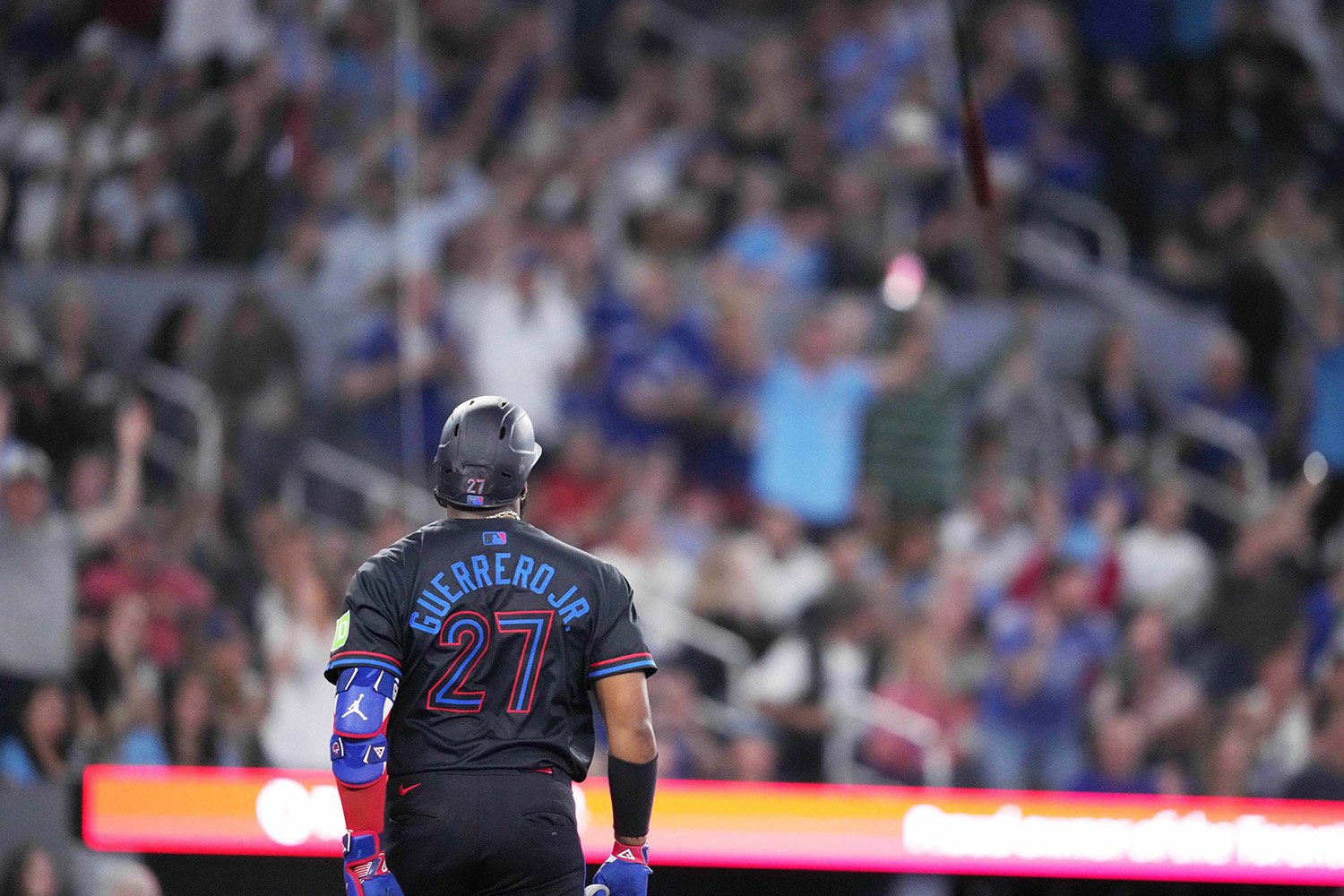 I’m a baseball romantic first and foremost, and what’s more romantic than the player who perfectly embodies your franchise and decides to stay put for his entire career? The Blue Jays have not yet had one of those. Our best and longest-serving players have gone to and/or come from elsewhere. Roy Halladay, Carlos Delgado, George Bell, Jesse Barfield, Lloyd Moseby, Fred McGriff, Jimmy Key, Tony Fernandez, John Olerud, and David Wells all left or were traded after rising through the organization and excelling in the big leagues. Bautista, Encarnacion, Alomar, and Carter arrived in Toronto via other teams, had dominant career peaks, and then left again. Dave Stieb would easily be our man if not for a terrible four-game sojourn with the White Sox in 1993. Looking at a list of all the players who were exclusively Blue Jays is depressingly underwhelming. Using an arbitrary four-season minimum caveat to weed out all of the cup of coffee guys, here is a list of all the career Blue Jays ranked by their bWAR: Luis Leal (1980-1985) 10.6 bWAR Ricky Romero (2009-2013) 10.1 bWAR Jerry Garvin (1977-1982) 7.1 bWAR Devon Travis (2015-2018) 5.8 bWAR Jesse Litsch (2007-2011) 4 bWAR Garth Iorg (1978-1987) 3.5 bWAR Mike Willis (1977-1981) 1.8 bWAR Chad Jenkins (2012-2015) 1.5 bWAR Dalton Pompey (2014-2018) 0.5 bWAR Russ Adams (2004-2009) 0.0 bWAR Scott Richmond (2008-2012) -0.1 bWAR And here are the four-season-minimum lifer-Jays currently on the team, also ranked by bWAR: Vladimir Guerrero Jr. (2019-2024) 21.5 bWAR Bo Bichette (2019-2024) 17.5 bWAR Alejandro Kirk (2020-2024) 9 bWAR Alek Manoah (2021-2024) 7.3 bWAR If Vladimir Guerrero Jr. decides to quit playing baseball tomorrow to spend more time cross-stitching, he would be the greatest career Blue Jay by a significant margin, more than double second-place Leal. No matter how good the embroidery patterns at Michael’s might be, I’m guessing that will not come to pass. What will happen is one of two things: Guerrero signs a massive contract extension to remain with the Jays until he nearly hangs 'em up, or he doesn’t, becomes a free agent, and likely goes elsewhere for the rest of his career. If an extension isn’t agreed upon in the next month and change, the Blue Jays may lose their best shot at having a truly iconic face of the franchise player spend his entire career in Toronto. Guerrero Jr. could be Mr. Blue Jay. Or, next season, he’ll put on the hat that might adorn his Hall of Fame plaque. I can speak for Blue Jay fans when I say I prefer he stays put. The Blue Jays are one of only a handful of clubs wanting a monogamous relationship with an all-time star. As such, it might be equally fun and torturous to look at all the major league clubs to see who has enjoyed this privilege. Then, we can better understand how the Blue Jays stack up in this regard. The following is a ranking of each Major League club ordered by the bWAR accumulated by their top, exclusive player: Minnesota Twins: Walter Johnson (1907-1927) 166.9 bWAR The greatest pitcher of all time spent his entire career with the Washington Senators, who became the Minnesota Twins in 1961. The Twins have had a handful of great one-team stars, including Joe Mauer, Kirby Puckett, and Tony Oliva. I'm sure Twins fans would also want me to mention Kent Hrbek here. St. Louis Cardinals: Stan Musial (1941-1963) 128.5 bWAR Is Musial the most overlooked legend in baseball history? He was one of the greatest overall ballplayers ever to play the game and is undoubtedly the no-brainer icon of the Cardinals franchise. Oh yeah, and the second-place player on the franchise list is Bob Gibson. Boston Red Sox: Ted Williams (1939-1960) 121.8 bWAR The Splendid Splinter tops this list for the Sox. So good was he that his military-interrupted career resulted in only 19 seasons of bWAR accrual. Yet his total of 121.8 tops the next greatest career Red Sock, Carl Yastrzemski, and his twenty-three seasons by 25.3 points. New York Yankees: Lou Gehrig (1923-1939) 113.7 bWAR The Yankees have eighteen exclusive players with 40+ bWAR, nine of whom are in the Hall of Fame. This does not include Aaron Judge, who will probably play the rest of his career in New York and is on a Hall of Fame track. He has currently amassed 52.2 bWAR. San Francisco Giants: Mel Ott (1926-1947) 110.9 bWAR The third member of the 500-home run club was a lifelong New York Giant. Carl Hubbell, Bill Terry, Travis Jackson, and Ross Youngs are four other Hall of Famers who played exclusively for the Giants. Buster Posey will likely join those ranks in the coming years. Philadelphia Phillies: Mike Schmidt (1972-1989) 106.9 bWAR There are fewer great lifelong Phillies than I would have imagined, but no matter. The greatest third baseman of all time tops the Philadelphia list and is surely “Mr. Phillie” in fans' minds. Baltimore Orioles: Cal Ripken Jr. (1981-2001) 95.9 bWAR The Iron Man of baseball is atop the Baltimore leaderboard. This leaderboard also includes Hall of Famers Brooks Robinson and Jim Palmer. Pittsburgh Pirates: Roberto Clemente (1955-1972) 94.9 bWAR Wow, Roberto Clemente was good. And he spent his whole career in black and gold. So did Willie Stargell, Pie Traynor, and Bill Mazeroski. That's a nice collection of franchise stars for the Steel City. Detroit Tigers: Al Kaline (1953-1974) 92.8 bWAR The most steady presence a team could hope for in the lineup and the field, “Mr. Tiger” broke into the Majors at eighteen years old and played in the Motor City until he retired at thirty-nine. Just behind Kaline on the Tigers' leaderboard are Charlie Gehringer, Lou Whitaker, Alan Trammell, and Bill Freehan. Kansas City Royals: George Brett (1973-1993) 88.6 bWAR Brett is certainly the player who most embodies the Royals. If Mike Schmidt weren't that much better, Brett would have a legitimate claim as the greatest third baseman of all time. Instead, he'll have to settle for the most famous hemorrhoids of all time. Salvador Perez and his 35.5 bWAR is already in second place on the franchise list, and if he plays out the string in KC, he will certainly be the modern torch-bearer as “Mr. Royal.” Los Angeles Angels: Mike Trout (2011-2024) 86.2 bWAR The greatest career Angel for a time was Tim Salmon until this other fish came along. Though certainly Trout could be moved at some point in the future, Angels ownership did exactly what we're all hoping Jays ownership will do with Guerrero, and they locked down their marquee player with a long-term contract extension. For now, I feel confident calling Trout the greatest career Angel. Atlanta Braves: Chipper Jones (1993-2012) 85.3 bWAR Unfortunately, neither Hank Aaron nor Eddie Matthews played in the Braves organization for all their years. And none of the members of the great 1990s pitching staff played their entire careers in Atlanta. So, the offensive linchpin of those dynastic Braves teams is the answer. Alex Anthopoulos is doing his best to add to this list by signing many young stars to long-term contracts. Houston Astros: Jeff Bagwell (1991-2005) 79.9 bWAR Bagwell's bWAR edges out the other “Mr. Astro,” Craig Biggio. Both of these Hall of Fame players are synonymous with the Astros franchise. It will be interesting to see if Jose Altuve will end his career with the Astros and put his name in the running beside Bagwell and Biggio as career-long franchise icons. Milwaukee Brewers: Robin Yount (1974-1993) 77.4 bWAR The shortstop/centerfielder/first-baseman, two-time MVP, and Hall of Famer is the heartbeat of the Brewers organization. Ryan Braun, the next-best lifer-Brewer, doesn't hold a candle to Yount's greatness. Chicago White Sox: Luke Appling (1930-1950) 77.4 bWAR After the embarrassment of the 2024 White Sox season, it's hard to remember that this is a very old club with a long history of great players. Though largely overlooked as a franchise icon, Appling was one of the best shortstops in Major League Baseball from the beginning of the Depression until well after World War II. Also on this list are the great pitchers and fellow Hall of Famers Red Faber and Ted Lyons. Los Angeles Dodgers: Clayton Kershaw (2008-2024) 76.5 bWAR I feel pretty confident assuming that Kershaw will retire as a Dodger. If not, the next names on this list are Pee Wee Reese, Jackie Robinson, Don Drysdale, Sandy Koufax, and Roy Campanella. Cincinnati Reds: Johnny Bench (1967-1983) 75.1 bWAR Bench is the greatest catcher of all time and no doubt the greatest exclusive Red. Though fans may pick any member of the Big Red Machine as their icon of the franchise, it is only Bench and Dave Concepcion who spent their entire careers in Cincinnati. Runners-up here are Barry Larkin, Joey Votto, and Bid McPhee. San Diego Padres: Tony Gwynn (1982-2001) 69.2 bWAR His bWAR total ranks him lower on this list than we might initially think, but Gwynn had very little power and wasn't great in the field or on the bases. But he was a magician with the bat and, as a human being, a treasure for our game. Fernando Tatis Jr.'s long-term contract may keep him in San Diego for his career, and he would have a great shot at overtaking Gwynn's bWAR total. Regardless, Gwynn will forever be “Mr. Padre.” Seattle Mariners: Edgar Martinez (1987-2004) 68.4 bWAR The Mariners are a great proxy for the Blue Jays, as they share a birth date. Unlike the Blue Jays, the Mariners have had two exclusive stars: Martinez and Félix Hernandez. Seattle has been graced with transcendent stars in Griffey Jr., A-Rod, Randy Johnson, and Ichiro Suzuki, but all played elsewhere throughout their careers. Martinez acted as the one constant through that roster churn and surely bears the title of “Mr. Mariner.” Chicago Cubs: Ernie Banks (1953-1971) 67.7 bWAR There's no question that the emblem of Cubs baseball is “Mr. Cub” himself, Ernie Banks. However, there are far fewer great career Cubs than I would have assumed for one of the oldest franchises in baseball. Much like Gwynn, even if there were an exclusive Cub who was a competitor for Banks' bWAR total, Cubs fans would likely still keep Banks at the top of their minds regarding franchise icons. Cleveland Guardians: Bob Feller (1936-1956) 65.2 bWAR This is an interesting one. Undoubtedly, Feller may be the player Guardians fans think of as their franchise icon. But they may be watching the man who will soon claim that title in, José Ramirez, who sits at 52.4 bWAR. Bob Lemon is just behind Feller, as is Addie Joss, who may have been poised to become one of the greatest pitchers of all time had he not been struck down by tuberculosis after only nine seasons. Colorado Rockies: Todd Helton (1997-2013) 61.8 bWAR This one is a no-brainer. Todd Helton IS the Colorado Rockies. He was a great player whose career numbers belie the fabled “Coors Effect.” Charlie Blackmon is next on the list and sits about forty points behind Helton in bWAR. Oakland (???) Athletics: Eddie Rommel (1920-1932) 49.7 bWAR Well, here we are towards the bottom of the rankings. Stinginess is not just a current phenomenon for the Athletics. In the days of Connie Mack, players were sold and traded constantly. In Kansas City, the Athletics were no more than a farm team for the Yankees. Charles Finley continued the tradition of penny-pinching, which famously carried over into the Moneyball era. As a result, all of the great Athletics throughout history, Foxx, Collins, Grove, Jackson, Fingers, Blue, Henderson, McGwire, Canseco, Giambi, Tejada, and Zito have been moved. So we end up with Eddie Rommel as the greatest exclusive Athletic. An excellent pitcher, sure, but Rommel is not an all-time great, and certainly not someone Athletics fans would identify as a franchise icon. New York Mets: David Wright (2004-2018) 49.2 bWAR Wright's lifetime bWAR would rank much higher if not for career-ending injuries. He would also have had a better shot at the Hall of Fame and may have been positioned as an all-time great. He is still the greatest career Met and surely someone Mets fans would identify as a franchise icon. Washington Nationals: Steve Rogers (1973-1985) 45.1 bWAR By the numbers, former Expo Steve Rogers is the correct answer here. Once we account for recency bias and a city change, Ryan Zimmerman and his career 40.1 bWAR earned him the title “Mr. National.” Arizona Diamondbacks: Brandon Webb (2003-2009) 33 bWAR The 2006 National League Cy Young Award winner enjoyed several years of dominance on the mound before a shoulder injury cut his career short. Who knows whether or not he would have continued playing for the Diamondbacks had he had a full career? Nonetheless, his seven seasons and 33 bWAR rank him at the top of the franchise list. Texas Rangers: Rusty Greer (1994-2002) 22.4 bWAR Greer was a fan favourite during his relatively short career in Texas. He played hard on defense and had a few good seasons with the bat in a powerful Rangers lineup. I wonder how many Rangers fans know he tops their team's bWAR list for career Rangers. Whether they know it or not, I'm sure it would make them happy. Tampa Bay Rays: Desmond Jennings (2010-2016) 13.4 bWAR Though Brandon Lowe sits at 16 bWAR, I'm not holding my breath that he'll play out his entire career in Tampa. So Desmond Jennings, with his 13.4 bWAR over parts of seven seasons with the Rays, holds the top spot on the franchise list. Miami Marlins: Jose Fernández (2013-2016) 13 bWAR Fernandez is a very sad addition to this list. His tragic passing means we have no idea how his career may have unfolded. Given that the Marlins have no other lifer players above 10 bWAR, one can imagine that he would have moved on whenever he hit free agency. Toronto Blue Jays: Luis Leal (1980-1985) 10.6 bWAR That's right. Our Toronto Blue Jays are dead last here. No shade to Luis Leal, who had a fine career as part of a pitching staff during pivotal years for the Jays while they turned into legitimate contenders in the American League. But to not have any other exclusive player who ranks ahead of Leal's paltry 10.6 bWAR is an indictment of the franchise. Bichette and Guerrero Jr. currently sit ahead of this mark. Still, neither is likely to play their entire careers in Toronto unless this front office finally delivers the fan base some good news and works out a long-term extension for Guerrero Jr. I understand why teams like the Rays or Marlins have to suffer through endlessly transient lineups. Bad ownership and fewer resources than the big dogs of their respective divisions have forced their hands into constantly dealing away their best players to pull in prospect capital or cash. The Blue Jays are not, and absolutely should not, be like them. It is mind-boggling that a soon-to-be fifty-year-old franchise has never had a star-calibre single-team player. I want Vladimir Guerrero Jr. to be the first exclusively Blue Jay superstar. I want it because he's cool. I want it because he's fun. I want it because he's already a star. But most of all, I want it because I want the dignity afforded those fans whose teams have cemented a true face of the franchise. So many things make baseball beautiful, but too many things make it cold, capitalistic, and industrial. Having a franchise icon who stays put for his entire career is one way to fend off the insidious forces of crass commercialization and economics in every corner of the sport. It can help to reignite those romantic feelings for the game: familiarity, constancy, and normalcy. Having your guy out there year after year provides the personal familiarity we crave as fans. The day-to-day nature of the game can make these players feel like family in an oddly mediated way. So when the ones you fall in love with leave, it can hurt as bad as an older brother leaving home for university or a beloved cousin moving across the country. We want these players to stick around to remind us that some things can stay the same despite the endless churn of rosters, ballpark redesigns, or team relocations. I desperately want the Blue Jays and Vladimir Guerrero Jr. to reach a long-term agreement so he can stay home and be part of our family.
- 2 comments
-
- 1
-
-
- luis leal
- ricky romero
- (and 5 more)
