


Mike LeSage
-
Posts
243 -
Joined
-
Last visited
-
Days Won
1
Content Type
Profiles
Toronto Blue Jays Videos
2026 Toronto Blue Jays Top Prospects Ranking
Toronto Blue Jays Free Agent & Trade Rumors, Notes, & Tidbits
Guides & Resources
2025 Toronto Blue Jays Draft Pick Tracker
News
2026 Toronto Blue Jays Draft Tracker: Picks & Bonuses
Forums
Blogs
Events
Store
Downloads
Gallery
Everything posted by Mike LeSage
-
.jpg.293eb470ea5f45703eb0f8c8198271a1.jpg) In our Game 3 recap, I saved Andrés Giménez for last. This time he’s going first. In Game 3, Giménez came to the plate in the third inning for his first plate appearance. The Jays were already trailing. With a teammate on base and none out, Giménez tied the game with one swing of the bat. Game 4, same story – the only difference this time was that Giménez’s two-run homer (+17.7 WPA) gave the Jays the lead instead of just tying the game. He would add another pair of RBI in the eighth inning to extend the Jays' lead to six runs and end the night with the highest win probability added of the game. Another guy swatting dingers on back-to-back days was Vladimir Guerrero Jr. His home run in the seventh inning mirrored his homer from the day before. The difference in Game 4 is that his long ball moved him into sole possession of the top spot for franchise homers in a single postseason. Addison Barger’s performance with the bat wasn’t what had people talking, even though his double in the sixth inning was the hardest hit ball of the game. Yet, in this game, it was his glove that made the most noise. Shifting to right field for the first time in almost a month as a result of some roster shuffling due to Anthony Santander’s unavailability, Barger made three highlight-worthy plays. He made a diving catch to his left in the bottom of the seventh to end the inning. He made another great catch ranging to his right to save extra bases in the fifth, but his best work was a quick scoop on a single by Eugenio Suárez and a cannon throw to Ernie Clement at third to catch Josh Naylor, who was trying to go first-to-third on the play. With the lead at 5-1 and the Mariners threatening (Jorge Polanco scored on the play to make it 5-2), Barger's outfield assist ended the sixth inning and stopped the momentum. John Schneider went to the bullpen four times to cover three and a third innings of relief, and the arm barn came through. Mason Fluharty, Louis Varland, Jeff Hoffman and Seranthony Domínguez combined for a line of 3.1 IP, 2 H, 0 ER, 1 BB and 3 K. Fluharty was first out of the ‘pen and had the shakiest performance of the four, but that outfield assist from Barger helped save that inning from getting out of hand, and then the other three kept it moving to secure the win. Hoffman was called on for the eighth inning to face the top of Seattle's order and sandwiched a Cal Raleigh pop-out between two strikeouts to retire the side in order. That brings us to Max Scherzer. In the Game 3 recap, I said Scherzer would hope to replicate Shane Bieber’s “this is why they got him” performance, and that’s exactly what he did. Scherzer started the game a little shakily; after recording the first out, he walked the next two batters, but a double play ball got him out of the inning unscathed. In the third, it was a leadoff walk to the #9 hitter, Leo Rivas, that caused some concern. With one out and Raleigh at the plate, Scherzer turned and fired the ball to Guerrero at first, and after a video review, got the second out before striking out Raleigh to end the inning, keeping the Jays' lead at 3-1. Scherzer had five strikeouts over 5.2 innings, which moved him past Roger Clemens into fifth all-time on MLB's postseason strikeout list. Scherzer’s biggest highlight of the game wasn't even something that fully shows up in the box score. When John Schneider came out for a mound visit, Scherzer responded emphatically that he was good to continue and struck out Randy Arozarena to end the fifth inning. Schneider would say in his press conference after the game, “It was awesome. I thought he was going to kill me. It was great.” For Scherzer, it was his longest postseason outing and marked the most pitches he's thrown in a playoff start since the NLDS in 2021. He has made six other appearances since then. His five strikeouts were his most since the NLCS that same year. His Game Score of 56 was also his best since ‘21 and sixth best in his career for a game in which he earned the win. This win, most importantly, ties the series back up, turning it into a best-of-three. It also guarantees that the Jays will be coming back to Toronto for at least one more game. They go again tonight in Seattle with a pitching rematch of Game 1: Kevin Gausman vs Bryce Miller. Both teams are now two wins away from a trip to the World Series, and they’ve got three games to figure it out.
In our Game 3 recap, I saved Andrés Giménez for last. This time he’s going first. In Game 3, Giménez came to the plate in the third inning for his first plate appearance. The Jays were already trailing. With a teammate on base and none out, Giménez tied the game with one swing of the bat. Game 4, same story – the only difference this time was that Giménez’s two-run homer (+17.7 WPA) gave the Jays the lead instead of just tying the game. He would add another pair of RBI in the eighth inning to extend the Jays' lead to six runs and end the night with the highest win probability added of the game. Another guy swatting dingers on back-to-back days was Vladimir Guerrero Jr. His home run in the seventh inning mirrored his homer from the day before. The difference in Game 4 is that his long ball moved him into sole possession of the top spot for franchise homers in a single postseason. Addison Barger’s performance with the bat wasn’t what had people talking, even though his double in the sixth inning was the hardest hit ball of the game. Yet, in this game, it was his glove that made the most noise. Shifting to right field for the first time in almost a month as a result of some roster shuffling due to Anthony Santander’s unavailability, Barger made three highlight-worthy plays. He made a diving catch to his left in the bottom of the seventh to end the inning. He made another great catch ranging to his right to save extra bases in the fifth, but his best work was a quick scoop on a single by Eugenio Suárez and a cannon throw to Ernie Clement at third to catch Josh Naylor, who was trying to go first-to-third on the play. With the lead at 5-1 and the Mariners threatening (Jorge Polanco scored on the play to make it 5-2), Barger's outfield assist ended the sixth inning and stopped the momentum. John Schneider went to the bullpen four times to cover three and a third innings of relief, and the arm barn came through. Mason Fluharty, Louis Varland, Jeff Hoffman and Seranthony Domínguez combined for a line of 3.1 IP, 2 H, 0 ER, 1 BB and 3 K. Fluharty was first out of the ‘pen and had the shakiest performance of the four, but that outfield assist from Barger helped save that inning from getting out of hand, and then the other three kept it moving to secure the win. Hoffman was called on for the eighth inning to face the top of Seattle's order and sandwiched a Cal Raleigh pop-out between two strikeouts to retire the side in order. That brings us to Max Scherzer. In the Game 3 recap, I said Scherzer would hope to replicate Shane Bieber’s “this is why they got him” performance, and that’s exactly what he did. Scherzer started the game a little shakily; after recording the first out, he walked the next two batters, but a double play ball got him out of the inning unscathed. In the third, it was a leadoff walk to the #9 hitter, Leo Rivas, that caused some concern. With one out and Raleigh at the plate, Scherzer turned and fired the ball to Guerrero at first, and after a video review, got the second out before striking out Raleigh to end the inning, keeping the Jays' lead at 3-1. Scherzer had five strikeouts over 5.2 innings, which moved him past Roger Clemens into fifth all-time on MLB's postseason strikeout list. Scherzer’s biggest highlight of the game wasn't even something that fully shows up in the box score. When John Schneider came out for a mound visit, Scherzer responded emphatically that he was good to continue and struck out Randy Arozarena to end the fifth inning. Schneider would say in his press conference after the game, “It was awesome. I thought he was going to kill me. It was great.” For Scherzer, it was his longest postseason outing and marked the most pitches he's thrown in a playoff start since the NLDS in 2021. He has made six other appearances since then. His five strikeouts were his most since the NLCS that same year. His Game Score of 56 was also his best since ‘21 and sixth best in his career for a game in which he earned the win. This win, most importantly, ties the series back up, turning it into a best-of-three. It also guarantees that the Jays will be coming back to Toronto for at least one more game. They go again tonight in Seattle with a pitching rematch of Game 1: Kevin Gausman vs Bryce Miller. Both teams are now two wins away from a trip to the World Series, and they’ve got three games to figure it out. -
When the Blue Jays announced their lineup for Game 4, there were a few shuffles from the night before. Isiah Kiner-Falefa was slotted in at second base, which shifts Ernie Clement to third, and puts Addison Barger in right field. Out of the lineup was Anthony Santander. Manager John Schneider confirmed that Santander "woke up feeling sore" but was non-commital regarding his availability off the bench as a potential late-inning pinch hitter. Ken Rosenthal and Mitch Bannon of The Athletic reported that, according to "sources," the Blue Jays had made a medical request to have Santander removed from the ALCS roster. If approved, that would make Santander ineligible for the World Series roster, should Toronto make it that far. Within an hour, the Jays had their answer. Santander's removal was approved, ending his season. Joey Loperfido has been called up to take his place and is active for tonight's game. View full rumor
-
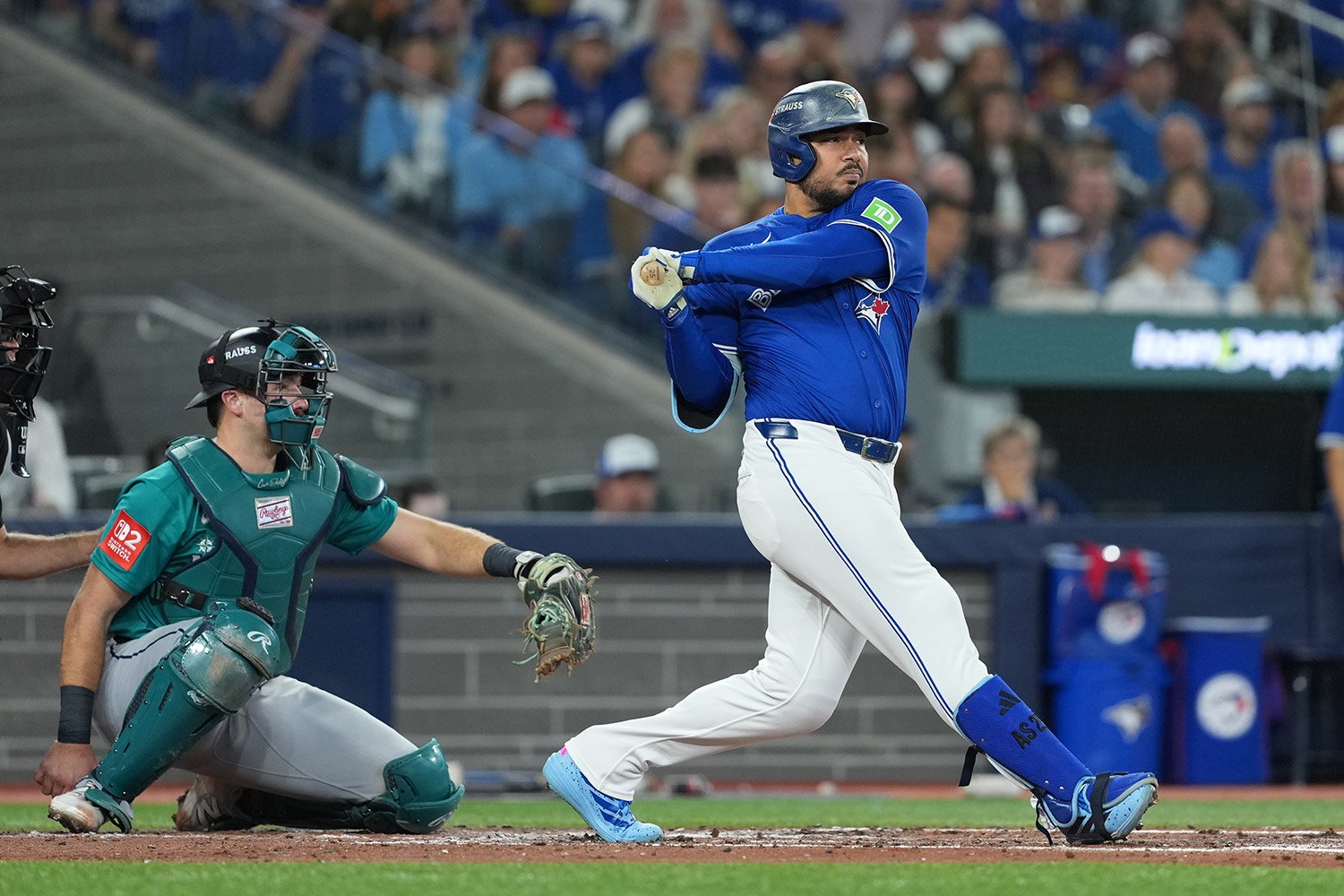 When the Blue Jays announced their lineup for Game 4, there were a few shuffles from the night before. Isiah Kiner-Falefa was slotted in at second base, which shifts Ernie Clement to third, and puts Addison Barger in right field. Out of the lineup was Anthony Santander. Manager John Schneider confirmed that Santander "woke up feeling sore" but was non-commital regarding his availability off the bench as a potential late-inning pinch hitter. Ken Rosenthal and Mitch Bannon of The Athletic reported that, according to "sources," the Blue Jays had made a medical request to have Santander removed from the ALCS roster. If approved, that would make Santander ineligible for the World Series roster, should Toronto make it that far. Within an hour, the Jays had their answer. Santander's removal was approved, ending his season. Joey Loperfido has been called up to take his place and is active for tonight's game.
 -
.jpg.2ac607e5245f306f06e2c5f21357b7f6.jpg) Whatever your superstition or good luck charm of choice is, if you switched it up between Games 2 and 3, you helped. The Jays, for their part, left the white panel hats in Toronto and switched to the double-blues to wear with their powder blue uniforms. The switches worked, and the bats exploded for 18 hits and 13 runs, with the team getting contributions from every part of the lineup. In keeping with the theme of switching things up, for this recap, I’m going to do things a little differently, and instead of running through the game chronologically, I’m going to look at the lineup from top to bottom. Shane Bieber: 6 IP, 2 ER, 1 BB, 8 K Bieber’s first inning started with a walk, fly out, home run and ground-rule double. It was quickly 2-0 Mariners, and Seattle had a 76.4% win expectancy. Bieber would retire the next seven batters in a row, including five strikeouts – all of them swinging. Bieber had 17 swing & misses on his way to putting up a pitching line and steady performance that was the exact kind of outing the Jays needed and why Toronto made the move for him at the trade deadline. He threw 88 pitches, and none more than his slider. He was perfectly split with 44 pitches in the zone and 44 out of it. He had hitters looking uncomfortable in almost every at-bat. George Springer: 3 for 6, HR, 2 runs scored With his home run in the fourth inning, Springer moved into a tie for fourth place all-time in postseason homers. With 22 for his career (three so far this postseason), he is now tied with Bernie Williams. He’ll need seven more to tie Manny Ramírez for the all-time lead. This particular dinger made it 6-2 Jays. His home run ball was also the hardest hit by anyone in the game at 112.5 mph and traveled the furthest of any ball (measured at 431 feet). Nathan Lukes: 1-for-6, 1 run, 1 RBI Lukes would single in the third inning and score the go-ahead run on a George Kirby wild pitch to give the Jays their first lead of the game – a lead they would not relinquish. Vladimir Guerrero Jr.: 4-for-4, HR, 3 runs scored Vladdy’s first three ABs were a 102.8-mph single, a 104.9-mph double and a 106.4-mph HR. The fourth time, he was rewarded with an intentional walk. His fifth at-bat produced his hardest hit ball of the game: 108 mph for another double. A slight stumble out of the box likely kept him from considering going for third and chasing the cycle. With his fourth home run of the playoffs, he is now tied with José Bautista for the franchise's most in a postseason. His 16% win probability added was tied for the most of any Blue Jays batter. Anthony Santander: 0-for-2, 1 BB, 1 run scored Tony Taters was moved up to the cleanup spot to shake things up a little. He ended the game as the only Jays starter to not record a hit, but showed a remarkable amount of hustle to score from second base on an Ernie Clement single. On a play where Alejandro Kirk would be tagged out trying to go first-to-third to end the inning, Santander’s speed helped make it 7-2 Jays. He would be rewarded with the rest of the night off, as Myles Straw came in as a defensive replacement in the bottom half of the inning. Alejandro Kirk: 2-for-4, HR, 2 runs scored, 3 RBI Kirk’s three-run home run in the sixth inning didn’t do much to move the win probability needle (it was already pretty maxed out), but it did provide an exclamation point on a Jays offensive showing that proved this team is one to be reckoned with. He also scored from second on a Daulton Varsho double in the third, showing a determination to put runs on the board. Daulton Varsho: 2-for-5, 2 RBI Varsho was the only Jays starter not to score a run. His double to score Guerrero and Kirk in the third inning made the game 5-2 Jays and was the highest scoring play by WPA in the game at 17.5%. That double was also the second-hardest hit Jays ball of the night, behind only Springer’s homer, clocking in at 109.8 mph. Addison Barger: 1-for-5, HR Barger was the last of the starters to reach base in the game. Everyone else had done it by the top of the fifth inning, but Barger waited until the ninth. It was his first hit of the ALCS, and it was an emphatic moonshot. Measured at 414 feet, it was incredibly the only Blue Jays home run in the game that would have also been a homer in every other major league park. Barger was born in Washington State and had a number of family and friends in attendance to see his first career postseason home run. As he said in a post-game scrum on Sportsnet: “Homers are sick.” Ernie Clement: 2-for-5, 1 run, 1 RBI Clement led off the third inning with a double that set the stage for the offensive explosion that was to come. He followed that up with a single in the fifth inning to score Santander and extend the Jays' lead. His 1.208 OPS to this point in the playoffs trails only Paul Molitor’s 1.378 of all Jays postseason runs before this year (Vladdy’s 1.426 this postseason is the current franchise high-water mark). Not bad for the #8 hitter. Andrés Giménez: 3-for-5, HR, 2 runs scored, 2 RBI Speaking of the bottom of the order getting it done, and conveniently for my recap format, we’ve saved the best for last. Batting ninth and following that Clement double, Giménez was the second batter to the plate in the third inning. With the Jays down by two and none out in the inning, announcers Buck Martinez and Dan Shulman wondered aloud if Giménez might be asked to bunt to move the runner into scoring position. Thankfully he wasn’t. In post-game remarks, Giménez said he was just trying to make contact and move Clement over. Well, with his first career postseason home run, Giménez moved him all the way over and around and tied the game at two. He erased the Mariners' lead, and by the end of the inning, the Jays would be in front and never look back. Giménez would also go first-to-third on a Springer single in the sixth and score on an infield tapper by Lukes. This performance was the kind of one we are used to seeing from the Jays. Production up and down the lineup, with the spark coming from the guys at the bottom. They still have a hill to climb, but they’re now one win away from tying the series and will be sending Max Scherzer to the mound for Game 4. He will hope to replicate Bieber’s “this is why they got him” performance, and if he’s not as sharp as the Jays need, they now have a rested bullpen ready to go. Just like that, we’ve got a series on our hands again.
Whatever your superstition or good luck charm of choice is, if you switched it up between Games 2 and 3, you helped. The Jays, for their part, left the white panel hats in Toronto and switched to the double-blues to wear with their powder blue uniforms. The switches worked, and the bats exploded for 18 hits and 13 runs, with the team getting contributions from every part of the lineup. In keeping with the theme of switching things up, for this recap, I’m going to do things a little differently, and instead of running through the game chronologically, I’m going to look at the lineup from top to bottom. Shane Bieber: 6 IP, 2 ER, 1 BB, 8 K Bieber’s first inning started with a walk, fly out, home run and ground-rule double. It was quickly 2-0 Mariners, and Seattle had a 76.4% win expectancy. Bieber would retire the next seven batters in a row, including five strikeouts – all of them swinging. Bieber had 17 swing & misses on his way to putting up a pitching line and steady performance that was the exact kind of outing the Jays needed and why Toronto made the move for him at the trade deadline. He threw 88 pitches, and none more than his slider. He was perfectly split with 44 pitches in the zone and 44 out of it. He had hitters looking uncomfortable in almost every at-bat. George Springer: 3 for 6, HR, 2 runs scored With his home run in the fourth inning, Springer moved into a tie for fourth place all-time in postseason homers. With 22 for his career (three so far this postseason), he is now tied with Bernie Williams. He’ll need seven more to tie Manny Ramírez for the all-time lead. This particular dinger made it 6-2 Jays. His home run ball was also the hardest hit by anyone in the game at 112.5 mph and traveled the furthest of any ball (measured at 431 feet). Nathan Lukes: 1-for-6, 1 run, 1 RBI Lukes would single in the third inning and score the go-ahead run on a George Kirby wild pitch to give the Jays their first lead of the game – a lead they would not relinquish. Vladimir Guerrero Jr.: 4-for-4, HR, 3 runs scored Vladdy’s first three ABs were a 102.8-mph single, a 104.9-mph double and a 106.4-mph HR. The fourth time, he was rewarded with an intentional walk. His fifth at-bat produced his hardest hit ball of the game: 108 mph for another double. A slight stumble out of the box likely kept him from considering going for third and chasing the cycle. With his fourth home run of the playoffs, he is now tied with José Bautista for the franchise's most in a postseason. His 16% win probability added was tied for the most of any Blue Jays batter. Anthony Santander: 0-for-2, 1 BB, 1 run scored Tony Taters was moved up to the cleanup spot to shake things up a little. He ended the game as the only Jays starter to not record a hit, but showed a remarkable amount of hustle to score from second base on an Ernie Clement single. On a play where Alejandro Kirk would be tagged out trying to go first-to-third to end the inning, Santander’s speed helped make it 7-2 Jays. He would be rewarded with the rest of the night off, as Myles Straw came in as a defensive replacement in the bottom half of the inning. Alejandro Kirk: 2-for-4, HR, 2 runs scored, 3 RBI Kirk’s three-run home run in the sixth inning didn’t do much to move the win probability needle (it was already pretty maxed out), but it did provide an exclamation point on a Jays offensive showing that proved this team is one to be reckoned with. He also scored from second on a Daulton Varsho double in the third, showing a determination to put runs on the board. Daulton Varsho: 2-for-5, 2 RBI Varsho was the only Jays starter not to score a run. His double to score Guerrero and Kirk in the third inning made the game 5-2 Jays and was the highest scoring play by WPA in the game at 17.5%. That double was also the second-hardest hit Jays ball of the night, behind only Springer’s homer, clocking in at 109.8 mph. Addison Barger: 1-for-5, HR Barger was the last of the starters to reach base in the game. Everyone else had done it by the top of the fifth inning, but Barger waited until the ninth. It was his first hit of the ALCS, and it was an emphatic moonshot. Measured at 414 feet, it was incredibly the only Blue Jays home run in the game that would have also been a homer in every other major league park. Barger was born in Washington State and had a number of family and friends in attendance to see his first career postseason home run. As he said in a post-game scrum on Sportsnet: “Homers are sick.” Ernie Clement: 2-for-5, 1 run, 1 RBI Clement led off the third inning with a double that set the stage for the offensive explosion that was to come. He followed that up with a single in the fifth inning to score Santander and extend the Jays' lead. His 1.208 OPS to this point in the playoffs trails only Paul Molitor’s 1.378 of all Jays postseason runs before this year (Vladdy’s 1.426 this postseason is the current franchise high-water mark). Not bad for the #8 hitter. Andrés Giménez: 3-for-5, HR, 2 runs scored, 2 RBI Speaking of the bottom of the order getting it done, and conveniently for my recap format, we’ve saved the best for last. Batting ninth and following that Clement double, Giménez was the second batter to the plate in the third inning. With the Jays down by two and none out in the inning, announcers Buck Martinez and Dan Shulman wondered aloud if Giménez might be asked to bunt to move the runner into scoring position. Thankfully he wasn’t. In post-game remarks, Giménez said he was just trying to make contact and move Clement over. Well, with his first career postseason home run, Giménez moved him all the way over and around and tied the game at two. He erased the Mariners' lead, and by the end of the inning, the Jays would be in front and never look back. Giménez would also go first-to-third on a Springer single in the sixth and score on an infield tapper by Lukes. This performance was the kind of one we are used to seeing from the Jays. Production up and down the lineup, with the spark coming from the guys at the bottom. They still have a hill to climb, but they’re now one win away from tying the series and will be sending Max Scherzer to the mound for Game 4. He will hope to replicate Bieber’s “this is why they got him” performance, and if he’s not as sharp as the Jays need, they now have a rested bullpen ready to go. Just like that, we’ve got a series on our hands again. -
Whatever your superstition or good luck charm of choice is, if you switched it up between Games 2 and 3, you helped. The Jays, for their part, left the white panel hats in Toronto and switched to the double-blues to wear with their powder blue uniforms. The switches worked, and the bats exploded for 18 hits and 13 runs, with the team getting contributions from every part of the lineup. In keeping with the theme of switching things up, for this recap, I’m going to do things a little differently, and instead of running through the game chronologically, I’m going to look at the lineup from top to bottom. Shane Bieber: 6 IP, 2 ER, 1 BB, 8 K Bieber’s first inning started with a walk, fly out, home run and ground-rule double. It was quickly 2-0 Mariners, and Seattle had a 76.4% win expectancy. Bieber would retire the next seven batters in a row, including five strikeouts – all of them swinging. Bieber had 17 swing & misses on his way to putting up a pitching line and steady performance that was the exact kind of outing the Jays needed and why Toronto made the move for him at the trade deadline. He threw 88 pitches, and none more than his slider. He was perfectly split with 44 pitches in the zone and 44 out of it. He had hitters looking uncomfortable in almost every at-bat. George Springer: 3 for 6, HR, 2 runs scored With his home run in the fourth inning, Springer moved into a tie for fourth place all-time in postseason homers. With 22 for his career (three so far this postseason), he is now tied with Bernie Williams. He’ll need seven more to tie Manny Ramírez for the all-time lead. This particular dinger made it 6-2 Jays. His home run ball was also the hardest hit by anyone in the game at 112.5 mph and traveled the furthest of any ball (measured at 431 feet). Nathan Lukes: 1-for-6, 1 run, 1 RBI Lukes would single in the third inning and score the go-ahead run on a George Kirby wild pitch to give the Jays their first lead of the game – a lead they would not relinquish. Vladimir Guerrero Jr.: 4-for-4, HR, 3 runs scored Vladdy’s first three ABs were a 102.8-mph single, a 104.9-mph double and a 106.4-mph HR. The fourth time, he was rewarded with an intentional walk. His fifth at-bat produced his hardest hit ball of the game: 108 mph for another double. A slight stumble out of the box likely kept him from considering going for third and chasing the cycle. With his fourth home run of the playoffs, he is now tied with José Bautista for the franchise's most in a postseason. His 16% win probability added was tied for the most of any Blue Jays batter. Anthony Santander: 0-for-2, 1 BB, 1 run scored Tony Taters was moved up to the cleanup spot to shake things up a little. He ended the game as the only Jays starter to not record a hit, but showed a remarkable amount of hustle to score from second base on an Ernie Clement single. On a play where Alejandro Kirk would be tagged out trying to go first-to-third to end the inning, Santander’s speed helped make it 7-2 Jays. He would be rewarded with the rest of the night off, as Myles Straw came in as a defensive replacement in the bottom half of the inning. Alejandro Kirk: 2-for-4, HR, 2 runs scored, 3 RBI Kirk’s three-run home run in the sixth inning didn’t do much to move the win probability needle (it was already pretty maxed out), but it did provide an exclamation point on a Jays offensive showing that proved this team is one to be reckoned with. He also scored from second on a Daulton Varsho double in the third, showing a determination to put runs on the board. Daulton Varsho: 2-for-5, 2 RBI Varsho was the only Jays starter not to score a run. His double to score Guerrero and Kirk in the third inning made the game 5-2 Jays and was the highest scoring play by WPA in the game at 17.5%. That double was also the second-hardest hit Jays ball of the night, behind only Springer’s homer, clocking in at 109.8 mph. Addison Barger: 1-for-5, HR Barger was the last of the starters to reach base in the game. Everyone else had done it by the top of the fifth inning, but Barger waited until the ninth. It was his first hit of the ALCS, and it was an emphatic moonshot. Measured at 414 feet, it was incredibly the only Blue Jays home run in the game that would have also been a homer in every other major league park. Barger was born in Washington State and had a number of family and friends in attendance to see his first career postseason home run. As he said in a post-game scrum on Sportsnet: “Homers are sick.” Ernie Clement: 2-for-5, 1 run, 1 RBI Clement led off the third inning with a double that set the stage for the offensive explosion that was to come. He followed that up with a single in the fifth inning to score Santander and extend the Jays' lead. His 1.208 OPS to this point in the playoffs trails only Paul Molitor’s 1.378 of all Jays postseason runs before this year (Vladdy’s 1.426 this postseason is the current franchise high-water mark). Not bad for the #8 hitter. Andrés Giménez: 3-for-5, HR, 2 runs scored, 2 RBI Speaking of the bottom of the order getting it done, and conveniently for my recap format, we’ve saved the best for last. Batting ninth and following that Clement double, Giménez was the second batter to the plate in the third inning. With the Jays down by two and none out in the inning, announcers Buck Martinez and Dan Shulman wondered aloud if Giménez might be asked to bunt to move the runner into scoring position. Thankfully he wasn’t. In post-game remarks, Giménez said he was just trying to make contact and move Clement over. Well, with his first career postseason home run, Giménez moved him all the way over and around and tied the game at two. He erased the Mariners' lead, and by the end of the inning, the Jays would be in front and never look back. Giménez would also go first-to-third on a Springer single in the sixth and score on an infield tapper by Lukes. This performance was the kind of one we are used to seeing from the Jays. Production up and down the lineup, with the spark coming from the guys at the bottom. They still have a hill to climb, but they’re now one win away from tying the series and will be sending Max Scherzer to the mound for Game 4. He will hope to replicate Bieber’s “this is why they got him” performance, and if he’s not as sharp as the Jays need, they now have a rested bullpen ready to go. Just like that, we’ve got a series on our hands again. View full article
-
In a seven-game series, they say you aren’t in trouble until you lose one at home. Well, now the Jays have dropped two at home and head to Seattle looking to: 1. Avoid the sweep. 2. Force a return to Toronto, and 3. Win the damned series. Long odds to be sure, but this Jays team has been counted out before and defied expectations. It’s not over ‘til it’s over and whatever other cliches you need to grab onto to get us through until Wednesday night. Twenty-nine teams have lost the first two games of a best-of-seven at home, and only four times have they come back to win. The Jays will look to make that five. Until then, let’s review Game 2. The umpire should never be the story of the game, and he wasn’t here, but Doug Eddings will get a mention. His questionable strike zone cost Trey Yesavage an out on leadoff batter, Randy Arozarena. Eddings had some bad calls go the Jays' way, too, so I’m not saying the fix was in, I’m just saying he’s bad at his job. Regardless, Arozarena ended up on first base after an HBP and then moved up to second after a walk to Cal Raleigh. Julio Rodríguez then took a splitter that stayed up in the zone and knocked it out of the park (-18% WPA). 3-0 Mariners before an out was recorded. Yesavage would record three strikeouts to get out of the inning, but it wasn’t the start we had hoped for. The Jays would scrap back two runs in the bottom of the frame. George Springer led things off for the home side with a double (+5.5% WPA). Then it was Nathan Lukes, back in the lineup and batting second after fouling a ball off his kneecap in the first inning yesterday. His single scored Springer (+9.2% WPA), and then he advanced to second on a throwing error. After advancing the third on a groundout by Vladimir Guerrero Jr., Lukes would score on a single by Alejandro Kirk (+8.5% WPA). 3-2 Mariners. Yesavage would retire the Mariners in order in the 2nd inning, and the Jays would tie the game up on another Luke's RBI single, this time cashing Ernie Clement (+11.2% WPA). 3-3 ballgame going into the 3rd inning. Unlike Game 1, the Mariners would be the first to make a call to the bullpen with starter Logan Gilbert being replaced by Eduard Bazardo after three innings. Yesavage would get four innings before being replaced by Louis Varland. From here, the ‘pens would diverge critically. The first four Toronto pitchers out of the ‘pen would all be responsible for at least one earned run. Varland, Mason Fluharty, Braydon Fisher, and Yariel Rodríguez would be on the hook for, in order: a 3-run home run to Jorge Polanco (-28.2% WPA), an RBI single to J.P. Crawford (-2.8% WPA), a Josh Naylor two-run home run (-3.8% WPA) and then three consecutive walks to load the bases. Chris Bassitt and Eric Lauer had scoreless appearances to close out the game (Bassitt allowed one of Rodríguez’s inherited walks to score via sac fly), but by that point, it was out of reach. The Seattle bullpen, on the other hand, would use Bazardo, Carlos Vargas, and Emerson Hancock, getting two innings each and combining to throw six innings of one-hit shutout ball. Toronto earned a reputation in the New York series of working counts and getting to the opposing bullpen to do some damage, but the Mariners ‘pen is a different beast. Over the first two games, the Jays have seen six relievers over nine innings and have managed just one hit. That is the biggest thing that needs to change if they hope to bring this series back from the West Coast. Seattle took two out of three games at the Rogers Centre in the regular season. The Jays won all three games at T-Mobile Park, so we’re still well within the realm of possibility. The last time the Jays lost two games at home to start a playoff series was in 2015 against the Texas Rangers. Toronto came back to win three straight and take the series. They don’t need to win all the games at once; they just need to start with Shane Bieber’s start in Game 3 - first pitch Wednesday evening, 8:08 PM EST. View full article
-
Blue Jays-Mariners ALCS Game 2: Is This How the Yankees Felt?
Mike LeSage posted an article in Blue Jays
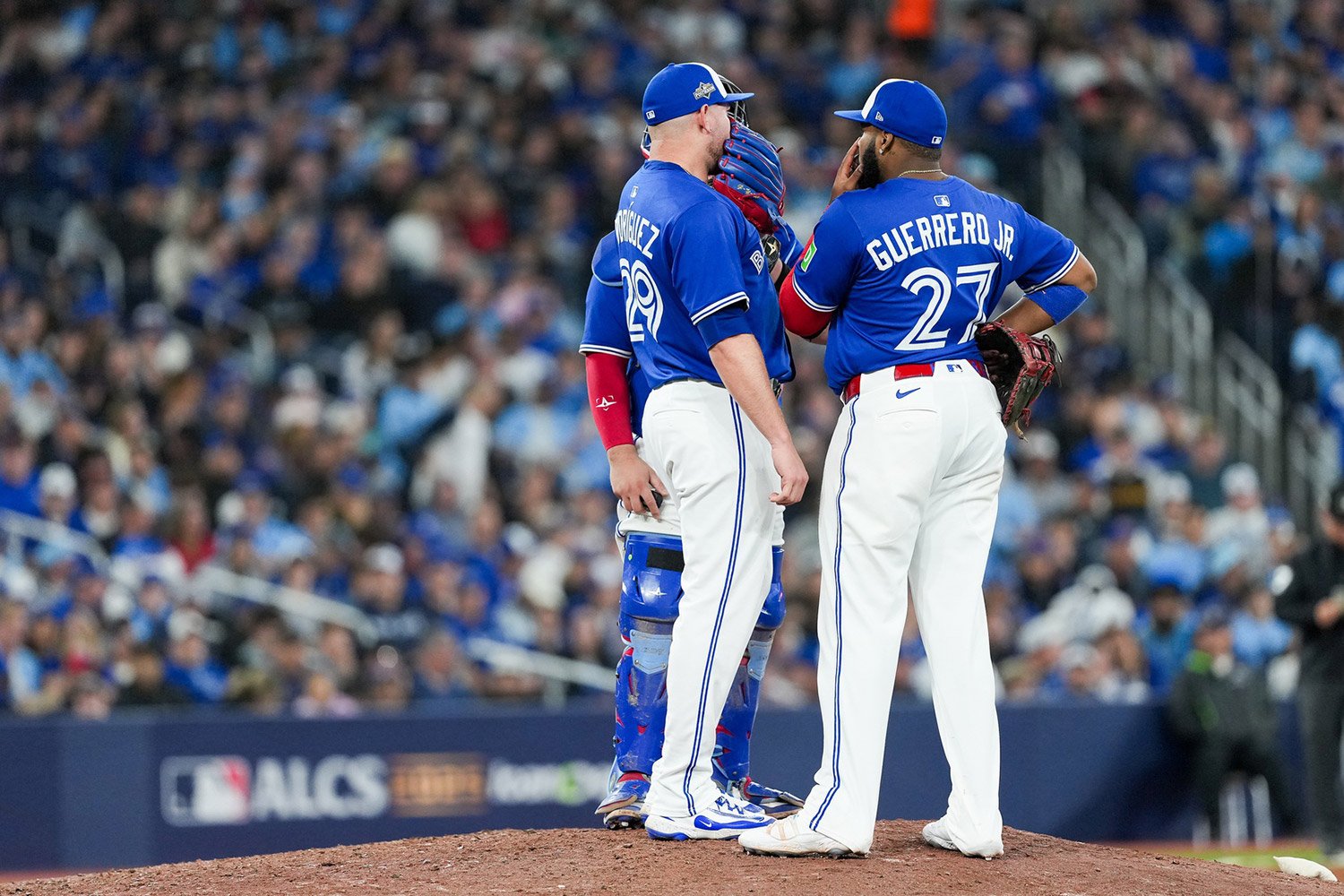 In a seven-game series, they say you aren’t in trouble until you lose one at home. Well, now the Jays have dropped two at home and head to Seattle looking to: 1. Avoid the sweep. 2. Force a return to Toronto, and 3. Win the damned series. Long odds to be sure, but this Jays team has been counted out before and defied expectations. It’s not over ‘til it’s over and whatever other cliches you need to grab onto to get us through until Wednesday night. Twenty-nine teams have lost the first two games of a best-of-seven at home, and only four times have they come back to win. The Jays will look to make that five. Until then, let’s review Game 2. The umpire should never be the story of the game, and he wasn’t here, but Doug Eddings will get a mention. His questionable strike zone cost Trey Yesavage an out on leadoff batter, Randy Arozarena. Eddings had some bad calls go the Jays' way, too, so I’m not saying the fix was in, I’m just saying he’s bad at his job. Regardless, Arozarena ended up on first base after an HBP and then moved up to second after a walk to Cal Raleigh. Julio Rodríguez then took a splitter that stayed up in the zone and knocked it out of the park (-18% WPA). 3-0 Mariners before an out was recorded. Yesavage would record three strikeouts to get out of the inning, but it wasn’t the start we had hoped for. The Jays would scrap back two runs in the bottom of the frame. George Springer led things off for the home side with a double (+5.5% WPA). Then it was Nathan Lukes, back in the lineup and batting second after fouling a ball off his kneecap in the first inning yesterday. His single scored Springer (+9.2% WPA), and then he advanced to second on a throwing error. After advancing the third on a groundout by Vladimir Guerrero Jr., Lukes would score on a single by Alejandro Kirk (+8.5% WPA). 3-2 Mariners. Yesavage would retire the Mariners in order in the 2nd inning, and the Jays would tie the game up on another Luke's RBI single, this time cashing Ernie Clement (+11.2% WPA). 3-3 ballgame going into the 3rd inning. Unlike Game 1, the Mariners would be the first to make a call to the bullpen with starter Logan Gilbert being replaced by Eduard Bazardo after three innings. Yesavage would get four innings before being replaced by Louis Varland. From here, the ‘pens would diverge critically. The first four Toronto pitchers out of the ‘pen would all be responsible for at least one earned run. Varland, Mason Fluharty, Braydon Fisher, and Yariel Rodríguez would be on the hook for, in order: a 3-run home run to Jorge Polanco (-28.2% WPA), an RBI single to J.P. Crawford (-2.8% WPA), a Josh Naylor two-run home run (-3.8% WPA) and then three consecutive walks to load the bases. Chris Bassitt and Eric Lauer had scoreless appearances to close out the game (Bassitt allowed one of Rodríguez’s inherited walks to score via sac fly), but by that point, it was out of reach. The Seattle bullpen, on the other hand, would use Bazardo, Carlos Vargas, and Emerson Hancock, getting two innings each and combining to throw six innings of one-hit shutout ball. Toronto earned a reputation in the New York series of working counts and getting to the opposing bullpen to do some damage, but the Mariners ‘pen is a different beast. Over the first two games, the Jays have seen six relievers over nine innings and have managed just one hit. That is the biggest thing that needs to change if they hope to bring this series back from the West Coast. Seattle took two out of three games at the Rogers Centre in the regular season. The Jays won all three games at T-Mobile Park, so we’re still well within the realm of possibility. The last time the Jays lost two games at home to start a playoff series was in 2015 against the Texas Rangers. Toronto came back to win three straight and take the series. They don’t need to win all the games at once; they just need to start with Shane Bieber’s start in Game 3 - first pitch Wednesday evening, 8:08 PM EST.
 -
I know this is the nature of the bracket, but man, these votes are getting tough!
-
With apologies to Nathan Lukes, the first inning of Game 1 went almost perfectly. Blue Jays starter Kevin Gausman gave up a pair of singles, but a heads-up play from Addison Barger – a throw to the plate on a fielder’s choice – caught Cal Raleigh and kept the top half scoreless (+7.2% WPA). One pitch into the bottom half of the inning, and it was 1-0 Jays. George Springer hit the first postseason leadoff home run in Toronto franchise history and gave his team the lead (+10.1% WPA). Lukes followed that up with a 13-pitch AB where he fouled the 10th pitch off of his knee and went down in pain. He finished the at-bat with a walk and stayed in the game, but would later be replaced by Myles Straw after his second at-bat in the third inning. Barger also worked a walk in that opening frame, but the Jays could only manage the one run. From that point, Gausman was locked in. He sat down 16 in a row, including a five-pitch fifth inning after giving up that pair of singles in the first. One of those singles was to Seattle’s (and maybe the league’s?) MVP, Cal Raleigh. In his second AB, Gausman won the battle, getting Raleigh to strike out on a splitter. The third time through the order, it was Raleigh who won by doing what he does best, taking a splitter that Gausman probably wanted a little lower 420 feet to right-centre and tying the game (-17% WPA). Gausman issued a walk to the next batter (Julio Rodríguez) and was lifted from the game after only 76 pitches. Bryce Miller, not the typical Game 1 starter, but the necessary one after Seattle’s 15-inning conclusion to the ALDS, was equal to the task and sat down 13 in a row himself. After Springer's home run, the Jays were only able to manage one more hit to go along with three walks. They were 0-for-4 with runners in scoring position and never expanded their lead. With Gausman out of the game, the Jays turned to Brendon Little, who threw seven wild pitches in the regular season. He threw his first of the playoffs and allowed Rodríguez to move up to second base. Jorge Polanco took advantage and cashed in Rodríguez with a single to left field (-15.9% WPA). 2-1 Mariners. It was Polanco who added to Seattle's lead in the eighth as well. After Seranthony Domínguez issued a walk to Randy Arozarena, the former Tampa Bay Ray stole second and then third to put him 90 feet away. Armchair managing here, but Seranthony needed to do a better job holding Arozarena – he was halfway to third by the time Domínguez released his pitch. With the infield playing in, Polanco was able to get one through and into right field, scoring Arozarena (-6.7% WPA). 3-1 Mariners. It’s hard to say that Game 1 was a must-win in a seven-game series, but given the circumstances of the Mariners' arrival in Toronto, and with our ace going up against their back-of-the-rotation starter, it felt like one the Jays had to walk away with. Instead, they only mustered two hits, and none after the second inning. They had their last baserunner in the sixth. The bright side is that the Jays put 21 balls in play (10 of them hard hit), although they only had a .048 BABIP to show for it. They also only struck out four times (compared to the Mariners' 11), so hopefully tomorrow, some more balls in play break the Jays' way; otherwise, this might end up a shorter series than we hoped for. View full article
-
Blue Jays-Mariners ALCS Game 1: The Big Dumper Comes to Town
Mike LeSage posted an article in Blue Jays
.jpg.e52eeddd562f49894da2eb837819c048.jpg) With apologies to Nathan Lukes, the first inning of Game 1 went almost perfectly. Blue Jays starter Kevin Gausman gave up a pair of singles, but a heads-up play from Addison Barger – a throw to the plate on a fielder’s choice – caught Cal Raleigh and kept the top half scoreless (+7.2% WPA). One pitch into the bottom half of the inning, and it was 1-0 Jays. George Springer hit the first postseason leadoff home run in Toronto franchise history and gave his team the lead (+10.1% WPA). Lukes followed that up with a 13-pitch AB where he fouled the 10th pitch off of his knee and went down in pain. He finished the at-bat with a walk and stayed in the game, but would later be replaced by Myles Straw after his second at-bat in the third inning. Barger also worked a walk in that opening frame, but the Jays could only manage the one run. From that point, Gausman was locked in. He sat down 16 in a row, including a five-pitch fifth inning after giving up that pair of singles in the first. One of those singles was to Seattle’s (and maybe the league’s?) MVP, Cal Raleigh. In his second AB, Gausman won the battle, getting Raleigh to strike out on a splitter. The third time through the order, it was Raleigh who won by doing what he does best, taking a splitter that Gausman probably wanted a little lower 420 feet to right-centre and tying the game (-17% WPA). Gausman issued a walk to the next batter (Julio Rodríguez) and was lifted from the game after only 76 pitches. Bryce Miller, not the typical Game 1 starter, but the necessary one after Seattle’s 15-inning conclusion to the ALDS, was equal to the task and sat down 13 in a row himself. After Springer's home run, the Jays were only able to manage one more hit to go along with three walks. They were 0-for-4 with runners in scoring position and never expanded their lead. With Gausman out of the game, the Jays turned to Brendon Little, who threw seven wild pitches in the regular season. He threw his first of the playoffs and allowed Rodríguez to move up to second base. Jorge Polanco took advantage and cashed in Rodríguez with a single to left field (-15.9% WPA). 2-1 Mariners. It was Polanco who added to Seattle's lead in the eighth as well. After Seranthony Domínguez issued a walk to Randy Arozarena, the former Tampa Bay Ray stole second and then third to put him 90 feet away. Armchair managing here, but Seranthony needed to do a better job holding Arozarena – he was halfway to third by the time Domínguez released his pitch. With the infield playing in, Polanco was able to get one through and into right field, scoring Arozarena (-6.7% WPA). 3-1 Mariners. It’s hard to say that Game 1 was a must-win in a seven-game series, but given the circumstances of the Mariners' arrival in Toronto, and with our ace going up against their back-of-the-rotation starter, it felt like one the Jays had to walk away with. Instead, they only mustered two hits, and none after the second inning. They had their last baserunner in the sixth. The bright side is that the Jays put 21 balls in play (10 of them hard hit), although they only had a .048 BABIP to show for it. They also only struck out four times (compared to the Mariners' 11), so hopefully tomorrow, some more balls in play break the Jays' way; otherwise, this might end up a shorter series than we hoped for.
With apologies to Nathan Lukes, the first inning of Game 1 went almost perfectly. Blue Jays starter Kevin Gausman gave up a pair of singles, but a heads-up play from Addison Barger – a throw to the plate on a fielder’s choice – caught Cal Raleigh and kept the top half scoreless (+7.2% WPA). One pitch into the bottom half of the inning, and it was 1-0 Jays. George Springer hit the first postseason leadoff home run in Toronto franchise history and gave his team the lead (+10.1% WPA). Lukes followed that up with a 13-pitch AB where he fouled the 10th pitch off of his knee and went down in pain. He finished the at-bat with a walk and stayed in the game, but would later be replaced by Myles Straw after his second at-bat in the third inning. Barger also worked a walk in that opening frame, but the Jays could only manage the one run. From that point, Gausman was locked in. He sat down 16 in a row, including a five-pitch fifth inning after giving up that pair of singles in the first. One of those singles was to Seattle’s (and maybe the league’s?) MVP, Cal Raleigh. In his second AB, Gausman won the battle, getting Raleigh to strike out on a splitter. The third time through the order, it was Raleigh who won by doing what he does best, taking a splitter that Gausman probably wanted a little lower 420 feet to right-centre and tying the game (-17% WPA). Gausman issued a walk to the next batter (Julio Rodríguez) and was lifted from the game after only 76 pitches. Bryce Miller, not the typical Game 1 starter, but the necessary one after Seattle’s 15-inning conclusion to the ALDS, was equal to the task and sat down 13 in a row himself. After Springer's home run, the Jays were only able to manage one more hit to go along with three walks. They were 0-for-4 with runners in scoring position and never expanded their lead. With Gausman out of the game, the Jays turned to Brendon Little, who threw seven wild pitches in the regular season. He threw his first of the playoffs and allowed Rodríguez to move up to second base. Jorge Polanco took advantage and cashed in Rodríguez with a single to left field (-15.9% WPA). 2-1 Mariners. It was Polanco who added to Seattle's lead in the eighth as well. After Seranthony Domínguez issued a walk to Randy Arozarena, the former Tampa Bay Ray stole second and then third to put him 90 feet away. Armchair managing here, but Seranthony needed to do a better job holding Arozarena – he was halfway to third by the time Domínguez released his pitch. With the infield playing in, Polanco was able to get one through and into right field, scoring Arozarena (-6.7% WPA). 3-1 Mariners. It’s hard to say that Game 1 was a must-win in a seven-game series, but given the circumstances of the Mariners' arrival in Toronto, and with our ace going up against their back-of-the-rotation starter, it felt like one the Jays had to walk away with. Instead, they only mustered two hits, and none after the second inning. They had their last baserunner in the sixth. The bright side is that the Jays put 21 balls in play (10 of them hard hit), although they only had a .048 BABIP to show for it. They also only struck out four times (compared to the Mariners' 11), so hopefully tomorrow, some more balls in play break the Jays' way; otherwise, this might end up a shorter series than we hoped for. -
.jpg.7d1f51d5bbd91a486d614f246c9812dc.jpg) In our recap of Game 4, we noted what a team effort that particular game was. That’s been the story of the season. This team has spoken publicly about how tight of a unit they are. When a new player joins the team or gets called up, they are immediately integrated into the main squad. This team-focused approach was reflected in the stats the Blue Jays put up in the ALDS. Eight out of 12 players who took an at-bat in the series put up an above-average wRC+, and all but one pitcher gave up two earned runs or fewer. While team awards would be easy, we’re going to drill down on a few individual performances and send some guys home with a little extra hardware. ALDS MVP: Vladimir Guerrero Jr. Who else could it be but Vladdy? He homered in each of the first three games of the series and then opened the scoring with an RBI single in the first inning of Game 4. His nine RBI were the most in the series. His nine hits and 324 wRC+ were (tied for) the most in the series. Jays fans often questioned why we would pitch to Aaron Judge in certain situations, but by the end of the series, we were asking, “Why do they keep pitching to Vladdy?” Brandon Glick recently wrote about Guerrero not just living up to the moment, but becoming it. In Game 2, when Will Warren came in to replace starter Max Fried, Guerrero found himself coming to the plate with the bases loaded. All he did with the moment was hit the first-ever grand slam in Blue Jays postseason history. The Dave Stieb Playoff Debut Award: Trey Yesavage Yesavage got the ball for Game 2 and not only gave the Yankees nightmares with his splitter and 18 whiffs, but he made history too. His dominant performance in front of the home crowd (only his second ever start in Toronto) took the baton from Kevin Gausman and kept things running. His game score from that day is behind only Stieb’s debut in Jays postseason history, and I expect he’s locked himself into the Game 2 slot for the ALCS too. The Rodney Dangerfield No Respect Award: Ernie Clement Clement was a strong consideration for the last two awards. While Yesavage was making his playoff debut in his fourth major league start, Clement was making his after 434 games. He was on the taxi squad with Cleveland in 2022 but didn’t get to the main roster. When I noted that Vladdy’s nine hits and 324 wRC+ were tied for the team lead, it was Clement he was tied with. Clement was the only Jays hitter to not record a strikeout in the series, and he also didn’t walk - he was all bat. He admitted to blacking out after hitting his first home run and then almost missed the team picture after the series was won. Clement put up an ALDS to remember. The Tarps Off, Call the Horses Award: George Springer Springer homered and scored four times in the series, but his overall performance was slightly disappointing compared to the level he was playing at during the regular season. The 89 wRC+ and 25% K-rate are things we’d like to see tossed for the next series, just like Springer tossed his shirt within seconds of the Jays securing victory. He was the first guy to go topless when Toronto secured the division in game 162, and he was the first to whip it off this round too. I haven’t seen it available anywhere as a betting option (probably because it’s a lock), but I’d bet he’s the first to shed his top at the conclusion of the ALCS as well. The Sportsnet Is Going To Need a 5-Second Delay Award: Kevin Gausman There were a number of incredible quotes and moments captured in the aftermath of the ALDS. Vladdy and David Ortiz yelling “DAAAAAAA Yankees lose!” is the one that most will remember, but it didn’t have the curse factor needed for this award. John Schnieder’s “Start spreading the news” was instantly iconic and certainly in consideration for this honour. Gausman gets the award for putting up numbers, though; in six seconds, he drops three f-bombs and an “I don’t give a s***.” He’s fired up, and he’s ready to go. I can’t wait to see him start Game 1 against Seattle.
In our recap of Game 4, we noted what a team effort that particular game was. That’s been the story of the season. This team has spoken publicly about how tight of a unit they are. When a new player joins the team or gets called up, they are immediately integrated into the main squad. This team-focused approach was reflected in the stats the Blue Jays put up in the ALDS. Eight out of 12 players who took an at-bat in the series put up an above-average wRC+, and all but one pitcher gave up two earned runs or fewer. While team awards would be easy, we’re going to drill down on a few individual performances and send some guys home with a little extra hardware. ALDS MVP: Vladimir Guerrero Jr. Who else could it be but Vladdy? He homered in each of the first three games of the series and then opened the scoring with an RBI single in the first inning of Game 4. His nine RBI were the most in the series. His nine hits and 324 wRC+ were (tied for) the most in the series. Jays fans often questioned why we would pitch to Aaron Judge in certain situations, but by the end of the series, we were asking, “Why do they keep pitching to Vladdy?” Brandon Glick recently wrote about Guerrero not just living up to the moment, but becoming it. In Game 2, when Will Warren came in to replace starter Max Fried, Guerrero found himself coming to the plate with the bases loaded. All he did with the moment was hit the first-ever grand slam in Blue Jays postseason history. The Dave Stieb Playoff Debut Award: Trey Yesavage Yesavage got the ball for Game 2 and not only gave the Yankees nightmares with his splitter and 18 whiffs, but he made history too. His dominant performance in front of the home crowd (only his second ever start in Toronto) took the baton from Kevin Gausman and kept things running. His game score from that day is behind only Stieb’s debut in Jays postseason history, and I expect he’s locked himself into the Game 2 slot for the ALCS too. The Rodney Dangerfield No Respect Award: Ernie Clement Clement was a strong consideration for the last two awards. While Yesavage was making his playoff debut in his fourth major league start, Clement was making his after 434 games. He was on the taxi squad with Cleveland in 2022 but didn’t get to the main roster. When I noted that Vladdy’s nine hits and 324 wRC+ were tied for the team lead, it was Clement he was tied with. Clement was the only Jays hitter to not record a strikeout in the series, and he also didn’t walk - he was all bat. He admitted to blacking out after hitting his first home run and then almost missed the team picture after the series was won. Clement put up an ALDS to remember. The Tarps Off, Call the Horses Award: George Springer Springer homered and scored four times in the series, but his overall performance was slightly disappointing compared to the level he was playing at during the regular season. The 89 wRC+ and 25% K-rate are things we’d like to see tossed for the next series, just like Springer tossed his shirt within seconds of the Jays securing victory. He was the first guy to go topless when Toronto secured the division in game 162, and he was the first to whip it off this round too. I haven’t seen it available anywhere as a betting option (probably because it’s a lock), but I’d bet he’s the first to shed his top at the conclusion of the ALCS as well. The Sportsnet Is Going To Need a 5-Second Delay Award: Kevin Gausman There were a number of incredible quotes and moments captured in the aftermath of the ALDS. Vladdy and David Ortiz yelling “DAAAAAAA Yankees lose!” is the one that most will remember, but it didn’t have the curse factor needed for this award. John Schnieder’s “Start spreading the news” was instantly iconic and certainly in consideration for this honour. Gausman gets the award for putting up numbers, though; in six seconds, he drops three f-bombs and an “I don’t give a s***.” He’s fired up, and he’s ready to go. I can’t wait to see him start Game 1 against Seattle. -
Blue Jays Announce Their ALCS Roster
Mike LeSage replied to Mike LeSage's topic in Toronto Blue Jays Talk
I love that Schneider has tried to dampen this idea by specifically saying Bo wouldn't get the Gibson treatment - but if IKF plays this round like the last one I'd take my chances with Bichette. -
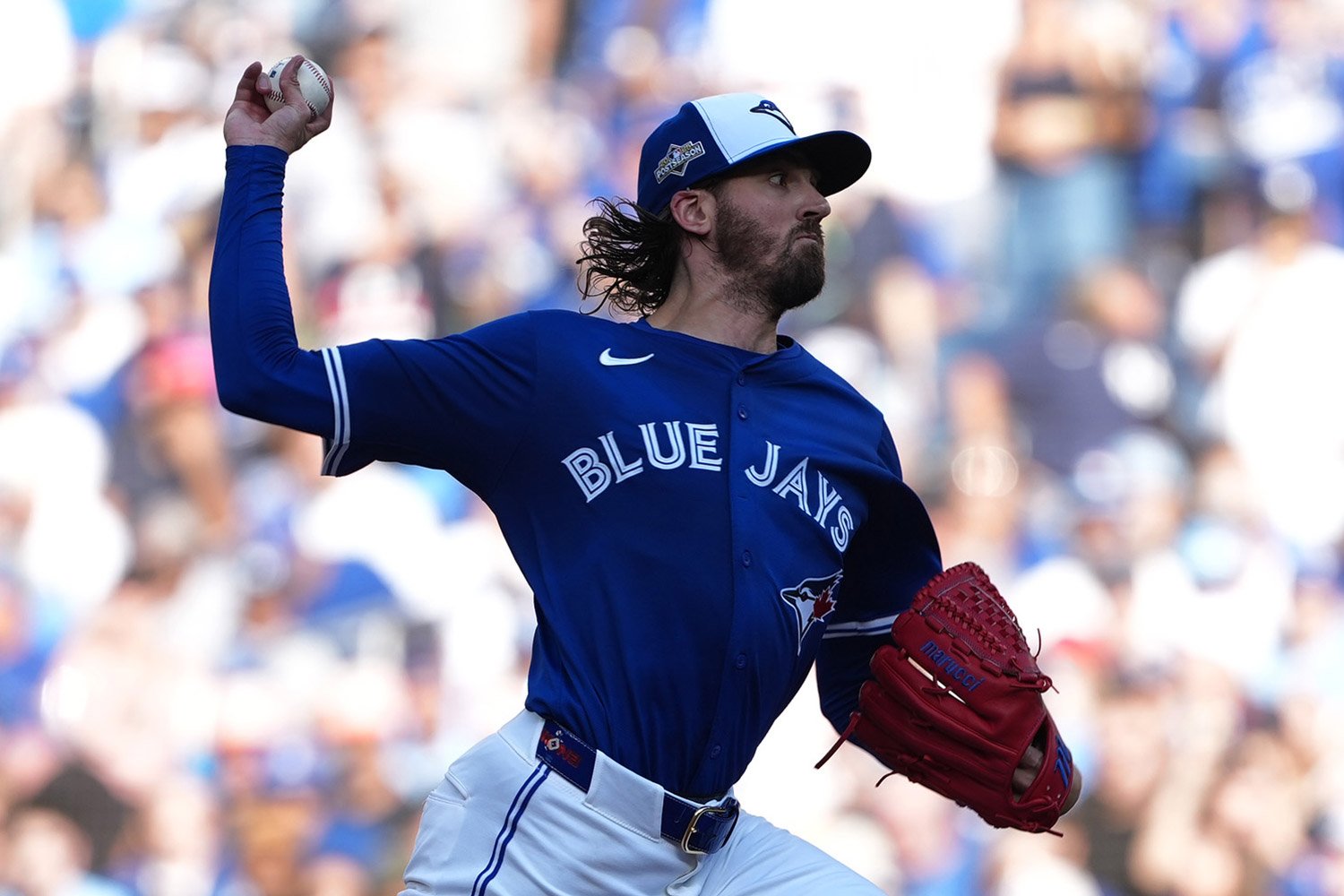 The Toronto Blue Jays have released their roster for the ALCS (first pitch at 8:03 PM EST tonight!), and there were a couple of changes from the team we saw in the last round. First, we say goodbye to Tommy Nance and Justin Bruihl. Nance pitched an inning and a third in the ALDS and had a team-high 13.50 ERA (4-game small sample alert) of pitchers with at least one inning pitched. Bruihl misses the one-inning cut-off by two-thirds as he retired only one of the four batters he faced, gave up a dinger, and was saddled with an ERA of 54.00 (even smaller sample size alert!). Taking their places are Max Scherzer and Chris Bassitt. Bassitt ended the regular season on the IL with lower back inflammation, but was eligible to be selected for the ALDS roster. Scherzer struggled down the stretch, posting a 10.20 ERA in September (only Tyler Heineman's 67.50 was worse) to go along with a 5.34 FIP. The Jays haven't fully committed to a rotation plan this series, other than announcing Kevin Gausman as the Game 1 starter, but it is safe to assume, based on how the last round went, that Trey Yesavage and Shane Bieber get games 2 and 3. Does that give us a Scherzer Game 4 start with the shortest leash in the world and Bassitt out of the 'pen in relief? That's where my first thought would be. With all that shuffling of the pitchers, there was unfortunately no change on the hitters' side. Bo Bichette, despite running the bases yesterday, was not yet in a position to occupy a roster spot. As noted by Ben Nicholson-Smith, Bichette was still showing signs of discomfort in that knee that was injured September 6 in a collision with Yankee Austin Wells. The Jays will have to make the World Series now to guarantee Bichette another shot at playing in a Toronto uniform before hitting free agency this coming off-season.
 -
The Toronto Blue Jays have released their roster for the ALCS (first pitch at 8:03 PM EST tonight!), and there were a couple of changes from the team we saw in the last round. First, we say goodbye to Tommy Nance and Justin Bruihl. Nance pitched an inning and a third in the ALDS and had a team-high 13.50 ERA (4-game small sample alert) of pitchers with at least one inning pitched. Bruihl misses the one-inning cut-off by two-thirds as he retired only one of the four batters he faced, gave up a dinger, and was saddled with an ERA of 54.00 (even smaller sample size alert!). Taking their places are Max Scherzer and Chris Bassitt. Bassitt ended the regular season on the IL with lower back inflammation, but was eligible to be selected for the ALDS roster. Scherzer struggled down the stretch, posting a 10.20 ERA in September (only Tyler Heineman's 67.50 was worse) to go along with a 5.34 FIP. The Jays haven't fully committed to a rotation plan this series, other than announcing Kevin Gausman as the Game 1 starter, but it is safe to assume, based on how the last round went, that Trey Yesavage and Shane Bieber get games 2 and 3. Does that give us a Scherzer Game 4 start with the shortest leash in the world and Bassitt out of the 'pen in relief? That's where my first thought would be. With all that shuffling of the pitchers, there was unfortunately no change on the hitters' side. Bo Bichette, despite running the bases yesterday, was not yet in a position to occupy a roster spot. As noted by Ben Nicholson-Smith, Bichette was still showing signs of discomfort in that knee that was injured September 6 in a collision with Yankee Austin Wells. The Jays will have to make the World Series now to guarantee Bichette another shot at playing in a Toronto uniform before hitting free agency this coming off-season. View full rumor
-
In the review of Game 4 we noted what a team effort that particular game was. That’s been the story of the season. This team has spoken publicly about how tight of a unit they are. When a new player joins the team or gets called up they are immediately integrated into the main squad. This team approach is reflected in the stats the players put up in the ALDS too. Eight out of 12 players that took an at bat in the series put up an above average wRC+ and all but one pitcher gave up 2 earned runs of fewer. While team awards would be easy, we’re going to drill down on a few individual performances and send some guys home with a little extra hardware. ALDS MVP: Vladimir Guerrero Jr. Who else could it be but Vladdy? He homered in each of the first three games of the series and then opened the scoring with an RBI-single in the first inning of Game 4. His nine RBI were the most in the series. His nine hits and 324 wRC+ were (tied for) the most in the series. Jays fans often questioned why we would pitch to Aaron Judge in certain situations, but by the end of the series we were asking “why do they keep pitching to Vladdy?”. Brandon Glick wrote about Guerrero Jr. not just living up to the moment, but becoming it. In Game 2 when Will Warren came in to replace starter Max Fried, Guerrero Jr. found himself coming to the plate with the bases loaded. All he did with the moment was hit the first ever grand slam in Blue Jays postseason history. The Dave Stieb Playoff Debut Award: Trey Yesavage Yesavage got the ball for Game 2 and not only gave the Yankees nightmares with his splitter and 18 whiffs, but he made history too. His dominant performance in front of the home crowd (only his second ever start in Toronto) took the baton from Kevin Gausman and kept things running. His game score is behind only Stieb’s debut in Jays postseason history and I expect he’s locked himself into the Game 2 slot for the ALCS too. The Rodney Dangerfield No Respect Award: Ernie Clement Clement was a strong consideration for the last two awards. While Yesavage was making his playoff debut in his fourth major league start, Clement was making his after 434 games. He was on the taxi squad with Cleveland in 2022, but didn’t get to the main roster. When I noted that Vladdy’s nine hits and 324 wRC+ were tied for the team lead - it was Clement he was tied with. He was the only Jays hitter to not record a strike out and he also didn’t walk - he was all bat. He admitted to blacking out after hitting his first home run and then almost missed the team picture after the series was won. Clement put up an ALDS to remember. The Tarps Off, Call the Horses Award: George Springer Springer homered and scored four times in the series, but his overall performance was slightly disappointing compared to the level he’s been playing at all season. The 89 wRC+ and 25% K-rate are things we’d like to see tossed for the next series. Just like Springer tossed his shirt within seconds of the Jays securing victory. He was the first guy to go topless when Toronto secured the division in game 162 and he was the first to whip it off this round too. I haven’t seen it available anywhere as a betting option (probably because it’s a lock), but I’d bet he’s the first to shed his top at the conclusion of the ALCS too. The Sportsnet is Going to Need a 5-second Delay Award: Kevin Gausman There were a number of incredible quotes and moments captured in the aftermath of the ALDS. Guerrero Jr. and David Ortiz yelling “DAAAAAAA Yankees lose!” is the one that most will remember, but it didn’t have the curse factor needed for this award. John Schnieder’s “Start spreading the news” was instantly iconic and certainly in consideration for this award. Gausman gets the award for putting up numbers though - in six seconds he drops 3 f-bombs and an “I don’t give a s***”. He’s fired up and he’s ready to go. I can’t wait to see him start Game 1 against Seattle. View full article
-
Beautifully written! If they go all the way this year I wonder if Gausman has an outside shot at making the Level of Excellence. My head says no, but my heart says get him up there.
-
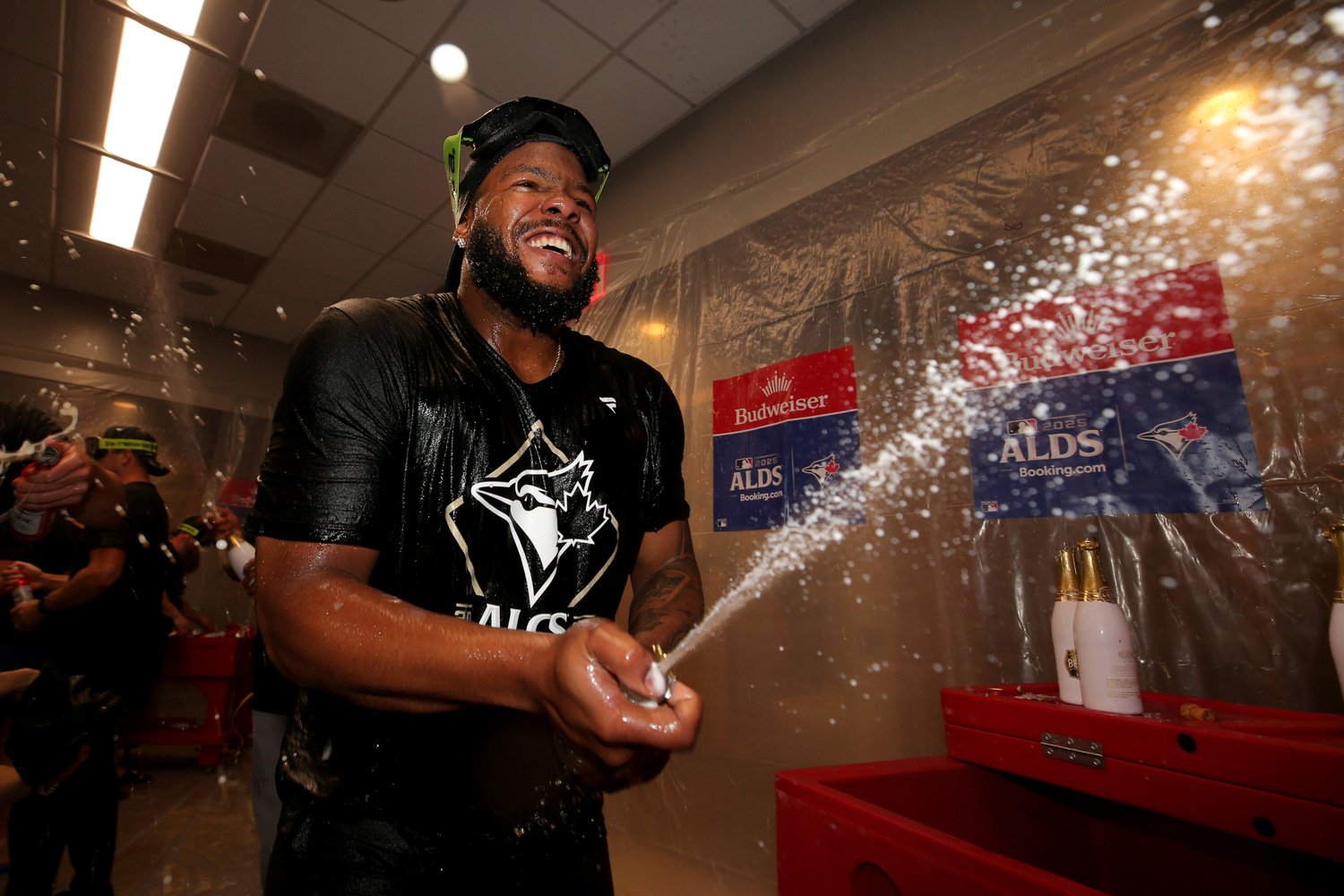 It started as a tight game in both directions, with the lowest-scoring first six innings of the series. To that point, the Jays had used five pitchers in their planned bullpen game: Louis Varland, Mason Fluharty, Seranthony Domínguez, Eric Lauer and Yariel Rodríguez. The only blemish was a solo home run surrendered by Fluharty to Yankees lefty third baseman Ryan McMahon. All things considered, the pitch from Fluharty wasn’t bad: a sweeper away in the lefty/lefty matchup that McMahon was able to sit back on and get enough of a barrel on to put it into the stands. The only other hit given up by Toronto pitching was a first-inning single to Aaron Judge. You could argue that manager John Schneider was being overly aggressive with his bullpen management, but you couldn’t argue with the results. The Yankees, meanwhile, had only used one pitcher. Cam Schlittler scattered seven hits through six innings, and the Jays had been able to manufacture two runs. Vladimir Guerrero Jr.’s single drove in George Springer from second base in the first inning, and then Springer followed up in the fifth with a sac fly to bring home Ernie Clement. Then came the seventh inning… The top of the seventh began like few of the previous innings, with a Blue Jays out; Toronto had put the lead runner on in four of the first six innings previously. Anthony Santander’s foul out was followed by an Ernie Clement single – his ninth hit of the series. Andrés Giménez was next to the plate, and it appeared that his 88-mph grounder up the middle (a ball that Schlittler waved at, but pulled his glove back on) would lead to an inning-ending double play. Instead, the final hop of the ball caught Jazz Chisholm Jr. off guard, and he deflected the ball into centre field. The inning continued, and Schlittler was lifted after 88 pitches as the Yankees turned to their 'pen. Giménez stole second on a Devin Williams strikeout of Springer, which put runners on second and third with Nathan Lukes coming to the plate. Lukes didn’t see a pitch in the zone, but it didn’t matter. He took an elevated fastball and sent it into centre field. His single cashed in both runs and provided the game with its largest win probability added jump to that point, by a wide margin: 18.1% in favour of the Jays, bringing their overall game win expectancy to 89%. The bottom of the seventh brought the Jays' sixth pitcher of the game, Brendon Little. A leadoff walk to Paul Goldschmidt and a two-out single to Amed Rosario brought a bit of drama. Two runners on, Trent Grisham at the plate and the fearsome Judge in the on-deck circle representing the potential go-ahead run. Little was able to induce a pop-up into foul territory, and the Jays escaped the inning with a 4-1 lead. Alejandro Kirk led off the eighth with a double and tagged up to move to third on a deep fly ball to right field by Daulton Varsho. Then it was Myles Straw’s turn to stir the drink. Having entered the game as a defensive substitution for Santander, Straw was able to get his bat on a slider down in the zone and sent it into right field to bring home Kirk. 5-1 Jays. Braydon Fisher came in for the bottom of the eighth and started off hot, getting Judge to strike out on five pitches. He then got Cody Bellinger to pop out, but a single to Giancarlo Stanton and a walk to Chisholm made things a little tense again. John Schneider then turned to his eighth pitcher of the game, closer Jeff Hoffman. The Hoff walked Ben Rice to load the bases, and an entire fan base suddenly flashed to a worst-case scenario. Instead, a fly out to Straw in left ended the inning, and a stream of Yankees fans started their exit from the stadium. Nathan Lukes led off the ninth with a double; it was the sixth time the Jays started an inning with a leadoff hit. A groundout and two K’s would strand Lukes and take us to the bottom of the ninth, where a couple of hits and a run scored by the Yankees were filed into the ‘too little, too late’ bin. Hoffman, while not looking the most dialed in we’ve seen him, got the job done, striking out Bellinger to end the game and send the Jays to the ALCS. They will host either Seattle or Detroit on Thanksgiving weekend at the Rogers Centre. There were mixed feelings around the Blue Jays fan community as Game 4 was telegraphed to be a bullpen game. Only three starters made the roster for the ALDS, and two of those starters, Kevin Gausman and Trey Yesavage, made mid-game trips to the bullpen ‘just in case.’ Ultimately, they weren’t called on, but they were there and they were ready. The eight pitchers that were used put up a pitching line to be proud of: 9 IP, 6 H, 2 ER, 10 K. Every single one of those guys deserves praise. Schneider and pitching coach Pete Walker get some shine too. Like I said at the top, you might not have agreed with their moves, but we can’t argue with the results. The Jays have talked all season about what a close-knit group they’ve become, and they used the ultimate team game to advance to the ALCS for the first time since 2016. I’m not leaving out praise for the bats either; it was a team effort on the other side of the ball. Twelve hits for the team. Eight out of nine spots in the order got at least one knock. In an alternate timeline, we might bemoan the team's 3-for-17 showing with runners in scoring position, or the nine runners left on base, but they did enough. With four hits and three runs from the bottom of the order, a Jays team that proved itself relentless with no easy sections of the order made each at-bat count and secured the win. Nineteen Blue Jays appeared in this game, and they all had a hand in getting to this point and moving on. Like John Schneider said in his post-game celebration speech: Start spreading the news, bitches!
 -
It started as a tight game in both directions, with the lowest-scoring first six innings of the series. To that point, the Jays had used five pitchers in their planned bullpen game: Louis Varland, Mason Fluharty, Seranthony Domínguez, Eric Lauer and Yariel Rodríguez. The only blemish was a solo home run surrendered by Fluharty to Yankees lefty third baseman Ryan McMahon. All things considered, the pitch from Fluharty wasn’t bad: a sweeper away in the lefty/lefty matchup that McMahon was able to sit back on and get enough of a barrel on to put it into the stands. The only other hit given up by Toronto pitching was a first-inning single to Aaron Judge. You could argue that manager John Schneider was being overly aggressive with his bullpen management, but you couldn’t argue with the results. The Yankees, meanwhile, had only used one pitcher. Cam Schlittler scattered seven hits through six innings, and the Jays had been able to manufacture two runs. Vladimir Guerrero Jr.’s single drove in George Springer from second base in the first inning, and then Springer followed up in the fifth with a sac fly to bring home Ernie Clement. Then came the seventh inning… The top of the seventh began like few of the previous innings, with a Blue Jays out; Toronto had put the lead runner on in four of the first six innings previously. Anthony Santander’s foul out was followed by an Ernie Clement single – his ninth hit of the series. Andrés Giménez was next to the plate, and it appeared that his 88-mph grounder up the middle (a ball that Schlittler waved at, but pulled his glove back on) would lead to an inning-ending double play. Instead, the final hop of the ball caught Jazz Chisholm Jr. off guard, and he deflected the ball into centre field. The inning continued, and Schlittler was lifted after 88 pitches as the Yankees turned to their 'pen. Giménez stole second on a Devin Williams strikeout of Springer, which put runners on second and third with Nathan Lukes coming to the plate. Lukes didn’t see a pitch in the zone, but it didn’t matter. He took an elevated fastball and sent it into centre field. His single cashed in both runs and provided the game with its largest win probability added jump to that point, by a wide margin: 18.1% in favour of the Jays, bringing their overall game win expectancy to 89%. The bottom of the seventh brought the Jays' sixth pitcher of the game, Brendon Little. A leadoff walk to Paul Goldschmidt and a two-out single to Amed Rosario brought a bit of drama. Two runners on, Trent Grisham at the plate and the fearsome Judge in the on-deck circle representing the potential go-ahead run. Little was able to induce a pop-up into foul territory, and the Jays escaped the inning with a 4-1 lead. Alejandro Kirk led off the eighth with a double and tagged up to move to third on a deep fly ball to right field by Daulton Varsho. Then it was Myles Straw’s turn to stir the drink. Having entered the game as a defensive substitution for Santander, Straw was able to get his bat on a slider down in the zone and sent it into right field to bring home Kirk. 5-1 Jays. Braydon Fisher came in for the bottom of the eighth and started off hot, getting Judge to strike out on five pitches. He then got Cody Bellinger to pop out, but a single to Giancarlo Stanton and a walk to Chisholm made things a little tense again. John Schneider then turned to his eighth pitcher of the game, closer Jeff Hoffman. The Hoff walked Ben Rice to load the bases, and an entire fan base suddenly flashed to a worst-case scenario. Instead, a fly out to Straw in left ended the inning, and a stream of Yankees fans started their exit from the stadium. Nathan Lukes led off the ninth with a double; it was the sixth time the Jays started an inning with a leadoff hit. A groundout and two K’s would strand Lukes and take us to the bottom of the ninth, where a couple of hits and a run scored by the Yankees were filed into the ‘too little, too late’ bin. Hoffman, while not looking the most dialed in we’ve seen him, got the job done, striking out Bellinger to end the game and send the Jays to the ALCS. They will host either Seattle or Detroit on Thanksgiving weekend at the Rogers Centre. There were mixed feelings around the Blue Jays fan community as Game 4 was telegraphed to be a bullpen game. Only three starters made the roster for the ALDS, and two of those starters, Kevin Gausman and Trey Yesavage, made mid-game trips to the bullpen ‘just in case.’ Ultimately, they weren’t called on, but they were there and they were ready. The eight pitchers that were used put up a pitching line to be proud of: 9 IP, 6 H, 2 ER, 10 K. Every single one of those guys deserves praise. Schneider and pitching coach Pete Walker get some shine too. Like I said at the top, you might not have agreed with their moves, but we can’t argue with the results. The Jays have talked all season about what a close-knit group they’ve become, and they used the ultimate team game to advance to the ALCS for the first time since 2016. I’m not leaving out praise for the bats either; it was a team effort on the other side of the ball. Twelve hits for the team. Eight out of nine spots in the order got at least one knock. In an alternate timeline, we might bemoan the team's 3-for-17 showing with runners in scoring position, or the nine runners left on base, but they did enough. With four hits and three runs from the bottom of the order, a Jays team that proved itself relentless with no easy sections of the order made each at-bat count and secured the win. Nineteen Blue Jays appeared in this game, and they all had a hand in getting to this point and moving on. Like John Schneider said in his post-game celebration speech: Start spreading the news, bitches! View full article
- 1 reply
-
- 1
-

-
Best piece of perspective I can share is that the '92 and '93 teams didn't have a sweep in their runs.
-
Hell yeah! What a great countdown.
-
Before this series began, we took a look at how the Blue Jays might manage their rotation. I floated a number of names as potential Game 2 starters, including Trey Yesavage, but ultimately landed on Chris Bassitt for the second game and penciled Yesavage in for Game 4. Well, now that we have two games in the rearview (and considering Bassitt isn't even on the roster this round), I can’t imagine things having played out any more perfectly than the way they did. Yesavage didn’t just hold his own in his start – he dominated. Yesavage became the first pitcher outside of the Rays organization to make a postseason start within his first four MLB appearances (Shane Baz and Matt Moore both did it with TB). Before the first pitch, Yesavage had already made Blue Jays history as the youngest pitcher to make a postseason start for the franchise. The rookie was lights out from pitch one. In the first inning, all three outs came via strikeout. All three on splitters and all three against lefties (Trent Grisham, Cody Bellinger and Ben Rice). Yesavage joins Blue Jay greats Pat Hentgen and Juan Guzman as the only Toronto pitchers to open a playoff game with three strikeouts in the first inning. Guzman and Hentgen both did it in the 1993 World Series (Games 1 and 3, respectively). In the third inning, Yesavage struck out the side (Anthony Volpe, Austin Wells and Grisham), bringing his game total to seven. After striking out the side again in the fourth inning (Aaron Judge, Bellinger and Rice), he was at 10, tying him with Patrick Corbin for the most K's through four innings in postseason history. His six consecutive strikeouts are also a record, tying him with seven other pitchers, including Justin Verlander, who accomplished the feat twice. In the fifth inning, Jazz Chisholm Jr. would reach base on an error charged to Vladimir Guerrero Jr., keeping Yesavage’s no-hit bid intact. The righty would end the inning with another strikeout of Anthony Volpe for his 11th and final K of the day. Those 11 strikeouts are the most by a Toronto pitcher in a postseason start in franchise history. The previous high of eight was shared by David Price (call him David Twice, because he did it two times), Guzman and Dave Stieb. As noted by Sarah Langs of MLB.com, Stieb’s performance was also his playoff debut. Prior to this game, the most postseason swings and misses recorded by a Blue Jay was Marco Estrada’s 16 in 2016. Yesavage set a new mark with 18. Those 18 misses came against only 31 total swings for a whiff rate of 58%. That’s the most in postseason history (since 2008, when pitch tracking came into use) with a qualifying swing total of 25 (via Langs). At 22 years old, Yesavage also became the second-youngest player to record 10+ strikeouts in a playoff game. John Candelaria was 99 days younger when he struck out 14 in 1975. Yesavage put up a Game Score of 78 with his dominant performance, placing him second in team postseason history. Only Dave Stieb’s 83 in the 1985 ALCS (the same game in which he struck out eight and set the franchise record for K’s in a game that Yesavage just obliterated) is higher. With Toronto on the brink of eliminating the Yankees, Yesavage should get the opportunity to add to his lore, stats and history in the ALCS – and depending on how the rest of this series shakes out, he could even be our Game 1 starter next time. View full article
-
.jpg.c0787739e91bacbba68910a9926e7c99.jpg) Before this series began, we took a look at how the Blue Jays might manage their rotation. I floated a number of names as potential Game 2 starters, including Trey Yesavage, but ultimately landed on Chris Bassitt for the second game and penciled Yesavage in for Game 4. Well, now that we have two games in the rearview (and considering Bassitt isn't even on the roster this round), I can’t imagine things having played out any more perfectly than the way they did. Yesavage didn’t just hold his own in his start – he dominated. Yesavage became the first pitcher outside of the Rays organization to make a postseason start within his first four MLB appearances (Shane Baz and Matt Moore both did it with TB). Before the first pitch, Yesavage had already made Blue Jays history as the youngest pitcher to make a postseason start for the franchise. The rookie was lights out from pitch one. In the first inning, all three outs came via strikeout. All three on splitters and all three against lefties (Trent Grisham, Cody Bellinger and Ben Rice). Yesavage joins Blue Jay greats Pat Hentgen and Juan Guzman as the only Toronto pitchers to open a playoff game with three strikeouts in the first inning. Guzman and Hentgen both did it in the 1993 World Series (Games 1 and 3, respectively). In the third inning, Yesavage struck out the side (Anthony Volpe, Austin Wells and Grisham), bringing his game total to seven. After striking out the side again in the fourth inning (Aaron Judge, Bellinger and Rice), he was at 10, tying him with Patrick Corbin for the most K's through four innings in postseason history. His six consecutive strikeouts are also a record, tying him with seven other pitchers, including Justin Verlander, who accomplished the feat twice. In the fifth inning, Jazz Chisholm Jr. would reach base on an error charged to Vladimir Guerrero Jr., keeping Yesavage’s no-hit bid intact. The righty would end the inning with another strikeout of Anthony Volpe for his 11th and final K of the day. Those 11 strikeouts are the most by a Toronto pitcher in a postseason start in franchise history. The previous high of eight was shared by David Price (call him David Twice, because he did it two times), Guzman and Dave Stieb. As noted by Sarah Langs of MLB.com, Stieb’s performance was also his playoff debut. Prior to this game, the most postseason swings and misses recorded by a Blue Jay was Marco Estrada’s 16 in 2016. Yesavage set a new mark with 18. Those 18 misses came against only 31 total swings for a whiff rate of 58%. That’s the most in postseason history (since 2008, when pitch tracking came into use) with a qualifying swing total of 25 (via Langs). At 22 years old, Yesavage also became the second-youngest player to record 10+ strikeouts in a playoff game. John Candelaria was 99 days younger when he struck out 14 in 1975. Yesavage put up a Game Score of 78 with his dominant performance, placing him second in team postseason history. Only Dave Stieb’s 83 in the 1985 ALCS (the same game in which he struck out eight and set the franchise record for K’s in a game that Yesavage just obliterated) is higher. With Toronto on the brink of eliminating the Yankees, Yesavage should get the opportunity to add to his lore, stats and history in the ALCS – and depending on how the rest of this series shakes out, he could even be our Game 1 starter next time.
Before this series began, we took a look at how the Blue Jays might manage their rotation. I floated a number of names as potential Game 2 starters, including Trey Yesavage, but ultimately landed on Chris Bassitt for the second game and penciled Yesavage in for Game 4. Well, now that we have two games in the rearview (and considering Bassitt isn't even on the roster this round), I can’t imagine things having played out any more perfectly than the way they did. Yesavage didn’t just hold his own in his start – he dominated. Yesavage became the first pitcher outside of the Rays organization to make a postseason start within his first four MLB appearances (Shane Baz and Matt Moore both did it with TB). Before the first pitch, Yesavage had already made Blue Jays history as the youngest pitcher to make a postseason start for the franchise. The rookie was lights out from pitch one. In the first inning, all three outs came via strikeout. All three on splitters and all three against lefties (Trent Grisham, Cody Bellinger and Ben Rice). Yesavage joins Blue Jay greats Pat Hentgen and Juan Guzman as the only Toronto pitchers to open a playoff game with three strikeouts in the first inning. Guzman and Hentgen both did it in the 1993 World Series (Games 1 and 3, respectively). In the third inning, Yesavage struck out the side (Anthony Volpe, Austin Wells and Grisham), bringing his game total to seven. After striking out the side again in the fourth inning (Aaron Judge, Bellinger and Rice), he was at 10, tying him with Patrick Corbin for the most K's through four innings in postseason history. His six consecutive strikeouts are also a record, tying him with seven other pitchers, including Justin Verlander, who accomplished the feat twice. In the fifth inning, Jazz Chisholm Jr. would reach base on an error charged to Vladimir Guerrero Jr., keeping Yesavage’s no-hit bid intact. The righty would end the inning with another strikeout of Anthony Volpe for his 11th and final K of the day. Those 11 strikeouts are the most by a Toronto pitcher in a postseason start in franchise history. The previous high of eight was shared by David Price (call him David Twice, because he did it two times), Guzman and Dave Stieb. As noted by Sarah Langs of MLB.com, Stieb’s performance was also his playoff debut. Prior to this game, the most postseason swings and misses recorded by a Blue Jay was Marco Estrada’s 16 in 2016. Yesavage set a new mark with 18. Those 18 misses came against only 31 total swings for a whiff rate of 58%. That’s the most in postseason history (since 2008, when pitch tracking came into use) with a qualifying swing total of 25 (via Langs). At 22 years old, Yesavage also became the second-youngest player to record 10+ strikeouts in a playoff game. John Candelaria was 99 days younger when he struck out 14 in 1975. Yesavage put up a Game Score of 78 with his dominant performance, placing him second in team postseason history. Only Dave Stieb’s 83 in the 1985 ALCS (the same game in which he struck out eight and set the franchise record for K’s in a game that Yesavage just obliterated) is higher. With Toronto on the brink of eliminating the Yankees, Yesavage should get the opportunity to add to his lore, stats and history in the ALCS – and depending on how the rest of this series shakes out, he could even be our Game 1 starter next time. -
.jpg.e24430ebf260b1ec439068df41c322d5.jpg) In our review of Game 1, we looked at the at-bats that generated at least a 10% swing in win probability. If we went that route for Game 2, this would be a real short read. There was only one AB in the whole game that crossed that threshold. That was Ernie Clement’s two-run home run in the second inning. After Daulton Varsho’s ‘triple’ (scored a double with an error) increased the Jays' chance of winning by 9.8%, Clement’s homer furthered that advantage by 10.4%. By the end of the third inning, the Jays' win probability was over 90% and would remain above 90% for the duration of the game. By the time the Yankees were roughing up Tommy Nance in the seventh inning, from a probability standpoint, they could not afford to trade outs for runs. This meant that a play like Cody Bellinger’s sacrifice fly, which scored Paul Goldschmidt, was actually scored as improving the Jays' chances of winning. In a four-batter span, the Yankees added five runs to their total, bringing the game from 13-2 to 13-7. A lot of people (myself included) were getting far less cocky than we had been just a couple of innings earlier. The Jays' win probability wasn’t phased; it went from 99.7% all the way down to 99.1%. Since we don’t have a lot of plays that led to large win probability swings to drill down on, let’s look at the players who made the largest cumulative contributions. Vladimir Guerrero Jr.: 11% WPA (3-for-5, 1 HR, 4 RBI, 2 R) Vladdy continued to terrorize the Yankees. He hit the first grand slam in Blue Jays postseason history. Yankees starter Max Fried came out to start the fourth inning but was lifted before recording an out. The pitcher that manager Aaron Boone turned to was Will Warren. Warren, to his credit, recorded more outs than Fried did, pitching 4.2 innings; the four home runs he surrendered perhaps point to an overused bullpen or a manager who had already thrown in the towel. Regardless of the reasoning behind Boone's pitching decisions, the results were the results, and now Guerrero will always be the answer to the question: Who hit the first Jays playoff grand slam? Ernie Clement: 14% WPA (3-for-4, 1 HR, 3 RBI, 1 R) As noted above, Clement’s homer was the biggest win expectancy swing of the game. Batting sixth and playing third base, he was mainly in the lineup for his glove; the Jays started five Gold Glovers to back up their rookie pitcher (we’ll get to him soon) and, as noted in the pre-game broadcast, Clement is a favourite to win the utility player Gold Glove this season. A lineup built for defense really brought the offense, and Clement led the charge. Daulton Varsho: 16% WPA (4-for-5, 2 HR, 4 RBI, 4 R) Speaking of Gold Glovers playing like Silver Sluggers, Varsho had as many extra-base hits against Fried as he had against left-handed pitching all season. He also went deep twice off of Warren. His first double was originally ruled a triple before the official scorekeeper had a look at Aaron Judge’s whiff in the outfield, not to be confused with his whiffs at the plate (again, we’ll get there!), and took us off of cycle watch. Varsho earned an honourable mention for Jays Centre's Hitter of the Year, and with the way he’s started these playoffs, he surely wants to be in the running for postseason honours too. Trey Yesavage: 18% WPA (5.1 IP, 0 H, 0 ER, 1 BB, 11 K) Five and a third innings of no-hit baseball in his postseason debut and only his fourth start at the major league level. Yesavage faced 18 batters and struck out 11 of them. His performance was so electric (a word seemingly required to describe the young hurler) that manager John Schneider was booed by the hometown crowd when he came out of the dugout to lift Yesavage from the game. In post-game remarks, Schnieder said he turned to some of the vets in the dugout and said, “Wish me luck!” before heading out to the mound. After two dominant performances at home, the Jays will head to the Bronx and look to Shane Bieber to continue the string of great starting pitching performances, as they strive to wrap this series up in the minimum number of games.
In our review of Game 1, we looked at the at-bats that generated at least a 10% swing in win probability. If we went that route for Game 2, this would be a real short read. There was only one AB in the whole game that crossed that threshold. That was Ernie Clement’s two-run home run in the second inning. After Daulton Varsho’s ‘triple’ (scored a double with an error) increased the Jays' chance of winning by 9.8%, Clement’s homer furthered that advantage by 10.4%. By the end of the third inning, the Jays' win probability was over 90% and would remain above 90% for the duration of the game. By the time the Yankees were roughing up Tommy Nance in the seventh inning, from a probability standpoint, they could not afford to trade outs for runs. This meant that a play like Cody Bellinger’s sacrifice fly, which scored Paul Goldschmidt, was actually scored as improving the Jays' chances of winning. In a four-batter span, the Yankees added five runs to their total, bringing the game from 13-2 to 13-7. A lot of people (myself included) were getting far less cocky than we had been just a couple of innings earlier. The Jays' win probability wasn’t phased; it went from 99.7% all the way down to 99.1%. Since we don’t have a lot of plays that led to large win probability swings to drill down on, let’s look at the players who made the largest cumulative contributions. Vladimir Guerrero Jr.: 11% WPA (3-for-5, 1 HR, 4 RBI, 2 R) Vladdy continued to terrorize the Yankees. He hit the first grand slam in Blue Jays postseason history. Yankees starter Max Fried came out to start the fourth inning but was lifted before recording an out. The pitcher that manager Aaron Boone turned to was Will Warren. Warren, to his credit, recorded more outs than Fried did, pitching 4.2 innings; the four home runs he surrendered perhaps point to an overused bullpen or a manager who had already thrown in the towel. Regardless of the reasoning behind Boone's pitching decisions, the results were the results, and now Guerrero will always be the answer to the question: Who hit the first Jays playoff grand slam? Ernie Clement: 14% WPA (3-for-4, 1 HR, 3 RBI, 1 R) As noted above, Clement’s homer was the biggest win expectancy swing of the game. Batting sixth and playing third base, he was mainly in the lineup for his glove; the Jays started five Gold Glovers to back up their rookie pitcher (we’ll get to him soon) and, as noted in the pre-game broadcast, Clement is a favourite to win the utility player Gold Glove this season. A lineup built for defense really brought the offense, and Clement led the charge. Daulton Varsho: 16% WPA (4-for-5, 2 HR, 4 RBI, 4 R) Speaking of Gold Glovers playing like Silver Sluggers, Varsho had as many extra-base hits against Fried as he had against left-handed pitching all season. He also went deep twice off of Warren. His first double was originally ruled a triple before the official scorekeeper had a look at Aaron Judge’s whiff in the outfield, not to be confused with his whiffs at the plate (again, we’ll get there!), and took us off of cycle watch. Varsho earned an honourable mention for Jays Centre's Hitter of the Year, and with the way he’s started these playoffs, he surely wants to be in the running for postseason honours too. Trey Yesavage: 18% WPA (5.1 IP, 0 H, 0 ER, 1 BB, 11 K) Five and a third innings of no-hit baseball in his postseason debut and only his fourth start at the major league level. Yesavage faced 18 batters and struck out 11 of them. His performance was so electric (a word seemingly required to describe the young hurler) that manager John Schneider was booed by the hometown crowd when he came out of the dugout to lift Yesavage from the game. In post-game remarks, Schnieder said he turned to some of the vets in the dugout and said, “Wish me luck!” before heading out to the mound. After two dominant performances at home, the Jays will head to the Bronx and look to Shane Bieber to continue the string of great starting pitching performances, as they strive to wrap this series up in the minimum number of games. -
In our review of Game 1, we looked at the at-bats that generated at least a 10% swing in win probability. If we went that route for Game 2, this would be a real short read. There was only one AB in the whole game that crossed that threshold. That was Ernie Clement’s two-run home run in the second inning. After Daulton Varsho’s ‘triple’ (scored a double with an error) increased the Jays' chance of winning by 9.8%, Clement’s homer furthered that advantage by 10.4%. By the end of the third inning, the Jays' win probability was over 90% and would remain above 90% for the duration of the game. By the time the Yankees were roughing up Tommy Nance in the seventh inning, from a probability standpoint, they could not afford to trade outs for runs. This meant that a play like Cody Bellinger’s sacrifice fly, which scored Paul Goldschmidt, was actually scored as improving the Jays' chances of winning. In a four-batter span, the Yankees added five runs to their total, bringing the game from 13-2 to 13-7. A lot of people (myself included) were getting far less cocky than we had been just a couple of innings earlier. The Jays' win probability wasn’t phased; it went from 99.7% all the way down to 99.1%. Since we don’t have a lot of plays that led to large win probability swings to drill down on, let’s look at the players who made the largest cumulative contributions. Vladimir Guerrero Jr.: 11% WPA (3-for-5, 1 HR, 4 RBI, 2 R) Vladdy continued to terrorize the Yankees. He hit the first grand slam in Blue Jays postseason history. Yankees starter Max Fried came out to start the fourth inning but was lifted before recording an out. The pitcher that manager Aaron Boone turned to was Will Warren. Warren, to his credit, recorded more outs than Fried did, pitching 4.2 innings; the four home runs he surrendered perhaps point to an overused bullpen or a manager who had already thrown in the towel. Regardless of the reasoning behind Boone's pitching decisions, the results were the results, and now Guerrero will always be the answer to the question: Who hit the first Jays playoff grand slam? Ernie Clement: 14% WPA (3-for-4, 1 HR, 3 RBI, 1 R) As noted above, Clement’s homer was the biggest win expectancy swing of the game. Batting sixth and playing third base, he was mainly in the lineup for his glove; the Jays started five Gold Glovers to back up their rookie pitcher (we’ll get to him soon) and, as noted in the pre-game broadcast, Clement is a favourite to win the utility player Gold Glove this season. A lineup built for defense really brought the offense, and Clement led the charge. Daulton Varsho: 16% WPA (4-for-5, 2 HR, 4 RBI, 4 R) Speaking of Gold Glovers playing like Silver Sluggers, Varsho had as many extra-base hits against Fried as he had against left-handed pitching all season. He also went deep twice off of Warren. His first double was originally ruled a triple before the official scorekeeper had a look at Aaron Judge’s whiff in the outfield, not to be confused with his whiffs at the plate (again, we’ll get there!), and took us off of cycle watch. Varsho earned an honourable mention for Jays Centre's Hitter of the Year, and with the way he’s started these playoffs, he surely wants to be in the running for postseason honours too. Trey Yesavage: 18% WPA (5.1 IP, 0 H, 0 ER, 1 BB, 11 K) Five and a third innings of no-hit baseball in his postseason debut and only his fourth start at the major league level. Yesavage faced 18 batters and struck out 11 of them. His performance was so electric (a word seemingly required to describe the young hurler) that manager John Schneider was booed by the hometown crowd when he came out of the dugout to lift Yesavage from the game. In post-game remarks, Schnieder said he turned to some of the vets in the dugout and said, “Wish me luck!” before heading out to the mound. After two dominant performances at home, the Jays will head to the Bronx and look to Shane Bieber to continue the string of great starting pitching performances, as they strive to wrap this series up in the minimum number of games. View full article
-
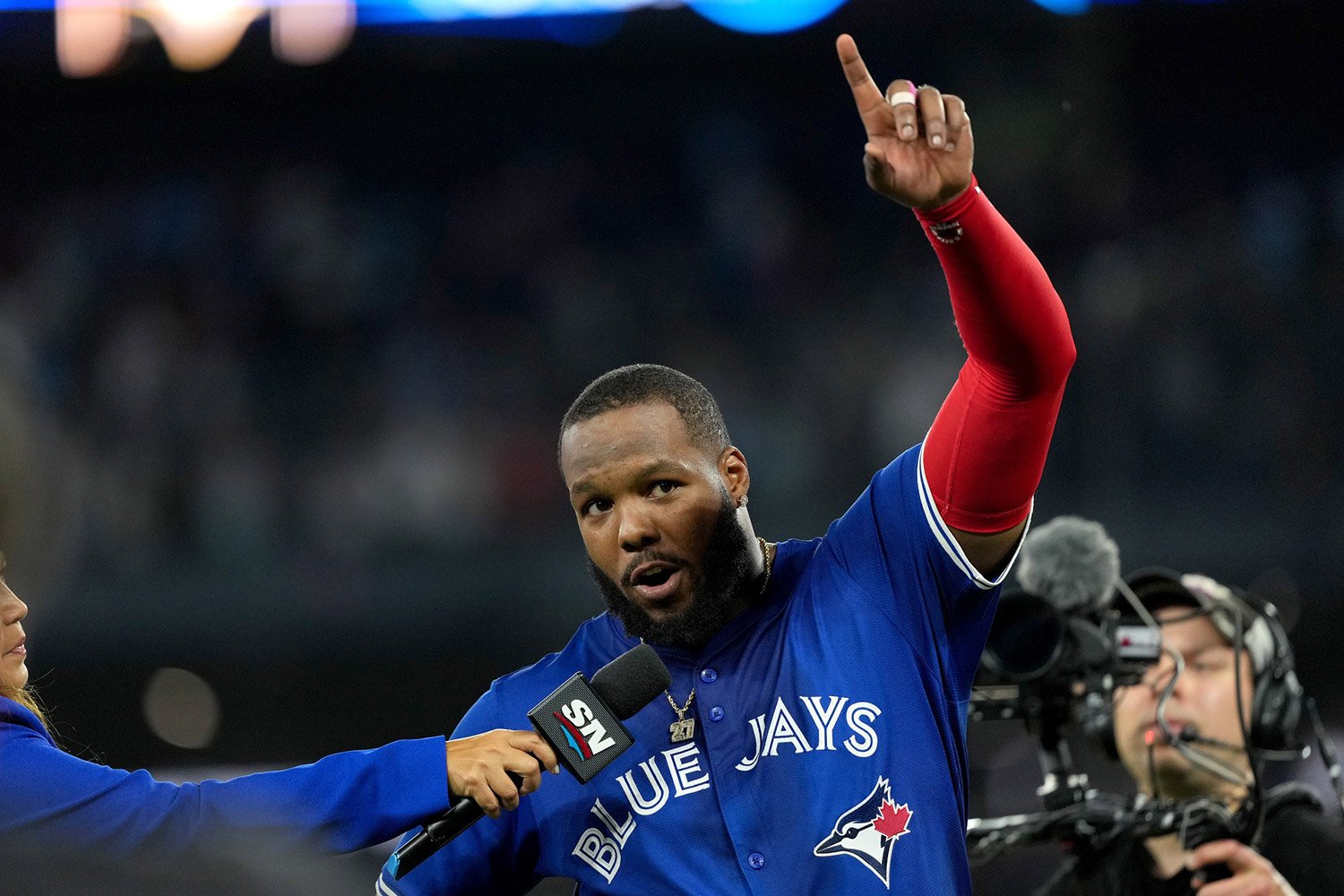 The Blue Jays have won their first playoff game in almost a decade, and it couldn’t have been scripted any better than the way it played out. Every Jays starter had a hit, drove in a run, or scored. The pitchers were all efficient and limited the damage to just one run and six hits against a potent Yankees lineup. The game ended 10-1, but there were some big plays that swung the pendulum more than others. Using FanGraphs Win Probability Added, the biggest plays were as follows. +10.6% WPA - Vladimir Guerrero Jr. homers in the first inning. Vladdy’s three hits yesterday doubled his career playoff total, but none were bigger than his first-inning home run to open the scoring. The face of the franchise had been struggling throughout September, but a week off and a calendar flip to October have Guerrero Jr. looking like the cornerstone we love. +9.4% WPA - Alejandro Kirk homers in the second inning. I was going to limit this recap to the plays that generated at least a 10% swing, but I couldn’t leave this Kirk home run out. Following in Vladdy’s footsteps, we have another Jay hitting his first career postseason dinger. This home run, while early in the game and only giving the Jays a two-run lead, pushed their overall win probability over 75% -10.1% WPA - Austin Wells singles in the sixth inning and moves Anthony Volpe to 3B. With none out in the sixth, Wells' hit put runners on the corners and the go-ahead run at the plate. It was a time for Jays fans to hold their breath a little more than usual. +10.4% WPA - Kevin Gausman strikes out Aaron Judge. Gausman induced 12 swing and misses in yesterday's game, but the two whiffs by Judge in this at-bat, with the bases loaded and none out, were beyond huge. In post-game remarks, Gausman said he wasn’t afraid to walk Judge in this spot, because he could only hurt them for one run. For his part, Judge was clearly thinking Gausman would challenge him more and be in the zone. Instead, Gausman threw a perfect splitter, down and away, and all Judge could do was weakly wave at it. -13.4% WPA - Kevin Gausman walks Cody Bellinger. The walk that Gausman wasn’t afraid to issue to Judge ends up going to Bellinger in the next at-bat. With the bases still loaded and just the one out, the Yankees seemed poised to do some damage. The walk brought the Jays' win expectancy down to 50.3%, a coin toss, and the lowest it had been since the first inning. +12.1% WPA - Ben Rice pops out with the infield fly rule in effect. The last batter Gausman would face popped out and had the Jays on the verge of escaping the inning with the lead intact and the damage limited. +12% WPA - Louis Varland strikes out Giancarlo Stanton to end the sixth inning. Varland entered the game for the largest leverage at bat of the game and got Stanton to strike out on a 101 MPH fastball - the fastest pitch of the game. It also marked four straight at-bats with win percentage swings of over 10% and was the fifth one of the inning. As great as all the runs scored by the Jays were, this stretch of at-bats was the clear pivot point of the game, and Gausman and Varland were at their best. The Jays would go on to add eight more runs from this point. Four in each of the seventh and eighth innings. A second home run for Kirk, Nathan Lukes with 3 RBI, 17 at bats over the two innings, and perhaps most importantly: burning through the Yankees’ bullpen. Sticking with a win probability viewpoint, both stars, Gausman, Guerrero, and Seranthony Domínguez were responsible for 10% WPA each over the course of the game, but just edging them out is Varland at 11%. Louis Varland is the high-leverage king of Toronto. Who might we see step up for Game 2? Blue Jays Bullpen Usage TUE WED THU FRI SAT TOT Yesavage 0 0 0 0 0 0 Varland 0 0 0 0 16 16 Little 0 0 0 0 14 14 S. Domínguez 0 0 0 0 7 7 Lauer 0 0 0 0 0 0 Hoffman 0 0 0 0 17 17 Rodriguez 0 0 0 0 0 0 Fluharty 0 0 0 0 0 0 Bruihl 0 0 0 0 0 0
.jpg.293eb470ea5f45703eb0f8c8198271a1.jpg)
.jpg.2ac607e5245f306f06e2c5f21357b7f6.jpg)
.jpg.e52eeddd562f49894da2eb837819c048.jpg)
.jpg.7d1f51d5bbd91a486d614f246c9812dc.jpg)

.jpg.c0787739e91bacbba68910a9926e7c99.jpg)
.jpg.e24430ebf260b1ec439068df41c322d5.jpg)
