


Mike LeSage
-
Posts
243 -
Joined
-
Last visited
-
Days Won
1
Content Type
Profiles
Toronto Blue Jays Videos
2026 Toronto Blue Jays Top Prospects Ranking
Toronto Blue Jays Free Agent & Trade Rumors, Notes, & Tidbits
Guides & Resources
2025 Toronto Blue Jays Draft Pick Tracker
News
2026 Toronto Blue Jays Draft Tracker: Picks & Bonuses
Forums
Blogs
Events
Store
Downloads
Gallery
Everything posted by Mike LeSage
-
Article: Can You Have Too Much Starting Pitching?
Mike LeSage replied to Mike LeSage's topic in Jays Centre Front Page News
I saw Schneider quoted as saying he had spoken with the vets about the possible changes coming (but that they hadn't committed to a path) and they were "all on board". He's the exact manager I'd want navigating this - so I'm on board too! -
Article: Can You Have Too Much Starting Pitching?
Mike LeSage replied to Mike LeSage's topic in Jays Centre Front Page News
That's the way I would lean too. Especially for the next 3-ish weeks. Maybe tighten it to 5 in mid-September for the run-in. Of course 1000 things could change between now and then.- 18 replies
-
- 1
-

-
- shane bieber
- kevin gausman
- (and 4 more)
-
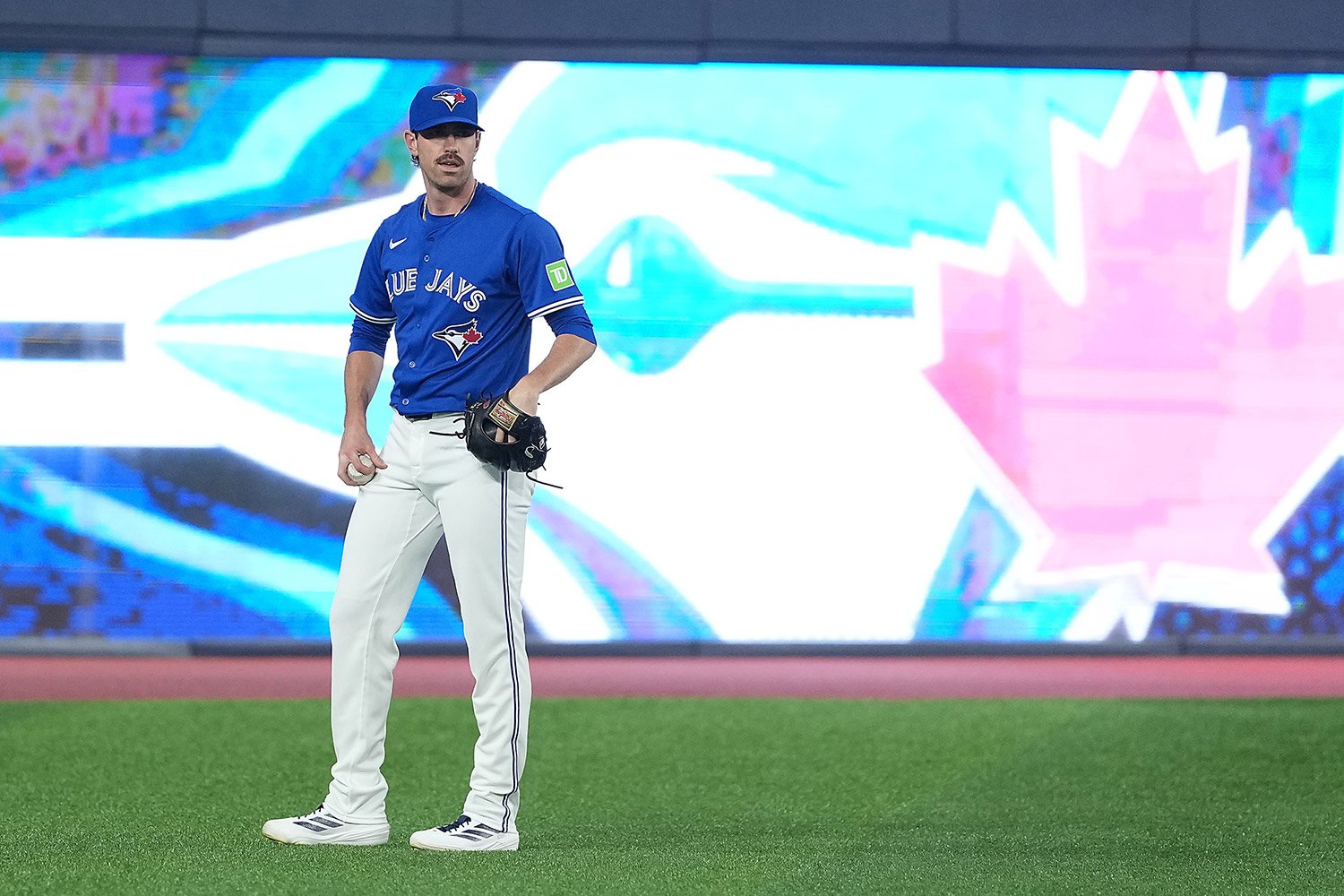
Shane Bieber pitched what is expected to be his final rehab start on Friday night in Buffalo. He threw 90 pitches (64 strikes) over seven innings, getting four strikeouts and giving up six hits, while earning a shutout win. Provided he recovers after the start as expected, his next stop should be joining the Blue Jays. Toronto is in first place in the American League and holds the tiebreaker against the majority of its closest rivals (NYY, BOS, DET, and SEA). They’ve gotten to this point behind a remarkably stable rotation of Kevin Gausman, José Berríos, Chris Bassitt, Max Scherzer, and Eric Lauer. In fact, those five have been so stable that the last win earned by a Jays starter that wasn’t one of those five was way back on April 18 when Bowden Francis got the win over Seattle. A game that happened so long ago that Anthony Santander and Alan Roden both had RBIs in the win. The Jays didn’t acquire the former Cy Young winner to not have him start, so the question becomes how to integrate him into a winning team without upsetting the balance. One option would be to pivot to a six-man rotation. Bieber could slot in to pitch one of the upcoming games in Pittsburgh, and everyone else just gets bumped a day. This would provide an extra day of rest for one of the oldest pitching staffs in the league. Lauer, considered the baby of the rotation, is over 30 years old (as someone older than Scherzer, it kills me to think of Lauer as ‘old’, but we can at least agree that he’s older than the league average). Interestingly, Bieber is just three days older than Lauer and will help bring an injection of youth into the rotation. Before the season, when talk of a six-man rotation was floated, both Gausman and Bassitt spoke out against the idea, preferring the rhythm of a traditional five-man cycle. Both vets have also talked about ‘doing what’s best for the team’ (a much easier ask when the team is winning), with Bassitt most recently volunteering to pitch out of the ‘pen heading into the All-Star break if a situation warranted it. That scenario didn’t come to be necessary, and I would have to imagine Bassitt’s opinion on being a bullpen option becomes different the more permanent the move is talked about. Suppose one of the starters is going to the ‘pen based on seniority; that’s undoubtedly Lauer. Of course, he’s fresh off being named Jays Centre Pitcher of the Month, so maybe he isn’t the most deserving based on results. If the Jays are going to go with a five-man rotation, the other option is to have one of the current starters turn into a piggy-back guy and essentially make a scheduled long relief appearance every fifth day. If this is the route the Jays take, the optimal way to decide it is by looking at the pitchers' splits as they face the same lineup multiple times. I looked at the opponents' batting average and FIP for each of Toronto’s current starters to see if there is an obvious candidate. I also included the MLB average and Shane Bieber’s career marks as reference. We’re not getting out of here without talking about Scherzer’s massive FIP jump his third time through the order. Over his last six starts, Scherzer has looked the best we’ve seen from him in a Jays uniform, and he has delivered on exactly what we had hoped to see when he was signed. He has also surrendered eight home runs across those games, with six of those homers coming on his third time facing a batter, and they are the only earned runs he's surrendered. He’s got the resume, pedigree, and ‘future hall-of-famer’ title to be given more runway to work through those issues, but if the trend continues, I wouldn’t be surprised to see Scherzer get the Berríos Treatment come playoff time. On a recent episode of TSN’s Overdrive, guest and retired major league player, Eric Hosmer, presented a more extreme option: Mad Max, Blue Jays closer. Hosmer mentioned a concern about the workload on Scherzer’s arm and that a move to the ‘pen (especially for the postseason) could be a way to achieve maximum effort from Scherzer and take advantage of his ultra-competitive persona. Using Bieber’s career numbers isn’t exactly fair statistically, but he also doesn’t have any 2025 numbers to work with yet. At the risk of muddying the table, I left the career numbers of the other pitchers out of it, but you can take my word for it: Bieber is (historically) the best of the bunch. Once his rehab is behind him and he gets some major league innings under his belt this season, we could be in for something special. No matter what you believe, Bieber is coming, and that means changes. View full article
-
 Shane Bieber pitched what is expected to be his final rehab start on Friday night in Buffalo. He threw 90 pitches (64 strikes) over seven innings, getting four strikeouts and giving up six hits, while earning a shutout win. Provided he recovers after the start as expected, his next stop should be joining the Blue Jays. Toronto is in first place in the American League and holds the tiebreaker against the majority of its closest rivals (NYY, BOS, DET, and SEA). They’ve gotten to this point behind a remarkably stable rotation of Kevin Gausman, José Berríos, Chris Bassitt, Max Scherzer, and Eric Lauer. In fact, those five have been so stable that the last win earned by a Jays starter that wasn’t one of those five was way back on April 18 when Bowden Francis got the win over Seattle. A game that happened so long ago that Anthony Santander and Alan Roden both had RBIs in the win. The Jays didn’t acquire the former Cy Young winner to not have him start, so the question becomes how to integrate him into a winning team without upsetting the balance. One option would be to pivot to a six-man rotation. Bieber could slot in to pitch one of the upcoming games in Pittsburgh, and everyone else just gets bumped a day. This would provide an extra day of rest for one of the oldest pitching staffs in the league. Lauer, considered the baby of the rotation, is over 30 years old (as someone older than Scherzer, it kills me to think of Lauer as ‘old’, but we can at least agree that he’s older than the league average). Interestingly, Bieber is just three days older than Lauer and will help bring an injection of youth into the rotation. Before the season, when talk of a six-man rotation was floated, both Gausman and Bassitt spoke out against the idea, preferring the rhythm of a traditional five-man cycle. Both vets have also talked about ‘doing what’s best for the team’ (a much easier ask when the team is winning), with Bassitt most recently volunteering to pitch out of the ‘pen heading into the All-Star break if a situation warranted it. That scenario didn’t come to be necessary, and I would have to imagine Bassitt’s opinion on being a bullpen option becomes different the more permanent the move is talked about. Suppose one of the starters is going to the ‘pen based on seniority; that’s undoubtedly Lauer. Of course, he’s fresh off being named Jays Centre Pitcher of the Month, so maybe he isn’t the most deserving based on results. If the Jays are going to go with a five-man rotation, the other option is to have one of the current starters turn into a piggy-back guy and essentially make a scheduled long relief appearance every fifth day. If this is the route the Jays take, the optimal way to decide it is by looking at the pitchers' splits as they face the same lineup multiple times. I looked at the opponents' batting average and FIP for each of Toronto’s current starters to see if there is an obvious candidate. I also included the MLB average and Shane Bieber’s career marks as reference. We’re not getting out of here without talking about Scherzer’s massive FIP jump his third time through the order. Over his last six starts, Scherzer has looked the best we’ve seen from him in a Jays uniform, and he has delivered on exactly what we had hoped to see when he was signed. He has also surrendered eight home runs across those games, with six of those homers coming on his third time facing a batter, and they are the only earned runs he's surrendered. He’s got the resume, pedigree, and ‘future hall-of-famer’ title to be given more runway to work through those issues, but if the trend continues, I wouldn’t be surprised to see Scherzer get the Berríos Treatment come playoff time. On a recent episode of TSN’s Overdrive, guest and retired major league player, Eric Hosmer, presented a more extreme option: Mad Max, Blue Jays closer. Hosmer mentioned a concern about the workload on Scherzer’s arm and that a move to the ‘pen (especially for the postseason) could be a way to achieve maximum effort from Scherzer and take advantage of his ultra-competitive persona. Using Bieber’s career numbers isn’t exactly fair statistically, but he also doesn’t have any 2025 numbers to work with yet. At the risk of muddying the table, I left the career numbers of the other pitchers out of it, but you can take my word for it: Bieber is (historically) the best of the bunch. Once his rehab is behind him and he gets some major league innings under his belt this season, we could be in for something special. No matter what you believe, Bieber is coming, and that means changes.
 -
Beautifully written piece - and what a showing by Fluharty. I get the methodology, and (theoretically) understand why you'd take 45 degrees as the angle, but I'm not sure I want to live in a world where that 2nd pitch to Shohei is a checked swing. 😁
-
.jpg.8b5aecbd498e8e94149832be5c5a4f3f.jpg) Weekly Snapshot: Mon, 8/4 through Sun, 8/10 *** Record Last Week: 4-2 (Overall: 69-50) Run Differential Last Week: +28 (Overall: +44) Standings: First in AL East (4.0 games up on BOS), First in AL (1.0 game up on DET) Last Week’s Results Game 114 TOR 15 - COL 1 Lauer: 6 IP, 7 H, 1 ER, 1 BB, 4 K Bichette: 3-for-6, 2 HR (14 and 15) and 6 RBI Clement: 5-for-6, 3 runs scored Game 115 TOR 10 - COL 4 Berríos: 5.1 IP, 7 H, 3 ER, 1 BB, 5 K Varsho: 3-for-5, 2 HR (10 and 11) and 6 RBI Guerrero: 3-for-5, HR (17) Lukes: 2-for-4, HR (10) Game 116 TOR 20 - COL 1 Gausman: 7 IP, 3 H, 1 ER, 2 BB, 8 K Schneider: 3-for-7, 2 HR (6 and 7) and 4 RBI France 4-for-4, 4 runs scored Clement: 4-for-7, HR (6) and 4 runs scored Game 117 LAD 5 - TOR 1 Scherzer: 6 IP, 6 H, 2 ER, 3 BB, 5 K Little: 0 IP, 1 H, 3 ER, 2 BB, 0 K Barger: 2-for-4, RBI Game 118 LAD 9 - TOR 1 Bassitt: 4.2 IP, 6 H, 3 ER, 2 BB, 2 K Clement: 2-for-4, HR (7) Rest of team: 3-for-28 with 12 Ks Game 119: TOR 5 - LAD 4 Lauer: 3 IP, 6 H, 3 ER, 3 BB, 2 K Bullpen: 6 IP, 4 H, 1 ER, 8 BB, 6 K Guerrero Jr.: 2-for-4, HR (19) Highlights: Every bat the team brought to Colorado: I’ll save the breakdown for the Stats of the Week section, but it was a historic offensive output from the Jays across the three games. A +39 run differential in three games to go along with 63 hits and 13 home runs. All nine starting Blue Jays had a hit by the time there was one out in the third inning of the first game, and they just kept rolling. Scherzer vs. Kershaw: From their Randy Johnson and Greg Maddux matchup beginnings to the twilights of their respective (soon-to-be) Hall of Fame careers, this was a head-to-head pitchers duel worth staying up past my bedtime for. Both pitchers delivered a quality start, going six innings each with very similar stat lines. Scherzer had the edge in Ks (5 to 4), but Kershaw came out on top when it came to earned runs (2 to 1) and ultimately got the win. While it would have been nice for the Jays to get the W here, it was still a highlight just to see the two legends go at it. Mason Fluharty picked up the first save of his MLB career, coming into the bottom of the ninth with the bases loaded and having to face Shohei Ohtani and Mookie Betts. No pressure. After working Ohtani, who had homered earlier in the game and was a problem all series, to a full count, he got him to chase an 83-mph sweeper below the zone for strike three. He followed that up by getting Betts to ground into a force out, securing the win for the Jays. With some upcoming decisions to be made about the pitchers on this roster, Fluharty is staking his claim to a spot. He had two other (much lower leverage) appearances this week and didn’t surrender a run. Braydon Fisher was also called on four times this week and tallied nine Ks in less than four innings of work. Newcomer Louis Varland had himself a week, chipping in with 3.2 IP of shutout baseball with five Ks mixed in. Lowlights: Jeff Hoffman didn’t pitch until Sunday. There wasn’t a need for a closer in any of the first five games. How much rust can accumulate in a week? He came in to face the Dodgers and forgot how to throw strikes, walking five batters and only throwing 10 strikes on 33 pitches. Thanks to Ernie Clement's homer and Fluharty’s lights-out save, Hoffman walked away with the win (despite a blown save). Is it time to reassess our Bullpen Trust-O-Meter? Plate discipline against the Dodgers: Toronto as a team has been incredibly disciplined at the plate this season and boasts the fewest strikeouts in the league as a result. This made their 35 Ks in the series against the Dodgers all the more surprising. No one player stood out as being particularly egregious either; it was a full team effort. Still, if the Jays match up with the Dodgers again (say, in late October), this will be something to key in on. Random Stats of the Week: Leo Morgenstern did an incredible job breaking down all of the team records that were set in the Colorado series, but a number of players also notched single-game personal bests across those games. Bo Bichette’s six RBI in the first game marked a new career high. His six ABs in the first and third games also tied his previous best. Ty France’s four runs scored in the third game of the series were a career high. Nathan Lukes had a career-best four RBI in the third game. Vladimir Guerrero Jr.’s seven ABs and four hits in the third game both tied career highs. Daulton Varsho’s six RBI in the second game set a new career high, and his two homers tied his best output. His 467-foot blast was also the longest of his career. Davis Schneider’s two home runs and four RBI both tied his career best marks. His seven ABs in the third game were a career high. Ernie Clement’s five hits in the second game set his new career high. He set another in the third game with 7 ABs, a new high mark for himself. Joey Loperfido tied his career-high marks for singles and hits in a game with the three he had in the second game of the series. He also set a new personal best for ABs with his six in that game. The Blue Jays lead the AL and are second in the majors (behind LAD) with a team wRC+ of 114. Toronto leads the majors with 25.0 position player fWAR. Jeff Hoffman joins Juan Acevedo as the only pitchers in the history of baseball to pitch one inning or less, walk five batters without being tagged with an earned run and have their team get the win. Hoffman is the only player to “earn” the win themselves (Acevedo was credited with a hold). News, Notes and Not Playing: Buck Martinez returned to the Blue Jays' booth for the series against the Dodgers after being away since the end of May. He revealed that he has had a recurrence of the cancer that he battled in 2022, and after calling the upcoming homestand, will be taking more time off for treatment with the aim of returning in September for Toronto’s playoff push. Ali Sánchez was DFA’d and ultimately picked up by Boston. Buddy Kennedy was called up and made his Blue Jays debut. 7-day IL: George Springer Springer “still has a few more boxes to tick” before he starts a full rehab assignment, as per manager John Schnieder. 10-day IL: Andrés Giménez, Giménez has started his Triple A rehab assignment. He stole a base and scored two runs while going 4-for-5 on the weekend. The second baseman is expected to make multiple rehab starts before coming back to the big league club. 60-day IL: Anthony Santander, Shane Bieber At last update, Santander still hadn’t started swinging a bat, and for the first time, there seems to be some doubt if we will see him return at all this season. Bieber pitched on Saturday and threw 78 pitches, scattering four hits and one walk against six strikeouts. He is expected to make at least one more rehab start before a decision is made regarding his Blue Jays debut. Trending Storylines: The Jays took full advantage of a golden opportunity to beat up on the worst team in the league this week, but we shouldn’t lose sight of the fact that Toronto also has the best record in the AL against teams over .500. As we march towards the playoffs, the Blue Jays will need to keep finding ways to win games against teams on both sides of that line. The Jays have run a number of different lineups (often out of necessity) and been aggressive with managing their bullpen personnel – but there are some tough decisions on the horizon before rosters expand in September, and how Toronto manages them could have ripple effects moving forward. Looking Ahead: The Jays get an off day on Monday and then welcome the Chicago Cubs to the Rogers Centre for a three-game set, followed by three more at home against the Texas Rangers. The Cubs will bring Pete Crow-Armstrong with them, who has seen a lot of press this week as ‘the best defensive player in baseball’ and been heralded for his Outs Above Average and the quantity of five-star catches he’s made. Toronto has some defensive wizards of their own, and it will be interesting to see who comes out on top. The Rangers sit third in the AL West and are 2.5 games back of a Wild Card spot. Texas has also given up the fewest earned runs in all of baseball, so the Jays' bats will have to be sharp for this series. Fortunately, the Rangers are aided by their home ballpark, which they’re not bringing with them, but they still rank bottom third (in the good way) for ERA on the road. Toronto has scored the sixth most runs at home this season, so this should make for a fun matchup.
Weekly Snapshot: Mon, 8/4 through Sun, 8/10 *** Record Last Week: 4-2 (Overall: 69-50) Run Differential Last Week: +28 (Overall: +44) Standings: First in AL East (4.0 games up on BOS), First in AL (1.0 game up on DET) Last Week’s Results Game 114 TOR 15 - COL 1 Lauer: 6 IP, 7 H, 1 ER, 1 BB, 4 K Bichette: 3-for-6, 2 HR (14 and 15) and 6 RBI Clement: 5-for-6, 3 runs scored Game 115 TOR 10 - COL 4 Berríos: 5.1 IP, 7 H, 3 ER, 1 BB, 5 K Varsho: 3-for-5, 2 HR (10 and 11) and 6 RBI Guerrero: 3-for-5, HR (17) Lukes: 2-for-4, HR (10) Game 116 TOR 20 - COL 1 Gausman: 7 IP, 3 H, 1 ER, 2 BB, 8 K Schneider: 3-for-7, 2 HR (6 and 7) and 4 RBI France 4-for-4, 4 runs scored Clement: 4-for-7, HR (6) and 4 runs scored Game 117 LAD 5 - TOR 1 Scherzer: 6 IP, 6 H, 2 ER, 3 BB, 5 K Little: 0 IP, 1 H, 3 ER, 2 BB, 0 K Barger: 2-for-4, RBI Game 118 LAD 9 - TOR 1 Bassitt: 4.2 IP, 6 H, 3 ER, 2 BB, 2 K Clement: 2-for-4, HR (7) Rest of team: 3-for-28 with 12 Ks Game 119: TOR 5 - LAD 4 Lauer: 3 IP, 6 H, 3 ER, 3 BB, 2 K Bullpen: 6 IP, 4 H, 1 ER, 8 BB, 6 K Guerrero Jr.: 2-for-4, HR (19) Highlights: Every bat the team brought to Colorado: I’ll save the breakdown for the Stats of the Week section, but it was a historic offensive output from the Jays across the three games. A +39 run differential in three games to go along with 63 hits and 13 home runs. All nine starting Blue Jays had a hit by the time there was one out in the third inning of the first game, and they just kept rolling. Scherzer vs. Kershaw: From their Randy Johnson and Greg Maddux matchup beginnings to the twilights of their respective (soon-to-be) Hall of Fame careers, this was a head-to-head pitchers duel worth staying up past my bedtime for. Both pitchers delivered a quality start, going six innings each with very similar stat lines. Scherzer had the edge in Ks (5 to 4), but Kershaw came out on top when it came to earned runs (2 to 1) and ultimately got the win. While it would have been nice for the Jays to get the W here, it was still a highlight just to see the two legends go at it. Mason Fluharty picked up the first save of his MLB career, coming into the bottom of the ninth with the bases loaded and having to face Shohei Ohtani and Mookie Betts. No pressure. After working Ohtani, who had homered earlier in the game and was a problem all series, to a full count, he got him to chase an 83-mph sweeper below the zone for strike three. He followed that up by getting Betts to ground into a force out, securing the win for the Jays. With some upcoming decisions to be made about the pitchers on this roster, Fluharty is staking his claim to a spot. He had two other (much lower leverage) appearances this week and didn’t surrender a run. Braydon Fisher was also called on four times this week and tallied nine Ks in less than four innings of work. Newcomer Louis Varland had himself a week, chipping in with 3.2 IP of shutout baseball with five Ks mixed in. Lowlights: Jeff Hoffman didn’t pitch until Sunday. There wasn’t a need for a closer in any of the first five games. How much rust can accumulate in a week? He came in to face the Dodgers and forgot how to throw strikes, walking five batters and only throwing 10 strikes on 33 pitches. Thanks to Ernie Clement's homer and Fluharty’s lights-out save, Hoffman walked away with the win (despite a blown save). Is it time to reassess our Bullpen Trust-O-Meter? Plate discipline against the Dodgers: Toronto as a team has been incredibly disciplined at the plate this season and boasts the fewest strikeouts in the league as a result. This made their 35 Ks in the series against the Dodgers all the more surprising. No one player stood out as being particularly egregious either; it was a full team effort. Still, if the Jays match up with the Dodgers again (say, in late October), this will be something to key in on. Random Stats of the Week: Leo Morgenstern did an incredible job breaking down all of the team records that were set in the Colorado series, but a number of players also notched single-game personal bests across those games. Bo Bichette’s six RBI in the first game marked a new career high. His six ABs in the first and third games also tied his previous best. Ty France’s four runs scored in the third game of the series were a career high. Nathan Lukes had a career-best four RBI in the third game. Vladimir Guerrero Jr.’s seven ABs and four hits in the third game both tied career highs. Daulton Varsho’s six RBI in the second game set a new career high, and his two homers tied his best output. His 467-foot blast was also the longest of his career. Davis Schneider’s two home runs and four RBI both tied his career best marks. His seven ABs in the third game were a career high. Ernie Clement’s five hits in the second game set his new career high. He set another in the third game with 7 ABs, a new high mark for himself. Joey Loperfido tied his career-high marks for singles and hits in a game with the three he had in the second game of the series. He also set a new personal best for ABs with his six in that game. The Blue Jays lead the AL and are second in the majors (behind LAD) with a team wRC+ of 114. Toronto leads the majors with 25.0 position player fWAR. Jeff Hoffman joins Juan Acevedo as the only pitchers in the history of baseball to pitch one inning or less, walk five batters without being tagged with an earned run and have their team get the win. Hoffman is the only player to “earn” the win themselves (Acevedo was credited with a hold). News, Notes and Not Playing: Buck Martinez returned to the Blue Jays' booth for the series against the Dodgers after being away since the end of May. He revealed that he has had a recurrence of the cancer that he battled in 2022, and after calling the upcoming homestand, will be taking more time off for treatment with the aim of returning in September for Toronto’s playoff push. Ali Sánchez was DFA’d and ultimately picked up by Boston. Buddy Kennedy was called up and made his Blue Jays debut. 7-day IL: George Springer Springer “still has a few more boxes to tick” before he starts a full rehab assignment, as per manager John Schnieder. 10-day IL: Andrés Giménez, Giménez has started his Triple A rehab assignment. He stole a base and scored two runs while going 4-for-5 on the weekend. The second baseman is expected to make multiple rehab starts before coming back to the big league club. 60-day IL: Anthony Santander, Shane Bieber At last update, Santander still hadn’t started swinging a bat, and for the first time, there seems to be some doubt if we will see him return at all this season. Bieber pitched on Saturday and threw 78 pitches, scattering four hits and one walk against six strikeouts. He is expected to make at least one more rehab start before a decision is made regarding his Blue Jays debut. Trending Storylines: The Jays took full advantage of a golden opportunity to beat up on the worst team in the league this week, but we shouldn’t lose sight of the fact that Toronto also has the best record in the AL against teams over .500. As we march towards the playoffs, the Blue Jays will need to keep finding ways to win games against teams on both sides of that line. The Jays have run a number of different lineups (often out of necessity) and been aggressive with managing their bullpen personnel – but there are some tough decisions on the horizon before rosters expand in September, and how Toronto manages them could have ripple effects moving forward. Looking Ahead: The Jays get an off day on Monday and then welcome the Chicago Cubs to the Rogers Centre for a three-game set, followed by three more at home against the Texas Rangers. The Cubs will bring Pete Crow-Armstrong with them, who has seen a lot of press this week as ‘the best defensive player in baseball’ and been heralded for his Outs Above Average and the quantity of five-star catches he’s made. Toronto has some defensive wizards of their own, and it will be interesting to see who comes out on top. The Rangers sit third in the AL West and are 2.5 games back of a Wild Card spot. Texas has also given up the fewest earned runs in all of baseball, so the Jays' bats will have to be sharp for this series. Fortunately, the Rangers are aided by their home ballpark, which they’re not bringing with them, but they still rank bottom third (in the good way) for ERA on the road. Toronto has scored the sixth most runs at home this season, so this should make for a fun matchup. -
Weekly Snapshot: Mon, 8/4 through Sun, 8/10 *** Record Last Week: 4-2 (Overall: 69-50) Run Differential Last Week: +28 (Overall: +44) Standings: First in AL East (4.0 games up on BOS), First in AL (1.0 game up on DET) Last Week’s Results Game 114 TOR 15 - COL 1 Lauer: 6 IP, 7 H, 1 ER, 1 BB, 4 K Bichette: 3-for-6, 2 HR (14 and 15) and 6 RBI Clement: 5-for-6, 3 runs scored Game 115 TOR 10 - COL 4 Berríos: 5.1 IP, 7 H, 3 ER, 1 BB, 5 K Varsho: 3-for-5, 2 HR (10 and 11) and 6 RBI Guerrero: 3-for-5, HR (17) Lukes: 2-for-4, HR (10) Game 116 TOR 20 - COL 1 Gausman: 7 IP, 3 H, 1 ER, 2 BB, 8 K Schneider: 3-for-7, 2 HR (6 and 7) and 4 RBI France 4-for-4, 4 runs scored Clement: 4-for-7, HR (6) and 4 runs scored Game 117 LAD 5 - TOR 1 Scherzer: 6 IP, 6 H, 2 ER, 3 BB, 5 K Little: 0 IP, 1 H, 3 ER, 2 BB, 0 K Barger: 2-for-4, RBI Game 118 LAD 9 - TOR 1 Bassitt: 4.2 IP, 6 H, 3 ER, 2 BB, 2 K Clement: 2-for-4, HR (7) Rest of team: 3-for-28 with 12 Ks Game 119: TOR 5 - LAD 4 Lauer: 3 IP, 6 H, 3 ER, 3 BB, 2 K Bullpen: 6 IP, 4 H, 1 ER, 8 BB, 6 K Guerrero Jr.: 2-for-4, HR (19) Highlights: Every bat the team brought to Colorado: I’ll save the breakdown for the Stats of the Week section, but it was a historic offensive output from the Jays across the three games. A +39 run differential in three games to go along with 63 hits and 13 home runs. All nine starting Blue Jays had a hit by the time there was one out in the third inning of the first game, and they just kept rolling. Scherzer vs. Kershaw: From their Randy Johnson and Greg Maddux matchup beginnings to the twilights of their respective (soon-to-be) Hall of Fame careers, this was a head-to-head pitchers duel worth staying up past my bedtime for. Both pitchers delivered a quality start, going six innings each with very similar stat lines. Scherzer had the edge in Ks (5 to 4), but Kershaw came out on top when it came to earned runs (2 to 1) and ultimately got the win. While it would have been nice for the Jays to get the W here, it was still a highlight just to see the two legends go at it. Mason Fluharty picked up the first save of his MLB career, coming into the bottom of the ninth with the bases loaded and having to face Shohei Ohtani and Mookie Betts. No pressure. After working Ohtani, who had homered earlier in the game and was a problem all series, to a full count, he got him to chase an 83-mph sweeper below the zone for strike three. He followed that up by getting Betts to ground into a force out, securing the win for the Jays. With some upcoming decisions to be made about the pitchers on this roster, Fluharty is staking his claim to a spot. He had two other (much lower leverage) appearances this week and didn’t surrender a run. Braydon Fisher was also called on four times this week and tallied nine Ks in less than four innings of work. Newcomer Louis Varland had himself a week, chipping in with 3.2 IP of shutout baseball with five Ks mixed in. Lowlights: Jeff Hoffman didn’t pitch until Sunday. There wasn’t a need for a closer in any of the first five games. How much rust can accumulate in a week? He came in to face the Dodgers and forgot how to throw strikes, walking five batters and only throwing 10 strikes on 33 pitches. Thanks to Ernie Clement's homer and Fluharty’s lights-out save, Hoffman walked away with the win (despite a blown save). Is it time to reassess our Bullpen Trust-O-Meter? Plate discipline against the Dodgers: Toronto as a team has been incredibly disciplined at the plate this season and boasts the fewest strikeouts in the league as a result. This made their 35 Ks in the series against the Dodgers all the more surprising. No one player stood out as being particularly egregious either; it was a full team effort. Still, if the Jays match up with the Dodgers again (say, in late October), this will be something to key in on. Random Stats of the Week: Leo Morgenstern did an incredible job breaking down all of the team records that were set in the Colorado series, but a number of players also notched single-game personal bests across those games. Bo Bichette’s six RBI in the first game marked a new career high. His six ABs in the first and third games also tied his previous best. Ty France’s four runs scored in the third game of the series were a career high. Nathan Lukes had a career-best four RBI in the third game. Vladimir Guerrero Jr.’s seven ABs and four hits in the third game both tied career highs. Daulton Varsho’s six RBI in the second game set a new career high, and his two homers tied his best output. His 467-foot blast was also the longest of his career. Davis Schneider’s two home runs and four RBI both tied his career best marks. His seven ABs in the third game were a career high. Ernie Clement’s five hits in the second game set his new career high. He set another in the third game with 7 ABs, a new high mark for himself. Joey Loperfido tied his career-high marks for singles and hits in a game with the three he had in the second game of the series. He also set a new personal best for ABs with his six in that game. The Blue Jays lead the AL and are second in the majors (behind LAD) with a team wRC+ of 114. Toronto leads the majors with 25.0 position player fWAR. Jeff Hoffman joins Juan Acevedo as the only pitchers in the history of baseball to pitch one inning or less, walk five batters without being tagged with an earned run and have their team get the win. Hoffman is the only player to “earn” the win themselves (Acevedo was credited with a hold). News, Notes and Not Playing: Buck Martinez returned to the Blue Jays' booth for the series against the Dodgers after being away since the end of May. He revealed that he has had a recurrence of the cancer that he battled in 2022, and after calling the upcoming homestand, will be taking more time off for treatment with the aim of returning in September for Toronto’s playoff push. Ali Sánchez was DFA’d and ultimately picked up by Boston. Buddy Kennedy was called up and made his Blue Jays debut. 7-day IL: George Springer Springer “still has a few more boxes to tick” before he starts a full rehab assignment, as per manager John Schnieder. 10-day IL: Andrés Giménez, Giménez has started his Triple A rehab assignment. He stole a base and scored two runs while going 4-for-5 on the weekend. The second baseman is expected to make multiple rehab starts before coming back to the big league club. 60-day IL: Anthony Santander, Shane Bieber At last update, Santander still hadn’t started swinging a bat, and for the first time, there seems to be some doubt if we will see him return at all this season. Bieber pitched on Saturday and threw 78 pitches, scattering four hits and one walk against six strikeouts. He is expected to make at least one more rehab start before a decision is made regarding his Blue Jays debut. Trending Storylines: The Jays took full advantage of a golden opportunity to beat up on the worst team in the league this week, but we shouldn’t lose sight of the fact that Toronto also has the best record in the AL against teams over .500. As we march towards the playoffs, the Blue Jays will need to keep finding ways to win games against teams on both sides of that line. The Jays have run a number of different lineups (often out of necessity) and been aggressive with managing their bullpen personnel – but there are some tough decisions on the horizon before rosters expand in September, and how Toronto manages them could have ripple effects moving forward. Looking Ahead: The Jays get an off day on Monday and then welcome the Chicago Cubs to the Rogers Centre for a three-game set, followed by three more at home against the Texas Rangers. The Cubs will bring Pete Crow-Armstrong with them, who has seen a lot of press this week as ‘the best defensive player in baseball’ and been heralded for his Outs Above Average and the quantity of five-star catches he’s made. Toronto has some defensive wizards of their own, and it will be interesting to see who comes out on top. The Rangers sit third in the AL West and are 2.5 games back of a Wild Card spot. Texas has also given up the fewest earned runs in all of baseball, so the Jays' bats will have to be sharp for this series. Fortunately, the Rangers are aided by their home ballpark, which they’re not bringing with them, but they still rank bottom third (in the good way) for ERA on the road. Toronto has scored the sixth most runs at home this season, so this should make for a fun matchup. View full article
-
- 1
-
-
I'm willing to find a way to love Ty France, but it's certainly not immediate.
-
Who Is Shane Bieber and What Can He Bring to the Blue Jays?
Mike LeSage posted an article in Blue Jays
.jpg.36ee0987408ea70dffa58be905580297.jpg) It's not 2015 and he’s not David Price, but Shane Bieber has said goodbye to his friends in Cleveland and will bring the swag of a Cy Young pedigree north of the border. Bieber was drafted by Cleveland in 2016 and made his debut with them in 2018, throwing over 100 innings in his rookie season. In 2020, he was the unanimous choice as the AL Cy Young winner in the pandemic-shortened season, as he led the league in ERA, FIP, strikeouts, wins and a number of other categories. Now, a lot has changed since 2020, but Owen Hill recently wrote about a number one starter being on the Jays' trade deadline wishlist, and the hope is that Bieber can step up and say, “I’m the One.” It doesn’t take much to envision a future in which Bieber adds more hardware to his cabinet with Toronto. ALCS MVP, maybe? Never say never. Before we get to what could be, let's take a healthy look at the risks. First is the price that was paid. Back in February, Jays Centre had Khal Stephen as the #9 prospect in the organization, and he’s only moved up those rankings since. Depending on which source you look at, he was ranked as high as fifth system. That's a big price to pay considering the other big risk at play: Does anyone know if we’ll see that ace-level, Cy-worthy capability from Bieber, or will he be a ghost of his former self? He is currently nearing the end of his rehab from Tommy John surgery and hasn’t pitched in the majors since April of last year. In 2024, he made two starts and pitched 12 innings before being sidelined with a right elbow injury that necessitated the TJ route - a heartbreaker for Cleveland. That wasn’t his first injury, though it has been his longest stretch of missed time to date. He also missed significant time in 2021 with a right shoulder strain, making 16 starts and throwing fewer than 100 innings. He still put up a 3.03 FIP and struck out 134 batters when healthy though. He also missed a chunk of time in 2023 with inflammation in that right elbow, a precursor to the injury in ‘24. Again, when he was healthy, he was generally serviceable with flashes of brilliance, and the Blue Jays will be hoping he can find that sweet spot when he completes his rehab and joins the rotation. Bieber has a five-pitch mix and leans primarily on his fastball and slider. Speaking with MLB.com about his rehab performances, he sounded confident: “I had plenty of time to work and refine. I feel like my stuff is in a great spot, both from metrics and output, so I don't think I'll falter that much with a little bit of time off.” His four-seam fastball has been sitting between 92-94 mph in his rehab starts this year, and through 11 ⅓ innings, he has 21 strikeouts and a 1.59 ERA with only one walk. Guardians president of baseball operations Chris Antonetti also noted that Bieber’s changeup has had more depth to it than in the past. That changeup is a little atypical in that it is only about 3 mph slower than his fastball, but it comes with an additional 13 inches of vertical break on average; this strikeout of Seth Brown in 2024 is a great example. Bieber also has five career starts against the Jays and has picked up three wins to go along with one loss and one no-decision. The most memorable of those wins came in 2019 when he went nine innings, shutting out the Jays and holding them to one hit (a seventh-inning ground rule double by Eric Sogard). All three of Bieber’s wins came at the Rogers Centre, so here’s hoping that there’s some magic in the building he can tap into. The reality of Bieber’s injury history means that whatever recent stats anyone is looking at are all subject to a small sample warning. So, the risk is high, but the potential reward is too. At the time of this writing, there are still five-plus hours left until the trade deadline, and I would hope Toronto isn’t done adding, but if Bieber can hop on that red eye, get a private landing at Pearson Airport and become a stabilizing presence as the Jays push for playoff glory, he might make us look back at this trade as a lot closer to the David Price deal than we realize.
It's not 2015 and he’s not David Price, but Shane Bieber has said goodbye to his friends in Cleveland and will bring the swag of a Cy Young pedigree north of the border. Bieber was drafted by Cleveland in 2016 and made his debut with them in 2018, throwing over 100 innings in his rookie season. In 2020, he was the unanimous choice as the AL Cy Young winner in the pandemic-shortened season, as he led the league in ERA, FIP, strikeouts, wins and a number of other categories. Now, a lot has changed since 2020, but Owen Hill recently wrote about a number one starter being on the Jays' trade deadline wishlist, and the hope is that Bieber can step up and say, “I’m the One.” It doesn’t take much to envision a future in which Bieber adds more hardware to his cabinet with Toronto. ALCS MVP, maybe? Never say never. Before we get to what could be, let's take a healthy look at the risks. First is the price that was paid. Back in February, Jays Centre had Khal Stephen as the #9 prospect in the organization, and he’s only moved up those rankings since. Depending on which source you look at, he was ranked as high as fifth system. That's a big price to pay considering the other big risk at play: Does anyone know if we’ll see that ace-level, Cy-worthy capability from Bieber, or will he be a ghost of his former self? He is currently nearing the end of his rehab from Tommy John surgery and hasn’t pitched in the majors since April of last year. In 2024, he made two starts and pitched 12 innings before being sidelined with a right elbow injury that necessitated the TJ route - a heartbreaker for Cleveland. That wasn’t his first injury, though it has been his longest stretch of missed time to date. He also missed significant time in 2021 with a right shoulder strain, making 16 starts and throwing fewer than 100 innings. He still put up a 3.03 FIP and struck out 134 batters when healthy though. He also missed a chunk of time in 2023 with inflammation in that right elbow, a precursor to the injury in ‘24. Again, when he was healthy, he was generally serviceable with flashes of brilliance, and the Blue Jays will be hoping he can find that sweet spot when he completes his rehab and joins the rotation. Bieber has a five-pitch mix and leans primarily on his fastball and slider. Speaking with MLB.com about his rehab performances, he sounded confident: “I had plenty of time to work and refine. I feel like my stuff is in a great spot, both from metrics and output, so I don't think I'll falter that much with a little bit of time off.” His four-seam fastball has been sitting between 92-94 mph in his rehab starts this year, and through 11 ⅓ innings, he has 21 strikeouts and a 1.59 ERA with only one walk. Guardians president of baseball operations Chris Antonetti also noted that Bieber’s changeup has had more depth to it than in the past. That changeup is a little atypical in that it is only about 3 mph slower than his fastball, but it comes with an additional 13 inches of vertical break on average; this strikeout of Seth Brown in 2024 is a great example. Bieber also has five career starts against the Jays and has picked up three wins to go along with one loss and one no-decision. The most memorable of those wins came in 2019 when he went nine innings, shutting out the Jays and holding them to one hit (a seventh-inning ground rule double by Eric Sogard). All three of Bieber’s wins came at the Rogers Centre, so here’s hoping that there’s some magic in the building he can tap into. The reality of Bieber’s injury history means that whatever recent stats anyone is looking at are all subject to a small sample warning. So, the risk is high, but the potential reward is too. At the time of this writing, there are still five-plus hours left until the trade deadline, and I would hope Toronto isn’t done adding, but if Bieber can hop on that red eye, get a private landing at Pearson Airport and become a stabilizing presence as the Jays push for playoff glory, he might make us look back at this trade as a lot closer to the David Price deal than we realize. -
It's not 2015 and he’s not David Price, but Shane Bieber has said goodbye to his friends in Cleveland and will bring the swag of a Cy Young pedigree north of the border. Bieber was drafted by Cleveland in 2016 and made his debut with them in 2018, throwing over 100 innings in his rookie season. In 2020, he was the unanimous choice as the AL Cy Young winner in the pandemic-shortened season, as he led the league in ERA, FIP, strikeouts, wins and a number of other categories. Now, a lot has changed since 2020, but Owen Hill recently wrote about a number one starter being on the Jays' trade deadline wishlist, and the hope is that Bieber can step up and say, “I’m the One.” It doesn’t take much to envision a future in which Bieber adds more hardware to his cabinet with Toronto. ALCS MVP, maybe? Never say never. Before we get to what could be, let's take a healthy look at the risks. First is the price that was paid. Back in February, Jays Centre had Khal Stephen as the #9 prospect in the organization, and he’s only moved up those rankings since. Depending on which source you look at, he was ranked as high as fifth system. That's a big price to pay considering the other big risk at play: Does anyone know if we’ll see that ace-level, Cy-worthy capability from Bieber, or will he be a ghost of his former self? He is currently nearing the end of his rehab from Tommy John surgery and hasn’t pitched in the majors since April of last year. In 2024, he made two starts and pitched 12 innings before being sidelined with a right elbow injury that necessitated the TJ route - a heartbreaker for Cleveland. That wasn’t his first injury, though it has been his longest stretch of missed time to date. He also missed significant time in 2021 with a right shoulder strain, making 16 starts and throwing fewer than 100 innings. He still put up a 3.03 FIP and struck out 134 batters when healthy though. He also missed a chunk of time in 2023 with inflammation in that right elbow, a precursor to the injury in ‘24. Again, when he was healthy, he was generally serviceable with flashes of brilliance, and the Blue Jays will be hoping he can find that sweet spot when he completes his rehab and joins the rotation. Bieber has a five-pitch mix and leans primarily on his fastball and slider. Speaking with MLB.com about his rehab performances, he sounded confident: “I had plenty of time to work and refine. I feel like my stuff is in a great spot, both from metrics and output, so I don't think I'll falter that much with a little bit of time off.” His four-seam fastball has been sitting between 92-94 mph in his rehab starts this year, and through 11 ⅓ innings, he has 21 strikeouts and a 1.59 ERA with only one walk. Guardians president of baseball operations Chris Antonetti also noted that Bieber’s changeup has had more depth to it than in the past. That changeup is a little atypical in that it is only about 3 mph slower than his fastball, but it comes with an additional 13 inches of vertical break on average; this strikeout of Seth Brown in 2024 is a great example. Bieber also has five career starts against the Jays and has picked up three wins to go along with one loss and one no-decision. The most memorable of those wins came in 2019 when he went nine innings, shutting out the Jays and holding them to one hit (a seventh-inning ground rule double by Eric Sogard). All three of Bieber’s wins came at the Rogers Centre, so here’s hoping that there’s some magic in the building he can tap into. The reality of Bieber’s injury history means that whatever recent stats anyone is looking at are all subject to a small sample warning. So, the risk is high, but the potential reward is too. At the time of this writing, there are still five-plus hours left until the trade deadline, and I would hope Toronto isn’t done adding, but if Bieber can hop on that red eye, get a private landing at Pearson Airport and become a stabilizing presence as the Jays push for playoff glory, he might make us look back at this trade as a lot closer to the David Price deal than we realize. View full article
-
Minnesota sits 10 games back of the Tigers in the AL Central and five and a half games out of a Wild Card berth with at least five teams to leapfrog. They’ve arguably been more unlucky than bad, but find themselves looking at an uncertain future. The Jays' biggest need ahead of the trade deadline is pitching support, and the Twins have a number of appealing players that have been rumoured to be available. I’ll start by saying, yes, I would love to have any combination of Joe Ryan, Jhoan Duran and/or Griffin Jax on the Jays, but I’m not sure I would love the price tag those kinds of names are going to command. I’m also not sure the Jays have a Daniel Norris-type prospect to offer, and I’m not sure that the high-end Twins pitchers are equivalent to a 2015-era David Price, so we’ll shelve that discussion for now and look elsewhere. The guy I have my eye on at the moment is lefty reliever Danny Coulombe. The Twins have had 21 players throw at least five innings for them this season (compared to the Jays' 24), and Coulombe has the lowest ERA (1.16), second-lowest FIP (1.96) and seventh-best fWAR (1.0) among those arms. He’s also 35 years old and on a one-year, $3 million contract. He had elbow surgery on his throwing arm in 2024 (while with Baltimore) and has had one stint on the IL this season (left forearm strain) with Minnesota. His acquisition would not be without risk, but the Jays have managed a number of pitchers through IL stints already, and at 35, he would become the oldest arm in the ‘pen, but he is still younger than starters Max Scherzer and Chris Bassitt. Coulombe has a five-pitch mix, leading with his cutter (thrown 39% of the time) and mixing in a sweeper and sinker (21% each) with a sprinkling of his four-seam fastball (16%) to raise hitters' eyes and the rarely seen knuckle curve (4%). The cutter and four-seamer are what he leans on as his put-away pitches (each has a PutAway% around 30%), and they have the highest whiff rate of his pitches, but the soft contact his sweeper generates (hitters have only hit .100 against it) seems to keep hitters off balance. There’s about a 10 mph difference between his four-seamer and sweeper, with the cutter landing right in between. When he’s healthy, his stuff plays. Righties are only hitting .164 against him (only Brendon Little has a better BAA for the Jays at .154), and he is also keeping lefties in check to the tune of a .211 average. Both of those marks would fit nicely into Toronto's bullpen. His ERA and FIP would be best of the team's pitchers, and his 1.0 fWAR to date would rank him sixth, between Little (1.2) and Braydon Fisher (0.7). Whose roster spot would he be taking? Fellow lefties Little and Mason Fluharty have shown enough to keep their spots. Justin Bruihl was roughed up in his last outing and would be the first lefty out the door. Chad Green has had a rough time since the All-Star break, and even pre-break, all of his stats were worse than what Coulombe has been putting up in Minnesota. Green would be my pick for the shortest leash and first man removed from the ‘pen to make room. What would the Jays have to give up to get Coulombe to Toronto? I’m not sure what level of prospect the Twins would ask for, but if they get a haul for one of their star players, they may just have to move Coulombe to make roster room. He was traded by the Twins once already for cash considerations, when they sent him to Baltimore ahead of the 2023 season. This might be an opportunity for the Jays to flex some financial muscle as they did in the Myles Straw trade, which has worked out pretty well so far. One last note, which shouldn’t swing a trade offer in either direction, but is a fun thing. Baseball Reference lists Coulombe’s nickname as “Frenchie,” and he is the only player in MLB history (as recorded by B-Ref) with that spelling of the nickname. There have been eight other players labeled as “Frenchy,” including, most recently, Jeff Francoeur. Most unbelievable of all, Walt French, who played from 1923-1929, wasn’t one of them - his nicknames were “Piggy” and “Fitz.” Vladimir Guerrero Jr. was born in Montreal, but I think it’s time we add another Frenchie. Stats in article updated prior to games on July 29. View full article
-
.jpg.788b8a0fce1973b38bde2152156c120b.jpg) Minnesota sits 10 games back of the Tigers in the AL Central and five and a half games out of a Wild Card berth with at least five teams to leapfrog. They’ve arguably been more unlucky than bad, but find themselves looking at an uncertain future. The Jays' biggest need ahead of the trade deadline is pitching support, and the Twins have a number of appealing players that have been rumoured to be available. I’ll start by saying, yes, I would love to have any combination of Joe Ryan, Jhoan Duran and/or Griffin Jax on the Jays, but I’m not sure I would love the price tag those kinds of names are going to command. I’m also not sure the Jays have a Daniel Norris-type prospect to offer, and I’m not sure that the high-end Twins pitchers are equivalent to a 2015-era David Price, so we’ll shelve that discussion for now and look elsewhere. The guy I have my eye on at the moment is lefty reliever Danny Coulombe. The Twins have had 21 players throw at least five innings for them this season (compared to the Jays' 24), and Coulombe has the lowest ERA (1.16), second-lowest FIP (1.96) and seventh-best fWAR (1.0) among those arms. He’s also 35 years old and on a one-year, $3 million contract. He had elbow surgery on his throwing arm in 2024 (while with Baltimore) and has had one stint on the IL this season (left forearm strain) with Minnesota. His acquisition would not be without risk, but the Jays have managed a number of pitchers through IL stints already, and at 35, he would become the oldest arm in the ‘pen, but he is still younger than starters Max Scherzer and Chris Bassitt. Coulombe has a five-pitch mix, leading with his cutter (thrown 39% of the time) and mixing in a sweeper and sinker (21% each) with a sprinkling of his four-seam fastball (16%) to raise hitters' eyes and the rarely seen knuckle curve (4%). The cutter and four-seamer are what he leans on as his put-away pitches (each has a PutAway% around 30%), and they have the highest whiff rate of his pitches, but the soft contact his sweeper generates (hitters have only hit .100 against it) seems to keep hitters off balance. There’s about a 10 mph difference between his four-seamer and sweeper, with the cutter landing right in between. When he’s healthy, his stuff plays. Righties are only hitting .164 against him (only Brendon Little has a better BAA for the Jays at .154), and he is also keeping lefties in check to the tune of a .211 average. Both of those marks would fit nicely into Toronto's bullpen. His ERA and FIP would be best of the team's pitchers, and his 1.0 fWAR to date would rank him sixth, between Little (1.2) and Braydon Fisher (0.7). Whose roster spot would he be taking? Fellow lefties Little and Mason Fluharty have shown enough to keep their spots. Justin Bruihl was roughed up in his last outing and would be the first lefty out the door. Chad Green has had a rough time since the All-Star break, and even pre-break, all of his stats were worse than what Coulombe has been putting up in Minnesota. Green would be my pick for the shortest leash and first man removed from the ‘pen to make room. What would the Jays have to give up to get Coulombe to Toronto? I’m not sure what level of prospect the Twins would ask for, but if they get a haul for one of their star players, they may just have to move Coulombe to make roster room. He was traded by the Twins once already for cash considerations, when they sent him to Baltimore ahead of the 2023 season. This might be an opportunity for the Jays to flex some financial muscle as they did in the Myles Straw trade, which has worked out pretty well so far. One last note, which shouldn’t swing a trade offer in either direction, but is a fun thing. Baseball Reference lists Coulombe’s nickname as “Frenchie,” and he is the only player in MLB history (as recorded by B-Ref) with that spelling of the nickname. There have been eight other players labeled as “Frenchy,” including, most recently, Jeff Francoeur. Most unbelievable of all, Walt French, who played from 1923-1929, wasn’t one of them - his nicknames were “Piggy” and “Fitz.” Vladimir Guerrero Jr. was born in Montreal, but I think it’s time we add another Frenchie. Stats in article updated prior to games on July 29.
Minnesota sits 10 games back of the Tigers in the AL Central and five and a half games out of a Wild Card berth with at least five teams to leapfrog. They’ve arguably been more unlucky than bad, but find themselves looking at an uncertain future. The Jays' biggest need ahead of the trade deadline is pitching support, and the Twins have a number of appealing players that have been rumoured to be available. I’ll start by saying, yes, I would love to have any combination of Joe Ryan, Jhoan Duran and/or Griffin Jax on the Jays, but I’m not sure I would love the price tag those kinds of names are going to command. I’m also not sure the Jays have a Daniel Norris-type prospect to offer, and I’m not sure that the high-end Twins pitchers are equivalent to a 2015-era David Price, so we’ll shelve that discussion for now and look elsewhere. The guy I have my eye on at the moment is lefty reliever Danny Coulombe. The Twins have had 21 players throw at least five innings for them this season (compared to the Jays' 24), and Coulombe has the lowest ERA (1.16), second-lowest FIP (1.96) and seventh-best fWAR (1.0) among those arms. He’s also 35 years old and on a one-year, $3 million contract. He had elbow surgery on his throwing arm in 2024 (while with Baltimore) and has had one stint on the IL this season (left forearm strain) with Minnesota. His acquisition would not be without risk, but the Jays have managed a number of pitchers through IL stints already, and at 35, he would become the oldest arm in the ‘pen, but he is still younger than starters Max Scherzer and Chris Bassitt. Coulombe has a five-pitch mix, leading with his cutter (thrown 39% of the time) and mixing in a sweeper and sinker (21% each) with a sprinkling of his four-seam fastball (16%) to raise hitters' eyes and the rarely seen knuckle curve (4%). The cutter and four-seamer are what he leans on as his put-away pitches (each has a PutAway% around 30%), and they have the highest whiff rate of his pitches, but the soft contact his sweeper generates (hitters have only hit .100 against it) seems to keep hitters off balance. There’s about a 10 mph difference between his four-seamer and sweeper, with the cutter landing right in between. When he’s healthy, his stuff plays. Righties are only hitting .164 against him (only Brendon Little has a better BAA for the Jays at .154), and he is also keeping lefties in check to the tune of a .211 average. Both of those marks would fit nicely into Toronto's bullpen. His ERA and FIP would be best of the team's pitchers, and his 1.0 fWAR to date would rank him sixth, between Little (1.2) and Braydon Fisher (0.7). Whose roster spot would he be taking? Fellow lefties Little and Mason Fluharty have shown enough to keep their spots. Justin Bruihl was roughed up in his last outing and would be the first lefty out the door. Chad Green has had a rough time since the All-Star break, and even pre-break, all of his stats were worse than what Coulombe has been putting up in Minnesota. Green would be my pick for the shortest leash and first man removed from the ‘pen to make room. What would the Jays have to give up to get Coulombe to Toronto? I’m not sure what level of prospect the Twins would ask for, but if they get a haul for one of their star players, they may just have to move Coulombe to make roster room. He was traded by the Twins once already for cash considerations, when they sent him to Baltimore ahead of the 2023 season. This might be an opportunity for the Jays to flex some financial muscle as they did in the Myles Straw trade, which has worked out pretty well so far. One last note, which shouldn’t swing a trade offer in either direction, but is a fun thing. Baseball Reference lists Coulombe’s nickname as “Frenchie,” and he is the only player in MLB history (as recorded by B-Ref) with that spelling of the nickname. There have been eight other players labeled as “Frenchy,” including, most recently, Jeff Francoeur. Most unbelievable of all, Walt French, who played from 1923-1929, wasn’t one of them - his nicknames were “Piggy” and “Fitz.” Vladimir Guerrero Jr. was born in Montreal, but I think it’s time we add another Frenchie. Stats in article updated prior to games on July 29. -
.jpg.5f4c9aa9f73499258a9b68a1d071ef34.jpg) Weekly Snapshot: Mon, 7/21 through Sun, 7/27 Record Last Week: 5-2 (Overall: 63-43) Run Differential Last Week: +16 (Overall: +42) Standings: First place in AL East (5.5 games up on NYY), first place in AL (2.5 games up on DET), first place in MLB (0.5 games up on CHC and MIL) Last Week’s Results Game 100: TOR 4 - NYY 1 Gausman: 7 IP, 4 H, 1 ER, 1 BB, 8 K Hoffman: 1 IP, 0 H, 0 ER, 0 BB, 3 K Bichette: 2 for 4, 1 R, 2 RBI Game 101: NYY 5 - TOR 4 Scherzer: 5 IP, 5 H, 4 ER, 1 BB, 4 K Springer: 2 for 3, 2 R, 1 RBI Game 102: TOR 8 - NYY 4 Bassitt: 7.1 IP, 3 H, 3 ER, 0 BB, 8 K Guerrero: 2 for 5, 2 R, 2 RBI Bichette: 1 for 4, HR (13) Game 103: TOR 11 - DET 4 Lauer: 8.0 IP, 5 H, 1 ER, 0 BB, 6 K, 1 fat lip Clement: 2 for 4, HR (5), 4 RBI Loperfido: 2 for 5, HR (2) Lukes: 2 for 5, HR (6) Game 104: TOR 6 - DET 2 Berríos: 6 IP, 5 H, 2 ER, 2 BB, 6 K Springer: 3 for 5 Game 105: TOR 6 - DET 1 Gausman: 6 IP, 1 H, 0 ER, 1 BB, 10 K Springer: 3 for 5, HR (18) Guerrero: 2 for 4, HR (14) Lukes: 1 for 2, HR (7) Game 106: DET 10 - TOR 4 Scherzer: 7 IP, 3 H, 3 ER, 0 BB, 11 K Bichette: 5 for 5, 2 RBI Highlights: Almost every pitcher. We’ll cover the two not included in a moment, but the starters all went out and got the job done. The Jays received six quality starts from the rotation on the week, with only Scherzer’s start against the Yankees not qualifying. Kevin Gausman threw two absolute gems to go along with 18 Ks and a 0.69 ERA on the week. Yariel Rodríguez, Mason Fluharty, Braydon Fisher and Brendon Little combined for just under nine innings of work without giving up a run, and Jeff Hoffman assembled the infinity stones to get the save against the Yankees on his bobblehead night. Davis Schneider got the start against some tough lefties this week, and outside of his double against the Yankees, he didn’t do a whole lot at the plate. He does get to walk away with the catch of the week though. Running to his right and diving at full extension to rob Spencer Torkelson of extra bases, Babe came up clutch. Statcast rated the play as a three-star catch with a 60% catch probability, making it Schneider’s most difficult catch of the season. Bo Bichette’s 10 RBI definitely deserve recognition; he had a pair of RBI in five out of seven games this week! He also had the fourth five-hit game of his career. He leads the team in runs batted in, which is even more impressive when we remember that his move to the fourth spot in the order was fairly recent, and he spent 82 games (and 355 ABs) as the leadoff hitter. Ernie Clement had his first triple of the season against the Yankees, but my favourite hit of the week from the whole team was his three-run homer against Detroit. With the Tigers intentionally walking Addison Barger to get to face Clement, you love to see them pay for it immediately, and that’s just what happened, as he sent the ball almost 400 feet over the left field wall. Lowlights: Oh boy, Chad Green, where do we start? In less than two innings of work, Green faced 12 batters and gave up six runs. It was one thing when he gave up three earned runs with a 10-run lead in the first game of the series, but coughing up three more when he came in to face the bottom of the Tigers order with the Jays down three after Max Scherzer made his best start of the season was another thing. It didn’t help that he was immediately followed by Justin Bruihl giving up another three of his own. Green had only given up one run in 11 appearances heading into the All-Star break, but he’s been the least reliable arm out of the ‘pen since. Random Stats of the Week: In addition to his five hits against the Tigers on Sunday, Bo Bichette also faced 35 total pitches that day - a career high for him. Cutting into the Tigers' lead on Sunday, the Jays scored four runs in the ninth inning. It was the fourth time in their last 10 games that they scored at least four runs in the final frame. Kevin Gausman’s game score of 79 against Detroit was the fourth highest Jays mark of the season. Gausman also holds the first, second, third and fifth spots. Before Sunday’s game, the Jays were 6.5 games up in the division, their highest mark since 1993. Max Scherzer missed the opportunity to earn a win on his birthday, but Braydon Fisher picked up the W on his the day before. Bo Bichette’s .393 BA with runners in scoring position is the best in MLB. News, Notes and Not Playing: Will Wagner was placed on the restricted list on the weekend in order to attend the Hall of Fame induction of his father, Billy Wagner. Alan Roden was called up in a corresponding move. 7-day IL: Alejandro Kirk Kirk entered the concussion protocol IL after taking a sharp foul tip straight to the mask. Ali Sánchez was selected from Triple A in a corresponding move. 10-day IL: Daulton Varsho, Andrés Giménez Varsho has homered in three straight games on his rehab assignment. He could be back in the lineup as early as tonight. Giménez is expected to begin his rehab assignment this week. 15-day IL: Yimi García, Paxton Schultz, Nick Sandlin García and Sandlin have been shut down from throwing following their respective cortisone injections. Projected timelines should be available late next week. Schultz was scheduled to pitch on Saturday and is expected to be available this week. 60-day IL: Alek Manoah, Anthony Santander Manoah’s next rehab start is expected to be a simulated game so that his pitch count can be precisely managed. Santander still has not begun hitting and is being evaluated on a ‘week-to-week’ basis. Trending Storylines: First things first, the Jays got some heavy lifting done this past week and now have the advantage if it comes down to a tiebreak situation with the Tigers or Yankees, who, despite Toronto's dominance over them, still represent the biggest threats to a first-round bye. The early part of this week is going to be dominated by the upcoming trade deadline. The front office for the best team in baseball is expected to be busy and should be leaving no stone unturned. We have highlighted a number of potential trade targets here at Jays Centre, from relievers to tweeners to number one starters, and, of course, a bat or two. A week from now, we could be talking about some fresh faces and shifted lineups. Looking Ahead: Four games in Baltimore in less than a 48-hour span is a hell of a way to run into the trade deadline, which is scheduled for the Jays' off-day on Thursday. Then it’s the Kansas City Royals coming to Toronto for a three-game set on the weekend. Baltimore is 15.5 games back of Toronto in the AL East and 8.5 out of the Wild Card hunt. KC is 8.5 games back of Detroit in the Central, but only four games out of the WC.
Weekly Snapshot: Mon, 7/21 through Sun, 7/27 Record Last Week: 5-2 (Overall: 63-43) Run Differential Last Week: +16 (Overall: +42) Standings: First place in AL East (5.5 games up on NYY), first place in AL (2.5 games up on DET), first place in MLB (0.5 games up on CHC and MIL) Last Week’s Results Game 100: TOR 4 - NYY 1 Gausman: 7 IP, 4 H, 1 ER, 1 BB, 8 K Hoffman: 1 IP, 0 H, 0 ER, 0 BB, 3 K Bichette: 2 for 4, 1 R, 2 RBI Game 101: NYY 5 - TOR 4 Scherzer: 5 IP, 5 H, 4 ER, 1 BB, 4 K Springer: 2 for 3, 2 R, 1 RBI Game 102: TOR 8 - NYY 4 Bassitt: 7.1 IP, 3 H, 3 ER, 0 BB, 8 K Guerrero: 2 for 5, 2 R, 2 RBI Bichette: 1 for 4, HR (13) Game 103: TOR 11 - DET 4 Lauer: 8.0 IP, 5 H, 1 ER, 0 BB, 6 K, 1 fat lip Clement: 2 for 4, HR (5), 4 RBI Loperfido: 2 for 5, HR (2) Lukes: 2 for 5, HR (6) Game 104: TOR 6 - DET 2 Berríos: 6 IP, 5 H, 2 ER, 2 BB, 6 K Springer: 3 for 5 Game 105: TOR 6 - DET 1 Gausman: 6 IP, 1 H, 0 ER, 1 BB, 10 K Springer: 3 for 5, HR (18) Guerrero: 2 for 4, HR (14) Lukes: 1 for 2, HR (7) Game 106: DET 10 - TOR 4 Scherzer: 7 IP, 3 H, 3 ER, 0 BB, 11 K Bichette: 5 for 5, 2 RBI Highlights: Almost every pitcher. We’ll cover the two not included in a moment, but the starters all went out and got the job done. The Jays received six quality starts from the rotation on the week, with only Scherzer’s start against the Yankees not qualifying. Kevin Gausman threw two absolute gems to go along with 18 Ks and a 0.69 ERA on the week. Yariel Rodríguez, Mason Fluharty, Braydon Fisher and Brendon Little combined for just under nine innings of work without giving up a run, and Jeff Hoffman assembled the infinity stones to get the save against the Yankees on his bobblehead night. Davis Schneider got the start against some tough lefties this week, and outside of his double against the Yankees, he didn’t do a whole lot at the plate. He does get to walk away with the catch of the week though. Running to his right and diving at full extension to rob Spencer Torkelson of extra bases, Babe came up clutch. Statcast rated the play as a three-star catch with a 60% catch probability, making it Schneider’s most difficult catch of the season. Bo Bichette’s 10 RBI definitely deserve recognition; he had a pair of RBI in five out of seven games this week! He also had the fourth five-hit game of his career. He leads the team in runs batted in, which is even more impressive when we remember that his move to the fourth spot in the order was fairly recent, and he spent 82 games (and 355 ABs) as the leadoff hitter. Ernie Clement had his first triple of the season against the Yankees, but my favourite hit of the week from the whole team was his three-run homer against Detroit. With the Tigers intentionally walking Addison Barger to get to face Clement, you love to see them pay for it immediately, and that’s just what happened, as he sent the ball almost 400 feet over the left field wall. Lowlights: Oh boy, Chad Green, where do we start? In less than two innings of work, Green faced 12 batters and gave up six runs. It was one thing when he gave up three earned runs with a 10-run lead in the first game of the series, but coughing up three more when he came in to face the bottom of the Tigers order with the Jays down three after Max Scherzer made his best start of the season was another thing. It didn’t help that he was immediately followed by Justin Bruihl giving up another three of his own. Green had only given up one run in 11 appearances heading into the All-Star break, but he’s been the least reliable arm out of the ‘pen since. Random Stats of the Week: In addition to his five hits against the Tigers on Sunday, Bo Bichette also faced 35 total pitches that day - a career high for him. Cutting into the Tigers' lead on Sunday, the Jays scored four runs in the ninth inning. It was the fourth time in their last 10 games that they scored at least four runs in the final frame. Kevin Gausman’s game score of 79 against Detroit was the fourth highest Jays mark of the season. Gausman also holds the first, second, third and fifth spots. Before Sunday’s game, the Jays were 6.5 games up in the division, their highest mark since 1993. Max Scherzer missed the opportunity to earn a win on his birthday, but Braydon Fisher picked up the W on his the day before. Bo Bichette’s .393 BA with runners in scoring position is the best in MLB. News, Notes and Not Playing: Will Wagner was placed on the restricted list on the weekend in order to attend the Hall of Fame induction of his father, Billy Wagner. Alan Roden was called up in a corresponding move. 7-day IL: Alejandro Kirk Kirk entered the concussion protocol IL after taking a sharp foul tip straight to the mask. Ali Sánchez was selected from Triple A in a corresponding move. 10-day IL: Daulton Varsho, Andrés Giménez Varsho has homered in three straight games on his rehab assignment. He could be back in the lineup as early as tonight. Giménez is expected to begin his rehab assignment this week. 15-day IL: Yimi García, Paxton Schultz, Nick Sandlin García and Sandlin have been shut down from throwing following their respective cortisone injections. Projected timelines should be available late next week. Schultz was scheduled to pitch on Saturday and is expected to be available this week. 60-day IL: Alek Manoah, Anthony Santander Manoah’s next rehab start is expected to be a simulated game so that his pitch count can be precisely managed. Santander still has not begun hitting and is being evaluated on a ‘week-to-week’ basis. Trending Storylines: First things first, the Jays got some heavy lifting done this past week and now have the advantage if it comes down to a tiebreak situation with the Tigers or Yankees, who, despite Toronto's dominance over them, still represent the biggest threats to a first-round bye. The early part of this week is going to be dominated by the upcoming trade deadline. The front office for the best team in baseball is expected to be busy and should be leaving no stone unturned. We have highlighted a number of potential trade targets here at Jays Centre, from relievers to tweeners to number one starters, and, of course, a bat or two. A week from now, we could be talking about some fresh faces and shifted lineups. Looking Ahead: Four games in Baltimore in less than a 48-hour span is a hell of a way to run into the trade deadline, which is scheduled for the Jays' off-day on Thursday. Then it’s the Kansas City Royals coming to Toronto for a three-game set on the weekend. Baltimore is 15.5 games back of Toronto in the AL East and 8.5 out of the Wild Card hunt. KC is 8.5 games back of Detroit in the Central, but only four games out of the WC. -
Weekly Snapshot: Mon, 7/21 through Sun, 7/27 Record Last Week: 5-2 (Overall: 63-43) Run Differential Last Week: +16 (Overall: +42) Standings: First place in AL East (5.5 games up on NYY), first place in AL (2.5 games up on DET), first place in MLB (0.5 games up on CHC and MIL) Last Week’s Results Game 100: TOR 4 - NYY 1 Gausman: 7 IP, 4 H, 1 ER, 1 BB, 8 K Hoffman: 1 IP, 0 H, 0 ER, 0 BB, 3 K Bichette: 2 for 4, 1 R, 2 RBI Game 101: NYY 5 - TOR 4 Scherzer: 5 IP, 5 H, 4 ER, 1 BB, 4 K Springer: 2 for 3, 2 R, 1 RBI Game 102: TOR 8 - NYY 4 Bassitt: 7.1 IP, 3 H, 3 ER, 0 BB, 8 K Guerrero: 2 for 5, 2 R, 2 RBI Bichette: 1 for 4, HR (13) Game 103: TOR 11 - DET 4 Lauer: 8.0 IP, 5 H, 1 ER, 0 BB, 6 K, 1 fat lip Clement: 2 for 4, HR (5), 4 RBI Loperfido: 2 for 5, HR (2) Lukes: 2 for 5, HR (6) Game 104: TOR 6 - DET 2 Berríos: 6 IP, 5 H, 2 ER, 2 BB, 6 K Springer: 3 for 5 Game 105: TOR 6 - DET 1 Gausman: 6 IP, 1 H, 0 ER, 1 BB, 10 K Springer: 3 for 5, HR (18) Guerrero: 2 for 4, HR (14) Lukes: 1 for 2, HR (7) Game 106: DET 10 - TOR 4 Scherzer: 7 IP, 3 H, 3 ER, 0 BB, 11 K Bichette: 5 for 5, 2 RBI Highlights: Almost every pitcher. We’ll cover the two not included in a moment, but the starters all went out and got the job done. The Jays received six quality starts from the rotation on the week, with only Scherzer’s start against the Yankees not qualifying. Kevin Gausman threw two absolute gems to go along with 18 Ks and a 0.69 ERA on the week. Yariel Rodríguez, Mason Fluharty, Braydon Fisher and Brendon Little combined for just under nine innings of work without giving up a run, and Jeff Hoffman assembled the infinity stones to get the save against the Yankees on his bobblehead night. Davis Schneider got the start against some tough lefties this week, and outside of his double against the Yankees, he didn’t do a whole lot at the plate. He does get to walk away with the catch of the week though. Running to his right and diving at full extension to rob Spencer Torkelson of extra bases, Babe came up clutch. Statcast rated the play as a three-star catch with a 60% catch probability, making it Schneider’s most difficult catch of the season. Bo Bichette’s 10 RBI definitely deserve recognition; he had a pair of RBI in five out of seven games this week! He also had the fourth five-hit game of his career. He leads the team in runs batted in, which is even more impressive when we remember that his move to the fourth spot in the order was fairly recent, and he spent 82 games (and 355 ABs) as the leadoff hitter. Ernie Clement had his first triple of the season against the Yankees, but my favourite hit of the week from the whole team was his three-run homer against Detroit. With the Tigers intentionally walking Addison Barger to get to face Clement, you love to see them pay for it immediately, and that’s just what happened, as he sent the ball almost 400 feet over the left field wall. Lowlights: Oh boy, Chad Green, where do we start? In less than two innings of work, Green faced 12 batters and gave up six runs. It was one thing when he gave up three earned runs with a 10-run lead in the first game of the series, but coughing up three more when he came in to face the bottom of the Tigers order with the Jays down three after Max Scherzer made his best start of the season was another thing. It didn’t help that he was immediately followed by Justin Bruihl giving up another three of his own. Green had only given up one run in 11 appearances heading into the All-Star break, but he’s been the least reliable arm out of the ‘pen since. Random Stats of the Week: In addition to his five hits against the Tigers on Sunday, Bo Bichette also faced 35 total pitches that day - a career high for him. Cutting into the Tigers' lead on Sunday, the Jays scored four runs in the ninth inning. It was the fourth time in their last 10 games that they scored at least four runs in the final frame. Kevin Gausman’s game score of 79 against Detroit was the fourth highest Jays mark of the season. Gausman also holds the first, second, third and fifth spots. Before Sunday’s game, the Jays were 6.5 games up in the division, their highest mark since 1993. Max Scherzer missed the opportunity to earn a win on his birthday, but Braydon Fisher picked up the W on his the day before. Bo Bichette’s .393 BA with runners in scoring position is the best in MLB. News, Notes and Not Playing: Will Wagner was placed on the restricted list on the weekend in order to attend the Hall of Fame induction of his father, Billy Wagner. Alan Roden was called up in a corresponding move. 7-day IL: Alejandro Kirk Kirk entered the concussion protocol IL after taking a sharp foul tip straight to the mask. Ali Sánchez was selected from Triple A in a corresponding move. 10-day IL: Daulton Varsho, Andrés Giménez Varsho has homered in three straight games on his rehab assignment. He could be back in the lineup as early as tonight. Giménez is expected to begin his rehab assignment this week. 15-day IL: Yimi García, Paxton Schultz, Nick Sandlin García and Sandlin have been shut down from throwing following their respective cortisone injections. Projected timelines should be available late next week. Schultz was scheduled to pitch on Saturday and is expected to be available this week. 60-day IL: Alek Manoah, Anthony Santander Manoah’s next rehab start is expected to be a simulated game so that his pitch count can be precisely managed. Santander still has not begun hitting and is being evaluated on a ‘week-to-week’ basis. Trending Storylines: First things first, the Jays got some heavy lifting done this past week and now have the advantage if it comes down to a tiebreak situation with the Tigers or Yankees, who, despite Toronto's dominance over them, still represent the biggest threats to a first-round bye. The early part of this week is going to be dominated by the upcoming trade deadline. The front office for the best team in baseball is expected to be busy and should be leaving no stone unturned. We have highlighted a number of potential trade targets here at Jays Centre, from relievers to tweeners to number one starters, and, of course, a bat or two. A week from now, we could be talking about some fresh faces and shifted lineups. Looking Ahead: Four games in Baltimore in less than a 48-hour span is a hell of a way to run into the trade deadline, which is scheduled for the Jays' off-day on Thursday. Then it’s the Kansas City Royals coming to Toronto for a three-game set on the weekend. Baltimore is 15.5 games back of Toronto in the AL East and 8.5 out of the Wild Card hunt. KC is 8.5 games back of Detroit in the Central, but only four games out of the WC. View full article
-
Jim Clancy was with the Jays from their first season in 1977 until his last game in October 1988 (when he got the win over Baltimore). He was one of the earliest ‘all-time Jays’ and remains among the franchise leaders in several categories. Today, we look back and remember the impact Clancy had on those early years and the legacy he has left behind today. Clancy was drafted in the 4th round of the 1974 MLB Draft by the Texas Rangers. He was drafted from St. Rita of Cascia High School in Chicago, where he was also the quarterback of the school football team. He ultimately chose the baseball route and was inducted into the St. Rita Hall of Fame in 1985. Following the draft, he began working his way through the Texas minor league system. In the 1976 expansion draft, established teams could protect 15 players from their 40-man roster, and an additional three players after each of the first two rounds. In the third round, though they may not have known it at the time, the Jays found their ace in Clancy. He was called up at the end of July in the Jays' first season to join the major league club and get his debut start against the team that drafted him, Texas. It was a rough start, giving up five hits and five runs and getting the hook after two innings. His next start was a different story. Clancy got his first win in a complete game, giving up only one earned run. He would go on to throw 72 more complete games over his career with the Jays and is second all-time with the franchise. Number one on that list is long-time Clancy teammate Dave Stieb. Stieb and Clancy were absolute workhorses for the Jays in the early days and were even roommates for a short time in the late 70s when Stieb first joined the team. While Stieb would go on to eclipse a lot of Clancy’s marks, it was Clancy who hit the milestones first. He was the first to 1000 innings pitched and 100 wins. Only five Jays pitchers in the team’s history have hit that total for wins, and only eight have thrown that many innings. Clancy would throw another 1200+ innings and is again, second all-time with his 2204 2/3 innings pitched. He led the team in bWAR in 1980 and was the team’s sole representative at the 1982 All-Star Game. In that 1982 season, Clancy led the entire league with 40 starts - a franchise record and a feat that hasn’t been surpassed in the league since. Incredibly, the following closest all-time marks (38 starts) belong to batterymates Stieb and Luis Leal from that same 1982 season. Then it’s Clancy again with sole ownership of the 4th spot (37 starts in 1987) and a shared hold of the 5th (36 starts in 1984). Even in a different era, when the workhorse pitcher was more common, Clancy stood out, and the Jays benefited from his reliability. Arguably, Clancy’s most memorable game with Toronto came at the end of September in his All-Star season. Pitching in the first game of a double-header against Minnesota, Clancy sat down every batter he faced through 8 innings - 24 of 24. Entering the 9th inning, a perfect game within reach, Clancy had it broken up by a bloop Randy Bush single into no-man's land between the second baseman and right fielder. Clancy’s catcher that day, Buck Martinez, said the broken-bat single was the Twins' only chance to spoil the perfect game because “the way he was throwing there was no way they were going to get a hit off him.” Clancy ended up getting the win in a complete game, one-hit shutout. He faced one more batter than the minimum in that game, a franchise record, which has been equalled twice, but it’s another case where Clancy was the first. On October 1, 1988, Clancy would take the mound for Toronto one last time. His catcher that day was Ernie Whitt, another player the Jays acquired in the 1976 Expansion Draft and the only player remaining with the team as long as Clancy. After five innings, Clancy was in line for the win and picked up his 128th with the franchise - only Stieb and Roy Halladay would go on to get more. Jim Clancy isn’t always the first Blue Jays name mentioned in a conversation about the history of the team, but the more time you spend looking through the franchise's statistics and record books, the more often his name pops up. In March 2017, former Blue Jays president Paul Beeston, remarking on Clancy and his durability, said, “He would take the ball and pitch until his arm fell off,” in a Sportsnet article in appreciation of Clancy. Manny Randhawa of MLB.com tipped Clancy as the best pick of the 1976 draft, and in 2020, Keegan Matheson ranked Clancy as his #3 all-time right-hander for the Jays. A mainstay of those early Jays teams, and no matter how you look at it, gone too soon. View full article
-
- 1
-

-
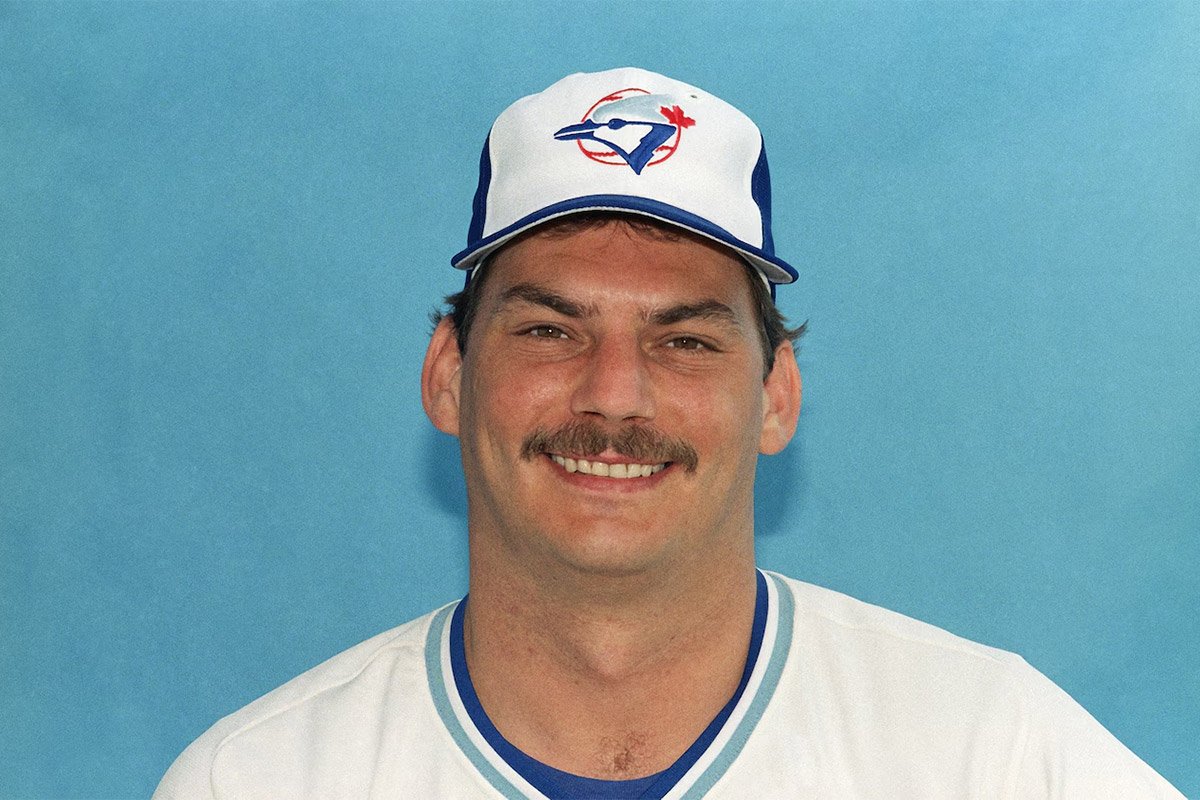 Jim Clancy was with the Jays from their first season in 1977 until his last game in October 1988 (when he got the win over Baltimore). He was one of the earliest ‘all-time Jays’ and remains among the franchise leaders in several categories. Today, we look back and remember the impact Clancy had on those early years and the legacy he has left behind today. Clancy was drafted in the 4th round of the 1974 MLB Draft by the Texas Rangers. He was drafted from St. Rita of Cascia High School in Chicago, where he was also the quarterback of the school football team. He ultimately chose the baseball route and was inducted into the St. Rita Hall of Fame in 1985. Following the draft, he began working his way through the Texas minor league system. In the 1976 expansion draft, established teams could protect 15 players from their 40-man roster, and an additional three players after each of the first two rounds. In the third round, though they may not have known it at the time, the Jays found their ace in Clancy. He was called up at the end of July in the Jays' first season to join the major league club and get his debut start against the team that drafted him, Texas. It was a rough start, giving up five hits and five runs and getting the hook after two innings. His next start was a different story. Clancy got his first win in a complete game, giving up only one earned run. He would go on to throw 72 more complete games over his career with the Jays and is second all-time with the franchise. Number one on that list is long-time Clancy teammate Dave Stieb. Stieb and Clancy were absolute workhorses for the Jays in the early days and were even roommates for a short time in the late 70s when Stieb first joined the team. While Stieb would go on to eclipse a lot of Clancy’s marks, it was Clancy who hit the milestones first. He was the first to 1000 innings pitched and 100 wins. Only five Jays pitchers in the team’s history have hit that total for wins, and only eight have thrown that many innings. Clancy would throw another 1200+ innings and is again, second all-time with his 2204 2/3 innings pitched. He led the team in bWAR in 1980 and was the team’s sole representative at the 1982 All-Star Game. In that 1982 season, Clancy led the entire league with 40 starts - a franchise record and a feat that hasn’t been surpassed in the league since. Incredibly, the following closest all-time marks (38 starts) belong to batterymates Stieb and Luis Leal from that same 1982 season. Then it’s Clancy again with sole ownership of the 4th spot (37 starts in 1987) and a shared hold of the 5th (36 starts in 1984). Even in a different era, when the workhorse pitcher was more common, Clancy stood out, and the Jays benefited from his reliability. Arguably, Clancy’s most memorable game with Toronto came at the end of September in his All-Star season. Pitching in the first game of a double-header against Minnesota, Clancy sat down every batter he faced through 8 innings - 24 of 24. Entering the 9th inning, a perfect game within reach, Clancy had it broken up by a bloop Randy Bush single into no-man's land between the second baseman and right fielder. Clancy’s catcher that day, Buck Martinez, said the broken-bat single was the Twins' only chance to spoil the perfect game because “the way he was throwing there was no way they were going to get a hit off him.” Clancy ended up getting the win in a complete game, one-hit shutout. He faced one more batter than the minimum in that game, a franchise record, which has been equalled twice, but it’s another case where Clancy was the first. On October 1, 1988, Clancy would take the mound for Toronto one last time. His catcher that day was Ernie Whitt, another player the Jays acquired in the 1976 Expansion Draft and the only player remaining with the team as long as Clancy. After five innings, Clancy was in line for the win and picked up his 128th with the franchise - only Stieb and Roy Halladay would go on to get more. Jim Clancy isn’t always the first Blue Jays name mentioned in a conversation about the history of the team, but the more time you spend looking through the franchise's statistics and record books, the more often his name pops up. In March 2017, former Blue Jays president Paul Beeston, remarking on Clancy and his durability, said, “He would take the ball and pitch until his arm fell off,” in a Sportsnet article in appreciation of Clancy. Manny Randhawa of MLB.com tipped Clancy as the best pick of the 1976 draft, and in 2020, Keegan Matheson ranked Clancy as his #3 all-time right-hander for the Jays. A mainstay of those early Jays teams, and no matter how you look at it, gone too soon.
 -
Ahead of spring training we flagged a number of potential milestones that might be hit this season. Check out our previous entries: Berríos’ 100 wins, Vladdy’s 500 runs and Bichette’s 100 HRs. As with the previous milestone appreciation articles, we’ll be looking back at the plays and the pitchers that helped get Vladimir Guerrero Jr. to hit #1000. Starting with the milestone-setter itself: on Friday night in Sacramento Vladdy earned the 1000th hit of his career with a 5th inning single off of Athletics pitcher Luis Severino to the deep right-centre gap. This was Guerrero’s 16th career at bat against Severino and his fifth hit against him (early in Vladdy’s career he had a 5 K streak spread over three games against Severino). Guerrero becomes the 10th player in franchise history to get 1000 hits with Toronto and the youngest of the ten to do it. It only took Guerrero three at bats in his debut game in 2019 to get his first hit, a double off of (then Oakland) Athletics pitcher Yusmeiro Petit. Toronto opened the gates early that game and allowed fans into the Rogers Centre early just to watch Vladdy take BP. He would go on to hit 195 more doubles up to this point. He’s had 172 hits leave the yard as homers and another 626 singles, but my favourites are probably the 6 triples. Two of those triples coming against the Yankees are just a bonus, plus one against Tampa Bay that ultimately gets fielded by future-teammate Kevin Kiermaier. 798 of Vladdy’s hits have come against right handed pitching with just 202 against lefties. Though his batting average suggests it's more about opportunity than anything else (.290 vs RHP and .273 vs LHP). He’s also pretty evenly split home and away with 396 hits coming at the Rogers Centre (and another 91 at the Jays’ temporary pandemic home stadiums) and 513 on the road. His 72 at Fenway mark the most hits in another team’s stadium. All but one of Guerrero’s hits have come when he started the game, the one exception occurred in his rookie season. He was brought in to pinch hit for Jonathan Davis in the 7th inning of a game in Tampa, and while he didn’t get a hit in that AB, he did knock a double in the 9th inning in his second at bat, marking his only career hit as a substitute. Almost half (449) of Guerrero’s hits have come with a man on - and 238 of them with one in scoring position. He has hits in almost every possible man-on/out situation with the exception of a runner on 3rd with no out (he’s 0 for 6 in that situation). Vladdy doesn’t like to waste his time at the plate, notching a hit on the first pitch he’s seen 227 times - including the milestone hit. On six occasions he’s taken an at bat to the ninth pitch before getting a hit. Guerrero’s hits have come against 497 different pitchers, with his 12 hits against Gerrit Cole topping the list. Dean Kremer and Brayan Bello have each given up 11 and Nathan Eovaldi is responsible for 10 making them the only pitchers in double-digits. Vladdy’s two hits against CC Sabathia are his only hits against someone already in the Hall of Fame. Guerrero also has hits against current teammates Chris Bassitt (1), Chad Green (1) and Max Scherzer (2). The two against Scherzer both went yard, one a solo shot and the other a grand slam - I wonder if that ever comes up in the clubhouse (overall he’s 2 for 8 with one K against Scherzer). He’s 0 for 3 against José Berríos and 0 for 1 facing Jeff Hoffman. Somewhat surprisingly, he’s never faced Kevin Gausman - Gausman’s five and a half years in Baltimore came before Vladdy’s debut and then Gausy spent four seasons in the NL before coming to Toronto. Guerrero’s longest hit streak is 22 games - a feat he has managed twice in his career. One of those streaks accounted for 40 total hits, the other 34. Vladdy has eight 4-hit games in his career and 274 multi-hit games total. His longest hitless streak has only been four games (he’s done that 3 times), so when the bat goes quiet, it doesn’t stay quiet for long. Guerrero also has used three of his 1000 hits to walk-off a Jays win (all in 2022) and has 10 hits in extra innings. <blockquote class="bluesky-embed" data-bluesky-uri="at://did:plc:ev63j3cc3lou65xc3zocetgo/app.bsky.feed.post/3ltqouz3qvc24" data-bluesky-cid="bafyreick6nbsbe7fmlewb7ni46pyxghh2pfufdi6hochpetsyfxov6izzm" data-bluesky-embed-color-mode="system"><p lang="en">John Schneider said his favourite Vladimir Guerrero Jr. hit so far was hit No. 1 back in 2019 Guerrero Jr. said his favourite was hit No. 1000, tonight. Guerrero Jr. said he ideally wants to match his father (2,590) and reach 3,000 hits. As with his run-scoring milestone and given the contract extension I’m hoping to see you all back here in 2032 to celebrate Vladdy’s next 1000! In post-game comments Guerrero Jr. made it clear that he is intending to at least match Guerrero Sr. (2,590 hits) and ideally reach 3,000. It was noted during the broadcast that the last player to reach 3,000 was Miguel Cabrera and that Vladdy is only slightly behind his pace. Cabrera got his 1000th hit in his 862 game, while Guerrero did it in 911. Cabrera also has a 174 hit cushion over 3000, so if Vladdy can stay healthy and continue to hit like he does there's no reason to think he won't get there. View full article
-
 Ahead of spring training we flagged a number of potential milestones that might be hit this season. Check out our previous entries: Berríos’ 100 wins, Vladdy’s 500 runs and Bichette’s 100 HRs. As with the previous milestone appreciation articles, we’ll be looking back at the plays and the pitchers that helped get Vladimir Guerrero Jr. to hit #1000. Starting with the milestone-setter itself: on Friday night in Sacramento Vladdy earned the 1000th hit of his career with a 5th inning single off of Athletics pitcher Luis Severino to the deep right-centre gap. This was Guerrero’s 16th career at bat against Severino and his fifth hit against him (early in Vladdy’s career he had a 5 K streak spread over three games against Severino). Guerrero becomes the 10th player in franchise history to get 1000 hits with Toronto and the youngest of the ten to do it. It only took Guerrero three at bats in his debut game in 2019 to get his first hit, a double off of (then Oakland) Athletics pitcher Yusmeiro Petit. Toronto opened the gates early that game and allowed fans into the Rogers Centre early just to watch Vladdy take BP. He would go on to hit 195 more doubles up to this point. He’s had 172 hits leave the yard as homers and another 626 singles, but my favourites are probably the 6 triples. Two of those triples coming against the Yankees are just a bonus, plus one against Tampa Bay that ultimately gets fielded by future-teammate Kevin Kiermaier. 798 of Vladdy’s hits have come against right handed pitching with just 202 against lefties. Though his batting average suggests it's more about opportunity than anything else (.290 vs RHP and .273 vs LHP). He’s also pretty evenly split home and away with 396 hits coming at the Rogers Centre (and another 91 at the Jays’ temporary pandemic home stadiums) and 513 on the road. His 72 at Fenway mark the most hits in another team’s stadium. All but one of Guerrero’s hits have come when he started the game, the one exception occurred in his rookie season. He was brought in to pinch hit for Jonathan Davis in the 7th inning of a game in Tampa, and while he didn’t get a hit in that AB, he did knock a double in the 9th inning in his second at bat, marking his only career hit as a substitute. Almost half (449) of Guerrero’s hits have come with a man on - and 238 of them with one in scoring position. He has hits in almost every possible man-on/out situation with the exception of a runner on 3rd with no out (he’s 0 for 6 in that situation). Vladdy doesn’t like to waste his time at the plate, notching a hit on the first pitch he’s seen 227 times - including the milestone hit. On six occasions he’s taken an at bat to the ninth pitch before getting a hit. Guerrero’s hits have come against 497 different pitchers, with his 12 hits against Gerrit Cole topping the list. Dean Kremer and Brayan Bello have each given up 11 and Nathan Eovaldi is responsible for 10 making them the only pitchers in double-digits. Vladdy’s two hits against CC Sabathia are his only hits against someone already in the Hall of Fame. Guerrero also has hits against current teammates Chris Bassitt (1), Chad Green (1) and Max Scherzer (2). The two against Scherzer both went yard, one a solo shot and the other a grand slam - I wonder if that ever comes up in the clubhouse (overall he’s 2 for 8 with one K against Scherzer). He’s 0 for 3 against José Berríos and 0 for 1 facing Jeff Hoffman. Somewhat surprisingly, he’s never faced Kevin Gausman - Gausman’s five and a half years in Baltimore came before Vladdy’s debut and then Gausy spent four seasons in the NL before coming to Toronto. Guerrero’s longest hit streak is 22 games - a feat he has managed twice in his career. One of those streaks accounted for 40 total hits, the other 34. Vladdy has eight 4-hit games in his career and 274 multi-hit games total. His longest hitless streak has only been four games (he’s done that 3 times), so when the bat goes quiet, it doesn’t stay quiet for long. Guerrero also has used three of his 1000 hits to walk-off a Jays win (all in 2022) and has 10 hits in extra innings. <blockquote class="bluesky-embed" data-bluesky-uri="at://did:plc:ev63j3cc3lou65xc3zocetgo/app.bsky.feed.post/3ltqouz3qvc24" data-bluesky-cid="bafyreick6nbsbe7fmlewb7ni46pyxghh2pfufdi6hochpetsyfxov6izzm" data-bluesky-embed-color-mode="system"><p lang="en">John Schneider said his favourite Vladimir Guerrero Jr. hit so far was hit No. 1 back in 2019 Guerrero Jr. said his favourite was hit No. 1000, tonight. Guerrero Jr. said he ideally wants to match his father (2,590) and reach 3,000 hits. As with his run-scoring milestone and given the contract extension I’m hoping to see you all back here in 2032 to celebrate Vladdy’s next 1000! In post-game comments Guerrero Jr. made it clear that he is intending to at least match Guerrero Sr. (2,590 hits) and ideally reach 3,000. It was noted during the broadcast that the last player to reach 3,000 was Miguel Cabrera and that Vladdy is only slightly behind his pace. Cabrera got his 1000th hit in his 862 game, while Guerrero did it in 911. Cabrera also has a 174 hit cushion over 3000, so if Vladdy can stay healthy and continue to hit like he does there's no reason to think he won't get there.
 -
Weekly Snapshot: Mon, 7/7 through Sun, 7/13 *** Record Last Week: 3-3 (Overall: 55-41) Run Differential Last Week: +5 (Overall: +17) Standings: First Place in AL East (+2.0 games up), Third in AL (WC occupied by: NYY, BOS(!) and SEA) Last Week’s Results Game 91 TOR 8 - CWS 4 Berríos: 6.0 IP, 2 H, 1 ER, 4 K, 2 BB Barger: 1 for 4, HR (12) Lukes: 1 for 3, HR (5) Loperfido: 2 for 4, HR (1) Game 92 TOR 6 - CWS 1 (7 innings) Bassitt: 6.0 IP, 4 H, 1 ER, 1 K, 1 BB (CG) Schneider: 1 for 4, HR (5) Springer: 2 for 2 with 2 BB Game 93 CWS 2 - TOR 1 Lauer: 4 IP, 4 H, 2 ER, 7 K, 1 BB Bichette: 3 for 3 Wagner: 2 for 4 Game 94 TOR 7 - ATH 6 Scherzer: 6 IP, 5 H, 3 ER, 8 K, 1 BB Hoffman: 1 IP, 3 H, 3 ER, 2 K, 1 BB Wagner: 2 for 3 Game 95 ATH 4 - TOR 3 Gausman: 5 IP, 5 H, 3 ER, 2 K, 2 BB Jiménez: 1 for 4, HR (1) Game 96 ATH 6 - TOR 3 Berríos: 3.0 IP, 5 H, 4 ER, 1 K, 2 BB Barger: 1 for 3, HR (13) D. Schneider: 1 for 3, HR (5) Rest of Team: 2 for 24 J. Schneider: 0 for one challenging calls, ejection (2) Highlights: The Jays had a 5-run inning against Chicago that included a 414’ homer from Addison Barger and a Nathan Lukes squeeze-play bunt to score Ernie Clement. All of that coming after Lukes and Joey Loperfido had already homered in the game. Another 5-run inning the next day helped propel Toronto to that 10th straight win. Vladimir Guerrero Jr. scored on a Barger double, marking one of his team-leading five runs on the week. He threw in a pair of stolen bases over the six games as well, which was the most on the roster, and earned his 1000th career hit - a big week for the All-Star! Max Scherzer picked up his first win as a Blue Jay, mixing 8 Ks over six innings, including one that came as a pitch clock violation in his favour to end the 3rd inning. Nathan Lukes turning a sliding catch into a double play is my defensive highlight of the week, showing that Barger’s cannon in RF isn’t the only thing to be feared from that corner. Lastly, Davis Schneider hit two home runs in the same at-bat, sandwiched around his manager’s ejection because the first homer wasn’t recognized, was the perfect way to say goodbye to Sacramento. Lowlights: Tyler Heineman had a game he’d just as soon forget on Saturday. The backup catcher has been having a great season, but 3 errors (two on catcher interference) in one game are never going to be justifiable. Jeff Hoffman only saw one inning of work this week, and while he walked off the field with a Blue Jays win, thanks mainly to the 4-run cushion he entered with. He gave up 3 runs and a lot of loud contact. “Dread it, run from it, destiny arrives all the same” - maybe the Thanos-inspired bobblehead will bring the balance we crave. Streak Wrapups: The win streaks were a highlight, and they vaulted the Jays to the top of the division, so it feels wrong to label their end as a lowlight. Having them end against the two worst teams in the AL certainly isn’t great, though, so I’m making a special section here just to mark them off. First, we have the 10-game win streak that ended against the White Sox and fell one game short of tying the franchise record. Next, in the bottom of the 5th inning Saturday, the Athletics scored two runs to take a 4-2 lead and marked the first time since the 4th inning on July 1st that the Jays trailed by more than one run. A 91-inning streak spread over 11 games. Lastly, with the second loss to the Athletics, the Jays' streak of 5 consecutive series won came to an end. It really feels like the break is coming at precisely the right time. News, Notes, and Not Playing: Justin Bruihl recalled from Triple-A Tommy Nance selected from Triple-A JoJo Parker was selected from the MLB Draft Jake Cook was selected from the MLB Draft 10-day IL: Daulton Varsho, Andrés Giménez Varsho has increased baserunning and is expected to begin a rehab assignment this week. Giménez was reported as “week to week” by manager John Schneider. 15-day IL: Yimi García, Nick Sandlin, Bowden Francis, Paxton Schultz García has thrown a pair of bullpen sessions and could return without a rehab assignment shortly after the ASG break. Sandlin was shut down from throwing mid-week and will begin ramping back up after a few days off Francis threw a bullpen session on the weekend, but there has been no timeline set on his rehab or return Schultz started throwing this week and is being monitored. 60-day IL: Alek Manoah, Ryan Burr, Anthony Santander Manoah is scheduled to start his full rehab schedule this week. He is expected to ramp up over at least five starts before a potential return to the big club. Burr will have multiple assessments of his MRI performed before the following steps are determined. Trending Storylines: With the division lead, we’re into “just win” territory. The Yankees won’t be going away, and the Red Sox just rattled off a 10-game win streak of their own to get into the wildcard spots. We’ve got the trade deadline on the horizon, and while it’s premature to start ‘planning the parade,’ it’s the first time Toronto has had the division lead at the ASG break since 1993. Could this team hit the heights of that ‘93 crew? Looking Ahead: Most of the team will be getting a well-deserved 4-day break for the All-Star Game and its surrounding festivities. Alejandro Kirk and Vladimir Guerrero Jr. will be in Atlanta representing the squad. After the break, San Francisco will be in Toronto for a 3-game set at the Rogers Centre. The Giants head into the break a half-game out of the last NL wildcard position and will be looking right there, led by former Jays Matt Chapman and Robbie Ray (currently the top two Giants by bWAR). View full article
-
Blue Jays Week in Review: The streaks have ended, but hope is not lost.
Mike LeSage posted an article in Blue Jays
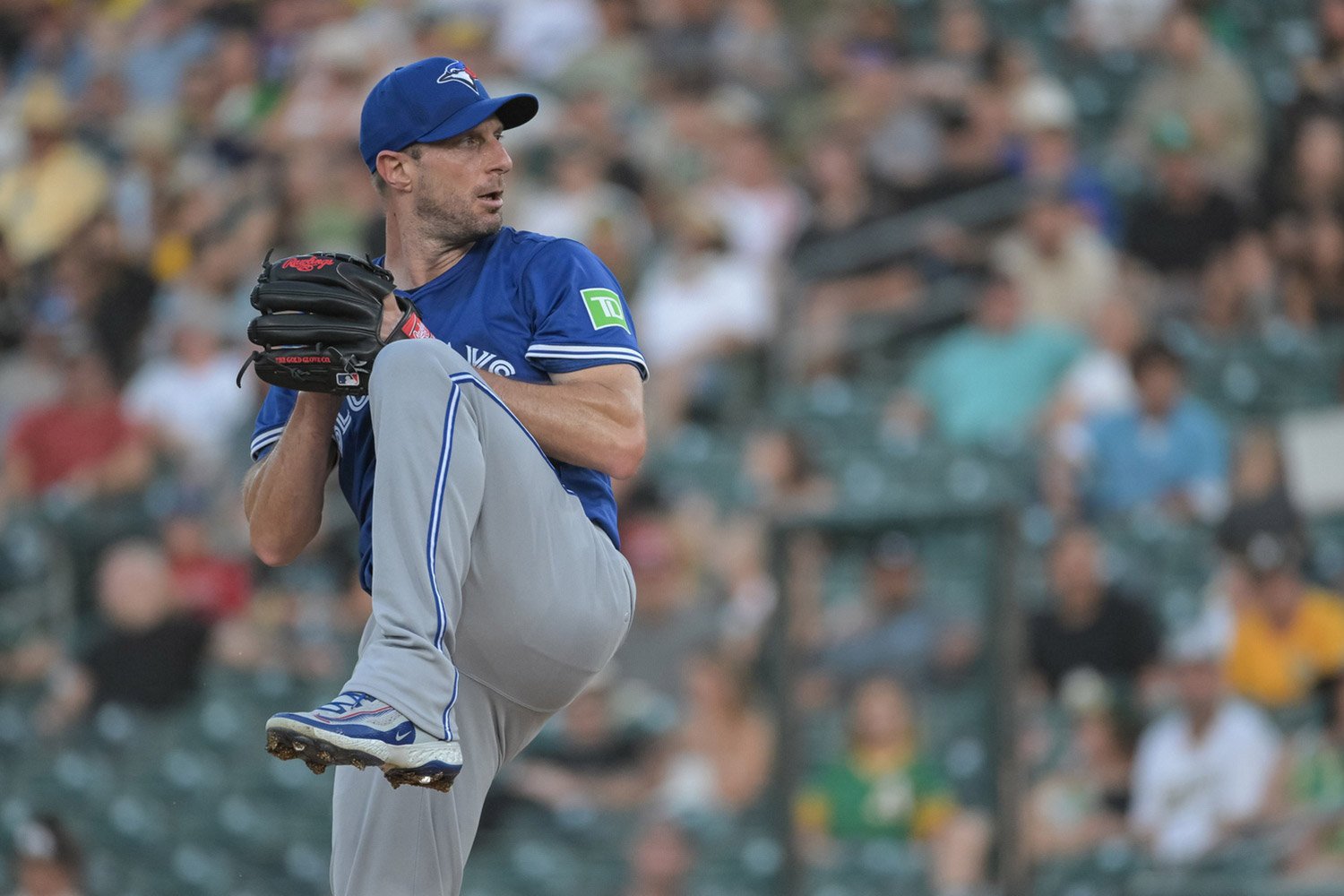 Weekly Snapshot: Mon, 7/7 through Sun, 7/13 *** Record Last Week: 3-3 (Overall: 55-41) Run Differential Last Week: +5 (Overall: +17) Standings: First Place in AL East (+2.0 games up), Third in AL (WC occupied by: NYY, BOS(!) and SEA) Last Week’s Results Game 91 TOR 8 - CWS 4 Berríos: 6.0 IP, 2 H, 1 ER, 4 K, 2 BB Barger: 1 for 4, HR (12) Lukes: 1 for 3, HR (5) Loperfido: 2 for 4, HR (1) Game 92 TOR 6 - CWS 1 (7 innings) Bassitt: 6.0 IP, 4 H, 1 ER, 1 K, 1 BB (CG) Schneider: 1 for 4, HR (5) Springer: 2 for 2 with 2 BB Game 93 CWS 2 - TOR 1 Lauer: 4 IP, 4 H, 2 ER, 7 K, 1 BB Bichette: 3 for 3 Wagner: 2 for 4 Game 94 TOR 7 - ATH 6 Scherzer: 6 IP, 5 H, 3 ER, 8 K, 1 BB Hoffman: 1 IP, 3 H, 3 ER, 2 K, 1 BB Wagner: 2 for 3 Game 95 ATH 4 - TOR 3 Gausman: 5 IP, 5 H, 3 ER, 2 K, 2 BB Jiménez: 1 for 4, HR (1) Game 96 ATH 6 - TOR 3 Berríos: 3.0 IP, 5 H, 4 ER, 1 K, 2 BB Barger: 1 for 3, HR (13) D. Schneider: 1 for 3, HR (5) Rest of Team: 2 for 24 J. Schneider: 0 for one challenging calls, ejection (2) Highlights: The Jays had a 5-run inning against Chicago that included a 414’ homer from Addison Barger and a Nathan Lukes squeeze-play bunt to score Ernie Clement. All of that coming after Lukes and Joey Loperfido had already homered in the game. Another 5-run inning the next day helped propel Toronto to that 10th straight win. Vladimir Guerrero Jr. scored on a Barger double, marking one of his team-leading five runs on the week. He threw in a pair of stolen bases over the six games as well, which was the most on the roster, and earned his 1000th career hit - a big week for the All-Star! Max Scherzer picked up his first win as a Blue Jay, mixing 8 Ks over six innings, including one that came as a pitch clock violation in his favour to end the 3rd inning. Nathan Lukes turning a sliding catch into a double play is my defensive highlight of the week, showing that Barger’s cannon in RF isn’t the only thing to be feared from that corner. Lastly, Davis Schneider hit two home runs in the same at-bat, sandwiched around his manager’s ejection because the first homer wasn’t recognized, was the perfect way to say goodbye to Sacramento. Lowlights: Tyler Heineman had a game he’d just as soon forget on Saturday. The backup catcher has been having a great season, but 3 errors (two on catcher interference) in one game are never going to be justifiable. Jeff Hoffman only saw one inning of work this week, and while he walked off the field with a Blue Jays win, thanks mainly to the 4-run cushion he entered with. He gave up 3 runs and a lot of loud contact. “Dread it, run from it, destiny arrives all the same” - maybe the Thanos-inspired bobblehead will bring the balance we crave. Streak Wrapups: The win streaks were a highlight, and they vaulted the Jays to the top of the division, so it feels wrong to label their end as a lowlight. Having them end against the two worst teams in the AL certainly isn’t great, though, so I’m making a special section here just to mark them off. First, we have the 10-game win streak that ended against the White Sox and fell one game short of tying the franchise record. Next, in the bottom of the 5th inning Saturday, the Athletics scored two runs to take a 4-2 lead and marked the first time since the 4th inning on July 1st that the Jays trailed by more than one run. A 91-inning streak spread over 11 games. Lastly, with the second loss to the Athletics, the Jays' streak of 5 consecutive series won came to an end. It really feels like the break is coming at precisely the right time. News, Notes, and Not Playing: Justin Bruihl recalled from Triple-A Tommy Nance selected from Triple-A JoJo Parker was selected from the MLB Draft Jake Cook was selected from the MLB Draft 10-day IL: Daulton Varsho, Andrés Giménez Varsho has increased baserunning and is expected to begin a rehab assignment this week. Giménez was reported as “week to week” by manager John Schneider. 15-day IL: Yimi García, Nick Sandlin, Bowden Francis, Paxton Schultz García has thrown a pair of bullpen sessions and could return without a rehab assignment shortly after the ASG break. Sandlin was shut down from throwing mid-week and will begin ramping back up after a few days off Francis threw a bullpen session on the weekend, but there has been no timeline set on his rehab or return Schultz started throwing this week and is being monitored. 60-day IL: Alek Manoah, Ryan Burr, Anthony Santander Manoah is scheduled to start his full rehab schedule this week. He is expected to ramp up over at least five starts before a potential return to the big club. Burr will have multiple assessments of his MRI performed before the following steps are determined. Trending Storylines: With the division lead, we’re into “just win” territory. The Yankees won’t be going away, and the Red Sox just rattled off a 10-game win streak of their own to get into the wildcard spots. We’ve got the trade deadline on the horizon, and while it’s premature to start ‘planning the parade,’ it’s the first time Toronto has had the division lead at the ASG break since 1993. Could this team hit the heights of that ‘93 crew? Looking Ahead: Most of the team will be getting a well-deserved 4-day break for the All-Star Game and its surrounding festivities. Alejandro Kirk and Vladimir Guerrero Jr. will be in Atlanta representing the squad. After the break, San Francisco will be in Toronto for a 3-game set at the Rogers Centre. The Giants head into the break a half-game out of the last NL wildcard position and will be looking right there, led by former Jays Matt Chapman and Robbie Ray (currently the top two Giants by bWAR).
 -
.jpg.280fc676de7f59d736cf42b56c86718d.jpg) The Blue Jays pitching staff, as a whole, has been hesitant to give up the ball. Statcast measures "pitch tempo" as the median time between pitches in an individual at-bat. The 2025 Blue Jays have the slowest tempo of any team with the bases empty since the introduction of the pitch clock (2023). They were also the slowest in that situation in 2024 and second-slowest in 2023. Is this an organizational philosophy? A result of a veteran staff? Or is there something more sinister at play? Let’s dive into the numbers and see what we can shake loose. The pitch clock was implemented in 2023 as a way to speed up baseball games. Gone were the days of a leisurely afternoon at the ballpark, replaced with a high-speed, adrenaline-fueled flurry that Abner Doubleday would never recognize. Or, more accurately, the clock shaved about 24 minutes off the average game length. Broken down a little further, that’s roughly one minute and 20 seconds per half-inning. Not an insignificant amount of time, so we’ll have to account for that. First, let's define a couple of terms I will be referencing throughout this article. Tempo, as I've noted, is the time from when a pitcher has released a ball to a batter until the next time that same pitcher releases a pitch to the same batter. It is only measured on takes (i.e., non-swings) within an individual plate appearance. Statcast further breaks down tempo to deem a pitch thrown within 15 seconds to be "fast" and any pitch thrown after more than 30 seconds to be "slow". When the pitch timer was introduced in 2023, it was set at 15 seconds between pitches with the bases empty and 20 seconds with a runner on base. The on-base timer was dropped to 18 seconds in 2024 and has remained that way this season. (It is key to keep in mind that tempo measures the time between one pitch's release to the next, while the pitch clock only starts once the pitcher receives the ball and it stops when he begins his motion.) For the most part, pitchers throw the majority of their pitches with the bases empty, so unless I specify that I am referring to a stat with runners on, I will be leaning mainly on the "bases empty" stats of each pitcher. This season, the MLB average tempo with the bases empty is 15.7 seconds. Chad Green is the only qualified Blue Jays pitcher below that mark. Every other pitcher on staff takes longer than average to throw their pitches. If we adjust that to include non-qualified pitchers, it allows Josh Walker, Dillon Tate and the ultimate fast pitcher, Michael Stefanic (four total pitches with an average tempo of 8.6 seconds), to join the quick pitcher list, but 20 other Jays pitchers are left in the above-average section. I decided to include the 11 qualified Jays pitchers currently on the roster and look back at their tempos before and after the introduction of the pitch clock, and before and after they came to Toronto. Of those 11 qualified pitchers, Paxton Schultz and Mason Fluharty have only pitched for the Jays with a pitch clock in place, so we won’t go too deep on them. Similarly, Brendon Little has only thrown 13 pitches outside of the organization (in 2022 with the Cubs) and none of those came with runners on base, so he’s off the list. Likewise, Yariel Rodríguez, who debuted in 2024, should be eliminated from this discussion. This leaves us with starters Kevin Gausman, Chris Bassitt, José Berríos and Bowden Francis; relievers Jeff Hoffman and Green; and the mixed-use Eric Lauer. Let’s start with the tweener, Lauer. There isn’t any pitch tempo data for Lauer’s 2024; he spent last season with two separate Triple-A affiliates (PIT and HOU) and the Kia Tigers of the KBO. One look at his tempo from 2018-2023 (with SD and MIL), and it’s clear we’re dealing with a different guy. Perhaps he’s mellowed with age, or maybe it’s a Toronto philosophy, but Lauer’s 2023 saw a tempo of 13.7 and a fast rate of 64.3% – the fastest and highest of his career with the bases empty. So far in 2025 with the Jays, Lauer has added over three seconds of tempo for a career-slowest 16.8, and his 16.6% fast pitch percentage is his lowest ever by more than 20%. Even looking at his pre-pitch clock numbers, he is slower to the plate now than he was with all of the (theoretical) time in the world. With runners on base, Lauer’s contrasts aren’t as stark (he’s also only thrown 60 pitches in such situations), but he’s still a second and a half slower to the plate than in ‘23, and his 0% fast pitch rate in this situation is (obviously) a career low. Moving on to the starters, we can take a second to appreciate the stability that Toronto has had in its rotation over the last few seasons. The four qualified starters were all with the Jays when the pitch clock was introduced. Of the four, only Francis has increased his fast rate from last season in both scenarios. Prior to hitting the IL, Francis was averaging 15.9 seconds with the bases empty and 19.3 with runners on – both the fastest marks within the rotation. His bases empty fast percentage of 31.6% is more than double that of the next closest starter (Berríos at 14.2%). As he ramps up and rehabs from his right shoulder injury, it will be interesting to see if slowing his tempo is one of the changes that gets his season back on track. At the other end of the spectrum is Gausman, who is the slowest on the staff between pitches with the bases empty at 18.1 seconds. He’s been adding time back since the introduction of the pitch clock. In 2023, he was a ‘speedy’ 16.7 seconds (league average was 15.3) and added a half-second more in 2024 to come to 17.2. Now, he is almost a full second slower again this season. Gausman’s last season in San Francisco (2021) was when he took the most time between pitches. Unencumbered by the pitch clock, he averaged a leisurely 20.7 seconds between pitches and was only slightly faster (20.3) tempo-wise the next year in his first season with the Jays. That 2022 season in Toronto marked the lowest fast rate of Gausman’s career with a single team at just 1.6%. His relatively slow pitching with the Giants stands in stark contrast to where their staff has been the past few seasons. San Fran has had the fastest team tempo every season since the pitch clock was introduced, bottoming out at 14.1 seconds in 2023. They were also the second-fastest team in 2022, the last season without the pitch clock and Gausman’s first season away from the club. Performance-wise, Gausman’s best season in Toronto was the one where he had his fastest tempo (though he was still slower than league average), but I’m not sure I’d ask him to speed up at this point. Berríos’ first full season with the Jays was the year before the pitch clock came into use. Despite that, he has still added time each season he’s been with Toronto, starting out at 15.4 seconds in 2022 and moving up to 16.8 this season. In his full seasons with Minnesota (2016-2020), Berríos was at his quickest in 2018 (coinciding with his first All-Star selection) with a bases-empty tempo of 14.9 seconds. He added a full second in each of the next two seasons before his trade to Toronto and is only one-tenth of a second off of his career slowest this season. The last of the starters we’re looking at is Bassitt, who is as much of an enigma with his tempo as his eight-pitch repertoire might suggest. With the Jays this season, he’s averaging 17.8 seconds, down slightly from the 18.0 he posted last season but up from the 17.0 mark he had in the first pitch clock season. Bassitt has always mixed tempo like he does pitches. He has the highest career average tempo of the Jays starters we’ve looked at, but he’s done that while still posting fast pitch rates between 12.8% and 25.2% (in 2025 and 2023, respectively). With runners on base, he’s been incredibly consistent at just over 20 seconds with the Jays and right around 24 seconds pre-clock/pre-Toronto. The qualifying pitchers from the bullpen are a tale of two different tempos. There are only two seconds between them, but they sit on either side of the league average (15.7 seconds) with Green’s 15.1 outpacing Hoffman’s 17.1. In the case of Hoffman, he’s been very consistent throughout his career (dating back to 2016), never straying more than one second from where he is this season – with one outlier. In 2022 with Cincinnati, Hoffman slowed way down to 21.1 seconds. It marked the only time in his career that he didn’t throw a single fast pitch in any situation. He was also appearing mainly as a middle-relief low-leverage guy at that point, but it’s an outlier nonetheless. Green, meanwhile, has gone through a couple of speed cycles. Starting out in 2016 with a 16.3-second tempo and a fast rate of 36.4%, he gradually increased his time and lowered his fast rate into 2021, when he sat at 20.2 seconds and 0.3%. Green threw fewer than 100 pitches in each of 2022 and 2023 as his Tommy John surgery and subsequent recovery ate into most of those seasons. His next full season in ‘24 saw Green throwing with the fastest tempo of his career at 14.8 seconds and throwing fast more than half the time (54%). He’s mellowed ever so slightly this season, adding three-tenths of a second to his tempo and dropping that fast rate to 47.1% (both marks are the second fastest of his career). That covers the qualified 2025 Blue Jays pitchers that I said we’d look at. If you’re still with me 1500-something words later, I’m hoping you’ll indulge me a look at a couple more pitchers that are interesting. The first is former Jay, Yusei Kikuchi, who started in 2019 with Seattle. He was with Toronto for the two full seasons on either side of the pitch clock introduction, which also represented his slowest and fastest tempo seasons, respectively (19.9 and 4.6% in 2022 vs. 16.0 and 30.4% in 2023). He added some time back in 2023, when he split his season between Toronto and Houston, but has been shaving more time off this season with the Angels and is approaching his 2022 numbers. The other pitcher is Alek Manoah. His 2022 breakout season saw him with a 20.7-second tempo and a slow rate mark of 8.2% - that slow rate mark is the highest of any season of all of the other pitchers we’ve looked at (70+ individual seasons worth), with the exception of Bassitt’s 8.3% with Oakland in 2021 (Bassitt had a 19.2 tempo that year). Hoffman’s 2022 in Cincinnati (that we already covered) is the only pitcher season with a slower tempo than Manoah’s ‘22. All of that to say, Manoah was at his best when he took his time. The next season, the pitch clock came in and Manoah’s tempo sped up to 17.8 seconds, which, while more than two seconds faster, was still the slowest tempo of any pitcher’s 2023 that we’ve looked at. My pet theory was always that the increased tempo imposed by the pitch clock led to the struggles that Manoah faced and potentially led to the injuries that hampered his two seasons after the implementation of the clock. I asked a few questions at the beginning of this piece, and as we wrap it up here, I’m afraid I haven’t come to any definitive conclusions. While the Jays are without a doubt on the slow end of the tempo scale, I’m not sure that it’s an organizational philosophy so much as it is a reflection of the pitchers they’ve assembled. At the very least, this gives us something to track as the season goes on and revisit when we have a few more pitchers and a few more data points to analyze. Until then, like Lizzo said: I need tempo. Stats in article cover games through the end of June.
The Blue Jays pitching staff, as a whole, has been hesitant to give up the ball. Statcast measures "pitch tempo" as the median time between pitches in an individual at-bat. The 2025 Blue Jays have the slowest tempo of any team with the bases empty since the introduction of the pitch clock (2023). They were also the slowest in that situation in 2024 and second-slowest in 2023. Is this an organizational philosophy? A result of a veteran staff? Or is there something more sinister at play? Let’s dive into the numbers and see what we can shake loose. The pitch clock was implemented in 2023 as a way to speed up baseball games. Gone were the days of a leisurely afternoon at the ballpark, replaced with a high-speed, adrenaline-fueled flurry that Abner Doubleday would never recognize. Or, more accurately, the clock shaved about 24 minutes off the average game length. Broken down a little further, that’s roughly one minute and 20 seconds per half-inning. Not an insignificant amount of time, so we’ll have to account for that. First, let's define a couple of terms I will be referencing throughout this article. Tempo, as I've noted, is the time from when a pitcher has released a ball to a batter until the next time that same pitcher releases a pitch to the same batter. It is only measured on takes (i.e., non-swings) within an individual plate appearance. Statcast further breaks down tempo to deem a pitch thrown within 15 seconds to be "fast" and any pitch thrown after more than 30 seconds to be "slow". When the pitch timer was introduced in 2023, it was set at 15 seconds between pitches with the bases empty and 20 seconds with a runner on base. The on-base timer was dropped to 18 seconds in 2024 and has remained that way this season. (It is key to keep in mind that tempo measures the time between one pitch's release to the next, while the pitch clock only starts once the pitcher receives the ball and it stops when he begins his motion.) For the most part, pitchers throw the majority of their pitches with the bases empty, so unless I specify that I am referring to a stat with runners on, I will be leaning mainly on the "bases empty" stats of each pitcher. This season, the MLB average tempo with the bases empty is 15.7 seconds. Chad Green is the only qualified Blue Jays pitcher below that mark. Every other pitcher on staff takes longer than average to throw their pitches. If we adjust that to include non-qualified pitchers, it allows Josh Walker, Dillon Tate and the ultimate fast pitcher, Michael Stefanic (four total pitches with an average tempo of 8.6 seconds), to join the quick pitcher list, but 20 other Jays pitchers are left in the above-average section. I decided to include the 11 qualified Jays pitchers currently on the roster and look back at their tempos before and after the introduction of the pitch clock, and before and after they came to Toronto. Of those 11 qualified pitchers, Paxton Schultz and Mason Fluharty have only pitched for the Jays with a pitch clock in place, so we won’t go too deep on them. Similarly, Brendon Little has only thrown 13 pitches outside of the organization (in 2022 with the Cubs) and none of those came with runners on base, so he’s off the list. Likewise, Yariel Rodríguez, who debuted in 2024, should be eliminated from this discussion. This leaves us with starters Kevin Gausman, Chris Bassitt, José Berríos and Bowden Francis; relievers Jeff Hoffman and Green; and the mixed-use Eric Lauer. Let’s start with the tweener, Lauer. There isn’t any pitch tempo data for Lauer’s 2024; he spent last season with two separate Triple-A affiliates (PIT and HOU) and the Kia Tigers of the KBO. One look at his tempo from 2018-2023 (with SD and MIL), and it’s clear we’re dealing with a different guy. Perhaps he’s mellowed with age, or maybe it’s a Toronto philosophy, but Lauer’s 2023 saw a tempo of 13.7 and a fast rate of 64.3% – the fastest and highest of his career with the bases empty. So far in 2025 with the Jays, Lauer has added over three seconds of tempo for a career-slowest 16.8, and his 16.6% fast pitch percentage is his lowest ever by more than 20%. Even looking at his pre-pitch clock numbers, he is slower to the plate now than he was with all of the (theoretical) time in the world. With runners on base, Lauer’s contrasts aren’t as stark (he’s also only thrown 60 pitches in such situations), but he’s still a second and a half slower to the plate than in ‘23, and his 0% fast pitch rate in this situation is (obviously) a career low. Moving on to the starters, we can take a second to appreciate the stability that Toronto has had in its rotation over the last few seasons. The four qualified starters were all with the Jays when the pitch clock was introduced. Of the four, only Francis has increased his fast rate from last season in both scenarios. Prior to hitting the IL, Francis was averaging 15.9 seconds with the bases empty and 19.3 with runners on – both the fastest marks within the rotation. His bases empty fast percentage of 31.6% is more than double that of the next closest starter (Berríos at 14.2%). As he ramps up and rehabs from his right shoulder injury, it will be interesting to see if slowing his tempo is one of the changes that gets his season back on track. At the other end of the spectrum is Gausman, who is the slowest on the staff between pitches with the bases empty at 18.1 seconds. He’s been adding time back since the introduction of the pitch clock. In 2023, he was a ‘speedy’ 16.7 seconds (league average was 15.3) and added a half-second more in 2024 to come to 17.2. Now, he is almost a full second slower again this season. Gausman’s last season in San Francisco (2021) was when he took the most time between pitches. Unencumbered by the pitch clock, he averaged a leisurely 20.7 seconds between pitches and was only slightly faster (20.3) tempo-wise the next year in his first season with the Jays. That 2022 season in Toronto marked the lowest fast rate of Gausman’s career with a single team at just 1.6%. His relatively slow pitching with the Giants stands in stark contrast to where their staff has been the past few seasons. San Fran has had the fastest team tempo every season since the pitch clock was introduced, bottoming out at 14.1 seconds in 2023. They were also the second-fastest team in 2022, the last season without the pitch clock and Gausman’s first season away from the club. Performance-wise, Gausman’s best season in Toronto was the one where he had his fastest tempo (though he was still slower than league average), but I’m not sure I’d ask him to speed up at this point. Berríos’ first full season with the Jays was the year before the pitch clock came into use. Despite that, he has still added time each season he’s been with Toronto, starting out at 15.4 seconds in 2022 and moving up to 16.8 this season. In his full seasons with Minnesota (2016-2020), Berríos was at his quickest in 2018 (coinciding with his first All-Star selection) with a bases-empty tempo of 14.9 seconds. He added a full second in each of the next two seasons before his trade to Toronto and is only one-tenth of a second off of his career slowest this season. The last of the starters we’re looking at is Bassitt, who is as much of an enigma with his tempo as his eight-pitch repertoire might suggest. With the Jays this season, he’s averaging 17.8 seconds, down slightly from the 18.0 he posted last season but up from the 17.0 mark he had in the first pitch clock season. Bassitt has always mixed tempo like he does pitches. He has the highest career average tempo of the Jays starters we’ve looked at, but he’s done that while still posting fast pitch rates between 12.8% and 25.2% (in 2025 and 2023, respectively). With runners on base, he’s been incredibly consistent at just over 20 seconds with the Jays and right around 24 seconds pre-clock/pre-Toronto. The qualifying pitchers from the bullpen are a tale of two different tempos. There are only two seconds between them, but they sit on either side of the league average (15.7 seconds) with Green’s 15.1 outpacing Hoffman’s 17.1. In the case of Hoffman, he’s been very consistent throughout his career (dating back to 2016), never straying more than one second from where he is this season – with one outlier. In 2022 with Cincinnati, Hoffman slowed way down to 21.1 seconds. It marked the only time in his career that he didn’t throw a single fast pitch in any situation. He was also appearing mainly as a middle-relief low-leverage guy at that point, but it’s an outlier nonetheless. Green, meanwhile, has gone through a couple of speed cycles. Starting out in 2016 with a 16.3-second tempo and a fast rate of 36.4%, he gradually increased his time and lowered his fast rate into 2021, when he sat at 20.2 seconds and 0.3%. Green threw fewer than 100 pitches in each of 2022 and 2023 as his Tommy John surgery and subsequent recovery ate into most of those seasons. His next full season in ‘24 saw Green throwing with the fastest tempo of his career at 14.8 seconds and throwing fast more than half the time (54%). He’s mellowed ever so slightly this season, adding three-tenths of a second to his tempo and dropping that fast rate to 47.1% (both marks are the second fastest of his career). That covers the qualified 2025 Blue Jays pitchers that I said we’d look at. If you’re still with me 1500-something words later, I’m hoping you’ll indulge me a look at a couple more pitchers that are interesting. The first is former Jay, Yusei Kikuchi, who started in 2019 with Seattle. He was with Toronto for the two full seasons on either side of the pitch clock introduction, which also represented his slowest and fastest tempo seasons, respectively (19.9 and 4.6% in 2022 vs. 16.0 and 30.4% in 2023). He added some time back in 2023, when he split his season between Toronto and Houston, but has been shaving more time off this season with the Angels and is approaching his 2022 numbers. The other pitcher is Alek Manoah. His 2022 breakout season saw him with a 20.7-second tempo and a slow rate mark of 8.2% - that slow rate mark is the highest of any season of all of the other pitchers we’ve looked at (70+ individual seasons worth), with the exception of Bassitt’s 8.3% with Oakland in 2021 (Bassitt had a 19.2 tempo that year). Hoffman’s 2022 in Cincinnati (that we already covered) is the only pitcher season with a slower tempo than Manoah’s ‘22. All of that to say, Manoah was at his best when he took his time. The next season, the pitch clock came in and Manoah’s tempo sped up to 17.8 seconds, which, while more than two seconds faster, was still the slowest tempo of any pitcher’s 2023 that we’ve looked at. My pet theory was always that the increased tempo imposed by the pitch clock led to the struggles that Manoah faced and potentially led to the injuries that hampered his two seasons after the implementation of the clock. I asked a few questions at the beginning of this piece, and as we wrap it up here, I’m afraid I haven’t come to any definitive conclusions. While the Jays are without a doubt on the slow end of the tempo scale, I’m not sure that it’s an organizational philosophy so much as it is a reflection of the pitchers they’ve assembled. At the very least, this gives us something to track as the season goes on and revisit when we have a few more pitchers and a few more data points to analyze. Until then, like Lizzo said: I need tempo. Stats in article cover games through the end of June. -
The Blue Jays pitching staff, as a whole, has been hesitant to give up the ball. Statcast measures "pitch tempo" as the median time between pitches in an individual at-bat. The 2025 Blue Jays have the slowest tempo of any team with the bases empty since the introduction of the pitch clock (2023). They were also the slowest in that situation in 2024 and second-slowest in 2023. Is this an organizational philosophy? A result of a veteran staff? Or is there something more sinister at play? Let’s dive into the numbers and see what we can shake loose. The pitch clock was implemented in 2023 as a way to speed up baseball games. Gone were the days of a leisurely afternoon at the ballpark, replaced with a high-speed, adrenaline-fueled flurry that Abner Doubleday would never recognize. Or, more accurately, the clock shaved about 24 minutes off the average game length. Broken down a little further, that’s roughly one minute and 20 seconds per half-inning. Not an insignificant amount of time, so we’ll have to account for that. First, let's define a couple of terms I will be referencing throughout this article. Tempo, as I've noted, is the time from when a pitcher has released a ball to a batter until the next time that same pitcher releases a pitch to the same batter. It is only measured on takes (i.e., non-swings) within an individual plate appearance. Statcast further breaks down tempo to deem a pitch thrown within 15 seconds to be "fast" and any pitch thrown after more than 30 seconds to be "slow". When the pitch timer was introduced in 2023, it was set at 15 seconds between pitches with the bases empty and 20 seconds with a runner on base. The on-base timer was dropped to 18 seconds in 2024 and has remained that way this season. (It is key to keep in mind that tempo measures the time between one pitch's release to the next, while the pitch clock only starts once the pitcher receives the ball and it stops when he begins his motion.) For the most part, pitchers throw the majority of their pitches with the bases empty, so unless I specify that I am referring to a stat with runners on, I will be leaning mainly on the "bases empty" stats of each pitcher. This season, the MLB average tempo with the bases empty is 15.7 seconds. Chad Green is the only qualified Blue Jays pitcher below that mark. Every other pitcher on staff takes longer than average to throw their pitches. If we adjust that to include non-qualified pitchers, it allows Josh Walker, Dillon Tate and the ultimate fast pitcher, Michael Stefanic (four total pitches with an average tempo of 8.6 seconds), to join the quick pitcher list, but 20 other Jays pitchers are left in the above-average section. I decided to include the 11 qualified Jays pitchers currently on the roster and look back at their tempos before and after the introduction of the pitch clock, and before and after they came to Toronto. Of those 11 qualified pitchers, Paxton Schultz and Mason Fluharty have only pitched for the Jays with a pitch clock in place, so we won’t go too deep on them. Similarly, Brendon Little has only thrown 13 pitches outside of the organization (in 2022 with the Cubs) and none of those came with runners on base, so he’s off the list. Likewise, Yariel Rodríguez, who debuted in 2024, should be eliminated from this discussion. This leaves us with starters Kevin Gausman, Chris Bassitt, José Berríos and Bowden Francis; relievers Jeff Hoffman and Green; and the mixed-use Eric Lauer. Let’s start with the tweener, Lauer. There isn’t any pitch tempo data for Lauer’s 2024; he spent last season with two separate Triple-A affiliates (PIT and HOU) and the Kia Tigers of the KBO. One look at his tempo from 2018-2023 (with SD and MIL), and it’s clear we’re dealing with a different guy. Perhaps he’s mellowed with age, or maybe it’s a Toronto philosophy, but Lauer’s 2023 saw a tempo of 13.7 and a fast rate of 64.3% – the fastest and highest of his career with the bases empty. So far in 2025 with the Jays, Lauer has added over three seconds of tempo for a career-slowest 16.8, and his 16.6% fast pitch percentage is his lowest ever by more than 20%. Even looking at his pre-pitch clock numbers, he is slower to the plate now than he was with all of the (theoretical) time in the world. With runners on base, Lauer’s contrasts aren’t as stark (he’s also only thrown 60 pitches in such situations), but he’s still a second and a half slower to the plate than in ‘23, and his 0% fast pitch rate in this situation is (obviously) a career low. Moving on to the starters, we can take a second to appreciate the stability that Toronto has had in its rotation over the last few seasons. The four qualified starters were all with the Jays when the pitch clock was introduced. Of the four, only Francis has increased his fast rate from last season in both scenarios. Prior to hitting the IL, Francis was averaging 15.9 seconds with the bases empty and 19.3 with runners on – both the fastest marks within the rotation. His bases empty fast percentage of 31.6% is more than double that of the next closest starter (Berríos at 14.2%). As he ramps up and rehabs from his right shoulder injury, it will be interesting to see if slowing his tempo is one of the changes that gets his season back on track. At the other end of the spectrum is Gausman, who is the slowest on the staff between pitches with the bases empty at 18.1 seconds. He’s been adding time back since the introduction of the pitch clock. In 2023, he was a ‘speedy’ 16.7 seconds (league average was 15.3) and added a half-second more in 2024 to come to 17.2. Now, he is almost a full second slower again this season. Gausman’s last season in San Francisco (2021) was when he took the most time between pitches. Unencumbered by the pitch clock, he averaged a leisurely 20.7 seconds between pitches and was only slightly faster (20.3) tempo-wise the next year in his first season with the Jays. That 2022 season in Toronto marked the lowest fast rate of Gausman’s career with a single team at just 1.6%. His relatively slow pitching with the Giants stands in stark contrast to where their staff has been the past few seasons. San Fran has had the fastest team tempo every season since the pitch clock was introduced, bottoming out at 14.1 seconds in 2023. They were also the second-fastest team in 2022, the last season without the pitch clock and Gausman’s first season away from the club. Performance-wise, Gausman’s best season in Toronto was the one where he had his fastest tempo (though he was still slower than league average), but I’m not sure I’d ask him to speed up at this point. Berríos’ first full season with the Jays was the year before the pitch clock came into use. Despite that, he has still added time each season he’s been with Toronto, starting out at 15.4 seconds in 2022 and moving up to 16.8 this season. In his full seasons with Minnesota (2016-2020), Berríos was at his quickest in 2018 (coinciding with his first All-Star selection) with a bases-empty tempo of 14.9 seconds. He added a full second in each of the next two seasons before his trade to Toronto and is only one-tenth of a second off of his career slowest this season. The last of the starters we’re looking at is Bassitt, who is as much of an enigma with his tempo as his eight-pitch repertoire might suggest. With the Jays this season, he’s averaging 17.8 seconds, down slightly from the 18.0 he posted last season but up from the 17.0 mark he had in the first pitch clock season. Bassitt has always mixed tempo like he does pitches. He has the highest career average tempo of the Jays starters we’ve looked at, but he’s done that while still posting fast pitch rates between 12.8% and 25.2% (in 2025 and 2023, respectively). With runners on base, he’s been incredibly consistent at just over 20 seconds with the Jays and right around 24 seconds pre-clock/pre-Toronto. The qualifying pitchers from the bullpen are a tale of two different tempos. There are only two seconds between them, but they sit on either side of the league average (15.7 seconds) with Green’s 15.1 outpacing Hoffman’s 17.1. In the case of Hoffman, he’s been very consistent throughout his career (dating back to 2016), never straying more than one second from where he is this season – with one outlier. In 2022 with Cincinnati, Hoffman slowed way down to 21.1 seconds. It marked the only time in his career that he didn’t throw a single fast pitch in any situation. He was also appearing mainly as a middle-relief low-leverage guy at that point, but it’s an outlier nonetheless. Green, meanwhile, has gone through a couple of speed cycles. Starting out in 2016 with a 16.3-second tempo and a fast rate of 36.4%, he gradually increased his time and lowered his fast rate into 2021, when he sat at 20.2 seconds and 0.3%. Green threw fewer than 100 pitches in each of 2022 and 2023 as his Tommy John surgery and subsequent recovery ate into most of those seasons. His next full season in ‘24 saw Green throwing with the fastest tempo of his career at 14.8 seconds and throwing fast more than half the time (54%). He’s mellowed ever so slightly this season, adding three-tenths of a second to his tempo and dropping that fast rate to 47.1% (both marks are the second fastest of his career). That covers the qualified 2025 Blue Jays pitchers that I said we’d look at. If you’re still with me 1500-something words later, I’m hoping you’ll indulge me a look at a couple more pitchers that are interesting. The first is former Jay, Yusei Kikuchi, who started in 2019 with Seattle. He was with Toronto for the two full seasons on either side of the pitch clock introduction, which also represented his slowest and fastest tempo seasons, respectively (19.9 and 4.6% in 2022 vs. 16.0 and 30.4% in 2023). He added some time back in 2023, when he split his season between Toronto and Houston, but has been shaving more time off this season with the Angels and is approaching his 2022 numbers. The other pitcher is Alek Manoah. His 2022 breakout season saw him with a 20.7-second tempo and a slow rate mark of 8.2% - that slow rate mark is the highest of any season of all of the other pitchers we’ve looked at (70+ individual seasons worth), with the exception of Bassitt’s 8.3% with Oakland in 2021 (Bassitt had a 19.2 tempo that year). Hoffman’s 2022 in Cincinnati (that we already covered) is the only pitcher season with a slower tempo than Manoah’s ‘22. All of that to say, Manoah was at his best when he took his time. The next season, the pitch clock came in and Manoah’s tempo sped up to 17.8 seconds, which, while more than two seconds faster, was still the slowest tempo of any pitcher’s 2023 that we’ve looked at. My pet theory was always that the increased tempo imposed by the pitch clock led to the struggles that Manoah faced and potentially led to the injuries that hampered his two seasons after the implementation of the clock. I asked a few questions at the beginning of this piece, and as we wrap it up here, I’m afraid I haven’t come to any definitive conclusions. While the Jays are without a doubt on the slow end of the tempo scale, I’m not sure that it’s an organizational philosophy so much as it is a reflection of the pitchers they’ve assembled. At the very least, this gives us something to track as the season goes on and revisit when we have a few more pitchers and a few more data points to analyze. Until then, like Lizzo said: I need tempo. Stats in article cover games through the end of June. View full article
-
On Sunday, MLB announced the full rosters for the upcoming All-Star Game in Atlanta. Among those selected were Toronto representatives Vladimir Guerrero Jr. and Alejandro Kirk. Vladdy will be the starting first baseman, and Kirk was selected as a reserve catcher. Guerrero and Kirk were All-Star teammates in 2022 as well. That season, the Jays sent six players to the ASG (George Springer, Alek Manoah, Jordan Romano and Santiago Espinal being the others), the second-most in franchise history. The seven sent in 1993 stands as the team record, plus, as a bonus, Cito Gaston was the manager that year (ask Mike Mussina if he remembers this one). While there is still time for Springer, Ernie Clement or Addison Barger to find their way in as injury replacements, for now, it is just Kirk and Vladdy. Their All-Star selections aren’t the only thing these two have in common. Both are 26 years old, and both signed with Toronto as amateur free agents (Guerrero in 2015, Kirk in 2016). The two have both seen their share of rumours and debate about their respective futures with the club. For Kirk, it was in 2022, when the organization seemed to have a logjam at catcher (ultimately resulting in the trade that brought Daulton Varsho to town). For Guerrero, it was through spring training this year while his contract status was in flux. Both players, of course, went on to sign extensions this year: a five-year deal for Kirk and a 14-year contract for Guerrero. Those extensions have positioned both Kirk and Guerrero to climb the Jays' all-time All-Star appearance list too. This is Guerrero’s fifth time making the All-Star team, putting him in a tie with two other five-time position players, Roberto Alomar and Joe Carter, and only one behind the franchise leader, José Bautista, who was selected six times. As a two-timer, Kirk is tied with six former Jays and one current player (Bo Bichette), with Edwin Encarnación and Vernon Wells (three times each) within reach as soon as next season. Not wanting to completely exclude the pitchers, Roy Halladay is tied with Bautista at six All-Star appearances, and Dave Stieb is the franchise leader at seven. Guerrero also ties Bautista and Alomar with his fourth start in the ASG. Given Guerrero’s popularity, not just with the Toronto fanbase, but globally, he’s well-positioned to make future starts too. Under the current system, MLB breaks All-Star voting into phases, where the top two fan-voted players at each position go head-to-head in a second phase of voting. Guerrero came out on top over New York Yankee Paul Goldschmidt to earn the starting position. Interestingly, Tampa Bay first baseman Jonathan Aranda received the most votes from fellow players and might be a statistically more deserving choice (he finished third in fan voting in Phase 1). That’s not to take anything away from Vladdy, who leads all AL first basemen in FanGraphs WAR, but simply to illustrate how Vladdy’s popularity could lead to future starts even when other options may be available. Kirk, of course, never really had a chance to start this year; Cal Raleigh led both fan and player votes amidst his otherworldly campaign. However, Kirk and his team-leading fWAR were second on both ballots, and he is certainly a deserving reserve. His bat caught fire and caught up with his elite defense, and was our Hitter of the Month in June. Regardless of who else in the league is having a big season, Kirk forced the All-Star selection, and people have noticed. It is still to be seen if there will be any other Jays making their way to Atlanta next week, but without worry about the snubs, we can feel secure knowing that Toronto is sending two of its best. View full article
-
.jpg.169345baa0b0c6992fd47c35896b1a9c.jpg) On Sunday, MLB announced the full rosters for the upcoming All-Star Game in Atlanta. Among those selected were Toronto representatives Vladimir Guerrero Jr. and Alejandro Kirk. Vladdy will be the starting first baseman, and Kirk was selected as a reserve catcher. Guerrero and Kirk were All-Star teammates in 2022 as well. That season, the Jays sent six players to the ASG (George Springer, Alek Manoah, Jordan Romano and Santiago Espinal being the others), the second-most in franchise history. The seven sent in 1993 stands as the team record, plus, as a bonus, Cito Gaston was the manager that year (ask Mike Mussina if he remembers this one). While there is still time for Springer, Ernie Clement or Addison Barger to find their way in as injury replacements, for now, it is just Kirk and Vladdy. Their All-Star selections aren’t the only thing these two have in common. Both are 26 years old, and both signed with Toronto as amateur free agents (Guerrero in 2015, Kirk in 2016). The two have both seen their share of rumours and debate about their respective futures with the club. For Kirk, it was in 2022, when the organization seemed to have a logjam at catcher (ultimately resulting in the trade that brought Daulton Varsho to town). For Guerrero, it was through spring training this year while his contract status was in flux. Both players, of course, went on to sign extensions this year: a five-year deal for Kirk and a 14-year contract for Guerrero. Those extensions have positioned both Kirk and Guerrero to climb the Jays' all-time All-Star appearance list too. This is Guerrero’s fifth time making the All-Star team, putting him in a tie with two other five-time position players, Roberto Alomar and Joe Carter, and only one behind the franchise leader, José Bautista, who was selected six times. As a two-timer, Kirk is tied with six former Jays and one current player (Bo Bichette), with Edwin Encarnación and Vernon Wells (three times each) within reach as soon as next season. Not wanting to completely exclude the pitchers, Roy Halladay is tied with Bautista at six All-Star appearances, and Dave Stieb is the franchise leader at seven. Guerrero also ties Bautista and Alomar with his fourth start in the ASG. Given Guerrero’s popularity, not just with the Toronto fanbase, but globally, he’s well-positioned to make future starts too. Under the current system, MLB breaks All-Star voting into phases, where the top two fan-voted players at each position go head-to-head in a second phase of voting. Guerrero came out on top over New York Yankee Paul Goldschmidt to earn the starting position. Interestingly, Tampa Bay first baseman Jonathan Aranda received the most votes from fellow players and might be a statistically more deserving choice (he finished third in fan voting in Phase 1). That’s not to take anything away from Vladdy, who leads all AL first basemen in FanGraphs WAR, but simply to illustrate how Vladdy’s popularity could lead to future starts even when other options may be available. Kirk, of course, never really had a chance to start this year; Cal Raleigh led both fan and player votes amidst his otherworldly campaign. However, Kirk and his team-leading fWAR were second on both ballots, and he is certainly a deserving reserve. His bat caught fire and caught up with his elite defense, and was our Hitter of the Month in June. Regardless of who else in the league is having a big season, Kirk forced the All-Star selection, and people have noticed. It is still to be seen if there will be any other Jays making their way to Atlanta next week, but without worry about the snubs, we can feel secure knowing that Toronto is sending two of its best.
On Sunday, MLB announced the full rosters for the upcoming All-Star Game in Atlanta. Among those selected were Toronto representatives Vladimir Guerrero Jr. and Alejandro Kirk. Vladdy will be the starting first baseman, and Kirk was selected as a reserve catcher. Guerrero and Kirk were All-Star teammates in 2022 as well. That season, the Jays sent six players to the ASG (George Springer, Alek Manoah, Jordan Romano and Santiago Espinal being the others), the second-most in franchise history. The seven sent in 1993 stands as the team record, plus, as a bonus, Cito Gaston was the manager that year (ask Mike Mussina if he remembers this one). While there is still time for Springer, Ernie Clement or Addison Barger to find their way in as injury replacements, for now, it is just Kirk and Vladdy. Their All-Star selections aren’t the only thing these two have in common. Both are 26 years old, and both signed with Toronto as amateur free agents (Guerrero in 2015, Kirk in 2016). The two have both seen their share of rumours and debate about their respective futures with the club. For Kirk, it was in 2022, when the organization seemed to have a logjam at catcher (ultimately resulting in the trade that brought Daulton Varsho to town). For Guerrero, it was through spring training this year while his contract status was in flux. Both players, of course, went on to sign extensions this year: a five-year deal for Kirk and a 14-year contract for Guerrero. Those extensions have positioned both Kirk and Guerrero to climb the Jays' all-time All-Star appearance list too. This is Guerrero’s fifth time making the All-Star team, putting him in a tie with two other five-time position players, Roberto Alomar and Joe Carter, and only one behind the franchise leader, José Bautista, who was selected six times. As a two-timer, Kirk is tied with six former Jays and one current player (Bo Bichette), with Edwin Encarnación and Vernon Wells (three times each) within reach as soon as next season. Not wanting to completely exclude the pitchers, Roy Halladay is tied with Bautista at six All-Star appearances, and Dave Stieb is the franchise leader at seven. Guerrero also ties Bautista and Alomar with his fourth start in the ASG. Given Guerrero’s popularity, not just with the Toronto fanbase, but globally, he’s well-positioned to make future starts too. Under the current system, MLB breaks All-Star voting into phases, where the top two fan-voted players at each position go head-to-head in a second phase of voting. Guerrero came out on top over New York Yankee Paul Goldschmidt to earn the starting position. Interestingly, Tampa Bay first baseman Jonathan Aranda received the most votes from fellow players and might be a statistically more deserving choice (he finished third in fan voting in Phase 1). That’s not to take anything away from Vladdy, who leads all AL first basemen in FanGraphs WAR, but simply to illustrate how Vladdy’s popularity could lead to future starts even when other options may be available. Kirk, of course, never really had a chance to start this year; Cal Raleigh led both fan and player votes amidst his otherworldly campaign. However, Kirk and his team-leading fWAR were second on both ballots, and he is certainly a deserving reserve. His bat caught fire and caught up with his elite defense, and was our Hitter of the Month in June. Regardless of who else in the league is having a big season, Kirk forced the All-Star selection, and people have noticed. It is still to be seen if there will be any other Jays making their way to Atlanta next week, but without worry about the snubs, we can feel secure knowing that Toronto is sending two of its best. -
Eighteen different Blue Jays pitchers made appearances last month, including Tyler Heineman (1.0 IP, 1 ER). Ten of those who pitched picked up wins, leading to Toronto’s 16-10 record in June. Let’s look at the best of the best. Honourable Mentions Max Scherzer only made two starts in June, with the first coming after almost three months of working through his thumb injury and the compounding ailments that came from it. He went five innings in each start, and while he isn’t back to looking like the Mad Max of old, his seven strikeouts in the series opener against the Yankees were nice to see. The thumb will continue to need maintenance, and that could mean some missed or short starts, but as Scherzer ramps back up, he has the potential to make this list in future months. Brendon Little made 11 appearances, striking out 17 batters and extending his homer-less streak to 35.2 IP and 148 batters faced (dating back to April 2). He got tagged for a few earned runs this past month, but his 17 Ks and 2.51 FIP were both second-best out of the 'pen in June (of pitchers with at least 3.0 IP), while his 0.60 WPA was the very best. Jeff Hoffman notched six saves in June and picked up a pair of wins as a bonus. After a May in which he was as far away from making the Pitcher of the Month leaderboard as possible, he turned it around in June with 12 appearances totalling 10 innings and only giving up a pair of runs (both runs were in games where he picked up the save). #3 - Eric Lauer: 25.1 IP, 2.49 ERA, 25 K, 3.60 FIP, 0.4 fWAR Lauer went from being used as part of the regularly occurring ‘bullpen day’ to locking down a spot in the rotation when Bowden Francis hit the IL. In June, he picked up the most wins of any Blue Jays pitcher (3), gave up the fewest barrels of any regular starter (2) and gave the Jays a different look as the only lefty in the rotation. He made six appearances (four starts) and gave up one run in two of them and zero in another pair. The last rotation spot is about limiting damage and putting your team in a position to win, and Lauer has done just that. Last week, Owen Hill asked the question: Has Eric Lauer Saved the Blue Jays Season? and it’s hard to argue that he hasn’t. #2 - Braydon Fisher: 13.1 IP, 0.00 ERA, 19 K, 0.91 FIP, 0.5 fWAR Six hits (only one for extra bases) and three walks scattered across 13 appearances were the only blemishes on Fisher’s June. He otherwise retired 40 of the 49 batters he faced and didn’t give up a run to anyone (including inherited runners). Simon Li looked at Fisher's performance in depth and noted how valuable he’s been to the Jays. By fWAR, he was the best the bullpen had to offer in June and was only bested by the starter occupying the #1 spot. Of the Jays' pitchers to throw at least three innings, only Lauer had a lower barrel rate (2.8% for Lauer vs. Fisher’s 3.7%). Relying on a low-80s curve and a high-80s slider (with a mid-90s fastball to keep hitters honest), Fisher kept batters off balance, earning 13 of his Ks swinging (including all three of the outs he recorded against the Yankees on Monday) compared to the six called-third-strike outs he manufactured this month. #1 - José Berríos: 32 IP, 1.97 ERA, 24 K, 3.34 FIP, 0.7 fWAR, 0.87 WPA José Berríos made quality starts in four of his five outings in June. We’ve talked a lot about how the Jays have had to manage the back end of the rotation without calling on the bullpen too often, and of the three top-of-the-rotation starters, Berríos threw the most innings in June. He made it look easy in starts against St. Louis and Boston on the road, and one against the White Sox in Toronto. He pitched into the seventh or eighth inning in all three of those games and didn’t give up any earned runs. A solitary earned run over six innings was the only blemish on his home start against Philadelphia at the beginning of the month too. In terms of Win Probability Added, Berríos's 6.2 innings of shutout ball in St. Louis were his best of the month – a lot of weak contact with just the one strikeout, but all told, it was a very well-managed game. His 8 Ks over seven innings in Boston certainly produced a more fun highlight reel and showcased another way Berríos can dominate on any given night. View full article
.jpg.8b5aecbd498e8e94149832be5c5a4f3f.jpg)
.jpg.36ee0987408ea70dffa58be905580297.jpg)
.jpg.788b8a0fce1973b38bde2152156c120b.jpg)
.jpg.5f4c9aa9f73499258a9b68a1d071ef34.jpg)

.jpg.280fc676de7f59d736cf42b56c86718d.jpg)
.jpg.169345baa0b0c6992fd47c35896b1a9c.jpg)