


Mike LeSage
-
Posts
243 -
Joined
-
Last visited
-
Days Won
1
Content Type
Profiles
Toronto Blue Jays Videos
2026 Toronto Blue Jays Top Prospects Ranking
Toronto Blue Jays Free Agent & Trade Rumors, Notes, & Tidbits
Guides & Resources
2025 Toronto Blue Jays Draft Pick Tracker
News
2026 Toronto Blue Jays Draft Tracker: Picks & Bonuses
Forums
Blogs
Events
Store
Downloads
Gallery
Everything posted by Mike LeSage
-
You don’t have to look far to find something that went wrong with the 2026 Toronto Blue Jays. Bryan Jaeger gave us his list of five things, and honestly, I admire his restraint. That list could sprawl if we let it. As the season went on and various people in my life checked in on my mental health after a mounting number of crushing defeats, I grew fond of using the phrase “You can’t be a .500 team if you don’t lose half your games.” The glass-half-full side of that, of course, is that you’ve gotta win half too. (“You can’t be a .488 team if you don’t lose 83 games” doesn’t quite have the same poetic feel to it.) Last year’s offseason was the shortest in franchise history, and with the looming labour stoppage, the upcoming one could be one of the longest – so let’s look on the bright side and remember the good times. 1. Offseason Signings The best Blue Jay on each side of the ball this season was a player that didn’t suit up for Toronto last season. Dylan Cease was the prize of the offseason, signing a seven-year, $175 million contract and immediately started making it look like a bargain. He flirted with no-hitters and put himself squarely into the AL Cy Young discussion. His 5.5 fWAR puts Cease into a tie with Kevin Gausman’s 2022 as the best pitching season by a Blue Jay in the last 17 seasons. His K/9 (12.782) and H/9 (5.759) are the new single-season high-water marks for the franchise. Kazuma Okamoto had a stretch of six seasons hitting 30-plus home runs in Japan for the Yomiuri Giants, but there were questions of how he would perform in North America. Well, his 33 homers this year were more than double the next closest Jay. His 113 wRC+ was the highest of any Jay to appear in at least half of Toronto’s games this season. He also turned one of the prettiest double plays I’ve ever seen. He is certainly in the discussion for the best rookie season in franchise history, and the good news is that the performance looks sustainable. 2. Solidifying the Endgame Tyler Rogers could have easily been highlighted in the section above. His arrival and then pairing with Louis Varland to handle the eighth and ninth innings brought a level of comfort and confidence that I don't think we've had since the days of Ward and Henke. Rogers made 74 appearances, notched 33 holds and picked up four saves for good measure. He only surrendered two homers all season and has just a delightful delivery to go along with it. Varland wasn’t immediately given the closer’s role, but once he took it, there was no question about who deserved it. He racked up 35 saves (top 10 Jays season) to go along with five early-season holds. 3. Honouring the Past With this being the 50th anniversary of the franchise, there were a number of ways the organization celebrated the history of the club. The two biggest were absolute home runs: the Joe Carter statue and the Hall of Excellence. The statue is something we have been clamouring for as fans for quite some time. It took them a long time to get it in place, but now that it’s here, it’s perfect. It’s a gathering point on game days, and it's a tourist attraction when the Jays are out of town. It’s an incredible addition to the space outside of the stadium. The Hall of Excellence was something I was a little more skeptical of when it was announced. I thought that taking the Level of Excellence away or altering it from something that could be seen from almost every seat in the building and moving the focus to a corner of the concourse would take the shine away from the great names that have been put in place. I am happy to say that I was wildly wrong with that take. The Hall is incredibly well done, and I could easily spend more time there. Each section is outfitted with memorabilia specific to each inductee. I’m a sucker for analog notes, so my two favourite features are Carlos Delgado’s notebook (open to his 4-HR day) and Buck Martinez’s scorecard from last year’s ALCS Game 7. You can also find the ball from Dave Stieb’s no-hitter, José Bautista’s bat flip bat, Paul Beeston’s custom-made “Labatt 80” beer can, plus a display case for all of the Silver Slugger and Gold Glove awards. It’s awesome. 4. Saying Hello After the ‘25 playoff run, I was a big proponent of running it back with the same roster. Re-sign every free agent and take the same guys through it again. That kind of illogical homerism is just one of the reasons I was not given the GM role. Kevin Gausman was traded at the deadline, in another move that I would not have made as GM. That trade brought Brett Bateman (and Ty Southisene) to Toronto. Two prospects that did not immediately inspire much confidence and slotted into the low end of the Jays' top 20 prospects list. Fast forward to the end of the season and Bateman has already endeared himself to fans. Over just 41 games, Bateman posted a 138 wRC+, good for best on the team (among batters with more than 25 PA) and a 1.9 fWAR, which placed him behind only Alejandro Kirk in the second half of the season. Charles McAdoo’s second-half wRC+ of 117 was another boon to the lineup in desperate need of a kick. Then there was Spencer Miles, arguably the most valuable pitcher on the roster not named Varland or Cease. The Rule 5 selectee did everything that was asked of him and more. Those are three of the players I am most excited to see next season, and I have already started seeing their jerseys showing up in the stands. 5. Saying Goodbye Game 162 might have been our last chance to see both George Springer and Max Scherzer in a Jays uniform, and the fans were given two great chances to show their appreciation. In comments leading up to the game and afterwards, it certainly sounded like Springer is headed for retirement. Scherzer ended the season ninth on the all-time strikeout list, but only three behind Justin Verlander and 17 behind Don Sutton – that might be enough for Mad Max to run it back one more time. If he does, I would love it to be here, but it’s tough to predict at this point. Springer hit a single in the third inning and advanced to second on an error. He was then lifted for pinch runner Sean Keys and given the opportunity to (slowly) walk off the field, for maybe the last time, to the loud ovation given by the Toronto crowd. Six seasons with the Jays, one of the biggest swings in franchise history, and a place amongst the favourite players of the modern era. Similarly, Scherzer walked off to his own ovation – but not before sending manager John Schneider back to the dugout empty-handed after ‘refusing’ to come out in the 7th inning, harkening back to his start in Seattle during last year’s ALCS. In the eighth, he relented after 114 pitches, his most as a Blue Jay and his most since 2020. When Scherzer first signed in Toronto, there were questions of how much the future Hall of Famer still had to offer. Safe to say that Mad Max gave it everything, every time. View full article
-
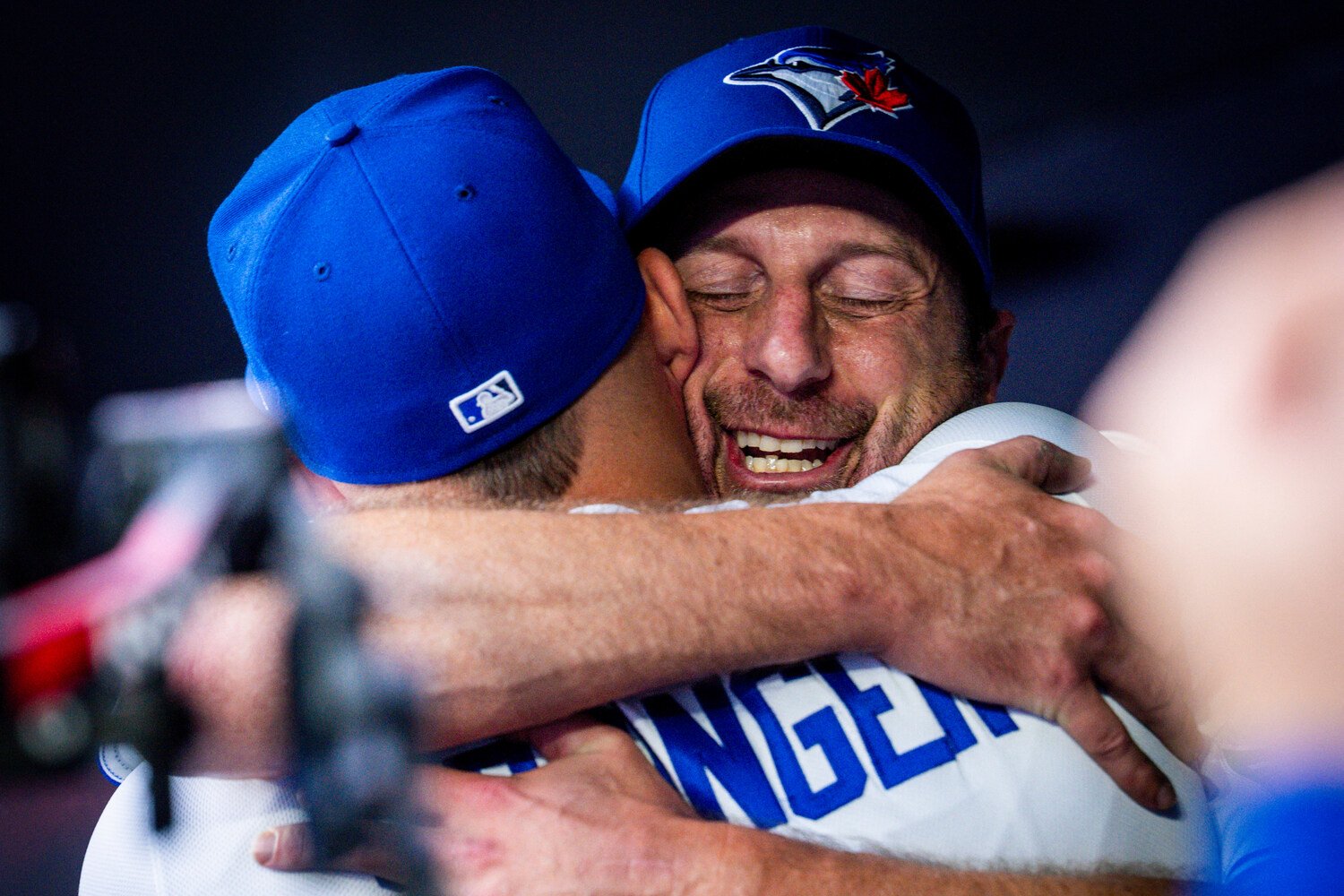 You don’t have to look far to find something that went wrong with the 2026 Toronto Blue Jays. Bryan Jaeger gave us his list of five things, and honestly, I admire his restraint. That list could sprawl if we let it. As the season went on and various people in my life checked in on my mental health after a mounting number of crushing defeats, I grew fond of using the phrase “You can’t be a .500 team if you don’t lose half your games.” The glass-half-full side of that, of course, is that you’ve gotta win half too. (“You can’t be a .488 team if you don’t lose 83 games” doesn’t quite have the same poetic feel to it.) Last year’s offseason was the shortest in franchise history, and with the looming labour stoppage, the upcoming one could be one of the longest – so let’s look on the bright side and remember the good times. 1. Offseason Signings The best Blue Jay on each side of the ball this season was a player that didn’t suit up for Toronto last season. Dylan Cease was the prize of the offseason, signing a seven-year, $175 million contract and immediately started making it look like a bargain. He flirted with no-hitters and put himself squarely into the AL Cy Young discussion. His 5.5 fWAR puts Cease into a tie with Kevin Gausman’s 2022 as the best pitching season by a Blue Jay in the last 17 seasons. His K/9 (12.782) and H/9 (5.759) are the new single-season high-water marks for the franchise. Kazuma Okamoto had a stretch of six seasons hitting 30-plus home runs in Japan for the Yomiuri Giants, but there were questions of how he would perform in North America. Well, his 33 homers this year were more than double the next closest Jay. His 113 wRC+ was the highest of any Jay to appear in at least half of Toronto’s games this season. He also turned one of the prettiest double plays I’ve ever seen. He is certainly in the discussion for the best rookie season in franchise history, and the good news is that the performance looks sustainable. 2. Solidifying the Endgame Tyler Rogers could have easily been highlighted in the section above. His arrival and then pairing with Louis Varland to handle the eighth and ninth innings brought a level of comfort and confidence that I don't think we've had since the days of Ward and Henke. Rogers made 74 appearances, notched 33 holds and picked up four saves for good measure. He only surrendered two homers all season and has just a delightful delivery to go along with it. Varland wasn’t immediately given the closer’s role, but once he took it, there was no question about who deserved it. He racked up 35 saves (top 10 Jays season) to go along with five early-season holds. 3. Honouring the Past With this being the 50th anniversary of the franchise, there were a number of ways the organization celebrated the history of the club. The two biggest were absolute home runs: the Joe Carter statue and the Hall of Excellence. The statue is something we have been clamouring for as fans for quite some time. It took them a long time to get it in place, but now that it’s here, it’s perfect. It’s a gathering point on game days, and it's a tourist attraction when the Jays are out of town. It’s an incredible addition to the space outside of the stadium. The Hall of Excellence was something I was a little more skeptical of when it was announced. I thought that taking the Level of Excellence away or altering it from something that could be seen from almost every seat in the building and moving the focus to a corner of the concourse would take the shine away from the great names that have been put in place. I am happy to say that I was wildly wrong with that take. The Hall is incredibly well done, and I could easily spend more time there. Each section is outfitted with memorabilia specific to each inductee. I’m a sucker for analog notes, so my two favourite features are Carlos Delgado’s notebook (open to his 4-HR day) and Buck Martinez’s scorecard from last year’s ALCS Game 7. You can also find the ball from Dave Stieb’s no-hitter, José Bautista’s bat flip bat, Paul Beeston’s custom-made “Labatt 80” beer can, plus a display case for all of the Silver Slugger and Gold Glove awards. It’s awesome. 4. Saying Hello After the ‘25 playoff run, I was a big proponent of running it back with the same roster. Re-sign every free agent and take the same guys through it again. That kind of illogical homerism is just one of the reasons I was not given the GM role. Kevin Gausman was traded at the deadline, in another move that I would not have made as GM. That trade brought Brett Bateman (and Ty Southisene) to Toronto. Two prospects that did not immediately inspire much confidence and slotted into the low end of the Jays' top 20 prospects list. Fast forward to the end of the season and Bateman has already endeared himself to fans. Over just 41 games, Bateman posted a 138 wRC+, good for best on the team (among batters with more than 25 PA) and a 1.9 fWAR, which placed him behind only Alejandro Kirk in the second half of the season. Charles McAdoo’s second-half wRC+ of 117 was another boon to the lineup in desperate need of a kick. Then there was Spencer Miles, arguably the most valuable pitcher on the roster not named Varland or Cease. The Rule 5 selectee did everything that was asked of him and more. Those are three of the players I am most excited to see next season, and I have already started seeing their jerseys showing up in the stands. 5. Saying Goodbye Game 162 might have been our last chance to see both George Springer and Max Scherzer in a Jays uniform, and the fans were given two great chances to show their appreciation. In comments leading up to the game and afterwards, it certainly sounded like Springer is headed for retirement. Scherzer ended the season ninth on the all-time strikeout list, but only three behind Justin Verlander and 17 behind Don Sutton – that might be enough for Mad Max to run it back one more time. If he does, I would love it to be here, but it’s tough to predict at this point. Springer hit a single in the third inning and advanced to second on an error. He was then lifted for pinch runner Sean Keys and given the opportunity to (slowly) walk off the field, for maybe the last time, to the loud ovation given by the Toronto crowd. Six seasons with the Jays, one of the biggest swings in franchise history, and a place amongst the favourite players of the modern era. Similarly, Scherzer walked off to his own ovation – but not before sending manager John Schneider back to the dugout empty-handed after ‘refusing’ to come out in the 7th inning, harkening back to his start in Seattle during last year’s ALCS. In the eighth, he relented after 114 pitches, his most as a Blue Jay and his most since 2020. When Scherzer first signed in Toronto, there were questions of how much the future Hall of Famer still had to offer. Safe to say that Mad Max gave it everything, every time.
 -
Agreed! The 2025 run is one I'll remember until the big operations manager in the sky turns off the field lights. Just an incredible season from start to finish (even if the start was only magical in hindsight).
-
In part fueled by the trade deadline, the Jays used more pitchers in August than in any previous month of the season. New acquisitions José Soriano and Spencer Arrighetti made their Blue Jays debuts, and so did long-time Blue Jays prospect Ricky Tiedemann. August also saw the final innings pitched for the beloved Kevin Gausman and less-beloved Jeff Hoffman. Soriano flirted with the official rankings for this PotM list, but he will have to settle for Honourable Mention status. He made five starts and threw the third-most innings (28.1) of anyone on the Jays staff, settling for a 2-1 record behind a 3.73 FIP and 0.4 fWAR. Spencer Miles and Louis Varland have both made a number of appearances on our PotM lists, and maybe it’s voter fatigue, or maybe it’s the ebbs and flows of a long season, but they are both on the outside looking in this time around. Miles pitched the most innings of anyone (13.1) this month without giving up a home run, and Varland picked up seven saves, bringing his season total to 31, but he was also saddled with his first blown save of the season. No. 3: Shane Bieber 24.1 IP, 2.59 ERA, 22 K, 6 BB, 0.5 fWAR Shane Bieber only made four starts in August, but he was the only Jays pitcher to pick up more than two wins. Wins aren’t everything, certainly, and are arguably the worst metric through which to measure a pitcher. BUT making quality starts and sticking around long enough to pick up a win in a season where the bullpen has been extremely taxed, and the offense has been (at times) stagnant is an important thing. Bieber’s last start (7 IP, 7 K, 0 ER) was not only his best of the season, it was the ninth best start by Game Score of any Jay this season. No. 2: Max Scherzer 32.1 IP, 3.68 FIP, 28 K, 12 BB, 0.6 fWAR Speaking of Game Score, Max Scherzer had the best start of the month by that metric. Going seven innings of one-hit ball with only one walk against 10 Ks facing Seattle in arguably his best regular season start as a Jay – Scherzer wasn’t surprised. He also moved into ninth place on the all-time strikeout list in that start, bypassing Gaylord Perry’s 3,534. Earlier in the month, he entered the top 10 after moving beyond Walter Johnson. Scherzer is now only 19 Ks behind the technically active, but currently IL’d, Justin Verlander for the eighth spot on that list. Also worth noting that Scherzer threw the most innings of any Toronto pitcher this month. Again, as we focus on optimizing the wear on the bullpen down the stretch, the workhorses are really showing their worth. No. 1: Dylan Cease 31 IP, 2.03 ERA, 43 K, 0.8 fWAR Sticking with the Game Score theme, Dylan Cease has half of the Jays' top 10 Game Scores this season. Only one of them came in August, but his continued dominance and steady hand have not only kept him in the Cy Young conversation, but the team in the playoff picture. In August, Cease made four quality starts, picked up a pair of wins and continued to lead the American League in strikeouts. Bryan Jaeger touted the contract that brought Cease here, and while it may not be the primary accolade he’s chasing, Cease is now our back-to-back PotM for the first time in his career. View full article
-
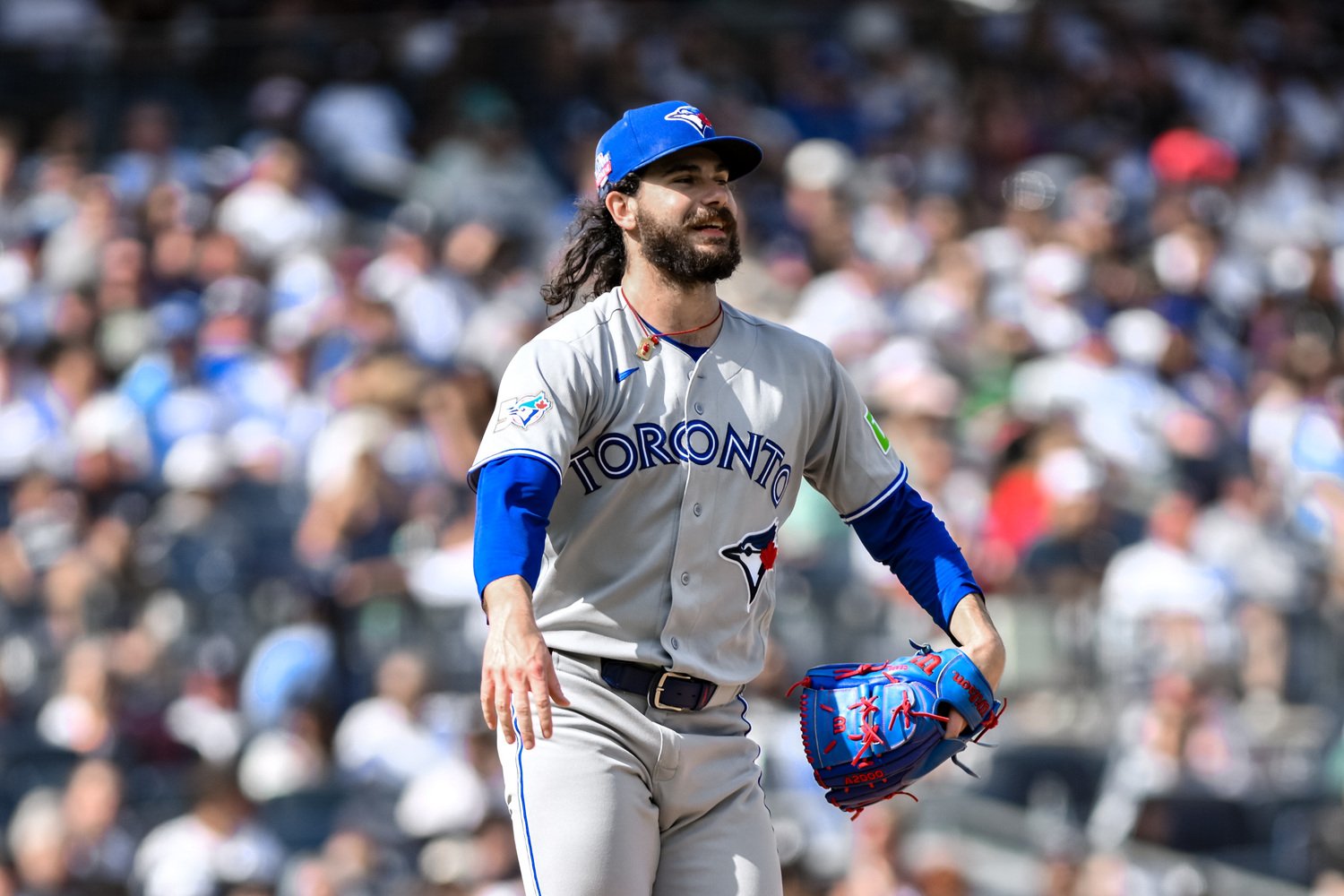 In part fueled by the trade deadline, the Jays used more pitchers in August than in any previous month of the season. New acquisitions José Soriano and Spencer Arrighetti made their Blue Jays debuts, and so did long-time Blue Jays prospect Ricky Tiedemann. August also saw the final innings pitched for the beloved Kevin Gausman and less-beloved Jeff Hoffman. Soriano flirted with the official rankings for this PotM list, but he will have to settle for Honourable Mention status. He made five starts and threw the third-most innings (28.1) of anyone on the Jays staff, settling for a 2-1 record behind a 3.73 FIP and 0.4 fWAR. Spencer Miles and Louis Varland have both made a number of appearances on our PotM lists, and maybe it’s voter fatigue, or maybe it’s the ebbs and flows of a long season, but they are both on the outside looking in this time around. Miles pitched the most innings of anyone (13.1) this month without giving up a home run, and Varland picked up seven saves, bringing his season total to 31, but he was also saddled with his first blown save of the season. No. 3: Shane Bieber 24.1 IP, 2.59 ERA, 22 K, 6 BB, 0.5 fWAR Shane Bieber only made four starts in August, but he was the only Jays pitcher to pick up more than two wins. Wins aren’t everything, certainly, and are arguably the worst metric through which to measure a pitcher. BUT making quality starts and sticking around long enough to pick up a win in a season where the bullpen has been extremely taxed, and the offense has been (at times) stagnant is an important thing. Bieber’s last start (7 IP, 7 K, 0 ER) was not only his best of the season, it was the ninth best start by Game Score of any Jay this season. No. 2: Max Scherzer 32.1 IP, 3.68 FIP, 28 K, 12 BB, 0.6 fWAR Speaking of Game Score, Max Scherzer had the best start of the month by that metric. Going seven innings of one-hit ball with only one walk against 10 Ks facing Seattle in arguably his best regular season start as a Jay – Scherzer wasn’t surprised. He also moved into ninth place on the all-time strikeout list in that start, bypassing Gaylord Perry’s 3,534. Earlier in the month, he entered the top 10 after moving beyond Walter Johnson. Scherzer is now only 19 Ks behind the technically active, but currently IL’d, Justin Verlander for the eighth spot on that list. Also worth noting that Scherzer threw the most innings of any Toronto pitcher this month. Again, as we focus on optimizing the wear on the bullpen down the stretch, the workhorses are really showing their worth. No. 1: Dylan Cease 31 IP, 2.03 ERA, 43 K, 0.8 fWAR Sticking with the Game Score theme, Dylan Cease has half of the Jays' top 10 Game Scores this season. Only one of them came in August, but his continued dominance and steady hand have not only kept him in the Cy Young conversation, but the team in the playoff picture. In August, Cease made four quality starts, picked up a pair of wins and continued to lead the American League in strikeouts. Bryan Jaeger touted the contract that brought Cease here, and while it may not be the primary accolade he’s chasing, Cease is now our back-to-back PotM for the first time in his career.
 -
Love this article. I'm definitely going to start clocking stride length on pitching changes now.
-
Great read! Love the breakdown and the calming feeling I get when seeing Louis.
-
In Search of the Most Impressive 5-3 Double Play in Blue Jays History
Mike LeSage posted an article in Blue Jays
.jpg.6b5aae0f2b2bd04c0653330c4cc7cfa7.jpg) On May 30, 2026, the Blue Jays played a game we’d all prefer to forget. Giving up five runs to the Orioles in the ninth inning and getting walked off at Camden Yards has a real ‘on to the next one’ feel to it. I’m content to forget the majority of that game too, but there is one play that I can’t get out of my mind. In the bottom of the fourth inning with Trey Yesavage having loaded the bases and the Jays clinging to a 2-1 lead, Jeremiah Jackson hit a chopper up the third base line. Kazuma Okamoto charged the ball, subtly adjusted his stride and got his right foot to the bag before the ball arrived. The momentum of his charge carried him forward, but he kept his foot on the bag, secured the ball and recorded the force out at third. Okamoto continued another stride towards home, adjusted his body and made a cross-diamond throw to Vladimir Guerrero Jr. at first to get Jackson by a stride and a half and turn the 5-3 double play. The play at third was so smooth and fluid that it wasn’t immediately clear that Big Oak had garnered the out at his base. The replay was clear and definitive. My initial reaction when seeing that play was that I had just witnessed one of the greatest double plays of all time. I’ve since softened that stance, but I still can’t stop thinking about the play. Impressiveness of defensive plays can be subjective. We’ve talked about the defensive wizardry of guys like Daulton Varsho and Ernie Clement around here a few times. They often make the hardest plays look routine, and while their surehandedness is definitely appreciated by the pitching staff, it doesn’t always make the highlight reels or bring the fans out of their seats. This Okamoto play didn’t move our managing editor, Leo Morgenstern, the same way, and it was left off of his list of the best defensive plays in May. Addison Barger’s 9-2 double play was pretty sweet in its own right (injury aside). Similarly, when you picture a double play, the first instinct is almost never the 5-3. I took a sample of DiamondCentric writers, and none had the 5-3 as their first thought. In fact, only Ryan Salvaggio from Talk Sox included a third baseman at all, opting for the around-the-horn 5-4-3. Up to July 23, there were 433 double plays league-wide that started with the third basemen. That’s just under 20% of the league’s total double plays. Of those 433 double plays starting at third, only 54 went 5-3 (2.5% of league DPs). I’m going to eliminate the DPs that start with a lineout to third and end with catching a runner off their base. Those are fun, and Okamoto has a great one of those from earlier this season too, but they feel spiritually different from getting to your bag and firing a cross-field throw. That play from Okamoto was made in May, and I’m still thinking about it as we near the end of July. That’s gotta count for something. With this being the Jays' 50th season and so much of the talk of the team being centered around that, I’ve gotten into the habit of viewing Toronto’s accomplishments through that lens as well. Where does this Okamoto play stand in the history of 5-3 double plays by Toronto? The two 5-3 plays by Okamoto that I’ve already referenced are the only two the Jays have turned this season, so by default, Oak has the best one of 2026 (so far). In the history of the franchise, the Jays have turned 151 total, and I am entering into this exercise with the assumption that none are going to top May 30, 2026. Kelly Gruber (1990) and Matt Chapman (2023) are the only Toronto players to win a Gold Glove at the hot corner. They might be the top candidates to look at. Scott Rolen won eight Gold Gloves before arriving in Toronto and made just over 200 starts at third base with the Jays. By virtue of all his appearances, no one had more opportunities than Gruber; his 846 games at third are the franchise high. Rance Mulliniks is the sole third baseman with over 1,000 total appearances for the franchise, though *only* 731 were at third base. If you’re looking for a dark horse, he might be the one. I’m going to make a confession here. I was born before the Jays had their first winning season, but I have been spoiled by modern conveniences. I severely underestimated the difficulty I would have in tracking down specific plays from the early days of this franchise. I can tell you with a fair degree of certainty that the first 5-3 double play in Jays history was turned in the bottom of the second inning in the Jays' 11th game. It was a line drive double play caught by Dave McKay and completed by Doug Ault, but I can’t find a video of it. The recap in the next day’s Toronto Star makes no mention of it, instead choosing to focus on the complete game, four-hit win by Dave Lemanczyk. Fair enough. That’s not even the type of 5-3 DP I’m looking for. The first 5-3 groundball double play happened on June 18 of the inaugural season in the franchise’s 60th game. This time Roy Howell was at the hot corner, and Ron Fairly was across the diamond. I can’t tell you much more than that because again, I can’t find any video or mention of it in a recap. I’m going to have to alter the scope of this project and will unfortunately be shortchanging Okamoto in the process. The exercise now becomes ‘finding the best 5-3 double play of the replay era’. A disappointment to be sure. Another historic 5-3 DP thankfully does have some video available. This is the first one to end a game. On July 29, 1988, with Gruber at third, Fred McGriff at first and Duane Ward on the mound, the 42,000+ fans at Exhibition Stadium witnessed history that most probably never realized. As for the play itself, it’s a nice pick from Gruber and an absolute cannon across the diamond to McGriff, but it lacks the grace of Okamoto’s play. In a game on June 7, 1995, the Jays would make 5-3 history again. This game would mark the first time Toronto would turn two 5-3 double plays in the same game. One of them is documented here and shows Ed Sprague fielding and throwing to John Olerud at first. They would turn another one the very next inning, but SportsCentre did not deem that one worthy of a highlight, so we are forced to assume it was less impressive. There is only one other game where the Jays recorded two 5-3 groundball double plays: April 6, 2021, with Cavan Biggio on the hot corner and Vladimir Guerrero Jr. at first. The first one was pretty smooth. A nice charging grab, a toe-tap on the base and a quick throw across to catch Nick Solak at first. The second one was… an affront to modern baseball. Or at least made to look ridiculous with the hindsight of the defensive shift rules and how we notate baseball plays. While this was ‘technically’ a 5-3 DP, Biggio was lined up in the hole between first and second base with Jonah Heim hitting directly into the shift. This shouldn’t count, and for those 5-3 purists out there (it might only be me at this point), we can’t claim this regardless of what the official record states. I also can’t state it with absolute certainty, but it appears that Guerrero is the only Blue Jay to feature on both sides of a 5-3 double play, having turned one himself from the other side of the diamond. That play isn’t the last time we’ll be talking about Biggio here, though. Over six seasons in Toronto, Biggio made 453 defensive appearances. Eighty of those were at third base. Thanks to Immaculate Grid, I know Biggio made appearances at every position except catcher and pitcher, but when I remember him I think of him as a second baseman and occasional outfielder. That doesn’t mean he was incapable of greatness at third, just that it was less likely. In five out of Biggio’s six seasons in Toronto, he posted a negative score for fielding run value, almost entirely due to his lack of range (his +5 FRV in 2022 may require a separate deep dive). The beautiful thing about highlight reel plays is that they can exist in a vacuum. Every pitch, every ball in play has the potential for greatness. That’s a big reason why we buy tickets and watch the games. Even when the team is playing poorly and the results aren’t there, greatness can happen on the next pitch… September 11, 2023, top of the fifth inning, Texas at Toronto. You might remember that I mentioned Matt Chapman won the Gold Glove at third base in 2023. He was one of the favourites to occupy this space. On this day, however, Chapman found himself on the 10-day IL with a finger sprain – the only IL stint of his time in Toronto. During Chapman’s recovery, Biggio made nine appearances at third. None of those nine appearances included a full game at the position. Biggio was either brought in as a pinch-hitter, moved elsewhere on the field or removed from the game to be pinch-hit for every time – true to his utility form. In that fifth inning, though, Biggio found himself at third. Chris Bassitt started the inning off with a walk and a single to the bottom of the Rangers' order. That brought former Jay Marcus Semien to the plate with runners on the corners and none out. In a 1-2 count, Bassitt jammed Semien with a sinker inside. Semien turned on it and hit a chopper up the third base line right towards the waiting Biggio. Now-Blue Jay Josh Smith, who was on third, was caught too far from the base and attempted a dive back to safety, but Biggio was too quick. Having collected the ball, Biggio was already charging towards Smith. The bases weren’t loaded, so there was no force play, but Biggio’s path led him to step on third just for good measure. Smith attempted a shimmy away from the out, but Biggio put the leather to Smith for the tag and got the throw across the diamond to Vladdy to retire Semien and give the Jays a +13% swing in win probability. With apologies to Okamoto, I’ve got to put him in second place. Against the odds, Cavan Biggio turned the best 5-3 double play I’ve ever seen a Blue Jay make. In the moment, Buck Martinez called it “one of the most heads-up plays you’ll ever see.” In his postgame remarks, John Schneider called it “a great play from Cav” and touted his ability to make plays like that. I’m taking it a step further and calling it the greatest play (of that type) in Blue Jays history.
On May 30, 2026, the Blue Jays played a game we’d all prefer to forget. Giving up five runs to the Orioles in the ninth inning and getting walked off at Camden Yards has a real ‘on to the next one’ feel to it. I’m content to forget the majority of that game too, but there is one play that I can’t get out of my mind. In the bottom of the fourth inning with Trey Yesavage having loaded the bases and the Jays clinging to a 2-1 lead, Jeremiah Jackson hit a chopper up the third base line. Kazuma Okamoto charged the ball, subtly adjusted his stride and got his right foot to the bag before the ball arrived. The momentum of his charge carried him forward, but he kept his foot on the bag, secured the ball and recorded the force out at third. Okamoto continued another stride towards home, adjusted his body and made a cross-diamond throw to Vladimir Guerrero Jr. at first to get Jackson by a stride and a half and turn the 5-3 double play. The play at third was so smooth and fluid that it wasn’t immediately clear that Big Oak had garnered the out at his base. The replay was clear and definitive. My initial reaction when seeing that play was that I had just witnessed one of the greatest double plays of all time. I’ve since softened that stance, but I still can’t stop thinking about the play. Impressiveness of defensive plays can be subjective. We’ve talked about the defensive wizardry of guys like Daulton Varsho and Ernie Clement around here a few times. They often make the hardest plays look routine, and while their surehandedness is definitely appreciated by the pitching staff, it doesn’t always make the highlight reels or bring the fans out of their seats. This Okamoto play didn’t move our managing editor, Leo Morgenstern, the same way, and it was left off of his list of the best defensive plays in May. Addison Barger’s 9-2 double play was pretty sweet in its own right (injury aside). Similarly, when you picture a double play, the first instinct is almost never the 5-3. I took a sample of DiamondCentric writers, and none had the 5-3 as their first thought. In fact, only Ryan Salvaggio from Talk Sox included a third baseman at all, opting for the around-the-horn 5-4-3. Up to July 23, there were 433 double plays league-wide that started with the third basemen. That’s just under 20% of the league’s total double plays. Of those 433 double plays starting at third, only 54 went 5-3 (2.5% of league DPs). I’m going to eliminate the DPs that start with a lineout to third and end with catching a runner off their base. Those are fun, and Okamoto has a great one of those from earlier this season too, but they feel spiritually different from getting to your bag and firing a cross-field throw. That play from Okamoto was made in May, and I’m still thinking about it as we near the end of July. That’s gotta count for something. With this being the Jays' 50th season and so much of the talk of the team being centered around that, I’ve gotten into the habit of viewing Toronto’s accomplishments through that lens as well. Where does this Okamoto play stand in the history of 5-3 double plays by Toronto? The two 5-3 plays by Okamoto that I’ve already referenced are the only two the Jays have turned this season, so by default, Oak has the best one of 2026 (so far). In the history of the franchise, the Jays have turned 151 total, and I am entering into this exercise with the assumption that none are going to top May 30, 2026. Kelly Gruber (1990) and Matt Chapman (2023) are the only Toronto players to win a Gold Glove at the hot corner. They might be the top candidates to look at. Scott Rolen won eight Gold Gloves before arriving in Toronto and made just over 200 starts at third base with the Jays. By virtue of all his appearances, no one had more opportunities than Gruber; his 846 games at third are the franchise high. Rance Mulliniks is the sole third baseman with over 1,000 total appearances for the franchise, though *only* 731 were at third base. If you’re looking for a dark horse, he might be the one. I’m going to make a confession here. I was born before the Jays had their first winning season, but I have been spoiled by modern conveniences. I severely underestimated the difficulty I would have in tracking down specific plays from the early days of this franchise. I can tell you with a fair degree of certainty that the first 5-3 double play in Jays history was turned in the bottom of the second inning in the Jays' 11th game. It was a line drive double play caught by Dave McKay and completed by Doug Ault, but I can’t find a video of it. The recap in the next day’s Toronto Star makes no mention of it, instead choosing to focus on the complete game, four-hit win by Dave Lemanczyk. Fair enough. That’s not even the type of 5-3 DP I’m looking for. The first 5-3 groundball double play happened on June 18 of the inaugural season in the franchise’s 60th game. This time Roy Howell was at the hot corner, and Ron Fairly was across the diamond. I can’t tell you much more than that because again, I can’t find any video or mention of it in a recap. I’m going to have to alter the scope of this project and will unfortunately be shortchanging Okamoto in the process. The exercise now becomes ‘finding the best 5-3 double play of the replay era’. A disappointment to be sure. Another historic 5-3 DP thankfully does have some video available. This is the first one to end a game. On July 29, 1988, with Gruber at third, Fred McGriff at first and Duane Ward on the mound, the 42,000+ fans at Exhibition Stadium witnessed history that most probably never realized. As for the play itself, it’s a nice pick from Gruber and an absolute cannon across the diamond to McGriff, but it lacks the grace of Okamoto’s play. In a game on June 7, 1995, the Jays would make 5-3 history again. This game would mark the first time Toronto would turn two 5-3 double plays in the same game. One of them is documented here and shows Ed Sprague fielding and throwing to John Olerud at first. They would turn another one the very next inning, but SportsCentre did not deem that one worthy of a highlight, so we are forced to assume it was less impressive. There is only one other game where the Jays recorded two 5-3 groundball double plays: April 6, 2021, with Cavan Biggio on the hot corner and Vladimir Guerrero Jr. at first. The first one was pretty smooth. A nice charging grab, a toe-tap on the base and a quick throw across to catch Nick Solak at first. The second one was… an affront to modern baseball. Or at least made to look ridiculous with the hindsight of the defensive shift rules and how we notate baseball plays. While this was ‘technically’ a 5-3 DP, Biggio was lined up in the hole between first and second base with Jonah Heim hitting directly into the shift. This shouldn’t count, and for those 5-3 purists out there (it might only be me at this point), we can’t claim this regardless of what the official record states. I also can’t state it with absolute certainty, but it appears that Guerrero is the only Blue Jay to feature on both sides of a 5-3 double play, having turned one himself from the other side of the diamond. That play isn’t the last time we’ll be talking about Biggio here, though. Over six seasons in Toronto, Biggio made 453 defensive appearances. Eighty of those were at third base. Thanks to Immaculate Grid, I know Biggio made appearances at every position except catcher and pitcher, but when I remember him I think of him as a second baseman and occasional outfielder. That doesn’t mean he was incapable of greatness at third, just that it was less likely. In five out of Biggio’s six seasons in Toronto, he posted a negative score for fielding run value, almost entirely due to his lack of range (his +5 FRV in 2022 may require a separate deep dive). The beautiful thing about highlight reel plays is that they can exist in a vacuum. Every pitch, every ball in play has the potential for greatness. That’s a big reason why we buy tickets and watch the games. Even when the team is playing poorly and the results aren’t there, greatness can happen on the next pitch… September 11, 2023, top of the fifth inning, Texas at Toronto. You might remember that I mentioned Matt Chapman won the Gold Glove at third base in 2023. He was one of the favourites to occupy this space. On this day, however, Chapman found himself on the 10-day IL with a finger sprain – the only IL stint of his time in Toronto. During Chapman’s recovery, Biggio made nine appearances at third. None of those nine appearances included a full game at the position. Biggio was either brought in as a pinch-hitter, moved elsewhere on the field or removed from the game to be pinch-hit for every time – true to his utility form. In that fifth inning, though, Biggio found himself at third. Chris Bassitt started the inning off with a walk and a single to the bottom of the Rangers' order. That brought former Jay Marcus Semien to the plate with runners on the corners and none out. In a 1-2 count, Bassitt jammed Semien with a sinker inside. Semien turned on it and hit a chopper up the third base line right towards the waiting Biggio. Now-Blue Jay Josh Smith, who was on third, was caught too far from the base and attempted a dive back to safety, but Biggio was too quick. Having collected the ball, Biggio was already charging towards Smith. The bases weren’t loaded, so there was no force play, but Biggio’s path led him to step on third just for good measure. Smith attempted a shimmy away from the out, but Biggio put the leather to Smith for the tag and got the throw across the diamond to Vladdy to retire Semien and give the Jays a +13% swing in win probability. With apologies to Okamoto, I’ve got to put him in second place. Against the odds, Cavan Biggio turned the best 5-3 double play I’ve ever seen a Blue Jay make. In the moment, Buck Martinez called it “one of the most heads-up plays you’ll ever see.” In his postgame remarks, John Schneider called it “a great play from Cav” and touted his ability to make plays like that. I’m taking it a step further and calling it the greatest play (of that type) in Blue Jays history. -
On May 30, 2026, the Blue Jays played a game we’d all prefer to forget. Giving up five runs to the Orioles in the ninth inning and getting walked off at Camden Yards has a real ‘on to the next one’ feel to it. I’m content to forget the majority of that game too, but there is one play that I can’t get out of my mind. In the bottom of the fourth inning with Trey Yesavage having loaded the bases and the Jays clinging to a 2-1 lead, Jerimiah Jackson hit a chopper up the third base line. Kazuma Okamoto charged the ball, subtly adjusted his stride and got his right foot to the bag before the ball arrived. The momentum of his charge carried him forward, but he kept his foot on the bag, secured the ball and recorded the force out at third. Okamoto continued another stride towards home, adjusted his body and made a cross-diamond throw to Vladimir Guerrero Jr. at first to get Jackson by a stride-and-a-half and turn the 5-3 double play. The play at third was so smooth and fluid that it wasn’t immediately clear that Big Oak had garnered the out at his base. The replay was clear and definitive. My initial reaction when seeing that play was that I had just witnessed one of the greatest double plays of all time. I’ve since softened that stance, but I still can’t stop thinking about the play. Impressiveness of defensive plays can be subjective. We’ve talked about the defensive wizardry of guys like Daulton Varsho and Ernie Clement around here a few times. They often make the hardest plays look routine and while their surehandedness is definitely appreciated by the pitching staff, it doesn’t always make the highlight reels or bring the fans out of their seats. This Okamoto play didn’t move our editor-in-chief, Leo Morgenstern, the same way and it was left off of his list of the best defensive plays in May. Addison Barger’s 9-2 double play was pretty sweet in its own right (injury aside). Similarly, when you picture a double play, the first instinct is almost never the 5-3. I took a sample of Diamond Centric writers and none had the 5-3 as their first thought. In fact, only Ryan Salvaggio from Talk Sox included a third baseman at all, opting for the around-the-horn 5-4-3. Up to July 23 there have been 433 double plays league-wide that started with the third basemen. That’s just under 20% of the league’s total double plays. Of those 433 double plays starting at third, only 54 went 5-3 (2.5% of league DPs). I’m going to eliminate the DPs that start with a lineout to 3B and end with catching a runner off their base. Those are fun, and Okamoto has a great one of those from earlier this season too, but they feel spiritually different from getting to your bag and firing a cross-field throw. That play from Okamoto was made in May and I’m still thinking about it as we near the end of July. That’s gotta count for something. With this being the Jays 50th season and so much of the talk of the team being centered around that, I’ve gotten into the habit of viewing Toronto’s accomplishments through that lens as well. Where does this Okamoto play stand in the history of 5-3 double plays by Toronto? The two 5-3 plays by Okamoto that I’ve already referenced are the only two the Jays have turned this season, so by default Oak has the best one of 2026 (so far). In the history of the franchise the Jays have turned 151 total and I am entering into this exercise with the assumption that none are going to top May 30, 2026. Kelly Gruber (1990) and Matt Chapman (2023) are the only Toronto players to win a Gold Glove at the hot corner. They might be the top candidates to look at. Scott Rolen won eight Gold Gloves before arriving in Toronto and made just over 200 starts at third base with the Jays. By virtue of appearances no one had more opportunities than Gruber, his 846 games at third are the franchise high. Rance Mulliniks is the sole third baseman with over 1000 total appearances for the franchise, but *only* 731 at third base. If you’re looking for a darkhorse, he might be the one. I’m going to make a confession here. I was born before the Jays had their first winning season, but I have been spoiled by modern conveniences. I severely underestimated the difficulty I would have in tracking down specific plays from the early days of this franchise. I can tell you with a fair degree of certainty that the first 5-3 double play in Jays history was turned in the bottom of the second inning in the Jays 11th game. It was a line drive double play caught by Dave McKay and completed by Doug Ault, but I can’t find a video of it. The recap in the next day’s Toronto Star makes no mention of it, instead choosing to focus on the complete game, 4-hit win by Dave Lemanczyk. Fair enough. That’s not even the type of 5-3 DP I’m looking for. The first 5-3 ground ball double play happened on June 18th of the inaugural season in the franchise’s 60th game. This time Roy Howell was at the hot corner and Ron Fairly was across the diamond. I can’t tell you much more than that because again, I can’t find any video or mention of it in a recap. I’m going to have to alter the scope of this project and will unfortunately be shortchanging Okamoto in the process. The exercise now becomes ‘finding the best 5-3 double play of the replay era’. A disappointment to be sure. Another historic 5-3 DP thankfully does have some video available. This is the first one to end a game. On July 29, 1988 with Gruber at third, Fred McGriff at first and Duane Ward on the mound the 42,000+ fans at Exhibition Stadium witnessed history that most probably never realized. As for the play itself, it’s a nice pick from Gruber and an absolute cannon across the diamond to McGriff, but it lacks the grace of Okamoto’s play. In a game on June 7, 1995 the Jays would make 5-3 history again. This game would mark the first time Toronto would turn two 5-3 double plays in the same game. One of them is documented here and shows Ed Sprague fielding and throwing to John Olerud at first. They would turn another one the very next inning, but SportsCentre did not deem that one worthy of a highlight so we are forced to assume it was less impressive. There is only one other game where the Jays recorded two 5-3 groundball double plays. April 6, 2021 with Cavan Biggio on the hot corner and Vladimir Guerrero Jr. at first. The first one was pretty smooth. A nice charging grab, a toe-tap on the base and a quick throw across to catch Nick Solak at first. The second one was… an affront to modern baseball. Or at least made to look ridiculous with the hindsight of the defensive shift rules and how we notate baseball plays. While ‘technically’ a 5-3 DP, Biggio was lined up in the hole between first and second base with Jonah Heim hitting directly into the shift. This shouldn’t count and for those 5-3 purists out there (it might only be me at this point) we can’t claim this regardless of what the official record states. I also can’t state it with absolute certainty, but it appears that Guerrero Jr. is the only Blue Jay to feature on both sides of a 5-3 double play, having turned one himself from the other side of the diamond. That play isn’t the last time we’ll be talking about Biggio here though. Over six seasons in Toronto, Biggio made 453 defensive appearances. 80 of those were at 3B. Thanks to Immaculate Grid I know Biggio made appearances at every position except catcher and pitcher, but when I remember him I think of him as a second baseman and occasional outfielder. That doesn’t mean he was incapable of greatness at third, just that it was less likely. In five out of Biggio’s six seasons in Toronto he posted a negative score for fielding run value - almost entirely due to his lack of range (his +5 FRV in 2022 may require a separate deep dive). The beautiful thing about highlight reel plays is that they can exist in a vacuum. Every pitch, every ball in play has the potential for greatness. That’s a big reason why we buy tickets and watch the games. Even when the team is playing poorly and the results aren’t there, greatness can happen on the next pitch… September 11, 2023, top of the 5th inning, Texas at Toronto. You might remember that we mentioned Matt Chapman won the Gold Glove at third base in 2023. He was one of the favourites to occupy this space. On this day however, Chapman found himself on the 10-day IL with a finger sprain - the only IL stint of his time in Toronto. During Chapman’s recovery Biggio made nine appearances at third. None of those nine appearances included a full game at third. Biggio was either brought in as a pinch hitter, moved elsewhere on the field or removed from the game to be pinch hit for every time - true to his utility form. In that fifth inning though, Biggio found himself at third. Chris Bassit started the inning off with a walk and a single to the Rangers’ bottom of the order. That brought former-Jay, Marcus Semien, to the plate with runners on the corners and none out. In a 1-2 count Bassit jammed Semien with a sinker inside. Semien turned on it and hit a chopper up the third base line right towards the waiting Biggio. Josh Smith, who was on third was caught too far from the base and attempted a dive back to safety, but Biggio was too quick. Having collected the ball Biggio was already charging towards Smith, the bases weren’t loaded so there was no force play, but Biggio’s path led him to step on third just for good measure. Smith attempted a shimmy away from the out but Biggio put the leather to Smith for the tag and got the throw across the diamond to Vladdy to retire Semien and give the Jays a +13% swing in win probability. With apologies to Okamoto, I’ve got to put him in second place. Against the odds, Cavan Biggio turned the best 5-3 double play I’ve ever seen a Blue Jay make. In the moment Buck Martinez called it “one of the most heads up plays you’ll ever see” and in his postgame remarks John Schnieder called it “a great play from Cav” and touted his ability to make plays like that. I’m taking it a step further and calling it the greatest play (of that type) in Blue Jays history. View full article
-
July was set up to be the defining month of this Jays season. With the trade deadline looming on the horizon and the future of the roster in doubt, every player's performance might have had far-reaching ramifications for the future of the club. With one eye on the month of July and one looking ahead, we celebrate all that the month had to offer. Honourable Mentions Myles Straw July Stats: 1.2 IP, 1 H, 0 ER Only two players made it through July without getting tagged with an earned run, and Straw pitched more innings, so he gets the mention (apologies to Chad Dallas). You never want your team to be in position to be running a position player out to the mound, but all things considered, we can’t complain about the work Straw put in while there. Kevin Gausman July Stats: 20.2 IP, 23 H, 14ER, 11 BB, 23K, 2.47 FIP, 0.7 fWAR Gausman’s July was a whirlwind of trade discussion and distraction. This is a monthly award, but I feel some full-season recognition is due. With all the injuries the Blue Jays pitching staff has endured this year, Gausman has been the steadying hand. He has started more games and thrown more innings than anyone in Toronto this year. July wasn’t Gaus’ flashiest month, but he made his starts and put up the second-highest fWAR of anyone on the staff. He also threw the second-most innings of any Jay this month and was the only starter not to give up a home run. Gausman is pitching for Chicago now, but this won’t be the last time I (and others) are writing about him. Shane Bieber July Stats: 22.1 IP, 19 H, 14 ER, 14 BB, 16 K Bieber's first and last starts of the month were not worth writing about, but the ones in between were a reminder of what he can look like at his best. In his two home starts, he scattered three hits apiece and only gave up one run total. The bats barely put enough runs up to register the wins, so Bieber had to be as sharp as ever. Hoffman/Rogers July Combined Stats: 19.2 IP, 12 H, 3 ER, 5 BB, 22 K, 0.7 fWAR I’m putting Jeff Hoffman and Tyler Rogers together here because they both had similarly strong months out of the ‘pen. They both kept the ball in the yard (0 HR) and limited damage (1.37 ERA), combining for nine holds and 21 appearances. No. 3. Spencer Miles July Stats: 21 IP, 21 H, 8 ER, 4 BB, 19 K, 2.48 FIP, 0.5 fWAR Spencer Miles has stepped into the swingman role that Eric Lauer handled last year. Propelled by his results, Lauer made a few PotM appearances, and Miles is following suit. In July, he made two starts, with one tough outing against the White Sox accounting for 75% of his earned runs for the month. Out of the ‘pen, he was lights out: 0 ER, 3 BB, 13 K. No. 2. Louis Varland July Stats: 10 IP, 8 H, 1 ER, 2 BB, 9 K, 7 SV The streak ends at three. Until now, Louis Varland had been our PotM each month so far this season. In July, he made his first All-Star appearance and went 7-for-7 in save attempts. He only gave up one run in the month (and still got the save) and is easily the guy out of the bullpen that inspires the most calm amongst fans. His most impressive performance would be the two-inning save against the Nationals in which he navigated the eighth and ninth and only threw 20 pitches. Efficient, in control, unshakable. No. 1. Dylan Cease July Stats: 36 IP, 15 H, 4 ER, 11 BB, 46 K, 2.18 FIP, 1.4 fWAR Almost 12 innings pitched, a pair of quality starts and 16 Ks. That line would be enough to get a pitcher an honourable mention here. In this case, it represents the gulf between what Dylan Cease did this month and the second-most by a Jays pitcher. Cease picked up his first win of the month when he went seven scoreless innings against Seattle, striking out nine against three hits and a walk in what was arguably the best start by any Blue Jays pitcher to that point in the season. By the end of the month, it would barely warrant mentioning. Heading into the All-Star break and facing San Francisco, Cease would take a no-hitter into the 9th inning, notch 11 Ks (his sixth time with 10+ strikeouts this season), and this still wasn’t his best performance of the month! Cease earned the start in the Midsummer Classic and tacked on a bonus inning and 3 Ks to his month, getting three swinging strikeouts against the top of the NL roster. On the road in Boston, Cease continued his dominant month with a masterpiece. Pitching a no-hitter through five innings on the way to a complete game, one-hit shutout. His 12 Ks tied his season high, and taken as a whole, this represented one of the most impressive pitching performances in Blue Jays history. His Game Score of 94 is the sixth highest ever by a Toronto pitcher. The high-water mark of 100 belongs to Brandon Morrow in 2010, which was the last time a Toronto pitcher threw a one-hit shutout. Cease became the 10th Jay to perform the feat, and combined with his almost no-no, joined Nolan Ryan as the only pitchers of the modern era to go 8+ innings, allow one hit or fewer, and strike out 10+ batters in back-to-back road starts. He’s not just our pitcher of the month, he’s MLB’s too: View full article
-
.jpg.31d919ebc9acc15fb2e915eb9afa180d.jpg) July was set up to be the defining month of this Jays season. With the trade deadline looming on the horizon and the future of the roster in doubt, every player's performance might have had far-reaching ramifications for the future of the club. With one eye on the month of July and one looking ahead, we celebrate all that the month had to offer. Honourable Mentions Myles Straw July Stats: 1.2 IP, 1 H, 0 ER Only two players made it through July without getting tagged with an earned run, and Straw pitched more innings, so he gets the mention (apologies to Chad Dallas). You never want your team to be in position to be running a position player out to the mound, but all things considered, we can’t complain about the work Straw put in while there. Kevin Gausman July Stats: 20.2 IP, 23 H, 14ER, 11 BB, 23K, 2.47 FIP, 0.7 fWAR Gausman’s July was a whirlwind of trade discussion and distraction. This is a monthly award, but I feel some full-season recognition is due. With all the injuries the Blue Jays pitching staff has endured this year, Gausman has been the steadying hand. He has started more games and thrown more innings than anyone in Toronto this year. July wasn’t Gaus’ flashiest month, but he made his starts and put up the second-highest fWAR of anyone on the staff. He also threw the second-most innings of any Jay this month and was the only starter not to give up a home run. Gausman is pitching for Chicago now, but this won’t be the last time I (and others) are writing about him. Shane Bieber July Stats: 22.1 IP, 19 H, 14 ER, 14 BB, 16 K Bieber's first and last starts of the month were not worth writing about, but the ones in between were a reminder of what he can look like at his best. In his two home starts, he scattered three hits apiece and only gave up one run total. The bats barely put enough runs up to register the wins, so Bieber had to be as sharp as ever. Hoffman/Rogers July Combined Stats: 19.2 IP, 12 H, 3 ER, 5 BB, 22 K, 0.7 fWAR I’m putting Jeff Hoffman and Tyler Rogers together here because they both had similarly strong months out of the ‘pen. They both kept the ball in the yard (0 HR) and limited damage (1.37 ERA), combining for nine holds and 21 appearances. No. 3. Spencer Miles July Stats: 21 IP, 21 H, 8 ER, 4 BB, 19 K, 2.48 FIP, 0.5 fWAR Spencer Miles has stepped into the swingman role that Eric Lauer handled last year. Propelled by his results, Lauer made a few PotM appearances, and Miles is following suit. In July, he made two starts, with one tough outing against the White Sox accounting for 75% of his earned runs for the month. Out of the ‘pen, he was lights out: 0 ER, 3 BB, 13 K. No. 2. Louis Varland July Stats: 10 IP, 8 H, 1 ER, 2 BB, 9 K, 7 SV The streak ends at three. Until now, Louis Varland had been our PotM each month so far this season. In July, he made his first All-Star appearance and went 7-for-7 in save attempts. He only gave up one run in the month (and still got the save) and is easily the guy out of the bullpen that inspires the most calm amongst fans. His most impressive performance would be the two-inning save against the Nationals in which he navigated the eighth and ninth and only threw 20 pitches. Efficient, in control, unshakable. No. 1. Dylan Cease July Stats: 36 IP, 15 H, 4 ER, 11 BB, 46 K, 2.18 FIP, 1.4 fWAR Almost 12 innings pitched, a pair of quality starts and 16 Ks. That line would be enough to get a pitcher an honourable mention here. In this case, it represents the gulf between what Dylan Cease did this month and the second-most by a Jays pitcher. Cease picked up his first win of the month when he went seven scoreless innings against Seattle, striking out nine against three hits and a walk in what was arguably the best start by any Blue Jays pitcher to that point in the season. By the end of the month, it would barely warrant mentioning. Heading into the All-Star break and facing San Francisco, Cease would take a no-hitter into the 9th inning, notch 11 Ks (his sixth time with 10+ strikeouts this season), and this still wasn’t his best performance of the month! Cease earned the start in the Midsummer Classic and tacked on a bonus inning and 3 Ks to his month, getting three swinging strikeouts against the top of the NL roster. On the road in Boston, Cease continued his dominant month with a masterpiece. Pitching a no-hitter through five innings on the way to a complete game, one-hit shutout. His 12 Ks tied his season high, and taken as a whole, this represented one of the most impressive pitching performances in Blue Jays history. His Game Score of 94 is the sixth highest ever by a Toronto pitcher. The high-water mark of 100 belongs to Brandon Morrow in 2010, which was the last time a Toronto pitcher threw a one-hit shutout. Cease became the 10th Jay to perform the feat, and combined with his almost no-no, joined Nolan Ryan as the only pitchers of the modern era to go 8+ innings, allow one hit or fewer, and strike out 10+ batters in back-to-back road starts. He’s not just our pitcher of the month, he’s MLB’s too:
July was set up to be the defining month of this Jays season. With the trade deadline looming on the horizon and the future of the roster in doubt, every player's performance might have had far-reaching ramifications for the future of the club. With one eye on the month of July and one looking ahead, we celebrate all that the month had to offer. Honourable Mentions Myles Straw July Stats: 1.2 IP, 1 H, 0 ER Only two players made it through July without getting tagged with an earned run, and Straw pitched more innings, so he gets the mention (apologies to Chad Dallas). You never want your team to be in position to be running a position player out to the mound, but all things considered, we can’t complain about the work Straw put in while there. Kevin Gausman July Stats: 20.2 IP, 23 H, 14ER, 11 BB, 23K, 2.47 FIP, 0.7 fWAR Gausman’s July was a whirlwind of trade discussion and distraction. This is a monthly award, but I feel some full-season recognition is due. With all the injuries the Blue Jays pitching staff has endured this year, Gausman has been the steadying hand. He has started more games and thrown more innings than anyone in Toronto this year. July wasn’t Gaus’ flashiest month, but he made his starts and put up the second-highest fWAR of anyone on the staff. He also threw the second-most innings of any Jay this month and was the only starter not to give up a home run. Gausman is pitching for Chicago now, but this won’t be the last time I (and others) are writing about him. Shane Bieber July Stats: 22.1 IP, 19 H, 14 ER, 14 BB, 16 K Bieber's first and last starts of the month were not worth writing about, but the ones in between were a reminder of what he can look like at his best. In his two home starts, he scattered three hits apiece and only gave up one run total. The bats barely put enough runs up to register the wins, so Bieber had to be as sharp as ever. Hoffman/Rogers July Combined Stats: 19.2 IP, 12 H, 3 ER, 5 BB, 22 K, 0.7 fWAR I’m putting Jeff Hoffman and Tyler Rogers together here because they both had similarly strong months out of the ‘pen. They both kept the ball in the yard (0 HR) and limited damage (1.37 ERA), combining for nine holds and 21 appearances. No. 3. Spencer Miles July Stats: 21 IP, 21 H, 8 ER, 4 BB, 19 K, 2.48 FIP, 0.5 fWAR Spencer Miles has stepped into the swingman role that Eric Lauer handled last year. Propelled by his results, Lauer made a few PotM appearances, and Miles is following suit. In July, he made two starts, with one tough outing against the White Sox accounting for 75% of his earned runs for the month. Out of the ‘pen, he was lights out: 0 ER, 3 BB, 13 K. No. 2. Louis Varland July Stats: 10 IP, 8 H, 1 ER, 2 BB, 9 K, 7 SV The streak ends at three. Until now, Louis Varland had been our PotM each month so far this season. In July, he made his first All-Star appearance and went 7-for-7 in save attempts. He only gave up one run in the month (and still got the save) and is easily the guy out of the bullpen that inspires the most calm amongst fans. His most impressive performance would be the two-inning save against the Nationals in which he navigated the eighth and ninth and only threw 20 pitches. Efficient, in control, unshakable. No. 1. Dylan Cease July Stats: 36 IP, 15 H, 4 ER, 11 BB, 46 K, 2.18 FIP, 1.4 fWAR Almost 12 innings pitched, a pair of quality starts and 16 Ks. That line would be enough to get a pitcher an honourable mention here. In this case, it represents the gulf between what Dylan Cease did this month and the second-most by a Jays pitcher. Cease picked up his first win of the month when he went seven scoreless innings against Seattle, striking out nine against three hits and a walk in what was arguably the best start by any Blue Jays pitcher to that point in the season. By the end of the month, it would barely warrant mentioning. Heading into the All-Star break and facing San Francisco, Cease would take a no-hitter into the 9th inning, notch 11 Ks (his sixth time with 10+ strikeouts this season), and this still wasn’t his best performance of the month! Cease earned the start in the Midsummer Classic and tacked on a bonus inning and 3 Ks to his month, getting three swinging strikeouts against the top of the NL roster. On the road in Boston, Cease continued his dominant month with a masterpiece. Pitching a no-hitter through five innings on the way to a complete game, one-hit shutout. His 12 Ks tied his season high, and taken as a whole, this represented one of the most impressive pitching performances in Blue Jays history. His Game Score of 94 is the sixth highest ever by a Toronto pitcher. The high-water mark of 100 belongs to Brandon Morrow in 2010, which was the last time a Toronto pitcher threw a one-hit shutout. Cease became the 10th Jay to perform the feat, and combined with his almost no-no, joined Nolan Ryan as the only pitchers of the modern era to go 8+ innings, allow one hit or fewer, and strike out 10+ batters in back-to-back road starts. He’s not just our pitcher of the month, he’s MLB’s too: -
One-time closer Jeff Hoffman has been traded to the Minnesota Twins, as reported by Jeff Passan. The return for Toronto is reported to be Dasan Hill, John Klein and Dameury Pena. Last year's trade that sent Louis Varland to Toronto and Hoffman's loss of ninth-inning duties made him expendable. Hoffman signed a three-year, $33 million deal with the Jays ahead of the 2025 season and became their de facto closer, racking up 33 regular season saves and another pair in the playoffs, including the Game 7 ALCS clincher. His accumulation of blown saves and 15 homers surrendered, along with the World Series Game 7 blown save, took a lot of the shine off of Hoffman (to put it mildly). The rise of Varland to ninth-inning duties (plus the addition of Tyler Rogers) pushed Hoffman into lower-leverage situations where he performed much better. His cost and diminished role (with improved results) made him an expendable piece. The Twins will be taking on the remainder of Hoffman's '26 salary, but the Jays have agreed to pay a portion of his '27 earnings. The highlight of the package coming to Toronto is Hill. The lefty was ranked as the Twins' No. 7 prospect by MLB Pipeline. He is a 'hard thrower with serious upside,' according to Keegan Matheson of MLB.com. Righty Klein is ranked No. 17 by MLB Pipeline, and for those following along with the live chat on DiamondCentric's YouTube channel, Pena is highly thought of as well. In keeping with the shades of last year's Varland trade, Klein is also a Minnesota native. Our sister site Twins Daily's Prospect Rankings had Hill ranked No. 9, with Klein and Pena outside of the organization's top 20. From their scouting report on Hill: Certainly sounds like someone for fans of the Jays' minor league systems to salivate over while he builds himself into roster contention. View full article
-
BREAKING: Blue Jays Trade Jeff Hoffman to Minnesota Twins
Mike LeSage posted an article in Blue Jays
.jpg.4769db4798d90a3d2ad865dab2605698.jpg) One-time closer Jeff Hoffman has been traded to the Minnesota Twins, as reported by Jeff Passan. The return for Toronto is reported to be Dasan Hill, John Klein and Dameury Pena. Last year's trade that sent Louis Varland to Toronto and Hoffman's loss of ninth-inning duties made him expendable. Hoffman signed a three-year, $33 million deal with the Jays ahead of the 2025 season and became their de facto closer, racking up 33 regular season saves and another pair in the playoffs, including the Game 7 ALCS clincher. His accumulation of blown saves and 15 homers surrendered, along with the World Series Game 7 blown save, took a lot of the shine off of Hoffman (to put it mildly). The rise of Varland to ninth-inning duties (plus the addition of Tyler Rogers) pushed Hoffman into lower-leverage situations where he performed much better. His cost and diminished role (with improved results) made him an expendable piece. The Twins will be taking on the remainder of Hoffman's '26 salary, but the Jays have agreed to pay a portion of his '27 earnings. The highlight of the package coming to Toronto is Hill. The lefty was ranked as the Twins' No. 7 prospect by MLB Pipeline. He is a 'hard thrower with serious upside,' according to Keegan Matheson of MLB.com. Righty Klein is ranked No. 17 by MLB Pipeline, and for those following along with the live chat on DiamondCentric's YouTube channel, Pena is highly thought of as well. In keeping with the shades of last year's Varland trade, Klein is also a Minnesota native. Our sister site Twins Daily's Prospect Rankings had Hill ranked No. 9, with Klein and Pena outside of the organization's top 20. From their scouting report on Hill: Certainly sounds like someone for fans of the Jays' minor league systems to salivate over while he builds himself into roster contention.
One-time closer Jeff Hoffman has been traded to the Minnesota Twins, as reported by Jeff Passan. The return for Toronto is reported to be Dasan Hill, John Klein and Dameury Pena. Last year's trade that sent Louis Varland to Toronto and Hoffman's loss of ninth-inning duties made him expendable. Hoffman signed a three-year, $33 million deal with the Jays ahead of the 2025 season and became their de facto closer, racking up 33 regular season saves and another pair in the playoffs, including the Game 7 ALCS clincher. His accumulation of blown saves and 15 homers surrendered, along with the World Series Game 7 blown save, took a lot of the shine off of Hoffman (to put it mildly). The rise of Varland to ninth-inning duties (plus the addition of Tyler Rogers) pushed Hoffman into lower-leverage situations where he performed much better. His cost and diminished role (with improved results) made him an expendable piece. The Twins will be taking on the remainder of Hoffman's '26 salary, but the Jays have agreed to pay a portion of his '27 earnings. The highlight of the package coming to Toronto is Hill. The lefty was ranked as the Twins' No. 7 prospect by MLB Pipeline. He is a 'hard thrower with serious upside,' according to Keegan Matheson of MLB.com. Righty Klein is ranked No. 17 by MLB Pipeline, and for those following along with the live chat on DiamondCentric's YouTube channel, Pena is highly thought of as well. In keeping with the shades of last year's Varland trade, Klein is also a Minnesota native. Our sister site Twins Daily's Prospect Rankings had Hill ranked No. 9, with Klein and Pena outside of the organization's top 20. From their scouting report on Hill: Certainly sounds like someone for fans of the Jays' minor league systems to salivate over while he builds himself into roster contention. -
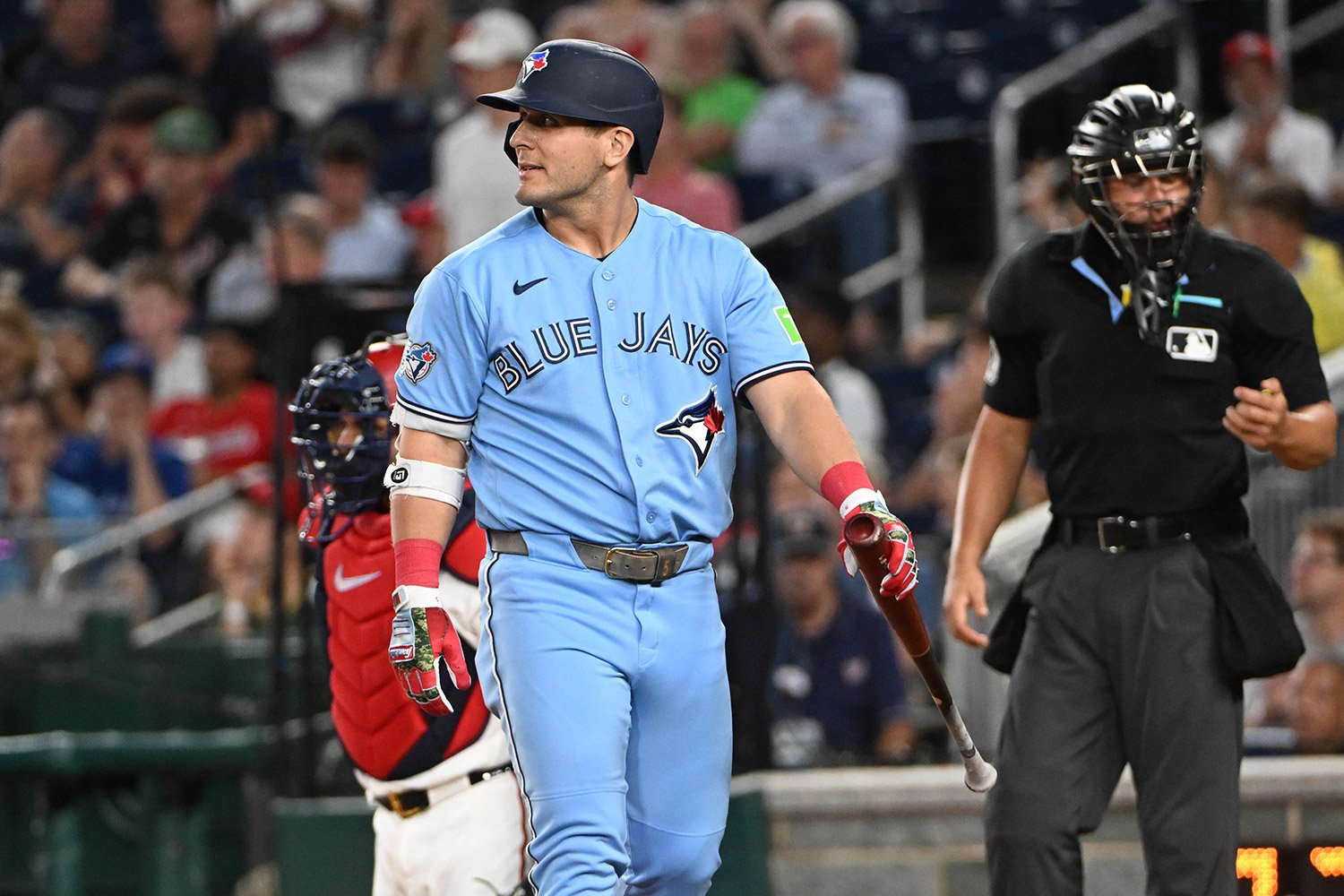 Jeff Passan is reporting that the Houston Astros have acquired Daulton Varsho. The Blue Jays center fielder is set to become a free agent at the end of the season, but the potential of a qualifying offer made his trade availability uncertain. The return for the Jays is reportedly right-hander Spencer Arrighetti. Varsho was worth 11.9 bWAR (8.4 fWAR) over four seasons in Toronto. His steady presence in center field only garnered one Gold Glove, but he arguably deserved at least one more. He came to the Jays ahead of the 2023 season in a trade that sent Lourdes Gurriel Jr. and Gabriel Moreno to Arizona. That trade signified a move towards a defense-first outfield and a shift in team-building philosophy. In 2025, Varsho put up a 123 wRC+ (his only Toronto season over 100) and was one of the catalysts propelling the Jays on their postseason run. The 26-year-old Arrighetti has started 17 games for the Astros this season, posting a 7-5 record over 88 innings. His 4.60 ERA and 5.07 FIP line up with 87 Ks against 50 BBs. He is currently on the 15-day IL with nerve irritation in his right foot. He hit the IL twice last season with a broken thumb early in the year and right elbow inflammation, limiting him to just 35.1 IP. In 2024, he threw 145 innings and notched 171 strikeouts. Arrighetti has club control until at least the end of the 2029 season with options remaining, per Keegan Matheson of MLB.com. The Blue Jays are beginning a series in Houston tonight (first pitch 8:10 pm ET), and there are multiple reports that the Astros are hoping to have Varsho in their lineup for this evening's game. Shane Bieber is Toronto's projected starter, but with just over an hour to the deadline, that could change.
 -
Jeff Passan is reporting that the Houston Astros have acquired Daulton Varsho. The Blue Jays center fielder is set to become a free agent at the end of the season, but the potential of a qualifying offer made his trade availability uncertain. The return for the Jays is reportedly right-hander Spencer Arrighetti. Varsho was worth 11.9 bWAR (8.4 fWAR) over four seasons in Toronto. His steady presence in center field only garnered one Gold Glove, but he arguably deserved at least one more. He came to the Jays ahead of the 2023 season in a trade that sent Lourdes Gurriel Jr. and Gabriel Moreno to Arizona. That trade signified a move towards a defense-first outfield and a shift in team-building philosophy. In 2025, Varsho put up a 123 wRC+ (his only Toronto season over 100) and was one of the catalysts propelling the Jays on their postseason run. The 26-year-old Arrighetti has started 17 games for the Astros this season, posting a 7-5 record over 88 innings. His 4.60 ERA and 5.07 FIP line up with 87 Ks against 50 BBs. He is currently on the 15-day IL with nerve irritation in his right foot. He hit the IL twice last season with a broken thumb early in the year and right elbow inflammation, limiting him to just 35.1 IP. In 2024, he threw 145 innings and notched 171 strikeouts. Arrighetti has club control until at least the end of the 2029 season with options remaining, per Keegan Matheson of MLB.com. The Blue Jays are beginning a series in Houston tonight (first pitch 8:10 pm ET), and there are multiple reports that the Astros are hoping to have Varsho in their lineup for this evening's game. Shane Bieber is Toronto's projected starter, but with just over an hour to the deadline, that could change. View full article
-
This is an incredibly difficult deadline to thread the needle on, but this trade is a good step towards it. I try not to get attached to prospects, but the calculus around how much of a season we get in '27 might be the real difference maker in judging this trade.
-
Details on Kevin Gausman's Partial No-Trade Clause
Mike LeSage replied to Leo Morgenstern's topic in Toronto Blue Jays Talk
I'd be interested to know when he had to make the list. I assume pre-season? Which makes the Mets, Tigers and Brewers being there kinda funny to me. I know some players have had mid-season "edit points" to change their lists, so maybe his is more current. -
Any other day, the story would be about Vladimir Guerrero Jr. breaking his home run drought and the Jays offense breaking open for 10 runs. Just the fifth time this season they’ve notched double digits and the first time since May 9. Kazuma Okamoto’s grand slam, George Springer going back-to-back with Vladdy (just the second time the Jays have done that all season), the power of the stuffed dragon, Daulton Varsho putting his body on the line in center. All of that ended up being secondary; it was the Dylan Cease show in San Francisco. Cease was perfect through four innings, striking out six to that point before issuing a walk to Willy Adames with two outs in the fifth. A swinging strikeout of the next batter, Bryce Eldridge, would end the inning and keep the no-hit bid alive. The sixth inning started with a leadoff walk, followed by another pair of Ks and an easy groundout. The seventh inning looks like a smooth one on paper, but Jung Hoo Lee’s nine-pitch AB was a grind ending in a flyout, and Ernie Clement had to make a nifty play on the final out of the inning to keep the Giants hitless. Eldridge led off the eighth and hit a ball to deep center field. The ball had an xBA of .770, but xBA doesn’t account for Varsho being an absolute maniac. With a lot of fielders, you might think they gave it a little extra to preserve the chance of a no-hitter. Varsho, I think, makes this play even if the Jays are down 10 runs. Crashing into the wall motivates him. It certainly seemed to motivate Cease too, who reached back to strike out the next two batters and put him three outs away from history. On the third pitch to the leadoff batter, Cease’s 118th of the day, Heliot Ramos drove a sinker into center to break up the no-hitter. Ramos’ hit had an xBA of .880, the highest of any Giant on the day, so this wasn’t a case of bad luck necessarily, just bad timing. Cease would be lifted from the game and would exit to a standing ovation. Tyler Rodgers finished it off with four pitches, and that was that. Cease’s final line: 8 IP, 1 H, 0 ER, 3 BB, 11 K. Cease’s game score of 88 is the best of any Jays starter this season, eclipsing his own previous high-water mark of 79 just last week against Seattle. In fact, Cease has six of the top 10 starts by game score for Toronto this season. This outing also marks the 10th time this season that Cease has thrown 100 or more pitches, with 118 setting a new career high. Dave Stieb is, of course, the first Blue Jay we think of when we talk about coming close to a no-hitter. Stieb, famously, took three no-hit bids to within an out of immortality before finally getting it done on Sept 2, 1990. He remains the only Blue Jay to ever achieve the feat. Toronto has the second longest active no-hitter drought, with only the Cleveland Guardians waiting longer (Len Barker in 1981). Brandon Morrow in 2010 came within an out of the no-no and struck out 17 on his way in one of the most impressive starts in Blue Jays history. Morrow’s game score of 100 is the Jays’ all-time best. Bowden Francis went into the ninth inning twice in 2024 before surrendering his first hit to the leadoff batter in both games. Marco Estrada took a perfect game into the eighth inning in 2015 (game score of 90), but his pitch count (129) and the game condition (Jays would win in the 12th inning) were against him. Then, of course, there was Roy Halladay’s second ever start. On Sept 27, 1998, Doc took a no-hitter into the ninth inning before losing it and the shutout (he still got the complete game) on a solo home run to Bobby Higginson. Doc’s game score of 89 was just one point better than Cease’s yesterday. Halladay would memorably go on to record a no-hitter (and a perfect game) with Philadelphia. Cease, in the reverse of Halladay, already has a no-hitter on his resume, having achieved it with the San Diego Padres in 2024. Wednesday marked the third time Cease has entered the ninth inning with no hits, having done it with the White Sox as well. That no-hit attempt was broken up by Luis Arraez, who was standing in the on-deck circle for the Giants yesterday – a fact that was certainly on Cease's mind. After the game, when asked if this start would give him a leg up on securing the starting role in the upcoming All-Star Game, Cease deflected and suggested that Cam Schlittler would be the likely starter. Yet, with John Schneider getting the final call, there may be a case for Cease to join Stieb and Halladay as the only previous Midsummer Classic starters with Toronto. View full article
-
.jpg.c776497db68b5d46eed4a940e5becba7.jpg) Any other day, the story would be about Vladimir Guerrero Jr. breaking his home run drought and the Jays offense breaking open for 10 runs. Just the fifth time this season they’ve notched double digits and the first time since May 9. Kazuma Okamoto’s grand slam, George Springer going back-to-back with Vladdy (just the second time the Jays have done that all season), the power of the stuffed dragon, Daulton Varsho putting his body on the line in center. All of that ended up being secondary; it was the Dylan Cease show in San Francisco. Cease was perfect through four innings, striking out six to that point before issuing a walk to Willy Adames with two outs in the fifth. A swinging strikeout of the next batter, Bryce Eldridge, would end the inning and keep the no-hit bid alive. The sixth inning started with a leadoff walk, followed by another pair of Ks and an easy groundout. The seventh inning looks like a smooth one on paper, but Jung Hoo Lee’s nine-pitch AB was a grind ending in a flyout, and Ernie Clement had to make a nifty play on the final out of the inning to keep the Giants hitless. Eldridge led off the eighth and hit a ball to deep center field. The ball had an xBA of .770, but xBA doesn’t account for Varsho being an absolute maniac. With a lot of fielders, you might think they gave it a little extra to preserve the chance of a no-hitter. Varsho, I think, makes this play even if the Jays are down 10 runs. Crashing into the wall motivates him. It certainly seemed to motivate Cease too, who reached back to strike out the next two batters and put him three outs away from history. On the third pitch to the leadoff batter, Cease’s 118th of the day, Heliot Ramos drove a sinker into center to break up the no-hitter. Ramos’ hit had an xBA of .880, the highest of any Giant on the day, so this wasn’t a case of bad luck necessarily, just bad timing. Cease would be lifted from the game and would exit to a standing ovation. Tyler Rodgers finished it off with four pitches, and that was that. Cease’s final line: 8 IP, 1 H, 0 ER, 3 BB, 11 K. Cease’s game score of 88 is the best of any Jays starter this season, eclipsing his own previous high-water mark of 79 just last week against Seattle. In fact, Cease has six of the top 10 starts by game score for Toronto this season. This outing also marks the 10th time this season that Cease has thrown 100 or more pitches, with 118 setting a new career high. Dave Stieb is, of course, the first Blue Jay we think of when we talk about coming close to a no-hitter. Stieb, famously, took three no-hit bids to within an out of immortality before finally getting it done on Sept 2, 1990. He remains the only Blue Jay to ever achieve the feat. Toronto has the second longest active no-hitter drought, with only the Cleveland Guardians waiting longer (Len Barker in 1981). Brandon Morrow in 2010 came within an out of the no-no and struck out 17 on his way in one of the most impressive starts in Blue Jays history. Morrow’s game score of 100 is the Jays’ all-time best. Bowden Francis went into the ninth inning twice in 2024 before surrendering his first hit to the leadoff batter in both games. Marco Estrada took a perfect game into the eighth inning in 2015 (game score of 90), but his pitch count (129) and the game condition (Jays would win in the 12th inning) were against him. Then, of course, there was Roy Halladay’s second ever start. On Sept 27, 1998, Doc took a no-hitter into the ninth inning before losing it and the shutout (he still got the complete game) on a solo home run to Bobby Higginson. Doc’s game score of 89 was just one point better than Cease’s yesterday. Halladay would memorably go on to record a no-hitter (and a perfect game) with Philadelphia. Cease, in the reverse of Halladay, already has a no-hitter on his resume, having achieved it with the San Diego Padres in 2024. Wednesday marked the third time Cease has entered the ninth inning with no hits, having done it with the White Sox as well. That no-hit attempt was broken up by Luis Arraez, who was standing in the on-deck circle for the Giants yesterday – a fact that was certainly on Cease's mind. After the game, when asked if this start would give him a leg up on securing the starting role in the upcoming All-Star Game, Cease deflected and suggested that Cam Schlittler would be the likely starter. Yet, with John Schneider getting the final call, there may be a case for Cease to join Stieb and Halladay as the only previous Midsummer Classic starters with Toronto.
Any other day, the story would be about Vladimir Guerrero Jr. breaking his home run drought and the Jays offense breaking open for 10 runs. Just the fifth time this season they’ve notched double digits and the first time since May 9. Kazuma Okamoto’s grand slam, George Springer going back-to-back with Vladdy (just the second time the Jays have done that all season), the power of the stuffed dragon, Daulton Varsho putting his body on the line in center. All of that ended up being secondary; it was the Dylan Cease show in San Francisco. Cease was perfect through four innings, striking out six to that point before issuing a walk to Willy Adames with two outs in the fifth. A swinging strikeout of the next batter, Bryce Eldridge, would end the inning and keep the no-hit bid alive. The sixth inning started with a leadoff walk, followed by another pair of Ks and an easy groundout. The seventh inning looks like a smooth one on paper, but Jung Hoo Lee’s nine-pitch AB was a grind ending in a flyout, and Ernie Clement had to make a nifty play on the final out of the inning to keep the Giants hitless. Eldridge led off the eighth and hit a ball to deep center field. The ball had an xBA of .770, but xBA doesn’t account for Varsho being an absolute maniac. With a lot of fielders, you might think they gave it a little extra to preserve the chance of a no-hitter. Varsho, I think, makes this play even if the Jays are down 10 runs. Crashing into the wall motivates him. It certainly seemed to motivate Cease too, who reached back to strike out the next two batters and put him three outs away from history. On the third pitch to the leadoff batter, Cease’s 118th of the day, Heliot Ramos drove a sinker into center to break up the no-hitter. Ramos’ hit had an xBA of .880, the highest of any Giant on the day, so this wasn’t a case of bad luck necessarily, just bad timing. Cease would be lifted from the game and would exit to a standing ovation. Tyler Rodgers finished it off with four pitches, and that was that. Cease’s final line: 8 IP, 1 H, 0 ER, 3 BB, 11 K. Cease’s game score of 88 is the best of any Jays starter this season, eclipsing his own previous high-water mark of 79 just last week against Seattle. In fact, Cease has six of the top 10 starts by game score for Toronto this season. This outing also marks the 10th time this season that Cease has thrown 100 or more pitches, with 118 setting a new career high. Dave Stieb is, of course, the first Blue Jay we think of when we talk about coming close to a no-hitter. Stieb, famously, took three no-hit bids to within an out of immortality before finally getting it done on Sept 2, 1990. He remains the only Blue Jay to ever achieve the feat. Toronto has the second longest active no-hitter drought, with only the Cleveland Guardians waiting longer (Len Barker in 1981). Brandon Morrow in 2010 came within an out of the no-no and struck out 17 on his way in one of the most impressive starts in Blue Jays history. Morrow’s game score of 100 is the Jays’ all-time best. Bowden Francis went into the ninth inning twice in 2024 before surrendering his first hit to the leadoff batter in both games. Marco Estrada took a perfect game into the eighth inning in 2015 (game score of 90), but his pitch count (129) and the game condition (Jays would win in the 12th inning) were against him. Then, of course, there was Roy Halladay’s second ever start. On Sept 27, 1998, Doc took a no-hitter into the ninth inning before losing it and the shutout (he still got the complete game) on a solo home run to Bobby Higginson. Doc’s game score of 89 was just one point better than Cease’s yesterday. Halladay would memorably go on to record a no-hitter (and a perfect game) with Philadelphia. Cease, in the reverse of Halladay, already has a no-hitter on his resume, having achieved it with the San Diego Padres in 2024. Wednesday marked the third time Cease has entered the ninth inning with no hits, having done it with the White Sox as well. That no-hit attempt was broken up by Luis Arraez, who was standing in the on-deck circle for the Giants yesterday – a fact that was certainly on Cease's mind. After the game, when asked if this start would give him a leg up on securing the starting role in the upcoming All-Star Game, Cease deflected and suggested that Cam Schlittler would be the likely starter. Yet, with John Schneider getting the final call, there may be a case for Cease to join Stieb and Halladay as the only previous Midsummer Classic starters with Toronto. -
Beautifully written. I'm still not mentally prepared to get into the would've, could've, should've of it all, but man, Bo's Game 7 homer *should've* been that elevating moment. It would not have put him above Fernandez, but it would have put him into that upper tier of the guys we'll talk about forever.
- 3 replies
-
- 2
-

-
- bo bichette
- tony fernandez
- (and 1 more)
-
.jpg.452e8a3893d6081d77c01f183926a622.jpg) The 2025 Blue Jays had a season so magical we’re likely to talk about it for a generation. The home stretch and finish of the season is what will stick the most in our memories, while the start of the season might have been mostly forgotten if not for the team seeming to play the same song again this year. Through 36 games in 2025, the Jays were 16-20, a record identical to that of this year’s team six weeks into the season. Last year, they started May with a pair of wins and then dropped four in a row – again, identical to this season. The 2026 Jays have since dug themselves into an even deeper hole. The 2025 team returned to .500 on May 12; right now, Toronto sits at 18-23 heading into play on Tuesday night. The game and the at-bat many credited with turning the team around last season happened towards the end of May. Going into their game on May 28, 2025, the Blue Jays held a 26-28 record and sat third in the AL East. Through eight innings, Toronto had left eight runners on base and was mired in a 0-0 draw with Texas (five Jays pitchers on a bullpen day combined to one-hit the Rangers and keep the game within reach). Ernie Clement led off the ninth inning with a single and was standing on second base with two outs in what looked like a carbon copy of so many failed innings before it. That was, of course, until Bo Bichette, called on as a pinch-hitter for the first time in his career, took an 0-1 pitch, sent it into the front row of the left field bleachers and single-handedly turned the Jays' season around. That might seem like hyperbole, but Jesse Burrill wrote, “You could argue this was the point where everything started for this team.” Manager John Schneider touted that game as the one that flipped the switch and put the Jays on the path they ended up on. They would win nine of their next 10, get above .500 and put themselves in position to take over the division by July. Now, with Bichette gone, where might we find that spark? Cory Sparks looked at how Ernie Clement is doing so far as a Bichette replacement, and while the power profiles are certainly different, Clement has had enough clutch hits that he could come up with the spark that ignites the season. Sam Charles talked about the roster ramifications of Addison Barger’s return, but with that return short-lived, maybe the season will turn around as quickly as Yohendrick Piñango did on his way to Buffalo, and maybe it will be one of the guys that keeps a roster spot that comes up with the magic. It’s early May, and it’s a long season, but if Toronto is going to turn the ship around, that work needs to start this month. Of course, for the flip side, we don’t have to go any further back than the season before the magical ‘25. Through 36 games in 2024, the Jays sported a record of, you guessed it, 16-20. The turning point we’re looking for now never came for that team, and they never got above .500 and would sit fifth in the division from mid-June until game 162. Through some combination of parity, luck and schedule oddities, this year’s Jays team is only one game out of a Wild Card spot. On May 12, 2025, they were two back, and it was five games on the same date in 2024. We seem to be at a crossroads, and the path that is taken from here will make all the difference.
The 2025 Blue Jays had a season so magical we’re likely to talk about it for a generation. The home stretch and finish of the season is what will stick the most in our memories, while the start of the season might have been mostly forgotten if not for the team seeming to play the same song again this year. Through 36 games in 2025, the Jays were 16-20, a record identical to that of this year’s team six weeks into the season. Last year, they started May with a pair of wins and then dropped four in a row – again, identical to this season. The 2026 Jays have since dug themselves into an even deeper hole. The 2025 team returned to .500 on May 12; right now, Toronto sits at 18-23 heading into play on Tuesday night. The game and the at-bat many credited with turning the team around last season happened towards the end of May. Going into their game on May 28, 2025, the Blue Jays held a 26-28 record and sat third in the AL East. Through eight innings, Toronto had left eight runners on base and was mired in a 0-0 draw with Texas (five Jays pitchers on a bullpen day combined to one-hit the Rangers and keep the game within reach). Ernie Clement led off the ninth inning with a single and was standing on second base with two outs in what looked like a carbon copy of so many failed innings before it. That was, of course, until Bo Bichette, called on as a pinch-hitter for the first time in his career, took an 0-1 pitch, sent it into the front row of the left field bleachers and single-handedly turned the Jays' season around. That might seem like hyperbole, but Jesse Burrill wrote, “You could argue this was the point where everything started for this team.” Manager John Schneider touted that game as the one that flipped the switch and put the Jays on the path they ended up on. They would win nine of their next 10, get above .500 and put themselves in position to take over the division by July. Now, with Bichette gone, where might we find that spark? Cory Sparks looked at how Ernie Clement is doing so far as a Bichette replacement, and while the power profiles are certainly different, Clement has had enough clutch hits that he could come up with the spark that ignites the season. Sam Charles talked about the roster ramifications of Addison Barger’s return, but with that return short-lived, maybe the season will turn around as quickly as Yohendrick Piñango did on his way to Buffalo, and maybe it will be one of the guys that keeps a roster spot that comes up with the magic. It’s early May, and it’s a long season, but if Toronto is going to turn the ship around, that work needs to start this month. Of course, for the flip side, we don’t have to go any further back than the season before the magical ‘25. Through 36 games in 2024, the Jays sported a record of, you guessed it, 16-20. The turning point we’re looking for now never came for that team, and they never got above .500 and would sit fifth in the division from mid-June until game 162. Through some combination of parity, luck and schedule oddities, this year’s Jays team is only one game out of a Wild Card spot. On May 12, 2025, they were two back, and it was five games on the same date in 2024. We seem to be at a crossroads, and the path that is taken from here will make all the difference. -
Facing Hunter Feduccia to lead off the fourth inning and throwing a four-seam fastball on a 2-2 pitch, Kevin Gausman notched the 2000th strikeout of his career. Of those 2000, 510 have come in that count. It also marked the 468th time that Gausman had sat down the leadoff hitter of an inning on strikes. Since joining the Blue Jays in 2022, Gausman has recorded 839 of his strikeouts. That total has him sitting seventh all-time with the Jays. Another 105 this season and he’ll catch Jimmy Key for sixth place. Gausman is a free agent at the end of this season, so if he has plans on cracking the top five, he’ll likely need to sign an extension. In 2023, Gausman notched 237 strikeouts, leading the AL and marking the fourth-highest single-season total ever for a Blue Jays pitcher. It was most by a Jays pitcher who didn’t go on to win the Cy Young Award. His 205 Ks in 2022 and 189 Ks in 2025 sit as the eighth and 13th best seasons in franchise history. Gausman was the Opening Day starter for Toronto this season and came out of the gates flying, chalking up 11 strikeouts against a free-swinging Athletics team and setting his high-water mark for the season (so far). He had 10 Ks in his next start, making it the 21st time Gausman notched double-digit strikeouts in a game with Toronto. His career best mark is 13 strikeouts in a game, a feat he achieved twice in Toronto, both in 2023. In one of those games, against Seattle, Gausman struck out Cal Raleigh and Teoscar Hernández three times each (Jordan Romano would face them later in the game and secure golden sombreros for both hitters). After those two starts, Gausman has cooled off some and hasn’t had more than five strikeouts in a game since (he would leave the milestone game with five Ks). In fact, in his last three starts going into the milestone game, he’d had three or fewer Ks, his lowest for a three-game stretch in Toronto. Not since 2014 in Baltimore has Gausman had a three-start stretch with so few strikeouts (he went 3-2-3 then too). Having spent the bulk of his career in the AL East, it should be no surprise that each of the three active players Gausman has struck out the most also spent a chunk of time here. Xander Bogaerts has gone down on strikes against him 13 times, while Trevor Story represents 15 of Gausman’s career Ks. No one is close to Aaron Judge’s 20, though. Just over 1.4% of the time when Judge has struck out in his career, he’s looked at the mound and seen Gausman standing there. Ahead of this season, we had Gausman as the 25th best Blue Jay of all time and the only active pitcher to make the Top 50. If we made a list of the Top 50 Contracts in Blue Jays History, there’s a fair shot that Gausman would have placed even higher. His five-year, $110 million deal was notably $5 million less than the deal Robbie Ray would get on his way out of Toronto. Gausman stepped into that ace role and earned a spot as one of the franchise’s greats. Here’s to 2000 more! View full article
-
.jpg.15f89826e306fd19ec1ce833af0792a2.jpg) Facing Hunter Feduccia to lead off the fourth inning and throwing a four-seam fastball on a 2-2 pitch, Kevin Gausman notched the 2000th strikeout of his career. Of those 2000, 510 have come in that count. It also marked the 468th time that Gausman had sat down the leadoff hitter of an inning on strikes. Since joining the Blue Jays in 2022, Gausman has recorded 839 of his strikeouts. That total has him sitting seventh all-time with the Jays. Another 105 this season and he’ll catch Jimmy Key for sixth place. Gausman is a free agent at the end of this season, so if he has plans on cracking the top five, he’ll likely need to sign an extension. In 2023, Gausman notched 237 strikeouts, leading the AL and marking the fourth-highest single-season total ever for a Blue Jays pitcher. It was most by a Jays pitcher who didn’t go on to win the Cy Young Award. His 205 Ks in 2022 and 189 Ks in 2025 sit as the eighth and 13th best seasons in franchise history. Gausman was the Opening Day starter for Toronto this season and came out of the gates flying, chalking up 11 strikeouts against a free-swinging Athletics team and setting his high-water mark for the season (so far). He had 10 Ks in his next start, making it the 21st time Gausman notched double-digit strikeouts in a game with Toronto. His career best mark is 13 strikeouts in a game, a feat he achieved twice in Toronto, both in 2023. In one of those games, against Seattle, Gausman struck out Cal Raleigh and Teoscar Hernández three times each (Jordan Romano would face them later in the game and secure golden sombreros for both hitters). After those two starts, Gausman has cooled off some and hasn’t had more than five strikeouts in a game since (he would leave the milestone game with five Ks). In fact, in his last three starts going into the milestone game, he’d had three or fewer Ks, his lowest for a three-game stretch in Toronto. Not since 2014 in Baltimore has Gausman had a three-start stretch with so few strikeouts (he went 3-2-3 then too). Having spent the bulk of his career in the AL East, it should be no surprise that each of the three active players Gausman has struck out the most also spent a chunk of time here. Xander Bogaerts has gone down on strikes against him 13 times, while Trevor Story represents 15 of Gausman’s career Ks. No one is close to Aaron Judge’s 20, though. Just over 1.4% of the time when Judge has struck out in his career, he’s looked at the mound and seen Gausman standing there. Ahead of this season, we had Gausman as the 25th best Blue Jay of all time and the only active pitcher to make the Top 50. If we made a list of the Top 50 Contracts in Blue Jays History, there’s a fair shot that Gausman would have placed even higher. His five-year, $110 million deal was notably $5 million less than the deal Robbie Ray would get on his way out of Toronto. Gausman stepped into that ace role and earned a spot as one of the franchise’s greats. Here’s to 2000 more!
Facing Hunter Feduccia to lead off the fourth inning and throwing a four-seam fastball on a 2-2 pitch, Kevin Gausman notched the 2000th strikeout of his career. Of those 2000, 510 have come in that count. It also marked the 468th time that Gausman had sat down the leadoff hitter of an inning on strikes. Since joining the Blue Jays in 2022, Gausman has recorded 839 of his strikeouts. That total has him sitting seventh all-time with the Jays. Another 105 this season and he’ll catch Jimmy Key for sixth place. Gausman is a free agent at the end of this season, so if he has plans on cracking the top five, he’ll likely need to sign an extension. In 2023, Gausman notched 237 strikeouts, leading the AL and marking the fourth-highest single-season total ever for a Blue Jays pitcher. It was most by a Jays pitcher who didn’t go on to win the Cy Young Award. His 205 Ks in 2022 and 189 Ks in 2025 sit as the eighth and 13th best seasons in franchise history. Gausman was the Opening Day starter for Toronto this season and came out of the gates flying, chalking up 11 strikeouts against a free-swinging Athletics team and setting his high-water mark for the season (so far). He had 10 Ks in his next start, making it the 21st time Gausman notched double-digit strikeouts in a game with Toronto. His career best mark is 13 strikeouts in a game, a feat he achieved twice in Toronto, both in 2023. In one of those games, against Seattle, Gausman struck out Cal Raleigh and Teoscar Hernández three times each (Jordan Romano would face them later in the game and secure golden sombreros for both hitters). After those two starts, Gausman has cooled off some and hasn’t had more than five strikeouts in a game since (he would leave the milestone game with five Ks). In fact, in his last three starts going into the milestone game, he’d had three or fewer Ks, his lowest for a three-game stretch in Toronto. Not since 2014 in Baltimore has Gausman had a three-start stretch with so few strikeouts (he went 3-2-3 then too). Having spent the bulk of his career in the AL East, it should be no surprise that each of the three active players Gausman has struck out the most also spent a chunk of time here. Xander Bogaerts has gone down on strikes against him 13 times, while Trevor Story represents 15 of Gausman’s career Ks. No one is close to Aaron Judge’s 20, though. Just over 1.4% of the time when Judge has struck out in his career, he’s looked at the mound and seen Gausman standing there. Ahead of this season, we had Gausman as the 25th best Blue Jay of all time and the only active pitcher to make the Top 50. If we made a list of the Top 50 Contracts in Blue Jays History, there’s a fair shot that Gausman would have placed even higher. His five-year, $110 million deal was notably $5 million less than the deal Robbie Ray would get on his way out of Toronto. Gausman stepped into that ace role and earned a spot as one of the franchise’s greats. Here’s to 2000 more! -
The 2025 Blue Jays had a season so magical we’re likely to talk about it for a generation. The home stretch and finish of the season is what will stick the most in our memories, while the start of the season might have been mostly forgotten if not for the team seeming to play the same song again this year. Through 36 games last year, the Jays were 16-20, a record identical to that of this year’s team. Last year, they started May with a pair of wins and then dropped four in a row – again, identical to this season. The game and the at-bat many credited with turning the team around last season happened towards the end of May. Going into their game on May 28, 2025, the Blue Jays held a 26-28 record and sat third in the AL East. Through eight innings, Toronto had left eight runners on base and was mired in a 0-0 draw with Texas (five Jays pitchers on a bullpen day combined to one-hit the Rangers and keep the game within reach). Ernie Clement led off the ninth inning with a single and was standing on second base with two outs in what looked like a carbon copy of so many failed innings before it. That was, of course, until Bo Bichette, called on as a pinch-hitter for the first time in his career, took an 0-1 pitch, sent it into the front row of the left field bleachers and single-handedly turned the Jays' season around. That might seem like hyperbole, but Jesse Burrill wrote, “You could argue this was the point where everything started for this team.” Manager John Schneider touted that game as the one that flipped the switch and put the Jays on the path they ended up on. They would win nine of their next 10, get above .500 and put themselves in position to take over the division by July. Now, with Bichette gone, where might we find that spark? Cory Sparks looked at how Ernie Clement is doing so far as a Bichette replacement, and while the power profiles are certainly different, Clement has had enough clutch hits that he could come up with the spark that ignites the season. If we’re looking for a power bat to light things up, we shouldn’t have to look further than the returning Addison Barger. Sam Charles talked about the roster ramifications of Barger’s return, and maybe it will be one of the guys that keeps a roster spot that comes up with the magic. It’s early May, and it’s a long season, but if Toronto is going to turn the ship around, that work needs to start this month. Of course, for the flip side, we don’t have to go any further back than the season before the magical ‘25. Through 36 games in 2024, the Jays sported a record of, you guessed it, 16-20. The turning point we’re looking for now never came for that team, and they never got above .500 and would sit fifth in the division from mid-June until game 162. Through some combination of parity, luck and schedule oddities, this year’s Jays team is only a game and a half out of a Wild Card spot. On May 7, 2025 they were 3.0 back, and it was 4.5 games on the same date in 2024. We seem to be at a crossroads, and the path that is taken from here will make all the difference. View full article
-
You see the "DNP - Coach's Decision" used regularly in basketball box scores, but rarely as an interview sound bite. I'm curious to see when Schneider deploys this again.

.jpg.6b5aae0f2b2bd04c0653330c4cc7cfa7.jpg)
.jpg.31d919ebc9acc15fb2e915eb9afa180d.jpg)
.jpg.4769db4798d90a3d2ad865dab2605698.jpg)
.jpg.c776497db68b5d46eed4a940e5becba7.jpg)
.jpg.452e8a3893d6081d77c01f183926a622.jpg)
.jpg.15f89826e306fd19ec1ce833af0792a2.jpg)