


Mike LeSage
-
Posts
243 -
Joined
-
Last visited
-
Days Won
1
Content Type
Profiles
Toronto Blue Jays Videos
2026 Toronto Blue Jays Top Prospects Ranking
Toronto Blue Jays Free Agent & Trade Rumors, Notes, & Tidbits
Guides & Resources
2025 Toronto Blue Jays Draft Pick Tracker
News
2026 Toronto Blue Jays Draft Tracker: Picks & Bonuses
Forums
Blogs
Events
Store
Downloads
Gallery
Everything posted by Mike LeSage
-
One (Magical) Run, and Done?
Mike LeSage replied to Sam Charles's topic in Jays Centre Front Page News
I haven't put on my accounting department hat yet, but I want Bichette back as our second baseman at almost any cost. Bassitt, the guy I was most okay with letting walk, really turned me around with his work out of the pen and his post-series comments. I would welcome Scherzer and Bieber back with open arms. The active roster can't hold all the guys I want on it... tough decisions to be made for sure. -
Pre-game - Win Probability: 50% Max Scherzer gets the ball in what is likely the final start of his career. Addison Barger and Daulton Varsho swap places in the batting order, but otherwise it’s the same lineup as Game 6. The Dodgers' lineup is unchanged. Shohei Ohtani gets the start for the Dodgers, going on three days' rest. Vladimir Guerrero Jr. arrived wearing a Marie-Philip Poulin Team Canada jersey, and if he can channel half of the power of Captain Clutch, we’re in for a good night. All the cliches are in effect, every player is available - to pitch, to bat, to run - whatever is asked of them. The first time the MLB season has started and ended outside of the United States of America. Let’s keep the trophy up here! First inning - Win Probability: 50% Ohtani leads things off with a single and makes it as far as third. Guerrero makes a diving stop on a Will Smith grounder and flips it to Scherzer for the first out. Freddie Freeman flies out, and Mookie Betts grounds out to leave the top half scoreless. George Springer gets things started for the home side with a single. Nathan Lukes strikes out, and then Guerrero strikes out (looking) on a full count and with Springer running. Springer held up on his run (thinking it was a walk? Forgetting where he was?) and was thrown out in the weakest strike 'em out, throw 'em out double play I’ve seen since little league. Second inning - Win Probability: 50% Scherzer has an efficient inning, striking out Max Muncy and getting fly outs from Teoscar Hernández and (a deep one from) Tommy Edman. Mad Max is through two innings with 20 pitches. Bo Bichette walks to start the inning, and Barger singles behind him. Two on, none out. Alejandro Kirk pops out, and Daulton Varsho flies out to Teoscar. Ernie Clement hits a single to right field that might have scored anyone else in the lineup, but the hobbled Bichette is (correctly) held at third. Bases loaded. Andrés Giménez goes down on strikes to leave the bases full. Ohtani is up to 43 pitches, so that’s something at least. Third inning - Win Probability: 82.1% Scherzer gets the Dodgers to go three up, three down again with Kiké Hernández flying out, a Miguel Rojas strikeout, and Ohtani with a lineout that Nathan Lukes made a terrific catch on. Springer leads off with a single, and Luke's sacrifice bunt moves him up to second for Guerrero. The Dodgers elect to pitch to Vladdy, but after Ohtani's wild pitch allows Springer to take third, they decide to walk Guerrero and take their chances with Bichette. Bo responded by hitting his first career postseason home run (+20.5% WPA)! 3-0 Jays! That would be Ohtani’s last pitch of the game as the Dodgers turn to Justin Wrobleski to keep the game in reach. Barger would get a single, but outs by Kirk and Varsho end the inning. Fourth inning - Win Probability: 75.8% The Dodgers would load the bases, but get only one back in the fourth. Varsho would make an incredible diving catch on a ball hit by Teoscar, and Guerrero made a diving catch of his own into foul territory to retire Edman and limit the damage to one run. 3-1 Jays. Clement grounds out to the inning, and Giménez, after three pitches up and in, takes one off the hands for an HBP. Giménez used some choice words to question Wrobleski’s ability to throw strikes. Wrobleski, in turn, used some choice words of his own to let Giménez know that he was interested in escalating the matter. Tensions might already have been elevated around the diamond, but this was enough to empty the benches. *Everybody* came running. The bullpens emptied. It was a brief interlude of chaos in the midst of an already historic game. Springer would single, and Lukes would strike out. That brought Guerrero to the plate and Tyler Glasnow into the game to pitch to him. Guerrero would line out to end the inning. Fifth inning - Win Probability: 78.6% Scherzer would start the fifth and get a strikeout of Kiké Hernández. A single to the #9 hitter (Rojas) would bring Louis Varland out of the ‘pen to face Ohtani. Pre-game, I mused about how Mad Max would pitch in his potential final career start. After watching him through four and a third tonight, I think he might pitch in 2026. Shohei would be single, but Varland induced flyouts from Smith and Freeman to end the frame. Glasnow gave up a single to Kirk, but otherwise worked an efficient inning. Glasnow, at one time slated to be the starter in this game, is looking like he might go a few innings. Sixth inning - Win Probability: 82.2% Chris Bassitt came in for the sixth and issued a walk to Betts to open the frame. Betts would come around to score on an Edman sac fly, but again, the damage was limited to one run. 3-2 Jays. Bottom half, and Ernie Clement leads off with a single, tying the major league record for hits in a postseason at 29. Giménez would hit a double into the right-centre gap for a double. Clement would ditch his helmet and perform one of the most beautiful and unnecessary slides into home I’ve ever seen. The Jays had their two-run cushion back. 4-2 Jays. Seventh inning - Win Probability: 86.9% Another record holder, Trey Yesavage, would enter the game to face the top of the Dodgers' order. A walk to Ohtani and a fly out by Smith brought Freeman to the plate. He would hit a ball up the first baseline that Guerrero fielded cleanly and executed a textbook 3-6-3 GIDP. Vladdy’s second great defensive play of the game. Emmet Sheehan would be next out of the ‘pen for LA, and he worked a quick bottom of the inning. Kirk got a single, but the others around him retired. Eighth inning - Win Probability: 84% Yesavage would stay in for the eighth and got groundouts of Betts and Teoscar, but between them, Max Muncy would homer (-9.9% WPA) to bring the Dodgers back within one. Jeff Hoffman entered the game to get the last out of the inning - a groundout by Edman. Ernie Clement led off the inning with a double, putting him at second base and giving him sole possession of the record for hits in a postseason with 30. That would bring Blake Snell out of the Dodgers' bullpen. Giménez hit a ball hard at the third baseman, Muncy, who was playing in to protect against the bunt. The ball had an xBA of .590, but Muncy got his glove up and made the catch. Snell then struck out Springer and pinch-hitting Davis Schneider to end the inning and leave Clement stranded at second. Ninth inning - Win Probability: 50% Hoffman stays in, and the Jays are three outs away from becoming champions. He gets Kiké Hernández to strike out. He gets the #9 hitter, Rojas, to a full count and on the seventh pitch of the at-bat, hangs a slider that ends up 387 feet away for a home run (-35.4% WPA). Tie game. 4-4. An Ohtani flyout and a Smith strikeout keep the game tied and send the Jays to the bottom of the ninth with a chance to walk it off. Guerrero hit a ball deep, but Edman was there to make the play. Bichette would single, Barger would walk, and then Yoshinobu Yamamoto came into the game, and Kirk would be hit by a pitch. Bases loaded, one out, tie game. Daulton Varsho hit a ball to Rojas at second. The throw came home, and Isiah Kiner-Falefa (who was in as a pinch runner for Bichette) was called out. The Jays challenged the call—it was certainly close, and it appeared that LA catcher Smith may have lifted his foot as the throw came in, breaking the connection with the plate. The call was upheld, the runner out. Bases were still loaded, but now two out, and the hit machine, Clement, was at the plate. The ErnDog put a charge into the ball, but Andy Pages, who was in the game as a defensive substitution, literally ran over left fielder Kiké Hernández to make the catch on the warning track, end the inning, and send game 7 to extra innings. Tenth inning - Win Probability: 50% Seranthony Domínguez came in for the first of the extra frames and started with a deep flyout from Freeman. He would then load the bases with a Muncy single (-8% WPA) sandwiched between walks for Betts (-5.9% WPA) and Teoscar (-13.5% WPA). Pages, who had only just come into the game, hit a grounder to Giménez, who came home with the throw for the force out and kept the score tied (+18.1% WPA). Then an incredibly tight play at first ended the inning (+17% WPA). The game was still tied. Yamamoto stayed in the game and retired Giménez, Springer, and Myles Straw in order. Eleventh inning - Win Probability: 0% Shane Bieber got the call for the eleventh and quickly got two weak groundouts to retire Rojas and Ohtani. Then Will Smith came to the plate. After two balls well out of the zone, Bieber put a slider right in the middle and Smith hit it out (-41.5% WPA) to give the Dodgers the lead with their third homer of the game. The Jays' bats would come up needing one to tie and two to win. Yamamoto stayed in to face them. Guerrero doubled to left field (+24.4% WPA) with his 29th hit of the postseason, moving him into a tie for the second most all-time. IKF executed a perfect sacrifice bunt to move Vladdy to third and bring Barger to the plate. He would draw a walk and put the winning run on first base. Alejandro Kirk then came to the plate. He would then become the final batter of the season, hitting a ground ball to Betts at short, who turned two and ended the game. This was a magical season. The Jays had chances in both Games 6 and 7 to have it end differently—just one more hit with runners in scoring position would've done it. We will celebrate this team and analyze these series, but for now, it just hurts. The appreciation will come, but until then, we just sit in the pain of the loss. Pitchers and catchers report in just over 100 days - there’s always next season. View full article
-
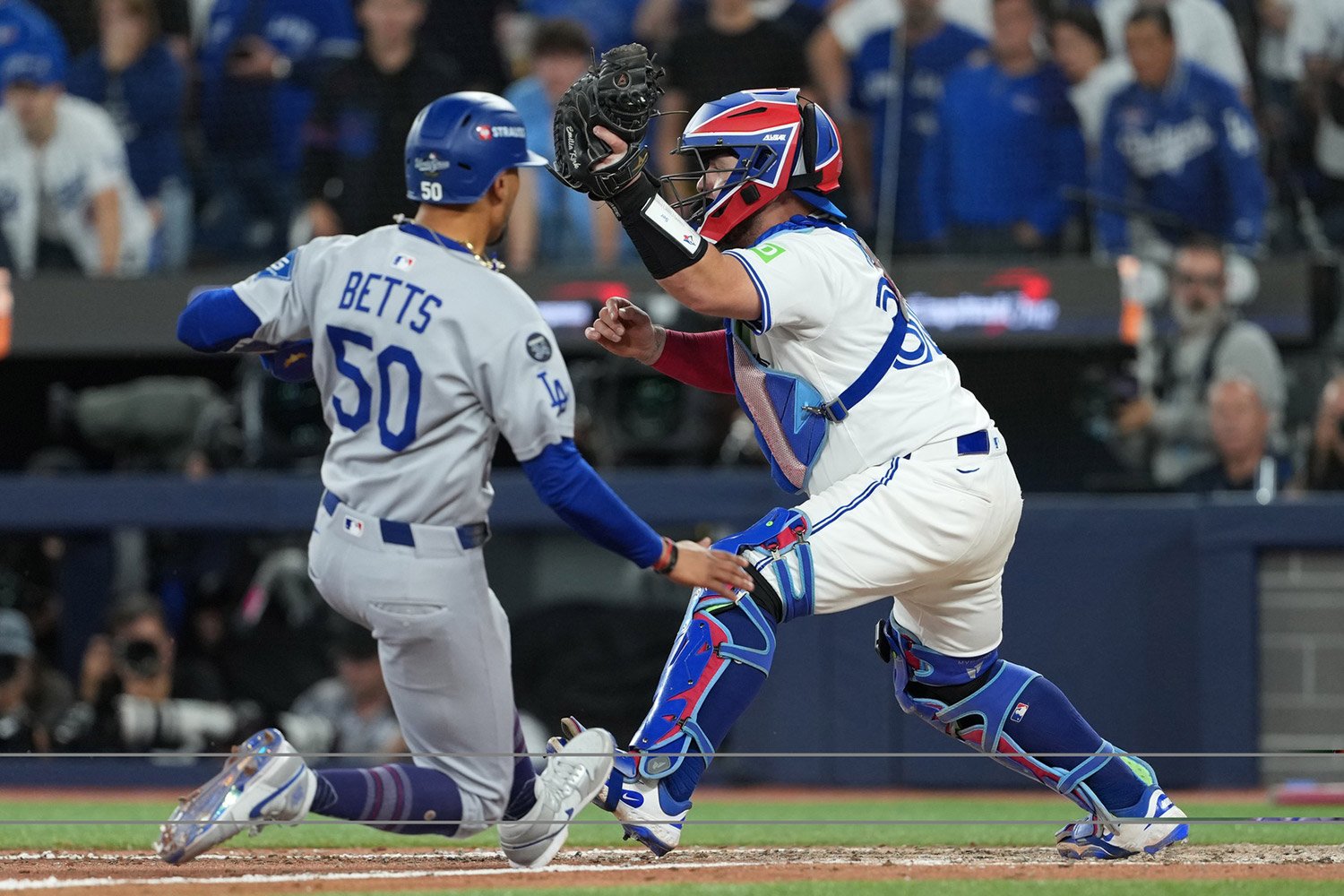 Pre-game - Win Probability: 50% Max Scherzer gets the ball in what is likely the final start of his career. Addison Barger and Daulton Varsho swap places in the batting order, but otherwise it’s the same lineup as Game 6. The Dodgers' lineup is unchanged. Shohei Ohtani gets the start for the Dodgers, going on three days' rest. Vladimir Guerrero Jr. arrived wearing a Marie-Philip Poulin Team Canada jersey, and if he can channel half of the power of Captain Clutch, we’re in for a good night. All the cliches are in effect, every player is available - to pitch, to bat, to run - whatever is asked of them. The first time the MLB season has started and ended outside of the United States of America. Let’s keep the trophy up here! First inning - Win Probability: 50% Ohtani leads things off with a single and makes it as far as third. Guerrero makes a diving stop on a Will Smith grounder and flips it to Scherzer for the first out. Freddie Freeman flies out, and Mookie Betts grounds out to leave the top half scoreless. George Springer gets things started for the home side with a single. Nathan Lukes strikes out, and then Guerrero strikes out (looking) on a full count and with Springer running. Springer held up on his run (thinking it was a walk? Forgetting where he was?) and was thrown out in the weakest strike 'em out, throw 'em out double play I’ve seen since little league. Second inning - Win Probability: 50% Scherzer has an efficient inning, striking out Max Muncy and getting fly outs from Teoscar Hernández and (a deep one from) Tommy Edman. Mad Max is through two innings with 20 pitches. Bo Bichette walks to start the inning, and Barger singles behind him. Two on, none out. Alejandro Kirk pops out, and Daulton Varsho flies out to Teoscar. Ernie Clement hits a single to right field that might have scored anyone else in the lineup, but the hobbled Bichette is (correctly) held at third. Bases loaded. Andrés Giménez goes down on strikes to leave the bases full. Ohtani is up to 43 pitches, so that’s something at least. Third inning - Win Probability: 82.1% Scherzer gets the Dodgers to go three up, three down again with Kiké Hernández flying out, a Miguel Rojas strikeout, and Ohtani with a lineout that Nathan Lukes made a terrific catch on. Springer leads off with a single, and Luke's sacrifice bunt moves him up to second for Guerrero. The Dodgers elect to pitch to Vladdy, but after Ohtani's wild pitch allows Springer to take third, they decide to walk Guerrero and take their chances with Bichette. Bo responded by hitting his first career postseason home run (+20.5% WPA)! 3-0 Jays! That would be Ohtani’s last pitch of the game as the Dodgers turn to Justin Wrobleski to keep the game in reach. Barger would get a single, but outs by Kirk and Varsho end the inning. Fourth inning - Win Probability: 75.8% The Dodgers would load the bases, but get only one back in the fourth. Varsho would make an incredible diving catch on a ball hit by Teoscar, and Guerrero made a diving catch of his own into foul territory to retire Edman and limit the damage to one run. 3-1 Jays. Clement grounds out to the inning, and Giménez, after three pitches up and in, takes one off the hands for an HBP. Giménez used some choice words to question Wrobleski’s ability to throw strikes. Wrobleski, in turn, used some choice words of his own to let Giménez know that he was interested in escalating the matter. Tensions might already have been elevated around the diamond, but this was enough to empty the benches. *Everybody* came running. The bullpens emptied. It was a brief interlude of chaos in the midst of an already historic game. Springer would single, and Lukes would strike out. That brought Guerrero to the plate and Tyler Glasnow into the game to pitch to him. Guerrero would line out to end the inning. Fifth inning - Win Probability: 78.6% Scherzer would start the fifth and get a strikeout of Kiké Hernández. A single to the #9 hitter (Rojas) would bring Louis Varland out of the ‘pen to face Ohtani. Pre-game, I mused about how Mad Max would pitch in his potential final career start. After watching him through four and a third tonight, I think he might pitch in 2026. Shohei would be single, but Varland induced flyouts from Smith and Freeman to end the frame. Glasnow gave up a single to Kirk, but otherwise worked an efficient inning. Glasnow, at one time slated to be the starter in this game, is looking like he might go a few innings. Sixth inning - Win Probability: 82.2% Chris Bassitt came in for the sixth and issued a walk to Betts to open the frame. Betts would come around to score on an Edman sac fly, but again, the damage was limited to one run. 3-2 Jays. Bottom half, and Ernie Clement leads off with a single, tying the major league record for hits in a postseason at 29. Giménez would hit a double into the right-centre gap for a double. Clement would ditch his helmet and perform one of the most beautiful and unnecessary slides into home I’ve ever seen. The Jays had their two-run cushion back. 4-2 Jays. Seventh inning - Win Probability: 86.9% Another record holder, Trey Yesavage, would enter the game to face the top of the Dodgers' order. A walk to Ohtani and a fly out by Smith brought Freeman to the plate. He would hit a ball up the first baseline that Guerrero fielded cleanly and executed a textbook 3-6-3 GIDP. Vladdy’s second great defensive play of the game. Emmet Sheehan would be next out of the ‘pen for LA, and he worked a quick bottom of the inning. Kirk got a single, but the others around him retired. Eighth inning - Win Probability: 84% Yesavage would stay in for the eighth and got groundouts of Betts and Teoscar, but between them, Max Muncy would homer (-9.9% WPA) to bring the Dodgers back within one. Jeff Hoffman entered the game to get the last out of the inning - a groundout by Edman. Ernie Clement led off the inning with a double, putting him at second base and giving him sole possession of the record for hits in a postseason with 30. That would bring Blake Snell out of the Dodgers' bullpen. Giménez hit a ball hard at the third baseman, Muncy, who was playing in to protect against the bunt. The ball had an xBA of .590, but Muncy got his glove up and made the catch. Snell then struck out Springer and pinch-hitting Davis Schneider to end the inning and leave Clement stranded at second. Ninth inning - Win Probability: 50% Hoffman stays in, and the Jays are three outs away from becoming champions. He gets Kiké Hernández to strike out. He gets the #9 hitter, Rojas, to a full count and on the seventh pitch of the at-bat, hangs a slider that ends up 387 feet away for a home run (-35.4% WPA). Tie game. 4-4. An Ohtani flyout and a Smith strikeout keep the game tied and send the Jays to the bottom of the ninth with a chance to walk it off. Guerrero hit a ball deep, but Edman was there to make the play. Bichette would single, Barger would walk, and then Yoshinobu Yamamoto came into the game, and Kirk would be hit by a pitch. Bases loaded, one out, tie game. Daulton Varsho hit a ball to Rojas at second. The throw came home, and Isiah Kiner-Falefa (who was in as a pinch runner for Bichette) was called out. The Jays challenged the call—it was certainly close, and it appeared that LA catcher Smith may have lifted his foot as the throw came in, breaking the connection with the plate. The call was upheld, the runner out. Bases were still loaded, but now two out, and the hit machine, Clement, was at the plate. The ErnDog put a charge into the ball, but Andy Pages, who was in the game as a defensive substitution, literally ran over left fielder Kiké Hernández to make the catch on the warning track, end the inning, and send game 7 to extra innings. Tenth inning - Win Probability: 50% Seranthony Domínguez came in for the first of the extra frames and started with a deep flyout from Freeman. He would then load the bases with a Muncy single (-8% WPA) sandwiched between walks for Betts (-5.9% WPA) and Teoscar (-13.5% WPA). Pages, who had only just come into the game, hit a grounder to Giménez, who came home with the throw for the force out and kept the score tied (+18.1% WPA). Then an incredibly tight play at first ended the inning (+17% WPA). The game was still tied. Yamamoto stayed in the game and retired Giménez, Springer, and Myles Straw in order. Eleventh inning - Win Probability: 0% Shane Bieber got the call for the eleventh and quickly got two weak groundouts to retire Rojas and Ohtani. Then Will Smith came to the plate. After two balls well out of the zone, Bieber put a slider right in the middle and Smith hit it out (-41.5% WPA) to give the Dodgers the lead with their third homer of the game. The Jays' bats would come up needing one to tie and two to win. Yamamoto stayed in to face them. Guerrero doubled to left field (+24.4% WPA) with his 29th hit of the postseason, moving him into a tie for the second most all-time. IKF executed a perfect sacrifice bunt to move Vladdy to third and bring Barger to the plate. He would draw a walk and put the winning run on first base. Alejandro Kirk then came to the plate. He would then become the final batter of the season, hitting a ground ball to Betts at short, who turned two and ended the game. This was a magical season. The Jays had chances in both Games 6 and 7 to have it end differently—just one more hit with runners in scoring position would've done it. We will celebrate this team and analyze these series, but for now, it just hurts. The appreciation will come, but until then, we just sit in the pain of the loss. Pitchers and catchers report in just over 100 days - there’s always next season.
 -
The Blue Jays went to Los Angeles after splitting the first two games in Toronto, and the return trip wasn’t guaranteed for either team. After a successful trip out west, the Jays made sure at least one more game would be played at Rogers Centre. Now we know it will be two. They’ve been called underdogs and Davids (next to the Dodgers’ Goliaths), over-performers and uncommon men, but by the end of the night, we might be calling them champions. In the bottom of the eighth inning of Game 5, Shohei Ohtani came to the plate. Ohtani was 0-for-3 at that point, a far cry from the terrifying performance he displayed in the marathon Game 3. Ohtani swung at the first pitch he saw, a middle-middle splitter from Seranthony Domínguez, and hit it up the first base line at just under 100 mph. The batted ball had an xBA of .440, but standing in its way was our Gold Glove first baseman: Vladimir Guerrero Jr. He gloved the ball and tumbled backwards in the effort. His positioning had him close enough to first that all he had to do to record the out was reach out and slap the base (big time). The image of Vladdy, on his backside, in a postseason game, reaching out for a base, reminded me of something. In truth, it’s something I’m reminded of semi-regularly. I’m blessed to have some wonderful Twins fans in my life, but “Panda” Pete Leisen won’t hesitate to drop this picture into a chat – it helps to keep me in check. It’s from the last playoff game the Blue Jays played before this postseason: Game 2 of the 2023 Wild Card round. That was only a couple of years ago, but right now, it feels like a lifetime, so if you’ll allow me a moment of reflection, let’s look back at that game and that team. José Berríos started that day for the Jays, and if you didn’t immediately recall the specific game, that might jog your memory. Berríos had five K’s through three innings. He gave up a single in each inning but left two of them stranded at first and erased the other with a GIDP. He was only at 34 pitches. The fourth inning started with a walk to the Twins DH, Royce Lewis, and, in a shock to many viewers, that ended Berríos’ day. Lefty starter Yusei Kikuchi came out of the ‘pen and gave up a single, issued a walk, and then another single before recording an out. That gave the Twins a 1-0 lead. They would score another on a GIDP and leave the inning with a 2-0 advantage. The Jays had a chance to get it back in the bottom half of the inning. A George Springer single and a walk to Guerrero put two on with two out and Bo Bichette at the plate. A wild pitch from Twins starter Sonny Gray moved both Jays runners up a base – Springer to third and Vladdy to second. Bichette, an All-Star that season who would later receive MVP votes, worked a full count and was exactly the guy we wanted at the plate. With the count full and two outs, the runners would be going with the pitch – anything in play should easily score both and tie the game. The crowd at Target Field was LOUD. So loud that Guerrero didn’t hear shortstop Carlos Correa coming in behind him or hear the yells from his third base coach, Luis Rivera. Guerrero’s first move back towards the base came after Gray started his turn to throw the pickoff attempt. It was close, and Vladdy asked for an appeal, but he was out. The base just out of reach. The inning over. The game would end 2-0. The Jays would have other chances in the game – a bases-loaded GIDP in the sixth inning also could’ve gone differently. But the thing I remember most about that game is Guerrero laying out on the infield dirt, base (and game) just out of reach. Now it’s on to Game 7, and the World Series is still within reach. It almost seems cruel that this whole season will come down to the outcome of a single game. This team has reached heights and set records we never expected. There remains one target left to take hold of. Can the Blue Jays grab it? View full article
-
With One Game Left To Play, Everything Is Still Within Reach
Mike LeSage posted an article in Blue Jays
.jpg.228e67d1b273082797bfebb5e6368e9a.jpg) The Blue Jays went to Los Angeles after splitting the first two games in Toronto, and the return trip wasn’t guaranteed for either team. After a successful trip out west, the Jays made sure at least one more game would be played at Rogers Centre. Now we know it will be two. They’ve been called underdogs and Davids (next to the Dodgers’ Goliaths), over-performers and uncommon men, but by the end of the night, we might be calling them champions. In the bottom of the eighth inning of Game 5, Shohei Ohtani came to the plate. Ohtani was 0-for-3 at that point, a far cry from the terrifying performance he displayed in the marathon Game 3. Ohtani swung at the first pitch he saw, a middle-middle splitter from Seranthony Domínguez, and hit it up the first base line at just under 100 mph. The batted ball had an xBA of .440, but standing in its way was our Gold Glove first baseman: Vladimir Guerrero Jr. He gloved the ball and tumbled backwards in the effort. His positioning had him close enough to first that all he had to do to record the out was reach out and slap the base (big time). The image of Vladdy, on his backside, in a postseason game, reaching out for a base, reminded me of something. In truth, it’s something I’m reminded of semi-regularly. I’m blessed to have some wonderful Twins fans in my life, but “Panda” Pete Leisen won’t hesitate to drop this picture into a chat – it helps to keep me in check. It’s from the last playoff game the Blue Jays played before this postseason: Game 2 of the 2023 Wild Card round. That was only a couple of years ago, but right now, it feels like a lifetime, so if you’ll allow me a moment of reflection, let’s look back at that game and that team. José Berríos started that day for the Jays, and if you didn’t immediately recall the specific game, that might jog your memory. Berríos had five K’s through three innings. He gave up a single in each inning but left two of them stranded at first and erased the other with a GIDP. He was only at 34 pitches. The fourth inning started with a walk to the Twins DH, Royce Lewis, and, in a shock to many viewers, that ended Berríos’ day. Lefty starter Yusei Kikuchi came out of the ‘pen and gave up a single, issued a walk, and then another single before recording an out. That gave the Twins a 1-0 lead. They would score another on a GIDP and leave the inning with a 2-0 advantage. The Jays had a chance to get it back in the bottom half of the inning. A George Springer single and a walk to Guerrero put two on with two out and Bo Bichette at the plate. A wild pitch from Twins starter Sonny Gray moved both Jays runners up a base – Springer to third and Vladdy to second. Bichette, an All-Star that season who would later receive MVP votes, worked a full count and was exactly the guy we wanted at the plate. With the count full and two outs, the runners would be going with the pitch – anything in play should easily score both and tie the game. The crowd at Target Field was LOUD. So loud that Guerrero didn’t hear shortstop Carlos Correa coming in behind him or hear the yells from his third base coach, Luis Rivera. Guerrero’s first move back towards the base came after Gray started his turn to throw the pickoff attempt. It was close, and Vladdy asked for an appeal, but he was out. The base just out of reach. The inning over. The game would end 2-0. The Jays would have other chances in the game – a bases-loaded GIDP in the sixth inning also could’ve gone differently. But the thing I remember most about that game is Guerrero laying out on the infield dirt, base (and game) just out of reach. Now it’s on to Game 7, and the World Series is still within reach. It almost seems cruel that this whole season will come down to the outcome of a single game. This team has reached heights and set records we never expected. There remains one target left to take hold of. Can the Blue Jays grab it?
The Blue Jays went to Los Angeles after splitting the first two games in Toronto, and the return trip wasn’t guaranteed for either team. After a successful trip out west, the Jays made sure at least one more game would be played at Rogers Centre. Now we know it will be two. They’ve been called underdogs and Davids (next to the Dodgers’ Goliaths), over-performers and uncommon men, but by the end of the night, we might be calling them champions. In the bottom of the eighth inning of Game 5, Shohei Ohtani came to the plate. Ohtani was 0-for-3 at that point, a far cry from the terrifying performance he displayed in the marathon Game 3. Ohtani swung at the first pitch he saw, a middle-middle splitter from Seranthony Domínguez, and hit it up the first base line at just under 100 mph. The batted ball had an xBA of .440, but standing in its way was our Gold Glove first baseman: Vladimir Guerrero Jr. He gloved the ball and tumbled backwards in the effort. His positioning had him close enough to first that all he had to do to record the out was reach out and slap the base (big time). The image of Vladdy, on his backside, in a postseason game, reaching out for a base, reminded me of something. In truth, it’s something I’m reminded of semi-regularly. I’m blessed to have some wonderful Twins fans in my life, but “Panda” Pete Leisen won’t hesitate to drop this picture into a chat – it helps to keep me in check. It’s from the last playoff game the Blue Jays played before this postseason: Game 2 of the 2023 Wild Card round. That was only a couple of years ago, but right now, it feels like a lifetime, so if you’ll allow me a moment of reflection, let’s look back at that game and that team. José Berríos started that day for the Jays, and if you didn’t immediately recall the specific game, that might jog your memory. Berríos had five K’s through three innings. He gave up a single in each inning but left two of them stranded at first and erased the other with a GIDP. He was only at 34 pitches. The fourth inning started with a walk to the Twins DH, Royce Lewis, and, in a shock to many viewers, that ended Berríos’ day. Lefty starter Yusei Kikuchi came out of the ‘pen and gave up a single, issued a walk, and then another single before recording an out. That gave the Twins a 1-0 lead. They would score another on a GIDP and leave the inning with a 2-0 advantage. The Jays had a chance to get it back in the bottom half of the inning. A George Springer single and a walk to Guerrero put two on with two out and Bo Bichette at the plate. A wild pitch from Twins starter Sonny Gray moved both Jays runners up a base – Springer to third and Vladdy to second. Bichette, an All-Star that season who would later receive MVP votes, worked a full count and was exactly the guy we wanted at the plate. With the count full and two outs, the runners would be going with the pitch – anything in play should easily score both and tie the game. The crowd at Target Field was LOUD. So loud that Guerrero didn’t hear shortstop Carlos Correa coming in behind him or hear the yells from his third base coach, Luis Rivera. Guerrero’s first move back towards the base came after Gray started his turn to throw the pickoff attempt. It was close, and Vladdy asked for an appeal, but he was out. The base just out of reach. The inning over. The game would end 2-0. The Jays would have other chances in the game – a bases-loaded GIDP in the sixth inning also could’ve gone differently. But the thing I remember most about that game is Guerrero laying out on the infield dirt, base (and game) just out of reach. Now it’s on to Game 7, and the World Series is still within reach. It almost seems cruel that this whole season will come down to the outcome of a single game. This team has reached heights and set records we never expected. There remains one target left to take hold of. Can the Blue Jays grab it? -
It's Game 6 in Toronto, and the Jays have a chance to win it all. I’ll be tracking their win probability and key plays by inning. Pre-Game - Win Probability: 50% Devon White with the first pitch to Nathan Lukes is perfect. Matt Trueblood wrote about him earlier in the week, and it was nice to see him out there as always. White was my favourite player for his time with Toronto from ‘91-’95. A hype video narrated by Eugene Levy has me ready to run through a brick wall. Let's get to the action! First Inning - Win Probability: 50% Shohei Ohtani leads off as usual. Kevin Gausman is equal to the task and sits Ohtani down with a strikeout. Will Smith, same story, swinging strikeout. Freddie Freeman? You get one too. Gausman goes three-up, three-down and looks like the best version of himself. George Springer starts things off for the home side, returning to the lineup after missing Games 4 and 5 following his early exit from Game 3 with an oblique injury. He looks to be in significant discomfort after a pair of swinging strikes and ultimately grounds out. Lukes reaches first on a Max Muncy error (gotta keep your eyes on the ball!), but the inning ends on a Vladimir Guerrero Jr. GIDP. Yoshinobu Yamamoto looks good, but beatable. Second Inning - Win Probability: 50% Gausman is cruising early. Two quick strikes on Mookie Betts ends with a groundout to Ernie Clement. Teoscar Hernández logs his eighth strikeout of the WS – this one on three pitches, ending with the splitter. Muncy works a seven-pitch at-bat but meets the same fate: a swinging strikeout on the splitter. Gausman at 32 pitches through two. Bo Bichette, back playing second base tonight, leads off the bottom half of the inning and gives Yamamoto his first strikeout of the game. Daulton Varsho pops out softly to the infield, and Alejandro Kirk follows that with a popout of his own to shallow CF. Yamamoto is at 27 pitches through two. Third Inning - Win Probability: 26.4% Gausman gets a favourable call against Kiké Hernández and logs his sixth strikeout of the game. Tommy Edman doubles on a hard line drive straight up the right field line and brings up the #9 hitter, Miguel Rojas. Rojas is playing second base and getting his first start of the series as Dave Roberts continues to shuffle the bottom of his order. Rojas is called out on strikes, and after his first time through the order, Gausman has K’d 7 of 9 hitters. With first base open and two outs, Ohtani gets the four-finger free base. Smith hits a ball into the left field corner, and the Dodgers score the first run of the game (-13.2% WPA). Freeman draws a walk to load the bases, and the cold-as-ice Betts comes to the plate. Betts gets a clutch hit that splits Clement and Andrés Giménez and drives in a pair (-16% WPA). 3-0 Dodgers. Teoscar goes down swinging to end the inning and stop the bleeding. Addison Barger leads the charge in the bottom half with a double to start the comeback. Clement would strike out and Giménez would ground out with the next two at-bats, but Barger advanced to third. Springer would bring Barger home with a single on a 3-0 pitch (+7.8% WPA). Lukes hit a fly out to end the inning, but the Jays got one back. 3-1 Dodgers. Fourth Inning - Win Probability: 24.2% After a long third inning where he faced eight batters, Gausman gets a nice, efficient inning, with a groundout and two popouts to retire the side (Muncy, Kiké and Edman) on nine pitches. He’s at 67 pitches total. Yamamoto paints the edges of the zone to start the inning off with a Guerrero strikeout. Bichette hits a single, but is quickly erased as Varsho hits into the second GIDP of the game for Toronto. Yamamoto is at 58 pitches. Fifth Inning - Win Probability: 21.4% Rojas flies out to Barger, and Ohtani comes to the plate with one out. This at-bat is a battle. Gausman throws nine pitches to Ohtani and eventually forces a groundout to Vladdy at first. Smith hits one hard, but Lukes is able to make the out and end the inning. Kirk leads off the Jays’ half of the inning and has a nine-pitch battle of his own, ending in a strikeout. Barger up next is called out on a borderline strike with a full count, which we’ll want to check the umpire scorecard on tomorrow. Clement singles on a ball that Betts gets to but can’t field cleanly. The threat ends on the next pitch with a Giménez lineout. Yamamoto is up to 75 pitches, while Louis Varland is warming in our ‘pen. Sixth Inning - Win Probability: 17.8% Gausman worked another efficient inning. A popout and two groundouts (Freeman, Betts, Teoscar), but he’s up to 93 pitches, and that might be the end of his day. If it is, it’s a quality start, and we just need the bats to come around. Springer grounds out on the first pitch he sees, and then, after a costumed-streaker delay, Lukes flies out to centre. Guerrero hits a double to the left field wall and (hopefully) starts a two-out rally. Bichette follows that up with a walk to put the potential tying run at first and bring Varsho to the plate. The best pitch Varsho saw was the first one, but he was a fraction off and fouled it away. He would go down swinging on a splitter out of the zone. Still 3-1 Dodgers. Seventh Inning - Win Probability: 13.1% Gausman’s day is officially over, and who else could it be but Louis Varland, first out of the ‘pen and making his 14th appearance of the postseason, tying the MLB record for playoff appearances by a pitcher. Varland quickly moved to the top of the pitch velocity chart and got Muncy and Edman to fly out with a strikeout of Kiké Hernández in between. Hernández was absolutely frozen on a middle-middle fastball that he was not expecting. Maybe a little bit surprisingly, the Dodgers lift Yamamoto in favour of Justin Wrobleski. So far, it looks like an okay call, as he quickly gets a strikeout of Kirk and a Barger groundout. Clement gets a two-out double to bring Giménez up. Giménez battled for eight pitches but ultimately went down on strikes and left Clement stranded. Eighth Inning - Win Probability: 7.2% Varland gets Rojas to fly out for the first out of the inning and gives way to Mason Fluharty. It’s now the fifth time Fluharty and Ohtani have gone head-to-head. Ohtani gets the better of this encounter with a double to left-center on a ball down and out of the zone (Statcast flags this as a would-be homer at Dodger Stadium). An intentional walk to Smith brings Freeman to bat with one out and two on. A fly out to Barger will end Fluharty’s day, as he makes way for Seranthony Domínguez to face Betts. Seranthony doesn’t get Betts to chase anything out of the zone and issues a walk to load the bases for Teoscar Hernández. A tough day for Hernández continues with another strikeout, ending the threat again and keeping the score 3-1. Roki Sasaki comes in to face the top of the Jays' order. I don’t want to get ahead of myself, but if the plan is for Sasaki to close out the game, I don’t know who might be next out of the Dodgers’ bullpen if he falters. Springer fights off a splitter to start the inning with a single. Lukes flies out, and Guerrero walks to bring up Bichette, representing the go-ahead run. He would pop out into foul territory on a ball that *just* stayed in play. Varsho got a splitter in the middle of the zone but hit it right at the second baseman to end the inning. Ninth Inning - Win Probability: 0% Chris Bassitt comes in and shuts down the Dodgers, striking out the first two he faces (Muncy and Kiké) and then inducing a groundout from Edman to bring the Jays to the bottom of the ninth, needing two runs to tie. Things started rolling with Kirk taking a ball off the hands and leaving the game for Myles Straw as a pinch runner. Barger was next up and absolutely unloaded on a fastball that traveled 386 feet before landing right at the base of the wall and coming to an immediate stop. Straw and Barger both came around to cross the plate before checking to see how the umps called it. The wedged ball is ruled a ground-rule double (+25.8% WPA), and the baserunners return. The Jays had runners at second and third with none out. And then it was over, just like that. Clement popped out on the first pitch he saw. Then Giménez lined out to left field, and Barger took one step too far towards third and got doubled off to end the game. The Dodgers went down in order seven of nine times, and ultimately, the only runs were scored in the third inning. The Jays went 1-for-9 with runners in scoring position and will need that to turn around if they expect to be champions tonight. Now, it’s all eyes on Game 7. Max Scherzer is locked in to start for the Jays. Dave Roberts, in post-game remarks, wasn’t tipping his hand yet on who will start for the Dodgers, only going far enough to say it wouldn’t be Yamamoto. One game left in the season, everything on the line, and I still like our chances. View full article
-
.jpg.4a42d233606d95e3100d19489bf31058.jpg) It's Game 6 in Toronto, and the Jays have a chance to win it all. I’ll be tracking their win probability and key plays by inning. Pre-Game - Win Probability: 50% Devon White with the first pitch to Nathan Lukes is perfect. Matt Trueblood wrote about him earlier in the week, and it was nice to see him out there as always. White was my favourite player for his time with Toronto from ‘91-’95. A hype video narrated by Eugene Levy has me ready to run through a brick wall. Let's get to the action! First Inning - Win Probability: 50% Shohei Ohtani leads off as usual. Kevin Gausman is equal to the task and sits Ohtani down with a strikeout. Will Smith, same story, swinging strikeout. Freddie Freeman? You get one too. Gausman goes three-up, three-down and looks like the best version of himself. George Springer starts things off for the home side, returning to the lineup after missing Games 4 and 5 following his early exit from Game 3 with an oblique injury. He looks to be in significant discomfort after a pair of swinging strikes and ultimately grounds out. Lukes reaches first on a Max Muncy error (gotta keep your eyes on the ball!), but the inning ends on a Vladimir Guerrero Jr. GIDP. Yoshinobu Yamamoto looks good, but beatable. Second Inning - Win Probability: 50% Gausman is cruising early. Two quick strikes on Mookie Betts ends with a groundout to Ernie Clement. Teoscar Hernández logs his eighth strikeout of the WS – this one on three pitches, ending with the splitter. Muncy works a seven-pitch at-bat but meets the same fate: a swinging strikeout on the splitter. Gausman at 32 pitches through two. Bo Bichette, back playing second base tonight, leads off the bottom half of the inning and gives Yamamoto his first strikeout of the game. Daulton Varsho pops out softly to the infield, and Alejandro Kirk follows that with a popout of his own to shallow CF. Yamamoto is at 27 pitches through two. Third Inning - Win Probability: 26.4% Gausman gets a favourable call against Kiké Hernández and logs his sixth strikeout of the game. Tommy Edman doubles on a hard line drive straight up the right field line and brings up the #9 hitter, Miguel Rojas. Rojas is playing second base and getting his first start of the series as Dave Roberts continues to shuffle the bottom of his order. Rojas is called out on strikes, and after his first time through the order, Gausman has K’d 7 of 9 hitters. With first base open and two outs, Ohtani gets the four-finger free base. Smith hits a ball into the left field corner, and the Dodgers score the first run of the game (-13.2% WPA). Freeman draws a walk to load the bases, and the cold-as-ice Betts comes to the plate. Betts gets a clutch hit that splits Clement and Andrés Giménez and drives in a pair (-16% WPA). 3-0 Dodgers. Teoscar goes down swinging to end the inning and stop the bleeding. Addison Barger leads the charge in the bottom half with a double to start the comeback. Clement would strike out and Giménez would ground out with the next two at-bats, but Barger advanced to third. Springer would bring Barger home with a single on a 3-0 pitch (+7.8% WPA). Lukes hit a fly out to end the inning, but the Jays got one back. 3-1 Dodgers. Fourth Inning - Win Probability: 24.2% After a long third inning where he faced eight batters, Gausman gets a nice, efficient inning, with a groundout and two popouts to retire the side (Muncy, Kiké and Edman) on nine pitches. He’s at 67 pitches total. Yamamoto paints the edges of the zone to start the inning off with a Guerrero strikeout. Bichette hits a single, but is quickly erased as Varsho hits into the second GIDP of the game for Toronto. Yamamoto is at 58 pitches. Fifth Inning - Win Probability: 21.4% Rojas flies out to Barger, and Ohtani comes to the plate with one out. This at-bat is a battle. Gausman throws nine pitches to Ohtani and eventually forces a groundout to Vladdy at first. Smith hits one hard, but Lukes is able to make the out and end the inning. Kirk leads off the Jays’ half of the inning and has a nine-pitch battle of his own, ending in a strikeout. Barger up next is called out on a borderline strike with a full count, which we’ll want to check the umpire scorecard on tomorrow. Clement singles on a ball that Betts gets to but can’t field cleanly. The threat ends on the next pitch with a Giménez lineout. Yamamoto is up to 75 pitches, while Louis Varland is warming in our ‘pen. Sixth Inning - Win Probability: 17.8% Gausman worked another efficient inning. A popout and two groundouts (Freeman, Betts, Teoscar), but he’s up to 93 pitches, and that might be the end of his day. If it is, it’s a quality start, and we just need the bats to come around. Springer grounds out on the first pitch he sees, and then, after a costumed-streaker delay, Lukes flies out to centre. Guerrero hits a double to the left field wall and (hopefully) starts a two-out rally. Bichette follows that up with a walk to put the potential tying run at first and bring Varsho to the plate. The best pitch Varsho saw was the first one, but he was a fraction off and fouled it away. He would go down swinging on a splitter out of the zone. Still 3-1 Dodgers. Seventh Inning - Win Probability: 13.1% Gausman’s day is officially over, and who else could it be but Louis Varland, first out of the ‘pen and making his 14th appearance of the postseason, tying the MLB record for playoff appearances by a pitcher. Varland quickly moved to the top of the pitch velocity chart and got Muncy and Edman to fly out with a strikeout of Kiké Hernández in between. Hernández was absolutely frozen on a middle-middle fastball that he was not expecting. Maybe a little bit surprisingly, the Dodgers lift Yamamoto in favour of Justin Wrobleski. So far, it looks like an okay call, as he quickly gets a strikeout of Kirk and a Barger groundout. Clement gets a two-out double to bring Giménez up. Giménez battled for eight pitches but ultimately went down on strikes and left Clement stranded. Eighth Inning - Win Probability: 7.2% Varland gets Rojas to fly out for the first out of the inning and gives way to Mason Fluharty. It’s now the fifth time Fluharty and Ohtani have gone head-to-head. Ohtani gets the better of this encounter with a double to left-center on a ball down and out of the zone (Statcast flags this as a would-be homer at Dodger Stadium). An intentional walk to Smith brings Freeman to bat with one out and two on. A fly out to Barger will end Fluharty’s day, as he makes way for Seranthony Domínguez to face Betts. Seranthony doesn’t get Betts to chase anything out of the zone and issues a walk to load the bases for Teoscar Hernández. A tough day for Hernández continues with another strikeout, ending the threat again and keeping the score 3-1. Roki Sasaki comes in to face the top of the Jays' order. I don’t want to get ahead of myself, but if the plan is for Sasaki to close out the game, I don’t know who might be next out of the Dodgers’ bullpen if he falters. Springer fights off a splitter to start the inning with a single. Lukes flies out, and Guerrero walks to bring up Bichette, representing the go-ahead run. He would pop out into foul territory on a ball that *just* stayed in play. Varsho got a splitter in the middle of the zone but hit it right at the second baseman to end the inning. Ninth Inning - Win Probability: 0% Chris Bassitt comes in and shuts down the Dodgers, striking out the first two he faces (Muncy and Kiké) and then inducing a groundout from Edman to bring the Jays to the bottom of the ninth, needing two runs to tie. Things started rolling with Kirk taking a ball off the hands and leaving the game for Myles Straw as a pinch runner. Barger was next up and absolutely unloaded on a fastball that traveled 386 feet before landing right at the base of the wall and coming to an immediate stop. Straw and Barger both came around to cross the plate before checking to see how the umps called it. The wedged ball is ruled a ground-rule double (+25.8% WPA), and the baserunners return. The Jays had runners at second and third with none out. And then it was over, just like that. Clement popped out on the first pitch he saw. Then Giménez lined out to left field, and Barger took one step too far towards third and got doubled off to end the game. The Dodgers went down in order seven of nine times, and ultimately, the only runs were scored in the third inning. The Jays went 1-for-9 with runners in scoring position and will need that to turn around if they expect to be champions tonight. Now, it’s all eyes on Game 7. Max Scherzer is locked in to start for the Jays. Dave Roberts, in post-game remarks, wasn’t tipping his hand yet on who will start for the Dodgers, only going far enough to say it wouldn’t be Yamamoto. One game left in the season, everything on the line, and I still like our chances.
It's Game 6 in Toronto, and the Jays have a chance to win it all. I’ll be tracking their win probability and key plays by inning. Pre-Game - Win Probability: 50% Devon White with the first pitch to Nathan Lukes is perfect. Matt Trueblood wrote about him earlier in the week, and it was nice to see him out there as always. White was my favourite player for his time with Toronto from ‘91-’95. A hype video narrated by Eugene Levy has me ready to run through a brick wall. Let's get to the action! First Inning - Win Probability: 50% Shohei Ohtani leads off as usual. Kevin Gausman is equal to the task and sits Ohtani down with a strikeout. Will Smith, same story, swinging strikeout. Freddie Freeman? You get one too. Gausman goes three-up, three-down and looks like the best version of himself. George Springer starts things off for the home side, returning to the lineup after missing Games 4 and 5 following his early exit from Game 3 with an oblique injury. He looks to be in significant discomfort after a pair of swinging strikes and ultimately grounds out. Lukes reaches first on a Max Muncy error (gotta keep your eyes on the ball!), but the inning ends on a Vladimir Guerrero Jr. GIDP. Yoshinobu Yamamoto looks good, but beatable. Second Inning - Win Probability: 50% Gausman is cruising early. Two quick strikes on Mookie Betts ends with a groundout to Ernie Clement. Teoscar Hernández logs his eighth strikeout of the WS – this one on three pitches, ending with the splitter. Muncy works a seven-pitch at-bat but meets the same fate: a swinging strikeout on the splitter. Gausman at 32 pitches through two. Bo Bichette, back playing second base tonight, leads off the bottom half of the inning and gives Yamamoto his first strikeout of the game. Daulton Varsho pops out softly to the infield, and Alejandro Kirk follows that with a popout of his own to shallow CF. Yamamoto is at 27 pitches through two. Third Inning - Win Probability: 26.4% Gausman gets a favourable call against Kiké Hernández and logs his sixth strikeout of the game. Tommy Edman doubles on a hard line drive straight up the right field line and brings up the #9 hitter, Miguel Rojas. Rojas is playing second base and getting his first start of the series as Dave Roberts continues to shuffle the bottom of his order. Rojas is called out on strikes, and after his first time through the order, Gausman has K’d 7 of 9 hitters. With first base open and two outs, Ohtani gets the four-finger free base. Smith hits a ball into the left field corner, and the Dodgers score the first run of the game (-13.2% WPA). Freeman draws a walk to load the bases, and the cold-as-ice Betts comes to the plate. Betts gets a clutch hit that splits Clement and Andrés Giménez and drives in a pair (-16% WPA). 3-0 Dodgers. Teoscar goes down swinging to end the inning and stop the bleeding. Addison Barger leads the charge in the bottom half with a double to start the comeback. Clement would strike out and Giménez would ground out with the next two at-bats, but Barger advanced to third. Springer would bring Barger home with a single on a 3-0 pitch (+7.8% WPA). Lukes hit a fly out to end the inning, but the Jays got one back. 3-1 Dodgers. Fourth Inning - Win Probability: 24.2% After a long third inning where he faced eight batters, Gausman gets a nice, efficient inning, with a groundout and two popouts to retire the side (Muncy, Kiké and Edman) on nine pitches. He’s at 67 pitches total. Yamamoto paints the edges of the zone to start the inning off with a Guerrero strikeout. Bichette hits a single, but is quickly erased as Varsho hits into the second GIDP of the game for Toronto. Yamamoto is at 58 pitches. Fifth Inning - Win Probability: 21.4% Rojas flies out to Barger, and Ohtani comes to the plate with one out. This at-bat is a battle. Gausman throws nine pitches to Ohtani and eventually forces a groundout to Vladdy at first. Smith hits one hard, but Lukes is able to make the out and end the inning. Kirk leads off the Jays’ half of the inning and has a nine-pitch battle of his own, ending in a strikeout. Barger up next is called out on a borderline strike with a full count, which we’ll want to check the umpire scorecard on tomorrow. Clement singles on a ball that Betts gets to but can’t field cleanly. The threat ends on the next pitch with a Giménez lineout. Yamamoto is up to 75 pitches, while Louis Varland is warming in our ‘pen. Sixth Inning - Win Probability: 17.8% Gausman worked another efficient inning. A popout and two groundouts (Freeman, Betts, Teoscar), but he’s up to 93 pitches, and that might be the end of his day. If it is, it’s a quality start, and we just need the bats to come around. Springer grounds out on the first pitch he sees, and then, after a costumed-streaker delay, Lukes flies out to centre. Guerrero hits a double to the left field wall and (hopefully) starts a two-out rally. Bichette follows that up with a walk to put the potential tying run at first and bring Varsho to the plate. The best pitch Varsho saw was the first one, but he was a fraction off and fouled it away. He would go down swinging on a splitter out of the zone. Still 3-1 Dodgers. Seventh Inning - Win Probability: 13.1% Gausman’s day is officially over, and who else could it be but Louis Varland, first out of the ‘pen and making his 14th appearance of the postseason, tying the MLB record for playoff appearances by a pitcher. Varland quickly moved to the top of the pitch velocity chart and got Muncy and Edman to fly out with a strikeout of Kiké Hernández in between. Hernández was absolutely frozen on a middle-middle fastball that he was not expecting. Maybe a little bit surprisingly, the Dodgers lift Yamamoto in favour of Justin Wrobleski. So far, it looks like an okay call, as he quickly gets a strikeout of Kirk and a Barger groundout. Clement gets a two-out double to bring Giménez up. Giménez battled for eight pitches but ultimately went down on strikes and left Clement stranded. Eighth Inning - Win Probability: 7.2% Varland gets Rojas to fly out for the first out of the inning and gives way to Mason Fluharty. It’s now the fifth time Fluharty and Ohtani have gone head-to-head. Ohtani gets the better of this encounter with a double to left-center on a ball down and out of the zone (Statcast flags this as a would-be homer at Dodger Stadium). An intentional walk to Smith brings Freeman to bat with one out and two on. A fly out to Barger will end Fluharty’s day, as he makes way for Seranthony Domínguez to face Betts. Seranthony doesn’t get Betts to chase anything out of the zone and issues a walk to load the bases for Teoscar Hernández. A tough day for Hernández continues with another strikeout, ending the threat again and keeping the score 3-1. Roki Sasaki comes in to face the top of the Jays' order. I don’t want to get ahead of myself, but if the plan is for Sasaki to close out the game, I don’t know who might be next out of the Dodgers’ bullpen if he falters. Springer fights off a splitter to start the inning with a single. Lukes flies out, and Guerrero walks to bring up Bichette, representing the go-ahead run. He would pop out into foul territory on a ball that *just* stayed in play. Varsho got a splitter in the middle of the zone but hit it right at the second baseman to end the inning. Ninth Inning - Win Probability: 0% Chris Bassitt comes in and shuts down the Dodgers, striking out the first two he faces (Muncy and Kiké) and then inducing a groundout from Edman to bring the Jays to the bottom of the ninth, needing two runs to tie. Things started rolling with Kirk taking a ball off the hands and leaving the game for Myles Straw as a pinch runner. Barger was next up and absolutely unloaded on a fastball that traveled 386 feet before landing right at the base of the wall and coming to an immediate stop. Straw and Barger both came around to cross the plate before checking to see how the umps called it. The wedged ball is ruled a ground-rule double (+25.8% WPA), and the baserunners return. The Jays had runners at second and third with none out. And then it was over, just like that. Clement popped out on the first pitch he saw. Then Giménez lined out to left field, and Barger took one step too far towards third and got doubled off to end the game. The Dodgers went down in order seven of nine times, and ultimately, the only runs were scored in the third inning. The Jays went 1-for-9 with runners in scoring position and will need that to turn around if they expect to be champions tonight. Now, it’s all eyes on Game 7. Max Scherzer is locked in to start for the Jays. Dave Roberts, in post-game remarks, wasn’t tipping his hand yet on who will start for the Dodgers, only going far enough to say it wouldn’t be Yamamoto. One game left in the season, everything on the line, and I still like our chances. -
I keep cycling back and forth between extreme confidence and moderate panic. One hell of a ride either way!
-
With the series tied 2-2 and the Blue Jays playing their final road game of the year, every play and every pitch was magnified. For this recap, we’ll be going inning by inning, looking at the key plays and how Toronto's win probability changed as the game went on. First inning - Blue Jays Win Probability: 70.1% What a start! With the Dodgers sending lefty Blake Snell to the mound, the Jays countered the same way they did in Game 1, with Davis Schneider. The absence (but availability to pinch hit or run) of George Springer meant that Schneider would lead off the game. First pitch was 5:10 pm at Dodger Stadium. It was still 5:10 pm when Toronto went up 1-0. Schneider sent the first pitch he saw 373 feet over the wall and just short of the first row of seats (+9.8% WPA). Next up was Vladimir Guerrero Jr., who waited until the second pitch of his at-bat to one-up Schneider. Vladdy sent his pitch in the same direction but 21 feet further for his eighth home run of the playoffs (+9.1% WPA) and the Jays’ second of the game. In a postseason that seems to be full of firsts and records, this added another one. It was the first time in history that a World Series game led off with back-to-back home runs. It also moved Guerrero into sole possession of second all-time for hits in a single postseason with 27 (two back of Randy Arozarena in 2020). Trey Yesavage did his part in the bottom half, retiring the side in order. He got Shohei Ohtani to chop one back to the mound, Will Smith to fly out, and his first strikeout of the game, retiring Mookie Betts. Second inning - Blue Jays Win Probability: 71.5% Addison Barger got the only Jays hit this inning, showing once again that maybe he can start regularly against lefties. Yesavage added 5.3% WPA on his own, striking out the side in order. Freddie Freeman, Teoscar Hernández and Tommy Edman each went down swinging on nasty breaking pitches (two splitters, one slider). Third inning - Blue Jays Win Probability: 62.5% Yesavage picked up where he left off, striking out Max Muncy to start the inning, marking his fifth K in a row. Kiké Hernández would end the streak with his first home run of the playoffs (-11% WPA), cutting the Jays' lead to 2-1. A deep fly out by Alex Call would bring Ohtani to the plate with two outs and the bases empty. It was only the third inning, but surely the intentional walk had to be on Toronto’s mind. Instead, Yesavage would pitch to him… and log his sixth strikeout of the game. Fourth inning - Blue Jays Win Probability: 75.5% Daulton Varsho would lead off the fourth and pull a curveball up the right field line. A hard-charging Teoscar Hernández had to make a decision to play it on the bounce or lay out to attempt the catch and ended up somewhere in between, allowing the ball to get by him and into the right field corner. Varsho would be held at third base with a stand-up triple (+9.6 WPA). Ernie Clement would bring Varsho home on a sacrifice fly. 3-1 Jays. Smith and Betts would start the bottom half of the inning off with a pair of strikeouts, bringing Yesavage’s total up to eight. It also brought him to 35 K's in the postseason – the most ever by a rookie. Freeman would get first base with a HBP on an 0-2 count and move up to second with a Teoscar single that Andrés Giménez got to but couldn’t corral enough to make an out. A well-timed mound visit by Kirk and a pop-out by Edman would get the Jays out of the inning and end the Dodger threat. Fifth inning - Blue Jays Win Probability: 78.3% It was a quiet top half of the inning, with Guerrero grounding into a double play after Schneider started the inning with a walk. Bo Bichette then lined out to centre. Snell’s pitch count sat at 78. Yesavage starts the bottom half of the inning with his 63rd pitch and the Dodgers' 7-8-9 hitters due up. A Muncy groundout and swinging strikeouts for Kiké Hernández and Call brought Yesavage’s total to 10 and included one for every Dodger in the lineup (and two for Betts). Sixth inning - Blue Jays Win Probability: 81.9% Another quiet top half with outs for Kirk, Varsho and Clement. Yesavage would start the sixth with Ohtani and the third time through the order. An incredible catch from Barger would retire Ohtani for the third time. Smith notched his second strikeout of the game and gave Yesavage a share of the record for most K's in a playoff game by a rookie (11). Seventh inning - Blue Jays Win Probability: 96.5% A Blue Jays playoff seventh inning? Time to put the Dodgers in the blender. Barger, fresh off of his diving catch, got things started with a single. A Blake Snell wild pitch would allow Barger to take second. An Isiah Kiner-Falefa groundout and a Giménez walk would put two on with one out. Another Snell wild pitch allowed Barger to take third, and then, with his 116th pitch, he struck out Davis Schneider and ended his day. Edgardo Henriquez would come in to face Guerrero and throw the third wild pitch of the inning, concurrently walking Vladdy and allowing Barger to score (+7.1% WPA). Bichette would keep the line moving with a single to right field, scoring Giménez. 5-1 Jays. Yesavage came back out for the bottom of the seventh and started by striking out Freeman. That gave Yesavage his 12th strikeout and sole possession of the single-game rookie record. A Teoscar Hernández single set Edman up for an inning-ending GIDP. Yesavage came off the mound to a mob of congratulations in the dugout, signaling the end of his day. With that, he also became the first pitcher in playoff history to record 12+ strikeouts without issuing a walk (on 104 pitches). Eighth inning - Blue Jays Win Probability: 99.4% Clement just keeps hitting. He started the inning off with a single, extending his hit streak to 11 games and leaving him one away from tying Pat Borders for the franchise record. Anthony Banda would add his name to the wild pitch column and allow Clement to take second, and a Barger groundout would move him to third. Then IKF would (finally) get his first hit of the series and an RBI with Clement crossing the plate. Seranthony Domínguez would get the bottom of the eighth and generate groundouts from Muncy and Ohtani to go along with a strikeout of Kiké Hernández, sending things to the final frame. Ohtani reached base nine fewer times than he did in Game 3. Ninth inning - Blue Jays Win Probability: 100% Noted shitbag Blake Treinen got Vladdy, Bichette and Kirk out on back-to-back-to-back groundouts. But it didn't matter. Three outs to go. Jeff Hoffman came in to get those three outs. Smith started things off with a single to defensive replacement Myles Straw. Straw would record the first out on a Betts flyout. Hoffman would get the final two outs on his own with K’s of Freeman and Teoscar. 6-1 Birds. Toronto will now fly home and prep for Game 6 at Rogers Centre on Halloween night. Kevin Gausman and Yoshinobu Yamamoto will face off in a rematch of Game 2. Yamamoto was almost perfect the last time the Jays saw him, and he will have to be again if the Dodgers hope to stop the Blue Jays from becoming World Series champions. View full article
-
- 1
-

-
Blue Jays-Dodgers World Series Game 5: Score Early and Score Often
Mike LeSage posted an article in Blue Jays
.jpg.9ae420f1e6ea021d9c0c0155dfc83a2c.jpg) With the series tied 2-2 and the Blue Jays playing their final road game of the year, every play and every pitch was magnified. For this recap, we’ll be going inning by inning, looking at the key plays and how Toronto's win probability changed as the game went on. First inning - Blue Jays Win Probability: 70.1% What a start! With the Dodgers sending lefty Blake Snell to the mound, the Jays countered the same way they did in Game 1, with Davis Schneider. The absence (but availability to pinch hit or run) of George Springer meant that Schneider would lead off the game. First pitch was 5:10 pm at Dodger Stadium. It was still 5:10 pm when Toronto went up 1-0. Schneider sent the first pitch he saw 373 feet over the wall and just short of the first row of seats (+9.8% WPA). Next up was Vladimir Guerrero Jr., who waited until the second pitch of his at-bat to one-up Schneider. Vladdy sent his pitch in the same direction but 21 feet further for his eighth home run of the playoffs (+9.1% WPA) and the Jays’ second of the game. In a postseason that seems to be full of firsts and records, this added another one. It was the first time in history that a World Series game led off with back-to-back home runs. It also moved Guerrero into sole possession of second all-time for hits in a single postseason with 27 (two back of Randy Arozarena in 2020). Trey Yesavage did his part in the bottom half, retiring the side in order. He got Shohei Ohtani to chop one back to the mound, Will Smith to fly out, and his first strikeout of the game, retiring Mookie Betts. Second inning - Blue Jays Win Probability: 71.5% Addison Barger got the only Jays hit this inning, showing once again that maybe he can start regularly against lefties. Yesavage added 5.3% WPA on his own, striking out the side in order. Freddie Freeman, Teoscar Hernández and Tommy Edman each went down swinging on nasty breaking pitches (two splitters, one slider). Third inning - Blue Jays Win Probability: 62.5% Yesavage picked up where he left off, striking out Max Muncy to start the inning, marking his fifth K in a row. Kiké Hernández would end the streak with his first home run of the playoffs (-11% WPA), cutting the Jays' lead to 2-1. A deep fly out by Alex Call would bring Ohtani to the plate with two outs and the bases empty. It was only the third inning, but surely the intentional walk had to be on Toronto’s mind. Instead, Yesavage would pitch to him… and log his sixth strikeout of the game. Fourth inning - Blue Jays Win Probability: 75.5% Daulton Varsho would lead off the fourth and pull a curveball up the right field line. A hard-charging Teoscar Hernández had to make a decision to play it on the bounce or lay out to attempt the catch and ended up somewhere in between, allowing the ball to get by him and into the right field corner. Varsho would be held at third base with a stand-up triple (+9.6 WPA). Ernie Clement would bring Varsho home on a sacrifice fly. 3-1 Jays. Smith and Betts would start the bottom half of the inning off with a pair of strikeouts, bringing Yesavage’s total up to eight. It also brought him to 35 K's in the postseason – the most ever by a rookie. Freeman would get first base with a HBP on an 0-2 count and move up to second with a Teoscar single that Andrés Giménez got to but couldn’t corral enough to make an out. A well-timed mound visit by Kirk and a pop-out by Edman would get the Jays out of the inning and end the Dodger threat. Fifth inning - Blue Jays Win Probability: 78.3% It was a quiet top half of the inning, with Guerrero grounding into a double play after Schneider started the inning with a walk. Bo Bichette then lined out to centre. Snell’s pitch count sat at 78. Yesavage starts the bottom half of the inning with his 63rd pitch and the Dodgers' 7-8-9 hitters due up. A Muncy groundout and swinging strikeouts for Kiké Hernández and Call brought Yesavage’s total to 10 and included one for every Dodger in the lineup (and two for Betts). Sixth inning - Blue Jays Win Probability: 81.9% Another quiet top half with outs for Kirk, Varsho and Clement. Yesavage would start the sixth with Ohtani and the third time through the order. An incredible catch from Barger would retire Ohtani for the third time. Smith notched his second strikeout of the game and gave Yesavage a share of the record for most K's in a playoff game by a rookie (11). Seventh inning - Blue Jays Win Probability: 96.5% A Blue Jays playoff seventh inning? Time to put the Dodgers in the blender. Barger, fresh off of his diving catch, got things started with a single. A Blake Snell wild pitch would allow Barger to take second. An Isiah Kiner-Falefa groundout and a Giménez walk would put two on with one out. Another Snell wild pitch allowed Barger to take third, and then, with his 116th pitch, he struck out Davis Schneider and ended his day. Edgardo Henriquez would come in to face Guerrero and throw the third wild pitch of the inning, concurrently walking Vladdy and allowing Barger to score (+7.1% WPA). Bichette would keep the line moving with a single to right field, scoring Giménez. 5-1 Jays. Yesavage came back out for the bottom of the seventh and started by striking out Freeman. That gave Yesavage his 12th strikeout and sole possession of the single-game rookie record. A Teoscar Hernández single set Edman up for an inning-ending GIDP. Yesavage came off the mound to a mob of congratulations in the dugout, signaling the end of his day. With that, he also became the first pitcher in playoff history to record 12+ strikeouts without issuing a walk (on 104 pitches). Eighth inning - Blue Jays Win Probability: 99.4% Clement just keeps hitting. He started the inning off with a single, extending his hit streak to 11 games and leaving him one away from tying Pat Borders for the franchise record. Anthony Banda would add his name to the wild pitch column and allow Clement to take second, and a Barger groundout would move him to third. Then IKF would (finally) get his first hit of the series and an RBI with Clement crossing the plate. Seranthony Domínguez would get the bottom of the eighth and generate groundouts from Muncy and Ohtani to go along with a strikeout of Kiké Hernández, sending things to the final frame. Ohtani reached base nine fewer times than he did in Game 3. Ninth inning - Blue Jays Win Probability: 100% Noted shitbag Blake Treinen got Vladdy, Bichette and Kirk out on back-to-back-to-back groundouts. But it didn't matter. Three outs to go. Jeff Hoffman came in to get those three outs. Smith started things off with a single to defensive replacement Myles Straw. Straw would record the first out on a Betts flyout. Hoffman would get the final two outs on his own with K’s of Freeman and Teoscar. 6-1 Birds. Toronto will now fly home and prep for Game 6 at Rogers Centre on Halloween night. Kevin Gausman and Yoshinobu Yamamoto will face off in a rematch of Game 2. Yamamoto was almost perfect the last time the Jays saw him, and he will have to be again if the Dodgers hope to stop the Blue Jays from becoming World Series champions.
With the series tied 2-2 and the Blue Jays playing their final road game of the year, every play and every pitch was magnified. For this recap, we’ll be going inning by inning, looking at the key plays and how Toronto's win probability changed as the game went on. First inning - Blue Jays Win Probability: 70.1% What a start! With the Dodgers sending lefty Blake Snell to the mound, the Jays countered the same way they did in Game 1, with Davis Schneider. The absence (but availability to pinch hit or run) of George Springer meant that Schneider would lead off the game. First pitch was 5:10 pm at Dodger Stadium. It was still 5:10 pm when Toronto went up 1-0. Schneider sent the first pitch he saw 373 feet over the wall and just short of the first row of seats (+9.8% WPA). Next up was Vladimir Guerrero Jr., who waited until the second pitch of his at-bat to one-up Schneider. Vladdy sent his pitch in the same direction but 21 feet further for his eighth home run of the playoffs (+9.1% WPA) and the Jays’ second of the game. In a postseason that seems to be full of firsts and records, this added another one. It was the first time in history that a World Series game led off with back-to-back home runs. It also moved Guerrero into sole possession of second all-time for hits in a single postseason with 27 (two back of Randy Arozarena in 2020). Trey Yesavage did his part in the bottom half, retiring the side in order. He got Shohei Ohtani to chop one back to the mound, Will Smith to fly out, and his first strikeout of the game, retiring Mookie Betts. Second inning - Blue Jays Win Probability: 71.5% Addison Barger got the only Jays hit this inning, showing once again that maybe he can start regularly against lefties. Yesavage added 5.3% WPA on his own, striking out the side in order. Freddie Freeman, Teoscar Hernández and Tommy Edman each went down swinging on nasty breaking pitches (two splitters, one slider). Third inning - Blue Jays Win Probability: 62.5% Yesavage picked up where he left off, striking out Max Muncy to start the inning, marking his fifth K in a row. Kiké Hernández would end the streak with his first home run of the playoffs (-11% WPA), cutting the Jays' lead to 2-1. A deep fly out by Alex Call would bring Ohtani to the plate with two outs and the bases empty. It was only the third inning, but surely the intentional walk had to be on Toronto’s mind. Instead, Yesavage would pitch to him… and log his sixth strikeout of the game. Fourth inning - Blue Jays Win Probability: 75.5% Daulton Varsho would lead off the fourth and pull a curveball up the right field line. A hard-charging Teoscar Hernández had to make a decision to play it on the bounce or lay out to attempt the catch and ended up somewhere in between, allowing the ball to get by him and into the right field corner. Varsho would be held at third base with a stand-up triple (+9.6 WPA). Ernie Clement would bring Varsho home on a sacrifice fly. 3-1 Jays. Smith and Betts would start the bottom half of the inning off with a pair of strikeouts, bringing Yesavage’s total up to eight. It also brought him to 35 K's in the postseason – the most ever by a rookie. Freeman would get first base with a HBP on an 0-2 count and move up to second with a Teoscar single that Andrés Giménez got to but couldn’t corral enough to make an out. A well-timed mound visit by Kirk and a pop-out by Edman would get the Jays out of the inning and end the Dodger threat. Fifth inning - Blue Jays Win Probability: 78.3% It was a quiet top half of the inning, with Guerrero grounding into a double play after Schneider started the inning with a walk. Bo Bichette then lined out to centre. Snell’s pitch count sat at 78. Yesavage starts the bottom half of the inning with his 63rd pitch and the Dodgers' 7-8-9 hitters due up. A Muncy groundout and swinging strikeouts for Kiké Hernández and Call brought Yesavage’s total to 10 and included one for every Dodger in the lineup (and two for Betts). Sixth inning - Blue Jays Win Probability: 81.9% Another quiet top half with outs for Kirk, Varsho and Clement. Yesavage would start the sixth with Ohtani and the third time through the order. An incredible catch from Barger would retire Ohtani for the third time. Smith notched his second strikeout of the game and gave Yesavage a share of the record for most K's in a playoff game by a rookie (11). Seventh inning - Blue Jays Win Probability: 96.5% A Blue Jays playoff seventh inning? Time to put the Dodgers in the blender. Barger, fresh off of his diving catch, got things started with a single. A Blake Snell wild pitch would allow Barger to take second. An Isiah Kiner-Falefa groundout and a Giménez walk would put two on with one out. Another Snell wild pitch allowed Barger to take third, and then, with his 116th pitch, he struck out Davis Schneider and ended his day. Edgardo Henriquez would come in to face Guerrero and throw the third wild pitch of the inning, concurrently walking Vladdy and allowing Barger to score (+7.1% WPA). Bichette would keep the line moving with a single to right field, scoring Giménez. 5-1 Jays. Yesavage came back out for the bottom of the seventh and started by striking out Freeman. That gave Yesavage his 12th strikeout and sole possession of the single-game rookie record. A Teoscar Hernández single set Edman up for an inning-ending GIDP. Yesavage came off the mound to a mob of congratulations in the dugout, signaling the end of his day. With that, he also became the first pitcher in playoff history to record 12+ strikeouts without issuing a walk (on 104 pitches). Eighth inning - Blue Jays Win Probability: 99.4% Clement just keeps hitting. He started the inning off with a single, extending his hit streak to 11 games and leaving him one away from tying Pat Borders for the franchise record. Anthony Banda would add his name to the wild pitch column and allow Clement to take second, and a Barger groundout would move him to third. Then IKF would (finally) get his first hit of the series and an RBI with Clement crossing the plate. Seranthony Domínguez would get the bottom of the eighth and generate groundouts from Muncy and Ohtani to go along with a strikeout of Kiké Hernández, sending things to the final frame. Ohtani reached base nine fewer times than he did in Game 3. Ninth inning - Blue Jays Win Probability: 100% Noted shitbag Blake Treinen got Vladdy, Bichette and Kirk out on back-to-back-to-back groundouts. But it didn't matter. Three outs to go. Jeff Hoffman came in to get those three outs. Smith started things off with a single to defensive replacement Myles Straw. Straw would record the first out on a Betts flyout. Hoffman would get the final two outs on his own with K’s of Freeman and Teoscar. 6-1 Birds. Toronto will now fly home and prep for Game 6 at Rogers Centre on Halloween night. Kevin Gausman and Yoshinobu Yamamoto will face off in a rematch of Game 2. Yamamoto was almost perfect the last time the Jays saw him, and he will have to be again if the Dodgers hope to stop the Blue Jays from becoming World Series champions. -
.jpg.983138bd05e45ec5572c3b55d5eae613.jpg) Like the classic SNL Weekend Update appearances from Ball Hader’s Stefon, this game had everything. Seven batters were thrown out on the bases, and almost every pitcher in the building was called on. Sandy Koufax was in attendance, and once the Dodgers ‘pen was empty, there had to be a chance that MLB would be petitioned to let him play. In the 17th inning, the Sportsnet broadcast reported that Dave Roberts was intending to put a position player on the mound if the game reached 18. It didn’t happen, but a total of 19 pitchers appeared in the game and combined to throw over 600 pitches. There were chances for Toronto before the game reached extra innings. The Jays went 1-for-9 with runners in scoring position and left 12 runners on base before the extra frames – six in the last three innings. They left two runners on in each of the seventh, eighth and ninth. The chances were there in extras too. Davis Schneider, who was in to pinch run for Ty France, who himself had been brought in to pinch-hit for George Springer, was thrown out at the plate in the top of the 10th inning. The 12th inning saw Toronto load the bases but unable to bring anyone across the plate. In the 13th, it was Los Angeles loading the bases behind two intentional walks and not being able to end the game. The Dodgers had two on in the 10th and 11th innings as well. There were chances. Let’s look at some of the plays and players that made a mark on the almost seven-hour game. Max Scherzer: 4.1 IP, 5 H, 3 ER, 1 BB, 3 K Mad Max came out of the gate firing on all cylinders. Shohei Ohtani led the game off with a double and was then stranded on second base as Mookie Betts flew out to a hard-charging Addison Barger. Freddie Freeman popped out. Will Smith went down on strikes. Scherzer’s fastball was amped up, topping out at 96.4 mph – the hardest pitch he's thrown in over four years! A hung slider in the second inning was put into the stands by former Jay Teoscar Hernández (-11% WPA), but Scherzer responded by getting swinging strikeouts of Tommy Edman and Kiké Hernández to end the inning. In the third, the damage was limited to an Ohtani solo homer (-10.2% WPA) thanks to an inning-ending play at the plate. The fourth was a cruise, three-up, three-down, and it became a question of how far Scherzer would go. Tyler Glasnow was lifted in the top of the fifth. Scherzer matched that effort and exited the game before facing Ohtani a third time. In the head-to-head matchup, Scherzer also induced more swings and misses (13 to 10) than his counterpart. Scherzer is lined up to pitch a potential Game 7 if the series goes that far, but if this was his last start as a Blue Jay, I’d say we got our money’s worth. Eric Lauer: 4.2 IP, 2 H, 0 ER, 4 BB (2 IBB), 2 K Lauer pitched one inning and finished Game 1 of the series. In Game 3, he was called on for much more. Coming into the game in the bottom of the 12th inning, with six pitchers between him and Scherzer, Lauer would record more outs than anyone. He used every part of the park too. Freeman (twice) and Smith both had deep flyouts to the warning track. Max Muncy hit one about 400 feet foul in the 14th inning. Teoscar sent one to the wall in the 16th. Like he had done all season, Lauer, thrown into an unexpected position, delivered. Alejandro Kirk: 2-for-4, HR, 3 RBI Kirk came through with the biggest hit of the game by win probability added, prior to extra innings. With two runners on base, he came to the plate and was looking for a first-pitch breaking ball. He got it, thanks to a Glasnow curveball right over the heart of the plate. Kirk sent it 394 feet away and cleared the outfield wall for a three-run home run (+25.9 WPA). That homer gave Kirk the most home runs by a catcher in a postseason with five, tying Cal Raleigh this year and Sandy Alomar Jr.’s 1997. It also moved Kirk into second place for Blue Jays franchise home runs in a postseason – a mark that also stood as the old record until Vladdy hit his sixth in the ALCS this year. Kirk worked a walk in the 12th inning and was replaced by pinch-runner Tyler Heineman. Bo Bichette: 2-for-4, 1 R, 1 RBI Bichette led off the second inning with the Jays' first hit of the game. Daulton Varsho then appeared to take ball four and started towards first base. Bichette took a couple of steps towards second before home plate umpire Mark Wegner called the pitch a strike. Bichette was then stuck in no-man's land, and the Dodgers picked him off. What is the opposite of heads-up baserunning? Wegner unquestionably had the call wrong, but you can’t take those kinds of things for granted. Bichette would reach base again in the fourth inning on an error by Edman (+10.4% WPA) and come around to score. He would also drive in Guerrero before being lifted for Isiah Kiner-Falefa. Addison Barger: 2-for-4, 1 R With the game 2-0 Dodgers and Freeman standing on second (after a borderline safe call on a steal), Smith hit a single to the cannon-armed right fielder. Freeman tried to challenge, but Barger unleashed a 98.5 mph throw (which, to that point in the game, would have registered as the fastest pitch thrown) perfectly to Kirk, who had all kinds of time to set and make the tag on Freeman to end the threat and the inning. After a single in the fourth, Barger went first-to-third on a shallow single by Ernie Clement and then sprinted home on a sac fly from Andrés Giménez. Barger was replaced with Myles Straw as a pinch runner in the eighth inning – a decision. Vladimir Guerrero Jr.: 2-for-7, 2 R It was a quiet night at the plate overall for Vladdy, but in the sixth inning, with Teoscar Hernández at first base, Kiké Hernández hit a grounder that was headed for left field. Giménez got to it and made a leaping throw to first. With his momentum carrying him away, the throw was offline. Guerrero stepped up on the ball and came up immediately, throwing to third to catch Teoscar trying to take an extra base. Guerrero’s throw was clocked at 87.6 mph and marked the second inning-ending assist to catch a lead runner of the game. In the seventh inning, Guerrero would reach on a single (on a ball that was WAY off the plate) and then go first-to-home on a Bichette single to right field (+21.3% WPA). In a nice form of fair play, Guerrero gave Teoscar Hernández the chance to throw him out at the plate, but the throw was wide and Vladdy got in just ahead of the tag. Shohei Ohtani: 4-for-4, 2 HR, 5 BB We’ve gotta give Shohei his own spot in this recap. In classic Tungsten Arm O’Doyle fashion, he did something that hasn’t been done in a World Series since 1906. His four extra base hits tie Frank Isbell (four doubles), who accomplished the feat 10 days before the first officially recorded powered flight in Europe. According to Sarah Langs, Ohtani is also the first player since Babe Ruth to have multiple 12+ total base games in a single postseason. His only blemish was being caught stealing (+9.9% WPA) after an intentional walk (finally!) in the ninth inning. He also became the only player in World Series history to reach base seven eight nine times (Kenny Lofton and Stan Hack both did it six times, which by the 17th inning seemed pretty pedestrian). No one had ever been intentionally walked four times before either. Game 4 is set to start about 16 hours after the end of Game 3. I’d bet a lot of players and personnel in the stadium are wishing there were a hotel attached, like in Toronto. Ohtani is the projected starter for the Dodgers, and he just played through an 18-inning contest. Shane Bieber, despite moving down to the Blue Jays bullpen, was not brought into the game, so he should be relatively fresh. Will the Jays have an advantage with players like Bichette, Barger and Kirk having been lifted early? What is Springer's status? All questions that will be answered in short order. So, get a quick nap in, Game 4 is coming!
Like the classic SNL Weekend Update appearances from Ball Hader’s Stefon, this game had everything. Seven batters were thrown out on the bases, and almost every pitcher in the building was called on. Sandy Koufax was in attendance, and once the Dodgers ‘pen was empty, there had to be a chance that MLB would be petitioned to let him play. In the 17th inning, the Sportsnet broadcast reported that Dave Roberts was intending to put a position player on the mound if the game reached 18. It didn’t happen, but a total of 19 pitchers appeared in the game and combined to throw over 600 pitches. There were chances for Toronto before the game reached extra innings. The Jays went 1-for-9 with runners in scoring position and left 12 runners on base before the extra frames – six in the last three innings. They left two runners on in each of the seventh, eighth and ninth. The chances were there in extras too. Davis Schneider, who was in to pinch run for Ty France, who himself had been brought in to pinch-hit for George Springer, was thrown out at the plate in the top of the 10th inning. The 12th inning saw Toronto load the bases but unable to bring anyone across the plate. In the 13th, it was Los Angeles loading the bases behind two intentional walks and not being able to end the game. The Dodgers had two on in the 10th and 11th innings as well. There were chances. Let’s look at some of the plays and players that made a mark on the almost seven-hour game. Max Scherzer: 4.1 IP, 5 H, 3 ER, 1 BB, 3 K Mad Max came out of the gate firing on all cylinders. Shohei Ohtani led the game off with a double and was then stranded on second base as Mookie Betts flew out to a hard-charging Addison Barger. Freddie Freeman popped out. Will Smith went down on strikes. Scherzer’s fastball was amped up, topping out at 96.4 mph – the hardest pitch he's thrown in over four years! A hung slider in the second inning was put into the stands by former Jay Teoscar Hernández (-11% WPA), but Scherzer responded by getting swinging strikeouts of Tommy Edman and Kiké Hernández to end the inning. In the third, the damage was limited to an Ohtani solo homer (-10.2% WPA) thanks to an inning-ending play at the plate. The fourth was a cruise, three-up, three-down, and it became a question of how far Scherzer would go. Tyler Glasnow was lifted in the top of the fifth. Scherzer matched that effort and exited the game before facing Ohtani a third time. In the head-to-head matchup, Scherzer also induced more swings and misses (13 to 10) than his counterpart. Scherzer is lined up to pitch a potential Game 7 if the series goes that far, but if this was his last start as a Blue Jay, I’d say we got our money’s worth. Eric Lauer: 4.2 IP, 2 H, 0 ER, 4 BB (2 IBB), 2 K Lauer pitched one inning and finished Game 1 of the series. In Game 3, he was called on for much more. Coming into the game in the bottom of the 12th inning, with six pitchers between him and Scherzer, Lauer would record more outs than anyone. He used every part of the park too. Freeman (twice) and Smith both had deep flyouts to the warning track. Max Muncy hit one about 400 feet foul in the 14th inning. Teoscar sent one to the wall in the 16th. Like he had done all season, Lauer, thrown into an unexpected position, delivered. Alejandro Kirk: 2-for-4, HR, 3 RBI Kirk came through with the biggest hit of the game by win probability added, prior to extra innings. With two runners on base, he came to the plate and was looking for a first-pitch breaking ball. He got it, thanks to a Glasnow curveball right over the heart of the plate. Kirk sent it 394 feet away and cleared the outfield wall for a three-run home run (+25.9 WPA). That homer gave Kirk the most home runs by a catcher in a postseason with five, tying Cal Raleigh this year and Sandy Alomar Jr.’s 1997. It also moved Kirk into second place for Blue Jays franchise home runs in a postseason – a mark that also stood as the old record until Vladdy hit his sixth in the ALCS this year. Kirk worked a walk in the 12th inning and was replaced by pinch-runner Tyler Heineman. Bo Bichette: 2-for-4, 1 R, 1 RBI Bichette led off the second inning with the Jays' first hit of the game. Daulton Varsho then appeared to take ball four and started towards first base. Bichette took a couple of steps towards second before home plate umpire Mark Wegner called the pitch a strike. Bichette was then stuck in no-man's land, and the Dodgers picked him off. What is the opposite of heads-up baserunning? Wegner unquestionably had the call wrong, but you can’t take those kinds of things for granted. Bichette would reach base again in the fourth inning on an error by Edman (+10.4% WPA) and come around to score. He would also drive in Guerrero before being lifted for Isiah Kiner-Falefa. Addison Barger: 2-for-4, 1 R With the game 2-0 Dodgers and Freeman standing on second (after a borderline safe call on a steal), Smith hit a single to the cannon-armed right fielder. Freeman tried to challenge, but Barger unleashed a 98.5 mph throw (which, to that point in the game, would have registered as the fastest pitch thrown) perfectly to Kirk, who had all kinds of time to set and make the tag on Freeman to end the threat and the inning. After a single in the fourth, Barger went first-to-third on a shallow single by Ernie Clement and then sprinted home on a sac fly from Andrés Giménez. Barger was replaced with Myles Straw as a pinch runner in the eighth inning – a decision. Vladimir Guerrero Jr.: 2-for-7, 2 R It was a quiet night at the plate overall for Vladdy, but in the sixth inning, with Teoscar Hernández at first base, Kiké Hernández hit a grounder that was headed for left field. Giménez got to it and made a leaping throw to first. With his momentum carrying him away, the throw was offline. Guerrero stepped up on the ball and came up immediately, throwing to third to catch Teoscar trying to take an extra base. Guerrero’s throw was clocked at 87.6 mph and marked the second inning-ending assist to catch a lead runner of the game. In the seventh inning, Guerrero would reach on a single (on a ball that was WAY off the plate) and then go first-to-home on a Bichette single to right field (+21.3% WPA). In a nice form of fair play, Guerrero gave Teoscar Hernández the chance to throw him out at the plate, but the throw was wide and Vladdy got in just ahead of the tag. Shohei Ohtani: 4-for-4, 2 HR, 5 BB We’ve gotta give Shohei his own spot in this recap. In classic Tungsten Arm O’Doyle fashion, he did something that hasn’t been done in a World Series since 1906. His four extra base hits tie Frank Isbell (four doubles), who accomplished the feat 10 days before the first officially recorded powered flight in Europe. According to Sarah Langs, Ohtani is also the first player since Babe Ruth to have multiple 12+ total base games in a single postseason. His only blemish was being caught stealing (+9.9% WPA) after an intentional walk (finally!) in the ninth inning. He also became the only player in World Series history to reach base seven eight nine times (Kenny Lofton and Stan Hack both did it six times, which by the 17th inning seemed pretty pedestrian). No one had ever been intentionally walked four times before either. Game 4 is set to start about 16 hours after the end of Game 3. I’d bet a lot of players and personnel in the stadium are wishing there were a hotel attached, like in Toronto. Ohtani is the projected starter for the Dodgers, and he just played through an 18-inning contest. Shane Bieber, despite moving down to the Blue Jays bullpen, was not brought into the game, so he should be relatively fresh. Will the Jays have an advantage with players like Bichette, Barger and Kirk having been lifted early? What is Springer's status? All questions that will be answered in short order. So, get a quick nap in, Game 4 is coming! -
Like the classic SNL Weekend Update appearances from Ball Hader’s Stefon, this game had everything. Seven batters were thrown out on the bases, and almost every pitcher in the building was called on. Sandy Koufax was in attendance, and once the Dodgers ‘pen was empty, there had to be a chance that MLB would be petitioned to let him play. In the 17th inning, the Sportsnet broadcast reported that Dave Roberts was intending to put a position player on the mound if the game reached 18. It didn’t happen, but a total of 19 pitchers appeared in the game and combined to throw over 600 pitches. There were chances for Toronto before the game reached extra innings. The Jays went 1-for-9 with runners in scoring position and left 12 runners on base before the extra frames – six in the last three innings. They left two runners on in each of the seventh, eighth and ninth. The chances were there in extras too. Davis Schneider, who was in to pinch run for Ty France, who himself had been brought in to pinch-hit for George Springer, was thrown out at the plate in the top of the 10th inning. The 12th inning saw Toronto load the bases but unable to bring anyone across the plate. In the 13th, it was Los Angeles loading the bases behind two intentional walks and not being able to end the game. The Dodgers had two on in the 10th and 11th innings as well. There were chances. Let’s look at some of the plays and players that made a mark on the almost seven-hour game. Max Scherzer: 4.1 IP, 5 H, 3 ER, 1 BB, 3 K Mad Max came out of the gate firing on all cylinders. Shohei Ohtani led the game off with a double and was then stranded on second base as Mookie Betts flew out to a hard-charging Addison Barger. Freddie Freeman popped out. Will Smith went down on strikes. Scherzer’s fastball was amped up, topping out at 96.4 mph – the hardest pitch he's thrown in over four years! A hung slider in the second inning was put into the stands by former Jay Teoscar Hernández (-11% WPA), but Scherzer responded by getting swinging strikeouts of Tommy Edman and Kiké Hernández to end the inning. In the third, the damage was limited to an Ohtani solo homer (-10.2% WPA) thanks to an inning-ending play at the plate. The fourth was a cruise, three-up, three-down, and it became a question of how far Scherzer would go. Tyler Glasnow was lifted in the top of the fifth. Scherzer matched that effort and exited the game before facing Ohtani a third time. In the head-to-head matchup, Scherzer also induced more swings and misses (13 to 10) than his counterpart. Scherzer is lined up to pitch a potential Game 7 if the series goes that far, but if this was his last start as a Blue Jay, I’d say we got our money’s worth. Eric Lauer: 4.2 IP, 2 H, 0 ER, 4 BB (2 IBB), 2 K Lauer pitched one inning and finished Game 1 of the series. In Game 3, he was called on for much more. Coming into the game in the bottom of the 12th inning, with six pitchers between him and Scherzer, Lauer would record more outs than anyone. He used every part of the park too. Freeman (twice) and Smith both had deep flyouts to the warning track. Max Muncy hit one about 400 feet foul in the 14th inning. Teoscar sent one to the wall in the 16th. Like he had done all season, Lauer, thrown into an unexpected position, delivered. Alejandro Kirk: 2-for-4, HR, 3 RBI Kirk came through with the biggest hit of the game by win probability added, prior to extra innings. With two runners on base, he came to the plate and was looking for a first-pitch breaking ball. He got it, thanks to a Glasnow curveball right over the heart of the plate. Kirk sent it 394 feet away and cleared the outfield wall for a three-run home run (+25.9 WPA). That homer gave Kirk the most home runs by a catcher in a postseason with five, tying Cal Raleigh this year and Sandy Alomar Jr.’s 1997. It also moved Kirk into second place for Blue Jays franchise home runs in a postseason – a mark that also stood as the old record until Vladdy hit his sixth in the ALCS this year. Kirk worked a walk in the 12th inning and was replaced by pinch-runner Tyler Heineman. Bo Bichette: 2-for-4, 1 R, 1 RBI Bichette led off the second inning with the Jays' first hit of the game. Daulton Varsho then appeared to take ball four and started towards first base. Bichette took a couple of steps towards second before home plate umpire Mark Wegner called the pitch a strike. Bichette was then stuck in no-man's land, and the Dodgers picked him off. What is the opposite of heads-up baserunning? Wegner unquestionably had the call wrong, but you can’t take those kinds of things for granted. Bichette would reach base again in the fourth inning on an error by Edman (+10.4% WPA) and come around to score. He would also drive in Guerrero before being lifted for Isiah Kiner-Falefa. Addison Barger: 2-for-4, 1 R With the game 2-0 Dodgers and Freeman standing on second (after a borderline safe call on a steal), Smith hit a single to the cannon-armed right fielder. Freeman tried to challenge, but Barger unleashed a 98.5 mph throw (which, to that point in the game, would have registered as the fastest pitch thrown) perfectly to Kirk, who had all kinds of time to set and make the tag on Freeman to end the threat and the inning. After a single in the fourth, Barger went first-to-third on a shallow single by Ernie Clement and then sprinted home on a sac fly from Andrés Giménez. Barger was replaced with Myles Straw as a pinch runner in the eighth inning – a decision. Vladimir Guerrero Jr.: 2-for-7, 2 R It was a quiet night at the plate overall for Vladdy, but in the sixth inning, with Teoscar Hernández at first base, Kiké Hernández hit a grounder that was headed for left field. Giménez got to it and made a leaping throw to first. With his momentum carrying him away, the throw was offline. Guerrero stepped up on the ball and came up immediately, throwing to third to catch Teoscar trying to take an extra base. Guerrero’s throw was clocked at 87.6 mph and marked the second inning-ending assist to catch a lead runner of the game. In the seventh inning, Guerrero would reach on a single (on a ball that was WAY off the plate) and then go first-to-home on a Bichette single to right field (+21.3% WPA). In a nice form of fair play, Guerrero gave Teoscar Hernández the chance to throw him out at the plate, but the throw was wide and Vladdy got in just ahead of the tag. Shohei Ohtani: 4-for-4, 2 HR, 5 BB We’ve gotta give Shohei his own spot in this recap. In classic Tungsten Arm O’Doyle fashion, he did something that hasn’t been done in a World Series since 1906. His four extra base hits tie Frank Isbell (four doubles), who accomplished the feat 10 days before the first officially recorded powered flight in Europe. According to Sarah Langs, Ohtani is also the first player since Babe Ruth to have multiple 12+ total base games in a single postseason. His only blemish was being caught stealing (+9.9% WPA) after an intentional walk (finally!) in the ninth inning. He also became the only player in World Series history to reach base seven eight nine times (Kenny Lofton and Stan Hack both did it six times, which by the 17th inning seemed pretty pedestrian). No one had ever been intentionally walked four times before either. Game 4 is set to start about 16 hours after the end of Game 3. I’d bet a lot of players and personnel in the stadium are wishing there were a hotel attached, like in Toronto. Ohtani is the projected starter for the Dodgers, and he just played through an 18-inning contest. Shane Bieber, despite moving down to the Blue Jays bullpen, was not brought into the game, so he should be relatively fresh. Will the Jays have an advantage with players like Bichette, Barger and Kirk having been lifted early? What is Springer's status? All questions that will be answered in short order. So, get a quick nap in, Game 4 is coming! View full article
-
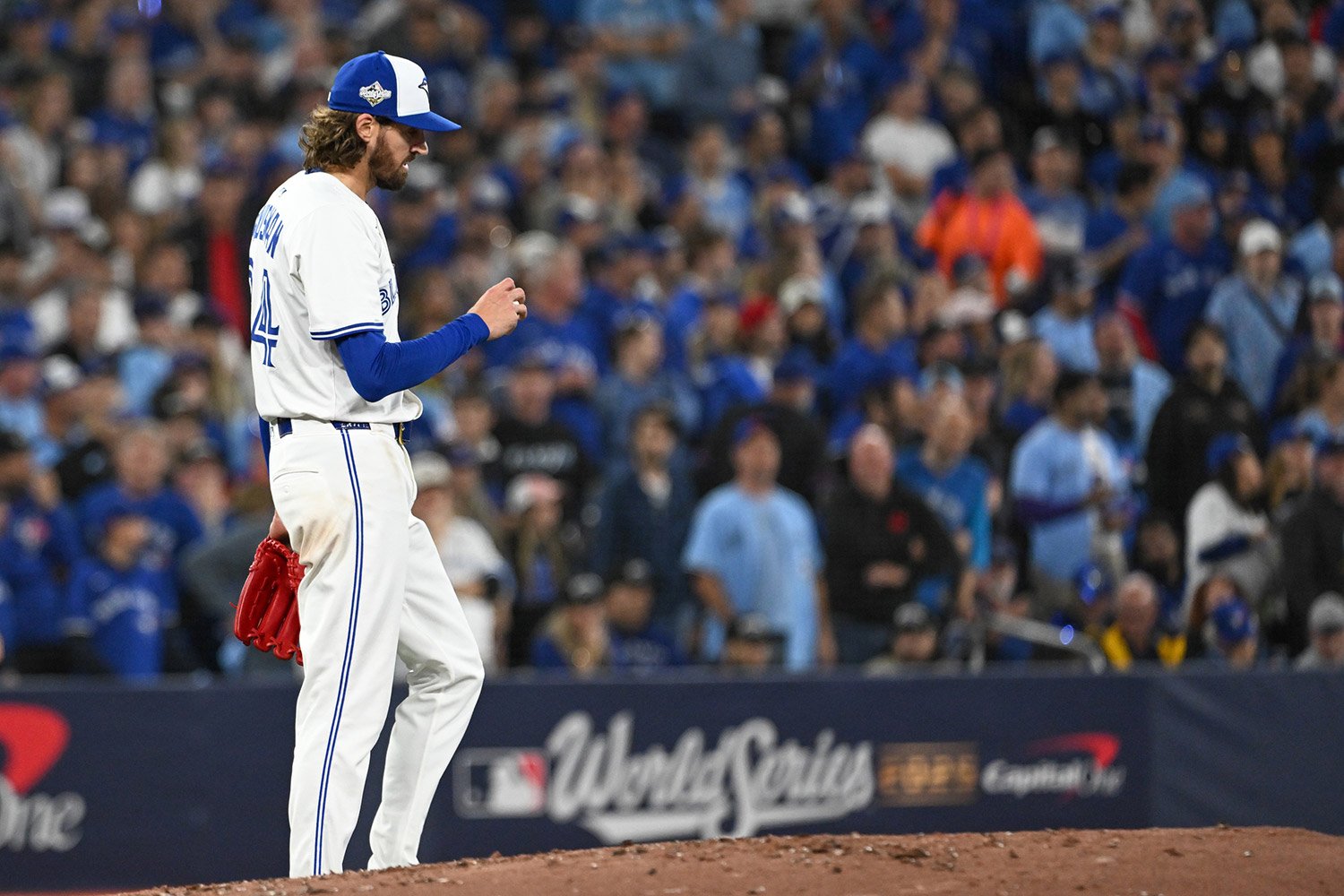 It was a classic pitchers' duel. Two aces at the top of their game with a mastery of their pitching arsenal, doing what they do best, for as long as they could. The game situation stopped at one, and the other by its conclusion. Let's take a closer look at the two aces. Yoshinobu Yamamoto: 9 IP, 4 H, 1 ER, 0 BB, 9 K,105 pitches I’m starting in a way I haven’t yet in these playoffs: highlighting an opposing player. That’s how dominant Yamamoto’s performance felt. The curveballs, in particular, were a force to be reckoned with. They were buckling players' knees, but still landing in the zone. Mixed with a well-located high-90s fastball and an effective splitter, he had the Jays bats in knots. As the game went on, the Jays looked less and less comfortable, and Yamamoto looked stronger and stronger. Toronto bats started the game with a double from George Springer and a single from Nathan Lukes to put runners on the corners with none out. For a moment, it looked like the Jays might have tapped into their Game 1 performance and found a way to keep the line moving. The inning would end without scoring a run. Ernie Clement would lead off the second inning with a ball that was (at the time of this writing) ruled a single, but really should go down as an error on Freddie Freeman. The next three batters would be retired in order, leaving Clement stranded at first. Springer went first to third on a Vladimir Guerrero Jr. single (Springer had reached base with a HBP) and would score on an Alejandro Kirk sacrifice fly. The Jays would end the third inning having scored their first run of the game - it would also be their last. From there, Yamamoto would retire 20 consecutive batters without giving up a hit, earn the win, and have all Jays fans hoping that Toronto wins the series in five games, so that they won’t have to face him again. He had 17 whiffs on 105 pitches, but it honestly felt like more. Now that Toronto has seen him once, a repeat performance would be more difficult, but I hope it doesn’t come to that. Kevin Gausman: 6.2 IP, 4 H, 3 ER, 0 BB, 6 K, 82 pitches Gausman, for his part, was equal to the task for a long stretch. After pitching in relief in Game 7 of the ALCS, Gausman let John Schneider know that he wasn't at 100% to be the Game 1 starter, and as a result, that honour went to Trey Yesavage. Gausman got an extra day of rest and looked like he put it to great use. A Freddie Freeman double, followed by a Will Smith single to score Freeman in the first inning, was the only time the Dodgers got anything going early on. Gausman would end the first inning by striking out Teoscar Hernández and then go on to retire the next 16 batters he would face, taking him into the seventh inning (the longest start of his postseason career). Sarah Langs noted that it was the first time in postseason history that both starters would retire 17+ consecutive batters. Then it was Will Smith at the plate again. With a full count, he would crush a no-doubt home run (-21.3% WPA) to deep left field and give the Dodgers their second lead of the game. Two batters later, it was a Max Muncy solo shot (-14% WPA) that would chase Gausman from the game. Muncy’s homer was more of a doubter - it would have only been an HR in 13/30 parks (it would have been a flyout at Dodger Stadium) and was hit shorter than four other balls that were recorded as flyouts in this game. Toronto would then turn to their pen, and while there were some concerning moments from the recently dependable Louis Varland, Jeff Hoffman, and Braydon Fisher, the fact that the Jays couldn’t muster even a hint of a comeback made them retroactively meaningless. Now the series shifts to Los Angeles, and the power of Addison Barger’s couch sleeping seems to have worn off. Max Scherzer will get the start against Tyler Glasnow on Monday. Hopefully, the Jays can do to Glasnow what they did to his Tampa Bay alumnus, Blake Snell, in Game 1. After the dominating performance put on by Yamamoto, the importance of Operation: Get to the Bullpen has never been more apparent. Lastly, I would love to blame this loss on the Jonas Brothers in some fashion. Their ‘halftime’ show in the 5th inning was weird and out of place (the Stand Up to Cancer moment that preceded their performance was nice, but equally oddly timed), but again, the story of this loss starts and stops with Yoshinobu Yamamoto.
 -
It was a classic pitchers' duel. Two aces at the top of their game with a mastery of their pitching arsenal, doing what they do best, for as long as they could. The game situation stopped at one, and the other by its conclusion. Let's take a closer look at the two aces. Yoshinobu Yamamoto: 9 IP, 4 H, 1 ER, 0 BB, 9 K,105 pitches I’m starting in a way I haven’t yet in these playoffs: highlighting an opposing player. That’s how dominant Yamamoto’s performance felt. The curveballs, in particular, were a force to be reckoned with. They were buckling players' knees, but still landing in the zone. Mixed with a well-located high-90s fastball and an effective splitter, he had the Jays bats in knots. As the game went on, the Jays looked less and less comfortable, and Yamamoto looked stronger and stronger. Toronto bats started the game with a double from George Springer and a single from Nathan Lukes to put runners on the corners with none out. For a moment, it looked like the Jays might have tapped into their Game 1 performance and found a way to keep the line moving. The inning would end without scoring a run. Ernie Clement would lead off the second inning with a ball that was (at the time of this writing) ruled a single, but really should go down as an error on Freddie Freeman. The next three batters would be retired in order, leaving Clement stranded at first. Springer went first to third on a Vladimir Guerrero Jr. single (Springer had reached base with a HBP) and would score on an Alejandro Kirk sacrifice fly. The Jays would end the third inning having scored their first run of the game - it would also be their last. From there, Yamamoto would retire 20 consecutive batters without giving up a hit, earn the win, and have all Jays fans hoping that Toronto wins the series in five games, so that they won’t have to face him again. He had 17 whiffs on 105 pitches, but it honestly felt like more. Now that Toronto has seen him once, a repeat performance would be more difficult, but I hope it doesn’t come to that. Kevin Gausman: 6.2 IP, 4 H, 3 ER, 0 BB, 6 K, 82 pitches Gausman, for his part, was equal to the task for a long stretch. After pitching in relief in Game 7 of the ALCS, Gausman let John Schneider know that he wasn't at 100% to be the Game 1 starter, and as a result, that honour went to Trey Yesavage. Gausman got an extra day of rest and looked like he put it to great use. A Freddie Freeman double, followed by a Will Smith single to score Freeman in the first inning, was the only time the Dodgers got anything going early on. Gausman would end the first inning by striking out Teoscar Hernández and then go on to retire the next 16 batters he would face, taking him into the seventh inning (the longest start of his postseason career). Sarah Langs noted that it was the first time in postseason history that both starters would retire 17+ consecutive batters. Then it was Will Smith at the plate again. With a full count, he would crush a no-doubt home run (-21.3% WPA) to deep left field and give the Dodgers their second lead of the game. Two batters later, it was a Max Muncy solo shot (-14% WPA) that would chase Gausman from the game. Muncy’s homer was more of a doubter - it would have only been an HR in 13/30 parks (it would have been a flyout at Dodger Stadium) and was hit shorter than four other balls that were recorded as flyouts in this game. Toronto would then turn to their pen, and while there were some concerning moments from the recently dependable Louis Varland, Jeff Hoffman, and Braydon Fisher, the fact that the Jays couldn’t muster even a hint of a comeback made them retroactively meaningless. Now the series shifts to Los Angeles, and the power of Addison Barger’s couch sleeping seems to have worn off. Max Scherzer will get the start against Tyler Glasnow on Monday. Hopefully, the Jays can do to Glasnow what they did to his Tampa Bay alumnus, Blake Snell, in Game 1. After the dominating performance put on by Yamamoto, the importance of Operation: Get to the Bullpen has never been more apparent. Lastly, I would love to blame this loss on the Jonas Brothers in some fashion. Their ‘halftime’ show in the 5th inning was weird and out of place (the Stand Up to Cancer moment that preceded their performance was nice, but equally oddly timed), but again, the story of this loss starts and stops with Yoshinobu Yamamoto. View full article
-
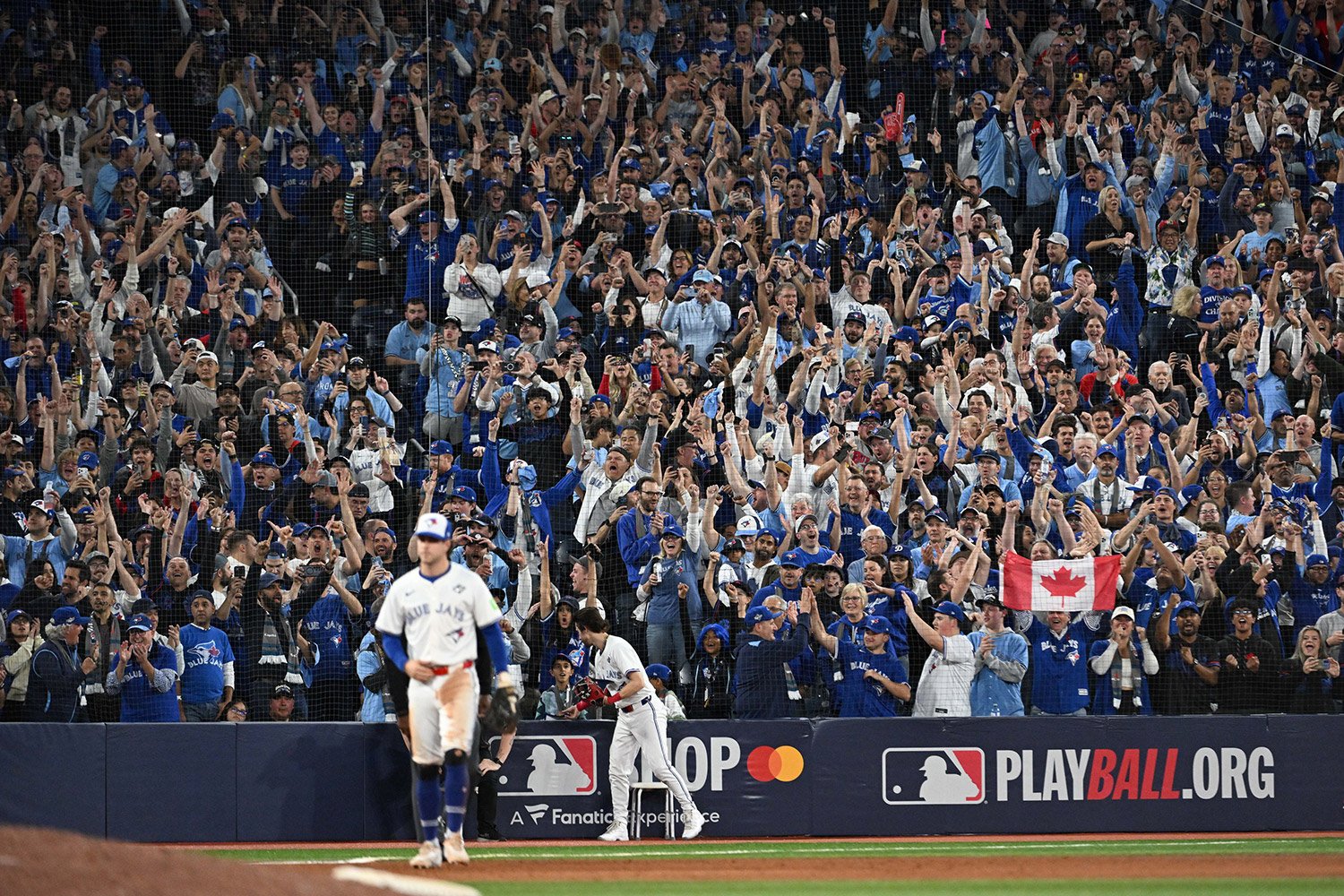 When the Blue Jays' World Series roster was announced on Friday morning ahead of Game 1, we saw Bo Bichette added to the squad as was expected (at Joey Loperfido’s expense). The unexpected move was Ty France’s presence as an extra fielder, with Yariel Rodríguez being dropped for one less pitcher. The next surprise of the day came when the starting lineups were announced. Bichette was in the lineup, but starting at second base. With a lefty, Blake Snell, getting the start for the Dodgers, the Jays also started Davis Schneider (in LF, seeing his first action since ALCS game 2) and Myles Straw (in RF, making his first start since game 2 of the ALDS). With lots of storylines heading into the game, let’s look at some of the key players and plays that emerged. Addison Barger: 2 for 2, HR, 4 RBI Not only was Barger not in the starting lineup, but Davis Schneider revealed in a post-game interview that he spent the night before in the SkyDome hotel on Schneider’s pull-out couch. Barger was brought in to pinch hit for Schneider in the sixth inning after the Jays got into the Dodgers' bullpen. Despite Los Angeles making another pitching change to make Barger face a lefty in Anthony Banda, Barger put the exclamation point on the inning, hitting the first-ever pinch-hit grand slam in World Series history and extending the Jays' lead to 9-2. Barger’s 8th inning single was also the hardest hit ball of the game with an exit velocity of 110.8MPH. Not bad for a guy who spent the night on a couch. Trey Yesavage: 4 IP, 4 H, 2 ER, 3 BB, 5 K What a year for Yesavage. With this start, he has now made more major league playoff starts than regular season ones. He is the youngest pitcher to start a World Series game in the last 77 years and the first rookie since Justin Verlander. Yesavage didn’t have his best stuff, but he started the game by striking out Shohei Ohtani and, after loading the bases in the second inning, got Ohtani to ground out to end the inning. Of the 80 pitches he threw, he only went to the splitter 10 times. Maybe he just wasn’t feeling it, maybe they were trying to defy the Dodgers’ expectations, either way, it’ll be something to keep an eye on in Yesavage’s next start (if necessary) Bo Bichette: 1 for 3 with a BB Bichette had a single in his first at-bat and then walked to lead off the sixth inning, where he was lifted for pinch runner Isiah Kiner-Falefa. It was his play in the field that was most noteworthy. He fielded a grounder cleanly in the first inning to get his feet wet at the position he hadn’t played since a sole appearance at Triple A in 2019. In the third inning, he had to range across the base heading towards left field to snag a Teoscar Hernández grounder, and with a smooth, quick turn-and-throw, hit Vladimir Guerrero Jr. with a perfect strike at first to record the out. Daulton Varsho: 1 for 3, HR Varsho was responsible for the biggest WPA swing (+20.9%) of the game with his fourth-inning home run to tie the game. It was the first homer surrendered by Snell since June 2024, the first World Series home run for the Jays in 32 years, and the farthest hit ball of the game (432 ft). He also took an HBP with Snell’s 100th (and last) pitch to load the bases in the sixth inning and set the stage for Toronto scoring runs with the next three batters. Alejandro Kirk: 3 for 3, HR The first catcher since Gary Carter to have three hits, including a homer, in a World Series game. Kirk worked every at-bat he had and turned in a vintage performance that was overshadowed by Varsho and Barger’s earlier home runs. With such an offensive output, the other multi-hit guys (George Springer, Guerrero, Ernie Clement) all had to take a bit of a backseat, but, as with all the best Blue Jays performances this postseason, it was an all-hands-on-deck team effort, continuing the trend from the regular season. 6th inning: 6 hits, 9 runs, 2 walks, 2 homers, and a HBP. +37.3% WPA Just a few notes on that historic sixth inning. The 12 batters to the plate and nine runs scored are both franchise records for a single World Series inning. The nine runs are also the most in a World Series inning since the Detroit Tigers scored 10 in 1968. The Dodgers spread 44 pitches across three different pitchers to get out of the inning. The Blue Jays put balls in play on 10 at-bats for a total of 1,871 ft of batted ball - that’s over half a kilometer! One win down and three to go if the Jays are going to be crowned Champions. They will send Kevin Gausman to the hill tomorrow, facing Yoshinobu Yamamoto, and the Toronto bats will look to pick up right where they left off.
 -
When the Blue Jays' World Series roster was announced on Friday morning ahead of Game 1, we saw Bo Bichette added to the squad as was expected (at Joey Loperfido’s expense). The unexpected move was Ty France’s presence as an extra fielder, with Yariel Rodríguez being dropped for one less pitcher. The next surprise of the day came when the starting lineups were announced. Bichette was in the lineup, but starting at second base. With a lefty, Blake Snell, getting the start for the Dodgers, the Jays also started Davis Schneider (in LF, seeing his first action since ALCS game 2) and Myles Straw (in RF, making his first start since game 2 of the ALDS). With lots of storylines heading into the game, let’s look at some of the key players and plays that emerged. Addison Barger: 2 for 2, HR, 4 RBI Not only was Barger not in the starting lineup, but Davis Schneider revealed in a post-game interview that he spent the night before in the SkyDome hotel on Schneider’s pull-out couch. Barger was brought in to pinch hit for Schneider in the sixth inning after the Jays got into the Dodgers' bullpen. Despite Los Angeles making another pitching change to make Barger face a lefty in Anthony Banda, Barger put the exclamation point on the inning, hitting the first-ever pinch-hit grand slam in World Series history and extending the Jays' lead to 9-2. Barger’s 8th inning single was also the hardest hit ball of the game with an exit velocity of 110.8MPH. Not bad for a guy who spent the night on a couch. Trey Yesavage: 4 IP, 4 H, 2 ER, 3 BB, 5 K What a year for Yesavage. With this start, he has now made more major league playoff starts than regular season ones. He is the youngest pitcher to start a World Series game in the last 77 years and the first rookie since Justin Verlander. Yesavage didn’t have his best stuff, but he started the game by striking out Shohei Ohtani and, after loading the bases in the second inning, got Ohtani to ground out to end the inning. Of the 80 pitches he threw, he only went to the splitter 10 times. Maybe he just wasn’t feeling it, maybe they were trying to defy the Dodgers’ expectations, either way, it’ll be something to keep an eye on in Yesavage’s next start (if necessary) Bo Bichette: 1 for 3 with a BB Bichette had a single in his first at-bat and then walked to lead off the sixth inning, where he was lifted for pinch runner Isiah Kiner-Falefa. It was his play in the field that was most noteworthy. He fielded a grounder cleanly in the first inning to get his feet wet at the position he hadn’t played since a sole appearance at Triple A in 2019. In the third inning, he had to range across the base heading towards left field to snag a Teoscar Hernández grounder, and with a smooth, quick turn-and-throw, hit Vladimir Guerrero Jr. with a perfect strike at first to record the out. Daulton Varsho: 1 for 3, HR Varsho was responsible for the biggest WPA swing (+20.9%) of the game with his fourth-inning home run to tie the game. It was the first homer surrendered by Snell since June 2024, the first World Series home run for the Jays in 32 years, and the farthest hit ball of the game (432 ft). He also took an HBP with Snell’s 100th (and last) pitch to load the bases in the sixth inning and set the stage for Toronto scoring runs with the next three batters. Alejandro Kirk: 3 for 3, HR The first catcher since Gary Carter to have three hits, including a homer, in a World Series game. Kirk worked every at-bat he had and turned in a vintage performance that was overshadowed by Varsho and Barger’s earlier home runs. With such an offensive output, the other multi-hit guys (George Springer, Guerrero, Ernie Clement) all had to take a bit of a backseat, but, as with all the best Blue Jays performances this postseason, it was an all-hands-on-deck team effort, continuing the trend from the regular season. 6th inning: 6 hits, 9 runs, 2 walks, 2 homers, and a HBP. +37.3% WPA Just a few notes on that historic sixth inning. The 12 batters to the plate and nine runs scored are both franchise records for a single World Series inning. The nine runs are also the most in a World Series inning since the Detroit Tigers scored 10 in 1968. The Dodgers spread 44 pitches across three different pitchers to get out of the inning. The Blue Jays put balls in play on 10 at-bats for a total of 1,871 ft of batted ball - that’s over half a kilometer! One win down and three to go if the Jays are going to be crowned Champions. They will send Kevin Gausman to the hill tomorrow, facing Yoshinobu Yamamoto, and the Toronto bats will look to pick up right where they left off. View full article
-
- 1
-
-
- addison barger
- trey yesavage
- (and 3 more)
-
A Look Back in Blue Jays World Series History
Mike LeSage replied to Leo Morgenstern's topic in Jays Centre Front Page News
Man, I forget what a stud Juan Guzman was for those teams (he also led the league in wild pitches twice). Also, pretty incredible that our only negative fWAR pitcher is our closer. I feel super fine about that. -
Thanks so much! Let me tell you, they're MUCH more fun to write when we're winning!
-
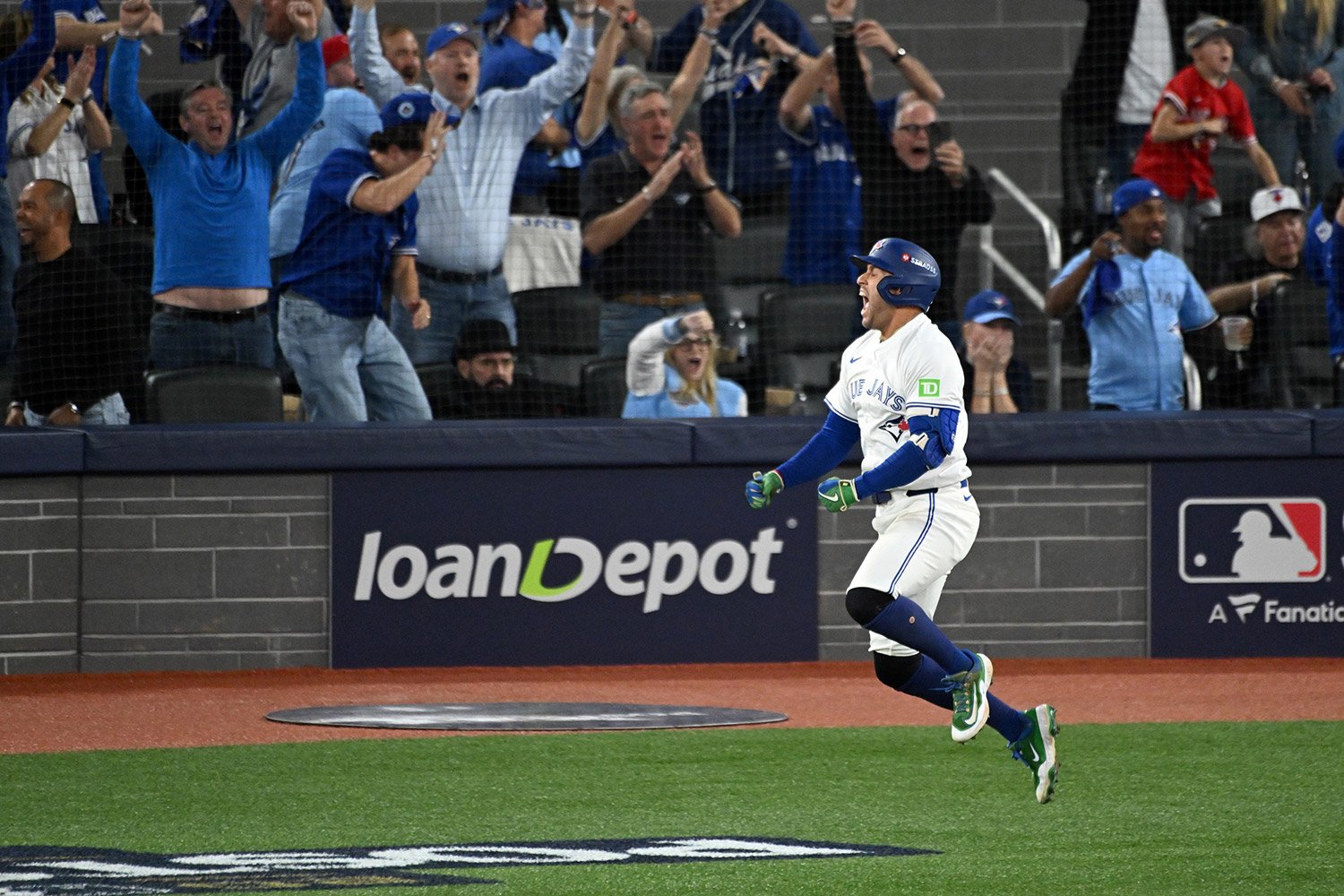 Vladimir Guerrero Jr. was spotted arriving at the Rogers Centre wearing a Toronto Maple Leafs Austin Matthews jersey pre-game. It caused a bit of a stir amongst Toronto fans - given Matthews’ history in recent games seven, it was certainly a choice. The most superstitious among us took it as a bad omen, some took it as a chance to end whatever curse had befallen the local hockey team. Vladdy though? I think he was just having fun. George Springer: One hit in the 7th inning The seventh inning of a Jays elimination game? Of course, we’re starting here. The Jays started at the bottom of the seventh, down 3-1, with just over a 20% chance of winning by WPA. Bryan Woo came out for his third inning of the game and had been cruising, retiring six of the seven batters he had faced with a pair of strikeouts. Addison Barger worked a 5-pitch walk (+6.7 WPA), and Isiah Kiner-Falefa followed that with an excuse-me-single up the middle (+10.6% WPA) to put runners at first and second with none out. Then it was Andrés Giménez coming to the plate, and despite him being tied for second in home runs this round, he was asked to lay down a sacrifice bunt and move the runners over. On a pure read of the run expectancy matrix, this is a play that increases the odds of scoring a run. Seattle was in the same situation in the second inning, and while the sac bunt was successful, they didn’t cash in any runs. In the seventh inning, when the Jays had only nine outs left in their season, the Giménez sac bunt actually lowered Toronto’s win probability. It was enough to chase Woo from the game, though, and the Mariners turned to Eduard Bazardo to face George Springer. Seattle pitchers had been working Springer inside all game, and Bazardo was no different, starting him off with a sinker well inside for ball one. Then Springer channeled some Dylan Thomas: The next pitch, another sinker, caught too much of the plate, and Springer was looking for it. He launched it into the stands (+40.7% WPA!), refusing to let the Jays go gently into the night. At the same time, he launched himself into Blue Jays history, hitting (arguably) the second-most important playoff home run this team has ever seen. Shane Bieber: 3.2 IP, 7 H, 2 ER, 1 BB, 5 K Bieber wasn’t at his sharpest and was maybe a bit unlucky. He hung some sliders that ended up as hits, but was fortunate not to be caught for too much damage. When the breaking balls were placed where Bieber wanted them, he generated weak contact (two grounders back to the pitcher) and whiffs (13 in the game). He surrendered a solo home run to Julio Rodríguez (-11.6 WPA) on a slider well off the plate. According to Sarah Langs of MLB.com, it was the furthest outside pitch Rodríguez had ever homered on in his career. Three of the hits he gave up missed infield gloves by inches, so his .545 BABIP points to a degree of unluckiness, but it also took him 74 pitches to go twice through the order. He left the game with Seattle up by one run, at 2-1; he kept the game within reach. Louis Varland and Seranthony Domínguez: 2.1 IP, 1 H, 1 ER Varland was called upon for the 10th time in 11 games. He came in to finish the fourth inning and closed it without issue. Then, with Cal Raleigh leading off the fifth, Varland threw him a pair of changeups, inducing swings on both. The first registered a strike, the second went 381 feet and extended the Mariners' lead to 3-1. Varland would settle in and retire the Mariners' 3-4-5 hitters to end the inning. Domínguez would come in for the sixth inning and retire the side in order, keeping the Jays close and not allowing any add-on runs for Seattle. Kevin Gausman and Chris Bassitt: 2 IP, 0 H, 0 ER Game Seven means all hands on deck, and John Schneider turned to the two starters with the most innings pitched in the regular season to take the seventh and eighth. Gausman’s inning started with a walk to the #9 hitter, Victor Robles, but he could erase that by getting a GIDP from Julio Rodríguez. Then, an intentional walk to Raleigh and a half-intentional walk to Josh Naylor put two on, with two out, and again, the fanbase held their breath. A groundout from Jorge Polanco ended the threat, and the Jays, behind that Springer homer, would take the lead in the bottom half of the inning. Thanks to Springer’s timing, Gausman, who started Games One and Five, would get his first win in the relief appearance. Bassitt said after the game that he knew he was coming in for the 8th, and after Springer put the Jays on top, he locked in. A pair of groundouts and a cheeky called-third-strike curveball would give Bassitt one of his best innings of the season. 10 pitches to put the Jays three outs away from the World Series. Jeff Hoffman: 1 IP, 0 H, 0 ER, 0 BB, 3 K Hoffman threw 35 pitches over two innings in Game Six the night before, and I wondered aloud if, given his efficient 8th, we might see Bassitt come back out to finish the game. The Jays didn’t sign Hoffman to be their closer to let anyone else have this moment, though. Boy oh boy, did Hoffman rise to the moment. Back-to-back-to-back strikeouts to close out the game and leave Raleigh standing in the on-deck circle while Toronto celebrated their return to the World Series. What an incredible game and an incredible finish. The best home team of the regular season gets to stay home and await the Dodgers, who will be coming here for Game One of the World Series on Friday. We’ll have lots of coverage leading up to it, but if there’s one thing we should remember, the last four times one LCS was a sweep and the other went seven games, the game seven winners would go on to win the World Series. Let the streak continue, and more history will be made.
 -
Vladimir Guerrero Jr. was spotted arriving at the Rogers Centre wearing a Toronto Maple Leafs Austin Matthews jersey pre-game. It caused a bit of a stir amongst Toronto fans - given Matthews’ history in recent games seven, it was certainly a choice. The most superstitious among us took it as a bad omen, some took it as a chance to end whatever curse had befallen the local hockey team. Vladdy though? I think he was just having fun. George Springer: One hit in the 7th inning The seventh inning of a Jays elimination game? Of course, we’re starting here. The Jays started at the bottom of the seventh, down 3-1, with just over a 20% chance of winning by WPA. Bryan Woo came out for his third inning of the game and had been cruising, retiring six of the seven batters he had faced with a pair of strikeouts. Addison Barger worked a 5-pitch walk (+6.7 WPA), and Isiah Kiner-Falefa followed that with an excuse-me-single up the middle (+10.6% WPA) to put runners at first and second with none out. Then it was Andrés Giménez coming to the plate, and despite him being tied for second in home runs this round, he was asked to lay down a sacrifice bunt and move the runners over. On a pure read of the run expectancy matrix, this is a play that increases the odds of scoring a run. Seattle was in the same situation in the second inning, and while the sac bunt was successful, they didn’t cash in any runs. In the seventh inning, when the Jays had only nine outs left in their season, the Giménez sac bunt actually lowered Toronto’s win probability. It was enough to chase Woo from the game, though, and the Mariners turned to Eduard Bazardo to face George Springer. Seattle pitchers had been working Springer inside all game, and Bazardo was no different, starting him off with a sinker well inside for ball one. Then Springer channeled some Dylan Thomas: The next pitch, another sinker, caught too much of the plate, and Springer was looking for it. He launched it into the stands (+40.7% WPA!), refusing to let the Jays go gently into the night. At the same time, he launched himself into Blue Jays history, hitting (arguably) the second-most important playoff home run this team has ever seen. Shane Bieber: 3.2 IP, 7 H, 2 ER, 1 BB, 5 K Bieber wasn’t at his sharpest and was maybe a bit unlucky. He hung some sliders that ended up as hits, but was fortunate not to be caught for too much damage. When the breaking balls were placed where Bieber wanted them, he generated weak contact (two grounders back to the pitcher) and whiffs (13 in the game). He surrendered a solo home run to Julio Rodríguez (-11.6 WPA) on a slider well off the plate. According to Sarah Langs of MLB.com, it was the furthest outside pitch Rodríguez had ever homered on in his career. Three of the hits he gave up missed infield gloves by inches, so his .545 BABIP points to a degree of unluckiness, but it also took him 74 pitches to go twice through the order. He left the game with Seattle up by one run, at 2-1; he kept the game within reach. Louis Varland and Seranthony Domínguez: 2.1 IP, 1 H, 1 ER Varland was called upon for the 10th time in 11 games. He came in to finish the fourth inning and closed it without issue. Then, with Cal Raleigh leading off the fifth, Varland threw him a pair of changeups, inducing swings on both. The first registered a strike, the second went 381 feet and extended the Mariners' lead to 3-1. Varland would settle in and retire the Mariners' 3-4-5 hitters to end the inning. Domínguez would come in for the sixth inning and retire the side in order, keeping the Jays close and not allowing any add-on runs for Seattle. Kevin Gausman and Chris Bassitt: 2 IP, 0 H, 0 ER Game Seven means all hands on deck, and John Schneider turned to the two starters with the most innings pitched in the regular season to take the seventh and eighth. Gausman’s inning started with a walk to the #9 hitter, Victor Robles, but he could erase that by getting a GIDP from Julio Rodríguez. Then, an intentional walk to Raleigh and a half-intentional walk to Josh Naylor put two on, with two out, and again, the fanbase held their breath. A groundout from Jorge Polanco ended the threat, and the Jays, behind that Springer homer, would take the lead in the bottom half of the inning. Thanks to Springer’s timing, Gausman, who started Games One and Five, would get his first win in the relief appearance. Bassitt said after the game that he knew he was coming in for the 8th, and after Springer put the Jays on top, he locked in. A pair of groundouts and a cheeky called-third-strike curveball would give Bassitt one of his best innings of the season. 10 pitches to put the Jays three outs away from the World Series. Jeff Hoffman: 1 IP, 0 H, 0 ER, 0 BB, 3 K Hoffman threw 35 pitches over two innings in Game Six the night before, and I wondered aloud if, given his efficient 8th, we might see Bassitt come back out to finish the game. The Jays didn’t sign Hoffman to be their closer to let anyone else have this moment, though. Boy oh boy, did Hoffman rise to the moment. Back-to-back-to-back strikeouts to close out the game and leave Raleigh standing in the on-deck circle while Toronto celebrated their return to the World Series. What an incredible game and an incredible finish. The best home team of the regular season gets to stay home and await the Dodgers, who will be coming here for Game One of the World Series on Friday. We’ll have lots of coverage leading up to it, but if there’s one thing we should remember, the last four times one LCS was a sweep and the other went seven games, the game seven winners would go on to win the World Series. Let the streak continue, and more history will be made. View full article
- 3 replies
-
- 3
-

-
- george springer
- shane bieber
- (and 3 more)
-
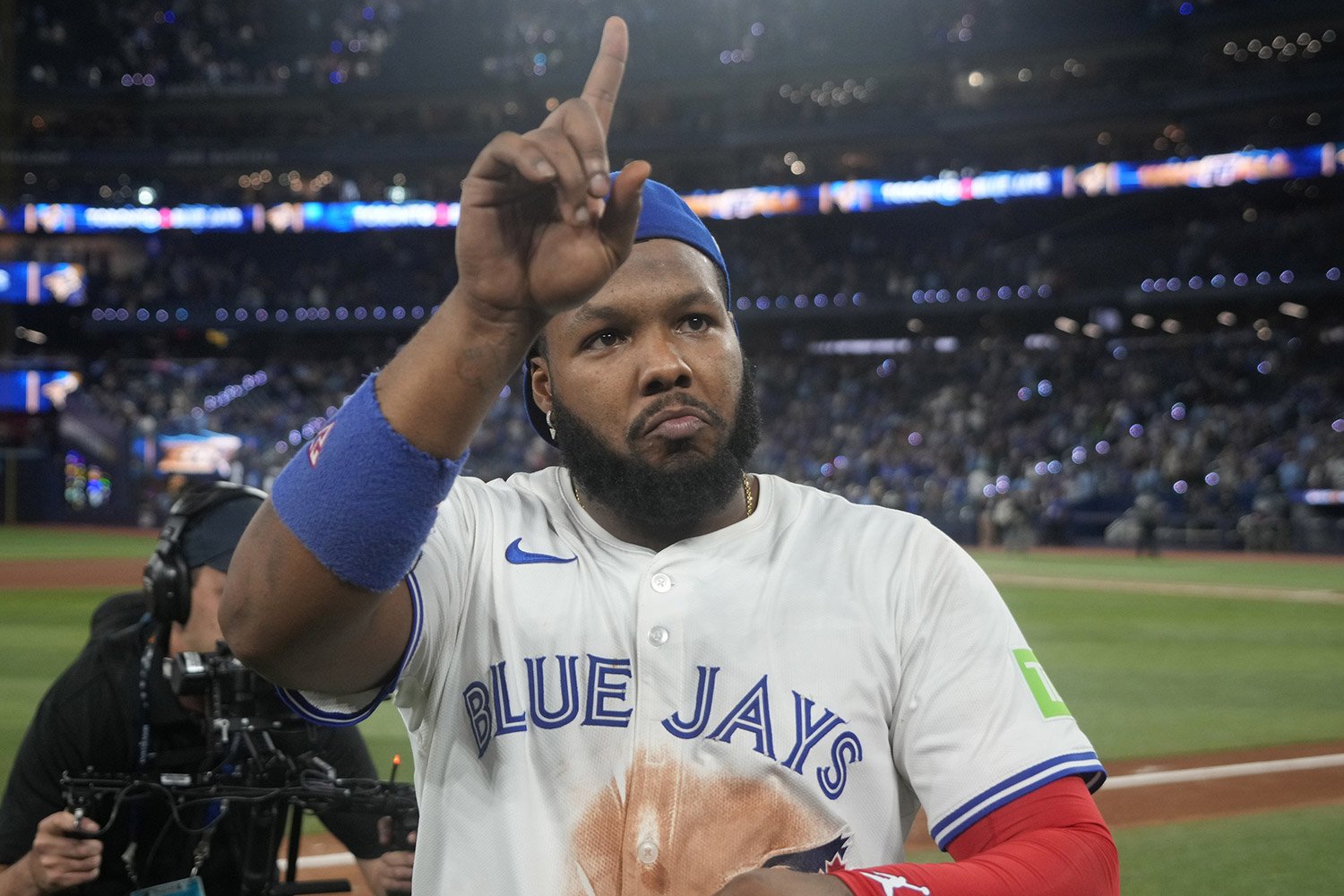 The Blue Jays faced their first elimination game of the playoffs, playing an almost textbook Toronto game to force another elimination game tonight. Momentum is a funny thing, isn’t it? In typical Blue Jays fashion, the contributions came from all over the roster. Let’s take a look at how the Jays forced the second Game 7 in franchise history. Trey Yesavage: 5.2 IP, 6 H, 2 ER, 3 BB, 7 K Jesse Burrill wrote an excellent breakdown ahead of the game, dissecting how Yesavage was “built for the moment”. It wasn’t exactly the performance he put on in the ALDS, but it was what was needed. We’ve seen all series that Seattle is a free-swinging team, and Yesavage racked up seven strikeouts - including Cal Raleigh twice and the side in order (Josh Naylor, Randy Arozarena, and Eugenio Suárez) in the second inning. Yesavage gave the Mariners some chances, though. After retiring the side for the first two innings of the game, Yesavage faced the bases loaded with one out in both the third and fourth innings. Fortunately, the Jays escaped without any damage both times, thanks to perfectly fielded double plays. Raleigh hit into a 3-6-1 GIDP in the third, and J.P. Crawford went 4-6-3 in the fourth. Julio Rodríguez would end the Mariners ' at-bats in the fifth inning with another 6-4-3 double play and leave Yesavage with five shutout innings. In the sixth, after recording the first two outs, a solo home run by Naylor and a single by Arozarena would lift Yesavage from the game. All things considered, we couldn’t have asked more of the rookie. The Bullpen: 2.1 IP, 1 H, 0 ER, 0 BB, 4 K Louis Varland and Jeff Hoffman locked down the game. Varland came in to finish the sixth inning for Yesavage, and after giving up the bloopiest of singles (Arozarena scored from first), he struck Crawford out to end the inning. The seventh went quickly, three up, three down with a pair of pop outs and another K for good measure. Then it was Hoffman in for the eighth to face the heart of the Seattle lineup as he had done in Game Four (no time for “new looks” now). In Game Six, he got the same result - two strikeouts and a pop-out to retire the side in order. Unlike Game Four, this time Hoffman would come back out for the ninth inning. Two Ks and a pop out again (with a walk sprinkled in for spice) to close out the game and secure the win. Pitching like this really emphasized why the Jays traded for Varland at the deadline and why they signed Hoffman in the off-season. When they’re locked in, they’re nasty. Addison Barger: 2 for 4, HR, 3 RBI Barger had been scuffling this series, hitting 3-for-17 coming into this game. All three of his hits had come on the road, so he was looking for his first knock at the Rogers Centre in the series. Well, after a Daulton Varsho “double” (a single with a heads-up advance to second on a bobble by Rodríguez) and a single by Isiah Kiner-Falefa, Barger had one of the biggest hits of the game. His second-inning single to right added 12.5% win probability to the Jays' column as Varsho came around to open the scoring for the game. The next inning, after an Ernie Clement triple, Barger came to the plate and put up another 12.5% WPA hit. A 403 ft home run, the furthest hit ball of the game, gave Barger the (eventual) game-winning RBI and staked the Jays to a 4-0 lead. Barger’s 25% WPA was the most in the game, and no other batter was even close. Only Yesavage’s 20% WPA is anywhere near the discussion. What a time for Barger to break out of his slump. The Other Multi-Hitters: 6 for 14, HR, four runs scored, 12 total bases Barger had three teammates get a pair of hits each. Nathan Lukes, batting second, had a pair of singles and now has a five-game hit streak going. It was also his fourth multi-hit game of these playoffs. Clement had a double and a triple, scoring both times. It’s easy to forget that this postseason is the first taste of the playoffs for both Lukes and Clement. Both players have really taken the ‘act like you’ve been there before’ mantra and run with it. The other multi-hitter in Game Six was Vladimir Guerrero Jr., a guy who has been there before. Vladdy’s last homer put him into sole possession of the franchise record for home runs in a postseason. With his Game Six homer, he not only gave the Jays a 5-0 lead, he also moved into a tie with Joe Carter and José Bautista for the franchise’s career postseason home run lead. Wouldn’t it be nice to see him take sole possession of that one tomorrow? The Blue Jays have now won 100 games in 2025. They’ll send Shane Bieber to the mound tonight looking to get 101 and punch their ticket to the World Series. In a rematch of Game Three, the Mariners will counter with George Kirby. With everything to play for, Toronto will hope to replicate that game. The only other Game Seven for the franchise came in the ALCS in 1985 and was played at Exhibition Stadium. At that time, the Jays were unable to secure the victory, and the KC Royals moved on. In a season when Toronto brought their overall franchise record back to .500 for the first time in decades, this would be the perfect time to get that Game 7 record to .500 as well.
 -
The Blue Jays faced their first elimination game of the playoffs, playing an almost textbook Toronto game to force another elimination game tonight. Momentum is a funny thing, isn’t it? In typical Blue Jays fashion, the contributions came from all over the roster. Let’s take a look at how the Jays forced the second Game 7 in franchise history. Trey Yesavage: 5.2 IP, 6 H, 2 ER, 3 BB, 7 K Jesse Burrill wrote an excellent breakdown ahead of the game, dissecting how Yesavage was “built for the moment”. It wasn’t exactly the performance he put on in the ALDS, but it was what was needed. We’ve seen all series that Seattle is a free-swinging team, and Yesavage racked up seven strikeouts - including Cal Raleigh twice and the side in order (Josh Naylor, Randy Arozarena, and Eugenio Suárez) in the second inning. Yesavage gave the Mariners some chances, though. After retiring the side for the first two innings of the game, Yesavage faced the bases loaded with one out in both the third and fourth innings. Fortunately, the Jays escaped without any damage both times, thanks to perfectly fielded double plays. Raleigh hit into a 3-6-1 GIDP in the third, and J.P. Crawford went 4-6-3 in the fourth. Julio Rodríguez would end the Mariners ' at-bats in the fifth inning with another 6-4-3 double play and leave Yesavage with five shutout innings. In the sixth, after recording the first two outs, a solo home run by Naylor and a single by Arozarena would lift Yesavage from the game. All things considered, we couldn’t have asked more of the rookie. The Bullpen: 2.1 IP, 1 H, 0 ER, 0 BB, 4 K Louis Varland and Jeff Hoffman locked down the game. Varland came in to finish the sixth inning for Yesavage, and after giving up the bloopiest of singles (Arozarena scored from first), he struck Crawford out to end the inning. The seventh went quickly, three up, three down with a pair of pop outs and another K for good measure. Then it was Hoffman in for the eighth to face the heart of the Seattle lineup as he had done in Game Four (no time for “new looks” now). In Game Six, he got the same result - two strikeouts and a pop-out to retire the side in order. Unlike Game Four, this time Hoffman would come back out for the ninth inning. Two Ks and a pop out again (with a walk sprinkled in for spice) to close out the game and secure the win. Pitching like this really emphasized why the Jays traded for Varland at the deadline and why they signed Hoffman in the off-season. When they’re locked in, they’re nasty. Addison Barger: 2 for 4, HR, 3 RBI Barger had been scuffling this series, hitting 3-for-17 coming into this game. All three of his hits had come on the road, so he was looking for his first knock at the Rogers Centre in the series. Well, after a Daulton Varsho “double” (a single with a heads-up advance to second on a bobble by Rodríguez) and a single by Isiah Kiner-Falefa, Barger had one of the biggest hits of the game. His second-inning single to right added 12.5% win probability to the Jays' column as Varsho came around to open the scoring for the game. The next inning, after an Ernie Clement triple, Barger came to the plate and put up another 12.5% WPA hit. A 403 ft home run, the furthest hit ball of the game, gave Barger the (eventual) game-winning RBI and staked the Jays to a 4-0 lead. Barger’s 25% WPA was the most in the game, and no other batter was even close. Only Yesavage’s 20% WPA is anywhere near the discussion. What a time for Barger to break out of his slump. The Other Multi-Hitters: 6 for 14, HR, four runs scored, 12 total bases Barger had three teammates get a pair of hits each. Nathan Lukes, batting second, had a pair of singles and now has a five-game hit streak going. It was also his fourth multi-hit game of these playoffs. Clement had a double and a triple, scoring both times. It’s easy to forget that this postseason is the first taste of the playoffs for both Lukes and Clement. Both players have really taken the ‘act like you’ve been there before’ mantra and run with it. The other multi-hitter in Game Six was Vladimir Guerrero Jr., a guy who has been there before. Vladdy’s last homer put him into sole possession of the franchise record for home runs in a postseason. With his Game Six homer, he not only gave the Jays a 5-0 lead, he also moved into a tie with Joe Carter and José Bautista for the franchise’s career postseason home run lead. Wouldn’t it be nice to see him take sole possession of that one tomorrow? The Blue Jays have now won 100 games in 2025. They’ll send Shane Bieber to the mound tonight looking to get 101 and punch their ticket to the World Series. In a rematch of Game Three, the Mariners will counter with George Kirby. With everything to play for, Toronto will hope to replicate that game. The only other Game Seven for the franchise came in the ALCS in 1985 and was played at Exhibition Stadium. At that time, the Jays were unable to secure the victory, and the KC Royals moved on. In a season when Toronto brought their overall franchise record back to .500 for the first time in decades, this would be the perfect time to get that Game 7 record to .500 as well. View full article
-
This was a tight game that was blown open in the bottom of the eighth. We’re going to go back to looking at Win Probability Added (WPA) chronologically and highlight the plays that made for the largest swings. Bottom of the Second: Eugenio Suárez hits a solo home run (-12.2% WPA) - 1-0 Seattle The only mistake that Kevin Gausman was punished by over his almost six innings of work. Gausman produced a line of 5.2 IP, 3 H, 1 ER, 3 BB, 4 K. He had 15 whiffs and put up an almost identical performance to what he did in Game 1 of this series. This time, he took a no-decision rather than the loss, but we can’t fault Gausman; he had a cumulative WPA of 15%. Top of the Third: Andrés Giménez hits into a double play (-11.8% WPA) - 1-0 Seattle In Games 3 and 4, the Jays came to bat in the top of the third trailing. In both games, the #8 hitter led off the third with a double and was followed by a Giménez two-run home run to erase the Seattle lead. In Game 5, Isiah Kiner-Falefa, the #8 hitter, led off with a double. Everyone watching couldn’t help but wonder if Giménez could spark the Jays three days in a row. Instead, what happened was a sharply hit line drive to the first baseman. IKF had taken a couple of steps toward third on contact and was unable to get back to his base before being doubled off. The first gut punch of the night. Top of the Fourth: Ernie Clement hits into a double play with the bases loaded (-19.7% WPA) - 1-0 Seattle The inning started out with so much promise: a double from Nathan Lukes (+8.2% WPA), an intentional walk to Vladimir Guerrero Jr. (+4.4% WPA) and a walk to Alejandro Kirk (+10.4% WPA) to load the bases with none out. A strikeout from Daulton Varsho (-9.2% WPA) was followed by a double play I’ve never seen before. Clement hit what could have been a chopper that would have made for an awkward attempt at a force play. Instead, the ball just died immediately in front of the plate – so close to the plate that Cal Raleigh got the force out at home just by picking the ball up. The toss to first completed the double play and ended the inning. Top of the Fifth: George Springer hits an RBI double (+15.9% WPA) - Tie game 1-1 The Jays chased starter Bryce Miller from the game and were able to capitalize against the Mariners' bullpen. Springer, who leads the playoffs in runs scored, cashed in Addison Barger to tie the game. Later in the game, Springer would take a pitch directly off of his knee and need to leave the game. Post-game, it was announced that initial X-rays were negative, but we're still waiting on his full evaluation, and whether he's available for Sunday is still to be seen. Top of the Sixth: Alejandro Kirk scores from second on a single (+16.9% WPA) - 2-1 Toronto Kirk led the inning off with a double (+9.8% WPA), and then, on a Clement single, he got the wave to go home. Maybe Dominic Canzone figured there was no way Kirk would risk a play at the plate, and then, when he realized he had to make the throw, he rushed it and sent it halfway up the third base line. Maybe it was just meant to be. Bottom of the Sixth and Bottom of the Seventh: Louis Varland (+14% WPA) - 2-1 Toronto Varland was the first man out of the ‘pen. He came into the game with a runner on first and walked the first batter he faced to put two on with two out. He would induce a grounder to end the inning. He would then retire the side in order for the seventh with two swinging strikeouts. Bottom of the Eighth: Cal Raleigh hits a solo home run (-32.3% WPA) - Tie game 2-2 The next guy out of the ‘pen was Brendon Little. The lefty forced Raleigh to turn around and bat from the right side of the plate, something he had yet to do in this series. The gamble did not pay off, and Raleigh hit the ball as high as the Space Needle with just enough carry to evade the outstretched glove of Myles Straw at the wall. Bottom of the Eighth: Eugenio Suárez hits a grand slam (-11.7% WPA) - 6-2 Seattle Little followed up the homer to Raleigh by walking Jorge Polanco (-6.5% WPA) and Josh Naylor (-9.4% WPA) and then being lifted from the game. Little faced three batters and was responsible for -48% WPA. He was replaced with Seranthony Domínguez, who promptly hit the first batter he faced (Randy Arozarena) to load the bases. Then, on a 2-2 count, mirroring the score, he gave up the grand slam. Game (all but) over. Okay, so let’s talk about the bullpen move. It’s easy to armchair manage with the power of hindsight, but the move to bring in Little was questioned during the broadcast ahead of it happening by both Dan and Buck in the booth and the crew back at Sportsnet Studios. You’ll just have to trust that I was saying the same thing at home. That should be an easy thing to believe in, because I think most people watching had the same thought. I’m hardly the biggest Jeff Hoffman booster, but seeing how effective and efficient he was against the top of Seattle's lineup yesterday, I would have been happy to see him. Domínguez and Hoffman are arguably Toronto’s 1 and 1A bullpen arms for leverage situations. Either one of them coming in to start a clean inning would have made sense. Maybe it wouldn’t have worked out, but at least we could say that John Schneider made the right call, or at least a defensible one. When asked after the game about the move, Schneider stated a desire to show the Seattle batters some new looks, noting that Raleigh had batted left all series and had already seen Hoffman once. On the face of it, that seems like maybe a legit argument. BUT! If that was part of the game plan and the way the pitchers would be deployed through the series, why would the Jays burn both Hoffman and Domínguez against the top of the Mariners' order with a six-run lead the day before? The Jays' bats had been hot the last two games, so maybe Schneider was hoping that would continue, but with a repeat of the Game 1 starters and considering the way that game went, Game 5 always felt like it would be a tight one. Now, the series moves back to Toronto with one game guaranteed and the Blue Jays hoping to force a second. Trey Yesavage will get the ball for Game 6, and the Jays will need to stay one step ahead of the Mariners if they don’t want the offseason to start on Monday. View full article
-
.jpg.1db11a7107a8b18e8fecbc3581c6f346.jpg) This was a tight game that was blown open in the bottom of the eighth. We’re going to go back to looking at Win Probability Added (WPA) chronologically and highlight the plays that made for the largest swings. Bottom of the Second: Eugenio Suárez hits a solo home run (-12.2% WPA) - 1-0 Seattle The only mistake that Kevin Gausman was punished by over his almost six innings of work. Gausman produced a line of 5.2 IP, 3 H, 1 ER, 3 BB, 4 K. He had 15 whiffs and put up an almost identical performance to what he did in Game 1 of this series. This time, he took a no-decision rather than the loss, but we can’t fault Gausman; he had a cumulative WPA of 15%. Top of the Third: Andrés Giménez hits into a double play (-11.8% WPA) - 1-0 Seattle In Games 3 and 4, the Jays came to bat in the top of the third trailing. In both games, the #8 hitter led off the third with a double and was followed by a Giménez two-run home run to erase the Seattle lead. In Game 5, Isiah Kiner-Falefa, the #8 hitter, led off with a double. Everyone watching couldn’t help but wonder if Giménez could spark the Jays three days in a row. Instead, what happened was a sharply hit line drive to the first baseman. IKF had taken a couple of steps toward third on contact and was unable to get back to his base before being doubled off. The first gut punch of the night. Top of the Fourth: Ernie Clement hits into a double play with the bases loaded (-19.7% WPA) - 1-0 Seattle The inning started out with so much promise: a double from Nathan Lukes (+8.2% WPA), an intentional walk to Vladimir Guerrero Jr. (+4.4% WPA) and a walk to Alejandro Kirk (+10.4% WPA) to load the bases with none out. A strikeout from Daulton Varsho (-9.2% WPA) was followed by a double play I’ve never seen before. Clement hit what could have been a chopper that would have made for an awkward attempt at a force play. Instead, the ball just died immediately in front of the plate – so close to the plate that Cal Raleigh got the force out at home just by picking the ball up. The toss to first completed the double play and ended the inning. Top of the Fifth: George Springer hits an RBI double (+15.9% WPA) - Tie game 1-1 The Jays chased starter Bryce Miller from the game and were able to capitalize against the Mariners' bullpen. Springer, who leads the playoffs in runs scored, cashed in Addison Barger to tie the game. Later in the game, Springer would take a pitch directly off of his knee and need to leave the game. Post-game, it was announced that initial X-rays were negative, but we're still waiting on his full evaluation, and whether he's available for Sunday is still to be seen. Top of the Sixth: Alejandro Kirk scores from second on a single (+16.9% WPA) - 2-1 Toronto Kirk led the inning off with a double (+9.8% WPA), and then, on a Clement single, he got the wave to go home. Maybe Dominic Canzone figured there was no way Kirk would risk a play at the plate, and then, when he realized he had to make the throw, he rushed it and sent it halfway up the third base line. Maybe it was just meant to be. Bottom of the Sixth and Bottom of the Seventh: Louis Varland (+14% WPA) - 2-1 Toronto Varland was the first man out of the ‘pen. He came into the game with a runner on first and walked the first batter he faced to put two on with two out. He would induce a grounder to end the inning. He would then retire the side in order for the seventh with two swinging strikeouts. Bottom of the Eighth: Cal Raleigh hits a solo home run (-32.3% WPA) - Tie game 2-2 The next guy out of the ‘pen was Brendon Little. The lefty forced Raleigh to turn around and bat from the right side of the plate, something he had yet to do in this series. The gamble did not pay off, and Raleigh hit the ball as high as the Space Needle with just enough carry to evade the outstretched glove of Myles Straw at the wall. Bottom of the Eighth: Eugenio Suárez hits a grand slam (-11.7% WPA) - 6-2 Seattle Little followed up the homer to Raleigh by walking Jorge Polanco (-6.5% WPA) and Josh Naylor (-9.4% WPA) and then being lifted from the game. Little faced three batters and was responsible for -48% WPA. He was replaced with Seranthony Domínguez, who promptly hit the first batter he faced (Randy Arozarena) to load the bases. Then, on a 2-2 count, mirroring the score, he gave up the grand slam. Game (all but) over. Okay, so let’s talk about the bullpen move. It’s easy to armchair manage with the power of hindsight, but the move to bring in Little was questioned during the broadcast ahead of it happening by both Dan and Buck in the booth and the crew back at Sportsnet Studios. You’ll just have to trust that I was saying the same thing at home. That should be an easy thing to believe in, because I think most people watching had the same thought. I’m hardly the biggest Jeff Hoffman booster, but seeing how effective and efficient he was against the top of Seattle's lineup yesterday, I would have been happy to see him. Domínguez and Hoffman are arguably Toronto’s 1 and 1A bullpen arms for leverage situations. Either one of them coming in to start a clean inning would have made sense. Maybe it wouldn’t have worked out, but at least we could say that John Schneider made the right call, or at least a defensible one. When asked after the game about the move, Schneider stated a desire to show the Seattle batters some new looks, noting that Raleigh had batted left all series and had already seen Hoffman once. On the face of it, that seems like maybe a legit argument. BUT! If that was part of the game plan and the way the pitchers would be deployed through the series, why would the Jays burn both Hoffman and Domínguez against the top of the Mariners' order with a six-run lead the day before? The Jays' bats had been hot the last two games, so maybe Schneider was hoping that would continue, but with a repeat of the Game 1 starters and considering the way that game went, Game 5 always felt like it would be a tight one. Now, the series moves back to Toronto with one game guaranteed and the Blue Jays hoping to force a second. Trey Yesavage will get the ball for Game 6, and the Jays will need to stay one step ahead of the Mariners if they don’t want the offseason to start on Monday.
This was a tight game that was blown open in the bottom of the eighth. We’re going to go back to looking at Win Probability Added (WPA) chronologically and highlight the plays that made for the largest swings. Bottom of the Second: Eugenio Suárez hits a solo home run (-12.2% WPA) - 1-0 Seattle The only mistake that Kevin Gausman was punished by over his almost six innings of work. Gausman produced a line of 5.2 IP, 3 H, 1 ER, 3 BB, 4 K. He had 15 whiffs and put up an almost identical performance to what he did in Game 1 of this series. This time, he took a no-decision rather than the loss, but we can’t fault Gausman; he had a cumulative WPA of 15%. Top of the Third: Andrés Giménez hits into a double play (-11.8% WPA) - 1-0 Seattle In Games 3 and 4, the Jays came to bat in the top of the third trailing. In both games, the #8 hitter led off the third with a double and was followed by a Giménez two-run home run to erase the Seattle lead. In Game 5, Isiah Kiner-Falefa, the #8 hitter, led off with a double. Everyone watching couldn’t help but wonder if Giménez could spark the Jays three days in a row. Instead, what happened was a sharply hit line drive to the first baseman. IKF had taken a couple of steps toward third on contact and was unable to get back to his base before being doubled off. The first gut punch of the night. Top of the Fourth: Ernie Clement hits into a double play with the bases loaded (-19.7% WPA) - 1-0 Seattle The inning started out with so much promise: a double from Nathan Lukes (+8.2% WPA), an intentional walk to Vladimir Guerrero Jr. (+4.4% WPA) and a walk to Alejandro Kirk (+10.4% WPA) to load the bases with none out. A strikeout from Daulton Varsho (-9.2% WPA) was followed by a double play I’ve never seen before. Clement hit what could have been a chopper that would have made for an awkward attempt at a force play. Instead, the ball just died immediately in front of the plate – so close to the plate that Cal Raleigh got the force out at home just by picking the ball up. The toss to first completed the double play and ended the inning. Top of the Fifth: George Springer hits an RBI double (+15.9% WPA) - Tie game 1-1 The Jays chased starter Bryce Miller from the game and were able to capitalize against the Mariners' bullpen. Springer, who leads the playoffs in runs scored, cashed in Addison Barger to tie the game. Later in the game, Springer would take a pitch directly off of his knee and need to leave the game. Post-game, it was announced that initial X-rays were negative, but we're still waiting on his full evaluation, and whether he's available for Sunday is still to be seen. Top of the Sixth: Alejandro Kirk scores from second on a single (+16.9% WPA) - 2-1 Toronto Kirk led the inning off with a double (+9.8% WPA), and then, on a Clement single, he got the wave to go home. Maybe Dominic Canzone figured there was no way Kirk would risk a play at the plate, and then, when he realized he had to make the throw, he rushed it and sent it halfway up the third base line. Maybe it was just meant to be. Bottom of the Sixth and Bottom of the Seventh: Louis Varland (+14% WPA) - 2-1 Toronto Varland was the first man out of the ‘pen. He came into the game with a runner on first and walked the first batter he faced to put two on with two out. He would induce a grounder to end the inning. He would then retire the side in order for the seventh with two swinging strikeouts. Bottom of the Eighth: Cal Raleigh hits a solo home run (-32.3% WPA) - Tie game 2-2 The next guy out of the ‘pen was Brendon Little. The lefty forced Raleigh to turn around and bat from the right side of the plate, something he had yet to do in this series. The gamble did not pay off, and Raleigh hit the ball as high as the Space Needle with just enough carry to evade the outstretched glove of Myles Straw at the wall. Bottom of the Eighth: Eugenio Suárez hits a grand slam (-11.7% WPA) - 6-2 Seattle Little followed up the homer to Raleigh by walking Jorge Polanco (-6.5% WPA) and Josh Naylor (-9.4% WPA) and then being lifted from the game. Little faced three batters and was responsible for -48% WPA. He was replaced with Seranthony Domínguez, who promptly hit the first batter he faced (Randy Arozarena) to load the bases. Then, on a 2-2 count, mirroring the score, he gave up the grand slam. Game (all but) over. Okay, so let’s talk about the bullpen move. It’s easy to armchair manage with the power of hindsight, but the move to bring in Little was questioned during the broadcast ahead of it happening by both Dan and Buck in the booth and the crew back at Sportsnet Studios. You’ll just have to trust that I was saying the same thing at home. That should be an easy thing to believe in, because I think most people watching had the same thought. I’m hardly the biggest Jeff Hoffman booster, but seeing how effective and efficient he was against the top of Seattle's lineup yesterday, I would have been happy to see him. Domínguez and Hoffman are arguably Toronto’s 1 and 1A bullpen arms for leverage situations. Either one of them coming in to start a clean inning would have made sense. Maybe it wouldn’t have worked out, but at least we could say that John Schneider made the right call, or at least a defensible one. When asked after the game about the move, Schneider stated a desire to show the Seattle batters some new looks, noting that Raleigh had batted left all series and had already seen Hoffman once. On the face of it, that seems like maybe a legit argument. BUT! If that was part of the game plan and the way the pitchers would be deployed through the series, why would the Jays burn both Hoffman and Domínguez against the top of the Mariners' order with a six-run lead the day before? The Jays' bats had been hot the last two games, so maybe Schneider was hoping that would continue, but with a repeat of the Game 1 starters and considering the way that game went, Game 5 always felt like it would be a tight one. Now, the series moves back to Toronto with one game guaranteed and the Blue Jays hoping to force a second. Trey Yesavage will get the ball for Game 6, and the Jays will need to stay one step ahead of the Mariners if they don’t want the offseason to start on Monday. -
In our Game 3 recap, I saved Andrés Giménez for last. This time he’s going first. In Game 3, Giménez came to the plate in the third inning for his first plate appearance. The Jays were already trailing. With a teammate on base and none out, Giménez tied the game with one swing of the bat. Game 4, same story – the only difference this time was that Giménez’s two-run homer (+17.7 WPA) gave the Jays the lead instead of just tying the game. He would add another pair of RBI in the eighth inning to extend the Jays' lead to six runs and end the night with the highest win probability added of the game. Another guy swatting dingers on back-to-back days was Vladimir Guerrero Jr. His home run in the seventh inning mirrored his homer from the day before. The difference in Game 4 is that his long ball moved him into sole possession of the top spot for franchise homers in a single postseason. Addison Barger’s performance with the bat wasn’t what had people talking, even though his double in the sixth inning was the hardest hit ball of the game. Yet, in this game, it was his glove that made the most noise. Shifting to right field for the first time in almost a month as a result of some roster shuffling due to Anthony Santander’s unavailability, Barger made three highlight-worthy plays. He made a diving catch to his left in the bottom of the seventh to end the inning. He made another great catch ranging to his right to save extra bases in the fifth, but his best work was a quick scoop on a single by Eugenio Suárez and a cannon throw to Ernie Clement at third to catch Josh Naylor, who was trying to go first-to-third on the play. With the lead at 5-1 and the Mariners threatening (Jorge Polanco scored on the play to make it 5-2), Barger's outfield assist ended the sixth inning and stopped the momentum. John Schneider went to the bullpen four times to cover three and a third innings of relief, and the arm barn came through. Mason Fluharty, Louis Varland, Jeff Hoffman and Seranthony Domínguez combined for a line of 3.1 IP, 2 H, 0 ER, 1 BB and 3 K. Fluharty was first out of the ‘pen and had the shakiest performance of the four, but that outfield assist from Barger helped save that inning from getting out of hand, and then the other three kept it moving to secure the win. Hoffman was called on for the eighth inning to face the top of Seattle's order and sandwiched a Cal Raleigh pop-out between two strikeouts to retire the side in order. That brings us to Max Scherzer. In the Game 3 recap, I said Scherzer would hope to replicate Shane Bieber’s “this is why they got him” performance, and that’s exactly what he did. Scherzer started the game a little shakily; after recording the first out, he walked the next two batters, but a double play ball got him out of the inning unscathed. In the third, it was a leadoff walk to the #9 hitter, Leo Rivas, that caused some concern. With one out and Raleigh at the plate, Scherzer turned and fired the ball to Guerrero at first, and after a video review, got the second out before striking out Raleigh to end the inning, keeping the Jays' lead at 3-1. Scherzer had five strikeouts over 5.2 innings, which moved him past Roger Clemens into fifth all-time on MLB's postseason strikeout list. Scherzer’s biggest highlight of the game wasn't even something that fully shows up in the box score. When John Schneider came out for a mound visit, Scherzer responded emphatically that he was good to continue and struck out Randy Arozarena to end the fifth inning. Schneider would say in his press conference after the game, “It was awesome. I thought he was going to kill me. It was great.” For Scherzer, it was his longest postseason outing and marked the most pitches he's thrown in a playoff start since the NLDS in 2021. He has made six other appearances since then. His five strikeouts were his most since the NLCS that same year. His Game Score of 56 was also his best since ‘21 and sixth best in his career for a game in which he earned the win. This win, most importantly, ties the series back up, turning it into a best-of-three. It also guarantees that the Jays will be coming back to Toronto for at least one more game. They go again tonight in Seattle with a pitching rematch of Game 1: Kevin Gausman vs Bryce Miller. Both teams are now two wins away from a trip to the World Series, and they’ve got three games to figure it out. View full article
.jpg.228e67d1b273082797bfebb5e6368e9a.jpg)
.jpg.4a42d233606d95e3100d19489bf31058.jpg)
.jpg.9ae420f1e6ea021d9c0c0155dfc83a2c.jpg)
.jpg.983138bd05e45ec5572c3b55d5eae613.jpg)
.jpg.1db11a7107a8b18e8fecbc3581c6f346.jpg)