


Owen Hill
-
Posts
176 -
Joined
-
Last visited
-
Days Won
1
Owen Hill's Achievements





-
 Owen Hill reacted to an article:
Shape of the Blue Jays: Cameron, Bieber, McAdoo
Owen Hill reacted to an article:
Shape of the Blue Jays: Cameron, Bieber, McAdoo
-
 Owen Hill reacted to a post in a topic:
Louis Varland Is Having One of the Best Closing Seasons in Blue Jays History
Owen Hill reacted to a post in a topic:
Louis Varland Is Having One of the Best Closing Seasons in Blue Jays History
-
max silver reacted to a post in a topic:
Louis Varland Is Having One of the Best Closing Seasons in Blue Jays History
-
Spanky__99 reacted to a post in a topic:
Louis Varland Is Having One of the Best Closing Seasons in Blue Jays History
-
Mike LeSage reacted to an article:
Louis Varland Is Having One of the Best Closing Seasons in Blue Jays History
-
Hill reacted to an article:
Louis Varland Is Having One of the Best Closing Seasons in Blue Jays History
-
PermanentHalladay reacted to an article:
Louis Varland Is Having One of the Best Closing Seasons in Blue Jays History
-

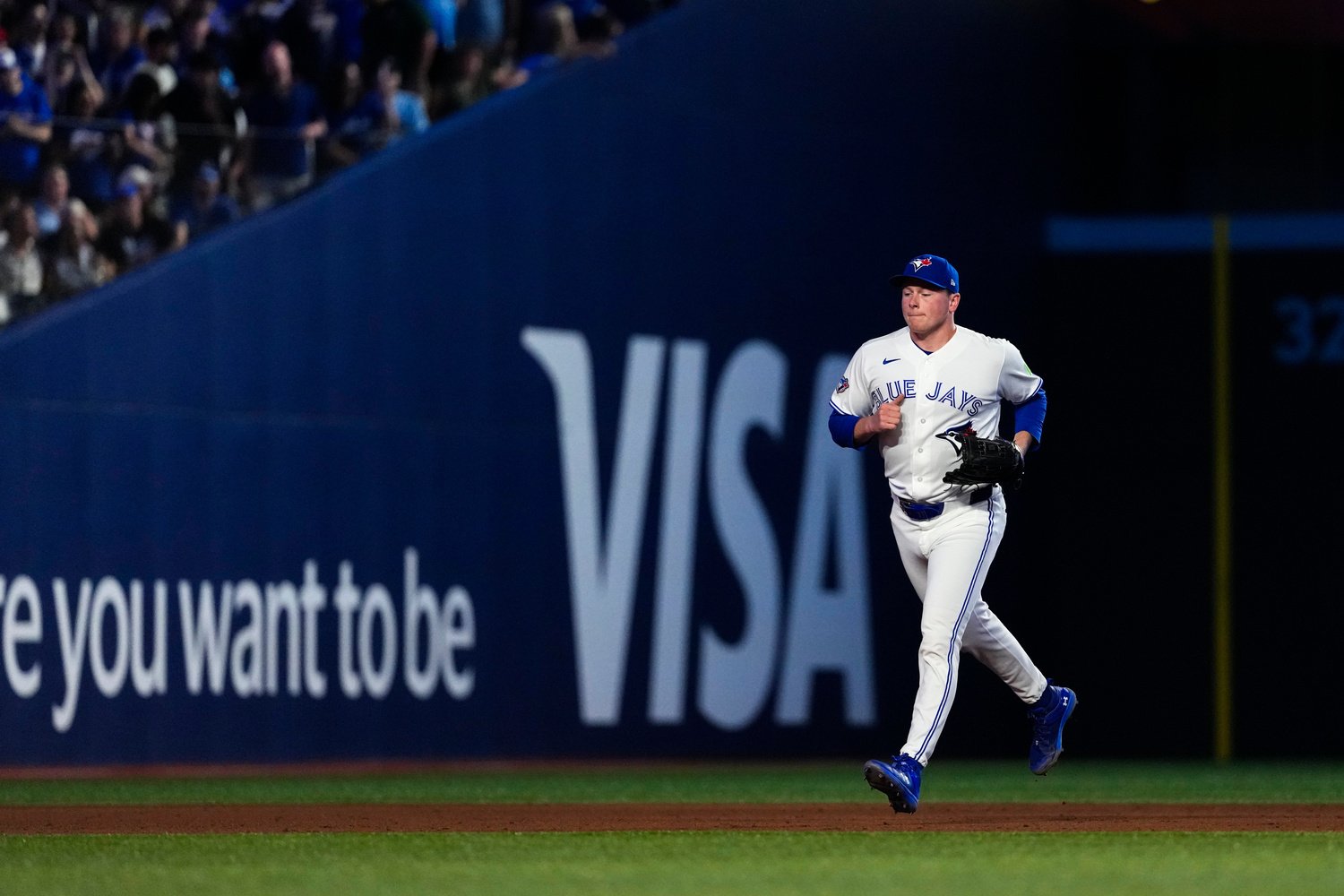 I’m sure you’ve heard by now that Louis Varland has been the best reliever in the American League this season. At least according to ERA, xERA, FIP, fWAR, bWAR, and WPA. He’d likely be up there in saves as well if he didn’t have to wait until his 13th appearance of the season to get his first save opportunity, but right now he’ll settle for third place in the American League with his 28 – eight behind the Rays’ Bryan Baker’s 34, which lead baseball. Aside from his single slip-up against the Chicago Cubs when Alex Bregman hit a homer to snatch another save from Varland’s grasp, the ninth inning has been almost relaxing for Jays fans since Varland took over the closer job full-time towards the end of April. He’s been dominant to a point where it’s hard to quantify how comfortable it feels when Varland is pitching. That's true regardless of how slim the margin is between holding onto a lead for the win or giving up a couple of runs for a loss. That word “dominant” gets thrown around a lot. Sometimes more deservedly than others. If we look back through 50 years of Blue Jays baseball, to this point, Varland’s 2026 is one of a handful of reliever seasons that we can comfortably say has been dominant. All of the following comes with the caveat that Varland is just a little over three-quarters of the way through this season. The reality is, reliever statistics are volatile because of how small the samples they work within are. A few blow-ups or even just a slightly more average finish to 2026 could turn his dominant year into just a good one. With that being said, there’s no other way to start this conversation than by stating the fact that Varland’s current 1.26 ERA and 355 ERA+ are both the best by a Blue Jay in a season in which he saved at least 20 games. ERA is no longer the one-size-fits-all pitching statistic we once considered it to be, especially not for relievers, but it’s impossible to tell the story of an elite pitching season without displaying that a guy made sure that opponents simply couldn’t earn runs against him. If Varland stays on pace, his 2026 will slide ahead of B.J. Ryan’s fabled 2006 for the best ERA among Blue Jays to convert 20 saves. Ryan’s 2006 has been thrown around in conversations as the best Jays closer season of all-time, and looking back at it 20 years later, It’s pretty easy to see why. Best Season ERA By a Blue Jays Pitcher With at Least 20 Saves Player Season Saves Appearances / IP ERA Louis Varland* 2026 28 58 / 64.1 1.26 B.J. Ryan 2006 38 65 / 72.1 1.37 Ken Giles 2019 23 53 / 53 1.87 Tom Henke 1989 20 64 / 89 1.92 Jordan Romano 2022 36 63 / 64 2.11 Duane Ward 1993 45 71 / 71.2 2.13 *Season in progress Ryan racked up 38 saves in 72.1 IP to go along with a 1.37 ERA (335 ERA+), and the deeper you dig, the more impressive it gets. He struck out nearly 32% of the hitters he faced, held opponents to a .169 average and .444 OPS – both the best in a season by a Jays closer – and only gave up five extra-base hits all season. Perhaps the most eye-popping number from Ryan’s ‘06 is the 0.857 WHIP. Part of what makes a fanbase trust a closer is not just if he gets the job done and converts the saves, but how he does it. If there’s a ton of traffic en route to a zero, or he gives up a couple runs and turns a three-run lead into a one-run win, it’s not exactly the same as coming in and retiring three straight to secure a win. No Blue Jays closer has ever had a season where they limited traffic as effectively as B.J. Ryan did in 2006, but Louis Varland is on pace for the franchise’s ninth closer season with a WHIP under 1.000. If Varland can maintain through the rest of the season, he’ll join Ryan’s ‘06, Roberto Osuna’s ‘15, ‘16 and ‘17, Casey Janssen’s ‘12 and ‘13, and Tom Henke’s ‘87 and ‘91. Blue Jays Closers With a WHIP Under 1.000 Closer Season WHIP B.J. Ryan 2006 0.857 Roberto Osuna 2017 0.859 Casey Janssen 2012 0.864 Tom Henke 1991 0.874 Roberto Osuna 2015 0.919 Tom Henke 1987 0.926 Roberto Osuna 2016 0.932 Louis Varland* 2026 0.964 Casey Janssen 2013 0.987 *Season in progress But all eight previous seasons have something in common: They each included at least two blown saves. Putting wins to bed is a closer’s job, and for as dominant as they were, there were slip-ups. A few games where the Jays were just three outs from winning with a lead of three runs or fewer, with the ball in the hands of their most trusted pitcher, but the job didn’t get finished. No Blue Jays closer has ever converted 20 saves in a season without blowing at least one, but two guys have limited it to just one blown save: Jordan Romano in 2021 and Ken Giles in 2019. Varland’s aforementioned blown save to Bregman and the Cubs makes it so he can’t be the first Jays closer to go perfect in save opportunities, but it’s still possible he can become the third to miss just one. Blue Jays Pitchers With at Least 20 Saves and Fewer Than Four Blown Saves Player Season Appearances / IP Saves / Blown Saves Ken Giles 2019 53 / 53 23 / 1 Jordan Romano 2021 62 / 63 23 / 1 Louis Varland* 2026 58 / 64.1 28 / 1 Casey Janssen 2013 56 / 52.2 34 / 2 Tom Henke 1992 57 / 55.2 34 / 3 Roberto Osuna 2015 68 / 69.2 20 / 3 Casey Janssen 2012 62 / 62.2 22 / 3 Tom Henke 1991 49 / 50.1 32 / 3 *Season in progress The crazy part about that, though, is that as of mid-August, Varland has already surpassed Romano’s and Giles’ innings totals from ‘21 and ‘19, respectively. Varland has already thrown 64.1 innings in 58 appearances through 126 Blue Jays games this year, putting him on pace for 82.2 innings for the season. If he surpasses that 80-inning mark, he’ll be the first closer of the 2020s, and fifth since 2010 to get to that mark. A Blue Jay hasn’t gotten to 20 saves and 80 innings since Duane Ward in 1991, when Ward threw 107.1 in 81 appearances. Even if Varland doesn’t quite reach that kind of threshold, doing what he’s doing in this era, on this kind of volume, is almost unheard of. I wanted to lay out as much of a comparison to other elite Blue Jays closer seasons as possible before I broke out WAR, but it’s impossible to have this conversation in 2026 without it. I’m using bWAR rather than fWAR because it’s less predictive and relies more on the actual results, and it is much easier to compare across multiple players and multiple seasons. Louis Varland, with 3.0 bWAR through 126 team games, is already having a top-six Blue Jays closer season of all-time. Henke’s ‘90 and Ward’s ‘93 seasons both saw them finish with 3.0 bWAR. Henke racked up 3.3 in ‘87 and 3.4 in ‘89, and of course B.J. Ryan’s ‘06 is the best in Jays history at 3.6 bWAR. Best Season bWAR By a Blue Jays Pitcher With at Least 20 Saves Player Season Saves Appearances / IP bWAR B.J. Ryan 2006 38 65 / 72.1 3.6 Tom Henke 1989 20 64 / 89 3.4 Tom Henke 1987 34 72 / 94 3.3 Duane Ward 1993 45 71 / 71.2 3 Tom Henke 1990 32 61 / 74.2 3 Louis Varland* 2026 28 58 / 64.1 3.0 *Season in progress Varland’s pace would put him at almost 3.9 bWAR after 162. Louis Varland On-Pace Stats G IP SV K bWAR 75 82 36 102 3.9 Pacing out WAR is basically never that simple, and with closers – whose usage depends pretty heavily on their team being up one, two, or three runs after eight innings – it’s even less simple. There’s still a long way to go, and a lot of things are going to have to continue going right, but if they do, we’re not just talking about one of the best Blue Jays closer seasons of all-time. We’re talking about one of the best closer seasons of this century. At least according to bWAR. Jonathan Papelbon’s 5.0-win 2006 is well out of reach, and Emmanuel Clase’s ‘24 (4.4), Blake Treinen’s ‘18 (4.4), and Mariano Rivera’s ‘04 (4.2) and ‘08 (4.3) likely are too. But if Varland can find a way to 4.0 bWAR, he’ll be just the 10th pitcher to do that and save at least 25 games in a season since 2000. Of course, he’d have to be as good or better in the final quarter of this season as he’s been over the first three. Maybe it's not likely, but Varland has put himself in a spot where it’s possible, and with the Blue Jays finding their second wind in the American League Wild Card race, having Louis Varland to close out some of the tight games they're sure to find themselves in down the stretch is like having an ace in the hole.
 -
I’m sure you’ve heard by now that Louis Varland has been the best reliever in the American League this season. At least according to ERA, xERA, FIP, fWAR, bWAR, and WPA. He’d likely be up there in saves as well if he didn’t have to wait until his 13th appearance of the season to get his first save opportunity, but right now he’ll settle for third place in the American League with his 28 – eight behind the Rays’ Bryan Baker’s 34, which lead baseball. Aside from his single slip-up against the Chicago Cubs when Alex Bregman hit a homer to snatch another save from Varland’s grasp, the ninth inning has been almost relaxing for Jays fans since Varland took over the closer job full-time towards the end of April. He’s been dominant to a point where it’s hard to quantify how comfortable it feels when Varland is pitching. That's true regardless of how slim the margin is between holding onto a lead for the win or giving up a couple of runs for a loss. That word “dominant” gets thrown around a lot. Sometimes more deservedly than others. If we look back through 50 years of Blue Jays baseball, to this point, Varland’s 2026 is one of a handful of reliever seasons that we can comfortably say has been dominant. All of the following comes with the caveat that Varland is just a little over three-quarters of the way through this season. The reality is, reliever statistics are volatile because of how small the samples they work within are. A few blow-ups or even just a slightly more average finish to 2026 could turn his dominant year into just a good one. With that being said, there’s no other way to start this conversation than by stating the fact that Varland’s current 1.26 ERA and 355 ERA+ are both the best by a Blue Jay in a season in which he saved at least 20 games. ERA is no longer the one-size-fits-all pitching statistic we once considered it to be, especially not for relievers, but it’s impossible to tell the story of an elite pitching season without displaying that a guy made sure that opponents simply couldn’t earn runs against him. If Varland stays on pace, his 2026 will slide ahead of B.J. Ryan’s fabled 2006 for the best ERA among Blue Jays to convert 20 saves. Ryan’s 2006 has been thrown around in conversations as the best Jays closer season of all-time, and looking back at it 20 years later, It’s pretty easy to see why. Best Season ERA By a Blue Jays Pitcher With at Least 20 Saves Player Season Saves Appearances / IP ERA Louis Varland* 2026 28 58 / 64.1 1.26 B.J. Ryan 2006 38 65 / 72.1 1.37 Ken Giles 2019 23 53 / 53 1.87 Tom Henke 1989 20 64 / 89 1.92 Jordan Romano 2022 36 63 / 64 2.11 Duane Ward 1993 45 71 / 71.2 2.13 *Season in progress Ryan racked up 38 saves in 72.1 IP to go along with a 1.37 ERA (335 ERA+), and the deeper you dig, the more impressive it gets. He struck out nearly 32% of the hitters he faced, held opponents to a .169 average and .444 OPS – both the best in a season by a Jays closer – and only gave up five extra-base hits all season. Perhaps the most eye-popping number from Ryan’s ‘06 is the 0.857 WHIP. Part of what makes a fanbase trust a closer is not just if he gets the job done and converts the saves, but how he does it. If there’s a ton of traffic en route to a zero, or he gives up a couple runs and turns a three-run lead into a one-run win, it’s not exactly the same as coming in and retiring three straight to secure a win. No Blue Jays closer has ever had a season where they limited traffic as effectively as B.J. Ryan did in 2006, but Louis Varland is on pace for the franchise’s ninth closer season with a WHIP under 1.000. If Varland can maintain through the rest of the season, he’ll join Ryan’s ‘06, Roberto Osuna’s ‘15, ‘16 and ‘17, Casey Janssen’s ‘12 and ‘13, and Tom Henke’s ‘87 and ‘91. Blue Jays Closers With a WHIP Under 1.000 Closer Season WHIP B.J. Ryan 2006 0.857 Roberto Osuna 2017 0.859 Casey Janssen 2012 0.864 Tom Henke 1991 0.874 Roberto Osuna 2015 0.919 Tom Henke 1987 0.926 Roberto Osuna 2016 0.932 Louis Varland* 2026 0.964 Casey Janssen 2013 0.987 *Season in progress But all eight previous seasons have something in common: They each included at least two blown saves. Putting wins to bed is a closer’s job, and for as dominant as they were, there were slip-ups. A few games where the Jays were just three outs from winning with a lead of three runs or fewer, with the ball in the hands of their most trusted pitcher, but the job didn’t get finished. No Blue Jays closer has ever converted 20 saves in a season without blowing at least one, but two guys have limited it to just one blown save: Jordan Romano in 2021 and Ken Giles in 2019. Varland’s aforementioned blown save to Bregman and the Cubs makes it so he can’t be the first Jays closer to go perfect in save opportunities, but it’s still possible he can become the third to miss just one. Blue Jays Pitchers With at Least 20 Saves and Fewer Than Four Blown Saves Player Season Appearances / IP Saves / Blown Saves Ken Giles 2019 53 / 53 23 / 1 Jordan Romano 2021 62 / 63 23 / 1 Louis Varland* 2026 58 / 64.1 28 / 1 Casey Janssen 2013 56 / 52.2 34 / 2 Tom Henke 1992 57 / 55.2 34 / 3 Roberto Osuna 2015 68 / 69.2 20 / 3 Casey Janssen 2012 62 / 62.2 22 / 3 Tom Henke 1991 49 / 50.1 32 / 3 *Season in progress The crazy part about that, though, is that as of mid-August, Varland has already surpassed Romano’s and Giles’ innings totals from ‘21 and ‘19, respectively. Varland has already thrown 64.1 innings in 58 appearances through 126 Blue Jays games this year, putting him on pace for 82.2 innings for the season. If he surpasses that 80-inning mark, he’ll be the first closer of the 2020s, and fifth since 2010 to get to that mark. A Blue Jay hasn’t gotten to 20 saves and 80 innings since Duane Ward in 1991, when Ward threw 107.1 in 81 appearances. Even if Varland doesn’t quite reach that kind of threshold, doing what he’s doing in this era, on this kind of volume, is almost unheard of. I wanted to lay out as much of a comparison to other elite Blue Jays closer seasons as possible before I broke out WAR, but it’s impossible to have this conversation in 2026 without it. I’m using bWAR rather than fWAR because it’s less predictive and relies more on the actual results, and it is much easier to compare across multiple players and multiple seasons. Louis Varland, with 3.0 bWAR through 126 team games, is already having a top-six Blue Jays closer season of all-time. Henke’s ‘90 and Ward’s ‘93 seasons both saw them finish with 3.0 bWAR. Henke racked up 3.3 in ‘87 and 3.4 in ‘89, and of course B.J. Ryan’s ‘06 is the best in Jays history at 3.6 bWAR. Best Season bWAR By a Blue Jays Pitcher With at Least 20 Saves Player Season Saves Appearances / IP bWAR B.J. Ryan 2006 38 65 / 72.1 3.6 Tom Henke 1989 20 64 / 89 3.4 Tom Henke 1987 34 72 / 94 3.3 Duane Ward 1993 45 71 / 71.2 3 Tom Henke 1990 32 61 / 74.2 3 Louis Varland* 2026 28 58 / 64.1 3.0 *Season in progress Varland’s pace would put him at almost 3.9 bWAR after 162. Louis Varland On-Pace Stats G IP SV K bWAR 75 82 36 102 3.9 Pacing out WAR is basically never that simple, and with closers – whose usage depends pretty heavily on their team being up one, two, or three runs after eight innings – it’s even less simple. There’s still a long way to go, and a lot of things are going to have to continue going right, but if they do, we’re not just talking about one of the best Blue Jays closer seasons of all-time. We’re talking about one of the best closer seasons of this century. At least according to bWAR. Jonathan Papelbon’s 5.0-win 2006 is well out of reach, and Emmanuel Clase’s ‘24 (4.4), Blake Treinen’s ‘18 (4.4), and Mariano Rivera’s ‘04 (4.2) and ‘08 (4.3) likely are too. But if Varland can find a way to 4.0 bWAR, he’ll be just the 10th pitcher to do that and save at least 25 games in a season since 2000. Of course, he’d have to be as good or better in the final quarter of this season as he’s been over the first three. Maybe it's not likely, but Varland has put himself in a spot where it’s possible, and with the Blue Jays finding their second wind in the American League Wild Card race, having Louis Varland to close out some of the tight games they're sure to find themselves in down the stretch is like having an ace in the hole. View full article
-
Owen Hill reacted to a post in a topic:
Alejandro Kirk Has Turned His Season Around
-
Alejandro Kirk Has Turned His Season Around
Owen Hill replied to Cory Sparks's topic in Jays Centre Front Page News
Just talked about this on the podcast- Kirky's got a 155 wRC+ since July 8th, but only has six extra base hits. He's just simply hitting a single or walking *every time* A homer and a double in game one against the Yanks was a good start, but I don't remember anyone else being this productive and refusing to hit for any slug. -
Owen Hill reacted to an article:
Blue Jays Clutch Plays: Varland's Escape, McAdoo's Double
-
PermanentHalladay reacted to an article:
How Have the Newest Blue Jays Introduced Themselves?
-
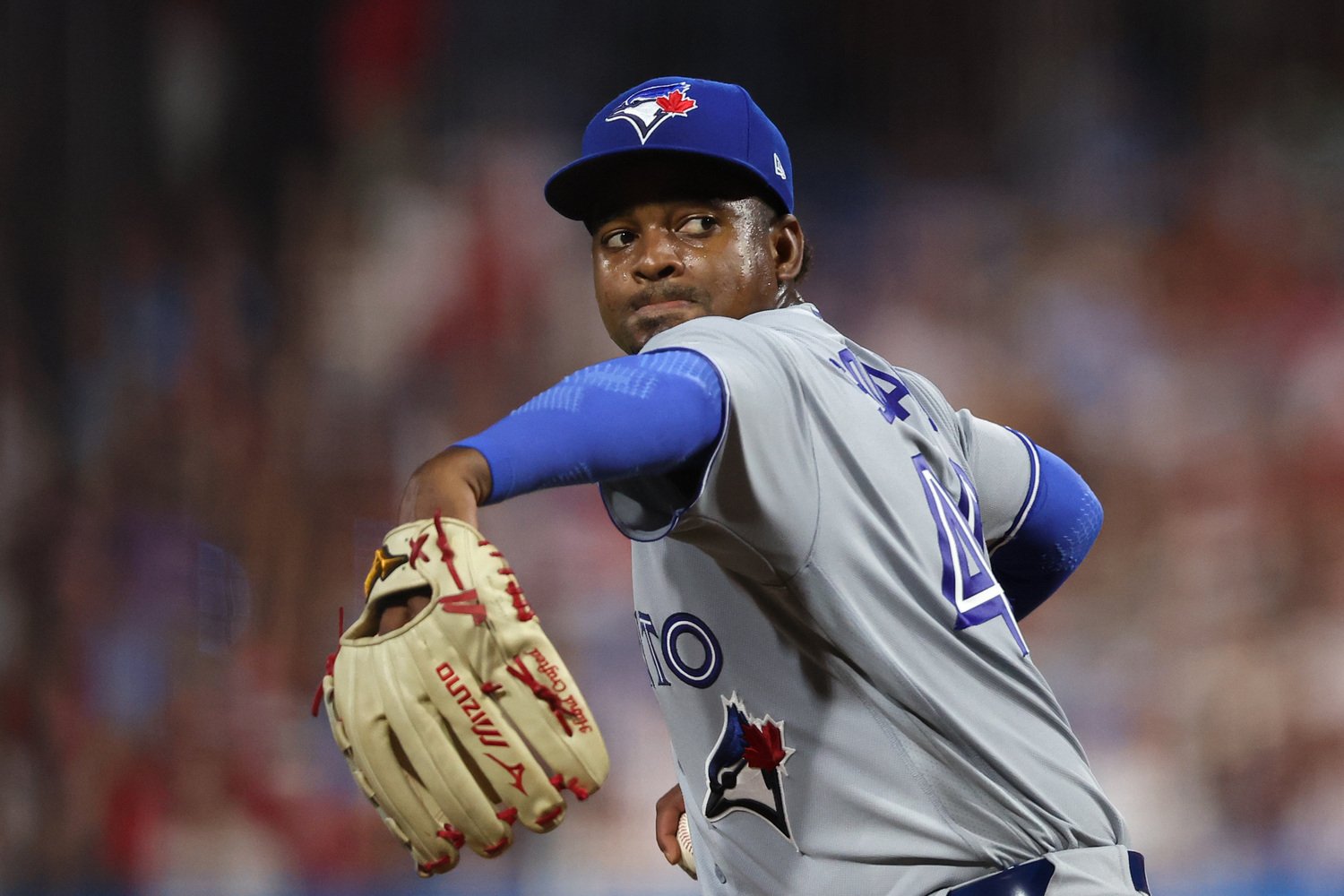 For better or for worse, the human brain is wired to make instantaneous evaluations of strangers. Within seconds, we’ve determined whether we should view them positively or negatively. It was a built-in safety feature for primal humans that has survived all of the rigorous years of evolution. Once we’ve formed that first impression, we filter all of our future impressions of this person through that lens, and we subconsciously seek confirmation to prove that our first perception was correct. Whether we like to admit it or not, we do the exact same thing with baseball players that suit up for our favourite teams. Jays fans will immediately think of J.P. Arencibia hitting a homer on the first pitch he saw in the big leagues and finishing his debut 4-for-5 with two homers and a double. Arencibia rode that debut through the next three years as the Jays’ primary catcher despite never really living up to his hot start for any extended stretches. A busy trade deadline and some roster churn have given Jays fans plenty more first impressions, and it’s hard not to be excited about a few of them. As smart baseball fans rather than hunter-gatherer cavemen, we do our best to turn off that primal instinct, watch the process and wait for a larger sample, rather than making determinations based on the immediate results from a guy’s first couple of times putting on the uniform. But that doesn’t mean we can’t overreact slightly to what we’ve seen from the newest Blue Jays in their first couple of opportunities with their new team. For example, I can’t blame you if you’re on the Brett Bateman bandwagon. The centre fielder was acquired from the Cubs in exchange for Kevin Gausman and made just two appearances in Buffalo for the Jays before Luis Urías went on the IL, opening up a spot on the major league roster. Bateman didn't have to wait for his welcome-to-the-big-leagues moment because his first start came against Zack Wheeler, a veteran of 12 major league seasons and one of the best pitchers of the last decade. Wheeler’s first pitch to the nine-hitter was a heater up in the zone, which Bateman mashed off of the left field fence for a double. The first hit of his career on the first pitch he saw. Bateman worked walks in both of his next two plate appearances against Wheeler and finished his debut 1-for-2 with a run scored. You can understand fans buying into the hype of a successful debut, but it really opened my eyes to just how impressed the manager was when the next day’s lineup came out and Bateman was batting in the two-hole against Aaron Nola. John Schneider obviously likes his fit at the top of the lineup, because when he’s been in there, the only time he’s found himself not in the two-hole since his first start against Wheeler was when he hit leadoff against Jesús Luzardo. The best part is that Bateman’s delivered. He’s got hits in five of his first six games, and at least one run scored or batted in in four of those games as well. Obviously it’s been tough to watch this Jays team that’s scored the second fewest runs in baseball, and Bateman putting up quality at-bats in key spots amidst a stretch of winning baseball has made him a quick fan favourite. But seriously. It can’t be understated how perfectly timed his hits have been. The defense has been quiet in a good way. He also adds a good pair of legs to a Jays team with the third lowest average sprint speed in baseball, and so far the hits have come at the right times. Long-term, there are still questions as to whether or not there will be enough power to justify an everyday role, and in the tiny sample, none of his batted ball numbers look very exciting. But first impressions matter, and it’s hard to make a better one than Brett Bateman has so far. A bit of a smaller-profile first impression has come in the form of Josh Smith. Picked up from the Texas Rangers in exchange for Adam Macko in a slightly head-scratching deal at the deadline, Smith had a 65 wRC+ across 154 PAs for the Rangers. The Jays liked the contact-heavy profile as well as the defensive versatility and saw Smith as a buy-low candidate. The early returns are relatively positive. The overall numbers are carried by a 3-for-4 with a homer day against the Phillies, but he’s also stolen a base and gotten a sacrifice bunt down. It’s not sexy. He’s nobody’s new favourite player, but he’s represented a fundamental soundness that the Jays have severely lacked at times this season. Would we look on him this fondly and talk ourselves into Josh Smith if the Jays had lost seven and won four since the deadline instead of the other way around? No way! But the Jays are winning, and Smith is contributing, so his first impression is a good one. The guy Jays fans were most excited to get our eyes on following the trade deadline has now completed two appearances, and the results on his first impression are in: José Soriano is going to be a very productive Blue Jay. I’m almost as confident as when he was first acquired. He’s done a great job of showing us what could be on the table going forward without actually doing it. Racking up 18 whiffs in his Blue Jays debut last week against the Phillies was certainly intriguing, but it only translated to three strikeouts across 4.2 innings. His second Jays start came against the Red Sox, and while he was able to work a quality start, only allowing one run over six innings, he lacked a certain dominance. He worked around four hits and a pair of walks. It’s really interesting that in his most recent start, Soriano threw 45.6% sinkers and 14.4% knuckle curves – his highest and lowest marks of the year, respectively – but again, the goal here isn’t to make any sweeping declarations about Soriano based on his first couple starts with his new team. There is obviously a plan with him that extends well beyond the final six weeks of 2026. If you gave Jays fans a truth serum and asked what they thought about Soriano’s first couple starts, I bet a lot of them would be forced to admit they’re a bit disappointed. Not because he’s been bad. But because when you acquire a pitcher with the stuff that Soriano has, and acquire him for a prospect with as much helium as Arjun Nimmala, you start to dream of dominance. The good thing for Soriano: We’re not cavemen, and he’s got plenty of runway to shape the narrative of his Blue Jays tenure.
-
- 1
-
-
- jose soriano
- brett bateman
- (and 2 more)
-
For better or for worse, the human brain is wired to make instantaneous evaluations of strangers. Within seconds, we’ve determined whether we should view them positively or negatively. It was a built-in safety feature for primal humans that has survived all of the rigorous years of evolution. Once we’ve formed that first impression, we filter all of our future impressions of this person through that lens, and we subconsciously seek confirmation to prove that our first perception was correct. Whether we like to admit it or not, we do the exact same thing with baseball players that suit up for our favourite teams. Jays fans will immediately think of J.P. Arencibia hitting a homer on the first pitch he saw in the big leagues and finishing his debut 4-for-5 with two homers and a double. Arencibia rode that debut through the next three years as the Jays’ primary catcher despite never really living up to his hot start for any extended stretches. A busy trade deadline and some roster churn have given Jays fans plenty more first impressions, and it’s hard not to be excited about a few of them. As smart baseball fans rather than hunter-gatherer cavemen, we do our best to turn off that primal instinct, watch the process and wait for a larger sample, rather than making determinations based on the immediate results from a guy’s first couple of times putting on the uniform. But that doesn’t mean we can’t overreact slightly to what we’ve seen from the newest Blue Jays in their first couple of opportunities with their new team. For example, I can’t blame you if you’re on the Brett Bateman bandwagon. The centre fielder was acquired from the Cubs in exchange for Kevin Gausman and made just two appearances in Buffalo for the Jays before Luis Urías went on the IL, opening up a spot on the major league roster. Bateman didn't have to wait for his welcome-to-the-big-leagues moment because his first start came against Zack Wheeler, a veteran of 12 major league seasons and one of the best pitchers of the last decade. Wheeler’s first pitch to the nine-hitter was a heater up in the zone, which Bateman mashed off of the left field fence for a double. The first hit of his career on the first pitch he saw. Bateman worked walks in both of his next two plate appearances against Wheeler and finished his debut 1-for-2 with a run scored. You can understand fans buying into the hype of a successful debut, but it really opened my eyes to just how impressed the manager was when the next day’s lineup came out and Bateman was batting in the two-hole against Aaron Nola. John Schneider obviously likes his fit at the top of the lineup, because when he’s been in there, the only time he’s found himself not in the two-hole since his first start against Wheeler was when he hit leadoff against Jesús Luzardo. The best part is that Bateman’s delivered. He’s got hits in five of his first six games, and at least one run scored or batted in in four of those games as well. Obviously it’s been tough to watch this Jays team that’s scored the second fewest runs in baseball, and Bateman putting up quality at-bats in key spots amidst a stretch of winning baseball has made him a quick fan favourite. But seriously. It can’t be understated how perfectly timed his hits have been. The defense has been quiet in a good way. He also adds a good pair of legs to a Jays team with the third lowest average sprint speed in baseball, and so far the hits have come at the right times. Long-term, there are still questions as to whether or not there will be enough power to justify an everyday role, and in the tiny sample, none of his batted ball numbers look very exciting. But first impressions matter, and it’s hard to make a better one than Brett Bateman has so far. A bit of a smaller-profile first impression has come in the form of Josh Smith. Picked up from the Texas Rangers in exchange for Adam Macko in a slightly head-scratching deal at the deadline, Smith had a 65 wRC+ across 154 PAs for the Rangers. The Jays liked the contact-heavy profile as well as the defensive versatility and saw Smith as a buy-low candidate. The early returns are relatively positive. The overall numbers are carried by a 3-for-4 with a homer day against the Phillies, but he’s also stolen a base and gotten a sacrifice bunt down. It’s not sexy. He’s nobody’s new favourite player, but he’s represented a fundamental soundness that the Jays have severely lacked at times this season. Would we look on him this fondly and talk ourselves into Josh Smith if the Jays had lost seven and won four since the deadline instead of the other way around? No way! But the Jays are winning, and Smith is contributing, so his first impression is a good one. The guy Jays fans were most excited to get our eyes on following the trade deadline has now completed two appearances, and the results on his first impression are in: José Soriano is going to be a very productive Blue Jay. I’m almost as confident as when he was first acquired. He’s done a great job of showing us what could be on the table going forward without actually doing it. Racking up 18 whiffs in his Blue Jays debut last week against the Phillies was certainly intriguing, but it only translated to three strikeouts across 4.2 innings. His second Jays start came against the Red Sox, and while he was able to work a quality start, only allowing one run over six innings, he lacked a certain dominance. He worked around four hits and a pair of walks. It’s really interesting that in his most recent start, Soriano threw 45.6% sinkers and 14.4% knuckle curves – his highest and lowest marks of the year, respectively – but again, the goal here isn’t to make any sweeping declarations about Soriano based on his first couple starts with his new team. There is obviously a plan with him that extends well beyond the final six weeks of 2026. If you gave Jays fans a truth serum and asked what they thought about Soriano’s first couple starts, I bet a lot of them would be forced to admit they’re a bit disappointed. Not because he’s been bad. But because when you acquire a pitcher with the stuff that Soriano has, and acquire him for a prospect with as much helium as Arjun Nimmala, you start to dream of dominance. The good thing for Soriano: We’re not cavemen, and he’s got plenty of runway to shape the narrative of his Blue Jays tenure. View full article
-
Owen Hill reacted to an article:
Dylan Cease Is Pitching Differently, and It Could Win Him the Cy Young
-
Owen Hill reacted to an article:
Should the Blue Jays Re-Evaluate Their Offensive Identity?
-
JoJo ParkerJohnny KingArjun NimmalaJuan SanchezRicky TiedemannGage StaniferCole CarlonSean KeysNolan PerryBlaine BullardJake BlossJake CookWill BrickCarson MessinaVictor AriasAustin CatesDaniel GuerraJosh KasevichRJ SchreckTim Piasentin
-
Simon Li reacted to a post in a topic:
Blue Jays Prospect Rankings, June 2026 Update: Many New Faces Arrive
-
Hill reacted to an article:
Blue Jays Welcome Back Shane Bieber, But Back-To-Back-To-Back Bombs Spoil Return
-
It’s not often that a team gets to add a former Cy Young winner to its rotation in the middle of June, but that’s exactly what the Blue Jays did on Tuesday afternoon when Shane Bieber made his season debut. Bieber’s return puts the Jays’ starting rotation as close to full strength as it's been since Cody Ponce blew out his ACL in the third inning of his own Blue Jays debut all the way back in March, but the best version of this rotation includes a much better version of Bieber than we saw in this start. Across 3.2 innings against the Astros, Bieber threw 75 pitches, allowing four runs on nine hits, including three consecutive solo homers in the fourth, and a total of 10 hard-hit balls. The important thing is that Bieber was actually able to get on a Major League mound and make a start. The Blue Jays will be more concerned with how he recovers from this than with the results, but the expectations for his performance going forward have to be much higher than what he showed here. The Jays will also be concerned with the underlying numbers, because they matched the poor results. Bieber’s fastball averaged 91.7 MPH, down almost a full mile compared to the 92.6 he got out of it in 2025. Bieber also forced only six whiffs, none of which were on his fastball. A ratio of 10 hard hit balls to six swings and misses is not a very sustainable practice. There’s no positives to find in his velo being down, but in all fairness, Bieber’s never been a stuff guy – he hasn’t averaged 93 MPH on his fastball since 2020. Instead, his ability to mix and locate five different pitches has helped him put up many impressive statistical seasons with Cleveland over the years. From 2019 through two starts in 2024 before undergoing UCL surgery, Bieber threw 728.1 innings and allowed just a 3.02 ERA for the Guardians. It’s what the Jays hoped they were acquiring when they traded for him at the 2025 trade deadline, and for the most part, it’s what they got down the stretch and deep into the playoffs. Bieber followed up a 3.57 ERA across 40.1 regular-season innings after the trade deadline with 18.2 innings and a 3.86 ERA through game seven of the World Series. After Bieber opted into his player option for just $12M at the beginning of the offseason, concerns were raised about some persisting health issues from that 2024 elbow surgery. Those concerns were vindicated when Bieber’s spring training build-up was delayed with forearm fatigue and elbow inflammation cited as he started the season on the injured list. His rehab process was extensive as well. Bieber made five starts between three minor league levels on his way back to the big leagues, and while the results don’t mean much of anything, he did get hit hard in those as well. Across 17 innings, he had a 6.88 ERA and struck out just 14. His velocity was also reported to be down in many of those. It’s not unusual to see established major leaguers struggle in minor league rehab outings and then turn it on once they get back to the big leagues, but that’s not what we saw in Bieber’s start against the Astros. Is it time to press the panic button on Bieber? Absolutely not. Regardless of the team’s need for dependable starting pitching, Bieber has shown he can be effective without elite-elite stuff as recently as October, and with some more effective pitch mixing and location, we’re sure to see him get back to being a reliable option every fifth day. The current shape of the rotation also gives Bieber essentially unlimited runway. Bieber came in to fill a slot that had been a bullpen day since Max Scherzer went back on the IL in early June, and if we’re honest, it was often a bullpen day even when Scherzer was making the starts. Even then, if you consider Dylan Cease, Kevin Gausman, and Trey Yesavage ahead of him on the depth chart, the Jays have been running out Scherzer and Patrick Corbin to various degrees of ineffectiveness for the better part of this season. Obviously, if Bieber can get back to anything close to his Cy Young form, he raises the Blue Jays’ ceiling drastically, but even if he ends up in some sort of five-and-dive routine, he’ll have raised the floor of the pitching staff. The Jays have thrown the fourth most innings out of the bullpen in 2026, and Bieber’s ability to provide some length should help the Jays find more days off for Louis Varland, Jeff Hoffman, Tyler Rogers, and Mason Fluharty, who are all top 12 in reliever appearances. Unfortunately, we didn’t see the ceiling or floor-raising version of Shane Bieber in that first outing on Tuesday afternoon, but if he can continue to shake off some rust going forward, he absolutely transforms the starting rotation. View full article
-
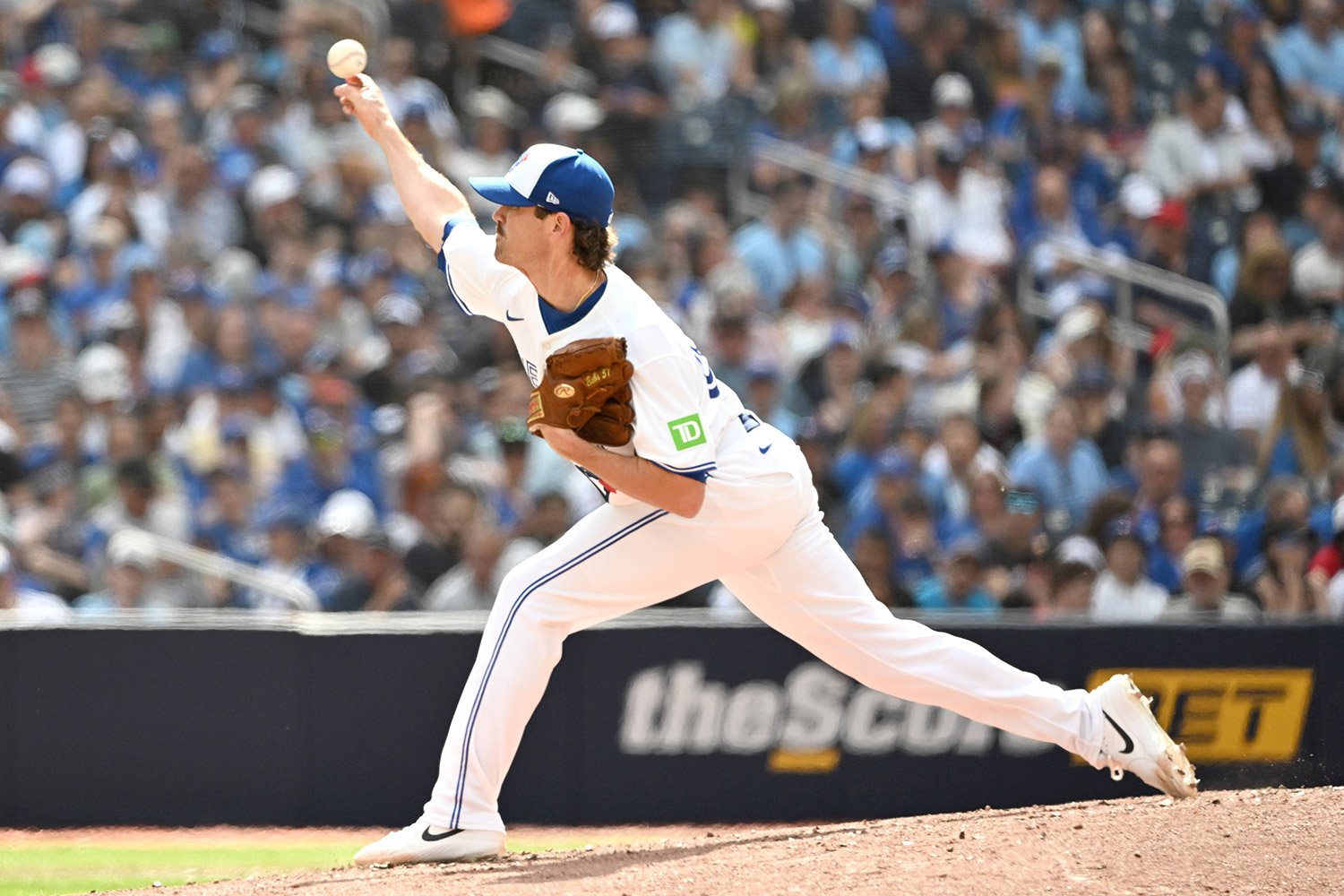 It’s not often that a team gets to add a former Cy Young winner to its rotation in the middle of June, but that’s exactly what the Blue Jays did on Tuesday afternoon when Shane Bieber made his season debut. Bieber’s return puts the Jays’ starting rotation as close to full strength as it's been since Cody Ponce blew out his ACL in the third inning of his own Blue Jays debut all the way back in March, but the best version of this rotation includes a much better version of Bieber than we saw in this start. Across 3.2 innings against the Astros, Bieber threw 75 pitches, allowing four runs on nine hits, including three consecutive solo homers in the fourth, and a total of 10 hard-hit balls. The important thing is that Bieber was actually able to get on a Major League mound and make a start. The Blue Jays will be more concerned with how he recovers from this than with the results, but the expectations for his performance going forward have to be much higher than what he showed here. The Jays will also be concerned with the underlying numbers, because they matched the poor results. Bieber’s fastball averaged 91.7 MPH, down almost a full mile compared to the 92.6 he got out of it in 2025. Bieber also forced only six whiffs, none of which were on his fastball. A ratio of 10 hard hit balls to six swings and misses is not a very sustainable practice. There’s no positives to find in his velo being down, but in all fairness, Bieber’s never been a stuff guy – he hasn’t averaged 93 MPH on his fastball since 2020. Instead, his ability to mix and locate five different pitches has helped him put up many impressive statistical seasons with Cleveland over the years. From 2019 through two starts in 2024 before undergoing UCL surgery, Bieber threw 728.1 innings and allowed just a 3.02 ERA for the Guardians. It’s what the Jays hoped they were acquiring when they traded for him at the 2025 trade deadline, and for the most part, it’s what they got down the stretch and deep into the playoffs. Bieber followed up a 3.57 ERA across 40.1 regular-season innings after the trade deadline with 18.2 innings and a 3.86 ERA through game seven of the World Series. After Bieber opted into his player option for just $12M at the beginning of the offseason, concerns were raised about some persisting health issues from that 2024 elbow surgery. Those concerns were vindicated when Bieber’s spring training build-up was delayed with forearm fatigue and elbow inflammation cited as he started the season on the injured list. His rehab process was extensive as well. Bieber made five starts between three minor league levels on his way back to the big leagues, and while the results don’t mean much of anything, he did get hit hard in those as well. Across 17 innings, he had a 6.88 ERA and struck out just 14. His velocity was also reported to be down in many of those. It’s not unusual to see established major leaguers struggle in minor league rehab outings and then turn it on once they get back to the big leagues, but that’s not what we saw in Bieber’s start against the Astros. Is it time to press the panic button on Bieber? Absolutely not. Regardless of the team’s need for dependable starting pitching, Bieber has shown he can be effective without elite-elite stuff as recently as October, and with some more effective pitch mixing and location, we’re sure to see him get back to being a reliable option every fifth day. The current shape of the rotation also gives Bieber essentially unlimited runway. Bieber came in to fill a slot that had been a bullpen day since Max Scherzer went back on the IL in early June, and if we’re honest, it was often a bullpen day even when Scherzer was making the starts. Even then, if you consider Dylan Cease, Kevin Gausman, and Trey Yesavage ahead of him on the depth chart, the Jays have been running out Scherzer and Patrick Corbin to various degrees of ineffectiveness for the better part of this season. Obviously, if Bieber can get back to anything close to his Cy Young form, he raises the Blue Jays’ ceiling drastically, but even if he ends up in some sort of five-and-dive routine, he’ll have raised the floor of the pitching staff. The Jays have thrown the fourth most innings out of the bullpen in 2026, and Bieber’s ability to provide some length should help the Jays find more days off for Louis Varland, Jeff Hoffman, Tyler Rogers, and Mason Fluharty, who are all top 12 in reliever appearances. Unfortunately, we didn’t see the ceiling or floor-raising version of Shane Bieber in that first outing on Tuesday afternoon, but if he can continue to shake off some rust going forward, he absolutely transforms the starting rotation.
 -
Simon- we're over-due to have you back on the pod to discuss!
- 1 reply
-
- 1
-
-
- daniel guerra
- carson messina
- (and 3 more)
-
Owen Hill reacted to an article:
Blue Jays Prospect Rankings, June 2026 Update: Many New Faces Arrive
-
Leo Morgenstern reacted to a post in a topic:
This Might Be Anthony Santander’s Last Real Chance in Toronto
-
Jays are bottom 10 in homers again, so obviously helpful to add a switch hitter with pop. but they've also been sneakily below average in defense if you take away their catchers. Not really gonna be many DH opportunities for Tony until '27 when George walks, but not sure I can handle watching him in right field... definitely too expensive to be used as a bench bat? Such a confusing roster fit
-
Owen Hill reacted to an article:
Shape of the Blue Jays: Springer, Varland, Giménez
-
Owen Hill reacted to an article:
The Brandon Valenzuela Problem the Blue Jays Didn't See Coming
-
Owen Hill and Jesse Burril record the Jays Centre Podcast following each series and will be fielding questions and comments from this form. Interested in contributing to the pod and having your voice heard? Leave a comment!
-
JoJo ParkerArjun NimmalaJohnny KingJuan SanchezGage StaniferRicky TiedemannJosh KasevichAustin CatesBlaine BullardSean KeysVictor AriasJake BlossJake CookTim PiasentinNolan PerryCharles McAdooBrandon BarrieraSilvano HechavarriaRJ Schreck
-
Owen Hill reacted to a post in a topic:
What Can We Learn About the Blue Jays From Statcast’s Newest Bat Tracking Metrics?
-
.jpg.a16850d0c427d30a364b73f483c809c6.jpg) Have you ever wondered which pitchers actually get the biggest whiffs? What it actually means when we say a hitter’s timing is off? If a batter is getting tied up or flailing? Statcast and Baseball Savant have given baseball nerds like us the ability to quantify all that, and so much more, with the recent release of swing timing and miss distance numbers. Mike Petriello provided an in-depth breakdown of the new metrics and did a great job contextualizing what they actually mean in his article for MLB.com. I’d encourage you to check out Petriello’s article and play around with the new leaderboards for yourself, but first, stick with me here as I put a Toronto Blue Jays lens on the brand new swing and miss distance and timing metrics. There’s a lot of fun to be had in looking at outlier individual events like the largest swing-and-miss distance induced. Since the middle of 2023, as far back as we have access to this stuff, Clayton Kershaw holds the all-time record with one of his patented big breaking curveballs thrown to Ronny Mauricio in June of 2025, which Mauricio missed by an astounding 57.5 inches – almost five feet! José Berríos holds the top spot among Blue Jays pitchers when it comes to the all-time biggest whiff with this June 2025 slurve that made Iván Herrera miss by 37.7 inches. It makes a lot of sense that Berríos, who at his best is throwing frisbee-like breaking balls, has the ability to create such a big whiff when you consider that the average miss distance on breakers is the largest among the three pitch groups (fastballs, offspeed, and breaking). The average whiff on a breaking ball misses by 4.7 inches compared to 3.7 inches on offspeed and just 1.3 inches on fastballs. However, if I gave you a million guesses, I doubt you’d ever guess the Blue Jay pitcher who’s induced both the second and third biggest whiffs. Unless, of course, the first name that came to your mind was journeyman reliever Trevor Richards, who spent parts of four seasons with the Jays from 2021-2024 and has finished with an ERA below four in just one of his nine big league seasons. In 2023, Richards got Giancarlo Stanton waving at a filthy 82 mph changeup in the dirt for a whiff of 35.1 inches. It still stands as the second-largest whiff from any Jays pitcher. And in 2024, he got Trey Cabbage to miss by 32.9 inches on a similar, 80 mph changeup, which holds the third spot. The Blue Jay pitcher with the biggest swing-and-miss distance induced in 2026 is likely a little easier to guess, because it came on a Trey Yesavage splitter, which Riley Greene missed by 27.3 inches. The Jays hitter with the biggest whiff actually has the fourth largest whiff of “all-time” (again, since mid-2023). At the beginning of June 2026, Kazuma Okamoto was befuddled by a classic Chris Sale slider, which he missed by 47.8 inches. Aside from bringing focus to a one-pitch low-light, the new numbers can actually help explain a lot about Okamoto and why his approach is leading to some of the streakiness we’ve seen from him early in his big league career. One of the new terms that came along with this update is the “flawed swing”. Flawed swing percentage is the rate at which a batter swings and is neither “lined up,” “centred,” or “on time”. Essentially, any of the swings you saw above are extreme examples of flawed swings. It’s the opposite of what a hitter is trying to do. Petriello explains in his article that flawed swings lead literally to a 0% contact rate and a .000 average. Seven percent of swings across MLB are flawed. 12% of Okamoto’s swings have been flawed so far in 2026. It’s the highest mark among Blue Jays hitters, which passes the eye test when evaluating his free-swinging approach. It’s certainly not a good thing that 12% of Okamoto’s swings can be written off, and seeing him bring that down would almost guarantee a drop in his sixth percentile whiff rate (34.3%) and third percentile strikeout rate (32.7%). Digging in a bit further, Okamoto is actually exactly league average when it comes to being both on time and getting the ball centred on his bat. It’s just when it comes to verticality (swinging over or under the ball) that we see him start to slip. This tells me that he’s probably swinging over a lot of breaking balls and under a lot of fastballs. I also don’t want to give the impression that stacking a lineup full of hitters with low flawed swing rates is the new market inefficiency. Munetaka Murakami, Kyle Schwarber and Nick Kurtz all have top 10 wRC+’s so far this season, yet each has a worse flawed swing rate than Okamoto, with Murakami leading baseball at 17%. Of course, a flawed swing isn’t a good result, but if it happens with less than two strikes, it’s actually a better result than putting the ball in play weakly and making an out. For example, Ke’Bryan Hayes currently has an 11 wRC+ on the season, even though he has the lowest flawed swing rate among qualified hitters. Flawed swings are fun to look at, but as far as I can tell early on, there are really good and really bad hitters on both sides on the margins. They still count for just one strike, the exact same as if you hit a fly ball that would have been a homer had it stayed fair. On the pitching side of things, as you might guess, Dylan Cease leads the Jays in flawed swing rate at 14%, about double the league average, and the ninth highest mark among qualified pitchers. Following Cease’s recent 11-strikeout start against the Phillies, Codify put out this stat: One of the other main functions of the newly released metrics is getting to see a pitcher's average miss distance. Petriello explains in his article that while a miss by five feet and a miss by half an inch are no different on paper, pitchers that rack up the biggest miss distance on average outperform pitchers that miss bats by smaller margins. So you’ll be surprised to hear that Patrick Corbin’s whiffs have come at an average of 4.6 inches, which is the highest among Jays pitchers. It starts to add up a little more clearly when you consider that breaking balls have the largest average miss distance, and Corbin’s fastball is running an absurdly low 9.4% whiff rate. Average miss distance needs a “miss” to be calculated. If we sort by individual pitches, Trey Yesavage's splitter is the pitch with the largest average whiff on the team, at 6.7 inches, which completely passes the eye test. There’s a ton of other fun tidbits to dig up, and some new stats I didn’t even mention, like perfect contact – the opposite of a flawed swing – and competitive swing rate, but I’ll leave you with perhaps the funniest thing I learned when digging through all of this new information: Tyler Rogers throws the slowest sinker in baseball. It averages 83.1 mph. Yet, hitters are late on it more than any other pitch in baseball. 58% of the time that Rogers gets a swing on his sinker, the opposing hitter is late on it. That’s 10% more than Jhoan Duran’s 100.2 mph four-seamer, and 16% more than Louis Varland’s 98.4 mph heater. There’s so much more to learn about how we can use these new numbers to help inform our analysis of players going forward, but I hope this article was a good introduction and helped you better understand some of your Toronto Blue Jays.
Have you ever wondered which pitchers actually get the biggest whiffs? What it actually means when we say a hitter’s timing is off? If a batter is getting tied up or flailing? Statcast and Baseball Savant have given baseball nerds like us the ability to quantify all that, and so much more, with the recent release of swing timing and miss distance numbers. Mike Petriello provided an in-depth breakdown of the new metrics and did a great job contextualizing what they actually mean in his article for MLB.com. I’d encourage you to check out Petriello’s article and play around with the new leaderboards for yourself, but first, stick with me here as I put a Toronto Blue Jays lens on the brand new swing and miss distance and timing metrics. There’s a lot of fun to be had in looking at outlier individual events like the largest swing-and-miss distance induced. Since the middle of 2023, as far back as we have access to this stuff, Clayton Kershaw holds the all-time record with one of his patented big breaking curveballs thrown to Ronny Mauricio in June of 2025, which Mauricio missed by an astounding 57.5 inches – almost five feet! José Berríos holds the top spot among Blue Jays pitchers when it comes to the all-time biggest whiff with this June 2025 slurve that made Iván Herrera miss by 37.7 inches. It makes a lot of sense that Berríos, who at his best is throwing frisbee-like breaking balls, has the ability to create such a big whiff when you consider that the average miss distance on breakers is the largest among the three pitch groups (fastballs, offspeed, and breaking). The average whiff on a breaking ball misses by 4.7 inches compared to 3.7 inches on offspeed and just 1.3 inches on fastballs. However, if I gave you a million guesses, I doubt you’d ever guess the Blue Jay pitcher who’s induced both the second and third biggest whiffs. Unless, of course, the first name that came to your mind was journeyman reliever Trevor Richards, who spent parts of four seasons with the Jays from 2021-2024 and has finished with an ERA below four in just one of his nine big league seasons. In 2023, Richards got Giancarlo Stanton waving at a filthy 82 mph changeup in the dirt for a whiff of 35.1 inches. It still stands as the second-largest whiff from any Jays pitcher. And in 2024, he got Trey Cabbage to miss by 32.9 inches on a similar, 80 mph changeup, which holds the third spot. The Blue Jay pitcher with the biggest swing-and-miss distance induced in 2026 is likely a little easier to guess, because it came on a Trey Yesavage splitter, which Riley Greene missed by 27.3 inches. The Jays hitter with the biggest whiff actually has the fourth largest whiff of “all-time” (again, since mid-2023). At the beginning of June 2026, Kazuma Okamoto was befuddled by a classic Chris Sale slider, which he missed by 47.8 inches. Aside from bringing focus to a one-pitch low-light, the new numbers can actually help explain a lot about Okamoto and why his approach is leading to some of the streakiness we’ve seen from him early in his big league career. One of the new terms that came along with this update is the “flawed swing”. Flawed swing percentage is the rate at which a batter swings and is neither “lined up,” “centred,” or “on time”. Essentially, any of the swings you saw above are extreme examples of flawed swings. It’s the opposite of what a hitter is trying to do. Petriello explains in his article that flawed swings lead literally to a 0% contact rate and a .000 average. Seven percent of swings across MLB are flawed. 12% of Okamoto’s swings have been flawed so far in 2026. It’s the highest mark among Blue Jays hitters, which passes the eye test when evaluating his free-swinging approach. It’s certainly not a good thing that 12% of Okamoto’s swings can be written off, and seeing him bring that down would almost guarantee a drop in his sixth percentile whiff rate (34.3%) and third percentile strikeout rate (32.7%). Digging in a bit further, Okamoto is actually exactly league average when it comes to being both on time and getting the ball centred on his bat. It’s just when it comes to verticality (swinging over or under the ball) that we see him start to slip. This tells me that he’s probably swinging over a lot of breaking balls and under a lot of fastballs. I also don’t want to give the impression that stacking a lineup full of hitters with low flawed swing rates is the new market inefficiency. Munetaka Murakami, Kyle Schwarber and Nick Kurtz all have top 10 wRC+’s so far this season, yet each has a worse flawed swing rate than Okamoto, with Murakami leading baseball at 17%. Of course, a flawed swing isn’t a good result, but if it happens with less than two strikes, it’s actually a better result than putting the ball in play weakly and making an out. For example, Ke’Bryan Hayes currently has an 11 wRC+ on the season, even though he has the lowest flawed swing rate among qualified hitters. Flawed swings are fun to look at, but as far as I can tell early on, there are really good and really bad hitters on both sides on the margins. They still count for just one strike, the exact same as if you hit a fly ball that would have been a homer had it stayed fair. On the pitching side of things, as you might guess, Dylan Cease leads the Jays in flawed swing rate at 14%, about double the league average, and the ninth highest mark among qualified pitchers. Following Cease’s recent 11-strikeout start against the Phillies, Codify put out this stat: One of the other main functions of the newly released metrics is getting to see a pitcher's average miss distance. Petriello explains in his article that while a miss by five feet and a miss by half an inch are no different on paper, pitchers that rack up the biggest miss distance on average outperform pitchers that miss bats by smaller margins. So you’ll be surprised to hear that Patrick Corbin’s whiffs have come at an average of 4.6 inches, which is the highest among Jays pitchers. It starts to add up a little more clearly when you consider that breaking balls have the largest average miss distance, and Corbin’s fastball is running an absurdly low 9.4% whiff rate. Average miss distance needs a “miss” to be calculated. If we sort by individual pitches, Trey Yesavage's splitter is the pitch with the largest average whiff on the team, at 6.7 inches, which completely passes the eye test. There’s a ton of other fun tidbits to dig up, and some new stats I didn’t even mention, like perfect contact – the opposite of a flawed swing – and competitive swing rate, but I’ll leave you with perhaps the funniest thing I learned when digging through all of this new information: Tyler Rogers throws the slowest sinker in baseball. It averages 83.1 mph. Yet, hitters are late on it more than any other pitch in baseball. 58% of the time that Rogers gets a swing on his sinker, the opposing hitter is late on it. That’s 10% more than Jhoan Duran’s 100.2 mph four-seamer, and 16% more than Louis Varland’s 98.4 mph heater. There’s so much more to learn about how we can use these new numbers to help inform our analysis of players going forward, but I hope this article was a good introduction and helped you better understand some of your Toronto Blue Jays. -
Have you ever wondered which pitchers actually get the biggest whiffs? What it actually means when we say a hitter’s timing is off? If a batter is getting tied up or flailing? Statcast and Baseball Savant have given baseball nerds like us the ability to quantify all that, and so much more, with the recent release of swing timing and miss distance. Mike Petriello provided an in-depth breakdown of the new metrics and did a great job contextualizing what they actually mean in his article for MLB.com. I’d encourage you to check out Petriello’s article and play around with the new leaderboards for yourself, but first, stick with me here as I put a Toronto Blue Jays lens on the brand new swing and miss distance and timing metrics. There’s a lot of fun to be had in looking at outlier individual events like the largest swing and miss distance induced. Since the middle of 2023, as far back as we have access to this stuff, Clayton Kershaw holds the all-time record with one of his patented big breaking curveballs thrown to Ronny Mauricio in June of 2025, which Mauricio missed by an astounding 57.5 inches – almost five feet! José Berríos holds the top spot among Blue Jays pitchers when it comes to the all-time biggest whiff with this June 2025 slurve that made Iván Herrera miss by 37.7 inches. It makes a lot of sense that Berríos, who at his best is throwing frisbee-like breaking balls, has the ability to create such a big whiff when you consider that the average swing and miss on breakers is the largest among the three pitch groups (fastballs, offspeed, and breaking). The average whiff on a breaking ball misses by 4.7 inches compared to 3.7 inches on offspeed and just 1.3 inches on fastballs. However, if I gave you a million guesses, I doubt you’d ever guess the Blue Jay pitcher who’s induced both the second and third biggest whiffs. Unless, of course, the first name that came to your mind was journeyman reliever Trevor Richards, who spent parts of four seasons with the Jays from 2021-2024 and has finished with an ERA below four in just one of his nine big league seasons. In 2023, Richards got Giancarlo Stanton waving at a filthy 82 mph changeup in the dirt for a whiff of 35.1 inches. It still stands as the second-largest whiff from any Jays pitcher. And in 2024, he got Trey Cabbage to miss by 32.9 inches on a similar, 80 mph changeup, which holds the third spot. The Blue Jay pitcher with the biggest swing and miss distance induced in 2026 is likely a little easier to guess, because it came on a Trey Yesavage splitter, which Riley Greene missed by 27.3 inches. The Jays hitter with the biggest whiff is actually the fourth largest whiff of “all-time” (again, since mid-2023). At the beginning of June 2026, Kazuma Okamoto was befuddled by a classic Chris Sale slider, which he missed by 47.8 inches. Aside from bringing focus to a one-pitch low-light, the new numbers can actually help explain a lot about Okamoto and why his approach is leading to some of the streakiness we’ve seen from him early in his big league career. One of the new terms that came along with this update is the “flawed swing”. Flawed Swing percentage is the rate at which a batter swings and is neither “lined up”, “centred”, or “on time”. Essentially, any of the swings you saw above are extreme examples of flawed swings. It’s the opposite of what a hitter is trying to do. Petriello explains in his article that flawed swings lead literally to a 0% contact rate and a .000 average. Seven percent of swings across MLB are flawed. 12% of Okamoto’s swings have been flawed so far in 2026. It’s the highest mark among Blue Jays hitters, which passes the eye test when evaluating his free-swinging approach. It’s certainly not a good thing that 12% of Okamoto’s swings can be written off, and seeing him bring that down would almost guarantee a drop in his sixth percentile whiff rate (34.3%) and third percentile strikeout rate (32.7%). Digging in a bit further, Okamoto is actually exactly league average when it comes to being both on time and getting the ball centred on his bat. It’s just when it comes to verticality (swinging over or under the ball) that we see him start to slip. This tells me that he’s probably swinging over a lot of breaking balls and under a lot of fastballs. I also don’t want to give the impression that stacking a lineup full of hitters with low flawed swing rates is the new market inefficiency. Munetaka Murakami, Kyle Schwarber and Nick Kurtz all have top 10 wRC+’s so far this season, yet each has a worse flawed swing rate than Okamoto, with Murakami leading baseball at 17%. Of course, a flawed swing isn’t a good result, but if it happens with less than two strikes, it’s actually a better result than putting the ball in play weakly and making an out. For example, Ke’Bryan Hayes currently has an 11 wRC+ on the season, but has the lowest flawed swing rate among qualified hitters. Flawed swings are fun to look at, but as far as I can tell early on, there are really good and really bad hitters on both sides on the margins. They still count for just one strike, the exact same as if you hit a fly ball that would have been a homer had it stayed fair. On the pitching side of things, as you might guess, Dylan Cease leads the Jays in flawed swing rate at 14%, about double the league average, and the ninth highest mark among qualified pitchers. Following Cease’s recent 11-strikeout start against the Phillies, Codify put out this stat: One of the other main functions of the newly released metrics is the average miss distance. Petriello explains in his article that while in a vacuum a miss by five feet and a miss by 0.5 inches are no different on paper, pitchers that rack up the biggest whiff distance on average outperform pitchers that miss bats by smaller margins. So you’ll be surprised to hear that Patrick Corbin’s whiffs are by an average of 4.6 inches, which is the highest among Jays pitchers. It starts to add up a little more clearly when you consider that breaking balls already get the largest whiff distance, and Corbin’s fastball is running an absurdly low 9.4% whiff rate, and average miss distance needs a “miss” to be calculated. If we sort by individual pitches, Trey Yesavage's splitter is the Blue Jays pitch that gets the largest whiff on average at 6.7 inches, which completely passes the eye test. There’s a ton of other fun tidbits to dig up, and some new stats I didn’t even mention, like perfect contact – the opposite of a flawed swing – and competitive swing rate, but I’ll leave you with perhaps the funniest thing I learned when digging through all of this new information: Tyler Rogers throws the slowest sinker in baseball. It averages 83.1 mph. Yet, hitters are late on it more than any other pitch in baseball. 58% of the time that Rogers gets a swing on his sinker, the opposing hitter is late on it. That’s 10% more than Jhoan Duran’s 100.2 mph four-seamer, and 16% more than Louis Varland’s 98.4 mph heater. There’s so much more to learn about how we can use these new numbers to help inform our analysis of players going forward, but I hope this article was a good introduction and helped you better understand some of your Toronto Blue Jays. View full article
-
.jpg.713d3fef5fc329d9e6a814773c6d5f37.jpg) The Blue Jays have placed an emphasis on defense when it comes to roster building for years now. They’ve gone out of their way to trade for notoriously good defenders like Matt Chapman, Daulton Varsho, Myles Straw, and Andrés Giménez. They’ve found value in defensive-minded free agents like Kevin Kiermaier and even turned fringe roster pickups like Ernie Clement, Tyler Heineman, and Nathan Lukes into important pieces on winning teams, each of them with high defensive floors as essential skills. The Jays have long understood that preventing the other team from scoring a run is just as good as scoring one of your own. This philosophy has paid off, because the Jays have been one of baseball’s best defensive organizations in recent seasons. Baseball Savant explains Fielding Run Value (FRV) as, “Statcast’s metric for capturing a player’s measurable defensive performance by converting all of Statcast’s individual defensive metrics from different scales onto the same run-based scale, which can then be read as a player being worth X runs above or Y runs below average.” That’s baseball nerd for “Fielding Run Value is a statistic that takes into account a bunch of different defensive stats and combines them into one number.” Similar to WAR, players accumulate FRV throughout a season, they can gain both positive and negative fielding runs, and the larger the sample we’re working with, the more we can read into it. Blue Jays players accumulated more FRV than any other team in both 2024 and ‘25. And if you’re more of a traditionalist, and analytics aren’t for you, just take the fact that the Jays also won back-to-back American League Team Gold Glove awards in 2023 and ‘24 and enjoy the rest of the article. Defense is obviously something the organization has taken a lot of pride in, which is why the errors piling up early in 2026 feels so uncharacteristic. Errors are back-breaking plays. Best case scenario, they allow a runner to advance a base, and at their worst, they allow a runner that should have been out to reach base, or score a run. As I mentioned at the beginning of this article, the Jays have been one of the worst defending teams in baseball this season when it comes to errors, yet they remain near the top of the leaderboard when it comes to total FRV. There could be a couple of reasons for this. Firstly, errors are as subjective as they’ve ever been. An official scorer watches the game and determines how to “score” each play. If you’re a long-time fan, you may have heard or noticed that fewer and fewer plays are being scored as errors, and you’d be right. In the 2000 season, players accumulated 3447 errors, compared to 2451 in 2025. That’s almost 1000 more errors over the same number of games, or a 29% decrease in the number of errors just 25 years later. Without having gone through all of the plays, there’s a chance that official scorers have been particularly tough on the Jays' fielders compared to those on other teams when it comes to determining what’s an error and what isn’t. Errors, as we understand them, also don’t tell the full story. For example, it’s more than possible that a good defender with great range gets to a ball and then makes an error that a slower defender wouldn’t have even had the chance to make a play on. The other, much more concrete explanation is that the Blue Jays have remained close to the top of the FRV leaderboard because their catchers are elite. It’s well known that Alejandro Kirk is one of the best defensive catchers in the sport. Since 2022, he’s accumulated the second most fielding run value of any player in baseball, behind only Patrick Bailey of the Giants. But he’s been hurt since early April! This year, the Jays’ backstops – Tyler Heineman, Brandon Valenzuela, and Kirk (before his injury) – have combined to lead catching groups in fielding run value. Catchers are unique when it comes to FRV because they have way more opportunities to collect it. Blocking, framing, and throwing are weighed heavily in the formula, which is why we often see catchers separated from the other positions when it comes to tracking their defensive value. If we sort FRV by infielders and outfielders, excluding catchers, we can see that the Jays are still good, with a top 10 ranking, but not nearly as elite on the whole. So, what can we take away from this when it comes to the Jays and their defense? Well, if you’re a Jays fan, feel comforted that during the years they were considered one of the best defensive teams in baseball, total errors and fielding percentage saw them more as an average team anyway. There’s a lot more to baseball defense than these traditional stats take into account. You can also feel comforted that defensive statistics are among those that take the longest to normalize. Small samples can throw them out of whack very quickly. Fielders have far fewer opportunities than hitters or pitchers, so one or two weird or unlucky plays can make a great defender look average when it comes to advanced defensive metrics, especially this early in the season. At the same time, what has happened on the field has had consequences for the Blue Jays’ actual record. Ernie Clement, who was elite as a defender in 2025, with +10 fielding runs as a utility infielder, has been worth -2 as a defender so far in 2026. Daulton Varsho and Andrés Giménez are regarded as two of the game’s best up-the-middle defenders, but they’ve also fallen behind the pace, having been worth just +1 and +2 defensive runs, respectively, after being worth +6 apiece in injury-shortened 2025 seasons. The Jays are off to a disappointing start to a season that they entered with very high expectations, so keep an eye on their defensive statistics going forward. Once they start to improve, expect their record to improve along with it.
The Blue Jays have placed an emphasis on defense when it comes to roster building for years now. They’ve gone out of their way to trade for notoriously good defenders like Matt Chapman, Daulton Varsho, Myles Straw, and Andrés Giménez. They’ve found value in defensive-minded free agents like Kevin Kiermaier and even turned fringe roster pickups like Ernie Clement, Tyler Heineman, and Nathan Lukes into important pieces on winning teams, each of them with high defensive floors as essential skills. The Jays have long understood that preventing the other team from scoring a run is just as good as scoring one of your own. This philosophy has paid off, because the Jays have been one of baseball’s best defensive organizations in recent seasons. Baseball Savant explains Fielding Run Value (FRV) as, “Statcast’s metric for capturing a player’s measurable defensive performance by converting all of Statcast’s individual defensive metrics from different scales onto the same run-based scale, which can then be read as a player being worth X runs above or Y runs below average.” That’s baseball nerd for “Fielding Run Value is a statistic that takes into account a bunch of different defensive stats and combines them into one number.” Similar to WAR, players accumulate FRV throughout a season, they can gain both positive and negative fielding runs, and the larger the sample we’re working with, the more we can read into it. Blue Jays players accumulated more FRV than any other team in both 2024 and ‘25. And if you’re more of a traditionalist, and analytics aren’t for you, just take the fact that the Jays also won back-to-back American League Team Gold Glove awards in 2023 and ‘24 and enjoy the rest of the article. Defense is obviously something the organization has taken a lot of pride in, which is why the errors piling up early in 2026 feels so uncharacteristic. Errors are back-breaking plays. Best case scenario, they allow a runner to advance a base, and at their worst, they allow a runner that should have been out to reach base, or score a run. As I mentioned at the beginning of this article, the Jays have been one of the worst defending teams in baseball this season when it comes to errors, yet they remain near the top of the leaderboard when it comes to total FRV. There could be a couple of reasons for this. Firstly, errors are as subjective as they’ve ever been. An official scorer watches the game and determines how to “score” each play. If you’re a long-time fan, you may have heard or noticed that fewer and fewer plays are being scored as errors, and you’d be right. In the 2000 season, players accumulated 3447 errors, compared to 2451 in 2025. That’s almost 1000 more errors over the same number of games, or a 29% decrease in the number of errors just 25 years later. Without having gone through all of the plays, there’s a chance that official scorers have been particularly tough on the Jays' fielders compared to those on other teams when it comes to determining what’s an error and what isn’t. Errors, as we understand them, also don’t tell the full story. For example, it’s more than possible that a good defender with great range gets to a ball and then makes an error that a slower defender wouldn’t have even had the chance to make a play on. The other, much more concrete explanation is that the Blue Jays have remained close to the top of the FRV leaderboard because their catchers are elite. It’s well known that Alejandro Kirk is one of the best defensive catchers in the sport. Since 2022, he’s accumulated the second most fielding run value of any player in baseball, behind only Patrick Bailey of the Giants. But he’s been hurt since early April! This year, the Jays’ backstops – Tyler Heineman, Brandon Valenzuela, and Kirk (before his injury) – have combined to lead catching groups in fielding run value. Catchers are unique when it comes to FRV because they have way more opportunities to collect it. Blocking, framing, and throwing are weighed heavily in the formula, which is why we often see catchers separated from the other positions when it comes to tracking their defensive value. If we sort FRV by infielders and outfielders, excluding catchers, we can see that the Jays are still good, with a top 10 ranking, but not nearly as elite on the whole. So, what can we take away from this when it comes to the Jays and their defense? Well, if you’re a Jays fan, feel comforted that during the years they were considered one of the best defensive teams in baseball, total errors and fielding percentage saw them more as an average team anyway. There’s a lot more to baseball defense than these traditional stats take into account. You can also feel comforted that defensive statistics are among those that take the longest to normalize. Small samples can throw them out of whack very quickly. Fielders have far fewer opportunities than hitters or pitchers, so one or two weird or unlucky plays can make a great defender look average when it comes to advanced defensive metrics, especially this early in the season. At the same time, what has happened on the field has had consequences for the Blue Jays’ actual record. Ernie Clement, who was elite as a defender in 2025, with +10 fielding runs as a utility infielder, has been worth -2 as a defender so far in 2026. Daulton Varsho and Andrés Giménez are regarded as two of the game’s best up-the-middle defenders, but they’ve also fallen behind the pace, having been worth just +1 and +2 defensive runs, respectively, after being worth +6 apiece in injury-shortened 2025 seasons. The Jays are off to a disappointing start to a season that they entered with very high expectations, so keep an eye on their defensive statistics going forward. Once they start to improve, expect their record to improve along with it.
.jpg.a16850d0c427d30a364b73f483c809c6.jpg)
.jpg.713d3fef5fc329d9e6a814773c6d5f37.jpg)