


Mike LeSage
-
Posts
243 -
Joined
-
Last visited
-
Days Won
1
Content Type
Profiles
Toronto Blue Jays Videos
2026 Toronto Blue Jays Top Prospects Ranking
Toronto Blue Jays Free Agent & Trade Rumors, Notes, & Tidbits
Guides & Resources
2025 Toronto Blue Jays Draft Pick Tracker
News
2026 Toronto Blue Jays Draft Tracker: Picks & Bonuses
Forums
Blogs
Events
Store
Downloads
Gallery
Everything posted by Mike LeSage
-
Round Number Roundup: 2026 Milestone Watch
Mike LeSage posted a topic in Jays Centre Front Page News
Last year, we looked at nine milestones across four levels of likelihood. Six of them were hit (all of the most likely ones), while the others are now closer to being realized. We also have a few new faces on the squad this year, so let's take a look at who might be putting up some round numbers this season. For the purposes of this article, we will be recognizing the aging curve for players but generally assuming a healthy season. Countdown stats as of Opening Day 2026. From the Mound Max Scherzer - 3500 strikeouts (11 away) Kevin Gausman - 2000 strikeouts (46 away) José Berríos - 1500 strikeouts (19 away) Shane Bieber - 1000 strikeouts (5 away) The four starters on the verge of strikeout milestones should all hit them fairly quickly. Bieber and Berríos have started the season on the IL, but Berríos is already throwing in Dunedin, and Bieber, whose timeline is less clear, has the potential for a May return. Assuming they are healthy enough to make a handful of starts, they’ll hit their marks. Gausman has already come out of the gate flying, knocking his number down to 35, and I don’t think there is anyone that could drag Scherzer away from the field before he gets the 11 Ks he needs. It’s kind of incredible to think that while Gausman sits sixth on the active strikeout list, he would need the entirety of Berríos’ career (16th active) to catch up with Scherzer (2nd active, 64 behind Verlander). Max Scherzer - 3000 innings (37 away) Kevin Gausman - 2000 innings (89 away) Tyler Rogers - 500 games pitched (80 away) Longevity milestones are less exciting, but still worth celebrating. Only 30 pitchers have made it to 3000 innings since 1977, and Scherzer will soon join them. Rogers has led the league in appearances four times in his career already. His career high is 81, and he’s already been called on twice in the Jays’ first two games, so this one is in play too. Ernie, Varsh and The Kirk Alejandro Kirk, Daulton Varsho and Ernie Clement are all within striking distance of a handful of the same milestones. Some should fall early, while others will be a full-season chase. 500 hits (Kirk 11 away, Clement 158 away, Varsho 13 away) 100 doubles (Kirk 18 away, Clement 35 away) 200 runs (Kirk 16 away, Clement 27 away) 300 RBI (Kirk 37 away, Varsho 5 away) 100 home runs (Varsho 1 away) Clement had a career-high 151 hits last season, so he’ll need to improve on that if he wants to hit 500, but after the postseason he had, I wouldn’t bet against him. His 35 doubles last season were also a career high, but with two in the first two games and no threat to his playing time, I think he gets this one too. Kirk has had between 16 and 19 doubles in each of the last four seasons, so he has a good chance too, but we likely don’t need to check in on the doubles count until September. Kirk’s first RBI and run of the season came on Toronto’s first home run of the season. He should hit both milestones easily. The Spokesmen Ahead of the first game of the season, it was Vladimir Guerrero Jr. and George Springer that addressed the crowd before unveiling the newest banner to hang in the Rogers Centre. This season they should both surpass their share of round numbers. Vladimir Guerrero Jr. - 200 home runs (17 away) Vladimir Guerrero Jr. - 700 RBI (109 away) Vladimir Guerrero Jr. - 1000 games (25 away) Vladimir Guerrero Jr. - 600 runs (29 away) George Springer - 300 home runs (7 away) George Springer - 1000 runs (18 away) Vladdy is coming up on 1000 games, while Springer is closing down on 1000 runs, and there is a small chance that if things break just right, they hit the marks in the same game. Both players also have a home run milestone coming up. Springer is 15th on the active homers list and could see himself leapfrog a few players this season. Guerrero projects to have close to 100 runs and RBI each season, so he could very well be an annual inclusion for this column. If he hits the 700 RBI mark this season, we’ll truly be celebrating. Round Numbers with Less Celebration Andrés Giménez - 100 HBP (16 away) Nathan Lukes - 100 runs (27 away), 100 RBI (23 away) Giménez has double-digit hit by pitches in each of the last four seasons, including a league-leading 25 back in 2023. Shea Hillenbrand’s franchise record of 22 could be in trouble if Giménez regains that ‘23 form. For Lukes, this would be more of a celebration of him earning and keeping his spot on the team, but 100 of anything at the major league level is nothing to sneer at. View full article -
.jpg.eb8dca8b499a10f921bdba0888a43622.jpg) Last year, we looked at nine milestones across four levels of likelihood. Six of them were hit (all of the most likely ones), while the others are now closer to being realized. We also have a few new faces on the squad this year, so let's take a look at who might be putting up some round numbers this season. For the purposes of this article, we will be recognizing the aging curve for players but generally assuming a healthy season. Countdown stats as of Opening Day 2026. From the Mound Max Scherzer - 3500 strikeouts (11 away) Kevin Gausman - 2000 strikeouts (46 away) José Berríos - 1500 strikeouts (19 away) Shane Bieber - 1000 strikeouts (5 away) The four starters on the verge of strikeout milestones should all hit them fairly quickly. Bieber and Berríos have started the season on the IL, but Berríos is already throwing in Dunedin, and Bieber, whose timeline is less clear, has the potential for a May return. Assuming they are healthy enough to make a handful of starts, they’ll hit their marks. Gausman has already come out of the gate flying, knocking his number down to 35, and I don’t think there is anyone that could drag Scherzer away from the field before he gets the 11 Ks he needs. It’s kind of incredible to think that while Gausman sits sixth on the active strikeout list, he would need the entirety of Berríos’ career (16th active) to catch up with Scherzer (2nd active, 64 behind Verlander). Max Scherzer - 3000 innings (37 away) Kevin Gausman - 2000 innings (89 away) Tyler Rogers - 500 games pitched (80 away) Longevity milestones are less exciting, but still worth celebrating. Only 30 pitchers have made it to 3000 innings since 1977, and Scherzer will soon join them. Rogers has led the league in appearances four times in his career already. His career high is 81, and he’s already been called on twice in the Jays’ first two games, so this one is in play too. Ernie, Varsh and The Kirk Alejandro Kirk, Daulton Varsho and Ernie Clement are all within striking distance of a handful of the same milestones. Some should fall early, while others will be a full-season chase. 500 hits (Kirk 11 away, Clement 158 away, Varsho 13 away) 100 doubles (Kirk 18 away, Clement 35 away) 200 runs (Kirk 16 away, Clement 27 away) 300 RBI (Kirk 37 away, Varsho 5 away) 100 home runs (Varsho 1 away) Clement had a career-high 151 hits last season, so he’ll need to improve on that if he wants to hit 500, but after the postseason he had, I wouldn’t bet against him. His 35 doubles last season were also a career high, but with two in the first two games and no threat to his playing time, I think he gets this one too. Kirk has had between 16 and 19 doubles in each of the last four seasons, so he has a good chance too, but we likely don’t need to check in on the doubles count until September. Kirk’s first RBI and run of the season came on Toronto’s first home run of the season. He should hit both milestones easily. The Spokesmen Ahead of the first game of the season, it was Vladimir Guerrero Jr. and George Springer that addressed the crowd before unveiling the newest banner to hang in the Rogers Centre. This season they should both surpass their share of round numbers. Vladimir Guerrero Jr. - 200 home runs (17 away) Vladimir Guerrero Jr. - 700 RBI (109 away) Vladimir Guerrero Jr. - 1000 games (25 away) Vladimir Guerrero Jr. - 600 runs (29 away) George Springer - 300 home runs (7 away) George Springer - 1000 runs (18 away) Vladdy is coming up on 1000 games, while Springer is closing down on 1000 runs, and there is a small chance that if things break just right, they hit the marks in the same game. Both players also have a home run milestone coming up. Springer is 15th on the active homers list and could see himself leapfrog a few players this season. Guerrero projects to have close to 100 runs and RBI each season, so he could very well be an annual inclusion for this column. If he hits the 700 RBI mark this season, we’ll truly be celebrating. Round Numbers with Less Celebration Andrés Giménez - 100 HBP (16 away) Nathan Lukes - 100 runs (27 away), 100 RBI (23 away) Giménez has double-digit hit by pitches in each of the last four seasons, including a league-leading 25 back in 2023. Shea Hillenbrand’s franchise record of 22 could be in trouble if Giménez regains that ‘23 form. For Lukes, this would be more of a celebration of him earning and keeping his spot on the team, but 100 of anything at the major league level is nothing to sneer at.
Last year, we looked at nine milestones across four levels of likelihood. Six of them were hit (all of the most likely ones), while the others are now closer to being realized. We also have a few new faces on the squad this year, so let's take a look at who might be putting up some round numbers this season. For the purposes of this article, we will be recognizing the aging curve for players but generally assuming a healthy season. Countdown stats as of Opening Day 2026. From the Mound Max Scherzer - 3500 strikeouts (11 away) Kevin Gausman - 2000 strikeouts (46 away) José Berríos - 1500 strikeouts (19 away) Shane Bieber - 1000 strikeouts (5 away) The four starters on the verge of strikeout milestones should all hit them fairly quickly. Bieber and Berríos have started the season on the IL, but Berríos is already throwing in Dunedin, and Bieber, whose timeline is less clear, has the potential for a May return. Assuming they are healthy enough to make a handful of starts, they’ll hit their marks. Gausman has already come out of the gate flying, knocking his number down to 35, and I don’t think there is anyone that could drag Scherzer away from the field before he gets the 11 Ks he needs. It’s kind of incredible to think that while Gausman sits sixth on the active strikeout list, he would need the entirety of Berríos’ career (16th active) to catch up with Scherzer (2nd active, 64 behind Verlander). Max Scherzer - 3000 innings (37 away) Kevin Gausman - 2000 innings (89 away) Tyler Rogers - 500 games pitched (80 away) Longevity milestones are less exciting, but still worth celebrating. Only 30 pitchers have made it to 3000 innings since 1977, and Scherzer will soon join them. Rogers has led the league in appearances four times in his career already. His career high is 81, and he’s already been called on twice in the Jays’ first two games, so this one is in play too. Ernie, Varsh and The Kirk Alejandro Kirk, Daulton Varsho and Ernie Clement are all within striking distance of a handful of the same milestones. Some should fall early, while others will be a full-season chase. 500 hits (Kirk 11 away, Clement 158 away, Varsho 13 away) 100 doubles (Kirk 18 away, Clement 35 away) 200 runs (Kirk 16 away, Clement 27 away) 300 RBI (Kirk 37 away, Varsho 5 away) 100 home runs (Varsho 1 away) Clement had a career-high 151 hits last season, so he’ll need to improve on that if he wants to hit 500, but after the postseason he had, I wouldn’t bet against him. His 35 doubles last season were also a career high, but with two in the first two games and no threat to his playing time, I think he gets this one too. Kirk has had between 16 and 19 doubles in each of the last four seasons, so he has a good chance too, but we likely don’t need to check in on the doubles count until September. Kirk’s first RBI and run of the season came on Toronto’s first home run of the season. He should hit both milestones easily. The Spokesmen Ahead of the first game of the season, it was Vladimir Guerrero Jr. and George Springer that addressed the crowd before unveiling the newest banner to hang in the Rogers Centre. This season they should both surpass their share of round numbers. Vladimir Guerrero Jr. - 200 home runs (17 away) Vladimir Guerrero Jr. - 700 RBI (109 away) Vladimir Guerrero Jr. - 1000 games (25 away) Vladimir Guerrero Jr. - 600 runs (29 away) George Springer - 300 home runs (7 away) George Springer - 1000 runs (18 away) Vladdy is coming up on 1000 games, while Springer is closing down on 1000 runs, and there is a small chance that if things break just right, they hit the marks in the same game. Both players also have a home run milestone coming up. Springer is 15th on the active homers list and could see himself leapfrog a few players this season. Guerrero projects to have close to 100 runs and RBI each season, so he could very well be an annual inclusion for this column. If he hits the 700 RBI mark this season, we’ll truly be celebrating. Round Numbers with Less Celebration Andrés Giménez - 100 HBP (16 away) Nathan Lukes - 100 runs (27 away), 100 RBI (23 away) Giménez has double-digit hit by pitches in each of the last four seasons, including a league-leading 25 back in 2023. Shea Hillenbrand’s franchise record of 22 could be in trouble if Giménez regains that ‘23 form. For Lukes, this would be more of a celebration of him earning and keeping his spot on the team, but 100 of anything at the major league level is nothing to sneer at. -
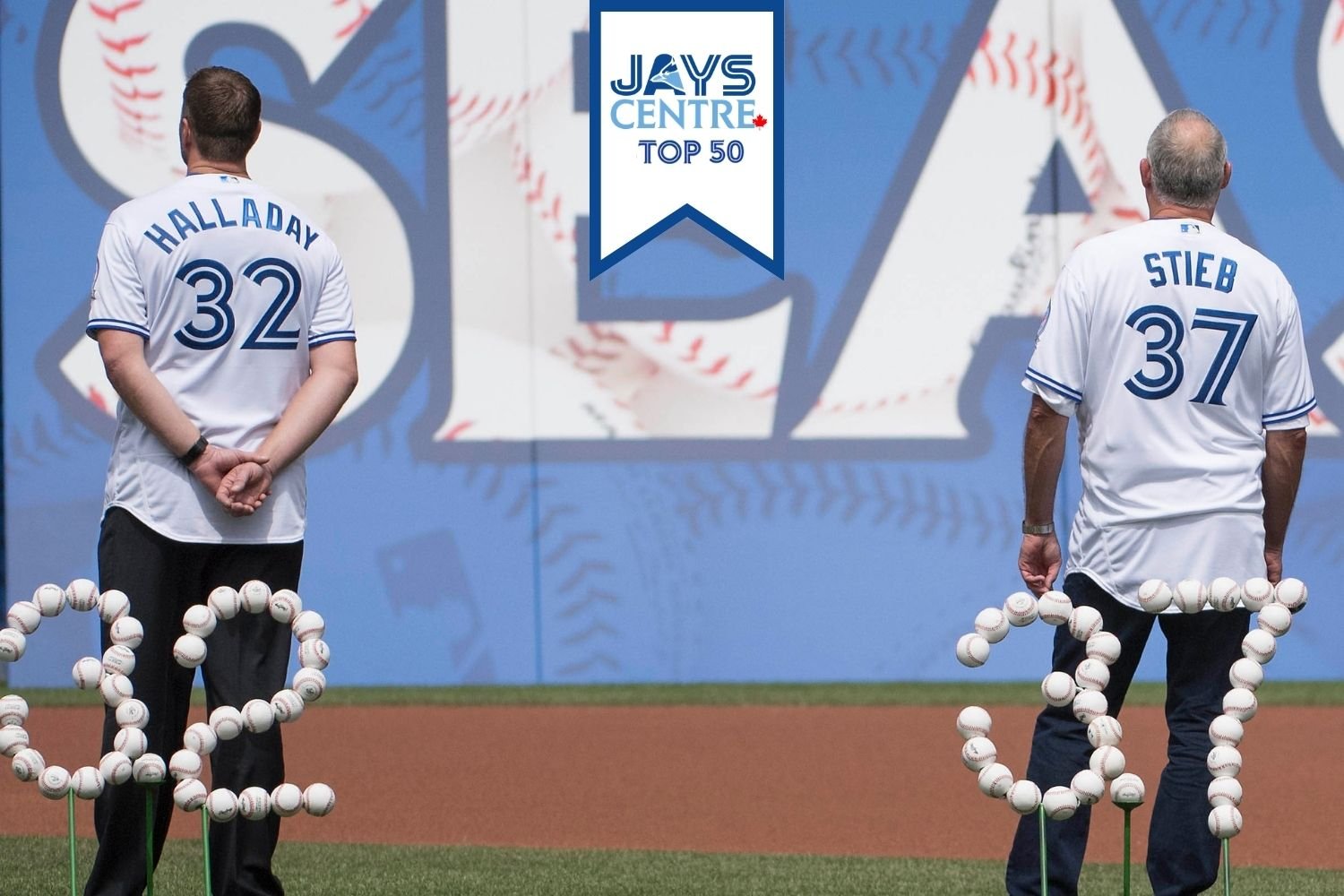 Jays Centre is counting down the top 50 Blue Jays in franchise history. Check out prior entries in the series here: Introduction 50 to 46 45 to 41 40 to 36 35 to 31 30 to 26 25 to 21 20 to 16 15 to 11 10 to 6 5 to 3 Every participating writer had these players as their top two. Not everyone had them in this order, but it was always this pair. There are arguments that can be made for flipping the order, and I made those same arguments myself, but I’m less interested in knocking one of these guys to build the other one up – I just want to celebrate them both. I even considered cheating the process and leaving the top two unranked, but that felt a little underhanded, and I wouldn’t want to deny those that have been following along of the payoff. For full transparency, I submitted my ballot with these two in the order they appear today. If we did it again a year from now, there is no guarantee I wouldn’t flip them; it’s that close. These two pitched in different eras but had a beautifully poetic moment of overlap. It also feels very quintessentially Torontonian that both players were the absolute peak of performance for multiple seasons, but the teams they were surrounded by couldn’t elevate them to allow for some of the playoff heroics we’ve documented with other players on this list. Not to say that these pitchers don’t each have a signature game to point to – in fact, I think one of them is pretty obvious – but with these two, we can talk about a few special moments. No. 2: Dave Stieb 1979-1992, 1998 7x All-Star Franchise All-Time #1: bWAR (56.9), wins (175), innings pitched (2873), strikeouts (1658), games started (408), complete games (103), shutouts (30), quality starts (244) Single Season #1: Innings pitched (288.1), complete games (19), shutouts (5) The Legend of Stieb is almost more outsized than his accomplishments, and considering how many franchise #1 spots he occupies, that’s saying something. He played college ball as an outfielder and was pressed into service as a pitcher when his team was shorthanded. It turned out he was a pretty good pitcher. Drafted by the Jays in June of 1978, he would make his major league debut in June the following year. He would go on to be the best starting pitcher of the 80s and would lead the league in bWAR for three consecutive seasons from ‘82 to ’84. That stretch of dominance hadn’t happened since Lefty Grove in the 1930s. He was selected as an All-Star seven times (more than any other Jay), so within the context of the Toronto team, he was recognized for his performance. A look at the Cy Young voting in his peak years suggests that maybe he was underrated (or unfairly penalized for being on an up-and-coming team) on the larger scale. Similarly, the lack of Cy Youngs – there’s an easy argument for him deserving three (or more) – combined with his delayed eligibility for the Hall of Fame, may have conspired to knock him off of the ballot in his first year, receiving only 1.4% of the vote. Twelve players that shared space on the ballot with Stieb are now in the Hall – we’ll save the debate about how many of them Stieb was better than for another day – but none of them (including two former Jays) are on the Level of Excellence. The Moment(s): If you were going to pick a single game or moment for Stieb, it would have to be the no-hitter. On September 2, 1990, Stieb achieved the feat that no other Blue Jay, before or since, has been able to do. He got his elusive no-hitter. Jon Bois and the good people at Secret Base did an incredible job with their four-part documentary chronicling Stieb’s chase for this accomplishment and the absurd number of times he was *that close* to it before finally getting his white whale. No one in the franchise’s history has as many complete games or as many shutouts as Stieb, and everyone else is tied for second when it comes to no-hitters. The moment I’d like to shine a little light on comes after the no-hitter. That 1990 season marked the final time Stieb would throw 200+ innings in a year. He had averaged 222 innings per season for 12 straight years, so it’s hard to say that injuries cut his career short, but Stieb always felt like a guy who could pitch forever – until he couldn’t. In 1991, he had pitched just under 60 innings through April and May (adding another complete game along the way) until a collision while covering first base led to a back issue requiring surgery and ending his season. In 1992, he would make it almost to 100 innings (one more CG mixed in) before again ending his season prematurely in August. By this time, the chronic back and shoulder issues he was battling were too much to overcome, and after missing out on the ‘92 playoff and World Series run, he was released by Toronto in the offseason. The less said about his 22.1 innings in Chicago, the better. He would return to the organization as a spring training coach in 1998. While throwing and coaching, Stieb noticed that his old injuries weren’t bothering him like they used to and that he was able to pitch again – at age 40. This wasn’t just a ‘franchise great re-signs with former team to announce retirement’ kind of move. Like he did throughout his career, Stieb put in the work. He threw 81 innings in the minors, working himself into a position where he fully deserved the call-up. He would pitch just over 50 innings in the majors, mainly in a relief role, but making three spot starts along the way. Most importantly, it allowed Stieb to retire on his own terms. No. 1: Roy Halladay 1998-2009 6x All-Star, Cy Young, Hall of Famer Franchise All-Time #1: fWAR (48.6), WPA (29.8) Single Season #1: Wins (22), BB/9 (1.08) Roy Halladay would make his debut with the Blue Jays on September 20, 1998. He would start the game and pitch five innings, giving up two earned runs and striking out five. The first line in the box score for the bottom of the sixth inning reads: “Dave Stieb replaces Roy Halladay pitching,” and while that was true for the game, the opposite was happening for the franchise. A week later, Halladay would make his next start and give the most Stieb-like performance possible. A complete game, one-hitter. That one hit came with two outs in the ninth inning and blew up Halladay’s no-hit bid and shutout with one swing. The most poetic part of the whole thing was that the ball landed in the Blue Jays' bullpen and was grabbed by Stieb. “How can you not be romantic about baseball?” doesn’t feel like it cuts it, but it does feel notable that we had both of these pitchers here together, if only for a brief time. Halladay was once described as pitching with “grim determination,” and that was a phrase that always stuck with me. It often felt like he didn’t necessarily want to be pitching, but that he had to be pitching. Again, much like Stieb before him, Halladay hated to give the ball up. Where Stieb has the franchise lead for wins, strikeouts and shutouts, Halladay is the next up. How close he came to never appearing on any of these lists is a hard thing to quantify, but in the 2000 season, he struggled. “Struggled” is really putting it mildly, and a bit of a disservice to every pitcher that has ever struggled to find ‘it’ on the mound. Halladay was bad. Where Stieb’s story is one of almost immediate and lasting greatness, Halladay’s is that of the phoenix rising from the ashes. Gord Ash(es), the Toronto GM at the time, made the call to demote Halladay. Rather than send him to Triple A as would be the usual move, Halladay was sent all the way down the ladder to Single A. By July of 2001, he would work his way back into the big league rotation, having changed his delivery and regained his confidence, ending the ‘01 season with a complete game shutout. The next two seasons, Halladay would lead the league in bWAR, and in 2003, his greatness would be recognized with his first Cy Young Award. From the time Halladay made his debut in 1998 until his departure after the 2009 season, the Blue Jays teams he was a part of only finished better than third in the division one time (a second-place, 10-games-back finish in ‘06). With the likelihood of playoffs on the horizon seemingly dim, Toronto made the difficult decision to trade Halladay, sending him to the Philadelphia Phillies for Travis d'Arnaud, Kyle Drabek and Michael Taylor. This trade felt different than any other I can recall. It was like setting the genie free at the end of Aladdin, or what I imagine parents feel like when their kids move out and start a life on their own. It was a trade made to help the Jays rebuild for the future, sure, but it also gave Halladay something he wasn’t going to get here: postseason baseball. When Halladay went out there and threw a no-hitter in the first postseason start of his career, Toronto fans watched with a mix of pride and sadness. It was a similar mix of pride and sadness when he was posthumously elected into the Hall of Fame in 2019. His addition to the Level of Excellence came the year before, along with the retirement of his No. 32. His legacy lives on throughout the city with Roy Halladay Field in Scarborough, the first fully accessible field in the city. The Moment(s): That second start, the near no-hitter, is certainly one. His final two starts with Toronto were both complete game shutouts and a fitting way to end his tenure with the franchise. The game(s) I’d like to look at, though, came at the end of his Cy Young-winning season in 2003. That September, Halladay made six starts. Five of them were complete games. Two of them were shutouts. You can take your pick of which was most impressive, but for me, it's the 10-inning game against the Tigers. He threw 10 frames, faced 35 batters, gave up only three hits and did it all on 99 pitches to win 1-0 (shoutout to Bobby Kielty for the walkoff). If you want to take the game before, where Halladay struck out 10 Yankees in a complete game win, or the game after, where he only needed 93 pitches in a complete game against Tampa, I wouldn’t quibble with you. You could take the last game of the month too – another complete game win to give Halladay his franchise-record 22nd win. It was the most dominant month by the most dominant pitcher this franchise might ever see.
-
- 1
-

-
- roy halladay
- dave stieb
- (and 1 more)
-
Every participating writer had these players as their top two. Not everyone had them in this order, but it was always this pair. There are arguments that can be made for flipping the order and I made those same arguments myself, but I’m less interested in knocking one of these guys to build the other one up - I just want to celebrate them both. I even considered cheating the process and leaving the top two unranked, but that felt a little underhanded and I wouldn’t want to deny those that have been following along of the payoff. For full transparency, I submitted my ballot with these two in the order they appear today. If we did it again a year from now there is no guarantee I wouldn’t flip them again, it’s that close. These two pitched in different eras, but have a beautifully poetic moment of overlap. It also feels very quintessentially Torontonian that both players were the absolute peak of performance for multiple seasons, but the teams they were surrounded by couldn’t elevate them to allow for some of the playoff heroics we’ve documented with other players on this list. Not to say that these two don’t have a signature game to point to - in fact, I think one of them is pretty obvious - but with these two we can talk about a few special moments. #2 Dave Stieb (1979-1992, 1998) 7x All-Star Franchise All-Time #1: bWAR (56.9), wins (175), innings pitched (2873), strikeouts (1658), games started (408), complete games (103), shutouts (30), quality starts (244) Single Season #1: Innings pitched (288.1), complete games (19), shutouts (5) The Legend of Stieb is almost more outsized than his accomplishments, and considering how many franchise #1 spots he occupies that’s saying something. He played college ball as an outfielder and was pressed into service as a pitcher when his team was shorthanded. It turned out he was a pretty good pitcher. Drafted by the Jays in June of 1978, he would make his Major League debut in June the following year. He would go on to be the best starting pitcher of the 80s and would lead the league in bWAR for three consecutive seasons from ‘82-’84. That stretch of dominance hadn’t happened since Lefty Grove in the 1930s. He was selected as an All-Star seven times (more than any other Jay), so within the context of the Toronto team he was recognized for his performance. A look at the Cy Young voting in his peak years suggests that maybe he was underrated (or unfairly penalized for being on an up-and-coming team) on the larger scale. Similarly, the lack of Cy Youngs (there’s an easy argument for him deserving three (or more)) combined with his delayed eligibility for the Hall of Fame may have conspired to knock him off of the ballot in his first year, receiving only 1.4% of the vote. 12 players that shared space on the ballot with Stieb are now in the Hall - we’ll save the debate about how many of them Stieb was better than for another day - but none of them (including two former Jays) are on the Level of Excellence. The Moment(s): If you were going to pick a single game or moment for Stieb it would have to be the no-hitter. On September 2, 1990, Stieb achieved the feat that no other Blue Jay, before or since has been able to do. He got his elusive no-hitter. Jon Bois and the good people at Secret Base did an incredible job with their 4-part documentary chronicling Stieb’s chase for this milestone and the absurd number of times he was *that close* to it before finally getting his white whale. No one in the franchise’s history has as many complete games or as many shutouts as Stieb and everyone else is tied for second when it comes to no-hitters. The moment I’d like to shine a little light on comes after the no hitter. That 1990 season marked the final time Stieb would throw 200+ innings in a year. He had averaged 222 innings per season for 12 straight years, so it’s hard to say that injuries cut his career short, but Steib always felt like a guy who could pitch forever - until he couldn’t. In 1991 he had pitched just under 60 innings through April and May (adding another complete game along the way) until a collision while covering first base led to a back issue requiring surgery and ending his season. In 1992 he would make it almost to 100 innings (one more CG mixed in) before again ending his season prematurely in August. By this time the chronic back and shoulder issues he was battling were too much to overcome and after missing out on the ‘92 playoff and World Series run was released by Toronto in the offseason. The less said about his 22.1 innings in Chicago the better. He would return to the organization as a spring training coach in 1998. While throwing and coaching Stieb noticed that his old injuries weren’t bothering him like they used to and that he was able to pitch again - at age 40. This wasn’t just a ‘franchise great re-signs with former team to announce retirement’ kind of move. Like he did throughout his career, Stieb put in the work. He threw 81 innings in the minors working himself into a position where he fully deserved the call-up. He would pitch just over 50 innings in the majors, mainly in a relief role, but making three spot starts along the way. Most importantly, it allowed Stieb to retire on his own terms. #1 Roy Halladay (1998-2009) 6x All-Star, Cy Young, Hall of Famer Franchise All-Time #1: fWAR (48.6), WPA (29.8) Single Season #1: Wins (22), BB/9 (1.08) Roy Halladay would make his debut with the Blue Jays on September 20, 1998. He would start the game and pitch five innings, giving up two earned runs and striking out five. The first line in the box score for the bottom of the sixth inning reads: “Dave Stieb replaces Roy Halladay pitching” and while that was true for the game, the opposite was happening for the franchise. A week later Halladay would make his next start and give the most Stieb-like performance possible. A complete game, one-hitter. That one hit came with two outs in the ninth inning and blew up Halladay’s no-hit bid and shutout with one swing. The most poetic part of the whole thing was that the ball landed in the Blue Jays bullpen and was grabbed by Stieb. “How can you not be romantic about baseball?” doesn’t feel like it cuts it, but it does feel notable that we had both of these pitchers here together if only for a brief time. Halladay was once described as pitching with “grim determination” and that was a phrase that always stuck with me. It often felt like he didn’t necessarily *want* to be pitching, but that he *had* to be pitching. Again, much like Stieb before him, Halladay hated to give the ball up. Where Stieb has the franchise lead for wins, strikeouts and shutouts, Halladay is the next up. How close he came to never appearing on any of these lists is a hard thing to quantify, but in the 2000 season he struggled. “Struggled” is really putting it mildly, and a bit of a disservice to every pitcher that has ever struggled to find ‘it’ on the mound. Halladay was bad. Where Stieb’s story is one of almost immediate and lasting greatness, Halladay’s is that of the phoenix rising from the ashes. Gord Ash(es), the Toronto GM at the time, made the call to demote Halladay. Rather than send him to Triple A as would be the usual move, Halladay was sent all the way down the ladder to Single A. By July of 2001 he would work his way back into the big league rotation, having changed his delivery and regained his confidence, ending the ‘01 season with a complete game shutout. The next two seasons Halladay would lead the league in bWAR and in 2003 his greatness would be recognized with his first Cy Young award. From the time Halladay made his debut in 1998 until his departure after the 2009 season the Blue Jays teams he was a part of only finished better than 3rd in the division one time (a 2nd place, 10 games back, in ‘06). With the likelihood of playoffs on the horizon seemingly dim Toronto made the difficult decision to trade Halladay, sending him to the Philadelphia Phillies for Travis d'Arnaud, Kyle Drabek and Michael Taylor. This trade felt different than any other I can recall. It was like setting the genie free at the end of Aladdin, or what I imagine parents feel like when their kids move out and start a life on their own. It was a trade made to help the Jays rebuild for the future, sure, but it also gave Halladay something he wasn’t going to get here - postseason baseball. When Halladay went out there and threw a no-hitter in the first postseason start of his career Toronto fans watched with a mix of pride and sadness. It was a similar mix of pride and sadness when he was posthumously elected into the Hall of Fame in 2019. His addition to the Level of Excellence came the year before, along with the retiring of his #32. His legacy lives on throughout the city with Roy Halladay Field in Scarborough, the first fully accessible field in the city. The Moment(s): That second start almost no-hitter is certainly one. His final two starts with Toronto were both complete game shutouts and a fitting way to end his tenure with the franchise. The game(s) I’d like to look at though, came at the end of his Cy Young winning season in 2003. That September Halladay made six starts. Five of them were complete games. Two of them were shutouts. You can take your pick of which was most impressive, but for me it’s the 10 inning game against the Tigers. He went ten innings, faced 35 batters, gave up only 3 hits and did it all on 99 pitches to win 1-0 (shoutout to Bobby Kielty for the walkoff). If you want to take the game before where Halladay struck out 10 Yankees in a complete game win, or the game after where he only needed 93 pitches in a complete game against Tampa, I wouldn’t quibble with you. You could take the last game of the month too - another complete game win to give Halladay the franchise record 22nd win. It was the most dominant month, by the most dominant pitcher this franchise might ever see. View full article
-
I'll add another one: this season Dave Stieb gets company as another Jays starter throws a no-hitter. Gausman, obviously, is my pick to do it - but I'll hedge slightly.
-
Jays Centre is counting down the top 50 Blue Jays in franchise history. Check out prior entries in the series here: Introduction 50 to 46 45 to 41 40 to 36 35 to 31 30 to 26 25 to 21 20 to 16 15 to 11 10 to 6 As you might expect for the top of this list, we’re talking about guys that had an extended Blue Jays career, each with over a decade in Toronto. With their time spent here (4000+ combined games) and the impact they each had on this franchise, it may be surprising to think that each of them also has a signature game, one the majority of fans think of first when hearing their name. No. 5: José Bautista 2008-2017 6x All-Star, 3x Silver Slugger Franchise All-Time #1: position player bWAR (38.4), position player fWAR (36.2) Single Season #1: position player bWAR (8.3), offensive bWAR (8.4), home runs (54), walks (132), AB per HR (10.5), win probability added (8.0), wRC+ (180), isolated power (.357) The Career: Bautista was famously acquired by the Blue Jays for the always popular “player to be named later,” and it would only be with the power of hindsight that we came to recognize this as perhaps the most valuable trade in Toronto history. In 2010, he set the franchise record for home runs in a single season and led the league with 54. He would lead the league again the following year with 43 home runs, and his 132 walks in 2011 (including 24 intentional ones) would also be league leaders, making the continued power all the more impressive. From 2010 to 2015, no one would hit more homers than Bautista’s 227, and he was rewarded with an All-Star appearance each of those seasons. Bautista was easily one of the most feared batters of his time. The Game: There might not be a more iconic moment in the top five than the bat flip game. In 2015, the Blue Jays were playing in the playoffs for the first time since winning the World Series in ‘93 – it was a long drought. The seventh inning of Game 5 of the ALDS had about 10 wild moments before Bautista even came to the plate, but once he did and sent the ball 431 feet to left center – and his bat 40 feet straight up – he cemented himself into Toronto sports history. No. 4: Tony Fernández 1983-1990, 1993, 1998-1999, 2001 4x All-Star, 4x Gold Glover Franchise All-Time #1: Games played (1450), defensive bWAR (12.3), hits (1583), singles (1160), triples (72) Single Season #1: Games played (163), at-bats (687), singles (161), triples (17) The Career: Tony Fernández, the player so nice they acquired him twice, three times, four times! Signed as an amateur free agent, reacquired by trade and then signed as a free agent twice. Fernández spent 12 of his 17 major league seasons in Toronto and has played more games for the Blue Jays (1450) than any other player to wear the Toronto uniform. His four Gold Gloves came in consecutive seasons from ‘86 to '89. He missed out on the award in 1990 and was subsequently (possibly unrelatedly) traded in the offseason, along with Fred McGriff, in the biggest trade the franchise has seen. During the ‘93 season, the defending champion Jays would reach an agreement with the Mets to reacquire Fernández. His postseason performance was a major reason for the second championship. He would leave and return twice more as a free agent, most impressively representing Toronto at the 1999 All-Star game at age 37. The Game: Perhaps he was fueled by missing out on the ‘92 series, or perhaps he was just born to hit the ball and so that’s what he did. In Game 4 of the ‘93 World Series, Fernández put together three hits and knocked in five runs to help lead Toronto to victory, earning almost 30% of the win probability generated in the game. A pair of singles into shallow right field, a hard hit grounder into left and a chopper with the bases loaded that Fernández came within a quarter-of-a-step from beating out combined for five RBI and propelled Fernández to his first (and only) World Series trophy. No. 3: Carlos Delgado 1993-2004 2x All-Star, 3x Silver Slugger Franchise All-Time #1: Offensive bWAR (39.4), slugging percentage (.556), OPS (.949), plate appearances (6018), runs (889), total bases (2786), doubles (343), home runs (336), RBI (1059), walks (827), extra base hits (690), HBP (122), intentional walks (128), AB per HR (14.9), win probability added (28.9) Single Season #1: Slugging % (.664), OPS (1.134), total bases (378), doubles (57), RBI (145), wOBA (.471), runs created (186), extra base hits (99), times on base (334) The Career: Delgado made his debut with three games remaining in the 1993 season. He came into the game in the bottom of the sixth inning as a replacement for catcher Randy Knorr and drew a walk in his only AB, marking his first time on base. He would go on to reach base 2361 more times, a mark that no other Jay can match. The fact that he came up as a catcher and made that one appearance also makes him a sneaky Immaculate Grid pull. Delgado’s timing in Toronto seems almost cruel. In the system, but not on the team when they won the back-to-backs and then gone a decade before the Jays would see the playoffs again. Delgado never got a playoff moment like Bautista or Joe Carter, but that didn’t stop him from putting in work every regular season. Only one player in franchise history has played more games than Delgado, and that's Fernández. Delgado finished second in MVP voting in 2003 while leading the league in RBI and OPS. Once he established a full-time role, he averaged 36 home runs per season for nine years. The best homegrown power source the Jays have ever had. The Game: Towards the end of that 2003 season, Delgado put on one of the most impressive hitting displays ever seen in Toronto. In the bottom of the first inning, he hit a three-run homer to right field. In the fourth inning, it was a leadoff solo shot. The sixth inning? Another leadoff solo shot marked the fifth time in Delgado’s Blue Jays career that he had a three-homer game. Then, in the eighth inning, Delgado made history. Absolutely crushing a ball for his fourth home run of the day, becoming the first (and still only) Blue Jay to have a four-home run game. View full article
-
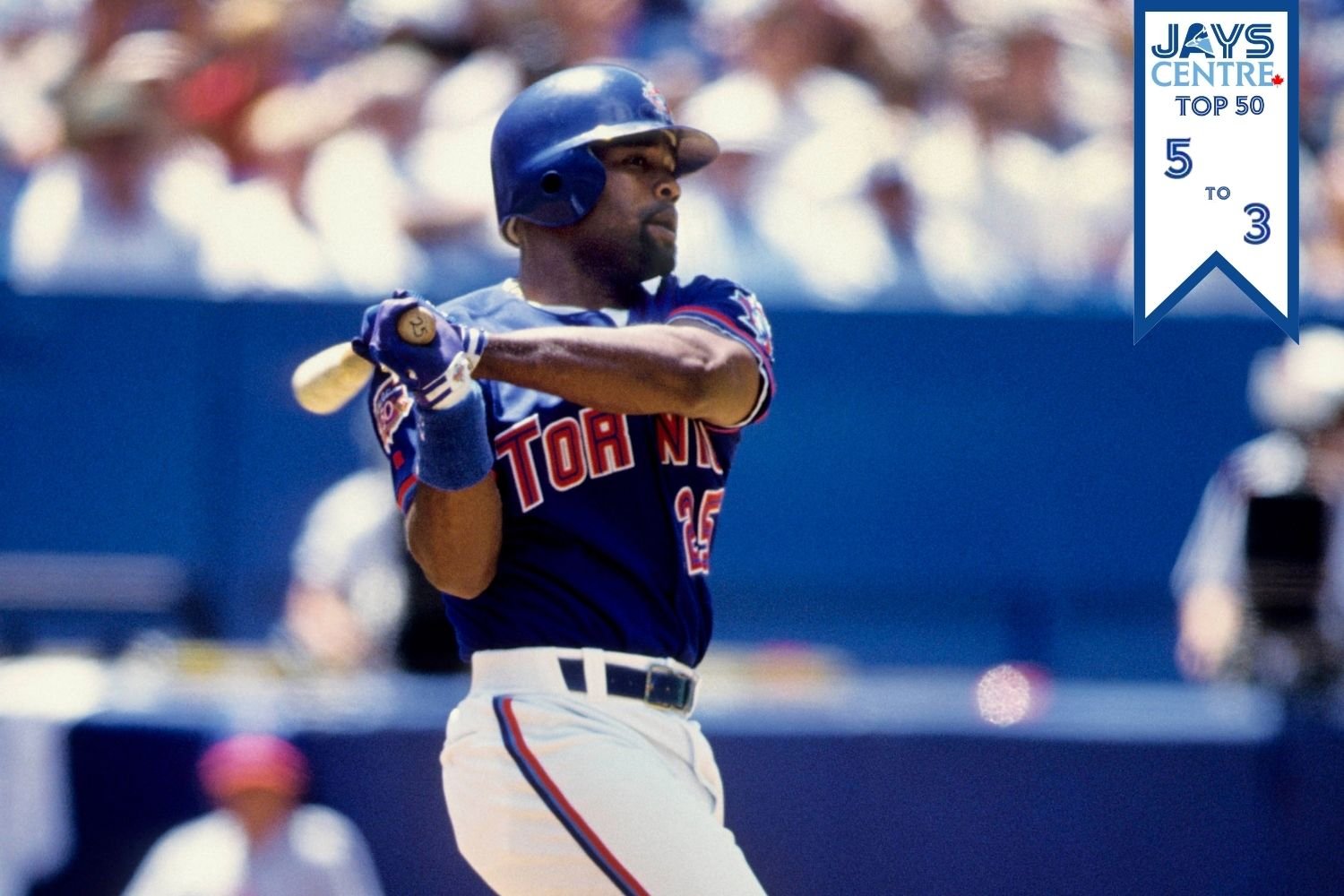 Jays Centre is counting down the top 50 Blue Jays in franchise history. Check out prior entries in the series here: Introduction 50 to 46 45 to 41 40 to 36 35 to 31 30 to 26 25 to 21 20 to 16 15 to 11 10 to 6 As you might expect for the top of this list, we’re talking about guys that had an extended Blue Jays career, each with over a decade in Toronto. With their time spent here (4000+ combined games) and the impact they each had on this franchise, it may be surprising to think that each of them also has a signature game, one the majority of fans think of first when hearing their name. No. 5: José Bautista 2008-2017 6x All-Star, 3x Silver Slugger Franchise All-Time #1: position player bWAR (38.4), position player fWAR (36.2) Single Season #1: position player bWAR (8.3), offensive bWAR (8.4), home runs (54), walks (132), AB per HR (10.5), win probability added (8.0), wRC+ (180), isolated power (.357) The Career: Bautista was famously acquired by the Blue Jays for the always popular “player to be named later,” and it would only be with the power of hindsight that we came to recognize this as perhaps the most valuable trade in Toronto history. In 2010, he set the franchise record for home runs in a single season and led the league with 54. He would lead the league again the following year with 43 home runs, and his 132 walks in 2011 (including 24 intentional ones) would also be league leaders, making the continued power all the more impressive. From 2010 to 2015, no one would hit more homers than Bautista’s 227, and he was rewarded with an All-Star appearance each of those seasons. Bautista was easily one of the most feared batters of his time. The Game: There might not be a more iconic moment in the top five than the bat flip game. In 2015, the Blue Jays were playing in the playoffs for the first time since winning the World Series in ‘93 – it was a long drought. The seventh inning of Game 5 of the ALDS had about 10 wild moments before Bautista even came to the plate, but once he did and sent the ball 431 feet to left center – and his bat 40 feet straight up – he cemented himself into Toronto sports history. No. 4: Tony Fernández 1983-1990, 1993, 1998-1999, 2001 4x All-Star, 4x Gold Glover Franchise All-Time #1: Games played (1450), defensive bWAR (12.3), hits (1583), singles (1160), triples (72) Single Season #1: Games played (163), at-bats (687), singles (161), triples (17) The Career: Tony Fernández, the player so nice they acquired him twice, three times, four times! Signed as an amateur free agent, reacquired by trade and then signed as a free agent twice. Fernández spent 12 of his 17 major league seasons in Toronto and has played more games for the Blue Jays (1450) than any other player to wear the Toronto uniform. His four Gold Gloves came in consecutive seasons from ‘86 to '89. He missed out on the award in 1990 and was subsequently (possibly unrelatedly) traded in the offseason, along with Fred McGriff, in the biggest trade the franchise has seen. During the ‘93 season, the defending champion Jays would reach an agreement with the Mets to reacquire Fernández. His postseason performance was a major reason for the second championship. He would leave and return twice more as a free agent, most impressively representing Toronto at the 1999 All-Star game at age 37. The Game: Perhaps he was fueled by missing out on the ‘92 series, or perhaps he was just born to hit the ball and so that’s what he did. In Game 4 of the ‘93 World Series, Fernández put together three hits and knocked in five runs to help lead Toronto to victory, earning almost 30% of the win probability generated in the game. A pair of singles into shallow right field, a hard hit grounder into left and a chopper with the bases loaded that Fernández came within a quarter-of-a-step from beating out combined for five RBI and propelled Fernández to his first (and only) World Series trophy. No. 3: Carlos Delgado 1993-2004 2x All-Star, 3x Silver Slugger Franchise All-Time #1: Offensive bWAR (39.4), slugging percentage (.556), OPS (.949), plate appearances (6018), runs (889), total bases (2786), doubles (343), home runs (336), RBI (1059), walks (827), extra base hits (690), HBP (122), intentional walks (128), AB per HR (14.9), win probability added (28.9) Single Season #1: Slugging % (.664), OPS (1.134), total bases (378), doubles (57), RBI (145), wOBA (.471), runs created (186), extra base hits (99), times on base (334) The Career: Delgado made his debut with three games remaining in the 1993 season. He came into the game in the bottom of the sixth inning as a replacement for catcher Randy Knorr and drew a walk in his only AB, marking his first time on base. He would go on to reach base 2361 more times, a mark that no other Jay can match. The fact that he came up as a catcher and made that one appearance also makes him a sneaky Immaculate Grid pull. Delgado’s timing in Toronto seems almost cruel. In the system, but not on the team when they won the back-to-backs and then gone a decade before the Jays would see the playoffs again. Delgado never got a playoff moment like Bautista or Joe Carter, but that didn’t stop him from putting in work every regular season. Only one player in franchise history has played more games than Delgado, and that's Fernández. Delgado finished second in MVP voting in 2003 while leading the league in RBI and OPS. Once he established a full-time role, he averaged 36 home runs per season for nine years. The best homegrown power source the Jays have ever had. The Game: Towards the end of that 2003 season, Delgado put on one of the most impressive hitting displays ever seen in Toronto. In the bottom of the first inning, he hit a three-run homer to right field. In the fourth inning, it was a leadoff solo shot. The sixth inning? Another leadoff solo shot marked the fifth time in Delgado’s Blue Jays career that he had a three-homer game. Then, in the eighth inning, Delgado made history. Absolutely crushing a ball for his fourth home run of the day, becoming the first (and still only) Blue Jay to have a four-home run game.
 -
Jays Centre is taking a close look at every position on the Toronto Blue Jays heading into the 2026 season. Check out prior entries in the series here: Catcher First Base Second Base Shortstop Third Base Left Field Right Field Toronto Blue Jays Designated Hitters at a Glance Starter: George Springer Backup: Anthony Santander Just Passing Through: Vladimir Guerrero Jr., Alejandro Kirk, anyone rehabbing an injury First Man Up: Eloy Jiménez George Springer won the Silver Slugger Award last season behind a resurgent campaign at age 35. He was hot out of the gates and stayed that way until the season ended. In his ‘slumpiest’ month (June), he still put up a 108 wRC+ (indicating he was 8% better than the league average). In each of July, August, September and October, he was over 200. He led all Blue Jays in Wins Above Replacement (both the Baseball Reference and FanGraphs versions), hit more homers (32) than anyone on the team, and led the club in stolen bases (18) and OPS+ (161). I say if he repeats a season like that, we let him rename the position to whatever he wants. Springer was at his best when hitting in the DH spot, but he only played about half of the Jays’ games there. He also made appearances in all three outfield spots. While the bat stayed hot when Springer was in the field, his time on the defensive side of the ball was below average. He made 57 appearances across the outfield, and you can choose your favourite metric or the good ol’ eye test – it seems pretty clear Springer’s best spot in the lineup is at the DH. The second most DH appearances on the team went to the newly acquired Anthony Santander, who played 30 games at DH (plus an additional 23 in the field). Santander never looked right at the plate, and a (practically) season-ending trip to the IL in May suggests he was probably playing hurt from the beginning (with his outfield wall collision being the proverbial camel’s straw). Vladimir Guerrero Jr. and Alejandro Kirk made 23 and seven appearances at DH, respectively, mainly as maintenance days from their usual position. No one else remaining on the team made more than one. The real question around the DH spot this season will be: Can Springer do it again? Before the news broke that Santander would be missing the majority of this season, both Springer and the Jays as an organization talked about rotating players through the field and DH spots. Springer has continually expressed a desire to play the field, and it will be up to manager John Schnieder to find the right balance of keeping one of his star players happy, fresh and productive. Based on last season, I’d say that can be accomplished. Outside of something happening to another player that necessitates an extended stay at DH, there isn’t anyone healthy on the roster that would threaten Springer’s hold on the position. If Springer went down, however, there also isn’t a clear successor. The Jays have plenty of capable players who could be comfortably rotated through the DH spot if Springer needs a few maintenance days. If he were to see an extended absence from the lineup, one interesting name to consider is Eloy Jiménez. Bryan Jaeger covered how Jiménez could fit on the roster, and Jiménez had more plate appearances at DH in spring training than any other Blue Jay (43 vs Springer’s 41; no other Jay had more than five). That still doesn’t necessarily put him first in line for the call-up, but if he starts the year hot in Buffalo and Springer struggles, there might be some temptation to shake things up. The DH, or OP if you prefer, is Springer’s to lose, and there’s nothing to suggest that this will be the year that it happens. View full article
-
Toronto Blue Jays 2026 Position Analysis: Designated Hitter
Mike LeSage posted an article in Blue Jays
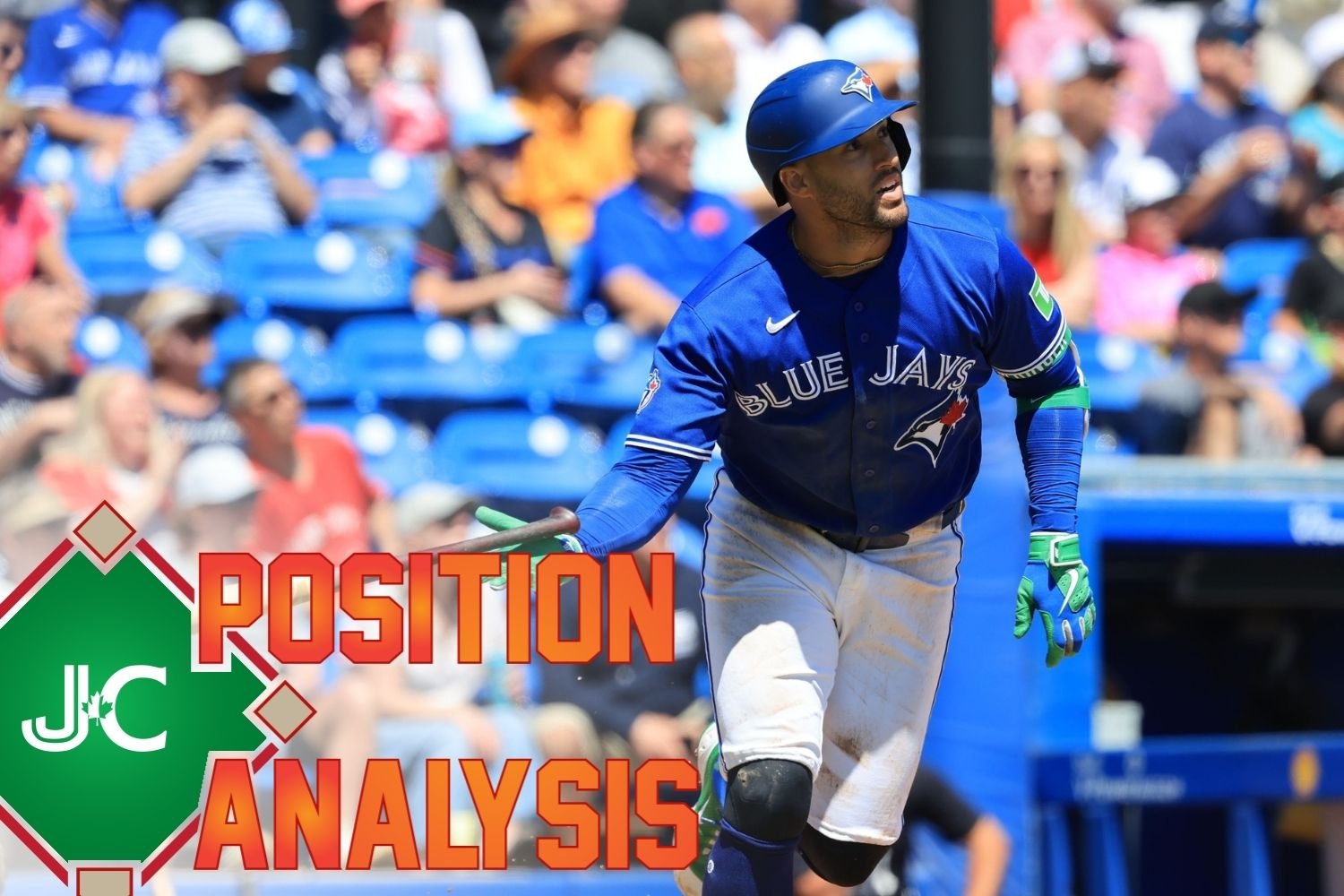 Jays Centre is taking a close look at every position on the Toronto Blue Jays heading into the 2026 season. Check out prior entries in the series here: Catcher First Base Second Base Shortstop Third Base Left Field Right Field Toronto Blue Jays Designated Hitters at a Glance Starter: George Springer Backup: Anthony Santander Just Passing Through: Vladimir Guerrero Jr., Alejandro Kirk, anyone rehabbing an injury First Man Up: Eloy Jiménez George Springer won the Silver Slugger Award last season behind a resurgent campaign at age 35. He was hot out of the gates and stayed that way until the season ended. In his ‘slumpiest’ month (June), he still put up a 108 wRC+ (indicating he was 8% better than the league average). In each of July, August, September and October, he was over 200. He led all Blue Jays in Wins Above Replacement (both the Baseball Reference and FanGraphs versions), hit more homers (32) than anyone on the team, and led the club in stolen bases (18) and OPS+ (161). I say if he repeats a season like that, we let him rename the position to whatever he wants. Springer was at his best when hitting in the DH spot, but he only played about half of the Jays’ games there. He also made appearances in all three outfield spots. While the bat stayed hot when Springer was in the field, his time on the defensive side of the ball was below average. He made 57 appearances across the outfield, and you can choose your favourite metric or the good ol’ eye test – it seems pretty clear Springer’s best spot in the lineup is at the DH. The second most DH appearances on the team went to the newly acquired Anthony Santander, who played 30 games at DH (plus an additional 23 in the field). Santander never looked right at the plate, and a (practically) season-ending trip to the IL in May suggests he was probably playing hurt from the beginning (with his outfield wall collision being the proverbial camel’s straw). Vladimir Guerrero Jr. and Alejandro Kirk made 23 and seven appearances at DH, respectively, mainly as maintenance days from their usual position. No one else remaining on the team made more than one. The real question around the DH spot this season will be: Can Springer do it again? Before the news broke that Santander would be missing the majority of this season, both Springer and the Jays as an organization talked about rotating players through the field and DH spots. Springer has continually expressed a desire to play the field, and it will be up to manager John Schnieder to find the right balance of keeping one of his star players happy, fresh and productive. Based on last season, I’d say that can be accomplished. Outside of something happening to another player that necessitates an extended stay at DH, there isn’t anyone healthy on the roster that would threaten Springer’s hold on the position. If Springer went down, however, there also isn’t a clear successor. The Jays have plenty of capable players who could be comfortably rotated through the DH spot if Springer needs a few maintenance days. If he were to see an extended absence from the lineup, one interesting name to consider is Eloy Jiménez. Bryan Jaeger covered how Jiménez could fit on the roster, and Jiménez had more plate appearances at DH in spring training than any other Blue Jay (43 vs Springer’s 41; no other Jay had more than five). That still doesn’t necessarily put him first in line for the call-up, but if he starts the year hot in Buffalo and Springer struggles, there might be some temptation to shake things up. The DH, or OP if you prefer, is Springer’s to lose, and there’s nothing to suggest that this will be the year that it happens.
 -
The Top 50 Blue Jays of All Time: 30 to 26
Mike LeSage posted a topic in Jays Centre Front Page News
Jays Centre is counting down the top 50 Blue Jays in franchise history. Check out prior entries in the series here: Introduction 50 to 46 45 to 41 40 to 36 35 to 31 No. 30: Álex Ríos 2004-2009 2x All-Star Álex Ríos was selected by Toronto in the first round (19th overall) of the 1999 amateur draft. He would make his debut at the end of May 2004 and stick with the team for five and a half seasons. Before we started working on our lists for this project, I had already penciled a handful of names in: most of the guys still to come on our countdown, and a lot of the ones already covered (plus a few personal favourites that fell outside of the aggregated top 50). I didn’t initially have Ríos on my list. Maybe it was unfair expectations set on Ríos to begin his career that have tainted my recollection, but I just didn’t remember him being as good as he was. He entered that ‘04 season as the No. 1 prospect in the organization and No. 6 in all of baseball (future Hall of Famer Joe Mauer was No. 1). Bobby Crosby would win the Rookie of the Year award that season, but Ríos received the second-most votes amongst position players. He is a two-time All-Star, but almost cruelly didn’t make it off of the bench in the 2006 game and only came in as a ninth-inning defensive substitution in 2007 (though he finished second in the ‘07 Home Run Derby, behind Vladimir Guerrero Sr.). The Jays teams he was a part of never made the playoffs, and at their peak, finished 10 games back of the division (‘06). It’s not Ríos’ fault that he was here for some of the lean years. On top of being a great defender, in ‘07, he led the team in runs (114) and stolen bases (17) and was behind only Frank Thomas for homers (24) and RBI (85). In ‘08, he led the team in runs (91), SB (32) and RBI (79). Those match his two best seasons by Baseball Reference’s WAR with a 5.6 and 5.9, respectively, which rank as the 24th and 28th best seasons for position players in Jays history. It wasn’t all sunshine and daisies, however. Ríos is also the only Blue Jay in history to strike out five times in a (nine-inning) game on more than one occasion. The second time he ‘accomplished’ that feat came in 2009 during a particularly cold streak that was highlighted by an off-field encounter with a fan after a charity event. That it came the year after he signed the second-most lucrative contract in franchise history, making it all the more unpalatable. Ríos would arguably get the last laugh; as a member of the Kansas City Royals in his final season, he would have a hand in eliminating the Jays from the 2015 playoffs, going on to become a World Series champion (though his negative WPA through those playoffs suggests he may not have been the catalyst). Whether you look back at Ríos’ time with the Jays fondly, or with a twinge of disappointment (or worse), you can’t argue that he didn’t command a spot on our list. No. 29: Fred McGriff 1986-1990 Hall of Famer, Silver Slugger, Crime Dog Fred McGriff was selected by the New York Yankees in the ninth round of the 1981 draft. He was traded in a package to the Jays the following year, when I was just a few months old, and would make his debut in May of 1986. I had McGriff at No. 16 on my list and was worried that I might’ve been ranking with nostalgia-tainted eyes. Not to say that some of my colleagues don’t suffer from the same bias, but I wasn’t even the highest on McGriff, so I feel justified in my opinion. Fred McGriff was the first Blue Jays player I ever loved. I was young, so a player with a nickname based on an animated crime-fighting dog was right in my wheelhouse. The fact that he could effortlessly crush upper-deck home runs from the left side of the plate was a bonus. His 36 home runs in 1989 were the most of any Toronto player in the '80s not named Barfield or Bell. It was also enough to lead the league that season and helped propel McGriff and the Jays to the only playoff appearance of his tenure and McGriff’s first Silver Slugger Award (he would win one in Toronto and two more elsewhere). McGriff wouldn’t get another shot at the playoffs with Toronto; after missing out in 1990, he was traded in the offseason, in what is still the biggest trade in franchise history. The four-player deal included two future Hall of Famers, two (and at one time three) members of the Level of Excellence, and four guys that were easy fan-favourites while they played here. As a young fan, I absolutely hated the trade, though by the end of the ‘93 playoffs, I had softened on it slightly. Those early '90s Jays teams were powerhouses, and I’d like to think they still win the back-to-backs with McGriff here, but as things worked out, he would only have to wait a couple of extra years before winning a World Series of his own with the Atlanta Braves. Somewhat poetically, McGriff's Hall of Fame bid would go the same way: he fell off the ballot initially, only to be enshrined later by the Contemporary Era Committee in 2023. McGriff is one of a small handful of Hall of Famers whose plaque does not have an identifying team. You could make an argument for him wearing a Jays cap, but either way, his journey started as one of Toronto’s best. He’s 13th all-time for home runs (125) and 12th for walks. That combination of power and eye has McGriff sitting third all-time for both on-base and slugging percentages, and he has the highest mark of any Toronto player for adjusted OPS+ at 153. No. 28: Kelly Gruber 1984-1992 2x All-Star, Gold Glover, Silver Slugger Kelly Gruber is an interesting case. He played nine seasons in Toronto, amassed over 3,000 at-bats (19 more than Bo Bichette and good for 21st all-time), and was the first player in franchise history to hit for the cycle – but when I hear his name, there are only two moments that come to mind. The first is being the guy left holding the ball at the end of the ‘triple play that wasn’t (but really was)’ in Game 3 of the 1992 World Series. The way Gruber ended that play really exemplified his style as a player. It wasn’t nearly as flashy as Devon Whyte’s start to the play (I’m sure we’ll cover him shortly), but it was gritty – a single pump fake and a sprint towards the runner followed by an all-out head-first dive to tag Deion Sanders (Gruber would later reveal that he tore his rotator cuff in the dive, making his bottom of the inning home run all the more heroic). The other play came in the very next game. With Gruber standing on second base and Whyte at the plate, a hit into left field gave Gruber the opportunity to score. The throw was cut off, so there was never a play at the plate, but Gruber, who would rank higher on an ‘all intensity’ list, again went all-out and head-first in a leaping dive towards home plate that would make Vladdy proud. The dive was less than textbook (partly because of that damaged rotator cuff) and resulted in a bloody chin (and probably a concussion) for Gruber, but it was also the winning run for the Jays. And we made it this far without mentioning the mullet! All-time great flow. As one of the longest-tenured Jays, Gruber's name is also littered across the career counting stats leaderboards. He’s 23rd all-time for hits (800), 22nd in runs scored (421), 20th for total bases (1335), 19th for home runs (114), 16th for RBI (434) and 14th for stolen bases (80). Somewhat like Ríos, Gruber’s time in Toronto also ended with some negative feelings after a lucrative extension. In 1991, Gruber signed a three-year, $11 million deal that made him the highest-paid third baseman in the league. In that run to the ‘92 World Series, there was a stretch of the regular season that Gruber spent on the IL with a knee injury. There were also reports that during his time away from the team, he was spotted water skiing and playing tennis near his Muskoka cottage (reports that Gruber denies). Whether there was any truth to those rumours, or if it was just a matter of the accumulated injuries, Toronto cut ties with Gruber after that first championship, sending him to the California Angels in the off-season. Gruber would only play 18 games with the Angels before calling it a career (Luis Sojo, who he was traded for, would only play 19 games with Toronto). We’ve lamented the fact before that there isn’t a standout lifelong Jay. Gruber could have been one. No. 27: Russell Martin 2015-2019 All-Star The 21st Canadian-born player to suit up for Toronto was the most impactful. Russell Martin was born in Toronto, but it wasn’t until he was almost a decade into his illustrious career that he was able to connect with the Jays and join the team in 2015 after signing as a free agent. He would represent the Blue Jays at the All-Star game in his first season with the club and be a large factor in one of the most memorable innings in team history. Everyone remembers Jose Bautista’s bat flip, but it was Martin behind the plate in the top of the inning who had his throw back to the pitcher freak-ricochet and allow an absolute dirtbag to score and tie the game. Martin has commented publicly that he was thankful to be leading off the bottom of the inning, allowing him to atone for the error. Facing starter Cole Hamels, who was approaching 100 pitches, Martin hit one back up the middle in what could have been a groundout, but in the first of soon to be several errors by the Texas infield, Martin beat out the (lack of a) throw. His hustle on the next grounder helped force another error and allowed him to be subbed out for a pinch-runner. That gave him a front row seat to watch the Bat Flip – a moment Martin has tipped as his favourite in a Jays uniform. Martin ranks third all-time amongst Jays catchers for fWAR (11.1) and is second all-time for win probability added, lending to the argument that he was the most clutch Canadian this franchise has seen. No. 26: Paul Molitor 1993-1995 Hall of Famer, World Series MVP, 2x All-Star, Silver Slugger Over a 12-game stretch in the fall of 1993, Paul Molitor racked up 21 hits (four doubles, three triples, three home runs), 17 runs, 13 RBI, a 244 wRC+ and a stolen base. With the exception of the stolen base, all those other stats were the best on the team and propelled the Jays to the second of their back-to-back World Series wins and earned Molitor the second WS MVP in franchise history. Molitor signed as a free agent for that ‘93 season, replacing Dave Winfield as the team’s designated hitter – and hit he did. Molitor led the entire league with 211 hits (he would lead the league three times in his career, once with each team he played for) and finished the season with the fourth best bWAR on the team. The righty batter was with Toronto for three seasons and “only” 1,615 at bats, so he lags behind slightly in some of the career counting stats, but his .315 BA over those three seasons is the best the Jays have ever seen. Those 211 hits in ‘93 are the third-best the team has ever seen in a single season. The 121 runs he scored that same year are tied for the fifth best mark. Molitor would move on ahead of the 1996 season, vacating the DH spot for a player we’ll be covering a little higher up the list, but his impact was felt in the time he was here. It’s hard to look at the playoff run in ‘93 and find a way for the Jays to prevail without him. View full article- 1 reply
-
- 1
-
-
- dc analysis
- alex rios
- (and 4 more)
-
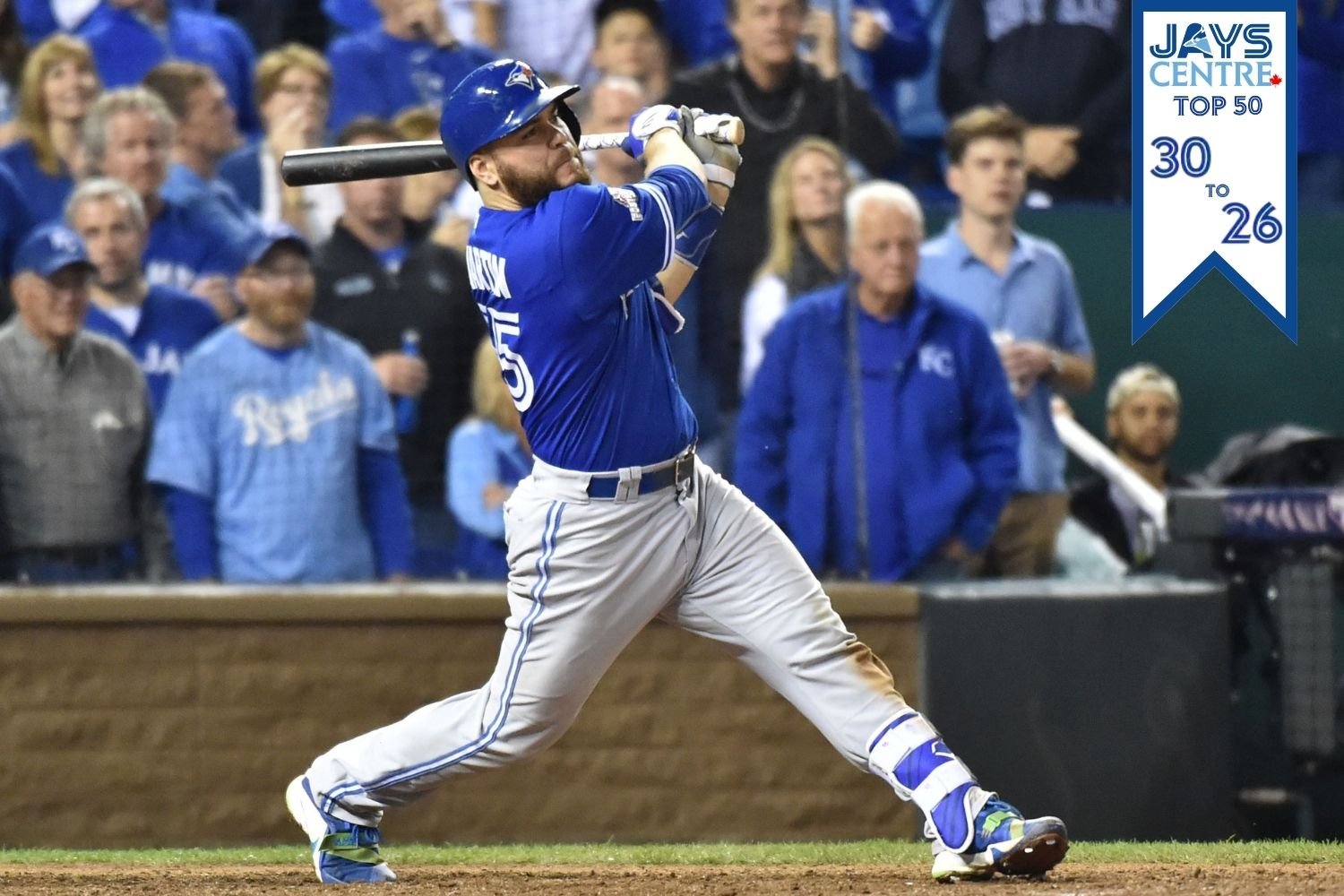 Jays Centre is counting down the top 50 Blue Jays in franchise history. Check out prior entries in the series here: Introduction 50 to 46 45 to 41 40 to 36 35 to 31 No. 30: Álex Ríos 2004-2009 2x All-Star Álex Ríos was selected by Toronto in the first round (19th overall) of the 1999 amateur draft. He would make his debut at the end of May 2004 and stick with the team for five and a half seasons. Before we started working on our lists for this project, I had already penciled a handful of names in: most of the guys still to come on our countdown, and a lot of the ones already covered (plus a few personal favourites that fell outside of the aggregated top 50). I didn’t initially have Ríos on my list. Maybe it was unfair expectations set on Ríos to begin his career that have tainted my recollection, but I just didn’t remember him being as good as he was. He entered that ‘04 season as the No. 1 prospect in the organization and No. 6 in all of baseball (future Hall of Famer Joe Mauer was No. 1). Bobby Crosby would win the Rookie of the Year award that season, but Ríos received the second-most votes amongst position players. He is a two-time All-Star, but almost cruelly didn’t make it off of the bench in the 2006 game and only came in as a ninth-inning defensive substitution in 2007 (though he finished second in the ‘07 Home Run Derby, behind Vladimir Guerrero Sr.). The Jays teams he was a part of never made the playoffs, and at their peak, finished 10 games back of the division (‘06). It’s not Ríos’ fault that he was here for some of the lean years. On top of being a great defender, in ‘07, he led the team in runs (114) and stolen bases (17) and was behind only Frank Thomas for homers (24) and RBI (85). In ‘08, he led the team in runs (91), SB (32) and RBI (79). Those match his two best seasons by Baseball Reference’s WAR with a 5.6 and 5.9, respectively, which rank as the 24th and 28th best seasons for position players in Jays history. It wasn’t all sunshine and daisies, however. Ríos is also the only Blue Jay in history to strike out five times in a (nine-inning) game on more than one occasion. The second time he ‘accomplished’ that feat came in 2009 during a particularly cold streak that was highlighted by an off-field encounter with a fan after a charity event. That it came the year after he signed the second-most lucrative contract in franchise history, making it all the more unpalatable. Ríos would arguably get the last laugh; as a member of the Kansas City Royals in his final season, he would have a hand in eliminating the Jays from the 2015 playoffs, going on to become a World Series champion (though his negative WPA through those playoffs suggests he may not have been the catalyst). Whether you look back at Ríos’ time with the Jays fondly, or with a twinge of disappointment (or worse), you can’t argue that he didn’t command a spot on our list. No. 29: Fred McGriff 1986-1990 Hall of Famer, Silver Slugger, Crime Dog Fred McGriff was selected by the New York Yankees in the ninth round of the 1981 draft. He was traded in a package to the Jays the following year, when I was just a few months old, and would make his debut in May of 1986. I had McGriff at No. 16 on my list and was worried that I might’ve been ranking with nostalgia-tainted eyes. Not to say that some of my colleagues don’t suffer from the same bias, but I wasn’t even the highest on McGriff, so I feel justified in my opinion. Fred McGriff was the first Blue Jays player I ever loved. I was young, so a player with a nickname based on an animated crime-fighting dog was right in my wheelhouse. The fact that he could effortlessly crush upper-deck home runs from the left side of the plate was a bonus. His 36 home runs in 1989 were the most of any Toronto player in the '80s not named Barfield or Bell. It was also enough to lead the league that season and helped propel McGriff and the Jays to the only playoff appearance of his tenure and McGriff’s first Silver Slugger Award (he would win one in Toronto and two more elsewhere). McGriff wouldn’t get another shot at the playoffs with Toronto; after missing out in 1990, he was traded in the offseason, in what is still the biggest trade in franchise history. The four-player deal included two future Hall of Famers, two (and at one time three) members of the Level of Excellence, and four guys that were easy fan-favourites while they played here. As a young fan, I absolutely hated the trade, though by the end of the ‘93 playoffs, I had softened on it slightly. Those early '90s Jays teams were powerhouses, and I’d like to think they still win the back-to-backs with McGriff here, but as things worked out, he would only have to wait a couple of extra years before winning a World Series of his own with the Atlanta Braves. Somewhat poetically, McGriff's Hall of Fame bid would go the same way: he fell off the ballot initially, only to be enshrined later by the Contemporary Era Committee in 2023. McGriff is one of a small handful of Hall of Famers whose plaque does not have an identifying team. You could make an argument for him wearing a Jays cap, but either way, his journey started as one of Toronto’s best. He’s 13th all-time for home runs (125) and 12th for walks. That combination of power and eye has McGriff sitting third all-time for both on-base and slugging percentages, and he has the highest mark of any Toronto player for adjusted OPS+ at 153. No. 28: Kelly Gruber 1984-1992 2x All-Star, Gold Glover, Silver Slugger Kelly Gruber is an interesting case. He played nine seasons in Toronto, amassed over 3,000 at-bats (19 more than Bo Bichette and good for 21st all-time), and was the first player in franchise history to hit for the cycle – but when I hear his name, there are only two moments that come to mind. The first is being the guy left holding the ball at the end of the ‘triple play that wasn’t (but really was)’ in Game 3 of the 1992 World Series. The way Gruber ended that play really exemplified his style as a player. It wasn’t nearly as flashy as Devon Whyte’s start to the play (I’m sure we’ll cover him shortly), but it was gritty – a single pump fake and a sprint towards the runner followed by an all-out head-first dive to tag Deion Sanders (Gruber would later reveal that he tore his rotator cuff in the dive, making his bottom of the inning home run all the more heroic). The other play came in the very next game. With Gruber standing on second base and Whyte at the plate, a hit into left field gave Gruber the opportunity to score. The throw was cut off, so there was never a play at the plate, but Gruber, who would rank higher on an ‘all intensity’ list, again went all-out and head-first in a leaping dive towards home plate that would make Vladdy proud. The dive was less than textbook (partly because of that damaged rotator cuff) and resulted in a bloody chin (and probably a concussion) for Gruber, but it was also the winning run for the Jays. And we made it this far without mentioning the mullet! All-time great flow. As one of the longest-tenured Jays, Gruber's name is also littered across the career counting stats leaderboards. He’s 23rd all-time for hits (800), 22nd in runs scored (421), 20th for total bases (1335), 19th for home runs (114), 16th for RBI (434) and 14th for stolen bases (80). Somewhat like Ríos, Gruber’s time in Toronto also ended with some negative feelings after a lucrative extension. In 1991, Gruber signed a three-year, $11 million deal that made him the highest-paid third baseman in the league. In that run to the ‘92 World Series, there was a stretch of the regular season that Gruber spent on the IL with a knee injury. There were also reports that during his time away from the team, he was spotted water skiing and playing tennis near his Muskoka cottage (reports that Gruber denies). Whether there was any truth to those rumours, or if it was just a matter of the accumulated injuries, Toronto cut ties with Gruber after that first championship, sending him to the California Angels in the off-season. Gruber would only play 18 games with the Angels before calling it a career (Luis Sojo, who he was traded for, would only play 19 games with Toronto). We’ve lamented the fact before that there isn’t a standout lifelong Jay. Gruber could have been one. No. 27: Russell Martin 2015-2019 All-Star The 21st Canadian-born player to suit up for Toronto was the most impactful. Russell Martin was born in Toronto, but it wasn’t until he was almost a decade into his illustrious career that he was able to connect with the Jays and join the team in 2015 after signing as a free agent. He would represent the Blue Jays at the All-Star game in his first season with the club and be a large factor in one of the most memorable innings in team history. Everyone remembers Jose Bautista’s bat flip, but it was Martin behind the plate in the top of the inning who had his throw back to the pitcher freak-ricochet and allow an absolute dirtbag to score and tie the game. Martin has commented publicly that he was thankful to be leading off the bottom of the inning, allowing him to atone for the error. Facing starter Cole Hamels, who was approaching 100 pitches, Martin hit one back up the middle in what could have been a groundout, but in the first of soon to be several errors by the Texas infield, Martin beat out the (lack of a) throw. His hustle on the next grounder helped force another error and allowed him to be subbed out for a pinch-runner. That gave him a front row seat to watch the Bat Flip – a moment Martin has tipped as his favourite in a Jays uniform. Martin ranks third all-time amongst Jays catchers for fWAR (11.1) and is second all-time for win probability added, lending to the argument that he was the most clutch Canadian this franchise has seen. No. 26: Paul Molitor 1993-1995 Hall of Famer, World Series MVP, 2x All-Star, Silver Slugger Over a 12-game stretch in the fall of 1993, Paul Molitor racked up 21 hits (four doubles, three triples, three home runs), 17 runs, 13 RBI, a 244 wRC+ and a stolen base. With the exception of the stolen base, all those other stats were the best on the team and propelled the Jays to the second of their back-to-back World Series wins and earned Molitor the second WS MVP in franchise history. Molitor signed as a free agent for that ‘93 season, replacing Dave Winfield as the team’s designated hitter – and hit he did. Molitor led the entire league with 211 hits (he would lead the league three times in his career, once with each team he played for) and finished the season with the fourth best bWAR on the team. The righty batter was with Toronto for three seasons and “only” 1,615 at bats, so he lags behind slightly in some of the career counting stats, but his .315 BA over those three seasons is the best the Jays have ever seen. Those 211 hits in ‘93 are the third-best the team has ever seen in a single season. The 121 runs he scored that same year are tied for the fifth best mark. Molitor would move on ahead of the 1996 season, vacating the DH spot for a player we’ll be covering a little higher up the list, but his impact was felt in the time he was here. It’s hard to look at the playoff run in ‘93 and find a way for the Jays to prevail without him.
 -
How Will Bo Bichette Be Remembered in Toronto?
Mike LeSage replied to Owen Hill's topic in Jays Centre Front Page News
Bo-utifully written! -
Just to be clear - I love the two "The Audience" sculptures at the Dome - they can stay forever.
-
On February 2, the Toronto Blue Jays announced a major change coming to the exterior of the Rogers Centre. Arguably more important and a longer time coming than any of the recent interior renovations. We're getting a statue! Not just any statue, but one of Joe Carter, commemorating the back-to-back championships of the ‘92 and ‘93 teams. Carter said, via social media: “My teammates from ‘92 and ‘93 are a special group, and we all understood what it meant to play for an entire country. We felt such pride wearing the maple leaf on our uniforms. Fans embraced us, and we loved them right back. This statue is for the fans.” Of course, this isn't the first statue to grace the public space outside of Gates 5 and 6, it's just the first one of a Jays player. In 2013, a bronze statue of Edward “Ted” Rogers was installed. I think it's fair to say that the Rogers statue was met with mixed reviews. A statue like that doesn't appear overnight, so a board of directors and the Rogers family themselves were mostly in favour, I'm sure. On the other hand, in over a decade of its existence, I've never met or overheard a fan that thought it was a good idea. I'm not a total grump though. I can give some credit where it's due. Rogers purchased a majority share of the Jays in September 2000 at a time when the future of the only MLB team north of the border was much less stable than it is today. There's an alternate reality where Rogers doesn't buy the team and someone else moves it south. There's also an actual reality where I don't want to see a 12-foot-tall monument to the guy that represents a monopoly on the excessively-priced cell phone/cable/internet bills we're limited to. The Rogers statue will be moved to a more appropriate location – Rogers corporate headquarters – where I’m sure it will be met with the appropriate amount of celebration. Details are light at this point, which opens the door to rampant speculation. The main question is: What will Joe Carter's look like? The lasting image of Carter’s home run is him in mid-air, leaping up the first base line. Floating statues are tricky, but not impossible; the best sports-related one I can think of is the Bobby Orr statue in Boston. This has to be option number one. A less whimsical statue would probably take either Carter’s batting stance ahead of the pitch or an in-motion swing. The majority of the statues at other major league parks (the Jays are one of the last to install a player statue) commemorating a hitter depict them within the batter’s box. Uninspired, but probably option number two. My dark horse pitch for the statue is the image of Carter up on the shoulders of his teammates, with both arms extended in the air, being carried towards the dugout. Call that option three. We don’t have to limit ourselves to just thinking about the visual element – what about an audio component? This is where I make my official declaration to ask for a push-button installed in the base that just plays the relevant line from Choclair’s "Let’s Ride". We can honour two Toronto icons in one statue! It took until the 50th anniversary of the franchise to get the first commemorative statue, but now that the dam has been breached, who might we see next? My mind is already giddy at the idea of putting a José Bautista statue at the base of the CN Tower with a bat that ‘flips’ its way up and down the tower with the elevators, but despite that moment happening a decade ago, it still feels slightly too recent for the statue treatment. Realistically, the next statue probably comes down to one of two guys. Depending on your era (not to be confused with your ERA), you probably have a favourite Blue Jays workhorse. I’ll hear the cases for both Roy Halladay and Dave Stieb and would be thrilled with either one of them being immortalized next. If I were betting, I’d give Stieb a slight edge, but whichever is next, I’d follow it up with the other as the third statue before looking at another batter. My dark horse for this section is Buck Martinez. I think it’s more likely we see his name on the Level of Excellence next, but a statue of Buck turning a double play with a broken leg? That would look real nice on the concourse somewhere. With the Blue Jays celebrating their 50th year, I hope to hear more announcements like this one. What the statue will look like and what else we might get remain to be seen, but one thing I’m certain of? No one is going to threaten to throw Joe Carter into the lake. View full article
-
.jpg.44f79a91534dc8e0331a4ed1fa71cc17.jpg) On February 2, the Toronto Blue Jays announced a major change coming to the exterior of the Rogers Centre. Arguably more important and a longer time coming than any of the recent interior renovations. We're getting a statue! Not just any statue, but one of Joe Carter, commemorating the back-to-back championships of the ‘92 and ‘93 teams. Carter said, via social media: “My teammates from ‘92 and ‘93 are a special group, and we all understood what it meant to play for an entire country. We felt such pride wearing the maple leaf on our uniforms. Fans embraced us, and we loved them right back. This statue is for the fans.” Of course, this isn't the first statue to grace the public space outside of Gates 5 and 6, it's just the first one of a Jays player. In 2013, a bronze statue of Edward “Ted” Rogers was installed. I think it's fair to say that the Rogers statue was met with mixed reviews. A statue like that doesn't appear overnight, so a board of directors and the Rogers family themselves were mostly in favour, I'm sure. On the other hand, in over a decade of its existence, I've never met or overheard a fan that thought it was a good idea. I'm not a total grump though. I can give some credit where it's due. Rogers purchased a majority share of the Jays in September 2000 at a time when the future of the only MLB team north of the border was much less stable than it is today. There's an alternate reality where Rogers doesn't buy the team and someone else moves it south. There's also an actual reality where I don't want to see a 12-foot-tall monument to the guy that represents a monopoly on the excessively-priced cell phone/cable/internet bills we're limited to. The Rogers statue will be moved to a more appropriate location – Rogers corporate headquarters – where I’m sure it will be met with the appropriate amount of celebration. Details are light at this point, which opens the door to rampant speculation. The main question is: What will Joe Carter's look like? The lasting image of Carter’s home run is him in mid-air, leaping up the first base line. Floating statues are tricky, but not impossible; the best sports-related one I can think of is the Bobby Orr statue in Boston. This has to be option number one. A less whimsical statue would probably take either Carter’s batting stance ahead of the pitch or an in-motion swing. The majority of the statues at other major league parks (the Jays are one of the last to install a player statue) commemorating a hitter depict them within the batter’s box. Uninspired, but probably option number two. My dark horse pitch for the statue is the image of Carter up on the shoulders of his teammates, with both arms extended in the air, being carried towards the dugout. Call that option three. We don’t have to limit ourselves to just thinking about the visual element – what about an audio component? This is where I make my official declaration to ask for a push-button installed in the base that just plays the relevant line from Choclair’s "Let’s Ride". We can honour two Toronto icons in one statue! It took until the 50th anniversary of the franchise to get the first commemorative statue, but now that the dam has been breached, who might we see next? My mind is already giddy at the idea of putting a José Bautista statue at the base of the CN Tower with a bat that ‘flips’ its way up and down the tower with the elevators, but despite that moment happening a decade ago, it still feels slightly too recent for the statue treatment. Realistically, the next statue probably comes down to one of two guys. Depending on your era (not to be confused with your ERA), you probably have a favourite Blue Jays workhorse. I’ll hear the cases for both Roy Halladay and Dave Stieb and would be thrilled with either one of them being immortalized next. If I were betting, I’d give Stieb a slight edge, but whichever is next, I’d follow it up with the other as the third statue before looking at another batter. My dark horse for this section is Buck Martinez. I think it’s more likely we see his name on the Level of Excellence next, but a statue of Buck turning a double play with a broken leg? That would look real nice on the concourse somewhere. With the Blue Jays celebrating their 50th year, I hope to hear more announcements like this one. What the statue will look like and what else we might get remain to be seen, but one thing I’m certain of? No one is going to threaten to throw Joe Carter into the lake.
On February 2, the Toronto Blue Jays announced a major change coming to the exterior of the Rogers Centre. Arguably more important and a longer time coming than any of the recent interior renovations. We're getting a statue! Not just any statue, but one of Joe Carter, commemorating the back-to-back championships of the ‘92 and ‘93 teams. Carter said, via social media: “My teammates from ‘92 and ‘93 are a special group, and we all understood what it meant to play for an entire country. We felt such pride wearing the maple leaf on our uniforms. Fans embraced us, and we loved them right back. This statue is for the fans.” Of course, this isn't the first statue to grace the public space outside of Gates 5 and 6, it's just the first one of a Jays player. In 2013, a bronze statue of Edward “Ted” Rogers was installed. I think it's fair to say that the Rogers statue was met with mixed reviews. A statue like that doesn't appear overnight, so a board of directors and the Rogers family themselves were mostly in favour, I'm sure. On the other hand, in over a decade of its existence, I've never met or overheard a fan that thought it was a good idea. I'm not a total grump though. I can give some credit where it's due. Rogers purchased a majority share of the Jays in September 2000 at a time when the future of the only MLB team north of the border was much less stable than it is today. There's an alternate reality where Rogers doesn't buy the team and someone else moves it south. There's also an actual reality where I don't want to see a 12-foot-tall monument to the guy that represents a monopoly on the excessively-priced cell phone/cable/internet bills we're limited to. The Rogers statue will be moved to a more appropriate location – Rogers corporate headquarters – where I’m sure it will be met with the appropriate amount of celebration. Details are light at this point, which opens the door to rampant speculation. The main question is: What will Joe Carter's look like? The lasting image of Carter’s home run is him in mid-air, leaping up the first base line. Floating statues are tricky, but not impossible; the best sports-related one I can think of is the Bobby Orr statue in Boston. This has to be option number one. A less whimsical statue would probably take either Carter’s batting stance ahead of the pitch or an in-motion swing. The majority of the statues at other major league parks (the Jays are one of the last to install a player statue) commemorating a hitter depict them within the batter’s box. Uninspired, but probably option number two. My dark horse pitch for the statue is the image of Carter up on the shoulders of his teammates, with both arms extended in the air, being carried towards the dugout. Call that option three. We don’t have to limit ourselves to just thinking about the visual element – what about an audio component? This is where I make my official declaration to ask for a push-button installed in the base that just plays the relevant line from Choclair’s "Let’s Ride". We can honour two Toronto icons in one statue! It took until the 50th anniversary of the franchise to get the first commemorative statue, but now that the dam has been breached, who might we see next? My mind is already giddy at the idea of putting a José Bautista statue at the base of the CN Tower with a bat that ‘flips’ its way up and down the tower with the elevators, but despite that moment happening a decade ago, it still feels slightly too recent for the statue treatment. Realistically, the next statue probably comes down to one of two guys. Depending on your era (not to be confused with your ERA), you probably have a favourite Blue Jays workhorse. I’ll hear the cases for both Roy Halladay and Dave Stieb and would be thrilled with either one of them being immortalized next. If I were betting, I’d give Stieb a slight edge, but whichever is next, I’d follow it up with the other as the third statue before looking at another batter. My dark horse for this section is Buck Martinez. I think it’s more likely we see his name on the Level of Excellence next, but a statue of Buck turning a double play with a broken leg? That would look real nice on the concourse somewhere. With the Blue Jays celebrating their 50th year, I hope to hear more announcements like this one. What the statue will look like and what else we might get remain to be seen, but one thing I’m certain of? No one is going to threaten to throw Joe Carter into the lake. -
The 2025 Blue Jays had a magical season that brought them within an inch or two of a World Series title. Teams around the league absolutely took notice, and while Toronto didn’t do it with the lightest payroll, they still came in about $100 million back of the winning Dodgers. The other Los Angeles team (of Anaheim), the Angels, had the league's 11th-ranked payroll but were “only” $60 million behind the Jays, and so it makes sense that we’re the team they are looking to emulate. In fact, they might be ahead of the curve, having started their plan already. The Angels' GM, Perry Minasian, has been in that role since November 2020. He came in with a four-year contract, and ownership has been so happy with him that he recently signed a two-year extension. His bias towards copying the Jays model makes sense; Minasian spent eight years in Toronto, starting as a scout and working his way up to director of pro scouting. He would then work in Atlanta as assistant GM and VP of operations under former Jays GM Alex Anthopoulos. The 2023 Blue Jays turned out to be just two years away from a World Series appearance. So, for an executive who wants to put their team on that same path, emulating the 2023 Jays seems like the place to start. The Angels got a headstart on that plan by acquiring former Jays pitcher Yusei Kikuchi for last season. Kikuchi put up a career-best 3.3 bWAR in 2025 and was rewarded midseason with a selection to the All-Star team (a feat he was unable to achieve in Toronto). I watched very few Angels games last season outside of their matches with Toronto, but I would tune in for Kikuchi. The lefty with one of my favourite deliveries in the game set a career high for innings pitched and was the ace of the Angels' staff. Seeing that kind of success must have sent Minasian back to the well again. The next starter to become available from that ‘23 Jays team was former ace-of-the-future, Alek Manoah. After being placed on waivers following his return from IL, Manoah was claimed by Atlanta. Following the end of the season, Manoah was non-tendered and elected free agency. It didn’t take long for the Angels to pounce, signing him to a one-year deal, marking his third team in three months. Not content with just two former Blue Jays, the Angels struck again. This time, they added the Jays' closer from the 2023 team, Jordan Romano. Romano was not just the closer but also an All-Star on that squad. The Angels' plan seems clear at this point. Another pitcher from that 2023 Blue Jays team that might be available is José Berríos. We’ve talked a lot over the last month about Berríos’ future and the seemingly conflicting statements coming from those in the position to know more than we do. I’ve said before that I don’t expect Berríos to be traded, but if he moves, my money is on the Angels. 19 times since becoming the GM in Anaheim, Minasian has gone out and acquired a former-Jay. Maybe we should see if he wants to go for 20? View full article
-
.jpg.0a4d29a019e9ae4f6dc07720197b5b1a.jpg) The 2025 Blue Jays had a magical season that brought them within an inch or two of a World Series title. Teams around the league absolutely took notice, and while Toronto didn’t do it with the lightest payroll, they still came in about $100 million back of the winning Dodgers. The other Los Angeles team (of Anaheim), the Angels, had the league's 11th-ranked payroll but were “only” $60 million behind the Jays, and so it makes sense that we’re the team they are looking to emulate. In fact, they might be ahead of the curve, having started their plan already. The Angels' GM, Perry Minasian, has been in that role since November 2020. He came in with a four-year contract, and ownership has been so happy with him that he recently signed a two-year extension. His bias towards copying the Jays model makes sense; Minasian spent eight years in Toronto, starting as a scout and working his way up to director of pro scouting. He would then work in Atlanta as assistant GM and VP of operations under former Jays GM Alex Anthopoulos. The 2023 Blue Jays turned out to be just two years away from a World Series appearance. So, for an executive who wants to put their team on that same path, emulating the 2023 Jays seems like the place to start. The Angels got a headstart on that plan by acquiring former Jays pitcher Yusei Kikuchi for last season. Kikuchi put up a career-best 3.3 bWAR in 2025 and was rewarded midseason with a selection to the All-Star team (a feat he was unable to achieve in Toronto). I watched very few Angels games last season outside of their matches with Toronto, but I would tune in for Kikuchi. The lefty with one of my favourite deliveries in the game set a career high for innings pitched and was the ace of the Angels' staff. Seeing that kind of success must have sent Minasian back to the well again. The next starter to become available from that ‘23 Jays team was former ace-of-the-future, Alek Manoah. After being placed on waivers following his return from IL, Manoah was claimed by Atlanta. Following the end of the season, Manoah was non-tendered and elected free agency. It didn’t take long for the Angels to pounce, signing him to a one-year deal, marking his third team in three months. Not content with just two former Blue Jays, the Angels struck again. This time, they added the Jays' closer from the 2023 team, Jordan Romano. Romano was not just the closer but also an All-Star on that squad. The Angels' plan seems clear at this point. Another pitcher from that 2023 Blue Jays team that might be available is José Berríos. We’ve talked a lot over the last month about Berríos’ future and the seemingly conflicting statements coming from those in the position to know more than we do. I’ve said before that I don’t expect Berríos to be traded, but if he moves, my money is on the Angels. 19 times since becoming the GM in Anaheim, Minasian has gone out and acquired a former-Jay. Maybe we should see if he wants to go for 20?
The 2025 Blue Jays had a magical season that brought them within an inch or two of a World Series title. Teams around the league absolutely took notice, and while Toronto didn’t do it with the lightest payroll, they still came in about $100 million back of the winning Dodgers. The other Los Angeles team (of Anaheim), the Angels, had the league's 11th-ranked payroll but were “only” $60 million behind the Jays, and so it makes sense that we’re the team they are looking to emulate. In fact, they might be ahead of the curve, having started their plan already. The Angels' GM, Perry Minasian, has been in that role since November 2020. He came in with a four-year contract, and ownership has been so happy with him that he recently signed a two-year extension. His bias towards copying the Jays model makes sense; Minasian spent eight years in Toronto, starting as a scout and working his way up to director of pro scouting. He would then work in Atlanta as assistant GM and VP of operations under former Jays GM Alex Anthopoulos. The 2023 Blue Jays turned out to be just two years away from a World Series appearance. So, for an executive who wants to put their team on that same path, emulating the 2023 Jays seems like the place to start. The Angels got a headstart on that plan by acquiring former Jays pitcher Yusei Kikuchi for last season. Kikuchi put up a career-best 3.3 bWAR in 2025 and was rewarded midseason with a selection to the All-Star team (a feat he was unable to achieve in Toronto). I watched very few Angels games last season outside of their matches with Toronto, but I would tune in for Kikuchi. The lefty with one of my favourite deliveries in the game set a career high for innings pitched and was the ace of the Angels' staff. Seeing that kind of success must have sent Minasian back to the well again. The next starter to become available from that ‘23 Jays team was former ace-of-the-future, Alek Manoah. After being placed on waivers following his return from IL, Manoah was claimed by Atlanta. Following the end of the season, Manoah was non-tendered and elected free agency. It didn’t take long for the Angels to pounce, signing him to a one-year deal, marking his third team in three months. Not content with just two former Blue Jays, the Angels struck again. This time, they added the Jays' closer from the 2023 team, Jordan Romano. Romano was not just the closer but also an All-Star on that squad. The Angels' plan seems clear at this point. Another pitcher from that 2023 Blue Jays team that might be available is José Berríos. We’ve talked a lot over the last month about Berríos’ future and the seemingly conflicting statements coming from those in the position to know more than we do. I’ve said before that I don’t expect Berríos to be traded, but if he moves, my money is on the Angels. 19 times since becoming the GM in Anaheim, Minasian has gone out and acquired a former-Jay. Maybe we should see if he wants to go for 20? -
In speaking with reporters at the Winter Meetings last week, including Diamond Centric's own John Bonnes, Blue Jays manager John Schneider was asked about the Manager of the Year award. He offered a very typical Schneider response (quoted below) that was equal parts self-deprecating, boastful of his team, and reflective of his players and position. It’s the kind of answer you would expect from him and a perfect response from a PR perspective. It would be wildly out of character for him to come out and say, ‘Y’know what? I did deserve that award, and I was screwed by the BBWAA!’ That’s where I come in. John Schneider deserved that reward and was screwed by those who voted on it! In 2025, Schneider made some decisions that left me scratching my head at the best of times and yelling obscenities at my TV at the worst of times. One example, the one I probably had the biggest problem with at the time, was a series of pitching decisions down the stretch that forced the Jays into a bullpen day, with the division tied and Toronto (likely) needing to win out over the final four games of the season. As was the case for most of the season, the decision broke Schneider’s way, and the Blue Jays would win the game behind Louis Varland, Eric Lauer and Yariel Rodríguez’s perfect opening six innings. The plays often went Schneider’s way – enough so that the Jays finished as the best team in the American League. Over the course of the season, it became clear that the trust Schneider had in his players was reflected in the trust they had in him. He worked his way up through the levels of Toronto's system on the managing side, alongside many of the players that now make up his roster. In 2024, the Jays finished 20 games back of the division lead; in 2025, they won 20 more games than the year before. That kind of improvement is the type of thing that often swings voters when deciding on the Manager of the Year. Of course, much like in the playoffs, Schneider fell just short. Stephen Vogt is, by all accounts, a very good manager, and I can’t say that I watched enough Cleveland Guardians games to be fluent in his play-to-play decision-making, but I can certainly go through the kind of things that have been brought up as reasons to swing a vote his way rather than Schneider’s. The comeback: Vogt’s Guardians made the biggest comeback in the modern era, erasing a 15.5-game deficit from early July and an 11-game deficit in September alone. A historic comeback, no doubt, but Vogt wasn’t a mid-season replacement – he was the manager that led them to that deficit too. If you want to give him credit for the comeback, he’s gotta wear the blame for having them in that position. Cleveland went 20-7 in September, but if Detroit doesn’t have an equally (un)impressive collapse (7-17), putting up the worst record in the majors outside of Colorado, the comeback doesn’t happen. The Jays, meanwhile, don’t have an impressive comeback to point to. All they did was lead their division from the start of July through to the end of the season. Overcoming adversity: Vogt lost Emmanuel Clase and Luis Ortiz in July amid a gambling scandal. Losing your closer and a starter unexpectedly is always going to be tough. But, managing gaps in your lineups from a player(s) absence is part of the game and the manager's job. Giving Vogt extra credit for the scandalous nature of two of those absences is disingenuous. Again, as with the comeback, Vogt was the manager when the scandal was happening, and, if we want to be hyperbolic, he allowed it to happen. If we look at it as purely a loss of players, the Jays had 21 players miss time to injury through the season, and the Guardians only had 16. Advantage Schneider. Payroll: The Jays had the fifth-highest payroll in the majors, while Vogt made do with the 25th-ranked payroll. On the face of it, this one seems more skewed in Cleveland’s favour. Historically, the Manager of the Year has gone to a team with a payroll outside of the top third of the league. To a degree, that makes sense. The less money a team has to spend, the more impact the manager needs to have (in theory). Of course, the disparity also has a lot to do with where the teams play; the AL East and Central are in different financial divisions. The East was home to the third (NYY), fifth (TOR) and 12th (BOS) highest payrolls in the league last season. The highest payroll in the Central, meanwhile (the Tigers’ $179M, 17th overall), would’ve ranked fifth in the East, ahead of only the stadium-less Tampa Bay Rays. Holding the Jays' payroll against Schneider while ignoring divisional competition is a cop out. The MotY is typically awarded to the skipper of the team that most outperformed its pre-season projections. Steering a Jays team that finished 20 games back of the division in 2024 and had the best record in the AL in 2025, you'd think Schneider would be a shoo-in for the award on this criterion. Both the Jays and Guardians were projected to be bubble playoff teams in the AL. MLB.com had us in the fourth tier of playoff hopefuls in their season primer. The Guardians were in the fifth tier. Regular season award votes are cast before the playoffs, so the Jays' run to the World Series vs. the Guardians’ Wild Card appearance doesn’t skew things, but ‘overcoming the odds’ means different things between the two divisions. We’re over 1,000 words in at this point, and this is where I’d normally wrap up with something like “The voters may have gotten this wrong, but everyone in Toronto can agree we’ve got the best manager in the league.” Not everyone in Toronto does agree, however, and one of those people in particular had an impact on the outcome. The AL MotY voting panel is made up of two writers representing the city (or state) of each team in the league. Both Cleveland voters had Vogt first. Schneider also had to settle for down-ballot votes from the Boston, New York and Tampa Bay writers. One Tampa ballot left Schneider off completely – rivalries run deep. Vogt, by contrast, split votes among writers from Detroit, Kansas City, Minnesota and Chicago (both Chicago voters had Dan Wilson first and split Vogt/Schneider in the second and third spots). Toronto Sun writer Rob Longley had Schneider #1, Vogt #2. The other Toronto writer was Rosie DiManno of the Toronto Star. She went with Vogt. DiManno’s co-worker at the Star, Mike Wilner, talked about the vote on his Deep Left Field podcast. While DiManno declined to appear and discuss her vote, she did share with Wilner her reasoning. We’ve already covered what I think about the gambling suspensions and the Guardians' comeback. John Schneider didn’t lose the award by one vote, so it’s a bit of a moot point, but to say that he didn’t have anything to do with the positive atmosphere in the Jays' clubhouse seems insane to me. Even if he only contributed by seeing a good thing happening and staying out of the way (something previous managers may have struggled with), he deserves credit for that. He said it himself: Award or not, John Schneider managed the team of the year. View full article
-
John Schneider: Number Two in the Voting, Number One in Our Hearts
Mike LeSage posted an article in Blue Jays
.jpg.aff4867aa771819300caefd79004355a.jpg) In speaking with reporters at the Winter Meetings last week, including Diamond Centric's own John Bonnes, Blue Jays manager John Schneider was asked about the Manager of the Year award. He offered a very typical Schneider response (quoted below) that was equal parts self-deprecating, boastful of his team, and reflective of his players and position. It’s the kind of answer you would expect from him and a perfect response from a PR perspective. It would be wildly out of character for him to come out and say, ‘Y’know what? I did deserve that award, and I was screwed by the BBWAA!’ That’s where I come in. John Schneider deserved that reward and was screwed by those who voted on it! In 2025, Schneider made some decisions that left me scratching my head at the best of times and yelling obscenities at my TV at the worst of times. One example, the one I probably had the biggest problem with at the time, was a series of pitching decisions down the stretch that forced the Jays into a bullpen day, with the division tied and Toronto (likely) needing to win out over the final four games of the season. As was the case for most of the season, the decision broke Schneider’s way, and the Blue Jays would win the game behind Louis Varland, Eric Lauer and Yariel Rodríguez’s perfect opening six innings. The plays often went Schneider’s way – enough so that the Jays finished as the best team in the American League. Over the course of the season, it became clear that the trust Schneider had in his players was reflected in the trust they had in him. He worked his way up through the levels of Toronto's system on the managing side, alongside many of the players that now make up his roster. In 2024, the Jays finished 20 games back of the division lead; in 2025, they won 20 more games than the year before. That kind of improvement is the type of thing that often swings voters when deciding on the Manager of the Year. Of course, much like in the playoffs, Schneider fell just short. Stephen Vogt is, by all accounts, a very good manager, and I can’t say that I watched enough Cleveland Guardians games to be fluent in his play-to-play decision-making, but I can certainly go through the kind of things that have been brought up as reasons to swing a vote his way rather than Schneider’s. The comeback: Vogt’s Guardians made the biggest comeback in the modern era, erasing a 15.5-game deficit from early July and an 11-game deficit in September alone. A historic comeback, no doubt, but Vogt wasn’t a mid-season replacement – he was the manager that led them to that deficit too. If you want to give him credit for the comeback, he’s gotta wear the blame for having them in that position. Cleveland went 20-7 in September, but if Detroit doesn’t have an equally (un)impressive collapse (7-17), putting up the worst record in the majors outside of Colorado, the comeback doesn’t happen. The Jays, meanwhile, don’t have an impressive comeback to point to. All they did was lead their division from the start of July through to the end of the season. Overcoming adversity: Vogt lost Emmanuel Clase and Luis Ortiz in July amid a gambling scandal. Losing your closer and a starter unexpectedly is always going to be tough. But, managing gaps in your lineups from a player(s) absence is part of the game and the manager's job. Giving Vogt extra credit for the scandalous nature of two of those absences is disingenuous. Again, as with the comeback, Vogt was the manager when the scandal was happening, and, if we want to be hyperbolic, he allowed it to happen. If we look at it as purely a loss of players, the Jays had 21 players miss time to injury through the season, and the Guardians only had 16. Advantage Schneider. Payroll: The Jays had the fifth-highest payroll in the majors, while Vogt made do with the 25th-ranked payroll. On the face of it, this one seems more skewed in Cleveland’s favour. Historically, the Manager of the Year has gone to a team with a payroll outside of the top third of the league. To a degree, that makes sense. The less money a team has to spend, the more impact the manager needs to have (in theory). Of course, the disparity also has a lot to do with where the teams play; the AL East and Central are in different financial divisions. The East was home to the third (NYY), fifth (TOR) and 12th (BOS) highest payrolls in the league last season. The highest payroll in the Central, meanwhile (the Tigers’ $179M, 17th overall), would’ve ranked fifth in the East, ahead of only the stadium-less Tampa Bay Rays. Holding the Jays' payroll against Schneider while ignoring divisional competition is a cop out. The MotY is typically awarded to the skipper of the team that most outperformed its pre-season projections. Steering a Jays team that finished 20 games back of the division in 2024 and had the best record in the AL in 2025, you'd think Schneider would be a shoo-in for the award on this criterion. Both the Jays and Guardians were projected to be bubble playoff teams in the AL. MLB.com had us in the fourth tier of playoff hopefuls in their season primer. The Guardians were in the fifth tier. Regular season award votes are cast before the playoffs, so the Jays' run to the World Series vs. the Guardians’ Wild Card appearance doesn’t skew things, but ‘overcoming the odds’ means different things between the two divisions. We’re over 1,000 words in at this point, and this is where I’d normally wrap up with something like “The voters may have gotten this wrong, but everyone in Toronto can agree we’ve got the best manager in the league.” Not everyone in Toronto does agree, however, and one of those people in particular had an impact on the outcome. The AL MotY voting panel is made up of two writers representing the city (or state) of each team in the league. Both Cleveland voters had Vogt first. Schneider also had to settle for down-ballot votes from the Boston, New York and Tampa Bay writers. One Tampa ballot left Schneider off completely – rivalries run deep. Vogt, by contrast, split votes among writers from Detroit, Kansas City, Minnesota and Chicago (both Chicago voters had Dan Wilson first and split Vogt/Schneider in the second and third spots). Toronto Sun writer Rob Longley had Schneider #1, Vogt #2. The other Toronto writer was Rosie DiManno of the Toronto Star. She went with Vogt. DiManno’s co-worker at the Star, Mike Wilner, talked about the vote on his Deep Left Field podcast. While DiManno declined to appear and discuss her vote, she did share with Wilner her reasoning. We’ve already covered what I think about the gambling suspensions and the Guardians' comeback. John Schneider didn’t lose the award by one vote, so it’s a bit of a moot point, but to say that he didn’t have anything to do with the positive atmosphere in the Jays' clubhouse seems insane to me. Even if he only contributed by seeing a good thing happening and staying out of the way (something previous managers may have struggled with), he deserves credit for that. He said it himself: Award or not, John Schneider managed the team of the year.
In speaking with reporters at the Winter Meetings last week, including Diamond Centric's own John Bonnes, Blue Jays manager John Schneider was asked about the Manager of the Year award. He offered a very typical Schneider response (quoted below) that was equal parts self-deprecating, boastful of his team, and reflective of his players and position. It’s the kind of answer you would expect from him and a perfect response from a PR perspective. It would be wildly out of character for him to come out and say, ‘Y’know what? I did deserve that award, and I was screwed by the BBWAA!’ That’s where I come in. John Schneider deserved that reward and was screwed by those who voted on it! In 2025, Schneider made some decisions that left me scratching my head at the best of times and yelling obscenities at my TV at the worst of times. One example, the one I probably had the biggest problem with at the time, was a series of pitching decisions down the stretch that forced the Jays into a bullpen day, with the division tied and Toronto (likely) needing to win out over the final four games of the season. As was the case for most of the season, the decision broke Schneider’s way, and the Blue Jays would win the game behind Louis Varland, Eric Lauer and Yariel Rodríguez’s perfect opening six innings. The plays often went Schneider’s way – enough so that the Jays finished as the best team in the American League. Over the course of the season, it became clear that the trust Schneider had in his players was reflected in the trust they had in him. He worked his way up through the levels of Toronto's system on the managing side, alongside many of the players that now make up his roster. In 2024, the Jays finished 20 games back of the division lead; in 2025, they won 20 more games than the year before. That kind of improvement is the type of thing that often swings voters when deciding on the Manager of the Year. Of course, much like in the playoffs, Schneider fell just short. Stephen Vogt is, by all accounts, a very good manager, and I can’t say that I watched enough Cleveland Guardians games to be fluent in his play-to-play decision-making, but I can certainly go through the kind of things that have been brought up as reasons to swing a vote his way rather than Schneider’s. The comeback: Vogt’s Guardians made the biggest comeback in the modern era, erasing a 15.5-game deficit from early July and an 11-game deficit in September alone. A historic comeback, no doubt, but Vogt wasn’t a mid-season replacement – he was the manager that led them to that deficit too. If you want to give him credit for the comeback, he’s gotta wear the blame for having them in that position. Cleveland went 20-7 in September, but if Detroit doesn’t have an equally (un)impressive collapse (7-17), putting up the worst record in the majors outside of Colorado, the comeback doesn’t happen. The Jays, meanwhile, don’t have an impressive comeback to point to. All they did was lead their division from the start of July through to the end of the season. Overcoming adversity: Vogt lost Emmanuel Clase and Luis Ortiz in July amid a gambling scandal. Losing your closer and a starter unexpectedly is always going to be tough. But, managing gaps in your lineups from a player(s) absence is part of the game and the manager's job. Giving Vogt extra credit for the scandalous nature of two of those absences is disingenuous. Again, as with the comeback, Vogt was the manager when the scandal was happening, and, if we want to be hyperbolic, he allowed it to happen. If we look at it as purely a loss of players, the Jays had 21 players miss time to injury through the season, and the Guardians only had 16. Advantage Schneider. Payroll: The Jays had the fifth-highest payroll in the majors, while Vogt made do with the 25th-ranked payroll. On the face of it, this one seems more skewed in Cleveland’s favour. Historically, the Manager of the Year has gone to a team with a payroll outside of the top third of the league. To a degree, that makes sense. The less money a team has to spend, the more impact the manager needs to have (in theory). Of course, the disparity also has a lot to do with where the teams play; the AL East and Central are in different financial divisions. The East was home to the third (NYY), fifth (TOR) and 12th (BOS) highest payrolls in the league last season. The highest payroll in the Central, meanwhile (the Tigers’ $179M, 17th overall), would’ve ranked fifth in the East, ahead of only the stadium-less Tampa Bay Rays. Holding the Jays' payroll against Schneider while ignoring divisional competition is a cop out. The MotY is typically awarded to the skipper of the team that most outperformed its pre-season projections. Steering a Jays team that finished 20 games back of the division in 2024 and had the best record in the AL in 2025, you'd think Schneider would be a shoo-in for the award on this criterion. Both the Jays and Guardians were projected to be bubble playoff teams in the AL. MLB.com had us in the fourth tier of playoff hopefuls in their season primer. The Guardians were in the fifth tier. Regular season award votes are cast before the playoffs, so the Jays' run to the World Series vs. the Guardians’ Wild Card appearance doesn’t skew things, but ‘overcoming the odds’ means different things between the two divisions. We’re over 1,000 words in at this point, and this is where I’d normally wrap up with something like “The voters may have gotten this wrong, but everyone in Toronto can agree we’ve got the best manager in the league.” Not everyone in Toronto does agree, however, and one of those people in particular had an impact on the outcome. The AL MotY voting panel is made up of two writers representing the city (or state) of each team in the league. Both Cleveland voters had Vogt first. Schneider also had to settle for down-ballot votes from the Boston, New York and Tampa Bay writers. One Tampa ballot left Schneider off completely – rivalries run deep. Vogt, by contrast, split votes among writers from Detroit, Kansas City, Minnesota and Chicago (both Chicago voters had Dan Wilson first and split Vogt/Schneider in the second and third spots). Toronto Sun writer Rob Longley had Schneider #1, Vogt #2. The other Toronto writer was Rosie DiManno of the Toronto Star. She went with Vogt. DiManno’s co-worker at the Star, Mike Wilner, talked about the vote on his Deep Left Field podcast. While DiManno declined to appear and discuss her vote, she did share with Wilner her reasoning. We’ve already covered what I think about the gambling suspensions and the Guardians' comeback. John Schneider didn’t lose the award by one vote, so it’s a bit of a moot point, but to say that he didn’t have anything to do with the positive atmosphere in the Jays' clubhouse seems insane to me. Even if he only contributed by seeing a good thing happening and staying out of the way (something previous managers may have struggled with), he deserves credit for that. He said it himself: Award or not, John Schneider managed the team of the year. -
When the Blue Jays made the first big splash of the offseason by signing Dylan Cease, it was understandably the talk of the town. One curious thing I noted in the early discussions was the framing of the potential Toronto rotation. The most egregious (in my opinion) came from a TSN Instagram post. The post, straightforwardly titled “Potential Blue Jays Rotation in 2026,” showed Cease, centred in the foreground, flanked by Kevin Gausman and Trey Yesavage. Behind them, representing the potential fourth and fifth starters were Shane Bieber and… Eric Lauer? No disrespect to Lauer, who was one of the (relatively) unsung heroes of the 2025 team and arguably, at times, the most important member of the rotation, but that’s Berríos’ spot. We were all caught a little off guard by the Cease signing, so I don’t want to put *too much* weight on a social media post from the network that doesn’t have the rights to the Jays — but it was something I noticed. Then it was Cody Ponce coming to Toronto on a three-year deal. Owen Hill laid out some of the possible ramifications for Berríos, and it comes down to how Toronto intends to use Ponce. Is he the fifth starter, or does he slide into a Lauer-type role? Those are questions you could fairly ask about Berríos, too, Then it was a Mitch Bannon report that the Jays “will listen to trade offers” for Berríos. Let’s not forget, Berríos wasn’t just one of the 38 different players to throw a pitch for Toronto last season. He’s been the Opening Day starter in three of the four seasons he’s been here since the Jays acquired him from Minnesota in 2021. Given the time of year, I’ve been watching a lot of holiday-themed programming. I was all prepared to use the Island of Misfit Toys as a comparable – “What good is a Machine that’s lost its calibration?” – but I’m not sure that Berríos is as broken as that premise would lead us to. Let’s get the obvious out of the way first. Berríos wasn’t great last season. His ERA (4.17) was the worst it’s been in three seasons, he threw his fewest innings (pandemic-shortened season aside) since 2017, and despite the drop in innings, he still walked more batters (56) than in any season since 2018. A quick look at his peripheral stats isn’t much better. His Statcast percentile ranks graphic is bluer than an Elvis Presley Christmas (there’s the seasonal analogy I needed!). His average fastball velocity was the lowest it’s been since he came to Toronto, while his average exit velocity and barrel rate were both at their highest. So where is the bright side? Berríos’ season ended with a career-first appearance out of the bullpen, followed by another career-first: a trip to the injured list. Here’s where I’m going to throw in some speculation. I think he was pitching hurt most of the second half of last season and potentially longer. He was a little shaky out of the gates to start last season, but in May, he showed serious improvement, and in June, he was the best pitcher in the rotation. We recognized it at the time, and he was Jays Centre’s Pitcher of the Month in June and a runner-up in May. Looking at his splits, the numbers really spiked in July/August/September, culminating in that IL stint and a full absence through the playoffs. His arm angle was lower than in the previous two seasons, which could point to a player who was just gritting his way through the season, trying to maintain the IL–free streak he had through his career to that point. If that were the case, he certainly wouldn’t be the first player to ever try to mask an injury and ‘play through it.’ We’ll shelve the discussion of whether that’s heroic or stupid for another day. Considering that he had over 1,500 career innings pitched without ever hitting the IL, maybe pitching through pain has gotten him through previous seasons. Ross Atkins told reporters that Berríos should “have a completely normal offseason and be ready for spring training.” I don’t want to completely hand-wave away his 2025 season, but if the results were influenced by injury and he’s healthy for next season, isn’t he a lock for at least the last rotation spot? John Schneider has shown himself to be loyal to “his guys,” and Berríos has a track record of durability if nothing else. When the announcement was first made of his move to the ‘pen in September, Berríos said a lot of the right things about wanting to help the team and doing whatever it took to win – but he was less convincing than some of his teammates when similar moves occurred. He is undoubtedly a guy who wants to start. He’s also a guy with three years remaining on his contract. Now, if the trade rumours are anything more than ‘of course we’ll listen to a trade offer for a player, we’ll listen to an offer for anyone on the roster, that’s literally our job’ then would Toronto be selling low just to clear salary? I think the most likely outcome is that Berríos goes into spring training as a Blue Jay and starts the season as the fifth man in the rotation. His days as the Opening Day starter are likely behind him now, but there’s nothing to definitively suggest that he can’t put up close to 200 innings with an ERA around 4.00, and if that’s your fifth guy, that’s not bad. Toronto was also more aggressive with its management of pitchers last year than in previous years, and if Berríos breaks camp in his expected spot, it might be with the shortest leash of his career. View full article
-
.jpg.8c2c6309f2b122a6580dcc1b26f820f6.jpg) When the Blue Jays made the first big splash of the offseason by signing Dylan Cease, it was understandably the talk of the town. One curious thing I noted in the early discussions was the framing of the potential Toronto rotation. The most egregious (in my opinion) came from a TSN Instagram post. The post, straightforwardly titled “Potential Blue Jays Rotation in 2026,” showed Cease, centred in the foreground, flanked by Kevin Gausman and Trey Yesavage. Behind them, representing the potential fourth and fifth starters were Shane Bieber and… Eric Lauer? No disrespect to Lauer, who was one of the (relatively) unsung heroes of the 2025 team and arguably, at times, the most important member of the rotation, but that’s Berríos’ spot. We were all caught a little off guard by the Cease signing, so I don’t want to put *too much* weight on a social media post from the network that doesn’t have the rights to the Jays — but it was something I noticed. Then it was Cody Ponce coming to Toronto on a three-year deal. Owen Hill laid out some of the possible ramifications for Berríos, and it comes down to how Toronto intends to use Ponce. Is he the fifth starter, or does he slide into a Lauer-type role? Those are questions you could fairly ask about Berríos, too, Then it was a Mitch Bannon report that the Jays “will listen to trade offers” for Berríos. Let’s not forget, Berríos wasn’t just one of the 38 different players to throw a pitch for Toronto last season. He’s been the Opening Day starter in three of the four seasons he’s been here since the Jays acquired him from Minnesota in 2021. Given the time of year, I’ve been watching a lot of holiday-themed programming. I was all prepared to use the Island of Misfit Toys as a comparable – “What good is a Machine that’s lost its calibration?” – but I’m not sure that Berríos is as broken as that premise would lead us to. Let’s get the obvious out of the way first. Berríos wasn’t great last season. His ERA (4.17) was the worst it’s been in three seasons, he threw his fewest innings (pandemic-shortened season aside) since 2017, and despite the drop in innings, he still walked more batters (56) than in any season since 2018. A quick look at his peripheral stats isn’t much better. His Statcast percentile ranks graphic is bluer than an Elvis Presley Christmas (there’s the seasonal analogy I needed!). His average fastball velocity was the lowest it’s been since he came to Toronto, while his average exit velocity and barrel rate were both at their highest. So where is the bright side? Berríos’ season ended with a career-first appearance out of the bullpen, followed by another career-first: a trip to the injured list. Here’s where I’m going to throw in some speculation. I think he was pitching hurt most of the second half of last season and potentially longer. He was a little shaky out of the gates to start last season, but in May, he showed serious improvement, and in June, he was the best pitcher in the rotation. We recognized it at the time, and he was Jays Centre’s Pitcher of the Month in June and a runner-up in May. Looking at his splits, the numbers really spiked in July/August/September, culminating in that IL stint and a full absence through the playoffs. His arm angle was lower than in the previous two seasons, which could point to a player who was just gritting his way through the season, trying to maintain the IL–free streak he had through his career to that point. If that were the case, he certainly wouldn’t be the first player to ever try to mask an injury and ‘play through it.’ We’ll shelve the discussion of whether that’s heroic or stupid for another day. Considering that he had over 1,500 career innings pitched without ever hitting the IL, maybe pitching through pain has gotten him through previous seasons. Ross Atkins told reporters that Berríos should “have a completely normal offseason and be ready for spring training.” I don’t want to completely hand-wave away his 2025 season, but if the results were influenced by injury and he’s healthy for next season, isn’t he a lock for at least the last rotation spot? John Schneider has shown himself to be loyal to “his guys,” and Berríos has a track record of durability if nothing else. When the announcement was first made of his move to the ‘pen in September, Berríos said a lot of the right things about wanting to help the team and doing whatever it took to win – but he was less convincing than some of his teammates when similar moves occurred. He is undoubtedly a guy who wants to start. He’s also a guy with three years remaining on his contract. Now, if the trade rumours are anything more than ‘of course we’ll listen to a trade offer for a player, we’ll listen to an offer for anyone on the roster, that’s literally our job’ then would Toronto be selling low just to clear salary? I think the most likely outcome is that Berríos goes into spring training as a Blue Jay and starts the season as the fifth man in the rotation. His days as the Opening Day starter are likely behind him now, but there’s nothing to definitively suggest that he can’t put up close to 200 innings with an ERA around 4.00, and if that’s your fifth guy, that’s not bad. Toronto was also more aggressive with its management of pitchers last year than in previous years, and if Berríos breaks camp in his expected spot, it might be with the shortest leash of his career.
When the Blue Jays made the first big splash of the offseason by signing Dylan Cease, it was understandably the talk of the town. One curious thing I noted in the early discussions was the framing of the potential Toronto rotation. The most egregious (in my opinion) came from a TSN Instagram post. The post, straightforwardly titled “Potential Blue Jays Rotation in 2026,” showed Cease, centred in the foreground, flanked by Kevin Gausman and Trey Yesavage. Behind them, representing the potential fourth and fifth starters were Shane Bieber and… Eric Lauer? No disrespect to Lauer, who was one of the (relatively) unsung heroes of the 2025 team and arguably, at times, the most important member of the rotation, but that’s Berríos’ spot. We were all caught a little off guard by the Cease signing, so I don’t want to put *too much* weight on a social media post from the network that doesn’t have the rights to the Jays — but it was something I noticed. Then it was Cody Ponce coming to Toronto on a three-year deal. Owen Hill laid out some of the possible ramifications for Berríos, and it comes down to how Toronto intends to use Ponce. Is he the fifth starter, or does he slide into a Lauer-type role? Those are questions you could fairly ask about Berríos, too, Then it was a Mitch Bannon report that the Jays “will listen to trade offers” for Berríos. Let’s not forget, Berríos wasn’t just one of the 38 different players to throw a pitch for Toronto last season. He’s been the Opening Day starter in three of the four seasons he’s been here since the Jays acquired him from Minnesota in 2021. Given the time of year, I’ve been watching a lot of holiday-themed programming. I was all prepared to use the Island of Misfit Toys as a comparable – “What good is a Machine that’s lost its calibration?” – but I’m not sure that Berríos is as broken as that premise would lead us to. Let’s get the obvious out of the way first. Berríos wasn’t great last season. His ERA (4.17) was the worst it’s been in three seasons, he threw his fewest innings (pandemic-shortened season aside) since 2017, and despite the drop in innings, he still walked more batters (56) than in any season since 2018. A quick look at his peripheral stats isn’t much better. His Statcast percentile ranks graphic is bluer than an Elvis Presley Christmas (there’s the seasonal analogy I needed!). His average fastball velocity was the lowest it’s been since he came to Toronto, while his average exit velocity and barrel rate were both at their highest. So where is the bright side? Berríos’ season ended with a career-first appearance out of the bullpen, followed by another career-first: a trip to the injured list. Here’s where I’m going to throw in some speculation. I think he was pitching hurt most of the second half of last season and potentially longer. He was a little shaky out of the gates to start last season, but in May, he showed serious improvement, and in June, he was the best pitcher in the rotation. We recognized it at the time, and he was Jays Centre’s Pitcher of the Month in June and a runner-up in May. Looking at his splits, the numbers really spiked in July/August/September, culminating in that IL stint and a full absence through the playoffs. His arm angle was lower than in the previous two seasons, which could point to a player who was just gritting his way through the season, trying to maintain the IL–free streak he had through his career to that point. If that were the case, he certainly wouldn’t be the first player to ever try to mask an injury and ‘play through it.’ We’ll shelve the discussion of whether that’s heroic or stupid for another day. Considering that he had over 1,500 career innings pitched without ever hitting the IL, maybe pitching through pain has gotten him through previous seasons. Ross Atkins told reporters that Berríos should “have a completely normal offseason and be ready for spring training.” I don’t want to completely hand-wave away his 2025 season, but if the results were influenced by injury and he’s healthy for next season, isn’t he a lock for at least the last rotation spot? John Schneider has shown himself to be loyal to “his guys,” and Berríos has a track record of durability if nothing else. When the announcement was first made of his move to the ‘pen in September, Berríos said a lot of the right things about wanting to help the team and doing whatever it took to win – but he was less convincing than some of his teammates when similar moves occurred. He is undoubtedly a guy who wants to start. He’s also a guy with three years remaining on his contract. Now, if the trade rumours are anything more than ‘of course we’ll listen to a trade offer for a player, we’ll listen to an offer for anyone on the roster, that’s literally our job’ then would Toronto be selling low just to clear salary? I think the most likely outcome is that Berríos goes into spring training as a Blue Jay and starts the season as the fifth man in the rotation. His days as the Opening Day starter are likely behind him now, but there’s nothing to definitively suggest that he can’t put up close to 200 innings with an ERA around 4.00, and if that’s your fifth guy, that’s not bad. Toronto was also more aggressive with its management of pitchers last year than in previous years, and if Berríos breaks camp in his expected spot, it might be with the shortest leash of his career.-
- 1
-
-
- jose berrios
- dc analysis
- (and 1 more)
-
Last month, Jesse Burrill looked at the Blue Jays’ depth on the corners. Today, I’ll be looking at the middle infield options throughout the organization. In 2025, 10 different Blue Jays took a turn at either second or short, with half of them spending time on both sides of the keystone. As much fun as Myles Straw’s turn at second base was, I don’t think he’s in consideration for playing time there this season. Similarly, Will Wagner and Buddy Kennedy’s one start each at second would have them out of contention, even if they weren’t already off the team. Isiah Kiner-Falefa and Michael Stefanic both made it to double-digits up the middle, but they have elected free agency and are unlikely to be back. So, let’s start with a look at the remaining five players who have been there before. Andrés Giménez — fWAR: 1.0, wRC+: 70, Fielding Run Value: +6 The lock. The Jays traded for Giménez last year, and he is under contract through the 2029 season. He’s not going anywhere. The Platinum Glover missed time due to injury in 2025, which likely cost him another defensive award, but on the defensive side of the ball, he was exactly as advertised. There was hope (especially when he hit the first Jays home run of the 2025 season) that his bat would show some improvement, but instead he set career low marks for average (.210), SLG (.313), OPS (.598) and wRC+ (70). This feels like a bit of a repeat from heading into last season, but we all know the glove plays, and we just hope the bat is closer to league average. The real question now is which side he’ll play on. After playing the majority of his time at second base, he shifted to shortstop to close out the regular season and spent the entire playoff run at short. He didn’t look at all out of place, despite not having played a major league inning at shortstop since 2022. Like many Blue Jays, Giménez’s positional flexibility will allow the front office and management to get creative when filling out the roster. Bo Bichette — fWAR: 3.8, wRC+: 134, Fielding Run Value: -10 The big question mark. Technically a free agent, I think most would agree it’s fair to be discussing Bichette here. In a lot of ways, Bichette is the perfect ‘buddy cop/odd couple’ pairing with Giménez. One no bat/all glove and the other a liability in the field, but can flat out hit. Bichette played in 139 games last year (his most since ‘22) and set a career-high mark for doubles (44) and average (.311). That BA was second in the league, behind only Aaron Judge. Bichette’s 181 hits were second only to Bobby Witt Jr. He received some down-ballot votes for AL MVP and hit one of the most memorable home runs of the 2025 playoffs with his World Series Game 7 blast. He is absolutely going to get paid this offseason. The first question is: by who? Bryan Jaeger recently looked at Toronto’s payroll flexibility, and while there is no question that Rogers can afford to bring back Bichette, there will be other suitors. The second question is: where would he play? Injury forced him to second base (and DH) for his World Series return to the lineup, but there is desire from the fanbase to make that move permanent. My preferred middle infield for 2026 has Giménez at short with Bo at second, so the last question might become the most important one: how much of Bichette’s contract negotiations will have to do with where he’s going to play? Ernie Clement — fWAR: 3.2, wRC+: 98, Fielding Run Value: +5 (+10 overall) The ErnDog played more defensive innings than any Blue Jay last season. 593 of those innings were up the middle. If Bichette goes elsewhere, Clement is potentially the first option to fill the spot internally. A trio of great baseball minds agree — to varying degrees (hi, Leo, Jesse and Jim!). Clement’s bat obviously doesn’t come close to Bichette’s, but if that spot is taken care of, then the offense can be backfilled elsewhere on the roster (in theory) with an external addition or the return to form of Anthony Santander. If Bichette returns, Clement can still fill the infield utility role he held in 2025, moving through the positions as teammates need time off or as the lineup is optimized for each opposing pitcher. Davis Schneider — fWAR: 1.3, wRC+: 127, Fielding Run Value: 0 (-2 overall) Schneider had a bounce-back season at the plate, which, in the early weeks, didn’t look to be on the horizon. He broke spring training with the big league club and then proceeded to go 0’fer in his first nine games before getting a hit in his 10th match to raise his average to .067. That long-awaited hit wasn’t enough to stop a mid-April demotion. He came back up in June, and while he didn’t set the world on fire, he played capably at multiple positions and ended the year with improved stats across the board. I don’t think Schneider is anyone’s first choice to fill a middle infield spot (again, in a Bo-less future) with any kind of length, but he’s solid enough that he can be called on in a pinch, and like much of the roster, that flexibility provides additional value. Leo Jiménez — fWAR: -0.3, wRC+: -19, Fielding Run Value: +1 Jiménez appeared in only 44 games across all levels in 2025 (18 in the majors). Limited by hamstring issues and a nasty bout of mono, he did not take the step forward that many in the organization were likely hoping for. He went 2-for-29 (one homer) with the MLB club during his July call-up. He’s another glove-first player, but even at that, he’ll need to hit better than .069 if he hopes to stick in his next shot. It’s worth noting that in 2024, he hit .229 over 63 games and 179 ABs. Over two seasons in the majors, he has played 36 games at second base and 44 at shortstop and could be another flex piece depending on how the roster shakes out (and what his bat does in 2026). The Pipeline There are players in the Blue Jays’ system that may one day see time at the major league level, but at this point in the offseason, it would come as a shock if any of these were impact names in 2026. Where applicable, I will be using FanGraphs’ projected ETA to the majors from their most recent prospect list, and Jays Centre’s top prospect list for each player’s ranking within the organization. JoJo Parker: 2025 first-round pick, #2 prospect, ETA 2030 Arjun Nimmala: 2023 first-round pick, #3 prospect, ETA 2028 Juan Sanchez: 2024 amateur signing, #10 prospect, ETA 2031 Josh Kasevich: 2022 second-round pick, #11 prospect, ETA 2027 Charles McAdoo: 2023 13th-round pick, acquired via trade, #14 prospect, ETA 2027 It is always a balancing act with prospects between the potential future and the win-now window the Blue Jays are certainly in. While it would be interesting to consider a 2029 middle infield of McAdoo and Nimmala, the likelihood of any of the guys on that list switching positions (or organizations) before making their MLB debuts is not outside the realm of possibility. Addison Barger came up through the minors starting out as a middle infielder before settling into the 3B/RF role he occupies now. All of this to say, hold your prospects lightly. View full article
-
Depth Check: The Blue Jays at the Middle Infield Spots in 2026
Mike LeSage posted an article in Blue Jays
.jpg.7b4a9ca398c0584b8107d24478d086a9.jpg) Last month, Jesse Burrill looked at the Blue Jays’ depth on the corners. Today, I’ll be looking at the middle infield options throughout the organization. In 2025, 10 different Blue Jays took a turn at either second or short, with half of them spending time on both sides of the keystone. As much fun as Myles Straw’s turn at second base was, I don’t think he’s in consideration for playing time there this season. Similarly, Will Wagner and Buddy Kennedy’s one start each at second would have them out of contention, even if they weren’t already off the team. Isiah Kiner-Falefa and Michael Stefanic both made it to double-digits up the middle, but they have elected free agency and are unlikely to be back. So, let’s start with a look at the remaining five players who have been there before. Andrés Giménez — fWAR: 1.0, wRC+: 70, Fielding Run Value: +6 The lock. The Jays traded for Giménez last year, and he is under contract through the 2029 season. He’s not going anywhere. The Platinum Glover missed time due to injury in 2025, which likely cost him another defensive award, but on the defensive side of the ball, he was exactly as advertised. There was hope (especially when he hit the first Jays home run of the 2025 season) that his bat would show some improvement, but instead he set career low marks for average (.210), SLG (.313), OPS (.598) and wRC+ (70). This feels like a bit of a repeat from heading into last season, but we all know the glove plays, and we just hope the bat is closer to league average. The real question now is which side he’ll play on. After playing the majority of his time at second base, he shifted to shortstop to close out the regular season and spent the entire playoff run at short. He didn’t look at all out of place, despite not having played a major league inning at shortstop since 2022. Like many Blue Jays, Giménez’s positional flexibility will allow the front office and management to get creative when filling out the roster. Bo Bichette — fWAR: 3.8, wRC+: 134, Fielding Run Value: -10 The big question mark. Technically a free agent, I think most would agree it’s fair to be discussing Bichette here. In a lot of ways, Bichette is the perfect ‘buddy cop/odd couple’ pairing with Giménez. One no bat/all glove and the other a liability in the field, but can flat out hit. Bichette played in 139 games last year (his most since ‘22) and set a career-high mark for doubles (44) and average (.311). That BA was second in the league, behind only Aaron Judge. Bichette’s 181 hits were second only to Bobby Witt Jr. He received some down-ballot votes for AL MVP and hit one of the most memorable home runs of the 2025 playoffs with his World Series Game 7 blast. He is absolutely going to get paid this offseason. The first question is: by who? Bryan Jaeger recently looked at Toronto’s payroll flexibility, and while there is no question that Rogers can afford to bring back Bichette, there will be other suitors. The second question is: where would he play? Injury forced him to second base (and DH) for his World Series return to the lineup, but there is desire from the fanbase to make that move permanent. My preferred middle infield for 2026 has Giménez at short with Bo at second, so the last question might become the most important one: how much of Bichette’s contract negotiations will have to do with where he’s going to play? Ernie Clement — fWAR: 3.2, wRC+: 98, Fielding Run Value: +5 (+10 overall) The ErnDog played more defensive innings than any Blue Jay last season. 593 of those innings were up the middle. If Bichette goes elsewhere, Clement is potentially the first option to fill the spot internally. A trio of great baseball minds agree — to varying degrees (hi, Leo, Jesse and Jim!). Clement’s bat obviously doesn’t come close to Bichette’s, but if that spot is taken care of, then the offense can be backfilled elsewhere on the roster (in theory) with an external addition or the return to form of Anthony Santander. If Bichette returns, Clement can still fill the infield utility role he held in 2025, moving through the positions as teammates need time off or as the lineup is optimized for each opposing pitcher. Davis Schneider — fWAR: 1.3, wRC+: 127, Fielding Run Value: 0 (-2 overall) Schneider had a bounce-back season at the plate, which, in the early weeks, didn’t look to be on the horizon. He broke spring training with the big league club and then proceeded to go 0’fer in his first nine games before getting a hit in his 10th match to raise his average to .067. That long-awaited hit wasn’t enough to stop a mid-April demotion. He came back up in June, and while he didn’t set the world on fire, he played capably at multiple positions and ended the year with improved stats across the board. I don’t think Schneider is anyone’s first choice to fill a middle infield spot (again, in a Bo-less future) with any kind of length, but he’s solid enough that he can be called on in a pinch, and like much of the roster, that flexibility provides additional value. Leo Jiménez — fWAR: -0.3, wRC+: -19, Fielding Run Value: +1 Jiménez appeared in only 44 games across all levels in 2025 (18 in the majors). Limited by hamstring issues and a nasty bout of mono, he did not take the step forward that many in the organization were likely hoping for. He went 2-for-29 (one homer) with the MLB club during his July call-up. He’s another glove-first player, but even at that, he’ll need to hit better than .069 if he hopes to stick in his next shot. It’s worth noting that in 2024, he hit .229 over 63 games and 179 ABs. Over two seasons in the majors, he has played 36 games at second base and 44 at shortstop and could be another flex piece depending on how the roster shakes out (and what his bat does in 2026). The Pipeline There are players in the Blue Jays’ system that may one day see time at the major league level, but at this point in the offseason, it would come as a shock if any of these were impact names in 2026. Where applicable, I will be using FanGraphs’ projected ETA to the majors from their most recent prospect list, and Jays Centre’s top prospect list for each player’s ranking within the organization. JoJo Parker: 2025 first-round pick, #2 prospect, ETA 2030 Arjun Nimmala: 2023 first-round pick, #3 prospect, ETA 2028 Juan Sanchez: 2024 amateur signing, #10 prospect, ETA 2031 Josh Kasevich: 2022 second-round pick, #11 prospect, ETA 2027 Charles McAdoo: 2023 13th-round pick, acquired via trade, #14 prospect, ETA 2027 It is always a balancing act with prospects between the potential future and the win-now window the Blue Jays are certainly in. While it would be interesting to consider a 2029 middle infield of McAdoo and Nimmala, the likelihood of any of the guys on that list switching positions (or organizations) before making their MLB debuts is not outside the realm of possibility. Addison Barger came up through the minors starting out as a middle infielder before settling into the 3B/RF role he occupies now. All of this to say, hold your prospects lightly.
Last month, Jesse Burrill looked at the Blue Jays’ depth on the corners. Today, I’ll be looking at the middle infield options throughout the organization. In 2025, 10 different Blue Jays took a turn at either second or short, with half of them spending time on both sides of the keystone. As much fun as Myles Straw’s turn at second base was, I don’t think he’s in consideration for playing time there this season. Similarly, Will Wagner and Buddy Kennedy’s one start each at second would have them out of contention, even if they weren’t already off the team. Isiah Kiner-Falefa and Michael Stefanic both made it to double-digits up the middle, but they have elected free agency and are unlikely to be back. So, let’s start with a look at the remaining five players who have been there before. Andrés Giménez — fWAR: 1.0, wRC+: 70, Fielding Run Value: +6 The lock. The Jays traded for Giménez last year, and he is under contract through the 2029 season. He’s not going anywhere. The Platinum Glover missed time due to injury in 2025, which likely cost him another defensive award, but on the defensive side of the ball, he was exactly as advertised. There was hope (especially when he hit the first Jays home run of the 2025 season) that his bat would show some improvement, but instead he set career low marks for average (.210), SLG (.313), OPS (.598) and wRC+ (70). This feels like a bit of a repeat from heading into last season, but we all know the glove plays, and we just hope the bat is closer to league average. The real question now is which side he’ll play on. After playing the majority of his time at second base, he shifted to shortstop to close out the regular season and spent the entire playoff run at short. He didn’t look at all out of place, despite not having played a major league inning at shortstop since 2022. Like many Blue Jays, Giménez’s positional flexibility will allow the front office and management to get creative when filling out the roster. Bo Bichette — fWAR: 3.8, wRC+: 134, Fielding Run Value: -10 The big question mark. Technically a free agent, I think most would agree it’s fair to be discussing Bichette here. In a lot of ways, Bichette is the perfect ‘buddy cop/odd couple’ pairing with Giménez. One no bat/all glove and the other a liability in the field, but can flat out hit. Bichette played in 139 games last year (his most since ‘22) and set a career-high mark for doubles (44) and average (.311). That BA was second in the league, behind only Aaron Judge. Bichette’s 181 hits were second only to Bobby Witt Jr. He received some down-ballot votes for AL MVP and hit one of the most memorable home runs of the 2025 playoffs with his World Series Game 7 blast. He is absolutely going to get paid this offseason. The first question is: by who? Bryan Jaeger recently looked at Toronto’s payroll flexibility, and while there is no question that Rogers can afford to bring back Bichette, there will be other suitors. The second question is: where would he play? Injury forced him to second base (and DH) for his World Series return to the lineup, but there is desire from the fanbase to make that move permanent. My preferred middle infield for 2026 has Giménez at short with Bo at second, so the last question might become the most important one: how much of Bichette’s contract negotiations will have to do with where he’s going to play? Ernie Clement — fWAR: 3.2, wRC+: 98, Fielding Run Value: +5 (+10 overall) The ErnDog played more defensive innings than any Blue Jay last season. 593 of those innings were up the middle. If Bichette goes elsewhere, Clement is potentially the first option to fill the spot internally. A trio of great baseball minds agree — to varying degrees (hi, Leo, Jesse and Jim!). Clement’s bat obviously doesn’t come close to Bichette’s, but if that spot is taken care of, then the offense can be backfilled elsewhere on the roster (in theory) with an external addition or the return to form of Anthony Santander. If Bichette returns, Clement can still fill the infield utility role he held in 2025, moving through the positions as teammates need time off or as the lineup is optimized for each opposing pitcher. Davis Schneider — fWAR: 1.3, wRC+: 127, Fielding Run Value: 0 (-2 overall) Schneider had a bounce-back season at the plate, which, in the early weeks, didn’t look to be on the horizon. He broke spring training with the big league club and then proceeded to go 0’fer in his first nine games before getting a hit in his 10th match to raise his average to .067. That long-awaited hit wasn’t enough to stop a mid-April demotion. He came back up in June, and while he didn’t set the world on fire, he played capably at multiple positions and ended the year with improved stats across the board. I don’t think Schneider is anyone’s first choice to fill a middle infield spot (again, in a Bo-less future) with any kind of length, but he’s solid enough that he can be called on in a pinch, and like much of the roster, that flexibility provides additional value. Leo Jiménez — fWAR: -0.3, wRC+: -19, Fielding Run Value: +1 Jiménez appeared in only 44 games across all levels in 2025 (18 in the majors). Limited by hamstring issues and a nasty bout of mono, he did not take the step forward that many in the organization were likely hoping for. He went 2-for-29 (one homer) with the MLB club during his July call-up. He’s another glove-first player, but even at that, he’ll need to hit better than .069 if he hopes to stick in his next shot. It’s worth noting that in 2024, he hit .229 over 63 games and 179 ABs. Over two seasons in the majors, he has played 36 games at second base and 44 at shortstop and could be another flex piece depending on how the roster shakes out (and what his bat does in 2026). The Pipeline There are players in the Blue Jays’ system that may one day see time at the major league level, but at this point in the offseason, it would come as a shock if any of these were impact names in 2026. Where applicable, I will be using FanGraphs’ projected ETA to the majors from their most recent prospect list, and Jays Centre’s top prospect list for each player’s ranking within the organization. JoJo Parker: 2025 first-round pick, #2 prospect, ETA 2030 Arjun Nimmala: 2023 first-round pick, #3 prospect, ETA 2028 Juan Sanchez: 2024 amateur signing, #10 prospect, ETA 2031 Josh Kasevich: 2022 second-round pick, #11 prospect, ETA 2027 Charles McAdoo: 2023 13th-round pick, acquired via trade, #14 prospect, ETA 2027 It is always a balancing act with prospects between the potential future and the win-now window the Blue Jays are certainly in. While it would be interesting to consider a 2029 middle infield of McAdoo and Nimmala, the likelihood of any of the guys on that list switching positions (or organizations) before making their MLB debuts is not outside the realm of possibility. Addison Barger came up through the minors starting out as a middle infielder before settling into the 3B/RF role he occupies now. All of this to say, hold your prospects lightly.-
- 1
-
-
- andres gimenez
- ernie clement
- (and 3 more)
-
My head says 'no', but my heart says 'yes'. Olerud and Votto the next to garner support when their respective nominations come up?
-
I'd re-sign Bo (on the condition that he's our new 2B) and then I confused Cease with Clase and thought you were suggesting a new kind of moneyball that included wire fraud and money laundering - which, if Rogers was into, could inflate the budget. Give me Bo at $26 and bank the rest.
.jpg.eb8dca8b499a10f921bdba0888a43622.jpg)

.jpg.44f79a91534dc8e0331a4ed1fa71cc17.jpg)
.jpg.0a4d29a019e9ae4f6dc07720197b5b1a.jpg)
.jpg.aff4867aa771819300caefd79004355a.jpg)
.jpg.8c2c6309f2b122a6580dcc1b26f820f6.jpg)
.jpg.7b4a9ca398c0584b8107d24478d086a9.jpg)