


Jesse Burrill
-
Posts
262 -
Joined
-
Last visited
Content Type
Profiles
Toronto Blue Jays Videos
2026 Toronto Blue Jays Top Prospects Ranking
Toronto Blue Jays Free Agent & Trade Rumors, Notes, & Tidbits
Guides & Resources
2025 Toronto Blue Jays Draft Pick Tracker
News
2026 Toronto Blue Jays Draft Tracker: Picks & Bonuses
Forums
Blogs
Events
Store
Downloads
Gallery
Everything posted by Jesse Burrill
-

Spring Training Is About the Signals, Not the Box Score
Jesse Burrill posted an article in Blue Jays
.jpg.fd8dbe66610197145103119b70cf67ac.jpg) Rejoice, Blue Jays fans, spring training is finally here. It’s a truly wonderful time on the baseball calendar. Every team comes into camp at 0-0, and with that comes optimism that this could be the year that everything clicks. That, at the end of a long 162-game season, you could be the team left celebrating, having outlasted every opponent and achieved World Series glory. An outcome that the Blue Jays almost tasted in 2025. There is a long time between the first pitch in spring and the last pitch of the World Series, and any baseball team will look significantly different between now and then. The Blue Jays are no exception. But here’s the tricky part about spring training. Most of what you see doesn't matter. Batting averages, ERAs, and RBIs can all disappear by mid-May, and beyond the small sample size issue, there are structural reasons for that volatility. Hitters are often testing new swings, stances, or approaches at the plate. Pitchers experiment with new grips, pitch mixes, and release points. Early in camp, competition levels can fluctuate. Some days, you're facing a lineup full of MLB regulars; other times, it's minor league players one through nine. Because of this, the box score rarely reflects the real objective, and yet, underneath all that noise, some signals do matter. Let’s flash back to spring training 2025. The team was coming off an upsetting 74-win season, Vladimir Guerrero Jr. had set a date for a contract extension that had come and gone without one, and the team was left with more questions than answers. Then the games started. The Blue Jays ended up being the best team in the Grapefruit League. Alan Roden was the talk of camp, hitting .407 with four extra-base hits and more walks (6) than strikeouts (4), but by midseason, he had just two barrels and was traded at the deadline. Richard Lovelady and Jacob Barnes were good in the spring and made the team out of the bullpen, but neither player lasted more than three weeks on the roster. George Springer had a 52 wRC+ in spring, but then ended up with his best offensive season ever. Baseball is a game where small samples can mislead, and in spring training, those small samples get even smaller. So, if a player hits .400 in spring training, is it because of a change they made? Is it because they ran a high BABIP, or because they faced more minor league pitchers, or because of defensive chaos? Whatever the case may be, take every spring stat with a grain of salt. But that's not to say spring stats don’t matter; you just need to know what to look for. For example, a pitcher's walk and strikeout rates stabilize much more quickly than his ERA. On the hitting side, a stat like isolated power also has some predictive value. Looking at stats like these, it should be easier to predict when a breakout is coming. Here are three metrics to pay attention to this spring that matter more than basic stats: Velocity K-BB% Swing decisions/quality of contact Let’s take Daulton Varsho, for example. At the end of the 2024 season, he went through shoulder surgery, and although he wasn’t quite ready for Opening Day, he ended up making some changes to his approach, appeared in some spring games as the designated hitter, and he raked. He ended up with a .455 ISO, and even though his .242 average didn't jump off the page, the power did. The power surge in March wasn't a mirage. Not only was his regular season ISO a career high, but he also slugged 20 home runs in 71 games played. He homered once every 12.4 at-bats, a rate that would have ranked sixth in baseball had he qualified. Critically, his spring wasn’t predictive because of the home runs he hit; it was predictive because the underlying batted-ball profile had changed. Here's another recent Blue Jays example: 2021 Robbie Ray. Ray always had excellent stuff. His fastball/slider combination from the left side was great at generating swings and misses; he had a 12.1% career swinging-strike rate entering the 2021 season (per FanGraphs), well above league average. So his issue was never the stuff. It was consistently throwing strikes. After coming into camp and sitting down with Blue Jays pitching coach Pete Walker, Ray made some changes and improved his strike-throwing and attacked the zone more confidently. *No Statcast data available for Ray in spring 2018 The changes worked. His zone rate jumped to 50.8% in the 2021 regular season, the highest in any season of his career. The improved command unlocked the full potential of the swing-and-miss stuff he always had, which led to a Cy Young Award. Now, let’s go back to Springer, who, as mentioned earlier, was dreadful last year in spring training. Were there any signs that the bounceback was coming? The surface stats would say no: He went just 4-for-37 at the plate, with a sub .300 OBP and a dreadful .216 slugging percentage. But Springer wasn’t worried. He said in an interview with MLB’s Keegan Matheson last March, “I feel great, actually. For me, it’s about the process. It’s not about the results. I want to make sure that I’m swinging at the right pitches and getting my swing off. Yeah, obviously everyone would like to see the ball hit the grass, but for me specifically, I’m working on the mechanical side of it.” If the results didn’t show progress, did the underlying swing metrics tell a different story? It's hard to say for sure – public spring training Statcast data is still limited – but even the partial data hinted at a meaningful change. Here are some key stats: Season Pull% Swing% SwStr% 2023 39.5% 49.3% 9.8% 2024 39.8% 43.3% 11.3% Spring 2025 57.1% 38.0% 8.0% It looked like he began swinging less, but also missing less at the pitches he did swing at, and he was hitting the ball to his pull side more than ever. All of which pointed to a deliberate mechanical adjustment that Springer had made. If we had bat speed and more public Statcast data for spring training, then an increase in bat speed and in-zone swing rate may show more evidence of his adjustments in action. But seeing how his fast swing rate rose to 40.3% in 2025 (up from 22.4% and 24.4% the two years prior), and if you compare his 2024 regular season swing rate by zone to 2025 (as shown below), then it's fair to assume that the adjustment started in spring training. This zone breakdown shows he wasn’t just taking a more passive approach at the plate. Springer became more selective and attacked the pitches he knew he could handle. In 2024, he expanded more to the outer edges, but in 2025, his zone tightened. He forced pitchers back into the heart of the zone because he stopped chasing at the edges. When they did challenge him, he did damage. That kind of zone discipline shift doesn’t happen by accident. Now, what does this mean going into spring training 2026? Well, first things first, it's important not to dive too deep into surface-level spring stats. If Vladdy. hits .200, then ask these questions: Is the BAPIP unusually low? Are his swing decisions consistent? Is the hard-hit rate staying steady? You should also listen for some quotes from either Guerrero or the coaching staff; is he trying something new and still working out the kinks? Until all those questions have been answered, the concern level for any hitter should be low. The same is true if Kevin Gausman or Trey Yesavage get their splitters hit around a bit, as long as the velocity and movement profiles remain intact. Dylan Cease has been playing around with a kick-change, and his spring training results may look quite different than usual if his main focus is getting repetitions on that pitch. Look for pitchers, too, with big velocity jumps. If a young reliever comes into camp throwing harder than ever before, it could be a sign that they’ve unlocked another level and are ready to take another leap, even if the end of spring stat lines look a tad discouraging. The storylines will write themselves. Someone we expect to have a good spring is going to struggle, and someone that no one is expecting much of right now will make headlines, but take everything with a grain of salt. Spring training isn’t about the box score; it's about signals. The marathon doesn’t start in March, but the first hints of who is ready often do.
Rejoice, Blue Jays fans, spring training is finally here. It’s a truly wonderful time on the baseball calendar. Every team comes into camp at 0-0, and with that comes optimism that this could be the year that everything clicks. That, at the end of a long 162-game season, you could be the team left celebrating, having outlasted every opponent and achieved World Series glory. An outcome that the Blue Jays almost tasted in 2025. There is a long time between the first pitch in spring and the last pitch of the World Series, and any baseball team will look significantly different between now and then. The Blue Jays are no exception. But here’s the tricky part about spring training. Most of what you see doesn't matter. Batting averages, ERAs, and RBIs can all disappear by mid-May, and beyond the small sample size issue, there are structural reasons for that volatility. Hitters are often testing new swings, stances, or approaches at the plate. Pitchers experiment with new grips, pitch mixes, and release points. Early in camp, competition levels can fluctuate. Some days, you're facing a lineup full of MLB regulars; other times, it's minor league players one through nine. Because of this, the box score rarely reflects the real objective, and yet, underneath all that noise, some signals do matter. Let’s flash back to spring training 2025. The team was coming off an upsetting 74-win season, Vladimir Guerrero Jr. had set a date for a contract extension that had come and gone without one, and the team was left with more questions than answers. Then the games started. The Blue Jays ended up being the best team in the Grapefruit League. Alan Roden was the talk of camp, hitting .407 with four extra-base hits and more walks (6) than strikeouts (4), but by midseason, he had just two barrels and was traded at the deadline. Richard Lovelady and Jacob Barnes were good in the spring and made the team out of the bullpen, but neither player lasted more than three weeks on the roster. George Springer had a 52 wRC+ in spring, but then ended up with his best offensive season ever. Baseball is a game where small samples can mislead, and in spring training, those small samples get even smaller. So, if a player hits .400 in spring training, is it because of a change they made? Is it because they ran a high BABIP, or because they faced more minor league pitchers, or because of defensive chaos? Whatever the case may be, take every spring stat with a grain of salt. But that's not to say spring stats don’t matter; you just need to know what to look for. For example, a pitcher's walk and strikeout rates stabilize much more quickly than his ERA. On the hitting side, a stat like isolated power also has some predictive value. Looking at stats like these, it should be easier to predict when a breakout is coming. Here are three metrics to pay attention to this spring that matter more than basic stats: Velocity K-BB% Swing decisions/quality of contact Let’s take Daulton Varsho, for example. At the end of the 2024 season, he went through shoulder surgery, and although he wasn’t quite ready for Opening Day, he ended up making some changes to his approach, appeared in some spring games as the designated hitter, and he raked. He ended up with a .455 ISO, and even though his .242 average didn't jump off the page, the power did. The power surge in March wasn't a mirage. Not only was his regular season ISO a career high, but he also slugged 20 home runs in 71 games played. He homered once every 12.4 at-bats, a rate that would have ranked sixth in baseball had he qualified. Critically, his spring wasn’t predictive because of the home runs he hit; it was predictive because the underlying batted-ball profile had changed. Here's another recent Blue Jays example: 2021 Robbie Ray. Ray always had excellent stuff. His fastball/slider combination from the left side was great at generating swings and misses; he had a 12.1% career swinging-strike rate entering the 2021 season (per FanGraphs), well above league average. So his issue was never the stuff. It was consistently throwing strikes. After coming into camp and sitting down with Blue Jays pitching coach Pete Walker, Ray made some changes and improved his strike-throwing and attacked the zone more confidently. *No Statcast data available for Ray in spring 2018 The changes worked. His zone rate jumped to 50.8% in the 2021 regular season, the highest in any season of his career. The improved command unlocked the full potential of the swing-and-miss stuff he always had, which led to a Cy Young Award. Now, let’s go back to Springer, who, as mentioned earlier, was dreadful last year in spring training. Were there any signs that the bounceback was coming? The surface stats would say no: He went just 4-for-37 at the plate, with a sub .300 OBP and a dreadful .216 slugging percentage. But Springer wasn’t worried. He said in an interview with MLB’s Keegan Matheson last March, “I feel great, actually. For me, it’s about the process. It’s not about the results. I want to make sure that I’m swinging at the right pitches and getting my swing off. Yeah, obviously everyone would like to see the ball hit the grass, but for me specifically, I’m working on the mechanical side of it.” If the results didn’t show progress, did the underlying swing metrics tell a different story? It's hard to say for sure – public spring training Statcast data is still limited – but even the partial data hinted at a meaningful change. Here are some key stats: Season Pull% Swing% SwStr% 2023 39.5% 49.3% 9.8% 2024 39.8% 43.3% 11.3% Spring 2025 57.1% 38.0% 8.0% It looked like he began swinging less, but also missing less at the pitches he did swing at, and he was hitting the ball to his pull side more than ever. All of which pointed to a deliberate mechanical adjustment that Springer had made. If we had bat speed and more public Statcast data for spring training, then an increase in bat speed and in-zone swing rate may show more evidence of his adjustments in action. But seeing how his fast swing rate rose to 40.3% in 2025 (up from 22.4% and 24.4% the two years prior), and if you compare his 2024 regular season swing rate by zone to 2025 (as shown below), then it's fair to assume that the adjustment started in spring training. This zone breakdown shows he wasn’t just taking a more passive approach at the plate. Springer became more selective and attacked the pitches he knew he could handle. In 2024, he expanded more to the outer edges, but in 2025, his zone tightened. He forced pitchers back into the heart of the zone because he stopped chasing at the edges. When they did challenge him, he did damage. That kind of zone discipline shift doesn’t happen by accident. Now, what does this mean going into spring training 2026? Well, first things first, it's important not to dive too deep into surface-level spring stats. If Vladdy. hits .200, then ask these questions: Is the BAPIP unusually low? Are his swing decisions consistent? Is the hard-hit rate staying steady? You should also listen for some quotes from either Guerrero or the coaching staff; is he trying something new and still working out the kinks? Until all those questions have been answered, the concern level for any hitter should be low. The same is true if Kevin Gausman or Trey Yesavage get their splitters hit around a bit, as long as the velocity and movement profiles remain intact. Dylan Cease has been playing around with a kick-change, and his spring training results may look quite different than usual if his main focus is getting repetitions on that pitch. Look for pitchers, too, with big velocity jumps. If a young reliever comes into camp throwing harder than ever before, it could be a sign that they’ve unlocked another level and are ready to take another leap, even if the end of spring stat lines look a tad discouraging. The storylines will write themselves. Someone we expect to have a good spring is going to struggle, and someone that no one is expecting much of right now will make headlines, but take everything with a grain of salt. Spring training isn’t about the box score; it's about signals. The marathon doesn’t start in March, but the first hints of who is ready often do. -
Rejoice, Blue Jays fans, spring training is finally here. It’s a truly wonderful time on the baseball calendar. Every team comes into camp at 0-0, and with that comes optimism that this could be the year that everything clicks. That, at the end of a long 162-game season, you could be the team left celebrating, having outlasted every opponent and achieved World Series glory. An outcome that the Blue Jays almost tasted in 2025. There is a long time between the first pitch in spring and the last pitch of the World Series, and any baseball team will look significantly different between now and then. The Blue Jays are no exception. But here’s the tricky part about spring training. Most of what you see doesn't matter. Batting averages, ERAs, and RBIs can all disappear by mid-May, and beyond the small sample size issue, there are structural reasons for that volatility. Hitters are often testing new swings, stances, or approaches at the plate. Pitchers experiment with new grips, pitch mixes, and release points. Early in camp, competition levels can fluctuate. Some days, you're facing a lineup full of MLB regulars; other times, it's minor league players one through nine. Because of this, the box score rarely reflects the real objective, and yet, underneath all that noise, some signals do matter. Let’s flash back to spring training 2025. The team was coming off an upsetting 74-win season, Vladimir Guerrero Jr. had set a date for a contract extension that had come and gone without one, and the team was left with more questions than answers. Then the games started. The Blue Jays ended up being the best team in the Grapefruit League. Alan Roden was the talk of camp, hitting .407 with four extra-base hits and more walks (6) than strikeouts (4), but by midseason, he had just two barrels and was traded at the deadline. Richard Lovelady and Jacob Barnes were good in the spring and made the team out of the bullpen, but neither player lasted more than three weeks on the roster. George Springer had a 52 wRC+ in spring, but then ended up with his best offensive season ever. Baseball is a game where small samples can mislead, and in spring training, those small samples get even smaller. So, if a player hits .400 in spring training, is it because of a change they made? Is it because they ran a high BABIP, or because they faced more minor league pitchers, or because of defensive chaos? Whatever the case may be, take every spring stat with a grain of salt. But that's not to say spring stats don’t matter; you just need to know what to look for. For example, a pitcher's walk and strikeout rates stabilize much more quickly than his ERA. On the hitting side, a stat like isolated power also has some predictive value. Looking at stats like these, it should be easier to predict when a breakout is coming. Here are three metrics to pay attention to this spring that matter more than basic stats: Velocity K-BB% Swing decisions/quality of contact Let’s take Daulton Varsho, for example. At the end of the 2024 season, he went through shoulder surgery, and although he wasn’t quite ready for Opening Day, he ended up making some changes to his approach, appeared in some spring games as the designated hitter, and he raked. He ended up with a .455 ISO, and even though his .242 average didn't jump off the page, the power did. The power surge in March wasn't a mirage. Not only was his regular season ISO a career high, but he also slugged 20 home runs in 71 games played. He homered once every 12.4 at-bats, a rate that would have ranked sixth in baseball had he qualified. Critically, his spring wasn’t predictive because of the home runs he hit; it was predictive because the underlying batted-ball profile had changed. Here's another recent Blue Jays example: 2021 Robbie Ray. Ray always had excellent stuff. His fastball/slider combination from the left side was great at generating swings and misses; he had a 12.1% career swinging-strike rate entering the 2021 season (per FanGraphs), well above league average. So his issue was never the stuff. It was consistently throwing strikes. After coming into camp and sitting down with Blue Jays pitching coach Pete Walker, Ray made some changes and improved his strike-throwing and attacked the zone more confidently. *No Statcast data available for Ray in spring 2018 The changes worked. His zone rate jumped to 50.8% in the 2021 regular season, the highest in any season of his career. The improved command unlocked the full potential of the swing-and-miss stuff he always had, which led to a Cy Young Award. Now, let’s go back to Springer, who, as mentioned earlier, was dreadful last year in spring training. Were there any signs that the bounceback was coming? The surface stats would say no: He went just 4-for-37 at the plate, with a sub .300 OBP and a dreadful .216 slugging percentage. But Springer wasn’t worried. He said in an interview with MLB’s Keegan Matheson last March, “I feel great, actually. For me, it’s about the process. It’s not about the results. I want to make sure that I’m swinging at the right pitches and getting my swing off. Yeah, obviously everyone would like to see the ball hit the grass, but for me specifically, I’m working on the mechanical side of it.” If the results didn’t show progress, did the underlying swing metrics tell a different story? It's hard to say for sure – public spring training Statcast data is still limited – but even the partial data hinted at a meaningful change. Here are some key stats: Season Pull% Swing% SwStr% 2023 39.5% 49.3% 9.8% 2024 39.8% 43.3% 11.3% Spring 2025 57.1% 38.0% 8.0% It looked like he began swinging less, but also missing less at the pitches he did swing at, and he was hitting the ball to his pull side more than ever. All of which pointed to a deliberate mechanical adjustment that Springer had made. If we had bat speed and more public Statcast data for spring training, then an increase in bat speed and in-zone swing rate may show more evidence of his adjustments in action. But seeing how his fast swing rate rose to 40.3% in 2025 (up from 22.4% and 24.4% the two years prior), and if you compare his 2024 regular season swing rate by zone to 2025 (as shown below), then it's fair to assume that the adjustment started in spring training. This zone breakdown shows he wasn’t just taking a more passive approach at the plate. Springer became more selective and attacked the pitches he knew he could handle. In 2024, he expanded more to the outer edges, but in 2025, his zone tightened. He forced pitchers back into the heart of the zone because he stopped chasing at the edges. When they did challenge him, he did damage. That kind of zone discipline shift doesn’t happen by accident. Now, what does this mean going into spring training 2026? Well, first things first, it's important not to dive too deep into surface-level spring stats. If Vladdy. hits .200, then ask these questions: Is the BAPIP unusually low? Are his swing decisions consistent? Is the hard-hit rate staying steady? You should also listen for some quotes from either Guerrero or the coaching staff; is he trying something new and still working out the kinks? Until all those questions have been answered, the concern level for any hitter should be low. The same is true if Kevin Gausman or Trey Yesavage get their splitters hit around a bit, as long as the velocity and movement profiles remain intact. Dylan Cease has been playing around with a kick-change, and his spring training results may look quite different than usual if his main focus is getting repetitions on that pitch. Look for pitchers, too, with big velocity jumps. If a young reliever comes into camp throwing harder than ever before, it could be a sign that they’ve unlocked another level and are ready to take another leap, even if the end of spring stat lines look a tad discouraging. The storylines will write themselves. Someone we expect to have a good spring is going to struggle, and someone that no one is expecting much of right now will make headlines, but take everything with a grain of salt. Spring training isn’t about the box score; it's about signals. The marathon doesn’t start in March, but the first hints of who is ready often do. View full article
-
The rosters are finalized, the stadiums are prepped, and the stage is set for the biggest and brightest World Baseball Classic yet. On Thursday, MLB Network revealed the official rosters for all 20 teams, and the picture became more complete as to who would get the honour of representing their countries in the tournament. Although there were a few notable omissions from Team Canada (e.g., Freddie Freeman, Nick Pivetta, Matt Brash), on paper, the roster looks like one of the best the country has ever brought to the tournament. The squad is headlined by former All-Stars Josh Naylor and Michael Soroka, and it includes young players with exciting tools. It's a tantalizing mix. For Canadian baseball fans, the roster reveal confirmed something they had been quietly hoping for: the most balanced and competitive team Baseball Canada has ever assembled for the World Baseball Classic. However, advancing in the WBC won't be easy. In previous tournaments, Canada hasn't had much luck. In the five they’ve competed in, they’ve gone winless twice. While they came into a win-and-move-on situation the other three times, they lost each one. Canada has come close before, but now they have a path that doesn’t directly run through the United States or Mexico. Success for Canada doesn’t require perfection, but surviving the pool and getting past the first round would be a win for the program. Canada has been placed in Pool A, and that means they will face Colombia, Panama, Puerto Rico, and Cuba. Even though they won’t have to contend with the Americans, there is still a lot of talent on these teams, and Canada will still have to play well to advance. Canada’s schedule is front-loaded with opportunity and back-loaded with pressure. Here’s the schedule and days to know for Team Canada: Saturday, March 7th vs. Colombia 11:00 AM EST Sunday, March 8th vs. Panama 7:00 PM EDT Tuesday, March 10th vs. Puerto Rico 7:00 PM EDT Wednesday, March 11th vs. Cuba 3:00 PM EDT Canada will rely heavily on its depth and major league experience in the tournament, but in baseball, anything can happen. In a small tournament like this one, randomness and chaos are amplified even more, meaning every play, every swing, and every pitch matters exponentially. Canada will have to handle all the fundamentals, be smart on the bases, and cash in runs when the opportunity presents itself. With that context in mind, Canada’s path forward hinges on a few very specific things going right. Here are four roads that, if Canada travels, can lead them to World Baseball Classic glory. 1. Bank Early Wins Against Panama and Colombia This may seem obvious in any short round robin tournament, but the best way to advance is to win early and often. Team Canada should have a good chance to do that; they open their schedule against the two “softer” teams in the pool, Colombia and Panama. Taking care of business in those games will put immediate pressure on the rest of the group. Colombia has talent, particularly on the mound, with former MLB All-Star Jose Quintana anchoring their staff. However, an offence led by Donovan Solano, Gio Urshela, and Elias Díaz doesn't overwhelm. If Canada’s lineup can apply consistent pressure and avoid falling behind early, this is a game they should feel confident about controlling. Panama presents a slightly different challenge, with more pop in the lineup. Iván Herrera is coming off a 2.2 bWAR season for the Cardinals, and he is supported by other big leaguers like José Caballero and Edmundo Sosa. Cleveland Guardians pitcher Logan Allen will lead the staff, with former major leaguers Jaime Barria and Paolo Espino behind him. Canada’s pitchers will need to be sharp, but if the offence shows patience and capitalizes on mistakes, a 2-0 start is firmly in reach 2. Take Advantage of a Vulnerable Puerto Rico Team This will be Canada’s toughest opponent in the pool. Baseball in the Caribbean is electric, and when Team Canada takes the field on Tuesday, March 10, they’ll be stepping into a stadium fully aligned against them. Puerto Rico has dealt with some pre-tournament controversy due to several of their star players being denied insurance coverage. Francisco Lindor, Carlos Correa, and current Toronto Blue Jay, José Berríos, will not be competing in the WBC. At one point, this led to speculation that Team Puerto Rico would withdraw from the tournament entirely. Yet, even without Lindor, Correa, Berríos, and other omissions, Puerto Rico is still the favourite to win the pool. Eight-time All-Star Nolan Arenado will lead the team, along with major league regulars like MJ Melendez, Heliot Ramos, and Willi Castro. On the mound, former All-Star Seth Lugo will lead the rotation, while high-leverage bullpen options include Fernando Cruz, Jorge López, and one of the most dominant relievers in the world, Edwin Díaz. For Team Canada to have success in this game, managing the early innings will be paramount. A fast start can keep the Puerto Rican team (and fans) at bay and potentially keep Díaz out of the game entirely. Staying composed in a hostile environment and forcing Puerto Rico to play from behind could swing the game heavily in Canada’s favour. 3. Rely on the Coaching Staff In a tournament in which there are stricter pitching rules (a 65-pitch limit in the first round and a mandatory rest day after a pitcher throws 30+ pitches), having versatile arms in the bullpen will be key. Unlike some teams that are built around one or two frontline arms, Canada’s pitching staff is constructed to survive chaos. Multiple pitchers on this roster should be capable of throwing meaningful innings on short notice, and in a tournament with unpredictable game flow, that flexibility is a real advantage. That's where experience matters most. Ernie Whitt has managed Team Canada in all five of the country's WBC appearances. Knowing how long to let a pitcher throw, when to pull the plug, and how to navigate the bullpen within the rules can be the difference between winning a game and an early exit from the tournament. Beyond Whitt, the coaching staff contains some of Canada’s baseball legends. Former MVP Justin Morneau is the hitting coach, and all of Russell Martin, Stubby Clapp, and Paul Quantrill have worn the red and white in previous classics. For a team that has its share of young players, having these veterans to rely on can steady the group when the tournament begins. 4. Win Through Depth, Not Stars With no offence to Josh Naylor or Tyler O’Neill, Team Canada doesn’t have its own “superstar” on the roster, but that's perfectly fine; the team is built around balance, depth and adaptability, all of which are traits that have defined the Canadian international teams in any sport. Work long at-bats, get the opponent's pitch count up, and rely on your depth to outclass the other team. This can work extremely well against a team like Cuba, particularly with Canada and Cuba facing off on the last day of the round robin. Cuba has quality pitchers, but their depth doesn’t compare to Canada’s. If the final game against the Cubans turns into a winner-take-all matchup, Canada’s ability to spread responsibility across the entire roster could be the deciding factor in who moves on to the knockout round and who heads home early. Baseball is wild, and this year’s tournament is going to be more of the same. This sport is already built on small samples, and in a tournament so short, every pitch will matter that much more. Sometimes, chaos is going to be what it takes to win a tournament like this, and getting hot at the right time matters more than who has the most talent. If you're looking for an underdog story, then why can’t it be this scrappy, talented, hungry team? Oh, Canada indeed. View full article
-
How Team Canada Can Have Its Best World Baseball Classic Yet
Jesse Burrill posted an article in Blue Jays
.jpg.38fda920f19ddcc16233c6f7a75246b0.jpg) The rosters are finalized, the stadiums are prepped, and the stage is set for the biggest and brightest World Baseball Classic yet. On Thursday, MLB Network revealed the official rosters for all 20 teams, and the picture became more complete as to who would get the honour of representing their countries in the tournament. Although there were a few notable omissions from Team Canada (e.g., Freddie Freeman, Nick Pivetta, Matt Brash), on paper, the roster looks like one of the best the country has ever brought to the tournament. The squad is headlined by former All-Stars Josh Naylor and Michael Soroka, and it includes young players with exciting tools. It's a tantalizing mix. For Canadian baseball fans, the roster reveal confirmed something they had been quietly hoping for: the most balanced and competitive team Baseball Canada has ever assembled for the World Baseball Classic. However, advancing in the WBC won't be easy. In previous tournaments, Canada hasn't had much luck. In the five they’ve competed in, they’ve gone winless twice. While they came into a win-and-move-on situation the other three times, they lost each one. Canada has come close before, but now they have a path that doesn’t directly run through the United States or Mexico. Success for Canada doesn’t require perfection, but surviving the pool and getting past the first round would be a win for the program. Canada has been placed in Pool A, and that means they will face Colombia, Panama, Puerto Rico, and Cuba. Even though they won’t have to contend with the Americans, there is still a lot of talent on these teams, and Canada will still have to play well to advance. Canada’s schedule is front-loaded with opportunity and back-loaded with pressure. Here’s the schedule and days to know for Team Canada: Saturday, March 7th vs. Colombia 11:00 AM EST Sunday, March 8th vs. Panama 7:00 PM EDT Tuesday, March 10th vs. Puerto Rico 7:00 PM EDT Wednesday, March 11th vs. Cuba 3:00 PM EDT Canada will rely heavily on its depth and major league experience in the tournament, but in baseball, anything can happen. In a small tournament like this one, randomness and chaos are amplified even more, meaning every play, every swing, and every pitch matters exponentially. Canada will have to handle all the fundamentals, be smart on the bases, and cash in runs when the opportunity presents itself. With that context in mind, Canada’s path forward hinges on a few very specific things going right. Here are four roads that, if Canada travels, can lead them to World Baseball Classic glory. 1. Bank Early Wins Against Panama and Colombia This may seem obvious in any short round robin tournament, but the best way to advance is to win early and often. Team Canada should have a good chance to do that; they open their schedule against the two “softer” teams in the pool, Colombia and Panama. Taking care of business in those games will put immediate pressure on the rest of the group. Colombia has talent, particularly on the mound, with former MLB All-Star Jose Quintana anchoring their staff. However, an offence led by Donovan Solano, Gio Urshela, and Elias Díaz doesn't overwhelm. If Canada’s lineup can apply consistent pressure and avoid falling behind early, this is a game they should feel confident about controlling. Panama presents a slightly different challenge, with more pop in the lineup. Iván Herrera is coming off a 2.2 bWAR season for the Cardinals, and he is supported by other big leaguers like José Caballero and Edmundo Sosa. Cleveland Guardians pitcher Logan Allen will lead the staff, with former major leaguers Jaime Barria and Paolo Espino behind him. Canada’s pitchers will need to be sharp, but if the offence shows patience and capitalizes on mistakes, a 2-0 start is firmly in reach 2. Take Advantage of a Vulnerable Puerto Rico Team This will be Canada’s toughest opponent in the pool. Baseball in the Caribbean is electric, and when Team Canada takes the field on Tuesday, March 10, they’ll be stepping into a stadium fully aligned against them. Puerto Rico has dealt with some pre-tournament controversy due to several of their star players being denied insurance coverage. Francisco Lindor, Carlos Correa, and current Toronto Blue Jay, José Berríos, will not be competing in the WBC. At one point, this led to speculation that Team Puerto Rico would withdraw from the tournament entirely. Yet, even without Lindor, Correa, Berríos, and other omissions, Puerto Rico is still the favourite to win the pool. Eight-time All-Star Nolan Arenado will lead the team, along with major league regulars like MJ Melendez, Heliot Ramos, and Willi Castro. On the mound, former All-Star Seth Lugo will lead the rotation, while high-leverage bullpen options include Fernando Cruz, Jorge López, and one of the most dominant relievers in the world, Edwin Díaz. For Team Canada to have success in this game, managing the early innings will be paramount. A fast start can keep the Puerto Rican team (and fans) at bay and potentially keep Díaz out of the game entirely. Staying composed in a hostile environment and forcing Puerto Rico to play from behind could swing the game heavily in Canada’s favour. 3. Rely on the Coaching Staff In a tournament in which there are stricter pitching rules (a 65-pitch limit in the first round and a mandatory rest day after a pitcher throws 30+ pitches), having versatile arms in the bullpen will be key. Unlike some teams that are built around one or two frontline arms, Canada’s pitching staff is constructed to survive chaos. Multiple pitchers on this roster should be capable of throwing meaningful innings on short notice, and in a tournament with unpredictable game flow, that flexibility is a real advantage. That's where experience matters most. Ernie Whitt has managed Team Canada in all five of the country's WBC appearances. Knowing how long to let a pitcher throw, when to pull the plug, and how to navigate the bullpen within the rules can be the difference between winning a game and an early exit from the tournament. Beyond Whitt, the coaching staff contains some of Canada’s baseball legends. Former MVP Justin Morneau is the hitting coach, and all of Russell Martin, Stubby Clapp, and Paul Quantrill have worn the red and white in previous classics. For a team that has its share of young players, having these veterans to rely on can steady the group when the tournament begins. 4. Win Through Depth, Not Stars With no offence to Josh Naylor or Tyler O’Neill, Team Canada doesn’t have its own “superstar” on the roster, but that's perfectly fine; the team is built around balance, depth and adaptability, all of which are traits that have defined the Canadian international teams in any sport. Work long at-bats, get the opponent's pitch count up, and rely on your depth to outclass the other team. This can work extremely well against a team like Cuba, particularly with Canada and Cuba facing off on the last day of the round robin. Cuba has quality pitchers, but their depth doesn’t compare to Canada’s. If the final game against the Cubans turns into a winner-take-all matchup, Canada’s ability to spread responsibility across the entire roster could be the deciding factor in who moves on to the knockout round and who heads home early. Baseball is wild, and this year’s tournament is going to be more of the same. This sport is already built on small samples, and in a tournament so short, every pitch will matter that much more. Sometimes, chaos is going to be what it takes to win a tournament like this, and getting hot at the right time matters more than who has the most talent. If you're looking for an underdog story, then why can’t it be this scrappy, talented, hungry team? Oh, Canada indeed.
The rosters are finalized, the stadiums are prepped, and the stage is set for the biggest and brightest World Baseball Classic yet. On Thursday, MLB Network revealed the official rosters for all 20 teams, and the picture became more complete as to who would get the honour of representing their countries in the tournament. Although there were a few notable omissions from Team Canada (e.g., Freddie Freeman, Nick Pivetta, Matt Brash), on paper, the roster looks like one of the best the country has ever brought to the tournament. The squad is headlined by former All-Stars Josh Naylor and Michael Soroka, and it includes young players with exciting tools. It's a tantalizing mix. For Canadian baseball fans, the roster reveal confirmed something they had been quietly hoping for: the most balanced and competitive team Baseball Canada has ever assembled for the World Baseball Classic. However, advancing in the WBC won't be easy. In previous tournaments, Canada hasn't had much luck. In the five they’ve competed in, they’ve gone winless twice. While they came into a win-and-move-on situation the other three times, they lost each one. Canada has come close before, but now they have a path that doesn’t directly run through the United States or Mexico. Success for Canada doesn’t require perfection, but surviving the pool and getting past the first round would be a win for the program. Canada has been placed in Pool A, and that means they will face Colombia, Panama, Puerto Rico, and Cuba. Even though they won’t have to contend with the Americans, there is still a lot of talent on these teams, and Canada will still have to play well to advance. Canada’s schedule is front-loaded with opportunity and back-loaded with pressure. Here’s the schedule and days to know for Team Canada: Saturday, March 7th vs. Colombia 11:00 AM EST Sunday, March 8th vs. Panama 7:00 PM EDT Tuesday, March 10th vs. Puerto Rico 7:00 PM EDT Wednesday, March 11th vs. Cuba 3:00 PM EDT Canada will rely heavily on its depth and major league experience in the tournament, but in baseball, anything can happen. In a small tournament like this one, randomness and chaos are amplified even more, meaning every play, every swing, and every pitch matters exponentially. Canada will have to handle all the fundamentals, be smart on the bases, and cash in runs when the opportunity presents itself. With that context in mind, Canada’s path forward hinges on a few very specific things going right. Here are four roads that, if Canada travels, can lead them to World Baseball Classic glory. 1. Bank Early Wins Against Panama and Colombia This may seem obvious in any short round robin tournament, but the best way to advance is to win early and often. Team Canada should have a good chance to do that; they open their schedule against the two “softer” teams in the pool, Colombia and Panama. Taking care of business in those games will put immediate pressure on the rest of the group. Colombia has talent, particularly on the mound, with former MLB All-Star Jose Quintana anchoring their staff. However, an offence led by Donovan Solano, Gio Urshela, and Elias Díaz doesn't overwhelm. If Canada’s lineup can apply consistent pressure and avoid falling behind early, this is a game they should feel confident about controlling. Panama presents a slightly different challenge, with more pop in the lineup. Iván Herrera is coming off a 2.2 bWAR season for the Cardinals, and he is supported by other big leaguers like José Caballero and Edmundo Sosa. Cleveland Guardians pitcher Logan Allen will lead the staff, with former major leaguers Jaime Barria and Paolo Espino behind him. Canada’s pitchers will need to be sharp, but if the offence shows patience and capitalizes on mistakes, a 2-0 start is firmly in reach 2. Take Advantage of a Vulnerable Puerto Rico Team This will be Canada’s toughest opponent in the pool. Baseball in the Caribbean is electric, and when Team Canada takes the field on Tuesday, March 10, they’ll be stepping into a stadium fully aligned against them. Puerto Rico has dealt with some pre-tournament controversy due to several of their star players being denied insurance coverage. Francisco Lindor, Carlos Correa, and current Toronto Blue Jay, José Berríos, will not be competing in the WBC. At one point, this led to speculation that Team Puerto Rico would withdraw from the tournament entirely. Yet, even without Lindor, Correa, Berríos, and other omissions, Puerto Rico is still the favourite to win the pool. Eight-time All-Star Nolan Arenado will lead the team, along with major league regulars like MJ Melendez, Heliot Ramos, and Willi Castro. On the mound, former All-Star Seth Lugo will lead the rotation, while high-leverage bullpen options include Fernando Cruz, Jorge López, and one of the most dominant relievers in the world, Edwin Díaz. For Team Canada to have success in this game, managing the early innings will be paramount. A fast start can keep the Puerto Rican team (and fans) at bay and potentially keep Díaz out of the game entirely. Staying composed in a hostile environment and forcing Puerto Rico to play from behind could swing the game heavily in Canada’s favour. 3. Rely on the Coaching Staff In a tournament in which there are stricter pitching rules (a 65-pitch limit in the first round and a mandatory rest day after a pitcher throws 30+ pitches), having versatile arms in the bullpen will be key. Unlike some teams that are built around one or two frontline arms, Canada’s pitching staff is constructed to survive chaos. Multiple pitchers on this roster should be capable of throwing meaningful innings on short notice, and in a tournament with unpredictable game flow, that flexibility is a real advantage. That's where experience matters most. Ernie Whitt has managed Team Canada in all five of the country's WBC appearances. Knowing how long to let a pitcher throw, when to pull the plug, and how to navigate the bullpen within the rules can be the difference between winning a game and an early exit from the tournament. Beyond Whitt, the coaching staff contains some of Canada’s baseball legends. Former MVP Justin Morneau is the hitting coach, and all of Russell Martin, Stubby Clapp, and Paul Quantrill have worn the red and white in previous classics. For a team that has its share of young players, having these veterans to rely on can steady the group when the tournament begins. 4. Win Through Depth, Not Stars With no offence to Josh Naylor or Tyler O’Neill, Team Canada doesn’t have its own “superstar” on the roster, but that's perfectly fine; the team is built around balance, depth and adaptability, all of which are traits that have defined the Canadian international teams in any sport. Work long at-bats, get the opponent's pitch count up, and rely on your depth to outclass the other team. This can work extremely well against a team like Cuba, particularly with Canada and Cuba facing off on the last day of the round robin. Cuba has quality pitchers, but their depth doesn’t compare to Canada’s. If the final game against the Cubans turns into a winner-take-all matchup, Canada’s ability to spread responsibility across the entire roster could be the deciding factor in who moves on to the knockout round and who heads home early. Baseball is wild, and this year’s tournament is going to be more of the same. This sport is already built on small samples, and in a tournament so short, every pitch will matter that much more. Sometimes, chaos is going to be what it takes to win a tournament like this, and getting hot at the right time matters more than who has the most talent. If you're looking for an underdog story, then why can’t it be this scrappy, talented, hungry team? Oh, Canada indeed.-
- 1
-

-
- dc analysis
- world baseball classic
- (and 1 more)
-
While much of Canada’s sporting attention is focused on the Winter Olympics, the World Baseball Classic is quickly approaching, bringing together much of the game’s best talent on the international stage. On Thursday evening, Baseball Canada announced its official 30-man roster for the 2026 WBC, revealing that Canada is bringing some of its best and brightest talents to the world stage. The strength of the team is going to be its young position player core. All-Star first baseman Josh Naylor will provide some middle-of-the-order thump, coming off a 20-homer, 30-steal season with the Diamondbacks and Mariners in 2025. Joining him will be another power threat in Tyler O’Neill, who has eclipsed 30 home runs twice and has a pair of Gold Glove Awards to his name. It will be the third straight WBC appearance for O’Neill. Team Canada has a chance to exceed expectations, as there are more young players full of high-end potential on the roster that could provide elite production. Owen Caissie is a former top-100 prospect who has already reached the big leagues, Denzel Clarke is already one of the best defensive center fielders in baseball, and Edouard Julien, who is entering his fourth big league season, went 7-for-13 with four extra-base hits in the 2023 tournament. Beyond the headliners, the rest of the lineup is filled with major league contributors. Josh Naylor's brother Bo will be behind the plate, Otto Lopez just put together a 3.5 bWAR season with the Marlins, and Liam Hicks, Tyler Black, Abraham Toro, and Jared Young all spent some part of the 2025 season in the major leagues. Canada’s pitching staff leans heavily on experience, blending proven major league veterans with depth arms capable of soaking up innings in a short tournament. The rotation will be led by 2019 All-Star Michael Soroka, who has a career 3.85 ERA and will be making his WBC debut in 2026. Jameson Taillon has over 1,200 major league innings under his belt and will provide some quality innings for the team, as will Cal Quantrill, a veteran of seven MLB seasons. Canadian baseball fans will recognize some other names on the roster, most notably James Paxton (a.k.a. the Big Maple), who will be coming out of retirement to pitch for the team. Logan Allen, who has five years of big league experience, will join Team Canada after throwing 173 innings in the KBO in 2025. Rob Zastryzny, Jordan Balazovic, and Phillippe Aumont all have previous major league experience as well. The Canadian coaching staff can't be overlooked either. Ernie Whitt will manage the team for a record sixth straight WBC, and joining him will be former AL MVP Justin Morneau as hitting coach, former All-Star and Blue Jay Russell Martin as the first base coach, Paul Quantrill, Cal Quantrill’s father, as the pitching coach, and Stubby Clapp, who was a key part of the 2006 WBC team, rounds out the staff as the third base coach. For as good as Team Canada looks, some notable names were eligible but won't be playing. Former MVP and nine-time All-Star Freddie Freeman wanted to participate but withdrew due to “personal reasons” back in January. Kingston, Ontario native and Seattle Mariners flamethrower Matt Brash was a late withdrawal, while fellow major leaguers Nick Pivetta, Cade Smith, Erik Sabrowski, Jordan Romano, Jonah Tong, and pitching prospect Mitch Bratt were all left off the roster. With the roster finalized, attention now turns to pool play, and for the first time since the tournament began, Team Canada won't have to deal with Team USA in their pool. Canada is in Pool A, with games being played at Hiram Bithorn Stadium in Puerto Rico. Joining Team Canada in the pool will be Cuba, Panama, Colombia, and the hosts, Puerto Rico. Puerto Rico will likely be the favourite, and while all five rosters feature major league talent, Canada has a clear path to success. If the Canadians can finish in the top two in their pool, it would mark the team's first trip to the knockout round in tournament history, and this roster has the talent to make that dream a reality. Team Canada will have a chance to tune up when they play against the Blue Jays in an exhibition game on March 3 in Dunedin, Florida. They'll play another the next day against the Phillies in Clearwater. The tournament gets underway on March 5, with Canada’s first game taking place on March 7 against Colombia. The full roster for Team Canada in the 2026 World Baseball Classic can be found here: Pitchers LHP Logan Allen, West Palm Beach, Florida LHP Micah Ashman, Salt Lake City, Utah RHP Phillippe Aumont, Gatineau, Quebec RHP Jordan Balazovic, Mississauga, Ontario RHP Eric Cerantola, Montreal, Quebec RHP Indigo Diaz, North Vancouver, British Columbia LHP Antoine Jean, Montreal, Quebec RHP Carter Loewen, Abbotsford, British Columbia LHP Adam Macko, Bratislava, Slovakia LHP James Paxton, Lander, British Columbia RHP Cal Quantrill, Port Hope, Ontario RHP Noah Skirrow, Cambridge, Ontario RHP Michael Soroka, Calgary, Alberta RHP Jameson Taillon, Lakeland, Florida LHP Matt Wilkinson, Vancouver, British Columbia LHP Rob Zastryzny, Edmonton, Alberta Catchers C Liam Hicks, Toronto, Ontario C Bo Naylor, Mississauga, Ontario Infielders 1B/DH Tyler Black, Toronto, Ontario 3B/DH Matt Davidson, Yucaipa, California 2B/SS Adam Hall, London, Ontario 2B Edouard Julien, Quebec City, Quebec 2B/SS Otto Lopez, Santo Domingo, Dominican Republic 1B Josh Naylor, Mississauga, Ontario 2B/3B Abraham Toro, Longueuil, Québec 1B/DH Jared Young, Prince George, British Columbia Outfielders OF Owen Caissie, Burlington, Ontario OF Denzel Clarke, Toronto, Ontario OF Tyler O’Neill, Burnaby, British Columbia OF Jacob Robson, London, Ontario Coaching Staff Manager: Ernie Whitt, Detroit, Michigan Hitting Coach: Justin Morneau, New Westminster, British Columbia Pitching Coach: Paul Quantrill, London, Ontario First Base Coach: Russell Martin, East York, Ontario Third Base Coach: Stubby Clapp, Windsor, Ontario View full article
-
.jpg.12007c358b8ad5a9c67ac108b2a85ffb.jpg) While much of Canada’s sporting attention is focused on the Winter Olympics, the World Baseball Classic is quickly approaching, bringing together much of the game’s best talent on the international stage. On Thursday evening, Baseball Canada announced its official 30-man roster for the 2026 WBC, revealing that Canada is bringing some of its best and brightest talents to the world stage. The strength of the team is going to be its young position player core. All-Star first baseman Josh Naylor will provide some middle-of-the-order thump, coming off a 20-homer, 30-steal season with the Diamondbacks and Mariners in 2025. Joining him will be another power threat in Tyler O’Neill, who has eclipsed 30 home runs twice and has a pair of Gold Glove Awards to his name. It will be the third straight WBC appearance for O’Neill. Team Canada has a chance to exceed expectations, as there are more young players full of high-end potential on the roster that could provide elite production. Owen Caissie is a former top-100 prospect who has already reached the big leagues, Denzel Clarke is already one of the best defensive center fielders in baseball, and Edouard Julien, who is entering his fourth big league season, went 7-for-13 with four extra-base hits in the 2023 tournament. Beyond the headliners, the rest of the lineup is filled with major league contributors. Josh Naylor's brother Bo will be behind the plate, Otto Lopez just put together a 3.5 bWAR season with the Marlins, and Liam Hicks, Tyler Black, Abraham Toro, and Jared Young all spent some part of the 2025 season in the major leagues. Canada’s pitching staff leans heavily on experience, blending proven major league veterans with depth arms capable of soaking up innings in a short tournament. The rotation will be led by 2019 All-Star Michael Soroka, who has a career 3.85 ERA and will be making his WBC debut in 2026. Jameson Taillon has over 1,200 major league innings under his belt and will provide some quality innings for the team, as will Cal Quantrill, a veteran of seven MLB seasons. Canadian baseball fans will recognize some other names on the roster, most notably James Paxton (a.k.a. the Big Maple), who will be coming out of retirement to pitch for the team. Logan Allen, who has five years of big league experience, will join Team Canada after throwing 173 innings in the KBO in 2025. Rob Zastryzny, Jordan Balazovic, and Phillippe Aumont all have previous major league experience as well. The Canadian coaching staff can't be overlooked either. Ernie Whitt will manage the team for a record sixth straight WBC, and joining him will be former AL MVP Justin Morneau as hitting coach, former All-Star and Blue Jay Russell Martin as the first base coach, Paul Quantrill, Cal Quantrill’s father, as the pitching coach, and Stubby Clapp, who was a key part of the 2006 WBC team, rounds out the staff as the third base coach. For as good as Team Canada looks, some notable names were eligible but won't be playing. Former MVP and nine-time All-Star Freddie Freeman wanted to participate but withdrew due to “personal reasons” back in January. Kingston, Ontario native and Seattle Mariners flamethrower Matt Brash was a late withdrawal, while fellow major leaguers Nick Pivetta, Cade Smith, Erik Sabrowski, Jordan Romano, Jonah Tong, and pitching prospect Mitch Bratt were all left off the roster. With the roster finalized, attention now turns to pool play, and for the first time since the tournament began, Team Canada won't have to deal with Team USA in their pool. Canada is in Pool A, with games being played at Hiram Bithorn Stadium in Puerto Rico. Joining Team Canada in the pool will be Cuba, Panama, Colombia, and the hosts, Puerto Rico. Puerto Rico will likely be the favourite, and while all five rosters feature major league talent, Canada has a clear path to success. If the Canadians can finish in the top two in their pool, it would mark the team's first trip to the knockout round in tournament history, and this roster has the talent to make that dream a reality. Team Canada will have a chance to tune up when they play against the Blue Jays in an exhibition game on March 3 in Dunedin, Florida. They'll play another the next day against the Phillies in Clearwater. The tournament gets underway on March 5, with Canada’s first game taking place on March 7 against Colombia. The full roster for Team Canada in the 2026 World Baseball Classic can be found here: Pitchers LHP Logan Allen, West Palm Beach, Florida LHP Micah Ashman, Salt Lake City, Utah RHP Phillippe Aumont, Gatineau, Quebec RHP Jordan Balazovic, Mississauga, Ontario RHP Eric Cerantola, Montreal, Quebec RHP Indigo Diaz, North Vancouver, British Columbia LHP Antoine Jean, Montreal, Quebec RHP Carter Loewen, Abbotsford, British Columbia LHP Adam Macko, Bratislava, Slovakia LHP James Paxton, Lander, British Columbia RHP Cal Quantrill, Port Hope, Ontario RHP Noah Skirrow, Cambridge, Ontario RHP Michael Soroka, Calgary, Alberta RHP Jameson Taillon, Lakeland, Florida LHP Matt Wilkinson, Vancouver, British Columbia LHP Rob Zastryzny, Edmonton, Alberta Catchers C Liam Hicks, Toronto, Ontario C Bo Naylor, Mississauga, Ontario Infielders 1B/DH Tyler Black, Toronto, Ontario 3B/DH Matt Davidson, Yucaipa, California 2B/SS Adam Hall, London, Ontario 2B Edouard Julien, Quebec City, Quebec 2B/SS Otto Lopez, Santo Domingo, Dominican Republic 1B Josh Naylor, Mississauga, Ontario 2B/3B Abraham Toro, Longueuil, Québec 1B/DH Jared Young, Prince George, British Columbia Outfielders OF Owen Caissie, Burlington, Ontario OF Denzel Clarke, Toronto, Ontario OF Tyler O’Neill, Burnaby, British Columbia OF Jacob Robson, London, Ontario Coaching Staff Manager: Ernie Whitt, Detroit, Michigan Hitting Coach: Justin Morneau, New Westminster, British Columbia Pitching Coach: Paul Quantrill, London, Ontario First Base Coach: Russell Martin, East York, Ontario Third Base Coach: Stubby Clapp, Windsor, Ontario
While much of Canada’s sporting attention is focused on the Winter Olympics, the World Baseball Classic is quickly approaching, bringing together much of the game’s best talent on the international stage. On Thursday evening, Baseball Canada announced its official 30-man roster for the 2026 WBC, revealing that Canada is bringing some of its best and brightest talents to the world stage. The strength of the team is going to be its young position player core. All-Star first baseman Josh Naylor will provide some middle-of-the-order thump, coming off a 20-homer, 30-steal season with the Diamondbacks and Mariners in 2025. Joining him will be another power threat in Tyler O’Neill, who has eclipsed 30 home runs twice and has a pair of Gold Glove Awards to his name. It will be the third straight WBC appearance for O’Neill. Team Canada has a chance to exceed expectations, as there are more young players full of high-end potential on the roster that could provide elite production. Owen Caissie is a former top-100 prospect who has already reached the big leagues, Denzel Clarke is already one of the best defensive center fielders in baseball, and Edouard Julien, who is entering his fourth big league season, went 7-for-13 with four extra-base hits in the 2023 tournament. Beyond the headliners, the rest of the lineup is filled with major league contributors. Josh Naylor's brother Bo will be behind the plate, Otto Lopez just put together a 3.5 bWAR season with the Marlins, and Liam Hicks, Tyler Black, Abraham Toro, and Jared Young all spent some part of the 2025 season in the major leagues. Canada’s pitching staff leans heavily on experience, blending proven major league veterans with depth arms capable of soaking up innings in a short tournament. The rotation will be led by 2019 All-Star Michael Soroka, who has a career 3.85 ERA and will be making his WBC debut in 2026. Jameson Taillon has over 1,200 major league innings under his belt and will provide some quality innings for the team, as will Cal Quantrill, a veteran of seven MLB seasons. Canadian baseball fans will recognize some other names on the roster, most notably James Paxton (a.k.a. the Big Maple), who will be coming out of retirement to pitch for the team. Logan Allen, who has five years of big league experience, will join Team Canada after throwing 173 innings in the KBO in 2025. Rob Zastryzny, Jordan Balazovic, and Phillippe Aumont all have previous major league experience as well. The Canadian coaching staff can't be overlooked either. Ernie Whitt will manage the team for a record sixth straight WBC, and joining him will be former AL MVP Justin Morneau as hitting coach, former All-Star and Blue Jay Russell Martin as the first base coach, Paul Quantrill, Cal Quantrill’s father, as the pitching coach, and Stubby Clapp, who was a key part of the 2006 WBC team, rounds out the staff as the third base coach. For as good as Team Canada looks, some notable names were eligible but won't be playing. Former MVP and nine-time All-Star Freddie Freeman wanted to participate but withdrew due to “personal reasons” back in January. Kingston, Ontario native and Seattle Mariners flamethrower Matt Brash was a late withdrawal, while fellow major leaguers Nick Pivetta, Cade Smith, Erik Sabrowski, Jordan Romano, Jonah Tong, and pitching prospect Mitch Bratt were all left off the roster. With the roster finalized, attention now turns to pool play, and for the first time since the tournament began, Team Canada won't have to deal with Team USA in their pool. Canada is in Pool A, with games being played at Hiram Bithorn Stadium in Puerto Rico. Joining Team Canada in the pool will be Cuba, Panama, Colombia, and the hosts, Puerto Rico. Puerto Rico will likely be the favourite, and while all five rosters feature major league talent, Canada has a clear path to success. If the Canadians can finish in the top two in their pool, it would mark the team's first trip to the knockout round in tournament history, and this roster has the talent to make that dream a reality. Team Canada will have a chance to tune up when they play against the Blue Jays in an exhibition game on March 3 in Dunedin, Florida. They'll play another the next day against the Phillies in Clearwater. The tournament gets underway on March 5, with Canada’s first game taking place on March 7 against Colombia. The full roster for Team Canada in the 2026 World Baseball Classic can be found here: Pitchers LHP Logan Allen, West Palm Beach, Florida LHP Micah Ashman, Salt Lake City, Utah RHP Phillippe Aumont, Gatineau, Quebec RHP Jordan Balazovic, Mississauga, Ontario RHP Eric Cerantola, Montreal, Quebec RHP Indigo Diaz, North Vancouver, British Columbia LHP Antoine Jean, Montreal, Quebec RHP Carter Loewen, Abbotsford, British Columbia LHP Adam Macko, Bratislava, Slovakia LHP James Paxton, Lander, British Columbia RHP Cal Quantrill, Port Hope, Ontario RHP Noah Skirrow, Cambridge, Ontario RHP Michael Soroka, Calgary, Alberta RHP Jameson Taillon, Lakeland, Florida LHP Matt Wilkinson, Vancouver, British Columbia LHP Rob Zastryzny, Edmonton, Alberta Catchers C Liam Hicks, Toronto, Ontario C Bo Naylor, Mississauga, Ontario Infielders 1B/DH Tyler Black, Toronto, Ontario 3B/DH Matt Davidson, Yucaipa, California 2B/SS Adam Hall, London, Ontario 2B Edouard Julien, Quebec City, Quebec 2B/SS Otto Lopez, Santo Domingo, Dominican Republic 1B Josh Naylor, Mississauga, Ontario 2B/3B Abraham Toro, Longueuil, Québec 1B/DH Jared Young, Prince George, British Columbia Outfielders OF Owen Caissie, Burlington, Ontario OF Denzel Clarke, Toronto, Ontario OF Tyler O’Neill, Burnaby, British Columbia OF Jacob Robson, London, Ontario Coaching Staff Manager: Ernie Whitt, Detroit, Michigan Hitting Coach: Justin Morneau, New Westminster, British Columbia Pitching Coach: Paul Quantrill, London, Ontario First Base Coach: Russell Martin, East York, Ontario Third Base Coach: Stubby Clapp, Windsor, Ontario -
As the calendar flips from January to February, the countdown is on to February 11th, when pitchers and catchers report to Dunedin, Florida. That's when opportunity quietly opens for players on the fringe of the roster. The Blue Jays have extended invites to 27 players from the minor league system or as minor league free agents, and they will all have an opportunity to impress and potentially make their way onto the big league roster at some point this summer. That was the case for Alan Roden, who was a minor league invitee in 2025 and found his way onto the Opening Day roster. As well as Myles Straw, Brandon Fischer, Mason Fluharty, and Lazaro Estrada, all of whom found some playing time in Toronto over the season. Here is an overview of all the players invited to camp, and what they may bring to the team. Blue Jays Pitchers RHP Jorge Alcala RHP Chad Dallas RHP Ryan Jennings RHP Fernando Perez RHP Yariel Rodriguez RHP Connor Seabold RHP Gage Stanifer RHP CJ Van Eyk RHP Chay Yeager LHP Javen Coleman LHP Michael Plassmeyer The list of pitchers offers a mix of youth, MLB experience, and notable arms in the Blue Jays system. Yariel Rodriguez is the name most Blue Jays fans will recognize, as he’s thrown 159 2/3 IP over the past two seasons in a mixture of starts and relief appearances, before he was outrighted off the 40-man roster earlier this offseason. Connor Seabold, 30, appeared in 27 games for the Colorado Rockies in 2023, but just like most Rockies pitchers, the results weren’t pleasant. He pitched to a 7.52 ERA that season. Still, he has experience as both a reliever and a starter and could see time in the swingman role if things break well for him this season. Jorge Alcala, 30, is a veteran of seven MLB seasons, who has spent the majority of them pitching out of the Twins' bullpen. His 2025 season was one to forget, as he posted a 6.22 ERA across the Twins, Red Sox, and Cardinals. He has had success in the past, as shown by a career 4.29 ERA and a fastball that averages 97.4 mph. If injuries or poor performances occur ahead of him, Alcala may have a chance to be in the big league bullpen at some point this summer. Other names on this list have already been in the Blue Jays farm system. Gage Stanifer (Jays Centre #6 prospect) leads the pack. He soared through the farm system in 2025, with 161Ks over 110 innings across three levels. He’ll be a player to watch this spring. Fernando Perez (JC’s #19 prospect) provides intriguing upside, and Yeager, Jennings, and Coleman are young players who could impact the big league team a few years from now. Blue Jays Catchers Robert Brooks Edward Duran Aaron Parker Geovanny Planchart CJ Stubbs The list of catchers also provides some intrigue. Stubbs was the most recent addition, signing as a minor league free agent on Jan 24th. Despite limited big league time, he can provide some depth should the Jays have injuries at the catcher position. Edward Duran, 21, may be the most intriguing player of the group. He was the player to be named later in the trade that sent Anthony Bass to the Marlins. He’s a good framer and has good bat-to-ball skills, and there is hope that some power may develop. Aaron Parker has some power from the position (8 HR in 249 AB’s), where Planchart and Brooks have struggled offensively, but can hold their own behind the plate. Blue Jays Infielders 3B/SS Cutter Coffey SS Josh Kasevich 1B/3B Sean Keys 2B Rafael Lantigua 3B Charles McAdoo 2B/OF Carlos Mendoza SS Arjun Nimmala SS Josh Rivera 1B/3B Riley Tirotta In the infield is where the real bread and butter of this class is. Highlighting this list is Arjun Nimmala (JC’s #3, prospect), a consensus top 100 prospect in all of baseball, who is looking to have another impressive spring, after hitting a massive home run against the Pirates last spring. Josh Kasevich (JC #11) is another name to watch. Bo Bichette’s departure means there is just one fewer name above him in the depth chart. After an outstanding 2024 stint in Triple A (120 wRC+ in 41 games), his 2025 was riddled with injuries and poor performance. Last month, we took a look at Kasevich and what his path to the big leagues would look like. A strong performance this spring would be a good start. Aside from the top prospects there is a lot of talent in this group, Coffey and McAdoo (JC’s #14) were brought over in separate trades at the 2024 trade deadline and both have hit well in the minors, Keys has 60 grade raw power from the left side, Tirotta just had a 112 wRC+ in AAA last season, Mendoza, Lantigua and Rivera provide positional flexibility. Blue Jays Outfielders Eloy Jimenez RJ Schreck Out of all the names mentioned, Jimenez has by far the most big league experience. He has just shy of 2000 big league at-bats with the White Sox and Orioles from 2019 to 2024. He won a Silver Slugger in 2020, hit 31 home runs in his rookie 2019, and finished ahead of Vladimir Guerrero Jr. and Cavan Biggio in rookie of the year voting that season. Jimenez found himself in the Blue Jays system late in 2025 and hit just 3-18 with one extra-base hit in that time. Although it feels so far in the past now, the talent is in there somewhere, and giving Jimenez a chance to work with the big-league coaches this spring could help him unlock something. Schreck, 25, was another name acquired at the 2024 deadline, this one from Seattle in the Yimi Garcia trade, and he looks big league ready. A 143 wRC+, getting on base 39% of the time, and has shown power with 18 home runs over 105 minor league games. The outfield picture on the big league roster seems set, but as long as Schreck continues where he left off, he's incredibly likely to see big league time in Toronto this summer Performance in spring training doesn't always mean much in the long run, but history suggests that at least one of these names will matter by August, and a strong spring training will be exactly what opens that door. View full article
-
A Breakdown Of All 27 Blue Jays Non-Roster Invites To Spring Training
Jesse Burrill posted an article in Blue Jays
 As the calendar flips from January to February, the countdown is on to February 11th, when pitchers and catchers report to Dunedin, Florida. That's when opportunity quietly opens for players on the fringe of the roster. The Blue Jays have extended invites to 27 players from the minor league system or as minor league free agents, and they will all have an opportunity to impress and potentially make their way onto the big league roster at some point this summer. That was the case for Alan Roden, who was a minor league invitee in 2025 and found his way onto the Opening Day roster. As well as Myles Straw, Brandon Fischer, Mason Fluharty, and Lazaro Estrada, all of whom found some playing time in Toronto over the season. Here is an overview of all the players invited to camp, and what they may bring to the team. Blue Jays Pitchers RHP Jorge Alcala RHP Chad Dallas RHP Ryan Jennings RHP Fernando Perez RHP Yariel Rodriguez RHP Connor Seabold RHP Gage Stanifer RHP CJ Van Eyk RHP Chay Yeager LHP Javen Coleman LHP Michael Plassmeyer The list of pitchers offers a mix of youth, MLB experience, and notable arms in the Blue Jays system. Yariel Rodriguez is the name most Blue Jays fans will recognize, as he’s thrown 159 2/3 IP over the past two seasons in a mixture of starts and relief appearances, before he was outrighted off the 40-man roster earlier this offseason. Connor Seabold, 30, appeared in 27 games for the Colorado Rockies in 2023, but just like most Rockies pitchers, the results weren’t pleasant. He pitched to a 7.52 ERA that season. Still, he has experience as both a reliever and a starter and could see time in the swingman role if things break well for him this season. Jorge Alcala, 30, is a veteran of seven MLB seasons, who has spent the majority of them pitching out of the Twins' bullpen. His 2025 season was one to forget, as he posted a 6.22 ERA across the Twins, Red Sox, and Cardinals. He has had success in the past, as shown by a career 4.29 ERA and a fastball that averages 97.4 mph. If injuries or poor performances occur ahead of him, Alcala may have a chance to be in the big league bullpen at some point this summer. Other names on this list have already been in the Blue Jays farm system. Gage Stanifer (Jays Centre #6 prospect) leads the pack. He soared through the farm system in 2025, with 161Ks over 110 innings across three levels. He’ll be a player to watch this spring. Fernando Perez (JC’s #19 prospect) provides intriguing upside, and Yeager, Jennings, and Coleman are young players who could impact the big league team a few years from now. Blue Jays Catchers Robert Brooks Edward Duran Aaron Parker Geovanny Planchart CJ Stubbs The list of catchers also provides some intrigue. Stubbs was the most recent addition, signing as a minor league free agent on Jan 24th. Despite limited big league time, he can provide some depth should the Jays have injuries at the catcher position. Edward Duran, 21, may be the most intriguing player of the group. He was the player to be named later in the trade that sent Anthony Bass to the Marlins. He’s a good framer and has good bat-to-ball skills, and there is hope that some power may develop. Aaron Parker has some power from the position (8 HR in 249 AB’s), where Planchart and Brooks have struggled offensively, but can hold their own behind the plate. Blue Jays Infielders 3B/SS Cutter Coffey SS Josh Kasevich 1B/3B Sean Keys 2B Rafael Lantigua 3B Charles McAdoo 2B/OF Carlos Mendoza SS Arjun Nimmala SS Josh Rivera 1B/3B Riley Tirotta In the infield is where the real bread and butter of this class is. Highlighting this list is Arjun Nimmala (JC’s #3, prospect), a consensus top 100 prospect in all of baseball, who is looking to have another impressive spring, after hitting a massive home run against the Pirates last spring. Josh Kasevich (JC #11) is another name to watch. Bo Bichette’s departure means there is just one fewer name above him in the depth chart. After an outstanding 2024 stint in Triple A (120 wRC+ in 41 games), his 2025 was riddled with injuries and poor performance. Last month, we took a look at Kasevich and what his path to the big leagues would look like. A strong performance this spring would be a good start. Aside from the top prospects there is a lot of talent in this group, Coffey and McAdoo (JC’s #14) were brought over in separate trades at the 2024 trade deadline and both have hit well in the minors, Keys has 60 grade raw power from the left side, Tirotta just had a 112 wRC+ in AAA last season, Mendoza, Lantigua and Rivera provide positional flexibility. Blue Jays Outfielders Eloy Jimenez RJ Schreck Out of all the names mentioned, Jimenez has by far the most big league experience. He has just shy of 2000 big league at-bats with the White Sox and Orioles from 2019 to 2024. He won a Silver Slugger in 2020, hit 31 home runs in his rookie 2019, and finished ahead of Vladimir Guerrero Jr. and Cavan Biggio in rookie of the year voting that season. Jimenez found himself in the Blue Jays system late in 2025 and hit just 3-18 with one extra-base hit in that time. Although it feels so far in the past now, the talent is in there somewhere, and giving Jimenez a chance to work with the big-league coaches this spring could help him unlock something. Schreck, 25, was another name acquired at the 2024 deadline, this one from Seattle in the Yimi Garcia trade, and he looks big league ready. A 143 wRC+, getting on base 39% of the time, and has shown power with 18 home runs over 105 minor league games. The outfield picture on the big league roster seems set, but as long as Schreck continues where he left off, he's incredibly likely to see big league time in Toronto this summer Performance in spring training doesn't always mean much in the long run, but history suggests that at least one of these names will matter by August, and a strong spring training will be exactly what opens that door.
-
- 1
-
-
- jorge alcala
- robert brooks
- (and 8 more)
-
Blue Jays 2006 Rewind: Building Up the Bats
Jesse Burrill replied to Mac's topic in Jays Centre Front Page News
My nostalgia meter is full, what a good read. Imagine if Adrain Gonzalez became a Blue Jay that would have been wild -
Anthony Santander’s 2025 season will be one to forget. Fresh off signing a five-year, $92.5 million contract (with deferrals and an opt-out sprinkled in), he was supposed to provide the Blue Jays with some much-needed power as a middle-of-the-order bat. He was coming off a season in which he hit 44 home runs, made the All-Star team, and won the Silver Slugger Award, and the Blue Jays were expecting big things. Things didn’t go as expected. He started with just one extra-base hit through his first 14 games, and it didn’t get much better from there. Santander played regularly through the end of May, until a left shoulder injury caused him to miss the next four months. Aside from four games at the end of the regular season and a few playoff appearances, his season was essentially over. On the whole, his season line reads .179/.273/.304 with six home runs and a 61 wRC+ in 54 games played. The injury certainly was a part of that, but it wasn’t everything. Small sample caveat applied, his strikeout rate rose to a career-high 27.6%, his barrel rate dropped to a career-low 4.5%, and his xBA, xSLG, and xwOBA all fell to career lows. Even when he was playing, he was not up to par. Now, to find a way to get Santander back to his 2024 levels, we have to learn from what he did so well. The 44 home run total pops off the page, especially so because he doesn't typically hit the ball that hard (62nd percentile average exit velocity in 2024). What he does do well is hit the ball in the air to his pull side frequently. His pull air rate in 2024 was 28%, which had him 12th in baseball. Pair that with a career high 17.1% HR/FB ratio, and Santander was able to break into his home run trot fairly regularly. In 2025, things were different. The HR/FB ratio regressed to just 10%, well below his 14.2% career average, and while the pull air rate actually rose again (31.3%), he ended up putting a lot more of his batted balls on the ground. In 2024, his 0.56 GB/FB ratio ranked second in baseball (min 200 PA), behind Mookie Betts. In 2025, that number fell all the way to 75th. For a player who has never been a fast runner, hitting balls on the ground more often is likely to lead to more outs. Here are Santander's GB% and FB% in each portion of the strike zone in 2024 (per Baseball Savant). Keep in mind, the red sections represent a higher rate in the flyball graphic and a lower rate in the groundball graphic: And in 2025: In 2024, Santander was elite at turning pitches in almost all quadrants of the zone into fly balls and limiting groundballs. As you can see from the second set of charts, that trend faded in 2025. One of the main draws of Santander was that he was a switch-hitter who hit fairly evenly from both sides of the plate (career 116 wRC+ as a righty and 111 as a lefty entering 2025). He makes good contact, and coming into this past season, he hadn't struggled much against any one particular pitch type compared to the others. In 2025, that last point changed as well. Santander really struggled against four-seam fastballs in his first season with the Blue Jays, posting a .449 OPS and a career-low .207 wOBA on the pitch. Nearly half of his strikeouts (29 of 61) came against four-seamers, and pitchers responded by attacking him with more velocity, particularly at the top of the zone: via FanGraphs Compounding the issue, Santander’s bat speed declined across the board, limiting his ability to do damage even when he made contact: via Baseball Savant Bat speed decline is typically one of the first signs of aging, and one could look at this as an indication that the now 31-year-old is beginning the decline phase of his career. If it is anything like his 2025, that's a scary thought. There’s more to factor into this. Santander historically has always caught the ball out in front of his swing, hence why he has been able to hit the ball to his pull side so much. This is why he hits so many foul balls (Davy Andrews of FanGraphs wrote a great piece on that last offseason). His swing was even more out in front in 2025, as you can see here: via Baseball Savant The average intercept point in baseball is -2.3 inches. Santander was almost a full foot in front of that in 2025. We can't rule out the shoulder injury portion of this. As I said at the top, it likely had a lot to do with why Santander struggled. A condition known as a "batter's shoulder" can cause a hitter to lose bat speed on his swing. It makes sense; hitters are far less likely to swing aggressively when they know that a miss will cause pain. The good news is, there could be a fix to this. Arizona Diamondbacks star Corbin Carroll has also dealt with shoulder injuries, one of which caused him to see his exit velocities drop in his sophomore season. However, he was able to make some swing adjustments. He reworked his swing, adding tilt and using a more vertical bat angle, which helped his numbers rebound. That could be Santander's path back to being the power-hitting monster we know he can be. The good news is, not all hope is lost for Santander. The Blue Jays have already seen a similar rebound internally. Just last year, George Springer added bat speed, improved against fastballs, and posted his lowest GB/FB ratio since arriving in Toronto. A healthy offseason to rest and recover, and some small swing tweaks in spring training, could be the difference between a player who hurts the team more than he helps, or one who goes back to being the middle-of-the-order power threat he used to be. Either way, whether it's due to health, a slight swing change, or maybe just a vote of confidence, the Blue Jays are banking on Santander to bounce back in a big way, and with the right touch, they just may get what they're wishing for. View full article
-
How Anthony Santander's Power Disappeared – And How He Can Get It Back
Jesse Burrill posted an article in Blue Jays
.jpg.6f558aeab2cbce6ae9cd11f9f074cbe0.jpg) Anthony Santander’s 2025 season will be one to forget. Fresh off signing a five-year, $92.5 million contract (with deferrals and an opt-out sprinkled in), he was supposed to provide the Blue Jays with some much-needed power as a middle-of-the-order bat. He was coming off a season in which he hit 44 home runs, made the All-Star team, and won the Silver Slugger Award, and the Blue Jays were expecting big things. Things didn’t go as expected. He started with just one extra-base hit through his first 14 games, and it didn’t get much better from there. Santander played regularly through the end of May, until a left shoulder injury caused him to miss the next four months. Aside from four games at the end of the regular season and a few playoff appearances, his season was essentially over. On the whole, his season line reads .179/.273/.304 with six home runs and a 61 wRC+ in 54 games played. The injury certainly was a part of that, but it wasn’t everything. Small sample caveat applied, his strikeout rate rose to a career-high 27.6%, his barrel rate dropped to a career-low 4.5%, and his xBA, xSLG, and xwOBA all fell to career lows. Even when he was playing, he was not up to par. Now, to find a way to get Santander back to his 2024 levels, we have to learn from what he did so well. The 44 home run total pops off the page, especially so because he doesn't typically hit the ball that hard (62nd percentile average exit velocity in 2024). What he does do well is hit the ball in the air to his pull side frequently. His pull air rate in 2024 was 28%, which had him 12th in baseball. Pair that with a career high 17.1% HR/FB ratio, and Santander was able to break into his home run trot fairly regularly. In 2025, things were different. The HR/FB ratio regressed to just 10%, well below his 14.2% career average, and while the pull air rate actually rose again (31.3%), he ended up putting a lot more of his batted balls on the ground. In 2024, his 0.56 GB/FB ratio ranked second in baseball (min 200 PA), behind Mookie Betts. In 2025, that number fell all the way to 75th. For a player who has never been a fast runner, hitting balls on the ground more often is likely to lead to more outs. Here are Santander's GB% and FB% in each portion of the strike zone in 2024 (per Baseball Savant). Keep in mind, the red sections represent a higher rate in the flyball graphic and a lower rate in the groundball graphic: And in 2025: In 2024, Santander was elite at turning pitches in almost all quadrants of the zone into fly balls and limiting groundballs. As you can see from the second set of charts, that trend faded in 2025. One of the main draws of Santander was that he was a switch-hitter who hit fairly evenly from both sides of the plate (career 116 wRC+ as a righty and 111 as a lefty entering 2025). He makes good contact, and coming into this past season, he hadn't struggled much against any one particular pitch type compared to the others. In 2025, that last point changed as well. Santander really struggled against four-seam fastballs in his first season with the Blue Jays, posting a .449 OPS and a career-low .207 wOBA on the pitch. Nearly half of his strikeouts (29 of 61) came against four-seamers, and pitchers responded by attacking him with more velocity, particularly at the top of the zone: via FanGraphs Compounding the issue, Santander’s bat speed declined across the board, limiting his ability to do damage even when he made contact: via Baseball Savant Bat speed decline is typically one of the first signs of aging, and one could look at this as an indication that the now 31-year-old is beginning the decline phase of his career. If it is anything like his 2025, that's a scary thought. There’s more to factor into this. Santander historically has always caught the ball out in front of his swing, hence why he has been able to hit the ball to his pull side so much. This is why he hits so many foul balls (Davy Andrews of FanGraphs wrote a great piece on that last offseason). His swing was even more out in front in 2025, as you can see here: via Baseball Savant The average intercept point in baseball is -2.3 inches. Santander was almost a full foot in front of that in 2025. We can't rule out the shoulder injury portion of this. As I said at the top, it likely had a lot to do with why Santander struggled. A condition known as a "batter's shoulder" can cause a hitter to lose bat speed on his swing. It makes sense; hitters are far less likely to swing aggressively when they know that a miss will cause pain. The good news is, there could be a fix to this. Arizona Diamondbacks star Corbin Carroll has also dealt with shoulder injuries, one of which caused him to see his exit velocities drop in his sophomore season. However, he was able to make some swing adjustments. He reworked his swing, adding tilt and using a more vertical bat angle, which helped his numbers rebound. That could be Santander's path back to being the power-hitting monster we know he can be. The good news is, not all hope is lost for Santander. The Blue Jays have already seen a similar rebound internally. Just last year, George Springer added bat speed, improved against fastballs, and posted his lowest GB/FB ratio since arriving in Toronto. A healthy offseason to rest and recover, and some small swing tweaks in spring training, could be the difference between a player who hurts the team more than he helps, or one who goes back to being the middle-of-the-order power threat he used to be. Either way, whether it's due to health, a slight swing change, or maybe just a vote of confidence, the Blue Jays are banking on Santander to bounce back in a big way, and with the right touch, they just may get what they're wishing for.
Anthony Santander’s 2025 season will be one to forget. Fresh off signing a five-year, $92.5 million contract (with deferrals and an opt-out sprinkled in), he was supposed to provide the Blue Jays with some much-needed power as a middle-of-the-order bat. He was coming off a season in which he hit 44 home runs, made the All-Star team, and won the Silver Slugger Award, and the Blue Jays were expecting big things. Things didn’t go as expected. He started with just one extra-base hit through his first 14 games, and it didn’t get much better from there. Santander played regularly through the end of May, until a left shoulder injury caused him to miss the next four months. Aside from four games at the end of the regular season and a few playoff appearances, his season was essentially over. On the whole, his season line reads .179/.273/.304 with six home runs and a 61 wRC+ in 54 games played. The injury certainly was a part of that, but it wasn’t everything. Small sample caveat applied, his strikeout rate rose to a career-high 27.6%, his barrel rate dropped to a career-low 4.5%, and his xBA, xSLG, and xwOBA all fell to career lows. Even when he was playing, he was not up to par. Now, to find a way to get Santander back to his 2024 levels, we have to learn from what he did so well. The 44 home run total pops off the page, especially so because he doesn't typically hit the ball that hard (62nd percentile average exit velocity in 2024). What he does do well is hit the ball in the air to his pull side frequently. His pull air rate in 2024 was 28%, which had him 12th in baseball. Pair that with a career high 17.1% HR/FB ratio, and Santander was able to break into his home run trot fairly regularly. In 2025, things were different. The HR/FB ratio regressed to just 10%, well below his 14.2% career average, and while the pull air rate actually rose again (31.3%), he ended up putting a lot more of his batted balls on the ground. In 2024, his 0.56 GB/FB ratio ranked second in baseball (min 200 PA), behind Mookie Betts. In 2025, that number fell all the way to 75th. For a player who has never been a fast runner, hitting balls on the ground more often is likely to lead to more outs. Here are Santander's GB% and FB% in each portion of the strike zone in 2024 (per Baseball Savant). Keep in mind, the red sections represent a higher rate in the flyball graphic and a lower rate in the groundball graphic: And in 2025: In 2024, Santander was elite at turning pitches in almost all quadrants of the zone into fly balls and limiting groundballs. As you can see from the second set of charts, that trend faded in 2025. One of the main draws of Santander was that he was a switch-hitter who hit fairly evenly from both sides of the plate (career 116 wRC+ as a righty and 111 as a lefty entering 2025). He makes good contact, and coming into this past season, he hadn't struggled much against any one particular pitch type compared to the others. In 2025, that last point changed as well. Santander really struggled against four-seam fastballs in his first season with the Blue Jays, posting a .449 OPS and a career-low .207 wOBA on the pitch. Nearly half of his strikeouts (29 of 61) came against four-seamers, and pitchers responded by attacking him with more velocity, particularly at the top of the zone: via FanGraphs Compounding the issue, Santander’s bat speed declined across the board, limiting his ability to do damage even when he made contact: via Baseball Savant Bat speed decline is typically one of the first signs of aging, and one could look at this as an indication that the now 31-year-old is beginning the decline phase of his career. If it is anything like his 2025, that's a scary thought. There’s more to factor into this. Santander historically has always caught the ball out in front of his swing, hence why he has been able to hit the ball to his pull side so much. This is why he hits so many foul balls (Davy Andrews of FanGraphs wrote a great piece on that last offseason). His swing was even more out in front in 2025, as you can see here: via Baseball Savant The average intercept point in baseball is -2.3 inches. Santander was almost a full foot in front of that in 2025. We can't rule out the shoulder injury portion of this. As I said at the top, it likely had a lot to do with why Santander struggled. A condition known as a "batter's shoulder" can cause a hitter to lose bat speed on his swing. It makes sense; hitters are far less likely to swing aggressively when they know that a miss will cause pain. The good news is, there could be a fix to this. Arizona Diamondbacks star Corbin Carroll has also dealt with shoulder injuries, one of which caused him to see his exit velocities drop in his sophomore season. However, he was able to make some swing adjustments. He reworked his swing, adding tilt and using a more vertical bat angle, which helped his numbers rebound. That could be Santander's path back to being the power-hitting monster we know he can be. The good news is, not all hope is lost for Santander. The Blue Jays have already seen a similar rebound internally. Just last year, George Springer added bat speed, improved against fastballs, and posted his lowest GB/FB ratio since arriving in Toronto. A healthy offseason to rest and recover, and some small swing tweaks in spring training, could be the difference between a player who hurts the team more than he helps, or one who goes back to being the middle-of-the-order power threat he used to be. Either way, whether it's due to health, a slight swing change, or maybe just a vote of confidence, the Blue Jays are banking on Santander to bounce back in a big way, and with the right touch, they just may get what they're wishing for. -
Turns out Mitch Bannon clarified this, He was a minor-league free agent this fall and elected to re-sign with the Blue Jays, So he will be at MLB camp just wasn't included in this list. Shout out to Simon who turned me onto that as well.
-
Yohendrick Pinango was left unprotected in the Rule-5 draft, and now he's not part of the group invited to camp. Interesting.
-
Remember the 2024 Blue Jays season? Most fans would rather forget about it. Toronto finished last in the AL East amid disappointing offensive seasons from George Springer and Bo Bichette, and with a pitching staff that lacked consistency from top to bottom. By Baseball Reference WAR, Bowden Francis was the Blue Jays' second-best pitcher, which is a reflection of how thin the roster became. By the trade deadline, the team was in sell mode, and the season was effectively over. The real culprit for why that season was so bad was the bullpen. All in all, it was a 4.82 bullpen ERA, and a dreadful -2.1 FanGraphs WAR number. That fWAR was by far the worst in the majors and the worst in franchise history. It’s not hard to see how it happened. Yimi García and Jordan Romano both got hurt, Tim Mayza was DFA’d mid-season, Erik Swanson had been demoted, and the best reliever the Blue Jays had was Ryan Yarbrough, who was brought in from the Dodgers at the trade deadline. Almost a year to the day, I wrote a piece about what history says about bullpen units coming off historically poor seasons, concluding that a bounce back in 2025 was likely. Long story short, it was. The Blue Jays' reliever fWAR jumped to 3.2 in 2025 (which is the exact number ZiPS projected coming into the season), a jump of over five wins from the year prior, ranking them 18th in all of baseball. Of course, the turnaround wasn't simply the result of positive regression; the Blue Jays did a massive overhaul of the bullpen from one season to the next. Jeff Hoffman was brought in to anchor the ninth inning, Yariel Rodríguez shifted to the bullpen full-time, and Louis Varland and Seranthony Domínguez were added at the trade deadline. At the same time, several pitchers already in the organization took meaningful steps forward in 2025. The result was a bullpen that not only looked different on paper but also performed significantly better on the field. The difference is most obvious when comparing individual contributions year over year. Blue Jays Bullpen bWAR Comparison - 2024 Contributors vs. 2025 Contributors 2024 Reliever bWAR (2024) 2025 Reliever bWAR (2025) Chad Green 0.7 Yariel Rodríguez 1.4 Brendon Little 0.1 Braydon Fisher 1.4 Genesis Cabrera -0.1 Brendon Little 1.1 Erik Swanson -0.3 Eric Lauer 0.9* Trevor Richards -0.5 Tommy Nance 0.6 Nate Pearson -0.7 Jeff Hoffman 0.5 Zach Pop -1.4 Mason Fluharty 0.1 *Numbers as a reliever only, and are an estimate, as Baseball Reference does not differentiate between SP and RP WAR. In a season that required all 162 games to clinch the AL East, the impact of strong bullpen performances was impossible to ignore. Mason Fluharty’s escape act against the Dodgers and Braydon Fisher's stranding of the zombie runner twice late in the season in Tampa are two instances that directly swung wins in the Blue Jays' favour. Ultimately, those small moments were key in deciding who won the AL East. Getting better pitchers is half the battle; the Blue Jays' bullpen was also better as a group in several other categories: Metric 2024 2025 K-BB% 11.3% 15.1% SwStr% 10.3% 12.8% Strand Rate 69.0% 71.9% HR/9 1.46 1.04 FB Velo (mph) 94.0 95.1 Barrel Rate 8.7% 9.1% As a whole, the unit improved in several areas. Yes, the barrel rate rose by 0.4%, but league-wide the barrel rate rose by 0.7%, so that's still an improvement for the Blue Jays. On top of that, they were able to strike out more batters, throw harder, and leave fewer men on base, while, most importantly, limiting the number of home runs allowed. For as much as the Blue Jays' bullpen had home run issues at times, the total number they gave up dropped from 92 in 2024 to 69 in 2025, an improvement of 23 total home runs. Looking forward to 2026, all eyes are going to be on the bullpen yet again. The addition of Tyler Rogers is certainly going to help, especially when it comes to home runs. A return to health for Yimi García will also be beneficial, as will a full season of Louis Varland. In addition, the bullpen has more depth than in recent years. Yariel Rodríguez, who was a key part of the bullpen this past season, has been outrighted off the roster and will have to work his way back into the picture. The Blue Jays have two Rule 5-eligible players (Spencer Miles, Angel Bastardo) that may factor into this bullpen. Ricky Tiedemann, Chase Lee, and several other names with or without big league experience may also factor into the bullpen if need be. For what it's worth, the ZiPS projections for the Blue Jays just released earlier this month, and that system has the Blue Jays bullpen taking yet another leap, to the 3.9 WAR mark. That number would have them in 13th place in MLB based on last season's numbers. Now, as spring training grows closer, the Blue Jays could benefit from another bullpen arm. Both the starting rotation and the lineup seem to be set in stone, but the bullpen could be the easiest way the Blue Jays could raise their ceiling. Free agent Seranthony Domínguez could be an option to return, and there are always relievers that may be available via trade. Entering 2026, the Blue Jays have reason to believe their bullpen can once again be a strength. Improved depth, better health, and favourable projections point towards continued progress, but the margin for error in the AL East remains razor-thin. The 2024 season served as a reminder of just how quickly things can unravel when the bullpen becomes a liability. For Toronto, sustaining this progress may be the clearest path to the Fall Classic and avoiding another season where things unravel just as quickly. View full article
-
.jpg.71b595d47bf0562738958e9e2d00267f.jpg) Remember the 2024 Blue Jays season? Most fans would rather forget about it. Toronto finished last in the AL East amid disappointing offensive seasons from George Springer and Bo Bichette, and with a pitching staff that lacked consistency from top to bottom. By Baseball Reference WAR, Bowden Francis was the Blue Jays' second-best pitcher, which is a reflection of how thin the roster became. By the trade deadline, the team was in sell mode, and the season was effectively over. The real culprit for why that season was so bad was the bullpen. All in all, it was a 4.82 bullpen ERA, and a dreadful -2.1 FanGraphs WAR number. That fWAR was by far the worst in the majors and the worst in franchise history. It’s not hard to see how it happened. Yimi García and Jordan Romano both got hurt, Tim Mayza was DFA’d mid-season, Erik Swanson had been demoted, and the best reliever the Blue Jays had was Ryan Yarbrough, who was brought in from the Dodgers at the trade deadline. Almost a year to the day, I wrote a piece about what history says about bullpen units coming off historically poor seasons, concluding that a bounce back in 2025 was likely. Long story short, it was. The Blue Jays' reliever fWAR jumped to 3.2 in 2025 (which is the exact number ZiPS projected coming into the season), a jump of over five wins from the year prior, ranking them 18th in all of baseball. Of course, the turnaround wasn't simply the result of positive regression; the Blue Jays did a massive overhaul of the bullpen from one season to the next. Jeff Hoffman was brought in to anchor the ninth inning, Yariel Rodríguez shifted to the bullpen full-time, and Louis Varland and Seranthony Domínguez were added at the trade deadline. At the same time, several pitchers already in the organization took meaningful steps forward in 2025. The result was a bullpen that not only looked different on paper but also performed significantly better on the field. The difference is most obvious when comparing individual contributions year over year. Blue Jays Bullpen bWAR Comparison - 2024 Contributors vs. 2025 Contributors 2024 Reliever bWAR (2024) 2025 Reliever bWAR (2025) Chad Green 0.7 Yariel Rodríguez 1.4 Brendon Little 0.1 Braydon Fisher 1.4 Genesis Cabrera -0.1 Brendon Little 1.1 Erik Swanson -0.3 Eric Lauer 0.9* Trevor Richards -0.5 Tommy Nance 0.6 Nate Pearson -0.7 Jeff Hoffman 0.5 Zach Pop -1.4 Mason Fluharty 0.1 *Numbers as a reliever only, and are an estimate, as Baseball Reference does not differentiate between SP and RP WAR. In a season that required all 162 games to clinch the AL East, the impact of strong bullpen performances was impossible to ignore. Mason Fluharty’s escape act against the Dodgers and Braydon Fisher's stranding of the zombie runner twice late in the season in Tampa are two instances that directly swung wins in the Blue Jays' favour. Ultimately, those small moments were key in deciding who won the AL East. Getting better pitchers is half the battle; the Blue Jays' bullpen was also better as a group in several other categories: Metric 2024 2025 K-BB% 11.3% 15.1% SwStr% 10.3% 12.8% Strand Rate 69.0% 71.9% HR/9 1.46 1.04 FB Velo (mph) 94.0 95.1 Barrel Rate 8.7% 9.1% As a whole, the unit improved in several areas. Yes, the barrel rate rose by 0.4%, but league-wide the barrel rate rose by 0.7%, so that's still an improvement for the Blue Jays. On top of that, they were able to strike out more batters, throw harder, and leave fewer men on base, while, most importantly, limiting the number of home runs allowed. For as much as the Blue Jays' bullpen had home run issues at times, the total number they gave up dropped from 92 in 2024 to 69 in 2025, an improvement of 23 total home runs. Looking forward to 2026, all eyes are going to be on the bullpen yet again. The addition of Tyler Rogers is certainly going to help, especially when it comes to home runs. A return to health for Yimi García will also be beneficial, as will a full season of Louis Varland. In addition, the bullpen has more depth than in recent years. Yariel Rodríguez, who was a key part of the bullpen this past season, has been outrighted off the roster and will have to work his way back into the picture. The Blue Jays have two Rule 5-eligible players (Spencer Miles, Angel Bastardo) that may factor into this bullpen. Ricky Tiedemann, Chase Lee, and several other names with or without big league experience may also factor into the bullpen if need be. For what it's worth, the ZiPS projections for the Blue Jays just released earlier this month, and that system has the Blue Jays bullpen taking yet another leap, to the 3.9 WAR mark. That number would have them in 13th place in MLB based on last season's numbers. Now, as spring training grows closer, the Blue Jays could benefit from another bullpen arm. Both the starting rotation and the lineup seem to be set in stone, but the bullpen could be the easiest way the Blue Jays could raise their ceiling. Free agent Seranthony Domínguez could be an option to return, and there are always relievers that may be available via trade. Entering 2026, the Blue Jays have reason to believe their bullpen can once again be a strength. Improved depth, better health, and favourable projections point towards continued progress, but the margin for error in the AL East remains razor-thin. The 2024 season served as a reminder of just how quickly things can unravel when the bullpen becomes a liability. For Toronto, sustaining this progress may be the clearest path to the Fall Classic and avoiding another season where things unravel just as quickly.
Remember the 2024 Blue Jays season? Most fans would rather forget about it. Toronto finished last in the AL East amid disappointing offensive seasons from George Springer and Bo Bichette, and with a pitching staff that lacked consistency from top to bottom. By Baseball Reference WAR, Bowden Francis was the Blue Jays' second-best pitcher, which is a reflection of how thin the roster became. By the trade deadline, the team was in sell mode, and the season was effectively over. The real culprit for why that season was so bad was the bullpen. All in all, it was a 4.82 bullpen ERA, and a dreadful -2.1 FanGraphs WAR number. That fWAR was by far the worst in the majors and the worst in franchise history. It’s not hard to see how it happened. Yimi García and Jordan Romano both got hurt, Tim Mayza was DFA’d mid-season, Erik Swanson had been demoted, and the best reliever the Blue Jays had was Ryan Yarbrough, who was brought in from the Dodgers at the trade deadline. Almost a year to the day, I wrote a piece about what history says about bullpen units coming off historically poor seasons, concluding that a bounce back in 2025 was likely. Long story short, it was. The Blue Jays' reliever fWAR jumped to 3.2 in 2025 (which is the exact number ZiPS projected coming into the season), a jump of over five wins from the year prior, ranking them 18th in all of baseball. Of course, the turnaround wasn't simply the result of positive regression; the Blue Jays did a massive overhaul of the bullpen from one season to the next. Jeff Hoffman was brought in to anchor the ninth inning, Yariel Rodríguez shifted to the bullpen full-time, and Louis Varland and Seranthony Domínguez were added at the trade deadline. At the same time, several pitchers already in the organization took meaningful steps forward in 2025. The result was a bullpen that not only looked different on paper but also performed significantly better on the field. The difference is most obvious when comparing individual contributions year over year. Blue Jays Bullpen bWAR Comparison - 2024 Contributors vs. 2025 Contributors 2024 Reliever bWAR (2024) 2025 Reliever bWAR (2025) Chad Green 0.7 Yariel Rodríguez 1.4 Brendon Little 0.1 Braydon Fisher 1.4 Genesis Cabrera -0.1 Brendon Little 1.1 Erik Swanson -0.3 Eric Lauer 0.9* Trevor Richards -0.5 Tommy Nance 0.6 Nate Pearson -0.7 Jeff Hoffman 0.5 Zach Pop -1.4 Mason Fluharty 0.1 *Numbers as a reliever only, and are an estimate, as Baseball Reference does not differentiate between SP and RP WAR. In a season that required all 162 games to clinch the AL East, the impact of strong bullpen performances was impossible to ignore. Mason Fluharty’s escape act against the Dodgers and Braydon Fisher's stranding of the zombie runner twice late in the season in Tampa are two instances that directly swung wins in the Blue Jays' favour. Ultimately, those small moments were key in deciding who won the AL East. Getting better pitchers is half the battle; the Blue Jays' bullpen was also better as a group in several other categories: Metric 2024 2025 K-BB% 11.3% 15.1% SwStr% 10.3% 12.8% Strand Rate 69.0% 71.9% HR/9 1.46 1.04 FB Velo (mph) 94.0 95.1 Barrel Rate 8.7% 9.1% As a whole, the unit improved in several areas. Yes, the barrel rate rose by 0.4%, but league-wide the barrel rate rose by 0.7%, so that's still an improvement for the Blue Jays. On top of that, they were able to strike out more batters, throw harder, and leave fewer men on base, while, most importantly, limiting the number of home runs allowed. For as much as the Blue Jays' bullpen had home run issues at times, the total number they gave up dropped from 92 in 2024 to 69 in 2025, an improvement of 23 total home runs. Looking forward to 2026, all eyes are going to be on the bullpen yet again. The addition of Tyler Rogers is certainly going to help, especially when it comes to home runs. A return to health for Yimi García will also be beneficial, as will a full season of Louis Varland. In addition, the bullpen has more depth than in recent years. Yariel Rodríguez, who was a key part of the bullpen this past season, has been outrighted off the roster and will have to work his way back into the picture. The Blue Jays have two Rule 5-eligible players (Spencer Miles, Angel Bastardo) that may factor into this bullpen. Ricky Tiedemann, Chase Lee, and several other names with or without big league experience may also factor into the bullpen if need be. For what it's worth, the ZiPS projections for the Blue Jays just released earlier this month, and that system has the Blue Jays bullpen taking yet another leap, to the 3.9 WAR mark. That number would have them in 13th place in MLB based on last season's numbers. Now, as spring training grows closer, the Blue Jays could benefit from another bullpen arm. Both the starting rotation and the lineup seem to be set in stone, but the bullpen could be the easiest way the Blue Jays could raise their ceiling. Free agent Seranthony Domínguez could be an option to return, and there are always relievers that may be available via trade. Entering 2026, the Blue Jays have reason to believe their bullpen can once again be a strength. Improved depth, better health, and favourable projections point towards continued progress, but the margin for error in the AL East remains razor-thin. The 2024 season served as a reminder of just how quickly things can unravel when the bullpen becomes a liability. For Toronto, sustaining this progress may be the clearest path to the Fall Classic and avoiding another season where things unravel just as quickly. -
Which Blue Jays Are Playing in the World Baseball Classic?
Jesse Burrill posted an article in Blue Jays
.jpg.413b44e9e408741fdf35c480e35094ca.jpg) Ernie Clement is no stranger to the big stage. Blue Jays fans have known how talented Clement is for a while, but the rest of baseball took notice this postseason. With an MLB record 30 hits, hitting over .400, he was firmly in the World Series MVP conversation for much of the series. By the end of the regular season, he had accumulated 3.2 fWAR, which ranked him as one of the top 30 position players in the American League last season. Pair that with a 10.4% strikeout rate and an elite ability to square up the baseball (both in the 97th percentile), and it's clear he’s developed into a complete baseball player. Mark DeRosa and Team USA took notice, too. Blue Jays Confirmed for the WBC 1B - Vladimir Guerrero Jr., Dominican Republic C - Alejandro Kirk, Mexico LHP - Adam Macko, Canada INF - Ernie Clement, USA Guerrero was born in Montreal but committed early on to play for the Dominican Republic in the tournament. It will be his first appearance after backing out of the 2023 WBC due to right knee discomfort. Kirk will also be making his debut in the tournament. He missed the 2023 competition due to the birth of his child, and he’ll be the number one catcher for the team. Macko, a left-handed pitcher in the Blue Jays organization, was born in Slovakia but grew up in Canada, and Shi Davidi reported that he will pitch for Team Canada. Still Unsure, but Likely To Play SS - Andrés Giménez, Venezuela OF - Anthony Santander, Venezuela 3B - Kazuma Okamoto, Japan SP - José Berríos, Puerto Rico RHP - Yariel Rodríguez - Cuba SS - Leo Jiménez - Panama Team Venezuela has been delayed in naming their roster, but some names have started being announced. Both Giménez and Santander played on the 2023 team, with Santander hitting two home runs and posting a 1.332 OPS in the tournament. There is a chance Santander chooses to remain in Blue Jays camp, but if he’s fully healthy (which John Schneider says he is), then he’s a name to keep an eye on. Okamoto stated in his introductory press conference that he wants to play for Japan, and after his heroics in the last tournament, it seems likely he’ll be back. It's a similar case for Berríos, who pitched in 2023 and wants to return, and Yariel Rodriguez, who pitched for Team Cuba in the past and, after being outrighted off the 40-man roster, may use the WBC as another stage to showcase his skills. Jiménez has major league experience and has been approached by the Panamanian Baseball Federation to play; he’s just awaiting Blue Jays approval, which he’ll likely get. Up in the Air RHP - Yimi García, Dominican Republic RHP - Dylan Cease, USA RHP - Kevin Gausman, USA RHP Cody Ponce, Mexico C - Brandon Valenzuela, Mexico RHP - Lazaro Estrada, Cuba García played on the 2023 team, but after coming off elbow surgery, he may not want to pitch in the tournament. Cease and Gausman are certainly good enough to pitch for Team USA, but their starting rotation already seems set. Ponce stated on the Foul Territory podcast in December that he wants to play in the tournament, but he “will have to talk to the Jays and see what they want him to do.” Valenzuela is eligible for Mexico, with Kirk being the team's number one option behind the dish. Valenzuela could be under consideration. Cuba passed on Estrada in the 2023 tournament, but he does have MLB experience and could be an option. Will Not Play George Springer - Puerto Rico Springer had originally committed to playing but has since dropped out to recover from injury, as he was dealing with several ailments towards the end of the 2025 season. Fans will not only get to watch current Blue Jays players compete in the tournament, but many of the teams will also feature prominent Blue Jays players of the past. Here are some other notable names who are likely to represent their country in the tournament: RHP - Aaron Sanchez, Mexico INF - Bo Bichette, Brazil SS - Otto Lopez, Canada RHP - Paolo Espino, Panama LHP - Matthew Boyd, USA RHP - Taijuan Walker, Mexico RHP - Liam Hendriks, Australia Some more names – Yusei Kikuchi for Japan, Hyun Jin Ryu and Mitch White for Korea, and Rowdy Tellez and Anthony Banda for Team Mexico – are all eligible and may be on their respective countries' teams, but none of those names are confirmed yet. Pitchers and catchers are set to report to camp on February 11, and the World Baseball Classic will get underway on March 5. With talent, star power, and some of the best players from countries all around the world, the tournament is set up to be one of the best ones yet. For Ernie Clement, it will be a chance to build on his breakout season and showcase his versatility alongside some of baseball's brightest stars, and he, like the rest of his teammates, will prove he belongs on the game's greatest stage.
Ernie Clement is no stranger to the big stage. Blue Jays fans have known how talented Clement is for a while, but the rest of baseball took notice this postseason. With an MLB record 30 hits, hitting over .400, he was firmly in the World Series MVP conversation for much of the series. By the end of the regular season, he had accumulated 3.2 fWAR, which ranked him as one of the top 30 position players in the American League last season. Pair that with a 10.4% strikeout rate and an elite ability to square up the baseball (both in the 97th percentile), and it's clear he’s developed into a complete baseball player. Mark DeRosa and Team USA took notice, too. Blue Jays Confirmed for the WBC 1B - Vladimir Guerrero Jr., Dominican Republic C - Alejandro Kirk, Mexico LHP - Adam Macko, Canada INF - Ernie Clement, USA Guerrero was born in Montreal but committed early on to play for the Dominican Republic in the tournament. It will be his first appearance after backing out of the 2023 WBC due to right knee discomfort. Kirk will also be making his debut in the tournament. He missed the 2023 competition due to the birth of his child, and he’ll be the number one catcher for the team. Macko, a left-handed pitcher in the Blue Jays organization, was born in Slovakia but grew up in Canada, and Shi Davidi reported that he will pitch for Team Canada. Still Unsure, but Likely To Play SS - Andrés Giménez, Venezuela OF - Anthony Santander, Venezuela 3B - Kazuma Okamoto, Japan SP - José Berríos, Puerto Rico RHP - Yariel Rodríguez - Cuba SS - Leo Jiménez - Panama Team Venezuela has been delayed in naming their roster, but some names have started being announced. Both Giménez and Santander played on the 2023 team, with Santander hitting two home runs and posting a 1.332 OPS in the tournament. There is a chance Santander chooses to remain in Blue Jays camp, but if he’s fully healthy (which John Schneider says he is), then he’s a name to keep an eye on. Okamoto stated in his introductory press conference that he wants to play for Japan, and after his heroics in the last tournament, it seems likely he’ll be back. It's a similar case for Berríos, who pitched in 2023 and wants to return, and Yariel Rodriguez, who pitched for Team Cuba in the past and, after being outrighted off the 40-man roster, may use the WBC as another stage to showcase his skills. Jiménez has major league experience and has been approached by the Panamanian Baseball Federation to play; he’s just awaiting Blue Jays approval, which he’ll likely get. Up in the Air RHP - Yimi García, Dominican Republic RHP - Dylan Cease, USA RHP - Kevin Gausman, USA RHP Cody Ponce, Mexico C - Brandon Valenzuela, Mexico RHP - Lazaro Estrada, Cuba García played on the 2023 team, but after coming off elbow surgery, he may not want to pitch in the tournament. Cease and Gausman are certainly good enough to pitch for Team USA, but their starting rotation already seems set. Ponce stated on the Foul Territory podcast in December that he wants to play in the tournament, but he “will have to talk to the Jays and see what they want him to do.” Valenzuela is eligible for Mexico, with Kirk being the team's number one option behind the dish. Valenzuela could be under consideration. Cuba passed on Estrada in the 2023 tournament, but he does have MLB experience and could be an option. Will Not Play George Springer - Puerto Rico Springer had originally committed to playing but has since dropped out to recover from injury, as he was dealing with several ailments towards the end of the 2025 season. Fans will not only get to watch current Blue Jays players compete in the tournament, but many of the teams will also feature prominent Blue Jays players of the past. Here are some other notable names who are likely to represent their country in the tournament: RHP - Aaron Sanchez, Mexico INF - Bo Bichette, Brazil SS - Otto Lopez, Canada RHP - Paolo Espino, Panama LHP - Matthew Boyd, USA RHP - Taijuan Walker, Mexico RHP - Liam Hendriks, Australia Some more names – Yusei Kikuchi for Japan, Hyun Jin Ryu and Mitch White for Korea, and Rowdy Tellez and Anthony Banda for Team Mexico – are all eligible and may be on their respective countries' teams, but none of those names are confirmed yet. Pitchers and catchers are set to report to camp on February 11, and the World Baseball Classic will get underway on March 5. With talent, star power, and some of the best players from countries all around the world, the tournament is set up to be one of the best ones yet. For Ernie Clement, it will be a chance to build on his breakout season and showcase his versatility alongside some of baseball's brightest stars, and he, like the rest of his teammates, will prove he belongs on the game's greatest stage. -
Ernie Clement is no stranger to the big stage. Blue Jays fans have known how talented Clement is for a while, but the rest of baseball took notice this postseason. With an MLB record 30 hits, hitting over .400, he was firmly in the World Series MVP consideration. At the end of the year, he accumulated a 3.2 fWAR, which ranked him as one of the top 60 players in the sport last season. Pair that with a 10.4% K Rate and an elite ability to square up the baseball (both in the 97th percentile), and he’s developed into a complete baseball player. Mark DeRosa and Team USA took notice, too. Confirmed 1B - Vladimir Guerrero Jr., Dominican Republic C - Alejandro Kirk, Mexico LHP - Adam Macko, Canada INF - Ernie Clement, USA Vladimir Guerrero Jr. was born in Montreal, but committed early on to play for the Dominican Republic in the tournament. It will be his first appearance after backing out of the 2023 tournament due to right knee discomfort. Alejandro Kirk will also be making his debut in the tournament. He missed the 2023 tournament due to the birth of his child, and he’ll be the number one catcher for the team. Adam Macko, a left-handed pitcher in the Blue Jays organization, was born in Slovakia but grew up in Canada, and Shi Davidi reported that he will pitch for Team Canada in the tournament. Still Unsure, but Likely SS - Andrés Giménez, Venezuela OF - Anthony Santander, Venezuela 3B - Kazuma Okamoto, Japan SP - José Berríos, Puerto Rico, RHP - Yariel Rodriguez - Cuba SS - Leo Jimenez - Panama Team Venezuela has been delayed in naming their roster, but some names have started being announced. Both Gimenez and Santander played on the 2023 team, with Santander hitting 2 home runs and a 1.332 OPS in the tournament. There is a chance Santander chooses to remain in camp, but if he’s fully healthy (which John Schneider says he is), then he’s a name to keep an eye on. Okamoto stated in his press conference that he wants to play for Japan, and after his heroics in the last tournament, it seems likely he’ll be back. A similar case to José Berríos, who pitched in 2023 and wants to return. It's the same story for Yariel Rodriguez, who pitched for Team Cuba in the past and, after being outrighted off the 40-man roster, may use the WBC as another stage to showcase his skills. Jimenez has major league experience and has been approached by the Panamanian Baseball Federation to play; he’s just awaiting Blue Jays approval, which he’ll likely get. Still Unsure RHP - Yimi Garcia, Dominican Republic RHP - Dylan Cease, USA RHP - Kevin Gausman, USA RHP Cody Ponce, Mexico C - Brandon Valenzuela, Mexico RHP - Lazaro Estrada, Cuba Yimi Garcia played on the 2023 team, but after coming off elbow surgery, he may not want to pitch in the tournament. Cease and Gausman are certainly good enough to pitch for Team USA, but their starting rotation already seems set. Ponce stated in the Foul Territory podcast in December that he wants to play in the tournament. But “Will have to talk to the Jays and see what they want him to do.” Valenzuela is eligible for Mexico, with Kirk being the number one option. Valenzuela could be getting consideration. Estrada was passed on in the 2023 tournament, but he does have MLB experience and could be an option. Will Not Play George Springer - Puerto Rico George Springer had originally committed to playing, but has since dropped out to recover from injury, as he was dealing with several injuries towards the end of the 2025 season. Blue Jays fans will not only get to watch current players compete in the tournament, but the teams will also feature prominent Blue Jays players of the past. Here are some other names of players who are likely to represent their country in the tournament. RHP - Aaron Sanchez, Mexico INF - Bo Bichette, Brazil SS - Otto Lopez, Canada RHP - Paolo Espino, Panama LHP - Matthew Boyd, USA RHP - Taijuan Walker, Mexico RHP - Liam Hendricks, Australia Some other names, Yusei Kikuchi for Japan, Hyun Jin Ryu and Mitch White for Korea, Rowdy Tellez, and Anthony Banda for Team Mexico, are all eligible and may be on their respective teams, but none of those names are confirmed yet. Pitchers and catchers are set to report on February 11, and the World Baseball Classic will get underway on March 5. With Talent, star power, and some of the best players from all countries around the world, the tournament is set up to be one of the best ones yet. For Ernie Clement, it's a chance to build on his breakout season and showcase his versatility alongside some of the game’s biggest stars, and he, like the rest of his teammates, will prove the belong on the stage with baseball’s biggest stars. View full article
-
On Tuesday afternoon, Kazuma Okamoto was officially announced as a member of the Blue Jays. The press conference featured the usual suspects: Blue Jays general manager Ross Atkins was present along with Okamoto’s translator, Gino Gordon, his agent, Scott Boras, and Okamoto himself. After a brief introduction and a flurry of photos taken as Okamoto donned the Blue Jays jersey for the first time, the standard question-and-answer period began. The presser included lots of fun information (which can be found here), including how Okamoto (with the help of his daughter) chose the Blue Jays, his affection for the city of Toronto, and lots more, but one question in particular stood out more than others, and it may be a hint into what's in store for the rest of the offseason. That question was addressed to Atkins, who was asked about the potential of more moves coming for this team. He gave his usual, “we're always looking to make the team better” response that Blue Jays fans have heard for years, but then added, “The one thing I’ll add is additions... will start to cut away playing time from players that are very good MLB players.” The quote itself could mean many things, and pinning down exactly what Atkins is trying to convey is no easy task. Perhaps he means that the Jays are content with their roster and no further moves are forthcoming, or maybe it indicates that a trade is being considered to move some MLB talent off the team. Alternatively, it could be a negotiation tactic to lower the demands of Kyle Tucker/Bo Bichette. Only Atkins truly knows. But regardless of what his motives were, there is a lot of truth to his statement. The Blue Jays are running into a problem that a lot of good teams have: too many players and not enough roster spots. If the Jays do decide to add another position player, then someone is going to be the odd man out. As things stand right now, the position player group seems full. George Springer, Vladimir Guerrero Jr., Alejandro Kirk, and Daulton Varsho are no-doubt starters. Addison Barger, Ernie Clement, and Andrés Giménez were key contributors during the 2025 playoff run. While there are some question marks about Okamoto and Anthony Santander, both players have tremendous upside and deserve a shot to play regularly until they prove they can't. The Okamoto signing now moves the left-handed hitting Nathan Lukes into a pure bench role, with Myles Straw as the right-handed alternative. Both are strong defensive outfielders who did enough offensively in 2025. Davis Schneider also profiles as a bench piece, but he can hit left-handers and hold his own at second base or in the corner outfield. The other spot belongs to Tyler Heineman, who will serve as the backup catcher. This makes the roster crunch decision incredibly difficult, as all four players were above replacement level in 2025. Here are the fWAR totals for those players: Schneider - 1.3 Straw - 1.8 Lukes - 1.8 Heineman - 2.1 Only Schneider and Lukes still have minor league options. None of these players deserves to be taken off the roster, and I would hate to be in John Schneider's shoes if he has to tell one of them that they're no longer on the team. Now, the Blue Jays could turn this surplus into an advantage. They have a pool of depth that could be used to improve other areas of the roster. Not too long ago, the Blue Jays had three major league-calibre catchers, and they ended up trading one of them to acquire Varsho in 2022. Yet, turning the depth they have now into a trade may be harder than it first appears. Straw is still owed $7.4 million going into the season. Lukes will be 32, and he just played his first full big league season. Schneider may be the piece that other teams have the most interest in, but he was a key contributor in the clubhouse last year and has the most home run power of the bench pieces. The logjam exists not just on the 26-man roster but on the 40-man roster as well. Paxton Schultz was designated for assignment when the Okamoto signing became official, and he threw some quality innings for the team in 2025. He made 13 appearances with a 4.38 ERA and more strikeouts (28) than innings pitched (24.2). He’ll likely catch on with another team, but for now, he’s a victim of circumstance. As for who might be next off the 40-man roster, that's a dilemma in itself. Tommy Nance is a candidate, but like Schultz, he had his moments in ‘25. There are two Rule 5 hopefuls in Angel Bastardo and Spencer Miles who the Jays will likely try to carry into spring training. Bowden Francis had an ugly 2025 season, but a DFA would be surprising. After that, it's the largely unproven group of Adam Macko, Lazaro Estrada, Jake Bloss, Leo Jimenez, Jonatan Clase, and Joey Loperfido. While one of them may be next in line, losing any of them comes with real risk. All of these players have potential big league upside, and a case can be made that they can all help the major league team in 2026. There’s a cliché in baseball that these things always work themselves out, and that's likely to be true again. But the Kazuma Okamoto signing is already forcing the Blue Jays to confront a reality that all good teams face, and that's with depth, difficult decisions follow. Okamoto doesn't just add talent to the lineup; he compresses the roster. And as the offseason continues and more moves feel likely, the challenge for the Blue Jays won't only be who they add, but who they’re willing to let go. View full article
-
Okamoto's Arrival Has Made Every Future Blue Jays Move Riskier
Jesse Burrill posted an article in Blue Jays
.jpg.49bca1222d9750a9a0caa072382104cb.jpg) On Tuesday afternoon, Kazuma Okamoto was officially announced as a member of the Blue Jays. The press conference featured the usual suspects: Blue Jays general manager Ross Atkins was present along with Okamoto’s translator, Gino Gordon, his agent, Scott Boras, and Okamoto himself. After a brief introduction and a flurry of photos taken as Okamoto donned the Blue Jays jersey for the first time, the standard question-and-answer period began. The presser included lots of fun information (which can be found here), including how Okamoto (with the help of his daughter) chose the Blue Jays, his affection for the city of Toronto, and lots more, but one question in particular stood out more than others, and it may be a hint into what's in store for the rest of the offseason. That question was addressed to Atkins, who was asked about the potential of more moves coming for this team. He gave his usual, “we're always looking to make the team better” response that Blue Jays fans have heard for years, but then added, “The one thing I’ll add is additions... will start to cut away playing time from players that are very good MLB players.” The quote itself could mean many things, and pinning down exactly what Atkins is trying to convey is no easy task. Perhaps he means that the Jays are content with their roster and no further moves are forthcoming, or maybe it indicates that a trade is being considered to move some MLB talent off the team. Alternatively, it could be a negotiation tactic to lower the demands of Kyle Tucker/Bo Bichette. Only Atkins truly knows. But regardless of what his motives were, there is a lot of truth to his statement. The Blue Jays are running into a problem that a lot of good teams have: too many players and not enough roster spots. If the Jays do decide to add another position player, then someone is going to be the odd man out. As things stand right now, the position player group seems full. George Springer, Vladimir Guerrero Jr., Alejandro Kirk, and Daulton Varsho are no-doubt starters. Addison Barger, Ernie Clement, and Andrés Giménez were key contributors during the 2025 playoff run. While there are some question marks about Okamoto and Anthony Santander, both players have tremendous upside and deserve a shot to play regularly until they prove they can't. The Okamoto signing now moves the left-handed hitting Nathan Lukes into a pure bench role, with Myles Straw as the right-handed alternative. Both are strong defensive outfielders who did enough offensively in 2025. Davis Schneider also profiles as a bench piece, but he can hit left-handers and hold his own at second base or in the corner outfield. The other spot belongs to Tyler Heineman, who will serve as the backup catcher. This makes the roster crunch decision incredibly difficult, as all four players were above replacement level in 2025. Here are the fWAR totals for those players: Schneider - 1.3 Straw - 1.8 Lukes - 1.8 Heineman - 2.1 Only Schneider and Lukes still have minor league options. None of these players deserves to be taken off the roster, and I would hate to be in John Schneider's shoes if he has to tell one of them that they're no longer on the team. Now, the Blue Jays could turn this surplus into an advantage. They have a pool of depth that could be used to improve other areas of the roster. Not too long ago, the Blue Jays had three major league-calibre catchers, and they ended up trading one of them to acquire Varsho in 2022. Yet, turning the depth they have now into a trade may be harder than it first appears. Straw is still owed $7.4 million going into the season. Lukes will be 32, and he just played his first full big league season. Schneider may be the piece that other teams have the most interest in, but he was a key contributor in the clubhouse last year and has the most home run power of the bench pieces. The logjam exists not just on the 26-man roster but on the 40-man roster as well. Paxton Schultz was designated for assignment when the Okamoto signing became official, and he threw some quality innings for the team in 2025. He made 13 appearances with a 4.38 ERA and more strikeouts (28) than innings pitched (24.2). He’ll likely catch on with another team, but for now, he’s a victim of circumstance. As for who might be next off the 40-man roster, that's a dilemma in itself. Tommy Nance is a candidate, but like Schultz, he had his moments in ‘25. There are two Rule 5 hopefuls in Angel Bastardo and Spencer Miles who the Jays will likely try to carry into spring training. Bowden Francis had an ugly 2025 season, but a DFA would be surprising. After that, it's the largely unproven group of Adam Macko, Lazaro Estrada, Jake Bloss, Leo Jimenez, Jonatan Clase, and Joey Loperfido. While one of them may be next in line, losing any of them comes with real risk. All of these players have potential big league upside, and a case can be made that they can all help the major league team in 2026. There’s a cliché in baseball that these things always work themselves out, and that's likely to be true again. But the Kazuma Okamoto signing is already forcing the Blue Jays to confront a reality that all good teams face, and that's with depth, difficult decisions follow. Okamoto doesn't just add talent to the lineup; he compresses the roster. And as the offseason continues and more moves feel likely, the challenge for the Blue Jays won't only be who they add, but who they’re willing to let go.
On Tuesday afternoon, Kazuma Okamoto was officially announced as a member of the Blue Jays. The press conference featured the usual suspects: Blue Jays general manager Ross Atkins was present along with Okamoto’s translator, Gino Gordon, his agent, Scott Boras, and Okamoto himself. After a brief introduction and a flurry of photos taken as Okamoto donned the Blue Jays jersey for the first time, the standard question-and-answer period began. The presser included lots of fun information (which can be found here), including how Okamoto (with the help of his daughter) chose the Blue Jays, his affection for the city of Toronto, and lots more, but one question in particular stood out more than others, and it may be a hint into what's in store for the rest of the offseason. That question was addressed to Atkins, who was asked about the potential of more moves coming for this team. He gave his usual, “we're always looking to make the team better” response that Blue Jays fans have heard for years, but then added, “The one thing I’ll add is additions... will start to cut away playing time from players that are very good MLB players.” The quote itself could mean many things, and pinning down exactly what Atkins is trying to convey is no easy task. Perhaps he means that the Jays are content with their roster and no further moves are forthcoming, or maybe it indicates that a trade is being considered to move some MLB talent off the team. Alternatively, it could be a negotiation tactic to lower the demands of Kyle Tucker/Bo Bichette. Only Atkins truly knows. But regardless of what his motives were, there is a lot of truth to his statement. The Blue Jays are running into a problem that a lot of good teams have: too many players and not enough roster spots. If the Jays do decide to add another position player, then someone is going to be the odd man out. As things stand right now, the position player group seems full. George Springer, Vladimir Guerrero Jr., Alejandro Kirk, and Daulton Varsho are no-doubt starters. Addison Barger, Ernie Clement, and Andrés Giménez were key contributors during the 2025 playoff run. While there are some question marks about Okamoto and Anthony Santander, both players have tremendous upside and deserve a shot to play regularly until they prove they can't. The Okamoto signing now moves the left-handed hitting Nathan Lukes into a pure bench role, with Myles Straw as the right-handed alternative. Both are strong defensive outfielders who did enough offensively in 2025. Davis Schneider also profiles as a bench piece, but he can hit left-handers and hold his own at second base or in the corner outfield. The other spot belongs to Tyler Heineman, who will serve as the backup catcher. This makes the roster crunch decision incredibly difficult, as all four players were above replacement level in 2025. Here are the fWAR totals for those players: Schneider - 1.3 Straw - 1.8 Lukes - 1.8 Heineman - 2.1 Only Schneider and Lukes still have minor league options. None of these players deserves to be taken off the roster, and I would hate to be in John Schneider's shoes if he has to tell one of them that they're no longer on the team. Now, the Blue Jays could turn this surplus into an advantage. They have a pool of depth that could be used to improve other areas of the roster. Not too long ago, the Blue Jays had three major league-calibre catchers, and they ended up trading one of them to acquire Varsho in 2022. Yet, turning the depth they have now into a trade may be harder than it first appears. Straw is still owed $7.4 million going into the season. Lukes will be 32, and he just played his first full big league season. Schneider may be the piece that other teams have the most interest in, but he was a key contributor in the clubhouse last year and has the most home run power of the bench pieces. The logjam exists not just on the 26-man roster but on the 40-man roster as well. Paxton Schultz was designated for assignment when the Okamoto signing became official, and he threw some quality innings for the team in 2025. He made 13 appearances with a 4.38 ERA and more strikeouts (28) than innings pitched (24.2). He’ll likely catch on with another team, but for now, he’s a victim of circumstance. As for who might be next off the 40-man roster, that's a dilemma in itself. Tommy Nance is a candidate, but like Schultz, he had his moments in ‘25. There are two Rule 5 hopefuls in Angel Bastardo and Spencer Miles who the Jays will likely try to carry into spring training. Bowden Francis had an ugly 2025 season, but a DFA would be surprising. After that, it's the largely unproven group of Adam Macko, Lazaro Estrada, Jake Bloss, Leo Jimenez, Jonatan Clase, and Joey Loperfido. While one of them may be next in line, losing any of them comes with real risk. All of these players have potential big league upside, and a case can be made that they can all help the major league team in 2026. There’s a cliché in baseball that these things always work themselves out, and that's likely to be true again. But the Kazuma Okamoto signing is already forcing the Blue Jays to confront a reality that all good teams face, and that's with depth, difficult decisions follow. Okamoto doesn't just add talent to the lineup; he compresses the roster. And as the offseason continues and more moves feel likely, the challenge for the Blue Jays won't only be who they add, but who they’re willing to let go. -
2025 will go down as one of the most historic seasons in Toronto Blue Jays franchise history, from having the best record in the Grapefruit League, to signing Vladimir Guerrero Jr.to the largest contract in franchise history, to making it all the way to Game 7 of the World Series. It was a season defined by milestones. For all of us at Jays Centre, it was a milestone season for us, too. 2025 was our first year covering the Blue Jays. Over the course of the year, several articles generated clicks, started conversations, some points were debated, and shone a light on just how special some of the performances in 2025 were. Here are our top five articles from the 2025 season: 5) 2026 Toronto Blue Jays Roster Projection, v1 By Sam Charles Dec 3rd 2025 Before we look back at 2025, let's briefly jump ahead to the present and take a look at 2026. With several high-impact signings already complete (Dylan Cease, Cody Ponce added via free agency), and Shane Bieber exercising his player option to return to the team. It's a good idea to take a look at where the roster currently stands with the potential of more impact moves on the table. The piece touches on the potential return of Bo Bichette, the rumors surrounding Kyle Tucker, and highlights the bullpen, as well as all the possible names that will likely contribute to the 2026 team at some point. It's a must-read and serves as a great refresher as the offseason rolls on. 4) Tyler Heineman Is On His Way To Making Backup Catcher History By Leo Morgenstern Aug 6th 2025 If projecting the future drew readers in, unexpected on-field production kept them coming back. One of the main storylines that carried the 2025 Blue Jays was their consistent production from unexpected sources. Tyler Heineman was one of those sources several times this past season. Heineman had always been known for his glove, but the 34-year-old found another level with his bat, and not only was it good, but it was also historic in terms of production from backup catchers. At the time the article was written, Heineman's 2.2 fWAR was 11th all-time among catchers with less than 200 PAs, and while he finished the season at 2.1 fWAR, his pace had him projected to be the best of all time. It's not often a backup catcher makes headlines, but that's just the type of magic Heineman had in 2025. 3) Even Alex Anthopoulos Wouldn’t Have Extended Vladimir Guerrero Jr. By Davy Andrews Mar 5th 2025 The Blue Jays eventually got a deal done with Guerrero, but there was a lot of chatter about whether it would get done. Vlad had set a deadline of the first day of camp to get an extension done, and the day came and went, and still no pen was put to paper. Davy took a look at former Blue Jays GM Alex Anthopoulos, who has a history of extensions for his young players in Atlanta, and thought, if he were still in charge in Toronto, would he have handled the Vladimir Guerrero Jr.situation any differently? At the time, the piece had therapeutic qualities, trying to give fans a perspective that things would be okay if a deal didn't work out. But now that Guerrero is under contract for a decade plus, it feels especially relevant to get a glimpse at what the front office may have been thinking during that moment. 2) Could a Scott Boras Failure Result in a Blue Jays Triumph? By Megan M Jan 30th 2025 Flash back to the 2024-25 offseason, and the Blue Jays were still looking for help on the roster. Juan Soto had just signed in Queens after being linked to the Blue Jays all winter, and the reputation that the Blue Jays finishing second on every free agent started to feel very real. Megan speculated that a misread of Alonso’s market could be a good opportunity for the Blue Jays to strike and look to acquire the slugger on a short-term deal to help bolster the offence. He ended up returning to the Mets in 2025, hit 38 home runs, and has since turned that into a five-year deal with Baltimore this offseason. Although it didn’t end up happening in Toronto, it's worth a read, especially as the Blue Jays and Scott Boras have a history. With some notable Boras clients still on the free agent market (Alex Bregman, Cody Bellinger), there is a chance they link up again. 1) So That’s why the Blue Jays Didn’t Extend Vladimir Guerrero Jr. By Davy Andrews Mar 10th 2025 Sweet sweet closure. You rarely get some direct comments from a star player about his thoughts on the team, and Vlad certainly shared his thoughts. Vlad spoke in Spanish to ESPN about what exactly went down between the two parties. Davy does a great job of breaking down all that Vlad had to say in the two-and-a-half-minute clip, and looking back after the contract has been signed, a lot of what he says holds up. Signing Vladimir Guerrero Jr.was one of the biggest decision points the franchise has ever made, and you can make the argument that getting the deal done is already starting to pay dividends. There is also a compelling case that, without extending Guerrero, the Blue Jays wouldn’t have made the historic World Series run they did. It's an absolute must-read, especially knowing how the Jays' season went and the impact Guerrero had on it. View full article
-
- 1
-
-
Jays Centre Year in Review: The Top Five Blue Jays Stories of 2025
Jesse Burrill posted an article in Blue Jays
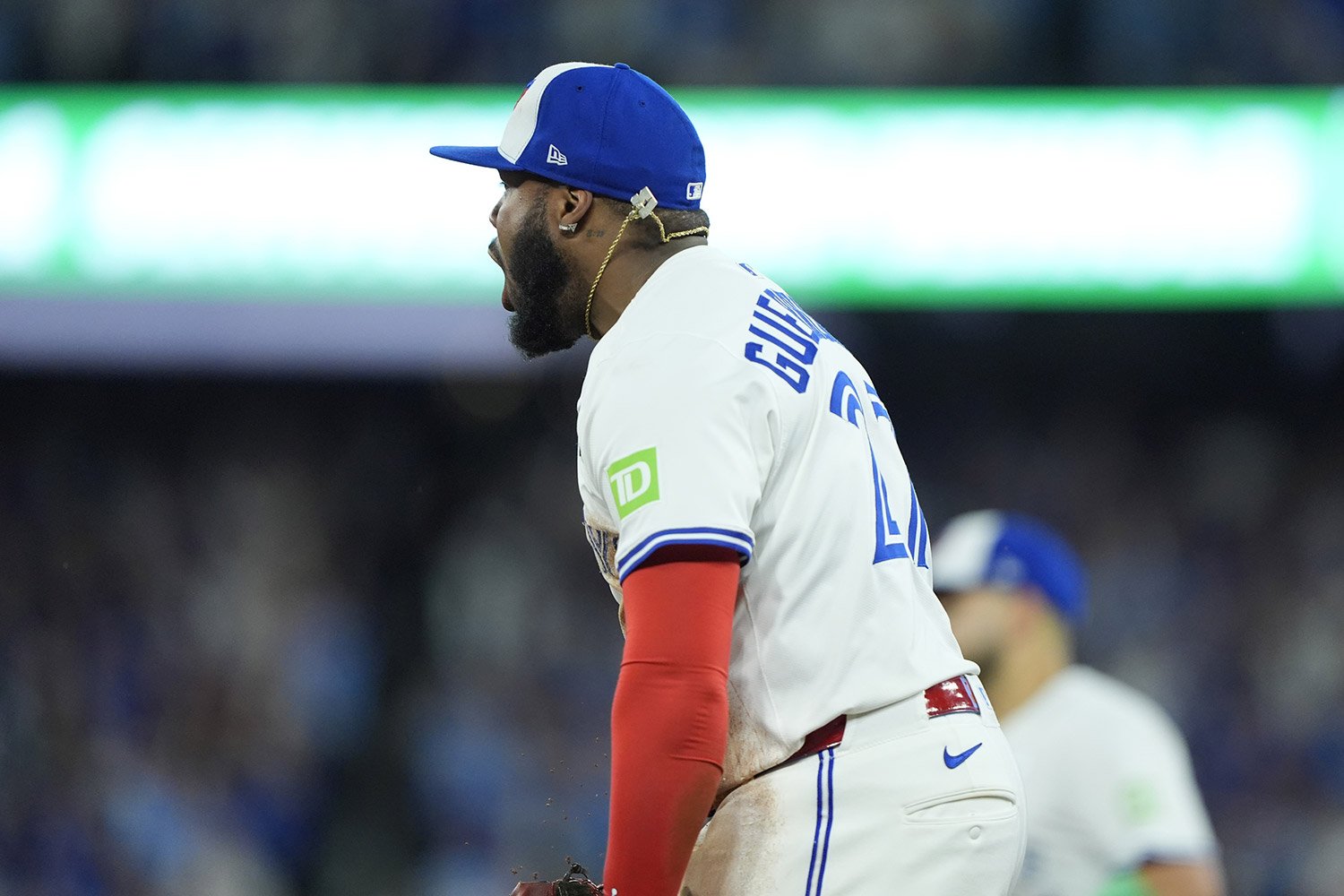 2025 will go down as one of the most historic seasons in Toronto Blue Jays franchise history, from having the best record in the Grapefruit League, to signing Vladimir Guerrero Jr.to the largest contract in franchise history, to making it all the way to Game 7 of the World Series. It was a season defined by milestones. For all of us at Jays Centre, it was a milestone season for us, too. 2025 was our first year covering the Blue Jays. Over the course of the year, several articles generated clicks, started conversations, some points were debated, and shone a light on just how special some of the performances in 2025 were. Here are our top five articles from the 2025 season: 5) 2026 Toronto Blue Jays Roster Projection, v1 By Sam Charles Dec 3rd 2025 Before we look back at 2025, let's briefly jump ahead to the present and take a look at 2026. With several high-impact signings already complete (Dylan Cease, Cody Ponce added via free agency), and Shane Bieber exercising his player option to return to the team. It's a good idea to take a look at where the roster currently stands with the potential of more impact moves on the table. The piece touches on the potential return of Bo Bichette, the rumors surrounding Kyle Tucker, and highlights the bullpen, as well as all the possible names that will likely contribute to the 2026 team at some point. It's a must-read and serves as a great refresher as the offseason rolls on. 4) Tyler Heineman Is On His Way To Making Backup Catcher History By Leo Morgenstern Aug 6th 2025 If projecting the future drew readers in, unexpected on-field production kept them coming back. One of the main storylines that carried the 2025 Blue Jays was their consistent production from unexpected sources. Tyler Heineman was one of those sources several times this past season. Heineman had always been known for his glove, but the 34-year-old found another level with his bat, and not only was it good, but it was also historic in terms of production from backup catchers. At the time the article was written, Heineman's 2.2 fWAR was 11th all-time among catchers with less than 200 PAs, and while he finished the season at 2.1 fWAR, his pace had him projected to be the best of all time. It's not often a backup catcher makes headlines, but that's just the type of magic Heineman had in 2025. 3) Even Alex Anthopoulos Wouldn’t Have Extended Vladimir Guerrero Jr. By Davy Andrews Mar 5th 2025 The Blue Jays eventually got a deal done with Guerrero, but there was a lot of chatter about whether it would get done. Vlad had set a deadline of the first day of camp to get an extension done, and the day came and went, and still no pen was put to paper. Davy took a look at former Blue Jays GM Alex Anthopoulos, who has a history of extensions for his young players in Atlanta, and thought, if he were still in charge in Toronto, would he have handled the Vladimir Guerrero Jr.situation any differently? At the time, the piece had therapeutic qualities, trying to give fans a perspective that things would be okay if a deal didn't work out. But now that Guerrero is under contract for a decade plus, it feels especially relevant to get a glimpse at what the front office may have been thinking during that moment. 2) Could a Scott Boras Failure Result in a Blue Jays Triumph? By Megan M Jan 30th 2025 Flash back to the 2024-25 offseason, and the Blue Jays were still looking for help on the roster. Juan Soto had just signed in Queens after being linked to the Blue Jays all winter, and the reputation that the Blue Jays finishing second on every free agent started to feel very real. Megan speculated that a misread of Alonso’s market could be a good opportunity for the Blue Jays to strike and look to acquire the slugger on a short-term deal to help bolster the offence. He ended up returning to the Mets in 2025, hit 38 home runs, and has since turned that into a five-year deal with Baltimore this offseason. Although it didn’t end up happening in Toronto, it's worth a read, especially as the Blue Jays and Scott Boras have a history. With some notable Boras clients still on the free agent market (Alex Bregman, Cody Bellinger), there is a chance they link up again. 1) So That’s why the Blue Jays Didn’t Extend Vladimir Guerrero Jr. By Davy Andrews Mar 10th 2025 Sweet sweet closure. You rarely get some direct comments from a star player about his thoughts on the team, and Vlad certainly shared his thoughts. Vlad spoke in Spanish to ESPN about what exactly went down between the two parties. Davy does a great job of breaking down all that Vlad had to say in the two-and-a-half-minute clip, and looking back after the contract has been signed, a lot of what he says holds up. Signing Vladimir Guerrero Jr.was one of the biggest decision points the franchise has ever made, and you can make the argument that getting the deal done is already starting to pay dividends. There is also a compelling case that, without extending Guerrero, the Blue Jays wouldn’t have made the historic World Series run they did. It's an absolute must-read, especially knowing how the Jays' season went and the impact Guerrero had on it.
 -
This may be the biggest and most star-studded World Baseball Classic yet. The 2023 tournament was a massive success, punctuated by Shohei Ohtani striking out his at-the-time teammate Mike Trout to clinch Japan's third WBC championship in six tournaments. Fast forward to 2026, and the event is picking up even more steam. Many more of baseball's star players have committed to playing, and Team USA is loaded with elite talent led by Aaron Judge, Cal Raleigh, along with frontline starters Tarik Skubal and Paul Skenes. Team Japan, led by Shohei Ohtani, will once again be a tough challenge, while the Dominican Republic is stacked with All-Stars and MVP-caliber players, including the Blue Jays' Vladimir Guerrero, Jr. Team Canada may not have the same high-end talent as these other nations, but there is no doubt that the roster Canada puts together will be able to compete and have a chance to strike an upset or two, and in a short tournament where small samples mean so much, anything is truly possible. Canadian baseball fans may remember in 2006, when Team Canada, led by Justin Morneau, Jason Bay, and Matt Stairs, upset a loaded American team 8-6, showing that on any given day, anything is truly possible. The team already has several MLB and high-end prospects committed to Team Canada, and thanks to Shi Davadi of Sportsnet, we have a list of players who have confirmed to wear the Maple Leaf for Team Canada when pool play starts in San Juan, Puerto Rico, in March. Team Canada Locks Manager - Ernie Whitt Infield Catcher - Bo Naylor First Base - Josh Naylor Second Base - Edouard Julien Shortstop - Otto Lopez Third Base - Abraham Toro UTIL - Trei Cruz The infield seems to be a strength for this team. Josh Naylor is a former All-Star and is coming off a career-best 3.1 bWAR season. His brother Bo played in 123 games for Cleveland and hit 14 home runs. Julien was exceptional in the 2023 WBC (1.821 OPS) and is looking to bounce back after two sub-replacement-level seasons in Minnesota. Lopez provides elite shortstop defence, and he’s coming off a 3.5 bWAR season. Toro can play all around the infield, and Cruz (the son of former Blue Jay Jose Cruz Jr) is a switch-hitter who posted an .867 OPS across two minor league levels in Detroit's system in 2025. Outfield Tyler O'Neill Denzel Clarke Owen Caissie Jared Young The outfield is young and has a wealth of talent. O’Neill is a veteran of eight MLB seasons, has two Gold Glove awards, and has two 30-home-run seasons under his belt. Clarke may be one of the best up-and-coming defensive centerfielders in all of baseball. Caissie made his MLB debut with the Cubs this season and is considered the best prospect in their system. Jared Young has had some MLB time, but he did post a .969 OPS, getting on base over 40% of the time in Triple-A with the Mets. Pitchers RHP Michael Soroka RHP Cal Quantrill RHP Matt Brash LHP Rob Zastryzny LHP James Paxton RHP Phillippe Aumont RHP Curtis Taylor LHP Adam Macko RHP Jordan Balazovic RHP Eric Cerantola LHP Logan Allen If there is one downside to Canada, it may be the rotation. Soroka and Quantrill have had some success in the big leagues. Matt Brash is armed with a 98 mph fastball and a career 31.1% strikeout rate. Zastryzny is a veteran of seven big league seasons and has a 2.12 ERA over his last two years with Milwaukee. James Paxton, who retired after the 2024 season, brings veteran experience and familiarity with high-leverage play. Aumont has pitched for Canada in four WBCs already. Taylor, Macko, and Cerantola are all currently pitching in Triple A in the Cardinals, Blue Jays, and Royals systems, respectively. Balazovic got a cup of coffee with the Twins in 2023 and posted a 3.75 ERA in Detroit's minor league system. Allen has most recently pitched in Korea, made 31 starts, and logged 173 innings, and will likely make a start for Team Canada during the tournament. Team Canada Maybes Infield First base - Freddie Freeman Catcher - Liam Hicks UTIL - Tyler Black Outfield Tristan Peters Freddie Freeman becomes the big wild card here, a nine-time All-Star, three-time World Series winner, and former MVP would help any team, and Canada is no exception. Freeman’s mother is Canadian, and he has played for Team Canada in the past to honor her. There seems to be mutual interest between the two parties, and if Freeman can play, he would immediately become the focal point of Canada’s lineup. The drawback may be that he’s not 100% healthy, as he has battled wrist, ankle, and hip injuries over the course of the 2025 season, and manager Ernie Whitt said that Freeman is “having some procedures done” and the Dodgers may prefer it that he spends more time resting and recovering in camp, especially since they played deep into October. Expect more information to come about Freeman as the tournament draws closer. Hicks, Black, and Peters all have a decent shot of being on the roster, as all of them have made it to the majors and have had limited forms of success. Hicks may have the best chance as he is a catcher, but assuming everyone on the prior list is ready to play, these players may be the odd men out Pitchers RHP Jordan Romano LHP Mitch Bratt RHP Jonah Tong RHP Jameson Taillon RHP Zach Pop RHP Rowan Wick If Team Canada adds some of these pitchers, that would add to the upside of the team. From reading Shi’s Article, there is some mutual interest in Romano pitching for the team. Tong and Bratt both may prefer to spend time at their respective spring training camps, but both are young and have immense upside. Taillon said Canada asked him back in November, but he's still “working through it all right now”. Pop and Wick seem unlikely, but both have had big league success previously and could always be an option. Team Canada Unlikelys Infielders First base - Vladimir Guerrero Jr. As fun as it would be, Vladimir Guerrero Jr. has already committed to playing for the Dominican Republic in the WBC. Pitchers RHP Nick Pivetta RHP Cade Smith LHP Erik Sabrowski Nick Pivetta is coming off his best MLB season, where he threw a career-high 181 2/3 IP and 5.3 bWAR. The chances of him playing are not zero, as he was going to play for Canada during the 2023 WBC but then dropped out due to illness. Davidi mentioned in the previous article that Pivetta, Smith, and Sabrowski are all unlikely to play, citing a large workload over the past two seasons with Smith and injury issues with Sabrowski. All three of these pitchers would have been a boost to Team Canada, but they will likely have to piece things together without them this go around. Things are certainly going to change between now and March when the tournament is set to get underway, but on paper, Team Canada has a blend of solid major leaguers, young players with upside, and a reliable set of position players. It's exactly the type of team that could surprise and go on a run in a short tournament. If there was ever a World Baseball Classic where Canada was positioned to break through, 2026 might be it. View full article
-
The First Look At Team Canada's World Baseball Classic Roster
Jesse Burrill posted an article in Blue Jays
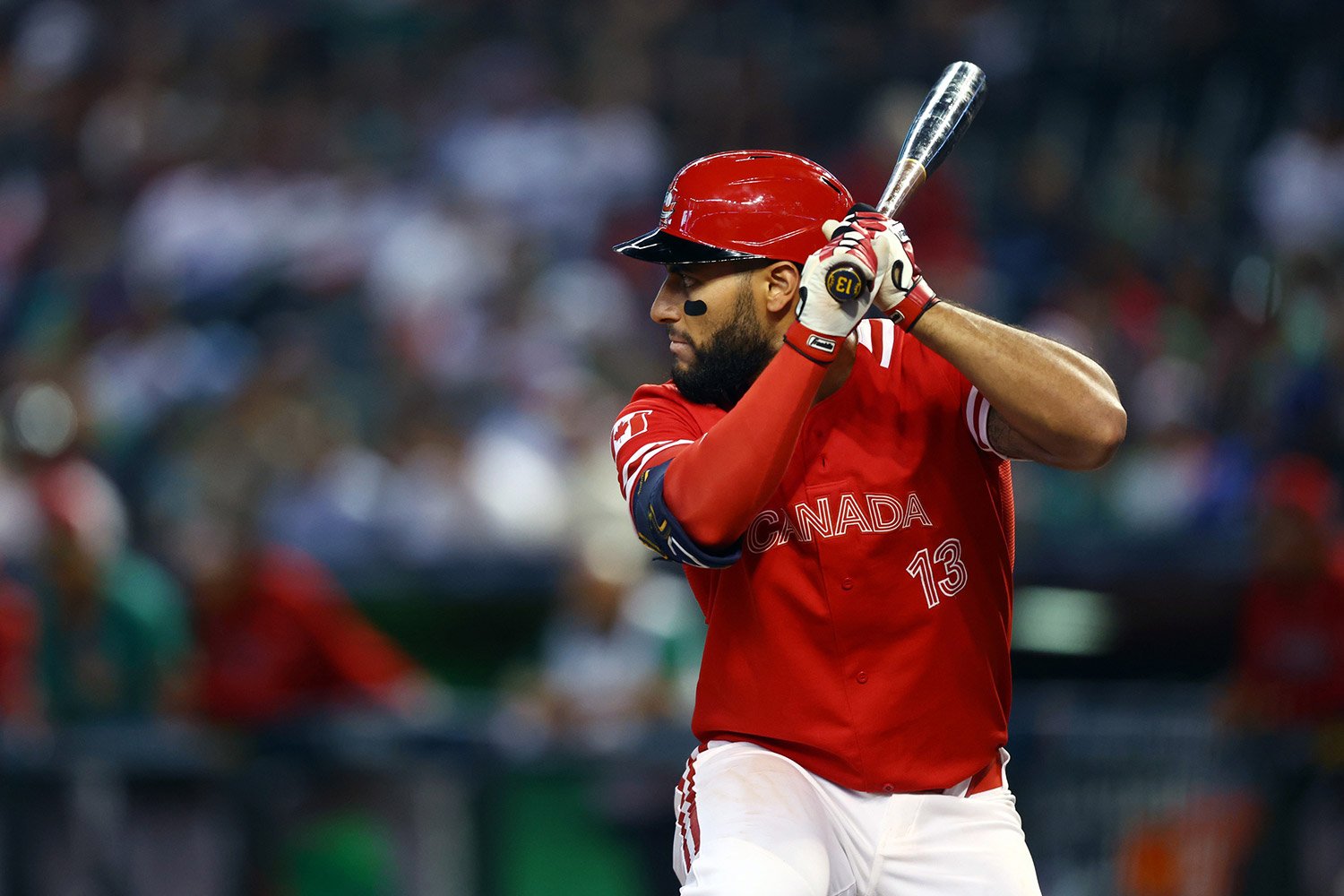 This may be the biggest and most star-studded World Baseball Classic yet. The 2023 tournament was a massive success, punctuated by Shohei Ohtani striking out his at-the-time teammate Mike Trout to clinch Japan's third WBC championship in six tournaments. Fast forward to 2026, and the event is picking up even more steam. Many more of baseball's star players have committed to playing, and Team USA is loaded with elite talent led by Aaron Judge, Cal Raleigh, along with frontline starters Tarik Skubal and Paul Skenes. Team Japan, led by Shohei Ohtani, will once again be a tough challenge, while the Dominican Republic is stacked with All-Stars and MVP-caliber players, including the Blue Jays' Vladimir Guerrero, Jr. Team Canada may not have the same high-end talent as these other nations, but there is no doubt that the roster Canada puts together will be able to compete and have a chance to strike an upset or two, and in a short tournament where small samples mean so much, anything is truly possible. Canadian baseball fans may remember in 2006, when Team Canada, led by Justin Morneau, Jason Bay, and Matt Stairs, upset a loaded American team 8-6, showing that on any given day, anything is truly possible. The team already has several MLB and high-end prospects committed to Team Canada, and thanks to Shi Davadi of Sportsnet, we have a list of players who have confirmed to wear the Maple Leaf for Team Canada when pool play starts in San Juan, Puerto Rico, in March. Team Canada Locks Manager - Ernie Whitt Infield Catcher - Bo Naylor First Base - Josh Naylor Second Base - Edouard Julien Shortstop - Otto Lopez Third Base - Abraham Toro UTIL - Trei Cruz The infield seems to be a strength for this team. Josh Naylor is a former All-Star and is coming off a career-best 3.1 bWAR season. His brother Bo played in 123 games for Cleveland and hit 14 home runs. Julien was exceptional in the 2023 WBC (1.821 OPS) and is looking to bounce back after two sub-replacement-level seasons in Minnesota. Lopez provides elite shortstop defence, and he’s coming off a 3.5 bWAR season. Toro can play all around the infield, and Cruz (the son of former Blue Jay Jose Cruz Jr) is a switch-hitter who posted an .867 OPS across two minor league levels in Detroit's system in 2025. Outfield Tyler O'Neill Denzel Clarke Owen Caissie Jared Young The outfield is young and has a wealth of talent. O’Neill is a veteran of eight MLB seasons, has two Gold Glove awards, and has two 30-home-run seasons under his belt. Clarke may be one of the best up-and-coming defensive centerfielders in all of baseball. Caissie made his MLB debut with the Cubs this season and is considered the best prospect in their system. Jared Young has had some MLB time, but he did post a .969 OPS, getting on base over 40% of the time in Triple-A with the Mets. Pitchers RHP Michael Soroka RHP Cal Quantrill RHP Matt Brash LHP Rob Zastryzny LHP James Paxton RHP Phillippe Aumont RHP Curtis Taylor LHP Adam Macko RHP Jordan Balazovic RHP Eric Cerantola LHP Logan Allen If there is one downside to Canada, it may be the rotation. Soroka and Quantrill have had some success in the big leagues. Matt Brash is armed with a 98 mph fastball and a career 31.1% strikeout rate. Zastryzny is a veteran of seven big league seasons and has a 2.12 ERA over his last two years with Milwaukee. James Paxton, who retired after the 2024 season, brings veteran experience and familiarity with high-leverage play. Aumont has pitched for Canada in four WBCs already. Taylor, Macko, and Cerantola are all currently pitching in Triple A in the Cardinals, Blue Jays, and Royals systems, respectively. Balazovic got a cup of coffee with the Twins in 2023 and posted a 3.75 ERA in Detroit's minor league system. Allen has most recently pitched in Korea, made 31 starts, and logged 173 innings, and will likely make a start for Team Canada during the tournament. Team Canada Maybes Infield First base - Freddie Freeman Catcher - Liam Hicks UTIL - Tyler Black Outfield Tristan Peters Freddie Freeman becomes the big wild card here, a nine-time All-Star, three-time World Series winner, and former MVP would help any team, and Canada is no exception. Freeman’s mother is Canadian, and he has played for Team Canada in the past to honor her. There seems to be mutual interest between the two parties, and if Freeman can play, he would immediately become the focal point of Canada’s lineup. The drawback may be that he’s not 100% healthy, as he has battled wrist, ankle, and hip injuries over the course of the 2025 season, and manager Ernie Whitt said that Freeman is “having some procedures done” and the Dodgers may prefer it that he spends more time resting and recovering in camp, especially since they played deep into October. Expect more information to come about Freeman as the tournament draws closer. Hicks, Black, and Peters all have a decent shot of being on the roster, as all of them have made it to the majors and have had limited forms of success. Hicks may have the best chance as he is a catcher, but assuming everyone on the prior list is ready to play, these players may be the odd men out Pitchers RHP Jordan Romano LHP Mitch Bratt RHP Jonah Tong RHP Jameson Taillon RHP Zach Pop RHP Rowan Wick If Team Canada adds some of these pitchers, that would add to the upside of the team. From reading Shi’s Article, there is some mutual interest in Romano pitching for the team. Tong and Bratt both may prefer to spend time at their respective spring training camps, but both are young and have immense upside. Taillon said Canada asked him back in November, but he's still “working through it all right now”. Pop and Wick seem unlikely, but both have had big league success previously and could always be an option. Team Canada Unlikelys Infielders First base - Vladimir Guerrero Jr. As fun as it would be, Vladimir Guerrero Jr. has already committed to playing for the Dominican Republic in the WBC. Pitchers RHP Nick Pivetta RHP Cade Smith LHP Erik Sabrowski Nick Pivetta is coming off his best MLB season, where he threw a career-high 181 2/3 IP and 5.3 bWAR. The chances of him playing are not zero, as he was going to play for Canada during the 2023 WBC but then dropped out due to illness. Davidi mentioned in the previous article that Pivetta, Smith, and Sabrowski are all unlikely to play, citing a large workload over the past two seasons with Smith and injury issues with Sabrowski. All three of these pitchers would have been a boost to Team Canada, but they will likely have to piece things together without them this go around. Things are certainly going to change between now and March when the tournament is set to get underway, but on paper, Team Canada has a blend of solid major leaguers, young players with upside, and a reliable set of position players. It's exactly the type of team that could surprise and go on a run in a short tournament. If there was ever a World Baseball Classic where Canada was positioned to break through, 2026 might be it.
 -
If you were looking for an unsung hero behind the Blue Jays' run to Game 7 of the World Series, you wouldn’t have to go far before Eric Lauer's name came up. He made his season debut at the end of April, and after a run of quality pitching out of the bullpen, he joined the rotation full-time on June 11, remaining there until the end of August, after which he transitioned back into the bullpen. On the season, Lauer posted a 3.18 ERA with 2.2 bWAR over 104.2 innings, adding another 8.2 frames during the postseason, including an incredible outing in Game 3 of the World Series that held the Dodgers scoreless over 4.2 innings. For as sensational as Lauer was in 2025, the day he became a Blue Jay was uneventful; it didn't make many headlines when he signed a minor league contract with the Blue Jays in December of 2024. Now, it's quite rare that a minor league signing has as much impact on a team as Lauer did. With all due apologies to Matt Whatley, Kevin Gowdy, and Amir Garrett, that's the rub when it comes to minor league contracts; if these players were all expected to be good, then they wouldn’t be in this category. At some point, it becomes a matter of throwing darts and hoping one lands on the bullseye. With that being said, the Blue Jays have already signed a few players to some minor league deals. Let’s learn more about them to see if any of them could have a Lauer-sized impact in 2026. Michael Plassmeyer, LHP 2025 Stats (in AAA with TEX): 105.2 IP, 4.43 ERA, 34 BB, 99 K Plassmeyer, now 29 years old, was drafted in 2018 by the Mariners and has bounced between six different teams in his seven minor league seasons. He was first traded after the 2018 season in a deal that also sent Mike Zunino and Guillermo Heredia from the Mariners to the Rays, with Jake Fraley and Mallex Smith going the other way. Plassmeyer has 11 innings of big league experience under his belt, with the Phillies in 2022 and ‘23. He’s a three-pitch pitcher (fastball, changeup, slider) that averages just under 89 mph on his heater. He’s a strike thrower, and if the Blue Jays can find a way to have him miss more barrels, then he could carve out a Lauer-ish role in ‘26 as a swingman who can move between the bullpen and the rotation. Rodolfo Castro, 2B/SS 2025 stats (in AAA with PHI): 133 G, .234/.324/.421, 19 HR, 18 SB, 22.7 K%, 10.3 BB% If the name Rodolfo Castro stands out, you might remember him from a play in 2022 when his cellphone famously flew out of his back pocket during a headfirst slide into third base. The incident earned him a one-game suspension under MLB’s electronic device policy. The now 26-year-old does have 194 MLB games under his belt, and although he hasn’t hit well (career 83 wRC+), Castro does still have a nice combination of power and speed. While he has played all over the infield, third base appears to be his best defensive fit. Castro had been a switch-hitter his whole career, but gave it up to hit strictly right-handed in 2025. The Blue Jays may think there is more to come as he gets more repetitions from the right side. He could see some big league time in 2026 if the bat holds up. Tanner Andrews, RHP 2025 Stats (in AA with MIN): 16.2 IP, 3.78 ERA, 18 K, 3 BB Andrews, now 30, was selected by the Marlins in the 10th round of the 2018 draft. He reached as high as Triple A with the Giants in 2023 and ‘24 but has yet to make his major league debut. Andrews is a three-pitch pitcher (fastball, splitter, and slider) and has battled bouts of wildness in his career, carrying a 9.0% career walk rate in the minor leagues. However, he did trim that number down to just 4.0% in a small 2025 sample, and paired that with a FIP that dipped below 3.00 for the first time (2.01). The Blue Jays likely buy into that progress, and if Andrews can continue that trend, then he’ll provide some big league relief depth or, at worst, become an intriguing relief option in Buffalo. Carlos Mendoza, UTIL 2025 Stats (in AA-AAA with DET): 97 G, .287/.394/.409, 7 HR, 12 SB, 11.1 K%, 13.0 BB% Mendoza, 26, is a left-handed-hitting utility player who has seen time at second base, third base, left field, and right field in the minors. At just 5-foot-7 and 165 lbs., he’s never likely to be much of a power hitter, but through two levels in the minors in 2025, he did have a .394 OBP, a good contact rate (83.9% in '25), and he walked more than he struck out. Versatile, good contact skills, and a wRC+ above 100 at almost every level at which he’s played. You can see why the Blue Jays would have interest here. He’s a candidate to make his big league debut this season if things break his way. ***** No one is expecting these players to be game changers in 2026, but no one expected Lauer to be one either. The most likely scenario is that these players will spend more time with the Bisons than the Blue Jays. Still, there is enough skill and upside here to find some reason for optimism, and it wouldn't be a surprise if one or two make an impact at the big league level this season. View full article
-
What To Know About the Blue Jays New Minor League Signings
Jesse Burrill posted an article in Blue Jays
.jpg.28770b3556eac6831b0e2442c652545d.jpg) If you were looking for an unsung hero behind the Blue Jays' run to Game 7 of the World Series, you wouldn’t have to go far before Eric Lauer's name came up. He made his season debut at the end of April, and after a run of quality pitching out of the bullpen, he joined the rotation full-time on June 11, remaining there until the end of August, after which he transitioned back into the bullpen. On the season, Lauer posted a 3.18 ERA with 2.2 bWAR over 104.2 innings, adding another 8.2 frames during the postseason, including an incredible outing in Game 3 of the World Series that held the Dodgers scoreless over 4.2 innings. For as sensational as Lauer was in 2025, the day he became a Blue Jay was uneventful; it didn't make many headlines when he signed a minor league contract with the Blue Jays in December of 2024. Now, it's quite rare that a minor league signing has as much impact on a team as Lauer did. With all due apologies to Matt Whatley, Kevin Gowdy, and Amir Garrett, that's the rub when it comes to minor league contracts; if these players were all expected to be good, then they wouldn’t be in this category. At some point, it becomes a matter of throwing darts and hoping one lands on the bullseye. With that being said, the Blue Jays have already signed a few players to some minor league deals. Let’s learn more about them to see if any of them could have a Lauer-sized impact in 2026. Michael Plassmeyer, LHP 2025 Stats (in AAA with TEX): 105.2 IP, 4.43 ERA, 34 BB, 99 K Plassmeyer, now 29 years old, was drafted in 2018 by the Mariners and has bounced between six different teams in his seven minor league seasons. He was first traded after the 2018 season in a deal that also sent Mike Zunino and Guillermo Heredia from the Mariners to the Rays, with Jake Fraley and Mallex Smith going the other way. Plassmeyer has 11 innings of big league experience under his belt, with the Phillies in 2022 and ‘23. He’s a three-pitch pitcher (fastball, changeup, slider) that averages just under 89 mph on his heater. He’s a strike thrower, and if the Blue Jays can find a way to have him miss more barrels, then he could carve out a Lauer-ish role in ‘26 as a swingman who can move between the bullpen and the rotation. Rodolfo Castro, 2B/SS 2025 stats (in AAA with PHI): 133 G, .234/.324/.421, 19 HR, 18 SB, 22.7 K%, 10.3 BB% If the name Rodolfo Castro stands out, you might remember him from a play in 2022 when his cellphone famously flew out of his back pocket during a headfirst slide into third base. The incident earned him a one-game suspension under MLB’s electronic device policy. The now 26-year-old does have 194 MLB games under his belt, and although he hasn’t hit well (career 83 wRC+), Castro does still have a nice combination of power and speed. While he has played all over the infield, third base appears to be his best defensive fit. Castro had been a switch-hitter his whole career, but gave it up to hit strictly right-handed in 2025. The Blue Jays may think there is more to come as he gets more repetitions from the right side. He could see some big league time in 2026 if the bat holds up. Tanner Andrews, RHP 2025 Stats (in AA with MIN): 16.2 IP, 3.78 ERA, 18 K, 3 BB Andrews, now 30, was selected by the Marlins in the 10th round of the 2018 draft. He reached as high as Triple A with the Giants in 2023 and ‘24 but has yet to make his major league debut. Andrews is a three-pitch pitcher (fastball, splitter, and slider) and has battled bouts of wildness in his career, carrying a 9.0% career walk rate in the minor leagues. However, he did trim that number down to just 4.0% in a small 2025 sample, and paired that with a FIP that dipped below 3.00 for the first time (2.01). The Blue Jays likely buy into that progress, and if Andrews can continue that trend, then he’ll provide some big league relief depth or, at worst, become an intriguing relief option in Buffalo. Carlos Mendoza, UTIL 2025 Stats (in AA-AAA with DET): 97 G, .287/.394/.409, 7 HR, 12 SB, 11.1 K%, 13.0 BB% Mendoza, 26, is a left-handed-hitting utility player who has seen time at second base, third base, left field, and right field in the minors. At just 5-foot-7 and 165 lbs., he’s never likely to be much of a power hitter, but through two levels in the minors in 2025, he did have a .394 OBP, a good contact rate (83.9% in '25), and he walked more than he struck out. Versatile, good contact skills, and a wRC+ above 100 at almost every level at which he’s played. You can see why the Blue Jays would have interest here. He’s a candidate to make his big league debut this season if things break his way. ***** No one is expecting these players to be game changers in 2026, but no one expected Lauer to be one either. The most likely scenario is that these players will spend more time with the Bisons than the Blue Jays. Still, there is enough skill and upside here to find some reason for optimism, and it wouldn't be a surprise if one or two make an impact at the big league level this season.
If you were looking for an unsung hero behind the Blue Jays' run to Game 7 of the World Series, you wouldn’t have to go far before Eric Lauer's name came up. He made his season debut at the end of April, and after a run of quality pitching out of the bullpen, he joined the rotation full-time on June 11, remaining there until the end of August, after which he transitioned back into the bullpen. On the season, Lauer posted a 3.18 ERA with 2.2 bWAR over 104.2 innings, adding another 8.2 frames during the postseason, including an incredible outing in Game 3 of the World Series that held the Dodgers scoreless over 4.2 innings. For as sensational as Lauer was in 2025, the day he became a Blue Jay was uneventful; it didn't make many headlines when he signed a minor league contract with the Blue Jays in December of 2024. Now, it's quite rare that a minor league signing has as much impact on a team as Lauer did. With all due apologies to Matt Whatley, Kevin Gowdy, and Amir Garrett, that's the rub when it comes to minor league contracts; if these players were all expected to be good, then they wouldn’t be in this category. At some point, it becomes a matter of throwing darts and hoping one lands on the bullseye. With that being said, the Blue Jays have already signed a few players to some minor league deals. Let’s learn more about them to see if any of them could have a Lauer-sized impact in 2026. Michael Plassmeyer, LHP 2025 Stats (in AAA with TEX): 105.2 IP, 4.43 ERA, 34 BB, 99 K Plassmeyer, now 29 years old, was drafted in 2018 by the Mariners and has bounced between six different teams in his seven minor league seasons. He was first traded after the 2018 season in a deal that also sent Mike Zunino and Guillermo Heredia from the Mariners to the Rays, with Jake Fraley and Mallex Smith going the other way. Plassmeyer has 11 innings of big league experience under his belt, with the Phillies in 2022 and ‘23. He’s a three-pitch pitcher (fastball, changeup, slider) that averages just under 89 mph on his heater. He’s a strike thrower, and if the Blue Jays can find a way to have him miss more barrels, then he could carve out a Lauer-ish role in ‘26 as a swingman who can move between the bullpen and the rotation. Rodolfo Castro, 2B/SS 2025 stats (in AAA with PHI): 133 G, .234/.324/.421, 19 HR, 18 SB, 22.7 K%, 10.3 BB% If the name Rodolfo Castro stands out, you might remember him from a play in 2022 when his cellphone famously flew out of his back pocket during a headfirst slide into third base. The incident earned him a one-game suspension under MLB’s electronic device policy. The now 26-year-old does have 194 MLB games under his belt, and although he hasn’t hit well (career 83 wRC+), Castro does still have a nice combination of power and speed. While he has played all over the infield, third base appears to be his best defensive fit. Castro had been a switch-hitter his whole career, but gave it up to hit strictly right-handed in 2025. The Blue Jays may think there is more to come as he gets more repetitions from the right side. He could see some big league time in 2026 if the bat holds up. Tanner Andrews, RHP 2025 Stats (in AA with MIN): 16.2 IP, 3.78 ERA, 18 K, 3 BB Andrews, now 30, was selected by the Marlins in the 10th round of the 2018 draft. He reached as high as Triple A with the Giants in 2023 and ‘24 but has yet to make his major league debut. Andrews is a three-pitch pitcher (fastball, splitter, and slider) and has battled bouts of wildness in his career, carrying a 9.0% career walk rate in the minor leagues. However, he did trim that number down to just 4.0% in a small 2025 sample, and paired that with a FIP that dipped below 3.00 for the first time (2.01). The Blue Jays likely buy into that progress, and if Andrews can continue that trend, then he’ll provide some big league relief depth or, at worst, become an intriguing relief option in Buffalo. Carlos Mendoza, UTIL 2025 Stats (in AA-AAA with DET): 97 G, .287/.394/.409, 7 HR, 12 SB, 11.1 K%, 13.0 BB% Mendoza, 26, is a left-handed-hitting utility player who has seen time at second base, third base, left field, and right field in the minors. At just 5-foot-7 and 165 lbs., he’s never likely to be much of a power hitter, but through two levels in the minors in 2025, he did have a .394 OBP, a good contact rate (83.9% in '25), and he walked more than he struck out. Versatile, good contact skills, and a wRC+ above 100 at almost every level at which he’s played. You can see why the Blue Jays would have interest here. He’s a candidate to make his big league debut this season if things break his way. ***** No one is expecting these players to be game changers in 2026, but no one expected Lauer to be one either. The most likely scenario is that these players will spend more time with the Bisons than the Blue Jays. Still, there is enough skill and upside here to find some reason for optimism, and it wouldn't be a surprise if one or two make an impact at the big league level this season.
.jpg.fd8dbe66610197145103119b70cf67ac.jpg)
.jpg.38fda920f19ddcc16233c6f7a75246b0.jpg)
.jpg.12007c358b8ad5a9c67ac108b2a85ffb.jpg)
.jpg.6f558aeab2cbce6ae9cd11f9f074cbe0.jpg)
.jpg.71b595d47bf0562738958e9e2d00267f.jpg)
.jpg.413b44e9e408741fdf35c480e35094ca.jpg)
.jpg.49bca1222d9750a9a0caa072382104cb.jpg)
.jpg.28770b3556eac6831b0e2442c652545d.jpg)