


Jesse Burrill
-
Posts
262 -
Joined
-
Last visited
Content Type
Profiles
Toronto Blue Jays Videos
2026 Toronto Blue Jays Top Prospects Ranking
Toronto Blue Jays Free Agent & Trade Rumors, Notes, & Tidbits
Guides & Resources
2025 Toronto Blue Jays Draft Pick Tracker
News
2026 Toronto Blue Jays Draft Tracker: Picks & Bonuses
Forums
Blogs
Events
Store
Downloads
Gallery
Everything posted by Jesse Burrill
-
JoJo ParkerArjun NimmalaNolan PerryJohnny KingJuan SanchezRicky TiedemannCole CarlonGage StaniferSean KeysBlaine BullardJake BlossVictor AriasCarson MessinaDaniel GuerraAustin CatesJake CookWill BrickJosh KasevichCharles McAdooTim Piasentin
-

.jpg.a012c0b46f3e07c32eb5588a51795d41.jpg) Let the trades begin. On Friday afternoon, the Blue Jays made their first of what could be many trades this deadline season, sending right-handed pitcher Tommy Nance and international bonus pool money to the Minnesota Twins for catching prospect Ryan Sprock. On the surface, the move seems like a good piece of business. Nance was 35 years old, out of options, and had gradually slid down the bullpen depth chart. It’s not that he wasn't pitching well; in fact, he’s been quite solid. He'd been pitching mostly in lower-leverage situations, despite posting a respectable 3.86 ERA. John Schnieder had recently noted the club has a surplus of right-handed relievers, and replacing Nance with an optionable pitcher capable of covering multiple innings gives Toronto greater bullpen flexibility. The move feels like one a team that would be selling around the trade deadline would make. Turning an effective major league reliever into a prospect who may not reach the majors for several years isn't the type of move teams chasing a playoff spot typically consider. Was this the first sign from the Blue Jays that they’re going to start selling pieces at the trade deadline? The easy reaction is to view every July trade through the lens of buying or selling, but not every deadline move is a declaration of intent. Sometimes it's simply about improving the organization wherever possible, and that appears to be the case here. There are several reasons this trade makes sense, regardless of Toronto’s deadline plans, starting with the fact that Nance’s value might never have been higher. He’s 35 years old, he’s strictly a one-inning middle reliever, and he doesn’t have any closing experience either. On top of that, Nance had allowed runs in each of his final three appearances as a Blue Jay, including allowing home runs in two of them. The fact that he’s out of options limits his roster flexibility, too, meaning the team has to keep him on the roster, or else they face the risk of losing him to waivers if they try to send him down. Relief pitchers are notoriously volatile from year to year, making it far from a guarantee that his value would improve between now and the August 3 trade deadline. If the Twins were offering a prospect they liked now, then why wait? From a Minnesota perspective, the move makes just as much sense. The Twins are looking to strengthen their bullpen for the stretch run, and relief pitching is always in demand around the trade deadline. Nance has shown he can provide reliable middle relief, and because he was pitching in a low-leverage role for Toronto, the Twins were able to acquire a dependable arm without giving up one of their premier prospects. So what exactly are the Blue Jays getting in return? Sprock isn’t one of the Twins' headline prospects, but he's the type of under-the-radar player Toronto has targeted successfully in the past. Let's take a closer look. Sprock is a 21-year-old catcher (who can also play some third base and left field). At the plate, his profile is built around contact and strike-zone control. On the season in A-Ball, he’s reached base at a .427 clip, while the zone contact rate is 90% and the swinging strike rate is 5.7%; both would be impressive if they translated to the major league level. Since making the transition to catcher, he’s improved his framing and blocking, and, as a two-way player in college (touching 96 mph), he has a good arm behind the plate. As a bonus, he was just named Florida State League player of the month for June. Including $250,000 in international bonus pool money in the trade suggests Toronto identified Sprock specifically rather than taking the best prospect Minnesota was willing to move. The Blue Jays were willing to spend additional resources to land a player they must believe fits their organizational philosophy. His combination of defensive and contact skills fits the profile of many players Ross Atkins has acquired during his recent tenure. Now, what does this mean for the Blue Jays going forward? Well, it's inconclusive. If the Blue Jays were to go into a full-on teardown, starting with Nance seems like an awkward move. Trading a core veteran such as George Springer, Daulton Varsho, or Kevin Gausman would send a much stronger signal that the organization had shifted into seller mode. What this likely means is that the Blue Jays are trying to walk the fine line between adding to their organizational depth and keeping the big league roster competitive to push for a playoff spot. The balancing act doesn’t come without risk. The Blue Jays bullpen is arguably weaker without Nance than it was with him. Even if Schneider is right and they can likely get more from the right-handed options further down the depth chart, there is no guarantee they will perform. Here are some of the internal right-handed options the Blue Jays could turn to in Tommy Nance’s absence: Pitcher On 40-Man Roster Shortcoming Chad Dallas Yes Limited experience Lazaro Estrada Yes 5.93 ERA in 4 MLB games Chase Lee Yes 8.10 ERA in 2026 Yimi García Yes Currently injured Yariel Rodríguez No 7.71 ERA in 2026 Simeon Woods Richardson No 8.72 xERA in Triple-A this year Tanner Andrews No Limited big league experience CJ Van Eyk Yes Limited big league experience While none of those options is a perfect replacement, the Blue Jays still have enough depth to absorb the loss. Tyler Rogers, Jeff Hoffman, and Louis Varland have stabilized the back end of the bullpen. Rule 5 pick Spencer Miles has been a standout all season. Braydon Fisher has also held his own, and the unit as a whole has been impressive; the Blue Jays bullpen leads the American League with a 3.83 xFIP. As things stand, Toronto’s roster is still unfinished, and more moves are likely before the August 3 deadline. Atkins has shown he won’t wait until deadline day if an opportunity presents itself. Whether the Blue Jays ultimately buy, sell, or thread the needle, this trade reflects an organization focused on long-term value without sacrificing its chance to remain in the 2026 playoff race. If Sprock develops into the catcher the Blue Jays believe he can become, this deal may ultimately be remembered less for Nance’s departure and more as the move that marked the beginning of the Blue Jays’ deadline season.
Let the trades begin. On Friday afternoon, the Blue Jays made their first of what could be many trades this deadline season, sending right-handed pitcher Tommy Nance and international bonus pool money to the Minnesota Twins for catching prospect Ryan Sprock. On the surface, the move seems like a good piece of business. Nance was 35 years old, out of options, and had gradually slid down the bullpen depth chart. It’s not that he wasn't pitching well; in fact, he’s been quite solid. He'd been pitching mostly in lower-leverage situations, despite posting a respectable 3.86 ERA. John Schnieder had recently noted the club has a surplus of right-handed relievers, and replacing Nance with an optionable pitcher capable of covering multiple innings gives Toronto greater bullpen flexibility. The move feels like one a team that would be selling around the trade deadline would make. Turning an effective major league reliever into a prospect who may not reach the majors for several years isn't the type of move teams chasing a playoff spot typically consider. Was this the first sign from the Blue Jays that they’re going to start selling pieces at the trade deadline? The easy reaction is to view every July trade through the lens of buying or selling, but not every deadline move is a declaration of intent. Sometimes it's simply about improving the organization wherever possible, and that appears to be the case here. There are several reasons this trade makes sense, regardless of Toronto’s deadline plans, starting with the fact that Nance’s value might never have been higher. He’s 35 years old, he’s strictly a one-inning middle reliever, and he doesn’t have any closing experience either. On top of that, Nance had allowed runs in each of his final three appearances as a Blue Jay, including allowing home runs in two of them. The fact that he’s out of options limits his roster flexibility, too, meaning the team has to keep him on the roster, or else they face the risk of losing him to waivers if they try to send him down. Relief pitchers are notoriously volatile from year to year, making it far from a guarantee that his value would improve between now and the August 3 trade deadline. If the Twins were offering a prospect they liked now, then why wait? From a Minnesota perspective, the move makes just as much sense. The Twins are looking to strengthen their bullpen for the stretch run, and relief pitching is always in demand around the trade deadline. Nance has shown he can provide reliable middle relief, and because he was pitching in a low-leverage role for Toronto, the Twins were able to acquire a dependable arm without giving up one of their premier prospects. So what exactly are the Blue Jays getting in return? Sprock isn’t one of the Twins' headline prospects, but he's the type of under-the-radar player Toronto has targeted successfully in the past. Let's take a closer look. Sprock is a 21-year-old catcher (who can also play some third base and left field). At the plate, his profile is built around contact and strike-zone control. On the season in A-Ball, he’s reached base at a .427 clip, while the zone contact rate is 90% and the swinging strike rate is 5.7%; both would be impressive if they translated to the major league level. Since making the transition to catcher, he’s improved his framing and blocking, and, as a two-way player in college (touching 96 mph), he has a good arm behind the plate. As a bonus, he was just named Florida State League player of the month for June. Including $250,000 in international bonus pool money in the trade suggests Toronto identified Sprock specifically rather than taking the best prospect Minnesota was willing to move. The Blue Jays were willing to spend additional resources to land a player they must believe fits their organizational philosophy. His combination of defensive and contact skills fits the profile of many players Ross Atkins has acquired during his recent tenure. Now, what does this mean for the Blue Jays going forward? Well, it's inconclusive. If the Blue Jays were to go into a full-on teardown, starting with Nance seems like an awkward move. Trading a core veteran such as George Springer, Daulton Varsho, or Kevin Gausman would send a much stronger signal that the organization had shifted into seller mode. What this likely means is that the Blue Jays are trying to walk the fine line between adding to their organizational depth and keeping the big league roster competitive to push for a playoff spot. The balancing act doesn’t come without risk. The Blue Jays bullpen is arguably weaker without Nance than it was with him. Even if Schneider is right and they can likely get more from the right-handed options further down the depth chart, there is no guarantee they will perform. Here are some of the internal right-handed options the Blue Jays could turn to in Tommy Nance’s absence: Pitcher On 40-Man Roster Shortcoming Chad Dallas Yes Limited experience Lazaro Estrada Yes 5.93 ERA in 4 MLB games Chase Lee Yes 8.10 ERA in 2026 Yimi García Yes Currently injured Yariel Rodríguez No 7.71 ERA in 2026 Simeon Woods Richardson No 8.72 xERA in Triple-A this year Tanner Andrews No Limited big league experience CJ Van Eyk Yes Limited big league experience While none of those options is a perfect replacement, the Blue Jays still have enough depth to absorb the loss. Tyler Rogers, Jeff Hoffman, and Louis Varland have stabilized the back end of the bullpen. Rule 5 pick Spencer Miles has been a standout all season. Braydon Fisher has also held his own, and the unit as a whole has been impressive; the Blue Jays bullpen leads the American League with a 3.83 xFIP. As things stand, Toronto’s roster is still unfinished, and more moves are likely before the August 3 deadline. Atkins has shown he won’t wait until deadline day if an opportunity presents itself. Whether the Blue Jays ultimately buy, sell, or thread the needle, this trade reflects an organization focused on long-term value without sacrificing its chance to remain in the 2026 playoff race. If Sprock develops into the catcher the Blue Jays believe he can become, this deal may ultimately be remembered less for Nance’s departure and more as the move that marked the beginning of the Blue Jays’ deadline season. -
Let the trades begin. On Friday afternoon, the Blue Jays made their first of what could be many trades this deadline season, sending right-handed pitcher Tommy Nance and international bonus pool money to the Minnesota Twins for catching prospect Ryan Sprock. On the surface, the move seems like a good piece of business. Nance was 35 years old, out of options, and had gradually slid down the bullpen depth chart. It’s not that he wasn't pitching well; in fact, he’s been quite solid. He'd been pitching mostly in lower-leverage situations, despite posting a respectable 3.86 ERA. John Schnieder had recently noted the club has a surplus of right-handed relievers, and replacing Nance with an optionable pitcher capable of covering multiple innings gives Toronto greater bullpen flexibility. The move feels like one a team that would be selling around the trade deadline would make. Turning an effective major league reliever into a prospect who may not reach the majors for several years isn't the type of move teams chasing a playoff spot typically make. Was this the first sign from the Blue Jays that they’re going to start selling pieces at the trade deadline? The easy reaction is to view every July trade through the lens of buying or selling, but not every deadline move is a declaration of intent. Sometimes it's simply about improving the organization wherever possible, and that appears to be the case here. There are several reasons this trade makes sense, regardless of Toronto’s deadline plans, starting with the fact that Tommy Nance’s value might never have been higher. He’s 35 years old, he’s strictly a one-inning middle reliever, and he doesn’t have any closing experience either. On top of that, Nance had allowed runs in each of his final three appearances as a Blue Jay, including allowing home runs in two of them. The fact that he’s out of options limits his roster flexibility, too, meaning the team has to keep him on the roster, or else they face the risk of losing him to waivers if they try to send him down. Relief pitchers are notoriously volatile from year to year, making it far from a guarantee that his value would improve between now and the August 3rd trade deadline, and if the Twins were offering a prospect they liked now, then why wait? From a Minnesota perspective, the move makes just as much sense. The Twins are looking to strengthen their bullpen for the stretch run, and relief pitching is always in demand around the trade deadline. Nance has shown he can provide reliable middle relief, and because he was pitching in a low-leverage role for Toronto, the Twins were able to acquire a dependable arm without giving up one of their premier prospects. So what exactly are the Blue Jays getting in return? Ryan Sprock isn’t one of the Twins' headline prospects, but he's the type of under-the-radar player Toronto has targeted successfully in the past. Let's take a closer look. Sprock is a 21-year-old catcher (who can also play some 3B and LF). At the plate, his profile is built around contact and strike-zone control. On the season in A-Ball, he’s reached base at a .436 clip, while the zone contact rate was 90% and the swinging strike rate was 5.9%; both would be impressive if they translated to the major league level. Since making the transition to catcher, he’s improved his framing and blocking, and, as a two-way player in college (touching 96 mph), he has a good arm behind the plate. As a bonus, he was just named Florida State League player of the month for June. Including $250,000 in international bonus pool money suggests Toronto identified Sprock specifically rather than taking the best prospect Minnesota was willing to move. The Blue Jays appeared willing to spend additional resources to land a player they believed fit their organizational philosophy. The combination of defensive and contact skills fits the profile of the players Ross Atkins has acquired during his recent tenure. So now what does this mean for the Blue Jays going forward? Well, it's inconclusive. If the Blue Jays were to go into a full-on teardown, starting with Tommy Nance seems like an awkward move. Trading a core veteran such as George Springer, Daulton Varsho, or Kevin Gausman would send a much stronger signal that the organization had shifted into seller mode. What this likely means is that the Blue Jays are trying to walk the fine line between adding to their organizational depth and keeping the big league roster competitive to push for a playoff spot. The balancing act doesn’t come without risk. The Blue Jays bullpen is arguably weaker without Nance than it was with him. Even if John Schneider is right and they can likely get more from the right-handed options further in the depth chart, there is no guarantee they will perform. Here are some of the internal right-handed options the Blue Jays could turn to in Tommy Nance’s absence: Pitcher On 40-Man Roster Shortcoming Chad Dallas Yes Limited experience Lazaro Estrada Yes 5.93 career ERA Chase Lee Yes 8.10 ERA Yimi García Yes Currently injured Yariel Rodríguez No 7.71 ERA Simeon Woods Richardson No 11.61 xERA in Triple-A Tanner Andrews No Limited big league experience CJ Van Eyk Yes Limited big league experience While none of those options is a perfect replacement, the Blue Jays still have enough depth to absorb the loss. Tyler Rogers, Jeff Hoffman, and Louis Varland have stabilized the back end of the bullpen. Rule-5 pick Spencer Miles has been a standout all season, Braydon Fisher has held his own, and the unit as a whole has been impressive; they lead all of baseball with a 3.83 xFIP. As things stand, the Blue Jays’ roster is still unfinished, and more moves are likely before the August 3rd deadline. Ross Atkins has shown he won’t wait until deadline day if an opportunity presents itself. Whether the Blue Jays ultimately buy, sell, or thread the needle, the trade reflects an organization focused on long-term value without sacrificing its chance to remain in the 2026 playoff race. If Ryan Sprock develops into the catcher the Blue Jays believe he can become, this deal may ultimately be remembered less for Tommy Nance’s departure and more as the move that marked the beginning of the Blue Jays’ deadline season. View full article
-
This wasn’t how this story was supposed to go. The Blue Jays entered 2026 with sky-high expectations, but injuries and disappointing performances from many of the players who fueled last year’s World Series run have left them seven games below .500 approaching the All-Star break. Currently, the Blue Jays find themselves in a precarious spot. Every year, there seems to be one team that catches fire after the All-Star break and storms into the postseason. The Blue Jays have as much talent as any club to be that team. But coming into the Giants series, the Blue Jays' playoff odds had dropped to a season low of 25.2%. While there is no guarantee this team will sell off assets at the trade deadline, the front office has to prepare for that possibility. It's a similar blueprint to the one the Blue Jays followed at the 2024 trade deadline, and they’re already seeing the benefits of that approach. That doesn’t necessarily mean a full rebuild. More likely, the Blue Jays would look to move players on expiring contracts or veterans whose value may never be higher, while targeting prospects or major leaguers who could contribute as early as 2027. If that's the direction the team chooses, some players are far more likely to be dealt than others. Here’s a look at the most realistic trade candidates, broken down by how likely they are to be moved. Blue Jays Most Likely To Be Traded SP Kevin Gausman Team Control: Through 2026 2026 Stats: 19 G, 3.76 FIP, 17.8 K-BB%, 1.9 fWAR Gausman will likely go down as one of the best free-agent pitching signings in franchise history, and moving him at the deadline would not be a popular move. However, he’s likely the piece that could get the biggest return. He’s a durable workhorse with recent success in the postseason and immediately strengthens any contender’s rotation. The price for impact starting pitching at the deadline always remains high, and the Blue Jays are almost certain to at least listen to offers on the veteran starter. He does have an eight-team no-trade clause, meaning he’ll have some degree of a say in where he goes if the Blue Jays decide to move him. Still, out of all Toronto's potential trade chips, Gausman will be front and center. CF Daulton Varsho Team Control: Through 2026 2026 Stats: 78 G, .313 wOBA, 99 wRC+, 1.2 fWAR Similar to Gausman, Varsho is a free agent at season's end and has plenty of big league success under his belt. Although his numbers have dropped this season, he’s been an outstanding center fielder in his career, and there will always be demand for elite defense up the middle. He exploded for 20 home runs and a .548 slugging percentage in just 71 games last season. A contender in need of left-handed power may believe it can unlock that version of Varsho again, making him an intriguing trade target. OF Myles Straw Team Control: Through 2026 (Club Options Through 2028) 2026 Stats: 80 G, .281 wOBA, 77 wRC+, 0.2 fWAR Speed and elite outfield defense can change a game in a flash, and Straw is excellent at both. His range in the outfield is 84th percentile, and despite just two stolen bases on the season, he still has 97th percentile sprint speed. Any contender looking for late-game speed and elite defense could benefit from having Straw on their team. The Blue Jays have shown a willingness to trade players like this before (they traded Kevin Kiermaier at the 2024 deadline), and if the Jays are willing to eat some of Straw's remaining salary (he's making $7.4M this year), they could fetch a fairly solid return. Blue Jays Trade Candidates Worth Watching DH George Springer Team Control: Through 2026 2026 Stats: 63 Games, .304 wOBA, 93 wRC+, 0.1 fWAR Like Gausman, Springer is a free agent at the end of the season and has had tremendous success in the postseason. But unlike Gausman, Springer isn’t playing quality baseball at the moment. The now 36-year-old is having his worst offensive season. He’s a negative on the basepaths and hasn’t played in the outfield in over a calendar year. If a contender believes Springer can rediscover the form that produced a 166 wRC+ in 2025, there may still be a market for him. But unless his play turns around dramatically, finding a trade partner doesn’t seem likely. Especially if you factor in his salary and the fact that he has 10-and-5 no-trade rights. Springer would have to give the go-ahead to any trade proposal that is sent his way. SP Shane Bieber Team Control: Through 2026 2026 Stats: 3 Games, 9.34 FIP, 3.1 K-BB%, -0.5 fWAR Shane Bieber returned to the Blue Jays after picking up his player option in the offseason. He spent the first half of the season battling an elbow injury, and upon his return, he’s struggled in all three of his starts. Still, he’s a former Cy Young Award winner, and at 31 years old, should still have something left to offer. The Blue Jays would undoubtedly like to get something for a player they’re unlikely to re-sign this offseason, but no team is going to offer much until he starts pitching better. OF Jesús Sánchez Team Control: Through 2027 2026 Stats: 73 Games, .325 wOBA, 108 wRC+, 0.1 fWAR Sánchez is no stranger to being traded, as he was sent from the Marlins to the Astros at last year's trade deadline, and there is the potential that a move could happen again. Offensively, he’s held his own with a 108 wRC+ and has always produced strong exit velocities. The defense and baserunning limit his overall value, but he has the ability to come off the bench and get an extra-base hit in a key spot. There may be a team willing to move a mid-level prospect for that type of player. RHP Jeff Hoffman Team Control: Through 2027 2026 Stats: 41 Games, 2.72 FIP, 27.2 K-BB%, 0.8 fWAR The Jays would face an interesting decision if another team came calling for Hoffman. On one hand, his underlying statistics have been phenomenal all season, and he’s been pitching well lately. Since the start of June, he’s thrown 13 innings with a microscopic 0.69 ERA, and if a team views him like the shutdown reliever he can be, the Jays could get a sizeable return. However, Hoffman is still under team control through the 2027 season, and unless the team goes into a complete rebuild, the Blue Jays are likely to contend again, and having Hoffman in the bullpen is a key part of that. What the Blue Jays decide to do with Hoffman will be an interesting storyline going into the trade deadline. Blue Jays Probably Staying Put OF Nathan Lukes Team Control: Through 2030 2026 Stats: 57 games, .320 wOBA, 104 wRC+, 0.9 fWAR Lukes’ name is on this list simply because the Blue Jays have a plethora of left-handed hitting outfielders on their roster, and moving one of them could clear up the logjam. But with Lukes under team control for four more seasons and only entering arbitration next year, he’s still an inexpensive player to keep around. Combine that with the fact he’s been playing almost every day and hitting in the top of the order, and it feels like he’ll be staying put. OF/2B Davis Schneider Team Control: Through 2030 2026 Stats: 49 Games, .267 wOBA, 68 wRC+, -0.4 fWAR Schneider has had a disappointing season so far. He was set to be a right-handed-hitting platoon bat but has spent most of the season travelling between Toronto and Buffalo. Still, the trade market doesn’t have many right-handed-hitting outfielders, and Schneider does provide power and plate discipline. He could be a spark off the bench for a postseason team. It's unlikely that the Blue Jays would want to sell low on a player, especially one with so much team control, but there is a chance a suitor comes knocking, and the Blue Jays will have to at least listen. RHP Max Scherzer Team Control: Through 2026 2026 Stats: 6 Games, 8.79 FIP, 2.9 K-BB%, -0.7 fWAR The end may be near for the now 41-year-old eventual Hall of Famer. Scherzer is set to become a free agent at the end of the season, and while there may be some value to having him stick around in the clubhouse for a playoff team, he’s been dealing with injuries and also has not been effective when he’s been on the field. Between his struggles, recurring injuries, and a full no-trade clause, it’s difficult to envision a scenario where Scherzer is moved before the deadline. The next three weeks will determine the franchise's direction. If the Blue Jays catch fire, they’ll likely spend the deadline adding to a playoff push. If not, they may have no choice but to begin cashing in expiring contracts, even if they are still within striking distance of a Wild Card spot. View full article
-
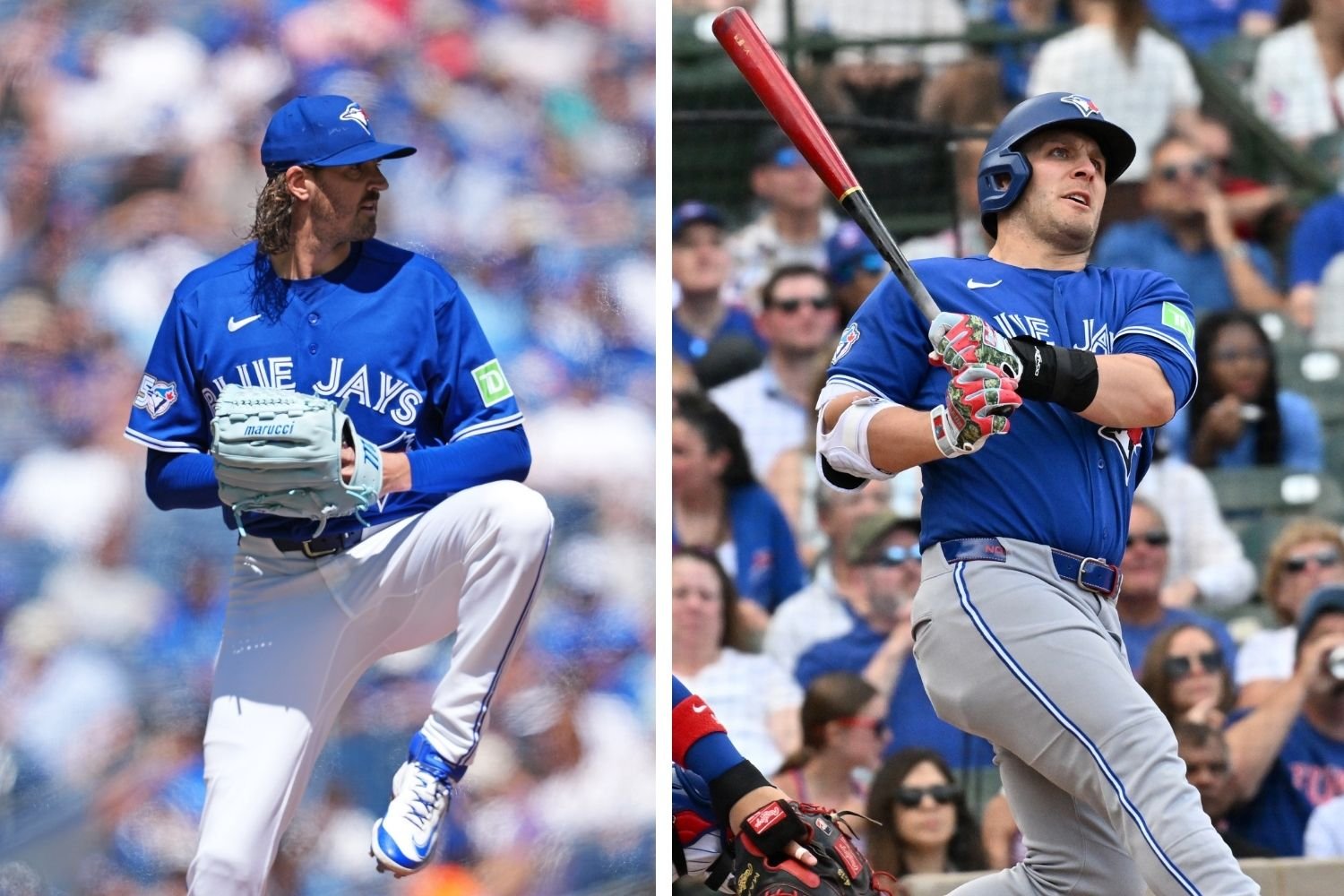 This wasn’t how this story was supposed to go. The Blue Jays entered 2026 with sky-high expectations, but injuries and disappointing performances from many of the players who fueled last year’s World Series run have left them seven games below .500 approaching the All-Star break. Currently, the Blue Jays find themselves in a precarious spot. Every year, there seems to be one team that catches fire after the All-Star break and storms into the postseason. The Blue Jays have as much talent as any club to be that team. But coming into the Giants series, the Blue Jays' playoff odds had dropped to a season low of 25.2%. While there is no guarantee this team will sell off assets at the trade deadline, the front office has to prepare for that possibility. It's a similar blueprint to the one the Blue Jays followed at the 2024 trade deadline, and they’re already seeing the benefits of that approach. That doesn’t necessarily mean a full rebuild. More likely, the Blue Jays would look to move players on expiring contracts or veterans whose value may never be higher, while targeting prospects or major leaguers who could contribute as early as 2027. If that's the direction the team chooses, some players are far more likely to be dealt than others. Here’s a look at the most realistic trade candidates, broken down by how likely they are to be moved. Blue Jays Most Likely To Be Traded SP Kevin Gausman Team Control: Through 2026 2026 Stats: 19 G, 3.76 FIP, 17.8 K-BB%, 1.9 fWAR Gausman will likely go down as one of the best free-agent pitching signings in franchise history, and moving him at the deadline would not be a popular move. However, he’s likely the piece that could get the biggest return. He’s a durable workhorse with recent success in the postseason and immediately strengthens any contender’s rotation. The price for impact starting pitching at the deadline always remains high, and the Blue Jays are almost certain to at least listen to offers on the veteran starter. He does have an eight-team no-trade clause, meaning he’ll have some degree of a say in where he goes if the Blue Jays decide to move him. Still, out of all Toronto's potential trade chips, Gausman will be front and center. CF Daulton Varsho Team Control: Through 2026 2026 Stats: 78 G, .313 wOBA, 99 wRC+, 1.2 fWAR Similar to Gausman, Varsho is a free agent at season's end and has plenty of big league success under his belt. Although his numbers have dropped this season, he’s been an outstanding center fielder in his career, and there will always be demand for elite defense up the middle. He exploded for 20 home runs and a .548 slugging percentage in just 71 games last season. A contender in need of left-handed power may believe it can unlock that version of Varsho again, making him an intriguing trade target. OF Myles Straw Team Control: Through 2026 (Club Options Through 2028) 2026 Stats: 80 G, .281 wOBA, 77 wRC+, 0.2 fWAR Speed and elite outfield defense can change a game in a flash, and Straw is excellent at both. His range in the outfield is 84th percentile, and despite just two stolen bases on the season, he still has 97th percentile sprint speed. Any contender looking for late-game speed and elite defense could benefit from having Straw on their team. The Blue Jays have shown a willingness to trade players like this before (they traded Kevin Kiermaier at the 2024 deadline), and if the Jays are willing to eat some of Straw's remaining salary (he's making $7.4M this year), they could fetch a fairly solid return. Blue Jays Trade Candidates Worth Watching DH George Springer Team Control: Through 2026 2026 Stats: 63 Games, .304 wOBA, 93 wRC+, 0.1 fWAR Like Gausman, Springer is a free agent at the end of the season and has had tremendous success in the postseason. But unlike Gausman, Springer isn’t playing quality baseball at the moment. The now 36-year-old is having his worst offensive season. He’s a negative on the basepaths and hasn’t played in the outfield in over a calendar year. If a contender believes Springer can rediscover the form that produced a 166 wRC+ in 2025, there may still be a market for him. But unless his play turns around dramatically, finding a trade partner doesn’t seem likely. Especially if you factor in his salary and the fact that he has 10-and-5 no-trade rights. Springer would have to give the go-ahead to any trade proposal that is sent his way. SP Shane Bieber Team Control: Through 2026 2026 Stats: 3 Games, 9.34 FIP, 3.1 K-BB%, -0.5 fWAR Shane Bieber returned to the Blue Jays after picking up his player option in the offseason. He spent the first half of the season battling an elbow injury, and upon his return, he’s struggled in all three of his starts. Still, he’s a former Cy Young Award winner, and at 31 years old, should still have something left to offer. The Blue Jays would undoubtedly like to get something for a player they’re unlikely to re-sign this offseason, but no team is going to offer much until he starts pitching better. OF Jesús Sánchez Team Control: Through 2027 2026 Stats: 73 Games, .325 wOBA, 108 wRC+, 0.1 fWAR Sánchez is no stranger to being traded, as he was sent from the Marlins to the Astros at last year's trade deadline, and there is the potential that a move could happen again. Offensively, he’s held his own with a 108 wRC+ and has always produced strong exit velocities. The defense and baserunning limit his overall value, but he has the ability to come off the bench and get an extra-base hit in a key spot. There may be a team willing to move a mid-level prospect for that type of player. RHP Jeff Hoffman Team Control: Through 2027 2026 Stats: 41 Games, 2.72 FIP, 27.2 K-BB%, 0.8 fWAR The Jays would face an interesting decision if another team came calling for Hoffman. On one hand, his underlying statistics have been phenomenal all season, and he’s been pitching well lately. Since the start of June, he’s thrown 13 innings with a microscopic 0.69 ERA, and if a team views him like the shutdown reliever he can be, the Jays could get a sizeable return. However, Hoffman is still under team control through the 2027 season, and unless the team goes into a complete rebuild, the Blue Jays are likely to contend again, and having Hoffman in the bullpen is a key part of that. What the Blue Jays decide to do with Hoffman will be an interesting storyline going into the trade deadline. Blue Jays Probably Staying Put OF Nathan Lukes Team Control: Through 2030 2026 Stats: 57 games, .320 wOBA, 104 wRC+, 0.9 fWAR Lukes’ name is on this list simply because the Blue Jays have a plethora of left-handed hitting outfielders on their roster, and moving one of them could clear up the logjam. But with Lukes under team control for four more seasons and only entering arbitration next year, he’s still an inexpensive player to keep around. Combine that with the fact he’s been playing almost every day and hitting in the top of the order, and it feels like he’ll be staying put. OF/2B Davis Schneider Team Control: Through 2030 2026 Stats: 49 Games, .267 wOBA, 68 wRC+, -0.4 fWAR Schneider has had a disappointing season so far. He was set to be a right-handed-hitting platoon bat but has spent most of the season travelling between Toronto and Buffalo. Still, the trade market doesn’t have many right-handed-hitting outfielders, and Schneider does provide power and plate discipline. He could be a spark off the bench for a postseason team. It's unlikely that the Blue Jays would want to sell low on a player, especially one with so much team control, but there is a chance a suitor comes knocking, and the Blue Jays will have to at least listen. RHP Max Scherzer Team Control: Through 2026 2026 Stats: 6 Games, 8.79 FIP, 2.9 K-BB%, -0.7 fWAR The end may be near for the now 41-year-old eventual Hall of Famer. Scherzer is set to become a free agent at the end of the season, and while there may be some value to having him stick around in the clubhouse for a playoff team, he’s been dealing with injuries and also has not been effective when he’s been on the field. Between his struggles, recurring injuries, and a full no-trade clause, it’s difficult to envision a scenario where Scherzer is moved before the deadline. The next three weeks will determine the franchise's direction. If the Blue Jays catch fire, they’ll likely spend the deadline adding to a playoff push. If not, they may have no choice but to begin cashing in expiring contracts, even if they are still within striking distance of a Wild Card spot.
 -
The Blue Jays' struggle to score runs has been a disheartening storyline this season. They're 25th in runs scored, 23rd in home runs hit, and are in the bottom five in SLG%, ISO, and xwOBA. In June, there was a small step forward. They’re still 25th in runs scored, but their 30 home runs were tied for 20th in baseball, and both their SLG% and ISO climbed into the bottom third in the league instead of the bottom sixth. Here are some of the players that helped spark the Blue Jays offensively in June, with one of them being crowned the Jays Centre hitter of the month. Honourable Mentions George Springer Stats in June: .239/.340/.398, 3 HR, 7 RBI, 3 SB, 109 wRC+ It's safe to say his 2026 season hasn't been what George Springer envisioned coming into the year. But June was his best month yet. Now well recovered from the toe injury that saw him miss 15 games earlier in the season, it looks like he’s turning things around. His average exit velocity increased to a season-best 88.8 mph this month, which helped him set season highs in hits (21), home runs (3), and OPS (.738), all while taking more walks (12.5% BB%). Add in that he stole three bags as well, and Springer is starting to look like he’s turning a corner. Even if the 166 wRC+ season he put up in 2025 is out of reach, June showed there may still be plenty left in the tank. Brandon Valenzuela Stats in June: .250/.327/.500, 3 HR, 9 RBI, 127 wRC+ Brandon Valenzuela continues to be one of the Blue Jays’ best hitters. Now that Alejandro Kirk has returned, Valenzuela’s playing time has been cut, and that's what prevents him from being higher on this list. But when he’s been playing, he’s been hitting. His 127 wRC+ was second on the Blue Jays for the month. His .827 OPS and 10.9% walk rate also ranked second. The Blue Jays only had three offensive players produce a positive WPA in June, and Valenzuela was one of them, highlighted by a game-winning, go-ahead double in Fenway Park earlier this month. He just keeps getting the job done. 3) Andrés Giménez Stats in June: .301/.342/.425, 1 HR, 6 RBI, 4 SB, 115 wRC+ It hasn’t always been pretty, but Andrés Giménez quietly put together a quality month in June. He was the only Blue Jay to hit over .300 during the month (albeit with a .396 BAPIP), and he has been doing his job setting the table for the top of the order. His 30% line drive rate led the team in June, with his six doubles also leading the Blue Jays during that time. He’s already matched his 2025 home run total (7), and on Friday, he matched last year's RBI total in 17 fewer games. Add in his elite defence at shortstop and the fact that he stole a team-high four bases in June, and Giménez has quietly been a very productive player. He deserves a spot on this list, coming in at number three. 2) Nathan Lukes Stats in June: .292/.344/.449, 4 HR, 8 RBI, 123 wRC+ Another day, another hit for Nathan Lukes. Lukes ended June second on the team in home runs and on-base percentage, and he led the team in hits. He had six multi-hit games and recorded hits in 19 of his 26 games in June He’s been using his all-fields approach and just putting together productive at-bats all month long. He’s turning more into an everyday regular instead of just being in a platoon; he’s started nine games in a row, including two of them against left-handed pitching. Since returning from vertigo on May 25, Lukes has produced a 130 wRC+. Even with an inflated .359 BAPIP, he’s maintained his production, and as a result, he comes in second place. 1) Kazuma Okamoto Stats in June: .286/.353/.560, 7 HR, 20 RBI, 152 wRC+ Where would this Blue Jays team be without Kazuma Okamoto? Kaz was the team leader in virtually every batting stat for the month: home runs, RBI, runs scored, OPS, Win Probability Added, barrels... You name it, he did it. Okamoto was our hitter of the month in May, and his June was even better. His wOBA jumped by 55 points, and his line drive rate was up. The strikeout issue has been a talking point since early in the season, but the third baseman made an improvement in June, and his production at the plate rose with it. He was just named AL Rookie of the Month for June, and more importantly, he is Jays Centre's Hitter of the Month as well. View full article
-
.jpg.00594356fbfc1767c7248ffc90a65cf4.jpg) The Blue Jays' struggle to score runs has been a disheartening storyline this season. They're 25th in runs scored, 23rd in home runs hit, and are in the bottom five in SLG%, ISO, and xwOBA. In June, there was a small step forward. They’re still 25th in runs scored, but their 30 home runs were tied for 20th in baseball, and both their SLG% and ISO climbed into the bottom third in the league instead of the bottom sixth. Here are some of the players that helped spark the Blue Jays offensively in June, with one of them being crowned the Jays Centre hitter of the month. Honourable Mentions George Springer Stats in June: .239/.340/.398, 3 HR, 7 RBI, 3 SB, 109 wRC+ It's safe to say his 2026 season hasn't been what George Springer envisioned coming into the year. But June was his best month yet. Now well recovered from the toe injury that saw him miss 15 games earlier in the season, it looks like he’s turning things around. His average exit velocity increased to a season-best 88.8 mph this month, which helped him set season highs in hits (21), home runs (3), and OPS (.738), all while taking more walks (12.5% BB%). Add in that he stole three bags as well, and Springer is starting to look like he’s turning a corner. Even if the 166 wRC+ season he put up in 2025 is out of reach, June showed there may still be plenty left in the tank. Brandon Valenzuela Stats in June: .250/.327/.500, 3 HR, 9 RBI, 127 wRC+ Brandon Valenzuela continues to be one of the Blue Jays’ best hitters. Now that Alejandro Kirk has returned, Valenzuela’s playing time has been cut, and that's what prevents him from being higher on this list. But when he’s been playing, he’s been hitting. His 127 wRC+ was second on the Blue Jays for the month. His .827 OPS and 10.9% walk rate also ranked second. The Blue Jays only had three offensive players produce a positive WPA in June, and Valenzuela was one of them, highlighted by a game-winning, go-ahead double in Fenway Park earlier this month. He just keeps getting the job done. 3) Andrés Giménez Stats in June: .301/.342/.425, 1 HR, 6 RBI, 4 SB, 115 wRC+ It hasn’t always been pretty, but Andrés Giménez quietly put together a quality month in June. He was the only Blue Jay to hit over .300 during the month (albeit with a .396 BAPIP), and he has been doing his job setting the table for the top of the order. His 30% line drive rate led the team in June, with his six doubles also leading the Blue Jays during that time. He’s already matched his 2025 home run total (7), and on Friday, he matched last year's RBI total in 17 fewer games. Add in his elite defence at shortstop and the fact that he stole a team-high four bases in June, and Giménez has quietly been a very productive player. He deserves a spot on this list, coming in at number three. 2) Nathan Lukes Stats in June: .292/.344/.449, 4 HR, 8 RBI, 123 wRC+ Another day, another hit for Nathan Lukes. Lukes ended June second on the team in home runs and on-base percentage, and he led the team in hits. He had six multi-hit games and recorded hits in 19 of his 26 games in June He’s been using his all-fields approach and just putting together productive at-bats all month long. He’s turning more into an everyday regular instead of just being in a platoon; he’s started nine games in a row, including two of them against left-handed pitching. Since returning from vertigo on May 25, Lukes has produced a 130 wRC+. Even with an inflated .359 BAPIP, he’s maintained his production, and as a result, he comes in second place. 1) Kazuma Okamoto Stats in June: .286/.353/.560, 7 HR, 20 RBI, 152 wRC+ Where would this Blue Jays team be without Kazuma Okamoto? Kaz was the team leader in virtually every batting stat for the month: home runs, RBI, runs scored, OPS, Win Probability Added, barrels... You name it, he did it. Okamoto was our hitter of the month in May, and his June was even better. His wOBA jumped by 55 points, and his line drive rate was up. The strikeout issue has been a talking point since early in the season, but the third baseman made an improvement in June, and his production at the plate rose with it. He was just named AL Rookie of the Month for June, and more importantly, he is Jays Centre's Hitter of the Month as well.
The Blue Jays' struggle to score runs has been a disheartening storyline this season. They're 25th in runs scored, 23rd in home runs hit, and are in the bottom five in SLG%, ISO, and xwOBA. In June, there was a small step forward. They’re still 25th in runs scored, but their 30 home runs were tied for 20th in baseball, and both their SLG% and ISO climbed into the bottom third in the league instead of the bottom sixth. Here are some of the players that helped spark the Blue Jays offensively in June, with one of them being crowned the Jays Centre hitter of the month. Honourable Mentions George Springer Stats in June: .239/.340/.398, 3 HR, 7 RBI, 3 SB, 109 wRC+ It's safe to say his 2026 season hasn't been what George Springer envisioned coming into the year. But June was his best month yet. Now well recovered from the toe injury that saw him miss 15 games earlier in the season, it looks like he’s turning things around. His average exit velocity increased to a season-best 88.8 mph this month, which helped him set season highs in hits (21), home runs (3), and OPS (.738), all while taking more walks (12.5% BB%). Add in that he stole three bags as well, and Springer is starting to look like he’s turning a corner. Even if the 166 wRC+ season he put up in 2025 is out of reach, June showed there may still be plenty left in the tank. Brandon Valenzuela Stats in June: .250/.327/.500, 3 HR, 9 RBI, 127 wRC+ Brandon Valenzuela continues to be one of the Blue Jays’ best hitters. Now that Alejandro Kirk has returned, Valenzuela’s playing time has been cut, and that's what prevents him from being higher on this list. But when he’s been playing, he’s been hitting. His 127 wRC+ was second on the Blue Jays for the month. His .827 OPS and 10.9% walk rate also ranked second. The Blue Jays only had three offensive players produce a positive WPA in June, and Valenzuela was one of them, highlighted by a game-winning, go-ahead double in Fenway Park earlier this month. He just keeps getting the job done. 3) Andrés Giménez Stats in June: .301/.342/.425, 1 HR, 6 RBI, 4 SB, 115 wRC+ It hasn’t always been pretty, but Andrés Giménez quietly put together a quality month in June. He was the only Blue Jay to hit over .300 during the month (albeit with a .396 BAPIP), and he has been doing his job setting the table for the top of the order. His 30% line drive rate led the team in June, with his six doubles also leading the Blue Jays during that time. He’s already matched his 2025 home run total (7), and on Friday, he matched last year's RBI total in 17 fewer games. Add in his elite defence at shortstop and the fact that he stole a team-high four bases in June, and Giménez has quietly been a very productive player. He deserves a spot on this list, coming in at number three. 2) Nathan Lukes Stats in June: .292/.344/.449, 4 HR, 8 RBI, 123 wRC+ Another day, another hit for Nathan Lukes. Lukes ended June second on the team in home runs and on-base percentage, and he led the team in hits. He had six multi-hit games and recorded hits in 19 of his 26 games in June He’s been using his all-fields approach and just putting together productive at-bats all month long. He’s turning more into an everyday regular instead of just being in a platoon; he’s started nine games in a row, including two of them against left-handed pitching. Since returning from vertigo on May 25, Lukes has produced a 130 wRC+. Even with an inflated .359 BAPIP, he’s maintained his production, and as a result, he comes in second place. 1) Kazuma Okamoto Stats in June: .286/.353/.560, 7 HR, 20 RBI, 152 wRC+ Where would this Blue Jays team be without Kazuma Okamoto? Kaz was the team leader in virtually every batting stat for the month: home runs, RBI, runs scored, OPS, Win Probability Added, barrels... You name it, he did it. Okamoto was our hitter of the month in May, and his June was even better. His wOBA jumped by 55 points, and his line drive rate was up. The strikeout issue has been a talking point since early in the season, but the third baseman made an improvement in June, and his production at the plate rose with it. He was just named AL Rookie of the Month for June, and more importantly, he is Jays Centre's Hitter of the Month as well. -
The Blue Jays have spent the first half of the season chasing one goal. Trying to get above .500 On Thursday evening, they did it again. After falling behind 6-0, the team clawed its way back before ultimately falling one run short. It was another comeback that almost was. They keep fighting their way back to the doorstep; they just haven’t found a way to walk through it. After 81 games, the Blue Jays sit at 39-42, third place in the division, and are in a four-way tie for the third and final wild card spot, even with all the injuries and underperformances from key players on the roster. It's still a spot that very few people around baseball thought the Blue Jays would be at. But before you can become a winning baseball team, you first have to get above .500. The Blue Jays have spent the first half of the season chasing the milestone over and over again. Four different times the Blue Jays have fought their way back to even, and four different times they’ve walked away still searching for answers. Here are the four times they’ve had a chance to do so and what happened: Opening Day, March 27th, (0-0) vs Athletics, 65.2% Playoff Odds This was the only time this season the Blue Jays actually went above the .500 mark, but even then, the warning signs were there. Kevin Gausman struck out 11 over six dominant innings, Andres Gimenez supplied the offence, and Toronto appeared poised for a smooth win on Opening Day. But after handing the ball to Jeff Hoffman with a one-run lead in the ninth, Shea Langeliers tied the game with a home run, the Blue Jays had a blown save, and the team was forced to walk it off in the bottom half The Blue Jays ultimately won the game and, in turn, started the season 1-0. The Blue Jays climbed above .500 for the first time on the season. But even in the victory, the warning signs were there, and as we’d soon find out, it wouldn’t last. Second Attempt: April 5th @ White Sox, (4-4), Playoff odds 51.4% After sweeping the Athletics and losing two of three from the Rockies, the Blue Jays entered the finale of the first road series at 4-4 with an opportunity to climb back above .500 after dropping the first two games in Chicago. The offence never gave the team a chance. The Blue Jays managed just six hits, all singles, went 0-6 with runners in scoring position and were shut out for the first time all season. Eric Lauer allowed three runs over 2+ innings, but the lack of offence proved to be the bigger story as the Blue Jays were swept and fell back below .500. Third Attempt: May 30th @ Baltimore (29-29), Playoff Odds 55.3% It took nearly two months for Toronto to fight its way back to .500, but after series wins against the Pirates and Marlins and taking the first two against the Orioles, the Blue Jays had an opportunity to finally get over the hump. They appeared to do everything right. Trey Yesavage battled through five innings, Kazuma Okamoto and Vladimir Guerrero Jr. helped build a 5-1 lead late, and after Jeff Hoffman struck out the Orioles ' lead-off hitter, the Blue Jays had a 99.4% win probability to get over the hump. Then everything unravelled. Hoffman allowed six straight Orioles to reach base, turning a four-run lead into a tie game before Connor Seabold was called in to try to escape the jam, before Pete Alonso completed Baltimore's stunning comeback with a walk-off single, and yet again the Blue Jays found themselves on the doorstep of .500. Fourth Attempt: June 23 VS Houston, (39-39) Playoff Odds 56.4% Less than a month later, Toronto found itself back at .500 once again. Despite falling behind early in Shane Bieber's season debut, the Blue Jays rallied behind home runs from Luis Urias and Daulton Varsho before Kazuma Okamoto delivered a go-ahead two-run single in the eighth inning. With Louis Varland unavailable, Tyler Rogers was tasked with protecting a two-run lead in the ninth. He couldn’t. The Astros pieced together three singles and benefited from a costly catcher's interference to tie the game. After the Blue Jays couldn’t score with a runner in scoring position in the bottom half, Joey Loperfido’s three-run home run completed another heartbreaking loss. Just like that, the Blue Jays had another blown save and yet again fell below .500. This has been the underlying story of the Blue Jays' 2026 season so far. Kevin Gausman said it best: " It feels like we take four steps forward and two steps back." Since that loss, the Blue Jays have lost their next two games, falling behind again. Every baseball season has its peaks and valleys, but championship teams know how to capitalize when momentum finally arrives. That’s been the difference for Toronto. Every time the Blue Jays have climbed back to the doorstep of a winning record, they’ve stumbled before they could walk through the door. If there’s a reason for optimism, it's that the Blue Jays don’t need to prove they can fight back; they’ve already done that four different times. What the second half will determine is whether they can finally turn those comebacks into sustained momentum. The American League remains wide open. The opportunity is still there. The Blue Jays just can’t afford to let their next chance to get above .500 slip away like their previous four. View full article
-
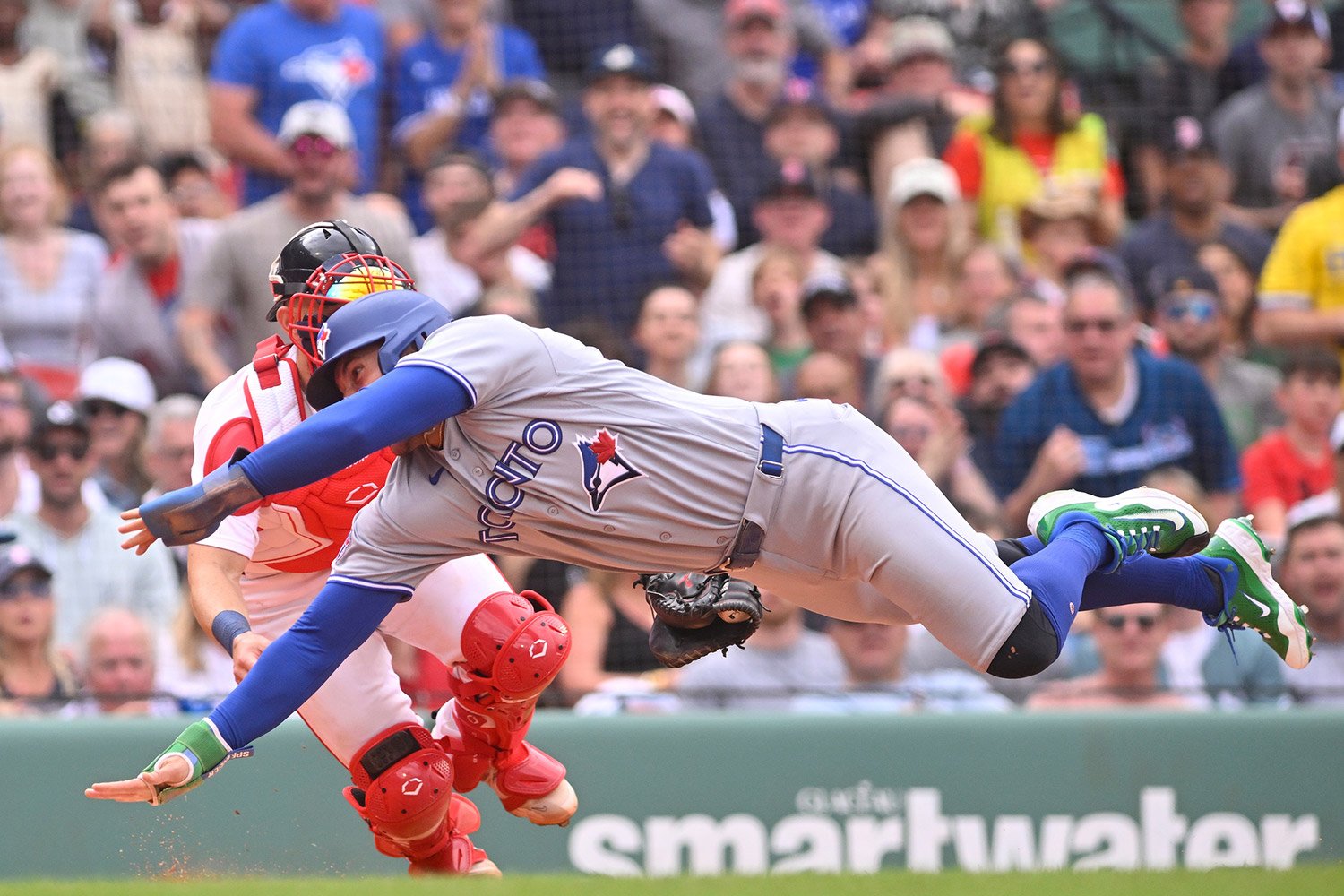 The Blue Jays have spent the first half of the season chasing one goal. Trying to get above .500 On Thursday evening, they did it again. After falling behind 6-0, the team clawed its way back before ultimately falling one run short. It was another comeback that almost was. They keep fighting their way back to the doorstep; they just haven’t found a way to walk through it. After 81 games, the Blue Jays sit at 39-42, third place in the division, and are in a four-way tie for the third and final wild card spot, even with all the injuries and underperformances from key players on the roster. It's still a spot that very few people around baseball thought the Blue Jays would be at. But before you can become a winning baseball team, you first have to get above .500. The Blue Jays have spent the first half of the season chasing the milestone over and over again. Four different times the Blue Jays have fought their way back to even, and four different times they’ve walked away still searching for answers. Here are the four times they’ve had a chance to do so and what happened: Opening Day, March 27th, (0-0) vs Athletics, 65.2% Playoff Odds This was the only time this season the Blue Jays actually went above the .500 mark, but even then, the warning signs were there. Kevin Gausman struck out 11 over six dominant innings, Andres Gimenez supplied the offence, and Toronto appeared poised for a smooth win on Opening Day. But after handing the ball to Jeff Hoffman with a one-run lead in the ninth, Shea Langeliers tied the game with a home run, the Blue Jays had a blown save, and the team was forced to walk it off in the bottom half The Blue Jays ultimately won the game and, in turn, started the season 1-0. The Blue Jays climbed above .500 for the first time on the season. But even in the victory, the warning signs were there, and as we’d soon find out, it wouldn’t last. Second Attempt: April 5th @ White Sox, (4-4), Playoff odds 51.4% After sweeping the Athletics and losing two of three from the Rockies, the Blue Jays entered the finale of the first road series at 4-4 with an opportunity to climb back above .500 after dropping the first two games in Chicago. The offence never gave the team a chance. The Blue Jays managed just six hits, all singles, went 0-6 with runners in scoring position and were shut out for the first time all season. Eric Lauer allowed three runs over 2+ innings, but the lack of offence proved to be the bigger story as the Blue Jays were swept and fell back below .500. Third Attempt: May 30th @ Baltimore (29-29), Playoff Odds 55.3% It took nearly two months for Toronto to fight its way back to .500, but after series wins against the Pirates and Marlins and taking the first two against the Orioles, the Blue Jays had an opportunity to finally get over the hump. They appeared to do everything right. Trey Yesavage battled through five innings, Kazuma Okamoto and Vladimir Guerrero Jr. helped build a 5-1 lead late, and after Jeff Hoffman struck out the Orioles ' lead-off hitter, the Blue Jays had a 99.4% win probability to get over the hump. Then everything unravelled. Hoffman allowed six straight Orioles to reach base, turning a four-run lead into a tie game before Connor Seabold was called in to try to escape the jam, before Pete Alonso completed Baltimore's stunning comeback with a walk-off single, and yet again the Blue Jays found themselves on the doorstep of .500. Fourth Attempt: June 23 VS Houston, (39-39) Playoff Odds 56.4% Less than a month later, Toronto found itself back at .500 once again. Despite falling behind early in Shane Bieber's season debut, the Blue Jays rallied behind home runs from Luis Urias and Daulton Varsho before Kazuma Okamoto delivered a go-ahead two-run single in the eighth inning. With Louis Varland unavailable, Tyler Rogers was tasked with protecting a two-run lead in the ninth. He couldn’t. The Astros pieced together three singles and benefited from a costly catcher's interference to tie the game. After the Blue Jays couldn’t score with a runner in scoring position in the bottom half, Joey Loperfido’s three-run home run completed another heartbreaking loss. Just like that, the Blue Jays had another blown save and yet again fell below .500. This has been the underlying story of the Blue Jays' 2026 season so far. Kevin Gausman said it best: " It feels like we take four steps forward and two steps back." Since that loss, the Blue Jays have lost their next two games, falling behind again. Every baseball season has its peaks and valleys, but championship teams know how to capitalize when momentum finally arrives. That’s been the difference for Toronto. Every time the Blue Jays have climbed back to the doorstep of a winning record, they’ve stumbled before they could walk through the door. If there’s a reason for optimism, it's that the Blue Jays don’t need to prove they can fight back; they’ve already done that four different times. What the second half will determine is whether they can finally turn those comebacks into sustained momentum. The American League remains wide open. The opportunity is still there. The Blue Jays just can’t afford to let their next chance to get above .500 slip away like their previous four.
 -
An Early Look At The Blue Jays' Trade Deadline Needs
Jesse Burrill replied to Bryan Jaeger's topic in Toronto Blue Jays Talk
It feels like we still need one more high-impact bullpen arm. Antonio Senzatela is my guy -
The Blue Jays certainly have a type. On Saturday afternoon, the Blue Jays made a minor trade with the Diamondbacks to acquire infielder Luis Urias in exchange for cash considerations. The move on its own won’t generate a ton of headlines. He has bounced between organizations and is a career .231/.329/.378 hitter over eight big league seasons. Urias had an “upward mobility clause” in his contract, which forced the Diamondbacks to either promote him, release him, or trade him, and the Blue Jays pounced at the opportunity. The Blue Jays' bench has been heavily skewed toward left-handed hitters and outfielders, so the addition of a right-handed hitting infielder doesn't come as much of a surprise. What is surprising, however, is why they chose Urias. Urias has never established himself as a consistent, productive major league hitter. He has an OPS under .700 in each of his last three seasons. He’s in the bottom 20% in the league in sprint speed, and defensively, he’s been a negative in both Outs Above Average (OAA) and Defensive Runs Saved (DRS). Add it all up, and you can see why the Diamondbacks weren’t willing to give him a spot on their major league roster. The question now becomes, what do the Blue Jays see in Urias that the Diamondbacks don't? The answer may lie in the underlying data. More specifically, the Blue Jays may be betting on a set of underlying skills that look far better than Urias’ traditional numbers suggest. First, Urias made notable changes to his approach in the 2025 season with the Athletics. Prior to that point, he had been known as a patient (or sometimes even passive) hitter. He drew his fair share of walks (career 10.2 BB%), but the approach often came at the expense of impact contact. During that stretch, his line drive rate, average exit velocity, and wOBA all sat below league average. In 2025, however, Urias began making a different kind of contact. Urias’ swing rate stayed relatively inline with his career average, but the amount of contact he was making, particularly on pitches in the zone, skyrocketed. The 91.8% zone contact rate rose by 9.2% over the prior season and by over 7.3% on his career average. That zone contact rate was higher in 2025 than both Bo Bichette (91.7%) and Nathan Lukes (91.0%), who are both relatively well known for their ability to make contact on pitches in the zone. There’s more to hitting than simply making contact; some of the highest contact rate hitters in baseball typically have slower swings. Urias hasn't done that; in fact, he’s started making more contact while also swinging harder. It's a rare combination. The combination of elite zone-contact rates and increased bat speed was a major part of the Blue Jays' offensive identity during their 2025 World Series run. It's exactly the type of skill set the Blue Jays have shown a preference for. Making contact is important, but contact quality matters too. Urias has always been able to hit the ball in the air to the pull side, which adds another layer to his offensive profile. The league-average pull-air rate sits at 16.8%. Urias’ career mark is 19.8%. Hitting the ball in the air to the pull side matters, especially when you're not an exit velocity machine. This chart is from a FanGraphs article from 2023 about wOBA and hit direction based on exit velocity. Urias has never been great at producing elite exit velocity, so when he does get his bat on the ball, hitting the ball to the pull side is going to yield better results. Taken individually, none of these traits is enough to make Urias an impact player. Taken together, however, they paint a picture of the exact type of hitter Toronto has targeted in recent years: a player who controls the strike zone, makes frequent contact, and creates enough bat speed to do damage when he pulls the ball in the air. These are exactly the types of underlying skills teams often target because they tend to stabilise before traditional results do. Part of the reason the Blue Jays bought into Urias is that he’s been keeping up this production in Triple-A so far. On the season, he’s hitting .361/.393/.546. The .367 BAPIP is likely to come down due to regression and making the adjustment to major league pitching, but all of the adjustments he made in 2025 look to be sticking around so far. The zone contact rate is still at an outstanding 92.4%, and while we don’t have public data for bat speed in Triple-A, the 87.3 average EV is slightly higher than the 86.2 EV he had with the A’s in 2025, suggesting that the bat speed is holding firm. The underlying traits help explain why Toronto targeted Urias. Roster construction explains why they moved now. Team needs are a large part of this, too. The Diamondbacks middle infield is set with two all-stars, Ketel Marte and Geraldo Perdomo. There wasn’t much of an opportunity for him there, but on the Blue Jays, there was a real need. Down on the farm, the Blue Jays' middle infield options are lackluster. Top prospect Josh Kasevich has just a 94 wRC+ in Buffalo. Arjun Nimmala and JoJo Parker are still too far away to make an impact this season, and there are no other currently healthy middle infielders on the 40-man roster that could help the team. The Blue Jays aren’t asking Urias to save their offence. If they were, he wouldn’t have been available for cash in the first place. Instead, Toronto is betting on a collection of traits that it has consistently valued: elite zone contact, improving bat speed, and the ability to pull the ball in the air. Similar bets have produced mixed results, but the Blue Jays clearly believe Urias is worth the gamble. Whether Urias becomes the next success story remains to be seen, but if nothing else, his acquisition serves as another reminder that the Blue Jays clearly have a type and Urias fits it perfectly. View full article
-
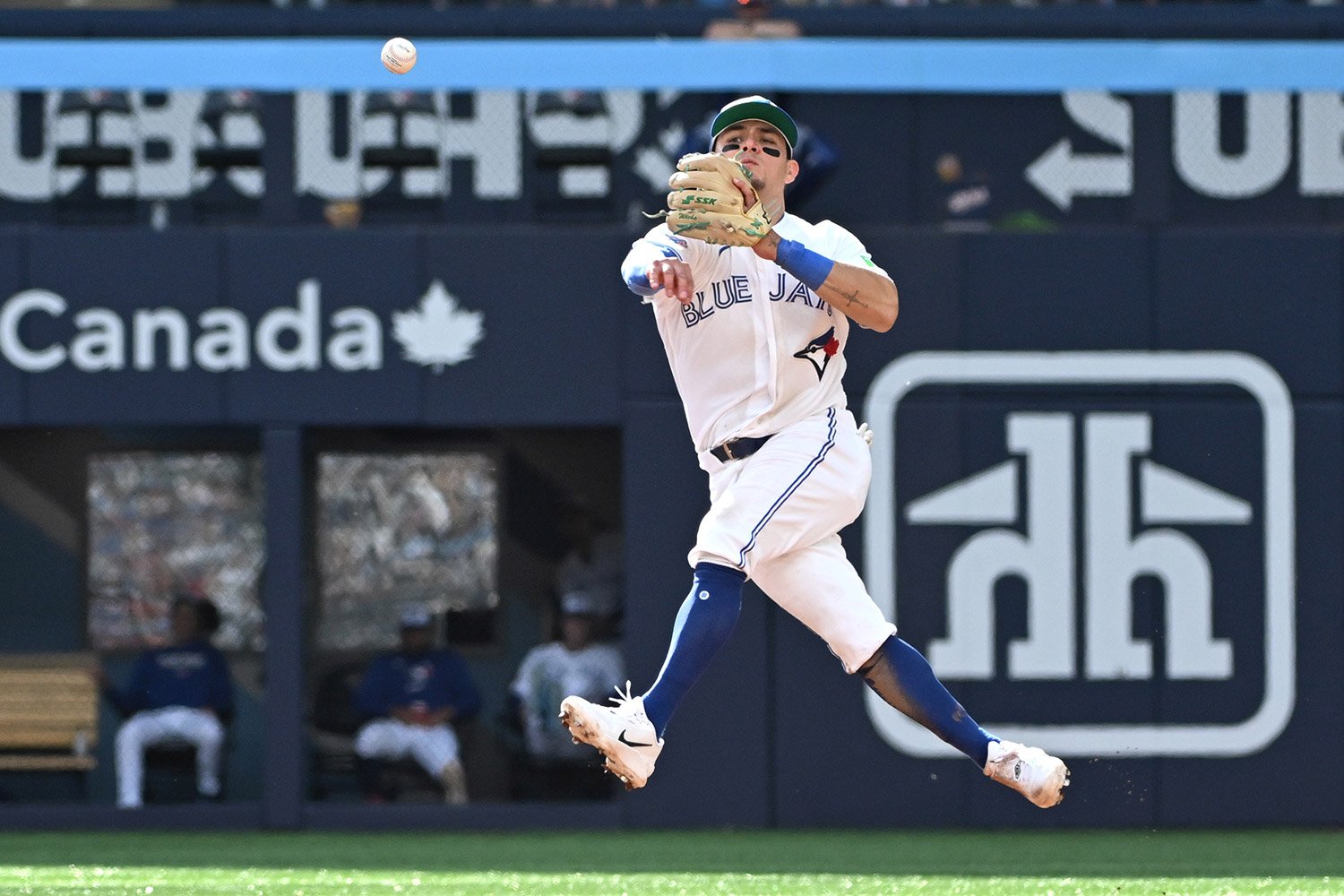 The Blue Jays certainly have a type. On Saturday afternoon, the Blue Jays made a minor trade with the Diamondbacks to acquire infielder Luis Urias in exchange for cash considerations. The move on its own won’t generate a ton of headlines. He has bounced between organizations and is a career .231/.329/.378 hitter over eight big league seasons. Urias had an “upward mobility clause” in his contract, which forced the Diamondbacks to either promote him, release him, or trade him, and the Blue Jays pounced at the opportunity. The Blue Jays' bench has been heavily skewed toward left-handed hitters and outfielders, so the addition of a right-handed hitting infielder doesn't come as much of a surprise. What is surprising, however, is why they chose Urias. Urias has never established himself as a consistent, productive major league hitter. He has an OPS under .700 in each of his last three seasons. He’s in the bottom 20% in the league in sprint speed, and defensively, he’s been a negative in both Outs Above Average (OAA) and Defensive Runs Saved (DRS). Add it all up, and you can see why the Diamondbacks weren’t willing to give him a spot on their major league roster. The question now becomes, what do the Blue Jays see in Urias that the Diamondbacks don't? The answer may lie in the underlying data. More specifically, the Blue Jays may be betting on a set of underlying skills that look far better than Urias’ traditional numbers suggest. First, Urias made notable changes to his approach in the 2025 season with the Athletics. Prior to that point, he had been known as a patient (or sometimes even passive) hitter. He drew his fair share of walks (career 10.2 BB%), but the approach often came at the expense of impact contact. During that stretch, his line drive rate, average exit velocity, and wOBA all sat below league average. In 2025, however, Urias began making a different kind of contact. Urias’ swing rate stayed relatively inline with his career average, but the amount of contact he was making, particularly on pitches in the zone, skyrocketed. The 91.8% zone contact rate rose by 9.2% over the prior season and by over 7.3% on his career average. That zone contact rate was higher in 2025 than both Bo Bichette (91.7%) and Nathan Lukes (91.0%), who are both relatively well known for their ability to make contact on pitches in the zone. There’s more to hitting than simply making contact; some of the highest contact rate hitters in baseball typically have slower swings. Urias hasn't done that; in fact, he’s started making more contact while also swinging harder. It's a rare combination. The combination of elite zone-contact rates and increased bat speed was a major part of the Blue Jays' offensive identity during their 2025 World Series run. It's exactly the type of skill set the Blue Jays have shown a preference for. Making contact is important, but contact quality matters too. Urias has always been able to hit the ball in the air to the pull side, which adds another layer to his offensive profile. The league-average pull-air rate sits at 16.8%. Urias’ career mark is 19.8%. Hitting the ball in the air to the pull side matters, especially when you're not an exit velocity machine. This chart is from a FanGraphs article from 2023 about wOBA and hit direction based on exit velocity. Urias has never been great at producing elite exit velocity, so when he does get his bat on the ball, hitting the ball to the pull side is going to yield better results. Taken individually, none of these traits is enough to make Urias an impact player. Taken together, however, they paint a picture of the exact type of hitter Toronto has targeted in recent years: a player who controls the strike zone, makes frequent contact, and creates enough bat speed to do damage when he pulls the ball in the air. These are exactly the types of underlying skills teams often target because they tend to stabilise before traditional results do. Part of the reason the Blue Jays bought into Urias is that he’s been keeping up this production in Triple-A so far. On the season, he’s hitting .361/.393/.546. The .367 BAPIP is likely to come down due to regression and making the adjustment to major league pitching, but all of the adjustments he made in 2025 look to be sticking around so far. The zone contact rate is still at an outstanding 92.4%, and while we don’t have public data for bat speed in Triple-A, the 87.3 average EV is slightly higher than the 86.2 EV he had with the A’s in 2025, suggesting that the bat speed is holding firm. The underlying traits help explain why Toronto targeted Urias. Roster construction explains why they moved now. Team needs are a large part of this, too. The Diamondbacks middle infield is set with two all-stars, Ketel Marte and Geraldo Perdomo. There wasn’t much of an opportunity for him there, but on the Blue Jays, there was a real need. Down on the farm, the Blue Jays' middle infield options are lackluster. Top prospect Josh Kasevich has just a 94 wRC+ in Buffalo. Arjun Nimmala and JoJo Parker are still too far away to make an impact this season, and there are no other currently healthy middle infielders on the 40-man roster that could help the team. The Blue Jays aren’t asking Urias to save their offence. If they were, he wouldn’t have been available for cash in the first place. Instead, Toronto is betting on a collection of traits that it has consistently valued: elite zone contact, improving bat speed, and the ability to pull the ball in the air. Similar bets have produced mixed results, but the Blue Jays clearly believe Urias is worth the gamble. Whether Urias becomes the next success story remains to be seen, but if nothing else, his acquisition serves as another reminder that the Blue Jays clearly have a type and Urias fits it perfectly.
 -
The Blue Jays expected Alejandro Kirk's return to solve a problem. Instead, it may have created a new one. When the season began, Kirk was on the short list of Blue Jays players the team couldn't afford to lose. He’s a middle-of-the-order bat, a leader in the clubhouse, and one of the best defenders in all of baseball. From 2023 through 2025, only Patrick Bailey had a higher Defensive Runs Above Average (Def) than Kirk. All it took was seven games. Kirk took a foul ball off his thumb, suffering a fracture that sent him to the injured list for the next two months. Because of the injury, the Blue Jays found themselves in a difficult spot. Tyler Heineman was expected to handle most of the catching duties, while Brandon Valenzuela, a rookie who had impressed throughout spring training, was called up to fill the void. The transition to the major leagues is difficult for any prospect, but the challenge is even greater for catchers, who must not only adjust to big league pitching at the plate but also learn how to manage an entirely new pitching staff behind it. Valenzuela was more than ready for the task. Since his debut, Valenzuela has posted a 121 wRC+. His seven home runs are tied for second on the team, and his .792 OPS leads the Blue Jays (as of June 17). Defensively, Valenzuela has been just as impressive. His Defensive Runs Above Average trails only Andrés Giménez on the Blue Jays and ranks among the top five catchers in baseball dating back to Kirk's injury. Baseball Savant loves his glove too. His 4.89-second average pop time is in the 82nd percentile in baseball, he’s in the 90th percentile in caught stealing above average, and his framing has been incredible. Only Dillon Dingler and Adley Rutschman have more catcher framing runs than Valenzuela. Valenzuela's emergence has been noticed by the organization, as when Kirk returned from the injured list, the Blue Jays chose to keep him on the roster, despite his having minor league options, even if it meant the risk of losing Heineman (who is a good defensive catcher in his own right) to waivers or free agency. As a team that values depth and roster control, it wouldn’t have been a shock if they chose to send Valenzuela down instead. The challenge for the Blue Jays wasn't determining whether Valenzuela had played well enough to remain on the roster; he clearly had. The challenge is figuring out what comes next. The simple solution would be to just insert Kirk back into the starting role and have Valenzuela take up the traditional backup catcher job, playing once every four or five days or when Kirk needs a break. The problem with that is that Valenzuela has been too good offensively to take out of the lineup right now: (image from https://thatsball.baby/jays) For a Blue Jays team that is in the bottom 10 in the league in runs scored, wRC+, wOBA, and home runs, it's hard to justify giving one of the best hitters on the team less playing time and expecting the results to get better. There is another factor to consider. For as well as Valenzuela has played so far, he’s still a prospect who needs time to develop at the major league level. Catchers develop differently from other prospects, and the Blue Jays want to be confident that the Kirk-Valenzuela tandem will be their catching tandem of the future. Valenzuela losing reps behind the plate will only slow the evaluation process. With all that said, Kirk remains one of the most important players on the roster. While Valenzuela is still building relationships with Toronto’s pitching staff, Kirk has already established himself as one of the game’s premier defensive catchers. For a team trying to win games now, that familiarity and stability behind the plate carries significant value. As impressive as Valenzuela has been, the Blue Jays still need Kirk in the lineup as often as possible. Finding playing time for both catchers won't be easy. With Heineman now traded to the Angels, the Blue Jays are operating with only two catchers, making lineup flexibility more important than ever. Most teams prefer not to start both catchers on the same day because it limits late-game options and increases the risk of running out of depth if an injury occurs. That reality means Kirk and Valenzuela won't be in the batting order together every day. Still, with the Blue Jays desperately searching for offence, there will be plenty of situations in which John Schneider will be tempted to find a way to fit both bats into the same lineup. The easiest way to get both players into the lineup is to have Valenzuela or Kirk play another position. Recently, John Schneider mentioned that George Springer could see the occasional start in right field, opening the designated hitter spot for one of the two catchers. Valenzuela could also factor in at first base after appearing there 68 times in the minor leagues; he has recently begun taking practice reps at the position again. The good news in all of this is that it is essentially a good problem for the Blue Jays to have. They have too many talented players for not enough lineup spots, so John Schneider can get creative with how he uses his two catchers. Prioritizing Valenzuela doesn’t mean Kirk will see less playing time. Heineman still found his way into 31 games before he was designated for assignment. Taking into account that Valenzuela is a switch-hitter, getting him into the lineup against a tough right-handed pitcher will give the Blue Jays a platoon advantage. In baseball, these things tend to have a way of sorting themselves out. Remember, the Blue Jays were supposed to have too many pitchers for not enough spots, and that hasn’t turned out to be true either. Catchers tend to take on a tremendous amount of wear and tear over the course of the season, so having depth at the position is still incredibly important. But as long as the Blue Jays continue to search for more offence, they’ll need to find ways to get their best hitters into the lineup more often. For the time being, that includes both Alejandro Kirk and Brandon Valenzuela. The challenge for John Schneider is no longer deciding whether Valenzuela belongs in the major leagues. He has already answered that question. The challenge now is finding enough opportunities for one of the Blue Jays’ most productive hitters to stay on the field. Stats updated prior to games on June 18. View full article
-
The Brandon Valenzuela Problem the Blue Jays Didn't See Coming
Jesse Burrill posted an article in Blue Jays
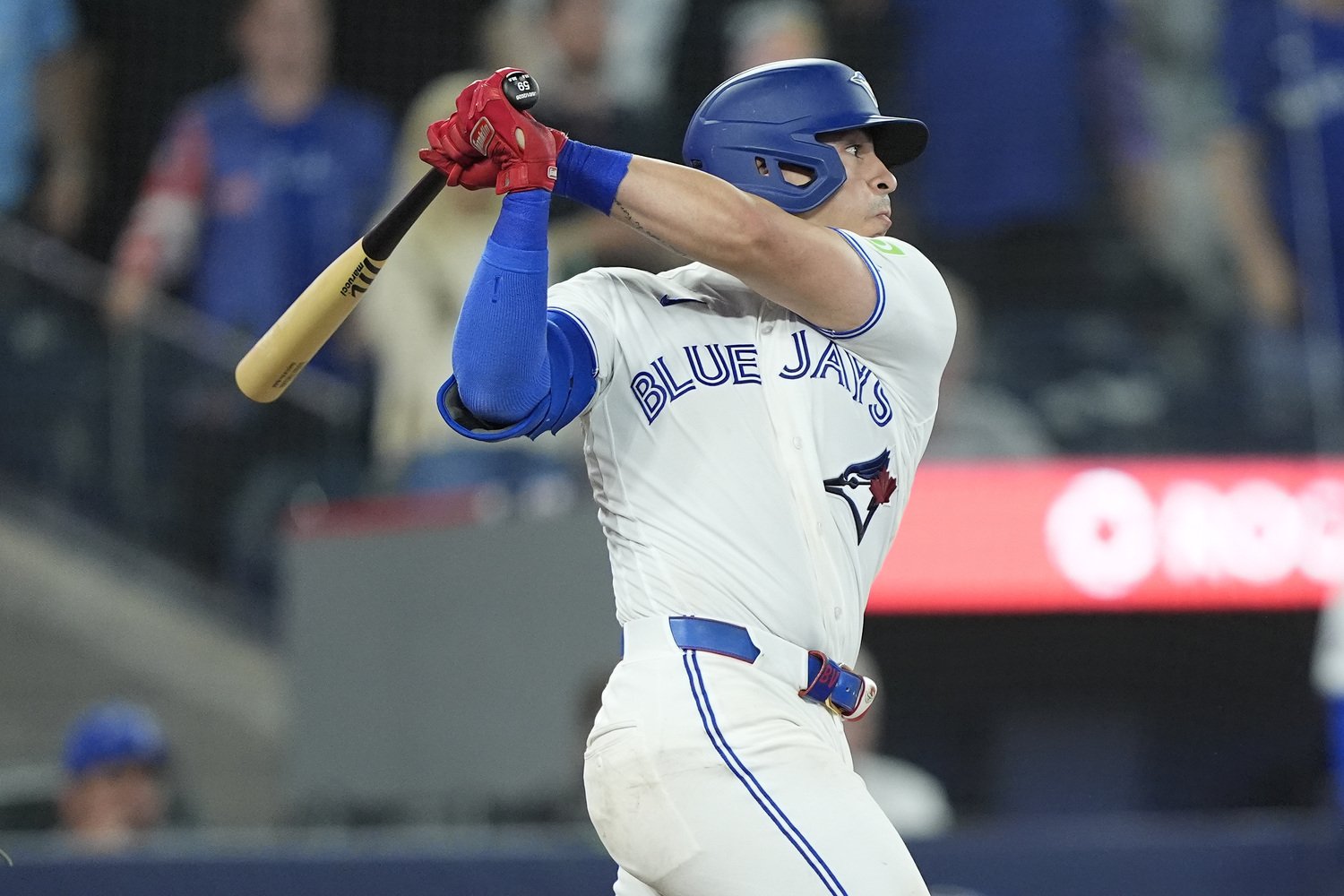 The Blue Jays expected Alejandro Kirk's return to solve a problem. Instead, it may have created a new one. When the season began, Kirk was on the short list of Blue Jays players the team couldn't afford to lose. He’s a middle-of-the-order bat, a leader in the clubhouse, and one of the best defenders in all of baseball. From 2023 through 2025, only Patrick Bailey had a higher Defensive Runs Above Average (Def) than Kirk. All it took was seven games. Kirk took a foul ball off his thumb, suffering a fracture that sent him to the injured list for the next two months. Because of the injury, the Blue Jays found themselves in a difficult spot. Tyler Heineman was expected to handle most of the catching duties, while Brandon Valenzuela, a rookie who had impressed throughout spring training, was called up to fill the void. The transition to the major leagues is difficult for any prospect, but the challenge is even greater for catchers, who must not only adjust to big league pitching at the plate but also learn how to manage an entirely new pitching staff behind it. Valenzuela was more than ready for the task. Since his debut, Valenzuela has posted a 121 wRC+. His seven home runs are tied for second on the team, and his .792 OPS leads the Blue Jays (as of June 17). Defensively, Valenzuela has been just as impressive. His Defensive Runs Above Average trails only Andrés Giménez on the Blue Jays and ranks among the top five catchers in baseball dating back to Kirk's injury. Baseball Savant loves his glove too. His 4.89-second average pop time is in the 82nd percentile in baseball, he’s in the 90th percentile in caught stealing above average, and his framing has been incredible. Only Dillon Dingler and Adley Rutschman have more catcher framing runs than Valenzuela. Valenzuela's emergence has been noticed by the organization, as when Kirk returned from the injured list, the Blue Jays chose to keep him on the roster, despite his having minor league options, even if it meant the risk of losing Heineman (who is a good defensive catcher in his own right) to waivers or free agency. As a team that values depth and roster control, it wouldn’t have been a shock if they chose to send Valenzuela down instead. The challenge for the Blue Jays wasn't determining whether Valenzuela had played well enough to remain on the roster; he clearly had. The challenge is figuring out what comes next. The simple solution would be to just insert Kirk back into the starting role and have Valenzuela take up the traditional backup catcher job, playing once every four or five days or when Kirk needs a break. The problem with that is that Valenzuela has been too good offensively to take out of the lineup right now: (image from https://thatsball.baby/jays) For a Blue Jays team that is in the bottom 10 in the league in runs scored, wRC+, wOBA, and home runs, it's hard to justify giving one of the best hitters on the team less playing time and expecting the results to get better. There is another factor to consider. For as well as Valenzuela has played so far, he’s still a prospect who needs time to develop at the major league level. Catchers develop differently from other prospects, and the Blue Jays want to be confident that the Kirk-Valenzuela tandem will be their catching tandem of the future. Valenzuela losing reps behind the plate will only slow the evaluation process. With all that said, Kirk remains one of the most important players on the roster. While Valenzuela is still building relationships with Toronto’s pitching staff, Kirk has already established himself as one of the game’s premier defensive catchers. For a team trying to win games now, that familiarity and stability behind the plate carries significant value. As impressive as Valenzuela has been, the Blue Jays still need Kirk in the lineup as often as possible. Finding playing time for both catchers won't be easy. With Heineman now traded to the Angels, the Blue Jays are operating with only two catchers, making lineup flexibility more important than ever. Most teams prefer not to start both catchers on the same day because it limits late-game options and increases the risk of running out of depth if an injury occurs. That reality means Kirk and Valenzuela won't be in the batting order together every day. Still, with the Blue Jays desperately searching for offence, there will be plenty of situations in which John Schneider will be tempted to find a way to fit both bats into the same lineup. The easiest way to get both players into the lineup is to have Valenzuela or Kirk play another position. Recently, John Schneider mentioned that George Springer could see the occasional start in right field, opening the designated hitter spot for one of the two catchers. Valenzuela could also factor in at first base after appearing there 68 times in the minor leagues; he has recently begun taking practice reps at the position again. The good news in all of this is that it is essentially a good problem for the Blue Jays to have. They have too many talented players for not enough lineup spots, so John Schneider can get creative with how he uses his two catchers. Prioritizing Valenzuela doesn’t mean Kirk will see less playing time. Heineman still found his way into 31 games before he was designated for assignment. Taking into account that Valenzuela is a switch-hitter, getting him into the lineup against a tough right-handed pitcher will give the Blue Jays a platoon advantage. In baseball, these things tend to have a way of sorting themselves out. Remember, the Blue Jays were supposed to have too many pitchers for not enough spots, and that hasn’t turned out to be true either. Catchers tend to take on a tremendous amount of wear and tear over the course of the season, so having depth at the position is still incredibly important. But as long as the Blue Jays continue to search for more offence, they’ll need to find ways to get their best hitters into the lineup more often. For the time being, that includes both Alejandro Kirk and Brandon Valenzuela. The challenge for John Schneider is no longer deciding whether Valenzuela belongs in the major leagues. He has already answered that question. The challenge now is finding enough opportunities for one of the Blue Jays’ most productive hitters to stay on the field. Stats updated prior to games on June 18.
 -
Stats updated prior to the Blue Jays' game on Wednesday, June 10. Ernie Clement is doing something that baseball history says shouldn't be possible. The Blue Jays infielder is among Major League Baseball’s hit leaders despite chasing pitches at a rate that would normally prevent a hitter from reaching the top of the leaderboard. Most hitters in today’s game strive to maximize their power: swinging harder, optimizing their launch angles, and focusing on doing damage at the plate. For some players, that plan works well. Aaron Judge and Shohei Ohtani have had great careers doing just that. But one of the great things about baseball is that there is more than one way to be productive. Regardless of the situation, Clement has a knack for getting the bat on the ball. So far in the 2026 season, he has continued to do exactly that. Just take a quick look at the MLB leaderboard for hits, and there is Ernie, right near the top: What’s incredibly unique about Clement is that he’s doing it in a way that very few hitters have ever managed successfully. He swings more often than anyone on the Blue Jays and makes more contact than most of his teammates. He doesn’t swing the bat that hard (67.6 mph average bat speed), which results in a low average exit velocity. He doesn’t walk, but he also doesn't strike out; somehow, he just keeps getting hits, and while a .317 BABIP tells some of the story, it's not the whole picture. Jays fans who have watched Ernie play know full well that he swings at almost anything he can reach, so even when a pitcher paints a pitch outside of the zone, he is still able to hit it. It's a skill that very few hitters in baseball possess. These are the 2026 hit leaders on pitches outside of the zone, per Baseball Savant: T-1: Ernie Clement - 27 T-1: Alec Burleson - 27 T-3: Otto Lopez - 24 T-3: Shohei Ohtani - 24 5: Jonathan Aranda - 23 The fact that Clement is near the top of the hits leaderboard isn’t unusual by itself. Every season, someone leads baseball in hits. What's unusual is how he’s getting there. The hitters who typically occupy the top of the leaderboard are disciplined hitters who limit chase and maximize quality contact. Clement is attempting to do it while chasing pitches at a rate rarely seen among baseball’s elite hit collectors. Looking back at every MLB hits leader over the last 12 seasons and comparing them to their chase rates reveals just how unusual his season has been: Ernie Clement's 2026 chase rate entering play on June 9. What Ernie Clement is doing is statistically unheard of in the Statcast era, and history suggests it's unlikely he’ll ultimately finish with the most hits in baseball while chasing this often. Yet, Clement has one skill that allows him to get away with it. When he swings, he simply does not miss. Clement owns a contact rate of 85.7%, which has him in the top 20 in MLB. While most hitters who chase pitches out of the zone rack up strikeouts, Clement consistently finds a way to get the bat on the baseball. The only reason Ernie gets away with it is how often he takes those out-of-zone pitches he swings at and puts them in play, doing so 44.3% of the time. This is where Clement’s path to accumulating hits begins to emerge. Because he rarely draws walks (3.0% BB rate) and strikes out infrequently (10.0% K rate), 87.0% of his plate appearances end with a ball in play. It's a number that ranks second among qualified hitters, behind only Luis Arraez. (You can find the full leaderboard here, updated before games on June 9.) From there its how many of those batted balls turn into hits. And that's where BABIP comes into the picture. On the season, Clement owns a .320 BABIP, meaning that 32% of balls he puts into the field of play have resulted in hits. It also helps that he's on pace for a career-high 17 home runs; home runs aren't included in the calculation of BABIP. High BABIPs are typically driven by elite speed, hard contact, line drives, or an all-fields approach. Ernie doesn’t necessarily excel in any of these categories. His sprint speed sits at 27.9 ft/sec, 66th percentile in the league. His 19.8% line drive rate (per FanGraphs) sits almost exactly at league average. His average exit velocity sits in the bottom sixth percentile in baseball, and if you take a look at his hit chart, it's fairly safe to say that an all-fields approach isn't behind this either. via Baseball Savant If Clement isn’t generating hits through elite speed or elite power, then the question becomes, what is driving his success? The secret lies in his hand-eye coordination. Baseball Savant measures this through a statistic called squared-up rate. In simple terms, it measures how much exit velocity a hitter generates relative to the maximum possible exit velocity, based on their bat speed and the speed of the pitch. On squared-up baseballs this season, hitters have produced a .380 batting average and a .678 slugging percentage. Clement has squared up the ball 35.2% of the time, placing him in the top six percent of all major league hitters. That doesn't tell the whole story, though. Clement seems to have a knack for hitting the baseball where the defenders aren't; this is evident in the difference between his xBA and his actual BA. His xBA, which calculates how likely a player is to get a hit based on launch angle and exit velocity, sits at .258. The 46-point difference between his .258 xBA and his .304 actual batting average suggests Clement has benefited from some favourable results, but it also raises the question of whether traditional models fully capture his unusual contact profile. Leading baseball in hits is often as much about availability as it is talent. The game’s hit leaders don’t just hit well; they’re also in the lineup every day. Ernie has played in 67 of the Blue Jays' 68 games so far. Given the defensive value he provides and his ability to play anywhere in the infield, playing time is unlikely to be a concern, barring injury. History suggests Clement’s approach shouldn’t work this well. Hit leaders typically don't chase this many pitches, and players with his batted ball profile rarely sustain this kind of production. Yet here he is, sitting among baseball’s hit leaders anyway. Whether Ernie Clement ultimately finishes as baseball's hit king is almost beside the point. What makes his season remarkable is that he’s forcing us to reconsider what a modern hitter can look like. If he keeps doing that, his first All-Star appearance may not be far behind. View full article
-
.jpg.72cc618c3a0724c6d7d0bb1cb9b80ccb.jpg) Stats updated prior to the Blue Jays' game on Wednesday, June 10. Ernie Clement is doing something that baseball history says shouldn't be possible. The Blue Jays infielder is among Major League Baseball’s hit leaders despite chasing pitches at a rate that would normally prevent a hitter from reaching the top of the leaderboard. Most hitters in today’s game strive to maximize their power: swinging harder, optimizing their launch angles, and focusing on doing damage at the plate. For some players, that plan works well. Aaron Judge and Shohei Ohtani have had great careers doing just that. But one of the great things about baseball is that there is more than one way to be productive. Regardless of the situation, Clement has a knack for getting the bat on the ball. So far in the 2026 season, he has continued to do exactly that. Just take a quick look at the MLB leaderboard for hits, and there is Ernie, right near the top: What’s incredibly unique about Clement is that he’s doing it in a way that very few hitters have ever managed successfully. He swings more often than anyone on the Blue Jays and makes more contact than most of his teammates. He doesn’t swing the bat that hard (67.6 mph average bat speed), which results in a low average exit velocity. He doesn’t walk, but he also doesn't strike out; somehow, he just keeps getting hits, and while a .317 BABIP tells some of the story, it's not the whole picture. Jays fans who have watched Ernie play know full well that he swings at almost anything he can reach, so even when a pitcher paints a pitch outside of the zone, he is still able to hit it. It's a skill that very few hitters in baseball possess. These are the 2026 hit leaders on pitches outside of the zone, per Baseball Savant: T-1: Ernie Clement - 27 T-1: Alec Burleson - 27 T-3: Otto Lopez - 24 T-3: Shohei Ohtani - 24 5: Jonathan Aranda - 23 The fact that Clement is near the top of the hits leaderboard isn’t unusual by itself. Every season, someone leads baseball in hits. What's unusual is how he’s getting there. The hitters who typically occupy the top of the leaderboard are disciplined hitters who limit chase and maximize quality contact. Clement is attempting to do it while chasing pitches at a rate rarely seen among baseball’s elite hit collectors. Looking back at every MLB hits leader over the last 12 seasons and comparing them to their chase rates reveals just how unusual his season has been: Ernie Clement's 2026 chase rate entering play on June 9. What Ernie Clement is doing is statistically unheard of in the Statcast era, and history suggests it's unlikely he’ll ultimately finish with the most hits in baseball while chasing this often. Yet, Clement has one skill that allows him to get away with it. When he swings, he simply does not miss. Clement owns a contact rate of 85.7%, which has him in the top 20 in MLB. While most hitters who chase pitches out of the zone rack up strikeouts, Clement consistently finds a way to get the bat on the baseball. The only reason Ernie gets away with it is how often he takes those out-of-zone pitches he swings at and puts them in play, doing so 44.3% of the time. This is where Clement’s path to accumulating hits begins to emerge. Because he rarely draws walks (3.0% BB rate) and strikes out infrequently (10.0% K rate), 87.0% of his plate appearances end with a ball in play. It's a number that ranks second among qualified hitters, behind only Luis Arraez. (You can find the full leaderboard here, updated before games on June 9.) From there its how many of those batted balls turn into hits. And that's where BABIP comes into the picture. On the season, Clement owns a .320 BABIP, meaning that 32% of balls he puts into the field of play have resulted in hits. It also helps that he's on pace for a career-high 17 home runs; home runs aren't included in the calculation of BABIP. High BABIPs are typically driven by elite speed, hard contact, line drives, or an all-fields approach. Ernie doesn’t necessarily excel in any of these categories. His sprint speed sits at 27.9 ft/sec, 66th percentile in the league. His 19.8% line drive rate (per FanGraphs) sits almost exactly at league average. His average exit velocity sits in the bottom sixth percentile in baseball, and if you take a look at his hit chart, it's fairly safe to say that an all-fields approach isn't behind this either. via Baseball Savant If Clement isn’t generating hits through elite speed or elite power, then the question becomes, what is driving his success? The secret lies in his hand-eye coordination. Baseball Savant measures this through a statistic called squared-up rate. In simple terms, it measures how much exit velocity a hitter generates relative to the maximum possible exit velocity, based on their bat speed and the speed of the pitch. On squared-up baseballs this season, hitters have produced a .380 batting average and a .678 slugging percentage. Clement has squared up the ball 35.2% of the time, placing him in the top six percent of all major league hitters. That doesn't tell the whole story, though. Clement seems to have a knack for hitting the baseball where the defenders aren't; this is evident in the difference between his xBA and his actual BA. His xBA, which calculates how likely a player is to get a hit based on launch angle and exit velocity, sits at .258. The 46-point difference between his .258 xBA and his .304 actual batting average suggests Clement has benefited from some favourable results, but it also raises the question of whether traditional models fully capture his unusual contact profile. Leading baseball in hits is often as much about availability as it is talent. The game’s hit leaders don’t just hit well; they’re also in the lineup every day. Ernie has played in 67 of the Blue Jays' 68 games so far. Given the defensive value he provides and his ability to play anywhere in the infield, playing time is unlikely to be a concern, barring injury. History suggests Clement’s approach shouldn’t work this well. Hit leaders typically don't chase this many pitches, and players with his batted ball profile rarely sustain this kind of production. Yet here he is, sitting among baseball’s hit leaders anyway. Whether Ernie Clement ultimately finishes as baseball's hit king is almost beside the point. What makes his season remarkable is that he’s forcing us to reconsider what a modern hitter can look like. If he keeps doing that, his first All-Star appearance may not be far behind.
Stats updated prior to the Blue Jays' game on Wednesday, June 10. Ernie Clement is doing something that baseball history says shouldn't be possible. The Blue Jays infielder is among Major League Baseball’s hit leaders despite chasing pitches at a rate that would normally prevent a hitter from reaching the top of the leaderboard. Most hitters in today’s game strive to maximize their power: swinging harder, optimizing their launch angles, and focusing on doing damage at the plate. For some players, that plan works well. Aaron Judge and Shohei Ohtani have had great careers doing just that. But one of the great things about baseball is that there is more than one way to be productive. Regardless of the situation, Clement has a knack for getting the bat on the ball. So far in the 2026 season, he has continued to do exactly that. Just take a quick look at the MLB leaderboard for hits, and there is Ernie, right near the top: What’s incredibly unique about Clement is that he’s doing it in a way that very few hitters have ever managed successfully. He swings more often than anyone on the Blue Jays and makes more contact than most of his teammates. He doesn’t swing the bat that hard (67.6 mph average bat speed), which results in a low average exit velocity. He doesn’t walk, but he also doesn't strike out; somehow, he just keeps getting hits, and while a .317 BABIP tells some of the story, it's not the whole picture. Jays fans who have watched Ernie play know full well that he swings at almost anything he can reach, so even when a pitcher paints a pitch outside of the zone, he is still able to hit it. It's a skill that very few hitters in baseball possess. These are the 2026 hit leaders on pitches outside of the zone, per Baseball Savant: T-1: Ernie Clement - 27 T-1: Alec Burleson - 27 T-3: Otto Lopez - 24 T-3: Shohei Ohtani - 24 5: Jonathan Aranda - 23 The fact that Clement is near the top of the hits leaderboard isn’t unusual by itself. Every season, someone leads baseball in hits. What's unusual is how he’s getting there. The hitters who typically occupy the top of the leaderboard are disciplined hitters who limit chase and maximize quality contact. Clement is attempting to do it while chasing pitches at a rate rarely seen among baseball’s elite hit collectors. Looking back at every MLB hits leader over the last 12 seasons and comparing them to their chase rates reveals just how unusual his season has been: Ernie Clement's 2026 chase rate entering play on June 9. What Ernie Clement is doing is statistically unheard of in the Statcast era, and history suggests it's unlikely he’ll ultimately finish with the most hits in baseball while chasing this often. Yet, Clement has one skill that allows him to get away with it. When he swings, he simply does not miss. Clement owns a contact rate of 85.7%, which has him in the top 20 in MLB. While most hitters who chase pitches out of the zone rack up strikeouts, Clement consistently finds a way to get the bat on the baseball. The only reason Ernie gets away with it is how often he takes those out-of-zone pitches he swings at and puts them in play, doing so 44.3% of the time. This is where Clement’s path to accumulating hits begins to emerge. Because he rarely draws walks (3.0% BB rate) and strikes out infrequently (10.0% K rate), 87.0% of his plate appearances end with a ball in play. It's a number that ranks second among qualified hitters, behind only Luis Arraez. (You can find the full leaderboard here, updated before games on June 9.) From there its how many of those batted balls turn into hits. And that's where BABIP comes into the picture. On the season, Clement owns a .320 BABIP, meaning that 32% of balls he puts into the field of play have resulted in hits. It also helps that he's on pace for a career-high 17 home runs; home runs aren't included in the calculation of BABIP. High BABIPs are typically driven by elite speed, hard contact, line drives, or an all-fields approach. Ernie doesn’t necessarily excel in any of these categories. His sprint speed sits at 27.9 ft/sec, 66th percentile in the league. His 19.8% line drive rate (per FanGraphs) sits almost exactly at league average. His average exit velocity sits in the bottom sixth percentile in baseball, and if you take a look at his hit chart, it's fairly safe to say that an all-fields approach isn't behind this either. via Baseball Savant If Clement isn’t generating hits through elite speed or elite power, then the question becomes, what is driving his success? The secret lies in his hand-eye coordination. Baseball Savant measures this through a statistic called squared-up rate. In simple terms, it measures how much exit velocity a hitter generates relative to the maximum possible exit velocity, based on their bat speed and the speed of the pitch. On squared-up baseballs this season, hitters have produced a .380 batting average and a .678 slugging percentage. Clement has squared up the ball 35.2% of the time, placing him in the top six percent of all major league hitters. That doesn't tell the whole story, though. Clement seems to have a knack for hitting the baseball where the defenders aren't; this is evident in the difference between his xBA and his actual BA. His xBA, which calculates how likely a player is to get a hit based on launch angle and exit velocity, sits at .258. The 46-point difference between his .258 xBA and his .304 actual batting average suggests Clement has benefited from some favourable results, but it also raises the question of whether traditional models fully capture his unusual contact profile. Leading baseball in hits is often as much about availability as it is talent. The game’s hit leaders don’t just hit well; they’re also in the lineup every day. Ernie has played in 67 of the Blue Jays' 68 games so far. Given the defensive value he provides and his ability to play anywhere in the infield, playing time is unlikely to be a concern, barring injury. History suggests Clement’s approach shouldn’t work this well. Hit leaders typically don't chase this many pitches, and players with his batted ball profile rarely sustain this kind of production. Yet here he is, sitting among baseball’s hit leaders anyway. Whether Ernie Clement ultimately finishes as baseball's hit king is almost beside the point. What makes his season remarkable is that he’s forcing us to reconsider what a modern hitter can look like. If he keeps doing that, his first All-Star appearance may not be far behind. -
It's been a rollercoaster of a ride for the Blue Jays through two months of the regular season. The team has battled injuries and inconsistent production, and its lineup has struggled to score runs regularly. The one standout through all the injuries has been the pitching staff. In May, the Blue Jays' 3.45 ERA ranked fourth in the AL. Their 14.5% K-BB% also ranked fourth, and by the Stuff+ numbers on FanGraphs, the staff ranked third, just behind the Mariners and Rays. Not bad for a team that currently has seven starting pitchers on the IL. Add recent injuries to Joe Mantiply and Tommy Nance to pair with Yimi García’s extended absence, and the Blue Jays are down three prominent relievers as well. In this piece, we’re going to take a look at some of the pitchers that have stood out to make the Blue Jays' staff stand strong as they head into the summer months of the season. Honourable Mention: Mason Fluharty May Stats: 11.0 IP, 9 H, 1 ER, 14 K, 2 BB, 0.82 ERA, 0.909 WHIP Mason Fluharty has overcome a rocky start and was one of the team's more dominant relievers in May. Not only is he now the undisputed number one left-handed option in the bullpen, but he’s also been one of the best in all of baseball. Coming into the finale against the Orioles (in which he struck out all three batters he faced), Fluharty’s FIP ranked third among left-handed pitchers during May (min. 10 IP). His 31 appearances on the season have him atop the MLB leaderboard, and his workload will be worth monitoring. But for now, Fluharty has been excellent, has clearly earned his manager's trust, and has established himself as a key member of this bullpen. Honourable Mention: Kevin Gausman May Stats: 28.2 IP, 32 H, 10 ER, 26 K, 4 BB, 3.18 ERA, 1.27 WHIP Out of all the pitchers that have dealt with injuries this season, it's somewhat surprising that the pitcher who threw the most pitches and faced the most batters in 2025 isn't one of them. Kevin Gausman’s month as a whole was quietly effective, but his durability and ability to pitch quality innings don’t go unnoticed. His strikeout totals have dipped from his career norms, but he consistently attacked the strike zone this month, leading all Blue Jays pitchers (min. 10 IP) in walk rate (3.7%) and leading all Blue Jays starters in chase rate (38.4%), accumulating 1.0 fWAR in the process. Gausman just quietly keeps getting it done. Honourable Mention: Dylan Cease May Stats: 30.2IP, 23 H, 11 ER, 43 K, 9 BB, 3.23 ERA, 1.04 WHIP Dylan Cease has been the best Blue Jays starter this season, and he was well on his way to being number one on this list until a hamstring injury put him on the IL for the first time in his career. When he was on the mound, he was nasty as always. He threw seven innings in each of his first three starts of the month, including a 10-strikeout, no-run outing against the Angels. The home run ball caught up to him in his final two starts of the month, allowing two to the Yankees and two more against the Pirates, which made his numbers go from outstanding to just very good. Once Cease recovers from his injury, all signs point to him being a dominant pitcher once again. No. 3: Spencer Miles May Stats: 20.2 IP, 17 H, 9 ER, 19 K, 7 BB, 3.92 ERA, 1.16 WHIP Where would this team be without Spencer Miles? Rule 5 picks with virtually no professional experience rarely become meaningful contributors, let alone one as impactful as Miles. Miles was tasked with being the de facto “long man” out of the bullpen to cover one of the bullpen days, and he’s done it with flying colours. A four-pitch mix with excellent command has done him wonders, and his ability to induce soft contact has been noticeable, as his 85.4 average EV was the lowest among the "starters" (min. 20 IP) in May. Sunday’s rough outing may have been his first sign of fatigue, but it shouldn't overshadow what was an excellent month for him. No. 2: Trey Yesavage May Stats: 31.2 IP, 22 H, 9 ER, 36 K, 17 BB, 2.56 ERA, 1.23 WHIP Welcome back, Trey Yesavage! After his 2026 season start was delayed by right shoulder impingement, Trey returned and immediately made an impact. His 31.2 innings led all Blue Jays pitchers in May, as did his 1.1 fWAR. The swing-and-miss stuff is still clearly evident, as he led all Blue Jays starters with a 14.9% swinging strike rate. The highlight was when he went into Yankee Stadium, matched up against fellow rookie Cam Schlitter, and Yesavage got the better end of it, striking out Aaron Judge three times and, most importantly, earning the win. His command has wavered at times, as evidenced by a 38.7% zone rate and a seven-walk performance on Saturday, ultimately keeping him from the top spot on this list. Still, it's hard to argue with the results, and he was one of the biggest reasons the Blue Jays’ pitching staff excelled in May. No. 1: Louis Varland May Stats: 15.0 IP, 11 H, 0 ER, 16 K, 5 BB, 0.00 ERA, 1.07 WHIP Louis Varland is not only the best reliever on the Blue Jays, but you could also make an argument that he’s been the best reliever in baseball this season. In the month of May, Varland led all MLB relievers in Win Probability Added (1.66). He led all Blue Jays pitchers in groundball rate, soft contact rate, ERA, and saves. John Schneider has trusted him to get outs against the toughest parts of opposing lineups, and on three separate occasions, Varland has recorded multi-inning saves, highlighted by a scoreless ninth and 10th inning in Detroit earlier in the month. If Varland keeps this up (and there’s no reason to think he won't), then that first All-Star Game is likely in sight. Varland was Jays Centre's Pitcher of the Month for March/April, and he makes it twice in a row with his appearance here in May. Heading into June, the Blue Jays' pitchers will need to continue carrying their share of the load as the club looks to climb back into the playoff picture. With reliable veterans like Gausman, emerging contributors like Yesavage and Miles, and reinforcements like Max Scherzer and Shane Bieber on the way, the pitching staff is finally starting to come together. With Varland continuing his dominance at the back end of the bullpen, the Blue Jays' pitching staff is going to be in good shape going forward. View full article
-
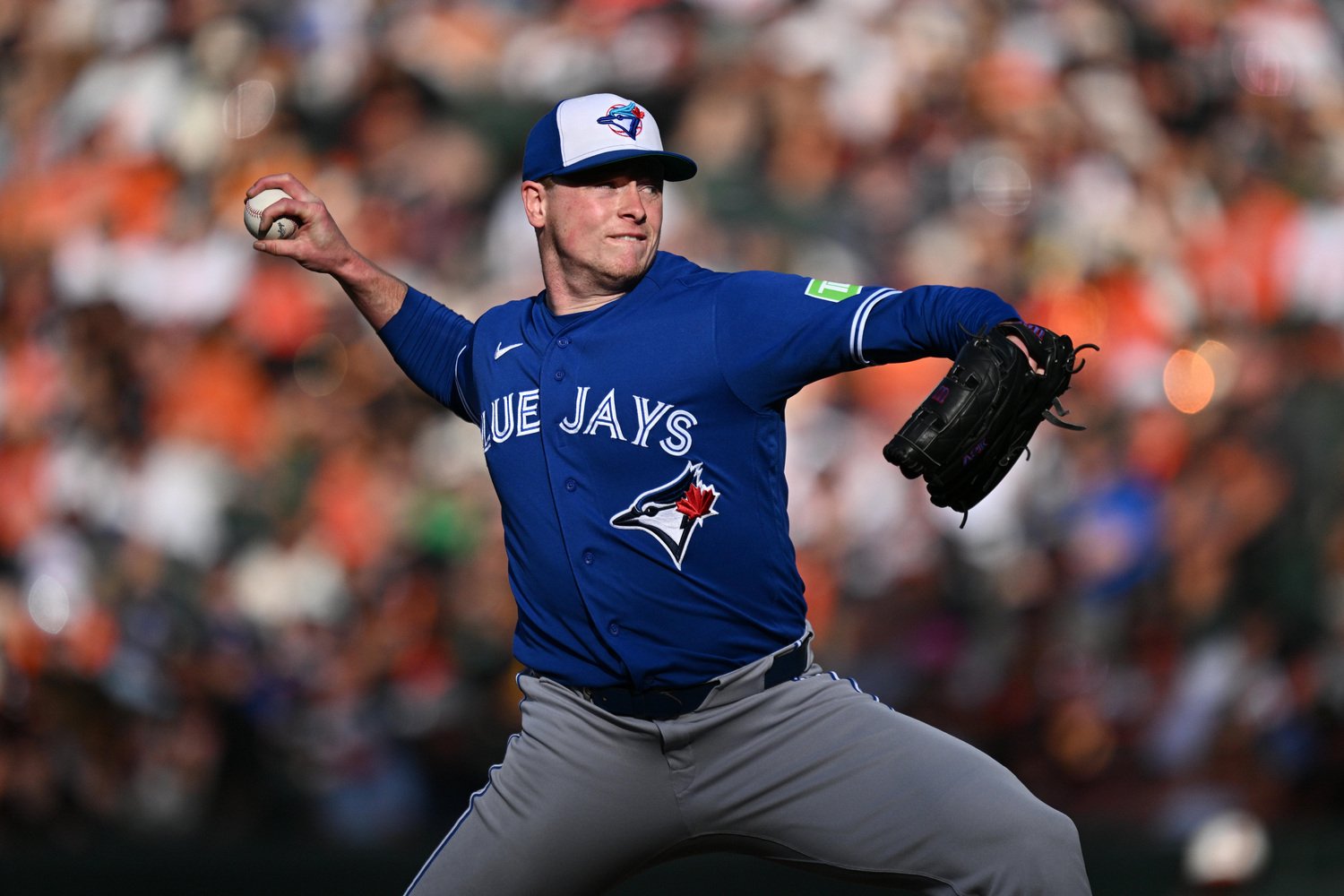 It's been a rollercoaster of a ride for the Blue Jays through two months of the regular season. The team has battled injuries and inconsistent production, and its lineup has struggled to score runs regularly. The one standout through all the injuries has been the pitching staff. In May, the Blue Jays' 3.45 ERA ranked fourth in the AL. Their 14.5% K-BB% also ranked fourth, and by the Stuff+ numbers on FanGraphs, the staff ranked third, just behind the Mariners and Rays. Not bad for a team that currently has seven starting pitchers on the IL. Add recent injuries to Joe Mantiply and Tommy Nance to pair with Yimi García’s extended absence, and the Blue Jays are down three prominent relievers as well. In this piece, we’re going to take a look at some of the pitchers that have stood out to make the Blue Jays' staff stand strong as they head into the summer months of the season. Honourable Mention: Mason Fluharty May Stats: 11.0 IP, 9 H, 1 ER, 14 K, 2 BB, 0.82 ERA, 0.909 WHIP Mason Fluharty has overcome a rocky start and was one of the team's more dominant relievers in May. Not only is he now the undisputed number one left-handed option in the bullpen, but he’s also been one of the best in all of baseball. Coming into the finale against the Orioles (in which he struck out all three batters he faced), Fluharty’s FIP ranked third among left-handed pitchers during May (min. 10 IP). His 31 appearances on the season have him atop the MLB leaderboard, and his workload will be worth monitoring. But for now, Fluharty has been excellent, has clearly earned his manager's trust, and has established himself as a key member of this bullpen. Honourable Mention: Kevin Gausman May Stats: 28.2 IP, 32 H, 10 ER, 26 K, 4 BB, 3.18 ERA, 1.27 WHIP Out of all the pitchers that have dealt with injuries this season, it's somewhat surprising that the pitcher who threw the most pitches and faced the most batters in 2025 isn't one of them. Kevin Gausman’s month as a whole was quietly effective, but his durability and ability to pitch quality innings don’t go unnoticed. His strikeout totals have dipped from his career norms, but he consistently attacked the strike zone this month, leading all Blue Jays pitchers (min. 10 IP) in walk rate (3.7%) and leading all Blue Jays starters in chase rate (38.4%), accumulating 1.0 fWAR in the process. Gausman just quietly keeps getting it done. Honourable Mention: Dylan Cease May Stats: 30.2IP, 23 H, 11 ER, 43 K, 9 BB, 3.23 ERA, 1.04 WHIP Dylan Cease has been the best Blue Jays starter this season, and he was well on his way to being number one on this list until a hamstring injury put him on the IL for the first time in his career. When he was on the mound, he was nasty as always. He threw seven innings in each of his first three starts of the month, including a 10-strikeout, no-run outing against the Angels. The home run ball caught up to him in his final two starts of the month, allowing two to the Yankees and two more against the Pirates, which made his numbers go from outstanding to just very good. Once Cease recovers from his injury, all signs point to him being a dominant pitcher once again. No. 3: Spencer Miles May Stats: 20.2 IP, 17 H, 9 ER, 19 K, 7 BB, 3.92 ERA, 1.16 WHIP Where would this team be without Spencer Miles? Rule 5 picks with virtually no professional experience rarely become meaningful contributors, let alone one as impactful as Miles. Miles was tasked with being the de facto “long man” out of the bullpen to cover one of the bullpen days, and he’s done it with flying colours. A four-pitch mix with excellent command has done him wonders, and his ability to induce soft contact has been noticeable, as his 85.4 average EV was the lowest among the "starters" (min. 20 IP) in May. Sunday’s rough outing may have been his first sign of fatigue, but it shouldn't overshadow what was an excellent month for him. No. 2: Trey Yesavage May Stats: 31.2 IP, 22 H, 9 ER, 36 K, 17 BB, 2.56 ERA, 1.23 WHIP Welcome back, Trey Yesavage! After his 2026 season start was delayed by right shoulder impingement, Trey returned and immediately made an impact. His 31.2 innings led all Blue Jays pitchers in May, as did his 1.1 fWAR. The swing-and-miss stuff is still clearly evident, as he led all Blue Jays starters with a 14.9% swinging strike rate. The highlight was when he went into Yankee Stadium, matched up against fellow rookie Cam Schlitter, and Yesavage got the better end of it, striking out Aaron Judge three times and, most importantly, earning the win. His command has wavered at times, as evidenced by a 38.7% zone rate and a seven-walk performance on Saturday, ultimately keeping him from the top spot on this list. Still, it's hard to argue with the results, and he was one of the biggest reasons the Blue Jays’ pitching staff excelled in May. No. 1: Louis Varland May Stats: 15.0 IP, 11 H, 0 ER, 16 K, 5 BB, 0.00 ERA, 1.07 WHIP Louis Varland is not only the best reliever on the Blue Jays, but you could also make an argument that he’s been the best reliever in baseball this season. In the month of May, Varland led all MLB relievers in Win Probability Added (1.66). He led all Blue Jays pitchers in groundball rate, soft contact rate, ERA, and saves. John Schneider has trusted him to get outs against the toughest parts of opposing lineups, and on three separate occasions, Varland has recorded multi-inning saves, highlighted by a scoreless ninth and 10th inning in Detroit earlier in the month. If Varland keeps this up (and there’s no reason to think he won't), then that first All-Star Game is likely in sight. Varland was Jays Centre's Pitcher of the Month for March/April, and he makes it twice in a row with his appearance here in May. Heading into June, the Blue Jays' pitchers will need to continue carrying their share of the load as the club looks to climb back into the playoff picture. With reliable veterans like Gausman, emerging contributors like Yesavage and Miles, and reinforcements like Max Scherzer and Shane Bieber on the way, the pitching staff is finally starting to come together. With Varland continuing his dominance at the back end of the bullpen, the Blue Jays' pitching staff is going to be in good shape going forward.
 -
Editor's Note: This article was written prior to yesterday's game. Hoffman took the loss on Saturday, giving up five runs in the bottom of the ninth. He threw his slider 54% of the time (13 out of 24 pitches), Jeff Hoffman’s removal from the closer role in late April could have easily become one of the defining stories of the Blue Jays season. Instead, Louis Varland ran with the opportunity, emerging as one of the best relievers in baseball and solidifying the late-game picture for the Blue Jays. Lost in Varland’s dominance has been Hoffman's own reinvention. Since being removed from the role, Hoffman has quietly posted a 2.45 ERA, while striking out 20 batters and walking just two. The improved results may not be a coincidence either. Over the past few weeks, Hoffman has made a significant change to how he attacks opposing hitters. Hoffman has been one of the more perplexing pitchers in Toronto’s bullpen since arriving in Toronto. At times, he’s looked virtually unhittable, overpowering hitters with elite swing-and-miss stuff. Then on occasion, he’s been surprisingly vulnerable, particularly when it comes to the home run ball. In 2025, Hoffman allowed 15 home runs, the most of any reliever in the American League, a surprising outcome for a pitcher with such impressive underlying characteristics. Historically, Hoffman has relied on a three-pitch mix: a fastball that averages 97 mph with 17.4 inches of vertical break, a slider that generated a 47.3% whiff rate in 2025, and a splitter that he would use as a weapon predominantly against left-handed hitters. In 2025, as well as early on in 2026, he led with his four-seam fastball, throwing it 37.4% of the time last season, and 38.4% through his first 21 games this season. The problem with that is that Hoffman’s fastball simply hasn’t been very effective. Here's how his three most used pitch types performed in 2025: Four-seam fastball: .915 OPS, 10 HR Slider: .498 OPS, 3 HR Splitter: .642 OPS, 2 HR Those trends have continued so far in 2026: Four-seam fastball: .960 OPS, 3 HR Slider: .725, 0 HR Splitter: .641, 0 HR For Hoffman, the fastball has been the pitch that has given him the most trouble. The obvious solution would seem incredibly simple: just throw it less often. Over his past six appearances, Hoffman has been doing exactly that. Over his last six games, Hoffman has leaned heavily on his slider as his primary pitch, throwing it 64.9% of the time, compared to a 35.2% on the regular season. The fastball is down to just 16% usage, compared to 34.6% overall rate in 2026. The change is an understandable one. The slider has consistently been Hoffman’s most effective pitch, and the disparity in results between it and the fastball makes the adjustment a logical one. Since making the change, he’s thrown six innings, allowed four hits, faced 20 batters, struck out 10 of them, and walked none. On the surface, the adjustment makes perfect sense. After all, Hoffman's slider has consistently produced better results than his fastball. What's more interesting is figuring out why his fastball has struggled so much in the first place. The surprising part is that Hoffman isn’t getting hit because he lacks stuff. In fact, it's quite the opposite. Looking at the Stuff+ metric on FanGraphs, Hoffman’s four-seam fastball ranks eighth in baseball among pitchers with at least 20 innings pitched: It's unusual for a pitch that grades this well to produce results so poor. In other words, the problem isn’t in the quality of the pitch itself. Usually, when that happens, location is the first issue that comes to mind, but for Hoffman, that hasn’t necessarily been the case either. Location+ has Hoffman's fastball third highest on the team. It is also the second-highest of those eight pitchers named on the previous list. So, if that's not the case, it's time to dive a little deeper, and the problem seems to stem from when he throws his fastball. Here's where he's thrown the pitch when he’s ahead in the count: When he’s behind in the count: And when the count is even: The data suggests Hoffman may be becoming too predictable. When hitters find themselves in even counts, they’re frequently getting a fastball in the portion of the zone where four-seamers are the most vulnerable. At that point, the quality of the pitch matters less than the hitter's ability to anticipate it. Since he’s made the change, Hoffman has posted a 31% zone rate and a 38.5% chase rate on the slider. The challenge with any slider-heavy approach is maintaining enough strike-throwing ability to keep hitters honest. If opposing hitters become too comfortable taking the pitch, Hoffman could find himself back in situations where hitters can sit on his fastball, and as we’ve seen, that doesn’t historically go well. His adjustment also reflects a broader league-wide trend. League-wide, fastball usage has dropped even though fastballs are being thrown harder than ever before. For the Blue Jays, this is another example of them trying to get the most out of what they have in a pitcher. Varland remains the headline act in Toronto’s bullpen, but Hoffman’s recent adjustment may be just as important. By shifting away from a fastball that has consistently been his most vulnerable pitch and leaning into a slider that has long been his most dominant weapon, Hoffman appears to be evolving into a more complete reliever. For a Blue Jays team that has struggled offensively for most of the season, turning late leads into wins is critical, and Hoffman’s new approach could play a major role in making that happen. View full article
-
.jpg.d00b5da5b1ae7d151c7a69aa02db786a.jpg) Editor's Note: This article was written prior to yesterday's game. Hoffman took the loss on Saturday, giving up five runs in the bottom of the ninth. He threw his slider 54% of the time (13 out of 24 pitches), Jeff Hoffman’s removal from the closer role in late April could have easily become one of the defining stories of the Blue Jays season. Instead, Louis Varland ran with the opportunity, emerging as one of the best relievers in baseball and solidifying the late-game picture for the Blue Jays. Lost in Varland’s dominance has been Hoffman's own reinvention. Since being removed from the role, Hoffman has quietly posted a 2.45 ERA, while striking out 20 batters and walking just two. The improved results may not be a coincidence either. Over the past few weeks, Hoffman has made a significant change to how he attacks opposing hitters. Hoffman has been one of the more perplexing pitchers in Toronto’s bullpen since arriving in Toronto. At times, he’s looked virtually unhittable, overpowering hitters with elite swing-and-miss stuff. Then on occasion, he’s been surprisingly vulnerable, particularly when it comes to the home run ball. In 2025, Hoffman allowed 15 home runs, the most of any reliever in the American League, a surprising outcome for a pitcher with such impressive underlying characteristics. Historically, Hoffman has relied on a three-pitch mix: a fastball that averages 97 mph with 17.4 inches of vertical break, a slider that generated a 47.3% whiff rate in 2025, and a splitter that he would use as a weapon predominantly against left-handed hitters. In 2025, as well as early on in 2026, he led with his four-seam fastball, throwing it 37.4% of the time last season, and 38.4% through his first 21 games this season. The problem with that is that Hoffman’s fastball simply hasn’t been very effective. Here's how his three most used pitch types performed in 2025: Four-seam fastball: .915 OPS, 10 HR Slider: .498 OPS, 3 HR Splitter: .642 OPS, 2 HR Those trends have continued so far in 2026: Four-seam fastball: .960 OPS, 3 HR Slider: .725, 0 HR Splitter: .641, 0 HR For Hoffman, the fastball has been the pitch that has given him the most trouble. The obvious solution would seem incredibly simple: just throw it less often. Over his past six appearances, Hoffman has been doing exactly that. Over his last six games, Hoffman has leaned heavily on his slider as his primary pitch, throwing it 64.9% of the time, compared to a 35.2% on the regular season. The fastball is down to just 16% usage, compared to 34.6% overall rate in 2026. The change is an understandable one. The slider has consistently been Hoffman’s most effective pitch, and the disparity in results between it and the fastball makes the adjustment a logical one. Since making the change, he’s thrown six innings, allowed four hits, faced 20 batters, struck out 10 of them, and walked none. On the surface, the adjustment makes perfect sense. After all, Hoffman's slider has consistently produced better results than his fastball. What's more interesting is figuring out why his fastball has struggled so much in the first place. The surprising part is that Hoffman isn’t getting hit because he lacks stuff. In fact, it's quite the opposite. Looking at the Stuff+ metric on FanGraphs, Hoffman’s four-seam fastball ranks eighth in baseball among pitchers with at least 20 innings pitched: It's unusual for a pitch that grades this well to produce results so poor. In other words, the problem isn’t in the quality of the pitch itself. Usually, when that happens, location is the first issue that comes to mind, but for Hoffman, that hasn’t necessarily been the case either. Location+ has Hoffman's fastball third highest on the team. It is also the second-highest of those eight pitchers named on the previous list. So, if that's not the case, it's time to dive a little deeper, and the problem seems to stem from when he throws his fastball. Here's where he's thrown the pitch when he’s ahead in the count: When he’s behind in the count: And when the count is even: The data suggests Hoffman may be becoming too predictable. When hitters find themselves in even counts, they’re frequently getting a fastball in the portion of the zone where four-seamers are the most vulnerable. At that point, the quality of the pitch matters less than the hitter's ability to anticipate it. Since he’s made the change, Hoffman has posted a 31% zone rate and a 38.5% chase rate on the slider. The challenge with any slider-heavy approach is maintaining enough strike-throwing ability to keep hitters honest. If opposing hitters become too comfortable taking the pitch, Hoffman could find himself back in situations where hitters can sit on his fastball, and as we’ve seen, that doesn’t historically go well. His adjustment also reflects a broader league-wide trend. League-wide, fastball usage has dropped even though fastballs are being thrown harder than ever before. For the Blue Jays, this is another example of them trying to get the most out of what they have in a pitcher. Varland remains the headline act in Toronto’s bullpen, but Hoffman’s recent adjustment may be just as important. By shifting away from a fastball that has consistently been his most vulnerable pitch and leaning into a slider that has long been his most dominant weapon, Hoffman appears to be evolving into a more complete reliever. For a Blue Jays team that has struggled offensively for most of the season, turning late leads into wins is critical, and Hoffman’s new approach could play a major role in making that happen.
Editor's Note: This article was written prior to yesterday's game. Hoffman took the loss on Saturday, giving up five runs in the bottom of the ninth. He threw his slider 54% of the time (13 out of 24 pitches), Jeff Hoffman’s removal from the closer role in late April could have easily become one of the defining stories of the Blue Jays season. Instead, Louis Varland ran with the opportunity, emerging as one of the best relievers in baseball and solidifying the late-game picture for the Blue Jays. Lost in Varland’s dominance has been Hoffman's own reinvention. Since being removed from the role, Hoffman has quietly posted a 2.45 ERA, while striking out 20 batters and walking just two. The improved results may not be a coincidence either. Over the past few weeks, Hoffman has made a significant change to how he attacks opposing hitters. Hoffman has been one of the more perplexing pitchers in Toronto’s bullpen since arriving in Toronto. At times, he’s looked virtually unhittable, overpowering hitters with elite swing-and-miss stuff. Then on occasion, he’s been surprisingly vulnerable, particularly when it comes to the home run ball. In 2025, Hoffman allowed 15 home runs, the most of any reliever in the American League, a surprising outcome for a pitcher with such impressive underlying characteristics. Historically, Hoffman has relied on a three-pitch mix: a fastball that averages 97 mph with 17.4 inches of vertical break, a slider that generated a 47.3% whiff rate in 2025, and a splitter that he would use as a weapon predominantly against left-handed hitters. In 2025, as well as early on in 2026, he led with his four-seam fastball, throwing it 37.4% of the time last season, and 38.4% through his first 21 games this season. The problem with that is that Hoffman’s fastball simply hasn’t been very effective. Here's how his three most used pitch types performed in 2025: Four-seam fastball: .915 OPS, 10 HR Slider: .498 OPS, 3 HR Splitter: .642 OPS, 2 HR Those trends have continued so far in 2026: Four-seam fastball: .960 OPS, 3 HR Slider: .725, 0 HR Splitter: .641, 0 HR For Hoffman, the fastball has been the pitch that has given him the most trouble. The obvious solution would seem incredibly simple: just throw it less often. Over his past six appearances, Hoffman has been doing exactly that. Over his last six games, Hoffman has leaned heavily on his slider as his primary pitch, throwing it 64.9% of the time, compared to a 35.2% on the regular season. The fastball is down to just 16% usage, compared to 34.6% overall rate in 2026. The change is an understandable one. The slider has consistently been Hoffman’s most effective pitch, and the disparity in results between it and the fastball makes the adjustment a logical one. Since making the change, he’s thrown six innings, allowed four hits, faced 20 batters, struck out 10 of them, and walked none. On the surface, the adjustment makes perfect sense. After all, Hoffman's slider has consistently produced better results than his fastball. What's more interesting is figuring out why his fastball has struggled so much in the first place. The surprising part is that Hoffman isn’t getting hit because he lacks stuff. In fact, it's quite the opposite. Looking at the Stuff+ metric on FanGraphs, Hoffman’s four-seam fastball ranks eighth in baseball among pitchers with at least 20 innings pitched: It's unusual for a pitch that grades this well to produce results so poor. In other words, the problem isn’t in the quality of the pitch itself. Usually, when that happens, location is the first issue that comes to mind, but for Hoffman, that hasn’t necessarily been the case either. Location+ has Hoffman's fastball third highest on the team. It is also the second-highest of those eight pitchers named on the previous list. So, if that's not the case, it's time to dive a little deeper, and the problem seems to stem from when he throws his fastball. Here's where he's thrown the pitch when he’s ahead in the count: When he’s behind in the count: And when the count is even: The data suggests Hoffman may be becoming too predictable. When hitters find themselves in even counts, they’re frequently getting a fastball in the portion of the zone where four-seamers are the most vulnerable. At that point, the quality of the pitch matters less than the hitter's ability to anticipate it. Since he’s made the change, Hoffman has posted a 31% zone rate and a 38.5% chase rate on the slider. The challenge with any slider-heavy approach is maintaining enough strike-throwing ability to keep hitters honest. If opposing hitters become too comfortable taking the pitch, Hoffman could find himself back in situations where hitters can sit on his fastball, and as we’ve seen, that doesn’t historically go well. His adjustment also reflects a broader league-wide trend. League-wide, fastball usage has dropped even though fastballs are being thrown harder than ever before. For the Blue Jays, this is another example of them trying to get the most out of what they have in a pitcher. Varland remains the headline act in Toronto’s bullpen, but Hoffman’s recent adjustment may be just as important. By shifting away from a fastball that has consistently been his most vulnerable pitch and leaning into a slider that has long been his most dominant weapon, Hoffman appears to be evolving into a more complete reliever. For a Blue Jays team that has struggled offensively for most of the season, turning late leads into wins is critical, and Hoffman’s new approach could play a major role in making that happen. -
The Blue Jays have been searching for a defining moment all season. Between injuries, underperformance from key veterans, and their position in the AL East slipping quickly, the club desperately needed a spark. For now, Daulton Varsho’s walk-off grand slam last Wednesday may be just the spark the Blue Jays were looking for. It was the Blue Jays' first grand slam of the season and one of their biggest offensive swings of the year. More importantly, it came against a division rival they are actively trying to catch in the AL East. For Daulton Varsho, this has to have been a relief. Aside from a small stretch earlier in the season when he hit three home runs in four games, his power had virtually disappeared, mirroring the larger offensive issues the Blue Jays have dealt with as a team. Entering games on May 20, Varsho was on pace for 17 home runs, after hitting 20 in an injury-shortened 71-game season the year prior. A lot of the power numbers – including his SLG, ISO, and barrel rate – have all taken a sharp drop through 46 games this season. At first glance, that change may appear to be a step backward for a Blue Jays team desperate for power, but the underlying production suggests Varsho has not necessarily become a worse hitter, just a different one. Firstly, let's flash back to what made him successful in 2025. Varsho sold out for power in a noticeable way. He mashed 20 home runs in 71 games, his pull-air rate (29.5%) had him in the top 15 in baseball, and his bat speed, and most notably his fast swing rate, soared to 56.2%. Particularly, he became elite at doing damage on pitches low in the zone: The approach did come with trade-offs. Varsho posted a career-high swinging strike rate (15.4%) and a five-year low contact rate (71.7%), but the elite damage more than justified the sacrifice. He enjoyed the best offensive season of his career, mashing 20 home runs while posting a career-high .833 OPS. Varsho had a clear plan of attack at the plate, and with it came immediate success. That is what has made his 2026 season so fascinating. Many of the traits that fueled his breakout 2025 campaign have faded, forcing him to find different ways to remain productive offensively. First, pitchers adjust. If Varsho was going to consistently hammer pitches low in the zone, opposing staffs were naturally going to attack him differently, and that has clearly happened early in 2026: On top of that, some of the skills that made Varsho elite have fallen by the wayside, too. His fast swing rate has dropped significantly, as has his pull-air rate: These changes could be connected. League-wide, batters typically swing slower on pitches up in the zone, and balls that get on you quickly are less likely to be hit in the air to the pull side. But even with that, Varsho still isn’t swinging as hard, even on the pitches he does get down in the zone: In today's game, where teams can identify and attack offensive tendencies almost immediately, hitters rarely survive in the long term with just one version of themselves. The league constantly forces adjustments, and the best players in the game are usually the ones who adjust with them. Varsho appears to understand that. Rather than continuing to chase the exact offensive profile that made him successful in 2025, he has started reshaping his approach to counter the way pitchers are now attacking him. His decrease in bat speed has coincided with improved contact, and while not all of it is good, there have been some notable improvements: Stat 2025 2026 Difference K Rate 28.4% 18.4% +10.0% BB Rate 6.3% 8.6% +2.3% OBP .284 .346 +.062 Line Drive Rate 16.9% 24.8% +6.9% Varsho's plate approach has shifted dramatically. He’s gone from a high-torque, pull-side power approach to a more disciplined approach built around contact and on-base ability. It's an offensive identity the Blue Jays have increasingly embraced as a team. The change in approach isn’t necessarily a bad thing. While the Blue Jays could certainly use more power, especially after John Schneider called out his team's need for slug following Tuesday’s loss to the Yankees, Varsho has remained productive despite the change in approach. As a result, his numbers on the season look quite similar to where they were last year. His wOBA is virtually the same (.345 in ‘25 vs .346 in ‘26), his wRC+ is similar (123 vs 120), and he is currently on pace to be the Blue Jays' best position player by bWAR (4.4). In other words, the production hasn’t disappeared; it's arriving in a different form. If anything, Daulton Varsho has added another dimension to his offensive game. He has already proven he can impact the ball with elite pull-side power, and this season he has shown an ability to contribute through patience, contact quality, and on-base ability. Considering Varsho entered professional baseball as a catcher before developing into one of the sport's best defensive outfielders, his ability to reinvent himself offensively should not be underestimated. The next step for Varsho may be learning when to lean into each version of his offensive game. Can he unleash an aggressive, pull-side swing when pitchers make mistakes inside the zone, while also maintaining the more disciplined approach he has developed this season? If he can consistently blend those two identities together, the Blue Jays may unlock an even more complete hitter. Since Varsho’s grand slam last Wednesday, he’s hitting .500 with a 1.272 OPS in a small sample, offering a glimpse of what this newer version of himself can look like when everything clicks. John Schneider appeared to recognize that as well, hitting him third in the lineup against right-handed pitching over the road trip. There is still plenty of baseball left to play, but Varsho’s season may be less about rediscovering his old form and more about refining a new one. If pitchers are eventually forced to adjust again, it may signal that his offensive evolution is beginning to work and that an even more complete version of Varsho may still be emerging. Stats and graphics updated prior to games on May 20. View full article
-
Daulton Varsho Hasn't Become a Worse Hitter, Just a Different One
Jesse Burrill posted an article in Blue Jays
.jpg.c4327cf5c3a92d04be33e0e0158cbd03.jpg) The Blue Jays have been searching for a defining moment all season. Between injuries, underperformance from key veterans, and their position in the AL East slipping quickly, the club desperately needed a spark. For now, Daulton Varsho’s walk-off grand slam last Wednesday may be just the spark the Blue Jays were looking for. It was the Blue Jays' first grand slam of the season and one of their biggest offensive swings of the year. More importantly, it came against a division rival they are actively trying to catch in the AL East. For Daulton Varsho, this has to have been a relief. Aside from a small stretch earlier in the season when he hit three home runs in four games, his power had virtually disappeared, mirroring the larger offensive issues the Blue Jays have dealt with as a team. Entering games on May 20, Varsho was on pace for 17 home runs, after hitting 20 in an injury-shortened 71-game season the year prior. A lot of the power numbers – including his SLG, ISO, and barrel rate – have all taken a sharp drop through 46 games this season. At first glance, that change may appear to be a step backward for a Blue Jays team desperate for power, but the underlying production suggests Varsho has not necessarily become a worse hitter, just a different one. Firstly, let's flash back to what made him successful in 2025. Varsho sold out for power in a noticeable way. He mashed 20 home runs in 71 games, his pull-air rate (29.5%) had him in the top 15 in baseball, and his bat speed, and most notably his fast swing rate, soared to 56.2%. Particularly, he became elite at doing damage on pitches low in the zone: The approach did come with trade-offs. Varsho posted a career-high swinging strike rate (15.4%) and a five-year low contact rate (71.7%), but the elite damage more than justified the sacrifice. He enjoyed the best offensive season of his career, mashing 20 home runs while posting a career-high .833 OPS. Varsho had a clear plan of attack at the plate, and with it came immediate success. That is what has made his 2026 season so fascinating. Many of the traits that fueled his breakout 2025 campaign have faded, forcing him to find different ways to remain productive offensively. First, pitchers adjust. If Varsho was going to consistently hammer pitches low in the zone, opposing staffs were naturally going to attack him differently, and that has clearly happened early in 2026: On top of that, some of the skills that made Varsho elite have fallen by the wayside, too. His fast swing rate has dropped significantly, as has his pull-air rate: These changes could be connected. League-wide, batters typically swing slower on pitches up in the zone, and balls that get on you quickly are less likely to be hit in the air to the pull side. But even with that, Varsho still isn’t swinging as hard, even on the pitches he does get down in the zone: In today's game, where teams can identify and attack offensive tendencies almost immediately, hitters rarely survive in the long term with just one version of themselves. The league constantly forces adjustments, and the best players in the game are usually the ones who adjust with them. Varsho appears to understand that. Rather than continuing to chase the exact offensive profile that made him successful in 2025, he has started reshaping his approach to counter the way pitchers are now attacking him. His decrease in bat speed has coincided with improved contact, and while not all of it is good, there have been some notable improvements: Stat 2025 2026 Difference K Rate 28.4% 18.4% +10.0% BB Rate 6.3% 8.6% +2.3% OBP .284 .346 +.062 Line Drive Rate 16.9% 24.8% +6.9% Varsho's plate approach has shifted dramatically. He’s gone from a high-torque, pull-side power approach to a more disciplined approach built around contact and on-base ability. It's an offensive identity the Blue Jays have increasingly embraced as a team. The change in approach isn’t necessarily a bad thing. While the Blue Jays could certainly use more power, especially after John Schneider called out his team's need for slug following Tuesday’s loss to the Yankees, Varsho has remained productive despite the change in approach. As a result, his numbers on the season look quite similar to where they were last year. His wOBA is virtually the same (.345 in ‘25 vs .346 in ‘26), his wRC+ is similar (123 vs 120), and he is currently on pace to be the Blue Jays' best position player by bWAR (4.4). In other words, the production hasn’t disappeared; it's arriving in a different form. If anything, Daulton Varsho has added another dimension to his offensive game. He has already proven he can impact the ball with elite pull-side power, and this season he has shown an ability to contribute through patience, contact quality, and on-base ability. Considering Varsho entered professional baseball as a catcher before developing into one of the sport's best defensive outfielders, his ability to reinvent himself offensively should not be underestimated. The next step for Varsho may be learning when to lean into each version of his offensive game. Can he unleash an aggressive, pull-side swing when pitchers make mistakes inside the zone, while also maintaining the more disciplined approach he has developed this season? If he can consistently blend those two identities together, the Blue Jays may unlock an even more complete hitter. Since Varsho’s grand slam last Wednesday, he’s hitting .500 with a 1.272 OPS in a small sample, offering a glimpse of what this newer version of himself can look like when everything clicks. John Schneider appeared to recognize that as well, hitting him third in the lineup against right-handed pitching over the road trip. There is still plenty of baseball left to play, but Varsho’s season may be less about rediscovering his old form and more about refining a new one. If pitchers are eventually forced to adjust again, it may signal that his offensive evolution is beginning to work and that an even more complete version of Varsho may still be emerging. Stats and graphics updated prior to games on May 20.
The Blue Jays have been searching for a defining moment all season. Between injuries, underperformance from key veterans, and their position in the AL East slipping quickly, the club desperately needed a spark. For now, Daulton Varsho’s walk-off grand slam last Wednesday may be just the spark the Blue Jays were looking for. It was the Blue Jays' first grand slam of the season and one of their biggest offensive swings of the year. More importantly, it came against a division rival they are actively trying to catch in the AL East. For Daulton Varsho, this has to have been a relief. Aside from a small stretch earlier in the season when he hit three home runs in four games, his power had virtually disappeared, mirroring the larger offensive issues the Blue Jays have dealt with as a team. Entering games on May 20, Varsho was on pace for 17 home runs, after hitting 20 in an injury-shortened 71-game season the year prior. A lot of the power numbers – including his SLG, ISO, and barrel rate – have all taken a sharp drop through 46 games this season. At first glance, that change may appear to be a step backward for a Blue Jays team desperate for power, but the underlying production suggests Varsho has not necessarily become a worse hitter, just a different one. Firstly, let's flash back to what made him successful in 2025. Varsho sold out for power in a noticeable way. He mashed 20 home runs in 71 games, his pull-air rate (29.5%) had him in the top 15 in baseball, and his bat speed, and most notably his fast swing rate, soared to 56.2%. Particularly, he became elite at doing damage on pitches low in the zone: The approach did come with trade-offs. Varsho posted a career-high swinging strike rate (15.4%) and a five-year low contact rate (71.7%), but the elite damage more than justified the sacrifice. He enjoyed the best offensive season of his career, mashing 20 home runs while posting a career-high .833 OPS. Varsho had a clear plan of attack at the plate, and with it came immediate success. That is what has made his 2026 season so fascinating. Many of the traits that fueled his breakout 2025 campaign have faded, forcing him to find different ways to remain productive offensively. First, pitchers adjust. If Varsho was going to consistently hammer pitches low in the zone, opposing staffs were naturally going to attack him differently, and that has clearly happened early in 2026: On top of that, some of the skills that made Varsho elite have fallen by the wayside, too. His fast swing rate has dropped significantly, as has his pull-air rate: These changes could be connected. League-wide, batters typically swing slower on pitches up in the zone, and balls that get on you quickly are less likely to be hit in the air to the pull side. But even with that, Varsho still isn’t swinging as hard, even on the pitches he does get down in the zone: In today's game, where teams can identify and attack offensive tendencies almost immediately, hitters rarely survive in the long term with just one version of themselves. The league constantly forces adjustments, and the best players in the game are usually the ones who adjust with them. Varsho appears to understand that. Rather than continuing to chase the exact offensive profile that made him successful in 2025, he has started reshaping his approach to counter the way pitchers are now attacking him. His decrease in bat speed has coincided with improved contact, and while not all of it is good, there have been some notable improvements: Stat 2025 2026 Difference K Rate 28.4% 18.4% +10.0% BB Rate 6.3% 8.6% +2.3% OBP .284 .346 +.062 Line Drive Rate 16.9% 24.8% +6.9% Varsho's plate approach has shifted dramatically. He’s gone from a high-torque, pull-side power approach to a more disciplined approach built around contact and on-base ability. It's an offensive identity the Blue Jays have increasingly embraced as a team. The change in approach isn’t necessarily a bad thing. While the Blue Jays could certainly use more power, especially after John Schneider called out his team's need for slug following Tuesday’s loss to the Yankees, Varsho has remained productive despite the change in approach. As a result, his numbers on the season look quite similar to where they were last year. His wOBA is virtually the same (.345 in ‘25 vs .346 in ‘26), his wRC+ is similar (123 vs 120), and he is currently on pace to be the Blue Jays' best position player by bWAR (4.4). In other words, the production hasn’t disappeared; it's arriving in a different form. If anything, Daulton Varsho has added another dimension to his offensive game. He has already proven he can impact the ball with elite pull-side power, and this season he has shown an ability to contribute through patience, contact quality, and on-base ability. Considering Varsho entered professional baseball as a catcher before developing into one of the sport's best defensive outfielders, his ability to reinvent himself offensively should not be underestimated. The next step for Varsho may be learning when to lean into each version of his offensive game. Can he unleash an aggressive, pull-side swing when pitchers make mistakes inside the zone, while also maintaining the more disciplined approach he has developed this season? If he can consistently blend those two identities together, the Blue Jays may unlock an even more complete hitter. Since Varsho’s grand slam last Wednesday, he’s hitting .500 with a 1.272 OPS in a small sample, offering a glimpse of what this newer version of himself can look like when everything clicks. John Schneider appeared to recognize that as well, hitting him third in the lineup against right-handed pitching over the road trip. There is still plenty of baseball left to play, but Varsho’s season may be less about rediscovering his old form and more about refining a new one. If pitchers are eventually forced to adjust again, it may signal that his offensive evolution is beginning to work and that an even more complete version of Varsho may still be emerging. Stats and graphics updated prior to games on May 20. -
.jpg.9abf6c2866622d69eb80bc48fbf42290.jpg) Hitting major league pitching is hard. Hitting major league pitching as a rookie is even harder. Pitchers routinely throw 100+ mph, breaking pitches move just a little bit more, and the challenge extends beyond the batter's box. Even if traditional rookie hazing has mostly disappeared, first-year players still have to adjust to heavier travel schedules, heightened expectations, and performing in front of millions of eyes every night. Kazuma Okamoto is different from your typical rookie. Not only is he dealing with all the aforementioned rookie struggles, but he’s also doing it all while making an adjustment from Japan to North America. That can be a significant adjustment of its own, and it wouldn’t have been a surprise at all to see Okamoto struggle in his first go-around in the big leagues. Not only has Okamoto been impressive, but he’s also already on the shortlist for one of the best rookie seasons in Blue Jays history. The Blue Jays have only had one player in franchise history to win the Rookie of the Year Award (Eric Hinske, 2002), and if Kazuma keeps up his start to the season, he has a real chance to win the award in what is a crowded AL rookie class. Coming into the series against the Yankees, Okamoto is hitting .233/.319/.448, with 38 hits, 10 home runs, and 27 RBI in 44 games played. Good enough for a 116 wRC+ and 1.0 fWAR. Pace that out over the rest of the regular season, he’d be on pace for 134 hits, 35 home runs, 95 RBI, and 3.6 fWAR. Of course, projecting full-season totals in May comes with caveats. Pace assumes health, consistency, and the absence of a prolonged slump, all things that can easily happen over a 162-game season. But just for fun, what would it look like if Okamoto did maintain his current pace? Where would he rank among the best Blue Jays rookies of all time? Let’s take a look. (Note: Rookie status is based on a player’s final rookie-eligible season.) Power Production Home Runs 1. Kazuma Okamoto, 2026 - 35 2. Eric Hinske, 2002 - 24 3. J.P. Arencibia, 2011 - 23 ISO (min. 400 PA) 1. Shawn Green, 1995 - .222 2. Rowdy Tellez, 2019 - .222 3. J.P. Arencibia, 2011 - .219 4. Kazuma Okamoto, 2026 - .215 Hard-Hit Rate* 1. Kazuma Okamoto, 2026 - 54.1% 2. Alejandro Kirk, 2021 - 46.9% 3. Lourdes Gurriel Jr., 2018 - 45.1% *Exit velocity data only goes back to 2015 The home run pace is the obvious headline. Hinske’s franchise record of 24 suddenly looks very reachable, and Okamoto could easily become the first Blue Jays rookie to eclipse 30 home runs. What makes the power production especially believable is that the underlying quality of contact supports it. Okamoto’s hard-hit rate isn’t just good for a rookie; it’s elite by any standard. Overall Production wRC+ (min. 400 PA) 1. John Olerud, 1990 - 122 2. Eric Hinske, 2002 - 121 3. Kazuma Okamoto, 2026 - 116 fWAR (position players) 1. Eric Hinske, 2002 - 4.8 2. Kazuma Okamoto, 2026 - 3.6 3. Cavan Biggio, 2019 - 2.6 The power numbers grab the headlines, but Okamoto has been productive across the board. The 3.6 fWAR he's on pace for would rank as the second-best rookie campaign by a Blue Jays position player. Traditional Stats Hits 1. Alfredo Griffin, 1979 - 179 2. Eric Hinske, 2002 - 158 3. Dámaso García, 1980 - 151 4. Kazuma Okamoto, 2026 - 134 RBI 1. Kazuma Okamoto, 2026 - 95 2. Eric Hinske, 2002 - 84 3. J.P. Arencibia, 2011 - 78 Strikeouts 1. Kazuma Okamoto, 2026 - 187 2. Eric Hinske, 2002 - 138 3. J.P. Arencibia, 2011 - 133 The swing and miss is still present, and with it, the strikeout total will likely be a rookie record. But in the modern game, that trade-off becomes easier to live with, given elite power production. And Okamoto has provided plenty of that this season. Historically, the Blue Jays haven’t produced many offensive debut seasons at this level. Hinske remains the franchise’s only Rookie of the Year winner, and even some of the organization's best homegrown hitters (Olerud, Vladimir Guerrero Jr., Jesse Barfield, George Bell) didn't immediately produce at this level. If Okamoto simply maintains his current level of production, he’ll have a case for one of the best rookie seasons in franchise history. There is also reason to believe that Okamoto’s numbers could be even better. On pace numbers take his 44-game season so far and project them over the rest of the season, but Okamoto’s season can look incredibly different depending on where you split it. Despite a strong showing in his first week, Okamoto's season started relatively poorly. He was chasing too much, and by April 17, he was hitting just .188/.263/.290 with two home runs and four RBI. The following day, Okamoto made some changes at the plate, including moving farther back in the batter’s box (more on the adjustment here). That tweak has given him more time to catch up to velocity and recognize breaking balls while also helping him cover pitches on the outer half more effectively. From that point on, he started raking. Okamoto has hit .266/.358/.564 with eight home runs and 24 RBI since he made that change. The real answer is that Okamoto is probably not the player he’s been post-stance change, and he’s probably not the player he was before; the true talent lies somewhere in the middle. But if you believe that Okamoto is closer to the latter than the former, then those Blue Jays rookie records could be even more in reach. Now, as challenging as it is to be a rookie, Okamoto was expected to be an impact offensive player off the bat. He’s 30 years old, and unlike a typical 22-year-old rookie, he has eight seasons of professional baseball under his belt. Beyond the individual accomplishments, Okamoto’s success could have broader implications for the organization. Their recent success could make the organization more comfortable shopping in the NPB market, and the Blue Jays have already ramped up their overseas scouting in recent offseasons. It may lead to increased interest in players like Hiromi Itoh and Teruaki Sato, who seem likely to be posted for the 2027 season. Kazuma Okamoto has already put together an outstanding start to his MLB career, and if he can keep this up, Blue Jays fans may be witnessing one of the greatest rookie seasons in franchise history. Stats, rankings, and paces updated prior to games on May 18.
Hitting major league pitching is hard. Hitting major league pitching as a rookie is even harder. Pitchers routinely throw 100+ mph, breaking pitches move just a little bit more, and the challenge extends beyond the batter's box. Even if traditional rookie hazing has mostly disappeared, first-year players still have to adjust to heavier travel schedules, heightened expectations, and performing in front of millions of eyes every night. Kazuma Okamoto is different from your typical rookie. Not only is he dealing with all the aforementioned rookie struggles, but he’s also doing it all while making an adjustment from Japan to North America. That can be a significant adjustment of its own, and it wouldn’t have been a surprise at all to see Okamoto struggle in his first go-around in the big leagues. Not only has Okamoto been impressive, but he’s also already on the shortlist for one of the best rookie seasons in Blue Jays history. The Blue Jays have only had one player in franchise history to win the Rookie of the Year Award (Eric Hinske, 2002), and if Kazuma keeps up his start to the season, he has a real chance to win the award in what is a crowded AL rookie class. Coming into the series against the Yankees, Okamoto is hitting .233/.319/.448, with 38 hits, 10 home runs, and 27 RBI in 44 games played. Good enough for a 116 wRC+ and 1.0 fWAR. Pace that out over the rest of the regular season, he’d be on pace for 134 hits, 35 home runs, 95 RBI, and 3.6 fWAR. Of course, projecting full-season totals in May comes with caveats. Pace assumes health, consistency, and the absence of a prolonged slump, all things that can easily happen over a 162-game season. But just for fun, what would it look like if Okamoto did maintain his current pace? Where would he rank among the best Blue Jays rookies of all time? Let’s take a look. (Note: Rookie status is based on a player’s final rookie-eligible season.) Power Production Home Runs 1. Kazuma Okamoto, 2026 - 35 2. Eric Hinske, 2002 - 24 3. J.P. Arencibia, 2011 - 23 ISO (min. 400 PA) 1. Shawn Green, 1995 - .222 2. Rowdy Tellez, 2019 - .222 3. J.P. Arencibia, 2011 - .219 4. Kazuma Okamoto, 2026 - .215 Hard-Hit Rate* 1. Kazuma Okamoto, 2026 - 54.1% 2. Alejandro Kirk, 2021 - 46.9% 3. Lourdes Gurriel Jr., 2018 - 45.1% *Exit velocity data only goes back to 2015 The home run pace is the obvious headline. Hinske’s franchise record of 24 suddenly looks very reachable, and Okamoto could easily become the first Blue Jays rookie to eclipse 30 home runs. What makes the power production especially believable is that the underlying quality of contact supports it. Okamoto’s hard-hit rate isn’t just good for a rookie; it’s elite by any standard. Overall Production wRC+ (min. 400 PA) 1. John Olerud, 1990 - 122 2. Eric Hinske, 2002 - 121 3. Kazuma Okamoto, 2026 - 116 fWAR (position players) 1. Eric Hinske, 2002 - 4.8 2. Kazuma Okamoto, 2026 - 3.6 3. Cavan Biggio, 2019 - 2.6 The power numbers grab the headlines, but Okamoto has been productive across the board. The 3.6 fWAR he's on pace for would rank as the second-best rookie campaign by a Blue Jays position player. Traditional Stats Hits 1. Alfredo Griffin, 1979 - 179 2. Eric Hinske, 2002 - 158 3. Dámaso García, 1980 - 151 4. Kazuma Okamoto, 2026 - 134 RBI 1. Kazuma Okamoto, 2026 - 95 2. Eric Hinske, 2002 - 84 3. J.P. Arencibia, 2011 - 78 Strikeouts 1. Kazuma Okamoto, 2026 - 187 2. Eric Hinske, 2002 - 138 3. J.P. Arencibia, 2011 - 133 The swing and miss is still present, and with it, the strikeout total will likely be a rookie record. But in the modern game, that trade-off becomes easier to live with, given elite power production. And Okamoto has provided plenty of that this season. Historically, the Blue Jays haven’t produced many offensive debut seasons at this level. Hinske remains the franchise’s only Rookie of the Year winner, and even some of the organization's best homegrown hitters (Olerud, Vladimir Guerrero Jr., Jesse Barfield, George Bell) didn't immediately produce at this level. If Okamoto simply maintains his current level of production, he’ll have a case for one of the best rookie seasons in franchise history. There is also reason to believe that Okamoto’s numbers could be even better. On pace numbers take his 44-game season so far and project them over the rest of the season, but Okamoto’s season can look incredibly different depending on where you split it. Despite a strong showing in his first week, Okamoto's season started relatively poorly. He was chasing too much, and by April 17, he was hitting just .188/.263/.290 with two home runs and four RBI. The following day, Okamoto made some changes at the plate, including moving farther back in the batter’s box (more on the adjustment here). That tweak has given him more time to catch up to velocity and recognize breaking balls while also helping him cover pitches on the outer half more effectively. From that point on, he started raking. Okamoto has hit .266/.358/.564 with eight home runs and 24 RBI since he made that change. The real answer is that Okamoto is probably not the player he’s been post-stance change, and he’s probably not the player he was before; the true talent lies somewhere in the middle. But if you believe that Okamoto is closer to the latter than the former, then those Blue Jays rookie records could be even more in reach. Now, as challenging as it is to be a rookie, Okamoto was expected to be an impact offensive player off the bat. He’s 30 years old, and unlike a typical 22-year-old rookie, he has eight seasons of professional baseball under his belt. Beyond the individual accomplishments, Okamoto’s success could have broader implications for the organization. Their recent success could make the organization more comfortable shopping in the NPB market, and the Blue Jays have already ramped up their overseas scouting in recent offseasons. It may lead to increased interest in players like Hiromi Itoh and Teruaki Sato, who seem likely to be posted for the 2027 season. Kazuma Okamoto has already put together an outstanding start to his MLB career, and if he can keep this up, Blue Jays fans may be witnessing one of the greatest rookie seasons in franchise history. Stats, rankings, and paces updated prior to games on May 18. -
Hitting major league pitching is hard. Hitting major league pitching as a rookie is even harder. Pitchers routinely throw 100+ mph, breaking pitches move just a little bit more, and the challenge extends beyond the batter's box. Even if traditional rookie hazing has mostly disappeared, first-year players still have to adjust to heavier travel schedules, heightened expectations, and performing in front of millions of eyes every night. Kazuma Okamoto is different from your typical rookie. Not only does he deal with all the prior rookie struggles, but he’s also doing it all while making an adjustment from Japan to North America. That can be a significant adjustment of its own, and it wouldn’t have been a surprise at all to see Okamoto struggle in his first go-around in the big leagues. Not only has Okamoto been impressive, but he’s also already on the shortlist for one of the best rookie seasons in Blue Jays history. The Blue Jays have only had one player in franchise history to win the Rookie of the Year award (Eric Hinske, 2002), and if Kazuma keeps up his start to the season, he has a real chance to win the award in what is a crowded AL rookie class. Coming into the weekend series against the Tigers, Okamoto is hitting .239/.328/.458, with 37 hits, 10 home runs, and 27 RBI, in 42 games played. Good enough for a 120 wRC+ and 1.1 fWAR. Pace that out over the rest of the regular season, he’d be on pace for 139 hits, 38 home runs, 102 RBI, and 3.8 fWAR. Of course, projecting full-season totals in May comes with caveats. Pace assumes health, consistency, and the absence of a prolonged slump, all things that can easily happen over a 162-game season. But just for fun, what would it look like if Okamoto did maintain his current pace? Where would he rank among the best Blue Jays rookies of all time? Let’s take a look. (Note: Rookie status is based on a player’s final rookie-eligible season.) Power Production Home Runs 1. Kazuma Okamoto, 2026 - 38 2. Eric Hinske, 2002 - 24 3. J.P. Arencibia, 2011 - 23 ISO (min. 400 PA) 1. Shawn Green, 1995 - .222 2. Rowdy Tellez, 2019 - .222 3. Kazuma Okamoto, 2026 - .219 Hard-Hit Rate* 1. Kazuma Okamoto, 2026 - 52.8% 2. Alejandro Kirk, 2021 - 46.9% 3. Lourdes Gurriel Jr., 2018 - 45.1% * Exit Velocity data only goes back to 2015 The home run pace is the obvious headline; Hinske’s franchise record of 24 suddenly looks very reachable, and Okamoto could easily become the first Blue Jays rookie to eclipse 30 home runs. What makes the power production especially believable is that the underlying quality of contact supports it. Okamoto’s hard-hit rate isn’t just good for a rookie; it’s elite by any standard. Overall Value wRC+ (min. 400 PA) 1. John Olerud, 1990 - 122 2. Eric Hinske, 2002 - 121 3. Kazuma Okamoto, 2026 - 120 Win Probability Added 1. Eric Hinske, 2002 - 3.83 2. Josh Phelps, 2002 - 1.98 3. Brett Lawrie, 2011 - 1.90 … 7. Kazuma Okamoto, 2026 - 1.09 fWAR 1. Eric Hinske, 2002 - 4.8 2. Kazuma Okamoto, 2026 - 3.8 3. Cavan Biggio, 2019 - 2.6 The power numbers grab the headlines, but Okamoto has been productive across the board. The 3.8 fWAR would rank as the second-best rookie campaign by a Blue Jays position player. Traditional Stats Hits 1. Alfredo Griffin, 1979 - 179 2. Eric Hinske, 2002 - 158 3. Dámaso García, 1980 - 151 4. Kazuma Okamoto, 2026 - 139 RBI 1. Kazuma Okamoto, 2026 - 102 2. Eric Hinske, 2002 - 84 3. J.P. Arencibia, 2011 - 78 Strikeouts 1. Kazuma Okamoto, 2026 - 188 2. Eric Hinske, 2002 - 138 3. J.P. Arencibia, 2011 - 133 The swing and miss is still present, and with it, the strikeout total will likely be a rookie record. But in the modern game, that trade-off becomes easier to live with, given elite power production. And Okamoto has provided plenty of that this season. Historically, the Blue Jays haven’t produced many offensive debut seasons at this level. Hinske remains the franchise’s only rookie of the year winner, and even some of the organization's best homegrown hitters (Olerud, Vladimir Guerrero Jr., Jesse Barfield, George Bell) didn't immediately produce at this level. If Okamoto simply maintains his current level of production, he’ll have a case for one of the best rookie seasons in franchise history. There is reason to believe that Okamoto’s numbers could be even better. On pace numbers take his 42-game season so far and project them over the rest of the season, but Okamoto’s season has looked incredibly different depending on where you split it. Okamoto started relatively poorly. He was chasing too much, and by April 17th, he was hitting just .188/.263/.290 with two home runs and four RBI. The following day, Okamoto made some changes at the plate, particularly by moving farther back in the batter’s box (more on the adjustment here). The tweak has given him more time to catch up to velocity and recognize breaking balls while also helping him cover pitches on the outer half more effectively. From that point on, he started raking. Okamoto has hit .279/.376/.593 with eight home runs and 24 RBI since that change. The real answer is that Kazuma is probably not the player he’s been post-stance change, and he’s probably not the player he was before; the true production lies somewhere in the middle. But if you believe that Okamoto is closer to the latter than the former, then those Blue Jays rookie records could be even more in reach. Now, as challenging as it is to be a rookie, Okamoto was expected to be an impact offensive player off the bat. He’s 30 years old, and unlike a typical 22-year-old rookie, he has eight seasons of professional baseball under his belt. Beyond the individual accomplishment, Okamoto’s success could have broader implications for the organization. The recent success could make the organization more comfortable in the NPB market, and the Blue Jays have ramped up their overseas scouting in recent off-seasons. It may lead to increased interest in players like Hiromi Itoh and Teruaki Sato, who seem likely to be posted for the 2027 season. Kazuma Okamoto has already put together an outstanding start to his MLB career, and if he can keep this up, Blue Jays fans may be witnessing one of the greatest rookie seasons in franchise history. View full article
-
Myles Straw Is Hitting for Damage in a Way He Never Has Before
Jesse Burrill posted an article in Blue Jays
.jpg.597fe0f8a970221fa701ee00e0a9e5dd.jpg) The Blue Jays' lack of power has been a serious issue this year. Pick your favourite stat: home runs, ISO, average exit velocity, or hard-hit rate. The Blue Jays rank in the bottom third in the league in all of them, and that's part of the reason why they find themselves below .500 early in the season. Take a quick look at the wRC+ leaderboard for the team, and here’s what you’ll see: Myles Straw - 137 Vladimir Guerrero Jr. - 132 Kazuma Okamoto - 130 Daulton Varsho - 98 Ernie Clement - 93 What's more surprising: that the Blue Jays have only three hitters with a wRC+ over 100? Or that Myles Straw is one of them? While the answer to that is likely the former, it’s absolutely a surprise that Straw has been hitting the ball so well. His reputation is that of an elite defensive outfielder, a threat on the bases, and a good quality guy in the clubhouse. The bat, however, has always been an issue. Since 2020, he’s never had a wRC+ above 100, and he’s never hit more than four home runs in a season. It got to the point that the Cleveland Guardians had him play in the minors for most of 2024. Even with that elite speed and defence. Fast forward to 2026, and Straw has looked like a completely different hitter. The results speak for themselves, but the real story is how he's achieving them. Straw is swinging harder and, more importantly, pulling the ball in the air at a rate like never before. That's how you hit rockets into the upper deck. While Straw may never be a true impact power hitter, he’s been able to get the most out of his swings so far: via Baseball Savant The first change is how hard he’s been swinging. His average bat speed still isn’t elite, but he’s taking more aggressive swings when he gets pitches he can drive. His fast swing rate now sits at 14.5%, a significant jump from previous seasons. In general, swings over 75 mph produce a .389 wOBA compared to just .266 on slower swings. Straw may not consistently generate elite bat speed, but he’s been more willing to let it rip in key situations this season. Swinging harder alone doesn’t explain the turnaround. Straw also recognized that too many of his balls in play were drifting harmlessly to the opposite field. On a recent episode of Sportsnet's At The Letters, Arden Zwelling mentioned (minute 37) he spoke to Straw after Saturday’s game against the Twins, and Straw mentioned, “For like six years there, I just kept flying to right, and I decided I didn't want to do that anymore.” So far in 2026, the adjustment is showing up. Straw’s pull rate is the highest of his career, and with it has come a significant jump in production: As the pull rate has climbed, so has the production. Straw’s wOBA is now at its highest mark since his brief nine-at-bat debut in 2018. Damage typically doesn’t come from hard groundballs; it comes from balls hit in the air to the pull side. 32.1% of Straw's batted balls have been this batted ball type in 2026, a mark that not only leads the Blue Jays but also puts him in the top 15 in all of baseball (min. 50 PA). For reference, from 2022-2024, 66% of home runs across baseball were the result of pulled air balls, and pulled air balls result in a .733 wOBA, compared to a .353 on air balls that are not hit to the pull side. Typically, hitters who sell out for more power do so at the expense of contact, trading more aggressive swings for higher swing-and-miss totals. What makes Straw's changes even more impressive is that he hasn’t sacrificed contact to make them. His overall contact rate (90.4%) and zone contact rate (94.1%) are both career highs. *Straw only had 4 MLB ABs in the 2024 season As these changes have taken effect, pitchers have responded by throwing Straw fewer strikes, a sign that the opposing teams are adjusting to the new version of him. In response, Straw has become more selective rather than expanding the zone. It’s no coincidence he's walked as often as he's struck out this season. More damage on contact, without giving up the ability to put the ball in play, is exactly what the Blue Jays want to see from their hitters. There’s also evidence these changes didn’t suddenly appear out of nowhere this season. Straw’s increased pull tendency actually began late in 2025, marking the first sustained stretch of his career in which he consistently looked to do damage to the pull side. The same is true of his swing aggression. Through the end of July last season, Straw’s fast swing rate sat below 1%. Over the second half and into the playoffs, the number climbed to 7.2%, suggesting the change had already begun before 2026. The obvious question is whether or not this level of production is sustainable. Some regression is likely, particularly for a hitter without a long track record of power production. Pitchers will continue adjusting, and Straw will have to prove he can counter those adjustments over a large sample. Still, the underlying changes appear meaningful. He’s swinging harder in key situations, pulling the ball in the air more consistently, and doing it all without sacrificing elite contact ability. The Blue Jays don’t need Straw to be a middle-of-the-order bat, but if the adjustments allow him to remain even a league-average hitter while providing elite outfield defence and speed, that would represent a massive development for Toronto’s lineup, at a time it’s desperately needed.
The Blue Jays' lack of power has been a serious issue this year. Pick your favourite stat: home runs, ISO, average exit velocity, or hard-hit rate. The Blue Jays rank in the bottom third in the league in all of them, and that's part of the reason why they find themselves below .500 early in the season. Take a quick look at the wRC+ leaderboard for the team, and here’s what you’ll see: Myles Straw - 137 Vladimir Guerrero Jr. - 132 Kazuma Okamoto - 130 Daulton Varsho - 98 Ernie Clement - 93 What's more surprising: that the Blue Jays have only three hitters with a wRC+ over 100? Or that Myles Straw is one of them? While the answer to that is likely the former, it’s absolutely a surprise that Straw has been hitting the ball so well. His reputation is that of an elite defensive outfielder, a threat on the bases, and a good quality guy in the clubhouse. The bat, however, has always been an issue. Since 2020, he’s never had a wRC+ above 100, and he’s never hit more than four home runs in a season. It got to the point that the Cleveland Guardians had him play in the minors for most of 2024. Even with that elite speed and defence. Fast forward to 2026, and Straw has looked like a completely different hitter. The results speak for themselves, but the real story is how he's achieving them. Straw is swinging harder and, more importantly, pulling the ball in the air at a rate like never before. That's how you hit rockets into the upper deck. While Straw may never be a true impact power hitter, he’s been able to get the most out of his swings so far: via Baseball Savant The first change is how hard he’s been swinging. His average bat speed still isn’t elite, but he’s taking more aggressive swings when he gets pitches he can drive. His fast swing rate now sits at 14.5%, a significant jump from previous seasons. In general, swings over 75 mph produce a .389 wOBA compared to just .266 on slower swings. Straw may not consistently generate elite bat speed, but he’s been more willing to let it rip in key situations this season. Swinging harder alone doesn’t explain the turnaround. Straw also recognized that too many of his balls in play were drifting harmlessly to the opposite field. On a recent episode of Sportsnet's At The Letters, Arden Zwelling mentioned (minute 37) he spoke to Straw after Saturday’s game against the Twins, and Straw mentioned, “For like six years there, I just kept flying to right, and I decided I didn't want to do that anymore.” So far in 2026, the adjustment is showing up. Straw’s pull rate is the highest of his career, and with it has come a significant jump in production: As the pull rate has climbed, so has the production. Straw’s wOBA is now at its highest mark since his brief nine-at-bat debut in 2018. Damage typically doesn’t come from hard groundballs; it comes from balls hit in the air to the pull side. 32.1% of Straw's batted balls have been this batted ball type in 2026, a mark that not only leads the Blue Jays but also puts him in the top 15 in all of baseball (min. 50 PA). For reference, from 2022-2024, 66% of home runs across baseball were the result of pulled air balls, and pulled air balls result in a .733 wOBA, compared to a .353 on air balls that are not hit to the pull side. Typically, hitters who sell out for more power do so at the expense of contact, trading more aggressive swings for higher swing-and-miss totals. What makes Straw's changes even more impressive is that he hasn’t sacrificed contact to make them. His overall contact rate (90.4%) and zone contact rate (94.1%) are both career highs. *Straw only had 4 MLB ABs in the 2024 season As these changes have taken effect, pitchers have responded by throwing Straw fewer strikes, a sign that the opposing teams are adjusting to the new version of him. In response, Straw has become more selective rather than expanding the zone. It’s no coincidence he's walked as often as he's struck out this season. More damage on contact, without giving up the ability to put the ball in play, is exactly what the Blue Jays want to see from their hitters. There’s also evidence these changes didn’t suddenly appear out of nowhere this season. Straw’s increased pull tendency actually began late in 2025, marking the first sustained stretch of his career in which he consistently looked to do damage to the pull side. The same is true of his swing aggression. Through the end of July last season, Straw’s fast swing rate sat below 1%. Over the second half and into the playoffs, the number climbed to 7.2%, suggesting the change had already begun before 2026. The obvious question is whether or not this level of production is sustainable. Some regression is likely, particularly for a hitter without a long track record of power production. Pitchers will continue adjusting, and Straw will have to prove he can counter those adjustments over a large sample. Still, the underlying changes appear meaningful. He’s swinging harder in key situations, pulling the ball in the air more consistently, and doing it all without sacrificing elite contact ability. The Blue Jays don’t need Straw to be a middle-of-the-order bat, but if the adjustments allow him to remain even a league-average hitter while providing elite outfield defence and speed, that would represent a massive development for Toronto’s lineup, at a time it’s desperately needed.
.jpg.a012c0b46f3e07c32eb5588a51795d41.jpg)
.jpg.00594356fbfc1767c7248ffc90a65cf4.jpg)


.jpg.72cc618c3a0724c6d7d0bb1cb9b80ccb.jpg)
.jpg.d00b5da5b1ae7d151c7a69aa02db786a.jpg)
.jpg.c4327cf5c3a92d04be33e0e0158cbd03.jpg)
.jpg.9abf6c2866622d69eb80bc48fbf42290.jpg)
.jpg.597fe0f8a970221fa701ee00e0a9e5dd.jpg)