Jesse Burrill
-
Posts
262 -
Joined
-
Last visited
Content Type
Profiles
Toronto Blue Jays Videos
2026 Toronto Blue Jays Top Prospects Ranking
Toronto Blue Jays Free Agent & Trade Rumors, Notes, & Tidbits
Guides & Resources
2025 Toronto Blue Jays Draft Pick Tracker
News
2026 Toronto Blue Jays Draft Tracker: Picks & Bonuses
Forums
Blogs
Events
Store
Downloads
Gallery
Everything posted by Jesse Burrill
-
 Over the first month of the season, the offence was a sour spot for the Toronto Blue Jays. They ranked among the bottom five teams in runs scored, home runs hit, isolated power, and slugging percentage. It wasn't the start the Blue Jays were hoping for at the plate, and they are in clear need of improvement going forward. With that being said, the Blue Jays have had some moments of success on the offensive side of the ball, and this is a good time to reflect on some of the positives that have occurred so far this season. These are the names that stand out the most. Honorable Mentions Tyler Heineman – .448/.467/.655, 1 HR, 1 BB, 5 K, 228 wRC+, 0.8 fWAR Here is a quick look at the Blue Jays' position player fWAR leaders through the end of April: Hands up if you had Tyler Heineman leading all Blue Jays in fWAR after the first month. I certainly didn't. It's a testament to two things: just how much the offense has struggled, but also the fact that Heineman has played quite well when he’s gotten into the lineup. Heineman has suited up ten times for the Blue Jays so far and has started eight games. In those eight games, he has a hit in seven of them, including two separate three-hit games and one where he even hit a home run, his first in the big leagues since 2019. Going forward, it's hard to imagine that Heineman has truly found another level to his game, especially as he has a career OPS of .625 and is in his age-33 season. But the Blue Jays will absolutely take every ounce of production they can get from the backup catcher spot. Myles Straw – .304/.347/.435, 1 HR, 3 BB, 10 K, 127 wRC+, 0.4 fWAR If you didn't have Heineman as number one on the position player fWAR list, then I'd bet you're also surprised to see Myles Straw in fifth. But credit where credit is due, Straw had a good spring and made the team out of camp, and that success has continued over the regular season. Straw started strong out of the gate. After going 0-3 in his first start of the season, he had a 10-game stretch where he had 11 hits, including three extra-base hits and his first home run. Add to that two stolen bases and some flawless outfield defence, and the Blue Jays have to be very happy with the production Straw has given them early in the season. His ability to provide a spark off the bench could be key at some point later in the season. 3. Bo Bichette – .295/.328/.364, 0 HR, 5 BB, 19 K, 99 wRC+, 0.2 fWAR Here we are, one month into the season, and it's a disappointment that the Blue Jays' no. 3 position player so far is roughly a league-average hitter, but that's just where we are. Bo Bichette has shown some signs of hope, and it has been an improvement on his 2024 season in which he only played 82 games and was a below-league-average hitter (71 wRC+), but his 2025 still leaves you wanting more. The most notable number is the zero in the home run column, especially after a spring training in which he hit four home runs. Bichette has taken his contact-heavy approach to the next level, as his walk rate has dropped to a career low 3.6% and his strikeout rate has also dropped to a career low 13.9% He has has been swinging early and often, and while he is still getting his hits, it's been mostly an empty batting average so far: 29 of his 38 hits in the month were singles. It's worth noting, too, that pitchers have taken note of Bichette's aggressive approach and are throwing him fewer first pitch strikes than ever before. There are some positives. For one, his line drive rate is at a career high, and his xwOBA is also a career high (.375), but the Blue Jays and Bichette alike would like to see things get better, especially in the power department, going forward. 2. Vladimir Guerrero Jr. – .268/.362/.402, 3 HR, 16 BB, 23 K, 123 wRC+, 0.6 fWAR Vladimir Guerrero Jr. has had a very eventful 2025 season so far, from entering the season without a long-term contract to quickly signing the longest and most lucrative deal in franchise history. A lot of pressure has been put on him to perform, and he’s done that for the most part. His lack of home runs (like the rest of the team) has been underwhelming, but he’s still doing a lot of things that have made him a successful big leaguer. The barrel rate is right in line with his recent averages, and the 123 wRC+ means he's still producing like a well-above-average hitter. Vlad still hits the ball hard. Very hard. In fact, no one in baseball has hit a ball harder this season than Vlad’s 120.4-mph exit velocity groundout against the Mariners on April 18. Since 2021, only Giancarlo Stanton, Oneil Cruz and Ronald Acuña Jr. have hit a ball harder. Guerrero still has to do more to be the MVP-type hitter he was in 2024, but the start has been promising. If you're a betting person, it's likely a safe bet that when this list comes out in May, Vlad is likely to be at the top. 1. George Springer – .306/.406/.482, 2 HR, 15 BB, 24 K, 157 wRC+, 0.6 fWAR What year is this?!? George Springer has had a renaissance at the plate, reaching base at a .400 clip and providing some much-needed thump at the plate. The profile has been extreme; he's striking out more often but is trying to do damage on the pitches he can handle. It's a message that new hitting coach David Popkins has brought over to the team, and Springer has been handling it well. MLB.com's Mike Petriello had a good thread on Bluesky explaining what is going on at the plate with Springer, but to summarize, he’s swinging a lot harder at fastballs and slower on off-speed pitches, and he is squaring up the baseball more often. It's something that is absolutely welcome, especially as a resurgence at age 35 for the veteran outfielder. He’s also added four stolen bases and has spent more time in center field than most people imagined. Springer ends the month of March/April with a 157 wRC+, making it the best offensive month he has had since August of 2022, when he was coming off an All-Star selection. Many Blue Jays fans, myself included, did not think that Springer had a month like this left in him. Now, he's locked into the clean-up spot in the lineup and should be there until he cools off. Just look at all the red on his Baseball Savant page: The Blue Jays certainly need more production at the plate as a team, but Springer is certainly doing his part. View full article
-
- 1
-

-
Arjun NimmalaTrey YesavageRicky TiedemannOrelvis MartinezJake BlossKhal StephenAdam MackoJosh KasevichAlan RodenCharles McAdooKendry RojasJuaron Watts-BrownFernando PerezLanden MaroudisJohnny KingBrandon BarrieraEnmanuel BonillaJonatan ClaseEddinson PaulinoPeyton Williams
-
.jpg.101b57db118b854f32c126e9f1f26baa.jpg) Weekly Snapshot: Mon, 4/21 through Sun, 4/27 *** Record Last Week: 1-5 (Overall: 13-15) Run Differential Last Week: -24 (Overall: -27) Standings: Fourth Place in AL East (4.0 GB), 11th in AL (2.0 GB of 3rd Wild Card) Last Week's Results Game 23: | TOR 0 - HOU 7 Gausman: 6.0 IP, 6 H, 4 ER, 3 BB, 6 K Springer: 1-3, BB, 2 SB Bichette: 1-4 Game 24: | TOR 1 - HOU 5 Bassitt: 5.1 IP, 7 H, 4 ER, 1 BB, 3 K Lukes: 1-3, HR (1) Clement: 1-3 Game 25: | TOR 1 - HOU 3 Francis: 4.2 IP, 8 H, 3 ER, 1 BB, 2 K Springer 1-3, 2B Giménez 1-3, SB Game 26: | TOR 4 - NYY 2 Berríos: 5.1 IP, 5 H, 0 ER, 2 BB, 5 K Guerrero JR.: HR (2) Barger: 2-4, Lukes: 2-4 Game 27: | TOR 2 - NYY 11 Gausman: 2.2 IP, 3 H, 6 ER, 5 BB, 2 K (threw 53 pitches in the third inning) Barger: 2-2, RBI Straw: 3-4 Game 28: | TOR 1 - NYY 5 Bassitt: 5.2 IP, 6 H, 4 ER, 1 BB, 5 K Santander: 1-3, HR (3) Guerrero Jr.: 1-3, BB Highlights It was a pretty tough week for the Toronto Blue Jays. Not only did their one win mark the lowest win total in a week they’ve had this season, but the previous trend of not being able to score many runs continued. They scored nine runs and gave up 33. But there were some positive moments as well Nathan Lukes came back from his paternity leave and hit his first home run of the season, Addison Barger went 4-9 with two doubles, and Anthony Santander and Vladimir Guerrero Jr. both hit home runs. Alejandro Kirk threw out a few more would-be base stealers, too. On the pitching side, the Blue Jays got their first look this season of Dillon Tate and Josh Walker. Tate allowed two hits in his inning and a third, and Walker pitched in two games, giving up seven hits and two walks while striking out six in his appearances. José Berríos had the best start of the week, throwing 5 ⅓ IP with five hits and no earned runs, striking out four. He was the starter on the mound for the only game the Blue Jays won this past week. Lowlights The trend of the young season continues, and the Blue Jays are simply not scoring enough runs. As previously mentioned, they scored just nine runs in their six games last week, and they aren't going to win many more games if that trend continues. It has now been two full weeks since the Blue Jays scored more than four runs in a game. It's hard to pick out just one player, as the power outage seems to be affecting the whole team. Here are some notable Blue Jays stat lines from last week: Vladimir Guerrero Jr.: 3-21, HR, 2 BB, 7 K Anthony Santander: 1-18, HR, 3 BB, 8 K Andrés Giménez: 1-19, 2 BB, 5 K Bo Bichette: 5-24 (all singles), 0 BB, 4 K Alan Roden: 0-13, 1 BB, 5 K Tyler Heineman, Jonatan Clase, and Will Wagner all combined to go 0-for-17 with 2 BBs and 5 Ks this past week as well. On the pitching side, it wasn't much better. Kevin Gausman tied a franchise record by throwing 53 pitches in an inning in a start where he walked five and gave up six earned runs. Chris Bassitt gave up eight earned runs over his two starts, and the Blue Jays didn't get a single quality start from any of the four starters that pitched last week. The bullpen was also bad. Collectively, they pitched to a 5.59 ERA, which was ahead of only the Atlanta Braves for the worst in baseball. Almost every reliever who pitched gave up a run, with the only exceptions being Yimi García and Jeff Hoffman, who weren't relied on much this past week. Paxton Schultz and Walker each gave up multiple runs. Subpar starting pitching, an under-performing bullpen, and a dreadful showing at the plate all make it feel lucky that the Blue Jays even won one game this week. News, Notes and Not Playing The Blue Jays claimed RHP Casey Lawrence from the Seattle Mariners. The 37-year-old has spent some time with the Blue Jays in the past, pitching 18 innings in 2022. It's unclear if he will pitch out of the bullpen or make a spot start for the team. Jacob Barnes, who elected free agency after being released by the Jays on April 22, is now back on a minor league deal. The Blue Jays have also signed RHP Connor Overton, who appeared in spring training with the New York Mets. He will head to Buffalo. Jonatan Clase was called up to be the 27th man in the doubleheader on Sunday and is now back in Buffalo. 10-day IL: Daulton Varsho Daulton Varsho spent the week between Dunedin and Buffalo and was able to play some time in the outfield. It sounds like he will be back with the Blue Jays tonight. 15-day IL: Erik Swanson, Max Scherzer, Nick Sandlin Max Scherzer threw a 27-pitch bullpen session. Still no update on a rehab assignment yet. Erik Swanson is beginning a rehab assignment and will pitch today in Dunedin. 60-day IL: Alek Manoah, Ryan Burr Burr was transferred to the 60-day IL to clear up a 40-man spot. Looking Ahead The Blue Jays return home and will face the Boston Red Sox for the second time this season. After that, they will get their first look at the Cleveland Guardians. The Red Sox have heated up since their slow start and are now in second place in the AL East. The Blue Jays will have a tough task facing Garrett Crochet in the opener on Tuesday. The Guardians are also in second place in their division, and with them comes Carlos Santana, who historically has always hit well against the Blue Jays. If the Blue Jays are going to have success at home this week, getting more life from the bats is going to be crucial.
Weekly Snapshot: Mon, 4/21 through Sun, 4/27 *** Record Last Week: 1-5 (Overall: 13-15) Run Differential Last Week: -24 (Overall: -27) Standings: Fourth Place in AL East (4.0 GB), 11th in AL (2.0 GB of 3rd Wild Card) Last Week's Results Game 23: | TOR 0 - HOU 7 Gausman: 6.0 IP, 6 H, 4 ER, 3 BB, 6 K Springer: 1-3, BB, 2 SB Bichette: 1-4 Game 24: | TOR 1 - HOU 5 Bassitt: 5.1 IP, 7 H, 4 ER, 1 BB, 3 K Lukes: 1-3, HR (1) Clement: 1-3 Game 25: | TOR 1 - HOU 3 Francis: 4.2 IP, 8 H, 3 ER, 1 BB, 2 K Springer 1-3, 2B Giménez 1-3, SB Game 26: | TOR 4 - NYY 2 Berríos: 5.1 IP, 5 H, 0 ER, 2 BB, 5 K Guerrero JR.: HR (2) Barger: 2-4, Lukes: 2-4 Game 27: | TOR 2 - NYY 11 Gausman: 2.2 IP, 3 H, 6 ER, 5 BB, 2 K (threw 53 pitches in the third inning) Barger: 2-2, RBI Straw: 3-4 Game 28: | TOR 1 - NYY 5 Bassitt: 5.2 IP, 6 H, 4 ER, 1 BB, 5 K Santander: 1-3, HR (3) Guerrero Jr.: 1-3, BB Highlights It was a pretty tough week for the Toronto Blue Jays. Not only did their one win mark the lowest win total in a week they’ve had this season, but the previous trend of not being able to score many runs continued. They scored nine runs and gave up 33. But there were some positive moments as well Nathan Lukes came back from his paternity leave and hit his first home run of the season, Addison Barger went 4-9 with two doubles, and Anthony Santander and Vladimir Guerrero Jr. both hit home runs. Alejandro Kirk threw out a few more would-be base stealers, too. On the pitching side, the Blue Jays got their first look this season of Dillon Tate and Josh Walker. Tate allowed two hits in his inning and a third, and Walker pitched in two games, giving up seven hits and two walks while striking out six in his appearances. José Berríos had the best start of the week, throwing 5 ⅓ IP with five hits and no earned runs, striking out four. He was the starter on the mound for the only game the Blue Jays won this past week. Lowlights The trend of the young season continues, and the Blue Jays are simply not scoring enough runs. As previously mentioned, they scored just nine runs in their six games last week, and they aren't going to win many more games if that trend continues. It has now been two full weeks since the Blue Jays scored more than four runs in a game. It's hard to pick out just one player, as the power outage seems to be affecting the whole team. Here are some notable Blue Jays stat lines from last week: Vladimir Guerrero Jr.: 3-21, HR, 2 BB, 7 K Anthony Santander: 1-18, HR, 3 BB, 8 K Andrés Giménez: 1-19, 2 BB, 5 K Bo Bichette: 5-24 (all singles), 0 BB, 4 K Alan Roden: 0-13, 1 BB, 5 K Tyler Heineman, Jonatan Clase, and Will Wagner all combined to go 0-for-17 with 2 BBs and 5 Ks this past week as well. On the pitching side, it wasn't much better. Kevin Gausman tied a franchise record by throwing 53 pitches in an inning in a start where he walked five and gave up six earned runs. Chris Bassitt gave up eight earned runs over his two starts, and the Blue Jays didn't get a single quality start from any of the four starters that pitched last week. The bullpen was also bad. Collectively, they pitched to a 5.59 ERA, which was ahead of only the Atlanta Braves for the worst in baseball. Almost every reliever who pitched gave up a run, with the only exceptions being Yimi García and Jeff Hoffman, who weren't relied on much this past week. Paxton Schultz and Walker each gave up multiple runs. Subpar starting pitching, an under-performing bullpen, and a dreadful showing at the plate all make it feel lucky that the Blue Jays even won one game this week. News, Notes and Not Playing The Blue Jays claimed RHP Casey Lawrence from the Seattle Mariners. The 37-year-old has spent some time with the Blue Jays in the past, pitching 18 innings in 2022. It's unclear if he will pitch out of the bullpen or make a spot start for the team. Jacob Barnes, who elected free agency after being released by the Jays on April 22, is now back on a minor league deal. The Blue Jays have also signed RHP Connor Overton, who appeared in spring training with the New York Mets. He will head to Buffalo. Jonatan Clase was called up to be the 27th man in the doubleheader on Sunday and is now back in Buffalo. 10-day IL: Daulton Varsho Daulton Varsho spent the week between Dunedin and Buffalo and was able to play some time in the outfield. It sounds like he will be back with the Blue Jays tonight. 15-day IL: Erik Swanson, Max Scherzer, Nick Sandlin Max Scherzer threw a 27-pitch bullpen session. Still no update on a rehab assignment yet. Erik Swanson is beginning a rehab assignment and will pitch today in Dunedin. 60-day IL: Alek Manoah, Ryan Burr Burr was transferred to the 60-day IL to clear up a 40-man spot. Looking Ahead The Blue Jays return home and will face the Boston Red Sox for the second time this season. After that, they will get their first look at the Cleveland Guardians. The Red Sox have heated up since their slow start and are now in second place in the AL East. The Blue Jays will have a tough task facing Garrett Crochet in the opener on Tuesday. The Guardians are also in second place in their division, and with them comes Carlos Santana, who historically has always hit well against the Blue Jays. If the Blue Jays are going to have success at home this week, getting more life from the bats is going to be crucial. -
Last week was tough for the Toronto Blue Jays. The lack of offence really showed, as they went just 1-5 and were outscored by 24 runs. Now the Jays return home and hope to get the offence going against Garrett Crochet and the Boston Red Sox. Weekly Snapshot: Mon, 4/21 through Sun, 4/27 *** Record Last Week: 1-5 (Overall: 13-15) Run Differential Last Week: -24 (Overall: -27) Standings: Fourth Place in AL East (4.0 GB), 11th in AL (2.0 GB of 3rd Wild Card) Last Week's Results Game 23: | TOR 0 - HOU 7 Gausman: 6.0 IP, 6 H, 4 ER, 3 BB, 6 K Springer: 1-3, BB, 2 SB Bichette: 1-4 Game 24: | TOR 1 - HOU 5 Bassitt: 5.1 IP, 7 H, 4 ER, 1 BB, 3 K Lukes: 1-3, HR (1) Clement: 1-3 Game 25: | TOR 1 - HOU 3 Francis: 4.2 IP, 8 H, 3 ER, 1 BB, 2 K Springer 1-3, 2B Giménez 1-3, SB Game 26: | TOR 4 - NYY 2 Berríos: 5.1 IP, 5 H, 0 ER, 2 BB, 5 K Guerrero JR.: HR (2) Barger: 2-4, Lukes: 2-4 Game 27: | TOR 2 - NYY 11 Gausman: 2.2 IP, 3 H, 6 ER, 5 BB, 2 K (threw 53 pitches in the third inning) Barger: 2-2, RBI Straw: 3-4 Game 28: | TOR 1 - NYY 5 Bassitt: 5.2 IP, 6 H, 4 ER, 1 BB, 5 K Santander: 1-3, HR (3) Guerrero Jr.: 1-3, BB Highlights It was a pretty tough week for the Toronto Blue Jays. Not only did their one win mark the lowest win total in a week they’ve had this season, but the previous trend of not being able to score many runs continued. They scored nine runs and gave up 33. But there were some positive moments as well Nathan Lukes came back from his paternity leave and hit his first home run of the season, Addison Barger went 4-9 with two doubles, and Anthony Santander and Vladimir Guerrero Jr. both hit home runs. Alejandro Kirk threw out a few more would-be base stealers, too. On the pitching side, the Blue Jays got their first look this season of Dillon Tate and Josh Walker. Tate allowed two hits in his inning and a third, and Walker pitched in two games, giving up seven hits and two walks while striking out six in his appearances. José Berríos had the best start of the week, throwing 5 ⅓ IP with five hits and no earned runs, striking out four. He was the starter on the mound for the only game the Blue Jays won this past week. Lowlights The trend of the young season continues, and the Blue Jays are simply not scoring enough runs. As previously mentioned, they scored just nine runs in their six games last week, and they aren't going to win many more games if that trend continues. It has now been two full weeks since the Blue Jays scored more than four runs in a game. It's hard to pick out just one player, as the power outage seems to be affecting the whole team. Here are some notable Blue Jays stat lines from last week: Vladimir Guerrero Jr.: 3-21, HR, 2 BB, 7 K Anthony Santander: 1-18, HR, 3 BB, 8 K Andrés Giménez: 1-19, 2 BB, 5 K Bo Bichette: 5-24 (all singles), 0 BB, 4 K Alan Roden: 0-13, 1 BB, 5 K Tyler Heineman, Jonatan Clase, and Will Wagner all combined to go 0-for-17 with 2 BBs and 5 Ks this past week as well. On the pitching side, it wasn't much better. Kevin Gausman tied a franchise record by throwing 53 pitches in an inning in a start where he walked five and gave up six earned runs. Chris Bassitt gave up eight earned runs over his two starts, and the Blue Jays didn't get a single quality start from any of the four starters that pitched last week. The bullpen was also bad. Collectively, they pitched to a 5.59 ERA, which was ahead of only the Atlanta Braves for the worst in baseball. Almost every reliever who pitched gave up a run, with the only exceptions being Yimi García and Jeff Hoffman, who weren't relied on much this past week. Paxton Schultz and Walker each gave up multiple runs. Subpar starting pitching, an under-performing bullpen, and a dreadful showing at the plate all make it feel lucky that the Blue Jays even won one game this week. News, Notes and Not Playing The Blue Jays claimed RHP Casey Lawrence from the Seattle Mariners. The 37-year-old has spent some time with the Blue Jays in the past, pitching 18 innings in 2022. It's unclear if he will pitch out of the bullpen or make a spot start for the team. Jacob Barnes, who elected free agency after being released by the Jays on April 22, is now back on a minor league deal. The Blue Jays have also signed RHP Connor Overton, who appeared in spring training with the New York Mets. He will head to Buffalo. Jonatan Clase was called up to be the 27th man in the doubleheader on Sunday and is now back in Buffalo. 10-day IL: Daulton Varsho Daulton Varsho spent the week between Dunedin and Buffalo and was able to play some time in the outfield. It sounds like he will be back with the Blue Jays tonight. 15-day IL: Erik Swanson, Max Scherzer, Nick Sandlin Max Scherzer threw a 27-pitch bullpen session. Still no update on a rehab assignment yet. Erik Swanson is beginning a rehab assignment and will pitch today in Dunedin. 60-day IL: Alek Manoah, Ryan Burr Burr was transferred to the 60-day IL to clear up a 40-man spot. Looking Ahead The Blue Jays return home and will face the Boston Red Sox for the second time this season. After that, they will get their first look at the Cleveland Guardians. The Red Sox have heated up since their slow start and are now in second place in the AL East. The Blue Jays will have a tough task facing Garrett Crochet in the opener on Tuesday. The Guardians are also in second place in their division, and with them comes Carlos Santana, who historically has always hit well against the Blue Jays. If the Blue Jays are going to have success at home this week, getting more life from the bats is going to be crucial. View full article
-
- 1
-
-
Twenty-year MLB veteran Rich Hill is looking for a new team. Could the pitching-strapped Blue Jays be a fit? “Pitching keeps you in the games. Home runs win the game.” That's a quote from the late Earl Weaver, a long-time manager of the Baltimore Orioles and an esteemed broadcaster and author. Weaver saw a lot of baseball throughout his life, some good, some bad, but he was always good at developing pitchers, as during his managerial career, Orioles pitchers won six Cy Young Awards, and the O's had 22 20-game winners. This means that his team must have had a good mix of, as Weaver put it, "pitching and three-run homers." If that's the case, Earl Weaver would not be a fan of the 2025 Toronto Blue Jays. The three-run home run has been the primary issue. As of Thursday, the Jays have only managed to hit one three-run home run this season. They rank 25th in baseball in runs scored, and their home run total of 13 is ahead of only the Kansas City Royals for last in the league. But this article isn't about that; this article is about the first point from the famous Weaver quote, “Pitching keeps you in games,” and exploring if the Blue Jays have enough to keep that going as the long season continues. The Blue Jays made it known over the offseason that they needed some more starting pitching. That was evident when they signed Max Scherzer to a one-year $15.5 million deal at the end of January. Scherzer battled a thumb injury all throughout spring, and although he was able to make his first start of the season, he has yet to appear in a game since then. Yariel Rodríguez, who made 21 starts in 2024, seems to have found a home in the bullpen, and Easton Lucas, who had two very good starts, has had two terrible ones since and is now pitching down in Buffalo. As things stand right now, the Blue Jays don't have a fifth starter in their rotation, taking advantage of the off days on the calendar to pitch their four healthy starters on regular rest for the time being. But eventually, the team is going to need a fifth starter again. Jays Centre managing editor Leo Morgenstern wrote a nice article about the internal options the Blue Jays have, but Jake Bloss has been inconsistent in Triple-A, and while Eric Lauer has had moments of big league success, he currently has a 5.68 ERA in his 19 innings pitched in Buffalo. There are names to consider, but the next best option might be one that is currently not in the organization. The Blue Jays are in an interesting spot, as they have both Alek Manoah and Ricky Tiedemann returning from Tommy John surgery, and they will likely want to get a look at what both players look like at the end of the season. Assuming Chris Bassitt, José Berríos, Kevin Gausman and Bowden Francis all stay healthy and effective, the Blue Jays really only need an extra arm until one of Scherzer, Manoah or Tiedemann shows they're ready to join the rotation. The smart choice of action may be to find someone outside of the organization to fill that role, and if the Blue Jays choose to go that route, Rich Hill might be the best choice to do that. Rich Hill (a.k.a. Dick Mountain) isnt a perfect pitcher. He’s 45 years old, and with that comes a lot of the age-related skill changes you would expect; his fastball averaged just 86.3 mph last season. Still, the Blue Jays have seen quite recently that pitchers can have success with a low velocity. Just look at Ryan Yarbrough last season. The potential isn't exciting. It's hard to imagine a player at the age of 35 getting better, much less so at 45, but Hill has indicated he wants to pitch again this seasonm and according to Chris Cotillo of MassLive, one AL East team (that is notably not the Boston Red Sox) has shown interest in the left-hander. You don't have to squint too hard to see where the fit would be on the Blue Jays. The team has shown an interest in older veteran players on short-term deals (Scherzer, Justin Turner, and Brandon Belt all come to mind), and the veteran southpaw would surely be okay with a short-term contract. If that is the case, Hill would then join Kelly Johnson and Steve Pearce as the only players in MLB history to appear for all five AL-East teams, which Immaculate Grid players will love. But on the field, it may be more than just a feel-good story. Hill only appeared in the big leagues for four games for the Red Sox in 2024, but he did throw in November for the WBSC Premier12 tournament in Japan and didn't allow an earned run over the 10 ⅓ innings he threw in the tournament. The Blue Jays don't need anything special from Hill, just good quality starting pitching to hold them over until the reinforcements arrive. They need someone who has the ability to keep them in ballgames until the offence can figure it out. That's something even Earl Weaver could appreciate. View full article
-
One More Hill to Climb: A Veteran Fix for Toronto’s Rotation Gap
Jesse Burrill posted an article in Blue Jays
.jpg.31b9216e1284a848852193d9578efc75.jpg) “Pitching keeps you in the games. Home runs win the game.” That's a quote from the late Earl Weaver, a long-time manager of the Baltimore Orioles and an esteemed broadcaster and author. Weaver saw a lot of baseball throughout his life, some good, some bad, but he was always good at developing pitchers, as during his managerial career, Orioles pitchers won six Cy Young Awards, and the O's had 22 20-game winners. This means that his team must have had a good mix of, as Weaver put it, "pitching and three-run homers." If that's the case, Earl Weaver would not be a fan of the 2025 Toronto Blue Jays. The three-run home run has been the primary issue. As of Thursday, the Jays have only managed to hit one three-run home run this season. They rank 25th in baseball in runs scored, and their home run total of 13 is ahead of only the Kansas City Royals for last in the league. But this article isn't about that; this article is about the first point from the famous Weaver quote, “Pitching keeps you in games,” and exploring if the Blue Jays have enough to keep that going as the long season continues. The Blue Jays made it known over the offseason that they needed some more starting pitching. That was evident when they signed Max Scherzer to a one-year $15.5 million deal at the end of January. Scherzer battled a thumb injury all throughout spring, and although he was able to make his first start of the season, he has yet to appear in a game since then. Yariel Rodríguez, who made 21 starts in 2024, seems to have found a home in the bullpen, and Easton Lucas, who had two very good starts, has had two terrible ones since and is now pitching down in Buffalo. As things stand right now, the Blue Jays don't have a fifth starter in their rotation, taking advantage of the off days on the calendar to pitch their four healthy starters on regular rest for the time being. But eventually, the team is going to need a fifth starter again. Jays Centre managing editor Leo Morgenstern wrote a nice article about the internal options the Blue Jays have, but Jake Bloss has been inconsistent in Triple-A, and while Eric Lauer has had moments of big league success, he currently has a 5.68 ERA in his 19 innings pitched in Buffalo. There are names to consider, but the next best option might be one that is currently not in the organization. The Blue Jays are in an interesting spot, as they have both Alek Manoah and Ricky Tiedemann returning from Tommy John surgery, and they will likely want to get a look at what both players look like at the end of the season. Assuming Chris Bassitt, José Berríos, Kevin Gausman and Bowden Francis all stay healthy and effective, the Blue Jays really only need an extra arm until one of Scherzer, Manoah or Tiedemann shows they're ready to join the rotation. The smart choice of action may be to find someone outside of the organization to fill that role, and if the Blue Jays choose to go that route, Rich Hill might be the best choice to do that. Rich Hill (a.k.a. Dick Mountain) isnt a perfect pitcher. He’s 45 years old, and with that comes a lot of the age-related skill changes you would expect; his fastball averaged just 86.3 mph last season. Still, the Blue Jays have seen quite recently that pitchers can have success with a low velocity. Just look at Ryan Yarbrough last season. The potential isn't exciting. It's hard to imagine a player at the age of 35 getting better, much less so at 45, but Hill has indicated he wants to pitch again this seasonm and according to Chris Cotillo of MassLive, one AL East team (that is notably not the Boston Red Sox) has shown interest in the left-hander. You don't have to squint too hard to see where the fit would be on the Blue Jays. The team has shown an interest in older veteran players on short-term deals (Scherzer, Justin Turner, and Brandon Belt all come to mind), and the veteran southpaw would surely be okay with a short-term contract. If that is the case, Hill would then join Kelly Johnson and Steve Pearce as the only players in MLB history to appear for all five AL-East teams, which Immaculate Grid players will love. But on the field, it may be more than just a feel-good story. Hill only appeared in the big leagues for four games for the Red Sox in 2024, but he did throw in November for the WBSC Premier12 tournament in Japan and didn't allow an earned run over the 10 ⅓ innings he threw in the tournament. The Blue Jays don't need anything special from Hill, just good quality starting pitching to hold them over until the reinforcements arrive. They need someone who has the ability to keep them in ballgames until the offence can figure it out. That's something even Earl Weaver could appreciate.
“Pitching keeps you in the games. Home runs win the game.” That's a quote from the late Earl Weaver, a long-time manager of the Baltimore Orioles and an esteemed broadcaster and author. Weaver saw a lot of baseball throughout his life, some good, some bad, but he was always good at developing pitchers, as during his managerial career, Orioles pitchers won six Cy Young Awards, and the O's had 22 20-game winners. This means that his team must have had a good mix of, as Weaver put it, "pitching and three-run homers." If that's the case, Earl Weaver would not be a fan of the 2025 Toronto Blue Jays. The three-run home run has been the primary issue. As of Thursday, the Jays have only managed to hit one three-run home run this season. They rank 25th in baseball in runs scored, and their home run total of 13 is ahead of only the Kansas City Royals for last in the league. But this article isn't about that; this article is about the first point from the famous Weaver quote, “Pitching keeps you in games,” and exploring if the Blue Jays have enough to keep that going as the long season continues. The Blue Jays made it known over the offseason that they needed some more starting pitching. That was evident when they signed Max Scherzer to a one-year $15.5 million deal at the end of January. Scherzer battled a thumb injury all throughout spring, and although he was able to make his first start of the season, he has yet to appear in a game since then. Yariel Rodríguez, who made 21 starts in 2024, seems to have found a home in the bullpen, and Easton Lucas, who had two very good starts, has had two terrible ones since and is now pitching down in Buffalo. As things stand right now, the Blue Jays don't have a fifth starter in their rotation, taking advantage of the off days on the calendar to pitch their four healthy starters on regular rest for the time being. But eventually, the team is going to need a fifth starter again. Jays Centre managing editor Leo Morgenstern wrote a nice article about the internal options the Blue Jays have, but Jake Bloss has been inconsistent in Triple-A, and while Eric Lauer has had moments of big league success, he currently has a 5.68 ERA in his 19 innings pitched in Buffalo. There are names to consider, but the next best option might be one that is currently not in the organization. The Blue Jays are in an interesting spot, as they have both Alek Manoah and Ricky Tiedemann returning from Tommy John surgery, and they will likely want to get a look at what both players look like at the end of the season. Assuming Chris Bassitt, José Berríos, Kevin Gausman and Bowden Francis all stay healthy and effective, the Blue Jays really only need an extra arm until one of Scherzer, Manoah or Tiedemann shows they're ready to join the rotation. The smart choice of action may be to find someone outside of the organization to fill that role, and if the Blue Jays choose to go that route, Rich Hill might be the best choice to do that. Rich Hill (a.k.a. Dick Mountain) isnt a perfect pitcher. He’s 45 years old, and with that comes a lot of the age-related skill changes you would expect; his fastball averaged just 86.3 mph last season. Still, the Blue Jays have seen quite recently that pitchers can have success with a low velocity. Just look at Ryan Yarbrough last season. The potential isn't exciting. It's hard to imagine a player at the age of 35 getting better, much less so at 45, but Hill has indicated he wants to pitch again this seasonm and according to Chris Cotillo of MassLive, one AL East team (that is notably not the Boston Red Sox) has shown interest in the left-hander. You don't have to squint too hard to see where the fit would be on the Blue Jays. The team has shown an interest in older veteran players on short-term deals (Scherzer, Justin Turner, and Brandon Belt all come to mind), and the veteran southpaw would surely be okay with a short-term contract. If that is the case, Hill would then join Kelly Johnson and Steve Pearce as the only players in MLB history to appear for all five AL-East teams, which Immaculate Grid players will love. But on the field, it may be more than just a feel-good story. Hill only appeared in the big leagues for four games for the Red Sox in 2024, but he did throw in November for the WBSC Premier12 tournament in Japan and didn't allow an earned run over the 10 ⅓ innings he threw in the tournament. The Blue Jays don't need anything special from Hill, just good quality starting pitching to hold them over until the reinforcements arrive. They need someone who has the ability to keep them in ballgames until the offence can figure it out. That's something even Earl Weaver could appreciate. -
Brendon Little is soaring to new heights thanks to a curveball that's both unhittable and impossible to lay off Remember the 2024 Blue Jays? Of course, we do. A season that was full of optimism fell apart pretty quickly for the team. Bo Bichette struggled to stay healthy and the run scoring as a whole was a problem, which ultimately led to the Blue Jays being sellers at the trade deadline. They ended with 74 wins, finishing last in the AL East. Part of the reason the team struggled was the performance of the bullpen. Jordan Romano only pitched 13 2/3 innings and had a 6.59 ERA when he was on the mound. The pitching staff as a whole saw 34 different pitchers toe the rubber, and only two, José Berríos and Bowden Francis, had a bWAR above 1.0. The end result meant the Blue Jays bullpen had a 4.82 ERA, a FIP of 4.84, and a negative WAR total, all of which were the worst in the American League. The Blue Jays knew this would be a problem and made some notable additions. Jeff Hoffman has been excellent in the early part of the season, and you could say the same for Yimi García, who was brought back to Toronto in free agency after a deadline trade to Seattle. Even with the new additions, the Blue Jays were expecting to get some bounce-back performances from some of the holdovers, and while Hoffman and García have been getting most of the attention, Brendon Little has been thrust into a higher profile role. Taking over Génesis Cabrera's spot as the undisputed number one lefty, he has excelled early in the season. On the surface, the numbers look pretty good. He’s gotten into a team leading 10 games, giving up just three earned runs in his eight innings pitched on the young season. He’s done well at protecting leads this season too. His five holds are best on the Blue Jays and are third-highest in the league, although he's not the name out of the bullpen most fans would expect to lead this team in holds. What is so interesting about Little is that he appears to have taken another step forward with his pitch development, particularly on his curveball. On the season, on at-bats ending on his curveball, batters have gone 1-for-15, with 11 of those 15 at-bats ending in strikeouts. The one hit? It was the Jesse Winker triple with a 95% catch probability that George Springer crashed into the wall attempting to catch. Those are video game numbers. To get a better perspective on just how good that pitch has been, here’s a list of whiff rate leaders on the curveball across all of baseball so far this season. Now that's a list! There’s more, too! Getting swings and misses is excellent (and something this 'pen has really needed), but Little is doing it so often by inducing chases. Here are the heat maps for his three pitches: That curveball is almost exclusively thrown below, and yet, hitters are still swinging at it. That is exactly what you want to do if you're a pitcher. Get the hitters to swing at pitches they aren’t going to do much with. Little has been excellent at that in the young season. Take Wednesday's game for example, Little came in to relieve Chris Bassitt and continued his dominance. He faced four batters, walked one, and struck out the other three. The curveball was again excellent. He threw seven, only two in the zone (earning called strikes on both of them). He bounced three and then got swinging strikes on the other two he threw out of the zone. Pair that with an effective sinker, and you're looking at an outing where Atlanta’s hitters took six swings and missed all six of them. The Stuff+ numbers seem to agree with what Little is doing too. His 120 Stuff+ is the best on the Blue Jays and 13th in baseball, ahead of names like Josh Hader, Tarik Skubal, and Mason Miller. It's exactly the type of company you want to be in. Part of the reason could be the lowering of his arm slot. It had been 35 degrees over the first part of his career, and that has dropped to 32 degrees this season. Little's sinker is also slower, but it's featuring more sink that it did last season. It could be he’s just gotten significantly better at pitch tunneling or sequencing, or maybe it's a little bit from each category. One thing is for sure: Brendon Little is quietly putting together a very impressive campaign, and it won’t be long until he joins the Jeff Hoffman and Yimi García on the short list of best relievers on this team, if he’s not there already. View full article
-
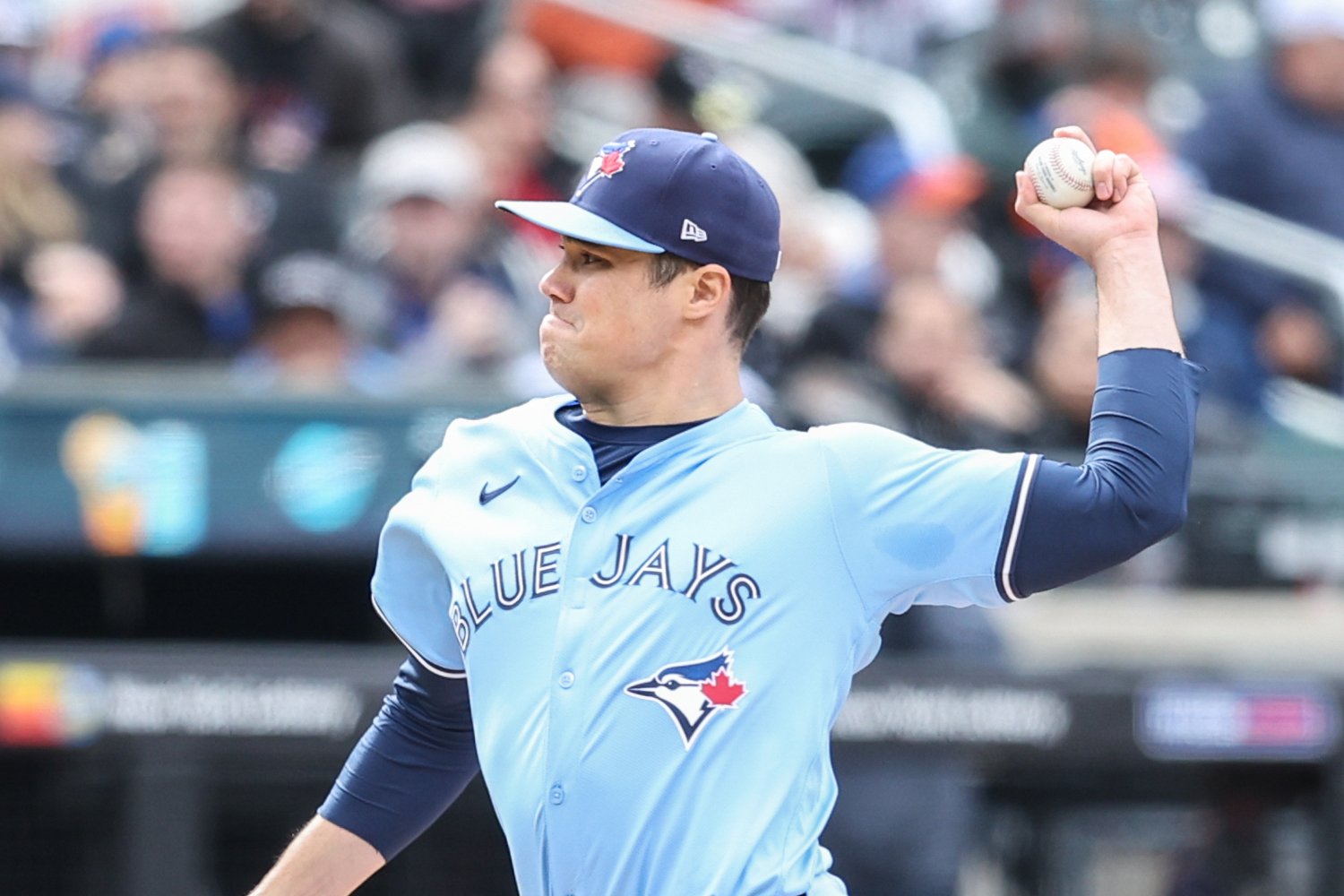 Remember the 2024 Blue Jays? Of course, we do. A season that was full of optimism fell apart pretty quickly for the team. Bo Bichette struggled to stay healthy and the run scoring as a whole was a problem, which ultimately led to the Blue Jays being sellers at the trade deadline. They ended with 74 wins, finishing last in the AL East. Part of the reason the team struggled was the performance of the bullpen. Jordan Romano only pitched 13 2/3 innings and had a 6.59 ERA when he was on the mound. The pitching staff as a whole saw 34 different pitchers toe the rubber, and only two, José Berríos and Bowden Francis, had a bWAR above 1.0. The end result meant the Blue Jays bullpen had a 4.82 ERA, a FIP of 4.84, and a negative WAR total, all of which were the worst in the American League. The Blue Jays knew this would be a problem and made some notable additions. Jeff Hoffman has been excellent in the early part of the season, and you could say the same for Yimi García, who was brought back to Toronto in free agency after a deadline trade to Seattle. Even with the new additions, the Blue Jays were expecting to get some bounce-back performances from some of the holdovers, and while Hoffman and García have been getting most of the attention, Brendon Little has been thrust into a higher profile role. Taking over Génesis Cabrera's spot as the undisputed number one lefty, he has excelled early in the season. On the surface, the numbers look pretty good. He’s gotten into a team leading 10 games, giving up just three earned runs in his eight innings pitched on the young season. He’s done well at protecting leads this season too. His five holds are best on the Blue Jays and are third-highest in the league, although he's not the name out of the bullpen most fans would expect to lead this team in holds. What is so interesting about Little is that he appears to have taken another step forward with his pitch development, particularly on his curveball. On the season, on at-bats ending on his curveball, batters have gone 1-for-15, with 11 of those 15 at-bats ending in strikeouts. The one hit? It was the Jesse Winker triple with a 95% catch probability that George Springer crashed into the wall attempting to catch. Those are video game numbers. To get a better perspective on just how good that pitch has been, here’s a list of whiff rate leaders on the curveball across all of baseball so far this season. Now that's a list! There’s more, too! Getting swings and misses is excellent (and something this 'pen has really needed), but Little is doing it so often by inducing chases. Here are the heat maps for his three pitches: That curveball is almost exclusively thrown below, and yet, hitters are still swinging at it. That is exactly what you want to do if you're a pitcher. Get the hitters to swing at pitches they aren’t going to do much with. Little has been excellent at that in the young season. Take Wednesday's game for example, Little came in to relieve Chris Bassitt and continued his dominance. He faced four batters, walked one, and struck out the other three. The curveball was again excellent. He threw seven, only two in the zone (earning called strikes on both of them). He bounced three and then got swinging strikes on the other two he threw out of the zone. Pair that with an effective sinker, and you're looking at an outing where Atlanta’s hitters took six swings and missed all six of them. The Stuff+ numbers seem to agree with what Little is doing too. His 120 Stuff+ is the best on the Blue Jays and 13th in baseball, ahead of names like Josh Hader, Tarik Skubal, and Mason Miller. It's exactly the type of company you want to be in. Part of the reason could be the lowering of his arm slot. It had been 35 degrees over the first part of his career, and that has dropped to 32 degrees this season. Little's sinker is also slower, but it's featuring more sink that it did last season. It could be he’s just gotten significantly better at pitch tunneling or sequencing, or maybe it's a little bit from each category. One thing is for sure: Brendon Little is quietly putting together a very impressive campaign, and it won’t be long until he joins the Jeff Hoffman and Yimi García on the short list of best relievers on this team, if he’s not there already.
 -
 The Blue Jays' starting pitching has been phenomenal so far this season. Take away a clunker from José Berríos on Opening Day, and the rotation has a 2.20 ERA, which would be the best in baseball. Pair that with an innings total that's third highest during that time and a 0.96 WHIP that's second in baseball. It's impressive work, and they’ve done most of it without Max Scherzer, was pulled after three innings in his only start and has since been put on the 15-day IL after his chronic thumb injury flared up. Taking his place in the rotation was 28-year old Easton Lucas, who came into this season with just 18 1/3 innings pitched an ERA of 9.82 in his brief big league career. Expectations were not that high, but then his first start went well. Matching up against the Nationals' Mackenzie Gore, he threw five innings, only allowed one hit, struck out three and ultimately got the win. As Davy Andrews wrote, he officially “aced” his first start. Then came a real test. No offense to the Nationals, but the Red Sox at Fenway Park are a much tougher test. Lucas took the mound matched up against Garrett Crochet, one of the best left-handed starting pitchers in the game, and stood his ground. Against leadoff batter Jarren Duran, Lucas used a mix of sweepers and four-seam fastballs before getting a swing and miss on a slider for strike three. Next up, the suddenly red hot, three-time All-Star and two-time Silver Slugger winner Rafael Devers. It didn't matter. Four pitchers later Lucas had struck him out too. After a pop-out to end the inning, Lucas took the mound for the second, and it was more of the same. Three-pitch strikeout, six-pitch strikeout, and another popup, and Lucas was officially in cruise control. When all was said and done, his line looked like this: 82 pitches, 5 1/3 innings, three hits, one walk, eight strikeouts, and no runs. Most importantly, when he left the mound, the Blue Jays had scored four runs off Crochet and ended up winning, 6-1. The two-start stretch that Lucas has been on has been historic. He becomes the fourth Blue Jay ever to record consecutive starts with at least five innings pitched, no runs or extra-base hits, and four or fewer baserunners allowed, sharing that distinction with Dave Steib (1988), Marcus Stroman (2014), and Ross Stripling (2022). It's great company to be in. After the game, Lucas said, “I have a lot of confidence in where I’m throwing my pitches, that was something that clicked at the end of spring training. I was struggling with commanding my fastball last year and dealing with the adrenaline, so this year I’ve focused on being under control and commanding my fastball, and after that, it opens up everything else.” Locating the fastball and pitching with confidence sounds like a traditional pitching cliché, but clichés are just that for a reason: because they can be true. Lucas threw 46 fastballs in this start, 67% of them in the strike zone, and got five whiffs on the 25 swings that the Red Sox took against it. On paper, a fastball that sits 92 mph and touches 95 mph is slow compared to other starters across the big leagues, but Lucas has found something with that pitch that has led to early success. Lucas’s early success has to feel like found money for the Blue Jays. For a team whose main weakness might be its pitching depth, Lucas has taken his opportunity and shown he can run with it. His teammates are noticing it too. Bo Bichette spoke highly of Lucas’s performance, saying, “He’s a big part of our team right now. For him to pitch like that against a lineup like that? It’s cool for all of us to see.” Lucas’s next test will come on Sunday against another good offence in the Baltimore Orioles, and although the run of success may not last forever, he’s bought himself and the Blue Jays a bit of a run to work through it. It removes pressure on Blue Jays to rush a 40-year old Max Scherzer back from injury too quickly. Every successful baseball team needs the surprise impact player nobody saw coming. The Blue Jays really haven't had a pitcher come up and soar right from the get-go, aside from Bowden Francis late last season. So far, the title of surprise player belongs to Easton Lucas
 -
Easton has been just the surprise the Blue Jays needed to start the season. The Blue Jays' starting pitching has been phenomenal so far this season. Take away a clunker from José Berríos on Opening Day, and the rotation has a 2.20 ERA, which would be the best in baseball. Pair that with an innings total that's third highest during that time and a 0.96 WHIP that's second in baseball. It's impressive work, and they’ve done most of it without Max Scherzer, was pulled after three innings in his only start and has since been put on the 15-day IL after his chronic thumb injury flared up. Taking his place in the rotation was 28-year old Easton Lucas, who came into this season with just 18 1/3 innings pitched an ERA of 9.82 in his brief big league career. Expectations were not that high, but then his first start went well. Matching up against the Nationals' Mackenzie Gore, he threw five innings, only allowed one hit, struck out three and ultimately got the win. As Davy Andrews wrote, he officially “aced” his first start. Then came a real test. No offense to the Nationals, but the Red Sox at Fenway Park are a much tougher test. Lucas took the mound matched up against Garrett Crochet, one of the best left-handed starting pitchers in the game, and stood his ground. Against leadoff batter Jarren Duran, Lucas used a mix of sweepers and four-seam fastballs before getting a swing and miss on a slider for strike three. Next up, the suddenly red hot, three-time All-Star and two-time Silver Slugger winner Rafael Devers. It didn't matter. Four pitchers later Lucas had struck him out too. After a pop-out to end the inning, Lucas took the mound for the second, and it was more of the same. Three-pitch strikeout, six-pitch strikeout, and another popup, and Lucas was officially in cruise control. When all was said and done, his line looked like this: 82 pitches, 5 1/3 innings, three hits, one walk, eight strikeouts, and no runs. Most importantly, when he left the mound, the Blue Jays had scored four runs off Crochet and ended up winning, 6-1. The two-start stretch that Lucas has been on has been historic. He becomes the fourth Blue Jay ever to record consecutive starts with at least five innings pitched, no runs or extra-base hits, and four or fewer baserunners allowed, sharing that distinction with Dave Steib (1988), Marcus Stroman (2014), and Ross Stripling (2022). It's great company to be in. After the game, Lucas said, “I have a lot of confidence in where I’m throwing my pitches, that was something that clicked at the end of spring training. I was struggling with commanding my fastball last year and dealing with the adrenaline, so this year I’ve focused on being under control and commanding my fastball, and after that, it opens up everything else.” Locating the fastball and pitching with confidence sounds like a traditional pitching cliché, but clichés are just that for a reason: because they can be true. Lucas threw 46 fastballs in this start, 67% of them in the strike zone, and got five whiffs on the 25 swings that the Red Sox took against it. On paper, a fastball that sits 92 mph and touches 95 mph is slow compared to other starters across the big leagues, but Lucas has found something with that pitch that has led to early success. Lucas’s early success has to feel like found money for the Blue Jays. For a team whose main weakness might be its pitching depth, Lucas has taken his opportunity and shown he can run with it. His teammates are noticing it too. Bo Bichette spoke highly of Lucas’s performance, saying, “He’s a big part of our team right now. For him to pitch like that against a lineup like that? It’s cool for all of us to see.” Lucas’s next test will come on Sunday against another good offence in the Baltimore Orioles, and although the run of success may not last forever, he’s bought himself and the Blue Jays a bit of a run to work through it. It removes pressure on Blue Jays to rush a 40-year old Max Scherzer back from injury too quickly. Every successful baseball team needs the surprise impact player nobody saw coming. The Blue Jays really haven't had a pitcher come up and soar right from the get-go, aside from Bowden Francis late last season. So far, the title of surprise player belongs to Easton Lucas View full article
-
Hard Hit, Grounded: Why the Blue Jays’ Power Isn’t Taking Off
Jesse Burrill posted an article in Blue Jays
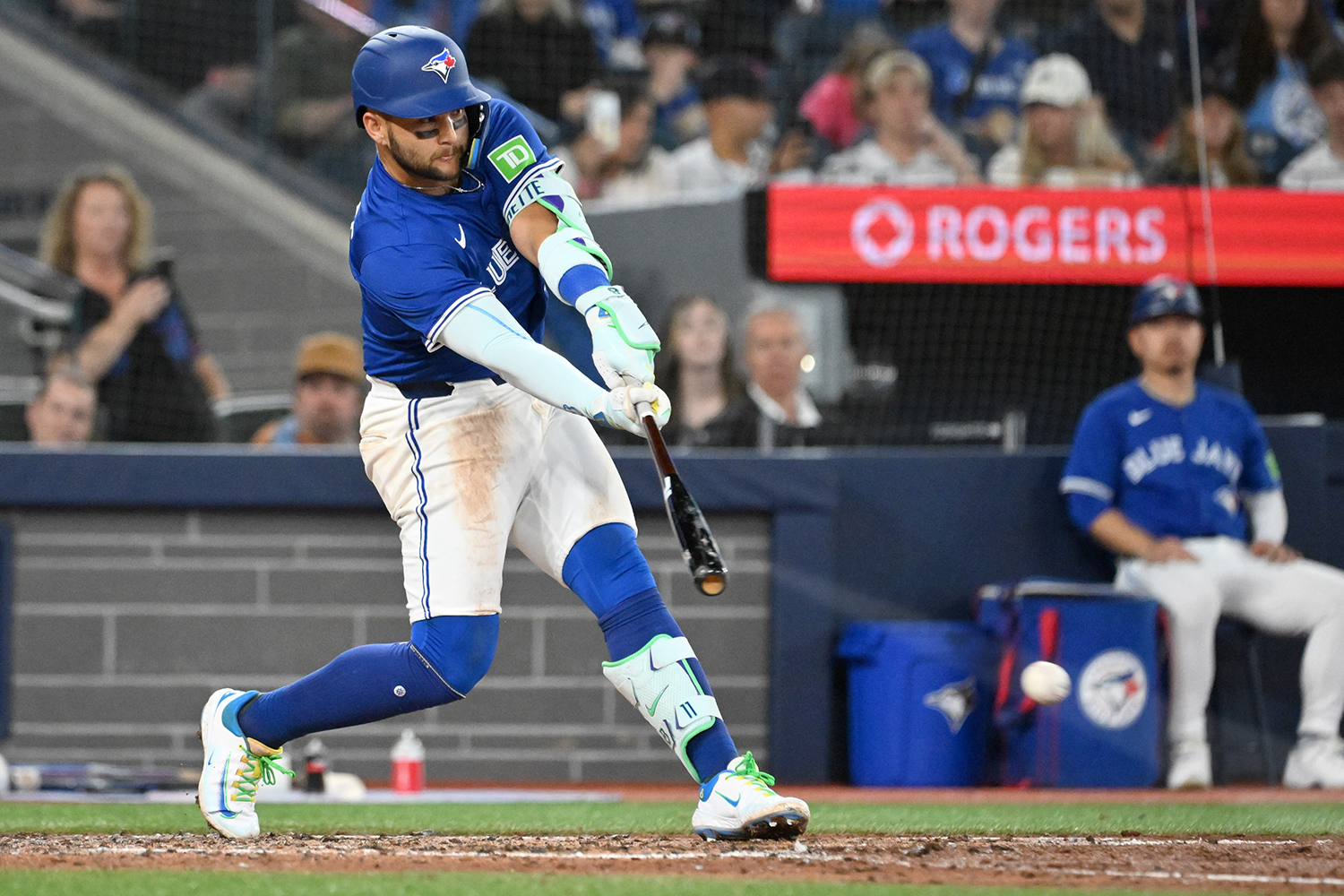 Power is a low-hanging fruit. At least, that’s what Blue Jays general manager Ross Atkins said in a press conference last October when asked about adding some thump to the lineup this off-season. That quote spread its way all around social media and frustrated many Blue Jays fans, as it came from a team that hit 156 home runs in 2024, sixth-worst in baseball. During the offseason, the Blue Jays did go to the tree and pick some of that fruit, signing Anthony Santander to a five-year, $92.5-million contract. Santander's 48 home runs trailed only Aaron Judge and Shohei Ohtani. The intention was that Santander would hit behind young superstar Vladimir Guerrero Jr. and those two players would mash baseballs all through the summer. While that dream is still alive, it hasn't come to fruition thus far. Through 11 games, the Blue Jays have five home runs, tied with the Rays for the lowest in baseball. It's simply not where you want to be if the postseason is your goal. Andrés Giménez has done his part. His three home runs out of the cleanup spot have been a pleasant surprise. Tyler Heinemann’s home run last week was also a welcome surprise, and George Springer launching one in his 29 at-bats was right on par with his home run rate from the 2024 season. The real surprises here have been the players at the top of the order. Bo Bichette, who left the park four times in 51 spring at-bats, has yet to homer. The aforementioned Anthony Santander has a zero in the home run column. Most notably, Guerrero has yet to hit a home run either. In fact the Blue Jays are the only team in baseball who do not have a home run from the players who regularly hit 1-2-3 in the batting order. So what’s the culprit here? Well, firstly, the Blue Jays simply aren’t swinging hard. Since Statcast has induced their bat tracking data, the Blue Jays are dead last in baseball in bat speed. Averaging 70.3 mph on their swings, which is half a tick lower than the 29th-ranked Miami Marlins. Swing speed isn't everything. The San Diego Padres had the slowest swing speed in baseball in 2024, and they were in the top half in home runs hit that season. But on the whole, hitting the ball harder will generally lead to more home runs. But there has to be more to it than that. In order to hit home runs, you’ve got to hit the ball hard, and you’ve got to hit it at the right launch angle in order to have it go over the fence. The Blue Jays' hard-hit rate is in the bottom third in baseball, and their average launch angle sits at 13.4 degrees, right in the middle of the pack. The real issue lies when you mix the two. Since 2022, the Blue Jays have prioritized hitting the ball hard but not necessarily hitting it in the air. Their average launch angle on hard-hit balls ranks 26th in baseball, and if you look at just the 2025 season so far, it's sixth-worst in baseball, as seen in the Baseball Savant screengrab below. It takes a whole lot of prominent players to get such uniformity at the team level. Since 2022, 454 major league players have hit at least 100 hard-hit balls. Here's where some prominent Blue Jays rank on that list in terms of launch angle. Ernie Clement: 229th George Springer: 276th Andrés Giménez: 318th Alejandro Kirk: 377th, Bo Bichette: 393rd Vladimir Guerrero Jr.: 413th This trend might have been expected to change when David Popkins took over as hitting coach, but early in the 2025 season, the Blue Jays are again sixth-worst in baseball at launching their hard-hit balls in the air. This comes to light when you compare the Blue Jays' hard-hit rates with their barrel rates: Barrels are the perfect combination of exit velocity and launch angle, and barrelled balls all have at least a .500 batting average and a 1.500 slugging percentage. The Blue Jays do a pretty good job of the first part of that equation. Their hard-hit rate sits at 41.7%, in the top 10, but their 6.1% barrel rate is fourth-worst. Hitting the ball hard on the ground isn’t necessarily a bad thing. All things considered, you'd rather hit the ball hard wherever you hit it. But it's much easier to score runs with one elevated hard-hit ball than it is to string two or three of those hard-hit grounders together, especially because major league defenses keep getting better. To some degree, a hard-hit grounder is a waste of a hard-hit ball. We're only 11 games into the season Ten games into last season, Santander had a .632 OPS and Guerrero’s wasn't much better at .712. The two players would end up hitting a combined 78 home runs. There is a long way to go, but elevating those hard-hit balls will be a major key. If the Blue Jays don’t want to stay afloat against a very tough schedule to start the season, then they need to start sooner rather than later.
 -
The Blue Jays do a great job of hitting the ball hard. They do a less great job of turning all that hard contact into run production. Power is a low-hanging fruit. At least, that’s what Blue Jays general manager Ross Atkins said in a press conference last October when asked about adding some thump to the lineup this off-season. That quote spread its way all around social media and frustrated many Blue Jays fans, as it came from a team that hit 156 home runs in 2024, sixth-worst in baseball. During the offseason, the Blue Jays did go to the tree and pick some of that fruit, signing Anthony Santander to a five-year, $92.5-million contract. Santander's 48 home runs trailed only Aaron Judge and Shohei Ohtani. The intention was that Santander would hit behind young superstar Vladimir Guerrero Jr. and those two players would mash baseballs all through the summer. While that dream is still alive, it hasn't come to fruition thus far. Through 11 games, the Blue Jays have five home runs, tied with the Rays for the lowest in baseball. It's simply not where you want to be if the postseason is your goal. Andrés Giménez has done his part. His three home runs out of the cleanup spot have been a pleasant surprise. Tyler Heinemann’s home run last week was also a welcome surprise, and George Springer launching one in his 29 at-bats was right on par with his home run rate from the 2024 season. The real surprises here have been the players at the top of the order. Bo Bichette, who left the park four times in 51 spring at-bats, has yet to homer. The aforementioned Anthony Santander has a zero in the home run column. Most notably, Guerrero has yet to hit a home run either. In fact the Blue Jays are the only team in baseball who do not have a home run from the players who regularly hit 1-2-3 in the batting order. So what’s the culprit here? Well, firstly, the Blue Jays simply aren’t swinging hard. Since Statcast has induced their bat tracking data, the Blue Jays are dead last in baseball in bat speed. Averaging 70.3 mph on their swings, which is half a tick lower than the 29th-ranked Miami Marlins. Swing speed isn't everything. The San Diego Padres had the slowest swing speed in baseball in 2024, and they were in the top half in home runs hit that season. But on the whole, hitting the ball harder will generally lead to more home runs. But there has to be more to it than that. In order to hit home runs, you’ve got to hit the ball hard, and you’ve got to hit it at the right launch angle in order to have it go over the fence. The Blue Jays' hard-hit rate is in the bottom third in baseball, and their average launch angle sits at 13.4 degrees, right in the middle of the pack. The real issue lies when you mix the two. Since 2022, the Blue Jays have prioritized hitting the ball hard but not necessarily hitting it in the air. Their average launch angle on hard-hit balls ranks 26th in baseball, and if you look at just the 2025 season so far, it's sixth-worst in baseball, as seen in the Baseball Savant screengrab below. It takes a whole lot of prominent players to get such uniformity at the team level. Since 2022, 454 major league players have hit at least 100 hard-hit balls. Here's where some prominent Blue Jays rank on that list in terms of launch angle. Ernie Clement: 229th George Springer: 276th Andrés Giménez: 318th Alejandro Kirk: 377th, Bo Bichette: 393rd Vladimir Guerrero Jr.: 413th This trend might have been expected to change when David Popkins took over as hitting coach, but early in the 2025 season, the Blue Jays are again sixth-worst in baseball at launching their hard-hit balls in the air. This comes to light when you compare the Blue Jays' hard-hit rates with their barrel rates: Barrels are the perfect combination of exit velocity and launch angle, and barrelled balls all have at least a .500 batting average and a 1.500 slugging percentage. The Blue Jays do a pretty good job of the first part of that equation. Their hard-hit rate sits at 41.7%, in the top 10, but their 6.1% barrel rate is fourth-worst. Hitting the ball hard on the ground isn’t necessarily a bad thing. All things considered, you'd rather hit the ball hard wherever you hit it. But it's much easier to score runs with one elevated hard-hit ball than it is to string two or three of those hard-hit grounders together, especially because major league defenses keep getting better. To some degree, a hard-hit grounder is a waste of a hard-hit ball. We're only 11 games into the season Ten games into last season, Santander had a .632 OPS and Guerrero’s wasn't much better at .712. The two players would end up hitting a combined 78 home runs. There is a long way to go, but elevating those hard-hit balls will be a major key. If the Blue Jays don’t want to stay afloat against a very tough schedule to start the season, then they need to start sooner rather than later. View full article
-
What can we learn from the first four games of the season? Plenty. It has been a very eventful week for the Toronto Blue Jays, from leaving Dunedin with the best record in the Grapefruit League, to the excitement of Alan Roden making the opening day roster, to the Blue Jays opening the regular season at home for the first time since 2022. Excitement and optimism for this team have been at its highest. Four games later, and a four-game series split against division rival the Orioles later, the general perception of the team might have changed. The wind was taken out of our sails early on Opening Day, as Blue Jays pitchers gave up six home runs and never really came close in a 10-run blowout. Game two was the Blue Jays' turn: a five-run fourth inning spurred the offence and the Jays went on to win by six. Game three went the Orioles way, and game four belonged to the Blue Jays, who leave the first series with a 2-2 record. For just four games of a long 162-game season is almost as small a sample size as you can get, there are still some notable takeaways you could make from the opening series of the season, and here are five things in particular that caught my attention: 1. Starting Pitching Depth May Be a Problem The most notable piece of news is that Max Scherzer had to be removed from his start after just 45 pitches with what the Blue Jays described as “right lat soreness,” and which Scherzer himself said it was all connected to the thumb issue that caused him to have his last start of Spring training delayed. On Sunday, the Blue Jays moved Scherzer to the 15-day IL. He is visiting a hand specialist in the United States today. Whether it's the minimum 15 days or a longer term of absence for Scherzer, the Blue Jays are going to need to tap into their starting pitching depth, meaning that Yariel Rodríguez is going to be inserted back into the starting rotation earlier than expected. Rodríguez has shown glimpses of efficiency in the past, but he has struggled in the spring. Although he pitched a clean eight inning on Sunday afternoon, he was responsible for two of the six home runs Baltimore hit on opening night. Easton Lucas has been called up and will likely take Rodríguez's spot as the “long man” in the bullpen. Lucas has a career 9.82 ERA, and it was 8.64 during his time this spring, so the Blue Jays are already taking a real chance that Lucas can help this bullpen. The starting pitching depth taking a hit is certainly something that is going to be tested, especially if there is another injury or poor performance somewhere in the rotation. 2. The Blue Jays Are Managing the Bullpen Aggressively The bullpen was a major focus during spring training. Jacob Barnes and Richard Lovelady were both granted spots on the 40-man roster, and things certainly didn't go well. Barnes allowed four earned runs over 2 1/3 innings, giving up five hits and walking one batter. Lovelady walked and hit a batter on Opening Day, exploded upon relieving Scherzer on Saturday. He hit two of the first three batters he faced, gave up two doubles, and walked another. When the inning had ended, the Blue Jays' two-run lead had turned into a two-run deficit. In the past, the Blue Jays might have had a longer leash, especially after deciding just a few days prior that Lovelady was the right choice. This year, after two subpar outings, the Blue Jays have designated him for assignment and are now going to use Mason Fluharty as the second lefty in the bullpen behind Brendan Little. Fluharty will make his major league debut at some point this week. 3. The Blue Jays Are Really Hitting the Ball Hard Last season, if it wasn’t the Blue Jays' bullpen underproducing, it was the offence. The combination led to the 74-win total and a last-place finish in the AL East. In 2024, the Blue Jays' 88.1 mph ranked 24th and their 37.4% ranked 25th. Just one series into the season, they've been hitting the ball much harder. After the series, the Blue Jays have had 48 hard-hit baseballs (Statcast a ball as hard-hit if it's 95 mph or faster off the bat). The team's 99.1-mph average exit velocity and 49% hard-hit rate both rank seventh. Bo Bichette and Vladimir Guerrero Jr lead the team with nine hard-hit balls a piece, Newcomer Andres Gimenez is third on the team with six, and every Blue Jay who has recorded at least one batted ball event has at least one hard-hit ball except for Davis Schneider. It's way too early to say whether this trend will continue, but it's certainly a good sign. 4. Alan Roden Looks Like He Belongs Here All eyes were on Alan Roden when it was announced that he had officially made the team out of Spring Training. John Schendier batted him ninth on Opening Day, and Roden showed a patient approach and notched a slightly lucky first career hit. Roden started three out of the four games, going 2-for-10 with a walk and his first career RBI. Although the offense wasn't spectacular, he got starts in both right and left, and made a phenomenal diving catch in game two that new outfield coach Kevin Gausman certainly approved of. His development will be intriguing going forward. 5. Jeff Hoffman Looks Like the Real Deal Signing Jeff Hoffman to a three-year $33-million contract was a big move. Ross Atkins immediately made clear that Hoffman would be the team's closer, and he looked the part against the Orioles. Coming off a spring where he struck out eight and allowed only one earned run over 5 2/3 innings, Hoffman continued his dominant run. In game three, he got the first two outs, gave up a soft single, and then struck out Cedric Mullins for the last out in the ninth. On Sunday, he entered in the ninth with a two-run lead and sealed the deal. He induced a groundball out (thanks to a nice play by Andrés Giménez), then struck out Heston Kjerstad and Gary Sanchez to earn his first save as a Toronto Blue Jay. Getting the save against the Orioles has to feel just a little bit sweeter, as they were one of two teams to reportedly agree to a deal with Hoffman this offseason, only to back out due to a failed physical. Only time will tell whether Hoffman's shoulder is really 100%, but he looks good so far. Getting the baseball to Hoffman in the ninth with a lead is going to be a strong recipe for success this season. View full article
- 1 reply
-
- 4
-
-
- alan roden
- jeff hoffman
- (and 2 more)
-
Five Takeaways From the Blue Jays’ Opening Series Against the Orioles
Jesse Burrill posted an article in Blue Jays
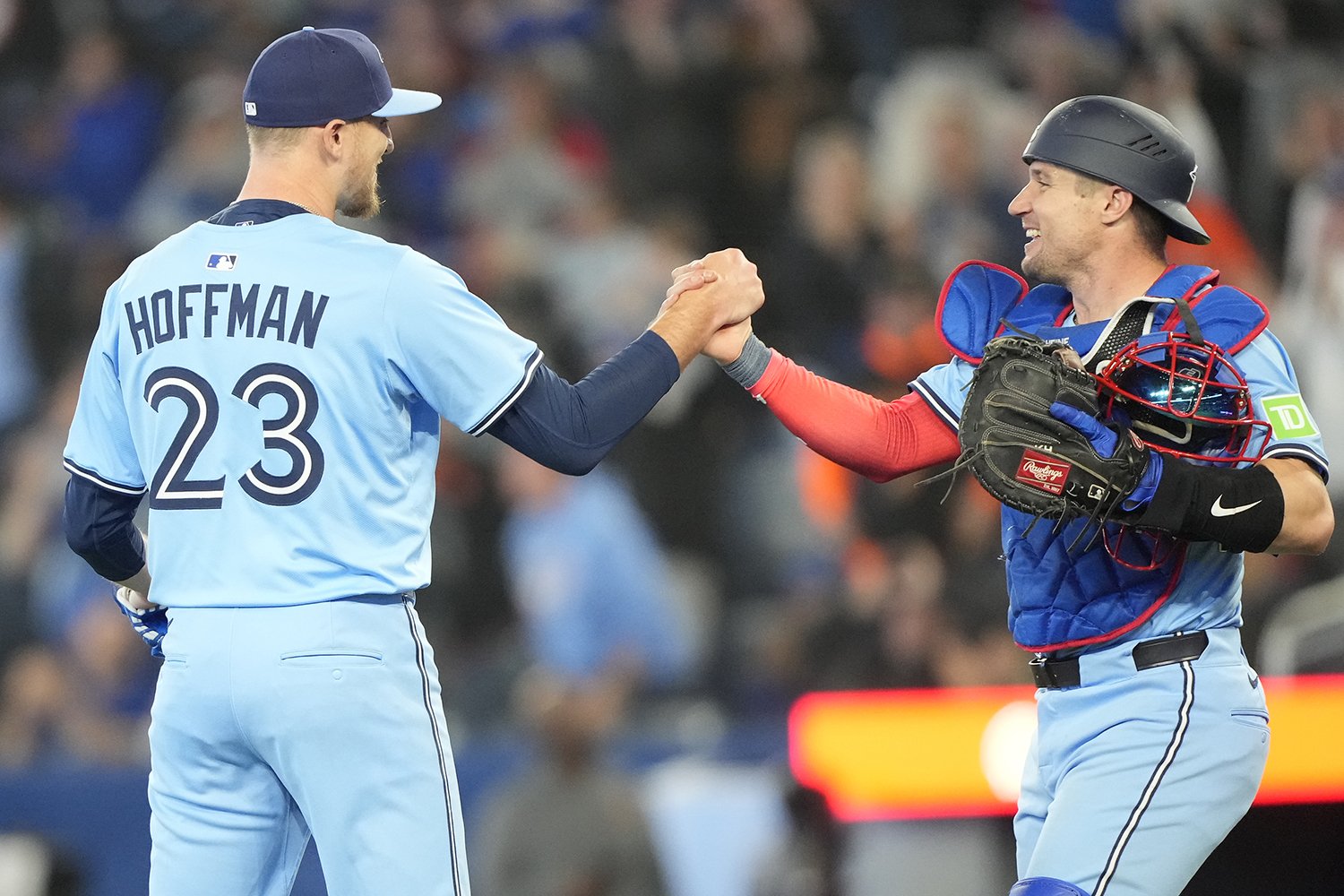 It has been a very eventful week for the Toronto Blue Jays, from leaving Dunedin with the best record in the Grapefruit League, to the excitement of Alan Roden making the opening day roster, to the Blue Jays opening the regular season at home for the first time since 2022. Excitement and optimism for this team have been at its highest. Four games later, and a four-game series split against division rival the Orioles later, the general perception of the team might have changed. The wind was taken out of our sails early on Opening Day, as Blue Jays pitchers gave up six home runs and never really came close in a 10-run blowout. Game two was the Blue Jays' turn: a five-run fourth inning spurred the offence and the Jays went on to win by six. Game three went the Orioles way, and game four belonged to the Blue Jays, who leave the first series with a 2-2 record. For just four games of a long 162-game season is almost as small a sample size as you can get, there are still some notable takeaways you could make from the opening series of the season, and here are five things in particular that caught my attention: 1. Starting Pitching Depth May Be a Problem The most notable piece of news is that Max Scherzer had to be removed from his start after just 45 pitches with what the Blue Jays described as “right lat soreness,” and which Scherzer himself said it was all connected to the thumb issue that caused him to have his last start of Spring training delayed. On Sunday, the Blue Jays moved Scherzer to the 15-day IL. He is visiting a hand specialist in the United States today. Whether it's the minimum 15 days or a longer term of absence for Scherzer, the Blue Jays are going to need to tap into their starting pitching depth, meaning that Yariel Rodríguez is going to be inserted back into the starting rotation earlier than expected. Rodríguez has shown glimpses of efficiency in the past, but he has struggled in the spring. Although he pitched a clean eight inning on Sunday afternoon, he was responsible for two of the six home runs Baltimore hit on opening night. Easton Lucas has been called up and will likely take Rodríguez's spot as the “long man” in the bullpen. Lucas has a career 9.82 ERA, and it was 8.64 during his time this spring, so the Blue Jays are already taking a real chance that Lucas can help this bullpen. The starting pitching depth taking a hit is certainly something that is going to be tested, especially if there is another injury or poor performance somewhere in the rotation. 2. The Blue Jays Are Managing the Bullpen Aggressively The bullpen was a major focus during spring training. Jacob Barnes and Richard Lovelady were both granted spots on the 40-man roster, and things certainly didn't go well. Barnes allowed four earned runs over 2 1/3 innings, giving up five hits and walking one batter. Lovelady walked and hit a batter on Opening Day, exploded upon relieving Scherzer on Saturday. He hit two of the first three batters he faced, gave up two doubles, and walked another. When the inning had ended, the Blue Jays' two-run lead had turned into a two-run deficit. In the past, the Blue Jays might have had a longer leash, especially after deciding just a few days prior that Lovelady was the right choice. This year, after two subpar outings, the Blue Jays have designated him for assignment and are now going to use Mason Fluharty as the second lefty in the bullpen behind Brendan Little. Fluharty will make his major league debut at some point this week. 3. The Blue Jays Are Really Hitting the Ball Hard Last season, if it wasn’t the Blue Jays' bullpen underproducing, it was the offence. The combination led to the 74-win total and a last-place finish in the AL East. In 2024, the Blue Jays' 88.1 mph ranked 24th and their 37.4% ranked 25th. Just one series into the season, they've been hitting the ball much harder. After the series, the Blue Jays have had 48 hard-hit baseballs (Statcast a ball as hard-hit if it's 95 mph or faster off the bat). The team's 99.1-mph average exit velocity and 49% hard-hit rate both rank seventh. Bo Bichette and Vladimir Guerrero Jr lead the team with nine hard-hit balls a piece, Newcomer Andres Gimenez is third on the team with six, and every Blue Jay who has recorded at least one batted ball event has at least one hard-hit ball except for Davis Schneider. It's way too early to say whether this trend will continue, but it's certainly a good sign. 4. Alan Roden Looks Like He Belongs Here All eyes were on Alan Roden when it was announced that he had officially made the team out of Spring Training. John Schendier batted him ninth on Opening Day, and Roden showed a patient approach and notched a slightly lucky first career hit. Roden started three out of the four games, going 2-for-10 with a walk and his first career RBI. Although the offense wasn't spectacular, he got starts in both right and left, and made a phenomenal diving catch in game two that new outfield coach Kevin Gausman certainly approved of. His development will be intriguing going forward. 5. Jeff Hoffman Looks Like the Real Deal Signing Jeff Hoffman to a three-year $33-million contract was a big move. Ross Atkins immediately made clear that Hoffman would be the team's closer, and he looked the part against the Orioles. Coming off a spring where he struck out eight and allowed only one earned run over 5 2/3 innings, Hoffman continued his dominant run. In game three, he got the first two outs, gave up a soft single, and then struck out Cedric Mullins for the last out in the ninth. On Sunday, he entered in the ninth with a two-run lead and sealed the deal. He induced a groundball out (thanks to a nice play by Andrés Giménez), then struck out Heston Kjerstad and Gary Sanchez to earn his first save as a Toronto Blue Jay. Getting the save against the Orioles has to feel just a little bit sweeter, as they were one of two teams to reportedly agree to a deal with Hoffman this offseason, only to back out due to a failed physical. Only time will tell whether Hoffman's shoulder is really 100%, but he looks good so far. Getting the baseball to Hoffman in the ninth with a lead is going to be a strong recipe for success this season.
- 1 comment
-
- 1
-
-
- alan roden
- jeff hoffman
- (and 2 more)
-
Plenty of questions surround the Blue Jays roster this season. 26 of them, to be specific. Happy Opening Day! Its been a long 178 days since we last saw the Blue Jays take the field in a competitive ball game. In that game, one game the Jays ultimately ended up losing, 3-1, Vladimir Guerrero Jr. hit leadoff in an attempt to get hit number 200, ultimately falling just short. Ryan Burr started and gave up two runs. Ryan Yarbrough, Brett de Geus, Spencer Horwitz, and Luis De Los Santos, none of whom is still part of this team, all made appearances. A lot has changed between then and now. Jeff Hoffman, Anthony Santander, Andrés Giménez, and Max Scherzer have all joined the club. Yimi García also makes a return after a mid-season trade to Seattle. After an impressive minor league and spring training performance, Alan Roden has made the team and started his first game on Opening Day. With the new season comes new hope, maybe slightly more after the Blue Jays finished first in the Grapefruit League, winning the Golden Grapefruit (shoutout to Keegan Matheson). There is a refreshed sense of optimism around this team, a sense that maybe, if things break their way, the Blue Jays can make a run to get into a playoff position this season. Almost every player on the roster has their own question marks or injury history. Let's look deeper into the 26 players on the Opening Roster and see what pivotal questions each player faces going into the 2025 season: CATCHERS Alejandro Kirk: How can he hold up to an increased workload this season? Cooking off a five-year, $85-million dollar extension signed earlier this week, the Blue Jays have made it known that Kirk is going to be the undisputed number one catcher for the foreseeable future. Will he be able to handle the role? Catching causes wear and tear on the body, Kirk has never caught more than 99 games, which he did in 2023. Can he handle the increased workload? Tyler Heineman: Can he be a positive contributor when called into action? Heineman won the backup catching job this spring and has some experience with the staff. When Kirk does need a break, can Heineman contribute positively to this team? A career OPS of .571 is underwhelming, but he is a positive pitch framer, so that will help. INFIELDERS Vladimir Guerrero Jr. Can he put together another MVP-caliber season in a contract year? The topic with Guerrero has been whether or not he will sign an extension, and whether he does or does not, the question of what he will do on the field remains. Guerrero’s OPS+ over the past few seasons: 2021: 167 2022: 133 2023: 116 2024: 166 The Blue Jays are certainly going to need that number to be closer to the 2021 and 2024 numbers this season, and if he wants his $500 or so million, so will Guerrero. Andrés Giménez: Will we get a bounce back with the bat? In 2022, Giménez had a 141 OPS+ combined with his elite defence and baserunning to earn a sixth-place finish in the MVP voting. Since then, an OPS+ of 96 in 2023 and just 82 in 2024 leaves you wanting more. If the Blue Jays can get anywhere close to a league-average bat, then Giménez can turn into an extremely valuable player. Bo Bichette: Can he turn the page on an injury-riddled 2024 season? Bichette's 2024 season was highly disappointing. Playing in just 82 games and hitting just four home runs was not what anyone thought he’d do coming into the season. Can he put that season behind him and turn into the player who regularly would flirt with the AL lead in hits once again? Ernie Clement: Can he take his skillset to the next level? Clement does a little bit of everything well. He’s a good defender, (92nd percentile in range), a good baserunner, (78th percentile sprint speed), and a decent hitter (94 wRC+). Can he take another step forward and improve on his 3.4 WAR in 2024? Will Wagner: How will he look in his first extended stint in the big leagues? Will Wagner looked really good in his brief stint in the major leagues, hitting .305 with a 125 wRC+ in 2024. Wagner is going to get an extended run at third base as the strong side of a platoon this season, and his bat is a big question mark. Davis Schneider: Can he be a masher off the bench? As things currently stand, Schneider is the main right-handed bat off of the bench. He'll be hitting the tough lefties over the course of the season. Last season, he hit just .165 with a .528 OPS against lefties. That needs to be better or else Schneider could be spending much of the season in Buffalo. OUTFIELDERS Anthony Santander: Can he provide lineup protection hitting behind Guerrero? Tony Taters will be relied on to deliver massive power numbers hitting behind Guerrero. Santander needs to prove that pitching around Guerrero will be a mistake. George Springer: Can the Jays get one more productive season out of him? Springer has shown some signs of decline over the last few seasons. His .674 OPS was a career-worst, and his range in the outfield has dropped to the 51st percentil, last season, down from 61st in 2023 and 76th in 2022. The Blue Jays need to get some production out of Springer, especially if he’s going to keep hitting in the top half of the batting order. Nathan Lukes: Can he adapt to a full-time bench role? Lukes had a good spring and secured himself a spot on the Opening Day roster, His reputation is that he can work a good at-bat and provide solid defence and speed. During a brief stint in 2024, he hit .303 with an .818 OPS and more walks than strikeouts. Lukes may not play every day and needs to show that he can be productive when called on in small doses. Myles Straw: Can he provide anything with the bat? Straw’s calling card is his defence, but in order for Straw to stick on the roster after Daulton Varsho returns, he needs to show he can provide something with the bat. For what it's worth, he did hit .400 with a 1.039 OPS in 30 at-bats this spring. STARTING PITCHERS José Berríos: Can he remain durable and consistent? José Berríos has made 32 starts in every 162-game regular season since 2018, and aside from a poor 2022 season, his ERA has been between 3.50 and 4.00. In an era where pitchers get hurt more and more, Berrios staying on the field will be a major key this season. Kevin Gausman: Can he find his fastball velocity and splitter movement again? Kevin Gausman's fastball velocity dropped from 94.6 mph in 2023 down to 93.9 in 2024. Likewise, the splitter went from 32.2 inches of vertical drop down to 30.9 in 2024. If Kevin Gausman can prove he’s healthy and find the velocity again, then the Blue Jays could be getting the pitcher who got down-ballot Cy-Young votes three seasons in a row. Max Scherzer: Can he overcome the nerve issue in the thumb and remain on the field? Scherzer has been one of the best pitchers in the game over the course of his career, and the Blue Jays are hoping the veteran has even more in him. The main issue will be keeping Scherzer on the field, as he threw just 43 1/3 with the Rangers last season, and has already had some starts pushed back this spring due to a thumb issue. Chris Bassitt: Can he avoid the slow start? Bassitt has historically been a slow starter in his time with the Blue Jays. In 2024, his March/April ERA was 5.64; in 2023, it was 5.18. The Blue Jays' schedule in that time has them face 28 out of their 31 games against teams that finished .500 or above last season. Bassitt will need to be sharp right from the get-go this season. Bowden Francis: Is the player he was in the second half of 2024 the real deal? Bowden Francis's 2024 season had two very different sides. He ran a 5.82 ERA in the first half, compared to a 1.80 ERA in the second half. Which version of Francis wthe Blue Jays get in 2025 will be a major factor in the rotation's overall quality. RELIEF PITCHERS Jeff Hoffman: Are the failed physicals a concern? A shoulder injury reportedly caused Hoffman to fail physicals from both the Orioles and the Braves before ultimately signing in Toronto. Is that just nonsense, or is it possible that his shoulder is a ticking time bomb? Yimi García: Can he handle another high-leverage relief role? García was excellent with the Blue Jays in 2024, but since his trade to Seattle, he has dealt with injuries and some inconsistency. A return to form would be huge for a bullpen that was the worst in all of baseball last season. Chad Green: Can he handle another potential innings jump? Green was healthy in 2024 after missing time due to Tommy John surgery in 2022 and the first half of 2023. He was very effective most of the season before running out of gas at the end. The team will need to rely on Green, so avoiding a late-season collapse will be very important. Brendon Little: Can he strand the inherited runners? No Blue Jays pitcher ran a higher groundball rate than Little's 72.3% in 2024. Because of that, Little will likely be the first reliever to come into the game in a tight spot with runners on base. If he can strand runners on, then he could be an unsung hero in this bullpen. Nick Sandlin: Can he avoid giving up the long ball? Last season in Cleveland, Sandlin was effective, but he gave up more than his share of home runs. His 1.91 home runs per nine innings were the third-highest out of all qualified relievers. Home runs can be back-breaking in the bullpen, and Sandlin is going to have to be better at that in 2025. Richard Lovelady: Can he get lefties out enough to keep his spot on this roster? The Blue Jays chose to go with a second lefty in the ‘pen and Lovelady won that spot. If he’s going to keep it, he’s going to have to prove he can get other lefties out consistently. Over his career, he’s held lefties to a .232 average with a 3.45 FIP. Combined with the improvements he made from going to driveline this winter, this is how Lovelady can keep his spot on the roster. Jacob Barnes: Can he stay on the roster once others are healthy? Barnes' inclusion on the Opening Day roster was a bit of surprise, and he could be the odd man out when Burr/Swanson/Tate are ready to return. Barnes' goal early in the season is to do everything he can to make sure he’s not the first man sent down when reinforcements arrive. Yariel Rodríguez: How will he adjust to moving from the bullpen and the rotation? With Ryan Yarborough opting out, Rodriguez becomes the team's primary long man going into the season. He’s more than likely going to pitch both as a starter and as a reliever. His ability to perform in both roles will go a long way for his development in 2025 and in the long term. View full article
-
 Happy Opening Day! Its been a long 178 days since we last saw the Blue Jays take the field in a competitive ball game. In that game, one game the Jays ultimately ended up losing, 3-1, Vladimir Guerrero Jr. hit leadoff in an attempt to get hit number 200, ultimately falling just short. Ryan Burr started and gave up two runs. Ryan Yarbrough, Brett de Geus, Spencer Horwitz, and Luis De Los Santos, none of whom is still part of this team, all made appearances. A lot has changed between then and now. Jeff Hoffman, Anthony Santander, Andrés Giménez, and Max Scherzer have all joined the club. Yimi García also makes a return after a mid-season trade to Seattle. After an impressive minor league and spring training performance, Alan Roden has made the team and started his first game on Opening Day. With the new season comes new hope, maybe slightly more after the Blue Jays finished first in the Grapefruit League, winning the Golden Grapefruit (shoutout to Keegan Matheson). There is a refreshed sense of optimism around this team, a sense that maybe, if things break their way, the Blue Jays can make a run to get into a playoff position this season. Almost every player on the roster has their own question marks or injury history. Let's look deeper into the 26 players on the Opening Roster and see what pivotal questions each player faces going into the 2025 season: CATCHERS Alejandro Kirk: How can he hold up to an increased workload this season? Cooking off a five-year, $85-million dollar extension signed earlier this week, the Blue Jays have made it known that Kirk is going to be the undisputed number one catcher for the foreseeable future. Will he be able to handle the role? Catching causes wear and tear on the body, Kirk has never caught more than 99 games, which he did in 2023. Can he handle the increased workload? Tyler Heineman: Can he be a positive contributor when called into action? Heineman won the backup catching job this spring and has some experience with the staff. When Kirk does need a break, can Heineman contribute positively to this team? A career OPS of .571 is underwhelming, but he is a positive pitch framer, so that will help. INFIELDERS Vladimir Guerrero Jr. Can he put together another MVP-caliber season in a contract year? The topic with Guerrero has been whether or not he will sign an extension, and whether he does or does not, the question of what he will do on the field remains. Guerrero’s OPS+ over the past few seasons: 2021: 167 2022: 133 2023: 116 2024: 166 The Blue Jays are certainly going to need that number to be closer to the 2021 and 2024 numbers this season, and if he wants his $500 or so million, so will Guerrero. Andrés Giménez: Will we get a bounce back with the bat? In 2022, Giménez had a 141 OPS+ combined with his elite defence and baserunning to earn a sixth-place finish in the MVP voting. Since then, an OPS+ of 96 in 2023 and just 82 in 2024 leaves you wanting more. If the Blue Jays can get anywhere close to a league-average bat, then Giménez can turn into an extremely valuable player. Bo Bichette: Can he turn the page on an injury-riddled 2024 season? Bichette's 2024 season was highly disappointing. Playing in just 82 games and hitting just four home runs was not what anyone thought he’d do coming into the season. Can he put that season behind him and turn into the player who regularly would flirt with the AL lead in hits once again? Ernie Clement: Can he take his skillset to the next level? Clement does a little bit of everything well. He’s a good defender, (92nd percentile in range), a good baserunner, (78th percentile sprint speed), and a decent hitter (94 wRC+). Can he take another step forward and improve on his 3.4 WAR in 2024? Will Wagner: How will he look in his first extended stint in the big leagues? Will Wagner looked really good in his brief stint in the major leagues, hitting .305 with a 125 wRC+ in 2024. Wagner is going to get an extended run at third base as the strong side of a platoon this season, and his bat is a big question mark. Davis Schneider: Can he be a masher off the bench? As things currently stand, Schneider is the main right-handed bat off of the bench. He'll be hitting the tough lefties over the course of the season. Last season, he hit just .165 with a .528 OPS against lefties. That needs to be better or else Schneider could be spending much of the season in Buffalo. OUTFIELDERS Anthony Santander: Can he provide lineup protection hitting behind Guerrero? Tony Taters will be relied on to deliver massive power numbers hitting behind Guerrero. Santander needs to prove that pitching around Guerrero will be a mistake. George Springer: Can the Jays get one more productive season out of him? Springer has shown some signs of decline over the last few seasons. His .674 OPS was a career-worst, and his range in the outfield has dropped to the 51st percentil, last season, down from 61st in 2023 and 76th in 2022. The Blue Jays need to get some production out of Springer, especially if he’s going to keep hitting in the top half of the batting order. Nathan Lukes: Can he adapt to a full-time bench role? Lukes had a good spring and secured himself a spot on the Opening Day roster, His reputation is that he can work a good at-bat and provide solid defence and speed. During a brief stint in 2024, he hit .303 with an .818 OPS and more walks than strikeouts. Lukes may not play every day and needs to show that he can be productive when called on in small doses. Myles Straw: Can he provide anything with the bat? Straw’s calling card is his defence, but in order for Straw to stick on the roster after Daulton Varsho returns, he needs to show he can provide something with the bat. For what it's worth, he did hit .400 with a 1.039 OPS in 30 at-bats this spring. STARTING PITCHERS José Berríos: Can he remain durable and consistent? José Berríos has made 32 starts in every 162-game regular season since 2018, and aside from a poor 2022 season, his ERA has been between 3.50 and 4.00. In an era where pitchers get hurt more and more, Berrios staying on the field will be a major key this season. Kevin Gausman: Can he find his fastball velocity and splitter movement again? Kevin Gausman's fastball velocity dropped from 94.6 mph in 2023 down to 93.9 in 2024. Likewise, the splitter went from 32.2 inches of vertical drop down to 30.9 in 2024. If Kevin Gausman can prove he’s healthy and find the velocity again, then the Blue Jays could be getting the pitcher who got down-ballot Cy-Young votes three seasons in a row. Max Scherzer: Can he overcome the nerve issue in the thumb and remain on the field? Scherzer has been one of the best pitchers in the game over the course of his career, and the Blue Jays are hoping the veteran has even more in him. The main issue will be keeping Scherzer on the field, as he threw just 43 1/3 with the Rangers last season, and has already had some starts pushed back this spring due to a thumb issue. Chris Bassitt: Can he avoid the slow start? Bassitt has historically been a slow starter in his time with the Blue Jays. In 2024, his March/April ERA was 5.64; in 2023, it was 5.18. The Blue Jays' schedule in that time has them face 28 out of their 31 games against teams that finished .500 or above last season. Bassitt will need to be sharp right from the get-go this season. Bowden Francis: Is the player he was in the second half of 2024 the real deal? Bowden Francis's 2024 season had two very different sides. He ran a 5.82 ERA in the first half, compared to a 1.80 ERA in the second half. Which version of Francis wthe Blue Jays get in 2025 will be a major factor in the rotation's overall quality. RELIEF PITCHERS Jeff Hoffman: Are the failed physicals a concern? A shoulder injury reportedly caused Hoffman to fail physicals from both the Orioles and the Braves before ultimately signing in Toronto. Is that just nonsense, or is it possible that his shoulder is a ticking time bomb? Yimi García: Can he handle another high-leverage relief role? García was excellent with the Blue Jays in 2024, but since his trade to Seattle, he has dealt with injuries and some inconsistency. A return to form would be huge for a bullpen that was the worst in all of baseball last season. Chad Green: Can he handle another potential innings jump? Green was healthy in 2024 after missing time due to Tommy John surgery in 2022 and the first half of 2023. He was very effective most of the season before running out of gas at the end. The team will need to rely on Green, so avoiding a late-season collapse will be very important. Brendon Little: Can he strand the inherited runners? No Blue Jays pitcher ran a higher groundball rate than Little's 72.3% in 2024. Because of that, Little will likely be the first reliever to come into the game in a tight spot with runners on base. If he can strand runners on, then he could be an unsung hero in this bullpen. Nick Sandlin: Can he avoid giving up the long ball? Last season in Cleveland, Sandlin was effective, but he gave up more than his share of home runs. His 1.91 home runs per nine innings were the third-highest out of all qualified relievers. Home runs can be back-breaking in the bullpen, and Sandlin is going to have to be better at that in 2025. Richard Lovelady: Can he get lefties out enough to keep his spot on this roster? The Blue Jays chose to go with a second lefty in the ‘pen and Lovelady won that spot. If he’s going to keep it, he’s going to have to prove he can get other lefties out consistently. Over his career, he’s held lefties to a .232 average with a 3.45 FIP. Combined with the improvements he made from going to driveline this winter, this is how Lovelady can keep his spot on the roster. Jacob Barnes: Can he stay on the roster once others are healthy? Barnes' inclusion on the Opening Day roster was a bit of surprise, and he could be the odd man out when Burr/Swanson/Tate are ready to return. Barnes' goal early in the season is to do everything he can to make sure he’s not the first man sent down when reinforcements arrive. Yariel Rodríguez: How will he adjust to moving from the bullpen and the rotation? With Ryan Yarborough opting out, Rodriguez becomes the team's primary long man going into the season. He’s more than likely going to pitch both as a starter and as a reliever. His ability to perform in both roles will go a long way for his development in 2025 and in the long term.
 -
Kirk is one of the game's best defensive catchers, and his offensive potential makes him a bounce-back candidate in 2025. The Blue Jays have locked him down through the end of the 2030 season. On Saturday night, the Blue Jays and catcher Alejandro Kirk agreed on a five-year, $58-million extension, according to Robert Murrary of FanSided. The deal includes a $6-million signing bonus without any options or deferrals, leaving his $4.6-million arbitration salary for the 2025 season in place and running through the end of the 2030 season. It may not have been the extension most Blue Jays fans were hoping to see this spring, but it is a very impactful one nonetheless. Kirk is 26 years old and was just one year away from reaching free agency, but this extension buys out his last year of arbitration and four free agent years, meaning he won't be a free agent until after his age-31 season. It's easy to see why the Blue Jays wanted to keep Kirk around. After trading Danny Jansen to the Red Sox last July, the Blue Jays haven’t done much to replace him, meaning that Kirk has been the undisputed first catcher on the depth chart since that time. Since his debut in 2020, Kirk's 36 defensive runs saved are tied for second-most among all catchers while his 31 fielding runs are tied for fourth. Kirk combines that elite defence with a Silver Slugger, a career 107 OPS+, and some reason for optimism that the offence could be even better. This seems like a good bet for a player who is just 26 years old. The move shouldn’t come as much of a surprise. Earlier this week, President and CEO Mark Shapiro raved about Kirk saying, “Kirky’s for elite mental attributes, Elite. Slows the game down as well as anybody I've seen.” Since Shapiro and Ross Atkins took over the front office, this is the only the third deal longer than two years that the team has handed out, joining the five-year, $52-million dollar deal Randal Grichuk signed in 2019 and the seven-year, $131-million dollar deal Jose Berríos signed in 2021. The deal seems like a good fit for both parties involved. The Blue Jays don't have much in the farm system at the catching position and will now have some certainty at that spot for the next half-decade. Kirk’s deal will give him some financial security for the same amount of time. Given Kirk’s elite defensive ability and the chance for an improvement in his offensive game, will now get several more chances to put it all together while playing in Toronto. View full article
-
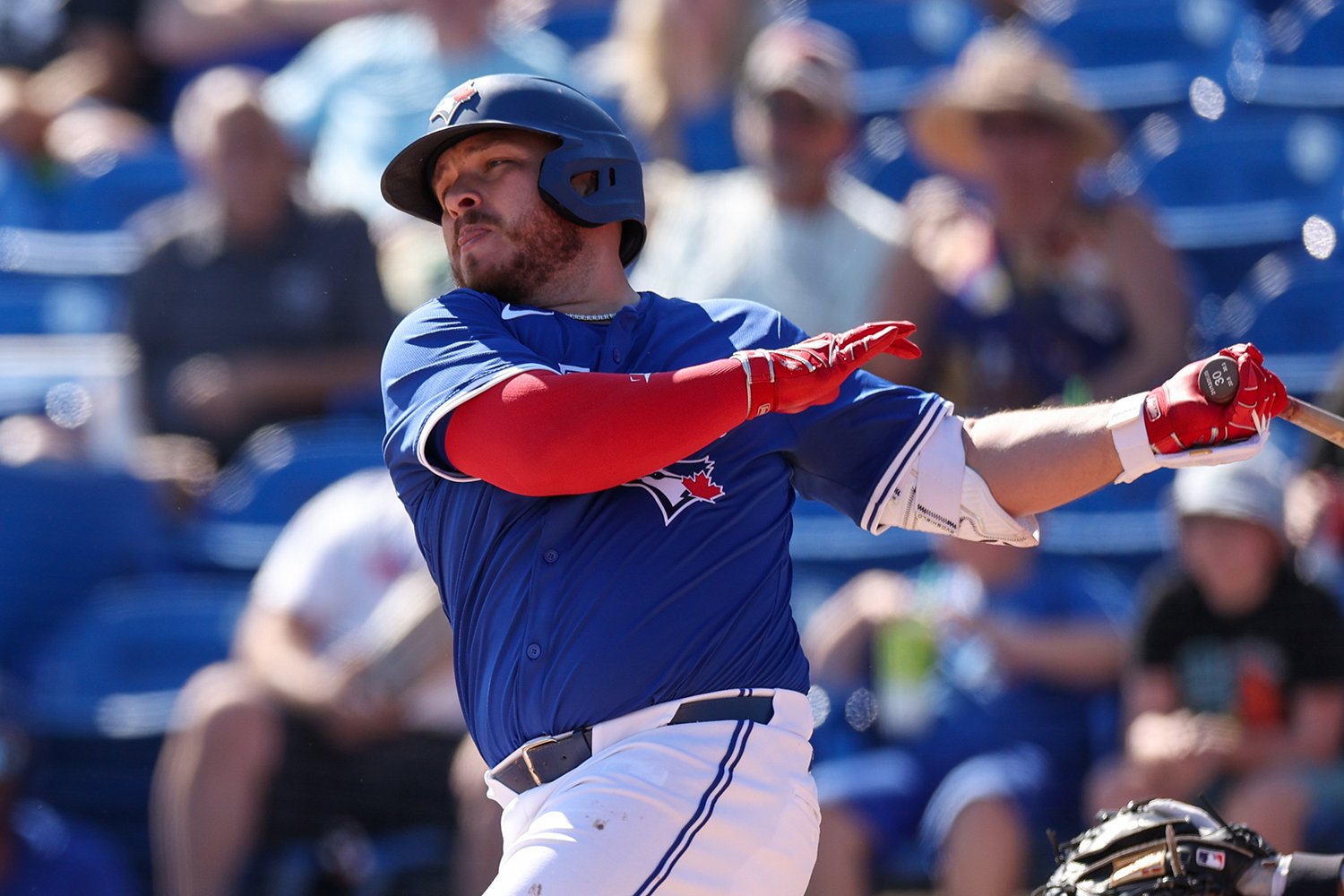 On Saturday night, the Blue Jays and catcher Alejandro Kirk agreed on a five-year, $58-million extension, according to Robert Murrary of FanSided. The deal includes a $6-million signing bonus without any options or deferrals, leaving his $4.6-million arbitration salary for the 2025 season in place and running through the end of the 2030 season. It may not have been the extension most Blue Jays fans were hoping to see this spring, but it is a very impactful one nonetheless. Kirk is 26 years old and was just one year away from reaching free agency, but this extension buys out his last year of arbitration and four free agent years, meaning he won't be a free agent until after his age-31 season. It's easy to see why the Blue Jays wanted to keep Kirk around. After trading Danny Jansen to the Red Sox last July, the Blue Jays haven’t done much to replace him, meaning that Kirk has been the undisputed first catcher on the depth chart since that time. Since his debut in 2020, Kirk's 36 defensive runs saved are tied for second-most among all catchers while his 31 fielding runs are tied for fourth. Kirk combines that elite defence with a Silver Slugger, a career 107 OPS+, and some reason for optimism that the offence could be even better. This seems like a good bet for a player who is just 26 years old. The move shouldn’t come as much of a surprise. Earlier this week, President and CEO Mark Shapiro raved about Kirk saying, “Kirky’s for elite mental attributes, Elite. Slows the game down as well as anybody I've seen.” Since Shapiro and Ross Atkins took over the front office, this is the only the third deal longer than two years that the team has handed out, joining the five-year, $52-million dollar deal Randal Grichuk signed in 2019 and the seven-year, $131-million dollar deal Jose Berríos signed in 2021. The deal seems like a good fit for both parties involved. The Blue Jays don't have much in the farm system at the catching position and will now have some certainty at that spot for the next half-decade. Kirk’s deal will give him some financial security for the same amount of time. Given Kirk’s elite defensive ability and the chance for an improvement in his offensive game, will now get several more chances to put it all together while playing in Toronto.
 -
The Blue Jays have been rolling throughout spring training. Breaking down five numbers that portend good things for the regular season. Baseball has always been a numbers game, Almost every baseball fan can tell you the importance of Jackie Robinson's number 42, or Cal Ripken Jr. and the number 2,131, or Joe DiMaggio and the number 56. Players establish their Hall of Fame credentials by reaching certain career numbers as well: 3,000 hits, 500 home runs, or (once upon a time) 300 wins, almost guarantee you a plaque in Cooperstown. The Blue Jays have their own set of famous numbers throughout history. First and foremost: 1992 and 1993. The number 32 is the only one hanging from the rafters in the Rogers Centre. Then there's 727,819: the record-setting number of Loonie Dogs eaten at the Rogers Centre in 2024. This spring, the Blue Jays have been putting up some impressive numbers, the most notable being 15, the number in the win column during spring training. Even if John Schneider and company aren't chasing the Golden Grapefruit as they claim, it's still nice to see the wins piling up for a team that will need a lot of them in order to make the 2025 season a success. As Schneider knows, spring training numbers don’t necessarily translate into the regular season, but as spring goes on and sample sizes get a little bit larger, we may be able to learn a few things. Let's take a look at five numbers that may mean something going into the season. Number One: 54.8% That would be Alejandro Kirk's hard-hit rate (during games in Statcast-enabled stadiums). It's leaps and bounds higher than anything we’ve seen from Kirk in his career, and it makes the nice spring that Kirk is putting together, an OBP-heavy .306/.366/.417 slash line, look even more encouraging. Kirk has been showing signs that an offensive resurgence could be in the cards this season. Number Two: 250 That's how many strikeouts the Blue Jays have notched so far this season. This is a very welcome sight to see! In 2024 Blue Jays pitchers ranked 24th in baseball. This spring, they're in third place, both in total strikeouts and on a per-inning basis. Most notably, Max Scherzer has struck out 14 in his nine innings of work, while Chris Bassitt, Jose Berrios, Bowden Francis and Yariel Rodriguez are all in double digits. Yimi García and Jeff Hoffman have nine and eight strikeouts respectively. The Jays pitchers struggled in a lot of ways last year, but if they are able to rely on the strikeout more this season it’ll go a long way to helping a pitching staff and particularly a bullpen that was subpar last season. Number Three: 4 This is the number of home runs Bo Bichette has hit this spring. Notably, it is also the amount of home runs that Bo Bichette hit during the entire 2024 season. The re-emergence of Bichette this spring has got to be a delight to all parties involved. From 2021 to 2023, Bichette was a routine 20-homer player, but the power numbers fell off a cliff amid an avalanche of injuries. It's not just the home runs either. Bichette's spring wOBA sits at .445 after a paltry .264 in 2024. Bichette is currently running an average exit velocity of 93.2 mph. That's not a sustainable number going into the season, but it's an excellent sign after he averaged 89.2 mph last season. If the Bo Bichette the Jays get this season looks anything like this slugger with the sharp new haircut, it would represent the best-case scenario for all parties. Number Four: 25 That's the number of plate appearances Alan Roden made this spring before he struck out for the first time. Roden's claim to fame as a prospect has always been his ability to run exquisite walk and strikeout rates, and this spring he's walked twice as often as he's struck out! Twenty-five straight PAs without a strikeout is impressive for anyone, but especially for a guy without a single major league plate appearance to his name. Roden is slashing an absurd .391/.545/.739 so far this spring. Real impressive, and a forceful case for Roden to break camp with the big club. Number Five: 20 This is how many more strikeouts than walks the trio of Hoffman, García and Chad Green have registered so far this spring. Remember last year, when the Blue Jays had the worst bullpen in franchise history? That's surely not going to be the case this year. All three of these pitchers have been dynamite so far in spring. García in particular has looked excellent, throwing six innings and allowing only two hits while striking out nine and walking nobody at all. In 2024, the Blue Jays lost 35 games that they had at one point led. This has got to give the team confidence, knowing that if the starter gives them six quality innings, this trio will be ready to slam the door. We'll end with one last reminder that spring training stats come and go, and once we get into the dog days of summer, very few of us are going to remember what happened in Dunedin. But it's worth keeping these in mind as we get closer to Opening Day and we do our best to prepare for the season to come. If the regular season is anything like spring training, the Blue Jays will be in good shape. View full article
-
- 2
-
-
- bo bichette
- alejandro kirk
- (and 1 more)
-
 Baseball has always been a numbers game, Almost every baseball fan can tell you the importance of Jackie Robinson's number 42, or Cal Ripken Jr. and the number 2,131, or Joe DiMaggio and the number 56. Players establish their Hall of Fame credentials by reaching certain career numbers as well: 3,000 hits, 500 home runs, or (once upon a time) 300 wins, almost guarantee you a plaque in Cooperstown. The Blue Jays have their own set of famous numbers throughout history. First and foremost: 1992 and 1993. The number 32 is the only one hanging from the rafters in the Rogers Centre. Then there's 727,819: the record-setting number of Loonie Dogs eaten at the Rogers Centre in 2024. This spring, the Blue Jays have been putting up some impressive numbers, the most notable being 15, the number in the win column during spring training. Even if John Schneider and company aren't chasing the Golden Grapefruit as they claim, it's still nice to see the wins piling up for a team that will need a lot of them in order to make the 2025 season a success. As Schneider knows, spring training numbers don’t necessarily translate into the regular season, but as spring goes on and sample sizes get a little bit larger, we may be able to learn a few things. Let's take a look at five numbers that may mean something going into the season. Number One: 54.8% That would be Alejandro Kirk's hard-hit rate (during games in Statcast-enabled stadiums). It's leaps and bounds higher than anything we’ve seen from Kirk in his career, and it makes the nice spring that Kirk is putting together, an OBP-heavy .306/.366/.417 slash line, look even more encouraging. Kirk has been showing signs that an offensive resurgence could be in the cards this season. Number Two: 250 That's how many strikeouts the Blue Jays have notched so far this season. This is a very welcome sight to see! In 2024 Blue Jays pitchers ranked 24th in baseball. This spring, they're in third place, both in total strikeouts and on a per-inning basis. Most notably, Max Scherzer has struck out 14 in his nine innings of work, while Chris Bassitt, Jose Berrios, Bowden Francis and Yariel Rodriguez are all in double digits. Yimi García and Jeff Hoffman have nine and eight strikeouts respectively. The Jays pitchers struggled in a lot of ways last year, but if they are able to rely on the strikeout more this season it’ll go a long way to helping a pitching staff and particularly a bullpen that was subpar last season. Number Three: 4 This is the number of home runs Bo Bichette has hit this spring. Notably, it is also the amount of home runs that Bo Bichette hit during the entire 2024 season. The re-emergence of Bichette this spring has got to be a delight to all parties involved. From 2021 to 2023, Bichette was a routine 20-homer player, but the power numbers fell off a cliff amid an avalanche of injuries. It's not just the home runs either. Bichette's spring wOBA sits at .445 after a paltry .264 in 2024. Bichette is currently running an average exit velocity of 93.2 mph. That's not a sustainable number going into the season, but it's an excellent sign after he averaged 89.2 mph last season. If the Bo Bichette the Jays get this season looks anything like this slugger with the sharp new haircut, it would represent the best-case scenario for all parties. Number Four: 25 That's the number of plate appearances Alan Roden made this spring before he struck out for the first time. Roden's claim to fame as a prospect has always been his ability to run exquisite walk and strikeout rates, and this spring he's walked twice as often as he's struck out! Twenty-five straight PAs without a strikeout is impressive for anyone, but especially for a guy without a single major league plate appearance to his name. Roden is slashing an absurd .391/.545/.739 so far this spring. Real impressive, and a forceful case for Roden to break camp with the big club. Number Five: 20 This is how many more strikeouts than walks the trio of Hoffman, García and Chad Green have registered so far this spring. Remember last year, when the Blue Jays had the worst bullpen in franchise history? That's surely not going to be the case this year. All three of these pitchers have been dynamite so far in spring. García in particular has looked excellent, throwing six innings and allowing only two hits while striking out nine and walking nobody at all. In 2024, the Blue Jays lost 35 games that they had at one point led. This has got to give the team confidence, knowing that if the starter gives them six quality innings, this trio will be ready to slam the door. We'll end with one last reminder that spring training stats come and go, and once we get into the dog days of summer, very few of us are going to remember what happened in Dunedin. But it's worth keeping these in mind as we get closer to Opening Day and we do our best to prepare for the season to come. If the regular season is anything like spring training, the Blue Jays will be in good shape.
 -
Sring training records don't matter, but there's still a lot to be encouraged about in Dunedin right now. Baseball is fun! The constant battle between the pitcher and the hitter, the excitement of knowing your team always has a chance to win until the 27th out is made, or just having a great time out at the ballpark. All are solid reasons to enjoy the game. The one thing that makes baseball better is winning. So far the Toronto Blue Jays have been doing a lot of it this spring. On Monday afternoon, the Blue Jays welcomed the Houston Astros into a sunny but windy TD Ballpark in Dunedin. After surrendering three quick runs, the Blue Jays scored eight unanswered, thanks in part to a Bo Bichette home run that literally left the stadium . Will Wagner and Ernie Clement each contributed RBI doubles, and Addison Barger hit his own whopping 421-foot home run, his second of the spring. The game ended in a thrilling 8-3 victory for the home team. It was the Blue Jays' sixth win in eight games. As of Tuesday morning, the Blue Jays are 10-6, full game up on the Red Sox for the best record in the Grapefruit League. Spring training records don't mean much. In 2024, the Orioles had spring's best record at 23-6, then they got swept out of the first round of the playoffs. The best spring team of 2023 was the Cardinals, and they finished dead last in the NL Central. In 2022, the Angels had the best spring record and they haven’t made the playoffs since people across North America were still regularly doing the ice bucket challenge. But while wins and losses might not mean much, a deeper can give us a better understanding of the positives happening across camp. There are reasons to think Toronto's record has been well-earned too. The Blue Jays have a +23 run differential and 113 runs scored, both the best marks in the league. Thirty Blue Jays have made at least one plate appearance this spring, and 28 of them have a wRC+ of 103 or higher, meaning nearly every batter has performed above the league average. The only two that haven't delivered are Matt Whatley, (who is very low on the catching depth chart right now) and George Springer. However, Springer has still reached base three times via the base on balls and twice more via being hit by pitches. On the pitching side, Max Scherzer is in the top 10 in swinging strike rate, Kevin Gausman looks like his old self, and the late-end bullpen combination of Jeff Hoffman, Yimi García, and Chad Green have combined to go 11 scoreless innings with 14 strikeouts and just one walk. The only real blemishes have been some home run problems for Bowden Francis, some control issues for Yariel Rodríguez, and some growing pains for the young Jake Bloss. Here are the Blue Jays' ranks in some major hitting categories across both the Cactus and Grapefruit Leagues: Third in Runs scored (113) Second in OBP (.372) Third in OPS (.846) Sixth in home runs (24) 10th in walks drawn (76) Fifth in fewest strikeouts (137) John Schneider and the rest of the coaching staff have got to be thrilled at what they have seen from this offence so far. The classic recipe for success in baseball consists of hitting the ball hard, hitting it often, and having your pitchers limit their mistakes. That's exactly what has been happening for the Blue Jays so far this spring. There is a long way to go between the cold days of early March and raising a banner in the Rogers Centre come October, but with what we've seen so far this spring it's a very good sign. What could be more fun than that? View full article
-
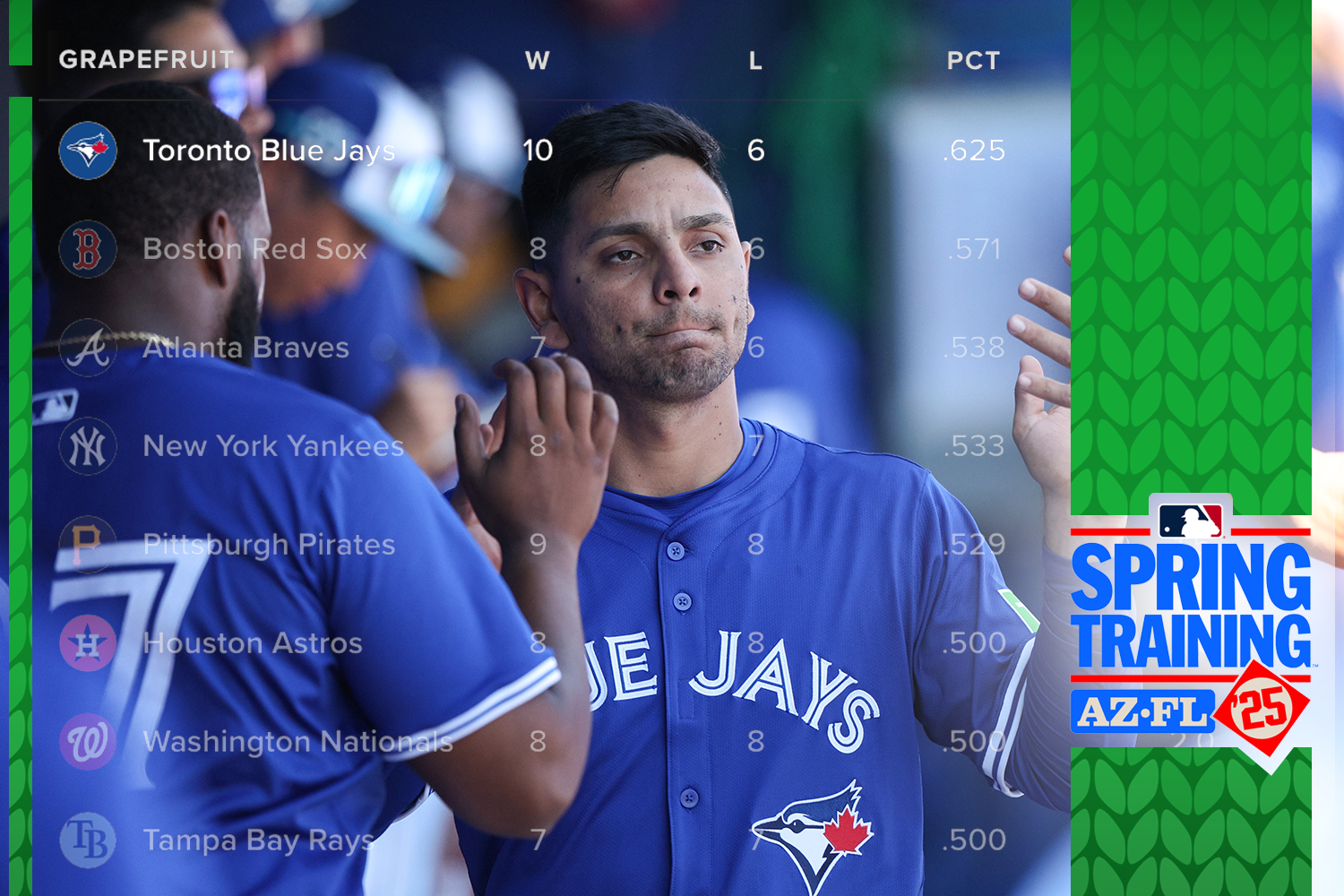 Baseball is fun! The constant battle between the pitcher and the hitter, the excitement of knowing your team always has a chance to win until the 27th out is made, or just having a great time out at the ballpark. All are solid reasons to enjoy the game. The one thing that makes baseball better is winning. So far the Toronto Blue Jays have been doing a lot of it this spring. On Monday afternoon, the Blue Jays welcomed the Houston Astros into a sunny but windy TD Ballpark in Dunedin. After surrendering three quick runs, the Blue Jays scored eight unanswered, thanks in part to a Bo Bichette home run that literally left the stadium . Will Wagner and Ernie Clement each contributed RBI doubles, and Addison Barger hit his own whopping 421-foot home run, his second of the spring. The game ended in a thrilling 8-3 victory for the home team. It was the Blue Jays' sixth win in eight games. As of Tuesday morning, the Blue Jays are 10-6, full game up on the Red Sox for the best record in the Grapefruit League. Spring training records don't mean much. In 2024, the Orioles had spring's best record at 23-6, then they got swept out of the first round of the playoffs. The best spring team of 2023 was the Cardinals, and they finished dead last in the NL Central. In 2022, the Angels had the best spring record and they haven’t made the playoffs since people across North America were still regularly doing the ice bucket challenge. But while wins and losses might not mean much, a deeper can give us a better understanding of the positives happening across camp. There are reasons to think Toronto's record has been well-earned too. The Blue Jays have a +23 run differential and 113 runs scored, both the best marks in the league. Thirty Blue Jays have made at least one plate appearance this spring, and 28 of them have a wRC+ of 103 or higher, meaning nearly every batter has performed above the league average. The only two that haven't delivered are Matt Whatley, (who is very low on the catching depth chart right now) and George Springer. However, Springer has still reached base three times via the base on balls and twice more via being hit by pitches. On the pitching side, Max Scherzer is in the top 10 in swinging strike rate, Kevin Gausman looks like his old self, and the late-end bullpen combination of Jeff Hoffman, Yimi García, and Chad Green have combined to go 11 scoreless innings with 14 strikeouts and just one walk. The only real blemishes have been some home run problems for Bowden Francis, some control issues for Yariel Rodríguez, and some growing pains for the young Jake Bloss. Here are the Blue Jays' ranks in some major hitting categories across both the Cactus and Grapefruit Leagues: Third in Runs scored (113) Second in OBP (.372) Third in OPS (.846) Sixth in home runs (24) 10th in walks drawn (76) Fifth in fewest strikeouts (137) John Schneider and the rest of the coaching staff have got to be thrilled at what they have seen from this offence so far. The classic recipe for success in baseball consists of hitting the ball hard, hitting it often, and having your pitchers limit their mistakes. That's exactly what has been happening for the Blue Jays so far this spring. There is a long way to go between the cold days of early March and raising a banner in the Rogers Centre come October, but with what we've seen so far this spring it's a very good sign. What could be more fun than that?
 -
Alan Roden’s Case for Making the Blue Jays’ Opening Day Roster
Jesse Burrill posted an article in Blue Jays
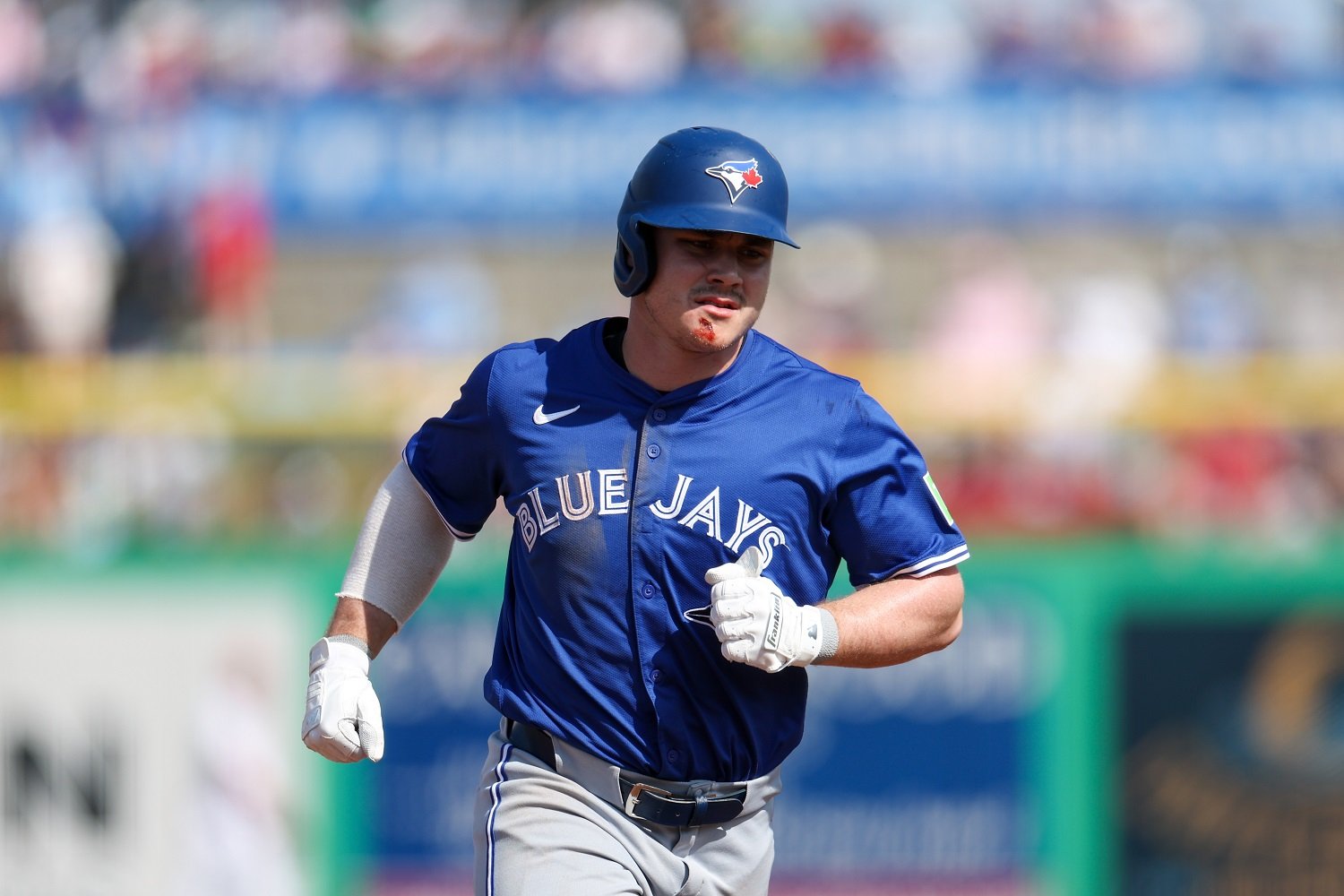 The Blue Jays Spring Training has been full of pleasant surprises so far. Max Scherzer looks like he’s turned back the clock, Kevin Gausman finally looks healthy again, and both Bo Bichette and Vladimir Guerrero Jr. look good at the plate as well. But there is one player who is catching everyone’s attention this spring: Alan Roden. General Manager Ross Atkins caught a few people by surprise in February, when Keegan Matheson asked which prospects he was excited about going into spring and he called out Roden specifically saying, “I’ll single out and put some pressure on Alan Roden. He’s done so much to put himself in a position to move through the system quickly.” Its quite rare for Atkins to call out a prospect in the public like that, and Roden appears to be listening. So far in the Spring he’s 6-for-14 with two home runs. On top of that, he’s drawn four walks, has been hit by three pitches, and has yet to strike out in his 21 plate appearances. Really impressive stuff. The minor league track record has been pretty impressive too, in 2023 between Low A, High A, and Double A, he put together a 149 wRC+ with more walks (68) than strikeouts (64). In 2024 between New Hampshire and Buffalo, it was more of the same: a 136 wRC+, 64 walks, and 75 strikeouts. Combine that with 16 home runs and 14 stolen bases he’s been a very complete player. No matter what expectations were from Atkins coming into camp, it's a safe bet that Roden has already exceeded them. The real question is whether he's put pressure on the front office to make the Opening Day roster. It's an interesting dilemma and an important decision for the Blue Jays. Let’s take a look at some of the arguments for and against Roden being on the opening-day roster. 1) Alan Roden might be one of our top nine hitters already. It's hard to predict that a player who has yet to see any big league time already be a top-nine hitter but Roden might fit that mold. He’s done nothing but hit in the minor leagues and has put it together again this spring. Even some of the projection systems seem to be buying into the skill set Roden brings to the table. Steamer projects Roden to finish sixth on the team in wRC+ and ZIPS has him fifth. Projections aren’t everything; that's why they play the games, but when the data and the eye test both look promising, it's a good assumption to assume Roden will be an above-average offensive producer in his rookie season. 2) He’s 25 years old, so starting his service time clock shouldn't be an issue. We’ve seen the Blue Jays in the past wait to call up their prospects until they’ve secured an extra year of service time with their top prospects. The Blue Jays did this with Guerrero in 2019 and the Cubs did this with Kris Bryant during his rookie season. Even if the Blue Jays were to call up Roden and have him here until there on Opening Day, he’ll be under team control for six more seasons, meaning he will not be a free agent until he enters his age-31 season, and that's around that time where MLB players start showing a sign of decline. The Blue Jays are going to get the peak years of Roden's career whether he’s on the Opening Day roster or not. 3) There is a sense of urgency to win now. Let’s take a bigger pitcher look at this team. As of now, it's the last season with both Guerrero and Bichette under contract, and the Blue Jays have made a lot of win-now moves, adding Anthony Santander, Jeff Hoffman, and others to help give this team the best chance to win this season. If Roden truly is one of the best hitters on this team, then getting a full 162-game production out of him will help maximize his potential impact on the roster. Now as much fun as it would be to have Roden on the roster, The Blue Jays are the ones who are ultimately going to make the decision on this, and here are some reasons why they might not do so: 1) He’s currently not on the 40-man roster. This might be fairly minor, as the Blue Jays do have some names to consider. Alek Manoah and Adam Macko will likely be moved to the 60-Day IL once the season starts, which would open up some spots. There are some names on the back end of the roster that the Blue Jays might not be willing to give up on yet. Sending Roden to Buffalo and off the roster to start the season might give the Blue Jays a chance to get a further look at guys like Nick Robertson, Easton Lucas, beacuse Ryan Burr and Erik Swanson are both currently dealing with injuries. Either way, it won’t be long until Roden cracks the roster 2) He might not get extended playing time in the big leagues. As things currently stand, the Blue Jays outfield group is quite crowded. Daulton Varsho is currently DH'ing in spring, and even if he does start the season on the IL, he may not be for long. George Springer and Santander are likely going to see the majority of the playing time in right field, with Springer seeing occasional time in left field. Then you have players like Addison Barger, Davis Schneider, Joey Loperfido, Myles Straw, Steward Berroa, Jonatan Clase, and Nathan Lukes, all of whom are on the 40-man roster and all of whom already spent time in the major leagues It’s going to be hard for any of them to get regular at-bats, and it can be hard for a prospect like Roden to fully develop if he’s only playing two or three times a week. The Jays may want him to get regular at-bats in Buffalo. 3) The Jays might not be willing to lock up the DH Spot. This goes hand in hand with my second point, but barring an injury, the only way Roden can see a full-time spot in the majors is if the Blue Jays are open to putting Santander or Springer in the DH spot fairly regularly. Over the past few seasons, the Blue Jays ohave liked using the DH spot to give their players a half-day off or to play platoon matchups with players like Will Wagner and Orelvis Martinez. All things considered, whether he starts the season in Toronto or down in Buffalo, it's not going to be long before Roden gets the call to the big leagues. But in a season when each win will matter so much for the Blue Jays, going north with the best 26 guys might be the move, and there isn't much doubt that Roden is one of those best 26 players.
 -
Alan Roden looks like one of the Blue Jays' 26 best players, but does he have a path toward starting the season on the roster? The Blue Jays Spring Training has been full of pleasant surprises so far. Max Scherzer looks like he’s turned back the clock, Kevin Gausman finally looks healthy again, and both Bo Bichette and Vladimir Guerrero Jr. look good at the plate as well. But there is one player who is catching everyone’s attention this spring: Alan Roden. General Manager Ross Atkins caught a few people by surprise in February, when Keegan Matheson asked which prospects he was excited about going into spring and he called out Roden specifically saying, “I’ll single out and put some pressure on Alan Roden. He’s done so much to put himself in a position to move through the system quickly.” Its quite rare for Atkins to call out a prospect in the public like that, and Roden appears to be listening. So far in the Spring he’s 6-for-14 with two home runs. On top of that, he’s drawn four walks, has been hit by three pitches, and has yet to strike out in his 21 plate appearances. Really impressive stuff. The minor league track record has been pretty impressive too, in 2023 between Low A, High A, and Double A, he put together a 149 wRC+ with more walks (68) than strikeouts (64). In 2024 between New Hampshire and Buffalo, it was more of the same: a 136 wRC+, 64 walks, and 75 strikeouts. Combine that with 16 home runs and 14 stolen bases he’s been a very complete player. No matter what expectations were from Atkins coming into camp, it's a safe bet that Roden has already exceeded them. The real question is whether he's put pressure on the front office to make the Opening Day roster. It's an interesting dilemma and an important decision for the Blue Jays. Let’s take a look at some of the arguments for and against Roden being on the opening-day roster. 1) Alan Roden might be one of our top nine hitters already. It's hard to predict that a player who has yet to see any big league time already be a top-nine hitter but Roden might fit that mold. He’s done nothing but hit in the minor leagues and has put it together again this spring. Even some of the projection systems seem to be buying into the skill set Roden brings to the table. Steamer projects Roden to finish sixth on the team in wRC+ and ZIPS has him fifth. Projections aren’t everything; that's why they play the games, but when the data and the eye test both look promising, it's a good assumption to assume Roden will be an above-average offensive producer in his rookie season. 2) He’s 25 years old, so starting his service time clock shouldn't be an issue. We’ve seen the Blue Jays in the past wait to call up their prospects until they’ve secured an extra year of service time with their top prospects. The Blue Jays did this with Guerrero in 2019 and the Cubs did this with Kris Bryant during his rookie season. Even if the Blue Jays were to call up Roden and have him here until there on Opening Day, he’ll be under team control for six more seasons, meaning he will not be a free agent until he enters his age-31 season, and that's around that time where MLB players start showing a sign of decline. The Blue Jays are going to get the peak years of Roden's career whether he’s on the Opening Day roster or not. 3) There is a sense of urgency to win now. Let’s take a bigger pitcher look at this team. As of now, it's the last season with both Guerrero and Bichette under contract, and the Blue Jays have made a lot of win-now moves, adding Anthony Santander, Jeff Hoffman, and others to help give this team the best chance to win this season. If Roden truly is one of the best hitters on this team, then getting a full 162-game production out of him will help maximize his potential impact on the roster. Now as much fun as it would be to have Roden on the roster, The Blue Jays are the ones who are ultimately going to make the decision on this, and here are some reasons why they might not do so: 1) He’s currently not on the 40-man roster. This might be fairly minor, as the Blue Jays do have some names to consider. Alek Manoah and Adam Macko will likely be moved to the 60-Day IL once the season starts, which would open up some spots. There are some names on the back end of the roster that the Blue Jays might not be willing to give up on yet. Sending Roden to Buffalo and off the roster to start the season might give the Blue Jays a chance to get a further look at guys like Nick Robertson, Easton Lucas, beacuse Ryan Burr and Erik Swanson are both currently dealing with injuries. Either way, it won’t be long until Roden cracks the roster 2) He might not get extended playing time in the big leagues. As things currently stand, the Blue Jays outfield group is quite crowded. Daulton Varsho is currently DH'ing in spring, and even if he does start the season on the IL, he may not be for long. George Springer and Santander are likely going to see the majority of the playing time in right field, with Springer seeing occasional time in left field. Then you have players like Addison Barger, Davis Schneider, Joey Loperfido, Myles Straw, Steward Berroa, Jonatan Clase, and Nathan Lukes, all of whom are on the 40-man roster and all of whom already spent time in the major leagues It’s going to be hard for any of them to get regular at-bats, and it can be hard for a prospect like Roden to fully develop if he’s only playing two or three times a week. The Jays may want him to get regular at-bats in Buffalo. 3) The Jays might not be willing to lock up the DH Spot. This goes hand in hand with my second point, but barring an injury, the only way Roden can see a full-time spot in the majors is if the Blue Jays are open to putting Santander or Springer in the DH spot fairly regularly. Over the past few seasons, the Blue Jays ohave liked using the DH spot to give their players a half-day off or to play platoon matchups with players like Will Wagner and Orelvis Martinez. All things considered, whether he starts the season in Toronto or down in Buffalo, it's not going to be long before Roden gets the call to the big leagues. But in a season when each win will matter so much for the Blue Jays, going north with the best 26 guys might be the move, and there isn't much doubt that Roden is one of those best 26 players. View full article
.jpg.101b57db118b854f32c126e9f1f26baa.jpg)
.jpg.31b9216e1284a848852193d9578efc75.jpg)