


Jesse Burrill
-
Posts
262 -
Joined
-
Last visited
Content Type
Profiles
Toronto Blue Jays Videos
2026 Toronto Blue Jays Top Prospects Ranking
Toronto Blue Jays Free Agent & Trade Rumors, Notes, & Tidbits
Guides & Resources
2025 Toronto Blue Jays Draft Pick Tracker
News
2026 Toronto Blue Jays Draft Tracker: Picks & Bonuses
Forums
Blogs
Events
Store
Downloads
Gallery
Everything posted by Jesse Burrill
-

Nearly 36 Years Old, George Springer Might Be Better Than Ever
Jesse Burrill posted an article in Blue Jays
.jpg.850ae0ac21a346bf537d8bd94aae50e7.jpg) George Springer's career has been defined by big moments and loud contact. He has a reputation as one of the game's brightest stars. In other words, he’s not new to the spotlight. Just take a look at his resume. He’s a four-time All-Star and a two-time Silver Slugger Award winner. He was also a key part of the Houston Astros' championship run in 2017, hitting five home runs and winning World Series MVP. That's exactly the type of player the Blue Jays were signing up for when they signed him to a six-year, $150 million contract in January of 2021, which, at the time, was the largest contract in the history of the organization. The first few years of the deal worked out well. Springer battled injuries in his first season but was productive when he played, running a wRC+ of 140. In 2022, he was healthier and still productive, hitting 25 home runs and sporting a wRC+ of 133. Then things started to drop. In 2023, the power numbers dropped, the OPS fell to .732 with a wRC+ of just 103. Things looked even worse in 2024; with a .674 OPS and a 94 wRC+, Springer was a below-average hitter. Many people (myself included) were starting to think that Springer’s days as a high-impact major leaguer might be over, and who could blame them? He turned 35 years old last September and was coming off two straight years of sharp decline; history suggests that a rebound at his age isn't likely. Especially after he went just 4-for-37 in the spring with one lone extra base hit. But George Springer is special, and special players don’t go down easy. After all, this is the player who was injured for a large part of the 2021 season but still hit 22 home runs, and who has more leadoff home runs than any other player in Blue Jays history. Back in January, Davy Andrews wrote a piece making the case for an "uncooked" George Springer. In it, he highlighted that in 2024, Springer had a career low BABIP (.245 in 2024, vs .296 for his career), and while his average exit velocity was low, his 90th percentile exit velocity was right in line with his 2023 number (105.5 in 2023 vs. 105.4 in 2024). Lastly, he argued Springer hit too many balls on the ground and not enough to his pull side. If Springer could make improvements in that area, then maybe a good hitter could be found again. So, let's start there. Firstly, the BABIP has taken a huge jump in 2025. It's risen to .325, the highest it's been in a decade: But there is more to BABIP than just getting lucky with balls in play. The defence that a batter is playing against has something to do with it, as does the quality of contact he has been making. Here is the range of league-wide BABIP per batted ball type over the last five seasons: Groundballs: .241 - .249 Line Drives: .616 - .631 Fly Balls: .116 - .127 Pop Ups: .012-.018 And here are Springer's batted ball type rates over his career: Hitting more line drives will lead to a higher BABIP, and Springer’s line drive rate is the highest it has been since 2015. Pair that with hitting fewer ground balls, and it's one of the reasons his season has been so much better. Secondly, there was Davy's argument that Springer still had it in him to hit the ball hard, and he’s been doing that at an extreme level this year. His hard-hit rate (47.2%) is the highest of his career, as is his xSLG (.586). As well, his 90th-percentile exit velocity (107.0) is the highest it's been over the last three seasons. Part of the reason Springer is hitting the ball harder is that he’s swinging the bat harder. In 2024, his average bat speed was 71.9 mph, which had him outside of the top 100 qualified hitters. Jump to 2025, and that number is up to 73.6 mph, which has him at 64th overall. However, the number that really pops off the page is how often he gets off his “A” swing. Baseball Savant has a stat called fast swing rate, which measures how often a player swings the bat at 75+ mph. Springer's posted a 24.4% fast swing rate in 2023 and a 22.4% rate in 2024, but that number has skyrocketed to 38.8% in 2025. That jump of 16% is the highest for any Blue Jays hitter between the past two seasons. So, when Springer swings, he’s swinging harder AND he’s making better contact. There’s more than just that, too. Swinging hard doesn’t mean that good results are guaranteed to follow. Making contact is still extremely important. After all, no one really cares how hard you swing at ball four. But Springer has made dramatic improvements in that department, too. When Springer gets a pitch at the belt level, he’s been crushing it: Baseball Prospectus houses a metric called “SEAGER,” which is a stat that's used to evaluate swing decisions. It is designed to show who is the best at taking the pitches they should be taking and swinging at the ones they should be doing damage on. (The metric is appropriately named after Corey Seager, who has mastered this approach, known to scouts as a “selective aggression.”) Here is where Springer really shines. Springer is third in baseball in this metric, trailing only Seager himself and AL MVP co-favourite Aaron Judge. This echoes some of the game plans that the new Blue Jays hitting coaches have wanted to see from their hitters this year. Back in April, Ben Nicholson-Smith of Sportsnet spoke to hitting coach David Popkins. “It just seemed like he kind of lost that aggression that he's had his whole career, that I've always admired from him,” Popkins recalled. “You’d see him kind of sacrifice bat speed just to put balls in play and really reaching for balls and weak contact early. Almost like he’s scared to get to two strikes. Versus the best version of him, I feel like is not afraid to take a couple borderline pitches, and then if you make one mistake, he’s going to hit it really hard”. The data clearly backs that up. Springer himself has even commented on this exact thing, telling Nicholson-Smith, “The last couple of years, there may not have been some A-swings in a lot of at-bats. [Now], I understand what they need from me, and I need to be in a position to get my A-swing off in an at-bat, and that’s kind of all that matters.” Sometimes baseball can be just so simple, and it's worth keeping in mind that sometimes, for a player as talented as Springer is, it doesn’t take much to tap back into that talent – it just takes the right scout, coach, teammate, or friend to find a way to make things click again. Now, George Springer is back and arguably better than ever. Safe to say he’s definitely not “cooked.” Stats updated prior to games on September 8.
George Springer's career has been defined by big moments and loud contact. He has a reputation as one of the game's brightest stars. In other words, he’s not new to the spotlight. Just take a look at his resume. He’s a four-time All-Star and a two-time Silver Slugger Award winner. He was also a key part of the Houston Astros' championship run in 2017, hitting five home runs and winning World Series MVP. That's exactly the type of player the Blue Jays were signing up for when they signed him to a six-year, $150 million contract in January of 2021, which, at the time, was the largest contract in the history of the organization. The first few years of the deal worked out well. Springer battled injuries in his first season but was productive when he played, running a wRC+ of 140. In 2022, he was healthier and still productive, hitting 25 home runs and sporting a wRC+ of 133. Then things started to drop. In 2023, the power numbers dropped, the OPS fell to .732 with a wRC+ of just 103. Things looked even worse in 2024; with a .674 OPS and a 94 wRC+, Springer was a below-average hitter. Many people (myself included) were starting to think that Springer’s days as a high-impact major leaguer might be over, and who could blame them? He turned 35 years old last September and was coming off two straight years of sharp decline; history suggests that a rebound at his age isn't likely. Especially after he went just 4-for-37 in the spring with one lone extra base hit. But George Springer is special, and special players don’t go down easy. After all, this is the player who was injured for a large part of the 2021 season but still hit 22 home runs, and who has more leadoff home runs than any other player in Blue Jays history. Back in January, Davy Andrews wrote a piece making the case for an "uncooked" George Springer. In it, he highlighted that in 2024, Springer had a career low BABIP (.245 in 2024, vs .296 for his career), and while his average exit velocity was low, his 90th percentile exit velocity was right in line with his 2023 number (105.5 in 2023 vs. 105.4 in 2024). Lastly, he argued Springer hit too many balls on the ground and not enough to his pull side. If Springer could make improvements in that area, then maybe a good hitter could be found again. So, let's start there. Firstly, the BABIP has taken a huge jump in 2025. It's risen to .325, the highest it's been in a decade: But there is more to BABIP than just getting lucky with balls in play. The defence that a batter is playing against has something to do with it, as does the quality of contact he has been making. Here is the range of league-wide BABIP per batted ball type over the last five seasons: Groundballs: .241 - .249 Line Drives: .616 - .631 Fly Balls: .116 - .127 Pop Ups: .012-.018 And here are Springer's batted ball type rates over his career: Hitting more line drives will lead to a higher BABIP, and Springer’s line drive rate is the highest it has been since 2015. Pair that with hitting fewer ground balls, and it's one of the reasons his season has been so much better. Secondly, there was Davy's argument that Springer still had it in him to hit the ball hard, and he’s been doing that at an extreme level this year. His hard-hit rate (47.2%) is the highest of his career, as is his xSLG (.586). As well, his 90th-percentile exit velocity (107.0) is the highest it's been over the last three seasons. Part of the reason Springer is hitting the ball harder is that he’s swinging the bat harder. In 2024, his average bat speed was 71.9 mph, which had him outside of the top 100 qualified hitters. Jump to 2025, and that number is up to 73.6 mph, which has him at 64th overall. However, the number that really pops off the page is how often he gets off his “A” swing. Baseball Savant has a stat called fast swing rate, which measures how often a player swings the bat at 75+ mph. Springer's posted a 24.4% fast swing rate in 2023 and a 22.4% rate in 2024, but that number has skyrocketed to 38.8% in 2025. That jump of 16% is the highest for any Blue Jays hitter between the past two seasons. So, when Springer swings, he’s swinging harder AND he’s making better contact. There’s more than just that, too. Swinging hard doesn’t mean that good results are guaranteed to follow. Making contact is still extremely important. After all, no one really cares how hard you swing at ball four. But Springer has made dramatic improvements in that department, too. When Springer gets a pitch at the belt level, he’s been crushing it: Baseball Prospectus houses a metric called “SEAGER,” which is a stat that's used to evaluate swing decisions. It is designed to show who is the best at taking the pitches they should be taking and swinging at the ones they should be doing damage on. (The metric is appropriately named after Corey Seager, who has mastered this approach, known to scouts as a “selective aggression.”) Here is where Springer really shines. Springer is third in baseball in this metric, trailing only Seager himself and AL MVP co-favourite Aaron Judge. This echoes some of the game plans that the new Blue Jays hitting coaches have wanted to see from their hitters this year. Back in April, Ben Nicholson-Smith of Sportsnet spoke to hitting coach David Popkins. “It just seemed like he kind of lost that aggression that he's had his whole career, that I've always admired from him,” Popkins recalled. “You’d see him kind of sacrifice bat speed just to put balls in play and really reaching for balls and weak contact early. Almost like he’s scared to get to two strikes. Versus the best version of him, I feel like is not afraid to take a couple borderline pitches, and then if you make one mistake, he’s going to hit it really hard”. The data clearly backs that up. Springer himself has even commented on this exact thing, telling Nicholson-Smith, “The last couple of years, there may not have been some A-swings in a lot of at-bats. [Now], I understand what they need from me, and I need to be in a position to get my A-swing off in an at-bat, and that’s kind of all that matters.” Sometimes baseball can be just so simple, and it's worth keeping in mind that sometimes, for a player as talented as Springer is, it doesn’t take much to tap back into that talent – it just takes the right scout, coach, teammate, or friend to find a way to make things click again. Now, George Springer is back and arguably better than ever. Safe to say he’s definitely not “cooked.” Stats updated prior to games on September 8. -
Blue Jays Week in Review: Bullpen Concerns Linger as August Ends
Jesse Burrill posted an article in Blue Jays
.jpg.ecc2e51f764073a5fce2f16353e60f6c.jpg) Weekly Snapshot: Mon, 8/25 through Sun, 8/31 *** Record Last Week: 3-3 (Overall: 79-58) Run Differential Last Week: + 1 (Overall: + 56) Standings: First Place in AL East (3.0 Games Up on NYY), Second in AL (0.5 games behind DET) Last Week’s Results Game 132: MIN 4 - TOR 10 Scherzer: 6.0 IP, 4 H, 4 ER, 1 BB, 5 K Kirk: 1-2, HR (11), 2 RBI, 2 BB Giménez: 2-3 HR (6), RBI, BB, 3 R Lukes: 2-5, 2 RBI, 2 R Game 133: MIN 7 - TOR 5 Bassitt: 5.2 IP, 4 H, 2 ER, 3 BB, 6 K Springer: 4-5, 2 HR (23,24), 2 RBI, 4 R Lukes: 3-4, R Bichette: 2-4 Game 134: MIN 8 - TOR 9 Lauer: 4.2 IP, 10 H, 6 ER, 0 BB, 4 K Schneider: 2-3, 2 HR (9, 10), 2 RBI, BB Giménez: 2-3, HR (7), 2 RBI Bichette: 2-5, 2 RBI Game 135: MIL 7 - TOR 2 Bieber: 5.1 IP, 5 H, 2 ER, 0 BB, 6 K Bichette: 2-4, R Schneider: 1-3, 2 RBI Kirk: 1-3, 2B, BB Game 136: MIL 4 - TOR 1 Gausman: 7.0 IP, 4 H. 1 ER, 0 BB, 8 K Straw: 3-3, 2B France: 2-3 Bichette: 1-4 Game 137: MIL 4 - TOR 8 Scherzer: 4.0 IP, 9 H, 4 ER, 0 BB, 1 K Lukes: 2-5, 2 RBI Straw: 2-3, 2 RBI, BB Springer: 2-4, RBI, 2 R Highlights Myles Straw: Here we are at the end of August, and Myles Straw appears here yet again as a highlight of the week. Everything he’s done, though, has proven that he’s worthy of that recognition. He spent the early part of the week on the bench, but after Daulton Varsho was hit in the hand and sat out of the lineup for the last few days, Straw continued to be productive. He went 5-for-8 on the week, including a double and a walk, and he thrived on defence as well; he threw out William Contreras trying to advance to third on a fly ball. Oh, and he robbed a home run too. He’s done everything the Blue Jays have asked for and more. George Springer: I haven’t been keeping track of how many times a player has appeared as a highlight on this list, but George Springer has to be a leading candidate for the highest number. He did it again this week, highlighted by a two-home run day on Tuesday. The week as a whole saw him go 10-for-24 with those two home runs and a double. He also spent a good chunk of time in left field this week, as the Blue Jays had to rotate some other players in the DH spot. He added in a team-high two stolen bases as well. George Springer just keeps doing it. Tommy Nance: We’ll touch on the rest of the bullpen in a moment, but credit to the one player in the 'pen that has actually exceeded expectations, and that's Tommy Nance. He’s been used most of the season as a low-leverage, first-man-out-of-the-bullpen type guy, but the numbers have been there. On the season, it's a 0.86 ERA with more strikeouts (24) than innings pitched (21). This week, in 4.1 IP, he allowed four baserunners, striking out five more, and, most importantly, not allowing a run to score. He really shone when he came into the game on Sunday to relieve Brendon Little. With the bases loaded and just one out, he proceeded to get a strikeout and a groundball to escape the inning and keep the Blue Jays' one-run lead at the time. Nance has proven that he deserves some more high-leverage work going forward. Kevin Gausman: This is a shoutout to the best starting pitching performance of the week, and that belonged to Kevin Gausman. He went seven innings, allowing just four hits (only one of them for extra bases), walking none, and striking out eight. He went toe to toe with Quinn Priester, who was also dominant, so Gausman had to be on his game. It continued an excellent stretch of games for Gausman, who has a 3.11 ERA since the start of July. His next start will come against the Yankees, a team that is right on the Blue Jays' heels in the AL East race. Lowlights Jeff Hoffman: This was not a good week for Jeff Hoffman, After he blew a save last week in Miami, he got into action on Tuesday to protect a one-run lead. Two pitches in, he gave up a game-tying home run, and then he gave up another homer a few batters later. After getting the save on Wednesday, he came into a tie game on Saturday, and the home run ball bit him again, with two more long balls allowed and another earned run on a double. It's been a season of ups and downs for Hoffman, and he’s now allowed 14 home runs, tied for the most in baseball by a reliever this season. His season ERA now stands at 5.11, and he has been a net negative WAR player on the season (-0.3 fWAR). He did get in the finale on Sunday, and although he allowed some baserunners, he did not allow a run. We’ll see how John Schneider and the rest of the Blue Jays staff manage Hoffman going forward. Louis Varland: This spot could have gone to many other relievers in the Jays' bullpen, as Brendon Little, Yariel Rodríguez, and Hoffman have all had pockets of poor performance lately, but we’ll use this time to highlight Louis Varland. He had a stretch dating back to August 15 during which he allowed an earned run in six straight appearances. In his first two appearances this week, that trend continued. He gave up a walk and a hit in his three batters faced against the Twins, and two more hits and another run against the Brewers in the opener on Friday. Since joining the Blue Jays, he’s pitched to a 6.97 ERA. That was not the pitcher the Blue Jays had hoped to get when they acquired him at the deadline. The saving grace may be his outing on Sunday, in which he faced five batters, set them all down, and struck out three of them. Hopefully, this was the outing that gets him back on track. Vladimir Guerrero Jr.: Don’t look now, but this was not a good week for Vlad at the plate; he went just 2-for-23 (both singles), with just two walks. Coming into Sunday, out of all qualified hitters, only Alex Bregman had a lower wOBA than Guerrero's .072 this week. It's worth noting that Vlad had been dealing with a hamstring issue that kept him out of the lineup for a few days over the previous weekend. He may still be dealing with that injury, but the Blue Jays are going to need him to step up at the plate if they’re going to remain in the lead for the AL East crown throughout September. Random Notes of the Week: Blue Jays fans ate 96,633 dollar dogs on Tuesday, a new record. Chris Bassitt recorded his 500th career strikeout as a Blue Jay this week. Ernie Clement received the Blue Jays' 2025 Heart and Hustle Award this week. The Blue Jays have signed 28-year-old DH/OF Eloy Jimenez to a minor league contract. He was most recently in the Rays' minor league system. The Blue Jays have signed LHP Ryan Borucki to a minor league deal after he was released by the Pirates last week. He pitched to a 4.47 ERA over his five seasons in Toronto from 2018-22. Former Blue Jays manager Cito Gaston was named to the Negro Leagues Baseball Museum’s Hall of Game this week. Myles Straw robbed Jackson Chourio of a home run this week, the first time he’s done that in his big league career (via Julia Kreuz). Brendon Little didn’t throw a single knuckle curve in his appearance on Sunday. Shane Bieber struck out the side in the first inning of his home debut on Friday night. Bo Bichette’s 14-game hit streak came to an end on Sunday. News, Notes and Not Playing C Alejandro Kirk had an X-ray on his left hand after taking a foul ball. Results were negative (Via Arden Zwelling). INF Ernie Clement had a CT scan on his left hand that revealed a small hairline fracture; he also received 10 stitches in his shin. He’s day-to-day (Via Zwelling). SP Max Scherzer was taken out of his start with upper back tightness (Via Mitch Bannon). Scherzer said post-game that he felt it before the start, and that he doesn't think it's going to be a long-term thing (Via Hazel Mae). OF Daulton Varsho was hit in the hand with a pitch this week. X-rays came back negative, and he is considered day-to-day for now (Via Keegan Matheson). LHP Justin Bruihl was recalled earlier this week, and RHP Paxton Schultz was sent down to Triple A. The Blue Jays have claimed INF Isiah Kiner-Falefa off waivers from the Pirates. Kiner-Falefa spent the first half of 2024 with the Blue Jays. He’s hitting .264/.300/.332 with 1 HR and 15 SB on the season. Yimi García was sent to the 60-day IL in response. 15-day IL: Yimi García Yimi García is going to have elbow surgery and is done for the year. The expectation is that he’ll be ready to go for Spring Training next year (Via Shi Davidi). 60-day IL: Anthony Santander, Alek Manoah, Bowden Francis, Nick Sandlin OF/DH Anthony Santander did a full slate of baseball activities, including running on the field. If all things go well, he’ll go on a rehab assignment after the road trip to Cincinnati (Via Davidi). RHP Alek Manoah had his rehab window extended last week and is continuing to pitch for the Buffalo Bisons (Via Ben Nicholson-Smith). Sandlin had another injection in his elbow last Monday and was expected to resume throwing over the weekend (Via Mae). He was transferred to the 60-day IL today. Trending Storylines The main storyline for the Blue Jays recently has been the performance of their bullpen. Since the All-Star break, the bullpen's ERA is at 5.72, the worst in the American League. Their 4.74 BB/9 rate is also the worst in the American League, and their -0.4 fWAR is, you guessed it, the worst in the American League. There have been some concerning signs: Brendon Little's knuckle curve hasn’t been getting as many swings and misses lately, while Jeff Hoffman and Yariel Rodríguez have seen fluctuations in their velocity as of late. The bullpen turning things around, and rather quickly, will be priority number one for this team going forward. On the offensive side of the ball, the Blue Jays have been doing okay; they were third in wRC+ (130) this past week, despite having games where they scored two runs or fewer. It hasn’t been all smooth; as previously mentioned, Vladimir Guerrero Jr. had some trouble this week, and Addison Barger hasn’t hit a home run since the Blue Jays were at Dodger Stadium earlier in the month. But Nathan Lukes had a stretch of multi-hit games, and so did Bo Bichette. It's been a mix of ups and downs, but everything seems status quo for the bats. Looking Ahead Coming off a 3-3 homestand, the Blue Jays will head on the road for six more games. The first stop will see the Blue Jays visit Cincinnati, home of the Reds, who are currently out of the playoff picture but only four games back of the Mets for the third and final NL Wild Card spot. They’ve been struggling as of late, though, with just a 2-8 record over their last 10 games. Nonetheless, the Blue Jays will have their work cut out for them, as they’re set to face Hunter Greene, Nick Lodolo, and Zack Littell over the series. Chris Bassit, José Berríos, and Shane Bieber will take the hill for the Blue Jays. After an off day on Thursday, the Blue Jays will head to the Bronx to face the Yankees for the final time this regular season, in what could be one of the biggest series of the season so far. The good news is the Jays have played well against the Yankees so far this year, as they are 7-3, including a four-game sweep at Rogers Centre. The Yankees have been playing much better as of late, as they were on a seven-game winning streak before the White Sox took the finale on Sunday. They will have three games in Houston before the Blue Jays visit on the weekend. As of now, Kevin Gausman, Max Scherzer, and Chris Bassitt line up for the Blue Jays, and it'll be Cam Schlittler, Luis Gil, and Max Fried for the Yankees.
Weekly Snapshot: Mon, 8/25 through Sun, 8/31 *** Record Last Week: 3-3 (Overall: 79-58) Run Differential Last Week: + 1 (Overall: + 56) Standings: First Place in AL East (3.0 Games Up on NYY), Second in AL (0.5 games behind DET) Last Week’s Results Game 132: MIN 4 - TOR 10 Scherzer: 6.0 IP, 4 H, 4 ER, 1 BB, 5 K Kirk: 1-2, HR (11), 2 RBI, 2 BB Giménez: 2-3 HR (6), RBI, BB, 3 R Lukes: 2-5, 2 RBI, 2 R Game 133: MIN 7 - TOR 5 Bassitt: 5.2 IP, 4 H, 2 ER, 3 BB, 6 K Springer: 4-5, 2 HR (23,24), 2 RBI, 4 R Lukes: 3-4, R Bichette: 2-4 Game 134: MIN 8 - TOR 9 Lauer: 4.2 IP, 10 H, 6 ER, 0 BB, 4 K Schneider: 2-3, 2 HR (9, 10), 2 RBI, BB Giménez: 2-3, HR (7), 2 RBI Bichette: 2-5, 2 RBI Game 135: MIL 7 - TOR 2 Bieber: 5.1 IP, 5 H, 2 ER, 0 BB, 6 K Bichette: 2-4, R Schneider: 1-3, 2 RBI Kirk: 1-3, 2B, BB Game 136: MIL 4 - TOR 1 Gausman: 7.0 IP, 4 H. 1 ER, 0 BB, 8 K Straw: 3-3, 2B France: 2-3 Bichette: 1-4 Game 137: MIL 4 - TOR 8 Scherzer: 4.0 IP, 9 H, 4 ER, 0 BB, 1 K Lukes: 2-5, 2 RBI Straw: 2-3, 2 RBI, BB Springer: 2-4, RBI, 2 R Highlights Myles Straw: Here we are at the end of August, and Myles Straw appears here yet again as a highlight of the week. Everything he’s done, though, has proven that he’s worthy of that recognition. He spent the early part of the week on the bench, but after Daulton Varsho was hit in the hand and sat out of the lineup for the last few days, Straw continued to be productive. He went 5-for-8 on the week, including a double and a walk, and he thrived on defence as well; he threw out William Contreras trying to advance to third on a fly ball. Oh, and he robbed a home run too. He’s done everything the Blue Jays have asked for and more. George Springer: I haven’t been keeping track of how many times a player has appeared as a highlight on this list, but George Springer has to be a leading candidate for the highest number. He did it again this week, highlighted by a two-home run day on Tuesday. The week as a whole saw him go 10-for-24 with those two home runs and a double. He also spent a good chunk of time in left field this week, as the Blue Jays had to rotate some other players in the DH spot. He added in a team-high two stolen bases as well. George Springer just keeps doing it. Tommy Nance: We’ll touch on the rest of the bullpen in a moment, but credit to the one player in the 'pen that has actually exceeded expectations, and that's Tommy Nance. He’s been used most of the season as a low-leverage, first-man-out-of-the-bullpen type guy, but the numbers have been there. On the season, it's a 0.86 ERA with more strikeouts (24) than innings pitched (21). This week, in 4.1 IP, he allowed four baserunners, striking out five more, and, most importantly, not allowing a run to score. He really shone when he came into the game on Sunday to relieve Brendon Little. With the bases loaded and just one out, he proceeded to get a strikeout and a groundball to escape the inning and keep the Blue Jays' one-run lead at the time. Nance has proven that he deserves some more high-leverage work going forward. Kevin Gausman: This is a shoutout to the best starting pitching performance of the week, and that belonged to Kevin Gausman. He went seven innings, allowing just four hits (only one of them for extra bases), walking none, and striking out eight. He went toe to toe with Quinn Priester, who was also dominant, so Gausman had to be on his game. It continued an excellent stretch of games for Gausman, who has a 3.11 ERA since the start of July. His next start will come against the Yankees, a team that is right on the Blue Jays' heels in the AL East race. Lowlights Jeff Hoffman: This was not a good week for Jeff Hoffman, After he blew a save last week in Miami, he got into action on Tuesday to protect a one-run lead. Two pitches in, he gave up a game-tying home run, and then he gave up another homer a few batters later. After getting the save on Wednesday, he came into a tie game on Saturday, and the home run ball bit him again, with two more long balls allowed and another earned run on a double. It's been a season of ups and downs for Hoffman, and he’s now allowed 14 home runs, tied for the most in baseball by a reliever this season. His season ERA now stands at 5.11, and he has been a net negative WAR player on the season (-0.3 fWAR). He did get in the finale on Sunday, and although he allowed some baserunners, he did not allow a run. We’ll see how John Schneider and the rest of the Blue Jays staff manage Hoffman going forward. Louis Varland: This spot could have gone to many other relievers in the Jays' bullpen, as Brendon Little, Yariel Rodríguez, and Hoffman have all had pockets of poor performance lately, but we’ll use this time to highlight Louis Varland. He had a stretch dating back to August 15 during which he allowed an earned run in six straight appearances. In his first two appearances this week, that trend continued. He gave up a walk and a hit in his three batters faced against the Twins, and two more hits and another run against the Brewers in the opener on Friday. Since joining the Blue Jays, he’s pitched to a 6.97 ERA. That was not the pitcher the Blue Jays had hoped to get when they acquired him at the deadline. The saving grace may be his outing on Sunday, in which he faced five batters, set them all down, and struck out three of them. Hopefully, this was the outing that gets him back on track. Vladimir Guerrero Jr.: Don’t look now, but this was not a good week for Vlad at the plate; he went just 2-for-23 (both singles), with just two walks. Coming into Sunday, out of all qualified hitters, only Alex Bregman had a lower wOBA than Guerrero's .072 this week. It's worth noting that Vlad had been dealing with a hamstring issue that kept him out of the lineup for a few days over the previous weekend. He may still be dealing with that injury, but the Blue Jays are going to need him to step up at the plate if they’re going to remain in the lead for the AL East crown throughout September. Random Notes of the Week: Blue Jays fans ate 96,633 dollar dogs on Tuesday, a new record. Chris Bassitt recorded his 500th career strikeout as a Blue Jay this week. Ernie Clement received the Blue Jays' 2025 Heart and Hustle Award this week. The Blue Jays have signed 28-year-old DH/OF Eloy Jimenez to a minor league contract. He was most recently in the Rays' minor league system. The Blue Jays have signed LHP Ryan Borucki to a minor league deal after he was released by the Pirates last week. He pitched to a 4.47 ERA over his five seasons in Toronto from 2018-22. Former Blue Jays manager Cito Gaston was named to the Negro Leagues Baseball Museum’s Hall of Game this week. Myles Straw robbed Jackson Chourio of a home run this week, the first time he’s done that in his big league career (via Julia Kreuz). Brendon Little didn’t throw a single knuckle curve in his appearance on Sunday. Shane Bieber struck out the side in the first inning of his home debut on Friday night. Bo Bichette’s 14-game hit streak came to an end on Sunday. News, Notes and Not Playing C Alejandro Kirk had an X-ray on his left hand after taking a foul ball. Results were negative (Via Arden Zwelling). INF Ernie Clement had a CT scan on his left hand that revealed a small hairline fracture; he also received 10 stitches in his shin. He’s day-to-day (Via Zwelling). SP Max Scherzer was taken out of his start with upper back tightness (Via Mitch Bannon). Scherzer said post-game that he felt it before the start, and that he doesn't think it's going to be a long-term thing (Via Hazel Mae). OF Daulton Varsho was hit in the hand with a pitch this week. X-rays came back negative, and he is considered day-to-day for now (Via Keegan Matheson). LHP Justin Bruihl was recalled earlier this week, and RHP Paxton Schultz was sent down to Triple A. The Blue Jays have claimed INF Isiah Kiner-Falefa off waivers from the Pirates. Kiner-Falefa spent the first half of 2024 with the Blue Jays. He’s hitting .264/.300/.332 with 1 HR and 15 SB on the season. Yimi García was sent to the 60-day IL in response. 15-day IL: Yimi García Yimi García is going to have elbow surgery and is done for the year. The expectation is that he’ll be ready to go for Spring Training next year (Via Shi Davidi). 60-day IL: Anthony Santander, Alek Manoah, Bowden Francis, Nick Sandlin OF/DH Anthony Santander did a full slate of baseball activities, including running on the field. If all things go well, he’ll go on a rehab assignment after the road trip to Cincinnati (Via Davidi). RHP Alek Manoah had his rehab window extended last week and is continuing to pitch for the Buffalo Bisons (Via Ben Nicholson-Smith). Sandlin had another injection in his elbow last Monday and was expected to resume throwing over the weekend (Via Mae). He was transferred to the 60-day IL today. Trending Storylines The main storyline for the Blue Jays recently has been the performance of their bullpen. Since the All-Star break, the bullpen's ERA is at 5.72, the worst in the American League. Their 4.74 BB/9 rate is also the worst in the American League, and their -0.4 fWAR is, you guessed it, the worst in the American League. There have been some concerning signs: Brendon Little's knuckle curve hasn’t been getting as many swings and misses lately, while Jeff Hoffman and Yariel Rodríguez have seen fluctuations in their velocity as of late. The bullpen turning things around, and rather quickly, will be priority number one for this team going forward. On the offensive side of the ball, the Blue Jays have been doing okay; they were third in wRC+ (130) this past week, despite having games where they scored two runs or fewer. It hasn’t been all smooth; as previously mentioned, Vladimir Guerrero Jr. had some trouble this week, and Addison Barger hasn’t hit a home run since the Blue Jays were at Dodger Stadium earlier in the month. But Nathan Lukes had a stretch of multi-hit games, and so did Bo Bichette. It's been a mix of ups and downs, but everything seems status quo for the bats. Looking Ahead Coming off a 3-3 homestand, the Blue Jays will head on the road for six more games. The first stop will see the Blue Jays visit Cincinnati, home of the Reds, who are currently out of the playoff picture but only four games back of the Mets for the third and final NL Wild Card spot. They’ve been struggling as of late, though, with just a 2-8 record over their last 10 games. Nonetheless, the Blue Jays will have their work cut out for them, as they’re set to face Hunter Greene, Nick Lodolo, and Zack Littell over the series. Chris Bassit, José Berríos, and Shane Bieber will take the hill for the Blue Jays. After an off day on Thursday, the Blue Jays will head to the Bronx to face the Yankees for the final time this regular season, in what could be one of the biggest series of the season so far. The good news is the Jays have played well against the Yankees so far this year, as they are 7-3, including a four-game sweep at Rogers Centre. The Yankees have been playing much better as of late, as they were on a seven-game winning streak before the White Sox took the finale on Sunday. They will have three games in Houston before the Blue Jays visit on the weekend. As of now, Kevin Gausman, Max Scherzer, and Chris Bassitt line up for the Blue Jays, and it'll be Cam Schlittler, Luis Gil, and Max Fried for the Yankees. -
Weekly Snapshot: Mon, 8/25 through Sun, 8/31 *** Record Last Week: 3-3 (Overall: 79-58) Run Differential Last Week: + 1 (Overall: + 56) Standings: First Place in AL East (3.0 Games Up on NYY), Second in AL (0.5 games behind DET) Last Week’s Results Game 132: MIN 4 - TOR 10 Scherzer: 6.0 IP, 4 H, 4 ER, 1 BB, 5 K Kirk: 1-2, HR (11), 2 RBI, 2 BB Giménez: 2-3 HR (6), RBI, BB, 3 R Lukes: 2-5, 2 RBI, 2 R Game 133: MIN 7 - TOR 5 Bassitt: 5.2 IP, 4 H, 2 ER, 3 BB, 6 K Springer: 4-5, 2 HR (23,24), 2 RBI, 4 R Lukes: 3-4, R Bichette: 2-4 Game 134: MIN 8 - TOR 9 Lauer: 4.2 IP, 10 H, 6 ER, 0 BB, 4 K Schneider: 2-3 2 HR (9,10), 2 RBI, BB Giménez: 2-3 HR (7), 2 RBI Bichette: 2-5, 2 RBI Game 135: MIL 7 - TOR 2 Bieber: 5.1IP, 5 H, 2 ER, 0 BB, 6 K Bichette: 2-4, R Schneider: 1-3, 2 RBI Kirk: 1-3, 2B, BB Game 136: MIL 4 - TOR 1 Gausman: 7.0 IP, 4 H. 1 ER, 0 BB, 8 K Straw: 3-3, 2B France: 2-3 Bichette: 1-4 Game 137: MIL 4 - TOR 8 Scherzer: 4.0 IP, 9 H, 4 ER, 0 BB, 1 K Lukes: 2-5, 2 RBI Straw: 2-3, 2 RBI, BB Springer: 2-4, RBI, 2 R Highlights Myles Straw: Here we are at the end of August, and yet Myles Straw appears here yet again as another highlight of the week. Everything he’s done, though, has proven that he’s worthy of that spot. He spent the early part of the week on the bench, but since Varsho got hit in the hand and has been out of the lineup the last few days, Straw has continued to be productive. He went 5-8 on the week, including a double and a walk, and he was doing it on defence too; he threw out William Contreras trying to advance to third on a fly ball. Oh, and he robbed a homerun too. He’s done everything the Blue Jays have asked for and more. George Springer: I haven’t been keeping track of how many times a player has appeared as a highlight winner on this list, but George Springer has to be a leading candidate. He did it again this week, highlighted by a two-home run day on Tuesday. The week as a whole saw him go 10-24 with those two home runs and a double. He’s also spent a good chunk of time in left field this week, as the Blue Jays have had to rotate some other players in the DH spot, adding in a team-high two stolen bases this week as well, and George Springer just keeps doing it. Tommy Nance: We’ll touch on the rest of the bullpen in a moment, but credit to the one player in the pen that has actually exceeded expectations, and that's Tommy Nance. He’s been used most of the season as the low-leverage, first man out of the bullpen type guy, but the numbers have been there. On the season, it's been a 0.86 ERA with more strikeouts (24) than innings pitched (21), and this week, 4.1 IP allowing four baserunners. Striking out five more and, more importantly, not allowing a run to score. He really shone with he came into the game on Sunday to relieve. Brendon Little: With the bases loaded and just one out, he proceeded to get a strikeout and a groundball to escape the inning and keep the Blue Jays' one-run lead at the time. Nance has proven that he deserves some more high-leverage work going forward. Kevin Gausman: This is a shoutout to the best starting pitching performance of the week, and that belonged to Kevin Gausman. In total, he went seven innings, allowing just four hits, and only one of them for extra bases. Walking none and striking out eight. He went toe to toe with Quinn Priester, who was also dominant, so Gausman had to be on his game. It continues an excellent stretch of games for Gausman, who has a 3.11 ERA since the start of July. His next start will come at Yankee Stadium against the Yankees, a team that is right on the Blue Jays' heels in the AL Wild Card race. Lowlights Jeff Hoffman: This was not a good week for Jeff Hoffman, After he blew a save last week in Miami, he got into action on Tuesday to protect a one run lead, two pitches in he gave up a game tying home run, and then gave up another one a few batters later, after getting the save on Wednesday he came into a tie game on Saturday and the home run ball bit him again, two more long balls allowed and another earned run on a double. It's been a season of ups and downs for Hoffman, and he’s now allowed an MLB-high 14 home runs, tied for the most in baseball by a reliever this season. His season number now stands at 5.11 and has been a net negative WAR player on the season. (-0.3). He did get in the finale on Sunday, and although he did allow some baserunners, he did not allow a run. We’ll see how John Schneider and the rest of the Blue Jays staff manage Hoffman going forward. Louis Varland: This spot could have gone to many other relievers in the Jays' bullpen, as Brendon Little, Yariel Rodriguez, and Hoffman have all had pockets of poor performance lately, but we’ll use this time to highlight Varland. He had a stretch dating back to August 15th, where he allowed an earned run in six straight appearances. His first two appearances this week, that trend continued, a walk and a hit in his three batters faced against the Twins, and two more hits and another run against the Brewers in the opener on Friday. Since joining the Blue Jays, he’s pitched to a 6.97 ERA. That was not the pitcher the Blue Jays had hoped to get when they acquired him at the deadline. The saving grace may be his outing on Sunday, where he faced five batters, set them all down, and struck out three of them. Hopefully, this is the outing that gets him back on track. Vladimir Guerrero Jr: Don’t look now, but this week was not a good week for Vlad at the plate; he went just 2-23, both singles, with just two walks. Coming into Sunday, out of all qualified hitters, only Alex Bregman had a lower wOBA than Vlad’s .072 this week. It's worth noting that Vlad had been dealing with a Hamstring issue that kept him out of the lineup for a few days over the previous weekend. He may still be dealing with that injury, but the Blue Jays are going to need Vlad to step up at the plate if they’re going to remain in the lead for the AL East crown going into September. Random Notes of the Week: Blue Jays fans ate 96,633 dollar dogs on Tuesday, a new record Chris Bassitt recorded his 500th career strikeout as a Blue Jay this week. Ernie Clement received the 2025 Heart and Hustle Award this week. The Blue Jays have signed 28-year-old DH/OF Eloy Jimenez to a minor league contract. He was most recently in the Rays' minor league system. The Blue Jays have signed LHP Ryan Borucki to a minor league deal after being released by the Pirates last week. He’s pitched to a 4.47 ERA over his five seasons in Toronto. Former Blue Jays manager Cito Gaston was named to the Negro Leagues Baseball Museum’s Hall of Game this week. Myles Straw robbed Jackson Chourio of a homerun this week, the first time he’s done that in his big league career (Via Julia Kreuz). Brendon Little didn’t throw a single Knuckle Curve in his appearance on Sunday. Shane Bieber struck out the side in the first inning of his home debut on Friday night. Bo Bichette’s 14-game hit streak came to an end on Sunday News, Notes and Not Playing C Alejandro Kirk had an X-ray on his left hand after taking a foul ball. Results were negative (Via Arden Zwelling) INF Ernie Clement had a CT scan on his left hand that revealed a small hairline fracture; he also received 10 stitches in his shin. He’s day to day (Via Zwelling) SP Max Scherzer was taken out of his start with upper back tightness (Via Mitch Bannon). Scherzer said post-game that he felt it before the start, and that he doesn't think it's going to be a long-term thing (Via Hazel Mae) OF Daulton Varsho was hit in the hand with a pitch this week. X-rays came back negative, and he is considered day-to-day for now. (Via Keegan Matheson) LHP Justin Bruhil was recalled earlier this week, and RHP Paxton Schultz was sent down to Triple A. The Blue Jays have claimed INF Isiah Kiner-Falefa off waivers from the Pirates. Kiner-Falefa spent the first half of 2024 with the Blue Jays. He’s hitting .264/.300/.332 with 1 HR and 15 SB on the season. Yimi Garcia was sent to the 60-day IL in response 15-day IL: Yimi García, Nick Sandlin, Yimi García is going to have elbow surgery and is done for the year. Expectations are that he’ll be ready to go for Spring Training Next year. (Via Shi Davidi) More here Sandlin had another injection in his elbow on Monday and should resume throwing over the weekend. (Via Hazel Mae) 60-day IL: Anthony Santander, Alek Manoah, Bowden Francis OF/DH Anthony Santander did a full slate of baseball activities, including running on the field. If all things go well, he’ll go on a rehab assignment after the road trip to Cincinnati (Via Davidi) RHP Alek Manoah had his 30-day rehab window extended last week, and is continuing to pitch for the Buffalo Bisons (Via Ben Nicholson-Smith) Trending Storylines The main storyline for the Blue Jays has been the performance of the bullpen, since the all star break, the Bullpen ERA is at 5.72, the worst in the American League, a 4.74 Walk rate, which is also worst in the American League, and a -0.4 fWAR which, you guessed it, is also the worst in the American League. These are the players who are going to have to right the ship down the stretch. There have been some concerning signs. Brendon Littles' Knuckle Curve hasn’t been getting as many swings and misses lately. Jeff Hoffman and Yariel Rodriguez have seen fluctuations in their velocity as of late. The bullpen turning things around, and rather quickly, will be priority number one for this team going forward. On the offensive side of the ball, the Blue Jays have been doing okay; they were third in wRC+ at 130 this past week, despite having games this week where they scored two runs or less. It hasn’t been all smooth, as previously mentioned, Vladimir Guerrero Jr has had some trouble this week. And Addison Barger hasn’t hit a home run since the Blue Jays were at Dodger Stadium earlier in the month. But Nathan Lukes has had a stretch of multi-hit games, and so has Bo Bichette. It's been a mix of ups and downs, but everything seems status quo for the bats. The health of Ernie Clement and Daulton Varsho can help boost the offence if they are healthy. Looking Ahead Coming off a 3-3 Home stand, the Blue Jays will head on the road again for six more games. The first stop will see the Blue Jays visit Cincinnati, home of the Reds, who are currently out of the playoff picture, but they are 4 games back of the Mets for the third and final wild card spot. They’ve been struggling as of late, as they’re just 2-8 over their last ten games. The Blue Jays will have their work cut out for them, as they’re set to face Hunter Greene, Nick Lodolo, and Zack Littell over the series. Bassit, Berrios, and Bieber will get their shot for the Blue Jays. After an off day on Thursday, the Blue Jays will head to the Bronx to face the Yankees for the final time this regular season, in what could be one of the biggest series of the season so far. The good news is the Jays have played well against the Yankees so far this season, as they are 7-3, including a four-game sweep at Rogers Centre earlier this year. The Yankees have been playing much better as of late, as they were on a seven-game winning streak before the White Sox took the finale on Sunday. They will have three games in Houston before the Blue Jays visit on the weekend. As of now, Gausman, Scherzer, and Bassitt line up for the Blue Jays, and it'll be Cam Schlittler, Luis Gil, and Max Fried for the Yankees. View full article
-
.jpg.278b2f147f930d5a4e5c93442f2fd217.jpg) The month of August was an adequate month for the Toronto Blue Jays; the feel and confidence level of the team can seem to vary by series, or even by the day, and this month was no different. However, as September begins, the Blue Jays find themselves in a very similar position to the one they were in at the start of the month. On the whole, they went 15-12. They started the month with a 3.5-game lead in the division and finished the month with a three-game lead in the division. No harm, no foul. August may have felt like a disappointment, as the Jays' .556 winning percentage was actually the team's lowest in a month since they went 11-14 all the way back in April. But despite that, Toronto is objectively still playing well. A part of that has been the offence; the Blue Jays ranked fifth in MLB in runs scored this past month, third in wRC+, and second in slugging percentage. Although a trip to Coors Field early in the month, where the Jays scored 45 runs over a three-game series, had something to do with that success, it wasn't everything. In this article, we will highlight the Blue Jays who shone on the offensive side of the ball in August, ultimately crowning one of them the Jays Centre Hitter of the Month. Honourable Mentions Ty France: .303/.365/.424 with 1 HR and 6 RBI, 119 wRC+ Shoutout to Ty France, who was acquired at the trade deadline from the Minnesota Twins. He felt like an afterthought, as Louis Varland was the centerpiece of that trade, but France was able to help the team this past month, and that's what matters. All in all, he got into 24 games, largely because Vladimir Guerrero Jr. dealt with a minor hamstring injury that gave France an opportunity, and he held his own. France enjoyed five multi-hit games in August, including a big four-hit day in Coors Field at the beginning of the month. His most notable moment was his pinch-hit home run off Genesis Cabrera of the Twins, and he joined Bo Bichette and Nathan Lukes as the only Blue Jays with pinch-hit home runs this season. Vladimir Guerrero Jr.: .256/.305/.535 with 6 HR and 17 RBI, 126 wRC+ We’ll admit, this wasn't the best month Vlad has ever had with the Toronto Blue Jays, but he still deserves a mention here. His six home runs were second on the team and the most he’s had in an individual month all season. Guerrero was removed from a game in Pittsburgh on August 18 due to a hamstring issue, and since then, he’s just 2-for-26, with a 0-for-17 stretch included. He still averaged a 92.9-mph average exit velocity on the month, which goes to show that even when Vlad slumps, he can still crush the ball. The further away he gets from that hamstring issue, the more his bat should heat up again. Myles Straw: .356/.420/.533 with 2 HR and 9 RBI, 168 wRC+ What do Aaron Judge, Bobby Witt Jr., and Kyle Schwarber all have in common? All three had a lower wRC+ in August than Myles Straw – and Schwarber had a four-homer game this month! It's getting hard to describe just how good Straw has been at the plate, not just this month but all season long. His best game came on August 16 against the Rangers when he went 4-for-5 with two home runs. Not only were his 10 total bases a career high, but he had never had more than five in a game before that. Straw has been worth every penny of the $7.78 million AAV he carries this season. Daulton Varsho: .250/.329/.597 with 7 HR and 22 RBI, 150 wRC+ I wanted to limit the honourable mentions segment to just three names, but the Blue Jays simply had too many good hitters this month. Daulton Varsho’s month could easily have him higher, if not even winning the top honour in some months, and both his home run and RBI totals were the highest on the Blue Jays. His best moment of the month came at Coors Field, when he hit three home runs and drove in 10 in the two games he played there. He did get hit in the hand by a pitch at the end of the month, in what was another of several injuries he has had to deal with, but x-rays came back negative. Assuming Varsho is healthy, expect the power numbers to come back in a big way in September. #3 - Bo Bichette: .367/.425/.523 with 3 HR and 19 RBI, 167 wRC+ All Bo Bichette does is hit, and in August, it was no different. If the name of the game is to get hits, then Bichette has that mastered, as he had 40 (!!) hits this month. Only Trea Turner and Francisco Lindor had more, and Bo had 12 and 15 fewer plate appearances than the two of them, respectively. Ernie Clement finished second on the team with 24 hits. In fact, Bichette started 27 games this month and had hits in all but four of them, including a 14-game hit streak. The only reason he doesn't finish higher on this list was a lack of power, as he hasn't hit a home run outside of Coors Field since July 23. But that's not his game anyway. They say to just hit the ball where the defenders aren’t, and Bo does that better than anybody. #2 - Davis Schneider: .372/.377/.673 with 5 HR and 16 RBI, 188 wRC+ This might be a stretch to have Schneider in second, as he only had 53 PAs and had a 30% strikeout rate this month, but the quality of contact was loud. His average exit velocity of 95.2 mph this month was the highest on the team; in fact, across the majors, only Oneil Cruz and Giancarlo Stanton hit the ball harder on average than Schneider in August. He joined in on the Coors party fun, hitting two home runs while he was there, but he also had a two-home run day against Minnesota this month. It was the third time this year he’s hit two home runs in a game. The OPS jumped from .762 to .858 in August. #1 - George Springer: .357/.438/.714 with 6 HR and 11 RBI, 218 wRC+ It's becoming clear this has been the summer of Springer. After being named Jays Centre's Hitter of the Month in July, he wins the award yet again in August, and it's the third month this year he’s claimed the prize. You could argue that August was his best month yet. Here are his wRC+ figures by month: March/April - 148 May - 128 June - 107 July - 204 August - 218 Springer missed the first half of August as he was dealing with concussion issues, so he sat out the Blue Jays' monster series at Coors. Still, he didn't miss a beat, crushing another six home runs in the month, including a two-homer day against the Twins. In fact, his 218 wRC+ trailed only Giancarlo Stanton and Gavin Sheets for the best in baseball (min. 50 PA). He’s now got his batting average over .300 on the season, and his OPB is rapidly nearing .400 (currently at .391). Never before in his 12-year career has he finished with a .300 BA or a .400 OBP. Not only was the thump still there, but Springer also added a team-high three stolen bases in August, improving to a perfect 15-for-15 on the season. In addition, he spent some time in left field for the first time since 2018. Springer has not only been the Blue Jays' best hitter this month and this season, but he’s the clear frontrunner for the team MVP. He will also likely get votes for AL MVP at the end of the year, and that's something worth celebrating.
The month of August was an adequate month for the Toronto Blue Jays; the feel and confidence level of the team can seem to vary by series, or even by the day, and this month was no different. However, as September begins, the Blue Jays find themselves in a very similar position to the one they were in at the start of the month. On the whole, they went 15-12. They started the month with a 3.5-game lead in the division and finished the month with a three-game lead in the division. No harm, no foul. August may have felt like a disappointment, as the Jays' .556 winning percentage was actually the team's lowest in a month since they went 11-14 all the way back in April. But despite that, Toronto is objectively still playing well. A part of that has been the offence; the Blue Jays ranked fifth in MLB in runs scored this past month, third in wRC+, and second in slugging percentage. Although a trip to Coors Field early in the month, where the Jays scored 45 runs over a three-game series, had something to do with that success, it wasn't everything. In this article, we will highlight the Blue Jays who shone on the offensive side of the ball in August, ultimately crowning one of them the Jays Centre Hitter of the Month. Honourable Mentions Ty France: .303/.365/.424 with 1 HR and 6 RBI, 119 wRC+ Shoutout to Ty France, who was acquired at the trade deadline from the Minnesota Twins. He felt like an afterthought, as Louis Varland was the centerpiece of that trade, but France was able to help the team this past month, and that's what matters. All in all, he got into 24 games, largely because Vladimir Guerrero Jr. dealt with a minor hamstring injury that gave France an opportunity, and he held his own. France enjoyed five multi-hit games in August, including a big four-hit day in Coors Field at the beginning of the month. His most notable moment was his pinch-hit home run off Genesis Cabrera of the Twins, and he joined Bo Bichette and Nathan Lukes as the only Blue Jays with pinch-hit home runs this season. Vladimir Guerrero Jr.: .256/.305/.535 with 6 HR and 17 RBI, 126 wRC+ We’ll admit, this wasn't the best month Vlad has ever had with the Toronto Blue Jays, but he still deserves a mention here. His six home runs were second on the team and the most he’s had in an individual month all season. Guerrero was removed from a game in Pittsburgh on August 18 due to a hamstring issue, and since then, he’s just 2-for-26, with a 0-for-17 stretch included. He still averaged a 92.9-mph average exit velocity on the month, which goes to show that even when Vlad slumps, he can still crush the ball. The further away he gets from that hamstring issue, the more his bat should heat up again. Myles Straw: .356/.420/.533 with 2 HR and 9 RBI, 168 wRC+ What do Aaron Judge, Bobby Witt Jr., and Kyle Schwarber all have in common? All three had a lower wRC+ in August than Myles Straw – and Schwarber had a four-homer game this month! It's getting hard to describe just how good Straw has been at the plate, not just this month but all season long. His best game came on August 16 against the Rangers when he went 4-for-5 with two home runs. Not only were his 10 total bases a career high, but he had never had more than five in a game before that. Straw has been worth every penny of the $7.78 million AAV he carries this season. Daulton Varsho: .250/.329/.597 with 7 HR and 22 RBI, 150 wRC+ I wanted to limit the honourable mentions segment to just three names, but the Blue Jays simply had too many good hitters this month. Daulton Varsho’s month could easily have him higher, if not even winning the top honour in some months, and both his home run and RBI totals were the highest on the Blue Jays. His best moment of the month came at Coors Field, when he hit three home runs and drove in 10 in the two games he played there. He did get hit in the hand by a pitch at the end of the month, in what was another of several injuries he has had to deal with, but x-rays came back negative. Assuming Varsho is healthy, expect the power numbers to come back in a big way in September. #3 - Bo Bichette: .367/.425/.523 with 3 HR and 19 RBI, 167 wRC+ All Bo Bichette does is hit, and in August, it was no different. If the name of the game is to get hits, then Bichette has that mastered, as he had 40 (!!) hits this month. Only Trea Turner and Francisco Lindor had more, and Bo had 12 and 15 fewer plate appearances than the two of them, respectively. Ernie Clement finished second on the team with 24 hits. In fact, Bichette started 27 games this month and had hits in all but four of them, including a 14-game hit streak. The only reason he doesn't finish higher on this list was a lack of power, as he hasn't hit a home run outside of Coors Field since July 23. But that's not his game anyway. They say to just hit the ball where the defenders aren’t, and Bo does that better than anybody. #2 - Davis Schneider: .372/.377/.673 with 5 HR and 16 RBI, 188 wRC+ This might be a stretch to have Schneider in second, as he only had 53 PAs and had a 30% strikeout rate this month, but the quality of contact was loud. His average exit velocity of 95.2 mph this month was the highest on the team; in fact, across the majors, only Oneil Cruz and Giancarlo Stanton hit the ball harder on average than Schneider in August. He joined in on the Coors party fun, hitting two home runs while he was there, but he also had a two-home run day against Minnesota this month. It was the third time this year he’s hit two home runs in a game. The OPS jumped from .762 to .858 in August. #1 - George Springer: .357/.438/.714 with 6 HR and 11 RBI, 218 wRC+ It's becoming clear this has been the summer of Springer. After being named Jays Centre's Hitter of the Month in July, he wins the award yet again in August, and it's the third month this year he’s claimed the prize. You could argue that August was his best month yet. Here are his wRC+ figures by month: March/April - 148 May - 128 June - 107 July - 204 August - 218 Springer missed the first half of August as he was dealing with concussion issues, so he sat out the Blue Jays' monster series at Coors. Still, he didn't miss a beat, crushing another six home runs in the month, including a two-homer day against the Twins. In fact, his 218 wRC+ trailed only Giancarlo Stanton and Gavin Sheets for the best in baseball (min. 50 PA). He’s now got his batting average over .300 on the season, and his OPB is rapidly nearing .400 (currently at .391). Never before in his 12-year career has he finished with a .300 BA or a .400 OBP. Not only was the thump still there, but Springer also added a team-high three stolen bases in August, improving to a perfect 15-for-15 on the season. In addition, he spent some time in left field for the first time since 2018. Springer has not only been the Blue Jays' best hitter this month and this season, but he’s the clear frontrunner for the team MVP. He will also likely get votes for AL MVP at the end of the year, and that's something worth celebrating. -
Yimi García To Undergo Elbow Surgery, And Is Done For The Season
Jesse Burrill posted an article in Blue Jays
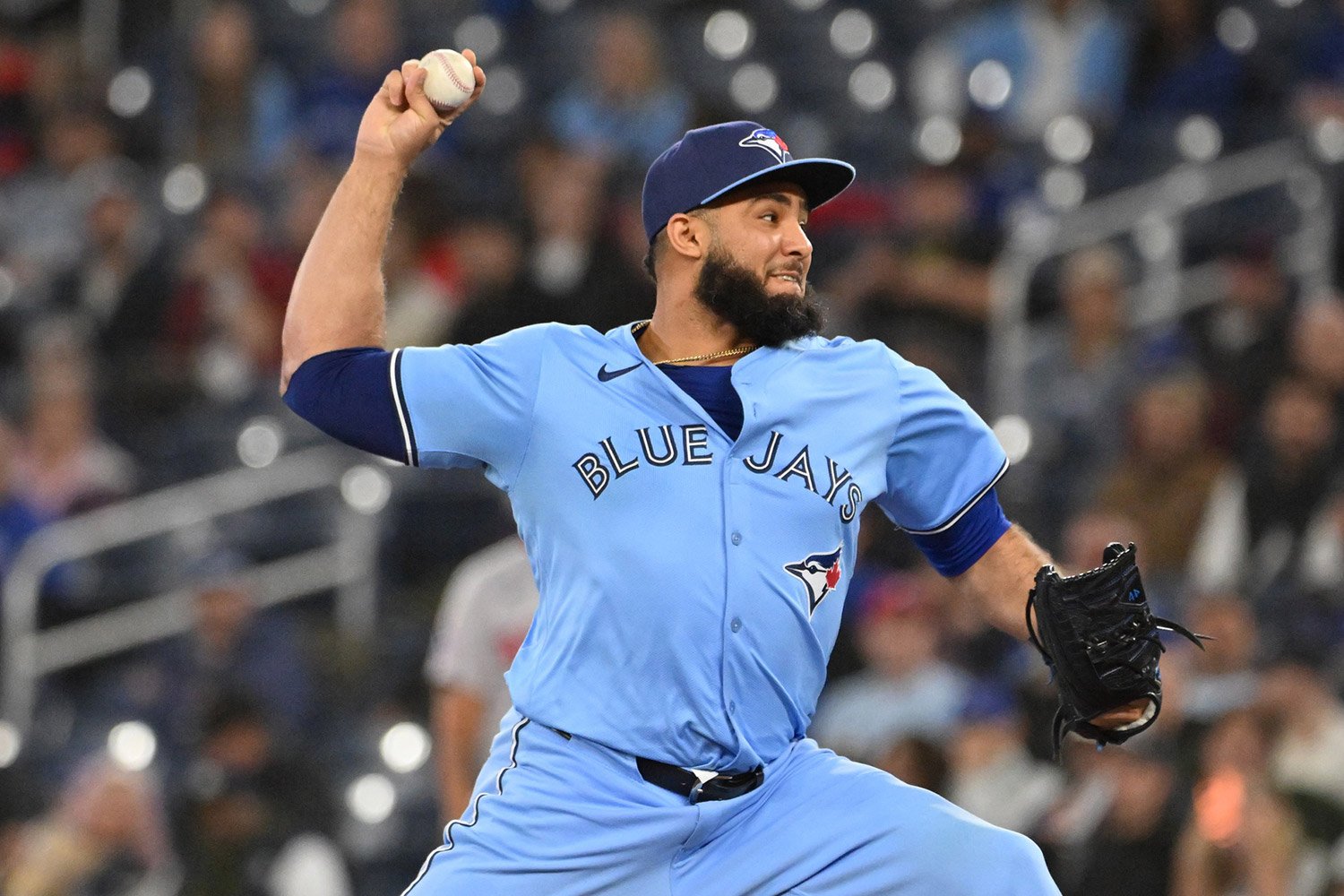 Yimi García’s season is officially over. John Schneider announced on Friday that the 35-year-old right-hander will be undergoing surgery to clean up some scar tissue in his throwing elbow, and he’ll be done for the year. Surgery on the elbow is nothing new for García. He had missed the 2017 season with the Dodgers while undergoing Tommy John surgery. Last season, after a mid-season trade to the Mariners, he underwent elbow surgery, following elbow inflammation that ended his season in August. The good news is that, unlike Tommy John surgery or the internal brace procedure, Yimi García is expected to return at some point during spring training in 2026. However, all things considered, García and the Blue Jays would rather he be healthy and avoid the rehab process yet again. “He’s frustrated, I think he’s kind of looking for answers with those going on as long as it has, and it's frustrating for him that he’s not up here helping us” - Manager John Schneider on Blair and Barker Friday afternoon. For now, all Garcia can do is focus on recovering, go through the rehabilitation process, and try to find some answers to ensure this doesn't bother him in 2026 and the rest of his career. For the Toronto Blue Jays, it does act as a blow to the team. García was brought back to the Blue Jays, along with Jeff Hoffman, as part of the crew intended to help improve the bullpen, which had an AL-worst 4.82 ERA in 2024. At the beginning of the season, it appeared to work. García had thrown to a 3.86 ERA over 22 games, with 25 strikeouts, and even ended up with three saves on the season. Proving just how effective he can be when he’s on the mound. The news of the procedure comes at an unfortunate time, as the major league bullpen could really use the help of someone like García right now. Jeff Hoffman has had flashes of dominance, but also some massive blow-ups. Louis Varland has allowed earned runs in six straight appearances. Brendon Little and Yariel Rodriguez have run into some trouble after being so dominant at times this season. Aside from Seranthony Dominguez and Tommy Nance, the Blue Jays have been looking for some help out of the bullpen. Unfortunately for the Blue Jays, it doesn’t seem like much help is coming, the trade deadline has come and passed, and unless the Blue Jays are going to call up top pitching prospect Trey Yesavage to pitch out of the bullpen, or find someone off the waiver wire that can make a surprise for this team, it looks like the Blue Jays are going to have to rely on the players they already have in their system as they strive for their first AL East title in a decade. For García, there isn’t much history on this type of operation and how players recover. The Athletics' Ken Waldichuk had a similar surgery in 2023 and has yet to appear in the big leagues since. The Mariners' (and former Blue Jay) Mark Lowe underwent a similar surgery in February 2007, and he pitched only 12 2/3 innings between the majors and minors that season before resuming a more normal workload the following season. Even Hall of Famer John Smoltz underwent surgery in 2004, after being used as a closer for four seasons. He was able to bounce back and become an elite starter through his late 30s. The results are mixed, and every player is going to react differently, but García, who just celebrated his 35th birthday, will have a lot to prove as he enters his second year of the two-year, $15 million contract he signed with the Blue Jays last offseason. If García can prove that he can come back and be the dominant reliever the Blue Jays have seen over parts of four seasons, then that will bode well for him and the team, but there is a lot of “what if” as the Blue Jays will anxiously wait and see how he looks down in Dunedin in February. In the meantime, the Blue Jays are left to chase their first AL East crown in a decade with the arms that they already have on hand. Their fate in October may hinge on whether or not the current bullpen can steady itself down the stretch. And for García, like the rest of Toronto, the next six weeks will be spent watching from the sidelines, as we wait for answers.
 -
Yimi García’s season is officially over. John Schneider announced on Friday that the 35-year-old right-hander will be undergoing surgery to clean up some scar tissue in his throwing elbow, and he’ll be done for the year. Surgery on the elbow is nothing new for García. He had missed the 2017 season with the Dodgers while undergoing Tommy John surgery. Last season, after a mid-season trade to the Mariners, he underwent elbow surgery, following elbow inflammation that ended his season in August. The good news is that, unlike Tommy John surgery or the internal brace procedure, Yimi García is expected to return at some point during spring training in 2026. However, all things considered, García and the Blue Jays would rather he be healthy and avoid the rehab process yet again. “He’s frustrated, I think he’s kind of looking for answers with those going on as long as it has, and it's frustrating for him that he’s not up here helping us” - Manager John Schneider on Blair and Barker Friday afternoon. For now, all Garcia can do is focus on recovering, go through the rehabilitation process, and try to find some answers to ensure this doesn't bother him in 2026 and the rest of his career. For the Toronto Blue Jays, it does act as a blow to the team. García was brought back to the Blue Jays, along with Jeff Hoffman, as part of the crew intended to help improve the bullpen, which had an AL-worst 4.82 ERA in 2024. At the beginning of the season, it appeared to work. García had thrown to a 3.86 ERA over 22 games, with 25 strikeouts, and even ended up with three saves on the season. Proving just how effective he can be when he’s on the mound. The news of the procedure comes at an unfortunate time, as the major league bullpen could really use the help of someone like García right now. Jeff Hoffman has had flashes of dominance, but also some massive blow-ups. Louis Varland has allowed earned runs in six straight appearances. Brendon Little and Yariel Rodriguez have run into some trouble after being so dominant at times this season. Aside from Seranthony Dominguez and Tommy Nance, the Blue Jays have been looking for some help out of the bullpen. Unfortunately for the Blue Jays, it doesn’t seem like much help is coming, the trade deadline has come and passed, and unless the Blue Jays are going to call up top pitching prospect Trey Yesavage to pitch out of the bullpen, or find someone off the waiver wire that can make a surprise for this team, it looks like the Blue Jays are going to have to rely on the players they already have in their system as they strive for their first AL East title in a decade. For García, there isn’t much history on this type of operation and how players recover. The Athletics' Ken Waldichuk had a similar surgery in 2023 and has yet to appear in the big leagues since. The Mariners' (and former Blue Jay) Mark Lowe underwent a similar surgery in February 2007, and he pitched only 12 2/3 innings between the majors and minors that season before resuming a more normal workload the following season. Even Hall of Famer John Smoltz underwent surgery in 2004, after being used as a closer for four seasons. He was able to bounce back and become an elite starter through his late 30s. The results are mixed, and every player is going to react differently, but García, who just celebrated his 35th birthday, will have a lot to prove as he enters his second year of the two-year, $15 million contract he signed with the Blue Jays last offseason. If García can prove that he can come back and be the dominant reliever the Blue Jays have seen over parts of four seasons, then that will bode well for him and the team, but there is a lot of “what if” as the Blue Jays will anxiously wait and see how he looks down in Dunedin in February. In the meantime, the Blue Jays are left to chase their first AL East crown in a decade with the arms that they already have on hand. Their fate in October may hinge on whether or not the current bullpen can steady itself down the stretch. And for García, like the rest of Toronto, the next six weeks will be spent watching from the sidelines, as we wait for answers. View full article
-
On Friday night in Miami, there was a sense of excitement. For the Toronto Blue Jays, there was a thrill that doesn’t come around that often on the baseball schedule. Aside from opening day, when fans of every team all have hope and the thought that if things go their way for six months, they can find a path to postseason glory. But after that, the next exciting event on the baseball calendar could be when a superstar player makes their long-awaited debut and not only shows up, but he puts on a performance that makes you feel like it was worth the wait. It's just the start of something special. Shane Bieber had that type of excitement too, but his was in a different sense. His excitement comes from the result of his hard work paying off, it had been over 500 days since Bieber last stepped on a major league mound, and for many pitchers across the major leagues it can be a harsh hit of reality, knowing that you’re no longer able to compete, having the discomfort of wondering what if the surgery doesn’t go well, what if your body doesn't respond the way you want it to, what if you never get to be the player or the person that got you this success in the first place? A lot of those questions were put to bed Friday night in Miami. After a minor league rehab assignment that lasted seven starts, separated by a minor setback early. Combined with a trade that sent Bieber from Cleveland to Toronto at the trade deadline, he was ready to roll and finally able to compete once again. If there was any doubt about his ability to perform, those doubts faded quickly. After the Jays were able to give Bieber some run support after scoring three runs in the top of the first, thanks to an RBI double by Daulton Varsho and a two-run single by Ty France, it was time for Bieber to shine. First man up was the Marlins' second baseman Xavier Edwards, who is no slouch. He’s hitting .299 on the season with a wRC+ of 105, with a strikeout rate of just 13.5% It's a tough test for any pitcher to start a game, but Bieber didn't let that phase him. First pitch, Fastball. 92.7 mph over the heart of the plate, a true get-me-over strike for the first strike of his Blue Jays career. Now he was in attack mode. The second pitch was a better one, another 92 mph fastball, but this one was located perfectly, down and away, and next thing you know, Bieber was up 0-2. After bouncing a changeup in the dirt, he then threw a nasty knuckle curve that darted low out of the zone and tunneled perfectly after his second fastball. Edwards had no chance as he swung over it, and just like that, Bieber had a strikeout. Bieber was back, and it was just the beginning. The next man up, Jakob Marsee, who has been on fire to start his young career with the Marlins, didn't matter either. Jumped ahead of him 0-2 and on the seventh pitch of the AB got him swinging too. After a hit batter and a soft lineout, Bieber was out of the inning. If you were watching from afar, you would have never known that Bieber had been gone for so long or that he was battling any sort of nerves at all. Flash forward to the 4th inning. Second time through the order, facing the Marlins 3-4-5 hitters. Augstin Ramirez struck out looking on a perfectly executed fastball on the outside corner. Liam Hicks, a Canadian native, chased on a 1-2 slider down. And lastly, Herberto Hernandez, after dotting some fastballs and sliders on the outside corner, was able to put a slider a little bit more outside and got the chase for his third strikeout of the inning. When all was said and done, Bieber ended his day with an incredible line. Six innings pitched, striking out nine, walking none, allowing just two hits and one earned run over 87 pitches. The lone run was a solo homerun that just snuck over the left centerfield fence, and at 399ft was only a home run in 19/30 MLB ball parks. Baseball reference gave it a game score of 73, which would rank as his 4th best start since the start of the 2023 season, and it was tied for 12th best start the Blue Jays have gotten this season. Breaking down the start further, the first thing that really catches your attention is just how dialed in his command was. Locating a baseball on the corners consistently is an extremely hard task, even for some of the best pitchers in the game, and it's got to be even harder in the first start post Tommy John surgery, but Bieber had it on Friday Evening. So many of Bieber's sliders were in the bottom right quadrant, with most of the misses coming off the plate. The same is true with the changeup; only two of them were left up, every other one was down or below the zone. The same goes for the knuckle curve. Overall, the pitch mix was as follows: 4-Seam fast ball - 26 Slider - 25 Knuckle Curve - 13 Cutter - 12 Change up - 11 A true five-pitch mix. All five pitches were good, as they usually are in a start that was as dominant as Bieber's was, but it's important to highlight his change-up. Coming out of his last rehab assignment, Newly acquired Blue Jays catcher Brandon Valenzuela was in charge of catching his final two rehab assignments and after the first one he stated, “He was amazing, the change-up was gross, Fastball location was pinpoint, I’ve caught Blake Snell, I’ve caught Yu Darvish but I've never seen something like that.” Well, let's dive into just how nasty that change-up was. General wisdom is that the change-up should be about 10 miles per hour slower than the fastball for it to really be effective, but that isn't the case with Bieber. His change-up averaged 89.1 mph, which was just a few mph slower than his fastball speed of 92.7 mph. But what was really impressive was how he was able to generate swing and miss with the pitch. As previously noted, most of the change-ups he threw were down low below the zone, and he was able to induce a swing on six of them, causing four Marlins swings and misses for a small, but elite 66.7% whiff rate. Good stuff. Part of it came from some changes that Bieber was making with his pitch. In the offseason coming into the 2024 season, Bieber mentioned that he went to Driveline and made some changes specifically to his change-up. Well, the results looked amazing, and the pitch received a grade of 124, which is the exact number reigning Cy Young award winner Tarik Skubal has on his change-up. And you can see it in the movement. Here is a post from Chris Langin, who was the former director of pitching at Driveline, and he noted Bieber had more change-ups with <0” of vertical break in this start than he had in his entire career up to this point. The data, the eye test, and the teammates all love what the pitch has done, and combine that with the elite command he has had in the past, this could just be the start of what could be a dominant run for Shane Bieber down the stretch and into the postseason. He’ll get his next chance to see what he can do on Friday as the Blue Jays welcome MLB’s best team, and the team with the lowest chase rate on change-ups this season, the Milwaukee Brewers, into Rogers Centre on Friday night. View full article
-
 On Friday night in Miami, there was a sense of excitement. For the Toronto Blue Jays, there was a thrill that doesn’t come around that often on the baseball schedule. Aside from opening day, when fans of every team all have hope and the thought that if things go their way for six months, they can find a path to postseason glory. But after that, the next exciting event on the baseball calendar could be when a superstar player makes their long-awaited debut and not only shows up, but he puts on a performance that makes you feel like it was worth the wait. It's just the start of something special. Shane Bieber had that type of excitement too, but his was in a different sense. His excitement comes from the result of his hard work paying off, it had been over 500 days since Bieber last stepped on a major league mound, and for many pitchers across the major leagues it can be a harsh hit of reality, knowing that you’re no longer able to compete, having the discomfort of wondering what if the surgery doesn’t go well, what if your body doesn't respond the way you want it to, what if you never get to be the player or the person that got you this success in the first place? A lot of those questions were put to bed Friday night in Miami. After a minor league rehab assignment that lasted seven starts, separated by a minor setback early. Combined with a trade that sent Bieber from Cleveland to Toronto at the trade deadline, he was ready to roll and finally able to compete once again. If there was any doubt about his ability to perform, those doubts faded quickly. After the Jays were able to give Bieber some run support after scoring three runs in the top of the first, thanks to an RBI double by Daulton Varsho and a two-run single by Ty France, it was time for Bieber to shine. First man up was the Marlins' second baseman Xavier Edwards, who is no slouch. He’s hitting .299 on the season with a wRC+ of 105, with a strikeout rate of just 13.5% It's a tough test for any pitcher to start a game, but Bieber didn't let that phase him. First pitch, Fastball. 92.7 mph over the heart of the plate, a true get-me-over strike for the first strike of his Blue Jays career. Now he was in attack mode. The second pitch was a better one, another 92 mph fastball, but this one was located perfectly, down and away, and next thing you know, Bieber was up 0-2. After bouncing a changeup in the dirt, he then threw a nasty knuckle curve that darted low out of the zone and tunneled perfectly after his second fastball. Edwards had no chance as he swung over it, and just like that, Bieber had a strikeout. Bieber was back, and it was just the beginning. The next man up, Jakob Marsee, who has been on fire to start his young career with the Marlins, didn't matter either. Jumped ahead of him 0-2 and on the seventh pitch of the AB got him swinging too. After a hit batter and a soft lineout, Bieber was out of the inning. If you were watching from afar, you would have never known that Bieber had been gone for so long or that he was battling any sort of nerves at all. Flash forward to the 4th inning. Second time through the order, facing the Marlins 3-4-5 hitters. Augstin Ramirez struck out looking on a perfectly executed fastball on the outside corner. Liam Hicks, a Canadian native, chased on a 1-2 slider down. And lastly, Herberto Hernandez, after dotting some fastballs and sliders on the outside corner, was able to put a slider a little bit more outside and got the chase for his third strikeout of the inning. When all was said and done, Bieber ended his day with an incredible line. Six innings pitched, striking out nine, walking none, allowing just two hits and one earned run over 87 pitches. The lone run was a solo homerun that just snuck over the left centerfield fence, and at 399ft was only a home run in 19/30 MLB ball parks. Baseball reference gave it a game score of 73, which would rank as his 4th best start since the start of the 2023 season, and it was tied for 12th best start the Blue Jays have gotten this season. Breaking down the start further, the first thing that really catches your attention is just how dialed in his command was. Locating a baseball on the corners consistently is an extremely hard task, even for some of the best pitchers in the game, and it's got to be even harder in the first start post Tommy John surgery, but Bieber had it on Friday Evening. So many of Bieber's sliders were in the bottom right quadrant, with most of the misses coming off the plate. The same is true with the changeup; only two of them were left up, every other one was down or below the zone. The same goes for the knuckle curve. Overall, the pitch mix was as follows: 4-Seam fast ball - 26 Slider - 25 Knuckle Curve - 13 Cutter - 12 Change up - 11 A true five-pitch mix. All five pitches were good, as they usually are in a start that was as dominant as Bieber's was, but it's important to highlight his change-up. Coming out of his last rehab assignment, Newly acquired Blue Jays catcher Brandon Valenzuela was in charge of catching his final two rehab assignments and after the first one he stated, “He was amazing, the change-up was gross, Fastball location was pinpoint, I’ve caught Blake Snell, I’ve caught Yu Darvish but I've never seen something like that.” Well, let's dive into just how nasty that change-up was. General wisdom is that the change-up should be about 10 miles per hour slower than the fastball for it to really be effective, but that isn't the case with Bieber. His change-up averaged 89.1 mph, which was just a few mph slower than his fastball speed of 92.7 mph. But what was really impressive was how he was able to generate swing and miss with the pitch. As previously noted, most of the change-ups he threw were down low below the zone, and he was able to induce a swing on six of them, causing four Marlins swings and misses for a small, but elite 66.7% whiff rate. Good stuff. Part of it came from some changes that Bieber was making with his pitch. In the offseason coming into the 2024 season, Bieber mentioned that he went to Driveline and made some changes specifically to his change-up. Well, the results looked amazing, and the pitch received a grade of 124, which is the exact number reigning Cy Young award winner Tarik Skubal has on his change-up. And you can see it in the movement. Here is a post from Chris Langin, who was the former director of pitching at Driveline, and he noted Bieber had more change-ups with <0” of vertical break in this start than he had in his entire career up to this point. The data, the eye test, and the teammates all love what the pitch has done, and combine that with the elite command he has had in the past, this could just be the start of what could be a dominant run for Shane Bieber down the stretch and into the postseason. He’ll get his next chance to see what he can do on Friday as the Blue Jays welcome MLB’s best team, and the team with the lowest chase rate on change-ups this season, the Milwaukee Brewers, into Rogers Centre on Friday night.
 -
Weekly Snapshot: Mon, 8/11 through Sun, 8/17 *** Record Last Week: 4-2 (Overall: 73-52) Run Differential Last Week: +9 (Overall: +53) Standings: First in AL East (5.0 games up on BOS), First in AL (0.5 games up on DET, 3.5 up on HOU) Last Week’s Results Game 120: CHC 1 - TOR 5 Berríos: 5.1 IP, 2 H, 0 ER, 4 BB, 3 K Clement: 1-4, HR (9), 3 RBI Varsho: 2-4, HR (12), RBI Guerrero Jr.: 3-4 Game 121: CHC 4 - TOR 1 Gausman: 7.0 IP, 3 H, 2 ER, 1 BB, 3 K Guerrero Jr.: 1-4, RBI Bichette 0-2, 2 BB Giménez: 1-3, R Game 122: CHC 2 - TOR 1 Scherzer: 7.0 IP, 5 H, 1 ER, 1 BB, 3 K Guerrero Jr.: 1-3, HR (20), 2 RBI Schneider: 0-2, BB, R Barger: 1-3 Game 123: TEX 5 - TOR 6 Bassitt: 5.0 IP, 4 H, 3 ER, 4 BB, 4 K Kirk: 2-4, HR (8), 4 RBI, SB Barger: 2-4 Bichette: 1-4, R, RBI Game 124: TEX 2 - TOR 14 Lauer: 5.0 IP, 4 H, 1 ER, 3 BB, 4 K Straw: 4-5, 2 HR (3,4), 3 R, 5 RBI Varsho: 3-3, HR (13), 3 R, 2 RBI, BB Schneider: 3-4, HR (8), 2 R, 4 RBI, BB Game 125: TEX 4 - TOR 10 Berríos: 4.1 IP, 10 H, 6 ER, 0 BB, 2 K Guerrero Jr: 2-4, HR (21) Springer: 1-4, HR (19) Kirk: 1-4, HR (9) Highlights Myles Straw: This is not the first time this season that a player has earned a spotlight despite playing such a limited role during the past week. This time, it was Myles Straw’s turn to be a hero. He (almost) single-handedly won the Blue Jays the game on Saturday with a monster performance. Not only did he continue with his superb defence and baserunning, but the bat took over the show, with him collecting four hits and two home runs. Straw had only hit six home runs over parts of seven seasons coming into 2025, and now he has four on the year for an even 10 in his career. He even took a minute to flip his bat, which I'm sure Straw cherished knowing he got the home run. The story of the Blue Jays' season has been unexpected heroes, and this week, Straw played that part. Alejandro Kirk: If Saturday was the Myles Straw game, then Friday night's dramatic comeback win must be dubbed the Alejandro Kirk game. He hit a two-run home run, had a clutch go-ahead two-run single late, and proceeded to steal his first base in the big leagues (more on that later). Combine that with another home run in the finale on Sunday, and it goes to show just how valuable Kirk has been to this team. He and the Blue Jays alike have got to be happy that he’s healthy and able to produce again. Jeff Hoffman: What a roller coaster of a season Jeff Hoffman has had. The weekend before last in LA, he couldn't throw a strike to save his life and looked lost during that appearance. Some were wondering if he’d still have the chops to serve as the closer. But this week, it was straight back to dominance. Hoffman faced 10 batters, allowed just one hit, and struck out eight of them, including getting his 27th save of the season and 45th game finished. There is still the risk of some blowups going forward, but when a player has as dominant a week as Hoffman had, you have to take notice. Lowlights José Berríos: With Shane Bieber set to join the starting rotation at some point this upcoming week, every start that a Blue Jay pitcher makes feels that much more impactful, either positively or negatively. For Berríos, that was the case this week. He held his own in the opener against the Cubs, but on Sunday against the Rangers, it was a different story. Six earned runs and 10 hits allowed are going to make it hard for any team to win a game, and that's what happened here. For what it's worth, a two-run single that Berríos gave up had an xBA of .070, and the home run he gave up to Corey Seager had an xBA of .010, but that's not what happened in reality. The nine hard-hit balls he allowed (per Baseball Savant) continued a theme of Berríos being hit hard. Assuming he is completely healthy and not running out of steam, he should get a chance to rebound this week in Miami. Chris Bassitt: The good news (if it is good news) for Berríos is that Chris Bassitt has also put the microscope on him after a subpar performance this week. On Friday night against the Rangers, Bassitt ran into some trouble, giving up three earned runs over his five innings of work. The more worrisome sign is that his control seems to have disappeared lately. He walked four batters, a season high, and hit another one to go along with the four hits he gave up. That's now multiple free passes in each of his three August starts. Post-All-Star break, his ERA is up to 4.55, but a 5.86 FIP implies that it could be even worse than that. Between Bassitt and Berríos, the Blue Jays will be hoping to see at least one of them step it up, or they could be looking at potentially reduced roles going down the stretch and into the postseason. Random Notes of the Week: Alejandro Kirk stole his first base (the first in his career) on Friday. Kirk received a standing ovation from the fans, and after the game, Vladimir Guerrero Jr. took the base and gave it to him as a memento. George Springer hit in the leadoff spot on Sunday upon his return from the IL. John Schneider hinted that it may be a regular gig for Springer. The Blue Jays had their 39th comeback win this weekend, which is the most in baseball. No. 2 Prospect Trey Yesavage was promoted to Triple A earlier this week. He faced 10 batters, allowed one hit, walked four, and struck out three in his Buffalo debut. Ernie Clement allegedly missed a bunt sign before he hit a three-run home run on Tuesday. Alek Manoah made his first Triple-A start this year, facing 11 batters, allowing two hits, walking three, and striking out one. John Schneider recorded his 282nd win as a manager, moving into fourth all-time in Blue Jays franchise history. Prior to Myles Straw's two-home run game, he turned away from the “torpedo bat” he was using earlier in the season and switched to a more traditional bat. The Blue Jays have signed 18-year-old RHP Seo-jun Moon out of South Korea for a $1.5 million signing bonus. He boasts a low-90s fastball and the ability to spin the ball (via Arden Zwelling on X). It was Players' Weekend across MLB this week. Bo Bichette used a green Brazilian-themed bat, while Vlad swung an “ice cream” themed bat during BP (h/t Brandon Wile on X). Tyler Heineman got a pitching appearance this week. He allowed a hit and hit a batter, giving up one earned run. News, Notes and Not Playing OF/DH George Springer returned from the concussion IL, OF Joey Loperfido was optioned to Triple A. 2B Andrés Giménez was reinstated from the IL, Buddy Kennedy was DFA’d and claimed by the Dodgers. 15-day IL: Yimi Garcia, Nick Sandlin, Yimi García is still having ulnar nerve symptoms (via Mitch Bannon on X). Sandlin is playing catch from 120 feet in Florida (via Bannon). 60-day IL: Anthony Santander, Alek Manoah, Shane Bieber, Bowden Francis OF/DH Anthony Santander started a hitting progression in Toronto. He is swinging from both sides but is feeling more comfortable from the left side (via Bannon) RHP Alek Manoah and RHP Shane Bieber made rehab appearances in Buffalo. Bieber seems set to join the big league rotation later this week. Bowden Francis has started throwing in Florida. Trending Storylines Shane Bieber is set to make his Toronto Blue Jays debut this week, and with another name joining the rotation, there are a few questions that need to be answered. Will the Blue Jays go with a six-man rotation? Will someone get bumped? And who will be the pitcher sent down to make room for Bieber on the roster? As previously mentioned, there is going to be a lot of pressure on the starting pitchers as a decision looms. Max Scherzer looks the best he ever has as a Blue Jay right now, Kevin Gausman has been consistently effective, and Eric Lauer put together another strong start against the Rangers, bouncing back from a rough one in Los Angeles. In the bullpen, the Blue Jays seem to be running a stable group, but Louis Varland has allowed earned runs in back-to-back appearances, and it’ll be interesting to see how John Schneider chooses to use the high-leverage arms in the bullpen. Offensively, it seems like fans can expect more of the same. The Blue Jays' bats have come alive again, and a large part of that is thanks to the performance of Vladimir Guerrero Jr. He has a 1.144 OPS post-All-Star break and has been every bit the offensive star we all know Vlad can be. The Blue Jays have also been getting clutch performances from players up and down the lineup. Kirk, Clement, Straw, and Daulton Varsho all had clutch performances this week, and the Blue Jays will hope for more of the same going forward. As always, staying healthy and staying productive will be key for this team. Looking Ahead Coming off a 4-2 homestand, the Blue Jays will head on the road for six games against two National League opponents. First, they will head to Pittsburgh for a three-game series against Paul Skenes and the Pirates. The last time the Blue Jays were in Pittsburgh in May 2023, they swept the Pirates, but that may be tough to do again as they are set to face Skenes, the defending Rookie of the Year and current NL ERA leader, in the opener. The Blue Jays will also be reconnected with old friends Spencer Horwitz and Isiah Kiner-Falefa, both of whom had some success with the Blue Jays just last season. The Pirates are last in the NL Central and 3-7 in their last 10 games. So, on paper, the Blue Jays should have the advantage. After a day off and travel day on Thursday, the Blue Jays will pay a visit to the Miami Marlins in the Sunshine State. Assuming probable pitchers hold, the Blue Jays will get a look at Canadian native Cal Quantrill in the opener and a look at one of baseball's best young pitchers, Eury Pérez, in the finale. After a surprisingly successful mid-season run, the Marlins have gone into a bit of a tailspin lately; they are also 3-7 in their last 10. They will play three games against the Cardinals before the Blue Jays come to town. All in all, the Blue Jays have many questions that could be answered this upcoming week, but as long as they can still put up good battles against good pitchers, they should be in a good position to add more wins as their quest for the AL East and a first-round bye in the playoffs continues. View full article
-
.jpg.9a2a43f1198fcc5a25dab68ca5121645.jpg) Weekly Snapshot: Mon, 8/11 through Sun, 8/17 *** Record Last Week: 4-2 (Overall: 73-52) Run Differential Last Week: +9 (Overall: +53) Standings: First in AL East (5.0 games up on BOS), First in AL (0.5 games up on DET, 3.5 up on HOU) Last Week’s Results Game 120: CHC 1 - TOR 5 Berríos: 5.1 IP, 2 H, 0 ER, 4 BB, 3 K Clement: 1-4, HR (9), 3 RBI Varsho: 2-4, HR (12), RBI Guerrero Jr.: 3-4 Game 121: CHC 4 - TOR 1 Gausman: 7.0 IP, 3 H, 2 ER, 1 BB, 3 K Guerrero Jr.: 1-4, RBI Bichette 0-2, 2 BB Giménez: 1-3, R Game 122: CHC 2 - TOR 1 Scherzer: 7.0 IP, 5 H, 1 ER, 1 BB, 3 K Guerrero Jr.: 1-3, HR (20), 2 RBI Schneider: 0-2, BB, R Barger: 1-3 Game 123: TEX 5 - TOR 6 Bassitt: 5.0 IP, 4 H, 3 ER, 4 BB, 4 K Kirk: 2-4, HR (8), 4 RBI, SB Barger: 2-4 Bichette: 1-4, R, RBI Game 124: TEX 2 - TOR 14 Lauer: 5.0 IP, 4 H, 1 ER, 3 BB, 4 K Straw: 4-5, 2 HR (3,4), 3 R, 5 RBI Varsho: 3-3, HR (13), 3 R, 2 RBI, BB Schneider: 3-4, HR (8), 2 R, 4 RBI, BB Game 125: TEX 4 - TOR 10 Berríos: 4.1 IP, 10 H, 6 ER, 0 BB, 2 K Guerrero Jr: 2-4, HR (21) Springer: 1-4, HR (19) Kirk: 1-4, HR (9) Highlights Myles Straw: This is not the first time this season that a player has earned a spotlight despite playing such a limited role during the past week. This time, it was Myles Straw’s turn to be a hero. He (almost) single-handedly won the Blue Jays the game on Saturday with a monster performance. Not only did he continue with his superb defence and baserunning, but the bat took over the show, with him collecting four hits and two home runs. Straw had only hit six home runs over parts of seven seasons coming into 2025, and now he has four on the year for an even 10 in his career. He even took a minute to flip his bat, which I'm sure Straw cherished knowing he got the home run. The story of the Blue Jays' season has been unexpected heroes, and this week, Straw played that part. Alejandro Kirk: If Saturday was the Myles Straw game, then Friday night's dramatic comeback win must be dubbed the Alejandro Kirk game. He hit a two-run home run, had a clutch go-ahead two-run single late, and proceeded to steal his first base in the big leagues (more on that later). Combine that with another home run in the finale on Sunday, and it goes to show just how valuable Kirk has been to this team. He and the Blue Jays alike have got to be happy that he’s healthy and able to produce again. Jeff Hoffman: What a roller coaster of a season Jeff Hoffman has had. The weekend before last in LA, he couldn't throw a strike to save his life and looked lost during that appearance. Some were wondering if he’d still have the chops to serve as the closer. But this week, it was straight back to dominance. Hoffman faced 10 batters, allowed just one hit, and struck out eight of them, including getting his 27th save of the season and 45th game finished. There is still the risk of some blowups going forward, but when a player has as dominant a week as Hoffman had, you have to take notice. Lowlights José Berríos: With Shane Bieber set to join the starting rotation at some point this upcoming week, every start that a Blue Jay pitcher makes feels that much more impactful, either positively or negatively. For Berríos, that was the case this week. He held his own in the opener against the Cubs, but on Sunday against the Rangers, it was a different story. Six earned runs and 10 hits allowed are going to make it hard for any team to win a game, and that's what happened here. For what it's worth, a two-run single that Berríos gave up had an xBA of .070, and the home run he gave up to Corey Seager had an xBA of .010, but that's not what happened in reality. The nine hard-hit balls he allowed (per Baseball Savant) continued a theme of Berríos being hit hard. Assuming he is completely healthy and not running out of steam, he should get a chance to rebound this week in Miami. Chris Bassitt: The good news (if it is good news) for Berríos is that Chris Bassitt has also put the microscope on him after a subpar performance this week. On Friday night against the Rangers, Bassitt ran into some trouble, giving up three earned runs over his five innings of work. The more worrisome sign is that his control seems to have disappeared lately. He walked four batters, a season high, and hit another one to go along with the four hits he gave up. That's now multiple free passes in each of his three August starts. Post-All-Star break, his ERA is up to 4.55, but a 5.86 FIP implies that it could be even worse than that. Between Bassitt and Berríos, the Blue Jays will be hoping to see at least one of them step it up, or they could be looking at potentially reduced roles going down the stretch and into the postseason. Random Notes of the Week: Alejandro Kirk stole his first base (the first in his career) on Friday. Kirk received a standing ovation from the fans, and after the game, Vladimir Guerrero Jr. took the base and gave it to him as a memento. George Springer hit in the leadoff spot on Sunday upon his return from the IL. John Schneider hinted that it may be a regular gig for Springer. The Blue Jays had their 39th comeback win this weekend, which is the most in baseball. No. 2 Prospect Trey Yesavage was promoted to Triple A earlier this week. He faced 10 batters, allowed one hit, walked four, and struck out three in his Buffalo debut. Ernie Clement allegedly missed a bunt sign before he hit a three-run home run on Tuesday. Alek Manoah made his first Triple-A start this year, facing 11 batters, allowing two hits, walking three, and striking out one. John Schneider recorded his 282nd win as a manager, moving into fourth all-time in Blue Jays franchise history. Prior to Myles Straw's two-home run game, he turned away from the “torpedo bat” he was using earlier in the season and switched to a more traditional bat. The Blue Jays have signed 18-year-old RHP Seo-jun Moon out of South Korea for a $1.5 million signing bonus. He boasts a low-90s fastball and the ability to spin the ball (via Arden Zwelling on X). It was Players' Weekend across MLB this week. Bo Bichette used a green Brazilian-themed bat, while Vlad swung an “ice cream” themed bat during BP (h/t Brandon Wile on X). Tyler Heineman got a pitching appearance this week. He allowed a hit and hit a batter, giving up one earned run. News, Notes and Not Playing OF/DH George Springer returned from the concussion IL, OF Joey Loperfido was optioned to Triple A. 2B Andrés Giménez was reinstated from the IL, Buddy Kennedy was DFA’d and claimed by the Dodgers. 15-day IL: Yimi Garcia, Nick Sandlin, Yimi García is still having ulnar nerve symptoms (via Mitch Bannon on X). Sandlin is playing catch from 120 feet in Florida (via Bannon). 60-day IL: Anthony Santander, Alek Manoah, Shane Bieber, Bowden Francis OF/DH Anthony Santander started a hitting progression in Toronto. He is swinging from both sides but is feeling more comfortable from the left side (via Bannon) RHP Alek Manoah and RHP Shane Bieber made rehab appearances in Buffalo. Bieber seems set to join the big league rotation later this week. Bowden Francis has started throwing in Florida. Trending Storylines Shane Bieber is set to make his Toronto Blue Jays debut this week, and with another name joining the rotation, there are a few questions that need to be answered. Will the Blue Jays go with a six-man rotation? Will someone get bumped? And who will be the pitcher sent down to make room for Bieber on the roster? As previously mentioned, there is going to be a lot of pressure on the starting pitchers as a decision looms. Max Scherzer looks the best he ever has as a Blue Jay right now, Kevin Gausman has been consistently effective, and Eric Lauer put together another strong start against the Rangers, bouncing back from a rough one in Los Angeles. In the bullpen, the Blue Jays seem to be running a stable group, but Louis Varland has allowed earned runs in back-to-back appearances, and it’ll be interesting to see how John Schneider chooses to use the high-leverage arms in the bullpen. Offensively, it seems like fans can expect more of the same. The Blue Jays' bats have come alive again, and a large part of that is thanks to the performance of Vladimir Guerrero Jr. He has a 1.144 OPS post-All-Star break and has been every bit the offensive star we all know Vlad can be. The Blue Jays have also been getting clutch performances from players up and down the lineup. Kirk, Clement, Straw, and Daulton Varsho all had clutch performances this week, and the Blue Jays will hope for more of the same going forward. As always, staying healthy and staying productive will be key for this team. Looking Ahead Coming off a 4-2 homestand, the Blue Jays will head on the road for six games against two National League opponents. First, they will head to Pittsburgh for a three-game series against Paul Skenes and the Pirates. The last time the Blue Jays were in Pittsburgh in May 2023, they swept the Pirates, but that may be tough to do again as they are set to face Skenes, the defending Rookie of the Year and current NL ERA leader, in the opener. The Blue Jays will also be reconnected with old friends Spencer Horwitz and Isiah Kiner-Falefa, both of whom had some success with the Blue Jays just last season. The Pirates are last in the NL Central and 3-7 in their last 10 games. So, on paper, the Blue Jays should have the advantage. After a day off and travel day on Thursday, the Blue Jays will pay a visit to the Miami Marlins in the Sunshine State. Assuming probable pitchers hold, the Blue Jays will get a look at Canadian native Cal Quantrill in the opener and a look at one of baseball's best young pitchers, Eury Pérez, in the finale. After a surprisingly successful mid-season run, the Marlins have gone into a bit of a tailspin lately; they are also 3-7 in their last 10. They will play three games against the Cardinals before the Blue Jays come to town. All in all, the Blue Jays have many questions that could be answered this upcoming week, but as long as they can still put up good battles against good pitchers, they should be in a good position to add more wins as their quest for the AL East and a first-round bye in the playoffs continues.
Weekly Snapshot: Mon, 8/11 through Sun, 8/17 *** Record Last Week: 4-2 (Overall: 73-52) Run Differential Last Week: +9 (Overall: +53) Standings: First in AL East (5.0 games up on BOS), First in AL (0.5 games up on DET, 3.5 up on HOU) Last Week’s Results Game 120: CHC 1 - TOR 5 Berríos: 5.1 IP, 2 H, 0 ER, 4 BB, 3 K Clement: 1-4, HR (9), 3 RBI Varsho: 2-4, HR (12), RBI Guerrero Jr.: 3-4 Game 121: CHC 4 - TOR 1 Gausman: 7.0 IP, 3 H, 2 ER, 1 BB, 3 K Guerrero Jr.: 1-4, RBI Bichette 0-2, 2 BB Giménez: 1-3, R Game 122: CHC 2 - TOR 1 Scherzer: 7.0 IP, 5 H, 1 ER, 1 BB, 3 K Guerrero Jr.: 1-3, HR (20), 2 RBI Schneider: 0-2, BB, R Barger: 1-3 Game 123: TEX 5 - TOR 6 Bassitt: 5.0 IP, 4 H, 3 ER, 4 BB, 4 K Kirk: 2-4, HR (8), 4 RBI, SB Barger: 2-4 Bichette: 1-4, R, RBI Game 124: TEX 2 - TOR 14 Lauer: 5.0 IP, 4 H, 1 ER, 3 BB, 4 K Straw: 4-5, 2 HR (3,4), 3 R, 5 RBI Varsho: 3-3, HR (13), 3 R, 2 RBI, BB Schneider: 3-4, HR (8), 2 R, 4 RBI, BB Game 125: TEX 4 - TOR 10 Berríos: 4.1 IP, 10 H, 6 ER, 0 BB, 2 K Guerrero Jr: 2-4, HR (21) Springer: 1-4, HR (19) Kirk: 1-4, HR (9) Highlights Myles Straw: This is not the first time this season that a player has earned a spotlight despite playing such a limited role during the past week. This time, it was Myles Straw’s turn to be a hero. He (almost) single-handedly won the Blue Jays the game on Saturday with a monster performance. Not only did he continue with his superb defence and baserunning, but the bat took over the show, with him collecting four hits and two home runs. Straw had only hit six home runs over parts of seven seasons coming into 2025, and now he has four on the year for an even 10 in his career. He even took a minute to flip his bat, which I'm sure Straw cherished knowing he got the home run. The story of the Blue Jays' season has been unexpected heroes, and this week, Straw played that part. Alejandro Kirk: If Saturday was the Myles Straw game, then Friday night's dramatic comeback win must be dubbed the Alejandro Kirk game. He hit a two-run home run, had a clutch go-ahead two-run single late, and proceeded to steal his first base in the big leagues (more on that later). Combine that with another home run in the finale on Sunday, and it goes to show just how valuable Kirk has been to this team. He and the Blue Jays alike have got to be happy that he’s healthy and able to produce again. Jeff Hoffman: What a roller coaster of a season Jeff Hoffman has had. The weekend before last in LA, he couldn't throw a strike to save his life and looked lost during that appearance. Some were wondering if he’d still have the chops to serve as the closer. But this week, it was straight back to dominance. Hoffman faced 10 batters, allowed just one hit, and struck out eight of them, including getting his 27th save of the season and 45th game finished. There is still the risk of some blowups going forward, but when a player has as dominant a week as Hoffman had, you have to take notice. Lowlights José Berríos: With Shane Bieber set to join the starting rotation at some point this upcoming week, every start that a Blue Jay pitcher makes feels that much more impactful, either positively or negatively. For Berríos, that was the case this week. He held his own in the opener against the Cubs, but on Sunday against the Rangers, it was a different story. Six earned runs and 10 hits allowed are going to make it hard for any team to win a game, and that's what happened here. For what it's worth, a two-run single that Berríos gave up had an xBA of .070, and the home run he gave up to Corey Seager had an xBA of .010, but that's not what happened in reality. The nine hard-hit balls he allowed (per Baseball Savant) continued a theme of Berríos being hit hard. Assuming he is completely healthy and not running out of steam, he should get a chance to rebound this week in Miami. Chris Bassitt: The good news (if it is good news) for Berríos is that Chris Bassitt has also put the microscope on him after a subpar performance this week. On Friday night against the Rangers, Bassitt ran into some trouble, giving up three earned runs over his five innings of work. The more worrisome sign is that his control seems to have disappeared lately. He walked four batters, a season high, and hit another one to go along with the four hits he gave up. That's now multiple free passes in each of his three August starts. Post-All-Star break, his ERA is up to 4.55, but a 5.86 FIP implies that it could be even worse than that. Between Bassitt and Berríos, the Blue Jays will be hoping to see at least one of them step it up, or they could be looking at potentially reduced roles going down the stretch and into the postseason. Random Notes of the Week: Alejandro Kirk stole his first base (the first in his career) on Friday. Kirk received a standing ovation from the fans, and after the game, Vladimir Guerrero Jr. took the base and gave it to him as a memento. George Springer hit in the leadoff spot on Sunday upon his return from the IL. John Schneider hinted that it may be a regular gig for Springer. The Blue Jays had their 39th comeback win this weekend, which is the most in baseball. No. 2 Prospect Trey Yesavage was promoted to Triple A earlier this week. He faced 10 batters, allowed one hit, walked four, and struck out three in his Buffalo debut. Ernie Clement allegedly missed a bunt sign before he hit a three-run home run on Tuesday. Alek Manoah made his first Triple-A start this year, facing 11 batters, allowing two hits, walking three, and striking out one. John Schneider recorded his 282nd win as a manager, moving into fourth all-time in Blue Jays franchise history. Prior to Myles Straw's two-home run game, he turned away from the “torpedo bat” he was using earlier in the season and switched to a more traditional bat. The Blue Jays have signed 18-year-old RHP Seo-jun Moon out of South Korea for a $1.5 million signing bonus. He boasts a low-90s fastball and the ability to spin the ball (via Arden Zwelling on X). It was Players' Weekend across MLB this week. Bo Bichette used a green Brazilian-themed bat, while Vlad swung an “ice cream” themed bat during BP (h/t Brandon Wile on X). Tyler Heineman got a pitching appearance this week. He allowed a hit and hit a batter, giving up one earned run. News, Notes and Not Playing OF/DH George Springer returned from the concussion IL, OF Joey Loperfido was optioned to Triple A. 2B Andrés Giménez was reinstated from the IL, Buddy Kennedy was DFA’d and claimed by the Dodgers. 15-day IL: Yimi Garcia, Nick Sandlin, Yimi García is still having ulnar nerve symptoms (via Mitch Bannon on X). Sandlin is playing catch from 120 feet in Florida (via Bannon). 60-day IL: Anthony Santander, Alek Manoah, Shane Bieber, Bowden Francis OF/DH Anthony Santander started a hitting progression in Toronto. He is swinging from both sides but is feeling more comfortable from the left side (via Bannon) RHP Alek Manoah and RHP Shane Bieber made rehab appearances in Buffalo. Bieber seems set to join the big league rotation later this week. Bowden Francis has started throwing in Florida. Trending Storylines Shane Bieber is set to make his Toronto Blue Jays debut this week, and with another name joining the rotation, there are a few questions that need to be answered. Will the Blue Jays go with a six-man rotation? Will someone get bumped? And who will be the pitcher sent down to make room for Bieber on the roster? As previously mentioned, there is going to be a lot of pressure on the starting pitchers as a decision looms. Max Scherzer looks the best he ever has as a Blue Jay right now, Kevin Gausman has been consistently effective, and Eric Lauer put together another strong start against the Rangers, bouncing back from a rough one in Los Angeles. In the bullpen, the Blue Jays seem to be running a stable group, but Louis Varland has allowed earned runs in back-to-back appearances, and it’ll be interesting to see how John Schneider chooses to use the high-leverage arms in the bullpen. Offensively, it seems like fans can expect more of the same. The Blue Jays' bats have come alive again, and a large part of that is thanks to the performance of Vladimir Guerrero Jr. He has a 1.144 OPS post-All-Star break and has been every bit the offensive star we all know Vlad can be. The Blue Jays have also been getting clutch performances from players up and down the lineup. Kirk, Clement, Straw, and Daulton Varsho all had clutch performances this week, and the Blue Jays will hope for more of the same going forward. As always, staying healthy and staying productive will be key for this team. Looking Ahead Coming off a 4-2 homestand, the Blue Jays will head on the road for six games against two National League opponents. First, they will head to Pittsburgh for a three-game series against Paul Skenes and the Pirates. The last time the Blue Jays were in Pittsburgh in May 2023, they swept the Pirates, but that may be tough to do again as they are set to face Skenes, the defending Rookie of the Year and current NL ERA leader, in the opener. The Blue Jays will also be reconnected with old friends Spencer Horwitz and Isiah Kiner-Falefa, both of whom had some success with the Blue Jays just last season. The Pirates are last in the NL Central and 3-7 in their last 10 games. So, on paper, the Blue Jays should have the advantage. After a day off and travel day on Thursday, the Blue Jays will pay a visit to the Miami Marlins in the Sunshine State. Assuming probable pitchers hold, the Blue Jays will get a look at Canadian native Cal Quantrill in the opener and a look at one of baseball's best young pitchers, Eury Pérez, in the finale. After a surprisingly successful mid-season run, the Marlins have gone into a bit of a tailspin lately; they are also 3-7 in their last 10. They will play three games against the Cardinals before the Blue Jays come to town. All in all, the Blue Jays have many questions that could be answered this upcoming week, but as long as they can still put up good battles against good pitchers, they should be in a good position to add more wins as their quest for the AL East and a first-round bye in the playoffs continues. -
 When Louis Varland arrived in Toronto, the Blue Jays were excited about the pitcher they were getting. Varland had a four-pitch mix, a fastball that averages 98.1 mph, a knuckle-curve that has a stunning 39.4 whiff%, and a sinker and slider to round out the repertoire. All in all, it's a 1.93 ERA, with a FIP and xFIP below three, getting ground balls and over a 50% rate, and before Marcus Semien took a front door slider that got just a little too much of the plate for a long ball on Friday, had allowed just three home runs on the season You can see why the Blue Jays were okay letting go of two high-end prospects in their system to get Varland, especially as he’s still 27 years old and isn't a free agent until 2031. But the Blue Jays had more in mind when they acquired the flamethrowing right-hander. Under the eyes of Pete Walker and the rest of the coaches, Varland has immediately cut his sinker usage since joining the Blue Jays. Here is his pitch mix in 2025 with the Twins: 4-Seam Fastball: 44.9% Knuckle Curve: 36.8% Sinker: 7.4% Slider: 6.3% Change Up: 4.7% And here is the mix since he got to Toronto: 4-Seam Fastball: 43.8% Knuckle Curve: 46.7% Sinker: 1.0% Slider: 7.6% Change Up: 1.0 % This translates to Varland throwing exactly one sinker and one changeup since joining the Blue Jays at the start of the month. It's noteworthy that Varland's sinker has been a good pitch. Batters are hitting .154 with a .385 OPS against the pitch, which, by those numbers alone, has been effective at getting results. Baseball Savant has the pitch at a +3 Run Value, meaning it's been a net positive pitch for him this season. So why would the Blue Jays want to get rid of what you has been an effective offering for him? Well, let's start here: As noted earlier, most of Varland's decreased sinker usage has come as an increase in the knuckle curve, and by the same run value stat, it's been his best pitch. A swinging strike rate of 20.2% on the season, a 66.7% GB rate, and batters are hitting .161 with a .414 OPS against the pitch, it makes sense why the Blue Jays would want him to use his best pitch more often, especially if he’s pitching in shorter outings in high relief. It adds on to a trend that has been happening league-wide as well. Per FanGraphs, here is the league's runs above average vs the sinker of the past five seasons, compared to the knuckle curveball over the same period: League-wide, the sinker has been allowing more runs than any other individual pitch in baseball, and the knuckle curve has been a net positive for pitches as a whole on the season, so that it could be as simple as this. If a pitch is more likely to be hit, just don't throw it as much. The Blue Jays not only do this with Varland, but they’ve done it with other pitchers they’ve acquired. Seranthony Dominguez, who was acquired just a few days before Varland, has also seen his pitch mix change quite a bit. In August, here’s where his usage rates stand vs what they were earlier with the Orioles: 4-Seam: 35.1% vs 43.6% Sweeper: 27.0 % vs 19.3 % Sinker: 18.9 % vs 12.6 % Splitter: 17.6% vs 18.0% Curveball: 1.4% vs 6.6 % Just like Varland, the Blue Jays have dramatically increased Dominguez sweeper usage as well. Take Tommy Nance, who Bryan Jaeger noted recently that Nance’s best pitch may be his curveball, but the Jays have him throwing his slider more often. Even Jeff Hoffman, who was acquired in free agency, has seen his pitch usage change since joining the Blue Jays. He has been a little different, though; instead of dropping the fastball and throwing the slider more, he’s increased his fastball usage and has heavily favoured the splitter. As you can see here: There doesn't seem to be a one-size-fits-all approach for making changes with the pitchers that they acquire, but the Blue Jays' scouts, front office, and coaches usually see something that they can use to make their players even better, and they have a plan in place to make that happen. Where things become interesting is what the Blue Jays do with Shane Bieber? Historically, Bieber has been a five-pitch pitcher: four-seam fastball, slider, change-up, knuckle curve, and cutter. And it will be interesting to see what the Blue Jays will do (if anything) with his pitch mix. If you look into the three minor league rehab starts he’s made since being in the Blue Jays system, he’s thrown: 79 four-seam fastballs (34.3% vs 35% in 2023*) 70 sliders (30.4% vs 21%) 45 cutters (19.6% vs 27%) 21 knuckle curves (9.1% vs 14%) 15 Changeups (6.5% vs 3%) *2023 was Bieber's last full big league season We won't get a full read on what the pitch mix will be until he makes his debut for the Blue Jays later this week. Still, if the minor league rehab assignment means anything, it seems like more sliders are in the cards for Shane Bieber, mimicking what the Blue Jays have done with Dominguez and Varland since their acquisitions. The battle between hitting and pitching is always fluid. It is constantly changing, and at the end of the day, keeping runners off base and preventing your opponents from scoring runs is always going to be important. The Blue Jays coaches and front office members have a plan in place for how they are doing that, and changing the pitchers' pitch mixes seems to be one of the steps that the Blue Jays are hoping will lead this team deep into the postseason.
 -
When Louis Varland arrived in Toronto, the Blue Jays were excited about the pitcher they were getting. Varland had a four-pitch mix, a fastball that averages 98.1 mph, a knuckle-curve that has a stunning 39.4 whiff%, and a sinker and slider to round out the repertoire. All in all, it's a 1.93 ERA, with a FIP and xFIP below three, getting ground balls and over a 50% rate, and before Marcus Semien took a front door slider that got just a little too much of the plate for a long ball on Friday, had allowed just three home runs on the season You can see why the Blue Jays were okay letting go of two high-end prospects in their system to get Varland, especially as he’s still 27 years old and isn't a free agent until 2031. But the Blue Jays had more in mind when they acquired the flamethrowing right-hander. Under the eyes of Pete Walker and the rest of the coaches, Varland has immediately cut his sinker usage since joining the Blue Jays. Here is his pitch mix in 2025 with the Twins: 4-Seam Fastball: 44.9% Knuckle Curve: 36.8% Sinker: 7.4% Slider: 6.3% Change Up: 4.7% And here is the mix since he got to Toronto: 4-Seam Fastball: 43.8% Knuckle Curve: 46.7% Sinker: 1.0% Slider: 7.6% Change Up: 1.0 % This translates to Varland throwing exactly one sinker and one changeup since joining the Blue Jays at the start of the month. It's noteworthy that Varland's sinker has been a good pitch. Batters are hitting .154 with a .385 OPS against the pitch, which, by those numbers alone, has been effective at getting results. Baseball Savant has the pitch at a +3 Run Value, meaning it's been a net positive pitch for him this season. So why would the Blue Jays want to get rid of what you has been an effective offering for him? Well, let's start here: As noted earlier, most of Varland's decreased sinker usage has come as an increase in the knuckle curve, and by the same run value stat, it's been his best pitch. A swinging strike rate of 20.2% on the season, a 66.7% GB rate, and batters are hitting .161 with a .414 OPS against the pitch, it makes sense why the Blue Jays would want him to use his best pitch more often, especially if he’s pitching in shorter outings in high relief. It adds on to a trend that has been happening league-wide as well. Per FanGraphs, here is the league's runs above average vs the sinker of the past five seasons, compared to the knuckle curveball over the same period: League-wide, the sinker has been allowing more runs than any other individual pitch in baseball, and the knuckle curve has been a net positive for pitches as a whole on the season, so that it could be as simple as this. If a pitch is more likely to be hit, just don't throw it as much. The Blue Jays not only do this with Varland, but they’ve done it with other pitchers they’ve acquired. Seranthony Dominguez, who was acquired just a few days before Varland, has also seen his pitch mix change quite a bit. In August, here’s where his usage rates stand vs what they were earlier with the Orioles: 4-Seam: 35.1% vs 43.6% Sweeper: 27.0 % vs 19.3 % Sinker: 18.9 % vs 12.6 % Splitter: 17.6% vs 18.0% Curveball: 1.4% vs 6.6 % Just like Varland, the Blue Jays have dramatically increased Dominguez sweeper usage as well. Take Tommy Nance, who Bryan Jaeger noted recently that Nance’s best pitch may be his curveball, but the Jays have him throwing his slider more often. Even Jeff Hoffman, who was acquired in free agency, has seen his pitch usage change since joining the Blue Jays. He has been a little different, though; instead of dropping the fastball and throwing the slider more, he’s increased his fastball usage and has heavily favoured the splitter. As you can see here: There doesn't seem to be a one-size-fits-all approach for making changes with the pitchers that they acquire, but the Blue Jays' scouts, front office, and coaches usually see something that they can use to make their players even better, and they have a plan in place to make that happen. Where things become interesting is what the Blue Jays do with Shane Bieber? Historically, Bieber has been a five-pitch pitcher: four-seam fastball, slider, change-up, knuckle curve, and cutter. And it will be interesting to see what the Blue Jays will do (if anything) with his pitch mix. If you look into the three minor league rehab starts he’s made since being in the Blue Jays system, he’s thrown: 79 four-seam fastballs (34.3% vs 35% in 2023*) 70 sliders (30.4% vs 21%) 45 cutters (19.6% vs 27%) 21 knuckle curves (9.1% vs 14%) 15 Changeups (6.5% vs 3%) *2023 was Bieber's last full big league season We won't get a full read on what the pitch mix will be until he makes his debut for the Blue Jays later this week. Still, if the minor league rehab assignment means anything, it seems like more sliders are in the cards for Shane Bieber, mimicking what the Blue Jays have done with Dominguez and Varland since their acquisitions. The battle between hitting and pitching is always fluid. It is constantly changing, and at the end of the day, keeping runners off base and preventing your opponents from scoring runs is always going to be important. The Blue Jays coaches and front office members have a plan in place for how they are doing that, and changing the pitchers' pitch mixes seems to be one of the steps that the Blue Jays are hoping will lead this team deep into the postseason. View full article
-
Weekly Snapshot: Mon, 7/28 through Sun, 8/3 *** Record Last Week: 2-5 (Overall: 65-48) Run Differential Last Week: -26 (Overall: +16) Standings: First in AL East (3.0 games up on BOS), First in AL (tied with DET) Last Week’s Results Game 107: TOR 4 - BAL 11 Bassitt: 2.1 IP, 7 H, 6 ER, 1 BB, 4 K Guerrero Jr.: 2-4, HR (15), BB, 2 RBI Bichette: 4-4 Lukes: 1-5, HR (8), RBI Game 108: TOR 4 - BAL 16 Lucas: 2.2 IP, 4 H, 4 ER, 2 BB, 1 K Loperfido: 3-4, HR (3), RBI Schneider: 2-4, RBI Barger: 1-4, HR (15), 2 RBI Game 109: TOR 2 - BAL 3 Lauer: 5.0 IP, 5 H, 2 ER, 1 BB, 4 K Heineman: 3-3, BB Clement: 2-4, 2 R, HBP Barger: 2-4, 2B Game 110: TOR 9 - BAL 8 Berrios: 4.1 IP, 6 H, 2 ER, 0 BB, 3 K Lukes: 1-2, HR (9), 3 RBI Straw: 3-4, R, 3 RBI Loperfido: 3-5, R Game 111: KC 9 - TOR 3 Gausman: 6.0 IP, 6 H, 5 ER, 0 BB, 5 K Guerrero Jr.: 1-4, HR (16) Barger: 1-4, HR (16), 2 RBI Bichette: 2-4, 2B Game 112: KC 2 - TOR 4 Scherzer: 6.0 IP, 5 H, 1 ER, 0 BB, 5 K Bichette: 3-4, RBI Straw: 1-4, R Game 113: KC 7 - TOR 4 (10) Bassitt: 6.0 IP, 1 H, 1 ER, 3 BB, 5 K Loperfido: 2-5, RBI, 3 K Clement: 2-3, R, BB Bichette: 1-3, R, 2 BB Highlights Joey Loperfido: Let's start things off on a positive note. The Blue Jays didn’t have the best week on the field, but Joey Loperfido certainly did his part. He appeared in all seven games the Blue Jays played, including getting a start against a left-handed pitcher. Loperfido was second on the team in hits this week and hit his third home run of the season, a 367-foot blast against the Orioles on Tuesday. The Blue Jays are starting to get some position players healthy, but Loperfido is making his case for staying in the lineup on a more regular basis. Bo Bichette: The reason why Loperfido didn’t lead the team in hits this week is that Bo Bichette has gotten back to his regular ways. Bo added 12 more hits this week, which trailed only William Contreras of the Brewers for the most in baseball. He now leads all of MLB in hits, which is something he’s done twice in his career, and if he keeps up this pace, he’ll likely do it for a third time. Only one extra-base hit, and his hitting into four double plays, make his week feel not as productive as it could have been, but Bichette had a good week and should be recognized for it. Max Scherzer: The Blue Jays' starting rotation was stuck in a rut this week, and they were in need of a shutdown performance. Max Scherzer did just that. He got through his six innings, with the only blemish being a solo home run by Salvador Perez. When all was said and done, the Blue Jays and Scherzer were able to get a win to stop the bleeding. This is now back-to-back great starts from Scherzer, who threw seven innings, striking out 11 against the Tigers last week. Mad Max seems to be turning back the clock at the exact time the Blue Jays need him. Lowlights The Rest of the Rotation: The main culprit for the Blue Jays' losses in five of the seven games they played this week was the starting rotation. Kevin Gausman allowed five earned runs in his start. José Berríos struggled to find his groove in his outing, while Easton Lucas got a start in the Blue Jays' doubleheader this week, allowing four runs and failing to escape the third inning. Chris Bassitt had one excellent start (1 ER in 7.0 IP) and one bad start (6 ER in 2.1 IP). All in all, Blue Jays starters had a 5.85 ERA this week, which ranked 25th in baseball. For a team that is currently tied for first place in the AL and is looking to get a bye right into the ALDS, the starting rotation needs to be better going forward. Nathan Lukes: At first glance, Lukes may seem like an odd choice because he did hit two home runs this week, tied with Guerrero and Barger for most on the team, but the issue is that he didn't do much else at the plate. Three hits in 27 plate appearances is pretty rough. Lukes had been hitting leadoff against right-handed pitchers for most of the past few months, but with Loperfido playing well and Daulton Varsho back from the IL, it seems like Lukes may be seeing a reduction in playing time until the bat can wake back up again. Random Stats of the Week: The Blue Jays made four separate trades at the deadline, adding Seranthony Domínguez, Louis Varland, Shane Bieber, Ty France, and catching prospect Brandon Valenzuela. The Blue Jays traded away five players at the deadline: pitchers Khal Stephen, Kendry Rojas, and Juaron Watts-Brown, outfielder Alan Roden and infielder Will Wagner. Davis Schneider stole his first base of the season this week. Ali Sánchez almost had his first big league home run, but was robbed by then-Orioles (now Mets) center fielder Cedric Mullins. Lazaro Estrada, recalled as the 27th man for the doubleheader in Baltimore, ended up giving up eight hits and six earned runs in 3.1 IP. The Blue Jays have now lost back-to-back series for the first time since May 13-18, when the Rays and the Tigers both took two out of three games against the Jays at home. News, Notes and Not Playing OF Daulton Varsho has returned from the IL. He is 0-for-6 with a walk and four strikeouts since returning. C Alejandro Kirk has returned from the seven-day concussion IL. He went 0-for-4 with a walk in his first game back. IF Leo Jimenez has been sent to Triple A. RHP Paxton Schultz has been sent to Triple A. LHP Justin Bruihl has been sent to Double A. RHP Chad Green has been designated for assignment. RHP Bowden Francis has been transferred to the 60-day IL. 7-Day IL: George Springer Springer has been placed on the seven-day concussion IL retroactive to July 29. 10-Day IL: Andrés Giménez, Andrés Giménez ran the bases on the weekend and should go on a rehab assignment soon (Arden Zwelling on X). 15-day IL: Yimi García Yimi García is still about a week or so from beginning a throwing program (Ben Nicholson-Smith on X). 60-day IL: Shane Bieber, Anthony Santander, Alek Manoah, Bowden Francis RHP Shane Bieber made his first rehab start with the Jays organization on Sunday, throwing 5.0 innings, striking out six, and allowing two earned runs. He will most likely make one more rehab appearance before joining the Blue Jays. GM Ross Atkins said OF/DH Anthony Santander's progress is “slower than normal,” but there is still progress (Ben Nicholson-Smith on X). RHP Alek Manoah threw a simulated game on Saturday and is expected to make another rehab start later this week (Arden Zwelling on X). Trending Storylines The Toronto Blue Jays head into the month of August still in first place in the AL East, but they can't get too complacent as the Red Sox and Yankees are still very much within striking distance. The Blue Jays ultimately had a bit of a letdown of a week, losing five of the seven games they played against two teams that were both below .500 when the series began. The main culprit was the pitching, and the front office used the trade deadline to add some reinforcements for the stretch run. Seranthony Domínguez and Louis Varland both made their Blue Jays debuts this week. Domínguez looked great in his first two appearances before giving up three earned runs in the finale on Sunday. Varland threw a clean first inning on Friday before allowing two hits and the game-tying run to score on Sunday. The Jays will rely on both players as back-end weapons out of the bullpen going forward. The Blue Jays are also slowly regaining health. Alejandro Kirk and Daulton Varsho returned to the team this week, with George Springer set to return soon. Shane Bieber, Alek Manoah, and Andrés Giménez are all on, or soon to be on, rehab assignments, and all three will factor into the puzzle as well. The interesting question will be what the Blue Jays do when Bieber is ready. Bassitt, Gausman, and Berríos have been solid all season, Scherzer is coming off his two best starts yet, and Eric Lauer has yet to allow more than three earned runs in a start all season. There is a chance the Blue Jays might look at going with a six-man rotation for the time being. Ty France was also acquired at the deadline, and GM Ross Atkins said he would get a lot of playing time against left-handed pitching early on. So far as a Blue Jay, he is 1-for-8 with a single. Looking Ahead The Blue Jays get what looks like a soft spot on the schedule as they make the rare trip to Colorado. The Rockies have a 30-80 record on the young season, and the Blue Jays could really use this series to bounce back and get on the winning side. Playing baseball in Denver is always an adventure, and the Blue Jays' starting pitchers, who have been struggling lately, will try to right the ship while playing at altitude. Lauer, Berríos, and Gausman will get their chance to do just that. Following their trip to Colorado, the Blue Jays will stay out west and go visit old friend Teoscar Hernández and the Los Angeles Dodgers. The Dodgers are sitting in first place in the NL West and will provide the Blue Jays with a tough task, especially with Clayton Kershaw, Blake Snell, and Yoshinobu Yamamoto set to take the bump. If probable pitchers stay the way they are, then Friday night will be a battle of two future Hall of Famers, as Kershaw is set to pitch against Scherzer, which would be a lot of fun. A tough series against the Dodgers makes the previous series against the Rockies much more important, as the Blue Jays will hope to secure some early wins on this West Coast road trip. View full article
-
.jpg.555fc5d9976ff8ce96985e3f3d1d9efa.jpg) Weekly Snapshot: Mon, 7/28 through Sun, 8/3 *** Record Last Week: 2-5 (Overall: 65-48) Run Differential Last Week: -26 (Overall: +16) Standings: First in AL East (3.0 games up on BOS), First in AL (tied with DET) Last Week’s Results Game 107: TOR 4 - BAL 11 Bassitt: 2.1 IP, 7 H, 6 ER, 1 BB, 4 K Guerrero Jr.: 2-4, HR (15), BB, 2 RBI Bichette: 4-4 Lukes: 1-5, HR (8), RBI Game 108: TOR 4 - BAL 16 Lucas: 2.2 IP, 4 H, 4 ER, 2 BB, 1 K Loperfido: 3-4, HR (3), RBI Schneider: 2-4, RBI Barger: 1-4, HR (15), 2 RBI Game 109: TOR 2 - BAL 3 Lauer: 5.0 IP, 5 H, 2 ER, 1 BB, 4 K Heineman: 3-3, BB Clement: 2-4, 2 R, HBP Barger: 2-4, 2B Game 110: TOR 9 - BAL 8 Berrios: 4.1 IP, 6 H, 2 ER, 0 BB, 3 K Lukes: 1-2, HR (9), 3 RBI Straw: 3-4, R, 3 RBI Loperfido: 3-5, R Game 111: KC 9 - TOR 3 Gausman: 6.0 IP, 6 H, 5 ER, 0 BB, 5 K Guerrero Jr.: 1-4, HR (16) Barger: 1-4, HR (16), 2 RBI Bichette: 2-4, 2B Game 112: KC 2 - TOR 4 Scherzer: 6.0 IP, 5 H, 1 ER, 0 BB, 5 K Bichette: 3-4, RBI Straw: 1-4, R Game 113: KC 7 - TOR 4 (10) Bassitt: 6.0 IP, 1 H, 1 ER, 3 BB, 5 K Loperfido: 2-5, RBI, 3 K Clement: 2-3, R, BB Bichette: 1-3, R, 2 BB Highlights Joey Loperfido: Let's start things off on a positive note. The Blue Jays didn’t have the best week on the field, but Joey Loperfido certainly did his part. He appeared in all seven games the Blue Jays played, including getting a start against a left-handed pitcher. Loperfido was second on the team in hits this week and hit his third home run of the season, a 367-foot blast against the Orioles on Tuesday. The Blue Jays are starting to get some position players healthy, but Loperfido is making his case for staying in the lineup on a more regular basis. Bo Bichette: The reason why Loperfido didn’t lead the team in hits this week is that Bo Bichette has gotten back to his regular ways. Bo added 12 more hits this week, which trailed only William Contreras of the Brewers for the most in baseball. He now leads all of MLB in hits, which is something he’s done twice in his career, and if he keeps up this pace, he’ll likely do it for a third time. Only one extra-base hit, and his hitting into four double plays, make his week feel not as productive as it could have been, but Bichette had a good week and should be recognized for it. Max Scherzer: The Blue Jays' starting rotation was stuck in a rut this week, and they were in need of a shutdown performance. Max Scherzer did just that. He got through his six innings, with the only blemish being a solo home run by Salvador Perez. When all was said and done, the Blue Jays and Scherzer were able to get a win to stop the bleeding. This is now back-to-back great starts from Scherzer, who threw seven innings, striking out 11 against the Tigers last week. Mad Max seems to be turning back the clock at the exact time the Blue Jays need him. Lowlights The Rest of the Rotation: The main culprit for the Blue Jays' losses in five of the seven games they played this week was the starting rotation. Kevin Gausman allowed five earned runs in his start. José Berríos struggled to find his groove in his outing, while Easton Lucas got a start in the Blue Jays' doubleheader this week, allowing four runs and failing to escape the third inning. Chris Bassitt had one excellent start (1 ER in 7.0 IP) and one bad start (6 ER in 2.1 IP). All in all, Blue Jays starters had a 5.85 ERA this week, which ranked 25th in baseball. For a team that is currently tied for first place in the AL and is looking to get a bye right into the ALDS, the starting rotation needs to be better going forward. Nathan Lukes: At first glance, Lukes may seem like an odd choice because he did hit two home runs this week, tied with Guerrero and Barger for most on the team, but the issue is that he didn't do much else at the plate. Three hits in 27 plate appearances is pretty rough. Lukes had been hitting leadoff against right-handed pitchers for most of the past few months, but with Loperfido playing well and Daulton Varsho back from the IL, it seems like Lukes may be seeing a reduction in playing time until the bat can wake back up again. Random Stats of the Week: The Blue Jays made four separate trades at the deadline, adding Seranthony Domínguez, Louis Varland, Shane Bieber, Ty France, and catching prospect Brandon Valenzuela. The Blue Jays traded away five players at the deadline: pitchers Khal Stephen, Kendry Rojas, and Juaron Watts-Brown, outfielder Alan Roden and infielder Will Wagner. Davis Schneider stole his first base of the season this week. Ali Sánchez almost had his first big league home run, but was robbed by then-Orioles (now Mets) center fielder Cedric Mullins. Lazaro Estrada, recalled as the 27th man for the doubleheader in Baltimore, ended up giving up eight hits and six earned runs in 3.1 IP. The Blue Jays have now lost back-to-back series for the first time since May 13-18, when the Rays and the Tigers both took two out of three games against the Jays at home. News, Notes and Not Playing OF Daulton Varsho has returned from the IL. He is 0-for-6 with a walk and four strikeouts since returning. C Alejandro Kirk has returned from the seven-day concussion IL. He went 0-for-4 with a walk in his first game back. IF Leo Jimenez has been sent to Triple A. RHP Paxton Schultz has been sent to Triple A. LHP Justin Bruihl has been sent to Double A. RHP Chad Green has been designated for assignment. RHP Bowden Francis has been transferred to the 60-day IL. 7-Day IL: George Springer Springer has been placed on the seven-day concussion IL retroactive to July 29. 10-Day IL: Andrés Giménez, Andrés Giménez ran the bases on the weekend and should go on a rehab assignment soon (Arden Zwelling on X). 15-day IL: Yimi García Yimi García is still about a week or so from beginning a throwing program (Ben Nicholson-Smith on X). 60-day IL: Shane Bieber, Anthony Santander, Alek Manoah, Bowden Francis RHP Shane Bieber made his first rehab start with the Jays organization on Sunday, throwing 5.0 innings, striking out six, and allowing two earned runs. He will most likely make one more rehab appearance before joining the Blue Jays. GM Ross Atkins said OF/DH Anthony Santander's progress is “slower than normal,” but there is still progress (Ben Nicholson-Smith on X). RHP Alek Manoah threw a simulated game on Saturday and is expected to make another rehab start later this week (Arden Zwelling on X). Trending Storylines The Toronto Blue Jays head into the month of August still in first place in the AL East, but they can't get too complacent as the Red Sox and Yankees are still very much within striking distance. The Blue Jays ultimately had a bit of a letdown of a week, losing five of the seven games they played against two teams that were both below .500 when the series began. The main culprit was the pitching, and the front office used the trade deadline to add some reinforcements for the stretch run. Seranthony Domínguez and Louis Varland both made their Blue Jays debuts this week. Domínguez looked great in his first two appearances before giving up three earned runs in the finale on Sunday. Varland threw a clean first inning on Friday before allowing two hits and the game-tying run to score on Sunday. The Jays will rely on both players as back-end weapons out of the bullpen going forward. The Blue Jays are also slowly regaining health. Alejandro Kirk and Daulton Varsho returned to the team this week, with George Springer set to return soon. Shane Bieber, Alek Manoah, and Andrés Giménez are all on, or soon to be on, rehab assignments, and all three will factor into the puzzle as well. The interesting question will be what the Blue Jays do when Bieber is ready. Bassitt, Gausman, and Berríos have been solid all season, Scherzer is coming off his two best starts yet, and Eric Lauer has yet to allow more than three earned runs in a start all season. There is a chance the Blue Jays might look at going with a six-man rotation for the time being. Ty France was also acquired at the deadline, and GM Ross Atkins said he would get a lot of playing time against left-handed pitching early on. So far as a Blue Jay, he is 1-for-8 with a single. Looking Ahead The Blue Jays get what looks like a soft spot on the schedule as they make the rare trip to Colorado. The Rockies have a 30-80 record on the young season, and the Blue Jays could really use this series to bounce back and get on the winning side. Playing baseball in Denver is always an adventure, and the Blue Jays' starting pitchers, who have been struggling lately, will try to right the ship while playing at altitude. Lauer, Berríos, and Gausman will get their chance to do just that. Following their trip to Colorado, the Blue Jays will stay out west and go visit old friend Teoscar Hernández and the Los Angeles Dodgers. The Dodgers are sitting in first place in the NL West and will provide the Blue Jays with a tough task, especially with Clayton Kershaw, Blake Snell, and Yoshinobu Yamamoto set to take the bump. If probable pitchers stay the way they are, then Friday night will be a battle of two future Hall of Famers, as Kershaw is set to pitch against Scherzer, which would be a lot of fun. A tough series against the Dodgers makes the previous series against the Rockies much more important, as the Blue Jays will hope to secure some early wins on this West Coast road trip.
Weekly Snapshot: Mon, 7/28 through Sun, 8/3 *** Record Last Week: 2-5 (Overall: 65-48) Run Differential Last Week: -26 (Overall: +16) Standings: First in AL East (3.0 games up on BOS), First in AL (tied with DET) Last Week’s Results Game 107: TOR 4 - BAL 11 Bassitt: 2.1 IP, 7 H, 6 ER, 1 BB, 4 K Guerrero Jr.: 2-4, HR (15), BB, 2 RBI Bichette: 4-4 Lukes: 1-5, HR (8), RBI Game 108: TOR 4 - BAL 16 Lucas: 2.2 IP, 4 H, 4 ER, 2 BB, 1 K Loperfido: 3-4, HR (3), RBI Schneider: 2-4, RBI Barger: 1-4, HR (15), 2 RBI Game 109: TOR 2 - BAL 3 Lauer: 5.0 IP, 5 H, 2 ER, 1 BB, 4 K Heineman: 3-3, BB Clement: 2-4, 2 R, HBP Barger: 2-4, 2B Game 110: TOR 9 - BAL 8 Berrios: 4.1 IP, 6 H, 2 ER, 0 BB, 3 K Lukes: 1-2, HR (9), 3 RBI Straw: 3-4, R, 3 RBI Loperfido: 3-5, R Game 111: KC 9 - TOR 3 Gausman: 6.0 IP, 6 H, 5 ER, 0 BB, 5 K Guerrero Jr.: 1-4, HR (16) Barger: 1-4, HR (16), 2 RBI Bichette: 2-4, 2B Game 112: KC 2 - TOR 4 Scherzer: 6.0 IP, 5 H, 1 ER, 0 BB, 5 K Bichette: 3-4, RBI Straw: 1-4, R Game 113: KC 7 - TOR 4 (10) Bassitt: 6.0 IP, 1 H, 1 ER, 3 BB, 5 K Loperfido: 2-5, RBI, 3 K Clement: 2-3, R, BB Bichette: 1-3, R, 2 BB Highlights Joey Loperfido: Let's start things off on a positive note. The Blue Jays didn’t have the best week on the field, but Joey Loperfido certainly did his part. He appeared in all seven games the Blue Jays played, including getting a start against a left-handed pitcher. Loperfido was second on the team in hits this week and hit his third home run of the season, a 367-foot blast against the Orioles on Tuesday. The Blue Jays are starting to get some position players healthy, but Loperfido is making his case for staying in the lineup on a more regular basis. Bo Bichette: The reason why Loperfido didn’t lead the team in hits this week is that Bo Bichette has gotten back to his regular ways. Bo added 12 more hits this week, which trailed only William Contreras of the Brewers for the most in baseball. He now leads all of MLB in hits, which is something he’s done twice in his career, and if he keeps up this pace, he’ll likely do it for a third time. Only one extra-base hit, and his hitting into four double plays, make his week feel not as productive as it could have been, but Bichette had a good week and should be recognized for it. Max Scherzer: The Blue Jays' starting rotation was stuck in a rut this week, and they were in need of a shutdown performance. Max Scherzer did just that. He got through his six innings, with the only blemish being a solo home run by Salvador Perez. When all was said and done, the Blue Jays and Scherzer were able to get a win to stop the bleeding. This is now back-to-back great starts from Scherzer, who threw seven innings, striking out 11 against the Tigers last week. Mad Max seems to be turning back the clock at the exact time the Blue Jays need him. Lowlights The Rest of the Rotation: The main culprit for the Blue Jays' losses in five of the seven games they played this week was the starting rotation. Kevin Gausman allowed five earned runs in his start. José Berríos struggled to find his groove in his outing, while Easton Lucas got a start in the Blue Jays' doubleheader this week, allowing four runs and failing to escape the third inning. Chris Bassitt had one excellent start (1 ER in 7.0 IP) and one bad start (6 ER in 2.1 IP). All in all, Blue Jays starters had a 5.85 ERA this week, which ranked 25th in baseball. For a team that is currently tied for first place in the AL and is looking to get a bye right into the ALDS, the starting rotation needs to be better going forward. Nathan Lukes: At first glance, Lukes may seem like an odd choice because he did hit two home runs this week, tied with Guerrero and Barger for most on the team, but the issue is that he didn't do much else at the plate. Three hits in 27 plate appearances is pretty rough. Lukes had been hitting leadoff against right-handed pitchers for most of the past few months, but with Loperfido playing well and Daulton Varsho back from the IL, it seems like Lukes may be seeing a reduction in playing time until the bat can wake back up again. Random Stats of the Week: The Blue Jays made four separate trades at the deadline, adding Seranthony Domínguez, Louis Varland, Shane Bieber, Ty France, and catching prospect Brandon Valenzuela. The Blue Jays traded away five players at the deadline: pitchers Khal Stephen, Kendry Rojas, and Juaron Watts-Brown, outfielder Alan Roden and infielder Will Wagner. Davis Schneider stole his first base of the season this week. Ali Sánchez almost had his first big league home run, but was robbed by then-Orioles (now Mets) center fielder Cedric Mullins. Lazaro Estrada, recalled as the 27th man for the doubleheader in Baltimore, ended up giving up eight hits and six earned runs in 3.1 IP. The Blue Jays have now lost back-to-back series for the first time since May 13-18, when the Rays and the Tigers both took two out of three games against the Jays at home. News, Notes and Not Playing OF Daulton Varsho has returned from the IL. He is 0-for-6 with a walk and four strikeouts since returning. C Alejandro Kirk has returned from the seven-day concussion IL. He went 0-for-4 with a walk in his first game back. IF Leo Jimenez has been sent to Triple A. RHP Paxton Schultz has been sent to Triple A. LHP Justin Bruihl has been sent to Double A. RHP Chad Green has been designated for assignment. RHP Bowden Francis has been transferred to the 60-day IL. 7-Day IL: George Springer Springer has been placed on the seven-day concussion IL retroactive to July 29. 10-Day IL: Andrés Giménez, Andrés Giménez ran the bases on the weekend and should go on a rehab assignment soon (Arden Zwelling on X). 15-day IL: Yimi García Yimi García is still about a week or so from beginning a throwing program (Ben Nicholson-Smith on X). 60-day IL: Shane Bieber, Anthony Santander, Alek Manoah, Bowden Francis RHP Shane Bieber made his first rehab start with the Jays organization on Sunday, throwing 5.0 innings, striking out six, and allowing two earned runs. He will most likely make one more rehab appearance before joining the Blue Jays. GM Ross Atkins said OF/DH Anthony Santander's progress is “slower than normal,” but there is still progress (Ben Nicholson-Smith on X). RHP Alek Manoah threw a simulated game on Saturday and is expected to make another rehab start later this week (Arden Zwelling on X). Trending Storylines The Toronto Blue Jays head into the month of August still in first place in the AL East, but they can't get too complacent as the Red Sox and Yankees are still very much within striking distance. The Blue Jays ultimately had a bit of a letdown of a week, losing five of the seven games they played against two teams that were both below .500 when the series began. The main culprit was the pitching, and the front office used the trade deadline to add some reinforcements for the stretch run. Seranthony Domínguez and Louis Varland both made their Blue Jays debuts this week. Domínguez looked great in his first two appearances before giving up three earned runs in the finale on Sunday. Varland threw a clean first inning on Friday before allowing two hits and the game-tying run to score on Sunday. The Jays will rely on both players as back-end weapons out of the bullpen going forward. The Blue Jays are also slowly regaining health. Alejandro Kirk and Daulton Varsho returned to the team this week, with George Springer set to return soon. Shane Bieber, Alek Manoah, and Andrés Giménez are all on, or soon to be on, rehab assignments, and all three will factor into the puzzle as well. The interesting question will be what the Blue Jays do when Bieber is ready. Bassitt, Gausman, and Berríos have been solid all season, Scherzer is coming off his two best starts yet, and Eric Lauer has yet to allow more than three earned runs in a start all season. There is a chance the Blue Jays might look at going with a six-man rotation for the time being. Ty France was also acquired at the deadline, and GM Ross Atkins said he would get a lot of playing time against left-handed pitching early on. So far as a Blue Jay, he is 1-for-8 with a single. Looking Ahead The Blue Jays get what looks like a soft spot on the schedule as they make the rare trip to Colorado. The Rockies have a 30-80 record on the young season, and the Blue Jays could really use this series to bounce back and get on the winning side. Playing baseball in Denver is always an adventure, and the Blue Jays' starting pitchers, who have been struggling lately, will try to right the ship while playing at altitude. Lauer, Berríos, and Gausman will get their chance to do just that. Following their trip to Colorado, the Blue Jays will stay out west and go visit old friend Teoscar Hernández and the Los Angeles Dodgers. The Dodgers are sitting in first place in the NL West and will provide the Blue Jays with a tough task, especially with Clayton Kershaw, Blake Snell, and Yoshinobu Yamamoto set to take the bump. If probable pitchers stay the way they are, then Friday night will be a battle of two future Hall of Famers, as Kershaw is set to pitch against Scherzer, which would be a lot of fun. A tough series against the Dodgers makes the previous series against the Rockies much more important, as the Blue Jays will hope to secure some early wins on this West Coast road trip. -
The month of July was easily the best month the Toronto Blue Jays have played all season. They started the month with a huge seven-run win on Canada Day, which turned out to be the third of ten straight wins the team would roll off. After that stretch, the Jays also had another run of eight wins in nine games from the 18th to the 26th. They finished July with an 18-8 record. Most of the team's success was powered by the offence, which scored 150 runs on the month, the most in baseball, but you don’t win that many ballgames without having some upstart pitching performances as well. In this article, we’ll highlight some of the Blue Jays' standout performances and crown one individual as the Pitcher of the Month for July. Honourable Mentions Chris Bassitt: 28.2 IP 4.08 ERA, 28 K, 5.15 FIP, 0.1 fWAR Bassitt has had better months in his Blue Jays career, but he gets the nod as an honorable mention for the fact that the Blue Jays just seemed to win the games he started this month, going 4-1 in his five starts. The highlight was his six innings with one earned run allowed against the White Sox in a 6-1 win that ended up being shortened by rain after seven innings. The lowlight was his last start of the month in Baltimore, in which he allowed six earned runs while only being able to record seven outs. That outing put a damper on his overall stat line and prevented him from being higher on this list. He also threw one inning in relief in the last game prior to the All-Star break, and the fact that he was willing to do that to give the bullpen some extra rest merits credit in its own right. Max Scherzer: 22.0 IP, 4.91 ERA, 27 K, 4.41 FIP, 0.2 fWAR Every start that Scherzer makes, the more the conversation moves away from how his thumb feels and if he’ll be able to make another start, to how his command is and how his stuff plays on the mound. It now looks like Scherzer is a key part of this starting rotation, and it felt like he only got better as the month went on. This was captured in his last start of July in Detroit, in which Scherzer threw a season-high seven innings, allowing just three hits, walking no one, and striking out 11, his highest total in a game since August of 2023. The home run ball has been a bit of an issue, as he’s allowed five home runs in his last three starts, but if Sherzer is able to keep the ball in the yard and the strikeout improvements remain, the Blue Jays will continue to glimpse the talent the three-time Cy Young Award winner still has in him. Not bad for a pitcher who celebrated his 41st birthday this month. Mason Fluharty: 5.1 IP, 0.00 ERA, 5 K, 2.17 FIP, 0.1 fWAR. Fluharty was the only Blue Jays reliever to throw at least five innings this past month and not allow a run. Following his recall on July 22, he faced 17 batters in four appearances and allowed just three of them to reach, all without giving up a walk and striking out five, including three of the four Orioles he faced last Wednesday. Fluharty was good in April (2.53 ERA over 10.2 IP), and it looks like this could be the start of another run of quality pitching from the Blue Jays' rookie left-hander. (Editor's Note: Don't look at the numbers from Fluharty's first appearance in August...) #3 - Yariel Rodríguez: 12.1 IP, 0.73 ERA, 11 K, 2.77 FIP, 0.2 fWAR Where would this Blue Jays team be without the emergence of Rodríguez this season? He continued his stretch of dominant play with an impressive July, appearing in a team-high 13 games last month and bringing his season ERA down to 2.21 before allowing two earned runs to the Orioles in the series finale last Wednesday. Before that, he had been on a stretch where he allowed just five baserunners (three hits, two walks) and struck out nine over 8.2 IP. The Blue Jays, who have been without Yimi García for significant parts of the season, needed a guy to step up and become a shut-down reliever, and Rodríguez has done just that. #2 - Kevin Gausman: 28.2 IP, 2.51 ERA, 32 K, 3.48 FIP, 0.6 fWAR The Blue Jays' rotation doesn’t really have a true number one ace, but Gausman looks like he’s turning back the clock and is staking his claim as the Blue Jays' best pitcher. In July, he made five starts and just seemed to get better as the month went on, starting off with two earned runs, four walks and three strikeouts against the Yankees, and ending with a gem against the Tigers. Matched up against Tarik Skubal, Gausman threw six innings, allowing just one hit while striking out 10 Tigers hitters. The 10 Ks were his most in a single start this season, and he's now made nine starts in his Blue Jays career with 0 ER and 10+ Ks. That's ace-like stuff, and the Blue Jays will certainly take it going forward. #1 - Eric Lauer: 29.0 IP, 2.79 ERA, 30 K, 2.23 FIP, 1.1 fWAR Speaking of ace-like stuff, that's exactly what Lauer has been giving Toronto, as he claims the title of Jays Center's Pitcher of the Month for July. Lauer still hasn’t allowed more than three earned runs in a start this season, and he was incredibly consistent yet again in July, allowing earned run totals of 2, 2, 2, 1, and 2 in his five starts this month. Dive under the hood, and it looks even better; he struck out 30 batters and issued only three walks. That will play. A 10.00 K/BB ratio had Lauer fifth in all of baseball this past month, ahead of names like Joe Ryan, Skubal, and Jacob deGrom. The 1.1 fWAR he accumulated trailed only Luis Castillo and Paul Skenes for the best in baseball. Eric Lauer has been everything the Blue Jays could have possibly asked for, and he may be getting even better as the year goes on. View full article
-
 The month of July was easily the best month the Toronto Blue Jays have played all season. They started the month with a huge seven-run win on Canada Day, which turned out to be the third of ten straight wins the team would roll off. After that stretch, the Jays also had another run of eight wins in nine games from the 18th to the 26th. They finished July with an 18-8 record. Most of the team's success was powered by the offence, which scored 150 runs on the month, the most in baseball, but you don’t win that many ballgames without having some upstart pitching performances as well. In this article, we’ll highlight some of the Blue Jays' standout performances and crown one individual as the Pitcher of the Month for July. Honourable Mentions Chris Bassitt: 28.2 IP 4.08 ERA, 28 K, 5.15 FIP, 0.1 fWAR Bassitt has had better months in his Blue Jays career, but he gets the nod as an honorable mention for the fact that the Blue Jays just seemed to win the games he started this month, going 4-1 in his five starts. The highlight was his six innings with one earned run allowed against the White Sox in a 6-1 win that ended up being shortened by rain after seven innings. The lowlight was his last start of the month in Baltimore, in which he allowed six earned runs while only being able to record seven outs. That outing put a damper on his overall stat line and prevented him from being higher on this list. He also threw one inning in relief in the last game prior to the All-Star break, and the fact that he was willing to do that to give the bullpen some extra rest merits credit in its own right. Max Scherzer: 22.0 IP, 4.91 ERA, 27 K, 4.41 FIP, 0.2 fWAR Every start that Scherzer makes, the more the conversation moves away from how his thumb feels and if he’ll be able to make another start, to how his command is and how his stuff plays on the mound. It now looks like Scherzer is a key part of this starting rotation, and it felt like he only got better as the month went on. This was captured in his last start of July in Detroit, in which Scherzer threw a season-high seven innings, allowing just three hits, walking no one, and striking out 11, his highest total in a game since August of 2023. The home run ball has been a bit of an issue, as he’s allowed five home runs in his last three starts, but if Sherzer is able to keep the ball in the yard and the strikeout improvements remain, the Blue Jays will continue to glimpse the talent the three-time Cy Young Award winner still has in him. Not bad for a pitcher who celebrated his 41st birthday this month. Mason Fluharty: 5.1 IP, 0.00 ERA, 5 K, 2.17 FIP, 0.1 fWAR. Fluharty was the only Blue Jays reliever to throw at least five innings this past month and not allow a run. Following his recall on July 22, he faced 17 batters in four appearances and allowed just three of them to reach, all without giving up a walk and striking out five, including three of the four Orioles he faced last Wednesday. Fluharty was good in April (2.53 ERA over 10.2 IP), and it looks like this could be the start of another run of quality pitching from the Blue Jays' rookie left-hander. (Editor's Note: Don't look at the numbers from Fluharty's first appearance in August...) #3 - Yariel Rodríguez: 12.1 IP, 0.73 ERA, 11 K, 2.77 FIP, 0.2 fWAR Where would this Blue Jays team be without the emergence of Rodríguez this season? He continued his stretch of dominant play with an impressive July, appearing in a team-high 13 games last month and bringing his season ERA down to 2.21 before allowing two earned runs to the Orioles in the series finale last Wednesday. Before that, he had been on a stretch where he allowed just five baserunners (three hits, two walks) and struck out nine over 8.2 IP. The Blue Jays, who have been without Yimi García for significant parts of the season, needed a guy to step up and become a shut-down reliever, and Rodríguez has done just that. #2 - Kevin Gausman: 28.2 IP, 2.51 ERA, 32 K, 3.48 FIP, 0.6 fWAR The Blue Jays' rotation doesn’t really have a true number one ace, but Gausman looks like he’s turning back the clock and is staking his claim as the Blue Jays' best pitcher. In July, he made five starts and just seemed to get better as the month went on, starting off with two earned runs, four walks and three strikeouts against the Yankees, and ending with a gem against the Tigers. Matched up against Tarik Skubal, Gausman threw six innings, allowing just one hit while striking out 10 Tigers hitters. The 10 Ks were his most in a single start this season, and he's now made nine starts in his Blue Jays career with 0 ER and 10+ Ks. That's ace-like stuff, and the Blue Jays will certainly take it going forward. #1 - Eric Lauer: 29.0 IP, 2.79 ERA, 30 K, 2.23 FIP, 1.1 fWAR Speaking of ace-like stuff, that's exactly what Lauer has been giving Toronto, as he claims the title of Jays Center's Pitcher of the Month for July. Lauer still hasn’t allowed more than three earned runs in a start this season, and he was incredibly consistent yet again in July, allowing earned run totals of 2, 2, 2, 1, and 2 in his five starts this month. Dive under the hood, and it looks even better; he struck out 30 batters and issued only three walks. That will play. A 10.00 K/BB ratio had Lauer fifth in all of baseball this past month, ahead of names like Joe Ryan, Skubal, and Jacob deGrom. The 1.1 fWAR he accumulated trailed only Luis Castillo and Paul Skenes for the best in baseball. Eric Lauer has been everything the Blue Jays could have possibly asked for, and he may be getting even better as the year goes on.
-
- 2
-

-

-
- eric lauer
- kevin gausman
- (and 1 more)
-
The Toronto Blue Jays have acquired RHP Louis Varland and 1B Ty France from the Minnesota Twins in exchange for OF Alan Roden and LHP Kendry Rojas. Varland, 27, has spent all four of his big league seasons with the Twins, shuttling between the bullpen and the rotation before moving into a full-time relief role in 2025. He relies on a five-pitch mix: a fastball that averages 98 mph, a knuckle curve, a sinker, a slider, and a changeup. On the season, he has a 2.02 ERA and is having his best year when it comes to inducing groundballs (54.5%) and limiting home runs (three in 49 IP on the season). He’ll immediately slide into the Blue Jays' bullpen. He does have 22 games of MLB starting experience, for what it's worth. It's interesting to see where he ends up in Toronto's bullpen. He could be used in a long relief role, as he has been a starter in the past, but he’s only had three outings this year of more than one inning, and that will likely continue. The fastball will play, as the Blue Jays wanted to add more velocity to their bullpen. On the season, Blue Jays' relievers averaged 94.2 mph on their fastballs, which is 21st in baseball. Varland, along with the newly acquired Seranthony Domínguez, will help add some firepower to the Blue Jays' bullpen. With his fastball velocity, ability to induce groundballs, and ability to limit home runs, he’s going to be counted on as a key member of the relief corps down the stretch and into the playoffs. Varland is also under team control until 2031 and isn't arbitration-eligible until 2027. The Blue Jays have placed a lot of value on team control over the last few deadlines, and Varland is no exception. As long as he remains effective, he should be a key part of the Blue Jays' bullpen for years to come. Ty France, 31, has spent time with four MLB teams during his career. On the season, he has six home runs while running a .678 OPS. At first glance, it seems like playing time may be tough to come by for France on this roster. Vladimir Guerrero Jr. is locked in at first base, and George Springer, and eventually Anthony Santander, seem to be locking down the DH spot. The Blue Jays did make a separate trade to move Will Wagner earlier in the day, so in theory, France could play some third base, but it's a position he hasn’t played since 2022. The Blue Jays have relied on their bench bats to gain platoon advantages for most of the season, but France doesn’t have dramatic splits in either direction. On the season, He has an 89 wRC+ vs. left-handers compared to 93 vs. right-handers, and in his career, it's an even 111 wRC+ against pitchers from both sides. Ross Atkins did say in his post-trade deadline press conference that France will get a chance to hit against left-handed pitching. So that seems to be his role going forward. Alan Roden was hitting .204 with a .589 OPS on the season, but he was the Blue Jays' No. 3 prospect coming into the year (per FanGraphs). Roden was the talk of the team during spring training, when he hit .407 with two home runs, and a monster 1.244 OPS and made the team as the 26th man. It was even more impressive, as Atkins called him out at the start of spring training, and he went on to excel. He still provides incredible bat-to-ball skills and has still hit well against Triple-A pitching on the season (.918 OPS in 32 games). Roden should get plenty of playing time in Minnesota, as they traded away Harrison Bader and Willi Castro at this trade deadline. Rojas, 22 years old, was recently promoted to Triple-A. Through three levels on the season, he has pitched to a 3.46 ERA with a 2.46 FIP. He was one of the fastest-rising prospects in the Blue Jays' system. His fastball has taken a tick up this year to the 94-95 mph range and touched as high as 97 mph. The young left-hander has dealt with injuries throughout his minor league career, as his 84 innings thrown in 2023 were his career high. On the whole, the Blue Jays addressed most of their needs this deadline. They acquired a player with the potential to be a front-line starter when they traded for Guardians pitcher Shane Bieber earlier in the day. They needed some firepower in the bullpen, and with Garland and Domínguez, they solved that problem, too. France may not be the most exciting name, but the Blue Jays did want another right-handed bat, and he fits that description. The biggest hit to the organization was on the pitching side, as the Blue Jays lost pitching prospects Rojas, Khal Stephen, and Juaron Watts-Brown in three separate trades. All three players had seen their prospect stock rise in 2025 with some good performances in the minor leagues, and the Blue Jays were able to cash in on their success to help bolster the big league roster today. It's also worth noting, the Blue Jays were able to get through the deadline without having to give up top shortstop prospect Arjun Nimmala and top pitching prospect Trey Yesavage, who both remain Toronto Blue Jays for the time being. They also held on to second-round pick Johnny King, who has been another pitching prospect making noise in the system. With the trade deadline now passed, there aren’t any more ways for the Blue Jays to add impact players to their roster between now and the MLB postseason. If the Blue Jays are going to win just their second AL East title since the 1993 World Series, then this is the group of players that is going to have to do it, and the Blue Jays are betting that Louis Varland and Ty France were the last two missing pieces that can help push them over the top. View full article
-
 The Toronto Blue Jays have acquired RHP Louis Varland and 1B Ty France from the Minnesota Twins in exchange for OF Alan Roden and LHP Kendry Rojas. Varland, 27, has spent all four of his big league seasons with the Twins, shuttling between the bullpen and the rotation before moving into a full-time relief role in 2025. He relies on a five-pitch mix: a fastball that averages 98 mph, a knuckle curve, a sinker, a slider, and a changeup. On the season, he has a 2.02 ERA and is having his best year when it comes to inducing groundballs (54.5%) and limiting home runs (three in 49 IP on the season). He’ll immediately slide into the Blue Jays' bullpen. He does have 22 games of MLB starting experience, for what it's worth. It's interesting to see where he ends up in Toronto's bullpen. He could be used in a long relief role, as he has been a starter in the past, but he’s only had three outings this year of more than one inning, and that will likely continue. The fastball will play, as the Blue Jays wanted to add more velocity to their bullpen. On the season, Blue Jays' relievers averaged 94.2 mph on their fastballs, which is 21st in baseball. Varland, along with the newly acquired Seranthony Domínguez, will help add some firepower to the Blue Jays' bullpen. With his fastball velocity, ability to induce groundballs, and ability to limit home runs, he’s going to be counted on as a key member of the relief corps down the stretch and into the playoffs. Varland is also under team control until 2031 and isn't arbitration-eligible until 2027. The Blue Jays have placed a lot of value on team control over the last few deadlines, and Varland is no exception. As long as he remains effective, he should be a key part of the Blue Jays' bullpen for years to come. Ty France, 31, has spent time with four MLB teams during his career. On the season, he has six home runs while running a .678 OPS. At first glance, it seems like playing time may be tough to come by for France on this roster. Vladimir Guerrero Jr. is locked in at first base, and George Springer, and eventually Anthony Santander, seem to be locking down the DH spot. The Blue Jays did make a separate trade to move Will Wagner earlier in the day, so in theory, France could play some third base, but it's a position he hasn’t played since 2022. The Blue Jays have relied on their bench bats to gain platoon advantages for most of the season, but France doesn’t have dramatic splits in either direction. On the season, He has an 89 wRC+ vs. left-handers compared to 93 vs. right-handers, and in his career, it's an even 111 wRC+ against pitchers from both sides. Ross Atkins did say in his post-trade deadline press conference that France will get a chance to hit against left-handed pitching. So that seems to be his role going forward. Alan Roden was hitting .204 with a .589 OPS on the season, but he was the Blue Jays' No. 3 prospect coming into the year (per FanGraphs). Roden was the talk of the team during spring training, when he hit .407 with two home runs, and a monster 1.244 OPS and made the team as the 26th man. It was even more impressive, as Atkins called him out at the start of spring training, and he went on to excel. He still provides incredible bat-to-ball skills and has still hit well against Triple-A pitching on the season (.918 OPS in 32 games). Roden should get plenty of playing time in Minnesota, as they traded away Harrison Bader and Willi Castro at this trade deadline. Rojas, 22 years old, was recently promoted to Triple-A. Through three levels on the season, he has pitched to a 3.46 ERA with a 2.46 FIP. He was one of the fastest-rising prospects in the Blue Jays' system. His fastball has taken a tick up this year to the 94-95 mph range and touched as high as 97 mph. The young left-hander has dealt with injuries throughout his minor league career, as his 84 innings thrown in 2023 were his career high. On the whole, the Blue Jays addressed most of their needs this deadline. They acquired a player with the potential to be a front-line starter when they traded for Guardians pitcher Shane Bieber earlier in the day. They needed some firepower in the bullpen, and with Garland and Domínguez, they solved that problem, too. France may not be the most exciting name, but the Blue Jays did want another right-handed bat, and he fits that description. The biggest hit to the organization was on the pitching side, as the Blue Jays lost pitching prospects Rojas, Khal Stephen, and Juaron Watts-Brown in three separate trades. All three players had seen their prospect stock rise in 2025 with some good performances in the minor leagues, and the Blue Jays were able to cash in on their success to help bolster the big league roster today. It's also worth noting, the Blue Jays were able to get through the deadline without having to give up top shortstop prospect Arjun Nimmala and top pitching prospect Trey Yesavage, who both remain Toronto Blue Jays for the time being. They also held on to second-round pick Johnny King, who has been another pitching prospect making noise in the system. With the trade deadline now passed, there aren’t any more ways for the Blue Jays to add impact players to their roster between now and the MLB postseason. If the Blue Jays are going to win just their second AL East title since the 1993 World Series, then this is the group of players that is going to have to do it, and the Blue Jays are betting that Louis Varland and Ty France were the last two missing pieces that can help push them over the top.
 -
Pros and Cons of 5 Potential Blue Jays Trade Deadline Targets
Jesse Burrill posted an article in Blue Jays
 The Toronto Blue Jays are in first place in the AL East. With only one division title since they won back-to-back World Series in the early 90's, the Blue Jays find themselves in a position that they aren't used to with he trade deadline fast approaching. History aside, there is no longer a conversation about whether or not the Blue Jays should be buyers or sellers, or if they should be looking to unload players one year from free agency, like they did with Yusei Kikuchi, Yimi Garcia, Justin Turner and others in 2024. The Blue Jays are a contending team, and they have to act like a World Series hopeful. Which means they’ve got to buy and find anyway possible to make their team better. What makes the deadline so interesting this year is that there are multiple pathways for the team to take. The Blue Jays are 11th in runs scored on the season and 20th in home runs, so the argument can be made that they should look to add a power bat. They thought they had that need in the offseason, when they signed Anthony Santander to a five-year contract, but with only six home runs, a .577 OPS in just 50 games played, he hasn’t filled the role that the team was hoping he would. The Jays could also use more pitching. They aren't alone in this, as all the teams who find themselves with a chance of entering the dance in October also need more arms, but the Blue Jays' need may be more exacerbated. Jose Berrios, Kevin Gausman, and Chris Bassitt have been staples in the rotation so far, but all three of them have had some inconsistencies, leading to some up-and-down performances. Max Scherzer is back now, but with his constant thumb issues, it's hard to rely on him to be able to stay healthy for the whole season. Eric Lauer has been a revelation since joining the rotation, posting a 2.80 ERA, with a xERA and FIP not too far off, but Lauer hasn't thrown more than 100 IP since 2022 with the Brewers and there is some concern that the clock may strike midnight soon. The Blue Jays' bullpen has had some pleasant surprises — Yariel Rodriguez has turned into one of the more dominant set-up men in MLB, Justin Bruhil, Brendon Little, and Brayden Fisher have all had success, and even with injuries to Yimi Garcia and Nick Sandlin, and some home run issues at times with Jeff Hoffman and Chad Green, the Blue Jays bullpen as a whole has been in pretty good shape. But there is always a chance the Blue Jays could add more as the calendar approaches the July 31 trade deadline. On Monday, Jeff Passan and Kiley McDaniel of ESPN wrote an article about MLB’s top 50 trade deadline candidates, and the Blue Jays were mentioned as “best fits” for several of the players listed. It's worth exploring a little more just how much each player mentioned would actually fit in with the Toronto Blue Jays and lay out a case for and against each candidate, and whether or not said player will be coming north of the border come the second half of the season: 1. Steven Kwan OF, Cleveland Guardians The case for: You don’t have to squint very hard to see why the Blue Jays would be interested in a player like Kwan, He’s won a Gold Glove in all three seasons he’s played in the majors, walks more than he strikes out, and is incredible at putting the bat on the ball (a whiff rate below 10% each of the last three seasons), which is a skill the Blue Jays absolutely adore. The Blue Jays have also been without a true leadoff hitter in quite some time, and Kwan would solve that issue immediately upon arrival. The case against: The issue for the Blue Jays right now is that they’ve already got a crowded outfield. Daulton Varsho is currently on a rehab assignment and is nearing a return. Addison Barger has been seeing a lot of time in RF, and the Blue Jays have been having success with the Nathan Lukes, Myles Straw, Joey Loperfido, Davis Schneider rotation in the other spot. On top of that, Kwan is not going to be cheap, as he’s not a free agent until the 2028 season, and the Guardians don't necessarily need to trade him this trade deadline, If Kwan delivers and helps guide the Blue Jays to a World Series, then it won't matter what the Blue Jays gave up. But if it doesn’t, it could affect the long-term viability of the Blue Jays if one of their top prospects ends up becoming a superstar in another organization. 2. Sandy Alcantara SP Miami Marlins The Case For: It's not that often that former Cy Young Award winners become available, and that is exactly what is happening here with the Miami Marlins. Alcantara’s 8.0 bWAR season in 2022 is the best MLB has seen for a pitcher since Aaron Nola in 2018. So, it's exciting to dream of adding that player to any rotation, especially for a team like the Blue Jays, who have been looking for an ace, and if h'es right, he could fit that bill. Add in the fact that he’s under contract through the 2026 season and has a club option for 2027, there is some team control here, which historically this Blue Jays front office has valued. The Case Against: The problem with Alcantara is that he hasn’t looked like that ace for quite some time. He underwent Tommy John surgery in October 2023 and missed the entire 2024 season. He was able to return to start the 2025 season, but he simply hasn't pitched well. A 7.14 ERA is ugly no matter how you look at it, and the strikeouts are down, the walks are up, and so are the home runs. None of that gives much hope that a turnaround is coming, at least right away. It's hard to justify giving up on some future players for a pitcher who, as things currently stand, isn't better than any of the five that are currently in the rotation, and unless the Blue Jays are quite certain they know what it's going to take to turn him back into a Cy Young candidate, then it may be buyer beware for Alcantara. 3. Seth Lugo RHP Kansas City Royals The Case For: Seth Lugo just seems like the Blue Jays' type of pitcher. He throws eight different pitches more than 5% of the time. There are shades of Chris Bassitt here, who has had success with in Toronto. Beyond that, Lugo has also been quite effective over the past few seasons. He had a 3.60 ERA or better in five straight seasons, including a 2024 season that saw him produce a 5.4 bWAR and finish second in the AL Cy Young award. His 2025 season has been pretty good as well; his 2.94 ERA is right in line with where it was in the prior season. He instantly makes any rotation better. The Case Against: There is some worry that Lugo’s ability to induce soft contact is fading. He’s got a 46.3% hard-hit rate, which is in the bottom 10% of MLB, and although the actual ERA is good, xERA has Lugo at a 4.71 mark, which is the highest since his sophomore year in 2017. On top of that, Lugo is now 35 years old, and if he declines his player option for 2025, he could be a free agent at season's end. If Lugo can continue his run of strong pitching, then it's worth the move 10 times out of 10, but if his numbers regress back to the mean, and the hard hits keep coming against him, it may be hard to rely on Lugo as a dominant force going forward. 4. Mitch Keller SP, Pittsburgh Pirates The Case For: Out of all the pitchers mentioned on this list, Keller might be pitching the best at the moment, He’s currently running a 3.48 ERA, which is the best of his career, and is also under team control until the 2029 season, which could be of interest for the Blue Jays. Bassitt and Scherzer are set to become free agents this season, and Gausman and potentially Berrios (if he opts out) will join them shortly after. Keller's four-seam/sweeper combo has been quite good, with a +11 run value on the fastball and a +5 on the sweeper. Combine that with the fact he’s made 29 or more starts each of the last three seasons, and there is a case that Keller can provide a strong mix of durability and effectiveness going into the postseason. The Jays and Pirates have linked up for trades before, and the Pirates are most likely going to want bats, and the Blue Jays have a ton of those in the high minors that they could look to move on from. The Case Against: There is some concern under the hood with Keller; the hard-hit rate has been up, and the strikeouts have been down. Neither of those are trends that most contenders want to see before they acquire a player. There is also the fact that Mitch Keller has never pitched in the playoffs before. Now, that's not necessarily his fault, but there is some concern to see how a player will hold up under the bright lights of October. 5. Zac Gallen SP, Arizona Diamondbacks The Case For: If you’re looking to try to strike gold on upside, then Gallen might be the best play at the deadline. From 2022-2024, Gallen was consistently one of the better pitchers in the game. Throwing at least 148 innings in all three seasons, finishing top-five in NL Cy Young voting in two of those seasons, and finishing as the leader in the NL in WHIP (0.913) in 2022, he's a proven ace. On top of that, Gallen does have some postseason experience. He made six starts for the Diamondbacks in their run to the World Series in 2023, pitching to a 4.54 ERA in over 30 innings, showing that he can pitch on the big stage. The Case Against: Although Gallen has been that good for the past three seasons, his 2025 campaign this far leaves more to be desired. He’s currently running a 5.58 ERA and is having career-worst numbers in strikeouts, walks, home runs allowed, and more. In addition, Gallen is purely a rental, as he is set to become a free agent at the end of the 2025 season, meaning that the team runs the risk of losing him at the end of the season if he doesn't re-sign in Toronto. It's another case of high-risk, high-reward, and it comes down to just how risky the Blue Jays want to be this trade deadline. Honorable Mentions: Edward Cabrera SP - Miami Marlins Merrill Kelly SP - Arizona Diamondbacks Jhoan Duran RP - Minnesota Twins David Bednar RP - Pittsburgh Pirates Ryan Helsley RP - St. Louis Cardinals Luis Severino SP - Athletics No matter what happens between now and July 31, it feels like the Blue Jays are going to make some additions to their roster, and pitching seems like the sure way to go. The Blue Jays are in a position where, no matter who they acquire, there is going to be some risk either way, but the worst thing they can do is stand pat, and let the other teams around them get better, This is the best chance Toronto has had for a World Series title since the Josh Donaldson/Jose Bautista era in the mid-2010’s. This is the last chance the Blue Jays have to make additions to the roster, and making the right move at this deadline could be the difference between this team making a run deep into October or being out of the playoffs early for a fourth straight appearance. And the latter is a sight that no fan, player, or front office member wants to have happen again.
 -
The Toronto Blue Jays are in first place in the AL East. With only one division title since they won back-to-back World Series in the early 90's, the Blue Jays find themselves in a position that they aren't used to with he trade deadline fast approaching. History aside, there is no longer a conversation about whether or not the Blue Jays should be buyers or sellers, or if they should be looking to unload players one year from free agency, like they did with Yusei Kikuchi, Yimi Garcia, Justin Turner and others in 2024. The Blue Jays are a contending team, and they have to act like a World Series hopeful. Which means they’ve got to buy and find anyway possible to make their team better. What makes the deadline so interesting this year is that there are multiple pathways for the team to take. The Blue Jays are 11th in runs scored on the season and 20th in home runs, so the argument can be made that they should look to add a power bat. They thought they had that need in the offseason, when they signed Anthony Santander to a five-year contract, but with only six home runs, a .577 OPS in just 50 games played, he hasn’t filled the role that the team was hoping he would. The Jays could also use more pitching. They aren't alone in this, as all the teams who find themselves with a chance of entering the dance in October also need more arms, but the Blue Jays' need may be more exacerbated. Jose Berrios, Kevin Gausman, and Chris Bassitt have been staples in the rotation so far, but all three of them have had some inconsistencies, leading to some up-and-down performances. Max Scherzer is back now, but with his constant thumb issues, it's hard to rely on him to be able to stay healthy for the whole season. Eric Lauer has been a revelation since joining the rotation, posting a 2.80 ERA, with a xERA and FIP not too far off, but Lauer hasn't thrown more than 100 IP since 2022 with the Brewers and there is some concern that the clock may strike midnight soon. The Blue Jays' bullpen has had some pleasant surprises — Yariel Rodriguez has turned into one of the more dominant set-up men in MLB, Justin Bruhil, Brendon Little, and Brayden Fisher have all had success, and even with injuries to Yimi Garcia and Nick Sandlin, and some home run issues at times with Jeff Hoffman and Chad Green, the Blue Jays bullpen as a whole has been in pretty good shape. But there is always a chance the Blue Jays could add more as the calendar approaches the July 31 trade deadline. On Monday, Jeff Passan and Kiley McDaniel of ESPN wrote an article about MLB’s top 50 trade deadline candidates, and the Blue Jays were mentioned as “best fits” for several of the players listed. It's worth exploring a little more just how much each player mentioned would actually fit in with the Toronto Blue Jays and lay out a case for and against each candidate, and whether or not said player will be coming north of the border come the second half of the season: 1. Steven Kwan OF, Cleveland Guardians The case for: You don’t have to squint very hard to see why the Blue Jays would be interested in a player like Kwan, He’s won a Gold Glove in all three seasons he’s played in the majors, walks more than he strikes out, and is incredible at putting the bat on the ball (a whiff rate below 10% each of the last three seasons), which is a skill the Blue Jays absolutely adore. The Blue Jays have also been without a true leadoff hitter in quite some time, and Kwan would solve that issue immediately upon arrival. The case against: The issue for the Blue Jays right now is that they’ve already got a crowded outfield. Daulton Varsho is currently on a rehab assignment and is nearing a return. Addison Barger has been seeing a lot of time in RF, and the Blue Jays have been having success with the Nathan Lukes, Myles Straw, Joey Loperfido, Davis Schneider rotation in the other spot. On top of that, Kwan is not going to be cheap, as he’s not a free agent until the 2028 season, and the Guardians don't necessarily need to trade him this trade deadline, If Kwan delivers and helps guide the Blue Jays to a World Series, then it won't matter what the Blue Jays gave up. But if it doesn’t, it could affect the long-term viability of the Blue Jays if one of their top prospects ends up becoming a superstar in another organization. 2. Sandy Alcantara SP Miami Marlins The Case For: It's not that often that former Cy Young Award winners become available, and that is exactly what is happening here with the Miami Marlins. Alcantara’s 8.0 bWAR season in 2022 is the best MLB has seen for a pitcher since Aaron Nola in 2018. So, it's exciting to dream of adding that player to any rotation, especially for a team like the Blue Jays, who have been looking for an ace, and if h'es right, he could fit that bill. Add in the fact that he’s under contract through the 2026 season and has a club option for 2027, there is some team control here, which historically this Blue Jays front office has valued. The Case Against: The problem with Alcantara is that he hasn’t looked like that ace for quite some time. He underwent Tommy John surgery in October 2023 and missed the entire 2024 season. He was able to return to start the 2025 season, but he simply hasn't pitched well. A 7.14 ERA is ugly no matter how you look at it, and the strikeouts are down, the walks are up, and so are the home runs. None of that gives much hope that a turnaround is coming, at least right away. It's hard to justify giving up on some future players for a pitcher who, as things currently stand, isn't better than any of the five that are currently in the rotation, and unless the Blue Jays are quite certain they know what it's going to take to turn him back into a Cy Young candidate, then it may be buyer beware for Alcantara. 3. Seth Lugo RHP Kansas City Royals The Case For: Seth Lugo just seems like the Blue Jays' type of pitcher. He throws eight different pitches more than 5% of the time. There are shades of Chris Bassitt here, who has had success with in Toronto. Beyond that, Lugo has also been quite effective over the past few seasons. He had a 3.60 ERA or better in five straight seasons, including a 2024 season that saw him produce a 5.4 bWAR and finish second in the AL Cy Young award. His 2025 season has been pretty good as well; his 2.94 ERA is right in line with where it was in the prior season. He instantly makes any rotation better. The Case Against: There is some worry that Lugo’s ability to induce soft contact is fading. He’s got a 46.3% hard-hit rate, which is in the bottom 10% of MLB, and although the actual ERA is good, xERA has Lugo at a 4.71 mark, which is the highest since his sophomore year in 2017. On top of that, Lugo is now 35 years old, and if he declines his player option for 2025, he could be a free agent at season's end. If Lugo can continue his run of strong pitching, then it's worth the move 10 times out of 10, but if his numbers regress back to the mean, and the hard hits keep coming against him, it may be hard to rely on Lugo as a dominant force going forward. 4. Mitch Keller SP, Pittsburgh Pirates The Case For: Out of all the pitchers mentioned on this list, Keller might be pitching the best at the moment, He’s currently running a 3.48 ERA, which is the best of his career, and is also under team control until the 2029 season, which could be of interest for the Blue Jays. Bassitt and Scherzer are set to become free agents this season, and Gausman and potentially Berrios (if he opts out) will join them shortly after. Keller's four-seam/sweeper combo has been quite good, with a +11 run value on the fastball and a +5 on the sweeper. Combine that with the fact he’s made 29 or more starts each of the last three seasons, and there is a case that Keller can provide a strong mix of durability and effectiveness going into the postseason. The Jays and Pirates have linked up for trades before, and the Pirates are most likely going to want bats, and the Blue Jays have a ton of those in the high minors that they could look to move on from. The Case Against: There is some concern under the hood with Keller; the hard-hit rate has been up, and the strikeouts have been down. Neither of those are trends that most contenders want to see before they acquire a player. There is also the fact that Mitch Keller has never pitched in the playoffs before. Now, that's not necessarily his fault, but there is some concern to see how a player will hold up under the bright lights of October. 5. Zac Gallen SP, Arizona Diamondbacks The Case For: If you’re looking to try to strike gold on upside, then Gallen might be the best play at the deadline. From 2022-2024, Gallen was consistently one of the better pitchers in the game. Throwing at least 148 innings in all three seasons, finishing top-five in NL Cy Young voting in two of those seasons, and finishing as the leader in the NL in WHIP (0.913) in 2022, he's a proven ace. On top of that, Gallen does have some postseason experience. He made six starts for the Diamondbacks in their run to the World Series in 2023, pitching to a 4.54 ERA in over 30 innings, showing that he can pitch on the big stage. The Case Against: Although Gallen has been that good for the past three seasons, his 2025 campaign this far leaves more to be desired. He’s currently running a 5.58 ERA and is having career-worst numbers in strikeouts, walks, home runs allowed, and more. In addition, Gallen is purely a rental, as he is set to become a free agent at the end of the 2025 season, meaning that the team runs the risk of losing him at the end of the season if he doesn't re-sign in Toronto. It's another case of high-risk, high-reward, and it comes down to just how risky the Blue Jays want to be this trade deadline. Honorable Mentions: Edward Cabrera SP - Miami Marlins Merrill Kelly SP - Arizona Diamondbacks Jhoan Duran RP - Minnesota Twins David Bednar RP - Pittsburgh Pirates Ryan Helsley RP - St. Louis Cardinals Luis Severino SP - Athletics No matter what happens between now and July 31, it feels like the Blue Jays are going to make some additions to their roster, and pitching seems like the sure way to go. The Blue Jays are in a position where, no matter who they acquire, there is going to be some risk either way, but the worst thing they can do is stand pat, and let the other teams around them get better, This is the best chance Toronto has had for a World Series title since the Josh Donaldson/Jose Bautista era in the mid-2010’s. This is the last chance the Blue Jays have to make additions to the roster, and making the right move at this deadline could be the difference between this team making a run deep into October or being out of the playoffs early for a fourth straight appearance. And the latter is a sight that no fan, player, or front office member wants to have happen again. View full article
- 1 reply
-
- 1
-
-
- 2025 trade deadline
- zac gallen
- (and 4 more)
-
Weekly Snapshot: Mon, 7/14 through Sun, 7/20 Record Last Week: 3-0 (Overall: 58-41) Run Differential Last Week: + 9 (Overall: + 26) Standings: First Place in AL East (3.0 Games Up on NYY), Second in AL (1.0 GB of DET for first) Last Week’s Results Game 97: SF 0 - TOR 4 Bassitt: 6.1 IP, 10 H, 0 ER, 0 BB, 5 K Springer: 3-4 Loperfido: 2-3, 2B, RBI, BB Wagner: 1-2, 2B, 2 RBI, BB Game 98: SF 3 - TOR 6 Lauer: 6.0 IP, 2 H, 2 ER, 0 BB, 7 K Barger: 4-4, 2B, R Heineman: 2-4, HR (3), 3 RBI Wagner: 2-4, 2B, 2 RBI Game 99: SF 6 - TOR 8 Berrios: 5.2 IP, 8 H, 4 ER, 1 BB, 5 K Guerrero Jr: 2-3, HR (13), 2 RBI, BB Springer: 2-4, HR (17). 2 RBI Barger: 1-4, HR (14), 2 RBI Highlights Addison Barger: Not even the All-Star break can slow down Addison Barger. Over the weekend series against the Giants, Barger continued on his impressive sophomore season at the plate. He had hits in all three games, including a four-hit performance in the middle game of the series (the first time he’s done that in his career), and he capped that off with a monster 407 ft home run in the series finale. Barger has now moved into second on the team in home runs, despite playing in just 75 games on the season. The 2.2 fWAR has him second on the team as well and has emerged as one of the key contributors to the recent success of the Blue Jays. Eric Lauer: If Addison Barger isn’t one of the most surprising players on the 2025 Blue Jays, then that title has to belong to Eric Lauer, who put up another stellar performance on Saturday. Lauer started the game striking out five of the first six Giants he faced, and ended up retiring the first 13 batters before allowing a solo home run. When all was said and done, he threw six innings and allowed just two runs. Most importantly, since Lauer has been inserted into the rotation, the Blue Jays are 6-1 in those starts. Lauer may be more than just a number five starter for this team, and if he keeps pitching this well, it won't be Lauer who gets removed from the rotation if/when the Blue Jays add another starting pitcher at the deadline. Will Wagner: There has been a constant theme with these Blue Jays while they’ve been winning baseball games, and that's that they have been getting positive contributions from players that weren't necessarily expected to be this good. Well, the beat goes on, and this week it was Will Wagner's turn to step up. Two more doubles and a series high four RBI coming from the bottom third of the order will play. Since his call-up at the end of June, Wagner is slashing .333/.436/.485 good enough for a .921 OPS. He’s mostly playing in a platoon role, hitting against left-handed pitching, but he’s been doing his part and is looking more and more like he belongs in the major leagues. Lowlights Jose Berrios: Don’t look now, but Berrios has been the one out of the five starters who has been struggling the most lately. He was able to pitch into the sixth inning on Sunday but allowed four earned runs, now the third time in his last four starts he’s allowed that many. This isn't anything new for Berrios, as throughout his career he’s had extended stretches of ineffectiveness and has found a way to turn it around, But with the Blue Jays currently leading the AL East, and in a heated competition to try and get one of the top two spots in the American League to get a bye in the first round having their pitchers be productive every day is going to be key, and the Blue Jays would like to see Berrios go on another positive run sooner rather than later. Braydon Fisher: It’s been hard to find a low light this week. That’ll happen when your team wins all three games played in the week, but Braydon Fisher gets highlighted here, mostly because he came into the game on Sunday to relieve Berrios, and all three batters he faced got on base. A double, a single, and then a walk was all he was able to before he was lifted from his appearance. His performance on the season has still been remarkable, as he has allowed earned runs in only one of his last 19 appearances, so he’s earned some slack, but it's worth bringing attention to in a week where so many Blue Jays performed so well. Random Stats of the Week The Blue Jays have now won 10 straight games at home, the most they’ve had since the 1985 season. Vladimir Guerrero Jr and Alejandro Kirk both appeared in the All-Star Game this week, both of them collecting a hit in their game. The Blue Jays drafted 19 players in this week's MLB Draft, and according to Baseball America, all but one have signed so far. Chris Bassitt allowed 10 hits in his start but did not allow a run. LHP Joe Mantiply signed with the Blue Jays on a minor league deal this week. He was an all-star as recently as 2022. Jeff Hoffman picked up saves in the first two games of the series, and Yariel Rodriguez picked up the save in the finale. The Blue Jays held a moment of silence on Friday for the passing of long-time Blue Jay Jim Clancy. Clancy spent 12 seasons in Toronto and was an all-star in the 1982 season News, Notes and Not Playing No new roster notes 10-Day IL: Andres Gimenez, Daulton Varsho Andres Gimenez was with the team in Toronto this week, doing defensive drills and some light hitting (Via Davidi) Daulton Varsho has begun a rehab assignment; the number of games until his return is still to be determined, but he did hit a HR on Sunday in Dunedin (Via Davidi) 15-day IL: Yimi Garcia, Bowden Francis, Paxton Schultz, Nick Sandlin Yimi Garcia, who was on the IL due to an ankle sprain, is now experiencing “ulnar nerve symptoms” and will get an exam for the next steps (Via Davidi) Bowden Francis felt “cranky in his shoulder” and will be shut down for at least 10 days (Via Davidi) Nick Sandlin has begun playing catch. He’s feeling better (Via Davidi) 60-day IL: Anthony Santander, Alek Manoah, Ryan Burr OF/DH Anthony Santander still hasn't swung a bat. he met in Toronto this week to see some doctors to try and get a plan going forward. (Via Davidi) RHP Alek Manoah got into his first few rehab games, throwing two innings and striking out two in his most recent appearance. Ryan Burrs’ season is over, after having surgery to address an injury in his throwing shoulder (Via Shi Davidi) Trending Storyline The Blue Jays' stretch of dominance continues, as they have been the best team in baseball since May 25th. The goal for this team is to maintain that success and avoid becoming too complacent. Not only is the team competing for first place in the AL East, but the chance at finishing first or second in the American League should be a priority as the Blue Jays haven’t had any luck at all in the wild card series, and getting a first-round bye would be a remarkable goal for this team. The Trade deadline is now less than two weeks away, and the Blue Jays are certainly going to be buyers at the deadline. It's worth watching over the next few series to see what the Blue Jays need to acquire. Can Max Scherzer prove he can stay on the mound for the rest of the season? How will the Blue Jays address some needs in their bullpen? Davis Schneider had a good run before the All-Star break, but are the Blue Jays still going to acquire a right-handed bench bat, or can Schneider be that player? There is a lot to look into over these next few series, as it may have some effect on what the Blue Jays do at the deadline. On the field, there is still much to be determined as well. Vladimir Guerrero Jr. has been good, but hasn’t had the power surge that he’s had in the past. How will the position player group shape out with Daulton Varsho set to return in the near future? Will the pitching staff be able to bounce back after some less-than-spectacular outings? Time will tell. Looking Ahead The unofficial second half of the season continues as the Blue Jays will continue their home stand and will try to extend their 10-game home winning streak as they welcome the New York Yankees into town. The Yankees have just recently taken a series against Atlanta and have made some changes to their pitching staff in order to have their best arms (Rodon and Fried) start in the series. The Jays have had success against the Bronx Bombers this season, after they swept them the last time they were in Toronto. If the Blue Jays can do that again, they will put some serious distance between the two teams in the race for the division, but a Yankees win will have the race much closer once again. After completing the series against the Yankees, the Jays will make the short trip to Detroit, where they will await the first-place Tigers for a four-game series. It will be the Jays' first look against the team that the Blue Jays are chasing for first place in the American League. Just as in the previous series, if the Blue Jays can take at least three games in the series, then the odds of them claiming first in the AL and taking a bye through the Wild Card round seem very real; if not, it'll be hard to catch up to them especially as the Jays will likely have to face the likely candidate for the AL Cy Young in Tarik Skubal this week. The Jays have had many big weeks this season, and this upcoming week might be one of the biggest yet. View full article
-
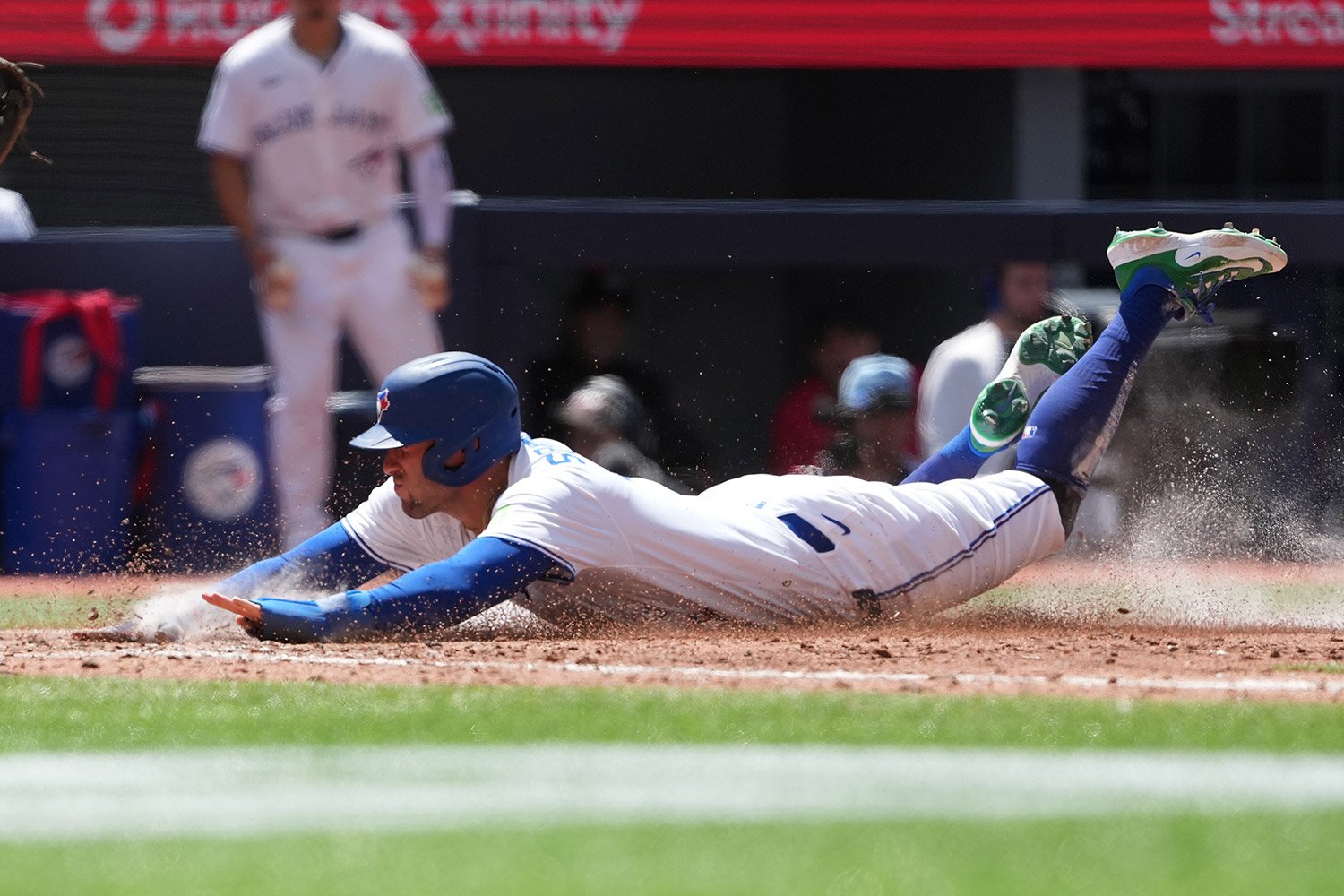 Weekly Snapshot: Mon, 7/14 through Sun, 7/20 Record Last Week: 3-0 (Overall: 58-41) Run Differential Last Week: + 9 (Overall: + 26) Standings: First Place in AL East (3.0 Games Up on NYY), Second in AL (1.0 GB of DET for first) Last Week’s Results Game 97: SF 0 - TOR 4 Bassitt: 6.1 IP, 10 H, 0 ER, 0 BB, 5 K Springer: 3-4 Loperfido: 2-3, 2B, RBI, BB Wagner: 1-2, 2B, 2 RBI, BB Game 98: SF 3 - TOR 6 Lauer: 6.0 IP, 2 H, 2 ER, 0 BB, 7 K Barger: 4-4, 2B, R Heineman: 2-4, HR (3), 3 RBI Wagner: 2-4, 2B, 2 RBI Game 99: SF 6 - TOR 8 Berrios: 5.2 IP, 8 H, 4 ER, 1 BB, 5 K Guerrero Jr: 2-3, HR (13), 2 RBI, BB Springer: 2-4, HR (17). 2 RBI Barger: 1-4, HR (14), 2 RBI Highlights Addison Barger: Not even the All-Star break can slow down Addison Barger. Over the weekend series against the Giants, Barger continued on his impressive sophomore season at the plate. He had hits in all three games, including a four-hit performance in the middle game of the series (the first time he’s done that in his career), and he capped that off with a monster 407 ft home run in the series finale. Barger has now moved into second on the team in home runs, despite playing in just 75 games on the season. The 2.2 fWAR has him second on the team as well and has emerged as one of the key contributors to the recent success of the Blue Jays. Eric Lauer: If Addison Barger isn’t one of the most surprising players on the 2025 Blue Jays, then that title has to belong to Eric Lauer, who put up another stellar performance on Saturday. Lauer started the game striking out five of the first six Giants he faced, and ended up retiring the first 13 batters before allowing a solo home run. When all was said and done, he threw six innings and allowed just two runs. Most importantly, since Lauer has been inserted into the rotation, the Blue Jays are 6-1 in those starts. Lauer may be more than just a number five starter for this team, and if he keeps pitching this well, it won't be Lauer who gets removed from the rotation if/when the Blue Jays add another starting pitcher at the deadline. Will Wagner: There has been a constant theme with these Blue Jays while they’ve been winning baseball games, and that's that they have been getting positive contributions from players that weren't necessarily expected to be this good. Well, the beat goes on, and this week it was Will Wagner's turn to step up. Two more doubles and a series high four RBI coming from the bottom third of the order will play. Since his call-up at the end of June, Wagner is slashing .333/.436/.485 good enough for a .921 OPS. He’s mostly playing in a platoon role, hitting against left-handed pitching, but he’s been doing his part and is looking more and more like he belongs in the major leagues. Lowlights Jose Berrios: Don’t look now, but Berrios has been the one out of the five starters who has been struggling the most lately. He was able to pitch into the sixth inning on Sunday but allowed four earned runs, now the third time in his last four starts he’s allowed that many. This isn't anything new for Berrios, as throughout his career he’s had extended stretches of ineffectiveness and has found a way to turn it around, But with the Blue Jays currently leading the AL East, and in a heated competition to try and get one of the top two spots in the American League to get a bye in the first round having their pitchers be productive every day is going to be key, and the Blue Jays would like to see Berrios go on another positive run sooner rather than later. Braydon Fisher: It’s been hard to find a low light this week. That’ll happen when your team wins all three games played in the week, but Braydon Fisher gets highlighted here, mostly because he came into the game on Sunday to relieve Berrios, and all three batters he faced got on base. A double, a single, and then a walk was all he was able to before he was lifted from his appearance. His performance on the season has still been remarkable, as he has allowed earned runs in only one of his last 19 appearances, so he’s earned some slack, but it's worth bringing attention to in a week where so many Blue Jays performed so well. Random Stats of the Week The Blue Jays have now won 10 straight games at home, the most they’ve had since the 1985 season. Vladimir Guerrero Jr and Alejandro Kirk both appeared in the All-Star Game this week, both of them collecting a hit in their game. The Blue Jays drafted 19 players in this week's MLB Draft, and according to Baseball America, all but one have signed so far. Chris Bassitt allowed 10 hits in his start but did not allow a run. LHP Joe Mantiply signed with the Blue Jays on a minor league deal this week. He was an all-star as recently as 2022. Jeff Hoffman picked up saves in the first two games of the series, and Yariel Rodriguez picked up the save in the finale. The Blue Jays held a moment of silence on Friday for the passing of long-time Blue Jay Jim Clancy. Clancy spent 12 seasons in Toronto and was an all-star in the 1982 season News, Notes and Not Playing No new roster notes 10-Day IL: Andres Gimenez, Daulton Varsho Andres Gimenez was with the team in Toronto this week, doing defensive drills and some light hitting (Via Davidi) Daulton Varsho has begun a rehab assignment; the number of games until his return is still to be determined, but he did hit a HR on Sunday in Dunedin (Via Davidi) 15-day IL: Yimi Garcia, Bowden Francis, Paxton Schultz, Nick Sandlin Yimi Garcia, who was on the IL due to an ankle sprain, is now experiencing “ulnar nerve symptoms” and will get an exam for the next steps (Via Davidi) Bowden Francis felt “cranky in his shoulder” and will be shut down for at least 10 days (Via Davidi) Nick Sandlin has begun playing catch. He’s feeling better (Via Davidi) 60-day IL: Anthony Santander, Alek Manoah, Ryan Burr OF/DH Anthony Santander still hasn't swung a bat. he met in Toronto this week to see some doctors to try and get a plan going forward. (Via Davidi) RHP Alek Manoah got into his first few rehab games, throwing two innings and striking out two in his most recent appearance. Ryan Burrs’ season is over, after having surgery to address an injury in his throwing shoulder (Via Shi Davidi) Trending Storyline The Blue Jays' stretch of dominance continues, as they have been the best team in baseball since May 25th. The goal for this team is to maintain that success and avoid becoming too complacent. Not only is the team competing for first place in the AL East, but the chance at finishing first or second in the American League should be a priority as the Blue Jays haven’t had any luck at all in the wild card series, and getting a first-round bye would be a remarkable goal for this team. The Trade deadline is now less than two weeks away, and the Blue Jays are certainly going to be buyers at the deadline. It's worth watching over the next few series to see what the Blue Jays need to acquire. Can Max Scherzer prove he can stay on the mound for the rest of the season? How will the Blue Jays address some needs in their bullpen? Davis Schneider had a good run before the All-Star break, but are the Blue Jays still going to acquire a right-handed bench bat, or can Schneider be that player? There is a lot to look into over these next few series, as it may have some effect on what the Blue Jays do at the deadline. On the field, there is still much to be determined as well. Vladimir Guerrero Jr. has been good, but hasn’t had the power surge that he’s had in the past. How will the position player group shape out with Daulton Varsho set to return in the near future? Will the pitching staff be able to bounce back after some less-than-spectacular outings? Time will tell. Looking Ahead The unofficial second half of the season continues as the Blue Jays will continue their home stand and will try to extend their 10-game home winning streak as they welcome the New York Yankees into town. The Yankees have just recently taken a series against Atlanta and have made some changes to their pitching staff in order to have their best arms (Rodon and Fried) start in the series. The Jays have had success against the Bronx Bombers this season, after they swept them the last time they were in Toronto. If the Blue Jays can do that again, they will put some serious distance between the two teams in the race for the division, but a Yankees win will have the race much closer once again. After completing the series against the Yankees, the Jays will make the short trip to Detroit, where they will await the first-place Tigers for a four-game series. It will be the Jays' first look against the team that the Blue Jays are chasing for first place in the American League. Just as in the previous series, if the Blue Jays can take at least three games in the series, then the odds of them claiming first in the AL and taking a bye through the Wild Card round seem very real; if not, it'll be hard to catch up to them especially as the Jays will likely have to face the likely candidate for the AL Cy Young in Tarik Skubal this week. The Jays have had many big weeks this season, and this upcoming week might be one of the biggest yet.
 -
.jpg.06b5f0344f51d6fcac3a7ae1888d9827.jpg) Weekly Snapshot: Mon, 6/30 through Sun, 7/6 *** Record Last Week: 7-0 (Overall: 52-38) Run Differential Last Week: +16 (Overall: +12) Standings: First Place in AL East (3.0 Games Up on NYY and TB), Third in AL (3.0 GB of HOU for second) Last Week’s Results Game 84: NYY 4 - TOR 5 Scherzer: 5.0 IP, 3 H, 2 ER, 0 BB, 7 K Guerrero Jr.: 2-4, 2B, 3 RBI Clement: 2-4, RBI Schneider: 2-4 Game 85: NYY 5 - TOR 12 Gausman: 5.0 IP, 6 H, 2 ER, 4 BB, 3 K Springer: 3-4, 2 HR (12,13), 7 RBI, BB Giménez: 2-3, HR (5), 3 RBI Clement: 1-4, BB, 2 RBI Game 86: NYY 9 - TOR 11 Berríos: 4.1 IP, 9 H, 6 ER, 0 BB, 3 K Schneider: 2-4, 2 HR (2,3), 3 RBI Gimenez: 3-5, RBI Barger: 2-5, HR (10), 4 RBI Game 87: NYY 5 - TOR 8 Bassitt: 5.2 IP, 8 H, 3 ER, 3 BB, 9 K Springer: 3-5, 2 HR (14,15), 4 RBI Barger: 3-4, HR (11), 2 RBI Lukes: 3-5, 2 RBI Game 88: LAA 3 - TOR 4 (10) Lauer: 6.0 IP, 2 H, 0 ER, 3 BB, 5 K Springer: 2-4, R Wagner: 1-3, 2B Game 89: LAA 3 - TOR 4 (11) Scherzer: 4.0 IP, 5 H, 2 ER, 3 BB, 4 K Estrada: 4.0 IP, 2 H, 1 ER, 0 BB 4 K Guerrero Jr.: 3-5, BB Springer: 2-6, HR (16), 2 RBI Barger: 2-5, 2 RBI Game 90: LAA 2 - TOR 3 Gausman: 5.2 IP, 7 H, 2 ER, 3 BB, 9 K Bichette: 1-3, HR (12), 2 RBI Loperfido: 1-3, RBI Schneider: 1-3, 2B, RBI Highlights The Whole Team: What a week this was for the Toronto Blue Jays. They played as well as possible, winning all seven games on the schedule and vaulting themselves from three games back in the division to first place with a three-game cushion. The Blue Jays scored the second-most runs in baseball this week, and the bullpen, which was overworked this last series, did its job to get the team the wins they needed. When all was said and done, the Blue Jays went 7-0, their first sweep of a homestand of seven or more games in franchise history, including their first-ever four-game home sweep of the New York Yankees. If the Blue Jays do end up winning the AL East this season, this week is going to be a big reason why. George Springer: Wow. What a week. Personally, I don't remember a time another Blue Jay had a week like George Springer just had. As a whole, he hit .429/.500/.964 with 5 home runs and 13 RBI, all while walking more than he struck out, and he added a stolen base for good measure. Springer led all AL hitters (or tied for the lead) in: runs (9), RBI (13), fWAR (0.8), plate appearances (33), hits (12), and Win Probability Added (0.94). On the season, Springer now has a 148 wRC+, which trails only Aaron Judge, Cal Raleigh, and Jonathan Aranda in the American League, all of whom will be representing the AL at the All-Star Game. Springer deserves to be there with them. Jeff Hoffman: There was really no wrong answer here to put as our third highlight, but it's important to take a look at what Jeff Hoffman did over this homestand. The Jays used their closer a lot this week. He got into four games, pitched an inning in each, and was a perfect 4-for-4 in saves. He now has 22 on the season, which is the fourth-most in baseball. It's worth noting too that since the start of June, He’s thrown to a 1.38 ERA with just two earned runs allowed in 13 innings pitched. He seems to have gotten back on track lately. Honorable mentions: Addison Barger, Lazaro Estrada, Andrés Giménez, Davis Schneider, Eric Lauer, Max Scherzer Lowlights Yimi García: In a week that was predominantly so good for the Blue Jays, it was hard to find that many low lights, The most notable one this week has to be Yimi García, who came back after roughly six weeks on the IL and was immediately thrown into the fire; he threw a season-high 34 pitches and gave up a game-tying home run to Aaron Judge. To make things worse, García was then sent back to the IL with an ankle sprain after he slipped getting out of a cold tub. Just some real rough luck. José Berríos: This one might be grasping at straws a little, but when the Blue Jays played so well, you’ve got to look hard for some small moments of underperformance. This week, it was José Berríos who was cruising along in his start before things really fell apart for him in the fifth inning. He allowed five straight batters to reach via four singles and a double to begin the inning, and after a fly out, a massive three-run homer by Giancarlo Stanton chased Berríos from the game. Via Baseball Reference's game score metric, his score of 24 was his worst of the season, and both the nine hits and six earned runs he allowed tied his season-worst. Berríos has had starts like this before and has bounced back several times. He will have the opportunity to do so against the White Sox this week. Random Stats of the Week The Blue Jays had two batters reach via catcher's interference this week. Davis Schneider had the hardest swing of his career this week, swinging the bat 82.9 mph. Addison Barger recorded his sixth outfield assist of the season this week, throwing a ball 95.3 mph to nab Mike Trout trying to score. MLB All-Stars were announced this week. Vladimir Guerrero Jr. will be there for his fifth Midsummer Classic, and Alejandro Kirk will be there for his second. Lazaro Estrada, Joey Loperfido and Ryan Burr became the 46th, 47th and 48th different Blue Jays to appear in a game this season. The Blue Jays celebrated Canada Day at home this week, winning 12-5. They are now 17-29 all-time on Canada Day. Max Scherzer made his return to the mound after a long layoff, throwing nine innings over two starts. He allowed four earned runs and struck out eleven. News, Notes and Not Playing INF Leo Jiménez, OF Joey Loperfido, RHP Robinson Pina and RHP Ryan Burr have all been called up. RHP Yimi García returned from the IL and is now back on the IL. RHP Lazaro Estrada made his MLB debut this week and has since been sent back to Triple-A Buffalo. OF Jonatan Clase, LHP Mason Fluharty, and LHP Justin Bruihl have all been sent to Triple-A Buffalo. OF Will Robertson has been designated for assignment. 10-Day IL: Andrés Giménez, Daulton Varsho Andrés Giménez is on the injured list with an ankle sprain. Daulton Varsho is set to get into rehab games in the coming days (via Mitch Bannon). 15-day IL: Yimi García, Bowden Francis, Paxton Schultz Yimi García hits the IL with a right ankle sprain after slipping in the tub (via Bannon). 60-day IL: Anthony Santander, Alek Manoah OF/DH Anthony Santander was diagnosed with a subluxation of his shoulder and has been transferred to the 60-day IL (via Keegan Matheson). RHP Alek Manoah is going to have one more live bullpen session before getting into games (via Mitch Bannon). Trending Storylines The Blue Jays just don’t stop winning games. Following a 7-0 homestand that saw them soar into first place, a lot of the credit should go to the offense. Almost everyone who got into the lineup produced in some way, and it does feel like almost every player on the roster is contributing. It won't last this way forever, but the Blue Jays do look like one of, if not the best team in baseball for the time being. Some of the team's flaws may have been overshadowed by a great week, but the Blue Jays' starting pitching wasn’t at its best. Scherzer showed some good and some bad in both of his starts, noting that it was a push to get things together to make his second start this week. Eric Lauer has pitched well since he was named a full-time member of the starting rotation, but all three of Berríos, Kevin Gausman and Chris Bassitt had less-than-spectacular starts this week. The rotation is worth monitoring going forward once the Blue Jays' offence slows down (if it ever does) and as the team approaches the trade deadline. The Blue Jays' bullpen also got a heavy dose of usage this week. Blue Jays relievers threw 30.1 IP, which was the most out of all 30 MLB teams. The bullpen has been good, but the Blue Jays don't want to run the risk of overworking their relievers, as it could cost them later in the season. Looking Ahead The Blue Jays have one more week until the All-Star break, and their road trip will have them run through Chicago to visit the White Sox and then to Sacramento to visit the A’s. There is a lot on the line, too. If Toronto can win just two of their next six games, they'll set a record for most wins in franchise history before the All-Star break. In their first series, the Jays will be looking for revenge against Chicago, who took two out of three against them two weeks ago at the Rogers Centre. On paper, the Blue Jays should be able to continue their winning ways against a team that is near the bottom of the standings. Berríos, Bassitt, and Lauer are the Jays' projected starters for this series. After a trip to the windy city, the Blue Jays will head to Sacramento to take on the A’s in a ballpark that has been a real offensive force so far this season. The Jays have played well against the A’s, sweeping them earlier in the season, and they will look to do so again before they head into the All-Star break. On paper, it looks like a real opportunity for the Jays to further their lead in the AL East, but they can’t take these two teams lightly, especially when playing them on the road.
Weekly Snapshot: Mon, 6/30 through Sun, 7/6 *** Record Last Week: 7-0 (Overall: 52-38) Run Differential Last Week: +16 (Overall: +12) Standings: First Place in AL East (3.0 Games Up on NYY and TB), Third in AL (3.0 GB of HOU for second) Last Week’s Results Game 84: NYY 4 - TOR 5 Scherzer: 5.0 IP, 3 H, 2 ER, 0 BB, 7 K Guerrero Jr.: 2-4, 2B, 3 RBI Clement: 2-4, RBI Schneider: 2-4 Game 85: NYY 5 - TOR 12 Gausman: 5.0 IP, 6 H, 2 ER, 4 BB, 3 K Springer: 3-4, 2 HR (12,13), 7 RBI, BB Giménez: 2-3, HR (5), 3 RBI Clement: 1-4, BB, 2 RBI Game 86: NYY 9 - TOR 11 Berríos: 4.1 IP, 9 H, 6 ER, 0 BB, 3 K Schneider: 2-4, 2 HR (2,3), 3 RBI Gimenez: 3-5, RBI Barger: 2-5, HR (10), 4 RBI Game 87: NYY 5 - TOR 8 Bassitt: 5.2 IP, 8 H, 3 ER, 3 BB, 9 K Springer: 3-5, 2 HR (14,15), 4 RBI Barger: 3-4, HR (11), 2 RBI Lukes: 3-5, 2 RBI Game 88: LAA 3 - TOR 4 (10) Lauer: 6.0 IP, 2 H, 0 ER, 3 BB, 5 K Springer: 2-4, R Wagner: 1-3, 2B Game 89: LAA 3 - TOR 4 (11) Scherzer: 4.0 IP, 5 H, 2 ER, 3 BB, 4 K Estrada: 4.0 IP, 2 H, 1 ER, 0 BB 4 K Guerrero Jr.: 3-5, BB Springer: 2-6, HR (16), 2 RBI Barger: 2-5, 2 RBI Game 90: LAA 2 - TOR 3 Gausman: 5.2 IP, 7 H, 2 ER, 3 BB, 9 K Bichette: 1-3, HR (12), 2 RBI Loperfido: 1-3, RBI Schneider: 1-3, 2B, RBI Highlights The Whole Team: What a week this was for the Toronto Blue Jays. They played as well as possible, winning all seven games on the schedule and vaulting themselves from three games back in the division to first place with a three-game cushion. The Blue Jays scored the second-most runs in baseball this week, and the bullpen, which was overworked this last series, did its job to get the team the wins they needed. When all was said and done, the Blue Jays went 7-0, their first sweep of a homestand of seven or more games in franchise history, including their first-ever four-game home sweep of the New York Yankees. If the Blue Jays do end up winning the AL East this season, this week is going to be a big reason why. George Springer: Wow. What a week. Personally, I don't remember a time another Blue Jay had a week like George Springer just had. As a whole, he hit .429/.500/.964 with 5 home runs and 13 RBI, all while walking more than he struck out, and he added a stolen base for good measure. Springer led all AL hitters (or tied for the lead) in: runs (9), RBI (13), fWAR (0.8), plate appearances (33), hits (12), and Win Probability Added (0.94). On the season, Springer now has a 148 wRC+, which trails only Aaron Judge, Cal Raleigh, and Jonathan Aranda in the American League, all of whom will be representing the AL at the All-Star Game. Springer deserves to be there with them. Jeff Hoffman: There was really no wrong answer here to put as our third highlight, but it's important to take a look at what Jeff Hoffman did over this homestand. The Jays used their closer a lot this week. He got into four games, pitched an inning in each, and was a perfect 4-for-4 in saves. He now has 22 on the season, which is the fourth-most in baseball. It's worth noting too that since the start of June, He’s thrown to a 1.38 ERA with just two earned runs allowed in 13 innings pitched. He seems to have gotten back on track lately. Honorable mentions: Addison Barger, Lazaro Estrada, Andrés Giménez, Davis Schneider, Eric Lauer, Max Scherzer Lowlights Yimi García: In a week that was predominantly so good for the Blue Jays, it was hard to find that many low lights, The most notable one this week has to be Yimi García, who came back after roughly six weeks on the IL and was immediately thrown into the fire; he threw a season-high 34 pitches and gave up a game-tying home run to Aaron Judge. To make things worse, García was then sent back to the IL with an ankle sprain after he slipped getting out of a cold tub. Just some real rough luck. José Berríos: This one might be grasping at straws a little, but when the Blue Jays played so well, you’ve got to look hard for some small moments of underperformance. This week, it was José Berríos who was cruising along in his start before things really fell apart for him in the fifth inning. He allowed five straight batters to reach via four singles and a double to begin the inning, and after a fly out, a massive three-run homer by Giancarlo Stanton chased Berríos from the game. Via Baseball Reference's game score metric, his score of 24 was his worst of the season, and both the nine hits and six earned runs he allowed tied his season-worst. Berríos has had starts like this before and has bounced back several times. He will have the opportunity to do so against the White Sox this week. Random Stats of the Week The Blue Jays had two batters reach via catcher's interference this week. Davis Schneider had the hardest swing of his career this week, swinging the bat 82.9 mph. Addison Barger recorded his sixth outfield assist of the season this week, throwing a ball 95.3 mph to nab Mike Trout trying to score. MLB All-Stars were announced this week. Vladimir Guerrero Jr. will be there for his fifth Midsummer Classic, and Alejandro Kirk will be there for his second. Lazaro Estrada, Joey Loperfido and Ryan Burr became the 46th, 47th and 48th different Blue Jays to appear in a game this season. The Blue Jays celebrated Canada Day at home this week, winning 12-5. They are now 17-29 all-time on Canada Day. Max Scherzer made his return to the mound after a long layoff, throwing nine innings over two starts. He allowed four earned runs and struck out eleven. News, Notes and Not Playing INF Leo Jiménez, OF Joey Loperfido, RHP Robinson Pina and RHP Ryan Burr have all been called up. RHP Yimi García returned from the IL and is now back on the IL. RHP Lazaro Estrada made his MLB debut this week and has since been sent back to Triple-A Buffalo. OF Jonatan Clase, LHP Mason Fluharty, and LHP Justin Bruihl have all been sent to Triple-A Buffalo. OF Will Robertson has been designated for assignment. 10-Day IL: Andrés Giménez, Daulton Varsho Andrés Giménez is on the injured list with an ankle sprain. Daulton Varsho is set to get into rehab games in the coming days (via Mitch Bannon). 15-day IL: Yimi García, Bowden Francis, Paxton Schultz Yimi García hits the IL with a right ankle sprain after slipping in the tub (via Bannon). 60-day IL: Anthony Santander, Alek Manoah OF/DH Anthony Santander was diagnosed with a subluxation of his shoulder and has been transferred to the 60-day IL (via Keegan Matheson). RHP Alek Manoah is going to have one more live bullpen session before getting into games (via Mitch Bannon). Trending Storylines The Blue Jays just don’t stop winning games. Following a 7-0 homestand that saw them soar into first place, a lot of the credit should go to the offense. Almost everyone who got into the lineup produced in some way, and it does feel like almost every player on the roster is contributing. It won't last this way forever, but the Blue Jays do look like one of, if not the best team in baseball for the time being. Some of the team's flaws may have been overshadowed by a great week, but the Blue Jays' starting pitching wasn’t at its best. Scherzer showed some good and some bad in both of his starts, noting that it was a push to get things together to make his second start this week. Eric Lauer has pitched well since he was named a full-time member of the starting rotation, but all three of Berríos, Kevin Gausman and Chris Bassitt had less-than-spectacular starts this week. The rotation is worth monitoring going forward once the Blue Jays' offence slows down (if it ever does) and as the team approaches the trade deadline. The Blue Jays' bullpen also got a heavy dose of usage this week. Blue Jays relievers threw 30.1 IP, which was the most out of all 30 MLB teams. The bullpen has been good, but the Blue Jays don't want to run the risk of overworking their relievers, as it could cost them later in the season. Looking Ahead The Blue Jays have one more week until the All-Star break, and their road trip will have them run through Chicago to visit the White Sox and then to Sacramento to visit the A’s. There is a lot on the line, too. If Toronto can win just two of their next six games, they'll set a record for most wins in franchise history before the All-Star break. In their first series, the Jays will be looking for revenge against Chicago, who took two out of three against them two weeks ago at the Rogers Centre. On paper, the Blue Jays should be able to continue their winning ways against a team that is near the bottom of the standings. Berríos, Bassitt, and Lauer are the Jays' projected starters for this series. After a trip to the windy city, the Blue Jays will head to Sacramento to take on the A’s in a ballpark that has been a real offensive force so far this season. The Jays have played well against the A’s, sweeping them earlier in the season, and they will look to do so again before they head into the All-Star break. On paper, it looks like a real opportunity for the Jays to further their lead in the AL East, but they can’t take these two teams lightly, especially when playing them on the road. -
Weekly Snapshot: Mon, 6/30 through Sun, 7/6 *** Record Last Week: 7-0 (Overall: 52-38) Run Differential Last Week: +16 (Overall: +12) Standings: First Place in AL East (3.0 Games Up on NYY and TB), Third in AL (3.0 GB of HOU for second) Last Week’s Results Game 84: NYY 4 - TOR 5 Scherzer: 5.0 IP, 3 H, 2 ER, 0 BB, 7 K Guerrero Jr.: 2-4, 2B, 3 RBI Clement: 2-4, RBI Schneider: 2-4 Game 85: NYY 5 - TOR 12 Gausman: 5.0 IP, 6 H, 2 ER, 4 BB, 3 K Springer: 3-4, 2 HR (12,13), 7 RBI, BB Giménez: 2-3, HR (5), 3 RBI Clement: 1-4, BB, 2 RBI Game 86: NYY 9 - TOR 11 Berríos: 4.1 IP, 9 H, 6 ER, 0 BB, 3 K Schneider: 2-4, 2 HR (2,3), 3 RBI Gimenez: 3-5, RBI Barger: 2-5, HR (10), 4 RBI Game 87: NYY 5 - TOR 8 Bassitt: 5.2 IP, 8 H, 3 ER, 3 BB, 9 K Springer: 3-5, 2 HR (14,15), 4 RBI Barger: 3-4, HR (11), 2 RBI Lukes: 3-5, 2 RBI Game 88: LAA 3 - TOR 4 (10) Lauer: 6.0 IP, 2 H, 0 ER, 3 BB, 5 K Springer: 2-4, R Wagner: 1-3, 2B Game 89: LAA 3 - TOR 4 (11) Scherzer: 4.0 IP, 5 H, 2 ER, 3 BB, 4 K Estrada: 4.0 IP, 2 H, 1 ER, 0 BB 4 K Guerrero Jr.: 3-5, BB Springer: 2-6, HR (16), 2 RBI Barger: 2-5, 2 RBI Game 90: LAA 2 - TOR 3 Gausman: 5.2 IP, 7 H, 2 ER, 3 BB, 9 K Bichette: 1-3, HR (12), 2 RBI Loperfido: 1-3, RBI Schneider: 1-3, 2B, RBI Highlights The Whole Team: What a week this was for the Toronto Blue Jays. They played as well as possible, winning all seven games on the schedule and vaulting themselves from three games back in the division to first place with a three-game cushion. The Blue Jays scored the second-most runs in baseball this week, and the bullpen, which was overworked this last series, did its job to get the team the wins they needed. When all was said and done, the Blue Jays went 7-0, their first sweep of a homestand of seven or more games in franchise history, including their first-ever four-game home sweep of the New York Yankees. If the Blue Jays do end up winning the AL East this season, this week is going to be a big reason why. George Springer: Wow. What a week. Personally, I don't remember a time another Blue Jay had a week like George Springer just had. As a whole, he hit .429/.500/.964 with 5 home runs and 13 RBI, all while walking more than he struck out, and he added a stolen base for good measure. Springer led all AL hitters (or tied for the lead) in: runs (9), RBI (13), fWAR (0.8), plate appearances (33), hits (12), and Win Probability Added (0.94). On the season, Springer now has a 148 wRC+, which trails only Aaron Judge, Cal Raleigh, and Jonathan Aranda in the American League, all of whom will be representing the AL at the All-Star Game. Springer deserves to be there with them. Jeff Hoffman: There was really no wrong answer here to put as our third highlight, but it's important to take a look at what Jeff Hoffman did over this homestand. The Jays used their closer a lot this week. He got into four games, pitched an inning in each, and was a perfect 4-for-4 in saves. He now has 22 on the season, which is the fourth-most in baseball. It's worth noting too that since the start of June, He’s thrown to a 1.38 ERA with just two earned runs allowed in 13 innings pitched. He seems to have gotten back on track lately. Honorable mentions: Addison Barger, Lazaro Estrada, Andrés Giménez, Davis Schneider, Eric Lauer, Max Scherzer Lowlights Yimi García: In a week that was predominantly so good for the Blue Jays, it was hard to find that many low lights, The most notable one this week has to be Yimi García, who came back after roughly six weeks on the IL and was immediately thrown into the fire; he threw a season-high 34 pitches and gave up a game-tying home run to Aaron Judge. To make things worse, García was then sent back to the IL with an ankle sprain after he slipped getting out of a cold tub. Just some real rough luck. José Berríos: This one might be grasping at straws a little, but when the Blue Jays played so well, you’ve got to look hard for some small moments of underperformance. This week, it was José Berríos who was cruising along in his start before things really fell apart for him in the fifth inning. He allowed five straight batters to reach via four singles and a double to begin the inning, and after a fly out, a massive three-run homer by Giancarlo Stanton chased Berríos from the game. Via Baseball Reference's game score metric, his score of 24 was his worst of the season, and both the nine hits and six earned runs he allowed tied his season-worst. Berríos has had starts like this before and has bounced back several times. He will have the opportunity to do so against the White Sox this week. Random Stats of the Week The Blue Jays had two batters reach via catcher's interference this week. Davis Schneider had the hardest swing of his career this week, swinging the bat 82.9 mph. Addison Barger recorded his sixth outfield assist of the season this week, throwing a ball 95.3 mph to nab Mike Trout trying to score. MLB All-Stars were announced this week. Vladimir Guerrero Jr. will be there for his fifth Midsummer Classic, and Alejandro Kirk will be there for his second. Lazaro Estrada, Joey Loperfido and Ryan Burr became the 46th, 47th and 48th different Blue Jays to appear in a game this season. The Blue Jays celebrated Canada Day at home this week, winning 12-5. They are now 17-29 all-time on Canada Day. Max Scherzer made his return to the mound after a long layoff, throwing nine innings over two starts. He allowed four earned runs and struck out eleven. News, Notes and Not Playing INF Leo Jiménez, OF Joey Loperfido, RHP Robinson Pina and RHP Ryan Burr have all been called up. RHP Yimi García returned from the IL and is now back on the IL. RHP Lazaro Estrada made his MLB debut this week and has since been sent back to Triple-A Buffalo. OF Jonatan Clase, LHP Mason Fluharty, and LHP Justin Bruihl have all been sent to Triple-A Buffalo. OF Will Robertson has been designated for assignment. 10-Day IL: Andrés Giménez, Daulton Varsho Andrés Giménez is on the injured list with an ankle sprain. Daulton Varsho is set to get into rehab games in the coming days (via Mitch Bannon). 15-day IL: Yimi García, Bowden Francis, Paxton Schultz Yimi García hits the IL with a right ankle sprain after slipping in the tub (via Bannon). 60-day IL: Anthony Santander, Alek Manoah OF/DH Anthony Santander was diagnosed with a subluxation of his shoulder and has been transferred to the 60-day IL (via Keegan Matheson). RHP Alek Manoah is going to have one more live bullpen session before getting into games (via Mitch Bannon). Trending Storylines The Blue Jays just don’t stop winning games. Following a 7-0 homestand that saw them soar into first place, a lot of the credit should go to the offense. Almost everyone who got into the lineup produced in some way, and it does feel like almost every player on the roster is contributing. It won't last this way forever, but the Blue Jays do look like one of, if not the best team in baseball for the time being. Some of the team's flaws may have been overshadowed by a great week, but the Blue Jays' starting pitching wasn’t at its best. Scherzer showed some good and some bad in both of his starts, noting that it was a push to get things together to make his second start this week. Eric Lauer has pitched well since he was named a full-time member of the starting rotation, but all three of Berríos, Kevin Gausman and Chris Bassitt had less-than-spectacular starts this week. The rotation is worth monitoring going forward once the Blue Jays' offence slows down (if it ever does) and as the team approaches the trade deadline. The Blue Jays' bullpen also got a heavy dose of usage this week. Blue Jays relievers threw 30.1 IP, which was the most out of all 30 MLB teams. The bullpen has been good, but the Blue Jays don't want to run the risk of overworking their relievers, as it could cost them later in the season. Looking Ahead The Blue Jays have one more week until the All-Star break, and their road trip will have them run through Chicago to visit the White Sox and then to Sacramento to visit the A’s. There is a lot on the line, too. If Toronto can win just two of their next six games, they'll set a record for most wins in franchise history before the All-Star break. In their first series, the Jays will be looking for revenge against Chicago, who took two out of three against them two weeks ago at the Rogers Centre. On paper, the Blue Jays should be able to continue their winning ways against a team that is near the bottom of the standings. Berríos, Bassitt, and Lauer are the Jays' projected starters for this series. After a trip to the windy city, the Blue Jays will head to Sacramento to take on the A’s in a ballpark that has been a real offensive force so far this season. The Jays have played well against the A’s, sweeping them earlier in the season, and they will look to do so again before they head into the All-Star break. On paper, it looks like a real opportunity for the Jays to further their lead in the AL East, but they can’t take these two teams lightly, especially when playing them on the road. View full article
- 1 reply
-
- 2
-
-
The Toronto Blue Jays are a really good baseball team. There shouldn't be much debate about it either, following two straight series sweeps (including a four-game sweep against the New York Yankees) and four series victories in a row, the Blue Jays sit in first place in the AL East. They became the first team in the division to hit the 50-win mark, and they trail only the Houston Astros and the Detroit Tigers for the best record in the American League. There is a small subset of people out there (looking at you, Michael Kay) who don't believe the Blue Jays are for real, with the main argument being that their run differential has been quite poor throughout the season. Jamie Campbell threw some shade towards Kay and the Yankees after the Blue Jays swept them on Thursday, saying, "a certain Yankee broadcaster" is going to have to "go on his show tomorrow and admit that the Blue Jays are a first-place team because the standings prove it." Now, at the end of the day, run differential doesn't really matter. They don't hand out a trophy at the end of the season for the team that outscored their opponents the most, nor do they award playoff spots that way either. All that matters is whether you score more than your opponent each day, and the Blue Jays have done that more often than not this season. That said, run differential is usually a better predictor than current win-loss record of how a team is going to perform going forward. Blue Jays fans should know this well. Back in 2015, the Blue Jays were a game below .500 at the All-Star break despite their +84 run differential. Two weeks later, they added Troy Tulowitzki, David Price, and others, and they soared to a 48-23 record in the second half and marched right on to the ALCS. Alex Anthopoulos, Toronto's general manager at the time, cited the team's extreme run differential as a reason to push the chips in at the deadline, and it's safe to say it worked out. Now, getting back to the 2025 team, the run differential conversation has felt like throwing a wet blanket on a season that has been incredibly fun so far. With any luck, maybe the Blue Jays continue on their current tear and we soon forget all about this. Still, it's worth taking a look to see what history says about a team's success with such a “poor” run differential halfway through the season. At the end of June, the Blue Jays' run differential was -3. So, with that number in mind, we can take a look at how many clubs have gone on to make the playoffs after finishing June with a negative run differential since the league implemented a 10-team playoff structure in 2012: 2024: Tigers (-22) 2023: Marlins (-12), Brewers* (-22), Phillies (-8) 2022: None 2021: Cardinals (-42), Yankees (-3) 2020: N/A (COVID season) 2019: Brewers (-4), Cardinals* (-1) 2018: Rockies (-44) 2017: Twins (-55) 2016: None 2015: Mets* (-12) 2014: Pirates (-9) 2013: Dodgers* (-46) 2012: Orioles (-22), Tigers* (-9), Athletics*, (-4) *Team ended up winning the division It's quite an interesting list. In 11 of the past 13 seasons, there has been at least one team with a negative run differential at the end of June that made the postseason. In some cases, those teams had even more success. The 2015 Mets team, led by Jacob deGrom and Matt Harvey, went all the way to the World Series. In addition, the 2012 Tigers team, led by Justin Verlander, Max Scherzer, and Miguel Cabrera, also made it to the World Series. Turning back to 2025, it's possible that the Guardians, Twins, or Royals find their way into the playoffs, but there is a good chance that the Blue Jays may be the only team with a negative run differential coming into July to make the postseason. Making the postseason isn’t the only goal for this Blue Jays team; they’re going to want to win the division, and knowing that the Blue Jays have gone 0-6 in the Wild Card round since 2016, getting a first-round bye would be even more important for this team. So, that should be the goal, and the Jays are certainly making progress. As of this weekend, the Blue Jays overtook the Yankees as the favourites to win the division, according to FanGraphs' playoff odds: Graph updated following games on July 6. Run differential says something about a team, but it doesn't say everything. It doesn't tell you how clutch a team has been. It doesn't tell you that the Blue Jays are 16-10 in one-run games so far, or how they have been so good at moving runners over and getting them in when they need to late in games. All these things are key for helping teams, like the Blue Jays, win more games than expected. This might even be the last time this season we're thinking about this. In July so far, the Blue Jays have a +15 run differential, and if they keep winning ballgames at their current pace, this stat won't matter much anymore – no matter what Michael Kay and other Yankee media members say. View full article
-
- 1
-
.jpg.850ae0ac21a346bf537d8bd94aae50e7.jpg)
.jpg.ecc2e51f764073a5fce2f16353e60f6c.jpg)
.jpg.278b2f147f930d5a4e5c93442f2fd217.jpg)
.jpg.9a2a43f1198fcc5a25dab68ca5121645.jpg)
.jpg.555fc5d9976ff8ce96985e3f3d1d9efa.jpg)
.jpg.06b5f0344f51d6fcac3a7ae1888d9827.jpg)