


Jesse Burrill
-
Posts
262 -
Joined
-
Last visited
Content Type
Profiles
Toronto Blue Jays Videos
2026 Toronto Blue Jays Top Prospects Ranking
Toronto Blue Jays Free Agent & Trade Rumors, Notes, & Tidbits
Guides & Resources
2025 Toronto Blue Jays Draft Pick Tracker
News
2026 Toronto Blue Jays Draft Tracker: Picks & Bonuses
Forums
Blogs
Events
Store
Downloads
Gallery
Everything posted by Jesse Burrill
-
 The Blue Jays' outfield group has been a revolving door all season. At times, the team has used its outfield spots to add offence, turning to bat-first players whose defence left something to be desired. At other times, the Blue Jays have gone in the opposite direction, relying on players whose speed and defence make up for what their shortcomings may be at the plate. Then there are the group of players who simply haven’t been able to stay on the field this season, leaving their place in the 2027 picture up in the air. While the Blue Jays are doing everything they can to secure a Wild Card spot in the final weeks of the season (and that remains the team's top priority), the bigger picture here is still worth watching. The Blue Jays already have a crowded group of outfielders going into 2027. With the team recently DFAing Jesús Sánchez, the picture has gotten a little clearer, but plenty of decisions remain. Here’s a look at the players who could factor into next season's outfield and what they need to show the Blue Jays down the stretch. Stats from before games on Saturday, September 12. Players With a Clear Path to a Role in 2027 Brett Bateman Stats in 2026: .339/.402/.424, 1 HR, 138 wRC+ 1.5 fWAR Contract Status: Pre-Arbitration, Free Agent in 2033 Brett Bateman has been a revelation for the Blue Jays since coming over from the Cubs at the deadline. Since he made his debut on August 7, he’s leading the team in fWAR. John Schneider has shown faith in the young center fielder, hitting him leadoff against both right- and left-handers. Even when the games matter most, Bateman has earned his manager's trust. For the rest of the 2026 season, Bateman needs to continue down the same path he’s on. His elite center field defence and 87th-percentile sprint speed give him a high floor, even if the bat isn’t at this level long-term, and he has put himself firmly in the 2027 conversation. Has he shown enough already to be the team's starting center fielder next season, or will the Blue Jays be cautious with their young outfielder and start him in the minors? His performance in the remaining weeks could help answer that question. Nathan Lukes Stats in 2026: .274/.322/.390, 10 HR, 102 wRC+, 1.8 fWAR Contract Status: Entering First Year of Arbitration, Free Agent in 2031 Nathan Lukes has almost quietly been one of the most productive outfielders for the Blue Jays this season. After dealing with injuries and vertigo early in the year, Lukes has hit well. John Schneider views him as a top-of-the-order bat against right-handed pitching (115 wRC+ vs. right-handers), and he has been producing as a league-average hitter who plays above-average defence. Lukes doesn’t have much to prove for the rest of the season, as the Blue Jays know what they have with the 31-year-old. But there have been subtle signs of slowing down with the bat: the strikeouts have risen (13.7% in 2025 to 14.6% in 2026), the walks have dropped (8.7% to 5.2%), and some of the quality-of-contact metrics have declined as well. Now that Lukes is entering his arbitration years and becoming more expensive for the team, the Blue Jays may think they can find similar production elsewhere. For now, though, Lukes looks likely to be back for 2027; the question is whether he is an everyday player or someone the Blue Jays strictly use off the bench to face right-handed pitching. Myles Straw Stats in 2026: .236/.299/.346, 3 HR, 82 wRC+, 0.8 fWAR Contract Status: Club Options for 2027 and 2028, $8 and $8.5 million, respectively Myles Straw has been exactly what the 2026 Blue Jays expected. Coming off a 2025 year in which he was a pleasant surprise, he’s essentially been the same player. Elite defence in all three outfield spots and 96th-percentile sprint speed are the tools he brings to the table. The bat will never be a strength for the 31-year-old outfielder, but he finds ways to contribute on the offensive side when he can. His outlook for 2027 is interesting. The Blue Jays do have club options for $8 million in 2027 and $8.5 million in 2028. On the free agent market, players with Straw's skill set historically haven’t gone for that much money, but the Blue Jays have an interesting choice to make. Do they continue to sacrifice offence in the outfield to keep their elite defence intact? Is it worth sacrificing a bench spot for a player who is out of options, with all the other outfielders set to return next season? It's an intriguing debate, and one the Blue Jays will certainly have internally, factoring in how important a presence he’s been in the Blue Jays clubhouse. It won’t be an easy decision. Anthony Santander Stats in 2026: N/A Contract Status: Under Contract Through 2029, Club Option for 2030 The Blue Jays are still waiting for impact from their big free agent signing prior to the 2025 season. After a sub-par first season, Anthony Santander injured his shoulder in spring training and has been out since. He has started playing in rehab games and, barring another setback, it does seem like he’ll get some playing time in the final weeks of the season. Showing the Blue Jays that he’s healthy and can hit will go a long way toward the team feeling confident about his future in 2027. With George Springer set to be a free agent at season's end, the DH spot opens, and Santander is the likeliest candidate for the role. This is still no guarantee; he needs to prove he’s healthy, and even when he’s been on the field as a Blue Jay, he hasn't been that productive (.565 OPS in 54 games). The Blue Jays will also likely be looking for impact bats this offseason, and the easiest spot to add one may be in the DH role. If that’s the case, Santander will be getting an extended look in the outfield, a place where, historically, he hasn't been that good. The Blue Jays need power in the worst way, and Santander is one of the few players on the roster who could provide it. But if he can't produce, Toronto could find itself in a similar situation to the one it just faced with Sánchez: his bat wasn't producing enough to justify the defensive shortcomings that came with it. Addison Barger Stats in 2026: .045/.214/.091, 0 HR, 1 wRC+, 0.0 fWAR (nine games played) Contract Status: Entering Final Pre-Arbitration Season, Free Agent in 2031 Like Santander, Addison Barger’s 2026 season has been mired in injuries. He dealt with ankle injuries early in the year that kept him out for over a month, returned for one game, then developed elbow inflammation that effectively ended his 2026 season. Barger’s key for the rest of the year is simple: He has to focus on getting healthy. If he does, his previous performance gives the Blue Jays plenty of reason to believe he can reclaim an important role in 2027. He was a key part of the 2025 season and playoff run, and with Kazuma Okamoto locked in as a regular at third base, the majority of Barger’s playing time is likely to come in right field. After he missed almost all of 2026, simply getting back on the field and showing that last year’s version of Barger is still there would be a major step forward, and he can be the impact bat the Blue Jays offence desperately needs going forward. Josh Smith 2026 Stats: .223/.312/.352, 6 HR, 90 wRC+, 0.3 fWAR Contract Status: Entering Second Year of Arbitration, Free Agent in 2029 Josh Smith has been the Blue Jays' best offensive player since coming over at the trade deadline. All things considered, he’s likely going to be spending more time in the infield than the outfield, but he has played nine games in left field, and notably, he was the first one out there after the Sánchez DFA, showing the Blue Jays want to get his bat in the lineup more. Because of his versatility, Smith isn’t necessarily competing with the other outfielders for playing time. His ability to move between the infield and the outfield will continue to be a great tool for John Schneider to have, particularly if his bat keeps improving. The Wild Cards Charles McAdoo 2026 Stats: .250/.299/.350, 2 HR, 83 wRC+, 0.2 fWAR (28 games played) Contract Status: Pre-Arbitration, Free Agent in 2031 Like Smith, Charles McAdoo will likely see most of his playing time in the infield, but he’s shown he’s been able to stand out there in the outfield and play a corner in a pinch. McAdoo has been a nice surprise, from being sent down to the complex league in 2025 to having a resurgence and having some moments in the majors this year. All things equal, he likely starts 2027 in the minors and will have to wait for his turn to come back to the big leagues. Yohendrick Piñango 2026 Stats: .260/.306/.396, 5 HR, 97 wRC+, -0.1 fWAR (58 games played) Contract Status: Pre-Arbitration, Free Agent in 2032 Yohendrick Piñango had his moments early for the 2026 Blue Jays, hitting five home runs and providing a spark at times. Poor outfield defence is the biggest obstacle he needs to overcome, and until that gets better, it's going to be hard to see him be a regular every day outfielder. He’ll likely start the season at Buffalo and offer some corner outfield depth, with the chance to make an impact at some point later in the season. Davis Schneider 2026 Stats: .142/.295/.274, 3 HR, 70 wRC+, -0.3 fWAR (62 games played) Contract Status: Entering Final Pre-Arbitration Season, Free Agent 2031 Davis Schneider’s 2026 season has been quite ugly. After being a fan favourite and having a massive home run in the 2025 World Series, he’s been up and down between Toronto and Buffalo and hasn’t gotten it going at the big-league level. 2027 feels like a make-or-break season for the 27-year-old; if he puts together another year like this one, the team may want to use his 40-man roster spot for someone else. More Names To Know Jonatan Clase, RJ Schreck, Rudy Martin Jr., Carter Cunningham, Jake Casey Once the dust settles and the Blue Jays’ season comes to a close, the team will have to take a deep look at its roster and build a team that can compete in 2027. Before any trades or free agent decisions are made, Toronto already has a crowded outfield, with more players than available spots. The same was true coming into the 2026 season, but injuries forced the Blue Jays’ hand and opened the door for players who may not have otherwise gotten an opportunity. Depth across all positions is always a good thing, but it can quickly become a roster crunch when everyone is healthy. With two weeks to go in the regular season, these outfielders are playing for more than just their playoff lives. They’re also playing for a chance to show the Blue Jays that they deserve one of those spots when the 2027 season begins. View full article
 -
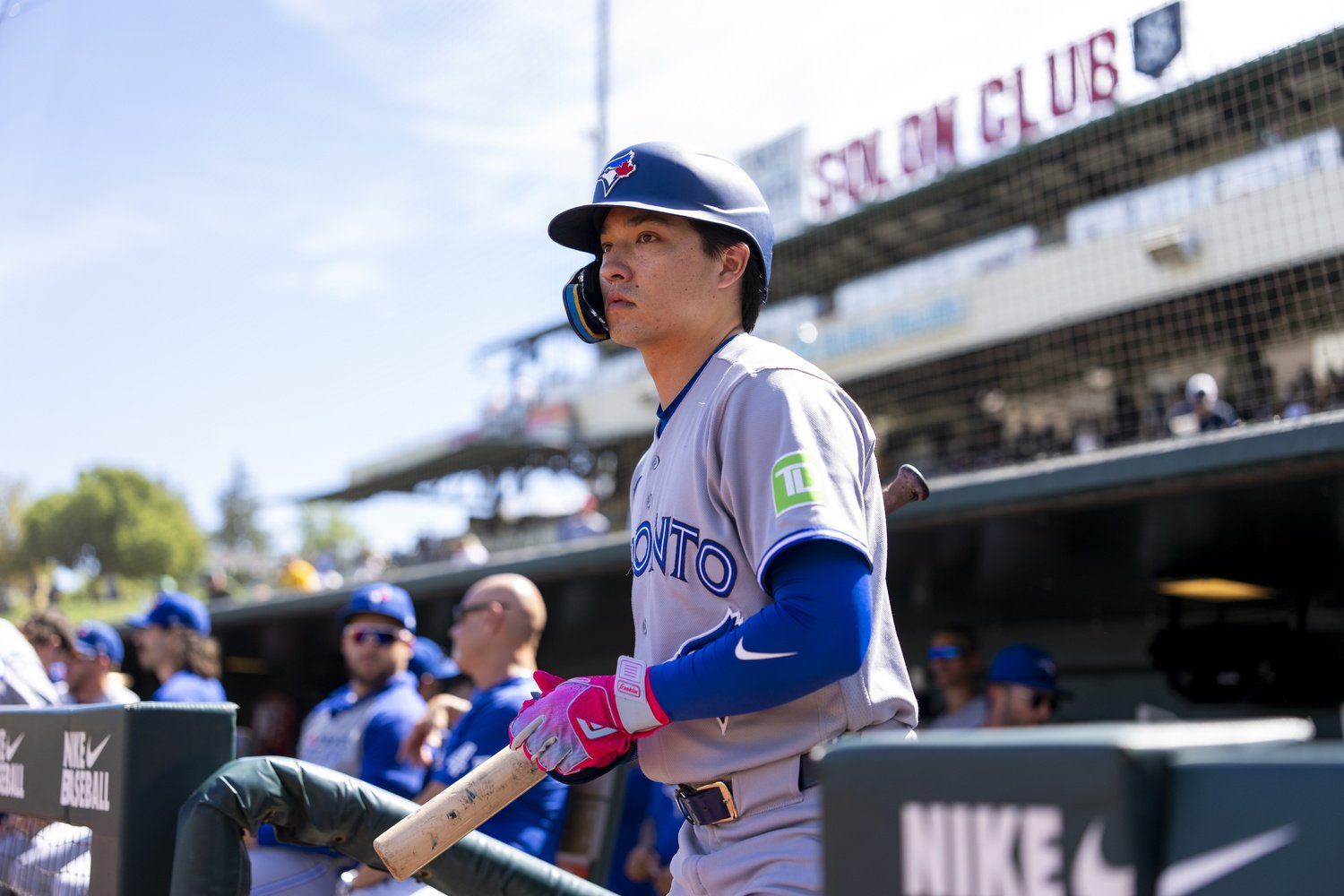 The Blue Jays' outfield group has been a revolving door all season. At times, the team has used its outfield spots to add offence, turning to bat-first players whose defence left something to be desired. At other times, the Blue Jays have gone in the opposite direction, relying on players whose speed and defence make up for what their shortcomings may be at the plate. Then there are the group of players who simply haven’t been able to stay on the field this season, leaving their place in the 2027 picture up in the air. While the Blue Jays are doing everything they can to secure a Wild Card spot in the final weeks of the season (and that remains the team's top priority), the bigger picture here is still worth watching. The Blue Jays already have a crowded group of outfielders going into 2027. With the team recently DFAing Jesús Sánchez, the picture has gotten a little clearer, but plenty of decisions remain. Here’s a look at the players who could factor into next season's outfield and what they need to show the Blue Jays down the stretch. Stats from before games on Saturday, September 12. Players With a Clear Path to a Role in 2027 Brett Bateman Stats in 2026: .339/.402/.424, 1 HR, 138 wRC+ 1.5 fWAR Contract Status: Pre-Arbitration, Free Agent in 2033 Brett Bateman has been a revelation for the Blue Jays since coming over from the Cubs at the deadline. Since he made his debut on August 7, he’s leading the team in fWAR. John Schneider has shown faith in the young center fielder, hitting him leadoff against both right- and left-handers. Even when the games matter most, Bateman has earned his manager's trust. For the rest of the 2026 season, Bateman needs to continue down the same path he’s on. His elite center field defence and 87th-percentile sprint speed give him a high floor, even if the bat isn’t at this level long-term, and he has put himself firmly in the 2027 conversation. Has he shown enough already to be the team's starting center fielder next season, or will the Blue Jays be cautious with their young outfielder and start him in the minors? His performance in the remaining weeks could help answer that question. Nathan Lukes Stats in 2026: .274/.322/.390, 10 HR, 102 wRC+, 1.8 fWAR Contract Status: Entering First Year of Arbitration, Free Agent in 2031 Nathan Lukes has almost quietly been one of the most productive outfielders for the Blue Jays this season. After dealing with injuries and vertigo early in the year, Lukes has hit well. John Schneider views him as a top-of-the-order bat against right-handed pitching (115 wRC+ vs. right-handers), and he has been producing as a league-average hitter who plays above-average defence. Lukes doesn’t have much to prove for the rest of the season, as the Blue Jays know what they have with the 31-year-old. But there have been subtle signs of slowing down with the bat: the strikeouts have risen (13.7% in 2025 to 14.6% in 2026), the walks have dropped (8.7% to 5.2%), and some of the quality-of-contact metrics have declined as well. Now that Lukes is entering his arbitration years and becoming more expensive for the team, the Blue Jays may think they can find similar production elsewhere. For now, though, Lukes looks likely to be back for 2027; the question is whether he is an everyday player or someone the Blue Jays strictly use off the bench to face right-handed pitching. Myles Straw Stats in 2026: .236/.299/.346, 3 HR, 82 wRC+, 0.8 fWAR Contract Status: Club Options for 2027 and 2028, $8 and $8.5 million, respectively Myles Straw has been exactly what the 2026 Blue Jays expected. Coming off a 2025 year in which he was a pleasant surprise, he’s essentially been the same player. Elite defence in all three outfield spots and 96th-percentile sprint speed are the tools he brings to the table. The bat will never be a strength for the 31-year-old outfielder, but he finds ways to contribute on the offensive side when he can. His outlook for 2027 is interesting. The Blue Jays do have club options for $8 million in 2027 and $8.5 million in 2028. On the free agent market, players with Straw's skill set historically haven’t gone for that much money, but the Blue Jays have an interesting choice to make. Do they continue to sacrifice offence in the outfield to keep their elite defence intact? Is it worth sacrificing a bench spot for a player who is out of options, with all the other outfielders set to return next season? It's an intriguing debate, and one the Blue Jays will certainly have internally, factoring in how important a presence he’s been in the Blue Jays clubhouse. It won’t be an easy decision. Anthony Santander Stats in 2026: N/A Contract Status: Under Contract Through 2029, Club Option for 2030 The Blue Jays are still waiting for impact from their big free agent signing prior to the 2025 season. After a sub-par first season, Anthony Santander injured his shoulder in spring training and has been out since. He has started playing in rehab games and, barring another setback, it does seem like he’ll get some playing time in the final weeks of the season. Showing the Blue Jays that he’s healthy and can hit will go a long way toward the team feeling confident about his future in 2027. With George Springer set to be a free agent at season's end, the DH spot opens, and Santander is the likeliest candidate for the role. This is still no guarantee; he needs to prove he’s healthy, and even when he’s been on the field as a Blue Jay, he hasn't been that productive (.565 OPS in 54 games). The Blue Jays will also likely be looking for impact bats this offseason, and the easiest spot to add one may be in the DH role. If that’s the case, Santander will be getting an extended look in the outfield, a place where, historically, he hasn't been that good. The Blue Jays need power in the worst way, and Santander is one of the few players on the roster who could provide it. But if he can't produce, Toronto could find itself in a similar situation to the one it just faced with Sánchez: his bat wasn't producing enough to justify the defensive shortcomings that came with it. Addison Barger Stats in 2026: .045/.214/.091, 0 HR, 1 wRC+, 0.0 fWAR (nine games played) Contract Status: Entering Final Pre-Arbitration Season, Free Agent in 2031 Like Santander, Addison Barger’s 2026 season has been mired in injuries. He dealt with ankle injuries early in the year that kept him out for over a month, returned for one game, then developed elbow inflammation that effectively ended his 2026 season. Barger’s key for the rest of the year is simple: He has to focus on getting healthy. If he does, his previous performance gives the Blue Jays plenty of reason to believe he can reclaim an important role in 2027. He was a key part of the 2025 season and playoff run, and with Kazuma Okamoto locked in as a regular at third base, the majority of Barger’s playing time is likely to come in right field. After he missed almost all of 2026, simply getting back on the field and showing that last year’s version of Barger is still there would be a major step forward, and he can be the impact bat the Blue Jays offence desperately needs going forward. Josh Smith 2026 Stats: .223/.312/.352, 6 HR, 90 wRC+, 0.3 fWAR Contract Status: Entering Second Year of Arbitration, Free Agent in 2029 Josh Smith has been the Blue Jays' best offensive player since coming over at the trade deadline. All things considered, he’s likely going to be spending more time in the infield than the outfield, but he has played nine games in left field, and notably, he was the first one out there after the Sánchez DFA, showing the Blue Jays want to get his bat in the lineup more. Because of his versatility, Smith isn’t necessarily competing with the other outfielders for playing time. His ability to move between the infield and the outfield will continue to be a great tool for John Schneider to have, particularly if his bat keeps improving. The Wild Cards Charles McAdoo 2026 Stats: .250/.299/.350, 2 HR, 83 wRC+, 0.2 fWAR (28 games played) Contract Status: Pre-Arbitration, Free Agent in 2031 Like Smith, Charles McAdoo will likely see most of his playing time in the infield, but he’s shown he’s been able to stand out there in the outfield and play a corner in a pinch. McAdoo has been a nice surprise, from being sent down to the complex league in 2025 to having a resurgence and having some moments in the majors this year. All things equal, he likely starts 2027 in the minors and will have to wait for his turn to come back to the big leagues. Yohendrick Piñango 2026 Stats: .260/.306/.396, 5 HR, 97 wRC+, -0.1 fWAR (58 games played) Contract Status: Pre-Arbitration, Free Agent in 2032 Yohendrick Piñango had his moments early for the 2026 Blue Jays, hitting five home runs and providing a spark at times. Poor outfield defence is the biggest obstacle he needs to overcome, and until that gets better, it's going to be hard to see him be a regular every day outfielder. He’ll likely start the season at Buffalo and offer some corner outfield depth, with the chance to make an impact at some point later in the season. Davis Schneider 2026 Stats: .142/.295/.274, 3 HR, 70 wRC+, -0.3 fWAR (62 games played) Contract Status: Entering Final Pre-Arbitration Season, Free Agent 2031 Davis Schneider’s 2026 season has been quite ugly. After being a fan favourite and having a massive home run in the 2025 World Series, he’s been up and down between Toronto and Buffalo and hasn’t gotten it going at the big-league level. 2027 feels like a make-or-break season for the 27-year-old; if he puts together another year like this one, the team may want to use his 40-man roster spot for someone else. More Names To Know Jonatan Clase, RJ Schreck, Rudy Martin Jr., Carter Cunningham, Jake Casey Once the dust settles and the Blue Jays’ season comes to a close, the team will have to take a deep look at its roster and build a team that can compete in 2027. Before any trades or free agent decisions are made, Toronto already has a crowded outfield, with more players than available spots. The same was true coming into the 2026 season, but injuries forced the Blue Jays’ hand and opened the door for players who may not have otherwise gotten an opportunity. Depth across all positions is always a good thing, but it can quickly become a roster crunch when everyone is healthy. With two weeks to go in the regular season, these outfielders are playing for more than just their playoff lives. They’re also playing for a chance to show the Blue Jays that they deserve one of those spots when the 2027 season begins.
 -
George Springer takes some wild swings. There have been several moments over the past month when Springer has loaded up at the plate, taken a big swing, and fallen over or gone down to one knee after coming up empty. But those wild swings aren’t limited to the batter's box; his offensive profile has fluctuated from season to season and month to month. His last three seasons are a perfect example of that. Springer has gone from a player who looked like his skills were declining at a rapid pace to bouncing back and having a career season at age 35, finishing third in the majors in wRC+. Even in his 2026 season, the Blue Jays have seen a bit of both of those players: For most players in baseball history, declining rapidly as they approach their mid-30s has been a sign that the end is closer than we think. Father Time is undefeated, after all. So which George Springer is the real George Springer? First, his 2025 season wasn’t a fluke. It was a true resurgence in every way. He led the team in wRC+, home runs, fWAR, and even stolen bases. He went back to mashing the fastball, and his contributions helped push the Blue Jays all the way back to the World Series. Then 2026 started, and the narrative shifted. Springer started ice cold; he posted a wRC+ of 97 in March/April and then just 75 in May. All the skills that made him look like an elite hitter seemed to have suddenly disappeared: His OPS dropped (.956 →.648) His xwOBA dropped (.404 → .304) His chase rate rose (20.4% → 27.9%) His walks dropped (11.8%→8.6%) and strikeouts rose (18.9%→19.4%) It started to feel like this was the real George Springer, and 2025 was starting to feel like a distant memory, raising concerns about the veteran slugger's performance. There are many reasons a hitter could go into a massive slump: age finally catching up, confidence being shot, issues outside the diamond, or injuries. Many things can affect a person's performance at work, and baseball players are no exception. Springer dealt with a toe injury in April that kept him on the IL for 17 days, which likely explains part of his early-season struggles. He also went on paternity leave on July 1, stepping away from the team for several days as he and his family welcomed their new child. Maybe it comes down to finally being healthy, or maybe it's his newfound dad strength. But George Springer has found his groove again. Since the All-Star break, Springer's stats have soared. His .867 OPS is second on the team. His .376 wOBA is also second on the team. And while the 29.9% chase rate is still high, it's second-best among qualified Blue Jays hitters. The walks have remained roughly the same, but the strikeouts have dropped to 15.2% from 20.1% in the first half. So what exactly has led to the turnaround? The first place to look is his swing decisions. Springer's swing rate has risen in the second half (47.8% to 49.7%). However, he was swinging a lot in April and May when he was struggling (51.1% in both months), so his increased swing rate is not directly correlated with his success. The more likely explanation is that he’s swinging more at pitches over the heart of the plate, and he’s making more contact on those pitches when he does swing: When hitters make contact on pitches at the heart of the zone, they're hitting .346 league-wide, with a .607 slugging percentage and a .403 wOBA. It's generally a good idea to swing more often at pitches over the middle of the plate, and that’s exactly what Springer has been doing lately. Swinging at the pitches you can do more damage with is always a good idea, but quality of contact matters too. You can make all the right decisions, but if you're hitting soft groundballs or routine flyballs, that doesn't help at all. In July, it looked like the resurgence was officially back on. Springer made a change in his approach: he started swinging more at pitches over the heart of the plate, chased pitches out of the zone less, and had his best month in terms of quality of contact: Metric April May June July Heart Swing% 77.1% 80.2% 75.0% 81.7% Heart BIP/Swings 42.6% 50.6% 44.8% 55.2% Chase Swing% 19.0% 15.4% 15.5% 10.5% Avg. Exit Velocity 88.2 87.6 88.8 90.6 Hard-Hit% 42.2% 35.4% 36.8% 48.1% Barrel% 8.9% 7.6% 5.9% 9.3% If Springer had simply posted a 147 wRC+ in July while his underlying metrics looked the same, then it could be dismissed as just a hot month, but almost every indicator of his process improved significantly. His improvement wasn’t isolated to just one statistic. His approach, contact, swing speed, and batted-ball profile all moved in the same direction. It was starting to look like 2025 George Springer was back. In August, the surface-level numbers would back that up: an .858 OPS, a 141 wRC+, nine extra-base hits, and even four stolen bases to boot, but while the results were good, the peripheral data tell a different story. The hard contact, which spiked in July and was key to his 2025 success, took a step back. His bat speed dropped from 74.0 mph down to 72.8, and with it, so did the exit velocity, hard-hit rate, and barrel rate: Pair the lower quality of contact with the fact that he’s been putting the ball on the ground much more often (his GB rate is up from 38.9% to 50.7%), and it doesn't look good for Springer. Softer contact and balls pounded into the dirt don't usually lead to a successful stat line. The key to Springer's success may have less to do with how he’s hitting the ball and more to do with what happens after he makes contact. His BABIP jumped from .280 in July all the way to .373 in August, meaning far more of his batted balls were falling in for hits despite the decline in quality of contact. It was happening against various pitch types, too: Aside from a massive spike in May against off-speed pitches, Springer's BABIP was dramatically higher in August. Given the decline in his quality of contact, the elevated BABIP explains why his surface-level stats remain elevated. There’s more that goes into BABIP than simply balls finding holes. Line drives are harder to catch and typically produce higher BABIPs, but that doesn’t explain Springer’s August spike. His line drive rate jumped to 22.2% in July when his BABIP was .280, before falling back to 15.9% in August when his BABIP soared to .373. So if that’s not it, batted ball distribution may have an answer. But looking at that data, the numbers seem similar there too: July: Pull: 37.0% Straightaway: 42.6% Oppo: 20.4% August: Pull: 39.1% Straightaway: 39.1% Oppo: 21.7% With his spray profile remaining relatively similar, this really feels like Springer’s hot August was being driven disproportionately by BABIP instead of improved contact quality, coming off a July in which his underlying contact numbers really did take a leap forward. That said, this is more about looking forward than looking backward. The Blue Jays are playing winning baseball at the moment and find themselves in the thick of the Wild Card race in the final month of the season. Springer’s August showed that his numbers can stay strong even when the underlying numbers aren’t, but July showed there is still another level to his game. The larger sample still suggests that Springer is more likely to be the player we’ve seen for most of the season than the one who put up a 147 wRC+ in July. But July provided real evidence that his first-half numbers didn’t tell the whole story. The approach changed, the quality of contact improved, and for one month, he looked much more like the hitter who had a career year at age 35. Even if the BABIP remains high, and history suggests his stats will regress to the mean, it doesn’t mean it's going to happen right away. There’s nothing that says regression is going to come for him tomorrow, and at the end of the day, whether a hit is a soft groundball that finds a hole or a 110+ mph rocket of a line drive, they’re essentially the same thing in the scorebook. So even if the stat line (and the swings) still look wild at times, Springer’s bat is helping the Blue Jays win games right now, at a time the team needs it most. For a team fighting for its playoff life, that's all that matters. This article was written prior to the Blue Jays' game on Friday, September 4. View full article
-
George Springer's Recent Resurgence Is More Complicated Than It Looks
Jesse Burrill posted an article in Blue Jays
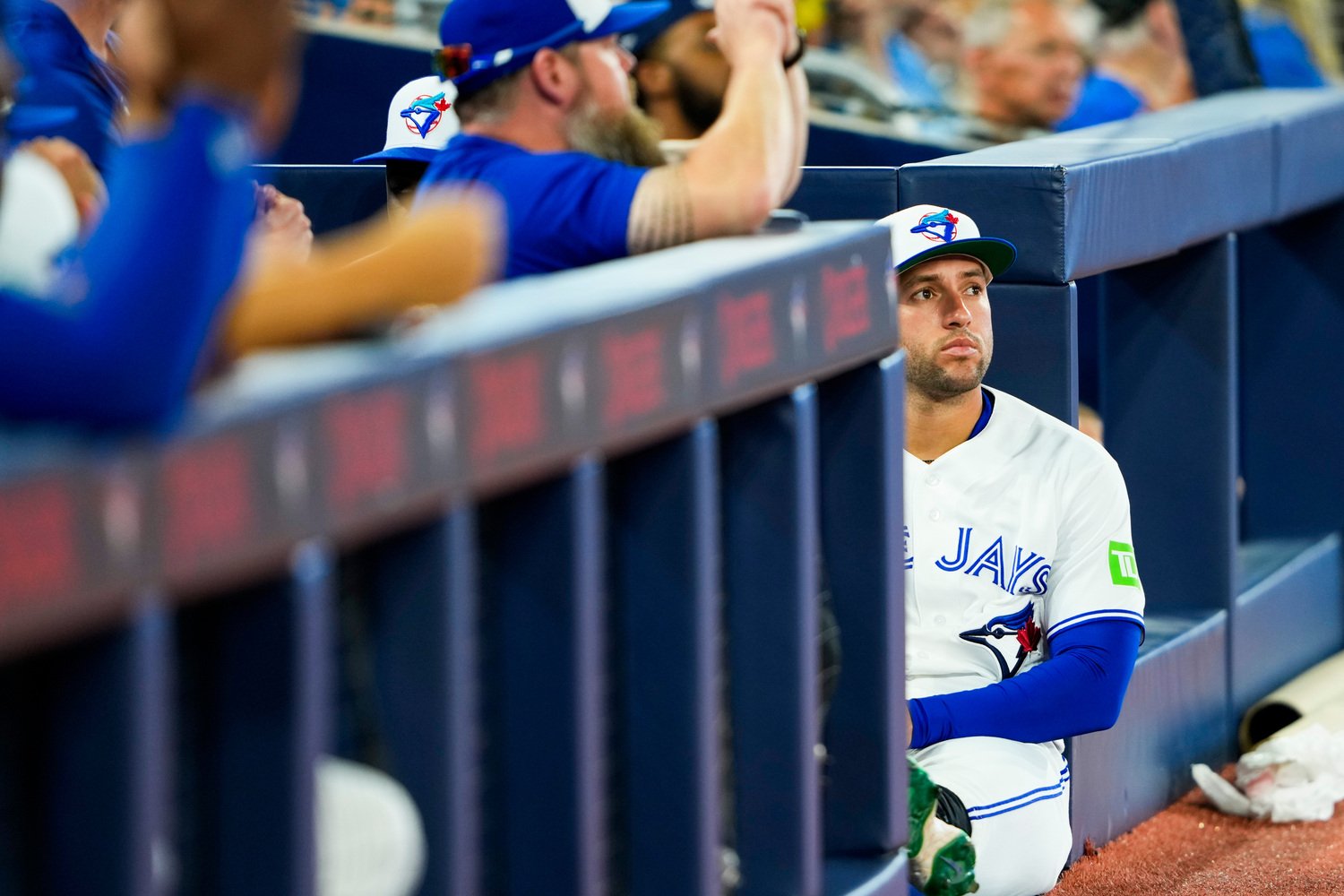 George Springer takes some wild swings. There have been several moments over the past month when Springer has loaded up at the plate, taken a big swing, and fallen over or gone down to one knee after coming up empty. But those wild swings aren’t limited to the batter's box; his offensive profile has fluctuated from season to season and month to month. His last three seasons are a perfect example of that. Springer has gone from a player who looked like his skills were declining at a rapid pace to bouncing back and having a career season at age 35, finishing third in the majors in wRC+. Even in his 2026 season, the Blue Jays have seen a bit of both of those players: For most players in baseball history, declining rapidly as they approach their mid-30s has been a sign that the end is closer than we think. Father Time is undefeated, after all. So which George Springer is the real George Springer? First, his 2025 season wasn’t a fluke. It was a true resurgence in every way. He led the team in wRC+, home runs, fWAR, and even stolen bases. He went back to mashing the fastball, and his contributions helped push the Blue Jays all the way back to the World Series. Then 2026 started, and the narrative shifted. Springer started ice cold; he posted a wRC+ of 97 in March/April and then just 75 in May. All the skills that made him look like an elite hitter seemed to have suddenly disappeared: His OPS dropped (.956 →.648) His xwOBA dropped (.404 → .304) His chase rate rose (20.4% → 27.9%) His walks dropped (11.8%→8.6%) and strikeouts rose (18.9%→19.4%) It started to feel like this was the real George Springer, and 2025 was starting to feel like a distant memory, raising concerns about the veteran slugger's performance. There are many reasons a hitter could go into a massive slump: age finally catching up, confidence being shot, issues outside the diamond, or injuries. Many things can affect a person's performance at work, and baseball players are no exception. Springer dealt with a toe injury in April that kept him on the IL for 17 days, which likely explains part of his early-season struggles. He also went on paternity leave on July 1, stepping away from the team for several days as he and his family welcomed their new child. Maybe it comes down to finally being healthy, or maybe it's his newfound dad strength. But George Springer has found his groove again. Since the All-Star break, Springer's stats have soared. His .867 OPS is second on the team. His .376 wOBA is also second on the team. And while the 29.9% chase rate is still high, it's second-best among qualified Blue Jays hitters. The walks have remained roughly the same, but the strikeouts have dropped to 15.2% from 20.1% in the first half. So what exactly has led to the turnaround? The first place to look is his swing decisions. Springer's swing rate has risen in the second half (47.8% to 49.7%). However, he was swinging a lot in April and May when he was struggling (51.1% in both months), so his increased swing rate is not directly correlated with his success. The more likely explanation is that he’s swinging more at pitches over the heart of the plate, and he’s making more contact on those pitches when he does swing: When hitters make contact on pitches at the heart of the zone, they're hitting .346 league-wide, with a .607 slugging percentage and a .403 wOBA. It's generally a good idea to swing more often at pitches over the middle of the plate, and that’s exactly what Springer has been doing lately. Swinging at the pitches you can do more damage with is always a good idea, but quality of contact matters too. You can make all the right decisions, but if you're hitting soft groundballs or routine flyballs, that doesn't help at all. In July, it looked like the resurgence was officially back on. Springer made a change in his approach: he started swinging more at pitches over the heart of the plate, chased pitches out of the zone less, and had his best month in terms of quality of contact: Metric April May June July Heart Swing% 77.1% 80.2% 75.0% 81.7% Heart BIP/Swings 42.6% 50.6% 44.8% 55.2% Chase Swing% 19.0% 15.4% 15.5% 10.5% Avg. Exit Velocity 88.2 87.6 88.8 90.6 Hard-Hit% 42.2% 35.4% 36.8% 48.1% Barrel% 8.9% 7.6% 5.9% 9.3% If Springer had simply posted a 147 wRC+ in July while his underlying metrics looked the same, then it could be dismissed as just a hot month, but almost every indicator of his process improved significantly. His improvement wasn’t isolated to just one statistic. His approach, contact, swing speed, and batted-ball profile all moved in the same direction. It was starting to look like 2025 George Springer was back. In August, the surface-level numbers would back that up: an .858 OPS, a 141 wRC+, nine extra-base hits, and even four stolen bases to boot, but while the results were good, the peripheral data tell a different story. The hard contact, which spiked in July and was key to his 2025 success, took a step back. His bat speed dropped from 74.0 mph down to 72.8, and with it, so did the exit velocity, hard-hit rate, and barrel rate: Pair the lower quality of contact with the fact that he’s been putting the ball on the ground much more often (his GB rate is up from 38.9% to 50.7%), and it doesn't look good for Springer. Softer contact and balls pounded into the dirt don't usually lead to a successful stat line. The key to Springer's success may have less to do with how he’s hitting the ball and more to do with what happens after he makes contact. His BABIP jumped from .280 in July all the way to .373 in August, meaning far more of his batted balls were falling in for hits despite the decline in quality of contact. It was happening against various pitch types, too: Aside from a massive spike in May against off-speed pitches, Springer's BABIP was dramatically higher in August. Given the decline in his quality of contact, the elevated BABIP explains why his surface-level stats remain elevated. There’s more that goes into BABIP than simply balls finding holes. Line drives are harder to catch and typically produce higher BABIPs, but that doesn’t explain Springer’s August spike. His line drive rate jumped to 22.2% in July when his BABIP was .280, before falling back to 15.9% in August when his BABIP soared to .373. So if that’s not it, batted ball distribution may have an answer. But looking at that data, the numbers seem similar there too: July: Pull: 37.0% Straightaway: 42.6% Oppo: 20.4% August: Pull: 39.1% Straightaway: 39.1% Oppo: 21.7% With his spray profile remaining relatively similar, this really feels like Springer’s hot August was being driven disproportionately by BABIP instead of improved contact quality, coming off a July in which his underlying contact numbers really did take a leap forward. That said, this is more about looking forward than looking backward. The Blue Jays are playing winning baseball at the moment and find themselves in the thick of the Wild Card race in the final month of the season. Springer’s August showed that his numbers can stay strong even when the underlying numbers aren’t, but July showed there is still another level to his game. The larger sample still suggests that Springer is more likely to be the player we’ve seen for most of the season than the one who put up a 147 wRC+ in July. But July provided real evidence that his first-half numbers didn’t tell the whole story. The approach changed, the quality of contact improved, and for one month, he looked much more like the hitter who had a career year at age 35. Even if the BABIP remains high, and history suggests his stats will regress to the mean, it doesn’t mean it's going to happen right away. There’s nothing that says regression is going to come for him tomorrow, and at the end of the day, whether a hit is a soft groundball that finds a hole or a 110+ mph rocket of a line drive, they’re essentially the same thing in the scorebook. So even if the stat line (and the swings) still look wild at times, Springer’s bat is helping the Blue Jays win games right now, at a time the team needs it most. For a team fighting for its playoff life, that's all that matters. This article was written prior to the Blue Jays' game on Friday, September 4.
 -
Toronto Blue Jays Minor League Pitchers of the Month - August 2026
Jesse Burrill posted an article in Minor Leagues
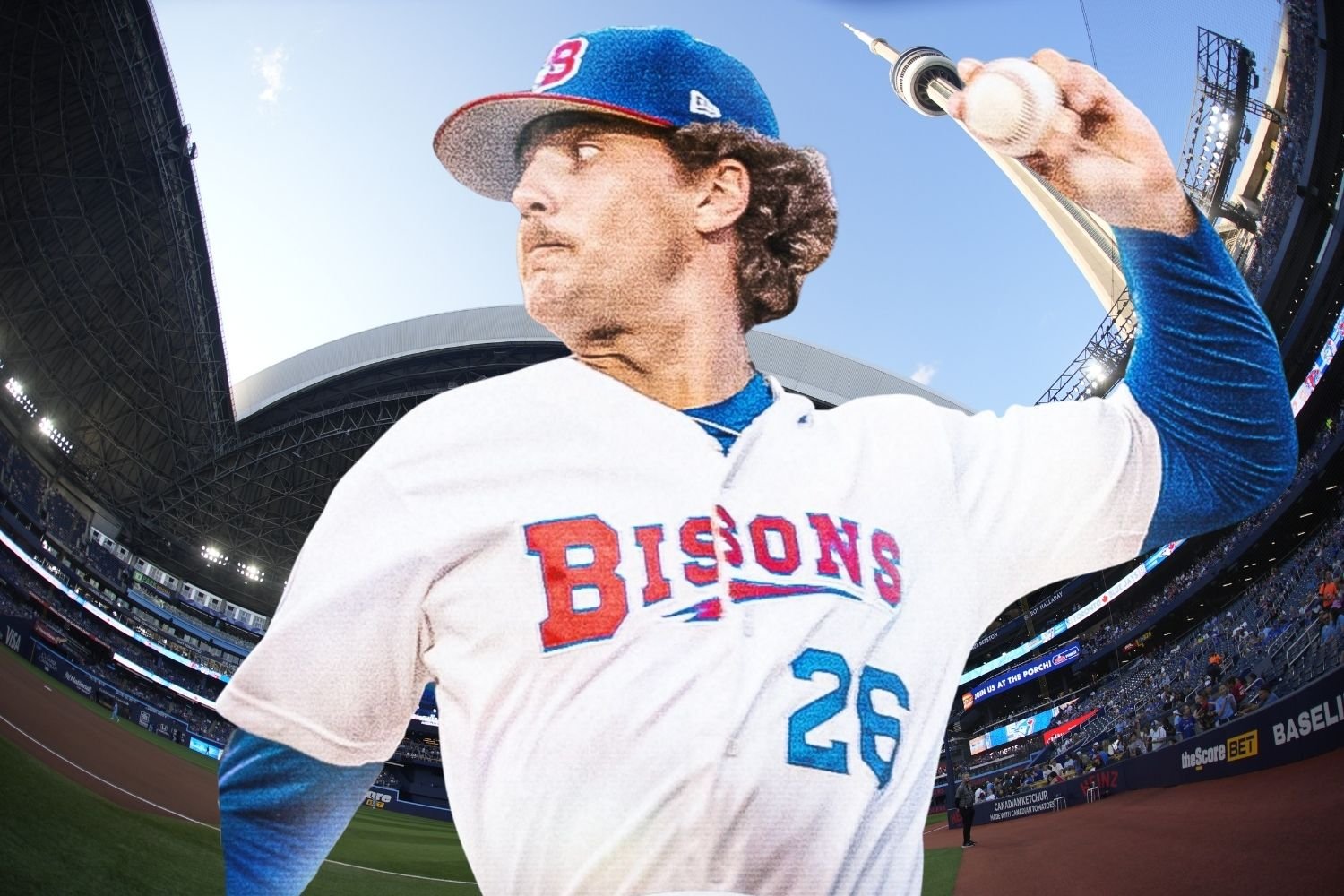 The Blue Jays' minor league system underwent plenty of change in August. Several players who impressed early in the season moved up to higher levels, while Toronto’s trade deadline acquisitions got their first look in the organization. With the major league staff also taking a step forward last month, there were plenty of pitching performances worth highlighting throughout the system. Here are Jays Centre's Minor League Pitchers of the Month for August. Blue Jays Minor League Pitchers of the Month - Honorable Mentions Josh Winckowski - Single-A Dunedin Stats in August: 3.1 IP, 2.70 ERA, 3 H, 3 BB, 3 K Winckowski made his long-awaited return to affiliated baseball after undergoing internal brace surgery in 2025. A former 15th-round pick of the Blue Jays, he spent four years pitching in the big leagues with the Red Sox and has returned to Toronto on a minor league deal while he recovers from surgery. His performance on the mound hasn’t been anything special as of yet, but the fact he’s back throwing professional pitches again is worth celebrating in itself. Gage Stanifer - Double-A New Hampshire - Jays Centre's No. 10 Prospect Stats in August: 14.0 IP, 3.86 ERA, 34.9 K%, 20.6 BB% August was a unique month for Stanifer, as the Blue Jays decided to move him from the rotation to the bullpen. The move was partly innings-related, but also an audition for a late-season MLB bullpen role. Walks remain an issue for Stanifer, but he has the ability to miss bats, including striking out six of the 10 batters he faced in his final appearance of the month. Whether or not he returns to starting again in 2027 remains to be seen, but Stanifer still has the ability to rack up strikeouts, and there is a chance his stuff will play up with a move to the bullpen. All eyes will be on the right-hander to see how the transition plays out as he moves into the bullpen for the rest of the season. Dasan Hill - High-A Vancouver - Jays Centre's No. 7 Prospect Stats in August: 13.1 IP, 4.05 ERA, 29.3 K%, 10.3 BB% The Blue Jays got their first look at Hill in the system after he came over from the Twins at the trade deadline in the Jeff Hoffman deal. Over four appearances in August, Hill had two excellent outings (4.0 IP, 0 ER and 4.2IP, 0 ER) and two rougher ones (2.0 IP, 2 ER and 2.2 IP, 4 ER). The results have been inconsistent, but the command has shown encouraging signs. The southpaw has allowed just one or fewer walks in two of his four appearances with the Canadians, something he did only five times in his 16 starts this season with the Twins org. Hill remains one of the most intriguing arms in the Blue Jays farm system, and improved command could be a key factor in his development going forward. Ricky Tiedemann - Triple-A Buffalo/MLB Toronto - Jays Centre's No. 11 Prospect Minor League Stats in August: 8.0 IP, 4.50 ERA, 27.8 K%, 11.1 BB% Since Tiedemann made his return in 2026 after a long battle with injuries, he’s been predominantly working in relief, and the left-hander has found success. His last four minor league outings have all been scoreless, and he was rewarded with his big league debut earlier in the month. Whether Tiedemann can still be the frontline starter many once envisioned remains to be seen, but he’s still been able to provide value while he builds his way back from his injuries. He’s currently on the 40-man roster and likely will get another look in the big leagues shortly, especially if he keeps putting up zeros in Buffalo. Daniel Guerra - High-A Dunedin/Triple-A Buffalo Stats in August: 9.0 IP, 4.00 ERA, 42.1 K%, 10.5 BB% No Blue Jays pitching prospect has moved faster through the system in August than Guerra. His jumping two levels of the minors this quickly means the Blue Jays are taking notice, and for good reason. If he had enough innings to qualify, his 42.1 K% would have led all Blue Jays pitchers in that department in August. He’s run into some home run problems early on in Buffalo, but the strikeouts remain incredibly high. If he keeps up the pace he’s on, there’s a real chance we see him in the majors as early as next season. No. 3. Johnny King High-A Vancouver/Double-A New Hampshire Stats in August: 21.0 IP, 3.00 ERA, 28.6 K%, 15.0 BB% Jays Centre's No. 1 Prospect Johnny King is still one of the most intriguing prospects in the system. The 20-year-old left-hander just received the bump up to New Hampshire and has had mixed results. His Double-A debut was a five-walk, two-earned-run start that lasted four innings. His next two were better, with one and three walks, respectively, and only one earned run in nine innings. King still has some of the best stuff in the system, but he’ll need to get better at putting the ball in the zone consistently to take the next step in his development. No. 2 Brandon Barriera Single-A Dunedin/High-A Vancouver Stats in August: 15.0 IP, 3.00 ERA, 27.7 K%, 16.9 BB% This past month was the best month Brandon Barriera has had in professional baseball. Injuries have plagued the former first-round pick. But at the moment he’s healthy. He fired 13.1 consecutive scoreless innings in August, earning a call-up to High-A Vancouver. While his debut there was shaky (3 H, 3 BB, 5 ER over 1.1 IP), his larger body of work has shown the Blue Jays why he was a first-round pick back in 2022. He’ll be an interesting name to follow the rest of the minor league season. No. 1. Brendan Cellucci Triple-A Buffalo Stats in August: 10.2 IP, 0.84 ERA, 40.5 K%, 5.4 BB% What Brendan Cellucci did down in Buffalo last month was nothing short of spectacular. The left-handed-throwing 28-year-old career minor leaguer is in the middle of his best stretch of organized baseball. He allowed just one earned run on the month (a solo HR) and otherwise was dominant. Out of the 37 batters he faced, he struck out 15, and only seven reached base. Cellucci is a three-pitch pitcher (fastball/curveball/splitter) who historically had command issues, but he appears to have made a significant improvement in that department lately. He was added to the 40-man roster earlier this month, and although he was called up, he has yet to get into a game. With Mason Fluharty and Brendon Little (and possibly Tiedemann) the only left-handers on the depth chart ahead of him, if the Blue Jays are in need of another left-handed reliever, don’t be surprised if he’s the one who gets the call to make his big league debut later this month.
 -
The Blue Jays minor league pitching system underwent plenty of change in August. Several players who impressed early in the season have moved up the farm system, while Toronto’s trade deadline acquisitions got their first look in the organization. With the major league pitching staff also taking a step forward this month, there were plenty of performances worth highlighting throughout the system. Here are the Jays Centre Minor League pitchers of the month for August. Blue Jays Minor League Pitchers of the Month - Honorable Mentions Josh Winckowski - Single-A Dunedin Stats in August: 3.1 IP, 2.70 ERA, 3 H, 3 BB, 3 K Winckowski made his long-awaited return to affiliated baseball after undergoing internal brace surgery in 2025. Winckowski, a former 15th-round pick of the Blue Jays, spent four years pitching in the big leagues with the Red Sox and has been brought back to Toronto on a minor league deal while he recovers from surgery. His performance on the mound hasn’t been anything special as of yet, but the fact he’s back throwing professional pitches again is worth celebrating in itself. Gage Stanifer - Double-A New Hampshire - Jays Centre's No. 10 Prospect Stats in August: 14.0 IP, 3.86 ERA, 34.9 K%, 20.6 BB% August was a unique month for Stanifer, as the Blue Jays decided to move him from starter to bullpen. The move was partly innings-related, but also an audition for a late-inning MLB bullpen role. The walks remain an issue with Stanifer, but he has the ability to miss bats, including striking out six of the ten batters he faced in the final appearance of the month. Whether or not he returns to starting again in 2027 remains to be seen, but Stanifer still has the ability to rack up strikeouts, and there is a chance his stuff will play up with a move to the bullpen. All eyes will be on Stanifer to see how the transition plays out as he moves into the bullpen for the rest of the season. Dasan Hill - High-A Vancouver - Jays Centre's No. 7 Prospect Stats in August: 13.1 IP, 4.05 ERA, 29.3 K%, 10.3 BB% The Blue Jays got their first look at Hill in the system after coming over from the Twins at the trade deadline in the Jeff Hoffman trade. Through four appearances, Hill has had two excellent outings (4.0 IP, 0 ER and 4.2IP, 0 ER) and two rougher ones (2.0 IP, 2 ER and 2.2 IP, 4 ER). The results have been inconsistent, but the command has shown encouraging signs. Hill has allowed just one or fewer walks in two of his four appearances with the Canadians, something he did only five times in his 16 starts this season with the Twins org. He remains one of the most intriguing arms in the Blue Jays farm system, and improved command could be a key factor in his development going forward. Ricky Tiedemann - Triple-A Buffalo/MLB Toronto - Jays Centre's No. 11 Prospect Minor League Stats in August: 8.0 IP, 4.50 ERA, 27.8 K%, 11.1 BB% Since Tiedemann has made his return to the organization after his injuries, he’s been predominantly in relief, and the left-hander has found success. His last four minor league outings have all been scoreless, and he was rewarded with his big-league debut earlier in the month. Whether Tiedemann can still be the frontline starter many once envisioned remains to be seen, but he’s still been able to provide value for the club while he builds his way back from his injuries. He’s currently on the 40-man roster and likely will get another look in the big leagues shortly, especially if he keeps putting up zeros in Buffalo. Daniel Guerra - High-A Dunedin/Triple-A Buffalo Stats in August: 9.0 IP, 4.00 ERA, 42.1 K%, 10.5 BB% No Blue Jays pitching prospect has moved faster through the system in August than Guerra. Jumping two levels of the minors this quickly means the Blue Jays are taking notice, and for good reason. Had he had enough innings to qualify, his 42.1K% would have led all Blue Jays pitchers in that department. He’s run into some home run problems early on in Buffalo, but the strikeouts remain incredibly high. If he keeps up the pace he’s on, there’s a real chance we see him in the majors as early as next season. No. 3. Johnny King High-A Vancouver/Double-A New Hampshire Stats in August: 21.0 IP, 3.00 ERA, 28.6 K%, 15.0 BB% Jays Centre's No. 1 Prospect Johnny King is still one of the most intriguing prospects in the system; the 20-year-old left-hander just received the bump up to Double A and has had mixed results. His AA debut featured a five-walk, two-earned-run start over four innings. His next two have been better, with one and three walks combined over allowing just one earned run during that time. King still has some of the best stuff in the system, and he’ll need to get better at putting the ball in the zone consistently to take the next step in his development No. 2 Brandon Barriera Single-A Dunedin/High-A Vancouver Stats in August: 15.0 IP, 3.00 ERA, 27.7 K%, 16.9 BB% This past month has been the best month Brandon Barriera has had in professional baseball. Injuries have plagued the former first-round pick. But at the moment he’s healthy. He fired 13.1 consecutive scoreless innings this month, earning a call-up to High-A Vancouver; while his debut there was shaky (3H, 3BB, 5 ER over 1.1IP), his larger body of work has shown the Blue Jays why he was a first-round pick back in 2022. He’ll be an interesting name to follow the rest of the minor league season. No. 1. Brendan Cellucci Triple-A Buffalo Stats in August: 10.2 IP, 0.84 ERA, 40.5 K%, 5.4 BB% What Brendan Cellucci has done down in Buffalo this month has been nothing short of spectacular. The left-handed-throwing 28-year-old career minor leaguer is in the middle of his best stretch of organized baseball. He’s allowed just one earned run on the month (a solo HR) and otherwise has been dominant. Out of the 37 batters he’s faced this month, he’s struck out 15 of them and only seven have reached base. He’s a three-pitch pitcher (fastball/curveball/splitter) who historically had command issues, but he appears to have made a significant improvement in that department lately. Cellucci was added to the 40-man roster earlier this month, and although he was called up, he has yet to get into a game. With Mason Fluharty and Brendon Little the only left-handers on the depth chart ahead of him, if the Blue Jays are in need of another left-handed reliever, don’t be surprised if he’s the one who gets the call to make his big-league debut later this month. View full article
-
Sometimes, the injury bug just hits one team harder than others. This year, it's the Toronto Blue Jays. Shane Bieber is the latest player to hit the injured list, as he has been placed on the 15-day IL with right teres major inflammation, retroactive to August 21. Chad Dallas was recalled to replace him. According to Shi Davidi of Sportsnet, Bieber felt the issue in his bullpen session on Sunday, and John Schneider described the injury as mild to moderate. He will not throw for two weeks, with no timetable beyond that. Even though his season is not officially over, the Blue Jays only have 30 games remaining, and two weeks without throwing leaves Bieber with very little time to build back up before the end of the regular season. For Bieber and the team, this comes at an inopportune time; Bieber had been pitching his best baseball lately. After struggling during his first few starts off the IL, Bieber looked much better in his last seven games, pitching to a 3.08 ERA with a FIP that supported it. The highlight was his most recent start against the Rays, in which he went seven innings, threw over 100 pitches, and struck out a season-high seven batters. Bieber originally returned to Toronto after picking up his $16 million player option in the offseason, but after he began the season on the IL with elbow inflammation, injuries found him again. He’ll end up with only 11 starts for the Jays in 2026, barring a late-season comeback. The timing is also unfortunate for Bieber, who is set to become a free agent at the end of the season. After missing the majority of the 2024 campaign and a large portion of 2025 recovering from Tommy John surgery, he’s now battled both shoulder and elbow injuries in 2026. That will add another layer of uncertainty for teams interested in signing Bieber for 2027. Bieber's injury further muddles an already complicated pitching puzzle. Like Bieber, Trey Yesavage began the season on the IL, then returned to the Jays, and now he's back on the list. Patrick Corbin, who had made 15 starts for the team, is also out with a shoulder injury. Yimi García, Cody Ponce, and José Berríos, who were all supposed to play an important role in the pitching puzzle, have combined to throw less than three innings all season. Spencer Arrighetti is stretching out after returning from the IL last week, while Jameson Taillon and Joe Mantiply are still working their way back. The extent of the Blue Jays' pitching problems becomes even clearer when looking at Baseball Prospectus’s injury data. From a WARP perspective (Baseball Prospectus’s version of WAR), no team in baseball has lost more projected value due to injuries than the Toronto Blue Jays. Kevin Gausman and Eric Lauer have both been traded, and even some of the Blue Jays' pitching depth lower down the chart has taken a hit. Jake Bloss, who came from the Astros at the 2024 deadline, was eventually supposed to be a key part of this rotation, as was Bowden Francis, who would have had a very real opportunity to show what he could do in 2026. Instead, injuries have kept both pitchers off a major league mound all season. For now, the Blue Jays will start a bullpen game today against the Royals to fill Bieber's initial turn in the rotation, and as long as Arrighetti and Taillon return without setbacks, they’ll rejoin the starting five. That will leave the team with a rotation of: Dylan Cease José Soriano Max Scherzer Spencer Arrighetti Jameson Taillon Surprisingly, Scherzer is now the longest-tenured Blue Jay of the group. The injury comes at a rough time, as the Blue Jays find themselves thick in the AL Wild Card race, and any chance they have at making the playoffs relies on them playing competitive baseball down the stretch. Their remaining schedule is full of teams they are directly competing with in the standings, and the rest of their opponents are below .500, meaning if the Blue Jays can keep winning games, they have a chance to get into the playoffs. FanGraphs has their playoff odds at 10.4%. For Shane Bieber, it's back to the rest-and-rehab process, something he’s been getting all too familiar with. Unfortunately for the Blue Jays, they’ll have to find a new way to piece together their pitching puzzle, which is no new challenge for them either. It's been a season of trying and making rapid adjustments on the fly, and with Bieber's latest injury, the Blue Jays will be forced to make another one of those adjustments, this time with their playoff chances hanging in the balance. View full article
-
Add Shane Bieber to the Lengthy List of Blue Jays Injuries (Again)
Jesse Burrill posted an article in Blue Jays
.jpg.13cf7661297ce361c5e7e3291b698977.jpg) Sometimes, the injury bug just hits one team harder than others. This year, it's the Toronto Blue Jays. Shane Bieber is the latest player to hit the injured list, as he has been placed on the 15-day IL with right teres major inflammation, retroactive to August 21. Chad Dallas was recalled to replace him. According to Shi Davidi of Sportsnet, Bieber felt the issue in his bullpen session on Sunday, and John Schneider described the injury as mild to moderate. He will not throw for two weeks, with no timetable beyond that. Even though his season is not officially over, the Blue Jays only have 30 games remaining, and two weeks without throwing leaves Bieber with very little time to build back up before the end of the regular season. For Bieber and the team, this comes at an inopportune time; Bieber had been pitching his best baseball lately. After struggling during his first few starts off the IL, Bieber looked much better in his last seven games, pitching to a 3.08 ERA with a FIP that supported it. The highlight was his most recent start against the Rays, in which he went seven innings, threw over 100 pitches, and struck out a season-high seven batters. Bieber originally returned to Toronto after picking up his $16 million player option in the offseason, but after he began the season on the IL with elbow inflammation, injuries found him again. He’ll end up with only 11 starts for the Jays in 2026, barring a late-season comeback. The timing is also unfortunate for Bieber, who is set to become a free agent at the end of the season. After missing the majority of the 2024 campaign and a large portion of 2025 recovering from Tommy John surgery, he’s now battled both shoulder and elbow injuries in 2026. That will add another layer of uncertainty for teams interested in signing Bieber for 2027. Bieber's injury further muddles an already complicated pitching puzzle. Like Bieber, Trey Yesavage began the season on the IL, then returned to the Jays, and now he's back on the list. Patrick Corbin, who had made 15 starts for the team, is also out with a shoulder injury. Yimi García, Cody Ponce, and José Berríos, who were all supposed to play an important role in the pitching puzzle, have combined to throw less than three innings all season. Spencer Arrighetti is stretching out after returning from the IL last week, while Jameson Taillon and Joe Mantiply are still working their way back. The extent of the Blue Jays' pitching problems becomes even clearer when looking at Baseball Prospectus’s injury data. From a WARP perspective (Baseball Prospectus’s version of WAR), no team in baseball has lost more projected value due to injuries than the Toronto Blue Jays. Kevin Gausman and Eric Lauer have both been traded, and even some of the Blue Jays' pitching depth lower down the chart has taken a hit. Jake Bloss, who came from the Astros at the 2024 deadline, was eventually supposed to be a key part of this rotation, as was Bowden Francis, who would have had a very real opportunity to show what he could do in 2026. Instead, injuries have kept both pitchers off a major league mound all season. For now, the Blue Jays will start a bullpen game today against the Royals to fill Bieber's initial turn in the rotation, and as long as Arrighetti and Taillon return without setbacks, they’ll rejoin the starting five. That will leave the team with a rotation of: Dylan Cease José Soriano Max Scherzer Spencer Arrighetti Jameson Taillon Surprisingly, Scherzer is now the longest-tenured Blue Jay of the group. The injury comes at a rough time, as the Blue Jays find themselves thick in the AL Wild Card race, and any chance they have at making the playoffs relies on them playing competitive baseball down the stretch. Their remaining schedule is full of teams they are directly competing with in the standings, and the rest of their opponents are below .500, meaning if the Blue Jays can keep winning games, they have a chance to get into the playoffs. FanGraphs has their playoff odds at 10.4%. For Shane Bieber, it's back to the rest-and-rehab process, something he’s been getting all too familiar with. Unfortunately for the Blue Jays, they’ll have to find a new way to piece together their pitching puzzle, which is no new challenge for them either. It's been a season of trying and making rapid adjustments on the fly, and with Bieber's latest injury, the Blue Jays will be forced to make another one of those adjustments, this time with their playoff chances hanging in the balance.
Sometimes, the injury bug just hits one team harder than others. This year, it's the Toronto Blue Jays. Shane Bieber is the latest player to hit the injured list, as he has been placed on the 15-day IL with right teres major inflammation, retroactive to August 21. Chad Dallas was recalled to replace him. According to Shi Davidi of Sportsnet, Bieber felt the issue in his bullpen session on Sunday, and John Schneider described the injury as mild to moderate. He will not throw for two weeks, with no timetable beyond that. Even though his season is not officially over, the Blue Jays only have 30 games remaining, and two weeks without throwing leaves Bieber with very little time to build back up before the end of the regular season. For Bieber and the team, this comes at an inopportune time; Bieber had been pitching his best baseball lately. After struggling during his first few starts off the IL, Bieber looked much better in his last seven games, pitching to a 3.08 ERA with a FIP that supported it. The highlight was his most recent start against the Rays, in which he went seven innings, threw over 100 pitches, and struck out a season-high seven batters. Bieber originally returned to Toronto after picking up his $16 million player option in the offseason, but after he began the season on the IL with elbow inflammation, injuries found him again. He’ll end up with only 11 starts for the Jays in 2026, barring a late-season comeback. The timing is also unfortunate for Bieber, who is set to become a free agent at the end of the season. After missing the majority of the 2024 campaign and a large portion of 2025 recovering from Tommy John surgery, he’s now battled both shoulder and elbow injuries in 2026. That will add another layer of uncertainty for teams interested in signing Bieber for 2027. Bieber's injury further muddles an already complicated pitching puzzle. Like Bieber, Trey Yesavage began the season on the IL, then returned to the Jays, and now he's back on the list. Patrick Corbin, who had made 15 starts for the team, is also out with a shoulder injury. Yimi García, Cody Ponce, and José Berríos, who were all supposed to play an important role in the pitching puzzle, have combined to throw less than three innings all season. Spencer Arrighetti is stretching out after returning from the IL last week, while Jameson Taillon and Joe Mantiply are still working their way back. The extent of the Blue Jays' pitching problems becomes even clearer when looking at Baseball Prospectus’s injury data. From a WARP perspective (Baseball Prospectus’s version of WAR), no team in baseball has lost more projected value due to injuries than the Toronto Blue Jays. Kevin Gausman and Eric Lauer have both been traded, and even some of the Blue Jays' pitching depth lower down the chart has taken a hit. Jake Bloss, who came from the Astros at the 2024 deadline, was eventually supposed to be a key part of this rotation, as was Bowden Francis, who would have had a very real opportunity to show what he could do in 2026. Instead, injuries have kept both pitchers off a major league mound all season. For now, the Blue Jays will start a bullpen game today against the Royals to fill Bieber's initial turn in the rotation, and as long as Arrighetti and Taillon return without setbacks, they’ll rejoin the starting five. That will leave the team with a rotation of: Dylan Cease José Soriano Max Scherzer Spencer Arrighetti Jameson Taillon Surprisingly, Scherzer is now the longest-tenured Blue Jay of the group. The injury comes at a rough time, as the Blue Jays find themselves thick in the AL Wild Card race, and any chance they have at making the playoffs relies on them playing competitive baseball down the stretch. Their remaining schedule is full of teams they are directly competing with in the standings, and the rest of their opponents are below .500, meaning if the Blue Jays can keep winning games, they have a chance to get into the playoffs. FanGraphs has their playoff odds at 10.4%. For Shane Bieber, it's back to the rest-and-rehab process, something he’s been getting all too familiar with. Unfortunately for the Blue Jays, they’ll have to find a new way to piece together their pitching puzzle, which is no new challenge for them either. It's been a season of trying and making rapid adjustments on the fly, and with Bieber's latest injury, the Blue Jays will be forced to make another one of those adjustments, this time with their playoff chances hanging in the balance. -
John Schneider, it's time to get out the step counter. The Blue Jays have made a ridiculous number of pitching changes this year. Coming into the homestand, the Blue Jays have made 489 pitching changes this season and are on pace to challenge the 2019 franchise record of 591. After digging through play logs and adding up the numbers, I found that 161 of those 489 (32.9%) pitching changes have involved Schneider coming to the mound and taking the ball from his pitcher. That's a lot of walking for Schneider. There’s no exact way to measure this, as every ballpark is different, and Schneider doesn't take the same pace out to the mound every time, but the average adult male travels roughly 2.5 feet/step, and the distance to the pitcher's mound from the dugout is roughly 90-105 ft, so it should take him anywhere from 35-50 steps to get to the mound. Using rough math, if we take the average of 40 steps to get to the mound, then another 40 back to the dugout, then multiply that by the 161 times he’s made that trip, he’s walked roughly 12,880 steps just in pitching changes on the season to date. (Technically, DeMarlo Hale made a few of those pitching changes instead of Schneider, but let's not exclude those steps from the count. After all, Hale was taking those steps in Schneider's shoes, so to speak.) For reference, those 12,880 steps are roughly 9.8 km. The Blue Jays website says the Rogers Centre has a diameter of 700 ft; multiply that by pi, and the circumference is just under 2,200 ft. Meaning Schneider has walked around Rogers Centre 14.6 times in pitching changes alone this year! At this rate, his next contract should probably include a footwear allowance. This certainly wasn’t part of the plan coming into the season. The Blue Jays pitching staff has been tested to the limit so far in 2026. Coming into spring training, the team looked like it had too many pitchers for too few spots; injuries and poor play tested its pitching depth early. The same happened after the trade deadline. The Jays were tentatively set to go to a six-man rotation, but after injuries to Jameson Taillon and Trey Yesavage (and now Shane Bieber), the team found itself churning through pitchers yet again. All in all, the Blue Jays have had 37 different players take the mound at some point this season; that's the most in the AL, and just two behind the Cubs for most in baseball (as of games on August 24). No team has made more appearances out of the bullpen than the Blue Jays, while they also rank among MLB’s top five in bullpen innings. This isn’t just a story of John Schneider getting his steps in; it points to a bigger picture of how the Blue Jays have used their pitchers to get to this point in the season. Injuries have played their part, but the Blue Jays have also struggled to get their starters deep into games. According to Baseball-Reference, here’s the leaderboard for average innings per start by team: 1. Seattle Mariners - 5.7 2. Cleveland Guardians - 5.5 3. Los Angeles Dodgers - 5.5 . . . 27. Toronto Blue Jays - 4.7 28. San Diego Padres - 4.6 29. Washington Nationals - 4.4 30. Chicago White Sox - 4.3 * League Average is 5.1 The Blue Jays find themselves in the bottom five of the league, and that's despite Dylan Cease ranking second in the AL with 6.0 innings pitched per start. When their starters give them length, the Blue Jays win less often than league average; when they don’t, the team has actually outperformed the league. The MLB average winning percentage when a starter throws six or more innings is .649, and the Blue Jays are 25-18 (.581) in those games this season. However, the Blue Jays have found a way to get more wins than average when their starters do not give them six innings in a start. MLB average is a .411 winning percentage, while the Blue Jays sit at 39-50 in those games with a .438 winning percentage. This raises a bigger question: Was this actually part of the Blue Jays' pitching strategy? Or was this something they were forced into? The real answer is it’s likely a bit of both. Schneider has proven to be capable at managing bullpen games, but that doesn't mean bullpen games were ever the plan. Coming into the season, the Blue Jays appeared to have plenty of pitching depth. The team wasn’t expecting to build its rotation out of bullpen games, or several four- or five-inning starts. Cody Ponce was supposed to make more than just one start; Trey Yesavage and Shane Bieber weren't expected to miss so much time; and the Jays certainly weren’t planning on trading Eric Lauer or Kevin Gausman coming into the year. That’s what makes Schneider's usage practices so interesting. This isn’t a manager who decided five-and-dive is enough from his starters; it's a manager who is trying to figure out how he can get the most out of the pitchers he has. That's worked surprisingly well so far. Blue Jays pitchers have collectively posted a 3.79 ERA on the season, and they’ve managed to outperform the league when their starter throws fewer than six innings. But there is a difference between surviving heavy bullpen usage and building a sustainable pitching strategy around it. Over the past decade, only a small handful of teams have been able to make the playoffs while ranking in MLB’s top five teams in batters faced by relievers. This is where the Blue Jays currently find themselves 2025 - Dodgers 2024 - Dodgers, Tigers 2023 - None 2022 - None 2021 - Rays 2020 - COVID Season* 2019 - Rays 2018 - Athletics 2017 - None 2016 - None In other words, it's not impossible, but the odds are certainly stacked against them. The Rays were among the first teams to use “the opener” and originally had success with it. The Dodgers are a recent example, but keep in mind the 2025 Dodgers struggled mightily with their bullpen; they used 40 different pitchers during the season, and 18 of them produced a negative bWAR. It wasn't until the postseason, when they moved some starters to the bullpen, that they found success. Historically, it's been hard to have success with a team that relies on its bullpen as much as the Blue Jays have in 2026. With all this being said, the Blue Jays still find themselves with a chance at playoff contention. The team has 30 games left, and the schedule does soften up, as the Jays play several games against teams below .500 and games against teams competing directly with them for the AL Wild Card spot. If the Jays want to get into the postseason, relying on John Schneider's legs can’t remain a part of the pitching plan. Eventually, the team will need more stability from its starting pitchers so it can turn its bullpen into a weapon instead of relying on it every night. Until then, Schneider might want to keep that step counter running; his laps around the Rogers Centre aren’t necessarily over yet. View full article
-
.jpg.a9154dff5507fbfac800709ad634255b.jpg) John Schneider, it's time to get out the step counter. The Blue Jays have made a ridiculous number of pitching changes this year. Coming into the homestand, the Blue Jays have made 489 pitching changes this season and are on pace to challenge the 2019 franchise record of 591. After digging through play logs and adding up the numbers, I found that 161 of those 489 (32.9%) pitching changes have involved Schneider coming to the mound and taking the ball from his pitcher. That's a lot of walking for Schneider. There’s no exact way to measure this, as every ballpark is different, and Schneider doesn't take the same pace out to the mound every time, but the average adult male travels roughly 2.5 feet/step, and the distance to the pitcher's mound from the dugout is roughly 90-105 ft, so it should take him anywhere from 35-50 steps to get to the mound. Using rough math, if we take the average of 40 steps to get to the mound, then another 40 back to the dugout, then multiply that by the 161 times he’s made that trip, he’s walked roughly 12,880 steps just in pitching changes on the season to date. (Technically, DeMarlo Hale made a few of those pitching changes instead of Schneider, but let's not exclude those steps from the count. After all, Hale was taking those steps in Schneider's shoes, so to speak.) For reference, those 12,880 steps are roughly 9.8 km. The Blue Jays website says the Rogers Centre has a diameter of 700 ft; multiply that by pi, and the circumference is just under 2,200 ft. Meaning Schneider has walked around Rogers Centre 14.6 times in pitching changes alone this year! At this rate, his next contract should probably include a footwear allowance. This certainly wasn’t part of the plan coming into the season. The Blue Jays pitching staff has been tested to the limit so far in 2026. Coming into spring training, the team looked like it had too many pitchers for too few spots; injuries and poor play tested its pitching depth early. The same happened after the trade deadline. The Jays were tentatively set to go to a six-man rotation, but after injuries to Jameson Taillon and Trey Yesavage (and now Shane Bieber), the team found itself churning through pitchers yet again. All in all, the Blue Jays have had 37 different players take the mound at some point this season; that's the most in the AL, and just two behind the Cubs for most in baseball (as of games on August 24). No team has made more appearances out of the bullpen than the Blue Jays, while they also rank among MLB’s top five in bullpen innings. This isn’t just a story of John Schneider getting his steps in; it points to a bigger picture of how the Blue Jays have used their pitchers to get to this point in the season. Injuries have played their part, but the Blue Jays have also struggled to get their starters deep into games. According to Baseball-Reference, here’s the leaderboard for average innings per start by team: 1. Seattle Mariners - 5.7 2. Cleveland Guardians - 5.5 3. Los Angeles Dodgers - 5.5 . . . 27. Toronto Blue Jays - 4.7 28. San Diego Padres - 4.6 29. Washington Nationals - 4.4 30. Chicago White Sox - 4.3 * League Average is 5.1 The Blue Jays find themselves in the bottom five of the league, and that's despite Dylan Cease ranking second in the AL with 6.0 innings pitched per start. When their starters give them length, the Blue Jays win less often than league average; when they don’t, the team has actually outperformed the league. The MLB average winning percentage when a starter throws six or more innings is .649, and the Blue Jays are 25-18 (.581) in those games this season. However, the Blue Jays have found a way to get more wins than average when their starters do not give them six innings in a start. MLB average is a .411 winning percentage, while the Blue Jays sit at 39-50 in those games with a .438 winning percentage. This raises a bigger question: Was this actually part of the Blue Jays' pitching strategy? Or was this something they were forced into? The real answer is it’s likely a bit of both. Schneider has proven to be capable at managing bullpen games, but that doesn't mean bullpen games were ever the plan. Coming into the season, the Blue Jays appeared to have plenty of pitching depth. The team wasn’t expecting to build its rotation out of bullpen games, or several four- or five-inning starts. Cody Ponce was supposed to make more than just one start; Trey Yesavage and Shane Bieber weren't expected to miss so much time; and the Jays certainly weren’t planning on trading Eric Lauer or Kevin Gausman coming into the year. That’s what makes Schneider's usage practices so interesting. This isn’t a manager who decided five-and-dive is enough from his starters; it's a manager who is trying to figure out how he can get the most out of the pitchers he has. That's worked surprisingly well so far. Blue Jays pitchers have collectively posted a 3.79 ERA on the season, and they’ve managed to outperform the league when their starter throws fewer than six innings. But there is a difference between surviving heavy bullpen usage and building a sustainable pitching strategy around it. Over the past decade, only a small handful of teams have been able to make the playoffs while ranking in MLB’s top five teams in batters faced by relievers. This is where the Blue Jays currently find themselves 2025 - Dodgers 2024 - Dodgers, Tigers 2023 - None 2022 - None 2021 - Rays 2020 - COVID Season* 2019 - Rays 2018 - Athletics 2017 - None 2016 - None In other words, it's not impossible, but the odds are certainly stacked against them. The Rays were among the first teams to use “the opener” and originally had success with it. The Dodgers are a recent example, but keep in mind the 2025 Dodgers struggled mightily with their bullpen; they used 40 different pitchers during the season, and 18 of them produced a negative bWAR. It wasn't until the postseason, when they moved some starters to the bullpen, that they found success. Historically, it's been hard to have success with a team that relies on its bullpen as much as the Blue Jays have in 2026. With all this being said, the Blue Jays still find themselves with a chance at playoff contention. The team has 30 games left, and the schedule does soften up, as the Jays play several games against teams below .500 and games against teams competing directly with them for the AL Wild Card spot. If the Jays want to get into the postseason, relying on John Schneider's legs can’t remain a part of the pitching plan. Eventually, the team will need more stability from its starting pitchers so it can turn its bullpen into a weapon instead of relying on it every night. Until then, Schneider might want to keep that step counter running; his laps around the Rogers Centre aren’t necessarily over yet.
John Schneider, it's time to get out the step counter. The Blue Jays have made a ridiculous number of pitching changes this year. Coming into the homestand, the Blue Jays have made 489 pitching changes this season and are on pace to challenge the 2019 franchise record of 591. After digging through play logs and adding up the numbers, I found that 161 of those 489 (32.9%) pitching changes have involved Schneider coming to the mound and taking the ball from his pitcher. That's a lot of walking for Schneider. There’s no exact way to measure this, as every ballpark is different, and Schneider doesn't take the same pace out to the mound every time, but the average adult male travels roughly 2.5 feet/step, and the distance to the pitcher's mound from the dugout is roughly 90-105 ft, so it should take him anywhere from 35-50 steps to get to the mound. Using rough math, if we take the average of 40 steps to get to the mound, then another 40 back to the dugout, then multiply that by the 161 times he’s made that trip, he’s walked roughly 12,880 steps just in pitching changes on the season to date. (Technically, DeMarlo Hale made a few of those pitching changes instead of Schneider, but let's not exclude those steps from the count. After all, Hale was taking those steps in Schneider's shoes, so to speak.) For reference, those 12,880 steps are roughly 9.8 km. The Blue Jays website says the Rogers Centre has a diameter of 700 ft; multiply that by pi, and the circumference is just under 2,200 ft. Meaning Schneider has walked around Rogers Centre 14.6 times in pitching changes alone this year! At this rate, his next contract should probably include a footwear allowance. This certainly wasn’t part of the plan coming into the season. The Blue Jays pitching staff has been tested to the limit so far in 2026. Coming into spring training, the team looked like it had too many pitchers for too few spots; injuries and poor play tested its pitching depth early. The same happened after the trade deadline. The Jays were tentatively set to go to a six-man rotation, but after injuries to Jameson Taillon and Trey Yesavage (and now Shane Bieber), the team found itself churning through pitchers yet again. All in all, the Blue Jays have had 37 different players take the mound at some point this season; that's the most in the AL, and just two behind the Cubs for most in baseball (as of games on August 24). No team has made more appearances out of the bullpen than the Blue Jays, while they also rank among MLB’s top five in bullpen innings. This isn’t just a story of John Schneider getting his steps in; it points to a bigger picture of how the Blue Jays have used their pitchers to get to this point in the season. Injuries have played their part, but the Blue Jays have also struggled to get their starters deep into games. According to Baseball-Reference, here’s the leaderboard for average innings per start by team: 1. Seattle Mariners - 5.7 2. Cleveland Guardians - 5.5 3. Los Angeles Dodgers - 5.5 . . . 27. Toronto Blue Jays - 4.7 28. San Diego Padres - 4.6 29. Washington Nationals - 4.4 30. Chicago White Sox - 4.3 * League Average is 5.1 The Blue Jays find themselves in the bottom five of the league, and that's despite Dylan Cease ranking second in the AL with 6.0 innings pitched per start. When their starters give them length, the Blue Jays win less often than league average; when they don’t, the team has actually outperformed the league. The MLB average winning percentage when a starter throws six or more innings is .649, and the Blue Jays are 25-18 (.581) in those games this season. However, the Blue Jays have found a way to get more wins than average when their starters do not give them six innings in a start. MLB average is a .411 winning percentage, while the Blue Jays sit at 39-50 in those games with a .438 winning percentage. This raises a bigger question: Was this actually part of the Blue Jays' pitching strategy? Or was this something they were forced into? The real answer is it’s likely a bit of both. Schneider has proven to be capable at managing bullpen games, but that doesn't mean bullpen games were ever the plan. Coming into the season, the Blue Jays appeared to have plenty of pitching depth. The team wasn’t expecting to build its rotation out of bullpen games, or several four- or five-inning starts. Cody Ponce was supposed to make more than just one start; Trey Yesavage and Shane Bieber weren't expected to miss so much time; and the Jays certainly weren’t planning on trading Eric Lauer or Kevin Gausman coming into the year. That’s what makes Schneider's usage practices so interesting. This isn’t a manager who decided five-and-dive is enough from his starters; it's a manager who is trying to figure out how he can get the most out of the pitchers he has. That's worked surprisingly well so far. Blue Jays pitchers have collectively posted a 3.79 ERA on the season, and they’ve managed to outperform the league when their starter throws fewer than six innings. But there is a difference between surviving heavy bullpen usage and building a sustainable pitching strategy around it. Over the past decade, only a small handful of teams have been able to make the playoffs while ranking in MLB’s top five teams in batters faced by relievers. This is where the Blue Jays currently find themselves 2025 - Dodgers 2024 - Dodgers, Tigers 2023 - None 2022 - None 2021 - Rays 2020 - COVID Season* 2019 - Rays 2018 - Athletics 2017 - None 2016 - None In other words, it's not impossible, but the odds are certainly stacked against them. The Rays were among the first teams to use “the opener” and originally had success with it. The Dodgers are a recent example, but keep in mind the 2025 Dodgers struggled mightily with their bullpen; they used 40 different pitchers during the season, and 18 of them produced a negative bWAR. It wasn't until the postseason, when they moved some starters to the bullpen, that they found success. Historically, it's been hard to have success with a team that relies on its bullpen as much as the Blue Jays have in 2026. With all this being said, the Blue Jays still find themselves with a chance at playoff contention. The team has 30 games left, and the schedule does soften up, as the Jays play several games against teams below .500 and games against teams competing directly with them for the AL Wild Card spot. If the Jays want to get into the postseason, relying on John Schneider's legs can’t remain a part of the pitching plan. Eventually, the team will need more stability from its starting pitchers so it can turn its bullpen into a weapon instead of relying on it every night. Until then, Schneider might want to keep that step counter running; his laps around the Rogers Centre aren’t necessarily over yet. -
Who's Going To Step Up For The Blue Jays?
Jesse Burrill replied to Brock Beauchamp's topic in Jays Centre Front Page News
It always come back to Vlad. -
Blue Jays Claim Paul Sewald From Diamondbacks
Jesse Burrill posted a topic in Toronto Blue Jays Talk
The Toronto Blue Jays have claimed right-handed pitcher Paul Sewald, who was designated for assignment by the Diamondbacks earlier in the week. Sewald, a veteran of 10 MLB seasons, has a 6.23 ERA this season. He has 110 major league saves in his career. The righty will join a Blue Jays bullpen that has thrown more innings as a unit than any team in baseball since August 1 and is in need of reinforcements. Sewald is primarily a fastball-slider pitcher. He had a 3.18 ERA entering June 23rd but has allowed 17 earned runs in 14 innings since then. He now gives John Schneider another veteran option with major league experience in the back end of the bullpen. View full rumor -
.jpg.5643dd0df9026f3887ebaca346ebf826.jpg) The Toronto Blue Jays have claimed right-handed pitcher Paul Sewald, who was designated for assignment by the Diamondbacks earlier in the week. Sewald, a veteran of 10 MLB seasons, has a 6.23 ERA this season. He has 110 major league saves in his career. The righty will join a Blue Jays bullpen that has thrown more innings as a unit than any team in baseball since August 1 and is in need of reinforcements. Sewald is primarily a fastball-slider pitcher. He had a 3.18 ERA entering June 23rd but has allowed 17 earned runs in 14 innings since then. He now gives John Schneider another veteran option with major league experience in the back end of the bullpen.
The Toronto Blue Jays have claimed right-handed pitcher Paul Sewald, who was designated for assignment by the Diamondbacks earlier in the week. Sewald, a veteran of 10 MLB seasons, has a 6.23 ERA this season. He has 110 major league saves in his career. The righty will join a Blue Jays bullpen that has thrown more innings as a unit than any team in baseball since August 1 and is in need of reinforcements. Sewald is primarily a fastball-slider pitcher. He had a 3.18 ERA entering June 23rd but has allowed 17 earned runs in 14 innings since then. He now gives John Schneider another veteran option with major league experience in the back end of the bullpen. -
Dylan Cease Is Pitching Differently, and It Could Win Him the Cy Young
Jesse Burrill posted an article in Blue Jays
.jpg.f3f5fd12756fe44017d9b4593684f277.jpg) Dylan Cease isn’t pitching like Dylan Cease. Cease is arguably having the best season of his career. A 2.28 ERA, an absurd 36.4% strikeout rate, and an elite 4.7 fWAR all rank him at the top of the American League. But as the season has gone on, he’s been doing things slightly differently than what the Blue Jays saw from him earlier in the year. Historically, Cease has overwhelmed hitters with a high-90s fastball and one of the game's nastiest sliders, using the combination to generate elite swing-and-miss numbers. While that's still a crucial part of his game plan, the Blue Jays have seen a very different pitcher over the last few starts. First, let's revisit his recent start at the end of July in Boston. Cease was incredible on this day. He threw a complete game shutout, allowing just one hit and three walks, throwing a season-high 120 pitches and dominating Red Sox hitters all afternoon. By Baseball Reference Game Score, it was the sixth-best start in Blue Jays franchise history. Early on in that start, Cease was raising eyebrows, but for a different reason. His velocity had dropped suddenly. His four-seam fastball, which usually sits at 97 mph in the first inning, was down to just 93.7 mph, which was by far the lowest he’s averaged in the first inning this season. In fact, that's the lowest his first-inning four-seam velocity has been in any start of his career. A sudden drop in velocity can be a warning sign of injury or fatigue, so seeing Cease sit that low raised alarm bells, but those concerns were quickly dispelled. Cease’s fastball velocity returned, and he hit as high as 98.5 in the ninth inning. Post-game, Cease himself said, “People usually start to panic because that is definitely abnormal. But nothing really hurt. It’s just my body was really not wanting to cooperate, and that’s baseball.” The important takeaway is that Cease did not think the velocity drop was injury-related. Crisis averted, at least for the time being. But it has become a trend. In the two starts following his outing in Boston, his first-inning velocity remained below his season norm: The velocity drop isn’t the only way Cease has looked different recently. He also hasn't been able to generate as many swings and misses as the year has gone on. His whiff rate has been below his 2026 average (34.9%) in five of his last six starts, reaching a season-low 22.7% in his latest outing: Decreased velocity and diminished swing-and-miss rates are likely related. However, none of this necessarily means Cease is becoming a worse pitcher. Pitching is much more complicated than just throwing the ball hard and inducing swings and misses. Since the All-Star break, he’s posted a 1.29 ERA in four starts despite his average four-seam velocity dropping 1.2 mph and his swinging strike rate falling 1.2 percentage points. If anything, you could argue he’s looked like an even better pitcher. So what exactly is going on here? If injuries are not a concern, there are a few possible explanations; workload management could be one of them. Kevin Gausman had stretches of play where his fastball velocity dropped early in starts, and Justin Verlander famously had similar stretches where he’d have diminished velocity early before ramping back up later in starts. So, the idea of a veteran starter sacrificing early velocity to preserve stuff later in games isn’t unprecedented. Cease is one of only five pitchers since the start of 2021 to throw more than 1,000 innings. John Schneider recently mentioned the Jays would be moving to a six-man rotation, with the intention of getting Cease more rest. Now, with injuries to Trey Yesavage, Jameson Taillon, and Spencer Arrighetti, moving to a six-man rotation seems unlikely. There is also the consideration that the Blue Jays are trying to get Cease to pitch deeper into games. Earlier in the season, Cease was effective, but he was battling high pitch counts, which forced him out of games early. He only made it through six innings once in his first six starts. The problem was never that Cease couldn’t get outs; it was that it was taking him too many pitches to get them: Stat First Six Starts May 1-July 24 July 25- Present ERA 2.87 2.59 0.41 IP/Start 5.2 IP 6.1 IP 7.1 IP Pitches/IP 19.21 16.64 14.55 Avg Four-Seam Velo 97.8 mph 97.5 mph 96.0 mph K-BB% 23.2% 27.0% 28.2% SwStr% 16.1% 14.1% 14.1% Lately, that hasn’t been an issue. He’s shown a willingness to trade some velocity and swing-and-miss for efficiency. His average four-seam velocity has fallen 1.8 mph from his first six starts, while his innings per start have increased from 5.2 to 7.1. The results have been longer outings, fewer innings for his bullpen to cover, and no meaningful decline in his run prevention. The Blue Jays are 8-3 in the 11 starts in which he's thrown six or more innings, compared to 5-5 when he hasn't reached that mark, and he hasn’t thrown fewer than six innings in a start since June. That's where Cease’s evolution becomes particularly interesting. It's not just helping the Blue Jays win games; it's strengthening his case in the AL Cy Young race. As of now, Cease is in a neck-and-neck race with Cam Schlittler of the Yankees. Schlittler has had an incredible season in his own right, but if you look at the two side by side, it becomes clear just how close the race is: Looking at the stats, the two pitchers compare closely across several categories. Cease has an advantage in strikeouts, bWAR, and FIP, suggesting that on a rate and performance basis, he has been the more dominant pitcher when they’ve both been on the mound. Schlittler has the advantage in starts and innings pitched (Cease spent time on the 15-day IL earlier in the year), and the fact that the Yankees are likely headed to the playoffs while the Jays are on the outside looking in may matter to voters. Going forward, if Cease can continue to pitch at this level and continue to be durable and go deep into his starts, then he has a legitimate chance to pull away from Schlittler in the final weeks of the season. This is what makes Cease so dangerous. He hasn’t lost the ability to overpower hitters; he’s simply proving that he doesn’t need to do it on every pitch. If opposing hitters begin sitting on his softer fastballs early in games, then Cease can still reach back for 99 mph or throw the wipeout slider. If he can continue to do that while pitching deeper into games, the Blue Jays will be getting something even more valuable than the ace they signed. They have a pitcher who has found another way to dominate. And the American League should take notice.
Dylan Cease isn’t pitching like Dylan Cease. Cease is arguably having the best season of his career. A 2.28 ERA, an absurd 36.4% strikeout rate, and an elite 4.7 fWAR all rank him at the top of the American League. But as the season has gone on, he’s been doing things slightly differently than what the Blue Jays saw from him earlier in the year. Historically, Cease has overwhelmed hitters with a high-90s fastball and one of the game's nastiest sliders, using the combination to generate elite swing-and-miss numbers. While that's still a crucial part of his game plan, the Blue Jays have seen a very different pitcher over the last few starts. First, let's revisit his recent start at the end of July in Boston. Cease was incredible on this day. He threw a complete game shutout, allowing just one hit and three walks, throwing a season-high 120 pitches and dominating Red Sox hitters all afternoon. By Baseball Reference Game Score, it was the sixth-best start in Blue Jays franchise history. Early on in that start, Cease was raising eyebrows, but for a different reason. His velocity had dropped suddenly. His four-seam fastball, which usually sits at 97 mph in the first inning, was down to just 93.7 mph, which was by far the lowest he’s averaged in the first inning this season. In fact, that's the lowest his first-inning four-seam velocity has been in any start of his career. A sudden drop in velocity can be a warning sign of injury or fatigue, so seeing Cease sit that low raised alarm bells, but those concerns were quickly dispelled. Cease’s fastball velocity returned, and he hit as high as 98.5 in the ninth inning. Post-game, Cease himself said, “People usually start to panic because that is definitely abnormal. But nothing really hurt. It’s just my body was really not wanting to cooperate, and that’s baseball.” The important takeaway is that Cease did not think the velocity drop was injury-related. Crisis averted, at least for the time being. But it has become a trend. In the two starts following his outing in Boston, his first-inning velocity remained below his season norm: The velocity drop isn’t the only way Cease has looked different recently. He also hasn't been able to generate as many swings and misses as the year has gone on. His whiff rate has been below his 2026 average (34.9%) in five of his last six starts, reaching a season-low 22.7% in his latest outing: Decreased velocity and diminished swing-and-miss rates are likely related. However, none of this necessarily means Cease is becoming a worse pitcher. Pitching is much more complicated than just throwing the ball hard and inducing swings and misses. Since the All-Star break, he’s posted a 1.29 ERA in four starts despite his average four-seam velocity dropping 1.2 mph and his swinging strike rate falling 1.2 percentage points. If anything, you could argue he’s looked like an even better pitcher. So what exactly is going on here? If injuries are not a concern, there are a few possible explanations; workload management could be one of them. Kevin Gausman had stretches of play where his fastball velocity dropped early in starts, and Justin Verlander famously had similar stretches where he’d have diminished velocity early before ramping back up later in starts. So, the idea of a veteran starter sacrificing early velocity to preserve stuff later in games isn’t unprecedented. Cease is one of only five pitchers since the start of 2021 to throw more than 1,000 innings. John Schneider recently mentioned the Jays would be moving to a six-man rotation, with the intention of getting Cease more rest. Now, with injuries to Trey Yesavage, Jameson Taillon, and Spencer Arrighetti, moving to a six-man rotation seems unlikely. There is also the consideration that the Blue Jays are trying to get Cease to pitch deeper into games. Earlier in the season, Cease was effective, but he was battling high pitch counts, which forced him out of games early. He only made it through six innings once in his first six starts. The problem was never that Cease couldn’t get outs; it was that it was taking him too many pitches to get them: Stat First Six Starts May 1-July 24 July 25- Present ERA 2.87 2.59 0.41 IP/Start 5.2 IP 6.1 IP 7.1 IP Pitches/IP 19.21 16.64 14.55 Avg Four-Seam Velo 97.8 mph 97.5 mph 96.0 mph K-BB% 23.2% 27.0% 28.2% SwStr% 16.1% 14.1% 14.1% Lately, that hasn’t been an issue. He’s shown a willingness to trade some velocity and swing-and-miss for efficiency. His average four-seam velocity has fallen 1.8 mph from his first six starts, while his innings per start have increased from 5.2 to 7.1. The results have been longer outings, fewer innings for his bullpen to cover, and no meaningful decline in his run prevention. The Blue Jays are 8-3 in the 11 starts in which he's thrown six or more innings, compared to 5-5 when he hasn't reached that mark, and he hasn’t thrown fewer than six innings in a start since June. That's where Cease’s evolution becomes particularly interesting. It's not just helping the Blue Jays win games; it's strengthening his case in the AL Cy Young race. As of now, Cease is in a neck-and-neck race with Cam Schlittler of the Yankees. Schlittler has had an incredible season in his own right, but if you look at the two side by side, it becomes clear just how close the race is: Looking at the stats, the two pitchers compare closely across several categories. Cease has an advantage in strikeouts, bWAR, and FIP, suggesting that on a rate and performance basis, he has been the more dominant pitcher when they’ve both been on the mound. Schlittler has the advantage in starts and innings pitched (Cease spent time on the 15-day IL earlier in the year), and the fact that the Yankees are likely headed to the playoffs while the Jays are on the outside looking in may matter to voters. Going forward, if Cease can continue to pitch at this level and continue to be durable and go deep into his starts, then he has a legitimate chance to pull away from Schlittler in the final weeks of the season. This is what makes Cease so dangerous. He hasn’t lost the ability to overpower hitters; he’s simply proving that he doesn’t need to do it on every pitch. If opposing hitters begin sitting on his softer fastballs early in games, then Cease can still reach back for 99 mph or throw the wipeout slider. If he can continue to do that while pitching deeper into games, the Blue Jays will be getting something even more valuable than the ace they signed. They have a pitcher who has found another way to dominate. And the American League should take notice. -
Dylan Cease isn’t pitching like Dylan Cease. Cease is arguably having the best season of his career. A 2.28 ERA, an absurd 36.4% strikeout rate, and an elite 4.7 fWAR all rank him at the top of the American League. But as the season has gone on, he’s been doing things slightly differently than what the Blue Jays saw from him earlier in the year. Historically, Cease has overwhelmed hitters with a high-90s fastball and one of the game's nastiest sliders, using the combination to generate elite swing-and-miss numbers. While that's still a crucial part of his game plan, the Blue Jays have seen a very different pitcher over the last few starts. First, let's revisit his recent start at the end of July in Boston. Cease was incredible on this day. He threw a complete game shutout, allowing just one hit and three walks, throwing a season-high 120 pitches and dominating Red Sox hitters all afternoon. By Baseball Reference Game Score, it was the sixth-best start in Blue Jays franchise history. Early on in that start, Cease was raising eyebrows, but for a different reason. His velocity had dropped suddenly. His four-seam fastball, which usually sits at 97 mph in the first inning, was down to just 93.8 mph, which was by far the lowest he’s averaged in the first inning this season. A sudden drop in velocity can be a warning sign of injury or fatigue, so seeing Cease sit that low raised alarm bells, but those concerns were quickly dispelled. Cease’s fastball velocity returned, and he hit as high as 98.5 in the ninth inning. Post-game, Cease himself said, “People usually start to panic because that is definitely abnormal. But nothing really hurt. It’s just my body was really not wanting to cooperate, and that’s baseball.” The important takeaway is that Cease did not think the velocity drop was injury-related. Crisis averted, at least for the time being. But it has become a trend. In the two starts following his outing in Boston, his first-inning velocity remained below his season norm: The velocity drop isn’t the only thing that has changed about Cease. He also hasn't been able to generate as many swings and misses as the season has gone on: Decreased velocity and diminished swing-and-miss rates are likely related. However, none of this necessarily means Cease is becoming a worse pitcher. Pitching is much more complicated than just throwing the ball hard and inducing swings and misses. Since the All-Star break, he’s posted a 1.29 ERA in four starts despite his average four-seam velocity dropping 1.2 mph and his swinging strike rate falling 1.2 percentage points. If anything, you could argue he’s looked like an even better pitcher. So what exactly is going on here? If injuries are not a concern, there are a few possible explanations; workload management could be one of them. Kevin Gausman had stretches of play where his fastball velocity dropped early in starts, and Justin Verlander famously had similar stretches where he’d have diminished velocity early before ramping back up later in starts. So, the idea of a veteran starter sacrificing early velocity to preserve stuff later in games isn’t unprecedented. Cease is one of only five pitchers since the start of 2021 to throw more than 1,000 innings. John Schneider recently mentioned the Jays would be moving to a six-man rotation, with the intention of getting Cease more rest. Now, with injuries to Trey Yesavage, Jameson Taillon, and Spencer Arrighetti, moving to a six-man rotation seems unlikely. There is also the consideration that the Blue Jays are trying to get Cease to pitch deeper into games. Earlier in the season, Cease was effective, but he was battling high pitch counts, which forced him out of games early. He only made it through six innings once in his first six starts. The problem was never that Cease couldn’t get outs; it was that it was taking him too many pitches to get them: Stat First Six Starts May 1-July 24 July 25- Present ERA 2.87 2.59 0.41 IP/Start 5.2 IP 6.1 IP 7.1 IP Pitches/IP 19.21 16.64 14.55 Avg 4-seam Velo 97.8 mph 97.5 mph 96.0 mph K-BB% 23.2% 27.0% 28.2% SwStr% 16.1% 14.1% 14.1% Lately, that hasn’t been an issue. He’s shown a willingness to trade some velocity and swing-and-miss for efficiency. His average four-seam velocity has fallen 1.8 mph from his first six starts, while his innings per start have increased from 5.2 to 7.1. The results have been longer outings, fewer innings for his bullpen to cover, and no meaningful decline in his run prevention. The Blue Jays are 8-3 in the 11 starts in which he's thrown six or more innings, compared to 5-5 when he hasn't reached that mark, and he hasn’t thrown fewer than six innings in a start since June. That's where Cease’s evolution becomes particularly interesting. It's not just helping the Blue Jays win games; it's strengthening his case in the AL Cy Young race. As of now, Cease is in a neck-and-neck race with Cam Schlittler of the Yankees. Schlittler has had an incredible season in his own right, but if you look at the two side by side, it becomes clear just how close the race is: Looking at the stats, the two pitchers compare closely across several categories. Cease has an advantage in strikeouts, bWAR, and FIP, suggesting that on a rate and performance basis, he has been the more dominant pitcher when they’ve both been on the mound. Schlittler has the advantage in starts and innings pitched (Cease spent time on the 15-day IL earlier in the year), and the fact that the Yankees are likely headed to the playoffs while the Jays are on the outside looking in may matter to voters. Going forward, if Cease can continue to pitch at this level and continue to be durable and go deep into his starts, then he has a legitimate chance to pull away from Schlittler in the final weeks of the season. This is what makes Cease so dangerous. He hasn’t lost the ability to overpower hitters; he’s simply proving that he doesn’t need to do it on every pitch. If opposing hitters begin sitting on his softer fastballs early in games, then Cease can still reach back for 99 mph or throw the wipeout slider. If he can continue to do that while pitching deeper into games, the Blue Jays will be getting something even more valuable than the ace they signed. They have a pitcher who has found another way to dominate. And the American League should take notice. View full article
-
 The Toronto Blue Jays have made their first major deadline move, sending veteran starter Kevin Gausman to the Chicago Cubs in exchange for outfielder Brett Bateman and infielder Ty Southisene. The move gives the Cubs additional rotation help for their stretch run, and for the Blue Jays, it’s a sign that they will likely be moving away from expiring contracts as they look to re-tool their roster for 2027. Gausman joined the Blue Jays on a five-year deal ahead of the 2022 season and arguably became one of the best free-agent signings in franchise history. He finishes his Blue Jays tenure with a 3.62 ERA, 12.8 bWAR, and 861 innings pitched across five seasons. Among pitchers in franchise history, Gausman ranks seventh in ERA, second in WHIP, ninth in starts, third in FIP, and first in strikeout-to-walk ratio. He was a cornerstone of the Blue Jays' rotation throughout its recent competitive window and was a key contributor through the 2025 World Series run. While the Blue Jays entered the season with expectations of competing for another postseason berth, the team severely underperformed. The Blue Jays currently find themselves in last place in the AL East, and with five teams separating them from the final American League Wild Card spot, the organization decided it was time to capitalize on its expiring contracts. With Gausman set to hit free agency at the end of the season, the Blue Jays opted to maximize his trade value rather than risk losing him for only draft pick compensation. In return for Gausman, the Blue Jays acquired two players who add depth and upside to their farm system. First, outfielder Brett Bateman is a 24-year-old left-handed hitter who was ranked 21st in the Cubs system by MLB Pipeline. Through 81 games in Triple-A, Bateman hit .312/.431/.422 with a 126 wRC+. While a .392 BAPIP helped boost those numbers, Bateman has consistently shown strong contact skills, posting just a 5.0 swinging-strike rate. That ability to control the strike zone is something the Blue Jays have prioritized in recent years. Bateman’s biggest limitation is his power, as he has hit just three home runs this season and is unlikely to ever develop into a middle-of-the-order bat. However, his best tools are his speed and defense, with MLB Pipeline grading his running ability at 70 and his work in center field as above average. That profile likely appealed to the Blue Jays, especially with Daulton Varsho and Myles Straw also on expiring contracts, and both could be moved before the deadline as well. With Ty Southisene, the Blue Jays are acquiring a 5-foot-7, 21-year-old infielder who shares some similarities to Bateman. Splitting time between two levels of the Cubs system, Southisene hit .311/.431/.378 with a 126 wRC+, showcasing the same type of contact-oriented offensive profile the Blue Jays have acquired and targeted in recent years. He consistently puts the ball in play, posting an 82.7% conctact rate, but power remains the biggest question mark in his game, as he has yet to hit a home run through his first two professional seasons. MLB Pipeline noted that Southisene hits the ball on the ground frequently and has struggled against offspeed pitches, areas the Blue Jays will need to help him improve in if he’s ever going to hit his offensive ceiling. However, his speed and defensive ability give him a strong foundation, with second base likely being his long-term position. The Gausman trade is likely the first of what could be a busy deadline period for the Blue Jays. With the team officially showing a willingness to move expiring contracts, attention will now turn towards which other veterans could be moved next. George Springer and Daulton Varsho could draw interest from teams looking to add experience for a postseason run, while players such as Max Scherzer and Shane Bieber could appeal to contenders looking for rotation help. However, the Blue Jays are unlikely to completely tear down their roster. With the acquisition of Jameson Taillon earlier in the day, the Blue Jays have shown it is still willing to add players to the roster as they look to compete again in 2027.. The Gausman era in Toronto is officially over, but his impact on the organization and the community will not be forgotten. Since arriving ahead of the 2022 season, he became much more than just a front-line starter for the team. He delivered countless memorable pitching performances and served as the anchor of the rotation during one of the most important stretches in franchise history. Off the field, Gausman embraced the city, his teammates, and the responsibility that came with being one of the faces of the franchise. While his time in Toronto has come to an end, Kevin Gausman will forever be remembered as one of the defining players in this chapter of Blue Jays baseball.
 -
The Toronto Blue Jays have made their first major deadline move, sending veteran starter Kevin Gausman to the Chicago Cubs in exchange for outfielder Brett Bateman and infielder Ty Southisene. The move gives the Cubs additional rotation help for their stretch run, and for the Blue Jays, it’s a sign that they will likely be moving away from expiring contracts as they look to re-tool their roster for 2027. Gausman joined the Blue Jays on a five-year deal ahead of the 2022 season and arguably became one of the best free-agent signings in franchise history. He finishes his Blue Jays tenure with a 3.62 ERA, 12.8 bWAR, and 861 innings pitched across five seasons. Among pitchers in franchise history, Gausman ranks seventh in ERA, second in WHIP, ninth in starts, third in FIP, and first in strikeout-to-walk ratio. He was a cornerstone of the Blue Jays' rotation throughout its recent competitive window and was a key contributor through the 2025 World Series run. While the Blue Jays entered the season with expectations of competing for another postseason berth, the team severely underperformed. The Blue Jays currently find themselves in last place in the AL East, and with five teams separating them from the final American League Wild Card spot, the organization decided it was time to capitalize on its expiring contracts. With Gausman set to hit free agency at the end of the season, the Blue Jays opted to maximize his trade value rather than risk losing him for only draft pick compensation. In return for Gausman, the Blue Jays acquired two players who add depth and upside to their farm system. First, outfielder Brett Bateman is a 24-year-old left-handed hitter who was ranked 21st in the Cubs system by MLB Pipeline. Through 81 games in Triple-A, Bateman hit .312/.431/.422 with a 126 wRC+. While a .392 BAPIP helped boost those numbers, Bateman has consistently shown strong contact skills, posting just a 5.0 swinging-strike rate. That ability to control the strike zone is something the Blue Jays have prioritized in recent years. Bateman’s biggest limitation is his power, as he has hit just three home runs this season and is unlikely to ever develop into a middle-of-the-order bat. However, his best tools are his speed and defense, with MLB Pipeline grading his running ability at 70 and his work in center field as above average. That profile likely appealed to the Blue Jays, especially with Daulton Varsho and Myles Straw also on expiring contracts, and both could be moved before the deadline as well. With Ty Southisene, the Blue Jays are acquiring a 5-foot-7, 21-year-old infielder who shares some similarities to Bateman. Splitting time between two levels of the Cubs system, Southisene hit .311/.431/.378 with a 126 wRC+, showcasing the same type of contact-oriented offensive profile the Blue Jays have acquired and targeted in recent years. He consistently puts the ball in play, posting an 82.7% conctact rate, but power remains the biggest question mark in his game, as he has yet to hit a home run through his first two professional seasons. MLB Pipeline noted that Southisene hits the ball on the ground frequently and has struggled against offspeed pitches, areas the Blue Jays will need to help him improve in if he’s ever going to hit his offensive ceiling. However, his speed and defensive ability give him a strong foundation, with second base likely being his long-term position. The Gausman trade is likely the first of what could be a busy deadline period for the Blue Jays. With the team officially showing a willingness to move expiring contracts, attention will now turn towards which other veterans could be moved next. George Springer and Daulton Varsho could draw interest from teams looking to add experience for a postseason run, while players such as Max Scherzer and Shane Bieber could appeal to contenders looking for rotation help. However, the Blue Jays are unlikely to completely tear down their roster. With the acquisition of Jameson Taillon earlier in the day, the Blue Jays have shown it is still willing to add players to the roster as they look to compete again in 2027.. The Gausman era in Toronto is officially over, but his impact on the organization and the community will not be forgotten. Since arriving ahead of the 2022 season, he became much more than just a front-line starter for the team. He delivered countless memorable pitching performances and served as the anchor of the rotation during one of the most important stretches in franchise history. Off the field, Gausman embraced the city, his teammates, and the responsibility that came with being one of the faces of the franchise. While his time in Toronto has come to an end, Kevin Gausman will forever be remembered as one of the defining players in this chapter of Blue Jays baseball. View full article
-
The MLB Draft has come and gone, as has the Futures Game, and while the MLB trade deadline is the biggest talking point this time of year, there are some notable prospects that have found themselves making noise across the Blue Jays system. The Blue Jays seem likely to add to their farm system over the coming days, and those players will join a list of players who have seen their stock rise over the past month. Here are the candidates for the Blue Jays Minor League Hitters of the Month for July. Honorable Mentions Sebastian Casanova - Dominican Summer League - 18 GP, .483/.557/.439, wRC+, 14.1 K%, 14.1 BB% Welcome to organized baseball, Casanova. The 5-foot-9, 167 lb shortstop has been thoroughly enjoying his first season in organized baseball. The 17-year-old was signed as an international free agent out of Venezuela and has immediately hit the ground running, literally. He stole seven bases in the month and has 19 in his 37 games on the season. On top of that, he’s been raking at the plate, as his 189 wRC+ led the system this month. Pair that with a 30.6% line drive rate, a minuscule 6.0% swinging strike rate, and the fact he’s walking just as much as he’s striking out, and you can see why the Blue Jays like him. It’s going to be a long journey for a player so young, but he looks like one of the best returns from the Blue Jays international free agent class so far. JoJo Parker - Single-A Dunedin - 18 GP, .222/.345/.375, 96 wRC+, 25.3 K%, 12.6 BB% Parker got off to a slow start in July, collecting just five hits in his first 42 plate appearances, but he’s turned a corner since then. He recently had his first multi-home run game of the season, as well as his first triple of the season. He’s still putting the ball on the ground too frequently (60.8 GB% in July), but he’s showing why evaluators believe in the hit tool. Plus, he was able to turn around a 101 mph fastball in the Futures Game this month, which is impressive in its own right: No. 3 Arjun Nimmala Double-A New Hampshire - 15 GP, .255/.354/.545, 132 wRC+, 26.2 K%, 10.8 BB% Arjun Nimmala began the month on the injured list with a hamstring strain, which keeps him from being higher on this list. But he’s picked up right where he left off. Nimmala has continued to tap into his power with four home runs in 15 games, and the contact rate (73.9%) is an improvement on what he posted in his first season in the organization. On top of that, there are positive reports about his work at shortstop. You can see why he’s ranked inside the top 100 of every major prospect list and number three on the Jays Centre list. No. 2 Davis Schneider Triple-A Buffalo - 15 GP, .293/.469/.660, 189 wRC+, 25.0 K%, 21.9 BB% Davis Schneider was sent down to Buffalo at the end of June after posting a .578 OPS in 118 plate appearances on the season. The Blue Jays wanted to see him rediscover his offensive game, and he certainly did that while in Buffalo. His five home runs and 1.128 OPS led all Blue Jays minor leaguers in July. The Blue Jays had seen enough and recalled him to Toronto on July 23. Since his recall, he’s gone 1-for-11 with a double and three walks, so he’s still going to need to put it together in the major leagues, but he has nothing left to prove in the minors. No. 1 Josh Kasevich Triple-A Buffalo - 20 GP, .408/.511/.539, 188 wRC+, 9.0 K%, 13.0 BB% Josh Kasevich entered July with just three home runs and a 96 wRC+, but he has caught fire over the month's final weeks. Reaching base in more than half of his plate appearances is remarkable, but that’s exactly what Kasevich has done in July. He’s reached base in all but two games during the month. He’s also walked more than he’s struck out while posting a minuscule 4.0 SwStr%. Kasevich had a great spring training and was a candidate to make his big league debut this season. Now that his bat has heated up, it shouldn’t be a surprise if he sees time in Toronto later this summer. View full article
-
Toronto Blue Jays Minor League Hitters of the Month - July 2026
Jesse Burrill posted an article in Blue Jays
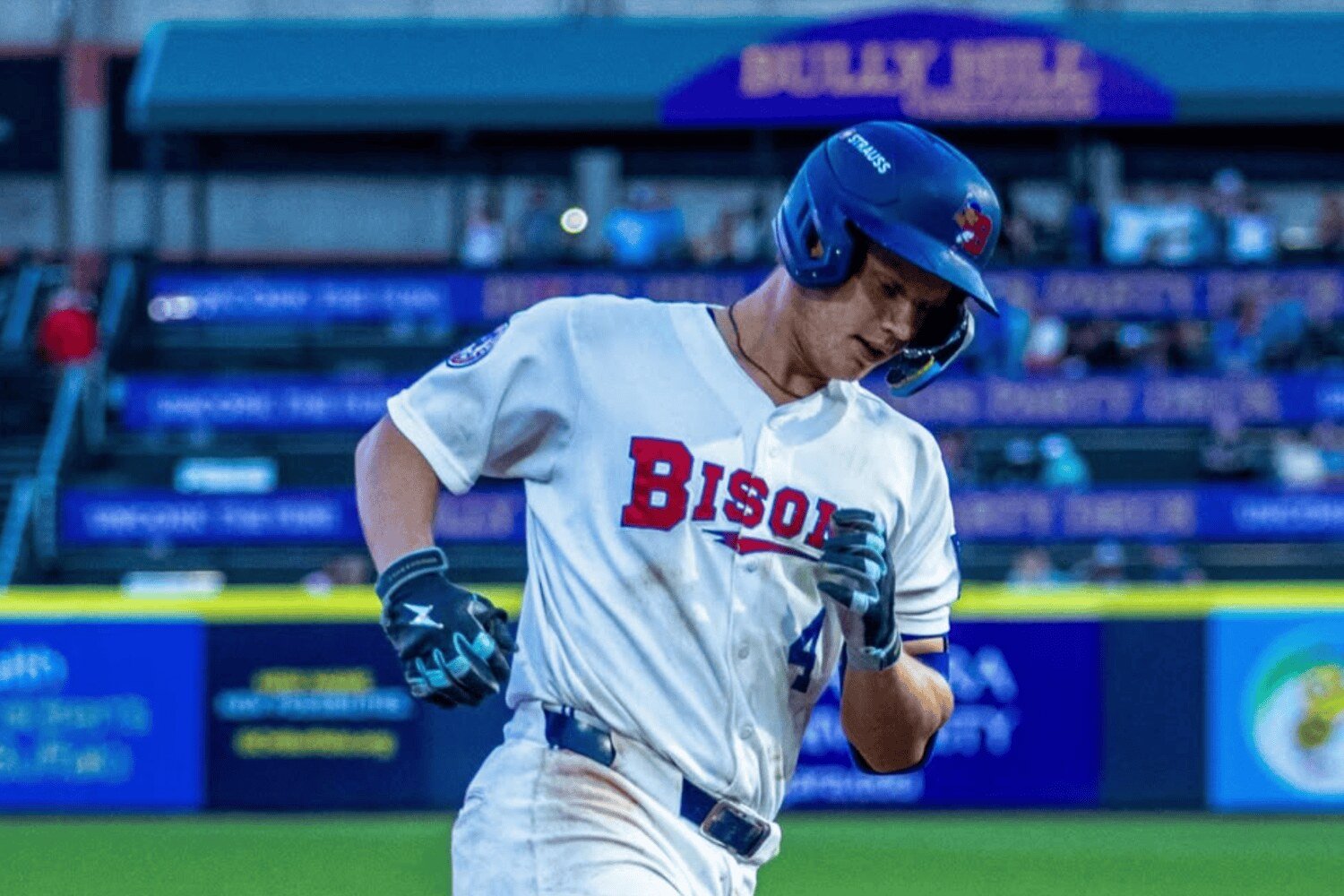 The MLB Draft has come and gone, as has the Futures Game, and while the MLB trade deadline is the biggest talking point this time of year, there are some notable prospects that have found themselves making noise across the Blue Jays system. The Blue Jays seem likely to add to their farm system over the coming days, and those players will join a list of players who have seen their stock rise over the past month. Here are the candidates for the Blue Jays Minor League Hitters of the Month for July. Honorable Mentions Sebastian Casanova - Dominican Summer League - 18 GP, .483/.557/.439, wRC+, 14.1 K%, 14.1 BB% Welcome to organized baseball, Casanova. The 5-foot-9, 167 lb shortstop has been thoroughly enjoying his first season in organized baseball. The 17-year-old was signed as an international free agent out of Venezuela and has immediately hit the ground running, literally. He stole seven bases in the month and has 19 in his 37 games on the season. On top of that, he’s been raking at the plate, as his 189 wRC+ led the system this month. Pair that with a 30.6% line drive rate, a minuscule 6.0% swinging strike rate, and the fact he’s walking just as much as he’s striking out, and you can see why the Blue Jays like him. It’s going to be a long journey for a player so young, but he looks like one of the best returns from the Blue Jays international free agent class so far. JoJo Parker - Single-A Dunedin - 18 GP, .222/.345/.375, 96 wRC+, 25.3 K%, 12.6 BB% Parker got off to a slow start in July, collecting just five hits in his first 42 plate appearances, but he’s turned a corner since then. He recently had his first multi-home run game of the season, as well as his first triple of the season. He’s still putting the ball on the ground too frequently (60.8 GB% in July), but he’s showing why evaluators believe in the hit tool. Plus, he was able to turn around a 101 mph fastball in the Futures Game this month, which is impressive in its own right: No. 3 Arjun Nimmala Double-A New Hampshire - 15 GP, .255/.354/.545, 132 wRC+, 26.2 K%, 10.8 BB% Arjun Nimmala began the month on the injured list with a hamstring strain, which keeps him from being higher on this list. But he’s picked up right where he left off. Nimmala has continued to tap into his power with four home runs in 15 games, and the contact rate (73.9%) is an improvement on what he posted in his first season in the organization. On top of that, there are positive reports about his work at shortstop. You can see why he’s ranked inside the top 100 of every major prospect list and number three on the Jays Centre list. No. 2 Davis Schneider Triple-A Buffalo - 15 GP, .293/.469/.660, 189 wRC+, 25.0 K%, 21.9 BB% Davis Schneider was sent down to Buffalo at the end of June after posting a .578 OPS in 118 plate appearances on the season. The Blue Jays wanted to see him rediscover his offensive game, and he certainly did that while in Buffalo. His five home runs and 1.128 OPS led all Blue Jays minor leaguers in July. The Blue Jays had seen enough and recalled him to Toronto on July 23. Since his recall, he’s gone 1-for-11 with a double and three walks, so he’s still going to need to put it together in the major leagues, but he has nothing left to prove in the minors. No. 1 Josh Kasevich Triple-A Buffalo - 20 GP, .408/.511/.539, 188 wRC+, 9.0 K%, 13.0 BB% Josh Kasevich entered July with just three home runs and a 96 wRC+, but he has caught fire over the month's final weeks. Reaching base in more than half of his plate appearances is remarkable, but that’s exactly what Kasevich has done in July. He’s reached base in all but two games during the month. He’s also walked more than he’s struck out while posting a minuscule 4.0 SwStr%. Kasevich had a great spring training and was a candidate to make his big league debut this season. Now that his bat has heated up, it shouldn’t be a surprise if he sees time in Toronto later this summer.
 -
Agreed, Even if the chances are almost zero, if you don't ask you dont have a chance
-
There is always one question every selling team asks itself at the trade deadline: How can they get back the best prospect package? Sometimes the biggest advantage in trade negotiations isn’t the players being moved, it's the money that can be attached to a deal. As the Blue Jays look more and more like sellers, that financial flexibility could become one of Ross Atkins’ biggest trade assets. Atkins has shown a willingness to take on money in previous trades. If he’s willing to do it again, one club stands out as a particularly intriguing trade partner, and that's the Pittsburgh Pirates. The Jays and Pirates have had a consistent trade relationship in recent years. Pirates GM Ben Cherington previously worked with Ross Atkins as the Blue Jays' vice president of baseball operations from 2016-2019 before leaving for Pittsburgh. Most recently, the teams linked up in a three-team trade with Cleveland that sent Andrés Giménez to the Blue Jays and Spencer Horwitz to the Pirates. Back in 2024, the last time the Jays sold at the deadline, they traded Isiah Kiner-Falefa to Pittsburgh for Charles McAdoo. Recently, Bob Nightengale reported that the Pirates are planning to be aggressive at the deadline as long as it doesn’t increase the payroll. For the Blue Jays, this could be music to their ears. Imagine two clubs offer a similar prospect package for Daulton Varsho. The difference is that one team asks Toronto to cover the remainder of his salary while the other doesn’t. If the Blue Jays are willing to absorb the money, they're no longer trading just Varsho; they’re trading Varsho and payroll relief. That gives the team another bargaining chip, and it’s reasonable to expect a better prospect in return because they’re providing more value to the acquiring team. Pittsburgh is in a precarious position. As of Sunday evening, they have a 54-52 record and find themselves just one game out of a playoff spot. The Pirates haven’t made the postseason since 2015, and with Paul Skenes still in his pre-arbitration years, their competitive window is wide open. The time to make a push is right now. The team does have some areas of need, particularly in the bullpen. As a unit, their bullpen has a 4.50 ERA, and that number jumps to 8.70 in high-leverage situations, so an improvement there is paramount. The Pirates could also use an improvement defensively in center field. Oneil Cruz is great with the bat, but the numbers (-9 defensive runs saved) and the eye test leave you wanting more. Fortunately for the Blue Jays, they have players who fit those needs almost perfectly. Varsho is on an expiring contract, and the Blue Jays will likely look to trade him at the deadline. Myles Straw fits the mold, too. Both players have a history of playing exceptional center field defense, and Varsho also offers some left-handed power. In the bullpen, Jeff Hoffman carries a 4.30 ERA, but the strikeout rate, FIP, and underlying stats remain in line with some of the best of his career. Game 7 of the World Series aside, he also has a proven postseason track record. None of these players would lack suitors. Contenders consistently pay a premium for impact relievers and elite defensive center fielders. If the Jays are going to maximize their return, they shouldn’t just be shopping their players; they should be shopping payroll flexibility as well. Taking on money shouldn’t scare Toronto. The Blue Jays already carry one of baseball’s highest payrolls, and even after selling off at the deadline, they’re unlikely to fall below the luxury tax threshold. If absorbing an additional $5 million is the difference between landing a 40 FV prospect and a 45 FV prospect, then that’s an investment worth making for a club focused on 2027 and beyond. The Pirates could also move on from an expensive contract that the Blue Jays could take on. In their rotation, Skenes, Jared Jones, Bubba Chandler, and Braxton Ashcraft are all under control, with additional pitching on the way. Because of that, Mitch Keller and his $39 million remaining on his contract in 2027 and '28 could be expendable. Keller wouldn’t be the centrepiece of the deal. Instead, his contract could serve as the financial leverage that allows the Jays to demand an even stronger prospect package. One player who doesn’t fit the obvious trade candidate mold is Louis Varland. Trading one of the best relievers in baseball with multiple years of control would be unpopular, but that's exactly why his value is so high. Deadline history shows controllable elite relievers can command franchise-altering returns. If the Pirates view themselves as a legitimate postseason team, then Varland is exactly the kind of arm worth paying a premium for. With the prospect package the Pirates could offer, the Jays should at least pick up the phone. Every extra dollar the Blue Jays are willing to absorb could translate into a better prospect this deadline. The Pirates may not be the only club that fits that equation, but this trade match is a great example of how money can serve as a prospect-acquisition tool. If Ross Atkins and company are serious about maximizing every trade, their payroll shouldn’t just be a budget; it should be another asset in trade talks. View full article
-
.jpg.1d82d01d1d4a04eeb177b7cd0889144f.jpg) There is always one question every selling team asks itself at the trade deadline: How can they get back the best prospect package? Sometimes the biggest advantage in trade negotiations isn’t the players being moved, it's the money that can be attached to a deal. As the Blue Jays look more and more like sellers, that financial flexibility could become one of Ross Atkins’ biggest trade assets. Atkins has shown a willingness to take on money in previous trades. If he’s willing to do it again, one club stands out as a particularly intriguing trade partner, and that's the Pittsburgh Pirates. The Jays and Pirates have had a consistent trade relationship in recent years. Pirates GM Ben Cherington previously worked with Ross Atkins as the Blue Jays' vice president of baseball operations from 2016-2019 before leaving for Pittsburgh. Most recently, the teams linked up in a three-team trade with Cleveland that sent Andrés Giménez to the Blue Jays and Spencer Horwitz to the Pirates. Back in 2024, the last time the Jays sold at the deadline, they traded Isiah Kiner-Falefa to Pittsburgh for Charles McAdoo. Recently, Bob Nightengale reported that the Pirates are planning to be aggressive at the deadline as long as it doesn’t increase the payroll. For the Blue Jays, this could be music to their ears. Imagine two clubs offer a similar prospect package for Daulton Varsho. The difference is that one team asks Toronto to cover the remainder of his salary while the other doesn’t. If the Blue Jays are willing to absorb the money, they're no longer trading just Varsho; they’re trading Varsho and payroll relief. That gives the team another bargaining chip, and it’s reasonable to expect a better prospect in return because they’re providing more value to the acquiring team. Pittsburgh is in a precarious position. As of Sunday evening, they have a 54-52 record and find themselves just one game out of a playoff spot. The Pirates haven’t made the postseason since 2015, and with Paul Skenes still in his pre-arbitration years, their competitive window is wide open. The time to make a push is right now. The team does have some areas of need, particularly in the bullpen. As a unit, their bullpen has a 4.50 ERA, and that number jumps to 8.70 in high-leverage situations, so an improvement there is paramount. The Pirates could also use an improvement defensively in center field. Oneil Cruz is great with the bat, but the numbers (-9 defensive runs saved) and the eye test leave you wanting more. Fortunately for the Blue Jays, they have players who fit those needs almost perfectly. Varsho is on an expiring contract, and the Blue Jays will likely look to trade him at the deadline. Myles Straw fits the mold, too. Both players have a history of playing exceptional center field defense, and Varsho also offers some left-handed power. In the bullpen, Jeff Hoffman carries a 4.30 ERA, but the strikeout rate, FIP, and underlying stats remain in line with some of the best of his career. Game 7 of the World Series aside, he also has a proven postseason track record. None of these players would lack suitors. Contenders consistently pay a premium for impact relievers and elite defensive center fielders. If the Jays are going to maximize their return, they shouldn’t just be shopping their players; they should be shopping payroll flexibility as well. Taking on money shouldn’t scare Toronto. The Blue Jays already carry one of baseball’s highest payrolls, and even after selling off at the deadline, they’re unlikely to fall below the luxury tax threshold. If absorbing an additional $5 million is the difference between landing a 40 FV prospect and a 45 FV prospect, then that’s an investment worth making for a club focused on 2027 and beyond. The Pirates could also move on from an expensive contract that the Blue Jays could take on. In their rotation, Skenes, Jared Jones, Bubba Chandler, and Braxton Ashcraft are all under control, with additional pitching on the way. Because of that, Mitch Keller and his $39 million remaining on his contract in 2027 and '28 could be expendable. Keller wouldn’t be the centrepiece of the deal. Instead, his contract could serve as the financial leverage that allows the Jays to demand an even stronger prospect package. One player who doesn’t fit the obvious trade candidate mold is Louis Varland. Trading one of the best relievers in baseball with multiple years of control would be unpopular, but that's exactly why his value is so high. Deadline history shows controllable elite relievers can command franchise-altering returns. If the Pirates view themselves as a legitimate postseason team, then Varland is exactly the kind of arm worth paying a premium for. With the prospect package the Pirates could offer, the Jays should at least pick up the phone. Every extra dollar the Blue Jays are willing to absorb could translate into a better prospect this deadline. The Pirates may not be the only club that fits that equation, but this trade match is a great example of how money can serve as a prospect-acquisition tool. If Ross Atkins and company are serious about maximizing every trade, their payroll shouldn’t just be a budget; it should be another asset in trade talks.
There is always one question every selling team asks itself at the trade deadline: How can they get back the best prospect package? Sometimes the biggest advantage in trade negotiations isn’t the players being moved, it's the money that can be attached to a deal. As the Blue Jays look more and more like sellers, that financial flexibility could become one of Ross Atkins’ biggest trade assets. Atkins has shown a willingness to take on money in previous trades. If he’s willing to do it again, one club stands out as a particularly intriguing trade partner, and that's the Pittsburgh Pirates. The Jays and Pirates have had a consistent trade relationship in recent years. Pirates GM Ben Cherington previously worked with Ross Atkins as the Blue Jays' vice president of baseball operations from 2016-2019 before leaving for Pittsburgh. Most recently, the teams linked up in a three-team trade with Cleveland that sent Andrés Giménez to the Blue Jays and Spencer Horwitz to the Pirates. Back in 2024, the last time the Jays sold at the deadline, they traded Isiah Kiner-Falefa to Pittsburgh for Charles McAdoo. Recently, Bob Nightengale reported that the Pirates are planning to be aggressive at the deadline as long as it doesn’t increase the payroll. For the Blue Jays, this could be music to their ears. Imagine two clubs offer a similar prospect package for Daulton Varsho. The difference is that one team asks Toronto to cover the remainder of his salary while the other doesn’t. If the Blue Jays are willing to absorb the money, they're no longer trading just Varsho; they’re trading Varsho and payroll relief. That gives the team another bargaining chip, and it’s reasonable to expect a better prospect in return because they’re providing more value to the acquiring team. Pittsburgh is in a precarious position. As of Sunday evening, they have a 54-52 record and find themselves just one game out of a playoff spot. The Pirates haven’t made the postseason since 2015, and with Paul Skenes still in his pre-arbitration years, their competitive window is wide open. The time to make a push is right now. The team does have some areas of need, particularly in the bullpen. As a unit, their bullpen has a 4.50 ERA, and that number jumps to 8.70 in high-leverage situations, so an improvement there is paramount. The Pirates could also use an improvement defensively in center field. Oneil Cruz is great with the bat, but the numbers (-9 defensive runs saved) and the eye test leave you wanting more. Fortunately for the Blue Jays, they have players who fit those needs almost perfectly. Varsho is on an expiring contract, and the Blue Jays will likely look to trade him at the deadline. Myles Straw fits the mold, too. Both players have a history of playing exceptional center field defense, and Varsho also offers some left-handed power. In the bullpen, Jeff Hoffman carries a 4.30 ERA, but the strikeout rate, FIP, and underlying stats remain in line with some of the best of his career. Game 7 of the World Series aside, he also has a proven postseason track record. None of these players would lack suitors. Contenders consistently pay a premium for impact relievers and elite defensive center fielders. If the Jays are going to maximize their return, they shouldn’t just be shopping their players; they should be shopping payroll flexibility as well. Taking on money shouldn’t scare Toronto. The Blue Jays already carry one of baseball’s highest payrolls, and even after selling off at the deadline, they’re unlikely to fall below the luxury tax threshold. If absorbing an additional $5 million is the difference between landing a 40 FV prospect and a 45 FV prospect, then that’s an investment worth making for a club focused on 2027 and beyond. The Pirates could also move on from an expensive contract that the Blue Jays could take on. In their rotation, Skenes, Jared Jones, Bubba Chandler, and Braxton Ashcraft are all under control, with additional pitching on the way. Because of that, Mitch Keller and his $39 million remaining on his contract in 2027 and '28 could be expendable. Keller wouldn’t be the centrepiece of the deal. Instead, his contract could serve as the financial leverage that allows the Jays to demand an even stronger prospect package. One player who doesn’t fit the obvious trade candidate mold is Louis Varland. Trading one of the best relievers in baseball with multiple years of control would be unpopular, but that's exactly why his value is so high. Deadline history shows controllable elite relievers can command franchise-altering returns. If the Pirates view themselves as a legitimate postseason team, then Varland is exactly the kind of arm worth paying a premium for. With the prospect package the Pirates could offer, the Jays should at least pick up the phone. Every extra dollar the Blue Jays are willing to absorb could translate into a better prospect this deadline. The Pirates may not be the only club that fits that equation, but this trade match is a great example of how money can serve as a prospect-acquisition tool. If Ross Atkins and company are serious about maximizing every trade, their payroll shouldn’t just be a budget; it should be another asset in trade talks. -
Good article, i feel like in order for this deadline to be a success the Jays need to find an impact player somewhere. Its time for the scouts to shine
-
The Curious Case of Daulton Varsho Ahead of the Trade Deadline
Jesse Burrill posted an article in Blue Jays
.jpg.06d20464ca660896ecbe1632a2a424cd.jpg) Daulton Varsho may be the toughest decision the Blue Jays have to make at this year's trade deadline. The Blue Jays have underperformed expectations, and with the trade deadline fast approaching, moving expiring contracts is becoming a more realistic possibility by the day. Varsho is set to become a free agent after the season, making him one of the team's most intriguing trade chips. Just one season ago, Varsho looked like he’d unlocked another level offensively, hitting 21 home runs in just 71 games, despite dealing with injuries throughout the year. This season, his power has disappeared, his defensive metrics have taken a step back, and the Blue Jays have to decide whether they're looking at a temporary down year or a player in decline. To understand why this decision is so complicated, it's worth looking at how Varsho got to this point. Earlier this season, Varsho’s offensive approach looked noticeably different. He traded some of his fast swings for more contact, and while the adjustment has helped him strike out less and walk more than he did a year ago, the power has largely disappeared. The result has been a 91 wRC+ and a below-league-average offensive season. Considering Varsho was expected to be a middle-of-the-order contributor, that’s been one of the reasons the Blue Jays' offense has struggled. Then there’s the question of the defence. Varsho had been well known as one of the best defensive outfielders in the league (which is thoroughly impressive for a player who came up as a catcher). From 2022-25, according to Fielding Run Value, Varsho was the best defensive outfielder in baseball, and it wasn’t particularly close: But even that number has taken a dramatic step back in 2026. He’s currently tied for 26th out of all outfielders with an FRV of just +3. Part of that is likely because of the rotator cuff surgery, which appears to have affected his arm strength, and some of the defensive decline may also come from a loss of athleticism, as his sprint speed went from 28.4 ft/sec in 2025, down to a below-league-average 27.2 ft/sec this season. In fact, just about everything from his baseball savant profile is down across the board: All of that leaves the Blue Jays facing an uncomfortable question. If Varsho isn’t the same hitter (or defender) as he was a year ago, then what should they do with him at the upcoming trade deadline? That’s what makes Varsho such a fascinating trade candidate. He’s set to become a free agent at the end of the season, and because of that alone, he seems like a likely candidate to be moved at the deadline, but there’s a lot more to it than meets the eye. Unlike many rental players, the Blue Jays already have a fallback option. If they keep Varsho through the season, they can issue him a qualifying offer. If he accepts, they keep a starting center fielder for another season. If he declines and signs elsewhere, they receive draft pick compensation, so any return the Blue Jays get in a trade will need to be more valuable than that. The real test of whether Varsho is moved will be how he’s valued by teams across the league. As previously mentioned, Varsho’s season simply hasn’t been that productive. He's been a worse-than-league-average bat, his sprint speed has taken a step back, and he has been just a one-win player (according to fWAR) on the season so far. If a rival front office views Varsho as the player he’s been in 2026, the return probably isn’t as significant as the Blue Jays might hope. The closest comp could be Cedric Mullins, who was traded from the Orioles to the Mets at last year's trade deadline. Both players are roughly the same age. They hit from the same side of the plate. Mullins had a .690 OPS last season, whereas Varsho’s sits at .689. Both have built their value around elite center field defence, and were/are both set to be free agents at season's end. For Mullins, the Orioles received three right-handed pitchers in that trade, including the Mets' 14th- and 30th-ranked prospects, as well as another unranked prospect in their system, according to MLB Pipeline. It’s a reasonable comparison for projecting what the Blue Jays could expect in return. Is that price worth the potential draft pick compensation or the potential of Varsho coming back on the qualifying offer? It's tough to say. Of course, another team may view Varsho very differently. He is just one season removed from a 20-home run, 123 wRC+ season. He’s also a former Gold Glove winner who now has postseason experience under his belt. If another team thinks they can bring that player back into the picture, the price for Varsho would be much higher, and then the Blue Jays would almost certainly move on from their center fielder. Now, if the Blue Jays do decide to make a trade, there should be several suitors available. Whether the real Varsho is the 92 wRC+, 1.0 fWAR player he’s been this season, or the one who hit 20 home runs in 71 games in 2025, or anywhere in between, he can still provide value to any club headed to the postseason, and center field defence will always be valuable, especially in October, where every play is magnified. With that in mind, contenders with below-average center field production or a need for another left-handed bat could view Varsho as one of the more attractive position players available. Here are some of those teams: The Phillies: By fWAR, they have one of the worst outfields in baseball, and inserting Varsho into center immediately gives them an upgrade on both the offensive and defensive side of the ball. The Astros: Houston seems like a potential fit for an impact left-handed hitting outfielder. Taylor Trammell, Brice Matthews, and Jake Meyers have been rotating in the outfield, and recently called-up Lucas Spence has been spending time in center. Varsho would fit in here easily. The Rays: Admittedly, this won’t feel great for Blue Jays fans, but the Jays have proven they will trade within their division in the past, and the Rays value outfield defence just as much as anybody. That’s what makes Varsho one of the most fascinating players to watch over the next two weeks. The Blue Jays know exactly what he was in 2025; they also know what he’s been in 2026. What they, and the rest of baseball, still have to decide is which version of Daulton Varsho they believe is the real one. Until another team answers that question with an aggressive offer, the Blue Jays may be better off betting on the return of the Varsho they saw last season.
Daulton Varsho may be the toughest decision the Blue Jays have to make at this year's trade deadline. The Blue Jays have underperformed expectations, and with the trade deadline fast approaching, moving expiring contracts is becoming a more realistic possibility by the day. Varsho is set to become a free agent after the season, making him one of the team's most intriguing trade chips. Just one season ago, Varsho looked like he’d unlocked another level offensively, hitting 21 home runs in just 71 games, despite dealing with injuries throughout the year. This season, his power has disappeared, his defensive metrics have taken a step back, and the Blue Jays have to decide whether they're looking at a temporary down year or a player in decline. To understand why this decision is so complicated, it's worth looking at how Varsho got to this point. Earlier this season, Varsho’s offensive approach looked noticeably different. He traded some of his fast swings for more contact, and while the adjustment has helped him strike out less and walk more than he did a year ago, the power has largely disappeared. The result has been a 91 wRC+ and a below-league-average offensive season. Considering Varsho was expected to be a middle-of-the-order contributor, that’s been one of the reasons the Blue Jays' offense has struggled. Then there’s the question of the defence. Varsho had been well known as one of the best defensive outfielders in the league (which is thoroughly impressive for a player who came up as a catcher). From 2022-25, according to Fielding Run Value, Varsho was the best defensive outfielder in baseball, and it wasn’t particularly close: But even that number has taken a dramatic step back in 2026. He’s currently tied for 26th out of all outfielders with an FRV of just +3. Part of that is likely because of the rotator cuff surgery, which appears to have affected his arm strength, and some of the defensive decline may also come from a loss of athleticism, as his sprint speed went from 28.4 ft/sec in 2025, down to a below-league-average 27.2 ft/sec this season. In fact, just about everything from his baseball savant profile is down across the board: All of that leaves the Blue Jays facing an uncomfortable question. If Varsho isn’t the same hitter (or defender) as he was a year ago, then what should they do with him at the upcoming trade deadline? That’s what makes Varsho such a fascinating trade candidate. He’s set to become a free agent at the end of the season, and because of that alone, he seems like a likely candidate to be moved at the deadline, but there’s a lot more to it than meets the eye. Unlike many rental players, the Blue Jays already have a fallback option. If they keep Varsho through the season, they can issue him a qualifying offer. If he accepts, they keep a starting center fielder for another season. If he declines and signs elsewhere, they receive draft pick compensation, so any return the Blue Jays get in a trade will need to be more valuable than that. The real test of whether Varsho is moved will be how he’s valued by teams across the league. As previously mentioned, Varsho’s season simply hasn’t been that productive. He's been a worse-than-league-average bat, his sprint speed has taken a step back, and he has been just a one-win player (according to fWAR) on the season so far. If a rival front office views Varsho as the player he’s been in 2026, the return probably isn’t as significant as the Blue Jays might hope. The closest comp could be Cedric Mullins, who was traded from the Orioles to the Mets at last year's trade deadline. Both players are roughly the same age. They hit from the same side of the plate. Mullins had a .690 OPS last season, whereas Varsho’s sits at .689. Both have built their value around elite center field defence, and were/are both set to be free agents at season's end. For Mullins, the Orioles received three right-handed pitchers in that trade, including the Mets' 14th- and 30th-ranked prospects, as well as another unranked prospect in their system, according to MLB Pipeline. It’s a reasonable comparison for projecting what the Blue Jays could expect in return. Is that price worth the potential draft pick compensation or the potential of Varsho coming back on the qualifying offer? It's tough to say. Of course, another team may view Varsho very differently. He is just one season removed from a 20-home run, 123 wRC+ season. He’s also a former Gold Glove winner who now has postseason experience under his belt. If another team thinks they can bring that player back into the picture, the price for Varsho would be much higher, and then the Blue Jays would almost certainly move on from their center fielder. Now, if the Blue Jays do decide to make a trade, there should be several suitors available. Whether the real Varsho is the 92 wRC+, 1.0 fWAR player he’s been this season, or the one who hit 20 home runs in 71 games in 2025, or anywhere in between, he can still provide value to any club headed to the postseason, and center field defence will always be valuable, especially in October, where every play is magnified. With that in mind, contenders with below-average center field production or a need for another left-handed bat could view Varsho as one of the more attractive position players available. Here are some of those teams: The Phillies: By fWAR, they have one of the worst outfields in baseball, and inserting Varsho into center immediately gives them an upgrade on both the offensive and defensive side of the ball. The Astros: Houston seems like a potential fit for an impact left-handed hitting outfielder. Taylor Trammell, Brice Matthews, and Jake Meyers have been rotating in the outfield, and recently called-up Lucas Spence has been spending time in center. Varsho would fit in here easily. The Rays: Admittedly, this won’t feel great for Blue Jays fans, but the Jays have proven they will trade within their division in the past, and the Rays value outfield defence just as much as anybody. That’s what makes Varsho one of the most fascinating players to watch over the next two weeks. The Blue Jays know exactly what he was in 2025; they also know what he’s been in 2026. What they, and the rest of baseball, still have to decide is which version of Daulton Varsho they believe is the real one. Until another team answers that question with an aggressive offer, the Blue Jays may be better off betting on the return of the Varsho they saw last season. -
Daulton Varsho may be the toughest decision the Blue Jays have to make at this year's trade deadline. The Blue Jays have underperformed expectations, and with the trade deadline fast approaching, moving expiring contracts is becoming a more realistic possibility by the day. Varsho is set to become a free agent after the season, making him one of the team's most intriguing trade chips. Just one season ago, Varsho looked like he’d unlocked another level offensively, hitting 21 home runs in just 71 games, despite dealing with injuries throughout the year. This season, his power has disappeared, his defensive metrics have taken a step back, and the Blue Jays have to decide whether they're looking at a temporary down year or a player in decline. To understand why this decision is so complicated, it's worth looking at how Varsho got to this point. Earlier this season, Varsho’s offensive approach looked noticeably different. He traded some of his fast swings for more contact, and while the adjustment has helped him strike out less and walk more than he did a year ago, the power has largely disappeared. The result has been a 91 wRC+ and a below-league-average offensive season. Considering Varsho was expected to be a middle-of-the-order contributor, that’s been one of the reasons the Blue Jays' offense has struggled. Then there’s the question of the defence. Varsho had been well known as one of the best defensive outfielders in the league (which is thoroughly impressive for a player who came up as a catcher). From 2022-25, according to Fielding Run Value, Varsho was the best defensive outfielder in baseball, and it wasn’t particularly close: But even that number has taken a dramatic step back in 2026. He’s currently tied for 26th out of all outfielders with an FRV of just +3. Part of that is likely because of the rotator cuff surgery, which appears to have affected his arm strength, and some of the defensive decline may also come from a loss of athleticism, as his sprint speed went from 28.4 ft/sec in 2025, down to a below-league-average 27.2 ft/sec this season. In fact, just about everything from his baseball savant profile is down across the board: All of that leaves the Blue Jays facing an uncomfortable question. If Varsho isn’t the same hitter (or defender) as he was a year ago, then what should they do with him at the upcoming trade deadline? That’s what makes Varsho such a fascinating trade candidate. He’s set to become a free agent at the end of the season, and because of that alone, he seems like a likely candidate to be moved at the deadline, but there’s a lot more to it than meets the eye. Unlike many rental players, the Blue Jays already have a fallback option. If they keep Varsho through the season, they can issue him a qualifying offer. If he accepts, they keep a starting center fielder for another season. If he declines and signs elsewhere, they receive draft pick compensation, so any return the Blue Jays get in a trade will need to be more valuable than that. The real test of whether Varsho is moved will be how he’s valued by teams across the league. As previously mentioned, Varsho’s season simply hasn’t been that productive. He's been a worse-than-league-average bat, his sprint speed has taken a step back, and he has been just a one-win player (according to fWAR) on the season so far. If a rival front office views Varsho as the player he’s been in 2026, the return probably isn’t as significant as the Blue Jays might hope. The closest comp could be Cedric Mullins, who was traded from the Orioles to the Mets at last year's trade deadline. Both players are roughly the same age. They hit from the same side of the plate. Mullins had a .690 OPS last season, whereas Varsho’s sits at .689. Both have built their value around elite center field defence, and were/are both set to be free agents at season's end. For Mullins, the Orioles received three right-handed pitchers in that trade, including the Mets' 14th- and 30th-ranked prospects, as well as another unranked prospect in their system, according to MLB Pipeline. It’s a reasonable comparison for projecting what the Blue Jays could expect in return. Is that price worth the potential draft pick compensation or the potential of Varsho coming back on the qualifying offer? It's tough to say. Of course, another team may view Varsho very differently. He is just one season removed from a 20-home run, 123 wRC+ season. He’s also a former Gold Glove winner who now has postseason experience under his belt. If another team thinks they can bring that player back into the picture, the price for Varsho would be much higher, and then the Blue Jays would almost certainly move on from their center fielder. Now, if the Blue Jays do decide to make a trade, there should be several suitors available. Whether the real Varsho is the 92 wRC+, 1.0 fWAR player he’s been this season, or the one who hit 20 home runs in 71 games in 2025, or anywhere in between, he can still provide value to any club headed to the postseason, and center field defence will always be valuable, especially in October, where every play is magnified. With that in mind, contenders with below-average center field production or a need for another left-handed bat could view Varsho as one of the more attractive position players available. Here are some of those teams: The Phillies: By fWAR, they have one of the worst outfields in baseball, and inserting Varsho into center immediately gives them an upgrade on both the offensive and defensive side of the ball. The Astros: Houston seems like a potential fit for an impact left-handed hitting outfielder. Taylor Trammell, Brice Matthews, and Jake Meyers have been rotating in the outfield, and recently called-up Lucas Spence has been spending time in center. Varsho would fit in here easily. The Rays: Admittedly, this won’t feel great for Blue Jays fans, but the Jays have proven they will trade within their division in the past, and the Rays value outfield defence just as much as anybody. That’s what makes Varsho one of the most fascinating players to watch over the next two weeks. The Blue Jays know exactly what he was in 2025; they also know what he’s been in 2026. What they, and the rest of baseball, still have to decide is which version of Daulton Varsho they believe is the real one. Until another team answers that question with an aggressive offer, the Blue Jays may be better off betting on the return of the Varsho they saw last season. View full article


.jpg.13cf7661297ce361c5e7e3291b698977.jpg)
.jpg.a9154dff5507fbfac800709ad634255b.jpg)
.jpg.5643dd0df9026f3887ebaca346ebf826.jpg)
.jpg.f3f5fd12756fe44017d9b4593684f277.jpg)

.jpg.1d82d01d1d4a04eeb177b7cd0889144f.jpg)
.jpg.06d20464ca660896ecbe1632a2a424cd.jpg)