


Matthew Creally
-
Posts
128 -
Joined
-
Last visited
1 Follower

Matthew Creally's Achievements






-
 Spanky__99 reacted to a post in a topic:
Shape of the Blue Jays: Smith, Soriano, Okamoto
Spanky__99 reacted to a post in a topic:
Shape of the Blue Jays: Smith, Soriano, Okamoto
-
Welcome to Shape of the Blue Jays, my column where I dig into Statcast numbers to analyze recent pitch shape and swing shape trends for Toronto Blue Jays players and discuss how they have impacted their performance. Click here to read the last edition. All stats entering September 10, 2026, unless otherwise stated. Quick Hits: Dubious History It has not been a banner year offensively for the Blue Jays. In Wednesday afternoon's rubber match against the Athletics, they became just the second visiting team to get shut out at the hitter-friendly Sutter Health Park in 2026. Starting on the mound for the A's was right-hander Brady Basso, a reliever by trade. It was his 23rd appearance of the season, but only his fifth start. Entering Wednesday, he had completed three innings in a single game just once this season, and as a starter, he hadn't gone longer than 2.1 IP since 2024. He threw four shutout innings against the Jays, striking out four. The 2026 Blue Jays are now averaging 4.0 runs per game. That would be the sixth-worst single-season mark in their 50-year history, according to Stathead. The only five years in which they were worse than that all occurred between 1977 and 1981, the first five seasons of their existence. Their highest winning percentage in that timespan was .414 in 1980 (67-95 record). Remarkably, they still have a shot at the playoffs thanks to their pitching, but there's no sugarcoating how limited their potential seems to be, and how hard it is to watch, when this is how they hit. Josh Smith The Blue Jays knew they weren't getting a power bat when they traded for Josh Smith, or so they thought. Through 21 games with his new team, he's hitting for a 173 wRC+ with five homers and a .366 ISO. That won't last forever, but the surprising production has helped offset the 31.4% K rate he's posted with Toronto. By no means is he a high-bat-speed guy, but in August, 15.8% of his batted balls were barrels, the highest single-month barrel rate of his career. His barrel rate is 11.1% for the month of September so far. If that holds, it would be his first time with a barrel rate of 10% or higher in consecutive months. This is mostly the result of an apparent effort to lift and pull the ball more often. When he's at his best, Smith's true calling cards at the plate are contact ability, discipline, and efficient contact (i.e., a high squared-up rate). His pull-air rate was high in his best seasons, but in 2026, including his time with the Rangers, his attack angle is up to 13° (+4° year-over-year), and his attack direction is 6° toward the pull side (+4° pull YOY). Since coming to the Jays, his swing tilt has slightly increased as well. The intent of going back to being a pull-air guy is paying off. José Soriano It seemed inevitable that José Soriano would throw fewer four-seamers after getting traded to the Blue Jays, and that's exactly what happened. The trend continued on Tuesday night, when he threw his sinker 49.4% of the time in his start against the A's (7 IP, 2 R, 6 H, 3 K, 1 BB). That's a new single-game high, eclipsing the previous mark he set last month in a home start against the Red Sox. He threw it a whopping 70.4% of the time on the first pitch. The gap between his sinker and the rest of his pitches on the chart above starts to widen almost exactly at the start of his Jays tenure. The logic of throwing a ton of first-pitch sinkers is sound; it's his best shot at throwing a strike with a shape that isn't as vulnerable to damage. Public stuff models have mixed opinions about whether his sinker is that much better than his four-seamer, but opponents are slugging .512 (.509 xSLG) on the four-seamer compared to .358 (.427 xSLG) on the sinker, the latter of which has a 66.3% groundball rate. Odds are that a first-pitch sinker from Soriano is either going to be a called strike or beaten into the ground, which seems like a good strategy with Toronto's infield defense. That's how you go deep into games. Kazuma Okamoto Kazuma Okamoto crushed his 30th home run of the season in Sacramento this week, becoming the first (and he will be the only) Blue Jay to reach that milestone in 2026. He's now sitting at a 111 wRC+ in his first year as a big leaguer, outperforming the contract he signed in January. His hit tool has been more fringy than expected, leading to some whiplash-inducing ups and downs throughout the year, but the power has made up for that. There isn't much to complain about in terms of the overall results. Among all hitters with at least 200 batted balls this season, Okamoto's 28.4% pull-air rate ranks inside the top 20. At the same time, nearly a third of his homers have landed on the right side of straightaway center. I'm impressed by the fact that his swing tilt has steadily increased with each passing month. For one, tilt is tough to adjust year-over-year, let alone in-season. High-tilt guys are also usually exploitable with high fastballs, but despite a 30% whiff rate on four-seamers, Okamoto is hitting .288 and slugging .554 against the pitch (+15 RV). Unless he goes through a colossal slump in the final weeks, his rookie season should go down in the minds of fans as a relative success. View full article
-
- 1
-
-
- josh smith
- jose soriano
- (and 2 more)
-
 Welcome to Shape of the Blue Jays, my column where I dig into Statcast numbers to analyze recent pitch shape and swing shape trends for Toronto Blue Jays players and discuss how they have impacted their performance. Click here to read the last edition. All stats entering September 10, 2026, unless otherwise stated. Quick Hits: Dubious History It has not been a banner year offensively for the Blue Jays. In Wednesday afternoon's rubber match against the Athletics, they became just the second visiting team to get shut out at the hitter-friendly Sutter Health Park in 2026. Starting on the mound for the A's was right-hander Brady Basso, a reliever by trade. It was his 23rd appearance of the season, but only his fifth start. Entering Wednesday, he had completed three innings in a single game just once this season, and as a starter, he hadn't gone longer than 2.1 IP since 2024. He threw four shutout innings against the Jays, striking out four. The 2026 Blue Jays are now averaging 4.0 runs per game. That would be the sixth-worst single-season mark in their 50-year history, according to Stathead. The only five years in which they were worse than that all occurred between 1977 and 1981, the first five seasons of their existence. Their highest winning percentage in that timespan was .414 in 1980 (67-95 record). Remarkably, they still have a shot at the playoffs thanks to their pitching, but there's no sugarcoating how limited their potential seems to be, and how hard it is to watch, when this is how they hit. Josh Smith The Blue Jays knew they weren't getting a power bat when they traded for Josh Smith, or so they thought. Through 21 games with his new team, he's hitting for a 173 wRC+ with five homers and a .366 ISO. That won't last forever, but the surprising production has helped offset the 31.4% K rate he's posted with Toronto. By no means is he a high-bat-speed guy, but in August, 15.8% of his batted balls were barrels, the highest single-month barrel rate of his career. His barrel rate is 11.1% for the month of September so far. If that holds, it would be his first time with a barrel rate of 10% or higher in consecutive months. This is mostly the result of an apparent effort to lift and pull the ball more often. When he's at his best, Smith's true calling cards at the plate are contact ability, discipline, and efficient contact (i.e., a high squared-up rate). His pull-air rate was high in his best seasons, but in 2026, including his time with the Rangers, his attack angle is up to 13° (+4° year-over-year), and his attack direction is 6° toward the pull side (+4° pull YOY). Since coming to the Jays, his swing tilt has slightly increased as well. The intent of going back to being a pull-air guy is paying off. José Soriano It seemed inevitable that José Soriano would throw fewer four-seamers after getting traded to the Blue Jays, and that's exactly what happened. The trend continued on Tuesday night, when he threw his sinker 49.4% of the time in his start against the A's (7 IP, 2 R, 6 H, 3 K, 1 BB). That's a new single-game high, eclipsing the previous mark he set last month in a home start against the Red Sox. He threw it a whopping 70.4% of the time on the first pitch. The gap between his sinker and the rest of his pitches on the chart above starts to widen almost exactly at the start of his Jays tenure. The logic of throwing a ton of first-pitch sinkers is sound; it's his best shot at throwing a strike with a shape that isn't as vulnerable to damage. Public stuff models have mixed opinions about whether his sinker is that much better than his four-seamer, but opponents are slugging .512 (.509 xSLG) on the four-seamer compared to .358 (.427 xSLG) on the sinker, the latter of which has a 66.3% groundball rate. Odds are that a first-pitch sinker from Soriano is either going to be a called strike or beaten into the ground, which seems like a good strategy with Toronto's infield defense. That's how you go deep into games. Kazuma Okamoto Kazuma Okamoto crushed his 30th home run of the season in Sacramento this week, becoming the first (and he will be the only) Blue Jay to reach that milestone in 2026. He's now sitting at a 111 wRC+ in his first year as a big leaguer, outperforming the contract he signed in January. His hit tool has been more fringy than expected, leading to some whiplash-inducing ups and downs throughout the year, but the power has made up for that. There isn't much to complain about in terms of the overall results. Among all hitters with at least 200 batted balls this season, Okamoto's 28.4% pull-air rate ranks inside the top 20. At the same time, nearly a third of his homers have landed on the right side of straightaway center. I'm impressed by the fact that his swing tilt has steadily increased with each passing month. For one, tilt is tough to adjust year-over-year, let alone in-season. High-tilt guys are also usually exploitable with high fastballs, but despite a 30% whiff rate on four-seamers, Okamoto is hitting .288 and slugging .554 against the pitch (+15 RV). Unless he goes through a colossal slump in the final weeks, his rookie season should go down in the minds of fans as a relative success.
 -
This past week ended with a dud for the Blue Jays, but they're once again improving their standing after consecutive series wins in Cleveland and Kansas City. For 24 hours, they were finally above .500 for the first time since April 3, and even after Sunday's loss, they're just a game back of a playoff spot. According to Baseball Reference, no team has improved their playoff odds more in the past 30 days. Pitching 3. Dylan Cease: Jo Adell GIDP, Bot 1, 9/2 (+8.6% WPA) The Guardians threatened immediately after the Jays took the early lead last Wednesday. With two strikes on Jo Adell, another punchout would've been a good outcome for Dylan Cease, who has had no trouble racking up the K's this season. Instead, he got an even better result by getting Adell to roll over a low fastball for the inning-ending double play. This ended up being one of the only trouble spots the Jays dealt with all night on their way to a resounding 11-0 victory. 2. Tyler Rogers: Michael Massey Groundout, Bot 8, 9/5 (+11.0% WPA) As has been the case so many times in 2026, Tyler Rogers was tasked with holding a tight lead in the eighth inning on Saturday. It was a bumpy ride, as the first two Royals reached. The tying run was just 90 feet away, and with the Jays four outs away from a crucial series win, Rogers got Michael Massey to harmlessly bounce out to first base. Vladimir Guerrero Jr. took it himself to get his team out of the inning. 1. Tyler Rogers: Vinnie Pasquantino GIDP, Bot 8, 9/5 (+27.5% WPA) The true pivotal moment in Saturday night's eighth inning happened one batter before Massey. After consecutive base hits by Nick Loftin and Salvador Perez, Rogers fell behind 1-0 to the powerful Vinnie Pasquantino. The lefty got too far on top of a sinker high in the zone and grounded it right back to Rogers, who started a 1-6-3 that changed the complexion of the inning. By WPA, this is now Rogers's most clutch play of the season and the sixth-most for Blue Jays pitchers. Hitting 3. George Springer: Angel Genao Throwing Error, Top 2, 9/2 (+14.3% WPA) This slow roller to short off the bat of George Springer should have ended things for the Jays in the top of the second, but Angel Genao airmailed Travis Bazzana at second base. Instead of Toronto failing to capitalize with the bases loaded, two runs scored as a result. This throwing error was no different from many of the ones that happen with two outs and runners on, in that the Guardians paid dearly soon after. Vladimir Guerrero Jr. followed this up by crushing a three-run homer down the left field line to break the game open early. 2. Nathan Lukes: 2-RBI Double, Top 5, 9/3 (+16.0% WPA) Guardians right-hander Tanner Bibee started the fifth inning on Thursday afternoon by issuing a leadoff walk to Ernie Clement, one of the least frequent walkers in MLB. That would come back to haunt him, as Nathan Lukes came up with the bases loaded three batters later and roped a middle-away sinker up the alley in right-center. This brought home the first two of four runs the Jays would score in the inning, and they never looked back from there, winning 6-3 and clinching a crucial tiebreaker over Cleveland. 1. Kazuma Okamoto: RBI Single, Top 7, 9/5 (+19.2% WPA) Kazuma Okamoto picked a wonderful time for his first four-hit game in the major leagues. With men on the corners and two away, veteran Craig Kimbrel tried to drop a get-me-over slider in for a strike, but it backed up on him, and Okamoto was ready. He scalded it up the middle into the spacious outfield at Kauffman Stadium, and Springer scored easily. Thanks to this hit and Rogers's escape artistry in the eighth, the Jays were able to win another series. View full article
-
Blue Jays Clutch Plays: Best Late-Inning Relievers in Baseball?
Matthew Creally posted an article in Blue Jays
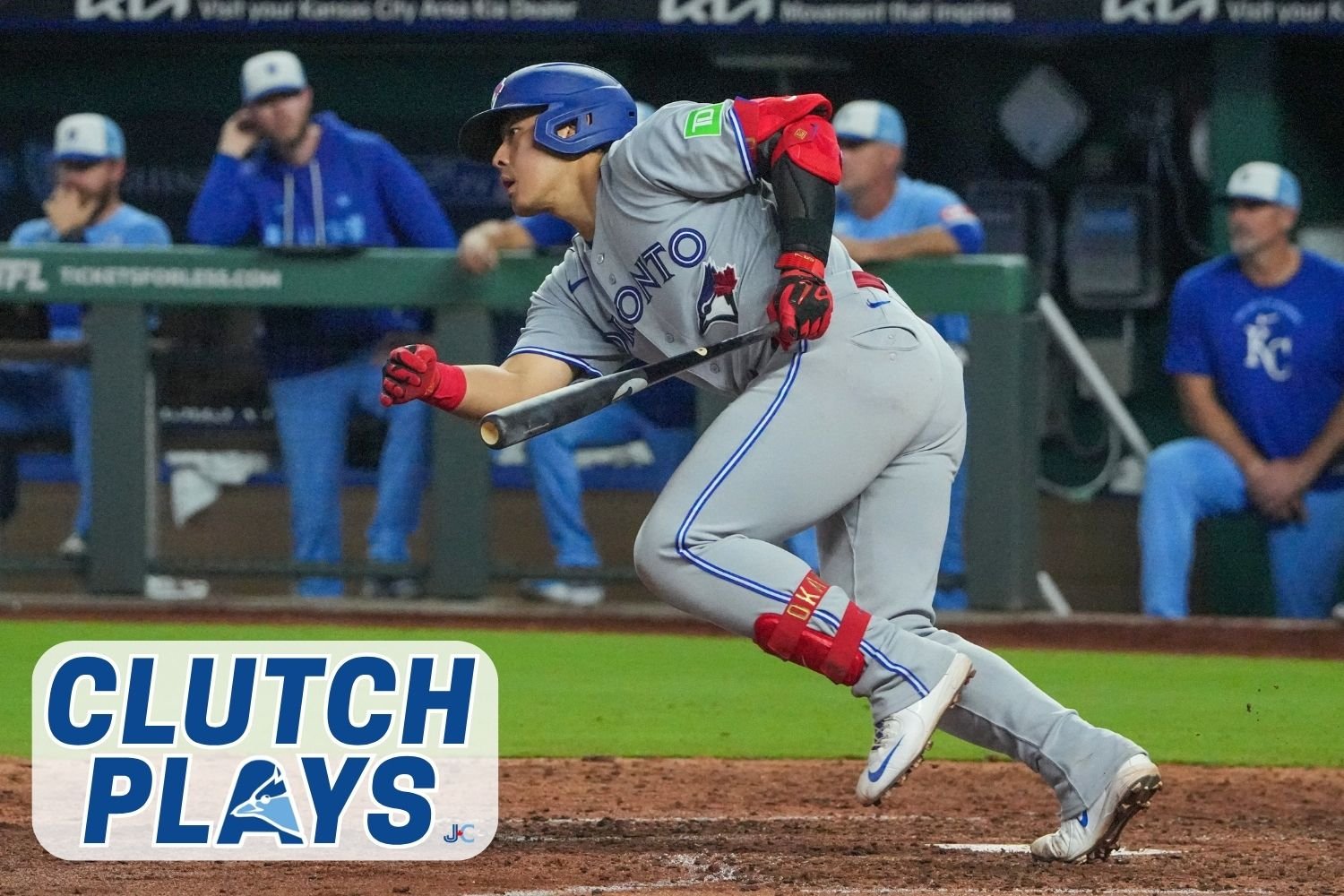 This past week ended with a dud for the Blue Jays, but they're once again improving their standing after consecutive series wins in Cleveland and Kansas City. For 24 hours, they were finally above .500 for the first time since April 3, and even after Sunday's loss, they're just a game back of a playoff spot. According to Baseball Reference, no team has improved their playoff odds more in the past 30 days. Pitching 3. Dylan Cease: Jo Adell GIDP, Bot 1, 9/2 (+8.6% WPA) The Guardians threatened immediately after the Jays took the early lead last Wednesday. With two strikes on Jo Adell, another punchout would've been a good outcome for Dylan Cease, who has had no trouble racking up the K's this season. Instead, he got an even better result by getting Adell to roll over a low fastball for the inning-ending double play. This ended up being one of the only trouble spots the Jays dealt with all night on their way to a resounding 11-0 victory. 2. Tyler Rogers: Michael Massey Groundout, Bot 8, 9/5 (+11.0% WPA) As has been the case so many times in 2026, Tyler Rogers was tasked with holding a tight lead in the eighth inning on Saturday. It was a bumpy ride, as the first two Royals reached. The tying run was just 90 feet away, and with the Jays four outs away from a crucial series win, Rogers got Michael Massey to harmlessly bounce out to first base. Vladimir Guerrero Jr. took it himself to get his team out of the inning. 1. Tyler Rogers: Vinnie Pasquantino GIDP, Bot 8, 9/5 (+27.5% WPA) The true pivotal moment in Saturday night's eighth inning happened one batter before Massey. After consecutive base hits by Nick Loftin and Salvador Perez, Rogers fell behind 1-0 to the powerful Vinnie Pasquantino. The lefty got too far on top of a sinker high in the zone and grounded it right back to Rogers, who started a 1-6-3 that changed the complexion of the inning. By WPA, this is now Rogers's most clutch play of the season and the sixth-most for Blue Jays pitchers. Hitting 3. George Springer: Angel Genao Throwing Error, Top 2, 9/2 (+14.3% WPA) This slow roller to short off the bat of George Springer should have ended things for the Jays in the top of the second, but Angel Genao airmailed Travis Bazzana at second base. Instead of Toronto failing to capitalize with the bases loaded, two runs scored as a result. This throwing error was no different from many of the ones that happen with two outs and runners on, in that the Guardians paid dearly soon after. Vladimir Guerrero Jr. followed this up by crushing a three-run homer down the left field line to break the game open early. 2. Nathan Lukes: 2-RBI Double, Top 5, 9/3 (+16.0% WPA) Guardians right-hander Tanner Bibee started the fifth inning on Thursday afternoon by issuing a leadoff walk to Ernie Clement, one of the least frequent walkers in MLB. That would come back to haunt him, as Nathan Lukes came up with the bases loaded three batters later and roped a middle-away sinker up the alley in right-center. This brought home the first two of four runs the Jays would score in the inning, and they never looked back from there, winning 6-3 and clinching a crucial tiebreaker over Cleveland. 1. Kazuma Okamoto: RBI Single, Top 7, 9/5 (+19.2% WPA) Kazuma Okamoto picked a wonderful time for his first four-hit game in the major leagues. With men on the corners and two away, veteran Craig Kimbrel tried to drop a get-me-over slider in for a strike, but it backed up on him, and Okamoto was ready. He scalded it up the middle into the spacious outfield at Kauffman Stadium, and Springer scored easily. Thanks to this hit and Rogers's escape artistry in the eighth, the Jays were able to win another series.
 -
Welcome to Shape of the Blue Jays, my column where I dig into Statcast numbers to analyze recent pitch shape and swing shape trends for Toronto Blue Jays players and discuss how they have impacted their performance. Click here to read the last edition. All stats entering August 27, 2026, unless otherwise stated. Quick Hits: Bullpen Reinforcements? Daniel Guerra (RHP) is a name with some helium down on the farm. The 22-year-old Venezuelan was signed as an international free agent four summers ago. I named him one of the Jays' minor league starting pitchers of the month back in April after the promising start he had in Vancouver's rotation. Earlier this summer, Guerra was shifted to the bullpen, a move that has accelerated his path to the big leagues. Earlier this week, he was promoted to Triple-A Buffalo, facing four batters and giving up a solo homer in his debut. His jump from High A to Double A, and then a much quicker leap to Buffalo, has some wondering whether he could be in Toronto next month. Guerra is simply an imposing presence on the mound. He's 6-foot-6, 230 lbs with a high overhand release and nearly seven feet of extension in his delivery. The stuff is already MLB quality: a 98-mph cut-ride fastball, a 90-mph cutter with considerable lift and glove-side action, a no-spin 89-mph sinker with over 13" of run (impressive considering his arm angle), and a high-80s changeup to bridge the movement profiles between the four-seamer and two-seamer. That's undeniably nasty, but he was in the zone less than 30% of the time in his Bisons debut. If he can show stronger command, he could be a shot in the arm for a solid but exhausted Blue Jays bullpen, especially if they can stay in the Wild Card race into September. Chad Dallas John Schneider knew he would need quality innings in some form as the Blue Jays re-adjusted to life without Shane Bieber on Wednesday. Chad Dallas delivered, completely neutralizing the Royals en route to a shutout win for Toronto (2.2 IP, 0 R, 0 H, 4 K, 0 BB). Dallas's shapes are fun to analyze because he's an outlier in terms of his ability to get tremendous sidespin from a high release point. Since his primary pitch is a cutter and other teams know that everything moves glove-side, he hasn't been a high-whiff guy at this level, but he's done an excellent job getting hitters to chase and miss barrels. At 93 mph, his cutter velocity stands out. Opponents are hitting just .111 against it so far. The curveball, his secondary of choice against lefties, is about as 12-6 as it gets. The sweeper has plus velocity and plus horizontal break with downward vertical action, making it something of a unicorn offering, especially from his slot. On Wednesday, Dallas leaned on his cutter more against lefties, and the sweeper was his primary offering against righties as the curve took more of a tertiary role. The cutter was responsible for three of his four strikeouts, but Kansas City was completely fooled by his sweeper (five whiffs on six swings, 33% zone swing, 71% chase). I'm declaring him the King of Supination until further notice. Spencer Arrighetti We got our first glimpse of Spencer Arrighetti as a Blue Jay last Friday at Yankee Stadium (3.1 IP, 3 ER, 3 H, 4 K, 2 BB). He's evolved into a kitchen-sink type with a low 3/4 release, but the book on him when he came over from Houston was essentially plus curveball, deceptive vertical action on the four-seamer, and iffy command. The Blue Jays clearly had a planned adjustment in mind, as he threw his sinker 23% of the time in New York, up from 11% on the year. Its specs are half-decent: low 90s velocity, 17" of tail (which makes sense given his 19° arm angle), and separation in movement from both the four-seamer and changeup. The location models hosted on FanGraphs don't like it, but when he first started toying with it in 2025, it had a 65% zone rate, highest in his arsenal. This year, its zone rate is tied for second-highest in his arsenal behind his cutter, which he has deliberately backed off of in recent years. Spencer Arrighetti Sinker, 8/21 vs NYY His best pitch stuff-wise is the curveball, which he struggles to locate. His four-seamer can play as a primary pitch in a wide arsenal, but it only started getting results once he stopped throwing it 40% of the time. I believe the Jays' thinking here is that throwing the sinker more often is a way for him to be in the zone more while allowing the four-seamer and curve to play up. Its results from this outing suggest the Yankees weren't expecting to see it as much as they did (38% chase, three whiffs on seven swings). Paul Sewald Just three seasons ago, Paul Sewald was closing games for the pennant-winning Diamondbacks. They cut him loose earlier this month. He's been the same type of pitcher for a few years now: low arm angle, low-VAA four-seamer, and a sweeper. Both his strikeout and walk rates are actually better than they were last year, but the home run ball singlehandedly ended his time with Arizona (2.47 HR/9, first-percentile barrel rate). The four-seamer (.546 SLG, .558 xSLG) was mostly at fault. Naturally, we saw more of the sweeper and less of the four-seamer in his first few outings as a Blue Jay. However, he went back to the fastball more often on Tuesday and Wednesday against the Royals. Sewald's arm angle has slowly dropped over the past few seasons, and the vertical break on his fastball has slowly fallen with it. The ballooning home run rate suggests it doesn't play middle-up in the zone like it used to, which is where he has lived with it for most of the season. On Tuesday especially, he was broadening his locations with it. He hasn't given up a homer yet in five appearances with Toronto. Paul Sewald Fastball Locations, 8/25 vs KC – hey, wait, that actually looks like a photo of Mason Fluharty... He's a flyball pitcher who was running a career-worst 17.4% HR/FB rate with the D-backs, so some of that is positive regression. However, I actually like the idea of him throwing more four-seamers out of the zone moving forward. After all, damage was the reason he got cut, and it's a lot harder to hit homers on pitches above the top rail than at the belt! View full article
-
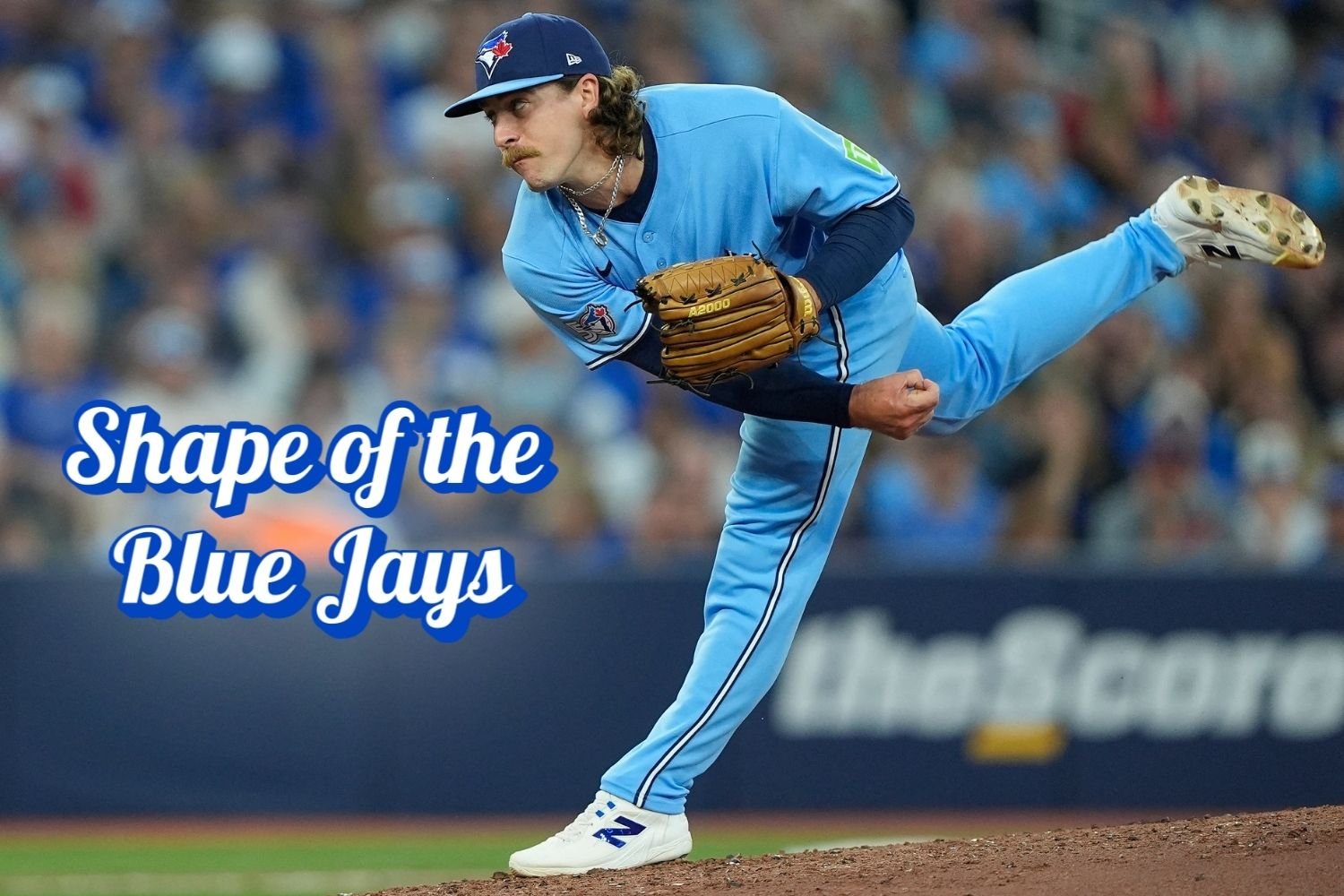 Welcome to Shape of the Blue Jays, my column where I dig into Statcast numbers to analyze recent pitch shape and swing shape trends for Toronto Blue Jays players and discuss how they have impacted their performance. Click here to read the last edition. All stats entering August 27, 2026, unless otherwise stated. Quick Hits: Bullpen Reinforcements? Daniel Guerra (RHP) is a name with some helium down on the farm. The 22-year-old Venezuelan was signed as an international free agent four summers ago. I named him one of the Jays' minor league starting pitchers of the month back in April after the promising start he had in Vancouver's rotation. Earlier this summer, Guerra was shifted to the bullpen, a move that has accelerated his path to the big leagues. Earlier this week, he was promoted to Triple-A Buffalo, facing four batters and giving up a solo homer in his debut. His jump from High A to Double A, and then a much quicker leap to Buffalo, has some wondering whether he could be in Toronto next month. Guerra is simply an imposing presence on the mound. He's 6-foot-6, 230 lbs with a high overhand release and nearly seven feet of extension in his delivery. The stuff is already MLB quality: a 98-mph cut-ride fastball, a 90-mph cutter with considerable lift and glove-side action, a no-spin 89-mph sinker with over 13" of run (impressive considering his arm angle), and a high-80s changeup to bridge the movement profiles between the four-seamer and two-seamer. That's undeniably nasty, but he was in the zone less than 30% of the time in his Bisons debut. If he can show stronger command, he could be a shot in the arm for a solid but exhausted Blue Jays bullpen, especially if they can stay in the Wild Card race into September. Chad Dallas John Schneider knew he would need quality innings in some form as the Blue Jays re-adjusted to life without Shane Bieber on Wednesday. Chad Dallas delivered, completely neutralizing the Royals en route to a shutout win for Toronto (2.2 IP, 0 R, 0 H, 4 K, 0 BB). Dallas's shapes are fun to analyze because he's an outlier in terms of his ability to get tremendous sidespin from a high release point. Since his primary pitch is a cutter and other teams know that everything moves glove-side, he hasn't been a high-whiff guy at this level, but he's done an excellent job getting hitters to chase and miss barrels. At 93 mph, his cutter velocity stands out. Opponents are hitting just .111 against it so far. The curveball, his secondary of choice against lefties, is about as 12-6 as it gets. The sweeper has plus velocity and plus horizontal break with downward vertical action, making it something of a unicorn offering, especially from his slot. On Wednesday, Dallas leaned on his cutter more against lefties, and the sweeper was his primary offering against righties as the curve took more of a tertiary role. The cutter was responsible for three of his four strikeouts, but Kansas City was completely fooled by his sweeper (five whiffs on six swings, 33% zone swing, 71% chase). I'm declaring him the King of Supination until further notice. Spencer Arrighetti We got our first glimpse of Spencer Arrighetti as a Blue Jay last Friday at Yankee Stadium (3.1 IP, 3 ER, 3 H, 4 K, 2 BB). He's evolved into a kitchen-sink type with a low 3/4 release, but the book on him when he came over from Houston was essentially plus curveball, deceptive vertical action on the four-seamer, and iffy command. The Blue Jays clearly had a planned adjustment in mind, as he threw his sinker 23% of the time in New York, up from 11% on the year. Its specs are half-decent: low 90s velocity, 17" of tail (which makes sense given his 19° arm angle), and separation in movement from both the four-seamer and changeup. The location models hosted on FanGraphs don't like it, but when he first started toying with it in 2025, it had a 65% zone rate, highest in his arsenal. This year, its zone rate is tied for second-highest in his arsenal behind his cutter, which he has deliberately backed off of in recent years. Spencer Arrighetti Sinker, 8/21 vs NYY His best pitch stuff-wise is the curveball, which he struggles to locate. His four-seamer can play as a primary pitch in a wide arsenal, but it only started getting results once he stopped throwing it 40% of the time. I believe the Jays' thinking here is that throwing the sinker more often is a way for him to be in the zone more while allowing the four-seamer and curve to play up. Its results from this outing suggest the Yankees weren't expecting to see it as much as they did (38% chase, three whiffs on seven swings). Paul Sewald Just three seasons ago, Paul Sewald was closing games for the pennant-winning Diamondbacks. They cut him loose earlier this month. He's been the same type of pitcher for a few years now: low arm angle, low-VAA four-seamer, and a sweeper. Both his strikeout and walk rates are actually better than they were last year, but the home run ball singlehandedly ended his time with Arizona (2.47 HR/9, first-percentile barrel rate). The four-seamer (.546 SLG, .558 xSLG) was mostly at fault. Naturally, we saw more of the sweeper and less of the four-seamer in his first few outings as a Blue Jay. However, he went back to the fastball more often on Tuesday and Wednesday against the Royals. Sewald's arm angle has slowly dropped over the past few seasons, and the vertical break on his fastball has slowly fallen with it. The ballooning home run rate suggests it doesn't play middle-up in the zone like it used to, which is where he has lived with it for most of the season. On Tuesday especially, he was broadening his locations with it. He hasn't given up a homer yet in five appearances with Toronto. Paul Sewald Fastball Locations, 8/25 vs KC – hey, wait, that actually looks like a photo of Mason Fluharty... He's a flyball pitcher who was running a career-worst 17.4% HR/FB rate with the D-backs, so some of that is positive regression. However, I actually like the idea of him throwing more four-seamers out of the zone moving forward. After all, damage was the reason he got cut, and it's a lot harder to hit homers on pitches above the top rail than at the belt!
 -
Owen Hill reacted to an article:
Shape of the Blue Jays: Cameron, Bieber, McAdoo
-
Welcome to Shape of the Blue Jays, my column where I dig into Statcast numbers to analyze recent pitch shape and swing shape trends for Toronto Blue Jays players and discuss how they have impacted their performance. Click here to read the last edition. All stats entering August 21, 2026, unless otherwise stated. Quick Hits: JoJo's Journey Continues A couple of weeks ago, JoJo Parker got to celebrate his 20th birthday by getting called up to High-A Vancouver. He has started well, and the helium continued to pick up yesterday, when he went 3-for-4 with 2 doubles. In seven games with the Canadians, Parker is slashing .346/.452/.500 for a 159 wRC+. He's striking out 23% of the time, walking 13% of the time, and has stolen three bases. Perhaps even more encouraging is the fact that the underlying numbers also suggest he's continuing to see the ball well, even against tougher pitching. His strikeout rate at Single-A Dunedin was 25% in 87 games earlier this season. His contact rate in Vancouver so far is 78%, the same as in Dunedin. Parker was extremely selective in his first taste of pro ball, chasing just 23% of the time in the FSL and swinging at only 57% of pitches in the strike zone, which works out to an overall swing rate of 39%. That has increased to 52% with the Canadians. We don't have Statcast data for High A, but it's reasonable to assume he's seeing more pitches to hit and he isn't missing a beat so far. Daz Cameron Daz Cameron has seized his latest big league opportunity in his three games with the Blue Jays (4-for-11, 1 double, 1 HR). In Thursday's rubber match against the Rays, he clobbered the team's farthest home run of the season by someone other than Kazuma Okamoto, sending an Ian Seymour changeup onto one of the catwalks at Tropicana Field. He began his season in the KBO. Prior to that, he spent time with three different MLB franchises from 2020 through 2025. A fringy hit tool and high strikeout rates have kept him from being productive at this level, but he's a different hitter than he was in his last stint on this side of the Pacific. It's an incredibly small sample, but swing-and-miss has not been an issue for Cameron so far with the Blue Jays, and for a lineup that needs slug, his combination of a high-end average bat speed (74.2 mph) and a short bat path (6.8' average swing length) is very intriguing. He's also adjusted his batting stance, standing at an angle of 29° open per Statcast, compared to 15° open with Milwaukee last year. His hands are no longer tucked behind his head pre-load, and the offset between his front and back foot has widened. Daz Cameron Batting Stance, May 2025 (right) vs August 2026 (left) Shane Bieber Shane Bieber delivered an outstanding performance to help the Jays win their first series at Tropicana Field since September 2023. He tossed seven innings of one-run ball, striking out a season-high seven without issuing a walk. With 101 pitches, he topped the century mark for the first time since his Tommy John surgery. He has completed seven innings twice this season, and it happened against the Rays both times. In his previous start against the Yankees, Bieber threw his four-seamer a season-high 49% of the time. He maintained that trend against Tampa Bay. The Rays have struggled against fastballs this season, and he successfully exploited that during his first trip through the order, when he threw the pitch half the time. The second time through the order, he upped the usage on his knuckle curve (44% CSW rate in this game) and slider (three whiffs on five swings) to great effect, before leaning on the changeup the third time through (three whiffs on six swings, 50% CSW rate, 29% zone swing, 57% chase). This was vintage Bieber: pounding fastballs to start the game, putting the other team in swing mode, and making them look foolish on the secondaries later on. The stuff isn't going to wow anybody, but he was constantly a step ahead of the Rays thanks to his command and elite sequencing. Here's a fun fact: Bieber's six walks in his past four starts have still yet to surpass the total from his six-walk clunker in Washington right before the deadline. He has a 2.96 ERA and 22 strikeouts in that span (24.1 IP). Shane Bieber Swings and Misses, August 20 vs Tampa Bay (Statcast) Charles McAdoo Charles McAdoo has been a sparkplug since his return to the big leagues, hitting for a 215 wRC+ in the month of August entering Thursday. However, a dose of reality may be on its way. He's running a .343 BABIP this season, and while the hit tool has improved (leading to an above-average line drive rate), he hits the ball in the air a lot and has been susceptible to popups, making his elite speed less likely to have a positive effect on his batting average. The projection models at FanGraphs are unanimously predicting a below-average rest-of-season wRC+ from him. That being said, I still feel he has a good shot at outperforming those because he's becoming more of a power threat. McAdoo has eight batted balls with an exit velocity of at least 100 mph so far in his Blue Jay career. Five of those have come within the past week. Projection systems like ZiPS do not capture the effects of in-season changes to a hitter's mechanics. Since getting recalled from Buffalo earlier this month, his attack angle has increased by 4° (again, not ideal if you want to skirt your way to a high BABIP with grounders and speed, but good for power) and his average point of contact has shifted nearly 3" further out front toward the mound. Like Cameron, he has that high bat speed & short swing combo that new-age hitting coaches love. The changes in his attack angle and intercept point have translated to more batted balls at ideal angles for him to tap into the power he has, and this has been another chapter in his evolution as a big-league hitter: He reined his swing in to focus on making more contact earlier this season in the minors, raising his floor and getting him a promotion to Toronto. Now, he's beginning to learn to balance that with the pop he has always had. A 215 wRC+ isn't sustainable, and he's done all of his hitting against lefties, but he has what it takes to continue thriving as another righty-hitting option for John Schneider's club. View full article
-
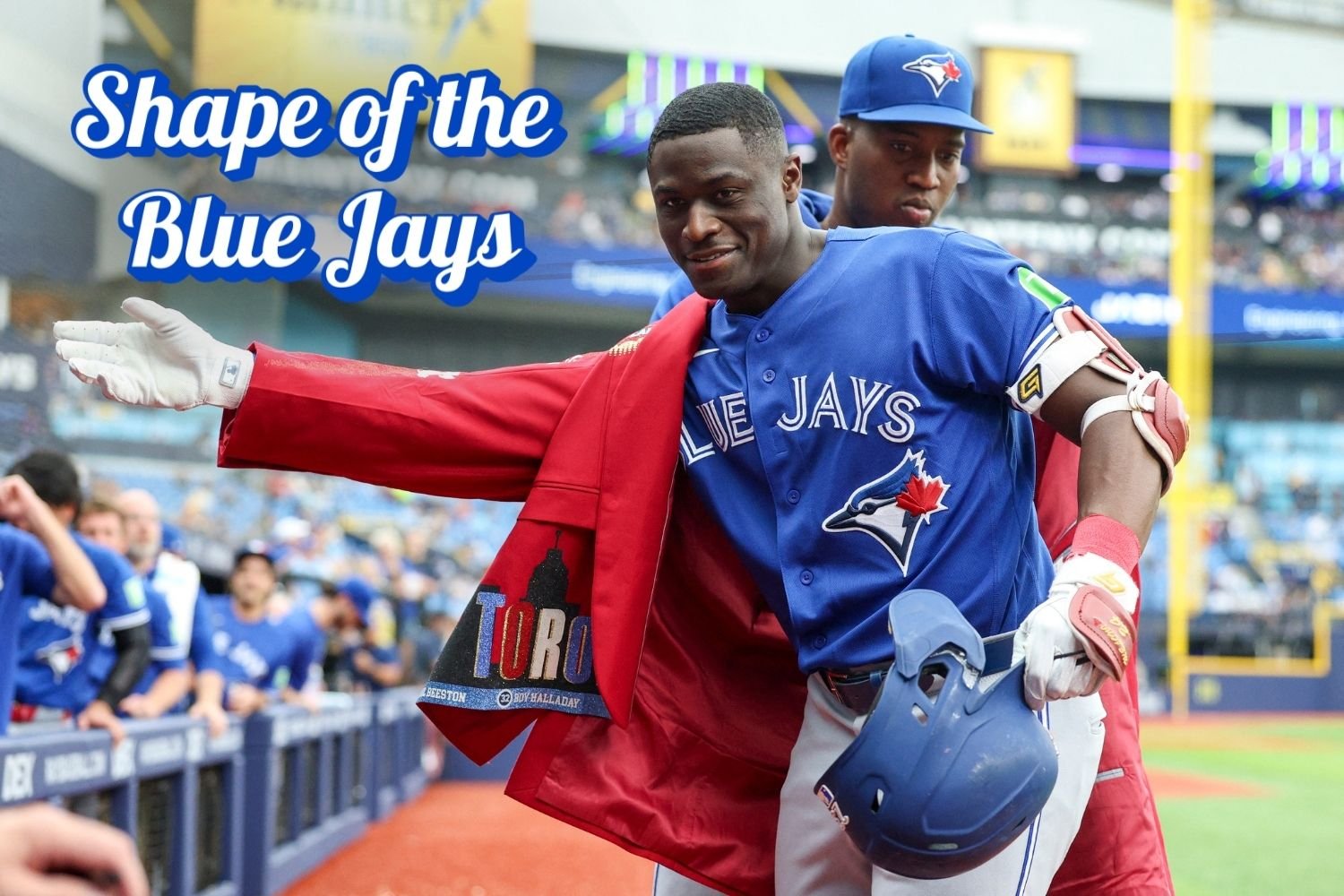 Welcome to Shape of the Blue Jays, my column where I dig into Statcast numbers to analyze recent pitch shape and swing shape trends for Toronto Blue Jays players and discuss how they have impacted their performance. Click here to read the last edition. All stats entering August 21, 2026, unless otherwise stated. Quick Hits: JoJo's Journey Continues A couple of weeks ago, JoJo Parker got to celebrate his 20th birthday by getting called up to High-A Vancouver. He has started well, and the helium continued to pick up yesterday, when he went 3-for-4 with 2 doubles. In seven games with the Canadians, Parker is slashing .346/.452/.500 for a 159 wRC+. He's striking out 23% of the time, walking 13% of the time, and has stolen three bases. Perhaps even more encouraging is the fact that the underlying numbers also suggest he's continuing to see the ball well, even against tougher pitching. His strikeout rate at Single-A Dunedin was 25% in 87 games earlier this season. His contact rate in Vancouver so far is 78%, the same as in Dunedin. Parker was extremely selective in his first taste of pro ball, chasing just 23% of the time in the FSL and swinging at only 57% of pitches in the strike zone, which works out to an overall swing rate of 39%. That has increased to 52% with the Canadians. We don't have Statcast data for High A, but it's reasonable to assume he's seeing more pitches to hit and he isn't missing a beat so far. Daz Cameron Daz Cameron has seized his latest big league opportunity in his three games with the Blue Jays (4-for-11, 1 double, 1 HR). In Thursday's rubber match against the Rays, he clobbered the team's farthest home run of the season by someone other than Kazuma Okamoto, sending an Ian Seymour changeup onto one of the catwalks at Tropicana Field. He began his season in the KBO. Prior to that, he spent time with three different MLB franchises from 2020 through 2025. A fringy hit tool and high strikeout rates have kept him from being productive at this level, but he's a different hitter than he was in his last stint on this side of the Pacific. It's an incredibly small sample, but swing-and-miss has not been an issue for Cameron so far with the Blue Jays, and for a lineup that needs slug, his combination of a high-end average bat speed (74.2 mph) and a short bat path (6.8' average swing length) is very intriguing. He's also adjusted his batting stance, standing at an angle of 29° open per Statcast, compared to 15° open with Milwaukee last year. His hands are no longer tucked behind his head pre-load, and the offset between his front and back foot has widened. Daz Cameron Batting Stance, May 2025 (right) vs August 2026 (left) Shane Bieber Shane Bieber delivered an outstanding performance to help the Jays win their first series at Tropicana Field since September 2023. He tossed seven innings of one-run ball, striking out a season-high seven without issuing a walk. With 101 pitches, he topped the century mark for the first time since his Tommy John surgery. He has completed seven innings twice this season, and it happened against the Rays both times. In his previous start against the Yankees, Bieber threw his four-seamer a season-high 49% of the time. He maintained that trend against Tampa Bay. The Rays have struggled against fastballs this season, and he successfully exploited that during his first trip through the order, when he threw the pitch half the time. The second time through the order, he upped the usage on his knuckle curve (44% CSW rate in this game) and slider (three whiffs on five swings) to great effect, before leaning on the changeup the third time through (three whiffs on six swings, 50% CSW rate, 29% zone swing, 57% chase). This was vintage Bieber: pounding fastballs to start the game, putting the other team in swing mode, and making them look foolish on the secondaries later on. The stuff isn't going to wow anybody, but he was constantly a step ahead of the Rays thanks to his command and elite sequencing. Here's a fun fact: Bieber's six walks in his past four starts have still yet to surpass the total from his six-walk clunker in Washington right before the deadline. He has a 2.96 ERA and 22 strikeouts in that span (24.1 IP). Shane Bieber Swings and Misses, August 20 vs Tampa Bay (Statcast) Charles McAdoo Charles McAdoo has been a sparkplug since his return to the big leagues, hitting for a 215 wRC+ in the month of August entering Thursday. However, a dose of reality may be on its way. He's running a .343 BABIP this season, and while the hit tool has improved (leading to an above-average line drive rate), he hits the ball in the air a lot and has been susceptible to popups, making his elite speed less likely to have a positive effect on his batting average. The projection models at FanGraphs are unanimously predicting a below-average rest-of-season wRC+ from him. That being said, I still feel he has a good shot at outperforming those because he's becoming more of a power threat. McAdoo has eight batted balls with an exit velocity of at least 100 mph so far in his Blue Jay career. Five of those have come within the past week. Projection systems like ZiPS do not capture the effects of in-season changes to a hitter's mechanics. Since getting recalled from Buffalo earlier this month, his attack angle has increased by 4° (again, not ideal if you want to skirt your way to a high BABIP with grounders and speed, but good for power) and his average point of contact has shifted nearly 3" further out front toward the mound. Like Cameron, he has that high bat speed & short swing combo that new-age hitting coaches love. The changes in his attack angle and intercept point have translated to more batted balls at ideal angles for him to tap into the power he has, and this has been another chapter in his evolution as a big-league hitter: He reined his swing in to focus on making more contact earlier this season in the minors, raising his floor and getting him a promotion to Toronto. Now, he's beginning to learn to balance that with the pop he has always had. A 215 wRC+ isn't sustainable, and he's done all of his hitting against lefties, but he has what it takes to continue thriving as another righty-hitting option for John Schneider's club.
-
- 1
-
-
- daz cameron
- shane bieber
- (and 2 more)
-
Owen Hill reacted to an article:
Blue Jays Clutch Plays: Varland's Escape, McAdoo's Double
-
The Blue Jays fell just short of a weekend sweep against the Yankees, and they even had the chance to complete a four-game sweep of the Red Sox on Thursday. They couldn't finish the job either time, but a 5-2 week against a couple of (very likely) playoff-bound AL East rivals at home has kept their post-deadline fire burning. This team may still sit four games below .500, but the AL logjam has them just one game out of a playoff spot heading into a week that sees them travel to St. Pete and the Bronx. Pitching 3. Chase Lee: Andruw Monasterio GIDP, Top 6, 8/11 (+11.0% WPA) Chase Lee was optioned after giving up a grand slam in Thursday's finale against Boston, but not before he got a big couple of outs in the sixth inning on Tuesday night. After Jarren Duran's leadoff single, he found himself in a 1-1 count against Andruw Monasterio, who got jammed by a sweeper in on his hands and rolled it just to the left of second base. Ernie Clement did the rest himself. 2. Louis Varland: Nick Sogard Groundout, Top 9, 8/10 (+13.6% WPA) The Jays' lights-out closer notched his 25th save early this week, the latest milestone in his unbelievable season. With the tying run 90 feet away and the count full, Louis Varland whipped a 100-mph fastball up in the zone and slightly inside. Nick Sogard did a good job to get to the ball, hitting it sharply to first base, but Vladimir Guerrero Jr. was as sure-handed as ever, taking it to the bag to seal the win. 1. Louis Varland: Andruw Monasterio Strikeout, Top 9, 8/10 (+14.0% WPA) More pivotal than the final out was the strikeout that Varland got just one batter earlier. Monasterio was on the wrong end of another big moment for the pitching staff this week after failing to come through with a man on third and one out while facing a one-run deficit in the ninth. Varland got him to wave on a nasty knuckle curve in the dirt for a big strikeout. Hitting 3. Alejandro Kirk: RBI Double, Bot 6, 8/14 (+17.3% WPA) Alejandro Kirk has come around in the second half, and he had himself a night on Friday against New York. It began in the sixth when, with two outs and a man on second, he got a hanging slider from Gerrit Cole. He laced it all the way to the wall in left field, scoring George Springer with ease and giving the Jays a lead that Kirk himself would eventually add to in the eighth with a homer. 2. Charles McAdoo: RBI Double, Bot 7, 8/15 (+19.0% WPA) Charles McAdoo had his first signature moment in front of a packed Rogers Centre crowd on Saturday afternoon. Ernie Clement stood on first as the go-ahead run after his leadoff base-hit off Yankees reliever Brent Headrick. McAdoo got a high fastball from Headrick in a hitter's count and didn't miss it, drilling it off the wall on the fly at 107 mph off the bat. Clement came all the way around to score, and the Jays went on to take the game and the series. 1. Kazuma Okamoto: RBI Single, Bot 8, 8/12 (+19.3% WPA) The Blue Jays clinched their series against the Red Sox thanks to a five-run eighth inning, getting contributions up and down the lineup that would wind up looming large as Boston almost came back in the ninth. Nonetheless, the runs began with Kazuma Okamoto, who turned around a 99.5-mph sinker in a two-strike count and lined it into left-center for a base hit. Vladimir Guerrero Jr. scored on a bang-bang play after a headfirst slide at home, and the offense kept on coming. View full article
-
Blue Jays Clutch Plays: Varland's Escape, McAdoo's Double
Matthew Creally posted an article in Blue Jays
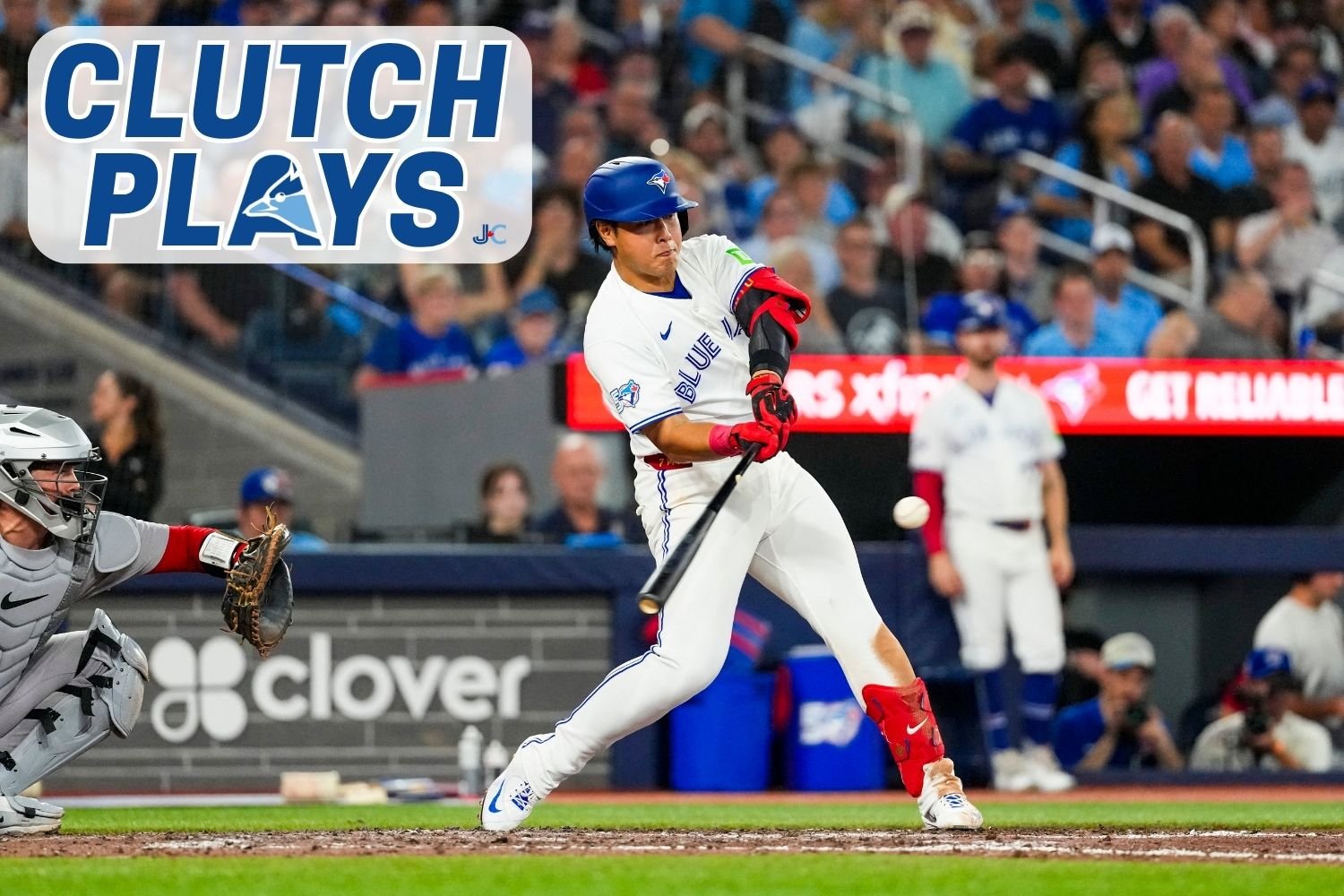 The Blue Jays fell just short of a weekend sweep against the Yankees, and they even had the chance to complete a four-game sweep of the Red Sox on Thursday. They couldn't finish the job either time, but a 5-2 week against a couple of (very likely) playoff-bound AL East rivals at home has kept their post-deadline fire burning. This team may still sit four games below .500, but the AL logjam has them just one game out of a playoff spot heading into a week that sees them travel to St. Pete and the Bronx. Pitching 3. Chase Lee: Andruw Monasterio GIDP, Top 6, 8/11 (+11.0% WPA) Chase Lee was optioned after giving up a grand slam in Thursday's finale against Boston, but not before he got a big couple of outs in the sixth inning on Tuesday night. After Jarren Duran's leadoff single, he found himself in a 1-1 count against Andruw Monasterio, who got jammed by a sweeper in on his hands and rolled it just to the left of second base. Ernie Clement did the rest himself. 2. Louis Varland: Nick Sogard Groundout, Top 9, 8/10 (+13.6% WPA) The Jays' lights-out closer notched his 25th save early this week, the latest milestone in his unbelievable season. With the tying run 90 feet away and the count full, Louis Varland whipped a 100-mph fastball up in the zone and slightly inside. Nick Sogard did a good job to get to the ball, hitting it sharply to first base, but Vladimir Guerrero Jr. was as sure-handed as ever, taking it to the bag to seal the win. 1. Louis Varland: Andruw Monasterio Strikeout, Top 9, 8/10 (+14.0% WPA) More pivotal than the final out was the strikeout that Varland got just one batter earlier. Monasterio was on the wrong end of another big moment for the pitching staff this week after failing to come through with a man on third and one out while facing a one-run deficit in the ninth. Varland got him to wave on a nasty knuckle curve in the dirt for a big strikeout. Hitting 3. Alejandro Kirk: RBI Double, Bot 6, 8/14 (+17.3% WPA) Alejandro Kirk has come around in the second half, and he had himself a night on Friday against New York. It began in the sixth when, with two outs and a man on second, he got a hanging slider from Gerrit Cole. He laced it all the way to the wall in left field, scoring George Springer with ease and giving the Jays a lead that Kirk himself would eventually add to in the eighth with a homer. 2. Charles McAdoo: RBI Double, Bot 7, 8/15 (+19.0% WPA) Charles McAdoo had his first signature moment in front of a packed Rogers Centre crowd on Saturday afternoon. Ernie Clement stood on first as the go-ahead run after his leadoff base-hit off Yankees reliever Brent Headrick. McAdoo got a high fastball from Headrick in a hitter's count and didn't miss it, drilling it off the wall on the fly at 107 mph off the bat. Clement came all the way around to score, and the Jays went on to take the game and the series. 1. Kazuma Okamoto: RBI Single, Bot 8, 8/12 (+19.3% WPA) The Blue Jays clinched their series against the Red Sox thanks to a five-run eighth inning, getting contributions up and down the lineup that would wind up looming large as Boston almost came back in the ninth. Nonetheless, the runs began with Kazuma Okamoto, who turned around a 99.5-mph sinker in a two-strike count and lined it into left-center for a base hit. Vladimir Guerrero Jr. scored on a bang-bang play after a headfirst slide at home, and the offense kept on coming.
 -
Welcome to Shape of the Blue Jays, my column where I dig into Statcast numbers to analyze recent pitch shape and swing shape trends for Toronto Blue Jays players and discuss how they have impacted their performance. Click here to read the last edition. All stats entering August 14, 2026. Quick Hits: Where'd the Barrels Go? Entering Thursday, the Blue Jays were 10-4 in their last 14 games and had climbed to within 1.5 games of the final Wild Card spot. Given this, I'd start this week's column on a more positive note in an ideal world, but this nugget was too good not to mention: They finished their 7-0 loss in the finale against the Red Sox with an expected batting average of .157. That is their fourth-lowest single-game xBA of the Statcast era, in games where they struck out five or fewer times. Yes, they were up against Payton Tolle, a very good pitcher. In fact, Tolle was coming off a 14-strikeout performance against the Athletics, and he failed to record one until the seventh inning against the Jays. It sounds like an accomplishment, but they only had three hard-hit balls all afternoon, and all of them were on the ground. This game perfectly encapsulated the fact that being a low-strikeout offense means nothing if you can't hit for power. The 2026 Jays have shown us this time and again. It was encouraging to see the team come out of the trade deadline with a new sense of energy and reinsert themselves into the conversation in the still-muddy American League. Ultimately, though, their recent stretch is probably unsustainable if they don't start putting balls over the fence more consistently. José Soriano The changes we saw from José Soriano in his first start with his new team were pretty much what was expected throughout the industry. Shoutout to Jays Centre's own Mike LeSage for sharing this video in our writers' Slack channel that summarizes them well. (Pitching development content with sarcastic undertones is on Instagram Reels now? My hope for the future has been restored.) On Wednesday against Boston, Soriano (6 IP, 1 ER, 4 H, 4 K, 2 BB) pulled a different lever by throwing his sinker a season-high 45.6% of the time. While he largely avoided throwing four-seamers to lefties for a second consecutive start, he reintroduced the pitch to righties (33% usage). 37 of the 46 pitches he threw to righties were either sinkers or four-seamers. During his second trip through the order, he suddenly fed Boston's lefties a ton of splitters to great effect (60% chase). Beyond the creativity with his arsenal, I appreciated Soriano's willingness to throw his sinker at the top of the zone to lefties. He didn't do this with the Angels, but he dropped eight sinkers above the vertical center of the zone and got four called strikes, one foul, and one groundout, missing just once. Of course, he continued to pound the bottom rail too. If this is a pitch that's going to play at both ends of the zone to opposite-handed hitters, his former team is going to look foolish for not experimenting with more different strategies with him. José Soriano Sinker Locations vs LHH, 8/12 (Statcast) Brett Bateman Brett Bateman has quickly endeared himself to the fanbase after his first six games as a major leaguer. His .259/.310/.333 slash line is nothing to write home about, but he's 3-for-6 in high-leverage at-bats. Small sample, but many inexperienced players will get humbled in big moments, and Bateman has passed that test so far. The 24-year-old center fielder has a short, compact left-handed swing. It's rather unique in its high-tilt yet oppo-oriented, let-it-travel profile. I have a personal tool that displays similarity scores for any hitter based on their bat speed, swing length, tilt, attack angle & direction, and intercept point. Bateman's closest mechanical left-handed comps so far are Jonathan Aranda, Brice Turang, and Nathan Lukes. Aranda is an example of a hitter who has figured out how to lift a ton of balls with this type of swing, while Turang and Lukes are more groundball/line drive guys, similar to Bateman's smaller-sample batted ball distribution. The latter two are, of course, some of the better bat-to-ball hitters in the game, a skill Bateman is also known for. Given his speed, it wouldn't be the worst thing in the world if Bateman continues to hit the ball on the ground half the time. Perhaps Aranda could be a useful model if he were to work on adding power. Brett Bateman Swing Mechanics Comps, 2026 Player Bat Speed Swing Length Swing Tilt Attack Angle Attack Direction Contact Pt Y Brett Bateman 68.0 mph 6.90 ft 36° 6° 9° 24.5" Jonathan Aranda 70.0 mph 7.09 ft 34.9° 7.6° 5.6° 26.1" Brice Turang 69.9 mph 6.76 ft 35.9° 8.1° 9.9° 30.8" Nathan Lukes 67.0 mph 6.39 ft 31° 6.7° 7.8° 26.8" Max Scherzer Since turning 42, Max Scherzer has authored his best stretch of the season, posting a 2.20 ERA with 13 strikeouts and three walks in three August starts (16.1 IP). One of those 13 strikeouts put him inside the top 10 all-time leaderboard, and on Thursday, he surpassed the 3,000 innings mark. It continues to be extremely cool that Scherzer chose to be a Blue Jay at this later stage of his career. The biggest factor at play in his resurgence is better stuff. In his outing against the Phillies last Saturday, his fastball averaged 94.2 mph, a season-high. While it returned to 92-93 on Thursday, his secondaries were quite strong, particularly his curveball (44% whiff, 50% chase, 3/3 first-pitch strikes). He's been getting more drop on it in recent weeks: After it averaged around -5 to -6 inches of induced vertical break for most of his season, it's down to -7/-8 territory so far in August, averaging -8" for a second consecutive start on Thursday. His changeup (43% whiff on Thursday) averaged 16" of run after running more than usual in his prior two starts as well. John Schneider put it beautifully when he said sustainability is no longer a consideration for his bullpen at this point in the season. The length Scherzer has given them as of late, then, could not have come at a better time. Max Scherzer Swings and Misses (Curveball & Changeup only), 8/13 (Statcast) View full article
-
 Welcome to Shape of the Blue Jays, my column where I dig into Statcast numbers to analyze recent pitch shape and swing shape trends for Toronto Blue Jays players and discuss how they have impacted their performance. Click here to read the last edition. All stats entering August 14, 2026. Quick Hits: Where'd the Barrels Go? Entering Thursday, the Blue Jays were 10-4 in their last 14 games and had climbed to within 1.5 games of the final Wild Card spot. Given this, I'd start this week's column on a more positive note in an ideal world, but this nugget was too good not to mention: They finished their 7-0 loss in the finale against the Red Sox with an expected batting average of .157. That is their fourth-lowest single-game xBA of the Statcast era, in games where they struck out five or fewer times. Yes, they were up against Payton Tolle, a very good pitcher. In fact, Tolle was coming off a 14-strikeout performance against the Athletics, and he failed to record one until the seventh inning against the Jays. It sounds like an accomplishment, but they only had three hard-hit balls all afternoon, and all of them were on the ground. This game perfectly encapsulated the fact that being a low-strikeout offense means nothing if you can't hit for power. The 2026 Jays have shown us this time and again. It was encouraging to see the team come out of the trade deadline with a new sense of energy and reinsert themselves into the conversation in the still-muddy American League. Ultimately, though, their recent stretch is probably unsustainable if they don't start putting balls over the fence more consistently. José Soriano The changes we saw from José Soriano in his first start with his new team were pretty much what was expected throughout the industry. Shoutout to Jays Centre's own Mike LeSage for sharing this video in our writers' Slack channel that summarizes them well. (Pitching development content with sarcastic undertones is on Instagram Reels now? My hope for the future has been restored.) On Wednesday against Boston, Soriano (6 IP, 1 ER, 4 H, 4 K, 2 BB) pulled a different lever by throwing his sinker a season-high 45.6% of the time. While he largely avoided throwing four-seamers to lefties for a second consecutive start, he reintroduced the pitch to righties (33% usage). 37 of the 46 pitches he threw to righties were either sinkers or four-seamers. During his second trip through the order, he suddenly fed Boston's lefties a ton of splitters to great effect (60% chase). Beyond the creativity with his arsenal, I appreciated Soriano's willingness to throw his sinker at the top of the zone to lefties. He didn't do this with the Angels, but he dropped eight sinkers above the vertical center of the zone and got four called strikes, one foul, and one groundout, missing just once. Of course, he continued to pound the bottom rail too. If this is a pitch that's going to play at both ends of the zone to opposite-handed hitters, his former team is going to look foolish for not experimenting with more different strategies with him. José Soriano Sinker Locations vs LHH, 8/12 (Statcast) Brett Bateman Brett Bateman has quickly endeared himself to the fanbase after his first six games as a major leaguer. His .259/.310/.333 slash line is nothing to write home about, but he's 3-for-6 in high-leverage at-bats. Small sample, but many inexperienced players will get humbled in big moments, and Bateman has passed that test so far. The 24-year-old center fielder has a short, compact left-handed swing. It's rather unique in its high-tilt yet oppo-oriented, let-it-travel profile. I have a personal tool that displays similarity scores for any hitter based on their bat speed, swing length, tilt, attack angle & direction, and intercept point. Bateman's closest mechanical left-handed comps so far are Jonathan Aranda, Brice Turang, and Nathan Lukes. Aranda is an example of a hitter who has figured out how to lift a ton of balls with this type of swing, while Turang and Lukes are more groundball/line drive guys, similar to Bateman's smaller-sample batted ball distribution. The latter two are, of course, some of the better bat-to-ball hitters in the game, a skill Bateman is also known for. Given his speed, it wouldn't be the worst thing in the world if Bateman continues to hit the ball on the ground half the time. Perhaps Aranda could be a useful model if he were to work on adding power. Brett Bateman Swing Mechanics Comps, 2026 Player Bat Speed Swing Length Swing Tilt Attack Angle Attack Direction Contact Pt Y Brett Bateman 68.0 mph 6.90 ft 36° 6° 9° 24.5" Jonathan Aranda 70.0 mph 7.09 ft 34.9° 7.6° 5.6° 26.1" Brice Turang 69.9 mph 6.76 ft 35.9° 8.1° 9.9° 30.8" Nathan Lukes 67.0 mph 6.39 ft 31° 6.7° 7.8° 26.8" Max Scherzer Since turning 42, Max Scherzer has authored his best stretch of the season, posting a 2.20 ERA with 13 strikeouts and three walks in three August starts (16.1 IP). One of those 13 strikeouts put him inside the top 10 all-time leaderboard, and on Thursday, he surpassed the 3,000 innings mark. It continues to be extremely cool that Scherzer chose to be a Blue Jay at this later stage of his career. The biggest factor at play in his resurgence is better stuff. In his outing against the Phillies last Saturday, his fastball averaged 94.2 mph, a season-high. While it returned to 92-93 on Thursday, his secondaries were quite strong, particularly his curveball (44% whiff, 50% chase, 3/3 first-pitch strikes). He's been getting more drop on it in recent weeks: After it averaged around -5 to -6 inches of induced vertical break for most of his season, it's down to -7/-8 territory so far in August, averaging -8" for a second consecutive start on Thursday. His changeup (43% whiff on Thursday) averaged 16" of run after running more than usual in his prior two starts as well. John Schneider put it beautifully when he said sustainability is no longer a consideration for his bullpen at this point in the season. The length Scherzer has given them as of late, then, could not have come at a better time. Max Scherzer Swings and Misses (Curveball & Changeup only), 8/13 (Statcast)
 -
A mountain of work still lies ahead if the Blue Jays are going to salvage their season, but this past week was a step in the right direction, as they won their first two series after Monday's trade deadline. Remarkably, four of their past five games have gone to extra innings, and the one that didn't was a one-run contest that was decided with the bases loaded in the bottom of the ninth. While that isn't good news for a bullpen that was already taxed to begin with, it does mean there were plenty of pivotal plays by win probability added. Here are the team's biggest moments from the week that was as our Clutch Plays series finally returns. Pitching 3. Tyler Rogers: Brandon Marsh Groundout, Bot 9, 8/7 (+23.5% WPA) The submarining Tyler Rogers got himself into a world of trouble in the ninth inning on Friday, allowing two runs to score as Toronto's lead was cut to 5-4. He mercifully got out of it, getting Brandon Marsh to ground out with the bases loaded to seal the win on his 35th pitch after the play was upheld via replay review. Marsh rolled a ball to Ernie Clement at second, but Kazuma Okamoto, playing back of first, couldn't get to the bag in time as Rogers hurried over to receive the throw mere milliseconds ahead of Marsh. 2. Tyler Rogers: Alec Bohm Force Out, Bot 9, 8/7 (+26.3% WPA) None of the above would've been possible without Rogers inducing a force play against the previous batter, Alec Bohm. Bohm's high chopper to a drawn-in infield was snagged by Ernie Clement, who made a good throw home, but disaster nearly struck as catcher Alejandro Kirk forgot the force was on at home as he crouched to tag Trea Turner, who slid in ahead of his swiping attempt. Thankfully for the Jays, Kirk's left knee happened to be touching the plate, setting the stage for Marsh's bang-bang play at first and one of the more exhausting, air-tight Blue Jay wins in recent memory. 1. Braydon Fisher (Nathan Lukes): Luis Arraez FIDP, Bot 11, 8/9 (+33.7% WPA) It's unfortunate that the Jays lost on Thursday in Chicago and again on Sunday, because both contests featured miraculous game-saving defensive plays that ultimately didn't move the needle. This Nathan Lukes missile to home plate completed what is currently the second-most clutch pitching/fielding play of the season by WPA for the Blue Jays. A bases-loaded, one-out situation in a tie game in extras calls for a strikeout, but that's easier said than done with Luis Arraez, who golfed a fly ball right at Lukes in medium depth right field. Lukes then fired a one-hop strike to Kirk, who tagged Garrett Stubbs to send the game to the 12th. Hitting 3. Ernie Clement: 2-run HR, Top 10, 8/5 (+32.8% WPA) Clement wasted no time getting things started in the 10th inning of Wednesday's rubber match in Houston. His close friend and college teammate Bennett Sousa delivered a high fastball on the inner half, and Ernie deposited it into the Crawford Boxes in left field, admiring it as it went. The fact that this happened with the ghost runner on proved to be a difference-maker as Chase Lee tight-roped out of danger after allowing a run in the bottom half to clinch a 5-4 victory and win the series against the Astros. 2. Andrés Giménez: 2-RBI Double, Top 8, 8/8 (+36.6% WPA) Andrés Giménez had a monster series in Philadelphia, homering off Zack Wheeler on Friday before coming through with game-tying two-RBI hits in the eighth inning on Saturday and Sunday. By WPA, the one on Saturday was slightly more meaningful, and it came on an 0-2, two-out pitch from one of the tougher lefty relievers in the game in José Alvarado. Alvarado's sinker caught a little too much of the plate, and Giménez stayed on plane, lacing it up the alley in right-center to score Vladimir Guerrero Jr. and George Springer and tie things up at four. 1. Nathan Lukes: 2-run HR, Top 11, 8/8 (+48.5% WPA) Lukes would not be denied this past weekend, contributing just over 0.8 wins by WPA in less than 24 hours with his bat and glove. His two-run home run in the 11th on Saturday broke a 5-5 tie and stood as the winner after Lazaro Estrada completed his first career save in the bottom half. Remember how his outfield assist completed the Jays' second-most clutch pitching play of the year? Well, this homer is their second-most clutch hitting play of the year as of now. With his pitch count already high, Chase Shugart had to come in the zone on 3-2, and his middle-in breaking ball played right into Lukes's bat path as he lifted it out of the yard for one of the bigger swings of his career. View full article
-
Blue Jays Clutch Plays: Lukes's Heroics, Rogers's Escape
Matthew Creally posted an article in Blue Jays
 A mountain of work still lies ahead if the Blue Jays are going to salvage their season, but this past week was a step in the right direction, as they won their first two series after Monday's trade deadline. Remarkably, four of their past five games have gone to extra innings, and the one that didn't was a one-run contest that was decided with the bases loaded in the bottom of the ninth. While that isn't good news for a bullpen that was already taxed to begin with, it does mean there were plenty of pivotal plays by win probability added. Here are the team's biggest moments from the week that was as our Clutch Plays series finally returns. Pitching 3. Tyler Rogers: Brandon Marsh Groundout, Bot 9, 8/7 (+23.5% WPA) The submarining Tyler Rogers got himself into a world of trouble in the ninth inning on Friday, allowing two runs to score as Toronto's lead was cut to 5-4. He mercifully got out of it, getting Brandon Marsh to ground out with the bases loaded to seal the win on his 35th pitch after the play was upheld via replay review. Marsh rolled a ball to Ernie Clement at second, but Kazuma Okamoto, playing back of first, couldn't get to the bag in time as Rogers hurried over to receive the throw mere milliseconds ahead of Marsh. 2. Tyler Rogers: Alec Bohm Force Out, Bot 9, 8/7 (+26.3% WPA) None of the above would've been possible without Rogers inducing a force play against the previous batter, Alec Bohm. Bohm's high chopper to a drawn-in infield was snagged by Ernie Clement, who made a good throw home, but disaster nearly struck as catcher Alejandro Kirk forgot the force was on at home as he crouched to tag Trea Turner, who slid in ahead of his swiping attempt. Thankfully for the Jays, Kirk's left knee happened to be touching the plate, setting the stage for Marsh's bang-bang play at first and one of the more exhausting, air-tight Blue Jay wins in recent memory. 1. Braydon Fisher (Nathan Lukes): Luis Arraez FIDP, Bot 11, 8/9 (+33.7% WPA) It's unfortunate that the Jays lost on Thursday in Chicago and again on Sunday, because both contests featured miraculous game-saving defensive plays that ultimately didn't move the needle. This Nathan Lukes missile to home plate completed what is currently the second-most clutch pitching/fielding play of the season by WPA for the Blue Jays. A bases-loaded, one-out situation in a tie game in extras calls for a strikeout, but that's easier said than done with Luis Arraez, who golfed a fly ball right at Lukes in medium depth right field. Lukes then fired a one-hop strike to Kirk, who tagged Garrett Stubbs to send the game to the 12th. Hitting 3. Ernie Clement: 2-run HR, Top 10, 8/5 (+32.8% WPA) Clement wasted no time getting things started in the 10th inning of Wednesday's rubber match in Houston. His close friend and college teammate Bennett Sousa delivered a high fastball on the inner half, and Ernie deposited it into the Crawford Boxes in left field, admiring it as it went. The fact that this happened with the ghost runner on proved to be a difference-maker as Chase Lee tight-roped out of danger after allowing a run in the bottom half to clinch a 5-4 victory and win the series against the Astros. 2. Andrés Giménez: 2-RBI Double, Top 8, 8/8 (+36.6% WPA) Andrés Giménez had a monster series in Philadelphia, homering off Zack Wheeler on Friday before coming through with game-tying two-RBI hits in the eighth inning on Saturday and Sunday. By WPA, the one on Saturday was slightly more meaningful, and it came on an 0-2, two-out pitch from one of the tougher lefty relievers in the game in José Alvarado. Alvarado's sinker caught a little too much of the plate, and Giménez stayed on plane, lacing it up the alley in right-center to score Vladimir Guerrero Jr. and George Springer and tie things up at four. 1. Nathan Lukes: 2-run HR, Top 11, 8/8 (+48.5% WPA) Lukes would not be denied this past weekend, contributing just over 0.8 wins by WPA in less than 24 hours with his bat and glove. His two-run home run in the 11th on Saturday broke a 5-5 tie and stood as the winner after Lazaro Estrada completed his first career save in the bottom half. Remember how his outfield assist completed the Jays' second-most clutch pitching play of the year? Well, this homer is their second-most clutch hitting play of the year as of now. With his pitch count already high, Chase Shugart had to come in the zone on 3-2, and his middle-in breaking ball played right into Lukes's bat path as he lifted it out of the yard for one of the bigger swings of his career.
 -
Owen Hill reacted to an article:
Should the Blue Jays Re-Evaluate Their Offensive Identity?
-
 Welcome to Shape of the Blue Jays, my column where I dig into Statcast numbers to analyze recent pitch shape and swing shape trends for Toronto Blue Jays players and discuss how they have impacted their performance. Click here to read the last edition. All stats entering August 6, 2026. Quick Hits: Dasan Hill The Blue Jays were one of the busier teams in baseball leading up to deadline day, acquiring seven new prospects while trading away three. The most intriguing newcomer to the farm system is Dasan Hill, a 6-foot-5, 20-year-old lefty pitcher acquired in the Jeff Hoffman trade. Hill has a 5.80 ERA and a 4.17 xFIP in 45 innings at High A this year. He has struck out 36% of opposing hitters, but a 17% walk rate is holding him back. Baseball America had him as Minnesota's eighth-best prospect and gave him a Future Value grade of 55. There's a risk that he doesn't pan out as a starter due to his command issues, but the stuff is electric. One of the few redeeming traits about his fastball is its velocity, as its otherwise poor shape has led to some damage being done against it, but the secondaries stand out. Hill is armed with a changeup, sweeper, slider, and curveball, with the first two being his best offerings according to BA. Evaluators at both FanGraphs and Baseball America are in agreement that Hill is the best prospect Toronto brought in at the deadline. BA has him as the 13th-best overall of the 85 prospects that were dealt. His powerful stuff gives the farm system another high-upside lefty arm alongside Johnny King. At all levels of the organization, the Jays are doubling down on pitchers with plus stuff and poor command, betting that they have the tools to harness the potential of prospects like Hill and big leaguers like José Soriano and Spencer Arrighetti. Jesús Sánchez On Wednesday afternoon, Jesús Sánchez did something that no one else on the roster has done all season: He homered in a 3-0 count. Sánchez has now done this twice in 2026, two more times than any of his teammates. It was a 94-mph fastball up and out of the zone from Hunter Brown, but he punished it. The Jays, Sánchez included, have chased so much this year that 3-0 counts have been hard to come by, but the mere idea of sitting on a high fastball in a hitter's count and driving it out of the yard has long been a common hitting strategy that it feels like this team has, for whatever reason, shied away from. This was a refreshing sight. I had an article go up on the site on Thursday morning about the Blue Jays once again getting too enamored with hitting for contact. Sánchez's bat speed is down two ticks from last year while his contact and K rates have stayed the same, but he's an edge case in that argument because it has worked to some extent. The groundballs, which had long been an issue for him in the past, are going down; his 44% groundball rate is the lowest of his career. He still leads the team in expected slugging percentage, while his 108 wRC+ is tied for a career-best over a full season. Between the ninth-percentile chase rate and the bat speed decrease, I'm still not sure this version of Sánchez is the most ideal to unlock his potential, but he and Kazuma Okamoto are now the only Blue Jays (min. 100 PA) with a wRC+ over 105 on the season. That's more an indictment on everyone else, but it's still nice to see the upper end of what Sánchez has in the tank. Jameson Taillon Jameson Taillon was the first of the team's new pitchers to suit up as he started Wednesday in Houston (4 IP, 3 ER, 6 H, 4 K, 2 BB). He had trouble finding the zone early on and was tagged for eight hard-hit balls, but he racked up a surprising amount of swing-and-miss (40% whiff, 31% CSW). The Jays jacked up his cutter (24%, vs a 13% season average) and sinker usage (12%, vs a 4% season average) to lefties, while boosting his curveball usage to righties (26%, vs a 2% season average). Up until yesterday, he used his cutter twice as much to righties as he did to lefties, but proceeded to do the opposite in his first start in a Blue Jay uniform. They might've been onto something, as one of the six cutters he threw to righties was deposited onto the train tracks by Jose Altuve. Jameson Taillon Swings and Misses, 8/5 @ HOU At this point in his career, Taillon's stuff is diminishing according to the Stuff+ model hosted on FanGraphs, and he came to the team already sporting a wide arsenal. He doesn't have the pristine command he had in prior years, but his locations are still fine, so any success he finds with Toronto will likely be a result of pushing as many buttons as possible with his six pitch types. Looking at his splits this season, lefties have been a problem (5.47 xFIP, 7.8% K-BB%, 3.15 HR/9). Yesterday, though, Houston's lefties didn't have any hard-hit flyballs against him, and he even struck out Yordan Alvarez on a perfectly placed cutter up and in. It wasn't a perfect outing by any means, but it might've given him a new plan of attack against opposite-handed bats. Myles Straw Myles Straw had a tremendous series against the Astros, going 5-for-10 with three doubles and a triple. One of those doubles broke up Hunter Brown's no-hit bid with one out in the sixth on Wednesday. His role as a hitter remains secondary to his responsibilities in the field, on the bases, and in the clubhouse, but we saw more authoritative swings from Straw in the Houston series alone than at any other point this year. According to Statcast's bat speed, four of his hardest 26 swings on the season came at Daikin Park this week, and his fastest swing of the year, clocked at 83.5 mph, came on Sunday against the Cardinals. Straw's hitting for a 77 wRC+ this year, but his squared-up, chase, contact, and K rates are all in the 90th percentile or better. If he continues to tap into wherever this newfound bat speed is coming from, there will be hope yet for some offense from the center field spot for the Blue Jays the rest of the way. With Daulton Varsho now out of the picture, the position looks like it's his for the rest of 2026. The team will have to make a decision on an $8M club option for the 31-year-old at season's end.

