Seth Stohs
-
Posts
49 -
Joined
-
Last visited
Content Type
Profiles
Toronto Blue Jays Videos
2026 Toronto Blue Jays Top Prospects Ranking
Toronto Blue Jays Free Agent & Trade Rumors, Notes, & Tidbits
Guides & Resources
2025 Toronto Blue Jays Draft Pick Tracker
News
2026 Toronto Blue Jays Draft Tracker: Picks & Bonuses
Forums
Blogs
Events
Store
Downloads
Gallery
Everything posted by Seth Stohs
-
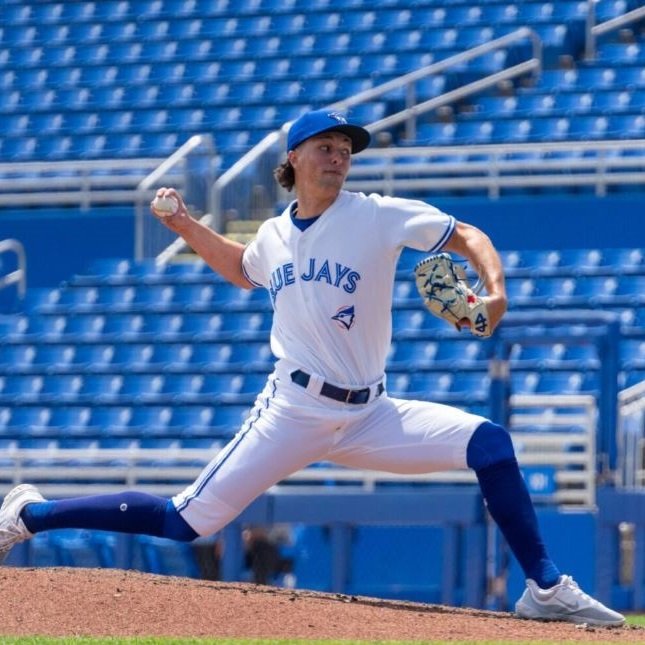 Landen Maroudis was a name to watch at the beginning of the 2024 season. He had a promising showing in an appearance in the MLB Spring Breakout game and pitched in just three games in Single-A Dunedin before heading to the injured list with an elbow injury. After more than a year of rehab and recovery, Maroudis was back pitching, but things had changed significantly. His velocity on his fastball, once sitting at 94 mph, only sat at 90 mph. The pitch dropped from 13 inches of vertical break down to 11, but did gain four inches of run. His control disappeared, as he walked more batters than he struck out and had a strike rate of just 51.8%. Maroudis will only be 21 years old in the 2026 season, and despite the setback to his health, pitch quality, velocity, and command, there’s practically nowhere for him to go but up. With a full offseason not spent rehabbing, there’s reason to believe that he’ll rediscover the velocity that he had prior to the elbow surgery, and that he’ll find some semblance of command as well. His pitches looked mediocre due to the lack of velocity, but when he was able to find the zone, Single-A hitters didn’t make great contact, and his curveball had a whiff rate of over 40%. Maroudis’ future looks much shakier than ever before, but the athleticism and potential from when the Jays gave him a $1.5 million signing bonus in 2023 can still prevail if he returns to form. Maroudis will get another chance to pitch in Dunedin this season, and reportedly, his velocity is back up to the 93-95 mph range.
 -
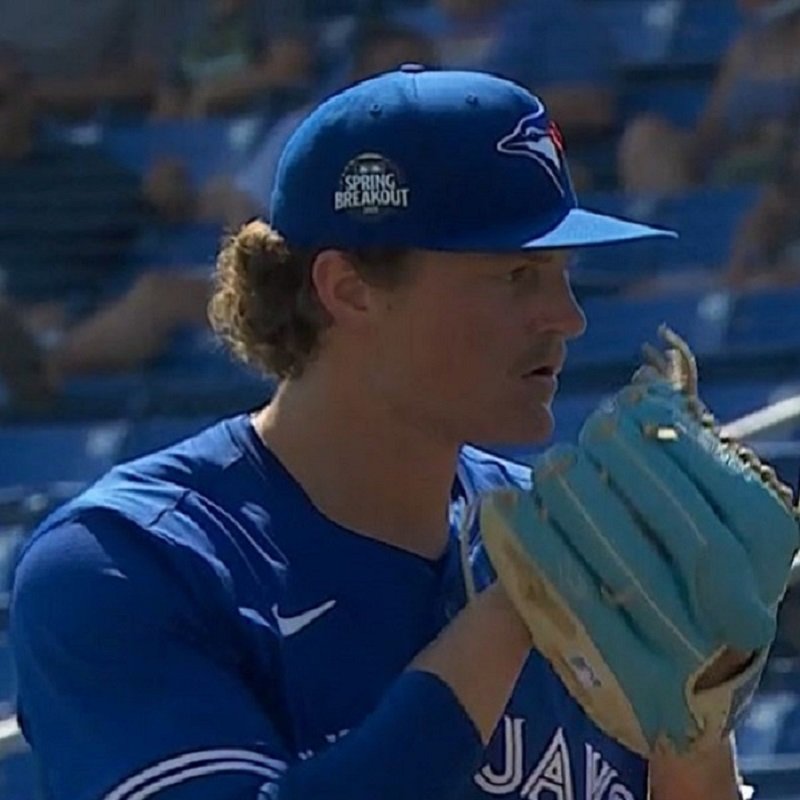 Khal Stephen was the 2nd round draft pick for the Jays in the most recent 2024 MLB draft, receiving an underslot signing bonus of $1,116,750 out of Mississippi State. As a college junior, receiving an underslot bonus is more representative of his leverage than his talent, as he had a very successful 2024, pitching 96 innings with a 3.28 ERA with 107 strikeouts to just 21 walks. Stephen was with Purdue from 2022-2023, first as a reliever, then as a starter; he improved his numbers across the board after transferring to face stronger competition in the Southeastern Conference. What to Like Standing at 6' 4", Khal is an imposing figure on the mound. Stephen throws with an over-the-top delivery and has a shorter arm action. His main pitch, which he threw over 65% of the time, was his superlative fastball. A pitch modeling darling, Stephen’s fastball didn’t blow anyone away with its velocity, only sitting around 92-94 miles per hour, but could reach 96 mph. Due to his height, he gets solid extension on the pitch of 6.5 inches, and he regularly gets a ton of induced vertical break, averaging over 20 inches on the fastball. Adding in his very solid command of his fastball, there’s a reason why he threw the pitch so many times. If Stephen can keep his fastball up in the zone, he’ll continue to get ugly swings. Stephen also throws various secondary pitches, but with his high usage of his fastball, he doesn’t really throw the rest all that much. His main secondary is a slider that averaged around 83-84 mph and had a greater than 40% whiff rate on the season. Stephen also had another breaking ball in his curveball, which he threw more to get me over pitch. It had an Induced Vertical Break of -5.2 inches and -17.0 inches of horizontal break that he threw in the higher 70s. Stephen’s most interesting secondary is his changeup, which he didn’t throw too much of the time, but it had good results when he did throw it. The changeup has decent velocity separation from the fastball, sitting around 85 mph on it, and it has good fade, with 11.9 inches of horizontal break and 14.6 inches of iVB. It generated solid whiff rates at 41.9% and held a solid ground ball rate when hitters did make contact. Lastly, Stephen threw a cutter sporadically, which sat around 88 mph. Having a deeper arsenal allows for more hope that Stephen can last as a starting pitcher as he develops. What to Work On Although Stephen had a ton of success with the pitch in college, he would benefit a lot from adding more velocity to his fastball; if he could sit more in the 95 mph range, it would add a lot of effectiveness to his already good fastball. MLB hitters are more used to seeing guys with average fastball velocity like Stephen has, and even though he has an excellent ride on it, hitters have been getting better at hitting fastballs with a ride. He’d also need to improve his secondary pitches; MLB hitters are too good at hitting fastballs to throw one over 65% of the time for the most part. His breaking balls were solid but unspectacular in college, and the Jays could work on a bit of pitch design to help sharpen up his slider and create more separation from his curveball. Increasing the velocity on his secondary pitches would also be a boon for Stephen, as pitches generally get more effective with higher velocities, as long as there is still reasonable separation from each pitch to throw off hitters’ timings. Getting more comfortable throwing the changeup would also be helpful for him; he would need to be able to repeat his delivery well enough to fool hitters, and he would also need to be able to locate it well, which is still a work in progress. The Jays could also tinker with adding other pitches to his arsenal, and a splitter that tunnels well off the fastball could add a devastating swing-and-miss pitch, and the Jays have found a lot of success with splitter pitchers in the major leagues. What’s Next Khal Stephen has a lot of interesting traits that we could look forward to, and if development goes right, he could be a solid middle-of-the-rotation starter. There’s also always reliever risk for any pitching prospect, and if his velocity falls off, he could be seen as more of a reliever. Still, the upside is genuinely there if the Jays do a solid job at development and if he stays healthy. Stephen hadn’t thrown a single professional inning as of yet. Still, as he was drafted out of college and is pretty advanced, he should start in Single-A Dunedin, or if the Jays are very confident that his fastball is too much for Single-A, he could head right to High-A Vancouver instead to face more of a challenge to debut. Stephen has already spent time in Florida at the Jays developmental complex, and the Jays should have already started evaluating what could work for him and, if he is successful in that, could get promoted pretty quickly through the system, barring any setbacks.
 -
 Arjun NimmalaTrey YesavageKhal StephenRicky TiedemannAlan RodenOrelvis MartinezKendry RojasJake BlossJohnny KingLanden MaroudisJosh KasevichYohendrick PinangoGage StaniferAdam MackoDasan BrownSean KeysJonatan ClaseYeuni MunozCharles McAdooSam Shaw
 -
Arjun NimmalaTrey YesavageKhal StephenRicky TiedemannAlan RodenOrelvis MartinezKendry RojasJake BlossJohnny KingLanden MaroudisJosh KasevichYohendrick PinangoGage StaniferAdam MackoDasan BrownSean KeysJonatan ClaseYeuni MunozCharles McAdooSam Shaw
-
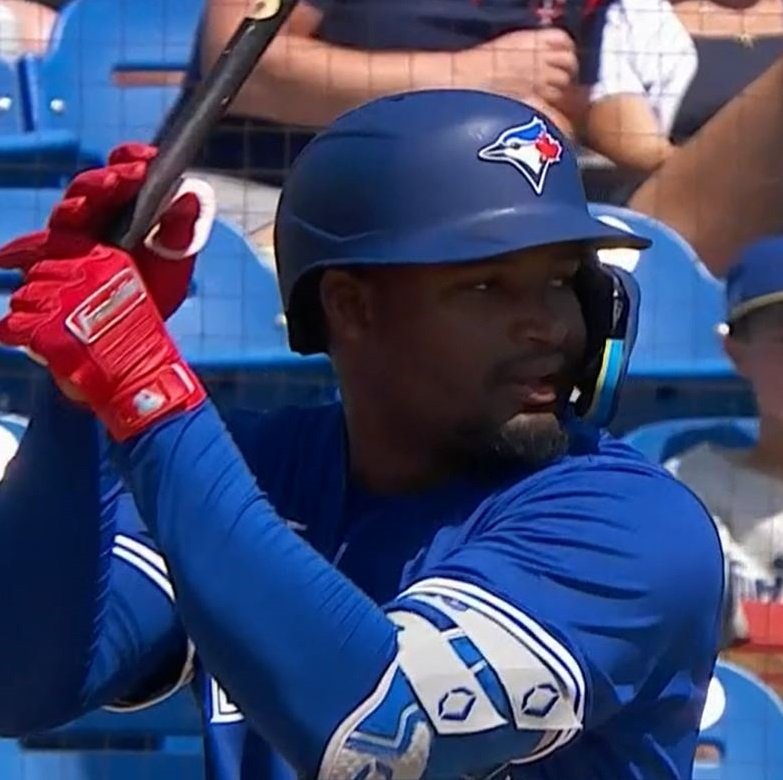 #4: Orelvis Martinez, 2B/3B, 23, Toronto Blue Jays/Buffalo Bisons The Toronto Blue Jays signed Martinez in July of 2018 out of the Dominican Republic. Billed as one of the top international free agents that cycle, he signed for $3.5M, with the intrigue and hype starting shortly after he entered the organization. He would begin his pro career in rookie ball in the Gulf Coast league. He hit .275 with seven home runs to help build the hype. A year break in the minor leagues for COVID-19 fueled the excitement for Martinez as a prospect. In 2021, he would smash Low-A ball with a slash line of .279/.369/.572. As a 19-year-old, he also launched 19 home runs, showing the mammoth power potential he has always displayed. He finished 2021 adding nine home runs at High-A Vancouver, but it would come with a low batting average, prolonging a backward trend in the star potential path he was on. 2022 and 2023 were a long road to fixing a swing-happy nature that led to some struggles at Double-A New Hampshire. Despite the surface struggles, he would still put up a huge power display, crushing 47 home runs across Double-A over the season and a half. Ultimately, he would get promoted to Triple-A Buffalo, where his newfound swing decisions propelled him to a 114 wRC+ to close 2023 and a 120 wRC+ in 2024. What To Like There are many things to like on the surface of Martinez’s profile. The standout production on the field, which has star potential, is his power. He has hit 110 home runs in his minor league career, coming across 455 games. This includes three seasons of 28 or more home runs, and last year would have been his 4th straight if it was not for the failed PED test in the major leagues. Do not be fooled by the failed drug test either. Power has always been a part of his profile and will remain. In Triple-A last season, he was in the 98th percentile in max exit velocity (115.2 MPH) and 96th percentile in 90th percentile exit velocity (107.2 MPH). His hard-hit rate (87th percentile), xwOBA (93rd percentile), xwOBAcon (94th percentile), and xSLG (97th percentile) were all at the top of Triple-A as well. In the graphic from Donald Stricklin above, we can also see that Martinez does a magnificent job of hitting the ball in the air and at optimal launch angles. From inside the strike zone on the inner third, to the top of the zone, to the outer third of the zone, and even out of the zone everywhere, he hits the ball in the air. Combine the high rate of hitting the ball hard at top-end exit velocities with optimal launch angles, and you have a bat that will launch home runs with the best major league hitters. What is also to like about Martinez is his excellent bat speed. During his major league debut, he generated a bat speed of 76.2 MPH in a very small sample size. This bat speed would have ranked in the top 10 in the major leagues, right behind some of the game’s best hitters like Julio Rodriguez, Shohei Ohtani, and Gunnar Henderson. It would have ranked just ahead of players like Vladimir Guerrero Jr. and Juan Soto. When you combine Martinez’s ability to hit the ball hard, often, and at great launch angles, you get a profile that should excel in the major leagues, especially at the Toronto Blue Jays home stadium of the Rogers Centre. As seen in the image below, Martinez does an excellent job doing damage on all types of pitches and in all parts of the strike zone. When combining this type of damage with a pull-happy approach (47.1%) and frequent balls in the air (66.2%), Martinez should see a high increase in home run numbers at the Rogers Centre. Below, you can see where approximately 29 of his batted balls from 2024 in Triple-A would have been home runs at the Rogers Centre. That could be a big boost for a Blue Jays offense that has routinely lacked power in recent years. What Needs Work Martinez needs to work on his contact ability. Specifically, his whiff rate was 33.7% in Triple-A last season. This swing and miss has been prevalent most seasons in the upper minor leagues for him. He has run contact rates of 66.3% (Triple-A), 65.2% (Triple-A), 69.4% (Double-A), and 67.2% (Double-A). He must continue making better swing decisions to reduce the swing and miss, as seen in his 29.5% chase rate at Triple-A in 2024. He needs to bring that number down, resulting in more damage done with the bat. He still had a solid in-zone contact rate of 80.2% last season and 82.9% in 2023, both at Triple-A. Looking at specific pitches, it is also clear Martinez needs to work on hitting and breaking balls. It is by far his worst pitch against them, and he doesn't do well overall versus them. He hit just .219/.272/.439 against all types of breaking balls at Triple-A in 2024. He had six home runs and nine barrels, but the whiff rate was 45%. It is not all bad, and these numbers can be overcome, but if he wants to be a great hitter, he has to make more contact and better contact versus breaking balls. Players like Juan Soto, Michael Toglia, Mark Vientos, and Corbin Carroll also struggled against breaking balls in 2024. Many other big names also had whiff rates above 40%, so it isn't the end of the world. The good thing is Martinez smashes fastballs, hitting .344/.430/.656 against 4-seam fastballs, sinkers, and cutters. The most glaring part of Martinez's game that needs work might be his defense. He has roamed from shortstop to third base, to second base, and back to third base over the years. The issue usually is a unique throwing motion that isn't very conducive to making consistently good throws to first base. He has a very strong arm, but he needs to iron out the consistency to get everyday looks in the field. What is Next Martinez is working hard this spring training to make the big league team start the 2025 baseball season. He is making a good showing by hitting 3-10, including a home run. He continues to work on lowering his chase rate and making better swing decisions. If he doesn't make it to the big league club to start the season, he will begin the year at Triple-A Buffalo again. He must continue to show good power and improved plate discipline to go with better swing decisions. He could hit his way into a major league role by May, given the state of the Blue Jays’ lack of offensive power over much of their projected big league lineup. Whether with the major league club or starting in Buffalo, expect phenomenal power numbers to go with an improving all-around game.
 -
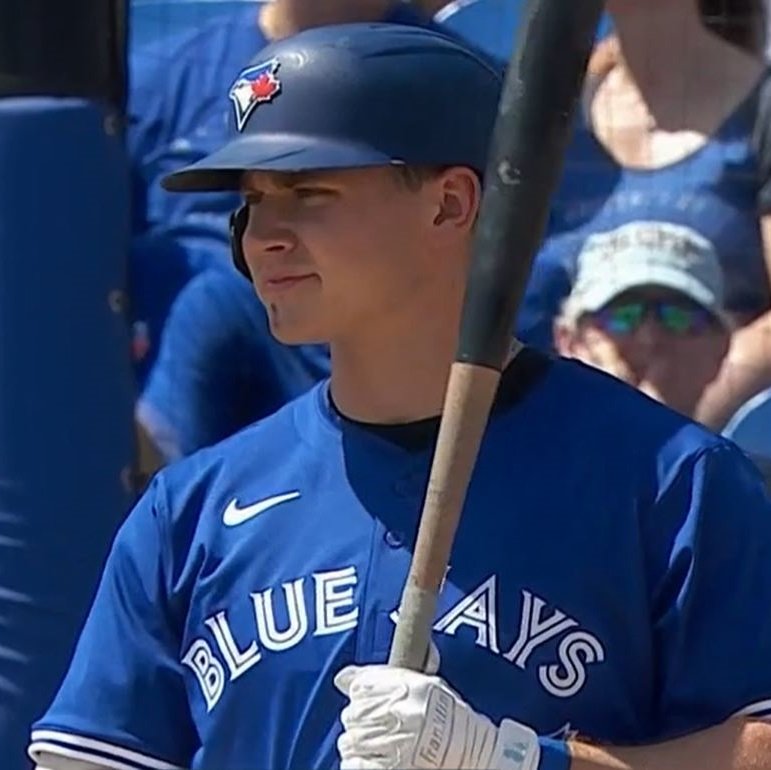 Homegrown talent isn't seen much anymore, but when it does happen, there is something a little more special in the air during their major league debut. It's a wave of emotions for the player, their friends, and family, as well as the organization. 2025 will see the Rogers Centre explode with excitement and pure joy for Roden, a welcome fitting for the “homegrown” moniker. Let's look at how he got to this point and what he provides to his team on the baseball field. The Toronto Blue Jays scooped up Roden in the 3rd round of the 2022 MLB draft out of Creighton University. He only played two seasons there, as he got into just three games his freshman year. He was a career .383 hitter in college, his calling card at the time of the draft. He hit 14 home runs until his pro debut, showing more gap-to-gap power via his 32 doubles. Much development would be in store for the minor league coaches and Roden. During his two years in the Blue Jays organization, he only missed out on playing in the Complex League. He has amassed a career .298 batting average, 27 home runs, and an OPS of .860. At each level, his wRC+ has never dipped below 133 (outside of his 25-game pro debut season). His walk and strikeout rates have followed suit in the consistency department, with his K/BB ratio never dropping below 0.85. That kind of ratio is rarely seen, especially at the higher levels. With Roden being a name to watch at spring training, let's look at what he does well and struggles with and where he can go from here. What's To Like? Roden is far from the typical hitter you see in today's game. He hits from the left side of the plate and does it extremely well. The tool is a plus, with room for even more improvement (more on this later). He can control the bat through the zone and make not just a lot of contact but a ton of optimal contact. His contact rate at Triple-A Buffalo was 81.9% (88th percentile), and his in-zone contact rate came in at an eye-popping 92.3% (95th percentile). When he decides to take a swing at a pitch, he's going to make contact. To add to his hit tool, he displayed great plate discipline, only chasing pitches at a 24.1% clip (67th percentile) and having a strikeout rate of 14.3% (89th percentile). Even the secondary offerings from opposing pitchers didn't give him much trouble; he had a whiff rate of 25.8% compared to theirs (81st percentile). Looking at the rest of Roden's profile, you can see he doubles down on the high contact rates by making a ton of good-quality contact. His hard-hit rate was 36.6% at Triple-A Buffalo last year, slightly above average for the level (55th percentile). Having such high contact rates dilutes some of his exit velocity (EV) numbers, but they show he can hit the ball hard with the best of his peers. His max EV was very exciting at 112.2 mph (91st percentile), while the 90th-percentile exit velocity was above average at 103.2 mph (62nd percentile). He uses a robust rate of pulled fly balls (42.1%) and high exit velocities to produce his power, 16 home runs in 2024. What To Work On? As good as Roden is with making contact, he has some aspects of his game that he needs to work on. If he can improve on some of these, he can take a giant leap forward in his profile and increase his potential major-league impact. The first is tackling his struggles with his swing and decision-making at the plate. Despite being a top-tier contact hitter, he can become an elite one if he can find a way to decrease his struggles with pitches down and out of the zone. Looking at his whiff rates by zone at Triple-A Buffalo, you can see the majority of his swings and misses come in those areas. Following this trail leads to his strikeout rates by zone and similar results. Down-and-in and down-and-away are the locations that resulted in his most strikeouts. Once he reaches the major league level, pitchers will relentlessly exploit these weaknesses until he can show he can handle those pitches better (whether it's laying off them more or making better contact). If Roden can adjust his approach or swing, it should also result in more favorable launch angles. In 2024, at Triple-A Buffalo, his average launch angle was eight degrees due to the larger rate of ground balls he put into play (48.5%). To take the next step towards being a legitimate major league contributor, he must decrease his ground ball rate to around 40%. This should increase his overall numbers and maybe even add extra power to his profile. What's Next? Roden is one of the players to watch at spring training. He brings a dual threat of power and speed, something the Blue Jays are sorely lacking this year. Several positions are open for him to win a spot on the opening-day roster. Lucky for him and the Blue Jays, he can play any outfield position. If he can't parlay his hot stretch at the end of last season into a roster spot (.377/.457/.623, seven home runs, 13 doubles, and five stolen bases in his final 45 games), he will start back at Triple-A Buffalo. He is biding his time until a roster spot opens up, or he forces the front office's hand.
 -
Last July, when the Blue Jays drafted Trey Yesavage with the 20th overall pick and Khal Stephen with the 59th overall pick, they knew they were not going to pitch in games in 2024. Yesavage had already pitched 15 games and 93 1/3 innings at East Carolina. He went 11-1 with a 2.03 ERA and had 145 strikeouts to go with just 32 walks. Stephen had made 16 starts for Mississippi State in 2024. In his 96 innings, he had 107 strikeouts to go with just 21 walks. The Jays sent both of their top two picks to Low-A Dunedin in 2025, in part just to let them get their feet wet in professional baseball. If they're honest, it was also probably an attempt to force themselves to not push the college stars too quickly. As you would expect from college pitchers selected in the early rounds, these two right-handers put up impressive numbers in Dunedin. Stephen went 3-0 with a 2.06 ERA over 39 1/3 innings. He made seven starts and one relief appearance (in which he recorded a save). He notched 48 strikeouts with just seven walks. Yesavage was also 3-0. He had a 2.43 ERA in seven starts and 33 1/3 innings. He had 55 strikeouts to go with just eight walks. On Monday, both players learned that they were making the long trek from the Orlando airport to Vancouver. The Canadians are currently 17-22 and will be helped by the addition of two high-ceiling starters. Moving to the High-A Northwest League should provide a little more of a challenge for both pitchers. However, both are ready for that challenge. And, don't be surprised if one or both of them make another move forward (to Double-A New Hampshire) before the season comes to an end. Yesavage ranks #3 on the Jays Centre Top 20 prospect list, while Stephen currently ranks #5. They will be joined on the long plane ride by #13-ranked prospect RHP Gage Stanifer. The 21-year-old was the Jays' 19th-round draft pick in 2022 out of high school in Indiana. He worked as a starter in his first two pro seasons. He has moved to the bullpen in 2025 but has pitched four innings in six of his seven outings. Stanifer went 4-0 with two saves in his seven relief appearances for Dunedin. He pitched to a 0.69 ERA and a 0.85 WHIP. In 26 innings, he had 38 strikeouts and 12 walks. Of course, to add three pitchers from Low-A, something had to give in Vancouver. Juaron Watts-Brown, Jays Centre's #19 prospect, was promoted from Vancouver to New Hampshire. The 23-year-old was 0-3 in eight starts but had a solid ERA of 3.62. Also, in 37 1/3 innings, he had a remarkable 62 strikeouts and just 12 walks. The Jays' third-round pick in 2022 from Oklahoma State, he also made nine starts for the Canadians in 2024. Three more pitchers will be joining Watts-Brown on the flight to New Hampshire. One is RHP Grant Rogers. He has made eight starts this season and is 3-1 with a 1.82 ERA. Rogers was the Jays' 11th 11th-round pick in 2023 from McNeese State. In 39 2/3 innings this season, he has 39 strikeouts. His 18 walks are something to work on, but something he has never had an issue with in the past. Rogers turns 24 on Thursday. Kevin Miranda signed with the Jays after going undrafted despite going 13-1 with a 2.44 ERA in his final season at NAIA LSU-Shreveport. Now 26, he has spent parts of the past two seasons with the Canadians. In fact, last season he also made five appearances for New Hampshire. With this promotion, he will get some more. In nine games (six starts) for Vancouver this year, he is 3-4 with a 7.57 ERA. The 27-year-old Nate Garkow is also moving up to New Hampshire. He spent four years at Point Loma Nazarene and then played independent ball in 2022, 2023, and 2024 before the Blue Jays signed him from the Gateway Grizzlies of the Frontier League. With the Canadians this season, he was 1-0 with two saves and a 7.56 ERA over 10 appearances. In 16 2/3 innings, he had 32 strikeouts but also 14 walks. He's had five good games and five bad games, and as you can imagine, his success usually depends on his control. In addition, the Canadians activated 21-year-old outfielder Victor Arias and 22-year-old reliever Irv Carter from the injured list. A couple of 26-year-olds are moving up to Buffalo from New Hampshire. Ryan McCarty mostly played second base for the Fisher Cats this season. In 25 games, he has hit .286/.405/.414 (.819) with three doubles and two homers. RHP CJ Van Eyk, the Jays' second-round pick in 2020 out of Florida State, is also moving up to the Bisons. He is 2-4 with a 4.42 ERA in seven starts this season. In 36 2/3 innings, he has 36 strikeouts and 11 walks. In addition, 25-year-old RHP Anders Tolhurst has been placed on the injured list for Buffalo. Jays #15 prospect, Charles McAdoo, has been placed on the Fisher Cats' development list. It's been a rough start to his season. In 33 games, he is hitting just .193/.273/.261 (.533). The 23-year-old played in 37 games for New Hampshire last year after joining the organization from the Pirates in the Isiah Kiner-Falefa trade. He hit just .185/.287/.323 (.609) in those games after hitting .269/.347/.490 (.838) in 27 games for Altoona, the Pirates' Double-A affiliate. He had posted OPSs well over .900 at both the Low-A and High-A levels, as well as in his final two seasons at San Jose State. So, hopefully a little break, and maybe some rest, will be exactly what he needs to regain that prospect status. Finally, we'll end on more positive news on this high-transaction day. Shortstop Josh Kasevich began his rehab assignment with the FCL Blue Jays on Tuesday. In his first game, he batted second and played shortstop. He went 1-for-2 before being replaced by Drew Jemison for the rest of the game. In five innings on defense, Kasevich caught two pop-ups and tagged a runner out trying to steal second. He didn't get any ground balls hit at him. Kasevich, the Jays' #11 prospect, learned in early May that he had a stress reaction in his back. He's been rehabbing for the past two-and-a-half months. Transactions happen often throughout a minor-league season as player development directors try to make sure all of the affiliates have enough players to compete. What is rare is seeing this many top prospects moving on up. Which are you most excited about? Obviously, Yesavage and Stephen are the big prospects, exciting pitchers drafted 10 months ago out of college. But Watts-Brown is similar, as a third-round pick out of college just a year earlier. Stanifer was a high school pick, so no surprise it took him a bit of time to find something that clicked for him, but whatever he found earned him this promotion. And, how much has Kasevich been missed in the early season? Can Van Eyk regain some of his pre-surgery prospect status as he is now just one level from the big leagues? View full article
- 3 replies
-
- 3
-

-
- trey yesavage
- khal stephen
- (and 6 more)
-
 Last July, when the Blue Jays drafted Trey Yesavage with the 20th overall pick and Khal Stephen with the 59th overall pick, they knew they were not going to pitch in games in 2024. Yesavage had already pitched 15 games and 93 1/3 innings at East Carolina. He went 11-1 with a 2.03 ERA and had 145 strikeouts to go with just 32 walks. Stephen had made 16 starts for Mississippi State in 2024. In his 96 innings, he had 107 strikeouts to go with just 21 walks. The Jays sent both of their top two picks to Low-A Dunedin in 2025, in part just to let them get their feet wet in professional baseball. If they're honest, it was also probably an attempt to force themselves to not push the college stars too quickly. As you would expect from college pitchers selected in the early rounds, these two right-handers put up impressive numbers in Dunedin. Stephen went 3-0 with a 2.06 ERA over 39 1/3 innings. He made seven starts and one relief appearance (in which he recorded a save). He notched 48 strikeouts with just seven walks. Yesavage was also 3-0. He had a 2.43 ERA in seven starts and 33 1/3 innings. He had 55 strikeouts to go with just eight walks. On Monday, both players learned that they were making the long trek from the Orlando airport to Vancouver. The Canadians are currently 17-22 and will be helped by the addition of two high-ceiling starters. Moving to the High-A Northwest League should provide a little more of a challenge for both pitchers. However, both are ready for that challenge. And, don't be surprised if one or both of them make another move forward (to Double-A New Hampshire) before the season comes to an end. Yesavage ranks #3 on the Jays Centre Top 20 prospect list, while Stephen currently ranks #5. They will be joined on the long plane ride by #13-ranked prospect RHP Gage Stanifer. The 21-year-old was the Jays' 19th-round draft pick in 2022 out of high school in Indiana. He worked as a starter in his first two pro seasons. He has moved to the bullpen in 2025 but has pitched four innings in six of his seven outings. Stanifer went 4-0 with two saves in his seven relief appearances for Dunedin. He pitched to a 0.69 ERA and a 0.85 WHIP. In 26 innings, he had 38 strikeouts and 12 walks. Of course, to add three pitchers from Low-A, something had to give in Vancouver. Juaron Watts-Brown, Jays Centre's #19 prospect, was promoted from Vancouver to New Hampshire. The 23-year-old was 0-3 in eight starts but had a solid ERA of 3.62. Also, in 37 1/3 innings, he had a remarkable 62 strikeouts and just 12 walks. The Jays' third-round pick in 2022 from Oklahoma State, he also made nine starts for the Canadians in 2024. Three more pitchers will be joining Watts-Brown on the flight to New Hampshire. One is RHP Grant Rogers. He has made eight starts this season and is 3-1 with a 1.82 ERA. Rogers was the Jays' 11th 11th-round pick in 2023 from McNeese State. In 39 2/3 innings this season, he has 39 strikeouts. His 18 walks are something to work on, but something he has never had an issue with in the past. Rogers turns 24 on Thursday. Kevin Miranda signed with the Jays after going undrafted despite going 13-1 with a 2.44 ERA in his final season at NAIA LSU-Shreveport. Now 26, he has spent parts of the past two seasons with the Canadians. In fact, last season he also made five appearances for New Hampshire. With this promotion, he will get some more. In nine games (six starts) for Vancouver this year, he is 3-4 with a 7.57 ERA. The 27-year-old Nate Garkow is also moving up to New Hampshire. He spent four years at Point Loma Nazarene and then played independent ball in 2022, 2023, and 2024 before the Blue Jays signed him from the Gateway Grizzlies of the Frontier League. With the Canadians this season, he was 1-0 with two saves and a 7.56 ERA over 10 appearances. In 16 2/3 innings, he had 32 strikeouts but also 14 walks. He's had five good games and five bad games, and as you can imagine, his success usually depends on his control. In addition, the Canadians activated 21-year-old outfielder Victor Arias and 22-year-old reliever Irv Carter from the injured list. A couple of 26-year-olds are moving up to Buffalo from New Hampshire. Ryan McCarty mostly played second base for the Fisher Cats this season. In 25 games, he has hit .286/.405/.414 (.819) with three doubles and two homers. RHP CJ Van Eyk, the Jays' second-round pick in 2020 out of Florida State, is also moving up to the Bisons. He is 2-4 with a 4.42 ERA in seven starts this season. In 36 2/3 innings, he has 36 strikeouts and 11 walks. In addition, 25-year-old RHP Anders Tolhurst has been placed on the injured list for Buffalo. Jays #15 prospect, Charles McAdoo, has been placed on the Fisher Cats' development list. It's been a rough start to his season. In 33 games, he is hitting just .193/.273/.261 (.533). The 23-year-old played in 37 games for New Hampshire last year after joining the organization from the Pirates in the Isiah Kiner-Falefa trade. He hit just .185/.287/.323 (.609) in those games after hitting .269/.347/.490 (.838) in 27 games for Altoona, the Pirates' Double-A affiliate. He had posted OPSs well over .900 at both the Low-A and High-A levels, as well as in his final two seasons at San Jose State. So, hopefully a little break, and maybe some rest, will be exactly what he needs to regain that prospect status. Finally, we'll end on more positive news on this high-transaction day. Shortstop Josh Kasevich began his rehab assignment with the FCL Blue Jays on Tuesday. In his first game, he batted second and played shortstop. He went 1-for-2 before being replaced by Drew Jemison for the rest of the game. In five innings on defense, Kasevich caught two pop-ups and tagged a runner out trying to steal second. He didn't get any ground balls hit at him. Kasevich, the Jays' #11 prospect, learned in early May that he had a stress reaction in his back. He's been rehabbing for the past two-and-a-half months. Transactions happen often throughout a minor-league season as player development directors try to make sure all of the affiliates have enough players to compete. What is rare is seeing this many top prospects moving on up. Which are you most excited about? Obviously, Yesavage and Stephen are the big prospects, exciting pitchers drafted 10 months ago out of college. But Watts-Brown is similar, as a third-round pick out of college just a year earlier. Stanifer was a high school pick, so no surprise it took him a bit of time to find something that clicked for him, but whatever he found earned him this promotion. And, how much has Kasevich been missed in the early season? Can Van Eyk regain some of his pre-surgery prospect status as he is now just one level from the big leagues?
- 3 comments
-
- 3
-
-
- trey yesavage
- khal stephen
- (and 6 more)
-
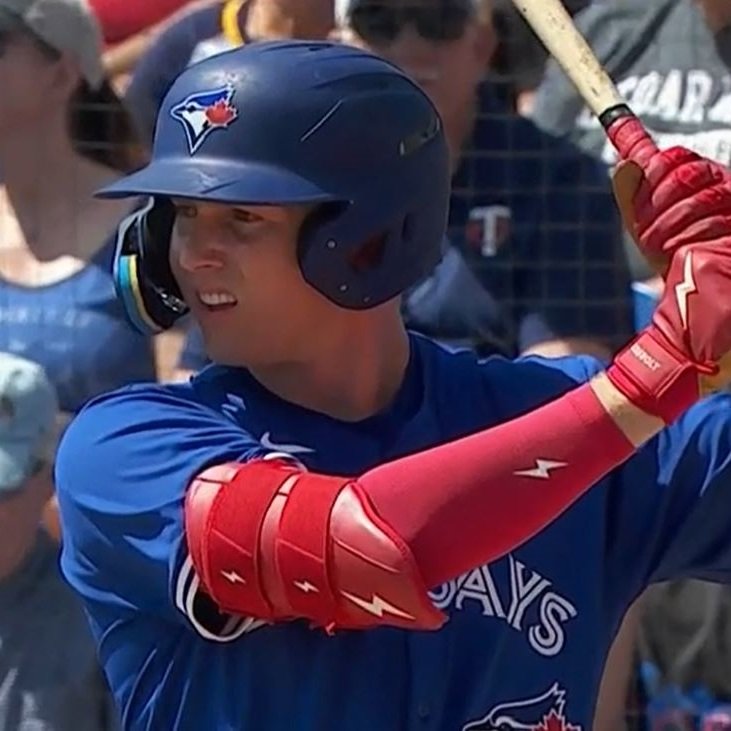 Jace Bohrofen is a big slugging lefty outfielder, signed out of Arkansas in the sixth round of the 2023 draft. He's shown a lot of power throughout his minor league career and just snuck onto the Jays Centre Top 20. Bohrofen has done nothing but hit since he joined the Jays organization, with a career .816 OPS and 26 home runs. Bohrofen does pair that power ability with some strikeout concerns, though. He ran a worse-than-average strikeout rate of around 24% during his first two years in the minors, and that has increased to 35.0% in Double-A. His contact rate has dropped from 71.3% in High-A last season to a worrying 57.5% to start the year, but Bohrofen improved his contact rate year-over-year from his first season to his second, and the cold weather in New Hampshire could be a reason behind his lessened ability to make contact early in 2025. Bohrofen leads New Hampshire in homers, so when he does make contact, it leads to good results for the most part. He also has strong plate discipline, walking over 10% of the time in all of the seasons that he's played, and he rarely chases. Defensively, Bohrofen can play center field adequately, as he came up as a center fielder out of college, but he is more suited to the corners. He's split time at all three outfield spots for New Hampshire. Bohrofen also had a slow start in Vancouver last season but ended up turning it around, so his power ability, a history of making more contact than he has shown so far, and his ability to adjust as a season progresses should allow for him to work as a strong-side platoon bat in the future, with a lower average but some extra-base hits.
 -
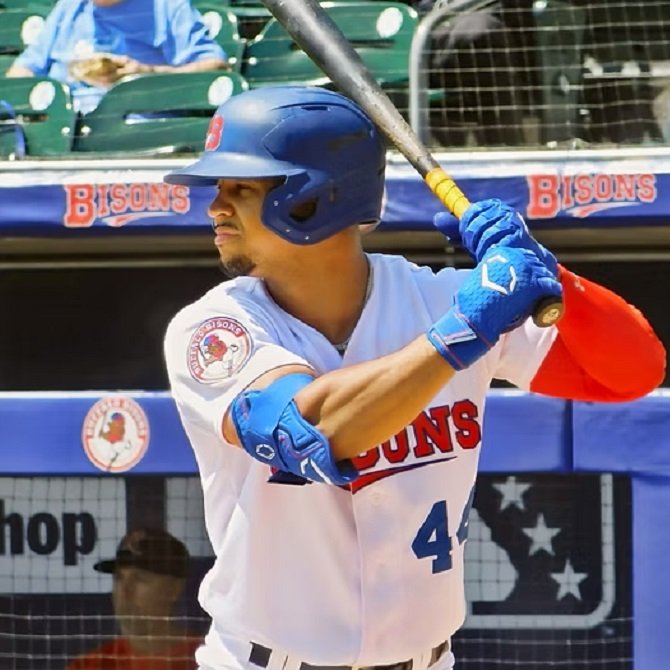 Jonatan Clase initially signed with the Mariners as an international free agent in 2018, only earning $35,000 as a signing bonus, but he showcased he was worth much more than that. Clase started off his professional career hot, posting a 149 wRC+ with the Mariners' DSL team, before losing a year due to COVID. However, that didn't stop him from progressing, as he moved all the way to Double-A from Rookie ball in only three years. That included a 2023 season in which he stole 79 bases and hit 20 homers, showcasing his power-speed potential. He debuted in MLB last year after a solid performance in Triple-A, before getting sent back down after his first cup of coffee didn't go too well. The Jays then acquired Clase in a trade for setup man Yimi García, and he struggled in his short stint in Triple-A Buffalo before performing solidly in Toronto to end the year. Early in 2025, Clase has had a strong start to the year, getting on base at a high clip and showing off his elite speed while also cutting down his strikeout rate slightly. He hasn't shown as much power as he usually does, with only four extra base hits on the year (and no homers), but if he continues to get on base at this rate, his speed can turn singles into doubles. The switch-hitting outfielder has displayed strong contact skills on the season to pair with good plate discipline. He also has an 86.2% zone-contact rate while not chasing much. Defensively, he's still a work in progress, as although his speed can make up for some bad routes, he still does struggle a bit with his reads and jumps. Atkins has called him MLB-ready, and he is in his final option year, so he'll need to establish himself as a contributor to the major league team by the end of the season. Still, the tools and skill set are there for Clase, and despite a crowded outfield, he has a good chance to earn a role.
 -
As a long-time Twins fan and follower of Twins prospects, the Twins spring breakout roster would only intrigue prospect people like me who rank the team's Top 200 prospects. No Walker Jenkins, Emmanuel Rodriguez, Kaelen Culpepper. Not even Peyton Eeles or Kyle DeBarge... And they didn't use pitchers like Marco Raya, Andrew Morris, Charlee Soto, Cory Lewis, or any of their top pitching prospects. Meanwhile, the Jays prospects are impressive. Yesavage and Stephen were very impressive in their first pro outings. Jacob Bloss looked very advanced. They focused a lot on Arjun Nimmala, and he certainly has the world of potential and looks the part of a shortstop, but Roden looks ready. Dasan Smith looked really good. Peyton Williams looks like me, but man, can he hit.
- 3 replies
-
- 1
-
-
- arjun nimmala
- trey yesavage
- (and 4 more)
-
Over the offseason, the Blue Jays signed several players to minor league deals. Obviously several of them were given Non-Roster invitations. Others weren't. Which are your favorite? Who do you think will help the team during the 2025 season? Position Players: Michael Stefanic, Christian Bethancourt, Ali Sanchez, Myles Straw (trade), Pitchers: Jacob Barnes, Richard Lovelady, Dillon Tate, Amir Garrett, Adam Kloffenstein, Kevin Gowdy, Eric Lauer.
-
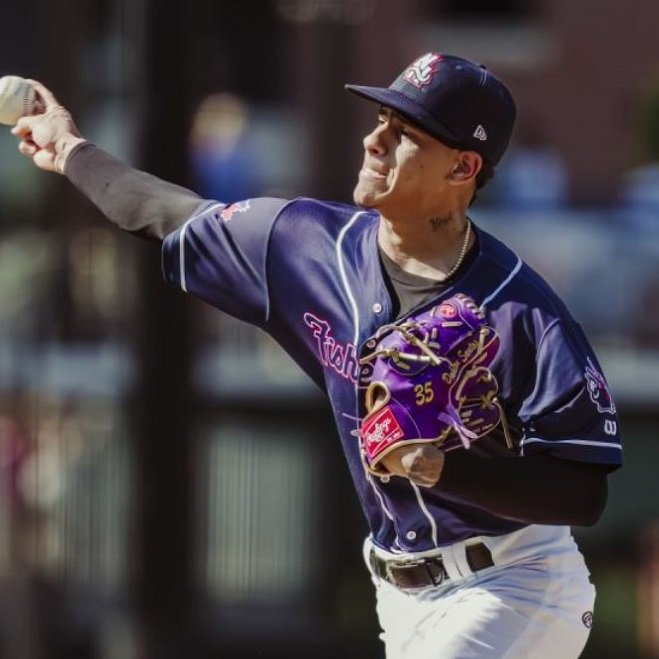 Pre-2025 Scouting Report The Toronto Blue Jays signed Dahian Santos out of Acarigua, Venezuela, in July 2019. It was a very slow progress through the minor leagues following his signing and he would not pitch in a minor league game until 2021 as an 18-year-old. When he was finally on the mound, he started most of the games he would play and showed a high propensity for striking out batters. In his first two seasons across the Complex League, Low-A, and High-A, he put up strikeout rates of 33.1% and 38.5%. He was beginning to show the potential to become a major league starting pitcher. Then the classic Blue Jays issue took hold: injuries. Through the 2023 and 2024 seasons, Santos was hampered by injuries, cutting his time and development on the mound over crucial periods. He pitched only 12 games in 2023, with that number rising to 20 games this past season. Unfortunately, almost all those 20 games came out of the bullpen (18), as he managed only 35.2 innings pitched. The biggest positive from last season was he moved on up to Double-A New Hampshire, where he continued having some measure of success striking out mostly older hitters to the tune of a 25.6% strikeout rate. The biggest issue on the mound for him in 2024 and much of his minor league career has come from a high walk rate, topping out at 17% at Double-A. Where Santos is routinely succeeding in the minors has been his ability to limit hits. This past season, he was in the 82nd percentile at Double-A, giving up a batting average of only .175. Santos does not have the best fastball, but what truly stands out is his breaking ball and changeup. His repertoire is unique, consisting of a fastball routinely sitting in the 93 MPH range and can top out at 96 MPH. His dominant pitch is a slider in the 81-84 MPH range, which he can throw at times more than his fastball. The slider is the big whiff-inducing pitch with a sharp break. To cap things off, he throws a very solid changeup that can flash as a plus pitch at times, coming in at 83 MPH. Where Santos goes from here should be clearer in 2025. At the end of 2024, he started a few games again. This coming season, he could get back into the mix as a starting pitcher at Double-A and potentially become more of a factor as a prospect if he remains healthy, adds strength and increases his fastball velocity. - Daniel Labude
 -
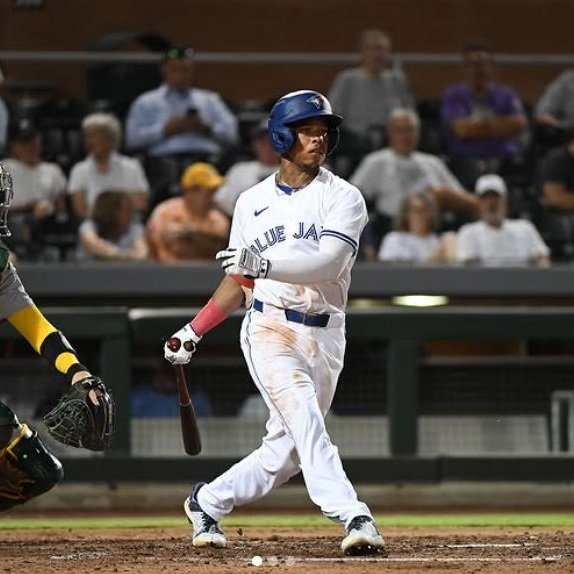 Pre-2025 Preseason Report The Boston Red Sox signed Eddinson Paulino 2018 out of the Dominican Republic. Over the next four seasons, he would move up one level each year, ultimately finishing 2023 at High-A and starting this past season at Double-A. Midseason, the Toronto Blue Jays traded for Paulino in a deal that saw Danny Jansen go to the Red Sox. Paulino is an infielder who can play second base, shortstop, and third base while currently listed at 5-foot-10 and 155 pounds. That size wasn't much of a negative in the lower minors, as he would hit 25 home runs and swipe 53 bases combined over the 2022 and 2023 seasons with the Red Sox minor league affiliates. This past year, however, saw him struggle in both areas, with him only hitting three home runs and swiping 11 bases combined between the Red Sox and Blue Jays Double-A teams. The two areas of his profile that saw the biggest change in 2024 were a nearly 10% increase in his whiff rate and a 12% drop in his swing rate. He was swinging less and missing a lot more in Double-A. Fixing those two issues going into 2025 could see him return to the prospect he was before this past season. The 2025 season could be an interesting one for Paulino. If he can add muscle to his small frame, he could see more power and better overall hitting numbers. He has a good approach at the plate, usually around 10% walk and 20% strikeout rates. That approach should lead to better contact rates than the 70.6% we saw in 2024. Given the Blue Jays' current log jam of infielders, we could see him back at Double-A to start 2025. This could give him the time he needs to get back on track and develop more in-game power. - Daniel Labude
 -
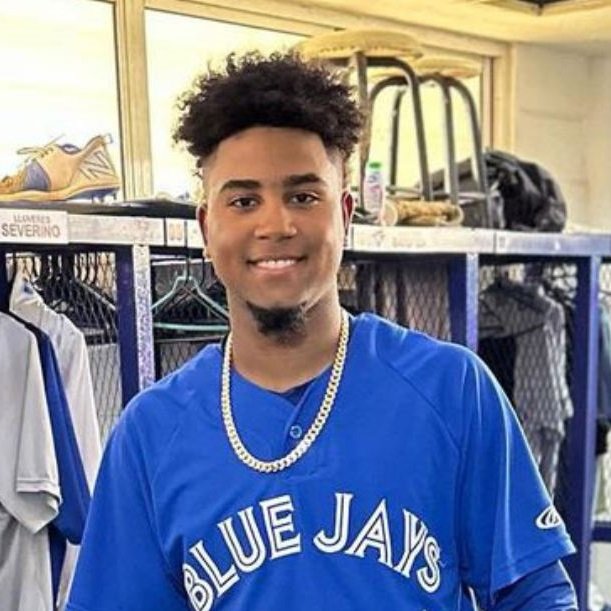 Pre-2025 Scouting Report Enmanuel Bonilla was signed out of the Dominican Republic in January of 2023 for one of the top bonuses of the international J15 signing class, $4.1 million. This was larger than Vladimir Guerrero Jr. and Orelvis Martinez. He was billed as having one of the top power-hitting potentials of the class with a projectable frame. Everything started very well, as he played in the Dominican Summer League in 2023 and was a very solid hitter. He hit .307/.407/.429 and reached base consistently in almost every game he played. He showed good exit velocities and came away with three home runs, three triples, and eight doubles. Things went backward, though, in 2024. Last season, Bonilla struggled after a blazing hot start to the Complex League. He only hit .186/.257/.299, with four home runs. The biggest issue bringing down his results was strikeouts. He struck out 35.5% of the time, and his walk rate evaporated to 6.1%. 2025, most assuredly, will be another go-around at the Complex League for Bonilla. He is still very young, and improvements could come quickly and overnight, even in the future. His contact rates and lowering his strikeout rate are the biggest things he needs to improve. The raw tools are there for a top prospect if he puts it together and starts rising levels again. - Daniel Labude
 -
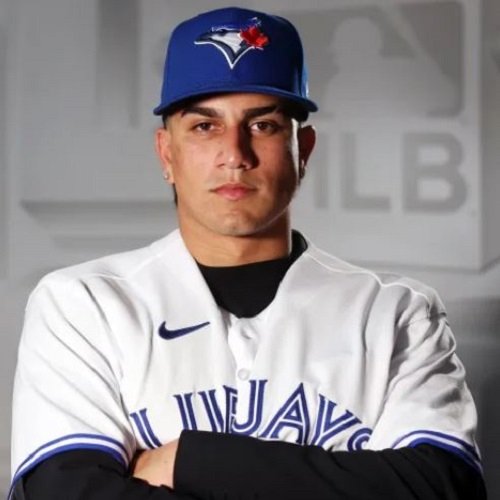 Brandon Barriera has been snake-bitten ever since he was drafted by the Toronto Blue Jays back in 2022 as their first-round pick. He dealt with multiple arm injuries in his first professional season and had issues with his conditioning. He then had elbow surgery in 2024 after making just one start, leading to another injury-plagued season. Despite the injuries, reports came out on Barriera looking really good on the backfields, showing much improved stuff. He returned to pitching in the Florida Complex League, where he only pitched five and a third of an inning, with extremely wild command, walking nearly 30% of the batters that he faced. Adding on to his injury woes, he then fractured his elbow, putting him on the injured list for the rest of the season. Despite the poor results, and another season cut short by injury, Barriera’s fastball reached 99 mph, and his cutter and slider both looked great despite the wildness. Barriera has a ton of reliever risk, given his prolonged injury history and inability to throw strikes, and his future outlook will highly depend on if he can stay on the field or not. The Jays will take it slow with him to ensure that he can stay healthy. If he can figure out a consistent release point that allows him to throw strikes, he’ll jump up this list.
 -
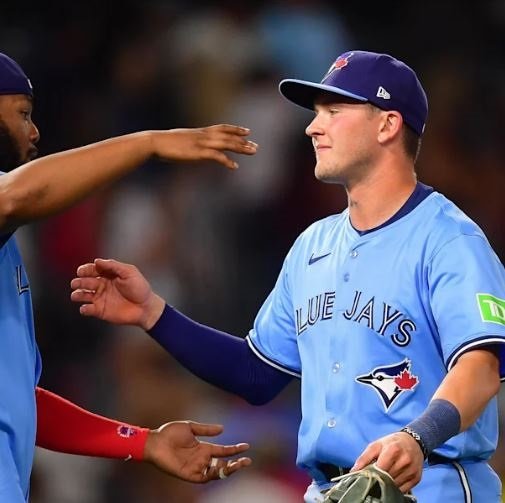 Pre-2025 Scouting Report The son of recently inducted Hall of Fame closer Billy Wagner did not inherit his father's ability to strike people out, but instead has a knack for not striking out at all instead. Wagner was acquired in the 2024 trade deadline, along with Jake Bloss, and Joey Loperfido in the Yusei Kikuchi deal. Wagner, quite simply put, can just flat out hit. He's been a solidly above-average hitter in each of his seasons as a professional baseball player, excelling in putting the ball in play while limiting strikeouts and drawing walks. He has a more passive approach, looking for pitches to hit without chasing much, as in Triple-A, he had a Swing% of only 39.9%, while chasing only 23.8% of the time. However, his ability to make contact when he did choose to swing was great, with a Zone-Contact% of 93.8%, which was in the 97th percentile. Interestingly, in his cup of coffee in the majors with the Jays (before he went down with a season ending hamstring injury), he was less patient, increasing his swing rate by 7%, as well as chasing 6.6% more. His contact rates for swings in the zone remained just as good, but he may have needed an adjustment to deal with more polished major league pitching and sequencing. Still, it didn’t stop him from being the first Blue Jays rookie to ever have a 5-hit game against the Twins in August. Wagner has very limited in-game power, although he had respectable exit velocities with an 88.1 mph Average Exit Velocity in Triple-A, as well as a 103.7 mph (90th percentile) Max EV. It is worth noting that Wagner was hitting the ball harder in the majors, up to a 90.6 mph EV and a 104.6 mph (90th percentile) Max EV. The main issue regarding his power potential is that he rarely pulls or lifts the ball, with more of an all-fields approach while also running a 49.0% ground ball rate. His ability to make good, solid contact on swings in the zone, as well as his patented patient approach should still result in him being a good hitter, but may limit his offensive potential without too many extra-base hits or home runs. Defensively, there are concerns about Wagner's defense, with the Astros playing him more at first base than they did at second base in 2024. In the limited sample size in the majors, Wagner had one Defensive Runs Saved (DRS) and one Outs Above Average (OAA) in 172 innings played, but that's too small of a sample size to say that he can be an average defender at second. However, the Jays just traded for one of the best second base defenders in Andres Gimenez, so Wagner is unlikely to see much playing time at second. With Vladimir Guerrero Jr. occupying first base, Wagner may find it difficult to find a position on the field to play. He has had minor league experience at the hot corner, but his arm strength was only in the 18th percentile and his lack of range may prove difficult to contend with now that Bo Bichette is back after a lost season. It is more likely that Wagner sees more DH time. Wagner's limited defensive profile and lack of power is what's most likely going to prevent him from being a full-time starter, but the Jays are definitely going to try to find a way to add his bat to the lineup, especially against righties. - Simon Li
 -
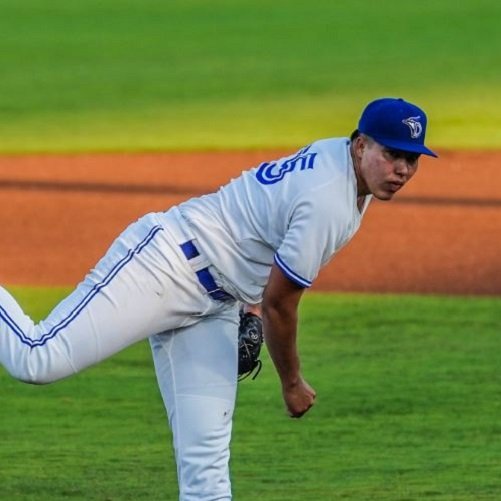 Pre-2025 Scouting Report The 20-year old Nicaraguan had an excellent first season in full-season professional baseball, earning a spot in the MLB All-Star Futures Game as well as being named MLB Pipeline's Pitching Prospect of the Year for the Blue Jays, by virtue of being one of the only top pitching prospects in the organization that was able to stay healthy all year. Coming from humble beginnings, Perez only signed for a $10,000 signing bonus in 2022, and yet he's been one of the most surprising young arms in the Jays' farm system. He's had multiple feats already in his short career, pitching in a combined no-hitter against the Florida Complex League Phillies in 2023, as well as an immaculate inning against the Dayton Tortugas, the Cincinnati Reds Low-A affiliate. He pitched to a 4.06 ERA with a 3.47 FIP last season, but slowed down as the season drew to a close as he exceeded his career-high in innings by more than 30, and was shut down in early August. The 6ft 3in, 170 lbs righty makes use of a solid four-pitch mix, with his most used pitch being a fastball that sits 92-93 mph, topping out at 95 mph, with a 16.6 induced Vertical Break and a 2405 rpm spin rate. He also throws a low-80s slider that some have called a cutter, high-70s curveball, as well as a low-80s changeup that he threw as his main pitch against lefties. The changeup was his best pitch at generating whiffs by far, with a 42.2% whiff rate, but he still has inconsistencies with his delivery. None of his secondary offerings are standout at his current stage of development, as most of them need refinement, but the outlook for his arsenal is that they could have average potential. Blue Jays Video You can view prospects 20-16, as voted on by the Jays Centre community, here. The list in full so far: 20. Dahian Santos, RHP, 21, Double-A, New Hampshire Fisher Cats 19. Eddinson Paulino, INF, 22, Double-A, New Hampshire Fisher Cats 18. Juaron Watts-Brown, RHP, 22, High-A, Vancouver Canadians 17. Enmanuel Bonilla, OF, 19, Complex League 16. Brandon Barriera, LHP, 20, Low-A Dunedin Blue Jays Without further ado, let's jump into the five best prospects in the Jays' system who just missed the cut on being in the top ten! #15: LHP Johnny King, 18, Complex League Johnny King was the third-round pick for the Jays in the 2024 draft, and has currently yet to throw a pitch in professional baseball. King was one of the youngest players selected in his class, being only ten days from turning 18 at the time on draft day. King was the 124th ranked draft prospect according to MLB Pipeline and the 120th to Baseball America. King is listed at 6ft 4in and 210 pounds, showing really good athleticism to go along with his big frame, having been the best hitter on his high school team. The big lefty throws from a lower three-quarters arm slot, and he currently throws 4 pitches. King sits in the 91-93 mph range with his fastball, but has topped out at 95 mph, with two high-spin breaking ball offerings being a mid-70s curveball and a tighter low-80s slurve. According to Baseball America, both breaking balls have spin rates in the 2,500-2,600 rpm range. He has a changeup that is still developing and that he doesn’t have the best feel for yet. His arm action has been scrutinized, and there are some real concerns about whether his delivery is easily repeatable which currently puts a limit on his potential command and gives him ample reliever risk. He also throws with a lot of effort, which is also a possible limiting factor. But, if he is able to clean up his arm action and throw strikes at a reasonable rate, he’ll have mid-rotation potential. The Jays have found a good amount of success with young pitchers with a good feel for spin and that have projectability, solid athleticism, and funky arm angles, so they’re hoping to repeat that with King. He’ll hopefully add velocity and sharper stuff as he ages up, while trying to figure out a mechanical change that could help him throw strikes on a more consistent basis. As King is coming out of high school, he’ll start off the season in the Florida Complex League. #14: INF Will Wagner, 26, Toronto Blue Jays The son of recently inducted Hall of Fame closer Billy Wagner did not inherit his father's ability to strike people out, but instead has a knack for not striking out at all instead. Wagner was acquired in the 2024 trade deadline, along with Jake Bloss, and Joey Loperfido in the Yusei Kikuchi deal. Wagner, quite simply put, can just flat out hit. He's been a solidly above-average hitter in each of his seasons as a professional baseball player, excelling in putting the ball in play while limiting strikeouts and drawing walks. He has a more passive approach, looking for pitches to hit without chasing much, as in Triple-A, he had a Swing% of only 39.9%, while chasing only 23.8% of the time. However, his ability to make contact when he did choose to swing was great, with a Zone-Contact% of 93.8%, which was in the 97th percentile. Interestingly, in his cup of coffee in the majors with the Jays (before he went down with a season ending hamstring injury), he was less patient, increasing his swing rate by 7%, as well as chasing 6.6% more. His contact rates for swings in the zone remained just as good, but he may have needed an adjustment to deal with more polished major league pitching and sequencing. Still, it didn’t stop him from being the first Blue Jays rookie to ever have a 5-hit game against the Twins in August. Wagner has very limited in-game power, although he had respectable exit velocities with an 88.1 mph Average Exit Velocity in Triple-A, as well as a 103.7 mph (90th percentile) Max EV. It is worth noting that Wagner was hitting the ball harder in the majors, up to a 90.6 mph EV and a 104.6 mph (90th percentile) Max EV. The main issue regarding his power potential is that he rarely pulls or lifts the ball, with more of an all-fields approach while also running a 49.0% ground ball rate. His ability to make good, solid contact on swings in the zone, as well as his patented patient approach should still result in him being a good hitter, but may limit his offensive potential without too many extra-base hits or home runs. Defensively, there are concerns about Wagner's defense, with the Astros playing him more at first base than they did at second base in 2024. In the limited sample size in the majors, Wagner had one Defensive Runs Saved (DRS) and one Outs Above Average (OAA) in 172 innings played, but that's too small of a sample size to say that he can be an average defender at second. However, the Jays just traded for one of the best second base defenders in Andres Gimenez, so Wagner is unlikely to see much playing time at second. With Vladimir Guerrero Jr. occupying first base, Wagner may find it difficult to find a position on the field to play. He has had minor league experience at the hot corner, but his arm strength was only in the 18th percentile and his lack of range may prove difficult to contend with now that Bo Bichette is back after a lost season. It is more likely that Wagner sees more DH time. Wagner's limited defensive profile and lack of power is what's most likely going to prevent him from being a full-time starter, but the Jays are definitely going to try to find a way to add his bat to the lineup, especially against righties. #13: RHP Fernando Perez, 20, Single-A Dunedin Blue Jays The 20-year old Nicaraguan had an excellent first season in full-season professional baseball, earning a spot in the MLB All-Star Futures Game as well as being named MLB Pipeline's Pitching Prospect of the Year for the Blue Jays, by virtue of being one of the only top pitching prospects in the organization that was able to stay healthy all year. Coming from humble beginnings, Perez only signed for a $10,000 signing bonus in 2022, and yet he's been one of the most surprising young arms in the Jays' farm system. He's had multiple feats already in his short career, pitching in a combined no-hitter against the Florida Complex League Phillies in 2023, as well as an immaculate inning against the Dayton Tortugas, the Cincinnati Reds Low-A affiliate. He pitched to a 4.06 ERA with a 3.47 FIP last season, but slowed down as the season drew to a close as he exceeded his career-high in innings by more than 30, and was shut down in early August. The 6ft 3in, 170 lbs righty makes use of a solid four-pitch mix, with his most used pitch being a fastball that sits 92-93 mph, topping out at 95 mph, with a 16.6 induced Vertical Break and a 2405 rpm spin rate. He also throws a low-80s slider that some have called a cutter, high-70s curveball, as well as a low-80s changeup that he threw as his main pitch against lefties. The changeup was his best pitch at generating whiffs by far, with a 42.2% whiff rate, but he still has inconsistencies with his delivery. None of his secondary offerings are standout at his current stage of development, as most of them need refinement, but the outlook for his arsenal is that they could have average potential. Perez's best trait is his pitchability, being able to command his pitches well, having a 100th percentile in-zone rate in Low-A Dunedin and a 74th percentile BB%. He's very capable of mixing his pitches and keeping hitters off-balanced despite his mediocre stuff due to having a strong feel for all of his pitches. Being only 20, if Perez is able to add more strength to gain more velocity, or if there is further refinement of his arsenal, there is still a decent amount of projection to be had as he advances through the minors. If he manages to be able to do both, there's a very solid chance he can move up the rankings, but currently it seems more likely that he'll be a No. 5 starter at his full potential. If he stays healthy, that could even possibly be his floor. It’s likely that Perez will get promoted to Vancouver early in the 2025 season where he’ll hopefully continue to progress. - Simon Li
 -
On Friday night, news broke online that the Blue Jays signed veteran reliever Jeff Hoffman to a three-year, $33 million contract with incentives. The Jays added a big arm to their bullpen on Friday night. It was announced that the team signed Jeff Hoffman, bringing him back to the organization that drafted him a decade ago. Of course, he was part of the package that the Blue Jays sent to the Rockies in exchange for Troy Tulowitzki. Hoffman, who received a signing bonus of $3,080,800 from Toronto as the ninth-overall pick from East Carolina in the 2014 draft, will received a signing bonus of $5 million in 2024 with this contract. He will also earn a salary of $6 million. Then the next two seasons, he will receive a salary of $11 million each year. In addition to the three years and $33 million that he is guaranteed, Hoffman will have the opportunity to make another $6 million in incentives. In each of the three seasons, he will gain a $500,000 bonus when he reaches 60, 70, 80 and 90 games pitched. It should be noted that in his last two seasons, easily the best seasons of his career, he pitched in 54 and 68 games respectively. While the Blue Jays haven't committed to Hoffman as their closer, he certainly should be given an opportunity to compete for the position. If healthy, Hoffman, who turned 32 this week, has a chance to earn a lot of money and the Jays will have a quality, reliable shutdown reliever. But that doesn't mean there isn't risk. That is especially true after the reports that Hoffman had agreed to a three-year, $40 million contract recently with the Baltimore Orioles. However, the Orioles reportedly didn't like something going on in his shoulder and backed off the deal. He has not been on the Injured List since a two-month stay during the 2021 season, so clearly the Jays aren't as concerned about Hoffman's medical record or the physical they put him through. Over the past two seasons with the Phillies, Hoffman was terrific. In 2023, he went 5-2 with a 2.41 ERA and a 0.92 WHIP. In 52 1/3 innings, he gave up just 29 hits, walked 19, and had 69 strikeouts (11.9 K/9). In 2024, he was named to his first All Star team. He went 3-3 with a 2.17 ERA and a 0.97 WHIP. In 66 1/3 innings, he gave up 48 hits, walked just 16 and had 89 strikeouts (12.1 K/9). In parts of five seasons with the Rockies, mostly as a starter, it won't surprise you that he was really hurt by the long ball. In those five partial seasons, he accumulated -1.5 bWAR. He went to the Reds for 2021 and 2022, and, after a short stint as a starter, he made the transition to the bullpen and it went alright. Over those two seasons, he accumulated 1.5 bWAR. He has been worth 3.9 bWAR over the past two seasons. Will that trend continue through his early 30s? The Jays are betting on it. Hoffman always threw fairly hard. His average fastball velocity as a starter, early in his career was 93-94 mph. In 2023, that jumped up to a 97.1 mph average and it was 96.6 mph in 2024. It's interesting because he also went from throwing 50-65% fastballs to between 30-40% fastballs. Taking the place of the fastballs were sliders. In 2021 and 2022 with the Reds, he threw the slider less than 25% of the time. He has thrown it 47.7% (2023) and 40.8% (2024). And his slider velocity increased from about 81-82 mph to 87-88 mph. Hoffman will join veterans Chad Green, Yimi Garcia, and Erik Swanson in the back of the Blue Jays bullpen. The team let go of Dillon Tate this offseason, and Jordan Romano left after his injury-lost 2024 season to join the Phillies on a one-year deal. The Jays acquired Nick Sandlin from Cleveland in the trade that also brought Andres Gimenez to Ontario. Zach Pop and Tommy Nance both got outs as well. Brendon Little was the lefty out of the 'pen much of the season. In other words, the Jays could afford to keep adding to their bullpen. After publicly acknowledging their big-dollar attempt to bring in Juan Soto, could the team coax lefty Tanner Scott to come north too? While other names may not be as exciting, there remains plenty of quality relief arms looking for a team to sign them. Like Scott, Hunter Strickland, Jalen Beeks and Phil Maton reached 70 games pitched. Current or former closers available include Kyle Finnegan, Hector Neris, Kirby Yates, Adam Ottavino, Craig Kimbrel, and Kenley Jansen. Jose LeClerc, Scott Barlow, Ryne Stanek, Andrew Chafin, and John Brebbia. And there are always veterans looking to keep a career going (Drew Smyly, Shelby Miller, Matt Moore), and former top prospects that may or may not have a future out of the bullpen (Josh Winder, Riley Pint). I don't know what category to put James Karinchak in. And, if you have World Series aspirations, you need a Will Smith on your roster! To make room for Hoffman on the roster, reliever Brett de Geus was designated for assignment. He made just two appearances for the Jays in 2024 (and gave up four runs over 2 1/3 innings). During the 2024 season, he also pitched in the big leagues for the Marlins and Mariners. The 13 games pitched were his first MLB games since 2021 when he pitched a combined 47 games between the Rangers and the Diamondbacks bullpens. View full article
-
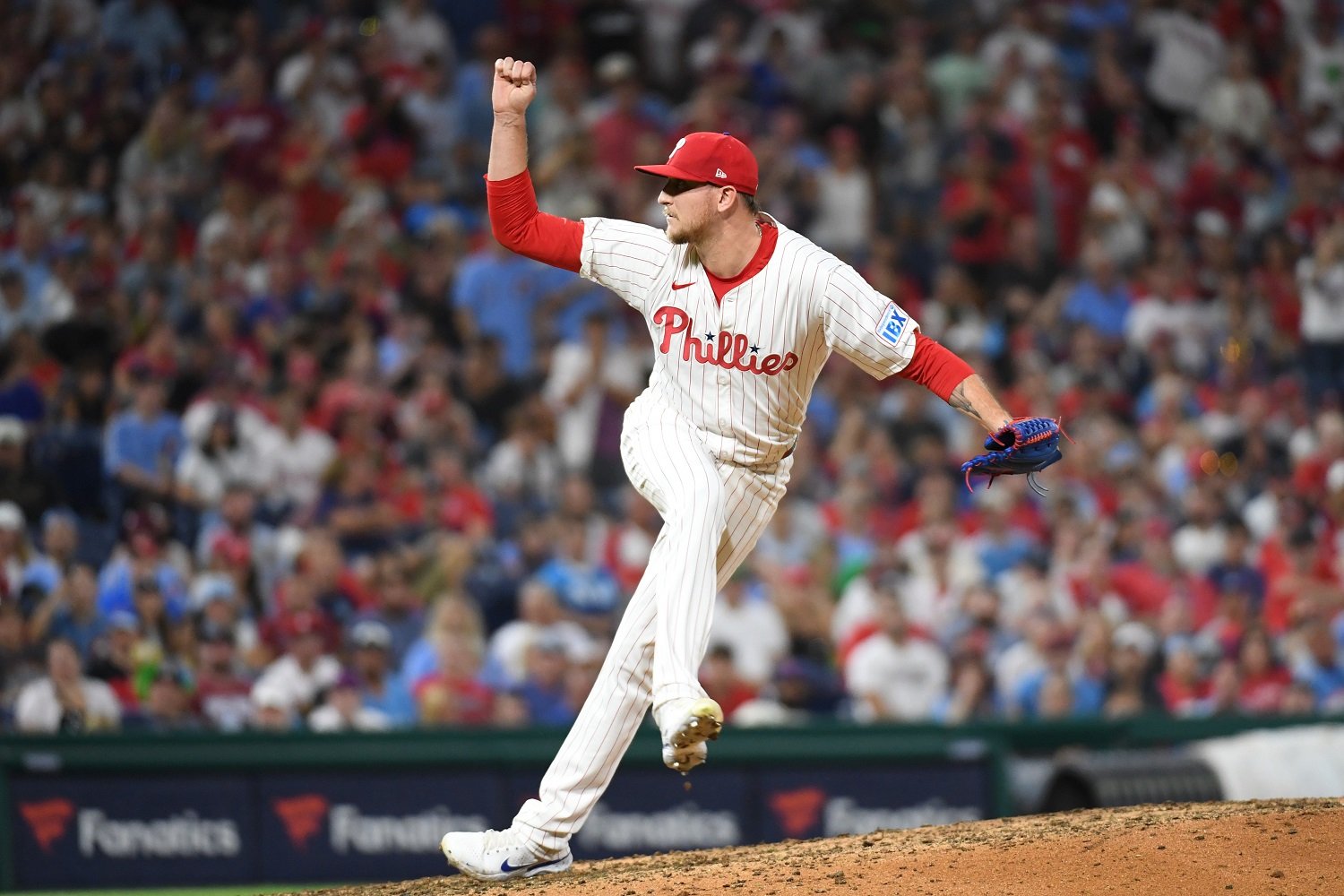 The Jays added a big arm to their bullpen on Friday night. It was announced that the team signed Jeff Hoffman, bringing him back to the organization that drafted him a decade ago. Of course, he was part of the package that the Blue Jays sent to the Rockies in exchange for Troy Tulowitzki. Hoffman, who received a signing bonus of $3,080,800 from Toronto as the ninth-overall pick from East Carolina in the 2014 draft, will received a signing bonus of $5 million in 2024 with this contract. He will also earn a salary of $6 million. Then the next two seasons, he will receive a salary of $11 million each year. In addition to the three years and $33 million that he is guaranteed, Hoffman will have the opportunity to make another $6 million in incentives. In each of the three seasons, he will gain a $500,000 bonus when he reaches 60, 70, 80 and 90 games pitched. It should be noted that in his last two seasons, easily the best seasons of his career, he pitched in 54 and 68 games respectively. While the Blue Jays haven't committed to Hoffman as their closer, he certainly should be given an opportunity to compete for the position. If healthy, Hoffman, who turned 32 this week, has a chance to earn a lot of money and the Jays will have a quality, reliable shutdown reliever. But that doesn't mean there isn't risk. That is especially true after the reports that Hoffman had agreed to a three-year, $40 million contract recently with the Baltimore Orioles. However, the Orioles reportedly didn't like something going on in his shoulder and backed off the deal. He has not been on the Injured List since a two-month stay during the 2021 season, so clearly the Jays aren't as concerned about Hoffman's medical record or the physical they put him through. Over the past two seasons with the Phillies, Hoffman was terrific. In 2023, he went 5-2 with a 2.41 ERA and a 0.92 WHIP. In 52 1/3 innings, he gave up just 29 hits, walked 19, and had 69 strikeouts (11.9 K/9). In 2024, he was named to his first All Star team. He went 3-3 with a 2.17 ERA and a 0.97 WHIP. In 66 1/3 innings, he gave up 48 hits, walked just 16 and had 89 strikeouts (12.1 K/9). In parts of five seasons with the Rockies, mostly as a starter, it won't surprise you that he was really hurt by the long ball. In those five partial seasons, he accumulated -1.5 bWAR. He went to the Reds for 2021 and 2022, and, after a short stint as a starter, he made the transition to the bullpen and it went alright. Over those two seasons, he accumulated 1.5 bWAR. He has been worth 3.9 bWAR over the past two seasons. Will that trend continue through his early 30s? The Jays are betting on it. Hoffman always threw fairly hard. His average fastball velocity as a starter, early in his career was 93-94 mph. In 2023, that jumped up to a 97.1 mph average and it was 96.6 mph in 2024. It's interesting because he also went from throwing 50-65% fastballs to between 30-40% fastballs. Taking the place of the fastballs were sliders. In 2021 and 2022 with the Reds, he threw the slider less than 25% of the time. He has thrown it 47.7% (2023) and 40.8% (2024). And his slider velocity increased from about 81-82 mph to 87-88 mph. Hoffman will join veterans Chad Green, Yimi Garcia, and Erik Swanson in the back of the Blue Jays bullpen. The team let go of Dillon Tate this offseason, and Jordan Romano left after his injury-lost 2024 season to join the Phillies on a one-year deal. The Jays acquired Nick Sandlin from Cleveland in the trade that also brought Andres Gimenez to Ontario. Zach Pop and Tommy Nance both got outs as well. Brendon Little was the lefty out of the 'pen much of the season. In other words, the Jays could afford to keep adding to their bullpen. After publicly acknowledging their big-dollar attempt to bring in Juan Soto, could the team coax lefty Tanner Scott to come north too? While other names may not be as exciting, there remains plenty of quality relief arms looking for a team to sign them. Like Scott, Hunter Strickland, Jalen Beeks and Phil Maton reached 70 games pitched. Current or former closers available include Kyle Finnegan, Hector Neris, Kirby Yates, Adam Ottavino, Craig Kimbrel, and Kenley Jansen. Jose LeClerc, Scott Barlow, Ryne Stanek, Andrew Chafin, and John Brebbia. And there are always veterans looking to keep a career going (Drew Smyly, Shelby Miller, Matt Moore), and former top prospects that may or may not have a future out of the bullpen (Josh Winder, Riley Pint). I don't know what category to put James Karinchak in. And, if you have World Series aspirations, you need a Will Smith on your roster! To make room for Hoffman on the roster, reliever Brett de Geus was designated for assignment. He made just two appearances for the Jays in 2024 (and gave up four runs over 2 1/3 innings). During the 2024 season, he also pitched in the big leagues for the Marlins and Mariners. The 13 games pitched were his first MLB games since 2021 when he pitched a combined 47 games between the Rangers and the Diamondbacks bullpens.
 -
I've just always been so impressed by great athletes, and specifically multi-sport athletes as pros. I just don't think that Ainge gets mentioned. He wasn't great at baseball, but as noted, he was pushed way too unfairly and too young... obviously cuz they saw his basketball talent and didn't want to lose him. Would be interesting to go back in time and see how things might have turned out had they started him in A-ball and brought him along at his own pace.
-
Danny Ainge Had The Best Jump Shot In Toronto Blue Jays History
Seth Stohs posted an article in History
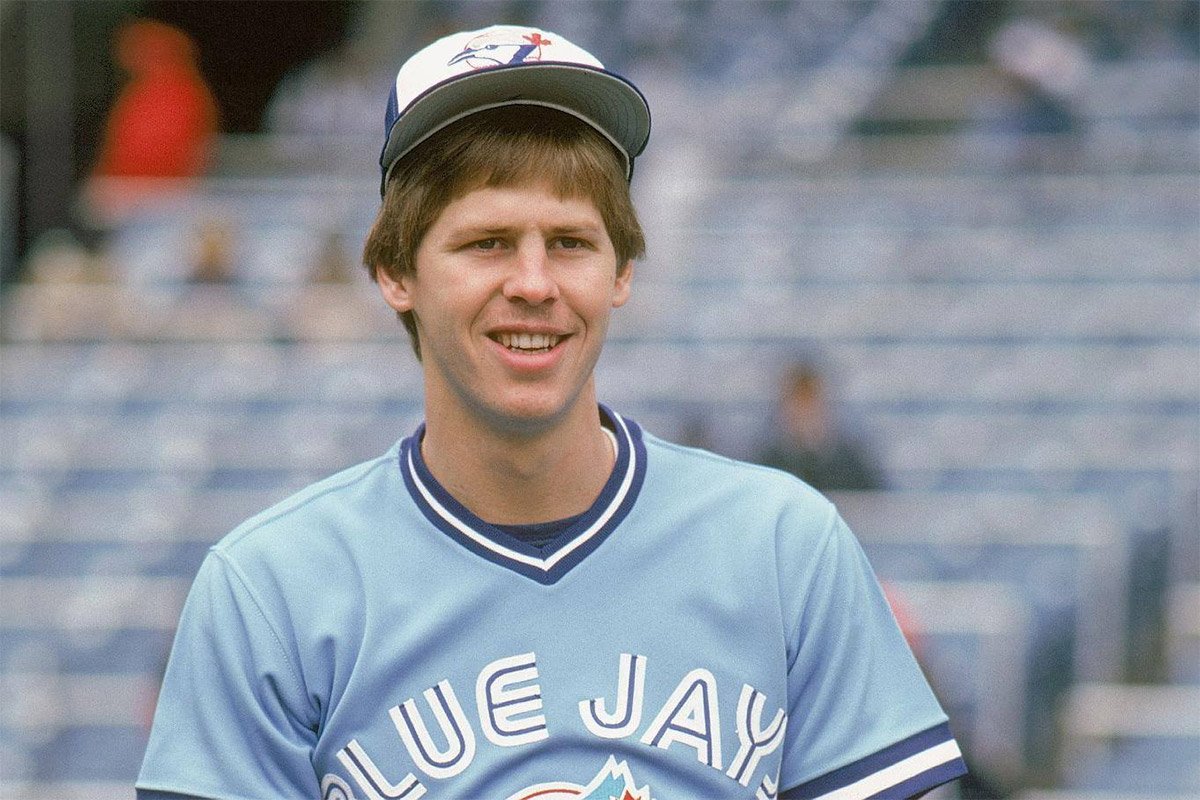 When we talk about the greatest athletes in the past one hundred years, certain names come up quickly. For me, the greatest athlete of my lifetime has been Bo Jackson. Deion Sanders falls a close second. Brian Jordan is a name that doesn’t get mentioned enough. Hockey fans might want to include Wayne Gretzky or Sidney Crosby in the discussion. How about Eric Lindros? He’s even got a baseball card of him taking batting practice. Somewhere down the list, you have to consider former Blue Jays infielder Danny Ainge, right? The Blue Jays drafted him in the 15th round of the 1977 MLB draft out of high school in Eugene, Oregon. The Jays first seven selections in that draft never saw the big leagues. Jesse Barfield was picked in the eighth round and obviously went on to a very strong baseball career. In high school, he was an All American on both offense (Wide Receiver) and defense (defensive back). And that was his third-best sport. He signed with Toronto but also headed to Brigham Young University where he averaged 38 minutes played in 30 games as a freshman on the basketball team and averaged 21 points, nearly six rebounds and over five assists and two steals per game. Feeling the need to keep Ainge happy, the Blue Jays had Ainge start his professional baseball career in the spring of 1978 by sending him straight to Triple-A Syracuse. In 119 games, the then-19-year-old hit just .229/.263/.291 (.553) with 10 doubles and four home runs. He returned to BYU and in his sophomore season, he averaged 18 points, 4.5 rebounds and about two assists per game. In 1979, Ainge again began the season in Syracuse. In 27 games, he hit .248/.309/.327 (.636) with four doubles and two triples. In mid-May, the Jays decided to call him up to the big-league club. After primarily playing shortstop as an amateur and in his pro debut in 1978, he came up as the team’s second baseman. In 87 games, he hit .237/.269/.286 (.554) with seven doubles, a triple, and two home runs. He played solid defense, posting a .977 fielding percentage. In his MLB debut, he went 3-for-4 with three runs scored and an RBI. He grounded out off of Rick Wise in his first at-bat. An inning later, he gave the Jays a 4-1 lead with an RBI single off of Wise. He added a seventh-inning single off of Don Hood, and in the eighth frame, he singled off of Victor Cruz. The next day, he went 2-for-4 with another RBI. In the bottom of the second inning, he singled to score John Mayberry and give the Jays a 1-0 lead off of Mike Paxton. He singled again in the fourth inning and scored on an Alfredo Griffin double that ended Paxton’s day. After batting ninth in the first two games, he was moved to the leadoff spot. He responded by going 1-for-2 with a walk (and a sacrifice bunt). On June 2, Toronto was in Seattle. Leading off the top of the seventh inning, Ainge ripped a shot to left field off of Mariners reliever Joe Decker for his first MLB home run. At 20 years and 77 days, he remained the youngest Blue Jays player to hit a home run until Vlad Guerrero, Jr., hit one at 20 years and 59 days. He added his second homer in late August, again in Seattle - and again in the seventh inning. This time he hit it off of John Montague. Following his rookie season, he again returned to Brigham Young where he averaged 19 points, four rebounds and five assists over 29 games. In 1980, he split his time between the big leagues and Triple-A. In his 38 MLB games, he hit .243/.263/.315 (.579) with six doubles and a triple. He played mostly at third base and struggled a bit at the hot corner. In his senior season at BYU, he played in 32 games and averaged 24.4 points, 4.8 rebounds, and 4.0 assists. He was a consensus first-team All-American with Isiah Thomas, Mark Aguirre, Ralph Sampson and Steve Johnson. He won the Wooden Award as the nation’s top player. He was drafted in the second round by the NBA’s Boston Celtics with the 31st overall pick in the 1981 draft. He spent the 1981 season with the Jays and in 86 games, he hit just .187/.258/.228 (.486) with six doubles and two triples. However, it’s not as if Toronto was going to give up on him. He was still just 22 years old. As he acknowledged at the time, “I’ve failed at things before. I think I’ve failed at baseball the last three years.” In fact, just days after the conclusion of the 1981 season. According to the Sports Illustrated vault, he voluntarily retired from baseball saying, “As far as I’m concerned, I’m not a part of the Toronto Blue Jays. I’m going home to Utah to get in shape for basketball. I’m retired from baseball.” He wanted to play in the NBA. He had seen so much success on the basketball court, and while he was clearly rushed to the big leagues (and Triple-A way too fast by Toronto), the struggles were very real. Scouts had mixed opinions, but most believed that he wouldn’t ever hit enough and didn’t have power or arm strength. He was fast though, and he had a great jump shot. Unfortunately, in his Blue Jays contract, there was a line that said that he could not play basketball. Ainge claimed that they had a verbal agreement to rescind the “no basketball” provision, but the jury sided with Jays’ President Peter Bavasi or VP Pat Gillick. They said the Celtics were guilty of contract interference for negotiating with the shooting guard. The Jays wanted $1 million from the Celtics to release Ainge from the three-year, $525,000 contract. The clause in his contract not allowing him to play pro basketball came with a $300,000 bonus. Ainge offered to give it back. Ultimately the Celtics paid the Blue Jays about $500,000 to get Ainge released so that they could sign him. It’s kind of difficult to argue with his decision. Ainge went on to play 14 seasons in the NBA, the first seven-plus seasons with the Celtics. He also spent time with the Phoenix Suns, Portland Trailblazers and Sacramento Kings. He won two championships with the Celtics, in 1984 and 1986. He was an All Star in 1987. In his career, he averaged about 11.5 points and four assists. However, over a six-season stretch in the middle of his career, he averaged 14.9 points and 5.6 assists per game. He wasn’t afraid to scrap a bit, fitting in well with the 1980s NBA. Since his playing career, he has remained in the game, and remained busy. He spent time as a head coach. He has been an analyst on TV. He was later hired by the Celtics and Executive Director of Basketball Operations and was maybe even more aggressive making transactions as he was playing the game. However, in 2008, he put together an NBA championship team for the Celtics. He has spent the past few years as the CEO of the Utah Jazz. Yeah, I would say basketball was the right choice for him. But we shouldn’t forget his years with Toronto. He was an All American on both side of the football field in high school… and that was his third-best sport. He got to the big leagues in baseball, and certainly could have stayed their longer. And he still had a 14-season NBA career, an industry that has kept him active for the nearly 30 years since he played his last game. MLB and NBA Cross-Overs It seems like there was more people who played Major League Baseball and in the NBA in the 1940s through early 60s. It was the early years of the NBA and baseball was still king. Since Danny Ainge 40 years ago, there haven’t been many who even got close to playing in both. There is a Blue Jays tie with the most recent player to do it. Mark Hendrickson, a 6’-9” southpaw, pitched for the Blue Jays from his MLB debut in 2002 and again in 2003. He went 12-9 with a 4.94 ERA over 195 innings before being traded. He spent time with the Rays, Dodgers, Marlins and Orioles over a 10-year career. Before that, he had spent four seasons in the NBA, spending time with the Philadelphia 76ers, Sacramento Kings, New Jersey Nets and Cleveland Cavaliers.
 -
Come up with a list of the top athletes of all-time? Often times Danny Ainge doesn't get mentioned, but he probably should. When we talk about the greatest athletes in the past one hundred years, certain names come up quickly. For me, the greatest athlete of my lifetime has been Bo Jackson. Deion Sanders falls a close second. Brian Jordan is a name that doesn’t get mentioned enough. Hockey fans might want to include Wayne Gretzky or Sidney Crosby in the discussion. How about Eric Lindros? He’s even got a baseball card of him taking batting practice. Somewhere down the list, you have to consider former Blue Jays infielder Danny Ainge, right? The Blue Jays drafted him in the 15th round of the 1977 MLB draft out of high school in Eugene, Oregon. The Jays first seven selections in that draft never saw the big leagues. Jesse Barfield was picked in the eighth round and obviously went on to a very strong baseball career. In high school, he was an All American on both offense (Wide Receiver) and defense (defensive back). And that was his third-best sport. He signed with Toronto but also headed to Brigham Young University where he averaged 38 minutes played in 30 games as a freshman on the basketball team and averaged 21 points, nearly six rebounds and over five assists and two steals per game. Feeling the need to keep Ainge happy, the Blue Jays had Ainge start his professional baseball career in the spring of 1978 by sending him straight to Triple-A Syracuse. In 119 games, the then-19-year-old hit just .229/.263/.291 (.553) with 10 doubles and four home runs. He returned to BYU and in his sophomore season, he averaged 18 points, 4.5 rebounds and about two assists per game. In 1979, Ainge again began the season in Syracuse. In 27 games, he hit .248/.309/.327 (.636) with four doubles and two triples. In mid-May, the Jays decided to call him up to the big-league club. After primarily playing shortstop as an amateur and in his pro debut in 1978, he came up as the team’s second baseman. In 87 games, he hit .237/.269/.286 (.554) with seven doubles, a triple, and two home runs. He played solid defense, posting a .977 fielding percentage. In his MLB debut, he went 3-for-4 with three runs scored and an RBI. He grounded out off of Rick Wise in his first at-bat. An inning later, he gave the Jays a 4-1 lead with an RBI single off of Wise. He added a seventh-inning single off of Don Hood, and in the eighth frame, he singled off of Victor Cruz. The next day, he went 2-for-4 with another RBI. In the bottom of the second inning, he singled to score John Mayberry and give the Jays a 1-0 lead off of Mike Paxton. He singled again in the fourth inning and scored on an Alfredo Griffin double that ended Paxton’s day. After batting ninth in the first two games, he was moved to the leadoff spot. He responded by going 1-for-2 with a walk (and a sacrifice bunt). On June 2, Toronto was in Seattle. Leading off the top of the seventh inning, Ainge ripped a shot to left field off of Mariners reliever Joe Decker for his first MLB home run. At 20 years and 77 days, he remained the youngest Blue Jays player to hit a home run until Vlad Guerrero, Jr., hit one at 20 years and 59 days. He added his second homer in late August, again in Seattle - and again in the seventh inning. This time he hit it off of John Montague. Following his rookie season, he again returned to Brigham Young where he averaged 19 points, four rebounds and five assists over 29 games. In 1980, he split his time between the big leagues and Triple-A. In his 38 MLB games, he hit .243/.263/.315 (.579) with six doubles and a triple. He played mostly at third base and struggled a bit at the hot corner. In his senior season at BYU, he played in 32 games and averaged 24.4 points, 4.8 rebounds, and 4.0 assists. He was a consensus first-team All-American with Isiah Thomas, Mark Aguirre, Ralph Sampson and Steve Johnson. He won the Wooden Award as the nation’s top player. He was drafted in the second round by the NBA’s Boston Celtics with the 31st overall pick in the 1981 draft. He spent the 1981 season with the Jays and in 86 games, he hit just .187/.258/.228 (.486) with six doubles and two triples. However, it’s not as if Toronto was going to give up on him. He was still just 22 years old. As he acknowledged at the time, “I’ve failed at things before. I think I’ve failed at baseball the last three years.” In fact, just days after the conclusion of the 1981 season. According to the Sports Illustrated vault, he voluntarily retired from baseball saying, “As far as I’m concerned, I’m not a part of the Toronto Blue Jays. I’m going home to Utah to get in shape for basketball. I’m retired from baseball.” He wanted to play in the NBA. He had seen so much success on the basketball court, and while he was clearly rushed to the big leagues (and Triple-A way too fast by Toronto), the struggles were very real. Scouts had mixed opinions, but most believed that he wouldn’t ever hit enough and didn’t have power or arm strength. He was fast though, and he had a great jump shot. Unfortunately, in his Blue Jays contract, there was a line that said that he could not play basketball. Ainge claimed that they had a verbal agreement to rescind the “no basketball” provision, but the jury sided with Jays’ President Peter Bavasi or VP Pat Gillick. They said the Celtics were guilty of contract interference for negotiating with the shooting guard. The Jays wanted $1 million from the Celtics to release Ainge from the three-year, $525,000 contract. The clause in his contract not allowing him to play pro basketball came with a $300,000 bonus. Ainge offered to give it back. Ultimately the Celtics paid the Blue Jays about $500,000 to get Ainge released so that they could sign him. It’s kind of difficult to argue with his decision. Ainge went on to play 14 seasons in the NBA, the first seven-plus seasons with the Celtics. He also spent time with the Phoenix Suns, Portland Trailblazers and Sacramento Kings. He won two championships with the Celtics, in 1984 and 1986. He was an All Star in 1987. In his career, he averaged about 11.5 points and four assists. However, over a six-season stretch in the middle of his career, he averaged 14.9 points and 5.6 assists per game. He wasn’t afraid to scrap a bit, fitting in well with the 1980s NBA. Since his playing career, he has remained in the game, and remained busy. He spent time as a head coach. He has been an analyst on TV. He was later hired by the Celtics and Executive Director of Basketball Operations and was maybe even more aggressive making transactions as he was playing the game. However, in 2008, he put together an NBA championship team for the Celtics. He has spent the past few years as the CEO of the Utah Jazz. Yeah, I would say basketball was the right choice for him. But we shouldn’t forget his years with Toronto. He was an All American on both side of the football field in high school… and that was his third-best sport. He got to the big leagues in baseball, and certainly could have stayed their longer. And he still had a 14-season NBA career, an industry that has kept him active for the nearly 30 years since he played his last game. MLB and NBA Cross-Overs It seems like there was more people who played Major League Baseball and in the NBA in the 1940s through early 60s. It was the early years of the NBA and baseball was still king. Since Danny Ainge 40 years ago, there haven’t been many who even got close to playing in both. There is a Blue Jays tie with the most recent player to do it. Mark Hendrickson, a 6’-9” southpaw, pitched for the Blue Jays from his MLB debut in 2002 and again in 2003. He went 12-9 with a 4.94 ERA over 195 innings before being traded. He spent time with the Rays, Dodgers, Marlins and Orioles over a 10-year career. Before that, he had spent four seasons in the NBA, spending time with the Philadelphia 76ers, Sacramento Kings, New Jersey Nets and Cleveland Cavaliers. View full article