


Seth Stohs
-
Posts
49 -
Joined
-
Last visited
Seth Stohs's Achievements


-
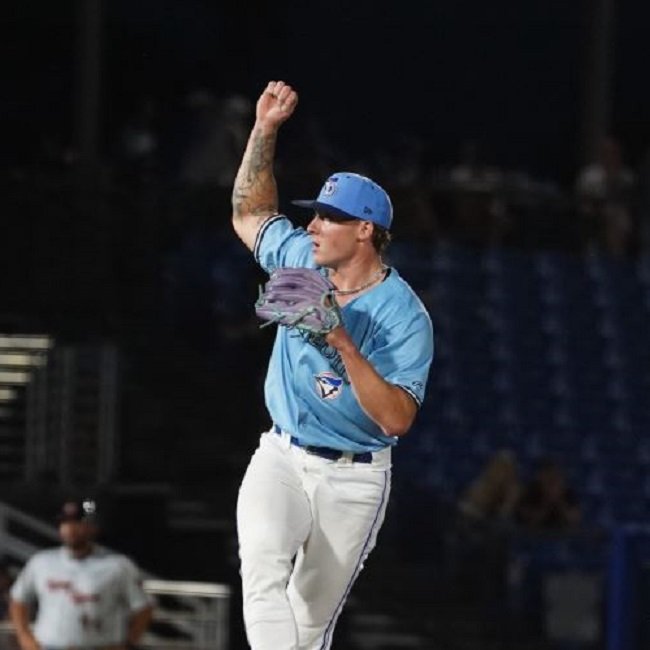 Another breakout prospect for the Jays in 2025, Gage Stanifer went from an unknown 19th-rounder to a borderline top-100 prospect. Prior to the 2025 season, Stanifer struggled in the Florida Complex League and Single A, pitching to an ERA over 6.00 across his first two professional seasons. Despite decent stuff, he walked a lot of batters. In 2025, Stanifer set a career high in innings pitched, with 110, and went from Single-A Dunedin up to Double-A New Hampshire, mainly piggybacking off of Trey Yesavage. He’s expected to start the 2026 season back at Double A. One of the big things that stood out for Stanifer from his previous seasons, compared to 2025, was that he was able to make significant gains in velocity after a very productive offseason. Stanifer went from sitting 92 mph on his four-seam fastball to 95 mph. The shape of his fastball was also still very solid, with 17.8 inches of vertical break and 12.6 inches of run, and because it was such an effective offering for him, and because he could consistently throw it for strikes, Stanifer threw it over two-thirds of the time in Dunedin. His main secondary, thrown more against righties than lefties, is a slider that gets more depth than normal, which gives it a sort of “deathball” shape (-5.1 inches of vertical break). It was extremely effective as a whiff generator, but Stanifer could sometimes lose the zone with it, too often leading to middling chase rates. His third pitch is a split-changeup that’s still a work in progress. The shape is intriguing, with 15 inches of vertical separation from his fastball and nearly 14 inches of fade, but he’s still developing a feel for it. He only throws it to lefties, making him nearly a two-pitch pitcher against each handedness of hitter. Stanifer’s arsenal and stuff propelled him to the top of the minor league leaderboards, as out of all qualified minor league pitchers, he led the pack with an absurd 35.5% K-rate, above the Cardinals’ Braden Davis and the Yankees’ Carlos Lagrange. The stuff did tick down in spring training a bit — Stanifer’s velo was not where it was in the 2025 season — leading to some poor results, but he assuaged the velo drop off with an electric Spring Breakout performance against the Phillies, striking out four batters in three scoreless innings while only giving up a single walk. The Phillies’ announcers sang his praises throughout, and his velo ticked back up; he sat 95.6 mph and touched 97.4 mph with his four-seamer. Stanifer does have some concerns going forward, however. Although he has reined in the walks, he still walks over 10% of the batters he faces, which is fringy for a starting pitcher. Scouts also have concerns about the repeatability of the delivery. Those concerns could take his outlook from a solid fourth starter to more of a back-end bullpen piece. Stanifer may also want to add a pitch or more to his arsenal to better fit the role of a starter. Although his three-pitch mix has shown effectiveness already, he may need more weapons going forward. A bridge pitch like a cutter could provide that for him. Stanifer will start the season in Double-A New Hampshire and will be challenged against upper-level hitters again. The Jays currently have a crowded rotation, but there’s the slightest chance that Stanifer could make his MLB debut this season as a reliever if he progresses well and the Jays need some extra firepower in the ‘pen.
 -
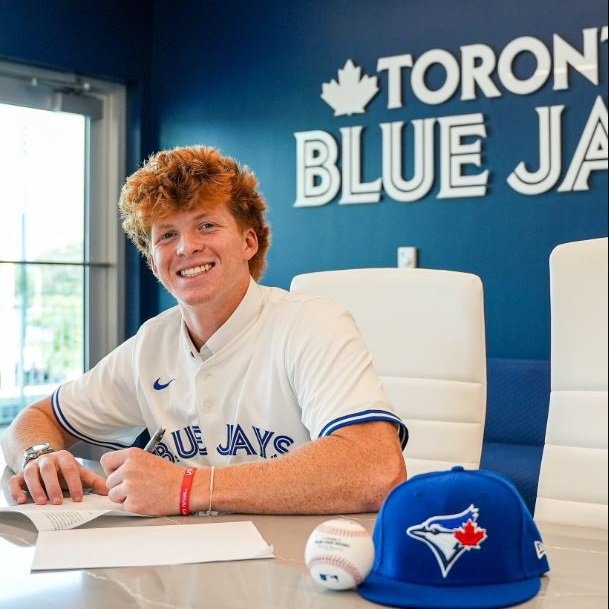 At just 19 years old, Johnny King is the epitome of a starting pitcher in stature, standing 6-foot-3 and weighing 210 pounds. He was drafted by the Toronto Blue Jays during the 2024 MLB draft in the third round, 95th overall. He kicked off his minor league career with a stellar performance in the Florida Complex League last season. He completely dominated hitters across seven games and 24 innings. His ERA was 1.13, with his FIP and xFIP equally standing out at 1.53 and 1.83, respectively. What should be highlighted above all was his propensity to strike batters out. He was one of the best strikeout pitchers in Rookie ball, ending his time there with a 41.8% strikeout rate. He was able to pair that with solid command as well, only walking 7.1% of the batters he faced. King was quickly promoted to Single-A Dunedin and continued to show a top-notch ability to generate whiffs. Over 11 games and 37.2 innings to finish the season, he struck out 38.1% of hitters as an 18-year-old facing mostly more advanced batters. He didn't give up many hits either, only seeing his batting average against rise from .195 at Rookie ball up to .201 at Single A. His ERA and FIP took a jump up, to 3.35 and 4.24, respectively. The main issue with the promotion was that his command routinely slipped at Single A. He had a somewhat concerning 17.1% walk rate, though he was able to finish the season strong, with a 4.2-inning performance, giving up just one hit and zero earned runs, while striking out seven and walking three. What To Like As an 18-year-old last season, King showed a rare ability to have exceptional stuff at such a young age and to be able to command it enough to strike out hitters at Single A. He has a great frame and still projects to get stronger and add velocity on his fastball. He already possesses two plus pitches in his four-seam fastball and curveball. Both were virtually unhittable in 2025, with the fastball having a batting average against of .213 and a whiff rate of 36.3%. The pitch has very good ride up in the zone, and he generates close to 18 inches of induced vertical break on it. The curveball had one of the best whiff rates in the minor leagues at 49.4%, and hitters could only hit .193 off of the pitch. King also gets above-average extension on the pitches, in the range of 6.5 feet. That will give him an exceptional base to pitch from to continue improving his repertoire as he gets older. His third pitch was his changeup, and while decent, it needs some work. It was a good pitch, which he used to limit the success of batters, but he didn't get as many swings and misses on it, with only a 22.2% whiff rate at Single A. It is a great pitching foundation to have two plus pitches to go with a third serviceable one, something not often seen from an 18-year-old. What To Work On As the season wore on, King's command took a hit, and his walk rate was simply worrisome at times. Jumping from 7.1% at Rookie ball up to 17.1% at Single A shows he needs to work on getting batters out in the zone to go with his elite ability to generate swings and misses. His 60% strike rate at Single A was in the 39th percentile in the minor leagues and will need to take a step up if he is to continue to get older hitters out while moving up levels. Another area King will need to focus on in 2026 will be getting hitters back on the ground. When he jumped from Rookie ball to Single A, his groundball rate dropped from 59.1% to 33.8%. He will want to get batters to hit the ball on the ground more like he did at the start of his 2025 season, to help limit damage overall. What Is Next King will begin the 2026 season at High-A Vancouver. It could be a rocky/challenging start given the wild Northwest weather this time of year, but he has the potential to vault up prospect rankings due to his young age and plus stuff on the mound. If everything goes right for him, expect him to spend a couple of months at High A before getting a late-season crack at Double-A New Hampshire. Everything is pointing towards a huge season for him, and he could be the next great pitching prospect in the Toronto Blue Jays organization.
 -
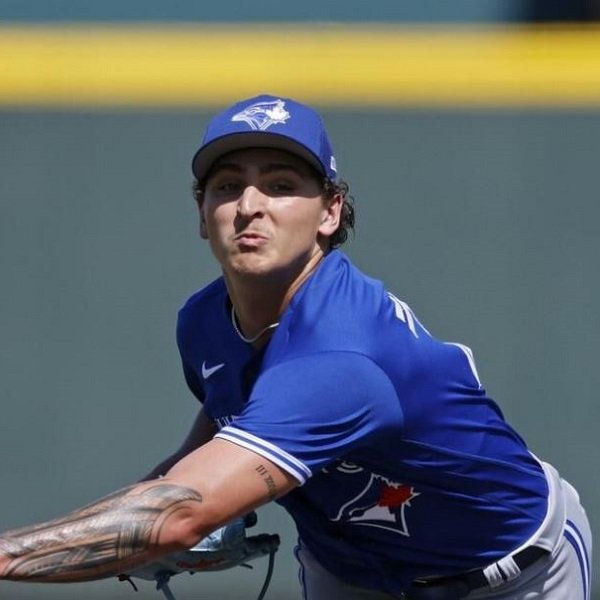 It has been a long time since we have seen Ricky Tiedemann pitch in a game. The once top prospect for the Toronto Blue Jays has had setback after setback with an arm injury, as he last pitched on June 10, 2024. Although the talent is undeniable, the question regarding his health remains ever the issue. Tiedemann was added to the 40-man roster prior to the Rule 5 draft in order to protect him from getting selected by other teams, but that has now started the clock for him, and the Jays need to see real production out of him before he runs out of option years, The easiest way for Tiedemann to do that is to show that he’s healthy and that his stuff remains as nasty as it was pre-elbow surgery. Unfortunately for Tiedemann, every time that it has felt like he would have a chance to show his skills, he has instead faced a setback. He was unable to pitch in the Arizona Fall League, and despite a full offseason of rest, he had another setback before spring training, forcing him to miss that as well. Before the injury, Tiedemann showed two plus pitches. His fastball sat in the mid-90s and touched 98 mph, with solid ride and a lot of run. He also threw a sweeper with nasty break as his main secondary pitch, but recent reports say that he’s now throwing a different type of slider that will have more velo and have less break in order to reduce injury risk. His changeup was his best pitch out of JuCo, but it took a step back compared to his other pitches as he progressed. Tiedemann is still a physical specimen, standing 6-foot-4 and weighing over 250 lbs, and his whippy arm action creates a ton of deception out of his lower slot. He showed decent command in 2022 and 2023, but as injury concerns popped up, so did walk issues. A lack of reps will most likely cause him to struggle even more with command when he comes back, as he’ll need to regain a feel for his delivery. Tiedemann started the 2026 season on the 7-day injured list, and given his injury history, the Jays are rightfully starting him slowly. He’ll be used mostly in a bulk relief role; his potential as a strong mid-rotation pitcher is tantalizing, but the lack of a clean bill of health and all the time he's missed mean his injury risk is high. If the Jays want to prioritize winning now, they might use him as a reliever in the final stretch instead of focusing primarily on his development. If Tiedemann can stay healthy, however, he may finally showcase the potential that he flashed when he last pitched nearly two years ago.
 -
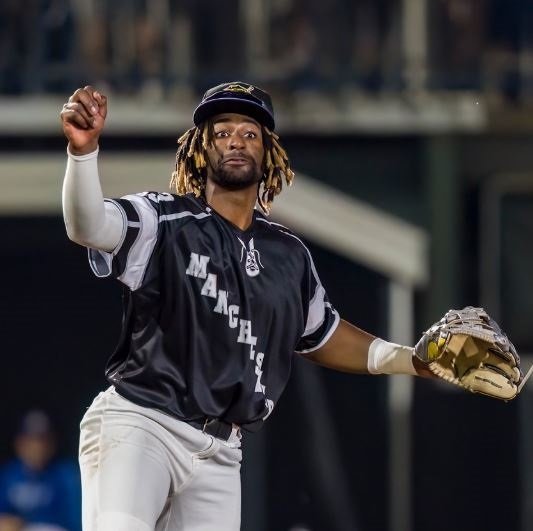 McAdoo has put in a lot of miles to make it to Toronto, and that's just to get to his team's home ballpark. Being from Walnut Creek, California, he opted to play college baseball just down the road at San Jose State University (SJSU). His journey then took him across the country when the Pittsburgh Pirates drafted him in the 13th round of the 2023 MLB draft. There wasn't a lot of fanfare surrounding him coming out of college; he had a solid bat but barely anything else to his profile at the time. After a season and a half with the Pirates and playing in Bradenton, Greensboro, and Altoona, he popped up on the Toronto Blue Jays radar as the trade deadline for the 2024 season approached. He ultimately landed in the Toronto organization as the return piece for Isiah Kiner-Falefa. His next location would be his first stop within his new organization, New Hampshire. Before the trade to the Blue Jays, he was having a breakout year, hitting .320/.399/.556 across High-A and Double-A. He also added 15 home runs, 23 doubles, and stole 17 bases across 88 games. To that point of his 2024 season, he had a robust 167 wRC+, but his bubble burst following the trade. He would get into 37 games for New Hampshire and hit .185/.287/.323 for a 79 wRC+. He only added three more home runs and four stolen bases to cap off his whirlwind of a year. What To Like McAdoo has a profile that has evolved over the years and is now one to dream about making his way to the Rogers Centre. He has developed above-average power and speed to add to his aforementioned solid bat. In his junior year at SJSU, he hit 10 home runs in 58 games and five home runs in 28 games at Low-A. Then, last season, he would crush nine home runs at High-A (60 games) before adding another eight at Double-A (64 games). While at High-A, he was among the top percentile ranks in almost every statistical category while being above average in chase rate, whiff rate, walk rate, and strikeout rate. The only real hole in his swing was up and in. He showed excellent plate coverage and stood out among his peers. After a promotion to Double-A, he was challenged much more and had problems with the pitches down in the zone. This could have resulted from him adjusting to being traded and trying to do more damage than was possible on the low pitches. The power remained consistent behind his quick hands and solid base. This gives him above-average power to the opposite field, and the results on the field followed suit, with six of his 17 home runs going to right field. When locked in, McAdoo controls the zone with his bat, and quick hands allow him to cover most of the plate at an elite level. In 2024, 54.2% of his batted balls went up the middle or to right field. This approach, coupled with his fast hands, drives his opposite-field power. He can stay back longer and let the ball travel more, giving him the time to make better decisions. He then can launch the barrel through the zone to make great contact. Here is another one of his opposite-field home runs that looks so effortless for him. What To Work On McAdoo had an excellent 2024 season, but as with any player in the minor leagues, there are always things to improve upon on the quest to play at the top level of the sport. After jumping from High-A to Double-A, he saw more struggles than ever before. Those struggles compounded on themselves after his trade to Toronto. He started missing the ball a lot more; his contact rates fell from 78.2% at High-A to 71.8% at Double-A with Pittsburgh and then dropped even further to 66.8% with Toronto. These heat maps from Donald Stricklin Analytics show how McAdoo struggled with the pitches down in the zone. This coincided with an increase of about 5% in his pull rates from High-A to Double-A. It could be as simple as him opening up more to try and impress his new team with some power or concerning things like struggling with breaking pitches at the more advanced levels. Regardless of the underlying reason for his drop across the board at Double-A in 2025, he needs to settle back into a middle-away approach and drive the ball where it's pitched. In the field, he needs to stay the course at third base. In 2024, he only recorded seven errors at third, which is by far his best position. Toronto did have him play right field and first base, to try and give him more opportunities at playing time in the future. He struggled a little at first base and recorded an error in the three games he was in. If Toronto does indeed have thoughts of him playing more positions in 2025, he will need to shore up his skill at first base and in right field. What's Next 2025 could be the pivotal year for McAdoo, and I know that is said a lot. With his abysmal debut at Double-A for Toronto, he needs to bounce back and show the team the player they traded for. A trip back to Double-A New Hampshire will do him wonders. If he can adjust similarly to how he did at High-A last year, he should get a mid-season promotion to Triple-A Buffalo. Then, who knows, a cup of coffee with the big league club is not out of the cards for him. Expect his arrival to be more along the lines of in the summer of 2026, barring anything unexpected.
 -
Johnny KingJoJo ParkerNolan PerryCole CarlonSean KeysJake CookWill BrickDasan HillBlaine BullardTy SouthiseneJuan SanchezGage StaniferCharles McAdooBrett BatemanDaniel GuerraDameury PenaRicky TiedemannVictor AriasJohn KleinJake Bloss
-

Brett Bateman Is Getting Called Up to the Blue Jays
Seth Stohs replied to Bryan Jaeger's topic in Toronto Blue Jays Talk
-
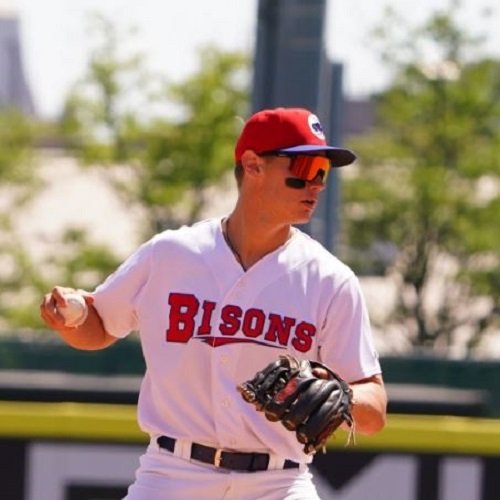 Josh Kasevich was selected by the Toronto Blue Jays in 2022 during the second round of the MLB draft. He is now a 6-foot-1, 200-pound, 25-year-old shortstop who is one call from the major leagues. Since being drafted, he has shown an ability to thrive as a defense-first prospect, but one who can produce the necessary numbers as a hitter as well. In his first three seasons following being drafted, he would routinely hit near .300 and not strike out a lot. His strikeout rates ranged from 7.4% at Single A to 14.5% at Triple A. In 2024, his slash line at Triple-A was .325/.382/.433, with a 120 wRC+. 2025 was a lost year for Kasevich, as he only managed to play in 42 minor league games, 13 of them on rehab assignments between Rookie ball and Single A. In his 29 Triple-A games, he would slash .173/.272/.184, for a 34 wRC+. It was a year to forget for him, but the good in all of this is that he appears to be healthy and having a good spring training. Gearing up for a potential rebound year in 2026, he is hitting .333 over 13 spring training games (as of March 12). 2026 should see Kasevich start back out at Triple-A Buffalo, where he will need to show he is healthy and back to having a plus hit tool. When everything is going well for him, he is an Ernie Clement clone, who will provide plus defense and do enough with the bat to stick in the lineup if needed. He won't show much power, but a bat that will limit the strikeouts is right in the Blue Jays’ wheelhouse nowadays.
 -
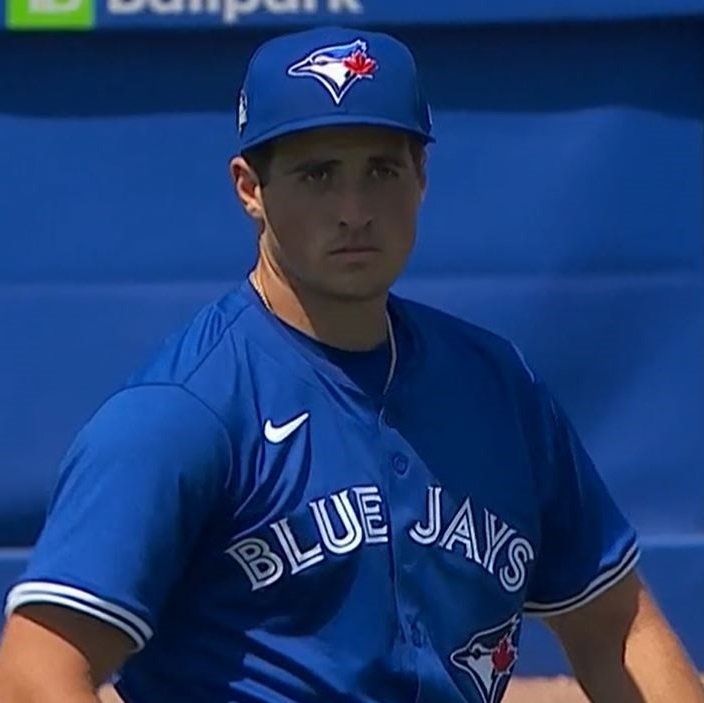 After a four-year college career, where he played three years at Lafayette and one year at Georgetown, Bloss was drafted in the third round of the 2023 MLB draft by the Houston Astros. After some token innings to end the season at Rookie ball and Single-A Fayetteville, he would start the 2024 season at High-A Asheville. In his first full professional season, he would accomplish a feat virtually unheard of in today's baseball world. He would play in games at four different levels, including the major leagues, and for two different teams after being traded to the Toronto Blue Jays at the trade deadline. In the minor leagues that season, he pitched in 21 games for a total of 93.1 innings, amassed a 3.18 ERA, and a 3.92 FIP. He had a 23.3% strikeout rate, a 9.5% walk rate, and a 1.07 WHIP. His time in the major leagues for Houston was not nearly as rosy. In three starts (11.2 innings), he had a 6.94 ERA and an insane 7.92 FIP. In 2025, Bloss was looking to get back on track at Triple-A Buffalo for the Toronto Blue Jays and even make it back to the major leagues. However, fate intervened when he had Tommy John surgery after just six starts. Those six outings were rough to say the least; he had a 6.46 ERA in 23.2 innings, but a more respectable 4.76 FIP. His season would end with him having a 20.9% strikeout rate and a walk rate that ballooned to 11.3%. He had begun to turn a corner before his injury; in two of his last three starts, he went a total of nine innings, didn't give up an earned run, and struck out 12. What To Like Bloss has a very big pitch arsenal for a pitcher in the minor leagues. He used five pitches in 2025, with his four-seam fastball grading out as one of his best pitches. He sat just under 94 mph with the offering and averaged 18.3 inches of induced vertical break (IVB). His above-average extension of 6.9 feet also helps to boost how the fastball plays against hitters. It works to give him the appearance of a slightly faster pitch, and when coupled with his high IVB, makes his fastball a near plus offering. His other nearly elite pitch was actually his curveball, which he only used 12.4% of the time. What he was doing well with his pitches in 2025 was setting up batters with his fastball high and then getting swings and misses down in the zone from his secondaries. He had 55.6% and 73.3% whiff rates just below the zone on each side of the plate. It can also be seen in his 13.2% swinging strike rate (SwStr%), which was his highest mark since his debut in 2023. What To Work On Bloss has a daunting task ahead of him. Not only does he have to rehab and return healthy from Tommy John surgery, but he also has to get back to what made him so good in 2024. The first thing he will have to do is focus his control/command, which will help him to miss less often high and to the arm side. The vast majority of his pitches in 2025 were missed there, and it undoubtedly led to his 11.3% walk rate (41st percentile). He also needs to stay away from the middle of the zone with his pitches, where he gave up high slugging rates. He needs to work hitters down in the zone and on the edges, as his pitches give him the best success when located there. One of the easier, but most effective things he can improve on is his first pitch strike rate (F-Strike%). In 2025, his F-Strike% sat at 47%; in 2024, it was 51.2% in the minors and 60% during his three starts in the majors. What's Next? Bloss is still working his way back from Tommy John surgery and, as such, won't likely return to games until late in the season, if at all this year. He is still one of the better starting pitching prospects in the Blue Jays organization and will immediately look to regain the 2024 form that saw him shoot all the way up to the major leagues. If he can do so, he will have an upside of a poor man's SP2 but will most likely land as a back-of-the-rotation starting pitcher. He was on the cusp of being a contributor at the major league level, but he will have to get healthy and find the stuff that made him a prized piece at the 2024 trade deadline. It's an uphill battle for him, but he's got all of the talent to get there and maybe even shine while doing so.
 -
Trey YesavageJoJo ParkerJohnny KingArjun NimmalaGage StaniferVictor AriasRicky TiedemannJuan SanchezYohendrick PinangoSean KeysCharles McAdooJake BlossBlaine BullardSilvano HechavarriaDylan WattsJosh KasevichRJ SchreckFernando PerezTim PiasentinJake Cook
-
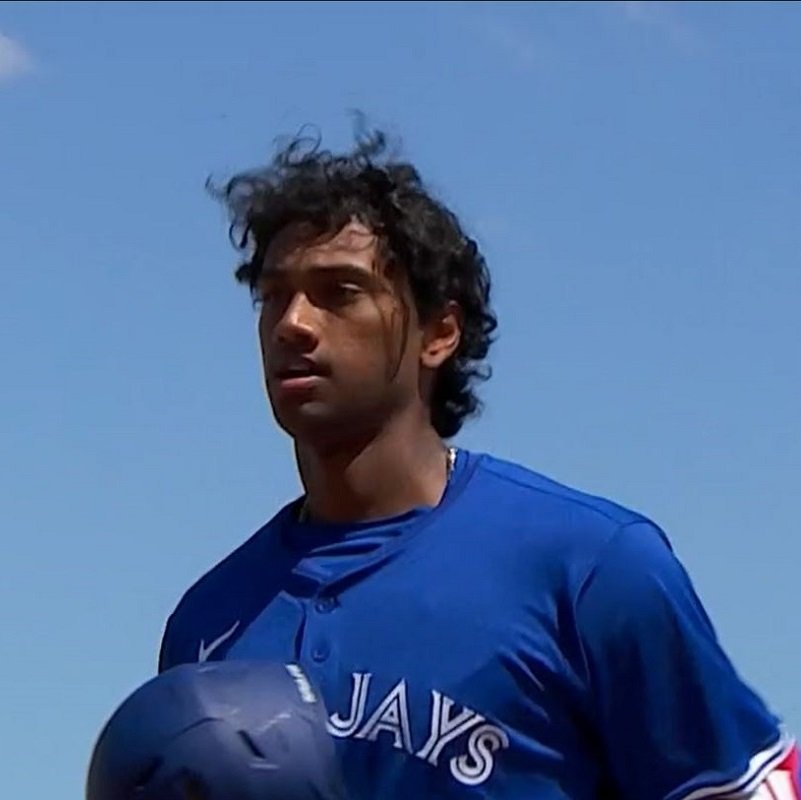 Out of Strawberry Crest High School in Dover, Florida, Nimmala was selected 20th overall in the first round of the 2023 MLB draft by the Toronto Blue Jays. He signed for just $3 million, which was slightly under slot value, but it was more than enough for him to jump into professional baseball and forego playing in college. He managed to get into a few Rookie ball games that same year, collecting five hits across nine games, including a double, triple, and a stolen base. What was extremely impressive during the small sample was his 14 walks, good enough for a walk rate of 35%. It was a sign of his potential talent and gave Blue Jays fans plenty of optimism heading into his first full season the following year. In 2024, the Blue Jays sent Nimmala straight to Single-A Dunedin, where he promptly looked like a stud. In his first three games, he hit a home run, knocked in three, and racked up four hits. For the season, he played in 83 games at the level, slashed .232/.313/.476, and hit 16 home runs. His power was on full display, as he added 17 doubles and six triples to his home run total. In all, he had 39 extra-base hits on the year and was starting to get a ton of national attention in the prospect world. He did, however, show some worrying signs through all of the good; he had a strikeout rate of 31.3% and walked at only an 8.3% clip. His contact rate was also a little low at 69.9%. Then came his 2025 season. Last year was one in which Nimmala saw improvements in some aspects of his game, but regression in others. He played the entire year at High-A Vancouver, where he had 543 plate appearances across 120 games. Health was a bright spot for him, and so was his strikeout rate, which dropped from 31.3% the prior season to 21.4%. Despite the big change in his swing and miss profile, his slash line dipped to .224/.313/.381, and he only had 13 home runs on the season. Nimmala did make up for some of the lack of power with 29 doubles and three triples, but they just don't affect the game as much as the flashy home runs do. He did pick up his impact on the basepaths last year, swiping 17 bags in 20 attempts. His newfound speed adds an extra layer to the multitude of ways he can help his team win games. What To Like Nimmala has loads of power in his bat, and he's shown a tremendous ability to get to it, whether it is in the form of home runs, doubles, or triples. He impacts the game and can do it at an elite level. Last season, his home run total took a step back while at High-A Vancouver, but the 13 home runs he did have were good enough for the 87th percentile in all of the minor leagues. He made up for the drop in home runs by hitting a crazy amount of doubles, 29 (97th percentile). With Vancouver's ballpark being a notoriously pitcher-friendly environment, expect to see some of his home run power return when he moves up a level. However, his home ballpark may not be able to account for all of his dramatic drop in home runs per flyball last year. It could be just a matter of adjusting his swing path to tap back into the juice in his bat, but it is something worth monitoring as he moves through the minor leagues. What To Improve On Despite his budding power, Nimmala has had some issues with his bat-to-ball skills. His contact rate at Single-A Dunedin was 69.9%, and at High-A Vancouver it was 73.6%. He has made some improvements over the years in that arena, but his batting averages are really subpar at best. He's never hit over .232 in a minor league season and needs to make large strides towards improvement in that area in 2026. If he can become a much better contact hitter, his ceiling will drastically jump up into stardom status. Unfortunately, through two seasons so far, he has not shown any signs of becoming better at making more contact, let alone more quality contact. His next stage in development will really hinge on whether or not he can make the improvements needed to become a .250 or .275 hitter, or if his destiny is a profile similar to Lenyn Sosa. What's Next Nimmala is not quite ready for the Double-A level and is back at High-A Vancouver to start the 2026 season. He knows the areas he needs to improve in and what he needs to continue to do well. If he can become a better contact hitter and keep his power going, he has an elite ceiling he can reach. If not, he will be looking more like a platoon bat with power than a star. This season is extremely important to his outlook as a prospect and should give the Blue Jays organization and fans more insight as to what his future trajectory will be.
 -
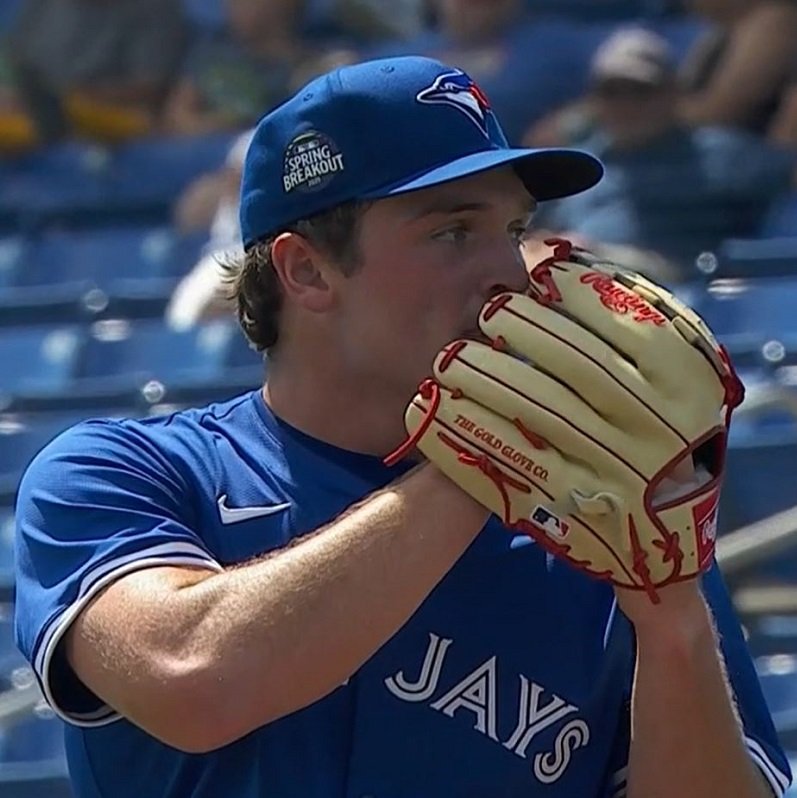 Yesavage made his way to the Toronto Blue Jays organization in 2024, when they drafted him in the first round (20th overall), out of East Carolina University. The Blue Jays opted to hold him out of games that season and then start him at Single-A Dunedin to begin 2025. He started his magical season with a rough game, one in which he walked six batters and showed terrible control. It didn't take long for him to right the ship, as he had three double-digit strikeout games over his next six starts. The phenomenal aspect of those performances might have actually been his control; he only walked two over 29.2 innings in that span. He was then promoted to High-A Vancouver, where the strikeouts continued to rack up, but the walks did as well. He wasn't long for High-A Vancouver, only pitching in four games there, for a total of 17.1 innings, and allowed just three runs. It was then off to Double-A New Hampshire, where he walked 11 batters in his first five starts. Ultimately, he adjusted and found his control again, walking zero over his last three starts there. Triple-A Buffalo was his next stop and proved to be a real challenge for him, as he walked 11 in six appearances and gave up seven earned runs. The Blue Jays were nonetheless ready to get Yesavage to the major league level, having him debut on September 15. It's what happened next that cemented him as a legend to Blue Jays fans. The team made him a part of the postseason roster, and he didn't disappoint, firing 5.1 no-hit innings against the hated New York Yankees and striking out 11 on his way to one of the best performances of the 2025 playoffs. In fact, only he was really able to outdo himself. It took seven innings of three-hit ball against the Los Angeles Dodgers in the World Series to do it. He would end up striking out 12 batters on that magical night in Los Angeles, and while he couldn't help the Blue Jays to the ultimate win, he earned the kind of legendary status that will last all of time. What To Like When you look at Yesavage, the biggest thing to like about him is his swing-and-miss stuff, and he has a lot of it. In the minor leagues during the 2025 season, he had a strikeout rate of 41.1% (100th percentile). In his three games in the majors before the playoffs started, his strikeout rate was 25.8%, and it rose to 35.6% in the playoffs. What makes him so good is that, to pair with his elite strikeout stuff, he is able to keep hitters from making good contact. He held minor league hitters to just a .156 batting average and major league hitters to a .236 batting average. The uniqueness in Yesavage's delivery and his pitch arsenal really drives the whiffs to crazy levels. He has a pitch release of over seven feet, one of the highest in all of baseball. While his arsenal features some really good pitches, he relied mostly on three: a four-seam fastball, a splitter, and a slider. The four-seam fastball had around 19.5 inches of induced vertical break (iVB). Couple that with his release height and attack angle, and it proved to be an extremely difficult pitch for hitters to square up. His splitter was his next best pitch and dove on hitters. With 31.5 inches of actual vertical drop, it was nearly unhittable. His slider became a huge weapon in the playoffs when he lost the command of his splitter; it had the same effect with a different type of break. What To Work On Yesavage really had only one major thing holding him back at times from becoming a star: his control. He tamed it in the playoffs last year, but in the minor leagues in 2025, he had a walk rate of 10.5% (48th percentile). In the majors, it was 11.3% (10.1% in the playoffs), and this year, it has been 12.5% on his rehab assignment. You can see just from his playoff games how vital curtailing the walks is to him becoming an ace starting pitcher. He walked just one in the 11-strikeout game against the Yankees and zero in his 12-strikeout game against the Dodgers in the World Series. In the three starts he made between those games in the playoffs, he walked nine and only struck out a combined 15 hitters. His strike rate in the minor leagues last year was 64.8% (78th percentile). This shows he might be searching for the strikeouts a little too much and could improve his performances by not nibbling on the edges and instead trusting his stuff in the zone a little more. This should also improve his length in games, as he won't rack up as many pitches with deep counts and strikeouts.
 -
 Seth Stohs reacted to a post in a topic:
Trey Yesavage Will Not Sign the Cards You Mail Him
Seth Stohs reacted to a post in a topic:
Trey Yesavage Will Not Sign the Cards You Mail Him
-
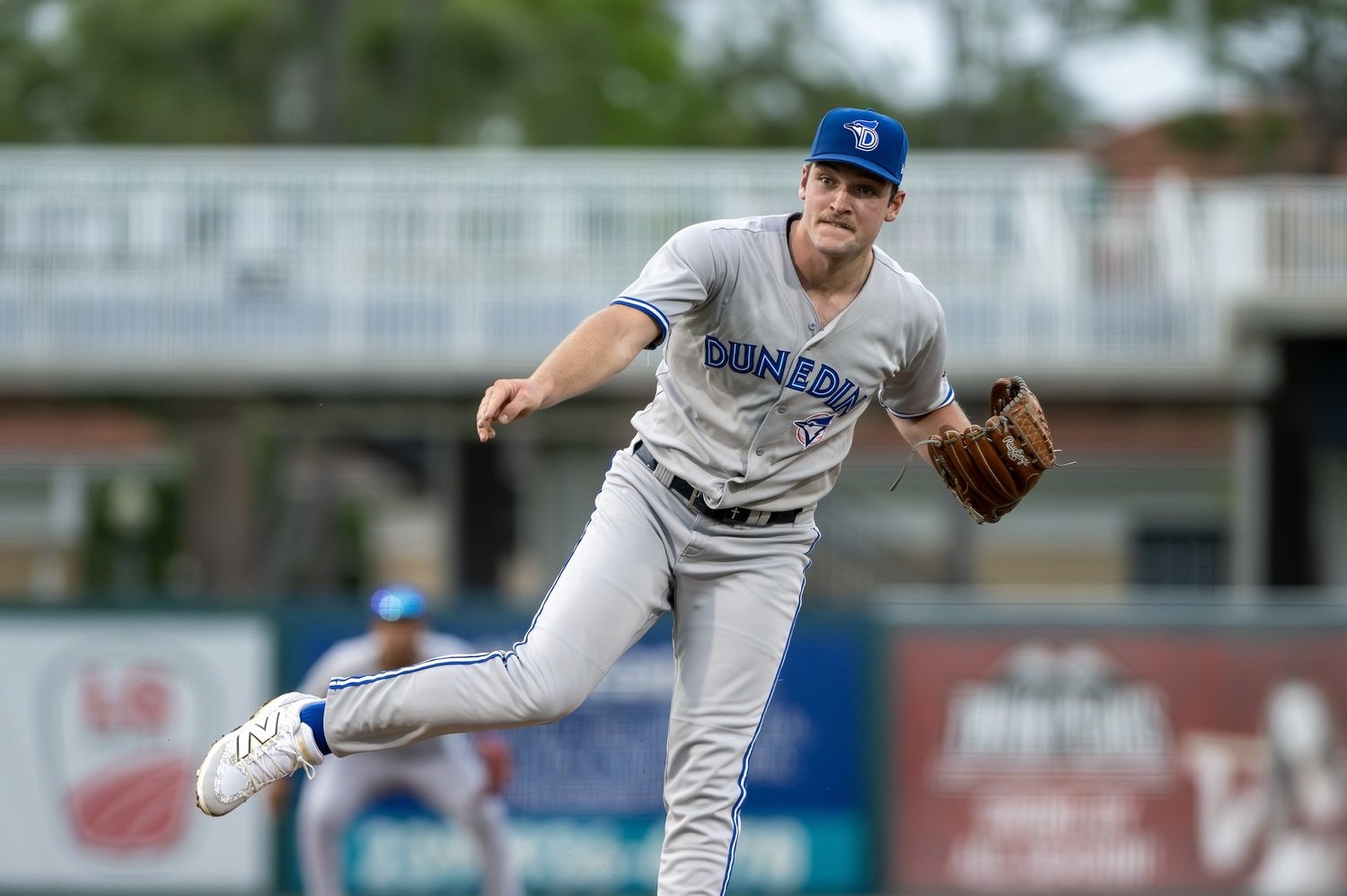 Trey Yesavage started collecting cards about the time that he was called up to the big leagues last year. He collects some baseball cards but also football cards. But, if you want to mail him cards through the mail to sign for you, just don't. On the We the Hobby podcast, Yesavage said that he doesn't collect cards of himself, but he also isn't going to sign cards sent to him through the mail. "People send me my cards in the mail to sign and send back, but I don't sign them. I'll put that out there. if you send them to me, you're not going to get them back. I do keep some of them and give them to my family and whatnot, but I really don't collect any higher-end stuff of myself." He doesn't really explain why he doesn't do it. It doesn't appear to come from a place of anger. In the interview, he just said it simply, straightforward. Does that bother you? Do you care? If you send cards through the mail, what is your expectation for return? Share your thoughts. (time stamp about 16:12) In the 25-minute conversation recorded about a week ago, the Blue Jays (can we call him an Ace yet?) pitcher discussed a number of topics from his rehab, the high moments of the playoffs and his call up, and much, much more.
 -
Trey Yesavage started collecting cards about the time that he was called up to the big leagues last year. He collects some baseball cards but also football cards. But, if you want to mail him cards through the mail to sign for you, just don't. On the We the Hobby podcast, Yesavage said that he doesn't collect cards of himself, but he also isn't going to sign cards sent to him through the mail. "People send me my cards in the mail to sign and send back, but I don't sign them. I'll put that out there. if you send them to me, you're not going to get them back. I do keep some of them and give them to my family and whatnot, but I really don't collect any higher-end stuff of myself." He doesn't really explain why he doesn't do it. It doesn't appear to come from a place of anger. In the interview, he just said it simply, straightforward. Does that bother you? Do you care? If you send cards through the mail, what is your expectation for return? Share your thoughts. (time stamp about 16:12) In the 25-minute conversation recorded about a week ago, the Blue Jays (can we call him an Ace yet?) pitcher discussed a number of topics from his rehab, the high moments of the playoffs and his call up, and much, much more. View full rumor
-
 Spanky__99 reacted to a post in a topic:
The Top 50 Blue Jays of All Time: 10 to 6
Spanky__99 reacted to a post in a topic:
The Top 50 Blue Jays of All Time: 10 to 6
-
 Mike LeSage reacted to a post in a topic:
The Top 50 Blue Jays of All Time: 5 to 3
Mike LeSage reacted to a post in a topic:
The Top 50 Blue Jays of All Time: 5 to 3
-
The Top 50 Blue Jays of All Time: 10 to 6
Seth Stohs replied to Sam Charles's topic in Jays Centre Front Page News
I feel like it's too early for Vlad to be ranked where you've got them. #6 just feels so high for a kid that just turned 27, but as I look at the guys behind him on the list, I wouldn't put any of them ahead of Vladdy. And, having read the final parts of this article, I think he could jump up to #5 quickly, and maybe even #4 by the end of the year. So yes, great job of ranking him... and with 13 more years of service time remaining, it'd be pretty well shocking if he isn't #1. I'd still say maybe 2-3 years to reach #1. #3 was so good. I'd maybe move him up to #2, but not without much debate.- 5 replies
-
- 1
-
-
- dc analysis
- jesse barfield
- (and 4 more)
-
The Top 50 Blue Jays of All Time: 5 to 3
Seth Stohs replied to Mike LeSage's topic in Jays Centre Front Page News
Tony Fernandez was so underrated during his playing days. I think teams understand how good and how important his defense was, but he was unique for an '80s shortstop in that he could hit a bit too.
