


Leo Morgenstern
-
Posts
628 -
Joined
-
Last visited
Content Type
Profiles
Toronto Blue Jays Videos
2026 Toronto Blue Jays Top Prospects Ranking
Toronto Blue Jays Free Agent & Trade Rumors, Notes, & Tidbits
Guides & Resources
2025 Toronto Blue Jays Draft Pick Tracker
News
2026 Toronto Blue Jays Draft Tracker: Picks & Bonuses
Forums
Blogs
Events
Store
Downloads
Gallery
Everything posted by Leo Morgenstern
-
 Speaking to reporters before Tuesday's game against the Tampa Bay Rays, Toronto Blue Jays manager John Schneider revealed that José Berríos is going for an MRI on his pitching elbow. The right-hander has been on the injured list all season with a stress fracture. Although he claimed to feel fully healthy entering the spring, Berríos was shut down after testing revealed the fracture in his elbow. He started a rehab assignment in mid-April. In four minor league outings, he has given up 17 runs in 14.1 innings, struggling with control and failing to miss bats. His velocity was noticeably down in his latest appearance. Presumably, the team will have more information to offer tomorrow. While we can only speculate what this means for Berríos until we learn the results of his MRI, it seems likely that the Jays will need Eric Lauer for at least one more turn through the rotation. View full rumor
 -
The Toronto Blue Jays are one of the best defensive teams in the league. While they didn't claim a third straight Gold Glove Team Award last season, they led the majors in Baseball Savant's Fielding Run Value. Infielders Ernie Clement and Andrés Giménez turned tough plays into easy outs and impossible plays into highlight-reel moments. Outfielders Daulton Varsho and Myles Straw covered every inch of center field ground, and plenty of right and left for good measure. Catchers Alejandro Kirk and Tyler Heineman were in complete control behind the plate. The 2026 Blue Jays haven't looked quite as impenetrable. Catching remains their biggest strength, with rookie Brandon Valenzuela stepping up (or crouching down) admirably in place of an injured Kirk. Past home plate, the everyday defense hasn't been quite as spectacular as we've come to expect, whether you're judging by traditional stats, advanced metrics, or the eye test. However, that doesn't mean we haven't seen some darn good plays. I was hoping to have this piece finished sooner than five days into May, but life gets in the way, and I think that's okay. After all, there's never a bad time to re-watch diving catches, behind-the-back throws, and bang-bang plays. Five Stars for Barger Addison Barger is best known for his artillery arm, but he didn't need to use it here. The right fielder recorded the first out of this game with a spectacular catch. According to Statcast, the ball had a catch probability of just 25%, making this the Blue Jays' first (and so far only) "five-star" grab of the season. Lukes Gets the Credit, but Giménez Gets the Out The Blue Jays finished second in the majors with 31 outfield assists in 2025. So far in 2026, they only have two, and one of them deserves a big fat asterisk next to it – it started with one of the costliest errors of Toronto's season. The other assist was credited to right fielder Nathan Lukes, who also earned the Jays' only outfield throwing run of the year on the play. However, his throw was short, and if it weren't for a great read and an even better dive by Giménez, Geraldo Perdomo would have slid into second base safely. Well, It Looked Impressive The award for "play that technically should have been routine but turned into a diving catch" goes to this effort from Davis Schneider. While the ball shot off Jarren Duran's bat at 104.4 mph, Statcast tells us that Schneider was already so well-positioned that a better read and a faster jump could have prevented the dive that sent him sliding onto the warning track. While this catch didn't boost his metrics, it sure looked cool, and it earned him a nice ovation from the Blue Jays bullpen behind him. More Points for Style I'm not convinced Clement needed to flip this one behind his back, and the execution wasn't perfect. Still, the Jays got the out, and I do appreciate the effort, even if it wasn't as pretty in practice as it sounds in theory. Infield Superman It's usually outfielders who make Superman-style leaps. Typically, when an infielder jumps, he's either going straight up or moving laterally and staying close to the ground. Of course, if anyone knows how to be a superhero, it's Vladimir Guerrero Jr. The first baseman got some serious air on this tag play to retire a sprinting Joey Ortiz. Everything Working As It Should Andrés Giménez is so damn cool. On the first double-play ball to shortstop in his first full season at the position, Giménez looked like he's been doing this his whole career. He started a run-saving double play with a spin as smooth as butter in a game the Jays went on to win in extra innings. Talk about a pivotal play. The Okamoto Show Scouting reports were mixed on Kazuma Okamoto's third base defense before the season started, and the picture hasn't gotten much clearer. He's made a few costly errors, and Statcast suggests he's been a net negative in the field. Yet, no Blue Jay made more highlight-worthy plays in the first month of the season than Okamoto. He can run in, he can dive to either side, he can make tough throws, and, most importantly, he reacts with the kind of speed that the hot corner demands. I've put together a compilation of some of his best defensive moments from March/April. The final two clips in the compilation show him catching the two hardest-hit balls a Blue Jays infielder has had to handle this season. Any Blue Jays defensive moments from March and April that you think I missed? Please share them in the comments below! View full article
-
Toronto Blue Jays Defensive Plays of the Month - March/April 2026
Leo Morgenstern posted an article in Blue Jays
.jpg.42ae48f67e69c6b80aa7a110f3be86fe.jpg) The Toronto Blue Jays are one of the best defensive teams in the league. While they didn't claim a third straight Gold Glove Team Award last season, they led the majors in Baseball Savant's Fielding Run Value. Infielders Ernie Clement and Andrés Giménez turned tough plays into easy outs and impossible plays into highlight-reel moments. Outfielders Daulton Varsho and Myles Straw covered every inch of center field ground, and plenty of right and left for good measure. Catchers Alejandro Kirk and Tyler Heineman were in complete control behind the plate. The 2026 Blue Jays haven't looked quite as impenetrable. Catching remains their biggest strength, with rookie Brandon Valenzuela stepping up (or crouching down) admirably in place of an injured Kirk. Past home plate, the everyday defense hasn't been quite as spectacular as we've come to expect, whether you're judging by traditional stats, advanced metrics, or the eye test. However, that doesn't mean we haven't seen some darn good plays. I was hoping to have this piece finished sooner than five days into May, but life gets in the way, and I think that's okay. After all, there's never a bad time to re-watch diving catches, behind-the-back throws, and bang-bang plays. Five Stars for Barger Addison Barger is best known for his artillery arm, but he didn't need to use it here. The right fielder recorded the first out of this game with a spectacular catch. According to Statcast, the ball had a catch probability of just 25%, making this the Blue Jays' first (and so far only) "five-star" grab of the season. Lukes Gets the Credit, but Giménez Gets the Out The Blue Jays finished second in the majors with 31 outfield assists in 2025. So far in 2026, they only have two, and one of them deserves a big fat asterisk next to it – it started with one of the costliest errors of Toronto's season. The other assist was credited to right fielder Nathan Lukes, who also earned the Jays' only outfield throwing run of the year on the play. However, his throw was short, and if it weren't for a great read and an even better dive by Giménez, Geraldo Perdomo would have slid into second base safely. Well, It Looked Impressive The award for "play that technically should have been routine but turned into a diving catch" goes to this effort from Davis Schneider. While the ball shot off Jarren Duran's bat at 104.4 mph, Statcast tells us that Schneider was already so well-positioned that a better read and a faster jump could have prevented the dive that sent him sliding onto the warning track. While this catch didn't boost his metrics, it sure looked cool, and it earned him a nice ovation from the Blue Jays bullpen behind him. More Points for Style I'm not convinced Clement needed to flip this one behind his back, and the execution wasn't perfect. Still, the Jays got the out, and I do appreciate the effort, even if it wasn't as pretty in practice as it sounds in theory. Infield Superman It's usually outfielders who make Superman-style leaps. Typically, when an infielder jumps, he's either going straight up or moving laterally and staying close to the ground. Of course, if anyone knows how to be a superhero, it's Vladimir Guerrero Jr. The first baseman got some serious air on this tag play to retire a sprinting Joey Ortiz. Everything Working As It Should Andrés Giménez is so damn cool. On the first double-play ball to shortstop in his first full season at the position, Giménez looked like he's been doing this his whole career. He started a run-saving double play with a spin as smooth as butter in a game the Jays went on to win in extra innings. Talk about a pivotal play. The Okamoto Show Scouting reports were mixed on Kazuma Okamoto's third base defense before the season started, and the picture hasn't gotten much clearer. He's made a few costly errors, and Statcast suggests he's been a net negative in the field. Yet, no Blue Jay made more highlight-worthy plays in the first month of the season than Okamoto. He can run in, he can dive to either side, he can make tough throws, and, most importantly, he reacts with the kind of speed that the hot corner demands. I've put together a compilation of some of his best defensive moments from March/April. The final two clips in the compilation show him catching the two hardest-hit balls a Blue Jays infielder has had to handle this season. Any Blue Jays defensive moments from March and April that you think I missed? Please share them in the comments below!
The Toronto Blue Jays are one of the best defensive teams in the league. While they didn't claim a third straight Gold Glove Team Award last season, they led the majors in Baseball Savant's Fielding Run Value. Infielders Ernie Clement and Andrés Giménez turned tough plays into easy outs and impossible plays into highlight-reel moments. Outfielders Daulton Varsho and Myles Straw covered every inch of center field ground, and plenty of right and left for good measure. Catchers Alejandro Kirk and Tyler Heineman were in complete control behind the plate. The 2026 Blue Jays haven't looked quite as impenetrable. Catching remains their biggest strength, with rookie Brandon Valenzuela stepping up (or crouching down) admirably in place of an injured Kirk. Past home plate, the everyday defense hasn't been quite as spectacular as we've come to expect, whether you're judging by traditional stats, advanced metrics, or the eye test. However, that doesn't mean we haven't seen some darn good plays. I was hoping to have this piece finished sooner than five days into May, but life gets in the way, and I think that's okay. After all, there's never a bad time to re-watch diving catches, behind-the-back throws, and bang-bang plays. Five Stars for Barger Addison Barger is best known for his artillery arm, but he didn't need to use it here. The right fielder recorded the first out of this game with a spectacular catch. According to Statcast, the ball had a catch probability of just 25%, making this the Blue Jays' first (and so far only) "five-star" grab of the season. Lukes Gets the Credit, but Giménez Gets the Out The Blue Jays finished second in the majors with 31 outfield assists in 2025. So far in 2026, they only have two, and one of them deserves a big fat asterisk next to it – it started with one of the costliest errors of Toronto's season. The other assist was credited to right fielder Nathan Lukes, who also earned the Jays' only outfield throwing run of the year on the play. However, his throw was short, and if it weren't for a great read and an even better dive by Giménez, Geraldo Perdomo would have slid into second base safely. Well, It Looked Impressive The award for "play that technically should have been routine but turned into a diving catch" goes to this effort from Davis Schneider. While the ball shot off Jarren Duran's bat at 104.4 mph, Statcast tells us that Schneider was already so well-positioned that a better read and a faster jump could have prevented the dive that sent him sliding onto the warning track. While this catch didn't boost his metrics, it sure looked cool, and it earned him a nice ovation from the Blue Jays bullpen behind him. More Points for Style I'm not convinced Clement needed to flip this one behind his back, and the execution wasn't perfect. Still, the Jays got the out, and I do appreciate the effort, even if it wasn't as pretty in practice as it sounds in theory. Infield Superman It's usually outfielders who make Superman-style leaps. Typically, when an infielder jumps, he's either going straight up or moving laterally and staying close to the ground. Of course, if anyone knows how to be a superhero, it's Vladimir Guerrero Jr. The first baseman got some serious air on this tag play to retire a sprinting Joey Ortiz. Everything Working As It Should Andrés Giménez is so damn cool. On the first double-play ball to shortstop in his first full season at the position, Giménez looked like he's been doing this his whole career. He started a run-saving double play with a spin as smooth as butter in a game the Jays went on to win in extra innings. Talk about a pivotal play. The Okamoto Show Scouting reports were mixed on Kazuma Okamoto's third base defense before the season started, and the picture hasn't gotten much clearer. He's made a few costly errors, and Statcast suggests he's been a net negative in the field. Yet, no Blue Jay made more highlight-worthy plays in the first month of the season than Okamoto. He can run in, he can dive to either side, he can make tough throws, and, most importantly, he reacts with the kind of speed that the hot corner demands. I've put together a compilation of some of his best defensive moments from March/April. The final two clips in the compilation show him catching the two hardest-hit balls a Blue Jays infielder has had to handle this season. Any Blue Jays defensive moments from March and April that you think I missed? Please share them in the comments below! -
This is the second half of a two-part series about the players who have joined the Blue Jays' active roster since Opening Day. You can read part one here. I started with the pitchers because they've made more of an impact (and had more success) than the position players. However, a piece like this is probably more useful for the position players, who aren't as well known as Patrick Corbin and Joe Mantiply and haven't received as much media attention. Let's get into it. Brandon Valenzuela, C 2026 Hitting Stats: 14 G, 39 PA, 2 HR, 3 RBI, .189/.231/.351, 59 wRC+ 2026 Catching Stats: 98 innings, 4-for-9 CS, +2 CS Above Average, +2 Framing Runs (per Savant), 2 DRS, 3 FRV Recalled from Triple-A Buffalo after Alejandro Kirk fractured his thumb. Brandon Valenzuela has been thrust into a much bigger role than he was supposed to take on, and he deserves credit for stepping up. He also deserves props for how nicely he has settled in behind the plate. Despite the occasional mistake, it's clear he's a talented defender. While they wait for Alejandro Kirk to return, the Blue Jays could do worse than a part-time catcher who helps his pitchers by stealing strikes and controlling the running game. Just don't ask about Valenzuela's offense. After hitting his first home run against the Twins on April 10, the switch-hitter went 2-for-22 with two singles, one walk, and nine strikeouts in his next eight games. He finally recorded another extra-base hit yesterday against the Red Sox, while reaching base three times – a new personal best. Still, by and large, Valenzuela just hasn't looked up to the task of facing major league arms. To make matters worse, Tyler Heineman has also come crashing down to earth with more playing time; his batting line is even worse than Valenzuela's. Blue Jays catchers rank last in the AL in wRC+, and their defense only bumps them up to 23rd overall in FanGraphs WAR. Kirk can't come back soon enough. Lenyn Sosa, UTIL 2026 Stats (with Blue Jays): 10 G, 30 PA, 0 HR, 4 RBI, .214/.207/.286, 28 wRC+ Acquired via trade from the White Sox on April 13. Note: Sosa is reportedly nursing a minor leg injury. He has not played since Monday. Evidently, the Blue Jays decided that Lenyn Sosa was an upgrade over Tyler Fitzgerald (more on him later). Fitzgerald joined the active roster in place of an injured Addison Barger on April 7. A week later, Toronto sent minor league outfielder Jordan Rich to the White Sox for Sosa and swapped him in for Fitzgerald as the new righty-batting utility player on the bench. Whatever it is the Jays might have liked about Sosa, it hasn't shown up in-game yet. Outside of a big double against the Angels last week, he hasn't done much at the plate. He has yet to draw a walk or hit a home run in 30 trips to the plate, and his 28 wRC+ ranks second-last among hitters on the active roster, ahead of only Heineman. The lack of power is especially disappointing, considering Sosa hit 20 doubles and 22 home runs for the White Sox last season. Primarily a second baseman, Sosa has experience playing all around the infield. So far, he has seen the majority of his playing time at DH, with a few starts at first and second base. He's made one highlight-reel play already, though Vladimir Guerrero Jr.'s reactions in the clip are just as entertaining as Sosa's catch itself: Yohendrick Pinango, OF 2026 Stats: 3 G, 2-for-5 Selected after Nathan Lukes strained his hamstring. The newest of the new Jays, Yohendrick Pinango made his MLB debut over the weekend, starting in left field against the Guardians. The lefty batter earned the call after Nathan Lukes hit the injured list. Pinango was hitting .288 with seven doubles, three home runs, and a 126 wRC+ at Triple-A Buffalo. His job in the majors is only safe until Addison Barger returns from the IL. However, now that he's on the 40-man roster, this likely won't be the last we see of the young slugger. Pinango still has skills he needs to work on in the minors, namely converting more of his raw power into balls that fly over the fence. Fingers crossed we get to see some of that power while he's with the Jays, but it might be smart to temper your expectations for now. Pinango is Jays Centre's No. 9 prospect. Read his full prospect write-up here! *Eloy Jiménez, DH 2026 Stats: 12 G, 35 PA, 0 HR, 3 RBI, .290/.343/.290, 82 wRC+ Selected from Triple-A Buffalo after George Springer fractured his toe. *Note: I originally finished writing this article about six minutes before the news broke that Springer was returning and Jiménez was DFA'd. Jiménez isn't on Toronto's active roster anymore, but he was around for long enough that his time with the team is still worth a couple of paragraphs of attention. A strong spring (in which he took reps at first base) had fans wondering if Eloy Jiménez could somehow force his way onto the Opening Day roster. While that didn't end up happening, he did not have to wait long to join the Jays. George Springer fractured his big toe a couple of weeks into the season, and Jiménez got the call to DH in his place. For a brief, shining moment, we could all dream that David Popkins would help Jiménez rediscover the power that earned him a Silver Slugger in 2020. Soon, we were just counting the days until Springer could get back in the lineup. While Jiménez's .290 batting average might look impressive, it was all from singles. He had nine hits, but none of them went for extra bases. That's disappointing, but it's not surprising; with all the poor plate discipline and mediocre contact we saw from Jiménez, the Blue Jays are lucky he managed as many hits as he did. The Phantom Bench Bat 2026 Stats: 0 G, 0 PA, -/-/- Was Tyler Fitzgerald ever really a Blue Jay? Yes. I swear. The Jays acquired the utility man earlier this month, after he was designated for assignment by the Giants. However, although he spent a week on the active roster, he never made it into a game. The Jays DFA'd him last week and traded him to the Dodgers on Tuesday. His stint with the Blue Jays lives on in his transaction log, but it won't appear on the back of his next baseball card. View full article
-
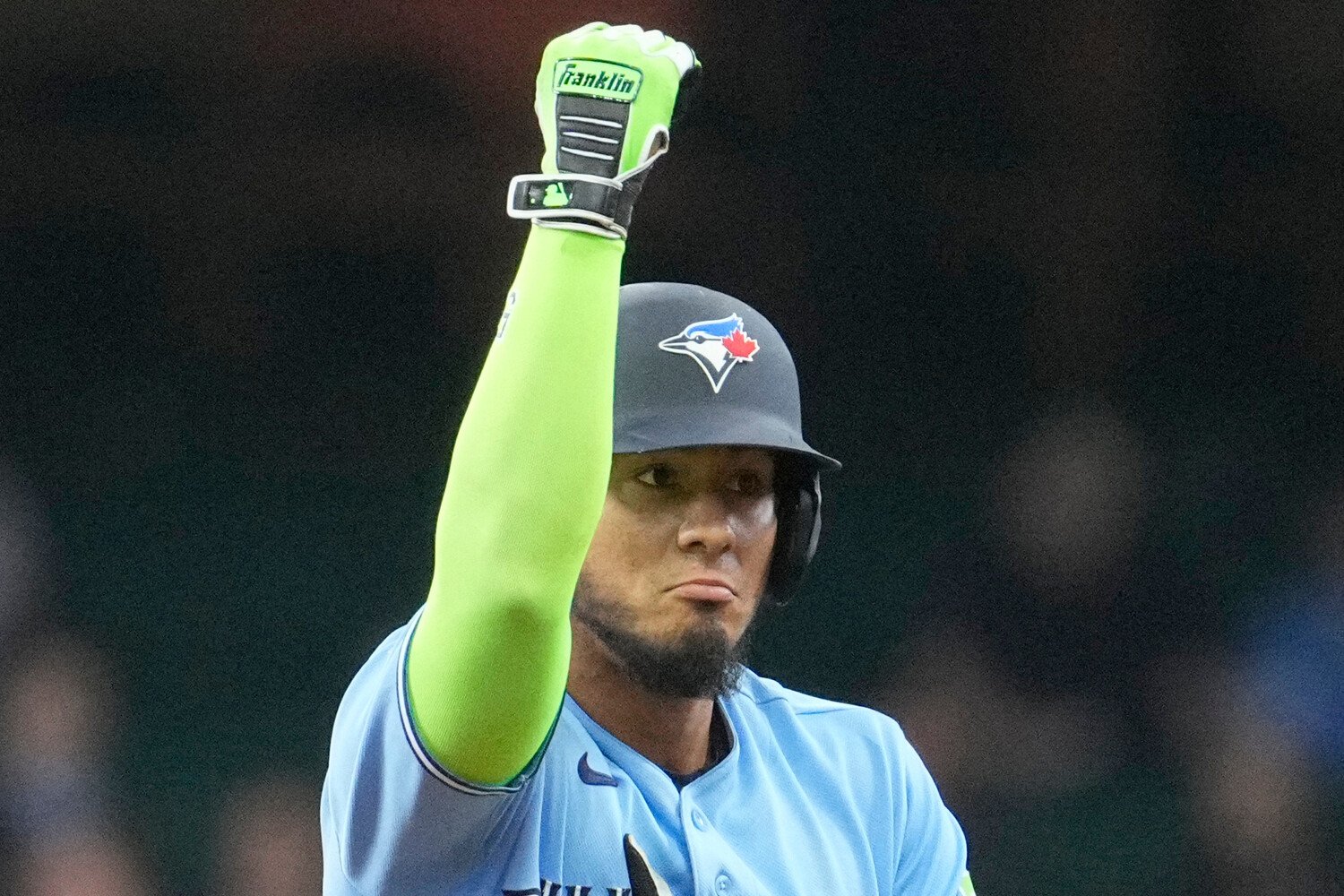 This is the second half of a two-part series about the players who have joined the Blue Jays' active roster since Opening Day. You can read part one here. I started with the pitchers because they've made more of an impact (and had more success) than the position players. However, a piece like this is probably more useful for the position players, who aren't as well known as Patrick Corbin and Joe Mantiply and haven't received as much media attention. Let's get into it. Brandon Valenzuela, C 2026 Hitting Stats: 14 G, 39 PA, 2 HR, 3 RBI, .189/.231/.351, 59 wRC+ 2026 Catching Stats: 98 innings, 4-for-9 CS, +2 CS Above Average, +2 Framing Runs (per Savant), 2 DRS, 3 FRV Recalled from Triple-A Buffalo after Alejandro Kirk fractured his thumb. Brandon Valenzuela has been thrust into a much bigger role than he was supposed to take on, and he deserves credit for stepping up. He also deserves props for how nicely he has settled in behind the plate. Despite the occasional mistake, it's clear he's a talented defender. While they wait for Alejandro Kirk to return, the Blue Jays could do worse than a part-time catcher who helps his pitchers by stealing strikes and controlling the running game. Just don't ask about Valenzuela's offense. After hitting his first home run against the Twins on April 10, the switch-hitter went 2-for-22 with two singles, one walk, and nine strikeouts in his next eight games. He finally recorded another extra-base hit yesterday against the Red Sox, while reaching base three times – a new personal best. Still, by and large, Valenzuela just hasn't looked up to the task of facing major league arms. To make matters worse, Tyler Heineman has also come crashing down to earth with more playing time; his batting line is even worse than Valenzuela's. Blue Jays catchers rank last in the AL in wRC+, and their defense only bumps them up to 23rd overall in FanGraphs WAR. Kirk can't come back soon enough. Lenyn Sosa, UTIL 2026 Stats (with Blue Jays): 10 G, 30 PA, 0 HR, 4 RBI, .214/.207/.286, 28 wRC+ Acquired via trade from the White Sox on April 13. Note: Sosa is reportedly nursing a minor leg injury. He has not played since Monday. Evidently, the Blue Jays decided that Lenyn Sosa was an upgrade over Tyler Fitzgerald (more on him later). Fitzgerald joined the active roster in place of an injured Addison Barger on April 7. A week later, Toronto sent minor league outfielder Jordan Rich to the White Sox for Sosa and swapped him in for Fitzgerald as the new righty-batting utility player on the bench. Whatever it is the Jays might have liked about Sosa, it hasn't shown up in-game yet. Outside of a big double against the Angels last week, he hasn't done much at the plate. He has yet to draw a walk or hit a home run in 30 trips to the plate, and his 28 wRC+ ranks second-last among hitters on the active roster, ahead of only Heineman. The lack of power is especially disappointing, considering Sosa hit 20 doubles and 22 home runs for the White Sox last season. Primarily a second baseman, Sosa has experience playing all around the infield. So far, he has seen the majority of his playing time at DH, with a few starts at first and second base. He's made one highlight-reel play already, though Vladimir Guerrero Jr.'s reactions in the clip are just as entertaining as Sosa's catch itself: Yohendrick Pinango, OF 2026 Stats: 3 G, 2-for-5 Selected after Nathan Lukes strained his hamstring. The newest of the new Jays, Yohendrick Pinango made his MLB debut over the weekend, starting in left field against the Guardians. The lefty batter earned the call after Nathan Lukes hit the injured list. Pinango was hitting .288 with seven doubles, three home runs, and a 126 wRC+ at Triple-A Buffalo. His job in the majors is only safe until Addison Barger returns from the IL. However, now that he's on the 40-man roster, this likely won't be the last we see of the young slugger. Pinango still has skills he needs to work on in the minors, namely converting more of his raw power into balls that fly over the fence. Fingers crossed we get to see some of that power while he's with the Jays, but it might be smart to temper your expectations for now. Pinango is Jays Centre's No. 9 prospect. Read his full prospect write-up here! *Eloy Jiménez, DH 2026 Stats: 12 G, 35 PA, 0 HR, 3 RBI, .290/.343/.290, 82 wRC+ Selected from Triple-A Buffalo after George Springer fractured his toe. *Note: I originally finished writing this article about six minutes before the news broke that Springer was returning and Jiménez was DFA'd. Jiménez isn't on Toronto's active roster anymore, but he was around for long enough that his time with the team is still worth a couple of paragraphs of attention. A strong spring (in which he took reps at first base) had fans wondering if Eloy Jiménez could somehow force his way onto the Opening Day roster. While that didn't end up happening, he did not have to wait long to join the Jays. George Springer fractured his big toe a couple of weeks into the season, and Jiménez got the call to DH in his place. For a brief, shining moment, we could all dream that David Popkins would help Jiménez rediscover the power that earned him a Silver Slugger in 2020. Soon, we were just counting the days until Springer could get back in the lineup. While Jiménez's .290 batting average might look impressive, it was all from singles. He had nine hits, but none of them went for extra bases. That's disappointing, but it's not surprising; with all the poor plate discipline and mediocre contact we saw from Jiménez, the Blue Jays are lucky he managed as many hits as he did. The Phantom Bench Bat 2026 Stats: 0 G, 0 PA, -/-/- Was Tyler Fitzgerald ever really a Blue Jay? Yes. I swear. The Jays acquired the utility man earlier this month, after he was designated for assignment by the Giants. However, although he spent a week on the active roster, he never made it into a game. The Jays DFA'd him last week and traded him to the Dodgers on Tuesday. His stint with the Blue Jays lives on in his transaction log, but it won't appear on the back of his next baseball card.
 -
I spent a lot of time this offseason thinking about the players who were supposed to make the Toronto Blue Jays' Opening Day roster. Here at Jays Centre, we put out roster predictions. We wrote about the rotation, the bullpen, the lineup, and the bench, considering projected performance, positional logjams, and possible platoons. We wrote about guys like Eric Lauer, Davis Schneider, and Nathan Lukes until there was absolutely nothing left to say. That's what the offseason is for. Then the season started, and, well... fans plan. The baseball gods laugh. You don't need to know much about baseball to know it takes more than 26 guys to get through a season. At least one player you'd never even heard of in March will have made an impact for your favourite team before October. Right now, the Blue Jays have six five (I started this before Eloy Jiménez was DFA'd) players on their active roster who weren't around on Opening Day, not including Trey Yesavage, who returned from the injured list on Tuesday. Since we didn't spend much, if any, time thinking about these players over the winter, I thought it would be a good idea to give them all a little attention right now. Starting with the pitchers (I'll get to the hitters tomorrow), let's take a quick look at what each of them has done for Toronto in 2026. Patrick Corbin, SP 2026 Stats: 4 GS, 19.1 IP, 3.72 ERA, 16 K, 6 BB, 2 HR Signed a one-year, $1 million contract with the Blue Jays on April 3, shortly after Cody Ponce tore his ACL. Recalled from the Dunedin Blue Jays on April 7. Patrick Corbin has been everything the Blue Jays could have hoped for (and more). The 36-year-old signed with Toronto on April 3, and despite missing spring training, he was already pitching for the major league team a week later. The rubber-armed veteran has since thrown 19.1 innings over four starts, and the team is 3-1 in his outings. The Jays signed Corbin out of desperation for innings, and so far, the lefty has delivered with quality on top of quantity. He's been so steady that Eric Lauer is now the likely candidate to move to the bullpen when José Berríos returns from the IL. None of this is to say Corbin will stick in Toronto's rotation all year. We're still talking about a guy with a 5.47 ERA and a 5.65 xERA from 2021-25 (and a 5.84 xERA in 2026). Ideally, he gets bumped out for a healthy Shane Bieber before long. However, that doesn't take away from what Corbin has done for the Jays to this point, and it's nice to know that for as long as they need him, he'll be there. Joe Mantiply, RP 2026 Stats: 9 G, 10.2 IP, 3.38 ERA, 15 K, 3 BB, 1 HR Re-signed with the Blue Jays on a minor league contract on March 3. Selected to the roster when Brendon Little was optioned to Triple-A. From 2021-24, Joe Mantiply made 236 appearances for the Diamondbacks with a 3.63 ERA, a 3.49 xERA, and 3.2 fWAR. Yet, amidst a disastrous 2025, he found himself left on the scrap heap, and the Blue Jays were able to pick him up for nothing. So far in 2026, the lefty looks like his old self. Wait, scratch that. He looks better. Yes, it's early – really early – but Mantiply's stuff looks great. He has struck out one-third of the batters he's faced and induced grounders on more than half the balls his opponents have hit into play. If he keeps pitching this well, he has a good case to stick around even if another lefty (i.e., Lauer or Corbin) eventually moves to the bullpen. That's the optimistic take. As much as I want to focus on the positives, I need to point out that John Schneider has largely limited Mantiply to lower-leverage opportunities as a lefty specialist. The realist in me knows that the 35-year-old soft-tosser will remain on the roster bubble until he proves he can hold his own against opposite-handed hitters with the game on the line. The Others These four pitchers weren't on the Blue Jays' Opening Day roster, nor are they currently on the team's active roster. They did, however, spend time with the big league club at some point this year. Lazaro Estrada: 1 G, 4.0 IP, 0 H, 0 R, 3 K (15-day IL, shoulder impingement) Josh Fleming: 1 G, 3.0 IP, 6 H, 4 R, 1 K (DFA'd, re-signed to new minor league deal, assigned to Triple-A Buffalo) Chase Lee: 1 G, 1.1 IP, 1 H, 1 R, 1 K (Optioned to Triple-A Buffalo) Austin Voth: 1 G, 2.2 IP, 3 H, 1 R, 1 K (DFA'd, re-signed to new minor league deal, assigned to Triple-A Buffalo) View full article
-
.jpg.015f56acdf396b5e04ad657955bd350a.jpg) I spent a lot of time this offseason thinking about the players who were supposed to make the Toronto Blue Jays' Opening Day roster. Here at Jays Centre, we put out roster predictions. We wrote about the rotation, the bullpen, the lineup, and the bench, considering projected performance, positional logjams, and possible platoons. We wrote about guys like Eric Lauer, Davis Schneider, and Nathan Lukes until there was absolutely nothing left to say. That's what the offseason is for. Then the season started, and, well... fans plan. The baseball gods laugh. You don't need to know much about baseball to know it takes more than 26 guys to get through a season. At least one player you'd never even heard of in March will have made an impact for your favourite team before October. Right now, the Blue Jays have six five (I started this before Eloy Jiménez was DFA'd) players on their active roster who weren't around on Opening Day, not including Trey Yesavage, who returned from the injured list on Tuesday. Since we didn't spend much, if any, time thinking about these players over the winter, I thought it would be a good idea to give them all a little attention right now. Starting with the pitchers (I'll get to the hitters tomorrow), let's take a quick look at what each of them has done for Toronto in 2026. Patrick Corbin, SP 2026 Stats: 4 GS, 19.1 IP, 3.72 ERA, 16 K, 6 BB, 2 HR Signed a one-year, $1 million contract with the Blue Jays on April 3, shortly after Cody Ponce tore his ACL. Recalled from the Dunedin Blue Jays on April 7. Patrick Corbin has been everything the Blue Jays could have hoped for (and more). The 36-year-old signed with Toronto on April 3, and despite missing spring training, he was already pitching for the major league team a week later. The rubber-armed veteran has since thrown 19.1 innings over four starts, and the team is 3-1 in his outings. The Jays signed Corbin out of desperation for innings, and so far, the lefty has delivered with quality on top of quantity. He's been so steady that Eric Lauer is now the likely candidate to move to the bullpen when José Berríos returns from the IL. None of this is to say Corbin will stick in Toronto's rotation all year. We're still talking about a guy with a 5.47 ERA and a 5.65 xERA from 2021-25 (and a 5.84 xERA in 2026). Ideally, he gets bumped out for a healthy Shane Bieber before long. However, that doesn't take away from what Corbin has done for the Jays to this point, and it's nice to know that for as long as they need him, he'll be there. Joe Mantiply, RP 2026 Stats: 9 G, 10.2 IP, 3.38 ERA, 15 K, 3 BB, 1 HR Re-signed with the Blue Jays on a minor league contract on March 3. Selected to the roster when Brendon Little was optioned to Triple-A. From 2021-24, Joe Mantiply made 236 appearances for the Diamondbacks with a 3.63 ERA, a 3.49 xERA, and 3.2 fWAR. Yet, amidst a disastrous 2025, he found himself left on the scrap heap, and the Blue Jays were able to pick him up for nothing. So far in 2026, the lefty looks like his old self. Wait, scratch that. He looks better. Yes, it's early – really early – but Mantiply's stuff looks great. He has struck out one-third of the batters he's faced and induced grounders on more than half the balls his opponents have hit into play. If he keeps pitching this well, he has a good case to stick around even if another lefty (i.e., Lauer or Corbin) eventually moves to the bullpen. That's the optimistic take. As much as I want to focus on the positives, I need to point out that John Schneider has largely limited Mantiply to lower-leverage opportunities as a lefty specialist. The realist in me knows that the 35-year-old soft-tosser will remain on the roster bubble until he proves he can hold his own against opposite-handed hitters with the game on the line. The Others These four pitchers weren't on the Blue Jays' Opening Day roster, nor are they currently on the team's active roster. They did, however, spend time with the big league club at some point this year. Lazaro Estrada: 1 G, 4.0 IP, 0 H, 0 R, 3 K (15-day IL, shoulder impingement) Josh Fleming: 1 G, 3.0 IP, 6 H, 4 R, 1 K (DFA'd, re-signed to new minor league deal, assigned to Triple-A Buffalo) Chase Lee: 1 G, 1.1 IP, 1 H, 1 R, 1 K (Optioned to Triple-A Buffalo) Austin Voth: 1 G, 2.2 IP, 3 H, 1 R, 1 K (DFA'd, re-signed to new minor league deal, assigned to Triple-A Buffalo)
I spent a lot of time this offseason thinking about the players who were supposed to make the Toronto Blue Jays' Opening Day roster. Here at Jays Centre, we put out roster predictions. We wrote about the rotation, the bullpen, the lineup, and the bench, considering projected performance, positional logjams, and possible platoons. We wrote about guys like Eric Lauer, Davis Schneider, and Nathan Lukes until there was absolutely nothing left to say. That's what the offseason is for. Then the season started, and, well... fans plan. The baseball gods laugh. You don't need to know much about baseball to know it takes more than 26 guys to get through a season. At least one player you'd never even heard of in March will have made an impact for your favourite team before October. Right now, the Blue Jays have six five (I started this before Eloy Jiménez was DFA'd) players on their active roster who weren't around on Opening Day, not including Trey Yesavage, who returned from the injured list on Tuesday. Since we didn't spend much, if any, time thinking about these players over the winter, I thought it would be a good idea to give them all a little attention right now. Starting with the pitchers (I'll get to the hitters tomorrow), let's take a quick look at what each of them has done for Toronto in 2026. Patrick Corbin, SP 2026 Stats: 4 GS, 19.1 IP, 3.72 ERA, 16 K, 6 BB, 2 HR Signed a one-year, $1 million contract with the Blue Jays on April 3, shortly after Cody Ponce tore his ACL. Recalled from the Dunedin Blue Jays on April 7. Patrick Corbin has been everything the Blue Jays could have hoped for (and more). The 36-year-old signed with Toronto on April 3, and despite missing spring training, he was already pitching for the major league team a week later. The rubber-armed veteran has since thrown 19.1 innings over four starts, and the team is 3-1 in his outings. The Jays signed Corbin out of desperation for innings, and so far, the lefty has delivered with quality on top of quantity. He's been so steady that Eric Lauer is now the likely candidate to move to the bullpen when José Berríos returns from the IL. None of this is to say Corbin will stick in Toronto's rotation all year. We're still talking about a guy with a 5.47 ERA and a 5.65 xERA from 2021-25 (and a 5.84 xERA in 2026). Ideally, he gets bumped out for a healthy Shane Bieber before long. However, that doesn't take away from what Corbin has done for the Jays to this point, and it's nice to know that for as long as they need him, he'll be there. Joe Mantiply, RP 2026 Stats: 9 G, 10.2 IP, 3.38 ERA, 15 K, 3 BB, 1 HR Re-signed with the Blue Jays on a minor league contract on March 3. Selected to the roster when Brendon Little was optioned to Triple-A. From 2021-24, Joe Mantiply made 236 appearances for the Diamondbacks with a 3.63 ERA, a 3.49 xERA, and 3.2 fWAR. Yet, amidst a disastrous 2025, he found himself left on the scrap heap, and the Blue Jays were able to pick him up for nothing. So far in 2026, the lefty looks like his old self. Wait, scratch that. He looks better. Yes, it's early – really early – but Mantiply's stuff looks great. He has struck out one-third of the batters he's faced and induced grounders on more than half the balls his opponents have hit into play. If he keeps pitching this well, he has a good case to stick around even if another lefty (i.e., Lauer or Corbin) eventually moves to the bullpen. That's the optimistic take. As much as I want to focus on the positives, I need to point out that John Schneider has largely limited Mantiply to lower-leverage opportunities as a lefty specialist. The realist in me knows that the 35-year-old soft-tosser will remain on the roster bubble until he proves he can hold his own against opposite-handed hitters with the game on the line. The Others These four pitchers weren't on the Blue Jays' Opening Day roster, nor are they currently on the team's active roster. They did, however, spend time with the big league club at some point this year. Lazaro Estrada: 1 G, 4.0 IP, 0 H, 0 R, 3 K (15-day IL, shoulder impingement) Josh Fleming: 1 G, 3.0 IP, 6 H, 4 R, 1 K (DFA'd, re-signed to new minor league deal, assigned to Triple-A Buffalo) Chase Lee: 1 G, 1.1 IP, 1 H, 1 R, 1 K (Optioned to Triple-A Buffalo) Austin Voth: 1 G, 2.2 IP, 3 H, 1 R, 1 K (DFA'd, re-signed to new minor league deal, assigned to Triple-A Buffalo) -
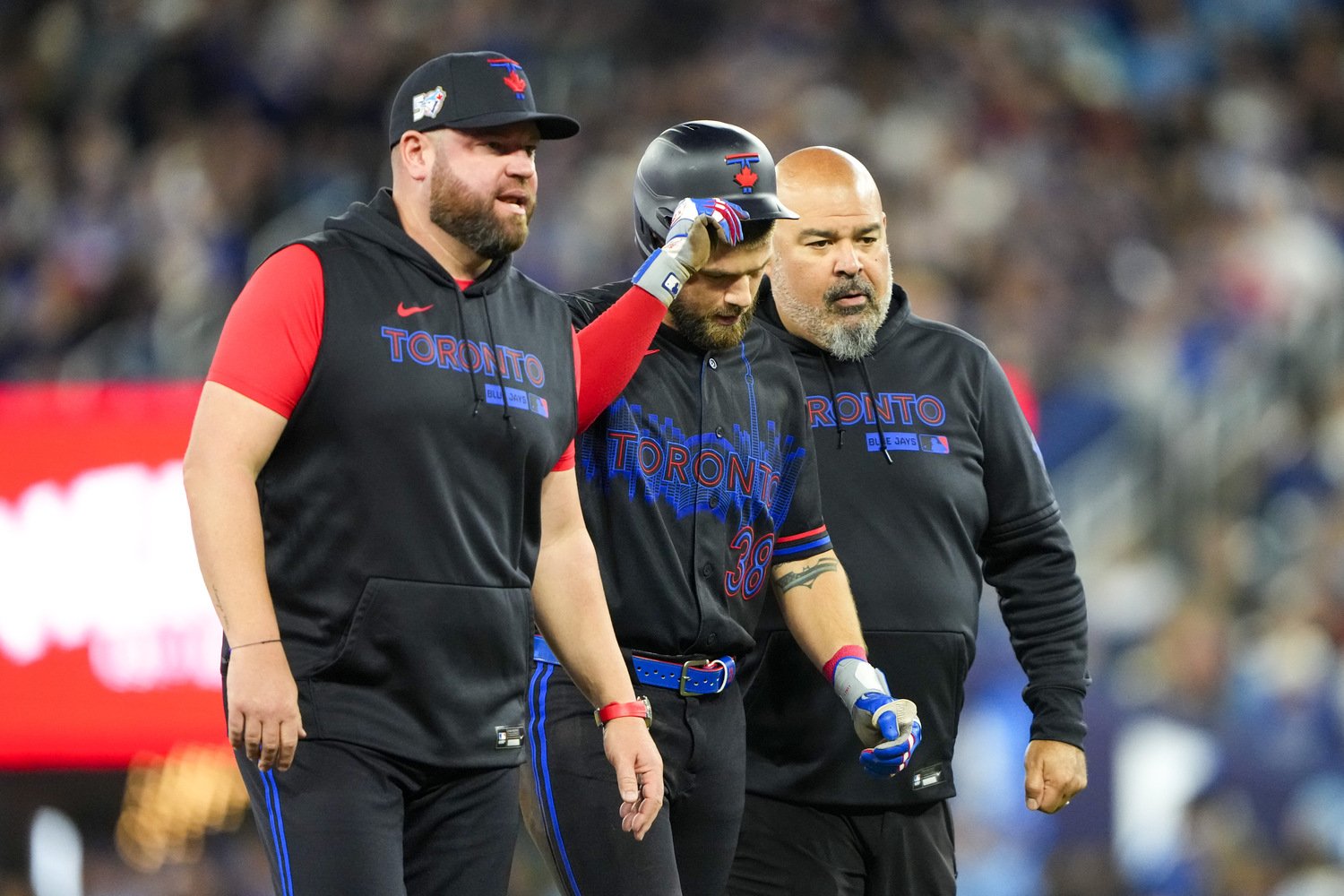 Another Blue Jay is on the shelf. Nathan Lukes exited early on Friday against the Guardians. Today, the Blue Jays placed him on the 10-day injured list with a left hamstring strain. Lukes joins fellow position players Alejandro Kirk, George Springer, Addison Barger, and Anthony Santander on the IL. To replace Lukes in Toronto, the Jays are promoting another lefty-batting outfielder: Yohendrick Pinango. Soon to be 24 years old, Pinango will be making his MLB debut the first time he gets in a game. He is batting .288 with an .857 OPS and a 128 wRC+ at Triple-A Buffalo this season. Pinango was not on the 40-man roster, so the Blue Jays transferred reliever Yimi García from the 15-day IL to the 60-day IL to open a space. García is now eligible to return no sooner than May 21.
 -
Another Blue Jay is on the shelf. Nathan Lukes exited early on Friday against the Guardians. Today, the Blue Jays placed him on the 10-day injured list with a left hamstring strain. Lukes joins fellow position players Alejandro Kirk, George Springer, Addison Barger, and Anthony Santander on the IL. To replace Lukes in Toronto, the Jays are promoting another lefty-batting outfielder: Yohendrick Pinango. Soon to be 24 years old, Pinango will be making his MLB debut the first time he gets in a game. He is batting .288 with an .857 OPS and a 128 wRC+ at Triple-A Buffalo this season. Pinango was not on the 40-man roster, so the Blue Jays transferred reliever Yimi García from the 15-day IL to the 60-day IL to open a space. García is now eligible to return no sooner than May 21. View full rumor
-
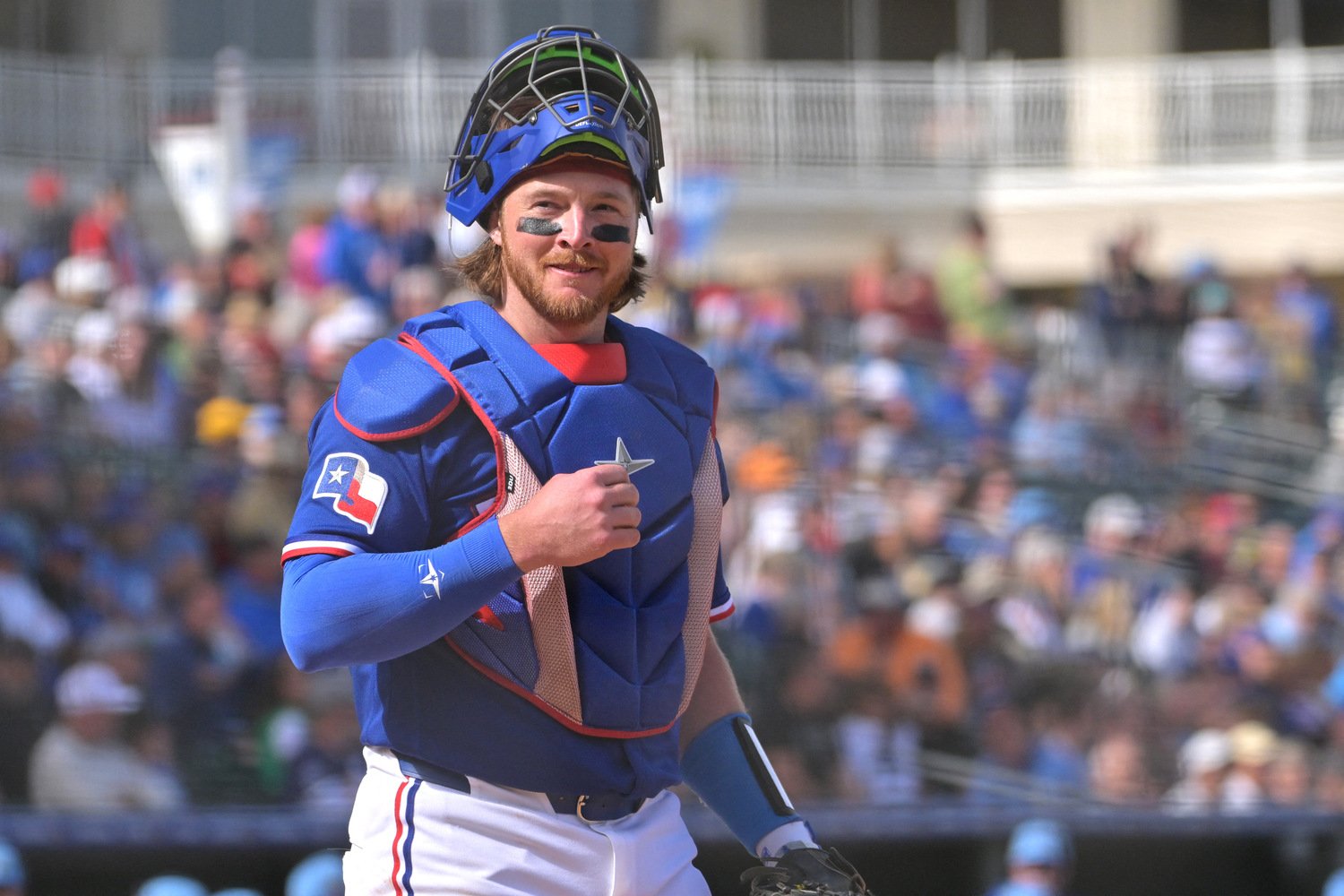 The Blue Jays acquired catcher Willie MacIver from the Rangers today in exchange for cash considerations. MacIver will report to Triple-A Buffalo; he has two minor league option years remaining. MacIver, 29, appeared in 33 games for the Athletics last season, including 31 behind the plate. He hit .186 with three home runs and a 58 wRC+. The rookie backstop earned negative grades in most defensive metrics in that small sample. With Alejandro Kirk on the injured list and Tyler Heineman having dealt with back spasms this year, it makes sense that the Blue Jays wanted to add a little more catching depth. To make room for MacIver on the 40-man roster, the Jays designated utility player Tyler Fitzgerald for assignment. They acquired Fitzgerald from the Giants earlier this month. While he spent some time on Toronto's active roster, he never made it into a game. In six games for Triple-A Buffalo, he went 3-for-20 with a double and two runs.
 -
The Blue Jays acquired catcher Willie MacIver from the Rangers today in exchange for cash considerations. MacIver will report to Triple-A Buffalo; he has two minor league option years remaining. MacIver, 29, appeared in 33 games for the Athletics last season, including 31 behind the plate. He hit .186 with three home runs and a 58 wRC+. The rookie backstop earned negative grades in most defensive metrics in that small sample. With Alejandro Kirk on the injured list and Tyler Heineman having dealt with back spasms this year, it makes sense that the Blue Jays wanted to add a little more catching depth. To make room for MacIver on the 40-man roster, the Jays designated utility player Tyler Fitzgerald for assignment. They acquired Fitzgerald from the Giants earlier this month. While he spent some time on Toronto's active roster, he never made it into a game. In six games for Triple-A Buffalo, he went 3-for-20 with a double and two runs. View full rumor
-
Facing the team that drafted him 20 years earlier, Max Scherzer righted the ship after back-to-back short starts. His outings against the Dodgers and the Twins were enough to make me worry an IL stint was imminent, but Scherzer cruised through six innings on 74 pitches in Arizona, holding the Diamondbacks to a pair of runs. I breathed a sigh of relief after this one, even as the Blue Jays went on to lose 6-2. One thing that stood out to me from that start was Scherzer's strikeout. Yes, that's strikeout, singular. Of the 22 batters he faced, only one went down on strikes: old friend Lourdes Gurriel Jr. It's not so often these days that you see the same number in the "K" and "QS" columns on a pitcher's game log. Well, to be perfectly honest, it's actually more common than I thought. I ran a Statcast query for quality starts (at least 6.0 IP, three or fewer earned runs) in which the pitcher struck out one batter or fewer, and I was surprised to see there have already been five this season. There were 29 such starts in 2025. That's rare – it's the same as the number of complete games in 2025 – but it's not like Scherzer's start was some wild anomaly. Still, Scherzer's low strikeout rate this season is worth talking about. Through four starts, he's struck out 10 of 68 batters for a 14.7% K-rate. Once again, that's not shockingly low in context. Nineteen pitchers (min. 15 IP) have a lower strikeout rate this season. It is, however, unusually low for Scherzer. At his peak, he was striking out one-third of his opponents. Even as he entered his forties, he kept his K-rate around league average from 2024-25 (22.8%). Mad Max has made 299 quality starts in his storied career. The only other time he made a quality start with just one strikeout was in August 2011, before anyone else on this roster was even playing in the major leagues. Meanwhile, the last time he went five starts with a K-rate under 15% was 2010. He's in danger of doing that again – for the first time in 16 years – unless he has better strikeout stuff in his fifth start of the season today. Back in 2010, Scherzer had yet to become the legend we know him as today. More to the point, the leaguewide strikeout environment was completely different. The average K-rate for a starting pitcher was 17.6%, compared to 22.3% in 2026. So, relatively speaking, this may be the most Scherzer has ever struggled for strikeouts. That's not good. Even more concerning than Scherzer's 10 measly strikeouts are his 22 whiffs on 135 swings (16.3%). Out of 137 pitchers who have induced at least as many swings, only seven have a lower whiff rate. Missing bats isn't the only way to earn strikes, but no pitcher can live on called strikes and foul balls alone. If Scherzer is going to get more strikeouts, he'll have to start by generating more whiffs. This is especially important because Scherzer relies on strikeouts more than most pitchers. He has always been more of a power pitcher than a pitch-to-contact type. His career groundball rate is 18% below league average. Over the last two years, no starting pitcher has yielded grounders at a lower rate (26.7%). Accordingly, only a handful have given up barrels more often. Some pitchers can survive with a strikeout rate in the mid-teens. (Think late-career Zack Greinke, for example.) Yet, in order to do so, they need enough other tools in their belt. I'm not confident Scherzer has those tools. Now comes the time when I bring up small sample size. I know, I'm sorry. I'm sure you're tired of reading that phrase, but honestly, I deserve credit for waiting this long to bring it up. Scherzer has thrown fewer than 20 innings this season. That's nothing. One strong start tonight, and all of a sudden, this could be a non-issue. We also know he's been dealing with forearm tendinitis, even if it doesn't seem particularly serious. In other words, his lack of strikeouts is something to monitor, but not something to keep you up at night. If anyone has earned a little patience, it's the guy who had his first double-digit strikeout game before his youngest teammate was six years old. View full article
-
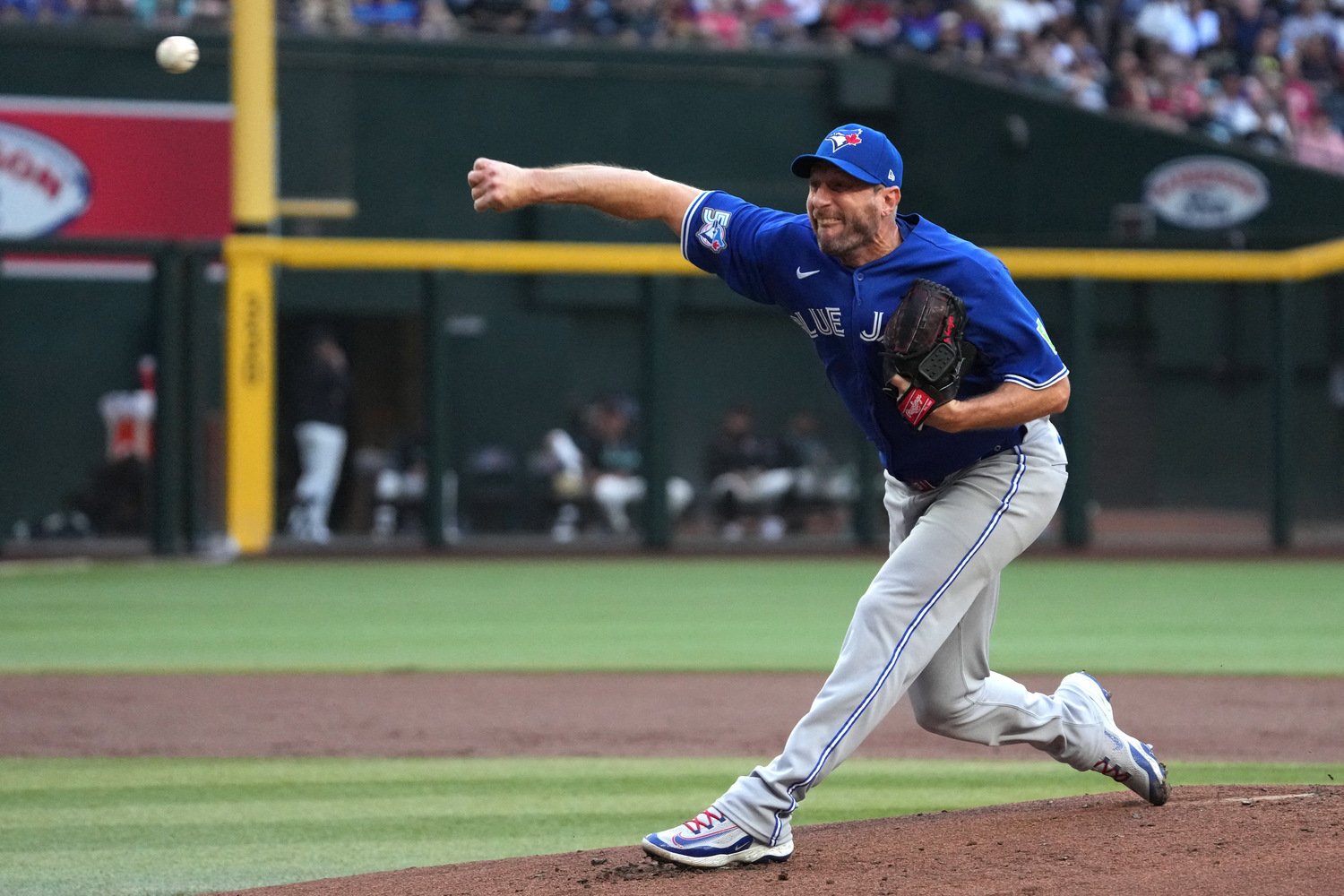 Facing the team that drafted him 20 years earlier, Max Scherzer righted the ship after back-to-back short starts. His outings against the Dodgers and the Twins were enough to make me worry an IL stint was imminent, but Scherzer cruised through six innings on 74 pitches in Arizona, holding the Diamondbacks to a pair of runs. I breathed a sigh of relief after this one, even as the Blue Jays went on to lose 6-2. One thing that stood out to me from that start was Scherzer's strikeout. Yes, that's strikeout, singular. Of the 22 batters he faced, only one went down on strikes: old friend Lourdes Gurriel Jr. It's not so often these days that you see the same number in the "K" and "QS" columns on a pitcher's game log. Well, to be perfectly honest, it's actually more common than I thought. I ran a Statcast query for quality starts (at least 6.0 IP, three or fewer earned runs) in which the pitcher struck out one batter or fewer, and I was surprised to see there have already been five this season. There were 29 such starts in 2025. That's rare – it's the same as the number of complete games in 2025 – but it's not like Scherzer's start was some wild anomaly. Still, Scherzer's low strikeout rate this season is worth talking about. Through four starts, he's struck out 10 of 68 batters for a 14.7% K-rate. Once again, that's not shockingly low in context. Nineteen pitchers (min. 15 IP) have a lower strikeout rate this season. It is, however, unusually low for Scherzer. At his peak, he was striking out one-third of his opponents. Even as he entered his forties, he kept his K-rate around league average from 2024-25 (22.8%). Mad Max has made 299 quality starts in his storied career. The only other time he made a quality start with just one strikeout was in August 2011, before anyone else on this roster was even playing in the major leagues. Meanwhile, the last time he went five starts with a K-rate under 15% was 2010. He's in danger of doing that again – for the first time in 16 years – unless he has better strikeout stuff in his fifth start of the season today. Back in 2010, Scherzer had yet to become the legend we know him as today. More to the point, the leaguewide strikeout environment was completely different. The average K-rate for a starting pitcher was 17.6%, compared to 22.3% in 2026. So, relatively speaking, this may be the most Scherzer has ever struggled for strikeouts. That's not good. Even more concerning than Scherzer's 10 measly strikeouts are his 22 whiffs on 135 swings (16.3%). Out of 137 pitchers who have induced at least as many swings, only seven have a lower whiff rate. Missing bats isn't the only way to earn strikes, but no pitcher can live on called strikes and foul balls alone. If Scherzer is going to get more strikeouts, he'll have to start by generating more whiffs. This is especially important because Scherzer relies on strikeouts more than most pitchers. He has always been more of a power pitcher than a pitch-to-contact type. His career groundball rate is 18% below league average. Over the last two years, no starting pitcher has yielded grounders at a lower rate (26.7%). Accordingly, only a handful have given up barrels more often. Some pitchers can survive with a strikeout rate in the mid-teens. (Think late-career Zack Greinke, for example.) Yet, in order to do so, they need enough other tools in their belt. I'm not confident Scherzer has those tools. Now comes the time when I bring up small sample size. I know, I'm sorry. I'm sure you're tired of reading that phrase, but honestly, I deserve credit for waiting this long to bring it up. Scherzer has thrown fewer than 20 innings this season. That's nothing. One strong start tonight, and all of a sudden, this could be a non-issue. We also know he's been dealing with forearm tendinitis, even if it doesn't seem particularly serious. In other words, his lack of strikeouts is something to monitor, but not something to keep you up at night. If anyone has earned a little patience, it's the guy who had his first double-digit strikeout game before his youngest teammate was six years old.
 -
The Blue Jays have something special in Louis Varland. The 28-year-old has been, almost certainly, the AL's best reliever so far in 2026. Of the 49 AL arms with at least 10 innings pitched in relief this season, Varland is one of just two who have yet to allow an earned run, and one of just nine who have yet to give up a barrelled ball. His 19 strikeouts rank second, trailing only his teammate Jeff Hoffman, while his 58.3% groundball rate is tied for third (min. 10 IP). He pitches with equal parts power and precision, leading with a fastball that sits 98 (and feels even faster thanks to his elite extension) and mixing in four more weapons with diverse shapes, all of which have a case to be called plus pitches. Today, however, I only want to talk about one pitch. Literally one pitch: The final pitch from yesterday's 4-2 win against the Angels. Late last night, the Blue Jays found themselves three outs away from sealing their first series victory since they swept the Athletics in March. Despite all his struggles this year, Hoffman took the ball for the bottom of the ninth, looking for his second save in as many days. Instead, a single, back-to-back hit-by-pitches, and another single put the winning run on first base. After 11 minutes, 18 pitches, and just one out, Hoffman's day was done. That's when John Schneider called on Varland. A week earlier, Varland replaced Hoffman with the bases loaded in the bottom of the ninth against the Brewers. At the time, it was the highest-pressure entrance of his career, according to FanGraphs' leverage index. Not anymore. Yesterday, Varland came on with one out instead of two and the chance to secure a win, not just maintain a tie. The leverage index when he entered against the Brewers was 6.39. Last night, it was 7.37. Keep in mind, an average situation has a leverage index of 1.0. Anything over 2.0 is considered high. With the stakes dialled up to 11, Varland took the mound. The criteria for success were clear. The runner on third didn’t matter, but Varland needed to record two outs before any more Angels made it across the plate. It only took him one pitch to pull it off. Facing the lefty-batting Nolan Schanuel, Varland delivered a changeup. It was the second time all season he started an at-bat with his change. But the unusual decision paid off. Varland located his offering perfectly. It was a strike, so Schanuel swung, but it wasn't a pitch he could punish. It just barely grazed the lower outside corner of the zone, and Schanuel sent it bouncing to Ernie Clement at second base. Here's what happened next: Clement to Andrés Giménez for one. Easy. The second out was going to be much closer, but Giménez sent a laser into Vladimir Guerrero Jr.'s glove. A replay review confirmed what we already knew. The game was over. The Blue Jays had won. And Varland only needed one pitch. One-pitch saves are rare. Varland's was the first of the season, and it very well could be the last. There was only one in 2025. There were four the year before, but once again, only one in 2023. Since saves became an official stat in 1969, one-pitch saves make up roughly one-third of one percent of all saves. The last Blue Jay to record a one-pitch save was Casey Janssen in 2014. Indeed, Janssen is responsible for two of the eight one-pitch saves in team history. He's one of 30 pitchers to have had multiple one-pitch saves in his career. (Trevor Hoffman tops that list with five one-pitch saves to his name.) Here is the complete list of Toronto Blue Jays one-pitch saves: Pitcher Date Louis Varland 2026-04-21 Casey Janssen 2014-06-05 Steve Delabar 2013-07-10 Casey Janssen 2007-08-28 Jason Frasor 2004-05-27 Randy Myers 1998-08-01 Tony Castillo 1996-07-11 Al Leiter 1993-08-03 Of course, Varland's effort wasn't merely a one-pitch save. It was a one-pitch, two-out save. No Blue Jays pitcher had ever done that before. It was also a one-pitch, two-out, bases-loaded save – only the eighth such save in recorded major league history. If you still aren't impressed, you can think of it like this. A one-pitch save is about as rare as a no-hitter. A one-pitch, two-out save is about as rare as a perfect game. A one-pitch, two-out, bases-loaded save is about as rare as an unassisted triple play. The cherry on top is that this was the first save of Varland's professional career. He joins Chris Holt as the second-ever pitcher to earn his first MLB save in such dramatic fashion, and even Holt had previously saved a professional game in the independent Frontier League. The last time Varland recorded a save was his sophomore year of college. With a single pitch on Tuesday night, Louis Varland made personal history, team history, and professional baseball history. And the best part is, he's only just getting started. View full article
-
.jpg.d03ce94b4f264a4349ceffa18aa92c08.jpg) The Blue Jays have something special in Louis Varland. The 28-year-old has been, almost certainly, the AL's best reliever so far in 2026. Of the 49 AL arms with at least 10 innings pitched in relief this season, Varland is one of just two who have yet to allow an earned run, and one of just nine who have yet to give up a barrelled ball. His 19 strikeouts rank second, trailing only his teammate Jeff Hoffman, while his 58.3% groundball rate is tied for third (min. 10 IP). He pitches with equal parts power and precision, leading with a fastball that sits 98 (and feels even faster thanks to his elite extension) and mixing in four more weapons with diverse shapes, all of which have a case to be called plus pitches. Today, however, I only want to talk about one pitch. Literally one pitch: The final pitch from yesterday's 4-2 win against the Angels. Late last night, the Blue Jays found themselves three outs away from sealing their first series victory since they swept the Athletics in March. Despite all his struggles this year, Hoffman took the ball for the bottom of the ninth, looking for his second save in as many days. Instead, a single, back-to-back hit-by-pitches, and another single put the winning run on first base. After 11 minutes, 18 pitches, and just one out, Hoffman's day was done. That's when John Schneider called on Varland. A week earlier, Varland replaced Hoffman with the bases loaded in the bottom of the ninth against the Brewers. At the time, it was the highest-pressure entrance of his career, according to FanGraphs' leverage index. Not anymore. Yesterday, Varland came on with one out instead of two and the chance to secure a win, not just maintain a tie. The leverage index when he entered against the Brewers was 6.39. Last night, it was 7.37. Keep in mind, an average situation has a leverage index of 1.0. Anything over 2.0 is considered high. With the stakes dialled up to 11, Varland took the mound. The criteria for success were clear. The runner on third didn’t matter, but Varland needed to record two outs before any more Angels made it across the plate. It only took him one pitch to pull it off. Facing the lefty-batting Nolan Schanuel, Varland delivered a changeup. It was the second time all season he started an at-bat with his change. But the unusual decision paid off. Varland located his offering perfectly. It was a strike, so Schanuel swung, but it wasn't a pitch he could punish. It just barely grazed the lower outside corner of the zone, and Schanuel sent it bouncing to Ernie Clement at second base. Here's what happened next: Clement to Andrés Giménez for one. Easy. The second out was going to be much closer, but Giménez sent a laser into Vladimir Guerrero Jr.'s glove. A replay review confirmed what we already knew. The game was over. The Blue Jays had won. And Varland only needed one pitch. One-pitch saves are rare. Varland's was the first of the season, and it very well could be the last. There was only one in 2025. There were four the year before, but once again, only one in 2023. Since saves became an official stat in 1969, one-pitch saves make up roughly one-third of one percent of all saves. The last Blue Jay to record a one-pitch save was Casey Janssen in 2014. Indeed, Janssen is responsible for two of the eight one-pitch saves in team history. He's one of 30 pitchers to have had multiple one-pitch saves in his career. (Trevor Hoffman tops that list with five one-pitch saves to his name.) Here is the complete list of Toronto Blue Jays one-pitch saves: Pitcher Date Louis Varland 2026-04-21 Casey Janssen 2014-06-05 Steve Delabar 2013-07-10 Casey Janssen 2007-08-28 Jason Frasor 2004-05-27 Randy Myers 1998-08-01 Tony Castillo 1996-07-11 Al Leiter 1993-08-03 Of course, Varland's effort wasn't merely a one-pitch save. It was a one-pitch, two-out save. No Blue Jays pitcher had ever done that before. It was also a one-pitch, two-out, bases-loaded save – only the eighth such save in recorded major league history. If you still aren't impressed, you can think of it like this. A one-pitch save is about as rare as a no-hitter. A one-pitch, two-out save is about as rare as a perfect game. A one-pitch, two-out, bases-loaded save is about as rare as an unassisted triple play. The cherry on top is that this was the first save of Varland's professional career. He joins Chris Holt as the second-ever pitcher to earn his first MLB save in such dramatic fashion, and even Holt had previously saved a professional game in the independent Frontier League. The last time Varland recorded a save was his sophomore year of college. With a single pitch on Tuesday night, Louis Varland made personal history, team history, and professional baseball history. And the best part is, he's only just getting started.
The Blue Jays have something special in Louis Varland. The 28-year-old has been, almost certainly, the AL's best reliever so far in 2026. Of the 49 AL arms with at least 10 innings pitched in relief this season, Varland is one of just two who have yet to allow an earned run, and one of just nine who have yet to give up a barrelled ball. His 19 strikeouts rank second, trailing only his teammate Jeff Hoffman, while his 58.3% groundball rate is tied for third (min. 10 IP). He pitches with equal parts power and precision, leading with a fastball that sits 98 (and feels even faster thanks to his elite extension) and mixing in four more weapons with diverse shapes, all of which have a case to be called plus pitches. Today, however, I only want to talk about one pitch. Literally one pitch: The final pitch from yesterday's 4-2 win against the Angels. Late last night, the Blue Jays found themselves three outs away from sealing their first series victory since they swept the Athletics in March. Despite all his struggles this year, Hoffman took the ball for the bottom of the ninth, looking for his second save in as many days. Instead, a single, back-to-back hit-by-pitches, and another single put the winning run on first base. After 11 minutes, 18 pitches, and just one out, Hoffman's day was done. That's when John Schneider called on Varland. A week earlier, Varland replaced Hoffman with the bases loaded in the bottom of the ninth against the Brewers. At the time, it was the highest-pressure entrance of his career, according to FanGraphs' leverage index. Not anymore. Yesterday, Varland came on with one out instead of two and the chance to secure a win, not just maintain a tie. The leverage index when he entered against the Brewers was 6.39. Last night, it was 7.37. Keep in mind, an average situation has a leverage index of 1.0. Anything over 2.0 is considered high. With the stakes dialled up to 11, Varland took the mound. The criteria for success were clear. The runner on third didn’t matter, but Varland needed to record two outs before any more Angels made it across the plate. It only took him one pitch to pull it off. Facing the lefty-batting Nolan Schanuel, Varland delivered a changeup. It was the second time all season he started an at-bat with his change. But the unusual decision paid off. Varland located his offering perfectly. It was a strike, so Schanuel swung, but it wasn't a pitch he could punish. It just barely grazed the lower outside corner of the zone, and Schanuel sent it bouncing to Ernie Clement at second base. Here's what happened next: Clement to Andrés Giménez for one. Easy. The second out was going to be much closer, but Giménez sent a laser into Vladimir Guerrero Jr.'s glove. A replay review confirmed what we already knew. The game was over. The Blue Jays had won. And Varland only needed one pitch. One-pitch saves are rare. Varland's was the first of the season, and it very well could be the last. There was only one in 2025. There were four the year before, but once again, only one in 2023. Since saves became an official stat in 1969, one-pitch saves make up roughly one-third of one percent of all saves. The last Blue Jay to record a one-pitch save was Casey Janssen in 2014. Indeed, Janssen is responsible for two of the eight one-pitch saves in team history. He's one of 30 pitchers to have had multiple one-pitch saves in his career. (Trevor Hoffman tops that list with five one-pitch saves to his name.) Here is the complete list of Toronto Blue Jays one-pitch saves: Pitcher Date Louis Varland 2026-04-21 Casey Janssen 2014-06-05 Steve Delabar 2013-07-10 Casey Janssen 2007-08-28 Jason Frasor 2004-05-27 Randy Myers 1998-08-01 Tony Castillo 1996-07-11 Al Leiter 1993-08-03 Of course, Varland's effort wasn't merely a one-pitch save. It was a one-pitch, two-out save. No Blue Jays pitcher had ever done that before. It was also a one-pitch, two-out, bases-loaded save – only the eighth such save in recorded major league history. If you still aren't impressed, you can think of it like this. A one-pitch save is about as rare as a no-hitter. A one-pitch, two-out save is about as rare as a perfect game. A one-pitch, two-out, bases-loaded save is about as rare as an unassisted triple play. The cherry on top is that this was the first save of Varland's professional career. He joins Chris Holt as the second-ever pitcher to earn his first MLB save in such dramatic fashion, and even Holt had previously saved a professional game in the independent Frontier League. The last time Varland recorded a save was his sophomore year of college. With a single pitch on Tuesday night, Louis Varland made personal history, team history, and professional baseball history. And the best part is, he's only just getting started. -
Eric Lauer wanted to prove he could start full-time in 2026. He hasn't had the results he was hoping for yet. Much like the rest of the Blue Jays, Lauer looked sharp in the season's opening series against the Athletics. Then the floor fell out from under him. Battling through the flu, he lasted just two innings against the White Sox. Six days later, perhaps still suffering the aftereffects of his illness, he gave up seven runs to the Twins. To his credit, he gave up all seven in the third inning and stuck it out into the sixth, but his final line was hardly inspiring: two home runs, five walks, and just three strikeouts in 5.1 innings. Judging by the box score, Lauer's most recent outing last week against the Diamondbacks was a return to form. In five innings, he struck out four, walked just one, and limited Arizona to three runs. Yet, he expressed frustration that he entered after an opener, telling reporters after the game: "To be real blunt, I hate it. I can't stand it." Lauer's response wasn't surprising. He has made it very clear he wants to be a regular starter. And while it's easy to understand the logic behind the opener – Lauer pitched through the sixth inning and only had to face Arizona's dangerous top three twice – it's just as easy to understand why he didn't like it. He's a competitor. He doesn't want to avoid opponents like Ketel Marte, Corbin Carroll, and Geraldo Perdomo. He wants to face them head-on. That's precisely the attitude you want in a pitcher, especially if that pitcher also understands that he ultimately has to do what's best for the team. As Lauer put it, "You work with what you got... We're trying to find ways to win." The early part of Lauer's 2026 has been characterized by ups and downs, by jerks and tugs, by ebbs and flows. He spent the winter watching his chances of an Opening Day rotation slot dwindle. First, Shane Bieber picked up his player option. Then the Jays signed Dylan Cease. And Cody Ponce. And Max Scherzer. Like Schrödinger's pitcher, Lauer came into spring training as both a starter and a reliever simultaneously. He saw himself as a starter. The Blue Jays had him stretch out as a starter. Yet, the fans, the team, and Lauer himself all knew he was more likely to end up in the bullpen. Until he didn't. That's a tough way to prepare for the season, and the past few weeks haven't exactly helped him settle into a routine. So, when I say the 2026 season hasn't started the way Lauer was hoping it would, I don't mean that as an all-out criticism. It's just as much a justification. I'm not ready to judge Lauer for his 7.13 ERA or his -0.1 fWAR. Instead, I'm happy to let each new start be a blank slate, at least for the time being. With that in mind, I'm not going to draw any serious conclusions about Lauer today. But I do want to examine the way he's deploying his arsenal this season and, in particular, one pitch. Fittingly, in a year that has already been marked by changes, that pitch is his changeup. Lauer threw 134 changeups last year, accounting for 8.0% of his total pitches. However, since he almost never throws the pitch against same-handed opponents, it's more meaningful to say he used it 10.3% of the time against righties. It was his quaternary weapon against right-handers, behind his four-seam fastball (45.2%), his cutter (20.2%), and his curveball (15.8%), and just ahead of his slider (8.3%). Four starts into 2026, he's more than doubled his changeup usage. Lauer has already thrown 58 changeups to righties this year, almost half as many as he threw in all of 2025. With a 21.9% usage rate, it's become his secondary pitch against opposite-handed hitters. When he's ahead in the count, he's throwing it almost as often as his fastball. In two-strike counts, he's thrown as many changeups as all his other secondaries combined. The reason I find this adjustment so surprising is that, well, Lauer's changeup wasn't very good in 2025. Honestly, it kind of sucked. Right-handed opponents crushed the pitch, posting a 55.6% hard-hit rate, a .430 wOBA, and .544 xwOBA. By Statcast's run value per 100 pitches (RV/100), it was one of the 10 least effective changeups in the league. Of course, sometimes good pitches see bad results. But I don't think that's what this was. According to the pitch models PitchingBot and Stuff+, Lauer's changeup was well below average in terms of both stuff and location. There just wasn't anything to love about it. That's not to say it had no role in his arsenal; it came in at a similar speed to his cutter but broke in the opposite direction, giving him a way to get righties to chase outside. The problem was that it wasn't particularly good at accomplishing that goal. The classic advice is to throw your best pitch more often, not your worst. I'm not sure what Lauer's up to. Clearly, he thinks his changeup can be better this year. He's also throwing it a little differently, in pursuit of that goal. For one thing, he's getting more arm-side movement on the pitch this year. The result is an offering that's further differentiated from the rest of his arsenal. That's what you want from a changeup: change. Lauer is also locating his changeup in the zone more often, without sacrificing chase. That means more strikes. Indeed, he's already recorded two strikeouts on his changeup this year. That may not sound like much, but consider that he didn't strike out any right-handed batters with his changeup last season. Despite those adjustments, PitchingBot and Stuff+ remain unenthused by Lauer's changeup. It's also far too early to draw any meaningful conclusions from the results. So, over Lauer's next handful of outings, I'll be paying attention to when, where, and how often he throws his changeup. I'm happy to give him and Pete Walker the benefit of the doubt for now, but if he continues to underwhelm, eventually I'll start wondering why he changed an approach that worked pretty darn well in 2025. View full article
-
.jpg.b6fe24e694e3597343241248c4854504.jpg) Eric Lauer wanted to prove he could start full-time in 2026. He hasn't had the results he was hoping for yet. Much like the rest of the Blue Jays, Lauer looked sharp in the season's opening series against the Athletics. Then the floor fell out from under him. Battling through the flu, he lasted just two innings against the White Sox. Six days later, perhaps still suffering the aftereffects of his illness, he gave up seven runs to the Twins. To his credit, he gave up all seven in the third inning and stuck it out into the sixth, but his final line was hardly inspiring: two home runs, five walks, and just three strikeouts in 5.1 innings. Judging by the box score, Lauer's most recent outing last week against the Diamondbacks was a return to form. In five innings, he struck out four, walked just one, and limited Arizona to three runs. Yet, he expressed frustration that he entered after an opener, telling reporters after the game: "To be real blunt, I hate it. I can't stand it." Lauer's response wasn't surprising. He has made it very clear he wants to be a regular starter. And while it's easy to understand the logic behind the opener – Lauer pitched through the sixth inning and only had to face Arizona's dangerous top three twice – it's just as easy to understand why he didn't like it. He's a competitor. He doesn't want to avoid opponents like Ketel Marte, Corbin Carroll, and Geraldo Perdomo. He wants to face them head-on. That's precisely the attitude you want in a pitcher, especially if that pitcher also understands that he ultimately has to do what's best for the team. As Lauer put it, "You work with what you got... We're trying to find ways to win." The early part of Lauer's 2026 has been characterized by ups and downs, by jerks and tugs, by ebbs and flows. He spent the winter watching his chances of an Opening Day rotation slot dwindle. First, Shane Bieber picked up his player option. Then the Jays signed Dylan Cease. And Cody Ponce. And Max Scherzer. Like Schrödinger's pitcher, Lauer came into spring training as both a starter and a reliever simultaneously. He saw himself as a starter. The Blue Jays had him stretch out as a starter. Yet, the fans, the team, and Lauer himself all knew he was more likely to end up in the bullpen. Until he didn't. That's a tough way to prepare for the season, and the past few weeks haven't exactly helped him settle into a routine. So, when I say the 2026 season hasn't started the way Lauer was hoping it would, I don't mean that as an all-out criticism. It's just as much a justification. I'm not ready to judge Lauer for his 7.13 ERA or his -0.1 fWAR. Instead, I'm happy to let each new start be a blank slate, at least for the time being. With that in mind, I'm not going to draw any serious conclusions about Lauer today. But I do want to examine the way he's deploying his arsenal this season and, in particular, one pitch. Fittingly, in a year that has already been marked by changes, that pitch is his changeup. Lauer threw 134 changeups last year, accounting for 8.0% of his total pitches. However, since he almost never throws the pitch against same-handed opponents, it's more meaningful to say he used it 10.3% of the time against righties. It was his quaternary weapon against right-handers, behind his four-seam fastball (45.2%), his cutter (20.2%), and his curveball (15.8%), and just ahead of his slider (8.3%). Four starts into 2026, he's more than doubled his changeup usage. Lauer has already thrown 58 changeups to righties this year, almost half as many as he threw in all of 2025. With a 21.9% usage rate, it's become his secondary pitch against opposite-handed hitters. When he's ahead in the count, he's throwing it almost as often as his fastball. In two-strike counts, he's thrown as many changeups as all his other secondaries combined. The reason I find this adjustment so surprising is that, well, Lauer's changeup wasn't very good in 2025. Honestly, it kind of sucked. Right-handed opponents crushed the pitch, posting a 55.6% hard-hit rate, a .430 wOBA, and .544 xwOBA. By Statcast's run value per 100 pitches (RV/100), it was one of the 10 least effective changeups in the league. Of course, sometimes good pitches see bad results. But I don't think that's what this was. According to the pitch models PitchingBot and Stuff+, Lauer's changeup was well below average in terms of both stuff and location. There just wasn't anything to love about it. That's not to say it had no role in his arsenal; it came in at a similar speed to his cutter but broke in the opposite direction, giving him a way to get righties to chase outside. The problem was that it wasn't particularly good at accomplishing that goal. The classic advice is to throw your best pitch more often, not your worst. I'm not sure what Lauer's up to. Clearly, he thinks his changeup can be better this year. He's also throwing it a little differently, in pursuit of that goal. For one thing, he's getting more arm-side movement on the pitch this year. The result is an offering that's further differentiated from the rest of his arsenal. That's what you want from a changeup: change. Lauer is also locating his changeup in the zone more often, without sacrificing chase. That means more strikes. Indeed, he's already recorded two strikeouts on his changeup this year. That may not sound like much, but consider that he didn't strike out any right-handed batters with his changeup last season. Despite those adjustments, PitchingBot and Stuff+ remain unenthused by Lauer's changeup. It's also far too early to draw any meaningful conclusions from the results. So, over Lauer's next handful of outings, I'll be paying attention to when, where, and how often he throws his changeup. I'm happy to give him and Pete Walker the benefit of the doubt for now, but if he continues to underwhelm, eventually I'll start wondering why he changed an approach that worked pretty darn well in 2025.
Eric Lauer wanted to prove he could start full-time in 2026. He hasn't had the results he was hoping for yet. Much like the rest of the Blue Jays, Lauer looked sharp in the season's opening series against the Athletics. Then the floor fell out from under him. Battling through the flu, he lasted just two innings against the White Sox. Six days later, perhaps still suffering the aftereffects of his illness, he gave up seven runs to the Twins. To his credit, he gave up all seven in the third inning and stuck it out into the sixth, but his final line was hardly inspiring: two home runs, five walks, and just three strikeouts in 5.1 innings. Judging by the box score, Lauer's most recent outing last week against the Diamondbacks was a return to form. In five innings, he struck out four, walked just one, and limited Arizona to three runs. Yet, he expressed frustration that he entered after an opener, telling reporters after the game: "To be real blunt, I hate it. I can't stand it." Lauer's response wasn't surprising. He has made it very clear he wants to be a regular starter. And while it's easy to understand the logic behind the opener – Lauer pitched through the sixth inning and only had to face Arizona's dangerous top three twice – it's just as easy to understand why he didn't like it. He's a competitor. He doesn't want to avoid opponents like Ketel Marte, Corbin Carroll, and Geraldo Perdomo. He wants to face them head-on. That's precisely the attitude you want in a pitcher, especially if that pitcher also understands that he ultimately has to do what's best for the team. As Lauer put it, "You work with what you got... We're trying to find ways to win." The early part of Lauer's 2026 has been characterized by ups and downs, by jerks and tugs, by ebbs and flows. He spent the winter watching his chances of an Opening Day rotation slot dwindle. First, Shane Bieber picked up his player option. Then the Jays signed Dylan Cease. And Cody Ponce. And Max Scherzer. Like Schrödinger's pitcher, Lauer came into spring training as both a starter and a reliever simultaneously. He saw himself as a starter. The Blue Jays had him stretch out as a starter. Yet, the fans, the team, and Lauer himself all knew he was more likely to end up in the bullpen. Until he didn't. That's a tough way to prepare for the season, and the past few weeks haven't exactly helped him settle into a routine. So, when I say the 2026 season hasn't started the way Lauer was hoping it would, I don't mean that as an all-out criticism. It's just as much a justification. I'm not ready to judge Lauer for his 7.13 ERA or his -0.1 fWAR. Instead, I'm happy to let each new start be a blank slate, at least for the time being. With that in mind, I'm not going to draw any serious conclusions about Lauer today. But I do want to examine the way he's deploying his arsenal this season and, in particular, one pitch. Fittingly, in a year that has already been marked by changes, that pitch is his changeup. Lauer threw 134 changeups last year, accounting for 8.0% of his total pitches. However, since he almost never throws the pitch against same-handed opponents, it's more meaningful to say he used it 10.3% of the time against righties. It was his quaternary weapon against right-handers, behind his four-seam fastball (45.2%), his cutter (20.2%), and his curveball (15.8%), and just ahead of his slider (8.3%). Four starts into 2026, he's more than doubled his changeup usage. Lauer has already thrown 58 changeups to righties this year, almost half as many as he threw in all of 2025. With a 21.9% usage rate, it's become his secondary pitch against opposite-handed hitters. When he's ahead in the count, he's throwing it almost as often as his fastball. In two-strike counts, he's thrown as many changeups as all his other secondaries combined. The reason I find this adjustment so surprising is that, well, Lauer's changeup wasn't very good in 2025. Honestly, it kind of sucked. Right-handed opponents crushed the pitch, posting a 55.6% hard-hit rate, a .430 wOBA, and .544 xwOBA. By Statcast's run value per 100 pitches (RV/100), it was one of the 10 least effective changeups in the league. Of course, sometimes good pitches see bad results. But I don't think that's what this was. According to the pitch models PitchingBot and Stuff+, Lauer's changeup was well below average in terms of both stuff and location. There just wasn't anything to love about it. That's not to say it had no role in his arsenal; it came in at a similar speed to his cutter but broke in the opposite direction, giving him a way to get righties to chase outside. The problem was that it wasn't particularly good at accomplishing that goal. The classic advice is to throw your best pitch more often, not your worst. I'm not sure what Lauer's up to. Clearly, he thinks his changeup can be better this year. He's also throwing it a little differently, in pursuit of that goal. For one thing, he's getting more arm-side movement on the pitch this year. The result is an offering that's further differentiated from the rest of his arsenal. That's what you want from a changeup: change. Lauer is also locating his changeup in the zone more often, without sacrificing chase. That means more strikes. Indeed, he's already recorded two strikeouts on his changeup this year. That may not sound like much, but consider that he didn't strike out any right-handed batters with his changeup last season. Despite those adjustments, PitchingBot and Stuff+ remain unenthused by Lauer's changeup. It's also far too early to draw any meaningful conclusions from the results. So, over Lauer's next handful of outings, I'll be paying attention to when, where, and how often he throws his changeup. I'm happy to give him and Pete Walker the benefit of the doubt for now, but if he continues to underwhelm, eventually I'll start wondering why he changed an approach that worked pretty darn well in 2025. -
Something went wrong on the back end, and we lost this one. The write-up is there now!
-
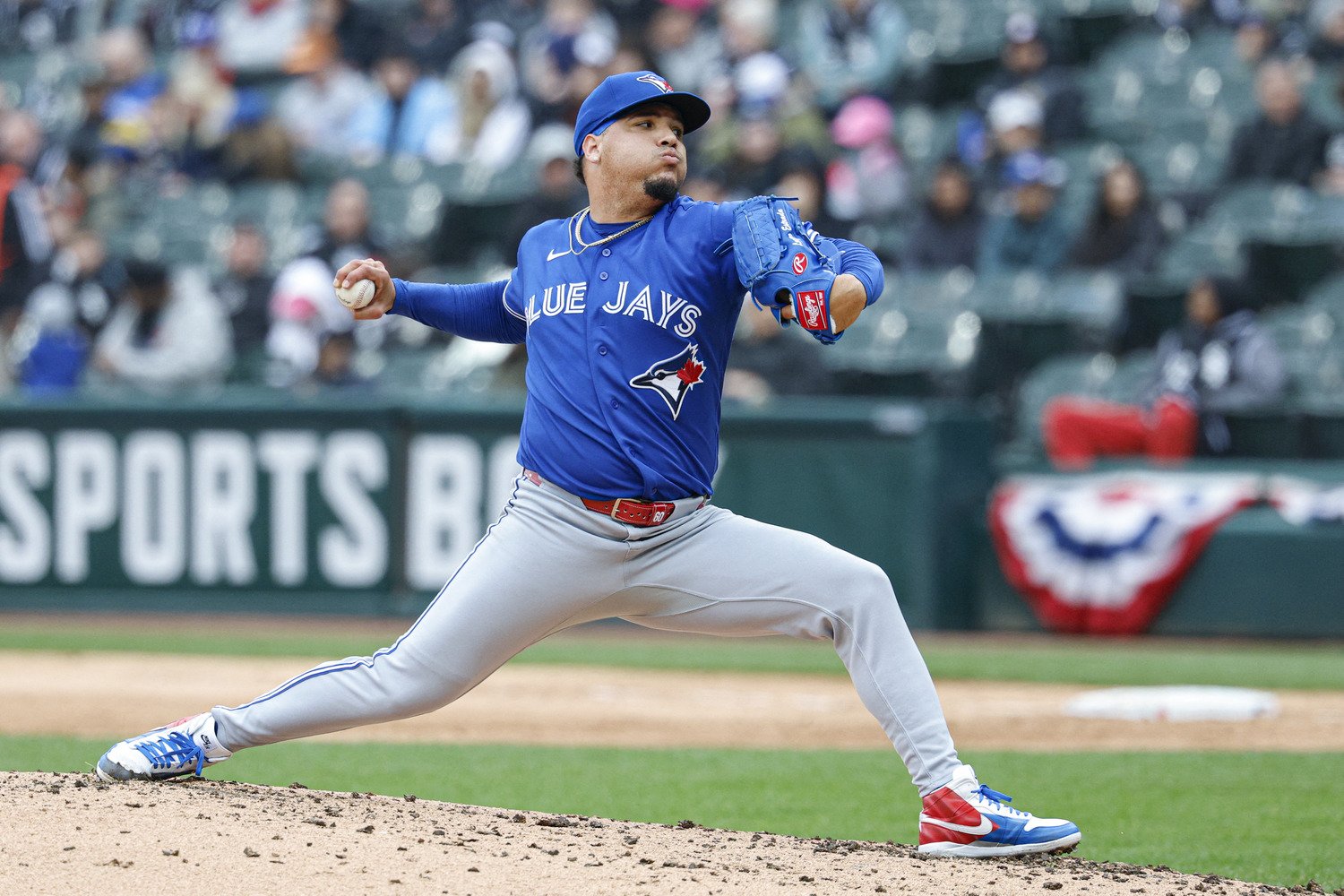 Lazaro Estrada gave the Blue Jays everything they could have asked for in his 2026 debut, pitching four scoreless innings in place of an injured Cody Ponce. The Jays optioned Estrada to the minors the following day. However, Sportsnet's Shi Davidi reports that the righty suffered a shoulder impingement in connection with that outing. As such, the Blue Jays have reversed his option and instead placed him on the major league 15-day injured list, retroactive to April 5. Estrada will be eligible to come off the IL on Monday, but it seems unlikely he'll be ready that soon. So, the Blue Jays have one less depth arm for the time being. Thankfully, both Trey Yesavage and José Berríos continue to make progress on their rehab assignments. Each could be ready to return at some point later this month.
 -
Lazaro Estrada Nursing Shoulder Impingement
Leo Morgenstern posted a topic in Toronto Blue Jays Talk
Lazaro Estrada gave the Blue Jays everything they could have asked for in his 2026 debut, pitching four scoreless innings in place of an injured Cody Ponce. The Jays optioned Estrada to the minors the following day. However, Sportsnet's Shi Davidi reports that the righty suffered a shoulder impingement in connection with that outing. As such, the Blue Jays have reversed his option and instead placed him on the major league 15-day injured list, retroactive to April 5. Estrada will be eligible to come off the IL on Monday, but it seems unlikely he'll be ready that soon. So, the Blue Jays have one less depth arm for the time being. Thankfully, both Trey Yesavage and José Berríos continue to make progress on their rehab assignments. Each could be ready to return at some point later this month. View full rumor -
Dear sports photographers, I'm incredibly grateful for the work you do. You play such an important role in recording and relating the story of the game. Our website would look lifeless without you. With all that said... I have to make a request. I need more photos to use when the Blue Jays are struggling at the plate. I get it. Hits are more exciting than strikeouts. Moments of celebration sell better than moments of failure. I'm sure hitters aren't too thrilled to have their picture taken as they walk back to the dugout in defeat. But I can't use a photo of a Blue Jays batter getting a hit in an article about how badly their bats have stunk. As I write this, the Blue Jays are 7-10. Their offense has struggled. As much as it pains me to cover those struggles, that's what I signed up for. My fellow scribes and I have to write about all the ways this team has disappointed us. The problem? We're burning through images that depict those struggles faster than you're putting them out. On Thursday, I published a piece about the team's poor performance with runners in scoring position. That's been a recurring theme throughout the first three weeks of the season. Yet, you wouldn't know it by scrolling through our image service. All I needed was one photo of a Blue Jays batter not succeeding at the plate to use as the featured image. That was a lot harder to find than you'd think. This one of George Springer would have been perfect, but I had already used it. Image courtesy of Kamil Krzaczynski-Imagn Images I had also already used the images I found of Vladimir Guerrero Jr. (here) and Kazuma Okamoto (here) staring into the distance after striking out. Like I said, the Blue Jays have struggled, and we've had to cover those struggles. Images courtesy of Kamil Krzaczynski & Nick Turchiaro-Imagn Images Eventually, after scrolling through pages and pages of pictures of the Blue Jays getting hits, scoring runs, and donning celebratory jackets, I settled on a slightly different shot of Okamoto reacting to the same strikeout. That's how limited my options were. It doesn't have to be this way. I know the Blue Jays don't strike out a whole lot. It's kind of their thing. But that's relative. They may have struck out less than any other team, but they've still done it 117 times this year. That's only 25 fewer strikeouts than hits! And it's not as if these photos need to be strikeouts. Give me a picture of a batter hitting into a groundout or a pop-up. Give me a one of a swing and a miss. I don't even care if I can see the disappointment on the batter's face. Sure, an evocative facial expression is a plus, but I'm not greedy. All I need is literally any photo of a Blue Jays batter that isn't of him getting a hit or celebrating a hit. They're shockingly hard to find. To be fair, I found a good number of photos of Blue Jays getting hits in which it isn't explicitly clear that they're getting hits. Could I have gotten away with using this shot of Ernie Clement? Probably. But it wouldn't have felt right. I would have known he hit a single with that swing, and I'm no peddler of misinformation. I left the watermark on, and I left the image out of my article. Image courtesy of Dan Hamilton-Imagn Images. If you still aren't convinced how dire this situation is, let me use Wednesday's game against the Brewers as an example. The Blue Jays' bats failed to capitalize on a great outing from Dylan Cease, losing 2-1. They went 5-for-30 with no extra-base hits. Their 35% whiff rate (21 whiffs on 60 swings) was their highest in any game so far this season. Despite that highly disappointing offensive showing, there wasn't a single picture from that game I could use as the header for this article. Our image service gave me 48 pictures from game day, including shots I certainly never needed to see of Easton McGee, Aaron Ashby, and Trevor Megill stretching in the bullpen. Images courtesy of Mark Hoffman-Imagn Images. There were two images of Blue Jays batters I could choose from for the entire game. One was Guerrero hitting a single. The other was Okamoto drawing a walk. But I needed more than just images of success when the clear story of the game, at least for Toronto's offense, was failure. On top of that, I also found an image of Brewers pitcher Chad Patrick reacting in distress to what turned out to be a fly out. That raises a whole other issue. It's never hard to find images of pitchers looking disappointed. There are so many of them that you can even find pictures of pitchers looking like they failed when they didn't! What is it about pitching failures that compels photographers so much, when it seems like many of you wouldn't capture a hitter's failure with a ten-foot lens? Look at this portrait of Eloy Jiménez. I used it recently for an article about his call-up. Jiménez was about to play his first MLB game since September 2024. The photographer, John E. Sokolowski, captured the moment perfectly. Image courtesy of John E. Sokolowski-Imagn Images Look at the sheer joy on his face. All I'm asking for is the occasional photo that captures a similar degree of disappointment. I don't want to have to use those photos, but until the Blue Jays start playing better baseball, I don't have much of a choice. We're getting dangerously close to me having to photoshop this George Springer frown onto his teammates' faces. I don't want to do that, and I know you don't want to see it. So please, baseball photographers, I'm begging you. Your writer and editor friends need more pictures of hitters looking discouraged, defeated, and downright despondent. The only alternative is asking the Blue Jays to play better baseball, and, well, I'm trying to be realistic here. View full article
-
Please, We Need More Photos of the Blue Jays Striking Out
Leo Morgenstern posted an article in Just For Fun
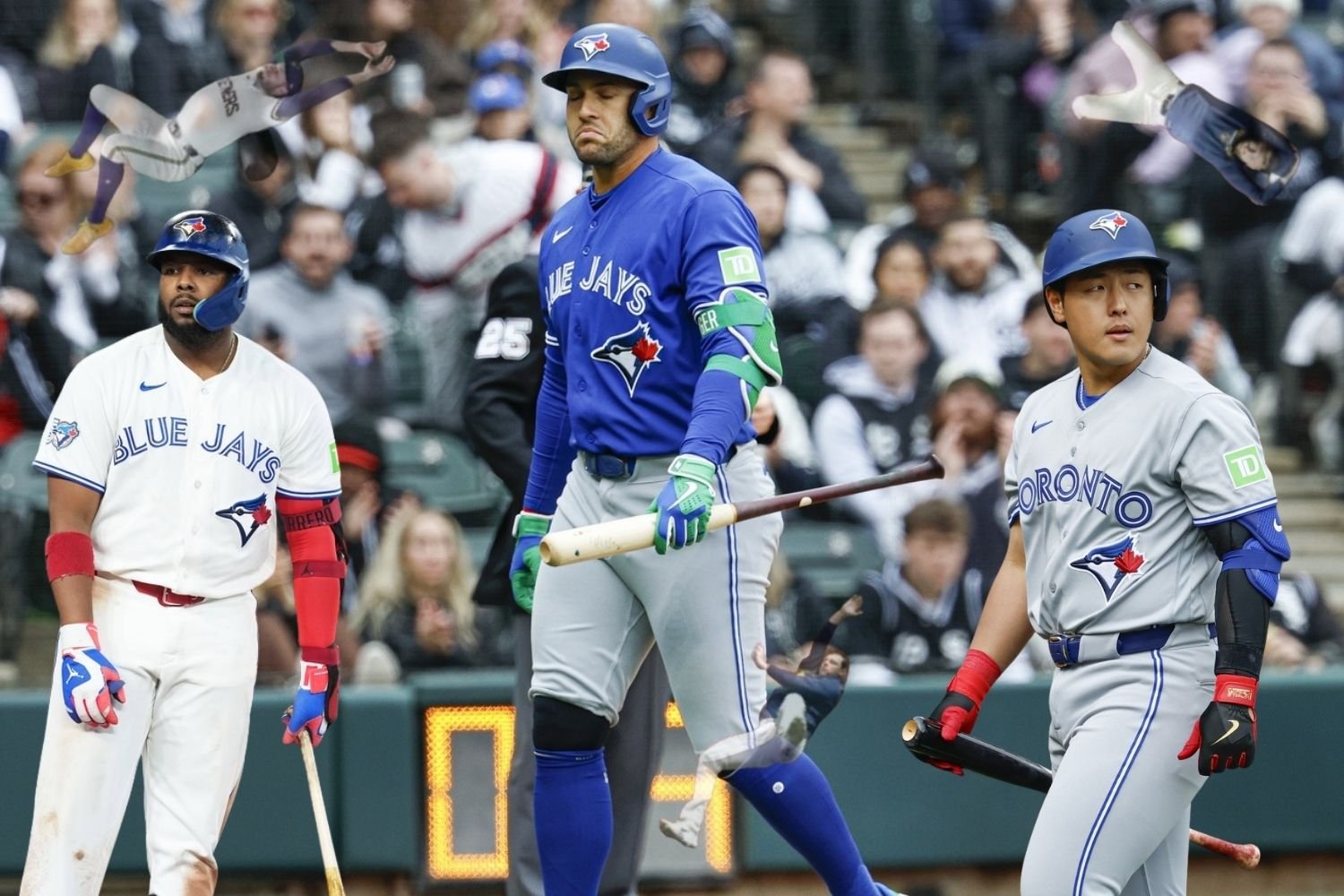 Dear sports photographers, I'm incredibly grateful for the work you do. You play such an important role in recording and relating the story of the game. Our website would look lifeless without you. With all that said... I have to make a request. I need more photos to use when the Blue Jays are struggling at the plate. I get it. Hits are more exciting than strikeouts. Moments of celebration sell better than moments of failure. I'm sure hitters aren't too thrilled to have their picture taken as they walk back to the dugout in defeat. But I can't use a photo of a Blue Jays batter getting a hit in an article about how badly their bats have stunk. As I write this, the Blue Jays are 7-10. Their offense has struggled. As much as it pains me to cover those struggles, that's what I signed up for. My fellow scribes and I have to write about all the ways this team has disappointed us. The problem? We're burning through images that depict those struggles faster than you're putting them out. On Thursday, I published a piece about the team's poor performance with runners in scoring position. That's been a recurring theme throughout the first three weeks of the season. Yet, you wouldn't know it by scrolling through our image service. All I needed was one photo of a Blue Jays batter not succeeding at the plate to use as the featured image. That was a lot harder to find than you'd think. This one of George Springer would have been perfect, but I had already used it. Image courtesy of Kamil Krzaczynski-Imagn Images I had also already used the images I found of Vladimir Guerrero Jr. (here) and Kazuma Okamoto (here) staring into the distance after striking out. Like I said, the Blue Jays have struggled, and we've had to cover those struggles. Images courtesy of Kamil Krzaczynski & Nick Turchiaro-Imagn Images Eventually, after scrolling through pages and pages of pictures of the Blue Jays getting hits, scoring runs, and donning celebratory jackets, I settled on a slightly different shot of Okamoto reacting to the same strikeout. That's how limited my options were. It doesn't have to be this way. I know the Blue Jays don't strike out a whole lot. It's kind of their thing. But that's relative. They may have struck out less than any other team, but they've still done it 117 times this year. That's only 25 fewer strikeouts than hits! And it's not as if these photos need to be strikeouts. Give me a picture of a batter hitting into a groundout or a pop-up. Give me a one of a swing and a miss. I don't even care if I can see the disappointment on the batter's face. Sure, an evocative facial expression is a plus, but I'm not greedy. All I need is literally any photo of a Blue Jays batter that isn't of him getting a hit or celebrating a hit. They're shockingly hard to find. To be fair, I found a good number of photos of Blue Jays getting hits in which it isn't explicitly clear that they're getting hits. Could I have gotten away with using this shot of Ernie Clement? Probably. But it wouldn't have felt right. I would have known he hit a single with that swing, and I'm no peddler of misinformation. I left the watermark on, and I left the image out of my article. Image courtesy of Dan Hamilton-Imagn Images. If you still aren't convinced how dire this situation is, let me use Wednesday's game against the Brewers as an example. The Blue Jays' bats failed to capitalize on a great outing from Dylan Cease, losing 2-1. They went 5-for-30 with no extra-base hits. Their 35% whiff rate (21 whiffs on 60 swings) was their highest in any game so far this season. Despite that highly disappointing offensive showing, there wasn't a single picture from that game I could use as the header for this article. Our image service gave me 48 pictures from game day, including shots I certainly never needed to see of Easton McGee, Aaron Ashby, and Trevor Megill stretching in the bullpen. Images courtesy of Mark Hoffman-Imagn Images. There were two images of Blue Jays batters I could choose from for the entire game. One was Guerrero hitting a single. The other was Okamoto drawing a walk. But I needed more than just images of success when the clear story of the game, at least for Toronto's offense, was failure. On top of that, I also found an image of Brewers pitcher Chad Patrick reacting in distress to what turned out to be a fly out. That raises a whole other issue. It's never hard to find images of pitchers looking disappointed. There are so many of them that you can even find pictures of pitchers looking like they failed when they didn't! What is it about pitching failures that compels photographers so much, when it seems like many of you wouldn't capture a hitter's failure with a ten-foot lens? Look at this portrait of Eloy Jiménez. I used it recently for an article about his call-up. Jiménez was about to play his first MLB game since September 2024. The photographer, John E. Sokolowski, captured the moment perfectly. Image courtesy of John E. Sokolowski-Imagn Images Look at the sheer joy on his face. All I'm asking for is the occasional photo that captures a similar degree of disappointment. I don't want to have to use those photos, but until the Blue Jays start playing better baseball, I don't have much of a choice. We're getting dangerously close to me having to photoshop this George Springer frown onto his teammates' faces. I don't want to do that, and I know you don't want to see it. So please, baseball photographers, I'm begging you. Your writer and editor friends need more pictures of hitters looking discouraged, defeated, and downright despondent. The only alternative is asking the Blue Jays to play better baseball, and, well, I'm trying to be realistic here.
 -
This piece was written prior to the Blue Jays' game on Wednesday, April 15. The Blue Jays haven't looked their best with runners in scoring position this season. If you've been watching their games, I doubt you disagree. Tuesday's matchup with the Brewers was a refreshing change of pace. While both of Toronto's home runs were solo shots, the Jays went 4-for-9 with RISP, driving seven more across the plate, including three in the top of the 10th, for a thrilling 9-7 victory. Yet, even after that performance, the offense is hitting just .231 with RISP. Their 171 plate appearances with runners on second and/or third rank 15th in the majors, but their 40 runs scored put them third to last. While their batting average is poor and their walk rate mediocre, the real problem has been a lack of power. The Blue Jays own a .082 isolated power with RISP. Only the Royals (.046) have been worse. League average is a .147 ISO. My immediate concern when I saw those numbers was that this was a reflection of a pointed strategy, not just a small sample size fluke. After all, in theory, power matters less with runners in scoring position. That's kind of the whole point of "scoring position" as a concept. Often, a runner on second or third can score on a single. So, one could argue that it's sound strategy to shorten up and just try to put the ball in play with runners in scoring position. Instead of swinging for the fences, swing for a groundball up the middle. This might be true in the bottom of the ninth of a tie game. The rest of the time, it's almost always foolish to sabotage your own chances of hitting for extra bases. Thankfully, it doesn't seem like that's actually what the Blue Jays are doing. Although they've yet to hit a home run with RISP this season, their average bat speed is slightly faster, and their average launch angle is slightly higher in such situations. If they were trying to hit more singles, I'd expect those numbers to be lower. Now, with that said, the fact that Toronto's disappointing power numbers with runners in scoring position probably aren't on purpose is only so much consolation when the main point is that this team has failed to cash in on a ton of scoring windows. It's why they're below .500 with the second-worst run differential in the league. On the flip side, the Jays have been weirdly good with runners on first base (and not second or third). In these specific situations, they've been one of the game's most prolific offenses, with a league-leading seven home runs and .250 ISO. I'd call this a pretty good indication that these splits are mostly noise, especially this early in the season. That doesn't mean they don't matter or they aren't worth talking about. But there's no logical reason the Blue Jays would be so productive with runners on first and suddenly fall apart once those runners reach second or third. I'm annoyed with the way this team has squandered RISP opportunities, but I'm not concerned that it's going to continue. There's another wrinkle to all this that I want to address. For as much as the Jays have floundered with runners in scoring position, they have, strangely enough, hit very well in higher-leverage situations. Leverage index measures the average possible change in win expectancy in any given moment based on the inning, the score, the number of outs, and the number of runners on base. All else being equal, an RISP situation will have a higher leverage index than a non-RISP situation. Still, many other factors go into the calculation. So, you might expect a team that has struggled to produce with RISP to have had similar struggles in higher-leverage situations, but that doesn't have to be true. The 2026 Blue Jays are proof. Through 16 games, the Blue Jays have a .637 OPS and an 83 wRC+ in what FanGraphs defines as "low-leverage" situations. Both numbers rank among the league's bottom 10. In contrast, the Jays rank third in MLB in OPS and wRC+ in medium and high-leverage situations. No team has more hits or fewer strikeouts in these spots, and Toronto's .148 ISO is slightly above league average. What does this mean? Well, contrary to what their performance with RISP would have you think, this offense has come through in the most meaningful spots. It just hasn't been enough. The Jays' issues with RISP have been a problem. Of course they have. But this team has other problems. Too often, the Jays have looked uncompetitive in low-leverage plate appearances. And if they can't come through when the stakes are low, they can't put themselves in a position to succeed when the stakes are high. Consider this: The Blue Jays are slashing .310/.394/.552 in 99 plate appearances with the tying run on base or at the plate. Only the Rays have been more productive in those situations. However, the Jays are frequently playing from far behind or failing to put themselves far enough ahead. Let's say you're losing 8-1, as Toronto was against Minnesota for most of the game last Sunday. Any plate appearance when you're down by seven is going to be low-leverage, but you can't claw back to a higher-leverage situation unless you score some runs when the leverage is low. Similarly, the best way to prevent your bullpen from blowing a game is to give them a big enough cushion. Opportunities to drive in insurance runs are going to have a lower leverage index than opportunities to score the go-ahead run. That doesn't mean those runs aren't critical, especially for a team whose bullpen has already blown six saves. Game-state and leverage splits are almost never predictive, but stats aren't only valuable for their predictive utility. We can also use numbers to tell the story of a season, and these splits are some of the best storytelling stats we have. The Blue Jays haven't looked their best with runners in scoring position this season. Yet, the story behind their early-season struggles goes deeper than their struggles with runners in scoring position. Their failure to produce in low-leverage moments has hurt them just as much. View full article
-
.jpg.7b6d45a8caa73061208ef55ac4d1ec9d.jpg) This piece was written prior to the Blue Jays' game on Wednesday, April 15. The Blue Jays haven't looked their best with runners in scoring position this season. If you've been watching their games, I doubt you disagree. Tuesday's matchup with the Brewers was a refreshing change of pace. While both of Toronto's home runs were solo shots, the Jays went 4-for-9 with RISP, driving seven more across the plate, including three in the top of the 10th, for a thrilling 9-7 victory. Yet, even after that performance, the offense is hitting just .231 with RISP. Their 171 plate appearances with runners on second and/or third rank 15th in the majors, but their 40 runs scored put them third to last. While their batting average is poor and their walk rate mediocre, the real problem has been a lack of power. The Blue Jays own a .082 isolated power with RISP. Only the Royals (.046) have been worse. League average is a .147 ISO. My immediate concern when I saw those numbers was that this was a reflection of a pointed strategy, not just a small sample size fluke. After all, in theory, power matters less with runners in scoring position. That's kind of the whole point of "scoring position" as a concept. Often, a runner on second or third can score on a single. So, one could argue that it's sound strategy to shorten up and just try to put the ball in play with runners in scoring position. Instead of swinging for the fences, swing for a groundball up the middle. This might be true in the bottom of the ninth of a tie game. The rest of the time, it's almost always foolish to sabotage your own chances of hitting for extra bases. Thankfully, it doesn't seem like that's actually what the Blue Jays are doing. Although they've yet to hit a home run with RISP this season, their average bat speed is slightly faster, and their average launch angle is slightly higher in such situations. If they were trying to hit more singles, I'd expect those numbers to be lower. Now, with that said, the fact that Toronto's disappointing power numbers with runners in scoring position probably aren't on purpose is only so much consolation when the main point is that this team has failed to cash in on a ton of scoring windows. It's why they're below .500 with the second-worst run differential in the league. On the flip side, the Jays have been weirdly good with runners on first base (and not second or third). In these specific situations, they've been one of the game's most prolific offenses, with a league-leading seven home runs and .250 ISO. I'd call this a pretty good indication that these splits are mostly noise, especially this early in the season. That doesn't mean they don't matter or they aren't worth talking about. But there's no logical reason the Blue Jays would be so productive with runners on first and suddenly fall apart once those runners reach second or third. I'm annoyed with the way this team has squandered RISP opportunities, but I'm not concerned that it's going to continue. There's another wrinkle to all this that I want to address. For as much as the Jays have floundered with runners in scoring position, they have, strangely enough, hit very well in higher-leverage situations. Leverage index measures the average possible change in win expectancy in any given moment based on the inning, the score, the number of outs, and the number of runners on base. All else being equal, an RISP situation will have a higher leverage index than a non-RISP situation. Still, many other factors go into the calculation. So, you might expect a team that has struggled to produce with RISP to have had similar struggles in higher-leverage situations, but that doesn't have to be true. The 2026 Blue Jays are proof. Through 16 games, the Blue Jays have a .637 OPS and an 83 wRC+ in what FanGraphs defines as "low-leverage" situations. Both numbers rank among the league's bottom 10. In contrast, the Jays rank third in MLB in OPS and wRC+ in medium and high-leverage situations. No team has more hits or fewer strikeouts in these spots, and Toronto's .148 ISO is slightly above league average. What does this mean? Well, contrary to what their performance with RISP would have you think, this offense has come through in the most meaningful spots. It just hasn't been enough. The Jays' issues with RISP have been a problem. Of course they have. But this team has other problems. Too often, the Jays have looked uncompetitive in low-leverage plate appearances. And if they can't come through when the stakes are low, they can't put themselves in a position to succeed when the stakes are high. Consider this: The Blue Jays are slashing .310/.394/.552 in 99 plate appearances with the tying run on base or at the plate. Only the Rays have been more productive in those situations. However, the Jays are frequently playing from far behind or failing to put themselves far enough ahead. Let's say you're losing 8-1, as Toronto was against Minnesota for most of the game last Sunday. Any plate appearance when you're down by seven is going to be low-leverage, but you can't claw back to a higher-leverage situation unless you score some runs when the leverage is low. Similarly, the best way to prevent your bullpen from blowing a game is to give them a big enough cushion. Opportunities to drive in insurance runs are going to have a lower leverage index than opportunities to score the go-ahead run. That doesn't mean those runs aren't critical, especially for a team whose bullpen has already blown six saves. Game-state and leverage splits are almost never predictive, but stats aren't only valuable for their predictive utility. We can also use numbers to tell the story of a season, and these splits are some of the best storytelling stats we have. The Blue Jays haven't looked their best with runners in scoring position this season. Yet, the story behind their early-season struggles goes deeper than their struggles with runners in scoring position. Their failure to produce in low-leverage moments has hurt them just as much.
This piece was written prior to the Blue Jays' game on Wednesday, April 15. The Blue Jays haven't looked their best with runners in scoring position this season. If you've been watching their games, I doubt you disagree. Tuesday's matchup with the Brewers was a refreshing change of pace. While both of Toronto's home runs were solo shots, the Jays went 4-for-9 with RISP, driving seven more across the plate, including three in the top of the 10th, for a thrilling 9-7 victory. Yet, even after that performance, the offense is hitting just .231 with RISP. Their 171 plate appearances with runners on second and/or third rank 15th in the majors, but their 40 runs scored put them third to last. While their batting average is poor and their walk rate mediocre, the real problem has been a lack of power. The Blue Jays own a .082 isolated power with RISP. Only the Royals (.046) have been worse. League average is a .147 ISO. My immediate concern when I saw those numbers was that this was a reflection of a pointed strategy, not just a small sample size fluke. After all, in theory, power matters less with runners in scoring position. That's kind of the whole point of "scoring position" as a concept. Often, a runner on second or third can score on a single. So, one could argue that it's sound strategy to shorten up and just try to put the ball in play with runners in scoring position. Instead of swinging for the fences, swing for a groundball up the middle. This might be true in the bottom of the ninth of a tie game. The rest of the time, it's almost always foolish to sabotage your own chances of hitting for extra bases. Thankfully, it doesn't seem like that's actually what the Blue Jays are doing. Although they've yet to hit a home run with RISP this season, their average bat speed is slightly faster, and their average launch angle is slightly higher in such situations. If they were trying to hit more singles, I'd expect those numbers to be lower. Now, with that said, the fact that Toronto's disappointing power numbers with runners in scoring position probably aren't on purpose is only so much consolation when the main point is that this team has failed to cash in on a ton of scoring windows. It's why they're below .500 with the second-worst run differential in the league. On the flip side, the Jays have been weirdly good with runners on first base (and not second or third). In these specific situations, they've been one of the game's most prolific offenses, with a league-leading seven home runs and .250 ISO. I'd call this a pretty good indication that these splits are mostly noise, especially this early in the season. That doesn't mean they don't matter or they aren't worth talking about. But there's no logical reason the Blue Jays would be so productive with runners on first and suddenly fall apart once those runners reach second or third. I'm annoyed with the way this team has squandered RISP opportunities, but I'm not concerned that it's going to continue. There's another wrinkle to all this that I want to address. For as much as the Jays have floundered with runners in scoring position, they have, strangely enough, hit very well in higher-leverage situations. Leverage index measures the average possible change in win expectancy in any given moment based on the inning, the score, the number of outs, and the number of runners on base. All else being equal, an RISP situation will have a higher leverage index than a non-RISP situation. Still, many other factors go into the calculation. So, you might expect a team that has struggled to produce with RISP to have had similar struggles in higher-leverage situations, but that doesn't have to be true. The 2026 Blue Jays are proof. Through 16 games, the Blue Jays have a .637 OPS and an 83 wRC+ in what FanGraphs defines as "low-leverage" situations. Both numbers rank among the league's bottom 10. In contrast, the Jays rank third in MLB in OPS and wRC+ in medium and high-leverage situations. No team has more hits or fewer strikeouts in these spots, and Toronto's .148 ISO is slightly above league average. What does this mean? Well, contrary to what their performance with RISP would have you think, this offense has come through in the most meaningful spots. It just hasn't been enough. The Jays' issues with RISP have been a problem. Of course they have. But this team has other problems. Too often, the Jays have looked uncompetitive in low-leverage plate appearances. And if they can't come through when the stakes are low, they can't put themselves in a position to succeed when the stakes are high. Consider this: The Blue Jays are slashing .310/.394/.552 in 99 plate appearances with the tying run on base or at the plate. Only the Rays have been more productive in those situations. However, the Jays are frequently playing from far behind or failing to put themselves far enough ahead. Let's say you're losing 8-1, as Toronto was against Minnesota for most of the game last Sunday. Any plate appearance when you're down by seven is going to be low-leverage, but you can't claw back to a higher-leverage situation unless you score some runs when the leverage is low. Similarly, the best way to prevent your bullpen from blowing a game is to give them a big enough cushion. Opportunities to drive in insurance runs are going to have a lower leverage index than opportunities to score the go-ahead run. That doesn't mean those runs aren't critical, especially for a team whose bullpen has already blown six saves. Game-state and leverage splits are almost never predictive, but stats aren't only valuable for their predictive utility. We can also use numbers to tell the story of a season, and these splits are some of the best storytelling stats we have. The Blue Jays haven't looked their best with runners in scoring position this season. Yet, the story behind their early-season struggles goes deeper than their struggles with runners in scoring position. Their failure to produce in low-leverage moments has hurt them just as much. -
Entering this past weekend, Brandon Valenzuela had played exactly one full MLB game in his career. The Blue Jays acquired the catcher ahead of the trade deadline last summer. They selected his contract last fall to prevent him from leaving in minor league free agency. When Alejandro Kirk fractured his thumb earlier this month, Valenzuela got his first call to the show. The 25-year-old started once against the White Sox and once against the Dodgers, although he didn't finish the L.A. game; Tyler Heineman pinch-hit for Valenzuela (and went down on strikes as the final out of a 4-1 Blue Jays loss). Valenzuela also came in to catch the final innings of the other two games against the Dodgers after Heineman was removed for a pinch-hitter in one and a pinch-runner in the other. Before the Twins series, that was the extent of Valenzuela's big league experience. One base hit and four strikeouts in eight plate appearances. Twenty defensive innings behind the dish. A couple of bad throws and a couple of wild pitches past him. Then, Valenzuela stepped up. With Heineman suffering from back spasms, John Schneider asked Valenzuela to start all three games over the weekend. The schedule gave him less than 20 hours to rest between each. He caught 11 different pitchers over 27 innings, and he may deserve more credit than the overall results suggest. Although the Blue Jays lost two of three, giving up 19 runs on 21 hits and six home runs, it was only the starters who struggled. That was Patrick Corbin, who was making his first start after missing spring training and pitching only one ramp-up game in the minors; Eric Lauer, who was getting over a bad illness; and Max Scherzer, who is pitching through forearm tendinitis. Meanwhile, the relievers combined for a remarkable 15.1 innings of scoreless baseball, giving up just five hits and striking out 20. I'm much more inclined to give Valenzuela credit for helping the bullpen than I am to blame him for the starters' struggles. Valenzuela also recorded his first career caught stealing and his first infield assists, while showing off great framing skills (53.1% called strike rate on takes in the shadow zone), elite pop times (avg. 1.88 seconds), and an ability to work well with the ABS challenge system. Brandon Valenzuela catches Austin Martin stealing second base (pop time 1.86 seconds). Then there was what he did when he was standing at the plate instead of crouching behind it. The Blue Jays aren't asking Valenzuela for much at the plate. As a defense-first catching prospect thrust into a major league role, he only needs to be slightly better than a black hole in the nine hole. The jury is still out on whether or not he can do that long-term, but he certainly succeeded on Friday. He had his first multi-hit game, scored his first runs, and earned his first RBIs. That included crushing his very first big league homer (and, just as importantly, receiving his first Gatorade-esque sports drink drenching to celebrate). At 111.4 mph off the bat, it was Toronto's hardest-hit home run of the season. Valenzuela went hitless in the next two games of the series, though he drew his first big league walk on Sunday. His discipline has always been solid in the minors, but it took him 17 plate appearances in the majors to take a base on balls. Hopefully, that walk was another sign that he's getting a little more comfortable against this new level of competition. We talk a lot about small sample sizes here at Jays Centre, especially at this time of year. One weekend of baseball is, of course, a small sample. Yet, for Valenzuela, this weekend series against the Twins was so much more than just the 27 innings he caught and the 11 times he came to the plate. It was his first real taste of what it means to be an everyday MLB catcher, and it was a signal that the Blue Jays trust him to take on that role, at least temporarily. It was a big weekend for a player who's taking on more responsibility than he or his team expected he would. The pressure was on, and Brandon Valenzuela stepped up. View full article
.jpg.42ae48f67e69c6b80aa7a110f3be86fe.jpg)
.jpg.015f56acdf396b5e04ad657955bd350a.jpg)

.jpg.d03ce94b4f264a4349ceffa18aa92c08.jpg)
.jpg.b6fe24e694e3597343241248c4854504.jpg)
.jpg.7b6d45a8caa73061208ef55ac4d1ec9d.jpg)