


Leo Morgenstern
-
Posts
626 -
Joined
-
Last visited
Content Type
Profiles
Toronto Blue Jays Videos
2026 Toronto Blue Jays Top Prospects Ranking
Toronto Blue Jays Free Agent & Trade Rumors, Notes, & Tidbits
Guides & Resources
2025 Toronto Blue Jays Draft Pick Tracker
News
2026 Toronto Blue Jays Draft Tracker: Picks & Bonuses
Forums
Blogs
Events
Store
Downloads
Gallery
Everything posted by Leo Morgenstern
-

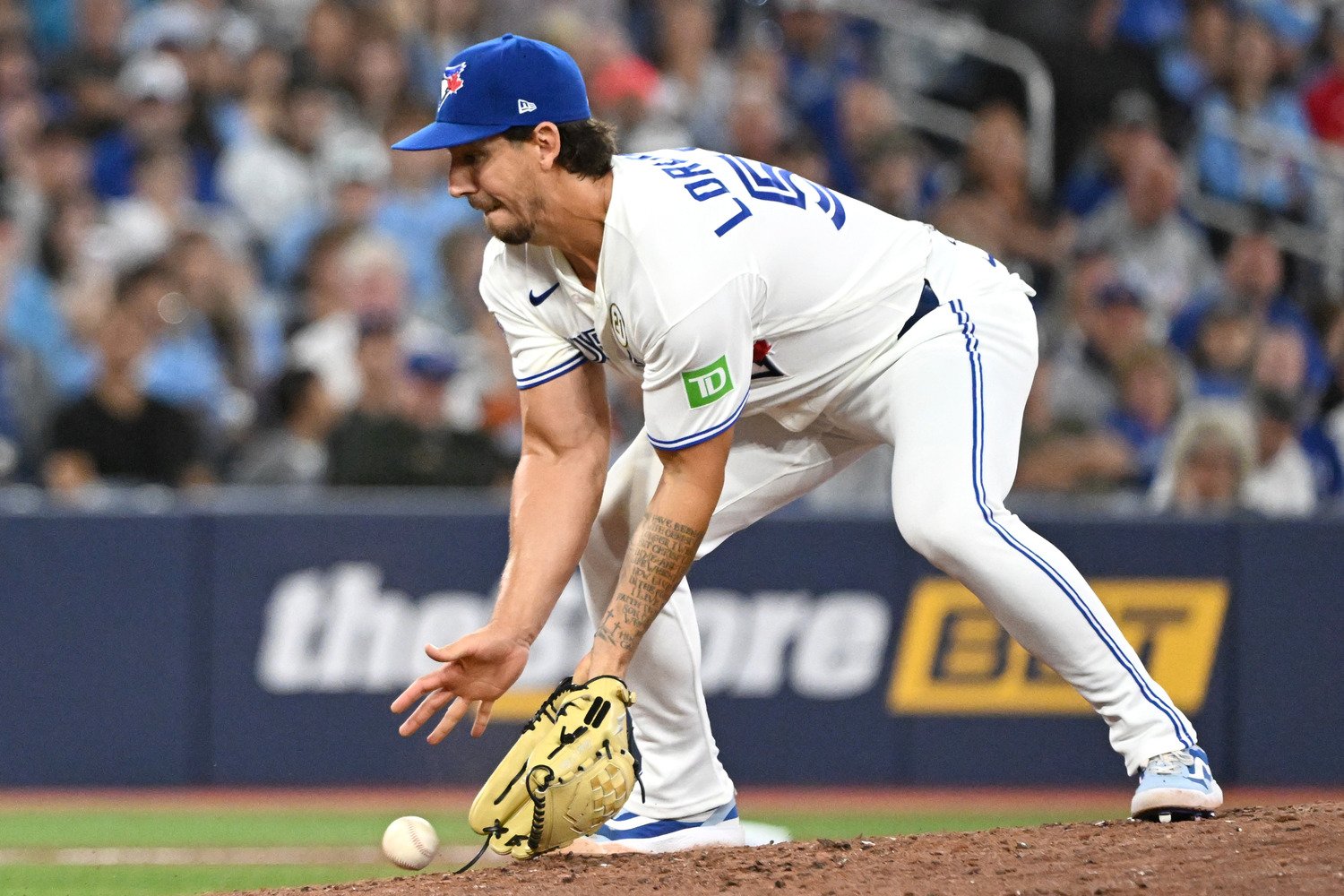 The Blue Jays announced a transaction ahead of their game tonight against the Rangers. Michael Lorenzen has been designated for assignment after six appearances for Toronto. He gave up 11 runs on 18 hits in 11.2 innings. He took the fall for two losses, but also earned his first save since 2023. In place of Lorenzen, the Blue Jays have added 25-year-old José Rodríguez to their bullpen. If he gets in a game, it will be his MLB debut. The right-hander owns a 3.79 ERA and 3.56 FIP in 38 innings this year between the Blue Jays' and Dodgers' minor league systems. Toronto acquired him earlier this month in exchange for fellow minor league right-hander Sebastian Rodriguez.
 -
The Blue Jays announced a transaction ahead of their game tonight against the Rangers. Michael Lorenzen has been designated for assignment after six appearances for Toronto. He gave up 11 runs on 18 hits in 11.2 innings. He took the fall for two losses, but also earned his first save since 2023. In place of Lorenzen, the Blue Jays have added 25-year-old José Rodríguez to their bullpen. If he gets in a game, it will be his MLB debut. The right-hander owns a 3.79 ERA and 3.56 FIP in 38 innings this year between the Blue Jays' and Dodgers' minor league systems. Toronto acquired him earlier this month in exchange for fellow minor league right-hander Sebastian Rodriguez. View full rumor
-
Over the winter, the Blue Jays signed Tyler Rogers to the richest relief pitcher contract in franchise history. If you weren't at least a little surprised by the $37 million guarantee he secured, you're either psychic, a Blue Jays front office employee, or a liar. The team at MLB Trade Rumors predicted he would sign a two-year, $18 million deal. Ben Clemens of FanGraphs was slightly higher on Rogers, proposing two years and $22 million. FanGraphs readers suggested a much lower number; their average prediction was $13.4 million guaranteed. The most lucrative projected contract I could find for Rogers (from a major media outlet) came from Kiley McDaniel at ESPN. Yet, even his relatively high guess – three years and $27 million – turned out to be $10 million too low. It's not that any of those sources doubted Rogers's talent. It's just that $37 million is a lot of money for a non-closer, and three years is a long guarantee for a reliever about to turn 35. According to the MLB Trade Rumors Contract Tracker, 24 relievers have signed a free agent contract worth at least $37 million in the last 20 years. The only one of them, besides Rogers, who wasn't an established closer was Jordan Hicks, and he doesn't really count. The Giants signed him to a four-year, $44 million deal with the goal of converting him into a starter. In that same 20-year span, just nine relievers have signed a three-year contract entering their age-35 (or older) season. Only three earned more than $25 million. The first was Mariano Rivera, the greatest closer of all time. The second was Robert Suarez, a two-time All-Star who led the NL in saves the year prior. The third was Tyler Rogers. From 2020-25, Rogers pitched more games and threw more innings than any other reliever in the league. He did so with a 2.84 ERA and 2.96 xERA. He was equal parts dominant and durable, thanks to a submarine delivery that helped him stifle opposing hitters without throwing high heat. Even so, his contract came as a surprise last winter. One season later, it's clear the Blue Jays knew exactly what they were doing. If anything, $37 million might not have been enough. Rogers has thrown 67.2 innings in 70 games for the Toronto. He owns a 1.73 ERA. He's pitching one of the greatest setup seasons the team has ever seen. Louis Varland is stealing most of the attention, and rightfully so. Yet, if it weren't for Varland, there's a good chance Rogers would have taken over the closing job when Hoffman struggled. If Rogers The Closer were to have anything like the success he's had as Rogers The Setup Man, he probably would have made his first All-Star team this summer. He probably would have earned consideration for the BBWAA Reliever of the Year Award this fall. That's how well Rogers has pitched this season – even if he's only the second best arm in his own bullpen. I'm not suggesting Rogers should resent Varland. The two owe each other a great deal of gratitude. Rogers has set Varland up for many of his 32 saves. Meanwhile, Varland taking over as the closer has allowed Rogers to continue rising up the holds leaderboard. Holds are not an "official MLB statistic", whatever that means. FanGraphs has data on holds dating back to 2002, and in that time, Rogers ranks 11th with 186 holds. He's one shy of cracking the top 10 and only 60 away from tying Tony Watson in first place. Rogers has already set the Blue Jays' single-season record (since 2002) with his 32 holds this year. His next hold this season will mark a new career high. He's never come particularly close to the league-wide record (41), but he is the only pitcher with five 30-hold seasons to his name. Scot Shields had four. David Robertson had four. Only a handful of pitchers have even reached 30 holds more than once. Perhaps it's a backhanded compliment to call Rogers one of the greatest setup men in recent history. Closers already have to deal with the "failed starter" criticisms. And you could say that setup men are just the guys who weren't good enough to be closers. That said, I don't think there's anything wrong with pointing out just how much Rogers has excelled at the job he's been asked to perform. He might be making a lot of money, but Tyler Rogers is absolutely holding up his end of the bargain. View full article
-
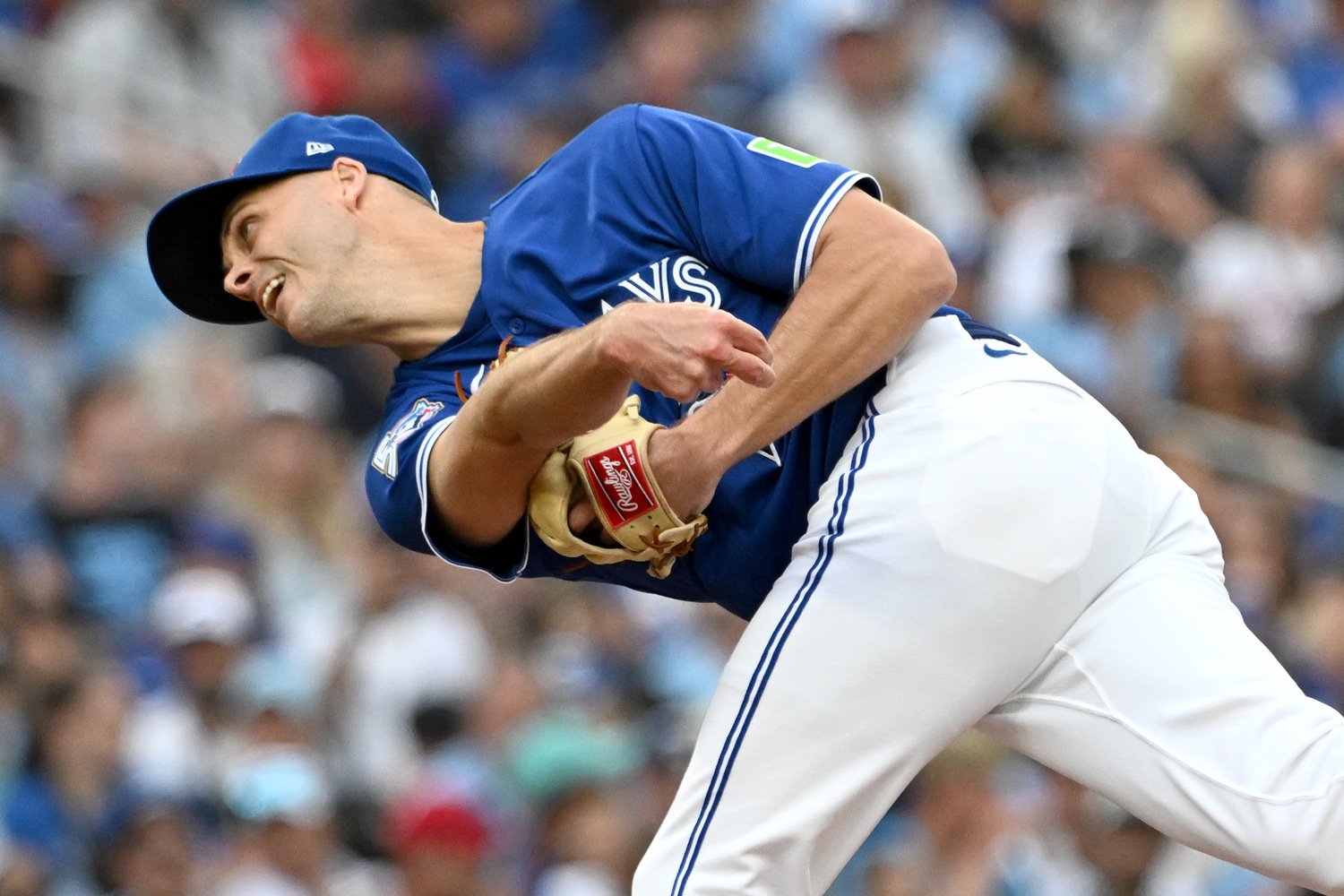 Over the winter, the Blue Jays signed Tyler Rogers to the richest relief pitcher contract in franchise history. If you weren't at least a little surprised by the $37 million guarantee he secured, you're either psychic, a Blue Jays front office employee, or a liar. The team at MLB Trade Rumors predicted he would sign a two-year, $18 million deal. Ben Clemens of FanGraphs was slightly higher on Rogers, proposing two years and $22 million. FanGraphs readers suggested a much lower number; their average prediction was $13.4 million guaranteed. The most lucrative projected contract I could find for Rogers (from a major media outlet) came from Kiley McDaniel at ESPN. Yet, even his relatively high guess – three years and $27 million – turned out to be $10 million too low. It's not that any of those sources doubted Rogers's talent. It's just that $37 million is a lot of money for a non-closer, and three years is a long guarantee for a reliever about to turn 35. According to the MLB Trade Rumors Contract Tracker, 24 relievers have signed a free agent contract worth at least $37 million in the last 20 years. The only one of them, besides Rogers, who wasn't an established closer was Jordan Hicks, and he doesn't really count. The Giants signed him to a four-year, $44 million deal with the goal of converting him into a starter. In that same 20-year span, just nine relievers have signed a three-year contract entering their age-35 (or older) season. Only three earned more than $25 million. The first was Mariano Rivera, the greatest closer of all time. The second was Robert Suarez, a two-time All-Star who led the NL in saves the year prior. The third was Tyler Rogers. From 2020-25, Rogers pitched more games and threw more innings than any other reliever in the league. He did so with a 2.84 ERA and 2.96 xERA. He was equal parts dominant and durable, thanks to a submarine delivery that helped him stifle opposing hitters without throwing high heat. Even so, his contract came as a surprise last winter. One season later, it's clear the Blue Jays knew exactly what they were doing. If anything, $37 million might not have been enough. Rogers has thrown 67.2 innings in 70 games for the Toronto. He owns a 1.73 ERA. He's pitching one of the greatest setup seasons the team has ever seen. Louis Varland is stealing most of the attention, and rightfully so. Yet, if it weren't for Varland, there's a good chance Rogers would have taken over the closing job when Hoffman struggled. If Rogers The Closer were to have anything like the success he's had as Rogers The Setup Man, he probably would have made his first All-Star team this summer. He probably would have earned consideration for the BBWAA Reliever of the Year Award this fall. That's how well Rogers has pitched this season – even if he's only the second best arm in his own bullpen. I'm not suggesting Rogers should resent Varland. The two owe each other a great deal of gratitude. Rogers has set Varland up for many of his 32 saves. Meanwhile, Varland taking over as the closer has allowed Rogers to continue rising up the holds leaderboard. Holds are not an "official MLB statistic", whatever that means. FanGraphs has data on holds dating back to 2002, and in that time, Rogers ranks 11th with 186 holds. He's one shy of cracking the top 10 and only 60 away from tying Tony Watson in first place. Rogers has already set the Blue Jays' single-season record (since 2002) with his 32 holds this year. His next hold this season will mark a new career high. He's never come particularly close to the league-wide record (41), but he is the only pitcher with five 30-hold seasons to his name. Scot Shields had four. David Robertson had four. Only a handful of pitchers have even reached 30 holds more than once. Perhaps it's a backhanded compliment to call Rogers one of the greatest setup men in recent history. Closers already have to deal with the "failed starter" criticisms. And you could say that setup men are just the guys who weren't good enough to be closers. That said, I don't think there's anything wrong with pointing out just how much Rogers has excelled at the job he's been asked to perform. He might be making a lot of money, but Tyler Rogers is absolutely holding up his end of the bargain.
 -
The Blue Jays welcome the Tigers to the Rogers Centre tonight for a three-game series. It's a must-win matchup for Toronto, in the same way every game from here on out feels like a must-win. Yet, there is arguably an even more meaningful series for the Blue Jays taking place a few hundred kilometers south, near the shores of Lake Erie. Over the next three days, the Guardians will face the White Sox at Progressive Field in Cleveland. If the White Sox take at least two of three from the Guardians while the Blue Jays take at least two of three from the Tigers, Toronto will be back in a Wild Card spot with nine games left to play. That's because the Jays only need to finish with the same record as the Guardians to beat them out for a postseason berth. A tie goes to the Blue Jays; they secured the season series earlier this month. Here's the problem. In their last 30 games, the Guardians are 18-12. Among AL teams, only the Yankees have a better record in that span. The White Sox, on the other hand, are two games below .500 in their last 30. They're five games below .500 in their last 15. That has brought Cleveland within half a game of the division lead. If the Guardians win this series, they will move ahead of the White Sox in the AL Central. If they sweep, they will move ahead in the division and secure the season-series tiebreaker. In that case, Chicago becomes the team to beat in the Wild Card race. And unfortunately for the Blue Jays, they lost their season series to the White Sox. So, the Guardians taking over in the AL Central would essentially push the Blue Jays an extra game back in the Wild Card standings. A tie with Cleveland gets Toronto into the playoffs, but a tie with Chicago won't cut it. When the White Sox swept the Blue Jays in April, it felt like a frustrating loss to a team the Blue Jays really should have beaten. It was a missed opportunity to get ahead. Now, losing that series might decide the Blue Jays' season. As for where the Blue Jays stand against their other Wild Card opponents, they have already lost the season series to the Rangers, which makes their three-game set in Arlington this weekend (yet another) must-win. Meanwhile, they need to win their series against the Orioles next week to clinch that tiebreaker. Finally, the Jays tied their season series with the Astros 3-3, which means that if the Rangers sneak ahead of the Astros in the AL West and it comes down to Houston and Toronto in the Wild Card, a Blue Jays-Astros tie would be decided by the two teams' records within their own divisions. The Blue Jays currently have the edge there; they own a 25-24 record in the AL East, compared to Houston's 22-24 record in the West. However, the Astros have six games left against the Mariners and A's to change that. View full article
-
- 1
-

-
The Most Important Game for the Blue Jays Tonight Isn’t in Toronto
Leo Morgenstern posted an article in Blue Jays
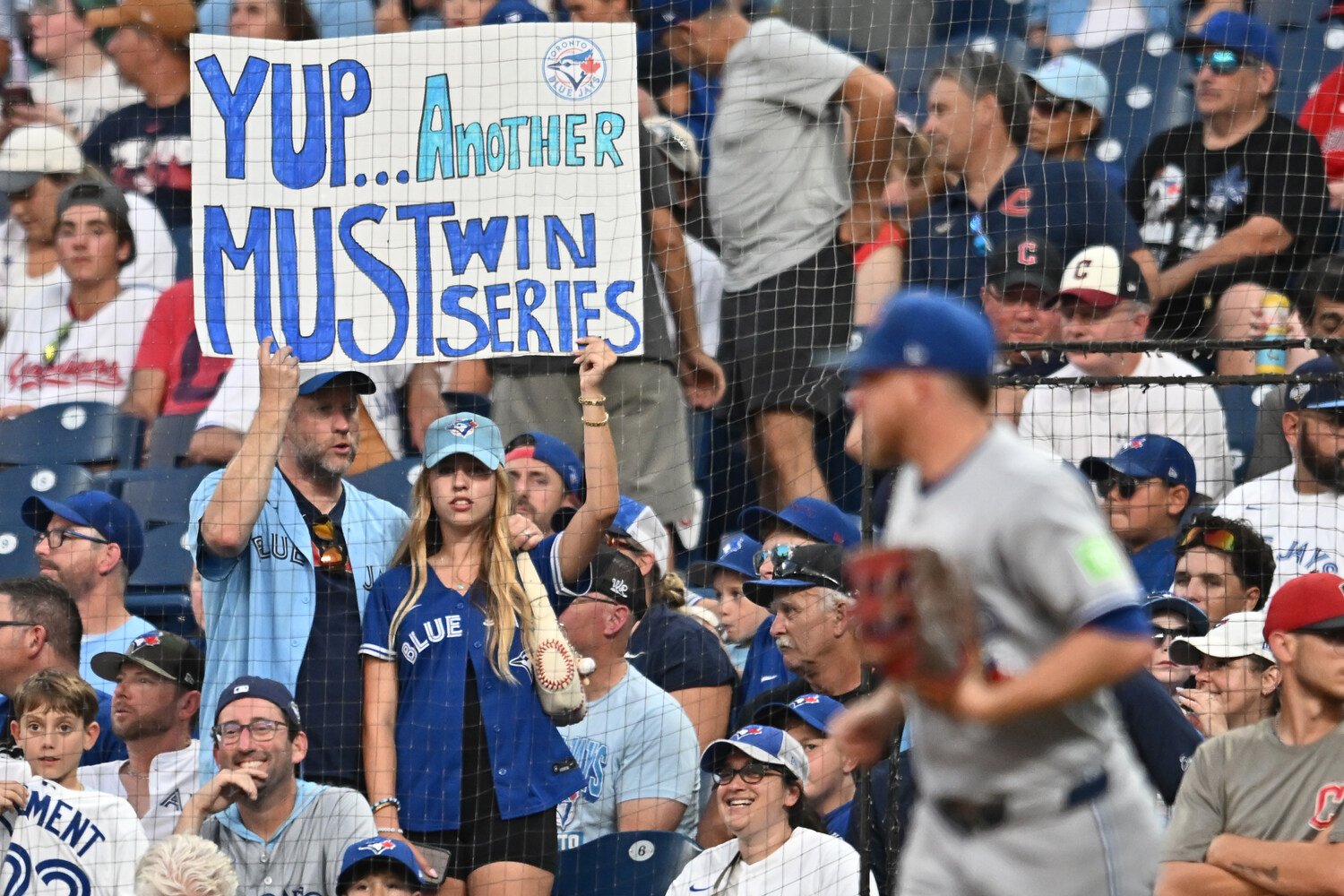 The Blue Jays welcome the Tigers to the Rogers Centre tonight for a three-game series. It's a must-win matchup for Toronto, in the same way every game from here on out feels like a must-win. Yet, there is arguably an even more meaningful series for the Blue Jays taking place a few hundred kilometers south, near the shores of Lake Erie. Over the next three days, the Guardians will face the White Sox at Progressive Field in Cleveland. If the White Sox take at least two of three from the Guardians while the Blue Jays take at least two of three from the Tigers, Toronto will be back in a Wild Card spot with nine games left to play. That's because the Jays only need to finish with the same record as the Guardians to beat them out for a postseason berth. A tie goes to the Blue Jays; they secured the season series earlier this month. Here's the problem. In their last 30 games, the Guardians are 18-12. Among AL teams, only the Yankees have a better record in that span. The White Sox, on the other hand, are two games below .500 in their last 30. They're five games below .500 in their last 15. That has brought Cleveland within half a game of the division lead. If the Guardians win this series, they will move ahead of the White Sox in the AL Central. If they sweep, they will move ahead in the division and secure the season-series tiebreaker. In that case, Chicago becomes the team to beat in the Wild Card race. And unfortunately for the Blue Jays, they lost their season series to the White Sox. So, the Guardians taking over in the AL Central would essentially push the Blue Jays an extra game back in the Wild Card standings. A tie with Cleveland gets Toronto into the playoffs, but a tie with Chicago won't cut it. When the White Sox swept the Blue Jays in April, it felt like a frustrating loss to a team the Blue Jays really should have beaten. It was a missed opportunity to get ahead. Now, losing that series might decide the Blue Jays' season. As for where the Blue Jays stand against their other Wild Card opponents, they have already lost the season series to the Rangers, which makes their three-game set in Arlington this weekend (yet another) must-win. Meanwhile, they need to win their series against the Orioles next week to clinch that tiebreaker. Finally, the Jays tied their season series with the Astros 3-3, which means that if the Rangers sneak ahead of the Astros in the AL West and it comes down to Houston and Toronto in the Wild Card, a Blue Jays-Astros tie would be decided by the two teams' records within their own divisions. The Blue Jays currently have the edge there; they own a 25-24 record in the AL East, compared to Houston's 22-24 record in the West. However, the Astros have six games left against the Mariners and A's to change that.
 -
George Springer only started one of Toronto's last four games, as he's been nursing discomfort in his non-dominant shoulder. However, he was able to pinch-hit on Sunday and again on Wednesday. Thankfully, it doesn't seem as if he'll need to go on the injured list. As manager John Schneider explained, the long season is starting to get to Springer, who turns 37 next week. Still, he can be available "if [the Blue Jays] need him." Springer hit .308 with a 144 wRC+ in July and August, and his strong second half is a big reason why the Blue Jays are only one game out of a Wild Card spot. Yet, he's gone just 3-for-24 in September. Playing through pain is nothing new for Springer, and indeed, his left shoulder has been bothering him for a while. So, hopefully, a little time to rest will help him to start producing again over the final weeks of the season. Here's a quick rundown of some more Blue Jays players who are dealing with injuries. In a best-case scenario, the Jays will soon get some reinforcements to help with their playoff push. Anthony Santander Anthony Santander played his first rehab game for Triple-A Buffalo on Wednesday. The switch-hitter went 0-for-4 with a strikeout. He did not play yesterday. Santander is working his way back from shoulder surgery, which has kept him out all season. Considering how the first two years of his Blue Jays career have gone (he also missed much of 2025 with injuries), the Jays should take every precaution to make sure he's at full strength in 2027. That means they won't be rushing him back. However, the fact that he's playing rehab games right now means the team thinks he has a legitimate chance to contribute down the stretch. As long as he's healthy, Santander should be a notable upgrade over a bench bat like Sean Keys or Charles McAdoo. At his strongest, he's a middle-of-the-order game-changer who could supplant the underwhelming Jesús Sánchez in Toronto's lineup. Trey Yesavage Trey Yesavage (knee) threw a bullpen session earlier this week. Sportsnet's Arden Zwelling reported that his next step would be facing live hitters for about 30 pitches on Thursday. I haven't seen any reporting yet about how that session went, but in this case, no news is probably good news. Presuming no setbacks, I think a rehab start next week and a return to the Blue Jays the week after is a reasonable timeline. He likely won't be stretched out to make a full start by that point, but even three or four innings from Yesavage would be an upgrade over the (lack of a) fifth starter Toronto has right now. Shane Bieber Last weekend, John Schneider told reporters that Shane Bieber (shoulder) could get back on a mound this week, but I'm not sure how optimistic he was about it. His exact words were: "in a perfect world.” On Monday, Bieber played more catch on flat ground. That's the last bit of reporting we've seen about his progress. Schneider also said over the weekend that Bieber is on track to return about a week and a half after Yesavage. If that's still the case, the soonest I can realistically picture Bieber back on the team is in the Wild Card Series – presuming the Blue Jays make it there. A Yesavage/Bieber piggyback could be an interesting plan for a Wild Card round game. Cody Ponce I'll admit that sometimes I forget Cody Ponce is on the Blue Jays. The 2025 KBO MVP signed a three-year deal with Toronto last winter, then suffered a devastating knee injury in his first start of the season. When he went for ACL surgery in April, his estimated timeline to return was six months. That meant he could play again in 2026 if the Blue Jays advanced far enough into the playoffs. It seems his rehab has progressed on schedule, and a mid-October return remains possible. Zwelling's report has a pessimistic tone to me; he seems to place the emphasis on the fact that Ponce could only return if the Blue Jays survive long enough. Yet, for me, his tweet was an important reminder that Ponce still exists and still has a chance to pitch for the Jays in 2026. More Updates Jameson Taillon (elbow) returned from the IL on Saturday... and returned to the IL on Sunday. He is now set to meet with Dr. Keith Meister (per Zwelling). I'm sure the orthopedic surgeon is good at his job, but no ballplayer ever wants to meet him. Luis Urías (quad) was about to start a rehab assignment, but he suffered a setback. He was really good for the Jays for a few weeks, but we've heard very little about him lately. I'm not counting on anything more from Urías this season. View full article
-
Blue Jays Injury Updates: Santander, Yesavage, Bieber, Ponce
Leo Morgenstern posted an article in Blue Jays
 George Springer only started one of Toronto's last four games, as he's been nursing discomfort in his non-dominant shoulder. However, he was able to pinch-hit on Sunday and again on Wednesday. Thankfully, it doesn't seem as if he'll need to go on the injured list. As manager John Schneider explained, the long season is starting to get to Springer, who turns 37 next week. Still, he can be available "if [the Blue Jays] need him." Springer hit .308 with a 144 wRC+ in July and August, and his strong second half is a big reason why the Blue Jays are only one game out of a Wild Card spot. Yet, he's gone just 3-for-24 in September. Playing through pain is nothing new for Springer, and indeed, his left shoulder has been bothering him for a while. So, hopefully, a little time to rest will help him to start producing again over the final weeks of the season. Here's a quick rundown of some more Blue Jays players who are dealing with injuries. In a best-case scenario, the Jays will soon get some reinforcements to help with their playoff push. Anthony Santander Anthony Santander played his first rehab game for Triple-A Buffalo on Wednesday. The switch-hitter went 0-for-4 with a strikeout. He did not play yesterday. Santander is working his way back from shoulder surgery, which has kept him out all season. Considering how the first two years of his Blue Jays career have gone (he also missed much of 2025 with injuries), the Jays should take every precaution to make sure he's at full strength in 2027. That means they won't be rushing him back. However, the fact that he's playing rehab games right now means the team thinks he has a legitimate chance to contribute down the stretch. As long as he's healthy, Santander should be a notable upgrade over a bench bat like Sean Keys or Charles McAdoo. At his strongest, he's a middle-of-the-order game-changer who could supplant the underwhelming Jesús Sánchez in Toronto's lineup. Trey Yesavage Trey Yesavage (knee) threw a bullpen session earlier this week. Sportsnet's Arden Zwelling reported that his next step would be facing live hitters for about 30 pitches on Thursday. I haven't seen any reporting yet about how that session went, but in this case, no news is probably good news. Presuming no setbacks, I think a rehab start next week and a return to the Blue Jays the week after is a reasonable timeline. He likely won't be stretched out to make a full start by that point, but even three or four innings from Yesavage would be an upgrade over the (lack of a) fifth starter Toronto has right now. Shane Bieber Last weekend, John Schneider told reporters that Shane Bieber (shoulder) could get back on a mound this week, but I'm not sure how optimistic he was about it. His exact words were: "in a perfect world.” On Monday, Bieber played more catch on flat ground. That's the last bit of reporting we've seen about his progress. Schneider also said over the weekend that Bieber is on track to return about a week and a half after Yesavage. If that's still the case, the soonest I can realistically picture Bieber back on the team is in the Wild Card Series – presuming the Blue Jays make it there. A Yesavage/Bieber piggyback could be an interesting plan for a Wild Card round game. Cody Ponce I'll admit that sometimes I forget Cody Ponce is on the Blue Jays. The 2025 KBO MVP signed a three-year deal with Toronto last winter, then suffered a devastating knee injury in his first start of the season. When he went for ACL surgery in April, his estimated timeline to return was six months. That meant he could play again in 2026 if the Blue Jays advanced far enough into the playoffs. It seems his rehab has progressed on schedule, and a mid-October return remains possible. Zwelling's report has a pessimistic tone to me; he seems to place the emphasis on the fact that Ponce could only return if the Blue Jays survive long enough. Yet, for me, his tweet was an important reminder that Ponce still exists and still has a chance to pitch for the Jays in 2026. More Updates Jameson Taillon (elbow) returned from the IL on Saturday... and returned to the IL on Sunday. He is now set to meet with Dr. Keith Meister (per Zwelling). I'm sure the orthopedic surgeon is good at his job, but no ballplayer ever wants to meet him. Luis Urías (quad) was about to start a rehab assignment, but he suffered a setback. He was really good for the Jays for a few weeks, but we've heard very little about him lately. I'm not counting on anything more from Urías this season.
 -
Thanks for catching that. Updated to say "the highest win total by a Blue Jays team that failed to qualify for the playoffs in the Wild Card era."
-
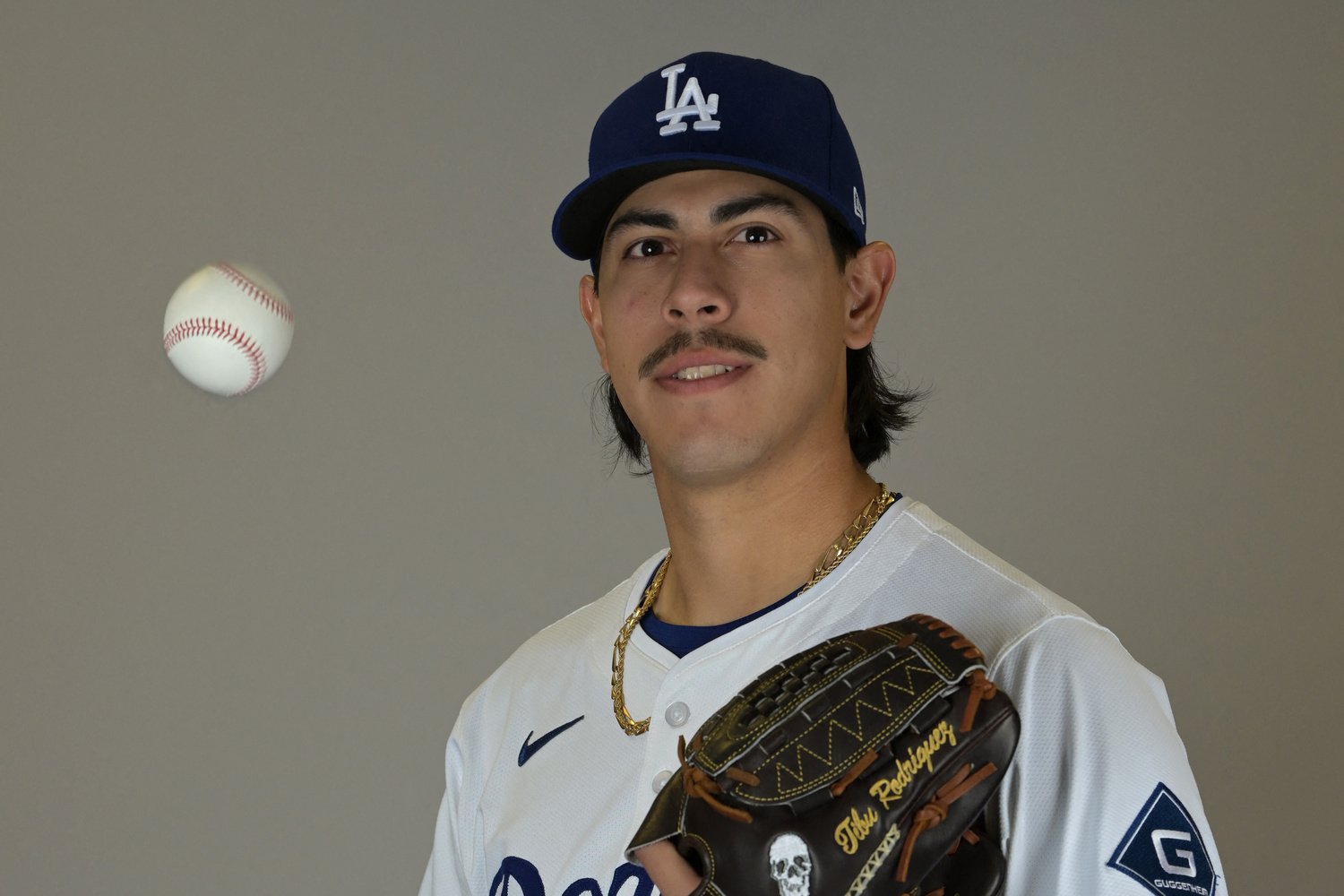 In a rare Rodriguez-for-Rodriguez trade, the Blue Jays have sent minor league right-hander Sebastian Rodriguez to the Dodgers in exchange for José Rodríguez, himself a minor league right-handed pitcher. The younger Rodriguez, 20, made his professional debut for the Blue Jays Blue squad in the Dominican Summer League this year. He pitched nine innings over seven games, giving up six earned runs but striking out 11. The elder Rodriguez, 25, had been in the Dodgers' system since 2019. He owns a 4.16 ERA with 100 strikeouts in 71.1 career innings at the Triple-A level. The Blue Jays have assigned him to Triple-A Buffalo for now, but it's certainly possible he could make his MLB debut at some point later this month.
 -
In a rare Rodriguez-for-Rodriguez trade, the Blue Jays have sent minor league right-hander Sebastian Rodriguez to the Dodgers in exchange for José Rodríguez, himself a minor league right-handed pitcher. The younger Rodriguez, 20, made his professional debut for the Blue Jays Blue squad in the Dominican Summer League this year. He pitched nine innings over seven games, giving up six earned runs but striking out 11. The elder Rodriguez, 25, had been in the Dodgers' system since 2019. He owns a 4.16 ERA with 100 strikeouts in 71.1 career innings at the Triple-A level. The Blue Jays have assigned him to Triple-A Buffalo for now, but it's certainly possible he could make his MLB debut at some point later this month. View full rumor
-
If the Blue Jays had a hero in the first half of the 2026 season, it was Brandon Valenzuela. That's not to say the rookie catcher was Toronto's biggest star. But his success was wholly unexpected, and his breakout made a world of difference in keeping an injury-decimated ballclub afloat. He hit well, he fielded his position like a Gold Glover, and he managed a pitching staff that was churning through arms faster than a baby goes through diapers. If the Blue Jays had a hero in the first half, it was Valenzuela. He helped the team survive two months without their All-Star catcher, Alejandro Kirk. If the Blue Jays have a hero in the second half, it's Kirk himself. A Foul Start to the Season for Alejandro Kirk A foul tip to the thumb sent Kirk to the injured list a week into the season. He returned a month before the All-Star break. The next four weeks were rough. Alejandro Kirk exits in the bottom of the 10th inning with a left thumb injury. Kirk may have been healthy enough to play, but it's hard to believe his thumb was all the way back to full strength. Bat-to-ball ability wasn't an issue. He was squaring up the baseball just fine. The problem was that he wasn't swinging hard enough to do any damage. His average bat speed was down about two miles per hour compared to how he was swinging at the end of 2025. It's no coincidence, then, that the former Silver Slugger winner hit .217 with four extra-base hits in 21 games. His .217/.286/.304 slash line was poor, and the underlying data looked even worse. Only four AL batters took more trips to the plate in that span with a lower expected wOBA than Kirk. To add insult to injury, Valenzuela's bat crashed down to earth in the same stretch. From June 12 until the All-Star break, the two catchers combined for a .563 OPS and 59 wRC+. No number of blocks, caught stealing, or stolen strikes can make that lack of offense tenable. The Blue Jays needed more from their backstops. They needed more from Kirk. Over the last six weeks, Kirk has answered the call. Alejandro Kirk hits a two-run home run at the Rogers Centre on Sunday, August 30. Kirk Is Back, and the Blue Jays Are Too In 35 second-half games, Alejandro Kirk is batting .333 with six home runs. His .910 OPS ranks fourth among qualified AL batters. His .410 OBP ranks third. The only AL player with a higher FanGraphs WAR is Guardians outfielder Steven Kwan. Unsurprisingly, Kirk leads the Junior Circuit in the defensive component of fWAR. He blocks and frames pitches like an artist. We already knew that, and it never changed. His dominance at the plate won't be quite as sustainable, but don't let his high BABIP (.333) or the gap between his wOBA (.388) and xwOBA (.347) distract you from the fact that Kirk is back to being his old self. No, he won't keep pace with the game's best hitters forever. That's fine. What matters is that his bat speed is back up, and he's hitting the ball much harder than he was before the All-Star break. Maybe the .300/.400/.500 slash line isn't "real," but the bounceback is. For the season, Kirk has raised his OPS to .774 and his wRC+ to 115. That's right in line with his production from 2025. Among primary catchers with at least 200 PA, he ranks among the top 10 in both metrics. Despite his limited playing time, he also ranks among the top 10 catchers in Defensive Runs Saved (+7) and Fielding Run Value (+9). All things considered, this hasn't been the year Kirk was hoping for. That's obvious. Even so, he has been one of Toronto's best players. That speaks volumes to his talent and his ceiling. In the first season of his five-year contract extension, Kirk has been worth every penny (and more) of his $11.6 million average annual salary. The Blue Jays are 23-19 in the second half. They're 17-11 in August. Captain Kirk hasn't turned the ship around on his own, but no individual player has done more to get the Blue Jays back in the Wild Card than their catcher. Hopefully, with a bit more help in September, he can steer this club back into a playoff position. View full article
-
Alejandro Kirk Has Been the Blue Jays' Second-Half Hero
Leo Morgenstern posted an article in Blue Jays
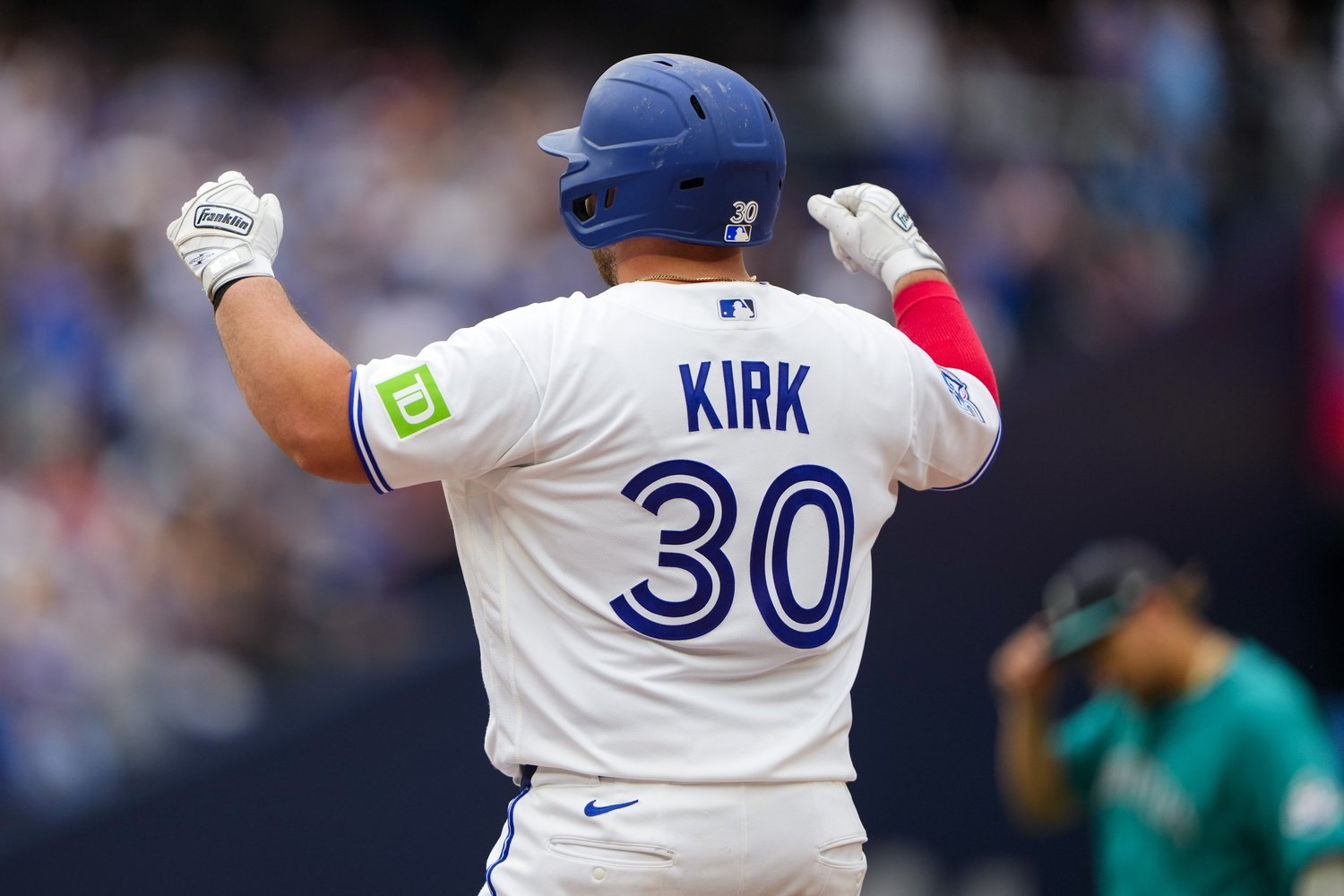 If the Blue Jays had a hero in the first half of the 2026 season, it was Brandon Valenzuela. That's not to say the rookie catcher was Toronto's biggest star. But his success was wholly unexpected, and his breakout made a world of difference in keeping an injury-decimated ballclub afloat. He hit well, he fielded his position like a Gold Glover, and he managed a pitching staff that was churning through arms faster than a baby goes through diapers. If the Blue Jays had a hero in the first half, it was Valenzuela. He helped the team survive two months without their All-Star catcher, Alejandro Kirk. If the Blue Jays have a hero in the second half, it's Kirk himself. A Foul Start to the Season for Alejandro Kirk A foul tip to the thumb sent Kirk to the injured list a week into the season. He returned a month before the All-Star break. The next four weeks were rough. Alejandro Kirk exits in the bottom of the 10th inning with a left thumb injury. Kirk may have been healthy enough to play, but it's hard to believe his thumb was all the way back to full strength. Bat-to-ball ability wasn't an issue. He was squaring up the baseball just fine. The problem was that he wasn't swinging hard enough to do any damage. His average bat speed was down about two miles per hour compared to how he was swinging at the end of 2025. It's no coincidence, then, that the former Silver Slugger winner hit .217 with four extra-base hits in 21 games. His .217/.286/.304 slash line was poor, and the underlying data looked even worse. Only four AL batters took more trips to the plate in that span with a lower expected wOBA than Kirk. To add insult to injury, Valenzuela's bat crashed down to earth in the same stretch. From June 12 until the All-Star break, the two catchers combined for a .563 OPS and 59 wRC+. No number of blocks, caught stealing, or stolen strikes can make that lack of offense tenable. The Blue Jays needed more from their backstops. They needed more from Kirk. Over the last six weeks, Kirk has answered the call. Alejandro Kirk hits a two-run home run at the Rogers Centre on Sunday, August 30. Kirk Is Back, and the Blue Jays Are Too In 35 second-half games, Alejandro Kirk is batting .333 with six home runs. His .910 OPS ranks fourth among qualified AL batters. His .410 OBP ranks third. The only AL player with a higher FanGraphs WAR is Guardians outfielder Steven Kwan. Unsurprisingly, Kirk leads the Junior Circuit in the defensive component of fWAR. He blocks and frames pitches like an artist. We already knew that, and it never changed. His dominance at the plate won't be quite as sustainable, but don't let his high BABIP (.333) or the gap between his wOBA (.388) and xwOBA (.347) distract you from the fact that Kirk is back to being his old self. No, he won't keep pace with the game's best hitters forever. That's fine. What matters is that his bat speed is back up, and he's hitting the ball much harder than he was before the All-Star break. Maybe the .300/.400/.500 slash line isn't "real," but the bounceback is. For the season, Kirk has raised his OPS to .774 and his wRC+ to 115. That's right in line with his production from 2025. Among primary catchers with at least 200 PA, he ranks among the top 10 in both metrics. Despite his limited playing time, he also ranks among the top 10 catchers in Defensive Runs Saved (+7) and Fielding Run Value (+9). All things considered, this hasn't been the year Kirk was hoping for. That's obvious. Even so, he has been one of Toronto's best players. That speaks volumes to his talent and his ceiling. In the first season of his five-year contract extension, Kirk has been worth every penny (and more) of his $11.6 million average annual salary. The Blue Jays are 23-19 in the second half. They're 17-11 in August. Captain Kirk hasn't turned the ship around on his own, but no individual player has done more to get the Blue Jays back in the Wild Card than their catcher. Hopefully, with a bit more help in September, he can steer this club back into a playoff position.
 -
The Royals were supposed to be one of the Blue Jays' weaker opponents down the stretch, but KC has been hot lately. The Jays dropped their series with the Royals last week, suffering a particularly embarrassing 13-2 loss in the rubber match. Thankfully, over the weekend, the Blue Jays took three of three from the Mariners, completing their first series sweep since June 16-18 in Boston. It was their first sweep at home since their very first series of the season against the A's. The Jays are now 3.5 games ahead of the M's in the Wild Card standings; according to FanGraphs, Toronto's playoff odds are now higher than Seattle's for the first time all year. Taking the season series against the Mariners was only the first challenge in the Blue Jays' stretch run quest. They may be well ahead of the Mariners in the Wild Card race, but they're still half a game behind the Orioles and 1.5 behind the Guardians, who currently hold the AL's final postseason berth. On Tuesday, the Jays head to Cleveland for a pivotal three-game set – perhaps the most pivotal of their season. The good kind of sweep could put them back in the playoff picture. The bad kind would be a major hit to their Wild Card hopes. Then, they'll head to Kansas City in search of revenge. Before all of that, here's a quick recap of the week that was in Blue Jays baseball. Toronto Blue Jays Week in Review (August 25-30) Tuesday, August 25: KCR 5, TOR 3 Another big game for Brett Bateman: 3-for-5 with two of the Jays' three runs. Andrés Giménez returns after several games off. He goes 2-for-3 with a double and a hit-by-pitch. Nathan Lukes ends the game trying to stretch a two-run single into a double. Wednesday, August 26: TOR 3, KCR 0 Who needs a fifth starter? The bullpen pitches a shutout. Chad Dallas earns the win with the best game of his brief MLB career: eight up, eight down – with four strikeouts. Save number 30 for Louis Varland. Thursday, August 27: KCR 13, TOR 2 Another mediocre outing from Spencer Arrighetti. He's 0-2 in his first two games with the Jays. Simeon Woods Richardson lets the Royals blow the game open. After pitching to a 1.04 ERA in his first 17.1 innings with Toronto, SWR finally faltered. George Springer homers for the first time in nearly a month. Friday, August 28: TOR 8, SEA 1 Springer goes 4-for-4, homers for a second day in a row; Lukes hits his fourth homer in his last seven games. Dylan Cease throws another quality start, strikes out eight. Paul Sewald makes his sixth appearance for Toronto. He's yet to allow a run. Saturday, August 29: TOR 4, SEA 3 Hall of Excellence opened, Buck Martinez honored. José Soriano goes seven. Alejandro Kirk swipes a bag. Sunday, August 30: TOR 7, SEA 0 Max Scherzer turns back the clock, strikes out 10 in seven scoreless frames. Springer, Kirk, Bateman continue to shine. Vladimir Guerrero Jr. hits his third double of the week (but still no homers at home). Toronto Blue Jays Transactions of the Week Chad Dallas recalled to replace an injured Shane Bieber. Blue Jays sign Michael Lorenzen to a major league deal. Chad Dallas optioned. Blue Jays call up CJ Van Eyk, DFA Simeon Woods Richardson (again). Toronto Blue Jays Injury Updates of the Week Shane Bieber hits the IL with right teres major inflammation, retroactive to August 21. He will be shut down from throwing for at least another week. Yimi García has thoracic outlet surgery. Joe Mantiply continues his rehab assignment, moves up to Triple-A Buffalo. Josh Smith starts a rehab assignment. Jameson Taillon starts a rehab assignment. Anthony Santander is hitting off a machine, still eyeing a return in 2026. View full article
-
Blue Jays Bring Out the Brooms, But the Battle Is Just Beginning
Leo Morgenstern posted an article in Blue Jays
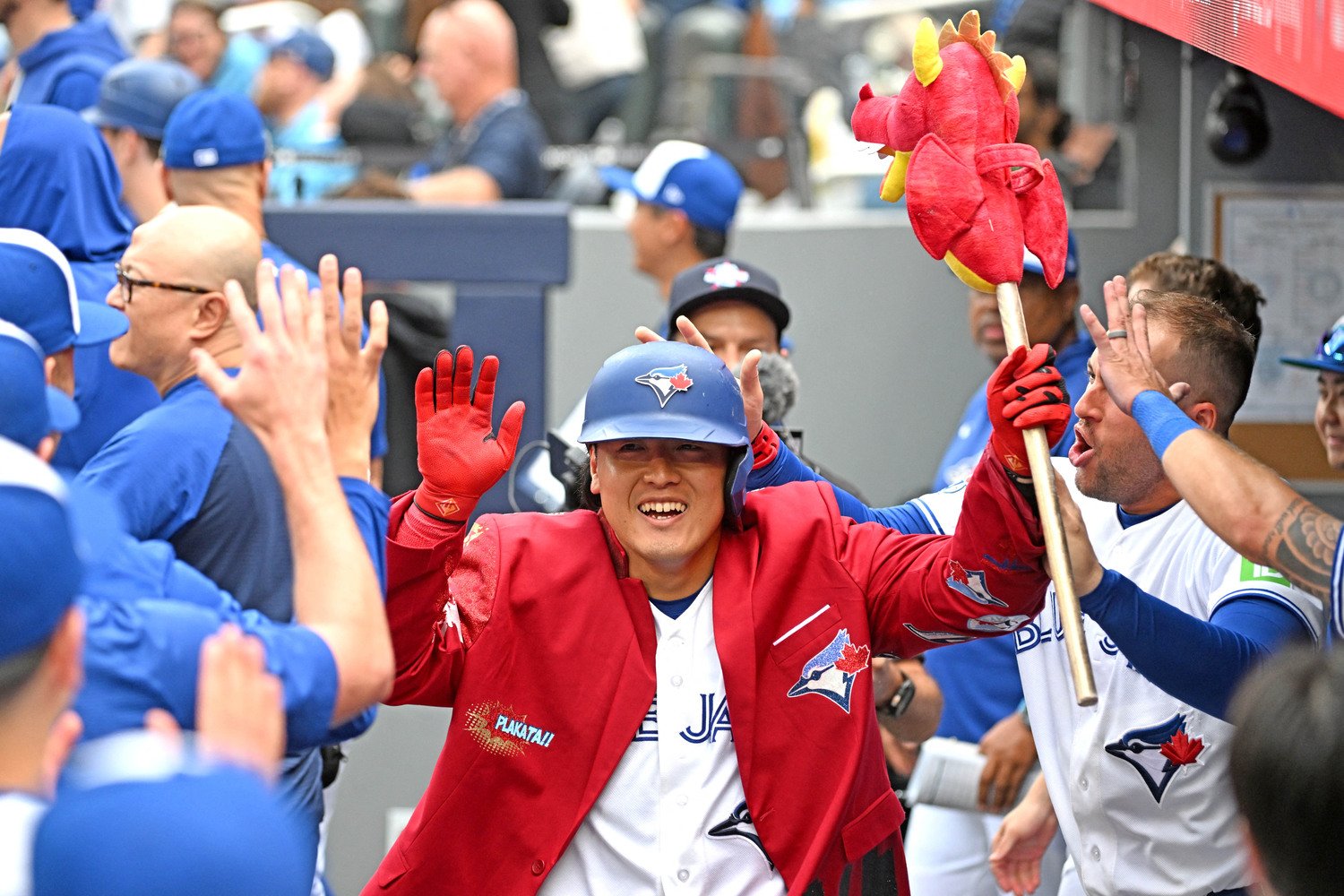 The Royals were supposed to be one of the Blue Jays' weaker opponents down the stretch, but KC has been hot lately. The Jays dropped their series with the Royals last week, suffering a particularly embarrassing 13-2 loss in the rubber match. Thankfully, over the weekend, the Blue Jays took three of three from the Mariners, completing their first series sweep since June 16-18 in Boston. It was their first sweep at home since their very first series of the season against the A's. The Jays are now 3.5 games ahead of the M's in the Wild Card standings; according to FanGraphs, Toronto's playoff odds are now higher than Seattle's for the first time all year. Taking the season series against the Mariners was only the first challenge in the Blue Jays' stretch run quest. They may be well ahead of the Mariners in the Wild Card race, but they're still half a game behind the Orioles and 1.5 behind the Guardians, who currently hold the AL's final postseason berth. On Tuesday, the Jays head to Cleveland for a pivotal three-game set – perhaps the most pivotal of their season. The good kind of sweep could put them back in the playoff picture. The bad kind would be a major hit to their Wild Card hopes. Then, they'll head to Kansas City in search of revenge. Before all of that, here's a quick recap of the week that was in Blue Jays baseball. Toronto Blue Jays Week in Review (August 25-30) Tuesday, August 25: KCR 5, TOR 3 Another big game for Brett Bateman: 3-for-5 with two of the Jays' three runs. Andrés Giménez returns after several games off. He goes 2-for-3 with a double and a hit-by-pitch. Nathan Lukes ends the game trying to stretch a two-run single into a double. Wednesday, August 26: TOR 3, KCR 0 Who needs a fifth starter? The bullpen pitches a shutout. Chad Dallas earns the win with the best game of his brief MLB career: eight up, eight down – with four strikeouts. Save number 30 for Louis Varland. Thursday, August 27: KCR 13, TOR 2 Another mediocre outing from Spencer Arrighetti. He's 0-2 in his first two games with the Jays. Simeon Woods Richardson lets the Royals blow the game open. After pitching to a 1.04 ERA in his first 17.1 innings with Toronto, SWR finally faltered. George Springer homers for the first time in nearly a month. Friday, August 28: TOR 8, SEA 1 Springer goes 4-for-4, homers for a second day in a row; Lukes hits his fourth homer in his last seven games. Dylan Cease throws another quality start, strikes out eight. Paul Sewald makes his sixth appearance for Toronto. He's yet to allow a run. Saturday, August 29: TOR 4, SEA 3 Hall of Excellence opened, Buck Martinez honored. José Soriano goes seven. Alejandro Kirk swipes a bag. Sunday, August 30: TOR 7, SEA 0 Max Scherzer turns back the clock, strikes out 10 in seven scoreless frames. Springer, Kirk, Bateman continue to shine. Vladimir Guerrero Jr. hits his third double of the week (but still no homers at home). Toronto Blue Jays Transactions of the Week Chad Dallas recalled to replace an injured Shane Bieber. Blue Jays sign Michael Lorenzen to a major league deal. Chad Dallas optioned. Blue Jays call up CJ Van Eyk, DFA Simeon Woods Richardson (again). Toronto Blue Jays Injury Updates of the Week Shane Bieber hits the IL with right teres major inflammation, retroactive to August 21. He will be shut down from throwing for at least another week. Yimi García has thoracic outlet surgery. Joe Mantiply continues his rehab assignment, moves up to Triple-A Buffalo. Josh Smith starts a rehab assignment. Jameson Taillon starts a rehab assignment. Anthony Santander is hitting off a machine, still eyeing a return in 2026.
 -
I'm also curious about the difference in stride length on the way to the mound and back to the dugout. I imagine he's slower on the way back, but you rarely get to see that televised...
-
At some point during spring training, I realized the Blue Jays had a real shot to win the AL Rookie of the Year Award for the first time in 24 years. At the time, I felt silly that I hadn't thought of it sooner. Maybe that was because Kazuma Okamoto and Trey Yesavage didn't feel like rookies. Okamoto was already an NPB superstar, and Yesavage started Game 1 of the freaking World Series. Or maybe I had just forgotten that Blue Jays players were allowed to win Rookie of the Year. After all, it feels like a lifetime ago that Eric Hinske took home the prize in 2002. In any case, the Blue Jays' Rookie of the Year drought will continue for at least another year. The AL Rookie of the Year will be Kevin McGonigle, or maybe Parker Messick or Munetaka Murakami. It won't be Yesavage or Okamoto. However, 2026 has still been a year to celebrate when it comes to rookie performance. Between the contributions from Okamoto, Yesavage, and a handful of others, year 50 of Blue Jays baseball might just be the greatest team-wide rookie season in franchise history. On the position player side, Okamoto leads the team in home runs, runs, and RBI. His 26 homers (entering play on August 25) are already a franchise rookie record, and he's only 10 RBI away from tying Hinske in that category as well. Okamoto's big power isn't all that surprising. He led NPB's Central League in home runs three times and RBI twice. Far more unexpected has been Brandon Valenzuela's success. The 25-year-old started the year with Triple-A Buffalo but stepped up in a major way when Alejandro Kirk broke his thumb. He has looked like an elite defensive catcher, nearly on par with Kirk himself, thanks to masterful framing and a powerful arm. His offense remains a work in progress, but a red-hot stretch in May and June has his full-season batting line looking perfectly respectable. In addition to Okamoto and Valenzuela, the Jays have recently gotten some great production out of outfielder Brett Bateman, who came over in the Kevin Gausman trade. Bateman is batting .305 through his first 14 games, earning himself the leadoff spot in the order. He's had some clutch hits and made some nice catches; with Bateman in center, the losses of Gausman and Daulton Varsho have been significantly easier to stomach. Yohendrick Piñango, Charles McAdoo, and even Sean Keys have had their moments too. Altogether, those six have combined for 240 hits, 42 homers, 121 runs, 135 RBI, and 4.3 FanGraphs WAR. By the end of the season, Toronto's 2026 rookie class should rank third in franchise history in each of those statistics. The only seasons in which the Blue Jays received significantly more offensive production from their rookies were 2002 and 2019. In 2019, the Jays had an unusually high number of first-year players who helped the rookie class compile counting stats. Rookies took 2,481 PA for the Jays that year, about 500 more than in any other season. For comparison, this year's rookie class will likely end up ranking third in franchise history – with less than half as many trips to the plate. Blue Jays Rookie Hitters, 2019 (min. 5 PA) Name PA H HR R RBI fWAR Vladimir Guerrero Jr. 514 126 15 52 69 0.3 Cavan Biggio 430 83 16 66 48 2.6 Rowdy Tellez 409 84 21 49 54 -0.4 Danny Jansen 384 72 13 41 43 1.8 Billy McKinney 276 54 12 37 28 -0.4 Bo Bichette 212 61 11 32 21 1.4 Reese McGuire 105 29 5 14 11 1.2 Jonathan Davis 95 15 2 8 6 -0.1 Anthony Alford 30 5 1 3 1 0.0 Breyvic Valera 15 4 1 2 3 0.0 Data via FanGraphs Until 2019, it was the 2002 rookie class that held the franchise record for plate appearances in a season with 1,975. That 2002 group finished with 6.2 fWAR – nearly as much as the 2019 group's 6.5 fWAR – in about 80% of the playing time. Of course, the vast majority of that production came from one player: Hinske. Blue Jays Rookie Hitters, 2002 (min. 5 PA) Name PA H HR R RBI fWAR Eric Hinske 650 158 24 99 84 4.8 Tom Wilson 302 68 8 33 37 0.4 Josh Phelps 287 82 15 41 58 1.5 Ken Huckaby 283 67 3 29 22 -0.3 Orlando Hudson 207 53 4 20 23 0.7 Joe Lawrence 174 27 2 16 15 -0.9 Jayson Werth 53 12 0 4 6 0.3 Kevin Cash 15 2 0 1 0 -0.2 On a per-game basis, you could argue that the 2026 group of rookie hitters has outperformed the 2002 and 2019 cohorts. They have a higher wRC+, better defensive metrics, and more fWAR per PA. However, I think that would be missing the point. Counting stats matter in a conversation like this. One reason the 2002 and 2019 classes were so impressive was precisely because of the number of rookies who contributed. So, when it comes to the position players alone, the 2002 and 2019 classes still have this year's group beat. But when you consider pitching as well, the 2026 class jumps ahead. Blue Jays Rookie Pitchers, Selected Years Year IP ERA ERA- FIP FIP- 2026 229.0 3.89 94 3.91 93 2019 464.1 5.04 110 4.95 107 2002 316.1 5.01 109 5.24 118 The Blue Jays have had great rookie hitting seasons before. They've had great rookie pitching seasons before. But this might be the first time Toronto's new class of major leaguers has provided both quantity and quality on either side of the ball. If you combine pitchers and position players, the Blue Jays' 2026 rookie class already ranks second in franchise history, with 6.7 fWAR (and another 30 games left to play). They're about one win ahead of the 2002 rookie class and well ahead of any other year... except 2019. The 2019 class is all but uncatchable with 9.0 combined fWAR. As you probably remember, 2019 was a transitional year for the Blue Jays. They lost 95 games for the first time since their early years from 1977-80. Rookies took 40% of their plate appearances and threw one-third of their innings. Rookies have never seen anything close to that much playing time in any other season in franchise history. Now, I'm going to contradict myself. I said earlier that counting stats are important in a conversation like this. And they are! But rookies compiling playing time is far less impressive when their performance in that playing time is so poor. Blue Jays rookie pitchers compiled pretty much the same fWAR in 2019 as this year's group, but it took them twice as many innings to do so. And they weren't pitching all those innings because they earned the opportunity. They were pitching all those innings because the team didn't have any better options. In contrast, the Blue Jays have seen some truly excellent performances from a pair of rookie hurlers this year: Yesavage and Spencer Miles. Yesavage owns a 3.65 ERA and 3.36 xERA in 18 starts. He has battled through injuries to show that his 2025 breakout was no fluke. If Yesavage is comparable to Okamoto (i.e., the rookie we expected to be great), then Miles is the pitching staff's equivalent to Valenzuela. No one could have seen this coming from the Rule 5 draft pick with 14.2 professional innings to his name. But Miles has dominated as the most versatile arm on John Schneider's staff. In 80.1 innings across 40 games, he owns a 3.02 ERA and 3.00 xERA, with five wins, a save, and a hold. He can start, he can pitch in long relief, and he can deliver in high-leverage spots. Every team wants a pitcher like Miles, and the Blue Jays found him practically for free. The Blue Jays have seen good rookie seasons before, but I don't think they've ever had four rookies in one season who stood out as much as Okamoto, Valenzuela, Yesavage and Miles. Combine what the Jays have received from those four with the bits and pieces they've gotten from names like Bateman, Piñango, McAdoo, and Adam Macko (plus what's still to come; more Ricky Tiedemann, perhaps?), and there's no question this has been an outstanding year for Blue Jays rookies. Maybe even the best we've ever seen. Stats updated prior to play on August 25. View full article
- 6 replies
-
- 1
-
-
- dc analysis
- spencer miles
- (and 3 more)
-
.jpg.889772931d02c9ff0e2cacc8ef45344f.jpg) At some point during spring training, I realized the Blue Jays had a real shot to win the AL Rookie of the Year Award for the first time in 24 years. At the time, I felt silly that I hadn't thought of it sooner. Maybe that was because Kazuma Okamoto and Trey Yesavage didn't feel like rookies. Okamoto was already an NPB superstar, and Yesavage started Game 1 of the freaking World Series. Or maybe I had just forgotten that Blue Jays players were allowed to win Rookie of the Year. After all, it feels like a lifetime ago that Eric Hinske took home the prize in 2002. In any case, the Blue Jays' Rookie of the Year drought will continue for at least another year. The AL Rookie of the Year will be Kevin McGonigle, or maybe Parker Messick or Munetaka Murakami. It won't be Yesavage or Okamoto. However, 2026 has still been a year to celebrate when it comes to rookie performance. Between the contributions from Okamoto, Yesavage, and a handful of others, year 50 of Blue Jays baseball might just be the greatest team-wide rookie season in franchise history. On the position player side, Okamoto leads the team in home runs, runs, and RBI. His 26 homers (entering play on August 25) are already a franchise rookie record, and he's only 10 RBI away from tying Hinske in that category as well. Okamoto's big power isn't all that surprising. He led NPB's Central League in home runs three times and RBI twice. Far more unexpected has been Brandon Valenzuela's success. The 25-year-old started the year with Triple-A Buffalo but stepped up in a major way when Alejandro Kirk broke his thumb. He has looked like an elite defensive catcher, nearly on par with Kirk himself, thanks to masterful framing and a powerful arm. His offense remains a work in progress, but a red-hot stretch in May and June has his full-season batting line looking perfectly respectable. In addition to Okamoto and Valenzuela, the Jays have recently gotten some great production out of outfielder Brett Bateman, who came over in the Kevin Gausman trade. Bateman is batting .305 through his first 14 games, earning himself the leadoff spot in the order. He's had some clutch hits and made some nice catches; with Bateman in center, the losses of Gausman and Daulton Varsho have been significantly easier to stomach. Yohendrick Piñango, Charles McAdoo, and even Sean Keys have had their moments too. Altogether, those six have combined for 240 hits, 42 homers, 121 runs, 135 RBI, and 4.3 FanGraphs WAR. By the end of the season, Toronto's 2026 rookie class should rank third in franchise history in each of those statistics. The only seasons in which the Blue Jays received significantly more offensive production from their rookies were 2002 and 2019. In 2019, the Jays had an unusually high number of first-year players who helped the rookie class compile counting stats. Rookies took 2,481 PA for the Jays that year, about 500 more than in any other season. For comparison, this year's rookie class will likely end up ranking third in franchise history – with less than half as many trips to the plate. Blue Jays Rookie Hitters, 2019 (min. 5 PA) Name PA H HR R RBI fWAR Vladimir Guerrero Jr. 514 126 15 52 69 0.3 Cavan Biggio 430 83 16 66 48 2.6 Rowdy Tellez 409 84 21 49 54 -0.4 Danny Jansen 384 72 13 41 43 1.8 Billy McKinney 276 54 12 37 28 -0.4 Bo Bichette 212 61 11 32 21 1.4 Reese McGuire 105 29 5 14 11 1.2 Jonathan Davis 95 15 2 8 6 -0.1 Anthony Alford 30 5 1 3 1 0.0 Breyvic Valera 15 4 1 2 3 0.0 Data via FanGraphs Until 2019, it was the 2002 rookie class that held the franchise record for plate appearances in a season with 1,975. That 2002 group finished with 6.2 fWAR – nearly as much as the 2019 group's 6.5 fWAR – in about 80% of the playing time. Of course, the vast majority of that production came from one player: Hinske. Blue Jays Rookie Hitters, 2002 (min. 5 PA) Name PA H HR R RBI fWAR Eric Hinske 650 158 24 99 84 4.8 Tom Wilson 302 68 8 33 37 0.4 Josh Phelps 287 82 15 41 58 1.5 Ken Huckaby 283 67 3 29 22 -0.3 Orlando Hudson 207 53 4 20 23 0.7 Joe Lawrence 174 27 2 16 15 -0.9 Jayson Werth 53 12 0 4 6 0.3 Kevin Cash 15 2 0 1 0 -0.2 On a per-game basis, you could argue that the 2026 group of rookie hitters has outperformed the 2002 and 2019 cohorts. They have a higher wRC+, better defensive metrics, and more fWAR per PA. However, I think that would be missing the point. Counting stats matter in a conversation like this. One reason the 2002 and 2019 classes were so impressive was precisely because of the number of rookies who contributed. So, when it comes to the position players alone, the 2002 and 2019 classes still have this year's group beat. But when you consider pitching as well, the 2026 class jumps ahead. Blue Jays Rookie Pitchers, Selected Years Year IP ERA ERA- FIP FIP- 2026 229.0 3.89 94 3.91 93 2019 464.1 5.04 110 4.95 107 2002 316.1 5.01 109 5.24 118 The Blue Jays have had great rookie hitting seasons before. They've had great rookie pitching seasons before. But this might be the first time Toronto's new class of major leaguers has provided both quantity and quality on either side of the ball. If you combine pitchers and position players, the Blue Jays' 2026 rookie class already ranks second in franchise history, with 6.7 fWAR (and another 30 games left to play). They're about one win ahead of the 2002 rookie class and well ahead of any other year... except 2019. The 2019 class is all but uncatchable with 9.0 combined fWAR. As you probably remember, 2019 was a transitional year for the Blue Jays. They lost 95 games for the first time since their early years from 1977-80. Rookies took 40% of their plate appearances and threw one-third of their innings. Rookies have never seen anything close to that much playing time in any other season in franchise history. Now, I'm going to contradict myself. I said earlier that counting stats are important in a conversation like this. And they are! But rookies compiling playing time is far less impressive when their performance in that playing time is so poor. Blue Jays rookie pitchers compiled pretty much the same fWAR in 2019 as this year's group, but it took them twice as many innings to do so. And they weren't pitching all those innings because they earned the opportunity. They were pitching all those innings because the team didn't have any better options. In contrast, the Blue Jays have seen some truly excellent performances from a pair of rookie hurlers this year: Yesavage and Spencer Miles. Yesavage owns a 3.65 ERA and 3.36 xERA in 18 starts. He has battled through injuries to show that his 2025 breakout was no fluke. If Yesavage is comparable to Okamoto (i.e., the rookie we expected to be great), then Miles is the pitching staff's equivalent to Valenzuela. No one could have seen this coming from the Rule 5 draft pick with 14.2 professional innings to his name. But Miles has dominated as the most versatile arm on John Schneider's staff. In 80.1 innings across 40 games, he owns a 3.02 ERA and 3.00 xERA, with five wins, a save, and a hold. He can start, he can pitch in long relief, and he can deliver in high-leverage spots. Every team wants a pitcher like Miles, and the Blue Jays found him practically for free. The Blue Jays have seen good rookie seasons before, but I don't think they've ever had four rookies in one season who stood out as much as Okamoto, Valenzuela, Yesavage and Miles. Combine what the Jays have received from those four with the bits and pieces they've gotten from names like Bateman, Piñango, McAdoo, and Adam Macko (plus what's still to come; more Ricky Tiedemann, perhaps?), and there's no question this has been an outstanding year for Blue Jays rookies. Maybe even the best we've ever seen. Stats updated prior to play on August 25.
At some point during spring training, I realized the Blue Jays had a real shot to win the AL Rookie of the Year Award for the first time in 24 years. At the time, I felt silly that I hadn't thought of it sooner. Maybe that was because Kazuma Okamoto and Trey Yesavage didn't feel like rookies. Okamoto was already an NPB superstar, and Yesavage started Game 1 of the freaking World Series. Or maybe I had just forgotten that Blue Jays players were allowed to win Rookie of the Year. After all, it feels like a lifetime ago that Eric Hinske took home the prize in 2002. In any case, the Blue Jays' Rookie of the Year drought will continue for at least another year. The AL Rookie of the Year will be Kevin McGonigle, or maybe Parker Messick or Munetaka Murakami. It won't be Yesavage or Okamoto. However, 2026 has still been a year to celebrate when it comes to rookie performance. Between the contributions from Okamoto, Yesavage, and a handful of others, year 50 of Blue Jays baseball might just be the greatest team-wide rookie season in franchise history. On the position player side, Okamoto leads the team in home runs, runs, and RBI. His 26 homers (entering play on August 25) are already a franchise rookie record, and he's only 10 RBI away from tying Hinske in that category as well. Okamoto's big power isn't all that surprising. He led NPB's Central League in home runs three times and RBI twice. Far more unexpected has been Brandon Valenzuela's success. The 25-year-old started the year with Triple-A Buffalo but stepped up in a major way when Alejandro Kirk broke his thumb. He has looked like an elite defensive catcher, nearly on par with Kirk himself, thanks to masterful framing and a powerful arm. His offense remains a work in progress, but a red-hot stretch in May and June has his full-season batting line looking perfectly respectable. In addition to Okamoto and Valenzuela, the Jays have recently gotten some great production out of outfielder Brett Bateman, who came over in the Kevin Gausman trade. Bateman is batting .305 through his first 14 games, earning himself the leadoff spot in the order. He's had some clutch hits and made some nice catches; with Bateman in center, the losses of Gausman and Daulton Varsho have been significantly easier to stomach. Yohendrick Piñango, Charles McAdoo, and even Sean Keys have had their moments too. Altogether, those six have combined for 240 hits, 42 homers, 121 runs, 135 RBI, and 4.3 FanGraphs WAR. By the end of the season, Toronto's 2026 rookie class should rank third in franchise history in each of those statistics. The only seasons in which the Blue Jays received significantly more offensive production from their rookies were 2002 and 2019. In 2019, the Jays had an unusually high number of first-year players who helped the rookie class compile counting stats. Rookies took 2,481 PA for the Jays that year, about 500 more than in any other season. For comparison, this year's rookie class will likely end up ranking third in franchise history – with less than half as many trips to the plate. Blue Jays Rookie Hitters, 2019 (min. 5 PA) Name PA H HR R RBI fWAR Vladimir Guerrero Jr. 514 126 15 52 69 0.3 Cavan Biggio 430 83 16 66 48 2.6 Rowdy Tellez 409 84 21 49 54 -0.4 Danny Jansen 384 72 13 41 43 1.8 Billy McKinney 276 54 12 37 28 -0.4 Bo Bichette 212 61 11 32 21 1.4 Reese McGuire 105 29 5 14 11 1.2 Jonathan Davis 95 15 2 8 6 -0.1 Anthony Alford 30 5 1 3 1 0.0 Breyvic Valera 15 4 1 2 3 0.0 Data via FanGraphs Until 2019, it was the 2002 rookie class that held the franchise record for plate appearances in a season with 1,975. That 2002 group finished with 6.2 fWAR – nearly as much as the 2019 group's 6.5 fWAR – in about 80% of the playing time. Of course, the vast majority of that production came from one player: Hinske. Blue Jays Rookie Hitters, 2002 (min. 5 PA) Name PA H HR R RBI fWAR Eric Hinske 650 158 24 99 84 4.8 Tom Wilson 302 68 8 33 37 0.4 Josh Phelps 287 82 15 41 58 1.5 Ken Huckaby 283 67 3 29 22 -0.3 Orlando Hudson 207 53 4 20 23 0.7 Joe Lawrence 174 27 2 16 15 -0.9 Jayson Werth 53 12 0 4 6 0.3 Kevin Cash 15 2 0 1 0 -0.2 On a per-game basis, you could argue that the 2026 group of rookie hitters has outperformed the 2002 and 2019 cohorts. They have a higher wRC+, better defensive metrics, and more fWAR per PA. However, I think that would be missing the point. Counting stats matter in a conversation like this. One reason the 2002 and 2019 classes were so impressive was precisely because of the number of rookies who contributed. So, when it comes to the position players alone, the 2002 and 2019 classes still have this year's group beat. But when you consider pitching as well, the 2026 class jumps ahead. Blue Jays Rookie Pitchers, Selected Years Year IP ERA ERA- FIP FIP- 2026 229.0 3.89 94 3.91 93 2019 464.1 5.04 110 4.95 107 2002 316.1 5.01 109 5.24 118 The Blue Jays have had great rookie hitting seasons before. They've had great rookie pitching seasons before. But this might be the first time Toronto's new class of major leaguers has provided both quantity and quality on either side of the ball. If you combine pitchers and position players, the Blue Jays' 2026 rookie class already ranks second in franchise history, with 6.7 fWAR (and another 30 games left to play). They're about one win ahead of the 2002 rookie class and well ahead of any other year... except 2019. The 2019 class is all but uncatchable with 9.0 combined fWAR. As you probably remember, 2019 was a transitional year for the Blue Jays. They lost 95 games for the first time since their early years from 1977-80. Rookies took 40% of their plate appearances and threw one-third of their innings. Rookies have never seen anything close to that much playing time in any other season in franchise history. Now, I'm going to contradict myself. I said earlier that counting stats are important in a conversation like this. And they are! But rookies compiling playing time is far less impressive when their performance in that playing time is so poor. Blue Jays rookie pitchers compiled pretty much the same fWAR in 2019 as this year's group, but it took them twice as many innings to do so. And they weren't pitching all those innings because they earned the opportunity. They were pitching all those innings because the team didn't have any better options. In contrast, the Blue Jays have seen some truly excellent performances from a pair of rookie hurlers this year: Yesavage and Spencer Miles. Yesavage owns a 3.65 ERA and 3.36 xERA in 18 starts. He has battled through injuries to show that his 2025 breakout was no fluke. If Yesavage is comparable to Okamoto (i.e., the rookie we expected to be great), then Miles is the pitching staff's equivalent to Valenzuela. No one could have seen this coming from the Rule 5 draft pick with 14.2 professional innings to his name. But Miles has dominated as the most versatile arm on John Schneider's staff. In 80.1 innings across 40 games, he owns a 3.02 ERA and 3.00 xERA, with five wins, a save, and a hold. He can start, he can pitch in long relief, and he can deliver in high-leverage spots. Every team wants a pitcher like Miles, and the Blue Jays found him practically for free. The Blue Jays have seen good rookie seasons before, but I don't think they've ever had four rookies in one season who stood out as much as Okamoto, Valenzuela, Yesavage and Miles. Combine what the Jays have received from those four with the bits and pieces they've gotten from names like Bateman, Piñango, McAdoo, and Adam Macko (plus what's still to come; more Ricky Tiedemann, perhaps?), and there's no question this has been an outstanding year for Blue Jays rookies. Maybe even the best we've ever seen. Stats updated prior to play on August 25. -
.jpg.853f32c646d37df1bf8543ed620420f3.jpg) The Blue Jays have placed Shane Bieber on the 15-day injured list with right teres major inflammation. Chad Dallas has been recalled to take his place on the active roster. With just over a month left in the 2026 regular season, there's no small chance this marks the end of Bieber's tenure with the Blue Jays. He will be a free agent at the end of the year. Toronto is still in the postseason picture, sitting just two games back of the final Wild Card spot, but pulling off a comeback will be even harder without Bieber in the rotation. The 2020 AL Cy Young winner dominated the Yankees and Rays in his last two starts. Dylan Cease and José Soriano are a strong top two, but now the Jays will have to rely even more heavily on 42-year-old Max Scherzer and the just-off-the-IL Spencer Arrighetti. They'll also hope that Jameson Taillon and Trey Yesavage can return from the IL at some point in September. Of course, Bieber himself could return in September too, but we won't know more about the severity of his injury until the team provides an update.
The Blue Jays have placed Shane Bieber on the 15-day injured list with right teres major inflammation. Chad Dallas has been recalled to take his place on the active roster. With just over a month left in the 2026 regular season, there's no small chance this marks the end of Bieber's tenure with the Blue Jays. He will be a free agent at the end of the year. Toronto is still in the postseason picture, sitting just two games back of the final Wild Card spot, but pulling off a comeback will be even harder without Bieber in the rotation. The 2020 AL Cy Young winner dominated the Yankees and Rays in his last two starts. Dylan Cease and José Soriano are a strong top two, but now the Jays will have to rely even more heavily on 42-year-old Max Scherzer and the just-off-the-IL Spencer Arrighetti. They'll also hope that Jameson Taillon and Trey Yesavage can return from the IL at some point in September. Of course, Bieber himself could return in September too, but we won't know more about the severity of his injury until the team provides an update. -
The Blue Jays have placed Shane Bieber on the 15-day injured list with right teres major inflammation. Chad Dallas has been recalled to take his place on the active roster. With just over a month left in the 2026 regular season, there's no small chance this marks the end of Bieber's tenure with the Blue Jays. He will be a free agent at the end of the year. Toronto is still in the postseason picture, sitting just two games back of the final Wild Card spot, but pulling off a comeback will be even harder without Bieber in the rotation. The 2020 AL Cy Young winner dominated the Yankees and Rays in his last two starts. Dylan Cease and José Soriano are a strong top two, but now the Jays will have to rely even more heavily on 42-year-old Max Scherzer and the just-off-the-IL Spencer Arrighetti. They'll also hope that Jameson Taillon and Trey Yesavage can return from the IL at some point in September. Of course, Bieber himself could return in September too, but we won't know more about the severity of his injury until the team provides an update. View full rumor
-
.jpg.5f5b85881ce749d0f01efcb5a8920b41.jpg) After dropping two of three against the Red Sox in late July, the Blue Jays fell to 10 games below .500. Only three teams in the American League had a worse record. Even the most optimistic of fans must have started wondering if this team had more in common with the Royals, A's, and Angels than the clubs vying for a postseason berth. Then, the Jays went on their best run of the season. They won seven consecutive series against the Nationals, Cardinals, Astros, Phillies, Red Sox, Yankees, and Rays. Once again, they looked like real contenders for the AL's final Wild Card spot. Unfortunately, Toronto's great run came to an end this past weekend. The Blue Jays lost the series opener to the Yankees on Friday (the first time they lost a series Opener since that Red Sox series in July). Two days later, they lost the series itself. Their pitchers gave up eight runs on Sunday – the most they've allowed in a game since July 28 in Washington – and their bats came up short. After scoring 21 runs in three games against the Rays (at The Trop!), the Jays only drove eight across the plate in their series in the Bronx. Toronto Blue Jays Week in Review (August 18-23) Tuesday, August 18: TOR 10, TBR 5 Blue Jays score double-digit runs for the first time in the second half. Alejandro Kirk remains red hot with three hits, two runs, and three RBI. Kazuma Okamoto breaks the Blue Jays' rookie home run record. Wednesday, August 19: TBR 7, T0R 6 Kirk homers for the second day in a row. A rough day on defense for Jesús Sánchez. A three-hit day for Charles McAdoo Thursday, August 20: TOR 5, TBR 1 Shane Bieber delivers a gem (7 IP, 4 H, 1 R, 7 K). Daz Cameron hits a big home run. Nathan Lukes shines with the bat and the glove. Friday, August 21: NYY 3, TOR 1 Spencer Arrighetti debuts for Toronto, takes the loss. Another big game for Brett Bateman. Cam Schlittler earns the win; Blue Jays can't help Dylan Cease's Cy Young case. Saturday, August 22: TOR 4, NYY 3 Vladimir Guerrero Jr. returns with two hits. Cease takes a no-hitter into the seventh. Tyler Rogers briefly looks mortal, still earns the hold. Sunday, August 23: NYY 8, TOR 3 Braydon Fisher and Mason Fluharty give up inherited runs from José Soriano. Two doubles for Myles Straw. Guerrero goes 0-for-4 with three groundouts. While the series loss was disappointing, there is a silver lining: The hard part is over. The Blue Jays just played 20 straight games with teams that would make the playoffs if the season ended today. They went 12-8. Now, they have 30 games remaining against a much easier slate of opponents. That includes six matchups with the Royals, three with the A's, and three at home against the Reds to end the season. Teams like the Mariners, Guardians, Orioles, Tigers, and Rangers could pose a bigger threat, but none of them is above .500 right now. To be fair, the Blue Jays are below .500 themselves, but the point stands. Twenty games against the Astros, Phillies, Cubs, Red Sox, Yankees, and Rays is a gauntlet. What's left should feel like a cakewalk by comparison. Of course, it's easy to say the Blue Jays should win these games on paper, but they have their work cut out for them. It still feels like almost every series is a must-win. The games against the Royals, A's, and Reds are the gimmes that they can't afford to lose. The rest of the Jays' remaining contests are against opponents they're either trying to fend off or jump ahead of in the Wild Card race. Beating the Mariners, Guardians, Orioles, and Tigers will help the Jays in case the final Wild Card spot comes down to a tiebreaker. Beating the Rangers will be especially important because the Jays have already lost their season series with Texas. So, the competition might be easier, but the stakes are so much higher. Hopefully, we'll get to watch some highly exciting – and rewarding – baseball down the stretch. Toronto Blue Jays Transactions of the Week Blue Jays outright Lazaro Estrada and Lenyn Sosa to Triple-A Buffalo. Brendan Cellucci selected and subsequently optioned (did not debut). Davis Schneider recalled and subsequently optioned (played two innings as a defensive replacement). Matt Waldron DFA'd, claimed by Nationals. Toronto Blue Jays Injury Updates of the Week Joe Mantiply began his rehab assignment. Vladimir Guerrero Jr. returned from concussion IL. Spencer Arrighetti activated, made his Blue Jays debut. Josh Smith placed on 10-day IL with left hamstring inflammation. Andrés Giménez sat out Yankees series, hoping to avoid IL stint. Jameson Taillon is throwing bullpens. Trey Yesavage has started playing catch.
After dropping two of three against the Red Sox in late July, the Blue Jays fell to 10 games below .500. Only three teams in the American League had a worse record. Even the most optimistic of fans must have started wondering if this team had more in common with the Royals, A's, and Angels than the clubs vying for a postseason berth. Then, the Jays went on their best run of the season. They won seven consecutive series against the Nationals, Cardinals, Astros, Phillies, Red Sox, Yankees, and Rays. Once again, they looked like real contenders for the AL's final Wild Card spot. Unfortunately, Toronto's great run came to an end this past weekend. The Blue Jays lost the series opener to the Yankees on Friday (the first time they lost a series Opener since that Red Sox series in July). Two days later, they lost the series itself. Their pitchers gave up eight runs on Sunday – the most they've allowed in a game since July 28 in Washington – and their bats came up short. After scoring 21 runs in three games against the Rays (at The Trop!), the Jays only drove eight across the plate in their series in the Bronx. Toronto Blue Jays Week in Review (August 18-23) Tuesday, August 18: TOR 10, TBR 5 Blue Jays score double-digit runs for the first time in the second half. Alejandro Kirk remains red hot with three hits, two runs, and three RBI. Kazuma Okamoto breaks the Blue Jays' rookie home run record. Wednesday, August 19: TBR 7, T0R 6 Kirk homers for the second day in a row. A rough day on defense for Jesús Sánchez. A three-hit day for Charles McAdoo Thursday, August 20: TOR 5, TBR 1 Shane Bieber delivers a gem (7 IP, 4 H, 1 R, 7 K). Daz Cameron hits a big home run. Nathan Lukes shines with the bat and the glove. Friday, August 21: NYY 3, TOR 1 Spencer Arrighetti debuts for Toronto, takes the loss. Another big game for Brett Bateman. Cam Schlittler earns the win; Blue Jays can't help Dylan Cease's Cy Young case. Saturday, August 22: TOR 4, NYY 3 Vladimir Guerrero Jr. returns with two hits. Cease takes a no-hitter into the seventh. Tyler Rogers briefly looks mortal, still earns the hold. Sunday, August 23: NYY 8, TOR 3 Braydon Fisher and Mason Fluharty give up inherited runs from José Soriano. Two doubles for Myles Straw. Guerrero goes 0-for-4 with three groundouts. While the series loss was disappointing, there is a silver lining: The hard part is over. The Blue Jays just played 20 straight games with teams that would make the playoffs if the season ended today. They went 12-8. Now, they have 30 games remaining against a much easier slate of opponents. That includes six matchups with the Royals, three with the A's, and three at home against the Reds to end the season. Teams like the Mariners, Guardians, Orioles, Tigers, and Rangers could pose a bigger threat, but none of them is above .500 right now. To be fair, the Blue Jays are below .500 themselves, but the point stands. Twenty games against the Astros, Phillies, Cubs, Red Sox, Yankees, and Rays is a gauntlet. What's left should feel like a cakewalk by comparison. Of course, it's easy to say the Blue Jays should win these games on paper, but they have their work cut out for them. It still feels like almost every series is a must-win. The games against the Royals, A's, and Reds are the gimmes that they can't afford to lose. The rest of the Jays' remaining contests are against opponents they're either trying to fend off or jump ahead of in the Wild Card race. Beating the Mariners, Guardians, Orioles, and Tigers will help the Jays in case the final Wild Card spot comes down to a tiebreaker. Beating the Rangers will be especially important because the Jays have already lost their season series with Texas. So, the competition might be easier, but the stakes are so much higher. Hopefully, we'll get to watch some highly exciting – and rewarding – baseball down the stretch. Toronto Blue Jays Transactions of the Week Blue Jays outright Lazaro Estrada and Lenyn Sosa to Triple-A Buffalo. Brendan Cellucci selected and subsequently optioned (did not debut). Davis Schneider recalled and subsequently optioned (played two innings as a defensive replacement). Matt Waldron DFA'd, claimed by Nationals. Toronto Blue Jays Injury Updates of the Week Joe Mantiply began his rehab assignment. Vladimir Guerrero Jr. returned from concussion IL. Spencer Arrighetti activated, made his Blue Jays debut. Josh Smith placed on 10-day IL with left hamstring inflammation. Andrés Giménez sat out Yankees series, hoping to avoid IL stint. Jameson Taillon is throwing bullpens. Trey Yesavage has started playing catch. -
After dropping two of three against the Red Sox in late July, the Blue Jays fell to 10 games below .500. Only three teams in the American League had a worse record. Even the most optimistic of fans must have started wondering if this team had more in common with the Royals, A's, and Angels than the clubs vying for a postseason berth. Then, the Jays went on their best run of the season. They won seven consecutive series against the Nationals, Cardinals, Astros, Phillies, Red Sox, Yankees, and Rays. Once again, they looked like real contenders for the AL's final Wild Card spot. Unfortunately, Toronto's great run came to an end this past weekend. The Blue Jays lost the series opener to the Yankees on Friday (the first time they lost a series Opener since that Red Sox series in July). Two days later, they lost the series itself. Their pitchers gave up eight runs on Sunday – the most they've allowed in a game since July 28 in Washington – and their bats came up short. After scoring 21 runs in three games against the Rays (at The Trop!), the Jays only drove eight across the plate in their series in the Bronx. Toronto Blue Jays Week in Review (August 18-23) Tuesday, August 18: TOR 10, TBR 5 Blue Jays score double-digit runs for the first time in the second half. Alejandro Kirk remains red hot with three hits, two runs, and three RBI. Kazuma Okamoto breaks the Blue Jays' rookie home run record. Wednesday, August 19: TBR 7, T0R 6 Kirk homers for the second day in a row. A rough day on defense for Jesús Sánchez. A three-hit day for Charles McAdoo Thursday, August 20: TOR 5, TBR 1 Shane Bieber delivers a gem (7 IP, 4 H, 1 R, 7 K). Daz Cameron hits a big home run. Nathan Lukes shines with the bat and the glove. Friday, August 21: NYY 3, TOR 1 Spencer Arrighetti debuts for Toronto, takes the loss. Another big game for Brett Bateman. Cam Schlittler earns the win; Blue Jays can't help Dylan Cease's Cy Young case. Saturday, August 22: TOR 4, NYY 3 Vladimir Guerrero Jr. returns with two hits. Cease takes a no-hitter into the seventh. Tyler Rogers briefly looks mortal, still earns the hold. Sunday, August 23: NYY 8, TOR 3 Braydon Fisher and Mason Fluharty give up inherited runs from José Soriano. Two doubles for Myles Straw. Guerrero goes 0-for-4 with three groundouts. While the series loss was disappointing, there is a silver lining: The hard part is over. The Blue Jays just played 20 straight games with teams that would make the playoffs if the season ended today. They went 12-8. Now, they have 30 games remaining against a much easier slate of opponents. That includes six matchups with the Royals, three with the A's, and three at home against the Reds to end the season. Teams like the Mariners, Guardians, Orioles, Tigers, and Rangers could pose a bigger threat, but none of them is above .500 right now. To be fair, the Blue Jays are below .500 themselves, but the point stands. Twenty games against the Astros, Phillies, Cubs, Red Sox, Yankees, and Rays is a gauntlet. What's left should feel like a cakewalk by comparison. Of course, it's easy to say the Blue Jays should win these games on paper, but they have their work cut out for them. It still feels like almost every series is a must-win. The games against the Royals, A's, and Reds are the gimmes that they can't afford to lose. The rest of the Jays' remaining contests are against opponents they're either trying to fend off or jump ahead of in the Wild Card race. Beating the Mariners, Guardians, Orioles, and Tigers will help the Jays in case the final Wild Card spot comes down to a tiebreaker. Beating the Rangers will be especially important because the Jays have already lost their season series with Texas. So, the competition might be easier, but the stakes are so much higher. Hopefully, we'll get to watch some highly exciting – and rewarding – baseball down the stretch. Toronto Blue Jays Transactions of the Week Blue Jays outright Lazaro Estrada and Lenyn Sosa to Triple-A Buffalo. Brendan Cellucci selected and subsequently optioned (did not debut). Davis Schneider recalled and subsequently optioned (played two innings as a defensive replacement). Matt Waldron DFA'd, claimed by Nationals. Toronto Blue Jays Injury Updates of the Week Joe Mantiply began his rehab assignment. Vladimir Guerrero Jr. returned from concussion IL. Spencer Arrighetti activated, made his Blue Jays debut. Josh Smith placed on 10-day IL with left hamstring inflammation. Andrés Giménez sat out Yankees series, hoping to avoid IL stint. Jameson Taillon is throwing bullpens. Trey Yesavage has started playing catch. View full article
-
Trade deadline acquisition Spencer Arrighetti came off the injured list and made his Blue Jays debut on Friday. Unfortunately, the right-hander took the loss, as he gave up three runs in 3.1 innings against the Yankees. He walked two and allowed a tough-luck home run to Spencer Jones; according to Statcast, it wouldn't have left the yard in almost any other stadium. It's clear the Blue Jays like Arrighetti's stuff. Manager John Schneider said as much after yesterday's game, and MLB.com's Keegan Matheson reports that the Jays "want Arrighetti to take the No. 5 job and run with it." If he can do that, it would make a huge difference for a rotation that has been plagued by injuries (not to mention a bullpen that has been heavily overworked) all year. On the position player side of things, center fielder Brett Bateman (acquired in the Kevin Gausman trade) appears to have avoided an IL stint of his own. The rookie exited early on Wednesday with a right hamstring issue. He sat out Thursday, but he returned to Toronto's lineup on Friday and played the best game of his young career. Bateman went 3-for-5 with a double, a triple, and a run scored. Here's a quick rundown of some more injured Blue Jays who could return to help the team down the stretch. Vladimir Guerrero Jr. Vladimir Guerrero Jr. is eligible to return from the seven-day concussion IL today. All signs suggest he's feeling well enough to do so. The first baseman played a rehab game on Friday for Single-A Dunedin. He reached base in all three of his plate appearances, hitting a double and drawing two walks. It's always best to err on the safe side when it comes to concussions, but the Jays will certainly be glad to have their superstar back after a minimum stint on the IL. He's been having a disappointing season, but no one on this roster can make as big of a difference as Vladdy when he's at his best. Andrés Giménez Andrés Giménez left early on Thursday. He appeared to injure his right hamstring while running to first base. While he did not play on Friday, the Blue Jays seem optimistic about his condition. John Schneider told reporters that Giménez would not need an MRI (at least for now), which suggests an IL stint is unlikely. Hopefully, the shortstop's condition continues to improve. He doesn't contribute much with the bat, but he leads the team in stolen bases, outs above average, and – because of his baserunning and defense – FanGraphs WAR. Josh Smith The same day the Blue Jays reinstated Arrighetti from the IL, they placed another trade deadline acquisition on the shelf. Utility player Josh Smith injured his left hamstring on Wednesday. He'll be out until at least August 30. John Schneider told Sportsnet's Hazel Mae that Smith "didn't feel great" and would need an MRI, although he didn't seem especially concerned about a serious issue. In place of Smith, the Blue Jays recalled Davis Schneider for another stint in Toronto. Despite his sharp eye at the plate, Schneider has struggled to make any kind of impact in the majors this year. Trey Yesavage Trey Yesavage had surgery to repair a tear in his left meniscus earlier this month, but remarkably, the Blue Jays believe he might be able to pitch again in 2026. He reportedly started playing catch this week, so he still has a ways to go in his rehab efforts. Yet, it appears he's moving in the right direction. The rookie might not make much of an impact for the rest of the regular season, but if Toronto can sneak into the playoffs, he could be this team's secret weapon for a second year in a row. Jameson Taillon Jameson Taillon only made two appearances for Toronto before the curse of the 2026 Blue Jays rotation caught up to him. The veteran landed on the IL with right forearm tendinitis on August 11. The Blue Jays haven't given us a ton of information about the severity of Taillon's injury or his timeline to return. However, according to Sportnet's Arden Zwelling, Taillon "felt good" after throwing a bullpen session this week. He will throw another one tomorrow or Monday. If all goes well, a rehab assignment is hopefully the next step. Joe Mantiply Joe Mantiply was a pleasant surprise for the Blue Jays in April and May, pitching to a 2.04 ERA in 17.2 innings, striking out 16 and walking only four. Then a knee injury forced him to the IL. After three months, Mantiply returned to a mound this week, making a rehab appearance for Dunedin. He threw a scoreless inning, striking out one. According to Zwelling, the southpaw is feeling good. He might only need a couple more rehab outings (likely with Buffalo) before he's back in the Blue Jays' bullpen. View full article
-
- 1
-
-
- vladimir guerrero jr
- josh smith
- (and 4 more)
-
 Trade deadline acquisition Spencer Arrighetti came off the injured list and made his Blue Jays debut on Friday. Unfortunately, the right-hander took the loss, as he gave up three runs in 3.1 innings against the Yankees. He walked two and allowed a tough-luck home run to Spencer Jones; according to Statcast, it wouldn't have left the yard in almost any other stadium. It's clear the Blue Jays like Arrighetti's stuff. Manager John Schneider said as much after yesterday's game, and MLB.com's Keegan Matheson reports that the Jays "want Arrighetti to take the No. 5 job and run with it." If he can do that, it would make a huge difference for a rotation that has been plagued by injuries (not to mention a bullpen that has been heavily overworked) all year. On the position player side of things, center fielder Brett Bateman (acquired in the Kevin Gausman trade) appears to have avoided an IL stint of his own. The rookie exited early on Wednesday with a right hamstring issue. He sat out Thursday, but he returned to Toronto's lineup on Friday and played the best game of his young career. Bateman went 3-for-5 with a double, a triple, and a run scored. Here's a quick rundown of some more injured Blue Jays who could return to help the team down the stretch. Vladimir Guerrero Jr. Vladimir Guerrero Jr. is eligible to return from the seven-day concussion IL today. All signs suggest he's feeling well enough to do so. The first baseman played a rehab game on Friday for Single-A Dunedin. He reached base in all three of his plate appearances, hitting a double and drawing two walks. It's always best to err on the safe side when it comes to concussions, but the Jays will certainly be glad to have their superstar back after a minimum stint on the IL. He's been having a disappointing season, but no one on this roster can make as big of a difference as Vladdy when he's at his best. Andrés Giménez Andrés Giménez left early on Thursday. He appeared to injure his right hamstring while running to first base. While he did not play on Friday, the Blue Jays seem optimistic about his condition. John Schneider told reporters that Giménez would not need an MRI (at least for now), which suggests an IL stint is unlikely. Hopefully, the shortstop's condition continues to improve. He doesn't contribute much with the bat, but he leads the team in stolen bases, outs above average, and – because of his baserunning and defense – FanGraphs WAR. Josh Smith The same day the Blue Jays reinstated Arrighetti from the IL, they placed another trade deadline acquisition on the shelf. Utility player Josh Smith injured his left hamstring on Wednesday. He'll be out until at least August 30. John Schneider told Sportsnet's Hazel Mae that Smith "didn't feel great" and would need an MRI, although he didn't seem especially concerned about a serious issue. In place of Smith, the Blue Jays recalled Davis Schneider for another stint in Toronto. Despite his sharp eye at the plate, Schneider has struggled to make any kind of impact in the majors this year. Trey Yesavage Trey Yesavage had surgery to repair a tear in his left meniscus earlier this month, but remarkably, the Blue Jays believe he might be able to pitch again in 2026. He reportedly started playing catch this week, so he still has a ways to go in his rehab efforts. Yet, it appears he's moving in the right direction. The rookie might not make much of an impact for the rest of the regular season, but if Toronto can sneak into the playoffs, he could be this team's secret weapon for a second year in a row. Jameson Taillon Jameson Taillon only made two appearances for Toronto before the curse of the 2026 Blue Jays rotation caught up to him. The veteran landed on the IL with right forearm tendinitis on August 11. The Blue Jays haven't given us a ton of information about the severity of Taillon's injury or his timeline to return. However, according to Sportnet's Arden Zwelling, Taillon "felt good" after throwing a bullpen session this week. He will throw another one tomorrow or Monday. If all goes well, a rehab assignment is hopefully the next step. Joe Mantiply Joe Mantiply was a pleasant surprise for the Blue Jays in April and May, pitching to a 2.04 ERA in 17.2 innings, striking out 16 and walking only four. Then a knee injury forced him to the IL. After three months, Mantiply returned to a mound this week, making a rehab appearance for Dunedin. He threw a scoreless inning, striking out one. According to Zwelling, the southpaw is feeling good. He might only need a couple more rehab outings (likely with Buffalo) before he's back in the Blue Jays' bullpen.
 -
.jpg.a99998d6f4ddf702431959c78b08c1e1.jpg) The Blue Jays swapped out an experienced righty for a rookie southpaw earlier today. Matt Waldron has been designated for assignment after a couple of weeks with the Jays. The 29-year-old made four appearances, pitching 4.1 innings and giving up five runs. Taking his place will be Brendan Cellucci, who is looking to make his MLB debut. Cellucci, 28, signed a minor league contract with Toronto over the offseason. He spent the first several years of his professional career in the Red Sox's system. The lefty owns a 3.68 ERA and 4.24 xERA in 44 innings for Triple-A Buffalo this season.
The Blue Jays swapped out an experienced righty for a rookie southpaw earlier today. Matt Waldron has been designated for assignment after a couple of weeks with the Jays. The 29-year-old made four appearances, pitching 4.1 innings and giving up five runs. Taking his place will be Brendan Cellucci, who is looking to make his MLB debut. Cellucci, 28, signed a minor league contract with Toronto over the offseason. He spent the first several years of his professional career in the Red Sox's system. The lefty owns a 3.68 ERA and 4.24 xERA in 44 innings for Triple-A Buffalo this season.

.jpg.889772931d02c9ff0e2cacc8ef45344f.jpg)
.jpg.853f32c646d37df1bf8543ed620420f3.jpg)
.jpg.5f5b85881ce749d0f01efcb5a8920b41.jpg)
.jpg.a99998d6f4ddf702431959c78b08c1e1.jpg)