


Leo Morgenstern
-
Posts
626 -
Joined
-
Last visited
Content Type
Profiles
Toronto Blue Jays Videos
2026 Toronto Blue Jays Top Prospects Ranking
Toronto Blue Jays Free Agent & Trade Rumors, Notes, & Tidbits
Guides & Resources
2025 Toronto Blue Jays Draft Pick Tracker
News
2026 Toronto Blue Jays Draft Tracker: Picks & Bonuses
Forums
Blogs
Events
Store
Downloads
Gallery
Everything posted by Leo Morgenstern
-

A Long Winding Road Ends in Tommy John for José Berríos
Leo Morgenstern posted an article in Blue Jays
.jpg.2b9f18841bb0eab32f2ae6d5c631dc45.jpg) At least we have an answer. Last September, the Blue Jays placed José Berríos on the injured list with elbow inflammation. I'll admit I was skeptical at the time. I thought it was a phantom IL stint. After all, Berríos was never hurt. Never. All of a sudden, shortly after the team moved him to the bullpen – a move he was openly upset about – a vague injury allowed the Jays to remove the struggling veteran from their active roster while preserving some of his dignity. It just felt a bit too convenient. Then, when Ross Atkins revealed that Berríos chose not to be with the team during the World Series because "he was disappointed that he wasn’t in our rotation," I thought my suspicions were confirmed. This wasn't about an injury. It was personal. I didn't know what any doctors might have seen on the righty's scans, but clearly, Berríos himself thought he was healthy enough to pitch. A couple of months later, we got another update. Berríos explained that he was pitching through discomfort throughout the entire 2025 season. Huh. I had to rethink my phantom IL conspiracy theory. Maybe the truth was somewhere in between an actual injury and my cynical speculation. My new hypothesis? Berríos really was hurt, but the Blue Jays let him pitch through the pain until it became a convenient reason to remove him from the roster. Regardless, it seemed like we were done worrying about Berríos and his elbow. After his first spring start, the veteran told reporters that he felt "pretty healthy, pretty strong." “Last year, at this time, I had doubt in my mind already,” he explained. “Today, I felt like nothing's on my mind. I'm clear.” Unfortunately, while his mind may have been clear, his scans weren't. When Berríos was first denied insurance coverage to pitch in his fourth World Baseball Classic, I was among the outraged. For all we knew at the time – from what the Blue Jays and Berríos had communicated – he was perfectly healthy. However, when he was denied a second time, it came with the news that an MRI had found more inflammation in his elbow. Even so, Berríos maintained that he was "feeling great and throwing the ball well." Both he and the Jays were so unconcerned that he wasn't even shut down from throwing. It was puzzling, but it still didn't seem like a big deal. Or at least, the Blue Jays and Berríos weren't making it seem like a big deal. A week later, the "big deal" alarms finally started to go off in my head. Berríos was diagnosed with a stress fracture in his elbow. He would miss Opening Day. Once again, he claimed he was still pain-free. John Schneider was confident Berríos wouldn't be out for long. My confidence, however, was starting to wane. How did the team miss a fractured elbow? How on earth was Berríos pain-free? Were we getting the full story? To be fair, the stress fracture diagnosis really didn't keep Berríos down for long. He made his first rehab start on April 16. But the mixed messages continued. The Jays maintained that the right-hander was nearing his return, despite his struggles against minor league hitters. Even when he suffered a setback and went for another MRI, the messaging was that this wasn't a soft tissue injury. Until it was. Yesterday, Berríos went under the knife. Afterwards, the team announced that he had undergone a full Tommy John procedure. He will miss the rest of the 2026 season and likely most of 2027 as well. Eight months ago, "La Makina" was the most durable pitcher in baseball. Since then, his elbow has taken him on a roller coaster ride. It's always a gut punch when a pitcher looks dominant one moment, then he exits a start early, and the next day you learn he'll be out for the next 12-18 months recovering from Tommy John. Yet, I think the long, drawn-out Berríos situation was even more frustrating. The only good news is that it's finally over (for now). It may not be the answer anyone wanted, but at least we have an answer.
At least we have an answer. Last September, the Blue Jays placed José Berríos on the injured list with elbow inflammation. I'll admit I was skeptical at the time. I thought it was a phantom IL stint. After all, Berríos was never hurt. Never. All of a sudden, shortly after the team moved him to the bullpen – a move he was openly upset about – a vague injury allowed the Jays to remove the struggling veteran from their active roster while preserving some of his dignity. It just felt a bit too convenient. Then, when Ross Atkins revealed that Berríos chose not to be with the team during the World Series because "he was disappointed that he wasn’t in our rotation," I thought my suspicions were confirmed. This wasn't about an injury. It was personal. I didn't know what any doctors might have seen on the righty's scans, but clearly, Berríos himself thought he was healthy enough to pitch. A couple of months later, we got another update. Berríos explained that he was pitching through discomfort throughout the entire 2025 season. Huh. I had to rethink my phantom IL conspiracy theory. Maybe the truth was somewhere in between an actual injury and my cynical speculation. My new hypothesis? Berríos really was hurt, but the Blue Jays let him pitch through the pain until it became a convenient reason to remove him from the roster. Regardless, it seemed like we were done worrying about Berríos and his elbow. After his first spring start, the veteran told reporters that he felt "pretty healthy, pretty strong." “Last year, at this time, I had doubt in my mind already,” he explained. “Today, I felt like nothing's on my mind. I'm clear.” Unfortunately, while his mind may have been clear, his scans weren't. When Berríos was first denied insurance coverage to pitch in his fourth World Baseball Classic, I was among the outraged. For all we knew at the time – from what the Blue Jays and Berríos had communicated – he was perfectly healthy. However, when he was denied a second time, it came with the news that an MRI had found more inflammation in his elbow. Even so, Berríos maintained that he was "feeling great and throwing the ball well." Both he and the Jays were so unconcerned that he wasn't even shut down from throwing. It was puzzling, but it still didn't seem like a big deal. Or at least, the Blue Jays and Berríos weren't making it seem like a big deal. A week later, the "big deal" alarms finally started to go off in my head. Berríos was diagnosed with a stress fracture in his elbow. He would miss Opening Day. Once again, he claimed he was still pain-free. John Schneider was confident Berríos wouldn't be out for long. My confidence, however, was starting to wane. How did the team miss a fractured elbow? How on earth was Berríos pain-free? Were we getting the full story? To be fair, the stress fracture diagnosis really didn't keep Berríos down for long. He made his first rehab start on April 16. But the mixed messages continued. The Jays maintained that the right-hander was nearing his return, despite his struggles against minor league hitters. Even when he suffered a setback and went for another MRI, the messaging was that this wasn't a soft tissue injury. Until it was. Yesterday, Berríos went under the knife. Afterwards, the team announced that he had undergone a full Tommy John procedure. He will miss the rest of the 2026 season and likely most of 2027 as well. Eight months ago, "La Makina" was the most durable pitcher in baseball. Since then, his elbow has taken him on a roller coaster ride. It's always a gut punch when a pitcher looks dominant one moment, then he exits a start early, and the next day you learn he'll be out for the next 12-18 months recovering from Tommy John. Yet, I think the long, drawn-out Berríos situation was even more frustrating. The only good news is that it's finally over (for now). It may not be the answer anyone wanted, but at least we have an answer. -
At least we have an answer. Last September, the Blue Jays placed José Berríos on the injured list with elbow inflammation. I'll admit I was skeptical at the time. I thought it was a phantom IL stint. After all, Berríos was never hurt. Never. All of a sudden, shortly after the team moved him to the bullpen – a move he was openly upset about – a vague injury allowed the Jays to remove the struggling veteran from their active roster while preserving some of his dignity. It just felt a bit too convenient. Then, when Ross Atkins revealed that Berríos chose not to be with the team during the World Series because "he was disappointed that he wasn’t in our rotation," I thought my suspicions were confirmed. This wasn't about an injury. It was personal. I didn't know what any doctors might have seen on the righty's scans, but clearly, Berríos himself thought he was healthy enough to pitch. A couple of months later, we got another update. Berríos explained that he was pitching through discomfort throughout the entire 2025 season. Huh. I had to rethink my phantom IL conspiracy theory. Maybe the truth was somewhere in between an actual injury and my cynical speculation. My new hypothesis? Berríos really was hurt, but the Blue Jays let him pitch through the pain until it became a convenient reason to remove him from the roster. Regardless, it seemed like we were done worrying about Berríos and his elbow. After his first spring start, the veteran told reporters that he felt "pretty healthy, pretty strong." “Last year, at this time, I had doubt in my mind already,” he explained. “Today, I felt like nothing's on my mind. I'm clear.” Unfortunately, while his mind may have been clear, his scans weren't. When Berríos was first denied insurance coverage to pitch in his fourth World Baseball Classic, I was among the outraged. For all we knew at the time – from what the Blue Jays and Berríos had communicated – he was perfectly healthy. However, when he was denied a second time, it came with the news that an MRI had found more inflammation in his elbow. Even so, Berríos maintained that he was "feeling great and throwing the ball well." Both he and the Jays were so unconcerned that he wasn't even shut down from throwing. It was puzzling, but it still didn't seem like a big deal. Or at least, the Blue Jays and Berríos weren't making it seem like a big deal. A week later, the "big deal" alarms finally started to go off in my head. Berríos was diagnosed with a stress fracture in his elbow. He would miss Opening Day. Once again, he claimed he was still pain-free. John Schneider was confident Berríos wouldn't be out for long. My confidence, however, was starting to wane. How did the team miss a fractured elbow? How on earth was Berríos pain-free? Were we getting the full story? To be fair, the stress fracture diagnosis really didn't keep Berríos down for long. He made his first rehab start on April 16. But the mixed messages continued. The Jays maintained that the right-hander was nearing his return, despite his struggles against minor league hitters. Even when he suffered a setback and went for another MRI, the messaging was that this wasn't a soft tissue injury. Until it was. Yesterday, Berríos went under the knife. Afterwards, the team announced that he had undergone a full Tommy John procedure. He will miss the rest of the 2026 season and likely most of 2027 as well. Eight months ago, "La Makina" was the most durable pitcher in baseball. Since then, his elbow has taken him on a roller coaster ride. It's always a gut punch when a pitcher looks dominant one moment, then he exits a start early, and the next day you learn he'll be out for the next 12-18 months recovering from Tommy John. Yet, I think the long, drawn-out Berríos situation was even more frustrating. The only good news is that it's finally over (for now). It may not be the answer anyone wanted, but at least we have an answer. View full article
-
No player was more important to the Blue Jays' success in 2025 than George Springer. It's not just that he led the team in home runs, runs scored, on-base percentage, wRC+, and every type of Wins Above Replacement. It's not just that he stayed red-hot in October, battling through injuries to hit another four home runs, including the go-ahead shot in Game 7 of the ALCS. It's that he, like the Blue Jays themselves, achieved so much more than anyone anticipated heading into the year. Springer wasn't Toronto's only star in 2025. He had help from Vladimir Guerrero Jr., Kevin Gausman, Alejandro Kirk, and Bo Bichette, all of whom had excellent seasons of their own. The difference is that the Blue Jays were counting on Guerrero, Gausman, Kirk, and Bichette to lead the way. Springer was 35 and coming off the worst season of his career. He was only supposed to be a role player. FanGraphs' preseason projections saw Toronto as an 82-83 win team. They saw Springer as a 1.5-2.0 win player. No single factor elevated the Blue Jays more than Springer turning back the clock and earning MVP votes for the first time since his peak in Houston. The Blue Jays sure could use that version of Springer now. Through 29 games and 125 trips to the plate, the four-time All-Star is slashing .197/.274/.321 with three home runs and nine RBI. His wRC+ is 30% worse than league average, while his expected wOBA puts him among the bottom 20% of hitters in the sport. Last year, it felt like every fly ball he hit had a chance to leave the yard. These days, he's having trouble getting fly balls out of the infield. I don't know how concerned I should be. I never expected Springer to repeat his 2025 season. That would have been too much to hope for. However, my theory over the winter was that any regression from Springer would be counterbalanced by a return to form for Anthony Santander. Springer was worth 5.2 fWAR last year. Santander was worth -0.9. I hoped each of them could be worth, say, 2.5 wins in 2026. Needless to say, we aren't getting 2.5 WAR from Santander this season. But can Springer still be an above-average contributor? Evidently, John Schneider thinks so. Aside from the 15 games he missed with a fractured toe, Springer has played almost every day. He's hit leadoff in all 28 games he's started. Of course, it's not like Toronto has another perfect option for the leadoff spot right now. Even so, it would be hard for Schneider to justify keeping Springer at the top of the order unless he thought a bounce-back was imminent. Springer has a .232 on-base percentage in May. His 37 wRC+ in the month is the third-worst mark on the team, ahead of only a slumping Guerrero and an at-risk-of-losing-his-job-soon Tyler Heineman. None of that is good. At the same time, the fact that Vladdy came up in that last sentence is precisely why I'm not smashing the panic button. Maybe my concerns about Springer are overblown. Springer's 70 wRC+ is bad. But guess what? Fernando Tatis Jr. has a 71 wRC+ right now. Cal Raleigh has a 63 wRC+. Bo Bichette has a 74 wRC+. Samples are still small around the league, and Springer's especially so, given the time he spent on the IL. Need more proof that 29 games is a small sample? Just last year, when Springer was one of the best hitters in baseball, he had a 29-game stretch where he was barely better than he's been this year. From May 15 to June 18, he hit .188 with an 85 wRC+. In 2024, he had a 30 wRC+ in his worst 29-game period. The year before, it was a 59 wRC+ in his lowest 29-game sample. In 2022, he had two completely separate 29-game stretches with a 90 wRC+, and in 2021, his first year with the Jays, he posted a 56 wRC+ in a 29-game span from August to September. Even in 2017 and '18, his first two All-Star seasons with the Astros, he had equally poor stretches of similar lengths. Ups and downs are just a part of baseball. Underlying numbers aren't immune to the small sample size effect either. Springer's .286 xwOBA is poor. His .306 xwOBA on contact is more troubling. Yet, he's had stretches with numbers like that before. He's always managed to rebound. That's a reassuring thought. That is, until I start to worry that it's too reassuring. What if I'm using the small sample size defense to shield myself from the truth? Springer's quality-of-contact metrics look a lot like they did in 2024. His bat speed is higher than it was that year, but he's swinging under the ball so often that he isn't putting that bat speed to use. I feel like I'm in a sci-fi movie, staring at so many different George Springers, and I don't know which is real. There's the superstar from 2025. There's the disappointment so far in 2026. There's also the player Springer was in 2024, which seemed like a disappointment at the time, but who the Jays would take in a heartbeat now. Finally, there's the Springer I thought we'd get this year. The 2.5-win player. The happy medium between superstar and scrub. They say that when you hear hoofbeats, you should think horses, not zebras. It's good advice. My problem, however, is that I don't know which option here represents the horses and which ones represent various other hoofed creatures. Am I ignoring the facts in front of me if I still believe in Springer? Am I ignoring his track record if I don't? Am I just avoiding the hard decisions if I split the difference? I don't know. I don't know. I don't know. All I know is that it's May 20 (as I'm writing this), and George Springer is hitting .196 with a .596 OPS. How concerned are you about that? Stats and rankings updated prior to games on Wednesday, May 20. View full article
-
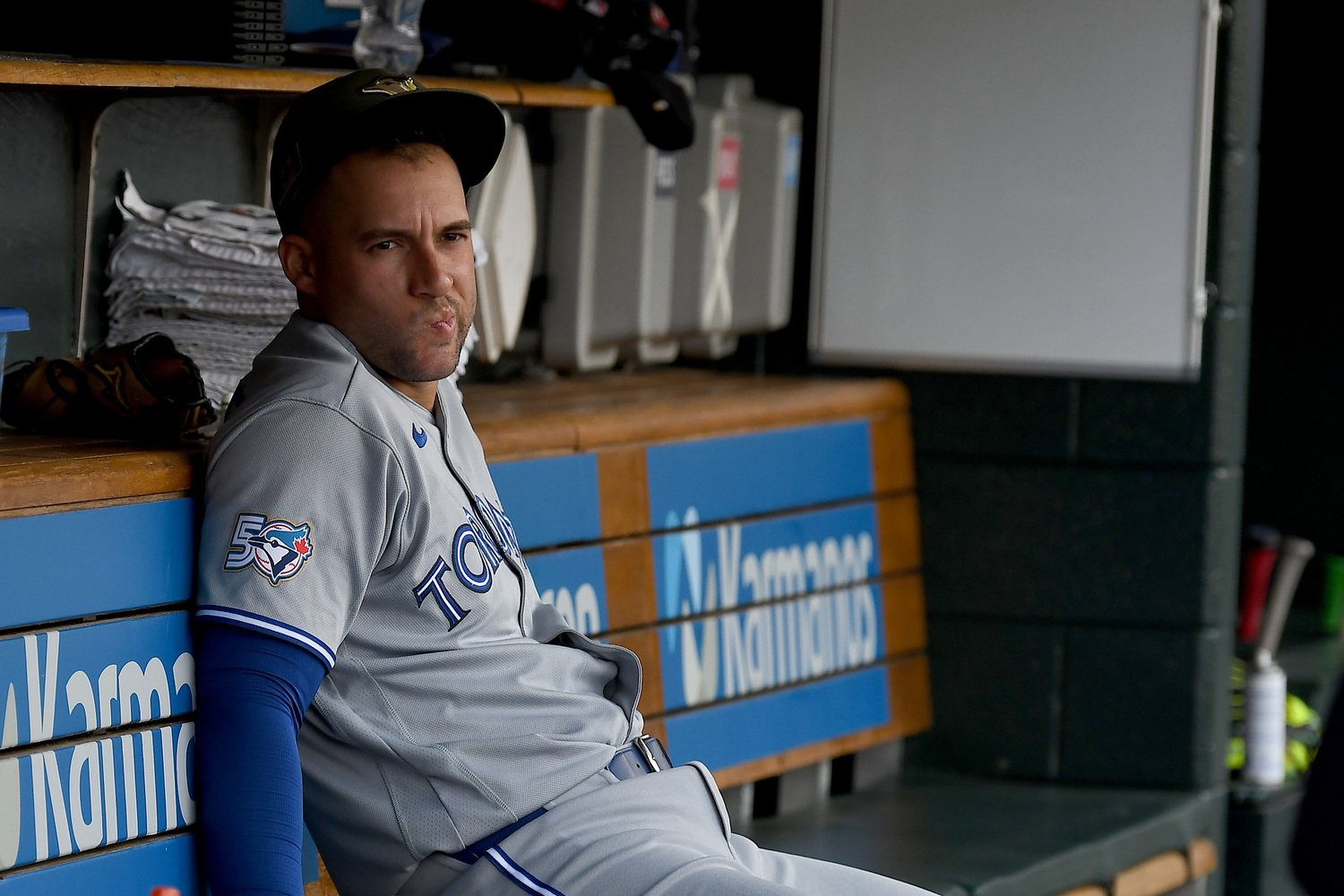 No player was more important to the Blue Jays' success in 2025 than George Springer. It's not just that he led the team in home runs, runs scored, on-base percentage, wRC+, and every type of Wins Above Replacement. It's not just that he stayed red-hot in October, battling through injuries to hit another four home runs, including the go-ahead shot in Game 7 of the ALCS. It's that he, like the Blue Jays themselves, achieved so much more than anyone anticipated heading into the year. Springer wasn't Toronto's only star in 2025. He had help from Vladimir Guerrero Jr., Kevin Gausman, Alejandro Kirk, and Bo Bichette, all of whom had excellent seasons of their own. The difference is that the Blue Jays were counting on Guerrero, Gausman, Kirk, and Bichette to lead the way. Springer was 35 and coming off the worst season of his career. He was only supposed to be a role player. FanGraphs' preseason projections saw Toronto as an 82-83 win team. They saw Springer as a 1.5-2.0 win player. No single factor elevated the Blue Jays more than Springer turning back the clock and earning MVP votes for the first time since his peak in Houston. The Blue Jays sure could use that version of Springer now. Through 29 games and 125 trips to the plate, the four-time All-Star is slashing .197/.274/.321 with three home runs and nine RBI. His wRC+ is 30% worse than league average, while his expected wOBA puts him among the bottom 20% of hitters in the sport. Last year, it felt like every fly ball he hit had a chance to leave the yard. These days, he's having trouble getting fly balls out of the infield. I don't know how concerned I should be. I never expected Springer to repeat his 2025 season. That would have been too much to hope for. However, my theory over the winter was that any regression from Springer would be counterbalanced by a return to form for Anthony Santander. Springer was worth 5.2 fWAR last year. Santander was worth -0.9. I hoped each of them could be worth, say, 2.5 wins in 2026. Needless to say, we aren't getting 2.5 WAR from Santander this season. But can Springer still be an above-average contributor? Evidently, John Schneider thinks so. Aside from the 15 games he missed with a fractured toe, Springer has played almost every day. He's hit leadoff in all 28 games he's started. Of course, it's not like Toronto has another perfect option for the leadoff spot right now. Even so, it would be hard for Schneider to justify keeping Springer at the top of the order unless he thought a bounce-back was imminent. Springer has a .232 on-base percentage in May. His 37 wRC+ in the month is the third-worst mark on the team, ahead of only a slumping Guerrero and an at-risk-of-losing-his-job-soon Tyler Heineman. None of that is good. At the same time, the fact that Vladdy came up in that last sentence is precisely why I'm not smashing the panic button. Maybe my concerns about Springer are overblown. Springer's 70 wRC+ is bad. But guess what? Fernando Tatis Jr. has a 71 wRC+ right now. Cal Raleigh has a 63 wRC+. Bo Bichette has a 74 wRC+. Samples are still small around the league, and Springer's especially so, given the time he spent on the IL. Need more proof that 29 games is a small sample? Just last year, when Springer was one of the best hitters in baseball, he had a 29-game stretch where he was barely better than he's been this year. From May 15 to June 18, he hit .188 with an 85 wRC+. In 2024, he had a 30 wRC+ in his worst 29-game period. The year before, it was a 59 wRC+ in his lowest 29-game sample. In 2022, he had two completely separate 29-game stretches with a 90 wRC+, and in 2021, his first year with the Jays, he posted a 56 wRC+ in a 29-game span from August to September. Even in 2017 and '18, his first two All-Star seasons with the Astros, he had equally poor stretches of similar lengths. Ups and downs are just a part of baseball. Underlying numbers aren't immune to the small sample size effect either. Springer's .286 xwOBA is poor. His .306 xwOBA on contact is more troubling. Yet, he's had stretches with numbers like that before. He's always managed to rebound. That's a reassuring thought. That is, until I start to worry that it's too reassuring. What if I'm using the small sample size defense to shield myself from the truth? Springer's quality-of-contact metrics look a lot like they did in 2024. His bat speed is higher than it was that year, but he's swinging under the ball so often that he isn't putting that bat speed to use. I feel like I'm in a sci-fi movie, staring at so many different George Springers, and I don't know which is real. There's the superstar from 2025. There's the disappointment so far in 2026. There's also the player Springer was in 2024, which seemed like a disappointment at the time, but who the Jays would take in a heartbeat now. Finally, there's the Springer I thought we'd get this year. The 2.5-win player. The happy medium between superstar and scrub. They say that when you hear hoofbeats, you should think horses, not zebras. It's good advice. My problem, however, is that I don't know which option here represents the horses and which ones represent various other hoofed creatures. Am I ignoring the facts in front of me if I still believe in Springer? Am I ignoring his track record if I don't? Am I just avoiding the hard decisions if I split the difference? I don't know. I don't know. I don't know. All I know is that it's May 20 (as I'm writing this), and George Springer is hitting .196 with a .596 OPS. How concerned are you about that? Stats and rankings updated prior to games on Wednesday, May 20.
 -
Monday was a rough one for Brandon Valenzuela. The Blue Jays catcher made two errors and let the Yankees steal five bases. He was well off the mark in his only ABS challenge of the game. His called strike rate on pitches in the shadow zone was uncharacteristically poor. Overall, his pitchers only earned strikes on 60% of their pitches. They gave up seven runs on 11 hits, four walks, and three homers. Yet, even in what was otherwise the worst defensive game of his young career, Valenzuela made the play of the night. Yankees catcher J.C. Escarra bunted a pop-up down the third base line. The ever athletic Valenzuela sprung to his feet and laid out for a sliding grab, the kind a catcher rarely has the opportunity to make. Despite the backwards somersault that knocked his helmet off his head, he held on to the baseball. Jeff Hoffman pumped his fist in celebration. Even the fans in the stands at Yankee Stadium were impressed. My point? Valenzuela has been nothing short of phenomenal behind the dish for the Blue Jays this season. His latest outing against the Yankees wasn't the most prototypical example of his defensive skills, but nonetheless, his glove found a way to shine. Valenzuela started the season with the Triple-A Buffalo Bisons. He only got the call to the majors when Alejandro Kirk hit the injured list eight games into the year. Then, he had to prove he deserved to be more than Tyler Heineman's backup. As a result, he has only played in 29 of Toronto's 48 games so far. His 203.2 defensive innings rank 27th among catchers. Despite that disadvantage, he leads his position in Statcast's Fielding Run Value (+6). He's tied for second in Defensive Runs Saved (+4). His framing has been spectacular, as has his ability to control the running game. The sample is small, but the company Valenzuela is keeping is elite: Catcher FRV Brandon Valenzuela 6 Patrick Bailey 5 Adley Rutschman 5 Dillon Dingler 4 Carlos Narváez 4 Tyler Heineman 4 J.T. Realmuto 4 Truth be told, that one leaderboard is pretty much the whole reason I wanted to write this article. I saw Valenzuela sitting just ahead of Bailey, Rutschman, and Dingler, and I wanted to shout from the metaphorical rooftop that the Blue Jays have the best defensive catcher in baseball – and his name isn't Kirk or Heineman. Yet, Valenzuela deserves commendation for more than just his glove. The switch-hitter has looked much more competent with the stick in May. He went 5-for-34 (.147) with one walk, one extra-base hit, and 14 strikeouts in his first three weeks with the Jays. Over the next three weeks, he hit .308 with three home runs, walking nearly as often as he struck out. His full-season OPS is up to a respectable .720. Both his wOBA and xwOBA sit right around league average. All told, Valenzuela's .233/.309/.411 slash line is nothing to write home about. But the difference between an elite defensive catcher who can hold his own against big league pitching and one who can't is massive. That's why Valenzuela is taking more and more playing time from Heineman. When the Blue Jays called up Valenzuela, all they were asking for was solid defense and a bat they could hide in the nine-hole of the order. They've gotten so much more. Since the day of his big league debut, Valenzuela ranks second among Blue Jays position players with 0.9 FanGraphs WAR. (Daulton Varsho is first with 1.2 fWAR.) That should tell you that the team has struggled, which you probably already knew. But it should also tell you how valuable Toronto's rookie catcher has been. Can Valenzuela keep playing at this level? The jury is still out on that one. Right now, however, he's helping to keep the team afloat while almost everyone else around him is either slumping or injured (or a bit of both). Hopefully, Kirk will come back soon, and Valenzuela won't have to do this much longer. But no matter what he does going forward, the young backstop has already been a hero for the Blue Jays in 2026. View full article
-
Brandon Valenzuela Is the Hero the Blue Jays Didn't Know They Needed
Leo Morgenstern posted an article in Blue Jays
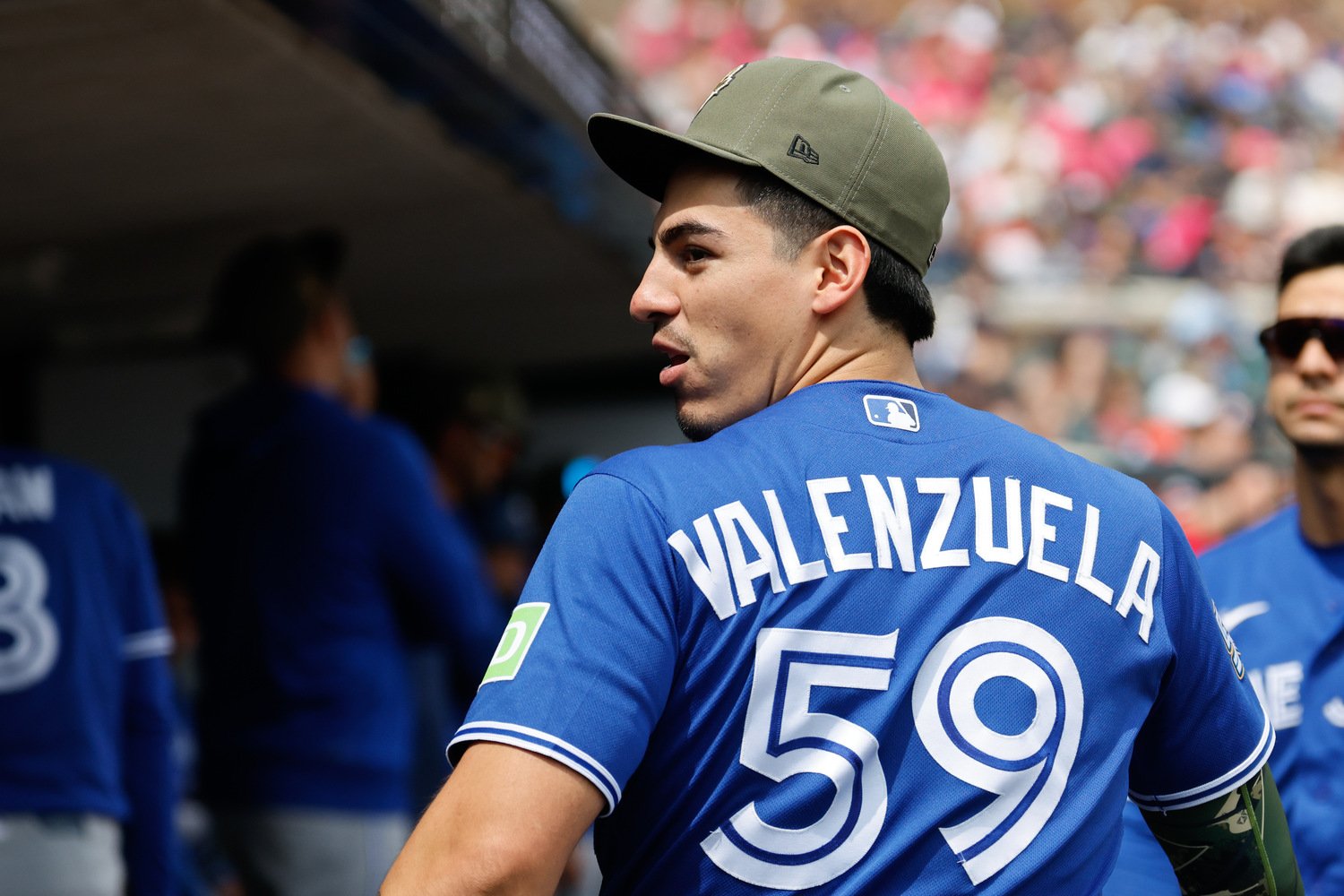 Monday was a rough one for Brandon Valenzuela. The Blue Jays catcher made two errors and let the Yankees steal five bases. He was well off the mark in his only ABS challenge of the game. His called strike rate on pitches in the shadow zone was uncharacteristically poor. Overall, his pitchers only earned strikes on 60% of their pitches. They gave up seven runs on 11 hits, four walks, and three homers. Yet, even in what was otherwise the worst defensive game of his young career, Valenzuela made the play of the night. Yankees catcher J.C. Escarra bunted a pop-up down the third base line. The ever athletic Valenzuela sprung to his feet and laid out for a sliding grab, the kind a catcher rarely has the opportunity to make. Despite the backwards somersault that knocked his helmet off his head, he held on to the baseball. Jeff Hoffman pumped his fist in celebration. Even the fans in the stands at Yankee Stadium were impressed. My point? Valenzuela has been nothing short of phenomenal behind the dish for the Blue Jays this season. His latest outing against the Yankees wasn't the most prototypical example of his defensive skills, but nonetheless, his glove found a way to shine. Valenzuela started the season with the Triple-A Buffalo Bisons. He only got the call to the majors when Alejandro Kirk hit the injured list eight games into the year. Then, he had to prove he deserved to be more than Tyler Heineman's backup. As a result, he has only played in 29 of Toronto's 48 games so far. His 203.2 defensive innings rank 27th among catchers. Despite that disadvantage, he leads his position in Statcast's Fielding Run Value (+6). He's tied for second in Defensive Runs Saved (+4). His framing has been spectacular, as has his ability to control the running game. The sample is small, but the company Valenzuela is keeping is elite: Catcher FRV Brandon Valenzuela 6 Patrick Bailey 5 Adley Rutschman 5 Dillon Dingler 4 Carlos Narváez 4 Tyler Heineman 4 J.T. Realmuto 4 Truth be told, that one leaderboard is pretty much the whole reason I wanted to write this article. I saw Valenzuela sitting just ahead of Bailey, Rutschman, and Dingler, and I wanted to shout from the metaphorical rooftop that the Blue Jays have the best defensive catcher in baseball – and his name isn't Kirk or Heineman. Yet, Valenzuela deserves commendation for more than just his glove. The switch-hitter has looked much more competent with the stick in May. He went 5-for-34 (.147) with one walk, one extra-base hit, and 14 strikeouts in his first three weeks with the Jays. Over the next three weeks, he hit .308 with three home runs, walking nearly as often as he struck out. His full-season OPS is up to a respectable .720. Both his wOBA and xwOBA sit right around league average. All told, Valenzuela's .233/.309/.411 slash line is nothing to write home about. But the difference between an elite defensive catcher who can hold his own against big league pitching and one who can't is massive. That's why Valenzuela is taking more and more playing time from Heineman. When the Blue Jays called up Valenzuela, all they were asking for was solid defense and a bat they could hide in the nine-hole of the order. They've gotten so much more. Since the day of his big league debut, Valenzuela ranks second among Blue Jays position players with 0.9 FanGraphs WAR. (Daulton Varsho is first with 1.2 fWAR.) That should tell you that the team has struggled, which you probably already knew. But it should also tell you how valuable Toronto's rookie catcher has been. Can Valenzuela keep playing at this level? The jury is still out on that one. Right now, however, he's helping to keep the team afloat while almost everyone else around him is either slumping or injured (or a bit of both). Hopefully, Kirk will come back soon, and Valenzuela won't have to do this much longer. But no matter what he does going forward, the young backstop has already been a hero for the Blue Jays in 2026.
 -
.jpg.a61fe21c8a8b8c38d8cabbb19f5a095c.jpg) What's that line from The Dark Knight? Oh yeah, "You either die a hero or live long enough to see yourself become the villain." Eric Lauer was a hero for the Blue Jays in 2025, pitching to a 3.18 ERA over 104.2 innings between the bullpen and the rotation. He gave the team another 8.2 innings with a 3.12 ERA in October. While he seemed superfluous throughout most of the 2025-26 offseason, the southpaw had a spot in Toronto's Opening Day rotation. Yet, although the team's rotation depth is even thinner now than it was then, Lauer just wasn't pitching well enough to hold onto a roster spot. By the time he was designated for assignment last Monday, he had more runs (27) than strikeouts (26) on the season. He also gave up 16 walks, 38 hits, and 11 home runs in 36.1 innings. Yesterday, Lauer finally escaped DFA limbo when the Blue Jays announced they had traded him to the Dodgers for a player to be named later or cash considerations. According to The Athletic's Fabian Ardaya, he will take on a "reliever/swingman" role in L.A.
What's that line from The Dark Knight? Oh yeah, "You either die a hero or live long enough to see yourself become the villain." Eric Lauer was a hero for the Blue Jays in 2025, pitching to a 3.18 ERA over 104.2 innings between the bullpen and the rotation. He gave the team another 8.2 innings with a 3.12 ERA in October. While he seemed superfluous throughout most of the 2025-26 offseason, the southpaw had a spot in Toronto's Opening Day rotation. Yet, although the team's rotation depth is even thinner now than it was then, Lauer just wasn't pitching well enough to hold onto a roster spot. By the time he was designated for assignment last Monday, he had more runs (27) than strikeouts (26) on the season. He also gave up 16 walks, 38 hits, and 11 home runs in 36.1 innings. Yesterday, Lauer finally escaped DFA limbo when the Blue Jays announced they had traded him to the Dodgers for a player to be named later or cash considerations. According to The Athletic's Fabian Ardaya, he will take on a "reliever/swingman" role in L.A. -
What's that line from The Dark Knight? Oh yeah, "You either die a hero or live long enough to see yourself become the villain." Eric Lauer was a hero for the Blue Jays in 2025, pitching to a 3.18 ERA over 104.2 innings between the bullpen and the rotation. He gave the team another 8.2 innings with a 3.12 ERA in October. While he seemed superfluous throughout most of the 2025-26 offseason, the southpaw had a spot in Toronto's Opening Day rotation. Yet, although the team's rotation depth is even thinner now than it was then, Lauer just wasn't pitching well enough to hold onto a roster spot. By the time he was designated for assignment last Monday, he had more runs (27) than strikeouts (26) on the season. He also gave up 16 walks, 38 hits, and 11 home runs in 36.1 innings. Yesterday, Lauer finally escaped DFA limbo when the Blue Jays announced they had traded him to the Dodgers for a player to be named later or cash considerations. According to The Athletic's Fabian Ardaya, he will take on a "reliever/swingman" role in L.A. View full rumor
-
.jpg.8c893ae72206be725de0c5dc1bb3766a.jpg) It's unfortunately official. Yesterday, manager John Schneider suggested that surgery was "on the table" for right-hander José Berríos. Today, he confirmed that Berríos will indeed go under the knife. The surgery will take place on Wednesday. Berríos has been on the injured list all season with a stress fracture in his right elbow. On Friday, Schneider said he did not believe the issue involved any soft tissue damage: Today, however, he revealed that there could be "some ligament stuff going on" after all: According to MLB.com's Keegan Matheson, Berríos could return within a couple of months in a best-case scenario. But if his surgeons discover any soft tissue damage during the initial procedure, he would surely be out significantly longer.
It's unfortunately official. Yesterday, manager John Schneider suggested that surgery was "on the table" for right-hander José Berríos. Today, he confirmed that Berríos will indeed go under the knife. The surgery will take place on Wednesday. Berríos has been on the injured list all season with a stress fracture in his right elbow. On Friday, Schneider said he did not believe the issue involved any soft tissue damage: Today, however, he revealed that there could be "some ligament stuff going on" after all: According to MLB.com's Keegan Matheson, Berríos could return within a couple of months in a best-case scenario. But if his surgeons discover any soft tissue damage during the initial procedure, he would surely be out significantly longer. -
It's unfortunately official. Yesterday, manager John Schneider suggested that surgery was "on the table" for right-hander José Berríos. Today, he confirmed that Berríos will indeed go under the knife. The surgery will take place on Wednesday. Berríos has been on the injured list all season with a stress fracture in his right elbow. On Friday, Schneider said he did not believe the issue involved any soft tissue damage: Today, however, he revealed that there could be "some ligament stuff going on" after all: According to MLB.com's Keegan Matheson, Berríos could return within a couple of months in a best-case scenario. But if his surgeons discover any soft tissue damage during the initial procedure, he would surely be out significantly longer. View full rumor
-
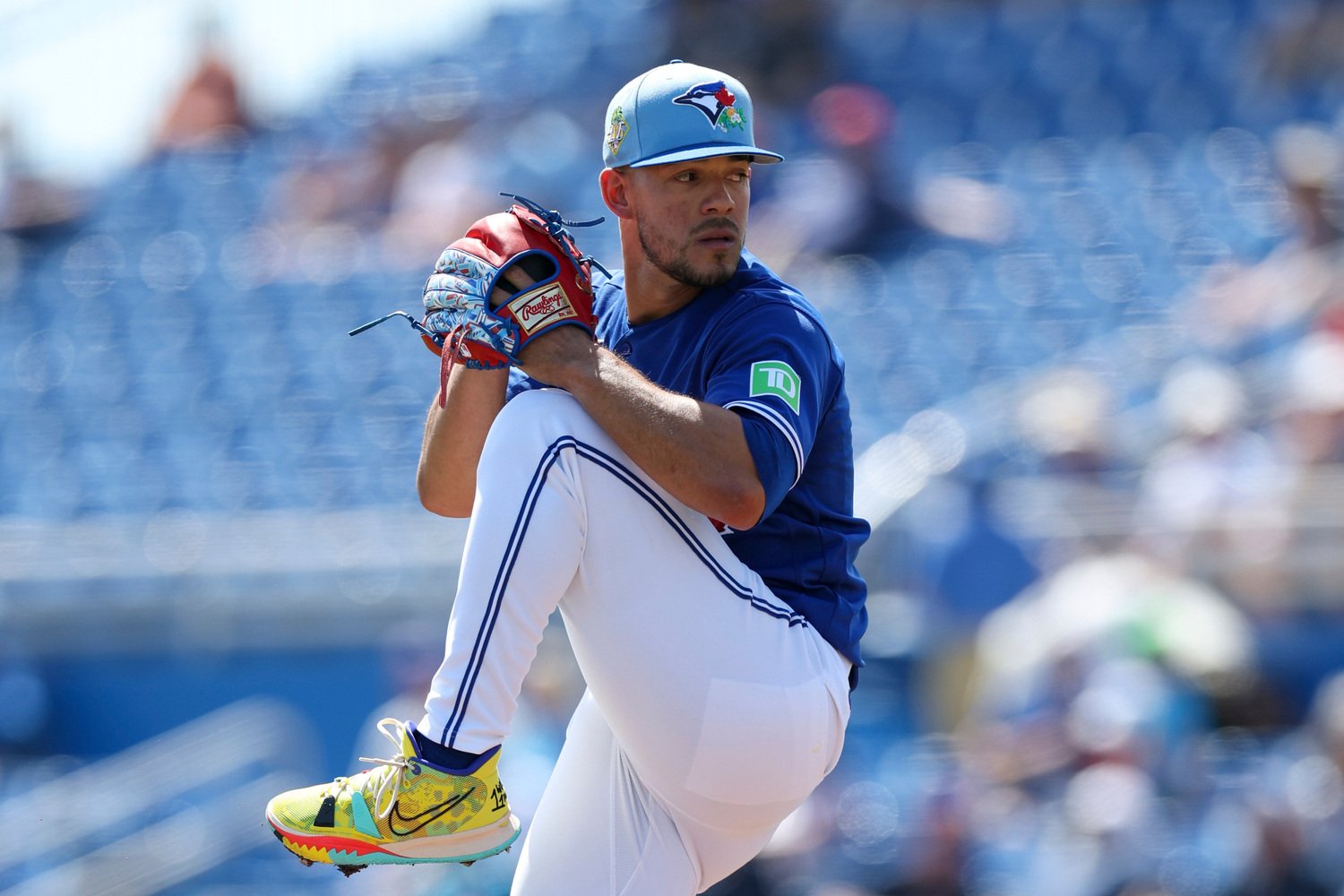 José Berríos has been on the injured list all season with a stress fracture in his right elbow. He seemed to be nearing a return until he suffered a setback after four rehab starts. He has since gone for imaging and met with Dr. Keith Meister. Today, John Schneider told reporters, including Sportsnet's Ben Nicholson-Smith, that "surgery is on the table" for Berríos. Given all the confusing details surrounding the right-hander's elbow health, it's hard to guess what kind of surgery it would be. However, at this point in the year, it's very likely that any kind of surgery would end his season. Rotation depth continues to be an issue for the Blue Jays, with Shane Bieber, Cody Ponce, and Max Scherzer joining Berríos on the IL. Eric Lauer was designated for assignment earlier this week, leaving just four fixtures on Toronto's starting staff: Kevin Gausman, Dylan Cease, Trey Yesavage, and Patrick Corbin. While the team has survived to this point, losing Berríos for the year could be tough to overcome.
 -
José Berríos has been on the injured list all season with a stress fracture in his right elbow. He seemed to be nearing a return until he suffered a setback after four rehab starts. He has since gone for imaging and met with Dr. Keith Meister. Today, John Schneider told reporters, including Sportsnet's Ben Nicholson-Smith, that "surgery is on the table" for Berríos. Given all the confusing details surrounding the right-hander's elbow health, it's hard to guess what kind of surgery it would be. However, at this point in the year, it's very likely that any kind of surgery would end his season. Rotation depth continues to be an issue for the Blue Jays, with Shane Bieber, Cody Ponce, and Max Scherzer joining Berríos on the IL. Eric Lauer was designated for assignment earlier this week, leaving just four fixtures on Toronto's starting staff: Kevin Gausman, Dylan Cease, Trey Yesavage, and Patrick Corbin. While the team has survived to this point, losing Berríos for the year could be tough to overcome. View full rumor
-
On Thursday, I wrote about the nine errors that the Blue Jays' pitchers have made in 2026. Instead of discussing the individual plays, I focused on the high total and how unusual it is – especially when errors, on the whole, have never been less frequent. Personally, I'm a glutton for statistical oddities. I love to research obscure major league records, and I love to figure out how many records a team or player might break if they continue at their current pace, even if I know there's no chance that pace will continue. Yet, I know that most people watch baseball for, you know, the actual baseball. So, I figured you might like to see the individual defensive misplays that I wrote about in the aggregate. Here are all nine errors the Blue Jays' pitchers have made in 2026, along with a little bit of my commentary. Error No. 1: Worst Is First - Cody Ponce, March 30 Oftentimes, errors are annoying in the moment and funny in retrospect. This one just sucked. Cody Ponce suffered a season-ending ACL sprain on this play. Let's move on. Error No. 2: Should've Had Him - Tommy Nance, April 1 This one was impossible to find a good clip of online, but it's definitely worth watching, so I GIF'd it. (Apologies for the quality. It's a little better at this link.) The biggest mistake here is that the Blue Jays let Troy Johnston get as far as he did toward second base before they reacted, but Tommy Nance still had plenty of time to make a better throw on this play. Even Johnston thought they had him at first; he almost stopped to run back to first before he realized Andrés Giménez didn't have a good handle on the ball. Error No. 3: That's Why You Keep Your Eye on the Ball - Dylan Cease, April 3 You know how I said errors can be funny in hindsight? This is what I'm talking about. At the time, it was frustrating. It was even more frustrating a few days later. If Dylan Cease had just caught that ball, maybe the Blue Jays wouldn't have suffered an embarrassing sweep at the hands of the White Sox. Yet, you have to admit it's funny to watch Cease swat the ball away, step on first base anyway, and then look at his glove as if he can't believe isn't in there. Error No. 4: Fleming's Best Pitch? - Josh Fleming, April 6 Josh Fleming made one appearance for Toronto this year. Half of the 18 batters he faced reached base, and four came around to score. It wasn't great. That's why it isn't that much of an exaggeration to call this his best pitch of the season. The only problem? It wasn't a pitch. It was a throw to first base. Fleming absolutely let loose on this one and sent it hurtling past first base. All Vladimir Guerrero Jr. could do was get out of the way and watch it sail to the wall. Error No. 5: Calling Canada's Funniest Home Videos - Kevin Gausman, April 7 You can watch the rest of the errors if you want, but this is the best one. Hands down. No contest. I could watch this again, and again, and again. (And I already have.) I only wish I had the filmmaking skills to add in a "boi-oi-oing" sound effect as Kevin Gausman's throw ricochets off of Alex Freeland's helmet. Errors No. 6-8: Ernie Clement Stares Into Center Field, Episodes I, II, III Braydon Fisher, April 17 Braydon Fisher, April 22 Dylan Cease, April 27 Toronto's next three pitcher errors were all botched pickoff attempts at second base, so I've combined them into one highlight reel. None of the clips does a great job of capturing the errors, but all of them show an exasperated Ernie Clement watching the ball roll to the center fielder. Error No. 9: At Least He Didn't Hit Anyone in the head - Kevin Gausman, May 5 After bobbling this one twice, Gausman had no choice but to eat the ball and let the Rays load the bases. Is it possible that the Blue Jays would have won this game if Gausman had made the play? Sure. But at least he didn't throw it straight into Cedric Mullins's helmet. Let's watch that one again, shall we? View full article
-
Let’s Watch the Blue Jays’ Pitchers Struggle on Defense
Leo Morgenstern posted an article in Blue Jays
.jpg.9a9c6a3286cf6362d0dca0fa279f043c.jpg) On Thursday, I wrote about the nine errors that the Blue Jays' pitchers have made in 2026. Instead of discussing the individual plays, I focused on the high total and how unusual it is – especially when errors, on the whole, have never been less frequent. Personally, I'm a glutton for statistical oddities. I love to research obscure major league records, and I love to figure out how many records a team or player might break if they continue at their current pace, even if I know there's no chance that pace will continue. Yet, I know that most people watch baseball for, you know, the actual baseball. So, I figured you might like to see the individual defensive misplays that I wrote about in the aggregate. Here are all nine errors the Blue Jays' pitchers have made in 2026, along with a little bit of my commentary. Error No. 1: Worst Is First - Cody Ponce, March 30 Oftentimes, errors are annoying in the moment and funny in retrospect. This one just sucked. Cody Ponce suffered a season-ending ACL sprain on this play. Let's move on. Error No. 2: Should've Had Him - Tommy Nance, April 1 This one was impossible to find a good clip of online, but it's definitely worth watching, so I GIF'd it. (Apologies for the quality. It's a little better at this link.) The biggest mistake here is that the Blue Jays let Troy Johnston get as far as he did toward second base before they reacted, but Tommy Nance still had plenty of time to make a better throw on this play. Even Johnston thought they had him at first; he almost stopped to run back to first before he realized Andrés Giménez didn't have a good handle on the ball. Error No. 3: That's Why You Keep Your Eye on the Ball - Dylan Cease, April 3 You know how I said errors can be funny in hindsight? This is what I'm talking about. At the time, it was frustrating. It was even more frustrating a few days later. If Dylan Cease had just caught that ball, maybe the Blue Jays wouldn't have suffered an embarrassing sweep at the hands of the White Sox. Yet, you have to admit it's funny to watch Cease swat the ball away, step on first base anyway, and then look at his glove as if he can't believe isn't in there. Error No. 4: Fleming's Best Pitch? - Josh Fleming, April 6 Josh Fleming made one appearance for Toronto this year. Half of the 18 batters he faced reached base, and four came around to score. It wasn't great. That's why it isn't that much of an exaggeration to call this his best pitch of the season. The only problem? It wasn't a pitch. It was a throw to first base. Fleming absolutely let loose on this one and sent it hurtling past first base. All Vladimir Guerrero Jr. could do was get out of the way and watch it sail to the wall. Error No. 5: Calling Canada's Funniest Home Videos - Kevin Gausman, April 7 You can watch the rest of the errors if you want, but this is the best one. Hands down. No contest. I could watch this again, and again, and again. (And I already have.) I only wish I had the filmmaking skills to add in a "boi-oi-oing" sound effect as Kevin Gausman's throw ricochets off of Alex Freeland's helmet. Errors No. 6-8: Ernie Clement Stares Into Center Field, Episodes I, II, III Braydon Fisher, April 17 Braydon Fisher, April 22 Dylan Cease, April 27 Toronto's next three pitcher errors were all botched pickoff attempts at second base, so I've combined them into one highlight reel. None of the clips does a great job of capturing the errors, but all of them show an exasperated Ernie Clement watching the ball roll to the center fielder. Error No. 9: At Least He Didn't Hit Anyone in the head - Kevin Gausman, May 5 After bobbling this one twice, Gausman had no choice but to eat the ball and let the Rays load the bases. Is it possible that the Blue Jays would have won this game if Gausman had made the play? Sure. But at least he didn't throw it straight into Cedric Mullins's helmet. Let's watch that one again, shall we?
On Thursday, I wrote about the nine errors that the Blue Jays' pitchers have made in 2026. Instead of discussing the individual plays, I focused on the high total and how unusual it is – especially when errors, on the whole, have never been less frequent. Personally, I'm a glutton for statistical oddities. I love to research obscure major league records, and I love to figure out how many records a team or player might break if they continue at their current pace, even if I know there's no chance that pace will continue. Yet, I know that most people watch baseball for, you know, the actual baseball. So, I figured you might like to see the individual defensive misplays that I wrote about in the aggregate. Here are all nine errors the Blue Jays' pitchers have made in 2026, along with a little bit of my commentary. Error No. 1: Worst Is First - Cody Ponce, March 30 Oftentimes, errors are annoying in the moment and funny in retrospect. This one just sucked. Cody Ponce suffered a season-ending ACL sprain on this play. Let's move on. Error No. 2: Should've Had Him - Tommy Nance, April 1 This one was impossible to find a good clip of online, but it's definitely worth watching, so I GIF'd it. (Apologies for the quality. It's a little better at this link.) The biggest mistake here is that the Blue Jays let Troy Johnston get as far as he did toward second base before they reacted, but Tommy Nance still had plenty of time to make a better throw on this play. Even Johnston thought they had him at first; he almost stopped to run back to first before he realized Andrés Giménez didn't have a good handle on the ball. Error No. 3: That's Why You Keep Your Eye on the Ball - Dylan Cease, April 3 You know how I said errors can be funny in hindsight? This is what I'm talking about. At the time, it was frustrating. It was even more frustrating a few days later. If Dylan Cease had just caught that ball, maybe the Blue Jays wouldn't have suffered an embarrassing sweep at the hands of the White Sox. Yet, you have to admit it's funny to watch Cease swat the ball away, step on first base anyway, and then look at his glove as if he can't believe isn't in there. Error No. 4: Fleming's Best Pitch? - Josh Fleming, April 6 Josh Fleming made one appearance for Toronto this year. Half of the 18 batters he faced reached base, and four came around to score. It wasn't great. That's why it isn't that much of an exaggeration to call this his best pitch of the season. The only problem? It wasn't a pitch. It was a throw to first base. Fleming absolutely let loose on this one and sent it hurtling past first base. All Vladimir Guerrero Jr. could do was get out of the way and watch it sail to the wall. Error No. 5: Calling Canada's Funniest Home Videos - Kevin Gausman, April 7 You can watch the rest of the errors if you want, but this is the best one. Hands down. No contest. I could watch this again, and again, and again. (And I already have.) I only wish I had the filmmaking skills to add in a "boi-oi-oing" sound effect as Kevin Gausman's throw ricochets off of Alex Freeland's helmet. Errors No. 6-8: Ernie Clement Stares Into Center Field, Episodes I, II, III Braydon Fisher, April 17 Braydon Fisher, April 22 Dylan Cease, April 27 Toronto's next three pitcher errors were all botched pickoff attempts at second base, so I've combined them into one highlight reel. None of the clips does a great job of capturing the errors, but all of them show an exasperated Ernie Clement watching the ball roll to the center fielder. Error No. 9: At Least He Didn't Hit Anyone in the head - Kevin Gausman, May 5 After bobbling this one twice, Gausman had no choice but to eat the ball and let the Rays load the bases. Is it possible that the Blue Jays would have won this game if Gausman had made the play? Sure. But at least he didn't throw it straight into Cedric Mullins's helmet. Let's watch that one again, shall we? -
Earlier this week, Jays Centre's Owen Hill wrote about the Blue Jays' defense. He pointed out that the Jays are one of the best teams in the league according to Baseball Savant's Fielding Run Value (FRV), despite ranking as one of the worst in errors and fielding percentage. After reading Owen's article, I went down a bit of a rabbit hole. I was watching clips of all the errors the Blue Jays have made this season when it occurred to me how many of them were on the pitchers. Toronto has made 27 errors in 2026, the fifth-most in MLB. Of those 27 errors, nine belong to the arms. My gut reaction? That's a lot of pitcher errors. My gut was right. Pitchers aren't usually the best fielders. That's not a dig. They just have other priorities. What's more, by nature of where they stand on the field, the batted balls they have to work with are often moving very slowly or very fast. In either case, those can be tough to deal with. However, pitchers are limited in the number of errors they can make because they don't handle the ball all that much. They make errors at a higher rate than players at any other position, but even so, they're typically only responsible for 12-13% of errors league-wide. That's why I was surprised that pitchers have made one-third of the Blue Jays' errors in 2026. This year's pitching staff has already compiled more errors than the team's pitchers have in 13 separate seasons of Blue Jays history. Three of those were shortened seasons (1981, 1994, and 2020), but the other 10 were full 162-game (or even 163-game) campaigns. In 1988 and again in '92, Toronto's pitchers made a full-season franchise-record-low five errors; this year, they passed that total 11 games into the schedule. As a more recent comparison, the 2022 and '23 staffs only made six errors each year. That's an average of one per month. This year's pitchers already had eight errors by the end of April. Looking around the league, there are almost always a handful of pitching staffs that don't top nine errors all year. The last time that every single team's pitchers made more than nine errors was in 1974, before the Blue Jays even existed. Let that sink in. It's not unusual for a team's pitchers to make nine or fewer errors all season. The Jays' arms have already hit that mark by mid-May. For more historical context, the Blue Jays' pitchers are on pace for 34 errors this season. That would surpass the franchise record, held by the inaugural 1977 team; their pitchers made 30 errors. In fact, it would be the highest number of errors by any pitching staff in the live ball era; the record (33) currently belongs to the pitchers of the 1976 San Francisco Giants. So, at the rate they're mishandling the ball, Toronto's pitchers have a chance to break records that have stood for 50 years. But that might be underselling it. You see, errors are less frequent than they used to be. As Owen mentioned in his piece, MLB's official scorers have been getting more lenient in recent years, classifying fewer and fewer plays as errors. The league's .986 fielding percentage in 2026 is the highest it's been at any point in major league history. We're on pace to see 2,370 errors by the end of this season. In contrast, MLB fielders made 3,458 errors in 1976 – when there were only 24 teams. Fifty years ago, teams averaged almost an error per game. In 2026, it's more like one every other game. The rate has nearly been cut in half. Here's another way to think about it. The Blue Jays' pitchers are on pace to make 34 errors this year, and their nine errors account for just under 1.5% of all errors in MLB. However, if they were making errors at the same rate compared to league average in 1976, they would be on pace for 50. Fifty! If their current pace holds – which, to be clear, is unlikely, but we're having fun here – the Blue Jays would also set a record for the highest "pitcher error-to-position player error ratio" in major league history. One in three of Toronto's errors this year was committed by a pitcher. Right now, the full-season record belongs to the 2024 New York Mets, whose pitchers were responsible for about one in four of the team's errors (23 out of 94). And in case you're interested, the record in the opposite direction belongs to the 2021 Washington Nationals. The team made 96 errors that year (third-most in the NL), but only one of those errors was by a pitcher. It bears repeating that I don't actually expect the Blue Jays' pitchers – or the rest of their fielders – to maintain their current error pace. Errors are always unpredictable, and a quarter of a season is a tiny sample. I'm only bringing up full-season paces and historical records to contextualize how unusual it is that we've already seen so many pitcher errors at this early point in the year. Indeed, the real story here is the high number of errors the Blue Jays' pitchers have made to this point in the year. So, please check back tomorrow morning, because I'm putting together a piece where you can watch all of those misplays in all of their glory. View full article
-
- 1
-

-
.jpg.099d2e15036188b7bc71193253338620.jpg) Earlier this week, Jays Centre's Owen Hill wrote about the Blue Jays' defense. He pointed out that the Jays are one of the best teams in the league according to Baseball Savant's Fielding Run Value (FRV), despite ranking as one of the worst in errors and fielding percentage. After reading Owen's article, I went down a bit of a rabbit hole. I was watching clips of all the errors the Blue Jays have made this season when it occurred to me how many of them were on the pitchers. Toronto has made 27 errors in 2026, the fifth-most in MLB. Of those 27 errors, nine belong to the arms. My gut reaction? That's a lot of pitcher errors. My gut was right. Pitchers aren't usually the best fielders. That's not a dig. They just have other priorities. What's more, by nature of where they stand on the field, the batted balls they have to work with are often moving very slowly or very fast. In either case, those can be tough to deal with. However, pitchers are limited in the number of errors they can make because they don't handle the ball all that much. They make errors at a higher rate than players at any other position, but even so, they're typically only responsible for 12-13% of errors league-wide. That's why I was surprised that pitchers have made one-third of the Blue Jays' errors in 2026. This year's pitching staff has already compiled more errors than the team's pitchers have in 13 separate seasons of Blue Jays history. Three of those were shortened seasons (1981, 1994, and 2020), but the other 10 were full 162-game (or even 163-game) campaigns. In 1988 and again in '92, Toronto's pitchers made a full-season franchise-record-low five errors; this year, they passed that total 11 games into the schedule. As a more recent comparison, the 2022 and '23 staffs only made six errors each year. That's an average of one per month. This year's pitchers already had eight errors by the end of April. Looking around the league, there are almost always a handful of pitching staffs that don't top nine errors all year. The last time that every single team's pitchers made more than nine errors was in 1974, before the Blue Jays even existed. Let that sink in. It's not unusual for a team's pitchers to make nine or fewer errors all season. The Jays' arms have already hit that mark by mid-May. For more historical context, the Blue Jays' pitchers are on pace for 34 errors this season. That would surpass the franchise record, held by the inaugural 1977 team; their pitchers made 30 errors. In fact, it would be the highest number of errors by any pitching staff in the live ball era; the record (33) currently belongs to the pitchers of the 1976 San Francisco Giants. So, at the rate they're mishandling the ball, Toronto's pitchers have a chance to break records that have stood for 50 years. But that might be underselling it. You see, errors are less frequent than they used to be. As Owen mentioned in his piece, MLB's official scorers have been getting more lenient in recent years, classifying fewer and fewer plays as errors. The league's .986 fielding percentage in 2026 is the highest it's been at any point in major league history. We're on pace to see 2,370 errors by the end of this season. In contrast, MLB fielders made 3,458 errors in 1976 – when there were only 24 teams. Fifty years ago, teams averaged almost an error per game. In 2026, it's more like one every other game. The rate has nearly been cut in half. Here's another way to think about it. The Blue Jays' pitchers are on pace to make 34 errors this year, and their nine errors account for just under 1.5% of all errors in MLB. However, if they were making errors at the same rate compared to league average in 1976, they would be on pace for 50. Fifty! If their current pace holds – which, to be clear, is unlikely, but we're having fun here – the Blue Jays would also set a record for the highest "pitcher error-to-position player error ratio" in major league history. One in three of Toronto's errors this year was committed by a pitcher. Right now, the full-season record belongs to the 2024 New York Mets, whose pitchers were responsible for about one in four of the team's errors (23 out of 94). And in case you're interested, the record in the opposite direction belongs to the 2021 Washington Nationals. The team made 96 errors that year (third-most in the NL), but only one of those errors was by a pitcher. It bears repeating that I don't actually expect the Blue Jays' pitchers – or the rest of their fielders – to maintain their current error pace. Errors are always unpredictable, and a quarter of a season is a tiny sample. I'm only bringing up full-season paces and historical records to contextualize how unusual it is that we've already seen so many pitcher errors at this early point in the year. Indeed, the real story here is the high number of errors the Blue Jays' pitchers have made to this point in the year. So, please check back tomorrow morning, because I'm putting together a piece where you can watch all of those misplays in all of their glory.
Earlier this week, Jays Centre's Owen Hill wrote about the Blue Jays' defense. He pointed out that the Jays are one of the best teams in the league according to Baseball Savant's Fielding Run Value (FRV), despite ranking as one of the worst in errors and fielding percentage. After reading Owen's article, I went down a bit of a rabbit hole. I was watching clips of all the errors the Blue Jays have made this season when it occurred to me how many of them were on the pitchers. Toronto has made 27 errors in 2026, the fifth-most in MLB. Of those 27 errors, nine belong to the arms. My gut reaction? That's a lot of pitcher errors. My gut was right. Pitchers aren't usually the best fielders. That's not a dig. They just have other priorities. What's more, by nature of where they stand on the field, the batted balls they have to work with are often moving very slowly or very fast. In either case, those can be tough to deal with. However, pitchers are limited in the number of errors they can make because they don't handle the ball all that much. They make errors at a higher rate than players at any other position, but even so, they're typically only responsible for 12-13% of errors league-wide. That's why I was surprised that pitchers have made one-third of the Blue Jays' errors in 2026. This year's pitching staff has already compiled more errors than the team's pitchers have in 13 separate seasons of Blue Jays history. Three of those were shortened seasons (1981, 1994, and 2020), but the other 10 were full 162-game (or even 163-game) campaigns. In 1988 and again in '92, Toronto's pitchers made a full-season franchise-record-low five errors; this year, they passed that total 11 games into the schedule. As a more recent comparison, the 2022 and '23 staffs only made six errors each year. That's an average of one per month. This year's pitchers already had eight errors by the end of April. Looking around the league, there are almost always a handful of pitching staffs that don't top nine errors all year. The last time that every single team's pitchers made more than nine errors was in 1974, before the Blue Jays even existed. Let that sink in. It's not unusual for a team's pitchers to make nine or fewer errors all season. The Jays' arms have already hit that mark by mid-May. For more historical context, the Blue Jays' pitchers are on pace for 34 errors this season. That would surpass the franchise record, held by the inaugural 1977 team; their pitchers made 30 errors. In fact, it would be the highest number of errors by any pitching staff in the live ball era; the record (33) currently belongs to the pitchers of the 1976 San Francisco Giants. So, at the rate they're mishandling the ball, Toronto's pitchers have a chance to break records that have stood for 50 years. But that might be underselling it. You see, errors are less frequent than they used to be. As Owen mentioned in his piece, MLB's official scorers have been getting more lenient in recent years, classifying fewer and fewer plays as errors. The league's .986 fielding percentage in 2026 is the highest it's been at any point in major league history. We're on pace to see 2,370 errors by the end of this season. In contrast, MLB fielders made 3,458 errors in 1976 – when there were only 24 teams. Fifty years ago, teams averaged almost an error per game. In 2026, it's more like one every other game. The rate has nearly been cut in half. Here's another way to think about it. The Blue Jays' pitchers are on pace to make 34 errors this year, and their nine errors account for just under 1.5% of all errors in MLB. However, if they were making errors at the same rate compared to league average in 1976, they would be on pace for 50. Fifty! If their current pace holds – which, to be clear, is unlikely, but we're having fun here – the Blue Jays would also set a record for the highest "pitcher error-to-position player error ratio" in major league history. One in three of Toronto's errors this year was committed by a pitcher. Right now, the full-season record belongs to the 2024 New York Mets, whose pitchers were responsible for about one in four of the team's errors (23 out of 94). And in case you're interested, the record in the opposite direction belongs to the 2021 Washington Nationals. The team made 96 errors that year (third-most in the NL), but only one of those errors was by a pitcher. It bears repeating that I don't actually expect the Blue Jays' pitchers – or the rest of their fielders – to maintain their current error pace. Errors are always unpredictable, and a quarter of a season is a tiny sample. I'm only bringing up full-season paces and historical records to contextualize how unusual it is that we've already seen so many pitcher errors at this early point in the year. Indeed, the real story here is the high number of errors the Blue Jays' pitchers have made to this point in the year. So, please check back tomorrow morning, because I'm putting together a piece where you can watch all of those misplays in all of their glory. -
.jpg.daca4b82209c4fb3c0c5068b18ec5b56.jpg) Addison Barger will have to wait at least one more day before he's back in the Blue Jays' lineup. The team originally planned to activate him from the 10-day injured list ahead of tonight's game against the Angels, but John Schneider told Sportsnet's Jeff Blair and Kevin Barker today that Barger is still in transit. He is not expected to rejoin the Blue Jays until Saturday. This gives the team a bit more time to decide how to make room for Barger on the active roster. For what it's worth, the Angels are sending the left-handed Reid Detmers to the mound this evening, which might explain why the Jays aren't rushing the lefty-batting Barger to town. Barger has been on the IL since April 6 with a sprained ankle. Prior to his injury, he was 1-for-19 with a double and six strikeouts. Only two of his 23 plate appearances came against left-handed pitching. He has hit .193 with a 55 wRC+ and just one home run in 128 career PA against southpaws.
Addison Barger will have to wait at least one more day before he's back in the Blue Jays' lineup. The team originally planned to activate him from the 10-day injured list ahead of tonight's game against the Angels, but John Schneider told Sportsnet's Jeff Blair and Kevin Barker today that Barger is still in transit. He is not expected to rejoin the Blue Jays until Saturday. This gives the team a bit more time to decide how to make room for Barger on the active roster. For what it's worth, the Angels are sending the left-handed Reid Detmers to the mound this evening, which might explain why the Jays aren't rushing the lefty-batting Barger to town. Barger has been on the IL since April 6 with a sprained ankle. Prior to his injury, he was 1-for-19 with a double and six strikeouts. Only two of his 23 plate appearances came against left-handed pitching. He has hit .193 with a 55 wRC+ and just one home run in 128 career PA against southpaws. -
Addison Barger will have to wait at least one more day before he's back in the Blue Jays' lineup. The team originally planned to activate him from the 10-day injured list ahead of tonight's game against the Angels, but John Schneider told Sportsnet's Jeff Blair and Kevin Barker today that Barger is still in transit. He is not expected to rejoin the Blue Jays until Saturday. This gives the team a bit more time to decide how to make room for Barger on the active roster. For what it's worth, the Angels are sending the left-handed Reid Detmers to the mound this evening, which might explain why the Jays aren't rushing the lefty-batting Barger to town. Barger has been on the IL since April 6 with a sprained ankle. Prior to his injury, he was 1-for-19 with a double and six strikeouts. Only two of his 23 plate appearances came against left-handed pitching. He has hit .193 with a 55 wRC+ and just one home run in 128 career PA against southpaws. View full rumor
-
John Schneider pulled Tyler Heineman in the middle of the sixth inning on Sunday. With the bases loaded and the Blue Jays down by three, Heineman swung at the first pitch and sent a lazy fly ball to shallow left field, ending the top of the frame. When the game resumed, it was Brandon Valenzuela crouching behind the dish. Heineman is batting .136 with 13 strikeouts since Alejandro Kirk fractured his thumb on April 3. He has not drawn a walk or recorded an extra-base hit. He's only scored once in 16 games. It wouldn't be realistic to expect Heineman to repeat his 2025 performance. It wouldn't be fair to ask him to hit as well as Kirk. Still, even the most charitable evaluator would have to admit that Heineman has disappointed. Instead of taking the kind of disciplined approach one might hope to see from a soft-hitting veteran catcher, he's swinging more, chasing more, and whiffing more. Since April 4, he has seen an average of 3.29 pitches per plate appearance, one of the lowest rates in the league. Season(s) Swing Rate Chase Rate Whiff Rate Pitches per PA 2019-25 52.3% 33.3% 18.2% 3.59 2026 (total) 58.2% 45.4% 23.7% 3.44 2026 (since Apr. 4) 58.4% 46.1% 25.5% 3.29 Data via Baseball Savant. It isn't hard to understand why Schneider might have been fed up. Before the skipper sent him to the showers, Heineman had seen just eight pitches in three at-bats that day. When he stepped to the plate to face Taylor Rogers in the sixth, he had already seen Rogers twice in the series – including his at-bat in the previous inning. By that point, Rogers had faced 10 Blue Jays batters across two innings. Heineman needed to make him work. Instead, he took a bad hack at a pitch he was never going to do any damage against. It would have been frustrating regardless of the score or the base-out state. The fact that Heineman wasted an opportunity to get his team back in the game wasn't the heart of the problem, but it may have been the straw that broke the camel's back. Except we don't know any of this for sure. Speaking to reporters after the game, Schneider offered just two little words to explain why he took Heineman out of the game: "manager's decision." When pushed for details, he doubled down on his coy response. It was subtle, but it looked to me like he smirked both times he used the phrase. And that's it. That's all we know. Those two words have been swirling around my brain ever since. Manager's decision. The phrase is meaningless. Utterly meaningless. It's not an explanation at all. Every substitution is a manager's decision. All Schneider really told us was that Heineman wasn't injured, and even then, he didn't technically say that. And yet... Manager's decision. The words themselves are meaningless. But the fact that Schneider chose those specific words – and only those specific words – is layered with meaning. He didn't say it was "my decision." That would have been the more natural, off-the-cuff response. By using the third person instead of the first person, Schneider simultaneously took responsibility and distanced himself from the situation. All he was actually saying was that he didn't want to say anything, but he invented a phrase to legitimize his avoidance. To his credit, it worked. Look at this quotation from a Sportsnet article on Tuesday: "Elsewhere, Brandon Valenzuela will make a second straight start behind the dish in place of Tyler Heineman, who was removed from Sunday's game against the Minnesota Twins due to a manager's decision." The author cited "a manager's decision" as unquestioningly as if they were writing that Heineman was removed due to back spasms. We cannot allow this to become a phrase that's ever written without scare quotes! It's not a real thing! The other consequence of Schneider's intentional vagueness was a Streisand effect. The Streisand effect describes the phenomenon by which an effort to keep something under wraps can ultimately draw more attention to that thing than it otherwise would have received. In this case, Schneider was trying (or at least he can claim he was trying) to keep the details of whatever went down with Heineman in-house. Yet, he ended up turning the whole thing into a bigger deal than it would have been if he had simply offered a more detailed explanation. I'm only writing this article because "A Manager's Decision" sounds like the title of a Lifetime original movie, and I think that's funny. I wouldn't have any material if Schneider had just said, "I benched him for a bad at-bat. End of story." Indeed, for as much time as I can spend analyzing the phrase, the reason I can't stop thinking about Schneider's "manager's decision" is that it makes me laugh. Imagine anyone else responding to a similar question with a similar response. Reporter: Tyler, why did you swing at that pitch? Heineman: It was a batter's decision. Reporter: Leo, how did you 10 loonie dogs in a single inning? Me: It was an eater's decision. Of course, what isn't so funny is what this all might mean for Tyler Heineman. Alejandro Kirk will hopefully return later this month. When that happens, John Schneider (and Ross Atkins) will have to make a much more important decision. If Heineman fails to win back his manager's favour by then, it might be Brandon Valenzuela who sticks around as the backup. It's all speculation for now, but eventually, the decision will be real. View full article
-
.jpg.f5b7068a570385fee7064e77fe97d405.jpg) John Schneider pulled Tyler Heineman in the middle of the sixth inning on Sunday. With the bases loaded and the Blue Jays down by three, Heineman swung at the first pitch and sent a lazy fly ball to shallow left field, ending the top of the frame. When the game resumed, it was Brandon Valenzuela crouching behind the dish. Heineman is batting .136 with 13 strikeouts since Alejandro Kirk fractured his thumb on April 3. He has not drawn a walk or recorded an extra-base hit. He's only scored once in 16 games. It wouldn't be realistic to expect Heineman to repeat his 2025 performance. It wouldn't be fair to ask him to hit as well as Kirk. Still, even the most charitable evaluator would have to admit that Heineman has disappointed. Instead of taking the kind of disciplined approach one might hope to see from a soft-hitting veteran catcher, he's swinging more, chasing more, and whiffing more. Since April 4, he has seen an average of 3.29 pitches per plate appearance, one of the lowest rates in the league. Season(s) Swing Rate Chase Rate Whiff Rate Pitches per PA 2019-25 52.3% 33.3% 18.2% 3.59 2026 (total) 58.2% 45.4% 23.7% 3.44 2026 (since Apr. 4) 58.4% 46.1% 25.5% 3.29 Data via Baseball Savant. It isn't hard to understand why Schneider might have been fed up. Before the skipper sent him to the showers, Heineman had seen just eight pitches in three at-bats that day. When he stepped to the plate to face Taylor Rogers in the sixth, he had already seen Rogers twice in the series – including his at-bat in the previous inning. By that point, Rogers had faced 10 Blue Jays batters across two innings. Heineman needed to make him work. Instead, he took a bad hack at a pitch he was never going to do any damage against. It would have been frustrating regardless of the score or the base-out state. The fact that Heineman wasted an opportunity to get his team back in the game wasn't the heart of the problem, but it may have been the straw that broke the camel's back. Except we don't know any of this for sure. Speaking to reporters after the game, Schneider offered just two little words to explain why he took Heineman out of the game: "manager's decision." When pushed for details, he doubled down on his coy response. It was subtle, but it looked to me like he smirked both times he used the phrase. And that's it. That's all we know. Those two words have been swirling around my brain ever since. Manager's decision. The phrase is meaningless. Utterly meaningless. It's not an explanation at all. Every substitution is a manager's decision. All Schneider really told us was that Heineman wasn't injured, and even then, he didn't technically say that. And yet... Manager's decision. The words themselves are meaningless. But the fact that Schneider chose those specific words – and only those specific words – is layered with meaning. He didn't say it was "my decision." That would have been the more natural, off-the-cuff response. By using the third person instead of the first person, Schneider simultaneously took responsibility and distanced himself from the situation. All he was actually saying was that he didn't want to say anything, but he invented a phrase to legitimize his avoidance. To his credit, it worked. Look at this quotation from a Sportsnet article on Tuesday: "Elsewhere, Brandon Valenzuela will make a second straight start behind the dish in place of Tyler Heineman, who was removed from Sunday's game against the Minnesota Twins due to a manager's decision." The author cited "a manager's decision" as unquestioningly as if they were writing that Heineman was removed due to back spasms. We cannot allow this to become a phrase that's ever written without scare quotes! It's not a real thing! The other consequence of Schneider's intentional vagueness was a Streisand effect. The Streisand effect describes the phenomenon by which an effort to keep something under wraps can ultimately draw more attention to that thing than it otherwise would have received. In this case, Schneider was trying (or at least he can claim he was trying) to keep the details of whatever went down with Heineman in-house. Yet, he ended up turning the whole thing into a bigger deal than it would have been if he had simply offered a more detailed explanation. I'm only writing this article because "A Manager's Decision" sounds like the title of a Lifetime original movie, and I think that's funny. I wouldn't have any material if Schneider had just said, "I benched him for a bad at-bat. End of story." Indeed, for as much time as I can spend analyzing the phrase, the reason I can't stop thinking about Schneider's "manager's decision" is that it makes me laugh. Imagine anyone else responding to a similar question with a similar response. Reporter: Tyler, why did you swing at that pitch? Heineman: It was a batter's decision. Reporter: Leo, how did you 10 loonie dogs in a single inning? Me: It was an eater's decision. Of course, what isn't so funny is what this all might mean for Tyler Heineman. Alejandro Kirk will hopefully return later this month. When that happens, John Schneider (and Ross Atkins) will have to make a much more important decision. If Heineman fails to win back his manager's favour by then, it might be Brandon Valenzuela who sticks around as the backup. It's all speculation for now, but eventually, the decision will be real.
John Schneider pulled Tyler Heineman in the middle of the sixth inning on Sunday. With the bases loaded and the Blue Jays down by three, Heineman swung at the first pitch and sent a lazy fly ball to shallow left field, ending the top of the frame. When the game resumed, it was Brandon Valenzuela crouching behind the dish. Heineman is batting .136 with 13 strikeouts since Alejandro Kirk fractured his thumb on April 3. He has not drawn a walk or recorded an extra-base hit. He's only scored once in 16 games. It wouldn't be realistic to expect Heineman to repeat his 2025 performance. It wouldn't be fair to ask him to hit as well as Kirk. Still, even the most charitable evaluator would have to admit that Heineman has disappointed. Instead of taking the kind of disciplined approach one might hope to see from a soft-hitting veteran catcher, he's swinging more, chasing more, and whiffing more. Since April 4, he has seen an average of 3.29 pitches per plate appearance, one of the lowest rates in the league. Season(s) Swing Rate Chase Rate Whiff Rate Pitches per PA 2019-25 52.3% 33.3% 18.2% 3.59 2026 (total) 58.2% 45.4% 23.7% 3.44 2026 (since Apr. 4) 58.4% 46.1% 25.5% 3.29 Data via Baseball Savant. It isn't hard to understand why Schneider might have been fed up. Before the skipper sent him to the showers, Heineman had seen just eight pitches in three at-bats that day. When he stepped to the plate to face Taylor Rogers in the sixth, he had already seen Rogers twice in the series – including his at-bat in the previous inning. By that point, Rogers had faced 10 Blue Jays batters across two innings. Heineman needed to make him work. Instead, he took a bad hack at a pitch he was never going to do any damage against. It would have been frustrating regardless of the score or the base-out state. The fact that Heineman wasted an opportunity to get his team back in the game wasn't the heart of the problem, but it may have been the straw that broke the camel's back. Except we don't know any of this for sure. Speaking to reporters after the game, Schneider offered just two little words to explain why he took Heineman out of the game: "manager's decision." When pushed for details, he doubled down on his coy response. It was subtle, but it looked to me like he smirked both times he used the phrase. And that's it. That's all we know. Those two words have been swirling around my brain ever since. Manager's decision. The phrase is meaningless. Utterly meaningless. It's not an explanation at all. Every substitution is a manager's decision. All Schneider really told us was that Heineman wasn't injured, and even then, he didn't technically say that. And yet... Manager's decision. The words themselves are meaningless. But the fact that Schneider chose those specific words – and only those specific words – is layered with meaning. He didn't say it was "my decision." That would have been the more natural, off-the-cuff response. By using the third person instead of the first person, Schneider simultaneously took responsibility and distanced himself from the situation. All he was actually saying was that he didn't want to say anything, but he invented a phrase to legitimize his avoidance. To his credit, it worked. Look at this quotation from a Sportsnet article on Tuesday: "Elsewhere, Brandon Valenzuela will make a second straight start behind the dish in place of Tyler Heineman, who was removed from Sunday's game against the Minnesota Twins due to a manager's decision." The author cited "a manager's decision" as unquestioningly as if they were writing that Heineman was removed due to back spasms. We cannot allow this to become a phrase that's ever written without scare quotes! It's not a real thing! The other consequence of Schneider's intentional vagueness was a Streisand effect. The Streisand effect describes the phenomenon by which an effort to keep something under wraps can ultimately draw more attention to that thing than it otherwise would have received. In this case, Schneider was trying (or at least he can claim he was trying) to keep the details of whatever went down with Heineman in-house. Yet, he ended up turning the whole thing into a bigger deal than it would have been if he had simply offered a more detailed explanation. I'm only writing this article because "A Manager's Decision" sounds like the title of a Lifetime original movie, and I think that's funny. I wouldn't have any material if Schneider had just said, "I benched him for a bad at-bat. End of story." Indeed, for as much time as I can spend analyzing the phrase, the reason I can't stop thinking about Schneider's "manager's decision" is that it makes me laugh. Imagine anyone else responding to a similar question with a similar response. Reporter: Tyler, why did you swing at that pitch? Heineman: It was a batter's decision. Reporter: Leo, how did you 10 loonie dogs in a single inning? Me: It was an eater's decision. Of course, what isn't so funny is what this all might mean for Tyler Heineman. Alejandro Kirk will hopefully return later this month. When that happens, John Schneider (and Ross Atkins) will have to make a much more important decision. If Heineman fails to win back his manager's favour by then, it might be Brandon Valenzuela who sticks around as the backup. It's all speculation for now, but eventually, the decision will be real.- 1 comment
-
- 1
-
-
- john schneider
- tyler heineman
- (and 1 more)
-
Toronto Blue Jays team president Mark Shapiro sat down for an interview on BNN Bloomberg earlier this week. While introducing Shapiro, anchor Merella Fernandez mentioned that the team brought in a record $445 million of revenue in 2025. This is the first time I've heard that $445 million figure, although I later checked and found it lines up with the team's 2025 revenue estimate from Forbes. While Shapiro did not personally confirm the number, the framing of the interview ("Blue Jays CEO Mark Shapiro shares how the team brought in $445 million revenue") certainly makes it seem like the executive is endorsing its accuracy. I can't say I'm all that invested in the particulars of Rogers' financials, but every further detail about how much freaking money the team made last season is a good sign that ownership will continue to invest in the Blue Jays' roster – and I'm all for that. View full rumor
-
.jpg.e77510c0c224f1d73ee9604231b2f124.jpg) Toronto Blue Jays team president Mark Shapiro sat down for an interview on BNN Bloomberg earlier this week. While introducing Shapiro, anchor Merella Fernandez mentioned that the team brought in a record $445 million of revenue in 2025. This is the first time I've heard that $445 million figure, although I later checked and found it lines up with the team's 2025 revenue estimate from Forbes. While Shapiro did not personally confirm the number, the framing of the interview ("Blue Jays CEO Mark Shapiro shares how the team brought in $445 million revenue") certainly makes it seem like the executive is endorsing its accuracy. I can't say I'm all that invested in the particulars of Rogers' financials, but every further detail about how much freaking money the team made last season is a good sign that ownership will continue to invest in the Blue Jays' roster – and I'm all for that.
Toronto Blue Jays team president Mark Shapiro sat down for an interview on BNN Bloomberg earlier this week. While introducing Shapiro, anchor Merella Fernandez mentioned that the team brought in a record $445 million of revenue in 2025. This is the first time I've heard that $445 million figure, although I later checked and found it lines up with the team's 2025 revenue estimate from Forbes. While Shapiro did not personally confirm the number, the framing of the interview ("Blue Jays CEO Mark Shapiro shares how the team brought in $445 million revenue") certainly makes it seem like the executive is endorsing its accuracy. I can't say I'm all that invested in the particulars of Rogers' financials, but every further detail about how much freaking money the team made last season is a good sign that ownership will continue to invest in the Blue Jays' roster – and I'm all for that. -
.jpg.22c46a59ef5803fe42c80428d35c7be6.jpg) Speaking to reporters before Tuesday's game against the Tampa Bay Rays, Toronto Blue Jays manager John Schneider revealed that José Berríos is going for an MRI on his pitching elbow. The right-hander has been on the injured list all season with a stress fracture. Although he claimed to feel fully healthy entering the spring, Berríos was shut down after testing revealed the fracture in his elbow. He started a rehab assignment in mid-April. In four minor league outings, he has given up 17 runs in 14.1 innings, struggling with control and failing to miss bats. His velocity was noticeably down in his latest appearance. Presumably, the team will have more information to offer tomorrow. While we can only speculate what this means for Berríos until we learn the results of his MRI, it seems likely that the Jays will need Eric Lauer for at least one more turn through the rotation.
Speaking to reporters before Tuesday's game against the Tampa Bay Rays, Toronto Blue Jays manager John Schneider revealed that José Berríos is going for an MRI on his pitching elbow. The right-hander has been on the injured list all season with a stress fracture. Although he claimed to feel fully healthy entering the spring, Berríos was shut down after testing revealed the fracture in his elbow. He started a rehab assignment in mid-April. In four minor league outings, he has given up 17 runs in 14.1 innings, struggling with control and failing to miss bats. His velocity was noticeably down in his latest appearance. Presumably, the team will have more information to offer tomorrow. While we can only speculate what this means for Berríos until we learn the results of his MRI, it seems likely that the Jays will need Eric Lauer for at least one more turn through the rotation. -
Speaking to reporters before Tuesday's game against the Tampa Bay Rays, Toronto Blue Jays manager John Schneider revealed that José Berríos is going for an MRI on his pitching elbow. The right-hander has been on the injured list all season with a stress fracture. Although he claimed to feel fully healthy entering the spring, Berríos was shut down after testing revealed the fracture in his elbow. He started a rehab assignment in mid-April. In four minor league outings, he has given up 17 runs in 14.1 innings, struggling with control and failing to miss bats. His velocity was noticeably down in his latest appearance. Presumably, the team will have more information to offer tomorrow. While we can only speculate what this means for Berríos until we learn the results of his MRI, it seems likely that the Jays will need Eric Lauer for at least one more turn through the rotation. View full rumor
-
The Toronto Blue Jays are one of the best defensive teams in the league. While they didn't claim a third straight Gold Glove Team Award last season, they led the majors in Baseball Savant's Fielding Run Value. Infielders Ernie Clement and Andrés Giménez turned tough plays into easy outs and impossible plays into highlight-reel moments. Outfielders Daulton Varsho and Myles Straw covered every inch of center field ground, and plenty of right and left for good measure. Catchers Alejandro Kirk and Tyler Heineman were in complete control behind the plate. The 2026 Blue Jays haven't looked quite as impenetrable. Catching remains their biggest strength, with rookie Brandon Valenzuela stepping up (or crouching down) admirably in place of an injured Kirk. Past home plate, the everyday defense hasn't been quite as spectacular as we've come to expect, whether you're judging by traditional stats, advanced metrics, or the eye test. However, that doesn't mean we haven't seen some darn good plays. I was hoping to have this piece finished sooner than five days into May, but life gets in the way, and I think that's okay. After all, there's never a bad time to re-watch diving catches, behind-the-back throws, and bang-bang plays. Five Stars for Barger Addison Barger is best known for his artillery arm, but he didn't need to use it here. The right fielder recorded the first out of this game with a spectacular catch. According to Statcast, the ball had a catch probability of just 25%, making this the Blue Jays' first (and so far only) "five-star" grab of the season. Lukes Gets the Credit, but Giménez Gets the Out The Blue Jays finished second in the majors with 31 outfield assists in 2025. So far in 2026, they only have two, and one of them deserves a big fat asterisk next to it – it started with one of the costliest errors of Toronto's season. The other assist was credited to right fielder Nathan Lukes, who also earned the Jays' only outfield throwing run of the year on the play. However, his throw was short, and if it weren't for a great read and an even better dive by Giménez, Geraldo Perdomo would have slid into second base safely. Well, It Looked Impressive The award for "play that technically should have been routine but turned into a diving catch" goes to this effort from Davis Schneider. While the ball shot off Jarren Duran's bat at 104.4 mph, Statcast tells us that Schneider was already so well-positioned that a better read and a faster jump could have prevented the dive that sent him sliding onto the warning track. While this catch didn't boost his metrics, it sure looked cool, and it earned him a nice ovation from the Blue Jays bullpen behind him. More Points for Style I'm not convinced Clement needed to flip this one behind his back, and the execution wasn't perfect. Still, the Jays got the out, and I do appreciate the effort, even if it wasn't as pretty in practice as it sounds in theory. Infield Superman It's usually outfielders who make Superman-style leaps. Typically, when an infielder jumps, he's either going straight up or moving laterally and staying close to the ground. Of course, if anyone knows how to be a superhero, it's Vladimir Guerrero Jr. The first baseman got some serious air on this tag play to retire a sprinting Joey Ortiz. Everything Working As It Should Andrés Giménez is so damn cool. On the first double-play ball to shortstop in his first full season at the position, Giménez looked like he's been doing this his whole career. He started a run-saving double play with a spin as smooth as butter in a game the Jays went on to win in extra innings. Talk about a pivotal play. The Okamoto Show Scouting reports were mixed on Kazuma Okamoto's third base defense before the season started, and the picture hasn't gotten much clearer. He's made a few costly errors, and Statcast suggests he's been a net negative in the field. Yet, no Blue Jay made more highlight-worthy plays in the first month of the season than Okamoto. He can run in, he can dive to either side, he can make tough throws, and, most importantly, he reacts with the kind of speed that the hot corner demands. I've put together a compilation of some of his best defensive moments from March/April. The final two clips in the compilation show him catching the two hardest-hit balls a Blue Jays infielder has had to handle this season. Any Blue Jays defensive moments from March and April that you think I missed? Please share them in the comments below! View full article
.jpg.2b9f18841bb0eab32f2ae6d5c631dc45.jpg)
.jpg.a61fe21c8a8b8c38d8cabbb19f5a095c.jpg)
.jpg.8c893ae72206be725de0c5dc1bb3766a.jpg)
.jpg.9a9c6a3286cf6362d0dca0fa279f043c.jpg)
.jpg.099d2e15036188b7bc71193253338620.jpg)
.jpg.daca4b82209c4fb3c0c5068b18ec5b56.jpg)
.jpg.f5b7068a570385fee7064e77fe97d405.jpg)
.jpg.e77510c0c224f1d73ee9604231b2f124.jpg)
.jpg.22c46a59ef5803fe42c80428d35c7be6.jpg)