


Leo Morgenstern
-
Posts
628 -
Joined
-
Last visited
Content Type
Profiles
Toronto Blue Jays Videos
2026 Toronto Blue Jays Top Prospects Ranking
Toronto Blue Jays Free Agent & Trade Rumors, Notes, & Tidbits
Guides & Resources
2025 Toronto Blue Jays Draft Pick Tracker
News
2026 Toronto Blue Jays Draft Tracker: Picks & Bonuses
Forums
Blogs
Events
Store
Downloads
Gallery
Everything posted by Leo Morgenstern
-
 Is this the beginning of baseball’s next cheating scandal? The New York Yankees lobbed some serious accusations at the Toronto Blue Jays over the weekend, claiming their ALDS opponents are taking advantage of a deeper, more talented lineup to score runs more frequently. After outscoring the Yankees 70-59 during the regular season and taking the season series eight games to five, the Blue Jays pummelled their AL East rivals in the first two games of the ALDS, winning 10-1 and 13-7. Blue Jays pitchers have limited the opposition to a .232/.289/.333 slash line in the series, with 21 strikeouts and one lone home run. Meanwhile, Toronto’s hitters are slashing .392/.420/.797. They have homered eight times and struck out only seven. Yankees pitchers own a 12.94 ERA thus far, with 23 runs allowed over 16 innings; the Blue Jays mercifully let them skip the ninth in both games. So, with their season on the line, it’s no wonder the Yankees are getting suspicious. “Max Fried is one of the best pitchers in baseball. He faced 18 Blue Jays batters on Sunday afternoon. More than half of them reached base. Only one of them struck out. That can only mean one thing,” explained Yankees manager Aaron Boone. “The Blue Jays are exploiting their unparalleled contact skills to rack up hits. Even more egregious, they’re turning those hits into runs. It’s unconscionable.” With the ALDS set to resume tonight at Yankee Stadium, the commissioner’s office will be keeping a close eye on the Blue Jays for more signs of foul play, including, but not limited to: historic grand slams, iconic bat flips, perfect splitters to strike out Aaron Judge, games with more home runs than strikeouts, rookie pitchers throwing 5.1 hitless innings, and record-breaking offensive performances. View full article
-
- 3
-

-
.jpg.f773948510cb097eb233cea0d6dce170.jpg) The Wild Card round is over, and the field for the divisional round is set. The Phillies will see the Dodgers. The Brewers will face the Cubs. The Mariners will take on the Tigers. And the Toronto Blue Jays will go head-to-head with the New York Yankees. The Yankees are looking for redemption after losing the AL East on a tiebreaker. The Blue Jays are looking to win their first postseason series since 2016. In other words, both teams will be playing with a chip on their shoulder. It should make for one heck of a matchup. Game 1 – Saturday, Oct. 4 @ 4:08 PM (Rogers Centre) Probable Pitchers: Kevin Gausman vs. Max Fried It will be interesting to see how John Schneider rearranges his lineup with one of the game's preeminent southpaws on the mound. Max Fried gave the Yankees 6.1 innings of shutout ball in Game 1 of the Wild Card Series, striking out six. In four starts against the Blue Jays this season, he gave up 14 runs (11 earned) in 24.1 innings of work, striking out 12 and walking eight. While he won both of his starts against the Jays at Yankee Stadium, he wasn't nearly as effective in Toronto. Indeed, it was a poor start against the Blue Jays that kicked off a rough stretch for Fried in July and August. Unfortunately for the Jays, he righted the ship down the stretch. He was one of the only pitchers in the league with even better numbers than Kevin Gausman over the final weeks of the season. Speaking of Gausman, the Blue Jays have still yet to confirm that he'll be taking the mound for Game 1, but it's hard to believe it could be anyone else. The veteran proved beyond a shadow of a doubt that he remains the ace of this staff with a dominant showing over his last six starts of the regular season, including an eight-inning gem against the Yankees. Game 2 – Sunday, Oct. 5 @ 4:08 PM (Rogers Centre) Probable Pitchers: Shane Bieber vs. Carlos Rodón Another game, another tough left-hander. Carlos Rodón gave the Yankees a quality start in Game 2 of the Wild Card Series, tossing six frames and giving up three runs on four hits. He's faced the Blue Jays twice so far in 2025; he was solid but unspectacular in both outings (10 IP, 6 R, 4 ER, 8 K, 8 BB), and the Blue Jays won both games. Of course, he pitched to a 3.06 ERA in 31 starts against the rest of his opponents, so it's not like this is going to be a cakewalk for the Blue Jays' bats. Once again, it will be interesting to see which lefties Schneider puts in the lineup and which he sends to the bench. It's been a while since Shane Bieber last faced the Yankees. Indeed, he's only seen them three times in the last five years, but for what it's worth, all three were quality starts; he held New York to six runs in 22 total innings. He might not be quite the same pitcher he was when he last took on the Yankees in 2023, but Bieber has proven to be a great pickup for Toronto, pitching to a mid-3.00s ERA in seven starts. He's the number two starter this team needed, and he'll give the Jays a real shot to beat Rodón and the Yankees in Game 2. Game 3 – Tuesday, Oct. 7 @ TBA (Yankee Stadium) Probable Pitchers: Chris Bassitt/Trey Yesavage/Max Scherzer vs. Cam Schlittler This is where things get complicated for the Blue Jays. The Yankees will presumably turn to Cam Schlittler again, the rookie who led them to victory in the deciding game of the Wild Card Series. Schlittler gave his team eight scoreless innings against their fiercest rivals, striking out 12 and walking none. The Blue Jays gave Schlittler a bit of a beating in September, but all of a sudden, it's hard not to feel scared of the three-headed monster atop New York's rotation. As for the Blue Jays, they could go one of three ways when it comes to their Game 3 starting pitcher. Will it be the postseason legend and two-time World Series champion, Max Scherzer? Or the stud rookie in his very first professional season, Trey Yesavage? Or the reliable workhorse coming off a brief IL stint, Chris Bassitt? We'll just have to wait and find out. To read more about the Yankees and how they match up with the Blue Jays, you can check out Mike LeSage’s ALDS preview.
The Wild Card round is over, and the field for the divisional round is set. The Phillies will see the Dodgers. The Brewers will face the Cubs. The Mariners will take on the Tigers. And the Toronto Blue Jays will go head-to-head with the New York Yankees. The Yankees are looking for redemption after losing the AL East on a tiebreaker. The Blue Jays are looking to win their first postseason series since 2016. In other words, both teams will be playing with a chip on their shoulder. It should make for one heck of a matchup. Game 1 – Saturday, Oct. 4 @ 4:08 PM (Rogers Centre) Probable Pitchers: Kevin Gausman vs. Max Fried It will be interesting to see how John Schneider rearranges his lineup with one of the game's preeminent southpaws on the mound. Max Fried gave the Yankees 6.1 innings of shutout ball in Game 1 of the Wild Card Series, striking out six. In four starts against the Blue Jays this season, he gave up 14 runs (11 earned) in 24.1 innings of work, striking out 12 and walking eight. While he won both of his starts against the Jays at Yankee Stadium, he wasn't nearly as effective in Toronto. Indeed, it was a poor start against the Blue Jays that kicked off a rough stretch for Fried in July and August. Unfortunately for the Jays, he righted the ship down the stretch. He was one of the only pitchers in the league with even better numbers than Kevin Gausman over the final weeks of the season. Speaking of Gausman, the Blue Jays have still yet to confirm that he'll be taking the mound for Game 1, but it's hard to believe it could be anyone else. The veteran proved beyond a shadow of a doubt that he remains the ace of this staff with a dominant showing over his last six starts of the regular season, including an eight-inning gem against the Yankees. Game 2 – Sunday, Oct. 5 @ 4:08 PM (Rogers Centre) Probable Pitchers: Shane Bieber vs. Carlos Rodón Another game, another tough left-hander. Carlos Rodón gave the Yankees a quality start in Game 2 of the Wild Card Series, tossing six frames and giving up three runs on four hits. He's faced the Blue Jays twice so far in 2025; he was solid but unspectacular in both outings (10 IP, 6 R, 4 ER, 8 K, 8 BB), and the Blue Jays won both games. Of course, he pitched to a 3.06 ERA in 31 starts against the rest of his opponents, so it's not like this is going to be a cakewalk for the Blue Jays' bats. Once again, it will be interesting to see which lefties Schneider puts in the lineup and which he sends to the bench. It's been a while since Shane Bieber last faced the Yankees. Indeed, he's only seen them three times in the last five years, but for what it's worth, all three were quality starts; he held New York to six runs in 22 total innings. He might not be quite the same pitcher he was when he last took on the Yankees in 2023, but Bieber has proven to be a great pickup for Toronto, pitching to a mid-3.00s ERA in seven starts. He's the number two starter this team needed, and he'll give the Jays a real shot to beat Rodón and the Yankees in Game 2. Game 3 – Tuesday, Oct. 7 @ TBA (Yankee Stadium) Probable Pitchers: Chris Bassitt/Trey Yesavage/Max Scherzer vs. Cam Schlittler This is where things get complicated for the Blue Jays. The Yankees will presumably turn to Cam Schlittler again, the rookie who led them to victory in the deciding game of the Wild Card Series. Schlittler gave his team eight scoreless innings against their fiercest rivals, striking out 12 and walking none. The Blue Jays gave Schlittler a bit of a beating in September, but all of a sudden, it's hard not to feel scared of the three-headed monster atop New York's rotation. As for the Blue Jays, they could go one of three ways when it comes to their Game 3 starting pitcher. Will it be the postseason legend and two-time World Series champion, Max Scherzer? Or the stud rookie in his very first professional season, Trey Yesavage? Or the reliable workhorse coming off a brief IL stint, Chris Bassitt? We'll just have to wait and find out. To read more about the Yankees and how they match up with the Blue Jays, you can check out Mike LeSage’s ALDS preview. -
I love it too. I feel like his overall numbers don't do his season justice. But when you look at his performance as a starter and a reliever separately, it's clear how valuable he's been.
-
Come along and count with me: Zero: The number of home runs Vladimir Guerrero Jr. hit over the final two weeks of the regular season. One: The digit each of his triple slash stats started with in that time (.164/.193/.182). Two: His wRC+. Three: That's how many double plays he grounded into, tied for the most in the league. Four: And that's how many times he came around to score in 57 trips to the plate. ... ... Nine hundred forty-two: The number of players with a higher FanGraphs WAR than Guerrero over those two weeks. Vladdy was hotter than hot when September kicked off. From the All-Star break through Saturday, September 13, his 1.040 OPS, 188 wRC+, and .420 xwOBA all ranked third among qualified AL hitters. Even a brief injury scare in mid-August couldn't slow him down. Then, from September 14 through the end of the regular season, the Blue Jays' superstar all of a sudden went ice cold. Ups and downs are typical for any player, and Guerrero is no exception. But this was no ordinary down. Over his final 14 games, Guerrero produced a 2 wRC+. That means his production was 98% worse than that of a league-average hitter. The following graph shows his wRC+ in every 14-game stretch of his career. You'll see plenty of high points and plenty of low points. You'll also see he's never had a low point quite this low: The second-lowest point you'll see on that graph is an 8 wRC+ from April 26 to May 10. That's only an 11-game stretch, because Guerrero had only played 11 career games to that point. He had just turned 20 years old. So, his second-lowest wRC+ in an actual 14-game stretch was 30. Thirty. His wRC+ in his last 14 games is 2. Two. That's a 28-point difference, the same as the difference between Ernie Clement (98 wRC+, .711 OPS) and Andrés Giménez (70 wRC+, .598 OPS). Think about that: The gap in production between Guerrero's last 14 games and his previous worst 14-game stretch is the same as the gap in production between 2025 Clement and 2025 Giménez. That's huge. Vladdy also ranked last among all players (pitchers and hitters) in FanGraphs WAR from Sept. 14-28, and his -0.6 fWAR in that time was also his lowest in any 14-game span of his career. It's not hyperbole to say we've never seen him look worse. The good news is that none of this ended up hurting the Blue Jays. They still went 8-6 (.571) in their final 14 games, right in line with their 86-62 (.581) performance over their first 148. More to the point, they still won the AL East, securing a first-round bye and home field advantage through at least the ALCS. Sure, a little more production from Guerrero might have saved the fanbase a whole lot of nail-biting over the final days of the season. But knowing how everything worked out, would you really have wanted it any other way? If you're the pessimistic sort, I suppose you might be worried about Guerrero's struggles carrying over into October. The Jays survived his slump in September, but now the stakes are higher, and the competition will be harder. Yet, as an optimist, I implore you to put more stock in Guerrero's full-season 137 wRC+ (and his matching career 137 wRC+) than his disappointing numbers from the very end of the season. I encourage you to remember that even during his slump, his strong contract skills and elite bat speed remained unchanged. Two weeks – any two weeks – make for a tiny sample, and stats from tiny samples aren't to be trusted, no matter how recent or dramatic they might be. Vladimir Guerrero Jr. is entering the postseason coming off the worst two weeks of his career. That's a true story, and it's one worth telling. It's not, however, any reason to worry about his performance going forward. View full article
-
.jpg.c2fa510abaecb0f351d4e8c99073c49a.jpg) Come along and count with me: Zero: The number of home runs Vladimir Guerrero Jr. hit over the final two weeks of the regular season. One: The digit each of his triple slash stats started with in that time (.164/.193/.182). Two: His wRC+. Three: That's how many double plays he grounded into, tied for the most in the league. Four: And that's how many times he came around to score in 57 trips to the plate. ... ... Nine hundred forty-two: The number of players with a higher FanGraphs WAR than Guerrero over those two weeks. Vladdy was hotter than hot when September kicked off. From the All-Star break through Saturday, September 13, his 1.040 OPS, 188 wRC+, and .420 xwOBA all ranked third among qualified AL hitters. Even a brief injury scare in mid-August couldn't slow him down. Then, from September 14 through the end of the regular season, the Blue Jays' superstar all of a sudden went ice cold. Ups and downs are typical for any player, and Guerrero is no exception. But this was no ordinary down. Over his final 14 games, Guerrero produced a 2 wRC+. That means his production was 98% worse than that of a league-average hitter. The following graph shows his wRC+ in every 14-game stretch of his career. You'll see plenty of high points and plenty of low points. You'll also see he's never had a low point quite this low: The second-lowest point you'll see on that graph is an 8 wRC+ from April 26 to May 10. That's only an 11-game stretch, because Guerrero had only played 11 career games to that point. He had just turned 20 years old. So, his second-lowest wRC+ in an actual 14-game stretch was 30. Thirty. His wRC+ in his last 14 games is 2. Two. That's a 28-point difference, the same as the difference between Ernie Clement (98 wRC+, .711 OPS) and Andrés Giménez (70 wRC+, .598 OPS). Think about that: The gap in production between Guerrero's last 14 games and his previous worst 14-game stretch is the same as the gap in production between 2025 Clement and 2025 Giménez. That's huge. Vladdy also ranked last among all players (pitchers and hitters) in FanGraphs WAR from Sept. 14-28, and his -0.6 fWAR in that time was also his lowest in any 14-game span of his career. It's not hyperbole to say we've never seen him look worse. The good news is that none of this ended up hurting the Blue Jays. They still went 8-6 (.571) in their final 14 games, right in line with their 86-62 (.581) performance over their first 148. More to the point, they still won the AL East, securing a first-round bye and home field advantage through at least the ALCS. Sure, a little more production from Guerrero might have saved the fanbase a whole lot of nail-biting over the final days of the season. But knowing how everything worked out, would you really have wanted it any other way? If you're the pessimistic sort, I suppose you might be worried about Guerrero's struggles carrying over into October. The Jays survived his slump in September, but now the stakes are higher, and the competition will be harder. Yet, as an optimist, I implore you to put more stock in Guerrero's full-season 137 wRC+ (and his matching career 137 wRC+) than his disappointing numbers from the very end of the season. I encourage you to remember that even during his slump, his strong contract skills and elite bat speed remained unchanged. Two weeks – any two weeks – make for a tiny sample, and stats from tiny samples aren't to be trusted, no matter how recent or dramatic they might be. Vladimir Guerrero Jr. is entering the postseason coming off the worst two weeks of his career. That's a true story, and it's one worth telling. It's not, however, any reason to worry about his performance going forward.
Come along and count with me: Zero: The number of home runs Vladimir Guerrero Jr. hit over the final two weeks of the regular season. One: The digit each of his triple slash stats started with in that time (.164/.193/.182). Two: His wRC+. Three: That's how many double plays he grounded into, tied for the most in the league. Four: And that's how many times he came around to score in 57 trips to the plate. ... ... Nine hundred forty-two: The number of players with a higher FanGraphs WAR than Guerrero over those two weeks. Vladdy was hotter than hot when September kicked off. From the All-Star break through Saturday, September 13, his 1.040 OPS, 188 wRC+, and .420 xwOBA all ranked third among qualified AL hitters. Even a brief injury scare in mid-August couldn't slow him down. Then, from September 14 through the end of the regular season, the Blue Jays' superstar all of a sudden went ice cold. Ups and downs are typical for any player, and Guerrero is no exception. But this was no ordinary down. Over his final 14 games, Guerrero produced a 2 wRC+. That means his production was 98% worse than that of a league-average hitter. The following graph shows his wRC+ in every 14-game stretch of his career. You'll see plenty of high points and plenty of low points. You'll also see he's never had a low point quite this low: The second-lowest point you'll see on that graph is an 8 wRC+ from April 26 to May 10. That's only an 11-game stretch, because Guerrero had only played 11 career games to that point. He had just turned 20 years old. So, his second-lowest wRC+ in an actual 14-game stretch was 30. Thirty. His wRC+ in his last 14 games is 2. Two. That's a 28-point difference, the same as the difference between Ernie Clement (98 wRC+, .711 OPS) and Andrés Giménez (70 wRC+, .598 OPS). Think about that: The gap in production between Guerrero's last 14 games and his previous worst 14-game stretch is the same as the gap in production between 2025 Clement and 2025 Giménez. That's huge. Vladdy also ranked last among all players (pitchers and hitters) in FanGraphs WAR from Sept. 14-28, and his -0.6 fWAR in that time was also his lowest in any 14-game span of his career. It's not hyperbole to say we've never seen him look worse. The good news is that none of this ended up hurting the Blue Jays. They still went 8-6 (.571) in their final 14 games, right in line with their 86-62 (.581) performance over their first 148. More to the point, they still won the AL East, securing a first-round bye and home field advantage through at least the ALCS. Sure, a little more production from Guerrero might have saved the fanbase a whole lot of nail-biting over the final days of the season. But knowing how everything worked out, would you really have wanted it any other way? If you're the pessimistic sort, I suppose you might be worried about Guerrero's struggles carrying over into October. The Jays survived his slump in September, but now the stakes are higher, and the competition will be harder. Yet, as an optimist, I implore you to put more stock in Guerrero's full-season 137 wRC+ (and his matching career 137 wRC+) than his disappointing numbers from the very end of the season. I encourage you to remember that even during his slump, his strong contract skills and elite bat speed remained unchanged. Two weeks – any two weeks – make for a tiny sample, and stats from tiny samples aren't to be trusted, no matter how recent or dramatic they might be. Vladimir Guerrero Jr. is entering the postseason coming off the worst two weeks of his career. That's a true story, and it's one worth telling. It's not, however, any reason to worry about his performance going forward. -
A second opinion has confirmed that right-hander José Berríos does not have structural damage in his elbow (per Sportnet's Ben Nicholson-Smith). However, he has begun throwing again and will not be available to join Toronto in the upcoming ALDS. If the Blue Jays advance in the postseason, it remains a possibility that he could rejoin the team for a later round, presumably in a bullpen role. Thankfully, Nicholson-Smith notes that right-hander Chris Bassitt is still on track to return for the ALDS. The veteran hit the IL with low back inflammation in mid-September. The Blue Jays have not yet confirmed whether or not Bassitt would get a start in the series, but he is a strong contender to take the ball for Game 3 or a potential Game 4. Finally, Bo Bichette continues to make progress, but general manager Ross Atkins told reporters (including MLB.com's Keegan Matheson) that the Jays "don’t have a date" for his return. Atkins added that "every day has gotten better for him," but he is still "day to day." In additional Blue Jays news, Sportsnet's Arden Zwelling reports the potential start times for Toronto's first two games in the ALDS. If the Jays are playing the Yankees, Game 1 on October 4 will begin at 4:08 pm, while if they are playing the Red Sox, the contest will start three hours earlier at 1:08 pm. Game 2 on October 5 will start at 4:08 pm regardless of Toronto's opponent. Featured image courtesy of Dan Hamilton, Imagn Images. View full rumor
-
.jpg.9661c540d1ae124de3f438e5b6d960eb.jpg) A second opinion has confirmed that right-hander José Berríos does not have structural damage in his elbow (per Sportnet's Ben Nicholson-Smith). However, he has begun throwing again and will not be available to join Toronto in the upcoming ALDS. If the Blue Jays advance in the postseason, it remains a possibility that he could rejoin the team for a later round, presumably in a bullpen role. Thankfully, Nicholson-Smith notes that right-hander Chris Bassitt is still on track to return for the ALDS. The veteran hit the IL with low back inflammation in mid-September. The Blue Jays have not yet confirmed whether or not Bassitt would get a start in the series, but he is a strong contender to take the ball for Game 3 or a potential Game 4. Finally, Bo Bichette continues to make progress, but general manager Ross Atkins told reporters (including MLB.com's Keegan Matheson) that the Jays "don’t have a date" for his return. Atkins added that "every day has gotten better for him," but he is still "day to day." In additional Blue Jays news, Sportsnet's Arden Zwelling reports the potential start times for Toronto's first two games in the ALDS. If the Jays are playing the Yankees, Game 1 on October 4 will begin at 4:08 pm, while if they are playing the Red Sox, the contest will start three hours earlier at 1:08 pm. Game 2 on October 5 will start at 4:08 pm regardless of Toronto's opponent. Featured image courtesy of Dan Hamilton, Imagn Images.
A second opinion has confirmed that right-hander José Berríos does not have structural damage in his elbow (per Sportnet's Ben Nicholson-Smith). However, he has begun throwing again and will not be available to join Toronto in the upcoming ALDS. If the Blue Jays advance in the postseason, it remains a possibility that he could rejoin the team for a later round, presumably in a bullpen role. Thankfully, Nicholson-Smith notes that right-hander Chris Bassitt is still on track to return for the ALDS. The veteran hit the IL with low back inflammation in mid-September. The Blue Jays have not yet confirmed whether or not Bassitt would get a start in the series, but he is a strong contender to take the ball for Game 3 or a potential Game 4. Finally, Bo Bichette continues to make progress, but general manager Ross Atkins told reporters (including MLB.com's Keegan Matheson) that the Jays "don’t have a date" for his return. Atkins added that "every day has gotten better for him," but he is still "day to day." In additional Blue Jays news, Sportsnet's Arden Zwelling reports the potential start times for Toronto's first two games in the ALDS. If the Jays are playing the Yankees, Game 1 on October 4 will begin at 4:08 pm, while if they are playing the Red Sox, the contest will start three hours earlier at 1:08 pm. Game 2 on October 5 will start at 4:08 pm regardless of Toronto's opponent. Featured image courtesy of Dan Hamilton, Imagn Images. -
The Blue Jays’ most valuable players this season were the guys that everyone already knew. Vladimir Guerrero Jr. Bo Bichette. Alejandro Kirk. Kevin Gausman. George Springer. (Sure, no one was expecting Springer to turn back the clock like he did. But even the most casual of baseball fans was already familiar with the four-time All-Star and 2017 World Series MVP. We knew he could hit like this – we just hadn’t seen it in a while.) Still, no team wins a division title on star power alone. The Blue Jays were great in 2025 because Springer, Guerrero, Bichette, Kirk, and Gausman led the way. But they were also great because of how many other players chipped in. Today, I’m here to shine a light on Toronto’s most unexpected contributors. These players made names for themselves as they helped their club climb from the basement to the top floor of the AL East. These were the breakout Blue Jays of 2025. Honourable Mentions Ernie Clement – 157 G, 588 PA, .277/.313/.398, 98 wRC+, 22 DRS, 13 FRV, 3.2 fWAR You could make a pretty convincing argument that Ernie Clement had a stronger season than any of the other breakout players I've ranked ahead of him. However, I hemmed and hawed over whether or not this was really a breakout season for him at all. On the one hand, he cemented himself as an everyday player, qualifying for the batting title for the first time after five big league seasons. Yet, Clement was a Gold Glove finalist last year, and he actually performed better in several categories in 2024 than in 2025, including home runs, RBI, stolen bases, and strikeout rate. Maybe the best way to put it is that Clement broke out in 2024, and in 2025, he proved his breakout was real and continued to build upon his success. Tyler Heineman – 64 G, 174 PA, .289/.361/.416, 120 wRC+, 10 DRS, 7 FRV, 2.1 fWAR No one on this team’s success was more surprising than Tyler Heineman’s. Over the first five seasons of his big league career, Heineman played 112 games and racked up 1.4 FanGraph WAR. His defense was always excellent, but his feeble bat prevented him from earning consistent playing time. Then came 2025. This past season, Heineman led AL catchers (min. 150 PA) in batting average. He ranked second in OBP and fourth in OPS and wRC+. With his Gold Glove-caliber defense, the Blue Jays only needed his bat to be good enough. But it was more than that. It was good, period. Now, of course, if the Jays really believed in Heineman’s bat, they’d have given him more playing time down the stretch. Yet, underlying his .344 wOBA is a .277 xwOBA, and an unsustainable .342 BABIP goes a long way toward explaining his AL catcher-leading batting average. So no, Heineman hasn’t really turned into an offensive stud at 34. But he’s proven he’s more than capable of holding down the backup catching role on a contending team, and solid backup catchers are harder to come by than you might think. Brendon Little – 79 G, 68.1 IP, 3.03 ERA, 3.26 xERA, 91 K, 30 Holds, 1.3 fWAR The Blue Jays picked Brendon Little up off the trash heap after the 2023 campaign. A former first-round pick, he had failed to live up to those expectations over his first five professional seasons. The lefty was serviceable for Toronto in 2024, pitching 45.2 lower-leverage innings with a 3.74 ERA. He leaned on his sinker to induce groundballs at a 70.9% clip – no pitcher threw as many innings with a higher groundball rate – but he didn’t miss many bats, and he benefited greatly from a low BABIP and a high strand rate. In 2025, Little decided to lean on his knuckle curve more often, and the results have been spectacular. His whiff rate shot up from 29.7% to 43.5%, third-best among qualified relievers. Accordingly, he upped his strikeout rate from 18.7%, well below league average, to 30.8%, well above. He finished the regular season as one of the most effective relievers in the American League. As a side effect of trying to miss more bats, Little allowed fewer groundballs and more hard contact, but his 59.9% groundball rate was still elite, and he only gave up two home runs all season. He also saw his walk rate increase, as he issued free passes at a higher rate than any other qualified reliever, but control was never his strong suit anyway. More to the point, a high walk rate isn’t going to kill you as long as you can keep the ball in the yard and strike your way out of jams. And that's exactly what Little did. Toronto Blue Jays Breakout Player of the Year Addison Barger – 135 G, 502 PA, .243/.301/.454, 107 wRC+, 21 HR, 74 RBI, 2.2 fWAR Addison Barger struggled to make an impact in his first big league season. Over 69 games in 2024, he hit .197 with a 69 wRC+. The pop was there, at least at times, but not nearly often enough to make up for his poor plate discipline and mediocre contact skills. Barger followed up his poor debut with a monster spring. Even so, the Blue Jays left him off their Opening Day roster. When he earned the call back up a few weeks later, he spent the first three weeks of his season looking even more lost than he had the year before. In May, however, Barger finally started to show off the full extent of his raw power. And while he had his ups and downs throughout the ensuing months, it was impossible to forget how dangerous he looked at his best. He was one of just 23 major leaguers to hit a ball at 116 mph or harder all season, and his average bat speed ranked top 10 in the Junior Circuit. All told, Barger finished his first full year with 32 doubles and 21 home runs. His 107 wRC+ might not look all that impressive, but his xwOBA was better, ranking in the 65th percentile. On top of that, Barger showed off his super-human strength on the other side of the ball, too. His cannon of an arm came in handy in right field and at third base. Overall, his defense wasn’t particularly strong at either position, but his ability to play both was hugely valuable. Barger's final numbers aren't going to turn many heads. But when it came to individual moments this past season, few players made me turn my head more. He proved he could hold his own as a multi-positional everyday player and flashed the potential to be so much more. So, if we’re talking about Blue Jays who proved in 2025 that they will be key contributors to this team for years to come, no one fits the bill better than Barger. He's Jays Centre's Breakout Player of the Year. View full article
-
.jpg.3791566a5457298d16b8e7bda5856e4e.jpg) The Blue Jays’ most valuable players this season were the guys that everyone already knew. Vladimir Guerrero Jr. Bo Bichette. Alejandro Kirk. Kevin Gausman. George Springer. (Sure, no one was expecting Springer to turn back the clock like he did. But even the most casual of baseball fans was already familiar with the four-time All-Star and 2017 World Series MVP. We knew he could hit like this – we just hadn’t seen it in a while.) Still, no team wins a division title on star power alone. The Blue Jays were great in 2025 because Springer, Guerrero, Bichette, Kirk, and Gausman led the way. But they were also great because of how many other players chipped in. Today, I’m here to shine a light on Toronto’s most unexpected contributors. These players made names for themselves as they helped their club climb from the basement to the top floor of the AL East. These were the breakout Blue Jays of 2025. Honourable Mentions Ernie Clement – 157 G, 588 PA, .277/.313/.398, 98 wRC+, 22 DRS, 13 FRV, 3.2 fWAR You could make a pretty convincing argument that Ernie Clement had a stronger season than any of the other breakout players I've ranked ahead of him. However, I hemmed and hawed over whether or not this was really a breakout season for him at all. On the one hand, he cemented himself as an everyday player, qualifying for the batting title for the first time after five big league seasons. Yet, Clement was a Gold Glove finalist last year, and he actually performed better in several categories in 2024 than in 2025, including home runs, RBI, stolen bases, and strikeout rate. Maybe the best way to put it is that Clement broke out in 2024, and in 2025, he proved his breakout was real and continued to build upon his success. Tyler Heineman – 64 G, 174 PA, .289/.361/.416, 120 wRC+, 10 DRS, 7 FRV, 2.1 fWAR No one on this team’s success was more surprising than Tyler Heineman’s. Over the first five seasons of his big league career, Heineman played 112 games and racked up 1.4 FanGraph WAR. His defense was always excellent, but his feeble bat prevented him from earning consistent playing time. Then came 2025. This past season, Heineman led AL catchers (min. 150 PA) in batting average. He ranked second in OBP and fourth in OPS and wRC+. With his Gold Glove-caliber defense, the Blue Jays only needed his bat to be good enough. But it was more than that. It was good, period. Now, of course, if the Jays really believed in Heineman’s bat, they’d have given him more playing time down the stretch. Yet, underlying his .344 wOBA is a .277 xwOBA, and an unsustainable .342 BABIP goes a long way toward explaining his AL catcher-leading batting average. So no, Heineman hasn’t really turned into an offensive stud at 34. But he’s proven he’s more than capable of holding down the backup catching role on a contending team, and solid backup catchers are harder to come by than you might think. Brendon Little – 79 G, 68.1 IP, 3.03 ERA, 3.26 xERA, 91 K, 30 Holds, 1.3 fWAR The Blue Jays picked Brendon Little up off the trash heap after the 2023 campaign. A former first-round pick, he had failed to live up to those expectations over his first five professional seasons. The lefty was serviceable for Toronto in 2024, pitching 45.2 lower-leverage innings with a 3.74 ERA. He leaned on his sinker to induce groundballs at a 70.9% clip – no pitcher threw as many innings with a higher groundball rate – but he didn’t miss many bats, and he benefited greatly from a low BABIP and a high strand rate. In 2025, Little decided to lean on his knuckle curve more often, and the results have been spectacular. His whiff rate shot up from 29.7% to 43.5%, third-best among qualified relievers. Accordingly, he upped his strikeout rate from 18.7%, well below league average, to 30.8%, well above. He finished the regular season as one of the most effective relievers in the American League. As a side effect of trying to miss more bats, Little allowed fewer groundballs and more hard contact, but his 59.9% groundball rate was still elite, and he only gave up two home runs all season. He also saw his walk rate increase, as he issued free passes at a higher rate than any other qualified reliever, but control was never his strong suit anyway. More to the point, a high walk rate isn’t going to kill you as long as you can keep the ball in the yard and strike your way out of jams. And that's exactly what Little did. Toronto Blue Jays Breakout Player of the Year Addison Barger – 135 G, 502 PA, .243/.301/.454, 107 wRC+, 21 HR, 74 RBI, 2.2 fWAR Addison Barger struggled to make an impact in his first big league season. Over 69 games in 2024, he hit .197 with a 69 wRC+. The pop was there, at least at times, but not nearly often enough to make up for his poor plate discipline and mediocre contact skills. Barger followed up his poor debut with a monster spring. Even so, the Blue Jays left him off their Opening Day roster. When he earned the call back up a few weeks later, he spent the first three weeks of his season looking even more lost than he had the year before. In May, however, Barger finally started to show off the full extent of his raw power. And while he had his ups and downs throughout the ensuing months, it was impossible to forget how dangerous he looked at his best. He was one of just 23 major leaguers to hit a ball at 116 mph or harder all season, and his average bat speed ranked top 10 in the Junior Circuit. All told, Barger finished his first full year with 32 doubles and 21 home runs. His 107 wRC+ might not look all that impressive, but his xwOBA was better, ranking in the 65th percentile. On top of that, Barger showed off his super-human strength on the other side of the ball, too. His cannon of an arm came in handy in right field and at third base. Overall, his defense wasn’t particularly strong at either position, but his ability to play both was hugely valuable. Barger's final numbers aren't going to turn many heads. But when it came to individual moments this past season, few players made me turn my head more. He proved he could hold his own as a multi-positional everyday player and flashed the potential to be so much more. So, if we’re talking about Blue Jays who proved in 2025 that they will be key contributors to this team for years to come, no one fits the bill better than Barger. He's Jays Centre's Breakout Player of the Year.
The Blue Jays’ most valuable players this season were the guys that everyone already knew. Vladimir Guerrero Jr. Bo Bichette. Alejandro Kirk. Kevin Gausman. George Springer. (Sure, no one was expecting Springer to turn back the clock like he did. But even the most casual of baseball fans was already familiar with the four-time All-Star and 2017 World Series MVP. We knew he could hit like this – we just hadn’t seen it in a while.) Still, no team wins a division title on star power alone. The Blue Jays were great in 2025 because Springer, Guerrero, Bichette, Kirk, and Gausman led the way. But they were also great because of how many other players chipped in. Today, I’m here to shine a light on Toronto’s most unexpected contributors. These players made names for themselves as they helped their club climb from the basement to the top floor of the AL East. These were the breakout Blue Jays of 2025. Honourable Mentions Ernie Clement – 157 G, 588 PA, .277/.313/.398, 98 wRC+, 22 DRS, 13 FRV, 3.2 fWAR You could make a pretty convincing argument that Ernie Clement had a stronger season than any of the other breakout players I've ranked ahead of him. However, I hemmed and hawed over whether or not this was really a breakout season for him at all. On the one hand, he cemented himself as an everyday player, qualifying for the batting title for the first time after five big league seasons. Yet, Clement was a Gold Glove finalist last year, and he actually performed better in several categories in 2024 than in 2025, including home runs, RBI, stolen bases, and strikeout rate. Maybe the best way to put it is that Clement broke out in 2024, and in 2025, he proved his breakout was real and continued to build upon his success. Tyler Heineman – 64 G, 174 PA, .289/.361/.416, 120 wRC+, 10 DRS, 7 FRV, 2.1 fWAR No one on this team’s success was more surprising than Tyler Heineman’s. Over the first five seasons of his big league career, Heineman played 112 games and racked up 1.4 FanGraph WAR. His defense was always excellent, but his feeble bat prevented him from earning consistent playing time. Then came 2025. This past season, Heineman led AL catchers (min. 150 PA) in batting average. He ranked second in OBP and fourth in OPS and wRC+. With his Gold Glove-caliber defense, the Blue Jays only needed his bat to be good enough. But it was more than that. It was good, period. Now, of course, if the Jays really believed in Heineman’s bat, they’d have given him more playing time down the stretch. Yet, underlying his .344 wOBA is a .277 xwOBA, and an unsustainable .342 BABIP goes a long way toward explaining his AL catcher-leading batting average. So no, Heineman hasn’t really turned into an offensive stud at 34. But he’s proven he’s more than capable of holding down the backup catching role on a contending team, and solid backup catchers are harder to come by than you might think. Brendon Little – 79 G, 68.1 IP, 3.03 ERA, 3.26 xERA, 91 K, 30 Holds, 1.3 fWAR The Blue Jays picked Brendon Little up off the trash heap after the 2023 campaign. A former first-round pick, he had failed to live up to those expectations over his first five professional seasons. The lefty was serviceable for Toronto in 2024, pitching 45.2 lower-leverage innings with a 3.74 ERA. He leaned on his sinker to induce groundballs at a 70.9% clip – no pitcher threw as many innings with a higher groundball rate – but he didn’t miss many bats, and he benefited greatly from a low BABIP and a high strand rate. In 2025, Little decided to lean on his knuckle curve more often, and the results have been spectacular. His whiff rate shot up from 29.7% to 43.5%, third-best among qualified relievers. Accordingly, he upped his strikeout rate from 18.7%, well below league average, to 30.8%, well above. He finished the regular season as one of the most effective relievers in the American League. As a side effect of trying to miss more bats, Little allowed fewer groundballs and more hard contact, but his 59.9% groundball rate was still elite, and he only gave up two home runs all season. He also saw his walk rate increase, as he issued free passes at a higher rate than any other qualified reliever, but control was never his strong suit anyway. More to the point, a high walk rate isn’t going to kill you as long as you can keep the ball in the yard and strike your way out of jams. And that's exactly what Little did. Toronto Blue Jays Breakout Player of the Year Addison Barger – 135 G, 502 PA, .243/.301/.454, 107 wRC+, 21 HR, 74 RBI, 2.2 fWAR Addison Barger struggled to make an impact in his first big league season. Over 69 games in 2024, he hit .197 with a 69 wRC+. The pop was there, at least at times, but not nearly often enough to make up for his poor plate discipline and mediocre contact skills. Barger followed up his poor debut with a monster spring. Even so, the Blue Jays left him off their Opening Day roster. When he earned the call back up a few weeks later, he spent the first three weeks of his season looking even more lost than he had the year before. In May, however, Barger finally started to show off the full extent of his raw power. And while he had his ups and downs throughout the ensuing months, it was impossible to forget how dangerous he looked at his best. He was one of just 23 major leaguers to hit a ball at 116 mph or harder all season, and his average bat speed ranked top 10 in the Junior Circuit. All told, Barger finished his first full year with 32 doubles and 21 home runs. His 107 wRC+ might not look all that impressive, but his xwOBA was better, ranking in the 65th percentile. On top of that, Barger showed off his super-human strength on the other side of the ball, too. His cannon of an arm came in handy in right field and at third base. Overall, his defense wasn’t particularly strong at either position, but his ability to play both was hugely valuable. Barger's final numbers aren't going to turn many heads. But when it came to individual moments this past season, few players made me turn my head more. He proved he could hold his own as a multi-positional everyday player and flashed the potential to be so much more. So, if we’re talking about Blue Jays who proved in 2025 that they will be key contributors to this team for years to come, no one fits the bill better than Barger. He's Jays Centre's Breakout Player of the Year. -
The Blue Jays Need To Get the Monkey of the Rays off Their Back
Leo Morgenstern posted an article in Blue Jays
.jpg.c5e773b92cc424f3f79238423b04e6a4.jpg) Sweeping their final series of the season will guarantee the Blue Jays an AL East title and a first-round bye. They should be grateful, then, that they're facing the sub-.500 Tampa Bay Rays, right? Well... maybe. But maybe not. The Rays might be 77-82, but they're 7-3 against the Blue Jays this year. They went 9-4 against Toronto last year, and 7-6 the year before that. In 2022, the Rays outplayed the Blue Jays 10 games to nine. In 2021, it was 11-8. 2020? 6-4. The 2018 and '19 seasons were particularly brutal for Toronto, with Tampa Bay taking the season series 13-6 both years. The last time the Blue Jays won their season series with the Rays was all the way back in 2017. In the eight years since, the Blue Jays are 30 games below .500 against their Floridian division rivals, sitting at 46-76. That's a .377 winning percentage, or a 61-win full-season pace. Dating back to the Rays' inaugural season in 1998, the Blue Jays have a .449 regular season winning percentage against Tampa Bay, with another two losses in the playoffs. In that same span, Toronto has a .512 winning percentage against all other teams. Things have been especially bad since 2008. The Blue Jays only lost their season series against the Rays (then the Devil Rays) once in Tampa Bay's first 10 seasons as a franchise – a period in which the Rays were famously dreadful, averaging 65 wins per year. Then, the Devil Rays rebranded as the Rays, and everything changed. In 2008, they finished with their first-ever winning record, won the AL East, and made it all the way to the World Series. And from that year on, those new-look Rays have a 186-121 (.606) record against their rivals north of the border. That means the Blue Jays have played at a 64-win pace (.394) against the Rays over the past 18 years. Against all other opponents, they've played at an 84-win pace (.520). Meanwhile, the Rays have played at a 98-win pace against the Blue Jays, compared to an 87-win pace against the rest of their competition. Excluding their head-to-head matchups, the Rays and Blue Jays have seen similar results since 2008. But when they face each other, Tampa Bay grows into a behemoth, while Toronto shrivels into a doormat. The Rays have beaten the Blue Jays more often than any other opponent. The Blue Jays have lost to the Rays more than anyone else. In either case, it's not particularly close. So, as the Blue Jays stare down the barrel of a three-game series against the Rays, they aren't just staring at Tampa Bay's sub-.500 record. They're staring at 18 years of tough luck, 18 years of frustration, 18 years of losing games they should have been able to win. That's the real enemy that stands between the Blue Jays and their first division title in a decade. Even if the Blue Jays sweep the Rays this weekend, they'll still have lost the season series for an eighth year in a row. Yet, if they vanquish their toughest foe to collect their hard-earned crown, I'm hoping it will signal a new chapter in the Blue Jays-Rays rivalry. I'm hoping it will finally get the monkey that is Rays off the Blue Jays' back.
Sweeping their final series of the season will guarantee the Blue Jays an AL East title and a first-round bye. They should be grateful, then, that they're facing the sub-.500 Tampa Bay Rays, right? Well... maybe. But maybe not. The Rays might be 77-82, but they're 7-3 against the Blue Jays this year. They went 9-4 against Toronto last year, and 7-6 the year before that. In 2022, the Rays outplayed the Blue Jays 10 games to nine. In 2021, it was 11-8. 2020? 6-4. The 2018 and '19 seasons were particularly brutal for Toronto, with Tampa Bay taking the season series 13-6 both years. The last time the Blue Jays won their season series with the Rays was all the way back in 2017. In the eight years since, the Blue Jays are 30 games below .500 against their Floridian division rivals, sitting at 46-76. That's a .377 winning percentage, or a 61-win full-season pace. Dating back to the Rays' inaugural season in 1998, the Blue Jays have a .449 regular season winning percentage against Tampa Bay, with another two losses in the playoffs. In that same span, Toronto has a .512 winning percentage against all other teams. Things have been especially bad since 2008. The Blue Jays only lost their season series against the Rays (then the Devil Rays) once in Tampa Bay's first 10 seasons as a franchise – a period in which the Rays were famously dreadful, averaging 65 wins per year. Then, the Devil Rays rebranded as the Rays, and everything changed. In 2008, they finished with their first-ever winning record, won the AL East, and made it all the way to the World Series. And from that year on, those new-look Rays have a 186-121 (.606) record against their rivals north of the border. That means the Blue Jays have played at a 64-win pace (.394) against the Rays over the past 18 years. Against all other opponents, they've played at an 84-win pace (.520). Meanwhile, the Rays have played at a 98-win pace against the Blue Jays, compared to an 87-win pace against the rest of their competition. Excluding their head-to-head matchups, the Rays and Blue Jays have seen similar results since 2008. But when they face each other, Tampa Bay grows into a behemoth, while Toronto shrivels into a doormat. The Rays have beaten the Blue Jays more often than any other opponent. The Blue Jays have lost to the Rays more than anyone else. In either case, it's not particularly close. So, as the Blue Jays stare down the barrel of a three-game series against the Rays, they aren't just staring at Tampa Bay's sub-.500 record. They're staring at 18 years of tough luck, 18 years of frustration, 18 years of losing games they should have been able to win. That's the real enemy that stands between the Blue Jays and their first division title in a decade. Even if the Blue Jays sweep the Rays this weekend, they'll still have lost the season series for an eighth year in a row. Yet, if they vanquish their toughest foe to collect their hard-earned crown, I'm hoping it will signal a new chapter in the Blue Jays-Rays rivalry. I'm hoping it will finally get the monkey that is Rays off the Blue Jays' back. -
Sweeping their final series of the season will guarantee the Blue Jays an AL East title and a first-round bye. They should be grateful, then, that they're facing the sub-.500 Tampa Bay Rays, right? Well... maybe. But maybe not. The Rays might be 77-82, but they're 7-3 against the Blue Jays this year. They went 9-4 against Toronto last year, and 7-6 the year before that. In 2022, the Rays outplayed the Blue Jays 10 games to nine. In 2021, it was 11-8. 2020? 6-4. The 2018 and '19 seasons were particularly brutal for Toronto, with Tampa Bay taking the season series 13-6 both years. The last time the Blue Jays won their season series with the Rays was all the way back in 2017. In the eight years since, the Blue Jays are 30 games below .500 against their Floridian division rivals, sitting at 46-76. That's a .377 winning percentage, or a 61-win full-season pace. Dating back to the Rays' inaugural season in 1998, the Blue Jays have a .449 regular season winning percentage against Tampa Bay, with another two losses in the playoffs. In that same span, Toronto has a .512 winning percentage against all other teams. Things have been especially bad since 2008. The Blue Jays only lost their season series against the Rays (then the Devil Rays) once in Tampa Bay's first 10 seasons as a franchise – a period in which the Rays were famously dreadful, averaging 65 wins per year. Then, the Devil Rays rebranded as the Rays, and everything changed. In 2008, they finished with their first-ever winning record, won the AL East, and made it all the way to the World Series. And from that year on, those new-look Rays have a 186-121 (.606) record against their rivals north of the border. That means the Blue Jays have played at a 64-win pace (.394) against the Rays over the past 18 years. Against all other opponents, they've played at an 84-win pace (.520). Meanwhile, the Rays have played at a 98-win pace against the Blue Jays, compared to an 87-win pace against the rest of their competition. Excluding their head-to-head matchups, the Rays and Blue Jays have seen similar results since 2008. But when they face each other, Tampa Bay grows into a behemoth, while Toronto shrivels into a doormat. The Rays have beaten the Blue Jays more often than any other opponent. The Blue Jays have lost to the Rays more than anyone else. In either case, it's not particularly close. So, as the Blue Jays stare down the barrel of a three-game series against the Rays, they aren't just staring at Tampa Bay's sub-.500 record. They're staring at 18 years of tough luck, 18 years of frustration, 18 years of losing games they should have been able to win. That's the real enemy that stands between the Blue Jays and their first division title in a decade. Even if the Blue Jays sweep the Rays this weekend, they'll still have lost the season series for an eighth year in a row. Yet, if they vanquish their toughest foe to collect their hard-earned crown, I'm hoping it will signal a new chapter in the Blue Jays-Rays rivalry. I'm hoping it will finally get the monkey that is Rays off the Blue Jays' back. View full article
- 1 reply
-
- 1
-

-
On July 3, a surging Blue Jays ballclub completed a four-game sweep of the Yankees, officially taking over sole possession of first place in the AL East. Fans knew it might not last long. The Yankees won the division and the AL pennant last year, while the Blue Jays finished in the basement. The Yankees entered that series with the highest run differential in the sport, while the Blue Jays' run differential suggested they were lucky to be above .500. The Yankees were Goliath, and the Blue Jays weren't sure if they were David or just one of the many, many opponents Goliath defeated before David took him down. But the Blue Jays held on. They held on for months. For 83 days in a row, the Blue Jays owned the highest win total in the AL East. For a solid chunk of that time, they owned the best record in the entire American League. Somewhere along the way, they started to convince us they were serious World Series contenders. On Sunday, they clinched the playoff berth to prove it. Yet, aside from Sunday's oh-so-satisfying victory, the past seven games have been a reminder of the tough road that's still ahead. The Blue Jays lost four in a row to the Rays and Royals last week. Then, after a quick break to clinch a playoff spot, they returned to their losing ways, dropping a pair against the Red Sox on Tuesday and Wednesday. Nine days ago, the Blue Jays held a four-game lead over the Tigers for the AL's best record. They led the Yankees by five games in the AL East. Last night, with an 8-1 victory over the White Sox, the Yankees closed that gap, settling into a tie with the Blue Jays for the first time in 12 weeks. With four games left to play in the regular season, the AL East race has become a nail-biter. Anxiety is high within the Blue Jays fanbase right now. I have to imagine it's even higher within the clubhouse. Thankfully, the Blue Jays still hold their fate in their own hands. They won the season series against New York eight games to five, which means that even though the two rivals have identical 90-68 records, Toronto effectively holds a one-game lead. If the Blue Jays can win their final four games over the next four days, they will win the AL East (and a first-round bye) no matter what the Yankees do. The Blue Jays' situation is making me think of my days as a little league pitcher. Perhaps the most common piece of advice I heard from coaches was to always focus on the batter with two outs, even with a runner in scoring position. Right now, the Blue Jays have the luxury of only needing to worry about what they can control: winning ballgames. They can ignore the Yankees taking a big lead off of second base. As long as they handle the task that's right in front of them, the Yankees don't matter. Of course, winning four in a row won't be easy. So, it's also comforting to remember that, with so few games left to play, owning the tiebreaker is a substantial advantage. Think of it this way. Toronto's four remaining games could go one of 16 ways. They could win all four (W-W-W-W), they could win the first one and lose the next three (W-L-L-L), they could lose the first three and win the last one (L-L-L-W), etc. The same is true for the Yankees. Multiply 16 by 16, and you get the total number of possible Blue Jays-Yankees win-loss combinations: 256. In 93 of those scenarios, the Blue Jays finish with a better record than the Yankees. In another 93, the Yankees finish with a better record than the Blue Jays. But that only accounts for 73% of all the possible combinations. In the remaining 70 potential scenarios, the Blue Jays and Yankees finish tied. So, in 163 out of 256 scenarios — almost two-thirds! — the Blue Jays win the AL East. All of this math is based on the presumption that any individual outcome is just as likely as any other. Obviously, that isn't really true. Far more factors affect the outcome of a baseball game than a coin flip. Still, I found it therapeutic to lay it out this way. The next few days will be tense, but don't forget that the Blue Jays are still in the driver's seat, and they still control their own destiny. View full article
-
.jpg.e9b1a81c57ac5ff9898c61a810336b58.jpg) On July 3, a surging Blue Jays ballclub completed a four-game sweep of the Yankees, officially taking over sole possession of first place in the AL East. Fans knew it might not last long. The Yankees won the division and the AL pennant last year, while the Blue Jays finished in the basement. The Yankees entered that series with the highest run differential in the sport, while the Blue Jays' run differential suggested they were lucky to be above .500. The Yankees were Goliath, and the Blue Jays weren't sure if they were David or just one of the many, many opponents Goliath defeated before David took him down. But the Blue Jays held on. They held on for months. For 83 days in a row, the Blue Jays owned the highest win total in the AL East. For a solid chunk of that time, they owned the best record in the entire American League. Somewhere along the way, they started to convince us they were serious World Series contenders. On Sunday, they clinched the playoff berth to prove it. Yet, aside from Sunday's oh-so-satisfying victory, the past seven games have been a reminder of the tough road that's still ahead. The Blue Jays lost four in a row to the Rays and Royals last week. Then, after a quick break to clinch a playoff spot, they returned to their losing ways, dropping a pair against the Red Sox on Tuesday and Wednesday. Nine days ago, the Blue Jays held a four-game lead over the Tigers for the AL's best record. They led the Yankees by five games in the AL East. Last night, with an 8-1 victory over the White Sox, the Yankees closed that gap, settling into a tie with the Blue Jays for the first time in 12 weeks. With four games left to play in the regular season, the AL East race has become a nail-biter. Anxiety is high within the Blue Jays fanbase right now. I have to imagine it's even higher within the clubhouse. Thankfully, the Blue Jays still hold their fate in their own hands. They won the season series against New York eight games to five, which means that even though the two rivals have identical 90-68 records, Toronto effectively holds a one-game lead. If the Blue Jays can win their final four games over the next four days, they will win the AL East (and a first-round bye) no matter what the Yankees do. The Blue Jays' situation is making me think of my days as a little league pitcher. Perhaps the most common piece of advice I heard from coaches was to always focus on the batter with two outs, even with a runner in scoring position. Right now, the Blue Jays have the luxury of only needing to worry about what they can control: winning ballgames. They can ignore the Yankees taking a big lead off of second base. As long as they handle the task that's right in front of them, the Yankees don't matter. Of course, winning four in a row won't be easy. So, it's also comforting to remember that, with so few games left to play, owning the tiebreaker is a substantial advantage. Think of it this way. Toronto's four remaining games could go one of 16 ways. They could win all four (W-W-W-W), they could win the first one and lose the next three (W-L-L-L), they could lose the first three and win the last one (L-L-L-W), etc. The same is true for the Yankees. Multiply 16 by 16, and you get the total number of possible Blue Jays-Yankees win-loss combinations: 256. In 93 of those scenarios, the Blue Jays finish with a better record than the Yankees. In another 93, the Yankees finish with a better record than the Blue Jays. But that only accounts for 73% of all the possible combinations. In the remaining 70 potential scenarios, the Blue Jays and Yankees finish tied. So, in 163 out of 256 scenarios — almost two-thirds! — the Blue Jays win the AL East. All of this math is based on the presumption that any individual outcome is just as likely as any other. Obviously, that isn't really true. Far more factors affect the outcome of a baseball game than a coin flip. Still, I found it therapeutic to lay it out this way. The next few days will be tense, but don't forget that the Blue Jays are still in the driver's seat, and they still control their own destiny.
On July 3, a surging Blue Jays ballclub completed a four-game sweep of the Yankees, officially taking over sole possession of first place in the AL East. Fans knew it might not last long. The Yankees won the division and the AL pennant last year, while the Blue Jays finished in the basement. The Yankees entered that series with the highest run differential in the sport, while the Blue Jays' run differential suggested they were lucky to be above .500. The Yankees were Goliath, and the Blue Jays weren't sure if they were David or just one of the many, many opponents Goliath defeated before David took him down. But the Blue Jays held on. They held on for months. For 83 days in a row, the Blue Jays owned the highest win total in the AL East. For a solid chunk of that time, they owned the best record in the entire American League. Somewhere along the way, they started to convince us they were serious World Series contenders. On Sunday, they clinched the playoff berth to prove it. Yet, aside from Sunday's oh-so-satisfying victory, the past seven games have been a reminder of the tough road that's still ahead. The Blue Jays lost four in a row to the Rays and Royals last week. Then, after a quick break to clinch a playoff spot, they returned to their losing ways, dropping a pair against the Red Sox on Tuesday and Wednesday. Nine days ago, the Blue Jays held a four-game lead over the Tigers for the AL's best record. They led the Yankees by five games in the AL East. Last night, with an 8-1 victory over the White Sox, the Yankees closed that gap, settling into a tie with the Blue Jays for the first time in 12 weeks. With four games left to play in the regular season, the AL East race has become a nail-biter. Anxiety is high within the Blue Jays fanbase right now. I have to imagine it's even higher within the clubhouse. Thankfully, the Blue Jays still hold their fate in their own hands. They won the season series against New York eight games to five, which means that even though the two rivals have identical 90-68 records, Toronto effectively holds a one-game lead. If the Blue Jays can win their final four games over the next four days, they will win the AL East (and a first-round bye) no matter what the Yankees do. The Blue Jays' situation is making me think of my days as a little league pitcher. Perhaps the most common piece of advice I heard from coaches was to always focus on the batter with two outs, even with a runner in scoring position. Right now, the Blue Jays have the luxury of only needing to worry about what they can control: winning ballgames. They can ignore the Yankees taking a big lead off of second base. As long as they handle the task that's right in front of them, the Yankees don't matter. Of course, winning four in a row won't be easy. So, it's also comforting to remember that, with so few games left to play, owning the tiebreaker is a substantial advantage. Think of it this way. Toronto's four remaining games could go one of 16 ways. They could win all four (W-W-W-W), they could win the first one and lose the next three (W-L-L-L), they could lose the first three and win the last one (L-L-L-W), etc. The same is true for the Yankees. Multiply 16 by 16, and you get the total number of possible Blue Jays-Yankees win-loss combinations: 256. In 93 of those scenarios, the Blue Jays finish with a better record than the Yankees. In another 93, the Yankees finish with a better record than the Blue Jays. But that only accounts for 73% of all the possible combinations. In the remaining 70 potential scenarios, the Blue Jays and Yankees finish tied. So, in 163 out of 256 scenarios — almost two-thirds! — the Blue Jays win the AL East. All of this math is based on the presumption that any individual outcome is just as likely as any other. Obviously, that isn't really true. Far more factors affect the outcome of a baseball game than a coin flip. Still, I found it therapeutic to lay it out this way. The next few days will be tense, but don't forget that the Blue Jays are still in the driver's seat, and they still control their own destiny. -
The Toronto Blue Jays were first reported to be signing Seojun Moon last month, and today, the team announced that the deal is official. The 18-year-old is the first Korean-born player the team has ever signed in international free agency. The Athletic's Mitch Bannon notes that the Dodgers were "very interested" in signing Moon, but the talented young hurler chose the Blue Jays instead. On top of that, TSN cites a report from The Chosun Daily that claims he turned down offers from both the Dodgers and the Mets this summer. While Moon won't be pitching at the Rogers Centre anytime soon, he'll be an exciting prospect to watch in the Jays' minor league system next season. Interested in learning more about the Toronto Blue Jays' minor league system? Check out our comprehensive top prospects list that includes up-to-date stats, articles, and videos about every prospect, scouting reports, and more! View full rumor
-
.jpg.170f659a69c80a09db0b81f723d6a21f.jpg) The Toronto Blue Jays were first reported to be signing Seojun Moon last month, and today, the team announced that the deal is official. The 18-year-old is the first Korean-born player the team has ever signed in international free agency. The Athletic's Mitch Bannon notes that the Dodgers were "very interested" in signing Moon, but the talented young hurler chose the Blue Jays instead. On top of that, TSN cites a report from The Chosun Daily that claims he turned down offers from both the Dodgers and the Mets this summer. While Moon won't be pitching at the Rogers Centre anytime soon, he'll be an exciting prospect to watch in the Jays' minor league system next season. Interested in learning more about the Toronto Blue Jays' minor league system? Check out our comprehensive top prospects list that includes up-to-date stats, articles, and videos about every prospect, scouting reports, and more!
The Toronto Blue Jays were first reported to be signing Seojun Moon last month, and today, the team announced that the deal is official. The 18-year-old is the first Korean-born player the team has ever signed in international free agency. The Athletic's Mitch Bannon notes that the Dodgers were "very interested" in signing Moon, but the talented young hurler chose the Blue Jays instead. On top of that, TSN cites a report from The Chosun Daily that claims he turned down offers from both the Dodgers and the Mets this summer. While Moon won't be pitching at the Rogers Centre anytime soon, he'll be an exciting prospect to watch in the Jays' minor league system next season. Interested in learning more about the Toronto Blue Jays' minor league system? Check out our comprehensive top prospects list that includes up-to-date stats, articles, and videos about every prospect, scouting reports, and more! -
.jpg.0c68e6cc4e9e92614a45a4d7e9f9133d.jpg) Stats in article updated prior to games on September 18. Blue Jays fans received both good and bad news about Bo Bichette earlier this week, neatly rolled into one brief injury update. Let’s start with the good news: His knee sprain isn’t particularly serious. The only treatment he needs is rest and rehab. Now for the bad news: Bichette will miss the rest of the regular season. His availability for the ALDS is up in the air. There’s no easy way to replace Bichette’s bat. He hasn’t played in almost two weeks, and he still leads the majors in hits. He’s also the team leader in doubles, extra-base hits, and RBI. The offense will be worse off without him, no two ways about it. Defensively, however, the Blue Jays will be just fine. Initially, the team told reporters that Ernie Clement would take over as the primary shortstop. That’s where he played in each of the first four games Bichette missed. Then, last Friday, the Blue Jays had a new shortstop. Andrés Giménez, a three-time Gold Glove winner at second base, made his first start for the Blue Jays on the left side of the infield. He has started there in five of six games since. Only three days before his shortstop debut, Sportsnet’s Ben Nicholson-Smith had reported that Giménez was “expected to remain at second base,” at least for the time being. Talk about a quick 180. I doubt the Blue Jays really changed their mind about Giménez that quickly. Instead, I presume it was always the plan for him to take over at shortstop, but he wanted some time to prepare to field a position he hadn’t played in more than three years, and the team wanted some time to talk to him about the change before the news became official. After all, Clement is most valuable as a utility player. And while Clement's defense is strong, Giménez is one of the best defensive players in the game. He’s earned that reputation at second base, not shortstop, but he does have 89 games (687.1 innings) of MLB experience at short, with 8 DRS (Defensive Runs Saved) and 10 OAA (Outs Above Average) to show for his efforts. Those numbers are quite similar to his numbers at second base this year (87 games, 10 DRS, 10 OAA). If Giménez can provide similar defensive value at either spot, conventional wisdom suggests he’d be better used at shortstop, the more difficult and more valuable position. So far, Giménez is settling into his new role nicely. The sample is tiny, but he’s 29-for-29 in defensive chances, and he’s already made one highlight reel play: Most of the other plays he’s made look perfectly routine, though it’s important to keep in mind that the best fielders can make tricky plays look easy. Consider this one. Watch closely and you’ll see the ball bounce off the mound, completely changing its direction. Yet, by the time the camera shifts to Giménez, it looks like he’s fielding any old routine groundball. None of this is to say he won’t have issues to work through. Look no further than this terrific diving stop and subsequent terrible throw. Perhaps that’s a throw he could have made from second base, but as a shortstop, he should have held on to the ball. Still, the fact that Giménez has taken over at shortstop (and already looks quite comfortable) is a pretty big deal. Not only is it helping the Blue Jays to field their best possible team in Bichette’s absence right now, but it could help them field their best possible team in Bichette’s absence for years to come. I would hope, and I would presume, that the Jays will make a serious effort to re-sign Bichette, an impending free agent, in the offseason. However, if they can’t bring him back, it’s worth wondering if Giménez will take over at shortstop full-time. It’s hard not to view his work at shortstop this season as an audition of sorts. It’s also worth wondering if Giménez should be Toronto’s shortstop of the future even if Bichette returns. Bichette regularly grades out as a poor defender at shortstop, with -19 DRS and -31 OAA in his career. Maybe he wouldn’t be quite as much of a liability at second base. Of course, getting to stay at shortstop might be a sticking point for Bichette in contract negotiations. The Blue Jays might have to promise him the role, at least for 2026, to convince him to stay. Still, the better Giménez plays at shortstop over the next little while, the more leverage the Blue Jays will have in their negotiations with Bichette. And who knows, if Giménez handles the position well enough, perhaps he can convince Bichette that his sticking at short is what’s best for everyone. All this to say, Andrés Giménez is more than just a stopgap at shortstop. Every game he plays at the position in the coming days (and possibly deep into October) will be worth watching closely.
Stats in article updated prior to games on September 18. Blue Jays fans received both good and bad news about Bo Bichette earlier this week, neatly rolled into one brief injury update. Let’s start with the good news: His knee sprain isn’t particularly serious. The only treatment he needs is rest and rehab. Now for the bad news: Bichette will miss the rest of the regular season. His availability for the ALDS is up in the air. There’s no easy way to replace Bichette’s bat. He hasn’t played in almost two weeks, and he still leads the majors in hits. He’s also the team leader in doubles, extra-base hits, and RBI. The offense will be worse off without him, no two ways about it. Defensively, however, the Blue Jays will be just fine. Initially, the team told reporters that Ernie Clement would take over as the primary shortstop. That’s where he played in each of the first four games Bichette missed. Then, last Friday, the Blue Jays had a new shortstop. Andrés Giménez, a three-time Gold Glove winner at second base, made his first start for the Blue Jays on the left side of the infield. He has started there in five of six games since. Only three days before his shortstop debut, Sportsnet’s Ben Nicholson-Smith had reported that Giménez was “expected to remain at second base,” at least for the time being. Talk about a quick 180. I doubt the Blue Jays really changed their mind about Giménez that quickly. Instead, I presume it was always the plan for him to take over at shortstop, but he wanted some time to prepare to field a position he hadn’t played in more than three years, and the team wanted some time to talk to him about the change before the news became official. After all, Clement is most valuable as a utility player. And while Clement's defense is strong, Giménez is one of the best defensive players in the game. He’s earned that reputation at second base, not shortstop, but he does have 89 games (687.1 innings) of MLB experience at short, with 8 DRS (Defensive Runs Saved) and 10 OAA (Outs Above Average) to show for his efforts. Those numbers are quite similar to his numbers at second base this year (87 games, 10 DRS, 10 OAA). If Giménez can provide similar defensive value at either spot, conventional wisdom suggests he’d be better used at shortstop, the more difficult and more valuable position. So far, Giménez is settling into his new role nicely. The sample is tiny, but he’s 29-for-29 in defensive chances, and he’s already made one highlight reel play: Most of the other plays he’s made look perfectly routine, though it’s important to keep in mind that the best fielders can make tricky plays look easy. Consider this one. Watch closely and you’ll see the ball bounce off the mound, completely changing its direction. Yet, by the time the camera shifts to Giménez, it looks like he’s fielding any old routine groundball. None of this is to say he won’t have issues to work through. Look no further than this terrific diving stop and subsequent terrible throw. Perhaps that’s a throw he could have made from second base, but as a shortstop, he should have held on to the ball. Still, the fact that Giménez has taken over at shortstop (and already looks quite comfortable) is a pretty big deal. Not only is it helping the Blue Jays to field their best possible team in Bichette’s absence right now, but it could help them field their best possible team in Bichette’s absence for years to come. I would hope, and I would presume, that the Jays will make a serious effort to re-sign Bichette, an impending free agent, in the offseason. However, if they can’t bring him back, it’s worth wondering if Giménez will take over at shortstop full-time. It’s hard not to view his work at shortstop this season as an audition of sorts. It’s also worth wondering if Giménez should be Toronto’s shortstop of the future even if Bichette returns. Bichette regularly grades out as a poor defender at shortstop, with -19 DRS and -31 OAA in his career. Maybe he wouldn’t be quite as much of a liability at second base. Of course, getting to stay at shortstop might be a sticking point for Bichette in contract negotiations. The Blue Jays might have to promise him the role, at least for 2026, to convince him to stay. Still, the better Giménez plays at shortstop over the next little while, the more leverage the Blue Jays will have in their negotiations with Bichette. And who knows, if Giménez handles the position well enough, perhaps he can convince Bichette that his sticking at short is what’s best for everyone. All this to say, Andrés Giménez is more than just a stopgap at shortstop. Every game he plays at the position in the coming days (and possibly deep into October) will be worth watching closely. -
Stats in article updated prior to games on September 18. Blue Jays fans received both good and bad news about Bo Bichette earlier this week, neatly rolled into one brief injury update. Let’s start with the good news: His knee sprain isn’t particularly serious. The only treatment he needs is rest and rehab. Now for the bad news: Bichette will miss the rest of the regular season. His availability for the ALDS is up in the air. There’s no easy way to replace Bichette’s bat. He hasn’t played in almost two weeks, and he still leads the majors in hits. He’s also the team leader in doubles, extra-base hits, and RBI. The offense will be worse off without him, no two ways about it. Defensively, however, the Blue Jays will be just fine. Initially, the team told reporters that Ernie Clement would take over as the primary shortstop. That’s where he played in each of the first four games Bichette missed. Then, last Friday, the Blue Jays had a new shortstop. Andrés Giménez, a three-time Gold Glove winner at second base, made his first start for the Blue Jays on the left side of the infield. He has started there in five of six games since. Only three days before his shortstop debut, Sportsnet’s Ben Nicholson-Smith had reported that Giménez was “expected to remain at second base,” at least for the time being. Talk about a quick 180. I doubt the Blue Jays really changed their mind about Giménez that quickly. Instead, I presume it was always the plan for him to take over at shortstop, but he wanted some time to prepare to field a position he hadn’t played in more than three years, and the team wanted some time to talk to him about the change before the news became official. After all, Clement is most valuable as a utility player. And while Clement's defense is strong, Giménez is one of the best defensive players in the game. He’s earned that reputation at second base, not shortstop, but he does have 89 games (687.1 innings) of MLB experience at short, with 8 DRS (Defensive Runs Saved) and 10 OAA (Outs Above Average) to show for his efforts. Those numbers are quite similar to his numbers at second base this year (87 games, 10 DRS, 10 OAA). If Giménez can provide similar defensive value at either spot, conventional wisdom suggests he’d be better used at shortstop, the more difficult and more valuable position. So far, Giménez is settling into his new role nicely. The sample is tiny, but he’s 29-for-29 in defensive chances, and he’s already made one highlight reel play: Most of the other plays he’s made look perfectly routine, though it’s important to keep in mind that the best fielders can make tricky plays look easy. Consider this one. Watch closely and you’ll see the ball bounce off the mound, completely changing its direction. Yet, by the time the camera shifts to Giménez, it looks like he’s fielding any old routine groundball. None of this is to say he won’t have issues to work through. Look no further than this terrific diving stop and subsequent terrible throw. Perhaps that’s a throw he could have made from second base, but as a shortstop, he should have held on to the ball. Still, the fact that Giménez has taken over at shortstop (and already looks quite comfortable) is a pretty big deal. Not only is it helping the Blue Jays to field their best possible team in Bichette’s absence right now, but it could help them field their best possible team in Bichette’s absence for years to come. I would hope, and I would presume, that the Jays will make a serious effort to re-sign Bichette, an impending free agent, in the offseason. However, if they can’t bring him back, it’s worth wondering if Giménez will take over at shortstop full-time. It’s hard not to view his work at shortstop this season as an audition of sorts. It’s also worth wondering if Giménez should be Toronto’s shortstop of the future even if Bichette returns. Bichette regularly grades out as a poor defender at shortstop, with -19 DRS and -31 OAA in his career. Maybe he wouldn’t be quite as much of a liability at second base. Of course, getting to stay at shortstop might be a sticking point for Bichette in contract negotiations. The Blue Jays might have to promise him the role, at least for 2026, to convince him to stay. Still, the better Giménez plays at shortstop over the next little while, the more leverage the Blue Jays will have in their negotiations with Bichette. And who knows, if Giménez handles the position well enough, perhaps he can convince Bichette that his sticking at short is what’s best for everyone. All this to say, Andrés Giménez is more than just a stopgap at shortstop. Every game he plays at the position in the coming days (and possibly deep into October) will be worth watching closely. View full article
-
.jpg.56aae3f509398929c74ec10c8605d932.jpg) When the Blue Jays host Game 1 of the ALDS next month, Kevin Gausman will throw the first pitch of the series. Sure, I’m making some assumptions, but at this point, they’re safe assumptions to make. The Blue Jays have separated themselves from the pack in the Junior Circuit. They are heavy favorites to earn a first-round bye and secure home-field advantage through the ALCS. Meanwhile, Gausman has separated himself from the pack within Toronto’s starting rotation. José Berríos was the Opening Day starter. Chris Bassitt got off to the hottest start. Max Scherzer and Shane Bieber are former Cy Young winners. Trey Yesavage is one of the top pitching prospects in the league. Yet, no pitcher has been more important to the Blue Jays this season than Gausman. He’s been consistent and dependable every fifth game. He leads the staff in innings, strikeouts, quality starts, and both FanGraphs and Baseball Reference WAR. Gausman has looked especially dominant lately, with a 2.19 ERA in 11 starts since the All-Star break. He has averaged 6.2 innings per game in that time, with 73 strikeouts to 13 walks. The highlight of this stretch was his shutout against the Astros a week ago today, a performance I argued was not only his best of the season but his best start, period. In the comments of that article, my Jays Centre colleague Mike LeSage wondered if that performance cemented Gausman as Toronto’s starter for Game 1 of the ALDS. At the time, I wasn’t sure. Six games later, and any doubts I might have had have been put to rest. Gausman is getting the ball. The righty followed up his shutout with six innings of one-run work against the Rays on Wednesday. Combine that with his one-run, eight-inning gem against the Yankees on September 5 and his one-run, seven-inning showing against the Brewers on August 30, and you get the most impressive four-start span of his Blue Jays tenure. Let me emphasize that: This is the best starting pitcher the Blue Jays have had since Roy Halladay, and he’s pitching at the top of his game. Of course, it’s not just Gausman’s own performance that has earned him the Game 1 start. When the Jays acquired Bieber at the trade deadline, I think every fan dreamed at least a little about the possibility of the 2020 AL Cy Young winner becoming Toronto’s ace. It wasn’t ever likely. Returning from Tommy John surgery is easier now than it once was, but it remains incredibly challenging. Yet, the last time we had seen a healthy Bieber, he was sitting on 20 strikeouts and just one walk over 12 scoreless innings to open the 2024 season. He was every bit as dominant during his minor league rehab stint this summer (29 IP, 6 ER, 37 K, 3 BB), and his first two starts for the Jays were pretty darn good too (11.1 IP, 3 ER, 15 K, 0 BB). It wasn’t unrealistic to think he could start a Game 1. However, Bieber’s next two starts showed that he’s still only human (11.2 IP, 8 ER, 10 K, 3 BB). His most recent effort was another quality start, but even so, he never looked quite as dominant as Gausman has lately. With only 10 games left in Toronto’s regular season, Bieber is simply out of time to usurp Gausman as the number one. So, as things stand, I think Bieber gets the ball in ALDS Game 2 (although there’s still time for that to change). But presuming Gausman goes first and Bieber follows, the next question is, who gets the third guaranteed game? Until recently, a lot of people would have confidently told you the answer was Scherzer. Fair enough. He has more postseason experience than every other pitcher on the roster combined. However, when it comes to an oft-injured hurler in his forties, I put more stock in recent results than career experience. That brings me to Bassitt. These are Scherzer and Bassitt’s numbers since Scherzer returned from the IL on June 25. Pretty similar! Pitcher IP ERA FIP SIERA fWAR Max Scherzer 76.1 4.24 4.54 4.25 0.8 Chris Bassitt 73.2 4.28 4.71 4.16 0.5 Now, take a look at their numbers since the start of August: Pitcher IP ERA FIP SIERA fWAR Max Scherzer 44.1 3.86 4.89 4.87 0.3 Chris Bassitt 43.0 2.93 3.94 4.36 0.6 And, finally, their numbers from the past month: Pitcher IP ERA FIP SIERA fWAR Max Scherzer 25.1 5.33 5.08 4.71 0.1 Chris Bassitt 27.1 2.30 2.56 3.66 0.8 Scherzer’s start against the Orioles over the weekend was solid, but Bassit was even better against that same Baltimore team the day before. I don’t need to tell you about Scherzer’s reputation. We call him a future Hall of Famer for a reason. That said, it’s now been several years since Scherzer was definitively a better pitcher than Bassitt. Indeed, Bassitt has been the more reliable arm the last two years, and he’s looked significantly better than Scherzer lately. In other words, he’s the hot hand and the safer choice at the same time. Could Scherzer’s status still earn him the Game 3 start? Yes, I could see that happening. But Bassitt has more than earned the opportunity. One last thing we learned this week is that José Berríos won’t be starting in the playoffs. Things had been trending in that direction for a while, but after his mediocre showing against the Rays on Tuesday, there’s just no way to make an argument for Berríos over any of his fellow starters. He has a 4.81 ERA since the All-Star break, a 4.96 ERA since the trade deadline, and a 5.56 ERA in September, and none of the underlying numbers help his case. All of this to say, I’m confident that my current ranking of the Blue Jays’ starters won’t change by the time the playoffs roll around: Gausman, Bieber, Bassitt, Scherzer, Berríos. Except for one thing. What about the Trey Yesavage of it all? Toronto’s top pitching prospect was unbelievable in his MLB debut, tossing five innings of one-run ball with nine strikeouts, two walks, and a 55.6% groundball rate. Most impressive was his pitch count. I don’t disagree with Schneider’s decision to pull him when he did, but sitting at just 69 pitches, Yesavage easily could have gone deeper. I don’t think it’s hyperbole to say that what we saw from Yesavage on Monday was as good as anything we’ve seen from Bieber, Bassitt, Scherzer, or Berríos all season. Yesavage will most likely have two more turns in the rotation to prove himself. If those two starts are anything like his first, the Blue Jays might have to find a way to keep him in the mix come October. To be clear, that’s a big “if.” We’re talking about a 22-year-old who made his professional debut at Single-A Dunedin five months ago. What’s more, Yesavage isn’t currently eligible for the postseason roster; the Blue Jays would need to petition the commissioner's office to add him as an injury replacement. They could probably find a way to do so, but it’s still a hurdle worth mentioning. So, could Yesavage start Game 3 after Gausman and Bieber? I’m not going to write off the possibility. I will say, it’s hard to imagine the Jays giving the rookie the ball in a potential elimination game; it wouldn’t be fair to put that kind of pressure on his shoulders. Then again, they might see Yesavage as giving them their best chance to win. This past week of games answered a lot of my questions about the Blue Jays’ postseason rotation. However, Yesavage’s phenomenal debut threw a huge wrench into everything I thought I knew. With 10 games left to go, the Blue Jays still have plenty to figure out.
When the Blue Jays host Game 1 of the ALDS next month, Kevin Gausman will throw the first pitch of the series. Sure, I’m making some assumptions, but at this point, they’re safe assumptions to make. The Blue Jays have separated themselves from the pack in the Junior Circuit. They are heavy favorites to earn a first-round bye and secure home-field advantage through the ALCS. Meanwhile, Gausman has separated himself from the pack within Toronto’s starting rotation. José Berríos was the Opening Day starter. Chris Bassitt got off to the hottest start. Max Scherzer and Shane Bieber are former Cy Young winners. Trey Yesavage is one of the top pitching prospects in the league. Yet, no pitcher has been more important to the Blue Jays this season than Gausman. He’s been consistent and dependable every fifth game. He leads the staff in innings, strikeouts, quality starts, and both FanGraphs and Baseball Reference WAR. Gausman has looked especially dominant lately, with a 2.19 ERA in 11 starts since the All-Star break. He has averaged 6.2 innings per game in that time, with 73 strikeouts to 13 walks. The highlight of this stretch was his shutout against the Astros a week ago today, a performance I argued was not only his best of the season but his best start, period. In the comments of that article, my Jays Centre colleague Mike LeSage wondered if that performance cemented Gausman as Toronto’s starter for Game 1 of the ALDS. At the time, I wasn’t sure. Six games later, and any doubts I might have had have been put to rest. Gausman is getting the ball. The righty followed up his shutout with six innings of one-run work against the Rays on Wednesday. Combine that with his one-run, eight-inning gem against the Yankees on September 5 and his one-run, seven-inning showing against the Brewers on August 30, and you get the most impressive four-start span of his Blue Jays tenure. Let me emphasize that: This is the best starting pitcher the Blue Jays have had since Roy Halladay, and he’s pitching at the top of his game. Of course, it’s not just Gausman’s own performance that has earned him the Game 1 start. When the Jays acquired Bieber at the trade deadline, I think every fan dreamed at least a little about the possibility of the 2020 AL Cy Young winner becoming Toronto’s ace. It wasn’t ever likely. Returning from Tommy John surgery is easier now than it once was, but it remains incredibly challenging. Yet, the last time we had seen a healthy Bieber, he was sitting on 20 strikeouts and just one walk over 12 scoreless innings to open the 2024 season. He was every bit as dominant during his minor league rehab stint this summer (29 IP, 6 ER, 37 K, 3 BB), and his first two starts for the Jays were pretty darn good too (11.1 IP, 3 ER, 15 K, 0 BB). It wasn’t unrealistic to think he could start a Game 1. However, Bieber’s next two starts showed that he’s still only human (11.2 IP, 8 ER, 10 K, 3 BB). His most recent effort was another quality start, but even so, he never looked quite as dominant as Gausman has lately. With only 10 games left in Toronto’s regular season, Bieber is simply out of time to usurp Gausman as the number one. So, as things stand, I think Bieber gets the ball in ALDS Game 2 (although there’s still time for that to change). But presuming Gausman goes first and Bieber follows, the next question is, who gets the third guaranteed game? Until recently, a lot of people would have confidently told you the answer was Scherzer. Fair enough. He has more postseason experience than every other pitcher on the roster combined. However, when it comes to an oft-injured hurler in his forties, I put more stock in recent results than career experience. That brings me to Bassitt. These are Scherzer and Bassitt’s numbers since Scherzer returned from the IL on June 25. Pretty similar! Pitcher IP ERA FIP SIERA fWAR Max Scherzer 76.1 4.24 4.54 4.25 0.8 Chris Bassitt 73.2 4.28 4.71 4.16 0.5 Now, take a look at their numbers since the start of August: Pitcher IP ERA FIP SIERA fWAR Max Scherzer 44.1 3.86 4.89 4.87 0.3 Chris Bassitt 43.0 2.93 3.94 4.36 0.6 And, finally, their numbers from the past month: Pitcher IP ERA FIP SIERA fWAR Max Scherzer 25.1 5.33 5.08 4.71 0.1 Chris Bassitt 27.1 2.30 2.56 3.66 0.8 Scherzer’s start against the Orioles over the weekend was solid, but Bassit was even better against that same Baltimore team the day before. I don’t need to tell you about Scherzer’s reputation. We call him a future Hall of Famer for a reason. That said, it’s now been several years since Scherzer was definitively a better pitcher than Bassitt. Indeed, Bassitt has been the more reliable arm the last two years, and he’s looked significantly better than Scherzer lately. In other words, he’s the hot hand and the safer choice at the same time. Could Scherzer’s status still earn him the Game 3 start? Yes, I could see that happening. But Bassitt has more than earned the opportunity. One last thing we learned this week is that José Berríos won’t be starting in the playoffs. Things had been trending in that direction for a while, but after his mediocre showing against the Rays on Tuesday, there’s just no way to make an argument for Berríos over any of his fellow starters. He has a 4.81 ERA since the All-Star break, a 4.96 ERA since the trade deadline, and a 5.56 ERA in September, and none of the underlying numbers help his case. All of this to say, I’m confident that my current ranking of the Blue Jays’ starters won’t change by the time the playoffs roll around: Gausman, Bieber, Bassitt, Scherzer, Berríos. Except for one thing. What about the Trey Yesavage of it all? Toronto’s top pitching prospect was unbelievable in his MLB debut, tossing five innings of one-run ball with nine strikeouts, two walks, and a 55.6% groundball rate. Most impressive was his pitch count. I don’t disagree with Schneider’s decision to pull him when he did, but sitting at just 69 pitches, Yesavage easily could have gone deeper. I don’t think it’s hyperbole to say that what we saw from Yesavage on Monday was as good as anything we’ve seen from Bieber, Bassitt, Scherzer, or Berríos all season. Yesavage will most likely have two more turns in the rotation to prove himself. If those two starts are anything like his first, the Blue Jays might have to find a way to keep him in the mix come October. To be clear, that’s a big “if.” We’re talking about a 22-year-old who made his professional debut at Single-A Dunedin five months ago. What’s more, Yesavage isn’t currently eligible for the postseason roster; the Blue Jays would need to petition the commissioner's office to add him as an injury replacement. They could probably find a way to do so, but it’s still a hurdle worth mentioning. So, could Yesavage start Game 3 after Gausman and Bieber? I’m not going to write off the possibility. I will say, it’s hard to imagine the Jays giving the rookie the ball in a potential elimination game; it wouldn’t be fair to put that kind of pressure on his shoulders. Then again, they might see Yesavage as giving them their best chance to win. This past week of games answered a lot of my questions about the Blue Jays’ postseason rotation. However, Yesavage’s phenomenal debut threw a huge wrench into everything I thought I knew. With 10 games left to go, the Blue Jays still have plenty to figure out.- 1 comment
-
- 1
-

-
- kevin gausman
- shane bieber
- (and 4 more)
-
When the Blue Jays host Game 1 of the ALDS next month, Kevin Gausman will throw the first pitch of the series. Sure, I’m making some assumptions, but at this point, they’re safe assumptions to make. The Blue Jays have separated themselves from the pack in the Junior Circuit. They are heavy favorites to earn a first-round bye and secure home-field advantage through the ALCS. Meanwhile, Gausman has separated himself from the pack within Toronto’s starting rotation. José Berríos was the Opening Day starter. Chris Bassitt got off to the hottest start. Max Scherzer and Shane Bieber are former Cy Young winners. Trey Yesavage is one of the top pitching prospects in the league. Yet, no pitcher has been more important to the Blue Jays this season than Gausman. He’s been consistent and dependable every fifth game. He leads the staff in innings, strikeouts, quality starts, and both FanGraphs and Baseball Reference WAR. Gausman has looked especially dominant lately, with a 2.19 ERA in 11 starts since the All-Star break. He has averaged 6.2 innings per game in that time, with 73 strikeouts to 13 walks. The highlight of this stretch was his shutout against the Astros a week ago today, a performance I argued was not only his best of the season but his best start, period. In the comments of that article, my Jays Centre colleague Mike LeSage wondered if that performance cemented Gausman as Toronto’s starter for Game 1 of the ALDS. At the time, I wasn’t sure. Six games later, and any doubts I might have had have been put to rest. Gausman is getting the ball. The righty followed up his shutout with six innings of one-run work against the Rays on Wednesday. Combine that with his one-run, eight-inning gem against the Yankees on September 5 and his one-run, seven-inning showing against the Brewers on August 30, and you get the most impressive four-start span of his Blue Jays tenure. Let me emphasize that: This is the best starting pitcher the Blue Jays have had since Roy Halladay, and he’s pitching at the top of his game. Of course, it’s not just Gausman’s own performance that has earned him the Game 1 start. When the Jays acquired Bieber at the trade deadline, I think every fan dreamed at least a little about the possibility of the 2020 AL Cy Young winner becoming Toronto’s ace. It wasn’t ever likely. Returning from Tommy John surgery is easier now than it once was, but it remains incredibly challenging. Yet, the last time we had seen a healthy Bieber, he was sitting on 20 strikeouts and just one walk over 12 scoreless innings to open the 2024 season. He was every bit as dominant during his minor league rehab stint this summer (29 IP, 6 ER, 37 K, 3 BB), and his first two starts for the Jays were pretty darn good too (11.1 IP, 3 ER, 15 K, 0 BB). It wasn’t unrealistic to think he could start a Game 1. However, Bieber’s next two starts showed that he’s still only human (11.2 IP, 8 ER, 10 K, 3 BB). His most recent effort was another quality start, but even so, he never looked quite as dominant as Gausman has lately. With only 10 games left in Toronto’s regular season, Bieber is simply out of time to usurp Gausman as the number one. So, as things stand, I think Bieber gets the ball in ALDS Game 2 (although there’s still time for that to change). But presuming Gausman goes first and Bieber follows, the next question is, who gets the third guaranteed game? Until recently, a lot of people would have confidently told you the answer was Scherzer. Fair enough. He has more postseason experience than every other pitcher on the roster combined. However, when it comes to an oft-injured hurler in his forties, I put more stock in recent results than career experience. That brings me to Bassitt. These are Scherzer and Bassitt’s numbers since Scherzer returned from the IL on June 25. Pretty similar! Pitcher IP ERA FIP SIERA fWAR Max Scherzer 76.1 4.24 4.54 4.25 0.8 Chris Bassitt 73.2 4.28 4.71 4.16 0.5 Now, take a look at their numbers since the start of August: Pitcher IP ERA FIP SIERA fWAR Max Scherzer 44.1 3.86 4.89 4.87 0.3 Chris Bassitt 43.0 2.93 3.94 4.36 0.6 And, finally, their numbers from the past month: Pitcher IP ERA FIP SIERA fWAR Max Scherzer 25.1 5.33 5.08 4.71 0.1 Chris Bassitt 27.1 2.30 2.56 3.66 0.8 Scherzer’s start against the Orioles over the weekend was solid, but Bassit was even better against that same Baltimore team the day before. I don’t need to tell you about Scherzer’s reputation. We call him a future Hall of Famer for a reason. That said, it’s now been several years since Scherzer was definitively a better pitcher than Bassitt. Indeed, Bassitt has been the more reliable arm the last two years, and he’s looked significantly better than Scherzer lately. In other words, he’s the hot hand and the safer choice at the same time. Could Scherzer’s status still earn him the Game 3 start? Yes, I could see that happening. But Bassitt has more than earned the opportunity. One last thing we learned this week is that José Berríos won’t be starting in the playoffs. Things had been trending in that direction for a while, but after his mediocre showing against the Rays on Tuesday, there’s just no way to make an argument for Berríos over any of his fellow starters. He has a 4.81 ERA since the All-Star break, a 4.96 ERA since the trade deadline, and a 5.56 ERA in September, and none of the underlying numbers help his case. All of this to say, I’m confident that my current ranking of the Blue Jays’ starters won’t change by the time the playoffs roll around: Gausman, Bieber, Bassitt, Scherzer, Berríos. Except for one thing. What about the Trey Yesavage of it all? Toronto’s top pitching prospect was unbelievable in his MLB debut, tossing five innings of one-run ball with nine strikeouts, two walks, and a 55.6% groundball rate. Most impressive was his pitch count. I don’t disagree with Schneider’s decision to pull him when he did, but sitting at just 69 pitches, Yesavage easily could have gone deeper. I don’t think it’s hyperbole to say that what we saw from Yesavage on Monday was as good as anything we’ve seen from Bieber, Bassitt, Scherzer, or Berríos all season. Yesavage will most likely have two more turns in the rotation to prove himself. If those two starts are anything like his first, the Blue Jays might have to find a way to keep him in the mix come October. To be clear, that’s a big “if.” We’re talking about a 22-year-old who made his professional debut at Single-A Dunedin five months ago. What’s more, Yesavage isn’t currently eligible for the postseason roster; the Blue Jays would need to petition the commissioner's office to add him as an injury replacement. They could probably find a way to do so, but it’s still a hurdle worth mentioning. So, could Yesavage start Game 3 after Gausman and Bieber? I’m not going to write off the possibility. I will say, it’s hard to imagine the Jays giving the rookie the ball in a potential elimination game; it wouldn’t be fair to put that kind of pressure on his shoulders. Then again, they might see Yesavage as giving them their best chance to win. This past week of games answered a lot of my questions about the Blue Jays’ postseason rotation. However, Yesavage’s phenomenal debut threw a huge wrench into everything I thought I knew. With 10 games left to go, the Blue Jays still have plenty to figure out. View full article
-
To make room for top prospect Trey Yesavage on their active and 40-man rosters, the Blue Jays designated Ryan Borucki for assignment earlier today. In additional transaction news, the team released former top prospect Orelvis Martinez. Borucki, 31, signed a minor league contract with Toronto in late August and joined the big league club in early September. He threw 4.1 scoreless innings for the Blue Jays, striking out five and walking four. While his second stint with the Blue Jays turned out to be a short one, he has reportedly expressed a desire to remain in the organization (per Sportnet's Arden Zwelling). So, if he clears waivers, he will presumably accept an outright assignment and return to Triple-A Buffalo. Martinez, 23, was DFA'd last week. He could not be traded with the deadline in the rearview mirror, and because he is injured, the Blue Jays did not have the option to place him on outright waivers. So, his release was an inevitable outcome. Of course, it would have seemed like an inconceivable outcome back in 2018, when the Blue Jays signed the promising young infielder to a contract with a $3.5 million bonus. This only goes to show how much he has struggled since his days as one of the top 100 prospects in the sport. Featured image courtesy of Kevin Sousa-Imagn Images. View full rumor
-
.jpg.6fa37fdfea15541e2750bacb500bba92.jpg) To make room for top prospect Trey Yesavage on their active and 40-man rosters, the Blue Jays designated Ryan Borucki for assignment earlier today. In additional transaction news, the team released former top prospect Orelvis Martinez. Borucki, 31, signed a minor league contract with Toronto in late August and joined the big league club in early September. He threw 4.1 scoreless innings for the Blue Jays, striking out five and walking four. While his second stint with the Blue Jays turned out to be a short one, he has reportedly expressed a desire to remain in the organization (per Sportnet's Arden Zwelling). So, if he clears waivers, he will presumably accept an outright assignment and return to Triple-A Buffalo. Martinez, 23, was DFA'd last week. He could not be traded with the deadline in the rearview mirror, and because he is injured, the Blue Jays did not have the option to place him on outright waivers. So, his release was an inevitable outcome. Of course, it would have seemed like an inconceivable outcome back in 2018, when the Blue Jays signed the promising young infielder to a contract with a $3.5 million bonus. This only goes to show how much he has struggled since his days as one of the top 100 prospects in the sport. Featured image courtesy of Kevin Sousa-Imagn Images.
To make room for top prospect Trey Yesavage on their active and 40-man rosters, the Blue Jays designated Ryan Borucki for assignment earlier today. In additional transaction news, the team released former top prospect Orelvis Martinez. Borucki, 31, signed a minor league contract with Toronto in late August and joined the big league club in early September. He threw 4.1 scoreless innings for the Blue Jays, striking out five and walking four. While his second stint with the Blue Jays turned out to be a short one, he has reportedly expressed a desire to remain in the organization (per Sportnet's Arden Zwelling). So, if he clears waivers, he will presumably accept an outright assignment and return to Triple-A Buffalo. Martinez, 23, was DFA'd last week. He could not be traded with the deadline in the rearview mirror, and because he is injured, the Blue Jays did not have the option to place him on outright waivers. So, his release was an inevitable outcome. Of course, it would have seemed like an inconceivable outcome back in 2018, when the Blue Jays signed the promising young infielder to a contract with a $3.5 million bonus. This only goes to show how much he has struggled since his days as one of the top 100 prospects in the sport. Featured image courtesy of Kevin Sousa-Imagn Images. -
Top Prospect Trey Yesavage Is Starting for the Blue Jays Tonight
Leo Morgenstern posted an article in Blue Jays
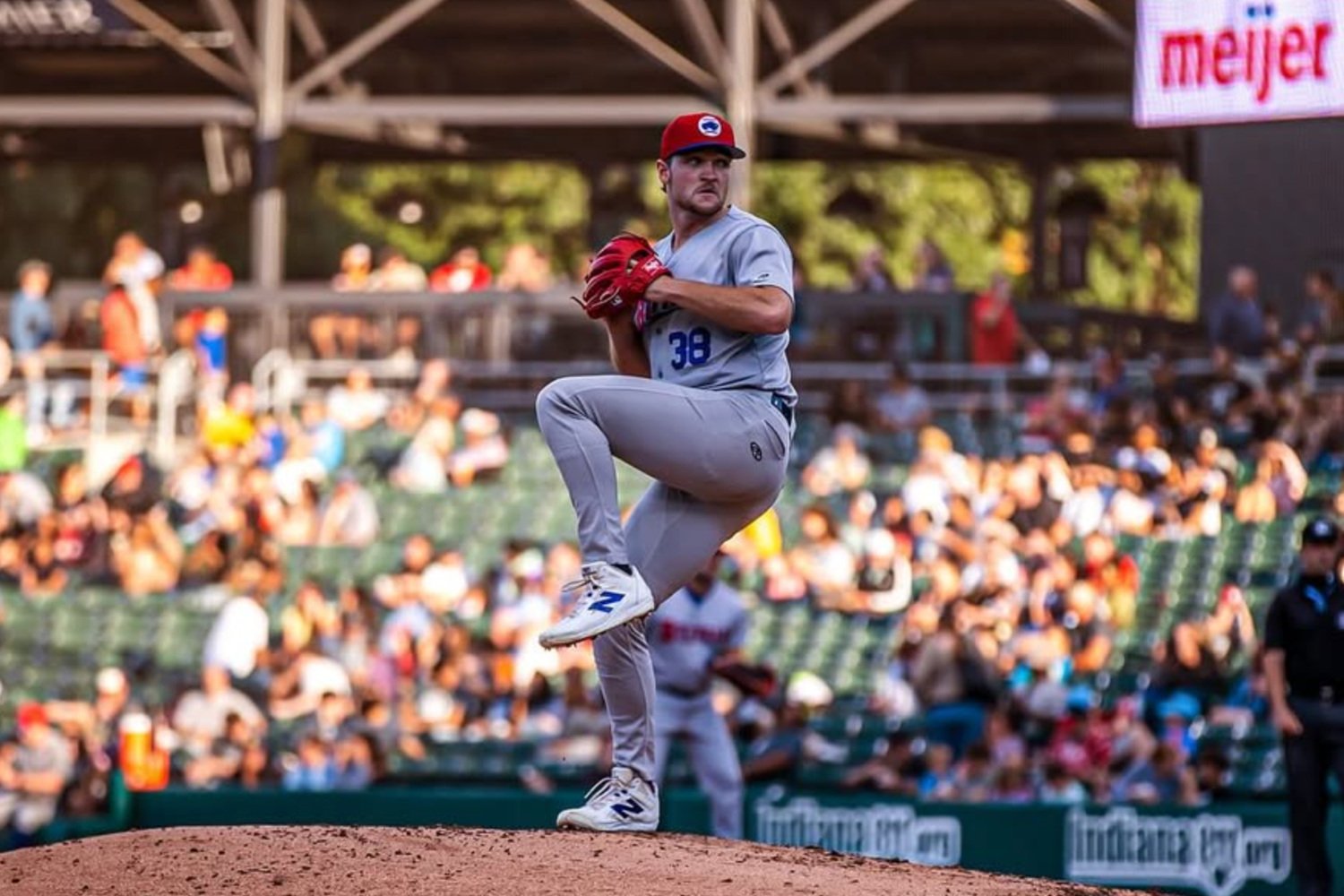 Trey Yesavage threw his first professional pitch for the Single-A Dunedin Blue Jays on April 8, 2025. One hundred and sixty days later, he's getting ready to throw his first major league pitch for the Toronto Blue Jays. At some point in the next six hours, the Blue Jays will officially select his contract from Triple-A Buffalo. The 22-year-old will make his MLB debut the same year he made his Single-A, High-A, Double-A, and Triple-A debuts. If he takes to this challenge as well as he took to the last four, the Blue Jays will have a new secret weapon for the final two weeks of the regular season. The news of Yesavage's promotion was both a shock and a long time coming. On the one hand, it's unusual to see a prospect rise through so many levels so quickly. On the other hand, it was clear the Blue Jays were going to be aggressive with the righty as soon as they gave him his first promotion back in May. Once he had made it to Double-A New Hampshire by June, speculation about a late-season MLB debut began in earnest. After his promotion to Triple-A Buffalo in August, that speculation went from wishful thinking to a very real consideration. On Saturday, it went from a real consideration to a reality. Yesavage came out of the bullpen in two of his September outings with the Buffalo Bisons, leading Blue Jays fans to wonder if the team was preparing him for a role in the big league bullpen during the final weeks of the season. Yet, manager John Schneider revealed Yesavage would start tonight instead. It's not hard to understand the rationale behind Schneider's decision. The Jays are in the middle of a stretch of 13 games without a day off. If Yesavage weren't starting today, it would have been José Berríos. Berríos hasn't looked his sharpest over the past couple of months, and an extra day off could do him some good. It's also worth keeping in mind that Yesavage has far more experience starting than relieving. To that point, Schneider noted that one reason the Jays decided Yesavage would start in his debut was to make it "as normal as possible for him." On top of that, it's far more exciting for the fanbase that the star prospect will be starting in his MLB debut. We don't have to sit around wondering when he might actually get in a game. Instead, we know exactly when to watch to see the electric rookie throw his first pitch as a Blue Jay. This doesn't mean Yesavage is joining the rotation permanently. The Blue Jays haven't decided (or if they have, they aren't saying) whether his next outing will be another start or a bulk appearance out of the bullpen. Whatever the Jays decide, however, workload concerns won't play into their decision. While the organization reportedly gave Yesavage the choice between shutting down for the season or going to the big leagues (I wonder who on earth would choose the former), they aren't worried about the young hurler's workload. Schneider made it clear that Yesavage won't be held to a restrictive pitch count or innings limit. He's with the team to pitch, and that's exactly what he's going to do. The fact that the Blue Jays aren't imposing any restrictions on Yesavage only makes it all the more clear how much confidence they have in his arm. This isn't an act of desperation on Toronto's part. Yesavage is with the team because, as Scheider told reporters, the Jays view him as one of the best 14 pitchers in the organization. They want to win, and they're confident that having Yesavage on the staff increases their chances of doing so. In 25 games (22 starts) across four minor league levels, Yesavage has struck out 160 batters – that's one for every day between his professional debut and his MLB debut. Tonight, he'll bring that strikeout stuff to the majors for the very first time. Hopefully, his first strikeout for the Blue Jays will be the first of many, many more to come.
 -
Trey Yesavage threw his first professional pitch for the Single-A Dunedin Blue Jays on April 8, 2025. One hundred and sixty days later, he's getting ready to throw his first major league pitch for the Toronto Blue Jays. At some point in the next six hours, the Blue Jays will officially select his contract from Triple-A Buffalo. The 22-year-old will make his MLB debut the same year he made his Single-A, High-A, Double-A, and Triple-A debuts. If he takes to this challenge as well as he took to the last four, the Blue Jays will have a new secret weapon for the final two weeks of the regular season. The news of Yesavage's promotion was both a shock and a long time coming. On the one hand, it's unusual to see a prospect rise through so many levels so quickly. On the other hand, it was clear the Blue Jays were going to be aggressive with the righty as soon as they gave him his first promotion back in May. Once he had made it to Double-A New Hampshire by June, speculation about a late-season MLB debut began in earnest. After his promotion to Triple-A Buffalo in August, that speculation went from wishful thinking to a very real consideration. On Saturday, it went from a real consideration to a reality. Yesavage came out of the bullpen in two of his September outings with the Buffalo Bisons, leading Blue Jays fans to wonder if the team was preparing him for a role in the big league bullpen during the final weeks of the season. Yet, manager John Schneider revealed Yesavage would start tonight instead. It's not hard to understand the rationale behind Schneider's decision. The Jays are in the middle of a stretch of 13 games without a day off. If Yesavage weren't starting today, it would have been José Berríos. Berríos hasn't looked his sharpest over the past couple of months, and an extra day off could do him some good. It's also worth keeping in mind that Yesavage has far more experience starting than relieving. To that point, Schneider noted that one reason the Jays decided Yesavage would start in his debut was to make it "as normal as possible for him." On top of that, it's far more exciting for the fanbase that the star prospect will be starting in his MLB debut. We don't have to sit around wondering when he might actually get in a game. Instead, we know exactly when to watch to see the electric rookie throw his first pitch as a Blue Jay. This doesn't mean Yesavage is joining the rotation permanently. The Blue Jays haven't decided (or if they have, they aren't saying) whether his next outing will be another start or a bulk appearance out of the bullpen. Whatever the Jays decide, however, workload concerns won't play into their decision. While the organization reportedly gave Yesavage the choice between shutting down for the season or going to the big leagues (I wonder who on earth would choose the former), they aren't worried about the young hurler's workload. Schneider made it clear that Yesavage won't be held to a restrictive pitch count or innings limit. He's with the team to pitch, and that's exactly what he's going to do. The fact that the Blue Jays aren't imposing any restrictions on Yesavage only makes it all the more clear how much confidence they have in his arm. This isn't an act of desperation on Toronto's part. Yesavage is with the team because, as Scheider told reporters, the Jays view him as one of the best 14 pitchers in the organization. They want to win, and they're confident that having Yesavage on the staff increases their chances of doing so. In 25 games (22 starts) across four minor league levels, Yesavage has struck out 160 batters – that's one for every day between his professional debut and his MLB debut. Tonight, he'll bring that strikeout stuff to the majors for the very first time. Hopefully, his first strikeout for the Blue Jays will be the first of many, many more to come. View full article
-
Yeah, I think it probably should be Gausman, almost regardless of what happens from here on out. But I’m not ready to say it’s set in stone yet. I could still see it being Bieber if he really shoves in his final three starts. And yeah, I love remembering old starts and the guys that threw them. Or learning about them for the first time! This is how I learned that Halladay threw a 10-inning Maddux in 2003. Absolutely remarkable. I wonder if anyone else has done that since.
-
Fifty-five fastballs, thirty-seven splitters, and eight sliders. Those 100 pitches were all it took for Kevin Gausman to sit down 27 Astros on Thursday afternoon. He struck out nine and faced just three batters over the minimum as he led the Blue Jays to a 6-0 victory and a satisfying series win. When all was said and done, Gausman joined Tarik Skubal, Garrett Crochet, and Nathan Eovaldi as the only AL pitchers with a shutout in 2025. The Blue Jays righty is the only pitcher in either league with a shutout in each of the past two seasons. Game score is a metric designed to evaluate a starting pitcher's performance in an individual outing. There are a couple of different variations – Bill James's original creation, housed at Baseball Reference, and Tom Tango's updated version (GSv2), housed at FanGraphs – but they're pretty similar, and they serve the same goal. The higher the game score, the better the start. According to both versions of game score, Gausman's start against the Astros wasn't just his best of the season. It wasn’t just the best start of his Blue Jays tenure. It was the best start of his 13-year major league career. Gausman's Best Starts (by Game Score and GSv2) Date Opponent IP R H BB SO Game Score GSv2 Sept. 11, 2025 Astros 9.0 0 2 1 9 91 96 Aug. 2, 2022 Rays 8.0 0 1 1 10 89 93 May 5, 2018 Athletics 9.0 0 2 2 6 87 92 June 8, 2024 Athletics 9.0 0 5 1 10 86 91 Gausman has thrown four complete games in his career, but only two have been shutouts. The first came last summer against the A's. He struck out 10, but he also gave up five hits. That's three more than he allowed on Thursday – hence his lower game score that day. Interestingly, Gausman's second-best start by game score (both versions) wasn't any of his complete games. Instead, it was a one-hit effort against the Rays in 2022, when he struck out 10 and walked only one in eight scoreless innings. Thursday's matchup with the Astros was also the best start of Gausman's career by Baseball Savant's context-neutral run value metric. According to RV, he provided the Blue Jays with six runs of value, which, funnily enough, was also their margin of victory on the day. Gausman's second-best start by RV wasn't any of his other complete games, nor was it that eight-inning showing against Tampa Bay. No, it was all the way back in 2018, his final season with the Orioles. On May 5, 2018, Gausman threw nine shutout innings against the A's, striking out six, walking two, and allowing two base hits. Unfortunately, he didn't earn a shutout because the Orioles failed to score behind him. It wasn't until the bottom of the 12th, long after Gausman had left for the day, that the A's finally scored and ended the ballgame. Yesterday's game was also arguably the most efficient outing of Gausman's big league tenure. In terms of pitches per inning, it was only his second most efficient start. However, his most efficient start by that metric was an eight-inning, 88-pitch performance (against the Red Sox in 2021). He retired three more batters this time around, and he was only one pitch off his most efficient pace. On a related note, this game was one of Gausman's top five starts in both strike percentage and total strikes. The only outing of his career in which he threw more strikes and threw strikes at a higher rate was on May 11, 2018, a 7.1-inning quality start against the Rays. There is no doubt that Gausman's performance was the very best we've seen from a Blue Jays starter all season. In fact, one could make a pretty solid case that it was the best start we've seen from a Blue Jay since Brandon Morrow's ridiculous 17-strikeout shutout against the Rays in 2010. Here's a list of every Blue Jays start with a game score of 90 or higher (per Baseball Reference) in the 21st century. Morrow's outing is in a class of its own, but Gausman's gem stacks up nicely against all the others: Player Year GmSc IP R H BB SO HBP BF Pit Strike% Brandon Morrow 2010 100 9.0 0 1 2 17 0 31 137 70.8% Roy Halladay 2005 93 9.0 0 2 0 10 1 30 99 72.7% Ted Lilly 2004 92 9.0 0 3 2 13 1 33 126 63.5% Dave Bush 2004 91 9.0 0 2 3 11 1 32 117 65.0% Kevin Gausman 2025 91 9.0 0 2 1 9 0 30 100 79.0% Roy Halladay 2001 91 9.0 0 2 0 8 0 29 83 72.3% Roy Halladay 2009 91 9.0 0 1 3 9 0 31 111 65.8% Dustin McGowan 2007 91 9.0 0 1 1 7 0 29 109 67.0% Mark Buehrle 2013 90 9.0 0 2 2 9 1 31 108 68.5% Marco Estrada 2015 90 8.2 0 2 0 10 0 28 129 66.7% Roy Halladay 2003 90 10.0 0 3 1 5 1 35 99 70.7% Roy Halladay 2008 90 9.0 0 2 1 8 2 31 113 67.3% Esteban Loaiza 2002 90 9.0 0 2 0 7 0 28 110 71.8% Alek Manoah 2021 90 8.0 0 1 0 10 1 26 97 63.9% Gausman has started 358 games in his major league career. Since his first full season as a starter in 2016, only one pitcher, Patrick Corbin, has started more games or thrown more innings. Considering Gausman's age (he'll be 35 in January) and the sheer number of starts under his belt, basic probability would have suggested his best start was already behind him. Yet, I'm sure Gausman himself would have disagreed. And he would have been right. With 55 fastballs, 37 splitters, and eight sliders, Kevin Gausman made his 358th start the very best of them all... ...so far. View full article
.jpg.f773948510cb097eb233cea0d6dce170.jpg)
.jpg.c2fa510abaecb0f351d4e8c99073c49a.jpg)
.jpg.9661c540d1ae124de3f438e5b6d960eb.jpg)
.jpg.3791566a5457298d16b8e7bda5856e4e.jpg)
.jpg.c5e773b92cc424f3f79238423b04e6a4.jpg)
.jpg.e9b1a81c57ac5ff9898c61a810336b58.jpg)
.jpg.170f659a69c80a09db0b81f723d6a21f.jpg)
.jpg.0c68e6cc4e9e92614a45a4d7e9f9133d.jpg)
.jpg.56aae3f509398929c74ec10c8605d932.jpg)
.jpg.6fa37fdfea15541e2750bacb500bba92.jpg)
