


Leo Morgenstern
-
Posts
628 -
Joined
-
Last visited
Content Type
Profiles
Toronto Blue Jays Videos
2026 Toronto Blue Jays Top Prospects Ranking
Toronto Blue Jays Free Agent & Trade Rumors, Notes, & Tidbits
Guides & Resources
2025 Toronto Blue Jays Draft Pick Tracker
News
2026 Toronto Blue Jays Draft Tracker: Picks & Bonuses
Forums
Blogs
Events
Store
Downloads
Gallery
Everything posted by Leo Morgenstern
-
.jpg.6951d1a075eea933b630fa2acb1d2da2.jpg) Even without signing Kyle Tucker or Bo Bichette, the Blue Jays have had a successful offseason. While they said goodbye to players like Bichette, Chris Bassitt, Max Scherzer, and Seranthony Domínguez, they improved by adding Dylan Cease, Kazuma Okamoto, Cody Ponce, and Tyler Rogers. They look like one of the best teams in baseball, and they’re primed to defend their AL East title. Of course, to do all that, they had to spend. They had to spend a lot. In terms of guaranteed money, the Jays have given out $337 million this winter, in addition to Okamoto’s $10.875 million posting fee. On top of that, this coming season will mark the first year of Vladimir Guerrero Jr. and Alejandro Kirk’s extensions, and several more players are due raises, either due to arbitration or back-loaded contracts. As such, RosterResource estimates Toronto’s player payroll will rise from $258 million to $282 million, just a year after increasing from $217 million to $258 million. It shouldn’t come as any surprise that a $282 million payroll would be the highest in franchise history. What’s more, the Blue Jays’ payroll for luxury tax purposes is an estimated $311 million. For 2025, they ended up paying a $13.6 million tax bill on a CBT payroll of just over $286 million. As of right now, their tax bill for 2026 will be another $22 million higher: Tax Rate Tax Total CBT Payroll $310,590,764 Amount between $244M - $264M $20,000,000 30% $6,000,000 Amount between $264M - $284M $20,000,000 42% $8,400,000 Amount between $284M - $304M $20,000,000 75% $15,000,000 Amount over $304M $6,590,764 90% $5,931,688 Total $35,331,688 All things considered, the Jays will be spending almost $50 million more on their roster in 2026 compared to 2025, and about $100 million more than in 2024. That’s a lot of moolah. Of course, it’s not like they can’t afford it. The Blue Jays have one of the richest owners in the league, and they play in one of the biggest media markets in North America. Oh, and they just so happened to rake in more than $100 million in extra revenue during their run to the World Series last fall. They also still only have the fifth-highest payroll in MLB, trailing the Dodgers, Mets, Yankees, and Phillies. This kind of spending may be unprecedented for Toronto, but that doesn’t mean it’s unsustainable. With that said, there is a limit to how much the Blue Jays can spend, even if we don’t know what that limit is. So, presuming the front office is done with major moves for now, I want to turn my attention to how much money is coming off the books next winter. That should give us at least a rough idea of how much Ross Atkins and company will be able to spend for 2027 (and beyond). I know a lot could change between now and then. The Blue Jays could still add more payroll. They could also shed payroll. The next free agent class already looks thin, and it will only grow weaker if top projected free agents like Tarik Skubal, Jazz Chisholm Jr., and David Bednar sign extensions, or if players with contract options, like Bichette and Michael King, choose not to opt out. Moreover, the possibility of a lockout looms large. As far as the Blue Jays go, even a slightly less successful 2026 season could put an end to their status as a desirable destination for top free agents or, even worse, persuade ownership to tighten the purse strings. These are all key reasons why Atkins was smart to go big this year. Still, it’s always worth thinking ahead. (Also, let’s face it, the offseason is boring right now.) So, let’s talk about how much the Jays will have to work with next offseason. Expiring Contracts Six Blue Jays are headed for free agency after 2026. They’re listed below, along with their pay for the upcoming season. Eric Lauer’s salary has yet to be determined, so I listed the halfway point between the number he filed at ($5.75M) and the number the team filed at ($4.4M) for his arbitration hearing. I also included Myles Straw; he is technically under contract through 2028, but I’d be surprised if the Blue Jays pick up his $8 million club option for 2027 instead of paying a $1.75 million buyout and setting him free. George Springer: $24.167 million Kevin Gausman: $23 million Shane Bieber: $16 million Daulton Varsho: $10.75 million Yimi García: $7.5 million *Myles Straw: $7.4 million ($1.75 million buyout) *Eric Lauer: $5.075 million Total: $92.142 million That’s a lot of cash coming off the books. In terms of annual salary, it’s significantly more than Toronto spent on free agents this winter (Cease, Okamoto, Rogers, and Ponce will earn about $50 million combined in 2026). However, expiring contracts are only part of the equation. Guaranteed Raises Almost every Blue Jay with a guaranteed contract beyond 2026 will see a salary bump in 2027. The only exceptions are Guerrero, Anthony Santander, and Jeff Hoffman. The eight players receiving raises are listed below, along with the amount by which their salary is increasing: Kazuma Okamoto: $9 million Dylan Cease: $8 million Andrés Giménez: $8 million Cody Ponce: $6 million José Berríos: $6 million Tyler Rogers: $5 million Alejandro Kirk: $3.625 million Yariel Rodríguez: $1 million Total: $46.625 million That right there is half the money "freed up" by expiring contracts. And the raises aren’t done coming. Players Eligible for Arbitration Seven players on Toronto's roster will be eligible for arbitration next offseason: Ernie Clement (Arb 2) Tyler Heineman (Arb 2) Louis Varland (Arb 1) Brendon Little (Arb 1) Davis Schneider (Arb 1) Nathan Lukes (Arb 1) Bowden Francis (Arb 1) These players’ salaries are hard to estimate when we don’t know how any of them will perform in 2026. Still, this is another $10 million in raises at the minimum, presuming the Jays tender contracts to all of the above except Bowden Francis. So, now we’re looking at only $35 million or so to fill significant holes in the rotation (Gausman, Bieber), bullpen (García, Lauer), and lineup (Springer, Varsho, Straw). That’s not a lot to work with. Don’t forget, however, that Toronto is also set to pay another $35 million or so in luxury tax penalties for 2026. That’s also money coming off the books, even if it isn't included in the estimated payroll. Thankfully, payroll for luxury tax purposes is calculated using AAV, not yearly salaries, so Toronto’s CBT payroll figure won’t be affected by any of the players under guaranteed contract who are earning raises. It will, however, drop significantly thanks to all those expiring deals. Right now, RosterResource projects Toronto’s CBT payroll for 2027 at about $202 million. That estimation doesn’t include any salaries for arbitration-eligible players or pre-arb players, so let’s tack on another $20 million for arbitration salaries and $12 million for pre-arb salaries. Those are rough estimates, but rough estimates are all we have right now. That brings the CBT payroll up to $234 million. We also don’t know what the luxury tax thresholds or penalties will be in the next collective bargaining agreement. Heck, we can’t be sure the luxury tax as we know it will exist at all come 2027. (We can't be sure Major League Baseball will exist come 2027!) For my purposes right now, I’m going to pretend the current system remains in place. That’s a big presumption, but everyone is operating under big presumptions right now – major league executives included. So, let’s say the first threshold for luxury tax penalties increases by $4 million in 2027 and all the penalties stay the same. If the Jays add $35 million in new salary during the 2026-27 offseason, their estimated tax bill would only come to about $10 million. That’s $25 million less than their estimated tax bill for 2026. Now, that doesn’t mean they'll have another $25 million to spend, because every dollar spent would also increase their tax bill. But they could spend about $16 million more (on top of that initial $35 million) without increasing their total expenditure compared to 2026. That’s $51 million. All of a sudden, those numerous holes seem a lot more fillable. Furthermore, my whole exercise, to this point, has presumed the Blue Jays won’t spend a dime more in 2027 than they will in 2026. Yet, we all know they could spend more. A lot more. The Jays reportedly offered Kyle Tucker a 10-year, $350 million deal. We don’t know the exact details of that offer, but presuming the same annual salary all 10 years, Tucker would have added $35 million to the payroll and $31.5 million to the tax bill. That’s another $66.5 million. The Blue Jays made a huge splash this offseason. They’re spending at a level we’ve never seen them spend at before. However, their front office isn’t one that ever likes to sacrifice the future for immediate gain, and that’s not what they’ve done here. The Blue Jays should be one of the best teams in baseball in 2026, and the following winter, they should have the financial flexibility to rule the offseason once again.
Even without signing Kyle Tucker or Bo Bichette, the Blue Jays have had a successful offseason. While they said goodbye to players like Bichette, Chris Bassitt, Max Scherzer, and Seranthony Domínguez, they improved by adding Dylan Cease, Kazuma Okamoto, Cody Ponce, and Tyler Rogers. They look like one of the best teams in baseball, and they’re primed to defend their AL East title. Of course, to do all that, they had to spend. They had to spend a lot. In terms of guaranteed money, the Jays have given out $337 million this winter, in addition to Okamoto’s $10.875 million posting fee. On top of that, this coming season will mark the first year of Vladimir Guerrero Jr. and Alejandro Kirk’s extensions, and several more players are due raises, either due to arbitration or back-loaded contracts. As such, RosterResource estimates Toronto’s player payroll will rise from $258 million to $282 million, just a year after increasing from $217 million to $258 million. It shouldn’t come as any surprise that a $282 million payroll would be the highest in franchise history. What’s more, the Blue Jays’ payroll for luxury tax purposes is an estimated $311 million. For 2025, they ended up paying a $13.6 million tax bill on a CBT payroll of just over $286 million. As of right now, their tax bill for 2026 will be another $22 million higher: Tax Rate Tax Total CBT Payroll $310,590,764 Amount between $244M - $264M $20,000,000 30% $6,000,000 Amount between $264M - $284M $20,000,000 42% $8,400,000 Amount between $284M - $304M $20,000,000 75% $15,000,000 Amount over $304M $6,590,764 90% $5,931,688 Total $35,331,688 All things considered, the Jays will be spending almost $50 million more on their roster in 2026 compared to 2025, and about $100 million more than in 2024. That’s a lot of moolah. Of course, it’s not like they can’t afford it. The Blue Jays have one of the richest owners in the league, and they play in one of the biggest media markets in North America. Oh, and they just so happened to rake in more than $100 million in extra revenue during their run to the World Series last fall. They also still only have the fifth-highest payroll in MLB, trailing the Dodgers, Mets, Yankees, and Phillies. This kind of spending may be unprecedented for Toronto, but that doesn’t mean it’s unsustainable. With that said, there is a limit to how much the Blue Jays can spend, even if we don’t know what that limit is. So, presuming the front office is done with major moves for now, I want to turn my attention to how much money is coming off the books next winter. That should give us at least a rough idea of how much Ross Atkins and company will be able to spend for 2027 (and beyond). I know a lot could change between now and then. The Blue Jays could still add more payroll. They could also shed payroll. The next free agent class already looks thin, and it will only grow weaker if top projected free agents like Tarik Skubal, Jazz Chisholm Jr., and David Bednar sign extensions, or if players with contract options, like Bichette and Michael King, choose not to opt out. Moreover, the possibility of a lockout looms large. As far as the Blue Jays go, even a slightly less successful 2026 season could put an end to their status as a desirable destination for top free agents or, even worse, persuade ownership to tighten the purse strings. These are all key reasons why Atkins was smart to go big this year. Still, it’s always worth thinking ahead. (Also, let’s face it, the offseason is boring right now.) So, let’s talk about how much the Jays will have to work with next offseason. Expiring Contracts Six Blue Jays are headed for free agency after 2026. They’re listed below, along with their pay for the upcoming season. Eric Lauer’s salary has yet to be determined, so I listed the halfway point between the number he filed at ($5.75M) and the number the team filed at ($4.4M) for his arbitration hearing. I also included Myles Straw; he is technically under contract through 2028, but I’d be surprised if the Blue Jays pick up his $8 million club option for 2027 instead of paying a $1.75 million buyout and setting him free. George Springer: $24.167 million Kevin Gausman: $23 million Shane Bieber: $16 million Daulton Varsho: $10.75 million Yimi García: $7.5 million *Myles Straw: $7.4 million ($1.75 million buyout) *Eric Lauer: $5.075 million Total: $92.142 million That’s a lot of cash coming off the books. In terms of annual salary, it’s significantly more than Toronto spent on free agents this winter (Cease, Okamoto, Rogers, and Ponce will earn about $50 million combined in 2026). However, expiring contracts are only part of the equation. Guaranteed Raises Almost every Blue Jay with a guaranteed contract beyond 2026 will see a salary bump in 2027. The only exceptions are Guerrero, Anthony Santander, and Jeff Hoffman. The eight players receiving raises are listed below, along with the amount by which their salary is increasing: Kazuma Okamoto: $9 million Dylan Cease: $8 million Andrés Giménez: $8 million Cody Ponce: $6 million José Berríos: $6 million Tyler Rogers: $5 million Alejandro Kirk: $3.625 million Yariel Rodríguez: $1 million Total: $46.625 million That right there is half the money "freed up" by expiring contracts. And the raises aren’t done coming. Players Eligible for Arbitration Seven players on Toronto's roster will be eligible for arbitration next offseason: Ernie Clement (Arb 2) Tyler Heineman (Arb 2) Louis Varland (Arb 1) Brendon Little (Arb 1) Davis Schneider (Arb 1) Nathan Lukes (Arb 1) Bowden Francis (Arb 1) These players’ salaries are hard to estimate when we don’t know how any of them will perform in 2026. Still, this is another $10 million in raises at the minimum, presuming the Jays tender contracts to all of the above except Bowden Francis. So, now we’re looking at only $35 million or so to fill significant holes in the rotation (Gausman, Bieber), bullpen (García, Lauer), and lineup (Springer, Varsho, Straw). That’s not a lot to work with. Don’t forget, however, that Toronto is also set to pay another $35 million or so in luxury tax penalties for 2026. That’s also money coming off the books, even if it isn't included in the estimated payroll. Thankfully, payroll for luxury tax purposes is calculated using AAV, not yearly salaries, so Toronto’s CBT payroll figure won’t be affected by any of the players under guaranteed contract who are earning raises. It will, however, drop significantly thanks to all those expiring deals. Right now, RosterResource projects Toronto’s CBT payroll for 2027 at about $202 million. That estimation doesn’t include any salaries for arbitration-eligible players or pre-arb players, so let’s tack on another $20 million for arbitration salaries and $12 million for pre-arb salaries. Those are rough estimates, but rough estimates are all we have right now. That brings the CBT payroll up to $234 million. We also don’t know what the luxury tax thresholds or penalties will be in the next collective bargaining agreement. Heck, we can’t be sure the luxury tax as we know it will exist at all come 2027. (We can't be sure Major League Baseball will exist come 2027!) For my purposes right now, I’m going to pretend the current system remains in place. That’s a big presumption, but everyone is operating under big presumptions right now – major league executives included. So, let’s say the first threshold for luxury tax penalties increases by $4 million in 2027 and all the penalties stay the same. If the Jays add $35 million in new salary during the 2026-27 offseason, their estimated tax bill would only come to about $10 million. That’s $25 million less than their estimated tax bill for 2026. Now, that doesn’t mean they'll have another $25 million to spend, because every dollar spent would also increase their tax bill. But they could spend about $16 million more (on top of that initial $35 million) without increasing their total expenditure compared to 2026. That’s $51 million. All of a sudden, those numerous holes seem a lot more fillable. Furthermore, my whole exercise, to this point, has presumed the Blue Jays won’t spend a dime more in 2027 than they will in 2026. Yet, we all know they could spend more. A lot more. The Jays reportedly offered Kyle Tucker a 10-year, $350 million deal. We don’t know the exact details of that offer, but presuming the same annual salary all 10 years, Tucker would have added $35 million to the payroll and $31.5 million to the tax bill. That’s another $66.5 million. The Blue Jays made a huge splash this offseason. They’re spending at a level we’ve never seen them spend at before. However, their front office isn’t one that ever likes to sacrifice the future for immediate gain, and that’s not what they’ve done here. The Blue Jays should be one of the best teams in baseball in 2026, and the following winter, they should have the financial flexibility to rule the offseason once again. -
 Several players who were planning to suit up for this year’s World Baseball Classic have been forced to withdraw from the tournament, just days before final rosters are due. The (frustrating and disappointing) reason? Insurance. To participate in the WBC, MLB players must be approved for an insurance policy – unless their team is willing to absorb all financial risk in case of injury. If granted, these policies cover up to two years of salary for position players and up to four years for pitchers (per The Athletic’s Ken Rosenthal and Evan Drellich). The list of names that have dropped out of the WBC includes, among others, Francisco Lindor, Carlos Correa, and Toronto Blue Jays right-hander José Berríos. Berríos is a true veteran of the tournament, having pitched in each of the last three Classics. While he hasn't had much individual success (13.98 ERA in five WBC appearances), he was a member of the runner-up Puerto Rico teams in both 2013 and 2017. His insurance case is currently under review, according to Puerto Rico’s operations manager Joey Sola, but right now, it’s looking like he’ll have to sit out the WBC for the first time in his career. It seems unlikely the Blue Jays would be willing to let him play without insurance. Berríos has long been one of MLB’s most durable arms, but he landed on the injured list last season for the first time in his career. The Blue Jays placed him on the 15-day IL with right elbow inflammation on September 25, and he was unable to pitch in the playoffs. He later told MLB Network that he suffered through elbow and biceps issues “all year long,” clarifying that it was biceps tendon inflammation that ultimately forced him to the shelf. Thankfully, the righty described the issue as “nothing major.” Indeed, GM Ross Atkins told reporters in November that Berríos would have a “completely normal offseason.” The Blue Jays expect him to be at 100% in spring training as he competes for a job in their starting rotation. Until recently, it seemed like a given that a healthy Berríos would also pitch in the World Baseball Classic. A strong performance might have even helped him earn a rotation spot. “I want to pitch in the WBC,” he said in his December appearance on MLB Network. “That's my goal right now.” Puerto Rico has been hit harder by insurance rejections than any other team, leading José Quiles, president of the Puerto Rico Baseball Federation, to contemplate pulling his team from the tournament. He told journalist Jay Fonseca that no final decision has been made, but he does not want to participate if his team does not have a fair chance to win. This news is especially disappointing considering that Puerto Rico’s Hiram Bithorn Stadium in San Juan is set to host Pool A for the first round of competition. Venezuelan infielder Miguel Rojas, another would-be participant who was denied insurance, voiced his displeasure that insurance rejections have impacted Latin American teams, like Venezuela and Puerto Rico, more than any others. “There's a lot of things I would like to talk about with someone in control, with someone from MLB,” the veteran told ESPN’s Alden Gonzalez. Hopefully, MLB, the MLBPA, and the WBC will find a solution that allows more players to participate and prevents Puerto Rico from exiting the tournament. However, the clock is ticking. Official rosters are due February 3, and they will be formally announced on February 5. Pool play is scheduled to kick off a month later. Blue Jays who are still expected to play in the WBC include Vladimir Guerrero Jr. (Dominican Republic), Alejandro Kirk (Mexico), Kazuma Okamoto (Japan), Ernie Clement (USA), Yariel Rodríguez (Cuba), Adam Macko (Canada), and Leo Jiménez (Panama). George Springer was named to Puerto Rico's preliminary roster but later backed out due to minor injury concerns of his own. View full article
 -
José Berríos Among Players Denied Insurance Coverage for WBC
Leo Morgenstern posted an article in Blue Jays
.jpg.50575d39389d1a7efbdef251f837f55c.jpg) Several players who were planning to suit up for this year’s World Baseball Classic have been forced to withdraw from the tournament, just days before final rosters are due. The (frustrating and disappointing) reason? Insurance. To participate in the WBC, MLB players must be approved for an insurance policy – unless their team is willing to absorb all financial risk in case of injury. If granted, these policies cover up to two years of salary for position players and up to four years for pitchers (per The Athletic’s Ken Rosenthal and Evan Drellich). The list of names that have dropped out of the WBC includes, among others, Francisco Lindor, Carlos Correa, and Toronto Blue Jays right-hander José Berríos. Berríos is a true veteran of the tournament, having pitched in each of the last three Classics. While he hasn't had much individual success (13.98 ERA in five WBC appearances), he was a member of the runner-up Puerto Rico teams in both 2013 and 2017. His insurance case is currently under review, according to Puerto Rico’s operations manager Joey Sola, but right now, it’s looking like he’ll have to sit out the WBC for the first time in his career. It seems unlikely the Blue Jays would be willing to let him play without insurance. Berríos has long been one of MLB’s most durable arms, but he landed on the injured list last season for the first time in his career. The Blue Jays placed him on the 15-day IL with right elbow inflammation on September 25, and he was unable to pitch in the playoffs. He later told MLB Network that he suffered through elbow and biceps issues “all year long,” clarifying that it was biceps tendon inflammation that ultimately forced him to the shelf. Thankfully, the righty described the issue as “nothing major.” Indeed, GM Ross Atkins told reporters in November that Berríos would have a “completely normal offseason.” The Blue Jays expect him to be at 100% in spring training as he competes for a job in their starting rotation. Until recently, it seemed like a given that a healthy Berríos would also pitch in the World Baseball Classic. A strong performance might have even helped him earn a rotation spot. “I want to pitch in the WBC,” he said in his December appearance on MLB Network. “That's my goal right now.” Puerto Rico has been hit harder by insurance rejections than any other team, leading José Quiles, president of the Puerto Rico Baseball Federation, to contemplate pulling his team from the tournament. He told journalist Jay Fonseca that no final decision has been made, but he does not want to participate if his team does not have a fair chance to win. This news is especially disappointing considering that Puerto Rico’s Hiram Bithorn Stadium in San Juan is set to host Pool A for the first round of competition. Venezuelan infielder Miguel Rojas, another would-be participant who was denied insurance, voiced his displeasure that insurance rejections have impacted Latin American teams, like Venezuela and Puerto Rico, more than any others. “There's a lot of things I would like to talk about with someone in control, with someone from MLB,” the veteran told ESPN’s Alden Gonzalez. Hopefully, MLB, the MLBPA, and the WBC will find a solution that allows more players to participate and prevents Puerto Rico from exiting the tournament. However, the clock is ticking. Official rosters are due February 3, and they will be formally announced on February 5. Pool play is scheduled to kick off a month later. Blue Jays who are still expected to play in the WBC include Vladimir Guerrero Jr. (Dominican Republic), Alejandro Kirk (Mexico), Kazuma Okamoto (Japan), Ernie Clement (USA), Yariel Rodríguez (Cuba), Adam Macko (Canada), and Leo Jiménez (Panama). George Springer was named to Puerto Rico's preliminary roster but later backed out due to minor injury concerns of his own.
Several players who were planning to suit up for this year’s World Baseball Classic have been forced to withdraw from the tournament, just days before final rosters are due. The (frustrating and disappointing) reason? Insurance. To participate in the WBC, MLB players must be approved for an insurance policy – unless their team is willing to absorb all financial risk in case of injury. If granted, these policies cover up to two years of salary for position players and up to four years for pitchers (per The Athletic’s Ken Rosenthal and Evan Drellich). The list of names that have dropped out of the WBC includes, among others, Francisco Lindor, Carlos Correa, and Toronto Blue Jays right-hander José Berríos. Berríos is a true veteran of the tournament, having pitched in each of the last three Classics. While he hasn't had much individual success (13.98 ERA in five WBC appearances), he was a member of the runner-up Puerto Rico teams in both 2013 and 2017. His insurance case is currently under review, according to Puerto Rico’s operations manager Joey Sola, but right now, it’s looking like he’ll have to sit out the WBC for the first time in his career. It seems unlikely the Blue Jays would be willing to let him play without insurance. Berríos has long been one of MLB’s most durable arms, but he landed on the injured list last season for the first time in his career. The Blue Jays placed him on the 15-day IL with right elbow inflammation on September 25, and he was unable to pitch in the playoffs. He later told MLB Network that he suffered through elbow and biceps issues “all year long,” clarifying that it was biceps tendon inflammation that ultimately forced him to the shelf. Thankfully, the righty described the issue as “nothing major.” Indeed, GM Ross Atkins told reporters in November that Berríos would have a “completely normal offseason.” The Blue Jays expect him to be at 100% in spring training as he competes for a job in their starting rotation. Until recently, it seemed like a given that a healthy Berríos would also pitch in the World Baseball Classic. A strong performance might have even helped him earn a rotation spot. “I want to pitch in the WBC,” he said in his December appearance on MLB Network. “That's my goal right now.” Puerto Rico has been hit harder by insurance rejections than any other team, leading José Quiles, president of the Puerto Rico Baseball Federation, to contemplate pulling his team from the tournament. He told journalist Jay Fonseca that no final decision has been made, but he does not want to participate if his team does not have a fair chance to win. This news is especially disappointing considering that Puerto Rico’s Hiram Bithorn Stadium in San Juan is set to host Pool A for the first round of competition. Venezuelan infielder Miguel Rojas, another would-be participant who was denied insurance, voiced his displeasure that insurance rejections have impacted Latin American teams, like Venezuela and Puerto Rico, more than any others. “There's a lot of things I would like to talk about with someone in control, with someone from MLB,” the veteran told ESPN’s Alden Gonzalez. Hopefully, MLB, the MLBPA, and the WBC will find a solution that allows more players to participate and prevents Puerto Rico from exiting the tournament. However, the clock is ticking. Official rosters are due February 3, and they will be formally announced on February 5. Pool play is scheduled to kick off a month later. Blue Jays who are still expected to play in the WBC include Vladimir Guerrero Jr. (Dominican Republic), Alejandro Kirk (Mexico), Kazuma Okamoto (Japan), Ernie Clement (USA), Yariel Rodríguez (Cuba), Adam Macko (Canada), and Leo Jiménez (Panama). George Springer was named to Puerto Rico's preliminary roster but later backed out due to minor injury concerns of his own. -
We'll never know exactly how much extra cash the Blue Jays brought in with their run to the World Series last fall. It's may not even be possible to put an exact number on it. Still, financial details have slowly emerged over the past few months. Earlier in January, a report came out suggesting that Toronto's playoff run was worth "over $100 million" to the organization. Then, on Thursday, Rogers CEO Tony Staffieri provided details about the company's fourth quarter earnings. Rogers' media revenue over the final three months of 2025 was $1.24 billion. That's significantly more than twice their revenue from the last quarter of 2024 ($547 million). While note all of that can be attributed to the Blue Jays (Staffieri also credited increased revenue from Maple Leaf Sports & Entertainment (MLSE), which Rogers officially purchased an additional 37.5% stake in last summer. Still, it's clear that the Blue Jays pulled in an enormous amount of money over the 18 games they played in October. Hopefully, ownership will continue to invest that money back into the roster. Staffieri also confirmed that Game 7 of the World Series between the Blue Jays and Dodgers was "the most watched Rogers broadcast ever." In fact, it was "the most-watched broadcast in Canada’s history" outside of the 2010 Winter Olypmics. On top of the financial implications of the Blue Jays' national popularity, it's just plain exciting to think about how beloved this team can be when it's playing winning baseball. Featured image courtesy of Nick Turchiaro, Imagn Images. View full rumor
-
.jpg.d7e130b8fc1f322ece2590ed1b5262d5.jpg) We'll never know exactly how much extra cash the Blue Jays brought in with their run to the World Series last fall. It's may not even be possible to put an exact number on it. Still, financial details have slowly emerged over the past few months. Earlier in January, a report came out suggesting that Toronto's playoff run was worth "over $100 million" to the organization. Then, on Thursday, Rogers CEO Tony Staffieri provided details about the company's fourth quarter earnings. Rogers' media revenue over the final three months of 2025 was $1.24 billion. That's significantly more than twice their revenue from the last quarter of 2024 ($547 million). While note all of that can be attributed to the Blue Jays (Staffieri also credited increased revenue from Maple Leaf Sports & Entertainment (MLSE), which Rogers officially purchased an additional 37.5% stake in last summer. Still, it's clear that the Blue Jays pulled in an enormous amount of money over the 18 games they played in October. Hopefully, ownership will continue to invest that money back into the roster. Staffieri also confirmed that Game 7 of the World Series between the Blue Jays and Dodgers was "the most watched Rogers broadcast ever." In fact, it was "the most-watched broadcast in Canada’s history" outside of the 2010 Winter Olypmics. On top of the financial implications of the Blue Jays' national popularity, it's just plain exciting to think about how beloved this team can be when it's playing winning baseball. Featured image courtesy of Nick Turchiaro, Imagn Images.
We'll never know exactly how much extra cash the Blue Jays brought in with their run to the World Series last fall. It's may not even be possible to put an exact number on it. Still, financial details have slowly emerged over the past few months. Earlier in January, a report came out suggesting that Toronto's playoff run was worth "over $100 million" to the organization. Then, on Thursday, Rogers CEO Tony Staffieri provided details about the company's fourth quarter earnings. Rogers' media revenue over the final three months of 2025 was $1.24 billion. That's significantly more than twice their revenue from the last quarter of 2024 ($547 million). While note all of that can be attributed to the Blue Jays (Staffieri also credited increased revenue from Maple Leaf Sports & Entertainment (MLSE), which Rogers officially purchased an additional 37.5% stake in last summer. Still, it's clear that the Blue Jays pulled in an enormous amount of money over the 18 games they played in October. Hopefully, ownership will continue to invest that money back into the roster. Staffieri also confirmed that Game 7 of the World Series between the Blue Jays and Dodgers was "the most watched Rogers broadcast ever." In fact, it was "the most-watched broadcast in Canada’s history" outside of the 2010 Winter Olypmics. On top of the financial implications of the Blue Jays' national popularity, it's just plain exciting to think about how beloved this team can be when it's playing winning baseball. Featured image courtesy of Nick Turchiaro, Imagn Images. -
.jpg.0fe30ea586bc1a94d58883c65563d464.jpg) Another day, another treat for all of us projection freaks. Earlier this month, Dan Szymborski published the Blue Jays' ZiPS for the upcoming season, and Jays Centre's Matthew Creally wrote about his key takeaways from the new projections. Yesterday, FanGraphs added ZiPS to the 2026 projections leaderboard, giving me the idea to compare Toronto's ZiPS and Steamer projections. Now, we have the first ZiPS projected standings for 2026, and they're very encouraging for the Blue Jays. I won't give everything away here – go read Szymborski's article on FanGraphs – but ZiPS sees the Blue Jays as the most likely winners of the AL East. Across MLB, only the Dodgers have higher odds of making the playoffs. At the same time, Toronto's division rivals in Boston, Baltimore, and New York are projected to make things difficult. ZiPS might like the Jays the most (by a hair), but the real takeaway is that the AL East is going to be a hotly contested four-team race. Here's another way to think about it: ZiPS thinks the Blue Jays have a better chance of winning their division than any other team. However, these projections would still tell you to bet the field over the favourite. According to ZiPS, Toronto only has a one-in-three chance to repeat as AL East champions. The odds that one of the Red Sox, Orioles, or Yankees will win are twice as high. The Blue Jays stand out from the pack a little more if you look at their 80th-percentile projection. ZiPS thinks this team has a one-in-five shot to win 100 games. (Well, technically, 99.8 games, but I'm going to round up.) Boston has the AL's second-best 80th-percentile projection, and it's 2.1 wins worse than Toronto's. As fans, we know how great this team could be if enough goes right. The "what ifs?" are endless. What if Daulton Varsho's power last season was the real deal? What if Anthony Santander bounces back? What if Addison Barger breaks out? What if Trey Yesavage keeps pitching like he did in October? What if Cody Ponce is more than a swingman? What if Kazuma Okamoto translates his NPB power to MLB? I don't need to keep going, but you know I could. That's the point. Yet, as a fan, it's also easy to overestimate your own team's potential and underestimate everyone else's. That's why it's nice to see some objective evidence that the Blue Jays really do have more upside than their closest competitors. On a less pleasant note, the Blue Jays actually have the fourth-worst World Series odds in their division. They also rank below the Astros and Mariners, as well as the Dodgers, Phillies, Mets, Braves, and Cubs. One reason for this is how competitive the AL East looks (teams in other divisions have an easier path to a first-round bye), but that doesn't explain why the Jays have worse World Series odds than the Orioles, Yankees, and Red Sox. For whatever reason, ZiPS thinks this team is built to succeed in the regular season but not quite as well-equipped for the playoffs. Perhaps that's because the Blue Jays have more depth than star power in the starting rotation and the bullpen. By and large, the Blue Jays and their fans should be pleased with what ZiPS has to say. Even if the front office is done making moves, the team is in a great spot to compete. With that said, the ZiPS projected standings are also a great argument for why the Jays could use one more addition to really set themselves apart.
Another day, another treat for all of us projection freaks. Earlier this month, Dan Szymborski published the Blue Jays' ZiPS for the upcoming season, and Jays Centre's Matthew Creally wrote about his key takeaways from the new projections. Yesterday, FanGraphs added ZiPS to the 2026 projections leaderboard, giving me the idea to compare Toronto's ZiPS and Steamer projections. Now, we have the first ZiPS projected standings for 2026, and they're very encouraging for the Blue Jays. I won't give everything away here – go read Szymborski's article on FanGraphs – but ZiPS sees the Blue Jays as the most likely winners of the AL East. Across MLB, only the Dodgers have higher odds of making the playoffs. At the same time, Toronto's division rivals in Boston, Baltimore, and New York are projected to make things difficult. ZiPS might like the Jays the most (by a hair), but the real takeaway is that the AL East is going to be a hotly contested four-team race. Here's another way to think about it: ZiPS thinks the Blue Jays have a better chance of winning their division than any other team. However, these projections would still tell you to bet the field over the favourite. According to ZiPS, Toronto only has a one-in-three chance to repeat as AL East champions. The odds that one of the Red Sox, Orioles, or Yankees will win are twice as high. The Blue Jays stand out from the pack a little more if you look at their 80th-percentile projection. ZiPS thinks this team has a one-in-five shot to win 100 games. (Well, technically, 99.8 games, but I'm going to round up.) Boston has the AL's second-best 80th-percentile projection, and it's 2.1 wins worse than Toronto's. As fans, we know how great this team could be if enough goes right. The "what ifs?" are endless. What if Daulton Varsho's power last season was the real deal? What if Anthony Santander bounces back? What if Addison Barger breaks out? What if Trey Yesavage keeps pitching like he did in October? What if Cody Ponce is more than a swingman? What if Kazuma Okamoto translates his NPB power to MLB? I don't need to keep going, but you know I could. That's the point. Yet, as a fan, it's also easy to overestimate your own team's potential and underestimate everyone else's. That's why it's nice to see some objective evidence that the Blue Jays really do have more upside than their closest competitors. On a less pleasant note, the Blue Jays actually have the fourth-worst World Series odds in their division. They also rank below the Astros and Mariners, as well as the Dodgers, Phillies, Mets, Braves, and Cubs. One reason for this is how competitive the AL East looks (teams in other divisions have an easier path to a first-round bye), but that doesn't explain why the Jays have worse World Series odds than the Orioles, Yankees, and Red Sox. For whatever reason, ZiPS thinks this team is built to succeed in the regular season but not quite as well-equipped for the playoffs. Perhaps that's because the Blue Jays have more depth than star power in the starting rotation and the bullpen. By and large, the Blue Jays and their fans should be pleased with what ZiPS has to say. Even if the front office is done making moves, the team is in a great spot to compete. With that said, the ZiPS projected standings are also a great argument for why the Jays could use one more addition to really set themselves apart. -
Another day, another treat for all of us projection freaks. Earlier this month, Dan Szymborski published the Blue Jays' ZiPS for the upcoming season, and Jays Centre's Matthew Creally wrote about his key takeaways from the new projections. Yesterday, FanGraphs added ZiPS to the 2026 projections leaderboard, giving me the idea to compare Toronto's ZiPS and Steamer projections. Now, we have the first ZiPS projected standings for 2026, and they're very encouraging for the Blue Jays. I won't give everything away here – go read Szymborski's article on FanGraphs – but ZiPS sees the Blue Jays as the most likely winners of the AL East. Across MLB, only the Dodgers have higher odds of making the playoffs. At the same time, Toronto's division rivals in Boston, Baltimore, and New York are projected to make things difficult. ZiPS might like the Jays the most (by a hair), but the real takeaway is that the AL East is going to be a hotly contested four-team race. Here's another way to think about it: ZiPS thinks the Blue Jays have a better chance of winning their division than any other team. However, these projections would still tell you to bet the field over the favourite. According to ZiPS, Toronto only has a one-in-three chance to repeat as AL East champions. The odds that one of the Red Sox, Orioles, or Yankees will win are twice as high. The Blue Jays stand out from the pack a little more if you look at their 80th-percentile projection. ZiPS thinks this team has a one-in-five shot to win 100 games. (Well, technically, 99.8 games, but I'm going to round up.) Boston has the AL's second-best 80th-percentile projection, and it's 2.1 wins worse than Toronto's. As fans, we know how great this team could be if enough goes right. The "what ifs?" are endless. What if Daulton Varsho's power last season was the real deal? What if Anthony Santander bounces back? What if Addison Barger breaks out? What if Trey Yesavage keeps pitching like he did in October? What if Cody Ponce is more than a swingman? What if Kazuma Okamoto translates his NPB power to MLB? I don't need to keep going, but you know I could. That's the point. Yet, as a fan, it's also easy to overestimate your own team's potential and underestimate everyone else's. That's why it's nice to see some objective evidence that the Blue Jays really do have more upside than their closest competitors. On a less pleasant note, the Blue Jays actually have the fourth-worst World Series odds in their division. They also rank below the Astros and Mariners, as well as the Dodgers, Phillies, Mets, Braves, and Cubs. One reason for this is how competitive the AL East looks (teams in other divisions have an easier path to a first-round bye), but that doesn't explain why the Jays have worse World Series odds than the Orioles, Yankees, and Red Sox. For whatever reason, ZiPS thinks this team is built to succeed in the regular season but not quite as well-equipped for the playoffs. Perhaps that's because the Blue Jays have more depth than star power in the starting rotation and the bullpen. By and large, the Blue Jays and their fans should be pleased with what ZiPS has to say. Even if the front office is done making moves, the team is in a great spot to compete. With that said, the ZiPS projected standings are also a great argument for why the Jays could use one more addition to really set themselves apart. View full article
-
Projection season continues! ZiPS is now available on FanGraphs player pages and the 2026 projections leaderboard, which means I can start one of my favourite pre-season exercises: comparing the ZiPS and Steamer projections to see where they differ. ZiPS and Steamer, both housed at FanGraphs, are two of the most well-known, widely used, and consistently accurate projection systems available. They’re also the two systems FanGraphs averages to calculate their Depth Charts projections. At first thought, it might seem strange to mash two projection systems together, but as it turns out, projection systems are stronger together than they are apart. We’ve been citing Steamer here at Jays Centre throughout the offseason. Earlier this month, Matthew Creally took a close look at the recently published Blue Jays’ ZiPS. Today, I’m going to identify the hitters for whom these two projection systems offer notably different outlooks. Before I dive into that, however, I’d like to acknowledge a couple of general trends I noticed in my research. For one thing, Steamer is a pessimist when it comes to defense. It also projects much wider platoon splits than ZiPS, particularly regarding numbers against left-handed pitchers. I think this is because Steamer plays things safer than ZiPS. Defensive stats are famously volatile, and the fact that right-handed hitters tend to be more effective than left-handed hitters against left-handed pitchers is backed by more than a century of evidence. When faced with uncertainty, it’s less risky to project defensive metrics closer to zero, and it’s easier to presume righties will thrive with the platoon advantage and lefties will struggle without it. Yet, ironically enough, there can be danger in playing things too safe. The Steamer projections are an important reminder that regression to the mean comes for everyone. ZiPS offers what look like more nuanced and individualized prognostications. With all that said, let’s dive in. RJ Schreck Even the best projection systems have wide error bars for prospects. Simply put, neither Steamer nor ZiPS has much data to work with here. That’s precisely why Schreck’s projections jump off the page. Most minor leaguers have very similar (and very mediocre) ZiPS and Steamer projections. Schreck, however, has a 12-point difference in his projected wRC+ figures. Steamer sees him putting up an unremarkable 96 wRC+, but ZiPS envisions an impressive 108 wRC+. That’s because ZiPS buys into the big power he’s shown off at Double and Triple A, projecting him for 17 home runs and a .189 ISO in 104 games. Of course, a lot would have to go wrong for Schreck to get to play 104 games for the Blue Jays, but it’s nice to think that if a lot does go wrong, the Jays will have a talented lefty slugger in Buffalo they can call upon. That is, if you trust ZiPS more than Steamer. Unfortunately, I’m worried ZiPS is too optimistic about Schreck’s skills against same-handed pitching. ZiPS and Steamer project relatively similar numbers for Schreck against righties: a .744 OPS and a .715 OPS, respectively. However, ZiPS projects him for a .700 OPS against southpaws, while Steamer has him struggling to a .597 OPS. Considering Schreck has posted wide platoon splits so far in the minors (.862 OPS vs. RHP, .757 OPS vs. LHP), I’m not confident he could close that gap in his first season at the game’s highest level. Joey Loperfido ZiPS sees Loperfido as a league-average hitter. Combine that with good speed and solid outfield defense, and we’re looking at a player who deserves regular major league playing time. Steamer, on the other hand, projects Loperfido for an 85 wRC+. Unless you can field like Andrés Giménez, that’s unplayable. Once again, it’s mostly a matter of platoon splits. ZiPS is higher on Loperfido in general, but Steamer really doesn’t have any confidence that the young lefty bat can hit same-handed pitching. Only time will tell which projection is more accurate, but the good news is that he has reverse platoon splits in his minor league career (.834 OPS vs. RHP, .883 OPS vs. LHP). It’s hard to see a path to playing time for Loperfido on the 2026 Blue Jays, but he’ll help his case if he keeps mashing lefties in the minors. Daulton Varsho ZiPS will tell you Varsho is a borderline All-Star. According to Steamer, he’s bordering on mediocre. That’s largely due to the latter underestimating his defense; the Gold Glove center fielder somehow has a negative defensive projection from Steamer. However, ZiPS is also much more optimistic that Varsho can maintain the huge power he flashed in 2025. His ZiPS projected ISO (.232) is the highest on the team, while his Steamer projected ISO (.205) is 27 points lower. I hate to sound like a broken record, but once again, it comes down to platoon splits. Varsho has long struggled against southpaws, particularly in the power department. ZiPS is confident he can change that in 2026, projecting an ISO well above his previous career high. Steamer is far less optimistic. Alejandro Kirk Finally, a player with better offensive projections from Steamer than ZiPS! Why might that be? Well, because Kirk bats right-handed. Okay, there’s more to it than that. Steamer just really likes Kirk’s bat, projecting him for a 122 wRC+. That’s nine points higher than his ZiPS wRC+ projection. However, as has consistently been the case, Steamer projects a much wider platoon split than ZiPS. Steamer expects Kirk to crush lefties for an .813 OPS. That’s well above his career average, and it would be his highest since 2021 – when he only faced a lefty 60 times. Overall, ZiPS still projects Kirk for more WAR than Steamer does, but that goes back to Steamer undervaluing defense. If Kirk can match his Steamer projection at the plate and his ZiPS projection behind it, he’ll have the best season of his career. Kazuma Okamoto Toronto’s lone addition to the lineup is a major wild card. Okamoto was a superstar in Japan, but translating NPB stats to MLB is never easy. So, it isn’t surprising that the righty slugger has an eight-point gap between his Steamer and ZiPS wRC+ projections. ZiPS thinks he’ll strike out a bit more, but it sees him making up for that with a higher walk rate and a little more power. While Okamoto's ZiPS stats are more impressive, this one doesn't have anything to do with varying platoon projections. The projected magnitude of the difference between his OPS against righties and lefties is almost identical in both systems. Each suggests his OPS will be about 40 points higher when he has the platoon advantage. Anthony Santander Santander’s platoon split projections are particularly interesting, given that he’s a switch-hitter. There’s only a one-point difference between his projected OPS against right-handers according to Steamer and ZiPS. However, his ZiPS projection against left-handers is 71 points higher than his Steamer projection. To put that another way, ZiPS sees him as a slightly better hitter from the right side, while Steamer sees him as a significantly better hitter from the left side. To make things more confusing, Santander has been a roughly equally productive hitter against righties and lefties throughout his career. He strikes out a lot more against southpaws, but he also draws more walks and has seen much better results on balls in play. So, I’m inclined to trust the more balanced ZiPS projections. Andrés Giménez Giménez is a fun one because his overall offensive projections from ZiPS and Steamer are almost identical. Yet, ZiPS sees him as a similarly poor hitter against righties and lefties alike, while Steamer suggests he’ll be roughly league average against righties but really quite ineffective against lefties. Those are two very different offensive profiles. In 2024 and ‘25, Giménez matched the latter profile. However, in the two seasons prior, he was actually slightly better against left-handers. On the one hand, it would be great if Giménez could hold his own against lefty pitchers. On the other hand, I wouldn't be mad to see Ernie Clement slide over to shortstop against southpaw starters if it meant Giménez was a genuinely productive bat against righties. Vladimir Guerrero Jr. It almost seems silly to include Guerrero in this piece when both projection systems think he’ll be one of the best hitters in baseball. However, his Steamer wRC+ (153) is eight points higher than his ZiPS wRC+ (145). That difference is enough to make him one of Steamer’s top five projected hitters, trailing only Aaron Judge, Juan Soto, Yordan Alvarez, and Shohei Ohtani. Once again, it comes back to platoon splits. Steamer projects Guerrero's OPS against righties to be 14 points higher than ZiPS. That’s not a huge difference. However, Steamer projects his OPS against lefties to be 82 points higher than ZiPS. Only one hitter, Judge, has better Steamer projections against southpaws. Guerrero doesn’t have wide platoon splits in his career. He’s actually been slightly better against right-handed pitchers. With that said, he absolutely destroyed lefties in 2025, and Steamer seems to think that trend will continue. View full article
-
- 1
-

-
Where ZiPS and Steamer Differ the Most on the Blue Jays’ Hitters
Leo Morgenstern posted an article in Blue Jays
.jpg.ba697dfdc6117a0469577d6c7cd186a3.jpg) Projection season continues! ZiPS is now available on FanGraphs player pages and the 2026 projections leaderboard, which means I can start one of my favourite pre-season exercises: comparing the ZiPS and Steamer projections to see where they differ. ZiPS and Steamer, both housed at FanGraphs, are two of the most well-known, widely used, and consistently accurate projection systems available. They’re also the two systems FanGraphs averages to calculate their Depth Charts projections. At first thought, it might seem strange to mash two projection systems together, but as it turns out, projection systems are stronger together than they are apart. We’ve been citing Steamer here at Jays Centre throughout the offseason. Earlier this month, Matthew Creally took a close look at the recently published Blue Jays’ ZiPS. Today, I’m going to identify the hitters for whom these two projection systems offer notably different outlooks. Before I dive into that, however, I’d like to acknowledge a couple of general trends I noticed in my research. For one thing, Steamer is a pessimist when it comes to defense. It also projects much wider platoon splits than ZiPS, particularly regarding numbers against left-handed pitchers. I think this is because Steamer plays things safer than ZiPS. Defensive stats are famously volatile, and the fact that right-handed hitters tend to be more effective than left-handed hitters against left-handed pitchers is backed by more than a century of evidence. When faced with uncertainty, it’s less risky to project defensive metrics closer to zero, and it’s easier to presume righties will thrive with the platoon advantage and lefties will struggle without it. Yet, ironically enough, there can be danger in playing things too safe. The Steamer projections are an important reminder that regression to the mean comes for everyone. ZiPS offers what look like more nuanced and individualized prognostications. With all that said, let’s dive in. RJ Schreck Even the best projection systems have wide error bars for prospects. Simply put, neither Steamer nor ZiPS has much data to work with here. That’s precisely why Schreck’s projections jump off the page. Most minor leaguers have very similar (and very mediocre) ZiPS and Steamer projections. Schreck, however, has a 12-point difference in his projected wRC+ figures. Steamer sees him putting up an unremarkable 96 wRC+, but ZiPS envisions an impressive 108 wRC+. That’s because ZiPS buys into the big power he’s shown off at Double and Triple A, projecting him for 17 home runs and a .189 ISO in 104 games. Of course, a lot would have to go wrong for Schreck to get to play 104 games for the Blue Jays, but it’s nice to think that if a lot does go wrong, the Jays will have a talented lefty slugger in Buffalo they can call upon. That is, if you trust ZiPS more than Steamer. Unfortunately, I’m worried ZiPS is too optimistic about Schreck’s skills against same-handed pitching. ZiPS and Steamer project relatively similar numbers for Schreck against righties: a .744 OPS and a .715 OPS, respectively. However, ZiPS projects him for a .700 OPS against southpaws, while Steamer has him struggling to a .597 OPS. Considering Schreck has posted wide platoon splits so far in the minors (.862 OPS vs. RHP, .757 OPS vs. LHP), I’m not confident he could close that gap in his first season at the game’s highest level. Joey Loperfido ZiPS sees Loperfido as a league-average hitter. Combine that with good speed and solid outfield defense, and we’re looking at a player who deserves regular major league playing time. Steamer, on the other hand, projects Loperfido for an 85 wRC+. Unless you can field like Andrés Giménez, that’s unplayable. Once again, it’s mostly a matter of platoon splits. ZiPS is higher on Loperfido in general, but Steamer really doesn’t have any confidence that the young lefty bat can hit same-handed pitching. Only time will tell which projection is more accurate, but the good news is that he has reverse platoon splits in his minor league career (.834 OPS vs. RHP, .883 OPS vs. LHP). It’s hard to see a path to playing time for Loperfido on the 2026 Blue Jays, but he’ll help his case if he keeps mashing lefties in the minors. Daulton Varsho ZiPS will tell you Varsho is a borderline All-Star. According to Steamer, he’s bordering on mediocre. That’s largely due to the latter underestimating his defense; the Gold Glove center fielder somehow has a negative defensive projection from Steamer. However, ZiPS is also much more optimistic that Varsho can maintain the huge power he flashed in 2025. His ZiPS projected ISO (.232) is the highest on the team, while his Steamer projected ISO (.205) is 27 points lower. I hate to sound like a broken record, but once again, it comes down to platoon splits. Varsho has long struggled against southpaws, particularly in the power department. ZiPS is confident he can change that in 2026, projecting an ISO well above his previous career high. Steamer is far less optimistic. Alejandro Kirk Finally, a player with better offensive projections from Steamer than ZiPS! Why might that be? Well, because Kirk bats right-handed. Okay, there’s more to it than that. Steamer just really likes Kirk’s bat, projecting him for a 122 wRC+. That’s nine points higher than his ZiPS wRC+ projection. However, as has consistently been the case, Steamer projects a much wider platoon split than ZiPS. Steamer expects Kirk to crush lefties for an .813 OPS. That’s well above his career average, and it would be his highest since 2021 – when he only faced a lefty 60 times. Overall, ZiPS still projects Kirk for more WAR than Steamer does, but that goes back to Steamer undervaluing defense. If Kirk can match his Steamer projection at the plate and his ZiPS projection behind it, he’ll have the best season of his career. Kazuma Okamoto Toronto’s lone addition to the lineup is a major wild card. Okamoto was a superstar in Japan, but translating NPB stats to MLB is never easy. So, it isn’t surprising that the righty slugger has an eight-point gap between his Steamer and ZiPS wRC+ projections. ZiPS thinks he’ll strike out a bit more, but it sees him making up for that with a higher walk rate and a little more power. While Okamoto's ZiPS stats are more impressive, this one doesn't have anything to do with varying platoon projections. The projected magnitude of the difference between his OPS against righties and lefties is almost identical in both systems. Each suggests his OPS will be about 40 points higher when he has the platoon advantage. Anthony Santander Santander’s platoon split projections are particularly interesting, given that he’s a switch-hitter. There’s only a one-point difference between his projected OPS against right-handers according to Steamer and ZiPS. However, his ZiPS projection against left-handers is 71 points higher than his Steamer projection. To put that another way, ZiPS sees him as a slightly better hitter from the right side, while Steamer sees him as a significantly better hitter from the left side. To make things more confusing, Santander has been a roughly equally productive hitter against righties and lefties throughout his career. He strikes out a lot more against southpaws, but he also draws more walks and has seen much better results on balls in play. So, I’m inclined to trust the more balanced ZiPS projections. Andrés Giménez Giménez is a fun one because his overall offensive projections from ZiPS and Steamer are almost identical. Yet, ZiPS sees him as a similarly poor hitter against righties and lefties alike, while Steamer suggests he’ll be roughly league average against righties but really quite ineffective against lefties. Those are two very different offensive profiles. In 2024 and ‘25, Giménez matched the latter profile. However, in the two seasons prior, he was actually slightly better against left-handers. On the one hand, it would be great if Giménez could hold his own against lefty pitchers. On the other hand, I wouldn't be mad to see Ernie Clement slide over to shortstop against southpaw starters if it meant Giménez was a genuinely productive bat against righties. Vladimir Guerrero Jr. It almost seems silly to include Guerrero in this piece when both projection systems think he’ll be one of the best hitters in baseball. However, his Steamer wRC+ (153) is eight points higher than his ZiPS wRC+ (145). That difference is enough to make him one of Steamer’s top five projected hitters, trailing only Aaron Judge, Juan Soto, Yordan Alvarez, and Shohei Ohtani. Once again, it comes back to platoon splits. Steamer projects Guerrero's OPS against righties to be 14 points higher than ZiPS. That’s not a huge difference. However, Steamer projects his OPS against lefties to be 82 points higher than ZiPS. Only one hitter, Judge, has better Steamer projections against southpaws. Guerrero doesn’t have wide platoon splits in his career. He’s actually been slightly better against right-handed pitchers. With that said, he absolutely destroyed lefties in 2025, and Steamer seems to think that trend will continue.
Projection season continues! ZiPS is now available on FanGraphs player pages and the 2026 projections leaderboard, which means I can start one of my favourite pre-season exercises: comparing the ZiPS and Steamer projections to see where they differ. ZiPS and Steamer, both housed at FanGraphs, are two of the most well-known, widely used, and consistently accurate projection systems available. They’re also the two systems FanGraphs averages to calculate their Depth Charts projections. At first thought, it might seem strange to mash two projection systems together, but as it turns out, projection systems are stronger together than they are apart. We’ve been citing Steamer here at Jays Centre throughout the offseason. Earlier this month, Matthew Creally took a close look at the recently published Blue Jays’ ZiPS. Today, I’m going to identify the hitters for whom these two projection systems offer notably different outlooks. Before I dive into that, however, I’d like to acknowledge a couple of general trends I noticed in my research. For one thing, Steamer is a pessimist when it comes to defense. It also projects much wider platoon splits than ZiPS, particularly regarding numbers against left-handed pitchers. I think this is because Steamer plays things safer than ZiPS. Defensive stats are famously volatile, and the fact that right-handed hitters tend to be more effective than left-handed hitters against left-handed pitchers is backed by more than a century of evidence. When faced with uncertainty, it’s less risky to project defensive metrics closer to zero, and it’s easier to presume righties will thrive with the platoon advantage and lefties will struggle without it. Yet, ironically enough, there can be danger in playing things too safe. The Steamer projections are an important reminder that regression to the mean comes for everyone. ZiPS offers what look like more nuanced and individualized prognostications. With all that said, let’s dive in. RJ Schreck Even the best projection systems have wide error bars for prospects. Simply put, neither Steamer nor ZiPS has much data to work with here. That’s precisely why Schreck’s projections jump off the page. Most minor leaguers have very similar (and very mediocre) ZiPS and Steamer projections. Schreck, however, has a 12-point difference in his projected wRC+ figures. Steamer sees him putting up an unremarkable 96 wRC+, but ZiPS envisions an impressive 108 wRC+. That’s because ZiPS buys into the big power he’s shown off at Double and Triple A, projecting him for 17 home runs and a .189 ISO in 104 games. Of course, a lot would have to go wrong for Schreck to get to play 104 games for the Blue Jays, but it’s nice to think that if a lot does go wrong, the Jays will have a talented lefty slugger in Buffalo they can call upon. That is, if you trust ZiPS more than Steamer. Unfortunately, I’m worried ZiPS is too optimistic about Schreck’s skills against same-handed pitching. ZiPS and Steamer project relatively similar numbers for Schreck against righties: a .744 OPS and a .715 OPS, respectively. However, ZiPS projects him for a .700 OPS against southpaws, while Steamer has him struggling to a .597 OPS. Considering Schreck has posted wide platoon splits so far in the minors (.862 OPS vs. RHP, .757 OPS vs. LHP), I’m not confident he could close that gap in his first season at the game’s highest level. Joey Loperfido ZiPS sees Loperfido as a league-average hitter. Combine that with good speed and solid outfield defense, and we’re looking at a player who deserves regular major league playing time. Steamer, on the other hand, projects Loperfido for an 85 wRC+. Unless you can field like Andrés Giménez, that’s unplayable. Once again, it’s mostly a matter of platoon splits. ZiPS is higher on Loperfido in general, but Steamer really doesn’t have any confidence that the young lefty bat can hit same-handed pitching. Only time will tell which projection is more accurate, but the good news is that he has reverse platoon splits in his minor league career (.834 OPS vs. RHP, .883 OPS vs. LHP). It’s hard to see a path to playing time for Loperfido on the 2026 Blue Jays, but he’ll help his case if he keeps mashing lefties in the minors. Daulton Varsho ZiPS will tell you Varsho is a borderline All-Star. According to Steamer, he’s bordering on mediocre. That’s largely due to the latter underestimating his defense; the Gold Glove center fielder somehow has a negative defensive projection from Steamer. However, ZiPS is also much more optimistic that Varsho can maintain the huge power he flashed in 2025. His ZiPS projected ISO (.232) is the highest on the team, while his Steamer projected ISO (.205) is 27 points lower. I hate to sound like a broken record, but once again, it comes down to platoon splits. Varsho has long struggled against southpaws, particularly in the power department. ZiPS is confident he can change that in 2026, projecting an ISO well above his previous career high. Steamer is far less optimistic. Alejandro Kirk Finally, a player with better offensive projections from Steamer than ZiPS! Why might that be? Well, because Kirk bats right-handed. Okay, there’s more to it than that. Steamer just really likes Kirk’s bat, projecting him for a 122 wRC+. That’s nine points higher than his ZiPS wRC+ projection. However, as has consistently been the case, Steamer projects a much wider platoon split than ZiPS. Steamer expects Kirk to crush lefties for an .813 OPS. That’s well above his career average, and it would be his highest since 2021 – when he only faced a lefty 60 times. Overall, ZiPS still projects Kirk for more WAR than Steamer does, but that goes back to Steamer undervaluing defense. If Kirk can match his Steamer projection at the plate and his ZiPS projection behind it, he’ll have the best season of his career. Kazuma Okamoto Toronto’s lone addition to the lineup is a major wild card. Okamoto was a superstar in Japan, but translating NPB stats to MLB is never easy. So, it isn’t surprising that the righty slugger has an eight-point gap between his Steamer and ZiPS wRC+ projections. ZiPS thinks he’ll strike out a bit more, but it sees him making up for that with a higher walk rate and a little more power. While Okamoto's ZiPS stats are more impressive, this one doesn't have anything to do with varying platoon projections. The projected magnitude of the difference between his OPS against righties and lefties is almost identical in both systems. Each suggests his OPS will be about 40 points higher when he has the platoon advantage. Anthony Santander Santander’s platoon split projections are particularly interesting, given that he’s a switch-hitter. There’s only a one-point difference between his projected OPS against right-handers according to Steamer and ZiPS. However, his ZiPS projection against left-handers is 71 points higher than his Steamer projection. To put that another way, ZiPS sees him as a slightly better hitter from the right side, while Steamer sees him as a significantly better hitter from the left side. To make things more confusing, Santander has been a roughly equally productive hitter against righties and lefties throughout his career. He strikes out a lot more against southpaws, but he also draws more walks and has seen much better results on balls in play. So, I’m inclined to trust the more balanced ZiPS projections. Andrés Giménez Giménez is a fun one because his overall offensive projections from ZiPS and Steamer are almost identical. Yet, ZiPS sees him as a similarly poor hitter against righties and lefties alike, while Steamer suggests he’ll be roughly league average against righties but really quite ineffective against lefties. Those are two very different offensive profiles. In 2024 and ‘25, Giménez matched the latter profile. However, in the two seasons prior, he was actually slightly better against left-handers. On the one hand, it would be great if Giménez could hold his own against lefty pitchers. On the other hand, I wouldn't be mad to see Ernie Clement slide over to shortstop against southpaw starters if it meant Giménez was a genuinely productive bat against righties. Vladimir Guerrero Jr. It almost seems silly to include Guerrero in this piece when both projection systems think he’ll be one of the best hitters in baseball. However, his Steamer wRC+ (153) is eight points higher than his ZiPS wRC+ (145). That difference is enough to make him one of Steamer’s top five projected hitters, trailing only Aaron Judge, Juan Soto, Yordan Alvarez, and Shohei Ohtani. Once again, it comes back to platoon splits. Steamer projects Guerrero's OPS against righties to be 14 points higher than ZiPS. That’s not a huge difference. However, Steamer projects his OPS against lefties to be 82 points higher than ZiPS. Only one hitter, Judge, has better Steamer projections against southpaws. Guerrero doesn’t have wide platoon splits in his career. He’s actually been slightly better against right-handed pitchers. With that said, he absolutely destroyed lefties in 2025, and Steamer seems to think that trend will continue. -
Predicting the 2026 Blue Jays' Batting Order
Leo Morgenstern replied to Bryan Jaeger's topic in Jays Centre Front Page News
This is a fun exercise. I love thinking about potential lineups. Personally, I’d keep Varsho as the everyday center fielder against all pitchers. I’m not convinced Straw is a better option against righties, even if Straw has the platoon advantage and Varsho doesn’t. Straw's bat is just that weak. Instead, I’d consider swapping Straw in for Barger in right field, moving Ernie Clement to shortstop, and starting Schneider at second. Giménez and Barger are the biggest liabilities against lefties. And while the infield defense might be a little worse, the outfield defense would be better. -
Last week, the Blue Jays announced the signings of 27 international free agents, including catcher Juan Caricote and outfielder Michael Mesa. On Tuesday, Sportsnet's Shi Davidi published a scouting report of several of those international signings, and his article also included further information about several of the players' signing bonuses. Initial reports from MLB.com and Baseball America offered slightly different bonus figures for both Caricote and Mesa. Davidi has Caricote's bonus at $1.95 million, in line with Baseball America's report, and Mesa's bonus at $800,000, in line with MLB.com's report. In addition, Davidi confirmed Aneudy Severino's previously reported $700,000 bonus – and that his name is spelled with a "y" at the end. (MLB.com and the announcement from the Blue Jays both spelled his name with an "i" instead.) Caricote, Mesa, and Severino received the three largest bonuses the Blue Jays awarded. Davidi also noted the bonuses for a handful of players whose contract details were previously unreported Right-hander Abrahan Diaz: $250,000 Shortstop Sebastian Casanova: $180,000 Shortstop Gabriel Porras: $70,000 These six known bonuses account for $3.95 million of Toronto's total $5.94 million bonus pool. Finally, Davidi confirmed that right-hander Alieski Torres ($200,000) and left-hander Celwin Hurkmans ($150,000) signed in December, so their bonuses count towards last year's international signing period bonus pool. For more details on all these players, I highly recommend checking out Davidi's piece (before coming back to discuss the Blue Jays' newest prospects in the comments below). Featured image courtesy of Denny Medley, Imagn Images. View full rumor
-
- 1
-
-
.jpg.291940429afa19f25b39129ca59c422d.jpg) Last week, the Blue Jays announced the signings of 27 international free agents, including catcher Juan Caricote and outfielder Michael Mesa. On Tuesday, Sportsnet's Shi Davidi published a scouting report of several of those international signings, and his article also included further information about several of the players' signing bonuses. Initial reports from MLB.com and Baseball America offered slightly different bonus figures for both Caricote and Mesa. Davidi has Caricote's bonus at $1.95 million, in line with Baseball America's report, and Mesa's bonus at $800,000, in line with MLB.com's report. In addition, Davidi confirmed Aneudy Severino's previously reported $700,000 bonus – and that his name is spelled with a "y" at the end. (MLB.com and the announcement from the Blue Jays both spelled his name with an "i" instead.) Caricote, Mesa, and Severino received the three largest bonuses the Blue Jays awarded. Davidi also noted the bonuses for a handful of players whose contract details were previously unreported Right-hander Abrahan Diaz: $250,000 Shortstop Sebastian Casanova: $180,000 Shortstop Gabriel Porras: $70,000 These six known bonuses account for $3.95 million of Toronto's total $5.94 million bonus pool. Finally, Davidi confirmed that right-hander Alieski Torres ($200,000) and left-hander Celwin Hurkmans ($150,000) signed in December, so their bonuses count towards last year's international signing period bonus pool. For more details on all these players, I highly recommend checking out Davidi's piece (before coming back to discuss the Blue Jays' newest prospects in the comments below). Featured image courtesy of Denny Medley, Imagn Images.
Last week, the Blue Jays announced the signings of 27 international free agents, including catcher Juan Caricote and outfielder Michael Mesa. On Tuesday, Sportsnet's Shi Davidi published a scouting report of several of those international signings, and his article also included further information about several of the players' signing bonuses. Initial reports from MLB.com and Baseball America offered slightly different bonus figures for both Caricote and Mesa. Davidi has Caricote's bonus at $1.95 million, in line with Baseball America's report, and Mesa's bonus at $800,000, in line with MLB.com's report. In addition, Davidi confirmed Aneudy Severino's previously reported $700,000 bonus – and that his name is spelled with a "y" at the end. (MLB.com and the announcement from the Blue Jays both spelled his name with an "i" instead.) Caricote, Mesa, and Severino received the three largest bonuses the Blue Jays awarded. Davidi also noted the bonuses for a handful of players whose contract details were previously unreported Right-hander Abrahan Diaz: $250,000 Shortstop Sebastian Casanova: $180,000 Shortstop Gabriel Porras: $70,000 These six known bonuses account for $3.95 million of Toronto's total $5.94 million bonus pool. Finally, Davidi confirmed that right-hander Alieski Torres ($200,000) and left-hander Celwin Hurkmans ($150,000) signed in December, so their bonuses count towards last year's international signing period bonus pool. For more details on all these players, I highly recommend checking out Davidi's piece (before coming back to discuss the Blue Jays' newest prospects in the comments below). Featured image courtesy of Denny Medley, Imagn Images. -
Should the Blue Jays Target Steven Kwan Again?
Leo Morgenstern replied to Bryan Jaeger's topic in Jays Centre Front Page News
Steven Kwan is a great player, and I'd love to see him on the Blue Jays. But I agree that the Jays shouldn't be anywhere near desperate enough to pay what the Guardians seem to be asking for. In terms of finding room for Kwan on the roster, though, I don't think it's as complicated as some might think. There's a strong chance that any trade package that brings Kwan to Toronto would send Addison Barger back to Cleveland. -
.jpg.3ff30eda58228a46e6236ffc12308e76.jpg) Last week, the Toronto Blue Jays signed two more players to minor league contracts, as reflected by the MLB.com transaction tracker: right-handed pitcher Connor Seabold and catcher C.J. Stubbs. Seabold, 30, has pitched for the Red Sox, Rockies, Rays, and Braves, as well as the Samsung Lions of the KBO. He owns a 7.79 ERA and 5.22 xERA in 119 MLB innings from 2021-25. The righty has experience as both a starter and a reliever. Stubbs, 29, made his MLB debut last year after five-plus seasons in the minor leagues. He played in the Astros organization from 2019-24 before he was released and signed with the Nationals. It was with Washington that he finally played his first big league game, starting at catcher (and going 0-for-3) on September 1, 2025. He was optioned back to the minors the next day. Neither Seabold nor Stubbs is likely to play a significant role for Toronto in 2026, but it wouldn't be surprising to see Seabold appear out of the bullpen at some point during the year. As for Stubbs, he'll be more of an emergency backup to the backup (to the backup); his most important job will be as a veteran presence at Triple-A Buffalo. Featured image courtesy of Brad Mills, Imagn Images.
Last week, the Toronto Blue Jays signed two more players to minor league contracts, as reflected by the MLB.com transaction tracker: right-handed pitcher Connor Seabold and catcher C.J. Stubbs. Seabold, 30, has pitched for the Red Sox, Rockies, Rays, and Braves, as well as the Samsung Lions of the KBO. He owns a 7.79 ERA and 5.22 xERA in 119 MLB innings from 2021-25. The righty has experience as both a starter and a reliever. Stubbs, 29, made his MLB debut last year after five-plus seasons in the minor leagues. He played in the Astros organization from 2019-24 before he was released and signed with the Nationals. It was with Washington that he finally played his first big league game, starting at catcher (and going 0-for-3) on September 1, 2025. He was optioned back to the minors the next day. Neither Seabold nor Stubbs is likely to play a significant role for Toronto in 2026, but it wouldn't be surprising to see Seabold appear out of the bullpen at some point during the year. As for Stubbs, he'll be more of an emergency backup to the backup (to the backup); his most important job will be as a veteran presence at Triple-A Buffalo. Featured image courtesy of Brad Mills, Imagn Images. -
Last week, the Toronto Blue Jays signed two more players to minor league contracts, as reflected by the MLB.com transaction tracker: right-handed pitcher Connor Seabold and catcher C.J. Stubbs. Seabold, 30, has pitched for the Red Sox, Rockies, Rays, and Braves, as well as the Samsung Lions of the KBO. He owns a 7.79 ERA and 5.22 xERA in 119 MLB innings from 2021-25. The righty has experience as both a starter and a reliever. Stubbs, 29, made his MLB debut last year after five-plus seasons in the minor leagues. He played in the Astros organization from 2019-24 before he was released and signed with the Nationals. It was with Washington that he finally played his first big league game, starting at catcher (and going 0-for-3) on September 1, 2025. He was optioned back to the minors the next day. Neither Seabold nor Stubbs is likely to play a significant role for Toronto in 2026, but it wouldn't be surprising to see Seabold appear out of the bullpen at some point during the year. As for Stubbs, he'll be more of an emergency backup to the backup (to the backup); his most important job will be as a veteran presence at Triple-A Buffalo. Featured image courtesy of Brad Mills, Imagn Images. View full rumor
-
The 2026 international amateur signing period began on January 15. Strictly speaking, it runs for 11 months (until December 15), though most signings take place right away. There will always be exceptions – the Blue Jays signed Korean right-hander Seojun Moon last September – but the majority of these deals come together as handshake agreements well before the signing window actually opens. Once it does, the teams and their new prospects tend to put pen to paper almost immediately. The Toronto Blue Jays entered this year's signing period with $5.94 million to spend. That's on the low end, but it's not as low as it could have been. The Blue Jays just managed to get under the luxury tax threshold in 2024, which means they only lost $500,000 in bonus pool space for signing free agent Anthony Santander, who received a qualifying offer. If the Jays hadn't gotten under the tax, they would have lost another $500,000. That would have tied them with the Yankees, Mets, Astros, and Giants, who have the smallest bonus pools in the league for this year's signing period. Spending rules are strict when it comes to international amateur free agency. Teams can add more bonus pool money in trades, as the Blue Jays did last winter, taking on Myles Straw's contract from the Guardians in exchange for an extra $2 million to offer Roki Sasaki. However, there are rules. Bonus space can only be dealt in increments of $250,000, and clubs cannot acquire more than 60% of their original assigned pool. This year, for instance, Toronto could not have traded for more than $3.25 million. Bonus pool space is a valuable trade asset because teams cannot exceed their allotment (original pool + any bonus money acquired in trades) for any reason. This isn't like the first-year player draft, in which teams can accept a penalty and spend more than they have in their bonus pool. It's a hard cap. Well... except that bonuses of $10,000 or less do not come out of the pool. The Jays could spend up to $5.94 million in larger bonuses this year and still hand out as many $10,000 bonuses as they'd like. So, how have the Blue Jays been using their $5.94 million? On Wednesday, they announced the signings of 27 international free agents: Player Position Country of Origin Juan Caricote C Venezuela Sebastian Casanova INF Venezuela Yariel Cordero INF Dominican Republic Sahir De La Cruz RHP Dominican Republic Abrahan Diaz RHP Venezuela Fayone Dumorne RHP Dominican Republic Frelian Flores INF Venezuela Evington Gascon RHP Venezuela Deret Gonzalez OF Venezuela Jose Gori C Venezuela Elian Guzman LHP Dominican Republic Celwin Hurkmans LHP Netherlands Alex Linares INF Dominican Republic Eiker Lothar INF Venezuela Michael Mesa OF Dominican Republic Yoenis Morales RHP Cuba Adrian Moreta RHP Dominican Republic Luis Nunez OF Dominican Republic Samuel Orellana C Venezuela Ayberson Ortega C Venezuela Manuel Parra RHP Venezuela Gabriel Porras INF Venezuela Ruben Sanchez INF Venezuela Aneudi Severino OF Dominican Republic Franiel Severino RHP Dominican Republic Alieski Torres RHP Cuba Isay Veras C Dominican Republic Elian Guzman, Celwin Hurkmans, Isay Veras, and Alieski Torres signed in December, at least according to MLB.com's transaction tracker. In other words, those four might technically count among the international class of 2025. The other 23 officially joined the organization this past week. Catcher Juan Caricote commanded just over one-third of Toronto's bonus pool. MLB.com has him signing for $1,847,500, while Baseball America reported a slightly higher figure, $1.95 million. Outfielder Michael Mesa received the second-largest bonus of the class, though MLB.com and Baseball America are farther apart in their reported figures. MLB.com has him earning $797,500, while BA suggests it's $900,000. The last prospect whose bonus has been reported is outfielder Aneudi Severino. (Some sources spell his name "Aneudy," but MLB.com and the announcement from the Blue Jays spell his name with an "i" at the end.) MLB.com has his bonus at $697,500, while BA has it at $700,000. That's likely just a rounding error rather than a meaningful difference in reporting. According to Baseball America's Bonus Board, Caricote received the 17th-highest bonus in this year's international class. Mesa's bonus ranks 55th and Severino's 71st. Regardless of whether you take the slightly higher figures from MLB.com or the slightly lower ones from BA, that's just under two-thirds of the bonus pool on those three players. As far as we know, none of the other 24 signed for more than $300,000, though further details about their bonuses are a mystery. Eric Longenhagen of FanGraphs ranked Caricote as the 11th-best prospect in this year's international class. The 17-year-old backstop was the only one of Toronto's signees to appear on FanGraphs's list, which went 59 players deep. He also appeared at No. 10 on FanGraphs's latest ranking of Toronto's top 40 prospects. Again, he was the only member of this year's international class to make the cut. Interestingly, however, Caricote was not included on MLB.com's ranking of the top 50 international prospects – but Mesa was. The lefty-batting outfielder came in at No. 30, with a blurb saying he could be the Dominican Republic's "best hitter in the ‘26 class." Baseball America does not rank international prospects, but Ben Badler published a write-up of the Blue Jays' signees, highlighting Caricote, Mesa, and Severino, as well as shortstops Sebastian Casanova and Gabriel Porras. Last year, shortstop Cristopher Polanco was Toronto's top-ranked international amateur signing, receiving a $2,297,500 bonus. However, fellow shortstop Juan Sanchez ($997,500 bonus) quickly became the star of the 2025 class. The young slugger put on a show in the DSL in his first professional season and is now widely considered a top-10 prospect in the system. View full article
-
Blue Jays Announce 27 International Amateur Signings
Leo Morgenstern posted an article in Minor Leagues
.jpg.a752f692aec89e7ffaa1c515d88e9547.jpg) The 2026 international amateur signing period began on January 15. Strictly speaking, it runs for 11 months (until December 15), though most signings take place right away. There will always be exceptions – the Blue Jays signed Korean right-hander Seojun Moon last September – but the majority of these deals come together as handshake agreements well before the signing window actually opens. Once it does, the teams and their new prospects tend to put pen to paper almost immediately. The Toronto Blue Jays entered this year's signing period with $5.94 million to spend. That's on the low end, but it's not as low as it could have been. The Blue Jays just managed to get under the luxury tax threshold in 2024, which means they only lost $500,000 in bonus pool space for signing free agent Anthony Santander, who received a qualifying offer. If the Jays hadn't gotten under the tax, they would have lost another $500,000. That would have tied them with the Yankees, Mets, Astros, and Giants, who have the smallest bonus pools in the league for this year's signing period. Spending rules are strict when it comes to international amateur free agency. Teams can add more bonus pool money in trades, as the Blue Jays did last winter, taking on Myles Straw's contract from the Guardians in exchange for an extra $2 million to offer Roki Sasaki. However, there are rules. Bonus space can only be dealt in increments of $250,000, and clubs cannot acquire more than 60% of their original assigned pool. This year, for instance, Toronto could not have traded for more than $3.25 million. Bonus pool space is a valuable trade asset because teams cannot exceed their allotment (original pool + any bonus money acquired in trades) for any reason. This isn't like the first-year player draft, in which teams can accept a penalty and spend more than they have in their bonus pool. It's a hard cap. Well... except that bonuses of $10,000 or less do not come out of the pool. The Jays could spend up to $5.94 million in larger bonuses this year and still hand out as many $10,000 bonuses as they'd like. So, how have the Blue Jays been using their $5.94 million? On Wednesday, they announced the signings of 27 international free agents: Player Position Country of Origin Juan Caricote C Venezuela Sebastian Casanova INF Venezuela Yariel Cordero INF Dominican Republic Sahir De La Cruz RHP Dominican Republic Abrahan Diaz RHP Venezuela Fayone Dumorne RHP Dominican Republic Frelian Flores INF Venezuela Evington Gascon RHP Venezuela Deret Gonzalez OF Venezuela Jose Gori C Venezuela Elian Guzman LHP Dominican Republic Celwin Hurkmans LHP Netherlands Alex Linares INF Dominican Republic Eiker Lothar INF Venezuela Michael Mesa OF Dominican Republic Yoenis Morales RHP Cuba Adrian Moreta RHP Dominican Republic Luis Nunez OF Dominican Republic Samuel Orellana C Venezuela Ayberson Ortega C Venezuela Manuel Parra RHP Venezuela Gabriel Porras INF Venezuela Ruben Sanchez INF Venezuela Aneudi Severino OF Dominican Republic Franiel Severino RHP Dominican Republic Alieski Torres RHP Cuba Isay Veras C Dominican Republic Elian Guzman, Celwin Hurkmans, Isay Veras, and Alieski Torres signed in December, at least according to MLB.com's transaction tracker. In other words, those four might technically count among the international class of 2025. The other 23 officially joined the organization this past week. Catcher Juan Caricote commanded just over one-third of Toronto's bonus pool. MLB.com has him signing for $1,847,500, while Baseball America reported a slightly higher figure, $1.95 million. Outfielder Michael Mesa received the second-largest bonus of the class, though MLB.com and Baseball America are farther apart in their reported figures. MLB.com has him earning $797,500, while BA suggests it's $900,000. The last prospect whose bonus has been reported is outfielder Aneudi Severino. (Some sources spell his name "Aneudy," but MLB.com and the announcement from the Blue Jays spell his name with an "i" at the end.) MLB.com has his bonus at $697,500, while BA has it at $700,000. That's likely just a rounding error rather than a meaningful difference in reporting. According to Baseball America's Bonus Board, Caricote received the 17th-highest bonus in this year's international class. Mesa's bonus ranks 55th and Severino's 71st. Regardless of whether you take the slightly higher figures from MLB.com or the slightly lower ones from BA, that's just under two-thirds of the bonus pool on those three players. As far as we know, none of the other 24 signed for more than $300,000, though further details about their bonuses are a mystery. Eric Longenhagen of FanGraphs ranked Caricote as the 11th-best prospect in this year's international class. The 17-year-old backstop was the only one of Toronto's signees to appear on FanGraphs's list, which went 59 players deep. He also appeared at No. 10 on FanGraphs's latest ranking of Toronto's top 40 prospects. Again, he was the only member of this year's international class to make the cut. Interestingly, however, Caricote was not included on MLB.com's ranking of the top 50 international prospects – but Mesa was. The lefty-batting outfielder came in at No. 30, with a blurb saying he could be the Dominican Republic's "best hitter in the ‘26 class." Baseball America does not rank international prospects, but Ben Badler published a write-up of the Blue Jays' signees, highlighting Caricote, Mesa, and Severino, as well as shortstops Sebastian Casanova and Gabriel Porras. Last year, shortstop Cristopher Polanco was Toronto's top-ranked international amateur signing, receiving a $2,297,500 bonus. However, fellow shortstop Juan Sanchez ($997,500 bonus) quickly became the star of the 2025 class. The young slugger put on a show in the DSL in his first professional season and is now widely considered a top-10 prospect in the system.
The 2026 international amateur signing period began on January 15. Strictly speaking, it runs for 11 months (until December 15), though most signings take place right away. There will always be exceptions – the Blue Jays signed Korean right-hander Seojun Moon last September – but the majority of these deals come together as handshake agreements well before the signing window actually opens. Once it does, the teams and their new prospects tend to put pen to paper almost immediately. The Toronto Blue Jays entered this year's signing period with $5.94 million to spend. That's on the low end, but it's not as low as it could have been. The Blue Jays just managed to get under the luxury tax threshold in 2024, which means they only lost $500,000 in bonus pool space for signing free agent Anthony Santander, who received a qualifying offer. If the Jays hadn't gotten under the tax, they would have lost another $500,000. That would have tied them with the Yankees, Mets, Astros, and Giants, who have the smallest bonus pools in the league for this year's signing period. Spending rules are strict when it comes to international amateur free agency. Teams can add more bonus pool money in trades, as the Blue Jays did last winter, taking on Myles Straw's contract from the Guardians in exchange for an extra $2 million to offer Roki Sasaki. However, there are rules. Bonus space can only be dealt in increments of $250,000, and clubs cannot acquire more than 60% of their original assigned pool. This year, for instance, Toronto could not have traded for more than $3.25 million. Bonus pool space is a valuable trade asset because teams cannot exceed their allotment (original pool + any bonus money acquired in trades) for any reason. This isn't like the first-year player draft, in which teams can accept a penalty and spend more than they have in their bonus pool. It's a hard cap. Well... except that bonuses of $10,000 or less do not come out of the pool. The Jays could spend up to $5.94 million in larger bonuses this year and still hand out as many $10,000 bonuses as they'd like. So, how have the Blue Jays been using their $5.94 million? On Wednesday, they announced the signings of 27 international free agents: Player Position Country of Origin Juan Caricote C Venezuela Sebastian Casanova INF Venezuela Yariel Cordero INF Dominican Republic Sahir De La Cruz RHP Dominican Republic Abrahan Diaz RHP Venezuela Fayone Dumorne RHP Dominican Republic Frelian Flores INF Venezuela Evington Gascon RHP Venezuela Deret Gonzalez OF Venezuela Jose Gori C Venezuela Elian Guzman LHP Dominican Republic Celwin Hurkmans LHP Netherlands Alex Linares INF Dominican Republic Eiker Lothar INF Venezuela Michael Mesa OF Dominican Republic Yoenis Morales RHP Cuba Adrian Moreta RHP Dominican Republic Luis Nunez OF Dominican Republic Samuel Orellana C Venezuela Ayberson Ortega C Venezuela Manuel Parra RHP Venezuela Gabriel Porras INF Venezuela Ruben Sanchez INF Venezuela Aneudi Severino OF Dominican Republic Franiel Severino RHP Dominican Republic Alieski Torres RHP Cuba Isay Veras C Dominican Republic Elian Guzman, Celwin Hurkmans, Isay Veras, and Alieski Torres signed in December, at least according to MLB.com's transaction tracker. In other words, those four might technically count among the international class of 2025. The other 23 officially joined the organization this past week. Catcher Juan Caricote commanded just over one-third of Toronto's bonus pool. MLB.com has him signing for $1,847,500, while Baseball America reported a slightly higher figure, $1.95 million. Outfielder Michael Mesa received the second-largest bonus of the class, though MLB.com and Baseball America are farther apart in their reported figures. MLB.com has him earning $797,500, while BA suggests it's $900,000. The last prospect whose bonus has been reported is outfielder Aneudi Severino. (Some sources spell his name "Aneudy," but MLB.com and the announcement from the Blue Jays spell his name with an "i" at the end.) MLB.com has his bonus at $697,500, while BA has it at $700,000. That's likely just a rounding error rather than a meaningful difference in reporting. According to Baseball America's Bonus Board, Caricote received the 17th-highest bonus in this year's international class. Mesa's bonus ranks 55th and Severino's 71st. Regardless of whether you take the slightly higher figures from MLB.com or the slightly lower ones from BA, that's just under two-thirds of the bonus pool on those three players. As far as we know, none of the other 24 signed for more than $300,000, though further details about their bonuses are a mystery. Eric Longenhagen of FanGraphs ranked Caricote as the 11th-best prospect in this year's international class. The 17-year-old backstop was the only one of Toronto's signees to appear on FanGraphs's list, which went 59 players deep. He also appeared at No. 10 on FanGraphs's latest ranking of Toronto's top 40 prospects. Again, he was the only member of this year's international class to make the cut. Interestingly, however, Caricote was not included on MLB.com's ranking of the top 50 international prospects – but Mesa was. The lefty-batting outfielder came in at No. 30, with a blurb saying he could be the Dominican Republic's "best hitter in the ‘26 class." Baseball America does not rank international prospects, but Ben Badler published a write-up of the Blue Jays' signees, highlighting Caricote, Mesa, and Severino, as well as shortstops Sebastian Casanova and Gabriel Porras. Last year, shortstop Cristopher Polanco was Toronto's top-ranked international amateur signing, receiving a $2,297,500 bonus. However, fellow shortstop Juan Sanchez ($997,500 bonus) quickly became the star of the 2025 class. The young slugger put on a show in the DSL in his first professional season and is now widely considered a top-10 prospect in the system. -
The Toronto Blue Jays have more starting pitchers than they know what to do with. Their bullpen hasn’t been the subject of nearly as much discussion, but it’s a deep group, too. Not including the six main candidates for the starting rotation, the Blue Jays have 10 pitchers on their 40-man roster with at least 50 games of big league experience: Jeff Hoffman, Tyler Rogers, Yimi García, Louis Varland, Brendon Little, Eric Lauer, Tommy Nance, Brendon Little, Braydon Fisher, Mason Fluharty, and Bowden Francis. That doesn’t even include Chasee Lee (32 MLB games); Rule 5 selections Angel Bastardo and Spencer Miles; prospects Ricky Tiedemann, Adam Macko, and Lazaro Estrada (2 MLB games); or the experienced arms that aren’t on the 40-man roster, namely Yariel Rodríguez and Jorge Alcala. That’s a lot of names. Like I said, it’s a deep group. It’s also a high-variance group. FanGraphs has Toronto’s bullpen as the seventh-best in baseball on their projected depth charts. However, the difference between the Jays in seventh and the Orioles in 16th is less than one projected win. It isn’t hard to picture a scenario in which this bullpen is one win worse than projected. Heck, it isn’t hard to picture a scenario in which every single member of this arm barn fails to meet expectations. What’s the solution? The Blue Jays don’t need another veteran on a guaranteed contract. They don’t need to limit their flexibility any further. To limit variance and raise their floor, what they need is even more depth. They need a pitcher who won’t battle for a spot on the Opening Day roster but who offers a proven floor as a capable major league pitcher. They need their next Eric Lauer. They need Kolby Allard. Allard is a great fit for Toronto. The 28-year-old has appeared in each of the last eight seasons (Experience? Check!), and he’s coming off what was arguably the best year of his career (Upside? Check!). He has a 5.34 ERA and 4.92 FIP for his career, but in 2025, those numbers were 2.63 and 3.54, respectively. A southpaw, Allard would help to balance a righty-heavy staff. Like Lauer, he also has experience as both a starter and a reliever. Hopefully, he wouldn’t ever need to start for the Blue Jays, but there’s no such thing as too much rotation depth. Most importantly, he should be available on a minor league deal. Listen, Allard was good last year. He really was. The lefty went more than one inning in 23 of his 33 appearances for a total of 62 innings pitched. That’s the second-highest total of his career, and the highest in his years as a primary reliever. Adjusted for park effects and the 2025 run environment, his ERA was 35% better than league average. His FIP was 15% better. His expected ERA ranked in the 79th percentile. That successful season underscores Allard’s talent. And there could be room for growth. According to pitch models like PitchingBot, Pitching+, and PitchPro, his cutter was his best pitch last year. Per the models, it’s been his best pitch throughout his career. Yet, the on-field results say otherwise. Opposing hitters have crushed his cutter for a .369 wOBA and a .355 xwOBA, compared to a .327 wOBA and .328 xwOBA on all his other pitches. Even last season, when Allard was at his best, his cutter yielded a .376 wOBA and a .363 xwOBA. The rest of his offerings combined for a .278 wOBA and a .272 xwOBA. Those aren’t just good numbers, they’re excellent. In a vacuum, his cutter looks like his strongest weapon. In actuality, it’s been holding him back. The right coaching could change that. With all that said, I can’t forget I’m writing about a pitcher with a career ERA well above 5.00. Allard signed a minor league deal with Cleveland last winter, went unclaimed on waivers after he was designated for assignment in the summer, and then re-signed with the Guardians on another minor league contract. While he made the postseason roster, he was the only arm that Stephen Vogt never used in Cleveland’s three-game Wild Card Series against Detroit. My point? He’s not going to be in high demand. Simply put, Kolby Allard isn’t an exciting name. That isn’t a knock on the eight-year MLB veteran, it’s just a fact. Leverage index (LI) is a metric that tries to quantify the pressure of any given game situation, taking into consideration the score, the inning, the number of outs, and the runners on base. Allard has made 109 appearances in his big league career; according to LI, he only entered 10 of those games in situations where the pressure was higher than average. A neutral LI is 1.00. The league average LI for a reliever when entering games tends to hover between 1.10 and 1.15. In other words, relievers tend to enter in higher-leverage situations. That makes sense. Allard’s average leverage index when entering games (gmLI) has never been higher than 0.87 in a season. His career average is 0.75. Only one active pitcher (JT Brubaker) has thrown more innings than Allard with a lower gmLI. All of this means Allard doesn’t often enter games with an opportunity to make a significant impact. And when he has made an impact, it hasn’t often been the kind of impact he was hoping. Allard owns a 13-26 record. Only three active pitchers have more career decisions and a lower winning percentage (Patrick Sandoval, Gregory Soto, and former Blue Jay Jordan Hicks). Allard’s teams have gone 37-72 (.339) in his appearances. Those same clubs – the Braves, Rangers, Phillies, and Guardians – had a .524 winning percentage in all their other games. That’s the difference between a 55-win pace and an 85-win pace. On a similar note, Allard has never pitched in the playoffs, despite playing for division-winning teams in each of the past three seasons. So, as much as I like Allard for the Blue Jays, my appreciation comes with qualifiers. In other words, I like him for what he is: minor league depth. Most minor league depth acquisitions don’t work out as nearly well as last winter’s Lauer signing. Still, Lauer’s story is the pudding-covered proof that minor league depth signings are essential. My fingers are crossed that the Blue Jays won’t need another Lauer this season. They really shouldn’t. But if they do, Kolby Allard could be that guy. View full article
-
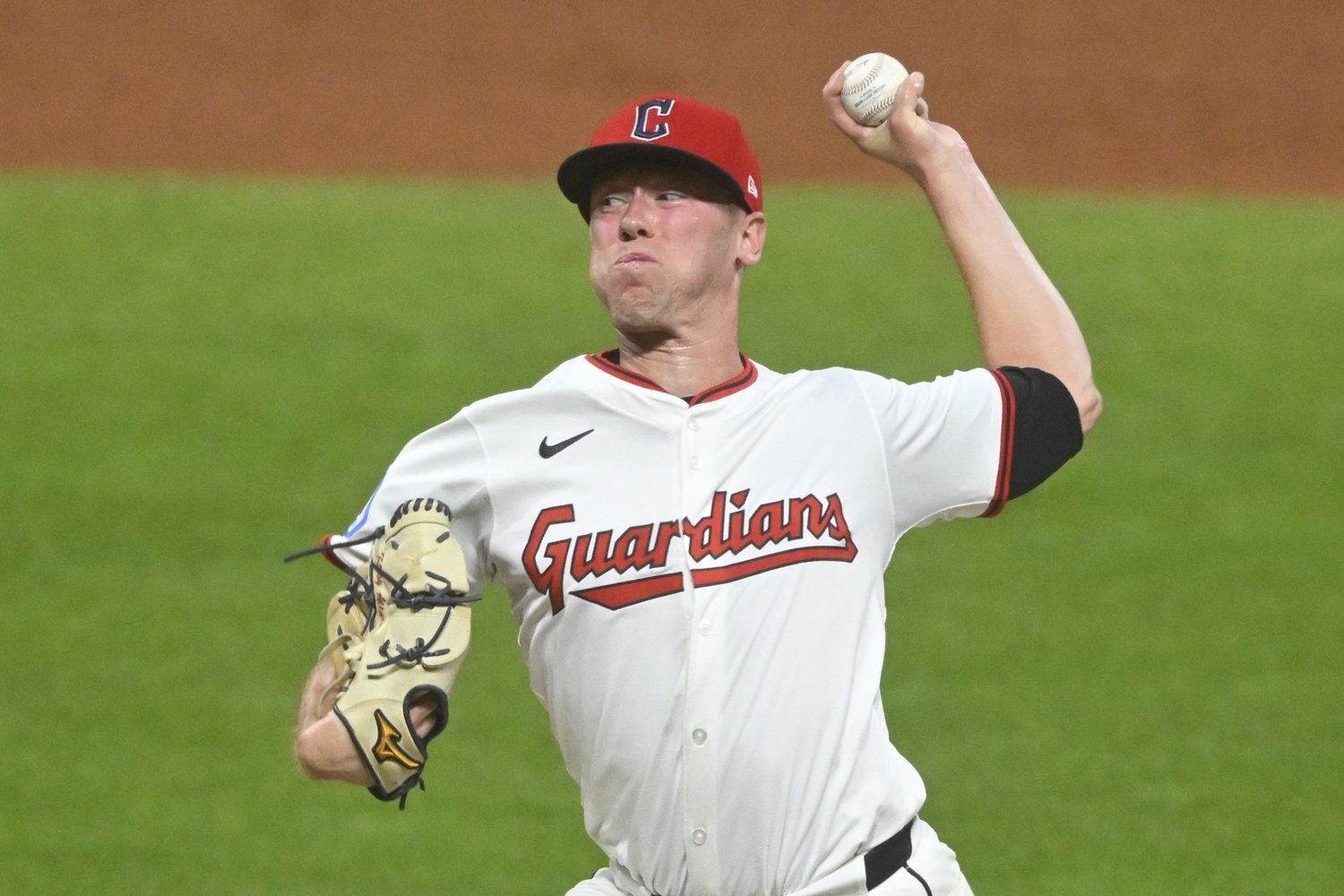 The Toronto Blue Jays have more starting pitchers than they know what to do with. Their bullpen hasn’t been the subject of nearly as much discussion, but it’s a deep group, too. Not including the six main candidates for the starting rotation, the Blue Jays have 10 pitchers on their 40-man roster with at least 50 games of big league experience: Jeff Hoffman, Tyler Rogers, Yimi García, Louis Varland, Brendon Little, Eric Lauer, Tommy Nance, Brendon Little, Braydon Fisher, Mason Fluharty, and Bowden Francis. That doesn’t even include Chasee Lee (32 MLB games); Rule 5 selections Angel Bastardo and Spencer Miles; prospects Ricky Tiedemann, Adam Macko, and Lazaro Estrada (2 MLB games); or the experienced arms that aren’t on the 40-man roster, namely Yariel Rodríguez and Jorge Alcala. That’s a lot of names. Like I said, it’s a deep group. It’s also a high-variance group. FanGraphs has Toronto’s bullpen as the seventh-best in baseball on their projected depth charts. However, the difference between the Jays in seventh and the Orioles in 16th is less than one projected win. It isn’t hard to picture a scenario in which this bullpen is one win worse than projected. Heck, it isn’t hard to picture a scenario in which every single member of this arm barn fails to meet expectations. What’s the solution? The Blue Jays don’t need another veteran on a guaranteed contract. They don’t need to limit their flexibility any further. To limit variance and raise their floor, what they need is even more depth. They need a pitcher who won’t battle for a spot on the Opening Day roster but who offers a proven floor as a capable major league pitcher. They need their next Eric Lauer. They need Kolby Allard. Allard is a great fit for Toronto. The 28-year-old has appeared in each of the last eight seasons (Experience? Check!), and he’s coming off what was arguably the best year of his career (Upside? Check!). He has a 5.34 ERA and 4.92 FIP for his career, but in 2025, those numbers were 2.63 and 3.54, respectively. A southpaw, Allard would help to balance a righty-heavy staff. Like Lauer, he also has experience as both a starter and a reliever. Hopefully, he wouldn’t ever need to start for the Blue Jays, but there’s no such thing as too much rotation depth. Most importantly, he should be available on a minor league deal. Listen, Allard was good last year. He really was. The lefty went more than one inning in 23 of his 33 appearances for a total of 62 innings pitched. That’s the second-highest total of his career, and the highest in his years as a primary reliever. Adjusted for park effects and the 2025 run environment, his ERA was 35% better than league average. His FIP was 15% better. His expected ERA ranked in the 79th percentile. That successful season underscores Allard’s talent. And there could be room for growth. According to pitch models like PitchingBot, Pitching+, and PitchPro, his cutter was his best pitch last year. Per the models, it’s been his best pitch throughout his career. Yet, the on-field results say otherwise. Opposing hitters have crushed his cutter for a .369 wOBA and a .355 xwOBA, compared to a .327 wOBA and .328 xwOBA on all his other pitches. Even last season, when Allard was at his best, his cutter yielded a .376 wOBA and a .363 xwOBA. The rest of his offerings combined for a .278 wOBA and a .272 xwOBA. Those aren’t just good numbers, they’re excellent. In a vacuum, his cutter looks like his strongest weapon. In actuality, it’s been holding him back. The right coaching could change that. With all that said, I can’t forget I’m writing about a pitcher with a career ERA well above 5.00. Allard signed a minor league deal with Cleveland last winter, went unclaimed on waivers after he was designated for assignment in the summer, and then re-signed with the Guardians on another minor league contract. While he made the postseason roster, he was the only arm that Stephen Vogt never used in Cleveland’s three-game Wild Card Series against Detroit. My point? He’s not going to be in high demand. Simply put, Kolby Allard isn’t an exciting name. That isn’t a knock on the eight-year MLB veteran, it’s just a fact. Leverage index (LI) is a metric that tries to quantify the pressure of any given game situation, taking into consideration the score, the inning, the number of outs, and the runners on base. Allard has made 109 appearances in his big league career; according to LI, he only entered 10 of those games in situations where the pressure was higher than average. A neutral LI is 1.00. The league average LI for a reliever when entering games tends to hover between 1.10 and 1.15. In other words, relievers tend to enter in higher-leverage situations. That makes sense. Allard’s average leverage index when entering games (gmLI) has never been higher than 0.87 in a season. His career average is 0.75. Only one active pitcher (JT Brubaker) has thrown more innings than Allard with a lower gmLI. All of this means Allard doesn’t often enter games with an opportunity to make a significant impact. And when he has made an impact, it hasn’t often been the kind of impact he was hoping. Allard owns a 13-26 record. Only three active pitchers have more career decisions and a lower winning percentage (Patrick Sandoval, Gregory Soto, and former Blue Jay Jordan Hicks). Allard’s teams have gone 37-72 (.339) in his appearances. Those same clubs – the Braves, Rangers, Phillies, and Guardians – had a .524 winning percentage in all their other games. That’s the difference between a 55-win pace and an 85-win pace. On a similar note, Allard has never pitched in the playoffs, despite playing for division-winning teams in each of the past three seasons. So, as much as I like Allard for the Blue Jays, my appreciation comes with qualifiers. In other words, I like him for what he is: minor league depth. Most minor league depth acquisitions don’t work out as nearly well as last winter’s Lauer signing. Still, Lauer’s story is the pudding-covered proof that minor league depth signings are essential. My fingers are crossed that the Blue Jays won’t need another Lauer this season. They really shouldn’t. But if they do, Kolby Allard could be that guy.
 -
.jpg.be8d5d09f0509e4a2eab0106a3113c85.jpg) According to reporter Francys Romero, the Toronto Blue Jays were among the teams "most closely monitoring" free agent Yoán Moncada's market before he ultimately re-signed with the Los Angeles Angels. Romero notes that the Pirates and Red Sox had also shown interest in the third baseman. About a month ago, Romero reported that Toronto had expressed "early interest" in Moncada. However, that was before they signed Kazuma Okamoto to a four-year, $60 million deal. Like Moncada, Okamoto's primary position is third base. Moncada, 30, played in 84 games for the Angels in 2025. He hit .234 with 12 home runs and an 11.1% walk rate, finishing with a 117 wRC+. Thumb and knee injuries cut into his playing time; IL stints have been a recurring theme throughout the switch-hitter's career. It wasn't entirely clear how Moncada would have made sense for the Blue Jays even before they signed Okamoto. So, the suggestion that they were still keeping an eye on him is more than a little surprising. Nevertheless, Romero's report is at least an indication that the Blue Jays might not be finished adding to their offense this winter. Featured image courtesy of Kirby Lee, Imagn Images.
According to reporter Francys Romero, the Toronto Blue Jays were among the teams "most closely monitoring" free agent Yoán Moncada's market before he ultimately re-signed with the Los Angeles Angels. Romero notes that the Pirates and Red Sox had also shown interest in the third baseman. About a month ago, Romero reported that Toronto had expressed "early interest" in Moncada. However, that was before they signed Kazuma Okamoto to a four-year, $60 million deal. Like Moncada, Okamoto's primary position is third base. Moncada, 30, played in 84 games for the Angels in 2025. He hit .234 with 12 home runs and an 11.1% walk rate, finishing with a 117 wRC+. Thumb and knee injuries cut into his playing time; IL stints have been a recurring theme throughout the switch-hitter's career. It wasn't entirely clear how Moncada would have made sense for the Blue Jays even before they signed Okamoto. So, the suggestion that they were still keeping an eye on him is more than a little surprising. Nevertheless, Romero's report is at least an indication that the Blue Jays might not be finished adding to their offense this winter. Featured image courtesy of Kirby Lee, Imagn Images. -
According to reporter Francys Romero, the Toronto Blue Jays were among the teams "most closely monitoring" free agent Yoán Moncada's market before he ultimately re-signed with the Los Angeles Angels. Romero notes that the Pirates and Red Sox had also shown interest in the third baseman. About a month ago, Romero reported that Toronto had expressed "early interest" in Moncada. However, that was before they signed Kazuma Okamoto to a four-year, $60 million deal. Like Moncada, Okamoto's primary position is third base. Moncada, 30, played in 84 games for the Angels in 2025. He hit .234 with 12 home runs and an 11.1% walk rate, finishing with a 117 wRC+. Thumb and knee injuries cut into his playing time; IL stints have been a recurring theme throughout the switch-hitter's career. It wasn't entirely clear how Moncada would have made sense for the Blue Jays even before they signed Okamoto. So, the suggestion that they were still keeping an eye on him is more than a little surprising. Nevertheless, Romero's report is at least an indication that the Blue Jays might not be finished adding to their offense this winter. Featured image courtesy of Kirby Lee, Imagn Images. View full rumor
-
Admittedly I don’t know a ton about the type of players who usually do or don’t get the spring training invite. But this does feel odd, considering his bat seems so close to big league ready. Makes me think the Jays really don’t like his glove? But even then, why not give him the ST reps, even if he’s just auditioning to be a trade chip.
-
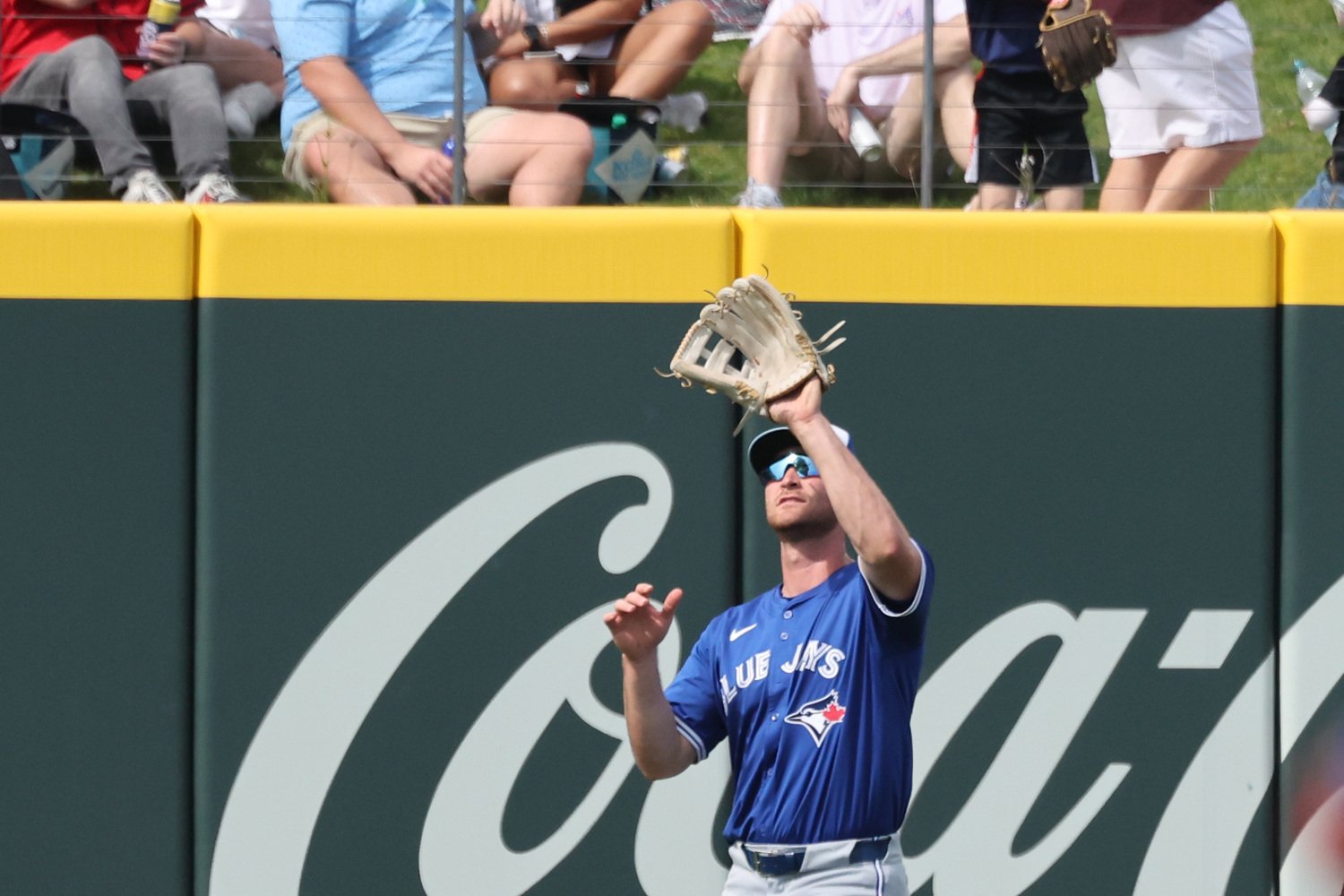 Blue Jays pitchers and catchers will report to the team's spring training complex in Dunedin on February 11, while the first full-squad workout is scheduled for February 16. Five days later – exactly one month from today – the Jays will host the Phillies for their first game of the spring. Today, the Blue Jays announced the names of 20 non-roster invitees who will be joining the players from the 40-man roster (and several more NRIs) in big league training camp. It's an exciting list, made up of eight pitchers and 12 position players and including many of the top prospects in the system. All of these NRIs are rookie eligible, except for Yariel Rodríguez, who was outrighted off the 40-man earlier this winter. Javen Coleman, LHP Chad Dallas, RHP Ryan Jennings, RHP Fernando Perez, RHP (JC No. 19) Gage Stanifer, RHP (JC No. 6) Yariel Rodríguez, RHP CJ Van Eyk, RHP Chay Yeager, RHP Robert Brooks, C Edward Duran, C Aaron Parker, C Geovanny Planchart, C Cutter Coffey, INF Josh Kasevich, INF (JC No. 11) Sean Keys, INF Charles McAdoo, 3B (JC No. 14) Arjun Nimmala, SS (JC No. 3) Josh Rivera, INF Riley Tirotta, UTIL RJ Schreck, OF (JC No. 9) The Blue Jays have also extended a spring training invitation to several free agents they signed to minor league deals. This includes left-hander Michael Plassmeyer, right-hander Jorge Alcala, outfielder/DH Eloy Jiménez, and utility players Rafael Lantigua and Carlos Mendoza. Featured image courtesy of Kim Klement Neitzel, Imagn Images.
 -
Blue Jays pitchers and catchers will report to the team's spring training complex in Dunedin on February 11, while the first full-squad workout is scheduled for February 16. Five days later – exactly one month from today – the Jays will host the Phillies for their first game of the spring. Today, the Blue Jays announced the names of 20 non-roster invitees who will be joining the players from the 40-man roster (and several more NRIs) in big league training camp. It's an exciting list, made up of eight pitchers and 12 position players and including many of the top prospects in the system. All of these NRIs are rookie eligible, except for Yariel Rodríguez, who was outrighted off the 40-man earlier this winter. Javen Coleman, LHP Chad Dallas, RHP Ryan Jennings, RHP Fernando Perez, RHP (JC No. 19) Gage Stanifer, RHP (JC No. 6) Yariel Rodríguez, RHP CJ Van Eyk, RHP Chay Yeager, RHP Robert Brooks, C Edward Duran, C Aaron Parker, C Geovanny Planchart, C Cutter Coffey, INF Josh Kasevich, INF (JC No. 11) Sean Keys, INF Charles McAdoo, 3B (JC No. 14) Arjun Nimmala, SS (JC No. 3) Josh Rivera, INF Riley Tirotta, UTIL RJ Schreck, OF (JC No. 9) The Blue Jays have also extended a spring training invitation to several free agents they signed to minor league deals. This includes left-hander Michael Plassmeyer, right-hander Jorge Alcala, outfielder/DH Eloy Jiménez, and utility players Rafael Lantigua and Carlos Mendoza. Featured image courtesy of Kim Klement Neitzel, Imagn Images. View full rumor
-
It's hard to see much of a path to playing time for Loperfido right now, considering the Jays already have four outfielders who can bat left-handed (Varsho, Barger, Santander, and Lukes). But if they traded him now, they'd be trading low, considering his mediocre Triple-A numbers last year. He still has one option remaining, so I'm definitely of the opinion that they should stash him with the Bisons to start the year. Hopefully, he does enough to increase his trade value. And if someone else gets hurt, the Jays will be glad they kept him around.
.jpg.6951d1a075eea933b630fa2acb1d2da2.jpg)
.jpg.50575d39389d1a7efbdef251f837f55c.jpg)
.jpg.d7e130b8fc1f322ece2590ed1b5262d5.jpg)
.jpg.0fe30ea586bc1a94d58883c65563d464.jpg)
.jpg.ba697dfdc6117a0469577d6c7cd186a3.jpg)
.jpg.291940429afa19f25b39129ca59c422d.jpg)
.jpg.3ff30eda58228a46e6236ffc12308e76.jpg)
.jpg.a752f692aec89e7ffaa1c515d88e9547.jpg)
.jpg.be8d5d09f0509e4a2eab0106a3113c85.jpg)
