Leo Morgenstern
-
Posts
628 -
Joined
-
Last visited
Content Type
Profiles
Toronto Blue Jays Videos
2026 Toronto Blue Jays Top Prospects Ranking
Toronto Blue Jays Free Agent & Trade Rumors, Notes, & Tidbits
Guides & Resources
2025 Toronto Blue Jays Draft Pick Tracker
News
2026 Toronto Blue Jays Draft Tracker: Picks & Bonuses
Forums
Blogs
Events
Store
Downloads
Gallery
Everything posted by Leo Morgenstern
-

Brendan Donovan Is the Solution
Leo Morgenstern replied to Sam Charles's topic in Jays Centre Front Page News
Obviously, Donovan lacks the star power of a Tucker or Bichette. And adding star power is presumably the number one reason the Jays were in the market for those guys. But in terms of fit, Donovan really is kind of perfect. He's the lefty impact bat we've been hearing that the Jays want all offseason, he'd replace the bat-to-ball skills the Jays lost in Bichette, and the defensive versatility makes him easy to slot in anywhere. -
For what it's worth, the Depth Charts projections at FanGraphs are quite high on Toronto's bullpen. They rank seventh right now. Currently those projections are only based on Steamer (with manual playing time and leverage estimates), but soon they'll also include ZiPS. And like Jesse mentions, ZiPS is high on the Jays' bullpen too. Here's what Dan Szymborski wrote in his Blue Jays ZiPS article: "Despite the middle-of-the-pack results last year, ZiPS is actually rather enamored with Toronto’s relief corps... their deep store of talent might even justify them trading a reliever or two."
-
Tomorrow, the results of the BBWAA Hall of Fame election will be announced on MLB Network. Carlos Beltrán will be a Hall of Famer. Andruw Jones is likely to join him. Meanwhile, most of this year’s newcomers to the process will officially fall off the ballot and out of consideration. That includes former Blue Jays All-Star Edwin Encarnación. Of course, next year will bring a whole new crop of first-timers to the ballot. So, I set out to find which of them, if any, suited up for our Toronto Blue Jays. Limiting my search to those who actually played an MLB game for the Blue Jays, I found three names that could appear on the next BBWAA ballot. If all three of them make the ballot, they’ll join Mark Buehrle and Omar Vizquel as the former Jays under consideration for the Hall of Fame class of 2027. Before I tell you who they are, I’ll make things clear: None of them is going to be inducted into the Hall. I doubt any of them will stick on the ballot for more than one year. Yet, as I laid out in a piece about Buehrle last week, just appearing on the ballot is an honour. Without further ado, those three players are Joakim Soria, J.A. Happ, and John Axford – listed in order of likelihood to appear on the ballot, at least in my opinion. If I were ranking in terms of their impact on the Blue Jays, there’s no doubt Happ would be first. I couldn’t blame you if you forgot Soria and Axford played for the Jays at all. Soria, one of the greatest Rule 5 draft success stories, played for nine teams over 14 MLB seasons and recorded saves for seven of them. His 229 career saves put him in the top 50 all-time (44th), while his 20.82 Win Probability Added (per FanGraphs) places him among the top 20 relief pitchers dating back to 1974. His 15.4 fWAR and 18.6 bWAR both rank 10th among 21st century relievers. His time with the Jays was brief and forgettable; Toronto acquired him at the trade deadline in 2021, and he pitched to a 7.88 ERA in 10 appearances down the stretch. He announced his retirement after the season. Happ finished as the runner-up for the NL Rookie of the Year in 2009, earned a handful of down-ballot votes for the AL Cy Young in 2016, and finally made his first All-Star team in 2018. From his first full season until his last in 2021, he ranked eighth in the majors in starts and 10th in wins. All told, the lefty pitched in 354 games (328 starts) for eight different teams, but he spent far longer in Toronto than anywhere else. First acquired in a mid-season 10-player trade with the Astros in 2012, Happ pitched for the Blue Jays through the 2014 season. They traded him to the Mariners for Michael Saunders the following offseason but re-signed him a year later. He then suited up for Toronto until the deadline in 2018, when the Jays sent him to the Yankees. In 135 total games with the Blue Jays, Happ collected 59 wins and 691 strikeouts, pitching to a 3.88 ERA. Last is Axford. The Brewers saw something in the Ontario native that no one else did. They signed him off the trash heap in 2008, and two years later, he was a star closer. In 2010, Axford succeeded the great Trevor Hoffman as Milwaukee’s ninth-inning arm, and in 2011, he led the Senior Circuit with 46 saves. He was named the NL’s Rolaids Relief Man and also earned down-ballot Cy Young and MVP votes. Axford finished his career with an ERA under 4.00 and 144 saves in 544 appearances. Yet, he really only had those two great seasons. He recorded almost half his career saves from 2010-11; over the next eight years, he pitched to a 4.50 ERA with a neutral WAR and a negative WPA. His time with the Blue Jays was almost as brief as Soria’s. He gave the club 45 outings with a 4.41 ERA in 2018, collecting four wins and six holds before he was traded to the Dodgers at the deadline. In the table below, I’ve listed each of Soria, Happ, and Axford's career Wins Above Replacement (per Baseball Reference) as well as their scores in three Hall of Fame metrics: JAWS, Hall of Fame Monitor (HOFm), and Hall of Fame Standards (HOFs). Then, for comparison, I’ve listed the lowest score in each of those metrics by a player to appear on the Hall of Fame ballot in each of the last 10 years. For instance, Rick Porcello has the lowest bWAR (18.8) and JAWS (18.6) on this year’s ballot, while Howie Kendrick has the lowest HOFm (12) and Alex Gordon has the lowest HOFs (14). You’ll see each of those numbers listed in the “2026” row. The final row lists the average of the lowest bWAR, JAWS, HOFm, and HOFs scores on the ballot for the last decade. Player bWAR JAWS HOFm HOFs Joakim Soria 18.6 17.4 47 16 J.A. Happ 21.1 20.8 23 18 John Axford 4.0 4.9 17 7 Year bWAR JAWS HOFm HOFs 2026 18.8 18.6 12 14 2025 7.5 7.9 22 7 2024 24.2 20.9 28 16 2023 14.5 13.3 15 11 2022 14.5 16.9 52 17 2021 17.8 16.6 14 4 2020 7.1 8.0 18 11 2019 5.5 6.0 0 5 2018 7.9 10.0 21 7 2017 14.1 13.5 6 11 Average 13.2 13.2 18.8 10.3 From these numbers, Soria and Happ both look like realistic contenders to make the ballot, while Axford is more of a long shot. That said, it’s not always easy to predict the Hall of Fame ballot. The number of players on the ballot changes every year, but for what it’s worth, 14 players are likely to exit after this year: Beltrán and Jones are on track for induction, Manny Ramirez will fall off after his 10th year of consideration, and 11 of the 12 newcomers (all except Cole Hamels) are unlikely to receive enough support to earn another year in the conversation. So again, that’s 14 spots opening up. Baseball Reference lists 31 contenders for a slot on the potential ballot for 2027. The BBWAA could choose more than 14 of them, but they certainly aren’t picking all 31. Only one of next year’s newbies has a legitimate Hall of Fame case, Buster Posey, though several more are locks for a spot on the ballot, including Jon Lester, Ryan Zimmerman, and Brett Gardner. I think Kyle Seager, Ervin Santana, Jake Arrieta, Jay Bruce, Asdrúbal Cabrera, and Pablo Sandoval are safe bets too. After those 10, I’d say Soria and Happ have as good a case as anyone. Here’s where all three former Jays rank among newcomer candidates in the stats I listed above: Player bWAR JAWS HOFm HOFs Joakim Soria 18th 19th 3rd 14th J.A. Happ 13th 13th 11th 11th John Axford 31st 31st 16th 26th Once more, Soria and Happ strike me as likely ballot candidates but not locks. Then again, I might be too low on Soria, considering he was a closer. If guys like Fernando Rodney, Huston Street, Heath Bell, and former Blue Jay LaTroy Hawkins appeared on the ballot in recent years, Soria should have a spot. And if Axford even has a case, maybe Soria is a lock after all. Two years from now, we’ll see David Price on the ballot. In three years, Josh Donaldson will have his turn. But before then, it could be Soria, Happ, and possibly Axford representing the Blue Jays on the BBWAA Hall of Fame ballot. While they won't ever be Hall of Famers, it will be nice to remember and celebrate their MLB careers. View full article
-
Will Any Blue Jays Join the Hall of Fame Ballot for 2027?
Leo Morgenstern posted an article in Blue Jays
.jpg.e18db03f4ce67e0821b78ba2431aaae8.jpg) Tomorrow, the results of the BBWAA Hall of Fame election will be announced on MLB Network. Carlos Beltrán will be a Hall of Famer. Andruw Jones is likely to join him. Meanwhile, most of this year’s newcomers to the process will officially fall off the ballot and out of consideration. That includes former Blue Jays All-Star Edwin Encarnación. Of course, next year will bring a whole new crop of first-timers to the ballot. So, I set out to find which of them, if any, suited up for our Toronto Blue Jays. Limiting my search to those who actually played an MLB game for the Blue Jays, I found three names that could appear on the next BBWAA ballot. If all three of them make the ballot, they’ll join Mark Buehrle and Omar Vizquel as the former Jays under consideration for the Hall of Fame class of 2027. Before I tell you who they are, I’ll make things clear: None of them is going to be inducted into the Hall. I doubt any of them will stick on the ballot for more than one year. Yet, as I laid out in a piece about Buehrle last week, just appearing on the ballot is an honour. Without further ado, those three players are Joakim Soria, J.A. Happ, and John Axford – listed in order of likelihood to appear on the ballot, at least in my opinion. If I were ranking in terms of their impact on the Blue Jays, there’s no doubt Happ would be first. I couldn’t blame you if you forgot Soria and Axford played for the Jays at all. Soria, one of the greatest Rule 5 draft success stories, played for nine teams over 14 MLB seasons and recorded saves for seven of them. His 229 career saves put him in the top 50 all-time (44th), while his 20.82 Win Probability Added (per FanGraphs) places him among the top 20 relief pitchers dating back to 1974. His 15.4 fWAR and 18.6 bWAR both rank 10th among 21st century relievers. His time with the Jays was brief and forgettable; Toronto acquired him at the trade deadline in 2021, and he pitched to a 7.88 ERA in 10 appearances down the stretch. He announced his retirement after the season. Happ finished as the runner-up for the NL Rookie of the Year in 2009, earned a handful of down-ballot votes for the AL Cy Young in 2016, and finally made his first All-Star team in 2018. From his first full season until his last in 2021, he ranked eighth in the majors in starts and 10th in wins. All told, the lefty pitched in 354 games (328 starts) for eight different teams, but he spent far longer in Toronto than anywhere else. First acquired in a mid-season 10-player trade with the Astros in 2012, Happ pitched for the Blue Jays through the 2014 season. They traded him to the Mariners for Michael Saunders the following offseason but re-signed him a year later. He then suited up for Toronto until the deadline in 2018, when the Jays sent him to the Yankees. In 135 total games with the Blue Jays, Happ collected 59 wins and 691 strikeouts, pitching to a 3.88 ERA. Last is Axford. The Brewers saw something in the Ontario native that no one else did. They signed him off the trash heap in 2008, and two years later, he was a star closer. In 2010, Axford succeeded the great Trevor Hoffman as Milwaukee’s ninth-inning arm, and in 2011, he led the Senior Circuit with 46 saves. He was named the NL’s Rolaids Relief Man and also earned down-ballot Cy Young and MVP votes. Axford finished his career with an ERA under 4.00 and 144 saves in 544 appearances. Yet, he really only had those two great seasons. He recorded almost half his career saves from 2010-11; over the next eight years, he pitched to a 4.50 ERA with a neutral WAR and a negative WPA. His time with the Blue Jays was almost as brief as Soria’s. He gave the club 45 outings with a 4.41 ERA in 2018, collecting four wins and six holds before he was traded to the Dodgers at the deadline. In the table below, I’ve listed each of Soria, Happ, and Axford's career Wins Above Replacement (per Baseball Reference) as well as their scores in three Hall of Fame metrics: JAWS, Hall of Fame Monitor (HOFm), and Hall of Fame Standards (HOFs). Then, for comparison, I’ve listed the lowest score in each of those metrics by a player to appear on the Hall of Fame ballot in each of the last 10 years. For instance, Rick Porcello has the lowest bWAR (18.8) and JAWS (18.6) on this year’s ballot, while Howie Kendrick has the lowest HOFm (12) and Alex Gordon has the lowest HOFs (14). You’ll see each of those numbers listed in the “2026” row. The final row lists the average of the lowest bWAR, JAWS, HOFm, and HOFs scores on the ballot for the last decade. Player bWAR JAWS HOFm HOFs Joakim Soria 18.6 17.4 47 16 J.A. Happ 21.1 20.8 23 18 John Axford 4.0 4.9 17 7 Year bWAR JAWS HOFm HOFs 2026 18.8 18.6 12 14 2025 7.5 7.9 22 7 2024 24.2 20.9 28 16 2023 14.5 13.3 15 11 2022 14.5 16.9 52 17 2021 17.8 16.6 14 4 2020 7.1 8.0 18 11 2019 5.5 6.0 0 5 2018 7.9 10.0 21 7 2017 14.1 13.5 6 11 Average 13.2 13.2 18.8 10.3 From these numbers, Soria and Happ both look like realistic contenders to make the ballot, while Axford is more of a long shot. That said, it’s not always easy to predict the Hall of Fame ballot. The number of players on the ballot changes every year, but for what it’s worth, 14 players are likely to exit after this year: Beltrán and Jones are on track for induction, Manny Ramirez will fall off after his 10th year of consideration, and 11 of the 12 newcomers (all except Cole Hamels) are unlikely to receive enough support to earn another year in the conversation. So again, that’s 14 spots opening up. Baseball Reference lists 31 contenders for a slot on the potential ballot for 2027. The BBWAA could choose more than 14 of them, but they certainly aren’t picking all 31. Only one of next year’s newbies has a legitimate Hall of Fame case, Buster Posey, though several more are locks for a spot on the ballot, including Jon Lester, Ryan Zimmerman, and Brett Gardner. I think Kyle Seager, Ervin Santana, Jake Arrieta, Jay Bruce, Asdrúbal Cabrera, and Pablo Sandoval are safe bets too. After those 10, I’d say Soria and Happ have as good a case as anyone. Here’s where all three former Jays rank among newcomer candidates in the stats I listed above: Player bWAR JAWS HOFm HOFs Joakim Soria 18th 19th 3rd 14th J.A. Happ 13th 13th 11th 11th John Axford 31st 31st 16th 26th Once more, Soria and Happ strike me as likely ballot candidates but not locks. Then again, I might be too low on Soria, considering he was a closer. If guys like Fernando Rodney, Huston Street, Heath Bell, and former Blue Jay LaTroy Hawkins appeared on the ballot in recent years, Soria should have a spot. And if Axford even has a case, maybe Soria is a lock after all. Two years from now, we’ll see David Price on the ballot. In three years, Josh Donaldson will have his turn. But before then, it could be Soria, Happ, and possibly Axford representing the Blue Jays on the BBWAA Hall of Fame ballot. While they won't ever be Hall of Famers, it will be nice to remember and celebrate their MLB careers.
Tomorrow, the results of the BBWAA Hall of Fame election will be announced on MLB Network. Carlos Beltrán will be a Hall of Famer. Andruw Jones is likely to join him. Meanwhile, most of this year’s newcomers to the process will officially fall off the ballot and out of consideration. That includes former Blue Jays All-Star Edwin Encarnación. Of course, next year will bring a whole new crop of first-timers to the ballot. So, I set out to find which of them, if any, suited up for our Toronto Blue Jays. Limiting my search to those who actually played an MLB game for the Blue Jays, I found three names that could appear on the next BBWAA ballot. If all three of them make the ballot, they’ll join Mark Buehrle and Omar Vizquel as the former Jays under consideration for the Hall of Fame class of 2027. Before I tell you who they are, I’ll make things clear: None of them is going to be inducted into the Hall. I doubt any of them will stick on the ballot for more than one year. Yet, as I laid out in a piece about Buehrle last week, just appearing on the ballot is an honour. Without further ado, those three players are Joakim Soria, J.A. Happ, and John Axford – listed in order of likelihood to appear on the ballot, at least in my opinion. If I were ranking in terms of their impact on the Blue Jays, there’s no doubt Happ would be first. I couldn’t blame you if you forgot Soria and Axford played for the Jays at all. Soria, one of the greatest Rule 5 draft success stories, played for nine teams over 14 MLB seasons and recorded saves for seven of them. His 229 career saves put him in the top 50 all-time (44th), while his 20.82 Win Probability Added (per FanGraphs) places him among the top 20 relief pitchers dating back to 1974. His 15.4 fWAR and 18.6 bWAR both rank 10th among 21st century relievers. His time with the Jays was brief and forgettable; Toronto acquired him at the trade deadline in 2021, and he pitched to a 7.88 ERA in 10 appearances down the stretch. He announced his retirement after the season. Happ finished as the runner-up for the NL Rookie of the Year in 2009, earned a handful of down-ballot votes for the AL Cy Young in 2016, and finally made his first All-Star team in 2018. From his first full season until his last in 2021, he ranked eighth in the majors in starts and 10th in wins. All told, the lefty pitched in 354 games (328 starts) for eight different teams, but he spent far longer in Toronto than anywhere else. First acquired in a mid-season 10-player trade with the Astros in 2012, Happ pitched for the Blue Jays through the 2014 season. They traded him to the Mariners for Michael Saunders the following offseason but re-signed him a year later. He then suited up for Toronto until the deadline in 2018, when the Jays sent him to the Yankees. In 135 total games with the Blue Jays, Happ collected 59 wins and 691 strikeouts, pitching to a 3.88 ERA. Last is Axford. The Brewers saw something in the Ontario native that no one else did. They signed him off the trash heap in 2008, and two years later, he was a star closer. In 2010, Axford succeeded the great Trevor Hoffman as Milwaukee’s ninth-inning arm, and in 2011, he led the Senior Circuit with 46 saves. He was named the NL’s Rolaids Relief Man and also earned down-ballot Cy Young and MVP votes. Axford finished his career with an ERA under 4.00 and 144 saves in 544 appearances. Yet, he really only had those two great seasons. He recorded almost half his career saves from 2010-11; over the next eight years, he pitched to a 4.50 ERA with a neutral WAR and a negative WPA. His time with the Blue Jays was almost as brief as Soria’s. He gave the club 45 outings with a 4.41 ERA in 2018, collecting four wins and six holds before he was traded to the Dodgers at the deadline. In the table below, I’ve listed each of Soria, Happ, and Axford's career Wins Above Replacement (per Baseball Reference) as well as their scores in three Hall of Fame metrics: JAWS, Hall of Fame Monitor (HOFm), and Hall of Fame Standards (HOFs). Then, for comparison, I’ve listed the lowest score in each of those metrics by a player to appear on the Hall of Fame ballot in each of the last 10 years. For instance, Rick Porcello has the lowest bWAR (18.8) and JAWS (18.6) on this year’s ballot, while Howie Kendrick has the lowest HOFm (12) and Alex Gordon has the lowest HOFs (14). You’ll see each of those numbers listed in the “2026” row. The final row lists the average of the lowest bWAR, JAWS, HOFm, and HOFs scores on the ballot for the last decade. Player bWAR JAWS HOFm HOFs Joakim Soria 18.6 17.4 47 16 J.A. Happ 21.1 20.8 23 18 John Axford 4.0 4.9 17 7 Year bWAR JAWS HOFm HOFs 2026 18.8 18.6 12 14 2025 7.5 7.9 22 7 2024 24.2 20.9 28 16 2023 14.5 13.3 15 11 2022 14.5 16.9 52 17 2021 17.8 16.6 14 4 2020 7.1 8.0 18 11 2019 5.5 6.0 0 5 2018 7.9 10.0 21 7 2017 14.1 13.5 6 11 Average 13.2 13.2 18.8 10.3 From these numbers, Soria and Happ both look like realistic contenders to make the ballot, while Axford is more of a long shot. That said, it’s not always easy to predict the Hall of Fame ballot. The number of players on the ballot changes every year, but for what it’s worth, 14 players are likely to exit after this year: Beltrán and Jones are on track for induction, Manny Ramirez will fall off after his 10th year of consideration, and 11 of the 12 newcomers (all except Cole Hamels) are unlikely to receive enough support to earn another year in the conversation. So again, that’s 14 spots opening up. Baseball Reference lists 31 contenders for a slot on the potential ballot for 2027. The BBWAA could choose more than 14 of them, but they certainly aren’t picking all 31. Only one of next year’s newbies has a legitimate Hall of Fame case, Buster Posey, though several more are locks for a spot on the ballot, including Jon Lester, Ryan Zimmerman, and Brett Gardner. I think Kyle Seager, Ervin Santana, Jake Arrieta, Jay Bruce, Asdrúbal Cabrera, and Pablo Sandoval are safe bets too. After those 10, I’d say Soria and Happ have as good a case as anyone. Here’s where all three former Jays rank among newcomer candidates in the stats I listed above: Player bWAR JAWS HOFm HOFs Joakim Soria 18th 19th 3rd 14th J.A. Happ 13th 13th 11th 11th John Axford 31st 31st 16th 26th Once more, Soria and Happ strike me as likely ballot candidates but not locks. Then again, I might be too low on Soria, considering he was a closer. If guys like Fernando Rodney, Huston Street, Heath Bell, and former Blue Jay LaTroy Hawkins appeared on the ballot in recent years, Soria should have a spot. And if Axford even has a case, maybe Soria is a lock after all. Two years from now, we’ll see David Price on the ballot. In three years, Josh Donaldson will have his turn. But before then, it could be Soria, Happ, and possibly Axford representing the Blue Jays on the BBWAA Hall of Fame ballot. While they won't ever be Hall of Famers, it will be nice to remember and celebrate their MLB careers.-
- 1
-

-
- dc analysis
- joakim soria
- (and 2 more)
-
On March 27, the Blue Jays will take the field for Opening Day 2026. They'll do so as the reigning American League champions for the first time in 32 years. But they'll do it without Bo Bichette for the first time since 2019. Here's what Toronto's Opening Day lineup looked like the last time Bichette wasn't a part of it: Brandon Drury, 3B Randal Grichuk, RF Teoscar Hernández, LF Justin Smoak, 1B Lourdes Gurriel Jr., 2B Kevin Pillar, CF Rowdy Tellez, DH Danny Jansen, C Freddy Galvis, SS Charlie Montoyo was the newly-appointed manager. Marcus Stroman was the starting pitcher. A new era of Blue Jays baseball was on the horizon, but it hadn't started yet. It wouldn't begin until two kids named Vladdy and Bo debuted later that year. The Blue Jays signed Vladimir Guerrero Jr. as an international free agent in 2015. They drafted Bichette the next summer. The two young hitters, both the sons of MLB All-Stars, played together on the left side of the infield at every level of the minors. By the end of the 2017 season, the consensus was clear: Guerrero and Bichette were the Blue Jays' two top prospects, and two of the most highly-regarded youngsters in the minor leagues. It couldn't have been easy for Bichette to play in his teammate's shadow. Guerrero joined the organization earlier. He was always the higher-ranked prospect. He got the call to Triple-A and MLB first. His dad wasn't just an All-Star and a Silver Slugger winner; he was a Hall of Famer. It was always Vladdy and Bo, never Bo and Vladdy. Yet, it was Bichette who had the stronger rookie season. He reached base safely in each of his first 17 games, which included an MLB-record nine game doubling streak. In 2020, he outhit Guerrero again, albeit in a limited sample. It was in 2021 that they both became stars. In July, they played together on the All-Star team. At season's end, Guerrero was the MLB home run king, while Bichette led the AL in hits. Ultimately, it was Vladdy's year to shine; Guerrero finished runner-up for AL MVP, while Bichette earned some down-ballot votes and finished 12th. In each of the next two years, however, Bichette was arguably the better player, finishing ahead of Guerrero in FanGraphs WAR and MVP voting. You could say that Vladdy was the face of Blue Jays baseball in the 2020s (and he certainly is now), but really, for the last five years, Guerrero and Bichette were the faces of the team together. They were one of baseball's most fruitful partnerships. At risk of stating the obvious, it's sad to see that come to an end. Two months ago, I thought I was playing devil's advocate when I suggested that the Blue Jays shouldn't prioritize re-signing Bichette. I thought for sure his name was at the top of Ross Atkins's list. I knew there was an argument for making other moves – heck, I made that argument – but at the same time, I didn't really believe things would change. Or maybe I just didn't want to. Then the Blue Jays signed Dylan Cease to the kind of contract Bichette was hoping to land. And the Kyle Tucker rumors started to percolate. And the Jays signed Kazuma Okamoto. Eventually, I started to realize Bichette wasn't coming back. Yet, it wasn't until yesterday that it really sank in. I understand it. I get why the Jays weren't going to beat the Phillies' reported seven-year, $200 million offer. I get why they didn't beat the Mets' winning bid of three years and $126 million. That doesn't mean I'm going to miss Bichette any less. All that's left to say is bye-bye, Bo. Can't wait to cheer for you, and then beat you, when you come back in June. Thanks for the memories – especially this one. View full article
-
.jpg.0c65213ae9831be30a605f7cbbaf96f1.jpg) On March 27, the Blue Jays will take the field for Opening Day 2026. They'll do so as the reigning American League champions for the first time in 32 years. But they'll do it without Bo Bichette for the first time since 2019. Here's what Toronto's Opening Day lineup looked like the last time Bichette wasn't a part of it: Brandon Drury, 3B Randal Grichuk, RF Teoscar Hernández, LF Justin Smoak, 1B Lourdes Gurriel Jr., 2B Kevin Pillar, CF Rowdy Tellez, DH Danny Jansen, C Freddy Galvis, SS Charlie Montoyo was the newly-appointed manager. Marcus Stroman was the starting pitcher. A new era of Blue Jays baseball was on the horizon, but it hadn't started yet. It wouldn't begin until two kids named Vladdy and Bo debuted later that year. The Blue Jays signed Vladimir Guerrero Jr. as an international free agent in 2015. They drafted Bichette the next summer. The two young hitters, both the sons of MLB All-Stars, played together on the left side of the infield at every level of the minors. By the end of the 2017 season, the consensus was clear: Guerrero and Bichette were the Blue Jays' two top prospects, and two of the most highly-regarded youngsters in the minor leagues. It couldn't have been easy for Bichette to play in his teammate's shadow. Guerrero joined the organization earlier. He was always the higher-ranked prospect. He got the call to Triple-A and MLB first. His dad wasn't just an All-Star and a Silver Slugger winner; he was a Hall of Famer. It was always Vladdy and Bo, never Bo and Vladdy. Yet, it was Bichette who had the stronger rookie season. He reached base safely in each of his first 17 games, which included an MLB-record nine game doubling streak. In 2020, he outhit Guerrero again, albeit in a limited sample. It was in 2021 that they both became stars. In July, they played together on the All-Star team. At season's end, Guerrero was the MLB home run king, while Bichette led the AL in hits. Ultimately, it was Vladdy's year to shine; Guerrero finished runner-up for AL MVP, while Bichette earned some down-ballot votes and finished 12th. In each of the next two years, however, Bichette was arguably the better player, finishing ahead of Guerrero in FanGraphs WAR and MVP voting. You could say that Vladdy was the face of Blue Jays baseball in the 2020s (and he certainly is now), but really, for the last five years, Guerrero and Bichette were the faces of the team together. They were one of baseball's most fruitful partnerships. At risk of stating the obvious, it's sad to see that come to an end. Two months ago, I thought I was playing devil's advocate when I suggested that the Blue Jays shouldn't prioritize re-signing Bichette. I thought for sure his name was at the top of Ross Atkins's list. I knew there was an argument for making other moves – heck, I made that argument – but at the same time, I didn't really believe things would change. Or maybe I just didn't want to. Then the Blue Jays signed Dylan Cease to the kind of contract Bichette was hoping to land. And the Kyle Tucker rumors started to percolate. And the Jays signed Kazuma Okamoto. Eventually, I started to realize Bichette wasn't coming back. Yet, it wasn't until yesterday that it really sank in. I understand it. I get why the Jays weren't going to beat the Phillies' reported seven-year, $200 million offer. I get why they didn't beat the Mets' winning bid of three years and $126 million. That doesn't mean I'm going to miss Bichette any less. All that's left to say is bye-bye, Bo. Can't wait to cheer for you, and then beat you, when you come back in June. Thanks for the memories – especially this one.
On March 27, the Blue Jays will take the field for Opening Day 2026. They'll do so as the reigning American League champions for the first time in 32 years. But they'll do it without Bo Bichette for the first time since 2019. Here's what Toronto's Opening Day lineup looked like the last time Bichette wasn't a part of it: Brandon Drury, 3B Randal Grichuk, RF Teoscar Hernández, LF Justin Smoak, 1B Lourdes Gurriel Jr., 2B Kevin Pillar, CF Rowdy Tellez, DH Danny Jansen, C Freddy Galvis, SS Charlie Montoyo was the newly-appointed manager. Marcus Stroman was the starting pitcher. A new era of Blue Jays baseball was on the horizon, but it hadn't started yet. It wouldn't begin until two kids named Vladdy and Bo debuted later that year. The Blue Jays signed Vladimir Guerrero Jr. as an international free agent in 2015. They drafted Bichette the next summer. The two young hitters, both the sons of MLB All-Stars, played together on the left side of the infield at every level of the minors. By the end of the 2017 season, the consensus was clear: Guerrero and Bichette were the Blue Jays' two top prospects, and two of the most highly-regarded youngsters in the minor leagues. It couldn't have been easy for Bichette to play in his teammate's shadow. Guerrero joined the organization earlier. He was always the higher-ranked prospect. He got the call to Triple-A and MLB first. His dad wasn't just an All-Star and a Silver Slugger winner; he was a Hall of Famer. It was always Vladdy and Bo, never Bo and Vladdy. Yet, it was Bichette who had the stronger rookie season. He reached base safely in each of his first 17 games, which included an MLB-record nine game doubling streak. In 2020, he outhit Guerrero again, albeit in a limited sample. It was in 2021 that they both became stars. In July, they played together on the All-Star team. At season's end, Guerrero was the MLB home run king, while Bichette led the AL in hits. Ultimately, it was Vladdy's year to shine; Guerrero finished runner-up for AL MVP, while Bichette earned some down-ballot votes and finished 12th. In each of the next two years, however, Bichette was arguably the better player, finishing ahead of Guerrero in FanGraphs WAR and MVP voting. You could say that Vladdy was the face of Blue Jays baseball in the 2020s (and he certainly is now), but really, for the last five years, Guerrero and Bichette were the faces of the team together. They were one of baseball's most fruitful partnerships. At risk of stating the obvious, it's sad to see that come to an end. Two months ago, I thought I was playing devil's advocate when I suggested that the Blue Jays shouldn't prioritize re-signing Bichette. I thought for sure his name was at the top of Ross Atkins's list. I knew there was an argument for making other moves – heck, I made that argument – but at the same time, I didn't really believe things would change. Or maybe I just didn't want to. Then the Blue Jays signed Dylan Cease to the kind of contract Bichette was hoping to land. And the Kyle Tucker rumors started to percolate. And the Jays signed Kazuma Okamoto. Eventually, I started to realize Bichette wasn't coming back. Yet, it wasn't until yesterday that it really sank in. I understand it. I get why the Jays weren't going to beat the Phillies' reported seven-year, $200 million offer. I get why they didn't beat the Mets' winning bid of three years and $126 million. That doesn't mean I'm going to miss Bichette any less. All that's left to say is bye-bye, Bo. Can't wait to cheer for you, and then beat you, when you come back in June. Thanks for the memories – especially this one. -
Well... I guess re-signing Bo is off the table now. What do we think about Bellinger? Haha
-
Canada has a real shot to make it out of the first round for the first time this year. That's what I'll be rooting for during pool play. But in terms of the actual realistic contenders, it's hard not to root for Vladdy and the D.R. What a fun team. And I do hope the Jays let Okamoto play. It would be nice to have at least one Blue Jay on all of the top three contenders (USA, DR, Japan)
-
Can't say I want Tucker into his late 30s either. But at the same time, I can very much understand why the Jays would rather do a longer deal with a lower luxury tax hit, considering where their CBT payroll is at right now.
-
I'm torn. I like the relievers they have, and I'm worried it would complicate things too much to add someone else into the mix. But at the same time, there are real question marks for all their left-handers. I'd feel better with at least some more left-handed minor league signings for depth.
-
On Wednesday, ESPN's Jeff Passan told Sportsnet Central that the Blue Jays "have really been the only team that has shown the willingness to go as deep as 10 years, potentially," on a contract for top free agent Kyle Tucker. ESPN had previously reported that the Jays made "a long-term offer" to Tucker, and Passan's latest comments offer a bit more insight into what "long-term" could mean. The Mets, likely Tucker's other top suitor, seem to prefer a shorter-term deal. Most recently, the New York Post's Mike Puma reported that the Mets had "a four-year offer on the table" for Tucker. While Tucker's free agency has been a slow-moving process to this point, Passan mentioned that the All-Star outfielder could be ready to sign by the end of this week. Then, this morning, the New York Post's Jon Heyman reported that Tucker could sign "as soon as today." Featured image courtesy of David Banks, Imagn Images. View full rumor
-
.jpg.6e1188e53da53f4d5d33aa4d474baa6a.jpg) On Wednesday, ESPN's Jeff Passan told Sportsnet Central that the Blue Jays "have really been the only team that has shown the willingness to go as deep as 10 years, potentially," on a contract for top free agent Kyle Tucker. ESPN had previously reported that the Jays made "a long-term offer" to Tucker, and Passan's latest comments offer a bit more insight into what "long-term" could mean. The Mets, likely Tucker's other top suitor, seem to prefer a shorter-term deal. Most recently, the New York Post's Mike Puma reported that the Mets had "a four-year offer on the table" for Tucker. While Tucker's free agency has been a slow-moving process to this point, Passan mentioned that the All-Star outfielder could be ready to sign by the end of this week. Then, this morning, the New York Post's Jon Heyman reported that Tucker could sign "as soon as today." Featured image courtesy of David Banks, Imagn Images.
On Wednesday, ESPN's Jeff Passan told Sportsnet Central that the Blue Jays "have really been the only team that has shown the willingness to go as deep as 10 years, potentially," on a contract for top free agent Kyle Tucker. ESPN had previously reported that the Jays made "a long-term offer" to Tucker, and Passan's latest comments offer a bit more insight into what "long-term" could mean. The Mets, likely Tucker's other top suitor, seem to prefer a shorter-term deal. Most recently, the New York Post's Mike Puma reported that the Mets had "a four-year offer on the table" for Tucker. While Tucker's free agency has been a slow-moving process to this point, Passan mentioned that the All-Star outfielder could be ready to sign by the end of this week. Then, this morning, the New York Post's Jon Heyman reported that Tucker could sign "as soon as today." Featured image courtesy of David Banks, Imagn Images. -
I can definitely see the need for a more proven lefty in the 'pen. But I'm not convinced the Blue Jays will sign another MLB free agent. I think they might prefer to prioritize flexibility. In other words, keep some optionable or fungible arms in there so they can swap in guys like Fluharty, Fisher, and Lee (who aren't currently on the projected OD roster, per RosterResource) to keep everyone fresh.
-
On Wednesday afternoon, the Toronto Blue Jays formally announced that they've signed five free agents to minor league contracts: left-hander Michael Plassmeyer, right-hander Jorge Alcala, outfielder/DH Eloy Jiménez, and utility players Rafael Lantigua and Carlos Mendoza. All five will be invited to major league spring training. Jays Centre previously covered the signings of Plassmeyer, Mendoza, and Jiménez. Alcala is a seven-year MLB veteran who spent the 2025 season with the Twins, Red Sox, and Cardinals. Lantigua played in Toronto's minor league system from 2017-24 before spending 2025 in the Phillies organization. Two more notable players the Blue Jays have reportedly signed to minor league deals are Josh Winckowski and Nic Enright, though neither contract has been confirmed yet. The Jays also signed Rodolfo Castro to a minor league deal earlier this winter, but they recently released him so he could pursue an opportunity in Japan. Featured image courtesy of Aaron Cobb/Toronto Blue Jays, Imagn Images. View full rumor
-
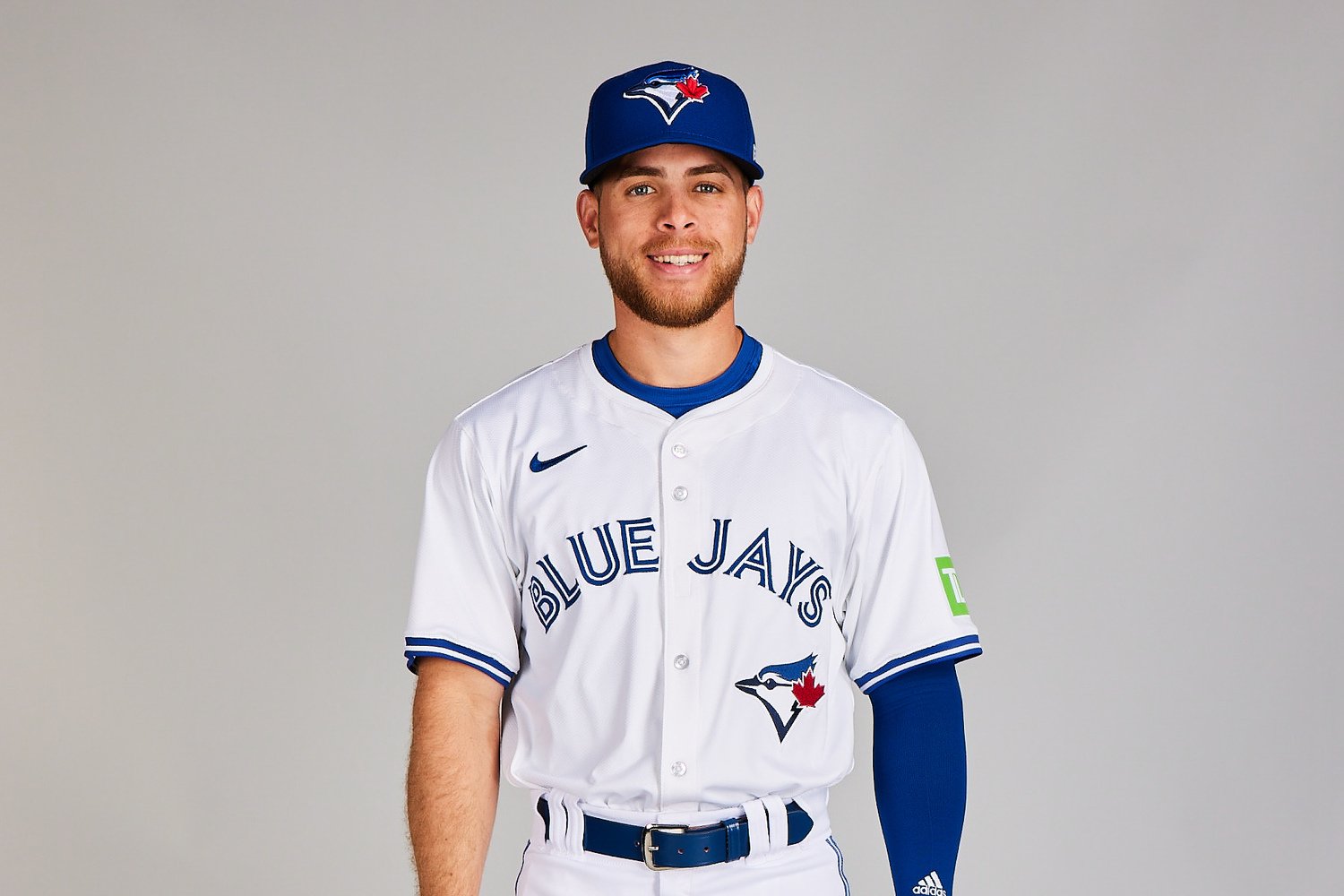 On Wednesday afternoon, the Toronto Blue Jays formally announced that they've signed five free agents to minor league contracts: left-hander Michael Plassmeyer, right-hander Jorge Alcala, outfielder/DH Eloy Jiménez, and utility players Rafael Lantigua and Carlos Mendoza. All five will be invited to major league spring training. Jays Centre previously covered the signings of Plassmeyer, Mendoza, and Jiménez. Alcala is a seven-year MLB veteran who spent the 2025 season with the Twins, Red Sox, and Cardinals. Lantigua played in Toronto's minor league system from 2017-24 before spending 2025 in the Phillies organization. Two more notable players the Blue Jays have reportedly signed to minor league deals are Josh Winckowski and Nic Enright, though neither contract has been confirmed yet. The Jays also signed Rodolfo Castro to a minor league deal earlier this winter, but they recently released him so he could pursue an opportunity in Japan. Featured image courtesy of Aaron Cobb/Toronto Blue Jays, Imagn Images.
 -
Straw is such a great bench weapon as a defensive replacement and pinch-runner. No doubt one of the best outfield gloves in the sport, with top-tier sprint speed. Exactly the kind of guy you want at the bottom of your roster, especially for the playoffs. That said, I am expecting some regression at the plate next year. If Varsho gets hurt again, I'm concerned that a Straw-Lukes platoon is going to be tough to watch.
-
It's so nice to see that ZiPS is still high on Kirk. Projections liked his bat last year too, despite two consecutive years of sub-par offense from 2023-24. And they were 100% right.
- 1 reply
-
- 2
-
-
According to the transaction log on Rodolfo Castro's MLB player page, the Toronto Blue Jays released the infielder on January 9. On Tuesday, 7 News reporter Ari Alexander reported that Castro was granted his release so he could sign with the Hokkaido Nippon-Ham Fighters of Nippon Professional Baseball. Castro, 26, signed a minor league contract with the Blue Jays this past November. He played in the majors with the Pirates and Phillies from 2021-23. Jays Centre's Jesse Burrill wrote about Castro in a roundup of minor league signings last month: Featured image courtesy of Reinhold Matay, Imagn Images. View full rumor
-
.jpg.215e6184161c0f5fa3c4182c724a105b.jpg) According to the transaction log on Rodolfo Castro's MLB player page, the Toronto Blue Jays released the infielder on January 9. On Tuesday, 7 News reporter Ari Alexander reported that Castro was granted his release so he could sign with the Hokkaido Nippon-Ham Fighters of Nippon Professional Baseball. Castro, 26, signed a minor league contract with the Blue Jays this past November. He played in the majors with the Pirates and Phillies from 2021-23. Jays Centre's Jesse Burrill wrote about Castro in a roundup of minor league signings last month: Featured image courtesy of Reinhold Matay, Imagn Images.
According to the transaction log on Rodolfo Castro's MLB player page, the Toronto Blue Jays released the infielder on January 9. On Tuesday, 7 News reporter Ari Alexander reported that Castro was granted his release so he could sign with the Hokkaido Nippon-Ham Fighters of Nippon Professional Baseball. Castro, 26, signed a minor league contract with the Blue Jays this past November. He played in the majors with the Pirates and Phillies from 2021-23. Jays Centre's Jesse Burrill wrote about Castro in a roundup of minor league signings last month: Featured image courtesy of Reinhold Matay, Imagn Images. -
.jpg.e8147309e8429868a48564bc71991399.jpg) According to a report from ESPN, the Toronto Blue Jays have made "a long-term offer" to Kyle Tucker, the offseason's top free agent. It's no secret that the Blue Jays are interested in Tucker, but this is the first indication that they have made him a formal offer. While no deal is imminent, and no further details have been made available, it's an exciting development nonetheless. That the Jays made an offer demonstrates the front office is still actively seeking upgrades, and ownership is willing to continue increasing payroll. Of course, Toronto isn't alone in pursuing Tucker. ESPN's Jesse Rogers and FanSided's Robert Murray both reported that the New York Mets offered Tucker a short-term deal "believed to be worth $50 million per season." The Mets and Blue Jays currently seem to be the frontrunners for Tucker's services. Featured image courtesy of Troy Taormina, Imagn Images.
According to a report from ESPN, the Toronto Blue Jays have made "a long-term offer" to Kyle Tucker, the offseason's top free agent. It's no secret that the Blue Jays are interested in Tucker, but this is the first indication that they have made him a formal offer. While no deal is imminent, and no further details have been made available, it's an exciting development nonetheless. That the Jays made an offer demonstrates the front office is still actively seeking upgrades, and ownership is willing to continue increasing payroll. Of course, Toronto isn't alone in pursuing Tucker. ESPN's Jesse Rogers and FanSided's Robert Murray both reported that the New York Mets offered Tucker a short-term deal "believed to be worth $50 million per season." The Mets and Blue Jays currently seem to be the frontrunners for Tucker's services. Featured image courtesy of Troy Taormina, Imagn Images. -
According to a report from ESPN, the Toronto Blue Jays have made "a long-term offer" to Kyle Tucker, the offseason's top free agent. It's no secret that the Blue Jays are interested in Tucker, but this is the first indication that they have made him a formal offer. While no deal is imminent, and no further details have been made available, it's an exciting development nonetheless. That the Jays made an offer demonstrates the front office is still actively seeking upgrades, and ownership is willing to continue increasing payroll. Of course, Toronto isn't alone in pursuing Tucker. ESPN's Jesse Rogers and FanSided's Robert Murray both reported that the New York Mets offered Tucker a short-term deal "believed to be worth $50 million per season." The Mets and Blue Jays currently seem to be the frontrunners for Tucker's services. Featured image courtesy of Troy Taormina, Imagn Images. View full rumor
-
Point: The Toronto Blue Jays should make a serious effort to sign Cody Bellinger, one of the top free agents left on the market. Counterpoint: Signing Bellinger would all but certainly mean giving up on Bo Bichette and Kyle Tucker, widely considered the superior players. Point: Tucker and Bichette may be the superior players, but Bellinger is a better fit for Toronto's roster. Having added Kazuma Okamoto, the Blue Jays look stronger in the infield than the outfield right now. (The graphic for Dan Szymborski's Blue Jays ZiPS projections illustrates this well). They're also much stronger from the right-hand side of the plate; their top four projected hitters, according to both ZiPS and Steamer, bat right-handed. Bringing in a lefty-batting outfielder makes a lot more sense than a righty-batting infielder. Of course, Tucker is a lefty-batting outfielder. But more specifically, he's a lefty-batting right fielder. Bellinger's best position is right field, too. Yet, unlike Tucker, he also has significant experience in center field. That means he could slide over to center in the case of an injury to Daulton Varsho. That's a much better backup plan than a Myles Straw-Nathan Lukes platoon. And considering Varsho only played 71 games last year, a good backup plan is a good idea. It might sound obvious, but it's also worth mentioning that Bellinger will come significantly cheaper than Tucker. The projections on DiamondCentric's latest top 40 free agents list have Tucker commanding a 10-year, $360 million deal and Bellinger signing for six years and $130 million. Ross Atkins might have an easier time convincing ownership to agree to the latter deal, especially given the luxury tax ramifications: every extra dollar the Blue Jays add to their CBT payroll will be taxed at a 60% rate. What's more, Tucker is attached to a qualifying offer, while Bellinger isn't. Toronto already lost its second and fifth-highest selections in the upcoming draft by signing Dylan Cease. Signing Tucker would cost the Jays their third and sixth-highest picks as well. Counterpoint: Bichette's value to this team is about so much more than his performance (and his positional fit) on the field. It's hard to replace a player who spent the first decade of his professional career endearing himself to the fanbase. As for Tucker, signing him, the consensus top free agent of the winter, would cement the Blue Jays as a superteam and their 2025-26 offseason as one of (if not the) greatest of all time. Signing Bellinger wouldn't have the same impact. Even if it is the smarter move from a roster-construction standpoint (and I'm not convinced it is), it wouldn't drum up anywhere close to the same kind of excitement in Toronto and around the sport as signing Tucker, or Bichette, for that matter. It's also worth considering that signing Bellinger right now would be buying high. He was excellent in 2025, with 29 home runs, an .813 OPS, a 125 wRC+, and 4.9 fWAR. However, his wOBA was 25 points higher than his xwOBA. Similarly, his wRC+ (weighted runs created, per FanGraphs) was 19 points higher than his DRC+ (deserved runs created, per Baseball Prospectus). Even more concerning are his home/road splits: He posted a .909 OPS and 152 wRC+ at Yankee Stadium, compared to a .715 OPS and 97 wRC+ in all other ballparks. This is all strong evidence that he won't hit nearly as well going forward, especially if he's playing most of his games outside of the Bronx. Point: Ah, but Bellinger has consistently outperformed his expected statistics throughout his career. Take a look at the table below: Cody Bellinger Career Numbers .344 wOBA .335 xwOBA 119 wRC+ 108 DRC+ .814 OPS .733 dOPS* *Deserved OPS, per Baseball Prospectus. The difference between Bellinger's wOBA and xwOBA is even more pronounced if one ignores his down years from 2020 to '22. From 2017-19 and 2023-25, Bellinger's .363 wOBA was 15 points higher than his .348 xwOBA. There were 122 players with at least 2,000 plate appearances in those years. Only 10 had a larger gap between their wOBA and xwOBA. This could be a harbinger of doom. Or it could be a sign that Bellinger's skill set enables him to reliably outperform his expected/deserved stats. When Ben Clemens ranked Bellinger fifth on FanGraphs' Top 50 Free Agents list, he described him as "something of a left-handed version of Isaac Paredes." Paredes has famously made the most of elite directional hitting to post All-Star-calibre numbers despite consistently low bat speed and hard-hit rates. As for the home-road splits, I'm not overly concerned. For one thing, Bellinger's strikeout rate at home was just 11.6%. On the road, it jumped to 16.0%. I don't think that has anything to do with Yankee Stadium. Secondly, his BABIP in away games was .255, well below his .284 career average. I expect that number to regress toward the mean going forward. On top of that, Bellinger really did just hit the ball harder in his home ballpark. In other words, he wasn't simply taking advantage of the stadium's dimensions. His hard-hit rate at home was 40.3%; on the road, it was 35.5%. While Yankee Stadium is particularly favourable to left-handed sluggers, Statcast tells us Bellinger would have hit 28 home runs last year if he'd played all his games at the Rogers Centre. That's only one fewer than his actual total of 29. Bellinger has certainly had his ups and downs, and he certainly comes with some degree of risk. At the same time, we're talking about a player who has been 19% better than league average in his career (119 wRC+) and 23% better than league average over the past three seasons (123 wRC+). We may not know exactly who Cody Bellinger is, but we've got a pretty good idea. Mike Petriello of MLB.com put it very well in his recent analysis of Bellinger: Counterpoint: Okay, so maybe Bellinger is a better hitter than I'm giving him credit for. Even so, his demands are too high. The Yankees reportedly made him an offer for a five-year contract with an average annual value above $30 million. He's holding out for a seven-year deal. That's more than a 30-year-old with an injury history and an inconsistent track record is worth. DiamondCentric predicted Bellinger would sign for six years and $130 million. FanGraphs and MLB Trade Rumors both had him signing for five years and $140 million. The Yankees offered him more than that, and he turned up his nose. If the Blue Jays swoop in and make Bellinger the kind of offer it's going to take to steal him away from the Yankees, they'll be making a mistake. Point: More than five years and more than $150 million is a lot for Bellinger. I'm with you. But "a five-year contract with an average annual value above $30 million" is essentially the deal Pete Alonso signed with the Orioles (five years, $155 million). Kyle Schwarber got five years and $150 million. If that's what those guys got, I can see why Bellinger wants more. Schwarber and Alonso are better, more consistent hitters than Bellinger. That's no debate. The thing is, Bellinger also has excellent range, a strong throwing arm, and well-above average sprint speed. According to FanGraphs and Baseball Reference, he outperformed Alonso by about a win and a half in 2025. Bellinger and Schwarber were more similar in value last season, but Schwarber is two years older and entering his mid-thirties. Given Bellinger's age and diverse skill set, I'm confident he will be the better player for longer. I'm not alone in that belief, either. FanGraphs, MLB Trade Rumors, and ESPN were just some of the many sources that ranked Bellinger ahead of Schwarber and Alonso on their offseason free agent lists. ESPN's Kiley McDaniel was particularly high on Bellinger, projecting a six-year, $165 million deal. That could be the compromise kind of offer that ultimately gets a deal done. Would the Blue Jays be making a mistake if they offered Bellinger six years and $165 million? Before I answer that, I want to throw your words back in your face. Because they wouldn't just be signing Bellinger, they'd be stealing him away from the Yankees. That means the Jays wouldn't only be adding a three-win player, but they'd be taking those wins away from their closest rival. The Yankees, after all, have been Bellinger's most ardent suitors this winter. Now, of course, the Yankees could turn around and sign Tucker or Bichette after missing out on Bellinger, making this whole point moot. But they've been crying poor (by their own standards) all winter, so GM Brian Cashman might not be able to give either of them what they're looking for. It's very possible that by signing Bellinger, the Jays could give themselves a real leg up over the Yanks. Counterpoint: Fair enough. Maybe Bellinger's demands aren't unreasonable. But it isn't true that by signing Bellinger, a projected 3.0-WAR player, the Blue Jays would be adding three wins of value to their roster. Their lineup is already good. Very good. The marginal upgrade Bellinger would provide isn't worth the money it's going to take to sign him, especially considering how far over the luxury tax the Blue Jays already are. As it stands, the Blue Jays have an everyday center fielder (Varsho) and a plethora of options for the corners, including Anthony Santander and Addison Barger, as well as Nathan Lukes, Davis Schneider, Myles Straw, and possibly Kazuma Okamoto and George Springer. Not to mention Joey Loperfido. Bellinger might be better than any of them, but he isn't better enough to justify the expense. Besides, he would take significant playing time away from one of the presumed starters, either Santander, an All-Star just two years ago, or Barger, a promising young hitter. Point: It's awfully optimistic to suggest that Bellinger would only be a marginal upgrade. If Santander bounces back and Barger breaks out, then yeah, the Blue Jays will have a bit of a logjam on the roster. But that's a champagne problem if I've ever heard one, and it would only last a year. After 2026, Springer will become a free agent, opening up the DH spot for Santander. Problem solved. On the flip side, if Santander or Barger struggles this season, then you, me, and Ross Atkins will all be thanking our lucky stars they signed Bellinger. Counterpoint: Well then, you can call me a wide-eyed optimist, because I think the Blue Jays can compete for a World Series with their roster exactly as constructed. Unless they're signing Tucker or Bichette, they don't need to spend another dime. As much fun as I had debating with myself, I'd love it if you joined in! Please share your thoughts on the Blue Jays potentially signing Cody Bellinger in the comments below. View full article
-
Point/Counterpoint: Should the Blue Jays Sign Cody Bellinger?
Leo Morgenstern posted an article in Blue Jays
.jpg.335132b20ab19852ae01e1b6cd515346.jpg) Point: The Toronto Blue Jays should make a serious effort to sign Cody Bellinger, one of the top free agents left on the market. Counterpoint: Signing Bellinger would all but certainly mean giving up on Bo Bichette and Kyle Tucker, widely considered the superior players. Point: Tucker and Bichette may be the superior players, but Bellinger is a better fit for Toronto's roster. Having added Kazuma Okamoto, the Blue Jays look stronger in the infield than the outfield right now. (The graphic for Dan Szymborski's Blue Jays ZiPS projections illustrates this well). They're also much stronger from the right-hand side of the plate; their top four projected hitters, according to both ZiPS and Steamer, bat right-handed. Bringing in a lefty-batting outfielder makes a lot more sense than a righty-batting infielder. Of course, Tucker is a lefty-batting outfielder. But more specifically, he's a lefty-batting right fielder. Bellinger's best position is right field, too. Yet, unlike Tucker, he also has significant experience in center field. That means he could slide over to center in the case of an injury to Daulton Varsho. That's a much better backup plan than a Myles Straw-Nathan Lukes platoon. And considering Varsho only played 71 games last year, a good backup plan is a good idea. It might sound obvious, but it's also worth mentioning that Bellinger will come significantly cheaper than Tucker. The projections on DiamondCentric's latest top 40 free agents list have Tucker commanding a 10-year, $360 million deal and Bellinger signing for six years and $130 million. Ross Atkins might have an easier time convincing ownership to agree to the latter deal, especially given the luxury tax ramifications: every extra dollar the Blue Jays add to their CBT payroll will be taxed at a 60% rate. What's more, Tucker is attached to a qualifying offer, while Bellinger isn't. Toronto already lost its second and fifth-highest selections in the upcoming draft by signing Dylan Cease. Signing Tucker would cost the Jays their third and sixth-highest picks as well. Counterpoint: Bichette's value to this team is about so much more than his performance (and his positional fit) on the field. It's hard to replace a player who spent the first decade of his professional career endearing himself to the fanbase. As for Tucker, signing him, the consensus top free agent of the winter, would cement the Blue Jays as a superteam and their 2025-26 offseason as one of (if not the) greatest of all time. Signing Bellinger wouldn't have the same impact. Even if it is the smarter move from a roster-construction standpoint (and I'm not convinced it is), it wouldn't drum up anywhere close to the same kind of excitement in Toronto and around the sport as signing Tucker, or Bichette, for that matter. It's also worth considering that signing Bellinger right now would be buying high. He was excellent in 2025, with 29 home runs, an .813 OPS, a 125 wRC+, and 4.9 fWAR. However, his wOBA was 25 points higher than his xwOBA. Similarly, his wRC+ (weighted runs created, per FanGraphs) was 19 points higher than his DRC+ (deserved runs created, per Baseball Prospectus). Even more concerning are his home/road splits: He posted a .909 OPS and 152 wRC+ at Yankee Stadium, compared to a .715 OPS and 97 wRC+ in all other ballparks. This is all strong evidence that he won't hit nearly as well going forward, especially if he's playing most of his games outside of the Bronx. Point: Ah, but Bellinger has consistently outperformed his expected statistics throughout his career. Take a look at the table below: Cody Bellinger Career Numbers .344 wOBA .335 xwOBA 119 wRC+ 108 DRC+ .814 OPS .733 dOPS* *Deserved OPS, per Baseball Prospectus. The difference between Bellinger's wOBA and xwOBA is even more pronounced if one ignores his down years from 2020 to '22. From 2017-19 and 2023-25, Bellinger's .363 wOBA was 15 points higher than his .348 xwOBA. There were 122 players with at least 2,000 plate appearances in those years. Only 10 had a larger gap between their wOBA and xwOBA. This could be a harbinger of doom. Or it could be a sign that Bellinger's skill set enables him to reliably outperform his expected/deserved stats. When Ben Clemens ranked Bellinger fifth on FanGraphs' Top 50 Free Agents list, he described him as "something of a left-handed version of Isaac Paredes." Paredes has famously made the most of elite directional hitting to post All-Star-calibre numbers despite consistently low bat speed and hard-hit rates. As for the home-road splits, I'm not overly concerned. For one thing, Bellinger's strikeout rate at home was just 11.6%. On the road, it jumped to 16.0%. I don't think that has anything to do with Yankee Stadium. Secondly, his BABIP in away games was .255, well below his .284 career average. I expect that number to regress toward the mean going forward. On top of that, Bellinger really did just hit the ball harder in his home ballpark. In other words, he wasn't simply taking advantage of the stadium's dimensions. His hard-hit rate at home was 40.3%; on the road, it was 35.5%. While Yankee Stadium is particularly favourable to left-handed sluggers, Statcast tells us Bellinger would have hit 28 home runs last year if he'd played all his games at the Rogers Centre. That's only one fewer than his actual total of 29. Bellinger has certainly had his ups and downs, and he certainly comes with some degree of risk. At the same time, we're talking about a player who has been 19% better than league average in his career (119 wRC+) and 23% better than league average over the past three seasons (123 wRC+). We may not know exactly who Cody Bellinger is, but we've got a pretty good idea. Mike Petriello of MLB.com put it very well in his recent analysis of Bellinger: Counterpoint: Okay, so maybe Bellinger is a better hitter than I'm giving him credit for. Even so, his demands are too high. The Yankees reportedly made him an offer for a five-year contract with an average annual value above $30 million. He's holding out for a seven-year deal. That's more than a 30-year-old with an injury history and an inconsistent track record is worth. DiamondCentric predicted Bellinger would sign for six years and $130 million. FanGraphs and MLB Trade Rumors both had him signing for five years and $140 million. The Yankees offered him more than that, and he turned up his nose. If the Blue Jays swoop in and make Bellinger the kind of offer it's going to take to steal him away from the Yankees, they'll be making a mistake. Point: More than five years and more than $150 million is a lot for Bellinger. I'm with you. But "a five-year contract with an average annual value above $30 million" is essentially the deal Pete Alonso signed with the Orioles (five years, $155 million). Kyle Schwarber got five years and $150 million. If that's what those guys got, I can see why Bellinger wants more. Schwarber and Alonso are better, more consistent hitters than Bellinger. That's no debate. The thing is, Bellinger also has excellent range, a strong throwing arm, and well-above average sprint speed. According to FanGraphs and Baseball Reference, he outperformed Alonso by about a win and a half in 2025. Bellinger and Schwarber were more similar in value last season, but Schwarber is two years older and entering his mid-thirties. Given Bellinger's age and diverse skill set, I'm confident he will be the better player for longer. I'm not alone in that belief, either. FanGraphs, MLB Trade Rumors, and ESPN were just some of the many sources that ranked Bellinger ahead of Schwarber and Alonso on their offseason free agent lists. ESPN's Kiley McDaniel was particularly high on Bellinger, projecting a six-year, $165 million deal. That could be the compromise kind of offer that ultimately gets a deal done. Would the Blue Jays be making a mistake if they offered Bellinger six years and $165 million? Before I answer that, I want to throw your words back in your face. Because they wouldn't just be signing Bellinger, they'd be stealing him away from the Yankees. That means the Jays wouldn't only be adding a three-win player, but they'd be taking those wins away from their closest rival. The Yankees, after all, have been Bellinger's most ardent suitors this winter. Now, of course, the Yankees could turn around and sign Tucker or Bichette after missing out on Bellinger, making this whole point moot. But they've been crying poor (by their own standards) all winter, so GM Brian Cashman might not be able to give either of them what they're looking for. It's very possible that by signing Bellinger, the Jays could give themselves a real leg up over the Yanks. Counterpoint: Fair enough. Maybe Bellinger's demands aren't unreasonable. But it isn't true that by signing Bellinger, a projected 3.0-WAR player, the Blue Jays would be adding three wins of value to their roster. Their lineup is already good. Very good. The marginal upgrade Bellinger would provide isn't worth the money it's going to take to sign him, especially considering how far over the luxury tax the Blue Jays already are. As it stands, the Blue Jays have an everyday center fielder (Varsho) and a plethora of options for the corners, including Anthony Santander and Addison Barger, as well as Nathan Lukes, Davis Schneider, Myles Straw, and possibly Kazuma Okamoto and George Springer. Not to mention Joey Loperfido. Bellinger might be better than any of them, but he isn't better enough to justify the expense. Besides, he would take significant playing time away from one of the presumed starters, either Santander, an All-Star just two years ago, or Barger, a promising young hitter. Point: It's awfully optimistic to suggest that Bellinger would only be a marginal upgrade. If Santander bounces back and Barger breaks out, then yeah, the Blue Jays will have a bit of a logjam on the roster. But that's a champagne problem if I've ever heard one, and it would only last a year. After 2026, Springer will become a free agent, opening up the DH spot for Santander. Problem solved. On the flip side, if Santander or Barger struggles this season, then you, me, and Ross Atkins will all be thanking our lucky stars they signed Bellinger. Counterpoint: Well then, you can call me a wide-eyed optimist, because I think the Blue Jays can compete for a World Series with their roster exactly as constructed. Unless they're signing Tucker or Bichette, they don't need to spend another dime. As much fun as I had debating with myself, I'd love it if you joined in! Please share your thoughts on the Blue Jays potentially signing Cody Bellinger in the comments below.
Point: The Toronto Blue Jays should make a serious effort to sign Cody Bellinger, one of the top free agents left on the market. Counterpoint: Signing Bellinger would all but certainly mean giving up on Bo Bichette and Kyle Tucker, widely considered the superior players. Point: Tucker and Bichette may be the superior players, but Bellinger is a better fit for Toronto's roster. Having added Kazuma Okamoto, the Blue Jays look stronger in the infield than the outfield right now. (The graphic for Dan Szymborski's Blue Jays ZiPS projections illustrates this well). They're also much stronger from the right-hand side of the plate; their top four projected hitters, according to both ZiPS and Steamer, bat right-handed. Bringing in a lefty-batting outfielder makes a lot more sense than a righty-batting infielder. Of course, Tucker is a lefty-batting outfielder. But more specifically, he's a lefty-batting right fielder. Bellinger's best position is right field, too. Yet, unlike Tucker, he also has significant experience in center field. That means he could slide over to center in the case of an injury to Daulton Varsho. That's a much better backup plan than a Myles Straw-Nathan Lukes platoon. And considering Varsho only played 71 games last year, a good backup plan is a good idea. It might sound obvious, but it's also worth mentioning that Bellinger will come significantly cheaper than Tucker. The projections on DiamondCentric's latest top 40 free agents list have Tucker commanding a 10-year, $360 million deal and Bellinger signing for six years and $130 million. Ross Atkins might have an easier time convincing ownership to agree to the latter deal, especially given the luxury tax ramifications: every extra dollar the Blue Jays add to their CBT payroll will be taxed at a 60% rate. What's more, Tucker is attached to a qualifying offer, while Bellinger isn't. Toronto already lost its second and fifth-highest selections in the upcoming draft by signing Dylan Cease. Signing Tucker would cost the Jays their third and sixth-highest picks as well. Counterpoint: Bichette's value to this team is about so much more than his performance (and his positional fit) on the field. It's hard to replace a player who spent the first decade of his professional career endearing himself to the fanbase. As for Tucker, signing him, the consensus top free agent of the winter, would cement the Blue Jays as a superteam and their 2025-26 offseason as one of (if not the) greatest of all time. Signing Bellinger wouldn't have the same impact. Even if it is the smarter move from a roster-construction standpoint (and I'm not convinced it is), it wouldn't drum up anywhere close to the same kind of excitement in Toronto and around the sport as signing Tucker, or Bichette, for that matter. It's also worth considering that signing Bellinger right now would be buying high. He was excellent in 2025, with 29 home runs, an .813 OPS, a 125 wRC+, and 4.9 fWAR. However, his wOBA was 25 points higher than his xwOBA. Similarly, his wRC+ (weighted runs created, per FanGraphs) was 19 points higher than his DRC+ (deserved runs created, per Baseball Prospectus). Even more concerning are his home/road splits: He posted a .909 OPS and 152 wRC+ at Yankee Stadium, compared to a .715 OPS and 97 wRC+ in all other ballparks. This is all strong evidence that he won't hit nearly as well going forward, especially if he's playing most of his games outside of the Bronx. Point: Ah, but Bellinger has consistently outperformed his expected statistics throughout his career. Take a look at the table below: Cody Bellinger Career Numbers .344 wOBA .335 xwOBA 119 wRC+ 108 DRC+ .814 OPS .733 dOPS* *Deserved OPS, per Baseball Prospectus. The difference between Bellinger's wOBA and xwOBA is even more pronounced if one ignores his down years from 2020 to '22. From 2017-19 and 2023-25, Bellinger's .363 wOBA was 15 points higher than his .348 xwOBA. There were 122 players with at least 2,000 plate appearances in those years. Only 10 had a larger gap between their wOBA and xwOBA. This could be a harbinger of doom. Or it could be a sign that Bellinger's skill set enables him to reliably outperform his expected/deserved stats. When Ben Clemens ranked Bellinger fifth on FanGraphs' Top 50 Free Agents list, he described him as "something of a left-handed version of Isaac Paredes." Paredes has famously made the most of elite directional hitting to post All-Star-calibre numbers despite consistently low bat speed and hard-hit rates. As for the home-road splits, I'm not overly concerned. For one thing, Bellinger's strikeout rate at home was just 11.6%. On the road, it jumped to 16.0%. I don't think that has anything to do with Yankee Stadium. Secondly, his BABIP in away games was .255, well below his .284 career average. I expect that number to regress toward the mean going forward. On top of that, Bellinger really did just hit the ball harder in his home ballpark. In other words, he wasn't simply taking advantage of the stadium's dimensions. His hard-hit rate at home was 40.3%; on the road, it was 35.5%. While Yankee Stadium is particularly favourable to left-handed sluggers, Statcast tells us Bellinger would have hit 28 home runs last year if he'd played all his games at the Rogers Centre. That's only one fewer than his actual total of 29. Bellinger has certainly had his ups and downs, and he certainly comes with some degree of risk. At the same time, we're talking about a player who has been 19% better than league average in his career (119 wRC+) and 23% better than league average over the past three seasons (123 wRC+). We may not know exactly who Cody Bellinger is, but we've got a pretty good idea. Mike Petriello of MLB.com put it very well in his recent analysis of Bellinger: Counterpoint: Okay, so maybe Bellinger is a better hitter than I'm giving him credit for. Even so, his demands are too high. The Yankees reportedly made him an offer for a five-year contract with an average annual value above $30 million. He's holding out for a seven-year deal. That's more than a 30-year-old with an injury history and an inconsistent track record is worth. DiamondCentric predicted Bellinger would sign for six years and $130 million. FanGraphs and MLB Trade Rumors both had him signing for five years and $140 million. The Yankees offered him more than that, and he turned up his nose. If the Blue Jays swoop in and make Bellinger the kind of offer it's going to take to steal him away from the Yankees, they'll be making a mistake. Point: More than five years and more than $150 million is a lot for Bellinger. I'm with you. But "a five-year contract with an average annual value above $30 million" is essentially the deal Pete Alonso signed with the Orioles (five years, $155 million). Kyle Schwarber got five years and $150 million. If that's what those guys got, I can see why Bellinger wants more. Schwarber and Alonso are better, more consistent hitters than Bellinger. That's no debate. The thing is, Bellinger also has excellent range, a strong throwing arm, and well-above average sprint speed. According to FanGraphs and Baseball Reference, he outperformed Alonso by about a win and a half in 2025. Bellinger and Schwarber were more similar in value last season, but Schwarber is two years older and entering his mid-thirties. Given Bellinger's age and diverse skill set, I'm confident he will be the better player for longer. I'm not alone in that belief, either. FanGraphs, MLB Trade Rumors, and ESPN were just some of the many sources that ranked Bellinger ahead of Schwarber and Alonso on their offseason free agent lists. ESPN's Kiley McDaniel was particularly high on Bellinger, projecting a six-year, $165 million deal. That could be the compromise kind of offer that ultimately gets a deal done. Would the Blue Jays be making a mistake if they offered Bellinger six years and $165 million? Before I answer that, I want to throw your words back in your face. Because they wouldn't just be signing Bellinger, they'd be stealing him away from the Yankees. That means the Jays wouldn't only be adding a three-win player, but they'd be taking those wins away from their closest rival. The Yankees, after all, have been Bellinger's most ardent suitors this winter. Now, of course, the Yankees could turn around and sign Tucker or Bichette after missing out on Bellinger, making this whole point moot. But they've been crying poor (by their own standards) all winter, so GM Brian Cashman might not be able to give either of them what they're looking for. It's very possible that by signing Bellinger, the Jays could give themselves a real leg up over the Yanks. Counterpoint: Fair enough. Maybe Bellinger's demands aren't unreasonable. But it isn't true that by signing Bellinger, a projected 3.0-WAR player, the Blue Jays would be adding three wins of value to their roster. Their lineup is already good. Very good. The marginal upgrade Bellinger would provide isn't worth the money it's going to take to sign him, especially considering how far over the luxury tax the Blue Jays already are. As it stands, the Blue Jays have an everyday center fielder (Varsho) and a plethora of options for the corners, including Anthony Santander and Addison Barger, as well as Nathan Lukes, Davis Schneider, Myles Straw, and possibly Kazuma Okamoto and George Springer. Not to mention Joey Loperfido. Bellinger might be better than any of them, but he isn't better enough to justify the expense. Besides, he would take significant playing time away from one of the presumed starters, either Santander, an All-Star just two years ago, or Barger, a promising young hitter. Point: It's awfully optimistic to suggest that Bellinger would only be a marginal upgrade. If Santander bounces back and Barger breaks out, then yeah, the Blue Jays will have a bit of a logjam on the roster. But that's a champagne problem if I've ever heard one, and it would only last a year. After 2026, Springer will become a free agent, opening up the DH spot for Santander. Problem solved. On the flip side, if Santander or Barger struggles this season, then you, me, and Ross Atkins will all be thanking our lucky stars they signed Bellinger. Counterpoint: Well then, you can call me a wide-eyed optimist, because I think the Blue Jays can compete for a World Series with their roster exactly as constructed. Unless they're signing Tucker or Bichette, they don't need to spend another dime. As much fun as I had debating with myself, I'd love it if you joined in! Please share your thoughts on the Blue Jays potentially signing Cody Bellinger in the comments below. -
It’s an honor just to be included on the National Baseball Hall of Fame ballot. To be eligible for election by the BBWAA, an individual “shall have ceased to be an active player in the major leagues at least five (5) calendar years preceding the election” (per the Hall of Fame’s official website). For the current election cycle, that means a player must have spent his final days on an active roster during the 2020 season. According to Baseball Almanac, 148 MLB players retired in 2020, from Adeiny Hechavarría to Zac Grotz. Only 12 of them were added to the ballot this year – that’s less than 10%. In 2019, there were 229 players who played their final game. Only 14 of them (6.1%) made the ballot for last year’s election. In 2021, a whopping 318 MLBers suited up for the last time. Chances are, less than 5% of them will appear on next winter’s ballot. So, when Mark Buehrle first appeared on the Hall of Fame ballot six years ago, it was a whole lot more than a participation trophy. It was a reflection of his tenure with the Chicago White Sox. Over 12 seasons on the South Side, Buehrle made 365 starts (390 games) with a 3.83 ERA. He made four All-Star teams, won three Gold Gloves, and helped the Sox to three division titles and an AL pennant. That’s why he’s on the ballot. But it’s not enough to make up a legitimate Hall of Fame case. One could argue that Buehrle’s overall body of work – those 12 years with the White Sox, as well as one with the Marlins and three with the Blue Jays – was not enough to make him a Hall of Famer. Most would agree. Yet, 45 members of the BBWAA checked the box next to Buehrle’s name last year, and 33 have already done so for 2026. That’s not going to get him in the hall, but it’s no small number either. I can’t speak to what all of those voters were thinking. But as far as I see it, any case to be made for Buehrle has everything to do with what he accomplished in Toronto. Mark Buehrle was never a superstar. He only earned Cy Young votes once, when he received five of 30 third-place votes and finished fifth in 2005. His defining trait was durability, not dominance. In 2001, his first full season, he led the AL in WHIP. Over the next 14 years, the only other categories he ever paced the league in were durability-related: starts (2004, ‘08), innings pitched (‘04, ‘05), batters faced (‘04, ‘05), and complete games (2015). Thus, to make a Hall of Fame case for Buehrle, one must be able to argue that he was uniquely durable. And it was during his time in Toronto that his durability went from impressive to exceptional. Most Hall of Fame conversations revolve around one of two words: peak or longevity. Some Hall of Famers earned their place with a tremendous performance over their best handful of seasons. Others did so by sticking around long enough to rack up high counting stats. Why do I say that most conversations revolve around only one or the other? Well, if a player had both a great peak and impressive longevity, there’s not much of a conversation to be had – he’s getting in. Buehrle, however, is a bit of an unusual case. He didn’t have an outstanding peak, but he also didn’t hang around that long. He debuted halfway through 2000 as a reliever, then played 15 seasons as a starter from 2001 to '15. I don’t mean to say that 16 seasons in the majors isn’t an accomplishment, but we’re talking about the Hall of Fame here. According to Stathead Baseball, 260 pitchers in major league history have appeared in 16 or more seasons. It's not that special. Buehrle was never an exceptional pitcher, nor did he pitch for an exceptionally long time. Yet, he was a good pitcher for a long time in a way that does still stand out as highly unusual and, arguably, (here's that word again) exceptional. The article on Wins Above Replacement (i.e., WAR) from the FanGraphs glossary features this useful little chart: Scrub 0-1 WAR Role Player 1-2 WAR Solid Starter 2-3 WAR Good Player 3-4 WAR All-Star 4-5 WAR Superstar 5-6 WAR MVP 6+ WAR According to FanGraphs, Buehrle only had one season with more than 5.0 WAR (a.k.a. the “superstar” range). Baseball Reference’s version of the metric likes Buehrle a little more; he had four seasons with at least 5.0 bWAR in his career. That's still not a ton. However, Buehrle surpassed the “good player” threshold in 11 different seasons, according to both those versions of WAR. He’s one of only 33 pitchers in MLB history to have done so. Of those 33… 25 are Hall of Famers Three are sure-thing future Hall of Famers Two would be Hall of Famers based on performance alone Two deserved far more Hall of Fame consideration than they ever received One is Mark Buehrle Pitcher Hall of Fame? Bert Blyleven Yes Bob Gibson Yes Christy Mathewson Yes Cy Young Yes Don Drysdale Yes Don Sutton Yes Eddie Plank Yes Gaylord Perry Yes Greg Maddux Yes Grover Alexander Yes Jim Bunning Yes John Smoltz Yes Kid Nichols Yes Lefty Grove Yes Mike Mussina Yes Nolan Ryan Yes Pedro Martínez Yes Phil Niekro Yes Randy Johnson Yes Robin Roberts Yes Steve Carlton Yes Tom Glavine Yes Tom Seaver Yes Walter Johnson Yes Warren Spahn Yes Clayton Kershaw Future Justin Verlander Future Max Scherzer Future Curt Schilling No but... Roger Clemens No but... Kevin Brown No Rick Reuschel No Mark Buehrle Pending Buehrle is also one of just 15 pitchers in MLB history to have made at least 30 starts in 15 or more seasons. Of the 14 others, 12 are already in the Hall of Fame (and one is Clemens). Pitcher 30-Start Seasons Hall of Fame? Don Sutton 20 Yes Greg Maddux 19 Yes Cy Young 19 Yes Phil Niekro 18 Yes Warren Spahn 18 Yes Tom Glavine 17 Yes Steve Carlton 17 Yes Gaylord Perry 17 Yes Roger Clemens 16 No Frank Tanana 16 No Nolan Ryan 16 Yes Bert Blyleven 16 Yes Tom Seaver 16 Yes Mark Buehrle 15 Pending Walter Johnson 15 Yes Even more impressive, Buehrle joins a trio of Hall of Famers – Cy Young, Warren Spahn, and Gaylord Perry – as the only pitchers to have made 30 or more starts in at least 15 consecutive seasons. Now, to be fair, some of the other pitchers on the list above had their careers interrupted by strikes and war, but that shouldn't take away from the rarity of what Buehrle accomplished. Only four pitchers have ever done it. Three of them are indisputably among the best to ever do it. The other is Buehrle. Do with that what you will. At risk of sounding like a broken record, I’m not arguing Buehrle belongs in the Hall of Fame. Maybe he does, maybe he doesn't. That's not the point I'm here to make. What I’m saying is that if he has a case, it’s that he was consistently above-average for so many years in a way few other pitchers have ever been. In other words, if Buehrle has a Hall of Fame case, it’s because of how his career ended. It’s because he was still a good pitcher and still a workhorse at an age when most others start to slip. In his final three seasons, from ages 34 to 36, Buehrle made at least 32 starts each year. He averaged more than 200 innings per season. His ERA over those three years was 3.78, almost identical to his 3.81 career mark. At 35 years old, he pitched his 11th and final three-win season. At 36 years old, he tied for the MLB lead with four complete games. He did all that while wearing Blue Jays blue. It’s not that Buehrle was spectacular for Toronto, but that’s the whole point. Buehrle doesn’t have a Hall of Fame case because he was ever spectacular. He has a Hall of Fame case because he kept on keeping on. And he did that with the Toronto Blue Jays. View full article
-
Mark Buehrle Made His Hall of Fame Case With the Blue Jays
Leo Morgenstern posted an article in Blue Jays
.jpg.4a37d5879e2a42e097500aa76d035e82.jpg) It’s an honor just to be included on the National Baseball Hall of Fame ballot. To be eligible for election by the BBWAA, an individual “shall have ceased to be an active player in the major leagues at least five (5) calendar years preceding the election” (per the Hall of Fame’s official website). For the current election cycle, that means a player must have spent his final days on an active roster during the 2020 season. According to Baseball Almanac, 148 MLB players retired in 2020, from Adeiny Hechavarría to Zac Grotz. Only 12 of them were added to the ballot this year – that’s less than 10%. In 2019, there were 229 players who played their final game. Only 14 of them (6.1%) made the ballot for last year’s election. In 2021, a whopping 318 MLBers suited up for the last time. Chances are, less than 5% of them will appear on next winter’s ballot. So, when Mark Buehrle first appeared on the Hall of Fame ballot six years ago, it was a whole lot more than a participation trophy. It was a reflection of his tenure with the Chicago White Sox. Over 12 seasons on the South Side, Buehrle made 365 starts (390 games) with a 3.83 ERA. He made four All-Star teams, won three Gold Gloves, and helped the Sox to three division titles and an AL pennant. That’s why he’s on the ballot. But it’s not enough to make up a legitimate Hall of Fame case. One could argue that Buehrle’s overall body of work – those 12 years with the White Sox, as well as one with the Marlins and three with the Blue Jays – was not enough to make him a Hall of Famer. Most would agree. Yet, 45 members of the BBWAA checked the box next to Buehrle’s name last year, and 33 have already done so for 2026. That’s not going to get him in the hall, but it’s no small number either. I can’t speak to what all of those voters were thinking. But as far as I see it, any case to be made for Buehrle has everything to do with what he accomplished in Toronto. Mark Buehrle was never a superstar. He only earned Cy Young votes once, when he received five of 30 third-place votes and finished fifth in 2005. His defining trait was durability, not dominance. In 2001, his first full season, he led the AL in WHIP. Over the next 14 years, the only other categories he ever paced the league in were durability-related: starts (2004, ‘08), innings pitched (‘04, ‘05), batters faced (‘04, ‘05), and complete games (2015). Thus, to make a Hall of Fame case for Buehrle, one must be able to argue that he was uniquely durable. And it was during his time in Toronto that his durability went from impressive to exceptional. Most Hall of Fame conversations revolve around one of two words: peak or longevity. Some Hall of Famers earned their place with a tremendous performance over their best handful of seasons. Others did so by sticking around long enough to rack up high counting stats. Why do I say that most conversations revolve around only one or the other? Well, if a player had both a great peak and impressive longevity, there’s not much of a conversation to be had – he’s getting in. Buehrle, however, is a bit of an unusual case. He didn’t have an outstanding peak, but he also didn’t hang around that long. He debuted halfway through 2000 as a reliever, then played 15 seasons as a starter from 2001 to '15. I don’t mean to say that 16 seasons in the majors isn’t an accomplishment, but we’re talking about the Hall of Fame here. According to Stathead Baseball, 260 pitchers in major league history have appeared in 16 or more seasons. It's not that special. Buehrle was never an exceptional pitcher, nor did he pitch for an exceptionally long time. Yet, he was a good pitcher for a long time in a way that does still stand out as highly unusual and, arguably, (here's that word again) exceptional. The article on Wins Above Replacement (i.e., WAR) from the FanGraphs glossary features this useful little chart: Scrub 0-1 WAR Role Player 1-2 WAR Solid Starter 2-3 WAR Good Player 3-4 WAR All-Star 4-5 WAR Superstar 5-6 WAR MVP 6+ WAR According to FanGraphs, Buehrle only had one season with more than 5.0 WAR (a.k.a. the “superstar” range). Baseball Reference’s version of the metric likes Buehrle a little more; he had four seasons with at least 5.0 bWAR in his career. That's still not a ton. However, Buehrle surpassed the “good player” threshold in 11 different seasons, according to both those versions of WAR. He’s one of only 33 pitchers in MLB history to have done so. Of those 33… 25 are Hall of Famers Three are sure-thing future Hall of Famers Two would be Hall of Famers based on performance alone Two deserved far more Hall of Fame consideration than they ever received One is Mark Buehrle Pitcher Hall of Fame? Bert Blyleven Yes Bob Gibson Yes Christy Mathewson Yes Cy Young Yes Don Drysdale Yes Don Sutton Yes Eddie Plank Yes Gaylord Perry Yes Greg Maddux Yes Grover Alexander Yes Jim Bunning Yes John Smoltz Yes Kid Nichols Yes Lefty Grove Yes Mike Mussina Yes Nolan Ryan Yes Pedro Martínez Yes Phil Niekro Yes Randy Johnson Yes Robin Roberts Yes Steve Carlton Yes Tom Glavine Yes Tom Seaver Yes Walter Johnson Yes Warren Spahn Yes Clayton Kershaw Future Justin Verlander Future Max Scherzer Future Curt Schilling No but... Roger Clemens No but... Kevin Brown No Rick Reuschel No Mark Buehrle Pending Buehrle is also one of just 15 pitchers in MLB history to have made at least 30 starts in 15 or more seasons. Of the 14 others, 12 are already in the Hall of Fame (and one is Clemens). Pitcher 30-Start Seasons Hall of Fame? Don Sutton 20 Yes Greg Maddux 19 Yes Cy Young 19 Yes Phil Niekro 18 Yes Warren Spahn 18 Yes Tom Glavine 17 Yes Steve Carlton 17 Yes Gaylord Perry 17 Yes Roger Clemens 16 No Frank Tanana 16 No Nolan Ryan 16 Yes Bert Blyleven 16 Yes Tom Seaver 16 Yes Mark Buehrle 15 Pending Walter Johnson 15 Yes Even more impressive, Buehrle joins a trio of Hall of Famers – Cy Young, Warren Spahn, and Gaylord Perry – as the only pitchers to have made 30 or more starts in at least 15 consecutive seasons. Now, to be fair, some of the other pitchers on the list above had their careers interrupted by strikes and war, but that shouldn't take away from the rarity of what Buehrle accomplished. Only four pitchers have ever done it. Three of them are indisputably among the best to ever do it. The other is Buehrle. Do with that what you will. At risk of sounding like a broken record, I’m not arguing Buehrle belongs in the Hall of Fame. Maybe he does, maybe he doesn't. That's not the point I'm here to make. What I’m saying is that if he has a case, it’s that he was consistently above-average for so many years in a way few other pitchers have ever been. In other words, if Buehrle has a Hall of Fame case, it’s because of how his career ended. It’s because he was still a good pitcher and still a workhorse at an age when most others start to slip. In his final three seasons, from ages 34 to 36, Buehrle made at least 32 starts each year. He averaged more than 200 innings per season. His ERA over those three years was 3.78, almost identical to his 3.81 career mark. At 35 years old, he pitched his 11th and final three-win season. At 36 years old, he tied for the MLB lead with four complete games. He did all that while wearing Blue Jays blue. It’s not that Buehrle was spectacular for Toronto, but that’s the whole point. Buehrle doesn’t have a Hall of Fame case because he was ever spectacular. He has a Hall of Fame case because he kept on keeping on. And he did that with the Toronto Blue Jays.
It’s an honor just to be included on the National Baseball Hall of Fame ballot. To be eligible for election by the BBWAA, an individual “shall have ceased to be an active player in the major leagues at least five (5) calendar years preceding the election” (per the Hall of Fame’s official website). For the current election cycle, that means a player must have spent his final days on an active roster during the 2020 season. According to Baseball Almanac, 148 MLB players retired in 2020, from Adeiny Hechavarría to Zac Grotz. Only 12 of them were added to the ballot this year – that’s less than 10%. In 2019, there were 229 players who played their final game. Only 14 of them (6.1%) made the ballot for last year’s election. In 2021, a whopping 318 MLBers suited up for the last time. Chances are, less than 5% of them will appear on next winter’s ballot. So, when Mark Buehrle first appeared on the Hall of Fame ballot six years ago, it was a whole lot more than a participation trophy. It was a reflection of his tenure with the Chicago White Sox. Over 12 seasons on the South Side, Buehrle made 365 starts (390 games) with a 3.83 ERA. He made four All-Star teams, won three Gold Gloves, and helped the Sox to three division titles and an AL pennant. That’s why he’s on the ballot. But it’s not enough to make up a legitimate Hall of Fame case. One could argue that Buehrle’s overall body of work – those 12 years with the White Sox, as well as one with the Marlins and three with the Blue Jays – was not enough to make him a Hall of Famer. Most would agree. Yet, 45 members of the BBWAA checked the box next to Buehrle’s name last year, and 33 have already done so for 2026. That’s not going to get him in the hall, but it’s no small number either. I can’t speak to what all of those voters were thinking. But as far as I see it, any case to be made for Buehrle has everything to do with what he accomplished in Toronto. Mark Buehrle was never a superstar. He only earned Cy Young votes once, when he received five of 30 third-place votes and finished fifth in 2005. His defining trait was durability, not dominance. In 2001, his first full season, he led the AL in WHIP. Over the next 14 years, the only other categories he ever paced the league in were durability-related: starts (2004, ‘08), innings pitched (‘04, ‘05), batters faced (‘04, ‘05), and complete games (2015). Thus, to make a Hall of Fame case for Buehrle, one must be able to argue that he was uniquely durable. And it was during his time in Toronto that his durability went from impressive to exceptional. Most Hall of Fame conversations revolve around one of two words: peak or longevity. Some Hall of Famers earned their place with a tremendous performance over their best handful of seasons. Others did so by sticking around long enough to rack up high counting stats. Why do I say that most conversations revolve around only one or the other? Well, if a player had both a great peak and impressive longevity, there’s not much of a conversation to be had – he’s getting in. Buehrle, however, is a bit of an unusual case. He didn’t have an outstanding peak, but he also didn’t hang around that long. He debuted halfway through 2000 as a reliever, then played 15 seasons as a starter from 2001 to '15. I don’t mean to say that 16 seasons in the majors isn’t an accomplishment, but we’re talking about the Hall of Fame here. According to Stathead Baseball, 260 pitchers in major league history have appeared in 16 or more seasons. It's not that special. Buehrle was never an exceptional pitcher, nor did he pitch for an exceptionally long time. Yet, he was a good pitcher for a long time in a way that does still stand out as highly unusual and, arguably, (here's that word again) exceptional. The article on Wins Above Replacement (i.e., WAR) from the FanGraphs glossary features this useful little chart: Scrub 0-1 WAR Role Player 1-2 WAR Solid Starter 2-3 WAR Good Player 3-4 WAR All-Star 4-5 WAR Superstar 5-6 WAR MVP 6+ WAR According to FanGraphs, Buehrle only had one season with more than 5.0 WAR (a.k.a. the “superstar” range). Baseball Reference’s version of the metric likes Buehrle a little more; he had four seasons with at least 5.0 bWAR in his career. That's still not a ton. However, Buehrle surpassed the “good player” threshold in 11 different seasons, according to both those versions of WAR. He’s one of only 33 pitchers in MLB history to have done so. Of those 33… 25 are Hall of Famers Three are sure-thing future Hall of Famers Two would be Hall of Famers based on performance alone Two deserved far more Hall of Fame consideration than they ever received One is Mark Buehrle Pitcher Hall of Fame? Bert Blyleven Yes Bob Gibson Yes Christy Mathewson Yes Cy Young Yes Don Drysdale Yes Don Sutton Yes Eddie Plank Yes Gaylord Perry Yes Greg Maddux Yes Grover Alexander Yes Jim Bunning Yes John Smoltz Yes Kid Nichols Yes Lefty Grove Yes Mike Mussina Yes Nolan Ryan Yes Pedro Martínez Yes Phil Niekro Yes Randy Johnson Yes Robin Roberts Yes Steve Carlton Yes Tom Glavine Yes Tom Seaver Yes Walter Johnson Yes Warren Spahn Yes Clayton Kershaw Future Justin Verlander Future Max Scherzer Future Curt Schilling No but... Roger Clemens No but... Kevin Brown No Rick Reuschel No Mark Buehrle Pending Buehrle is also one of just 15 pitchers in MLB history to have made at least 30 starts in 15 or more seasons. Of the 14 others, 12 are already in the Hall of Fame (and one is Clemens). Pitcher 30-Start Seasons Hall of Fame? Don Sutton 20 Yes Greg Maddux 19 Yes Cy Young 19 Yes Phil Niekro 18 Yes Warren Spahn 18 Yes Tom Glavine 17 Yes Steve Carlton 17 Yes Gaylord Perry 17 Yes Roger Clemens 16 No Frank Tanana 16 No Nolan Ryan 16 Yes Bert Blyleven 16 Yes Tom Seaver 16 Yes Mark Buehrle 15 Pending Walter Johnson 15 Yes Even more impressive, Buehrle joins a trio of Hall of Famers – Cy Young, Warren Spahn, and Gaylord Perry – as the only pitchers to have made 30 or more starts in at least 15 consecutive seasons. Now, to be fair, some of the other pitchers on the list above had their careers interrupted by strikes and war, but that shouldn't take away from the rarity of what Buehrle accomplished. Only four pitchers have ever done it. Three of them are indisputably among the best to ever do it. The other is Buehrle. Do with that what you will. At risk of sounding like a broken record, I’m not arguing Buehrle belongs in the Hall of Fame. Maybe he does, maybe he doesn't. That's not the point I'm here to make. What I’m saying is that if he has a case, it’s that he was consistently above-average for so many years in a way few other pitchers have ever been. In other words, if Buehrle has a Hall of Fame case, it’s because of how his career ended. It’s because he was still a good pitcher and still a workhorse at an age when most others start to slip. In his final three seasons, from ages 34 to 36, Buehrle made at least 32 starts each year. He averaged more than 200 innings per season. His ERA over those three years was 3.78, almost identical to his 3.81 career mark. At 35 years old, he pitched his 11th and final three-win season. At 36 years old, he tied for the MLB lead with four complete games. He did all that while wearing Blue Jays blue. It’s not that Buehrle was spectacular for Toronto, but that’s the whole point. Buehrle doesn’t have a Hall of Fame case because he was ever spectacular. He has a Hall of Fame case because he kept on keeping on. And he did that with the Toronto Blue Jays.
.jpg.e18db03f4ce67e0821b78ba2431aaae8.jpg)
.jpg.0c65213ae9831be30a605f7cbbaf96f1.jpg)
.jpg.6e1188e53da53f4d5d33aa4d474baa6a.jpg)
.jpg.215e6184161c0f5fa3c4182c724a105b.jpg)
.jpg.e8147309e8429868a48564bc71991399.jpg)
.jpg.335132b20ab19852ae01e1b6cd515346.jpg)
.jpg.4a37d5879e2a42e097500aa76d035e82.jpg)