


Sam Charles
-
Posts
162 -
Joined
-
Last visited
Content Type
Profiles
Toronto Blue Jays Videos
2026 Toronto Blue Jays Top Prospects Ranking
Toronto Blue Jays Free Agent & Trade Rumors, Notes, & Tidbits
Guides & Resources
2025 Toronto Blue Jays Draft Pick Tracker
News
2026 Toronto Blue Jays Draft Tracker: Picks & Bonuses
Forums
Blogs
Events
Store
Downloads
Gallery
Everything posted by Sam Charles
-
The Blue Jays were two outs from ending a 32-year title drought before Miguel Rojas tied the game and sent it to extras. They were inches away from winning Game 7 when Isiah Kiner-Falefa was thrown out at the plate. The Dodgers would end up outlasting Toronto in the 11th to repeat as champions. A devastating end to an improbable season for the Jays. Considering the way the season started, it wasn’t a forgone conclusion that the Jays would even get to the postseason. Contributions by their stars and unheralded players enabled the Jays to win the division. From there, the team advanced to the World Series through razor-thin margins: a Game 7 ALCS decided by George Springer’s go-ahead homer and a World Series that swung on defensive gems and bullpen decisions. In 2026, the same coin flips may not have the same results. Through elite contact, improved infield defense, and matchup creativity, the Jays got ever so close to the elusive title. Repeating will take more than merely duplicating performance, as there are so many variables at play, including opposition results, injuries, team cohesion and overall luck. The same two teams have met in back-to-back World Series nine times in MLB history, with the most recent being the Yankees-Dodgers rematch in 1981 (after 1981, they met again in 2024). These rematches are rare, with notable instances involving the Yankees, Giants, Dodgers, Cardinals, Cubs and Tigers. The biggest offseason storyline for the team is still a waiting game: Will Bo Bichette re-sign and provide the Jays with a similar look to their lineup for 2026? His departure would require some shifting in the infield and force the team to look for other ways to replace his offensive output. The Jays’ win-now approach is clear. The $500 million extension Vladimir Guerrero Jr. signed during the season and Dylan Cease’s recent $210 million deal anchor the payroll. Those moves signalled intent but may limit additional options. Money won’t necessarily buy love or championships. Historically, the highest-spending MLB teams are generally successful. They often make the playoffs and compete for championships. Prime examples would be the Dodgers and Yankees. However, spending money doesn’t guarantee winning seasons. Just look at the 2023 or 2025 Mets, who spent big with no result. Some teams, such as the Rays and Brewers, use smart development to compensate for lower payrolls, but that isn’t the way the Jays have elected to do things. To return to where they left off, the Jays will need to see some repeat performances. Springer posted career-best numbers at age 35. Ernie Clement became a postseason folk hero. Expecting both to repeat peak seasons may not be realistic. Will Daulton Varsho and Addison Barger continue on an upward trajectory? What about injuries? And that’s only the offence. Next season will see the introduction of Major League Baseball’s Automated Ball-Strike Challenge System. That will be an interesting new wrinkle for all teams, including the Jays. Alejandro Kirk’s framing will undoubtedly continue to be an advantage for the Jays, especially with the new system in place. Catchers who understand the edges, who know which pitches deserve a challenge and which should be let go, will save outs and baserunners over a season. The new starting rotation led by Cease and Kevin Gausman will be formidable. It will be fascinating to see how opposing lineups handle Trey Yesavage after his phenomenal debut at the end of last season and into the postseason. The postseason taught us that how a team uses its starters is as important as who those starters are. The Blue Jays leveraged matchups, piggybacks, and aggressive bullpen usage to keep games in reach. The regular season demands a different tempo. Gausman and Cease will need to soak up quality innings to preserve the relievers for leverage. Yesavage’s next step will be less about pure stuff than sequencing, stamina, and the patience to survive third-time-through exposures. If the rotation can blend efficiency with tactical flexibility, thereby shortening games when it must and stretching them when it can, the Jays might be able to survive the inevitable valleys of a six-month grind. Apart from bringing back Bichette or signing Kyle Tucker, the Jays are working on upgrading their bullpen. Bullpens, even more than starting rotations, are often the most unpredictable component of a team every season. Depending on a bullpen's usage during the regular season, its success can waver into the postseason. That was evident for both the Jays and Dodgers during the World Series. The coaching staff will see some new faces in 2026. Manager John Schneider, associate manager DeMarlo Hale and pitching coach Pete Walker will be back, as will hitting coach David Popkins. Don Mattingly stepped down from his role as bench coach at the end of the season, and assistant hitting coach Hunter Mense departed to San Francisco to become their hitting coach. New voices on the coaching staff may recalibrate risk tolerance or redefine what “aggressive” means on the bases. On the hitting side, the bridge between analytics and feel is delicate. Popkins’ return will keep the language consistent, but Mense’s exit removes a connector who helped translate data into daily routines for key players. The coaching staff’s main job in 2026 will be to retain the clarity that fueled 2025 while inviting fresh perspectives that can help the offense in specific matchups and mitigate poor decisions when the pressure mounts. Intangibles like team chemistry and how the players respond to adversity are where the “luck” and the magic of a season unfold. Beneath that, can the Jays maintain their league-best contact rate from 2025 and further improve their defense and bullpen? Replicating all of that won’t come easy. Not to mention that after a successful season as the top team in the American League, there will be a target on their backs. It will be hard for the Blue Jays to repeat their 2025 success in 2026, not because they were lucky, but because the precise set of factors that made 2025 work will be difficult to reproduce. Still, with bold adaptation and health, they can finish what they started in 2026. View full article
-
.jpg.6c4a9ede33fe398e6100e1387d8bfd1f.jpg) The Blue Jays were two outs from ending a 32-year title drought before Miguel Rojas tied the game and sent it to extras. They were inches away from winning Game 7 when Isiah Kiner-Falefa was thrown out at the plate. The Dodgers would end up outlasting Toronto in the 11th to repeat as champions. A devastating end to an improbable season for the Jays. Considering the way the season started, it wasn’t a forgone conclusion that the Jays would even get to the postseason. Contributions by their stars and unheralded players enabled the Jays to win the division. From there, the team advanced to the World Series through razor-thin margins: a Game 7 ALCS decided by George Springer’s go-ahead homer and a World Series that swung on defensive gems and bullpen decisions. In 2026, the same coin flips may not have the same results. Through elite contact, improved infield defense, and matchup creativity, the Jays got ever so close to the elusive title. Repeating will take more than merely duplicating performance, as there are so many variables at play, including opposition results, injuries, team cohesion and overall luck. The same two teams have met in back-to-back World Series nine times in MLB history, with the most recent being the Yankees-Dodgers rematch in 1981 (after 1981, they met again in 2024). These rematches are rare, with notable instances involving the Yankees, Giants, Dodgers, Cardinals, Cubs and Tigers. The biggest offseason storyline for the team is still a waiting game: Will Bo Bichette re-sign and provide the Jays with a similar look to their lineup for 2026? His departure would require some shifting in the infield and force the team to look for other ways to replace his offensive output. The Jays’ win-now approach is clear. The $500 million extension Vladimir Guerrero Jr. signed during the season and Dylan Cease’s recent $210 million deal anchor the payroll. Those moves signalled intent but may limit additional options. Money won’t necessarily buy love or championships. Historically, the highest-spending MLB teams are generally successful. They often make the playoffs and compete for championships. Prime examples would be the Dodgers and Yankees. However, spending money doesn’t guarantee winning seasons. Just look at the 2023 or 2025 Mets, who spent big with no result. Some teams, such as the Rays and Brewers, use smart development to compensate for lower payrolls, but that isn’t the way the Jays have elected to do things. To return to where they left off, the Jays will need to see some repeat performances. Springer posted career-best numbers at age 35. Ernie Clement became a postseason folk hero. Expecting both to repeat peak seasons may not be realistic. Will Daulton Varsho and Addison Barger continue on an upward trajectory? What about injuries? And that’s only the offence. Next season will see the introduction of Major League Baseball’s Automated Ball-Strike Challenge System. That will be an interesting new wrinkle for all teams, including the Jays. Alejandro Kirk’s framing will undoubtedly continue to be an advantage for the Jays, especially with the new system in place. Catchers who understand the edges, who know which pitches deserve a challenge and which should be let go, will save outs and baserunners over a season. The new starting rotation led by Cease and Kevin Gausman will be formidable. It will be fascinating to see how opposing lineups handle Trey Yesavage after his phenomenal debut at the end of last season and into the postseason. The postseason taught us that how a team uses its starters is as important as who those starters are. The Blue Jays leveraged matchups, piggybacks, and aggressive bullpen usage to keep games in reach. The regular season demands a different tempo. Gausman and Cease will need to soak up quality innings to preserve the relievers for leverage. Yesavage’s next step will be less about pure stuff than sequencing, stamina, and the patience to survive third-time-through exposures. If the rotation can blend efficiency with tactical flexibility, thereby shortening games when it must and stretching them when it can, the Jays might be able to survive the inevitable valleys of a six-month grind. Apart from bringing back Bichette or signing Kyle Tucker, the Jays are working on upgrading their bullpen. Bullpens, even more than starting rotations, are often the most unpredictable component of a team every season. Depending on a bullpen's usage during the regular season, its success can waver into the postseason. That was evident for both the Jays and Dodgers during the World Series. The coaching staff will see some new faces in 2026. Manager John Schneider, associate manager DeMarlo Hale and pitching coach Pete Walker will be back, as will hitting coach David Popkins. Don Mattingly stepped down from his role as bench coach at the end of the season, and assistant hitting coach Hunter Mense departed to San Francisco to become their hitting coach. New voices on the coaching staff may recalibrate risk tolerance or redefine what “aggressive” means on the bases. On the hitting side, the bridge between analytics and feel is delicate. Popkins’ return will keep the language consistent, but Mense’s exit removes a connector who helped translate data into daily routines for key players. The coaching staff’s main job in 2026 will be to retain the clarity that fueled 2025 while inviting fresh perspectives that can help the offense in specific matchups and mitigate poor decisions when the pressure mounts. Intangibles like team chemistry and how the players respond to adversity are where the “luck” and the magic of a season unfold. Beneath that, can the Jays maintain their league-best contact rate from 2025 and further improve their defense and bullpen? Replicating all of that won’t come easy. Not to mention that after a successful season as the top team in the American League, there will be a target on their backs. It will be hard for the Blue Jays to repeat their 2025 success in 2026, not because they were lucky, but because the precise set of factors that made 2025 work will be difficult to reproduce. Still, with bold adaptation and health, they can finish what they started in 2026.
The Blue Jays were two outs from ending a 32-year title drought before Miguel Rojas tied the game and sent it to extras. They were inches away from winning Game 7 when Isiah Kiner-Falefa was thrown out at the plate. The Dodgers would end up outlasting Toronto in the 11th to repeat as champions. A devastating end to an improbable season for the Jays. Considering the way the season started, it wasn’t a forgone conclusion that the Jays would even get to the postseason. Contributions by their stars and unheralded players enabled the Jays to win the division. From there, the team advanced to the World Series through razor-thin margins: a Game 7 ALCS decided by George Springer’s go-ahead homer and a World Series that swung on defensive gems and bullpen decisions. In 2026, the same coin flips may not have the same results. Through elite contact, improved infield defense, and matchup creativity, the Jays got ever so close to the elusive title. Repeating will take more than merely duplicating performance, as there are so many variables at play, including opposition results, injuries, team cohesion and overall luck. The same two teams have met in back-to-back World Series nine times in MLB history, with the most recent being the Yankees-Dodgers rematch in 1981 (after 1981, they met again in 2024). These rematches are rare, with notable instances involving the Yankees, Giants, Dodgers, Cardinals, Cubs and Tigers. The biggest offseason storyline for the team is still a waiting game: Will Bo Bichette re-sign and provide the Jays with a similar look to their lineup for 2026? His departure would require some shifting in the infield and force the team to look for other ways to replace his offensive output. The Jays’ win-now approach is clear. The $500 million extension Vladimir Guerrero Jr. signed during the season and Dylan Cease’s recent $210 million deal anchor the payroll. Those moves signalled intent but may limit additional options. Money won’t necessarily buy love or championships. Historically, the highest-spending MLB teams are generally successful. They often make the playoffs and compete for championships. Prime examples would be the Dodgers and Yankees. However, spending money doesn’t guarantee winning seasons. Just look at the 2023 or 2025 Mets, who spent big with no result. Some teams, such as the Rays and Brewers, use smart development to compensate for lower payrolls, but that isn’t the way the Jays have elected to do things. To return to where they left off, the Jays will need to see some repeat performances. Springer posted career-best numbers at age 35. Ernie Clement became a postseason folk hero. Expecting both to repeat peak seasons may not be realistic. Will Daulton Varsho and Addison Barger continue on an upward trajectory? What about injuries? And that’s only the offence. Next season will see the introduction of Major League Baseball’s Automated Ball-Strike Challenge System. That will be an interesting new wrinkle for all teams, including the Jays. Alejandro Kirk’s framing will undoubtedly continue to be an advantage for the Jays, especially with the new system in place. Catchers who understand the edges, who know which pitches deserve a challenge and which should be let go, will save outs and baserunners over a season. The new starting rotation led by Cease and Kevin Gausman will be formidable. It will be fascinating to see how opposing lineups handle Trey Yesavage after his phenomenal debut at the end of last season and into the postseason. The postseason taught us that how a team uses its starters is as important as who those starters are. The Blue Jays leveraged matchups, piggybacks, and aggressive bullpen usage to keep games in reach. The regular season demands a different tempo. Gausman and Cease will need to soak up quality innings to preserve the relievers for leverage. Yesavage’s next step will be less about pure stuff than sequencing, stamina, and the patience to survive third-time-through exposures. If the rotation can blend efficiency with tactical flexibility, thereby shortening games when it must and stretching them when it can, the Jays might be able to survive the inevitable valleys of a six-month grind. Apart from bringing back Bichette or signing Kyle Tucker, the Jays are working on upgrading their bullpen. Bullpens, even more than starting rotations, are often the most unpredictable component of a team every season. Depending on a bullpen's usage during the regular season, its success can waver into the postseason. That was evident for both the Jays and Dodgers during the World Series. The coaching staff will see some new faces in 2026. Manager John Schneider, associate manager DeMarlo Hale and pitching coach Pete Walker will be back, as will hitting coach David Popkins. Don Mattingly stepped down from his role as bench coach at the end of the season, and assistant hitting coach Hunter Mense departed to San Francisco to become their hitting coach. New voices on the coaching staff may recalibrate risk tolerance or redefine what “aggressive” means on the bases. On the hitting side, the bridge between analytics and feel is delicate. Popkins’ return will keep the language consistent, but Mense’s exit removes a connector who helped translate data into daily routines for key players. The coaching staff’s main job in 2026 will be to retain the clarity that fueled 2025 while inviting fresh perspectives that can help the offense in specific matchups and mitigate poor decisions when the pressure mounts. Intangibles like team chemistry and how the players respond to adversity are where the “luck” and the magic of a season unfold. Beneath that, can the Jays maintain their league-best contact rate from 2025 and further improve their defense and bullpen? Replicating all of that won’t come easy. Not to mention that after a successful season as the top team in the American League, there will be a target on their backs. It will be hard for the Blue Jays to repeat their 2025 success in 2026, not because they were lucky, but because the precise set of factors that made 2025 work will be difficult to reproduce. Still, with bold adaptation and health, they can finish what they started in 2026. -
The Blue Jays Are Smart To Be Cautious With Shane Bieber's Arm
Sam Charles posted an article in Blue Jays
.jpg.e5d429b821a2358a07cdabd55204d29d.jpg) During Ross Atkins’s initial media availability at the Winter Meetings in Orlando, he provided an update about Shane Bieber’s health that left some pundits a bit concerned. Atkins said that Bieber is in a "strong position" physically with a realistic path to Opening Day. Yet, the GM emphasized that the team will be monitoring Bieber week to week and is considering staggering his offseason and spring training workload. That means he may not be 100 percent ready by the start of the regular season. In Atkins's exact words, “As of right now, [Bieber is] in a strong position. And I suppose as he starts to ramp up, we could consider some stagger and the potential of him, you know, not being at 100 percent at the very start, but we’re taking it kind of a week at a time at this point” (via Sportnet's Ben Nicholson-Smith). Bieber’s situation is particularly significant because he is not just any starter. He is the Jays' number three starter and a former Cy Young Award winner who demonstrated he still has what it takes to be a dominant presence in the majors. The right-hander underwent Tommy John surgery in April 2024, and his first action since returning to the majors was with the Jays down the stretch. In seven regular season games, Bieber was effective, and his success and reliability helped Toronto get to within a couple of outs of a World Series title. According to The Athletic's Ken Rosenthal, a number of MLB executives were “baffled” by Bieber’s decision to opt in to his $16 million option for 2026. Now, with news of an apparent health issue, that decision might be better understood. According to Rosenthal's colleague Mitch Bannon, Bieber has already started offseason recovery and rehab work as a result of forearm fatigue experienced at the end of the season. If Bieber potentially couldn’t pass a physical, then his decision to opt into a team-friendly deal makes a bit more sense. Forearm fatigue after Tommy John surgery is neither rare nor trivial. The flexor-pronator mass plays an important role in stabilizing the elbow, and its adaptation under game stress takes time. The plan, as laid out by Atkins, calls for the team to monitor Bieber week to week and potentially reduce his spring workload. That aligns with best practices. Whether it is a pitcher or a weekend tennis player, physiology researchers say spacing out high-intensity sessions, tracking recovery markers, and avoiding cumulative stress are key to rehabilitation. By considering early-season pitch count limits and occasional skipped side sessions, the Jays aim to preserve Bieber’s effectiveness across a full season. With that said, forearm injuries can be tricky to resolve. Several top-tier pitchers have dealt with forearm fatigue, including Jacob deGrom and Noah Syndergaard, both during their time with the Mets. DeGrom required a second Tommy John surgery in 2023, loosely connected with his forearm fatigue issues. Since his return in late 2024, he has been quite successful. Syndergaard has had several arm issues throughout his career. His arm issues date back to 2014, while in the minors, when he was placed on the injured list for a forearm (flexor-pronator) strain. He missed the entire 2020 season and most of the 2021 season as a result of Tommy John surgery. He did pitch in 2022 and 2023, but hasn’t appeared in a major league game since 2023 and is currently a free agent. Kyle Lohse experienced forearm issues during the middle of his career. After his forearm issues were resolved through surgery in 2010, he pitched another four strong seasons for the Cardinals and Brewers. Atkins’s remarks were deliberate and perhaps intended to set the stage should Bieber's rehab not go as planned. He projected confidence in the 2020 AL Cy Young winner's trajectory while avoiding any guarantees, thereby signaling that the organization values flexibility over expediting the rehab. The week-to-week language he used is standard in return-to-play plans, but its presence underscores the Jays’ intent to prioritize quality over quantity during spring training. If Bieber experiences minor setbacks, these comments allow adjustments without framing those setbacks as failures. This is especially important given the late-season forearm fatigue, which typically requires careful management of throw volume, intensity, and recovery windows. While one can only guess, the high-adrenaline and high-intensity outings Bieber pitched in during the stretch run and into the postseason presumably put additional strain on his arm and most likely caused the fatigue. He pitched 40.1 regular season innings and another 18.2 in the postseason, with an ERA under 4.00. News of his upcoming ramp-up further explains the Jays' recent starting pitcher signings. The club signed Dylan Cease to a seven-year, $210 million deal and added depth with Cody Ponce. They are continuing to explore additional pitching options. This redundancy will allow them to manage Bieber conservatively without sacrificing early-season competitiveness. If Bieber needs a staggered start or reduced pitch counts in April, the rotation of Cease, Kevin Gausman, Ponce, Trey Yesavage, and José Berríos can absorb the load. This depth-first approach isn’t uncommon for teams with postseason aspirations, where marginal gains in pitcher health translate into disproportionate postseason value. The 2026 season will ultimately judge whether the approach being taken by the Jays when it comes to Bieber is correct. Atkins’s Winter Meetings remarks suggest that the Blue Jays understand the terrain. As a former minor league pitcher, Atkins probably understands the situation a little bit better than most. The way he is handling the situation, while frustrating for some fans, is most likely well-received by pitchers in the organization. Prioritizing long-term health over short-term gain can be part of a team’s culture. It might even influence some players to join an organization when they feel it will look after them rather than just use them. When the Jays traded for Bieber, they were hoping he would be able to return to his top form. He certainly demonstrated that he can still pitch at a high level, and now the Jays will ramp him up cautiously in 2026 to ensure he can play a similar role as he did in 2025. With a deep starting rotation that reduces the temptation to rush, the Jays can be cautious with Bieber. That patience could serve them well as the 2026 season unfolds.
During Ross Atkins’s initial media availability at the Winter Meetings in Orlando, he provided an update about Shane Bieber’s health that left some pundits a bit concerned. Atkins said that Bieber is in a "strong position" physically with a realistic path to Opening Day. Yet, the GM emphasized that the team will be monitoring Bieber week to week and is considering staggering his offseason and spring training workload. That means he may not be 100 percent ready by the start of the regular season. In Atkins's exact words, “As of right now, [Bieber is] in a strong position. And I suppose as he starts to ramp up, we could consider some stagger and the potential of him, you know, not being at 100 percent at the very start, but we’re taking it kind of a week at a time at this point” (via Sportnet's Ben Nicholson-Smith). Bieber’s situation is particularly significant because he is not just any starter. He is the Jays' number three starter and a former Cy Young Award winner who demonstrated he still has what it takes to be a dominant presence in the majors. The right-hander underwent Tommy John surgery in April 2024, and his first action since returning to the majors was with the Jays down the stretch. In seven regular season games, Bieber was effective, and his success and reliability helped Toronto get to within a couple of outs of a World Series title. According to The Athletic's Ken Rosenthal, a number of MLB executives were “baffled” by Bieber’s decision to opt in to his $16 million option for 2026. Now, with news of an apparent health issue, that decision might be better understood. According to Rosenthal's colleague Mitch Bannon, Bieber has already started offseason recovery and rehab work as a result of forearm fatigue experienced at the end of the season. If Bieber potentially couldn’t pass a physical, then his decision to opt into a team-friendly deal makes a bit more sense. Forearm fatigue after Tommy John surgery is neither rare nor trivial. The flexor-pronator mass plays an important role in stabilizing the elbow, and its adaptation under game stress takes time. The plan, as laid out by Atkins, calls for the team to monitor Bieber week to week and potentially reduce his spring workload. That aligns with best practices. Whether it is a pitcher or a weekend tennis player, physiology researchers say spacing out high-intensity sessions, tracking recovery markers, and avoiding cumulative stress are key to rehabilitation. By considering early-season pitch count limits and occasional skipped side sessions, the Jays aim to preserve Bieber’s effectiveness across a full season. With that said, forearm injuries can be tricky to resolve. Several top-tier pitchers have dealt with forearm fatigue, including Jacob deGrom and Noah Syndergaard, both during their time with the Mets. DeGrom required a second Tommy John surgery in 2023, loosely connected with his forearm fatigue issues. Since his return in late 2024, he has been quite successful. Syndergaard has had several arm issues throughout his career. His arm issues date back to 2014, while in the minors, when he was placed on the injured list for a forearm (flexor-pronator) strain. He missed the entire 2020 season and most of the 2021 season as a result of Tommy John surgery. He did pitch in 2022 and 2023, but hasn’t appeared in a major league game since 2023 and is currently a free agent. Kyle Lohse experienced forearm issues during the middle of his career. After his forearm issues were resolved through surgery in 2010, he pitched another four strong seasons for the Cardinals and Brewers. Atkins’s remarks were deliberate and perhaps intended to set the stage should Bieber's rehab not go as planned. He projected confidence in the 2020 AL Cy Young winner's trajectory while avoiding any guarantees, thereby signaling that the organization values flexibility over expediting the rehab. The week-to-week language he used is standard in return-to-play plans, but its presence underscores the Jays’ intent to prioritize quality over quantity during spring training. If Bieber experiences minor setbacks, these comments allow adjustments without framing those setbacks as failures. This is especially important given the late-season forearm fatigue, which typically requires careful management of throw volume, intensity, and recovery windows. While one can only guess, the high-adrenaline and high-intensity outings Bieber pitched in during the stretch run and into the postseason presumably put additional strain on his arm and most likely caused the fatigue. He pitched 40.1 regular season innings and another 18.2 in the postseason, with an ERA under 4.00. News of his upcoming ramp-up further explains the Jays' recent starting pitcher signings. The club signed Dylan Cease to a seven-year, $210 million deal and added depth with Cody Ponce. They are continuing to explore additional pitching options. This redundancy will allow them to manage Bieber conservatively without sacrificing early-season competitiveness. If Bieber needs a staggered start or reduced pitch counts in April, the rotation of Cease, Kevin Gausman, Ponce, Trey Yesavage, and José Berríos can absorb the load. This depth-first approach isn’t uncommon for teams with postseason aspirations, where marginal gains in pitcher health translate into disproportionate postseason value. The 2026 season will ultimately judge whether the approach being taken by the Jays when it comes to Bieber is correct. Atkins’s Winter Meetings remarks suggest that the Blue Jays understand the terrain. As a former minor league pitcher, Atkins probably understands the situation a little bit better than most. The way he is handling the situation, while frustrating for some fans, is most likely well-received by pitchers in the organization. Prioritizing long-term health over short-term gain can be part of a team’s culture. It might even influence some players to join an organization when they feel it will look after them rather than just use them. When the Jays traded for Bieber, they were hoping he would be able to return to his top form. He certainly demonstrated that he can still pitch at a high level, and now the Jays will ramp him up cautiously in 2026 to ensure he can play a similar role as he did in 2025. With a deep starting rotation that reduces the temptation to rush, the Jays can be cautious with Bieber. That patience could serve them well as the 2026 season unfolds. -
During Ross Atkins’s initial media availability at the Winter Meetings in Orlando, he provided an update about Shane Bieber’s health that left some pundits a bit concerned. Atkins said that Bieber is in a "strong position" physically with a realistic path to Opening Day. Yet, the GM emphasized that the team will be monitoring Bieber week to week and is considering staggering his offseason and spring training workload. That means he may not be 100 percent ready by the start of the regular season. In Atkins's exact words, “As of right now, [Bieber is] in a strong position. And I suppose as he starts to ramp up, we could consider some stagger and the potential of him, you know, not being at 100 percent at the very start, but we’re taking it kind of a week at a time at this point” (via Sportnet's Ben Nicholson-Smith). Bieber’s situation is particularly significant because he is not just any starter. He is the Jays' number three starter and a former Cy Young Award winner who demonstrated he still has what it takes to be a dominant presence in the majors. The right-hander underwent Tommy John surgery in April 2024, and his first action since returning to the majors was with the Jays down the stretch. In seven regular season games, Bieber was effective, and his success and reliability helped Toronto get to within a couple of outs of a World Series title. According to The Athletic's Ken Rosenthal, a number of MLB executives were “baffled” by Bieber’s decision to opt in to his $16 million option for 2026. Now, with news of an apparent health issue, that decision might be better understood. According to Rosenthal's colleague Mitch Bannon, Bieber has already started offseason recovery and rehab work as a result of forearm fatigue experienced at the end of the season. If Bieber potentially couldn’t pass a physical, then his decision to opt into a team-friendly deal makes a bit more sense. Forearm fatigue after Tommy John surgery is neither rare nor trivial. The flexor-pronator mass plays an important role in stabilizing the elbow, and its adaptation under game stress takes time. The plan, as laid out by Atkins, calls for the team to monitor Bieber week to week and potentially reduce his spring workload. That aligns with best practices. Whether it is a pitcher or a weekend tennis player, physiology researchers say spacing out high-intensity sessions, tracking recovery markers, and avoiding cumulative stress are key to rehabilitation. By considering early-season pitch count limits and occasional skipped side sessions, the Jays aim to preserve Bieber’s effectiveness across a full season. With that said, forearm injuries can be tricky to resolve. Several top-tier pitchers have dealt with forearm fatigue, including Jacob deGrom and Noah Syndergaard, both during their time with the Mets. DeGrom required a second Tommy John surgery in 2023, loosely connected with his forearm fatigue issues. Since his return in late 2024, he has been quite successful. Syndergaard has had several arm issues throughout his career. His arm issues date back to 2014, while in the minors, when he was placed on the injured list for a forearm (flexor-pronator) strain. He missed the entire 2020 season and most of the 2021 season as a result of Tommy John surgery. He did pitch in 2022 and 2023, but hasn’t appeared in a major league game since 2023 and is currently a free agent. Kyle Lohse experienced forearm issues during the middle of his career. After his forearm issues were resolved through surgery in 2010, he pitched another four strong seasons for the Cardinals and Brewers. Atkins’s remarks were deliberate and perhaps intended to set the stage should Bieber's rehab not go as planned. He projected confidence in the 2020 AL Cy Young winner's trajectory while avoiding any guarantees, thereby signaling that the organization values flexibility over expediting the rehab. The week-to-week language he used is standard in return-to-play plans, but its presence underscores the Jays’ intent to prioritize quality over quantity during spring training. If Bieber experiences minor setbacks, these comments allow adjustments without framing those setbacks as failures. This is especially important given the late-season forearm fatigue, which typically requires careful management of throw volume, intensity, and recovery windows. While one can only guess, the high-adrenaline and high-intensity outings Bieber pitched in during the stretch run and into the postseason presumably put additional strain on his arm and most likely caused the fatigue. He pitched 40.1 regular season innings and another 18.2 in the postseason, with an ERA under 4.00. News of his upcoming ramp-up further explains the Jays' recent starting pitcher signings. The club signed Dylan Cease to a seven-year, $210 million deal and added depth with Cody Ponce. They are continuing to explore additional pitching options. This redundancy will allow them to manage Bieber conservatively without sacrificing early-season competitiveness. If Bieber needs a staggered start or reduced pitch counts in April, the rotation of Cease, Kevin Gausman, Ponce, Trey Yesavage, and José Berríos can absorb the load. This depth-first approach isn’t uncommon for teams with postseason aspirations, where marginal gains in pitcher health translate into disproportionate postseason value. The 2026 season will ultimately judge whether the approach being taken by the Jays when it comes to Bieber is correct. Atkins’s Winter Meetings remarks suggest that the Blue Jays understand the terrain. As a former minor league pitcher, Atkins probably understands the situation a little bit better than most. The way he is handling the situation, while frustrating for some fans, is most likely well-received by pitchers in the organization. Prioritizing long-term health over short-term gain can be part of a team’s culture. It might even influence some players to join an organization when they feel it will look after them rather than just use them. When the Jays traded for Bieber, they were hoping he would be able to return to his top form. He certainly demonstrated that he can still pitch at a high level, and now the Jays will ramp him up cautiously in 2026 to ensure he can play a similar role as he did in 2025. With a deep starting rotation that reduces the temptation to rush, the Jays can be cautious with Bieber. That patience could serve them well as the 2026 season unfolds. View full article
-
It sounds like the Tigers are mulling over their future as they approach the final year of Tarik Skubal’s arbitration eligibility. With the team still in a competitive window, it does seem a bit strange that they might be willing to part ways with Skubal, even as he enters a contract year. Skubal is one of the premier left-handed pitchers in baseball and has developed into an unquestionable ace. His dominance in each of the last two seasons has cemented him as one of the most feared arms in the American League, a pitcher capable of shutting down even the most potent lineups. On the surface, it seems crazy to think that the Tigers would even consider parting ways with a pitcher of Skubal’s calibre while still competitive. However, baseball’s economics and the realities of roster construction often demand ruthless pragmatism. You can see that even with the Jays’ offseason right now. If the Tigers believe they can’t realistically extend Skubal, then exploring trade options becomes a logical next step. The Jays won't be willing to sell many big league pieces that could help the Tigers in the present, but if Detroit is thinking longer term for returns, maybe the Jays could put together a package that makes sense. Imagine a rotation of Skubal, Dylan Cease, Kevin Gausman, Shane Bieber and Trey Yesavage. Opposing lineups wouldn’t have a chance to catch their breath in a series before having to reset to face another ace. Such a rotation would also reduce the need to lean too heavily on the bullpen. Skubal brings overpowering stuff from the left side, mixing a high-velocity fastball with devastating off-speed pitches. Cease has Cy Young-level talent when locked in. Gausman remains one of the most reliable veterans in the game. Bieber offers ace-level upside when healthy, and Yesavage has shown the potential to grow into a frontline starter under the guidance of veterans. The Jays’ front office has long emphasized balance, but recent seasons have shown that pitching and defense often carry teams deepest into the postseason. GM Ross Atkins could now consider a bold pivot: constructing an extra-elite rotation that would suffocate opposing lineups and reduce the burden on Toronto's offense. If the Jays choose to emphasize pitching and defense, the formula becomes clear: dominate on the mound, play clean in the field, and rely on timely hitting. In this model, the offense doesn’t need to be explosive. Scoring just four runs per game would often be enough, given the rotation’s ability to shut down opposing bats. Such an approach would mirror the blueprint of several recent champions. The 2019 Nationals rode their rotation and bullpen to glory. The 2020 Dodgers, though loaded offensively, leaned heavily on their pitching depth. Even the 2021 Braves, despite injuries, relied on pitching to stabilize their run. Addison Barger could help the Tigers in the short term. His 2025 campaign was a massive addition to his CV, so some teams (like Detroit) should be interested. His defensive versatility and explosive power would make him a valuable addition for a team looking to remain competitive while retooling. Johnny King, the Jays Centre's No. 4 prospect, is expected to make a quick ascent through the minors. His athleticism and raw tools suggest he could become a cornerstone player, and Detroit might view him as a long-term building block. Add third-ranked prospect, Arjun Nimmala – who is gaining recognition for his elite bat speed, plate discipline, and defensive potential – to the package, and perhaps the Tigers would give that some consideration, although the Jays would likely have to throw in second-ranked prospect JoJo Parker as well. The barrier to such a trade is that even Barger, King, Nimmala, and Parker might not be enough; the Tigers would most likely demand Yesavage. That seems like too steep a price to pay for one year of Skubal. No one expects Yesavage to match Skubal's production, but he is a potential frontline starter under team control through 2031. More to the point, he has already endeared himself to the clubhouse and the fanbase after an unprecedented debut season. He is more valuable to the Blue Jays than he would be to any other team. If the Tigers would bite without Yesavage in the deal, there would still be risk for the Jays. Losing King, Nimmala, and Parker would wipe out the farm system, and even with Skubal, reaching the World Series again wouldn't be guaranteed. A serious injury to Skubal would be a disastrous, worst-case outcome. The flip side is that adding one of the top two starters in baseball would significantly increase Toronto's odds of returning to the postseason and finishing what was started in 2025. Recent baseball history is filled with examples of teams that took the plunge and reaped the rewards. The Astros traded for Justin Verlander in 2017 and won a championship. The Cubs acquired Aroldis Chapman in 2016 and broke their century-long curse. The 2021 Dodgers added Max Scherzer and Trea Turner to solidify their dominance. What's more, adding Skubal and his cost-controlled salary could perhaps still allow the Jays to sign another impact bat for the lineup, be it Bo Bichette, Kyle Tucker, or Alex Bregman. For years, the Jays have been viewed as a team on the edge of contention, talented but not quite intimidating. Acquiring Skubal would instantly shift that perception. Opponents would enter a series against Toronto knowing they’d face relentless pitching. Baseball is a game of confidence and momentum, and a rotation stacked with aces could tilt every series in the Jays' favour. From a league-wide perspective, a Skubal trade would also reshape the balance of power in the American League. The Yankees and Red Sox would be forced to respond, perhaps accelerating their own pursuit of pitching upgrades. The rest of the teams in the AL Central, meanwhile, would recalibrate their strategies, knowing the Tigers had pivoted toward a longer-term rebuild. Nevertheless, the reality is that the idea of the Jays acquiring Tarik Skubal is a pipe dream. It would require a massive purging of the farm system, a willingness to sacrifice the future, and a belief that the present is worth the risk. For a franchise hungry to return to postseason glory, the gamble has far too many risks than rewards. View full article
-
.jpg.6fdf653eb475a703fd034a0670dcee35.jpg) It sounds like the Tigers are mulling over their future as they approach the final year of Tarik Skubal’s arbitration eligibility. With the team still in a competitive window, it does seem a bit strange that they might be willing to part ways with Skubal, even as he enters a contract year. Skubal is one of the premier left-handed pitchers in baseball and has developed into an unquestionable ace. His dominance in each of the last two seasons has cemented him as one of the most feared arms in the American League, a pitcher capable of shutting down even the most potent lineups. On the surface, it seems crazy to think that the Tigers would even consider parting ways with a pitcher of Skubal’s calibre while still competitive. However, baseball’s economics and the realities of roster construction often demand ruthless pragmatism. You can see that even with the Jays’ offseason right now. If the Tigers believe they can’t realistically extend Skubal, then exploring trade options becomes a logical next step. The Jays won't be willing to sell many big league pieces that could help the Tigers in the present, but if Detroit is thinking longer term for returns, maybe the Jays could put together a package that makes sense. Imagine a rotation of Skubal, Dylan Cease, Kevin Gausman, Shane Bieber and Trey Yesavage. Opposing lineups wouldn’t have a chance to catch their breath in a series before having to reset to face another ace. Such a rotation would also reduce the need to lean too heavily on the bullpen. Skubal brings overpowering stuff from the left side, mixing a high-velocity fastball with devastating off-speed pitches. Cease has Cy Young-level talent when locked in. Gausman remains one of the most reliable veterans in the game. Bieber offers ace-level upside when healthy, and Yesavage has shown the potential to grow into a frontline starter under the guidance of veterans. The Jays’ front office has long emphasized balance, but recent seasons have shown that pitching and defense often carry teams deepest into the postseason. GM Ross Atkins could now consider a bold pivot: constructing an extra-elite rotation that would suffocate opposing lineups and reduce the burden on Toronto's offense. If the Jays choose to emphasize pitching and defense, the formula becomes clear: dominate on the mound, play clean in the field, and rely on timely hitting. In this model, the offense doesn’t need to be explosive. Scoring just four runs per game would often be enough, given the rotation’s ability to shut down opposing bats. Such an approach would mirror the blueprint of several recent champions. The 2019 Nationals rode their rotation and bullpen to glory. The 2020 Dodgers, though loaded offensively, leaned heavily on their pitching depth. Even the 2021 Braves, despite injuries, relied on pitching to stabilize their run. Addison Barger could help the Tigers in the short term. His 2025 campaign was a massive addition to his CV, so some teams (like Detroit) should be interested. His defensive versatility and explosive power would make him a valuable addition for a team looking to remain competitive while retooling. Johnny King, the Jays Centre's No. 4 prospect, is expected to make a quick ascent through the minors. His athleticism and raw tools suggest he could become a cornerstone player, and Detroit might view him as a long-term building block. Add third-ranked prospect, Arjun Nimmala – who is gaining recognition for his elite bat speed, plate discipline, and defensive potential – to the package, and perhaps the Tigers would give that some consideration, although the Jays would likely have to throw in second-ranked prospect JoJo Parker as well. The barrier to such a trade is that even Barger, King, Nimmala, and Parker might not be enough; the Tigers would most likely demand Yesavage. That seems like too steep a price to pay for one year of Skubal. No one expects Yesavage to match Skubal's production, but he is a potential frontline starter under team control through 2031. More to the point, he has already endeared himself to the clubhouse and the fanbase after an unprecedented debut season. He is more valuable to the Blue Jays than he would be to any other team. If the Tigers would bite without Yesavage in the deal, there would still be risk for the Jays. Losing King, Nimmala, and Parker would wipe out the farm system, and even with Skubal, reaching the World Series again wouldn't be guaranteed. A serious injury to Skubal would be a disastrous, worst-case outcome. The flip side is that adding one of the top two starters in baseball would significantly increase Toronto's odds of returning to the postseason and finishing what was started in 2025. Recent baseball history is filled with examples of teams that took the plunge and reaped the rewards. The Astros traded for Justin Verlander in 2017 and won a championship. The Cubs acquired Aroldis Chapman in 2016 and broke their century-long curse. The 2021 Dodgers added Max Scherzer and Trea Turner to solidify their dominance. What's more, adding Skubal and his cost-controlled salary could perhaps still allow the Jays to sign another impact bat for the lineup, be it Bo Bichette, Kyle Tucker, or Alex Bregman. For years, the Jays have been viewed as a team on the edge of contention, talented but not quite intimidating. Acquiring Skubal would instantly shift that perception. Opponents would enter a series against Toronto knowing they’d face relentless pitching. Baseball is a game of confidence and momentum, and a rotation stacked with aces could tilt every series in the Jays' favour. From a league-wide perspective, a Skubal trade would also reshape the balance of power in the American League. The Yankees and Red Sox would be forced to respond, perhaps accelerating their own pursuit of pitching upgrades. The rest of the teams in the AL Central, meanwhile, would recalibrate their strategies, knowing the Tigers had pivoted toward a longer-term rebuild. Nevertheless, the reality is that the idea of the Jays acquiring Tarik Skubal is a pipe dream. It would require a massive purging of the farm system, a willingness to sacrifice the future, and a belief that the present is worth the risk. For a franchise hungry to return to postseason glory, the gamble has far too many risks than rewards.
It sounds like the Tigers are mulling over their future as they approach the final year of Tarik Skubal’s arbitration eligibility. With the team still in a competitive window, it does seem a bit strange that they might be willing to part ways with Skubal, even as he enters a contract year. Skubal is one of the premier left-handed pitchers in baseball and has developed into an unquestionable ace. His dominance in each of the last two seasons has cemented him as one of the most feared arms in the American League, a pitcher capable of shutting down even the most potent lineups. On the surface, it seems crazy to think that the Tigers would even consider parting ways with a pitcher of Skubal’s calibre while still competitive. However, baseball’s economics and the realities of roster construction often demand ruthless pragmatism. You can see that even with the Jays’ offseason right now. If the Tigers believe they can’t realistically extend Skubal, then exploring trade options becomes a logical next step. The Jays won't be willing to sell many big league pieces that could help the Tigers in the present, but if Detroit is thinking longer term for returns, maybe the Jays could put together a package that makes sense. Imagine a rotation of Skubal, Dylan Cease, Kevin Gausman, Shane Bieber and Trey Yesavage. Opposing lineups wouldn’t have a chance to catch their breath in a series before having to reset to face another ace. Such a rotation would also reduce the need to lean too heavily on the bullpen. Skubal brings overpowering stuff from the left side, mixing a high-velocity fastball with devastating off-speed pitches. Cease has Cy Young-level talent when locked in. Gausman remains one of the most reliable veterans in the game. Bieber offers ace-level upside when healthy, and Yesavage has shown the potential to grow into a frontline starter under the guidance of veterans. The Jays’ front office has long emphasized balance, but recent seasons have shown that pitching and defense often carry teams deepest into the postseason. GM Ross Atkins could now consider a bold pivot: constructing an extra-elite rotation that would suffocate opposing lineups and reduce the burden on Toronto's offense. If the Jays choose to emphasize pitching and defense, the formula becomes clear: dominate on the mound, play clean in the field, and rely on timely hitting. In this model, the offense doesn’t need to be explosive. Scoring just four runs per game would often be enough, given the rotation’s ability to shut down opposing bats. Such an approach would mirror the blueprint of several recent champions. The 2019 Nationals rode their rotation and bullpen to glory. The 2020 Dodgers, though loaded offensively, leaned heavily on their pitching depth. Even the 2021 Braves, despite injuries, relied on pitching to stabilize their run. Addison Barger could help the Tigers in the short term. His 2025 campaign was a massive addition to his CV, so some teams (like Detroit) should be interested. His defensive versatility and explosive power would make him a valuable addition for a team looking to remain competitive while retooling. Johnny King, the Jays Centre's No. 4 prospect, is expected to make a quick ascent through the minors. His athleticism and raw tools suggest he could become a cornerstone player, and Detroit might view him as a long-term building block. Add third-ranked prospect, Arjun Nimmala – who is gaining recognition for his elite bat speed, plate discipline, and defensive potential – to the package, and perhaps the Tigers would give that some consideration, although the Jays would likely have to throw in second-ranked prospect JoJo Parker as well. The barrier to such a trade is that even Barger, King, Nimmala, and Parker might not be enough; the Tigers would most likely demand Yesavage. That seems like too steep a price to pay for one year of Skubal. No one expects Yesavage to match Skubal's production, but he is a potential frontline starter under team control through 2031. More to the point, he has already endeared himself to the clubhouse and the fanbase after an unprecedented debut season. He is more valuable to the Blue Jays than he would be to any other team. If the Tigers would bite without Yesavage in the deal, there would still be risk for the Jays. Losing King, Nimmala, and Parker would wipe out the farm system, and even with Skubal, reaching the World Series again wouldn't be guaranteed. A serious injury to Skubal would be a disastrous, worst-case outcome. The flip side is that adding one of the top two starters in baseball would significantly increase Toronto's odds of returning to the postseason and finishing what was started in 2025. Recent baseball history is filled with examples of teams that took the plunge and reaped the rewards. The Astros traded for Justin Verlander in 2017 and won a championship. The Cubs acquired Aroldis Chapman in 2016 and broke their century-long curse. The 2021 Dodgers added Max Scherzer and Trea Turner to solidify their dominance. What's more, adding Skubal and his cost-controlled salary could perhaps still allow the Jays to sign another impact bat for the lineup, be it Bo Bichette, Kyle Tucker, or Alex Bregman. For years, the Jays have been viewed as a team on the edge of contention, talented but not quite intimidating. Acquiring Skubal would instantly shift that perception. Opponents would enter a series against Toronto knowing they’d face relentless pitching. Baseball is a game of confidence and momentum, and a rotation stacked with aces could tilt every series in the Jays' favour. From a league-wide perspective, a Skubal trade would also reshape the balance of power in the American League. The Yankees and Red Sox would be forced to respond, perhaps accelerating their own pursuit of pitching upgrades. The rest of the teams in the AL Central, meanwhile, would recalibrate their strategies, knowing the Tigers had pivoted toward a longer-term rebuild. Nevertheless, the reality is that the idea of the Jays acquiring Tarik Skubal is a pipe dream. It would require a massive purging of the farm system, a willingness to sacrifice the future, and a belief that the present is worth the risk. For a franchise hungry to return to postseason glory, the gamble has far too many risks than rewards. -
The Blue Jays might lose an opportunity if they continue to wait on Bo Bichette to make a decision. In all likelihood, both sides know each other’s valuations and are mulling the “what ifs”. One “what if” for the Jays is exploring alternatives. Much has been made of moving Andrés Giménez to short and filling the vacancy at second or third by moving existing personnel around the infield, but what if the better move is to bring in Ha-Seong Kim? The move would be similar to last year’s trade that brought Giménez to Toronto. Like Giménez, Kim, is a premium up‑the‑middle defender. He also brings above-average baserunning, is an adaptable infielder, and has above‑average plate discipline at a fraction of the cost of other elite shortstops. This offseason market is notably thin at shortstop. After opting out of his 2026 player option with Atlanta, Kim re‑entered free agency as arguably the best glove‑first shortstop available. Bichette is the only other regular shortstop at or above Kim’s tier. However, the biggest difference between the two will be the cost, especially given Bichette’s offensive production. Kim’s selling point to interested teams is that he provides arguably the best shortstop defence on the market and at a manageable, shorter-term cost. Kim has some hurdles to overcome, and injuries are one. He had shoulder surgery before last season that reduced his playing time with Tampa Bay, and then he was bothered by a bad back and eventually waived by the team. Atlanta picked him up in September, and he played another 24 games, batting .253 with three home runs, 12 RBIs, and an OPS of .684. There have been rumblings in the past that Kim was on the Jays’ radar. He is represented by agent Scott Boras, who recently worked with the Jays to sign Dylan Cease's $210 million contract. From 2021 to 2023 with San Diego, Kim posted strong defensive metrics across shortstop, second, and third. He won a Gold Glove in 2023 (utility). His overall Wins Above Replacement in 2022 and 2023 (5.0 and 5.4 by bWAR) was driven largely by defense and baserunning. Kim is the kind of infielder who turns contact into outs. In 2025, the Jays’ up‑the‑middle defense improved with the addition of Giménez and Ernie Clement’s continued breakout. Adding Kim to the infield (with Vladimir Guerrero Jr. at first), and the Jays get an infield that erases mistakes and supports the rotation. At the plate, Kim doesn’t have Bichette's numbers, but he does have a competent bat that comes with on‑base skills, above‑average contact, and situational awareness. Over his career, he has a .324 OBP and a 97 OPS+, quite close to the league average. If you discount his injury-shortened 2025, his last full season (2024 with San Diego) was impressive. He slashed .233/.330/.370 and delivered an above-average wRC+ with a strong walk rate and selective chase profile. You might recognize those stats as something the Jays prided themselves on last season. The offence emphasized contact and plate discipline over power. Statcast shows consistent discipline for Kim. His chase rate is typically near 21%, his whiff around 16%, and his walk rate in the 10% band. In 2025, returning from injury, his expected contact quality tracked near his career numbers, with modest power but solid zone contact. He isn’t going to hit many home runs, but he will get on base and knock in runners. Kim’s bat is portable across positions. Whether he plays short, second or third, a league‑average bat is perfectly fine if the glove saves runs. On a roster with Vladimir Guerrero Jr. and other middle‑order anchors (and potentially another premium bat like Kyle Tucker), Kim’s role would be to stabilize the run‑prevention side and keep the line moving at the plate. He also adds value on the bases. He stole 38 bags in 2023 and 22 in 2024, with a Statcast sprint speed around league average to slightly above but with excellent decision making. That combination produced several 90‑foot advancements without reckless outs. While Kim might be hoping for a longer-term contract, he is likely open to a one-year deal just over the $16 million player option that he declined from the Braves. If the Jays can persuade Kim and Boras to turn their sights north, plenty of possibilities would remain for the Jays. Adding Kim at under $18 million per season would maintain payroll flexibility, perhaps allowing the signing of a player like Tucker or providing more money to upgrade the bullpen. Kim just turned 30, and if the shoulder is sound, then he should still be in the prime years of his career. His arm strength in 2025 did fall according to Statcast, but that can be addressed by reps — as long as the shoulder has healed. Even if his bat lands near league average and the arm grades slightly below where it was, Kim’s multi‑position utility and savvy baserunning provide a 2–3 WAR floor when healthy. Toronto’s 2025 season demonstrated that strong defense can carry a rotation through thin margins. The transition to that defense-first philosophy started in the outfield with the addition of Daulton Varsho and has expanded into the infield with Giménez and Clement and even Alejandro Kirk behind the plate. Kim has a reputation as a hard worker and adaptable teammate, illustrated by his seamless transition between infield positions in San Diego, his fitting in quickly with the Tampa Bay and Atlanta clubhouses last season, and his immediate contributions with the Braves. Those characteristics matter on a contending roster with evolving roles. Another interesting benefit to signing Kim relates to the Jays’ international reach and focus. Kim is a respected figure in Korean baseball circles and a fan favorite from his San Diego tenure. Toronto has historically benefited from international stars (both on the field and in fan engagement). Adding Kim would strengthen the Jays’ global brand, particularly across Asia, which might be another consideration. As the clock continues to tick with no decision from Bichette, maybe it’s time for the Jays to make a move and fill their infield vacancy. They already have Boras on speed dial. Is it time to make the call? View full article
-
Why Ha-Seong Kim Is the Ideal Replacement for Bo Bichette
Sam Charles posted an article in Blue Jays
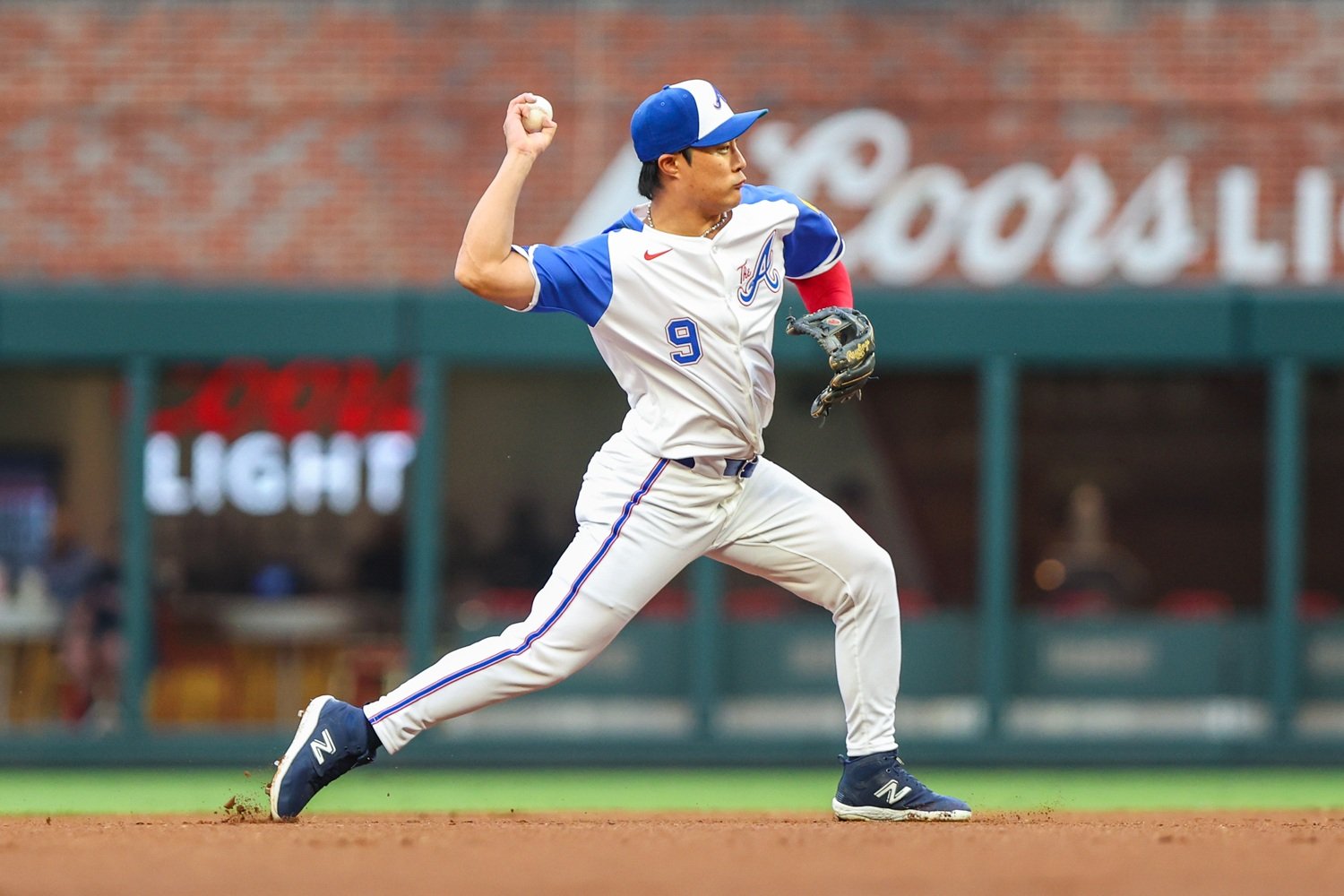 The Blue Jays might lose an opportunity if they continue to wait on Bo Bichette to make a decision. In all likelihood, both sides know each other’s valuations and are mulling the “what ifs”. One “what if” for the Jays is exploring alternatives. Much has been made of moving Andrés Giménez to short and filling the vacancy at second or third by moving existing personnel around the infield, but what if the better move is to bring in Ha-Seong Kim? The move would be similar to last year’s trade that brought Giménez to Toronto. Like Giménez, Kim, is a premium up‑the‑middle defender. He also brings above-average baserunning, is an adaptable infielder, and has above‑average plate discipline at a fraction of the cost of other elite shortstops. This offseason market is notably thin at shortstop. After opting out of his 2026 player option with Atlanta, Kim re‑entered free agency as arguably the best glove‑first shortstop available. Bichette is the only other regular shortstop at or above Kim’s tier. However, the biggest difference between the two will be the cost, especially given Bichette’s offensive production. Kim’s selling point to interested teams is that he provides arguably the best shortstop defence on the market and at a manageable, shorter-term cost. Kim has some hurdles to overcome, and injuries are one. He had shoulder surgery before last season that reduced his playing time with Tampa Bay, and then he was bothered by a bad back and eventually waived by the team. Atlanta picked him up in September, and he played another 24 games, batting .253 with three home runs, 12 RBIs, and an OPS of .684. There have been rumblings in the past that Kim was on the Jays’ radar. He is represented by agent Scott Boras, who recently worked with the Jays to sign Dylan Cease's $210 million contract. From 2021 to 2023 with San Diego, Kim posted strong defensive metrics across shortstop, second, and third. He won a Gold Glove in 2023 (utility). His overall Wins Above Replacement in 2022 and 2023 (5.0 and 5.4 by bWAR) was driven largely by defense and baserunning. Kim is the kind of infielder who turns contact into outs. In 2025, the Jays’ up‑the‑middle defense improved with the addition of Giménez and Ernie Clement’s continued breakout. Adding Kim to the infield (with Vladimir Guerrero Jr. at first), and the Jays get an infield that erases mistakes and supports the rotation. At the plate, Kim doesn’t have Bichette's numbers, but he does have a competent bat that comes with on‑base skills, above‑average contact, and situational awareness. Over his career, he has a .324 OBP and a 97 OPS+, quite close to the league average. If you discount his injury-shortened 2025, his last full season (2024 with San Diego) was impressive. He slashed .233/.330/.370 and delivered an above-average wRC+ with a strong walk rate and selective chase profile. You might recognize those stats as something the Jays prided themselves on last season. The offence emphasized contact and plate discipline over power. Statcast shows consistent discipline for Kim. His chase rate is typically near 21%, his whiff around 16%, and his walk rate in the 10% band. In 2025, returning from injury, his expected contact quality tracked near his career numbers, with modest power but solid zone contact. He isn’t going to hit many home runs, but he will get on base and knock in runners. Kim’s bat is portable across positions. Whether he plays short, second or third, a league‑average bat is perfectly fine if the glove saves runs. On a roster with Vladimir Guerrero Jr. and other middle‑order anchors (and potentially another premium bat like Kyle Tucker), Kim’s role would be to stabilize the run‑prevention side and keep the line moving at the plate. He also adds value on the bases. He stole 38 bags in 2023 and 22 in 2024, with a Statcast sprint speed around league average to slightly above but with excellent decision making. That combination produced several 90‑foot advancements without reckless outs. While Kim might be hoping for a longer-term contract, he is likely open to a one-year deal just over the $16 million player option that he declined from the Braves. If the Jays can persuade Kim and Boras to turn their sights north, plenty of possibilities would remain for the Jays. Adding Kim at under $18 million per season would maintain payroll flexibility, perhaps allowing the signing of a player like Tucker or providing more money to upgrade the bullpen. Kim just turned 30, and if the shoulder is sound, then he should still be in the prime years of his career. His arm strength in 2025 did fall according to Statcast, but that can be addressed by reps — as long as the shoulder has healed. Even if his bat lands near league average and the arm grades slightly below where it was, Kim’s multi‑position utility and savvy baserunning provide a 2–3 WAR floor when healthy. Toronto’s 2025 season demonstrated that strong defense can carry a rotation through thin margins. The transition to that defense-first philosophy started in the outfield with the addition of Daulton Varsho and has expanded into the infield with Giménez and Clement and even Alejandro Kirk behind the plate. Kim has a reputation as a hard worker and adaptable teammate, illustrated by his seamless transition between infield positions in San Diego, his fitting in quickly with the Tampa Bay and Atlanta clubhouses last season, and his immediate contributions with the Braves. Those characteristics matter on a contending roster with evolving roles. Another interesting benefit to signing Kim relates to the Jays’ international reach and focus. Kim is a respected figure in Korean baseball circles and a fan favorite from his San Diego tenure. Toronto has historically benefited from international stars (both on the field and in fan engagement). Adding Kim would strengthen the Jays’ global brand, particularly across Asia, which might be another consideration. As the clock continues to tick with no decision from Bichette, maybe it’s time for the Jays to make a move and fill their infield vacancy. They already have Boras on speed dial. Is it time to make the call?
 -
There were big stops in key situations throughout the 2025 season as a result of John Schneider turning the ball over to the bullpen, but there might have been an equal number of hiccups. The 2025 bullpen was arguably overworked during the regular season, and it showed during the postseason. Schneider’s faith in the backend dwindled to a small number of arms as the postseason progressed. In fact, he had two starters come out of the ‘pen in Game 7 of the ALCS against the Mariners. Like in every successful season, the Jays relied upon clutch hitting and relief pitching. While the Jays’ bats had their ups and downs during 2025, most of the criticism was placed on the bullpen. As Ross Atkins and the front office evaluate their options, they have some big decisions to make when it comes to the later innings. Jeff Hoffman is one of the biggest enigmas. He was phenomenal at times, but over the course of a season, evidence would suggest that he doesn’t have the velocity or the fastball movement to be a dominating closer. Set-up man? Maybe. His struggle to locate pitches was an ongoing issue and is one of the reasons the Jays have been publicly looking at other options. Overall, the bullpen was considerably better than the previous year (when it all but imploded), yet it still ended 2025 as a mid-tier group by several metrics and encountered inconsistency throughout the postseason. If the Jays want to make another push to the postseason, the bullpen will need to be a more dominant, resilient unit. The 2025 bullpen finished the year 16th in ERA (3.98), 14th in WHIP (1.28), 12th in saves (42), and a strong fifth in strikeouts (644). Several relievers were pivotal at different times. Hoffman, who was signed to anchor the late innings, pitched a career-high 71 appearances, which could account for some of his late-season and postseason woes. Seranthony Domínguez, who is now a free agent, offered dominant right-on-right matchups with a microscopic opponent OPS. Mason Fluharty emerged down the stretch, flashing the poise to retire elite hitters in ultra-high leverage. Yariel Rodríguez found more consistent success as a reliever than as a starter, suggesting the bullpen maximizes his value. And you can’t say enough about Louis Varland, who became Schneider’s Swiss Army knife in October, appearing in virtually every scenario, even as an opener. Newcomer Braydon Fisher also made a big impact in his first year with the club. The bullpen also had some late-season and postseason additions and subtractions, as starters Chris Bassitt, Kevin Gausman and José Berríos saw action. Even Trey Yesavage and Shane Bieber both pitched out of the bullpen in Game 7 of the World Series. With that said, the Dodgers also deployed their starters out of the bullpen because of their bullpen woes. Bullpen arms come and go. In 2024, the Jays’ bullpen featured names like Jordan Romano, Nate Pearson, Tim Mayza, Mitch White and Trevor Richards. They all underperformed, and as a result, the season was a disappointment. The 2025 edition fared better. The lesson for the Jays’ front office should be that bullpens are volatile, and success depends on churning the bottom, stockpiling multiple viable high-leverage candidates and leaning into swing-and-miss. Toronto did much of this last season and must double down in 2026. In 2025, the revolving door included Tommy Nance, Paxton Schultz and Justin Bruihl. If they stick around, they could be joined by Jake Bloss (more known as a starter), Lazaro Estrada and Rule 5 pick-up from last year, Angel Bastardo. Can’t imagine any will get a permanent spot in the bullpen, but they might be a stopgap if injuries occur. A sustainable bullpen is not built solely through free agency. The Jays have internal candidates who should be able to contribute meaningful innings. Some should be available by Opening Day, and some are a work in progress and might be available by mid-season. By leveraging these internal arms, the Jays can control costs a bit and be a bit more flexible in the make-up of their roster. With the signing of Dylan Cease and Cody Ponce, it might place Berríos in an awkward position when it comes to the starting rotation. Right now, it seems like Berríos could head to the bullpen or onto the trade block. He voiced his displeasure about what he perceived as a demotion to the bullpen at the end of last season. The Jays also have Eric Lauer and Rodríguez as viable swingmen. Lauer proved his value as a starter and reliever in 2025, delivering starter insurance and effective bulk relief. Rodríguez seemed to stabilize as a reliever last season and looks destined to be seventh/eighth-inning leverage because of his command consistency and velocity. While Jays’ fans have long heard about Ricky Tiedemann, the hard-throwing lefty who has had a series of injuries during his rise through the minor leagues, this might be the season he takes the next step. He could usurp Brendon Little (if Little can’t find his stuff again) as the bullpen's top lefty and provide the team with options. Other arms in the system include two more lefties, Adam Macko and Trenton Wallace, who both pitched in Triple-A last season and can offer multi-inning relief. Free agency and trades are where the magic might end up happening. Edwin Díaz could be the back-end solution, especially now that Devin Williams has signed with the Mets and Ryan Helsley has signed with the Orioles. Jays are also rumoured to be interested in signing Pete Fairbanks. Some other notable names in the free agent pool include Robert Suarez, Shawn Armstrong, Kenley Jansen, Hoby Milner, Tyler Rogers, Kirby Yates, Luke Weaver, Mark Leiter Jr., David Robertson, and Sean Newcomb. More likely, if the Jays aren’t successful in getting any of the bigger names, they might target a return of Domínguez. Alternatively, free agents Jakob Junis, Hunter Harvey, Steven Matz or Caleb Ferguson might fit the bill. Modern bullpen management considers a metric called leverage index (LI) to quantify the pressure of a given plate appearance. In recent years, the Jays have been focusing on analytics, especially when it comes to their pitching staff. This includes approaches such as pre-mapping the bullpen plan by identifying opposing lineup clusters where the setup ace is best deployed, dynamic substitutions where certain pitchers could be brought in to face segments of the lineup that include same-sided hitters, and a concept called flexible closer usage, meaning the closer might be brought in for four or even five outs instead of three. Schneider has evolved as a manager and seems to be leaning into analytics. His bullpen usage last season was one of the reasons for the Jays’ success. When he walks to the mound in 2026, he might have new options to consider. View full article
-
Addressing Inconsistent Bullpen Is Biggest Key to Blue Jays Offseason
Sam Charles posted an article in Blue Jays
.jpg.a49790c75bd2b15e3c8cb371e31d6ded.jpg) There were big stops in key situations throughout the 2025 season as a result of John Schneider turning the ball over to the bullpen, but there might have been an equal number of hiccups. The 2025 bullpen was arguably overworked during the regular season, and it showed during the postseason. Schneider’s faith in the backend dwindled to a small number of arms as the postseason progressed. In fact, he had two starters come out of the ‘pen in Game 7 of the ALCS against the Mariners. Like in every successful season, the Jays relied upon clutch hitting and relief pitching. While the Jays’ bats had their ups and downs during 2025, most of the criticism was placed on the bullpen. As Ross Atkins and the front office evaluate their options, they have some big decisions to make when it comes to the later innings. Jeff Hoffman is one of the biggest enigmas. He was phenomenal at times, but over the course of a season, evidence would suggest that he doesn’t have the velocity or the fastball movement to be a dominating closer. Set-up man? Maybe. His struggle to locate pitches was an ongoing issue and is one of the reasons the Jays have been publicly looking at other options. Overall, the bullpen was considerably better than the previous year (when it all but imploded), yet it still ended 2025 as a mid-tier group by several metrics and encountered inconsistency throughout the postseason. If the Jays want to make another push to the postseason, the bullpen will need to be a more dominant, resilient unit. The 2025 bullpen finished the year 16th in ERA (3.98), 14th in WHIP (1.28), 12th in saves (42), and a strong fifth in strikeouts (644). Several relievers were pivotal at different times. Hoffman, who was signed to anchor the late innings, pitched a career-high 71 appearances, which could account for some of his late-season and postseason woes. Seranthony Domínguez, who is now a free agent, offered dominant right-on-right matchups with a microscopic opponent OPS. Mason Fluharty emerged down the stretch, flashing the poise to retire elite hitters in ultra-high leverage. Yariel Rodríguez found more consistent success as a reliever than as a starter, suggesting the bullpen maximizes his value. And you can’t say enough about Louis Varland, who became Schneider’s Swiss Army knife in October, appearing in virtually every scenario, even as an opener. Newcomer Braydon Fisher also made a big impact in his first year with the club. The bullpen also had some late-season and postseason additions and subtractions, as starters Chris Bassitt, Kevin Gausman and José Berríos saw action. Even Trey Yesavage and Shane Bieber both pitched out of the bullpen in Game 7 of the World Series. With that said, the Dodgers also deployed their starters out of the bullpen because of their bullpen woes. Bullpen arms come and go. In 2024, the Jays’ bullpen featured names like Jordan Romano, Nate Pearson, Tim Mayza, Mitch White and Trevor Richards. They all underperformed, and as a result, the season was a disappointment. The 2025 edition fared better. The lesson for the Jays’ front office should be that bullpens are volatile, and success depends on churning the bottom, stockpiling multiple viable high-leverage candidates and leaning into swing-and-miss. Toronto did much of this last season and must double down in 2026. In 2025, the revolving door included Tommy Nance, Paxton Schultz and Justin Bruihl. If they stick around, they could be joined by Jake Bloss (more known as a starter), Lazaro Estrada and Rule 5 pick-up from last year, Angel Bastardo. Can’t imagine any will get a permanent spot in the bullpen, but they might be a stopgap if injuries occur. A sustainable bullpen is not built solely through free agency. The Jays have internal candidates who should be able to contribute meaningful innings. Some should be available by Opening Day, and some are a work in progress and might be available by mid-season. By leveraging these internal arms, the Jays can control costs a bit and be a bit more flexible in the make-up of their roster. With the signing of Dylan Cease and Cody Ponce, it might place Berríos in an awkward position when it comes to the starting rotation. Right now, it seems like Berríos could head to the bullpen or onto the trade block. He voiced his displeasure about what he perceived as a demotion to the bullpen at the end of last season. The Jays also have Eric Lauer and Rodríguez as viable swingmen. Lauer proved his value as a starter and reliever in 2025, delivering starter insurance and effective bulk relief. Rodríguez seemed to stabilize as a reliever last season and looks destined to be seventh/eighth-inning leverage because of his command consistency and velocity. While Jays’ fans have long heard about Ricky Tiedemann, the hard-throwing lefty who has had a series of injuries during his rise through the minor leagues, this might be the season he takes the next step. He could usurp Brendon Little (if Little can’t find his stuff again) as the bullpen's top lefty and provide the team with options. Other arms in the system include two more lefties, Adam Macko and Trenton Wallace, who both pitched in Triple-A last season and can offer multi-inning relief. Free agency and trades are where the magic might end up happening. Edwin Díaz could be the back-end solution, especially now that Devin Williams has signed with the Mets and Ryan Helsley has signed with the Orioles. Jays are also rumoured to be interested in signing Pete Fairbanks. Some other notable names in the free agent pool include Robert Suarez, Shawn Armstrong, Kenley Jansen, Hoby Milner, Tyler Rogers, Kirby Yates, Luke Weaver, Mark Leiter Jr., David Robertson, and Sean Newcomb. More likely, if the Jays aren’t successful in getting any of the bigger names, they might target a return of Domínguez. Alternatively, free agents Jakob Junis, Hunter Harvey, Steven Matz or Caleb Ferguson might fit the bill. Modern bullpen management considers a metric called leverage index (LI) to quantify the pressure of a given plate appearance. In recent years, the Jays have been focusing on analytics, especially when it comes to their pitching staff. This includes approaches such as pre-mapping the bullpen plan by identifying opposing lineup clusters where the setup ace is best deployed, dynamic substitutions where certain pitchers could be brought in to face segments of the lineup that include same-sided hitters, and a concept called flexible closer usage, meaning the closer might be brought in for four or even five outs instead of three. Schneider has evolved as a manager and seems to be leaning into analytics. His bullpen usage last season was one of the reasons for the Jays’ success. When he walks to the mound in 2026, he might have new options to consider.
There were big stops in key situations throughout the 2025 season as a result of John Schneider turning the ball over to the bullpen, but there might have been an equal number of hiccups. The 2025 bullpen was arguably overworked during the regular season, and it showed during the postseason. Schneider’s faith in the backend dwindled to a small number of arms as the postseason progressed. In fact, he had two starters come out of the ‘pen in Game 7 of the ALCS against the Mariners. Like in every successful season, the Jays relied upon clutch hitting and relief pitching. While the Jays’ bats had their ups and downs during 2025, most of the criticism was placed on the bullpen. As Ross Atkins and the front office evaluate their options, they have some big decisions to make when it comes to the later innings. Jeff Hoffman is one of the biggest enigmas. He was phenomenal at times, but over the course of a season, evidence would suggest that he doesn’t have the velocity or the fastball movement to be a dominating closer. Set-up man? Maybe. His struggle to locate pitches was an ongoing issue and is one of the reasons the Jays have been publicly looking at other options. Overall, the bullpen was considerably better than the previous year (when it all but imploded), yet it still ended 2025 as a mid-tier group by several metrics and encountered inconsistency throughout the postseason. If the Jays want to make another push to the postseason, the bullpen will need to be a more dominant, resilient unit. The 2025 bullpen finished the year 16th in ERA (3.98), 14th in WHIP (1.28), 12th in saves (42), and a strong fifth in strikeouts (644). Several relievers were pivotal at different times. Hoffman, who was signed to anchor the late innings, pitched a career-high 71 appearances, which could account for some of his late-season and postseason woes. Seranthony Domínguez, who is now a free agent, offered dominant right-on-right matchups with a microscopic opponent OPS. Mason Fluharty emerged down the stretch, flashing the poise to retire elite hitters in ultra-high leverage. Yariel Rodríguez found more consistent success as a reliever than as a starter, suggesting the bullpen maximizes his value. And you can’t say enough about Louis Varland, who became Schneider’s Swiss Army knife in October, appearing in virtually every scenario, even as an opener. Newcomer Braydon Fisher also made a big impact in his first year with the club. The bullpen also had some late-season and postseason additions and subtractions, as starters Chris Bassitt, Kevin Gausman and José Berríos saw action. Even Trey Yesavage and Shane Bieber both pitched out of the bullpen in Game 7 of the World Series. With that said, the Dodgers also deployed their starters out of the bullpen because of their bullpen woes. Bullpen arms come and go. In 2024, the Jays’ bullpen featured names like Jordan Romano, Nate Pearson, Tim Mayza, Mitch White and Trevor Richards. They all underperformed, and as a result, the season was a disappointment. The 2025 edition fared better. The lesson for the Jays’ front office should be that bullpens are volatile, and success depends on churning the bottom, stockpiling multiple viable high-leverage candidates and leaning into swing-and-miss. Toronto did much of this last season and must double down in 2026. In 2025, the revolving door included Tommy Nance, Paxton Schultz and Justin Bruihl. If they stick around, they could be joined by Jake Bloss (more known as a starter), Lazaro Estrada and Rule 5 pick-up from last year, Angel Bastardo. Can’t imagine any will get a permanent spot in the bullpen, but they might be a stopgap if injuries occur. A sustainable bullpen is not built solely through free agency. The Jays have internal candidates who should be able to contribute meaningful innings. Some should be available by Opening Day, and some are a work in progress and might be available by mid-season. By leveraging these internal arms, the Jays can control costs a bit and be a bit more flexible in the make-up of their roster. With the signing of Dylan Cease and Cody Ponce, it might place Berríos in an awkward position when it comes to the starting rotation. Right now, it seems like Berríos could head to the bullpen or onto the trade block. He voiced his displeasure about what he perceived as a demotion to the bullpen at the end of last season. The Jays also have Eric Lauer and Rodríguez as viable swingmen. Lauer proved his value as a starter and reliever in 2025, delivering starter insurance and effective bulk relief. Rodríguez seemed to stabilize as a reliever last season and looks destined to be seventh/eighth-inning leverage because of his command consistency and velocity. While Jays’ fans have long heard about Ricky Tiedemann, the hard-throwing lefty who has had a series of injuries during his rise through the minor leagues, this might be the season he takes the next step. He could usurp Brendon Little (if Little can’t find his stuff again) as the bullpen's top lefty and provide the team with options. Other arms in the system include two more lefties, Adam Macko and Trenton Wallace, who both pitched in Triple-A last season and can offer multi-inning relief. Free agency and trades are where the magic might end up happening. Edwin Díaz could be the back-end solution, especially now that Devin Williams has signed with the Mets and Ryan Helsley has signed with the Orioles. Jays are also rumoured to be interested in signing Pete Fairbanks. Some other notable names in the free agent pool include Robert Suarez, Shawn Armstrong, Kenley Jansen, Hoby Milner, Tyler Rogers, Kirby Yates, Luke Weaver, Mark Leiter Jr., David Robertson, and Sean Newcomb. More likely, if the Jays aren’t successful in getting any of the bigger names, they might target a return of Domínguez. Alternatively, free agents Jakob Junis, Hunter Harvey, Steven Matz or Caleb Ferguson might fit the bill. Modern bullpen management considers a metric called leverage index (LI) to quantify the pressure of a given plate appearance. In recent years, the Jays have been focusing on analytics, especially when it comes to their pitching staff. This includes approaches such as pre-mapping the bullpen plan by identifying opposing lineup clusters where the setup ace is best deployed, dynamic substitutions where certain pitchers could be brought in to face segments of the lineup that include same-sided hitters, and a concept called flexible closer usage, meaning the closer might be brought in for four or even five outs instead of three. Schneider has evolved as a manager and seems to be leaning into analytics. His bullpen usage last season was one of the reasons for the Jays’ success. When he walks to the mound in 2026, he might have new options to consider. -
Cardinals' utility man Brendan Donovan isn’t just another name on the trade block. If fans were impressed by Ernie Clement last season, Donovan has the potential to outperform that output and then some from the other side of the plate. A career .287 hitter with a .353 on-base percentage, he brings elite plate discipline (13% strikeout rate) and defensive versatility. He can play second base, third base and left field, giving the Jays insurance if injuries strike, or if Bo Bichette negotiations don’t pan out. More importantly, he’s a left-handed bat in a lineup that still leans right. His skills are ideally suited for this team and for October, when pitching gets nasty and contact hitters become gold. Donovan’s name has been mentioned in nearly every trade conversation featuring contending teams, but his fit and the pieces to pry him from St. Louis are there for the Blue Jays. With two years left of team control at $14 million, even the cost falls well within Toronto’s budget. His tools are the likes that are highly sought after these days. He has elite plate discipline, high contact rates and can play just about anywhere. In addition, his skills at extending at-bats and ability to get on make him the type of Swiss Army knife that could make a difference with or without Bichette on the roster. Last season, his first season as an all-star, Donovan had a wRC+ of 118, a WAR of 2.7, and an OPS vs RHP of .790 in 118 games. His average exit velocity is 88mph (ok for a contact hitter), his hard-hit rate is 38%, but he makes up for that with his sprint speed, which is above average. One of the Jays’ biggest weaknesses during the 2025 season was left-handed contact hitters. Daulton Varsho and Addison Barger were literally hit-or-miss. For that reason, the lineup was too boom-or-bust, especially versus southpaws. When home runs dried up, so did the offense. That’s where Donovan fills a big need. St. Louis is cleaning house and working on a rebuild. It started with Sonny Gray to the Red Sox, and rumours are persisting about Nolan Arenado, Willson Contreras, Donovan and others. Ross Atkins and the Jays’ front office have made deals with the Cards in the past, including trading for Jordan Hicks and Génesis Cabrera in separate deals back in 2023. This time around, the price would be steeper for a player of Donovan’s skills. The price might be as high as pitching prospect Ricky Tiedemann, but with the team’s win-now window, that might just be a reality. Potential trade packages for Donovan could include Ricky Tiedemann (LHP), Joey Loperfido (OF), Gage Stanifer (RHP prospect) or Bowden Francis (SP), Addison Barger (INF/OF), and 2025 top pick JoJo Parker (SS prospect). If the Jays could land Donovan, he could slide into the leadoff or two-hole in the lineup, preceded or followed by Bichette or Springer, Vladimir Guerrero Jr., Anthony Santander, Alejandro Kirk, Daulton Varsho, Ernie Clement, Addison Barger and Andrés Giménez. That would be a pretty potent offense for David Popkins to work with. With Donovan at or near the top, the lineup becomes awfully dynamic. He lengthens at-bats, balances the lineup, and gives John Schneider flexibility to mix and match. If the Jays can’t re-sign Bichette, then Donovan is the next best thing. His ability to work counts, spray line drives and set the table for the rest of the lineup is exactly what the team will need to succeed. If he enters a lineup with Bichette, then those skills will work to the Jays’ advantage by forcing opposing teams to go to their bullpens earlier in games. ESPN predicts the likelihood of Donovan being traded as 75%, and has a long list of other teams interested in his services. Championship teams often make one defining move. The Jays have already made their mark this offseason with the signing of Dylan Cease, but why stop there? It isn’t always the big names that end up making the biggest splash. In 2016, the Cubs added Ben Zobrist. In 2021, the Braves grabbed Eddie Rosario. These weren’t headline-grabbing superstars, but they were versatile, clutch hitters who helped put their teams over the top. Donovan fits that same mold. He’s not going to hit 40 home runs. He will grind out at-bats, move runners, and make the smart play. If the price is Tiedemann, then so be it. Not every pitcher in the Jays’ system will be Trey Yesavage. With the signing of Cease, the Jays can afford to trade one of their pitching prospects. Prospects don’t always pan out. You only have to think back to Alek Manoah, who was drafted 11th overall in 2019. He had a handful of great seasons, then fizzled. Donovan has proven that he can hold his own. As we learned last season, down the stretch and into the postseason, important games come down to pitching duels and slim margins. Donovan’s contact-first approach is a weapon. He’s not here to hit massive home runs, but he will keep innings alive, force mistakes, and create chaos on the bases. Trading for Donovan would also address two unknowns as the off-season continues. It fills the possible void if Bichette leaves, or it complements Bichette’s right-handed, contact-oriented bat with a left-handed contact-oriented bat. He and his on-base skills would help lengthen the lineup. Either way, it is win-win for the Jays. Even from a positional perspective, Donovan’s defensive versatility enables the Jays to play around with the lineups. It also provides them with speed on the bases. Last year’s Jays had a median age of 31.1. At 29, once the season starts, Donovan sits in a range that would suggest he’d fit well in the clubhouse. The only possible flag against Donovan is whether or not he is durable. Foot and groin injuries sidelined him for more than 30 games in 2025. That can be a risk with any player, especially those at or approaching 30 years of age. With that said, anytime a team has a chance to add an all-star, they should consider it. If the Jays can swing a deal with the Cards, the message to MLB and the fanbase is the 2026 Blue Jays mean business. With that said, the Jays need to get in line quickly because it sounds like nearly every contending team will be on the phone with St. Louis trying to add Donovan to their roster. View full article
-
Brendan Donovan Could Be the Perfect Fit for the Blue Jays
Sam Charles posted an article in Blue Jays
.jpg.36500a71d97b4bcb28d1380097efab48.jpg) Cardinals' utility man Brendan Donovan isn’t just another name on the trade block. If fans were impressed by Ernie Clement last season, Donovan has the potential to outperform that output and then some from the other side of the plate. A career .287 hitter with a .353 on-base percentage, he brings elite plate discipline (13% strikeout rate) and defensive versatility. He can play second base, third base and left field, giving the Jays insurance if injuries strike, or if Bo Bichette negotiations don’t pan out. More importantly, he’s a left-handed bat in a lineup that still leans right. His skills are ideally suited for this team and for October, when pitching gets nasty and contact hitters become gold. Donovan’s name has been mentioned in nearly every trade conversation featuring contending teams, but his fit and the pieces to pry him from St. Louis are there for the Blue Jays. With two years left of team control at $14 million, even the cost falls well within Toronto’s budget. His tools are the likes that are highly sought after these days. He has elite plate discipline, high contact rates and can play just about anywhere. In addition, his skills at extending at-bats and ability to get on make him the type of Swiss Army knife that could make a difference with or without Bichette on the roster. Last season, his first season as an all-star, Donovan had a wRC+ of 118, a WAR of 2.7, and an OPS vs RHP of .790 in 118 games. His average exit velocity is 88mph (ok for a contact hitter), his hard-hit rate is 38%, but he makes up for that with his sprint speed, which is above average. One of the Jays’ biggest weaknesses during the 2025 season was left-handed contact hitters. Daulton Varsho and Addison Barger were literally hit-or-miss. For that reason, the lineup was too boom-or-bust, especially versus southpaws. When home runs dried up, so did the offense. That’s where Donovan fills a big need. St. Louis is cleaning house and working on a rebuild. It started with Sonny Gray to the Red Sox, and rumours are persisting about Nolan Arenado, Willson Contreras, Donovan and others. Ross Atkins and the Jays’ front office have made deals with the Cards in the past, including trading for Jordan Hicks and Génesis Cabrera in separate deals back in 2023. This time around, the price would be steeper for a player of Donovan’s skills. The price might be as high as pitching prospect Ricky Tiedemann, but with the team’s win-now window, that might just be a reality. Potential trade packages for Donovan could include Ricky Tiedemann (LHP), Joey Loperfido (OF), Gage Stanifer (RHP prospect) or Bowden Francis (SP), Addison Barger (INF/OF), and 2025 top pick JoJo Parker (SS prospect). If the Jays could land Donovan, he could slide into the leadoff or two-hole in the lineup, preceded or followed by Bichette or Springer, Vladimir Guerrero Jr., Anthony Santander, Alejandro Kirk, Daulton Varsho, Ernie Clement, Addison Barger and Andrés Giménez. That would be a pretty potent offense for David Popkins to work with. With Donovan at or near the top, the lineup becomes awfully dynamic. He lengthens at-bats, balances the lineup, and gives John Schneider flexibility to mix and match. If the Jays can’t re-sign Bichette, then Donovan is the next best thing. His ability to work counts, spray line drives and set the table for the rest of the lineup is exactly what the team will need to succeed. If he enters a lineup with Bichette, then those skills will work to the Jays’ advantage by forcing opposing teams to go to their bullpens earlier in games. ESPN predicts the likelihood of Donovan being traded as 75%, and has a long list of other teams interested in his services. Championship teams often make one defining move. The Jays have already made their mark this offseason with the signing of Dylan Cease, but why stop there? It isn’t always the big names that end up making the biggest splash. In 2016, the Cubs added Ben Zobrist. In 2021, the Braves grabbed Eddie Rosario. These weren’t headline-grabbing superstars, but they were versatile, clutch hitters who helped put their teams over the top. Donovan fits that same mold. He’s not going to hit 40 home runs. He will grind out at-bats, move runners, and make the smart play. If the price is Tiedemann, then so be it. Not every pitcher in the Jays’ system will be Trey Yesavage. With the signing of Cease, the Jays can afford to trade one of their pitching prospects. Prospects don’t always pan out. You only have to think back to Alek Manoah, who was drafted 11th overall in 2019. He had a handful of great seasons, then fizzled. Donovan has proven that he can hold his own. As we learned last season, down the stretch and into the postseason, important games come down to pitching duels and slim margins. Donovan’s contact-first approach is a weapon. He’s not here to hit massive home runs, but he will keep innings alive, force mistakes, and create chaos on the bases. Trading for Donovan would also address two unknowns as the off-season continues. It fills the possible void if Bichette leaves, or it complements Bichette’s right-handed, contact-oriented bat with a left-handed contact-oriented bat. He and his on-base skills would help lengthen the lineup. Either way, it is win-win for the Jays. Even from a positional perspective, Donovan’s defensive versatility enables the Jays to play around with the lineups. It also provides them with speed on the bases. Last year’s Jays had a median age of 31.1. At 29, once the season starts, Donovan sits in a range that would suggest he’d fit well in the clubhouse. The only possible flag against Donovan is whether or not he is durable. Foot and groin injuries sidelined him for more than 30 games in 2025. That can be a risk with any player, especially those at or approaching 30 years of age. With that said, anytime a team has a chance to add an all-star, they should consider it. If the Jays can swing a deal with the Cards, the message to MLB and the fanbase is the 2026 Blue Jays mean business. With that said, the Jays need to get in line quickly because it sounds like nearly every contending team will be on the phone with St. Louis trying to add Donovan to their roster.
Cardinals' utility man Brendan Donovan isn’t just another name on the trade block. If fans were impressed by Ernie Clement last season, Donovan has the potential to outperform that output and then some from the other side of the plate. A career .287 hitter with a .353 on-base percentage, he brings elite plate discipline (13% strikeout rate) and defensive versatility. He can play second base, third base and left field, giving the Jays insurance if injuries strike, or if Bo Bichette negotiations don’t pan out. More importantly, he’s a left-handed bat in a lineup that still leans right. His skills are ideally suited for this team and for October, when pitching gets nasty and contact hitters become gold. Donovan’s name has been mentioned in nearly every trade conversation featuring contending teams, but his fit and the pieces to pry him from St. Louis are there for the Blue Jays. With two years left of team control at $14 million, even the cost falls well within Toronto’s budget. His tools are the likes that are highly sought after these days. He has elite plate discipline, high contact rates and can play just about anywhere. In addition, his skills at extending at-bats and ability to get on make him the type of Swiss Army knife that could make a difference with or without Bichette on the roster. Last season, his first season as an all-star, Donovan had a wRC+ of 118, a WAR of 2.7, and an OPS vs RHP of .790 in 118 games. His average exit velocity is 88mph (ok for a contact hitter), his hard-hit rate is 38%, but he makes up for that with his sprint speed, which is above average. One of the Jays’ biggest weaknesses during the 2025 season was left-handed contact hitters. Daulton Varsho and Addison Barger were literally hit-or-miss. For that reason, the lineup was too boom-or-bust, especially versus southpaws. When home runs dried up, so did the offense. That’s where Donovan fills a big need. St. Louis is cleaning house and working on a rebuild. It started with Sonny Gray to the Red Sox, and rumours are persisting about Nolan Arenado, Willson Contreras, Donovan and others. Ross Atkins and the Jays’ front office have made deals with the Cards in the past, including trading for Jordan Hicks and Génesis Cabrera in separate deals back in 2023. This time around, the price would be steeper for a player of Donovan’s skills. The price might be as high as pitching prospect Ricky Tiedemann, but with the team’s win-now window, that might just be a reality. Potential trade packages for Donovan could include Ricky Tiedemann (LHP), Joey Loperfido (OF), Gage Stanifer (RHP prospect) or Bowden Francis (SP), Addison Barger (INF/OF), and 2025 top pick JoJo Parker (SS prospect). If the Jays could land Donovan, he could slide into the leadoff or two-hole in the lineup, preceded or followed by Bichette or Springer, Vladimir Guerrero Jr., Anthony Santander, Alejandro Kirk, Daulton Varsho, Ernie Clement, Addison Barger and Andrés Giménez. That would be a pretty potent offense for David Popkins to work with. With Donovan at or near the top, the lineup becomes awfully dynamic. He lengthens at-bats, balances the lineup, and gives John Schneider flexibility to mix and match. If the Jays can’t re-sign Bichette, then Donovan is the next best thing. His ability to work counts, spray line drives and set the table for the rest of the lineup is exactly what the team will need to succeed. If he enters a lineup with Bichette, then those skills will work to the Jays’ advantage by forcing opposing teams to go to their bullpens earlier in games. ESPN predicts the likelihood of Donovan being traded as 75%, and has a long list of other teams interested in his services. Championship teams often make one defining move. The Jays have already made their mark this offseason with the signing of Dylan Cease, but why stop there? It isn’t always the big names that end up making the biggest splash. In 2016, the Cubs added Ben Zobrist. In 2021, the Braves grabbed Eddie Rosario. These weren’t headline-grabbing superstars, but they were versatile, clutch hitters who helped put their teams over the top. Donovan fits that same mold. He’s not going to hit 40 home runs. He will grind out at-bats, move runners, and make the smart play. If the price is Tiedemann, then so be it. Not every pitcher in the Jays’ system will be Trey Yesavage. With the signing of Cease, the Jays can afford to trade one of their pitching prospects. Prospects don’t always pan out. You only have to think back to Alek Manoah, who was drafted 11th overall in 2019. He had a handful of great seasons, then fizzled. Donovan has proven that he can hold his own. As we learned last season, down the stretch and into the postseason, important games come down to pitching duels and slim margins. Donovan’s contact-first approach is a weapon. He’s not here to hit massive home runs, but he will keep innings alive, force mistakes, and create chaos on the bases. Trading for Donovan would also address two unknowns as the off-season continues. It fills the possible void if Bichette leaves, or it complements Bichette’s right-handed, contact-oriented bat with a left-handed contact-oriented bat. He and his on-base skills would help lengthen the lineup. Either way, it is win-win for the Jays. Even from a positional perspective, Donovan’s defensive versatility enables the Jays to play around with the lineups. It also provides them with speed on the bases. Last year’s Jays had a median age of 31.1. At 29, once the season starts, Donovan sits in a range that would suggest he’d fit well in the clubhouse. The only possible flag against Donovan is whether or not he is durable. Foot and groin injuries sidelined him for more than 30 games in 2025. That can be a risk with any player, especially those at or approaching 30 years of age. With that said, anytime a team has a chance to add an all-star, they should consider it. If the Jays can swing a deal with the Cards, the message to MLB and the fanbase is the 2026 Blue Jays mean business. With that said, the Jays need to get in line quickly because it sounds like nearly every contending team will be on the phone with St. Louis trying to add Donovan to their roster. -
This time last year, the Toronto Blue Jays were in the midst of determining what 2025 would look like. Was it time to go all in? Or start rebuilding? Negotiations with Vladimir Guerrero Jr. were stalling, and the front office was trying to put forward a brave face. They were adamant that the 74-win 2024 season was an anomaly. Fast-forward 365 days, and Jays are talking like a team that understands that the future is now. The team heads into the 2026 season with a singular mission: to finish what they started in 2025. After a 94-win campaign that culminated in a heartbreaking loss to the Los Angeles Dodgers in the seventh game of the World Series, the Jays have doubled down on their commitment to winning now. This is not a rebuilding year, nor a transitional phase; it’s an all-in push for a championship. The front office is showing a willingness to spend aggressively, even at the cost of crossing the Competitive Balance Tax (CBT) threshold. With a payroll projected north of $264 million, the Blue Jays are firmly entrenched in the second tier of CBT penalties. For a franchise that was literally inches from winning the World Series (for the first time since 1993), the road to a championship is similar to that of the last 30 years. Pay now, win now. The big question mark this offseason is Bo Bichette. His 2025 season demonstrated that he was back to form as a hard-hitting middle-of-the-lineup hitter. Even on one leg in the World Series, he nearly helped the team win the series. While the Jays remain in the mix to re-sign him, rumors have swirled about potential pivots to Kyle Tucker or Japanese free agent Munetaka Murakami if Bichette departs. Either move would reshape the lineup and signal Toronto’s willingness to think outside the box. It is unlikely that any or all of the following will return in 2026: Chris Bassitt, Max Scherzer, Ty France, and Isiah Kiner-Falefa. However, the Jays have internal depth and financial flexibility to handle their departures. The 2026 40-man roster is building up to be an interesting blend of established players, high-priced free agents, and emerging prospects. It’s a team built for a division that continues to be tough. Here’s how the roster is coming together and what it means for 2026. Projected Lineup Assuming Bichette returns, the Jays’ 2026 starting lineup would look something like this: George Springer (DH) Bo Bichette (SS) Vladimir Guerrero Jr. (1B) Anthony Santander (LF) Alejandro Kirk (C) Ernie Clement (3B) Daulton Varsho (CF) Addison Barger (RF) Andrés Giménez (2B) Bench options include Myles Straw, Joey Loperfido, Davis Schneider, and Nathan Lukes, offering flexibility and matchup advantages. Starting Rotation Toronto’s rotation will be one of the best in the AL East next season: Kevin Gausman Dylan Cease Shane Bieber Trey Yesavage José Berríos Depth options include Eric Lauer, Bowden Francis, and minor leaguer Ricky Tiedemann, ensuring the Jays can weather injuries without a significant drop-off. By projected fWAR, Toronto’s rotation ranks second in the AL East (12.7), trailing only Boston (14.3). Bullpen Outlook The bullpen remains a work in progress. The Blue Jays agreed to terms with right-handed Cody Ponce on December 2, though it's unclear what his role will be. It is also unclear how he will fit into the 40-man roster as someone will need to be removed. Brandon Little, Justin Bruihl or Lázaro Estrada are most likely to be traded or designated for assignment to make room. Yimi García Louis Varland Braydon Fisher Yariel Rodríguez Jeff Hoffman Eric Lauer Mason Fluharty Brandon Little Tommy Nance Paxton Schultz Lázaro Estrada Justin Bruihl Angel Bastardo Cody Ponce The Jays have been rumoured to be exploring options, including free agents Edwin Díaz and Pete Fairbanks. Although the team doesn’t have a big repository of top prospects in the minors, there has been talk of potential trades. Many of the trade options hinge on whether the Jays can re-sign Bichette. If not, they’ll be seeking an infielder and perhaps more pitching depth. Catcher Alejandro Kirk Tyler Heineman Kirk and Heineman are slated to return behind the plate in 2026. The Jays tendered the switch-hitting Heineman a contract to prevent him from becoming a free agent. The third catcher on the Jays’ 40-man roster is Brandon Valenzuela, who was acquired last season in a trade with the San Diego Padres for Will Wagner. At the time, the 24-year-old switch-hitter was the 26th-ranked prospect in the San Diego system. Infield Vladimir Guerrero Jr. Andrés Giménez Ernie Clement Addison Barger Leo Jiménez Depending on Bichette, there won’t be a lot of changes here. The Jays may try to talk Bichette into transitioning to second, or not. Barger and Schneider will serve as backups in the infield and outfield to allow for rest days. If Bichette doesn’t re-sign, then the infield will most likely need to add a piece via trade or free agency. Technically, a healthy Santander would roam right field, enabling Barger to play the infield and shift Clement to second with Giménez at short. Light-hitting Leo Jiménez, who saw limited action last season, could be called up in case of injury. Outfield The Jays have a surplus of MLB-worthy outfielders. This could support trading one or more to address the team’s infield or relief pitching needs. Jonatan Clase Joey Loperfido Nathan Lukes Anthony Santander Davis Schneider George Springer Myles Straw Daulton Varsho Addison Barger (listed as an infielder on the roster) Prospects to Watch The Jays’ farm system ranks amongst the top half of all MLB systems. The meteoric rise of Trey Yasavage is not the norm, but the Jays do have several players to keep an eye on: Arjun Nimmala (SS) Infielder with plenty of tools, but early in development. Projected to get to the Majors by 2028. JoJo Parker (OF) Power-speed combo, could debut late in 2026, but more likely in 2029. Gage Stanifer (RHP) pitched in Double-A last season. Probably two years away from the Majors. Ricky Tiedemann (LHP) Faced numerous injuries over his brief career, but has top-level stuff. RJ Schreck (OF) Roamed the outfield last season in Triple-A. Bit of a logjam at the major league level, so might be traded, move up with Lukes, Straw, or Barger, or dealt. These prospects provide both insurance and trade capital for a team in win-now mode. The 2026 Toronto Blue Jays are being built to win. The big question mark is Bo Bichette. If he chooses to walk, the Jays can use those dollars to add pieces via free agency or trade. Baseball is unpredictable, and the margin for error in the AL East is razor-thin. Boston, New York, and Baltimore are all reloading for 2026. Even Tampa Bay is rumoured to be exploring a trade to re-acquire Zach Eflin. Either way, one thing is sure: the Blue Jays are all-in, and 2025 might just have been the start of something extra special. View full article
-
.jpg.44f654b6e910fe4a442e7d5e2fc9ff03.jpg) This time last year, the Toronto Blue Jays were in the midst of determining what 2025 would look like. Was it time to go all in? Or start rebuilding? Negotiations with Vladimir Guerrero Jr. were stalling, and the front office was trying to put forward a brave face. They were adamant that the 74-win 2024 season was an anomaly. Fast-forward 365 days, and Jays are talking like a team that understands that the future is now. The team heads into the 2026 season with a singular mission: to finish what they started in 2025. After a 94-win campaign that culminated in a heartbreaking loss to the Los Angeles Dodgers in the seventh game of the World Series, the Jays have doubled down on their commitment to winning now. This is not a rebuilding year, nor a transitional phase; it’s an all-in push for a championship. The front office is showing a willingness to spend aggressively, even at the cost of crossing the Competitive Balance Tax (CBT) threshold. With a payroll projected north of $264 million, the Blue Jays are firmly entrenched in the second tier of CBT penalties. For a franchise that was literally inches from winning the World Series (for the first time since 1993), the road to a championship is similar to that of the last 30 years. Pay now, win now. The big question mark this offseason is Bo Bichette. His 2025 season demonstrated that he was back to form as a hard-hitting middle-of-the-lineup hitter. Even on one leg in the World Series, he nearly helped the team win the series. While the Jays remain in the mix to re-sign him, rumors have swirled about potential pivots to Kyle Tucker or Japanese free agent Munetaka Murakami if Bichette departs. Either move would reshape the lineup and signal Toronto’s willingness to think outside the box. It is unlikely that any or all of the following will return in 2026: Chris Bassitt, Max Scherzer, Ty France, and Isiah Kiner-Falefa. However, the Jays have internal depth and financial flexibility to handle their departures. The 2026 40-man roster is building up to be an interesting blend of established players, high-priced free agents, and emerging prospects. It’s a team built for a division that continues to be tough. Here’s how the roster is coming together and what it means for 2026. Projected Lineup Assuming Bichette returns, the Jays’ 2026 starting lineup would look something like this: George Springer (DH) Bo Bichette (SS) Vladimir Guerrero Jr. (1B) Anthony Santander (LF) Alejandro Kirk (C) Ernie Clement (3B) Daulton Varsho (CF) Addison Barger (RF) Andrés Giménez (2B) Bench options include Myles Straw, Joey Loperfido, Davis Schneider, and Nathan Lukes, offering flexibility and matchup advantages. Starting Rotation Toronto’s rotation will be one of the best in the AL East next season: Kevin Gausman Dylan Cease Shane Bieber Trey Yesavage José Berríos Depth options include Eric Lauer, Bowden Francis, and minor leaguer Ricky Tiedemann, ensuring the Jays can weather injuries without a significant drop-off. By projected fWAR, Toronto’s rotation ranks second in the AL East (12.7), trailing only Boston (14.3). Bullpen Outlook The bullpen remains a work in progress. The Blue Jays agreed to terms with right-handed Cody Ponce on December 2, though it's unclear what his role will be. It is also unclear how he will fit into the 40-man roster as someone will need to be removed. Brandon Little, Justin Bruihl or Lázaro Estrada are most likely to be traded or designated for assignment to make room. Yimi García Louis Varland Braydon Fisher Yariel Rodríguez Jeff Hoffman Eric Lauer Mason Fluharty Brandon Little Tommy Nance Paxton Schultz Lázaro Estrada Justin Bruihl Angel Bastardo Cody Ponce The Jays have been rumoured to be exploring options, including free agents Edwin Díaz and Pete Fairbanks. Although the team doesn’t have a big repository of top prospects in the minors, there has been talk of potential trades. Many of the trade options hinge on whether the Jays can re-sign Bichette. If not, they’ll be seeking an infielder and perhaps more pitching depth. Catcher Alejandro Kirk Tyler Heineman Kirk and Heineman are slated to return behind the plate in 2026. The Jays tendered the switch-hitting Heineman a contract to prevent him from becoming a free agent. The third catcher on the Jays’ 40-man roster is Brandon Valenzuela, who was acquired last season in a trade with the San Diego Padres for Will Wagner. At the time, the 24-year-old switch-hitter was the 26th-ranked prospect in the San Diego system. Infield Vladimir Guerrero Jr. Andrés Giménez Ernie Clement Addison Barger Leo Jiménez Depending on Bichette, there won’t be a lot of changes here. The Jays may try to talk Bichette into transitioning to second, or not. Barger and Schneider will serve as backups in the infield and outfield to allow for rest days. If Bichette doesn’t re-sign, then the infield will most likely need to add a piece via trade or free agency. Technically, a healthy Santander would roam right field, enabling Barger to play the infield and shift Clement to second with Giménez at short. Light-hitting Leo Jiménez, who saw limited action last season, could be called up in case of injury. Outfield The Jays have a surplus of MLB-worthy outfielders. This could support trading one or more to address the team’s infield or relief pitching needs. Jonatan Clase Joey Loperfido Nathan Lukes Anthony Santander Davis Schneider George Springer Myles Straw Daulton Varsho Addison Barger (listed as an infielder on the roster) Prospects to Watch The Jays’ farm system ranks amongst the top half of all MLB systems. The meteoric rise of Trey Yasavage is not the norm, but the Jays do have several players to keep an eye on: Arjun Nimmala (SS) Infielder with plenty of tools, but early in development. Projected to get to the Majors by 2028. JoJo Parker (OF) Power-speed combo, could debut late in 2026, but more likely in 2029. Gage Stanifer (RHP) pitched in Double-A last season. Probably two years away from the Majors. Ricky Tiedemann (LHP) Faced numerous injuries over his brief career, but has top-level stuff. RJ Schreck (OF) Roamed the outfield last season in Triple-A. Bit of a logjam at the major league level, so might be traded, move up with Lukes, Straw, or Barger, or dealt. These prospects provide both insurance and trade capital for a team in win-now mode. The 2026 Toronto Blue Jays are being built to win. The big question mark is Bo Bichette. If he chooses to walk, the Jays can use those dollars to add pieces via free agency or trade. Baseball is unpredictable, and the margin for error in the AL East is razor-thin. Boston, New York, and Baltimore are all reloading for 2026. Even Tampa Bay is rumoured to be exploring a trade to re-acquire Zach Eflin. Either way, one thing is sure: the Blue Jays are all-in, and 2025 might just have been the start of something extra special.
This time last year, the Toronto Blue Jays were in the midst of determining what 2025 would look like. Was it time to go all in? Or start rebuilding? Negotiations with Vladimir Guerrero Jr. were stalling, and the front office was trying to put forward a brave face. They were adamant that the 74-win 2024 season was an anomaly. Fast-forward 365 days, and Jays are talking like a team that understands that the future is now. The team heads into the 2026 season with a singular mission: to finish what they started in 2025. After a 94-win campaign that culminated in a heartbreaking loss to the Los Angeles Dodgers in the seventh game of the World Series, the Jays have doubled down on their commitment to winning now. This is not a rebuilding year, nor a transitional phase; it’s an all-in push for a championship. The front office is showing a willingness to spend aggressively, even at the cost of crossing the Competitive Balance Tax (CBT) threshold. With a payroll projected north of $264 million, the Blue Jays are firmly entrenched in the second tier of CBT penalties. For a franchise that was literally inches from winning the World Series (for the first time since 1993), the road to a championship is similar to that of the last 30 years. Pay now, win now. The big question mark this offseason is Bo Bichette. His 2025 season demonstrated that he was back to form as a hard-hitting middle-of-the-lineup hitter. Even on one leg in the World Series, he nearly helped the team win the series. While the Jays remain in the mix to re-sign him, rumors have swirled about potential pivots to Kyle Tucker or Japanese free agent Munetaka Murakami if Bichette departs. Either move would reshape the lineup and signal Toronto’s willingness to think outside the box. It is unlikely that any or all of the following will return in 2026: Chris Bassitt, Max Scherzer, Ty France, and Isiah Kiner-Falefa. However, the Jays have internal depth and financial flexibility to handle their departures. The 2026 40-man roster is building up to be an interesting blend of established players, high-priced free agents, and emerging prospects. It’s a team built for a division that continues to be tough. Here’s how the roster is coming together and what it means for 2026. Projected Lineup Assuming Bichette returns, the Jays’ 2026 starting lineup would look something like this: George Springer (DH) Bo Bichette (SS) Vladimir Guerrero Jr. (1B) Anthony Santander (LF) Alejandro Kirk (C) Ernie Clement (3B) Daulton Varsho (CF) Addison Barger (RF) Andrés Giménez (2B) Bench options include Myles Straw, Joey Loperfido, Davis Schneider, and Nathan Lukes, offering flexibility and matchup advantages. Starting Rotation Toronto’s rotation will be one of the best in the AL East next season: Kevin Gausman Dylan Cease Shane Bieber Trey Yesavage José Berríos Depth options include Eric Lauer, Bowden Francis, and minor leaguer Ricky Tiedemann, ensuring the Jays can weather injuries without a significant drop-off. By projected fWAR, Toronto’s rotation ranks second in the AL East (12.7), trailing only Boston (14.3). Bullpen Outlook The bullpen remains a work in progress. The Blue Jays agreed to terms with right-handed Cody Ponce on December 2, though it's unclear what his role will be. It is also unclear how he will fit into the 40-man roster as someone will need to be removed. Brandon Little, Justin Bruihl or Lázaro Estrada are most likely to be traded or designated for assignment to make room. Yimi García Louis Varland Braydon Fisher Yariel Rodríguez Jeff Hoffman Eric Lauer Mason Fluharty Brandon Little Tommy Nance Paxton Schultz Lázaro Estrada Justin Bruihl Angel Bastardo Cody Ponce The Jays have been rumoured to be exploring options, including free agents Edwin Díaz and Pete Fairbanks. Although the team doesn’t have a big repository of top prospects in the minors, there has been talk of potential trades. Many of the trade options hinge on whether the Jays can re-sign Bichette. If not, they’ll be seeking an infielder and perhaps more pitching depth. Catcher Alejandro Kirk Tyler Heineman Kirk and Heineman are slated to return behind the plate in 2026. The Jays tendered the switch-hitting Heineman a contract to prevent him from becoming a free agent. The third catcher on the Jays’ 40-man roster is Brandon Valenzuela, who was acquired last season in a trade with the San Diego Padres for Will Wagner. At the time, the 24-year-old switch-hitter was the 26th-ranked prospect in the San Diego system. Infield Vladimir Guerrero Jr. Andrés Giménez Ernie Clement Addison Barger Leo Jiménez Depending on Bichette, there won’t be a lot of changes here. The Jays may try to talk Bichette into transitioning to second, or not. Barger and Schneider will serve as backups in the infield and outfield to allow for rest days. If Bichette doesn’t re-sign, then the infield will most likely need to add a piece via trade or free agency. Technically, a healthy Santander would roam right field, enabling Barger to play the infield and shift Clement to second with Giménez at short. Light-hitting Leo Jiménez, who saw limited action last season, could be called up in case of injury. Outfield The Jays have a surplus of MLB-worthy outfielders. This could support trading one or more to address the team’s infield or relief pitching needs. Jonatan Clase Joey Loperfido Nathan Lukes Anthony Santander Davis Schneider George Springer Myles Straw Daulton Varsho Addison Barger (listed as an infielder on the roster) Prospects to Watch The Jays’ farm system ranks amongst the top half of all MLB systems. The meteoric rise of Trey Yasavage is not the norm, but the Jays do have several players to keep an eye on: Arjun Nimmala (SS) Infielder with plenty of tools, but early in development. Projected to get to the Majors by 2028. JoJo Parker (OF) Power-speed combo, could debut late in 2026, but more likely in 2029. Gage Stanifer (RHP) pitched in Double-A last season. Probably two years away from the Majors. Ricky Tiedemann (LHP) Faced numerous injuries over his brief career, but has top-level stuff. RJ Schreck (OF) Roamed the outfield last season in Triple-A. Bit of a logjam at the major league level, so might be traded, move up with Lukes, Straw, or Barger, or dealt. These prospects provide both insurance and trade capital for a team in win-now mode. The 2026 Toronto Blue Jays are being built to win. The big question mark is Bo Bichette. If he chooses to walk, the Jays can use those dollars to add pieces via free agency or trade. Baseball is unpredictable, and the margin for error in the AL East is razor-thin. Boston, New York, and Baltimore are all reloading for 2026. Even Tampa Bay is rumoured to be exploring a trade to re-acquire Zach Eflin. Either way, one thing is sure: the Blue Jays are all-in, and 2025 might just have been the start of something extra special. -
Since 2019, the Blue Jays have had the luxury of having Vladimir Guerrero Jr. and Bo Bichette anchor their infield. The team’s glaring issue in the infield has been a lack of stability at third base since Matt Chapman left, along with a rotating door at second. Enter Nolan Arenado, a player whose name has been synonymous with elite defense and consistent offensive production for over a decade. With the St. Louis Cardinals signaling a rebuild and Arenado reportedly open to expanding his list of teams to whom he'd accept a trade, the Jays have a unique opportunity to acquire a future Hall of Famer. Arenado fits the Jays’ roster and their financial and performance needs, and the trade price might be within the team’s means. Arenado has two guaranteed years remaining on his current deal. The details of his contract are complicated, but in simplest terms, he will make a $27 million salary in 2026 (although $5 million of that will be paid by the Rockies and $6 million is deferred) and a $15 million salary in 2027. Arendo holds a full no-trade clause, but recent reports suggest he would be willing to waive it in the right situation. The Cardinals, after trading Sonny Gray to the Red Sox and signaling a payroll reset, appear motivated to move Arenado before the start of the season. Arenado’s offensive numbers dipped last season. He slashed .237/.289/.377 with 12 home runs and 52 RBIs, marking his weakest full season since his rookie year. However, his defensive value remains strong. He is projected to be at least a top-25 third baseman next season. For a Jays team that ranked near the bottom in third base production last season, Arenado could represent a meaningful upgrade. Advanced metrics underscore Arenado’s value. In 2025, he posted +6 Outs Above Average (OAA) and 12 Defensive Runs Saved (DRS), ranking among the top third basemen in MLB. These numbers highlight his ability to convert difficult plays into outs, a skill that directly reduces opponent scoring opportunities. For a team like the Jays that relies heavily on pitching efficiency, Arenado’s glove could be the difference in tight games against division rivals. If the season were to start tomorrow, the Jays would likely continue with Ernie Clement at third, occasionally spelled by Addison Barger. They are a serviceable duo, but are not elite. Arenado is arguably one of the best defenders in MLB history. He has won 10 Gold Gloves and six Platinum Gloves during his career. Overall, the Jays’ third base defense was solid last season but not exceptional. Clement’s reliability helped stabilize the infield, but Barger’s occasional difficulties posed some concern. That inconsistency was exacerbated by injuries during the season, which forced John Schneider to shuffle his lineup. The Jays finished the year with strong team defensive metrics (+40 Fielding Run Value overall), but there is no question that an upgrade at third base could be key to sustaining success in 2026. On many occasions throughout 2025, the Jays’ defence kept the team in games when the bats weren’t humming, and if they want to repeat last year’s success, that defence will need to be at least as good. Arenado would also provide veteran leadership. He was part of playoff teams in Colorado and St. Louis, so he could bring that experience and leadership to the Toronto clubhouse. He is known for his work ethic and reputation as a clubhouse leader and could easily slide into the role that players like Chris Bassitt, Max Scherzer and Isiah Kiner-Falefa provided last season. The price for Arenado might not be as high as it would have been during his prime. Arenado saw his OPS+ drop last season, but he remains capable of hitting more than 20 home runs and providing over 70 RBIs if healthy. His hard-hit rate has declined, but a move to the hitter-friendly Rogers Centre could help. Even at his current level, Arenado should offer more offensive production than the combo of Clement and Barger. Another bonus for the Jays would be that Arenado has the skills to play first base as well, providing some defensive insurance if Guerrero needs a break or gets injured. Arenado could also stabilize the left side of the infield if Bichette doesn’t re-sign and provides options for the Jays should they wish to further test drive Andrés Giménez or Clement at short. Arenado’s remaining salary would be manageable for the Jays to take on. St. Louis might even agree to cover part of the cost. The Jays have shown a willingness to absorb contracts, such as in last offseason’s Giménez trade, and could justify this move as a short-term investment to maximize their competitive window. The biggest hurdle is Arenado’s no-trade clause. Historically, he has preferred destinations like Los Angeles or Boston, but recent comments suggest he may expand his list. Toronto’s playoff aspirations and current roster could make the Jays an attractive option, but that doesn’t mean the front office won’t need to sell Arenado on the fit and possibly sweeten the deal with financial incentives. The trade cost for Arenado wouldn't be interesting. Ultimately, a deal like this would balance the Cardinals’ desire to clear payroll with Toronto’s desire for immediate impact. That said, acquiring Arenado wouldn't come without risk. He turns 35 in April, and his offensive contributions may now be on the decline. But remember, analysts said the same about George Springer heading into last season. If Arenado can perform as he has in the past, he would provide a potent bat, veteran leadership and an elite glove to the Jays to support another potential deep run in 2026. While his contract, age, and no-trade clause pose challenges, the Cardinals’ rebuild and Arenado’s openness to a change create a window for the Jays. View full article
-
Is Nolan Arenado the Infield Solution the Blue Jays Need?
Sam Charles posted an article in Blue Jays
.jpg.fef758c74f133a6f97cb87f337f62fac.jpg) Since 2019, the Blue Jays have had the luxury of having Vladimir Guerrero Jr. and Bo Bichette anchor their infield. The team’s glaring issue in the infield has been a lack of stability at third base since Matt Chapman left, along with a rotating door at second. Enter Nolan Arenado, a player whose name has been synonymous with elite defense and consistent offensive production for over a decade. With the St. Louis Cardinals signaling a rebuild and Arenado reportedly open to expanding his list of teams to whom he'd accept a trade, the Jays have a unique opportunity to acquire a future Hall of Famer. Arenado fits the Jays’ roster and their financial and performance needs, and the trade price might be within the team’s means. Arenado has two guaranteed years remaining on his current deal. The details of his contract are complicated, but in simplest terms, he will make a $27 million salary in 2026 (although $5 million of that will be paid by the Rockies and $6 million is deferred) and a $15 million salary in 2027. Arendo holds a full no-trade clause, but recent reports suggest he would be willing to waive it in the right situation. The Cardinals, after trading Sonny Gray to the Red Sox and signaling a payroll reset, appear motivated to move Arenado before the start of the season. Arenado’s offensive numbers dipped last season. He slashed .237/.289/.377 with 12 home runs and 52 RBIs, marking his weakest full season since his rookie year. However, his defensive value remains strong. He is projected to be at least a top-25 third baseman next season. For a Jays team that ranked near the bottom in third base production last season, Arenado could represent a meaningful upgrade. Advanced metrics underscore Arenado’s value. In 2025, he posted +6 Outs Above Average (OAA) and 12 Defensive Runs Saved (DRS), ranking among the top third basemen in MLB. These numbers highlight his ability to convert difficult plays into outs, a skill that directly reduces opponent scoring opportunities. For a team like the Jays that relies heavily on pitching efficiency, Arenado’s glove could be the difference in tight games against division rivals. If the season were to start tomorrow, the Jays would likely continue with Ernie Clement at third, occasionally spelled by Addison Barger. They are a serviceable duo, but are not elite. Arenado is arguably one of the best defenders in MLB history. He has won 10 Gold Gloves and six Platinum Gloves during his career. Overall, the Jays’ third base defense was solid last season but not exceptional. Clement’s reliability helped stabilize the infield, but Barger’s occasional difficulties posed some concern. That inconsistency was exacerbated by injuries during the season, which forced John Schneider to shuffle his lineup. The Jays finished the year with strong team defensive metrics (+40 Fielding Run Value overall), but there is no question that an upgrade at third base could be key to sustaining success in 2026. On many occasions throughout 2025, the Jays’ defence kept the team in games when the bats weren’t humming, and if they want to repeat last year’s success, that defence will need to be at least as good. Arenado would also provide veteran leadership. He was part of playoff teams in Colorado and St. Louis, so he could bring that experience and leadership to the Toronto clubhouse. He is known for his work ethic and reputation as a clubhouse leader and could easily slide into the role that players like Chris Bassitt, Max Scherzer and Isiah Kiner-Falefa provided last season. The price for Arenado might not be as high as it would have been during his prime. Arenado saw his OPS+ drop last season, but he remains capable of hitting more than 20 home runs and providing over 70 RBIs if healthy. His hard-hit rate has declined, but a move to the hitter-friendly Rogers Centre could help. Even at his current level, Arenado should offer more offensive production than the combo of Clement and Barger. Another bonus for the Jays would be that Arenado has the skills to play first base as well, providing some defensive insurance if Guerrero needs a break or gets injured. Arenado could also stabilize the left side of the infield if Bichette doesn’t re-sign and provides options for the Jays should they wish to further test drive Andrés Giménez or Clement at short. Arenado’s remaining salary would be manageable for the Jays to take on. St. Louis might even agree to cover part of the cost. The Jays have shown a willingness to absorb contracts, such as in last offseason’s Giménez trade, and could justify this move as a short-term investment to maximize their competitive window. The biggest hurdle is Arenado’s no-trade clause. Historically, he has preferred destinations like Los Angeles or Boston, but recent comments suggest he may expand his list. Toronto’s playoff aspirations and current roster could make the Jays an attractive option, but that doesn’t mean the front office won’t need to sell Arenado on the fit and possibly sweeten the deal with financial incentives. The trade cost for Arenado wouldn't be interesting. Ultimately, a deal like this would balance the Cardinals’ desire to clear payroll with Toronto’s desire for immediate impact. That said, acquiring Arenado wouldn't come without risk. He turns 35 in April, and his offensive contributions may now be on the decline. But remember, analysts said the same about George Springer heading into last season. If Arenado can perform as he has in the past, he would provide a potent bat, veteran leadership and an elite glove to the Jays to support another potential deep run in 2026. While his contract, age, and no-trade clause pose challenges, the Cardinals’ rebuild and Arenado’s openness to a change create a window for the Jays.
Since 2019, the Blue Jays have had the luxury of having Vladimir Guerrero Jr. and Bo Bichette anchor their infield. The team’s glaring issue in the infield has been a lack of stability at third base since Matt Chapman left, along with a rotating door at second. Enter Nolan Arenado, a player whose name has been synonymous with elite defense and consistent offensive production for over a decade. With the St. Louis Cardinals signaling a rebuild and Arenado reportedly open to expanding his list of teams to whom he'd accept a trade, the Jays have a unique opportunity to acquire a future Hall of Famer. Arenado fits the Jays’ roster and their financial and performance needs, and the trade price might be within the team’s means. Arenado has two guaranteed years remaining on his current deal. The details of his contract are complicated, but in simplest terms, he will make a $27 million salary in 2026 (although $5 million of that will be paid by the Rockies and $6 million is deferred) and a $15 million salary in 2027. Arendo holds a full no-trade clause, but recent reports suggest he would be willing to waive it in the right situation. The Cardinals, after trading Sonny Gray to the Red Sox and signaling a payroll reset, appear motivated to move Arenado before the start of the season. Arenado’s offensive numbers dipped last season. He slashed .237/.289/.377 with 12 home runs and 52 RBIs, marking his weakest full season since his rookie year. However, his defensive value remains strong. He is projected to be at least a top-25 third baseman next season. For a Jays team that ranked near the bottom in third base production last season, Arenado could represent a meaningful upgrade. Advanced metrics underscore Arenado’s value. In 2025, he posted +6 Outs Above Average (OAA) and 12 Defensive Runs Saved (DRS), ranking among the top third basemen in MLB. These numbers highlight his ability to convert difficult plays into outs, a skill that directly reduces opponent scoring opportunities. For a team like the Jays that relies heavily on pitching efficiency, Arenado’s glove could be the difference in tight games against division rivals. If the season were to start tomorrow, the Jays would likely continue with Ernie Clement at third, occasionally spelled by Addison Barger. They are a serviceable duo, but are not elite. Arenado is arguably one of the best defenders in MLB history. He has won 10 Gold Gloves and six Platinum Gloves during his career. Overall, the Jays’ third base defense was solid last season but not exceptional. Clement’s reliability helped stabilize the infield, but Barger’s occasional difficulties posed some concern. That inconsistency was exacerbated by injuries during the season, which forced John Schneider to shuffle his lineup. The Jays finished the year with strong team defensive metrics (+40 Fielding Run Value overall), but there is no question that an upgrade at third base could be key to sustaining success in 2026. On many occasions throughout 2025, the Jays’ defence kept the team in games when the bats weren’t humming, and if they want to repeat last year’s success, that defence will need to be at least as good. Arenado would also provide veteran leadership. He was part of playoff teams in Colorado and St. Louis, so he could bring that experience and leadership to the Toronto clubhouse. He is known for his work ethic and reputation as a clubhouse leader and could easily slide into the role that players like Chris Bassitt, Max Scherzer and Isiah Kiner-Falefa provided last season. The price for Arenado might not be as high as it would have been during his prime. Arenado saw his OPS+ drop last season, but he remains capable of hitting more than 20 home runs and providing over 70 RBIs if healthy. His hard-hit rate has declined, but a move to the hitter-friendly Rogers Centre could help. Even at his current level, Arenado should offer more offensive production than the combo of Clement and Barger. Another bonus for the Jays would be that Arenado has the skills to play first base as well, providing some defensive insurance if Guerrero needs a break or gets injured. Arenado could also stabilize the left side of the infield if Bichette doesn’t re-sign and provides options for the Jays should they wish to further test drive Andrés Giménez or Clement at short. Arenado’s remaining salary would be manageable for the Jays to take on. St. Louis might even agree to cover part of the cost. The Jays have shown a willingness to absorb contracts, such as in last offseason’s Giménez trade, and could justify this move as a short-term investment to maximize their competitive window. The biggest hurdle is Arenado’s no-trade clause. Historically, he has preferred destinations like Los Angeles or Boston, but recent comments suggest he may expand his list. Toronto’s playoff aspirations and current roster could make the Jays an attractive option, but that doesn’t mean the front office won’t need to sell Arenado on the fit and possibly sweeten the deal with financial incentives. The trade cost for Arenado wouldn't be interesting. Ultimately, a deal like this would balance the Cardinals’ desire to clear payroll with Toronto’s desire for immediate impact. That said, acquiring Arenado wouldn't come without risk. He turns 35 in April, and his offensive contributions may now be on the decline. But remember, analysts said the same about George Springer heading into last season. If Arenado can perform as he has in the past, he would provide a potent bat, veteran leadership and an elite glove to the Jays to support another potential deep run in 2026. While his contract, age, and no-trade clause pose challenges, the Cardinals’ rebuild and Arenado’s openness to a change create a window for the Jays. -
Wednesday night’s report that Dylan Cease had signed a seven-year, $210 million contract with the Blue Jays sent ripples across Major League Baseball. The signing will push the Jays’ 2026 payroll close to $270 million and may result in less flexibility for additional big signings. MLB is big business. The league generated over $12 billion in revenue in 2024, with the average team valuation sitting at $2.6 billion. In 2000, Rogers bought an 80% stake in the Blue Jays for $165 million in cash and stocks. They purchased the remaining stake from Interbrew in 2004. Today, the Jays are worth between $2.15 billion and $2.4 billion. Consistent success over the years has played a role in that valuation, but so has a holistic approach to running the organization. Rogers owns everything from the stadium to the broadcasting rights and everything in between. If you aren’t an accountant, it can be challenging to parse out exactly how much money the Jays are making for Rogers. The team’s net stadium revenue was $300 million in 2024. Its operating income was a loss of $34 million. Forbes suggests those numbers were a bit higher, at $384 million in revenue and a loss of $60 million. Keep in mind, the losses don’t take into account ticket sales, broadcast revenue, merchandise and overall brand awareness. Again, those numbers are from 2024, not last year. With the Jays coming within a game of the World Series title this fall, their extended postseason run ensured additional revenue in their coffers. For a sense of what an organization rakes in during the playoffs, consider that the collective agreement with the players’ association allocated the players $129.1 million of ticket revenue in 2024. And that's just the players' portion. Heck, the World Series 50/50 winner took home $25 million!? All that to say, it isn’t surprising that the Jays have been spending and presumably will continue spending this offseason. Last season, the Mets had MLB’s largest payroll on Opening Day, in part because Shohei Ohtani and other Dodgers' players' contracts are heavily deferred. Last season, $68 million of Ohtani's $70 million salary was deferred. Cease, for what it's worth, also has deferrals in his deal that bring his average annual salary down from $30 million to $26 million. Anthony Santander, Toronto's biggest signing last winter, also has significant deferrals in his deal. The Jays' Opening Day payroll ranked fifth amongst MLB teams at just under $240 million, nearly $20 million more than the next closest teams (Rangers and Astros). Being close to half a billion still left the Jays more than $40 million behind the team just ahead of them on the list. The Phillies, at fourth overall in spending, had an Opening Day payroll of $284 million. At the end of the season, the Jays' payroll stayed steady in fifth spot, well over $100 million lower than the World Series champion Dodgers. For comparison's sake, the Marlins, Athletics and Rays all had payrolls under $80 million. In fact, the Marlins’ payroll on Opening Day last season was $67 million. The disparity between the Jays and the very top spenders is even more pronounced when you take into account MLB’s Competitive Balance Tax (CBT), which financially penalizes teams that exceed a set threshold. Last season, the first threshold for penalties was $241 million. The Dodgers once again established a new record for a luxury tax payment at $168 million. That was on top of their payroll costs. The Jays' CBT bill last season was only $10 million. Exchange rates and taxes can put the Jays at a bit of a disadvantage. While most of their revenue is in Canadian dollars, their payroll is in US currency. MLB’s revenue sharing is different than the CBT, as it distributes national revenue evenly to all teams. One of the unknowns when it comes to the Jays' revenue is how much Rogers generates from the “broadcast deal” with itself. The Dodgers have a 25-year, $8.35 billion deal with Spectrum for local rights that pays out an average of $334 million per season through 2038. Where does that leave the Jays when it comes to spending for the 2026 season? President Mark Shapiro has indicated that ownership has bought in (literally) on continuing to build. Vladimir Guerrero Jr.’s big extension early last season and now the signing of Cease demonstrate the validity of that sentiment. The 2026 Jays still need pieces. They need relief pitching, and they need at least one infielder. That infielder is either Bo Bichette or someone else if they shift players around. Those additions won’t come cheap, even if they come via trades. The talent pool in the system doesn’t sound like it is quite ready, so spending will play a role in how competitive a team the Jays field in 2026. With the Cease contract, the Jays’ spending will be heavily invested in six players (Guerrero, Cease, Santander, George Springer, Kevin Gausman, José Berríos and Shane Bieber). Signing a marquee player like Bichette or Kyle Tucker would undoubtedly push the payroll closer to the likes of the Phillies ($284 million in 2025) and the Yankees ($293 million). While spending usually bodes well for teams, the Mets last season were the exception. Pending labour unrest might also be a big wrinkle on the horizon. The current collective agreement between MLB and its players expires in December 2026. The stumbling block will be the owners' fixation on establishing a salary cap. With the potential for a labour disruption that could impact the 2027 season, the Jays have decided to take an aggressive approach that mirrors that of other top-five spending franchises. Signing Cease so early in the offseason is an indication of that. They are investing heavily in core talent, leveraging fan engagement across Canada and globally, and maximizing sponsorship opportunities. The 2027 season isn't guaranteed, so the Jays are positioning themselves to make another deep run in 2026. After that, the Jays, along with all of MLB, will need to navigate uncertain waters. Remember what happened in 1994? If not, the recent Netflix documentary about the Montreal Expos highlights the building of what would have been a dynasty. Unfortunately, the work stoppage and a lack of ownership direction ultimately cost the city its team. The Jays are in a more enviable position. They are owned by a big company that is able to connect the dots when it comes to spending, success and revenue. They have a fanbase that extends beyond the city to an entire country. While the economics of baseball don’t make it easy on the team, they have found a formula that works. Here’s hoping that formula can weather a few more signings and a potential labour disruption. View full article
-
.jpg.6c9711297bf91da5d12e1fa7ac048725.jpg) Wednesday night’s report that Dylan Cease had signed a seven-year, $210 million contract with the Blue Jays sent ripples across Major League Baseball. The signing will push the Jays’ 2026 payroll close to $270 million and may result in less flexibility for additional big signings. MLB is big business. The league generated over $12 billion in revenue in 2024, with the average team valuation sitting at $2.6 billion. In 2000, Rogers bought an 80% stake in the Blue Jays for $165 million in cash and stocks. They purchased the remaining stake from Interbrew in 2004. Today, the Jays are worth between $2.15 billion and $2.4 billion. Consistent success over the years has played a role in that valuation, but so has a holistic approach to running the organization. Rogers owns everything from the stadium to the broadcasting rights and everything in between. If you aren’t an accountant, it can be challenging to parse out exactly how much money the Jays are making for Rogers. The team’s net stadium revenue was $300 million in 2024. Its operating income was a loss of $34 million. Forbes suggests those numbers were a bit higher, at $384 million in revenue and a loss of $60 million. Keep in mind, the losses don’t take into account ticket sales, broadcast revenue, merchandise and overall brand awareness. Again, those numbers are from 2024, not last year. With the Jays coming within a game of the World Series title this fall, their extended postseason run ensured additional revenue in their coffers. For a sense of what an organization rakes in during the playoffs, consider that the collective agreement with the players’ association allocated the players $129.1 million of ticket revenue in 2024. And that's just the players' portion. Heck, the World Series 50/50 winner took home $25 million!? All that to say, it isn’t surprising that the Jays have been spending and presumably will continue spending this offseason. Last season, the Mets had MLB’s largest payroll on Opening Day, in part because Shohei Ohtani and other Dodgers' players' contracts are heavily deferred. Last season, $68 million of Ohtani's $70 million salary was deferred. Cease, for what it's worth, also has deferrals in his deal that bring his average annual salary down from $30 million to $26 million. Anthony Santander, Toronto's biggest signing last winter, also has significant deferrals in his deal. The Jays' Opening Day payroll ranked fifth amongst MLB teams at just under $240 million, nearly $20 million more than the next closest teams (Rangers and Astros). Being close to half a billion still left the Jays more than $40 million behind the team just ahead of them on the list. The Phillies, at fourth overall in spending, had an Opening Day payroll of $284 million. At the end of the season, the Jays' payroll stayed steady in fifth spot, well over $100 million lower than the World Series champion Dodgers. For comparison's sake, the Marlins, Athletics and Rays all had payrolls under $80 million. In fact, the Marlins’ payroll on Opening Day last season was $67 million. The disparity between the Jays and the very top spenders is even more pronounced when you take into account MLB’s Competitive Balance Tax (CBT), which financially penalizes teams that exceed a set threshold. Last season, the first threshold for penalties was $241 million. The Dodgers once again established a new record for a luxury tax payment at $168 million. That was on top of their payroll costs. The Jays' CBT bill last season was only $10 million. Exchange rates and taxes can put the Jays at a bit of a disadvantage. While most of their revenue is in Canadian dollars, their payroll is in US currency. MLB’s revenue sharing is different than the CBT, as it distributes national revenue evenly to all teams. One of the unknowns when it comes to the Jays' revenue is how much Rogers generates from the “broadcast deal” with itself. The Dodgers have a 25-year, $8.35 billion deal with Spectrum for local rights that pays out an average of $334 million per season through 2038. Where does that leave the Jays when it comes to spending for the 2026 season? President Mark Shapiro has indicated that ownership has bought in (literally) on continuing to build. Vladimir Guerrero Jr.’s big extension early last season and now the signing of Cease demonstrate the validity of that sentiment. The 2026 Jays still need pieces. They need relief pitching, and they need at least one infielder. That infielder is either Bo Bichette or someone else if they shift players around. Those additions won’t come cheap, even if they come via trades. The talent pool in the system doesn’t sound like it is quite ready, so spending will play a role in how competitive a team the Jays field in 2026. With the Cease contract, the Jays’ spending will be heavily invested in six players (Guerrero, Cease, Santander, George Springer, Kevin Gausman, José Berríos and Shane Bieber). Signing a marquee player like Bichette or Kyle Tucker would undoubtedly push the payroll closer to the likes of the Phillies ($284 million in 2025) and the Yankees ($293 million). While spending usually bodes well for teams, the Mets last season were the exception. Pending labour unrest might also be a big wrinkle on the horizon. The current collective agreement between MLB and its players expires in December 2026. The stumbling block will be the owners' fixation on establishing a salary cap. With the potential for a labour disruption that could impact the 2027 season, the Jays have decided to take an aggressive approach that mirrors that of other top-five spending franchises. Signing Cease so early in the offseason is an indication of that. They are investing heavily in core talent, leveraging fan engagement across Canada and globally, and maximizing sponsorship opportunities. The 2027 season isn't guaranteed, so the Jays are positioning themselves to make another deep run in 2026. After that, the Jays, along with all of MLB, will need to navigate uncertain waters. Remember what happened in 1994? If not, the recent Netflix documentary about the Montreal Expos highlights the building of what would have been a dynasty. Unfortunately, the work stoppage and a lack of ownership direction ultimately cost the city its team. The Jays are in a more enviable position. They are owned by a big company that is able to connect the dots when it comes to spending, success and revenue. They have a fanbase that extends beyond the city to an entire country. While the economics of baseball don’t make it easy on the team, they have found a formula that works. Here’s hoping that formula can weather a few more signings and a potential labour disruption.
Wednesday night’s report that Dylan Cease had signed a seven-year, $210 million contract with the Blue Jays sent ripples across Major League Baseball. The signing will push the Jays’ 2026 payroll close to $270 million and may result in less flexibility for additional big signings. MLB is big business. The league generated over $12 billion in revenue in 2024, with the average team valuation sitting at $2.6 billion. In 2000, Rogers bought an 80% stake in the Blue Jays for $165 million in cash and stocks. They purchased the remaining stake from Interbrew in 2004. Today, the Jays are worth between $2.15 billion and $2.4 billion. Consistent success over the years has played a role in that valuation, but so has a holistic approach to running the organization. Rogers owns everything from the stadium to the broadcasting rights and everything in between. If you aren’t an accountant, it can be challenging to parse out exactly how much money the Jays are making for Rogers. The team’s net stadium revenue was $300 million in 2024. Its operating income was a loss of $34 million. Forbes suggests those numbers were a bit higher, at $384 million in revenue and a loss of $60 million. Keep in mind, the losses don’t take into account ticket sales, broadcast revenue, merchandise and overall brand awareness. Again, those numbers are from 2024, not last year. With the Jays coming within a game of the World Series title this fall, their extended postseason run ensured additional revenue in their coffers. For a sense of what an organization rakes in during the playoffs, consider that the collective agreement with the players’ association allocated the players $129.1 million of ticket revenue in 2024. And that's just the players' portion. Heck, the World Series 50/50 winner took home $25 million!? All that to say, it isn’t surprising that the Jays have been spending and presumably will continue spending this offseason. Last season, the Mets had MLB’s largest payroll on Opening Day, in part because Shohei Ohtani and other Dodgers' players' contracts are heavily deferred. Last season, $68 million of Ohtani's $70 million salary was deferred. Cease, for what it's worth, also has deferrals in his deal that bring his average annual salary down from $30 million to $26 million. Anthony Santander, Toronto's biggest signing last winter, also has significant deferrals in his deal. The Jays' Opening Day payroll ranked fifth amongst MLB teams at just under $240 million, nearly $20 million more than the next closest teams (Rangers and Astros). Being close to half a billion still left the Jays more than $40 million behind the team just ahead of them on the list. The Phillies, at fourth overall in spending, had an Opening Day payroll of $284 million. At the end of the season, the Jays' payroll stayed steady in fifth spot, well over $100 million lower than the World Series champion Dodgers. For comparison's sake, the Marlins, Athletics and Rays all had payrolls under $80 million. In fact, the Marlins’ payroll on Opening Day last season was $67 million. The disparity between the Jays and the very top spenders is even more pronounced when you take into account MLB’s Competitive Balance Tax (CBT), which financially penalizes teams that exceed a set threshold. Last season, the first threshold for penalties was $241 million. The Dodgers once again established a new record for a luxury tax payment at $168 million. That was on top of their payroll costs. The Jays' CBT bill last season was only $10 million. Exchange rates and taxes can put the Jays at a bit of a disadvantage. While most of their revenue is in Canadian dollars, their payroll is in US currency. MLB’s revenue sharing is different than the CBT, as it distributes national revenue evenly to all teams. One of the unknowns when it comes to the Jays' revenue is how much Rogers generates from the “broadcast deal” with itself. The Dodgers have a 25-year, $8.35 billion deal with Spectrum for local rights that pays out an average of $334 million per season through 2038. Where does that leave the Jays when it comes to spending for the 2026 season? President Mark Shapiro has indicated that ownership has bought in (literally) on continuing to build. Vladimir Guerrero Jr.’s big extension early last season and now the signing of Cease demonstrate the validity of that sentiment. The 2026 Jays still need pieces. They need relief pitching, and they need at least one infielder. That infielder is either Bo Bichette or someone else if they shift players around. Those additions won’t come cheap, even if they come via trades. The talent pool in the system doesn’t sound like it is quite ready, so spending will play a role in how competitive a team the Jays field in 2026. With the Cease contract, the Jays’ spending will be heavily invested in six players (Guerrero, Cease, Santander, George Springer, Kevin Gausman, José Berríos and Shane Bieber). Signing a marquee player like Bichette or Kyle Tucker would undoubtedly push the payroll closer to the likes of the Phillies ($284 million in 2025) and the Yankees ($293 million). While spending usually bodes well for teams, the Mets last season were the exception. Pending labour unrest might also be a big wrinkle on the horizon. The current collective agreement between MLB and its players expires in December 2026. The stumbling block will be the owners' fixation on establishing a salary cap. With the potential for a labour disruption that could impact the 2027 season, the Jays have decided to take an aggressive approach that mirrors that of other top-five spending franchises. Signing Cease so early in the offseason is an indication of that. They are investing heavily in core talent, leveraging fan engagement across Canada and globally, and maximizing sponsorship opportunities. The 2027 season isn't guaranteed, so the Jays are positioning themselves to make another deep run in 2026. After that, the Jays, along with all of MLB, will need to navigate uncertain waters. Remember what happened in 1994? If not, the recent Netflix documentary about the Montreal Expos highlights the building of what would have been a dynasty. Unfortunately, the work stoppage and a lack of ownership direction ultimately cost the city its team. The Jays are in a more enviable position. They are owned by a big company that is able to connect the dots when it comes to spending, success and revenue. They have a fanbase that extends beyond the city to an entire country. While the economics of baseball don’t make it easy on the team, they have found a formula that works. Here’s hoping that formula can weather a few more signings and a potential labour disruption. -
So much of the offseason so far has been spent discussing the Blue Jays' inability to score Isiah Kiner-Falefa from third in the bottom of the ninth of Game 7, but even getting to that point (a run away from winning the championship) was a result of one particular stat. Not ERA or OPS, but extra bases taken. While the team’s average sprint speed was slower than in 2023 and 2024, the 2025 club managed to be among the league’s best at taking extra bases. The 2025 Jays’ year signaled a profound transformation, one rooted not just in long balls or frontline pitching, but in a subtler, cumulative advantage: aggressively taking extra bases. From going first to third on singles to scoring from first on doubles, the Jays relentlessly converted contact into pressure and pressure into runs. This was a shift from years where the focus was solely on hitting home runs. The narrative was further sharpened by Kevin Kiermaier’s behind-the-scenes role as a special assistant. During his two seasons with the Jays, he never seemed to lose his hustle. A self-described “outfield whisperer,” Kiermaier helped embed defensive precision and baserunning awareness across the organization. The result was an offense that attacked in layers, and a culture that made every ninety feet matter. The 2025 Blue Jays’ bats were relentless, arguably led by George Springer’s .309/.399/.560 line, complemented by 60 extra-base hits (XBH). Bo Bichette hit .311 and led the club with 63 XBH, and Vladimir Guerrero Jr. added 57 XBH with a .292/.381/.467. Those three gave the Jays a high ceiling night after night, but what differentiated this group from prior versions was how consistently their contact turned into immediate pressure on opposing defenses. This identity didn’t emerge from nowhere. It followed the 2024 season, in which Toronto’s baserunning was a liability. They ranked second-worst in baseball across 2023-24 according to FanGraphs’ baserunning runs (BsR) at -23. The 2025 season marked a notable improvement. Yet, these Jays weren’t known for swiping bases via steals; rather, they were forcing defenses to respond to them taking third from first and home from second. Toronto’s turnaround was both philosophical and opportunistic. Their collective emphasis on stretching bases mattered most in tight games and the high-leverage moments of October. The 2025 team was intent on converting inches into runs. They struck a balance between patience and pressure, pushing the envelope without running into reckless outs. This created a compounding effect: more throws, more relays, more chances for misplays. As their offense found its groove, analysts consistently credited the all-around offensive production to situational execution. If you look solely at the numbers, the Jays were actually led by Bichette’s 63 extra-base hits, followed by Springer’s 60 and Daulton Varsho’s 35 in just 71 games. Clutch moments usually don’t happen by accident. The Jays were clutch, but it helped that they often had opportunities to be clutch. Ernie Clement’s contact proficiency, Addison Barger’s late-game pop, and Bichette’s high-leverage swings cashed in runs all season long. A focus on contributions up and down the lineup helped gel the team and became a weapon unto itself. This was especially important after Anthony Santander didn’t come as advertised. In 54 games, Santander hit .175/.271/.294. Paltry results compared to his career average numbers. It was a systematic approach to generating runs that held together the offense’s run-scoring capacity. It didn’t require crazy launch angles, just better reads, jumps, and risks aligned with context, and it translated directly into run expectancy upticks across innings and games. Milliseconds are usually the difference between an extra base or an extra out, a run scored versus a rally stalled. In a pennant race decided by tiny margins, and a World Series decided by inches, those inches and feet were the Blue Jays’ currency. Acquiring extra bases meant putting runners in scoring position with fewer than two outs, fewer double plays and more pressure on opponents. To sustain and elevate this identity in 2026, the front office needs to seek more athletic, high-IQ players whose OBP, speed, and defensive range create opportunities and deny them to opponents. The goal is balance, not simply chasing another big slugger. At the top of the lineup, the Jays need to have hitters with high walk rates, fast sprint speed, and great first-step reads that keep pressure constant. Pairing such profiles with Springer’s savvy and Bichette’s gap contact (presuming Bichette returns), for example, would play well with first-to-third baseball. Bench speed and utility versatility are crucial, especially in the postseason. The Jays were able to shore up their defence late in games while increasing speed on the basepaths through players like Nathan Lukes, Isiah Kiner-Falefa, Myles Straw and Joey Loperfido. A team needs to build and foster a culture that embraces speed and plate discipline. It isn’t easy, but the Jays proved in 2025 that it can be done. Adding one Dylan Cease is precisely what the Jays needed for success in 2026. He limits free passes, reduces defensive exposure and keeps games in run-manufacturing range. An offense designed to take extra bases thrives in tight, mid-scoring games. Good pitching and defence avoids blowouts by removing walk clusters. What we saw from arms like Shane Bieber and Eric Lauer hints at the value of command-first starters to keep the base-stealing and advancement machine relevant every night. Critically, “extra bases taken” isn’t a fad. It’s the scalable core of modern run creation. Pitching keeps evolving. Velocity and spin aren’t retreating. As a consequence, all-contact offenses without advancement plateau. Likewise, all-slug constructions tend to boom-and-bust in October. Toronto’s 2025 blend of elastic scoring through advancement, power when present, and defense that denies the same edge proved resilient across the season and postseason regardless of opponent. That’s the good news. The bad news is that mentors like Kiermaier might not be around to preach this message. Recently, he posted a not-so-cryptic message on social media that he's seeking a new role. The 2025 Jays showcased a modern blueprint for winning baseball: Make every ninety feet count. Their ability to take extra bases multiplied the impact of an offense already rich with stars, turned innings into pressure cookers and provided stability on nights when home runs were hard to find. If the Jays continue to prioritize high OBPs, speed (on the bases and on defense), bench utility, culture, and command-first pitching in 2026, they’ll preserve the manufacturing engine that took them to the brink of a title. The World Series margin was razor-thin, so the Jays’ next step is to keep stretching singles into doubles and doubles into runs, while taking every available inch until the final inch flips the last game their way. View full article
-
.jpg.58ae1f5f842058c8cc2a9081fab8ff46.jpg) So much of the offseason so far has been spent discussing the Blue Jays' inability to score Isiah Kiner-Falefa from third in the bottom of the ninth of Game 7, but even getting to that point (a run away from winning the championship) was a result of one particular stat. Not ERA or OPS, but extra bases taken. While the team’s average sprint speed was slower than in 2023 and 2024, the 2025 club managed to be among the league’s best at taking extra bases. The 2025 Jays’ year signaled a profound transformation, one rooted not just in long balls or frontline pitching, but in a subtler, cumulative advantage: aggressively taking extra bases. From going first to third on singles to scoring from first on doubles, the Jays relentlessly converted contact into pressure and pressure into runs. This was a shift from years where the focus was solely on hitting home runs. The narrative was further sharpened by Kevin Kiermaier’s behind-the-scenes role as a special assistant. During his two seasons with the Jays, he never seemed to lose his hustle. A self-described “outfield whisperer,” Kiermaier helped embed defensive precision and baserunning awareness across the organization. The result was an offense that attacked in layers, and a culture that made every ninety feet matter. The 2025 Blue Jays’ bats were relentless, arguably led by George Springer’s .309/.399/.560 line, complemented by 60 extra-base hits (XBH). Bo Bichette hit .311 and led the club with 63 XBH, and Vladimir Guerrero Jr. added 57 XBH with a .292/.381/.467. Those three gave the Jays a high ceiling night after night, but what differentiated this group from prior versions was how consistently their contact turned into immediate pressure on opposing defenses. This identity didn’t emerge from nowhere. It followed the 2024 season, in which Toronto’s baserunning was a liability. They ranked second-worst in baseball across 2023-24 according to FanGraphs’ baserunning runs (BsR) at -23. The 2025 season marked a notable improvement. Yet, these Jays weren’t known for swiping bases via steals; rather, they were forcing defenses to respond to them taking third from first and home from second. Toronto’s turnaround was both philosophical and opportunistic. Their collective emphasis on stretching bases mattered most in tight games and the high-leverage moments of October. The 2025 team was intent on converting inches into runs. They struck a balance between patience and pressure, pushing the envelope without running into reckless outs. This created a compounding effect: more throws, more relays, more chances for misplays. As their offense found its groove, analysts consistently credited the all-around offensive production to situational execution. If you look solely at the numbers, the Jays were actually led by Bichette’s 63 extra-base hits, followed by Springer’s 60 and Daulton Varsho’s 35 in just 71 games. Clutch moments usually don’t happen by accident. The Jays were clutch, but it helped that they often had opportunities to be clutch. Ernie Clement’s contact proficiency, Addison Barger’s late-game pop, and Bichette’s high-leverage swings cashed in runs all season long. A focus on contributions up and down the lineup helped gel the team and became a weapon unto itself. This was especially important after Anthony Santander didn’t come as advertised. In 54 games, Santander hit .175/.271/.294. Paltry results compared to his career average numbers. It was a systematic approach to generating runs that held together the offense’s run-scoring capacity. It didn’t require crazy launch angles, just better reads, jumps, and risks aligned with context, and it translated directly into run expectancy upticks across innings and games. Milliseconds are usually the difference between an extra base or an extra out, a run scored versus a rally stalled. In a pennant race decided by tiny margins, and a World Series decided by inches, those inches and feet were the Blue Jays’ currency. Acquiring extra bases meant putting runners in scoring position with fewer than two outs, fewer double plays and more pressure on opponents. To sustain and elevate this identity in 2026, the front office needs to seek more athletic, high-IQ players whose OBP, speed, and defensive range create opportunities and deny them to opponents. The goal is balance, not simply chasing another big slugger. At the top of the lineup, the Jays need to have hitters with high walk rates, fast sprint speed, and great first-step reads that keep pressure constant. Pairing such profiles with Springer’s savvy and Bichette’s gap contact (presuming Bichette returns), for example, would play well with first-to-third baseball. Bench speed and utility versatility are crucial, especially in the postseason. The Jays were able to shore up their defence late in games while increasing speed on the basepaths through players like Nathan Lukes, Isiah Kiner-Falefa, Myles Straw and Joey Loperfido. A team needs to build and foster a culture that embraces speed and plate discipline. It isn’t easy, but the Jays proved in 2025 that it can be done. Adding one Dylan Cease is precisely what the Jays needed for success in 2026. He limits free passes, reduces defensive exposure and keeps games in run-manufacturing range. An offense designed to take extra bases thrives in tight, mid-scoring games. Good pitching and defence avoids blowouts by removing walk clusters. What we saw from arms like Shane Bieber and Eric Lauer hints at the value of command-first starters to keep the base-stealing and advancement machine relevant every night. Critically, “extra bases taken” isn’t a fad. It’s the scalable core of modern run creation. Pitching keeps evolving. Velocity and spin aren’t retreating. As a consequence, all-contact offenses without advancement plateau. Likewise, all-slug constructions tend to boom-and-bust in October. Toronto’s 2025 blend of elastic scoring through advancement, power when present, and defense that denies the same edge proved resilient across the season and postseason regardless of opponent. That’s the good news. The bad news is that mentors like Kiermaier might not be around to preach this message. Recently, he posted a not-so-cryptic message on social media that he's seeking a new role. The 2025 Jays showcased a modern blueprint for winning baseball: Make every ninety feet count. Their ability to take extra bases multiplied the impact of an offense already rich with stars, turned innings into pressure cookers and provided stability on nights when home runs were hard to find. If the Jays continue to prioritize high OBPs, speed (on the bases and on defense), bench utility, culture, and command-first pitching in 2026, they’ll preserve the manufacturing engine that took them to the brink of a title. The World Series margin was razor-thin, so the Jays’ next step is to keep stretching singles into doubles and doubles into runs, while taking every available inch until the final inch flips the last game their way.
So much of the offseason so far has been spent discussing the Blue Jays' inability to score Isiah Kiner-Falefa from third in the bottom of the ninth of Game 7, but even getting to that point (a run away from winning the championship) was a result of one particular stat. Not ERA or OPS, but extra bases taken. While the team’s average sprint speed was slower than in 2023 and 2024, the 2025 club managed to be among the league’s best at taking extra bases. The 2025 Jays’ year signaled a profound transformation, one rooted not just in long balls or frontline pitching, but in a subtler, cumulative advantage: aggressively taking extra bases. From going first to third on singles to scoring from first on doubles, the Jays relentlessly converted contact into pressure and pressure into runs. This was a shift from years where the focus was solely on hitting home runs. The narrative was further sharpened by Kevin Kiermaier’s behind-the-scenes role as a special assistant. During his two seasons with the Jays, he never seemed to lose his hustle. A self-described “outfield whisperer,” Kiermaier helped embed defensive precision and baserunning awareness across the organization. The result was an offense that attacked in layers, and a culture that made every ninety feet matter. The 2025 Blue Jays’ bats were relentless, arguably led by George Springer’s .309/.399/.560 line, complemented by 60 extra-base hits (XBH). Bo Bichette hit .311 and led the club with 63 XBH, and Vladimir Guerrero Jr. added 57 XBH with a .292/.381/.467. Those three gave the Jays a high ceiling night after night, but what differentiated this group from prior versions was how consistently their contact turned into immediate pressure on opposing defenses. This identity didn’t emerge from nowhere. It followed the 2024 season, in which Toronto’s baserunning was a liability. They ranked second-worst in baseball across 2023-24 according to FanGraphs’ baserunning runs (BsR) at -23. The 2025 season marked a notable improvement. Yet, these Jays weren’t known for swiping bases via steals; rather, they were forcing defenses to respond to them taking third from first and home from second. Toronto’s turnaround was both philosophical and opportunistic. Their collective emphasis on stretching bases mattered most in tight games and the high-leverage moments of October. The 2025 team was intent on converting inches into runs. They struck a balance between patience and pressure, pushing the envelope without running into reckless outs. This created a compounding effect: more throws, more relays, more chances for misplays. As their offense found its groove, analysts consistently credited the all-around offensive production to situational execution. If you look solely at the numbers, the Jays were actually led by Bichette’s 63 extra-base hits, followed by Springer’s 60 and Daulton Varsho’s 35 in just 71 games. Clutch moments usually don’t happen by accident. The Jays were clutch, but it helped that they often had opportunities to be clutch. Ernie Clement’s contact proficiency, Addison Barger’s late-game pop, and Bichette’s high-leverage swings cashed in runs all season long. A focus on contributions up and down the lineup helped gel the team and became a weapon unto itself. This was especially important after Anthony Santander didn’t come as advertised. In 54 games, Santander hit .175/.271/.294. Paltry results compared to his career average numbers. It was a systematic approach to generating runs that held together the offense’s run-scoring capacity. It didn’t require crazy launch angles, just better reads, jumps, and risks aligned with context, and it translated directly into run expectancy upticks across innings and games. Milliseconds are usually the difference between an extra base or an extra out, a run scored versus a rally stalled. In a pennant race decided by tiny margins, and a World Series decided by inches, those inches and feet were the Blue Jays’ currency. Acquiring extra bases meant putting runners in scoring position with fewer than two outs, fewer double plays and more pressure on opponents. To sustain and elevate this identity in 2026, the front office needs to seek more athletic, high-IQ players whose OBP, speed, and defensive range create opportunities and deny them to opponents. The goal is balance, not simply chasing another big slugger. At the top of the lineup, the Jays need to have hitters with high walk rates, fast sprint speed, and great first-step reads that keep pressure constant. Pairing such profiles with Springer’s savvy and Bichette’s gap contact (presuming Bichette returns), for example, would play well with first-to-third baseball. Bench speed and utility versatility are crucial, especially in the postseason. The Jays were able to shore up their defence late in games while increasing speed on the basepaths through players like Nathan Lukes, Isiah Kiner-Falefa, Myles Straw and Joey Loperfido. A team needs to build and foster a culture that embraces speed and plate discipline. It isn’t easy, but the Jays proved in 2025 that it can be done. Adding one Dylan Cease is precisely what the Jays needed for success in 2026. He limits free passes, reduces defensive exposure and keeps games in run-manufacturing range. An offense designed to take extra bases thrives in tight, mid-scoring games. Good pitching and defence avoids blowouts by removing walk clusters. What we saw from arms like Shane Bieber and Eric Lauer hints at the value of command-first starters to keep the base-stealing and advancement machine relevant every night. Critically, “extra bases taken” isn’t a fad. It’s the scalable core of modern run creation. Pitching keeps evolving. Velocity and spin aren’t retreating. As a consequence, all-contact offenses without advancement plateau. Likewise, all-slug constructions tend to boom-and-bust in October. Toronto’s 2025 blend of elastic scoring through advancement, power when present, and defense that denies the same edge proved resilient across the season and postseason regardless of opponent. That’s the good news. The bad news is that mentors like Kiermaier might not be around to preach this message. Recently, he posted a not-so-cryptic message on social media that he's seeking a new role. The 2025 Jays showcased a modern blueprint for winning baseball: Make every ninety feet count. Their ability to take extra bases multiplied the impact of an offense already rich with stars, turned innings into pressure cookers and provided stability on nights when home runs were hard to find. If the Jays continue to prioritize high OBPs, speed (on the bases and on defense), bench utility, culture, and command-first pitching in 2026, they’ll preserve the manufacturing engine that took them to the brink of a title. The World Series margin was razor-thin, so the Jays’ next step is to keep stretching singles into doubles and doubles into runs, while taking every available inch until the final inch flips the last game their way. -
Standing in the WestJet Flight Deck in May, a former member of the Blue Jays’ front office told me that it was unlikely Bo Bichette would be back as a Jay in 2026. He said that was part of the rationale for trading for Andrés Giménez, who was destined to be the team’s shortstop of the future. At the time, it kind of made sense. Giménez seemed to have found his swing after losing it in Cleveland, and Bichette was only starting a mini campaign expressing his desire to stay in Toronto. What transpired, as the Jays mounted a season to remember, is that Giménez lost his swing, and the Jays found a desire to retain Bichette. Where Bichette would play in the infield if he does re-sign is a topic for another article. Ultimately, money talks, and there are some big teams (with big payrolls) that have expressed interest in Bichette. Bichette is an exceptional hitter, but as a fielder, he ranks closer to the middle (if not the bottom) of the pack. Giménez is an exceptional fielder, but a bottom-of-the-order hitter. Most likely, if Bichette signs elsewhere, Giménez shifts to shortstop. Vladimir Guerrero Jr. stays at first. Second and third become available. Ernie Clement (3.2 FanGraphs Wins Above Replacement) did a great job at third last season. He was occasionally spelled by Addison Barger (2.2 fWAR), either to play second, have a night off or fill in at short. Barger has a big bat, a cannon for an arm and is a pretty good fielder (as long as the ball isn’t popped up in the infield). Davis Schneider (1.3 fWAR) and Isiah Kiner-Falefa (0.7 WAR) also saw some action at second base through the season and managed the position well. Schneider is under a pre-arbitration contract in 2026, while Kiner-Falefa is now a free agent. If Bichette’s time with the franchise has come to an end, the Jays will need to decide who’s at second (or is that what’s at second?) and, potentially, who’s at third. One possibility is already off the table with this week’s trade between the Rangers and the Mets. Marcus Semien (2.1 fWAR), who had a career-best season with the Jays in 2021, was traded to New York for outfielder Brandon Nimmo. Rumour has it that the trade makes room for the Mets to sign either Kyle Tucker or Cody Bellinger. A move that would potentially impact the Jays as well. So, Semien is no longer available. Another highly interesting option would be José Ramírez (6.3 fWAR), whose contract runs until 2028 and includes a full no-trade clause. He is a third baseman but has, at times, played second and short. With the Jays' front office including former Cleveland front office employees Ross Atkins and Mark Shapiro, there have been a number of deals between the two teams during their tenure. This proposed swap would definitely shake things up. Who would go in the other direction? The price just might be too high. Recent reporting suggests that Diamondbacks All-Star second baseman Ketel Marte (4.6 fWAR) might be on the market. Another big bat would potentially lessen the blow of losing Bichette’s in the lineup. Once again, the price might be too steep, but the Diamondbacks and the Jays have been trade partners before. Earlier this month, the Braves exercised a $7 million option for their second baseman Ozzie Albies (1.3 fWAR). His contract includes one more club option in 2027 for the same amount. Despite his struggles in recent years, Albies could still offer a potent bat. Yet, due to his low salary, he would also come with a high price tag in terms of who the Braves might ask for in return. As for free agents, that’s where the Jays' options become a bit more interesting. The bigger names at second base include Willi Castro (0.5 fWAR), Jorge Polanco (2.6 fWAR), Jose Iglesias (-0.2 fWAR), Dylan Moore (-0.1 fWAR) and Ramón Urías (1,1 fWAR). It is unlikely any of them would be difference-makers like Ramírez, Albies or Semien. Shortstops and third basemen tend to be bigger difference-makers, but this year’s group at short doesn’t seem to hold many. Outside of Bichette, the other options include Miguel Rojas (1.7 fWAR), Ha-Seong Kim (0.3 fWAR) and Kiner-Falefa. If the Jays decide to move Clement to second, their free agent options at third base offer a bit more pop, with a higher price tag. Alex Bregman (3.5 fWAR), who had been rumoured to be in talks with the Jays before signing with the Red Sox last year, is once again available. Eugenio Suárez (3.8 fWAR), who helped the Mariners get to the playoffs after being traded late in the season by the Diamondbacks, is also on the market. And now we wait. Is a reunion actually in store for Bichette and the Jays? If the Jays end up landing Tucker or Bellinger and a top-tier starter, what money would be left to bring in a free agent infielder? And while the trade route is interesting, would it leave a hole somewhere else? The only real surplus the Jays have is in the outfield, and I’m not sure those players are in the same echelon as the names above. Another wrinkle in the Jays’ infield planning is the development within their farm system. Prospect Orelvis Martinez was designated for assignment in September and has since signed with the Nationals. Leo Jiménez, who saw limited action in the big leagues this past season, might be closing in on being ready. Jiménez offers defensive versatility that could stabilize the infield if veterans depart. The Jays may decide that instead of paying a premium for established stars, the smarter play is to trust their pipeline and let the next wave of talent prove itself. It was 2018, the last time the Jays had an infield that did not include either Bichette or Guerrero, but 2026 might end that streak and make room for another. Depending on which infield positions the Jays target for a change, it will most likely be a better defensive group, but perhaps at the cost of offensive output. View full article
-
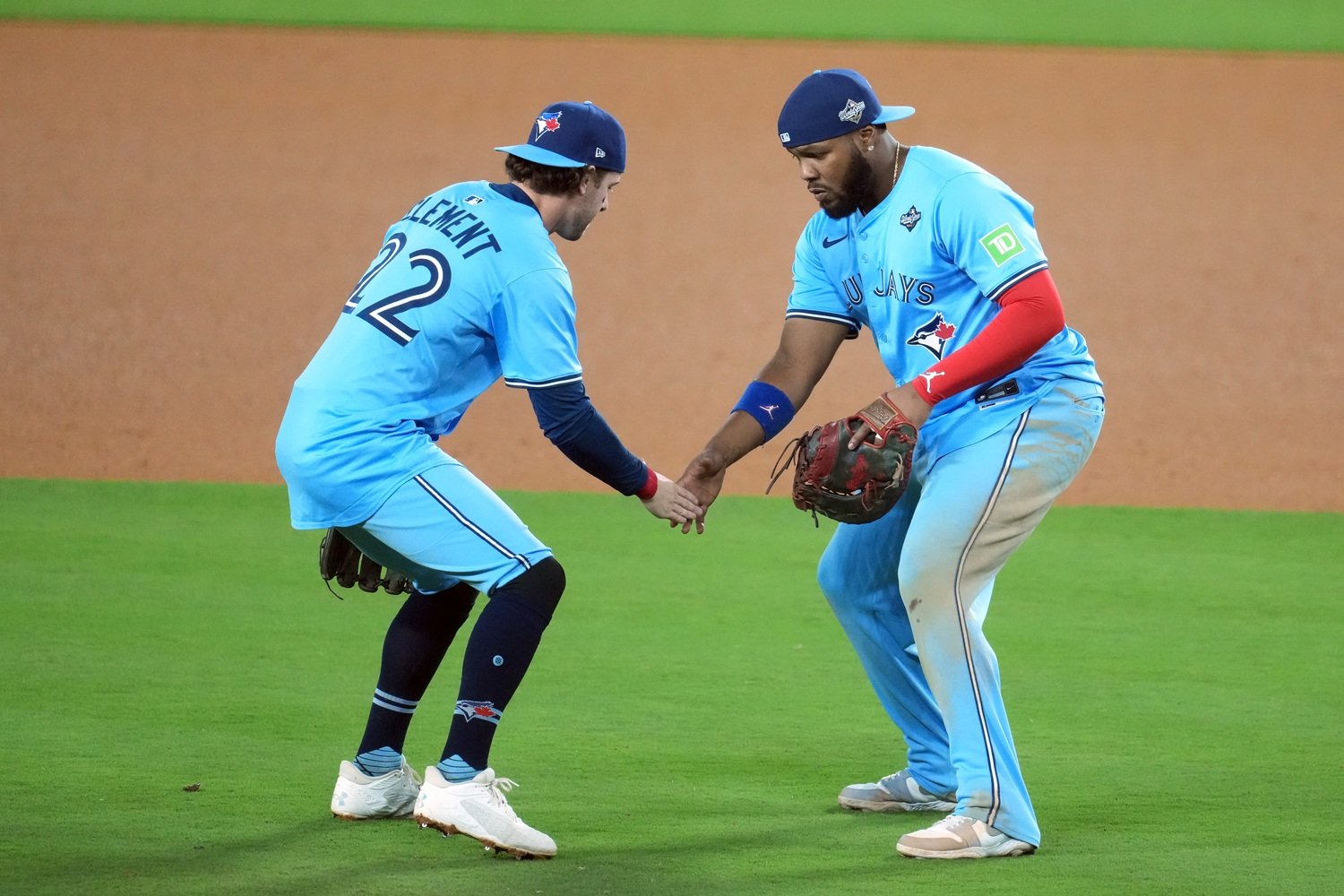 Standing in the WestJet Flight Deck in May, a former member of the Blue Jays’ front office told me that it was unlikely Bo Bichette would be back as a Jay in 2026. He said that was part of the rationale for trading for Andrés Giménez, who was destined to be the team’s shortstop of the future. At the time, it kind of made sense. Giménez seemed to have found his swing after losing it in Cleveland, and Bichette was only starting a mini campaign expressing his desire to stay in Toronto. What transpired, as the Jays mounted a season to remember, is that Giménez lost his swing, and the Jays found a desire to retain Bichette. Where Bichette would play in the infield if he does re-sign is a topic for another article. Ultimately, money talks, and there are some big teams (with big payrolls) that have expressed interest in Bichette. Bichette is an exceptional hitter, but as a fielder, he ranks closer to the middle (if not the bottom) of the pack. Giménez is an exceptional fielder, but a bottom-of-the-order hitter. Most likely, if Bichette signs elsewhere, Giménez shifts to shortstop. Vladimir Guerrero Jr. stays at first. Second and third become available. Ernie Clement (3.2 FanGraphs Wins Above Replacement) did a great job at third last season. He was occasionally spelled by Addison Barger (2.2 fWAR), either to play second, have a night off or fill in at short. Barger has a big bat, a cannon for an arm and is a pretty good fielder (as long as the ball isn’t popped up in the infield). Davis Schneider (1.3 fWAR) and Isiah Kiner-Falefa (0.7 WAR) also saw some action at second base through the season and managed the position well. Schneider is under a pre-arbitration contract in 2026, while Kiner-Falefa is now a free agent. If Bichette’s time with the franchise has come to an end, the Jays will need to decide who’s at second (or is that what’s at second?) and, potentially, who’s at third. One possibility is already off the table with this week’s trade between the Rangers and the Mets. Marcus Semien (2.1 fWAR), who had a career-best season with the Jays in 2021, was traded to New York for outfielder Brandon Nimmo. Rumour has it that the trade makes room for the Mets to sign either Kyle Tucker or Cody Bellinger. A move that would potentially impact the Jays as well. So, Semien is no longer available. Another highly interesting option would be José Ramírez (6.3 fWAR), whose contract runs until 2028 and includes a full no-trade clause. He is a third baseman but has, at times, played second and short. With the Jays' front office including former Cleveland front office employees Ross Atkins and Mark Shapiro, there have been a number of deals between the two teams during their tenure. This proposed swap would definitely shake things up. Who would go in the other direction? The price just might be too high. Recent reporting suggests that Diamondbacks All-Star second baseman Ketel Marte (4.6 fWAR) might be on the market. Another big bat would potentially lessen the blow of losing Bichette’s in the lineup. Once again, the price might be too steep, but the Diamondbacks and the Jays have been trade partners before. Earlier this month, the Braves exercised a $7 million option for their second baseman Ozzie Albies (1.3 fWAR). His contract includes one more club option in 2027 for the same amount. Despite his struggles in recent years, Albies could still offer a potent bat. Yet, due to his low salary, he would also come with a high price tag in terms of who the Braves might ask for in return. As for free agents, that’s where the Jays' options become a bit more interesting. The bigger names at second base include Willi Castro (0.5 fWAR), Jorge Polanco (2.6 fWAR), Jose Iglesias (-0.2 fWAR), Dylan Moore (-0.1 fWAR) and Ramón Urías (1,1 fWAR). It is unlikely any of them would be difference-makers like Ramírez, Albies or Semien. Shortstops and third basemen tend to be bigger difference-makers, but this year’s group at short doesn’t seem to hold many. Outside of Bichette, the other options include Miguel Rojas (1.7 fWAR), Ha-Seong Kim (0.3 fWAR) and Kiner-Falefa. If the Jays decide to move Clement to second, their free agent options at third base offer a bit more pop, with a higher price tag. Alex Bregman (3.5 fWAR), who had been rumoured to be in talks with the Jays before signing with the Red Sox last year, is once again available. Eugenio Suárez (3.8 fWAR), who helped the Mariners get to the playoffs after being traded late in the season by the Diamondbacks, is also on the market. And now we wait. Is a reunion actually in store for Bichette and the Jays? If the Jays end up landing Tucker or Bellinger and a top-tier starter, what money would be left to bring in a free agent infielder? And while the trade route is interesting, would it leave a hole somewhere else? The only real surplus the Jays have is in the outfield, and I’m not sure those players are in the same echelon as the names above. Another wrinkle in the Jays’ infield planning is the development within their farm system. Prospect Orelvis Martinez was designated for assignment in September and has since signed with the Nationals. Leo Jiménez, who saw limited action in the big leagues this past season, might be closing in on being ready. Jiménez offers defensive versatility that could stabilize the infield if veterans depart. The Jays may decide that instead of paying a premium for established stars, the smarter play is to trust their pipeline and let the next wave of talent prove itself. It was 2018, the last time the Jays had an infield that did not include either Bichette or Guerrero, but 2026 might end that streak and make room for another. Depending on which infield positions the Jays target for a change, it will most likely be a better defensive group, but perhaps at the cost of offensive output.
 -
With Bo Bichette declining Toronto's one-year qualifying offer, the team can now begin to negotiate with his camp, alongside several other interested teams across Major League Baseball. Both Bichette and the organization have repeatedly signaled interest in a new deal, and the front office says retaining him is its top priority this winter. At the same time, Ross Atkins and Co. are juggling their other priorities in order to field a team that can, at the least, match what this past year’s squad managed to do. In the last couple of weeks, we’ve heard reports that the Blue Jays remain the favourites to sign Bichette. Those reports are tempered a bit by news that teams such as the Yankees, Red Sox and Dodgers are also competing for his services. Y, if the Jays can sign Bichette, where should they turn their attention next? Kyle Tucker has been linked to the Jays and other squads so far, and the media has been highlighting Toronto's interest in several pitchers. Remember that the Jays will be without Max Scherzer and Chris Bassitt unless they choose to re-sign one or both of them. If not, they need to fill those voids and probably get a handful of new arms for the bullpen. So, what positions should the team prioritize after Bichette? The starting rotation buoyed the team through the season. They bent, but they didn’t break. The same could be said about the bullpen. A team that is going to contend needs depth in both the rotation and the bullpen. Typically, starting pitchers and big bats fetch the biggest paycheques. In 2025, Toronto’s lineup was Jekyll and Hyde all season. They would score at will or not score at all; sometimes in the same series. A team with a competent pitching staff doesn’t have to be perfect if the offense can consistently produce. What the Jays need is a lineup that opponents will fear. What does that look like? A leadoff man who eats pitches and gets on base. A number three hitter that also eats pitches and can advance the leadoff man. And in order for the first three batters to be successful, the clean hitter needs to be feared due to his ability to avoid chasing and knock baserunners home. A batting order is just like a house of cards. Each batter has two roles: get on base and set up someone else. Sometimes their prowess means the batter before them gets more hittable pitches. Despite their success last season, the Jays had some gaps in their lineup. There were spots where opponents could get a little breather. Think Anthony Santander, Andrés Giménez, and the outfielders outside the regulars. Having a healthy Bichette would help, but the Jays are going to need at least another bat; the likes of Tucker would definitely give other teams' pitchers a reason to stress. MLB ranked this year’s crop of free agents, and their list broke the group down into five tiers. The top tier includes Bichette, Tucker, Cody Bellinger, Pete Alonso, Alex Bregman, Dylan Cease, Tatsuya Imai, Michael King, Kyle Schwarber, Ranger Suárez and Framber Valdez. There has been some talk naming Bellinger and Valdez among the players the Jays have been wooing. With Santander and Vladimir Guerrero Jr. locked in, Alonso, who was in talks with the Jays last year, is most likely off the table. You can probably remove Schwarber from that list too. If the Jays sign Bichette, the only reason to go after Bregman is if they plan to trade Clement. That would be an interesting consideration, as Clement’s value probably won’t get any higher, but the financial cost of adding Bregman would be significant. In theory, even the biggest payroll can only cover two of that tier of players at the most. In the second tier, it's Edwin Díaz, Zac Gallen, Merrill Kelly, Munetaka Murakami, Kazuma Okamoto, Jorge Polanco, J.T. Realmuto, Eugenio Suárez and Robert Suarez. The Jays have been linked to at least Díaz and Murkami so far. Bassitt, Luke Weaver and Justin Verlander are among the players highlighted in the third tier. The Jays’ front office is no doubt poring over the analytics to determine where there are gaps and, more importantly, where there is value. If you take a limited view of the World Series, the Jays lost because their bullpen couldn’t hold the lead in Game 7. The other side of that coin is that the Jays didn’t score enough runs, so the bullpen had to be perfect (and wasn't). 2025’s lineup produced for the most part, but I'm not sure you can count on Springer’s consistency or Varsho’s power next season. For that matter, Nathan Lukes and Myles Straw would have to have big seasons, along with Ernie Clement and Addison Barger continuing to produce the way they did this past year, for a no-move winter to be feasible. Many of the little moves in the winter leading up to last season worked out. The big swing and miss was Santander. Injury or not, he had a disappointing season and still has four years left on his deal. Bichette’s camp might be waiting to see where the first big free agent goes and for how much before making their decision. That puts the Jays in an unenviable position. They’ll need to act fast, whether or not they are able to sign him. Once they do, they need to secure a big bat in the outfield. It might necessitate a trade that could bring in some bullpen help. When the batting order is a little more settled, then it will be time to go down the list of available starting pitchers. The Jays need to sign at least one starter this winter. Bringing back Bassitt would be a fallback. He was tremendous out of the 'pen in the playoffs, but he won’t want that role during the regular season. Neither will José Berríos, who will most likely have rehabilitated from his late-season injury by then. So, in the coming weeks, the Jays’ list of priorities is: Bichette, another bat and a bunch of arms (in that order). View full article
-
If the Jays Can Sign Bichette, What Should They Prioritize Next?
Sam Charles posted an article in Blue Jays
.jpg.f941f094508921405abb0afd1c603947.jpg) With Bo Bichette declining Toronto's one-year qualifying offer, the team can now begin to negotiate with his camp, alongside several other interested teams across Major League Baseball. Both Bichette and the organization have repeatedly signaled interest in a new deal, and the front office says retaining him is its top priority this winter. At the same time, Ross Atkins and Co. are juggling their other priorities in order to field a team that can, at the least, match what this past year’s squad managed to do. In the last couple of weeks, we’ve heard reports that the Blue Jays remain the favourites to sign Bichette. Those reports are tempered a bit by news that teams such as the Yankees, Red Sox and Dodgers are also competing for his services. Y, if the Jays can sign Bichette, where should they turn their attention next? Kyle Tucker has been linked to the Jays and other squads so far, and the media has been highlighting Toronto's interest in several pitchers. Remember that the Jays will be without Max Scherzer and Chris Bassitt unless they choose to re-sign one or both of them. If not, they need to fill those voids and probably get a handful of new arms for the bullpen. So, what positions should the team prioritize after Bichette? The starting rotation buoyed the team through the season. They bent, but they didn’t break. The same could be said about the bullpen. A team that is going to contend needs depth in both the rotation and the bullpen. Typically, starting pitchers and big bats fetch the biggest paycheques. In 2025, Toronto’s lineup was Jekyll and Hyde all season. They would score at will or not score at all; sometimes in the same series. A team with a competent pitching staff doesn’t have to be perfect if the offense can consistently produce. What the Jays need is a lineup that opponents will fear. What does that look like? A leadoff man who eats pitches and gets on base. A number three hitter that also eats pitches and can advance the leadoff man. And in order for the first three batters to be successful, the clean hitter needs to be feared due to his ability to avoid chasing and knock baserunners home. A batting order is just like a house of cards. Each batter has two roles: get on base and set up someone else. Sometimes their prowess means the batter before them gets more hittable pitches. Despite their success last season, the Jays had some gaps in their lineup. There were spots where opponents could get a little breather. Think Anthony Santander, Andrés Giménez, and the outfielders outside the regulars. Having a healthy Bichette would help, but the Jays are going to need at least another bat; the likes of Tucker would definitely give other teams' pitchers a reason to stress. MLB ranked this year’s crop of free agents, and their list broke the group down into five tiers. The top tier includes Bichette, Tucker, Cody Bellinger, Pete Alonso, Alex Bregman, Dylan Cease, Tatsuya Imai, Michael King, Kyle Schwarber, Ranger Suárez and Framber Valdez. There has been some talk naming Bellinger and Valdez among the players the Jays have been wooing. With Santander and Vladimir Guerrero Jr. locked in, Alonso, who was in talks with the Jays last year, is most likely off the table. You can probably remove Schwarber from that list too. If the Jays sign Bichette, the only reason to go after Bregman is if they plan to trade Clement. That would be an interesting consideration, as Clement’s value probably won’t get any higher, but the financial cost of adding Bregman would be significant. In theory, even the biggest payroll can only cover two of that tier of players at the most. In the second tier, it's Edwin Díaz, Zac Gallen, Merrill Kelly, Munetaka Murakami, Kazuma Okamoto, Jorge Polanco, J.T. Realmuto, Eugenio Suárez and Robert Suarez. The Jays have been linked to at least Díaz and Murkami so far. Bassitt, Luke Weaver and Justin Verlander are among the players highlighted in the third tier. The Jays’ front office is no doubt poring over the analytics to determine where there are gaps and, more importantly, where there is value. If you take a limited view of the World Series, the Jays lost because their bullpen couldn’t hold the lead in Game 7. The other side of that coin is that the Jays didn’t score enough runs, so the bullpen had to be perfect (and wasn't). 2025’s lineup produced for the most part, but I'm not sure you can count on Springer’s consistency or Varsho’s power next season. For that matter, Nathan Lukes and Myles Straw would have to have big seasons, along with Ernie Clement and Addison Barger continuing to produce the way they did this past year, for a no-move winter to be feasible. Many of the little moves in the winter leading up to last season worked out. The big swing and miss was Santander. Injury or not, he had a disappointing season and still has four years left on his deal. Bichette’s camp might be waiting to see where the first big free agent goes and for how much before making their decision. That puts the Jays in an unenviable position. They’ll need to act fast, whether or not they are able to sign him. Once they do, they need to secure a big bat in the outfield. It might necessitate a trade that could bring in some bullpen help. When the batting order is a little more settled, then it will be time to go down the list of available starting pitchers. The Jays need to sign at least one starter this winter. Bringing back Bassitt would be a fallback. He was tremendous out of the 'pen in the playoffs, but he won’t want that role during the regular season. Neither will José Berríos, who will most likely have rehabilitated from his late-season injury by then. So, in the coming weeks, the Jays’ list of priorities is: Bichette, another bat and a bunch of arms (in that order).
With Bo Bichette declining Toronto's one-year qualifying offer, the team can now begin to negotiate with his camp, alongside several other interested teams across Major League Baseball. Both Bichette and the organization have repeatedly signaled interest in a new deal, and the front office says retaining him is its top priority this winter. At the same time, Ross Atkins and Co. are juggling their other priorities in order to field a team that can, at the least, match what this past year’s squad managed to do. In the last couple of weeks, we’ve heard reports that the Blue Jays remain the favourites to sign Bichette. Those reports are tempered a bit by news that teams such as the Yankees, Red Sox and Dodgers are also competing for his services. Y, if the Jays can sign Bichette, where should they turn their attention next? Kyle Tucker has been linked to the Jays and other squads so far, and the media has been highlighting Toronto's interest in several pitchers. Remember that the Jays will be without Max Scherzer and Chris Bassitt unless they choose to re-sign one or both of them. If not, they need to fill those voids and probably get a handful of new arms for the bullpen. So, what positions should the team prioritize after Bichette? The starting rotation buoyed the team through the season. They bent, but they didn’t break. The same could be said about the bullpen. A team that is going to contend needs depth in both the rotation and the bullpen. Typically, starting pitchers and big bats fetch the biggest paycheques. In 2025, Toronto’s lineup was Jekyll and Hyde all season. They would score at will or not score at all; sometimes in the same series. A team with a competent pitching staff doesn’t have to be perfect if the offense can consistently produce. What the Jays need is a lineup that opponents will fear. What does that look like? A leadoff man who eats pitches and gets on base. A number three hitter that also eats pitches and can advance the leadoff man. And in order for the first three batters to be successful, the clean hitter needs to be feared due to his ability to avoid chasing and knock baserunners home. A batting order is just like a house of cards. Each batter has two roles: get on base and set up someone else. Sometimes their prowess means the batter before them gets more hittable pitches. Despite their success last season, the Jays had some gaps in their lineup. There were spots where opponents could get a little breather. Think Anthony Santander, Andrés Giménez, and the outfielders outside the regulars. Having a healthy Bichette would help, but the Jays are going to need at least another bat; the likes of Tucker would definitely give other teams' pitchers a reason to stress. MLB ranked this year’s crop of free agents, and their list broke the group down into five tiers. The top tier includes Bichette, Tucker, Cody Bellinger, Pete Alonso, Alex Bregman, Dylan Cease, Tatsuya Imai, Michael King, Kyle Schwarber, Ranger Suárez and Framber Valdez. There has been some talk naming Bellinger and Valdez among the players the Jays have been wooing. With Santander and Vladimir Guerrero Jr. locked in, Alonso, who was in talks with the Jays last year, is most likely off the table. You can probably remove Schwarber from that list too. If the Jays sign Bichette, the only reason to go after Bregman is if they plan to trade Clement. That would be an interesting consideration, as Clement’s value probably won’t get any higher, but the financial cost of adding Bregman would be significant. In theory, even the biggest payroll can only cover two of that tier of players at the most. In the second tier, it's Edwin Díaz, Zac Gallen, Merrill Kelly, Munetaka Murakami, Kazuma Okamoto, Jorge Polanco, J.T. Realmuto, Eugenio Suárez and Robert Suarez. The Jays have been linked to at least Díaz and Murkami so far. Bassitt, Luke Weaver and Justin Verlander are among the players highlighted in the third tier. The Jays’ front office is no doubt poring over the analytics to determine where there are gaps and, more importantly, where there is value. If you take a limited view of the World Series, the Jays lost because their bullpen couldn’t hold the lead in Game 7. The other side of that coin is that the Jays didn’t score enough runs, so the bullpen had to be perfect (and wasn't). 2025’s lineup produced for the most part, but I'm not sure you can count on Springer’s consistency or Varsho’s power next season. For that matter, Nathan Lukes and Myles Straw would have to have big seasons, along with Ernie Clement and Addison Barger continuing to produce the way they did this past year, for a no-move winter to be feasible. Many of the little moves in the winter leading up to last season worked out. The big swing and miss was Santander. Injury or not, he had a disappointing season and still has four years left on his deal. Bichette’s camp might be waiting to see where the first big free agent goes and for how much before making their decision. That puts the Jays in an unenviable position. They’ll need to act fast, whether or not they are able to sign him. Once they do, they need to secure a big bat in the outfield. It might necessitate a trade that could bring in some bullpen help. When the batting order is a little more settled, then it will be time to go down the list of available starting pitchers. The Jays need to sign at least one starter this winter. Bringing back Bassitt would be a fallback. He was tremendous out of the 'pen in the playoffs, but he won’t want that role during the regular season. Neither will José Berríos, who will most likely have rehabilitated from his late-season injury by then. So, in the coming weeks, the Jays’ list of priorities is: Bichette, another bat and a bunch of arms (in that order). -
The offseason started off with some positive news for the Toronto Blue Jays. Shane Bieber’s decision to exercise his $16 million player option for 2026, foregoing his $4 million opt-out (and potentially a larger and longer-term deal), was a surprise for many and might open the door for Bo Bichette’s return. While Bieber’s move is a win, it may also have deeper implications. Particularly for Bichette, the star shortstop, and sure to be one of the most sought-after free agents this winter. Bieber’s commitment to Toronto could be a key domino in convincing Bichette to stay. Whether Bieber’s decision was related to stability, his connections in the clubhouse and front office, or his belief in the franchise making another run next year and finishing what they started, the result is that a key piece of the starting rotation is now in place. Next year’s starting rotation is lined up to include Kevin Gausman (in the final year of his contract), José Berríos (still recuperating from an injury, but with two more seasons left on his seven-year deal), Trey Yesavage (under club control and entering his first full season with the Jays) and Bieber. Eric Lauer and Bowden Francis could also be competing for a spot in the rotation, along with some minor leaguers. While the Jays will still need to fill out the bullpen, the pitching staff looks formidable. Bieber’s decision means that Toronto gets him at a relative bargain salary for a pitcher of his calibre, providing some flexibility for spending in other areas. The onus is now on the Jays’ front office and Bichette to find some middle ground in their negotiations. Both sides have expressed interest so far, but when other teams come knocking with cash in hand, that will be the true test. Bichette has been an important fixture of the Jays’ offence since his debut in 2019. While the team prioritized extending Vladimir Guerrero Jr. last offseason and into the regular season, negotiations with Bichette have not seemed to be a priority. Now, re-signing him (or finding a worthy replacement either at shortstop or second) is widely considered the organization’s top focus. Rumours have it that the Yankees, Tigers and Braves are all interested in Bichette. Each has a glaring deficiency at short and would dearly love to fill it with the two-time All-Star. Bichette’s willingness to be flexible when it came to his role in the World Series might not be the full story. His knee injury was obvious throughout the series, so his only real option in the field was second. There has long been talk of his desire to remain a shortstop, and once he's healthy, I'm not sure that will change. Does the Bieber opt-in, Bichette’s relationship with the Blue Jays organization, and his desire to win a championship with Vladdy and the current roster mean enough for him to potentially forego millions? The Jays have money, but as I discussed in a previous article, they must be diligent when it comes to spending. Locking up Guerrero was crucial in demonstrating that Toronto is a destination, not an afterthought. However, his salary will hamper the franchise as it navigates the luxury tax brackets in the years to come. The Athletic's Tim Britton recently predicted that Bichette is going to get a contract of eight years at $212 million. That would come out to roughly $27 million per season. If you factor in Guerrero’s $35.7 million AAV, that is more than $60 million between them. The 2025 payroll for the Jays was about $250 million, and slightly higher for luxury tax purposes. Are sentimentality and familiarity enough for Bichette and the Jays to find some common ground? And should the Jays make more than a passing attempt at re-signing Bichette? He is an exceptional hitter, and even on one leg, he was nearly a difference maker for the Jays in the World Series. Despite the Jays dropping the series, his Game 7 home run will be talked about for years to come. However, his fielding has never been better than average for a shortstop, and his OAA (Outs Above Average) has placed him below the league average in recent years. He has also been plagued with late-season injuries the past few years. The injuries have primarily been lower body related, including this season’s knee injury and last season’s calf injury. Those injuries often come with age. He hasn’t played more than 150 games in a season since 2022. By securing Bieber early, the Jays have created some momentum and goodwill not just with the fan base but with other players who have hit the free agent market. It also signals to other free agents, like Bichette, that the Jays are still focused on fielding a competitive team next season. Athletes don’t make decisions in isolation. They consider the culture of the clubhouse, the competitiveness of the roster and the vision of the front office. Bieber’s opt-in offers several cues that could influence Bichette’s decision-making process. It signals stability. Bieber’s choice to stay suggests that the clubhouse environment is strong and that the organization is aligned in its goals. For Bichette, who has spent his entire career in Toronto, that sense of continuity could be compelling. It reflects competitive intent instead of a passive approach. Bichette, who has expressed a desire to win, may see Bieber’s decision as the Jays reloading for another run at the title. And players talk. Bieber’s decision may reflect internal conversations about the team’s future. If Bichette sees Bieber betting on Toronto, he may be more inclined to do the same. Bieber’s decision to opt in with the Jays is more than a roster move; it’s a strategic signal to the team and the rest of the MLB. It reflects confidence in the organization, reinforces the team’s competitive identity, and creates the conditions for Bichette to re-sign. If Bichette does choose to stay, fans may look back at Bieber’s quiet November decision as the moment that set everything in motion. View full article
.jpg.6c4a9ede33fe398e6100e1387d8bfd1f.jpg)
.jpg.e5d429b821a2358a07cdabd55204d29d.jpg)

.jpg.6fdf653eb475a703fd034a0670dcee35.jpg)
.jpg.a49790c75bd2b15e3c8cb371e31d6ded.jpg)
.jpg.36500a71d97b4bcb28d1380097efab48.jpg)
.jpg.44f654b6e910fe4a442e7d5e2fc9ff03.jpg)
.jpg.fef758c74f133a6f97cb87f337f62fac.jpg)
.jpg.6c9711297bf91da5d12e1fa7ac048725.jpg)
.jpg.58ae1f5f842058c8cc2a9081fab8ff46.jpg)
.jpg.f941f094508921405abb0afd1c603947.jpg)