


Sam Charles
-
Posts
162 -
Joined
-
Last visited
Content Type
Profiles
Toronto Blue Jays Videos
2026 Toronto Blue Jays Top Prospects Ranking
Toronto Blue Jays Free Agent & Trade Rumors, Notes, & Tidbits
Guides & Resources
2025 Toronto Blue Jays Draft Pick Tracker
News
2026 Toronto Blue Jays Draft Tracker: Picks & Bonuses
Forums
Blogs
Events
Store
Downloads
Gallery
Everything posted by Sam Charles
-
This piece was written prior to the Blue Jays' game on Wednesday, April 15. The American League East is supposed to be the toughest division in baseball. Usually, it is. Year after year, it earns that reputation through depth, payroll power, and an unforgiving schedule that leaves little room to hide. Over the past decade and a half, the AL East has consistently produced multiple playoff teams more frequently than any other division, reinforcing its standing as baseball’s most demanding environment. Even the teams that finish at the bottom of the division often post records competitive enough to avoid being true pushovers. That reality is likely why every April in this division feels heavier than it should. What has made the early weeks of the 2026 season so interesting is not that the American League East suddenly looks easy, but that it doesn’t. Through roughly three weeks of play, the division remains tightly packed, with no team creating meaningful separation. And despite a less‑than‑ideal start marked by injuries and offensive inconsistency, the Blue Jays have quietly looked like one of the steadier clubs in the group. Nearly every AL East team is already confronting some form of early‑season discomfort, whether it comes from roster instability, uneven performance, or health concerns. The standings themselves are not the full story. More revealing is how teams have arrived at their records and what it is costing them to do so. Across the division, several clubs are scraping out wins while exposing thin depth. Others are already rearranging roles, leaning heavily on bullpen arms, or pushing young players into high‑leverage situations sooner than anticipated. MLB‑wide trends, and common sense, suggest that bullpen effectiveness tends to decline as workloads accumulate over the season. Teams that rely heavily on relievers early only increase their vulnerability later. For all their flaws and uneven stretches so far, the Blue Jays are treading water and managing their circumstances about as well as could be reasonably expected. Sitting just below .500, Toronto has navigated inconsistent production with runners on base while fielding a starting rotation that has largely avoided blow‑up outings despite injuries. The bullpen has bent, at times significantly, but it has not broken. Given the circumstances, the Jays will take that outcome. That same sense of relative stability cannot be found across all of their American League East rivals. In New York, the Yankees are once again contending with the familiar weight of expectation. It is a constant, and every season carries its own version of the same pressure. Early results have been decent for the pinstripes – they're hovering near the top of the division – but the path there has been fragile. Through mid‑April, Yankees hitters rank in the bottom third of the league in on‑base percentage. Like the Blue Jays, New York’s early offensive issues have increased reliance on the pitching staff to protect narrow leads. The Yankees have survived thanks to several close wins, but that margin is thin. Depth pieces are being tested earlier than is ideal, and injuries to key contributors have already forced adjustments. While this does not suggest a collapse is imminent, history shows that early stress has a way of accumulating. In seasons where the Yankees have dealt with significant injury clusters early, their win totals have tended to settle closer to the mid‑80s or low‑90s than the elite benchmarks the franchise expects. Their 2023 season, when multiple cornerstone players, including Aaron Judge, spent extended time on the injured list, remains a reminder of how fragile even high‑cost rosters can be. Boston is fighting through a rough start to the season. The Red Sox are attempting to balance competitiveness with long‑term flexibility, an approach that often proves difficult to sustain over a full season. As the calendar reaches mid-April, Boston has hovered below league average in run prevention, with a team ERA residing in the lower tier of the league, and underlying pitching indicators suggesting a profile closer to a fringe contender than a true threat. Defensive play closer to league average has helped offset some of that pitching inconsistency, but not enough to prevent the club from settling near the bottom of the division. Tampa Bay, as usual, continues to defy expectations through discipline and resourcefulness. The Rays remain competitive by prioritizing run prevention, defensive efficiency, and matchup‑driven pitching decisions. It isn't sexy, but it works. The only glaring problem with that plan is that it requires heavy bullpen usage early in the season. Their approach takes some finesse, and sustained reliance on relief pitchers often becomes harder to maintain as the season grinds on. Baltimore may be the most intriguing team in the division. The Orioles are unquestionably stronger than they were just a season ago, powered by a deep young core. Still, injuries have complicated their early momentum. Adley Rutschman, Tyler O’Neill, Ryan Mountcastle, Zach Eflin, and Jackson Holliday have all spent time on the injured list within the season’s first three weeks, already testing the organization's depth. It has meant that Baltimore has been forced into frequent lineup changes and increased bullpen exposure. Their record remains competitive, but the cost has been noticeable in terms of stability and workload management. It is not blind optimism to say every AL East team remains very much in contention. Separation in the standings typically comes later in the season. Over the past decade, the gap between first and third place at the end of April has often been only a handful of games. That parity is not accidental. It is the natural result of parity within baseball’s toughest division. The first six to eight weeks of the season rarely determine who wins the American League East. What they do determine is which teams survive intact. Clubs that manage April without exhausting their pitching staffs or absorbing long‑term injuries are better positioned to peak later in the summer. The adjusted scheduling format has also contributed to the early congestion. Fewer divisional matchups in the opening month means limited opportunities for teams to create early separation. Early missteps are easier to absorb. As intra-division play increases, the standings will become less forgiving and more revealing. What stands out early in 2026 is not that any American League East team has seized control. It is that nearly all of them are in various stages of waiting. They are waiting to get healthy, waiting for lineups to stabilize, and waiting for others to falter. That includes the Blue Jays. So take a breath. For Toronto, there is little reason for alarm. History shows that early standings in this division are a weak predictor of eventual outcomes, and April leaders have often failed to maintain that position over six months. In fact, since 2010, the AL East April leader has gone on to win the division roughly 30–40% of the time, meaning early results aren’t that important as long as you don't lose touch with the leaders. As Yogi Berra famously put it, “It gets late early out there.” In the American League East, that truth applies every year. April standings can feel urgent, but they rarely tell the full story. What matters more is which teams are still standing cleanly when the season begins to accelerate. And really, “It ain’t over till it’s over.” View full article
-
The AL East Is as Brutal as Ever, and the Blue Jays Are Still Standing
Sam Charles posted an article in Blue Jays
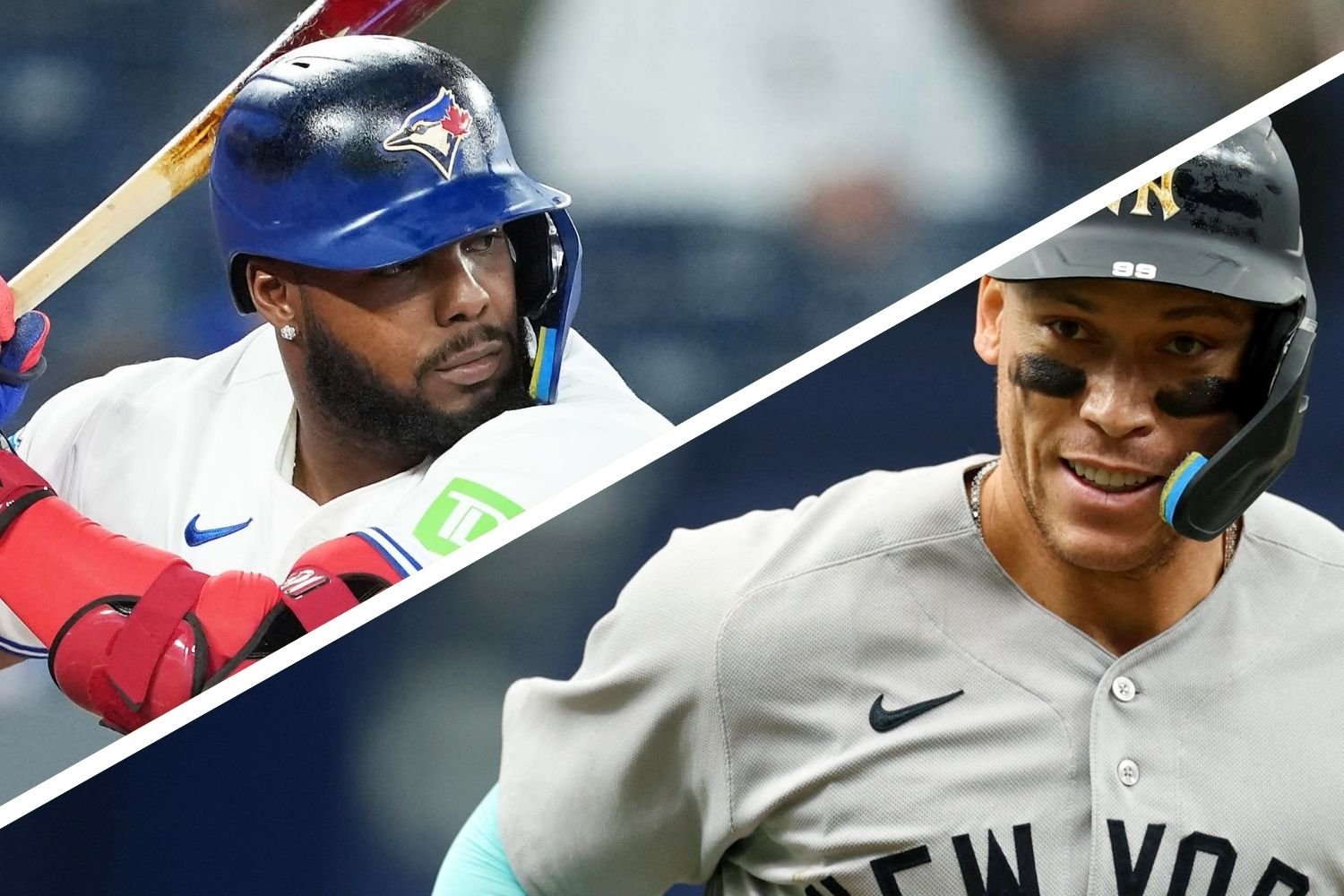 This piece was written prior to the Blue Jays' game on Wednesday, April 15. The American League East is supposed to be the toughest division in baseball. Usually, it is. Year after year, it earns that reputation through depth, payroll power, and an unforgiving schedule that leaves little room to hide. Over the past decade and a half, the AL East has consistently produced multiple playoff teams more frequently than any other division, reinforcing its standing as baseball’s most demanding environment. Even the teams that finish at the bottom of the division often post records competitive enough to avoid being true pushovers. That reality is likely why every April in this division feels heavier than it should. What has made the early weeks of the 2026 season so interesting is not that the American League East suddenly looks easy, but that it doesn’t. Through roughly three weeks of play, the division remains tightly packed, with no team creating meaningful separation. And despite a less‑than‑ideal start marked by injuries and offensive inconsistency, the Blue Jays have quietly looked like one of the steadier clubs in the group. Nearly every AL East team is already confronting some form of early‑season discomfort, whether it comes from roster instability, uneven performance, or health concerns. The standings themselves are not the full story. More revealing is how teams have arrived at their records and what it is costing them to do so. Across the division, several clubs are scraping out wins while exposing thin depth. Others are already rearranging roles, leaning heavily on bullpen arms, or pushing young players into high‑leverage situations sooner than anticipated. MLB‑wide trends, and common sense, suggest that bullpen effectiveness tends to decline as workloads accumulate over the season. Teams that rely heavily on relievers early only increase their vulnerability later. For all their flaws and uneven stretches so far, the Blue Jays are treading water and managing their circumstances about as well as could be reasonably expected. Sitting just below .500, Toronto has navigated inconsistent production with runners on base while fielding a starting rotation that has largely avoided blow‑up outings despite injuries. The bullpen has bent, at times significantly, but it has not broken. Given the circumstances, the Jays will take that outcome. That same sense of relative stability cannot be found across all of their American League East rivals. In New York, the Yankees are once again contending with the familiar weight of expectation. It is a constant, and every season carries its own version of the same pressure. Early results have been decent for the pinstripes – they're hovering near the top of the division – but the path there has been fragile. Through mid‑April, Yankees hitters rank in the bottom third of the league in on‑base percentage. Like the Blue Jays, New York’s early offensive issues have increased reliance on the pitching staff to protect narrow leads. The Yankees have survived thanks to several close wins, but that margin is thin. Depth pieces are being tested earlier than is ideal, and injuries to key contributors have already forced adjustments. While this does not suggest a collapse is imminent, history shows that early stress has a way of accumulating. In seasons where the Yankees have dealt with significant injury clusters early, their win totals have tended to settle closer to the mid‑80s or low‑90s than the elite benchmarks the franchise expects. Their 2023 season, when multiple cornerstone players, including Aaron Judge, spent extended time on the injured list, remains a reminder of how fragile even high‑cost rosters can be. Boston is fighting through a rough start to the season. The Red Sox are attempting to balance competitiveness with long‑term flexibility, an approach that often proves difficult to sustain over a full season. As the calendar reaches mid-April, Boston has hovered below league average in run prevention, with a team ERA residing in the lower tier of the league, and underlying pitching indicators suggesting a profile closer to a fringe contender than a true threat. Defensive play closer to league average has helped offset some of that pitching inconsistency, but not enough to prevent the club from settling near the bottom of the division. Tampa Bay, as usual, continues to defy expectations through discipline and resourcefulness. The Rays remain competitive by prioritizing run prevention, defensive efficiency, and matchup‑driven pitching decisions. It isn't sexy, but it works. The only glaring problem with that plan is that it requires heavy bullpen usage early in the season. Their approach takes some finesse, and sustained reliance on relief pitchers often becomes harder to maintain as the season grinds on. Baltimore may be the most intriguing team in the division. The Orioles are unquestionably stronger than they were just a season ago, powered by a deep young core. Still, injuries have complicated their early momentum. Adley Rutschman, Tyler O’Neill, Ryan Mountcastle, Zach Eflin, and Jackson Holliday have all spent time on the injured list within the season’s first three weeks, already testing the organization's depth. It has meant that Baltimore has been forced into frequent lineup changes and increased bullpen exposure. Their record remains competitive, but the cost has been noticeable in terms of stability and workload management. It is not blind optimism to say every AL East team remains very much in contention. Separation in the standings typically comes later in the season. Over the past decade, the gap between first and third place at the end of April has often been only a handful of games. That parity is not accidental. It is the natural result of parity within baseball’s toughest division. The first six to eight weeks of the season rarely determine who wins the American League East. What they do determine is which teams survive intact. Clubs that manage April without exhausting their pitching staffs or absorbing long‑term injuries are better positioned to peak later in the summer. The adjusted scheduling format has also contributed to the early congestion. Fewer divisional matchups in the opening month means limited opportunities for teams to create early separation. Early missteps are easier to absorb. As intra-division play increases, the standings will become less forgiving and more revealing. What stands out early in 2026 is not that any American League East team has seized control. It is that nearly all of them are in various stages of waiting. They are waiting to get healthy, waiting for lineups to stabilize, and waiting for others to falter. That includes the Blue Jays. So take a breath. For Toronto, there is little reason for alarm. History shows that early standings in this division are a weak predictor of eventual outcomes, and April leaders have often failed to maintain that position over six months. In fact, since 2010, the AL East April leader has gone on to win the division roughly 30–40% of the time, meaning early results aren’t that important as long as you don't lose touch with the leaders. As Yogi Berra famously put it, “It gets late early out there.” In the American League East, that truth applies every year. April standings can feel urgent, but they rarely tell the full story. What matters more is which teams are still standing cleanly when the season begins to accelerate. And really, “It ain’t over till it’s over.”
 -
What keeps jumping out when you watch this year’s edition of the Jays, night after night, is not just the injuries or the uneven offense or even the tough luck. It is the pace and intensity at which John Schneider is running his bullpen, an approach that resembles postseason baseball far more than a 162‑game marathon that is barely three weeks old. Through the first 15 games of the season, the Blue Jays bullpen has been asked to cover six or more innings five separate times. Five times in 15 games. Granted, one of those times was to cover for Cody Ponce’s injury-shortened start, but that usage is not a blip or a one-off occurrence; it is one-third of the schedule to this point. League-wide, managers will accept the occasional bullpen-heavy night in April, but not with this kind of frequency. Even in the modern MLB environment where starters rarely push deep, the league average starter still logs just over five innings per outing, with bullpens handling roughly 44 to 45 percent of total innings across a full season. What Schneider is doing right now pushes that percentage into October territory. Fifteen games in, Toronto has already used 18 different pitchers (excluding Tyler Heineman). It is a level of early‑season churn matched only during the shortened 2020 season and a brief stretch in 2005. In a normal year, with normal health, the team wouldn’t get to that number until late May or June. Sure, injuries have been a headline. Ponce, Shane Bieber, Trey Yesavage and José Berríos hitting the shelf has forced Schneider’s hand. But injuries alone don’t explain usage patterns this aggressive. Managers still make choices about leverage, rest and sequencing, and the Jays’ coaching staff has consistently chosen urgency over restraint. You can see it not just in how often the bullpen is used, but how it is used. High-leverage relievers are being deployed early and often. The rubber arms are already being ridden hard. Tyler Rogers, who Schneider openly calls a manager’s dream, is being leaned on in exactly the way contenders lean on trusted relievers in September. Rogers made 81 appearances last season, and Schneider joked in spring that he might make more this year. That is funny in March. It is less funny when the season has just started and the comment already rings true. In October, everything is leverage-driven. You empty the tank because there is no tomorrow to protect. The game is a puzzle in which the manager has a good idea of what pieces fit where. Fatigue is less of an option because elimination is the alternative. April baseball is supposed to be the opposite. It is about survival, length and accepting short-term messiness to preserve long-term health. What Schneider is doing blurs that line. Ironically, this past weekend’s starts by Eric Lauer and Max Scherzer that fans are pointing to as examples of patience might actually underline the same philosophical problem. Take Lauer’s outing against Minnesota. He gave up seven runs in a single inning and was clearly fighting command and traffic. Schneider left him in to wear it, stretching him to 5.1 innings in a game that was already getting away. On the surface, that looks like restraint. Let the starter take his lumps, save the bullpen. But look at the broader context. That choice came after a series of games in which the bullpen had already been worked aggressively. Lauer was not left in because April is about protecting arms. He was left in because the bullpen was already taxed. Those are not the same thing, and the difference matters. The same thing showed up in Scherzer’s start against the Twins. After exiting early against the Dodgers with forearm tendinitis, he returned and allowed eight runs in just over two innings. Schneider gave him a chance to escape, perhaps hoping the veteran could stabilize and absorb more outs. Instead, the game unraveled further. Scherzer wore the loss, but again, this decision was made inside a framework where bullpen conservation felt reactive rather than planned. Six bullpen arms were used in an 8-2 loss that never felt close. Granted, there was an off-day the next day, but six? As discussed in another article, the appearance of position players on the mound highlights a growing concern about the healthy arms in the pen. Heineman has already logged three innings as a catcher pitching. When position players are being used before the calendar hits mid-April, it suggests a staff that is already being protected from itself. If this were a team scuffling at the bottom of the standings, the argument might be different. A manager might feel pressure to steal games any way possible. But the Blue Jays are not buried. Their playoff odds have dropped from the start of the season, but this is a roster built to endure the long season, not sprint through it. That is why the urgency feels misplaced. Schneider is managing as if every series carries October weight. Every late-inning move feels sharpened for the moment instead of smoothed for the future. That approach can win you games in April, but it can also have an unintended negative impact in August. Bullpen fatigue rarely announces itself early. It shows up months later as lost velocity, reduced command and soft tissue injuries that never feel accidental but also never feel traceable to a single moment. It shows up when arms that were automatic in June start missing spots in September. It shows up when October arrives and the bullpen that carried you there suddenly looks human. Schneider just signed a contract extension. His players trust him, and his track record says he understands how to win. Winning managers sometimes see threats everywhere, and when you see threats everywhere, you play defense constantly. The modern game has already shortened starts, inflated bullpen importance and compressed margins. That makes restraint more valuable, not less. When everyone is managing on the edge, the teams that last are the ones that choose when not to. You can’t win the World Series in April, but you can make it harder to win one later. The way the bullpen is being handled right now suggests a team already braced for October collisions, even though the season has barely cleared its first turn. That approach may steal wins, but it risks something far harder to replace, which is margin. There is still time. The length of the season hides early mistakes. Last season is a great example of that. Everyone is focusing on the mounting pressure on the lineup to break out in a consistent manner, but at the same time, Schneider and his coaching staff are feeling the pressure too. As a result, the Blue Jays bullpen is being asked to perform at playoff intensity in a season that has barely begun. In a year in which Toronto’s championship window is real, patience might end up being the most important attribute of all: patience from the fan base during this slow start, and patience from the coaching staff before they pick up the bullpen phone. View full article
-
Are the Blue Jays Overworking Their Bullpen Too Early in 2026?
Sam Charles posted an article in Blue Jays
.jpg.6b70e991cdfb5d6c25e983bc8748c8a9.jpg) What keeps jumping out when you watch this year’s edition of the Jays, night after night, is not just the injuries or the uneven offense or even the tough luck. It is the pace and intensity at which John Schneider is running his bullpen, an approach that resembles postseason baseball far more than a 162‑game marathon that is barely three weeks old. Through the first 15 games of the season, the Blue Jays bullpen has been asked to cover six or more innings five separate times. Five times in 15 games. Granted, one of those times was to cover for Cody Ponce’s injury-shortened start, but that usage is not a blip or a one-off occurrence; it is one-third of the schedule to this point. League-wide, managers will accept the occasional bullpen-heavy night in April, but not with this kind of frequency. Even in the modern MLB environment where starters rarely push deep, the league average starter still logs just over five innings per outing, with bullpens handling roughly 44 to 45 percent of total innings across a full season. What Schneider is doing right now pushes that percentage into October territory. Fifteen games in, Toronto has already used 18 different pitchers (excluding Tyler Heineman). It is a level of early‑season churn matched only during the shortened 2020 season and a brief stretch in 2005. In a normal year, with normal health, the team wouldn’t get to that number until late May or June. Sure, injuries have been a headline. Ponce, Shane Bieber, Trey Yesavage and José Berríos hitting the shelf has forced Schneider’s hand. But injuries alone don’t explain usage patterns this aggressive. Managers still make choices about leverage, rest and sequencing, and the Jays’ coaching staff has consistently chosen urgency over restraint. You can see it not just in how often the bullpen is used, but how it is used. High-leverage relievers are being deployed early and often. The rubber arms are already being ridden hard. Tyler Rogers, who Schneider openly calls a manager’s dream, is being leaned on in exactly the way contenders lean on trusted relievers in September. Rogers made 81 appearances last season, and Schneider joked in spring that he might make more this year. That is funny in March. It is less funny when the season has just started and the comment already rings true. In October, everything is leverage-driven. You empty the tank because there is no tomorrow to protect. The game is a puzzle in which the manager has a good idea of what pieces fit where. Fatigue is less of an option because elimination is the alternative. April baseball is supposed to be the opposite. It is about survival, length and accepting short-term messiness to preserve long-term health. What Schneider is doing blurs that line. Ironically, this past weekend’s starts by Eric Lauer and Max Scherzer that fans are pointing to as examples of patience might actually underline the same philosophical problem. Take Lauer’s outing against Minnesota. He gave up seven runs in a single inning and was clearly fighting command and traffic. Schneider left him in to wear it, stretching him to 5.1 innings in a game that was already getting away. On the surface, that looks like restraint. Let the starter take his lumps, save the bullpen. But look at the broader context. That choice came after a series of games in which the bullpen had already been worked aggressively. Lauer was not left in because April is about protecting arms. He was left in because the bullpen was already taxed. Those are not the same thing, and the difference matters. The same thing showed up in Scherzer’s start against the Twins. After exiting early against the Dodgers with forearm tendinitis, he returned and allowed eight runs in just over two innings. Schneider gave him a chance to escape, perhaps hoping the veteran could stabilize and absorb more outs. Instead, the game unraveled further. Scherzer wore the loss, but again, this decision was made inside a framework where bullpen conservation felt reactive rather than planned. Six bullpen arms were used in an 8-2 loss that never felt close. Granted, there was an off-day the next day, but six? As discussed in another article, the appearance of position players on the mound highlights a growing concern about the healthy arms in the pen. Heineman has already logged three innings as a catcher pitching. When position players are being used before the calendar hits mid-April, it suggests a staff that is already being protected from itself. If this were a team scuffling at the bottom of the standings, the argument might be different. A manager might feel pressure to steal games any way possible. But the Blue Jays are not buried. Their playoff odds have dropped from the start of the season, but this is a roster built to endure the long season, not sprint through it. That is why the urgency feels misplaced. Schneider is managing as if every series carries October weight. Every late-inning move feels sharpened for the moment instead of smoothed for the future. That approach can win you games in April, but it can also have an unintended negative impact in August. Bullpen fatigue rarely announces itself early. It shows up months later as lost velocity, reduced command and soft tissue injuries that never feel accidental but also never feel traceable to a single moment. It shows up when arms that were automatic in June start missing spots in September. It shows up when October arrives and the bullpen that carried you there suddenly looks human. Schneider just signed a contract extension. His players trust him, and his track record says he understands how to win. Winning managers sometimes see threats everywhere, and when you see threats everywhere, you play defense constantly. The modern game has already shortened starts, inflated bullpen importance and compressed margins. That makes restraint more valuable, not less. When everyone is managing on the edge, the teams that last are the ones that choose when not to. You can’t win the World Series in April, but you can make it harder to win one later. The way the bullpen is being handled right now suggests a team already braced for October collisions, even though the season has barely cleared its first turn. That approach may steal wins, but it risks something far harder to replace, which is margin. There is still time. The length of the season hides early mistakes. Last season is a great example of that. Everyone is focusing on the mounting pressure on the lineup to break out in a consistent manner, but at the same time, Schneider and his coaching staff are feeling the pressure too. As a result, the Blue Jays bullpen is being asked to perform at playoff intensity in a season that has barely begun. In a year in which Toronto’s championship window is real, patience might end up being the most important attribute of all: patience from the fan base during this slow start, and patience from the coaching staff before they pick up the bullpen phone.
What keeps jumping out when you watch this year’s edition of the Jays, night after night, is not just the injuries or the uneven offense or even the tough luck. It is the pace and intensity at which John Schneider is running his bullpen, an approach that resembles postseason baseball far more than a 162‑game marathon that is barely three weeks old. Through the first 15 games of the season, the Blue Jays bullpen has been asked to cover six or more innings five separate times. Five times in 15 games. Granted, one of those times was to cover for Cody Ponce’s injury-shortened start, but that usage is not a blip or a one-off occurrence; it is one-third of the schedule to this point. League-wide, managers will accept the occasional bullpen-heavy night in April, but not with this kind of frequency. Even in the modern MLB environment where starters rarely push deep, the league average starter still logs just over five innings per outing, with bullpens handling roughly 44 to 45 percent of total innings across a full season. What Schneider is doing right now pushes that percentage into October territory. Fifteen games in, Toronto has already used 18 different pitchers (excluding Tyler Heineman). It is a level of early‑season churn matched only during the shortened 2020 season and a brief stretch in 2005. In a normal year, with normal health, the team wouldn’t get to that number until late May or June. Sure, injuries have been a headline. Ponce, Shane Bieber, Trey Yesavage and José Berríos hitting the shelf has forced Schneider’s hand. But injuries alone don’t explain usage patterns this aggressive. Managers still make choices about leverage, rest and sequencing, and the Jays’ coaching staff has consistently chosen urgency over restraint. You can see it not just in how often the bullpen is used, but how it is used. High-leverage relievers are being deployed early and often. The rubber arms are already being ridden hard. Tyler Rogers, who Schneider openly calls a manager’s dream, is being leaned on in exactly the way contenders lean on trusted relievers in September. Rogers made 81 appearances last season, and Schneider joked in spring that he might make more this year. That is funny in March. It is less funny when the season has just started and the comment already rings true. In October, everything is leverage-driven. You empty the tank because there is no tomorrow to protect. The game is a puzzle in which the manager has a good idea of what pieces fit where. Fatigue is less of an option because elimination is the alternative. April baseball is supposed to be the opposite. It is about survival, length and accepting short-term messiness to preserve long-term health. What Schneider is doing blurs that line. Ironically, this past weekend’s starts by Eric Lauer and Max Scherzer that fans are pointing to as examples of patience might actually underline the same philosophical problem. Take Lauer’s outing against Minnesota. He gave up seven runs in a single inning and was clearly fighting command and traffic. Schneider left him in to wear it, stretching him to 5.1 innings in a game that was already getting away. On the surface, that looks like restraint. Let the starter take his lumps, save the bullpen. But look at the broader context. That choice came after a series of games in which the bullpen had already been worked aggressively. Lauer was not left in because April is about protecting arms. He was left in because the bullpen was already taxed. Those are not the same thing, and the difference matters. The same thing showed up in Scherzer’s start against the Twins. After exiting early against the Dodgers with forearm tendinitis, he returned and allowed eight runs in just over two innings. Schneider gave him a chance to escape, perhaps hoping the veteran could stabilize and absorb more outs. Instead, the game unraveled further. Scherzer wore the loss, but again, this decision was made inside a framework where bullpen conservation felt reactive rather than planned. Six bullpen arms were used in an 8-2 loss that never felt close. Granted, there was an off-day the next day, but six? As discussed in another article, the appearance of position players on the mound highlights a growing concern about the healthy arms in the pen. Heineman has already logged three innings as a catcher pitching. When position players are being used before the calendar hits mid-April, it suggests a staff that is already being protected from itself. If this were a team scuffling at the bottom of the standings, the argument might be different. A manager might feel pressure to steal games any way possible. But the Blue Jays are not buried. Their playoff odds have dropped from the start of the season, but this is a roster built to endure the long season, not sprint through it. That is why the urgency feels misplaced. Schneider is managing as if every series carries October weight. Every late-inning move feels sharpened for the moment instead of smoothed for the future. That approach can win you games in April, but it can also have an unintended negative impact in August. Bullpen fatigue rarely announces itself early. It shows up months later as lost velocity, reduced command and soft tissue injuries that never feel accidental but also never feel traceable to a single moment. It shows up when arms that were automatic in June start missing spots in September. It shows up when October arrives and the bullpen that carried you there suddenly looks human. Schneider just signed a contract extension. His players trust him, and his track record says he understands how to win. Winning managers sometimes see threats everywhere, and when you see threats everywhere, you play defense constantly. The modern game has already shortened starts, inflated bullpen importance and compressed margins. That makes restraint more valuable, not less. When everyone is managing on the edge, the teams that last are the ones that choose when not to. You can’t win the World Series in April, but you can make it harder to win one later. The way the bullpen is being handled right now suggests a team already braced for October collisions, even though the season has barely cleared its first turn. That approach may steal wins, but it risks something far harder to replace, which is margin. There is still time. The length of the season hides early mistakes. Last season is a great example of that. Everyone is focusing on the mounting pressure on the lineup to break out in a consistent manner, but at the same time, Schneider and his coaching staff are feeling the pressure too. As a result, the Blue Jays bullpen is being asked to perform at playoff intensity in a season that has barely begun. In a year in which Toronto’s championship window is real, patience might end up being the most important attribute of all: patience from the fan base during this slow start, and patience from the coaching staff before they pick up the bullpen phone. -
Even after the Blue Jays broke their six‑game losing streak with Wednesday’s win over the Dodgers, the mood around the team hardly shifted. The scoreboard finally showed a win, but if you checked social media, you sensed an unease. Fans are impatient and anxious. Last season’s success created expectations that any team would be hard-pressed to meet. Add in a growing list of injuries, and those expectations seem sort of unfair. My favourite post this week captured that imbalance perfectly. Tao of Stieb deadpanned, “The Jays are now a half-game out of the final wild card spot, with 150 games to go.” The uncomfortable truth is that the early struggles do not point to a poorly built team. In several key areas, this roster is stronger than the one last year. The problem so far is not talent. It is timing, health and an absence of the very stability this group was built to rely upon. On paper, the 2026 Blue Jays rotation is objectively better than it was in 2025. The problem isn’t talent. It is availability. The starting staff right now is being held together by athletic tape, adrenaline, and a wildly overworked medical staff. Between a nasty flu bug ripping through the clubhouse and an injured list that looks more like a graveyard, the Jays are treading water. Pair that with an offense that simply isn’t producing, and you end up with the frustrating two‑week stretch Toronto just endured. The high point of the past two weeks has been Dylan Cease. He has been exactly what the front office paid for. Through 14.2 innings, Cease has allowed six runs while striking out 26 and walking nine. Even his more sluggish outing against the White Sox kept the Jays competitive. When you pair him with Kevin Gausman, who has been outstanding, you are not just looking at two good pitchers. You are looking at one of the best one‑two punches in the American League. Gausman has been dominant. He has thrown 17.1 innings, allowed just four runs, walked only two, and struck out 26. That is ace‑level production, the kind that lifts everyone else in the rotation just by being there. Not only was he deserving of the Opening Day start, but his output has probably lowered any pressure that Cease felt when he arrived. Chris Bassitt, meanwhile, has struggled early with Baltimore. In just 6.1 innings, he has given up 10 runs, issued six walks, and struck out only three, good for an ERA north of 14. Allowing him to walk in free agency was a calculated risk. So far, the numbers support that decision. The irony is that Toronto’s better‑on‑paper rotation desperately needs help. The good news is that reinforcements are beginning to arrive. Max Scherzer is scheduled to make his next start on Sunday against the Twins after leaving his previous outing with forearm tendinitis. Trey Yesavage is also nearing the end of his rehab stint and progressing rapidly. Over two recent starts, he touched 96 miles per hour and struck out 16. Add Yesavage back into the mix alongside Cease and Gausman, and suddenly the rotation starts to resemble what the front office envisioned back in February. The rest of the injury picture is less encouraging. Berríos and Shane Bieber continue slow ramp‑ups. Cody Ponce may not pitch again this season. And then there is the flu. Eric Lauer, who was supposed to be a depth arm, had to gut through two innings against Chicago while battling chills, fever, and dehydration. He gave the team every pitch he had simply because there was no one else left to take the ball. The losses so far haven’t been about ineffective starting pitchers. They've been about starters simply not being healthy enough to stay on the mound. That reality pushed the Jays to sign veteran left‑hander Patrick Corbin to a one‑year, $1 million deal. This is not the 2019 World Series version of Corbin. He is 36, and he has not posted an ERA under 4.00 in years. But in 2025 with Texas, Corbin still managed to throw 155.1 innings with a 4.40 ERA, and that is exactly what this team needs right now. Corbin is not here to win a Cy Young Award. He is here to be what Easton Lucas was last year. Lucas threw 24.1 innings for Toronto early in 2025, buying time for the rest of the staff to get healthy. That is Corbin’s role. Eat innings, provide a floor and stabilize the rotation until reinforcements arrive. Even if the pitching staff gets healthy, the most glaring issue remains the offense. The Blue Jays are averaging just 3.6 runs per game, ranking 22nd in Major League Baseball. Their run differential sits at -20, and that number has not come solely against elite opponents. It has also been built against teams like the White Sox and Rockies. You cannot consistently win in the American League East when you rank 21st in slugging percentage at .348 and 28th in isolated power at .117. The Jays are grounding into double plays at a frustrating rate and sit near the bottom of the league when hitting with runners in scoring position. Pitching has not cost this team games. A quiet offense has. For the optimists, the 2026 season has started almost identically to last year. A slow start, injuries, an inconsistent lineup, defensive hiccups and a healthy dose of bad luck. And yet, the blueprint of a championship‑calibre rotation already exists. Cease and Gausman anchor it, Yesavage is close and Scherzer provides stability. But until the offense begins to supply more than three runs a night, and until the clubhouse finally shakes this flu bug, the pitching staff will continue to absorb blame it does not deserve. The rotation is better and will undoubtedly improve. But talent only matters if you are healthy enough to use it and supported enough to win with it. Stats updated prior to games on April 10. View full article
-
.jpg.8ce135a329f38b8f160ea8593486648b.jpg) Even after the Blue Jays broke their six‑game losing streak with Wednesday’s win over the Dodgers, the mood around the team hardly shifted. The scoreboard finally showed a win, but if you checked social media, you sensed an unease. Fans are impatient and anxious. Last season’s success created expectations that any team would be hard-pressed to meet. Add in a growing list of injuries, and those expectations seem sort of unfair. My favourite post this week captured that imbalance perfectly. Tao of Stieb deadpanned, “The Jays are now a half-game out of the final wild card spot, with 150 games to go.” The uncomfortable truth is that the early struggles do not point to a poorly built team. In several key areas, this roster is stronger than the one last year. The problem so far is not talent. It is timing, health and an absence of the very stability this group was built to rely upon. On paper, the 2026 Blue Jays rotation is objectively better than it was in 2025. The problem isn’t talent. It is availability. The starting staff right now is being held together by athletic tape, adrenaline, and a wildly overworked medical staff. Between a nasty flu bug ripping through the clubhouse and an injured list that looks more like a graveyard, the Jays are treading water. Pair that with an offense that simply isn’t producing, and you end up with the frustrating two‑week stretch Toronto just endured. The high point of the past two weeks has been Dylan Cease. He has been exactly what the front office paid for. Through 14.2 innings, Cease has allowed six runs while striking out 26 and walking nine. Even his more sluggish outing against the White Sox kept the Jays competitive. When you pair him with Kevin Gausman, who has been outstanding, you are not just looking at two good pitchers. You are looking at one of the best one‑two punches in the American League. Gausman has been dominant. He has thrown 17.1 innings, allowed just four runs, walked only two, and struck out 26. That is ace‑level production, the kind that lifts everyone else in the rotation just by being there. Not only was he deserving of the Opening Day start, but his output has probably lowered any pressure that Cease felt when he arrived. Chris Bassitt, meanwhile, has struggled early with Baltimore. In just 6.1 innings, he has given up 10 runs, issued six walks, and struck out only three, good for an ERA north of 14. Allowing him to walk in free agency was a calculated risk. So far, the numbers support that decision. The irony is that Toronto’s better‑on‑paper rotation desperately needs help. The good news is that reinforcements are beginning to arrive. Max Scherzer is scheduled to make his next start on Sunday against the Twins after leaving his previous outing with forearm tendinitis. Trey Yesavage is also nearing the end of his rehab stint and progressing rapidly. Over two recent starts, he touched 96 miles per hour and struck out 16. Add Yesavage back into the mix alongside Cease and Gausman, and suddenly the rotation starts to resemble what the front office envisioned back in February. The rest of the injury picture is less encouraging. Berríos and Shane Bieber continue slow ramp‑ups. Cody Ponce may not pitch again this season. And then there is the flu. Eric Lauer, who was supposed to be a depth arm, had to gut through two innings against Chicago while battling chills, fever, and dehydration. He gave the team every pitch he had simply because there was no one else left to take the ball. The losses so far haven’t been about ineffective starting pitchers. They've been about starters simply not being healthy enough to stay on the mound. That reality pushed the Jays to sign veteran left‑hander Patrick Corbin to a one‑year, $1 million deal. This is not the 2019 World Series version of Corbin. He is 36, and he has not posted an ERA under 4.00 in years. But in 2025 with Texas, Corbin still managed to throw 155.1 innings with a 4.40 ERA, and that is exactly what this team needs right now. Corbin is not here to win a Cy Young Award. He is here to be what Easton Lucas was last year. Lucas threw 24.1 innings for Toronto early in 2025, buying time for the rest of the staff to get healthy. That is Corbin’s role. Eat innings, provide a floor and stabilize the rotation until reinforcements arrive. Even if the pitching staff gets healthy, the most glaring issue remains the offense. The Blue Jays are averaging just 3.6 runs per game, ranking 22nd in Major League Baseball. Their run differential sits at -20, and that number has not come solely against elite opponents. It has also been built against teams like the White Sox and Rockies. You cannot consistently win in the American League East when you rank 21st in slugging percentage at .348 and 28th in isolated power at .117. The Jays are grounding into double plays at a frustrating rate and sit near the bottom of the league when hitting with runners in scoring position. Pitching has not cost this team games. A quiet offense has. For the optimists, the 2026 season has started almost identically to last year. A slow start, injuries, an inconsistent lineup, defensive hiccups and a healthy dose of bad luck. And yet, the blueprint of a championship‑calibre rotation already exists. Cease and Gausman anchor it, Yesavage is close and Scherzer provides stability. But until the offense begins to supply more than three runs a night, and until the clubhouse finally shakes this flu bug, the pitching staff will continue to absorb blame it does not deserve. The rotation is better and will undoubtedly improve. But talent only matters if you are healthy enough to use it and supported enough to win with it. Stats updated prior to games on April 10.
Even after the Blue Jays broke their six‑game losing streak with Wednesday’s win over the Dodgers, the mood around the team hardly shifted. The scoreboard finally showed a win, but if you checked social media, you sensed an unease. Fans are impatient and anxious. Last season’s success created expectations that any team would be hard-pressed to meet. Add in a growing list of injuries, and those expectations seem sort of unfair. My favourite post this week captured that imbalance perfectly. Tao of Stieb deadpanned, “The Jays are now a half-game out of the final wild card spot, with 150 games to go.” The uncomfortable truth is that the early struggles do not point to a poorly built team. In several key areas, this roster is stronger than the one last year. The problem so far is not talent. It is timing, health and an absence of the very stability this group was built to rely upon. On paper, the 2026 Blue Jays rotation is objectively better than it was in 2025. The problem isn’t talent. It is availability. The starting staff right now is being held together by athletic tape, adrenaline, and a wildly overworked medical staff. Between a nasty flu bug ripping through the clubhouse and an injured list that looks more like a graveyard, the Jays are treading water. Pair that with an offense that simply isn’t producing, and you end up with the frustrating two‑week stretch Toronto just endured. The high point of the past two weeks has been Dylan Cease. He has been exactly what the front office paid for. Through 14.2 innings, Cease has allowed six runs while striking out 26 and walking nine. Even his more sluggish outing against the White Sox kept the Jays competitive. When you pair him with Kevin Gausman, who has been outstanding, you are not just looking at two good pitchers. You are looking at one of the best one‑two punches in the American League. Gausman has been dominant. He has thrown 17.1 innings, allowed just four runs, walked only two, and struck out 26. That is ace‑level production, the kind that lifts everyone else in the rotation just by being there. Not only was he deserving of the Opening Day start, but his output has probably lowered any pressure that Cease felt when he arrived. Chris Bassitt, meanwhile, has struggled early with Baltimore. In just 6.1 innings, he has given up 10 runs, issued six walks, and struck out only three, good for an ERA north of 14. Allowing him to walk in free agency was a calculated risk. So far, the numbers support that decision. The irony is that Toronto’s better‑on‑paper rotation desperately needs help. The good news is that reinforcements are beginning to arrive. Max Scherzer is scheduled to make his next start on Sunday against the Twins after leaving his previous outing with forearm tendinitis. Trey Yesavage is also nearing the end of his rehab stint and progressing rapidly. Over two recent starts, he touched 96 miles per hour and struck out 16. Add Yesavage back into the mix alongside Cease and Gausman, and suddenly the rotation starts to resemble what the front office envisioned back in February. The rest of the injury picture is less encouraging. Berríos and Shane Bieber continue slow ramp‑ups. Cody Ponce may not pitch again this season. And then there is the flu. Eric Lauer, who was supposed to be a depth arm, had to gut through two innings against Chicago while battling chills, fever, and dehydration. He gave the team every pitch he had simply because there was no one else left to take the ball. The losses so far haven’t been about ineffective starting pitchers. They've been about starters simply not being healthy enough to stay on the mound. That reality pushed the Jays to sign veteran left‑hander Patrick Corbin to a one‑year, $1 million deal. This is not the 2019 World Series version of Corbin. He is 36, and he has not posted an ERA under 4.00 in years. But in 2025 with Texas, Corbin still managed to throw 155.1 innings with a 4.40 ERA, and that is exactly what this team needs right now. Corbin is not here to win a Cy Young Award. He is here to be what Easton Lucas was last year. Lucas threw 24.1 innings for Toronto early in 2025, buying time for the rest of the staff to get healthy. That is Corbin’s role. Eat innings, provide a floor and stabilize the rotation until reinforcements arrive. Even if the pitching staff gets healthy, the most glaring issue remains the offense. The Blue Jays are averaging just 3.6 runs per game, ranking 22nd in Major League Baseball. Their run differential sits at -20, and that number has not come solely against elite opponents. It has also been built against teams like the White Sox and Rockies. You cannot consistently win in the American League East when you rank 21st in slugging percentage at .348 and 28th in isolated power at .117. The Jays are grounding into double plays at a frustrating rate and sit near the bottom of the league when hitting with runners in scoring position. Pitching has not cost this team games. A quiet offense has. For the optimists, the 2026 season has started almost identically to last year. A slow start, injuries, an inconsistent lineup, defensive hiccups and a healthy dose of bad luck. And yet, the blueprint of a championship‑calibre rotation already exists. Cease and Gausman anchor it, Yesavage is close and Scherzer provides stability. But until the offense begins to supply more than three runs a night, and until the clubhouse finally shakes this flu bug, the pitching staff will continue to absorb blame it does not deserve. The rotation is better and will undoubtedly improve. But talent only matters if you are healthy enough to use it and supported enough to win with it. Stats updated prior to games on April 10. -
Early injuries have turned April into a test of endurance, pushing the Blue Jays to treat position player pitching not as a novelty, but as a necessary strategy built on velocity control, strike throwing and protecting pitching arms. While some were surprised by the team's signing of so many pitchers this offseason, it should have started to make a bit more sense. With injuries mounting, Toronto might have to search for answers from within. This season has barely found its rhythm, and the Jays already feel like a team playing emergency baseball. Pitching injuries arrived early. Depth has been tested almost nightly. John Schneider has managed more than a few games with one eye on the scoreboard and the other on who might still be physically capable of throwing tomorrow. In that environment, blowouts have a ripple effect. Starters exit early, and the bullpen gets stretched. Game one against the Dodgers on Monday was no exception. Position player pitching, once viewed as a quirky sideshow or an act of surrender, is quietly becoming a practical tool. When innings threaten to avalanche, and the bullpen cannot afford another high‑stress appearance in April, using a position player becomes less about optics and more about survival. That door is already open. Tyler Heineman covered two innings in a lopsided loss on March 31 and again against the Dodgers on April 6. It likely won’t be the last time Toronto makes that call. Using Heineman means the Jays are protecting arms rather than preserving the box score. Innings when a position player is on the mound exist to save pitchers, not to impress hitters or fans. Baseball has talked about a mercy rule, but I don’t think we are there yet. Since 2018, position players have typically carried ERAs between 8.00 and 10.00. Opponents slug well over .600. Strikeout rates dip below 10 percent. Hitters rarely miss, and everyone involved knows it. The calculation isn’t about preventing damage, but containing it. One spared elbow in April can ripple through a season in ways a single blowout never will. Toronto understands that math, even if fans understandably prefer not to see a catcher lofting 78‑mph fastballs in a loss. Heineman’s appearance wasn’t random. Catchers on the mound make sense because they already throw in games, understand sequencing and aren’t overwhelmed by the environment. The downside is that many catchers throw at max effort by instinct. Heineman doesn’t. His delivery is compact, his intent clearly dialed back, and his velocity plays down by design. More importantly, he throws strikes. In these situations, command matters far more than velocity. A walk does more damage than a single when the entire goal is getting through the inning without turning it into a 30‑pitch ordeal. Yet, even catchers get tired, so here is a list of other Blue Jays who could, realistically or not, be asked to wear this role. Addison Barger sits near the top (at least when it comes to how fun it would be to see him get the call). First off, his wavy hair matches Dylan Cease and Kevin Gausman. While his arm strength jumps out even during routine defensive plays, what stands out more is how easily he throws. There’s little violence in the motion. Position player pitching isn’t about lighting up the gun; it’s about repeatability. Barger could likely live in the low‑to‑mid‑80s without straining, and his calm mechanics suggest he could find the zone often enough to let hitters put early swings on the ball. That’s exactly what teams want in these spots. Ernie Clement may be the sneakiest name on the list. His defensive versatility is paired with a compact, repeatable throwing motion that doesn’t scream maximum effort. Clement’s arm strength isn’t flashy, but in this role, that’s often an advantage. A steady stream of strikes at 78 to 82 mph is often enough when hitters are swinging early. Nathan Lukes and Myles Straw fall into the category of outfielders that teams quietly trust more than fans realize. Both are capable, accurate throwers with experience making long, controlled throws from the gaps. Lukes, in particular, has shown a calm, measured throwing style that would translate cleanly to pitching at reduced intent. Straw doesn’t have elite velocity, but his athleticism and body control suggest he could handle the mechanics without panic. For a one‑inning bridge to the final out, that matters more than raw power. Then there’s Davis Schneider, who, much like Clement, has played several positions when called upon. Schneider’s arm strength is better than most casual observers expect, and he throws with a compact, catch‑and‑fire motion that minimizes stress. He likely wouldn’t light up the gun, but he wouldn’t need to. He could throw around 80 mph, filling the zone, trusting hitters to make contact. Outfielders and utility players have quietly become the backbone of these contingency plans across baseball. With bullpens under constant strain from velocity spikes, heavier workloads and injuries, teams now view non‑pitcher innings as a form of load management. Relatively new league rules limit position player pitchers to clearly non‑competitive situations, like late innings with large run differentials, or extra‑inning emergencies, so you just don't see it as much as you used to. So, why don’t teams do this even more often? Health is the obvious answer. Every throw carries risk, even at reduced effort. Front offices know how quickly a meaningless inning can turn into a strained oblique or a jammed finger. Core stars remain untouchable. But there’s also a psychological layer. Not every player wants the job. Some treat it as fun. Others see it as humiliation. Trust and willingness matter more than teams ever admit publicly. There’s also a hidden benefit to position players pitching that almost never gets discussed. When a manager hands the ball to a position player, it sends a signal to the bullpen: You’re protected. Relievers notice. Over a long season, that trust matters. And yes, there’s still entertainment value. Toronto crowds engage with these moments in ways they don’t during grim blowouts. Laughter replaces frustration. An 83‑mph fastball from a second baseman draws a louder response than a standard mop‑up strikeout ever will. Baseball needs those pressure‑release moments, especially when a season (like this one) starts feeling heavy earlier than expected. For the Blue Jays, this is no longer theoretical. Injuries have already pushed them into survival mode. Heineman’s three innings so far aren’t a punchline. They are a preview. There will be more nights where creativity matters more than pride. Maybe Barger absorbs an inning on a long road trip. Maybe Clement quietly pencils in a clean frame. Maybe Schneider or Lukes takes the ball because the coaching staff knows there will be no drama. Seasons aren’t won on nights when everything goes right. They’re managed on nights when everything breaks. Position player pitching lives squarely in that space: an admission of limits, a bet on tomorrow and a reminder that baseball, even in its strangest moments, is a game built on endurance. Unfortunately, this season, the Blue Jays already understand that. They’re not laughing anymore. They’re planning. Statistics updated prior to games on April 7. View full article
-
Blowouts, Bullpens and the Arm Strength Hardly Anybody Notices
Sam Charles posted an article in Blue Jays
.jpg.048c33b6af6487677e780c687eee63b8.jpg) Early injuries have turned April into a test of endurance, pushing the Blue Jays to treat position player pitching not as a novelty, but as a necessary strategy built on velocity control, strike throwing and protecting pitching arms. While some were surprised by the team's signing of so many pitchers this offseason, it should have started to make a bit more sense. With injuries mounting, Toronto might have to search for answers from within. This season has barely found its rhythm, and the Jays already feel like a team playing emergency baseball. Pitching injuries arrived early. Depth has been tested almost nightly. John Schneider has managed more than a few games with one eye on the scoreboard and the other on who might still be physically capable of throwing tomorrow. In that environment, blowouts have a ripple effect. Starters exit early, and the bullpen gets stretched. Game one against the Dodgers on Monday was no exception. Position player pitching, once viewed as a quirky sideshow or an act of surrender, is quietly becoming a practical tool. When innings threaten to avalanche, and the bullpen cannot afford another high‑stress appearance in April, using a position player becomes less about optics and more about survival. That door is already open. Tyler Heineman covered two innings in a lopsided loss on March 31 and again against the Dodgers on April 6. It likely won’t be the last time Toronto makes that call. Using Heineman means the Jays are protecting arms rather than preserving the box score. Innings when a position player is on the mound exist to save pitchers, not to impress hitters or fans. Baseball has talked about a mercy rule, but I don’t think we are there yet. Since 2018, position players have typically carried ERAs between 8.00 and 10.00. Opponents slug well over .600. Strikeout rates dip below 10 percent. Hitters rarely miss, and everyone involved knows it. The calculation isn’t about preventing damage, but containing it. One spared elbow in April can ripple through a season in ways a single blowout never will. Toronto understands that math, even if fans understandably prefer not to see a catcher lofting 78‑mph fastballs in a loss. Heineman’s appearance wasn’t random. Catchers on the mound make sense because they already throw in games, understand sequencing and aren’t overwhelmed by the environment. The downside is that many catchers throw at max effort by instinct. Heineman doesn’t. His delivery is compact, his intent clearly dialed back, and his velocity plays down by design. More importantly, he throws strikes. In these situations, command matters far more than velocity. A walk does more damage than a single when the entire goal is getting through the inning without turning it into a 30‑pitch ordeal. Yet, even catchers get tired, so here is a list of other Blue Jays who could, realistically or not, be asked to wear this role. Addison Barger sits near the top (at least when it comes to how fun it would be to see him get the call). First off, his wavy hair matches Dylan Cease and Kevin Gausman. While his arm strength jumps out even during routine defensive plays, what stands out more is how easily he throws. There’s little violence in the motion. Position player pitching isn’t about lighting up the gun; it’s about repeatability. Barger could likely live in the low‑to‑mid‑80s without straining, and his calm mechanics suggest he could find the zone often enough to let hitters put early swings on the ball. That’s exactly what teams want in these spots. Ernie Clement may be the sneakiest name on the list. His defensive versatility is paired with a compact, repeatable throwing motion that doesn’t scream maximum effort. Clement’s arm strength isn’t flashy, but in this role, that’s often an advantage. A steady stream of strikes at 78 to 82 mph is often enough when hitters are swinging early. Nathan Lukes and Myles Straw fall into the category of outfielders that teams quietly trust more than fans realize. Both are capable, accurate throwers with experience making long, controlled throws from the gaps. Lukes, in particular, has shown a calm, measured throwing style that would translate cleanly to pitching at reduced intent. Straw doesn’t have elite velocity, but his athleticism and body control suggest he could handle the mechanics without panic. For a one‑inning bridge to the final out, that matters more than raw power. Then there’s Davis Schneider, who, much like Clement, has played several positions when called upon. Schneider’s arm strength is better than most casual observers expect, and he throws with a compact, catch‑and‑fire motion that minimizes stress. He likely wouldn’t light up the gun, but he wouldn’t need to. He could throw around 80 mph, filling the zone, trusting hitters to make contact. Outfielders and utility players have quietly become the backbone of these contingency plans across baseball. With bullpens under constant strain from velocity spikes, heavier workloads and injuries, teams now view non‑pitcher innings as a form of load management. Relatively new league rules limit position player pitchers to clearly non‑competitive situations, like late innings with large run differentials, or extra‑inning emergencies, so you just don't see it as much as you used to. So, why don’t teams do this even more often? Health is the obvious answer. Every throw carries risk, even at reduced effort. Front offices know how quickly a meaningless inning can turn into a strained oblique or a jammed finger. Core stars remain untouchable. But there’s also a psychological layer. Not every player wants the job. Some treat it as fun. Others see it as humiliation. Trust and willingness matter more than teams ever admit publicly. There’s also a hidden benefit to position players pitching that almost never gets discussed. When a manager hands the ball to a position player, it sends a signal to the bullpen: You’re protected. Relievers notice. Over a long season, that trust matters. And yes, there’s still entertainment value. Toronto crowds engage with these moments in ways they don’t during grim blowouts. Laughter replaces frustration. An 83‑mph fastball from a second baseman draws a louder response than a standard mop‑up strikeout ever will. Baseball needs those pressure‑release moments, especially when a season (like this one) starts feeling heavy earlier than expected. For the Blue Jays, this is no longer theoretical. Injuries have already pushed them into survival mode. Heineman’s three innings so far aren’t a punchline. They are a preview. There will be more nights where creativity matters more than pride. Maybe Barger absorbs an inning on a long road trip. Maybe Clement quietly pencils in a clean frame. Maybe Schneider or Lukes takes the ball because the coaching staff knows there will be no drama. Seasons aren’t won on nights when everything goes right. They’re managed on nights when everything breaks. Position player pitching lives squarely in that space: an admission of limits, a bet on tomorrow and a reminder that baseball, even in its strangest moments, is a game built on endurance. Unfortunately, this season, the Blue Jays already understand that. They’re not laughing anymore. They’re planning. Statistics updated prior to games on April 7.
Early injuries have turned April into a test of endurance, pushing the Blue Jays to treat position player pitching not as a novelty, but as a necessary strategy built on velocity control, strike throwing and protecting pitching arms. While some were surprised by the team's signing of so many pitchers this offseason, it should have started to make a bit more sense. With injuries mounting, Toronto might have to search for answers from within. This season has barely found its rhythm, and the Jays already feel like a team playing emergency baseball. Pitching injuries arrived early. Depth has been tested almost nightly. John Schneider has managed more than a few games with one eye on the scoreboard and the other on who might still be physically capable of throwing tomorrow. In that environment, blowouts have a ripple effect. Starters exit early, and the bullpen gets stretched. Game one against the Dodgers on Monday was no exception. Position player pitching, once viewed as a quirky sideshow or an act of surrender, is quietly becoming a practical tool. When innings threaten to avalanche, and the bullpen cannot afford another high‑stress appearance in April, using a position player becomes less about optics and more about survival. That door is already open. Tyler Heineman covered two innings in a lopsided loss on March 31 and again against the Dodgers on April 6. It likely won’t be the last time Toronto makes that call. Using Heineman means the Jays are protecting arms rather than preserving the box score. Innings when a position player is on the mound exist to save pitchers, not to impress hitters or fans. Baseball has talked about a mercy rule, but I don’t think we are there yet. Since 2018, position players have typically carried ERAs between 8.00 and 10.00. Opponents slug well over .600. Strikeout rates dip below 10 percent. Hitters rarely miss, and everyone involved knows it. The calculation isn’t about preventing damage, but containing it. One spared elbow in April can ripple through a season in ways a single blowout never will. Toronto understands that math, even if fans understandably prefer not to see a catcher lofting 78‑mph fastballs in a loss. Heineman’s appearance wasn’t random. Catchers on the mound make sense because they already throw in games, understand sequencing and aren’t overwhelmed by the environment. The downside is that many catchers throw at max effort by instinct. Heineman doesn’t. His delivery is compact, his intent clearly dialed back, and his velocity plays down by design. More importantly, he throws strikes. In these situations, command matters far more than velocity. A walk does more damage than a single when the entire goal is getting through the inning without turning it into a 30‑pitch ordeal. Yet, even catchers get tired, so here is a list of other Blue Jays who could, realistically or not, be asked to wear this role. Addison Barger sits near the top (at least when it comes to how fun it would be to see him get the call). First off, his wavy hair matches Dylan Cease and Kevin Gausman. While his arm strength jumps out even during routine defensive plays, what stands out more is how easily he throws. There’s little violence in the motion. Position player pitching isn’t about lighting up the gun; it’s about repeatability. Barger could likely live in the low‑to‑mid‑80s without straining, and his calm mechanics suggest he could find the zone often enough to let hitters put early swings on the ball. That’s exactly what teams want in these spots. Ernie Clement may be the sneakiest name on the list. His defensive versatility is paired with a compact, repeatable throwing motion that doesn’t scream maximum effort. Clement’s arm strength isn’t flashy, but in this role, that’s often an advantage. A steady stream of strikes at 78 to 82 mph is often enough when hitters are swinging early. Nathan Lukes and Myles Straw fall into the category of outfielders that teams quietly trust more than fans realize. Both are capable, accurate throwers with experience making long, controlled throws from the gaps. Lukes, in particular, has shown a calm, measured throwing style that would translate cleanly to pitching at reduced intent. Straw doesn’t have elite velocity, but his athleticism and body control suggest he could handle the mechanics without panic. For a one‑inning bridge to the final out, that matters more than raw power. Then there’s Davis Schneider, who, much like Clement, has played several positions when called upon. Schneider’s arm strength is better than most casual observers expect, and he throws with a compact, catch‑and‑fire motion that minimizes stress. He likely wouldn’t light up the gun, but he wouldn’t need to. He could throw around 80 mph, filling the zone, trusting hitters to make contact. Outfielders and utility players have quietly become the backbone of these contingency plans across baseball. With bullpens under constant strain from velocity spikes, heavier workloads and injuries, teams now view non‑pitcher innings as a form of load management. Relatively new league rules limit position player pitchers to clearly non‑competitive situations, like late innings with large run differentials, or extra‑inning emergencies, so you just don't see it as much as you used to. So, why don’t teams do this even more often? Health is the obvious answer. Every throw carries risk, even at reduced effort. Front offices know how quickly a meaningless inning can turn into a strained oblique or a jammed finger. Core stars remain untouchable. But there’s also a psychological layer. Not every player wants the job. Some treat it as fun. Others see it as humiliation. Trust and willingness matter more than teams ever admit publicly. There’s also a hidden benefit to position players pitching that almost never gets discussed. When a manager hands the ball to a position player, it sends a signal to the bullpen: You’re protected. Relievers notice. Over a long season, that trust matters. And yes, there’s still entertainment value. Toronto crowds engage with these moments in ways they don’t during grim blowouts. Laughter replaces frustration. An 83‑mph fastball from a second baseman draws a louder response than a standard mop‑up strikeout ever will. Baseball needs those pressure‑release moments, especially when a season (like this one) starts feeling heavy earlier than expected. For the Blue Jays, this is no longer theoretical. Injuries have already pushed them into survival mode. Heineman’s three innings so far aren’t a punchline. They are a preview. There will be more nights where creativity matters more than pride. Maybe Barger absorbs an inning on a long road trip. Maybe Clement quietly pencils in a clean frame. Maybe Schneider or Lukes takes the ball because the coaching staff knows there will be no drama. Seasons aren’t won on nights when everything goes right. They’re managed on nights when everything breaks. Position player pitching lives squarely in that space: an admission of limits, a bet on tomorrow and a reminder that baseball, even in its strangest moments, is a game built on endurance. Unfortunately, this season, the Blue Jays already understand that. They’re not laughing anymore. They’re planning. Statistics updated prior to games on April 7. -
The temperature always turns up quickly in Toronto when it comes to sports. The start of the baseball season shouldn’t be any reason for that to change. The Jays’ offence goes quiet – meaning a bunch of low-scoring games, a few missed opportunities with runners on – and suddenly it feels like the walls are closing in. The familiar questions come back fast. Is this lineup broken? Is this who they are? Should something drastic happen now before it is too late? Let’s slow that narrative down a bit. The sky is not falling on the Blue Jays. Not yet. Maybe not at all. This team is frustrated, not fraudulent. There is a big difference. The frustration is coming mostly from the same place. The pitching has done more than enough, while the offence simply has not held up its end of the bargain so far. Through the opening stretch of the season, Toronto’s pitching staff has been exactly what was expected. The starters have consistently kept games within reach, giving up three runs or fewer in the majority of starts. As a group, the rotation sits comfortably in the top third of the league in ERA and innings pitched, which matters more than people sometimes want to admit in April. The bullpen, while not perfect, has largely avoided the kind of blowups that bury teams early, hovering around league average or better in leverage performance and opponent batting average. That combination should win you games. Over a full season, it almost always does. The problem is that the offence has not returned the favour. The Blue Jays have spent far too many nights with a run expectancy line that never quite turns the corner. Too many games have featured solid contact early that finds gloves, followed by late innings where hitters look like they are trying to solve the entire season with one swing. Statistically, the underperformance is real, but it is also narrower than it feels. Toronto sits below league average in runs scored and power production, but the underlying numbers paint a more incomplete picture. Hard contact rates are hovering right around the league norm despite uneven results. Strikeout rates have stayed well clear of red flag territory. On-base percentage is middling, not disastrous, which matters more than it feels right now. In other words, this is not an offence flailing wildly. It is an offence that looks tight, with each runner left on base adding to the mounting pressure to perform. That mentality is showing up when it comes to pitch selection. Through the first few weeks, the Jays have chased slightly more often than they did during their better stretches last season, especially in hitter’s counts. Their chase rate is hovering around 28 percent, up from roughly 26 percent during their stronger stretches last season. They are swinging early at pitchers’ pitches, then getting passive later when they fall behind. That is an approach problem, not a talent problem. The good news about approach problems is that they are fixable without reinventing the roster. A little pick-me-up might go a long way here, and it does not need to come in the form of a blockbuster trade or a dramatic demotion. It could be as simple as a temporary lineup shuffle. Move a bat that is pressing down a spot or two. Slide someone with a higher on-base profile into a table-setting role for a week. Break the rhythm just enough to force everyone to reset. Manager John Schneider has been making these adjustments quietly, one game at a time, since Opening Day, but maybe it needs to be more overt. We have seen this team respond to small nudges before. When the Jays score early, their entire posture changes. The dugout loosens. At-bats look longer. Toronto has seen roughly 3.7 pitches per plate appearance so far in 2026, which is close to league average, but the distribution matters more than the raw number. Their first‑pitch swing rate is elevated, hovering around 31 percent, which is above league average. Taking more pitches does not mean taking less initiative. It means being intentional. It means deciding as a group that grinding a pitcher down matters more than hunting the perfect swing in the first at-bat of the night. When the Blue Jays have been at their best in recent years, they have forced starters into 20-pitch innings early. That has not been happening often enough so far. The irony is that when the Blue Jays do force starters out early, the offence often follows. Their production improves later in games, once the lineup gets into relief pitching instead of facing starters. The challenge has been reaching that point often enough. This is where doing something slightly unorthodox can help. Not forever. Just enough to disrupt the current inertia. Maybe that means more hit-and-run plays early in games, even if the run expectancy charts do not love it in isolation. Maybe it means more aggressive base stealing, even if success rates hover just above break-even. The Jays are not a slow team across the board, but they have been cautious to the point of stillness. Motion changes defense. Motion creates mistakes. The goal is not to steal bases for the sake of it. The goal is to force the other team to think. Right now, opposing pitchers do not look rushed. They look comfortable. That is the biggest warning sign of all. Hitting is contagious in both directions, and so is pressure. Once frustrations stack, hitters start carrying results into the next at-bat instead of carrying out their plan. You can see it in body language. You can see it in swings that start cheating for velocity in the third inning. You can see it in borderline pitches suddenly looking tempting. That is when mental resets matter more than mechanical tweaks. Managers love to talk about staying the course, and most of the time that is correct. Overreacting to April numbers is how teams create May problems. But staying the course does not mean pretending nothing is happening. It means adjusting without panicking. There is a middle ground, and Toronto is firmly in it right now. Perspective is important. Even with these offensive struggles, the Blue Jays are not buried in the standings. Their run differential is not catastrophic. The team is still playing a disproportionate number of one-run games, which historically swing back toward .500 outcomes over time. Lose too many close games early, and you almost always win a few you should not later. Another thing worth mentioning is how narrow the margins are. The difference between a team OPS in the bottom third and one in the middle of the pack can be a handful of extra-base hits. A few balls that stay fair instead of hooking foul. A few line drives that split fielders instead of finding gloves. Baseball is cruel that way, especially in cold weather. If the Blue Jays were swinging and missing at everything, if strikeouts were piling up, the worry would be louder and more justified. That is not what we are seeing. What we are seeing is tentative baseball. Tentative does not last forever. Leadership carries weight during stretches like this. Not through speeches, but through actions that signal confidence. Long at-bats. Runs scored on singles instead of waiting for homers. Taking the extra base when it is there. Playing like a team that expects good things to happen rather than hoping they will. The veterans know this. They have lived it. How they respond in the next couple of weeks will shape how quickly this offence wakes up. Fans, as always, feel it deeply. That comes with the territory. But it is worth remembering that some of the best Blue Jays teams in recent memory looked far worse than this at the same point on the calendar. They did not break. They eventually figured it out. Sometimes you need to fail in order to succeed. There will be a game soon where the dam breaks. It might not be pretty. It might not come against an elite opponent. It might just be one of those nights where the lineup turns over twice in the first inning and the crowd feels something shift. When it happens, it will feel sudden, but it will not be random. The ingredients are there. Good pitching. A capable bullpen. A lineup with track records. Those are the facts. The sky is not falling on the Blue Jays. It is cloudy, sure. A little uncomfortable, okay. But baseball seasons are marathons played in weather that changes fast... even if you have a dome. Sometimes all it takes is one good night to remember who you are. View full article
-
.jpg.83507f7f2315a3a9effc1bf82337bf78.jpg) The temperature always turns up quickly in Toronto when it comes to sports. The start of the baseball season shouldn’t be any reason for that to change. The Jays’ offence goes quiet – meaning a bunch of low-scoring games, a few missed opportunities with runners on – and suddenly it feels like the walls are closing in. The familiar questions come back fast. Is this lineup broken? Is this who they are? Should something drastic happen now before it is too late? Let’s slow that narrative down a bit. The sky is not falling on the Blue Jays. Not yet. Maybe not at all. This team is frustrated, not fraudulent. There is a big difference. The frustration is coming mostly from the same place. The pitching has done more than enough, while the offence simply has not held up its end of the bargain so far. Through the opening stretch of the season, Toronto’s pitching staff has been exactly what was expected. The starters have consistently kept games within reach, giving up three runs or fewer in the majority of starts. As a group, the rotation sits comfortably in the top third of the league in ERA and innings pitched, which matters more than people sometimes want to admit in April. The bullpen, while not perfect, has largely avoided the kind of blowups that bury teams early, hovering around league average or better in leverage performance and opponent batting average. That combination should win you games. Over a full season, it almost always does. The problem is that the offence has not returned the favour. The Blue Jays have spent far too many nights with a run expectancy line that never quite turns the corner. Too many games have featured solid contact early that finds gloves, followed by late innings where hitters look like they are trying to solve the entire season with one swing. Statistically, the underperformance is real, but it is also narrower than it feels. Toronto sits below league average in runs scored and power production, but the underlying numbers paint a more incomplete picture. Hard contact rates are hovering right around the league norm despite uneven results. Strikeout rates have stayed well clear of red flag territory. On-base percentage is middling, not disastrous, which matters more than it feels right now. In other words, this is not an offence flailing wildly. It is an offence that looks tight, with each runner left on base adding to the mounting pressure to perform. That mentality is showing up when it comes to pitch selection. Through the first few weeks, the Jays have chased slightly more often than they did during their better stretches last season, especially in hitter’s counts. Their chase rate is hovering around 28 percent, up from roughly 26 percent during their stronger stretches last season. They are swinging early at pitchers’ pitches, then getting passive later when they fall behind. That is an approach problem, not a talent problem. The good news about approach problems is that they are fixable without reinventing the roster. A little pick-me-up might go a long way here, and it does not need to come in the form of a blockbuster trade or a dramatic demotion. It could be as simple as a temporary lineup shuffle. Move a bat that is pressing down a spot or two. Slide someone with a higher on-base profile into a table-setting role for a week. Break the rhythm just enough to force everyone to reset. Manager John Schneider has been making these adjustments quietly, one game at a time, since Opening Day, but maybe it needs to be more overt. We have seen this team respond to small nudges before. When the Jays score early, their entire posture changes. The dugout loosens. At-bats look longer. Toronto has seen roughly 3.7 pitches per plate appearance so far in 2026, which is close to league average, but the distribution matters more than the raw number. Their first‑pitch swing rate is elevated, hovering around 31 percent, which is above league average. Taking more pitches does not mean taking less initiative. It means being intentional. It means deciding as a group that grinding a pitcher down matters more than hunting the perfect swing in the first at-bat of the night. When the Blue Jays have been at their best in recent years, they have forced starters into 20-pitch innings early. That has not been happening often enough so far. The irony is that when the Blue Jays do force starters out early, the offence often follows. Their production improves later in games, once the lineup gets into relief pitching instead of facing starters. The challenge has been reaching that point often enough. This is where doing something slightly unorthodox can help. Not forever. Just enough to disrupt the current inertia. Maybe that means more hit-and-run plays early in games, even if the run expectancy charts do not love it in isolation. Maybe it means more aggressive base stealing, even if success rates hover just above break-even. The Jays are not a slow team across the board, but they have been cautious to the point of stillness. Motion changes defense. Motion creates mistakes. The goal is not to steal bases for the sake of it. The goal is to force the other team to think. Right now, opposing pitchers do not look rushed. They look comfortable. That is the biggest warning sign of all. Hitting is contagious in both directions, and so is pressure. Once frustrations stack, hitters start carrying results into the next at-bat instead of carrying out their plan. You can see it in body language. You can see it in swings that start cheating for velocity in the third inning. You can see it in borderline pitches suddenly looking tempting. That is when mental resets matter more than mechanical tweaks. Managers love to talk about staying the course, and most of the time that is correct. Overreacting to April numbers is how teams create May problems. But staying the course does not mean pretending nothing is happening. It means adjusting without panicking. There is a middle ground, and Toronto is firmly in it right now. Perspective is important. Even with these offensive struggles, the Blue Jays are not buried in the standings. Their run differential is not catastrophic. The team is still playing a disproportionate number of one-run games, which historically swing back toward .500 outcomes over time. Lose too many close games early, and you almost always win a few you should not later. Another thing worth mentioning is how narrow the margins are. The difference between a team OPS in the bottom third and one in the middle of the pack can be a handful of extra-base hits. A few balls that stay fair instead of hooking foul. A few line drives that split fielders instead of finding gloves. Baseball is cruel that way, especially in cold weather. If the Blue Jays were swinging and missing at everything, if strikeouts were piling up, the worry would be louder and more justified. That is not what we are seeing. What we are seeing is tentative baseball. Tentative does not last forever. Leadership carries weight during stretches like this. Not through speeches, but through actions that signal confidence. Long at-bats. Runs scored on singles instead of waiting for homers. Taking the extra base when it is there. Playing like a team that expects good things to happen rather than hoping they will. The veterans know this. They have lived it. How they respond in the next couple of weeks will shape how quickly this offence wakes up. Fans, as always, feel it deeply. That comes with the territory. But it is worth remembering that some of the best Blue Jays teams in recent memory looked far worse than this at the same point on the calendar. They did not break. They eventually figured it out. Sometimes you need to fail in order to succeed. There will be a game soon where the dam breaks. It might not be pretty. It might not come against an elite opponent. It might just be one of those nights where the lineup turns over twice in the first inning and the crowd feels something shift. When it happens, it will feel sudden, but it will not be random. The ingredients are there. Good pitching. A capable bullpen. A lineup with track records. Those are the facts. The sky is not falling on the Blue Jays. It is cloudy, sure. A little uncomfortable, okay. But baseball seasons are marathons played in weather that changes fast... even if you have a dome. Sometimes all it takes is one good night to remember who you are.
The temperature always turns up quickly in Toronto when it comes to sports. The start of the baseball season shouldn’t be any reason for that to change. The Jays’ offence goes quiet – meaning a bunch of low-scoring games, a few missed opportunities with runners on – and suddenly it feels like the walls are closing in. The familiar questions come back fast. Is this lineup broken? Is this who they are? Should something drastic happen now before it is too late? Let’s slow that narrative down a bit. The sky is not falling on the Blue Jays. Not yet. Maybe not at all. This team is frustrated, not fraudulent. There is a big difference. The frustration is coming mostly from the same place. The pitching has done more than enough, while the offence simply has not held up its end of the bargain so far. Through the opening stretch of the season, Toronto’s pitching staff has been exactly what was expected. The starters have consistently kept games within reach, giving up three runs or fewer in the majority of starts. As a group, the rotation sits comfortably in the top third of the league in ERA and innings pitched, which matters more than people sometimes want to admit in April. The bullpen, while not perfect, has largely avoided the kind of blowups that bury teams early, hovering around league average or better in leverage performance and opponent batting average. That combination should win you games. Over a full season, it almost always does. The problem is that the offence has not returned the favour. The Blue Jays have spent far too many nights with a run expectancy line that never quite turns the corner. Too many games have featured solid contact early that finds gloves, followed by late innings where hitters look like they are trying to solve the entire season with one swing. Statistically, the underperformance is real, but it is also narrower than it feels. Toronto sits below league average in runs scored and power production, but the underlying numbers paint a more incomplete picture. Hard contact rates are hovering right around the league norm despite uneven results. Strikeout rates have stayed well clear of red flag territory. On-base percentage is middling, not disastrous, which matters more than it feels right now. In other words, this is not an offence flailing wildly. It is an offence that looks tight, with each runner left on base adding to the mounting pressure to perform. That mentality is showing up when it comes to pitch selection. Through the first few weeks, the Jays have chased slightly more often than they did during their better stretches last season, especially in hitter’s counts. Their chase rate is hovering around 28 percent, up from roughly 26 percent during their stronger stretches last season. They are swinging early at pitchers’ pitches, then getting passive later when they fall behind. That is an approach problem, not a talent problem. The good news about approach problems is that they are fixable without reinventing the roster. A little pick-me-up might go a long way here, and it does not need to come in the form of a blockbuster trade or a dramatic demotion. It could be as simple as a temporary lineup shuffle. Move a bat that is pressing down a spot or two. Slide someone with a higher on-base profile into a table-setting role for a week. Break the rhythm just enough to force everyone to reset. Manager John Schneider has been making these adjustments quietly, one game at a time, since Opening Day, but maybe it needs to be more overt. We have seen this team respond to small nudges before. When the Jays score early, their entire posture changes. The dugout loosens. At-bats look longer. Toronto has seen roughly 3.7 pitches per plate appearance so far in 2026, which is close to league average, but the distribution matters more than the raw number. Their first‑pitch swing rate is elevated, hovering around 31 percent, which is above league average. Taking more pitches does not mean taking less initiative. It means being intentional. It means deciding as a group that grinding a pitcher down matters more than hunting the perfect swing in the first at-bat of the night. When the Blue Jays have been at their best in recent years, they have forced starters into 20-pitch innings early. That has not been happening often enough so far. The irony is that when the Blue Jays do force starters out early, the offence often follows. Their production improves later in games, once the lineup gets into relief pitching instead of facing starters. The challenge has been reaching that point often enough. This is where doing something slightly unorthodox can help. Not forever. Just enough to disrupt the current inertia. Maybe that means more hit-and-run plays early in games, even if the run expectancy charts do not love it in isolation. Maybe it means more aggressive base stealing, even if success rates hover just above break-even. The Jays are not a slow team across the board, but they have been cautious to the point of stillness. Motion changes defense. Motion creates mistakes. The goal is not to steal bases for the sake of it. The goal is to force the other team to think. Right now, opposing pitchers do not look rushed. They look comfortable. That is the biggest warning sign of all. Hitting is contagious in both directions, and so is pressure. Once frustrations stack, hitters start carrying results into the next at-bat instead of carrying out their plan. You can see it in body language. You can see it in swings that start cheating for velocity in the third inning. You can see it in borderline pitches suddenly looking tempting. That is when mental resets matter more than mechanical tweaks. Managers love to talk about staying the course, and most of the time that is correct. Overreacting to April numbers is how teams create May problems. But staying the course does not mean pretending nothing is happening. It means adjusting without panicking. There is a middle ground, and Toronto is firmly in it right now. Perspective is important. Even with these offensive struggles, the Blue Jays are not buried in the standings. Their run differential is not catastrophic. The team is still playing a disproportionate number of one-run games, which historically swing back toward .500 outcomes over time. Lose too many close games early, and you almost always win a few you should not later. Another thing worth mentioning is how narrow the margins are. The difference between a team OPS in the bottom third and one in the middle of the pack can be a handful of extra-base hits. A few balls that stay fair instead of hooking foul. A few line drives that split fielders instead of finding gloves. Baseball is cruel that way, especially in cold weather. If the Blue Jays were swinging and missing at everything, if strikeouts were piling up, the worry would be louder and more justified. That is not what we are seeing. What we are seeing is tentative baseball. Tentative does not last forever. Leadership carries weight during stretches like this. Not through speeches, but through actions that signal confidence. Long at-bats. Runs scored on singles instead of waiting for homers. Taking the extra base when it is there. Playing like a team that expects good things to happen rather than hoping they will. The veterans know this. They have lived it. How they respond in the next couple of weeks will shape how quickly this offence wakes up. Fans, as always, feel it deeply. That comes with the territory. But it is worth remembering that some of the best Blue Jays teams in recent memory looked far worse than this at the same point on the calendar. They did not break. They eventually figured it out. Sometimes you need to fail in order to succeed. There will be a game soon where the dam breaks. It might not be pretty. It might not come against an elite opponent. It might just be one of those nights where the lineup turns over twice in the first inning and the crowd feels something shift. When it happens, it will feel sudden, but it will not be random. The ingredients are there. Good pitching. A capable bullpen. A lineup with track records. Those are the facts. The sky is not falling on the Blue Jays. It is cloudy, sure. A little uncomfortable, okay. But baseball seasons are marathons played in weather that changes fast... even if you have a dome. Sometimes all it takes is one good night to remember who you are. -
.jpg.0d6a064f63ce899d2adf518f06400b90.jpg) The Toronto Blue Jays have spent much of the last half‑decade reshaping their roster around a clear defense-first philosophy. Basically, it is just as valuable to save runs as it is to score them. That philosophy has been most visible in the outfield, where elite defenders like Kevin Kiermaier and Daulton Varsho have been central to the club’s identity after years of watching fly balls fall in front of slower, bat‑first corner outfielders. As Varsho eyes free agency after the 2026 season, the question facing the Jays is no longer whether he is an excellent defender (that much is clear), but whether a team built for the future needs a Gold Glove‑calibre outfielder enough to justify a significant long‑term investment. Varsho’s value has always been rooted in his glove. Since arriving in Toronto in a trade with Arizona, he has statistically been one of the best defensive outfielders in baseball (based on Statcast’s Outs Above Average metric). Even in an injury‑shortened 2025 season, Varsho’s OAA totals ranked him among the best outfielders in the league, reinforcing the idea that his defensive impact is both real and repeatable. That performance followed a 2024 campaign in which he won the American League Gold Glove in centre field, solidifying his reputation as the best defender the Jays have employed at the position since the days of Devon Whyte. (Although some fans would point to the defensive exploits of Kiermaier and Kevin Pillar.) Offensively, Varsho has always required context. His batting averages in Toronto have been modest, and his on‑base percentages remain below league average, which has made him an easy target for criticism in a market that remembers the run‑scoring peaks of earlier Blue Jays teams. However, focusing only on batting average obscures the broader picture. Varsho brings legitimate left‑handed power, and in 2025, he took a meaningful step forward by slugging .548 with 20 home runs in just 71 games. The data also showed strong barrel rates and expected power metrics. FanGraphs and Statcast indicators suggest that the power surge was not purely a small‑sample mirage, even if projection systems still expect him to settle in as roughly a league‑average hitter overall. When you pair that level of offense with elite defense in centre field, the result is a three‑to‑five‑win player in healthy seasons. That’s a stat that is not easy to replace. Toronto’s commitment to defense has also been shaped by the changing environment at Rogers Centre. A couple of seasons ago, the Blue Jays completed major renovations that altered the outfield dimensions and wall heights, bringing the alleys closer while raising walls and later reducing foul territory along the lines. Players have openly discussed how those changes affect routes, caroms and plays near the walls. Varsho told The Globe and Mail in 2024 that outfielders must now “play goalie” on balls hugging the boundaries rather than taking traditional paths to the ball. These adjustments did not necessarily make fly balls harder to see, but they did increase the demands on outfield defense. In that way, having a defender with elite instincts and closing speed is not merely a nice-to-have but a way to prevent damage when balls get into the outfield. New research from MLB.com ranked every MLB outfield by fielding difficulty using Statcast data from the last five seasons, and Rogers Centre ranked among the more “outfielder‑friendly” ballparks. That was attributed to the roof, minimal wind and consistent visual backdrop, factors that make it easier to track fly balls compared to open‑air parks with variable sun and weather. Pillar was consulted as part of MLB.com's research, and the former Blue Jay singled out Toronto, along with Texas and Arizona, as teams whose parks have darker backgrounds that help outfielders pick up the ball more quickly. At first thought, Rogers Centre's high ranking might seem to undercut the argument for paying a premium for elite outfield defense. Yet, the same study reinforces why Varsho’s skill set still matters so much. Rogers Centre's ranking focused primarily on fly‑ball visibility and catch difficulty, not on wall interactions or the consequences of misplays in the gaps and corners. Toronto's stadium may be forgiving when it comes to tracking routine fly balls, but its geometry creates more high‑leverage plays along the walls and in tight foul areas, where a single misstep can quickly add extra bases. Moreover, with teams playing half their games on the road, other stadiums like Coors Field, Fenway Park, Wrigley Field, Oracle Park, and Kauffman Stadium will still pose challenges beyond those of the friendly confines of the Dome. On top of that, with many pitch-to-contact arms on Toronto’s staff, the team’s defense is increasingly important. Balls in play need to be converted into outs. Removing a Gold Glove‑level centre fielder from the picture would risk eroding one of the few clear edges the Blue Jays have carved out in an increasingly tough American League East. With that said, there are plenty of arguments against a long, expensive commitment. Varsho will be entering his thirties during his next contract, and speed‑based defense often ages less gracefully than a power bat. Think of Vernon Wells. His 2025 season also included shoulder surgery and a hamstring strain, reminders that durability is not guaranteed. Toronto’s payroll picture is crowded, with major long‑term deals already on the books and luxury‑tax considerations looming. Overpaying for defense at the expense of middle‑of‑the‑order offense would also risk repeating past mistakes. The Jays’ pursuit of Kyle Tucker this offseason suggests the organization is interested in a middle-of-the-order bat in the outfield. Where does that leave the Varsho? The organization doesn’t need to choose between offense and defense, but the Blue Jays do need to be disciplined about how they value each. Varsho makes the most sense on a medium‑term investment that captures his prime defensive years without assuming he will remain an elite centre fielder deep into his thirties. A four‑ or five‑year extension at a reasonable average annual value would preserve the team’s defensive approach while leaving room to pursue offensive upgrades elsewhere. In the end, the debate over Varsho is less about whether his defense is valuable, because all available evidence says it is, and more about how that value fits into Toronto’s broader competitive window. Even in a park ranked as one of the easier places to catch fly balls, a pitching staff that elicits contact in the air means elite outfield defense still matters. The Blue Jays may not need to prioritize defense to the exclusion of all else, but as long as they believe run prevention paves a path to winning, a Gold Glove‑calibre centre fielder like Daulton Varsho remains a core piece rather than an expendable one.
The Toronto Blue Jays have spent much of the last half‑decade reshaping their roster around a clear defense-first philosophy. Basically, it is just as valuable to save runs as it is to score them. That philosophy has been most visible in the outfield, where elite defenders like Kevin Kiermaier and Daulton Varsho have been central to the club’s identity after years of watching fly balls fall in front of slower, bat‑first corner outfielders. As Varsho eyes free agency after the 2026 season, the question facing the Jays is no longer whether he is an excellent defender (that much is clear), but whether a team built for the future needs a Gold Glove‑calibre outfielder enough to justify a significant long‑term investment. Varsho’s value has always been rooted in his glove. Since arriving in Toronto in a trade with Arizona, he has statistically been one of the best defensive outfielders in baseball (based on Statcast’s Outs Above Average metric). Even in an injury‑shortened 2025 season, Varsho’s OAA totals ranked him among the best outfielders in the league, reinforcing the idea that his defensive impact is both real and repeatable. That performance followed a 2024 campaign in which he won the American League Gold Glove in centre field, solidifying his reputation as the best defender the Jays have employed at the position since the days of Devon Whyte. (Although some fans would point to the defensive exploits of Kiermaier and Kevin Pillar.) Offensively, Varsho has always required context. His batting averages in Toronto have been modest, and his on‑base percentages remain below league average, which has made him an easy target for criticism in a market that remembers the run‑scoring peaks of earlier Blue Jays teams. However, focusing only on batting average obscures the broader picture. Varsho brings legitimate left‑handed power, and in 2025, he took a meaningful step forward by slugging .548 with 20 home runs in just 71 games. The data also showed strong barrel rates and expected power metrics. FanGraphs and Statcast indicators suggest that the power surge was not purely a small‑sample mirage, even if projection systems still expect him to settle in as roughly a league‑average hitter overall. When you pair that level of offense with elite defense in centre field, the result is a three‑to‑five‑win player in healthy seasons. That’s a stat that is not easy to replace. Toronto’s commitment to defense has also been shaped by the changing environment at Rogers Centre. A couple of seasons ago, the Blue Jays completed major renovations that altered the outfield dimensions and wall heights, bringing the alleys closer while raising walls and later reducing foul territory along the lines. Players have openly discussed how those changes affect routes, caroms and plays near the walls. Varsho told The Globe and Mail in 2024 that outfielders must now “play goalie” on balls hugging the boundaries rather than taking traditional paths to the ball. These adjustments did not necessarily make fly balls harder to see, but they did increase the demands on outfield defense. In that way, having a defender with elite instincts and closing speed is not merely a nice-to-have but a way to prevent damage when balls get into the outfield. New research from MLB.com ranked every MLB outfield by fielding difficulty using Statcast data from the last five seasons, and Rogers Centre ranked among the more “outfielder‑friendly” ballparks. That was attributed to the roof, minimal wind and consistent visual backdrop, factors that make it easier to track fly balls compared to open‑air parks with variable sun and weather. Pillar was consulted as part of MLB.com's research, and the former Blue Jay singled out Toronto, along with Texas and Arizona, as teams whose parks have darker backgrounds that help outfielders pick up the ball more quickly. At first thought, Rogers Centre's high ranking might seem to undercut the argument for paying a premium for elite outfield defense. Yet, the same study reinforces why Varsho’s skill set still matters so much. Rogers Centre's ranking focused primarily on fly‑ball visibility and catch difficulty, not on wall interactions or the consequences of misplays in the gaps and corners. Toronto's stadium may be forgiving when it comes to tracking routine fly balls, but its geometry creates more high‑leverage plays along the walls and in tight foul areas, where a single misstep can quickly add extra bases. Moreover, with teams playing half their games on the road, other stadiums like Coors Field, Fenway Park, Wrigley Field, Oracle Park, and Kauffman Stadium will still pose challenges beyond those of the friendly confines of the Dome. On top of that, with many pitch-to-contact arms on Toronto’s staff, the team’s defense is increasingly important. Balls in play need to be converted into outs. Removing a Gold Glove‑level centre fielder from the picture would risk eroding one of the few clear edges the Blue Jays have carved out in an increasingly tough American League East. With that said, there are plenty of arguments against a long, expensive commitment. Varsho will be entering his thirties during his next contract, and speed‑based defense often ages less gracefully than a power bat. Think of Vernon Wells. His 2025 season also included shoulder surgery and a hamstring strain, reminders that durability is not guaranteed. Toronto’s payroll picture is crowded, with major long‑term deals already on the books and luxury‑tax considerations looming. Overpaying for defense at the expense of middle‑of‑the‑order offense would also risk repeating past mistakes. The Jays’ pursuit of Kyle Tucker this offseason suggests the organization is interested in a middle-of-the-order bat in the outfield. Where does that leave the Varsho? The organization doesn’t need to choose between offense and defense, but the Blue Jays do need to be disciplined about how they value each. Varsho makes the most sense on a medium‑term investment that captures his prime defensive years without assuming he will remain an elite centre fielder deep into his thirties. A four‑ or five‑year extension at a reasonable average annual value would preserve the team’s defensive approach while leaving room to pursue offensive upgrades elsewhere. In the end, the debate over Varsho is less about whether his defense is valuable, because all available evidence says it is, and more about how that value fits into Toronto’s broader competitive window. Even in a park ranked as one of the easier places to catch fly balls, a pitching staff that elicits contact in the air means elite outfield defense still matters. The Blue Jays may not need to prioritize defense to the exclusion of all else, but as long as they believe run prevention paves a path to winning, a Gold Glove‑calibre centre fielder like Daulton Varsho remains a core piece rather than an expendable one. -
No one ever expected the Toronto Blue Jays to go 162–0, but that truth does not make the first week of the season feel any lighter. All these close games, and dropping a couple during the opening stretch against clearly beatable opponents, is not a crisis. Wins do not always come easy, and even early April games against second‑tier rosters can expose habits a good team can’t maintain if they want to be successful. At a glance, the Blue Jays came out of the first two series in relatively good shape, save the injury to Cody Ponce. They sit at 4–2, swept Oakland and lost the series to Colorado, and pretty much handled business without much visible chaos. The standings reflect a contender doing what contenders are supposed to do. Look a little closer, though, and things get murkier. Beneath the wins is a familiar tension between opportunity and execution, one that has followed this team for more than just a week or two. Toronto scored runs, but rarely in bunches. They reached base with reasonable consistency but too often stalled when it mattered. They worked counts and effectively pushed the Athletics and Rockies to use their bullpens. Over the first six games, innings were built patiently only to fizzle just short of payoff. It was not an inability to hit. It was an inability to capitalize. That distinction can feel semantic in April, but it compounds quickly, especially against better competition. The Blue Jays averaged close to eight runners left on base per game in the season’s first week, planting them in the lower third of the league early on. Several innings featured two or more baserunners with nothing to show for it. The on‑base percentage was fine. The hitting with runners in scoring position needed to be better. This pattern did not appear out of nowhere, and it has now resurfaced despite yet another reshaped lineup. The loss of Bo Bichette has changed the feel of innings more than their conclusions. Kazuma Okamoto, meanwhile, has shown he can handle big league pitching and may have earned a longer look higher in the order sooner rather than later. Overall, the offense looks more line‑drive oriented and more contact-heavy, particularly through the middle. What has yet to show up is sustained damage that creates breathing room. Too many innings have ended the same way, starting with a bang but ending with a whimper. That places more strain on the pitching staff than one might think. When leads hover at one or two runs instead of turning into four-run cushions, every inning carries weight. It is the difference between a bullpen staying relaxed and a bullpen stirring all night, even when certain arms never officially enter the game. In that context, the stability of the starting rotation has mattered even more than initially expected. With José Berríos, Shane Bieber and Trey Yesavage all working their way back, the group behind Kevin Gausman and Dylan Cease needed to hold the line. For the most part, they did. Through five games, Blue Jays starters kept their ERA well under control, pushed into the middle innings, and rarely allowed games to slip before the bullpen got involved. With the exception of Ponce’s start that ended early due to injury, most outings kept games close, putting just as much pressure on the offense as the pitching staff. Strikeouts played a major role in that too. Across the first week, Jays pitchers piled up 83 strikeouts, consistently cutting innings short and limiting extended rallies. The starters themselves had 55 of those strikeouts. That swing‑and‑miss ability helped erase traffic and prevented softer contact from spiralling into long, stressful frames. Gausman looked exactly like a pitcher picking up where October left off. His Opening Day start, and the one against the Rockies, felt less like a ramp‑up and more like a continuation. Early command was sharp, the splitter missed bats, and he never let baserunners dictate tempo. Cease followed with a start that was not perfectly efficient but perfectly illustrative of why he was targeted. Even when he laboured, hitters rarely looked comfortable. Eric Lauer also deserves credit. He did exactly what was asked, covering innings, keeping the game intact, and allowing the bullpen to stay within structure. In a season’s first pass through the rotation, that matters more than style points. The message from the staff was clear. Even short‑handed, this group can keep games playable. There were smaller moments worth noting too. Tyler Heineman's two innings in relief during the blowout loss spared the bullpen unnecessary wear, and his start behind the plate the following day allowed Alejandro Kirk a breather. The bullpen, when called upon in wins, was leaned on heavily. More than 40 percent of the team’s innings were thrown by relievers in the first week. Tyler Rogers was used often, Jeff Hoffman was thrown directly into leverage, and several games required four or more arms just to navigate the final third. For the most part, the group responded. Inherited runners were usually contained, and matchups were handled decisively. The unit looks deeper and more reliable than parts of last year’s bullpen. Not everything was clean, and Brendon Little’s early struggles are part of that picture. He was asked to stem trouble and instead added to it, allowing inherited runners to score and then some. In April, that is survivable. Over longer stretches, it becomes a question of trust and role definition. Usage patterns tell their own story. Teams don’t deploy bullpens this aggressively in April unless games demand it. Games demand it when margins remain slim, and those slim margins keep looping back to the same source. Offense that promises more than it delivers. When runners are stranded, leads stay narrow. When leads stay narrow, leverage is unavoidable. When leverage is unavoidable, bullpen wear begins earlier than planned. Over five games, that trade‑off is manageable. Over 40 or more games, it becomes structural. This doesn’t mean the Jays or their fans need to worry. If anything, it suggests the opposite. The floor is high. Imperfect baseball is still winning baseball. The pitching staff is strong enough to cover for offensive inefficiencies, and the roster has enough depth to weather injuries without unravelling. What this first week revealed was not a flaw, but a pressure point. Toronto does not need to reinvent itself the way it needed to last year after a slow start. This edition of the Jays needs to make the most of opportunities and rely on good fundamental baseball. Keep the lineup rolling. History suggests that teams who consistently reach base eventually cash those chances in. The opening week showed a team capable of winning without its best version showing up. It also highlighted what needs tightening if the end goal is playoff baseball. Losing the occasional game against a beatable opponent does not shift expectations. Instead, it sharpens them. April just started, but the first week has already said something. The question is not whether this team is good. The real question is whether the Blue Jays start using their opportunities to make a statement, giving themselves some breathing room so they can survive a long season ahead. View full article
-
What the Season’s First Week Tells Us About the 2026 Blue Jays
Sam Charles posted an article in Blue Jays
.jpg.83329003231e6638985171ea6da5f3ac.jpg) No one ever expected the Toronto Blue Jays to go 162–0, but that truth does not make the first week of the season feel any lighter. All these close games, and dropping a couple during the opening stretch against clearly beatable opponents, is not a crisis. Wins do not always come easy, and even early April games against second‑tier rosters can expose habits a good team can’t maintain if they want to be successful. At a glance, the Blue Jays came out of the first two series in relatively good shape, save the injury to Cody Ponce. They sit at 4–2, swept Oakland and lost the series to Colorado, and pretty much handled business without much visible chaos. The standings reflect a contender doing what contenders are supposed to do. Look a little closer, though, and things get murkier. Beneath the wins is a familiar tension between opportunity and execution, one that has followed this team for more than just a week or two. Toronto scored runs, but rarely in bunches. They reached base with reasonable consistency but too often stalled when it mattered. They worked counts and effectively pushed the Athletics and Rockies to use their bullpens. Over the first six games, innings were built patiently only to fizzle just short of payoff. It was not an inability to hit. It was an inability to capitalize. That distinction can feel semantic in April, but it compounds quickly, especially against better competition. The Blue Jays averaged close to eight runners left on base per game in the season’s first week, planting them in the lower third of the league early on. Several innings featured two or more baserunners with nothing to show for it. The on‑base percentage was fine. The hitting with runners in scoring position needed to be better. This pattern did not appear out of nowhere, and it has now resurfaced despite yet another reshaped lineup. The loss of Bo Bichette has changed the feel of innings more than their conclusions. Kazuma Okamoto, meanwhile, has shown he can handle big league pitching and may have earned a longer look higher in the order sooner rather than later. Overall, the offense looks more line‑drive oriented and more contact-heavy, particularly through the middle. What has yet to show up is sustained damage that creates breathing room. Too many innings have ended the same way, starting with a bang but ending with a whimper. That places more strain on the pitching staff than one might think. When leads hover at one or two runs instead of turning into four-run cushions, every inning carries weight. It is the difference between a bullpen staying relaxed and a bullpen stirring all night, even when certain arms never officially enter the game. In that context, the stability of the starting rotation has mattered even more than initially expected. With José Berríos, Shane Bieber and Trey Yesavage all working their way back, the group behind Kevin Gausman and Dylan Cease needed to hold the line. For the most part, they did. Through five games, Blue Jays starters kept their ERA well under control, pushed into the middle innings, and rarely allowed games to slip before the bullpen got involved. With the exception of Ponce’s start that ended early due to injury, most outings kept games close, putting just as much pressure on the offense as the pitching staff. Strikeouts played a major role in that too. Across the first week, Jays pitchers piled up 83 strikeouts, consistently cutting innings short and limiting extended rallies. The starters themselves had 55 of those strikeouts. That swing‑and‑miss ability helped erase traffic and prevented softer contact from spiralling into long, stressful frames. Gausman looked exactly like a pitcher picking up where October left off. His Opening Day start, and the one against the Rockies, felt less like a ramp‑up and more like a continuation. Early command was sharp, the splitter missed bats, and he never let baserunners dictate tempo. Cease followed with a start that was not perfectly efficient but perfectly illustrative of why he was targeted. Even when he laboured, hitters rarely looked comfortable. Eric Lauer also deserves credit. He did exactly what was asked, covering innings, keeping the game intact, and allowing the bullpen to stay within structure. In a season’s first pass through the rotation, that matters more than style points. The message from the staff was clear. Even short‑handed, this group can keep games playable. There were smaller moments worth noting too. Tyler Heineman's two innings in relief during the blowout loss spared the bullpen unnecessary wear, and his start behind the plate the following day allowed Alejandro Kirk a breather. The bullpen, when called upon in wins, was leaned on heavily. More than 40 percent of the team’s innings were thrown by relievers in the first week. Tyler Rogers was used often, Jeff Hoffman was thrown directly into leverage, and several games required four or more arms just to navigate the final third. For the most part, the group responded. Inherited runners were usually contained, and matchups were handled decisively. The unit looks deeper and more reliable than parts of last year’s bullpen. Not everything was clean, and Brendon Little’s early struggles are part of that picture. He was asked to stem trouble and instead added to it, allowing inherited runners to score and then some. In April, that is survivable. Over longer stretches, it becomes a question of trust and role definition. Usage patterns tell their own story. Teams don’t deploy bullpens this aggressively in April unless games demand it. Games demand it when margins remain slim, and those slim margins keep looping back to the same source. Offense that promises more than it delivers. When runners are stranded, leads stay narrow. When leads stay narrow, leverage is unavoidable. When leverage is unavoidable, bullpen wear begins earlier than planned. Over five games, that trade‑off is manageable. Over 40 or more games, it becomes structural. This doesn’t mean the Jays or their fans need to worry. If anything, it suggests the opposite. The floor is high. Imperfect baseball is still winning baseball. The pitching staff is strong enough to cover for offensive inefficiencies, and the roster has enough depth to weather injuries without unravelling. What this first week revealed was not a flaw, but a pressure point. Toronto does not need to reinvent itself the way it needed to last year after a slow start. This edition of the Jays needs to make the most of opportunities and rely on good fundamental baseball. Keep the lineup rolling. History suggests that teams who consistently reach base eventually cash those chances in. The opening week showed a team capable of winning without its best version showing up. It also highlighted what needs tightening if the end goal is playoff baseball. Losing the occasional game against a beatable opponent does not shift expectations. Instead, it sharpens them. April just started, but the first week has already said something. The question is not whether this team is good. The real question is whether the Blue Jays start using their opportunities to make a statement, giving themselves some breathing room so they can survive a long season ahead.
No one ever expected the Toronto Blue Jays to go 162–0, but that truth does not make the first week of the season feel any lighter. All these close games, and dropping a couple during the opening stretch against clearly beatable opponents, is not a crisis. Wins do not always come easy, and even early April games against second‑tier rosters can expose habits a good team can’t maintain if they want to be successful. At a glance, the Blue Jays came out of the first two series in relatively good shape, save the injury to Cody Ponce. They sit at 4–2, swept Oakland and lost the series to Colorado, and pretty much handled business without much visible chaos. The standings reflect a contender doing what contenders are supposed to do. Look a little closer, though, and things get murkier. Beneath the wins is a familiar tension between opportunity and execution, one that has followed this team for more than just a week or two. Toronto scored runs, but rarely in bunches. They reached base with reasonable consistency but too often stalled when it mattered. They worked counts and effectively pushed the Athletics and Rockies to use their bullpens. Over the first six games, innings were built patiently only to fizzle just short of payoff. It was not an inability to hit. It was an inability to capitalize. That distinction can feel semantic in April, but it compounds quickly, especially against better competition. The Blue Jays averaged close to eight runners left on base per game in the season’s first week, planting them in the lower third of the league early on. Several innings featured two or more baserunners with nothing to show for it. The on‑base percentage was fine. The hitting with runners in scoring position needed to be better. This pattern did not appear out of nowhere, and it has now resurfaced despite yet another reshaped lineup. The loss of Bo Bichette has changed the feel of innings more than their conclusions. Kazuma Okamoto, meanwhile, has shown he can handle big league pitching and may have earned a longer look higher in the order sooner rather than later. Overall, the offense looks more line‑drive oriented and more contact-heavy, particularly through the middle. What has yet to show up is sustained damage that creates breathing room. Too many innings have ended the same way, starting with a bang but ending with a whimper. That places more strain on the pitching staff than one might think. When leads hover at one or two runs instead of turning into four-run cushions, every inning carries weight. It is the difference between a bullpen staying relaxed and a bullpen stirring all night, even when certain arms never officially enter the game. In that context, the stability of the starting rotation has mattered even more than initially expected. With José Berríos, Shane Bieber and Trey Yesavage all working their way back, the group behind Kevin Gausman and Dylan Cease needed to hold the line. For the most part, they did. Through five games, Blue Jays starters kept their ERA well under control, pushed into the middle innings, and rarely allowed games to slip before the bullpen got involved. With the exception of Ponce’s start that ended early due to injury, most outings kept games close, putting just as much pressure on the offense as the pitching staff. Strikeouts played a major role in that too. Across the first week, Jays pitchers piled up 83 strikeouts, consistently cutting innings short and limiting extended rallies. The starters themselves had 55 of those strikeouts. That swing‑and‑miss ability helped erase traffic and prevented softer contact from spiralling into long, stressful frames. Gausman looked exactly like a pitcher picking up where October left off. His Opening Day start, and the one against the Rockies, felt less like a ramp‑up and more like a continuation. Early command was sharp, the splitter missed bats, and he never let baserunners dictate tempo. Cease followed with a start that was not perfectly efficient but perfectly illustrative of why he was targeted. Even when he laboured, hitters rarely looked comfortable. Eric Lauer also deserves credit. He did exactly what was asked, covering innings, keeping the game intact, and allowing the bullpen to stay within structure. In a season’s first pass through the rotation, that matters more than style points. The message from the staff was clear. Even short‑handed, this group can keep games playable. There were smaller moments worth noting too. Tyler Heineman's two innings in relief during the blowout loss spared the bullpen unnecessary wear, and his start behind the plate the following day allowed Alejandro Kirk a breather. The bullpen, when called upon in wins, was leaned on heavily. More than 40 percent of the team’s innings were thrown by relievers in the first week. Tyler Rogers was used often, Jeff Hoffman was thrown directly into leverage, and several games required four or more arms just to navigate the final third. For the most part, the group responded. Inherited runners were usually contained, and matchups were handled decisively. The unit looks deeper and more reliable than parts of last year’s bullpen. Not everything was clean, and Brendon Little’s early struggles are part of that picture. He was asked to stem trouble and instead added to it, allowing inherited runners to score and then some. In April, that is survivable. Over longer stretches, it becomes a question of trust and role definition. Usage patterns tell their own story. Teams don’t deploy bullpens this aggressively in April unless games demand it. Games demand it when margins remain slim, and those slim margins keep looping back to the same source. Offense that promises more than it delivers. When runners are stranded, leads stay narrow. When leads stay narrow, leverage is unavoidable. When leverage is unavoidable, bullpen wear begins earlier than planned. Over five games, that trade‑off is manageable. Over 40 or more games, it becomes structural. This doesn’t mean the Jays or their fans need to worry. If anything, it suggests the opposite. The floor is high. Imperfect baseball is still winning baseball. The pitching staff is strong enough to cover for offensive inefficiencies, and the roster has enough depth to weather injuries without unravelling. What this first week revealed was not a flaw, but a pressure point. Toronto does not need to reinvent itself the way it needed to last year after a slow start. This edition of the Jays needs to make the most of opportunities and rely on good fundamental baseball. Keep the lineup rolling. History suggests that teams who consistently reach base eventually cash those chances in. The opening week showed a team capable of winning without its best version showing up. It also highlighted what needs tightening if the end goal is playoff baseball. Losing the occasional game against a beatable opponent does not shift expectations. Instead, it sharpens them. April just started, but the first week has already said something. The question is not whether this team is good. The real question is whether the Blue Jays start using their opportunities to make a statement, giving themselves some breathing room so they can survive a long season ahead. -
The Toronto Blue Jays have begun the 2026 season with a clear goal: to finish what they started last year. This is not a year in which platitudes about process or long-term vision will satisfy anyone paying attention. The roster has been shaped by specific bets, some aggressive, some cautious, and the outcome of those bets will define what kind of season this becomes. It is not hard to identify where the pressure points are. You do not need to strain to find the fault lines. Four questions, in particular, will tell us almost everything we need to know when it comes to where this team is going and how real its hopes are. They involve the starting rotation, a high-profile offensive newcomer, two players coming off career-defining seasons, and a bullpen that will quietly decide far more games than the offence or defence ever will. The most immediate and consequential storyline is the starting rotation, and not in the abstract sense in which it is discussed every spring. This is not simply about talent level or theoretical upside. It is about durability, timing and the simple ability to absorb the inevitable blows that come over a six-month season. The Blue Jays entered 2026 believing they had built enough depth to withstand injuries. That belief has already been tested, and the season has barely started. José Berríos has had his ups and downs with the team, but he has been reliable when it comes to durability. The version of Berríos the Blue Jays are managing now is still useful, but he is no longer someone the club can take for granted. A more cautious approach to his workload reflects both age and mileage, and it means the ripple effects of any missed time are felt immediately. There is no equivalent replacement for a pitcher who gives you innings simply by showing up. Shane Bieber was brought in with eyes wide open. The upside was obvious, as was the risk. Betting on a former elite pitcher to rediscover form and health is the kind of move teams make when they need to thread a needle. It can work. He’s been given runway to ease into the season. The question is whether or not the other injuries with the starting rotation might expedite that process. Perhaps the most telling sign of where the rotation stands is how early the conversation has turned to Trey Yesavage. Young pitchers are rarely supposed to be part of a stabilizing plan. When a club is counting on contributions from a pitcher still very much on his own development path, it usually means the safety net has already been stretched thin. Whether deliberate or not, his slowed ramp-up due to an injury might level some expectations. This isn’t a criticism of any individual pitcher. It is a reminder that starting pitching depth is more fragile than it appears on depth charts in March. Once injuries start, innings have to come from somewhere. Those innings usually come at a cost, either in performance or in the wear and tear placed on the bullpen. The Blue Jays do not need pristine health from their rotation to compete, but they do need to walk a tight rope between taxing arms. Five-inning starts instead of three. Regular turns instead of skipped ones. Fewer games where the bullpen is warming in the second inning. If the Jays' rotation holds together just enough, everything else has a chance to make sense. If it does not, the season will feel like it is constantly sliding downhill, no matter how well the team hits on a given night. Offensively, the spotlight will inevitably fall on Kazuma Okamoto. That was always going to be true, and there is no point pretending otherwise. High-profile international signings do not arrive quietly, and especially not when the team is clearly counting on immediate contributions. The question is not whether Okamoto can hit. The question is whether he can hit here, now, against pitchers who will attack him with a level of precision and adjustment he has never faced before. The history of hitters making this transition is mixed. Ichiro Suzuki is the extreme example. He stepped into the major leagues with a clear offensive identity, elite bat control, and an approach that translated instantly because it was built around contact and pitch recognition. Suzuki nearly replicated his .353 career batting average in Japan during his MLB rookie campaign in 2001 with the Mariners when he hit .350 with 242 hits in 692 at-bats. Okamoto is probably more like Hideki Matsui than Suzuki. Early struggles against velocity, particularly inside, led to small adjustments at the plate for Matsui. He adjusted because he was patient and quickly learned when not to swing. Matsui hit .304 over 10 seasons in Japan compared to the .287 that he hit in his first MLB season with the Yankees. Jung Ho Kang, who came to MLB from Korea, offers another cautionary example. Early success masked underlying contact issues that pitchers eventually exploited. Once the league adjusted, the counter never quite materialized consistently enough to reestablish trust in his bat. A .298 career hitter in the KBO, Kang hit .287 in his first year. In four years with the Pirates, Kang’s batting average would drop to .254 in 297 games. Good, but not great. Major league pitching will test Okamoto in ways that do not always show up in highlights. He will see better fastballs when he is behind in the count. He will see fewer mistakes over the middle of the plate. Breaking balls will be thrown harder and closer to the edges, with less margin for error in recognition. Pitchers will study him relentlessly, and once a weakness is identified, it will be exploited until it disappears. For the Blue Jays, the evaluation of Okamoto has to extend beyond surface numbers. A rough batting average in April is not a problem if the underlying approach is sound. Elevated strikeouts are not alarming if there is evidence of learning. The alarm bells ring when the same issues persist without evolution. If pitchers are consistently getting him to chase, or beating him in the same spots, the conversation changes. There is also a human element that matters more than teams sometimes admit. New league, new country, new expectations. How Okamoto is supported through inevitable rough patches will say a lot about the organization’s confidence in both the player and its own evaluation. Overcorrecting too quickly has derailed more transitions than patience ever has. To be very clear, Okamoto will never be Bo Bichette. He might eventually hit more home runs and be a better fielder, but he won’t be Bichette. If Okamoto establishes himself as even an above-average major league hitter, the effect on the lineup will be significant. Another above-average bat lengthens things. It changes how opponents deploy their bullpens. It reduces the pressure on younger or more volatile hitters. If he struggles to the point where he becomes a lineup soft spot, the offence becomes easier to navigate, and close games tilt in the wrong direction. That leads directly into the question about the roles of players like Addison Barger and Ernie Clement, whose 2025 performances were as important as they were unexpected. Every competitive team needs players who outperform external expectations, and last season, Barger and Clement fit that description perfectly. The challenge now is that the league is no longer surprised. While Clement’s raw power remained modest (to put it politely), his contact skills were elite. In 2025, he ranked third in the American League in strikeout rate (10.4%) and posted an 85.5% overall contact rate, placing him among the very top hitters in baseball for bat‑to‑ball ability. Addison Barger’s 2025 season was a clear breakout, and he established himself as a lineup mainstay for the first time, appearing in 135 games and producing a .243 batting average with 21 home runs and a .454 slugging percentage during the regular season, an enormous jump from his .197 average in his rookie campaign in 2024. Breakout seasons are tricky to evaluate precisely because they sit at the intersection of growth and variance. Sometimes a player finds a new level. Sometimes, circumstances align just right for a year. The second season after a breakout is often more revealing than the first, because it tests whether the player can adjust once the league adjusts back. For Barger, that test will be whether his offensive identity holds up under pressure. His power plays when he stays within himself and punishes strikes he can drive. It becomes vulnerable when he expands the zone or starts chasing power in counts that do not call for it. Pitch selection trends will matter more than home run totals in assessing whether his step forward is sustainable. Barger’s defensive flexibility adds a layer of value that should not be underestimated. His ability to move around the field gives the team options and allows his bat to stay in the lineup even when matchups fluctuate. That versatility also buys patience during slumps, which can be critical to avoiding mechanical overreactions. Clement’s challenge is different and, in some ways, more subtle. His value comes from contact, reliability and situational competence. Players with that profile sometimes feel pressure to do more after a strong season, to expand their game in ways that ultimately blur the strengths that made them useful. For Clement, repeating 2025 does not require transformation. It requires discipline, role clarity and trust in the approach that worked. If one of these players takes a step back, the Blue Jays can adjust. If both do, the roster starts to feel rigid. Depth evaporates quickly when complementary production disappears, and suddenly the lineup becomes more top-heavy than intended. Sustained success from players like Barger and Clement is often what separates teams hovering around the fringes from teams that stay in the mix over a full season. The final piece of the puzzle is the bullpen, which rarely gets the attention it deserves until it starts costing teams games in clusters. Relief pitching is volatile by nature, and expecting stability over six months is unrealistic. Expecting coherence is not. For the Blue Jays in 2025, bullpen volatility showed itself in damaging clusters. Toronto recorded 23 blown saves, ranking in the bottom half of MLB, and finished with a bullpen save percentage of roughly 65%, meaning nearly one out of every three late leads failed to hold. Yet the issue was not a lack of talent but coherence. Despite multiple high‑leverage relievers logging 60+ innings, Toronto’s bullpen ERA hovered around 4.00, illustrating how relief performance fluctuated night‑to‑night even as the structure remained intact, reinforcing that sustained roles matter more than expecting six months of stability. Bullpen consistency is tied directly to the other storylines. When the rotation struggles to provide length, the bullpen absorbs the impact. When the offence fails to add separation, relievers are thrust into higher leverage more often. This is how usage patterns get distorted and effectiveness erodes. The Blue Jays will not need an elite bullpen to compete, but they will need a predictable one. John Schneider needs to know which arms can handle which situations without excessive experimentation. Overuse of the same relievers is often a warning sign, not a solution. Fatigue shows up first in command, and loss of command turns close games into chaotic ones. Walks will be the quiet enemy here. A bullpen that throws strikes and forces balls in play can survive the occasional home run. The Jays have one of the best defenses in baseball, so they need balls in play, not runners on base. When bullpens collapse, it is rarely because of one bad night. It happens when small cracks go unaddressed and become habits. Early-season consistency can buy an enormous amount of organizational calm. Early instability can linger well beyond the box scores. Taken together, these four themes form a clear framework for understanding the Blue Jays’ 2026 season. The rotation is already being stress tested by the realities of Berríos, Bieber and Yesavage. Okamoto’s transition will shape both the lineup’s ceiling and its nightly flexibility. Barger and Clement must show that last season was not an outlier. The bullpen will quietly determine whether close games lean toward relief or regret. No single factor will decide the season in isolation. Baseball rarely offers that kind of simplicity. But over time, patterns will emerge, and they will tell a story about how resilient this roster actually is. By the end of September, the answers will be obvious. The important part is recognizing the questions now, while they are still being played out one inning at a time. View full article
-
- 1
-

-
- kazuma okamoto
- addison barger
- (and 2 more)
-
Four Storylines That Will Shape the Blue Jays' 2026 season
Sam Charles posted an article in Blue Jays
.jpg.dd834d812021c28f2fc8fad689ab37d7.jpg) The Toronto Blue Jays have begun the 2026 season with a clear goal: to finish what they started last year. This is not a year in which platitudes about process or long-term vision will satisfy anyone paying attention. The roster has been shaped by specific bets, some aggressive, some cautious, and the outcome of those bets will define what kind of season this becomes. It is not hard to identify where the pressure points are. You do not need to strain to find the fault lines. Four questions, in particular, will tell us almost everything we need to know when it comes to where this team is going and how real its hopes are. They involve the starting rotation, a high-profile offensive newcomer, two players coming off career-defining seasons, and a bullpen that will quietly decide far more games than the offence or defence ever will. The most immediate and consequential storyline is the starting rotation, and not in the abstract sense in which it is discussed every spring. This is not simply about talent level or theoretical upside. It is about durability, timing and the simple ability to absorb the inevitable blows that come over a six-month season. The Blue Jays entered 2026 believing they had built enough depth to withstand injuries. That belief has already been tested, and the season has barely started. José Berríos has had his ups and downs with the team, but he has been reliable when it comes to durability. The version of Berríos the Blue Jays are managing now is still useful, but he is no longer someone the club can take for granted. A more cautious approach to his workload reflects both age and mileage, and it means the ripple effects of any missed time are felt immediately. There is no equivalent replacement for a pitcher who gives you innings simply by showing up. Shane Bieber was brought in with eyes wide open. The upside was obvious, as was the risk. Betting on a former elite pitcher to rediscover form and health is the kind of move teams make when they need to thread a needle. It can work. He’s been given runway to ease into the season. The question is whether or not the other injuries with the starting rotation might expedite that process. Perhaps the most telling sign of where the rotation stands is how early the conversation has turned to Trey Yesavage. Young pitchers are rarely supposed to be part of a stabilizing plan. When a club is counting on contributions from a pitcher still very much on his own development path, it usually means the safety net has already been stretched thin. Whether deliberate or not, his slowed ramp-up due to an injury might level some expectations. This isn’t a criticism of any individual pitcher. It is a reminder that starting pitching depth is more fragile than it appears on depth charts in March. Once injuries start, innings have to come from somewhere. Those innings usually come at a cost, either in performance or in the wear and tear placed on the bullpen. The Blue Jays do not need pristine health from their rotation to compete, but they do need to walk a tight rope between taxing arms. Five-inning starts instead of three. Regular turns instead of skipped ones. Fewer games where the bullpen is warming in the second inning. If the Jays' rotation holds together just enough, everything else has a chance to make sense. If it does not, the season will feel like it is constantly sliding downhill, no matter how well the team hits on a given night. Offensively, the spotlight will inevitably fall on Kazuma Okamoto. That was always going to be true, and there is no point pretending otherwise. High-profile international signings do not arrive quietly, and especially not when the team is clearly counting on immediate contributions. The question is not whether Okamoto can hit. The question is whether he can hit here, now, against pitchers who will attack him with a level of precision and adjustment he has never faced before. The history of hitters making this transition is mixed. Ichiro Suzuki is the extreme example. He stepped into the major leagues with a clear offensive identity, elite bat control, and an approach that translated instantly because it was built around contact and pitch recognition. Suzuki nearly replicated his .353 career batting average in Japan during his MLB rookie campaign in 2001 with the Mariners when he hit .350 with 242 hits in 692 at-bats. Okamoto is probably more like Hideki Matsui than Suzuki. Early struggles against velocity, particularly inside, led to small adjustments at the plate for Matsui. He adjusted because he was patient and quickly learned when not to swing. Matsui hit .304 over 10 seasons in Japan compared to the .287 that he hit in his first MLB season with the Yankees. Jung Ho Kang, who came to MLB from Korea, offers another cautionary example. Early success masked underlying contact issues that pitchers eventually exploited. Once the league adjusted, the counter never quite materialized consistently enough to reestablish trust in his bat. A .298 career hitter in the KBO, Kang hit .287 in his first year. In four years with the Pirates, Kang’s batting average would drop to .254 in 297 games. Good, but not great. Major league pitching will test Okamoto in ways that do not always show up in highlights. He will see better fastballs when he is behind in the count. He will see fewer mistakes over the middle of the plate. Breaking balls will be thrown harder and closer to the edges, with less margin for error in recognition. Pitchers will study him relentlessly, and once a weakness is identified, it will be exploited until it disappears. For the Blue Jays, the evaluation of Okamoto has to extend beyond surface numbers. A rough batting average in April is not a problem if the underlying approach is sound. Elevated strikeouts are not alarming if there is evidence of learning. The alarm bells ring when the same issues persist without evolution. If pitchers are consistently getting him to chase, or beating him in the same spots, the conversation changes. There is also a human element that matters more than teams sometimes admit. New league, new country, new expectations. How Okamoto is supported through inevitable rough patches will say a lot about the organization’s confidence in both the player and its own evaluation. Overcorrecting too quickly has derailed more transitions than patience ever has. To be very clear, Okamoto will never be Bo Bichette. He might eventually hit more home runs and be a better fielder, but he won’t be Bichette. If Okamoto establishes himself as even an above-average major league hitter, the effect on the lineup will be significant. Another above-average bat lengthens things. It changes how opponents deploy their bullpens. It reduces the pressure on younger or more volatile hitters. If he struggles to the point where he becomes a lineup soft spot, the offence becomes easier to navigate, and close games tilt in the wrong direction. That leads directly into the question about the roles of players like Addison Barger and Ernie Clement, whose 2025 performances were as important as they were unexpected. Every competitive team needs players who outperform external expectations, and last season, Barger and Clement fit that description perfectly. The challenge now is that the league is no longer surprised. While Clement’s raw power remained modest (to put it politely), his contact skills were elite. In 2025, he ranked third in the American League in strikeout rate (10.4%) and posted an 85.5% overall contact rate, placing him among the very top hitters in baseball for bat‑to‑ball ability. Addison Barger’s 2025 season was a clear breakout, and he established himself as a lineup mainstay for the first time, appearing in 135 games and producing a .243 batting average with 21 home runs and a .454 slugging percentage during the regular season, an enormous jump from his .197 average in his rookie campaign in 2024. Breakout seasons are tricky to evaluate precisely because they sit at the intersection of growth and variance. Sometimes a player finds a new level. Sometimes, circumstances align just right for a year. The second season after a breakout is often more revealing than the first, because it tests whether the player can adjust once the league adjusts back. For Barger, that test will be whether his offensive identity holds up under pressure. His power plays when he stays within himself and punishes strikes he can drive. It becomes vulnerable when he expands the zone or starts chasing power in counts that do not call for it. Pitch selection trends will matter more than home run totals in assessing whether his step forward is sustainable. Barger’s defensive flexibility adds a layer of value that should not be underestimated. His ability to move around the field gives the team options and allows his bat to stay in the lineup even when matchups fluctuate. That versatility also buys patience during slumps, which can be critical to avoiding mechanical overreactions. Clement’s challenge is different and, in some ways, more subtle. His value comes from contact, reliability and situational competence. Players with that profile sometimes feel pressure to do more after a strong season, to expand their game in ways that ultimately blur the strengths that made them useful. For Clement, repeating 2025 does not require transformation. It requires discipline, role clarity and trust in the approach that worked. If one of these players takes a step back, the Blue Jays can adjust. If both do, the roster starts to feel rigid. Depth evaporates quickly when complementary production disappears, and suddenly the lineup becomes more top-heavy than intended. Sustained success from players like Barger and Clement is often what separates teams hovering around the fringes from teams that stay in the mix over a full season. The final piece of the puzzle is the bullpen, which rarely gets the attention it deserves until it starts costing teams games in clusters. Relief pitching is volatile by nature, and expecting stability over six months is unrealistic. Expecting coherence is not. For the Blue Jays in 2025, bullpen volatility showed itself in damaging clusters. Toronto recorded 23 blown saves, ranking in the bottom half of MLB, and finished with a bullpen save percentage of roughly 65%, meaning nearly one out of every three late leads failed to hold. Yet the issue was not a lack of talent but coherence. Despite multiple high‑leverage relievers logging 60+ innings, Toronto’s bullpen ERA hovered around 4.00, illustrating how relief performance fluctuated night‑to‑night even as the structure remained intact, reinforcing that sustained roles matter more than expecting six months of stability. Bullpen consistency is tied directly to the other storylines. When the rotation struggles to provide length, the bullpen absorbs the impact. When the offence fails to add separation, relievers are thrust into higher leverage more often. This is how usage patterns get distorted and effectiveness erodes. The Blue Jays will not need an elite bullpen to compete, but they will need a predictable one. John Schneider needs to know which arms can handle which situations without excessive experimentation. Overuse of the same relievers is often a warning sign, not a solution. Fatigue shows up first in command, and loss of command turns close games into chaotic ones. Walks will be the quiet enemy here. A bullpen that throws strikes and forces balls in play can survive the occasional home run. The Jays have one of the best defenses in baseball, so they need balls in play, not runners on base. When bullpens collapse, it is rarely because of one bad night. It happens when small cracks go unaddressed and become habits. Early-season consistency can buy an enormous amount of organizational calm. Early instability can linger well beyond the box scores. Taken together, these four themes form a clear framework for understanding the Blue Jays’ 2026 season. The rotation is already being stress tested by the realities of Berríos, Bieber and Yesavage. Okamoto’s transition will shape both the lineup’s ceiling and its nightly flexibility. Barger and Clement must show that last season was not an outlier. The bullpen will quietly determine whether close games lean toward relief or regret. No single factor will decide the season in isolation. Baseball rarely offers that kind of simplicity. But over time, patterns will emerge, and they will tell a story about how resilient this roster actually is. By the end of September, the answers will be obvious. The important part is recognizing the questions now, while they are still being played out one inning at a time.
The Toronto Blue Jays have begun the 2026 season with a clear goal: to finish what they started last year. This is not a year in which platitudes about process or long-term vision will satisfy anyone paying attention. The roster has been shaped by specific bets, some aggressive, some cautious, and the outcome of those bets will define what kind of season this becomes. It is not hard to identify where the pressure points are. You do not need to strain to find the fault lines. Four questions, in particular, will tell us almost everything we need to know when it comes to where this team is going and how real its hopes are. They involve the starting rotation, a high-profile offensive newcomer, two players coming off career-defining seasons, and a bullpen that will quietly decide far more games than the offence or defence ever will. The most immediate and consequential storyline is the starting rotation, and not in the abstract sense in which it is discussed every spring. This is not simply about talent level or theoretical upside. It is about durability, timing and the simple ability to absorb the inevitable blows that come over a six-month season. The Blue Jays entered 2026 believing they had built enough depth to withstand injuries. That belief has already been tested, and the season has barely started. José Berríos has had his ups and downs with the team, but he has been reliable when it comes to durability. The version of Berríos the Blue Jays are managing now is still useful, but he is no longer someone the club can take for granted. A more cautious approach to his workload reflects both age and mileage, and it means the ripple effects of any missed time are felt immediately. There is no equivalent replacement for a pitcher who gives you innings simply by showing up. Shane Bieber was brought in with eyes wide open. The upside was obvious, as was the risk. Betting on a former elite pitcher to rediscover form and health is the kind of move teams make when they need to thread a needle. It can work. He’s been given runway to ease into the season. The question is whether or not the other injuries with the starting rotation might expedite that process. Perhaps the most telling sign of where the rotation stands is how early the conversation has turned to Trey Yesavage. Young pitchers are rarely supposed to be part of a stabilizing plan. When a club is counting on contributions from a pitcher still very much on his own development path, it usually means the safety net has already been stretched thin. Whether deliberate or not, his slowed ramp-up due to an injury might level some expectations. This isn’t a criticism of any individual pitcher. It is a reminder that starting pitching depth is more fragile than it appears on depth charts in March. Once injuries start, innings have to come from somewhere. Those innings usually come at a cost, either in performance or in the wear and tear placed on the bullpen. The Blue Jays do not need pristine health from their rotation to compete, but they do need to walk a tight rope between taxing arms. Five-inning starts instead of three. Regular turns instead of skipped ones. Fewer games where the bullpen is warming in the second inning. If the Jays' rotation holds together just enough, everything else has a chance to make sense. If it does not, the season will feel like it is constantly sliding downhill, no matter how well the team hits on a given night. Offensively, the spotlight will inevitably fall on Kazuma Okamoto. That was always going to be true, and there is no point pretending otherwise. High-profile international signings do not arrive quietly, and especially not when the team is clearly counting on immediate contributions. The question is not whether Okamoto can hit. The question is whether he can hit here, now, against pitchers who will attack him with a level of precision and adjustment he has never faced before. The history of hitters making this transition is mixed. Ichiro Suzuki is the extreme example. He stepped into the major leagues with a clear offensive identity, elite bat control, and an approach that translated instantly because it was built around contact and pitch recognition. Suzuki nearly replicated his .353 career batting average in Japan during his MLB rookie campaign in 2001 with the Mariners when he hit .350 with 242 hits in 692 at-bats. Okamoto is probably more like Hideki Matsui than Suzuki. Early struggles against velocity, particularly inside, led to small adjustments at the plate for Matsui. He adjusted because he was patient and quickly learned when not to swing. Matsui hit .304 over 10 seasons in Japan compared to the .287 that he hit in his first MLB season with the Yankees. Jung Ho Kang, who came to MLB from Korea, offers another cautionary example. Early success masked underlying contact issues that pitchers eventually exploited. Once the league adjusted, the counter never quite materialized consistently enough to reestablish trust in his bat. A .298 career hitter in the KBO, Kang hit .287 in his first year. In four years with the Pirates, Kang’s batting average would drop to .254 in 297 games. Good, but not great. Major league pitching will test Okamoto in ways that do not always show up in highlights. He will see better fastballs when he is behind in the count. He will see fewer mistakes over the middle of the plate. Breaking balls will be thrown harder and closer to the edges, with less margin for error in recognition. Pitchers will study him relentlessly, and once a weakness is identified, it will be exploited until it disappears. For the Blue Jays, the evaluation of Okamoto has to extend beyond surface numbers. A rough batting average in April is not a problem if the underlying approach is sound. Elevated strikeouts are not alarming if there is evidence of learning. The alarm bells ring when the same issues persist without evolution. If pitchers are consistently getting him to chase, or beating him in the same spots, the conversation changes. There is also a human element that matters more than teams sometimes admit. New league, new country, new expectations. How Okamoto is supported through inevitable rough patches will say a lot about the organization’s confidence in both the player and its own evaluation. Overcorrecting too quickly has derailed more transitions than patience ever has. To be very clear, Okamoto will never be Bo Bichette. He might eventually hit more home runs and be a better fielder, but he won’t be Bichette. If Okamoto establishes himself as even an above-average major league hitter, the effect on the lineup will be significant. Another above-average bat lengthens things. It changes how opponents deploy their bullpens. It reduces the pressure on younger or more volatile hitters. If he struggles to the point where he becomes a lineup soft spot, the offence becomes easier to navigate, and close games tilt in the wrong direction. That leads directly into the question about the roles of players like Addison Barger and Ernie Clement, whose 2025 performances were as important as they were unexpected. Every competitive team needs players who outperform external expectations, and last season, Barger and Clement fit that description perfectly. The challenge now is that the league is no longer surprised. While Clement’s raw power remained modest (to put it politely), his contact skills were elite. In 2025, he ranked third in the American League in strikeout rate (10.4%) and posted an 85.5% overall contact rate, placing him among the very top hitters in baseball for bat‑to‑ball ability. Addison Barger’s 2025 season was a clear breakout, and he established himself as a lineup mainstay for the first time, appearing in 135 games and producing a .243 batting average with 21 home runs and a .454 slugging percentage during the regular season, an enormous jump from his .197 average in his rookie campaign in 2024. Breakout seasons are tricky to evaluate precisely because they sit at the intersection of growth and variance. Sometimes a player finds a new level. Sometimes, circumstances align just right for a year. The second season after a breakout is often more revealing than the first, because it tests whether the player can adjust once the league adjusts back. For Barger, that test will be whether his offensive identity holds up under pressure. His power plays when he stays within himself and punishes strikes he can drive. It becomes vulnerable when he expands the zone or starts chasing power in counts that do not call for it. Pitch selection trends will matter more than home run totals in assessing whether his step forward is sustainable. Barger’s defensive flexibility adds a layer of value that should not be underestimated. His ability to move around the field gives the team options and allows his bat to stay in the lineup even when matchups fluctuate. That versatility also buys patience during slumps, which can be critical to avoiding mechanical overreactions. Clement’s challenge is different and, in some ways, more subtle. His value comes from contact, reliability and situational competence. Players with that profile sometimes feel pressure to do more after a strong season, to expand their game in ways that ultimately blur the strengths that made them useful. For Clement, repeating 2025 does not require transformation. It requires discipline, role clarity and trust in the approach that worked. If one of these players takes a step back, the Blue Jays can adjust. If both do, the roster starts to feel rigid. Depth evaporates quickly when complementary production disappears, and suddenly the lineup becomes more top-heavy than intended. Sustained success from players like Barger and Clement is often what separates teams hovering around the fringes from teams that stay in the mix over a full season. The final piece of the puzzle is the bullpen, which rarely gets the attention it deserves until it starts costing teams games in clusters. Relief pitching is volatile by nature, and expecting stability over six months is unrealistic. Expecting coherence is not. For the Blue Jays in 2025, bullpen volatility showed itself in damaging clusters. Toronto recorded 23 blown saves, ranking in the bottom half of MLB, and finished with a bullpen save percentage of roughly 65%, meaning nearly one out of every three late leads failed to hold. Yet the issue was not a lack of talent but coherence. Despite multiple high‑leverage relievers logging 60+ innings, Toronto’s bullpen ERA hovered around 4.00, illustrating how relief performance fluctuated night‑to‑night even as the structure remained intact, reinforcing that sustained roles matter more than expecting six months of stability. Bullpen consistency is tied directly to the other storylines. When the rotation struggles to provide length, the bullpen absorbs the impact. When the offence fails to add separation, relievers are thrust into higher leverage more often. This is how usage patterns get distorted and effectiveness erodes. The Blue Jays will not need an elite bullpen to compete, but they will need a predictable one. John Schneider needs to know which arms can handle which situations without excessive experimentation. Overuse of the same relievers is often a warning sign, not a solution. Fatigue shows up first in command, and loss of command turns close games into chaotic ones. Walks will be the quiet enemy here. A bullpen that throws strikes and forces balls in play can survive the occasional home run. The Jays have one of the best defenses in baseball, so they need balls in play, not runners on base. When bullpens collapse, it is rarely because of one bad night. It happens when small cracks go unaddressed and become habits. Early-season consistency can buy an enormous amount of organizational calm. Early instability can linger well beyond the box scores. Taken together, these four themes form a clear framework for understanding the Blue Jays’ 2026 season. The rotation is already being stress tested by the realities of Berríos, Bieber and Yesavage. Okamoto’s transition will shape both the lineup’s ceiling and its nightly flexibility. Barger and Clement must show that last season was not an outlier. The bullpen will quietly determine whether close games lean toward relief or regret. No single factor will decide the season in isolation. Baseball rarely offers that kind of simplicity. But over time, patterns will emerge, and they will tell a story about how resilient this roster actually is. By the end of September, the answers will be obvious. The important part is recognizing the questions now, while they are still being played out one inning at a time. -
The Toronto Blue Jays have spent much of the last half‑decade reshaping their roster around a clear defense-first philosophy. Basically, it is just as valuable to save runs as it is to score them. That philosophy has been most visible in the outfield, where elite defenders like Kevin Kiermaier and Daulton Varsho have been central to the club’s identity after years of watching fly balls fall in front of slower, bat‑first corner outfielders. As Varsho approaches free agency after this upcoming season, the question facing the Jays is no longer whether he is an excellent defender, but whether a team built for the future still needs a Gold Glove‑calibre outfielder to justify a significant long‑term investment. Varsho’s value has always been rooted in his glove. Since arriving in Toronto in a trade with Arizona, he has statistically been one of the best defensive outfielders in baseball (based on Statcast’s Outs Above Average metric). Even in an injury‑shortened 2025 season, Varsho’s OAA totals ranked in the top percentiles of outfield range, reinforcing the idea that his defensive impact is both real and repeatable. That performance followed a 2024 campaign in which he won the American League Gold Glove in centre field, solidifying his reputation as the best defender the Jays have employed at the position since the days of Devon White. Although some fans would point to the defensive exploits of Kevin Kiermaier and Kevin Pillar. Offensively, Varsho has always required context. His batting averages in Toronto have been modest, and his on‑base percentages remain below league average, which has made him an easy target for criticism in a market that remembers the run‑scoring peaks of earlier Blue Jays teams. Yet focusing only on batting average obscures the broader picture. Varsho brings legitimate left‑handed power, and in 2025, he took a meaningful step forward by slugging .548 with 20 home runs in just 71 games. The data also showed strong barrel rates and expected power metrics. FanGraphs and Statcast indicators suggest that the power surge was not purely a small‑sample mirage, even if projection systems still expect him to settle in as roughly a league‑average hitter overall. When you pair that level of offense with elite defense in centre field, the result is a three‑to‑five‑win player in healthy seasons. That’s a stat that is not easy to replace. Toronto’s commitment to defense has also been shaped by the changing environment at Rogers Centre. A couple of seasons ago, the Blue Jays completed major renovations that altered the outfield dimensions and wall heights, bringing the alleys closer while raising walls and later reducing foul territory along the lines. Players have openly discussed how those changes affect routes, caroms and plays near the walls. Varsho told the Globe & Mail in 2024 that outfielders must now “play goalie” on balls hugging the boundaries rather than taking traditional paths to the ball. These adjustments did not necessarily make fly balls harder to see, but they did increase the demands of outfield defense. In that way, having a defender with elite instincts and closing speed is not merely a nice-to-have but a way to prevent damage when balls get into the outfield. New research from MLB.com ranked every MLB outfield by fielding difficulty using Statcast data from the last five seasons, and Rogers Centre was ranked among the more “outfielder‑friendly” ballparks. That was attributed to the roof, minimal wind and consistent visual backdrop, factors that make it easier to track fly balls compared to open‑air parks with variable sun and weather. Renovations behind the plate this off-season might change the visual backdrop a bit this upcoming season. Former Blue Jay Kevin Pillar singled out Toronto, along with Texas and Arizona, as parks where the darker background helps outfielders pick up the ball more quickly. At first glance, that ranking might seem to undercut the argument for paying a premium for elite defense at home. The same study reinforces why Varsho’s skill set still matters so much. The ranking focused primarily on fly‑ball visibility and catch difficulty, not on wall interactions or the consequences of misplays in the gaps and corners. Rogers Centre may be forgiving when it comes to tracking routine fly balls, but its geometry creates more high‑leverage plays along the walls and in tight foul areas, where a single misstep can quickly add extra bases. With teams playing half their games on the road, other stadiums like Coors Field, Fenway Park, Wrigley Field, Oracle Park, and Kauffman Stadium still pose challenges beyond those of the friendly confines of the dome. With Toronto’s pitching staff being built to encourage contact, the team’s defense is increasingly important. Balls in play need to be converted into outs. Removing a Gold Glove‑level centre fielder from that scenario risks eroding one of the few clear edges the Blue Jays have carved out in an increasingly tough American League East division. With that said, there are plenty of arguments against a long, expensive commitment. Varsho will be entering his thirties during his next contract and speed‑based defense often ages less gracefully than a power bat. Think of Vernon Wells. His 2025 season also included shoulder surgery and a hamstring strain, reminders that durability is not guaranteed. Toronto’s payroll picture is crowded, with major long‑term deals already on the books and luxury‑tax considerations looming. Overpaying for defense at the expense of middle‑of‑the‑order offense would risk repeating past mistakes. The Jays’ pursuit of Kyle Tucker this offseason suggests the organization is interested in a middle-of-the-order bat in the outfield. Where does that leave the Jays? The organization doesn’t need to choose between offense and defense, but the Blue Jays do need to be disciplined about how they value each. Varsho makes the most sense as a medium‑term investment that captures his prime defensive years without assuming he will remain an elite centre fielder deep into his thirties. A four‑ or five‑year extension at a reasonable average annual value would preserve the team’s defensive approach while leaving room to pursue offensive upgrades elsewhere. In the end, the debate over Varsho is less about whether his defense is valuable, because all available evidence says it is, and more about how that value fits into Toronto’s broader competitive window. Even in a park ranked as one of the easier places to catch fly balls, a pitching staff that is designed to elicit contact means elite outfield defense still matters. The Blue Jays may not need to prioritize defense to the exclusion of all else, but as long as they believe run prevention paves a path to winning, a Gold Glove‑calibre centre fielder like Daulton Varsho remains a core piece rather than an expendable one. View full article
-
One hundred sixty-two games stretch across six months, and the rhythms of baseball tend to smooth out early noise. A bad week in April is forgotten by July; a hot stretch can dissolve just as quickly. The sport, more than any other, frowns upon small sample conclusions. The American League East has never really played by those rules. In this division, April matters. Not because it defines a season, but because it frames it. A strong start doesn’t just pad the standings; it reshapes expectations, compresses margins and quietly shifts pressure across divisional opponents who already understand how thin the line is between October baseball and disappointing seasons. And if you’ve followed the Toronto Blue Jays over the past half-decade, you’ve seen both sides of that coin. To understand why early-season performance carries more weight in the AL East, you have to start with the baseline: this is the most competitive division in baseball, year after year. It’s not just perception – it is a reality. Every team in the division, even the Rays, has tweaked their roster for a solid shot (at least on paper) of taking the division in 2026. Last year, the Jays and Yankees finished with identical 94-win seasons, and the Jays won the division by virtue of their head-to-head record. That kind of internal competition creates a unique dynamic. There are no soft landings for teams to stabilize a sluggish start. Every series often feels like it matters a little more, even in April. Historically, that pressure has shaped the division’s identity. The AL East has produced dynasties, Wild Card juggernauts and some of the tightest races in modern baseball, with every franchise claiming multiple division titles. So, when a team jumps out early, it’s not just about stacking wins, it’s about forcing everyone else to react. Baseball players will always tell you the same thing: Don’t scoreboard watch in April. Focus on the process. Trust the numbers. Let things play out. But inside a clubhouse, the standings still matter. An 8-2 start, like the Yankees opened with in 2024, doesn’t just add wins, it changes the tone. That particular run was their best 10-game start since 2020, and it immediately put them ahead of schedule in a division where every game feels like a two-game swing. Last season, the Jays started slow, amassing a record of 26-28 by May 27. That was despite a 5-2 record out of the gate. Their eight-game winning streak heading into July was the first time they’d managed that feat dating back to 2022. Momentum in baseball is a tricky concept. It’s not as simple as “hot” and “cold,” but confidence is real. Hitters expand the zone less when things are going well. Pitchers attack more aggressively. Managers manage differently when they have a cushion. And perhaps most importantly, the media narrative shifts. A team that starts 12-5 is “legitimate.” A team that starts 5-12 is “searching for answers,” even if both clubs might end up in the same place by September. In the AL East, those narratives can stick. If you want a modern example of how powerful an early-season surge can be, look back to the Rays in 2023. They exploded out of the gate, opening the season 13-0 and eventually pushing to a staggering 20-3 record by late April. Even as the Rays cooled later in the season, the cushion they built in April kept them firmly in a playoff position. It’s the clearest case study in modern baseball of why April dominance isn’t just noise in a division like this. It’s leverage. For the Blue Jays, recent seasons have shown how dramatically early performance can shape the trajectory of a year. From 2021 through 2023, Toronto consistently hovered around contention, posting win totals of 91, 92, and 89, respectively. Those teams were built on strong cores, balanced rosters and enough early-season competence to stay in the race. But 2024 told a different story. The Blue Jays stumbled to a 74–88 finish, landing at the bottom of the AL East. The season wasn’t lost in April alone; the early inconsistencies set a tone the team never managed to overcome. There’s a fundamental difference between “banking” wins early and “chasing” them late. When a team starts strong, every additional win adds to a growing reserve. Slumps become manageable. Injuries become survivable. The math works in a team’s favor. But when a team starts slowly, everything tightens. A 7–12 start doesn’t look disastrous on paper, but in the AL East, it can mean a team is suddenly five or six games back in the standings. From that point, every series carries added weight. Every loss feels amplified. And over time, that pressure compounds. We saw that with Toronto in 2024. The underlying metrics suggested a team that wasn’t dramatically worse than its recent predecessors, but the early-season struggles forced them into a reactive posture they never escaped. In other divisions, a slow start can be corrected with a strong intra-division run. You can make up ground quickly if your rivals falter or if there are weaker opponents to exploit. The AL East doesn’t offer that luxury. Every team is capable of punishing mistakes. Every lineup has depth. Every rotation can string together quality starts. That’s why early head-to-head matchups matter so much. Winning a series in April against a division rival isn’t just one tick in the win column. It’s a direct denial of a win to a competitor. It’s a double impact, and over the course of a season, those small edges accumulate. Precisely what we saw when last season came to an end with the Jays grabbing the division based on their record against the Yankees. One of the more understated effects of a strong start is how it shapes a team’s internal identity. Baseball seasons are long enough that teams tend to become what they believe they are. A club that starts 15-8 begins to see itself as a contender. Players buy into roles more quickly. Lineups stabilize. Pitching staffs settle into rhythms. Conversely, a 6-15 start invites doubt. Roles become fluid in the wrong way. Pressing at the plate leads to worse at-bats. Pitchers nibble instead of attacking. For the Blue Jays, this has been particularly evident in recent years. When their offense clicks early, when the heart of the lineup is driving the ball, and the lineup feels dangerous, they tend to carry that identity forward. When they struggle out of the gate, the inconsistency lingers. Like it or not, Vladimir Guerrero Jr. has been at the forefront of this rollercoaster. However, he seems to be in a good spot, building upon his historic playoff performance with a stellar WBC. When Guerrero is locked in, the entire offense tends to settle into rhythm around him, and for a team with October ambitions, that consistency is less of a luxury and more of a requirement. It’s not that April defines any team, but it introduces the version of the team they’re going to spend the next five months trying to either sustain or fix. Statistically, early-season records in baseball are less predictive than in sports with shorter seasons, like football or basketball. But they’re not meaningless. Consider this: Teams that reach 90 wins almost always avoid prolonged early slumps. Division winners frequently post winning records in April, even if modestly so. Extreme early success (like Tampa Bay’s 20–3 start) dramatically increases playoff probability, even accounting for regression. And in the AL East, where multiple teams routinely finish within a handful of games of each other, those early wins effectively replace the need for perfection later. A team that starts 18-10 can play .550 baseball the rest of the way and still finish with 90+ wins. A team that starts 10-18 needs to play at a near-elite pace just to catch up. The Blue Jays sit in an interesting position relative to these trends. They’ve experienced both ends of the spectrum: playoff-calibre consistency and division-winning success, and seasons that slipped away under the weight of early struggles. 2026 will be an interesting test for the Jays. The expectations are sky-high, but that also means additional pressure to perform. A strong start reinforces that they are the real deal and puts pressure on opponents rather than the team. The lesson isn’t that April determines their fate, but that it sets the terms. A strong start doesn’t guarantee anything, but it allows the team to dictate its own pace. A weak start forces them into reaction mode, where every adjustment feels urgent and every mistake carries more weight. In a division like the AL East, that distinction is everything. April doesn’t define a season, but in this division, it frames it in a way the rest of MLB can’t match. A strong start provides breathing room. It puts pressure on opponents. And yes, a little confidence never hurt anyone. But more than anything, it buys time. And in a division where time is always in short supply, that might be the most valuable commodity of all. View full article
-
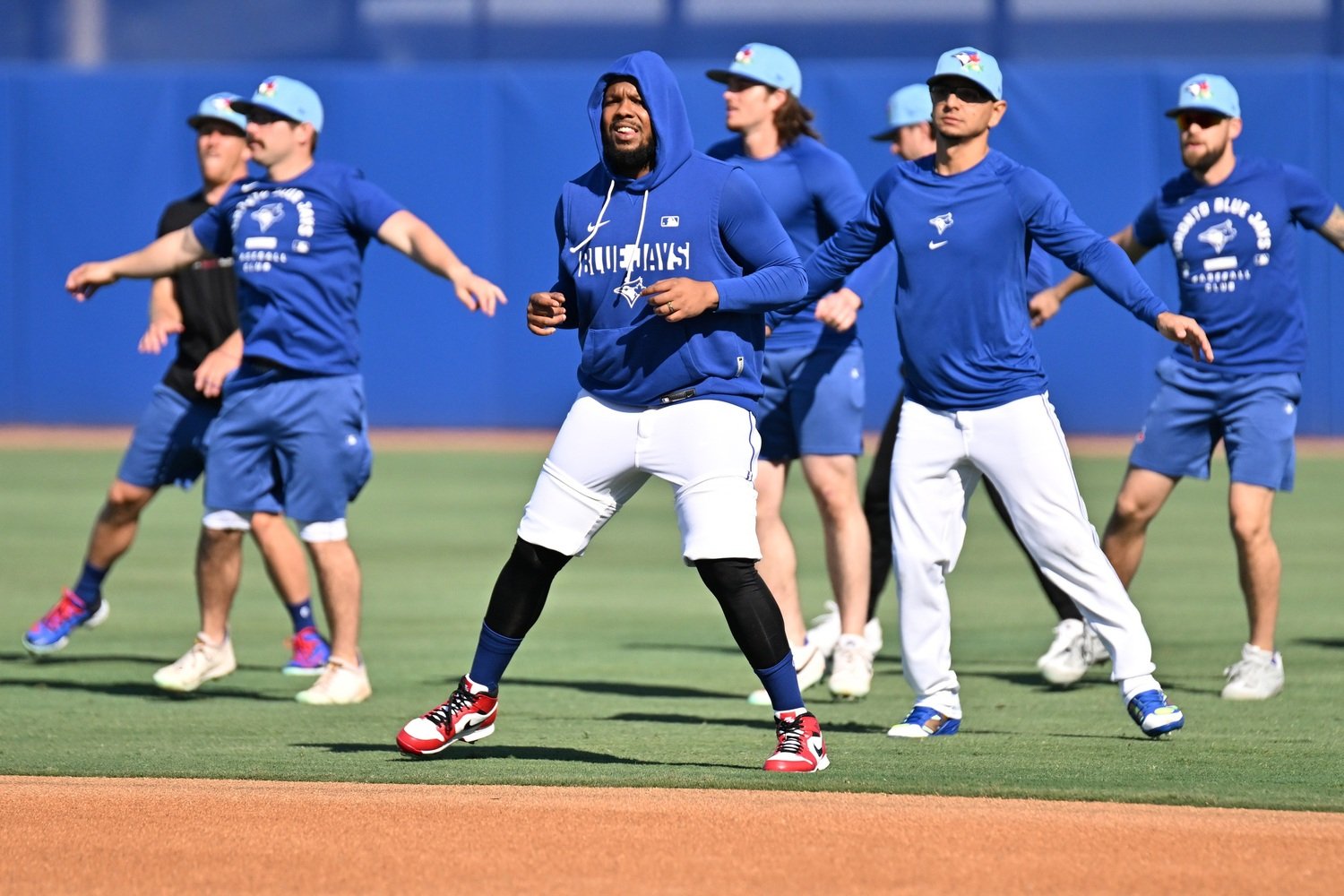 One hundred sixty-two games stretch across six months, and the rhythms of baseball tend to smooth out early noise. A bad week in April is forgotten by July; a hot stretch can dissolve just as quickly. The sport, more than any other, frowns upon small sample conclusions. The American League East has never really played by those rules. In this division, April matters. Not because it defines a season, but because it frames it. A strong start doesn’t just pad the standings; it reshapes expectations, compresses margins and quietly shifts pressure across divisional opponents who already understand how thin the line is between October baseball and disappointing seasons. And if you’ve followed the Toronto Blue Jays over the past half-decade, you’ve seen both sides of that coin. To understand why early-season performance carries more weight in the AL East, you have to start with the baseline: this is the most competitive division in baseball, year after year. It’s not just perception – it is a reality. Every team in the division, even the Rays, has tweaked their roster for a solid shot (at least on paper) of taking the division in 2026. Last year, the Jays and Yankees finished with identical 94-win seasons, and the Jays won the division by virtue of their head-to-head record. That kind of internal competition creates a unique dynamic. There are no soft landings for teams to stabilize a sluggish start. Every series often feels like it matters a little more, even in April. Historically, that pressure has shaped the division’s identity. The AL East has produced dynasties, Wild Card juggernauts and some of the tightest races in modern baseball, with every franchise claiming multiple division titles. So, when a team jumps out early, it’s not just about stacking wins, it’s about forcing everyone else to react. Baseball players will always tell you the same thing: Don’t scoreboard watch in April. Focus on the process. Trust the numbers. Let things play out. But inside a clubhouse, the standings still matter. An 8-2 start, like the Yankees opened with in 2024, doesn’t just add wins, it changes the tone. That particular run was their best 10-game start since 2020, and it immediately put them ahead of schedule in a division where every game feels like a two-game swing. Last season, the Jays started slow, amassing a record of 26-28 by May 27. That was despite a 5-2 record out of the gate. Their eight-game winning streak heading into July was the first time they’d managed that feat dating back to 2022. Momentum in baseball is a tricky concept. It’s not as simple as “hot” and “cold,” but confidence is real. Hitters expand the zone less when things are going well. Pitchers attack more aggressively. Managers manage differently when they have a cushion. And perhaps most importantly, the media narrative shifts. A team that starts 12-5 is “legitimate.” A team that starts 5-12 is “searching for answers,” even if both clubs might end up in the same place by September. In the AL East, those narratives can stick. If you want a modern example of how powerful an early-season surge can be, look back to the Rays in 2023. They exploded out of the gate, opening the season 13-0 and eventually pushing to a staggering 20-3 record by late April. Even as the Rays cooled later in the season, the cushion they built in April kept them firmly in a playoff position. It’s the clearest case study in modern baseball of why April dominance isn’t just noise in a division like this. It’s leverage. For the Blue Jays, recent seasons have shown how dramatically early performance can shape the trajectory of a year. From 2021 through 2023, Toronto consistently hovered around contention, posting win totals of 91, 92, and 89, respectively. Those teams were built on strong cores, balanced rosters and enough early-season competence to stay in the race. But 2024 told a different story. The Blue Jays stumbled to a 74–88 finish, landing at the bottom of the AL East. The season wasn’t lost in April alone; the early inconsistencies set a tone the team never managed to overcome. There’s a fundamental difference between “banking” wins early and “chasing” them late. When a team starts strong, every additional win adds to a growing reserve. Slumps become manageable. Injuries become survivable. The math works in a team’s favor. But when a team starts slowly, everything tightens. A 7–12 start doesn’t look disastrous on paper, but in the AL East, it can mean a team is suddenly five or six games back in the standings. From that point, every series carries added weight. Every loss feels amplified. And over time, that pressure compounds. We saw that with Toronto in 2024. The underlying metrics suggested a team that wasn’t dramatically worse than its recent predecessors, but the early-season struggles forced them into a reactive posture they never escaped. In other divisions, a slow start can be corrected with a strong intra-division run. You can make up ground quickly if your rivals falter or if there are weaker opponents to exploit. The AL East doesn’t offer that luxury. Every team is capable of punishing mistakes. Every lineup has depth. Every rotation can string together quality starts. That’s why early head-to-head matchups matter so much. Winning a series in April against a division rival isn’t just one tick in the win column. It’s a direct denial of a win to a competitor. It’s a double impact, and over the course of a season, those small edges accumulate. Precisely what we saw when last season came to an end with the Jays grabbing the division based on their record against the Yankees. One of the more understated effects of a strong start is how it shapes a team’s internal identity. Baseball seasons are long enough that teams tend to become what they believe they are. A club that starts 15-8 begins to see itself as a contender. Players buy into roles more quickly. Lineups stabilize. Pitching staffs settle into rhythms. Conversely, a 6-15 start invites doubt. Roles become fluid in the wrong way. Pressing at the plate leads to worse at-bats. Pitchers nibble instead of attacking. For the Blue Jays, this has been particularly evident in recent years. When their offense clicks early, when the heart of the lineup is driving the ball, and the lineup feels dangerous, they tend to carry that identity forward. When they struggle out of the gate, the inconsistency lingers. Like it or not, Vladimir Guerrero Jr. has been at the forefront of this rollercoaster. However, he seems to be in a good spot, building upon his historic playoff performance with a stellar WBC. When Guerrero is locked in, the entire offense tends to settle into rhythm around him, and for a team with October ambitions, that consistency is less of a luxury and more of a requirement. It’s not that April defines any team, but it introduces the version of the team they’re going to spend the next five months trying to either sustain or fix. Statistically, early-season records in baseball are less predictive than in sports with shorter seasons, like football or basketball. But they’re not meaningless. Consider this: Teams that reach 90 wins almost always avoid prolonged early slumps. Division winners frequently post winning records in April, even if modestly so. Extreme early success (like Tampa Bay’s 20–3 start) dramatically increases playoff probability, even accounting for regression. And in the AL East, where multiple teams routinely finish within a handful of games of each other, those early wins effectively replace the need for perfection later. A team that starts 18-10 can play .550 baseball the rest of the way and still finish with 90+ wins. A team that starts 10-18 needs to play at a near-elite pace just to catch up. The Blue Jays sit in an interesting position relative to these trends. They’ve experienced both ends of the spectrum: playoff-calibre consistency and division-winning success, and seasons that slipped away under the weight of early struggles. 2026 will be an interesting test for the Jays. The expectations are sky-high, but that also means additional pressure to perform. A strong start reinforces that they are the real deal and puts pressure on opponents rather than the team. The lesson isn’t that April determines their fate, but that it sets the terms. A strong start doesn’t guarantee anything, but it allows the team to dictate its own pace. A weak start forces them into reaction mode, where every adjustment feels urgent and every mistake carries more weight. In a division like the AL East, that distinction is everything. April doesn’t define a season, but in this division, it frames it in a way the rest of MLB can’t match. A strong start provides breathing room. It puts pressure on opponents. And yes, a little confidence never hurt anyone. But more than anything, it buys time. And in a division where time is always in short supply, that might be the most valuable commodity of all.
 -
Jays Centre is counting down the top 50 Blue Jays in franchise history. Check out prior entries in the series here: Introduction 50 to 46 45 to 41 40 to 36 35 to 31 30 to 26 25 to 21 20 to 16 15 to 11 When ranking the greatest players in Toronto Blue Jays history, the top 10 is where subjectivity truly takes over. By this point, every name carries All‑Star credentials, franchise records, postseason moments, and plenty of fans ready to defend them. Unless you were there for the franchise’s first pitch, how can one possibly compare players from different eras? But that’s the fun of this top 50 list. Players 10 through 6 capture the '80s to the present day. Jesse Barfield, George Bell, Tom Henke, Vernon Wells and Vladimir Guerrero Jr. all feel “right” in the top 10. Yet, we can still argue the exact order. On my personal ballot, I had several of these players placed quite differently within the top 25. That doesn’t diminish their legacies. Instead, it highlights how rich and layered Blue Jays history has become. This tier represents the bridge between franchise icons and generational cornerstones. Each player defined an era, shaped the identity of the team, and left a mark that still resonates. No. 10: Jesse Barfield Accolades & Notes All-Star Two-time Gold Glove winner Led AL outfielders in assists four times Key contributor to multiple AL East contenders One of the strongest throwing arms in franchise history Jesse Barfield at No. 10 is where the real debate begins. There is no question Barfield was an elite defender and a crucial piece of the Blue Jays’ rise in the mid-to-late 1980s. His throwing arm was legendary. Runners didn’t test him, and when they did, they often paid for it. Offensively, he had power, patience and stretches where he looked like one of the most complete outfielders in baseball. That said, this is the ranking that feels most aggressive. On my personal ballot, I had Barfield closer to #25, not because he wasn’t great, but because his peak was relatively short compared to others in this tier. He never finished higher than ninth in MVP voting, never won a Silver Slugger and was gone before the team achieved true relevance. Because he was part of the Jays’ best-ever outfield along with George Bell and Lloyd Moseby, he definitely deserves a spot in the top 25. Barfield represents excellence, not transcendence. His defense elevates his case significantly, but when stacked against players who either carried the franchise offensively or defined championship moments, #10 feels like the upper limit of his case rather than the natural fit. Still, he absolutely belongs in the top 50, and his role in establishing a winning culture cannot be ignored. No. 9: George Bell Accolades & Notes 1987 American League MVP Three-time All-Star Three-time Silver Slugger Led MLB in home runs and RBI (1987) One of the most feared power hitters of his era George Bell is the most decorated hitter on this list, and perhaps the most underappreciated. An MVP Award matters. It always does. Bell’s 1987 season remains one of the greatest offensive years in Blue Jays history: 47 home runs, 134 RBI, and a relentless middle-of-the-order presence that powered a division-winning club. For several seasons, pitchers approached Bell with genuine fear. Despite that, I had Bell higher than this… at No. 6. Who doesn’t remember the start of the 1988 season? On April 4, 1988, Bell became the first player in Major League Baseball history to hit three home runs on Opening Day (against the Royals in Kansas City). Bell’s best seasons were elite by any standard. He was a top-five hitter in baseball, not just on the Blue Jays. While his defense and longevity weren’t strengths, his offensive impact during the franchise’s first true powerhouse era was immense. His catch to clinch the 1985 American League East title is indelibly etched into Blue Jays lore. Bell’s legacy suffers slightly from timing. He didn’t win a World Series ring or enjoy a farewell tour. However, when evaluating pure dominance in a Jays uniform, his resume stacks up with almost anyone. Ranking him ninth feels conservative, even if understandable. No. 8: Tom Henke Accolades & Notes Franchise leader in saves (217) Two-time All-Star AL saves leader (1987) World Series champion (1992) One of the most reliable closers in MLB history Tom Henke is the gold standard for relief pitching in Toronto. And one of the nicest people you will ever meet. Before the era of specialized bullpens and velocity-obsessed closers, Henke simply went out and ended games. His calm demeanor, consistency and durability made him a manager’s dream. Sure, he might have looked like your grade nine science teacher, but his fastball and forkball earned him the nickname “The Terminator.” When the ninth inning arrived, the game was effectively over. I personally ranked Henke at No. 9, just one spot lower, and that speaks to how tightly packed this group is. Relievers are always tricky on all-time lists. Their impact is enormous, but their opportunities are limited. Henke maximized every one of those opportunities. What elevates Henke into the top 10 is his role in championship baseball. While his peak came slightly before the World Series years, his presence helped build the bullpen culture that carried Toronto to back-to-back titles. He wasn’t flashy, but he was foundational. No. 7: Vernon Wells Accolades & Notes Three-time All-Star Three-time Gold Glove winner Silver Slugger Award Over 1,000 hits and 200 home runs with Toronto Franchise cornerstone during a difficult era Vernon Wells is one of the most polarizing great players in Blue Jays history. During his prime, Wells was everything you want in a franchise player: power, defense, leadership and durability. He played hard, represented the organization well, and carried some less-than-quality rosters. His best seasons placed him among the elite centre fielders in baseball. However, context matters. I had Wells at No. 12, not No. 7. The reason is simple: His prime coincided with one of the least successful stretches in franchise history. That’s not his fault, but legacy rankings inevitably account for team impact. Wells never played in a postseason game with Toronto, and his late-career decline was steep. His final contract with the Jays was a seven-year, $126 million extension signed in 2006. At the time, it was the richest deal in franchise history. That contract was a reflection of his contributions during his peak. For several seasons, he was the face of the franchise, and his all-around game earns him a legitimate spot in the top 10, even if this ranking feels slightly generous. No. 6: Vladimir Guerrero Jr. Accolades & Notes Five-time All-Star 2021 AL MVP runner-up Silver Slugger and Gold Glove winner One of the best offensive seasons in franchise history Face of the modern Blue Jays era Vladimir Guerrero Jr. is the most difficult player to rank on this list, because his story is still being written. Guerrero has already delivered one of the greatest seasons any Blue Jay has ever had. His combination of power, plate discipline, and charisma has redefined what a modern franchise star looks like. He is the centrepiece of the current era and the player opposing teams game-plan around. I personally had Guerrero at No. 7, not No. 6, simply because longevity still matters. He hasn’t yet compiled the counting stats or postseason resume of others in this tier. But if his career continues on its current trajectory, this ranking will age well and may soon look conservative. Guerrero’s inclusion here is less about what he’s done and more about what he represents: a generational talent who has already met the moment and seems poised for even greater heights. What makes rankings like this meaningful isn’t precision, it’s conversation. Barfield may feel too high. Bell may feel too low. Wells might be overrated by some, Henke underrated by others, and Guerrero still premature. All of those viewpoints can coexist, because each player here earned their place through excellence, not circumstance. Ranks 10 through 6 aren’t just a list. They’re a reflection of eras, values and evolving standards of greatness. And that’s exactly how it should be. View full article
-
 Jays Centre is counting down the top 50 Blue Jays in franchise history. Check out prior entries in the series here: Introduction 50 to 46 45 to 41 40 to 36 35 to 31 30 to 26 25 to 21 20 to 16 15 to 11 When ranking the greatest players in Toronto Blue Jays history, the top 10 is where subjectivity truly takes over. By this point, every name carries All‑Star credentials, franchise records, postseason moments, and plenty of fans ready to defend them. Unless you were there for the franchise’s first pitch, how can one possibly compare players from different eras? But that’s the fun of this top 50 list. Players 10 through 6 capture the '80s to the present day. Jesse Barfield, George Bell, Tom Henke, Vernon Wells and Vladimir Guerrero Jr. all feel “right” in the top 10. Yet, we can still argue the exact order. On my personal ballot, I had several of these players placed quite differently within the top 25. That doesn’t diminish their legacies. Instead, it highlights how rich and layered Blue Jays history has become. This tier represents the bridge between franchise icons and generational cornerstones. Each player defined an era, shaped the identity of the team, and left a mark that still resonates. No. 10: Jesse Barfield Accolades & Notes All-Star Two-time Gold Glove winner Led AL outfielders in assists four times Key contributor to multiple AL East contenders One of the strongest throwing arms in franchise history Jesse Barfield at No. 10 is where the real debate begins. There is no question Barfield was an elite defender and a crucial piece of the Blue Jays’ rise in the mid-to-late 1980s. His throwing arm was legendary. Runners didn’t test him, and when they did, they often paid for it. Offensively, he had power, patience and stretches where he looked like one of the most complete outfielders in baseball. That said, this is the ranking that feels most aggressive. On my personal ballot, I had Barfield closer to #25, not because he wasn’t great, but because his peak was relatively short compared to others in this tier. He never finished higher than ninth in MVP voting, never won a Silver Slugger and was gone before the team achieved true relevance. Because he was part of the Jays’ best-ever outfield along with George Bell and Lloyd Moseby, he definitely deserves a spot in the top 25. Barfield represents excellence, not transcendence. His defense elevates his case significantly, but when stacked against players who either carried the franchise offensively or defined championship moments, #10 feels like the upper limit of his case rather than the natural fit. Still, he absolutely belongs in the top 50, and his role in establishing a winning culture cannot be ignored. No. 9: George Bell Accolades & Notes 1987 American League MVP Three-time All-Star Three-time Silver Slugger Led MLB in home runs and RBI (1987) One of the most feared power hitters of his era George Bell is the most decorated hitter on this list, and perhaps the most underappreciated. An MVP Award matters. It always does. Bell’s 1987 season remains one of the greatest offensive years in Blue Jays history: 47 home runs, 134 RBI, and a relentless middle-of-the-order presence that powered a division-winning club. For several seasons, pitchers approached Bell with genuine fear. Despite that, I had Bell higher than this… at No. 6. Who doesn’t remember the start of the 1988 season? On April 4, 1988, Bell became the first player in Major League Baseball history to hit three home runs on Opening Day (against the Royals in Kansas City). Bell’s best seasons were elite by any standard. He was a top-five hitter in baseball, not just on the Blue Jays. While his defense and longevity weren’t strengths, his offensive impact during the franchise’s first true powerhouse era was immense. His catch to clinch the 1985 American League East title is indelibly etched into Blue Jays lore. Bell’s legacy suffers slightly from timing. He didn’t win a World Series ring or enjoy a farewell tour. However, when evaluating pure dominance in a Jays uniform, his resume stacks up with almost anyone. Ranking him ninth feels conservative, even if understandable. No. 8: Tom Henke Accolades & Notes Franchise leader in saves (217) Two-time All-Star AL saves leader (1987) World Series champion (1992) One of the most reliable closers in MLB history Tom Henke is the gold standard for relief pitching in Toronto. And one of the nicest people you will ever meet. Before the era of specialized bullpens and velocity-obsessed closers, Henke simply went out and ended games. His calm demeanor, consistency and durability made him a manager’s dream. Sure, he might have looked like your grade nine science teacher, but his fastball and forkball earned him the nickname “The Terminator.” When the ninth inning arrived, the game was effectively over. I personally ranked Henke at No. 9, just one spot lower, and that speaks to how tightly packed this group is. Relievers are always tricky on all-time lists. Their impact is enormous, but their opportunities are limited. Henke maximized every one of those opportunities. What elevates Henke into the top 10 is his role in championship baseball. While his peak came slightly before the World Series years, his presence helped build the bullpen culture that carried Toronto to back-to-back titles. He wasn’t flashy, but he was foundational. No. 7: Vernon Wells Accolades & Notes Three-time All-Star Three-time Gold Glove winner Silver Slugger Award Over 1,000 hits and 200 home runs with Toronto Franchise cornerstone during a difficult era Vernon Wells is one of the most polarizing great players in Blue Jays history. During his prime, Wells was everything you want in a franchise player: power, defense, leadership and durability. He played hard, represented the organization well, and carried some less-than-quality rosters. His best seasons placed him among the elite centre fielders in baseball. However, context matters. I had Wells at No. 12, not No. 7. The reason is simple: His prime coincided with one of the least successful stretches in franchise history. That’s not his fault, but legacy rankings inevitably account for team impact. Wells never played in a postseason game with Toronto, and his late-career decline was steep. His final contract with the Jays was a seven-year, $126 million extension signed in 2006. At the time, it was the richest deal in franchise history. That contract was a reflection of his contributions during his peak. For several seasons, he was the face of the franchise, and his all-around game earns him a legitimate spot in the top 10, even if this ranking feels slightly generous. No. 6: Vladimir Guerrero Jr. Accolades & Notes Five-time All-Star 2021 AL MVP runner-up Silver Slugger and Gold Glove winner One of the best offensive seasons in franchise history Face of the modern Blue Jays era Vladimir Guerrero Jr. is the most difficult player to rank on this list, because his story is still being written. Guerrero has already delivered one of the greatest seasons any Blue Jay has ever had. His combination of power, plate discipline, and charisma has redefined what a modern franchise star looks like. He is the centrepiece of the current era and the player opposing teams game-plan around. I personally had Guerrero at No. 7, not No. 6, simply because longevity still matters. He hasn’t yet compiled the counting stats or postseason resume of others in this tier. But if his career continues on its current trajectory, this ranking will age well and may soon look conservative. Guerrero’s inclusion here is less about what he’s done and more about what he represents: a generational talent who has already met the moment and seems poised for even greater heights. What makes rankings like this meaningful isn’t precision, it’s conversation. Barfield may feel too high. Bell may feel too low. Wells might be overrated by some, Henke underrated by others, and Guerrero still premature. All of those viewpoints can coexist, because each player here earned their place through excellence, not circumstance. Ranks 10 through 6 aren’t just a list. They’re a reflection of eras, values and evolving standards of greatness. And that’s exactly how it should be.
 -
On the eve of a new season, and just months removed from a World Series that came down to the final outs, the Toronto Blue Jays have doubled down on the leadership group that guided them there. The club has extended executive vice president and general manager Ross Atkins through the 2031 season and manager John Schneider through 2028, removing any lingering questions about direction or stability. Both were entering the final year of their contracts. The conversation surrounding this leadership group is far different from what it was just a year ago. Coming off a disappointing 2024 season, criticism was loud and persistent. Contract talks with Vladimir Guerrero Jr. had stalled. The roster felt incomplete. Many were openly questioning whether Atkins, and even president Mark Shapiro, should survive another reset. Fast forward 12 months. The Blue Jays won 94 games, captured the American League East, and came within one game of a World Series title. The offseason has been more decisive. Now, the organization has publicly committed to the architects behind the turnaround. (Shapiro was extended through 2030 in December.) The early 2025 skepticism has faded. Frankly, it is hard to argue with the extensions. Not because of one hot season, but because the blueprint is finally clear, and it is working. Since taking over midway through the 2022 season, Schneider has done three things that matter. He has won. He has kept the room together. He has learned and, in doing so, become a better, more confident manager. After back-to-back postseason disappointments and a last-place finish in 2024, Schneider guided a 20-win turnaround that ended with a division title and a World Series appearance. That rebound matters just as much as the pennant itself. It showed adaptability. It showed credibility. It showed that the players never stopped listening. Schneider is not Bobby Cox. He is closer to Cito Gaston in temperament and style, a players' manager who emphasizes communication, trust and accountability. That approach has carried real weight in a clubhouse that has been under constant scrutiny. He is also as “Blue Jays” as a modern manager gets. Drafted by the organization, Schneider coached his way through Lansing, New Hampshire, and Buffalo, managing Guerrero and Bo Bichette during their formative years. He won an Eastern League championship with them. He knows how his players think, how they respond and when to push. That continuity matters. It is a competitive advantage. Yes, his October resume is not spotless. The 2022 decision to pull Kevin Gausman. The 2023 Wild Card hook of José Berríos. Those moments will always be part of the conversation. But last season showed growth. Schneider was more willing to adjust. More willing to trust the moment. More comfortable blending preparation with feel. Schneider now joins Gaston as the only managers to take the Blue Jays to the World Series. That alone places him in rare company. Gaston owns the rings. Cox lit the fuse. John Gibbons provided stability. Charlie Montoyo nurtured a transition. Schneider’s differentiator is the blend. Homegrown relationships, modern analytics and a clubhouse that still believes in his voice. Hired in December 2015 after the Alex Anthopoulos era, Atkins inherited a roster built to win immediately and the responsibility to extend that window without burning it down. That was not always clean. The rebuild bottomed out in 2018 and 2019. The offense stalled at times in 2023 and 2024. Some free agent bets did not work. Tanner Roark still looms large. But judged over a decade, Atkins’ approach has been consistent and increasingly effective. This has not been about one franchise-altering swing. It has been about layering. Big-ticket pitching investments like Hyun Jin Ryu, Gausman and Chris Bassitt. Opportunistic moves like Robbie Ray. Smart, control-conscious trades like Berríos and the extension that followed. Defensive upgrades that reshaped the club’s identity. The result is a roster built on pitching, run prevention and depth. A model that seems to have raised the floor and survived October. Toronto’s most successful general manager remains Pat Gillick, whose patience earned him the nickname “Stand Pat” and two championships. Atkins has been at times more aggressive, and increasingly so. The recent additions of Dylan Cease and Kazuma Okamoto reflect a front office that now recognizes its window and is willing to act within it. Atkins’ tenure is not flawless. But the infrastructure is stronger. The farm system is recovering. The major league club is built to contend annually, not sporadically. No one surpasses Gillick without a championship. Even then, not sure you can ever really surpass him. But Atkins has already separated himself from the long post-Gillick drought, and a title would move him into a very different historical tier. The criticism of extensions after a great season is familiar. You are paying for what already happened. In this case, the Blue Jays are paying for what they believe comes next. Schneider has shown he can evolve. Atkins has shown he can build sustainably. The organization, for the first time in years, feels aligned from top to bottom. That consistency and stability also matter beyond the field. For a fan base that has lived through constant resets, the message is continuity with purpose. Players know who is in charge. Coaches know the plan. Fans know what the organization believes in. That clarity reduces the noise, sharpens accountability, allows decisions to be made and players to play. It’s not flashy, but it is how good organizations turn competitive seasons into eras. Time, patience and focusing on the details ultimately separate contenders from champions. Championships end debates. That has always been true. You play the games to win. Last season’s pennant put John Schneider and Ross Atkins on that path. Today’s announcements are a bet that they will finish the climb. If they do, their legacies will not be about patience or perseverance. They will be about building, and sustaining, something that finally lasts. View full article
-
.jpg.0c1c866ec592ba390f1f0738766e6451.jpg) On the eve of a new season, and just months removed from a World Series that came down to the final outs, the Toronto Blue Jays have doubled down on the leadership group that guided them there. The club has extended executive vice president and general manager Ross Atkins through the 2031 season and manager John Schneider through 2028, removing any lingering questions about direction or stability. Both were entering the final year of their contracts. The conversation surrounding this leadership group is far different from what it was just a year ago. Coming off a disappointing 2024 season, criticism was loud and persistent. Contract talks with Vladimir Guerrero Jr. had stalled. The roster felt incomplete. Many were openly questioning whether Atkins, and even president Mark Shapiro, should survive another reset. Fast forward 12 months. The Blue Jays won 94 games, captured the American League East, and came within one game of a World Series title. The offseason has been more decisive. Now, the organization has publicly committed to the architects behind the turnaround. (Shapiro was extended through 2030 in December.) The early 2025 skepticism has faded. Frankly, it is hard to argue with the extensions. Not because of one hot season, but because the blueprint is finally clear, and it is working. Since taking over midway through the 2022 season, Schneider has done three things that matter. He has won. He has kept the room together. He has learned and, in doing so, become a better, more confident manager. After back-to-back postseason disappointments and a last-place finish in 2024, Schneider guided a 20-win turnaround that ended with a division title and a World Series appearance. That rebound matters just as much as the pennant itself. It showed adaptability. It showed credibility. It showed that the players never stopped listening. Schneider is not Bobby Cox. He is closer to Cito Gaston in temperament and style, a players' manager who emphasizes communication, trust and accountability. That approach has carried real weight in a clubhouse that has been under constant scrutiny. He is also as “Blue Jays” as a modern manager gets. Drafted by the organization, Schneider coached his way through Lansing, New Hampshire, and Buffalo, managing Guerrero and Bo Bichette during their formative years. He won an Eastern League championship with them. He knows how his players think, how they respond and when to push. That continuity matters. It is a competitive advantage. Yes, his October resume is not spotless. The 2022 decision to pull Kevin Gausman. The 2023 Wild Card hook of José Berríos. Those moments will always be part of the conversation. But last season showed growth. Schneider was more willing to adjust. More willing to trust the moment. More comfortable blending preparation with feel. Schneider now joins Gaston as the only managers to take the Blue Jays to the World Series. That alone places him in rare company. Gaston owns the rings. Cox lit the fuse. John Gibbons provided stability. Charlie Montoyo nurtured a transition. Schneider’s differentiator is the blend. Homegrown relationships, modern analytics and a clubhouse that still believes in his voice. Hired in December 2015 after the Alex Anthopoulos era, Atkins inherited a roster built to win immediately and the responsibility to extend that window without burning it down. That was not always clean. The rebuild bottomed out in 2018 and 2019. The offense stalled at times in 2023 and 2024. Some free agent bets did not work. Tanner Roark still looms large. But judged over a decade, Atkins’ approach has been consistent and increasingly effective. This has not been about one franchise-altering swing. It has been about layering. Big-ticket pitching investments like Hyun Jin Ryu, Gausman and Chris Bassitt. Opportunistic moves like Robbie Ray. Smart, control-conscious trades like Berríos and the extension that followed. Defensive upgrades that reshaped the club’s identity. The result is a roster built on pitching, run prevention and depth. A model that seems to have raised the floor and survived October. Toronto’s most successful general manager remains Pat Gillick, whose patience earned him the nickname “Stand Pat” and two championships. Atkins has been at times more aggressive, and increasingly so. The recent additions of Dylan Cease and Kazuma Okamoto reflect a front office that now recognizes its window and is willing to act within it. Atkins’ tenure is not flawless. But the infrastructure is stronger. The farm system is recovering. The major league club is built to contend annually, not sporadically. No one surpasses Gillick without a championship. Even then, not sure you can ever really surpass him. But Atkins has already separated himself from the long post-Gillick drought, and a title would move him into a very different historical tier. The criticism of extensions after a great season is familiar. You are paying for what already happened. In this case, the Blue Jays are paying for what they believe comes next. Schneider has shown he can evolve. Atkins has shown he can build sustainably. The organization, for the first time in years, feels aligned from top to bottom. That consistency and stability also matter beyond the field. For a fan base that has lived through constant resets, the message is continuity with purpose. Players know who is in charge. Coaches know the plan. Fans know what the organization believes in. That clarity reduces the noise, sharpens accountability, allows decisions to be made and players to play. It’s not flashy, but it is how good organizations turn competitive seasons into eras. Time, patience and focusing on the details ultimately separate contenders from champions. Championships end debates. That has always been true. You play the games to win. Last season’s pennant put John Schneider and Ross Atkins on that path. Today’s announcements are a bet that they will finish the climb. If they do, their legacies will not be about patience or perseverance. They will be about building, and sustaining, something that finally lasts.
On the eve of a new season, and just months removed from a World Series that came down to the final outs, the Toronto Blue Jays have doubled down on the leadership group that guided them there. The club has extended executive vice president and general manager Ross Atkins through the 2031 season and manager John Schneider through 2028, removing any lingering questions about direction or stability. Both were entering the final year of their contracts. The conversation surrounding this leadership group is far different from what it was just a year ago. Coming off a disappointing 2024 season, criticism was loud and persistent. Contract talks with Vladimir Guerrero Jr. had stalled. The roster felt incomplete. Many were openly questioning whether Atkins, and even president Mark Shapiro, should survive another reset. Fast forward 12 months. The Blue Jays won 94 games, captured the American League East, and came within one game of a World Series title. The offseason has been more decisive. Now, the organization has publicly committed to the architects behind the turnaround. (Shapiro was extended through 2030 in December.) The early 2025 skepticism has faded. Frankly, it is hard to argue with the extensions. Not because of one hot season, but because the blueprint is finally clear, and it is working. Since taking over midway through the 2022 season, Schneider has done three things that matter. He has won. He has kept the room together. He has learned and, in doing so, become a better, more confident manager. After back-to-back postseason disappointments and a last-place finish in 2024, Schneider guided a 20-win turnaround that ended with a division title and a World Series appearance. That rebound matters just as much as the pennant itself. It showed adaptability. It showed credibility. It showed that the players never stopped listening. Schneider is not Bobby Cox. He is closer to Cito Gaston in temperament and style, a players' manager who emphasizes communication, trust and accountability. That approach has carried real weight in a clubhouse that has been under constant scrutiny. He is also as “Blue Jays” as a modern manager gets. Drafted by the organization, Schneider coached his way through Lansing, New Hampshire, and Buffalo, managing Guerrero and Bo Bichette during their formative years. He won an Eastern League championship with them. He knows how his players think, how they respond and when to push. That continuity matters. It is a competitive advantage. Yes, his October resume is not spotless. The 2022 decision to pull Kevin Gausman. The 2023 Wild Card hook of José Berríos. Those moments will always be part of the conversation. But last season showed growth. Schneider was more willing to adjust. More willing to trust the moment. More comfortable blending preparation with feel. Schneider now joins Gaston as the only managers to take the Blue Jays to the World Series. That alone places him in rare company. Gaston owns the rings. Cox lit the fuse. John Gibbons provided stability. Charlie Montoyo nurtured a transition. Schneider’s differentiator is the blend. Homegrown relationships, modern analytics and a clubhouse that still believes in his voice. Hired in December 2015 after the Alex Anthopoulos era, Atkins inherited a roster built to win immediately and the responsibility to extend that window without burning it down. That was not always clean. The rebuild bottomed out in 2018 and 2019. The offense stalled at times in 2023 and 2024. Some free agent bets did not work. Tanner Roark still looms large. But judged over a decade, Atkins’ approach has been consistent and increasingly effective. This has not been about one franchise-altering swing. It has been about layering. Big-ticket pitching investments like Hyun Jin Ryu, Gausman and Chris Bassitt. Opportunistic moves like Robbie Ray. Smart, control-conscious trades like Berríos and the extension that followed. Defensive upgrades that reshaped the club’s identity. The result is a roster built on pitching, run prevention and depth. A model that seems to have raised the floor and survived October. Toronto’s most successful general manager remains Pat Gillick, whose patience earned him the nickname “Stand Pat” and two championships. Atkins has been at times more aggressive, and increasingly so. The recent additions of Dylan Cease and Kazuma Okamoto reflect a front office that now recognizes its window and is willing to act within it. Atkins’ tenure is not flawless. But the infrastructure is stronger. The farm system is recovering. The major league club is built to contend annually, not sporadically. No one surpasses Gillick without a championship. Even then, not sure you can ever really surpass him. But Atkins has already separated himself from the long post-Gillick drought, and a title would move him into a very different historical tier. The criticism of extensions after a great season is familiar. You are paying for what already happened. In this case, the Blue Jays are paying for what they believe comes next. Schneider has shown he can evolve. Atkins has shown he can build sustainably. The organization, for the first time in years, feels aligned from top to bottom. That consistency and stability also matter beyond the field. For a fan base that has lived through constant resets, the message is continuity with purpose. Players know who is in charge. Coaches know the plan. Fans know what the organization believes in. That clarity reduces the noise, sharpens accountability, allows decisions to be made and players to play. It’s not flashy, but it is how good organizations turn competitive seasons into eras. Time, patience and focusing on the details ultimately separate contenders from champions. Championships end debates. That has always been true. You play the games to win. Last season’s pennant put John Schneider and Ross Atkins on that path. Today’s announcements are a bet that they will finish the climb. If they do, their legacies will not be about patience or perseverance. They will be about building, and sustaining, something that finally lasts.-
- 1
-
-
- john schneider
- ross atkins
- (and 1 more)
-
Jays Centre is taking a close look at every position on the Toronto Blue Jays heading into the 2026 season. Check out prior entries in the series here: Catcher First Base Second Base Toronto Blue Jays Third Basemen at a Glance Starter: Kazuma Okamoto Backup: Addison Barger, Ernie Clement Depth: Josh Kasevich, Damiano Palmegiani Prospects: Charles McAdoo Blue Jays 3B fWAR in 2025: 10th out of 30 Blue Jays 3B FGDC Projection for 2026: 10th out of 30 Third base will be one of the most interesting pressure points on the Blue Jays’ 2026 roster, not because the position is unsettled, but because it demonstrates the organization balancing certainty, versatility and long-term planning. The club signed Kazuma Okamoto out of Japan’s Nippon Professional Baseball (NPB) to add a middle-of-the-order bat while also providing defensive flexibility across the corner positions and outfield. While he will occasionally back up Vladimir Guerrero Jr. at first base and see limited time in left field, most projections have Okamoto spending the majority of his innings at third. Toronto’s third-base production has been solid but unspectacular in recent years. In 2025, the Blue Jays ranked 10th in MLB in fWAR at third base, firmly above league average but well behind elite units such as those in Cleveland, San Francisco, and Kansas City. Looking ahead to 2026, most projection systems see Toronto somewhere in the middle of the pack again, a reflection of positional uncertainty and the risk of transitioning a star hitter from NPB to MLB. That mid-tier projection doesn’t necessarily indicate a weakness. It instead highlights just how compressed the league has become at third base. The gap between the 8th and 16th ranked teams at the position is often fewer than 1.0 WAR, meaning health, platoon efficiency and defensive deployment could easily swing Toronto’s ranking several spots in either direction. Does it matter that Okamoto might not have been the team’s first choice at third base? Throughout the offseason, there was widespread discussion about the potential re-signing of Bo Bichette, a move that would have kept the infield alignment largely intact from 2025. Instead, Toronto pivoted and replaced Bichette with a seasoned international veteran with an elite resume, albeit one built outside of MLB. Okamoto arrives with credentials that few NPB hitters can match. Over his final five full seasons in Japan, he averaged over 30 home runs per year, routinely posting an OPS above .900 and maintaining an above-average walk rate. His career strikeout rate in NPB hovered in the mid-teens. All that to say, that he fits the mold of what the Jays' offense has been building over the past couple of seasons. Defensively, Okamoto brings stability rather than flash. He won’t be Matt Chapman or Brett Lawrie. While he isn’t considered an elite reaction defender, his hands, arm strength and internal clock earned him multiple Mitsui Golden Glove Awards, including wins at both third base and first base. For Toronto, that versatility is critical, especially given Guerrero’s workload management and occasional need for rest at first. If Okamoto shifts to first base or misses time, Addison Barger is the most likely candidate to absorb innings at third. Barger’s 2025 campaign represented a meaningful step forward. He hit 21 home runs and posted a .755 OPS. Statcast indicators showed above-average exit velocities and strong pull-side power, especially against right-handed pitching. Listed as a 3B/RF, Barger’s athleticism allows Toronto to maintain flexibility without sacrificing offense. His left-handed bat also adds balance to a lineup that can skew right-heavy depending on matchups. From a roster construction standpoint, moving Barger to third opens opportunities for players like Nathan Lukes, Myles Straw, Davis Schneider or Jesús Sánchez to rotate through the outfield. While Barger’s defense at third remains a work in progress, his arm strength and reaction time suggest at least average capability. The absence of Bichette will have a cascading effect on the infield, most notably pushing Ernie Clement into the role of everyday second baseman. Clement spent much of 2025 rotating between third, second and shortstop. He logged over 1,000 defensive innings across multiple positions. Now, Clement will be a stabilizing force at second, where his range and reliability profile well. However, his defensive metrics, particularly Outs Above Average and Defensive Runs Saved, are consistently high regardless of the infield position he’s playing. In 2025, Clement finished as an American League Gold Glove finalist at both third base and the utility position, a rare dual recognition. Offensively, Clement is league average, but context matters. His contact rate, low chase percentage and ability to hit left-handed pitching make him an ideal matchup-based contributor. Even though he is the primary second baseman, it would be surprising if John Schneider didn’t continue to deploy Clement at third base in specific situations, particularly against groundball-heavy left-handers. One of the defining characteristics of the 2026 Blue Jays is that very few positions are locked into a rigid everyday role. Instead, the roster is built around matchups, platoons, and flexibility. Clement’s presence allows Schneider to shift the defensive alignment based on opposing pitchers. Against left-handed starters, Clement might slide to third, leaving Barger in right, allowing another right-handed bat to enter the lineup. Against high-velocity right-handers, Barger’s bat speed becomes more valuable, even if it costs a fraction of defensive efficiency. Surprisingly, CBS Sports’ depth chart lists Guerrero as a potential third base backup, though that scenario remains highly unlikely outside of emergency situations. Okamoto’s contract runs through 2029, which significantly reduces urgency within the farm system. Toronto does not need to rush a prospect into the role or push development timelines. That reality is reflected in spring training coverage out of Dunedin, where attention has focused more heavily on middle infielders, outfielders and catchers, rather than true third base regulars. There is some depth in the minors. Josh Kasevich, primarily a shortstop, has logged reps at third and has enjoyed a solid spring. His value lies in contact skills and defensive reliability rather than power. Most projections place him starting the year in Triple A, but his versatility makes him a logical call-up if injuries mount. Damiano Palmegiani offers some power. A right-handed bat with legitimate pop, he can play the infield corners and left. His primary challenge remains managing his strikeout rate, but the raw power is undeniable. In a small sample, Palmegiani could equal Barger’s power output from the right side. So, what happens if Okamoto goes down? If the injury is short- to medium-term, the solution is straightforward. Barger slides to third, Clement spells him depending on matchups, and the rest of the roster remains largely intact. This alignment minimizes disruption both offensively and defensively and maintains the lineup and roster as is. A longer-term absence, like two months or more, might prompt Toronto to explore the trade market. That said, the presence of Barger and Clement significantly reduces the urgency to overpay. Historically, teams with internal third base depth are better positioned to wait for favorable deals than react out of necessity. In either scenario, a call-up such as Palmegiani becomes more likely, particularly if the club wants to preserve Barger’s flexibility across multiple positions. Of Okamoto, Barger, and Clement, only Clement is routinely described as an elite defender, but that label can be misleading. Clement’s Gold Glove finalist status speaks for itself. Okamoto’s track record includes Japanese Gold Gloves at both corner infield spots. Even Barger, while imperfect, brings athletic tools that project to league-average defense with consistent reps. Collectively, this group offers competence, flexibility, and reliability. These traits often matter more over a full season than highlight-reel plays. Third base may not be Toronto’s most glamorous position in 2026, but it could quietly be one of its most important. The combination of Okamoto’s proven bat, Barger’s upside and Clement’s versatility gives the Blue Jays a floor that is comfortably league average and a ceiling that could push them into the top quartile of MLB teams at the position. In a division where marginal gains often decide playoff spots, that kind of stability, especially at a traditional offense-first position, could matter more than it appears on paper. View full article
-
 Jays Centre is taking a close look at every position on the Toronto Blue Jays heading into the 2026 season. Check out prior entries in the series here: Catcher First Base Second Base Toronto Blue Jays Third Basemen at a Glance Starter: Kazuma Okamoto Backup: Addison Barger, Ernie Clement Depth: Josh Kasevich, Damiano Palmegiani Prospects: Charles McAdoo Blue Jays 3B fWAR in 2025: 10th out of 30 Blue Jays 3B FGDC Projection for 2026: 10th out of 30 Third base will be one of the most interesting pressure points on the Blue Jays’ 2026 roster, not because the position is unsettled, but because it demonstrates the organization balancing certainty, versatility and long-term planning. The club signed Kazuma Okamoto out of Japan’s Nippon Professional Baseball (NPB) to add a middle-of-the-order bat while also providing defensive flexibility across the corner positions and outfield. While he will occasionally back up Vladimir Guerrero Jr. at first base and see limited time in left field, most projections have Okamoto spending the majority of his innings at third. Toronto’s third-base production has been solid but unspectacular in recent years. In 2025, the Blue Jays ranked 10th in MLB in fWAR at third base, firmly above league average but well behind elite units such as those in Cleveland, San Francisco, and Kansas City. Looking ahead to 2026, most projection systems see Toronto somewhere in the middle of the pack again, a reflection of positional uncertainty and the risk of transitioning a star hitter from NPB to MLB. That mid-tier projection doesn’t necessarily indicate a weakness. It instead highlights just how compressed the league has become at third base. The gap between the 8th and 16th ranked teams at the position is often fewer than 1.0 WAR, meaning health, platoon efficiency and defensive deployment could easily swing Toronto’s ranking several spots in either direction. Does it matter that Okamoto might not have been the team’s first choice at third base? Throughout the offseason, there was widespread discussion about the potential re-signing of Bo Bichette, a move that would have kept the infield alignment largely intact from 2025. Instead, Toronto pivoted and replaced Bichette with a seasoned international veteran with an elite resume, albeit one built outside of MLB. Okamoto arrives with credentials that few NPB hitters can match. Over his final five full seasons in Japan, he averaged over 30 home runs per year, routinely posting an OPS above .900 and maintaining an above-average walk rate. His career strikeout rate in NPB hovered in the mid-teens. All that to say, that he fits the mold of what the Jays' offense has been building over the past couple of seasons. Defensively, Okamoto brings stability rather than flash. He won’t be Matt Chapman or Brett Lawrie. While he isn’t considered an elite reaction defender, his hands, arm strength and internal clock earned him multiple Mitsui Golden Glove Awards, including wins at both third base and first base. For Toronto, that versatility is critical, especially given Guerrero’s workload management and occasional need for rest at first. If Okamoto shifts to first base or misses time, Addison Barger is the most likely candidate to absorb innings at third. Barger’s 2025 campaign represented a meaningful step forward. He hit 21 home runs and posted a .755 OPS. Statcast indicators showed above-average exit velocities and strong pull-side power, especially against right-handed pitching. Listed as a 3B/RF, Barger’s athleticism allows Toronto to maintain flexibility without sacrificing offense. His left-handed bat also adds balance to a lineup that can skew right-heavy depending on matchups. From a roster construction standpoint, moving Barger to third opens opportunities for players like Nathan Lukes, Myles Straw, Davis Schneider or Jesús Sánchez to rotate through the outfield. While Barger’s defense at third remains a work in progress, his arm strength and reaction time suggest at least average capability. The absence of Bichette will have a cascading effect on the infield, most notably pushing Ernie Clement into the role of everyday second baseman. Clement spent much of 2025 rotating between third, second and shortstop. He logged over 1,000 defensive innings across multiple positions. Now, Clement will be a stabilizing force at second, where his range and reliability profile well. However, his defensive metrics, particularly Outs Above Average and Defensive Runs Saved, are consistently high regardless of the infield position he’s playing. In 2025, Clement finished as an American League Gold Glove finalist at both third base and the utility position, a rare dual recognition. Offensively, Clement is league average, but context matters. His contact rate, low chase percentage and ability to hit left-handed pitching make him an ideal matchup-based contributor. Even though he is the primary second baseman, it would be surprising if John Schneider didn’t continue to deploy Clement at third base in specific situations, particularly against groundball-heavy left-handers. One of the defining characteristics of the 2026 Blue Jays is that very few positions are locked into a rigid everyday role. Instead, the roster is built around matchups, platoons, and flexibility. Clement’s presence allows Schneider to shift the defensive alignment based on opposing pitchers. Against left-handed starters, Clement might slide to third, leaving Barger in right, allowing another right-handed bat to enter the lineup. Against high-velocity right-handers, Barger’s bat speed becomes more valuable, even if it costs a fraction of defensive efficiency. Surprisingly, CBS Sports’ depth chart lists Guerrero as a potential third base backup, though that scenario remains highly unlikely outside of emergency situations. Okamoto’s contract runs through 2029, which significantly reduces urgency within the farm system. Toronto does not need to rush a prospect into the role or push development timelines. That reality is reflected in spring training coverage out of Dunedin, where attention has focused more heavily on middle infielders, outfielders and catchers, rather than true third base regulars. There is some depth in the minors. Josh Kasevich, primarily a shortstop, has logged reps at third and has enjoyed a solid spring. His value lies in contact skills and defensive reliability rather than power. Most projections place him starting the year in Triple A, but his versatility makes him a logical call-up if injuries mount. Damiano Palmegiani offers some power. A right-handed bat with legitimate pop, he can play the infield corners and left. His primary challenge remains managing his strikeout rate, but the raw power is undeniable. In a small sample, Palmegiani could equal Barger’s power output from the right side. So, what happens if Okamoto goes down? If the injury is short- to medium-term, the solution is straightforward. Barger slides to third, Clement spells him depending on matchups, and the rest of the roster remains largely intact. This alignment minimizes disruption both offensively and defensively and maintains the lineup and roster as is. A longer-term absence, like two months or more, might prompt Toronto to explore the trade market. That said, the presence of Barger and Clement significantly reduces the urgency to overpay. Historically, teams with internal third base depth are better positioned to wait for favorable deals than react out of necessity. In either scenario, a call-up such as Palmegiani becomes more likely, particularly if the club wants to preserve Barger’s flexibility across multiple positions. Of Okamoto, Barger, and Clement, only Clement is routinely described as an elite defender, but that label can be misleading. Clement’s Gold Glove finalist status speaks for itself. Okamoto’s track record includes Japanese Gold Gloves at both corner infield spots. Even Barger, while imperfect, brings athletic tools that project to league-average defense with consistent reps. Collectively, this group offers competence, flexibility, and reliability. These traits often matter more over a full season than highlight-reel plays. Third base may not be Toronto’s most glamorous position in 2026, but it could quietly be one of its most important. The combination of Okamoto’s proven bat, Barger’s upside and Clement’s versatility gives the Blue Jays a floor that is comfortably league average and a ceiling that could push them into the top quartile of MLB teams at the position. In a division where marginal gains often decide playoff spots, that kind of stability, especially at a traditional offense-first position, could matter more than it appears on paper.
 -
The Top 50 Blue Jays of All Time: 45 to 41
Sam Charles posted a topic in Jays Centre Front Page News
Jays Centre is counting down the top 50 Blue Jays in franchise history. Check out prior entries in the series here: Introduction 50 to 46 As we continue our countdown of the greatest players in Toronto Blue Jays history, this group from 45 to 41 highlights a fascinating mix of postseason legends, modern stars and quietly excellent contributors. Some names here were difficult to place. A couple could easily rank much higher (and I personally did rank one of them much higher). Regardless of where they fall on the list, each of these players left a meaningful impact on the franchise. No. 45: Pat Borders Accolades & Notes 1992 World Series MVP Two‑time World Series champion (1992, 1993) 10 seasons with the Blue Jays (1988–1994, 1999) One of the most memorable October performances in team history Caught Dave Stieb’s no-hitter on September 2, 1990 This is the first ranking on the list where I have to plant my flag: I had Pat Borders at #17 on my personal ballot, and I stand by it. He was never the most talented hitter, nor the flashiest defender, but baseball is full of players whose true value shows up at the right place and time, and Borders is the textbook example. His 1992 postseason was the stuff of legend. He was steady behind the plate, timely at the dish, and unshakeably calm in the biggest moments the franchise had ever experienced. For a team built around power and swagger, Borders was the grounded core. He handled elite pitching staffs, delivered when it mattered most and carried himself like the heartbeat of a champion. Rankings don’t change legacy, and Borders’ place in Jays lore is as secure as it gets. No. 44: Jack Morris Accolades & Notes World Series Champion with Toronto (1992) AL wins leader in 1992 (21 wins) Six complete games for the Jays Pitched 240+ innings in 1992 Hall of Famer I had Jack Morris a bit higher at #36, partly because I value what he brought to the 1992 transition from “contender” to “champion.” Morris gave the rotation a battle‑tested leader during a season in which the team needed one. His performance wasn’t as historically dominant as his 1991 Game 7 masterpiece in Minnesota, but he provided innings, leadership, and credibility. He was the kind of veteran presence that rubs off on everyone around him. His Toronto tenure was brief but extremely impactful. After recording 21 wins for the Jays in 1992 (tied for second with Roger Clemens for most wins in a season behind Roy Halladay), he went 7-12 in 1993 and did not pitch in the postseason. One of the most iconic starting pitchers in Jays history? Maybe. But one of the most important? Absolutely. No. 43: George Springer Accolades & Notes Silver Slugger as DH with Toronto (2025) All‑Star in Toronto (2022) Franchise record for most leadoff home runs in a season 70+ HR, 200+ RBI, and excellent defensive versatility during his Toronto tenure George Springer’s time in Toronto has been defined by high‑energy plays, big‑game moments and stretches where he simply carried the lineup on his back. At his peak, he was the ignition switch for a team built around power and athleticism. He remains capable of changing a game from the first pitch or with a sliding grab in the gap. The nagging injuries sometimes overshadow the consistency of his impact, but when Springer is right, the Blue Jays look like a completely different ballclub. He’s one of the most dynamic outfielders ever to suit up for the team, and his legacy when it comes to leadoff records, clutch moments and veteran leadership is secure. No. 42: Luis Leal Accolades & Notes 10.6 fWAR as a Blue Jay Three seasons of 200+ innings Career 4.14 ERA in the AL East during one of its strongest eras Ranked among the club leaders in starts, innings, wins and strikeouts when he retired Often overshadowed by the bigger names of the early 1980s, Luis Leal was one of the most reliable arms the Jays had during their first competitive era. He wasn’t flashy, but he was steady. He could be counted on to take the ball every fifth day and go deep into games. That durability was invaluable for a young team trying to establish an identity in a brutal division. Leal may not get the same fanfare as the later stars who powered the playoff runs, but his contributions were foundational. He helped raise the floor of the franchise, allowing the stars around him to shine. No. 41: Teoscar Hernández Accolades & Notes Two Silver Slugger Awards (2020, 2021) All‑Star (2021) 129 HR in a Jays uniform One of the top power hitters of the late 2010s/early 2020s Fan favourite and clubhouse cornerstone Few players of his era were as beloved or as electrifying as Teoscar Hernández. What started as a somewhat raw, strikeout‑prone outfielder blossomed into one of the most dangerous middle‑of‑the‑order bats in the league. Hernández brought joy, charisma and a big bat. His evolution from project to star mirrors the Jays’ return to relevance. Sure, he had some growing pains, but he made major strides that ultimately led to something special. Teoscar’s legacy in Toronto is built on energy, power and a sense that something exciting could happen every time he stepped into the box. View full article
.jpg.6b70e991cdfb5d6c25e983bc8748c8a9.jpg)
.jpg.8ce135a329f38b8f160ea8593486648b.jpg)
.jpg.048c33b6af6487677e780c687eee63b8.jpg)

.jpg.83507f7f2315a3a9effc1bf82337bf78.jpg)
.jpg.0d6a064f63ce899d2adf518f06400b90.jpg)
.jpg.83329003231e6638985171ea6da5f3ac.jpg)
.jpg.dd834d812021c28f2fc8fad689ab37d7.jpg)
.jpg.0c1c866ec592ba390f1f0738766e6451.jpg)
