


Sam Charles
-
Posts
182 -
Joined
-
Last visited
Content Type
Profiles
Toronto Blue Jays Videos
2026 Toronto Blue Jays Top Prospects Ranking
Toronto Blue Jays Free Agent & Trade Rumors, Notes, & Tidbits
Guides & Resources
2025 Toronto Blue Jays Draft Pick Tracker
News
2026 Toronto Blue Jays Draft Tracker: Picks & Bonuses
Forums
Blogs
Events
Store
Downloads
Gallery
Everything posted by Sam Charles
-
.jpg.2f126a930e74f3088469d276a04bb839.jpg) The Jays are committed to a high-priced core, with long-term deals for Vladimir Guerrero Jr., José Berríos, Andrés Giménez, Anthony Santander, and Alejandro Kirk. Most of these deals extend until at least 2029. Next year alone, this group will collectively earn approximately $114 million. Factor in about another $30 million for Dylan Cease, alongside the cost of filling out the rest of the roster, and the Jays will quickly find themselves closing in on the Competitive Balance Tax threshold, estimated to be around $250 million in 2027. Long-term deals are always risky (Vernon Wells, anyone?), but these ones still have merit. Even though he is in a down year relative to expectations, Guerrero’s massive extension was not solely about his year-to-year production. It solidified the franchise’s commitment to winning. It also served as a signal to the rest of Major League Baseball that ownership will spend and that Toronto is a destination. You can make an argument that subsequent major acquisitions, including trades and signings for Shane Bieber, Cease, and Kazuma Okamoto, were all a result of Guerrero's deal. With a new collective bargaining agreement coming somewhere down the road, time will tell if these deals are reasonable or restrictive. Collectively, they don’t completely handcuff the team from trades or signing big-name free agents over the next few seasons, but they will undoubtedly make the front office a little more hesitant to keep spending. Over his career, Guerrero has been an absolute gamer. Even before signing his mega-extension, he averaged 157 games per season over a three-year stretch, proving that his durability matches his star power. The same cannot be easily said for the rest of the core. Key elements of the roster have faced significant stints on the injured list over the past two seasons, testing the team’s depth. Significant injuries, like the ones to Berríos and Santander, are often covered under insurance that most teams carry, especially for large contracts. While it stinks for fans, it stings for insurance companies that are footing some or all of the base salary while the player is off. The contracts might be covered, but it doesn’t mean the team is free to spend that money somewhere else. Giménez was sidelined early last season and only appeared in 107 games. He has been looking a bit more mobile, especially on the bases leading up to the All-Star break, but beforehand had complained of hamstring and quad discomfort, and it showed in his hesitancy to advance on the basepaths. Big contracts are all about return. Guerrero has shown he can be an MVP-calibre player. When healthy, Berríos is a consistent starter who can rack up innings. Berríos produced a 3.65 ERA in 2023 across 189.2 innings and followed that with a 3.60 ERA in 2024 over 192.1 innings. Those back-to-back seasons reinforced his reputation as one of baseball's most durable starting pitchers. Even in 2025, when his ERA rose to 4.17, he still logged 166 innings in 31 appearances. However, that trademark durability took a major hit. After undergoing full Tommy John surgery in May, Berríos will miss the rest of this year and likely won't return to the Blue Jays' rotation until the second half of next season. Catchers seem to age faster than other players, but Kirk provides a lot of tools, and his average salary is commensurate with comparable catchers. The outliers on the list of bigger contracts are Giménez and Santander. Giménez earned his contract with the Guardians by hitting .297 with an OPS of .837 in 2022. He had a 7.4 Baseball Reference Win Above Replacement (bWAR) that season. His bWAR has dropped in each of the last three seasons. According to Baseball Reference, Giménez's WAR has been on a steady decline: 5.0 in 2023, 4.0 in 2024, and 1.1 in 2025. This season, it sits at 0.6. Baseball Savant still rates him highly with an 8 Fielding Run Value (96th percentile) and 10 Outs Above Average (99th percentile), but his offensive metrics remain among the weakest in the league, hence his precarious WAR. JoJo Parker and Arjun Nimmala are making waves at the top of the team’s prospect rankings, but they aren’t expected to make the bigs until 2028 at the earliest. Josh Kasevich is biding his time in Buffalo right now as a shortstop and third baseman. Based on estimations, he could make the jump at any point if there is an injury. Regardless, there isn’t really a market for a weak-hitting, exceptional-fielding middle infielder with a big contract. Most likely, the Jays ride Giménez for a few more seasons then don’t pick up his option in 2030. Santander is another matter. He has played a total of 54 regular season games and five in the postseason with the Jays since signing. Prior to becoming a Jay, he had averaged more than 153 games in the previous three seasons with the Orioles. With George Springer’s contract expiring after this season, and if he gets healthy, Santander is probably the team’s DH moving forward. His contract runs until 2029 with a player opt-out and a team option, but neither is expected to be exercised. That contract, five years at $92.5 million, is the one that isn’t looking so great these days. Every dollar committed to a single player impacts flexibility elsewhere on the roster. Every long-term deal carries the possibility of surplus value or dead money. Over the next three seasons, the success or failure of Toronto's payroll strategy will depend on whether these players produce at or near their peak levels. The broader challenge facing the Jays is not any individual contract. It is the cumulative effect of all of them. Guerrero, Berríos, Giménez, Santander, and Kirk represent a massive percentage of the club's financial obligations moving forward. With Daulton Varsho, Kevin Gausman, and Springer’s contracts expiring after this season, there is some financial relief on the horizon for the front office. Looking to the immediate future, the Jays will be looking for a couple of starters, a middle-order bat, and will possibly look to extend some younger players or someone like Ernie Clement, who will be eligible for arbitration for two more years. Having a core of high-paid players isn’t a big issue unless they don’t play to a baseline expectation. When they underperform, it means the organization needs to find value elsewhere in the system, and that carries its own risk. The parade of players that have been keeping the team afloat this season is an indication that the Jays are waiting for their core to return to form. A slew of moves before the trade deadline could indicate their patience is running thin.
The Jays are committed to a high-priced core, with long-term deals for Vladimir Guerrero Jr., José Berríos, Andrés Giménez, Anthony Santander, and Alejandro Kirk. Most of these deals extend until at least 2029. Next year alone, this group will collectively earn approximately $114 million. Factor in about another $30 million for Dylan Cease, alongside the cost of filling out the rest of the roster, and the Jays will quickly find themselves closing in on the Competitive Balance Tax threshold, estimated to be around $250 million in 2027. Long-term deals are always risky (Vernon Wells, anyone?), but these ones still have merit. Even though he is in a down year relative to expectations, Guerrero’s massive extension was not solely about his year-to-year production. It solidified the franchise’s commitment to winning. It also served as a signal to the rest of Major League Baseball that ownership will spend and that Toronto is a destination. You can make an argument that subsequent major acquisitions, including trades and signings for Shane Bieber, Cease, and Kazuma Okamoto, were all a result of Guerrero's deal. With a new collective bargaining agreement coming somewhere down the road, time will tell if these deals are reasonable or restrictive. Collectively, they don’t completely handcuff the team from trades or signing big-name free agents over the next few seasons, but they will undoubtedly make the front office a little more hesitant to keep spending. Over his career, Guerrero has been an absolute gamer. Even before signing his mega-extension, he averaged 157 games per season over a three-year stretch, proving that his durability matches his star power. The same cannot be easily said for the rest of the core. Key elements of the roster have faced significant stints on the injured list over the past two seasons, testing the team’s depth. Significant injuries, like the ones to Berríos and Santander, are often covered under insurance that most teams carry, especially for large contracts. While it stinks for fans, it stings for insurance companies that are footing some or all of the base salary while the player is off. The contracts might be covered, but it doesn’t mean the team is free to spend that money somewhere else. Giménez was sidelined early last season and only appeared in 107 games. He has been looking a bit more mobile, especially on the bases leading up to the All-Star break, but beforehand had complained of hamstring and quad discomfort, and it showed in his hesitancy to advance on the basepaths. Big contracts are all about return. Guerrero has shown he can be an MVP-calibre player. When healthy, Berríos is a consistent starter who can rack up innings. Berríos produced a 3.65 ERA in 2023 across 189.2 innings and followed that with a 3.60 ERA in 2024 over 192.1 innings. Those back-to-back seasons reinforced his reputation as one of baseball's most durable starting pitchers. Even in 2025, when his ERA rose to 4.17, he still logged 166 innings in 31 appearances. However, that trademark durability took a major hit. After undergoing full Tommy John surgery in May, Berríos will miss the rest of this year and likely won't return to the Blue Jays' rotation until the second half of next season. Catchers seem to age faster than other players, but Kirk provides a lot of tools, and his average salary is commensurate with comparable catchers. The outliers on the list of bigger contracts are Giménez and Santander. Giménez earned his contract with the Guardians by hitting .297 with an OPS of .837 in 2022. He had a 7.4 Baseball Reference Win Above Replacement (bWAR) that season. His bWAR has dropped in each of the last three seasons. According to Baseball Reference, Giménez's WAR has been on a steady decline: 5.0 in 2023, 4.0 in 2024, and 1.1 in 2025. This season, it sits at 0.6. Baseball Savant still rates him highly with an 8 Fielding Run Value (96th percentile) and 10 Outs Above Average (99th percentile), but his offensive metrics remain among the weakest in the league, hence his precarious WAR. JoJo Parker and Arjun Nimmala are making waves at the top of the team’s prospect rankings, but they aren’t expected to make the bigs until 2028 at the earliest. Josh Kasevich is biding his time in Buffalo right now as a shortstop and third baseman. Based on estimations, he could make the jump at any point if there is an injury. Regardless, there isn’t really a market for a weak-hitting, exceptional-fielding middle infielder with a big contract. Most likely, the Jays ride Giménez for a few more seasons then don’t pick up his option in 2030. Santander is another matter. He has played a total of 54 regular season games and five in the postseason with the Jays since signing. Prior to becoming a Jay, he had averaged more than 153 games in the previous three seasons with the Orioles. With George Springer’s contract expiring after this season, and if he gets healthy, Santander is probably the team’s DH moving forward. His contract runs until 2029 with a player opt-out and a team option, but neither is expected to be exercised. That contract, five years at $92.5 million, is the one that isn’t looking so great these days. Every dollar committed to a single player impacts flexibility elsewhere on the roster. Every long-term deal carries the possibility of surplus value or dead money. Over the next three seasons, the success or failure of Toronto's payroll strategy will depend on whether these players produce at or near their peak levels. The broader challenge facing the Jays is not any individual contract. It is the cumulative effect of all of them. Guerrero, Berríos, Giménez, Santander, and Kirk represent a massive percentage of the club's financial obligations moving forward. With Daulton Varsho, Kevin Gausman, and Springer’s contracts expiring after this season, there is some financial relief on the horizon for the front office. Looking to the immediate future, the Jays will be looking for a couple of starters, a middle-order bat, and will possibly look to extend some younger players or someone like Ernie Clement, who will be eligible for arbitration for two more years. Having a core of high-paid players isn’t a big issue unless they don’t play to a baseline expectation. When they underperform, it means the organization needs to find value elsewhere in the system, and that carries its own risk. The parade of players that have been keeping the team afloat this season is an indication that the Jays are waiting for their core to return to form. A slew of moves before the trade deadline could indicate their patience is running thin. -
As the Jays prepare to start the second half of the season, with a record of 45-51, they sit last in the American League East and looking up at multiple teams in both the division and Wild Card race. The American League has been remarkably average in 2026. Outside of a handful of clubs, nobody has established themselves as a true powerhouse. Toronto's 2.5-game deficit in the Wild Card race is hardly overwhelming with more than two months remaining in the season. What remains unclear is whether this roster possesses enough consistency to take advantage of it. The answer to that question may determine more than whether Toronto reaches October. It may determine whether this group gets another opportunity to write a different ending before the next version of the Blue Jays takes shape. In recent memory, the Blue Jays were building around a foundation of Vladimir Guerrero Jr. and Bo Bichette. As the roster evolved, veterans such as George Springer, Kevin Gausman, and Daulton Varsho, along with others, became key supporting pieces around that foundation. The expectation was that this group would deliver sustained contention. Now, there is reason to wonder whether that window of contention is beginning to shift toward a younger group of players. This season increasingly feels like a crossroads. Maybe not for a full rebuild but substantial change. A team built to contend should not spend July searching for answers. The statistics suggest Toronto's record is not simply the result of bad luck. Through 96 games, the club has scored 392 runs while allowing 427. Their minus-35 run differential reflects a team whose underlying performance largely matches its position in the standings. The offense has struggled to generate consistent hard contact. Big innings have been rare. Run production has literally been hit or miss. As a result, the pitching staff has shouldered a heavy burden through 96 games. The Jays have been slightly better offensively in the last week or so TAD ("time after dragon"), but is it just a blip? More than any other player, Guerrero embodies what's gone wrong in the first half. Franchise players are not supposed to carry every roster flaw, but instead elevate good teams into dangerous ones. Through 387 plate appearances, he owns a .262 batting average, a .346 on-base percentage and six home runs. Baseball Savant says his expected batting average sits at .287 while his expected slugging percentage is .406, indicating his actual production could be better but not approaching superstar output. If the Jays are going to make a second-half run, it begins with Guerrero rediscovering the offensive dominance that once made him an MVP candidate. While Guerrero has left observers wanting more, Kazuma Okamoto has delivered exactly what Toronto envisioned. His 22 home runs lead the team. His barrel rate is exceptional. It is double the team average. The strikeouts can occasionally be frustrating, but they're easily forgotten when he makes contact. Without him, Toronto's offensive shortcomings would be significantly more pronounced. Unfortunately, several veteran contributors have moved in the opposite direction. Springer remains a leader in the clubhouse, but the production has not reflected his reputation. Through 293 plate appearances, he owns a .218 batting average, .303 on-base percentage and .374 slugging percentage. Varsho has experienced a similar season. His defensive value is still high, but there have been lapses. At the plate, the production has been average. Seven home runs and a .240/.308/.387 slash line doesn’t make a great case for a big contract. Varsho and Springer have helped define this current era of Blue Jays baseball. If the team chooses a different direction this winter, their underwhelming seasons would be a disappointing end to their tenures. One of the most encouraging developments this season has been the emergence of players who were never expected to play such prominent offensive roles. Ernie Clement continues to be one of the most remarkable stories on the roster, perhaps proving 2025 was no fluke. His .296 batting average leads the club's regulars while his 106 hits rank among the league's best totals. Baseball Savant's expected metrics suggest that success might not continue because of modest quality-of-contact indicators. Nathan Lukes deserves mention as well. His .288 batting average and .343 on-base percentage have provided a measure of stability in a lineup that has struggled to find consistency. Lukes is part of a busy outfield that hasn’t really stabilized. Every night, it seems there are changes. With Myles Straw, Jonatan Clase, Jesús Sánchez, Davis Schneider and Yohendrick Piñango having seen time in the outfield this season, there is no lack of options. Don’t forget that Addison Barger and Anthony Santander might make an appearance in the second half. The Jays need to identify which options, or if any, deserve everyday roles moving forward. Sánchez, for instance, has a .274 batting average, .437 slugging percentage and 10.8 percent barrel rate. Those are worthy of starting status, yet his defense is lacking, and his splits aren’t great (he hits .148 against lefties). There are signs that the next version of the Blue Jays may already be arriving. Fans have gotten to see a steady stream of position players and pitchers suit up for the team so far this season, and some have contributed, albeit in small sample sizes. As frustrating as the offense has been, the pitching staff deserves considerably more credit than it has received. The Blue Jays have accumulated 849 strikeouts in 849.2 innings. Only a handful of American League clubs have generated strikeout totals at a comparable rate. Time and again, Toronto's pitchers have kept games competitive only to receive minimal offensive support. Dylan Cease has answered the bell. He owns a 2.56 ERA and 148 strikeouts in 98.1 innings. Even if the 2026 season eventually falls short of expectations, Toronto can enter future seasons knowing it possesses an ace capable of leading a playoff rotation. Gausman has been a more nuanced case. The veteran right-hander continues to consume innings and shoulder responsibility. His 112.1 innings lead the club, but his 4.33 ERA reflects a season filled with both positive stretches and frustrating setbacks. With free agency approaching, the remainder of the season will dictate whether he returns next season. The bullpen, meanwhile, has quietly become a strength. Mason Fluharty and Braydon Fisher have absorbed demanding workloads throughout the year. Neither has been perfect, but both have given manager John Schneider valuable innings. Louis Varland has emerged as one of the biggest surprises in the American League. His 1.10 ERA and 19 saves have transformed him into a legitimate ninth-inning weapon. Tyler Rogers has supplied equally important support with a 1.65 ERA across 45 appearances. Even Jeff Hoffman deserves more credit than his ERA and four blown saves suggest. He has 63 strikeouts in 41.1 innings. What makes the next few weeks so compelling is that Toronto's future may be clearer than its present. The Blue Jays are not staring down a full rebuild. In many ways, they are standing between two eras. The first, led by familiar veterans who helped keep the club competitive. The second, built around Guerrero, Cease, Okamoto and a younger supporting cast that is already beginning to emerge. In a world of analytics, and devoid of sentimentality, it is hard to imagine Springer, Max Scherzer or Patrick Corbin returning in 2027. It is debatable whether Yimi García, Gausman, Shane Bieber and Varsho will be brought back as well. However, much of the roster will be back. The infield will be identical. The outfield will have, at least, some familiar faces. The starting pitching will have a solid foundation with Cease, Trey Yesavage and José Berríos. Alejandro Kirk remains behind the plate with Brandon Valenzuela positioned as a logical backup. The bullpen is expected to return largely unchanged. The coming weeks will help determine how aggressively the front office changes that outlook. If the Blue Jays can make a run, general manager Ross Atkins may choose to add reinforcements at the deadline. If they stumble, moving expiring assets makes sense. The focus would be on ensuring the next competitive cycle arrives as smoothly as possible. The next month will not just be about chasing a Wild Card berth. It will be about determining whether one era has another postseason run left in it before the next era begins. When the season started, many envisioned a mini-dynasty. The 2026 Blue Jays have certainly fallen short of expectations. Perhaps the most important question facing the Blue Jays isn't whether they can sneak into October. It is whether 2026 represents the end of a disappointing season or the beginning of the franchise's next competitive chapter. Springer, Gausman, Varsho, Scherzer and Bieber may be playing their final months in Toronto. Despite sitting in last place in the American League East, the Blue Jays remain within striking distance of a playoff spot. This version of the Blue Jays may not be a dynasty. It may not even be particularly good, but sometimes where there is hope, there is a way. The numbers say there’s little magic in the tank, but often magic comes when you least expect it. It might also come next season. View full article
-
Why the 2026 Blue Jays Are Playing for More Than a Playoff Spot
Sam Charles posted an article in Blue Jays
.jpg.18592e31a4148c4e48657a5395050e1a.jpg) As the Jays prepare to start the second half of the season, with a record of 45-51, they sit last in the American League East and looking up at multiple teams in both the division and Wild Card race. The American League has been remarkably average in 2026. Outside of a handful of clubs, nobody has established themselves as a true powerhouse. Toronto's 2.5-game deficit in the Wild Card race is hardly overwhelming with more than two months remaining in the season. What remains unclear is whether this roster possesses enough consistency to take advantage of it. The answer to that question may determine more than whether Toronto reaches October. It may determine whether this group gets another opportunity to write a different ending before the next version of the Blue Jays takes shape. In recent memory, the Blue Jays were building around a foundation of Vladimir Guerrero Jr. and Bo Bichette. As the roster evolved, veterans such as George Springer, Kevin Gausman, and Daulton Varsho, along with others, became key supporting pieces around that foundation. The expectation was that this group would deliver sustained contention. Now, there is reason to wonder whether that window of contention is beginning to shift toward a younger group of players. This season increasingly feels like a crossroads. Maybe not for a full rebuild but substantial change. A team built to contend should not spend July searching for answers. The statistics suggest Toronto's record is not simply the result of bad luck. Through 96 games, the club has scored 392 runs while allowing 427. Their minus-35 run differential reflects a team whose underlying performance largely matches its position in the standings. The offense has struggled to generate consistent hard contact. Big innings have been rare. Run production has literally been hit or miss. As a result, the pitching staff has shouldered a heavy burden through 96 games. The Jays have been slightly better offensively in the last week or so TAD ("time after dragon"), but is it just a blip? More than any other player, Guerrero embodies what's gone wrong in the first half. Franchise players are not supposed to carry every roster flaw, but instead elevate good teams into dangerous ones. Through 387 plate appearances, he owns a .262 batting average, a .346 on-base percentage and six home runs. Baseball Savant says his expected batting average sits at .287 while his expected slugging percentage is .406, indicating his actual production could be better but not approaching superstar output. If the Jays are going to make a second-half run, it begins with Guerrero rediscovering the offensive dominance that once made him an MVP candidate. While Guerrero has left observers wanting more, Kazuma Okamoto has delivered exactly what Toronto envisioned. His 22 home runs lead the team. His barrel rate is exceptional. It is double the team average. The strikeouts can occasionally be frustrating, but they're easily forgotten when he makes contact. Without him, Toronto's offensive shortcomings would be significantly more pronounced. Unfortunately, several veteran contributors have moved in the opposite direction. Springer remains a leader in the clubhouse, but the production has not reflected his reputation. Through 293 plate appearances, he owns a .218 batting average, .303 on-base percentage and .374 slugging percentage. Varsho has experienced a similar season. His defensive value is still high, but there have been lapses. At the plate, the production has been average. Seven home runs and a .240/.308/.387 slash line doesn’t make a great case for a big contract. Varsho and Springer have helped define this current era of Blue Jays baseball. If the team chooses a different direction this winter, their underwhelming seasons would be a disappointing end to their tenures. One of the most encouraging developments this season has been the emergence of players who were never expected to play such prominent offensive roles. Ernie Clement continues to be one of the most remarkable stories on the roster, perhaps proving 2025 was no fluke. His .296 batting average leads the club's regulars while his 106 hits rank among the league's best totals. Baseball Savant's expected metrics suggest that success might not continue because of modest quality-of-contact indicators. Nathan Lukes deserves mention as well. His .288 batting average and .343 on-base percentage have provided a measure of stability in a lineup that has struggled to find consistency. Lukes is part of a busy outfield that hasn’t really stabilized. Every night, it seems there are changes. With Myles Straw, Jonatan Clase, Jesús Sánchez, Davis Schneider and Yohendrick Piñango having seen time in the outfield this season, there is no lack of options. Don’t forget that Addison Barger and Anthony Santander might make an appearance in the second half. The Jays need to identify which options, or if any, deserve everyday roles moving forward. Sánchez, for instance, has a .274 batting average, .437 slugging percentage and 10.8 percent barrel rate. Those are worthy of starting status, yet his defense is lacking, and his splits aren’t great (he hits .148 against lefties). There are signs that the next version of the Blue Jays may already be arriving. Fans have gotten to see a steady stream of position players and pitchers suit up for the team so far this season, and some have contributed, albeit in small sample sizes. As frustrating as the offense has been, the pitching staff deserves considerably more credit than it has received. The Blue Jays have accumulated 849 strikeouts in 849.2 innings. Only a handful of American League clubs have generated strikeout totals at a comparable rate. Time and again, Toronto's pitchers have kept games competitive only to receive minimal offensive support. Dylan Cease has answered the bell. He owns a 2.56 ERA and 148 strikeouts in 98.1 innings. Even if the 2026 season eventually falls short of expectations, Toronto can enter future seasons knowing it possesses an ace capable of leading a playoff rotation. Gausman has been a more nuanced case. The veteran right-hander continues to consume innings and shoulder responsibility. His 112.1 innings lead the club, but his 4.33 ERA reflects a season filled with both positive stretches and frustrating setbacks. With free agency approaching, the remainder of the season will dictate whether he returns next season. The bullpen, meanwhile, has quietly become a strength. Mason Fluharty and Braydon Fisher have absorbed demanding workloads throughout the year. Neither has been perfect, but both have given manager John Schneider valuable innings. Louis Varland has emerged as one of the biggest surprises in the American League. His 1.10 ERA and 19 saves have transformed him into a legitimate ninth-inning weapon. Tyler Rogers has supplied equally important support with a 1.65 ERA across 45 appearances. Even Jeff Hoffman deserves more credit than his ERA and four blown saves suggest. He has 63 strikeouts in 41.1 innings. What makes the next few weeks so compelling is that Toronto's future may be clearer than its present. The Blue Jays are not staring down a full rebuild. In many ways, they are standing between two eras. The first, led by familiar veterans who helped keep the club competitive. The second, built around Guerrero, Cease, Okamoto and a younger supporting cast that is already beginning to emerge. In a world of analytics, and devoid of sentimentality, it is hard to imagine Springer, Max Scherzer or Patrick Corbin returning in 2027. It is debatable whether Yimi García, Gausman, Shane Bieber and Varsho will be brought back as well. However, much of the roster will be back. The infield will be identical. The outfield will have, at least, some familiar faces. The starting pitching will have a solid foundation with Cease, Trey Yesavage and José Berríos. Alejandro Kirk remains behind the plate with Brandon Valenzuela positioned as a logical backup. The bullpen is expected to return largely unchanged. The coming weeks will help determine how aggressively the front office changes that outlook. If the Blue Jays can make a run, general manager Ross Atkins may choose to add reinforcements at the deadline. If they stumble, moving expiring assets makes sense. The focus would be on ensuring the next competitive cycle arrives as smoothly as possible. The next month will not just be about chasing a Wild Card berth. It will be about determining whether one era has another postseason run left in it before the next era begins. When the season started, many envisioned a mini-dynasty. The 2026 Blue Jays have certainly fallen short of expectations. Perhaps the most important question facing the Blue Jays isn't whether they can sneak into October. It is whether 2026 represents the end of a disappointing season or the beginning of the franchise's next competitive chapter. Springer, Gausman, Varsho, Scherzer and Bieber may be playing their final months in Toronto. Despite sitting in last place in the American League East, the Blue Jays remain within striking distance of a playoff spot. This version of the Blue Jays may not be a dynasty. It may not even be particularly good, but sometimes where there is hope, there is a way. The numbers say there’s little magic in the tank, but often magic comes when you least expect it. It might also come next season.
As the Jays prepare to start the second half of the season, with a record of 45-51, they sit last in the American League East and looking up at multiple teams in both the division and Wild Card race. The American League has been remarkably average in 2026. Outside of a handful of clubs, nobody has established themselves as a true powerhouse. Toronto's 2.5-game deficit in the Wild Card race is hardly overwhelming with more than two months remaining in the season. What remains unclear is whether this roster possesses enough consistency to take advantage of it. The answer to that question may determine more than whether Toronto reaches October. It may determine whether this group gets another opportunity to write a different ending before the next version of the Blue Jays takes shape. In recent memory, the Blue Jays were building around a foundation of Vladimir Guerrero Jr. and Bo Bichette. As the roster evolved, veterans such as George Springer, Kevin Gausman, and Daulton Varsho, along with others, became key supporting pieces around that foundation. The expectation was that this group would deliver sustained contention. Now, there is reason to wonder whether that window of contention is beginning to shift toward a younger group of players. This season increasingly feels like a crossroads. Maybe not for a full rebuild but substantial change. A team built to contend should not spend July searching for answers. The statistics suggest Toronto's record is not simply the result of bad luck. Through 96 games, the club has scored 392 runs while allowing 427. Their minus-35 run differential reflects a team whose underlying performance largely matches its position in the standings. The offense has struggled to generate consistent hard contact. Big innings have been rare. Run production has literally been hit or miss. As a result, the pitching staff has shouldered a heavy burden through 96 games. The Jays have been slightly better offensively in the last week or so TAD ("time after dragon"), but is it just a blip? More than any other player, Guerrero embodies what's gone wrong in the first half. Franchise players are not supposed to carry every roster flaw, but instead elevate good teams into dangerous ones. Through 387 plate appearances, he owns a .262 batting average, a .346 on-base percentage and six home runs. Baseball Savant says his expected batting average sits at .287 while his expected slugging percentage is .406, indicating his actual production could be better but not approaching superstar output. If the Jays are going to make a second-half run, it begins with Guerrero rediscovering the offensive dominance that once made him an MVP candidate. While Guerrero has left observers wanting more, Kazuma Okamoto has delivered exactly what Toronto envisioned. His 22 home runs lead the team. His barrel rate is exceptional. It is double the team average. The strikeouts can occasionally be frustrating, but they're easily forgotten when he makes contact. Without him, Toronto's offensive shortcomings would be significantly more pronounced. Unfortunately, several veteran contributors have moved in the opposite direction. Springer remains a leader in the clubhouse, but the production has not reflected his reputation. Through 293 plate appearances, he owns a .218 batting average, .303 on-base percentage and .374 slugging percentage. Varsho has experienced a similar season. His defensive value is still high, but there have been lapses. At the plate, the production has been average. Seven home runs and a .240/.308/.387 slash line doesn’t make a great case for a big contract. Varsho and Springer have helped define this current era of Blue Jays baseball. If the team chooses a different direction this winter, their underwhelming seasons would be a disappointing end to their tenures. One of the most encouraging developments this season has been the emergence of players who were never expected to play such prominent offensive roles. Ernie Clement continues to be one of the most remarkable stories on the roster, perhaps proving 2025 was no fluke. His .296 batting average leads the club's regulars while his 106 hits rank among the league's best totals. Baseball Savant's expected metrics suggest that success might not continue because of modest quality-of-contact indicators. Nathan Lukes deserves mention as well. His .288 batting average and .343 on-base percentage have provided a measure of stability in a lineup that has struggled to find consistency. Lukes is part of a busy outfield that hasn’t really stabilized. Every night, it seems there are changes. With Myles Straw, Jonatan Clase, Jesús Sánchez, Davis Schneider and Yohendrick Piñango having seen time in the outfield this season, there is no lack of options. Don’t forget that Addison Barger and Anthony Santander might make an appearance in the second half. The Jays need to identify which options, or if any, deserve everyday roles moving forward. Sánchez, for instance, has a .274 batting average, .437 slugging percentage and 10.8 percent barrel rate. Those are worthy of starting status, yet his defense is lacking, and his splits aren’t great (he hits .148 against lefties). There are signs that the next version of the Blue Jays may already be arriving. Fans have gotten to see a steady stream of position players and pitchers suit up for the team so far this season, and some have contributed, albeit in small sample sizes. As frustrating as the offense has been, the pitching staff deserves considerably more credit than it has received. The Blue Jays have accumulated 849 strikeouts in 849.2 innings. Only a handful of American League clubs have generated strikeout totals at a comparable rate. Time and again, Toronto's pitchers have kept games competitive only to receive minimal offensive support. Dylan Cease has answered the bell. He owns a 2.56 ERA and 148 strikeouts in 98.1 innings. Even if the 2026 season eventually falls short of expectations, Toronto can enter future seasons knowing it possesses an ace capable of leading a playoff rotation. Gausman has been a more nuanced case. The veteran right-hander continues to consume innings and shoulder responsibility. His 112.1 innings lead the club, but his 4.33 ERA reflects a season filled with both positive stretches and frustrating setbacks. With free agency approaching, the remainder of the season will dictate whether he returns next season. The bullpen, meanwhile, has quietly become a strength. Mason Fluharty and Braydon Fisher have absorbed demanding workloads throughout the year. Neither has been perfect, but both have given manager John Schneider valuable innings. Louis Varland has emerged as one of the biggest surprises in the American League. His 1.10 ERA and 19 saves have transformed him into a legitimate ninth-inning weapon. Tyler Rogers has supplied equally important support with a 1.65 ERA across 45 appearances. Even Jeff Hoffman deserves more credit than his ERA and four blown saves suggest. He has 63 strikeouts in 41.1 innings. What makes the next few weeks so compelling is that Toronto's future may be clearer than its present. The Blue Jays are not staring down a full rebuild. In many ways, they are standing between two eras. The first, led by familiar veterans who helped keep the club competitive. The second, built around Guerrero, Cease, Okamoto and a younger supporting cast that is already beginning to emerge. In a world of analytics, and devoid of sentimentality, it is hard to imagine Springer, Max Scherzer or Patrick Corbin returning in 2027. It is debatable whether Yimi García, Gausman, Shane Bieber and Varsho will be brought back as well. However, much of the roster will be back. The infield will be identical. The outfield will have, at least, some familiar faces. The starting pitching will have a solid foundation with Cease, Trey Yesavage and José Berríos. Alejandro Kirk remains behind the plate with Brandon Valenzuela positioned as a logical backup. The bullpen is expected to return largely unchanged. The coming weeks will help determine how aggressively the front office changes that outlook. If the Blue Jays can make a run, general manager Ross Atkins may choose to add reinforcements at the deadline. If they stumble, moving expiring assets makes sense. The focus would be on ensuring the next competitive cycle arrives as smoothly as possible. The next month will not just be about chasing a Wild Card berth. It will be about determining whether one era has another postseason run left in it before the next era begins. When the season started, many envisioned a mini-dynasty. The 2026 Blue Jays have certainly fallen short of expectations. Perhaps the most important question facing the Blue Jays isn't whether they can sneak into October. It is whether 2026 represents the end of a disappointing season or the beginning of the franchise's next competitive chapter. Springer, Gausman, Varsho, Scherzer and Bieber may be playing their final months in Toronto. Despite sitting in last place in the American League East, the Blue Jays remain within striking distance of a playoff spot. This version of the Blue Jays may not be a dynasty. It may not even be particularly good, but sometimes where there is hope, there is a way. The numbers say there’s little magic in the tank, but often magic comes when you least expect it. It might also come next season. -
The Blue Jays are trying just about everything to get their offense started. They've tried being patient at the plate. They've tried attacking early in counts. They've shuffled the batting order and mixed-and-matched lineups based on matchups. Every team goes through offensive slumps, and for the Jays, those slumps haven’t been offset by enough winning stretches. Through 91 games (entering play on Tuesday), the Blue Jays own a .304 on-base percentage and have drawn only 248 walks. Both figures rank near the bottom of Major League Baseball. Their .685 OPS also sits well below league average and explains why scoring opportunities have been so few and far between. The Jays have seen the third-lowest number of pitches this season with 12,800. That is about 250 more than the Red Sox and 50 more than the Rays. The Dodgers, Cubs and Pirates have seen nearly 2,000 more pitches in their games, and all have about the same number of batted balls as the Jays. In the last week alone, opposing starting pitchers have managed to work deep into games by throwing competitive pitches (often for strikes). When they have strayed from the zone, Jays hitters have followed. The result has been some lopsided scores. Baseball is a hard game, but it is even more difficult when, as a team, you don’t follow a plan. Data like release point, velocity, spin, bat speed and launch angle can be helpful for modern-day pitchers and batters, but just having the data doesn’t mean a player can execute. Any advantage when it comes to counts and runners on base is valuable for an offense. Obviously, easier said than done. Changing the order in search of a hot-hand can work, and it has a few times this season, but not for a prolonged stretch. The Jays have lost their mojo largely because opponents have shifted their approach against them. Once an offense loses its edge, it starts to try a little harder and inevitably falters. Trading half the lineup won’t help if the approach at the plate remains the same. Not being selective and not getting hitters' counts means opposing pitchers can continue to follow their game plans. The team is hitting .186 with two strikes this season. That ranks second best in MLB. The problem is that they don’t get to two strikes all that often (and hitting under .200 isn’t great). When you include their MLB-leading 64% swing rate when down two strikes, that .186 doesn’t look any better. In Monday night’s loss to the Giants, the Jays put 12 balls in play with the majority of those pitches on the fringes of the plate. As Sportsnet’s Shi Davidi pointed out: “tough spots to get to damage.” The recent 29-inning scoreless streak wasn't simply the result of elite pitching. Opposing pitchers have been good, but the Jays have made them look exceptional. Statcast data says the Jays own a 35.7 percent hard-hit rate and a 6.3 percent barrel rate this season, both of which rank in the lower tier of Major League Baseball. Their expected weighted on-base average (xwOBA) sits at .298, almost identical to their actual production. Another indicator that pitchers are dictating at-bats is Toronto's lack of impact contact. Despite putting 2,411 balls in play, the Blue Jays have produced just 151 barrels this season. Only Cleveland has fewer barrels among teams with a comparable number of batted balls. Statcast defines a barrel as the ideal combination of exit velocity and launch angle, and those are the swings that typically produce extra-base hits and home runs. Without more barrels, the Jays won't be doing much damage. Based on recent at-bats, it kind of feels like if the Jays were using bigger bats, they still wouldn't be barrelling up the ball. Opposing teams have figured something out, and the blueprint is working over and over again. Attack the zone. Avoid walks. And force Jays hitters to swing at pitcher-friendly pitches. Follow that formula and weak contact follows. The frustrating part for the Blue Jays is that the issue isn't solely about contact. They rank among the tougher teams in baseball to strike out, but avoiding strikeouts only matters if the ball is being hit hard. Too many of Toronto's balls in play have resulted in routine outs rather than hitting them where they ain't. Major league hitters don’t tend to have holes in their swings. Their hitting is analyzed in every game and every at-bat. It is simple, as an outsider, to say that Vladimir Guerrero Jr. should lay off every outside pitch. You aren't going to ask Ernie Clement or Kazuma Okamoto to stop expanding their zones. Or tell Daulton Varsho that he should stop chasing pitches above the zone and suggest to Andrés Giménez to improve his bat speed. The problem is that pitchers are constantly adjusting as well. A recommitment to controlling at-bats, forcing pitchers into hitter’s counts and refusing to expand the strike zone may not generate immediate results, but it would represent a step toward building an offensive identity. If you reverse the perspective and think about how teams have adjusted to Kevin Gausman, perhaps there are some lessons to be learned there. Teams that are effective against Gausman tend to identify his put-away pitch, the splitter, and hunt the fastball or slider. When Gausman isn’t executing with his splitter by keeping it around the zone, opposing lineups have found success. The Blue Jays don't need a complete overhaul. They need opposing pitchers to stop feeling comfortable. They need the pitch counts of starters to be above 40 in the third inning. They need those starters to leave games after five innings instead of seven. They need more hitter's counts, more traffic on the bases and more opportunities to swing at pitches they can actually drive. Most importantly, they need to stop helping opposing pitchers execute their game plans. Until that changes, no lineup shuffle, hot streak or trade deadline addition will solve what ails this offense. The solution isn't hidden in the batting order. It's keeping opposing pitchers honest and waiting for a mistake they can actually drive. Stats updated prior to games on July 7. View full article
-
Why Opposing Pitchers Have Figured Out the Blue Jays' Offense
Sam Charles posted an article in Blue Jays
.jpg.f9e60c6d5aa754cc90d80d7f9878f3be.jpg) The Blue Jays are trying just about everything to get their offense started. They've tried being patient at the plate. They've tried attacking early in counts. They've shuffled the batting order and mixed-and-matched lineups based on matchups. Every team goes through offensive slumps, and for the Jays, those slumps haven’t been offset by enough winning stretches. Through 91 games (entering play on Tuesday), the Blue Jays own a .304 on-base percentage and have drawn only 248 walks. Both figures rank near the bottom of Major League Baseball. Their .685 OPS also sits well below league average and explains why scoring opportunities have been so few and far between. The Jays have seen the third-lowest number of pitches this season with 12,800. That is about 250 more than the Red Sox and 50 more than the Rays. The Dodgers, Cubs and Pirates have seen nearly 2,000 more pitches in their games, and all have about the same number of batted balls as the Jays. In the last week alone, opposing starting pitchers have managed to work deep into games by throwing competitive pitches (often for strikes). When they have strayed from the zone, Jays hitters have followed. The result has been some lopsided scores. Baseball is a hard game, but it is even more difficult when, as a team, you don’t follow a plan. Data like release point, velocity, spin, bat speed and launch angle can be helpful for modern-day pitchers and batters, but just having the data doesn’t mean a player can execute. Any advantage when it comes to counts and runners on base is valuable for an offense. Obviously, easier said than done. Changing the order in search of a hot-hand can work, and it has a few times this season, but not for a prolonged stretch. The Jays have lost their mojo largely because opponents have shifted their approach against them. Once an offense loses its edge, it starts to try a little harder and inevitably falters. Trading half the lineup won’t help if the approach at the plate remains the same. Not being selective and not getting hitters' counts means opposing pitchers can continue to follow their game plans. The team is hitting .186 with two strikes this season. That ranks second best in MLB. The problem is that they don’t get to two strikes all that often (and hitting under .200 isn’t great). When you include their MLB-leading 64% swing rate when down two strikes, that .186 doesn’t look any better. In Monday night’s loss to the Giants, the Jays put 12 balls in play with the majority of those pitches on the fringes of the plate. As Sportsnet’s Shi Davidi pointed out: “tough spots to get to damage.” The recent 29-inning scoreless streak wasn't simply the result of elite pitching. Opposing pitchers have been good, but the Jays have made them look exceptional. Statcast data says the Jays own a 35.7 percent hard-hit rate and a 6.3 percent barrel rate this season, both of which rank in the lower tier of Major League Baseball. Their expected weighted on-base average (xwOBA) sits at .298, almost identical to their actual production. Another indicator that pitchers are dictating at-bats is Toronto's lack of impact contact. Despite putting 2,411 balls in play, the Blue Jays have produced just 151 barrels this season. Only Cleveland has fewer barrels among teams with a comparable number of batted balls. Statcast defines a barrel as the ideal combination of exit velocity and launch angle, and those are the swings that typically produce extra-base hits and home runs. Without more barrels, the Jays won't be doing much damage. Based on recent at-bats, it kind of feels like if the Jays were using bigger bats, they still wouldn't be barrelling up the ball. Opposing teams have figured something out, and the blueprint is working over and over again. Attack the zone. Avoid walks. And force Jays hitters to swing at pitcher-friendly pitches. Follow that formula and weak contact follows. The frustrating part for the Blue Jays is that the issue isn't solely about contact. They rank among the tougher teams in baseball to strike out, but avoiding strikeouts only matters if the ball is being hit hard. Too many of Toronto's balls in play have resulted in routine outs rather than hitting them where they ain't. Major league hitters don’t tend to have holes in their swings. Their hitting is analyzed in every game and every at-bat. It is simple, as an outsider, to say that Vladimir Guerrero Jr. should lay off every outside pitch. You aren't going to ask Ernie Clement or Kazuma Okamoto to stop expanding their zones. Or tell Daulton Varsho that he should stop chasing pitches above the zone and suggest to Andrés Giménez to improve his bat speed. The problem is that pitchers are constantly adjusting as well. A recommitment to controlling at-bats, forcing pitchers into hitter’s counts and refusing to expand the strike zone may not generate immediate results, but it would represent a step toward building an offensive identity. If you reverse the perspective and think about how teams have adjusted to Kevin Gausman, perhaps there are some lessons to be learned there. Teams that are effective against Gausman tend to identify his put-away pitch, the splitter, and hunt the fastball or slider. When Gausman isn’t executing with his splitter by keeping it around the zone, opposing lineups have found success. The Blue Jays don't need a complete overhaul. They need opposing pitchers to stop feeling comfortable. They need the pitch counts of starters to be above 40 in the third inning. They need those starters to leave games after five innings instead of seven. They need more hitter's counts, more traffic on the bases and more opportunities to swing at pitches they can actually drive. Most importantly, they need to stop helping opposing pitchers execute their game plans. Until that changes, no lineup shuffle, hot streak or trade deadline addition will solve what ails this offense. The solution isn't hidden in the batting order. It's keeping opposing pitchers honest and waiting for a mistake they can actually drive. Stats updated prior to games on July 7.
The Blue Jays are trying just about everything to get their offense started. They've tried being patient at the plate. They've tried attacking early in counts. They've shuffled the batting order and mixed-and-matched lineups based on matchups. Every team goes through offensive slumps, and for the Jays, those slumps haven’t been offset by enough winning stretches. Through 91 games (entering play on Tuesday), the Blue Jays own a .304 on-base percentage and have drawn only 248 walks. Both figures rank near the bottom of Major League Baseball. Their .685 OPS also sits well below league average and explains why scoring opportunities have been so few and far between. The Jays have seen the third-lowest number of pitches this season with 12,800. That is about 250 more than the Red Sox and 50 more than the Rays. The Dodgers, Cubs and Pirates have seen nearly 2,000 more pitches in their games, and all have about the same number of batted balls as the Jays. In the last week alone, opposing starting pitchers have managed to work deep into games by throwing competitive pitches (often for strikes). When they have strayed from the zone, Jays hitters have followed. The result has been some lopsided scores. Baseball is a hard game, but it is even more difficult when, as a team, you don’t follow a plan. Data like release point, velocity, spin, bat speed and launch angle can be helpful for modern-day pitchers and batters, but just having the data doesn’t mean a player can execute. Any advantage when it comes to counts and runners on base is valuable for an offense. Obviously, easier said than done. Changing the order in search of a hot-hand can work, and it has a few times this season, but not for a prolonged stretch. The Jays have lost their mojo largely because opponents have shifted their approach against them. Once an offense loses its edge, it starts to try a little harder and inevitably falters. Trading half the lineup won’t help if the approach at the plate remains the same. Not being selective and not getting hitters' counts means opposing pitchers can continue to follow their game plans. The team is hitting .186 with two strikes this season. That ranks second best in MLB. The problem is that they don’t get to two strikes all that often (and hitting under .200 isn’t great). When you include their MLB-leading 64% swing rate when down two strikes, that .186 doesn’t look any better. In Monday night’s loss to the Giants, the Jays put 12 balls in play with the majority of those pitches on the fringes of the plate. As Sportsnet’s Shi Davidi pointed out: “tough spots to get to damage.” The recent 29-inning scoreless streak wasn't simply the result of elite pitching. Opposing pitchers have been good, but the Jays have made them look exceptional. Statcast data says the Jays own a 35.7 percent hard-hit rate and a 6.3 percent barrel rate this season, both of which rank in the lower tier of Major League Baseball. Their expected weighted on-base average (xwOBA) sits at .298, almost identical to their actual production. Another indicator that pitchers are dictating at-bats is Toronto's lack of impact contact. Despite putting 2,411 balls in play, the Blue Jays have produced just 151 barrels this season. Only Cleveland has fewer barrels among teams with a comparable number of batted balls. Statcast defines a barrel as the ideal combination of exit velocity and launch angle, and those are the swings that typically produce extra-base hits and home runs. Without more barrels, the Jays won't be doing much damage. Based on recent at-bats, it kind of feels like if the Jays were using bigger bats, they still wouldn't be barrelling up the ball. Opposing teams have figured something out, and the blueprint is working over and over again. Attack the zone. Avoid walks. And force Jays hitters to swing at pitcher-friendly pitches. Follow that formula and weak contact follows. The frustrating part for the Blue Jays is that the issue isn't solely about contact. They rank among the tougher teams in baseball to strike out, but avoiding strikeouts only matters if the ball is being hit hard. Too many of Toronto's balls in play have resulted in routine outs rather than hitting them where they ain't. Major league hitters don’t tend to have holes in their swings. Their hitting is analyzed in every game and every at-bat. It is simple, as an outsider, to say that Vladimir Guerrero Jr. should lay off every outside pitch. You aren't going to ask Ernie Clement or Kazuma Okamoto to stop expanding their zones. Or tell Daulton Varsho that he should stop chasing pitches above the zone and suggest to Andrés Giménez to improve his bat speed. The problem is that pitchers are constantly adjusting as well. A recommitment to controlling at-bats, forcing pitchers into hitter’s counts and refusing to expand the strike zone may not generate immediate results, but it would represent a step toward building an offensive identity. If you reverse the perspective and think about how teams have adjusted to Kevin Gausman, perhaps there are some lessons to be learned there. Teams that are effective against Gausman tend to identify his put-away pitch, the splitter, and hunt the fastball or slider. When Gausman isn’t executing with his splitter by keeping it around the zone, opposing lineups have found success. The Blue Jays don't need a complete overhaul. They need opposing pitchers to stop feeling comfortable. They need the pitch counts of starters to be above 40 in the third inning. They need those starters to leave games after five innings instead of seven. They need more hitter's counts, more traffic on the bases and more opportunities to swing at pitches they can actually drive. Most importantly, they need to stop helping opposing pitchers execute their game plans. Until that changes, no lineup shuffle, hot streak or trade deadline addition will solve what ails this offense. The solution isn't hidden in the batting order. It's keeping opposing pitchers honest and waiting for a mistake they can actually drive. Stats updated prior to games on July 7. -
Amidst a frustrating season where the most consistent thing about the team is its inconsistency, the Toronto Blue Jays will, at best, hit the All-Star break with a record two games below .500. Before the season even started, analysts had pegged this team to be a better version of the one from a year ago. The blueprint seemed straightforward. George Springer only needed to remain close to the level he reached in 2025, while Vladimir Guerrero Jr. was expected to carry over at least a portion of the torrid offensive pace he set during the postseason run. Instead, neither has materialized. Guerrero entered the season as the unquestioned face of the franchise. Yet through the first 90-plus games of 2026, he owns a .263 batting average, four home runs, 35 RBI and a .693 OPS. Springer, meanwhile, has struggled to produce at the top of the lineup while battling through a season that has included a broken toe and declining quality-of-contact numbers. Still, assigning blame solely to the marquee names would be unfair. The Blue Jays have received uneven production across the roster, and that has left them stranded in the middle of a wide-open American League. With roughly half the season complete, the report card looks far less impressive than anyone associated with the organization hoped it would. Toronto Blue Jays Midseason Report Card The starting rotation earns a C+. On paper, Toronto's rotation looked deep enough to withstand injuries and occasional under-performance. In practice, it has become a group defined by inconsistency. The obvious bright spot has been All-Star Dylan Cease, who has exceeded expectations and frequently looked like the ace the front office envisioned. Kevin Gausman has also turned in several excellent stretches despite a handful of rocky outings that have inflated perceptions of his overall performance. Trey Yesavage has shown flashes of frontline potential as well. While his command occasionally abandons him as his release point wanders, the young right-hander has largely met expectations for a pitcher navigating his first extended major league season. Unfortunately, the positive stories largely stop there. The biggest issue has been the inability of the back end of the rotation to provide length. Every contender can survive one underperforming starter. Surviving three or four becomes exponentially more difficult. Few observers expected Max Scherzer or Shane Bieber to recapture their Cy Young form in 2026. The expectation was far more modest. Toronto simply needed veteran professionalism, competitive outings and enough quality innings to preserve the bullpen. Instead, both pitchers have struggled to limit damage and keep games within reach. The same applies to the revolving door of fifth-starter options. Eric Lauer never found a rhythm early in the season, while Patrick Corbin has been unable to replicate the effectiveness Lauer showed a year ago. Every short start has carried a domino effect. Relievers have been asked to cover extra innings. High-leverage arms have appeared more frequently than intended. John Schneider has been forced to manage every series with one eye on the current game and another on the bullpen's remaining availability. For the Jays, inconsistent pitching has rarely been saved by the offense. The team entered the season expecting its pitching staff to prevent damage while the lineup generated enough support to win close games. Instead, too many nights have featured a tired bullpen protecting slim leads or attempting to keep deficits manageable while waiting for an offensive breakthrough that never arrives. A C+ may sound harsh, but it is arguably generous considering the expectations attached to this group entering the season. The rotation has shown flashes of excellence. What it has not shown is consistency. The bullpen earns a C. Its durability alone deserves recognition. By this point in the season, several Toronto relievers must feel as though they have pitched every other day. The relief corps has absorbed a tremendous workload because of the rotation's shortcomings, and that reality must be acknowledged before discussing blown saves and missed opportunities. The Blue Jays have recorded a dozen blown saves entering the final week before the All-Star break. Flip only half of those outcomes and the entire narrative surrounding the season changes. Instead of discussing disappointment, conversation shifts toward playoff positioning. For perspective, some teams have struggled even more in late-game situations. Washington has blown more than 20 saves, while Houston sits among the league leaders in reliability with only five. The difference between those extremes illustrates how important bullpen performance can be over a six-month season. Jeff Hoffman has absorbed much of the criticism because he has three blown saves. Yet bullpen evaluation is rarely that simple. Former Blue Jay Seranthony Domínguez has accumulated even more blown saves, underscoring how volatile relief pitching can be from year to year. To manager John Schneider's credit, adjustments were eventually made. Reducing Hoffman's usage in the most difficult leverage situations and relying more heavily on Tyler Rogers and All-Star Louis Varland has stabilized the late innings. The bullpen still bends more often than fans would like, but it is no longer the nightly adventure it appeared to be earlier in the season. The concern moving forward is workload. In particular, Mason Fluharty and Braydon Fisher have each been asked to shoulder significant responsibilities. If the rotation can provide more length during the second half, this group has enough talent to improve. If not, fatigue will be a significant factor by August and September. Ultimately, grading the bullpen becomes an exercise in balancing context against outcomes. The workload has been unfair. The performance has been uneven. The offense earns a D-. Before discussing individual players, it is important to understand the broader picture. In almost every meaningful offensive category, Toronto has regressed compared to the club that entered the 2025 All-Star break. The batting average is lower. The slugging percentage is lower. The OPS is lower. The home run total has declined. Most importantly, the run production has cratered. The 2025 team scored nearly 100 more runs through a similar stage of the season. Losing approximately 20 home runs certainly contributes to that decline, but so do 100 fewer hits. Teams cannot score consistently when they neither reach base nor drive the baseball. The lineup card frequently features many of the same names that helped power last year's success. Whether due to elevated expectations, mechanical issues, injuries or simple under-performance, the Blue Jays have struggled to generate sustained offensive pressure. The problems begin at the top. Springer’s bounce-back campaign in 2025 helped stabilize the lineup and created opportunities for the middle of the order. This year has been a different story. Injuries have played a role, particularly the broken toe he suffered earlier in the season, but the results remain disappointing. His batting average has fallen dramatically, and the declining hard-hit and barrel rates suggest the issues extend beyond bad luck. When he struggles, the ripple effects are felt throughout the lineup. Not every offensive story has been negative. Ernie Clement continues to prove that last year's breakout was not a fluke. His batting average has hovered around .300 for much of the season while providing dependable contact and competitive at-bats. Clement may never be confused with the game's elite offensive players, although kudos for the All-Star nod, but he has become one of Toronto's most reliable contributors. Kazuma Okamoto deserves significant praise as well. While his batting average does not compare to Bo Bichette's peak production, he has supplied something the Blue Jays desperately needed: power. Okamoto leads Toronto with 20 home runs (the only Jay with home runs in double figures) and 55 RBI. He has unquestionably been the club's most productive run producer. The strikeouts remain a concern, and his total is roughly double that of many teammates, but in a lineup starving for impact offense, the production outweighs the imperfections. Nathan Lukes has quietly validated the organization's belief in him, too. Hitting roughly .285 with an OPS near .730, Lukes has delivered consistent professional at-bats while playing dependable defense. His emergence is one reason Jesús Sánchez has found himself pushed into a reduced role. Baseball has a funny way of creating opportunities, and Lukes has taken full advantage. Yohendrick Piñango also deserves some praise as well. Filling in for Addison Barger is not an easy assignment, but the young outfielder has performed competently. The larger issue remains the lack of production from players expected to carry the lineup. Through early July, Guerrero has just over 80 hits, which ranks second on the roster behind Clement's total, but his overall offensive line remains startlingly modest. He is batting .263 with four home runs, 35 RBI and a .693 OPS. Those stats belong to a useful everyday player, not a franchise superstar and one of baseball's highest-profile first basemen. Four home runs through the season's first half simply is not enough. And if he chases one more breaking ball down and away... Alejandro Kirk's season has been equally frustrating, though for different reasons. A broken finger limited him to only a small sample of games. Hitting below .200 with an OPS around .540, Kirk has struggled to drive the baseball when available. The one redeeming feature has been his outstanding work with the Automated Ball-Strike challenge system. Sadly, that rarely equates to runs. At some point, however, the organization may need to consider increasing opportunities for Brandon Valenzuela. Not because Kirk has lost his talent, but because the team requires offensive production from the catcher position. Outside Guerrero, no player better symbolizes Toronto's season than Daulton Varsho. Varsho entered the year carrying momentum and significant expectations. Injuries, particularly the wrist issue that interrupted his campaign, have derailed those plans. The home runs and RBI totals sit well below where Toronto expected them to be. Taken individually, each player's struggles would be manageable. Combined, they are exactly why the Blue Jays remain stuck below .500. The encouraging news is that the American League is just as inconsistent. The Wild Card race remains crowded, and that has prevented the Blue Jays from falling completely out of contention. As things stand today, Toronto's overall report card lands somewhere around a C. That is not a failing grade. It is a grade of a gifted student who isn’t putting in the work and instead is coasting through the term. The rotation needs greater consistency. The bullpen needs relief from its overwhelming workload. The lineup needs its stars to perform like stars. Most importantly, the entire roster needs to find a way to string together quality baseball for longer than a handful of days. Every time the Blue Jays seem ready to build momentum, a cold stretch follows. Consistency has become the missing ingredient. Maybe a healthy roster will provide it. Maybe Guerrero rediscovers his power stroke. Maybe Springer catches fire. Maybe the rotation settles into defined roles. Maybe the bullpen survives long enough to benefit from those improvements. Whatever the solution turns out to be, the second half can’t resemble the first. For a team with postseason aspirations and championship expectations, merely being average is no longer enough. The Blue Jays need to become consistently consistent, and until that happens, they will remain exactly where they are today: trapped in the middle of the pack, searching for the form that made them a playoff team just one year ago. View full article
-
.jpg.f5195763b5bfd6b8597d01b851b618db.jpg) Amidst a frustrating season where the most consistent thing about the team is its inconsistency, the Toronto Blue Jays will, at best, hit the All-Star break with a record two games below .500. Before the season even started, analysts had pegged this team to be a better version of the one from a year ago. The blueprint seemed straightforward. George Springer only needed to remain close to the level he reached in 2025, while Vladimir Guerrero Jr. was expected to carry over at least a portion of the torrid offensive pace he set during the postseason run. Instead, neither has materialized. Guerrero entered the season as the unquestioned face of the franchise. Yet through the first 90-plus games of 2026, he owns a .263 batting average, four home runs, 35 RBI and a .693 OPS. Springer, meanwhile, has struggled to produce at the top of the lineup while battling through a season that has included a broken toe and declining quality-of-contact numbers. Still, assigning blame solely to the marquee names would be unfair. The Blue Jays have received uneven production across the roster, and that has left them stranded in the middle of a wide-open American League. With roughly half the season complete, the report card looks far less impressive than anyone associated with the organization hoped it would. Toronto Blue Jays Midseason Report Card The starting rotation earns a C+. On paper, Toronto's rotation looked deep enough to withstand injuries and occasional under-performance. In practice, it has become a group defined by inconsistency. The obvious bright spot has been All-Star Dylan Cease, who has exceeded expectations and frequently looked like the ace the front office envisioned. Kevin Gausman has also turned in several excellent stretches despite a handful of rocky outings that have inflated perceptions of his overall performance. Trey Yesavage has shown flashes of frontline potential as well. While his command occasionally abandons him as his release point wanders, the young right-hander has largely met expectations for a pitcher navigating his first extended major league season. Unfortunately, the positive stories largely stop there. The biggest issue has been the inability of the back end of the rotation to provide length. Every contender can survive one underperforming starter. Surviving three or four becomes exponentially more difficult. Few observers expected Max Scherzer or Shane Bieber to recapture their Cy Young form in 2026. The expectation was far more modest. Toronto simply needed veteran professionalism, competitive outings and enough quality innings to preserve the bullpen. Instead, both pitchers have struggled to limit damage and keep games within reach. The same applies to the revolving door of fifth-starter options. Eric Lauer never found a rhythm early in the season, while Patrick Corbin has been unable to replicate the effectiveness Lauer showed a year ago. Every short start has carried a domino effect. Relievers have been asked to cover extra innings. High-leverage arms have appeared more frequently than intended. John Schneider has been forced to manage every series with one eye on the current game and another on the bullpen's remaining availability. For the Jays, inconsistent pitching has rarely been saved by the offense. The team entered the season expecting its pitching staff to prevent damage while the lineup generated enough support to win close games. Instead, too many nights have featured a tired bullpen protecting slim leads or attempting to keep deficits manageable while waiting for an offensive breakthrough that never arrives. A C+ may sound harsh, but it is arguably generous considering the expectations attached to this group entering the season. The rotation has shown flashes of excellence. What it has not shown is consistency. The bullpen earns a C. Its durability alone deserves recognition. By this point in the season, several Toronto relievers must feel as though they have pitched every other day. The relief corps has absorbed a tremendous workload because of the rotation's shortcomings, and that reality must be acknowledged before discussing blown saves and missed opportunities. The Blue Jays have recorded a dozen blown saves entering the final week before the All-Star break. Flip only half of those outcomes and the entire narrative surrounding the season changes. Instead of discussing disappointment, conversation shifts toward playoff positioning. For perspective, some teams have struggled even more in late-game situations. Washington has blown more than 20 saves, while Houston sits among the league leaders in reliability with only five. The difference between those extremes illustrates how important bullpen performance can be over a six-month season. Jeff Hoffman has absorbed much of the criticism because he has three blown saves. Yet bullpen evaluation is rarely that simple. Former Blue Jay Seranthony Domínguez has accumulated even more blown saves, underscoring how volatile relief pitching can be from year to year. To manager John Schneider's credit, adjustments were eventually made. Reducing Hoffman's usage in the most difficult leverage situations and relying more heavily on Tyler Rogers and All-Star Louis Varland has stabilized the late innings. The bullpen still bends more often than fans would like, but it is no longer the nightly adventure it appeared to be earlier in the season. The concern moving forward is workload. In particular, Mason Fluharty and Braydon Fisher have each been asked to shoulder significant responsibilities. If the rotation can provide more length during the second half, this group has enough talent to improve. If not, fatigue will be a significant factor by August and September. Ultimately, grading the bullpen becomes an exercise in balancing context against outcomes. The workload has been unfair. The performance has been uneven. The offense earns a D-. Before discussing individual players, it is important to understand the broader picture. In almost every meaningful offensive category, Toronto has regressed compared to the club that entered the 2025 All-Star break. The batting average is lower. The slugging percentage is lower. The OPS is lower. The home run total has declined. Most importantly, the run production has cratered. The 2025 team scored nearly 100 more runs through a similar stage of the season. Losing approximately 20 home runs certainly contributes to that decline, but so do 100 fewer hits. Teams cannot score consistently when they neither reach base nor drive the baseball. The lineup card frequently features many of the same names that helped power last year's success. Whether due to elevated expectations, mechanical issues, injuries or simple under-performance, the Blue Jays have struggled to generate sustained offensive pressure. The problems begin at the top. Springer’s bounce-back campaign in 2025 helped stabilize the lineup and created opportunities for the middle of the order. This year has been a different story. Injuries have played a role, particularly the broken toe he suffered earlier in the season, but the results remain disappointing. His batting average has fallen dramatically, and the declining hard-hit and barrel rates suggest the issues extend beyond bad luck. When he struggles, the ripple effects are felt throughout the lineup. Not every offensive story has been negative. Ernie Clement continues to prove that last year's breakout was not a fluke. His batting average has hovered around .300 for much of the season while providing dependable contact and competitive at-bats. Clement may never be confused with the game's elite offensive players, although kudos for the All-Star nod, but he has become one of Toronto's most reliable contributors. Kazuma Okamoto deserves significant praise as well. While his batting average does not compare to Bo Bichette's peak production, he has supplied something the Blue Jays desperately needed: power. Okamoto leads Toronto with 20 home runs (the only Jay with home runs in double figures) and 55 RBI. He has unquestionably been the club's most productive run producer. The strikeouts remain a concern, and his total is roughly double that of many teammates, but in a lineup starving for impact offense, the production outweighs the imperfections. Nathan Lukes has quietly validated the organization's belief in him, too. Hitting roughly .285 with an OPS near .730, Lukes has delivered consistent professional at-bats while playing dependable defense. His emergence is one reason Jesús Sánchez has found himself pushed into a reduced role. Baseball has a funny way of creating opportunities, and Lukes has taken full advantage. Yohendrick Piñango also deserves some praise as well. Filling in for Addison Barger is not an easy assignment, but the young outfielder has performed competently. The larger issue remains the lack of production from players expected to carry the lineup. Through early July, Guerrero has just over 80 hits, which ranks second on the roster behind Clement's total, but his overall offensive line remains startlingly modest. He is batting .263 with four home runs, 35 RBI and a .693 OPS. Those stats belong to a useful everyday player, not a franchise superstar and one of baseball's highest-profile first basemen. Four home runs through the season's first half simply is not enough. And if he chases one more breaking ball down and away... Alejandro Kirk's season has been equally frustrating, though for different reasons. A broken finger limited him to only a small sample of games. Hitting below .200 with an OPS around .540, Kirk has struggled to drive the baseball when available. The one redeeming feature has been his outstanding work with the Automated Ball-Strike challenge system. Sadly, that rarely equates to runs. At some point, however, the organization may need to consider increasing opportunities for Brandon Valenzuela. Not because Kirk has lost his talent, but because the team requires offensive production from the catcher position. Outside Guerrero, no player better symbolizes Toronto's season than Daulton Varsho. Varsho entered the year carrying momentum and significant expectations. Injuries, particularly the wrist issue that interrupted his campaign, have derailed those plans. The home runs and RBI totals sit well below where Toronto expected them to be. Taken individually, each player's struggles would be manageable. Combined, they are exactly why the Blue Jays remain stuck below .500. The encouraging news is that the American League is just as inconsistent. The Wild Card race remains crowded, and that has prevented the Blue Jays from falling completely out of contention. As things stand today, Toronto's overall report card lands somewhere around a C. That is not a failing grade. It is a grade of a gifted student who isn’t putting in the work and instead is coasting through the term. The rotation needs greater consistency. The bullpen needs relief from its overwhelming workload. The lineup needs its stars to perform like stars. Most importantly, the entire roster needs to find a way to string together quality baseball for longer than a handful of days. Every time the Blue Jays seem ready to build momentum, a cold stretch follows. Consistency has become the missing ingredient. Maybe a healthy roster will provide it. Maybe Guerrero rediscovers his power stroke. Maybe Springer catches fire. Maybe the rotation settles into defined roles. Maybe the bullpen survives long enough to benefit from those improvements. Whatever the solution turns out to be, the second half can’t resemble the first. For a team with postseason aspirations and championship expectations, merely being average is no longer enough. The Blue Jays need to become consistently consistent, and until that happens, they will remain exactly where they are today: trapped in the middle of the pack, searching for the form that made them a playoff team just one year ago.
Amidst a frustrating season where the most consistent thing about the team is its inconsistency, the Toronto Blue Jays will, at best, hit the All-Star break with a record two games below .500. Before the season even started, analysts had pegged this team to be a better version of the one from a year ago. The blueprint seemed straightforward. George Springer only needed to remain close to the level he reached in 2025, while Vladimir Guerrero Jr. was expected to carry over at least a portion of the torrid offensive pace he set during the postseason run. Instead, neither has materialized. Guerrero entered the season as the unquestioned face of the franchise. Yet through the first 90-plus games of 2026, he owns a .263 batting average, four home runs, 35 RBI and a .693 OPS. Springer, meanwhile, has struggled to produce at the top of the lineup while battling through a season that has included a broken toe and declining quality-of-contact numbers. Still, assigning blame solely to the marquee names would be unfair. The Blue Jays have received uneven production across the roster, and that has left them stranded in the middle of a wide-open American League. With roughly half the season complete, the report card looks far less impressive than anyone associated with the organization hoped it would. Toronto Blue Jays Midseason Report Card The starting rotation earns a C+. On paper, Toronto's rotation looked deep enough to withstand injuries and occasional under-performance. In practice, it has become a group defined by inconsistency. The obvious bright spot has been All-Star Dylan Cease, who has exceeded expectations and frequently looked like the ace the front office envisioned. Kevin Gausman has also turned in several excellent stretches despite a handful of rocky outings that have inflated perceptions of his overall performance. Trey Yesavage has shown flashes of frontline potential as well. While his command occasionally abandons him as his release point wanders, the young right-hander has largely met expectations for a pitcher navigating his first extended major league season. Unfortunately, the positive stories largely stop there. The biggest issue has been the inability of the back end of the rotation to provide length. Every contender can survive one underperforming starter. Surviving three or four becomes exponentially more difficult. Few observers expected Max Scherzer or Shane Bieber to recapture their Cy Young form in 2026. The expectation was far more modest. Toronto simply needed veteran professionalism, competitive outings and enough quality innings to preserve the bullpen. Instead, both pitchers have struggled to limit damage and keep games within reach. The same applies to the revolving door of fifth-starter options. Eric Lauer never found a rhythm early in the season, while Patrick Corbin has been unable to replicate the effectiveness Lauer showed a year ago. Every short start has carried a domino effect. Relievers have been asked to cover extra innings. High-leverage arms have appeared more frequently than intended. John Schneider has been forced to manage every series with one eye on the current game and another on the bullpen's remaining availability. For the Jays, inconsistent pitching has rarely been saved by the offense. The team entered the season expecting its pitching staff to prevent damage while the lineup generated enough support to win close games. Instead, too many nights have featured a tired bullpen protecting slim leads or attempting to keep deficits manageable while waiting for an offensive breakthrough that never arrives. A C+ may sound harsh, but it is arguably generous considering the expectations attached to this group entering the season. The rotation has shown flashes of excellence. What it has not shown is consistency. The bullpen earns a C. Its durability alone deserves recognition. By this point in the season, several Toronto relievers must feel as though they have pitched every other day. The relief corps has absorbed a tremendous workload because of the rotation's shortcomings, and that reality must be acknowledged before discussing blown saves and missed opportunities. The Blue Jays have recorded a dozen blown saves entering the final week before the All-Star break. Flip only half of those outcomes and the entire narrative surrounding the season changes. Instead of discussing disappointment, conversation shifts toward playoff positioning. For perspective, some teams have struggled even more in late-game situations. Washington has blown more than 20 saves, while Houston sits among the league leaders in reliability with only five. The difference between those extremes illustrates how important bullpen performance can be over a six-month season. Jeff Hoffman has absorbed much of the criticism because he has three blown saves. Yet bullpen evaluation is rarely that simple. Former Blue Jay Seranthony Domínguez has accumulated even more blown saves, underscoring how volatile relief pitching can be from year to year. To manager John Schneider's credit, adjustments were eventually made. Reducing Hoffman's usage in the most difficult leverage situations and relying more heavily on Tyler Rogers and All-Star Louis Varland has stabilized the late innings. The bullpen still bends more often than fans would like, but it is no longer the nightly adventure it appeared to be earlier in the season. The concern moving forward is workload. In particular, Mason Fluharty and Braydon Fisher have each been asked to shoulder significant responsibilities. If the rotation can provide more length during the second half, this group has enough talent to improve. If not, fatigue will be a significant factor by August and September. Ultimately, grading the bullpen becomes an exercise in balancing context against outcomes. The workload has been unfair. The performance has been uneven. The offense earns a D-. Before discussing individual players, it is important to understand the broader picture. In almost every meaningful offensive category, Toronto has regressed compared to the club that entered the 2025 All-Star break. The batting average is lower. The slugging percentage is lower. The OPS is lower. The home run total has declined. Most importantly, the run production has cratered. The 2025 team scored nearly 100 more runs through a similar stage of the season. Losing approximately 20 home runs certainly contributes to that decline, but so do 100 fewer hits. Teams cannot score consistently when they neither reach base nor drive the baseball. The lineup card frequently features many of the same names that helped power last year's success. Whether due to elevated expectations, mechanical issues, injuries or simple under-performance, the Blue Jays have struggled to generate sustained offensive pressure. The problems begin at the top. Springer’s bounce-back campaign in 2025 helped stabilize the lineup and created opportunities for the middle of the order. This year has been a different story. Injuries have played a role, particularly the broken toe he suffered earlier in the season, but the results remain disappointing. His batting average has fallen dramatically, and the declining hard-hit and barrel rates suggest the issues extend beyond bad luck. When he struggles, the ripple effects are felt throughout the lineup. Not every offensive story has been negative. Ernie Clement continues to prove that last year's breakout was not a fluke. His batting average has hovered around .300 for much of the season while providing dependable contact and competitive at-bats. Clement may never be confused with the game's elite offensive players, although kudos for the All-Star nod, but he has become one of Toronto's most reliable contributors. Kazuma Okamoto deserves significant praise as well. While his batting average does not compare to Bo Bichette's peak production, he has supplied something the Blue Jays desperately needed: power. Okamoto leads Toronto with 20 home runs (the only Jay with home runs in double figures) and 55 RBI. He has unquestionably been the club's most productive run producer. The strikeouts remain a concern, and his total is roughly double that of many teammates, but in a lineup starving for impact offense, the production outweighs the imperfections. Nathan Lukes has quietly validated the organization's belief in him, too. Hitting roughly .285 with an OPS near .730, Lukes has delivered consistent professional at-bats while playing dependable defense. His emergence is one reason Jesús Sánchez has found himself pushed into a reduced role. Baseball has a funny way of creating opportunities, and Lukes has taken full advantage. Yohendrick Piñango also deserves some praise as well. Filling in for Addison Barger is not an easy assignment, but the young outfielder has performed competently. The larger issue remains the lack of production from players expected to carry the lineup. Through early July, Guerrero has just over 80 hits, which ranks second on the roster behind Clement's total, but his overall offensive line remains startlingly modest. He is batting .263 with four home runs, 35 RBI and a .693 OPS. Those stats belong to a useful everyday player, not a franchise superstar and one of baseball's highest-profile first basemen. Four home runs through the season's first half simply is not enough. And if he chases one more breaking ball down and away... Alejandro Kirk's season has been equally frustrating, though for different reasons. A broken finger limited him to only a small sample of games. Hitting below .200 with an OPS around .540, Kirk has struggled to drive the baseball when available. The one redeeming feature has been his outstanding work with the Automated Ball-Strike challenge system. Sadly, that rarely equates to runs. At some point, however, the organization may need to consider increasing opportunities for Brandon Valenzuela. Not because Kirk has lost his talent, but because the team requires offensive production from the catcher position. Outside Guerrero, no player better symbolizes Toronto's season than Daulton Varsho. Varsho entered the year carrying momentum and significant expectations. Injuries, particularly the wrist issue that interrupted his campaign, have derailed those plans. The home runs and RBI totals sit well below where Toronto expected them to be. Taken individually, each player's struggles would be manageable. Combined, they are exactly why the Blue Jays remain stuck below .500. The encouraging news is that the American League is just as inconsistent. The Wild Card race remains crowded, and that has prevented the Blue Jays from falling completely out of contention. As things stand today, Toronto's overall report card lands somewhere around a C. That is not a failing grade. It is a grade of a gifted student who isn’t putting in the work and instead is coasting through the term. The rotation needs greater consistency. The bullpen needs relief from its overwhelming workload. The lineup needs its stars to perform like stars. Most importantly, the entire roster needs to find a way to string together quality baseball for longer than a handful of days. Every time the Blue Jays seem ready to build momentum, a cold stretch follows. Consistency has become the missing ingredient. Maybe a healthy roster will provide it. Maybe Guerrero rediscovers his power stroke. Maybe Springer catches fire. Maybe the rotation settles into defined roles. Maybe the bullpen survives long enough to benefit from those improvements. Whatever the solution turns out to be, the second half can’t resemble the first. For a team with postseason aspirations and championship expectations, merely being average is no longer enough. The Blue Jays need to become consistently consistent, and until that happens, they will remain exactly where they are today: trapped in the middle of the pack, searching for the form that made them a playoff team just one year ago. -
As Bo Bichette returns to Toronto this week, with both his Mets and his former team scuffling, there will be plenty of discussion about his Blue Jays legacy. The Jays have had some good shortstops over the course of the franchise’s history, but the discussion over who is the greatest no doubt pits Bichette against Tony Fernandez. There is no doubt that Bichette continues to be a phenomenal hitter, despite a tough start to this season, but for what it is worth… Fernandez is the greatest shortstop in Blue Jays history, and it is not a particularly close race. That is not meant to diminish Bichette. From his debut in 2019, Bichette consistently hovered around or above a .290 batting average, posted seasons with 20 or more home runs, and drove in runs at a pace that places him among the better-hitting shortstops in baseball. Bichette produced seasons where he topped 180 hits, flirted with 200, and finished near the top of the league in total bases. His career OPS has often sat comfortably above league average. When comparing shortstops, you need to look beyond solely their batting statistics. It has to include longevity, consistency, defense, and impact in the biggest moments a team has ever experienced. That is where Tony Fernandez separates himself from any shortstop that has worn a Jays’ jersey. Fernandez debuted with the Blue Jays in 1983, at a time when the franchise was still searching for credibility. By the mid to late 1980s, he had become one of the best shortstops in all of baseball. He finished his career with over 2,200 hits, including 1,583 with the Blue Jays alone, a figure that places him among the franchise leaders even decades after his final game in a Toronto uniform. He was a five-time All-Star, a four-time Gold Glove winner, and finished in the top ten of American League MVP voting three times. Fernandez hit .297 in his career, an exceptional mark for a player whose primary responsibility was defense. In his best seasons, he was not just a contact hitter but a dynamic one. In 1987, he hit .322 with 213 hits, scored 100 runs, and drove in 67, numbers that look even more impressive when placed in the context of the era. In 1990, he finished with 213, batting .306, and driving in a career high 92 runs. But what elevates Fernandez above Bichette is the totality of his game and the way he influenced every inning he played. His defense in particular was exceptional. If you had the privilege to watch him play, you saw an effortless fluidity that is unparalleled. Rance Mulliniks told me once that he was often left spellbound by Fernandez while playing beside him. Fernandez did not just play shortstop; he mastered it. His style was recognizable instantly, from the way he glided across the dirt to the almost artistic motion of his throws from deep in the hole. Since defensive stats were not measured in the same way we do today, his four Gold Gloves only begin to capture his impact. Bichette, on the other hand, was never the best defender. He has a strong arm and covers a decent amount of ground, but even compared to Andres Gimenez, Bichette was better suited for another position. Fernandez spent parts of 12 seasons with Toronto across multiple stints, and in his prime years from 1985 through 1990, he was an everyday presence who rarely came off the field. He logged seasons with over 150 games played regularly. Bichette, while durable in his own right, simply has not had the time yet to match that kind of sustained impact with one franchise. His injuries in the last few years with the Jays don’t help his case. Although you have to give him kudos for doing the hard work and being available during last year’s World Series. That brings us to the matter of which player performed the best when the stakes were highest. The Blue Jays of the late 1980s and early 1990s were building toward something, and Fernandez was at the centre of it. He was a key contributor to the team that won the franchise’s first division title in 1985. He remained an important piece as the club matured into a contender, and although he was traded before the 1992 World Series run, he returned in 1993 and played a crucial role in that championship. In the 1993 World Series, Fernandez hit .357 and drove in nine runs. It is easy to remember Joe Carter’s walk-off home run, the moment that ended the series and etched itself into baseball history. But in Game 6, before Carter ever got his chance, Fernandez delivered a two-run single in the seventh inning that gave the Blue Jays the lead. Bichette’s Game 7 World Series 442-foot home run off Shohei Ohtani will long be remembered by Jays’ fans as a Kirk Gibson-like moment, but while it opened the scoring in that game, ultimately it wasn’t enough. Tony Fernandez passed away in February 2020 at the age of 57, following complications from kidney disease and a stroke. His death hit the Blue Jays community hard, not only because of his accomplishments on the field but because of what he represented. For many fans, particularly those who grew up watching in the 1980s and early 1990s, Fernandez was the Blue Jays. He was there as the team found its footing, as it became competitive, and as it ultimately won the World Series. Bichette is still writing his story. And who knows, maybe someday he’ll return to the Jays. Although if he ever does, it will most likely be as a second baseman. But as things stand today, Tony Fernandez remains in his own category. He was not just a great shortstop for the Blue Jays; he was the standard by which all others are measured. As a Jay, Bichette gave younger fans plenty of reasons to watch, to hope, and to believe in what the future might hold. Fernandez, on the other hand, gave fans everything a franchise could ask for. Welcome back, Bo. We miss you, Tony. View full article
- 3 replies
-
- 1
-

-
- bo bichette
- tony fernandez
- (and 1 more)
-
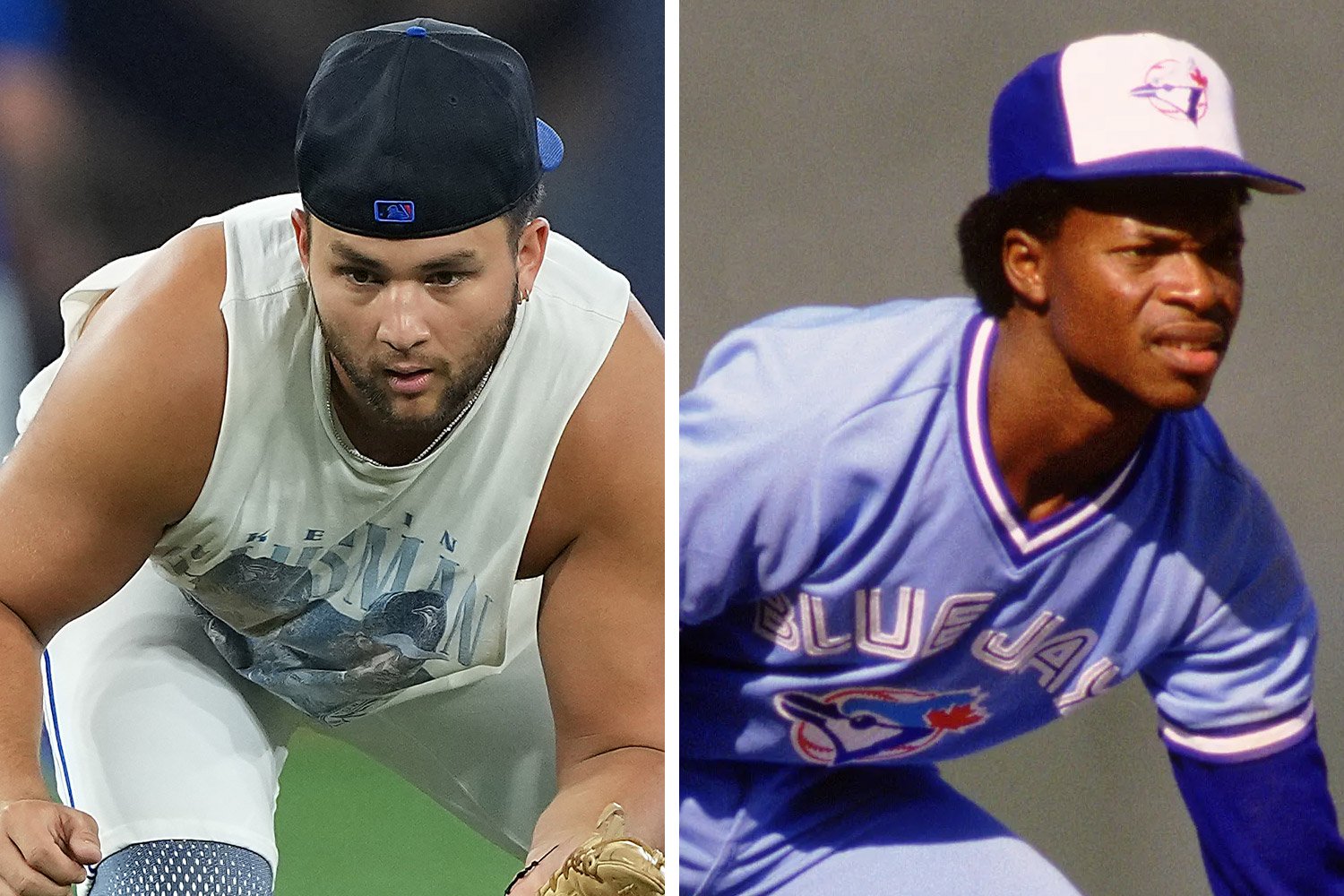 As Bo Bichette returns to Toronto this week, with both his Mets and his former team scuffling, there will be plenty of discussion about his Blue Jays legacy. The Jays have had some good shortstops over the course of the franchise’s history, but the discussion over who is the greatest no doubt pits Bichette against Tony Fernandez. There is no doubt that Bichette continues to be a phenomenal hitter, despite a tough start to this season, but for what it is worth… Fernandez is the greatest shortstop in Blue Jays history, and it is not a particularly close race. That is not meant to diminish Bichette. From his debut in 2019, Bichette consistently hovered around or above a .290 batting average, posted seasons with 20 or more home runs, and drove in runs at a pace that places him among the better-hitting shortstops in baseball. Bichette produced seasons where he topped 180 hits, flirted with 200, and finished near the top of the league in total bases. His career OPS has often sat comfortably above league average. When comparing shortstops, you need to look beyond solely their batting statistics. It has to include longevity, consistency, defense, and impact in the biggest moments a team has ever experienced. That is where Tony Fernandez separates himself from any shortstop that has worn a Jays’ jersey. Fernandez debuted with the Blue Jays in 1983, at a time when the franchise was still searching for credibility. By the mid to late 1980s, he had become one of the best shortstops in all of baseball. He finished his career with over 2,200 hits, including 1,583 with the Blue Jays alone, a figure that places him among the franchise leaders even decades after his final game in a Toronto uniform. He was a five-time All-Star, a four-time Gold Glove winner, and finished in the top ten of American League MVP voting three times. Fernandez hit .297 in his career, an exceptional mark for a player whose primary responsibility was defense. In his best seasons, he was not just a contact hitter but a dynamic one. In 1987, he hit .322 with 213 hits, scored 100 runs, and drove in 67, numbers that look even more impressive when placed in the context of the era. In 1990, he finished with 213, batting .306, and driving in a career high 92 runs. But what elevates Fernandez above Bichette is the totality of his game and the way he influenced every inning he played. His defense in particular was exceptional. If you had the privilege to watch him play, you saw an effortless fluidity that is unparalleled. Rance Mulliniks told me once that he was often left spellbound by Fernandez while playing beside him. Fernandez did not just play shortstop; he mastered it. His style was recognizable instantly, from the way he glided across the dirt to the almost artistic motion of his throws from deep in the hole. Since defensive stats were not measured in the same way we do today, his four Gold Gloves only begin to capture his impact. Bichette, on the other hand, was never the best defender. He has a strong arm and covers a decent amount of ground, but even compared to Andres Gimenez, Bichette was better suited for another position. Fernandez spent parts of 12 seasons with Toronto across multiple stints, and in his prime years from 1985 through 1990, he was an everyday presence who rarely came off the field. He logged seasons with over 150 games played regularly. Bichette, while durable in his own right, simply has not had the time yet to match that kind of sustained impact with one franchise. His injuries in the last few years with the Jays don’t help his case. Although you have to give him kudos for doing the hard work and being available during last year’s World Series. That brings us to the matter of which player performed the best when the stakes were highest. The Blue Jays of the late 1980s and early 1990s were building toward something, and Fernandez was at the centre of it. He was a key contributor to the team that won the franchise’s first division title in 1985. He remained an important piece as the club matured into a contender, and although he was traded before the 1992 World Series run, he returned in 1993 and played a crucial role in that championship. In the 1993 World Series, Fernandez hit .357 and drove in nine runs. It is easy to remember Joe Carter’s walk-off home run, the moment that ended the series and etched itself into baseball history. But in Game 6, before Carter ever got his chance, Fernandez delivered a two-run single in the seventh inning that gave the Blue Jays the lead. Bichette’s Game 7 World Series 442-foot home run off Shohei Ohtani will long be remembered by Jays’ fans as a Kirk Gibson-like moment, but while it opened the scoring in that game, ultimately it wasn’t enough. Tony Fernandez passed away in February 2020 at the age of 57, following complications from kidney disease and a stroke. His death hit the Blue Jays community hard, not only because of his accomplishments on the field but because of what he represented. For many fans, particularly those who grew up watching in the 1980s and early 1990s, Fernandez was the Blue Jays. He was there as the team found its footing, as it became competitive, and as it ultimately won the World Series. Bichette is still writing his story. And who knows, maybe someday he’ll return to the Jays. Although if he ever does, it will most likely be as a second baseman. But as things stand today, Tony Fernandez remains in his own category. He was not just a great shortstop for the Blue Jays; he was the standard by which all others are measured. As a Jay, Bichette gave younger fans plenty of reasons to watch, to hope, and to believe in what the future might hold. Fernandez, on the other hand, gave fans everything a franchise could ask for. Welcome back, Bo. We miss you, Tony.
- 3 comments
-
- 1
-

-
- bo bichette
- tony fernandez
- (and 1 more)
-
Anthony Santander is about to start over again, but not in the way the Jays hoped when they signed him in January 2025. Santander was supposed to be a middle-of-the-order presence with real power. Instead, as he inches back toward a bat-in-hands routine, he feels more like a question mark than an answer. MLB’s Keegan Matheson relayed what John Schneider told reporters on Thursday: Santander is scheduled to start hitting “either this weekend or next,” and “there’s a shot he could definitely be a factor.” That doesn’t really tell us much, other than he is able to swing a bat. Like we’ve seen with some of the pitching staff, the Jays are not in a hurry to get players back on the field. Instead, they are taking a safer, health-first approach. That is especially true with Santander, who might have returned a bit too quickly last year, eventually landing him back on the injured list. Before signing with the Jays, Santander was one of baseball’s more productive switch-hitting sluggers. Across eight seasons in Baltimore, Santander was both consistent and quietly elite in bursts. He hit 33 home runs in 2022, 28 in 2023, and then exploded for 44 in 2024. That year, he also drove in 102 and had an .814 OPS, placing him among the game’s most dangerous hitters. He made the All-Star team. He won a Silver Slugger. He did it as a switch-hitter, joining an exclusive historical group to ever reach that home run total. When he was signed, the Jays were expecting a middle-of-the-lineup bat to force opposing pitchers to give Vladimir Guerrero Jr. some pitches to hit. Santander has a .241 average over his career with 161 home runs and a .763 OPS. Santander signed a five-year, $92.5 million deal. It carries an average annual value of $18.5 million, with options and deferrals that stretch the commitment even further. There clearly was an expectation that he could keep up his later-career breakout. So far, in limited action, he has stumbled. In his first season with the Blue Jays, he struggled immediately. In 54 games, he hit .175 with six home runs and a .565 OPS. Most of his woes have been attributed to injury. As a Jay, Santander has never looked fully right, even before the injuries were made public. His bad shoulder eventually required labral surgery earlier this year. There’s no question the Jays would dearly love the 44-home-run version of Santander to show up tomorrow, but it is late June, and his ramp-up, in the best-case scenario, wouldn’t culminate in a major league at-bat until August. And while the focus has understandably been on health, the bigger question is harder to answer. If Anthony Santander comes back, can he even be that impact player? The last version of Santander was one of the least productive stretches of his career. His 2025 OPS sat at .565, far below his career .762 mark, and his power output cratered. Is this recovering version of Santander his last real chance to return to form? Or does his contract guarantee that the Blue Jays will keep giving him runway, no matter how crowded things get? The 2026 Blue Jays are not desperate for outfield help. They are juggling it. George Springer has shifted into a regular DH role, and Daulton Varsho has returned to a mix that already included Nathan Lukes, Myles Straw, and others. Even before factoring in Santander’s absence, this was a roster where spots in the outfield were at a premium. Santander doesn’t provide a lot of versatility. If his bat doesn’t materialize, then does the team need a below-average fielder and runner in the outfield? Yohendrick Piñango and Jesús Sánchez have more speed and have demonstrated they have pop too. Don’t forget that Addison Barger is also nearing a return. So if Santander comes back and looks like the 2025 version of himself, where exactly does he play? When a team commits nearly $100 million to a player, it tends to create opportunity. The Blue Jays did not sign Santander to be a bench piece or a situational bat. They signed him to make an impact. The Jays will be in a bind if he returns as the 2025 version. He is owed significant money through 2029, and there won’t be a market for his services. His return will not just put pressure on his (recovering) shoulders to perform, but also on the team to figure out what to do. If there is any positive in this situation, it is that Santander needs a long runway to work himself into shape. There is no rush for anyone, and that might push a potential return beyond this season. Santander is not just working towards 2026; he’ll also be working toward 2027 and beyond. If he flashes the old power, even inconsistently, this could be a happy story. The Blue Jays can point to health as the missing piece, trust the track record, and plan accordingly. If he does not, his deal will go down as one of the worst in team history. Santander is not returning to a team waiting for him to save them. He is returning to a team that has learned to survive without him. When Schneider says there is a shot Santander could be a factor, the wording was probably deliberate. A shot. Because right now, that is exactly what this is. A shot that the player who hit 44 home runs not long ago can show up again. A shot that the shoulder heals cleanly, that the swing returns, that the timing clicks before the season runs out. A shot that the contract is worth it. The Jays will continue to give him a shot. His contract guarantees that. Whether he turns it into something more will decide everything. View full article
-
This Might Be Anthony Santander’s Last Real Chance in Toronto
Sam Charles posted an article in Blue Jays
.jpg.91cd55a839502a1a4e8ac7268da87fb7.jpg) Anthony Santander is about to start over again, but not in the way the Jays hoped when they signed him in January 2025. Santander was supposed to be a middle-of-the-order presence with real power. Instead, as he inches back toward a bat-in-hands routine, he feels more like a question mark than an answer. MLB’s Keegan Matheson relayed what John Schneider told reporters on Thursday: Santander is scheduled to start hitting “either this weekend or next,” and “there’s a shot he could definitely be a factor.” That doesn’t really tell us much, other than he is able to swing a bat. Like we’ve seen with some of the pitching staff, the Jays are not in a hurry to get players back on the field. Instead, they are taking a safer, health-first approach. That is especially true with Santander, who might have returned a bit too quickly last year, eventually landing him back on the injured list. Before signing with the Jays, Santander was one of baseball’s more productive switch-hitting sluggers. Across eight seasons in Baltimore, Santander was both consistent and quietly elite in bursts. He hit 33 home runs in 2022, 28 in 2023, and then exploded for 44 in 2024. That year, he also drove in 102 and had an .814 OPS, placing him among the game’s most dangerous hitters. He made the All-Star team. He won a Silver Slugger. He did it as a switch-hitter, joining an exclusive historical group to ever reach that home run total. When he was signed, the Jays were expecting a middle-of-the-lineup bat to force opposing pitchers to give Vladimir Guerrero Jr. some pitches to hit. Santander has a .241 average over his career with 161 home runs and a .763 OPS. Santander signed a five-year, $92.5 million deal. It carries an average annual value of $18.5 million, with options and deferrals that stretch the commitment even further. There clearly was an expectation that he could keep up his later-career breakout. So far, in limited action, he has stumbled. In his first season with the Blue Jays, he struggled immediately. In 54 games, he hit .175 with six home runs and a .565 OPS. Most of his woes have been attributed to injury. As a Jay, Santander has never looked fully right, even before the injuries were made public. His bad shoulder eventually required labral surgery earlier this year. There’s no question the Jays would dearly love the 44-home-run version of Santander to show up tomorrow, but it is late June, and his ramp-up, in the best-case scenario, wouldn’t culminate in a major league at-bat until August. And while the focus has understandably been on health, the bigger question is harder to answer. If Anthony Santander comes back, can he even be that impact player? The last version of Santander was one of the least productive stretches of his career. His 2025 OPS sat at .565, far below his career .762 mark, and his power output cratered. Is this recovering version of Santander his last real chance to return to form? Or does his contract guarantee that the Blue Jays will keep giving him runway, no matter how crowded things get? The 2026 Blue Jays are not desperate for outfield help. They are juggling it. George Springer has shifted into a regular DH role, and Daulton Varsho has returned to a mix that already included Nathan Lukes, Myles Straw, and others. Even before factoring in Santander’s absence, this was a roster where spots in the outfield were at a premium. Santander doesn’t provide a lot of versatility. If his bat doesn’t materialize, then does the team need a below-average fielder and runner in the outfield? Yohendrick Piñango and Jesús Sánchez have more speed and have demonstrated they have pop too. Don’t forget that Addison Barger is also nearing a return. So if Santander comes back and looks like the 2025 version of himself, where exactly does he play? When a team commits nearly $100 million to a player, it tends to create opportunity. The Blue Jays did not sign Santander to be a bench piece or a situational bat. They signed him to make an impact. The Jays will be in a bind if he returns as the 2025 version. He is owed significant money through 2029, and there won’t be a market for his services. His return will not just put pressure on his (recovering) shoulders to perform, but also on the team to figure out what to do. If there is any positive in this situation, it is that Santander needs a long runway to work himself into shape. There is no rush for anyone, and that might push a potential return beyond this season. Santander is not just working towards 2026; he’ll also be working toward 2027 and beyond. If he flashes the old power, even inconsistently, this could be a happy story. The Blue Jays can point to health as the missing piece, trust the track record, and plan accordingly. If he does not, his deal will go down as one of the worst in team history. Santander is not returning to a team waiting for him to save them. He is returning to a team that has learned to survive without him. When Schneider says there is a shot Santander could be a factor, the wording was probably deliberate. A shot. Because right now, that is exactly what this is. A shot that the player who hit 44 home runs not long ago can show up again. A shot that the shoulder heals cleanly, that the swing returns, that the timing clicks before the season runs out. A shot that the contract is worth it. The Jays will continue to give him a shot. His contract guarantees that. Whether he turns it into something more will decide everything.
Anthony Santander is about to start over again, but not in the way the Jays hoped when they signed him in January 2025. Santander was supposed to be a middle-of-the-order presence with real power. Instead, as he inches back toward a bat-in-hands routine, he feels more like a question mark than an answer. MLB’s Keegan Matheson relayed what John Schneider told reporters on Thursday: Santander is scheduled to start hitting “either this weekend or next,” and “there’s a shot he could definitely be a factor.” That doesn’t really tell us much, other than he is able to swing a bat. Like we’ve seen with some of the pitching staff, the Jays are not in a hurry to get players back on the field. Instead, they are taking a safer, health-first approach. That is especially true with Santander, who might have returned a bit too quickly last year, eventually landing him back on the injured list. Before signing with the Jays, Santander was one of baseball’s more productive switch-hitting sluggers. Across eight seasons in Baltimore, Santander was both consistent and quietly elite in bursts. He hit 33 home runs in 2022, 28 in 2023, and then exploded for 44 in 2024. That year, he also drove in 102 and had an .814 OPS, placing him among the game’s most dangerous hitters. He made the All-Star team. He won a Silver Slugger. He did it as a switch-hitter, joining an exclusive historical group to ever reach that home run total. When he was signed, the Jays were expecting a middle-of-the-lineup bat to force opposing pitchers to give Vladimir Guerrero Jr. some pitches to hit. Santander has a .241 average over his career with 161 home runs and a .763 OPS. Santander signed a five-year, $92.5 million deal. It carries an average annual value of $18.5 million, with options and deferrals that stretch the commitment even further. There clearly was an expectation that he could keep up his later-career breakout. So far, in limited action, he has stumbled. In his first season with the Blue Jays, he struggled immediately. In 54 games, he hit .175 with six home runs and a .565 OPS. Most of his woes have been attributed to injury. As a Jay, Santander has never looked fully right, even before the injuries were made public. His bad shoulder eventually required labral surgery earlier this year. There’s no question the Jays would dearly love the 44-home-run version of Santander to show up tomorrow, but it is late June, and his ramp-up, in the best-case scenario, wouldn’t culminate in a major league at-bat until August. And while the focus has understandably been on health, the bigger question is harder to answer. If Anthony Santander comes back, can he even be that impact player? The last version of Santander was one of the least productive stretches of his career. His 2025 OPS sat at .565, far below his career .762 mark, and his power output cratered. Is this recovering version of Santander his last real chance to return to form? Or does his contract guarantee that the Blue Jays will keep giving him runway, no matter how crowded things get? The 2026 Blue Jays are not desperate for outfield help. They are juggling it. George Springer has shifted into a regular DH role, and Daulton Varsho has returned to a mix that already included Nathan Lukes, Myles Straw, and others. Even before factoring in Santander’s absence, this was a roster where spots in the outfield were at a premium. Santander doesn’t provide a lot of versatility. If his bat doesn’t materialize, then does the team need a below-average fielder and runner in the outfield? Yohendrick Piñango and Jesús Sánchez have more speed and have demonstrated they have pop too. Don’t forget that Addison Barger is also nearing a return. So if Santander comes back and looks like the 2025 version of himself, where exactly does he play? When a team commits nearly $100 million to a player, it tends to create opportunity. The Blue Jays did not sign Santander to be a bench piece or a situational bat. They signed him to make an impact. The Jays will be in a bind if he returns as the 2025 version. He is owed significant money through 2029, and there won’t be a market for his services. His return will not just put pressure on his (recovering) shoulders to perform, but also on the team to figure out what to do. If there is any positive in this situation, it is that Santander needs a long runway to work himself into shape. There is no rush for anyone, and that might push a potential return beyond this season. Santander is not just working towards 2026; he’ll also be working toward 2027 and beyond. If he flashes the old power, even inconsistently, this could be a happy story. The Blue Jays can point to health as the missing piece, trust the track record, and plan accordingly. If he does not, his deal will go down as one of the worst in team history. Santander is not returning to a team waiting for him to save them. He is returning to a team that has learned to survive without him. When Schneider says there is a shot Santander could be a factor, the wording was probably deliberate. A shot. Because right now, that is exactly what this is. A shot that the player who hit 44 home runs not long ago can show up again. A shot that the shoulder heals cleanly, that the swing returns, that the timing clicks before the season runs out. A shot that the contract is worth it. The Jays will continue to give him a shot. His contract guarantees that. Whether he turns it into something more will decide everything. -
There is something beautiful about afternoon baseball. It is how the game used to be played, and whether it is “work from dome” or just a weekend matinee, afternoon baseball has a different feel than the version under the lights. Don’t get me started about playoff baseball starting at 8:07 pm or 8:37 pm… 7:07 pm starts are what we are pretty well used to. Yet, every season, the Blue Jays play about 70 of their 162 games earlier in the day. Over the next six days, the Jays will play five games starting before 6:00 pm, including three straight against the Cubs at Wrigley. Like every team, the Jays are creatures of habit. Get to the dome when gates open, and you’ll likely see the visiting team taking batting practice. Once the grounds crews have prepped the field for the game, you’ll see several Jays come out with the strength and conditioning support staff to stretch and toss the ball around. What fans don’t often see is the work being done hours beforehand under the stands in the batting cages or on the field before the public is allowed in. Repetition is pivotal to success for professional athletes. Break those routines, and cracks can form in the foundation. Meals and rest need to be moved. Prep time reviewing opposing pitchers or batters shifts. Literally, the view changes for batters and fielders. From losing the ball in the sun as a fielder to losing it in the shadows as a batter, daytime games are different. The Jays have an advantage, or disadvantage depending on how you look at it, of playing at the dome. They can control the roof to alleviate some of those issues. Road environments can be even more challenging. In Boston, shifting shadows at Fenway Park can complicate both hitting and fielding. In Chicago, wind patterns at Wrigley Field can dramatically alter how the ball travels. Looking across its history, the Jays’ relationship with afternoon baseball has fluctuated. Some seasons have seen the club thrive under bright skies, while others have exposed vulnerabilities that seem tied as much to routine disruption as to talent gaps. The Jays tend to hover around a .500 record in day games. This mirrors not only the team’s overall quality in any given season but also reflects the broader challenges Major League Baseball teams face when playing outside their preferred schedules. The Blue Jays’ strongest performances in afternoon games came during seasons when they were already among the league’s better teams. In 1993, a year they won the World Series, the club handled day games with authority (38-16), winning roughly 70 percent of them. A more recent example came in 2021, when the Blue Jays again approached that 70 percent mark in daytime contests (42-18). In weaker seasons, such as the late 1970s when the club was still in its infancy, the results could be much worse. In 1978 and 1979, Toronto won just over 30 percent of its day games, but those results aligned with a team that struggled overall, not just in afternoon settings. Outside of those standout years, the Blue Jays have generally been average in afternoon games. That is not a coincidence. The Blue Jays typically play their daytime games in three predictable windows. Midweek getaway games are perhaps the most common. These games are usually scheduled on Wednesdays or Thursdays, allowing teams to wrap up a series and travel to their next destination later in the day. Weekend matinees are also standard, particularly on Saturdays and Sundays. Then there are occasional hybrid start times, such as weekday games that begin in the late afternoon. Even a quick glance at an upcoming schedule illustrates how concentrated these games can be. A Thursday afternoon game in Boston, followed by travel to Chicago for a full series of day games against the Cubs, represents a classic example of how quickly routines can be disrupted. Adding a 4:07 p.m. home game immediately after such a road stretch on Tuesday against the Astros creates a sequence where players are constantly adjusting their internal clocks. For athletes who rely heavily on routine, that kind of inconsistency can have an impact. The Jays then finish off their homestand against the Rangers and Mets before hitting the West Coast for series against the Mariners, Giants and Padres. The folks who make the schedule for the MLB try to provide teams an opportunity to adjust to shifts in routine. When the Jays wrap up their series with the Mets, it will be a Wednesday 3:07 start in Toronto. The team will be at the airport around 8:00 or 9:00 pm for the five-hour flight to Seattle. If all goes well, and adding the three-hour time change into the equation, they are at the hotel around 12:00 am Pacific. They won’t need to get to the ballpark until around 11:00 am or 12:00 pm to prep for their evening game that night. Despite these challenges, day games remain an essential part of Major League Baseball. Their continued presence comes down to a blend of logistics, tradition, and commercial considerations. Travel is one of the biggest factors. With 162 games spread across North America, teams need to move between cities. Afternoon getaway games allow players to leave at a reasonable hour and arrive at their next destination without sacrificing sleep or preparation time entirely. There is also a historical element that cannot be ignored. Baseball was built on daytime play. For many fans, especially those who grew up attending summer games, afternoon baseball represents a connection to the sport’s roots. The Blue Jays’ tendency to settle around a .500 record in day games ultimately might not tell us much. Throughout a season of ups and downs, this team is keeping itself in the fight but needs to find a stretch where they can build some breathing room either in the Wild Card race or the division. Between these upcoming series, the expanded homestand and the West Coast road trip, they need to overcome the elements, schedules and time zones to pick up wins. When the Blue Jays have exceeded expectations in day games, it has usually been because they have a roster that can perform at or above expectations. Deep lineups, reliable pitching, and positive momentum can carry a team through any time slot. When they have struggled, it has typically been part of a broader pattern of inconsistency rather than a problem limited to daytime play. Somewhere in the dizzying schedule over the next few weeks, by breaking routines and adapting to circumstances, the Jays might find the consistency they have been lacking all season. If not, this might be a frustrating stretch of games. View full article
-
What the Blue Jays’ Performance in Day Games Means for Their Success
Sam Charles posted an article in Blue Jays
 There is something beautiful about afternoon baseball. It is how the game used to be played, and whether it is “work from dome” or just a weekend matinee, afternoon baseball has a different feel than the version under the lights. Don’t get me started about playoff baseball starting at 8:07 pm or 8:37 pm… 7:07 pm starts are what we are pretty well used to. Yet, every season, the Blue Jays play about 70 of their 162 games earlier in the day. Over the next six days, the Jays will play five games starting before 6:00 pm, including three straight against the Cubs at Wrigley. Like every team, the Jays are creatures of habit. Get to the dome when gates open, and you’ll likely see the visiting team taking batting practice. Once the grounds crews have prepped the field for the game, you’ll see several Jays come out with the strength and conditioning support staff to stretch and toss the ball around. What fans don’t often see is the work being done hours beforehand under the stands in the batting cages or on the field before the public is allowed in. Repetition is pivotal to success for professional athletes. Break those routines, and cracks can form in the foundation. Meals and rest need to be moved. Prep time reviewing opposing pitchers or batters shifts. Literally, the view changes for batters and fielders. From losing the ball in the sun as a fielder to losing it in the shadows as a batter, daytime games are different. The Jays have an advantage, or disadvantage depending on how you look at it, of playing at the dome. They can control the roof to alleviate some of those issues. Road environments can be even more challenging. In Boston, shifting shadows at Fenway Park can complicate both hitting and fielding. In Chicago, wind patterns at Wrigley Field can dramatically alter how the ball travels. Looking across its history, the Jays’ relationship with afternoon baseball has fluctuated. Some seasons have seen the club thrive under bright skies, while others have exposed vulnerabilities that seem tied as much to routine disruption as to talent gaps. The Jays tend to hover around a .500 record in day games. This mirrors not only the team’s overall quality in any given season but also reflects the broader challenges Major League Baseball teams face when playing outside their preferred schedules. The Blue Jays’ strongest performances in afternoon games came during seasons when they were already among the league’s better teams. In 1993, a year they won the World Series, the club handled day games with authority (38-16), winning roughly 70 percent of them. A more recent example came in 2021, when the Blue Jays again approached that 70 percent mark in daytime contests (42-18). In weaker seasons, such as the late 1970s when the club was still in its infancy, the results could be much worse. In 1978 and 1979, Toronto won just over 30 percent of its day games, but those results aligned with a team that struggled overall, not just in afternoon settings. Outside of those standout years, the Blue Jays have generally been average in afternoon games. That is not a coincidence. The Blue Jays typically play their daytime games in three predictable windows. Midweek getaway games are perhaps the most common. These games are usually scheduled on Wednesdays or Thursdays, allowing teams to wrap up a series and travel to their next destination later in the day. Weekend matinees are also standard, particularly on Saturdays and Sundays. Then there are occasional hybrid start times, such as weekday games that begin in the late afternoon. Even a quick glance at an upcoming schedule illustrates how concentrated these games can be. A Thursday afternoon game in Boston, followed by travel to Chicago for a full series of day games against the Cubs, represents a classic example of how quickly routines can be disrupted. Adding a 4:07 p.m. home game immediately after such a road stretch on Tuesday against the Astros creates a sequence where players are constantly adjusting their internal clocks. For athletes who rely heavily on routine, that kind of inconsistency can have an impact. The Jays then finish off their homestand against the Rangers and Mets before hitting the West Coast for series against the Mariners, Giants and Padres. The folks who make the schedule for the MLB try to provide teams an opportunity to adjust to shifts in routine. When the Jays wrap up their series with the Mets, it will be a Wednesday 3:07 start in Toronto. The team will be at the airport around 8:00 or 9:00 pm for the five-hour flight to Seattle. If all goes well, and adding the three-hour time change into the equation, they are at the hotel around 12:00 am Pacific. They won’t need to get to the ballpark until around 11:00 am or 12:00 pm to prep for their evening game that night. Despite these challenges, day games remain an essential part of Major League Baseball. Their continued presence comes down to a blend of logistics, tradition, and commercial considerations. Travel is one of the biggest factors. With 162 games spread across North America, teams need to move between cities. Afternoon getaway games allow players to leave at a reasonable hour and arrive at their next destination without sacrificing sleep or preparation time entirely. There is also a historical element that cannot be ignored. Baseball was built on daytime play. For many fans, especially those who grew up attending summer games, afternoon baseball represents a connection to the sport’s roots. The Blue Jays’ tendency to settle around a .500 record in day games ultimately might not tell us much. Throughout a season of ups and downs, this team is keeping itself in the fight but needs to find a stretch where they can build some breathing room either in the Wild Card race or the division. Between these upcoming series, the expanded homestand and the West Coast road trip, they need to overcome the elements, schedules and time zones to pick up wins. When the Blue Jays have exceeded expectations in day games, it has usually been because they have a roster that can perform at or above expectations. Deep lineups, reliable pitching, and positive momentum can carry a team through any time slot. When they have struggled, it has typically been part of a broader pattern of inconsistency rather than a problem limited to daytime play. Somewhere in the dizzying schedule over the next few weeks, by breaking routines and adapting to circumstances, the Jays might find the consistency they have been lacking all season. If not, this might be a frustrating stretch of games.
 -
Lost in this uneven season has been how deliberately the Blue Jays have constructed a roster that keeps replenishing with contributors. Through targeted transactions, pro scouting and a development pipeline, the quiet work behind the scenes has done a lot of lifting, not just this year but over the last few seasons, creating a team that might bend but doesn’t break. Beneath the surface, this has been one of the organization’s most successful years in aligning player development and pro scouting, two areas that are effectively working in tandem rather than in parallel. As a result, the team is deeper, more adaptable, and far more resilient than its up-and-down record might suggest. The Jays are identifying the right players, not just in their organization but across baseball, and then putting them in positions to succeed almost immediately. For years, this has been the difference between contenders who sustain success and those who fluctuate year to year. When the Jays acquired Louis Varland, it wasn’t with a lot of fanfare. Initially a starter for the Twins, he had only transitioned into a more flexible role in recent seasons. Prior to being fully leaned on in this role, he showed swing-and-miss ability that the Blue Jays believed could play up in shorter outings. The Jays managed to pick him up along with infielder Ty France in exchange for outfielder Alan Roden and pitching prospect Kendry Rojas. Last season’s contributions with the Jays, especially in the postseason, showed his ability to handle leverage, and that has carried into this year. With the exception of Saturday afternoon’s blown save, Varland has been unstoppable. He is carrying an ERA and WHIP under 1.00 with double-digit saves. He has allowed just a handful of earned runs over more than 37 innings while striking out nearly 50 batters, placing him among the most effective relievers in the American League. Roden has been injured for much of this season, while Rojas was recently called up to the Twins and is 1-0 in 5 games with an ERA of 1.26 in 14.1 innings. He has 14 strikeouts but has walked 10. Alongside Varland in the bullpen is Braydon Fisher. Another leverage arm that manager John Schneider doesn’t hesitate to call upon. Acquired in a relatively low-cost move, Fisher has turned into a legitimate force in the bullpen. His 3.38 ERA across 36 appearances, paired with 40 strikeouts in 37.1 innings, reflects not just effectiveness but trust from the coaching staff in meaningful situations. In exchange for utility player Cavan Biggio and cash considerations, Fisher arrived from the Dodgers in June 2024. He signed a one-year, pre-arbitration contract with the Jays prior to this season for just under $800,000. After one appearance with the Jays so far, it looks like Simeon Woods Richardson might be another example of the front office taking a low-risk look at a familiar arm. With the Twins, he struggled to a seven-plus ERA this season. It is his second time with the organization, as originally, he was acquired in the Marcus Stroman trade with the Mets before being moved in the José Berríos deal. Even in a limited sample, the appeal remains innings stability rather than upside alone. It isn’t just pitching. On the position player side, the Nate Pearson trade in July 2024 has become a defining example of organizational clarity. Rather than continuing to wait on unrealized upside, the Blue Jays redistributed that risk into multiple pieces, most notably Yohendrick Piñango. The early returns in 2026 have been impressive for Piñango. He is hitting around .290 with an OPS near .800, adding four home runs and 18 RBIs in a relatively small sample. That level of immediate contribution from a development acquisition is exactly what modern roster building is supposed to produce. It is not just about future value, it is about accelerating that value into major league impact. What about the Jays’ most All-Star-worthy contributor, Ernie Clement? He was acquired on a minor league contract in 2023 after being released by the Athletics. So far this season, he is hitting just over .300 with an OPS close to .800, alongside seven home runs and 28 RBIs. His 83 hits place him among the most consistent contact hitters in the league this season. That type of production, especially from a player once viewed as a utility option, underscores how well the Blue Jays are maximizing player profiles. Catcher Brandon Valenzuela forced the Jays to DFA Tyler Heineman, as he has excelled since being called up. Valenzuela seemed like a secondary acquisition when the team acquired him from the Padres in exchange for Will Wagner. When you trace it back, it becomes part of a much larger chain of decisions, a domino effect that illustrates exactly how this front office is creating value. The path to Valenzuela begins with the Yusei Kikuchi trade. In that deal, the Blue Jays acquired Wagner, a bat-first infielder who represented a controllable and flexible asset. Wagner was acquired both for his offensive profile and his potential as a movable piece. The trade that flipped Wagner for Valenzuela was done to address an area of need: catching depth. Valenzuela was deemed not quite ready in the offseason, so the Jays tendered Heineman a contract. An extended look in spring training identified some development that needed to be done before he’d be ready. Those adjustments in the minors paid off once he was called up after Alejandro Kirk got injured. Valenzuela was a long-term plan that has worked out ahead of schedule, while Jesús Sánchez represents the front office’s willingness to make a direct, calculated bet on upside and trust its development infrastructure to extract more from a player than his most recent results might suggest. The Jays acquired Sánchez in February 2026, sending Joey Loperfido back to Houston in a one-for-one swap that carried both financial and roster implications. Loperfido was also part of the Kikuchi deal. Toronto took on Sanchez’s $6.8 million salary and gave up a more flexible, optionable player in Loperfido, who could move between Triple A and the majors. The team was looking for an impact bat and, for the most part, that’s what they have gotten. Through 66 games, Sánchez is hitting .287 with seven home runs, 29 RBIs, and an OPS of .787. Those numbers represent a clear jump from his 2025 production and align directly with what the Blue Jays believed they could unlock. His production has provided balance to a lineup that has needed consistent left-handed offense. None of these players were big acquisitions, but each has been part of keeping the team competitive during a rough start to the season. The costs, in almost every case, reflect a front office not fixated solely on the here and now but instead looking to the future. Take one or several of those players out of the mix, and this season could be even more frustrating. Instead, the Jays remain competitive in a season that has not been smooth. They are only two games out of the Wild Card. In a season when their top players have not played to expectations, the team’s middle layer has kept them competitive. The front office deserves as much credit for that as the players executing it on the field. Statistics updated prior to games on June 16. View full article
-
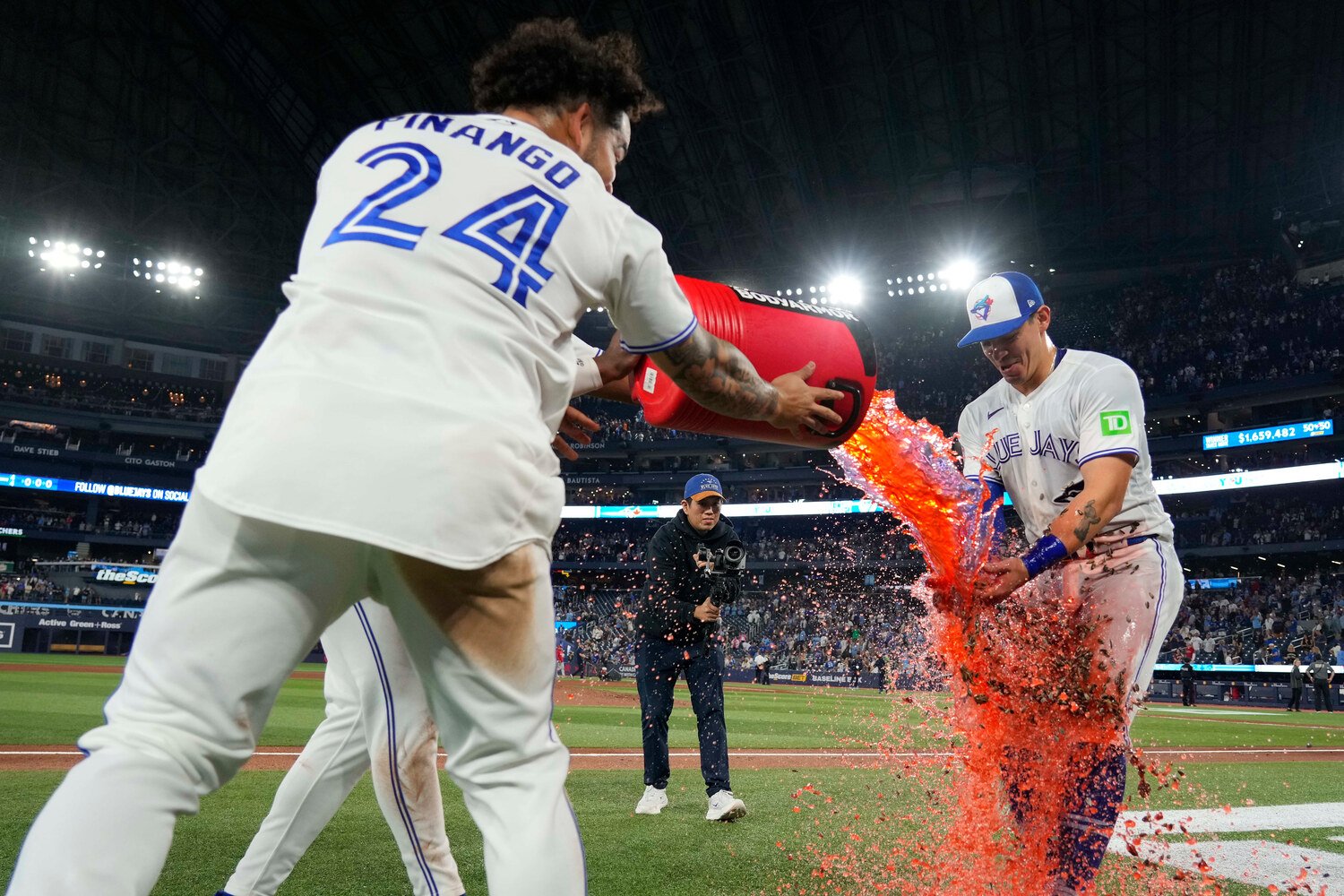 Lost in this uneven season has been how deliberately the Blue Jays have constructed a roster that keeps replenishing with contributors. Through targeted transactions, pro scouting and a development pipeline, the quiet work behind the scenes has done a lot of lifting, not just this year but over the last few seasons, creating a team that might bend but doesn’t break. Beneath the surface, this has been one of the organization’s most successful years in aligning player development and pro scouting, two areas that are effectively working in tandem rather than in parallel. As a result, the team is deeper, more adaptable, and far more resilient than its up-and-down record might suggest. The Jays are identifying the right players, not just in their organization but across baseball, and then putting them in positions to succeed almost immediately. For years, this has been the difference between contenders who sustain success and those who fluctuate year to year. When the Jays acquired Louis Varland, it wasn’t with a lot of fanfare. Initially a starter for the Twins, he had only transitioned into a more flexible role in recent seasons. Prior to being fully leaned on in this role, he showed swing-and-miss ability that the Blue Jays believed could play up in shorter outings. The Jays managed to pick him up along with infielder Ty France in exchange for outfielder Alan Roden and pitching prospect Kendry Rojas. Last season’s contributions with the Jays, especially in the postseason, showed his ability to handle leverage, and that has carried into this year. With the exception of Saturday afternoon’s blown save, Varland has been unstoppable. He is carrying an ERA and WHIP under 1.00 with double-digit saves. He has allowed just a handful of earned runs over more than 37 innings while striking out nearly 50 batters, placing him among the most effective relievers in the American League. Roden has been injured for much of this season, while Rojas was recently called up to the Twins and is 1-0 in 5 games with an ERA of 1.26 in 14.1 innings. He has 14 strikeouts but has walked 10. Alongside Varland in the bullpen is Braydon Fisher. Another leverage arm that manager John Schneider doesn’t hesitate to call upon. Acquired in a relatively low-cost move, Fisher has turned into a legitimate force in the bullpen. His 3.38 ERA across 36 appearances, paired with 40 strikeouts in 37.1 innings, reflects not just effectiveness but trust from the coaching staff in meaningful situations. In exchange for utility player Cavan Biggio and cash considerations, Fisher arrived from the Dodgers in June 2024. He signed a one-year, pre-arbitration contract with the Jays prior to this season for just under $800,000. After one appearance with the Jays so far, it looks like Simeon Woods Richardson might be another example of the front office taking a low-risk look at a familiar arm. With the Twins, he struggled to a seven-plus ERA this season. It is his second time with the organization, as originally, he was acquired in the Marcus Stroman trade with the Mets before being moved in the José Berríos deal. Even in a limited sample, the appeal remains innings stability rather than upside alone. It isn’t just pitching. On the position player side, the Nate Pearson trade in July 2024 has become a defining example of organizational clarity. Rather than continuing to wait on unrealized upside, the Blue Jays redistributed that risk into multiple pieces, most notably Yohendrick Piñango. The early returns in 2026 have been impressive for Piñango. He is hitting around .290 with an OPS near .800, adding four home runs and 18 RBIs in a relatively small sample. That level of immediate contribution from a development acquisition is exactly what modern roster building is supposed to produce. It is not just about future value, it is about accelerating that value into major league impact. What about the Jays’ most All-Star-worthy contributor, Ernie Clement? He was acquired on a minor league contract in 2023 after being released by the Athletics. So far this season, he is hitting just over .300 with an OPS close to .800, alongside seven home runs and 28 RBIs. His 83 hits place him among the most consistent contact hitters in the league this season. That type of production, especially from a player once viewed as a utility option, underscores how well the Blue Jays are maximizing player profiles. Catcher Brandon Valenzuela forced the Jays to DFA Tyler Heineman, as he has excelled since being called up. Valenzuela seemed like a secondary acquisition when the team acquired him from the Padres in exchange for Will Wagner. When you trace it back, it becomes part of a much larger chain of decisions, a domino effect that illustrates exactly how this front office is creating value. The path to Valenzuela begins with the Yusei Kikuchi trade. In that deal, the Blue Jays acquired Wagner, a bat-first infielder who represented a controllable and flexible asset. Wagner was acquired both for his offensive profile and his potential as a movable piece. The trade that flipped Wagner for Valenzuela was done to address an area of need: catching depth. Valenzuela was deemed not quite ready in the offseason, so the Jays tendered Heineman a contract. An extended look in spring training identified some development that needed to be done before he’d be ready. Those adjustments in the minors paid off once he was called up after Alejandro Kirk got injured. Valenzuela was a long-term plan that has worked out ahead of schedule, while Jesús Sánchez represents the front office’s willingness to make a direct, calculated bet on upside and trust its development infrastructure to extract more from a player than his most recent results might suggest. The Jays acquired Sánchez in February 2026, sending Joey Loperfido back to Houston in a one-for-one swap that carried both financial and roster implications. Loperfido was also part of the Kikuchi deal. Toronto took on Sanchez’s $6.8 million salary and gave up a more flexible, optionable player in Loperfido, who could move between Triple A and the majors. The team was looking for an impact bat and, for the most part, that’s what they have gotten. Through 66 games, Sánchez is hitting .287 with seven home runs, 29 RBIs, and an OPS of .787. Those numbers represent a clear jump from his 2025 production and align directly with what the Blue Jays believed they could unlock. His production has provided balance to a lineup that has needed consistent left-handed offense. None of these players were big acquisitions, but each has been part of keeping the team competitive during a rough start to the season. The costs, in almost every case, reflect a front office not fixated solely on the here and now but instead looking to the future. Take one or several of those players out of the mix, and this season could be even more frustrating. Instead, the Jays remain competitive in a season that has not been smooth. They are only two games out of the Wild Card. In a season when their top players have not played to expectations, the team’s middle layer has kept them competitive. The front office deserves as much credit for that as the players executing it on the field. Statistics updated prior to games on June 16.
 -
There is comfort in predictability. For the Toronto Blue Jays, that comfort has long extended to the lineup. Under manager John Schneider, much like during the most stable years of Cito Gaston’s tenure, the batting order is not something players walk into the clubhouse guessing about. It is set, it is trusted, and for years it has worked. But the thing about consistency is that it only holds when the results justify it. Through the first 67 games of the season, the Jays sit at 32–35. Their offensive production has reflected that stagnant status. The Blue Jays are scoring 4.09 runs per game, which places them in the bottom third of the league. Their team slash line of .249/.312/.375 does little to suggest a dominant lineup, even if there are pieces performing at a high level. A lot of factors went into the team’s magical run last season, but there is little doubt that George Springer played a big role. After a down year in 2024, Springer seemed to return to his former self last season. He has always been the prototypical modern leadoff hitter: power, experience, a willingness to grind out at-bats, and a reputation built on postseason moments have made him a fixture in that role. This year, not only has his output returned to earth, but the attributes that once made him such an effective leadoff hitter have simply not been there. Springer is hitting just .202 with five home runs and 14 runs batted in through his first 46 games of the season. His on-base percentage sits at .283, and his OPS checks in at .626. Those numbers aren’t catapulting this offense anywhere. It is clear that Springer's legendary toughness is working against him, as playing through a broken toe is visibly disrupting his mechanics and taking its toll. Instead of forcing him to push through the discomfort in the most highly exposed spot in the order, it might be time for a return to the IL. Not only would a temporary reset allow him to heal properly and find his mojo, but it would clear a roster spot for surging rookies like Yohendrick Piñango or Brandon Valenzuela once Addison Barger and Alejandro Kirk return. The arithmetic behind a lineup change is simple: The leadoff spot receives roughly 60 to 75 more plate appearances over the course of a full season than hitters further down the order. It is not just about who starts the game, it is about maximizing your best offensive weapons. The Blue Jays, for all their adherence to consistency, are not blind to these realities. They have experimented at times in 2026, albeit in small doses. But those experiments have felt more like temporary adjustments than a genuine willingness to rethink the structure. What makes the current situation particularly interesting is that the rest of the lineup offers high-upside alternatives. Vladimir Guerrero Jr., for example, has been exactly the type of hitter you want near the top of the order. He is batting .282 with a .372 on-base percentage and 38 runs scored. His ability to get on base and control at-bats stands in stark contrast to Springer’s struggles. Guerrero is not the traditional speed-first leadoff hitter, but that is increasingly irrelevant in today’s game. The goal is traffic on the basepaths, and Guerrero has been providing exactly that. Meanwhile, Ernie Clement is quietly putting together one of the most consistent offensive seasons on the team, carrying a .309 average and an impressive .801 OPS. Nathan Lukes is hitting .313 with a .361 on-base percentage in limited action. Deploying Guerrero out of the leadoff spot, for example, would maximize his elite on-base skills, but it requires a tactical shift lower down. Considering Guerrero still hasn’t fully found his home run swing, batting him first creates a desperate need for contact and power immediately behind him. Following Vlad with high-contact bats like Clement or Lukes keeps pressure on opposing pitchers, while allowing middle-of-the-order run producers like Kazuma Okamoto or the rookies to clear the bases. If the sequence is optimized, the lineup immediately becomes more dynamic. Right now, the status quo just isn’t working. Springer has been a below-average hitter so far this season, as illustrated by his wRC+ of 78, which is well below the league-average benchmark of 100. His OBP and wOBA are more than 100 points below where he finished last season. Schneider can frame moving Springer down as an optimization of his strengths. In a lower-pressure spot, he could focus more on driving the ball and less on setting the tone. At the same time, moving a higher on-base hitter to the top could result in fewer games where the Jays need to come from behind. The Jays have been looking better over the past couple of weeks, but they still can’t seem to find consistency. Far too many games are seeing the Jays not showing life until the fifth or sixth inning. Sure, pitching has been weathering the storm, but eventually, it won’t. Then what? The Jays need to find some offensive life, and right now, that is not George Springer. The Blue Jays have spent the first half of 2026 searching for sustained offensive rhythm. They have the pieces. The underlying talent is evident. But the alignment has not quite clicked, and the top of the order is a logical place to start. Flip a couple of names and see how the lineup responds. Consistency is a powerful tool. It builds trust and fosters confidence. But in baseball, as in anything else, it can also be a barrier. When the results stop, adjustments are needed. It feels like the Jays are approaching that point. If they are serious about turning an up-and-down season into something more, the conversation about Springer and the leadoff spot cannot remain theoretical much longer. View full article
-
Is It Time for the Blue Jays To Move George Springer Down the Order?
Sam Charles posted an article in Blue Jays
.jpg.e8edc836d493073af669d4ccf245a3fe.jpg) There is comfort in predictability. For the Toronto Blue Jays, that comfort has long extended to the lineup. Under manager John Schneider, much like during the most stable years of Cito Gaston’s tenure, the batting order is not something players walk into the clubhouse guessing about. It is set, it is trusted, and for years it has worked. But the thing about consistency is that it only holds when the results justify it. Through the first 67 games of the season, the Jays sit at 32–35. Their offensive production has reflected that stagnant status. The Blue Jays are scoring 4.09 runs per game, which places them in the bottom third of the league. Their team slash line of .249/.312/.375 does little to suggest a dominant lineup, even if there are pieces performing at a high level. A lot of factors went into the team’s magical run last season, but there is little doubt that George Springer played a big role. After a down year in 2024, Springer seemed to return to his former self last season. He has always been the prototypical modern leadoff hitter: power, experience, a willingness to grind out at-bats, and a reputation built on postseason moments have made him a fixture in that role. This year, not only has his output returned to earth, but the attributes that once made him such an effective leadoff hitter have simply not been there. Springer is hitting just .202 with five home runs and 14 runs batted in through his first 46 games of the season. His on-base percentage sits at .283, and his OPS checks in at .626. Those numbers aren’t catapulting this offense anywhere. It is clear that Springer's legendary toughness is working against him, as playing through a broken toe is visibly disrupting his mechanics and taking its toll. Instead of forcing him to push through the discomfort in the most highly exposed spot in the order, it might be time for a return to the IL. Not only would a temporary reset allow him to heal properly and find his mojo, but it would clear a roster spot for surging rookies like Yohendrick Piñango or Brandon Valenzuela once Addison Barger and Alejandro Kirk return. The arithmetic behind a lineup change is simple: The leadoff spot receives roughly 60 to 75 more plate appearances over the course of a full season than hitters further down the order. It is not just about who starts the game, it is about maximizing your best offensive weapons. The Blue Jays, for all their adherence to consistency, are not blind to these realities. They have experimented at times in 2026, albeit in small doses. But those experiments have felt more like temporary adjustments than a genuine willingness to rethink the structure. What makes the current situation particularly interesting is that the rest of the lineup offers high-upside alternatives. Vladimir Guerrero Jr., for example, has been exactly the type of hitter you want near the top of the order. He is batting .282 with a .372 on-base percentage and 38 runs scored. His ability to get on base and control at-bats stands in stark contrast to Springer’s struggles. Guerrero is not the traditional speed-first leadoff hitter, but that is increasingly irrelevant in today’s game. The goal is traffic on the basepaths, and Guerrero has been providing exactly that. Meanwhile, Ernie Clement is quietly putting together one of the most consistent offensive seasons on the team, carrying a .309 average and an impressive .801 OPS. Nathan Lukes is hitting .313 with a .361 on-base percentage in limited action. Deploying Guerrero out of the leadoff spot, for example, would maximize his elite on-base skills, but it requires a tactical shift lower down. Considering Guerrero still hasn’t fully found his home run swing, batting him first creates a desperate need for contact and power immediately behind him. Following Vlad with high-contact bats like Clement or Lukes keeps pressure on opposing pitchers, while allowing middle-of-the-order run producers like Kazuma Okamoto or the rookies to clear the bases. If the sequence is optimized, the lineup immediately becomes more dynamic. Right now, the status quo just isn’t working. Springer has been a below-average hitter so far this season, as illustrated by his wRC+ of 78, which is well below the league-average benchmark of 100. His OBP and wOBA are more than 100 points below where he finished last season. Schneider can frame moving Springer down as an optimization of his strengths. In a lower-pressure spot, he could focus more on driving the ball and less on setting the tone. At the same time, moving a higher on-base hitter to the top could result in fewer games where the Jays need to come from behind. The Jays have been looking better over the past couple of weeks, but they still can’t seem to find consistency. Far too many games are seeing the Jays not showing life until the fifth or sixth inning. Sure, pitching has been weathering the storm, but eventually, it won’t. Then what? The Jays need to find some offensive life, and right now, that is not George Springer. The Blue Jays have spent the first half of 2026 searching for sustained offensive rhythm. They have the pieces. The underlying talent is evident. But the alignment has not quite clicked, and the top of the order is a logical place to start. Flip a couple of names and see how the lineup responds. Consistency is a powerful tool. It builds trust and fosters confidence. But in baseball, as in anything else, it can also be a barrier. When the results stop, adjustments are needed. It feels like the Jays are approaching that point. If they are serious about turning an up-and-down season into something more, the conversation about Springer and the leadoff spot cannot remain theoretical much longer.
There is comfort in predictability. For the Toronto Blue Jays, that comfort has long extended to the lineup. Under manager John Schneider, much like during the most stable years of Cito Gaston’s tenure, the batting order is not something players walk into the clubhouse guessing about. It is set, it is trusted, and for years it has worked. But the thing about consistency is that it only holds when the results justify it. Through the first 67 games of the season, the Jays sit at 32–35. Their offensive production has reflected that stagnant status. The Blue Jays are scoring 4.09 runs per game, which places them in the bottom third of the league. Their team slash line of .249/.312/.375 does little to suggest a dominant lineup, even if there are pieces performing at a high level. A lot of factors went into the team’s magical run last season, but there is little doubt that George Springer played a big role. After a down year in 2024, Springer seemed to return to his former self last season. He has always been the prototypical modern leadoff hitter: power, experience, a willingness to grind out at-bats, and a reputation built on postseason moments have made him a fixture in that role. This year, not only has his output returned to earth, but the attributes that once made him such an effective leadoff hitter have simply not been there. Springer is hitting just .202 with five home runs and 14 runs batted in through his first 46 games of the season. His on-base percentage sits at .283, and his OPS checks in at .626. Those numbers aren’t catapulting this offense anywhere. It is clear that Springer's legendary toughness is working against him, as playing through a broken toe is visibly disrupting his mechanics and taking its toll. Instead of forcing him to push through the discomfort in the most highly exposed spot in the order, it might be time for a return to the IL. Not only would a temporary reset allow him to heal properly and find his mojo, but it would clear a roster spot for surging rookies like Yohendrick Piñango or Brandon Valenzuela once Addison Barger and Alejandro Kirk return. The arithmetic behind a lineup change is simple: The leadoff spot receives roughly 60 to 75 more plate appearances over the course of a full season than hitters further down the order. It is not just about who starts the game, it is about maximizing your best offensive weapons. The Blue Jays, for all their adherence to consistency, are not blind to these realities. They have experimented at times in 2026, albeit in small doses. But those experiments have felt more like temporary adjustments than a genuine willingness to rethink the structure. What makes the current situation particularly interesting is that the rest of the lineup offers high-upside alternatives. Vladimir Guerrero Jr., for example, has been exactly the type of hitter you want near the top of the order. He is batting .282 with a .372 on-base percentage and 38 runs scored. His ability to get on base and control at-bats stands in stark contrast to Springer’s struggles. Guerrero is not the traditional speed-first leadoff hitter, but that is increasingly irrelevant in today’s game. The goal is traffic on the basepaths, and Guerrero has been providing exactly that. Meanwhile, Ernie Clement is quietly putting together one of the most consistent offensive seasons on the team, carrying a .309 average and an impressive .801 OPS. Nathan Lukes is hitting .313 with a .361 on-base percentage in limited action. Deploying Guerrero out of the leadoff spot, for example, would maximize his elite on-base skills, but it requires a tactical shift lower down. Considering Guerrero still hasn’t fully found his home run swing, batting him first creates a desperate need for contact and power immediately behind him. Following Vlad with high-contact bats like Clement or Lukes keeps pressure on opposing pitchers, while allowing middle-of-the-order run producers like Kazuma Okamoto or the rookies to clear the bases. If the sequence is optimized, the lineup immediately becomes more dynamic. Right now, the status quo just isn’t working. Springer has been a below-average hitter so far this season, as illustrated by his wRC+ of 78, which is well below the league-average benchmark of 100. His OBP and wOBA are more than 100 points below where he finished last season. Schneider can frame moving Springer down as an optimization of his strengths. In a lower-pressure spot, he could focus more on driving the ball and less on setting the tone. At the same time, moving a higher on-base hitter to the top could result in fewer games where the Jays need to come from behind. The Jays have been looking better over the past couple of weeks, but they still can’t seem to find consistency. Far too many games are seeing the Jays not showing life until the fifth or sixth inning. Sure, pitching has been weathering the storm, but eventually, it won’t. Then what? The Jays need to find some offensive life, and right now, that is not George Springer. The Blue Jays have spent the first half of 2026 searching for sustained offensive rhythm. They have the pieces. The underlying talent is evident. But the alignment has not quite clicked, and the top of the order is a logical place to start. Flip a couple of names and see how the lineup responds. Consistency is a powerful tool. It builds trust and fosters confidence. But in baseball, as in anything else, it can also be a barrier. When the results stop, adjustments are needed. It feels like the Jays are approaching that point. If they are serious about turning an up-and-down season into something more, the conversation about Springer and the leadoff spot cannot remain theoretical much longer. -
In a crowded outfield to start the 2026 season, Nathan Lukes was almost the odd man out. His hitting was nearly non-existent, and he looked a bit lost, especially against velocity on the inner half, where he was consistently late and defensive. His chase rate was 44% to start the year. A lot of that can be attributed to vertigo that plagued him in the spring, with symptoms that included dizziness, nausea, and difficulty tracking pitches. Eventually, the ailment was diagnosed and then addressed after a visit to a specialist in Arizona. The doctor prescribed a series of head movement exercises that ended up reducing or eliminating the symptoms. Through his first stretch of games in 2026, he had just two hits across 31 at-bats. His timing was off, often committing early on breaking balls while failing to catch up to fastballs up in the zone. His batting average sank to .065, and his OPS dipped under .200 through mid-April, never really threatening to climb back while he remained in the lineup. Lukes has always been a contact-oriented outfielder with some power, but without the ability to connect, his value was dropping by the day. That is, until he got the treatment in Arizona. Over a brief late-April stretch before a hamstring injury put him on the injured list, he went 11-for-21 with only one strikeout, spraying line drives and using the entire field in a way that was reminiscent of last season. That version of Lukes, the one the Blue Jays thought they had penciled in as a stable top-of-the-order option, had returned. The hamstring injury could have derailed his hot bat, but instead, the opposite seems to have occurred. Within days of his return, he was 9-for-21 with multiple extra-base hits, showing the same bat-to-ball ability that had fueled his breakout stretch before the injury. Since returning, he has pushed his overall season line to a sparkling .317 average with a .360 on-base percentage through 90 plate appearances (through June 4), carrying a league-average or better offensive profile by measures like wRC+ and OPS. A home run on Wednesday against Atlanta teased some power as well. Nathan Lukes looks like one of baseball’s best hitters right now because he is controlling the strike zone, making contact, and converting that contact into consistent offensive production. That approach is exactly what the Blue Jays roster has needed at the top of the lineup this season. Even before this season, Lukes had established himself as one of the better contact hitters in the American League. In 2025, he posted an 86.1% contact rate with a 13.7% strikeout rate. That profile has carried into 2026, where he has kept his strikeouts low while dramatically improving the quality of his swings. His whiff rate sits at just 16.6%, but the bigger change is where and how he is making contact. Lukes is having success because he has simplified his approach at the plate. He is not chasing power. His barrel rate is just 1.5 percent, one of the lowest among regular hitters. He is not trying to lift the ball. Instead, he is staying inside, using short, direct swings and allowing sequencing and pitch selection to drive his results. Against right-handed pitching, which accounts for the bulk of his plate appearances, he is hitting over .310 with an OPS pushing .750, a reflection of his ability to stay balanced and let pitches get into the hitting zone. And that might be the most important development of all. Lukes has always been a contact hitter. What has changed is how repeatable that contact has become. In 2025, his production often came in bursts. He would string together hot stretches fueled by a high batting average on balls in play, then regress when those balls stopped falling. In 2026, the contact profile looks more stable. His swing-and-miss rates have tightened. His two-strike approach, already strong, has remained a weapon. He continues to shorten up and prioritize contact when behind in the count, helping him avoid empty plate appearances and extend at-bats. Those extended at-bats are an underrated aspect of his value. Amid the lineup's latest slide, he is one of only a handful of batters who are extending counts and working up pitch counts. Lukes consistently forces pitchers to throw strikes, fouls off borderline offerings, and pushes counts deeper than expected for a hitter who does not walk much. Even though his walk rate remains low at around 3.5 percent, his approach still places pressure on pitchers. The difference is that instead of drawing walks, he converts those opportunities into singles and doubles. That dynamic is especially evident when he leads off innings. In those situations, he is hitting .333 with a near .400 on-base percentage, setting the tone for the lineup and forcing opposing starters to immediately work from the stretch. There is also a situational awareness to his approach that deserves attention. With runners on base, he is hitting over .320, and his ability to put the ball in play allows the offense to function in a more dynamic way. He is not sacrificing contact for power in run-producing situations. He is staying within himself and trusting that putting the ball in play will create opportunities, whether through hits or productive outs. All of this is happening while the Jays are still searching for a spark plug on offense. Wednesday’s game might have been a loss, but as the leadoff hitter, Lukes made an impact by getting on base and even homering later in the game. His vertigo and lower-body injuries seemed to have both hampered and then helped him find and maintain success. With those issues addressed, everything else has snapped into place. On a team that needs a spark, his contact and ball-in-play pressure might be just what is needed. Lukes has not reinvented himself this season, but instead found himself. The contact ability, the two-strike approach, the willingness to use the entire field, and the capacity to grind at-bats are exactly who he is. He looks like one of baseball’s best hitters at the moment. His consistency at the plate is the biggest thing, especially in an up-and-down season for the Jays so far. In a season defined early by disorientation, both literal and metaphorical, Lukes has provided clarity. Stats updated entering play on June 4. View full article
-
How Nathan Lukes Conquered Vertigo To (Hopefully) Ignite the Lineup
Sam Charles posted an article in Blue Jays
.jpg.e632d666f6362b39750b4bdb9398ad5e.jpg) In a crowded outfield to start the 2026 season, Nathan Lukes was almost the odd man out. His hitting was nearly non-existent, and he looked a bit lost, especially against velocity on the inner half, where he was consistently late and defensive. His chase rate was 44% to start the year. A lot of that can be attributed to vertigo that plagued him in the spring, with symptoms that included dizziness, nausea, and difficulty tracking pitches. Eventually, the ailment was diagnosed and then addressed after a visit to a specialist in Arizona. The doctor prescribed a series of head movement exercises that ended up reducing or eliminating the symptoms. Through his first stretch of games in 2026, he had just two hits across 31 at-bats. His timing was off, often committing early on breaking balls while failing to catch up to fastballs up in the zone. His batting average sank to .065, and his OPS dipped under .200 through mid-April, never really threatening to climb back while he remained in the lineup. Lukes has always been a contact-oriented outfielder with some power, but without the ability to connect, his value was dropping by the day. That is, until he got the treatment in Arizona. Over a brief late-April stretch before a hamstring injury put him on the injured list, he went 11-for-21 with only one strikeout, spraying line drives and using the entire field in a way that was reminiscent of last season. That version of Lukes, the one the Blue Jays thought they had penciled in as a stable top-of-the-order option, had returned. The hamstring injury could have derailed his hot bat, but instead, the opposite seems to have occurred. Within days of his return, he was 9-for-21 with multiple extra-base hits, showing the same bat-to-ball ability that had fueled his breakout stretch before the injury. Since returning, he has pushed his overall season line to a sparkling .317 average with a .360 on-base percentage through 90 plate appearances (through June 4), carrying a league-average or better offensive profile by measures like wRC+ and OPS. A home run on Wednesday against Atlanta teased some power as well. Nathan Lukes looks like one of baseball’s best hitters right now because he is controlling the strike zone, making contact, and converting that contact into consistent offensive production. That approach is exactly what the Blue Jays roster has needed at the top of the lineup this season. Even before this season, Lukes had established himself as one of the better contact hitters in the American League. In 2025, he posted an 86.1% contact rate with a 13.7% strikeout rate. That profile has carried into 2026, where he has kept his strikeouts low while dramatically improving the quality of his swings. His whiff rate sits at just 16.6%, but the bigger change is where and how he is making contact. Lukes is having success because he has simplified his approach at the plate. He is not chasing power. His barrel rate is just 1.5 percent, one of the lowest among regular hitters. He is not trying to lift the ball. Instead, he is staying inside, using short, direct swings and allowing sequencing and pitch selection to drive his results. Against right-handed pitching, which accounts for the bulk of his plate appearances, he is hitting over .310 with an OPS pushing .750, a reflection of his ability to stay balanced and let pitches get into the hitting zone. And that might be the most important development of all. Lukes has always been a contact hitter. What has changed is how repeatable that contact has become. In 2025, his production often came in bursts. He would string together hot stretches fueled by a high batting average on balls in play, then regress when those balls stopped falling. In 2026, the contact profile looks more stable. His swing-and-miss rates have tightened. His two-strike approach, already strong, has remained a weapon. He continues to shorten up and prioritize contact when behind in the count, helping him avoid empty plate appearances and extend at-bats. Those extended at-bats are an underrated aspect of his value. Amid the lineup's latest slide, he is one of only a handful of batters who are extending counts and working up pitch counts. Lukes consistently forces pitchers to throw strikes, fouls off borderline offerings, and pushes counts deeper than expected for a hitter who does not walk much. Even though his walk rate remains low at around 3.5 percent, his approach still places pressure on pitchers. The difference is that instead of drawing walks, he converts those opportunities into singles and doubles. That dynamic is especially evident when he leads off innings. In those situations, he is hitting .333 with a near .400 on-base percentage, setting the tone for the lineup and forcing opposing starters to immediately work from the stretch. There is also a situational awareness to his approach that deserves attention. With runners on base, he is hitting over .320, and his ability to put the ball in play allows the offense to function in a more dynamic way. He is not sacrificing contact for power in run-producing situations. He is staying within himself and trusting that putting the ball in play will create opportunities, whether through hits or productive outs. All of this is happening while the Jays are still searching for a spark plug on offense. Wednesday’s game might have been a loss, but as the leadoff hitter, Lukes made an impact by getting on base and even homering later in the game. His vertigo and lower-body injuries seemed to have both hampered and then helped him find and maintain success. With those issues addressed, everything else has snapped into place. On a team that needs a spark, his contact and ball-in-play pressure might be just what is needed. Lukes has not reinvented himself this season, but instead found himself. The contact ability, the two-strike approach, the willingness to use the entire field, and the capacity to grind at-bats are exactly who he is. He looks like one of baseball’s best hitters at the moment. His consistency at the plate is the biggest thing, especially in an up-and-down season for the Jays so far. In a season defined early by disorientation, both literal and metaphorical, Lukes has provided clarity. Stats updated entering play on June 4.
In a crowded outfield to start the 2026 season, Nathan Lukes was almost the odd man out. His hitting was nearly non-existent, and he looked a bit lost, especially against velocity on the inner half, where he was consistently late and defensive. His chase rate was 44% to start the year. A lot of that can be attributed to vertigo that plagued him in the spring, with symptoms that included dizziness, nausea, and difficulty tracking pitches. Eventually, the ailment was diagnosed and then addressed after a visit to a specialist in Arizona. The doctor prescribed a series of head movement exercises that ended up reducing or eliminating the symptoms. Through his first stretch of games in 2026, he had just two hits across 31 at-bats. His timing was off, often committing early on breaking balls while failing to catch up to fastballs up in the zone. His batting average sank to .065, and his OPS dipped under .200 through mid-April, never really threatening to climb back while he remained in the lineup. Lukes has always been a contact-oriented outfielder with some power, but without the ability to connect, his value was dropping by the day. That is, until he got the treatment in Arizona. Over a brief late-April stretch before a hamstring injury put him on the injured list, he went 11-for-21 with only one strikeout, spraying line drives and using the entire field in a way that was reminiscent of last season. That version of Lukes, the one the Blue Jays thought they had penciled in as a stable top-of-the-order option, had returned. The hamstring injury could have derailed his hot bat, but instead, the opposite seems to have occurred. Within days of his return, he was 9-for-21 with multiple extra-base hits, showing the same bat-to-ball ability that had fueled his breakout stretch before the injury. Since returning, he has pushed his overall season line to a sparkling .317 average with a .360 on-base percentage through 90 plate appearances (through June 4), carrying a league-average or better offensive profile by measures like wRC+ and OPS. A home run on Wednesday against Atlanta teased some power as well. Nathan Lukes looks like one of baseball’s best hitters right now because he is controlling the strike zone, making contact, and converting that contact into consistent offensive production. That approach is exactly what the Blue Jays roster has needed at the top of the lineup this season. Even before this season, Lukes had established himself as one of the better contact hitters in the American League. In 2025, he posted an 86.1% contact rate with a 13.7% strikeout rate. That profile has carried into 2026, where he has kept his strikeouts low while dramatically improving the quality of his swings. His whiff rate sits at just 16.6%, but the bigger change is where and how he is making contact. Lukes is having success because he has simplified his approach at the plate. He is not chasing power. His barrel rate is just 1.5 percent, one of the lowest among regular hitters. He is not trying to lift the ball. Instead, he is staying inside, using short, direct swings and allowing sequencing and pitch selection to drive his results. Against right-handed pitching, which accounts for the bulk of his plate appearances, he is hitting over .310 with an OPS pushing .750, a reflection of his ability to stay balanced and let pitches get into the hitting zone. And that might be the most important development of all. Lukes has always been a contact hitter. What has changed is how repeatable that contact has become. In 2025, his production often came in bursts. He would string together hot stretches fueled by a high batting average on balls in play, then regress when those balls stopped falling. In 2026, the contact profile looks more stable. His swing-and-miss rates have tightened. His two-strike approach, already strong, has remained a weapon. He continues to shorten up and prioritize contact when behind in the count, helping him avoid empty plate appearances and extend at-bats. Those extended at-bats are an underrated aspect of his value. Amid the lineup's latest slide, he is one of only a handful of batters who are extending counts and working up pitch counts. Lukes consistently forces pitchers to throw strikes, fouls off borderline offerings, and pushes counts deeper than expected for a hitter who does not walk much. Even though his walk rate remains low at around 3.5 percent, his approach still places pressure on pitchers. The difference is that instead of drawing walks, he converts those opportunities into singles and doubles. That dynamic is especially evident when he leads off innings. In those situations, he is hitting .333 with a near .400 on-base percentage, setting the tone for the lineup and forcing opposing starters to immediately work from the stretch. There is also a situational awareness to his approach that deserves attention. With runners on base, he is hitting over .320, and his ability to put the ball in play allows the offense to function in a more dynamic way. He is not sacrificing contact for power in run-producing situations. He is staying within himself and trusting that putting the ball in play will create opportunities, whether through hits or productive outs. All of this is happening while the Jays are still searching for a spark plug on offense. Wednesday’s game might have been a loss, but as the leadoff hitter, Lukes made an impact by getting on base and even homering later in the game. His vertigo and lower-body injuries seemed to have both hampered and then helped him find and maintain success. With those issues addressed, everything else has snapped into place. On a team that needs a spark, his contact and ball-in-play pressure might be just what is needed. Lukes has not reinvented himself this season, but instead found himself. The contact ability, the two-strike approach, the willingness to use the entire field, and the capacity to grind at-bats are exactly who he is. He looks like one of baseball’s best hitters at the moment. His consistency at the plate is the biggest thing, especially in an up-and-down season for the Jays so far. In a season defined early by disorientation, both literal and metaphorical, Lukes has provided clarity. Stats updated entering play on June 4. -
Every June, the Blue Jays pepper their marketing via email and social with a specific brand of optimism. It almost always includes some slick graphics and a catchy slogan to remind and entice the fan base to vote Jays players into the All-Star Game. This year, the game will be in Philadelphia, and the slogan is: Brothers Go Together. Vote Blue Jays. Vote Phriendship. Die-hard Jays fans are going to vote for a Jay at every position, whether or not they deserve it. Sometimes stats don’t tell the whole story, but often they do. Let’s not kid ourselves, the All-Star Game is primarily a popularity contest. The outcome doesn’t matter, so do the players involved really need to earn the right to represent their leagues? There used to be high stakes in the game, with the winning league having home-field advantage in the World Series, but not since 2017. Instead, winning or losing only impacts the bonuses of those participating. If the best players in baseball are supposed to be playing in the Midsummer Classic, should a team like the Jays have more than one representative on the team? Two months into the season, the Jays are under .500. Granted, they have been playing a bit better of late. They aren't a disaster, but they aren't dominant either. When the Jays build a campaign around Vladimir Guerrero Jr., Kazuma Okamoto, and Ernie Clement, they’re playing the hand they were dealt. These are their most recognizable and productive names. But for any of them to actually make the team would require voters to buy into the campaign rather than this season’s production. Take Vladdy. He’s a great example of when reputation meets reality. He’s hitting .293, getting on base at a .387 clip, and his contact metrics suggest a hot streak could happen at any second. Maybe his leadership on the team and playoff performance from last season are enough to merit a spot representing the American League at first base. The Yankees’ Ben Rice is hitting .304 with 17 home runs. Vladdy is second among AL first basemen in batting average and has the most hits (63), but only three home runs so far. Nick Kurtz of the Athletics is hitting .288 but has 11 homers. When you stack Vladdy’s power numbers against the rest of the American League first basemen, there is a gap. Other guys, like Munetaka Murakami, are just driving the ball out of the park more often. Murakami’s OBP is .378 with 20 home runs so far and 41 runs batted in. Vladdy’s star power gives him a massive edge, and if the fan base completely buys into the Vote Phriendship push, he could absolutely win a starting spot. It wouldn't be the first time a popular star got the nod, but it would be a testament to Toronto’s fan base more than his actual first-half production. Okamoto is a totally different story. Ironically, he might have the closest thing to a classic All-Star tool on this roster: pure power. He leads the team with 13 home runs, showing off the exact pop that brought him to the Jays. When he connects, like in the last two series, it's electric. The problem is everything else. His batting average is sitting right around .220, his OBP is a modest .309. He is playing just a bit better than a player adjusting to major league pitching. That’s not a bad thing, but is it All-Star worthy? He’s gone through some slumps that have kept his overall line down around the league average. For a guy in his first MLB season, that’s completely normal. There are plenty of flashes that suggest he’s going to be a real force once he settles in. Right now, Okamoto looks like a promising rookie with great power, not a top-tier AL third baseman. He is up against third basemen like the Guardians’ José Ramírez and Junior Caminero of the Rays, not to mention White Sox third baseman Miguel Vargas, who has an OBP of .368 and 15 home runs so far. Then you have Ernie Clement, who basically represents everything that has gone right for the depth on this roster. He’s been a safety net with an AL-best, at second base, .303 average. His ability to consistently put the ball in play has provided a ton of stability to a lineup that has struggled to perform. The hurdle for Clement is name recognition. Gritty, high-contact, formerly utility players rarely win fan votes because they don't produce highlights that casual fans look for. If you watch the Blue Jays every single day, you know exactly how valuable he is, but that everyday value doesn't always translate to a national ballot. His World Series performance might help garner some votes. If you want to make a pure performance-based argument for a Blue Jays All-Star, you have to look at the pitching staff. Before hitting the IL with a hamstring strain, Dylan Cease was providing the team with exactly what he was brought in to do. He is carrying a 3.05 ERA and racking up strikeouts. With one exception, against the White Sox, he has been putting together the kind of dominant outings that grab attention across the league. Kevin Gausman has been his usual reliable self, hovering around a 3.36 ERA and delivering the kind of steady, quality innings that voters love to reward on the players' ballot. Even the bullpen has a couple of high-strikeout, low-ERA arms that could sneak in on merit. How could they overlook Louis Varland or Mason Fluharty? So, how many Jays will actually end up making the trip? Realistically, probably just one or two. Every team gets a representative, and right now, the safest bet is a pitcher like Cease or Gausman who carries weight in the player voting. Varland could be a commissioner's office selection. Vladdy remains the ultimate wild card because of the fans, which is why teams promote All-Star fan balloting. Could they get more? Sure. But as it stands today, the Blue Jays look like a team still searching for someone to carry them. They have plenty of good players, but no one outside of the bullpen has put together the kind of undeniably dominant season that demands a spot on the national stage. If the American League roster was picked purely by the numbers today, the Jays’ presence would be pretty minimal. But with a passionate fan base and a heavy promotional push behind them, they’ve at least given themselves a fighting chance. Don’t be too disappointed if the Jays don’t send everyone to Philadelphia. Given all the injuries and the less-than-ideal start to the season, several days of rest might be literally be what the doctor ordered. View full article
-
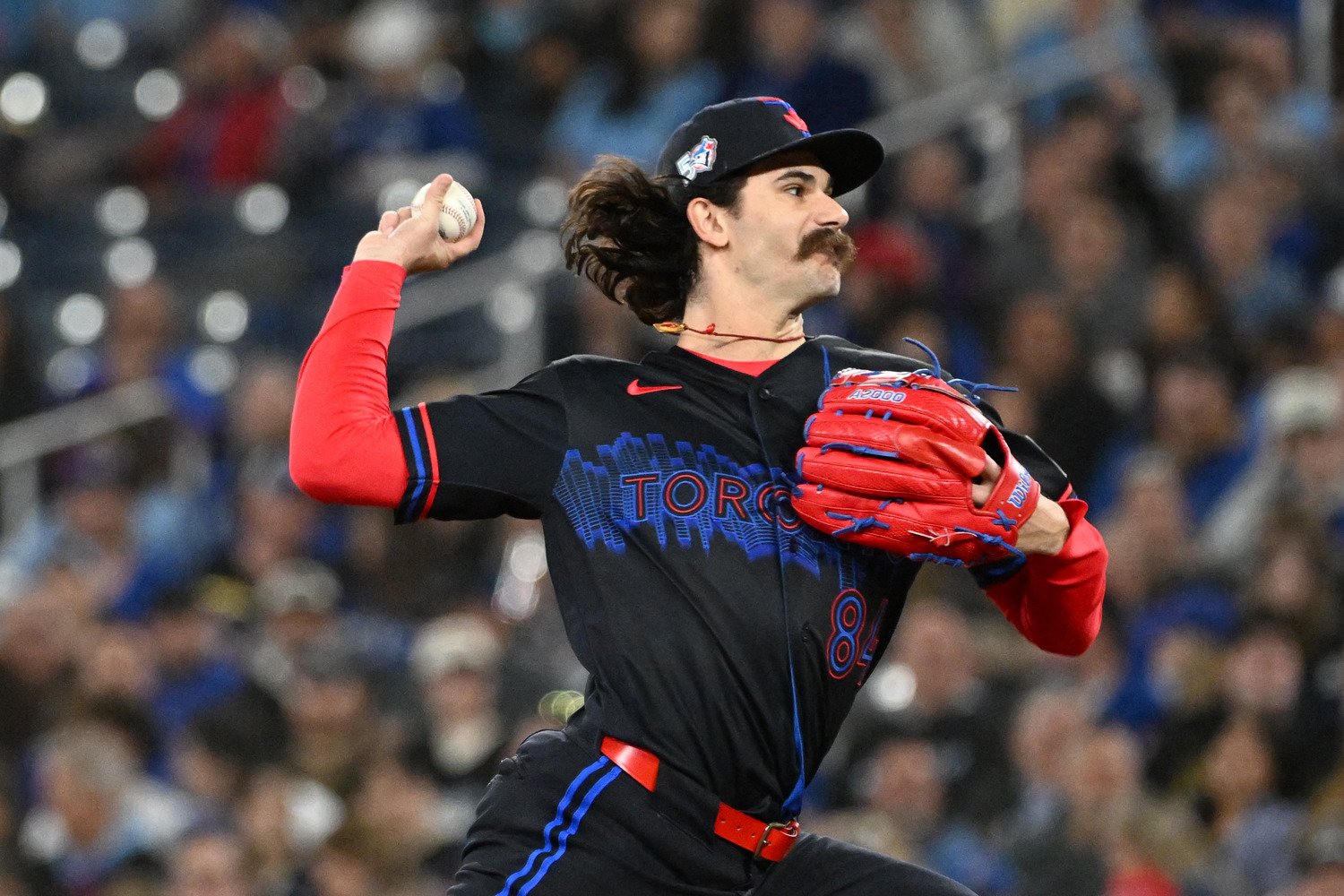 Every June, the Blue Jays pepper their marketing via email and social with a specific brand of optimism. It almost always includes some slick graphics and a catchy slogan to remind and entice the fan base to vote Jays players into the All-Star Game. This year, the game will be in Philadelphia, and the slogan is: Brothers Go Together. Vote Blue Jays. Vote Phriendship. Die-hard Jays fans are going to vote for a Jay at every position, whether or not they deserve it. Sometimes stats don’t tell the whole story, but often they do. Let’s not kid ourselves, the All-Star Game is primarily a popularity contest. The outcome doesn’t matter, so do the players involved really need to earn the right to represent their leagues? There used to be high stakes in the game, with the winning league having home-field advantage in the World Series, but not since 2017. Instead, winning or losing only impacts the bonuses of those participating. If the best players in baseball are supposed to be playing in the Midsummer Classic, should a team like the Jays have more than one representative on the team? Two months into the season, the Jays are under .500. Granted, they have been playing a bit better of late. They aren't a disaster, but they aren't dominant either. When the Jays build a campaign around Vladimir Guerrero Jr., Kazuma Okamoto, and Ernie Clement, they’re playing the hand they were dealt. These are their most recognizable and productive names. But for any of them to actually make the team would require voters to buy into the campaign rather than this season’s production. Take Vladdy. He’s a great example of when reputation meets reality. He’s hitting .293, getting on base at a .387 clip, and his contact metrics suggest a hot streak could happen at any second. Maybe his leadership on the team and playoff performance from last season are enough to merit a spot representing the American League at first base. The Yankees’ Ben Rice is hitting .304 with 17 home runs. Vladdy is second among AL first basemen in batting average and has the most hits (63), but only three home runs so far. Nick Kurtz of the Athletics is hitting .288 but has 11 homers. When you stack Vladdy’s power numbers against the rest of the American League first basemen, there is a gap. Other guys, like Munetaka Murakami, are just driving the ball out of the park more often. Murakami’s OBP is .378 with 20 home runs so far and 41 runs batted in. Vladdy’s star power gives him a massive edge, and if the fan base completely buys into the Vote Phriendship push, he could absolutely win a starting spot. It wouldn't be the first time a popular star got the nod, but it would be a testament to Toronto’s fan base more than his actual first-half production. Okamoto is a totally different story. Ironically, he might have the closest thing to a classic All-Star tool on this roster: pure power. He leads the team with 13 home runs, showing off the exact pop that brought him to the Jays. When he connects, like in the last two series, it's electric. The problem is everything else. His batting average is sitting right around .220, his OBP is a modest .309. He is playing just a bit better than a player adjusting to major league pitching. That’s not a bad thing, but is it All-Star worthy? He’s gone through some slumps that have kept his overall line down around the league average. For a guy in his first MLB season, that’s completely normal. There are plenty of flashes that suggest he’s going to be a real force once he settles in. Right now, Okamoto looks like a promising rookie with great power, not a top-tier AL third baseman. He is up against third basemen like the Guardians’ José Ramírez and Junior Caminero of the Rays, not to mention White Sox third baseman Miguel Vargas, who has an OBP of .368 and 15 home runs so far. Then you have Ernie Clement, who basically represents everything that has gone right for the depth on this roster. He’s been a safety net with an AL-best, at second base, .303 average. His ability to consistently put the ball in play has provided a ton of stability to a lineup that has struggled to perform. The hurdle for Clement is name recognition. Gritty, high-contact, formerly utility players rarely win fan votes because they don't produce highlights that casual fans look for. If you watch the Blue Jays every single day, you know exactly how valuable he is, but that everyday value doesn't always translate to a national ballot. His World Series performance might help garner some votes. If you want to make a pure performance-based argument for a Blue Jays All-Star, you have to look at the pitching staff. Before hitting the IL with a hamstring strain, Dylan Cease was providing the team with exactly what he was brought in to do. He is carrying a 3.05 ERA and racking up strikeouts. With one exception, against the White Sox, he has been putting together the kind of dominant outings that grab attention across the league. Kevin Gausman has been his usual reliable self, hovering around a 3.36 ERA and delivering the kind of steady, quality innings that voters love to reward on the players' ballot. Even the bullpen has a couple of high-strikeout, low-ERA arms that could sneak in on merit. How could they overlook Louis Varland or Mason Fluharty? So, how many Jays will actually end up making the trip? Realistically, probably just one or two. Every team gets a representative, and right now, the safest bet is a pitcher like Cease or Gausman who carries weight in the player voting. Varland could be a commissioner's office selection. Vladdy remains the ultimate wild card because of the fans, which is why teams promote All-Star fan balloting. Could they get more? Sure. But as it stands today, the Blue Jays look like a team still searching for someone to carry them. They have plenty of good players, but no one outside of the bullpen has put together the kind of undeniably dominant season that demands a spot on the national stage. If the American League roster was picked purely by the numbers today, the Jays’ presence would be pretty minimal. But with a passionate fan base and a heavy promotional push behind them, they’ve at least given themselves a fighting chance. Don’t be too disappointed if the Jays don’t send everyone to Philadelphia. Given all the injuries and the less-than-ideal start to the season, several days of rest might be literally be what the doctor ordered.
 -
It wasn't an optimal end to what started as a promising weekend for the Blue Jays. While the offense showed some late-game life, the puzzle of the bullpen led to the team splitting a series they should have at least won. There were signs throughout the weekend that the offense was beginning to find its footing (again), even if the production didn’t always show up right away. Slow starts are still an issue, and they continue to put this team behind more often than not. When you spend the first few innings not working counts and leaving opposing starters full of confidence, you’re playing with fire. Failure to cash in runs early and often is not only adding pressure to the lineup, but the bullpen too. Every game feels like it is September baseball. The Jays' leverage arms must be dangling a bit. Mason Fluharty’s inning of relief on Sunday was his 31st appearance of the season. Braydon Fisher is at 30 while Louis Varland, Tyler Rogers and Jeff Hoffman are at 28. Outside the offense, the puzzle at the back end of games is still a work in progress. Two bullpen days every five starts is not ideal, but it is where the Jays are right now. The balancing act that manager John Schneider and pitching coach Pete Walker are trying to navigate in real time would be fun if this were a video game, not so much when the team feels like it is this close to finding a groove. Every decision feels layered. The Blue Jays are not only trying to secure outs in the moment, but they are trying to preserve availability for the next game or next series, protect pitchers from overuse, and maintain some level of stability in defined roles. Saturday demonstrated that pendulum in real-time. Trey Yesavage didn’t have his command, and there were stretches where it looked like the afternoon could unravel quickly. Yet, Yesavage battled through it, and the relievers who followed him did exactly what needed to be done. That is, until the ninth. It’s easy after the fact to question whether a move should have come sooner, whether a hook was delayed by one batter too many, or whether another arm would have been better suited for that moment. It just doesn’t capture the complexity of what is happening outside that one game. Hoffman, in that situation, wasn’t stepping into chaos. He was facing the lower part of the lineup, with a win feeling almost assured. Schneider has his favourites. Varland and Rogers have leapfrogged Hoffman on that list, but Hoffman is still a trusted arm. And be honest, in the past week or two (before Saturday), he had been pretty good. After the game, Schneider said Connor Seabold would have gotten the ball if the Jays had scored one more run. Four runs seems like plenty of breathing room. Relief pitching can turn in an instant, especially against a lineup like Baltimore’s, even when you’re not facing the top of the order. The Orioles have built a lineup that does not give away a lot of at-bats. That’s what unfolded. It wasn’t one singular mistake, but rather a sequence where pitches weren’t executed with the precision required. Some were left in hittable zones, others missed entirely and forced deeper counts. Hindsight is always so clear, isn’t it? The winning RBI single up the middle sure looked like a tailor-made double play if the middle infielders were playing back. Sunday told a slightly different story, but the underlying themes remained. The bullpen, in a broader sense, wasn’t brutal. There were competitive pitches, but one less-than-ideal inning. It is easy to say the bullpen cost the Jays the series, but that oversimplifies what is a layered situation. Yes, there were moments where execution faltered and games slipped away. Austin Voth and Hayden Juenger weren’t great. But there is also the context of usage patterns, the fatigue that accumulates when starters don’t consistently pitch deep into games, and the challenge of matching up against disciplined and decent lineups. What Schneider and Walker are attempting is not just in-game management. It is season management. They are trying to stretch a group of arms through a demanding schedule while still keeping the team competitive. The timing of yesterday's off day couldn’t have been better. This team needed a reset, not just physically but mentally. They're back under .500, but they are looking better. There is hope. Facing the Braves will present a different kind of challenge, one that will test both the pitching depth and offensive consistency. It is not a series in which the Jays can afford to ease into games or hope things sort themselves out late. There is, however, an opportunity within that challenge. The Blue Jays have a chance to turn the page quickly, to take what were positive stretches from this past series (and the past week and a half) and build on them without carrying the frustration forward. That is often how successful teams navigate long seasons. Looking a little further ahead, there are reinforcements on the horizon that could change the complexion of this pitching staff. The potential return of Dylan Cease and Max Scherzer in the near term offers more than just added talent. It provides flexibility. Fewer innings to cover translates to more defined roles and fresher arms in leverage situations. And it doesn’t stop there. The progression of Shane Bieber, now working his way back through live game action, suggests that the rotation depth could soon become a different kind of conversation entirely. It is not often that a team transitions from searching for stability to potentially managing a surplus of starting options. That shift, if it materializes, will introduce a new set of decisions for the coaching staff. For the Blue Jays, that potential scenario could be the turning point in how the bullpen is utilized. If you can shorten games reliably, if you can hand off a lead to a more clearly defined late-inning structure, many of the current issues begin to settle. None of this erases the disappointment of how this weekend ended. The Blue Jays had positioned themselves to take more from this series, and those are the games that can stand out when you look back over a season. But within that frustration, there are still hints that this team is not far from finding a more consistent rhythm. For now, the record reflects a weekend that could have been more. The Jays will take the day, reset, and prepare for what comes next. The questions around the bullpen will still be there on Tuesday, but so will the chance to answer them, one outing at a time. View full article
-
.jpg.eeddaed6c9ba92b3fe6f84c9a6ad8842.jpg) It wasn't an optimal end to what started as a promising weekend for the Blue Jays. While the offense showed some late-game life, the puzzle of the bullpen led to the team splitting a series they should have at least won. There were signs throughout the weekend that the offense was beginning to find its footing (again), even if the production didn’t always show up right away. Slow starts are still an issue, and they continue to put this team behind more often than not. When you spend the first few innings not working counts and leaving opposing starters full of confidence, you’re playing with fire. Failure to cash in runs early and often is not only adding pressure to the lineup, but the bullpen too. Every game feels like it is September baseball. The Jays' leverage arms must be dangling a bit. Mason Fluharty’s inning of relief on Sunday was his 31st appearance of the season. Braydon Fisher is at 30 while Louis Varland, Tyler Rogers and Jeff Hoffman are at 28. Outside the offense, the puzzle at the back end of games is still a work in progress. Two bullpen days every five starts is not ideal, but it is where the Jays are right now. The balancing act that manager John Schneider and pitching coach Pete Walker are trying to navigate in real time would be fun if this were a video game, not so much when the team feels like it is this close to finding a groove. Every decision feels layered. The Blue Jays are not only trying to secure outs in the moment, but they are trying to preserve availability for the next game or next series, protect pitchers from overuse, and maintain some level of stability in defined roles. Saturday demonstrated that pendulum in real-time. Trey Yesavage didn’t have his command, and there were stretches where it looked like the afternoon could unravel quickly. Yet, Yesavage battled through it, and the relievers who followed him did exactly what needed to be done. That is, until the ninth. It’s easy after the fact to question whether a move should have come sooner, whether a hook was delayed by one batter too many, or whether another arm would have been better suited for that moment. It just doesn’t capture the complexity of what is happening outside that one game. Hoffman, in that situation, wasn’t stepping into chaos. He was facing the lower part of the lineup, with a win feeling almost assured. Schneider has his favourites. Varland and Rogers have leapfrogged Hoffman on that list, but Hoffman is still a trusted arm. And be honest, in the past week or two (before Saturday), he had been pretty good. After the game, Schneider said Connor Seabold would have gotten the ball if the Jays had scored one more run. Four runs seems like plenty of breathing room. Relief pitching can turn in an instant, especially against a lineup like Baltimore’s, even when you’re not facing the top of the order. The Orioles have built a lineup that does not give away a lot of at-bats. That’s what unfolded. It wasn’t one singular mistake, but rather a sequence where pitches weren’t executed with the precision required. Some were left in hittable zones, others missed entirely and forced deeper counts. Hindsight is always so clear, isn’t it? The winning RBI single up the middle sure looked like a tailor-made double play if the middle infielders were playing back. Sunday told a slightly different story, but the underlying themes remained. The bullpen, in a broader sense, wasn’t brutal. There were competitive pitches, but one less-than-ideal inning. It is easy to say the bullpen cost the Jays the series, but that oversimplifies what is a layered situation. Yes, there were moments where execution faltered and games slipped away. Austin Voth and Hayden Juenger weren’t great. But there is also the context of usage patterns, the fatigue that accumulates when starters don’t consistently pitch deep into games, and the challenge of matching up against disciplined and decent lineups. What Schneider and Walker are attempting is not just in-game management. It is season management. They are trying to stretch a group of arms through a demanding schedule while still keeping the team competitive. The timing of yesterday's off day couldn’t have been better. This team needed a reset, not just physically but mentally. They're back under .500, but they are looking better. There is hope. Facing the Braves will present a different kind of challenge, one that will test both the pitching depth and offensive consistency. It is not a series in which the Jays can afford to ease into games or hope things sort themselves out late. There is, however, an opportunity within that challenge. The Blue Jays have a chance to turn the page quickly, to take what were positive stretches from this past series (and the past week and a half) and build on them without carrying the frustration forward. That is often how successful teams navigate long seasons. Looking a little further ahead, there are reinforcements on the horizon that could change the complexion of this pitching staff. The potential return of Dylan Cease and Max Scherzer in the near term offers more than just added talent. It provides flexibility. Fewer innings to cover translates to more defined roles and fresher arms in leverage situations. And it doesn’t stop there. The progression of Shane Bieber, now working his way back through live game action, suggests that the rotation depth could soon become a different kind of conversation entirely. It is not often that a team transitions from searching for stability to potentially managing a surplus of starting options. That shift, if it materializes, will introduce a new set of decisions for the coaching staff. For the Blue Jays, that potential scenario could be the turning point in how the bullpen is utilized. If you can shorten games reliably, if you can hand off a lead to a more clearly defined late-inning structure, many of the current issues begin to settle. None of this erases the disappointment of how this weekend ended. The Blue Jays had positioned themselves to take more from this series, and those are the games that can stand out when you look back over a season. But within that frustration, there are still hints that this team is not far from finding a more consistent rhythm. For now, the record reflects a weekend that could have been more. The Jays will take the day, reset, and prepare for what comes next. The questions around the bullpen will still be there on Tuesday, but so will the chance to answer them, one outing at a time.
It wasn't an optimal end to what started as a promising weekend for the Blue Jays. While the offense showed some late-game life, the puzzle of the bullpen led to the team splitting a series they should have at least won. There were signs throughout the weekend that the offense was beginning to find its footing (again), even if the production didn’t always show up right away. Slow starts are still an issue, and they continue to put this team behind more often than not. When you spend the first few innings not working counts and leaving opposing starters full of confidence, you’re playing with fire. Failure to cash in runs early and often is not only adding pressure to the lineup, but the bullpen too. Every game feels like it is September baseball. The Jays' leverage arms must be dangling a bit. Mason Fluharty’s inning of relief on Sunday was his 31st appearance of the season. Braydon Fisher is at 30 while Louis Varland, Tyler Rogers and Jeff Hoffman are at 28. Outside the offense, the puzzle at the back end of games is still a work in progress. Two bullpen days every five starts is not ideal, but it is where the Jays are right now. The balancing act that manager John Schneider and pitching coach Pete Walker are trying to navigate in real time would be fun if this were a video game, not so much when the team feels like it is this close to finding a groove. Every decision feels layered. The Blue Jays are not only trying to secure outs in the moment, but they are trying to preserve availability for the next game or next series, protect pitchers from overuse, and maintain some level of stability in defined roles. Saturday demonstrated that pendulum in real-time. Trey Yesavage didn’t have his command, and there were stretches where it looked like the afternoon could unravel quickly. Yet, Yesavage battled through it, and the relievers who followed him did exactly what needed to be done. That is, until the ninth. It’s easy after the fact to question whether a move should have come sooner, whether a hook was delayed by one batter too many, or whether another arm would have been better suited for that moment. It just doesn’t capture the complexity of what is happening outside that one game. Hoffman, in that situation, wasn’t stepping into chaos. He was facing the lower part of the lineup, with a win feeling almost assured. Schneider has his favourites. Varland and Rogers have leapfrogged Hoffman on that list, but Hoffman is still a trusted arm. And be honest, in the past week or two (before Saturday), he had been pretty good. After the game, Schneider said Connor Seabold would have gotten the ball if the Jays had scored one more run. Four runs seems like plenty of breathing room. Relief pitching can turn in an instant, especially against a lineup like Baltimore’s, even when you’re not facing the top of the order. The Orioles have built a lineup that does not give away a lot of at-bats. That’s what unfolded. It wasn’t one singular mistake, but rather a sequence where pitches weren’t executed with the precision required. Some were left in hittable zones, others missed entirely and forced deeper counts. Hindsight is always so clear, isn’t it? The winning RBI single up the middle sure looked like a tailor-made double play if the middle infielders were playing back. Sunday told a slightly different story, but the underlying themes remained. The bullpen, in a broader sense, wasn’t brutal. There were competitive pitches, but one less-than-ideal inning. It is easy to say the bullpen cost the Jays the series, but that oversimplifies what is a layered situation. Yes, there were moments where execution faltered and games slipped away. Austin Voth and Hayden Juenger weren’t great. But there is also the context of usage patterns, the fatigue that accumulates when starters don’t consistently pitch deep into games, and the challenge of matching up against disciplined and decent lineups. What Schneider and Walker are attempting is not just in-game management. It is season management. They are trying to stretch a group of arms through a demanding schedule while still keeping the team competitive. The timing of yesterday's off day couldn’t have been better. This team needed a reset, not just physically but mentally. They're back under .500, but they are looking better. There is hope. Facing the Braves will present a different kind of challenge, one that will test both the pitching depth and offensive consistency. It is not a series in which the Jays can afford to ease into games or hope things sort themselves out late. There is, however, an opportunity within that challenge. The Blue Jays have a chance to turn the page quickly, to take what were positive stretches from this past series (and the past week and a half) and build on them without carrying the frustration forward. That is often how successful teams navigate long seasons. Looking a little further ahead, there are reinforcements on the horizon that could change the complexion of this pitching staff. The potential return of Dylan Cease and Max Scherzer in the near term offers more than just added talent. It provides flexibility. Fewer innings to cover translates to more defined roles and fresher arms in leverage situations. And it doesn’t stop there. The progression of Shane Bieber, now working his way back through live game action, suggests that the rotation depth could soon become a different kind of conversation entirely. It is not often that a team transitions from searching for stability to potentially managing a surplus of starting options. That shift, if it materializes, will introduce a new set of decisions for the coaching staff. For the Blue Jays, that potential scenario could be the turning point in how the bullpen is utilized. If you can shorten games reliably, if you can hand off a lead to a more clearly defined late-inning structure, many of the current issues begin to settle. None of this erases the disappointment of how this weekend ended. The Blue Jays had positioned themselves to take more from this series, and those are the games that can stand out when you look back over a season. But within that frustration, there are still hints that this team is not far from finding a more consistent rhythm. For now, the record reflects a weekend that could have been more. The Jays will take the day, reset, and prepare for what comes next. The questions around the bullpen will still be there on Tuesday, but so will the chance to answer them, one outing at a time. -
It hasn’t been the start to the season that fans or analysts envisioned. Yet, despite a record two games below .500, the Blue Jays remain firmly in the American League playoff conversation. Yes, it’s early. But a look at the standings makes it hard not to feel optimistic. FanGraphs even has Toronto with the fifth-best playoff odds in the AL. After closing out their series with the Marlins, the Jays sit 8.5 games back of the division-leading Rays. More importantly, they're in a three-team tie for the AL's final Wild Card spot. In a compressed American League, there is a runway for a bunch of teams that haven’t started that hot. The Jays have certainly not made things easy on themselves. Their run differential sits at -4, a sign of missed opportunities in close games. Compare that to the Yankees at +89, who currently occupy the top Wild Card position. Even within the AL East, the margins are thin. The Orioles trail Toronto by just one game despite carrying a -41 run differential. Across the league, inconsistency has been the dominant trend. Outside of a few teams at the top – the Rays, Yankees, and Guardians – no club has created substantial separation nearly two months into the season. That lack of separation is most evident in the Wild Card race, where 11 teams sit within five games. The Twins and A's are currently tied with the Blue Jays for the final spot with records of 27-29, while the Orioles and Rangers aren't far behind. In a cluster like this, teams with records below .500 are only a good week away from jumping back into contention. Interleague play has added another wrinkle, with the National League holding a significant edge so far in 2026. It may signal a shift after years of American League dominance. For the Jays, this landscape has turned an uneven start into something manageable. As the roster stabilizes and key contributors return from injury, the Jays have started to show signs of progress. A 4-2 homestand is a solid step forward, and the team has now won or tied five of its last six series. It’s not dominant, but it’s progress. There are also signs of underlying strength. Vladimir Guerrero Jr. has produced at a 120 wRC+, while Daulton Varsho has quietly contributed at a 114 mark. There are several position players playing above expectations, but there have been a lot of players moving in and out of the lineup and roster due to injuries. It is hard to be consistent under those circumstances. Pitching, meanwhile, has carried much of the load. The healthy starters have been able to work deeper into games, giving manager John Schneider more flexibility to deploy his bullpen strategically rather than out of necessity. In a season where offense has been somewhat muted across the AL, with scoring around 4.26 runs per game, margins have tightened. Teams are not routinely posting six or seven runs a night. Instead, more games are decided in the three- to four-run range, where one swing or one inning can shift the outcome. That environment reinforces the league-wide parity. As a result, more teams have stayed within reach after two months of play. It is a major reason why the American League standings remain so condensed. It’s not limited to the Wild Card race either. In the AL West, the Mariners lead the division with a record of 28-29. They haven't created any cushion at the top. For the Blue Jays, that means their path forward is far less daunting than their early record might suggest, or might have initially perceived. The team doesn’t need a dramatic turnaround. They just need incremental improvement. They need to turn a handful of one-run losses into wins and stabilize the offense, and the standings could shift quickly. With that said, there are a bunch of teams sitting below .500 that could make some meaningful moves over the next couple of months. In a league this tightly packed, the difference between the fifth-best odds and the 10th is small. That’s good news for the Jays. They are not chasing a runaway field. Timing, too, is on their side. MLB seasons are long, and early storylines often change by mid-summer. A team that finds its rhythm in June and July can erase a mediocre start quickly, something the Blue Jays demonstrated last season. Recent results hint that the Jays might be following their own roadmap. The Jays have won six of their last 10 games, and if that pace holds, getting back to .500 could happen within days. The key question is whether the offense can consistently support the pitching. The pieces are there, with multiple hitters performing above league average. What’s been missing is sustained production. Even a modest improvement could have an immediate impact in such a tightly packed race. So far this season, dominance isn’t required to stay in the mix. Avoiding prolonged slumps and capitalizing on tight games can be enough to remain in contention. The Blue Jays have already shown they can match preseason expectations in flashes. Their underlying metrics, from run differential to individual performance also support that. What the standings, and recent history, suggest is that they still have time to put it all together. Being tied for a Wild Card spot in late May guarantees nothing. But it also means there is no urgency to panic. Toronto has weathered significant adversity to this point. And in an American League defined by uncertainty, that has given them room to work with. The playoff picture remains fluid, unfinished and, most importantly, accessible. A division title may be slipping from view. But the Wild Cards are well in play. The Blue Jays are exactly where they need to be: within striking distance. View full article
-
The AL Is Wide Open, and the Blue Jays Are Right Where They Need To Be
Sam Charles posted an article in Blue Jays
.jpg.fc937e56edd261767a8314f1d87ad3e8.jpg) It hasn’t been the start to the season that fans or analysts envisioned. Yet, despite a record two games below .500, the Blue Jays remain firmly in the American League playoff conversation. Yes, it’s early. But a look at the standings makes it hard not to feel optimistic. FanGraphs even has Toronto with the fifth-best playoff odds in the AL. After closing out their series with the Marlins, the Jays sit 8.5 games back of the division-leading Rays. More importantly, they're in a three-team tie for the AL's final Wild Card spot. In a compressed American League, there is a runway for a bunch of teams that haven’t started that hot. The Jays have certainly not made things easy on themselves. Their run differential sits at -4, a sign of missed opportunities in close games. Compare that to the Yankees at +89, who currently occupy the top Wild Card position. Even within the AL East, the margins are thin. The Orioles trail Toronto by just one game despite carrying a -41 run differential. Across the league, inconsistency has been the dominant trend. Outside of a few teams at the top – the Rays, Yankees, and Guardians – no club has created substantial separation nearly two months into the season. That lack of separation is most evident in the Wild Card race, where 11 teams sit within five games. The Twins and A's are currently tied with the Blue Jays for the final spot with records of 27-29, while the Orioles and Rangers aren't far behind. In a cluster like this, teams with records below .500 are only a good week away from jumping back into contention. Interleague play has added another wrinkle, with the National League holding a significant edge so far in 2026. It may signal a shift after years of American League dominance. For the Jays, this landscape has turned an uneven start into something manageable. As the roster stabilizes and key contributors return from injury, the Jays have started to show signs of progress. A 4-2 homestand is a solid step forward, and the team has now won or tied five of its last six series. It’s not dominant, but it’s progress. There are also signs of underlying strength. Vladimir Guerrero Jr. has produced at a 120 wRC+, while Daulton Varsho has quietly contributed at a 114 mark. There are several position players playing above expectations, but there have been a lot of players moving in and out of the lineup and roster due to injuries. It is hard to be consistent under those circumstances. Pitching, meanwhile, has carried much of the load. The healthy starters have been able to work deeper into games, giving manager John Schneider more flexibility to deploy his bullpen strategically rather than out of necessity. In a season where offense has been somewhat muted across the AL, with scoring around 4.26 runs per game, margins have tightened. Teams are not routinely posting six or seven runs a night. Instead, more games are decided in the three- to four-run range, where one swing or one inning can shift the outcome. That environment reinforces the league-wide parity. As a result, more teams have stayed within reach after two months of play. It is a major reason why the American League standings remain so condensed. It’s not limited to the Wild Card race either. In the AL West, the Mariners lead the division with a record of 28-29. They haven't created any cushion at the top. For the Blue Jays, that means their path forward is far less daunting than their early record might suggest, or might have initially perceived. The team doesn’t need a dramatic turnaround. They just need incremental improvement. They need to turn a handful of one-run losses into wins and stabilize the offense, and the standings could shift quickly. With that said, there are a bunch of teams sitting below .500 that could make some meaningful moves over the next couple of months. In a league this tightly packed, the difference between the fifth-best odds and the 10th is small. That’s good news for the Jays. They are not chasing a runaway field. Timing, too, is on their side. MLB seasons are long, and early storylines often change by mid-summer. A team that finds its rhythm in June and July can erase a mediocre start quickly, something the Blue Jays demonstrated last season. Recent results hint that the Jays might be following their own roadmap. The Jays have won six of their last 10 games, and if that pace holds, getting back to .500 could happen within days. The key question is whether the offense can consistently support the pitching. The pieces are there, with multiple hitters performing above league average. What’s been missing is sustained production. Even a modest improvement could have an immediate impact in such a tightly packed race. So far this season, dominance isn’t required to stay in the mix. Avoiding prolonged slumps and capitalizing on tight games can be enough to remain in contention. The Blue Jays have already shown they can match preseason expectations in flashes. Their underlying metrics, from run differential to individual performance also support that. What the standings, and recent history, suggest is that they still have time to put it all together. Being tied for a Wild Card spot in late May guarantees nothing. But it also means there is no urgency to panic. Toronto has weathered significant adversity to this point. And in an American League defined by uncertainty, that has given them room to work with. The playoff picture remains fluid, unfinished and, most importantly, accessible. A division title may be slipping from view. But the Wild Cards are well in play. The Blue Jays are exactly where they need to be: within striking distance.
It hasn’t been the start to the season that fans or analysts envisioned. Yet, despite a record two games below .500, the Blue Jays remain firmly in the American League playoff conversation. Yes, it’s early. But a look at the standings makes it hard not to feel optimistic. FanGraphs even has Toronto with the fifth-best playoff odds in the AL. After closing out their series with the Marlins, the Jays sit 8.5 games back of the division-leading Rays. More importantly, they're in a three-team tie for the AL's final Wild Card spot. In a compressed American League, there is a runway for a bunch of teams that haven’t started that hot. The Jays have certainly not made things easy on themselves. Their run differential sits at -4, a sign of missed opportunities in close games. Compare that to the Yankees at +89, who currently occupy the top Wild Card position. Even within the AL East, the margins are thin. The Orioles trail Toronto by just one game despite carrying a -41 run differential. Across the league, inconsistency has been the dominant trend. Outside of a few teams at the top – the Rays, Yankees, and Guardians – no club has created substantial separation nearly two months into the season. That lack of separation is most evident in the Wild Card race, where 11 teams sit within five games. The Twins and A's are currently tied with the Blue Jays for the final spot with records of 27-29, while the Orioles and Rangers aren't far behind. In a cluster like this, teams with records below .500 are only a good week away from jumping back into contention. Interleague play has added another wrinkle, with the National League holding a significant edge so far in 2026. It may signal a shift after years of American League dominance. For the Jays, this landscape has turned an uneven start into something manageable. As the roster stabilizes and key contributors return from injury, the Jays have started to show signs of progress. A 4-2 homestand is a solid step forward, and the team has now won or tied five of its last six series. It’s not dominant, but it’s progress. There are also signs of underlying strength. Vladimir Guerrero Jr. has produced at a 120 wRC+, while Daulton Varsho has quietly contributed at a 114 mark. There are several position players playing above expectations, but there have been a lot of players moving in and out of the lineup and roster due to injuries. It is hard to be consistent under those circumstances. Pitching, meanwhile, has carried much of the load. The healthy starters have been able to work deeper into games, giving manager John Schneider more flexibility to deploy his bullpen strategically rather than out of necessity. In a season where offense has been somewhat muted across the AL, with scoring around 4.26 runs per game, margins have tightened. Teams are not routinely posting six or seven runs a night. Instead, more games are decided in the three- to four-run range, where one swing or one inning can shift the outcome. That environment reinforces the league-wide parity. As a result, more teams have stayed within reach after two months of play. It is a major reason why the American League standings remain so condensed. It’s not limited to the Wild Card race either. In the AL West, the Mariners lead the division with a record of 28-29. They haven't created any cushion at the top. For the Blue Jays, that means their path forward is far less daunting than their early record might suggest, or might have initially perceived. The team doesn’t need a dramatic turnaround. They just need incremental improvement. They need to turn a handful of one-run losses into wins and stabilize the offense, and the standings could shift quickly. With that said, there are a bunch of teams sitting below .500 that could make some meaningful moves over the next couple of months. In a league this tightly packed, the difference between the fifth-best odds and the 10th is small. That’s good news for the Jays. They are not chasing a runaway field. Timing, too, is on their side. MLB seasons are long, and early storylines often change by mid-summer. A team that finds its rhythm in June and July can erase a mediocre start quickly, something the Blue Jays demonstrated last season. Recent results hint that the Jays might be following their own roadmap. The Jays have won six of their last 10 games, and if that pace holds, getting back to .500 could happen within days. The key question is whether the offense can consistently support the pitching. The pieces are there, with multiple hitters performing above league average. What’s been missing is sustained production. Even a modest improvement could have an immediate impact in such a tightly packed race. So far this season, dominance isn’t required to stay in the mix. Avoiding prolonged slumps and capitalizing on tight games can be enough to remain in contention. The Blue Jays have already shown they can match preseason expectations in flashes. Their underlying metrics, from run differential to individual performance also support that. What the standings, and recent history, suggest is that they still have time to put it all together. Being tied for a Wild Card spot in late May guarantees nothing. But it also means there is no urgency to panic. Toronto has weathered significant adversity to this point. And in an American League defined by uncertainty, that has given them room to work with. The playoff picture remains fluid, unfinished and, most importantly, accessible. A division title may be slipping from view. But the Wild Cards are well in play. The Blue Jays are exactly where they need to be: within striking distance.
.jpg.2f126a930e74f3088469d276a04bb839.jpg)
.jpg.18592e31a4148c4e48657a5395050e1a.jpg)
.jpg.f9e60c6d5aa754cc90d80d7f9878f3be.jpg)
.jpg.f5195763b5bfd6b8597d01b851b618db.jpg)
.jpg.91cd55a839502a1a4e8ac7268da87fb7.jpg)
.jpg.e8edc836d493073af669d4ccf245a3fe.jpg)
.jpg.e632d666f6362b39750b4bdb9398ad5e.jpg)
.jpg.eeddaed6c9ba92b3fe6f84c9a6ad8842.jpg)
.jpg.fc937e56edd261767a8314f1d87ad3e8.jpg)