


Matthew Creally
-
Posts
124 -
Joined
-
Last visited
Content Type
Profiles
Toronto Blue Jays Videos
2026 Toronto Blue Jays Top Prospects Ranking
Toronto Blue Jays Free Agent & Trade Rumors, Notes, & Tidbits
Guides & Resources
2025 Toronto Blue Jays Draft Pick Tracker
News
2026 Toronto Blue Jays Draft Tracker: Picks & Bonuses
Forums
Blogs
Events
Store
Downloads
Gallery
Everything posted by Matthew Creally
-
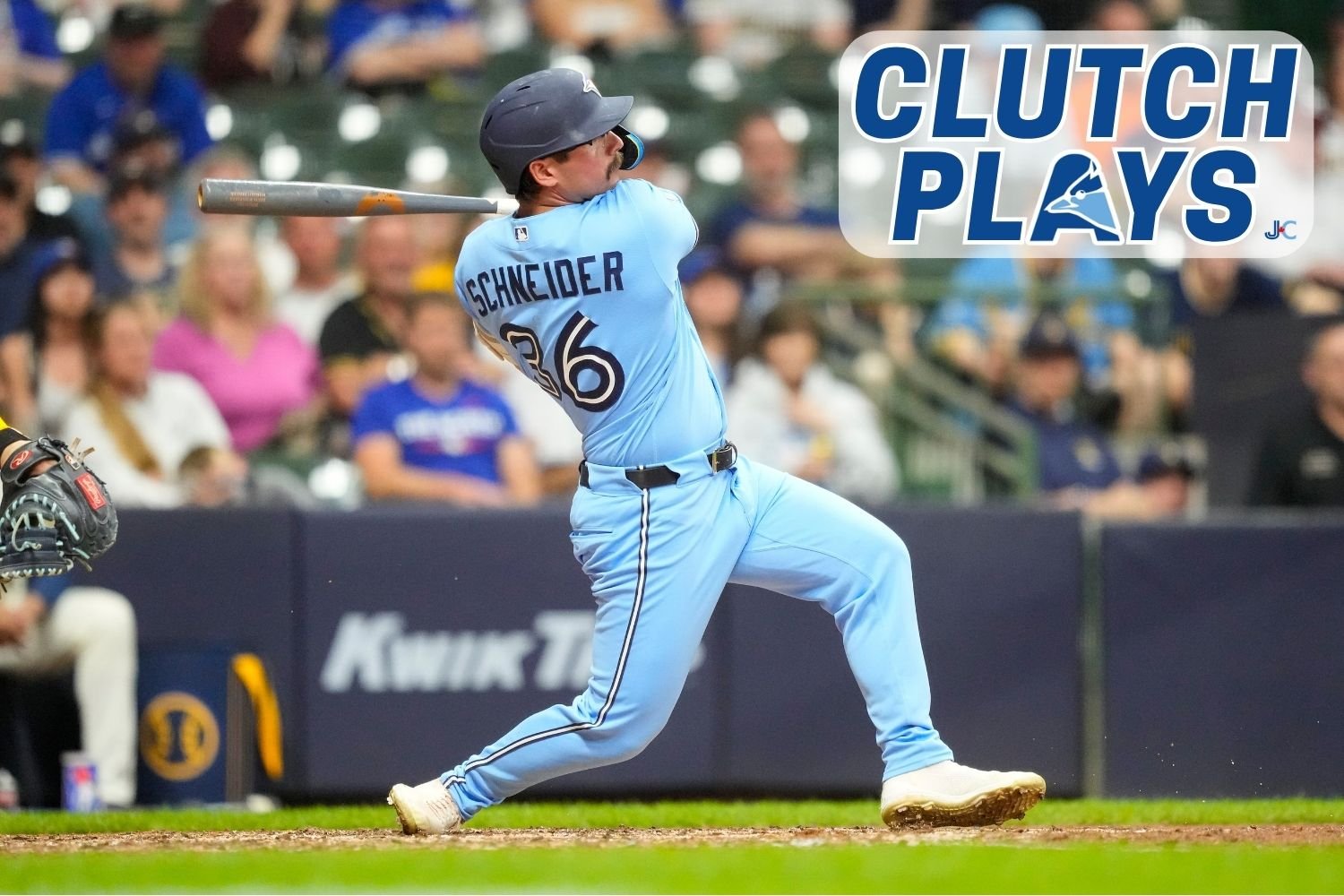 Welcome back to Blue Jays Clutch Plays, a recurring post that highlights the six most pivotal plays (three pitching, three hitting) from the past week of Blue Jays baseball, according to MLB's win probability model. Click here to read last week's edition. It's been a trying opening month for the Blue Jays as they dropped two out of three in both Milwaukee and Arizona this week. Saturday's late defeat to the Diamondbacks marked their sixth consecutive series loss, which hadn't happened since 2012. They once again failed to make it through the week without someone getting hurt, as Daulton Varsho departed Friday with discomfort in the quad/knee area, although it was decided medical imaging wasn't necessary. The bats continued to be ice-cold before cathartically waking up on Sunday, as an eight-run first inning helped them avoid getting swept in the desert. Anaheim will be the last stop on the Jays' three-city road trip this week before they return home to face the Guardians on the weekend. Pitching 3. Louis Varland: Joey Ortiz Strikeout, Bot 9, 4/14 (+9.9% wPA) Louis Varland's tightrope act on Tuesday night reignited talks about who should be closing games for the Blue Jays. After Jeff Hoffman walked Garrett Mitchell to load the bases and place the winning run just 90 feet away, Varland came in and struck out Joey Ortiz on three pitches, blowing him away with a 99-mph fastball up and in to send the game to extras. The series opener against the Brewers contained many twists and turns, with nine total runs being scored in the ninth and 10th innings, but it was Varland slamming the door that paved the way for the offense to come through in the next frame. 2. Jeff Hoffman: Gary Sanchez Strikeout, Bot 9, 4/14 (+9.9% wPA) Even after he gave up a run and put the tying run in scoring position on Tuesday, Hoffman put himself in a good position to hang onto the lead after striking out Gary Sanchez with a fastball perfectly positioned above the belt. According to Statcast, the Blue Jays had a 75% chance of winning after this play, but the next three batters reached before Varland was called upon to get the final out. In addition to blowing this save opportunity, Hoffman gave up a tiebreaking grand slam to Corbin Carroll in the eighth inning on Saturday. 1. Max Scherzer: Lourdes Gurriel Jr. Strikeout, Bot 4, 4/18 (+9.9% wPA) It's not usual that a strikeout in the fourth inning of a tie game stands as the most pivotal play in an entire week for a pitching staff, but this Max Scherzer strikeout became a big win probability swing for Toronto, as Tyler Heineman was credited with a caught stealing on the play after former Blue Jay Lourdes Gurriel Jr. interfered with his throw to second base. Geraldo Perdomo beat the throw, but the Jays successfully challenged for interference on the part of Gurriel to turn it into a double play. Props to the video department. Hitting 3. Myles Straw: 2-RBI Double, Top 10, 4/14 (+24.5% wPA) It was quite the week at the plate for Myles Straw, who cashed in the eventual winning run on Tuesday with this laser down the left field line before homering on Friday in Arizona. The Blue Jays had already plated one in the inning, but a one-run lead isn't often safe with the extra innings ghost runner. Straw turned on an inner-half fastball from sidearm reliever Grant Anderson and lined it into the corner for some key insurance runs on the way to a series-opening win over the Brewers. 2. Vladimir Guerrero Jr.: RBI Double, Top 10, 4/14 (+28.7% wPA) Vladimir Guerrero Jr. was the one who initially broke that scoreless tie in the 10th, scoring Ernie Clement from second on a screeching 111-mph liner off the base of the wall in left-center field. Guerrero has been seeing a lot of good breaking balls early in the season after his postseason tirade, but he can make anyone pay for hanging a sweeper like this. He would experience some frustration later in this series, failing to come through in multiple key spots during the Blue Jays' consecutive 2-1 losses to the Brewers on Wednesday and Thursday, but this was his most crucial hit in what was a productive week overall. 1. Davis Schneider: Ground-Rule Double, Top 9, 4/14 (+33.8% wPA) The latest Clutch Play of the Week was brought to you by Davis Schneider, who drilled a fastball over the center-field wall on a bounce for a double. Plays like these give a proper glimpse into how win probability works: Kazuma Okamoto's game-tying single, Andrés Giménez's go-ahead RBI groundout, and Ernie Clement's RBI single drove in the runs that actually flipped the scoreboard in the ninth, but it was Schneider's hit that went down as the most pivotal one in that sequence because it put the go-ahead run in scoring position with nobody out.
 -
Welcome to Shape of the Blue Jays, my column where I dig into Statcast numbers to analyze recent pitch shape and swing shape trends for Toronto Blue Jays players and discuss how they have impacted their performance. Click here to read the last edition. Quick Hits: Offense Despite a couple of isolated positive efforts recently, the Jays' offense has been an unfortunate combination of injured and bad this year. They're still the standard of the league when it comes to making contact, and they're still hitting a ton of line drives. They have a bottom-three chase rate in MLB, but their bottom-10 chase rate last year wasn't much better. The balls in play just haven't been as threatening: They have the fourth-worst barrel%, fifth-worst hard hit%, and third-worst average exit velocity. Last year got better as it progressed, but on the season, they were merely average to decent in these categories. There have been some clear team-wide mechanical differences at the plate. These don't lie so much with how fast they're swinging, but rather their inability to make their contact useful. They're bottom-three in both of Statcast's squared-up% and blast% (the latter being squared-up fast swings) after being top 10 in both last year. They pulverized fastballs in October, but in the regular season, their real calling card was spoiling secondaries. This year's Blue Jays haven't been half bad with heaters, but they led the league last year in wOBA, xwOBA, and contact% against breaking balls and off-speed pitches. In 2026, that has turned into a bottom-10 wOBA, although their xwOBA suggests it should be better, and they're still not missing them. In sum, I wouldn't say their underlying process has been terrible, but until the quality improves on their balls in play, they won't score many runs. Louis Varland If you don't like where the Blue Jays are at now, it's hard to imagine where they'd be without Louis Varland, who has been lights-out (0 ER, 16 K, 11 IP). Discourse surrounding the closer position captivated the fanbase after he bailed them out in the 10th inning on Monday in Milwaukee, but they can't afford to confine Varland's role to just one inning with what he's doing. Pitch usage-wise, he's in a very similar spot to when Toronto acquired him from the Twins last year, but he's showing some slightly better shapes across the board. He's added a tick of vertical break to his fastball, proceeded with the more downward changeup he flashed in spring training, and generated more lift and glove-side movement on his low-90s slider. Varland MLB Ranks, 2026 (Among 215 Qualified Relievers) Stat Rank K% 7 K-BB% 11 GB% 25 xFIP 6 Pitching+ 5 per FanGraphs According to the Blue Jays broadcast on Thursday afternoon, Sportsnet's Hazel Mae asked Varland if he felt there was anything specific in his arsenal that made his fastball and curveball play up. I'm paraphrasing here, but he essentially said that regardless of the opponent's strengths and weaknesses, any well-executed pitch is a good one, regardless of the situation. That's a good summary of how things are going for him right now. The stuff is just so good throughout the arsenal, and he can throw strikes too. Daulton Varsho After a tough start, Daulton Varsho has become one of the few bright spots in the lineup, going 10-for-26 with three home runs since the start of the Twins series last weekend. His bat tracking specs are surprisingly way different from last year's excellent but injury-shortened performance: He has lost bat speed but also shortened his swing by a lot (the two are correlated), going from a pull-air approach to an all-fields, line-drive one. Most intriguingly, his strikeout rate is down to 11.9%. His previous career-best is 21.3%. I'm sure that will go up, as he's currently making an unsustainable amount of contact outside the zone, but he's also making more contact in the zone too, which is a more repeatable skill. Varsho Swing Mechanics, 2025 vs. 2026 Year Bat Speed Swing Length Swing Tilt Contact Point (rel. to home plate) Attack Angle Attack Direction 2025 75.6 mph 7.9' 30° -0.8" 13° 4° pull 2026 73.4 mph 7.5' 28° -2.9" 8° 0° MLB Avg. 71.7 mph 7.3' 32° 2.9" 10° 2° pull per Statcast One thing I can't make sense of: Despite flattening out his swing and attack angle, centering his attack direction, and letting the ball travel further, he's... still pulling balls in the air at a remarkable pace. However it's happening, it's working. Varsho has also trimmed his chase rate and is walking at a 10.4% clip, which would tie a career high. As for his throwing arm, which was dangerously weak after shoulder surgery, his maximum and average throw velocities from the outfield are still below-average, but each is up about 7.5 mph compared to last year, a good sign for his health. He's up to a .267 batting average and 132 wRC+ on the year, and is on a pace of about 4.9 fWAR per 650 plate appearances. If that holds, he's going to get paid at season's end. Patrick Corbin Patrick Corbin turned in a fine performance in his second start as a Blue Jay on Thursday at Milwaukee (5.2 IP, 1 ER, 4 H, 6 K, 1 BB) after a rough debut last Friday. In that first outing, his cutter got crushed by righties on the outer half of the plate. That remained the case, but this time, he started the game by relying much more on his four-seamer and managed to avoid giving up early home runs. No stuff model is ever going to write home about it (91 mph, 14" iVB, 9" arm-side HB), but it doesn't seem like the Brewers were expecting it, considering he barely threw it against Minnesota. During his second trip through the order, he quickly reintroduced the cutter as velocity on the fastball dipped into the high-80s. He also pushed his sinker more to righties (38%) than in his first start (22%). It was his slider, though, that gave the Brewers fits all game long. It's nothing more than a slow gyro (79 mph, 0" iVB, 3" glove-side HB), but it was responsible for five of his six strikeouts on the day. It got a 50% chase rate, seven misses on 10 swings, and a 50% called strike plus whiff rate. Overall, I'd expect his usage patterns to change again in his next start. Staying unpredictable and changing things up the more hitters see him is how he'll be effective. Patrick Corbin Slider Whiffs by Location, 2026/04/16 (Statcast) All visuals and figures courtesy of Baseball Savant and FanGraphs. Up to date as of April 17, 2026. View full article
-
 Welcome to Shape of the Blue Jays, my column where I dig into Statcast numbers to analyze recent pitch shape and swing shape trends for Toronto Blue Jays players and discuss how they have impacted their performance. Click here to read the last edition. Quick Hits: Offense Despite a couple of isolated positive efforts recently, the Jays' offense has been an unfortunate combination of injured and bad this year. They're still the standard of the league when it comes to making contact, and they're still hitting a ton of line drives. They have a bottom-three chase rate in MLB, but their bottom-10 chase rate last year wasn't much better. The balls in play just haven't been as threatening: They have the fourth-worst barrel%, fifth-worst hard hit%, and third-worst average exit velocity. Last year got better as it progressed, but on the season, they were merely average to decent in these categories. There have been some clear team-wide mechanical differences at the plate. These don't lie so much with how fast they're swinging, but rather their inability to make their contact useful. They're bottom-three in both of Statcast's squared-up% and blast% (the latter being squared-up fast swings) after being top 10 in both last year. They pulverized fastballs in October, but in the regular season, their real calling card was spoiling secondaries. This year's Blue Jays haven't been half bad with heaters, but they led the league last year in wOBA, xwOBA, and contact% against breaking balls and off-speed pitches. In 2026, that has turned into a bottom-10 wOBA, although their xwOBA suggests it should be better, and they're still not missing them. In sum, I wouldn't say their underlying process has been terrible, but until the quality improves on their balls in play, they won't score many runs. Louis Varland If you don't like where the Blue Jays are at now, it's hard to imagine where they'd be without Louis Varland, who has been lights-out (0 ER, 16 K, 11 IP). Discourse surrounding the closer position captivated the fanbase after he bailed them out in the 10th inning on Monday in Milwaukee, but they can't afford to confine Varland's role to just one inning with what he's doing. Pitch usage-wise, he's in a very similar spot to when Toronto acquired him from the Twins last year, but he's showing some slightly better shapes across the board. He's added a tick of vertical break to his fastball, proceeded with the more downward changeup he flashed in spring training, and generated more lift and glove-side movement on his low-90s slider. Varland MLB Ranks, 2026 (Among 215 Qualified Relievers) Stat Rank K% 7 K-BB% 11 GB% 25 xFIP 6 Pitching+ 5 per FanGraphs According to the Blue Jays broadcast on Thursday afternoon, Sportsnet's Hazel Mae asked Varland if he felt there was anything specific in his arsenal that made his fastball and curveball play up. I'm paraphrasing here, but he essentially said that regardless of the opponent's strengths and weaknesses, any well-executed pitch is a good one, regardless of the situation. That's a good summary of how things are going for him right now. The stuff is just so good throughout the arsenal, and he can throw strikes too. Daulton Varsho After a tough start, Daulton Varsho has become one of the few bright spots in the lineup, going 10-for-26 with three home runs since the start of the Twins series last weekend. His bat tracking specs are surprisingly way different from last year's excellent but injury-shortened performance: He has lost bat speed but also shortened his swing by a lot (the two are correlated), going from a pull-air approach to an all-fields, line-drive one. Most intriguingly, his strikeout rate is down to 11.9%. His previous career-best is 21.3%. I'm sure that will go up, as he's currently making an unsustainable amount of contact outside the zone, but he's also making more contact in the zone too, which is a more repeatable skill. Varsho Swing Mechanics, 2025 vs. 2026 Year Bat Speed Swing Length Swing Tilt Contact Point (rel. to home plate) Attack Angle Attack Direction 2025 75.6 mph 7.9' 30° -0.8" 13° 4° pull 2026 73.4 mph 7.5' 28° -2.9" 8° 0° MLB Avg. 71.7 mph 7.3' 32° 2.9" 10° 2° pull per Statcast One thing I can't make sense of: Despite flattening out his swing and attack angle, centering his attack direction, and letting the ball travel further, he's... still pulling balls in the air at a remarkable pace. However it's happening, it's working. Varsho has also trimmed his chase rate and is walking at a 10.4% clip, which would tie a career high. As for his throwing arm, which was dangerously weak after shoulder surgery, his maximum and average throw velocities from the outfield are still below-average, but each is up about 7.5 mph compared to last year, a good sign for his health. He's up to a .267 batting average and 132 wRC+ on the year, and is on a pace of about 4.9 fWAR per 650 plate appearances. If that holds, he's going to get paid at season's end. Patrick Corbin Patrick Corbin turned in a fine performance in his second start as a Blue Jay on Thursday at Milwaukee (5.2 IP, 1 ER, 4 H, 6 K, 1 BB) after a rough debut last Friday. In that first outing, his cutter got crushed by righties on the outer half of the plate. That remained the case, but this time, he started the game by relying much more on his four-seamer and managed to avoid giving up early home runs. No stuff model is ever going to write home about it (91 mph, 14" iVB, 9" arm-side HB), but it doesn't seem like the Brewers were expecting it, considering he barely threw it against Minnesota. During his second trip through the order, he quickly reintroduced the cutter as velocity on the fastball dipped into the high-80s. He also pushed his sinker more to righties (38%) than in his first start (22%). It was his slider, though, that gave the Brewers fits all game long. It's nothing more than a slow gyro (79 mph, 0" iVB, 3" glove-side HB), but it was responsible for five of his six strikeouts on the day. It got a 50% chase rate, seven misses on 10 swings, and a 50% called strike plus whiff rate. Overall, I'd expect his usage patterns to change again in his next start. Staying unpredictable and changing things up the more hitters see him is how he'll be effective. Patrick Corbin Slider Whiffs by Location, 2026/04/16 (Statcast) All visuals and figures courtesy of Baseball Savant and FanGraphs. Up to date as of April 17, 2026.
 -
Welcome back to Blue Jays Clutch Plays, a recurring post that highlights the six most pivotal plays (three pitching, three hitting) from the past week of Blue Jays baseball, according to MLB's win probability model. Click here to read last week's edition. The Blue Jays have quickly been pushed into survival mode in the early portion of April, losing consecutive series to the Dodgers and Twins at home. George Springer is the latest to join a long list of regulars on the IL, fracturing his toe after fouling a ball off his foot on Saturday. Fragments of what made last year's team such a joy to watch were on display in the scrappy finale against L.A. and the relentless offensive showing to open the Minnesota series, but they still couldn't manage to make it a winning homestand. Here are the moments worth building on from another tough week. Pitching 3. Dylan Cease: Freddie Freeman Double Play, Top 1, 4/8 (+9.4% WPA) Wednesday afternoon's contest ended well for the Jays, but it didn't start on the most hopeful note. Dylan Cease fought his command, there was traffic on the bases early, and it momentarily seemed like things would go from bad to worse when Freddie Freeman hit a hanging slider on a line to the right side. Fortunately, it happened to land in Ernie Clement's glove, at which point Kyle Tucker was a deer in the headlights between first and second base. Clement flipped it harmlessly to Vladimir Guerrero Jr. at first to complete the double play, and Cease got out of the jam. 2. Jeff Hoffman: Freddie Freeman Strikeout, Top 9, 4/8 (+12.2% WPA) Freeman found himself up in a big spot again in the ninth with the tying run in scoring position. Ahead in the count 1-2, Jeff Hoffman elevated a fastball and blew it by him. Brandon Valenzuela hung onto the foul tip to put the Blue Jays an out away from snapping their six-game losing streak. The Opening Day home run Hoffman gave up to Shea Langeliers remains the only considerable blemish on his season; he now leads qualified AL relievers with a 48.4% strikeout rate. 1. Jeff Hoffman: Max Muncy Groundout, Top 9, 4/8 (+13.9% WPA) It can be argued that Hoffman pitched in too many high-leverage spots to start 2025, leaving him fatigued down the stretch. With the Jays starting slowly this year, it now feels like there haven't been enough spots where it makes sense to use him. Wednesday was an exception, and he delivered. He didn't make it easy for himself after Tucker and Will Smith reached with one out, but perfectly fielded Max Muncy's tapper back to the mound here to complete the save. Hitting 3. Andrés Giménez: Single, Bot 8, 4/8 (+16.6% WPA) Andrés Giménez fell behind 0-2 to Ben Casparius but sat back on a curveball in the zone and rolled it up the middle for a base hit. The ball wasn't hit hard, so Davis Schneider took third on the play, setting the table for the groundball that would score him and put the Blue Jays ahead for good. It was another big knock for Giménez, who's responsible for the Jays' offense's second and third most pivotal swings of the year so far and four of their top 10. 2. George Springer: RBI Double, Bot 7, 4/8 (+25.2% WPA) After lying dormant for over a week, the bats finally came through in a big spot in Wednesday's comeback win. Jack Dreyer missed up with a slider, and Springer shot it the other way, bouncing it off the top of the right field wall to cut the Dodgers' lead to 3-2. This left a second-and-third situation with just one out for Daulton Varsho, who would tie the game with a single. The Blue Jays squandered a golden run-scoring opportunity in the seventh inning the night before but would not let this one slip by. 1. Brandon Valenzuela: 2-Run HR, Bot 4, 4/10 (+25.4% WPA) An unlikely hero flipped the score as the Jays slugged their way to a 10-4 victory on Friday. A string of doubles and an RBI single by Giménez brought Toronto back to within a run after being down 4-0, and then Valenzuela took a hanging splitter from Simeon Woods Richardson and lined it into the visitor's bullpen for his first big league home run. It was the team's biggest moment in an effort that featured 10 unanswered runs and saw eight of the nine members of the starting lineup record a hit. This one came off the bat at 111 mph, and Valenzuela was rewarded for it, starting at catcher in all three games of the series against the Twins. View full article
-
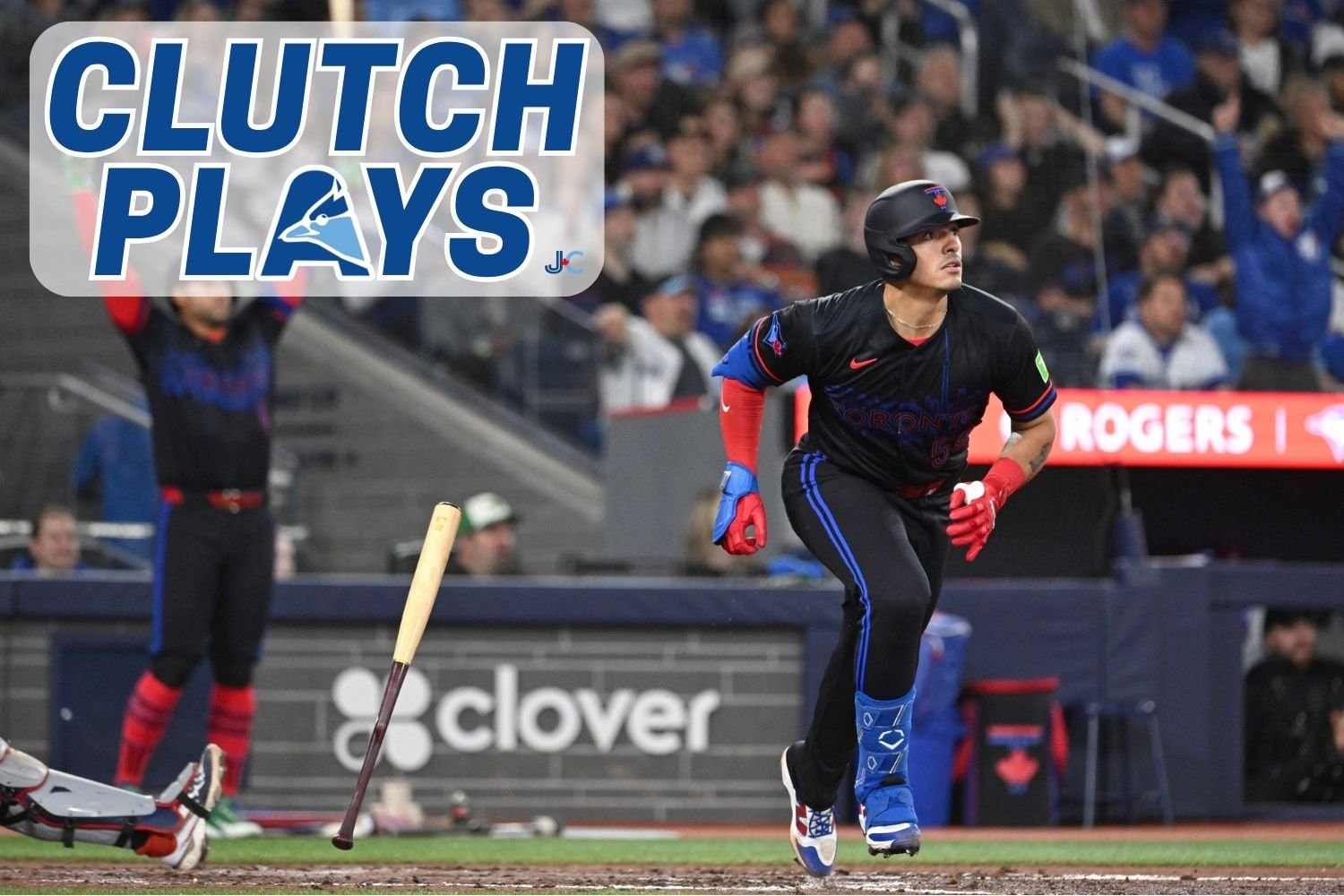 Welcome back to Blue Jays Clutch Plays, a recurring post that highlights the six most pivotal plays (three pitching, three hitting) from the past week of Blue Jays baseball, according to MLB's win probability model. Click here to read last week's edition. The Blue Jays have quickly been pushed into survival mode in the early portion of April, losing consecutive series to the Dodgers and Twins at home. George Springer is the latest to join a long list of regulars on the IL, fracturing his toe after fouling a ball off his foot on Saturday. Fragments of what made last year's team such a joy to watch were on display in the scrappy finale against L.A. and the relentless offensive showing to open the Minnesota series, but they still couldn't manage to make it a winning homestand. Here are the moments worth building on from another tough week. Pitching 3. Dylan Cease: Freddie Freeman Double Play, Top 1, 4/8 (+9.4% WPA) Wednesday afternoon's contest ended well for the Jays, but it didn't start on the most hopeful note. Dylan Cease fought his command, there was traffic on the bases early, and it momentarily seemed like things would go from bad to worse when Freddie Freeman hit a hanging slider on a line to the right side. Fortunately, it happened to land in Ernie Clement's glove, at which point Kyle Tucker was a deer in the headlights between first and second base. Clement flipped it harmlessly to Vladimir Guerrero Jr. at first to complete the double play, and Cease got out of the jam. 2. Jeff Hoffman: Freddie Freeman Strikeout, Top 9, 4/8 (+12.2% WPA) Freeman found himself up in a big spot again in the ninth with the tying run in scoring position. Ahead in the count 1-2, Jeff Hoffman elevated a fastball and blew it by him. Brandon Valenzuela hung onto the foul tip to put the Blue Jays an out away from snapping their six-game losing streak. The Opening Day home run Hoffman gave up to Shea Langeliers remains the only considerable blemish on his season; he now leads qualified AL relievers with a 48.4% strikeout rate. 1. Jeff Hoffman: Max Muncy Groundout, Top 9, 4/8 (+13.9% WPA) It can be argued that Hoffman pitched in too many high-leverage spots to start 2025, leaving him fatigued down the stretch. With the Jays starting slowly this year, it now feels like there haven't been enough spots where it makes sense to use him. Wednesday was an exception, and he delivered. He didn't make it easy for himself after Tucker and Will Smith reached with one out, but perfectly fielded Max Muncy's tapper back to the mound here to complete the save. Hitting 3. Andrés Giménez: Single, Bot 8, 4/8 (+16.6% WPA) Andrés Giménez fell behind 0-2 to Ben Casparius but sat back on a curveball in the zone and rolled it up the middle for a base hit. The ball wasn't hit hard, so Davis Schneider took third on the play, setting the table for the groundball that would score him and put the Blue Jays ahead for good. It was another big knock for Giménez, who's responsible for the Jays' offense's second and third most pivotal swings of the year so far and four of their top 10. 2. George Springer: RBI Double, Bot 7, 4/8 (+25.2% WPA) After lying dormant for over a week, the bats finally came through in a big spot in Wednesday's comeback win. Jack Dreyer missed up with a slider, and Springer shot it the other way, bouncing it off the top of the right field wall to cut the Dodgers' lead to 3-2. This left a second-and-third situation with just one out for Daulton Varsho, who would tie the game with a single. The Blue Jays squandered a golden run-scoring opportunity in the seventh inning the night before but would not let this one slip by. 1. Brandon Valenzuela: 2-Run HR, Bot 4, 4/10 (+25.4% WPA) An unlikely hero flipped the score as the Jays slugged their way to a 10-4 victory on Friday. A string of doubles and an RBI single by Giménez brought Toronto back to within a run after being down 4-0, and then Valenzuela took a hanging splitter from Simeon Woods Richardson and lined it into the visitor's bullpen for his first big league home run. It was the team's biggest moment in an effort that featured 10 unanswered runs and saw eight of the nine members of the starting lineup record a hit. This one came off the bat at 111 mph, and Valenzuela was rewarded for it, starting at catcher in all three games of the series against the Twins.
 -
Welcome to Shape of the Blue Jays, my column where I dig into Statcast numbers to analyze recent pitch shape and swing shape trends for Toronto Blue Jays players and discuss how they have impacted their performance. Click here to read the last edition. Quick Hits: Prospects With the back end of the bullpen set to be a revolving door until the pitching staff is fully healthy, the status of various arms at Triple-A Buffalo should be of prudent short-term interest to the fanbase. LHP Adam Macko has begun his season with four scoreless appearances (5.1 IP) out of the bullpen, striking out six and walking two. Macko has leaned heavily on his fastball, which has averaged 95 mph with 16.3" of iVB. Opponents have managed a .175 xwOBA against it and swung and missed a third of the time. RHP Chase Lee, one of the later spring training cuts, has also been called on for multi-inning appearances out of the bullpen in the early going (4 G, 6.2 IP). He has given up two earned runs and an additional three unearned. Lee, whose walk rate has typically hovered just above 5%, has been fighting his command somewhat, with four free passes issued so far. The zone rate on his sinker was 62% in the majors last year. It has tumbled to 30% so far with Buffalo. Andrés Giménez Andrés Giménez collected three hits during the Dodgers series. On the season, he has been one of the few bright spots offensively, slashing .267/.313/.444, thanks in large part to considerable improvements in contact% (55th to 74th percentile), K% (70th to 90th percentile), and squared-up% (35th to 86th percentile) compared to 2025. He's putting the bat on the ball more often and making more flush contact when he does. His zone contact% usually sits in the low 80s. It's up to 93.4% in 2026. Andrés Giménez Bat Tracking, 2025 vs 2026 Split Bat Speed Fast Swing% Swing Length Contact Point (rel. to home plate) Stance Angle Attack Direction 2025 69.3 7.1% 7.0' 2.2" 10° open 3° oppo 2026 66.8 2.7% 6.9' 0.1" 2° close 5° oppo A quick look at Giménez's swing mechanics shows a drop of more than 2 mph in average bat speed from last year and a fast swing rate of just 2.7%. I feel like this might be a byproduct of something more intentional. Bat speed accelerates throughout the swing, and he's now letting the ball travel farther than usual. In addition, he's more closed in his stance than last year. These two changes have allowed him to use the whole field more and hit for a higher average. Giménez hasn't hit a ball 110 mph since 2021 and has never recorded a hard hit rate better than the 36th percentile in a season, so it seems he's leaning into a contact-focused gameplan. Andrés Giménez stance comparison, April 2025 (left) vs. April 2026 (right) Kevin Gausman Kevin Gausman has been nothing short of electric to watch in his first three starts (2.08 ERA, 17.1 IP). The veteran leads qualified AL starters in strikeout rate (40.7%) and didn't walk his first batter of the season until Tuesday night against the Dodgers. He has made one straightforward adjustment in 2026: The splitter is now his primary pitch to both lefties and righties, although it's very close to an even 50/50 with the four-seamer against righties so far. This is the most frequently he has thrown it in his career. Kevin Gausman career pitch usage by season (Statcast) Gausman has very slightly raised his vertical release point to its highest average since 2022. This has helped the splitter play up, as it has a more north-south profile than we've come to expect. More drop, less arm-side tail, and more vertical separation from his fastball, which has averaged roughly an inch more of iVB than 2025. This results in more uncompetitive swings from hitters who are sitting on the heater. The splitter has dumbfounded righties this season, who are striking out in 50% of their plate appearances against him. Kevin Gausman Splitter Specs, 2025 vs. 2026 Year MPH iVB Arm-side HB Vert. Release 2025 84.9 4.5" 15.5" 5.6' 2026 84.2 2.9" 13.8" 5.8' Kazuma Okamoto His first couple of weeks in the big leagues have tested Kazuma Okamoto (.239/.314/.391, 109 wRC+). Everything the Jays thought about his ceiling is still intact, if not better than expected: He has a 75th-percentile barrel rate (11.5%), 71st-percentile bat speed (73.4 MPH), 91st-percentile xwOBACON (.482), and he hit a 420-foot home run to the opposite field against the A's last weekend. The trouble has been getting bat to ball. He's striking out nearly 30% of the time and making contact in the zone only 77% of the time. The recurring question about hitters coming over from NPB is how they'll handle high velocity because it isn't as prevalent in Japan. Okamoto hasn't had much trouble there, but is running a swing-and-miss rate over 50% on secondaries. My hunch is this trend will reverse course for the better soon enough. Swinging and missing wasn't a part of his game with the Yomiuri Giants, so hopefully it's merely a part of the adjustment period. Okamoto seems to be pressing when he's up in big spots, which would only support that theory. I do wonder if the Jays will try to optimize his swing to reduce strikeout probability: His bat path is flat, but he has a high attack angle and a shallow contact point, indicating he's trying to be early and lift the ball. A 6° attack direction to the pull side is also consistent with the early reports that he's a pull-air guy. He does have one of the longest swings in the game at 7.9 feet, and he doesn't really shorten up with two strikes either. If he can find a way to decrease his margin for error without losing bat speed, results should soon follow. All visuals and figures courtesy of Baseball Savant and FanGraphs. Up to date as of April 9, 2026. View full article
-
 Welcome to Shape of the Blue Jays, my column where I dig into Statcast numbers to analyze recent pitch shape and swing shape trends for Toronto Blue Jays players and discuss how they have impacted their performance. Click here to read the last edition. Quick Hits: Prospects With the back end of the bullpen set to be a revolving door until the pitching staff is fully healthy, the status of various arms at Triple-A Buffalo should be of prudent short-term interest to the fanbase. LHP Adam Macko has begun his season with four scoreless appearances (5.1 IP) out of the bullpen, striking out six and walking two. Macko has leaned heavily on his fastball, which has averaged 95 mph with 16.3" of iVB. Opponents have managed a .175 xwOBA against it and swung and missed a third of the time. RHP Chase Lee, one of the later spring training cuts, has also been called on for multi-inning appearances out of the bullpen in the early going (4 G, 6.2 IP). He has given up two earned runs and an additional three unearned. Lee, whose walk rate has typically hovered just above 5%, has been fighting his command somewhat, with four free passes issued so far. The zone rate on his sinker was 62% in the majors last year. It has tumbled to 30% so far with Buffalo. Andrés Giménez Andrés Giménez collected three hits during the Dodgers series. On the season, he has been one of the few bright spots offensively, slashing .267/.313/.444, thanks in large part to considerable improvements in contact% (55th to 74th percentile), K% (70th to 90th percentile), and squared-up% (35th to 86th percentile) compared to 2025. He's putting the bat on the ball more often and making more flush contact when he does. His zone contact% usually sits in the low 80s. It's up to 93.4% in 2026. Andrés Giménez Bat Tracking, 2025 vs 2026 Split Bat Speed Fast Swing% Swing Length Contact Point (rel. to home plate) Stance Angle Attack Direction 2025 69.3 7.1% 7.0' 2.2" 10° open 3° oppo 2026 66.8 2.7% 6.9' 0.1" 2° close 5° oppo A quick look at Giménez's swing mechanics shows a drop of more than 2 mph in average bat speed from last year and a fast swing rate of just 2.7%. I feel like this might be a byproduct of something more intentional. Bat speed accelerates throughout the swing, and he's now letting the ball travel farther than usual. In addition, he's more closed in his stance than last year. These two changes have allowed him to use the whole field more and hit for a higher average. Giménez hasn't hit a ball 110 mph since 2021 and has never recorded a hard hit rate better than the 36th percentile in a season, so it seems he's leaning into a contact-focused gameplan. Andrés Giménez stance comparison, April 2025 (left) vs. April 2026 (right) Kevin Gausman Kevin Gausman has been nothing short of electric to watch in his first three starts (2.08 ERA, 17.1 IP). The veteran leads qualified AL starters in strikeout rate (40.7%) and didn't walk his first batter of the season until Tuesday night against the Dodgers. He has made one straightforward adjustment in 2026: The splitter is now his primary pitch to both lefties and righties, although it's very close to an even 50/50 with the four-seamer against righties so far. This is the most frequently he has thrown it in his career. Kevin Gausman career pitch usage by season (Statcast) Gausman has very slightly raised his vertical release point to its highest average since 2022. This has helped the splitter play up, as it has a more north-south profile than we've come to expect. More drop, less arm-side tail, and more vertical separation from his fastball, which has averaged roughly an inch more of iVB than 2025. This results in more uncompetitive swings from hitters who are sitting on the heater. The splitter has dumbfounded righties this season, who are striking out in 50% of their plate appearances against him. Kevin Gausman Splitter Specs, 2025 vs. 2026 Year MPH iVB Arm-side HB Vert. Release 2025 84.9 4.5" 15.5" 5.6' 2026 84.2 2.9" 13.8" 5.8' Kazuma Okamoto His first couple of weeks in the big leagues have tested Kazuma Okamoto (.239/.314/.391, 109 wRC+). Everything the Jays thought about his ceiling is still intact, if not better than expected: He has a 75th-percentile barrel rate (11.5%), 71st-percentile bat speed (73.4 MPH), 91st-percentile xwOBACON (.482), and he hit a 420-foot home run to the opposite field against the A's last weekend. The trouble has been getting bat to ball. He's striking out nearly 30% of the time and making contact in the zone only 77% of the time. The recurring question about hitters coming over from NPB is how they'll handle high velocity because it isn't as prevalent in Japan. Okamoto hasn't had much trouble there, but is running a swing-and-miss rate over 50% on secondaries. My hunch is this trend will reverse course for the better soon enough. Swinging and missing wasn't a part of his game with the Yomiuri Giants, so hopefully it's merely a part of the adjustment period. Okamoto seems to be pressing when he's up in big spots, which would only support that theory. I do wonder if the Jays will try to optimize his swing to reduce strikeout probability: His bat path is flat, but he has a high attack angle and a shallow contact point, indicating he's trying to be early and lift the ball. A 6° attack direction to the pull side is also consistent with the early reports that he's a pull-air guy. He does have one of the longest swings in the game at 7.9 feet, and he doesn't really shorten up with two strikes either. If he can find a way to decrease his margin for error without losing bat speed, results should soon follow. All visuals and figures courtesy of Baseball Savant and FanGraphs. Up to date as of April 9, 2026.
 -
One of the Blue Jays' greatest strengths last year was their ability to come through when it mattered with the bats. Getting runners on base and bringing them in are two very important and very distinct parts of hitting, but in 2025, the Jays' tendency to do both at a high frequency was a breath of fresh air compared to 2023 and 2024, when their offense was prone to looking lifeless. A mere 11 games into 2026, they own a 4-7 record (before play on April 8) and have gone from fourth in the league to 26th in runs scored per game. It shouldn't come as much of a surprise, then, that their situational hitting has gotten worse. For how crucial it is to consistent production, success, and failure, for that matter, performance with runners in scoring position, at both the hitter and team level, is noisy, unpredictable, and thus not that stable year over year. Regression happens both ways, and it's happening to the Blue Jays in a big way right now. Blue Jays Hitting w/RISP, 2025 vs. 2026 Year AVG MLB AVG Rank wRC+ MLB wRC+ Rank 2025 .292 1 122 2 2026 .213 26 77 26 Forgive me if you've heard this a lot lately, but it's still early days. We're about 7% of the way through the season so far, a sample small enough for these numbers to work themselves out over time. Only, I'm not so sure they will if the Jays don't adjust their game plan in these spots. They have been a far cry from their best selves when key run-scoring chances arise, and if some of the current trends we're seeing were to continue for the rest of the season, it'll be a year to forget. The Jays overhauled their offensive coaching staff going into last year. The trio of David Popkins, Lou Iannotti, and Hunter Mense (the latter is now with the Giants) helped a lineup that was already great at getting bat to ball to hit with more power. Our own Jesse Burrill recently highlighted the positive changes that occurred under their watch: The hitters started swinging faster, adding more bat speed as the year went on, and doing damage. Jesse also rightfully made note of what has changed this year, namely their lack of discipline. At the time of his writing, the Blue Jays had the league's third-worst chase rate. It goes deeper than that, though. Toronto's coaches obviously aren't telling the hitters to swing out of their shoes, least of all when runners are on base, but the complete abandonment of a sound approach up and down the lineup when they need it most has been worrisome. Blue Jays Hitting w/RISP, 2025 vs. 2026: Underlying Metrics Hitter 2025 K% 2025 Chase% 2025 Hard-Hit% 2026 K% 2026 Chase% 2026 Hard-Hit% George Springer 22.5% 22.9% 50.0% 31.6% 40.5% 30.0% Addison Barger 21.2% 32.7% 55.8% 0.0% 44.0% 33.3% Nathan Lukes 15.3% 35.6% 32.2% 25.0% 55.2% 16.7% Daulton Varsho 33.3% 33.6% 54.3% 12.5% 29.4% 25.0% This is a somewhat arbitrary sample of hitters who were all given the spotlight here for various reasons. They are not solely responsible for the team's futility with runners in scoring position, but combined, they are 4-for-33 in these spots. That's a batting average of .121! I highlighted the chase% columns because that's what's most alarming: Springer has nearly doubled his chase rate from 2025 with RISP. To put it mildly, Lukes and Barger haven't seen the ball well either. Varsho's at least getting bat on ball and not chasing as much, but the contact he has made has been less threatening. Right in the middle of all this has been Kazuma Okamoto. He's clearly a very talented hitter – a 420-foot opposite field home run on opening weekend made that clear – and his .262/.340/.429 slash line (127 wRC+) would be a delight to the fanbase if he could make it last. However, he has looked completely lost in high-leverage situations. Adjusting to the quality of competition in MLB is a challenge for hitters coming from NPB, but adjusting mentally looks to be just as crucial of a task for Okamoto. Whatever's going on between his ears when he steps up with RISP is holding him back. Kazuma Okamoto Splits, 2026 Split AB AVG SLG xBA Zone Swing% Chase% Contact% K% w/RISP 10 .100 .100 .103 58.3% 24.1% 57.1% 54.5% Total 42 .262 .429 .246 60.2% 26.9% 62.1% 40.4% This explains why he's dead-last among Blue Jays with at least 20 plate appearances in win probability added, per FanGraphs' model (-0.51). In run-scoring at-bats, ones that can dramatically swing a team's chances of winning, he has yet to come through. It's presumably not the kind of thing the Blue Jays are worried about long-term, but it's nonetheless evidence that the transition from overseas is anything but linear. If we expand our focus to at-bats with runners on base instead of only in scoring position, other problems start to reveal themselves. Vladimir Guerrero Jr. is hitting over .300 in those situations, but only has one extra-base hit. The sample is even smaller for Alejandro Kirk, but he was just 1-for-8 himself before hitting the IL. Rival fanbases may scoff at this, and they're perfectly within their right because this happens to every team, but it is worth noting that the Blue Jays are especially banged up for how early it is in the season. Kirk's fractured thumb and Barger's ankle sprain have complicated matters, and that's just on the position player side. Cody Ponce suffered a regular season-ending ACL injury just 10 batters into his Jays debut, Max Scherzer is trying to pitch through forearm tendinitis, and virtually the entire team was rocked by a nasty flu bug last week. Bo Bichette's knee injury last September was the only major ailment suffered by a Toronto position player in 2025. Due to the circumstances, some players are punching a little above their weight in terms of playing time. Simultaneously, it's clear that this isn't the only problem. I also want to talk about how the Jays have been doing with the bases loaded this year. I'll admit it was my main inspiration for this piece, because any time a team is on pace to enter the record books for something, it's worth following. After Tuesday night's defeat, the 2026 Toronto Blue Jays were 1-for-17 on the season with the bases loaded. That would be, by a country mile, the lowest batting average (.059) a team has ever had with the bases loaded in any season of the live-ball era. The 2020 Kansas City Royals (.122) currently bear this dubious distinction. For seasons that lasted a full 162 games, it's the 2012 Houston Astros (.130). If you look up what their record was that year, it's possible that your electronic device will spontaneously catch fire. MLB's 10 worst bases-loaded offenses, live-ball era (Stathead) Obviously, I doubt Toronto's .059 BA holds up, but it's an unsettling sign that things aren't going great in general. Last year's Blue Jays hit .386 with the bases loaded. That led the league, but as I mentioned before, noisy stats like this don't necessarily stand the test of time. Yet, their xBA of .324 with the bases loaded also led the league, suggesting that in a vacuum, it was no fluke. In 2025, this team was perfectly capable of focusing on the task at hand, not diverting from their approach, and putting together good at-bats with runners in scoring position. In 2026, that has vanished into thin air. It's easier said than done, but whether it's a few hitters trying too hard or small-sample weirdness (likely a combination of both), it seems the offense is in need of a collective re-focus on what made them successful in the first place. It's one of the biggest tangible changes we can see so far between the two seasons, and a main culprit for their subpar performance out of the gate. They've got their work cut out for them now. All stats entering play on April 8, 2026. View full article
-
.jpg.6c6c348f8ce138b522da66ce2cf3ac8c.jpg) One of the Blue Jays' greatest strengths last year was their ability to come through when it mattered with the bats. Getting runners on base and bringing them in are two very important and very distinct parts of hitting, but in 2025, the Jays' tendency to do both at a high frequency was a breath of fresh air compared to 2023 and 2024, when their offense was prone to looking lifeless. A mere 11 games into 2026, they own a 4-7 record (before play on April 8) and have gone from fourth in the league to 26th in runs scored per game. It shouldn't come as much of a surprise, then, that their situational hitting has gotten worse. For how crucial it is to consistent production, success, and failure, for that matter, performance with runners in scoring position, at both the hitter and team level, is noisy, unpredictable, and thus not that stable year over year. Regression happens both ways, and it's happening to the Blue Jays in a big way right now. Blue Jays Hitting w/RISP, 2025 vs. 2026 Year AVG MLB AVG Rank wRC+ MLB wRC+ Rank 2025 .292 1 122 2 2026 .213 26 77 26 Forgive me if you've heard this a lot lately, but it's still early days. We're about 7% of the way through the season so far, a sample small enough for these numbers to work themselves out over time. Only, I'm not so sure they will if the Jays don't adjust their game plan in these spots. They have been a far cry from their best selves when key run-scoring chances arise, and if some of the current trends we're seeing were to continue for the rest of the season, it'll be a year to forget. The Jays overhauled their offensive coaching staff going into last year. The trio of David Popkins, Lou Iannotti, and Hunter Mense (the latter is now with the Giants) helped a lineup that was already great at getting bat to ball to hit with more power. Our own Jesse Burrill recently highlighted the positive changes that occurred under their watch: The hitters started swinging faster, adding more bat speed as the year went on, and doing damage. Jesse also rightfully made note of what has changed this year, namely their lack of discipline. At the time of his writing, the Blue Jays had the league's third-worst chase rate. It goes deeper than that, though. Toronto's coaches obviously aren't telling the hitters to swing out of their shoes, least of all when runners are on base, but the complete abandonment of a sound approach up and down the lineup when they need it most has been worrisome. Blue Jays Hitting w/RISP, 2025 vs. 2026: Underlying Metrics Hitter 2025 K% 2025 Chase% 2025 Hard-Hit% 2026 K% 2026 Chase% 2026 Hard-Hit% George Springer 22.5% 22.9% 50.0% 31.6% 40.5% 30.0% Addison Barger 21.2% 32.7% 55.8% 0.0% 44.0% 33.3% Nathan Lukes 15.3% 35.6% 32.2% 25.0% 55.2% 16.7% Daulton Varsho 33.3% 33.6% 54.3% 12.5% 29.4% 25.0% This is a somewhat arbitrary sample of hitters who were all given the spotlight here for various reasons. They are not solely responsible for the team's futility with runners in scoring position, but combined, they are 4-for-33 in these spots. That's a batting average of .121! I highlighted the chase% columns because that's what's most alarming: Springer has nearly doubled his chase rate from 2025 with RISP. To put it mildly, Lukes and Barger haven't seen the ball well either. Varsho's at least getting bat on ball and not chasing as much, but the contact he has made has been less threatening. Right in the middle of all this has been Kazuma Okamoto. He's clearly a very talented hitter – a 420-foot opposite field home run on opening weekend made that clear – and his .262/.340/.429 slash line (127 wRC+) would be a delight to the fanbase if he could make it last. However, he has looked completely lost in high-leverage situations. Adjusting to the quality of competition in MLB is a challenge for hitters coming from NPB, but adjusting mentally looks to be just as crucial of a task for Okamoto. Whatever's going on between his ears when he steps up with RISP is holding him back. Kazuma Okamoto Splits, 2026 Split AB AVG SLG xBA Zone Swing% Chase% Contact% K% w/RISP 10 .100 .100 .103 58.3% 24.1% 57.1% 54.5% Total 42 .262 .429 .246 60.2% 26.9% 62.1% 40.4% This explains why he's dead-last among Blue Jays with at least 20 plate appearances in win probability added, per FanGraphs' model (-0.51). In run-scoring at-bats, ones that can dramatically swing a team's chances of winning, he has yet to come through. It's presumably not the kind of thing the Blue Jays are worried about long-term, but it's nonetheless evidence that the transition from overseas is anything but linear. If we expand our focus to at-bats with runners on base instead of only in scoring position, other problems start to reveal themselves. Vladimir Guerrero Jr. is hitting over .300 in those situations, but only has one extra-base hit. The sample is even smaller for Alejandro Kirk, but he was just 1-for-8 himself before hitting the IL. Rival fanbases may scoff at this, and they're perfectly within their right because this happens to every team, but it is worth noting that the Blue Jays are especially banged up for how early it is in the season. Kirk's fractured thumb and Barger's ankle sprain have complicated matters, and that's just on the position player side. Cody Ponce suffered a regular season-ending ACL injury just 10 batters into his Jays debut, Max Scherzer is trying to pitch through forearm tendinitis, and virtually the entire team was rocked by a nasty flu bug last week. Bo Bichette's knee injury last September was the only major ailment suffered by a Toronto position player in 2025. Due to the circumstances, some players are punching a little above their weight in terms of playing time. Simultaneously, it's clear that this isn't the only problem. I also want to talk about how the Jays have been doing with the bases loaded this year. I'll admit it was my main inspiration for this piece, because any time a team is on pace to enter the record books for something, it's worth following. After Tuesday night's defeat, the 2026 Toronto Blue Jays were 1-for-17 on the season with the bases loaded. That would be, by a country mile, the lowest batting average (.059) a team has ever had with the bases loaded in any season of the live-ball era. The 2020 Kansas City Royals (.122) currently bear this dubious distinction. For seasons that lasted a full 162 games, it's the 2012 Houston Astros (.130). If you look up what their record was that year, it's possible that your electronic device will spontaneously catch fire. MLB's 10 worst bases-loaded offenses, live-ball era (Stathead) Obviously, I doubt Toronto's .059 BA holds up, but it's an unsettling sign that things aren't going great in general. Last year's Blue Jays hit .386 with the bases loaded. That led the league, but as I mentioned before, noisy stats like this don't necessarily stand the test of time. Yet, their xBA of .324 with the bases loaded also led the league, suggesting that in a vacuum, it was no fluke. In 2025, this team was perfectly capable of focusing on the task at hand, not diverting from their approach, and putting together good at-bats with runners in scoring position. In 2026, that has vanished into thin air. It's easier said than done, but whether it's a few hitters trying too hard or small-sample weirdness (likely a combination of both), it seems the offense is in need of a collective re-focus on what made them successful in the first place. It's one of the biggest tangible changes we can see so far between the two seasons, and a main culprit for their subpar performance out of the gate. They've got their work cut out for them now. All stats entering play on April 8, 2026.
One of the Blue Jays' greatest strengths last year was their ability to come through when it mattered with the bats. Getting runners on base and bringing them in are two very important and very distinct parts of hitting, but in 2025, the Jays' tendency to do both at a high frequency was a breath of fresh air compared to 2023 and 2024, when their offense was prone to looking lifeless. A mere 11 games into 2026, they own a 4-7 record (before play on April 8) and have gone from fourth in the league to 26th in runs scored per game. It shouldn't come as much of a surprise, then, that their situational hitting has gotten worse. For how crucial it is to consistent production, success, and failure, for that matter, performance with runners in scoring position, at both the hitter and team level, is noisy, unpredictable, and thus not that stable year over year. Regression happens both ways, and it's happening to the Blue Jays in a big way right now. Blue Jays Hitting w/RISP, 2025 vs. 2026 Year AVG MLB AVG Rank wRC+ MLB wRC+ Rank 2025 .292 1 122 2 2026 .213 26 77 26 Forgive me if you've heard this a lot lately, but it's still early days. We're about 7% of the way through the season so far, a sample small enough for these numbers to work themselves out over time. Only, I'm not so sure they will if the Jays don't adjust their game plan in these spots. They have been a far cry from their best selves when key run-scoring chances arise, and if some of the current trends we're seeing were to continue for the rest of the season, it'll be a year to forget. The Jays overhauled their offensive coaching staff going into last year. The trio of David Popkins, Lou Iannotti, and Hunter Mense (the latter is now with the Giants) helped a lineup that was already great at getting bat to ball to hit with more power. Our own Jesse Burrill recently highlighted the positive changes that occurred under their watch: The hitters started swinging faster, adding more bat speed as the year went on, and doing damage. Jesse also rightfully made note of what has changed this year, namely their lack of discipline. At the time of his writing, the Blue Jays had the league's third-worst chase rate. It goes deeper than that, though. Toronto's coaches obviously aren't telling the hitters to swing out of their shoes, least of all when runners are on base, but the complete abandonment of a sound approach up and down the lineup when they need it most has been worrisome. Blue Jays Hitting w/RISP, 2025 vs. 2026: Underlying Metrics Hitter 2025 K% 2025 Chase% 2025 Hard-Hit% 2026 K% 2026 Chase% 2026 Hard-Hit% George Springer 22.5% 22.9% 50.0% 31.6% 40.5% 30.0% Addison Barger 21.2% 32.7% 55.8% 0.0% 44.0% 33.3% Nathan Lukes 15.3% 35.6% 32.2% 25.0% 55.2% 16.7% Daulton Varsho 33.3% 33.6% 54.3% 12.5% 29.4% 25.0% This is a somewhat arbitrary sample of hitters who were all given the spotlight here for various reasons. They are not solely responsible for the team's futility with runners in scoring position, but combined, they are 4-for-33 in these spots. That's a batting average of .121! I highlighted the chase% columns because that's what's most alarming: Springer has nearly doubled his chase rate from 2025 with RISP. To put it mildly, Lukes and Barger haven't seen the ball well either. Varsho's at least getting bat on ball and not chasing as much, but the contact he has made has been less threatening. Right in the middle of all this has been Kazuma Okamoto. He's clearly a very talented hitter – a 420-foot opposite field home run on opening weekend made that clear – and his .262/.340/.429 slash line (127 wRC+) would be a delight to the fanbase if he could make it last. However, he has looked completely lost in high-leverage situations. Adjusting to the quality of competition in MLB is a challenge for hitters coming from NPB, but adjusting mentally looks to be just as crucial of a task for Okamoto. Whatever's going on between his ears when he steps up with RISP is holding him back. Kazuma Okamoto Splits, 2026 Split AB AVG SLG xBA Zone Swing% Chase% Contact% K% w/RISP 10 .100 .100 .103 58.3% 24.1% 57.1% 54.5% Total 42 .262 .429 .246 60.2% 26.9% 62.1% 40.4% This explains why he's dead-last among Blue Jays with at least 20 plate appearances in win probability added, per FanGraphs' model (-0.51). In run-scoring at-bats, ones that can dramatically swing a team's chances of winning, he has yet to come through. It's presumably not the kind of thing the Blue Jays are worried about long-term, but it's nonetheless evidence that the transition from overseas is anything but linear. If we expand our focus to at-bats with runners on base instead of only in scoring position, other problems start to reveal themselves. Vladimir Guerrero Jr. is hitting over .300 in those situations, but only has one extra-base hit. The sample is even smaller for Alejandro Kirk, but he was just 1-for-8 himself before hitting the IL. Rival fanbases may scoff at this, and they're perfectly within their right because this happens to every team, but it is worth noting that the Blue Jays are especially banged up for how early it is in the season. Kirk's fractured thumb and Barger's ankle sprain have complicated matters, and that's just on the position player side. Cody Ponce suffered a regular season-ending ACL injury just 10 batters into his Jays debut, Max Scherzer is trying to pitch through forearm tendinitis, and virtually the entire team was rocked by a nasty flu bug last week. Bo Bichette's knee injury last September was the only major ailment suffered by a Toronto position player in 2025. Due to the circumstances, some players are punching a little above their weight in terms of playing time. Simultaneously, it's clear that this isn't the only problem. I also want to talk about how the Jays have been doing with the bases loaded this year. I'll admit it was my main inspiration for this piece, because any time a team is on pace to enter the record books for something, it's worth following. After Tuesday night's defeat, the 2026 Toronto Blue Jays were 1-for-17 on the season with the bases loaded. That would be, by a country mile, the lowest batting average (.059) a team has ever had with the bases loaded in any season of the live-ball era. The 2020 Kansas City Royals (.122) currently bear this dubious distinction. For seasons that lasted a full 162 games, it's the 2012 Houston Astros (.130). If you look up what their record was that year, it's possible that your electronic device will spontaneously catch fire. MLB's 10 worst bases-loaded offenses, live-ball era (Stathead) Obviously, I doubt Toronto's .059 BA holds up, but it's an unsettling sign that things aren't going great in general. Last year's Blue Jays hit .386 with the bases loaded. That led the league, but as I mentioned before, noisy stats like this don't necessarily stand the test of time. Yet, their xBA of .324 with the bases loaded also led the league, suggesting that in a vacuum, it was no fluke. In 2025, this team was perfectly capable of focusing on the task at hand, not diverting from their approach, and putting together good at-bats with runners in scoring position. In 2026, that has vanished into thin air. It's easier said than done, but whether it's a few hitters trying too hard or small-sample weirdness (likely a combination of both), it seems the offense is in need of a collective re-focus on what made them successful in the first place. It's one of the biggest tangible changes we can see so far between the two seasons, and a main culprit for their subpar performance out of the gate. They've got their work cut out for them now. All stats entering play on April 8, 2026. -
Welcome back to Blue Jays Clutch Plays, a recurring post that highlights the six most pivotal plays (three pitching, three hitting) from the past week of Blue Jays baseball, according to MLB's win probability model. Click here to read last week's edition. There are still 153 games left, and most of the AL East has fallen on hard times as well, but it felt like a cursed week for the Blue Jays. After putting themselves in a good position to pounce on the soft early portion of the schedule by sweeping the Athletics, they followed it up by dropping two of three to the Rockies and getting swept by the Chicago White Sox. They scored three runs per game across the two series. Cody Ponce and Alejandro Kirk were placed on the IL, Brendon Little was optioned to Triple A, and Addison Barger was removed from Sunday's game after injuring himself trying to leg out an infield hit. They head into a World Series rematch with the Dodgers at 4-5. Here are some of the lone bright spots from the past week. Pitching 3. Tyler Rogers: Miguel Vargas Force Out, Bot 9, 4/3 (+11.4% WPA) With the winning run on base in the bottom of the ninth during Friday's opener in Chicago, Tyler Rogers elected to intentionally walk the slugging Munetaka Murakami and take his chances with Miguel Vargas instead. It ended up being a wise move, as he got a second-pitch groundout to third. All Kazuma Okamoto had to do was step on the bag to send the game to extras. 2. Mason Fluharty: Ezequiel Tovar Strikeout, Top 8, 4/1 (+14.3% WPA) After the Rockies scored the tying run in the eighth against Tommy Nance, Mason Fluharty was in a tough spot with the go-ahead run 90 feet away and just one out. He got Ezequiel Tovar here on three pitches and struck out Ryan Ritter immediately after, walking the tightrope out of danger for the Blue Jays to keep the rubber match of the series tied and send it to the bottom of the eighth. 1. Jeff Hoffman: Austin Hays Strikeout, Top 10, 4/3 (+25.5% WPA) Lost in the painful ending to Friday afternoon's game was this slider that Jeff Hoffman curled just below the inside corner to strike out Austin Hays with the tying run on third. It put the Blue Jays on the doorstep of a come-from-behind win that would've spoiled the belated opening day festivities at Rate Field. Their win probability was 83.1% immediately after this pitch, but the White Sox were victorious just two batters later. Hitting 3. Vladimir Guerrero Jr.: 2-run HR, Top 6, 4/4 (+26.0% WPA) It's a shame how short-lived this was. Vladimir Guerrero Jr. had yet to tap into his power much at all this year until Saturday. He struck out in the first and flew out to the left field wall in the fourth. He got another pitch on the inner half of the zone in the sixth and didn't miss it, launching his first home run and flipping the scoreboard in the process. The ball travelled 437 feet after jumping off his bat at 108.5 mph, a homer in all 30 parks. 2. George Springer: Reached on Error, Top 10, 4/3 (+28.2% WPA) Ernie Clement led off the 10th on Friday by moving the extra-innings runner, Davis Schneider, over to third on a groundout for George Springer. He didn't quite execute that situation the way he wanted, but a double-clutch at third base proved costly for Miguel Vargas, who took Murakami off the bag with his throw to first. Springer was safe after review, and Schneider scored, giving the Blue Jays the lead. 1. Andrés Giménez: 2-run HR, Top 8, 4/3 (+29.3% WPA) Andrés Giménez has delivered when the Blue Jays have needed him on multiple occasions already in the young season. This towering drive off the right field foul pole tied things up at three on Friday afternoon. Giménez ambushed Jordan Leasure, one of the better arms in the White Sox bullpen, on the first pitch after Leasure failed to elevate a 95-mph fastball. Chicago's win probability was 79% even after Ernie Clement's leadoff single right before this home run, which reset the odds to 50/50, enough to make it the most clutch play of the week. View full article
-
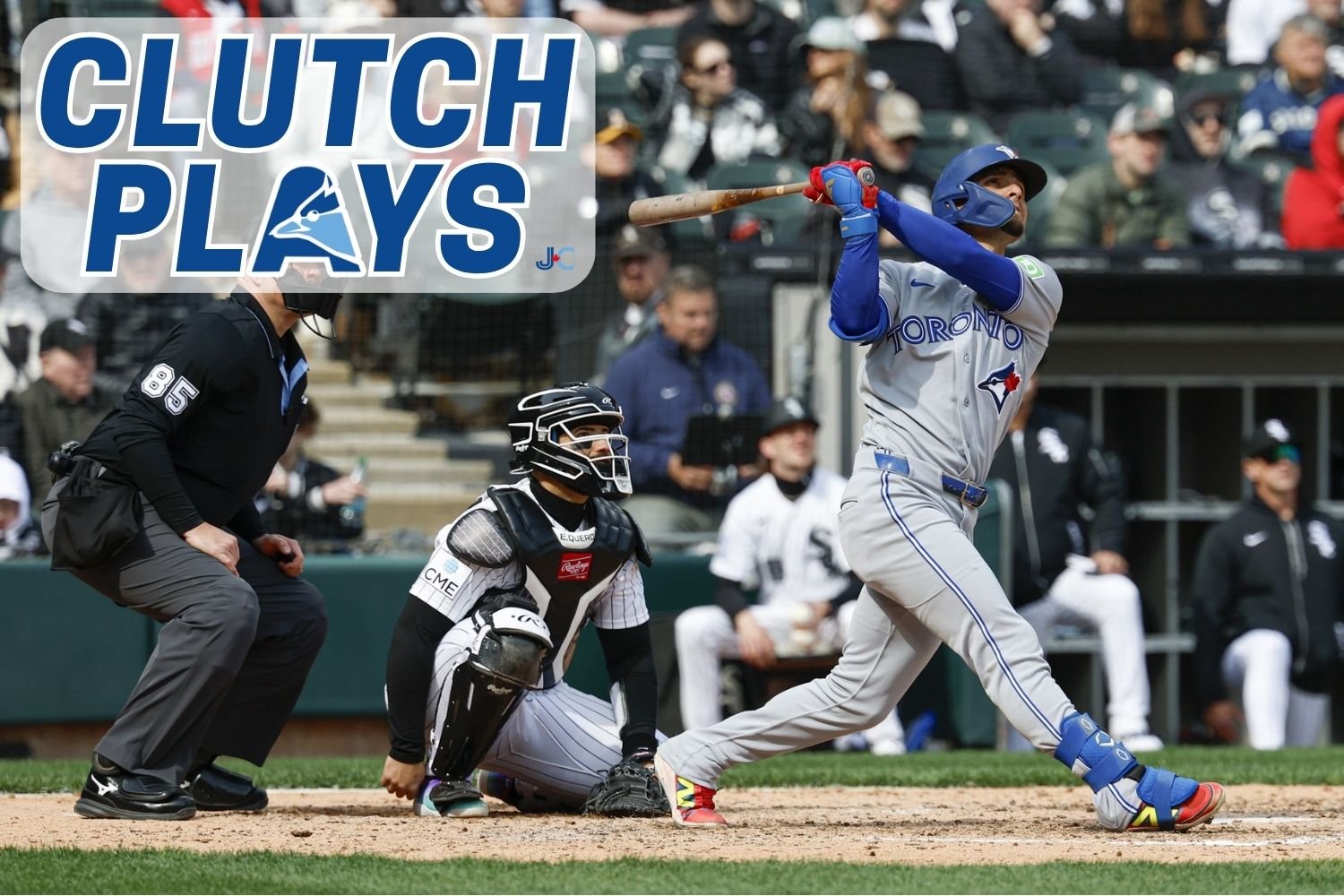 Welcome back to Blue Jays Clutch Plays, a recurring post that highlights the six most pivotal plays (three pitching, three hitting) from the past week of Blue Jays baseball, according to MLB's win probability model. Click here to read last week's edition. There are still 153 games left, and most of the AL East has fallen on hard times as well, but it felt like a cursed week for the Blue Jays. After putting themselves in a good position to pounce on the soft early portion of the schedule by sweeping the Athletics, they followed it up by dropping two of three to the Rockies and getting swept by the Chicago White Sox. They scored three runs per game across the two series. Cody Ponce and Alejandro Kirk were placed on the IL, Brendon Little was optioned to Triple A, and Addison Barger was removed from Sunday's game after injuring himself trying to leg out an infield hit. They head into a World Series rematch with the Dodgers at 4-5. Here are some of the lone bright spots from the past week. Pitching 3. Tyler Rogers: Miguel Vargas Force Out, Bot 9, 4/3 (+11.4% WPA) With the winning run on base in the bottom of the ninth during Friday's opener in Chicago, Tyler Rogers elected to intentionally walk the slugging Munetaka Murakami and take his chances with Miguel Vargas instead. It ended up being a wise move, as he got a second-pitch groundout to third. All Kazuma Okamoto had to do was step on the bag to send the game to extras. 2. Mason Fluharty: Ezequiel Tovar Strikeout, Top 8, 4/1 (+14.3% WPA) After the Rockies scored the tying run in the eighth against Tommy Nance, Mason Fluharty was in a tough spot with the go-ahead run 90 feet away and just one out. He got Ezequiel Tovar here on three pitches and struck out Ryan Ritter immediately after, walking the tightrope out of danger for the Blue Jays to keep the rubber match of the series tied and send it to the bottom of the eighth. 1. Jeff Hoffman: Austin Hays Strikeout, Top 10, 4/3 (+25.5% WPA) Lost in the painful ending to Friday afternoon's game was this slider that Jeff Hoffman curled just below the inside corner to strike out Austin Hays with the tying run on third. It put the Blue Jays on the doorstep of a come-from-behind win that would've spoiled the belated opening day festivities at Rate Field. Their win probability was 83.1% immediately after this pitch, but the White Sox were victorious just two batters later. Hitting 3. Vladimir Guerrero Jr.: 2-run HR, Top 6, 4/4 (+26.0% WPA) It's a shame how short-lived this was. Vladimir Guerrero Jr. had yet to tap into his power much at all this year until Saturday. He struck out in the first and flew out to the left field wall in the fourth. He got another pitch on the inner half of the zone in the sixth and didn't miss it, launching his first home run and flipping the scoreboard in the process. The ball travelled 437 feet after jumping off his bat at 108.5 mph, a homer in all 30 parks. 2. George Springer: Reached on Error, Top 10, 4/3 (+28.2% WPA) Ernie Clement led off the 10th on Friday by moving the extra-innings runner, Davis Schneider, over to third on a groundout for George Springer. He didn't quite execute that situation the way he wanted, but a double-clutch at third base proved costly for Miguel Vargas, who took Murakami off the bag with his throw to first. Springer was safe after review, and Schneider scored, giving the Blue Jays the lead. 1. Andrés Giménez: 2-run HR, Top 8, 4/3 (+29.3% WPA) Andrés Giménez has delivered when the Blue Jays have needed him on multiple occasions already in the young season. This towering drive off the right field foul pole tied things up at three on Friday afternoon. Giménez ambushed Jordan Leasure, one of the better arms in the White Sox bullpen, on the first pitch after Leasure failed to elevate a 95-mph fastball. Chicago's win probability was 79% even after Ernie Clement's leadoff single right before this home run, which reset the odds to 50/50, enough to make it the most clutch play of the week.
 -
Welcome to Shape of the Blue Jays, my column where I dig into Statcast numbers to analyze recent pitch shape and swing shape trends for Toronto Blue Jays players and discuss how they have impacted their performance. Quick Hits: Offense The momentum from a season-opening sweep of the A's ground to a halt on Wednesday. Toronto's offense let plenty of run-scoring opportunities go by in the rubber match against the Rockies, dropping the series to finish their first homestand with a 4-2 record. Two things can be true about this: Yes, failing to cash in against weaker pitching during what's probably going to be the softest part of their schedule all year is not ideal. The Blue Jays scored 45 runs in three games against Colorado last August when they were in mid-season form, and nothing about their at-bats this week suggests they're in midseason form yet. They aren't the only ones struggling, though. The 1-5 Red Sox are averaging less than three runs a game. The 3-3 Mets just scored three runs in as many games in St. Louis. The Dodgers are coming off a series loss to the Guardians at home in which they scored just seven total runs. It's a small sample, but three true outcomes – strikeouts, walks, and home runs – are up across the league, and it may not feel like it after Wednesday's loss, but the Jays still rank top 10 in the league in K%, BB%, and wRC+. The Rockies series wasn't one to be proud of, but this is life over 162. Dylan Cease It's tough to ask for a much better introduction than the one Dylan Cease graced us with on Saturday (5.1 IP, 1 ER, 3 H, 12 K, 2 BB). The fact that he expanded his arsenal throughout the gem has been well-documented. Another thing that stood out to me was a change in his fastball shape. It had more induced vertical break and cutting action, as well as a velocity gain of nearly 2 mph, compared to 2025. He isn't someone who has historically lost velocity as the season goes on either. The result? Four strikeouts with the four-seamer alone, despite him using the slider way more in two-strike counts. Dylan Cease Four-Seam Fastball Specs, 2025 vs. 2026 Year MPH iVB Arm-side HB RPM 2025 97.1 18.5" 3.7" 2,550 2026 98.7 19.7" 2.3" 2,565 The reasons for this are probably weirder than you think. Fans may have noticed a quirk about Cease's delivery: Whenever he was mid-windup during that start against the Athletics, he wasn't looking at the target. In fact, he was gazing off to the third-base side right before release. It sounds crazy, but he learned during spring training that actively looking away from the plate during the early part of his motion added carry to his fastball. Whatever works! Dylan Cease's unconventional windup. Note the direction he's facing. Max Scherzer Is Max Scherzer unable to quit pitching, or is pitching unable to quit him? The future Hall of Famer didn't miss a beat in his first outing despite a slightly abbreviated spring training (6.0 IP, 1 ER, 4 H, 4 K, 1 BB). Nothing was considerably different about his release or usage compared to last year, but like Cease, he flashed a slightly improved four-seam fastball shape. It's virtually identical in terms of velocity, but it averaged 17.4" of iVB on Tuesday, compared to 16.2" last year. PitchingBot, one of two pitch quality models on FanGraphs, still considers Scherzer's fastball an above-average offering. Not many pitchers who have stayed in the show past 40 can claim their fastball declined this gracefully in the latter half of their careers. With Cody Ponce's injury, there's a lot being asked of Scherzer at the moment. He's currently on a schedule that lines up his next three starts as follows: vs. LAD, vs. MIN, @ ARI. For better or worse, he's going to have to eat key innings this month, and in the starts against the Dodgers and Diamondbacks, that might be a tall task. He is not a groundball pitcher, and those are two offenses full of hitters who can hit the ball hard and in the air. There are some games ahead that will be pivotal in determining how the Blue Jays respond to the adversity of having four starters on the IL, and Scherzer will be in the middle of it all. Jesús Sánchez Jesús Sánchez is scorching to start his Blue Jays tenure (.375/.500/.563, 1 HR, 2 K, 2 BB, 20 PA). Mitch Bannon of The Athletic put out a great piece on Thursday morning detailing the changes he has made since getting traded to Toronto. The general sentiment among the coaching staff seems to be that he got away from his true self after being flipped from Miami to Houston at the deadline last year, leading to a prolonged slump down the stretch. The Blue Jays are trying to tell Sanchez to lean into his identity and play to his strengths, rather than cover his weaknesses. Jesús Sánchez bat speed distribution, 2023-2026 (Statcast). What's interesting about the bat speed distribution chart above, though, is that Sánchez, known for his thunderous swing, has been more reserved so far in 2026. The top-end bat speed is still there, but he's choosing to swing slower in way more spots. Breaking it down by count reveals that he's swinging way slower on secondary pitches with two strikes, an early indication that he's developing a more polished approach from behind in the count. Considering he has only struck out twice, it's working. The fact that Sánchez got a start against southpaw Kyle Freeland on Wednesday (while Addison Barger did not), despite Sánchez's career 42 wRC+ vs. LHP, speaks to the trust the Jays have in the newest addition to their offense. It's not exactly unwarranted either. Barger has chased 47.5% of the pitches he has seen outside the zone so far, an astronomical rate that has contributed to his 0-for-13 start. After being asked why he kept Barger out of the lineup Tuesday against a righty, manager John Schneider simply said "Slow down, Addie," according to Toronto's play-by-play team on Sportsnet. Until he does, it seems Sánchez will get every opportunity to keep building. All visuals and figures courtesy of Baseball Savant and FanGraphs, effective April 2, 2026. View full article
-
- 1
-

-
- dylan cease
- max scherzer
- (and 2 more)
-
 Welcome to Shape of the Blue Jays, my column where I dig into Statcast numbers to analyze recent pitch shape and swing shape trends for Toronto Blue Jays players and discuss how they have impacted their performance. Quick Hits: Offense The momentum from a season-opening sweep of the A's ground to a halt on Wednesday. Toronto's offense let plenty of run-scoring opportunities go by in the rubber match against the Rockies, dropping the series to finish their first homestand with a 4-2 record. Two things can be true about this: Yes, failing to cash in against weaker pitching during what's probably going to be the softest part of their schedule all year is not ideal. The Blue Jays scored 45 runs in three games against Colorado last August when they were in mid-season form, and nothing about their at-bats this week suggests they're in midseason form yet. They aren't the only ones struggling, though. The 1-5 Red Sox are averaging less than three runs a game. The 3-3 Mets just scored three runs in as many games in St. Louis. The Dodgers are coming off a series loss to the Guardians at home in which they scored just seven total runs. It's a small sample, but three true outcomes – strikeouts, walks, and home runs – are up across the league, and it may not feel like it after Wednesday's loss, but the Jays still rank top 10 in the league in K%, BB%, and wRC+. The Rockies series wasn't one to be proud of, but this is life over 162. Dylan Cease It's tough to ask for a much better introduction than the one Dylan Cease graced us with on Saturday (5.1 IP, 1 ER, 3 H, 12 K, 2 BB). The fact that he expanded his arsenal throughout the gem has been well-documented. Another thing that stood out to me was a change in his fastball shape. It had more induced vertical break and cutting action, as well as a velocity gain of nearly 2 mph, compared to 2025. He isn't someone who has historically lost velocity as the season goes on either. The result? Four strikeouts with the four-seamer alone, despite him using the slider way more in two-strike counts. Dylan Cease Four-Seam Fastball Specs, 2025 vs. 2026 Year MPH iVB Arm-side HB RPM 2025 97.1 18.5" 3.7" 2,550 2026 98.7 19.7" 2.3" 2,565 The reasons for this are probably weirder than you think. Fans may have noticed a quirk about Cease's delivery: Whenever he was mid-windup during that start against the Athletics, he wasn't looking at the target. In fact, he was gazing off to the third-base side right before release. It sounds crazy, but he learned during spring training that actively looking away from the plate during the early part of his motion added carry to his fastball. Whatever works! Dylan Cease's unconventional windup. Note the direction he's facing. Max Scherzer Is Max Scherzer unable to quit pitching, or is pitching unable to quit him? The future Hall of Famer didn't miss a beat in his first outing despite a slightly abbreviated spring training (6.0 IP, 1 ER, 4 H, 4 K, 1 BB). Nothing was considerably different about his release or usage compared to last year, but like Cease, he flashed a slightly improved four-seam fastball shape. It's virtually identical in terms of velocity, but it averaged 17.4" of iVB on Tuesday, compared to 16.2" last year. PitchingBot, one of two pitch quality models on FanGraphs, still considers Scherzer's fastball an above-average offering. Not many pitchers who have stayed in the show past 40 can claim their fastball declined this gracefully in the latter half of their careers. With Cody Ponce's injury, there's a lot being asked of Scherzer at the moment. He's currently on a schedule that lines up his next three starts as follows: vs. LAD, vs. MIN, @ ARI. For better or worse, he's going to have to eat key innings this month, and in the starts against the Dodgers and Diamondbacks, that might be a tall task. He is not a groundball pitcher, and those are two offenses full of hitters who can hit the ball hard and in the air. There are some games ahead that will be pivotal in determining how the Blue Jays respond to the adversity of having four starters on the IL, and Scherzer will be in the middle of it all. Jesús Sánchez Jesús Sánchez is scorching to start his Blue Jays tenure (.375/.500/.563, 1 HR, 2 K, 2 BB, 20 PA). Mitch Bannon of The Athletic put out a great piece on Thursday morning detailing the changes he has made since getting traded to Toronto. The general sentiment among the coaching staff seems to be that he got away from his true self after being flipped from Miami to Houston at the deadline last year, leading to a prolonged slump down the stretch. The Blue Jays are trying to tell Sanchez to lean into his identity and play to his strengths, rather than cover his weaknesses. Jesús Sánchez bat speed distribution, 2023-2026 (Statcast). What's interesting about the bat speed distribution chart above, though, is that Sánchez, known for his thunderous swing, has been more reserved so far in 2026. The top-end bat speed is still there, but he's choosing to swing slower in way more spots. Breaking it down by count reveals that he's swinging way slower on secondary pitches with two strikes, an early indication that he's developing a more polished approach from behind in the count. Considering he has only struck out twice, it's working. The fact that Sánchez got a start against southpaw Kyle Freeland on Wednesday (while Addison Barger did not), despite Sánchez's career 42 wRC+ vs. LHP, speaks to the trust the Jays have in the newest addition to their offense. It's not exactly unwarranted either. Barger has chased 47.5% of the pitches he has seen outside the zone so far, an astronomical rate that has contributed to his 0-for-13 start. After being asked why he kept Barger out of the lineup Tuesday against a righty, manager John Schneider simply said "Slow down, Addie," according to Toronto's play-by-play team on Sportsnet. Until he does, it seems Sánchez will get every opportunity to keep building. All visuals and figures courtesy of Baseball Savant and FanGraphs, effective April 2, 2026.
 -
Welcome to the inaugural edition of Blue Jays Clutch Plays, a recurring post that highlights the six most pivotal plays (three pitching, three hitting) from the past week of Blue Jays baseball, according to MLB's win probability model. Last year's Blue Jays taught us that a slow start to the season isn't the end of the world. Then again, it doesn't hurt to get ahead. Headlined by consecutive nail-biter walk-off wins and punctuated with a record-setting day for the pitching staff on Sunday, the Jays completed a sweep of the Athletics to begin the year 3-0 for the first time since 1996. Their pitchers struck out 50 batters over the course of the series, a modern-era record to start a season. Not a bad way to kick off their 50th anniversary! Pitching 3. Louis Varland: Jacob Wilson GIDP, Top 7, 3/27 (+17.5% wPA) Varland picked up right where he left off in 2025 by pitching in a high-leverage spot. With the tying and go-ahead runs on and nobody out, he struck out Brent Rooker before inducing a perfectly-timed groundball from Jacob Wilson, hit right at second baseman Ernie Clement. The rest was academic. 2. Braydon Fisher: Jacob Wilson GIDP, Top 6, 3/28 (+17.7% wPA) It was a tough weekend for Wilson. Known for his contact skills, he struck out five times in 13 plate appearances, and even when he did put bat on ball, it didn't always end well. After a hard-luck start to the inning that saw the A's finally score on Dylan Cease after his masterful debut, Braydon Fisher came on and got another grounder from the not-Oakland shortstop. It wasn't the easiest double play in the world, but Toronto's dazzling middle infield combination of Giménez and Clement made it happen. 1. Louis Varland: Soderstrom GIDP Top 10 3/28 (+24.1% wPA) It's unfortunate for Varland that Brent Rooker drove in a run immediately after this because as it happened, it looked like the table would be set for the Jays to win it in the 10th. Ultimately, they only had to wait one more inning. After walking the white-hot Shea Langeliers to take away the open base with the ghost runner on in extra innings, Varland got a tailor-made groundball from Soderstrom for an easy 4-6-3. Hitting 3. Ernie Clement: Walk-off single, Bot 11, 3/28 (+29.0% wPA) The final act of Saturday afternoon's thrilling comeback victory came courtesy of Clement, who worked the count full against Luis Medina before turning on a 99-mph fastball and drilling it into the left-center gap. Pinch-runner Nathan Lukes scored the winning run from second with ease to cap off an eventful game that once saw the Jays trailing 6-2 heading to the bottom of the seventh before flipping the script to win 8-7 in extras. 2. Andrés Giménez: Walk-off single, Bot 9, 3/27 (+36.6% wPA) Andrés Giménez was one of many unlikely heroes in last year's playoff run after a lost season at the plate. To say he started off on the right foot in 2026 would be an understatement, as the opening night theatrics would not have come close to happening without him; he drove in all three runs during the 3-2 win. What began as a bases-empty, two-out scenario turned into a masterclass by the bottom of the order: Kazuma Okamoto singled to right, Ernie Clement chopped a double over third baseman Max Muncy's head, and then Giménez finished the job with a hard grounder back up the middle. Maybe being a world champion does make you feel different! 1. Alejandro Kirk: Solo HR, Bot 9, 3/28 (+46.7% wPA) The Blue Jays' first home run of the season could not have come at a better time. Mere seconds after Okamoto let an arguably challengeable pitch go by for strike three, Kirk shocked the Rogers Centre with a no-doubter to left field off A's reliever Michael Kelly to tie it at six with one out in the bottom of the ninth. Toronto's catcher, known for his flat swing, normally likes the ball high in the zone, but it was a sweeper middle-down that he deposited into the seats above the home bullpen. Fun fact: For how often the Jays found a way to win in 2025, this would've been their sixth-most clutch play of the last regular season. It was the most dramatic of swings in a game that saw a whopping six plays that caused at least a 20% swing in win probability. Up next for the Blue Jays: A home series against the Rockies to start the week before three games in Chicago for the White Sox home opener on the weekend. View full article
-
- 1
-
-
 Welcome to the inaugural edition of Blue Jays Clutch Plays, a recurring post that highlights the six most pivotal plays (three pitching, three hitting) from the past week of Blue Jays baseball, according to MLB's win probability model. Last year's Blue Jays taught us that a slow start to the season isn't the end of the world. Then again, it doesn't hurt to get ahead. Headlined by consecutive nail-biter walk-off wins and punctuated with a record-setting day for the pitching staff on Sunday, the Jays completed a sweep of the Athletics to begin the year 3-0 for the first time since 1996. Their pitchers struck out 50 batters over the course of the series, a modern-era record to start a season. Not a bad way to kick off their 50th anniversary! Pitching 3. Louis Varland: Jacob Wilson GIDP, Top 7, 3/27 (+17.5% wPA) Varland picked up right where he left off in 2025 by pitching in a high-leverage spot. With the tying and go-ahead runs on and nobody out, he struck out Brent Rooker before inducing a perfectly-timed groundball from Jacob Wilson, hit right at second baseman Ernie Clement. The rest was academic. 2. Braydon Fisher: Jacob Wilson GIDP, Top 6, 3/28 (+17.7% wPA) It was a tough weekend for Wilson. Known for his contact skills, he struck out five times in 13 plate appearances, and even when he did put bat on ball, it didn't always end well. After a hard-luck start to the inning that saw the A's finally score on Dylan Cease after his masterful debut, Braydon Fisher came on and got another grounder from the not-Oakland shortstop. It wasn't the easiest double play in the world, but Toronto's dazzling middle infield combination of Giménez and Clement made it happen. 1. Louis Varland: Soderstrom GIDP Top 10 3/28 (+24.1% wPA) It's unfortunate for Varland that Brent Rooker drove in a run immediately after this because as it happened, it looked like the table would be set for the Jays to win it in the 10th. Ultimately, they only had to wait one more inning. After walking the white-hot Shea Langeliers to take away the open base with the ghost runner on in extra innings, Varland got a tailor-made groundball from Soderstrom for an easy 4-6-3. Hitting 3. Ernie Clement: Walk-off single, Bot 11, 3/28 (+29.0% wPA) The final act of Saturday afternoon's thrilling comeback victory came courtesy of Clement, who worked the count full against Luis Medina before turning on a 99-mph fastball and drilling it into the left-center gap. Pinch-runner Nathan Lukes scored the winning run from second with ease to cap off an eventful game that once saw the Jays trailing 6-2 heading to the bottom of the seventh before flipping the script to win 8-7 in extras. 2. Andrés Giménez: Walk-off single, Bot 9, 3/27 (+36.6% wPA) Andrés Giménez was one of many unlikely heroes in last year's playoff run after a lost season at the plate. To say he started off on the right foot in 2026 would be an understatement, as the opening night theatrics would not have come close to happening without him; he drove in all three runs during the 3-2 win. What began as a bases-empty, two-out scenario turned into a masterclass by the bottom of the order: Kazuma Okamoto singled to right, Ernie Clement chopped a double over third baseman Max Muncy's head, and then Giménez finished the job with a hard grounder back up the middle. Maybe being a world champion does make you feel different! 1. Alejandro Kirk: Solo HR, Bot 9, 3/28 (+46.7% wPA) The Blue Jays' first home run of the season could not have come at a better time. Mere seconds after Okamoto let an arguably challengeable pitch go by for strike three, Kirk shocked the Rogers Centre with a no-doubter to left field off A's reliever Michael Kelly to tie it at six with one out in the bottom of the ninth. Toronto's catcher, known for his flat swing, normally likes the ball high in the zone, but it was a sweeper middle-down that he deposited into the seats above the home bullpen. Fun fact: For how often the Jays found a way to win in 2025, this would've been their sixth-most clutch play of the last regular season. It was the most dramatic of swings in a game that saw a whopping six plays that caused at least a 20% swing in win probability. Up next for the Blue Jays: A home series against the Rockies to start the week before three games in Chicago for the White Sox home opener on the weekend.
 -
Pitching is an art and a science, but even more so, it's a game of adjustments. Getting ahead and staying ahead of hitters requires constant self-awareness from pitchers with respect to their strategy and plan of attack. Tinkering with one's arsenal can permanently alter the course of one's career for the better, like it did, for example, when former Blue Jay R.A. Dickey picked up a knuckleball in the 2000s. More often than that, learning to throw different pitch types can be just the subtle change pitchers need to stay competitive: Sweepers, cutters, and kick changeups became trendy for a reason. With a month of spring training games having come and gone, here is a profile on every new pitch of note that we saw down in Dunedin in 2026, and how it affects the outlook of those that deployed them. Dylan Cease: Changeup It took until his final preseason start on Sunday, but we finally saw the changeup that Dylan Cease has wanted to add to his arsenal for a long time. According to Statcast, he threw 11 of them on Sunday in the Blue Jays' 14-1 drubbing of Tampa Bay, and it returned a 57% swing-and-miss rate to help him cap off a spring training that saw him record a 0.93 ERA, 30.8% K rate, and a 7.7% BB rate in 9.2 IP. Think he's ready to go? Assuming Cease is comfortable enough to take this pitch with him into the regular season right away, it won't be your conventional changeup. It has the vertical carry of a fastball (17.7" iVB) but averaged 87 MPH, a velocity he'll no doubt be happy with, considering every other attempt he has made at a changeup at the MLB level has been around 20 MPH slower than his four-seamer; too big of a gap to fool anyone. It averaged ~9" of arm-side movement, which, again, isn't notable for a changeup but notably separates from the cutting action on his fastball. Another good sign from Sunday was his ability to command it: 8 of his 11 changeups landed in the strike zone, a promising development for a starter who has been plagued by location issues before. As expected, we've seen Cease divert away from the fastball-slider combo that was nearly exclusive for parts of 2025. His combined usage of those two pitches was just 62% this spring, down from 83% last year. The knuckle curve he began toying with in his final starts with the Padres is now a clear tertiary pitch for him against left-handed batters, and against righties, he was throwing a lot more sinkers and sweepers, relying on the four-seamer much less. Cease has always had strong peripherals because the specs on his hard fastball and bullet slider are excellent in a vacuum and allow him to miss plenty of bats. To this point, he has had trouble living up to them because of the lack of diversity in his arsenal. This spring was the least predictable Cease has been since his early days in Chicago. His much-anticipated regular season debut will come Saturday vs the A's. Dylan Cease Usage Splits, 2025 by Half vs. Spring Training (Statcast) Pitch Type First Half 2025 Second Half 2025 2026 ST FF 41.0% 43.4% 31.8% SL 47.2% 33.8% 31.2% Others 11.8% 22.8% 37.0% Brendon Little: Slider, Four-Seam Fastball The Blue Jays bullpen's lefty workhorse has long had the kind of stuff that perplexes batters, but he tapered off in a bad way to end 2025 after losing the strike zone and running out of gas in general. Even if a reliever has two distinct offerings with plus-plus bat-missing potential, it becomes compromised when hitters know he can't consistently throw them for strikes and doesn't have another weapon to turn to. Naturally, then, Little showed up to camp with a repertoire that effectively doubled in size: He'll still be the sinker-curveball guy we've come to know, but he now boasts a gyro slider and a traditional four-seamer as well. Many instances of a pitcher adding to their arsenal happen because the pitcher is looking to address a specific platoon matchup, often opposite-handed hitters. This is not the case with Little; in fact, his approach against lefty hitters changed more drastically this spring than his strategy against righties. Specifically, he used his new slider almost in perfect tandem with his sinker against same-handed opponents, essentially removing the curveball from the picture entirely. It's already obvious that stuff models are going to love this pitch: It sat 90-91 MPH with plenty of spin and true bullet action. That's not far off from the specs of Tarik Skubal's slider for the sake of comparison. As we know, though, it would be premature to mention anything else about those two sliders in the same breath unless Little can throw it for strikes. Against lefties, it had a 33% zone rate, which is around the same as his knuckle curve was last year. However, he also used it sparingly against righties, a situation where he was able to find the zone more (50%). Overall, it generated a 73% (!!!) swing and miss rate this spring. Intriguing, to say the least. Brendon Little Usage vs. LHB, 2025 vs. Spring Training (Statcast) Pitch Type 2025 2026 ST Sinker 52.8% 40.5% Knuckle Curve 41.9% 9.5% Slider - 35.7% Four-Seam Fastball - 14.3% Cutter 5.3% - The four-seamer was, along with the slider, a tertiary weapon against righties but also saw some occasional left-on-left usage. Even after considering its lower arm slot, its movement patterns won't be surprising for hitters (13.4" iVB, 6.8" arm-side), but it did average 97 MPH and touched 98 during game action. If this pitch ends up being successful, it won't be on account of its raw traits. There's nothing too special about an upper-90s fastball with dead zone movement in today's MLB. What it does have is big-time trajectory separation from his sinker, and it will also force hitters to think about the upper half of the strike zone when Little is on the mound. Having a nasty sinker, curveball, and slider is great, but it also tells the hitter he's about to see a lot of pitches down, which doesn't leave much to have to guess on. If Little uses this fastball occasionally and can steal a strike to keep opponents off balance, it will make the rest of his arsenal play up. Mason Fluharty: Changeup Much like Brendon Little, Fluharty is a lefty reliever and a recent graduate from the Jays' prospect ranks with a 2-pitch arsenal (lacking a traditional four-seam fastball) and impressive stuff but less impressive command. He could throw strikes more frequently than Little by the end of the season, so he was squarely within the circle of trust by the time the World Series rolled around, but his cutter-sweeper repertoire lacks diversity. It's pretty rare for any MLB reliever to not have a pitch that moves arm-side, and while Fluharty was a unicorn that way in 2025, he flashed a changeup for the first time during camp this year. Initially classified as a sinker by Statcast, Fluharty's changeup sat at 88 MPH with ~5" of iVB and ~11" of run and became his new secondary against righties. He threw his cutter 67% of the time in that situation last year, but the changeup gives him another path to go down early in counts and forces hitters to stay on top of both sides of the plate. The movement and spin characteristics of this pitch compare pretty closely to the changeup that now-AL East rival Ryan Weathers threw when he was with the Marlins in 2025, which generated a swing and miss rate over 40%, an xwOBA under .300, and got above-average grades from both Stuff+ and PitchingBot's stuff model on Fangraphs. Mason Fluharty (2026) vs. Ryan Weathers (2025) changeup specs comparison (Statcast) Pitcher MPH iVB Arm-side HB RPM Mason Fluharty 87.3 4.9" 11.1" 1,980 Ryan Weathers 88.2 2.7" 12.5" 1,862 It should be noted that only five of the 15 changeups Fluharty threw this spring were in the zone (33%), but it got a 40% chase rate in a small sample, so hitters, at least for now, haven't figured out how to handle it. It was responsible for the lone preseason extra base hit he gave up, but on balls in play, it had the lowest exit velocity of the 3 pitches in his arsenal, and generating weak contact was already something he was great at in 2025. Louis Varland: Changeup Varland throwing changeups is not a completely new development. He leaned on it more down the stretch after getting traded to Toronto at the deadline, and by the postseason, it was a clear tertiary pitch behind that lethal fastball-curveball combo. This year, though, he has made significant adjustments to its shape: It now profiles more like a kick change, with more downward movement and less spin than the 2025 iteration. Louis Varland Changeup Specs, 2025 vs. Spring Training (Statcast) Category 2025 2026 ST MPH 91.8 91.8 iVB 4.7" 1.5" Arm-side HB 14.1" 12.2" RPM 1,741 1,563 Unsurprisingly, lefties saw their fair share of these new-and-improved changeups from Varland over the course of the spring. While it was delightful seeing him unleash adrenaline-fueled mid-90s changeups in the postseason, this newer variant got outstanding preseason results (50% swing and miss, .233 wOBA, -20° launch angle). From a usage perspective, he won't look all that different from the end of 2025, nor does he have to: Varland already has excellent stuff that he can throw for strikes, and refining one of his secondaries to give him another viable strikeout pitch in weak side matchups is a low-risk, high-reward maneuver. Braydon Fisher: Cutter At the very start of camp, The Athletic's Mitch Bannon reported that Braydon Fisher was looking to add a cutter in response to the lack of chase his curveball got from lefties as the season went on. While this would've been an interesting development, the jury is out on whether it will actually come to fruition in the regular season because he threw just 3 cutters out of the 110 total pitches he threw in the spring. Of course, this isn't to say Fisher is the same guy he was at the end of 2025. He's pushed his fastball usage against lefties by quite a bit, using it and the slider at a combined rate of over 70% in those matchups, a stark contrast to last year when he used the curveball 50% of the time. Competition for bullpen reps will be steep early in the season in Toronto, but Fisher is doing his part to ensure that last year was no mirage. View full article
-
- 2
-
-
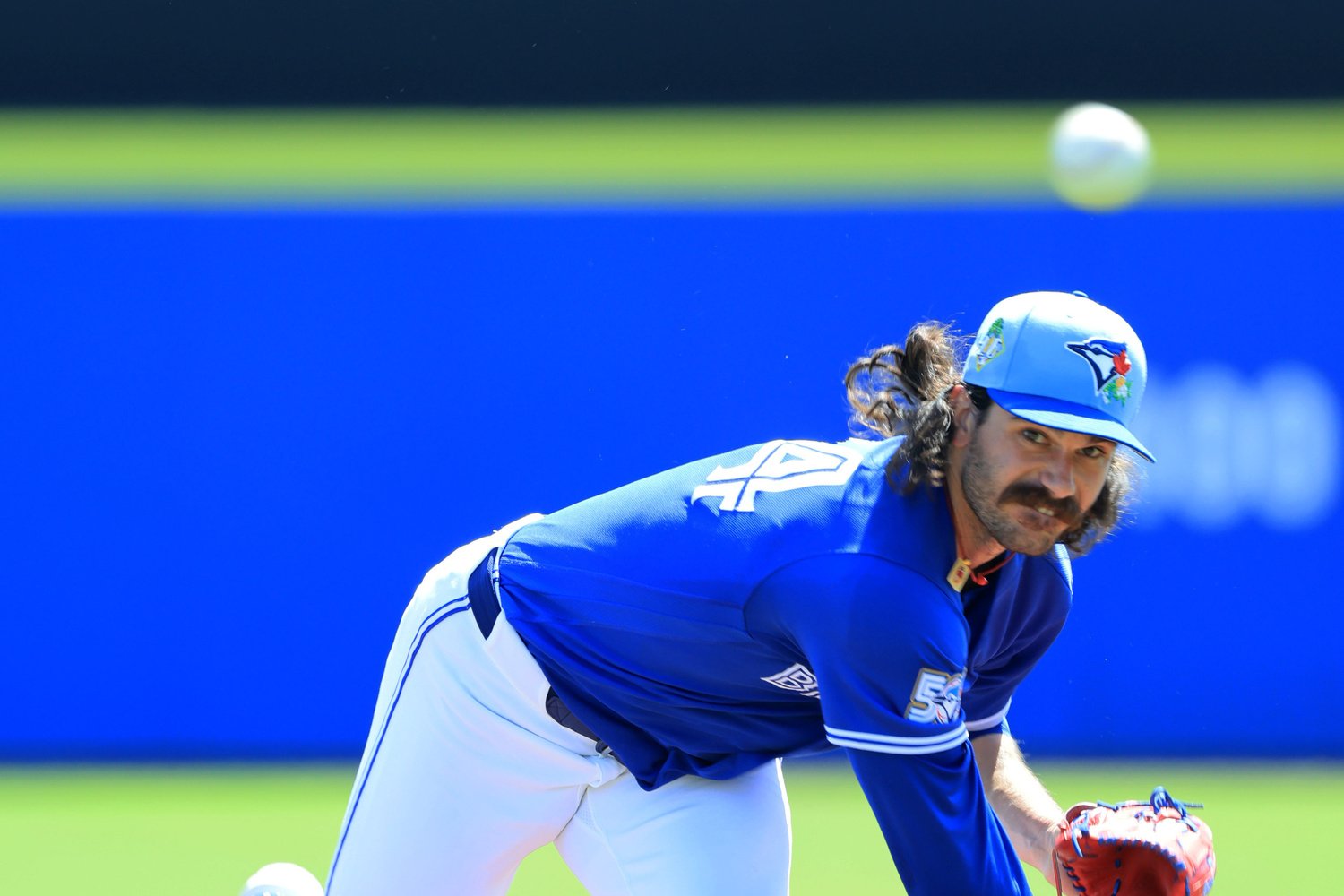 Pitching is an art and a science, but even more so, it's a game of adjustments. Getting ahead and staying ahead of hitters requires constant self-awareness from pitchers with respect to their strategy and plan of attack. Tinkering with one's arsenal can permanently alter the course of one's career for the better, like it did, for example, when former Blue Jay R.A. Dickey picked up a knuckleball in the 2000s. More often than that, learning to throw different pitch types can be just the subtle change pitchers need to stay competitive: Sweepers, cutters, and kick changeups became trendy for a reason. With a month of spring training games having come and gone, here is a profile on every new pitch of note that we saw down in Dunedin in 2026, and how it affects the outlook of those that deployed them. Dylan Cease: Changeup It took until his final preseason start on Sunday, but we finally saw the changeup that Dylan Cease has wanted to add to his arsenal for a long time. According to Statcast, he threw 11 of them on Sunday in the Blue Jays' 14-1 drubbing of Tampa Bay, and it returned a 57% swing-and-miss rate to help him cap off a spring training that saw him record a 0.93 ERA, 30.8% K rate, and a 7.7% BB rate in 9.2 IP. Think he's ready to go? Assuming Cease is comfortable enough to take this pitch with him into the regular season right away, it won't be your conventional changeup. It has the vertical carry of a fastball (17.7" iVB) but averaged 87 MPH, a velocity he'll no doubt be happy with, considering every other attempt he has made at a changeup at the MLB level has been around 20 MPH slower than his four-seamer; too big of a gap to fool anyone. It averaged ~9" of arm-side movement, which, again, isn't notable for a changeup but notably separates from the cutting action on his fastball. Another good sign from Sunday was his ability to command it: 8 of his 11 changeups landed in the strike zone, a promising development for a starter who has been plagued by location issues before. As expected, we've seen Cease divert away from the fastball-slider combo that was nearly exclusive for parts of 2025. His combined usage of those two pitches was just 62% this spring, down from 83% last year. The knuckle curve he began toying with in his final starts with the Padres is now a clear tertiary pitch for him against left-handed batters, and against righties, he was throwing a lot more sinkers and sweepers, relying on the four-seamer much less. Cease has always had strong peripherals because the specs on his hard fastball and bullet slider are excellent in a vacuum and allow him to miss plenty of bats. To this point, he has had trouble living up to them because of the lack of diversity in his arsenal. This spring was the least predictable Cease has been since his early days in Chicago. His much-anticipated regular season debut will come Saturday vs the A's. Dylan Cease Usage Splits, 2025 by Half vs. Spring Training (Statcast) Pitch Type First Half 2025 Second Half 2025 2026 ST FF 41.0% 43.4% 31.8% SL 47.2% 33.8% 31.2% Others 11.8% 22.8% 37.0% Brendon Little: Slider, Four-Seam Fastball The Blue Jays bullpen's lefty workhorse has long had the kind of stuff that perplexes batters, but he tapered off in a bad way to end 2025 after losing the strike zone and running out of gas in general. Even if a reliever has two distinct offerings with plus-plus bat-missing potential, it becomes compromised when hitters know he can't consistently throw them for strikes and doesn't have another weapon to turn to. Naturally, then, Little showed up to camp with a repertoire that effectively doubled in size: He'll still be the sinker-curveball guy we've come to know, but he now boasts a gyro slider and a traditional four-seamer as well. Many instances of a pitcher adding to their arsenal happen because the pitcher is looking to address a specific platoon matchup, often opposite-handed hitters. This is not the case with Little; in fact, his approach against lefty hitters changed more drastically this spring than his strategy against righties. Specifically, he used his new slider almost in perfect tandem with his sinker against same-handed opponents, essentially removing the curveball from the picture entirely. It's already obvious that stuff models are going to love this pitch: It sat 90-91 MPH with plenty of spin and true bullet action. That's not far off from the specs of Tarik Skubal's slider for the sake of comparison. As we know, though, it would be premature to mention anything else about those two sliders in the same breath unless Little can throw it for strikes. Against lefties, it had a 33% zone rate, which is around the same as his knuckle curve was last year. However, he also used it sparingly against righties, a situation where he was able to find the zone more (50%). Overall, it generated a 73% (!!!) swing and miss rate this spring. Intriguing, to say the least. Brendon Little Usage vs. LHB, 2025 vs. Spring Training (Statcast) Pitch Type 2025 2026 ST Sinker 52.8% 40.5% Knuckle Curve 41.9% 9.5% Slider - 35.7% Four-Seam Fastball - 14.3% Cutter 5.3% - The four-seamer was, along with the slider, a tertiary weapon against righties but also saw some occasional left-on-left usage. Even after considering its lower arm slot, its movement patterns won't be surprising for hitters (13.4" iVB, 6.8" arm-side), but it did average 97 MPH and touched 98 during game action. If this pitch ends up being successful, it won't be on account of its raw traits. There's nothing too special about an upper-90s fastball with dead zone movement in today's MLB. What it does have is big-time trajectory separation from his sinker, and it will also force hitters to think about the upper half of the strike zone when Little is on the mound. Having a nasty sinker, curveball, and slider is great, but it also tells the hitter he's about to see a lot of pitches down, which doesn't leave much to have to guess on. If Little uses this fastball occasionally and can steal a strike to keep opponents off balance, it will make the rest of his arsenal play up. Mason Fluharty: Changeup Much like Brendon Little, Fluharty is a lefty reliever and a recent graduate from the Jays' prospect ranks with a 2-pitch arsenal (lacking a traditional four-seam fastball) and impressive stuff but less impressive command. He could throw strikes more frequently than Little by the end of the season, so he was squarely within the circle of trust by the time the World Series rolled around, but his cutter-sweeper repertoire lacks diversity. It's pretty rare for any MLB reliever to not have a pitch that moves arm-side, and while Fluharty was a unicorn that way in 2025, he flashed a changeup for the first time during camp this year. Initially classified as a sinker by Statcast, Fluharty's changeup sat at 88 MPH with ~5" of iVB and ~11" of run and became his new secondary against righties. He threw his cutter 67% of the time in that situation last year, but the changeup gives him another path to go down early in counts and forces hitters to stay on top of both sides of the plate. The movement and spin characteristics of this pitch compare pretty closely to the changeup that now-AL East rival Ryan Weathers threw when he was with the Marlins in 2025, which generated a swing and miss rate over 40%, an xwOBA under .300, and got above-average grades from both Stuff+ and PitchingBot's stuff model on Fangraphs. Mason Fluharty (2026) vs. Ryan Weathers (2025) changeup specs comparison (Statcast) Pitcher MPH iVB Arm-side HB RPM Mason Fluharty 87.3 4.9" 11.1" 1,980 Ryan Weathers 88.2 2.7" 12.5" 1,862 It should be noted that only five of the 15 changeups Fluharty threw this spring were in the zone (33%), but it got a 40% chase rate in a small sample, so hitters, at least for now, haven't figured out how to handle it. It was responsible for the lone preseason extra base hit he gave up, but on balls in play, it had the lowest exit velocity of the 3 pitches in his arsenal, and generating weak contact was already something he was great at in 2025. Louis Varland: Changeup Varland throwing changeups is not a completely new development. He leaned on it more down the stretch after getting traded to Toronto at the deadline, and by the postseason, it was a clear tertiary pitch behind that lethal fastball-curveball combo. This year, though, he has made significant adjustments to its shape: It now profiles more like a kick change, with more downward movement and less spin than the 2025 iteration. Louis Varland Changeup Specs, 2025 vs. Spring Training (Statcast) Category 2025 2026 ST MPH 91.8 91.8 iVB 4.7" 1.5" Arm-side HB 14.1" 12.2" RPM 1,741 1,563 Unsurprisingly, lefties saw their fair share of these new-and-improved changeups from Varland over the course of the spring. While it was delightful seeing him unleash adrenaline-fueled mid-90s changeups in the postseason, this newer variant got outstanding preseason results (50% swing and miss, .233 wOBA, -20° launch angle). From a usage perspective, he won't look all that different from the end of 2025, nor does he have to: Varland already has excellent stuff that he can throw for strikes, and refining one of his secondaries to give him another viable strikeout pitch in weak side matchups is a low-risk, high-reward maneuver. Braydon Fisher: Cutter At the very start of camp, The Athletic's Mitch Bannon reported that Braydon Fisher was looking to add a cutter in response to the lack of chase his curveball got from lefties as the season went on. While this would've been an interesting development, the jury is out on whether it will actually come to fruition in the regular season because he threw just 3 cutters out of the 110 total pitches he threw in the spring. Of course, this isn't to say Fisher is the same guy he was at the end of 2025. He's pushed his fastball usage against lefties by quite a bit, using it and the slider at a combined rate of over 70% in those matchups, a stark contrast to last year when he used the curveball 50% of the time. Competition for bullpen reps will be steep early in the season in Toronto, but Fisher is doing his part to ensure that last year was no mirage.
 -
The natural state of a major league bullpen features a lot of in-season personnel turnover thanks to injuries, matchup planning for a given series, and the relative expendability of pitchers who fill a short-inning role. Thanks to the Blue Jays' ample starting pitching depth, as well as the fact that they have multiple Rule 5 draft picks (Angel Bastardo and Spencer Miles) fighting to break camp in the bullpen, Braydon Fisher is on the bubble to start the regular season in Toronto. He has three minor league options remaining and pitched mostly in low-leverage spots by the time the postseason rolled around in 2025. Yes, there were multiple proven closers on the free agent market after a year in which Rogers reaped the financial benefits of a World Series run. Yes, the Blue Jays signed none of them, but this will still be the strongest bullpen they've had to start a season in quite some time. Behind Jeff Hoffman, John Schneider will have Tyler Rogers, Louis Varland, and a new-and-improved Brendon Little at his disposal in the late innings. The dependability of Rogers and a full season of Varland are especially encouraging additions, considering the bullpen the Jays entered 2025 with. Fisher's current status, then, is far more a testament to the group around him than his own shortcomings. I frankly don't know how many other teams would even have to question whether Fisher would make their Opening Day roster. In exactly 50 innings in 2025, he did more things really well than you might realize. He was part of a group of just 32 pitchers (of the 339 that threw at least 50 innings) that had a strikeout rate above 30% and an average exit velocity below 90 mph. It's how he got those results, though, that stands out. You see, Fisher's arsenal features an almost exclusive slider-curveball dependence. Only Atlanta's Tyler Kinley threw a higher percentage of breaking balls in 2025. Fisher's fastball has decent velocity at 95-96 mph, but its movement patterns (high-carry, cutting action) are pretty much exactly in line with what you'd expect given his arm angle and propensity for spinning the ball. So, he just doesn't throw it very often. He's extremely curveball-heavy to lefties and slider-heavy to righties, and it has worked out for him so far. MLB Breaking Ball Usage% Leaders, 2025 Rank Pitcher Breaking Ball Usage% 1 Tyler Kinley 75.4% 2 Braydon Fisher 74.4% 3 Pierce Johnson 71.3% 4 Anthony Bender 67.5% 5 Tristan Beck 67.0% min. 500 pitches; source: Statcast Together, his 12-6 curveball and bullet slider frequently vexed opposing hitters. A ~75th-percentile average exit velocity against doesn't do Fisher's quality contact suppression skills justice; pitchers have little influence over that anyway. His overall groundball rate was only 36.4% in 2025, well below-average, but at the pitch type level, we can see there was an element of strategy to that. His curveball was actually quite efficient at generating grounders, while his slider (along with his four-seamer, when he used it) was a popup machine. His overall popup rate for the season was 11%. That's elite territory. A fairly large proportion of total contact against Fisher's two primary pitches is essentially guaranteed to be harmless. Fisher's GB% and PU% by Pitch Type, 2025 Batted Ball Type Curveball Slider GB% 56.8% 36.7% PU% 0.0% 16.3% Source: Statcast There aren't many pitchers who can morph from a groundball arm against one handedness to a popup inducer against the other. Depending on who's at the plate, his plan of attack in terms of missing barrels could be completely different from the at-bat before, but he still gets weak contact – and misses bats – in either scenario. This feels like a good time to remind everyone that Fisher was the lone piece of the return package when the Blue Jays traded Cavan Biggio to the Dodgers in 2024. At the time of the trade, Fisher had all of 11.2 innings above Double A to his name, and some pretty severe walk issues plagued him throughout the minors. The results didn't immediately get better in Buffalo either, but he made one key change to his approach: getting a head start. Fisher's Command Indicators, Triple-A, 2024 Organization First-Pitch Strike% Zone% LAD 49.1% 48.5% TOR 58.7% 50.7% Source: Statcast through FanGraphs Sometimes, throwing strike one more often really does allow everything else to fall into place. When Fisher started 2025 in Buffalo, that first-pitch strike rate climbed to 55%. In the big leagues, it sat just a hair under 60%. This is a guy who walked between 13% and 18% of batters he faced at essentially every step of the minors, and out of nowhere in 2025, he learned to throw strikes with consistency. The pitch models back that up as well, as his location was given perfectly average grades by both Cameron Grove's PitchingBot and Eno Sarris's Stuff+ model. As a former fourth-round pick out of high school in 2018, the stuff was never a big question. Whatever the Jays did to fix his command has proved consequential, to say the least. There were occasions in 2025 when Fisher was thrown into the fire out of necessity. In hindsight, his two-inning, four-strikeout masterclass at Steinbrenner Field in Tampa to seal a 2-1 win for the Blue Jays in 11 innings on September 15 stands out as one of the team's most pivotal moments on their way to an AL East title. In fact, his strikeout of Junior Caminero to end that game was the second-most important strikeout by a Jays pitcher all regular season, according to Statcast win probability, behind only Mason Fluharty's famous ambush of Shohei Ohtani in August. That night in Tampa accounts for a large percentage of Fisher's total high-leverage work as a big leaguer (only 8.1 innings, beware of small sample size), but he does have a 1.22 FIP and a 2.88 xFIP in those spots. He has been up to the task when he has been needed most. And yet, with the Blue Jays exhausting every possible option as they look to bring that elusive championship home in 2026, it's far from a lock that he'll be in the building to face the Athletics on March 27. It won't be Fisher's fault if he doesn't make the cut. Things have gone mostly according to plan so far this spring through the first 16 batters he's faced (as of March 10): Fisher's Key Indicators, 2025 vs. 2026 Spring Training Stat 2025 2026 ST CSW% 33.9% 29.0% Zone Miss% 14.6% 25.0% Chase% 28.9% 24.2% Zone% 49.9% 52.2% Source: FanGraphs It sounds crazy at first that a 25-year-old reliever who misses bats, generates weak contact of all kinds, and excelled in his first taste of high-leverage action for a pennant-winning team might not make the cut next spring, but in their treatment of Braydon Fisher so far, the Blue Jays have exemplified the ways in which they've improved their player management over the past couple of years: They took a flier on a high-ceiling relief prospect hoping to find a silver lining after one of their most tenured hitters didn't pan out, oversaw significant improvements to his command and projectability, gave him the big league run time he had earned, and still amassed contingency plan after contingency plan for the bullpen following his first season. Fisher's flexibility with respect to his minor league options makes him a wholly undeserving candidate to be the odd man out on Opening Day, but again, that's just how the modern bullpen works. He showed more than enough in 2025 to convince the organization that he could be a key part of their relief corps for the immediate future, and if breaking camp isn't in the cards, he will surely arrive at the first sign of injury or underperformance. A young pitcher with plus stuff and damage suppression skills can't be held down for long. View full article
-
.jpg.8c2634274e27a3043056659ad5345c41.jpg) The natural state of a major league bullpen features a lot of in-season personnel turnover thanks to injuries, matchup planning for a given series, and the relative expendability of pitchers who fill a short-inning role. Thanks to the Blue Jays' ample starting pitching depth, as well as the fact that they have multiple Rule 5 draft picks (Angel Bastardo and Spencer Miles) fighting to break camp in the bullpen, Braydon Fisher is on the bubble to start the regular season in Toronto. He has three minor league options remaining and pitched mostly in low-leverage spots by the time the postseason rolled around in 2025. Yes, there were multiple proven closers on the free agent market after a year in which Rogers reaped the financial benefits of a World Series run. Yes, the Blue Jays signed none of them, but this will still be the strongest bullpen they've had to start a season in quite some time. Behind Jeff Hoffman, John Schneider will have Tyler Rogers, Louis Varland, and a new-and-improved Brendon Little at his disposal in the late innings. The dependability of Rogers and a full season of Varland are especially encouraging additions, considering the bullpen the Jays entered 2025 with. Fisher's current status, then, is far more a testament to the group around him than his own shortcomings. I frankly don't know how many other teams would even have to question whether Fisher would make their Opening Day roster. In exactly 50 innings in 2025, he did more things really well than you might realize. He was part of a group of just 32 pitchers (of the 339 that threw at least 50 innings) that had a strikeout rate above 30% and an average exit velocity below 90 mph. It's how he got those results, though, that stands out. You see, Fisher's arsenal features an almost exclusive slider-curveball dependence. Only Atlanta's Tyler Kinley threw a higher percentage of breaking balls in 2025. Fisher's fastball has decent velocity at 95-96 mph, but its movement patterns (high-carry, cutting action) are pretty much exactly in line with what you'd expect given his arm angle and propensity for spinning the ball. So, he just doesn't throw it very often. He's extremely curveball-heavy to lefties and slider-heavy to righties, and it has worked out for him so far. MLB Breaking Ball Usage% Leaders, 2025 Rank Pitcher Breaking Ball Usage% 1 Tyler Kinley 75.4% 2 Braydon Fisher 74.4% 3 Pierce Johnson 71.3% 4 Anthony Bender 67.5% 5 Tristan Beck 67.0% min. 500 pitches; source: Statcast Together, his 12-6 curveball and bullet slider frequently vexed opposing hitters. A ~75th-percentile average exit velocity against doesn't do Fisher's quality contact suppression skills justice; pitchers have little influence over that anyway. His overall groundball rate was only 36.4% in 2025, well below-average, but at the pitch type level, we can see there was an element of strategy to that. His curveball was actually quite efficient at generating grounders, while his slider (along with his four-seamer, when he used it) was a popup machine. His overall popup rate for the season was 11%. That's elite territory. A fairly large proportion of total contact against Fisher's two primary pitches is essentially guaranteed to be harmless. Fisher's GB% and PU% by Pitch Type, 2025 Batted Ball Type Curveball Slider GB% 56.8% 36.7% PU% 0.0% 16.3% Source: Statcast There aren't many pitchers who can morph from a groundball arm against one handedness to a popup inducer against the other. Depending on who's at the plate, his plan of attack in terms of missing barrels could be completely different from the at-bat before, but he still gets weak contact – and misses bats – in either scenario. This feels like a good time to remind everyone that Fisher was the lone piece of the return package when the Blue Jays traded Cavan Biggio to the Dodgers in 2024. At the time of the trade, Fisher had all of 11.2 innings above Double A to his name, and some pretty severe walk issues plagued him throughout the minors. The results didn't immediately get better in Buffalo either, but he made one key change to his approach: getting a head start. Fisher's Command Indicators, Triple-A, 2024 Organization First-Pitch Strike% Zone% LAD 49.1% 48.5% TOR 58.7% 50.7% Source: Statcast through FanGraphs Sometimes, throwing strike one more often really does allow everything else to fall into place. When Fisher started 2025 in Buffalo, that first-pitch strike rate climbed to 55%. In the big leagues, it sat just a hair under 60%. This is a guy who walked between 13% and 18% of batters he faced at essentially every step of the minors, and out of nowhere in 2025, he learned to throw strikes with consistency. The pitch models back that up as well, as his location was given perfectly average grades by both Cameron Grove's PitchingBot and Eno Sarris's Stuff+ model. As a former fourth-round pick out of high school in 2018, the stuff was never a big question. Whatever the Jays did to fix his command has proved consequential, to say the least. There were occasions in 2025 when Fisher was thrown into the fire out of necessity. In hindsight, his two-inning, four-strikeout masterclass at Steinbrenner Field in Tampa to seal a 2-1 win for the Blue Jays in 11 innings on September 15 stands out as one of the team's most pivotal moments on their way to an AL East title. In fact, his strikeout of Junior Caminero to end that game was the second-most important strikeout by a Jays pitcher all regular season, according to Statcast win probability, behind only Mason Fluharty's famous ambush of Shohei Ohtani in August. That night in Tampa accounts for a large percentage of Fisher's total high-leverage work as a big leaguer (only 8.1 innings, beware of small sample size), but he does have a 1.22 FIP and a 2.88 xFIP in those spots. He has been up to the task when he has been needed most. And yet, with the Blue Jays exhausting every possible option as they look to bring that elusive championship home in 2026, it's far from a lock that he'll be in the building to face the Athletics on March 27. It won't be Fisher's fault if he doesn't make the cut. Things have gone mostly according to plan so far this spring through the first 16 batters he's faced (as of March 10): Fisher's Key Indicators, 2025 vs. 2026 Spring Training Stat 2025 2026 ST CSW% 33.9% 29.0% Zone Miss% 14.6% 25.0% Chase% 28.9% 24.2% Zone% 49.9% 52.2% Source: FanGraphs It sounds crazy at first that a 25-year-old reliever who misses bats, generates weak contact of all kinds, and excelled in his first taste of high-leverage action for a pennant-winning team might not make the cut next spring, but in their treatment of Braydon Fisher so far, the Blue Jays have exemplified the ways in which they've improved their player management over the past couple of years: They took a flier on a high-ceiling relief prospect hoping to find a silver lining after one of their most tenured hitters didn't pan out, oversaw significant improvements to his command and projectability, gave him the big league run time he had earned, and still amassed contingency plan after contingency plan for the bullpen following his first season. Fisher's flexibility with respect to his minor league options makes him a wholly undeserving candidate to be the odd man out on Opening Day, but again, that's just how the modern bullpen works. He showed more than enough in 2025 to convince the organization that he could be a key part of their relief corps for the immediate future, and if breaking camp isn't in the cards, he will surely arrive at the first sign of injury or underperformance. A young pitcher with plus stuff and damage suppression skills can't be held down for long.
The natural state of a major league bullpen features a lot of in-season personnel turnover thanks to injuries, matchup planning for a given series, and the relative expendability of pitchers who fill a short-inning role. Thanks to the Blue Jays' ample starting pitching depth, as well as the fact that they have multiple Rule 5 draft picks (Angel Bastardo and Spencer Miles) fighting to break camp in the bullpen, Braydon Fisher is on the bubble to start the regular season in Toronto. He has three minor league options remaining and pitched mostly in low-leverage spots by the time the postseason rolled around in 2025. Yes, there were multiple proven closers on the free agent market after a year in which Rogers reaped the financial benefits of a World Series run. Yes, the Blue Jays signed none of them, but this will still be the strongest bullpen they've had to start a season in quite some time. Behind Jeff Hoffman, John Schneider will have Tyler Rogers, Louis Varland, and a new-and-improved Brendon Little at his disposal in the late innings. The dependability of Rogers and a full season of Varland are especially encouraging additions, considering the bullpen the Jays entered 2025 with. Fisher's current status, then, is far more a testament to the group around him than his own shortcomings. I frankly don't know how many other teams would even have to question whether Fisher would make their Opening Day roster. In exactly 50 innings in 2025, he did more things really well than you might realize. He was part of a group of just 32 pitchers (of the 339 that threw at least 50 innings) that had a strikeout rate above 30% and an average exit velocity below 90 mph. It's how he got those results, though, that stands out. You see, Fisher's arsenal features an almost exclusive slider-curveball dependence. Only Atlanta's Tyler Kinley threw a higher percentage of breaking balls in 2025. Fisher's fastball has decent velocity at 95-96 mph, but its movement patterns (high-carry, cutting action) are pretty much exactly in line with what you'd expect given his arm angle and propensity for spinning the ball. So, he just doesn't throw it very often. He's extremely curveball-heavy to lefties and slider-heavy to righties, and it has worked out for him so far. MLB Breaking Ball Usage% Leaders, 2025 Rank Pitcher Breaking Ball Usage% 1 Tyler Kinley 75.4% 2 Braydon Fisher 74.4% 3 Pierce Johnson 71.3% 4 Anthony Bender 67.5% 5 Tristan Beck 67.0% min. 500 pitches; source: Statcast Together, his 12-6 curveball and bullet slider frequently vexed opposing hitters. A ~75th-percentile average exit velocity against doesn't do Fisher's quality contact suppression skills justice; pitchers have little influence over that anyway. His overall groundball rate was only 36.4% in 2025, well below-average, but at the pitch type level, we can see there was an element of strategy to that. His curveball was actually quite efficient at generating grounders, while his slider (along with his four-seamer, when he used it) was a popup machine. His overall popup rate for the season was 11%. That's elite territory. A fairly large proportion of total contact against Fisher's two primary pitches is essentially guaranteed to be harmless. Fisher's GB% and PU% by Pitch Type, 2025 Batted Ball Type Curveball Slider GB% 56.8% 36.7% PU% 0.0% 16.3% Source: Statcast There aren't many pitchers who can morph from a groundball arm against one handedness to a popup inducer against the other. Depending on who's at the plate, his plan of attack in terms of missing barrels could be completely different from the at-bat before, but he still gets weak contact – and misses bats – in either scenario. This feels like a good time to remind everyone that Fisher was the lone piece of the return package when the Blue Jays traded Cavan Biggio to the Dodgers in 2024. At the time of the trade, Fisher had all of 11.2 innings above Double A to his name, and some pretty severe walk issues plagued him throughout the minors. The results didn't immediately get better in Buffalo either, but he made one key change to his approach: getting a head start. Fisher's Command Indicators, Triple-A, 2024 Organization First-Pitch Strike% Zone% LAD 49.1% 48.5% TOR 58.7% 50.7% Source: Statcast through FanGraphs Sometimes, throwing strike one more often really does allow everything else to fall into place. When Fisher started 2025 in Buffalo, that first-pitch strike rate climbed to 55%. In the big leagues, it sat just a hair under 60%. This is a guy who walked between 13% and 18% of batters he faced at essentially every step of the minors, and out of nowhere in 2025, he learned to throw strikes with consistency. The pitch models back that up as well, as his location was given perfectly average grades by both Cameron Grove's PitchingBot and Eno Sarris's Stuff+ model. As a former fourth-round pick out of high school in 2018, the stuff was never a big question. Whatever the Jays did to fix his command has proved consequential, to say the least. There were occasions in 2025 when Fisher was thrown into the fire out of necessity. In hindsight, his two-inning, four-strikeout masterclass at Steinbrenner Field in Tampa to seal a 2-1 win for the Blue Jays in 11 innings on September 15 stands out as one of the team's most pivotal moments on their way to an AL East title. In fact, his strikeout of Junior Caminero to end that game was the second-most important strikeout by a Jays pitcher all regular season, according to Statcast win probability, behind only Mason Fluharty's famous ambush of Shohei Ohtani in August. That night in Tampa accounts for a large percentage of Fisher's total high-leverage work as a big leaguer (only 8.1 innings, beware of small sample size), but he does have a 1.22 FIP and a 2.88 xFIP in those spots. He has been up to the task when he has been needed most. And yet, with the Blue Jays exhausting every possible option as they look to bring that elusive championship home in 2026, it's far from a lock that he'll be in the building to face the Athletics on March 27. It won't be Fisher's fault if he doesn't make the cut. Things have gone mostly according to plan so far this spring through the first 16 batters he's faced (as of March 10): Fisher's Key Indicators, 2025 vs. 2026 Spring Training Stat 2025 2026 ST CSW% 33.9% 29.0% Zone Miss% 14.6% 25.0% Chase% 28.9% 24.2% Zone% 49.9% 52.2% Source: FanGraphs It sounds crazy at first that a 25-year-old reliever who misses bats, generates weak contact of all kinds, and excelled in his first taste of high-leverage action for a pennant-winning team might not make the cut next spring, but in their treatment of Braydon Fisher so far, the Blue Jays have exemplified the ways in which they've improved their player management over the past couple of years: They took a flier on a high-ceiling relief prospect hoping to find a silver lining after one of their most tenured hitters didn't pan out, oversaw significant improvements to his command and projectability, gave him the big league run time he had earned, and still amassed contingency plan after contingency plan for the bullpen following his first season. Fisher's flexibility with respect to his minor league options makes him a wholly undeserving candidate to be the odd man out on Opening Day, but again, that's just how the modern bullpen works. He showed more than enough in 2025 to convince the organization that he could be a key part of their relief corps for the immediate future, and if breaking camp isn't in the cards, he will surely arrive at the first sign of injury or underperformance. A young pitcher with plus stuff and damage suppression skills can't be held down for long. -
Rejoice! There's live baseball for us to (over)react to again, and with the first week of spring training games nearly complete, I've compiled some tidbits on what we've seen from various Blue Jays so far. At this time of year, the results are of little interest to the coaching staff and front office, so the focus shouldn't be on box scores as much as key indicators of underlying process. While the Opening Day roster is far from a sure thing, there are those with a virtually guaranteed role on this club. Spring training, especially the start, is a time more urgent for those on the bubble, including top prospects looking to make an impression. The content below will focus largely on some of the newest Blue Jays, as well as those whose initial assignment for 2026 is currently in flux. Most importantly: It's still early days. Beware of the small sample size before jumping to any conclusions about the players below. There's still plenty of preseason to go! Cody Ponce Cody Ponce's first outing of the spring went swimmingly, as he retired Parker Meadows, Kevin McGonigle, and Jahmai Jones in order in his only inning of work on Wednesday against the Tigers. The biggest story of the day was his four-seam fastball, which translated better than originally anticipated from a shape perspective. It sat 96 MPH with 17" of carry and 9" of arm-side movement, so he relied on it heavily (42% usage). More notes on Ponce: We also saw a healthy dose of his kick changeup (89 MPH, 5" IVB, 8" arm-side, 40% zone), which was responsible for one of Ponce's two strikeouts, as well as his cutter (92 MPH, 11" IVB, 1" arm-side, 20% zone). Around the big leagues, the cutter is often an early-count weapon to steal a strike, especially for those who have another fastball they throw more often. Ponce, however, was keen to turn to it with two strikes, which I think partially explains the low zone rate. He only threw two breaking balls that afternoon, unsurprising since he faced only one righty batter. 12" of separation in vertical movement between the four-seamer and the changeup is a great sign early on. Being able to space those two pitch types out in space is key to generating swing-and-miss on both. That difference would've placed in the ~70th percentile MLB last year, similar to Drew Rasmussen, Michael King, and Aaron Nola. When those guys are right, they boast some of the best fastball-changeup combos in the game. José Berríos José Berríos was one of the first regulars from last year's pitching staff to get a start. Concerningly, the velocity on his four-seam and his sinker sat in the 91-92 MPH range, down a full tick from last year's average, and he was only in the zone 42.5% of the time. In fairness to Berríos, it was an unseasonably cold afternoon in Dunedin during his start, and it's generally unrealistic to expect every pitcher to be up to speed this early on. More notes on Berríos: Interestingly, the vertical carry on both his fastballs was up considerably compared to last year. Maybe that'll be his MO to make sure they still play at the big league level despite lacking velocity? He was also toying with his release point. His vertical release point was higher, while his horizontal release point was closer to third base, which shouldn't change his arm angle too much from the 39° it was last year, but it'll be a different look than the one hitters have gotten used to recently. An Eric Lauer trade would improve Berríos's outlook for the coming year, but the Max Scherzer signing adds another name to the starting pitcher carousel. There is much left yet to prove for Berríos this spring. Eloy Jiménez Eloy Jiménez is proving his stellar season in the Dominican Winter League was no joke. He's 3-for-5 with a homer so far, and the early returns have sparked a modest debate as to whether he could crack the Opening Day roster. If that happens, it'll likely come at the expense of either Davis Schneider or Nathan Lukes, as the Jays would be carrying two DH-only types in Jiménez and George Springer, further necessitating the need for Myles Straw as defensive depth. Of course, we're a long way from that actually coming to pass, but his average exit velocity is 98 MPH, and two of his three batted balls so far have been barrels. He has yet to swing and miss on a pitch in the zone, and his chase rate is a manageable 30%. Yariel Rodríguez Yariel Rodríguez was somewhat surprisingly designated for assignment earlier in the offseason as the Blue Jays polished their bullpen, but it was made clear at the time that he'd get a shot to win his job back in spring training. His first crack didn't go well, as he imploded in the middle innings against the Red Sox on Sunday. His fastball velocity was down nearly 3 MPH from last year; again, not entirely unexpected at this time of year, but he was only in the zone with it 29% of the time, inducing seven swings on just 26 pitches. With Angel Bastardo and Spencer Miles holding the upper hand as Rule 5 draft picks, the chances of Rodríguez getting reinstated to the 40-man and added to the MLB bullpen out of the gate appear slim to none at this point, even with the news that Yimi García won't be ready to start the regular season. Position Player Prospects of Interest SS/3B Josh Kasevich is 3-for-6 with a homer. He has missed on just one of his 13 swings and recorded three hard hits (two barrels) on six batted balls. OF RJ Schreck is 2-for-6 with just one miss on nine swings. He has struck out three times but does have four hard hits (two barrels) and is elevating frequently with an average launch angle of 22°. LF/RF Yohendrick Pinango is 1-for-6 with two walks. His 76.2% contact rate doesn't jump off the page, but two of his three batted balls were hard-hit, and his average launch angle is 23°. Pitching Prospects of Interest Left-handed RP Adam Macko has been leaning a ton on his four-seam fastball (95 MPH, 16.1" IVB from a below-average release height). Its deceptive carry has led to a 30% whiff rate on the pitch in the early going. Right-handed SP Chad Dallas is healthy again after Tommy John surgery and has gotten off to a blistering start with a 46.1% whiff rate. He is a true unicorn with some of the wildest movement profiles in the organization; his four-seamer sits just 93 MPH with only 13" of IVB but 1" of arm-side movement, making it decidedly Sonny Gray-esque thanks to its cutting action. The sweeper is downright devastating, averaging 17" of glove-side action so far this spring. Meanwhile, his low-90s cutter gets 7" of glove-side coupled with 10" of carry. He has a rare talent for spinning the ball and figures to start the year in Buffalo, but would fit right in amongst the big league staff and its growing number of strange pitch shapes. All stats entering Thursday, February 26. View full article
-
- 1
-
-
- cody ponce
- jose berrios
- (and 3 more)
-
Observations From Week One of Blue Jays Spring Training
Matthew Creally posted an article in Blue Jays
.jpg.6e368562f132e93610682c3873f6fd08.jpg) Rejoice! There's live baseball for us to (over)react to again, and with the first week of spring training games nearly complete, I've compiled some tidbits on what we've seen from various Blue Jays so far. At this time of year, the results are of little interest to the coaching staff and front office, so the focus shouldn't be on box scores as much as key indicators of underlying process. While the Opening Day roster is far from a sure thing, there are those with a virtually guaranteed role on this club. Spring training, especially the start, is a time more urgent for those on the bubble, including top prospects looking to make an impression. The content below will focus largely on some of the newest Blue Jays, as well as those whose initial assignment for 2026 is currently in flux. Most importantly: It's still early days. Beware of the small sample size before jumping to any conclusions about the players below. There's still plenty of preseason to go! Cody Ponce Cody Ponce's first outing of the spring went swimmingly, as he retired Parker Meadows, Kevin McGonigle, and Jahmai Jones in order in his only inning of work on Wednesday against the Tigers. The biggest story of the day was his four-seam fastball, which translated better than originally anticipated from a shape perspective. It sat 96 MPH with 17" of carry and 9" of arm-side movement, so he relied on it heavily (42% usage). More notes on Ponce: We also saw a healthy dose of his kick changeup (89 MPH, 5" IVB, 8" arm-side, 40% zone), which was responsible for one of Ponce's two strikeouts, as well as his cutter (92 MPH, 11" IVB, 1" arm-side, 20% zone). Around the big leagues, the cutter is often an early-count weapon to steal a strike, especially for those who have another fastball they throw more often. Ponce, however, was keen to turn to it with two strikes, which I think partially explains the low zone rate. He only threw two breaking balls that afternoon, unsurprising since he faced only one righty batter. 12" of separation in vertical movement between the four-seamer and the changeup is a great sign early on. Being able to space those two pitch types out in space is key to generating swing-and-miss on both. That difference would've placed in the ~70th percentile MLB last year, similar to Drew Rasmussen, Michael King, and Aaron Nola. When those guys are right, they boast some of the best fastball-changeup combos in the game. José Berríos José Berríos was one of the first regulars from last year's pitching staff to get a start. Concerningly, the velocity on his four-seam and his sinker sat in the 91-92 MPH range, down a full tick from last year's average, and he was only in the zone 42.5% of the time. In fairness to Berríos, it was an unseasonably cold afternoon in Dunedin during his start, and it's generally unrealistic to expect every pitcher to be up to speed this early on. More notes on Berríos: Interestingly, the vertical carry on both his fastballs was up considerably compared to last year. Maybe that'll be his MO to make sure they still play at the big league level despite lacking velocity? He was also toying with his release point. His vertical release point was higher, while his horizontal release point was closer to third base, which shouldn't change his arm angle too much from the 39° it was last year, but it'll be a different look than the one hitters have gotten used to recently. An Eric Lauer trade would improve Berríos's outlook for the coming year, but the Max Scherzer signing adds another name to the starting pitcher carousel. There is much left yet to prove for Berríos this spring. Eloy Jiménez Eloy Jiménez is proving his stellar season in the Dominican Winter League was no joke. He's 3-for-5 with a homer so far, and the early returns have sparked a modest debate as to whether he could crack the Opening Day roster. If that happens, it'll likely come at the expense of either Davis Schneider or Nathan Lukes, as the Jays would be carrying two DH-only types in Jiménez and George Springer, further necessitating the need for Myles Straw as defensive depth. Of course, we're a long way from that actually coming to pass, but his average exit velocity is 98 MPH, and two of his three batted balls so far have been barrels. He has yet to swing and miss on a pitch in the zone, and his chase rate is a manageable 30%. Yariel Rodríguez Yariel Rodríguez was somewhat surprisingly designated for assignment earlier in the offseason as the Blue Jays polished their bullpen, but it was made clear at the time that he'd get a shot to win his job back in spring training. His first crack didn't go well, as he imploded in the middle innings against the Red Sox on Sunday. His fastball velocity was down nearly 3 MPH from last year; again, not entirely unexpected at this time of year, but he was only in the zone with it 29% of the time, inducing seven swings on just 26 pitches. With Angel Bastardo and Spencer Miles holding the upper hand as Rule 5 draft picks, the chances of Rodríguez getting reinstated to the 40-man and added to the MLB bullpen out of the gate appear slim to none at this point, even with the news that Yimi García won't be ready to start the regular season. Position Player Prospects of Interest SS/3B Josh Kasevich is 3-for-6 with a homer. He has missed on just one of his 13 swings and recorded three hard hits (two barrels) on six batted balls. OF RJ Schreck is 2-for-6 with just one miss on nine swings. He has struck out three times but does have four hard hits (two barrels) and is elevating frequently with an average launch angle of 22°. LF/RF Yohendrick Pinango is 1-for-6 with two walks. His 76.2% contact rate doesn't jump off the page, but two of his three batted balls were hard-hit, and his average launch angle is 23°. Pitching Prospects of Interest Left-handed RP Adam Macko has been leaning a ton on his four-seam fastball (95 MPH, 16.1" IVB from a below-average release height). Its deceptive carry has led to a 30% whiff rate on the pitch in the early going. Right-handed SP Chad Dallas is healthy again after Tommy John surgery and has gotten off to a blistering start with a 46.1% whiff rate. He is a true unicorn with some of the wildest movement profiles in the organization; his four-seamer sits just 93 MPH with only 13" of IVB but 1" of arm-side movement, making it decidedly Sonny Gray-esque thanks to its cutting action. The sweeper is downright devastating, averaging 17" of glove-side action so far this spring. Meanwhile, his low-90s cutter gets 7" of glove-side coupled with 10" of carry. He has a rare talent for spinning the ball and figures to start the year in Buffalo, but would fit right in amongst the big league staff and its growing number of strange pitch shapes. All stats entering Thursday, February 26.
Rejoice! There's live baseball for us to (over)react to again, and with the first week of spring training games nearly complete, I've compiled some tidbits on what we've seen from various Blue Jays so far. At this time of year, the results are of little interest to the coaching staff and front office, so the focus shouldn't be on box scores as much as key indicators of underlying process. While the Opening Day roster is far from a sure thing, there are those with a virtually guaranteed role on this club. Spring training, especially the start, is a time more urgent for those on the bubble, including top prospects looking to make an impression. The content below will focus largely on some of the newest Blue Jays, as well as those whose initial assignment for 2026 is currently in flux. Most importantly: It's still early days. Beware of the small sample size before jumping to any conclusions about the players below. There's still plenty of preseason to go! Cody Ponce Cody Ponce's first outing of the spring went swimmingly, as he retired Parker Meadows, Kevin McGonigle, and Jahmai Jones in order in his only inning of work on Wednesday against the Tigers. The biggest story of the day was his four-seam fastball, which translated better than originally anticipated from a shape perspective. It sat 96 MPH with 17" of carry and 9" of arm-side movement, so he relied on it heavily (42% usage). More notes on Ponce: We also saw a healthy dose of his kick changeup (89 MPH, 5" IVB, 8" arm-side, 40% zone), which was responsible for one of Ponce's two strikeouts, as well as his cutter (92 MPH, 11" IVB, 1" arm-side, 20% zone). Around the big leagues, the cutter is often an early-count weapon to steal a strike, especially for those who have another fastball they throw more often. Ponce, however, was keen to turn to it with two strikes, which I think partially explains the low zone rate. He only threw two breaking balls that afternoon, unsurprising since he faced only one righty batter. 12" of separation in vertical movement between the four-seamer and the changeup is a great sign early on. Being able to space those two pitch types out in space is key to generating swing-and-miss on both. That difference would've placed in the ~70th percentile MLB last year, similar to Drew Rasmussen, Michael King, and Aaron Nola. When those guys are right, they boast some of the best fastball-changeup combos in the game. José Berríos José Berríos was one of the first regulars from last year's pitching staff to get a start. Concerningly, the velocity on his four-seam and his sinker sat in the 91-92 MPH range, down a full tick from last year's average, and he was only in the zone 42.5% of the time. In fairness to Berríos, it was an unseasonably cold afternoon in Dunedin during his start, and it's generally unrealistic to expect every pitcher to be up to speed this early on. More notes on Berríos: Interestingly, the vertical carry on both his fastballs was up considerably compared to last year. Maybe that'll be his MO to make sure they still play at the big league level despite lacking velocity? He was also toying with his release point. His vertical release point was higher, while his horizontal release point was closer to third base, which shouldn't change his arm angle too much from the 39° it was last year, but it'll be a different look than the one hitters have gotten used to recently. An Eric Lauer trade would improve Berríos's outlook for the coming year, but the Max Scherzer signing adds another name to the starting pitcher carousel. There is much left yet to prove for Berríos this spring. Eloy Jiménez Eloy Jiménez is proving his stellar season in the Dominican Winter League was no joke. He's 3-for-5 with a homer so far, and the early returns have sparked a modest debate as to whether he could crack the Opening Day roster. If that happens, it'll likely come at the expense of either Davis Schneider or Nathan Lukes, as the Jays would be carrying two DH-only types in Jiménez and George Springer, further necessitating the need for Myles Straw as defensive depth. Of course, we're a long way from that actually coming to pass, but his average exit velocity is 98 MPH, and two of his three batted balls so far have been barrels. He has yet to swing and miss on a pitch in the zone, and his chase rate is a manageable 30%. Yariel Rodríguez Yariel Rodríguez was somewhat surprisingly designated for assignment earlier in the offseason as the Blue Jays polished their bullpen, but it was made clear at the time that he'd get a shot to win his job back in spring training. His first crack didn't go well, as he imploded in the middle innings against the Red Sox on Sunday. His fastball velocity was down nearly 3 MPH from last year; again, not entirely unexpected at this time of year, but he was only in the zone with it 29% of the time, inducing seven swings on just 26 pitches. With Angel Bastardo and Spencer Miles holding the upper hand as Rule 5 draft picks, the chances of Rodríguez getting reinstated to the 40-man and added to the MLB bullpen out of the gate appear slim to none at this point, even with the news that Yimi García won't be ready to start the regular season. Position Player Prospects of Interest SS/3B Josh Kasevich is 3-for-6 with a homer. He has missed on just one of his 13 swings and recorded three hard hits (two barrels) on six batted balls. OF RJ Schreck is 2-for-6 with just one miss on nine swings. He has struck out three times but does have four hard hits (two barrels) and is elevating frequently with an average launch angle of 22°. LF/RF Yohendrick Pinango is 1-for-6 with two walks. His 76.2% contact rate doesn't jump off the page, but two of his three batted balls were hard-hit, and his average launch angle is 23°. Pitching Prospects of Interest Left-handed RP Adam Macko has been leaning a ton on his four-seam fastball (95 MPH, 16.1" IVB from a below-average release height). Its deceptive carry has led to a 30% whiff rate on the pitch in the early going. Right-handed SP Chad Dallas is healthy again after Tommy John surgery and has gotten off to a blistering start with a 46.1% whiff rate. He is a true unicorn with some of the wildest movement profiles in the organization; his four-seamer sits just 93 MPH with only 13" of IVB but 1" of arm-side movement, making it decidedly Sonny Gray-esque thanks to its cutting action. The sweeper is downright devastating, averaging 17" of glove-side action so far this spring. Meanwhile, his low-90s cutter gets 7" of glove-side coupled with 10" of carry. He has a rare talent for spinning the ball and figures to start the year in Buffalo, but would fit right in amongst the big league staff and its growing number of strange pitch shapes. All stats entering Thursday, February 26. -
Spring training games start this weekend. I invite you to take a moment and think back to what the Blue Jays' roster looked like a year ago today. Some of the main characters are still around, but not even a trip to the World Series was enough to make this team immune to the winds of offseason change, least of all on the pitching side. There was considerable turnover in the rotation and the bullpen as the Jays try to stay ahead of the curve in a division that's only getting more hyper-competitive. At this point, all notable public player projection systems have given their two cents on how this season will unfold. Naturally, each forecasting model on sites like FanGraphs and Baseball Prospectus is built on slightly different foundations. Two models can come to entirely different conclusions on a given player's prognosis. On FanGraphs alone, there are a handful of algorithms dedicated to predicting every major leaguer's immediate future. ZiPS uses historical comps to estimate future performance. Steamer uses underlying numbers and regresses toward league average. FGDC averages ZiPS and Steamer with a more precise playing time projection. Similar to Steamer in nature are The Bat and The Bat X, with the latter incorporating more Statcast data. ATC is an elaborate aggregate of all those systems. OOPSY is more exploratory, considering pitch modelling and bat tracking more than its predecessors. What do these models think about the Blue Jays’ pitching staff in 2026? Which is most optimistic? Which is least optimistic? Who are the specific pitchers they find common ground on, and who has a wide range of outcomes? In Agreement It's always a comforting sign for a fanbase when the computers have a shared, positive consensus on their team's most expensive addition of the winter. Across the board, Dylan Cease is pegged for a mid-3.00s ERA and FIP by the FanGraphs projections roundtable. The proverbial crystal balls are quite confident he'll rebound from an inconsistent 2025 and become the team's best starting pitcher. Derek Carty's The Bat X provides the most glowing report, predicting a 3.37 ERA for Cease across 29 starts and 171 IP. Cease's reputation as a strikeout pitcher certainly precedes him, but Steamer is the most bullish on him suppressing the walks that have plagued him from time to time (proj. 8.7% BB rate). By contrast, ATC is on the low end with a 3.72 ERA estimate. A minuscule difference of 0.35 runs between the best and worst ERA projections is a ringing endorsement of Cease's ability to live up to the peripherals and be a true ace in Toronto. Setting expectations for rookies, especially after the run that Trey Yesavage went on to cap off 2025, can be a tough exercise. However, the models paint a pretty clear picture. Between FanGraphs' various models, Yesavage has the lowest standard deviation in FIP projections of anyone on this staff. Unsurprisingly, the stuff-based OOPSY likes him the most (3.39 ERA, 3.67 FIP), while The Bat thinks he'll be a little closer to average (3.86 ERA, 3.94 FIP). The alien release point, high-vert fastball, dizzying splitter, and reverse slider make for an enigmatic package. The most crucial task for Yesavage this year will be staying ahead of hitters; he had them perplexed for most of October, but baseball is a game of constant adjustment and readjustment. In any case, he's one of the more talented young pitchers the organization has seen in some time. As with prospects, it can be tough to put a finger on pitchers coming in from overseas. Yet, as with Yesavage, the models have conviction in their optimism for Cody Ponce in what'll be his second go-around at the MLB level. He isn't the same pitcher he was when we last saw him with the Pirates, and the FanGraphs projections are buying into his stellar showing in the KBO, with a composite 4.07 ERA/3.94 FIP outlook. Ponce has the tightest forecasted ERA window of any of his teammates, with Steamer more sold than the rest (3.94 ERA, 3.81 FIP) and ZiPS falling on the other end of the spectrum (4.20 ERA, 4.13 FIP). He looks like a perfectly capable back-of-the-rotation arm from that standpoint, something the Blue Jays would surely be happy with considering his relatively low free agent price tag. In Disagreement It was a strange first year back in the organization for Jeff Hoffman. There were pronounced highs and lows, and he underperformed some of his peripherals, but after some speculation that someone else would be the closer in 2026, it looks like it's his job to lose once again. Most of the classic "luck" indicators can't make heads or tails of what happened last year: His BABIP was low, his HR/FB% was very high, and his xERA was considerably lower than reality, albeit still higher than it was with the Phillies. The projections are thus conflicted as well; OOPSY (3.36 ERA, 3.61 FIP) and ZiPS (3.38 ERA, 3.74 FIP) are believers while The Bat is not (4.08 ERA, 4.06 FIP). It's important to note that despite the wide range of possibilities, Hoffman's forecast stands out relative to his colleagues. His 3.60 composite ERA projection is the third-lowest of the pitchers widely expected to break camp. There's also some contention regarding Louis Varland. The bullpen's chief workhorse has OOPSY convinced (3.20 ERA, 3.40 FIP), which, again, shouldn't be too surprising given how electric the stuff is. On the other hand, a fastball that regularly touches 100, coupled with the hardest knuckle curve in the sport and decent command, isn't enough to convince The Bat X (4.23 ERA, 4.00 FIP). Varland has the highest standard deviation in ERA and FIP projections of anyone who's likely guaranteed an Opening Day roster spot, but as with Hoffman, the averages paint a more reassuring picture. His 3.72 composite ERA projection slots right behind the closer as fourth-best on the team. Among those turning heads early in camp is Ricky Tiedemann, who's healthy for the first time in a while and inserting himself into that Opening Day roster conversation. The talent is undeniable for the former third-round pick, but considering the lack of clarity as to his role if he does make the team and his injury history, the computers are divided on him. OOPSY has him down for a 3.73 ERA and a 3.88 FIP, which would be an encouraging development but relatively inconsequential at the team level, given his playing time projection of 19 appearances and 32 innings. ZiPS thinks it'll be a slower climb (4.68 ERA, 4.74 FIP), but the fact that he's off the IL and ready to create some tough decisions for the coaching staff is a refreshing sign for everyone in the organization. The Verdict Out of the wealth of projection systems at FanGraphs, Steamer has the lowest team-wide ERA for the Blue Jays in 2026, while ZiPS has the highest. More Notes This season's forecast is strong for Brendon Little. On aggregate, he has the lowest ERA (3.46) and second-lowest FIP (3.70) projection on the staff. He burned out down the stretch and was not reliable in October, but he was one of the most effective lefty relievers in baseball during the first half and frequently got the ball in high-leverage spots. Finishing the season the way he starts and putting up a better fight against fatigue will be key. Thanks to the additions in the bullpen, Braydon Fisher is not guaranteed a big-league job right out of the gate. The projection systems think he should be, though, as he has the fifth-lowest composite ERA projection of the group (3.74). Fisher was acquired from the Dodgers for Cavan Biggio in 2024, and the Blue Jays have certainly gotten what they wanted so far out of that deal. Both on the surface and below, he has had a glowing start to his big league career. Eventually, the bullpen will welcome back Yimi García, who will start the year on the IL after he battled injury for most of last season. When the Blue Jays re-acquired him in free agency last winter, it was thought that he could compete with Hoffman for the closing job, and while it remains to be seen how his rehab will affect his stuff, most of the projection systems are confident. Garcia's aggregate ERA projection is 3.75, right behind Fisher’s, and hopefully a positive omen that he'll work his way back to high-leverage work sooner than later. View full article
-
.jpg.10b11ddc76d6360b8bb3dc1a06eea3e9.jpg) Spring training games start this weekend. I invite you to take a moment and think back to what the Blue Jays' roster looked like a year ago today. Some of the main characters are still around, but not even a trip to the World Series was enough to make this team immune to the winds of offseason change, least of all on the pitching side. There was considerable turnover in the rotation and the bullpen as the Jays try to stay ahead of the curve in a division that's only getting more hyper-competitive. At this point, all notable public player projection systems have given their two cents on how this season will unfold. Naturally, each forecasting model on sites like FanGraphs and Baseball Prospectus is built on slightly different foundations. Two models can come to entirely different conclusions on a given player's prognosis. On FanGraphs alone, there are a handful of algorithms dedicated to predicting every major leaguer's immediate future. ZiPS uses historical comps to estimate future performance. Steamer uses underlying numbers and regresses toward league average. FGDC averages ZiPS and Steamer with a more precise playing time projection. Similar to Steamer in nature are The Bat and The Bat X, with the latter incorporating more Statcast data. ATC is an elaborate aggregate of all those systems. OOPSY is more exploratory, considering pitch modelling and bat tracking more than its predecessors. What do these models think about the Blue Jays’ pitching staff in 2026? Which is most optimistic? Which is least optimistic? Who are the specific pitchers they find common ground on, and who has a wide range of outcomes? In Agreement It's always a comforting sign for a fanbase when the computers have a shared, positive consensus on their team's most expensive addition of the winter. Across the board, Dylan Cease is pegged for a mid-3.00s ERA and FIP by the FanGraphs projections roundtable. The proverbial crystal balls are quite confident he'll rebound from an inconsistent 2025 and become the team's best starting pitcher. Derek Carty's The Bat X provides the most glowing report, predicting a 3.37 ERA for Cease across 29 starts and 171 IP. Cease's reputation as a strikeout pitcher certainly precedes him, but Steamer is the most bullish on him suppressing the walks that have plagued him from time to time (proj. 8.7% BB rate). By contrast, ATC is on the low end with a 3.72 ERA estimate. A minuscule difference of 0.35 runs between the best and worst ERA projections is a ringing endorsement of Cease's ability to live up to the peripherals and be a true ace in Toronto. Setting expectations for rookies, especially after the run that Trey Yesavage went on to cap off 2025, can be a tough exercise. However, the models paint a pretty clear picture. Between FanGraphs' various models, Yesavage has the lowest standard deviation in FIP projections of anyone on this staff. Unsurprisingly, the stuff-based OOPSY likes him the most (3.39 ERA, 3.67 FIP), while The Bat thinks he'll be a little closer to average (3.86 ERA, 3.94 FIP). The alien release point, high-vert fastball, dizzying splitter, and reverse slider make for an enigmatic package. The most crucial task for Yesavage this year will be staying ahead of hitters; he had them perplexed for most of October, but baseball is a game of constant adjustment and readjustment. In any case, he's one of the more talented young pitchers the organization has seen in some time. As with prospects, it can be tough to put a finger on pitchers coming in from overseas. Yet, as with Yesavage, the models have conviction in their optimism for Cody Ponce in what'll be his second go-around at the MLB level. He isn't the same pitcher he was when we last saw him with the Pirates, and the FanGraphs projections are buying into his stellar showing in the KBO, with a composite 4.07 ERA/3.94 FIP outlook. Ponce has the tightest forecasted ERA window of any of his teammates, with Steamer more sold than the rest (3.94 ERA, 3.81 FIP) and ZiPS falling on the other end of the spectrum (4.20 ERA, 4.13 FIP). He looks like a perfectly capable back-of-the-rotation arm from that standpoint, something the Blue Jays would surely be happy with considering his relatively low free agent price tag. In Disagreement It was a strange first year back in the organization for Jeff Hoffman. There were pronounced highs and lows, and he underperformed some of his peripherals, but after some speculation that someone else would be the closer in 2026, it looks like it's his job to lose once again. Most of the classic "luck" indicators can't make heads or tails of what happened last year: His BABIP was low, his HR/FB% was very high, and his xERA was considerably lower than reality, albeit still higher than it was with the Phillies. The projections are thus conflicted as well; OOPSY (3.36 ERA, 3.61 FIP) and ZiPS (3.38 ERA, 3.74 FIP) are believers while The Bat is not (4.08 ERA, 4.06 FIP). It's important to note that despite the wide range of possibilities, Hoffman's forecast stands out relative to his colleagues. His 3.60 composite ERA projection is the third-lowest of the pitchers widely expected to break camp. There's also some contention regarding Louis Varland. The bullpen's chief workhorse has OOPSY convinced (3.20 ERA, 3.40 FIP), which, again, shouldn't be too surprising given how electric the stuff is. On the other hand, a fastball that regularly touches 100, coupled with the hardest knuckle curve in the sport and decent command, isn't enough to convince The Bat X (4.23 ERA, 4.00 FIP). Varland has the highest standard deviation in ERA and FIP projections of anyone who's likely guaranteed an Opening Day roster spot, but as with Hoffman, the averages paint a more reassuring picture. His 3.72 composite ERA projection slots right behind the closer as fourth-best on the team. Among those turning heads early in camp is Ricky Tiedemann, who's healthy for the first time in a while and inserting himself into that Opening Day roster conversation. The talent is undeniable for the former third-round pick, but considering the lack of clarity as to his role if he does make the team and his injury history, the computers are divided on him. OOPSY has him down for a 3.73 ERA and a 3.88 FIP, which would be an encouraging development but relatively inconsequential at the team level, given his playing time projection of 19 appearances and 32 innings. ZiPS thinks it'll be a slower climb (4.68 ERA, 4.74 FIP), but the fact that he's off the IL and ready to create some tough decisions for the coaching staff is a refreshing sign for everyone in the organization. The Verdict Out of the wealth of projection systems at FanGraphs, Steamer has the lowest team-wide ERA for the Blue Jays in 2026, while ZiPS has the highest. More Notes This season's forecast is strong for Brendon Little. On aggregate, he has the lowest ERA (3.46) and second-lowest FIP (3.70) projection on the staff. He burned out down the stretch and was not reliable in October, but he was one of the most effective lefty relievers in baseball during the first half and frequently got the ball in high-leverage spots. Finishing the season the way he starts and putting up a better fight against fatigue will be key. Thanks to the additions in the bullpen, Braydon Fisher is not guaranteed a big-league job right out of the gate. The projection systems think he should be, though, as he has the fifth-lowest composite ERA projection of the group (3.74). Fisher was acquired from the Dodgers for Cavan Biggio in 2024, and the Blue Jays have certainly gotten what they wanted so far out of that deal. Both on the surface and below, he has had a glowing start to his big league career. Eventually, the bullpen will welcome back Yimi García, who will start the year on the IL after he battled injury for most of last season. When the Blue Jays re-acquired him in free agency last winter, it was thought that he could compete with Hoffman for the closing job, and while it remains to be seen how his rehab will affect his stuff, most of the projection systems are confident. Garcia's aggregate ERA projection is 3.75, right behind Fisher’s, and hopefully a positive omen that he'll work his way back to high-leverage work sooner than later.
Spring training games start this weekend. I invite you to take a moment and think back to what the Blue Jays' roster looked like a year ago today. Some of the main characters are still around, but not even a trip to the World Series was enough to make this team immune to the winds of offseason change, least of all on the pitching side. There was considerable turnover in the rotation and the bullpen as the Jays try to stay ahead of the curve in a division that's only getting more hyper-competitive. At this point, all notable public player projection systems have given their two cents on how this season will unfold. Naturally, each forecasting model on sites like FanGraphs and Baseball Prospectus is built on slightly different foundations. Two models can come to entirely different conclusions on a given player's prognosis. On FanGraphs alone, there are a handful of algorithms dedicated to predicting every major leaguer's immediate future. ZiPS uses historical comps to estimate future performance. Steamer uses underlying numbers and regresses toward league average. FGDC averages ZiPS and Steamer with a more precise playing time projection. Similar to Steamer in nature are The Bat and The Bat X, with the latter incorporating more Statcast data. ATC is an elaborate aggregate of all those systems. OOPSY is more exploratory, considering pitch modelling and bat tracking more than its predecessors. What do these models think about the Blue Jays’ pitching staff in 2026? Which is most optimistic? Which is least optimistic? Who are the specific pitchers they find common ground on, and who has a wide range of outcomes? In Agreement It's always a comforting sign for a fanbase when the computers have a shared, positive consensus on their team's most expensive addition of the winter. Across the board, Dylan Cease is pegged for a mid-3.00s ERA and FIP by the FanGraphs projections roundtable. The proverbial crystal balls are quite confident he'll rebound from an inconsistent 2025 and become the team's best starting pitcher. Derek Carty's The Bat X provides the most glowing report, predicting a 3.37 ERA for Cease across 29 starts and 171 IP. Cease's reputation as a strikeout pitcher certainly precedes him, but Steamer is the most bullish on him suppressing the walks that have plagued him from time to time (proj. 8.7% BB rate). By contrast, ATC is on the low end with a 3.72 ERA estimate. A minuscule difference of 0.35 runs between the best and worst ERA projections is a ringing endorsement of Cease's ability to live up to the peripherals and be a true ace in Toronto. Setting expectations for rookies, especially after the run that Trey Yesavage went on to cap off 2025, can be a tough exercise. However, the models paint a pretty clear picture. Between FanGraphs' various models, Yesavage has the lowest standard deviation in FIP projections of anyone on this staff. Unsurprisingly, the stuff-based OOPSY likes him the most (3.39 ERA, 3.67 FIP), while The Bat thinks he'll be a little closer to average (3.86 ERA, 3.94 FIP). The alien release point, high-vert fastball, dizzying splitter, and reverse slider make for an enigmatic package. The most crucial task for Yesavage this year will be staying ahead of hitters; he had them perplexed for most of October, but baseball is a game of constant adjustment and readjustment. In any case, he's one of the more talented young pitchers the organization has seen in some time. As with prospects, it can be tough to put a finger on pitchers coming in from overseas. Yet, as with Yesavage, the models have conviction in their optimism for Cody Ponce in what'll be his second go-around at the MLB level. He isn't the same pitcher he was when we last saw him with the Pirates, and the FanGraphs projections are buying into his stellar showing in the KBO, with a composite 4.07 ERA/3.94 FIP outlook. Ponce has the tightest forecasted ERA window of any of his teammates, with Steamer more sold than the rest (3.94 ERA, 3.81 FIP) and ZiPS falling on the other end of the spectrum (4.20 ERA, 4.13 FIP). He looks like a perfectly capable back-of-the-rotation arm from that standpoint, something the Blue Jays would surely be happy with considering his relatively low free agent price tag. In Disagreement It was a strange first year back in the organization for Jeff Hoffman. There were pronounced highs and lows, and he underperformed some of his peripherals, but after some speculation that someone else would be the closer in 2026, it looks like it's his job to lose once again. Most of the classic "luck" indicators can't make heads or tails of what happened last year: His BABIP was low, his HR/FB% was very high, and his xERA was considerably lower than reality, albeit still higher than it was with the Phillies. The projections are thus conflicted as well; OOPSY (3.36 ERA, 3.61 FIP) and ZiPS (3.38 ERA, 3.74 FIP) are believers while The Bat is not (4.08 ERA, 4.06 FIP). It's important to note that despite the wide range of possibilities, Hoffman's forecast stands out relative to his colleagues. His 3.60 composite ERA projection is the third-lowest of the pitchers widely expected to break camp. There's also some contention regarding Louis Varland. The bullpen's chief workhorse has OOPSY convinced (3.20 ERA, 3.40 FIP), which, again, shouldn't be too surprising given how electric the stuff is. On the other hand, a fastball that regularly touches 100, coupled with the hardest knuckle curve in the sport and decent command, isn't enough to convince The Bat X (4.23 ERA, 4.00 FIP). Varland has the highest standard deviation in ERA and FIP projections of anyone who's likely guaranteed an Opening Day roster spot, but as with Hoffman, the averages paint a more reassuring picture. His 3.72 composite ERA projection slots right behind the closer as fourth-best on the team. Among those turning heads early in camp is Ricky Tiedemann, who's healthy for the first time in a while and inserting himself into that Opening Day roster conversation. The talent is undeniable for the former third-round pick, but considering the lack of clarity as to his role if he does make the team and his injury history, the computers are divided on him. OOPSY has him down for a 3.73 ERA and a 3.88 FIP, which would be an encouraging development but relatively inconsequential at the team level, given his playing time projection of 19 appearances and 32 innings. ZiPS thinks it'll be a slower climb (4.68 ERA, 4.74 FIP), but the fact that he's off the IL and ready to create some tough decisions for the coaching staff is a refreshing sign for everyone in the organization. The Verdict Out of the wealth of projection systems at FanGraphs, Steamer has the lowest team-wide ERA for the Blue Jays in 2026, while ZiPS has the highest. More Notes This season's forecast is strong for Brendon Little. On aggregate, he has the lowest ERA (3.46) and second-lowest FIP (3.70) projection on the staff. He burned out down the stretch and was not reliable in October, but he was one of the most effective lefty relievers in baseball during the first half and frequently got the ball in high-leverage spots. Finishing the season the way he starts and putting up a better fight against fatigue will be key. Thanks to the additions in the bullpen, Braydon Fisher is not guaranteed a big-league job right out of the gate. The projection systems think he should be, though, as he has the fifth-lowest composite ERA projection of the group (3.74). Fisher was acquired from the Dodgers for Cavan Biggio in 2024, and the Blue Jays have certainly gotten what they wanted so far out of that deal. Both on the surface and below, he has had a glowing start to his big league career. Eventually, the bullpen will welcome back Yimi García, who will start the year on the IL after he battled injury for most of last season. When the Blue Jays re-acquired him in free agency last winter, it was thought that he could compete with Hoffman for the closing job, and while it remains to be seen how his rehab will affect his stuff, most of the projection systems are confident. Garcia's aggregate ERA projection is 3.75, right behind Fisher’s, and hopefully a positive omen that he'll work his way back to high-leverage work sooner than later. -
After the disappointing news that Anthony Santander would be sidelined for five to six months following surgery on his left shoulder, Blue Jays GM Ross Atkins quieted the masses by declaring the team was "not significantly involved" in the market for additions to the outfield. The surplus of corner outfielders on the big league roster would finally be free to sort itself out with spring training games getting underway soon. So much for that. On Friday morning, the Jays double-backed on their unsuspecting fanbase by trading for Jesús Sánchez. Joey Loperfido is going back to Houston in return, rejoining the team that drafted him five years ago. The Yusei Kikuchi trade tree has grown another branch. The Blue Jays swapped one outfielder for another in this one. For those unfamiliar, Sánchez is a big lefty-hitting right fielder by trade who is coming off a down year but has been a quality bat at this level before; he debuted in 2020 and is under team control for this year and next. He has a prodigiously thunderous bat – here's a home run of his from a couple years ago that threatened to leave the cavernous Marlins Park, and who could forget this demolition in 2022 – yet he has never hit more than 18 homers or 25 doubles in a season, and is decidedly a power-over-plate-skills type of hitter. Sánchez's best years to this point were 2023 and 2024 with Miami. He finished with a wRC+ of 108 and 101, and fWAR totals of 1.4 and 1.6, respectively. He doesn't possess remarkable sprint speed but is more of a factor on the bases than he might seem at first glance, with 29 steals over the past two seasons. The defensive analytics can't seem to agree on how good he is in the field: In 2025, he saved 7 runs in right field according to DRS, but was a net neutral according to Statcast's fielding run value. He has posted 99th-percentile maximum exit velocities before and hit some of the most physically impressive home runs you can find. He also just recorded the first single-season strikeout rate under 25% of his career. There's clearly a lot to build on here, and the Blue Jays are going to take their shot at getting the most out of him. The Astros traded for him at the 2025 deadline in hopes of doing the same thing, but did not succeed, as Sánchez hit under .200 and posted a .611 OPS in 48 games for them. Still, Atkins acknowledged he has "always liked" Sánchez and has been interested in acquiring him for a while. It's not hard to see why. Sánchez has a strong reputation among analytically-inclined fans, thanks in large part to his 93rd-percentile bat speed. His barrel rate has been 11% or better in each of the past three seasons, and he has always crushed the baseball. What's impressive about his bat speed is that he achieves it despite having a short swing: No hitter in baseball with a below-average swing length and at least 200 PA in 2025 had a higher average bat speed than Sánchez's 75.9 mph. Displaying this much strength while remaining short to the ball is an extremely rare trait, even in an age in which teams are actively seeking hitters with that fast-short swing archetype. Jesús Sánchez Swing Mechanics Comps, 2025 Hitter Bat Speed Swing Length Swing Tilt Jesús Sánchez 75.9 6.9' 28° Bobby Witt Jr. 74.4 7.0' 29° Drake Baldwin 75.4 7.2' 31° Gunnar Henderson 75.5 7.3' 29° Atkins also made it sound like Sánchez will get more than his fair share of playing time against right-handed pitching, which is welcome news for a team that was looking to add power from the left side all offseason. Even in 2025, a year that saw Sánchez record a 93 wRC+ after that post-trade backslide in Houston, he had a 104 wRC+ versus righties. For his career, he has a 111 wRC+ and a SLG of .450 in those matchups. Those career marks are both better than what Nathan Lukes, Toronto's other remaining lefty-hitting corner outfielder with Santander sidelined, managed in 2025. Despite that, Atkins was quick to heap praise on Lukes during his media availability on Friday, saying the team wouldn't be afraid to slot both him and Sánchez in the outfield while moving Addison Barger to the infield on certain days when the opposing starting pitcher is right-handed. Lukes's plate coverage and his ability to put the ball in play are sure to come in handy, and the Jays do not appear to be shying away from Tetris-ing their lineup vs. RHP for the time being. All indications point to Sánchez, Lukes, Barger, and Kazuma Okamoto having fluid roles in these situations to start the year. Even though Sánchez has hardly ever been above-average at anything that doesn't have to do with power from an offensive standpoint, he progressed in other areas of his game in 2025. Not to a shocking extent or anything, but enough to make one wonder why his results sagged: Jesús Sánchez Contact & Discipline, 2023-25 Year K% BB% Zone Contact% Chase% 2023 26.6% 9.5% 78.9% 31.4% 2024 26.1% 7.6% 78.1% 36.1% 2025 22.9% 8.5% 82.2% 30.6% One of the reasons his talent hasn't fully translated to results is the fact that he hasn't pulled the ball enough, even during his most productive seasons. Too many loud outs to the biggest part of the ballpark isn't the most conducive use of the raw power Sánchez has. He also reversed this trend in 2025, going from a decidedly below-average 12.2% pull-air rate the year before to a 16.9% mark, a hair above league average. Above everything else, there are two main things holding Sánchez back. Most importantly, he simply cannot hit lefties. I wish I were exaggerating, but he's probably a non-option to face them. In fairness, the Jays have the likes of Okamoto, Davis Schneider, and Ernie Clement to pick up the slack there, but the lineup will be less powerful against southpaws thanks to Sánchez's absence. He ran a 33 wRC+ vs LHP in 2025, slightly reducing his career mark...to 41. He has more than quadruple the amount of plate appearances against righties as a big leaguer. Again, this roster has enough lefty mashers to offset that concern, but his effectiveness being strictly limited to one handedness is a crucial caveat to remember before dreaming too big on his bat speed. The other consistent knock on Sánchez, albeit the one that should theoretically be easier to fix, is that he hits too many groundballs. His groundball rate has sat in the high-40s for most of his career, too high for someone of his skill set. Outlier bat speed and exit velocities become compromised when the hitter cannot lift or pull, which is the dilemma Sánchez was dealing with until 2025, when he started to get a handle on how to pull again. His average contact point moved more than four inches towards the pitcher compared to 2024, and he started turning on the ball without sacrificing contact quantity. Maybe David Popkins and company continue to lean into that? It's also important to note that most of the other outlier fast-short swing guys have steep swing tilts better geared toward hitting the ball in the air (Pete Alonso, Riley Greene, Kyle Stowers). Changing tilt is hard to do year over year, but it might be worthwhile to try for Sánchez. With respect to balls in play, the goal for both him and the Blue Jays should be to make the most of those 100+ mph bullets we know he has in him. It's an exciting opportunity for Toronto's hitting coaches, and an exciting opportunity for the fanbase to watch someone who can do things on the field that no others can. Things didn't work out for Sánchez in Houston, but every underlying hint that suggests 25-homer power and a fearsome righty masher remains. With this move, the Jays have swiftly, intelligently, and calmly responded to the unfortunate timing and circumstance of the Santander injury. Loperfido has an intriguing skill set in his own right and has certainly earned a fair shot in the big leagues by now, but this is a logical chance to take for a team with high aspirations that just took a blow on the injury front, especially when the newcomer's old team happens to be cutting costs. The stars aligned for a hitter with untapped potential to join the Blue Jays at an opportune time. Perhaps Toronto is the place where Jesús Sánchez will truly come into his own. View full article
-
In Jesús Sánchez, Blue Jays Get Low-Risk, High-Reward Bat
Matthew Creally posted an article in Blue Jays
.jpg.10e26dd01d4259367a9b0f32286a31b5.jpg) After the disappointing news that Anthony Santander would be sidelined for five to six months following surgery on his left shoulder, Blue Jays GM Ross Atkins quieted the masses by declaring the team was "not significantly involved" in the market for additions to the outfield. The surplus of corner outfielders on the big league roster would finally be free to sort itself out with spring training games getting underway soon. So much for that. On Friday morning, the Jays double-backed on their unsuspecting fanbase by trading for Jesús Sánchez. Joey Loperfido is going back to Houston in return, rejoining the team that drafted him five years ago. The Yusei Kikuchi trade tree has grown another branch. The Blue Jays swapped one outfielder for another in this one. For those unfamiliar, Sánchez is a big lefty-hitting right fielder by trade who is coming off a down year but has been a quality bat at this level before; he debuted in 2020 and is under team control for this year and next. He has a prodigiously thunderous bat – here's a home run of his from a couple years ago that threatened to leave the cavernous Marlins Park, and who could forget this demolition in 2022 – yet he has never hit more than 18 homers or 25 doubles in a season, and is decidedly a power-over-plate-skills type of hitter. Sánchez's best years to this point were 2023 and 2024 with Miami. He finished with a wRC+ of 108 and 101, and fWAR totals of 1.4 and 1.6, respectively. He doesn't possess remarkable sprint speed but is more of a factor on the bases than he might seem at first glance, with 29 steals over the past two seasons. The defensive analytics can't seem to agree on how good he is in the field: In 2025, he saved 7 runs in right field according to DRS, but was a net neutral according to Statcast's fielding run value. He has posted 99th-percentile maximum exit velocities before and hit some of the most physically impressive home runs you can find. He also just recorded the first single-season strikeout rate under 25% of his career. There's clearly a lot to build on here, and the Blue Jays are going to take their shot at getting the most out of him. The Astros traded for him at the 2025 deadline in hopes of doing the same thing, but did not succeed, as Sánchez hit under .200 and posted a .611 OPS in 48 games for them. Still, Atkins acknowledged he has "always liked" Sánchez and has been interested in acquiring him for a while. It's not hard to see why. Sánchez has a strong reputation among analytically-inclined fans, thanks in large part to his 93rd-percentile bat speed. His barrel rate has been 11% or better in each of the past three seasons, and he has always crushed the baseball. What's impressive about his bat speed is that he achieves it despite having a short swing: No hitter in baseball with a below-average swing length and at least 200 PA in 2025 had a higher average bat speed than Sánchez's 75.9 mph. Displaying this much strength while remaining short to the ball is an extremely rare trait, even in an age in which teams are actively seeking hitters with that fast-short swing archetype. Jesús Sánchez Swing Mechanics Comps, 2025 Hitter Bat Speed Swing Length Swing Tilt Jesús Sánchez 75.9 6.9' 28° Bobby Witt Jr. 74.4 7.0' 29° Drake Baldwin 75.4 7.2' 31° Gunnar Henderson 75.5 7.3' 29° Atkins also made it sound like Sánchez will get more than his fair share of playing time against right-handed pitching, which is welcome news for a team that was looking to add power from the left side all offseason. Even in 2025, a year that saw Sánchez record a 93 wRC+ after that post-trade backslide in Houston, he had a 104 wRC+ versus righties. For his career, he has a 111 wRC+ and a SLG of .450 in those matchups. Those career marks are both better than what Nathan Lukes, Toronto's other remaining lefty-hitting corner outfielder with Santander sidelined, managed in 2025. Despite that, Atkins was quick to heap praise on Lukes during his media availability on Friday, saying the team wouldn't be afraid to slot both him and Sánchez in the outfield while moving Addison Barger to the infield on certain days when the opposing starting pitcher is right-handed. Lukes's plate coverage and his ability to put the ball in play are sure to come in handy, and the Jays do not appear to be shying away from Tetris-ing their lineup vs. RHP for the time being. All indications point to Sánchez, Lukes, Barger, and Kazuma Okamoto having fluid roles in these situations to start the year. Even though Sánchez has hardly ever been above-average at anything that doesn't have to do with power from an offensive standpoint, he progressed in other areas of his game in 2025. Not to a shocking extent or anything, but enough to make one wonder why his results sagged: Jesús Sánchez Contact & Discipline, 2023-25 Year K% BB% Zone Contact% Chase% 2023 26.6% 9.5% 78.9% 31.4% 2024 26.1% 7.6% 78.1% 36.1% 2025 22.9% 8.5% 82.2% 30.6% One of the reasons his talent hasn't fully translated to results is the fact that he hasn't pulled the ball enough, even during his most productive seasons. Too many loud outs to the biggest part of the ballpark isn't the most conducive use of the raw power Sánchez has. He also reversed this trend in 2025, going from a decidedly below-average 12.2% pull-air rate the year before to a 16.9% mark, a hair above league average. Above everything else, there are two main things holding Sánchez back. Most importantly, he simply cannot hit lefties. I wish I were exaggerating, but he's probably a non-option to face them. In fairness, the Jays have the likes of Okamoto, Davis Schneider, and Ernie Clement to pick up the slack there, but the lineup will be less powerful against southpaws thanks to Sánchez's absence. He ran a 33 wRC+ vs LHP in 2025, slightly reducing his career mark...to 41. He has more than quadruple the amount of plate appearances against righties as a big leaguer. Again, this roster has enough lefty mashers to offset that concern, but his effectiveness being strictly limited to one handedness is a crucial caveat to remember before dreaming too big on his bat speed. The other consistent knock on Sánchez, albeit the one that should theoretically be easier to fix, is that he hits too many groundballs. His groundball rate has sat in the high-40s for most of his career, too high for someone of his skill set. Outlier bat speed and exit velocities become compromised when the hitter cannot lift or pull, which is the dilemma Sánchez was dealing with until 2025, when he started to get a handle on how to pull again. His average contact point moved more than four inches towards the pitcher compared to 2024, and he started turning on the ball without sacrificing contact quantity. Maybe David Popkins and company continue to lean into that? It's also important to note that most of the other outlier fast-short swing guys have steep swing tilts better geared toward hitting the ball in the air (Pete Alonso, Riley Greene, Kyle Stowers). Changing tilt is hard to do year over year, but it might be worthwhile to try for Sánchez. With respect to balls in play, the goal for both him and the Blue Jays should be to make the most of those 100+ mph bullets we know he has in him. It's an exciting opportunity for Toronto's hitting coaches, and an exciting opportunity for the fanbase to watch someone who can do things on the field that no others can. Things didn't work out for Sánchez in Houston, but every underlying hint that suggests 25-homer power and a fearsome righty masher remains. With this move, the Jays have swiftly, intelligently, and calmly responded to the unfortunate timing and circumstance of the Santander injury. Loperfido has an intriguing skill set in his own right and has certainly earned a fair shot in the big leagues by now, but this is a logical chance to take for a team with high aspirations that just took a blow on the injury front, especially when the newcomer's old team happens to be cutting costs. The stars aligned for a hitter with untapped potential to join the Blue Jays at an opportune time. Perhaps Toronto is the place where Jesús Sánchez will truly come into his own.
After the disappointing news that Anthony Santander would be sidelined for five to six months following surgery on his left shoulder, Blue Jays GM Ross Atkins quieted the masses by declaring the team was "not significantly involved" in the market for additions to the outfield. The surplus of corner outfielders on the big league roster would finally be free to sort itself out with spring training games getting underway soon. So much for that. On Friday morning, the Jays double-backed on their unsuspecting fanbase by trading for Jesús Sánchez. Joey Loperfido is going back to Houston in return, rejoining the team that drafted him five years ago. The Yusei Kikuchi trade tree has grown another branch. The Blue Jays swapped one outfielder for another in this one. For those unfamiliar, Sánchez is a big lefty-hitting right fielder by trade who is coming off a down year but has been a quality bat at this level before; he debuted in 2020 and is under team control for this year and next. He has a prodigiously thunderous bat – here's a home run of his from a couple years ago that threatened to leave the cavernous Marlins Park, and who could forget this demolition in 2022 – yet he has never hit more than 18 homers or 25 doubles in a season, and is decidedly a power-over-plate-skills type of hitter. Sánchez's best years to this point were 2023 and 2024 with Miami. He finished with a wRC+ of 108 and 101, and fWAR totals of 1.4 and 1.6, respectively. He doesn't possess remarkable sprint speed but is more of a factor on the bases than he might seem at first glance, with 29 steals over the past two seasons. The defensive analytics can't seem to agree on how good he is in the field: In 2025, he saved 7 runs in right field according to DRS, but was a net neutral according to Statcast's fielding run value. He has posted 99th-percentile maximum exit velocities before and hit some of the most physically impressive home runs you can find. He also just recorded the first single-season strikeout rate under 25% of his career. There's clearly a lot to build on here, and the Blue Jays are going to take their shot at getting the most out of him. The Astros traded for him at the 2025 deadline in hopes of doing the same thing, but did not succeed, as Sánchez hit under .200 and posted a .611 OPS in 48 games for them. Still, Atkins acknowledged he has "always liked" Sánchez and has been interested in acquiring him for a while. It's not hard to see why. Sánchez has a strong reputation among analytically-inclined fans, thanks in large part to his 93rd-percentile bat speed. His barrel rate has been 11% or better in each of the past three seasons, and he has always crushed the baseball. What's impressive about his bat speed is that he achieves it despite having a short swing: No hitter in baseball with a below-average swing length and at least 200 PA in 2025 had a higher average bat speed than Sánchez's 75.9 mph. Displaying this much strength while remaining short to the ball is an extremely rare trait, even in an age in which teams are actively seeking hitters with that fast-short swing archetype. Jesús Sánchez Swing Mechanics Comps, 2025 Hitter Bat Speed Swing Length Swing Tilt Jesús Sánchez 75.9 6.9' 28° Bobby Witt Jr. 74.4 7.0' 29° Drake Baldwin 75.4 7.2' 31° Gunnar Henderson 75.5 7.3' 29° Atkins also made it sound like Sánchez will get more than his fair share of playing time against right-handed pitching, which is welcome news for a team that was looking to add power from the left side all offseason. Even in 2025, a year that saw Sánchez record a 93 wRC+ after that post-trade backslide in Houston, he had a 104 wRC+ versus righties. For his career, he has a 111 wRC+ and a SLG of .450 in those matchups. Those career marks are both better than what Nathan Lukes, Toronto's other remaining lefty-hitting corner outfielder with Santander sidelined, managed in 2025. Despite that, Atkins was quick to heap praise on Lukes during his media availability on Friday, saying the team wouldn't be afraid to slot both him and Sánchez in the outfield while moving Addison Barger to the infield on certain days when the opposing starting pitcher is right-handed. Lukes's plate coverage and his ability to put the ball in play are sure to come in handy, and the Jays do not appear to be shying away from Tetris-ing their lineup vs. RHP for the time being. All indications point to Sánchez, Lukes, Barger, and Kazuma Okamoto having fluid roles in these situations to start the year. Even though Sánchez has hardly ever been above-average at anything that doesn't have to do with power from an offensive standpoint, he progressed in other areas of his game in 2025. Not to a shocking extent or anything, but enough to make one wonder why his results sagged: Jesús Sánchez Contact & Discipline, 2023-25 Year K% BB% Zone Contact% Chase% 2023 26.6% 9.5% 78.9% 31.4% 2024 26.1% 7.6% 78.1% 36.1% 2025 22.9% 8.5% 82.2% 30.6% One of the reasons his talent hasn't fully translated to results is the fact that he hasn't pulled the ball enough, even during his most productive seasons. Too many loud outs to the biggest part of the ballpark isn't the most conducive use of the raw power Sánchez has. He also reversed this trend in 2025, going from a decidedly below-average 12.2% pull-air rate the year before to a 16.9% mark, a hair above league average. Above everything else, there are two main things holding Sánchez back. Most importantly, he simply cannot hit lefties. I wish I were exaggerating, but he's probably a non-option to face them. In fairness, the Jays have the likes of Okamoto, Davis Schneider, and Ernie Clement to pick up the slack there, but the lineup will be less powerful against southpaws thanks to Sánchez's absence. He ran a 33 wRC+ vs LHP in 2025, slightly reducing his career mark...to 41. He has more than quadruple the amount of plate appearances against righties as a big leaguer. Again, this roster has enough lefty mashers to offset that concern, but his effectiveness being strictly limited to one handedness is a crucial caveat to remember before dreaming too big on his bat speed. The other consistent knock on Sánchez, albeit the one that should theoretically be easier to fix, is that he hits too many groundballs. His groundball rate has sat in the high-40s for most of his career, too high for someone of his skill set. Outlier bat speed and exit velocities become compromised when the hitter cannot lift or pull, which is the dilemma Sánchez was dealing with until 2025, when he started to get a handle on how to pull again. His average contact point moved more than four inches towards the pitcher compared to 2024, and he started turning on the ball without sacrificing contact quantity. Maybe David Popkins and company continue to lean into that? It's also important to note that most of the other outlier fast-short swing guys have steep swing tilts better geared toward hitting the ball in the air (Pete Alonso, Riley Greene, Kyle Stowers). Changing tilt is hard to do year over year, but it might be worthwhile to try for Sánchez. With respect to balls in play, the goal for both him and the Blue Jays should be to make the most of those 100+ mph bullets we know he has in him. It's an exciting opportunity for Toronto's hitting coaches, and an exciting opportunity for the fanbase to watch someone who can do things on the field that no others can. Things didn't work out for Sánchez in Houston, but every underlying hint that suggests 25-homer power and a fearsome righty masher remains. With this move, the Jays have swiftly, intelligently, and calmly responded to the unfortunate timing and circumstance of the Santander injury. Loperfido has an intriguing skill set in his own right and has certainly earned a fair shot in the big leagues by now, but this is a logical chance to take for a team with high aspirations that just took a blow on the injury front, especially when the newcomer's old team happens to be cutting costs. The stars aligned for a hitter with untapped potential to join the Blue Jays at an opportune time. Perhaps Toronto is the place where Jesús Sánchez will truly come into his own.
.jpg.6c6c348f8ce138b522da66ce2cf3ac8c.jpg)

.jpg.8c2634274e27a3043056659ad5345c41.jpg)
.jpg.6e368562f132e93610682c3873f6fd08.jpg)
.jpg.10b11ddc76d6360b8bb3dc1a06eea3e9.jpg)
.jpg.10e26dd01d4259367a9b0f32286a31b5.jpg)