


Matthew Creally
-
Posts
124 -
Joined
-
Last visited
Content Type
Profiles
Toronto Blue Jays Videos
2026 Toronto Blue Jays Top Prospects Ranking
Toronto Blue Jays Free Agent & Trade Rumors, Notes, & Tidbits
Guides & Resources
2025 Toronto Blue Jays Draft Pick Tracker
News
2026 Toronto Blue Jays Draft Tracker: Picks & Bonuses
Forums
Blogs
Events
Store
Downloads
Gallery
Everything posted by Matthew Creally
-
Welcome to Shape of the Blue Jays, my column where I dig into Statcast numbers to analyze recent pitch shape and swing shape trends for Toronto Blue Jays players and discuss how they have impacted their performance. Click here to read the last edition. All stats entering August 27, 2026, unless otherwise stated. Quick Hits: Bullpen Reinforcements? Daniel Guerra (RHP) is a name with some helium down on the farm. The 22-year-old Venezuelan was signed as an international free agent four summers ago. I named him one of the Jays' minor league starting pitchers of the month back in April after the promising start he had in Vancouver's rotation. Earlier this summer, Guerra was shifted to the bullpen, a move that has accelerated his path to the big leagues. Earlier this week, he was promoted to Triple-A Buffalo, facing four batters and giving up a solo homer in his debut. His jump from High A to Double A, and then a much quicker leap to Buffalo, has some wondering whether he could be in Toronto next month. Guerra is simply an imposing presence on the mound. He's 6-foot-6, 230 lbs with a high overhand release and nearly seven feet of extension in his delivery. The stuff is already MLB quality: a 98-mph cut-ride fastball, a 90-mph cutter with considerable lift and glove-side action, a no-spin 89-mph sinker with over 13" of run (impressive considering his arm angle), and a high-80s changeup to bridge the movement profiles between the four-seamer and two-seamer. That's undeniably nasty, but he was in the zone less than 30% of the time in his Bisons debut. If he can show stronger command, he could be a shot in the arm for a solid but exhausted Blue Jays bullpen, especially if they can stay in the Wild Card race into September. Chad Dallas John Schneider knew he would need quality innings in some form as the Blue Jays re-adjusted to life without Shane Bieber on Wednesday. Chad Dallas delivered, completely neutralizing the Royals en route to a shutout win for Toronto (2.2 IP, 0 R, 0 H, 4 K, 0 BB). Dallas's shapes are fun to analyze because he's an outlier in terms of his ability to get tremendous sidespin from a high release point. Since his primary pitch is a cutter and other teams know that everything moves glove-side, he hasn't been a high-whiff guy at this level, but he's done an excellent job getting hitters to chase and miss barrels. At 93 mph, his cutter velocity stands out. Opponents are hitting just .111 against it so far. The curveball, his secondary of choice against lefties, is about as 12-6 as it gets. The sweeper has plus velocity and plus horizontal break with downward vertical action, making it something of a unicorn offering, especially from his slot. On Wednesday, Dallas leaned on his cutter more against lefties, and the sweeper was his primary offering against righties as the curve took more of a tertiary role. The cutter was responsible for three of his four strikeouts, but Kansas City was completely fooled by his sweeper (five whiffs on six swings, 33% zone swing, 71% chase). I'm declaring him the King of Supination until further notice. Spencer Arrighetti We got our first glimpse of Spencer Arrighetti as a Blue Jay last Friday at Yankee Stadium (3.1 IP, 3 ER, 3 H, 4 K, 2 BB). He's evolved into a kitchen-sink type with a low 3/4 release, but the book on him when he came over from Houston was essentially plus curveball, deceptive vertical action on the four-seamer, and iffy command. The Blue Jays clearly had a planned adjustment in mind, as he threw his sinker 23% of the time in New York, up from 11% on the year. Its specs are half-decent: low 90s velocity, 17" of tail (which makes sense given his 19° arm angle), and separation in movement from both the four-seamer and changeup. The location models hosted on FanGraphs don't like it, but when he first started toying with it in 2025, it had a 65% zone rate, highest in his arsenal. This year, its zone rate is tied for second-highest in his arsenal behind his cutter, which he has deliberately backed off of in recent years. Spencer Arrighetti Sinker, 8/21 vs NYY His best pitch stuff-wise is the curveball, which he struggles to locate. His four-seamer can play as a primary pitch in a wide arsenal, but it only started getting results once he stopped throwing it 40% of the time. I believe the Jays' thinking here is that throwing the sinker more often is a way for him to be in the zone more while allowing the four-seamer and curve to play up. Its results from this outing suggest the Yankees weren't expecting to see it as much as they did (38% chase, three whiffs on seven swings). Paul Sewald Just three seasons ago, Paul Sewald was closing games for the pennant-winning Diamondbacks. They cut him loose earlier this month. He's been the same type of pitcher for a few years now: low arm angle, low-VAA four-seamer, and a sweeper. Both his strikeout and walk rates are actually better than they were last year, but the home run ball singlehandedly ended his time with Arizona (2.47 HR/9, first-percentile barrel rate). The four-seamer (.546 SLG, .558 xSLG) was mostly at fault. Naturally, we saw more of the sweeper and less of the four-seamer in his first few outings as a Blue Jay. However, he went back to the fastball more often on Tuesday and Wednesday against the Royals. Sewald's arm angle has slowly dropped over the past few seasons, and the vertical break on his fastball has slowly fallen with it. The ballooning home run rate suggests it doesn't play middle-up in the zone like it used to, which is where he has lived with it for most of the season. On Tuesday especially, he was broadening his locations with it. He hasn't given up a homer yet in five appearances with Toronto. Paul Sewald Fastball Locations, 8/25 vs KC – hey, wait, that actually looks like a photo of Mason Fluharty... He's a flyball pitcher who was running a career-worst 17.4% HR/FB rate with the D-backs, so some of that is positive regression. However, I actually like the idea of him throwing more four-seamers out of the zone moving forward. After all, damage was the reason he got cut, and it's a lot harder to hit homers on pitches above the top rail than at the belt! View full article
-
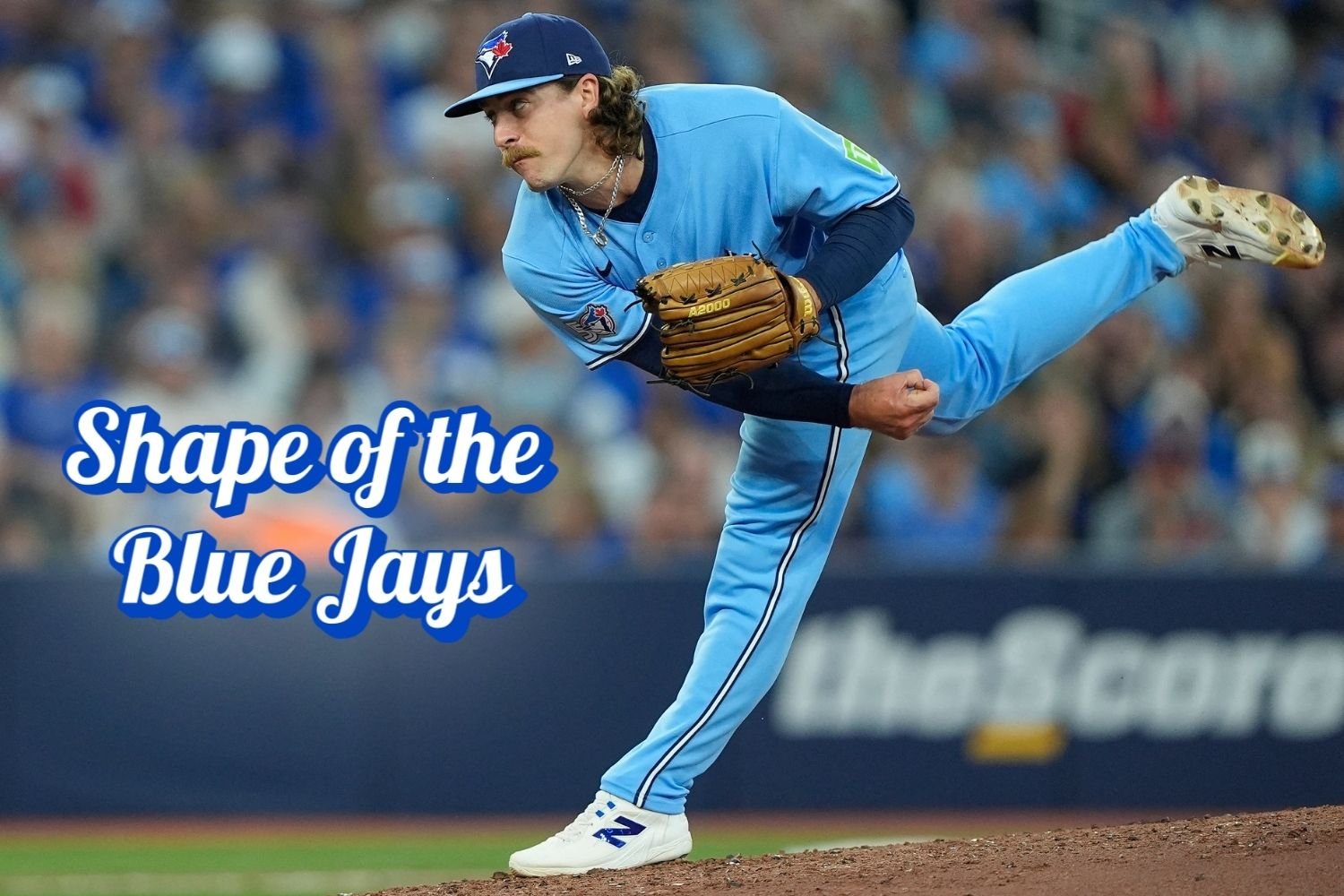 Welcome to Shape of the Blue Jays, my column where I dig into Statcast numbers to analyze recent pitch shape and swing shape trends for Toronto Blue Jays players and discuss how they have impacted their performance. Click here to read the last edition. All stats entering August 27, 2026, unless otherwise stated. Quick Hits: Bullpen Reinforcements? Daniel Guerra (RHP) is a name with some helium down on the farm. The 22-year-old Venezuelan was signed as an international free agent four summers ago. I named him one of the Jays' minor league starting pitchers of the month back in April after the promising start he had in Vancouver's rotation. Earlier this summer, Guerra was shifted to the bullpen, a move that has accelerated his path to the big leagues. Earlier this week, he was promoted to Triple-A Buffalo, facing four batters and giving up a solo homer in his debut. His jump from High A to Double A, and then a much quicker leap to Buffalo, has some wondering whether he could be in Toronto next month. Guerra is simply an imposing presence on the mound. He's 6-foot-6, 230 lbs with a high overhand release and nearly seven feet of extension in his delivery. The stuff is already MLB quality: a 98-mph cut-ride fastball, a 90-mph cutter with considerable lift and glove-side action, a no-spin 89-mph sinker with over 13" of run (impressive considering his arm angle), and a high-80s changeup to bridge the movement profiles between the four-seamer and two-seamer. That's undeniably nasty, but he was in the zone less than 30% of the time in his Bisons debut. If he can show stronger command, he could be a shot in the arm for a solid but exhausted Blue Jays bullpen, especially if they can stay in the Wild Card race into September. Chad Dallas John Schneider knew he would need quality innings in some form as the Blue Jays re-adjusted to life without Shane Bieber on Wednesday. Chad Dallas delivered, completely neutralizing the Royals en route to a shutout win for Toronto (2.2 IP, 0 R, 0 H, 4 K, 0 BB). Dallas's shapes are fun to analyze because he's an outlier in terms of his ability to get tremendous sidespin from a high release point. Since his primary pitch is a cutter and other teams know that everything moves glove-side, he hasn't been a high-whiff guy at this level, but he's done an excellent job getting hitters to chase and miss barrels. At 93 mph, his cutter velocity stands out. Opponents are hitting just .111 against it so far. The curveball, his secondary of choice against lefties, is about as 12-6 as it gets. The sweeper has plus velocity and plus horizontal break with downward vertical action, making it something of a unicorn offering, especially from his slot. On Wednesday, Dallas leaned on his cutter more against lefties, and the sweeper was his primary offering against righties as the curve took more of a tertiary role. The cutter was responsible for three of his four strikeouts, but Kansas City was completely fooled by his sweeper (five whiffs on six swings, 33% zone swing, 71% chase). I'm declaring him the King of Supination until further notice. Spencer Arrighetti We got our first glimpse of Spencer Arrighetti as a Blue Jay last Friday at Yankee Stadium (3.1 IP, 3 ER, 3 H, 4 K, 2 BB). He's evolved into a kitchen-sink type with a low 3/4 release, but the book on him when he came over from Houston was essentially plus curveball, deceptive vertical action on the four-seamer, and iffy command. The Blue Jays clearly had a planned adjustment in mind, as he threw his sinker 23% of the time in New York, up from 11% on the year. Its specs are half-decent: low 90s velocity, 17" of tail (which makes sense given his 19° arm angle), and separation in movement from both the four-seamer and changeup. The location models hosted on FanGraphs don't like it, but when he first started toying with it in 2025, it had a 65% zone rate, highest in his arsenal. This year, its zone rate is tied for second-highest in his arsenal behind his cutter, which he has deliberately backed off of in recent years. Spencer Arrighetti Sinker, 8/21 vs NYY His best pitch stuff-wise is the curveball, which he struggles to locate. His four-seamer can play as a primary pitch in a wide arsenal, but it only started getting results once he stopped throwing it 40% of the time. I believe the Jays' thinking here is that throwing the sinker more often is a way for him to be in the zone more while allowing the four-seamer and curve to play up. Its results from this outing suggest the Yankees weren't expecting to see it as much as they did (38% chase, three whiffs on seven swings). Paul Sewald Just three seasons ago, Paul Sewald was closing games for the pennant-winning Diamondbacks. They cut him loose earlier this month. He's been the same type of pitcher for a few years now: low arm angle, low-VAA four-seamer, and a sweeper. Both his strikeout and walk rates are actually better than they were last year, but the home run ball singlehandedly ended his time with Arizona (2.47 HR/9, first-percentile barrel rate). The four-seamer (.546 SLG, .558 xSLG) was mostly at fault. Naturally, we saw more of the sweeper and less of the four-seamer in his first few outings as a Blue Jay. However, he went back to the fastball more often on Tuesday and Wednesday against the Royals. Sewald's arm angle has slowly dropped over the past few seasons, and the vertical break on his fastball has slowly fallen with it. The ballooning home run rate suggests it doesn't play middle-up in the zone like it used to, which is where he has lived with it for most of the season. On Tuesday especially, he was broadening his locations with it. He hasn't given up a homer yet in five appearances with Toronto. Paul Sewald Fastball Locations, 8/25 vs KC – hey, wait, that actually looks like a photo of Mason Fluharty... He's a flyball pitcher who was running a career-worst 17.4% HR/FB rate with the D-backs, so some of that is positive regression. However, I actually like the idea of him throwing more four-seamers out of the zone moving forward. After all, damage was the reason he got cut, and it's a lot harder to hit homers on pitches above the top rail than at the belt!
 -
Welcome to Shape of the Blue Jays, my column where I dig into Statcast numbers to analyze recent pitch shape and swing shape trends for Toronto Blue Jays players and discuss how they have impacted their performance. Click here to read the last edition. All stats entering August 21, 2026, unless otherwise stated. Quick Hits: JoJo's Journey Continues A couple of weeks ago, JoJo Parker got to celebrate his 20th birthday by getting called up to High-A Vancouver. He has started well, and the helium continued to pick up yesterday, when he went 3-for-4 with 2 doubles. In seven games with the Canadians, Parker is slashing .346/.452/.500 for a 159 wRC+. He's striking out 23% of the time, walking 13% of the time, and has stolen three bases. Perhaps even more encouraging is the fact that the underlying numbers also suggest he's continuing to see the ball well, even against tougher pitching. His strikeout rate at Single-A Dunedin was 25% in 87 games earlier this season. His contact rate in Vancouver so far is 78%, the same as in Dunedin. Parker was extremely selective in his first taste of pro ball, chasing just 23% of the time in the FSL and swinging at only 57% of pitches in the strike zone, which works out to an overall swing rate of 39%. That has increased to 52% with the Canadians. We don't have Statcast data for High A, but it's reasonable to assume he's seeing more pitches to hit and he isn't missing a beat so far. Daz Cameron Daz Cameron has seized his latest big league opportunity in his three games with the Blue Jays (4-for-11, 1 double, 1 HR). In Thursday's rubber match against the Rays, he clobbered the team's farthest home run of the season by someone other than Kazuma Okamoto, sending an Ian Seymour changeup onto one of the catwalks at Tropicana Field. He began his season in the KBO. Prior to that, he spent time with three different MLB franchises from 2020 through 2025. A fringy hit tool and high strikeout rates have kept him from being productive at this level, but he's a different hitter than he was in his last stint on this side of the Pacific. It's an incredibly small sample, but swing-and-miss has not been an issue for Cameron so far with the Blue Jays, and for a lineup that needs slug, his combination of a high-end average bat speed (74.2 mph) and a short bat path (6.8' average swing length) is very intriguing. He's also adjusted his batting stance, standing at an angle of 29° open per Statcast, compared to 15° open with Milwaukee last year. His hands are no longer tucked behind his head pre-load, and the offset between his front and back foot has widened. Daz Cameron Batting Stance, May 2025 (right) vs August 2026 (left) Shane Bieber Shane Bieber delivered an outstanding performance to help the Jays win their first series at Tropicana Field since September 2023. He tossed seven innings of one-run ball, striking out a season-high seven without issuing a walk. With 101 pitches, he topped the century mark for the first time since his Tommy John surgery. He has completed seven innings twice this season, and it happened against the Rays both times. In his previous start against the Yankees, Bieber threw his four-seamer a season-high 49% of the time. He maintained that trend against Tampa Bay. The Rays have struggled against fastballs this season, and he successfully exploited that during his first trip through the order, when he threw the pitch half the time. The second time through the order, he upped the usage on his knuckle curve (44% CSW rate in this game) and slider (three whiffs on five swings) to great effect, before leaning on the changeup the third time through (three whiffs on six swings, 50% CSW rate, 29% zone swing, 57% chase). This was vintage Bieber: pounding fastballs to start the game, putting the other team in swing mode, and making them look foolish on the secondaries later on. The stuff isn't going to wow anybody, but he was constantly a step ahead of the Rays thanks to his command and elite sequencing. Here's a fun fact: Bieber's six walks in his past four starts have still yet to surpass the total from his six-walk clunker in Washington right before the deadline. He has a 2.96 ERA and 22 strikeouts in that span (24.1 IP). Shane Bieber Swings and Misses, August 20 vs Tampa Bay (Statcast) Charles McAdoo Charles McAdoo has been a sparkplug since his return to the big leagues, hitting for a 215 wRC+ in the month of August entering Thursday. However, a dose of reality may be on its way. He's running a .343 BABIP this season, and while the hit tool has improved (leading to an above-average line drive rate), he hits the ball in the air a lot and has been susceptible to popups, making his elite speed less likely to have a positive effect on his batting average. The projection models at FanGraphs are unanimously predicting a below-average rest-of-season wRC+ from him. That being said, I still feel he has a good shot at outperforming those because he's becoming more of a power threat. McAdoo has eight batted balls with an exit velocity of at least 100 mph so far in his Blue Jay career. Five of those have come within the past week. Projection systems like ZiPS do not capture the effects of in-season changes to a hitter's mechanics. Since getting recalled from Buffalo earlier this month, his attack angle has increased by 4° (again, not ideal if you want to skirt your way to a high BABIP with grounders and speed, but good for power) and his average point of contact has shifted nearly 3" further out front toward the mound. Like Cameron, he has that high bat speed & short swing combo that new-age hitting coaches love. The changes in his attack angle and intercept point have translated to more batted balls at ideal angles for him to tap into the power he has, and this has been another chapter in his evolution as a big-league hitter: He reined his swing in to focus on making more contact earlier this season in the minors, raising his floor and getting him a promotion to Toronto. Now, he's beginning to learn to balance that with the pop he has always had. A 215 wRC+ isn't sustainable, and he's done all of his hitting against lefties, but he has what it takes to continue thriving as another righty-hitting option for John Schneider's club. View full article
-
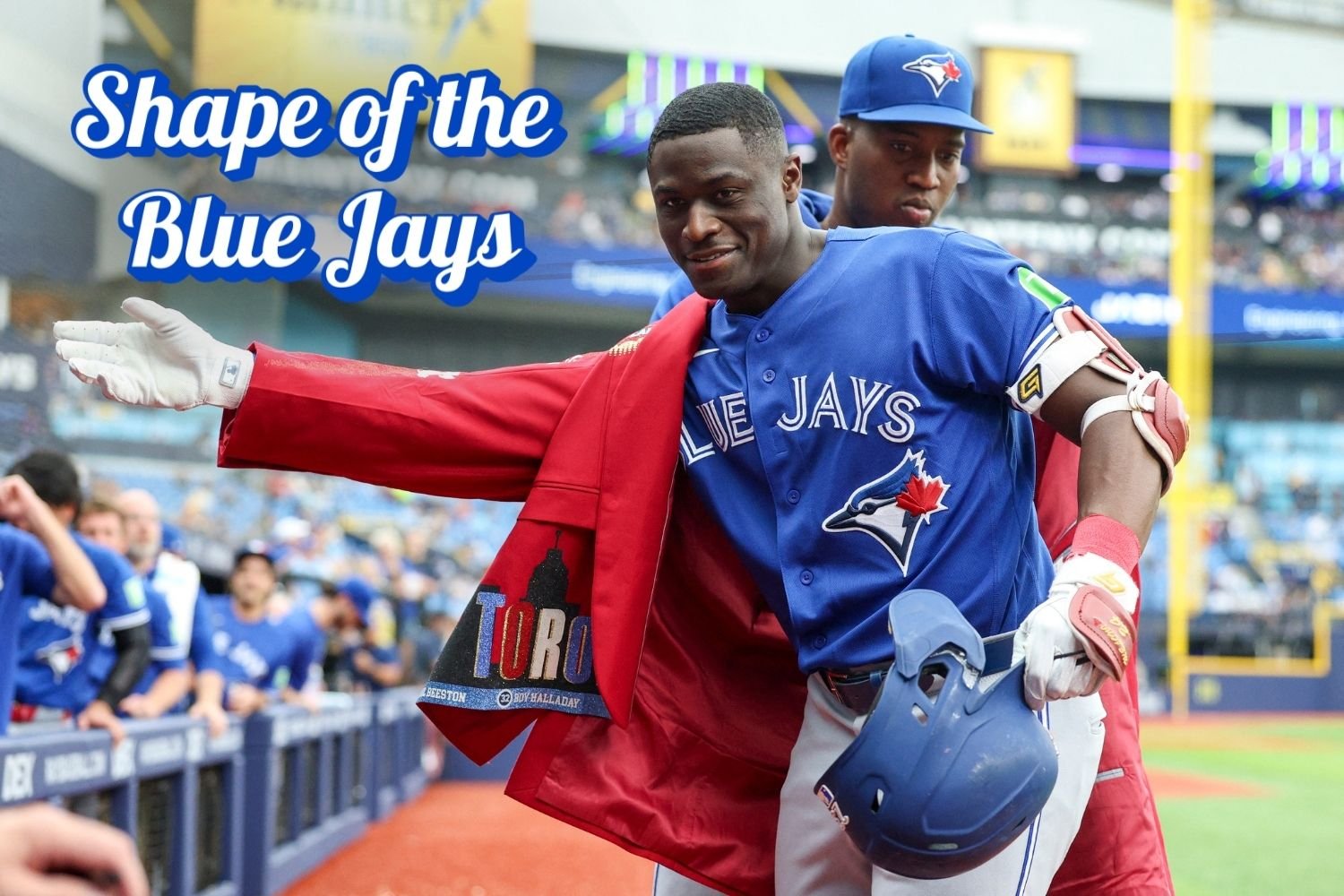 Welcome to Shape of the Blue Jays, my column where I dig into Statcast numbers to analyze recent pitch shape and swing shape trends for Toronto Blue Jays players and discuss how they have impacted their performance. Click here to read the last edition. All stats entering August 21, 2026, unless otherwise stated. Quick Hits: JoJo's Journey Continues A couple of weeks ago, JoJo Parker got to celebrate his 20th birthday by getting called up to High-A Vancouver. He has started well, and the helium continued to pick up yesterday, when he went 3-for-4 with 2 doubles. In seven games with the Canadians, Parker is slashing .346/.452/.500 for a 159 wRC+. He's striking out 23% of the time, walking 13% of the time, and has stolen three bases. Perhaps even more encouraging is the fact that the underlying numbers also suggest he's continuing to see the ball well, even against tougher pitching. His strikeout rate at Single-A Dunedin was 25% in 87 games earlier this season. His contact rate in Vancouver so far is 78%, the same as in Dunedin. Parker was extremely selective in his first taste of pro ball, chasing just 23% of the time in the FSL and swinging at only 57% of pitches in the strike zone, which works out to an overall swing rate of 39%. That has increased to 52% with the Canadians. We don't have Statcast data for High A, but it's reasonable to assume he's seeing more pitches to hit and he isn't missing a beat so far. Daz Cameron Daz Cameron has seized his latest big league opportunity in his three games with the Blue Jays (4-for-11, 1 double, 1 HR). In Thursday's rubber match against the Rays, he clobbered the team's farthest home run of the season by someone other than Kazuma Okamoto, sending an Ian Seymour changeup onto one of the catwalks at Tropicana Field. He began his season in the KBO. Prior to that, he spent time with three different MLB franchises from 2020 through 2025. A fringy hit tool and high strikeout rates have kept him from being productive at this level, but he's a different hitter than he was in his last stint on this side of the Pacific. It's an incredibly small sample, but swing-and-miss has not been an issue for Cameron so far with the Blue Jays, and for a lineup that needs slug, his combination of a high-end average bat speed (74.2 mph) and a short bat path (6.8' average swing length) is very intriguing. He's also adjusted his batting stance, standing at an angle of 29° open per Statcast, compared to 15° open with Milwaukee last year. His hands are no longer tucked behind his head pre-load, and the offset between his front and back foot has widened. Daz Cameron Batting Stance, May 2025 (right) vs August 2026 (left) Shane Bieber Shane Bieber delivered an outstanding performance to help the Jays win their first series at Tropicana Field since September 2023. He tossed seven innings of one-run ball, striking out a season-high seven without issuing a walk. With 101 pitches, he topped the century mark for the first time since his Tommy John surgery. He has completed seven innings twice this season, and it happened against the Rays both times. In his previous start against the Yankees, Bieber threw his four-seamer a season-high 49% of the time. He maintained that trend against Tampa Bay. The Rays have struggled against fastballs this season, and he successfully exploited that during his first trip through the order, when he threw the pitch half the time. The second time through the order, he upped the usage on his knuckle curve (44% CSW rate in this game) and slider (three whiffs on five swings) to great effect, before leaning on the changeup the third time through (three whiffs on six swings, 50% CSW rate, 29% zone swing, 57% chase). This was vintage Bieber: pounding fastballs to start the game, putting the other team in swing mode, and making them look foolish on the secondaries later on. The stuff isn't going to wow anybody, but he was constantly a step ahead of the Rays thanks to his command and elite sequencing. Here's a fun fact: Bieber's six walks in his past four starts have still yet to surpass the total from his six-walk clunker in Washington right before the deadline. He has a 2.96 ERA and 22 strikeouts in that span (24.1 IP). Shane Bieber Swings and Misses, August 20 vs Tampa Bay (Statcast) Charles McAdoo Charles McAdoo has been a sparkplug since his return to the big leagues, hitting for a 215 wRC+ in the month of August entering Thursday. However, a dose of reality may be on its way. He's running a .343 BABIP this season, and while the hit tool has improved (leading to an above-average line drive rate), he hits the ball in the air a lot and has been susceptible to popups, making his elite speed less likely to have a positive effect on his batting average. The projection models at FanGraphs are unanimously predicting a below-average rest-of-season wRC+ from him. That being said, I still feel he has a good shot at outperforming those because he's becoming more of a power threat. McAdoo has eight batted balls with an exit velocity of at least 100 mph so far in his Blue Jay career. Five of those have come within the past week. Projection systems like ZiPS do not capture the effects of in-season changes to a hitter's mechanics. Since getting recalled from Buffalo earlier this month, his attack angle has increased by 4° (again, not ideal if you want to skirt your way to a high BABIP with grounders and speed, but good for power) and his average point of contact has shifted nearly 3" further out front toward the mound. Like Cameron, he has that high bat speed & short swing combo that new-age hitting coaches love. The changes in his attack angle and intercept point have translated to more batted balls at ideal angles for him to tap into the power he has, and this has been another chapter in his evolution as a big-league hitter: He reined his swing in to focus on making more contact earlier this season in the minors, raising his floor and getting him a promotion to Toronto. Now, he's beginning to learn to balance that with the pop he has always had. A 215 wRC+ isn't sustainable, and he's done all of his hitting against lefties, but he has what it takes to continue thriving as another righty-hitting option for John Schneider's club.
-
- 1
-

-
- daz cameron
- shane bieber
- (and 2 more)
-
The Blue Jays fell just short of a weekend sweep against the Yankees, and they even had the chance to complete a four-game sweep of the Red Sox on Thursday. They couldn't finish the job either time, but a 5-2 week against a couple of (very likely) playoff-bound AL East rivals at home has kept their post-deadline fire burning. This team may still sit four games below .500, but the AL logjam has them just one game out of a playoff spot heading into a week that sees them travel to St. Pete and the Bronx. Pitching 3. Chase Lee: Andruw Monasterio GIDP, Top 6, 8/11 (+11.0% WPA) Chase Lee was optioned after giving up a grand slam in Thursday's finale against Boston, but not before he got a big couple of outs in the sixth inning on Tuesday night. After Jarren Duran's leadoff single, he found himself in a 1-1 count against Andruw Monasterio, who got jammed by a sweeper in on his hands and rolled it just to the left of second base. Ernie Clement did the rest himself. 2. Louis Varland: Nick Sogard Groundout, Top 9, 8/10 (+13.6% WPA) The Jays' lights-out closer notched his 25th save early this week, the latest milestone in his unbelievable season. With the tying run 90 feet away and the count full, Louis Varland whipped a 100-mph fastball up in the zone and slightly inside. Nick Sogard did a good job to get to the ball, hitting it sharply to first base, but Vladimir Guerrero Jr. was as sure-handed as ever, taking it to the bag to seal the win. 1. Louis Varland: Andruw Monasterio Strikeout, Top 9, 8/10 (+14.0% WPA) More pivotal than the final out was the strikeout that Varland got just one batter earlier. Monasterio was on the wrong end of another big moment for the pitching staff this week after failing to come through with a man on third and one out while facing a one-run deficit in the ninth. Varland got him to wave on a nasty knuckle curve in the dirt for a big strikeout. Hitting 3. Alejandro Kirk: RBI Double, Bot 6, 8/14 (+17.3% WPA) Alejandro Kirk has come around in the second half, and he had himself a night on Friday against New York. It began in the sixth when, with two outs and a man on second, he got a hanging slider from Gerrit Cole. He laced it all the way to the wall in left field, scoring George Springer with ease and giving the Jays a lead that Kirk himself would eventually add to in the eighth with a homer. 2. Charles McAdoo: RBI Double, Bot 7, 8/15 (+19.0% WPA) Charles McAdoo had his first signature moment in front of a packed Rogers Centre crowd on Saturday afternoon. Ernie Clement stood on first as the go-ahead run after his leadoff base-hit off Yankees reliever Brent Headrick. McAdoo got a high fastball from Headrick in a hitter's count and didn't miss it, drilling it off the wall on the fly at 107 mph off the bat. Clement came all the way around to score, and the Jays went on to take the game and the series. 1. Kazuma Okamoto: RBI Single, Bot 8, 8/12 (+19.3% WPA) The Blue Jays clinched their series against the Red Sox thanks to a five-run eighth inning, getting contributions up and down the lineup that would wind up looming large as Boston almost came back in the ninth. Nonetheless, the runs began with Kazuma Okamoto, who turned around a 99.5-mph sinker in a two-strike count and lined it into left-center for a base hit. Vladimir Guerrero Jr. scored on a bang-bang play after a headfirst slide at home, and the offense kept on coming. View full article
-
Blue Jays Clutch Plays: Varland's Escape, McAdoo's Double
Matthew Creally posted an article in Blue Jays
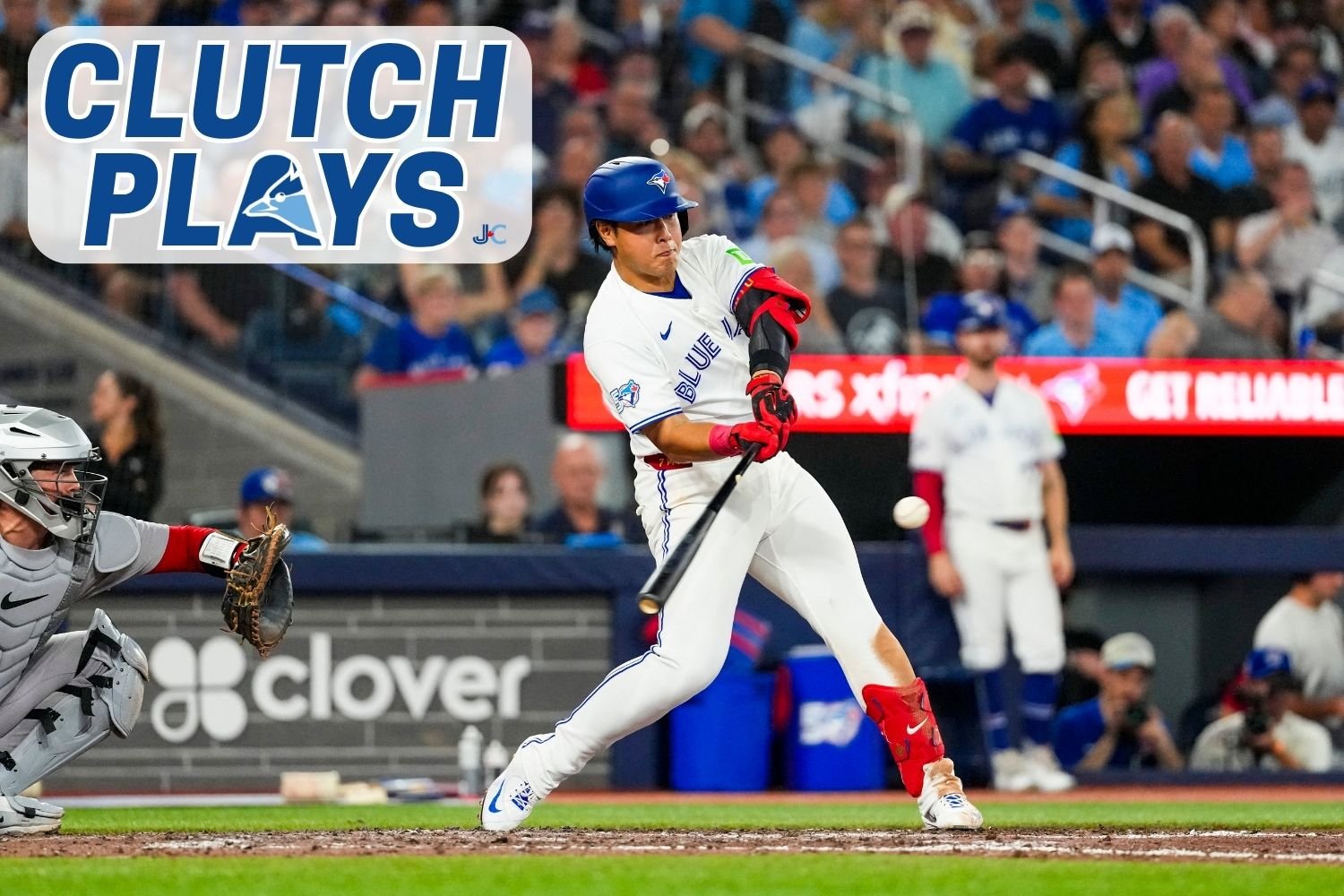 The Blue Jays fell just short of a weekend sweep against the Yankees, and they even had the chance to complete a four-game sweep of the Red Sox on Thursday. They couldn't finish the job either time, but a 5-2 week against a couple of (very likely) playoff-bound AL East rivals at home has kept their post-deadline fire burning. This team may still sit four games below .500, but the AL logjam has them just one game out of a playoff spot heading into a week that sees them travel to St. Pete and the Bronx. Pitching 3. Chase Lee: Andruw Monasterio GIDP, Top 6, 8/11 (+11.0% WPA) Chase Lee was optioned after giving up a grand slam in Thursday's finale against Boston, but not before he got a big couple of outs in the sixth inning on Tuesday night. After Jarren Duran's leadoff single, he found himself in a 1-1 count against Andruw Monasterio, who got jammed by a sweeper in on his hands and rolled it just to the left of second base. Ernie Clement did the rest himself. 2. Louis Varland: Nick Sogard Groundout, Top 9, 8/10 (+13.6% WPA) The Jays' lights-out closer notched his 25th save early this week, the latest milestone in his unbelievable season. With the tying run 90 feet away and the count full, Louis Varland whipped a 100-mph fastball up in the zone and slightly inside. Nick Sogard did a good job to get to the ball, hitting it sharply to first base, but Vladimir Guerrero Jr. was as sure-handed as ever, taking it to the bag to seal the win. 1. Louis Varland: Andruw Monasterio Strikeout, Top 9, 8/10 (+14.0% WPA) More pivotal than the final out was the strikeout that Varland got just one batter earlier. Monasterio was on the wrong end of another big moment for the pitching staff this week after failing to come through with a man on third and one out while facing a one-run deficit in the ninth. Varland got him to wave on a nasty knuckle curve in the dirt for a big strikeout. Hitting 3. Alejandro Kirk: RBI Double, Bot 6, 8/14 (+17.3% WPA) Alejandro Kirk has come around in the second half, and he had himself a night on Friday against New York. It began in the sixth when, with two outs and a man on second, he got a hanging slider from Gerrit Cole. He laced it all the way to the wall in left field, scoring George Springer with ease and giving the Jays a lead that Kirk himself would eventually add to in the eighth with a homer. 2. Charles McAdoo: RBI Double, Bot 7, 8/15 (+19.0% WPA) Charles McAdoo had his first signature moment in front of a packed Rogers Centre crowd on Saturday afternoon. Ernie Clement stood on first as the go-ahead run after his leadoff base-hit off Yankees reliever Brent Headrick. McAdoo got a high fastball from Headrick in a hitter's count and didn't miss it, drilling it off the wall on the fly at 107 mph off the bat. Clement came all the way around to score, and the Jays went on to take the game and the series. 1. Kazuma Okamoto: RBI Single, Bot 8, 8/12 (+19.3% WPA) The Blue Jays clinched their series against the Red Sox thanks to a five-run eighth inning, getting contributions up and down the lineup that would wind up looming large as Boston almost came back in the ninth. Nonetheless, the runs began with Kazuma Okamoto, who turned around a 99.5-mph sinker in a two-strike count and lined it into left-center for a base hit. Vladimir Guerrero Jr. scored on a bang-bang play after a headfirst slide at home, and the offense kept on coming.
 -
Welcome to Shape of the Blue Jays, my column where I dig into Statcast numbers to analyze recent pitch shape and swing shape trends for Toronto Blue Jays players and discuss how they have impacted their performance. Click here to read the last edition. All stats entering August 14, 2026. Quick Hits: Where'd the Barrels Go? Entering Thursday, the Blue Jays were 10-4 in their last 14 games and had climbed to within 1.5 games of the final Wild Card spot. Given this, I'd start this week's column on a more positive note in an ideal world, but this nugget was too good not to mention: They finished their 7-0 loss in the finale against the Red Sox with an expected batting average of .157. That is their fourth-lowest single-game xBA of the Statcast era, in games where they struck out five or fewer times. Yes, they were up against Payton Tolle, a very good pitcher. In fact, Tolle was coming off a 14-strikeout performance against the Athletics, and he failed to record one until the seventh inning against the Jays. It sounds like an accomplishment, but they only had three hard-hit balls all afternoon, and all of them were on the ground. This game perfectly encapsulated the fact that being a low-strikeout offense means nothing if you can't hit for power. The 2026 Jays have shown us this time and again. It was encouraging to see the team come out of the trade deadline with a new sense of energy and reinsert themselves into the conversation in the still-muddy American League. Ultimately, though, their recent stretch is probably unsustainable if they don't start putting balls over the fence more consistently. José Soriano The changes we saw from José Soriano in his first start with his new team were pretty much what was expected throughout the industry. Shoutout to Jays Centre's own Mike LeSage for sharing this video in our writers' Slack channel that summarizes them well. (Pitching development content with sarcastic undertones is on Instagram Reels now? My hope for the future has been restored.) On Wednesday against Boston, Soriano (6 IP, 1 ER, 4 H, 4 K, 2 BB) pulled a different lever by throwing his sinker a season-high 45.6% of the time. While he largely avoided throwing four-seamers to lefties for a second consecutive start, he reintroduced the pitch to righties (33% usage). 37 of the 46 pitches he threw to righties were either sinkers or four-seamers. During his second trip through the order, he suddenly fed Boston's lefties a ton of splitters to great effect (60% chase). Beyond the creativity with his arsenal, I appreciated Soriano's willingness to throw his sinker at the top of the zone to lefties. He didn't do this with the Angels, but he dropped eight sinkers above the vertical center of the zone and got four called strikes, one foul, and one groundout, missing just once. Of course, he continued to pound the bottom rail too. If this is a pitch that's going to play at both ends of the zone to opposite-handed hitters, his former team is going to look foolish for not experimenting with more different strategies with him. José Soriano Sinker Locations vs LHH, 8/12 (Statcast) Brett Bateman Brett Bateman has quickly endeared himself to the fanbase after his first six games as a major leaguer. His .259/.310/.333 slash line is nothing to write home about, but he's 3-for-6 in high-leverage at-bats. Small sample, but many inexperienced players will get humbled in big moments, and Bateman has passed that test so far. The 24-year-old center fielder has a short, compact left-handed swing. It's rather unique in its high-tilt yet oppo-oriented, let-it-travel profile. I have a personal tool that displays similarity scores for any hitter based on their bat speed, swing length, tilt, attack angle & direction, and intercept point. Bateman's closest mechanical left-handed comps so far are Jonathan Aranda, Brice Turang, and Nathan Lukes. Aranda is an example of a hitter who has figured out how to lift a ton of balls with this type of swing, while Turang and Lukes are more groundball/line drive guys, similar to Bateman's smaller-sample batted ball distribution. The latter two are, of course, some of the better bat-to-ball hitters in the game, a skill Bateman is also known for. Given his speed, it wouldn't be the worst thing in the world if Bateman continues to hit the ball on the ground half the time. Perhaps Aranda could be a useful model if he were to work on adding power. Brett Bateman Swing Mechanics Comps, 2026 Player Bat Speed Swing Length Swing Tilt Attack Angle Attack Direction Contact Pt Y Brett Bateman 68.0 mph 6.90 ft 36° 6° 9° 24.5" Jonathan Aranda 70.0 mph 7.09 ft 34.9° 7.6° 5.6° 26.1" Brice Turang 69.9 mph 6.76 ft 35.9° 8.1° 9.9° 30.8" Nathan Lukes 67.0 mph 6.39 ft 31° 6.7° 7.8° 26.8" Max Scherzer Since turning 42, Max Scherzer has authored his best stretch of the season, posting a 2.20 ERA with 13 strikeouts and three walks in three August starts (16.1 IP). One of those 13 strikeouts put him inside the top 10 all-time leaderboard, and on Thursday, he surpassed the 3,000 innings mark. It continues to be extremely cool that Scherzer chose to be a Blue Jay at this later stage of his career. The biggest factor at play in his resurgence is better stuff. In his outing against the Phillies last Saturday, his fastball averaged 94.2 mph, a season-high. While it returned to 92-93 on Thursday, his secondaries were quite strong, particularly his curveball (44% whiff, 50% chase, 3/3 first-pitch strikes). He's been getting more drop on it in recent weeks: After it averaged around -5 to -6 inches of induced vertical break for most of his season, it's down to -7/-8 territory so far in August, averaging -8" for a second consecutive start on Thursday. His changeup (43% whiff on Thursday) averaged 16" of run after running more than usual in his prior two starts as well. John Schneider put it beautifully when he said sustainability is no longer a consideration for his bullpen at this point in the season. The length Scherzer has given them as of late, then, could not have come at a better time. Max Scherzer Swings and Misses (Curveball & Changeup only), 8/13 (Statcast) View full article
-
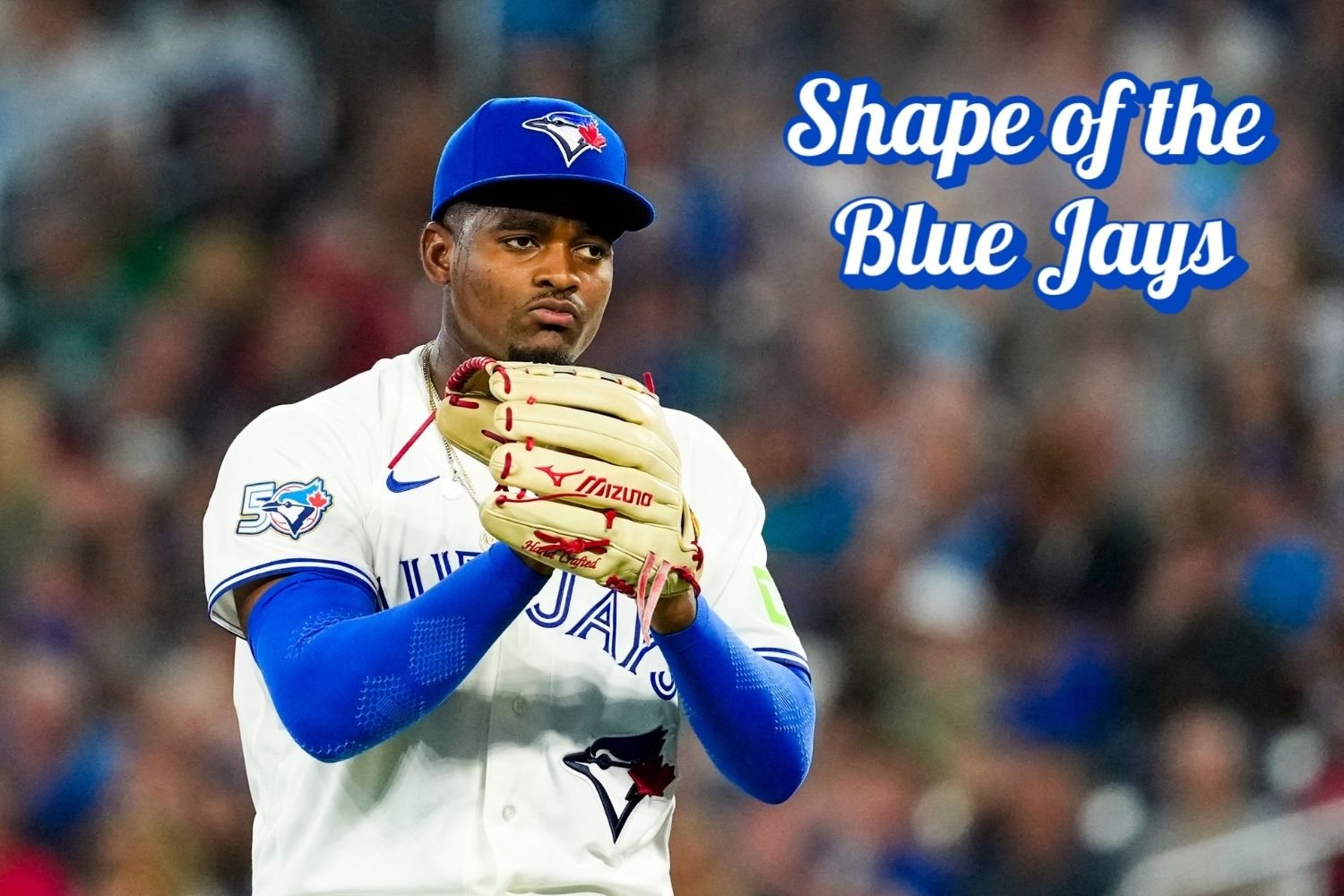 Welcome to Shape of the Blue Jays, my column where I dig into Statcast numbers to analyze recent pitch shape and swing shape trends for Toronto Blue Jays players and discuss how they have impacted their performance. Click here to read the last edition. All stats entering August 14, 2026. Quick Hits: Where'd the Barrels Go? Entering Thursday, the Blue Jays were 10-4 in their last 14 games and had climbed to within 1.5 games of the final Wild Card spot. Given this, I'd start this week's column on a more positive note in an ideal world, but this nugget was too good not to mention: They finished their 7-0 loss in the finale against the Red Sox with an expected batting average of .157. That is their fourth-lowest single-game xBA of the Statcast era, in games where they struck out five or fewer times. Yes, they were up against Payton Tolle, a very good pitcher. In fact, Tolle was coming off a 14-strikeout performance against the Athletics, and he failed to record one until the seventh inning against the Jays. It sounds like an accomplishment, but they only had three hard-hit balls all afternoon, and all of them were on the ground. This game perfectly encapsulated the fact that being a low-strikeout offense means nothing if you can't hit for power. The 2026 Jays have shown us this time and again. It was encouraging to see the team come out of the trade deadline with a new sense of energy and reinsert themselves into the conversation in the still-muddy American League. Ultimately, though, their recent stretch is probably unsustainable if they don't start putting balls over the fence more consistently. José Soriano The changes we saw from José Soriano in his first start with his new team were pretty much what was expected throughout the industry. Shoutout to Jays Centre's own Mike LeSage for sharing this video in our writers' Slack channel that summarizes them well. (Pitching development content with sarcastic undertones is on Instagram Reels now? My hope for the future has been restored.) On Wednesday against Boston, Soriano (6 IP, 1 ER, 4 H, 4 K, 2 BB) pulled a different lever by throwing his sinker a season-high 45.6% of the time. While he largely avoided throwing four-seamers to lefties for a second consecutive start, he reintroduced the pitch to righties (33% usage). 37 of the 46 pitches he threw to righties were either sinkers or four-seamers. During his second trip through the order, he suddenly fed Boston's lefties a ton of splitters to great effect (60% chase). Beyond the creativity with his arsenal, I appreciated Soriano's willingness to throw his sinker at the top of the zone to lefties. He didn't do this with the Angels, but he dropped eight sinkers above the vertical center of the zone and got four called strikes, one foul, and one groundout, missing just once. Of course, he continued to pound the bottom rail too. If this is a pitch that's going to play at both ends of the zone to opposite-handed hitters, his former team is going to look foolish for not experimenting with more different strategies with him. José Soriano Sinker Locations vs LHH, 8/12 (Statcast) Brett Bateman Brett Bateman has quickly endeared himself to the fanbase after his first six games as a major leaguer. His .259/.310/.333 slash line is nothing to write home about, but he's 3-for-6 in high-leverage at-bats. Small sample, but many inexperienced players will get humbled in big moments, and Bateman has passed that test so far. The 24-year-old center fielder has a short, compact left-handed swing. It's rather unique in its high-tilt yet oppo-oriented, let-it-travel profile. I have a personal tool that displays similarity scores for any hitter based on their bat speed, swing length, tilt, attack angle & direction, and intercept point. Bateman's closest mechanical left-handed comps so far are Jonathan Aranda, Brice Turang, and Nathan Lukes. Aranda is an example of a hitter who has figured out how to lift a ton of balls with this type of swing, while Turang and Lukes are more groundball/line drive guys, similar to Bateman's smaller-sample batted ball distribution. The latter two are, of course, some of the better bat-to-ball hitters in the game, a skill Bateman is also known for. Given his speed, it wouldn't be the worst thing in the world if Bateman continues to hit the ball on the ground half the time. Perhaps Aranda could be a useful model if he were to work on adding power. Brett Bateman Swing Mechanics Comps, 2026 Player Bat Speed Swing Length Swing Tilt Attack Angle Attack Direction Contact Pt Y Brett Bateman 68.0 mph 6.90 ft 36° 6° 9° 24.5" Jonathan Aranda 70.0 mph 7.09 ft 34.9° 7.6° 5.6° 26.1" Brice Turang 69.9 mph 6.76 ft 35.9° 8.1° 9.9° 30.8" Nathan Lukes 67.0 mph 6.39 ft 31° 6.7° 7.8° 26.8" Max Scherzer Since turning 42, Max Scherzer has authored his best stretch of the season, posting a 2.20 ERA with 13 strikeouts and three walks in three August starts (16.1 IP). One of those 13 strikeouts put him inside the top 10 all-time leaderboard, and on Thursday, he surpassed the 3,000 innings mark. It continues to be extremely cool that Scherzer chose to be a Blue Jay at this later stage of his career. The biggest factor at play in his resurgence is better stuff. In his outing against the Phillies last Saturday, his fastball averaged 94.2 mph, a season-high. While it returned to 92-93 on Thursday, his secondaries were quite strong, particularly his curveball (44% whiff, 50% chase, 3/3 first-pitch strikes). He's been getting more drop on it in recent weeks: After it averaged around -5 to -6 inches of induced vertical break for most of his season, it's down to -7/-8 territory so far in August, averaging -8" for a second consecutive start on Thursday. His changeup (43% whiff on Thursday) averaged 16" of run after running more than usual in his prior two starts as well. John Schneider put it beautifully when he said sustainability is no longer a consideration for his bullpen at this point in the season. The length Scherzer has given them as of late, then, could not have come at a better time. Max Scherzer Swings and Misses (Curveball & Changeup only), 8/13 (Statcast)
 -
A mountain of work still lies ahead if the Blue Jays are going to salvage their season, but this past week was a step in the right direction, as they won their first two series after Monday's trade deadline. Remarkably, four of their past five games have gone to extra innings, and the one that didn't was a one-run contest that was decided with the bases loaded in the bottom of the ninth. While that isn't good news for a bullpen that was already taxed to begin with, it does mean there were plenty of pivotal plays by win probability added. Here are the team's biggest moments from the week that was as our Clutch Plays series finally returns. Pitching 3. Tyler Rogers: Brandon Marsh Groundout, Bot 9, 8/7 (+23.5% WPA) The submarining Tyler Rogers got himself into a world of trouble in the ninth inning on Friday, allowing two runs to score as Toronto's lead was cut to 5-4. He mercifully got out of it, getting Brandon Marsh to ground out with the bases loaded to seal the win on his 35th pitch after the play was upheld via replay review. Marsh rolled a ball to Ernie Clement at second, but Kazuma Okamoto, playing back of first, couldn't get to the bag in time as Rogers hurried over to receive the throw mere milliseconds ahead of Marsh. 2. Tyler Rogers: Alec Bohm Force Out, Bot 9, 8/7 (+26.3% WPA) None of the above would've been possible without Rogers inducing a force play against the previous batter, Alec Bohm. Bohm's high chopper to a drawn-in infield was snagged by Ernie Clement, who made a good throw home, but disaster nearly struck as catcher Alejandro Kirk forgot the force was on at home as he crouched to tag Trea Turner, who slid in ahead of his swiping attempt. Thankfully for the Jays, Kirk's left knee happened to be touching the plate, setting the stage for Marsh's bang-bang play at first and one of the more exhausting, air-tight Blue Jay wins in recent memory. 1. Braydon Fisher (Nathan Lukes): Luis Arraez FIDP, Bot 11, 8/9 (+33.7% WPA) It's unfortunate that the Jays lost on Thursday in Chicago and again on Sunday, because both contests featured miraculous game-saving defensive plays that ultimately didn't move the needle. This Nathan Lukes missile to home plate completed what is currently the second-most clutch pitching/fielding play of the season by WPA for the Blue Jays. A bases-loaded, one-out situation in a tie game in extras calls for a strikeout, but that's easier said than done with Luis Arraez, who golfed a fly ball right at Lukes in medium depth right field. Lukes then fired a one-hop strike to Kirk, who tagged Garrett Stubbs to send the game to the 12th. Hitting 3. Ernie Clement: 2-run HR, Top 10, 8/5 (+32.8% WPA) Clement wasted no time getting things started in the 10th inning of Wednesday's rubber match in Houston. His close friend and college teammate Bennett Sousa delivered a high fastball on the inner half, and Ernie deposited it into the Crawford Boxes in left field, admiring it as it went. The fact that this happened with the ghost runner on proved to be a difference-maker as Chase Lee tight-roped out of danger after allowing a run in the bottom half to clinch a 5-4 victory and win the series against the Astros. 2. Andrés Giménez: 2-RBI Double, Top 8, 8/8 (+36.6% WPA) Andrés Giménez had a monster series in Philadelphia, homering off Zack Wheeler on Friday before coming through with game-tying two-RBI hits in the eighth inning on Saturday and Sunday. By WPA, the one on Saturday was slightly more meaningful, and it came on an 0-2, two-out pitch from one of the tougher lefty relievers in the game in José Alvarado. Alvarado's sinker caught a little too much of the plate, and Giménez stayed on plane, lacing it up the alley in right-center to score Vladimir Guerrero Jr. and George Springer and tie things up at four. 1. Nathan Lukes: 2-run HR, Top 11, 8/8 (+48.5% WPA) Lukes would not be denied this past weekend, contributing just over 0.8 wins by WPA in less than 24 hours with his bat and glove. His two-run home run in the 11th on Saturday broke a 5-5 tie and stood as the winner after Lazaro Estrada completed his first career save in the bottom half. Remember how his outfield assist completed the Jays' second-most clutch pitching play of the year? Well, this homer is their second-most clutch hitting play of the year as of now. With his pitch count already high, Chase Shugart had to come in the zone on 3-2, and his middle-in breaking ball played right into Lukes's bat path as he lifted it out of the yard for one of the bigger swings of his career. View full article
-
Blue Jays Clutch Plays: Lukes's Heroics, Rogers's Escape
Matthew Creally posted an article in Blue Jays
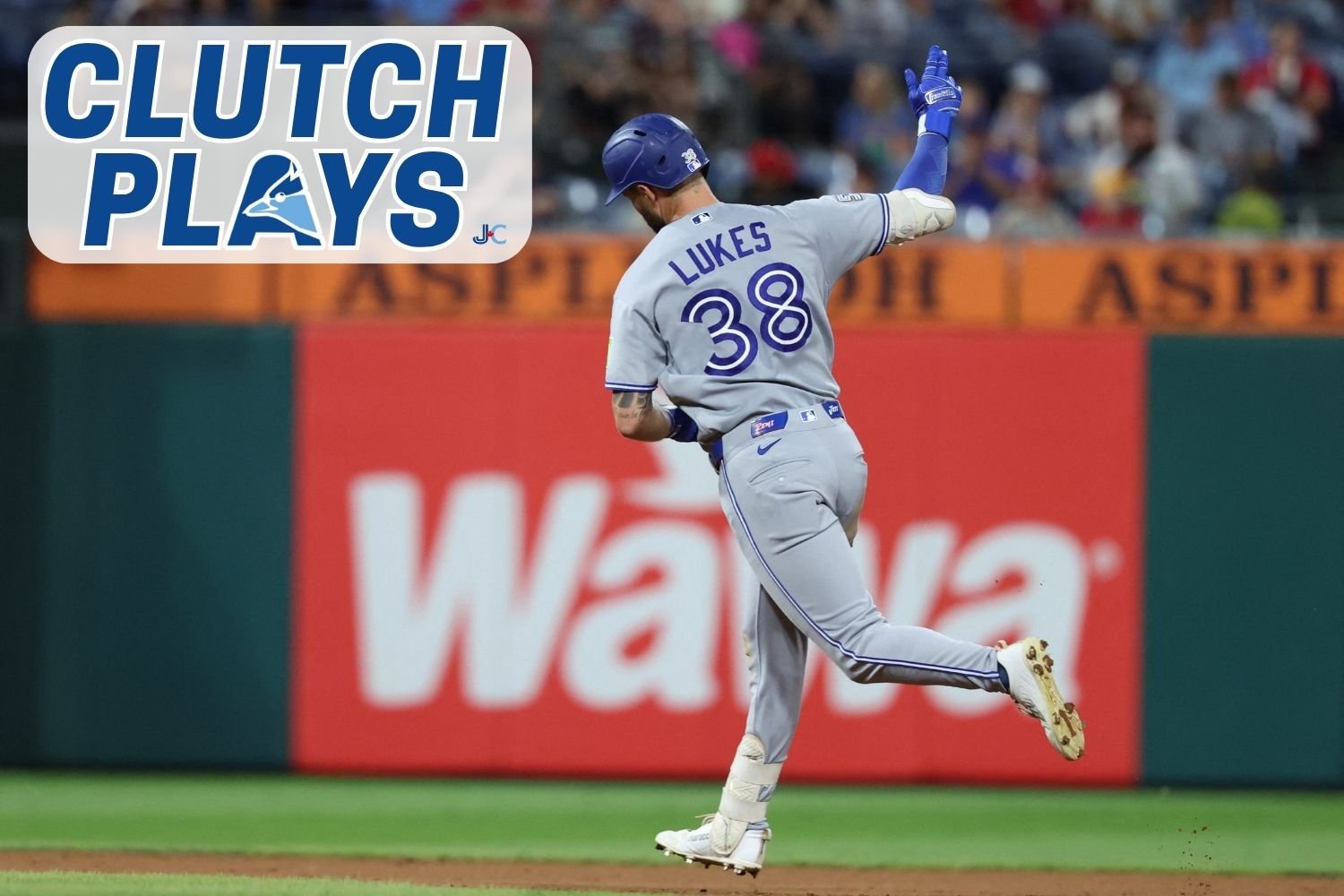 A mountain of work still lies ahead if the Blue Jays are going to salvage their season, but this past week was a step in the right direction, as they won their first two series after Monday's trade deadline. Remarkably, four of their past five games have gone to extra innings, and the one that didn't was a one-run contest that was decided with the bases loaded in the bottom of the ninth. While that isn't good news for a bullpen that was already taxed to begin with, it does mean there were plenty of pivotal plays by win probability added. Here are the team's biggest moments from the week that was as our Clutch Plays series finally returns. Pitching 3. Tyler Rogers: Brandon Marsh Groundout, Bot 9, 8/7 (+23.5% WPA) The submarining Tyler Rogers got himself into a world of trouble in the ninth inning on Friday, allowing two runs to score as Toronto's lead was cut to 5-4. He mercifully got out of it, getting Brandon Marsh to ground out with the bases loaded to seal the win on his 35th pitch after the play was upheld via replay review. Marsh rolled a ball to Ernie Clement at second, but Kazuma Okamoto, playing back of first, couldn't get to the bag in time as Rogers hurried over to receive the throw mere milliseconds ahead of Marsh. 2. Tyler Rogers: Alec Bohm Force Out, Bot 9, 8/7 (+26.3% WPA) None of the above would've been possible without Rogers inducing a force play against the previous batter, Alec Bohm. Bohm's high chopper to a drawn-in infield was snagged by Ernie Clement, who made a good throw home, but disaster nearly struck as catcher Alejandro Kirk forgot the force was on at home as he crouched to tag Trea Turner, who slid in ahead of his swiping attempt. Thankfully for the Jays, Kirk's left knee happened to be touching the plate, setting the stage for Marsh's bang-bang play at first and one of the more exhausting, air-tight Blue Jay wins in recent memory. 1. Braydon Fisher (Nathan Lukes): Luis Arraez FIDP, Bot 11, 8/9 (+33.7% WPA) It's unfortunate that the Jays lost on Thursday in Chicago and again on Sunday, because both contests featured miraculous game-saving defensive plays that ultimately didn't move the needle. This Nathan Lukes missile to home plate completed what is currently the second-most clutch pitching/fielding play of the season by WPA for the Blue Jays. A bases-loaded, one-out situation in a tie game in extras calls for a strikeout, but that's easier said than done with Luis Arraez, who golfed a fly ball right at Lukes in medium depth right field. Lukes then fired a one-hop strike to Kirk, who tagged Garrett Stubbs to send the game to the 12th. Hitting 3. Ernie Clement: 2-run HR, Top 10, 8/5 (+32.8% WPA) Clement wasted no time getting things started in the 10th inning of Wednesday's rubber match in Houston. His close friend and college teammate Bennett Sousa delivered a high fastball on the inner half, and Ernie deposited it into the Crawford Boxes in left field, admiring it as it went. The fact that this happened with the ghost runner on proved to be a difference-maker as Chase Lee tight-roped out of danger after allowing a run in the bottom half to clinch a 5-4 victory and win the series against the Astros. 2. Andrés Giménez: 2-RBI Double, Top 8, 8/8 (+36.6% WPA) Andrés Giménez had a monster series in Philadelphia, homering off Zack Wheeler on Friday before coming through with game-tying two-RBI hits in the eighth inning on Saturday and Sunday. By WPA, the one on Saturday was slightly more meaningful, and it came on an 0-2, two-out pitch from one of the tougher lefty relievers in the game in José Alvarado. Alvarado's sinker caught a little too much of the plate, and Giménez stayed on plane, lacing it up the alley in right-center to score Vladimir Guerrero Jr. and George Springer and tie things up at four. 1. Nathan Lukes: 2-run HR, Top 11, 8/8 (+48.5% WPA) Lukes would not be denied this past weekend, contributing just over 0.8 wins by WPA in less than 24 hours with his bat and glove. His two-run home run in the 11th on Saturday broke a 5-5 tie and stood as the winner after Lazaro Estrada completed his first career save in the bottom half. Remember how his outfield assist completed the Jays' second-most clutch pitching play of the year? Well, this homer is their second-most clutch hitting play of the year as of now. With his pitch count already high, Chase Shugart had to come in the zone on 3-2, and his middle-in breaking ball played right into Lukes's bat path as he lifted it out of the yard for one of the bigger swings of his career.
 -
 Welcome to Shape of the Blue Jays, my column where I dig into Statcast numbers to analyze recent pitch shape and swing shape trends for Toronto Blue Jays players and discuss how they have impacted their performance. Click here to read the last edition. All stats entering August 6, 2026. Quick Hits: Dasan Hill The Blue Jays were one of the busier teams in baseball leading up to deadline day, acquiring seven new prospects while trading away three. The most intriguing newcomer to the farm system is Dasan Hill, a 6-foot-5, 20-year-old lefty pitcher acquired in the Jeff Hoffman trade. Hill has a 5.80 ERA and a 4.17 xFIP in 45 innings at High A this year. He has struck out 36% of opposing hitters, but a 17% walk rate is holding him back. Baseball America had him as Minnesota's eighth-best prospect and gave him a Future Value grade of 55. There's a risk that he doesn't pan out as a starter due to his command issues, but the stuff is electric. One of the few redeeming traits about his fastball is its velocity, as its otherwise poor shape has led to some damage being done against it, but the secondaries stand out. Hill is armed with a changeup, sweeper, slider, and curveball, with the first two being his best offerings according to BA. Evaluators at both FanGraphs and Baseball America are in agreement that Hill is the best prospect Toronto brought in at the deadline. BA has him as the 13th-best overall of the 85 prospects that were dealt. His powerful stuff gives the farm system another high-upside lefty arm alongside Johnny King. At all levels of the organization, the Jays are doubling down on pitchers with plus stuff and poor command, betting that they have the tools to harness the potential of prospects like Hill and big leaguers like José Soriano and Spencer Arrighetti. Jesús Sánchez On Wednesday afternoon, Jesús Sánchez did something that no one else on the roster has done all season: He homered in a 3-0 count. Sánchez has now done this twice in 2026, two more times than any of his teammates. It was a 94-mph fastball up and out of the zone from Hunter Brown, but he punished it. The Jays, Sánchez included, have chased so much this year that 3-0 counts have been hard to come by, but the mere idea of sitting on a high fastball in a hitter's count and driving it out of the yard has long been a common hitting strategy that it feels like this team has, for whatever reason, shied away from. This was a refreshing sight. I had an article go up on the site on Thursday morning about the Blue Jays once again getting too enamored with hitting for contact. Sánchez's bat speed is down two ticks from last year while his contact and K rates have stayed the same, but he's an edge case in that argument because it has worked to some extent. The groundballs, which had long been an issue for him in the past, are going down; his 44% groundball rate is the lowest of his career. He still leads the team in expected slugging percentage, while his 108 wRC+ is tied for a career-best over a full season. Between the ninth-percentile chase rate and the bat speed decrease, I'm still not sure this version of Sánchez is the most ideal to unlock his potential, but he and Kazuma Okamoto are now the only Blue Jays (min. 100 PA) with a wRC+ over 105 on the season. That's more an indictment on everyone else, but it's still nice to see the upper end of what Sánchez has in the tank. Jameson Taillon Jameson Taillon was the first of the team's new pitchers to suit up as he started Wednesday in Houston (4 IP, 3 ER, 6 H, 4 K, 2 BB). He had trouble finding the zone early on and was tagged for eight hard-hit balls, but he racked up a surprising amount of swing-and-miss (40% whiff, 31% CSW). The Jays jacked up his cutter (24%, vs a 13% season average) and sinker usage (12%, vs a 4% season average) to lefties, while boosting his curveball usage to righties (26%, vs a 2% season average). Up until yesterday, he used his cutter twice as much to righties as he did to lefties, but proceeded to do the opposite in his first start in a Blue Jay uniform. They might've been onto something, as one of the six cutters he threw to righties was deposited onto the train tracks by Jose Altuve. Jameson Taillon Swings and Misses, 8/5 @ HOU At this point in his career, Taillon's stuff is diminishing according to the Stuff+ model hosted on FanGraphs, and he came to the team already sporting a wide arsenal. He doesn't have the pristine command he had in prior years, but his locations are still fine, so any success he finds with Toronto will likely be a result of pushing as many buttons as possible with his six pitch types. Looking at his splits this season, lefties have been a problem (5.47 xFIP, 7.8% K-BB%, 3.15 HR/9). Yesterday, though, Houston's lefties didn't have any hard-hit flyballs against him, and he even struck out Yordan Alvarez on a perfectly placed cutter up and in. It wasn't a perfect outing by any means, but it might've given him a new plan of attack against opposite-handed bats. Myles Straw Myles Straw had a tremendous series against the Astros, going 5-for-10 with three doubles and a triple. One of those doubles broke up Hunter Brown's no-hit bid with one out in the sixth on Wednesday. His role as a hitter remains secondary to his responsibilities in the field, on the bases, and in the clubhouse, but we saw more authoritative swings from Straw in the Houston series alone than at any other point this year. According to Statcast's bat speed, four of his hardest 26 swings on the season came at Daikin Park this week, and his fastest swing of the year, clocked at 83.5 mph, came on Sunday against the Cardinals. Straw's hitting for a 77 wRC+ this year, but his squared-up, chase, contact, and K rates are all in the 90th percentile or better. If he continues to tap into wherever this newfound bat speed is coming from, there will be hope yet for some offense from the center field spot for the Blue Jays the rest of the way. With Daulton Varsho now out of the picture, the position looks like it's his for the rest of 2026. The team will have to make a decision on an $8M club option for the 31-year-old at season's end.
 -
Welcome to Shape of the Blue Jays, my column where I dig into Statcast numbers to analyze recent pitch shape and swing shape trends for Toronto Blue Jays players and discuss how they have impacted their performance. Click here to read the last edition. All stats entering August 6, 2026. Quick Hits: Dasan Hill The Blue Jays were one of the busier teams in baseball leading up to deadline day, acquiring seven new prospects while trading away three. The most intriguing newcomer to the farm system is Dasan Hill, a 6-foot-5, 20-year-old lefty pitcher acquired in the Jeff Hoffman trade. Hill has a 5.80 ERA and a 4.17 xFIP in 45 innings at High A this year. He has struck out 36% of opposing hitters, but a 17% walk rate is holding him back. Baseball America had him as Minnesota's eighth-best prospect and gave him a Future Value grade of 55. There's a risk that he doesn't pan out as a starter due to his command issues, but the stuff is electric. One of the few redeeming traits about his fastball is its velocity, as its otherwise poor shape has led to some damage being done against it, but the secondaries stand out. Hill is armed with a changeup, sweeper, slider, and curveball, with the first two being his best offerings according to BA. Evaluators at both FanGraphs and Baseball America are in agreement that Hill is the best prospect Toronto brought in at the deadline. BA has him as the 13th-best overall of the 85 prospects that were dealt. His powerful stuff gives the farm system another high-upside lefty arm alongside Johnny King. At all levels of the organization, the Jays are doubling down on pitchers with plus stuff and poor command, betting that they have the tools to harness the potential of prospects like Hill and big leaguers like José Soriano and Spencer Arrighetti. Jesús Sánchez On Wednesday afternoon, Jesús Sánchez did something that no one else on the roster has done all season: He homered in a 3-0 count. Sánchez has now done this twice in 2026, two more times than any of his teammates. It was a 94-mph fastball up and out of the zone from Hunter Brown, but he punished it. The Jays, Sánchez included, have chased so much this year that 3-0 counts have been hard to come by, but the mere idea of sitting on a high fastball in a hitter's count and driving it out of the yard has long been a common hitting strategy that it feels like this team has, for whatever reason, shied away from. This was a refreshing sight. I had an article go up on the site on Thursday morning about the Blue Jays once again getting too enamored with hitting for contact. Sánchez's bat speed is down two ticks from last year while his contact and K rates have stayed the same, but he's an edge case in that argument because it has worked to some extent. The groundballs, which had long been an issue for him in the past, are going down; his 44% groundball rate is the lowest of his career. He still leads the team in expected slugging percentage, while his 108 wRC+ is tied for a career-best over a full season. Between the ninth-percentile chase rate and the bat speed decrease, I'm still not sure this version of Sánchez is the most ideal to unlock his potential, but he and Kazuma Okamoto are now the only Blue Jays (min. 100 PA) with a wRC+ over 105 on the season. That's more an indictment on everyone else, but it's still nice to see the upper end of what Sánchez has in the tank. Jameson Taillon Jameson Taillon was the first of the team's new pitchers to suit up as he started Wednesday in Houston (4 IP, 3 ER, 6 H, 4 K, 2 BB). He had trouble finding the zone early on and was tagged for eight hard-hit balls, but he racked up a surprising amount of swing-and-miss (40% whiff, 31% CSW). The Jays jacked up his cutter (24%, vs a 13% season average) and sinker usage (12%, vs a 4% season average) to lefties, while boosting his curveball usage to righties (26%, vs a 2% season average). Up until yesterday, he used his cutter twice as much to righties as he did to lefties, but proceeded to do the opposite in his first start in a Blue Jay uniform. They might've been onto something, as one of the six cutters he threw to righties was deposited onto the train tracks by Jose Altuve. Jameson Taillon Swings and Misses, 8/5 @ HOU At this point in his career, Taillon's stuff is diminishing according to the Stuff+ model hosted on FanGraphs, and he came to the team already sporting a wide arsenal. He doesn't have the pristine command he had in prior years, but his locations are still fine, so any success he finds with Toronto will likely be a result of pushing as many buttons as possible with his six pitch types. Looking at his splits this season, lefties have been a problem (5.47 xFIP, 7.8% K-BB%, 3.15 HR/9). Yesterday, though, Houston's lefties didn't have any hard-hit flyballs against him, and he even struck out Yordan Alvarez on a perfectly placed cutter up and in. It wasn't a perfect outing by any means, but it might've given him a new plan of attack against opposite-handed bats. Myles Straw Myles Straw had a tremendous series against the Astros, going 5-for-10 with three doubles and a triple. One of those doubles broke up Hunter Brown's no-hit bid with one out in the sixth on Wednesday. His role as a hitter remains secondary to his responsibilities in the field, on the bases, and in the clubhouse, but we saw more authoritative swings from Straw in the Houston series alone than at any other point this year. According to Statcast's bat speed, four of his hardest 26 swings on the season came at Daikin Park this week, and his fastest swing of the year, clocked at 83.5 mph, came on Sunday against the Cardinals. Straw's hitting for a 77 wRC+ this year, but his squared-up, chase, contact, and K rates are all in the 90th percentile or better. If he continues to tap into wherever this newfound bat speed is coming from, there will be hope yet for some offense from the center field spot for the Blue Jays the rest of the way. With Daulton Varsho now out of the picture, the position looks like it's his for the rest of 2026. The team will have to make a decision on an $8M club option for the 31-year-old at season's end. View full article
-
The current reality that the Toronto Blue Jays find themselves in would've been almost impossible to fathom at the start of spring training. It wouldn't have been much easier to foresee just six weeks ago, when they climbed back to .500 and maintained a one-game lead on the final Wild Card spot. It's everything that's happened since then that made the idea of selling key pieces at the trade deadline simply unavoidable. Now, they certainly didn't punt. They acquired value for their expiring contracts and bet big on starting pitcher José Soriano, who will assume a key role in 2027 and 2028. Forgive the fanbase, though, for feeling like one or two of their trades were a tad redundant. This is a team that, entering play Wednesday, has gone from the fourth-highest scoring offense in MLB last year to the very worst this year. By no means am I saying that the hard work of Ross Atkins and the front office to make the best of a difficult situation should be written off (for the record, my overall first impression is that he had a decent deadline), but the position players they acquired in recent days have very similar skill sets to a lot of the guys that have been regulars for their league-worst offense. Given the precipitous fall-off for a lineup that was built to win in 2026, it's worth asking if they're picking up the pieces the right way, so let's talk about it. There's more than one way to interpret the excellence of last year's Blue Jays, but for the sake of getting something straight: This team wasn't good in 2025 because they made a lot of contact. They were good because they made a lot of contact while also hitting for more power than the average team. Remember 2024, when they finished in last place, didn't score any runs, and completely restructured the hitting coach situation? They didn't strike out that year either. The defining trait of what made the offense so tough to beat was their ability to pair contact with damage. Toronto Blue Jays Team Offense MLB Ranks, 2024-26 Stat 2024 Rank 2025 Rank 2026 Rank K% 6 1 3 Contact% 3 1 3 Hard-Hit% 23 11 29 ISO 22 12 30 HR 26 13 29 Their collective ability to get bat on ball has been the lone constant in recent years. It's still there right now. The power outage relative to last year is the real elephant in the room. It's fair to argue that the shortcomings of the 2024 offense in this department were a roster construction issue. The Jays gave a combined 858 plate appearances to Isiah Kiner-Falefa, post-peak Justin Turner, and Danny Jansen that season, all guys who struck out less than 20% of the time but didn't slug enough to make it mean something (As an aside, IKF and Turner posted wRC+ marks of 117 and 111, respectively, in Toronto. IKF hit .292! This year's Jays would kill for that kind of production. Parallel to this was Alejandro Kirk hitting for a 93 wRC+ despite a 13% K rate and the underperformances/absences of Bo Bichette and George Springer, but I digress.) The point is, they did not have enough slug surrounding Vladimir Guerrero Jr. In the offseason, the organization took action. Don Mattingly was moved away from his offense-related duties to more of a leadership role as bench coach, Guillermo Martinez was let go, and David Popkins was named the new hitting coach. Popkins, who made his name as the hitting coach of the Minnesota Twins, made it clear early on that he would take an adaptive approach to hitting and was a lot more open to the idea of hitting for power than his predecessors. Anthony Santander was also added in free agency, but you don't need me to tell you how little he has been around. Under Popkins and his assistants Lou Iannotti and Hunter Mense, the lineup completed a 180-degree turn. Addison Barger, who was an erratic package of bat speed and swing-and-miss in his first stint in the big leagues, channeled his raw power to hit for a .211 ISO with 21 homers and 32 doubles. Springer made some mechanical adjustments, adding 2 mph to his average bat speed and producing a career year at age 35. Kirk added 2.4 mph to his average bat speed compared to 2024, the third-largest increase in baseball, and hit a career-high 15 homers. Daulton Varsho missed plenty of time with injury, but he too added two ticks of bat speed and clubbed 20 homers in 71 games. In terms of bat speed, the Jays did not stand out at the team-and-season level last year, but it was truly remarkable how they improved in this department as the season progressed. As a group, their average bat speed increased nearly a full mile per hour in August and September compared to June and July. The faster your swing, the harder you hit the ball. It's hard to beat a lineup that never strikes out but also threatens to hit for power like this. So, why didn't it carry over into this year? Last week, I read a comment under an article by Jay Jaffe over at FanGraphs that chronicled the Blue Jays' struggles. It read, "sometimes there's nowhere to go but down." To an extent, that's certainly true. Springer was never going to hit for a 166 wRC+ this year. The team's resounding success with runners in scoring position, as well as their relatively clean bill of health, wasn't sustainable either. However, the fact remains that some of their hitters made deliberate changes to their swings in favour of making more contact over hitting for power. One such player is the recently traded Varsho, whose OPS was down around 150 points from last year before he was shipped to Houston. Varsho is currently running the lowest strikeout rate and the highest BABIP of his career, but that has come at a cost. His 92 wRC+ would be his worst since 2023, his first year in Toronto. Remember how he hit 20 homers in 71 games? This year, he's on a 162-game pace of 11. Daulton Varsho's Baseball Savant Hitting Percentiles, 2025-26 Why? What's the rationale for moving away from a plan of attack that, if not for his time on the injured list, would have made him a 30-to-40-homer bat to go along with his elite glove in center field? Varsho is a notorious tinkerer; his swing took on a different form every year he was in Toronto, which was more justifiable after his underwhelming start to his tenure with the club. The reason players like Ernie Clement and Nathan Lukes were so effective in last year's lineup is that their presence as bat-to-ball guys was offset by power-hitting pull-air types like Varsho and Davis Schneider. A transformation like this detracted from the diversity of profiles within their structure and added more of something they already had. Not only did the Blue Jays pay for this change on account of their lack of runs and homers this season, but Varsho himself may have left a ton of money on the table as a pending free agent. If he replicated something close to last year over a full season, he would've been a standout in a shallow free agent pool. Now, that doesn't look like it's going to happen. Of course, there's also Guerrero. I'm not going to beat a dead horse too much because I'm sure the Jays have tried everything with him, and concerns that he's been playing through an injury amidst his career-worst slump resurfaced on Tuesday night. It's possible there's plenty going on that we, the public, are not privy to. Nonetheless, it's early August, and Guerrero is one of just three qualified hitters in the league whose chase rate has increased by 10% or more from last year. If he wouldn't be okay striking out a few more times in exchange for more damage, that's a bigger issue. Vladimir Guerrero Jr.'s Baseball Savant Hitting Percentiles, 2025-26 With all this going on, the Blue Jays continued to pursue contact-heavy profiles at the trade deadline. Brett Bateman, the main piece in the Kevin Gausman deal, is a .280 hitter in 315 career minor league games, but he only has six homers in that span. The other prospect in that package, Ty Southisene, has yet to hit a single home run in 157 career minor league games. Josh Smith has a good track record as a big league utility player, but he's never slugged higher than .394 in a given season. Dameury Pena, one of the prospects acquired in the Jeff Hoffman trade, was regarded as a Luis Arraez type by Baseball America in their 2025 scouting report on him. There are glass-half-full perspectives to be had about these deals. Half of Bateman's six career professional homers have come in 2026. He's hitting for a 125 wRC+ in Triple A at 24 years old and boasts a great combination of power and speed in center field, where the Jays do not have an immediate replacement for Varsho. Smith hit for a 112 wRC+ two years ago, more than good enough for a player whose defense is an asset at multiple positions. If he were to produce at that level for the Blue Jays, the trade would be more than worth it. While I don't have a personal vendetta against contact hitters, lineup diversity matters, and it's arguable that the Jays have once again begun to drift too far toward the position they were in back in 2024. It has now been more than a decade since the slap-hitting Kansas City Royals won the World Series. To win a championship in today's game, a certain level of slug is required. A contact-first, power-second lineup might still hypothetically be able to get it done. A contact-first, no-power lineup is a different story. Ultimately, if the Blue Jays' brass wants this season to be a mere blip on the radar, they're once again going to have to make a more concerted effort to inject some pop into all levels of the organization heading into 2027. All stats entering August 5, 2026. View full article
-
Should the Blue Jays Re-Evaluate Their Offensive Identity?
Matthew Creally posted an article in Blue Jays
.jpg.a576879576cadba53a8856141510366c.jpg) The current reality that the Toronto Blue Jays find themselves in would've been almost impossible to fathom at the start of spring training. It wouldn't have been much easier to foresee just six weeks ago, when they climbed back to .500 and maintained a one-game lead on the final Wild Card spot. It's everything that's happened since then that made the idea of selling key pieces at the trade deadline simply unavoidable. Now, they certainly didn't punt. They acquired value for their expiring contracts and bet big on starting pitcher José Soriano, who will assume a key role in 2027 and 2028. Forgive the fanbase, though, for feeling like one or two of their trades were a tad redundant. This is a team that, entering play Wednesday, has gone from the fourth-highest scoring offense in MLB last year to the very worst this year. By no means am I saying that the hard work of Ross Atkins and the front office to make the best of a difficult situation should be written off (for the record, my overall first impression is that he had a decent deadline), but the position players they acquired in recent days have very similar skill sets to a lot of the guys that have been regulars for their league-worst offense. Given the precipitous fall-off for a lineup that was built to win in 2026, it's worth asking if they're picking up the pieces the right way, so let's talk about it. There's more than one way to interpret the excellence of last year's Blue Jays, but for the sake of getting something straight: This team wasn't good in 2025 because they made a lot of contact. They were good because they made a lot of contact while also hitting for more power than the average team. Remember 2024, when they finished in last place, didn't score any runs, and completely restructured the hitting coach situation? They didn't strike out that year either. The defining trait of what made the offense so tough to beat was their ability to pair contact with damage. Toronto Blue Jays Team Offense MLB Ranks, 2024-26 Stat 2024 Rank 2025 Rank 2026 Rank K% 6 1 3 Contact% 3 1 3 Hard-Hit% 23 11 29 ISO 22 12 30 HR 26 13 29 Their collective ability to get bat on ball has been the lone constant in recent years. It's still there right now. The power outage relative to last year is the real elephant in the room. It's fair to argue that the shortcomings of the 2024 offense in this department were a roster construction issue. The Jays gave a combined 858 plate appearances to Isiah Kiner-Falefa, post-peak Justin Turner, and Danny Jansen that season, all guys who struck out less than 20% of the time but didn't slug enough to make it mean something (As an aside, IKF and Turner posted wRC+ marks of 117 and 111, respectively, in Toronto. IKF hit .292! This year's Jays would kill for that kind of production. Parallel to this was Alejandro Kirk hitting for a 93 wRC+ despite a 13% K rate and the underperformances/absences of Bo Bichette and George Springer, but I digress.) The point is, they did not have enough slug surrounding Vladimir Guerrero Jr. In the offseason, the organization took action. Don Mattingly was moved away from his offense-related duties to more of a leadership role as bench coach, Guillermo Martinez was let go, and David Popkins was named the new hitting coach. Popkins, who made his name as the hitting coach of the Minnesota Twins, made it clear early on that he would take an adaptive approach to hitting and was a lot more open to the idea of hitting for power than his predecessors. Anthony Santander was also added in free agency, but you don't need me to tell you how little he has been around. Under Popkins and his assistants Lou Iannotti and Hunter Mense, the lineup completed a 180-degree turn. Addison Barger, who was an erratic package of bat speed and swing-and-miss in his first stint in the big leagues, channeled his raw power to hit for a .211 ISO with 21 homers and 32 doubles. Springer made some mechanical adjustments, adding 2 mph to his average bat speed and producing a career year at age 35. Kirk added 2.4 mph to his average bat speed compared to 2024, the third-largest increase in baseball, and hit a career-high 15 homers. Daulton Varsho missed plenty of time with injury, but he too added two ticks of bat speed and clubbed 20 homers in 71 games. In terms of bat speed, the Jays did not stand out at the team-and-season level last year, but it was truly remarkable how they improved in this department as the season progressed. As a group, their average bat speed increased nearly a full mile per hour in August and September compared to June and July. The faster your swing, the harder you hit the ball. It's hard to beat a lineup that never strikes out but also threatens to hit for power like this. So, why didn't it carry over into this year? Last week, I read a comment under an article by Jay Jaffe over at FanGraphs that chronicled the Blue Jays' struggles. It read, "sometimes there's nowhere to go but down." To an extent, that's certainly true. Springer was never going to hit for a 166 wRC+ this year. The team's resounding success with runners in scoring position, as well as their relatively clean bill of health, wasn't sustainable either. However, the fact remains that some of their hitters made deliberate changes to their swings in favour of making more contact over hitting for power. One such player is the recently traded Varsho, whose OPS was down around 150 points from last year before he was shipped to Houston. Varsho is currently running the lowest strikeout rate and the highest BABIP of his career, but that has come at a cost. His 92 wRC+ would be his worst since 2023, his first year in Toronto. Remember how he hit 20 homers in 71 games? This year, he's on a 162-game pace of 11. Daulton Varsho's Baseball Savant Hitting Percentiles, 2025-26 Why? What's the rationale for moving away from a plan of attack that, if not for his time on the injured list, would have made him a 30-to-40-homer bat to go along with his elite glove in center field? Varsho is a notorious tinkerer; his swing took on a different form every year he was in Toronto, which was more justifiable after his underwhelming start to his tenure with the club. The reason players like Ernie Clement and Nathan Lukes were so effective in last year's lineup is that their presence as bat-to-ball guys was offset by power-hitting pull-air types like Varsho and Davis Schneider. A transformation like this detracted from the diversity of profiles within their structure and added more of something they already had. Not only did the Blue Jays pay for this change on account of their lack of runs and homers this season, but Varsho himself may have left a ton of money on the table as a pending free agent. If he replicated something close to last year over a full season, he would've been a standout in a shallow free agent pool. Now, that doesn't look like it's going to happen. Of course, there's also Guerrero. I'm not going to beat a dead horse too much because I'm sure the Jays have tried everything with him, and concerns that he's been playing through an injury amidst his career-worst slump resurfaced on Tuesday night. It's possible there's plenty going on that we, the public, are not privy to. Nonetheless, it's early August, and Guerrero is one of just three qualified hitters in the league whose chase rate has increased by 10% or more from last year. If he wouldn't be okay striking out a few more times in exchange for more damage, that's a bigger issue. Vladimir Guerrero Jr.'s Baseball Savant Hitting Percentiles, 2025-26 With all this going on, the Blue Jays continued to pursue contact-heavy profiles at the trade deadline. Brett Bateman, the main piece in the Kevin Gausman deal, is a .280 hitter in 315 career minor league games, but he only has six homers in that span. The other prospect in that package, Ty Southisene, has yet to hit a single home run in 157 career minor league games. Josh Smith has a good track record as a big league utility player, but he's never slugged higher than .394 in a given season. Dameury Pena, one of the prospects acquired in the Jeff Hoffman trade, was regarded as a Luis Arraez type by Baseball America in their 2025 scouting report on him. There are glass-half-full perspectives to be had about these deals. Half of Bateman's six career professional homers have come in 2026. He's hitting for a 125 wRC+ in Triple A at 24 years old and boasts a great combination of power and speed in center field, where the Jays do not have an immediate replacement for Varsho. Smith hit for a 112 wRC+ two years ago, more than good enough for a player whose defense is an asset at multiple positions. If he were to produce at that level for the Blue Jays, the trade would be more than worth it. While I don't have a personal vendetta against contact hitters, lineup diversity matters, and it's arguable that the Jays have once again begun to drift too far toward the position they were in back in 2024. It has now been more than a decade since the slap-hitting Kansas City Royals won the World Series. To win a championship in today's game, a certain level of slug is required. A contact-first, power-second lineup might still hypothetically be able to get it done. A contact-first, no-power lineup is a different story. Ultimately, if the Blue Jays' brass wants this season to be a mere blip on the radar, they're once again going to have to make a more concerted effort to inject some pop into all levels of the organization heading into 2027. All stats entering August 5, 2026.
The current reality that the Toronto Blue Jays find themselves in would've been almost impossible to fathom at the start of spring training. It wouldn't have been much easier to foresee just six weeks ago, when they climbed back to .500 and maintained a one-game lead on the final Wild Card spot. It's everything that's happened since then that made the idea of selling key pieces at the trade deadline simply unavoidable. Now, they certainly didn't punt. They acquired value for their expiring contracts and bet big on starting pitcher José Soriano, who will assume a key role in 2027 and 2028. Forgive the fanbase, though, for feeling like one or two of their trades were a tad redundant. This is a team that, entering play Wednesday, has gone from the fourth-highest scoring offense in MLB last year to the very worst this year. By no means am I saying that the hard work of Ross Atkins and the front office to make the best of a difficult situation should be written off (for the record, my overall first impression is that he had a decent deadline), but the position players they acquired in recent days have very similar skill sets to a lot of the guys that have been regulars for their league-worst offense. Given the precipitous fall-off for a lineup that was built to win in 2026, it's worth asking if they're picking up the pieces the right way, so let's talk about it. There's more than one way to interpret the excellence of last year's Blue Jays, but for the sake of getting something straight: This team wasn't good in 2025 because they made a lot of contact. They were good because they made a lot of contact while also hitting for more power than the average team. Remember 2024, when they finished in last place, didn't score any runs, and completely restructured the hitting coach situation? They didn't strike out that year either. The defining trait of what made the offense so tough to beat was their ability to pair contact with damage. Toronto Blue Jays Team Offense MLB Ranks, 2024-26 Stat 2024 Rank 2025 Rank 2026 Rank K% 6 1 3 Contact% 3 1 3 Hard-Hit% 23 11 29 ISO 22 12 30 HR 26 13 29 Their collective ability to get bat on ball has been the lone constant in recent years. It's still there right now. The power outage relative to last year is the real elephant in the room. It's fair to argue that the shortcomings of the 2024 offense in this department were a roster construction issue. The Jays gave a combined 858 plate appearances to Isiah Kiner-Falefa, post-peak Justin Turner, and Danny Jansen that season, all guys who struck out less than 20% of the time but didn't slug enough to make it mean something (As an aside, IKF and Turner posted wRC+ marks of 117 and 111, respectively, in Toronto. IKF hit .292! This year's Jays would kill for that kind of production. Parallel to this was Alejandro Kirk hitting for a 93 wRC+ despite a 13% K rate and the underperformances/absences of Bo Bichette and George Springer, but I digress.) The point is, they did not have enough slug surrounding Vladimir Guerrero Jr. In the offseason, the organization took action. Don Mattingly was moved away from his offense-related duties to more of a leadership role as bench coach, Guillermo Martinez was let go, and David Popkins was named the new hitting coach. Popkins, who made his name as the hitting coach of the Minnesota Twins, made it clear early on that he would take an adaptive approach to hitting and was a lot more open to the idea of hitting for power than his predecessors. Anthony Santander was also added in free agency, but you don't need me to tell you how little he has been around. Under Popkins and his assistants Lou Iannotti and Hunter Mense, the lineup completed a 180-degree turn. Addison Barger, who was an erratic package of bat speed and swing-and-miss in his first stint in the big leagues, channeled his raw power to hit for a .211 ISO with 21 homers and 32 doubles. Springer made some mechanical adjustments, adding 2 mph to his average bat speed and producing a career year at age 35. Kirk added 2.4 mph to his average bat speed compared to 2024, the third-largest increase in baseball, and hit a career-high 15 homers. Daulton Varsho missed plenty of time with injury, but he too added two ticks of bat speed and clubbed 20 homers in 71 games. In terms of bat speed, the Jays did not stand out at the team-and-season level last year, but it was truly remarkable how they improved in this department as the season progressed. As a group, their average bat speed increased nearly a full mile per hour in August and September compared to June and July. The faster your swing, the harder you hit the ball. It's hard to beat a lineup that never strikes out but also threatens to hit for power like this. So, why didn't it carry over into this year? Last week, I read a comment under an article by Jay Jaffe over at FanGraphs that chronicled the Blue Jays' struggles. It read, "sometimes there's nowhere to go but down." To an extent, that's certainly true. Springer was never going to hit for a 166 wRC+ this year. The team's resounding success with runners in scoring position, as well as their relatively clean bill of health, wasn't sustainable either. However, the fact remains that some of their hitters made deliberate changes to their swings in favour of making more contact over hitting for power. One such player is the recently traded Varsho, whose OPS was down around 150 points from last year before he was shipped to Houston. Varsho is currently running the lowest strikeout rate and the highest BABIP of his career, but that has come at a cost. His 92 wRC+ would be his worst since 2023, his first year in Toronto. Remember how he hit 20 homers in 71 games? This year, he's on a 162-game pace of 11. Daulton Varsho's Baseball Savant Hitting Percentiles, 2025-26 Why? What's the rationale for moving away from a plan of attack that, if not for his time on the injured list, would have made him a 30-to-40-homer bat to go along with his elite glove in center field? Varsho is a notorious tinkerer; his swing took on a different form every year he was in Toronto, which was more justifiable after his underwhelming start to his tenure with the club. The reason players like Ernie Clement and Nathan Lukes were so effective in last year's lineup is that their presence as bat-to-ball guys was offset by power-hitting pull-air types like Varsho and Davis Schneider. A transformation like this detracted from the diversity of profiles within their structure and added more of something they already had. Not only did the Blue Jays pay for this change on account of their lack of runs and homers this season, but Varsho himself may have left a ton of money on the table as a pending free agent. If he replicated something close to last year over a full season, he would've been a standout in a shallow free agent pool. Now, that doesn't look like it's going to happen. Of course, there's also Guerrero. I'm not going to beat a dead horse too much because I'm sure the Jays have tried everything with him, and concerns that he's been playing through an injury amidst his career-worst slump resurfaced on Tuesday night. It's possible there's plenty going on that we, the public, are not privy to. Nonetheless, it's early August, and Guerrero is one of just three qualified hitters in the league whose chase rate has increased by 10% or more from last year. If he wouldn't be okay striking out a few more times in exchange for more damage, that's a bigger issue. Vladimir Guerrero Jr.'s Baseball Savant Hitting Percentiles, 2025-26 With all this going on, the Blue Jays continued to pursue contact-heavy profiles at the trade deadline. Brett Bateman, the main piece in the Kevin Gausman deal, is a .280 hitter in 315 career minor league games, but he only has six homers in that span. The other prospect in that package, Ty Southisene, has yet to hit a single home run in 157 career minor league games. Josh Smith has a good track record as a big league utility player, but he's never slugged higher than .394 in a given season. Dameury Pena, one of the prospects acquired in the Jeff Hoffman trade, was regarded as a Luis Arraez type by Baseball America in their 2025 scouting report on him. There are glass-half-full perspectives to be had about these deals. Half of Bateman's six career professional homers have come in 2026. He's hitting for a 125 wRC+ in Triple A at 24 years old and boasts a great combination of power and speed in center field, where the Jays do not have an immediate replacement for Varsho. Smith hit for a 112 wRC+ two years ago, more than good enough for a player whose defense is an asset at multiple positions. If he were to produce at that level for the Blue Jays, the trade would be more than worth it. While I don't have a personal vendetta against contact hitters, lineup diversity matters, and it's arguable that the Jays have once again begun to drift too far toward the position they were in back in 2024. It has now been more than a decade since the slap-hitting Kansas City Royals won the World Series. To win a championship in today's game, a certain level of slug is required. A contact-first, power-second lineup might still hypothetically be able to get it done. A contact-first, no-power lineup is a different story. Ultimately, if the Blue Jays' brass wants this season to be a mere blip on the radar, they're once again going to have to make a more concerted effort to inject some pop into all levels of the organization heading into 2027. All stats entering August 5, 2026. -
Welcome to Shape of the Blue Jays, my column where I dig into Statcast numbers to analyze recent pitch shape and swing shape trends for Toronto Blue Jays players and discuss how they have impacted their performance. Click here to read the last edition. All stats entering July 30, 2026. Shane Bieber At this juncture, we don't yet know if the Blue Jays plan to trade Shane Bieber. If they hadn't ruled it out before Tuesday, then his outing at Nationals Park was not a convincing audition. The veteran right-hander walked six Washington hitters in a first inning that he failed to get out of, setting a couple of dubious records in the process. Drawing hasty conclusions about a starter soon after his return from a long-term injury is bad practice, so no one outing should move the needle too much. Unfortunately, though, his season numbers were not in an ideal spot beforehand, so you can imagine how they look now. Bieber, a command-over-stuff guy, has seen a near-10% drop in zone rate from last year. Only 40.8% of his pitches this year have been in the strike zone, dead last among all MLB starters with at least 30 IP. That's an unfathomable number for a pitcher with his skillset and tenure, and the results show what happens when that part of his game isn't working. Curiously, despite positive results, Bieber's changeup quality has plummeted (101 Stuff+ to 84 according to FanGraphs, 70-grade stuff to 54 according to PitchingBot). Its velocity and movement are at normal levels, but it has gained spin while his four-seamer has lost spin, and the two pitches' break axes are closer to one another, so there's less separating them. Modern playoff pitching strategy has shown that just because a guy isn't starting in October doesn't mean he can't be useful, but this version of Bieber will have to show more to warrant a spot on a postseason roster. George Springer It seems like George Springer has moved past whatever effects were still lingering from his foot injury. He's slashing .288/.354/.525 (.879 OPS) with four home runs in July, easily his best month of the season. His slow start was caused by a few things: more chase, less damage (which, as this year's Blue Jays have shown us time and again, are often related), and specifically, some of the same problems that plagued him in 2024, namely too many groundballs to the pull side caused by slight errors in timing. For the most part, the reason for the turnaround has been simple. He's swinging harder! His bat speed has gone up this month against all pitches, but it's increased the most against fastballs, which he has always loved to hit. Coming out of the All-Star break, I tabled a mock trade that sent Springer to the Padres for a return similar to what the Jays got for Justin Turner in 2024. I'm now confident that if he were dealt, Ross Atkins and company would be able to aim higher. There isn't always much you can learn about a soon-to-be-37-year-old DH over the span of a couple weeks in July that you didn't know already, but bat speed has a ton of predictive signal, and Springer still has it. According to the projection models at FanGraphs, Springer should post a wRC+ between 114 and 130 the rest of this season. A lot of contenders need right-handed bats, and there aren't many out there, so he should get a good return if dealt . . . but that's a big if, because Springer now has 10-and-5 rights (10 years of service time, five consecutive seasons with the same team), which allows him to veto any trade to any club. Kevin Gausman Kevin Gausman's outing on Sunday showed us some familiar sights. He gave up three runs across six innings, striking out six and walking one, providing his team with the chance to win and eating innings in the process. By the time he was pulled, the Jays had yet to score or draw a walk, mustering just six hits, five of them singles. It's only fitting that he was hung out to dry one more time by an offense that will carry most of the blame if he is dealt. He took less money to come to Toronto as a free agent five years ago, a decision he feels is the best he ever made. If this is the end of his tenure here, he deserved better. Baseball doesn't always work that way. Compared to last year, Gausman has lost a smidge of velocity on his four-seamer and a couple inches of run on his splitter. He's had more blowups than we're used to seeing, and his ERA is up nearly a full run, from 3.59 to 4.51. The more you look, though, the more there is to be encouraged by. Kevin Gausman Key Indicators, 2025-26 (Statcast, Fangraphs) Year K% BB% Barrel% Stuff+ xERA xFIP 2025 24.4% 6.5% 8.5% 102 3.74 3.77 2026 23.9% 6.8% 7.9% 98 3.95 3.82 If he was good enough to be a No. 1 starter on a team that secured the top seed in the AL in 2025, he's surely good enough to be a No. 3 starter on any playoff team in 2026. Not as much has changed under the hood for Gausman as you might think, and if it weren't for the crazy market for bats right now, I'd confidently say that he would fetch a bigger return than anyone on this roster if he were traded tomorrow. Gausman admitted in the piece I linked to above that winning a championship this year won't mean as much to him as last year would've, but seeing him accomplish that would still be something I think everyone in this fanbase could get behind. View full article
-
 Welcome to Shape of the Blue Jays, my column where I dig into Statcast numbers to analyze recent pitch shape and swing shape trends for Toronto Blue Jays players and discuss how they have impacted their performance. Click here to read the last edition. All stats entering July 30, 2026. Shane Bieber At this juncture, we don't yet know if the Blue Jays plan to trade Shane Bieber. If they hadn't ruled it out before Tuesday, then his outing at Nationals Park was not a convincing audition. The veteran right-hander walked six Washington hitters in a first inning that he failed to get out of, setting a couple of dubious records in the process. Drawing hasty conclusions about a starter soon after his return from a long-term injury is bad practice, so no one outing should move the needle too much. Unfortunately, though, his season numbers were not in an ideal spot beforehand, so you can imagine how they look now. Bieber, a command-over-stuff guy, has seen a near-10% drop in zone rate from last year. Only 40.8% of his pitches this year have been in the strike zone, dead last among all MLB starters with at least 30 IP. That's an unfathomable number for a pitcher with his skillset and tenure, and the results show what happens when that part of his game isn't working. Curiously, despite positive results, Bieber's changeup quality has plummeted (101 Stuff+ to 84 according to FanGraphs, 70-grade stuff to 54 according to PitchingBot). Its velocity and movement are at normal levels, but it has gained spin while his four-seamer has lost spin, and the two pitches' break axes are closer to one another, so there's less separating them. Modern playoff pitching strategy has shown that just because a guy isn't starting in October doesn't mean he can't be useful, but this version of Bieber will have to show more to warrant a spot on a postseason roster. George Springer It seems like George Springer has moved past whatever effects were still lingering from his foot injury. He's slashing .288/.354/.525 (.879 OPS) with four home runs in July, easily his best month of the season. His slow start was caused by a few things: more chase, less damage (which, as this year's Blue Jays have shown us time and again, are often related), and specifically, some of the same problems that plagued him in 2024, namely too many groundballs to the pull side caused by slight errors in timing. For the most part, the reason for the turnaround has been simple. He's swinging harder! His bat speed has gone up this month against all pitches, but it's increased the most against fastballs, which he has always loved to hit. Coming out of the All-Star break, I tabled a mock trade that sent Springer to the Padres for a return similar to what the Jays got for Justin Turner in 2024. I'm now confident that if he were dealt, Ross Atkins and company would be able to aim higher. There isn't always much you can learn about a soon-to-be-37-year-old DH over the span of a couple weeks in July that you didn't know already, but bat speed has a ton of predictive signal, and Springer still has it. According to the projection models at FanGraphs, Springer should post a wRC+ between 114 and 130 the rest of this season. A lot of contenders need right-handed bats, and there aren't many out there, so he should get a good return if dealt . . . but that's a big if, because Springer now has 10-and-5 rights (10 years of service time, five consecutive seasons with the same team), which allows him to veto any trade to any club. Kevin Gausman Kevin Gausman's outing on Sunday showed us some familiar sights. He gave up three runs across six innings, striking out six and walking one, providing his team with the chance to win and eating innings in the process. By the time he was pulled, the Jays had yet to score or draw a walk, mustering just six hits, five of them singles. It's only fitting that he was hung out to dry one more time by an offense that will carry most of the blame if he is dealt. He took less money to come to Toronto as a free agent five years ago, a decision he feels is the best he ever made. If this is the end of his tenure here, he deserved better. Baseball doesn't always work that way. Compared to last year, Gausman has lost a smidge of velocity on his four-seamer and a couple inches of run on his splitter. He's had more blowups than we're used to seeing, and his ERA is up nearly a full run, from 3.59 to 4.51. The more you look, though, the more there is to be encouraged by. Kevin Gausman Key Indicators, 2025-26 (Statcast, Fangraphs) Year K% BB% Barrel% Stuff+ xERA xFIP 2025 24.4% 6.5% 8.5% 102 3.74 3.77 2026 23.9% 6.8% 7.9% 98 3.95 3.82 If he was good enough to be a No. 1 starter on a team that secured the top seed in the AL in 2025, he's surely good enough to be a No. 3 starter on any playoff team in 2026. Not as much has changed under the hood for Gausman as you might think, and if it weren't for the crazy market for bats right now, I'd confidently say that he would fetch a bigger return than anyone on this roster if he were traded tomorrow. Gausman admitted in the piece I linked to above that winning a championship this year won't mean as much to him as last year would've, but seeing him accomplish that would still be something I think everyone in this fanbase could get behind.
 -
The past couple of weeks have been dominated by discourse that the Toronto Blue Jays are trending towards being sellers. At 5.5 games out of a Wild Card spot entering Tuesday, it seems at this point that selling would be a wise course of action. Over the past day, however, chatter has begun to swirl about them using the upcoming trade deadline to acquire a controllable starting pitcher, something they theoretically could do regardless of whether they commit to buying or selling. Mitch Bannon of The Athletic made a bold prediction Monday morning that such a trade would come to fruition over the next few days. MLB's Mark Feinsand said Tuesday that he too "wouldn't be surprised" if something like that went down. With Dylan Cease, Trey Yesavage, and Cody Ponce locked in, the Blue Jays' starting pitching depth chart has a good foundation for next year. Prospects such as Johnny King and Nolan Perry are trending in the right direction in the minors. Despite that, the rotation is about to enter a state of flux. Kevin Gausman and Shane Bieber are not under contract next year. Questions continue to surround the future of Max Scherzer. Controllable starting pitching is traditionally not cheap to acquire, so let's look at three possible targets and see if it's feasible for the Jays to go that route before Monday's deadline without compromising their future. Nick Lodolo, LHP Nick Lodolo, who won't hit free agency until the end of next year, is a curious case because he's currently on the IL and has been injury-prone for a chunk of his career. He's also in the midst of a down year, which would put pressure on him to bounce back in the event of a trade to a team hoping to contend in 2027 like the Blue Jays. His price tag is down from its peak as a result. In 2025, he recorded a 3.33 ERA across 28 starts. His xERA, FIP, and xFIP were all between 3.50 and 3.81. The year before, he was a 2-WAR guy through 21 starts. That would make any rotation better, hands-down. Until 2026, he's had a better-than-average strikeout rate every season of his career, and he truly broke out last year because he walked just 4.8% of the batters he faced (95th percentile). He has an interesting repertoire: four-seamer, sinker, changeup, and curveball, and he throws each pitch around 25% of the time, so it's hard for opposing hitters to sit on anything. His curveball is one of the nastiest in the game according to the Stuff+ model hosted on FanGraphs, and because he's 6-foot-6 with a 15° arm angle, he gets unique movement on everything he throws. Cincinnati, as has been the case in recent years, is starved for offense. The Blue Jays have the tools to help them out in both the short term and the long term without pillaging their system. Sean Keys's stock has soared this year, but he won't have much room to play with Kazuma Okamoto and Vladimir Guerrero Jr. on the corners through 2029. Jesús Sánchez, whose return from an ankle injury appears imminent, figures to have a little more upside if Great American Ball Park were his home stadium. With Addison Barger poised to be ready for spring training and the Jays presumably desperate to salvage whatever they can from Anthony Santander's contract, Sánchez will be expendable heading into 2027. Much of this trade proposal would hinge on the Reds' evaluation of Keys as a prospect. If they view him closer to the 40+ FV tier than FanGraphs' evaluation, this deal becomes more of a coin flip. If they're optimistic enough to consider him a 45-FV guy, it tilts in Cincinnati's favour from a projected value standpoint. Reid Detmers, LHP Unlike Lodolo, the Blue Jays, if they were to take a big swing like this, would be acquiring Reid Detmers at the peak of his powers. Counting 2026, he also has three more years of control as opposed to two, so I would expect that if the Angels saw this offer, they'd try to snag a third quality prospect or a role player who's big league ready. Even as he's transitioned back to the rotation, Detmers's peripheral numbers are simply outstanding (27.6% K rate, 7.5% BB rate, 3.28 FIP, 3.67 xFIP, 3.32 xERA). His 4.05 ERA seems bound to tumble soon, especially if he's traded to a better defensive team. He's already eclipsed 3.0 fWAR on the season. He's a fastball/slider guy from a 3/4 arm slot, and he's introduced a new changeup this year that has 10.5 mph of average velocity separation from his four-seamer. The slider (+14 run value, 110 Stuff+, 35% whiff rate, .174 opponent AVG) has been simply devastating. He's averaging just under six innings per start. Sacrificing multiple high-quality pitching prospects in a year where selling seems like the most practical option, just as the farm system has come back to life, may be tough to stomach. On the flip side, pitchers of Detmers' quality simply are not available for trade very often. Despite some serious struggles in Triple-A recently, the industry remains high on Jake Bloss. FanGraphs gave him a 50 FV grade and ranked him the third-best prospect on the team in the preseason, and Baseball America had him as a 55-grade prospect in their post-draft update (although they view him as a high-risk guy, so his adjusted FV grade is 40, hence the 45+ grade you see here). At 25 years old, Bloss figures to be less than a year away from being a big league contributor. If the Angels are skeptical after his rough stretch in Buffalo (his last two starts have been much better, for what it's worth), I'd once again expect them to ask for more than just him and Perry in an effort to cash in on Detmers while his value is high. At this moment, he has more potential to be a game-changer than Lodolo. José Soriano, RHP It's tough to say whether Detmers or his Angels teammates, José Soriano, would cost more. They both hit free agency following the 2028 season, yet Soriano is earlier in his arbitration eligibility status according to Spotrac, which means his salary projections in 2027 and 2028 come out lower. Combine that with a slightly more optimistic forecast from ZiPS, and Soriano seems to be more valuable on paper given his combination of contract status and projected value. However, I feel more conviction that the Angels could demand a king's ransom for Detmers instead, because Soriano was quite ineffective in May and June after a dominant April (he's since improved through four July starts). Even in the best of times, he battles control, with a walk rate within a few tenths of 11% each of the past two seasons. His groundball rate, while still very good, has come down to earth after being otherworldly last year. Most of his struggles in the two months preceding this one had to do with over-reliance on his four-seamer, which isn't too hard to fix in the short term, especially on a new team. FanGraphs' projections are obviously different from what the Blue Jays and Angels use internally, so it's entirely possible Soriano isn't this much more valuable than Detmers in the eyes of these two teams. Since I'm not privy to that info, I've added Yohendrick Piñango to a pitching prospect package that's similar to the base of what the Angels are likely to ask for in a Detmers deal for the purposes of balancing things out here. Takeaways Whichever one of these options is best comes down to personal preference. If you like wide arsenals and value the potential for elite command, Lodolo's your guy. If you'd rather somebody more durable with more team control and you're less of a prospect hugger, Detmers is probably the more appealing lefty. If groundballs, bowling ball sinkers, and the chance for Pete Walker to play around with an arsenal that hasn't yet been optimized is intriguing to you, then you might prefer Soriano. Regardless, it's important to understand that, especially since MLB expanded the playoff field, the price for good pitchers at the trade deadline has been quite high in recent years, leading to many trades that even the simulators that use the most up-to-date calculations of dollars per future value, dollars per WAR, and projected performance would classify as overpays. Acquiring any of these three arms would considerably detract from a Blue Jays prospect pool that hasn't been above average in years, and their lack of MLB-ready depth in the upper minors has hurt them a few times in recent years. Ross Atkins and company are no doubt aware of this, but if an opportunity presents itself to bring in another high-end starter that would allow the stars to align once again in 2027 and beyond, they will capitalize. All stats entering July 28, 2026. View full article
-
What Would a Controllable Starter Cost the Blue Jays?
Matthew Creally posted an article in Blue Jays
.jpg.3db731ed29298b6ec46a486749cd01dc.jpg) The past couple of weeks have been dominated by discourse that the Toronto Blue Jays are trending towards being sellers. At 5.5 games out of a Wild Card spot entering Tuesday, it seems at this point that selling would be a wise course of action. Over the past day, however, chatter has begun to swirl about them using the upcoming trade deadline to acquire a controllable starting pitcher, something they theoretically could do regardless of whether they commit to buying or selling. Mitch Bannon of The Athletic made a bold prediction Monday morning that such a trade would come to fruition over the next few days. MLB's Mark Feinsand said Tuesday that he too "wouldn't be surprised" if something like that went down. With Dylan Cease, Trey Yesavage, and Cody Ponce locked in, the Blue Jays' starting pitching depth chart has a good foundation for next year. Prospects such as Johnny King and Nolan Perry are trending in the right direction in the minors. Despite that, the rotation is about to enter a state of flux. Kevin Gausman and Shane Bieber are not under contract next year. Questions continue to surround the future of Max Scherzer. Controllable starting pitching is traditionally not cheap to acquire, so let's look at three possible targets and see if it's feasible for the Jays to go that route before Monday's deadline without compromising their future. Nick Lodolo, LHP Nick Lodolo, who won't hit free agency until the end of next year, is a curious case because he's currently on the IL and has been injury-prone for a chunk of his career. He's also in the midst of a down year, which would put pressure on him to bounce back in the event of a trade to a team hoping to contend in 2027 like the Blue Jays. His price tag is down from its peak as a result. In 2025, he recorded a 3.33 ERA across 28 starts. His xERA, FIP, and xFIP were all between 3.50 and 3.81. The year before, he was a 2-WAR guy through 21 starts. That would make any rotation better, hands-down. Until 2026, he's had a better-than-average strikeout rate every season of his career, and he truly broke out last year because he walked just 4.8% of the batters he faced (95th percentile). He has an interesting repertoire: four-seamer, sinker, changeup, and curveball, and he throws each pitch around 25% of the time, so it's hard for opposing hitters to sit on anything. His curveball is one of the nastiest in the game according to the Stuff+ model hosted on FanGraphs, and because he's 6-foot-6 with a 15° arm angle, he gets unique movement on everything he throws. Cincinnati, as has been the case in recent years, is starved for offense. The Blue Jays have the tools to help them out in both the short term and the long term without pillaging their system. Sean Keys's stock has soared this year, but he won't have much room to play with Kazuma Okamoto and Vladimir Guerrero Jr. on the corners through 2029. Jesús Sánchez, whose return from an ankle injury appears imminent, figures to have a little more upside if Great American Ball Park were his home stadium. With Addison Barger poised to be ready for spring training and the Jays presumably desperate to salvage whatever they can from Anthony Santander's contract, Sánchez will be expendable heading into 2027. Much of this trade proposal would hinge on the Reds' evaluation of Keys as a prospect. If they view him closer to the 40+ FV tier than FanGraphs' evaluation, this deal becomes more of a coin flip. If they're optimistic enough to consider him a 45-FV guy, it tilts in Cincinnati's favour from a projected value standpoint. Reid Detmers, LHP Unlike Lodolo, the Blue Jays, if they were to take a big swing like this, would be acquiring Reid Detmers at the peak of his powers. Counting 2026, he also has three more years of control as opposed to two, so I would expect that if the Angels saw this offer, they'd try to snag a third quality prospect or a role player who's big league ready. Even as he's transitioned back to the rotation, Detmers's peripheral numbers are simply outstanding (27.6% K rate, 7.5% BB rate, 3.28 FIP, 3.67 xFIP, 3.32 xERA). His 4.05 ERA seems bound to tumble soon, especially if he's traded to a better defensive team. He's already eclipsed 3.0 fWAR on the season. He's a fastball/slider guy from a 3/4 arm slot, and he's introduced a new changeup this year that has 10.5 mph of average velocity separation from his four-seamer. The slider (+14 run value, 110 Stuff+, 35% whiff rate, .174 opponent AVG) has been simply devastating. He's averaging just under six innings per start. Sacrificing multiple high-quality pitching prospects in a year where selling seems like the most practical option, just as the farm system has come back to life, may be tough to stomach. On the flip side, pitchers of Detmers' quality simply are not available for trade very often. Despite some serious struggles in Triple-A recently, the industry remains high on Jake Bloss. FanGraphs gave him a 50 FV grade and ranked him the third-best prospect on the team in the preseason, and Baseball America had him as a 55-grade prospect in their post-draft update (although they view him as a high-risk guy, so his adjusted FV grade is 40, hence the 45+ grade you see here). At 25 years old, Bloss figures to be less than a year away from being a big league contributor. If the Angels are skeptical after his rough stretch in Buffalo (his last two starts have been much better, for what it's worth), I'd once again expect them to ask for more than just him and Perry in an effort to cash in on Detmers while his value is high. At this moment, he has more potential to be a game-changer than Lodolo. José Soriano, RHP It's tough to say whether Detmers or his Angels teammates, José Soriano, would cost more. They both hit free agency following the 2028 season, yet Soriano is earlier in his arbitration eligibility status according to Spotrac, which means his salary projections in 2027 and 2028 come out lower. Combine that with a slightly more optimistic forecast from ZiPS, and Soriano seems to be more valuable on paper given his combination of contract status and projected value. However, I feel more conviction that the Angels could demand a king's ransom for Detmers instead, because Soriano was quite ineffective in May and June after a dominant April (he's since improved through four July starts). Even in the best of times, he battles control, with a walk rate within a few tenths of 11% each of the past two seasons. His groundball rate, while still very good, has come down to earth after being otherworldly last year. Most of his struggles in the two months preceding this one had to do with over-reliance on his four-seamer, which isn't too hard to fix in the short term, especially on a new team. FanGraphs' projections are obviously different from what the Blue Jays and Angels use internally, so it's entirely possible Soriano isn't this much more valuable than Detmers in the eyes of these two teams. Since I'm not privy to that info, I've added Yohendrick Piñango to a pitching prospect package that's similar to the base of what the Angels are likely to ask for in a Detmers deal for the purposes of balancing things out here. Takeaways Whichever one of these options is best comes down to personal preference. If you like wide arsenals and value the potential for elite command, Lodolo's your guy. If you'd rather somebody more durable with more team control and you're less of a prospect hugger, Detmers is probably the more appealing lefty. If groundballs, bowling ball sinkers, and the chance for Pete Walker to play around with an arsenal that hasn't yet been optimized is intriguing to you, then you might prefer Soriano. Regardless, it's important to understand that, especially since MLB expanded the playoff field, the price for good pitchers at the trade deadline has been quite high in recent years, leading to many trades that even the simulators that use the most up-to-date calculations of dollars per future value, dollars per WAR, and projected performance would classify as overpays. Acquiring any of these three arms would considerably detract from a Blue Jays prospect pool that hasn't been above average in years, and their lack of MLB-ready depth in the upper minors has hurt them a few times in recent years. Ross Atkins and company are no doubt aware of this, but if an opportunity presents itself to bring in another high-end starter that would allow the stars to align once again in 2027 and beyond, they will capitalize. All stats entering July 28, 2026.
The past couple of weeks have been dominated by discourse that the Toronto Blue Jays are trending towards being sellers. At 5.5 games out of a Wild Card spot entering Tuesday, it seems at this point that selling would be a wise course of action. Over the past day, however, chatter has begun to swirl about them using the upcoming trade deadline to acquire a controllable starting pitcher, something they theoretically could do regardless of whether they commit to buying or selling. Mitch Bannon of The Athletic made a bold prediction Monday morning that such a trade would come to fruition over the next few days. MLB's Mark Feinsand said Tuesday that he too "wouldn't be surprised" if something like that went down. With Dylan Cease, Trey Yesavage, and Cody Ponce locked in, the Blue Jays' starting pitching depth chart has a good foundation for next year. Prospects such as Johnny King and Nolan Perry are trending in the right direction in the minors. Despite that, the rotation is about to enter a state of flux. Kevin Gausman and Shane Bieber are not under contract next year. Questions continue to surround the future of Max Scherzer. Controllable starting pitching is traditionally not cheap to acquire, so let's look at three possible targets and see if it's feasible for the Jays to go that route before Monday's deadline without compromising their future. Nick Lodolo, LHP Nick Lodolo, who won't hit free agency until the end of next year, is a curious case because he's currently on the IL and has been injury-prone for a chunk of his career. He's also in the midst of a down year, which would put pressure on him to bounce back in the event of a trade to a team hoping to contend in 2027 like the Blue Jays. His price tag is down from its peak as a result. In 2025, he recorded a 3.33 ERA across 28 starts. His xERA, FIP, and xFIP were all between 3.50 and 3.81. The year before, he was a 2-WAR guy through 21 starts. That would make any rotation better, hands-down. Until 2026, he's had a better-than-average strikeout rate every season of his career, and he truly broke out last year because he walked just 4.8% of the batters he faced (95th percentile). He has an interesting repertoire: four-seamer, sinker, changeup, and curveball, and he throws each pitch around 25% of the time, so it's hard for opposing hitters to sit on anything. His curveball is one of the nastiest in the game according to the Stuff+ model hosted on FanGraphs, and because he's 6-foot-6 with a 15° arm angle, he gets unique movement on everything he throws. Cincinnati, as has been the case in recent years, is starved for offense. The Blue Jays have the tools to help them out in both the short term and the long term without pillaging their system. Sean Keys's stock has soared this year, but he won't have much room to play with Kazuma Okamoto and Vladimir Guerrero Jr. on the corners through 2029. Jesús Sánchez, whose return from an ankle injury appears imminent, figures to have a little more upside if Great American Ball Park were his home stadium. With Addison Barger poised to be ready for spring training and the Jays presumably desperate to salvage whatever they can from Anthony Santander's contract, Sánchez will be expendable heading into 2027. Much of this trade proposal would hinge on the Reds' evaluation of Keys as a prospect. If they view him closer to the 40+ FV tier than FanGraphs' evaluation, this deal becomes more of a coin flip. If they're optimistic enough to consider him a 45-FV guy, it tilts in Cincinnati's favour from a projected value standpoint. Reid Detmers, LHP Unlike Lodolo, the Blue Jays, if they were to take a big swing like this, would be acquiring Reid Detmers at the peak of his powers. Counting 2026, he also has three more years of control as opposed to two, so I would expect that if the Angels saw this offer, they'd try to snag a third quality prospect or a role player who's big league ready. Even as he's transitioned back to the rotation, Detmers's peripheral numbers are simply outstanding (27.6% K rate, 7.5% BB rate, 3.28 FIP, 3.67 xFIP, 3.32 xERA). His 4.05 ERA seems bound to tumble soon, especially if he's traded to a better defensive team. He's already eclipsed 3.0 fWAR on the season. He's a fastball/slider guy from a 3/4 arm slot, and he's introduced a new changeup this year that has 10.5 mph of average velocity separation from his four-seamer. The slider (+14 run value, 110 Stuff+, 35% whiff rate, .174 opponent AVG) has been simply devastating. He's averaging just under six innings per start. Sacrificing multiple high-quality pitching prospects in a year where selling seems like the most practical option, just as the farm system has come back to life, may be tough to stomach. On the flip side, pitchers of Detmers' quality simply are not available for trade very often. Despite some serious struggles in Triple-A recently, the industry remains high on Jake Bloss. FanGraphs gave him a 50 FV grade and ranked him the third-best prospect on the team in the preseason, and Baseball America had him as a 55-grade prospect in their post-draft update (although they view him as a high-risk guy, so his adjusted FV grade is 40, hence the 45+ grade you see here). At 25 years old, Bloss figures to be less than a year away from being a big league contributor. If the Angels are skeptical after his rough stretch in Buffalo (his last two starts have been much better, for what it's worth), I'd once again expect them to ask for more than just him and Perry in an effort to cash in on Detmers while his value is high. At this moment, he has more potential to be a game-changer than Lodolo. José Soriano, RHP It's tough to say whether Detmers or his Angels teammates, José Soriano, would cost more. They both hit free agency following the 2028 season, yet Soriano is earlier in his arbitration eligibility status according to Spotrac, which means his salary projections in 2027 and 2028 come out lower. Combine that with a slightly more optimistic forecast from ZiPS, and Soriano seems to be more valuable on paper given his combination of contract status and projected value. However, I feel more conviction that the Angels could demand a king's ransom for Detmers instead, because Soriano was quite ineffective in May and June after a dominant April (he's since improved through four July starts). Even in the best of times, he battles control, with a walk rate within a few tenths of 11% each of the past two seasons. His groundball rate, while still very good, has come down to earth after being otherworldly last year. Most of his struggles in the two months preceding this one had to do with over-reliance on his four-seamer, which isn't too hard to fix in the short term, especially on a new team. FanGraphs' projections are obviously different from what the Blue Jays and Angels use internally, so it's entirely possible Soriano isn't this much more valuable than Detmers in the eyes of these two teams. Since I'm not privy to that info, I've added Yohendrick Piñango to a pitching prospect package that's similar to the base of what the Angels are likely to ask for in a Detmers deal for the purposes of balancing things out here. Takeaways Whichever one of these options is best comes down to personal preference. If you like wide arsenals and value the potential for elite command, Lodolo's your guy. If you'd rather somebody more durable with more team control and you're less of a prospect hugger, Detmers is probably the more appealing lefty. If groundballs, bowling ball sinkers, and the chance for Pete Walker to play around with an arsenal that hasn't yet been optimized is intriguing to you, then you might prefer Soriano. Regardless, it's important to understand that, especially since MLB expanded the playoff field, the price for good pitchers at the trade deadline has been quite high in recent years, leading to many trades that even the simulators that use the most up-to-date calculations of dollars per future value, dollars per WAR, and projected performance would classify as overpays. Acquiring any of these three arms would considerably detract from a Blue Jays prospect pool that hasn't been above average in years, and their lack of MLB-ready depth in the upper minors has hurt them a few times in recent years. Ross Atkins and company are no doubt aware of this, but if an opportunity presents itself to bring in another high-end starter that would allow the stars to align once again in 2027 and beyond, they will capitalize. All stats entering July 28, 2026. -
Welcome to Shape of the Blue Jays, my column where I dig into Statcast numbers to analyze recent pitch shape and swing shape trends for Toronto Blue Jays players and discuss how they have impacted their performance. Click here to read the last edition. All stats entering July 23, 2026. Quick Hits: Arjun Nimmala Everyone in this organization is starved for anything to be optimistic about, so here's one: Arjun Nimmala is heating up in Double-A New Hampshire. He got promoted to the Fisher Cats for the first time in May before a hamstring injury cost him most of June and necessitated a rehab stint back in the lower levels. In 25 Double-A games, he's hitting .289/.373/.456 with three homers. On Wednesday night, he hit a 432-foot no-doubter... to the opposite field. Nimmala's strikeout and contact rates (23.5% K, 73.9% contact) hold up compared to what he was doing in High-A Vancouver (22.9% K, 71.3% contact), a good sign that he's not being overmatched by the better pitching in the Eastern League. Baseball America recently updated their top 100 list after the draft, and despite the addition of a few marquee 2026 first-rounders to the rankings, Nimmala still places 39th. It's all but certain the Blue Jays won't have anything to play for in the season's final months, so they'll likely be deliberate when it comes to promoting him (as they should be). A debut at some point in 2027, though, seems feasible. Alejandro Kirk When I last checked in on Alejandro Kirk, he was finishing up a very quiet first month back from his thumb injury (44 wRC+ in June). He was hitting way too many balls at suboptimal angles while also chasing everything, a trend that has ravaged the entire lineup and likely killed the Jays' season. Lately, he has turned things around, becoming the only Blue Jay with a wRC+ over 120 in July (min. 40 PA). A 17.8% walk rate is the driving force behind the improvement, but even the swing itself is getting closer to how it looked when he was at his best. Alejandro Kirk Key Indicators, 2025 vs July 2026 (Statcast) Sample Chase% Zone Swing% Hard-Hit% Groundball% Bat Speed Swing Length (') 2025 29.1% 65.8% 50.8% 44.2% 72.5 7.2 July 2026 14.6% 55.8% 50.0% 41.2% 71.7 7.0 Four of his 16 hardest-hit balls of the season came against the Rays this week, another encouraging sign that things are trending upward. He's also gone back to using the whole field more often. Kirk's never going to be a high-BABIP guy because he lacks speed and an outlier ability to hit line drives, but the .224 mark he's at right now feels unsustainably low, and the projections at FanGraphs agree, as each of their models forecast a wRC+ between 108 and 117 for him the rest of the season. His zone swing rate is something to watch, as he's evidently become too passive with strikes, but I'm not sure if that's due to lingering effects of the injury or part of a general conviction to see more pitches. Spencer Miles Spencer Miles has continuously been one of the only redeeming features of this year's roster, and he continued his storybook season on Wednesday (3.2 IP, 0 ER, 3 H, 4 K, 0 BB). He threw the highest percentage of four-seamers and the lowest percentage of sinkers we've seen from him since early April. Metrically, the four-seamer isn't a great pitch, but the Rays are 29th in MLB in rate-based run value against four-seam fastballs this year. He decided to pitch to his opponent's weakness, and it worked. Because the sinker has been the focal point of Miles's gameplan for months now, Tampa Bay's hitters probably weren't expecting to see the four-seamer much, and the numbers back that up. The four-seamer, which sits 96 mph with movement patterns that are quite predictable relative to his arm angle, got five whiffs on 10 swings and a 30% chase rate. Miles is in line to pitch once more before the trade deadline, and if the Jays sell, I'd hope to see them be a tad more careful with his workload in August and September. If they're going to bounce back in 2027, he's going to be part of that solution. Davis Schneider In case you're new here, the format of this column alternates every week. One week, I'll profile two pitchers and one position player, and the next it'll be two position players and one pitcher. This is a two-position-player-week, but I cannot bring myself to profile anyone who has been a part of this league-worst offense besides Kirk, so let's take a look instead at Davis Schneider, who was called back up to the majors in advance of Thursday afternoon's game. Schneider made some waves for his objectively hilarious stat line a few games into his first demotion to Triple-A Buffalo, which effectively demonstrated the complete lack of hittable pitches he was given in the International League. He's now played 30 games there on the season, and the numbers are still pretty weird. Davis Schneider Key Indicators, Triple-A Buffalo, 2026 (Statcast) Zone% 43.8% Zone Contact% 86.8% Zone Swing% 57.4% Chase% 16.8% K% 20.2% BB% 30.2% Hard-Hit% 31.0% EV90 101.5 Fly EV 88.5 No, that isn't a typo. He actually walked 30% of the time, which is what happens when a guy sees this many pitches out of the zone and chases less than Juan Soto. I'm most encouraged by the mid-80s zone contact rate because of his struggles to get bat on ball earlier this season. The quality of contact wasn't great, but the way he was pitched definitely had something to do with that, especially given the small sample. He's deserving of another shot and should be motivated by the chance to secure an extended stay with Jonatan Clase hitting the IL. View full article
- 4 replies
-
- 1
-
-
- alejandro kirk
- spencer miles
- (and 1 more)
-
 Welcome to Shape of the Blue Jays, my column where I dig into Statcast numbers to analyze recent pitch shape and swing shape trends for Toronto Blue Jays players and discuss how they have impacted their performance. Click here to read the last edition. All stats entering July 23, 2026. Quick Hits: Arjun Nimmala Everyone in this organization is starved for anything to be optimistic about, so here's one: Arjun Nimmala is heating up in Double-A New Hampshire. He got promoted to the Fisher Cats for the first time in May before a hamstring injury cost him most of June and necessitated a rehab stint back in the lower levels. In 25 Double-A games, he's hitting .289/.373/.456 with three homers. On Wednesday night, he hit a 432-foot no-doubter... to the opposite field. Nimmala's strikeout and contact rates (23.5% K, 73.9% contact) hold up compared to what he was doing in High-A Vancouver (22.9% K, 71.3% contact), a good sign that he's not being overmatched by the better pitching in the Eastern League. Baseball America recently updated their top 100 list after the draft, and despite the addition of a few marquee 2026 first-rounders to the rankings, Nimmala still places 39th. It's all but certain the Blue Jays won't have anything to play for in the season's final months, so they'll likely be deliberate when it comes to promoting him (as they should be). A debut at some point in 2027, though, seems feasible. Alejandro Kirk When I last checked in on Alejandro Kirk, he was finishing up a very quiet first month back from his thumb injury (44 wRC+ in June). He was hitting way too many balls at suboptimal angles while also chasing everything, a trend that has ravaged the entire lineup and likely killed the Jays' season. Lately, he has turned things around, becoming the only Blue Jay with a wRC+ over 120 in July (min. 40 PA). A 17.8% walk rate is the driving force behind the improvement, but even the swing itself is getting closer to how it looked when he was at his best. Alejandro Kirk Key Indicators, 2025 vs July 2026 (Statcast) Sample Chase% Zone Swing% Hard-Hit% Groundball% Bat Speed Swing Length (') 2025 29.1% 65.8% 50.8% 44.2% 72.5 7.2 July 2026 14.6% 55.8% 50.0% 41.2% 71.7 7.0 Four of his 16 hardest-hit balls of the season came against the Rays this week, another encouraging sign that things are trending upward. He's also gone back to using the whole field more often. Kirk's never going to be a high-BABIP guy because he lacks speed and an outlier ability to hit line drives, but the .224 mark he's at right now feels unsustainably low, and the projections at FanGraphs agree, as each of their models forecast a wRC+ between 108 and 117 for him the rest of the season. His zone swing rate is something to watch, as he's evidently become too passive with strikes, but I'm not sure if that's due to lingering effects of the injury or part of a general conviction to see more pitches. Spencer Miles Spencer Miles has continuously been one of the only redeeming features of this year's roster, and he continued his storybook season on Wednesday (3.2 IP, 0 ER, 3 H, 4 K, 0 BB). He threw the highest percentage of four-seamers and the lowest percentage of sinkers we've seen from him since early April. Metrically, the four-seamer isn't a great pitch, but the Rays are 29th in MLB in rate-based run value against four-seam fastballs this year. He decided to pitch to his opponent's weakness, and it worked. Because the sinker has been the focal point of Miles's gameplan for months now, Tampa Bay's hitters probably weren't expecting to see the four-seamer much, and the numbers back that up. The four-seamer, which sits 96 mph with movement patterns that are quite predictable relative to his arm angle, got five whiffs on 10 swings and a 30% chase rate. Miles is in line to pitch once more before the trade deadline, and if the Jays sell, I'd hope to see them be a tad more careful with his workload in August and September. If they're going to bounce back in 2027, he's going to be part of that solution. Davis Schneider In case you're new here, the format of this column alternates every week. One week, I'll profile two pitchers and one position player, and the next it'll be two position players and one pitcher. This is a two-position-player-week, but I cannot bring myself to profile anyone who has been a part of this league-worst offense besides Kirk, so let's take a look instead at Davis Schneider, who was called back up to the majors in advance of Thursday afternoon's game. Schneider made some waves for his objectively hilarious stat line a few games into his first demotion to Triple-A Buffalo, which effectively demonstrated the complete lack of hittable pitches he was given in the International League. He's now played 30 games there on the season, and the numbers are still pretty weird. Davis Schneider Key Indicators, Triple-A Buffalo, 2026 (Statcast) Zone% 43.8% Zone Contact% 86.8% Zone Swing% 57.4% Chase% 16.8% K% 20.2% BB% 30.2% Hard-Hit% 31.0% EV90 101.5 Fly EV 88.5 No, that isn't a typo. He actually walked 30% of the time, which is what happens when a guy sees this many pitches out of the zone and chases less than Juan Soto. I'm most encouraged by the mid-80s zone contact rate because of his struggles to get bat on ball earlier this season. The quality of contact wasn't great, but the way he was pitched definitely had something to do with that, especially given the small sample. He's deserving of another shot and should be motivated by the chance to secure an extended stay with Jonatan Clase hitting the IL.
 -
Realistic Mock Trades if the Blue Jays Decide To Sell
Matthew Creally posted an article in Blue Jays
.jpg.c3ed98f846f34925eb5471d21e178c97.jpg) The writing is on the wall. Thanks to an 8-17 record in their past 25 games, the chances of the Toronto Blue Jays becoming sellers at the trade deadline seem likelier by the second, a stark contrast to a year ago at this time when they led the AL East by three games. The Jays' worst stretch of the season has coincided perfectly with a historic win streak by the Boston Red Sox, as well as a recent surge from the Baltimore Orioles, who finally snapped Boston's streak at 15 games. This has led to Toronto's playoff odds dropping nearly 50% over the past month, according to FanGraphs. The American League landscape remains uninspiring, but even despite that, the Blue Jays are 6.5 games back of the final Wild Card spot. It's time to seriously consider punting on 2026. Kevin Gausman, Shane Bieber, George Springer, and Daulton Varsho are the headliners on expiring contracts. Unfortunately, Gausman, Springer, and Varsho have all been scuffling lately, but it's important to remember that big league front offices don't make trades for what players have done. It's what they're projected to do in the future, especially relative to their salary, that matters. Expected production relative to cost is where surplus value comes from, a popular term amongst executives when it comes to the ultimate goal of every trade. Last year, inspired by this video from Lance Brozdowski, I built a rather skeletal MLB trade engine in Google Sheets that revolves around that very concept. It uses the latest guiding principles around the dollar value of prospects, the dollar value of WAR, projecting salary for players before they hit free agency, and inflation. Let's plug each of our potential trade chips into the system and see how they're likely to be viewed around the industry. All figures entering July 22, 2026. Kevin Gausman Ideal return: 1 A-minus prospect & a deep sleeper, or 2 mid-range prospects I'm not emotionally prepared to see Gausman pitch in another uniform, least of all for the one team that got in the way of his quest to win a ring for the city that he took a discount to come to. As painful as it is, the Dodgers, thanks to their boatload of injuries on the pitching side, their surplus of outfield prospects, and their willingness to spend, are a good fit. There are other playoff-bound teams that need Gausman more, but Tyler Glasnow and Blake Snell remain on the IL, Shohei Ohtani isn't pitching for the time being, and Justin Wrobleski is probably best suited to be a reliever come playoff time. Any time a selling team can poach a prospect of Charles Davalan's caliber at the deadline, they'd be happy to do it. The lefty-hitting Canadian isn't a top-100 prospect, but he has 14 homers and 15 steals, along with a 13% walk rate and an 11% strikeout rate, in High A this year. Scouts seem to be the most fond of his hit and speed tools. Dylan Tate is a wild card who has barely started his affiliate career since getting drafted in the 11th round last year. FanGraphs gives him a 60-grade fastball. It's crucial to remember that even the slightest conflicting opinions of a prospect's caliber can swing the outcome of a trade. For example, Davalan is a 55-grade prospect according to Baseball America, but FanGraphs, as is often the case, is a little more conservative with a 45 FV valuation. If the Dodgers' own internal model is closer to BA's grade, the chances of them accepting this trade probably go down, but their deep farm system might force them to overpay in a seller's market. Mitch Bannon of The Athletic recently mocked Gausman to the Cubs for two prospects a tier below Davalan. For the purposes of this exercise, there's no point in getting caught up in particular teams and prospects. If a starting pitcher with Gausman's salary who is projected to put up a little more than 1.0 WAR for the remainder of the season is going to fetch multiple prospects, the return could go one of two ways: a couple of guys in that 40-40+ FV tier, or one closer to 45 FV along with a lottery ticket. Shane Bieber Ideal return: 1 mid-range prospect, more if packaged Bieber exercised his player option to stay in Toronto, but unfortunately, while his rest-of-season projections are better than what the Jays have gotten from him since his return, they aren't enough to offset the salary he is still owed. That's why it might make sense to include him in a package to maximize the return. The $/WAR method is probably underrating him a little bit, but nonetheless, in this instance, I have him going to Atlanta alongside the currently-injured Jesús Sánchez, who has one more year of control but is a tad redundant of a presence on the Jays' roster. Old friend Alex Anthopoulos recently professed his desire to upgrade the pitching staff for his Braves, so why not see if he'll follow through? A prospect of Owen Murphy's stature might not be attainable with Bieber alone, but Sánchez could be useful for a team with a shallow corner outfield group thanks to Ronald Acuna Jr.'s continued injury troubles and no offense whatsoever on their bench. Murphy, who made his big league debut a few weeks ago, has a flat, high-carry fastball and a 27% K rate at Triple A this year. The Blue Jays could use another young starter who's ready to contribute at the highest level, with Johnny King and Nolan Perry not quite yet ready to join Dylan Cease and Trey Yesavage in the prospective 2027 rotation. Jorge Mateo would simply be a warm body that the Jays could plug in at a variety of positions until his term is up at the end of the year. George Springer Ideal return: 1 high-risk sleeper It's difficult to imagine the Blue Jays truly acing a George Springer trade because he's only been a high-end contributor once over the past three years, and that was last season when he was anchoring the lineup. There won't be a long line of suitors for a 36-year-old rental DH who's still owed more than $8M, but the Padres have seemingly been in win-now mode forever, and their revolving door of designated hitters has hit for an 84 wRC+ this season. In terms of how the Jays' options stack up in this scenario, San Diego's prospect pool takes a clear backseat to Atlanta's, and it isn't really in the same universe as the Dodgers', so they'll have to take a shot in the dark with an unheralded prospect they believe has some untapped potential. I'd be curious to see what they could do with the 22-year-old Braedon Karpathios. His 30% strikeout rate and middling slash line in Double A leave a bit to be desired, but he's someone who can impact the ball with a good blend of in-zone aggressiveness and discipline. Recently, Toronto's MiLB hitting personnel have been successful in getting some of their prospects to make more contact, so he could be a project worth taking on. Karpathios is unranked in FanGraphs' system, but Baseball America has him as a high-risk 45 FV guy, hence the compromise of his 40 FV grade here. Daulton Varsho Ideal return: 1 B-tier prospect & 1 sleeper The timing of Varsho's horrendous July has not been ideal, but he would still be an offensive upgrade for the Guardians in center field. Cleveland doesn't usually add rentals at the deadline, but they've connected with the Blue Jays on the trade front many times before, and Varsho gives them a rare opportunity to add a bat without much financial strain. In return, I like Jace LaViolette for the Jays, who has tremendous raw power and the potential to stick in center field but also comes with major strikeout concerns. The industry is divided on him: FanGraphs has him at 45 FV, while Baseball America has him at 55 but with a high-risk grade, which brings his adjusted grade down to 40. His ceiling is high, and his floor is very low. Will Dion is currently in the Guardians' bullpen, but I don't imagine he'll be there for long, as fellow lefty Tim Herrin is soon to return from a rehab stint. Dion has an uninspiring 5.65 ERA through 14.1 MLB innings, but he has a 27% strikeout rate to go with a 4.5% walk rate and a 110 Stuff+ on the four-seamer that he has thrown 42% of the time. No matter what happens in the final two months of the season, Mason Fluharty deserves another lefty who can pick up the slack in Toronto's bullpen, and Dion could stick long-term. As difficult as Varsho's season has been, his rest-of-season projection coupled with a reasonable salary will likely result in a return not too far from what Gausman would hypothetically bring back if traded. Final Thoughts Conversations like the ones in this piece were not supposed to be in the cards this year for anyone in the Blue Jays organization, but the shocking underperformance of their core position players has forced them to consider a reality without the likes of Kevin Gausman, who has repeatedly stated a desire to finish his career in Toronto, and Shane Bieber, who they acquired less than a year ago as they geared up for the pennant race. Unlike their previous last-place finish in 2024, there aren't many obvious fundamental issues with the way the roster is built. In fact, the pitching staff was clearly built to win now. Aside from former assistant hitting coach Hunter Mense, who was instrumental in the game-planning process that the Jays got so much credit for last season, and Don Mattingly, who made up for a disappointing tenure as hitting coach by becoming a trusted voice in the clubhouse, the coaching staff is essentially identical to 2025. If this is indeed the end of the road for this current iteration of the Toronto Blue Jays, it's almost entirely thanks to the underperformances from the guys who made last year so special (or absences, in the case of Addison Barger). The Jays could get creative at this deadline by shipping away players who won't be hitting the open market this winter, such as relievers Jeff Hoffman and Tyler Rogers. I personally wouldn't trade these next two names if a 2027 bounce-back is the goal, but based solely on the fact that their value may never be higher, it's also worth listening to offers for Louis Varland and Ernie Clement should they surface. The market and their own trade chips are different than two years ago, but this is a team that sold at the deadline in 2024 and was better off for it, with some of the cascading effects from those trades still paying dividends today. It feels bleak right now, but there's opportunity in selling. Let's hope they do it right.
The writing is on the wall. Thanks to an 8-17 record in their past 25 games, the chances of the Toronto Blue Jays becoming sellers at the trade deadline seem likelier by the second, a stark contrast to a year ago at this time when they led the AL East by three games. The Jays' worst stretch of the season has coincided perfectly with a historic win streak by the Boston Red Sox, as well as a recent surge from the Baltimore Orioles, who finally snapped Boston's streak at 15 games. This has led to Toronto's playoff odds dropping nearly 50% over the past month, according to FanGraphs. The American League landscape remains uninspiring, but even despite that, the Blue Jays are 6.5 games back of the final Wild Card spot. It's time to seriously consider punting on 2026. Kevin Gausman, Shane Bieber, George Springer, and Daulton Varsho are the headliners on expiring contracts. Unfortunately, Gausman, Springer, and Varsho have all been scuffling lately, but it's important to remember that big league front offices don't make trades for what players have done. It's what they're projected to do in the future, especially relative to their salary, that matters. Expected production relative to cost is where surplus value comes from, a popular term amongst executives when it comes to the ultimate goal of every trade. Last year, inspired by this video from Lance Brozdowski, I built a rather skeletal MLB trade engine in Google Sheets that revolves around that very concept. It uses the latest guiding principles around the dollar value of prospects, the dollar value of WAR, projecting salary for players before they hit free agency, and inflation. Let's plug each of our potential trade chips into the system and see how they're likely to be viewed around the industry. All figures entering July 22, 2026. Kevin Gausman Ideal return: 1 A-minus prospect & a deep sleeper, or 2 mid-range prospects I'm not emotionally prepared to see Gausman pitch in another uniform, least of all for the one team that got in the way of his quest to win a ring for the city that he took a discount to come to. As painful as it is, the Dodgers, thanks to their boatload of injuries on the pitching side, their surplus of outfield prospects, and their willingness to spend, are a good fit. There are other playoff-bound teams that need Gausman more, but Tyler Glasnow and Blake Snell remain on the IL, Shohei Ohtani isn't pitching for the time being, and Justin Wrobleski is probably best suited to be a reliever come playoff time. Any time a selling team can poach a prospect of Charles Davalan's caliber at the deadline, they'd be happy to do it. The lefty-hitting Canadian isn't a top-100 prospect, but he has 14 homers and 15 steals, along with a 13% walk rate and an 11% strikeout rate, in High A this year. Scouts seem to be the most fond of his hit and speed tools. Dylan Tate is a wild card who has barely started his affiliate career since getting drafted in the 11th round last year. FanGraphs gives him a 60-grade fastball. It's crucial to remember that even the slightest conflicting opinions of a prospect's caliber can swing the outcome of a trade. For example, Davalan is a 55-grade prospect according to Baseball America, but FanGraphs, as is often the case, is a little more conservative with a 45 FV valuation. If the Dodgers' own internal model is closer to BA's grade, the chances of them accepting this trade probably go down, but their deep farm system might force them to overpay in a seller's market. Mitch Bannon of The Athletic recently mocked Gausman to the Cubs for two prospects a tier below Davalan. For the purposes of this exercise, there's no point in getting caught up in particular teams and prospects. If a starting pitcher with Gausman's salary who is projected to put up a little more than 1.0 WAR for the remainder of the season is going to fetch multiple prospects, the return could go one of two ways: a couple of guys in that 40-40+ FV tier, or one closer to 45 FV along with a lottery ticket. Shane Bieber Ideal return: 1 mid-range prospect, more if packaged Bieber exercised his player option to stay in Toronto, but unfortunately, while his rest-of-season projections are better than what the Jays have gotten from him since his return, they aren't enough to offset the salary he is still owed. That's why it might make sense to include him in a package to maximize the return. The $/WAR method is probably underrating him a little bit, but nonetheless, in this instance, I have him going to Atlanta alongside the currently-injured Jesús Sánchez, who has one more year of control but is a tad redundant of a presence on the Jays' roster. Old friend Alex Anthopoulos recently professed his desire to upgrade the pitching staff for his Braves, so why not see if he'll follow through? A prospect of Owen Murphy's stature might not be attainable with Bieber alone, but Sánchez could be useful for a team with a shallow corner outfield group thanks to Ronald Acuna Jr.'s continued injury troubles and no offense whatsoever on their bench. Murphy, who made his big league debut a few weeks ago, has a flat, high-carry fastball and a 27% K rate at Triple A this year. The Blue Jays could use another young starter who's ready to contribute at the highest level, with Johnny King and Nolan Perry not quite yet ready to join Dylan Cease and Trey Yesavage in the prospective 2027 rotation. Jorge Mateo would simply be a warm body that the Jays could plug in at a variety of positions until his term is up at the end of the year. George Springer Ideal return: 1 high-risk sleeper It's difficult to imagine the Blue Jays truly acing a George Springer trade because he's only been a high-end contributor once over the past three years, and that was last season when he was anchoring the lineup. There won't be a long line of suitors for a 36-year-old rental DH who's still owed more than $8M, but the Padres have seemingly been in win-now mode forever, and their revolving door of designated hitters has hit for an 84 wRC+ this season. In terms of how the Jays' options stack up in this scenario, San Diego's prospect pool takes a clear backseat to Atlanta's, and it isn't really in the same universe as the Dodgers', so they'll have to take a shot in the dark with an unheralded prospect they believe has some untapped potential. I'd be curious to see what they could do with the 22-year-old Braedon Karpathios. His 30% strikeout rate and middling slash line in Double A leave a bit to be desired, but he's someone who can impact the ball with a good blend of in-zone aggressiveness and discipline. Recently, Toronto's MiLB hitting personnel have been successful in getting some of their prospects to make more contact, so he could be a project worth taking on. Karpathios is unranked in FanGraphs' system, but Baseball America has him as a high-risk 45 FV guy, hence the compromise of his 40 FV grade here. Daulton Varsho Ideal return: 1 B-tier prospect & 1 sleeper The timing of Varsho's horrendous July has not been ideal, but he would still be an offensive upgrade for the Guardians in center field. Cleveland doesn't usually add rentals at the deadline, but they've connected with the Blue Jays on the trade front many times before, and Varsho gives them a rare opportunity to add a bat without much financial strain. In return, I like Jace LaViolette for the Jays, who has tremendous raw power and the potential to stick in center field but also comes with major strikeout concerns. The industry is divided on him: FanGraphs has him at 45 FV, while Baseball America has him at 55 but with a high-risk grade, which brings his adjusted grade down to 40. His ceiling is high, and his floor is very low. Will Dion is currently in the Guardians' bullpen, but I don't imagine he'll be there for long, as fellow lefty Tim Herrin is soon to return from a rehab stint. Dion has an uninspiring 5.65 ERA through 14.1 MLB innings, but he has a 27% strikeout rate to go with a 4.5% walk rate and a 110 Stuff+ on the four-seamer that he has thrown 42% of the time. No matter what happens in the final two months of the season, Mason Fluharty deserves another lefty who can pick up the slack in Toronto's bullpen, and Dion could stick long-term. As difficult as Varsho's season has been, his rest-of-season projection coupled with a reasonable salary will likely result in a return not too far from what Gausman would hypothetically bring back if traded. Final Thoughts Conversations like the ones in this piece were not supposed to be in the cards this year for anyone in the Blue Jays organization, but the shocking underperformance of their core position players has forced them to consider a reality without the likes of Kevin Gausman, who has repeatedly stated a desire to finish his career in Toronto, and Shane Bieber, who they acquired less than a year ago as they geared up for the pennant race. Unlike their previous last-place finish in 2024, there aren't many obvious fundamental issues with the way the roster is built. In fact, the pitching staff was clearly built to win now. Aside from former assistant hitting coach Hunter Mense, who was instrumental in the game-planning process that the Jays got so much credit for last season, and Don Mattingly, who made up for a disappointing tenure as hitting coach by becoming a trusted voice in the clubhouse, the coaching staff is essentially identical to 2025. If this is indeed the end of the road for this current iteration of the Toronto Blue Jays, it's almost entirely thanks to the underperformances from the guys who made last year so special (or absences, in the case of Addison Barger). The Jays could get creative at this deadline by shipping away players who won't be hitting the open market this winter, such as relievers Jeff Hoffman and Tyler Rogers. I personally wouldn't trade these next two names if a 2027 bounce-back is the goal, but based solely on the fact that their value may never be higher, it's also worth listening to offers for Louis Varland and Ernie Clement should they surface. The market and their own trade chips are different than two years ago, but this is a team that sold at the deadline in 2024 and was better off for it, with some of the cascading effects from those trades still paying dividends today. It feels bleak right now, but there's opportunity in selling. Let's hope they do it right.- 3 comments
-
- 1
-
-
- dc analysis
- kevin gausman
- (and 3 more)
-
The writing is on the wall. Thanks to an 8-17 record in their past 25 games, the chances of the Toronto Blue Jays becoming sellers at the trade deadline seem likelier by the second, a stark contrast to a year ago at this time when they led the AL East by three games. The Jays' worst stretch of the season has coincided perfectly with a historic win streak by the Boston Red Sox, as well as a recent surge from the Baltimore Orioles, who finally snapped Boston's streak at 15 games. This has led to Toronto's playoff odds dropping nearly 50% over the past month, according to FanGraphs. The American League landscape remains uninspiring, but even despite that, the Blue Jays are 6.5 games back of the final Wild Card spot. It's time to seriously consider punting on 2026. Kevin Gausman, Shane Bieber, George Springer, and Daulton Varsho are the headliners on expiring contracts. Unfortunately, Gausman, Springer, and Varsho have all been scuffling lately, but it's important to remember that big league front offices don't make trades for what players have done. It's what they're projected to do in the future, especially relative to their salary, that matters. Expected production relative to cost is where surplus value comes from, a popular term amongst executives when it comes to the ultimate goal of every trade. Last year, inspired by this video from Lance Brozdowski, I built a rather skeletal MLB trade engine in Google Sheets that revolves around that very concept. It uses the latest guiding principles around the dollar value of prospects, the dollar value of WAR, projecting salary for players before they hit free agency, and inflation. Let's plug each of our potential trade chips into the system and see how they're likely to be viewed around the industry. All figures entering July 22, 2026. Kevin Gausman Ideal return: 1 A-minus prospect & a deep sleeper, or 2 mid-range prospects I'm not emotionally prepared to see Gausman pitch in another uniform, least of all for the one team that got in the way of his quest to win a ring for the city that he took a discount to come to. As painful as it is, the Dodgers, thanks to their boatload of injuries on the pitching side, their surplus of outfield prospects, and their willingness to spend, are a good fit. There are other playoff-bound teams that need Gausman more, but Tyler Glasnow and Blake Snell remain on the IL, Shohei Ohtani isn't pitching for the time being, and Justin Wrobleski is probably best suited to be a reliever come playoff time. Any time a selling team can poach a prospect of Charles Davalan's caliber at the deadline, they'd be happy to do it. The lefty-hitting Canadian isn't a top-100 prospect, but he has 14 homers and 15 steals, along with a 13% walk rate and an 11% strikeout rate, in High A this year. Scouts seem to be the most fond of his hit and speed tools. Dylan Tate is a wild card who has barely started his affiliate career since getting drafted in the 11th round last year. FanGraphs gives him a 60-grade fastball. It's crucial to remember that even the slightest conflicting opinions of a prospect's caliber can swing the outcome of a trade. For example, Davalan is a 55-grade prospect according to Baseball America, but FanGraphs, as is often the case, is a little more conservative with a 45 FV valuation. If the Dodgers' own internal model is closer to BA's grade, the chances of them accepting this trade probably go down, but their deep farm system might force them to overpay in a seller's market. Mitch Bannon of The Athletic recently mocked Gausman to the Cubs for two prospects a tier below Davalan. For the purposes of this exercise, there's no point in getting caught up in particular teams and prospects. If a starting pitcher with Gausman's salary who is projected to put up a little more than 1.0 WAR for the remainder of the season is going to fetch multiple prospects, the return could go one of two ways: a couple of guys in that 40-40+ FV tier, or one closer to 45 FV along with a lottery ticket. Shane Bieber Ideal return: 1 mid-range prospect, more if packaged Bieber exercised his player option to stay in Toronto, but unfortunately, while his rest-of-season projections are better than what the Jays have gotten from him since his return, they aren't enough to offset the salary he is still owed. That's why it might make sense to include him in a package to maximize the return. The $/WAR method is probably underrating him a little bit, but nonetheless, in this instance, I have him going to Atlanta alongside the currently-injured Jesús Sánchez, who has one more year of control but is a tad redundant of a presence on the Jays' roster. Old friend Alex Anthopoulos recently professed his desire to upgrade the pitching staff for his Braves, so why not see if he'll follow through? A prospect of Owen Murphy's stature might not be attainable with Bieber alone, but Sánchez could be useful for a team with a shallow corner outfield group thanks to Ronald Acuna Jr.'s continued injury troubles and no offense whatsoever on their bench. Murphy, who made his big league debut a few weeks ago, has a flat, high-carry fastball and a 27% K rate at Triple A this year. The Blue Jays could use another young starter who's ready to contribute at the highest level, with Johnny King and Nolan Perry not quite yet ready to join Dylan Cease and Trey Yesavage in the prospective 2027 rotation. Jorge Mateo would simply be a warm body that the Jays could plug in at a variety of positions until his term is up at the end of the year. George Springer Ideal return: 1 high-risk sleeper It's difficult to imagine the Blue Jays truly acing a George Springer trade because he's only been a high-end contributor once over the past three years, and that was last season when he was anchoring the lineup. There won't be a long line of suitors for a 36-year-old rental DH who's still owed more than $8M, but the Padres have seemingly been in win-now mode forever, and their revolving door of designated hitters has hit for an 84 wRC+ this season. In terms of how the Jays' options stack up in this scenario, San Diego's prospect pool takes a clear backseat to Atlanta's, and it isn't really in the same universe as the Dodgers', so they'll have to take a shot in the dark with an unheralded prospect they believe has some untapped potential. I'd be curious to see what they could do with the 22-year-old Braedon Karpathios. His 30% strikeout rate and middling slash line in Double A leave a bit to be desired, but he's someone who can impact the ball with a good blend of in-zone aggressiveness and discipline. Recently, Toronto's MiLB hitting personnel have been successful in getting some of their prospects to make more contact, so he could be a project worth taking on. Karpathios is unranked in FanGraphs' system, but Baseball America has him as a high-risk 45 FV guy, hence the compromise of his 40 FV grade here. Daulton Varsho Ideal return: 1 B-tier prospect & 1 sleeper The timing of Varsho's horrendous July has not been ideal, but he would still be an offensive upgrade for the Guardians in center field. Cleveland doesn't usually add rentals at the deadline, but they've connected with the Blue Jays on the trade front many times before, and Varsho gives them a rare opportunity to add a bat without much financial strain. In return, I like Jace LaViolette for the Jays, who has tremendous raw power and the potential to stick in center field but also comes with major strikeout concerns. The industry is divided on him: FanGraphs has him at 45 FV, while Baseball America has him at 55 but with a high-risk grade, which brings his adjusted grade down to 40. His ceiling is high, and his floor is very low. Will Dion is currently in the Guardians' bullpen, but I don't imagine he'll be there for long, as fellow lefty Tim Herrin is soon to return from a rehab stint. Dion has an uninspiring 5.65 ERA through 14.1 MLB innings, but he has a 27% strikeout rate to go with a 4.5% walk rate and a 110 Stuff+ on the four-seamer that he has thrown 42% of the time. No matter what happens in the final two months of the season, Mason Fluharty deserves another lefty who can pick up the slack in Toronto's bullpen, and Dion could stick long-term. As difficult as Varsho's season has been, his rest-of-season projection coupled with a reasonable salary will likely result in a return not too far from what Gausman would hypothetically bring back if traded. Final Thoughts Conversations like the ones in this piece were not supposed to be in the cards this year for anyone in the Blue Jays organization, but the shocking underperformance of their core position players has forced them to consider a reality without the likes of Kevin Gausman, who has repeatedly stated a desire to finish his career in Toronto, and Shane Bieber, who they acquired less than a year ago as they geared up for the pennant race. Unlike their previous last-place finish in 2024, there aren't many obvious fundamental issues with the way the roster is built. In fact, the pitching staff was clearly built to win now. Aside from former assistant hitting coach Hunter Mense, who was instrumental in the game-planning process that the Jays got so much credit for last season, and Don Mattingly, who made up for a disappointing tenure as hitting coach by becoming a trusted voice in the clubhouse, the coaching staff is essentially identical to 2025. If this is indeed the end of the road for this current iteration of the Toronto Blue Jays, it's almost entirely thanks to the underperformances from the guys who made last year so special (or absences, in the case of Addison Barger). The Jays could get creative at this deadline by shipping away players who won't be hitting the open market this winter, such as relievers Jeff Hoffman and Tyler Rogers. I personally wouldn't trade these next two names if a 2027 bounce-back is the goal, but based solely on the fact that their value may never be higher, it's also worth listening to offers for Louis Varland and Ernie Clement should they surface. The market and their own trade chips are different than two years ago, but this is a team that sold at the deadline in 2024 and was better off for it, with some of the cascading effects from those trades still paying dividends today. It feels bleak right now, but there's opportunity in selling. Let's hope they do it right. View full article
-
Welcome to Shape of the Blue Jays, my column where I dig into Statcast numbers to analyze recent pitch shape and swing shape trends for Toronto Blue Jays players and discuss how they have impacted their performance. Click here to read the last edition. All stats entering July 9, 2026. Quick Hits: Draft The 2026 MLB Draft starts this Saturday. The Blue Jays won't be on the clock until the 39th overall pick, and so much can happen between picks 1 and 38 that it isn't worth putting too much time into predicting the exact player they will select. However, Baseball America's draft preview podcast gave us some intel as to where they could be headed. BA's Carlos Collazo noted the Jays have had a particular affinity for players who are young for the class in their past few drafts. The acquisitions of Arjun Nimmala and JoJo Parker also indicate a liking for hit-first high school shortstops. As such, another high school hitter would make sense. Collazo listed shortstop Connor Comeau (BA's 55th-ranked draft prospect), third baseman Bo Lowrence (38), Archer Horn (51), James Clark (52), Landon Thome (57), and Taj Marchand (66) as the most logical fits for the Jays' first pick. He also mentioned Will Adams (88) as a candidate for Toronto later on. All the players listed above are high school prospects, and every one of them except for Marchand is a lefty hitter. All except for Lowrence and Adams profile as shortstops at the moment, while Horn has potential to be selected as a two-way player. Dylan Cease On Wednesday afternoon, Dylan Cease authored one of the best starts in franchise history, falling three outs short of a no-hitter in San Francisco (8+ IP, 0 R, 1 H, 11 K, 3 BB). Since returning from the IL, Cease has been money, with a 1.73 ERA and a 39.2% K rate in six starts (36 IP). He leads qualified AL starters in FIP and fWAR and is second to Cam Schlittler in ERA. Remember all the concerns about the gap between his results and peripherals in 2025? This is why baseball executives don't care about ERA. On an overall basis, Cease's usage patterns weren't out of the ordinary. The story was his pitch selection with two strikes. He used a higher percentage of changeups (22%) in two-strike counts than any other start this season against a Giants lineup that featured five lefties. The majority of these two-strike changeups went for balls, but of the four that were swung at, three were put in play for weakly-hit outs, and the other was missed. Even when it wasn't putting batters away, it was inducing harmless balls in play, which are imperative if you're going to try to throw a no-hitter. This was a statement conclusion to the first half for Cease, who is on the short list of candidates to start the All-Star Game for the AL next week in Philadelphia. Daulton Varsho Daulton Varsho got on the board with two hits against the Giants in the series finale, but he's still just 5 for his last 39. His wRC+ on the season is down to 99 after the early-July dry spell, and he's on pace for the second-lowest fWAR total in his four years as a Blue Jay. Earlier in the season, I was ambivalent about the series of adjustments he made to improve his bat-to-ball skills, but it's absolutely fair to question whether any of it was necessary given how he's tailed off the past couple weeks. Varsho's running the lowest strikeout and whiff rates, and the highest BABIP, of his career. However, he's on pace for just 14 home runs; he's never hit fewer than 18 in a full season and has been a mediocre hitter after hitting 20 homers in 71 games last year. Varsho is a notorious tinkerer, having changed various aspects of his swing every year since getting traded to Toronto. Hindsight is always 20/20, and there's still half a season to go, but it seems like a bold move to rework things in a contract year after how it all came together for him in 2025, which was the first time he was a threat to hit the fastball in a Blue Jay uniform. His xwOBA against fastballs has dipped back below .300 in 2026, thanks in part to him being late on 8% more of his swings against fastballs compared to last year. A 2.8-mph reduction in bat speed undoubtedly has something to do with that. Hitting involves constant adjustment, but is the increase in bat-to-ball worth it given the decrease in power? Jeff Hoffman You don't need me to remind you that on May 31, with the Blue Jays three outs away from climbing above .500 for the first time since April 3, Jeff Hoffman played a large part in blowing a 5-1 lead in an eventual walk-off loss in Baltimore. Did you know that since then, Hoffman has given up one earned run, struck out 15, and walked five in 13.2 innings? Some of this is positive regression. After posting BABIPs of .538 and .500 in April and May, which prompted an ominously-titled article from Davy Andrews at FanGraphs, his BABIP dropped to .160 in June and a pristine zero in July. At the same time, by xwOBAcon, the quality of batted balls he has given up has decreased over the past six weeks as well. Interestingly, Hoffman's arm angle has steadily climbed throughout the season, going from 30° in April to 35° in July as he has slightly raised his release point. This has allowed him to kill the vertical break on his slider, which is making it play up even though he's not throwing it any harder than usual: In his two July outings so far, the slider has garnered a ridiculous 83% swing-and-miss rate. According to the Stuff+ model on FanGraphs, four of Hoffman's five highest-ranked appearances sorted by Stuff+ on his slider have come in the past three weeks as this change has subtly taken effect. View full article
-
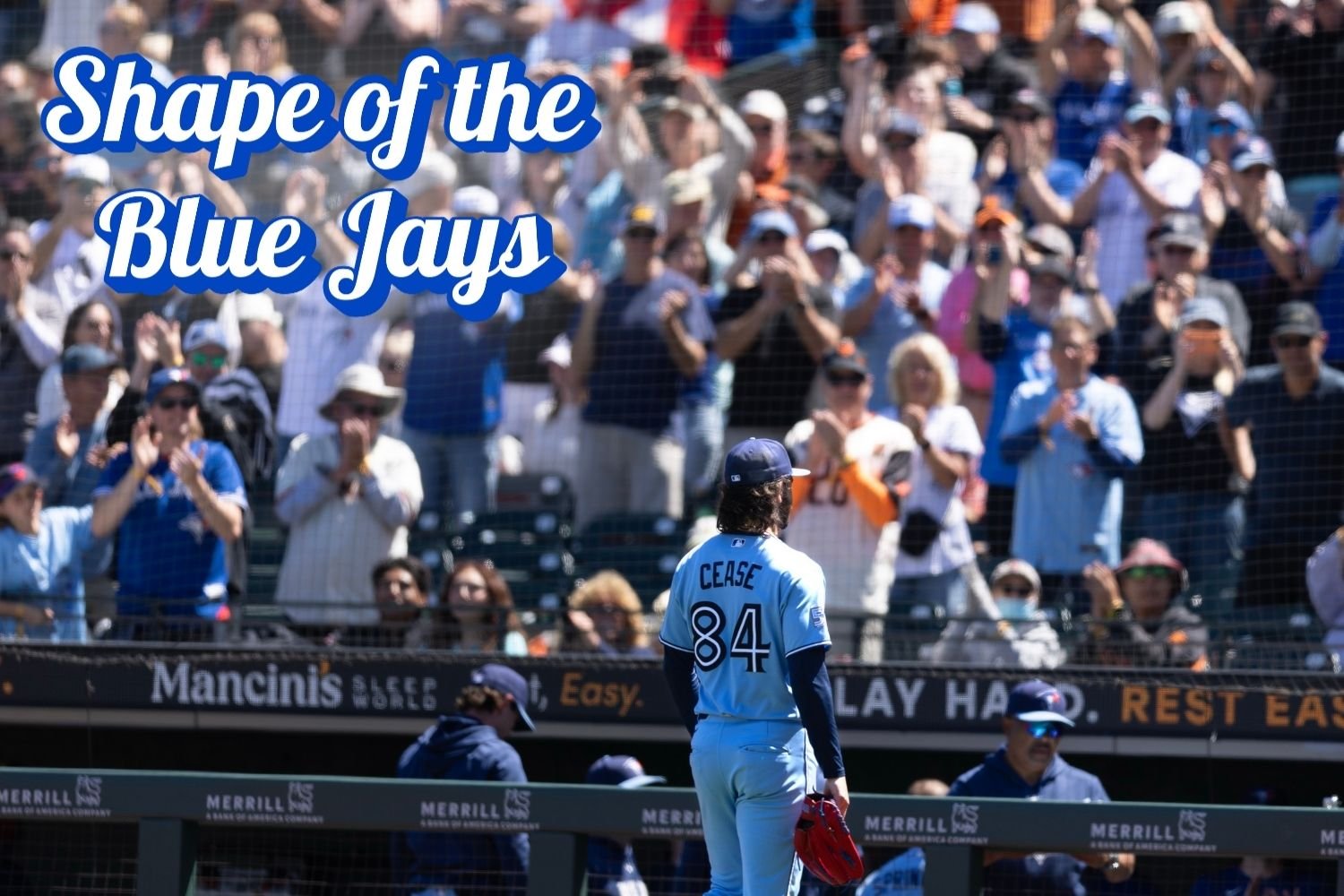 Welcome to Shape of the Blue Jays, my column where I dig into Statcast numbers to analyze recent pitch shape and swing shape trends for Toronto Blue Jays players and discuss how they have impacted their performance. Click here to read the last edition. All stats entering July 9, 2026. Quick Hits: Draft The 2026 MLB Draft starts this Saturday. The Blue Jays won't be on the clock until the 39th overall pick, and so much can happen between picks 1 and 38 that it isn't worth putting too much time into predicting the exact player they will select. However, Baseball America's draft preview podcast gave us some intel as to where they could be headed. BA's Carlos Collazo noted the Jays have had a particular affinity for players who are young for the class in their past few drafts. The acquisitions of Arjun Nimmala and JoJo Parker also indicate a liking for hit-first high school shortstops. As such, another high school hitter would make sense. Collazo listed shortstop Connor Comeau (BA's 55th-ranked draft prospect), third baseman Bo Lowrence (38), Archer Horn (51), James Clark (52), Landon Thome (57), and Taj Marchand (66) as the most logical fits for the Jays' first pick. He also mentioned Will Adams (88) as a candidate for Toronto later on. All the players listed above are high school prospects, and every one of them except for Marchand is a lefty hitter. All except for Lowrence and Adams profile as shortstops at the moment, while Horn has potential to be selected as a two-way player. Dylan Cease On Wednesday afternoon, Dylan Cease authored one of the best starts in franchise history, falling three outs short of a no-hitter in San Francisco (8+ IP, 0 R, 1 H, 11 K, 3 BB). Since returning from the IL, Cease has been money, with a 1.73 ERA and a 39.2% K rate in six starts (36 IP). He leads qualified AL starters in FIP and fWAR and is second to Cam Schlittler in ERA. Remember all the concerns about the gap between his results and peripherals in 2025? This is why baseball executives don't care about ERA. On an overall basis, Cease's usage patterns weren't out of the ordinary. The story was his pitch selection with two strikes. He used a higher percentage of changeups (22%) in two-strike counts than any other start this season against a Giants lineup that featured five lefties. The majority of these two-strike changeups went for balls, but of the four that were swung at, three were put in play for weakly-hit outs, and the other was missed. Even when it wasn't putting batters away, it was inducing harmless balls in play, which are imperative if you're going to try to throw a no-hitter. This was a statement conclusion to the first half for Cease, who is on the short list of candidates to start the All-Star Game for the AL next week in Philadelphia. Daulton Varsho Daulton Varsho got on the board with two hits against the Giants in the series finale, but he's still just 5 for his last 39. His wRC+ on the season is down to 99 after the early-July dry spell, and he's on pace for the second-lowest fWAR total in his four years as a Blue Jay. Earlier in the season, I was ambivalent about the series of adjustments he made to improve his bat-to-ball skills, but it's absolutely fair to question whether any of it was necessary given how he's tailed off the past couple weeks. Varsho's running the lowest strikeout and whiff rates, and the highest BABIP, of his career. However, he's on pace for just 14 home runs; he's never hit fewer than 18 in a full season and has been a mediocre hitter after hitting 20 homers in 71 games last year. Varsho is a notorious tinkerer, having changed various aspects of his swing every year since getting traded to Toronto. Hindsight is always 20/20, and there's still half a season to go, but it seems like a bold move to rework things in a contract year after how it all came together for him in 2025, which was the first time he was a threat to hit the fastball in a Blue Jay uniform. His xwOBA against fastballs has dipped back below .300 in 2026, thanks in part to him being late on 8% more of his swings against fastballs compared to last year. A 2.8-mph reduction in bat speed undoubtedly has something to do with that. Hitting involves constant adjustment, but is the increase in bat-to-ball worth it given the decrease in power? Jeff Hoffman You don't need me to remind you that on May 31, with the Blue Jays three outs away from climbing above .500 for the first time since April 3, Jeff Hoffman played a large part in blowing a 5-1 lead in an eventual walk-off loss in Baltimore. Did you know that since then, Hoffman has given up one earned run, struck out 15, and walked five in 13.2 innings? Some of this is positive regression. After posting BABIPs of .538 and .500 in April and May, which prompted an ominously-titled article from Davy Andrews at FanGraphs, his BABIP dropped to .160 in June and a pristine zero in July. At the same time, by xwOBAcon, the quality of batted balls he has given up has decreased over the past six weeks as well. Interestingly, Hoffman's arm angle has steadily climbed throughout the season, going from 30° in April to 35° in July as he has slightly raised his release point. This has allowed him to kill the vertical break on his slider, which is making it play up even though he's not throwing it any harder than usual: In his two July outings so far, the slider has garnered a ridiculous 83% swing-and-miss rate. According to the Stuff+ model on FanGraphs, four of Hoffman's five highest-ranked appearances sorted by Stuff+ on his slider have come in the past three weeks as this change has subtly taken effect.
 -
Welcome to Shape of the Blue Jays, my column where I dig into Statcast numbers to analyze recent pitch shape and swing shape trends for Toronto Blue Jays players and discuss how they have impacted their performance. Click here to read the last edition. Quick Hits: Farm System Check-In With the calendar turning to July, Baseball America updated their list of the top 100 prospects in baseball, as well as the top 30 in the Blue Jays system. Lefty pitching prospect Johnny King was added to the top 100 for the first time, something that evaluators around the industry saw as increasingly likely to happen over the past 6-12 months. He slots in at 82 on BA's list. Arjun Nimmala (39) is inside the top 40. JoJo Parker is at 56. BA had King, Jake Bloss, Nolan Perry, Charles McAdoo, and Danny Thompson Jr. as risers in the system. Seeing Bloss there is curious because he's gotten decimated at Triple-A this year (12.3% K rate, 7% BB rate, 4.76 HR/9), so the industry is clearly betting on the fact that his fastball velocity is into the upper 90s post-surgery. Perry was promoted to Double-A New Hampshire earlier this week and struck out seven batters while walking two in his three-inning debut on Tuesday; his meteoric rise hasn't slowed down yet. It's also unsurprising to see McAdoo here after he made his MLB debut in late May. The 2026 draft is fast approaching, and the Jays won't be on the clock until pick 39, so it's not as likely they'll acquire a blue-chipper like Trey Yesavage or JoJo Parker, who were each taken in the upper half of the first round. Yet, the changes that have occurred in this farm system since the hirings of people such as Marc Tramuta, who now leads their amateur scouting department, as well as Justin Lehr, their director of pitching, are hard to ignore. This prospect pool isn't yet one of the true elites in the game, but from a player development standpoint, the franchise is as strong as it has been in years. Kazuma Okamoto It's scary to think where the Blue Jays would be without Kazuma Okamoto, who carried their offense for large portions of June while the rest of the lineup was anemic. Okamoto hit .286 with a .913 OPS last month, and central to his success was his strong performance against breaking balls (.404 wOBA, .350 xwOBA). Gone are the days of April when it felt like he was automatically neutralized every time he saw spin. His chase, contact, and hard hit rates against breaking pitches were all better than in April and May. Kazuma Okamoto Statcast Metrics vs Breaking Balls, 2026 Month Chase% Contact% Hard Hit% Bat Speed Attack Angle Swing Tilt Early% On Time% March/April 25.6% 62.2% 26.3% 72.4 19° 31° 42% 52% May 31.9% 52.8% 33.3% 73.4 18° 30° 39% 57% June 20.3% 64.1% 40.9% 72.3 21° 33° 33% 59% It's not that Okamoto increased his output by swinging faster at breaking balls. Instead, he's been sitting back on them more, as evidenced by his swing timing stats, while also further optimizing his swing to do what he does best in general: lift and pull. Scouts who had seen him in Japan were right about him being a pull-air guy, but looking back, it's interesting that the industry considered Okamoto to be someone with good bat-to-ball and passable game power. Swinging and missing has been the only issue in his profile, and he's easily been the most consistent power threat on the team. Forecasting players from overseas is hard! Either way, the Jays are certainly happy they got Okamoto at the price they did. Spencer Miles Spencer Miles drew high praise from his manager after a brilliant bulk relief outing in the Canada Day win (3.0 IP, 0 R, 1 H, 5 K, 1 BB). John Schneider said it was the best he had ever seen Miles throw. His sinker averaged 97.5 mph, a new career-best in single-game velocity, and topped out at 99.4. The extreme heat and humidity didn't hold him back, as seven of the 10 hardest pitches he's thrown on a big-league mound came yesterday. He continues to find new levels of command with the sinker as well; it was in the zone 78% of the time and had a strike rate of 83%. It was also responsible for three of his five strikeouts, and all three were looking. Spencer Miles Sinker Strikeouts, July 1 vs NYM It takes a lot of confidence to try to dot pitches like this where Miles did yesterday. Take a look at those two sinkers on the bottom corner: One of those was to Francisco Alvarez (righty), and the other was to Jared Young (lefty). He back-doored it to a righty and front-doored it to a lefty for strikeouts in the same game. If Miles can throw this thing 99 mph with command like that, it might be one of the best pitches on the staff. Sean Keys Sean Keys fast-tracked his way to the big leagues with an unbelievable showing in Double-A and Triple-A earlier this season. He's 2 for his first 12, including an opposite-field three-run homer on Canada Day as part of a 9-3 victory. There have been five strikeouts and plenty of swing-and-miss in that small sample, but the bat tracking stats are a sight to behold. Take a look: Year Bat Speed Bat Speed 90 Swing Length Swing Tilt Attack Angle Attack Direction Intercept Point vs Batter (Y) 2026 75.1 79.2 7.4' 28° 15° 14° pull 41.9" MLB average 71.7 77.6 7.3' 32° 10° 2° pull 30.7" The early returns suggest he will have to sacrifice some of this bat speed and natural lift in order to make enough contact to stay competitive at this level. Still, the Jays' lineup, which has been one of the more light-hitting groups in the league for most of the season, undoubtedly needs more of what Keys brings to the table. The power is real, and it is threatening. Bat speed stabilizes very quickly, and both the average and upper-echelon bat speed for Keys are already up there with some of the game's elite hitters. His bat path is rather flat, but he has an open stance with a very exaggerated pull-air approach so far. It's tough to say whether the ingredients will come together fast enough for him to be an effective major league hitter this year, and some mechanical and stance changes might be in order if that's not the case, but this team needs more high-ceiling hitters like Keys, and the early bat tracking numbers back that up. All stats entering July 2, 2026. View full article
.jpg.a576879576cadba53a8856141510366c.jpg)
.jpg.3db731ed29298b6ec46a486749cd01dc.jpg)
.jpg.c3ed98f846f34925eb5471d21e178c97.jpg)
