


Matthew Creally
-
Posts
126 -
Joined
-
Last visited
Content Type
Profiles
Toronto Blue Jays Videos
2026 Toronto Blue Jays Top Prospects Ranking
Toronto Blue Jays Free Agent & Trade Rumors, Notes, & Tidbits
Guides & Resources
2025 Toronto Blue Jays Draft Pick Tracker
News
2026 Toronto Blue Jays Draft Tracker: Picks & Bonuses
Forums
Blogs
Events
Store
Downloads
Gallery
Everything posted by Matthew Creally
-
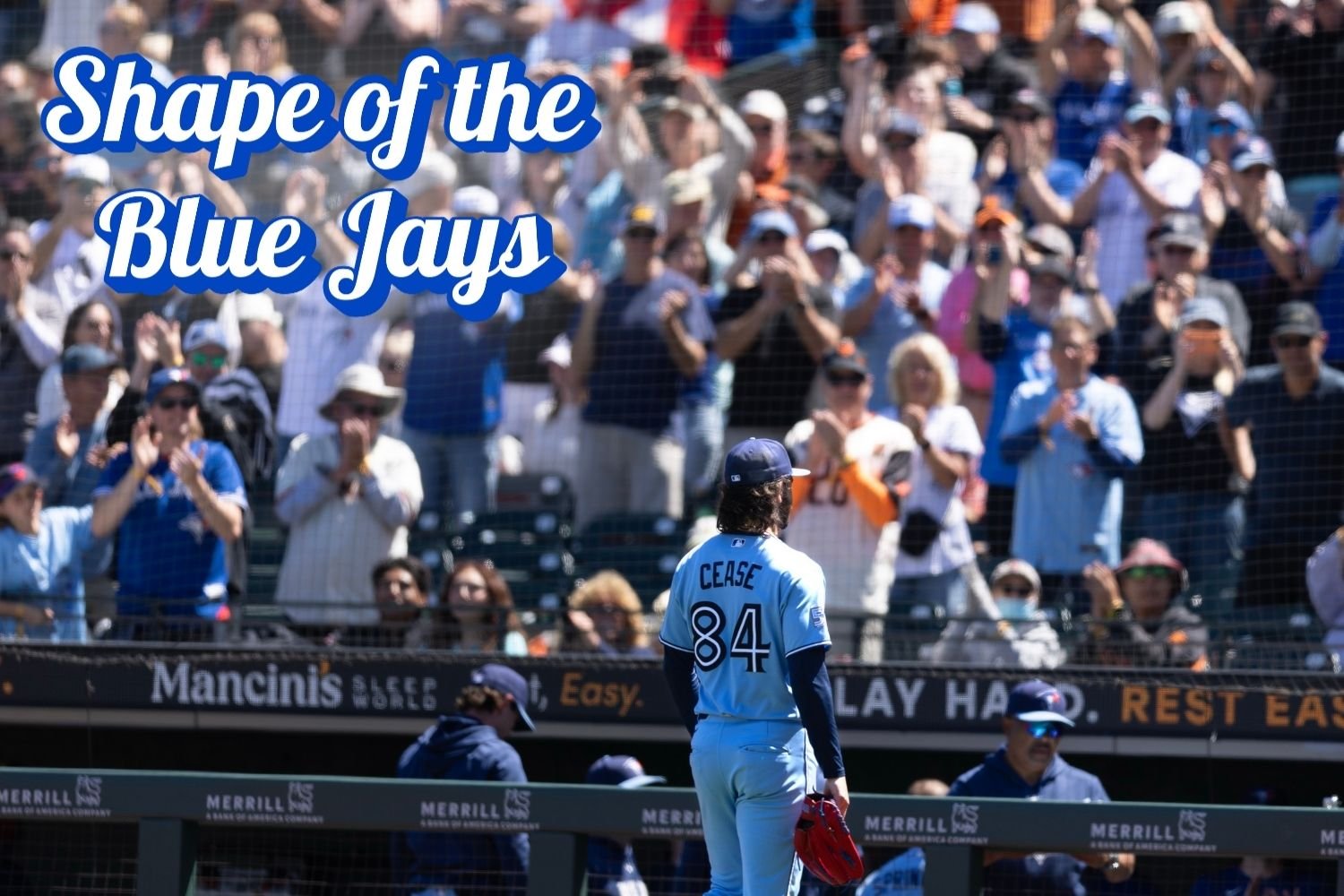 Welcome to Shape of the Blue Jays, my column where I dig into Statcast numbers to analyze recent pitch shape and swing shape trends for Toronto Blue Jays players and discuss how they have impacted their performance. Click here to read the last edition. All stats entering July 9, 2026. Quick Hits: Draft The 2026 MLB Draft starts this Saturday. The Blue Jays won't be on the clock until the 39th overall pick, and so much can happen between picks 1 and 38 that it isn't worth putting too much time into predicting the exact player they will select. However, Baseball America's draft preview podcast gave us some intel as to where they could be headed. BA's Carlos Collazo noted the Jays have had a particular affinity for players who are young for the class in their past few drafts. The acquisitions of Arjun Nimmala and JoJo Parker also indicate a liking for hit-first high school shortstops. As such, another high school hitter would make sense. Collazo listed shortstop Connor Comeau (BA's 55th-ranked draft prospect), third baseman Bo Lowrence (38), Archer Horn (51), James Clark (52), Landon Thome (57), and Taj Marchand (66) as the most logical fits for the Jays' first pick. He also mentioned Will Adams (88) as a candidate for Toronto later on. All the players listed above are high school prospects, and every one of them except for Marchand is a lefty hitter. All except for Lowrence and Adams profile as shortstops at the moment, while Horn has potential to be selected as a two-way player. Dylan Cease On Wednesday afternoon, Dylan Cease authored one of the best starts in franchise history, falling three outs short of a no-hitter in San Francisco (8+ IP, 0 R, 1 H, 11 K, 3 BB). Since returning from the IL, Cease has been money, with a 1.73 ERA and a 39.2% K rate in six starts (36 IP). He leads qualified AL starters in FIP and fWAR and is second to Cam Schlittler in ERA. Remember all the concerns about the gap between his results and peripherals in 2025? This is why baseball executives don't care about ERA. On an overall basis, Cease's usage patterns weren't out of the ordinary. The story was his pitch selection with two strikes. He used a higher percentage of changeups (22%) in two-strike counts than any other start this season against a Giants lineup that featured five lefties. The majority of these two-strike changeups went for balls, but of the four that were swung at, three were put in play for weakly-hit outs, and the other was missed. Even when it wasn't putting batters away, it was inducing harmless balls in play, which are imperative if you're going to try to throw a no-hitter. This was a statement conclusion to the first half for Cease, who is on the short list of candidates to start the All-Star Game for the AL next week in Philadelphia. Daulton Varsho Daulton Varsho got on the board with two hits against the Giants in the series finale, but he's still just 5 for his last 39. His wRC+ on the season is down to 99 after the early-July dry spell, and he's on pace for the second-lowest fWAR total in his four years as a Blue Jay. Earlier in the season, I was ambivalent about the series of adjustments he made to improve his bat-to-ball skills, but it's absolutely fair to question whether any of it was necessary given how he's tailed off the past couple weeks. Varsho's running the lowest strikeout and whiff rates, and the highest BABIP, of his career. However, he's on pace for just 14 home runs; he's never hit fewer than 18 in a full season and has been a mediocre hitter after hitting 20 homers in 71 games last year. Varsho is a notorious tinkerer, having changed various aspects of his swing every year since getting traded to Toronto. Hindsight is always 20/20, and there's still half a season to go, but it seems like a bold move to rework things in a contract year after how it all came together for him in 2025, which was the first time he was a threat to hit the fastball in a Blue Jay uniform. His xwOBA against fastballs has dipped back below .300 in 2026, thanks in part to him being late on 8% more of his swings against fastballs compared to last year. A 2.8-mph reduction in bat speed undoubtedly has something to do with that. Hitting involves constant adjustment, but is the increase in bat-to-ball worth it given the decrease in power? Jeff Hoffman You don't need me to remind you that on May 31, with the Blue Jays three outs away from climbing above .500 for the first time since April 3, Jeff Hoffman played a large part in blowing a 5-1 lead in an eventual walk-off loss in Baltimore. Did you know that since then, Hoffman has given up one earned run, struck out 15, and walked five in 13.2 innings? Some of this is positive regression. After posting BABIPs of .538 and .500 in April and May, which prompted an ominously-titled article from Davy Andrews at FanGraphs, his BABIP dropped to .160 in June and a pristine zero in July. At the same time, by xwOBAcon, the quality of batted balls he has given up has decreased over the past six weeks as well. Interestingly, Hoffman's arm angle has steadily climbed throughout the season, going from 30° in April to 35° in July as he has slightly raised his release point. This has allowed him to kill the vertical break on his slider, which is making it play up even though he's not throwing it any harder than usual: In his two July outings so far, the slider has garnered a ridiculous 83% swing-and-miss rate. According to the Stuff+ model on FanGraphs, four of Hoffman's five highest-ranked appearances sorted by Stuff+ on his slider have come in the past three weeks as this change has subtly taken effect.
 -
Welcome to Shape of the Blue Jays, my column where I dig into Statcast numbers to analyze recent pitch shape and swing shape trends for Toronto Blue Jays players and discuss how they have impacted their performance. Click here to read the last edition. Quick Hits: Farm System Check-In With the calendar turning to July, Baseball America updated their list of the top 100 prospects in baseball, as well as the top 30 in the Blue Jays system. Lefty pitching prospect Johnny King was added to the top 100 for the first time, something that evaluators around the industry saw as increasingly likely to happen over the past 6-12 months. He slots in at 82 on BA's list. Arjun Nimmala (39) is inside the top 40. JoJo Parker is at 56. BA had King, Jake Bloss, Nolan Perry, Charles McAdoo, and Danny Thompson Jr. as risers in the system. Seeing Bloss there is curious because he's gotten decimated at Triple-A this year (12.3% K rate, 7% BB rate, 4.76 HR/9), so the industry is clearly betting on the fact that his fastball velocity is into the upper 90s post-surgery. Perry was promoted to Double-A New Hampshire earlier this week and struck out seven batters while walking two in his three-inning debut on Tuesday; his meteoric rise hasn't slowed down yet. It's also unsurprising to see McAdoo here after he made his MLB debut in late May. The 2026 draft is fast approaching, and the Jays won't be on the clock until pick 39, so it's not as likely they'll acquire a blue-chipper like Trey Yesavage or JoJo Parker, who were each taken in the upper half of the first round. Yet, the changes that have occurred in this farm system since the hirings of people such as Marc Tramuta, who now leads their amateur scouting department, as well as Justin Lehr, their director of pitching, are hard to ignore. This prospect pool isn't yet one of the true elites in the game, but from a player development standpoint, the franchise is as strong as it has been in years. Kazuma Okamoto It's scary to think where the Blue Jays would be without Kazuma Okamoto, who carried their offense for large portions of June while the rest of the lineup was anemic. Okamoto hit .286 with a .913 OPS last month, and central to his success was his strong performance against breaking balls (.404 wOBA, .350 xwOBA). Gone are the days of April when it felt like he was automatically neutralized every time he saw spin. His chase, contact, and hard hit rates against breaking pitches were all better than in April and May. Kazuma Okamoto Statcast Metrics vs Breaking Balls, 2026 Month Chase% Contact% Hard Hit% Bat Speed Attack Angle Swing Tilt Early% On Time% March/April 25.6% 62.2% 26.3% 72.4 19° 31° 42% 52% May 31.9% 52.8% 33.3% 73.4 18° 30° 39% 57% June 20.3% 64.1% 40.9% 72.3 21° 33° 33% 59% It's not that Okamoto increased his output by swinging faster at breaking balls. Instead, he's been sitting back on them more, as evidenced by his swing timing stats, while also further optimizing his swing to do what he does best in general: lift and pull. Scouts who had seen him in Japan were right about him being a pull-air guy, but looking back, it's interesting that the industry considered Okamoto to be someone with good bat-to-ball and passable game power. Swinging and missing has been the only issue in his profile, and he's easily been the most consistent power threat on the team. Forecasting players from overseas is hard! Either way, the Jays are certainly happy they got Okamoto at the price they did. Spencer Miles Spencer Miles drew high praise from his manager after a brilliant bulk relief outing in the Canada Day win (3.0 IP, 0 R, 1 H, 5 K, 1 BB). John Schneider said it was the best he had ever seen Miles throw. His sinker averaged 97.5 mph, a new career-best in single-game velocity, and topped out at 99.4. The extreme heat and humidity didn't hold him back, as seven of the 10 hardest pitches he's thrown on a big-league mound came yesterday. He continues to find new levels of command with the sinker as well; it was in the zone 78% of the time and had a strike rate of 83%. It was also responsible for three of his five strikeouts, and all three were looking. Spencer Miles Sinker Strikeouts, July 1 vs NYM It takes a lot of confidence to try to dot pitches like this where Miles did yesterday. Take a look at those two sinkers on the bottom corner: One of those was to Francisco Alvarez (righty), and the other was to Jared Young (lefty). He back-doored it to a righty and front-doored it to a lefty for strikeouts in the same game. If Miles can throw this thing 99 mph with command like that, it might be one of the best pitches on the staff. Sean Keys Sean Keys fast-tracked his way to the big leagues with an unbelievable showing in Double-A and Triple-A earlier this season. He's 2 for his first 12, including an opposite-field three-run homer on Canada Day as part of a 9-3 victory. There have been five strikeouts and plenty of swing-and-miss in that small sample, but the bat tracking stats are a sight to behold. Take a look: Year Bat Speed Bat Speed 90 Swing Length Swing Tilt Attack Angle Attack Direction Intercept Point vs Batter (Y) 2026 75.1 79.2 7.4' 28° 15° 14° pull 41.9" MLB average 71.7 77.6 7.3' 32° 10° 2° pull 30.7" The early returns suggest he will have to sacrifice some of this bat speed and natural lift in order to make enough contact to stay competitive at this level. Still, the Jays' lineup, which has been one of the more light-hitting groups in the league for most of the season, undoubtedly needs more of what Keys brings to the table. The power is real, and it is threatening. Bat speed stabilizes very quickly, and both the average and upper-echelon bat speed for Keys are already up there with some of the game's elite hitters. His bat path is rather flat, but he has an open stance with a very exaggerated pull-air approach so far. It's tough to say whether the ingredients will come together fast enough for him to be an effective major league hitter this year, and some mechanical and stance changes might be in order if that's not the case, but this team needs more high-ceiling hitters like Keys, and the early bat tracking numbers back that up. All stats entering July 2, 2026. View full article
-
 Welcome to Shape of the Blue Jays, my column where I dig into Statcast numbers to analyze recent pitch shape and swing shape trends for Toronto Blue Jays players and discuss how they have impacted their performance. Click here to read the last edition. Quick Hits: Farm System Check-In With the calendar turning to July, Baseball America updated their list of the top 100 prospects in baseball, as well as the top 30 in the Blue Jays system. Lefty pitching prospect Johnny King was added to the top 100 for the first time, something that evaluators around the industry saw as increasingly likely to happen over the past 6-12 months. He slots in at 82 on BA's list. Arjun Nimmala (39) is inside the top 40. JoJo Parker is at 56. BA had King, Jake Bloss, Nolan Perry, Charles McAdoo, and Danny Thompson Jr. as risers in the system. Seeing Bloss there is curious because he's gotten decimated at Triple-A this year (12.3% K rate, 7% BB rate, 4.76 HR/9), so the industry is clearly betting on the fact that his fastball velocity is into the upper 90s post-surgery. Perry was promoted to Double-A New Hampshire earlier this week and struck out seven batters while walking two in his three-inning debut on Tuesday; his meteoric rise hasn't slowed down yet. It's also unsurprising to see McAdoo here after he made his MLB debut in late May. The 2026 draft is fast approaching, and the Jays won't be on the clock until pick 39, so it's not as likely they'll acquire a blue-chipper like Trey Yesavage or JoJo Parker, who were each taken in the upper half of the first round. Yet, the changes that have occurred in this farm system since the hirings of people such as Marc Tramuta, who now leads their amateur scouting department, as well as Justin Lehr, their director of pitching, are hard to ignore. This prospect pool isn't yet one of the true elites in the game, but from a player development standpoint, the franchise is as strong as it has been in years. Kazuma Okamoto It's scary to think where the Blue Jays would be without Kazuma Okamoto, who carried their offense for large portions of June while the rest of the lineup was anemic. Okamoto hit .286 with a .913 OPS last month, and central to his success was his strong performance against breaking balls (.404 wOBA, .350 xwOBA). Gone are the days of April when it felt like he was automatically neutralized every time he saw spin. His chase, contact, and hard hit rates against breaking pitches were all better than in April and May. Kazuma Okamoto Statcast Metrics vs Breaking Balls, 2026 Month Chase% Contact% Hard Hit% Bat Speed Attack Angle Swing Tilt Early% On Time% March/April 25.6% 62.2% 26.3% 72.4 19° 31° 42% 52% May 31.9% 52.8% 33.3% 73.4 18° 30° 39% 57% June 20.3% 64.1% 40.9% 72.3 21° 33° 33% 59% It's not that Okamoto increased his output by swinging faster at breaking balls. Instead, he's been sitting back on them more, as evidenced by his swing timing stats, while also further optimizing his swing to do what he does best in general: lift and pull. Scouts who had seen him in Japan were right about him being a pull-air guy, but looking back, it's interesting that the industry considered Okamoto to be someone with good bat-to-ball and passable game power. Swinging and missing has been the only issue in his profile, and he's easily been the most consistent power threat on the team. Forecasting players from overseas is hard! Either way, the Jays are certainly happy they got Okamoto at the price they did. Spencer Miles Spencer Miles drew high praise from his manager after a brilliant bulk relief outing in the Canada Day win (3.0 IP, 0 R, 1 H, 5 K, 1 BB). John Schneider said it was the best he had ever seen Miles throw. His sinker averaged 97.5 mph, a new career-best in single-game velocity, and topped out at 99.4. The extreme heat and humidity didn't hold him back, as seven of the 10 hardest pitches he's thrown on a big-league mound came yesterday. He continues to find new levels of command with the sinker as well; it was in the zone 78% of the time and had a strike rate of 83%. It was also responsible for three of his five strikeouts, and all three were looking. Spencer Miles Sinker Strikeouts, July 1 vs NYM It takes a lot of confidence to try to dot pitches like this where Miles did yesterday. Take a look at those two sinkers on the bottom corner: One of those was to Francisco Alvarez (righty), and the other was to Jared Young (lefty). He back-doored it to a righty and front-doored it to a lefty for strikeouts in the same game. If Miles can throw this thing 99 mph with command like that, it might be one of the best pitches on the staff. Sean Keys Sean Keys fast-tracked his way to the big leagues with an unbelievable showing in Double-A and Triple-A earlier this season. He's 2 for his first 12, including an opposite-field three-run homer on Canada Day as part of a 9-3 victory. There have been five strikeouts and plenty of swing-and-miss in that small sample, but the bat tracking stats are a sight to behold. Take a look: Year Bat Speed Bat Speed 90 Swing Length Swing Tilt Attack Angle Attack Direction Intercept Point vs Batter (Y) 2026 75.1 79.2 7.4' 28° 15° 14° pull 41.9" MLB average 71.7 77.6 7.3' 32° 10° 2° pull 30.7" The early returns suggest he will have to sacrifice some of this bat speed and natural lift in order to make enough contact to stay competitive at this level. Still, the Jays' lineup, which has been one of the more light-hitting groups in the league for most of the season, undoubtedly needs more of what Keys brings to the table. The power is real, and it is threatening. Bat speed stabilizes very quickly, and both the average and upper-echelon bat speed for Keys are already up there with some of the game's elite hitters. His bat path is rather flat, but he has an open stance with a very exaggerated pull-air approach so far. It's tough to say whether the ingredients will come together fast enough for him to be an effective major league hitter this year, and some mechanical and stance changes might be in order if that's not the case, but this team needs more high-ceiling hitters like Keys, and the early bat tracking numbers back that up. All stats entering July 2, 2026.
 -
 Welcome back to Blue Jays Clutch Plays, a recurring post that highlights the six most pivotal plays (three pitching, three hitting) from the past week of Blue Jays baseball, according to MLB's win probability model. Click here to read last week's edition. Last Monday, the Jays completed the march back to .500, their first day with a breakeven record since May 29. This was immediately followed by what could be a season-defining 6-game losing streak. The final 2 games of their series against the Astros were lost in the late innings, and 3 of the 4 losses in the demoralizing sweep at the hands of the Rangers were decided by 1 run. The offense continues to be a non-factor early in games, starting pitchers aren't delivering much length, and their season suddenly appears bleak. Thanks to all of that, this edition of Clutch Plays will examine the pivotal plays of the past week in reverse order. Here are the moments that stung the most. Pitching 3. Kevin Gausman: Wyatt Langford 3-run HR, Top 3, 6/25 (-20.6% WPA) Gausman has been a symbol of consistency and stability throughout his entire Blue Jays tenure, but in his past two starts, he hasn't looked anything like himself. He gave up a solo shot to Joc Pederson, the first batter he faced, in Thursday's opener against Texas, before leaving a slider a little too high to Wyatt Langford with a couple of men on. Langford was placed on the IL a couple days later, but with this homer, he made sure to leave his mark on this series. 2. Louis Varland: Wild Pitch, Top 9, 6/28 (-32.9% WPA) Just minutes after the Jays finally tied the game on Nathan Lukes's homer, Varland bounced a first-pitch changeup to Corey Seager. Alejandro Kirk couldn't spear it on the backhand, and even worse, couldn't find the ball as it rolled deep into foul territory to the first-base side of home. This allowed Jarred Kelenic, pinch-running for Josh Jung after his 2-out double kept the inning alive, to score all the way from second as the eventual winning run, capping off a sequence that perfectly encapsulated how things have been going in Toronto lately. 1. Braydon Fisher: Joey Loperfido 3-run HR, Top 11, 6/23 (-57.5% WPA) It's hard not to feel sympathetic for Fisher, who posted a huge 0 in the 10th inning to put the Jays in a good position to win it in the bottom half. However, the top of the order could not deliver, and Fisher had to go back out for the 11th. He struck out 2 after intentionally walking Yordan Alvarez and got to 2 strikes against Joey Loperfido, but ultimately fell one pitch short as the former Blue Jay cranked what is likely to be the highest WPA hit of the season against his old team. Hitting 3. Vladimir Guerrero Jr.: Flyout vs Logan VanWey, Bot 10, 6/23 (-13.1% WPA} Guerrero, whose OPS on the season now sits below .700 after the least productive months of his career, had many chances to deliver in a big moment for his team over the course of the past two series. This one will hurt the most. It wasn't a terrible swing on a well-located slider from Logan VanWey, but the ball harmlessly settled into Brice Matthews's glove at the edge of the track in right-center, setting into motion the events that would lead to the Jays losing in the 11th. 2. George Springer: Groundout vs Logan VanWey, Bot 10, 6/23 (-20.2% WPA) Before Guerrero's first-pitch flyout, George Springer had a chance to walk it off without even recording a hit. Things began on a promising note as he got ahead 1-0, but his ensuing swing on a VanWey slider well off the outside corner of the plate was an apt representation of how the Jays' plate discipline struggles have held them back this year. He was lucky to even make contact and in hindsight, it might've been better if he didn't. Instead, it was a slow roller to short with the infield in and an easy second out. 1. George Springer: Flyout DP vs Bryan King, Bot 8, 6/24 (-20.7% WPA) Luis Urias made a good first impression in his team debut, knocking a 2-run homer as part of a 2-hit game. The next night, though, he had a mental lapse at second base that couldn't have come in a bigger spot. With the Jays trailing 2-1 after Jeff Hoffman and Kazuma Okamoto got crossed up on a confusing pickoff play at first, Urias represented the tying run as Springer once again found himself ahead in the count. He got a middle-away fastball from Bryan King, the kind of pitch he's driven the other way to right field so many times when he's on, and drilled it into the right field corner. Cam Smith made a beautiful leaping catch at the wall, but Urias thought it dropped, and was a deer in the headlights by the time the throw came back to second.
 -
Welcome back to Blue Jays Clutch Plays, a recurring post that highlights the six most pivotal plays (three pitching, three hitting) from the past week of Blue Jays baseball, according to MLB's win probability model. Click here to read last week's edition. Last Monday, the Jays completed the march back to .500, their first day with a breakeven record since May 29. This was immediately followed by what could be a season-defining 6-game losing streak. The final 2 games of their series against the Astros were lost in the late innings, and 3 of the 4 losses in the demoralizing sweep at the hands of the Rangers were decided by 1 run. The offense continues to be a non-factor early in games, starting pitchers aren't delivering much length, and their season suddenly appears bleak. Thanks to all of that, this edition of Clutch Plays will examine the pivotal plays of the past week in reverse order. Here are the moments that stung the most. Pitching 3. Kevin Gausman: Wyatt Langford 3-run HR, Top 3, 6/25 (-20.6% WPA) Gausman has been a symbol of consistency and stability throughout his entire Blue Jays tenure, but in his past two starts, he hasn't looked anything like himself. He gave up a solo shot to Joc Pederson, the first batter he faced, in Thursday's opener against Texas, before leaving a slider a little too high to Wyatt Langford with a couple of men on. Langford was placed on the IL a couple days later, but with this homer, he made sure to leave his mark on this series. 2. Louis Varland: Wild Pitch, Top 9, 6/28 (-32.9% WPA) Just minutes after the Jays finally tied the game on Nathan Lukes's homer, Varland bounced a first-pitch changeup to Corey Seager. Alejandro Kirk couldn't spear it on the backhand, and even worse, couldn't find the ball as it rolled deep into foul territory to the first-base side of home. This allowed Jarred Kelenic, pinch-running for Josh Jung after his 2-out double kept the inning alive, to score all the way from second as the eventual winning run, capping off a sequence that perfectly encapsulated how things have been going in Toronto lately. 1. Braydon Fisher: Joey Loperfido 3-run HR, Top 11, 6/23 (-57.5% WPA) It's hard not to feel sympathetic for Fisher, who posted a huge 0 in the 10th inning to put the Jays in a good position to win it in the bottom half. However, the top of the order could not deliver, and Fisher had to go back out for the 11th. He struck out 2 after intentionally walking Yordan Alvarez and got to 2 strikes against Joey Loperfido, but ultimately fell one pitch short as the former Blue Jay cranked what is likely to be the highest WPA hit of the season against his old team. Hitting 3. Vladimir Guerrero Jr.: Flyout vs Logan VanWey, Bot 10, 6/23 (-13.1% WPA} Guerrero, whose OPS on the season now sits below .700 after the least productive months of his career, had many chances to deliver in a big moment for his team over the course of the past two series. This one will hurt the most. It wasn't a terrible swing on a well-located slider from Logan VanWey, but the ball harmlessly settled into Brice Matthews's glove at the edge of the track in right-center, setting into motion the events that would lead to the Jays losing in the 11th. 2. George Springer: Groundout vs Logan VanWey, Bot 10, 6/23 (-20.2% WPA) Before Guerrero's first-pitch flyout, George Springer had a chance to walk it off without even recording a hit. Things began on a promising note as he got ahead 1-0, but his ensuing swing on a VanWey slider well off the outside corner of the plate was an apt representation of how the Jays' plate discipline struggles have held them back this year. He was lucky to even make contact and in hindsight, it might've been better if he didn't. Instead, it was a slow roller to short with the infield in and an easy second out. 1. George Springer: Flyout DP vs Bryan King, Bot 8, 6/24 (-20.7% WPA) Luis Urias made a good first impression in his team debut, knocking a 2-run homer as part of a 2-hit game. The next night, though, he had a mental lapse at second base that couldn't have come in a bigger spot. With the Jays trailing 2-1 after Jeff Hoffman and Kazuma Okamoto got crossed up on a confusing pickoff play at first, Urias represented the tying run as Springer once again found himself ahead in the count. He got a middle-away fastball from Bryan King, the kind of pitch he's driven the other way to right field so many times when he's on, and drilled it into the right field corner. Cam Smith made a beautiful leaping catch at the wall, but Urias thought it dropped, and was a deer in the headlights by the time the throw came back to second. View full article
-
Welcome to Shape of the Blue Jays, my column where I dig into Statcast numbers to analyze recent pitch shape and swing shape trends for Toronto Blue Jays players and discuss how they have impacted their performance. Click here to read the last edition. Quick Hits: ABS Mishaps A lot of things went wrong in the Houston series, and one of them is flying under the radar due to the broader fundamental mistakes that cost the Jays in the rubber match: They got absolutely schooled by the Astros when it came to ABS challenges. Houston was a perfect 5-for-5 through 4 innings of Monday's opener, including 3-for-3 in the first inning. The Blue Jays went 0-for-2 and were out of challenges in the bottom of the 2nd. It's true that home plate umpire Bill Miller had a brutal start to the game, but the Blue Jays learned that just because the umpire isn't at his best doesn't mean it's okay to start blindly challenging every close pitch. If the top of the order is going to be lifeless and the margins are going to be thin, wasting challenges is something that will haunt them eventually. On Tuesday, the Jays were more careful, not even attempting a challenge through 7 innings. With the go-ahead run on base in a tie game in the top of the 8th, Vladimir Guerrero Jr. got a 1-0 slider from old friend Nate Pearson that was easily off the outside corner of the plate but called a strike anyway. Guerrero didn't challenge. The next batter, Jesus Sanchez, unsuccessfully challenged an obvious strike on an 0-1 fastball before striking out swinging on the very next pitch. In the finale, George Springer challenged a called third strike. It was a changeup that was in the zone by more than 3" according to Baseball Savant. Alejandro Kirk successfully overturned a ball call in the top half of the next inning at catcher, but he would lose one on a close call while hitting just a half-inning after that. Blue Jays hitters were victimized by multiple bad calls late in the game, but were unable to do anything about it thanks to their earlier mistakes, and it was an extremely fitting end to a disappointing series that the Astros won Wednesday's game on an overturned strike 3 call. Shane Bieber Bieber showcased passable stuff in his much-anticipated return to the mound. His four-seamer continued to sit in the low-90s with 19" of iVB and 11" of run compared to 18"/10" last year. He was able to mix in plenty of cutters, while the kick change that he revamped during his rehab process in 2025 got 4 whiffs on 8 swings. Unfortunately, none of that matters without good location, which is the primary reason he gave up 5 barrels, 10 hard hits (17 BBE), and 3 consecutive home runs to the Astros. He was never able to elevate the fastball, missing middle-down most of the time, while his slider was either hung or bounced with no real in-between. Only 1 of the 3 homers came on a true meatball, that being the fastball that Taylor Trammell sent into the 500 level, which perfectly illustrated why simply avoiding the heart of the plate isn't going to cut it when you don't throw hard. Command and execution have to be top-notch for a guy like Bieber. I'd be more concerned if his fastball was sitting in the high-80s, but he's going to have to do a better job of hitting his spots in his next start. Shane Bieber fastball (left) and slider (right) location, June 23 vs HOU (Statcast) Alejandro Kirk It's still very early on in the season for Kirk, which is good news as he's slashing just .222/.267/.259 since his return from the IL. His swing-and-miss and strikeout rates are slightly up compared to last year, but stop me if you've heard this before about some of his teammates: We're still waiting on the chase (+9.2% vs 2025) and batted ball quality (xwOBACON down 122 points vs 2025) to return to career norms. Interestingly, this is the most pull-oriented we've seen Kirk in his career, something he isn't doing when he's at his best. His current sample of batted balls is small enough to even out naturally in the near future, but the inflated pull rates are nonetheless backed up by his bat tracking stats. Year Bat Speed Bat Speed 90 Swing Length Swing Tilt Attack Angle Attack Direction Contact Point vs Center of Mass 2025 72.5 77.2 7.2' 24° 8° 5° oppo 30.1" 2026 70.6 74.8 7.3' 22° 7° 1° oppo 31.2" His groundballs and popups are up, a classic indicator of a guy still looking to find his timing. Brandon Valenzuela getting off to a hot start theoretically affords the Jays the ability to take things slowly with Kirk, although I'm not sure this is the sort of thing that will get better if he only plays 3-4 times per week. Trey Yesavage On Wednesday against the Astros, Yesavage threw the highest percentage of sliders (43%) we've ever seen from him in a big-league start, excluding game 5 of the World Series. His previous season-high was his last start in Boston (32%), and before that, it was two starts earlier against the Orioles (28%). This was a new culmination of a pattern that's been going on for a while now: A decreased feel for the splitter, which was used a season-low 20% of the time last night. We've also seen something like this with Kevin Gausman at times, which goes to show how important "feel" is for a pitch like the splitter. The difference last night was a loss of command on the four-seamer as well (34% zone, 45% strike), no doubt a factor behind the 5 walks he issued. Yesavage's stuff scores on the fastball have been down for about a month now, but he continues to induce batted balls at poor angles better than most pitchers in the league. Once again, my level of concern about him at this point is directly tied to how often he's in the zone, something that's more of a start-to-start thing. Regardless, as long as he has reduced confidence in the splitter, he'll still be searching for the pure dominance he has shown before. All stats entering June 25, 2026. View full article
-
Shape of the Blue Jays: Shane Bieber, Alejandro Kirk, Trey Yesavage
Matthew Creally posted an article in Blue Jays
 Welcome to Shape of the Blue Jays, my column where I dig into Statcast numbers to analyze recent pitch shape and swing shape trends for Toronto Blue Jays players and discuss how they have impacted their performance. Click here to read the last edition. Quick Hits: ABS Mishaps A lot of things went wrong in the Houston series, and one of them is flying under the radar due to the broader fundamental mistakes that cost the Jays in the rubber match: They got absolutely schooled by the Astros when it came to ABS challenges. Houston was a perfect 5-for-5 through 4 innings of Monday's opener, including 3-for-3 in the first inning. The Blue Jays went 0-for-2 and were out of challenges in the bottom of the 2nd. It's true that home plate umpire Bill Miller had a brutal start to the game, but the Blue Jays learned that just because the umpire isn't at his best doesn't mean it's okay to start blindly challenging every close pitch. If the top of the order is going to be lifeless and the margins are going to be thin, wasting challenges is something that will haunt them eventually. On Tuesday, the Jays were more careful, not even attempting a challenge through 7 innings. With the go-ahead run on base in a tie game in the top of the 8th, Vladimir Guerrero Jr. got a 1-0 slider from old friend Nate Pearson that was easily off the outside corner of the plate but called a strike anyway. Guerrero didn't challenge. The next batter, Jesus Sanchez, unsuccessfully challenged an obvious strike on an 0-1 fastball before striking out swinging on the very next pitch. In the finale, George Springer challenged a called third strike. It was a changeup that was in the zone by more than 3" according to Baseball Savant. Alejandro Kirk successfully overturned a ball call in the top half of the next inning at catcher, but he would lose one on a close call while hitting just a half-inning after that. Blue Jays hitters were victimized by multiple bad calls late in the game, but were unable to do anything about it thanks to their earlier mistakes, and it was an extremely fitting end to a disappointing series that the Astros won Wednesday's game on an overturned strike 3 call. Shane Bieber Bieber showcased passable stuff in his much-anticipated return to the mound. His four-seamer continued to sit in the low-90s with 19" of iVB and 11" of run compared to 18"/10" last year. He was able to mix in plenty of cutters, while the kick change that he revamped during his rehab process in 2025 got 4 whiffs on 8 swings. Unfortunately, none of that matters without good location, which is the primary reason he gave up 5 barrels, 10 hard hits (17 BBE), and 3 consecutive home runs to the Astros. He was never able to elevate the fastball, missing middle-down most of the time, while his slider was either hung or bounced with no real in-between. Only 1 of the 3 homers came on a true meatball, that being the fastball that Taylor Trammell sent into the 500 level, which perfectly illustrated why simply avoiding the heart of the plate isn't going to cut it when you don't throw hard. Command and execution have to be top-notch for a guy like Bieber. I'd be more concerned if his fastball was sitting in the high-80s, but he's going to have to do a better job of hitting his spots in his next start. Shane Bieber fastball (left) and slider (right) location, June 23 vs HOU (Statcast) Alejandro Kirk It's still very early on in the season for Kirk, which is good news as he's slashing just .222/.267/.259 since his return from the IL. His swing-and-miss and strikeout rates are slightly up compared to last year, but stop me if you've heard this before about some of his teammates: We're still waiting on the chase (+9.2% vs 2025) and batted ball quality (xwOBACON down 122 points vs 2025) to return to career norms. Interestingly, this is the most pull-oriented we've seen Kirk in his career, something he isn't doing when he's at his best. His current sample of batted balls is small enough to even out naturally in the near future, but the inflated pull rates are nonetheless backed up by his bat tracking stats. Year Bat Speed Bat Speed 90 Swing Length Swing Tilt Attack Angle Attack Direction Contact Point vs Center of Mass 2025 72.5 77.2 7.2' 24° 8° 5° oppo 30.1" 2026 70.6 74.8 7.3' 22° 7° 1° oppo 31.2" His groundballs and popups are up, a classic indicator of a guy still looking to find his timing. Brandon Valenzuela getting off to a hot start theoretically affords the Jays the ability to take things slowly with Kirk, although I'm not sure this is the sort of thing that will get better if he only plays 3-4 times per week. Trey Yesavage On Wednesday against the Astros, Yesavage threw the highest percentage of sliders (43%) we've ever seen from him in a big-league start, excluding game 5 of the World Series. His previous season-high was his last start in Boston (32%), and before that, it was two starts earlier against the Orioles (28%). This was a new culmination of a pattern that's been going on for a while now: A decreased feel for the splitter, which was used a season-low 20% of the time last night. We've also seen something like this with Kevin Gausman at times, which goes to show how important "feel" is for a pitch like the splitter. The difference last night was a loss of command on the four-seamer as well (34% zone, 45% strike), no doubt a factor behind the 5 walks he issued. Yesavage's stuff scores on the fastball have been down for about a month now, but he continues to induce batted balls at poor angles better than most pitchers in the league. Once again, my level of concern about him at this point is directly tied to how often he's in the zone, something that's more of a start-to-start thing. Regardless, as long as he has reduced confidence in the splitter, he'll still be searching for the pure dominance he has shown before. All stats entering June 25, 2026.
 -
Welcome back to Blue Jays Clutch Plays, a recurring post that highlights the six most pivotal plays (three pitching, three hitting) from the past week of Blue Jays baseball, according to MLB's win probability model. Click here to read last week's edition. The past few days marked the beginning of a stretch in the Blue Jays' schedule that they must take advantage of in order to firmly insert themselves into the playoff picture, and they've seized the opportunity so far. The sweep of the Red Sox in Boston marked their first road sweep of the season and their first since opening weekend against the A's. The weekend at Wrigley Field began with a Cubs rout, but a huge comeback on Saturday evened the series before a Sunday rainout cut things short. Toronto is one game under .500 after a 4-1 week, with a 10-game homestand on the horizon. Pitching 3. Spencer Miles: Nate Eaton Groundout, Bot 5, 6/17 (+10.8% WPA) The Red Sox had a week to forget in the clutch-hitting department. They left 26 men on base and went 1-for-24 with RISP over the 3 games, and their most consequential missed opportunity came with the bases loaded and two outs in the fifth inning of Wednesday night's contest. Spencer Miles came on in relief of Mason Fluharty in what was yet another bullpen game for the Blue Jays and got Nate Eaton to chop a grounder to first. Eaton turned on the afterburners up the line, but Vladimir Guerrero Jr. dove to touch the bag with the ball in his glove and end the threat. 2. Louis Varland: Michael Busch Flyout, Bot 8, 6/20 (+11.3% WPA) After the Jays roared back with eight unanswered runs to take the lead on Saturday afternoon, Fluharty got into a world of trouble, loading the bases and failing to record an out in the eighth. You know what that means? A lot of pivotal plays for Louis Varland. Shortly after a run scored on a groundball to the infield, Michael Busch came up as the go-ahead run with two outs. Varland fell behind 2-0, but Busch popped a changeup up to the left side. Myles Straw didn't have much room near the foul line but jumped up and made the catch against the wall to get out of the inning. 1. Louis Varland: Seiya Suzuki Strikeout, Bot 8, 6/20 (+13.5% WPA) One batter before Busch, it was the dangerous Seiya Suzuki up with men on the corners and one out. Even a sac fly would've sufficed for the Cubs here, and things got sketchy for Varland when he found himself down 3-1 in the count to the Chicago outfielder. He ran things full by inducing a foul ball and then got one of the uglier swings you'll see from Suzuki, who half-heartedly flailed at a knuckle curve in the dirt. This clutch pitching play of the week is the Jays' 20th-most pivotal on the season. Within that top 20, nine belong to Varland. Hitting 3. Vladimir Guerrero Jr.: RBI Single, Top 8, 6/20 (+17.4% WPA) Alejandro Kirk brought the lineup one step closer to tying things up on Saturday before Vladimir Guerrero Jr. went up and got to a fastball above the zone and punched it into center field for a base hit. George Springer scored with a head-first slide for Toronto's second run of the inning. For all the discussion about Guerrero's lack of power this season, he continues to show up in big moments for the Jays. He's been a better hitter with men on base than with the bases empty and has a 214 wRC+ in high-leverage spots. 2. Kazuma Okamoto: 3-run HR, Top 8, 6/20 (+33.9% WPA) Okamoto's 16 homers lead the team by a lot, but his go-ahead three-run blast on Saturday is the biggest of his career so far. He got a 2-1 fastball up in the zone and didn't miss it, launching it over the ivy and into the fifth row of Wrigley's famous left field bleachers. The Blue Jays haven't been coming back in games as frequently as they did a year ago, but this blast punctuated a brilliant response to what had been a tough series to that point. Sunday's rainout means they'll be able to ride its momentum for a little while longer into the coming week. 1. Brandon Valenzuela: RBI Double, Top 9, 6/18 (+39.1% WPA) If the Blue Jays truly do turn their season around, this at-bat will be talked about for a while. Brandon Valenzuela worked a nine-pitch double off the monster to score an already-in-motion Ernie Clement from first, breaking a 3-3 tie in the ninth and helping the Jays clinch the sweep. Valenzuela didn't see a single pitch slower than 98.8 mph this entire at-bat, and the one he got was a 100-mph sinker in on his hands. For his career, opponents are slugging .234 off Aroldis Chapman in full counts. Valenzuela, just moments after being on the receiving end of a fortuitous gust of wind that caused a playable popup to drop foul, became one of the few to have ever done damage on a payoff from one of the best closers ever. View full article
-
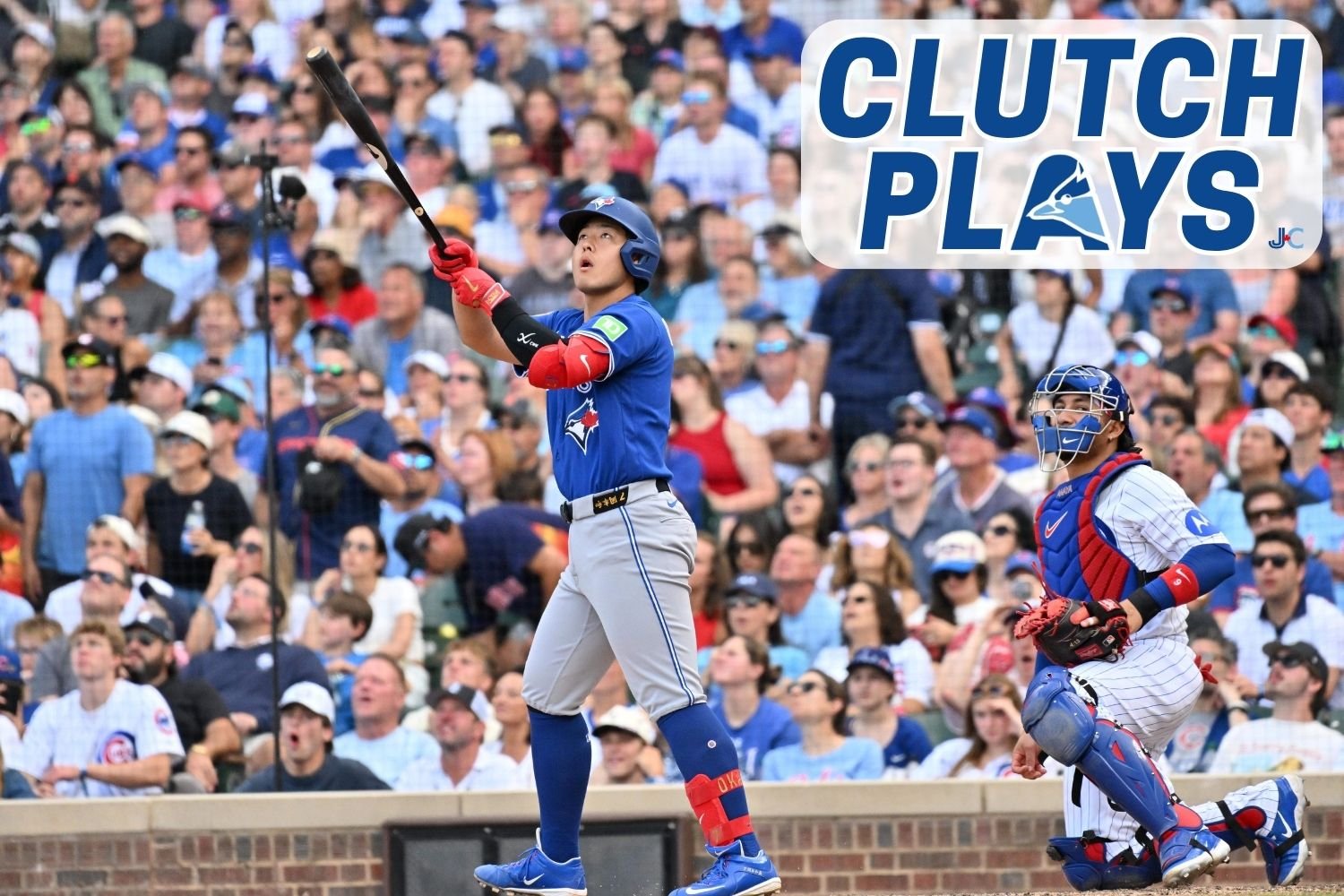 Welcome back to Blue Jays Clutch Plays, a recurring post that highlights the six most pivotal plays (three pitching, three hitting) from the past week of Blue Jays baseball, according to MLB's win probability model. Click here to read last week's edition. The past few days marked the beginning of a stretch in the Blue Jays' schedule that they must take advantage of in order to firmly insert themselves into the playoff picture, and they've seized the opportunity so far. The sweep of the Red Sox in Boston marked their first road sweep of the season and their first since opening weekend against the A's. The weekend at Wrigley Field began with a Cubs rout, but a huge comeback on Saturday evened the series before a Sunday rainout cut things short. Toronto is one game under .500 after a 4-1 week, with a 10-game homestand on the horizon. Pitching 3. Spencer Miles: Nate Eaton Groundout, Bot 5, 6/17 (+10.8% WPA) The Red Sox had a week to forget in the clutch-hitting department. They left 26 men on base and went 1-for-24 with RISP over the 3 games, and their most consequential missed opportunity came with the bases loaded and two outs in the fifth inning of Wednesday night's contest. Spencer Miles came on in relief of Mason Fluharty in what was yet another bullpen game for the Blue Jays and got Nate Eaton to chop a grounder to first. Eaton turned on the afterburners up the line, but Vladimir Guerrero Jr. dove to touch the bag with the ball in his glove and end the threat. 2. Louis Varland: Michael Busch Flyout, Bot 8, 6/20 (+11.3% WPA) After the Jays roared back with eight unanswered runs to take the lead on Saturday afternoon, Fluharty got into a world of trouble, loading the bases and failing to record an out in the eighth. You know what that means? A lot of pivotal plays for Louis Varland. Shortly after a run scored on a groundball to the infield, Michael Busch came up as the go-ahead run with two outs. Varland fell behind 2-0, but Busch popped a changeup up to the left side. Myles Straw didn't have much room near the foul line but jumped up and made the catch against the wall to get out of the inning. 1. Louis Varland: Seiya Suzuki Strikeout, Bot 8, 6/20 (+13.5% WPA) One batter before Busch, it was the dangerous Seiya Suzuki up with men on the corners and one out. Even a sac fly would've sufficed for the Cubs here, and things got sketchy for Varland when he found himself down 3-1 in the count to the Chicago outfielder. He ran things full by inducing a foul ball and then got one of the uglier swings you'll see from Suzuki, who half-heartedly flailed at a knuckle curve in the dirt. This clutch pitching play of the week is the Jays' 20th-most pivotal on the season. Within that top 20, nine belong to Varland. Hitting 3. Vladimir Guerrero Jr.: RBI Single, Top 8, 6/20 (+17.4% WPA) Alejandro Kirk brought the lineup one step closer to tying things up on Saturday before Vladimir Guerrero Jr. went up and got to a fastball above the zone and punched it into center field for a base hit. George Springer scored with a head-first slide for Toronto's second run of the inning. For all the discussion about Guerrero's lack of power this season, he continues to show up in big moments for the Jays. He's been a better hitter with men on base than with the bases empty and has a 214 wRC+ in high-leverage spots. 2. Kazuma Okamoto: 3-run HR, Top 8, 6/20 (+33.9% WPA) Okamoto's 16 homers lead the team by a lot, but his go-ahead three-run blast on Saturday is the biggest of his career so far. He got a 2-1 fastball up in the zone and didn't miss it, launching it over the ivy and into the fifth row of Wrigley's famous left field bleachers. The Blue Jays haven't been coming back in games as frequently as they did a year ago, but this blast punctuated a brilliant response to what had been a tough series to that point. Sunday's rainout means they'll be able to ride its momentum for a little while longer into the coming week. 1. Brandon Valenzuela: RBI Double, Top 9, 6/18 (+39.1% WPA) If the Blue Jays truly do turn their season around, this at-bat will be talked about for a while. Brandon Valenzuela worked a nine-pitch double off the monster to score an already-in-motion Ernie Clement from first, breaking a 3-3 tie in the ninth and helping the Jays clinch the sweep. Valenzuela didn't see a single pitch slower than 98.8 mph this entire at-bat, and the one he got was a 100-mph sinker in on his hands. For his career, opponents are slugging .234 off Aroldis Chapman in full counts. Valenzuela, just moments after being on the receiving end of a fortuitous gust of wind that caused a playable popup to drop foul, became one of the few to have ever done damage on a payoff from one of the best closers ever.
 -
Welcome to Shape of the Blue Jays, my column where I dig into Statcast numbers to analyze recent pitch shape and swing shape trends for Toronto Blue Jays players and discuss how they have impacted their performance. Click here to read the last edition. Quick Hits: Another Rising Prospect After his first taste of big league spring training was followed by a .993 OPS in 49 games at Double-A New Hampshire, Toronto's 2024 fourth-rounder Sean Keys was promoted to Triple-A Buffalo earlier this month. Keys had never played above High-A before this year and was named the 20th-best prospect in the Jays' system by Baseball America in their preseason report. In 11 games so far with the Bisons, he's continuing to lay waste to opposing pitchers, slashing .343/.465/.771 with three homers. BA has already bumped him up to 14th in the system in their latest rankings. All Triple-A parks log Statcast data, meaning Keys's advanced stats are now available to the public. Since the promotion, his 90th-percentile exit velocity is a loud 108.7 mph. His hard hit rate is at 52%, his barrel rate is 12%, and his hard-hit balls are averaging a launch angle of 16°, indicating he's making his loudest contact in the air. To achieve these incredible batted ball numbers, he's had to fork over some discipline and contact, as his chase rate is a hair above the MLB average at 29.2%, while his zone contact rate is 79.7%. It's more than worth the tradeoff, though, if he's going to do this much damage. Keys is a lefty bat who just turned 23 and is limited to the corner infield positions, which somewhat limits the chances he'll play an immediate role in the majors in 2026, unless he picks up a new position like Charles McAdoo did. Still, his progression this year has nonetheless been exciting to see. George Springer George Springer is starting to look more like himself at the plate (122 wRC+ in June). It starts with his selectivity, as his chase rate this month is down to 19.2%, a decrease of 10% compared to May and the first time he's been under 20% in a month since August of last year. His mechanics have slightly changed too. His swing length this month is down a couple of inches from his season average without any material sacrifice to his bat speed. George Springer Bat Tracking Stats, 2026 overall vs 2026 June {C}%3C!%2D%2Dtd%20%7Bborder%3A%201px%20solid%20%23cccccc%3B%7Dbr%20%7Bmso-data-placement%3Asame-cell%3B%7D%2D%2D%3E--> Sample Bat Speed Swing Length Contact Point vs Center of Mass Attack Angle Attack Direction YTD 2026 72.5 mph 7.4' 21.9" 9° 0° June 2026 72.1 mph 7.2' 18.9" 7° 5° oppo The recurring issue with Springert early in the season was similar to what we saw in his down year in 2024: too many ground balls rolled over to the pull side. He has launched a couple towering pull-side dingers this past week, with one of them being his 300th career long ball, but he's been looking to use the whole field again in an effort to move away from those slow rollers to the left side of the infield. Springer already lets the ball travel more than almost every hitter in baseball, and this month, he's doubling down on that approach and shooting more hits the other way. This approach often leads to a decrease in power output, but his recent success indicates it might be what he has to do in order to avoid an abundance of weak contact. Louis Varland After finally reminding us that he was human last week, Louis Varland went right back to dominating in the first two games of the Boston series. On Wednesday night, he struck out the side on 10 pitches, one shy of an immaculate inning. The night before, Varland had to enter a three-run game for a four-out save after Tommy Nance struggled in the eighth, adding to the increasing concerns about his workload. Despite that, his stuff looked about as good as we've ever seen it the very next day. His fastball averaged 99.8 mph, and his slider was up a couple ticks in velocity to around 94 mph while adding some vertical drop. It feels like the Blue Jays have to turn to him every day, but that hasn't stopped his average fastball velocity from increasing each month of the season. Through 40 innings this year, Varland is rocking a 0.90 ERA, 1.50 FIP, 1.99 xFIP, and 1.8 FanGraphs WAR, tied with Cade Smith for the highest reliever WAR in the AL. Among every single Blue Jays relief pitcher season in history (max. 100 IP), Tom Henke has the highest fWAR at 3.5, a mark he reached in 1986. In terms of the best ERA, it's B.J. Ryan, who had a 1.37 in 2006. Varland is on pace to match Henke's fWAR in a slightly smaller sample, and his ERA is still on the right side of 1.00. I'll keep saying it until it isn't true: Appreciate this while you can. The Jays have never had a closer this good, and it'll be a long time before the stars align like this again. Andrés Giménez Andrés Giménez's hot streak has lengthened out the lineup quite nicely (146 wRC+ in his last seven games). His ability to occasionally surprise everyone with an absolute missile off a lefty pitcher is delightful on the rare occasion it happens, and in Tuesday's series opener, he took a Payton Tolle cutter deep to Fenway's cavernous right-center field, going back-to-back with Davis Schneider for the first instance of back-to-back homers the Jays have had in 2026. On balls in play, Giménez's xwOBA against changeups and splitters is a whopping .547 so far in June. A few things stand out from his bat tracking stats of late. Giménez is standing a tad farther back in the box, and his stance is both more open (12° open in June, compared to 2° open in 2026 overall) and more upright, with a smaller gap in between his feet in recent weeks. The visual comparison below shows that his front foot is slightly offset from his back foot, something we didn't see at the start of the year, as he's facing the pitcher more directly. When he first got to Toronto and immediately opened 2025 on a productive note, his stance was more open than it was in Cleveland. Hitting is a game of constant adjustments, so it makes sense this didn't last all year, but he's trying the same thing again right now, and it's working. Andrés Giménez Batting Stance Comparison, April 2026 (left) vs June 2026 (right) All stats entering June 18, 2026 View full article
- 1 reply
-
- 2
-

-
- george springer
- louis varland
- (and 2 more)
-
 Welcome to Shape of the Blue Jays, my column where I dig into Statcast numbers to analyze recent pitch shape and swing shape trends for Toronto Blue Jays players and discuss how they have impacted their performance. Click here to read the last edition. Quick Hits: Another Rising Prospect After his first taste of big league spring training was followed by a .993 OPS in 49 games at Double-A New Hampshire, Toronto's 2024 fourth-rounder Sean Keys was promoted to Triple-A Buffalo earlier this month. Keys had never played above High-A before this year and was named the 20th-best prospect in the Jays' system by Baseball America in their preseason report. In 11 games so far with the Bisons, he's continuing to lay waste to opposing pitchers, slashing .343/.465/.771 with three homers. BA has already bumped him up to 14th in the system in their latest rankings. All Triple-A parks log Statcast data, meaning Keys's advanced stats are now available to the public. Since the promotion, his 90th-percentile exit velocity is a loud 108.7 mph. His hard hit rate is at 52%, his barrel rate is 12%, and his hard-hit balls are averaging a launch angle of 16°, indicating he's making his loudest contact in the air. To achieve these incredible batted ball numbers, he's had to fork over some discipline and contact, as his chase rate is a hair above the MLB average at 29.2%, while his zone contact rate is 79.7%. It's more than worth the tradeoff, though, if he's going to do this much damage. Keys is a lefty bat who just turned 23 and is limited to the corner infield positions, which somewhat limits the chances he'll play an immediate role in the majors in 2026, unless he picks up a new position like Charles McAdoo did. Still, his progression this year has nonetheless been exciting to see. George Springer George Springer is starting to look more like himself at the plate (122 wRC+ in June). It starts with his selectivity, as his chase rate this month is down to 19.2%, a decrease of 10% compared to May and the first time he's been under 20% in a month since August of last year. His mechanics have slightly changed too. His swing length this month is down a couple of inches from his season average without any material sacrifice to his bat speed. George Springer Bat Tracking Stats, 2026 overall vs 2026 June {C}%3C!%2D%2Dtd%20%7Bborder%3A%201px%20solid%20%23cccccc%3B%7Dbr%20%7Bmso-data-placement%3Asame-cell%3B%7D%2D%2D%3E--> Sample Bat Speed Swing Length Contact Point vs Center of Mass Attack Angle Attack Direction YTD 2026 72.5 mph 7.4' 21.9" 9° 0° June 2026 72.1 mph 7.2' 18.9" 7° 5° oppo The recurring issue with Springert early in the season was similar to what we saw in his down year in 2024: too many ground balls rolled over to the pull side. He has launched a couple towering pull-side dingers this past week, with one of them being his 300th career long ball, but he's been looking to use the whole field again in an effort to move away from those slow rollers to the left side of the infield. Springer already lets the ball travel more than almost every hitter in baseball, and this month, he's doubling down on that approach and shooting more hits the other way. This approach often leads to a decrease in power output, but his recent success indicates it might be what he has to do in order to avoid an abundance of weak contact. Louis Varland After finally reminding us that he was human last week, Louis Varland went right back to dominating in the first two games of the Boston series. On Wednesday night, he struck out the side on 10 pitches, one shy of an immaculate inning. The night before, Varland had to enter a three-run game for a four-out save after Tommy Nance struggled in the eighth, adding to the increasing concerns about his workload. Despite that, his stuff looked about as good as we've ever seen it the very next day. His fastball averaged 99.8 mph, and his slider was up a couple ticks in velocity to around 94 mph while adding some vertical drop. It feels like the Blue Jays have to turn to him every day, but that hasn't stopped his average fastball velocity from increasing each month of the season. Through 40 innings this year, Varland is rocking a 0.90 ERA, 1.50 FIP, 1.99 xFIP, and 1.8 FanGraphs WAR, tied with Cade Smith for the highest reliever WAR in the AL. Among every single Blue Jays relief pitcher season in history (max. 100 IP), Tom Henke has the highest fWAR at 3.5, a mark he reached in 1986. In terms of the best ERA, it's B.J. Ryan, who had a 1.37 in 2006. Varland is on pace to match Henke's fWAR in a slightly smaller sample, and his ERA is still on the right side of 1.00. I'll keep saying it until it isn't true: Appreciate this while you can. The Jays have never had a closer this good, and it'll be a long time before the stars align like this again. Andrés Giménez Andrés Giménez's hot streak has lengthened out the lineup quite nicely (146 wRC+ in his last seven games). His ability to occasionally surprise everyone with an absolute missile off a lefty pitcher is delightful on the rare occasion it happens, and in Tuesday's series opener, he took a Payton Tolle cutter deep to Fenway's cavernous right-center field, going back-to-back with Davis Schneider for the first instance of back-to-back homers the Jays have had in 2026. On balls in play, Giménez's xwOBA against changeups and splitters is a whopping .547 so far in June. A few things stand out from his bat tracking stats of late. Giménez is standing a tad farther back in the box, and his stance is both more open (12° open in June, compared to 2° open in 2026 overall) and more upright, with a smaller gap in between his feet in recent weeks. The visual comparison below shows that his front foot is slightly offset from his back foot, something we didn't see at the start of the year, as he's facing the pitcher more directly. When he first got to Toronto and immediately opened 2025 on a productive note, his stance was more open than it was in Cleveland. Hitting is a game of constant adjustments, so it makes sense this didn't last all year, but he's trying the same thing again right now, and it's working. Andrés Giménez Batting Stance Comparison, April 2026 (left) vs June 2026 (right) All stats entering June 18, 2026
- 1 comment
-
- 1
-
-
- george springer
- louis varland
- (and 2 more)
-
Last week, Baseball Savant released a new subset of bat tracking data to the public for the first time. MLB teams have had access to this kind of information for years, but now, fans everywhere can find out the exact distance between the ball and the bat on every single swing and miss since the 2023 All-Star Game. At the player level, it's also possible to determine the vertical and horizontal position of the bat relative to the ball at intercept, as well as the timing of the swing down to the millisecond. Owen Hill recently did a wonderful job providing a primer on these metrics here at Jays Centre. With the Blue Jays offense down in the dumps so far in 2026, I felt it was worth a deeper look at what the new data can tell us about the position players in particular. As a certified baseball nerd, I was excited to see these numbers come out, but I've been struggling more than I had hoped to best understand how to use them. Most of the content that's been posted about them has had to do with pitchers, and I feel like that might be by design. They don't appear to be correlated with any results at the hitter level, and while having access to bat position and timing helps strengthen our knowledge of swing geography and everything that goes into getting bat on ball, these data points tell us absolutely nothing about a hitter's ability to drive the ball. Pitchers inherently have way less control over how hard or far the ball goes than hitters do, so this new info accounts for a larger portion of the things that are directly within their control compared to the hitters. Still, it's part of the "why" for both sides, and there's still utility for these numbers on the hitter side on a case-by-case basis. Here are the things you need to know about bat positioning, timing, and the Toronto Blue Jays' offense in 2026. Team Before I get to individual players, there are a couple year-over-year trends I wanted to highlight at the team level. Jays hitters' miss distance is up this year on off-speed pitches (changeups & splitters) compared to 2025, meaning that on average, they're missing them by more when they swing. They made a killing in October by damaging fastballs, but they were the best offense in the league against secondary pitches in the regular season, and their regression on that front has contributed to their hitting woes this year. Blue Jays Bat Positioning vs Off-Speed, 2025-26 (Statcast) Year Miss Distance (in.) Miss Distance MLB Rank Flailed% Flailed% MLB Rank Avg. Flail Distance (in.) Flail Distance MLB Rank 2025 3.5 5 42% 4 8.3 9 2026 3.9 20 44% 9 8.8 21 As a squad, flailing at these pitches has been the main problem (ideally, they'd be centered, with the other end of the extreme being tied up). It's not so much that they're flailing more, but the distance they're missing by when they do is higher. Blue Jays Bat Positioning vs Breaking, 2025-26 (Statcast) Year Miss Distance (in.) Miss Distance MLB Rank Perfect Contact% Perfect Contact% MLB Rank 2025 4.4 6 23% 1 2026 4.7 21 20% 14 Their miss distance is also up against breaking balls – that is, sliders, sweepers, curveballs, and anything else with spin. As part of this rollout, MLB introduced a stat called perfect contact rate. A perfect swing is centered both horizontally (between tied up and flailed) and vertically (between over and under), as well as on time. A season ago, the Blue Jays had the very best perfect contact rate of any team in baseball against breaking pitches. This year, they've fallen to the middle of the pack. In all three dimensions, their swings against breaking balls have gotten worse. Players George Springer has been turning a corner in his past 25 at-bats or so, but his OPS is still in the mid-.600s, a steep drop from where he was in 2025. Breaking it down by pitch type shows he's been late more often on fastballs (four-seamers, sinkers and cutters), specifically on 20% of his swings, up from 17%. That's a difference of only 3%, but the distribution in many of these categories is quite small. If he maintained his late swing rate of 17% this year, for example, he'd be about 80 spots and 20 percentiles farther toward the other side of the leaderboard. Simultaneously, Springer's early swing rate on off-speed pitches has increased from 35% to 38%. He's later on fastballs and earlier on off-speed stuff, a classic example of that "in-between" phrase we hear hitters and broadcasters use so often to describe timing issues. George Springer Swing Timing, 2025-26 (Statcast) Year Late% Fastballs Early% Off-speed 2025 17% 35% 2026 20% 38% Meanwhile, Vladimir Guerrero Jr. has been getting under fastballs at a higher clip (28%) than last year (22%). I first mentioned this in last week's Shape of the Blue Jays column: For all the issues Guerrero has had consistently lifting the ball over the years, his 8.2% popup rate would be the highest of his career, and his popup rate against fastballs specifically hasn't been this high since 2023. It's important to remember that pure home run-hitting sluggers are trying to get a little under the ball because damage is not possible without lift. For instance, Aaron Judge and Yordan Alvarez get under fastballs more than almost every hitter in the game. Despite that, I don't think Guerrero is better when he's under the ball, given his unique high-raw power, high-contact, low-launch angle profile. Tampa's Yandy Díaz is his closest comp in that respect, and he is among the league laggards in under percentage against the fastball. The Cubs' Nico Hoerner doesn't have anything close to Guerrero's bat speed, but he's another bat-to-ball guy with a low attack angle that is almost never under fastballs and has been a consistently productive hitter for years. Vladimir Guerrero Jr. Vertical Bat Position on Fastballs, 2025-26 (Statcast) Year Under% Fastballs Popup% Fastballs 2025 22% 4.9% 2026 28% 6.1% Only 14 qualified hitters in the majors have swung over top of breaking balls more frequently than Davis Schneider this season (45% of swings). Some of the most extreme swing-and-miss guys across the league are ahead of him on that list, including Will Benson, James Outman, and Matt Wallner, while Munetaka Murakami is right behind him. This trend probably warrants further investigation, although not all the hitters on that list are over by an egregious distance on average. Schneider's under percentage on fastballs is also up from 40% to 49%, which aptly summarizes how the swing-and-miss issues have bottomed out for him. As I'm writing this, he's currently laying waste to the Red Sox, so hopefully he continues to make good on his second chance at the big leagues in 2026. Davis Schneider Vertical Bat Position, 2025-26 (Statcast) Year Under% Fastballs Over% Breaking 2025 40% 37% 2026 49% 45% The advent of precise miss distance tracking illustrates what Nathan Lukes does so well at the plate. In 2026, his average miss distance on fastballs is the lowest of any current Blue Jay at 0.8". Against off-speed pitches, it's somehow even lower at 0.7", which is quite impressive considering that the average miss distance on off-speed stuff is about 2" more than on fastballs. It will probably regress toward the mean once he plays more games, but it's a feat nonetheless. Only Myles Straw and Lenyn Sosa have a smaller miss distance against breaking balls. This all indicates that his contact ability might be the most sustainable of the many bat-to-ball weapons the Blue Jays have and speaks to the quality of at-bats he puts together for this lineup. Nathan Lukes Miss Distance, 2025-26 (Statcast) Focus Group Miss Dist. Fastballs Miss Dist. Offspeed Miss Dist. Breaking Nathan Lukes 0.8" 0.7" 2.8" MLB Average 1.3" 3.7" 4.7" I was initially surprised to see that Ernie Clement currently ranks inside the top 40 qualified hitters in terms of the percentage of swings he takes against off-speed pitches that are vertically lined up (the sweet spot between over and under). This happens on 81% of his swings on those pitches. The fact that he loves to hunt fastballs to pull in the air while also getting on plane so well against changeups and splitters, which are often used to neutralize hitters looking for velocity, is another example of what makes him such a tough out. He also does a great job minimizing flawed swings against the off-speed, which can often make hitters look silly. Flawed swings are the antithesis of perfect contact: Not centered horizontally, lined up vertically, or on time. Ernie Clement vs Off-Speed Pitches, 2025-26 (Statcast) Focus Group Lined Up% Miss Distance (in.) Flawed Swing% Ernie Clement 81% 3.2" 4% MLB Average 67% 3.7" 12% Another way to use this data is as an additional point of reference to evaluate the swing quality of switch-hitters by handedness. Brandon Valenzuela, for example, has a long swing geared for pull-side power from the left side while being a little more compact from the right side. Both versions of him have been above-average at the plate overall, and when judging his swing based on bat position and timing, it's interesting to see how his left-handed swing is quite vulnerable to breaking balls, while he doesn't seem to have that problem from the right side. Given his success against changeups this year, I wonder if righty pitchers will try to surprise him with more breaking balls than we've seen thus far. Brandon Valenzuela Swing Quality by Handedness (Statcast) Handedness Perfect Contact% Fastballs Flawed Swing% Fastballs Perfect Contact% Breaking Flawed Swing% Breaking L 25% 1% 18% 20% R 28% 2% 7% 4% I'm tempted to take matters into my own hands and take a more extensive look at how these numbers translate to results for both hitters and pitchers, given the depth of the data. The quality of publicly available information on Baseball Savant continues to impress, and it's never been a better time to be a statistically informed fan. All the metrics cited in this article can be found here. All stats entering June 16, 2026. View full article
-
Evaluating the Blue Jays' Offense Using the New Statcast Data
Matthew Creally posted an article in Blue Jays
.jpg.a83c5359c3febfc22dfe405239ba0cf2.jpg) Last week, Baseball Savant released a new subset of bat tracking data to the public for the first time. MLB teams have had access to this kind of information for years, but now, fans everywhere can find out the exact distance between the ball and the bat on every single swing and miss since the 2023 All-Star Game. At the player level, it's also possible to determine the vertical and horizontal position of the bat relative to the ball at intercept, as well as the timing of the swing down to the millisecond. Owen Hill recently did a wonderful job providing a primer on these metrics here at Jays Centre. With the Blue Jays offense down in the dumps so far in 2026, I felt it was worth a deeper look at what the new data can tell us about the position players in particular. As a certified baseball nerd, I was excited to see these numbers come out, but I've been struggling more than I had hoped to best understand how to use them. Most of the content that's been posted about them has had to do with pitchers, and I feel like that might be by design. They don't appear to be correlated with any results at the hitter level, and while having access to bat position and timing helps strengthen our knowledge of swing geography and everything that goes into getting bat on ball, these data points tell us absolutely nothing about a hitter's ability to drive the ball. Pitchers inherently have way less control over how hard or far the ball goes than hitters do, so this new info accounts for a larger portion of the things that are directly within their control compared to the hitters. Still, it's part of the "why" for both sides, and there's still utility for these numbers on the hitter side on a case-by-case basis. Here are the things you need to know about bat positioning, timing, and the Toronto Blue Jays' offense in 2026. Team Before I get to individual players, there are a couple year-over-year trends I wanted to highlight at the team level. Jays hitters' miss distance is up this year on off-speed pitches (changeups & splitters) compared to 2025, meaning that on average, they're missing them by more when they swing. They made a killing in October by damaging fastballs, but they were the best offense in the league against secondary pitches in the regular season, and their regression on that front has contributed to their hitting woes this year. Blue Jays Bat Positioning vs Off-Speed, 2025-26 (Statcast) Year Miss Distance (in.) Miss Distance MLB Rank Flailed% Flailed% MLB Rank Avg. Flail Distance (in.) Flail Distance MLB Rank 2025 3.5 5 42% 4 8.3 9 2026 3.9 20 44% 9 8.8 21 As a squad, flailing at these pitches has been the main problem (ideally, they'd be centered, with the other end of the extreme being tied up). It's not so much that they're flailing more, but the distance they're missing by when they do is higher. Blue Jays Bat Positioning vs Breaking, 2025-26 (Statcast) Year Miss Distance (in.) Miss Distance MLB Rank Perfect Contact% Perfect Contact% MLB Rank 2025 4.4 6 23% 1 2026 4.7 21 20% 14 Their miss distance is also up against breaking balls – that is, sliders, sweepers, curveballs, and anything else with spin. As part of this rollout, MLB introduced a stat called perfect contact rate. A perfect swing is centered both horizontally (between tied up and flailed) and vertically (between over and under), as well as on time. A season ago, the Blue Jays had the very best perfect contact rate of any team in baseball against breaking pitches. This year, they've fallen to the middle of the pack. In all three dimensions, their swings against breaking balls have gotten worse. Players George Springer has been turning a corner in his past 25 at-bats or so, but his OPS is still in the mid-.600s, a steep drop from where he was in 2025. Breaking it down by pitch type shows he's been late more often on fastballs (four-seamers, sinkers and cutters), specifically on 20% of his swings, up from 17%. That's a difference of only 3%, but the distribution in many of these categories is quite small. If he maintained his late swing rate of 17% this year, for example, he'd be about 80 spots and 20 percentiles farther toward the other side of the leaderboard. Simultaneously, Springer's early swing rate on off-speed pitches has increased from 35% to 38%. He's later on fastballs and earlier on off-speed stuff, a classic example of that "in-between" phrase we hear hitters and broadcasters use so often to describe timing issues. George Springer Swing Timing, 2025-26 (Statcast) Year Late% Fastballs Early% Off-speed 2025 17% 35% 2026 20% 38% Meanwhile, Vladimir Guerrero Jr. has been getting under fastballs at a higher clip (28%) than last year (22%). I first mentioned this in last week's Shape of the Blue Jays column: For all the issues Guerrero has had consistently lifting the ball over the years, his 8.2% popup rate would be the highest of his career, and his popup rate against fastballs specifically hasn't been this high since 2023. It's important to remember that pure home run-hitting sluggers are trying to get a little under the ball because damage is not possible without lift. For instance, Aaron Judge and Yordan Alvarez get under fastballs more than almost every hitter in the game. Despite that, I don't think Guerrero is better when he's under the ball, given his unique high-raw power, high-contact, low-launch angle profile. Tampa's Yandy Díaz is his closest comp in that respect, and he is among the league laggards in under percentage against the fastball. The Cubs' Nico Hoerner doesn't have anything close to Guerrero's bat speed, but he's another bat-to-ball guy with a low attack angle that is almost never under fastballs and has been a consistently productive hitter for years. Vladimir Guerrero Jr. Vertical Bat Position on Fastballs, 2025-26 (Statcast) Year Under% Fastballs Popup% Fastballs 2025 22% 4.9% 2026 28% 6.1% Only 14 qualified hitters in the majors have swung over top of breaking balls more frequently than Davis Schneider this season (45% of swings). Some of the most extreme swing-and-miss guys across the league are ahead of him on that list, including Will Benson, James Outman, and Matt Wallner, while Munetaka Murakami is right behind him. This trend probably warrants further investigation, although not all the hitters on that list are over by an egregious distance on average. Schneider's under percentage on fastballs is also up from 40% to 49%, which aptly summarizes how the swing-and-miss issues have bottomed out for him. As I'm writing this, he's currently laying waste to the Red Sox, so hopefully he continues to make good on his second chance at the big leagues in 2026. Davis Schneider Vertical Bat Position, 2025-26 (Statcast) Year Under% Fastballs Over% Breaking 2025 40% 37% 2026 49% 45% The advent of precise miss distance tracking illustrates what Nathan Lukes does so well at the plate. In 2026, his average miss distance on fastballs is the lowest of any current Blue Jay at 0.8". Against off-speed pitches, it's somehow even lower at 0.7", which is quite impressive considering that the average miss distance on off-speed stuff is about 2" more than on fastballs. It will probably regress toward the mean once he plays more games, but it's a feat nonetheless. Only Myles Straw and Lenyn Sosa have a smaller miss distance against breaking balls. This all indicates that his contact ability might be the most sustainable of the many bat-to-ball weapons the Blue Jays have and speaks to the quality of at-bats he puts together for this lineup. Nathan Lukes Miss Distance, 2025-26 (Statcast) Focus Group Miss Dist. Fastballs Miss Dist. Offspeed Miss Dist. Breaking Nathan Lukes 0.8" 0.7" 2.8" MLB Average 1.3" 3.7" 4.7" I was initially surprised to see that Ernie Clement currently ranks inside the top 40 qualified hitters in terms of the percentage of swings he takes against off-speed pitches that are vertically lined up (the sweet spot between over and under). This happens on 81% of his swings on those pitches. The fact that he loves to hunt fastballs to pull in the air while also getting on plane so well against changeups and splitters, which are often used to neutralize hitters looking for velocity, is another example of what makes him such a tough out. He also does a great job minimizing flawed swings against the off-speed, which can often make hitters look silly. Flawed swings are the antithesis of perfect contact: Not centered horizontally, lined up vertically, or on time. Ernie Clement vs Off-Speed Pitches, 2025-26 (Statcast) Focus Group Lined Up% Miss Distance (in.) Flawed Swing% Ernie Clement 81% 3.2" 4% MLB Average 67% 3.7" 12% Another way to use this data is as an additional point of reference to evaluate the swing quality of switch-hitters by handedness. Brandon Valenzuela, for example, has a long swing geared for pull-side power from the left side while being a little more compact from the right side. Both versions of him have been above-average at the plate overall, and when judging his swing based on bat position and timing, it's interesting to see how his left-handed swing is quite vulnerable to breaking balls, while he doesn't seem to have that problem from the right side. Given his success against changeups this year, I wonder if righty pitchers will try to surprise him with more breaking balls than we've seen thus far. Brandon Valenzuela Swing Quality by Handedness (Statcast) Handedness Perfect Contact% Fastballs Flawed Swing% Fastballs Perfect Contact% Breaking Flawed Swing% Breaking L 25% 1% 18% 20% R 28% 2% 7% 4% I'm tempted to take matters into my own hands and take a more extensive look at how these numbers translate to results for both hitters and pitchers, given the depth of the data. The quality of publicly available information on Baseball Savant continues to impress, and it's never been a better time to be a statistically informed fan. All the metrics cited in this article can be found here. All stats entering June 16, 2026.
Last week, Baseball Savant released a new subset of bat tracking data to the public for the first time. MLB teams have had access to this kind of information for years, but now, fans everywhere can find out the exact distance between the ball and the bat on every single swing and miss since the 2023 All-Star Game. At the player level, it's also possible to determine the vertical and horizontal position of the bat relative to the ball at intercept, as well as the timing of the swing down to the millisecond. Owen Hill recently did a wonderful job providing a primer on these metrics here at Jays Centre. With the Blue Jays offense down in the dumps so far in 2026, I felt it was worth a deeper look at what the new data can tell us about the position players in particular. As a certified baseball nerd, I was excited to see these numbers come out, but I've been struggling more than I had hoped to best understand how to use them. Most of the content that's been posted about them has had to do with pitchers, and I feel like that might be by design. They don't appear to be correlated with any results at the hitter level, and while having access to bat position and timing helps strengthen our knowledge of swing geography and everything that goes into getting bat on ball, these data points tell us absolutely nothing about a hitter's ability to drive the ball. Pitchers inherently have way less control over how hard or far the ball goes than hitters do, so this new info accounts for a larger portion of the things that are directly within their control compared to the hitters. Still, it's part of the "why" for both sides, and there's still utility for these numbers on the hitter side on a case-by-case basis. Here are the things you need to know about bat positioning, timing, and the Toronto Blue Jays' offense in 2026. Team Before I get to individual players, there are a couple year-over-year trends I wanted to highlight at the team level. Jays hitters' miss distance is up this year on off-speed pitches (changeups & splitters) compared to 2025, meaning that on average, they're missing them by more when they swing. They made a killing in October by damaging fastballs, but they were the best offense in the league against secondary pitches in the regular season, and their regression on that front has contributed to their hitting woes this year. Blue Jays Bat Positioning vs Off-Speed, 2025-26 (Statcast) Year Miss Distance (in.) Miss Distance MLB Rank Flailed% Flailed% MLB Rank Avg. Flail Distance (in.) Flail Distance MLB Rank 2025 3.5 5 42% 4 8.3 9 2026 3.9 20 44% 9 8.8 21 As a squad, flailing at these pitches has been the main problem (ideally, they'd be centered, with the other end of the extreme being tied up). It's not so much that they're flailing more, but the distance they're missing by when they do is higher. Blue Jays Bat Positioning vs Breaking, 2025-26 (Statcast) Year Miss Distance (in.) Miss Distance MLB Rank Perfect Contact% Perfect Contact% MLB Rank 2025 4.4 6 23% 1 2026 4.7 21 20% 14 Their miss distance is also up against breaking balls – that is, sliders, sweepers, curveballs, and anything else with spin. As part of this rollout, MLB introduced a stat called perfect contact rate. A perfect swing is centered both horizontally (between tied up and flailed) and vertically (between over and under), as well as on time. A season ago, the Blue Jays had the very best perfect contact rate of any team in baseball against breaking pitches. This year, they've fallen to the middle of the pack. In all three dimensions, their swings against breaking balls have gotten worse. Players George Springer has been turning a corner in his past 25 at-bats or so, but his OPS is still in the mid-.600s, a steep drop from where he was in 2025. Breaking it down by pitch type shows he's been late more often on fastballs (four-seamers, sinkers and cutters), specifically on 20% of his swings, up from 17%. That's a difference of only 3%, but the distribution in many of these categories is quite small. If he maintained his late swing rate of 17% this year, for example, he'd be about 80 spots and 20 percentiles farther toward the other side of the leaderboard. Simultaneously, Springer's early swing rate on off-speed pitches has increased from 35% to 38%. He's later on fastballs and earlier on off-speed stuff, a classic example of that "in-between" phrase we hear hitters and broadcasters use so often to describe timing issues. George Springer Swing Timing, 2025-26 (Statcast) Year Late% Fastballs Early% Off-speed 2025 17% 35% 2026 20% 38% Meanwhile, Vladimir Guerrero Jr. has been getting under fastballs at a higher clip (28%) than last year (22%). I first mentioned this in last week's Shape of the Blue Jays column: For all the issues Guerrero has had consistently lifting the ball over the years, his 8.2% popup rate would be the highest of his career, and his popup rate against fastballs specifically hasn't been this high since 2023. It's important to remember that pure home run-hitting sluggers are trying to get a little under the ball because damage is not possible without lift. For instance, Aaron Judge and Yordan Alvarez get under fastballs more than almost every hitter in the game. Despite that, I don't think Guerrero is better when he's under the ball, given his unique high-raw power, high-contact, low-launch angle profile. Tampa's Yandy Díaz is his closest comp in that respect, and he is among the league laggards in under percentage against the fastball. The Cubs' Nico Hoerner doesn't have anything close to Guerrero's bat speed, but he's another bat-to-ball guy with a low attack angle that is almost never under fastballs and has been a consistently productive hitter for years. Vladimir Guerrero Jr. Vertical Bat Position on Fastballs, 2025-26 (Statcast) Year Under% Fastballs Popup% Fastballs 2025 22% 4.9% 2026 28% 6.1% Only 14 qualified hitters in the majors have swung over top of breaking balls more frequently than Davis Schneider this season (45% of swings). Some of the most extreme swing-and-miss guys across the league are ahead of him on that list, including Will Benson, James Outman, and Matt Wallner, while Munetaka Murakami is right behind him. This trend probably warrants further investigation, although not all the hitters on that list are over by an egregious distance on average. Schneider's under percentage on fastballs is also up from 40% to 49%, which aptly summarizes how the swing-and-miss issues have bottomed out for him. As I'm writing this, he's currently laying waste to the Red Sox, so hopefully he continues to make good on his second chance at the big leagues in 2026. Davis Schneider Vertical Bat Position, 2025-26 (Statcast) Year Under% Fastballs Over% Breaking 2025 40% 37% 2026 49% 45% The advent of precise miss distance tracking illustrates what Nathan Lukes does so well at the plate. In 2026, his average miss distance on fastballs is the lowest of any current Blue Jay at 0.8". Against off-speed pitches, it's somehow even lower at 0.7", which is quite impressive considering that the average miss distance on off-speed stuff is about 2" more than on fastballs. It will probably regress toward the mean once he plays more games, but it's a feat nonetheless. Only Myles Straw and Lenyn Sosa have a smaller miss distance against breaking balls. This all indicates that his contact ability might be the most sustainable of the many bat-to-ball weapons the Blue Jays have and speaks to the quality of at-bats he puts together for this lineup. Nathan Lukes Miss Distance, 2025-26 (Statcast) Focus Group Miss Dist. Fastballs Miss Dist. Offspeed Miss Dist. Breaking Nathan Lukes 0.8" 0.7" 2.8" MLB Average 1.3" 3.7" 4.7" I was initially surprised to see that Ernie Clement currently ranks inside the top 40 qualified hitters in terms of the percentage of swings he takes against off-speed pitches that are vertically lined up (the sweet spot between over and under). This happens on 81% of his swings on those pitches. The fact that he loves to hunt fastballs to pull in the air while also getting on plane so well against changeups and splitters, which are often used to neutralize hitters looking for velocity, is another example of what makes him such a tough out. He also does a great job minimizing flawed swings against the off-speed, which can often make hitters look silly. Flawed swings are the antithesis of perfect contact: Not centered horizontally, lined up vertically, or on time. Ernie Clement vs Off-Speed Pitches, 2025-26 (Statcast) Focus Group Lined Up% Miss Distance (in.) Flawed Swing% Ernie Clement 81% 3.2" 4% MLB Average 67% 3.7" 12% Another way to use this data is as an additional point of reference to evaluate the swing quality of switch-hitters by handedness. Brandon Valenzuela, for example, has a long swing geared for pull-side power from the left side while being a little more compact from the right side. Both versions of him have been above-average at the plate overall, and when judging his swing based on bat position and timing, it's interesting to see how his left-handed swing is quite vulnerable to breaking balls, while he doesn't seem to have that problem from the right side. Given his success against changeups this year, I wonder if righty pitchers will try to surprise him with more breaking balls than we've seen thus far. Brandon Valenzuela Swing Quality by Handedness (Statcast) Handedness Perfect Contact% Fastballs Flawed Swing% Fastballs Perfect Contact% Breaking Flawed Swing% Breaking L 25% 1% 18% 20% R 28% 2% 7% 4% I'm tempted to take matters into my own hands and take a more extensive look at how these numbers translate to results for both hitters and pitchers, given the depth of the data. The quality of publicly available information on Baseball Savant continues to impress, and it's never been a better time to be a statistically informed fan. All the metrics cited in this article can be found here. All stats entering June 16, 2026. -
Welcome back to Blue Jays Clutch Plays, a recurring post that highlights the six most pivotal plays (three pitching, three hitting) from the past week of Blue Jays baseball, according to MLB's win probability model. Click here to read last week's edition. It was a week in which the Blue Jays hung tough the entire time, but they let too many opportunities slip away against the Phillies and Yankees on their way to consecutive series losses. Leaving runners on base was a constant theme once again, especially on the weekend, and the physical toll the bullpen has undergone here in the first half of the season is catching up to them in a big way. They're now 34-38 and 1.5 games back of the final Wild Card spot heading into a Fenway-Wrigley road trip. Pitching 3. Spencer Miles: Max Schuemann Fielder's Choice, Top 6, 6/14 (+10.2% WPA) Miles continued to give the Jays some extremely valuable bulk relief innings last week. He put himself in a tough spot in the sixth inning on Sunday by issuing a leadoff walk to the lightning-quick Jazz Chisholm Jr., who stole second and advanced to third on a groundout, but then Miles quickly induced a comebacker from Max Schuemann that retired Chisholm after a successful rundown play. 2. Braydon Fisher: Ryan McMahon Flyout, Top 7, 6/12 (+10.3% WPA) Things got nerve-wracking for Braydon Fisher in the seventh inning of Friday's opener against New York. After an infield hit from José Caballero loaded the bases, #8 hitter Ryan McMahon nearly took him deep to dead center for a go-ahead slam. While this ball was technically barreled up, it was hit to the wrong part of the ballpark, and after what felt like an eternity, it settled harmlessly into the glove of Myles Straw for the final out. 1. Tyler Rogers: Jasson Domínguez Groundout, Top 8, 6/13 (+11.2% WPA) This week's clutch pitching play is really an emphatic introduction to this column for Charles McAdoo, who dove for this 96-mph grounder off the bat of Jasson Domínguez and speared it beautifully on the backhand to save a run. In fact, if this ball had the legs to make it into the corner, his grab might've even saved two runs. McAdoo learning second base likely got him to the big leagues faster, but on this play, he found himself at one of the corner infield spots that clearly comes naturally to him. Hitting 3. Davis Schneider: Solo HR, Bot 7, 6/14 (+18.6% WPA) In his second game since getting called back up, Schneider got a sinker that Jake Bird left too far out over the plate and cranked it all the way over the center field wall to tie the game at three. Davis didn't see any strikes down in Triple-A Buffalo – he hit .188 with a .550 OBP in 14 games – so it's fair to wonder how many chances he actually got to work on his swing. Despite that, at 413 feet, this is the farthest ball he's hit in 2026. 2. Jesús Sánchez: Solo HR, Bot 6, 6/9 (+19.0% WPA) The Blue Jays were tasked with some of the toughest pitching matchups that a three-game regular season series could possibly offer. After Cristopher Sánchez went seven innings on Monday, it appeared that Zack Wheeler was going to do him one better until Jesús Sánchez brought his hands in and turned on an up-and-in fastball. He knocked it into the visitors' bullpen to tie the game at one, which, with the help of Dylan Cease's brilliant effort on the mound, set the table for a Blue Jays comeback and a walk-off winner. 1. Yohendrick Piñango: Single, Bot 9, 6/9 (+29.0% WPA) It was Brandon Valenzuela who recorded the game-winning single to seal Jhoan Duran's first blown save of the year on Tuesday night, but the real turning point in the ninth inning came one batter before. Yohendrick Piñango smacked Duran's 1-0 splitter into the ground at a -27° launch angle, but with Philadelphia's infield at double-play depth, it bounced into right field for a base hit and moved Myles Straw, who was already in motion, to third. Daulton Varsho would come in to pinch-run for Straw and score on Valenzuela's liner for the Jays' fourth walk-off win of the year. View full article
-
Blue Jays Clutch Plays: McAdoo's Welcome, Schneider's Return
Matthew Creally posted an article in Blue Jays
 Welcome back to Blue Jays Clutch Plays, a recurring post that highlights the six most pivotal plays (three pitching, three hitting) from the past week of Blue Jays baseball, according to MLB's win probability model. Click here to read last week's edition. It was a week in which the Blue Jays hung tough the entire time, but they let too many opportunities slip away against the Phillies and Yankees on their way to consecutive series losses. Leaving runners on base was a constant theme once again, especially on the weekend, and the physical toll the bullpen has undergone here in the first half of the season is catching up to them in a big way. They're now 34-38 and 1.5 games back of the final Wild Card spot heading into a Fenway-Wrigley road trip. Pitching 3. Spencer Miles: Max Schuemann Fielder's Choice, Top 6, 6/14 (+10.2% WPA) Miles continued to give the Jays some extremely valuable bulk relief innings last week. He put himself in a tough spot in the sixth inning on Sunday by issuing a leadoff walk to the lightning-quick Jazz Chisholm Jr., who stole second and advanced to third on a groundout, but then Miles quickly induced a comebacker from Max Schuemann that retired Chisholm after a successful rundown play. 2. Braydon Fisher: Ryan McMahon Flyout, Top 7, 6/12 (+10.3% WPA) Things got nerve-wracking for Braydon Fisher in the seventh inning of Friday's opener against New York. After an infield hit from José Caballero loaded the bases, #8 hitter Ryan McMahon nearly took him deep to dead center for a go-ahead slam. While this ball was technically barreled up, it was hit to the wrong part of the ballpark, and after what felt like an eternity, it settled harmlessly into the glove of Myles Straw for the final out. 1. Tyler Rogers: Jasson Domínguez Groundout, Top 8, 6/13 (+11.2% WPA) This week's clutch pitching play is really an emphatic introduction to this column for Charles McAdoo, who dove for this 96-mph grounder off the bat of Jasson Domínguez and speared it beautifully on the backhand to save a run. In fact, if this ball had the legs to make it into the corner, his grab might've even saved two runs. McAdoo learning second base likely got him to the big leagues faster, but on this play, he found himself at one of the corner infield spots that clearly comes naturally to him. Hitting 3. Davis Schneider: Solo HR, Bot 7, 6/14 (+18.6% WPA) In his second game since getting called back up, Schneider got a sinker that Jake Bird left too far out over the plate and cranked it all the way over the center field wall to tie the game at three. Davis didn't see any strikes down in Triple-A Buffalo – he hit .188 with a .550 OBP in 14 games – so it's fair to wonder how many chances he actually got to work on his swing. Despite that, at 413 feet, this is the farthest ball he's hit in 2026. 2. Jesús Sánchez: Solo HR, Bot 6, 6/9 (+19.0% WPA) The Blue Jays were tasked with some of the toughest pitching matchups that a three-game regular season series could possibly offer. After Cristopher Sánchez went seven innings on Monday, it appeared that Zack Wheeler was going to do him one better until Jesús Sánchez brought his hands in and turned on an up-and-in fastball. He knocked it into the visitors' bullpen to tie the game at one, which, with the help of Dylan Cease's brilliant effort on the mound, set the table for a Blue Jays comeback and a walk-off winner. 1. Yohendrick Piñango: Single, Bot 9, 6/9 (+29.0% WPA) It was Brandon Valenzuela who recorded the game-winning single to seal Jhoan Duran's first blown save of the year on Tuesday night, but the real turning point in the ninth inning came one batter before. Yohendrick Piñango smacked Duran's 1-0 splitter into the ground at a -27° launch angle, but with Philadelphia's infield at double-play depth, it bounced into right field for a base hit and moved Myles Straw, who was already in motion, to third. Daulton Varsho would come in to pinch-run for Straw and score on Valenzuela's liner for the Jays' fourth walk-off win of the year.
 -
Welcome to Shape of the Blue Jays, my column where I dig into Statcast numbers to analyze recent pitch shape and swing shape trends for Toronto Blue Jays players and discuss how they have impacted their performance. Click here to read the last edition. Quick Hits: New Statcast Drop We've talked ad nauseam at this point about Vladimir Guerrero Jr.'s power outage this season. However, Statcast just released leaderboards for a series of new metrics that show bat position at intercept earlier this week. These stats include miss distance, vertical and horizontal bat position, and timing. While most of the early content that MLB has posted in relation to these leaderboards has to do with pitchers, and early analysis shows there isn't as much correlation between a hitter's bat position and timing and overall performance as you might think, this new data uncovers a side of Guerrero's story that the public hasn't had access to until now. It shows that his timing isn't a whole lot different from the past couple seasons, nor is he getting tied up or flailing at the ball more than usual. However, the vertical position of his bat has changed for the worse. He's swinging under fastballs 28% of the time, up from 22% last year. Against breaking balls in 2025, he was swinging under the ball 12% of the time, which has gone up to 19% this year. Against off-speed pitches, that number has gone from 7% to 13%. For all the flack Guerrero gets for hitting too many groundballs, he's running the highest popup rate of his career. The balls in the air just haven't been as well-hit as in years past too. The Blue Jays have already had access to this data for a while now, but now fans at large can further isolate the root cause of what has been a puzzling season for #27. Dylan Cease Toronto's marquee free agent signing returned to the mound on Tuesday after a minimal stay on the IL and was nothing short of spectacular (6 IP, 1 ER, 3 H, 11 K, 1 BB). Dylan Cease got 29 swings and misses on the evening, the most in any big-league game since Tarik Skubal notched 32 on May 9 of last year. It's just the third time anyone has done that since 2024. Eight of those whiffs came on his new changeup, which generated nine total swings. That's an 89% miss rate! Since Philadelphia went with three strong lefties in the first four slots of their lineup (Schwarber, Harper, Marsh), it was an appropriate time to lean on that pitch. It was the second-highest single-game changeup usage we've seen from Cease on the year. I maintain a somewhat subjective stat derived from MLB's play-by-play data to evaluate pitch tunneling by calculating the standard deviation of pitch position in space at 150 milliseconds after release, or roughly the point where the hitter has to decide whether to swing. The lower the standard deviation, the more similar pitches appear mid-flight. On a per-start basis, Tuesday night was the best outing of Dylan Cease's fledgling Blue Jays tenure from a tunneling standpoint. When his command is there, and he's maximizing his arsenal, there are very few pitchers in the world that can claim to be more dangerous. Yohendrick Piñango Although he recently made another error in left field, Piñango's bat has made it nearly impossible to keep him out of the lineup for now. He's slashing .321/.345/.464 in June and hit four batted balls over 100 mph in the Phillies series alone, headlined by a 112-mph lefty-lefty double off the wall against a down-and-in sinker from Cristopher Sánchez, comfortably the best healthy pitcher on the planet until Skubal comes back this weekend. His batted ball profile isn't fully optimized, but it's still one of the best on this roster. His 90th-percentile and max exit velocities are second only to Guerrero's. Per Statcast, only Jesús Sánchez makes less weak contact. The launch angle of his hard-hit balls is averaging only 5°, and his average attack angle is only 1°, but he has the most bat speed relative to his swing length on the team. Even though he chases and misses more than the average hitter, he has seen a higher percentage of pitches ahead in the count than anyone on the team besides Myles Straw (min. 100 PA), and no Blue Jay increases his bat speed more in hitter's counts than Piñango. The projection models at FanGraphs are low on Piñango the rest of the season (~85-95 wRC+), and they suspect his playing time will be wiped out once the team is healthier, but if he keeps hitting like this, that won't be the easiest decision to make. Simeon Woods Richardson I mentioned during my recent guest appearance on the Jays Centre podcast that Simeon Woods Richardson was due for a fundamental change of some sort after getting traded to Toronto, whether it be related to his release, repertoire, or something along those lines. He was getting clobbered in Minnesota, and neither his stuff nor location was where it needed to be. I was in the building for his bulk appearance on Monday night (4 IP, 0 R, 1 H, 3 K, 0 BB) and was surprised in the moment to see just how many changes were made in such a short amount of time since the deal. Woods Richardson: release, velocity, spin, and movement, 2026 (Twins left, Blue Jays right; Baseball Scouting Lab) He added about an inch and a half of carry to his fastball, which averaged 19.4" of iVB on Monday. He also killed nearly 5" of run on his splitter, something he started to do in his last few starts with the Twins to inconsistent effect. His gyro slider, which was averaging 86 mph, sat 88-89 in the first two innings of his appearance. He also slightly shifted his over-the-top release toward the first-base side of the rubber. According to the Stuff+ model hosted on FanGraphs, his fastball was an above-average pitch in this game for the first time since June of last year. He was a tad lucky on the BABIP front, but the fact that Connor Seabold was DFA'd before him indicates the Blue Jays saw enough to keep him around for the time being. I'm quite curious as to the role Pete Walker and company played in this positive development for a young pitcher who needed something to break right. All stats entering June 11, 2026. View full article
-
Shape of the Blue Jays: Cease, Piñango, Woods Richardson
Matthew Creally posted an article in Blue Jays
 Welcome to Shape of the Blue Jays, my column where I dig into Statcast numbers to analyze recent pitch shape and swing shape trends for Toronto Blue Jays players and discuss how they have impacted their performance. Click here to read the last edition. Quick Hits: New Statcast Drop We've talked ad nauseam at this point about Vladimir Guerrero Jr.'s power outage this season. However, Statcast just released leaderboards for a series of new metrics that show bat position at intercept earlier this week. These stats include miss distance, vertical and horizontal bat position, and timing. While most of the early content that MLB has posted in relation to these leaderboards has to do with pitchers, and early analysis shows there isn't as much correlation between a hitter's bat position and timing and overall performance as you might think, this new data uncovers a side of Guerrero's story that the public hasn't had access to until now. It shows that his timing isn't a whole lot different from the past couple seasons, nor is he getting tied up or flailing at the ball more than usual. However, the vertical position of his bat has changed for the worse. He's swinging under fastballs 28% of the time, up from 22% last year. Against breaking balls in 2025, he was swinging under the ball 12% of the time, which has gone up to 19% this year. Against off-speed pitches, that number has gone from 7% to 13%. For all the flack Guerrero gets for hitting too many groundballs, he's running the highest popup rate of his career. The balls in the air just haven't been as well-hit as in years past too. The Blue Jays have already had access to this data for a while now, but now fans at large can further isolate the root cause of what has been a puzzling season for #27. Dylan Cease Toronto's marquee free agent signing returned to the mound on Tuesday after a minimal stay on the IL and was nothing short of spectacular (6 IP, 1 ER, 3 H, 11 K, 1 BB). Dylan Cease got 29 swings and misses on the evening, the most in any big-league game since Tarik Skubal notched 32 on May 9 of last year. It's just the third time anyone has done that since 2024. Eight of those whiffs came on his new changeup, which generated nine total swings. That's an 89% miss rate! Since Philadelphia went with three strong lefties in the first four slots of their lineup (Schwarber, Harper, Marsh), it was an appropriate time to lean on that pitch. It was the second-highest single-game changeup usage we've seen from Cease on the year. I maintain a somewhat subjective stat derived from MLB's play-by-play data to evaluate pitch tunneling by calculating the standard deviation of pitch position in space at 150 milliseconds after release, or roughly the point where the hitter has to decide whether to swing. The lower the standard deviation, the more similar pitches appear mid-flight. On a per-start basis, Tuesday night was the best outing of Dylan Cease's fledgling Blue Jays tenure from a tunneling standpoint. When his command is there, and he's maximizing his arsenal, there are very few pitchers in the world that can claim to be more dangerous. Yohendrick Piñango Although he recently made another error in left field, Piñango's bat has made it nearly impossible to keep him out of the lineup for now. He's slashing .321/.345/.464 in June and hit four batted balls over 100 mph in the Phillies series alone, headlined by a 112-mph lefty-lefty double off the wall against a down-and-in sinker from Cristopher Sánchez, comfortably the best healthy pitcher on the planet until Skubal comes back this weekend. His batted ball profile isn't fully optimized, but it's still one of the best on this roster. His 90th-percentile and max exit velocities are second only to Guerrero's. Per Statcast, only Jesús Sánchez makes less weak contact. The launch angle of his hard-hit balls is averaging only 5°, and his average attack angle is only 1°, but he has the most bat speed relative to his swing length on the team. Even though he chases and misses more than the average hitter, he has seen a higher percentage of pitches ahead in the count than anyone on the team besides Myles Straw (min. 100 PA), and no Blue Jay increases his bat speed more in hitter's counts than Piñango. The projection models at FanGraphs are low on Piñango the rest of the season (~85-95 wRC+), and they suspect his playing time will be wiped out once the team is healthier, but if he keeps hitting like this, that won't be the easiest decision to make. Simeon Woods Richardson I mentioned during my recent guest appearance on the Jays Centre podcast that Simeon Woods Richardson was due for a fundamental change of some sort after getting traded to Toronto, whether it be related to his release, repertoire, or something along those lines. He was getting clobbered in Minnesota, and neither his stuff nor location was where it needed to be. I was in the building for his bulk appearance on Monday night (4 IP, 0 R, 1 H, 3 K, 0 BB) and was surprised in the moment to see just how many changes were made in such a short amount of time since the deal. Woods Richardson: release, velocity, spin, and movement, 2026 (Twins left, Blue Jays right; Baseball Scouting Lab) He added about an inch and a half of carry to his fastball, which averaged 19.4" of iVB on Monday. He also killed nearly 5" of run on his splitter, something he started to do in his last few starts with the Twins to inconsistent effect. His gyro slider, which was averaging 86 mph, sat 88-89 in the first two innings of his appearance. He also slightly shifted his over-the-top release toward the first-base side of the rubber. According to the Stuff+ model hosted on FanGraphs, his fastball was an above-average pitch in this game for the first time since June of last year. He was a tad lucky on the BABIP front, but the fact that Connor Seabold was DFA'd before him indicates the Blue Jays saw enough to keep him around for the time being. I'm quite curious as to the role Pete Walker and company played in this positive development for a young pitcher who needed something to break right. All stats entering June 11, 2026.
 -
Welcome back to Blue Jays Clutch Plays, a recurring post that highlights the six most pivotal plays (three pitching, three hitting) from the past week of Blue Jays baseball, according to MLB's win probability model. Click here to read last week's edition. The Blue Jays began the week in dire straits, further spiraling from their weekend collapse in Baltimore by stumbling to losses in the first two games of their series in Atlanta. Despite facing Chris Sale on a bullpen day in the series finale, though, they pulled through to avoid the sweep and then took two of three from the Orioles at home over the weekend. After yet another uneven week in which they continued to do just enough to maintain their place in the standings, they're within two games of .500 with the Phillies coming to town on Monday. Pitching 3. Braydon Fisher: Pete Alonso Strikeout, Top 1, 6/6 (+7.7% WPA) Toronto pitchers didn't find themselves in a truly perilous situation once this week, so while none of these plays will necessarily stand out at the end of the season, it gives us a good opportunity to appreciate some moments that would otherwise fall under the radar. Braydon Fisher fanning Pete Alonso in the first inning on Saturday is a great example. After the first two batters reached and moved into scoring position, Fisher got Alonso and then Coby Mayo to navigate through the danger. 2. Connor Seabold: Blaze Alexander Force Out, Top 7, 6/7 (+9.5% WPA) MLB decided not to post a video of this force out that the Jays got on a bunt play, but we promise it happened! It also ended up playing a sizeable role in the Blue Jays escaping the seventh inning en route to the series win on Sunday. The #9 hitter, Blaze Alexander, laid down a bunt with runners on first and second with one out in a one-run game, but it backfired as Brandon Valenzuela was able to force Tyler O'Neill at third. Instead of having a second-and-third situation with one out, runners remained at first and second, which matters because... 1. Tyler Rogers: Taylor Ward GIDP, Top 7, 6/7 (+17.5% WPA) ...Tyler Rogers came in and promptly induced an inning-ending double play. Here, Taylor Ward fell behind 0-2 on a couple of sinkers but laid off a couple of sliders to stay alive. So, Rogers went right back to the bowling-ball sinker, and Ward topped it, spinning it to Ernie Clement at second to start the 4-6-3. Rogers would get two more outs in relief in the eighth as well. Hitting 3. Kazuma Okamoto: 2-run HR, Top 2, 6/2 (+18.2% WPA) This is the one big knock the Jays managed against Bryce Elder in Tuesday night's loss to the Braves. With the runner in motion at first on the payoff pitch, Kazuma Okamoto got a sinker that Elder left a little too high over the outer half of the plate and launched it the other way into the seats in front of Atlanta's signature Chop House to tie the game. 2. Brandon Valenzuela: 2-run HR, Bot 5, 6/5 (+23.4% WPA) Valenzuela has turned into a revelation at catcher. The rookie backstop is on fire with the bat in his hands, and on Friday night, he punished a hanging breaking ball that Brandon Young visibly regretted as soon as it left his hand. Things would unravel soon after this in the only game the Jays lost over the weekend, but Valenzuela is now up to seven home runs after adding a blast on Sunday and leads Toronto position players in fWAR. 1. Ernie Clement: 3-run HR, Bot 3, 6/6 (+26.1% WPA) Clement was in the middle of everything during the Jays' consecutive wins against the Orioles on Saturday and Sunday. He got a hanging breaker himself here from Kyle Bradish, and while he didn't hit it that hard or far, he did what he does best: caught the ball out front and pulled it. Baltimore made it close later on but failed to regain the lead as this homer broke the game open and paved the way for Toronto to tie, and eventually win, the series. View full article
-
 Welcome back to Blue Jays Clutch Plays, a recurring post that highlights the six most pivotal plays (three pitching, three hitting) from the past week of Blue Jays baseball, according to MLB's win probability model. Click here to read last week's edition. The Blue Jays began the week in dire straits, further spiraling from their weekend collapse in Baltimore by stumbling to losses in the first two games of their series in Atlanta. Despite facing Chris Sale on a bullpen day in the series finale, though, they pulled through to avoid the sweep and then took two of three from the Orioles at home over the weekend. After yet another uneven week in which they continued to do just enough to maintain their place in the standings, they're within two games of .500 with the Phillies coming to town on Monday. Pitching 3. Braydon Fisher: Pete Alonso Strikeout, Top 1, 6/6 (+7.7% WPA) Toronto pitchers didn't find themselves in a truly perilous situation once this week, so while none of these plays will necessarily stand out at the end of the season, it gives us a good opportunity to appreciate some moments that would otherwise fall under the radar. Braydon Fisher fanning Pete Alonso in the first inning on Saturday is a great example. After the first two batters reached and moved into scoring position, Fisher got Alonso and then Coby Mayo to navigate through the danger. 2. Connor Seabold: Blaze Alexander Force Out, Top 7, 6/7 (+9.5% WPA) MLB decided not to post a video of this force out that the Jays got on a bunt play, but we promise it happened! It also ended up playing a sizeable role in the Blue Jays escaping the seventh inning en route to the series win on Sunday. The #9 hitter, Blaze Alexander, laid down a bunt with runners on first and second with one out in a one-run game, but it backfired as Brandon Valenzuela was able to force Tyler O'Neill at third. Instead of having a second-and-third situation with one out, runners remained at first and second, which matters because... 1. Tyler Rogers: Taylor Ward GIDP, Top 7, 6/7 (+17.5% WPA) ...Tyler Rogers came in and promptly induced an inning-ending double play. Here, Taylor Ward fell behind 0-2 on a couple of sinkers but laid off a couple of sliders to stay alive. So, Rogers went right back to the bowling-ball sinker, and Ward topped it, spinning it to Ernie Clement at second to start the 4-6-3. Rogers would get two more outs in relief in the eighth as well. Hitting 3. Kazuma Okamoto: 2-run HR, Top 2, 6/2 (+18.2% WPA) This is the one big knock the Jays managed against Bryce Elder in Tuesday night's loss to the Braves. With the runner in motion at first on the payoff pitch, Kazuma Okamoto got a sinker that Elder left a little too high over the outer half of the plate and launched it the other way into the seats in front of Atlanta's signature Chop House to tie the game. 2. Brandon Valenzuela: 2-run HR, Bot 5, 6/5 (+23.4% WPA) Valenzuela has turned into a revelation at catcher. The rookie backstop is on fire with the bat in his hands, and on Friday night, he punished a hanging breaking ball that Brandon Young visibly regretted as soon as it left his hand. Things would unravel soon after this in the only game the Jays lost over the weekend, but Valenzuela is now up to seven home runs after adding a blast on Sunday and leads Toronto position players in fWAR. 1. Ernie Clement: 3-run HR, Bot 3, 6/6 (+26.1% WPA) Clement was in the middle of everything during the Jays' consecutive wins against the Orioles on Saturday and Sunday. He got a hanging breaker himself here from Kyle Bradish, and while he didn't hit it that hard or far, he did what he does best: caught the ball out front and pulled it. Baltimore made it close later on but failed to regain the lead as this homer broke the game open and paved the way for Toronto to tie, and eventually win, the series.
 -
Welcome to Shape of the Blue Jays, my column where I dig into Statcast numbers to analyze recent pitch shape and swing shape trends for Toronto Blue Jays players and discuss how they have impacted their performance. Click here to read the last edition. Quick Hits: Welcome Back Desperate for anyone who can cover innings, the Blue Jays got the recently-DFA'd Simeon Woods Richardson from the Twins for cash considerations earlier this week. The Jays first acquired Woods Richardson from the Mets in the Marcus Stroman trade and later sent him to Minnesota in the José Berríos trade. He was a serviceable back-end starter in 2025, but 2026 has been an utter disaster for him so far (7.74 ERA, 5.86 xERA, 5.90 xFIP, 0.4% K-BB). SWR returns to the Blue Jays with an over-the-top delivery, a high-carry mid-90s fastball, a mid-to-high 80s splitter, a mid-80s gyro slider, and a show-me two-plane curveball. I wonder if we're going to see Pete Walker and company help him experiment with some things. None of his pitches grade out well according to stuff models, he hasn't missed any bats this year, and his command has faltered lately too. He's only 25, so it's an interesting reclamation project, but opponents are slugging over .600 against the splitter, which he first introduced last year after coming up with a changeup. Neither the slider nor the splitter seems to tunnel well with the fastball, and his old changeup had virtually no separation from the heater in the first place. Whether it's a change in arm angle or repertoire, or he can discover a new pitch grip, here's hoping he can get back on track with Toronto because they need healthy pitchers urgently. Nathan Lukes The beat goes on for Nathan Lukes, whose late-April momentum was not disrupted by the hamstring pull that sent him to the IL. He's slashing .455/.526/.606 since his return, and he hit his first homer of the season on Wednesday in Atlanta. This season, he has shifted his attack direction a couple degrees toward the pull side and moved a touch farther back in the box, and he's catching the ball just a little farther out front in front of his body. This is having a positive effect on his batted ball profile, as he's trading groundballs for line drives and pulling more, especially in the air. Nathan Lukes Batted Ball Profile, 2025-26 Year GB% FB% Pull% Pull Air% 2025 46.7% 23.4% 31.7% 14.2% 2026 41.3% 20.0% 37.3% 22.7% For a guy with elite bat-to-ball and without threatening bat speed or exit velocities, it's imperative to optimize the distribution of batted balls. Lukes's power numbers should see a slight bump with this series of minor adjustments, which makes his sparkling contact and strikeout rates play up even more. In a season where everybody from the Blue Jays' logjam of lefty-hitting outfielders has struggled to truly rise head-and-shoulders above the pack, Lukes is continuing to get it done. Chad Dallas Chad Dallas earned the win in a successful big-league debut during the series finale against the Braves (3.2 IP, 1 ER, 2 H, 2 K, 2 BB). His unique ability to spin the ball was on full display, as 93% of the pitches he threw were cutters, sweepers, and curveballs. The sweeper returned a beautiful 44% swing-and-miss rate, and it was also in the zone more than any of his other pitch types. It averaged 84 mph, 1.8" of drop, and 14.9" of glove-side movement, slightly less cut than we saw with the minor league ball. Still, this combination of drop and glove-side action is hard to find. It's little wonder he threw it 50% of the time to righties. per Baseball Savant To lefties, he leaned on the cutter-curveball combination. He struggled with his cutter command, as its 33% zone rate is more typical for secondary pitches with tons of movement, but it did generate plenty of weak contact. Overall, Dallas induced 11 batted balls, only four of which were hard-hit. An outlier movement profile like this might give him a little more margin for error in terms of location, even though he lacks velocity. Note: The Blue Jays optioned Dallas this afternoon to activate Woods Richardson. Charles McAdoo Charles McAdoo is 3-for-11 with two singles and a homer in his first taste of big league action. Baseball America gave McAdoo 55-grade raw power and 50-grade running, but only a 30-grade hit tool, in their preseason report. As I discussed on the Jays Centre podcast, however, he crept up the Jays' prospect rankings after a strong start to the season that saw him sacrifice some power for a more well-rounded offensive profile. This tradeoff isn't always worth it, but for someone like McAdoo, who had substantial swing-and-miss issues in the minors, it seems like the right move. Charles McAdoo Swing Mechanics, 2026 Bat Speed Swing Length Contact Point vs Center of Mass Stance Angle Attack Angle Attack Direction 71.8 7' 22.7" 14° close 4° 6° oppo His combination of average bat speed with a shorter-than-average swing makes for a more explosive bat than bat speed alone might indicate. By closing himself off and letting the ball travel more than most hitters (league-average contact point is about 6" farther out front than this), he gives himself a better chance to make contact (92.3% zone contact so far). It'll make him more prone to grounders, but more than half of his batted balls have been hard-hit. So far, the adjustment has been worth making. All stats entering June 5, 2026. View full article
-
 Welcome to Shape of the Blue Jays, my column where I dig into Statcast numbers to analyze recent pitch shape and swing shape trends for Toronto Blue Jays players and discuss how they have impacted their performance. Click here to read the last edition. Quick Hits: Welcome Back Desperate for anyone who can cover innings, the Blue Jays got the recently-DFA'd Simeon Woods Richardson from the Twins for cash considerations earlier this week. The Jays first acquired Woods Richardson from the Mets in the Marcus Stroman trade and later sent him to Minnesota in the José Berríos trade. He was a serviceable back-end starter in 2025, but 2026 has been an utter disaster for him so far (7.74 ERA, 5.86 xERA, 5.90 xFIP, 0.4% K-BB). SWR returns to the Blue Jays with an over-the-top delivery, a high-carry mid-90s fastball, a mid-to-high 80s splitter, a mid-80s gyro slider, and a show-me two-plane curveball. I wonder if we're going to see Pete Walker and company help him experiment with some things. None of his pitches grade out well according to stuff models, he hasn't missed any bats this year, and his command has faltered lately too. He's only 25, so it's an interesting reclamation project, but opponents are slugging over .600 against the splitter, which he first introduced last year after coming up with a changeup. Neither the slider nor the splitter seems to tunnel well with the fastball, and his old changeup had virtually no separation from the heater in the first place. Whether it's a change in arm angle or repertoire, or he can discover a new pitch grip, here's hoping he can get back on track with Toronto because they need healthy pitchers urgently. Nathan Lukes The beat goes on for Nathan Lukes, whose late-April momentum was not disrupted by the hamstring pull that sent him to the IL. He's slashing .455/.526/.606 since his return, and he hit his first homer of the season on Wednesday in Atlanta. This season, he has shifted his attack direction a couple degrees toward the pull side and moved a touch farther back in the box, and he's catching the ball just a little farther out front in front of his body. This is having a positive effect on his batted ball profile, as he's trading groundballs for line drives and pulling more, especially in the air. Nathan Lukes Batted Ball Profile, 2025-26 Year GB% FB% Pull% Pull Air% 2025 46.7% 23.4% 31.7% 14.2% 2026 41.3% 20.0% 37.3% 22.7% For a guy with elite bat-to-ball and without threatening bat speed or exit velocities, it's imperative to optimize the distribution of batted balls. Lukes's power numbers should see a slight bump with this series of minor adjustments, which makes his sparkling contact and strikeout rates play up even more. In a season where everybody from the Blue Jays' logjam of lefty-hitting outfielders has struggled to truly rise head-and-shoulders above the pack, Lukes is continuing to get it done. Chad Dallas Chad Dallas earned the win in a successful big-league debut during the series finale against the Braves (3.2 IP, 1 ER, 2 H, 2 K, 2 BB). His unique ability to spin the ball was on full display, as 93% of the pitches he threw were cutters, sweepers, and curveballs. The sweeper returned a beautiful 44% swing-and-miss rate, and it was also in the zone more than any of his other pitch types. It averaged 84 mph, 1.8" of drop, and 14.9" of glove-side movement, slightly less cut than we saw with the minor league ball. Still, this combination of drop and glove-side action is hard to find. It's little wonder he threw it 50% of the time to righties. per Baseball Savant To lefties, he leaned on the cutter-curveball combination. He struggled with his cutter command, as its 33% zone rate is more typical for secondary pitches with tons of movement, but it did generate plenty of weak contact. Overall, Dallas induced 11 batted balls, only four of which were hard-hit. An outlier movement profile like this might give him a little more margin for error in terms of location, even though he lacks velocity. Note: The Blue Jays optioned Dallas this afternoon to activate Woods Richardson. Charles McAdoo Charles McAdoo is 3-for-11 with two singles and a homer in his first taste of big league action. Baseball America gave McAdoo 55-grade raw power and 50-grade running, but only a 30-grade hit tool, in their preseason report. As I discussed on the Jays Centre podcast, however, he crept up the Jays' prospect rankings after a strong start to the season that saw him sacrifice some power for a more well-rounded offensive profile. This tradeoff isn't always worth it, but for someone like McAdoo, who had substantial swing-and-miss issues in the minors, it seems like the right move. Charles McAdoo Swing Mechanics, 2026 Bat Speed Swing Length Contact Point vs Center of Mass Stance Angle Attack Angle Attack Direction 71.8 7' 22.7" 14° close 4° 6° oppo His combination of average bat speed with a shorter-than-average swing makes for a more explosive bat than bat speed alone might indicate. By closing himself off and letting the ball travel more than most hitters (league-average contact point is about 6" farther out front than this), he gives himself a better chance to make contact (92.3% zone contact so far). It'll make him more prone to grounders, but more than half of his batted balls have been hard-hit. So far, the adjustment has been worth making. All stats entering June 5, 2026.
 -
June is upon us. The days are at their longest, and it's sort of a sweet spot in the year where we here at Jays Centre no longer have to litter every article with the words "it's still early," but it also isn't quite crunch time either. The Blue Jays have yet to consistently start winning, but the AL is still terrible, the weather in southern Ontario has been nothing short of spectacular, and there's lots to learn about the remainder of the season. Like many of you, I began the month of June by letting out a tremendous cackle after hearing that Louis Varland somehow didn't win Reliever of the Month. Just before that, though, I was checking in on some 365-day leaderboards over at FanGraphs. The calendar turning reminded me that looking at player stats at the season level can be considered arbitrary. It's also worth noting that it has now been a full calendar year since the Jays started to get hot and begin their glorious march to the AL pennant. 365-day leaderboards tell us about the best players in the league over the past year, something that multi-season leaderboards don't quite capture. As I was scanning the batting leaders since June 2 of last year, I found something that I had to stare at for a while just to make sure I was seeing it properly. Before I go any further, I'll emphasize that I'd like to consider myself a rational baseball fan who gathers facts and uses logic, rather than reactive emotion, to form opinions. As such, I've grown to detest things like the blind side-by-side player stat comparisons that are often seen on social media. They lack context and are mostly posted to get a reaction. However, after looking at these leaderboards, I just couldn't resist despite my best efforts. I apologize profusely. Below is a comparison of offensive stats since June 2, 2025, for two position players. Hopefully the Only Blind Player Comparison I Will Ever Share Player GP PA AVG OBP SLG HR wRC+ K% BB% Player A 156 668 .297 .380 .448 18 132 11.8% 11.1% Player B 149 564 .282 .372 .455 17 131 15.1% 12.2% As you likely surmised by the title, one of these guys is Vladimir Guerrero Jr. He is player A. Player B is Spencer Horwitz. I'll be the first to admit this is narrative-ball at its finest. Like I said before, context matters. Guerrero has proven to be an above-average hitter against lefties and righties, but the former Blue Jay Horwitz, a lefty, has historically been pretty bad against left-handed pitching, and while he isn't in a strict platoon role, he doesn't always start when a lefty pitcher is on the mound. Guerrero is also blessed with more physical gifts. He hits the ball very hard and almost never strikes out. His raw talent means he'll likely begin his physical downturn later in his career, and it'll probably be a more graceful decline than Horwitz's. Another aspect of this that's hard to quantify is Guerrero's reputation internationally, especially in his native Dominican Republic. The Blue Jays owe a considerable portion of their fanbase, as well as their status in the eyes of future free agents, to #27. He does more for the organization than you might think just by being here. This is all a long-winded way of saying yes, I'd rather have Vladimir Guerrero Jr. than Spencer Horwitz. But I also don't think I'm crazy to suggest there should be more separation between him and Horwitz in their most recent full-season sample of non-playoff games. According to Spotrac, Guerrero is making a little more than $40M this year, the first season of his record-breaking 14-year, $500M extension. Meanwhile, Horwitz is still a year away from being eligible for arbitration, so he's only making $802K. There is, though, the elephant in the room. The playoffs. As my editor Leo Morgenstern rightfully pointed out to me, if you include the postseason, Guerrero ranks among the top 15 in wOBA and OPS among all MLB hitters over the past 365 days (min. 500 PA). That's what you want out of your franchise cornerstone, plain and simple. Anyone's one-year performance will look worse if you omit their best stretch from consideration, and for him, that came in October. He shouldn't be punished for that, but the fact remains that for an entire year, his regular-season offensive performance has been nearly indistinguishable from the guy he was blocking on the depth chart not too long ago. Why is that the case? Well, Guerrero's worst regular-season stretch of the past year was, by a mile, his most recent: May 2026. As I write this, his pristine .390 OBP exceeds his mind-boggling .387 SLG. Where he has gone astray this year is a perfect encapsulation of the Jays' offensive regression from last year: He's chasing more. The 2025 squad was famous for their ability to get bat on ball, but make no mistake, their true standout quality was hitting for enough power to make that mean something. When you chase more, you're in worse counts. When you're in worse counts, you get less to hit. Vladimir Guerrero Jr.'s Power Outage Is a Byproduct of His Swing Decisions Year Chase% Chase Contact% Early-Count Swing% % Ahead in Count % Behind in Count Hard-Hit% Barrel% 2025 21.5% 61.7% 33.0% 26.1% 31.4% 50.7% 12.2% 2026 31.2% 73.7% 40.7% 22.4% 36.4% 44.2% 6.8% Sure, it would be great if he started lifting the ball all of a sudden, but he's now in his eighth full season in the majors with over 1,000 games of experience. If he hasn't figured out how to push his attack angle above 3° by now, when will it happen? The relative lack of patience is the more prudent issue here. He has managed great seasons with a high groundball rate before. There are many ways to digest this, but the one that makes the most sense to me is that this is all a prime example of how baseball progresses over time. If you look at the same 365-day leaderboard but shifted back one year, from June 2024 to June 2025 instead, Guerrero's 164 wRC+ is third in all of baseball, behind only Aaron Judge and Shohei Ohtani. He went nuclear in the second half of 2024 for the retooling Jays after a sluggish first month and a half. In any given three-year window, these are simply the ups and downs of the game. Were we wrong to expect so much of Guerrero after his magical October? He has shown that his ceiling is in that range before. 2021. Most of 2024. October 2025. We all know it's in there somewhere, which is what makes his recent struggles frustrating or not as bad as they seem, depending on how you take it. At this point, though it's fun to dream on, I don't think it makes sense to expect he'll ever pair his exit velocities with truly optimal launch angles. He's chasing more than we've ever seen and has proven that can lower his floor, but if a .290 AVG and .390 OBP with no power is what that looks like, it could be worse. The fact that he makes so much contact and hits the ball so hard to all fields means his floor will never be that of a squarely unproductive player over the course of a full season. Baseball reminds us all the time that it moves in waves. Sometimes those reminders are pleasant, and sometimes they aren't. Relatively speaking, Guerrero's monster final two-thirds of 2024 ended up being a peak in between the two valleys of his 2023-into-slow-start-to-2024 and the much less severe 2025 regular season. Similarly, his 2025 postseason was another peak in between the two valleys of the preceding regular season and what he's going through now. If the rough cadence of this cycle continues, he's in for better days not too far from now. The Blue Jays paid him $500M for a lot of reasons. The postseason he gave them was one. The fact that his absolute floor is an above-average hitter is another. Shoutout Spencer Horwitz for not falling too far behind. All stats entering June 3, 2026. View full article
-
.jpg.567f339329f440bc5a25bed149def74f.jpg) June is upon us. The days are at their longest, and it's sort of a sweet spot in the year where we here at Jays Centre no longer have to litter every article with the words "it's still early," but it also isn't quite crunch time either. The Blue Jays have yet to consistently start winning, but the AL is still terrible, the weather in southern Ontario has been nothing short of spectacular, and there's lots to learn about the remainder of the season. Like many of you, I began the month of June by letting out a tremendous cackle after hearing that Louis Varland somehow didn't win Reliever of the Month. Just before that, though, I was checking in on some 365-day leaderboards over at FanGraphs. The calendar turning reminded me that looking at player stats at the season level can be considered arbitrary. It's also worth noting that it has now been a full calendar year since the Jays started to get hot and begin their glorious march to the AL pennant. 365-day leaderboards tell us about the best players in the league over the past year, something that multi-season leaderboards don't quite capture. As I was scanning the batting leaders since June 2 of last year, I found something that I had to stare at for a while just to make sure I was seeing it properly. Before I go any further, I'll emphasize that I'd like to consider myself a rational baseball fan who gathers facts and uses logic, rather than reactive emotion, to form opinions. As such, I've grown to detest things like the blind side-by-side player stat comparisons that are often seen on social media. They lack context and are mostly posted to get a reaction. However, after looking at these leaderboards, I just couldn't resist despite my best efforts. I apologize profusely. Below is a comparison of offensive stats since June 2, 2025, for two position players. Hopefully the Only Blind Player Comparison I Will Ever Share Player GP PA AVG OBP SLG HR wRC+ K% BB% Player A 156 668 .297 .380 .448 18 132 11.8% 11.1% Player B 149 564 .282 .372 .455 17 131 15.1% 12.2% As you likely surmised by the title, one of these guys is Vladimir Guerrero Jr. He is player A. Player B is Spencer Horwitz. I'll be the first to admit this is narrative-ball at its finest. Like I said before, context matters. Guerrero has proven to be an above-average hitter against lefties and righties, but the former Blue Jay Horwitz, a lefty, has historically been pretty bad against left-handed pitching, and while he isn't in a strict platoon role, he doesn't always start when a lefty pitcher is on the mound. Guerrero is also blessed with more physical gifts. He hits the ball very hard and almost never strikes out. His raw talent means he'll likely begin his physical downturn later in his career, and it'll probably be a more graceful decline than Horwitz's. Another aspect of this that's hard to quantify is Guerrero's reputation internationally, especially in his native Dominican Republic. The Blue Jays owe a considerable portion of their fanbase, as well as their status in the eyes of future free agents, to #27. He does more for the organization than you might think just by being here. This is all a long-winded way of saying yes, I'd rather have Vladimir Guerrero Jr. than Spencer Horwitz. But I also don't think I'm crazy to suggest there should be more separation between him and Horwitz in their most recent full-season sample of non-playoff games. According to Spotrac, Guerrero is making a little more than $40M this year, the first season of his record-breaking 14-year, $500M extension. Meanwhile, Horwitz is still a year away from being eligible for arbitration, so he's only making $802K. There is, though, the elephant in the room. The playoffs. As my editor Leo Morgenstern rightfully pointed out to me, if you include the postseason, Guerrero ranks among the top 15 in wOBA and OPS among all MLB hitters over the past 365 days (min. 500 PA). That's what you want out of your franchise cornerstone, plain and simple. Anyone's one-year performance will look worse if you omit their best stretch from consideration, and for him, that came in October. He shouldn't be punished for that, but the fact remains that for an entire year, his regular-season offensive performance has been nearly indistinguishable from the guy he was blocking on the depth chart not too long ago. Why is that the case? Well, Guerrero's worst regular-season stretch of the past year was, by a mile, his most recent: May 2026. As I write this, his pristine .390 OBP exceeds his mind-boggling .387 SLG. Where he has gone astray this year is a perfect encapsulation of the Jays' offensive regression from last year: He's chasing more. The 2025 squad was famous for their ability to get bat on ball, but make no mistake, their true standout quality was hitting for enough power to make that mean something. When you chase more, you're in worse counts. When you're in worse counts, you get less to hit. Vladimir Guerrero Jr.'s Power Outage Is a Byproduct of His Swing Decisions Year Chase% Chase Contact% Early-Count Swing% % Ahead in Count % Behind in Count Hard-Hit% Barrel% 2025 21.5% 61.7% 33.0% 26.1% 31.4% 50.7% 12.2% 2026 31.2% 73.7% 40.7% 22.4% 36.4% 44.2% 6.8% Sure, it would be great if he started lifting the ball all of a sudden, but he's now in his eighth full season in the majors with over 1,000 games of experience. If he hasn't figured out how to push his attack angle above 3° by now, when will it happen? The relative lack of patience is the more prudent issue here. He has managed great seasons with a high groundball rate before. There are many ways to digest this, but the one that makes the most sense to me is that this is all a prime example of how baseball progresses over time. If you look at the same 365-day leaderboard but shifted back one year, from June 2024 to June 2025 instead, Guerrero's 164 wRC+ is third in all of baseball, behind only Aaron Judge and Shohei Ohtani. He went nuclear in the second half of 2024 for the retooling Jays after a sluggish first month and a half. In any given three-year window, these are simply the ups and downs of the game. Were we wrong to expect so much of Guerrero after his magical October? He has shown that his ceiling is in that range before. 2021. Most of 2024. October 2025. We all know it's in there somewhere, which is what makes his recent struggles frustrating or not as bad as they seem, depending on how you take it. At this point, though it's fun to dream on, I don't think it makes sense to expect he'll ever pair his exit velocities with truly optimal launch angles. He's chasing more than we've ever seen and has proven that can lower his floor, but if a .290 AVG and .390 OBP with no power is what that looks like, it could be worse. The fact that he makes so much contact and hits the ball so hard to all fields means his floor will never be that of a squarely unproductive player over the course of a full season. Baseball reminds us all the time that it moves in waves. Sometimes those reminders are pleasant, and sometimes they aren't. Relatively speaking, Guerrero's monster final two-thirds of 2024 ended up being a peak in between the two valleys of his 2023-into-slow-start-to-2024 and the much less severe 2025 regular season. Similarly, his 2025 postseason was another peak in between the two valleys of the preceding regular season and what he's going through now. If the rough cadence of this cycle continues, he's in for better days not too far from now. The Blue Jays paid him $500M for a lot of reasons. The postseason he gave them was one. The fact that his absolute floor is an above-average hitter is another. Shoutout Spencer Horwitz for not falling too far behind. All stats entering June 3, 2026.
June is upon us. The days are at their longest, and it's sort of a sweet spot in the year where we here at Jays Centre no longer have to litter every article with the words "it's still early," but it also isn't quite crunch time either. The Blue Jays have yet to consistently start winning, but the AL is still terrible, the weather in southern Ontario has been nothing short of spectacular, and there's lots to learn about the remainder of the season. Like many of you, I began the month of June by letting out a tremendous cackle after hearing that Louis Varland somehow didn't win Reliever of the Month. Just before that, though, I was checking in on some 365-day leaderboards over at FanGraphs. The calendar turning reminded me that looking at player stats at the season level can be considered arbitrary. It's also worth noting that it has now been a full calendar year since the Jays started to get hot and begin their glorious march to the AL pennant. 365-day leaderboards tell us about the best players in the league over the past year, something that multi-season leaderboards don't quite capture. As I was scanning the batting leaders since June 2 of last year, I found something that I had to stare at for a while just to make sure I was seeing it properly. Before I go any further, I'll emphasize that I'd like to consider myself a rational baseball fan who gathers facts and uses logic, rather than reactive emotion, to form opinions. As such, I've grown to detest things like the blind side-by-side player stat comparisons that are often seen on social media. They lack context and are mostly posted to get a reaction. However, after looking at these leaderboards, I just couldn't resist despite my best efforts. I apologize profusely. Below is a comparison of offensive stats since June 2, 2025, for two position players. Hopefully the Only Blind Player Comparison I Will Ever Share Player GP PA AVG OBP SLG HR wRC+ K% BB% Player A 156 668 .297 .380 .448 18 132 11.8% 11.1% Player B 149 564 .282 .372 .455 17 131 15.1% 12.2% As you likely surmised by the title, one of these guys is Vladimir Guerrero Jr. He is player A. Player B is Spencer Horwitz. I'll be the first to admit this is narrative-ball at its finest. Like I said before, context matters. Guerrero has proven to be an above-average hitter against lefties and righties, but the former Blue Jay Horwitz, a lefty, has historically been pretty bad against left-handed pitching, and while he isn't in a strict platoon role, he doesn't always start when a lefty pitcher is on the mound. Guerrero is also blessed with more physical gifts. He hits the ball very hard and almost never strikes out. His raw talent means he'll likely begin his physical downturn later in his career, and it'll probably be a more graceful decline than Horwitz's. Another aspect of this that's hard to quantify is Guerrero's reputation internationally, especially in his native Dominican Republic. The Blue Jays owe a considerable portion of their fanbase, as well as their status in the eyes of future free agents, to #27. He does more for the organization than you might think just by being here. This is all a long-winded way of saying yes, I'd rather have Vladimir Guerrero Jr. than Spencer Horwitz. But I also don't think I'm crazy to suggest there should be more separation between him and Horwitz in their most recent full-season sample of non-playoff games. According to Spotrac, Guerrero is making a little more than $40M this year, the first season of his record-breaking 14-year, $500M extension. Meanwhile, Horwitz is still a year away from being eligible for arbitration, so he's only making $802K. There is, though, the elephant in the room. The playoffs. As my editor Leo Morgenstern rightfully pointed out to me, if you include the postseason, Guerrero ranks among the top 15 in wOBA and OPS among all MLB hitters over the past 365 days (min. 500 PA). That's what you want out of your franchise cornerstone, plain and simple. Anyone's one-year performance will look worse if you omit their best stretch from consideration, and for him, that came in October. He shouldn't be punished for that, but the fact remains that for an entire year, his regular-season offensive performance has been nearly indistinguishable from the guy he was blocking on the depth chart not too long ago. Why is that the case? Well, Guerrero's worst regular-season stretch of the past year was, by a mile, his most recent: May 2026. As I write this, his pristine .390 OBP exceeds his mind-boggling .387 SLG. Where he has gone astray this year is a perfect encapsulation of the Jays' offensive regression from last year: He's chasing more. The 2025 squad was famous for their ability to get bat on ball, but make no mistake, their true standout quality was hitting for enough power to make that mean something. When you chase more, you're in worse counts. When you're in worse counts, you get less to hit. Vladimir Guerrero Jr.'s Power Outage Is a Byproduct of His Swing Decisions Year Chase% Chase Contact% Early-Count Swing% % Ahead in Count % Behind in Count Hard-Hit% Barrel% 2025 21.5% 61.7% 33.0% 26.1% 31.4% 50.7% 12.2% 2026 31.2% 73.7% 40.7% 22.4% 36.4% 44.2% 6.8% Sure, it would be great if he started lifting the ball all of a sudden, but he's now in his eighth full season in the majors with over 1,000 games of experience. If he hasn't figured out how to push his attack angle above 3° by now, when will it happen? The relative lack of patience is the more prudent issue here. He has managed great seasons with a high groundball rate before. There are many ways to digest this, but the one that makes the most sense to me is that this is all a prime example of how baseball progresses over time. If you look at the same 365-day leaderboard but shifted back one year, from June 2024 to June 2025 instead, Guerrero's 164 wRC+ is third in all of baseball, behind only Aaron Judge and Shohei Ohtani. He went nuclear in the second half of 2024 for the retooling Jays after a sluggish first month and a half. In any given three-year window, these are simply the ups and downs of the game. Were we wrong to expect so much of Guerrero after his magical October? He has shown that his ceiling is in that range before. 2021. Most of 2024. October 2025. We all know it's in there somewhere, which is what makes his recent struggles frustrating or not as bad as they seem, depending on how you take it. At this point, though it's fun to dream on, I don't think it makes sense to expect he'll ever pair his exit velocities with truly optimal launch angles. He's chasing more than we've ever seen and has proven that can lower his floor, but if a .290 AVG and .390 OBP with no power is what that looks like, it could be worse. The fact that he makes so much contact and hits the ball so hard to all fields means his floor will never be that of a squarely unproductive player over the course of a full season. Baseball reminds us all the time that it moves in waves. Sometimes those reminders are pleasant, and sometimes they aren't. Relatively speaking, Guerrero's monster final two-thirds of 2024 ended up being a peak in between the two valleys of his 2023-into-slow-start-to-2024 and the much less severe 2025 regular season. Similarly, his 2025 postseason was another peak in between the two valleys of the preceding regular season and what he's going through now. If the rough cadence of this cycle continues, he's in for better days not too far from now. The Blue Jays paid him $500M for a lot of reasons. The postseason he gave them was one. The fact that his absolute floor is an above-average hitter is another. Shoutout Spencer Horwitz for not falling too far behind. All stats entering June 3, 2026. -
Welcome back to Blue Jays Clutch Plays, a recurring post that highlights the six most pivotal plays (three pitching, three hitting) from the past week of Blue Jays baseball, according to MLB's win probability model. Click here to read last week's edition. The Toronto Blue Jays took two of three from the Miami Marlins to finish off their final homestand of May, but after finally completing the journey back to .500 by taking the first two games of the weekend series in Baltimore, they painfully let one slip away on Saturday and lost a mostly uncompetitive series finale. It was still technically a winning week, but the opportunity was right in front of them to at least remain at .500 with some more distance between themselves and the bottom of the division, and they couldn't take advantage. They have a much-needed day off before a series in Atlanta against the MLB-leading Braves this week. Pitching 3. Yariel Rodríguez: Coby Mayo GIDP, Bot 6, 5/30 (+18.6% WPA) Yariel Rodríguez, who was responsible for the pitching staff's most clutch play of the 2025 regular season, made his first entry onto this season's list by getting a groundball in a key spot. With Toronto clinging to the slimmest of leads and the go-ahead run on base with nobody out, he completely flipped the script of the inning by inducing a 6-4-3 double play on a down-and-away slider. 2. Trey Yesavage: Jeremiah Jackson GIDP, Bot 4, 5/30 (+21.1% WPA) It felt like Trey Yesavage was tapdancing his way out of trouble all afternoon on Saturday. I'm sure he wasn't even thrilled with the location of the pitch that freed him from the fourth inning, but Jeremiah Jackson swatted an elevated slider up the third base line. Kazuma Okamoto turned the unassisted double play to end the frame, and Yesavage would wind up only allowing a single run despite a career-high seven walks. 1. Louis Varland: Connor Norby Strikeout DP, Top 8, 5/27 (+29.4% WPA) The Marlins were running wild in Wednesday's series finale, and what initially seemed like it would be a thorn in the sides of the Blue Jays ended up dooming a brilliant chance that Miami had to come back. With men on the corners and one out against Louis Varland, Connor Norby took a curveball at the top of the zone for strike three. Jakob Marsee took off for second, and if the plan was for that to distract the Jays with Otto Lopez on third, it was not played to perfection. Marsee was hung up following a good throw from Tyler Heineman, Lopez could not score, and the inning was over. The effects of close games are on full display here, as each of the clutch pitching plays from this week is inside the top eight on the season. Hitting 3. Nathan Lukes: RBI Double, Bot 5, 5/27 (+18.3% WPA) I'd be remiss not to mention the extremely long two-out walk Tyler Heineman worked off Michael Petersen to extend the inning and turn the lineup card over for Nathan Lukes, who drilled one up the alley in right-center to score Heineman and tie the game. Lukes's return was a timely shot in the arm for Toronto's lineup; he has hit for a 213 wRC+ since being activated off the IL. 2. Yohendrick Piñango: RBI Single, Bot 5, 5/25 (+18.7% WPA) Unfortunately, this hit preceded a couple of costly Yohendrick Piñango errors in left field that allowed the Marlins to blow the doors off the series opener last Monday, but at the time, he was the only one who came through with an RBI after the Jays stacked baserunners early against Janson Junk. Down in the count, Piñango got to an inside fastball from Junk and took it right back up the middle to put his team on the board. 1. Vladimir Guerrero Jr.: 2-RBI Double, Top 8, 5/29 (+34.2% WPA) Vladimir Guerrero Jr.'s biggest hit of the season put the Blue Jays in as good a position as they'd been in since the opening weekend sweep of the A's. After Kazuma Okamoto and Charles McAdoo homered in the seventh inning to make the game close, Vlad Jr. yanked a sinker down the left field line to score both baserunners and put Toronto on top in the 8th. The Jays continue to own Yennier Cano, who has given up eight earned runs in 5.2 innings against them since the start of last year. This was Guerrero's most impactful hit by WPA since his tiebreaking solo shot in the 7th inning of a rubber match against the Cubs in August 2025. View full article
-
Blue Jays Clutch Plays: Guerrero's Biggest Hit of the Season
Matthew Creally posted an article in Blue Jays
 Welcome back to Blue Jays Clutch Plays, a recurring post that highlights the six most pivotal plays (three pitching, three hitting) from the past week of Blue Jays baseball, according to MLB's win probability model. Click here to read last week's edition. The Toronto Blue Jays took two of three from the Miami Marlins to finish off their final homestand of May, but after finally completing the journey back to .500 by taking the first two games of the weekend series in Baltimore, they painfully let one slip away on Saturday and lost a mostly uncompetitive series finale. It was still technically a winning week, but the opportunity was right in front of them to at least remain at .500 with some more distance between themselves and the bottom of the division, and they couldn't take advantage. They have a much-needed day off before a series in Atlanta against the MLB-leading Braves this week. Pitching 3. Yariel Rodríguez: Coby Mayo GIDP, Bot 6, 5/30 (+18.6% WPA) Yariel Rodríguez, who was responsible for the pitching staff's most clutch play of the 2025 regular season, made his first entry onto this season's list by getting a groundball in a key spot. With Toronto clinging to the slimmest of leads and the go-ahead run on base with nobody out, he completely flipped the script of the inning by inducing a 6-4-3 double play on a down-and-away slider. 2. Trey Yesavage: Jeremiah Jackson GIDP, Bot 4, 5/30 (+21.1% WPA) It felt like Trey Yesavage was tapdancing his way out of trouble all afternoon on Saturday. I'm sure he wasn't even thrilled with the location of the pitch that freed him from the fourth inning, but Jeremiah Jackson swatted an elevated slider up the third base line. Kazuma Okamoto turned the unassisted double play to end the frame, and Yesavage would wind up only allowing a single run despite a career-high seven walks. 1. Louis Varland: Connor Norby Strikeout DP, Top 8, 5/27 (+29.4% WPA) The Marlins were running wild in Wednesday's series finale, and what initially seemed like it would be a thorn in the sides of the Blue Jays ended up dooming a brilliant chance that Miami had to come back. With men on the corners and one out against Louis Varland, Connor Norby took a curveball at the top of the zone for strike three. Jakob Marsee took off for second, and if the plan was for that to distract the Jays with Otto Lopez on third, it was not played to perfection. Marsee was hung up following a good throw from Tyler Heineman, Lopez could not score, and the inning was over. The effects of close games are on full display here, as each of the clutch pitching plays from this week is inside the top eight on the season. Hitting 3. Nathan Lukes: RBI Double, Bot 5, 5/27 (+18.3% WPA) I'd be remiss not to mention the extremely long two-out walk Tyler Heineman worked off Michael Petersen to extend the inning and turn the lineup card over for Nathan Lukes, who drilled one up the alley in right-center to score Heineman and tie the game. Lukes's return was a timely shot in the arm for Toronto's lineup; he has hit for a 213 wRC+ since being activated off the IL. 2. Yohendrick Piñango: RBI Single, Bot 5, 5/25 (+18.7% WPA) Unfortunately, this hit preceded a couple of costly Yohendrick Piñango errors in left field that allowed the Marlins to blow the doors off the series opener last Monday, but at the time, he was the only one who came through with an RBI after the Jays stacked baserunners early against Janson Junk. Down in the count, Piñango got to an inside fastball from Junk and took it right back up the middle to put his team on the board. 1. Vladimir Guerrero Jr.: 2-RBI Double, Top 8, 5/29 (+34.2% WPA) Vladimir Guerrero Jr.'s biggest hit of the season put the Blue Jays in as good a position as they'd been in since the opening weekend sweep of the A's. After Kazuma Okamoto and Charles McAdoo homered in the seventh inning to make the game close, Vlad Jr. yanked a sinker down the left field line to score both baserunners and put Toronto on top in the 8th. The Jays continue to own Yennier Cano, who has given up eight earned runs in 5.2 innings against them since the start of last year. This was Guerrero's most impactful hit by WPA since his tiebreaking solo shot in the 7th inning of a rubber match against the Cubs in August 2025.
.jpg.a83c5359c3febfc22dfe405239ba0cf2.jpg)
.jpg.567f339329f440bc5a25bed149def74f.jpg)
