


Bryan Jaeger
-
Posts
209 -
Joined
-
Last visited
Content Type
Profiles
Toronto Blue Jays Videos
2026 Toronto Blue Jays Top Prospects Ranking
Toronto Blue Jays Free Agent & Trade Rumors, Notes, & Tidbits
Guides & Resources
2025 Toronto Blue Jays Draft Pick Tracker
News
2026 Toronto Blue Jays Draft Tracker: Picks & Bonuses
Forums
Blogs
Events
Store
Downloads
Gallery
Everything posted by Bryan Jaeger
-
All statistics from before first pitch on May 5. Vladimir Guerrero Jr. has been a productive offensive weapon for the Toronto Blue Jays, but his power numbers are near the worst of his eight-year career. This season, Guerrero is slashing .333/.421/.437 with 21 runs and 15 knocked in, but only two home runs. That number of home runs is fewer than Brandon Valenzuela's three, and he's a defense-first catcher who started the season in Triple-A. Vladdy is the face of the Blue Jays franchise and the team's $500 million man, even though he has never matched the 48 home runs he hit in 2021, ranging from 23 to 32 each season following. One of the main reasons for the power decrease since his breakout is that the righty batter has exceeded that season's 9.4-degree average launch angle only once. That one season was 2023, when Guerrero hit 26 home runs with a 10.5-degree average angle. Since then, he hasn't exceeded 8.2 degrees, which is his current mark. His fly ball rate is also the lowest it's been in several years. What's even more concerning is that Vladdy is posting some of his worst quality-of-contact numbers since his 2019 rookie season. His hard-hit rate (43.8 percent), barrel percentage (10.7 percent), and average exit velocity (91.2 mph) are his lowest since 2019 or 2020, his first two MLB seasons. These decreases, combined with his failure to elevate the ball, have led to Guerrero's struggles to hit home runs. While taking a deep dive into his statistics, it's important to remember that although his declines in some areas are concerning, the season is only a few weeks old, so the sample is small. Where the Blue Jays first baseman is thriving is in the contact department, with a career-best 12.1% strikeout rate. His expected batting average of .316 ranks in the 97th percentile and would tie his career high set in 2024. This metric is backed by his high line-drive rate and noticeable up-the-middle approach. The Blue Jays' highest-paid player has been more content driving the ball to center than pulling it, with a straightaway rate nearly 10 percentage points higher than his pull rate. With this strategy, it's harder to hit a home run, but it shows that his timing is near perfect. It seems his mentality at the plate is to be a top-of-the-order hitter trying to get on base, instead of a three or four-hole hitter who will use power to drive in runs. Though the mindset and mentality might be concerning, none of it means that Vladdy isn't an exceptional player. What's frustrating is that he is only 27 and has the natural talent to produce more power. The fix could be as simple as a slight mechanical change in his swing to pull the ball more often and generate more fly balls. If not, the Blue Jays will need to move forward with a plan to add power around Guerrero, as the current roster ranks 22nd in MLB in home runs. Kazuma Okamoto is carrying the load, with nine of the team's 33 home runs, but hopefully, answers are on their way. Addison Barger has begun a rehab stint in Single A, where he homered in his first game. The slugger struggled mightily to start the season, posting a .279 OPS and -16 wRC+ before he hit the injured list. The Blue Jays desperately need Barger to overcome his struggles and bring power to a roster that has no one besides Okamoto with more than four home runs this season. For Blue Jays fans, it may be time to change your expectations for the $500 million man. He might no longer be the slugger you once knew. Now, he looks like the "get on-base guy" that he used to drive in. He's still to be appreciated and cheered for, as he's the team's offensive leader and will be for many years to come. View full article
-
Toronto Blue Jays Pitchers of the Month - March/April 2026
Bryan Jaeger posted an article in Blue Jays
.jpg.af5c348b91893e8e29894b78439dcfc5.jpg) The Toronto Blue Jays' pitching staff has been a tale of two extremes. There have been some outstanding performances by the guys in this article, but then there have been absolute snoozefests like Brendon Little and his 24.55 ERA. All the injuries the staff has endured haven't helped matters. Trey Yesavage, José Berríos, Shane Bieber, Yimi García, and Bowden Francis all started the season on the injury list. However, Yesavage made his first start of the season on April 28, and Berríos is making rehab starts with a return to the Blue Jays in sight. Unfortunately, more pitchers have joined the injury list. Cody Ponce suffered an ACL injury in his first start this season, and, more recently, Max Scherzer was added to the injury list with forearm tendinitis and ankle inflammation. Eric Lauer has been filling in as a member of the starting rotation, but he's struggled with a 6.00 ERA, a 1.52 WHIP, and a 20:13 strikeout-to-walk ratio over 27 innings. The Blue Jays were so desperate for arms that they signed Patrick Corbin in free agency, a name no Blue Jays fan thought they'd see on the team. His first start was rough, allowing four earned runs to the Minnesota Twins, but he has settled down since then, allowing only four earned runs over three starts. However, that's enough doom and gloom. These were the bright spots on the Blue Jays' pitching staff in March and April. Honourable Mentions Braydon Fisher - 17 IP, 1.59 ERA, 16 K, 6 BB, 4 holds, 3.25 FIP In his second MLB season, Braydon Fisher has been thrust into high-leverage situations at times, converting four holds in 13 relief appearances. His latest high-leverage situation was on April 29 against the Boston Red Sox. He replaced Lauer in the fifth inning of a 5-1 game with the bases loaded and one out. The first batter up was Willson Contreras, who already had homered in the game, but Fisher got Contreras to line into a double play. His four holds are one short of last year's total, when he made 51 relief appearances. The one issue Fisher has had is allowing free passes. He has a 2.67 strikeout-to-walk ratio, which is fewer than his 3.26 ratio last season. However, Fisher has proven to be able to get out of innings with runners on base. Kevin Gausman - 40.2 IP, 3.10 ERA, 40 K, 8 BB, 3.35 FIP Kevin Gausman has been a prototypical ace, delivering dominant performances to start the season. He has thrown six innings or more in four of his seven starts and was able to keep his pitch count under 92 in each of those four games. In three of those, he didn't walk a batter, which supported his low pitch count. The ace accumulated 21 strikeouts through his first two starts, but that was against the Athletics and Chicago White Sox. Over his next five starts, he totaled 19 strikeouts, though he faced some tougher competition: the Los Angeles Dodgers, Milwaukee Brewers, and Arizona Diamondbacks. March/April Pitchers of the Month #3 - Tyler Rogers - 15.1 IP, 0.59 ERA, 8 K, 4 BB, 7 holds, 2.87 FIP The submariner, Tyler Rogers, has been electric since signing with Toronto in free agency, allowing only one earned run this season. His deceptive arm motion usually leads to a high strikeout-to-walk rate, but this season, his 6.8 percent K-BB% is a career low over his eight MLB seasons. Though the sample is small, this is just the second time that rate has been below 12.5 percent. Rogers was a candidate to close games once Jeff Hoffman was removed from the role, but Louis Varland has seemingly been cemented into the closer role. This setup allows Rogers to continue thriving, entering the game in the eighth inning and helping to hold the lead. #2 - Dylan Cease - 31.1 IP, 2.87 ERA, 49 K, 17 BB, 1.82 FIP Dylan Cease has been worth every penny the Blue Jays gave him in the offseason. He ranks fourth in strikeouts among all MLB starting pitchers, but he's the only one to have thrown 12 strikeouts in a game twice. In fact, there's only been one other pitcher to strike out 12 batters in a game, the Brewers' Kyle Harrison. Allowing walks has always been a struggle for Cease, and this season is no different. He's given up two or more free passes in all six of his starts. With the high walk and strikeout totals, the righty builds up a high pitch count, which means he has only pitched six innings once. However, he's thrown more than 165 innings in five straight seasons, so he should continue to provide a Blue Jays team that's bleeding from injuries with a stable top-of-the-rotation arm. #1 - Louis Varland - 16 IP, 0.56 ERA, 26 K, 4 BB, 3 holds, 4 saves, 0.62 FIP The MVP of the bullpen has been Louis Varland. He has been thrust into games in high-leverage, mid-inning situations and has been outstanding. It's not his first time being used in high-leverage situations, as he had 17 holds for the Minnesota Twins over 49 innings before being traded to the Blue Jays at last season's trade deadline. Though it's come in a small sample, his 43.3 strikeout percentage is a career high over his five MLB seasons. His success has made him the man to take over the ninth inning after Hoffman's struggles got him removed from the closer role. Varland has converted all four of his save chances while allowing only one run and striking out seven in those outings. He has a firm grasp on the role and doesn't look like he'll relinquish his duties anytime soon.
The Toronto Blue Jays' pitching staff has been a tale of two extremes. There have been some outstanding performances by the guys in this article, but then there have been absolute snoozefests like Brendon Little and his 24.55 ERA. All the injuries the staff has endured haven't helped matters. Trey Yesavage, José Berríos, Shane Bieber, Yimi García, and Bowden Francis all started the season on the injury list. However, Yesavage made his first start of the season on April 28, and Berríos is making rehab starts with a return to the Blue Jays in sight. Unfortunately, more pitchers have joined the injury list. Cody Ponce suffered an ACL injury in his first start this season, and, more recently, Max Scherzer was added to the injury list with forearm tendinitis and ankle inflammation. Eric Lauer has been filling in as a member of the starting rotation, but he's struggled with a 6.00 ERA, a 1.52 WHIP, and a 20:13 strikeout-to-walk ratio over 27 innings. The Blue Jays were so desperate for arms that they signed Patrick Corbin in free agency, a name no Blue Jays fan thought they'd see on the team. His first start was rough, allowing four earned runs to the Minnesota Twins, but he has settled down since then, allowing only four earned runs over three starts. However, that's enough doom and gloom. These were the bright spots on the Blue Jays' pitching staff in March and April. Honourable Mentions Braydon Fisher - 17 IP, 1.59 ERA, 16 K, 6 BB, 4 holds, 3.25 FIP In his second MLB season, Braydon Fisher has been thrust into high-leverage situations at times, converting four holds in 13 relief appearances. His latest high-leverage situation was on April 29 against the Boston Red Sox. He replaced Lauer in the fifth inning of a 5-1 game with the bases loaded and one out. The first batter up was Willson Contreras, who already had homered in the game, but Fisher got Contreras to line into a double play. His four holds are one short of last year's total, when he made 51 relief appearances. The one issue Fisher has had is allowing free passes. He has a 2.67 strikeout-to-walk ratio, which is fewer than his 3.26 ratio last season. However, Fisher has proven to be able to get out of innings with runners on base. Kevin Gausman - 40.2 IP, 3.10 ERA, 40 K, 8 BB, 3.35 FIP Kevin Gausman has been a prototypical ace, delivering dominant performances to start the season. He has thrown six innings or more in four of his seven starts and was able to keep his pitch count under 92 in each of those four games. In three of those, he didn't walk a batter, which supported his low pitch count. The ace accumulated 21 strikeouts through his first two starts, but that was against the Athletics and Chicago White Sox. Over his next five starts, he totaled 19 strikeouts, though he faced some tougher competition: the Los Angeles Dodgers, Milwaukee Brewers, and Arizona Diamondbacks. March/April Pitchers of the Month #3 - Tyler Rogers - 15.1 IP, 0.59 ERA, 8 K, 4 BB, 7 holds, 2.87 FIP The submariner, Tyler Rogers, has been electric since signing with Toronto in free agency, allowing only one earned run this season. His deceptive arm motion usually leads to a high strikeout-to-walk rate, but this season, his 6.8 percent K-BB% is a career low over his eight MLB seasons. Though the sample is small, this is just the second time that rate has been below 12.5 percent. Rogers was a candidate to close games once Jeff Hoffman was removed from the role, but Louis Varland has seemingly been cemented into the closer role. This setup allows Rogers to continue thriving, entering the game in the eighth inning and helping to hold the lead. #2 - Dylan Cease - 31.1 IP, 2.87 ERA, 49 K, 17 BB, 1.82 FIP Dylan Cease has been worth every penny the Blue Jays gave him in the offseason. He ranks fourth in strikeouts among all MLB starting pitchers, but he's the only one to have thrown 12 strikeouts in a game twice. In fact, there's only been one other pitcher to strike out 12 batters in a game, the Brewers' Kyle Harrison. Allowing walks has always been a struggle for Cease, and this season is no different. He's given up two or more free passes in all six of his starts. With the high walk and strikeout totals, the righty builds up a high pitch count, which means he has only pitched six innings once. However, he's thrown more than 165 innings in five straight seasons, so he should continue to provide a Blue Jays team that's bleeding from injuries with a stable top-of-the-rotation arm. #1 - Louis Varland - 16 IP, 0.56 ERA, 26 K, 4 BB, 3 holds, 4 saves, 0.62 FIP The MVP of the bullpen has been Louis Varland. He has been thrust into games in high-leverage, mid-inning situations and has been outstanding. It's not his first time being used in high-leverage situations, as he had 17 holds for the Minnesota Twins over 49 innings before being traded to the Blue Jays at last season's trade deadline. Though it's come in a small sample, his 43.3 strikeout percentage is a career high over his five MLB seasons. His success has made him the man to take over the ninth inning after Hoffman's struggles got him removed from the closer role. Varland has converted all four of his save chances while allowing only one run and striking out seven in those outings. He has a firm grasp on the role and doesn't look like he'll relinquish his duties anytime soon. -
The Toronto Blue Jays' pitching staff has been a tale of two extremes. There have been some outstanding performances by the guys in this article, but then there have been absolute snoozefests like Brendon Little and his 24.55 ERA. All the injuries the staff has endured haven't helped matters. Trey Yesavage, José Berríos, Shane Bieber, Yimi García, and Bowden Francis all started the season on the injury list. However, Yesavage made his first start of the season on April 28, and Berríos is making rehab starts with a return to the Blue Jays in sight. Unfortunately, more pitchers have joined the injury list. Cody Ponce suffered an ACL injury in his first start this season, and, more recently, Max Scherzer was added to the injury list with forearm tendinitis and ankle inflammation. Eric Lauer has been filling in as a member of the starting rotation, but he's struggled with a 6.00 ERA, a 1.52 WHIP, and a 20:13 strikeout-to-walk ratio over 27 innings. The Blue Jays were so desperate for arms that they signed Patrick Corbin in free agency, a name no Blue Jays fan thought they'd see on the team. His first start was rough, allowing four earned runs to the Minnesota Twins, but he has settled down since then, allowing only four earned runs over three starts. However, that's enough doom and gloom. These were the bright spots on the Blue Jays' pitching staff in March and April. Honourable Mentions Braydon Fisher - 17 IP, 1.59 ERA, 16 K, 6 BB, 4 holds, 3.25 FIP In his second MLB season, Braydon Fisher has been thrust into high-leverage situations at times, converting four holds in 13 relief appearances. His latest high-leverage situation was on April 29 against the Boston Red Sox. He replaced Lauer in the fifth inning of a 5-1 game with the bases loaded and one out. The first batter up was Willson Contreras, who already had homered in the game, but Fisher got Contreras to line into a double play. His four holds are one short of last year's total, when he made 51 relief appearances. The one issue Fisher has had is allowing free passes. He has a 2.67 strikeout-to-walk ratio, which is fewer than his 3.26 ratio last season. However, Fisher has proven to be able to get out of innings with runners on base. Kevin Gausman - 40.2 IP, 3.10 ERA, 40 K, 8 BB, 3.35 FIP Kevin Gausman has been a prototypical ace, delivering dominant performances to start the season. He has thrown six innings or more in four of his seven starts and was able to keep his pitch count under 92 in each of those four games. In three of those, he didn't walk a batter, which supported his low pitch count. The ace accumulated 21 strikeouts through his first two starts, but that was against the Athletics and Chicago White Sox. Over his next five starts, he totaled 19 strikeouts, though he faced some tougher competition: the Los Angeles Dodgers, Milwaukee Brewers, and Arizona Diamondbacks. March/April Pitchers of the Month #3 - Tyler Rogers - 15.1 IP, 0.59 ERA, 8 K, 4 BB, 7 holds, 2.87 FIP The submariner, Tyler Rogers, has been electric since signing with Toronto in free agency, allowing only one earned run this season. His deceptive arm motion usually leads to a high strikeout-to-walk rate, but this season, his 6.8 percent K-BB% is a career low over his eight MLB seasons. Though the sample is small, this is just the second time that rate has been below 12.5 percent. Rogers was a candidate to close games once Jeff Hoffman was removed from the role, but Louis Varland has seemingly been cemented into the closer role. This setup allows Rogers to continue thriving, entering the game in the eighth inning and helping to hold the lead. #2 - Dylan Cease - 31.1 IP, 2.87 ERA, 49 K, 17 BB, 1.82 FIP Dylan Cease has been worth every penny the Blue Jays gave him in the offseason. He ranks fourth in strikeouts among all MLB starting pitchers, but he's the only one to have thrown 12 strikeouts in a game twice. In fact, there's only been one other pitcher to strike out 12 batters in a game, the Brewers' Kyle Harrison. Allowing walks has always been a struggle for Cease, and this season is no different. He's given up two or more free passes in all six of his starts. With the high walk and strikeout totals, the righty builds up a high pitch count, which means he has only pitched six innings once. However, he's thrown more than 165 innings in five straight seasons, so he should continue to provide a Blue Jays team that's bleeding from injuries with a stable top-of-the-rotation arm. #1 - Louis Varland - 16 IP, 0.56 ERA, 26 K, 4 BB, 3 holds, 4 saves, 0.62 FIP The MVP of the bullpen has been Louis Varland. He has been thrust into games in high-leverage, mid-inning situations and has been outstanding. It's not his first time being used in high-leverage situations, as he had 17 holds for the Minnesota Twins over 49 innings before being traded to the Blue Jays at last season's trade deadline. Though it's come in a small sample, his 43.3 strikeout percentage is a career high over his five MLB seasons. His success has made him the man to take over the ninth inning after Hoffman's struggles got him removed from the closer role. Varland has converted all four of his save chances while allowing only one run and striking out seven in those outings. He has a firm grasp on the role and doesn't look like he'll relinquish his duties anytime soon. View full article
-
.jpg.eada8de713569e33a574676820d9b2a9.jpg) Stats in this article were updated prior to games on April 28. Daulton Varsho has been known over his career for his exceptional defense in the outfield. In 2024, he won a Gold Glove Award for center field because he led all MLB players with a +16 Fielding Run Value and +28 Defensive Runs Saved. He also finished with +15 Outs Above Average, which put him in the 99th percentile among MLB fielders. Varsho's outstanding 2024 season was cut short by a shoulder strain, which forced him to miss the last 14 games. Despite the shoulder injury, he ranked in the 88th percentile in arm value and 40th percentile in arm strength. The Blue Jays center fielder missed the first 28 games of the 2025 season, recovering from offseason rotator cuff surgery. The surgery and other injuries would force Varsho to miss a total of 91 games that season. It was the first time since 2022 that he did not play in more than 135 games, and it was obvious he wasn't himself when he was on the field. The range was still there last season. His +9 Outs Above Average ranked him in the 95th percentile. However, his arm value and strength were markedly lower following his rotator cuff surgery, ranking at the 21st and 5th percentiles, respectively. His average throw velocity dropped from 83.7 mph in 2024 to 73.7 mph in 2025. With the decline, runners weren't afraid to take an extra base when baseballs were hit in Varsho's direction. His arm velocity has improved this season (79.7 mph), but it still isn't back to 100 percent. Varsho's right arm health isn't the only issue affecting his defense. A knee injury on April 17 this season has noticeably decreased his speed. He exited the game early on April 17 and only missed the next two games, but it's not clear whether something else is contributing to the speed decline, since it began before the injury was announced. His sprint speed has slipped from 28.4 mph in 2025 to 26.7 mph, putting him in the 37th percentile. The lack of speed has worsened his range, leaving him with just +1 Outs Above Average (71st percentile) a month into the season. His reaction times have also declined, with his outfielder jump on contact at a career low. This metric measures how many feet a defender travels in the correct direction within the first three seconds after a ball is hit. Varho's feet covered versus the average this season is -2.1. It's the first time in his career that this stat has been negative. In each of the last two seasons, Varsho had a +3.2 feet vs. average rating, which further proves there's a lingering issue. He's only averaging a total of 31.7 feet covered, nearly six feet fewer than in each of the last two seasons. Despite physical setbacks from injuries, the Blue Jays center fielder is still posting respectable defensive numbers and remains a key part of the team's defense. Varsho is only 29, so he still has time to heal up and return to his former elite defensive skills.
Stats in this article were updated prior to games on April 28. Daulton Varsho has been known over his career for his exceptional defense in the outfield. In 2024, he won a Gold Glove Award for center field because he led all MLB players with a +16 Fielding Run Value and +28 Defensive Runs Saved. He also finished with +15 Outs Above Average, which put him in the 99th percentile among MLB fielders. Varsho's outstanding 2024 season was cut short by a shoulder strain, which forced him to miss the last 14 games. Despite the shoulder injury, he ranked in the 88th percentile in arm value and 40th percentile in arm strength. The Blue Jays center fielder missed the first 28 games of the 2025 season, recovering from offseason rotator cuff surgery. The surgery and other injuries would force Varsho to miss a total of 91 games that season. It was the first time since 2022 that he did not play in more than 135 games, and it was obvious he wasn't himself when he was on the field. The range was still there last season. His +9 Outs Above Average ranked him in the 95th percentile. However, his arm value and strength were markedly lower following his rotator cuff surgery, ranking at the 21st and 5th percentiles, respectively. His average throw velocity dropped from 83.7 mph in 2024 to 73.7 mph in 2025. With the decline, runners weren't afraid to take an extra base when baseballs were hit in Varsho's direction. His arm velocity has improved this season (79.7 mph), but it still isn't back to 100 percent. Varsho's right arm health isn't the only issue affecting his defense. A knee injury on April 17 this season has noticeably decreased his speed. He exited the game early on April 17 and only missed the next two games, but it's not clear whether something else is contributing to the speed decline, since it began before the injury was announced. His sprint speed has slipped from 28.4 mph in 2025 to 26.7 mph, putting him in the 37th percentile. The lack of speed has worsened his range, leaving him with just +1 Outs Above Average (71st percentile) a month into the season. His reaction times have also declined, with his outfielder jump on contact at a career low. This metric measures how many feet a defender travels in the correct direction within the first three seconds after a ball is hit. Varho's feet covered versus the average this season is -2.1. It's the first time in his career that this stat has been negative. In each of the last two seasons, Varsho had a +3.2 feet vs. average rating, which further proves there's a lingering issue. He's only averaging a total of 31.7 feet covered, nearly six feet fewer than in each of the last two seasons. Despite physical setbacks from injuries, the Blue Jays center fielder is still posting respectable defensive numbers and remains a key part of the team's defense. Varsho is only 29, so he still has time to heal up and return to his former elite defensive skills. -
Stats in this article were updated prior to games on April 28. Daulton Varsho has been known over his career for his exceptional defense in the outfield. In 2024, he won a Gold Glove Award for center field because he led all MLB players with a +16 Fielding Run Value and +28 Defensive Runs Saved. He also finished with +15 Outs Above Average, which put him in the 99th percentile among MLB fielders. Varsho's outstanding 2024 season was cut short by a shoulder strain, which forced him to miss the last 14 games. Despite the shoulder injury, he ranked in the 88th percentile in arm value and 40th percentile in arm strength. The Blue Jays center fielder missed the first 28 games of the 2025 season, recovering from offseason rotator cuff surgery. The surgery and other injuries would force Varsho to miss a total of 91 games that season. It was the first time since 2022 that he did not play in more than 135 games, and it was obvious he wasn't himself when he was on the field. The range was still there last season. His +9 Outs Above Average ranked him in the 95th percentile. However, his arm value and strength were markedly lower following his rotator cuff surgery, ranking at the 21st and 5th percentiles, respectively. His average throw velocity dropped from 83.7 mph in 2024 to 73.7 mph in 2025. With the decline, runners weren't afraid to take an extra base when baseballs were hit in Varsho's direction. His arm velocity has improved this season (79.7 mph), but it still isn't back to 100 percent. Varsho's right arm health isn't the only issue affecting his defense. A knee injury on April 17 this season has noticeably decreased his speed. He exited the game early on April 17 and only missed the next two games, but it's not clear whether something else is contributing to the speed decline, since it began before the injury was announced. His sprint speed has slipped from 28.4 mph in 2025 to 26.7 mph, putting him in the 37th percentile. The lack of speed has worsened his range, leaving him with just +1 Outs Above Average (71st percentile) a month into the season. His reaction times have also declined, with his outfielder jump on contact at a career low. This metric measures how many feet a defender travels in the correct direction within the first three seconds after a ball is hit. Varho's feet covered versus the average this season is -2.1. It's the first time in his career that this stat has been negative. In each of the last two seasons, Varsho had a +3.2 feet vs. average rating, which further proves there's a lingering issue. He's only averaging a total of 31.7 feet covered, nearly six feet fewer than in each of the last two seasons. Despite physical setbacks from injuries, the Blue Jays center fielder is still posting respectable defensive numbers and remains a key part of the team's defense. Varsho is only 29, so he still has time to heal up and return to his former elite defensive skills. View full article
-
The Toronto Blue Jays started their season with a three-game sweep over the Athletics. Since then, Toronto has gone 7-13, including losing five of six games to the Colorado Rockies and the Chicago White Sox, the two worst teams last season. It's not the start the team or fans had hoped for after their World Series trip last fall. There have been issues across the board that explain why the team has struggled. However, the offense has been a massive problem. Among all MLB teams, the Blue Jays rank 23rd in runs, 23rd in home runs, and 18th in OPS (following their game on April 22). Another glaring issue has been Toronto's unwillingness to be aggressive on the bases. The Blue Jays are tied for 28th in stolen bases with only eight on the season. This part of the game has not been a priority for the past four seasons, since John Schneider took over as manager, and their run total has been noticeable. In each of those four seasons, the Blue Jays ranked in the bottom half of the league in stolen bases but still finished in the top half in runs, except in 2024, their only losing season of the four. These teams relied on their above-average on-base and slugging skills to score runs and win games. Year Record Runs Scored (MLB Rank) Stolen Bases (MLB Rank) OPS (MLB Rank) 2022 92-70 775 (4th) 67 (21st) .760 (2nd) 2023 89-73 746 (14th) 99 (21st) .746 (11th) 2024 74-88 671 (23rd) 72 (27th) .702 (17th) 2025 94-68 798 (4th) 77 (28th) .760 (3rd) On the season, only five Blue Jays have a stolen base: Andrés Giménez has four, and Daulton Varsho, Ernie Clement, George Springer, and Vladimir Guerrero Jr. each have one. With the team struggling to score runs this season, a philosophy change may be needed until the power numbers improve — their .695 OPS right now isn't cutting it. None of the players on the current roster, perhaps excepting Giménez, seems to have the desire to steal. Since 2022, Giménez has the highest stolen base percentage per opportunity, but it is only 2.2 percent. However, according to Baseball Savant, the Blue Jays have nine players whose sprint speeds were at or above the MLB average of 27 feet per second as recently as last season. Those players are Giménez, Varsho, Springer, Clement, Myles Straw, Addison Barger, Davis Schneider, Nathan Lukes, and Jesús Sánchez. Under the disengagement rule (affecting pick-off attempts or steps off the rubber) implemented in 2023, pitchers are allowed to attempt two disengagements per batter. If they try to pick a runner off a third time, they have to get the runner out, or else it's called a balk and the runner advances a base. This rule, along with larger bases and the pitch clock, has led to an increase in stolen base attempts across the league. So, the Blue Jays have the means to change their philosophy around stealing bases and getting runners in scoring position. Their power has been slow to get started this season, so they need to make a change to start scoring more runs. When a team has a steal threat on first base, it puts pressure on the defense. They will shift players accordingly, which opens holes, but the Blue Jays don't encounter this. Teams know the Blue Jays likely won't steal, so they can play their normal double play or shift positioning depending on the batter. With a below-average OPS, Toronto is currently on pace to finish worse than in 2024, when they finished last in the AL East. It may be the time to make some changes and increase their aggressiveness on the basepaths. View full article
-
The Blue Jays' Unwillingness To Be Aggressive on the Bases Is an Issue
Bryan Jaeger posted an article in Blue Jays
.jpg.2c734029bab86c3568bbfae51530929d.jpg) The Toronto Blue Jays started their season with a three-game sweep over the Athletics. Since then, Toronto has gone 7-13, including losing five of six games to the Colorado Rockies and the Chicago White Sox, the two worst teams last season. It's not the start the team or fans had hoped for after their World Series trip last fall. There have been issues across the board that explain why the team has struggled. However, the offense has been a massive problem. Among all MLB teams, the Blue Jays rank 23rd in runs, 23rd in home runs, and 18th in OPS (following their game on April 22). Another glaring issue has been Toronto's unwillingness to be aggressive on the bases. The Blue Jays are tied for 28th in stolen bases with only eight on the season. This part of the game has not been a priority for the past four seasons, since John Schneider took over as manager, and their run total has been noticeable. In each of those four seasons, the Blue Jays ranked in the bottom half of the league in stolen bases but still finished in the top half in runs, except in 2024, their only losing season of the four. These teams relied on their above-average on-base and slugging skills to score runs and win games. Year Record Runs Scored (MLB Rank) Stolen Bases (MLB Rank) OPS (MLB Rank) 2022 92-70 775 (4th) 67 (21st) .760 (2nd) 2023 89-73 746 (14th) 99 (21st) .746 (11th) 2024 74-88 671 (23rd) 72 (27th) .702 (17th) 2025 94-68 798 (4th) 77 (28th) .760 (3rd) On the season, only five Blue Jays have a stolen base: Andrés Giménez has four, and Daulton Varsho, Ernie Clement, George Springer, and Vladimir Guerrero Jr. each have one. With the team struggling to score runs this season, a philosophy change may be needed until the power numbers improve — their .695 OPS right now isn't cutting it. None of the players on the current roster, perhaps excepting Giménez, seems to have the desire to steal. Since 2022, Giménez has the highest stolen base percentage per opportunity, but it is only 2.2 percent. However, according to Baseball Savant, the Blue Jays have nine players whose sprint speeds were at or above the MLB average of 27 feet per second as recently as last season. Those players are Giménez, Varsho, Springer, Clement, Myles Straw, Addison Barger, Davis Schneider, Nathan Lukes, and Jesús Sánchez. Under the disengagement rule (affecting pick-off attempts or steps off the rubber) implemented in 2023, pitchers are allowed to attempt two disengagements per batter. If they try to pick a runner off a third time, they have to get the runner out, or else it's called a balk and the runner advances a base. This rule, along with larger bases and the pitch clock, has led to an increase in stolen base attempts across the league. So, the Blue Jays have the means to change their philosophy around stealing bases and getting runners in scoring position. Their power has been slow to get started this season, so they need to make a change to start scoring more runs. When a team has a steal threat on first base, it puts pressure on the defense. They will shift players accordingly, which opens holes, but the Blue Jays don't encounter this. Teams know the Blue Jays likely won't steal, so they can play their normal double play or shift positioning depending on the batter. With a below-average OPS, Toronto is currently on pace to finish worse than in 2024, when they finished last in the AL East. It may be the time to make some changes and increase their aggressiveness on the basepaths.
The Toronto Blue Jays started their season with a three-game sweep over the Athletics. Since then, Toronto has gone 7-13, including losing five of six games to the Colorado Rockies and the Chicago White Sox, the two worst teams last season. It's not the start the team or fans had hoped for after their World Series trip last fall. There have been issues across the board that explain why the team has struggled. However, the offense has been a massive problem. Among all MLB teams, the Blue Jays rank 23rd in runs, 23rd in home runs, and 18th in OPS (following their game on April 22). Another glaring issue has been Toronto's unwillingness to be aggressive on the bases. The Blue Jays are tied for 28th in stolen bases with only eight on the season. This part of the game has not been a priority for the past four seasons, since John Schneider took over as manager, and their run total has been noticeable. In each of those four seasons, the Blue Jays ranked in the bottom half of the league in stolen bases but still finished in the top half in runs, except in 2024, their only losing season of the four. These teams relied on their above-average on-base and slugging skills to score runs and win games. Year Record Runs Scored (MLB Rank) Stolen Bases (MLB Rank) OPS (MLB Rank) 2022 92-70 775 (4th) 67 (21st) .760 (2nd) 2023 89-73 746 (14th) 99 (21st) .746 (11th) 2024 74-88 671 (23rd) 72 (27th) .702 (17th) 2025 94-68 798 (4th) 77 (28th) .760 (3rd) On the season, only five Blue Jays have a stolen base: Andrés Giménez has four, and Daulton Varsho, Ernie Clement, George Springer, and Vladimir Guerrero Jr. each have one. With the team struggling to score runs this season, a philosophy change may be needed until the power numbers improve — their .695 OPS right now isn't cutting it. None of the players on the current roster, perhaps excepting Giménez, seems to have the desire to steal. Since 2022, Giménez has the highest stolen base percentage per opportunity, but it is only 2.2 percent. However, according to Baseball Savant, the Blue Jays have nine players whose sprint speeds were at or above the MLB average of 27 feet per second as recently as last season. Those players are Giménez, Varsho, Springer, Clement, Myles Straw, Addison Barger, Davis Schneider, Nathan Lukes, and Jesús Sánchez. Under the disengagement rule (affecting pick-off attempts or steps off the rubber) implemented in 2023, pitchers are allowed to attempt two disengagements per batter. If they try to pick a runner off a third time, they have to get the runner out, or else it's called a balk and the runner advances a base. This rule, along with larger bases and the pitch clock, has led to an increase in stolen base attempts across the league. So, the Blue Jays have the means to change their philosophy around stealing bases and getting runners in scoring position. Their power has been slow to get started this season, so they need to make a change to start scoring more runs. When a team has a steal threat on first base, it puts pressure on the defense. They will shift players accordingly, which opens holes, but the Blue Jays don't encounter this. Teams know the Blue Jays likely won't steal, so they can play their normal double play or shift positioning depending on the batter. With a below-average OPS, Toronto is currently on pace to finish worse than in 2024, when they finished last in the AL East. It may be the time to make some changes and increase their aggressiveness on the basepaths. -
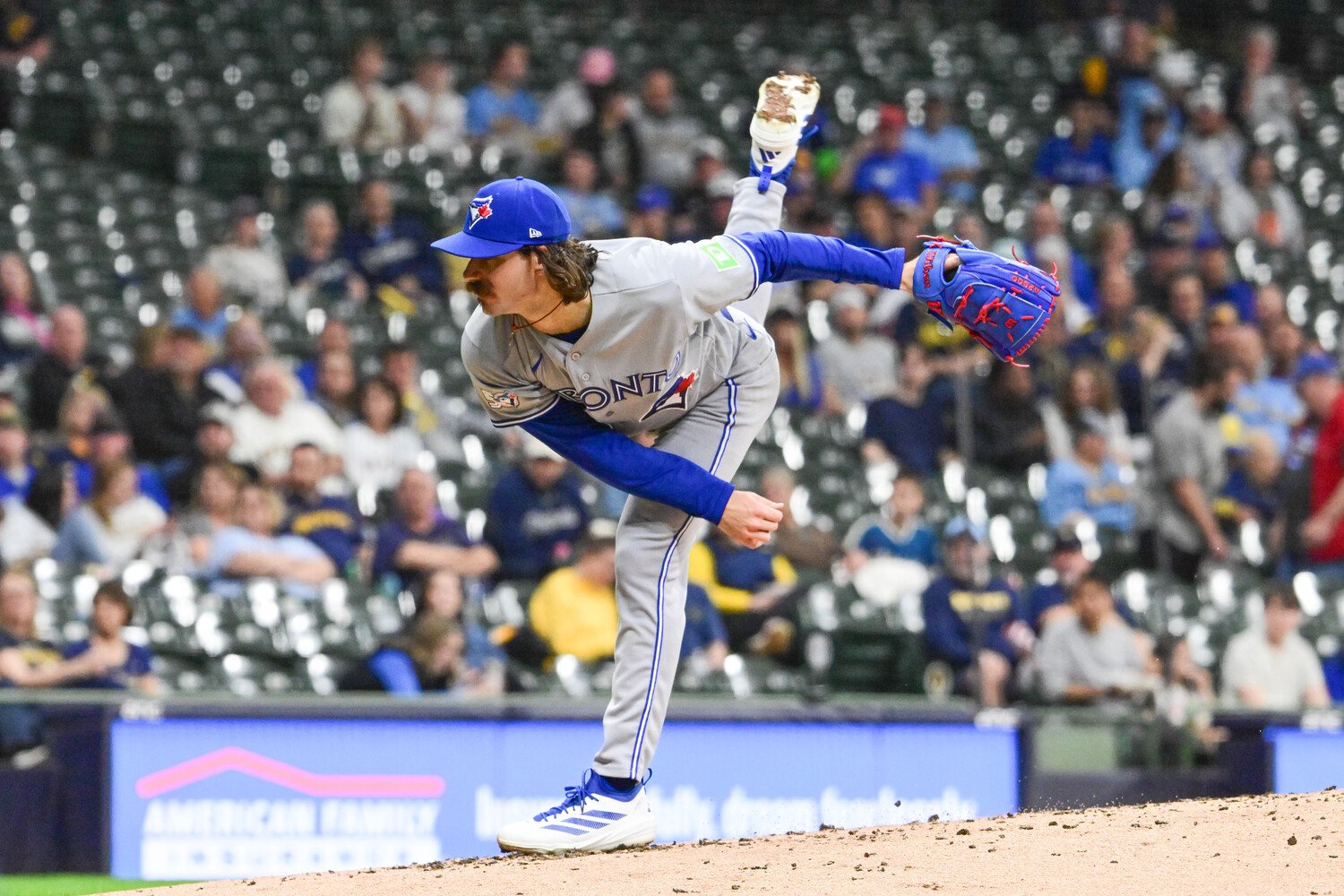 Dylan Cease has been off to an excellent start this season, posting a 1.74 ERA over 20 2/3 innings. His 36.0% strikeout rate (32 strikeouts) leads AL pitchers with at least 20 innings pitched. Although, it's not all pretty, as his 5.23 walks per nine innings would be his second-worst rate over his eight-year MLB tenure. Free passes have been an issue for Cease throughout his career, 3.84 per nine innings. Though he struggles with walks, the righty is posting a career-best strikeout percentage in his first season in Toronto. Another aspect Cease brings to the table is his durability. He has made at least 32 starts in each of the last six seasons. Healthy starting pitchers are something the Blue Jays greatly need right now. They currently have Trey Yesavage, José Berríos, Shane Bieber, and Cody Ponce on the injury list to start the season, and Ponce is likely out for the season due to an ACL injury. However, Yesavage and Berríos have made rehab starts and are close to returning. Cease has been considered a strikeout pitcher throughout his career, but his increased success this season is not a fluke. In the last four seasons, he was primarily a two-pitch pitcher. Although he has six pitches in his arsenal, he threw his four-seam fastball and slider over 80 percent of the time in each of those four seasons. Hitters could sit on a certain pitch, and when it came, they could hammer it. This season, Cease has varied his pitches more often. He only throws his four-seam fastball and slider a combined 65.5 percent of the time, and his other four pitches are thrown between eight and 10 percent of the time. The inclusion of his offspeed pitches at a higher rate keeps batters off balance. Especially with his slider, changeup, knuckle curve, and sweeper sitting in the mid-to-high 80 mph range, while his fastball and sinker hit 96 to 98 mph. The 30-year-old throwing pitches at similar speeds is significant because they all have different movement profiles, either to the arm side or glove side. This craftiness prevents batters from sitting on a specific pitch, as in years past. Below is a breakdown from Baseball Savant. The pitch characteristic stats are all from 2026. Total Movement (in inches) 2025 2026 Pitch Type Avg. MPH Avg. Vertical Drop Avg. Horizontal Break Usage % Whiff % Usage % Whiff % Four-Seam FB 98 9.7 3.6 arm side 42.1 25.7 36.9 33.8 Slider 89.6 30.5 0.5 glove side 40.8 42.9 28.6 55.7 Changeup 85.2 22 9.5 arm side 1.2 46.7 9.4 77.8 Knuckle Curve 83 54.4 2.4 glove side 8.3 37.1 8.8 27.3 Sweeper 84.6 46.8 10.8 glove side 3.5 26.7 8.3 33.3 Sinker 96.8 15 12.0 arm side 3.9 12.9 8.1 7.1 The deception Cease has added by throwing more types of pitches more often shows in the increase in whiff percentage the righty has accrued this season versus last. Every pitch except his sinker and his knuckle curve has a higher whiff percentage, while his overall whiff rate has climbed from 33.4% to 41.0%. These high numbers show that his various offspeed pitches, thrown at similar speeds to one another, are working to keep hitters guessing. Although the sample is small, with only four games under his belt, you can't discredit the fact that Cease's adjustments have made a massive difference this season. The Blue Jays should have an exceptional top trio of starting pitchers with Kevin Gausman, Cease, and, eventually, Yesavage, who all possess similar swing-and-miss pitches. Fans can expect to see a ton of strikeouts in each of these fireballers' games.
 -
Dylan Cease has been off to an excellent start this season, posting a 1.74 ERA over 20 2/3 innings. His 36.0% strikeout rate (32 strikeouts) leads AL pitchers with at least 20 innings pitched. Although, it's not all pretty, as his 5.23 walks per nine innings would be his second-worst rate over his eight-year MLB tenure. Free passes have been an issue for Cease throughout his career, 3.84 per nine innings. Though he struggles with walks, the righty is posting a career-best strikeout percentage in his first season in Toronto. Another aspect Cease brings to the table is his durability. He has made at least 32 starts in each of the last six seasons. Healthy starting pitchers are something the Blue Jays greatly need right now. They currently have Trey Yesavage, José Berríos, Shane Bieber, and Cody Ponce on the injury list to start the season, and Ponce is likely out for the season due to an ACL injury. However, Yesavage and Berríos have made rehab starts and are close to returning. Cease has been considered a strikeout pitcher throughout his career, but his increased success this season is not a fluke. In the last four seasons, he was primarily a two-pitch pitcher. Although he has six pitches in his arsenal, he threw his four-seam fastball and slider over 80 percent of the time in each of those four seasons. Hitters could sit on a certain pitch, and when it came, they could hammer it. This season, Cease has varied his pitches more often. He only throws his four-seam fastball and slider a combined 65.5 percent of the time, and his other four pitches are thrown between eight and 10 percent of the time. The inclusion of his offspeed pitches at a higher rate keeps batters off balance. Especially with his slider, changeup, knuckle curve, and sweeper sitting in the mid-to-high 80 mph range, while his fastball and sinker hit 96 to 98 mph. The 30-year-old throwing pitches at similar speeds is significant because they all have different movement profiles, either to the arm side or glove side. This craftiness prevents batters from sitting on a specific pitch, as in years past. Below is a breakdown from Baseball Savant. The pitch characteristic stats are all from 2026. Total Movement (in inches) 2025 2026 Pitch Type Avg. MPH Avg. Vertical Drop Avg. Horizontal Break Usage % Whiff % Usage % Whiff % Four-Seam FB 98 9.7 3.6 arm side 42.1 25.7 36.9 33.8 Slider 89.6 30.5 0.5 glove side 40.8 42.9 28.6 55.7 Changeup 85.2 22 9.5 arm side 1.2 46.7 9.4 77.8 Knuckle Curve 83 54.4 2.4 glove side 8.3 37.1 8.8 27.3 Sweeper 84.6 46.8 10.8 glove side 3.5 26.7 8.3 33.3 Sinker 96.8 15 12.0 arm side 3.9 12.9 8.1 7.1 The deception Cease has added by throwing more types of pitches more often shows in the increase in whiff percentage the righty has accrued this season versus last. Every pitch except his sinker and his knuckle curve has a higher whiff percentage, while his overall whiff rate has climbed from 33.4% to 41.0%. These high numbers show that his various offspeed pitches, thrown at similar speeds to one another, are working to keep hitters guessing. Although the sample is small, with only four games under his belt, you can't discredit the fact that Cease's adjustments have made a massive difference this season. The Blue Jays should have an exceptional top trio of starting pitchers with Kevin Gausman, Cease, and, eventually, Yesavage, who all possess similar swing-and-miss pitches. Fans can expect to see a ton of strikeouts in each of these fireballers' games. View full article
-
Blue Jays’ Roster Shuffle Continues After Lenyn Sosa Trade
Bryan Jaeger posted an article in Blue Jays
.jpg.845475ac6fcd2fe62c2cfc62330c2a77.jpg) The Toronto Blue Jays are off to a slow start this season in every aspect of the game. These struggles have resulted in a 6-9 record after the Minnesota Twins series, despite starting the season 3-0. A disappointing part of their start was going 1-5 over two series against the Colorado Rockies and Chicago White Sox, MLB's two worst teams last season. The Blue Jays slow start can be attributed to many contributing factors. Firstly, the injury bug has run rampant through the clubhouse, holding many key players out. Trey Yesavage, Shane Bieber, José Berríos, Yimi García, and Anthony Santander started the season on the injury list. Shortly into the season, Cody Ponce, Addison Barger, Alejandro Kirk, and George Springer joined them. Secondly, the offense has struggled, posting a -25 run differential (the second-worst in MLB). They rank 24th in runs per game (3.80) and 28th in runners left in scoring position. Lastly, the pitching staff ranks 27th in ERA (4.81) and 16th in WHIP (1.31), but first in strikeouts (168). The ERA and WHIP are heavily skewed by Brendon Little (24.55 ERA and 3.55 WHIP), who was a surprising weak link to start the season, and Josh Fleming (12.00 ERA and 2.67 WHIP). Also, catcher Tyler Heineman has made two appearances on the mound in blowouts, resulting in a 15.00 ERA and 2.67 WHIP. Because of the injuries and struggles, the Blue Jays have made several roster moves to fill holes and hopefully find some consistency. Patrick Corbin signed a one-year, $1 million contract on April 3, and a day later, Tyler Fitzgerald was acquired from the San Francisco Giants for cash considerations. They were both optioned to the minors after being acquired, but were soon recalled, joining the Blue Jays a few days later. Little was optioned to Triple A to get a breather and hopefully figure out a fix, while Fleming was designated for assignment (and later re-signed on a new minor league contract). To fill an opening, Joe Mantiply was recalled. Over 4 2/3 innings, he has a 5.79 ERA, a 1.07 WHIP, and an 8:2 strikeout-to-walk ratio. Kirk will miss approximately six weeks recovering from surgery for a fractured and dislocated left thumb. His replacement is rookie Brandon Valenzuela, who was going to be the backup catcher but has been asked to start more than expected, as Heineman is dealing with back spasms. Heineman’s injury isn’t expected to require a stint on the injury list, but if he were to miss extended time, the Blue Jays don’t have many internal answers to fill his shoes. CJ Stubbs played in just one game last season with the Washington Nationals, but he’s the only option at catcher with big league experience, unless a free agent is signed. Nathan Lukes has been starting in right field for Barger, who isn’t expected to spend much longer than the 10-day minimum on the injury list. Fitzgerald or Myles Straw can be called on to replace Lukes if a left-handed pitcher is on the mound. After Springer’s injury, Eloy Jiménez’s contract was selected from the minors. The former Chicago White Sox was a solid performer during spring training and in Triple A, earning Player of the Week honors after starting the season slashing .375/.429/.542 with five RBIs. He will fill the DH role until Springer’s return, which could also be just after the minimum 10-day injury list stint. In another move to add some depth, the Blue Jays acquired Lenyn Sosa from the White Sox for 18-year-old prospect Jordan Rich and a player to be named later or cash. Sosa will bring MLB experience to the bench. However, he doesn’t come with the greatest resumé. He’s a subpar defender, and in his five MLB seasons, he has only had one decent year, his breakout campaign in 2025. It was the first time he played in more than 100 games, and he hit 22 home runs, scored 57 times, and drove in 75, while slashing .264/.293/.434. This season, Sosa has struggled, hitting only .212 over 33 plate appearances with a 40 wRC+. The White Sox are moving on to their younger prospects, and even though Sosa is only 26, Colson Montgomery and Chase Meidroth are performing well in the middle infield, and there are rumors that Sam Antonacci will be called up soon, making Sosa expendable. The Blue Jays are trying to find any solution to bolster their offense after a lack of production to begin the 2026 campaign. They may have more decisions to make when Barger and Springer return if their replacements are performing well. If Jiménez is not performing when Springer returns, then it’s not a huge loss to put him on waivers. If he is performing, then Fitzgerald, Lukes, or Davis Schneider can be optioned to Triple-A. Lukes has been abysmal in his 29 plate appearances this season, posting a -37 wRC+, but he is a left-handed bat that can come off the bench. He joins either Valenzuela or Heineman (whichever isn't starting behind the plate) as the only lefty bat options on the bench. Both catchers are switch-hitters. Fitzgerald and Schneider both offer defensive flexibility, being able to play multiple infield and outfield positions. Neither is a substantial offensive threat, but both have shown some power in their brief MLB careers. They’re both right-handed bats, so one would make sense to option after Sosa officially joins the active roster. Sosa is out of minor league options. Schneider has been red-hot in 2026, so Fitzgerald is certainly more likely to be sent down today. What happens when Springer and/or Barger return is a different question. After making room for Sosa, the Blue Jays will hope they are done moving their chess pieces around, at least for now. The biggest power threats remaining on their 26-man roster – Vladimir Guerrero Jr., Daulton Varsho, and Jesús Sánchez – need to get going offensively, with none having more than two home runs. Also, Kazuma Okamoto has been slow to adjust to the American style of baseball. He has two home runs, but only four runs and three RBIs in 60 plate appearances. Kevin Gausman and Dylan Cease need help in the starting rotation; both have ERAs under and 26 strikeouts in three starts. However, Corbin, Eric Lauer, and Max Scherzer each have an ERA higher than 7.50. The bullpen has been a bright spot, throwing 15 1/3 scoreless innings in the Twins series, a franchise record, but the Blue Jays still lost the series and were outscored 25 to 10. Hopefully, the injury bug is extinguished, and the team finds a way to turn its slow start around. The good thing about baseball is that it has a long season, so there is plenty of time for a team to turn its season around. A World Series is still the ultimate goal, and the Blue Jays are making the moves to get there.
The Toronto Blue Jays are off to a slow start this season in every aspect of the game. These struggles have resulted in a 6-9 record after the Minnesota Twins series, despite starting the season 3-0. A disappointing part of their start was going 1-5 over two series against the Colorado Rockies and Chicago White Sox, MLB's two worst teams last season. The Blue Jays slow start can be attributed to many contributing factors. Firstly, the injury bug has run rampant through the clubhouse, holding many key players out. Trey Yesavage, Shane Bieber, José Berríos, Yimi García, and Anthony Santander started the season on the injury list. Shortly into the season, Cody Ponce, Addison Barger, Alejandro Kirk, and George Springer joined them. Secondly, the offense has struggled, posting a -25 run differential (the second-worst in MLB). They rank 24th in runs per game (3.80) and 28th in runners left in scoring position. Lastly, the pitching staff ranks 27th in ERA (4.81) and 16th in WHIP (1.31), but first in strikeouts (168). The ERA and WHIP are heavily skewed by Brendon Little (24.55 ERA and 3.55 WHIP), who was a surprising weak link to start the season, and Josh Fleming (12.00 ERA and 2.67 WHIP). Also, catcher Tyler Heineman has made two appearances on the mound in blowouts, resulting in a 15.00 ERA and 2.67 WHIP. Because of the injuries and struggles, the Blue Jays have made several roster moves to fill holes and hopefully find some consistency. Patrick Corbin signed a one-year, $1 million contract on April 3, and a day later, Tyler Fitzgerald was acquired from the San Francisco Giants for cash considerations. They were both optioned to the minors after being acquired, but were soon recalled, joining the Blue Jays a few days later. Little was optioned to Triple A to get a breather and hopefully figure out a fix, while Fleming was designated for assignment (and later re-signed on a new minor league contract). To fill an opening, Joe Mantiply was recalled. Over 4 2/3 innings, he has a 5.79 ERA, a 1.07 WHIP, and an 8:2 strikeout-to-walk ratio. Kirk will miss approximately six weeks recovering from surgery for a fractured and dislocated left thumb. His replacement is rookie Brandon Valenzuela, who was going to be the backup catcher but has been asked to start more than expected, as Heineman is dealing with back spasms. Heineman’s injury isn’t expected to require a stint on the injury list, but if he were to miss extended time, the Blue Jays don’t have many internal answers to fill his shoes. CJ Stubbs played in just one game last season with the Washington Nationals, but he’s the only option at catcher with big league experience, unless a free agent is signed. Nathan Lukes has been starting in right field for Barger, who isn’t expected to spend much longer than the 10-day minimum on the injury list. Fitzgerald or Myles Straw can be called on to replace Lukes if a left-handed pitcher is on the mound. After Springer’s injury, Eloy Jiménez’s contract was selected from the minors. The former Chicago White Sox was a solid performer during spring training and in Triple A, earning Player of the Week honors after starting the season slashing .375/.429/.542 with five RBIs. He will fill the DH role until Springer’s return, which could also be just after the minimum 10-day injury list stint. In another move to add some depth, the Blue Jays acquired Lenyn Sosa from the White Sox for 18-year-old prospect Jordan Rich and a player to be named later or cash. Sosa will bring MLB experience to the bench. However, he doesn’t come with the greatest resumé. He’s a subpar defender, and in his five MLB seasons, he has only had one decent year, his breakout campaign in 2025. It was the first time he played in more than 100 games, and he hit 22 home runs, scored 57 times, and drove in 75, while slashing .264/.293/.434. This season, Sosa has struggled, hitting only .212 over 33 plate appearances with a 40 wRC+. The White Sox are moving on to their younger prospects, and even though Sosa is only 26, Colson Montgomery and Chase Meidroth are performing well in the middle infield, and there are rumors that Sam Antonacci will be called up soon, making Sosa expendable. The Blue Jays are trying to find any solution to bolster their offense after a lack of production to begin the 2026 campaign. They may have more decisions to make when Barger and Springer return if their replacements are performing well. If Jiménez is not performing when Springer returns, then it’s not a huge loss to put him on waivers. If he is performing, then Fitzgerald, Lukes, or Davis Schneider can be optioned to Triple-A. Lukes has been abysmal in his 29 plate appearances this season, posting a -37 wRC+, but he is a left-handed bat that can come off the bench. He joins either Valenzuela or Heineman (whichever isn't starting behind the plate) as the only lefty bat options on the bench. Both catchers are switch-hitters. Fitzgerald and Schneider both offer defensive flexibility, being able to play multiple infield and outfield positions. Neither is a substantial offensive threat, but both have shown some power in their brief MLB careers. They’re both right-handed bats, so one would make sense to option after Sosa officially joins the active roster. Sosa is out of minor league options. Schneider has been red-hot in 2026, so Fitzgerald is certainly more likely to be sent down today. What happens when Springer and/or Barger return is a different question. After making room for Sosa, the Blue Jays will hope they are done moving their chess pieces around, at least for now. The biggest power threats remaining on their 26-man roster – Vladimir Guerrero Jr., Daulton Varsho, and Jesús Sánchez – need to get going offensively, with none having more than two home runs. Also, Kazuma Okamoto has been slow to adjust to the American style of baseball. He has two home runs, but only four runs and three RBIs in 60 plate appearances. Kevin Gausman and Dylan Cease need help in the starting rotation; both have ERAs under and 26 strikeouts in three starts. However, Corbin, Eric Lauer, and Max Scherzer each have an ERA higher than 7.50. The bullpen has been a bright spot, throwing 15 1/3 scoreless innings in the Twins series, a franchise record, but the Blue Jays still lost the series and were outscored 25 to 10. Hopefully, the injury bug is extinguished, and the team finds a way to turn its slow start around. The good thing about baseball is that it has a long season, so there is plenty of time for a team to turn its season around. A World Series is still the ultimate goal, and the Blue Jays are making the moves to get there. -
The Toronto Blue Jays are off to a slow start this season in every aspect of the game. These struggles have resulted in a 6-9 record after the Minnesota Twins series, despite starting the season 3-0. A disappointing part of their start was going 1-5 over two series against the Colorado Rockies and Chicago White Sox, MLB's two worst teams last season. The Blue Jays slow start can be attributed to many contributing factors. Firstly, the injury bug has run rampant through the clubhouse, holding many key players out. Trey Yesavage, Shane Bieber, José Berríos, Yimi García, and Anthony Santander started the season on the injury list. Shortly into the season, Cody Ponce, Addison Barger, Alejandro Kirk, and George Springer joined them. Secondly, the offense has struggled, posting a -25 run differential (the second-worst in MLB). They rank 24th in runs per game (3.80) and 28th in runners left in scoring position. Lastly, the pitching staff ranks 27th in ERA (4.81) and 16th in WHIP (1.31), but first in strikeouts (168). The ERA and WHIP are heavily skewed by Brendon Little (24.55 ERA and 3.55 WHIP), who was a surprising weak link to start the season, and Josh Fleming (12.00 ERA and 2.67 WHIP). Also, catcher Tyler Heineman has made two appearances on the mound in blowouts, resulting in a 15.00 ERA and 2.67 WHIP. Because of the injuries and struggles, the Blue Jays have made several roster moves to fill holes and hopefully find some consistency. Patrick Corbin signed a one-year, $1 million contract on April 3, and a day later, Tyler Fitzgerald was acquired from the San Francisco Giants for cash considerations. They were both optioned to the minors after being acquired, but were soon recalled, joining the Blue Jays a few days later. Little was optioned to Triple A to get a breather and hopefully figure out a fix, while Fleming was designated for assignment (and later re-signed on a new minor league contract). To fill an opening, Joe Mantiply was recalled. Over 4 2/3 innings, he has a 5.79 ERA, a 1.07 WHIP, and an 8:2 strikeout-to-walk ratio. Kirk will miss approximately six weeks recovering from surgery for a fractured and dislocated left thumb. His replacement is rookie Brandon Valenzuela, who was going to be the backup catcher but has been asked to start more than expected, as Heineman is dealing with back spasms. Heineman’s injury isn’t expected to require a stint on the injury list, but if he were to miss extended time, the Blue Jays don’t have many internal answers to fill his shoes. CJ Stubbs played in just one game last season with the Washington Nationals, but he’s the only option at catcher with big league experience, unless a free agent is signed. Nathan Lukes has been starting in right field for Barger, who isn’t expected to spend much longer than the 10-day minimum on the injury list. Fitzgerald or Myles Straw can be called on to replace Lukes if a left-handed pitcher is on the mound. After Springer’s injury, Eloy Jiménez’s contract was selected from the minors. The former Chicago White Sox was a solid performer during spring training and in Triple A, earning Player of the Week honors after starting the season slashing .375/.429/.542 with five RBIs. He will fill the DH role until Springer’s return, which could also be just after the minimum 10-day injury list stint. In another move to add some depth, the Blue Jays acquired Lenyn Sosa from the White Sox for 18-year-old prospect Jordan Rich and a player to be named later or cash. Sosa will bring MLB experience to the bench. However, he doesn’t come with the greatest resumé. He’s a subpar defender, and in his five MLB seasons, he has only had one decent year, his breakout campaign in 2025. It was the first time he played in more than 100 games, and he hit 22 home runs, scored 57 times, and drove in 75, while slashing .264/.293/.434. This season, Sosa has struggled, hitting only .212 over 33 plate appearances with a 40 wRC+. The White Sox are moving on to their younger prospects, and even though Sosa is only 26, Colson Montgomery and Chase Meidroth are performing well in the middle infield, and there are rumors that Sam Antonacci will be called up soon, making Sosa expendable. The Blue Jays are trying to find any solution to bolster their offense after a lack of production to begin the 2026 campaign. They may have more decisions to make when Barger and Springer return if their replacements are performing well. If Jiménez is not performing when Springer returns, then it’s not a huge loss to put him on waivers. If he is performing, then Fitzgerald, Lukes, or Davis Schneider can be optioned to Triple-A. Lukes has been abysmal in his 29 plate appearances this season, posting a -37 wRC+, but he is a left-handed bat that can come off the bench. He joins either Valenzuela or Heineman (whichever isn't starting behind the plate) as the only lefty bat options on the bench. Both catchers are switch-hitters. Fitzgerald and Schneider both offer defensive flexibility, being able to play multiple infield and outfield positions. Neither is a substantial offensive threat, but both have shown some power in their brief MLB careers. They’re both right-handed bats, so one would make sense to option after Sosa officially joins the active roster. Sosa is out of minor league options. Schneider has been red-hot in 2026, so Fitzgerald is certainly more likely to be sent down today. What happens when Springer and/or Barger return is a different question. After making room for Sosa, the Blue Jays will hope they are done moving their chess pieces around, at least for now. The biggest power threats remaining on their 26-man roster – Vladimir Guerrero Jr., Daulton Varsho, and Jesús Sánchez – need to get going offensively, with none having more than two home runs. Also, Kazuma Okamoto has been slow to adjust to the American style of baseball. He has two home runs, but only four runs and three RBIs in 60 plate appearances. Kevin Gausman and Dylan Cease need help in the starting rotation; both have ERAs under and 26 strikeouts in three starts. However, Corbin, Eric Lauer, and Max Scherzer each have an ERA higher than 7.50. The bullpen has been a bright spot, throwing 15 1/3 scoreless innings in the Twins series, a franchise record, but the Blue Jays still lost the series and were outscored 25 to 10. Hopefully, the injury bug is extinguished, and the team finds a way to turn its slow start around. The good thing about baseball is that it has a long season, so there is plenty of time for a team to turn its season around. A World Series is still the ultimate goal, and the Blue Jays are making the moves to get there. View full article
-
Brendon Little was dominant during the first half of last season. Over 44 1/3 innings, he posted a 2.03 ERA, held batters to a .177 batting average, and had a 65:28 strikeout-to-walk ratio. The second half of the season was a different story. The lefty had a 4.88 ERA, a .230 average off him, and a 26:17 strikeout-to-walk ratio over only 24 innings. The struggles could have been due to his workload. At times, the only southpaw in the bullpen, he threw in 79 total games. It was the first time he had thrown in over 50 games in his short MLB career. Little's 2026 season has started even worse. Over his first 3 2/3 innings, he was abysmal, posting a 24.55 ERA (10 earned runs) and allowing a .500 batting average (10 hits) despite striking out six batters. He allowed three home runs, one more than he allowed in all of 2025. The slow start led to his demotion to Triple-A Buffalo on April 5. This move was likely a way to give Little a breather from the high-stress environment of MLB. Little relies heavily on his sinker and knuckle curve, throwing them a combined 80 percent of the time in each of his three MLB seasons. Lately, he's been leaving the sinker in the zone, resulting in him allowing batters to hit .800 off the 41 sinkers he has thrown in 2026. The pitch's 30.2 inches of drop and 12.6 inches of arm-side break weren't fooling hitters, and the reliever needs to figure out why. Little's knuckle curve has been his go-to strikeout pitch over his career. This season, it has resulted in a 50 percent whiff rate on 14 swings (36 pitches). The breaking ball has also recorded all six of the 29-year-old's strikeouts. The whiff percentage for his knuckle curve is on par with his career results, but hitters are swinging at the pitch less often, and they have a batting average of .250 against it. That batting average is higher than in the last two seasons, when hitters didn't exceed a .160 average. Little needs to figure out how to get back to limiting damage against his knuckle curve. His top two pitches are being put in play for hits too consistently to be successful in MLB. Though the start of his season has been disappointing, Little is a talented pitcher and has shown he can succeed in the big leagues. He's 29, but it's only his third MLB season, so this could be a confidence issue, as well. The struggles could also be a mechanical issue that needs a tweak. Regardless of the issue, this breather in Buffalo will allow Little to work on his game in a less stressful environment. Hopefully, when the lefty returns to the Blue Jays, we see the dominant first-half of 2025 version of Little. View full article
-
What Brendon Little Needs To Work On Before Rejoining the Jays
Bryan Jaeger posted an article in Blue Jays
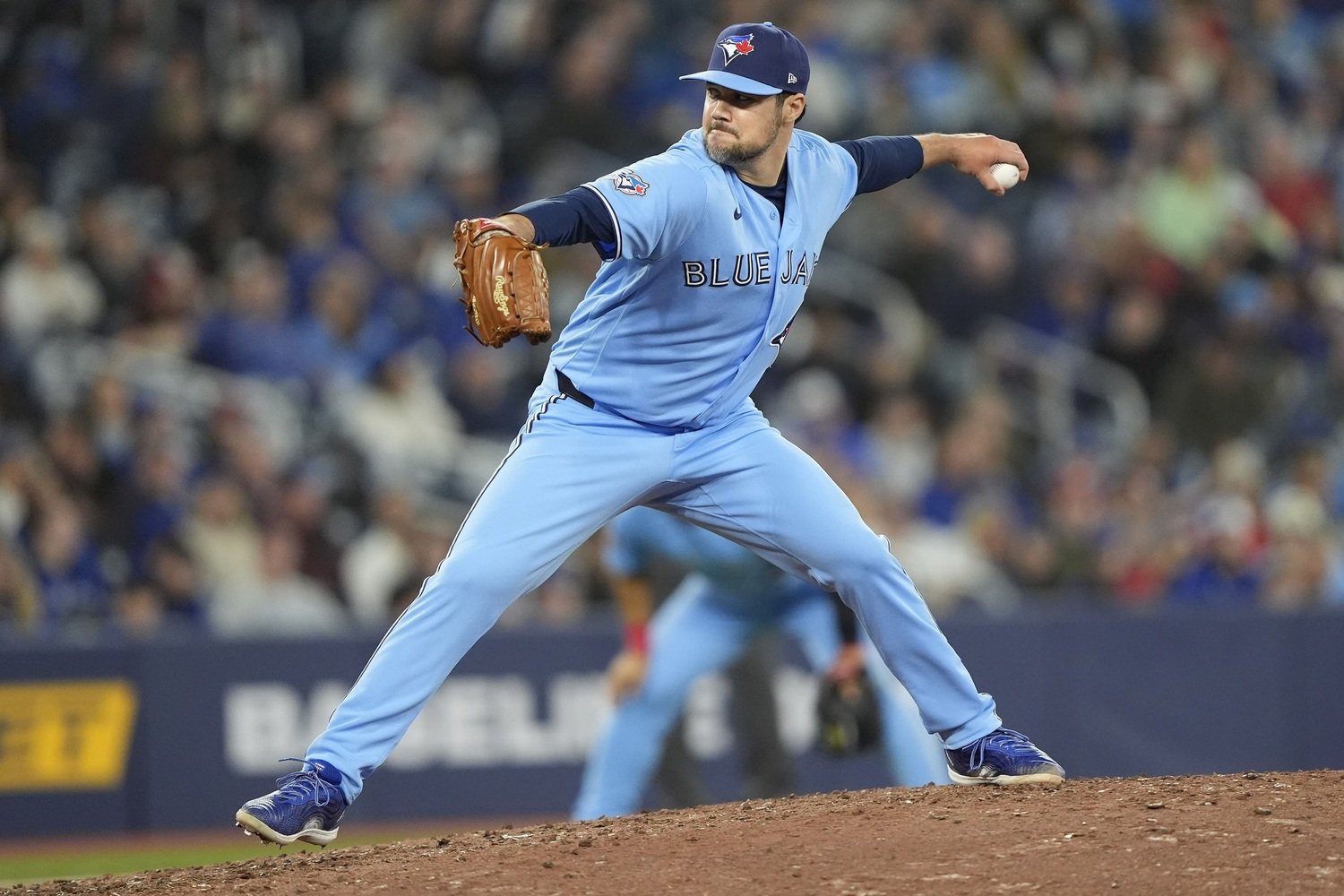 Brendon Little was dominant during the first half of last season. Over 44 1/3 innings, he posted a 2.03 ERA, held batters to a .177 batting average, and had a 65:28 strikeout-to-walk ratio. The second half of the season was a different story. The lefty had a 4.88 ERA, a .230 average off him, and a 26:17 strikeout-to-walk ratio over only 24 innings. The struggles could have been due to his workload. At times, the only southpaw in the bullpen, he threw in 79 total games. It was the first time he had thrown in over 50 games in his short MLB career. Little's 2026 season has started even worse. Over his first 3 2/3 innings, he was abysmal, posting a 24.55 ERA (10 earned runs) and allowing a .500 batting average (10 hits) despite striking out six batters. He allowed three home runs, one more than he allowed in all of 2025. The slow start led to his demotion to Triple-A Buffalo on April 5. This move was likely a way to give Little a breather from the high-stress environment of MLB. Little relies heavily on his sinker and knuckle curve, throwing them a combined 80 percent of the time in each of his three MLB seasons. Lately, he's been leaving the sinker in the zone, resulting in him allowing batters to hit .800 off the 41 sinkers he has thrown in 2026. The pitch's 30.2 inches of drop and 12.6 inches of arm-side break weren't fooling hitters, and the reliever needs to figure out why. Little's knuckle curve has been his go-to strikeout pitch over his career. This season, it has resulted in a 50 percent whiff rate on 14 swings (36 pitches). The breaking ball has also recorded all six of the 29-year-old's strikeouts. The whiff percentage for his knuckle curve is on par with his career results, but hitters are swinging at the pitch less often, and they have a batting average of .250 against it. That batting average is higher than in the last two seasons, when hitters didn't exceed a .160 average. Little needs to figure out how to get back to limiting damage against his knuckle curve. His top two pitches are being put in play for hits too consistently to be successful in MLB. Though the start of his season has been disappointing, Little is a talented pitcher and has shown he can succeed in the big leagues. He's 29, but it's only his third MLB season, so this could be a confidence issue, as well. The struggles could also be a mechanical issue that needs a tweak. Regardless of the issue, this breather in Buffalo will allow Little to work on his game in a less stressful environment. Hopefully, when the lefty returns to the Blue Jays, we see the dominant first-half of 2025 version of Little.
 -
.jpg.6211988d1cecfe710527a9e64d5d56bf.jpg) Editor's Note: Bryan originally wrote this article the day before the news broke that Trey Yesavage would start the 2026 season on the injured list. I wasn't sure what to do with it at first, but given the encouraging news about Yesavage’s ramp-up (he'll throw a three-inning simulated game on Friday) and Kazuma Okamoto's red-hot start to the season (2 HR, .300 BA, .991 OPS), I decided to run the story today. The last time the Toronto Blue Jays won the AL Rookie of the Year Award was in 2002, when Halle Berry won an Oscar for Best Actress for her role in Monster’s Ball, the New England Patriots won their first Super Bowl, and the “Rally Monkey” became famous, leading the then Anaheim Angels to a World Series title. In that season, the Toronto Blue Jays finished 78-84 under manager Buck Martinez, but Eric Hinske took home the AL's top rookie prize. The third baseman hit 24 home runs, scored 99 times, knocked in 84 runs, and stole 13 bases. It’s hard to believe that Hinske was the last Blue Jay to win the Rookie of the Year Award, but the team hasn’t had many standout rookie performances since then. The only one that was worthy of serious consideration for the award was Marcus Stroman’s 2014 season, in which he had a record of 11-6, a 3.65 ERA, and struck out 111 batters. Yet, 2014 was a competitive year, and Stroman didn't even receive a single down-ballot vote. Only six Blue Jays have received ROY votes in the last 23 seasons, and none have finished higher than fourth. The wait may be over this year, as the Blue Jays have not one but two of the frontrunners for the award: Trey Yesavage and Kazuma Okamoto. Prior to the news of Yesavage's IL stint and Kevin McGonigle's promotion, many sources had Yesavage and Okamoto as the two favourites. At the end of last season, Yesavage started three games, in which he posted a 3.21 ERA and had a 16:7 strikeout-to-walk ratio. In the postseason, he came up clutch in several big games. In Game 2 of the ALCS, he helped the Blue Jays take a 2-0 series lead. The rookie threw 5 1/3 innings against the New York Yankees, striking out 11 batters. In Game 6 of the ALDS, Yesavage helped the Blue Jays even the series 3-3 after throwing 5 2/3 strong innings while striking out seven Seattle Mariners batters. In Game 5 of the World Series, he threw seven innings and struck out 12 Los Angeles Dodgers hitters. He got the win to give the Jays a 3-2 series lead, though we all know how that ended. This success is why the righty was the frontrunner for the Rookie of the Year Award as recently as two weeks ago. If he continues to ramp up on schedule, he has plenty of time to get back in the race. Yesavage’s teammate Okamoto also has a strong case to claim the award. He will be playing his first season in America and in MLB. In Nippon Professional Baseball in Japan, Okamoto hit at least 25 home runs in seven straight seasons before an elbow injury broke that streak in 2025. Though, he was on a good pace to extend the streak with 15 homers halfway through the season. Okamoto has begun his MLB career with a five-game hitting streak, two home runs, and four runs scored, including the game-winning run on Opening Day. His defense at third base has looked sharp, albeit in a tiny sample. Thanks to Yesavage and Okamoto, Toronto's chances of winning the Rookie of the Year Award look better than they have in a long time. That said, the Jays' rookies have stiff competition. In addition to McGonigle (Detroit Tigers), other top contenders include Carter Jensen (Kansas City Royals), Chase DeLauter (Cleveland Guardians), Samuel Basallo (Baltimore Orioles), and Okamoto's fellow NPB All-Stars Munetaka Murakami (Chicago White Sox) and Tatsuya Imai (Houston Astros). Perhaps neither Okamoto nor Yesavage is the favourite on his own, but together, they might give Toronto better odds than any other AL team. So, while the competition is fierce, the Blue Jays are still in a great position to win the AL Rookie of the Year Award for the first time since 2002.
Editor's Note: Bryan originally wrote this article the day before the news broke that Trey Yesavage would start the 2026 season on the injured list. I wasn't sure what to do with it at first, but given the encouraging news about Yesavage’s ramp-up (he'll throw a three-inning simulated game on Friday) and Kazuma Okamoto's red-hot start to the season (2 HR, .300 BA, .991 OPS), I decided to run the story today. The last time the Toronto Blue Jays won the AL Rookie of the Year Award was in 2002, when Halle Berry won an Oscar for Best Actress for her role in Monster’s Ball, the New England Patriots won their first Super Bowl, and the “Rally Monkey” became famous, leading the then Anaheim Angels to a World Series title. In that season, the Toronto Blue Jays finished 78-84 under manager Buck Martinez, but Eric Hinske took home the AL's top rookie prize. The third baseman hit 24 home runs, scored 99 times, knocked in 84 runs, and stole 13 bases. It’s hard to believe that Hinske was the last Blue Jay to win the Rookie of the Year Award, but the team hasn’t had many standout rookie performances since then. The only one that was worthy of serious consideration for the award was Marcus Stroman’s 2014 season, in which he had a record of 11-6, a 3.65 ERA, and struck out 111 batters. Yet, 2014 was a competitive year, and Stroman didn't even receive a single down-ballot vote. Only six Blue Jays have received ROY votes in the last 23 seasons, and none have finished higher than fourth. The wait may be over this year, as the Blue Jays have not one but two of the frontrunners for the award: Trey Yesavage and Kazuma Okamoto. Prior to the news of Yesavage's IL stint and Kevin McGonigle's promotion, many sources had Yesavage and Okamoto as the two favourites. At the end of last season, Yesavage started three games, in which he posted a 3.21 ERA and had a 16:7 strikeout-to-walk ratio. In the postseason, he came up clutch in several big games. In Game 2 of the ALCS, he helped the Blue Jays take a 2-0 series lead. The rookie threw 5 1/3 innings against the New York Yankees, striking out 11 batters. In Game 6 of the ALDS, Yesavage helped the Blue Jays even the series 3-3 after throwing 5 2/3 strong innings while striking out seven Seattle Mariners batters. In Game 5 of the World Series, he threw seven innings and struck out 12 Los Angeles Dodgers hitters. He got the win to give the Jays a 3-2 series lead, though we all know how that ended. This success is why the righty was the frontrunner for the Rookie of the Year Award as recently as two weeks ago. If he continues to ramp up on schedule, he has plenty of time to get back in the race. Yesavage’s teammate Okamoto also has a strong case to claim the award. He will be playing his first season in America and in MLB. In Nippon Professional Baseball in Japan, Okamoto hit at least 25 home runs in seven straight seasons before an elbow injury broke that streak in 2025. Though, he was on a good pace to extend the streak with 15 homers halfway through the season. Okamoto has begun his MLB career with a five-game hitting streak, two home runs, and four runs scored, including the game-winning run on Opening Day. His defense at third base has looked sharp, albeit in a tiny sample. Thanks to Yesavage and Okamoto, Toronto's chances of winning the Rookie of the Year Award look better than they have in a long time. That said, the Jays' rookies have stiff competition. In addition to McGonigle (Detroit Tigers), other top contenders include Carter Jensen (Kansas City Royals), Chase DeLauter (Cleveland Guardians), Samuel Basallo (Baltimore Orioles), and Okamoto's fellow NPB All-Stars Munetaka Murakami (Chicago White Sox) and Tatsuya Imai (Houston Astros). Perhaps neither Okamoto nor Yesavage is the favourite on his own, but together, they might give Toronto better odds than any other AL team. So, while the competition is fierce, the Blue Jays are still in a great position to win the AL Rookie of the Year Award for the first time since 2002. -
The last time the Toronto Blue Jays won the Rookie of the Year Award was in 2002, when Halle Berry won an Oscar for Best Actress for her role in Monster’s Ball, the New England Patriots won their first Super Bowl, and the “Rally Monkey” became famous, leading the then Anaheim Angels to the World Series title. In that season, the Toronto Blue Jays finished 78-84 under manager Buck Martinez, and Eric Hinske won the AL Rookie of the Year Award. The former third baseman and outfielder hit 24 home runs, scored 99 times, knocked in 84 runs, and stole 13 bases. It’s hard to believe that Hinske was the last Blue Jay to win the Rookie of the Year Award, but the team hasn’t had many standout rookie performances since then. The only one that was worthy of consideration for the award was Marcus Stroman’s 2014 season, when he had a record of 11-6, a 3.65 ERA, and struck out 111 batters. The wait may be over this season as the Blue Jays have the top two favorites for the award with Trey Yesavage and Kazuma Okamoto. Yesavage has +370 odds, and Okamoto has +500 odds. During the end of last season, Yesavage started three games, where he posted a 3.21 ERA and had a 16:7 strikeout-to-walk ratio. In the postseason, he came up clutch in big games. In Game 2 of the ALCS, he helped the Blue Jays take a 2-0 series lead. The rookie threw 5 1/3 innings against the New York Yankees, striking out 11 batters. In Game 6 of the ALDS, Yesavage helped the Blue Jays even the series 3-3 after throwing 5 2/3 strong innings while striking out seven Seattle Mariners batters. In Game 5 of the World Series, he got the win to give the team a 3-2 series lead, but we all know how that ended. In the game, he threw seven innings and struck out 12 Los Angeles Dodgers hitters. This success is why the righty is the frontrunner for the Rookie of the Year Award going into the season, but it'll be interesting to watch how the Blue Jays handle Yesavage's workload throughout the season. Yesavage’s teammate, Okamoto, also has a strong case to claim the award. He will be making his first season in America and in MLB. While in the Nippon Professional Baseball league in Japan, Okamoto hit at least 25 home runs in seven straight seasons before an elbow injury broke that streak last season. Though he was on a good pace to extend the streak with 15 homers halfway through the season. Yesavage and Okamoto have stiff competition for the award, though. Kevin McGonigle (Detroit Tigers) has +550 odds, Carter Jensen (Kansas City Royals) has +600 odds, Munetaka Murakami (Chicago White Sox) has +800 odds, and Tatsuya Imai (Houston Astros) has +850 odds. This may be the season the Blue Jays finally win the AL Rookie of the Year Award since 2002. With the two leading favorites on the team, it’s the best chance the team has had in a while. It won’t come easy, though, with McGonigle and Jensen heavily hyped, and two other Japanese players (Murakami and Imai) making their first appearances overseas. View full article
-
Blue Jays Final Bullpen Spot Down to Chase Lee and Spencer Miles
Bryan Jaeger posted an article in Blue Jays
.jpg.be3f80ecc4e86eb1f0e808dd2634fda1.jpg) The Toronto Blue Jays have made two decisions regarding their Opening Day bullpen. 35-year-old Tommy Nance has made the team, while 2024 Rule 5 draft pick Angel Bastardo has been left off. Nance has struggled this spring, throwing 5 1/3 innings while posting a 6.75 ERA and an 11.1 walk percentage. However, he doesn't have any minor league options. Without an option, and given his strong performance last season (1.99 ERA and 1.01 WHIP over 31 2/3 innings), the right-handed reliever would likely have been selected off waivers by another team if the Blue Jays had designated him for assignment to try to send him down to the minors. Bastardo missed all of last season recovering from Tommy John surgery. Because he was a Rule 5 selection, not making the team means the Blue Jays must return him to his original team, the Boston Red Sox. Injuries to Trey Yesavage and José Berríos, forcing them to miss the start of the season, have moved Eric Lauer to a starting role. This situation left an additional open spot in the bullpen that Bastardo looked to be a possibility to fill. However, he has had an up-and-down spring training, posting a 4.70 ERA over seven 2/3 innings with a 15.2 strikeout percentage and an abysmal 21.2 walk percentage. Since Bastardo missed last season, the Jays would need to keep him on their 26-man roster for 90 days before they could option him. This requirement, along with Yesavage's expected return shortly after the season begins, means the Blue Jays are better off just cutting ties with Bastardo now and focusing on the relievers who can help the team all season. With two open spots in the bullpen, Mason Fluharty will fill one spot. He will join Brendon Little as Toronto's second lefty reliever while Lauer is in the rotation. Little was the only consistent left-handed presence in last year's bullpen; Fluharty and fellow southpaw Justin Bruihl had their ups and downs, while Lauer moved between the rotation and the 'pen. The team won't want Little to have too big a workload to start the season, and Fluharty's addition will help relieve the pressure on Little. Blue Jays insider Arden Zwelling of Sportsnet has reported that the final spot in the bullpen is between Chase Lee and Spencer Miles. Lee came over in an offseason trade with the Detroit Tigers because the Tigers needed to open a roster spot for Kyle Finnegan. Lee offers the Blue Jays MLB experience, having thrown 37 1/3 innings last season with a 4.10 ERA and 1.10 WHIP. He also offers a different look with his -4 degree sidearm angle. The sidearmer has been impressive in a short spring stint, not allowing a run over six innings, but he did walk two batters while only striking out four. Miles was a 2025 Rule 5 selection from the San Francisco Giants, which means he will need to spend the entire season on the Blue Jays' 26-man roster or else be sent back to the Giants. He was selected in the 2022 MLB Draft, but missed the 2023 season after undergoing back surgery. The righty returned in 2024, but only made five appearances before requiring Tommy John surgery due to a right flexor strain. Miles made his return in the Arizona Fall League last year at the conclusion of the minor league season. He threw eight 2/3 innings, posting a 4.15 ERA, but he struck out 12 batters while only walking one. This spring, he has made a case to make his MLB debut. Miles produced a 3.72 ERA over nine 2/3 innings and had a 23.9 strikeout percentage. However, he's struggled with his control, walking batters at a 10.9 percent clip and posting a 1.66 WHIP. Zwelling said both players will travel to Toronto Monday night, and the club expects to make the final decision by Wednesday afternoon. Lee's experience and shutout spring performance may give him the edge, but with Miles making it to the final cut, the Blue Jays must see something they like. Lee's availability to be optioned to Triple A hurts his case, as Toronto can keep both players if he is sent down. If this plays out with Lee being demoted, the sidearmer will still play a role in the Blue Jays bullpen at some point this season.
The Toronto Blue Jays have made two decisions regarding their Opening Day bullpen. 35-year-old Tommy Nance has made the team, while 2024 Rule 5 draft pick Angel Bastardo has been left off. Nance has struggled this spring, throwing 5 1/3 innings while posting a 6.75 ERA and an 11.1 walk percentage. However, he doesn't have any minor league options. Without an option, and given his strong performance last season (1.99 ERA and 1.01 WHIP over 31 2/3 innings), the right-handed reliever would likely have been selected off waivers by another team if the Blue Jays had designated him for assignment to try to send him down to the minors. Bastardo missed all of last season recovering from Tommy John surgery. Because he was a Rule 5 selection, not making the team means the Blue Jays must return him to his original team, the Boston Red Sox. Injuries to Trey Yesavage and José Berríos, forcing them to miss the start of the season, have moved Eric Lauer to a starting role. This situation left an additional open spot in the bullpen that Bastardo looked to be a possibility to fill. However, he has had an up-and-down spring training, posting a 4.70 ERA over seven 2/3 innings with a 15.2 strikeout percentage and an abysmal 21.2 walk percentage. Since Bastardo missed last season, the Jays would need to keep him on their 26-man roster for 90 days before they could option him. This requirement, along with Yesavage's expected return shortly after the season begins, means the Blue Jays are better off just cutting ties with Bastardo now and focusing on the relievers who can help the team all season. With two open spots in the bullpen, Mason Fluharty will fill one spot. He will join Brendon Little as Toronto's second lefty reliever while Lauer is in the rotation. Little was the only consistent left-handed presence in last year's bullpen; Fluharty and fellow southpaw Justin Bruihl had their ups and downs, while Lauer moved between the rotation and the 'pen. The team won't want Little to have too big a workload to start the season, and Fluharty's addition will help relieve the pressure on Little. Blue Jays insider Arden Zwelling of Sportsnet has reported that the final spot in the bullpen is between Chase Lee and Spencer Miles. Lee came over in an offseason trade with the Detroit Tigers because the Tigers needed to open a roster spot for Kyle Finnegan. Lee offers the Blue Jays MLB experience, having thrown 37 1/3 innings last season with a 4.10 ERA and 1.10 WHIP. He also offers a different look with his -4 degree sidearm angle. The sidearmer has been impressive in a short spring stint, not allowing a run over six innings, but he did walk two batters while only striking out four. Miles was a 2025 Rule 5 selection from the San Francisco Giants, which means he will need to spend the entire season on the Blue Jays' 26-man roster or else be sent back to the Giants. He was selected in the 2022 MLB Draft, but missed the 2023 season after undergoing back surgery. The righty returned in 2024, but only made five appearances before requiring Tommy John surgery due to a right flexor strain. Miles made his return in the Arizona Fall League last year at the conclusion of the minor league season. He threw eight 2/3 innings, posting a 4.15 ERA, but he struck out 12 batters while only walking one. This spring, he has made a case to make his MLB debut. Miles produced a 3.72 ERA over nine 2/3 innings and had a 23.9 strikeout percentage. However, he's struggled with his control, walking batters at a 10.9 percent clip and posting a 1.66 WHIP. Zwelling said both players will travel to Toronto Monday night, and the club expects to make the final decision by Wednesday afternoon. Lee's experience and shutout spring performance may give him the edge, but with Miles making it to the final cut, the Blue Jays must see something they like. Lee's availability to be optioned to Triple A hurts his case, as Toronto can keep both players if he is sent down. If this plays out with Lee being demoted, the sidearmer will still play a role in the Blue Jays bullpen at some point this season.-
- 1
-

-
- spencer miles
- angel bastardo
- (and 2 more)
-
The Toronto Blue Jays have made two decisions regarding their Opening Day bullpen. 35-year-old Tommy Nance has made the team, while 2024 Rule 5 draft pick Angel Bastardo has been left off. Nance has struggled this spring, throwing 5 1/3 innings while posting a 6.75 ERA and an 11.1 walk percentage. However, he doesn't have any minor league options. Without an option, and given his strong performance last season (1.99 ERA and 1.01 WHIP over 31 2/3 innings), the right-handed reliever would likely have been selected off waivers by another team if the Blue Jays had designated him for assignment to try to send him down to the minors. Bastardo missed all of last season recovering from Tommy John surgery. Because he was a Rule 5 selection, not making the team means the Blue Jays must return him to his original team, the Boston Red Sox. Injuries to Trey Yesavage and José Berríos, forcing them to miss the start of the season, have moved Eric Lauer to a starting role. This situation left an additional open spot in the bullpen that Bastardo looked to be a possibility to fill. However, he has had an up-and-down spring training, posting a 4.70 ERA over seven 2/3 innings with a 15.2 strikeout percentage and an abysmal 21.2 walk percentage. Since Bastardo missed last season, the Jays would need to keep him on their 26-man roster for 90 days before they could option him. This requirement, along with Yesavage's expected return shortly after the season begins, means the Blue Jays are better off just cutting ties with Bastardo now and focusing on the relievers who can help the team all season. With two open spots in the bullpen, Mason Fluharty will fill one spot. He will join Brendon Little as Toronto's second lefty reliever while Lauer is in the rotation. Little was the only consistent left-handed presence in last year's bullpen; Fluharty and fellow southpaw Justin Bruihl had their ups and downs, while Lauer moved between the rotation and the 'pen. The team won't want Little to have too big a workload to start the season, and Fluharty's addition will help relieve the pressure on Little. Blue Jays insider Arden Zwelling of Sportsnet has reported that the final spot in the bullpen is between Chase Lee and Spencer Miles. Lee came over in an offseason trade with the Detroit Tigers because the Tigers needed to open a roster spot for Kyle Finnegan. Lee offers the Blue Jays MLB experience, having thrown 37 1/3 innings last season with a 4.10 ERA and 1.10 WHIP. He also offers a different look with his -4 degree sidearm angle. The sidearmer has been impressive in a short spring stint, not allowing a run over six innings, but he did walk two batters while only striking out four. Miles was a 2025 Rule 5 selection from the San Francisco Giants, which means he will need to spend the entire season on the Blue Jays' 26-man roster or else be sent back to the Giants. He was selected in the 2022 MLB Draft, but missed the 2023 season after undergoing back surgery. The righty returned in 2024, but only made five appearances before requiring Tommy John surgery due to a right flexor strain. Miles made his return in the Arizona Fall League last year at the conclusion of the minor league season. He threw eight 2/3 innings, posting a 4.15 ERA, but he struck out 12 batters while only walking one. This spring, he has made a case to make his MLB debut. Miles produced a 3.72 ERA over nine 2/3 innings and had a 23.9 strikeout percentage. However, he's struggled with his control, walking batters at a 10.9 percent clip and posting a 1.66 WHIP. Zwelling said both players will travel to Toronto Monday night, and the club expects to make the final decision by Wednesday afternoon. Lee's experience and shutout spring performance may give him the edge, but with Miles making it to the final cut, the Blue Jays must see something they like. Lee's availability to be optioned to Triple A hurts his case, as Toronto can keep both players if he is sent down. If this plays out with Lee being demoted, the sidearmer will still play a role in the Blue Jays bullpen at some point this season. View full article
-
I may be in the minority here, but I've never been impressed by Jimenez. However, at some point, the Blue Jays need to give him a chance to see if he can improve on his ugly 2025 brief season at the MLB level. If he does make the team, then it has to be for Schneider. Need another left-handed bat (Lukes) off the bench other than Heineman, imo.
-
Well, my projection has already been ruined. It's just been announced that Trey Yesavage will begin the season on the IL with a right shoulder impingement. That means Eric Lauer will begin the season in the starting rotation, and either Chase Lee or Angel Bastardo will take up the open bullpen spot.
-
The Toronto Blue Jays were busy this offseason, working to retool their team in hopes of returning to the World Series (with a different outcome, of course). They improved their pitching staff by adding Dylan Cease, Cody Ponce, and Tyler Rogers in free agency. Not as much was added to the offense, but the team did sign Kazuma Okamoto. After the news that Anthony Santander needed surgery on his left labrum and would miss five to six months, the Blue Jays acquired Jesús Sánchez in a trade with the Houston Astros. A few key players, including Santander, will miss Opening Day. Shane Bieber and Yimi García aren't projected to be out long. José Berríos was recently diagnosed with a stress fracture in his elbow, and his timetable is uncertain. He's taking a few days off before testing his elbow out again. These injuries help narrow down who will make the Opening Day roster, as some of the few remaining question marks that loomed around the team have been cleared up. There could still be a surprise addition, but here is who will likely be on the roster to start the season: Blue Jays Projected Batting Order George Springer, DH Addison Barger, RF Vladimir Guerrero Jr., 1B Daulton Varsho, CF Alejandro Kirk, C Jesús Sánchez, LF Kazuma Okamoto, 3B Ernie Clement, 2B Andrés Giménez, SS Bench: Tyler Heineman, C; Davis Schneider, UTL; Nathan Lukes, OF; Myles Straw, OF This lineup configuration gives manager John Schneider a nice righty-lefty rotation through the top seven spots. Okamoto and Ernie Clement will be back-to-back right-handed bats, but the rotation continues with Giménez, a lefty, batting ninth. There's a ton of power in the starting lineup as well, with each of the top seven capable of hitting 17 to 20 home runs at a minimum. I really wanted to see Eloy Jiménez on the bench, given his hot spring training (128 wRC+), but the only person he could replace is Nathan Lukes, which leaves you with three right-handed hitters and a switch-hitter on the bench. That lineup construction would limit the Blue Jays late in games if an opposing team were to bring in a right-handed pitcher. The only other question to consider is whether Leo Jiménez can beat Davis Schneider for a place on the bench. Right now, however, that seems unlikely. An injury would be required to find room for either Jiménez on the roster. Now let's take a look at the pitching staff. Blue Jays Projected Pitching Staff Update: Shortly after this roster projection was published, the Blue Jays announced that Trey Yesavage will begin the season on the IL with a right shoulder impingement. This means Eric Lauer will begin the season in the starting rotation, and either Chase Lee or Angel Bastardo will take up the open bullpen spot. Starting Rotation Kevin Gausman, RHP Dylan Cease, RHP Cody Ponce, RHP Trey Yesavage, RHP Max Scherzer, RHP Bullpen: Jeff Hoffman, RHP; Tyler Rogers, RHP; Louis Varland, RHP; Tommy Nance, RHP; Eric Lauer, LHP; Brendon Little, LHP; Braydon Fisher, RHP; Mason Fluharty, LHP Max Scherzer steps in to take what would have likely been Berríos's spot, though Scherzer has been electric this spring. He's pitched 8 2/3 innings, allowed only two hits, and has yet to give up a run. The lone concerns are that he's struck out only six batters and walked three. However, what do you expect out of a pitcher who turns 42 in July? The Blue Jays just need to get semi-quality innings from him to help ease the workload on their younger pitchers. The days of posting a mid-2.00s ERA and striking out 200 batters are long behind the pitcher known as Mad Max for his fiery demeanor on the field. If I were the manager, I'd prefer to have a left-handed starter or two, but the Blue Jays are limited in this aspect. Lauer is the only option currently on the projected 26-man roster, though promising left-handed prospects Ricky Tiedemann and Adam Macko are waiting in the wings. Both starting pitching prospects are on the 40-man roster. Tiedemann missed all of last season after undergoing Tommy John surgery during the 2024 campaign. However, his spring has been delayed due to soreness in his left elbow. The lefty has resumed throwing, but the Blue Jays will ease him back into a normal routine. The last bullpen spot that would have been García's is open to Fluharty or Chase Lee, who the Blue Jays acquired this offseason in a trade with the Detroit Tigers. With so many righties in the bullpen, I chose to leave Lee off the 26-man roster, but he will make his return to MLB at some point this season. The Blue Jays have a well-configured roster that has a legitimate shot to defend their AL East and American League titles. There's far more optimism revolving around the team than they had at the start of last season after finishing 2024 with a 74-88 record and coming in last in the AL East. Gear up, Blue Jays fans, it's going to be an exciting season. View full article
-
.jpg.6754a5de391b30aeff63758efa9a779d.jpg) The Toronto Blue Jays were busy this offseason, working to retool their team in hopes of returning to the World Series (with a different outcome, of course). They improved their pitching staff by adding Dylan Cease, Cody Ponce, and Tyler Rogers in free agency. Not as much was added to the offense, but the team did sign Kazuma Okamoto. After the news that Anthony Santander needed surgery on his left labrum and would miss five to six months, the Blue Jays acquired Jesús Sánchez in a trade with the Houston Astros. A few key players, including Santander, will miss Opening Day. Shane Bieber and Yimi García aren't projected to be out long. José Berríos was recently diagnosed with a stress fracture in his elbow, and his timetable is uncertain. He's taking a few days off before testing his elbow out again. These injuries help narrow down who will make the Opening Day roster, as some of the few remaining question marks that loomed around the team have been cleared up. There could still be a surprise addition, but here is who will likely be on the roster to start the season: Blue Jays Projected Batting Order George Springer, DH Addison Barger, RF Vladimir Guerrero Jr., 1B Daulton Varsho, CF Alejandro Kirk, C Jesús Sánchez, LF Kazuma Okamoto, 3B Ernie Clement, 2B Andrés Giménez, SS Bench: Tyler Heineman, C; Davis Schneider, UTL; Nathan Lukes, OF; Myles Straw, OF This lineup configuration gives manager John Schneider a nice righty-lefty rotation through the top seven spots. Okamoto and Ernie Clement will be back-to-back right-handed bats, but the rotation continues with Giménez, a lefty, batting ninth. There's a ton of power in the starting lineup as well, with each of the top seven capable of hitting 17 to 20 home runs at a minimum. I really wanted to see Eloy Jiménez on the bench, given his hot spring training (128 wRC+), but the only person he could replace is Nathan Lukes, which leaves you with three right-handed hitters and a switch-hitter on the bench. That lineup construction would limit the Blue Jays late in games if an opposing team were to bring in a right-handed pitcher. The only other question to consider is whether Leo Jiménez can beat Davis Schneider for a place on the bench. Right now, however, that seems unlikely. An injury would be required to find room for either Jiménez on the roster. Now let's take a look at the pitching staff. Blue Jays Projected Pitching Staff Update: Shortly after this roster projection was published, the Blue Jays announced that Trey Yesavage will begin the season on the IL with a right shoulder impingement. This means Eric Lauer will begin the season in the starting rotation, and either Chase Lee or Angel Bastardo will take up the open bullpen spot. Starting Rotation Kevin Gausman, RHP Dylan Cease, RHP Cody Ponce, RHP Trey Yesavage, RHP Max Scherzer, RHP Bullpen: Jeff Hoffman, RHP; Tyler Rogers, RHP; Louis Varland, RHP; Tommy Nance, RHP; Eric Lauer, LHP; Brendon Little, LHP; Braydon Fisher, RHP; Mason Fluharty, LHP Max Scherzer steps in to take what would have likely been Berríos's spot, though Scherzer has been electric this spring. He's pitched 8 2/3 innings, allowed only two hits, and has yet to give up a run. The lone concerns are that he's struck out only six batters and walked three. However, what do you expect out of a pitcher who turns 42 in July? The Blue Jays just need to get semi-quality innings from him to help ease the workload on their younger pitchers. The days of posting a mid-2.00s ERA and striking out 200 batters are long behind the pitcher known as Mad Max for his fiery demeanor on the field. If I were the manager, I'd prefer to have a left-handed starter or two, but the Blue Jays are limited in this aspect. Lauer is the only option currently on the projected 26-man roster, though promising left-handed prospects Ricky Tiedemann and Adam Macko are waiting in the wings. Both starting pitching prospects are on the 40-man roster. Tiedemann missed all of last season after undergoing Tommy John surgery during the 2024 campaign. However, his spring has been delayed due to soreness in his left elbow. The lefty has resumed throwing, but the Blue Jays will ease him back into a normal routine. The last bullpen spot that would have been García's is open to Fluharty or Chase Lee, who the Blue Jays acquired this offseason in a trade with the Detroit Tigers. With so many righties in the bullpen, I chose to leave Lee off the 26-man roster, but he will make his return to MLB at some point this season. The Blue Jays have a well-configured roster that has a legitimate shot to defend their AL East and American League titles. There's far more optimism revolving around the team than they had at the start of last season after finishing 2024 with a 74-88 record and coming in last in the AL East. Gear up, Blue Jays fans, it's going to be an exciting season.
The Toronto Blue Jays were busy this offseason, working to retool their team in hopes of returning to the World Series (with a different outcome, of course). They improved their pitching staff by adding Dylan Cease, Cody Ponce, and Tyler Rogers in free agency. Not as much was added to the offense, but the team did sign Kazuma Okamoto. After the news that Anthony Santander needed surgery on his left labrum and would miss five to six months, the Blue Jays acquired Jesús Sánchez in a trade with the Houston Astros. A few key players, including Santander, will miss Opening Day. Shane Bieber and Yimi García aren't projected to be out long. José Berríos was recently diagnosed with a stress fracture in his elbow, and his timetable is uncertain. He's taking a few days off before testing his elbow out again. These injuries help narrow down who will make the Opening Day roster, as some of the few remaining question marks that loomed around the team have been cleared up. There could still be a surprise addition, but here is who will likely be on the roster to start the season: Blue Jays Projected Batting Order George Springer, DH Addison Barger, RF Vladimir Guerrero Jr., 1B Daulton Varsho, CF Alejandro Kirk, C Jesús Sánchez, LF Kazuma Okamoto, 3B Ernie Clement, 2B Andrés Giménez, SS Bench: Tyler Heineman, C; Davis Schneider, UTL; Nathan Lukes, OF; Myles Straw, OF This lineup configuration gives manager John Schneider a nice righty-lefty rotation through the top seven spots. Okamoto and Ernie Clement will be back-to-back right-handed bats, but the rotation continues with Giménez, a lefty, batting ninth. There's a ton of power in the starting lineup as well, with each of the top seven capable of hitting 17 to 20 home runs at a minimum. I really wanted to see Eloy Jiménez on the bench, given his hot spring training (128 wRC+), but the only person he could replace is Nathan Lukes, which leaves you with three right-handed hitters and a switch-hitter on the bench. That lineup construction would limit the Blue Jays late in games if an opposing team were to bring in a right-handed pitcher. The only other question to consider is whether Leo Jiménez can beat Davis Schneider for a place on the bench. Right now, however, that seems unlikely. An injury would be required to find room for either Jiménez on the roster. Now let's take a look at the pitching staff. Blue Jays Projected Pitching Staff Update: Shortly after this roster projection was published, the Blue Jays announced that Trey Yesavage will begin the season on the IL with a right shoulder impingement. This means Eric Lauer will begin the season in the starting rotation, and either Chase Lee or Angel Bastardo will take up the open bullpen spot. Starting Rotation Kevin Gausman, RHP Dylan Cease, RHP Cody Ponce, RHP Trey Yesavage, RHP Max Scherzer, RHP Bullpen: Jeff Hoffman, RHP; Tyler Rogers, RHP; Louis Varland, RHP; Tommy Nance, RHP; Eric Lauer, LHP; Brendon Little, LHP; Braydon Fisher, RHP; Mason Fluharty, LHP Max Scherzer steps in to take what would have likely been Berríos's spot, though Scherzer has been electric this spring. He's pitched 8 2/3 innings, allowed only two hits, and has yet to give up a run. The lone concerns are that he's struck out only six batters and walked three. However, what do you expect out of a pitcher who turns 42 in July? The Blue Jays just need to get semi-quality innings from him to help ease the workload on their younger pitchers. The days of posting a mid-2.00s ERA and striking out 200 batters are long behind the pitcher known as Mad Max for his fiery demeanor on the field. If I were the manager, I'd prefer to have a left-handed starter or two, but the Blue Jays are limited in this aspect. Lauer is the only option currently on the projected 26-man roster, though promising left-handed prospects Ricky Tiedemann and Adam Macko are waiting in the wings. Both starting pitching prospects are on the 40-man roster. Tiedemann missed all of last season after undergoing Tommy John surgery during the 2024 campaign. However, his spring has been delayed due to soreness in his left elbow. The lefty has resumed throwing, but the Blue Jays will ease him back into a normal routine. The last bullpen spot that would have been García's is open to Fluharty or Chase Lee, who the Blue Jays acquired this offseason in a trade with the Detroit Tigers. With so many righties in the bullpen, I chose to leave Lee off the 26-man roster, but he will make his return to MLB at some point this season. The Blue Jays have a well-configured roster that has a legitimate shot to defend their AL East and American League titles. There's far more optimism revolving around the team than they had at the start of last season after finishing 2024 with a 74-88 record and coming in last in the AL East. Gear up, Blue Jays fans, it's going to be an exciting season. -
 Jays Centre is taking a close look at every position on the Toronto Blue Jays heading into the 2026 season. Check out prior entries in the series here: Catcher First Base The Toronto Blue Jays' starting second basemen were considered a defensive strength, but not an offensive weapon, over the last couple of decades. The only offensive standouts were Aaron Hill, hitting 62 home runs between the 2009 and '10 seasons, and Marcus Semien, hitting 45 long balls in his only campaign with the Blue Jays (2021). Last season was no different, with Ernie Clement's 3.2 fWAR being heavily lifted by his 11.7 defensive runs above average. However, over the course of the postseason, Clement became a Blue Jays legend. He set the single-postseason hits record with 30, breaking Randy Arozarena's 2020 record (29). That total led to a .411/.416/.562 slash line, 13 runs, and nine batted in. It was a performance that made the Blue Jays' second base decision for this season an easy one. The position is Clement's, but the Blue Jays have plenty of flexibility with players who can play multiple positions. Toronto Blue Jays Second Basemen at a Glance Starter: Ernie Clement Backup: Davis Schneider Depth: Leo Jiménez, Andrés Giménez, Addison Barger, Prospects: Josh Kasevich, Arjun Nimmala Jays 2B fWAR in 2025: 13th out of 30 Jays 2B FGDC Projection for 2026: 13th out of 30 The Good The Blue Jays enter the season with a clear view of who their second baseman will be. Clement has continued his postseason hitting spree this spring, going 5-for-10 at the plate with a double and a triple while with the Blue Jays. With Team USA, he is 1-for-5 but has walked twice and scored three runs. During the WBC, he's played in four games in a complementary role. Defensively, he's as sure-gloved as a player can get. In the last two seasons as a full-time utility man, he's received fWAR ratings of 2.1 and 3.2, respectively, but defensive ratings of 8.2 and 11.7 heavily skew these numbers. It's tough to find a more defensively sound player. Another benefit the Blue Jays have is defensive flexibility. Clement can play any position, even pitch if needed. However, he's not Toronto's only flexible defender. Schneider and Barger can also play all over the field, and shortstop Giménez can handle second and third base. Clement will never be a massive earner like Vladimir Guerrero Jr., due to his limits offensively. So, the Blue Jays are in a wonderful financial position with Clement. He's 29, making $4.6 million this season, and under team control through 2028. This makes him an excellent secondary teammate to the number of superstars above him in the batting order. The future is bright at the position as well. Kasevich and Nimmala are primarily shortstops, but moving to second wouldn't be a massive transition, and most shortstops can move all over the infield. Of the two, Nimmala is the more promising prospect offensively (though Kasevich is closer to the majors). Last season, Nimmala hit 13 home runs and stole 17 bases over 543 plate appearances at the High-A level. Though he showed power and speed, his contact skills need improving. He has yet to posta batting average higher than .240 over his three minor league seasons, and he struck out 21.4 percent of the time at High A. Despite these struggles, he's found ways to be productive offensively, with only one season under a 120 wRC+. The Bad Toronto's downfall at second base is an awfully low offensive ceiling. Clement puts the ball in play exceptionally well, only striking 10.4 percent of the time last season, but that's where his offensive prowess ends. He hit 12 home runs in 2024, but that seems like a ceiling given how poorly his important power metrics are rated, according to Baseball Savant. Stat Percentile Number Avg. Exit Velocity 8th 86.6 mph Barrel Percentage 6th 2.4% Hard-Hit Percentage 2nd 26% Bat Speed 5th 67.6 mph These stats show Clement's lack of power. However, he will likely be in the ninth spot in the batting order. So, he won't be relied on to do the heavy lifting of carrying the offense. Let's be honest, though, second base isn't a position that you expect to get massive offensive production out of. Last season, only five primary second basemen hit more than 20 home runs: Jazz Chisolm Jr., Brandon Lowe, Ketel Marte, Jose Altuve, and Lenyn Sosa. This shows that second base is more thought of across MLB as a defensive position. The Bottom Line The Blue Jays aren't asking Clement to hit 20 home runs. It appears they're fine with someone who can put the ball in play and perform well defensively, which Clement excels at. He's also known as a gritty player who can play through injuries. Last season, he suffered a hairline fracture in his left middle finger, a shin injury that required 10 stitches, and a knee injury from diving for a ground ball. However, he still played in 157 games. Clement brings stability and a solid glove to second base for the Blue Jays.
 -
Jays Centre is taking a close look at every position on the Toronto Blue Jays heading into the 2026 season. Check out prior entries in the series here: Catcher First Base The Toronto Blue Jays' starting second basemen were considered a defensive strength, but not an offensive weapon, over the last couple of decades. The only offensive standouts were Aaron Hill, hitting 62 home runs between the 2009 and '10 seasons, and Marcus Semien, hitting 45 long balls in his only campaign with the Blue Jays (2021). Last season was no different, with Ernie Clement's 3.2 fWAR being heavily lifted by his 11.7 defensive runs above average. However, over the course of the postseason, Clement became a Blue Jays legend. He set the single-postseason hits record with 30, breaking Randy Arozarena's 2020 record (29). That total led to a .411/.416/.562 slash line, 13 runs, and nine batted in. It was a performance that made the Blue Jays' second base decision for this season an easy one. The position is Clement's, but the Blue Jays have plenty of flexibility with players who can play multiple positions. Toronto Blue Jays Second Basemen at a Glance Starter: Ernie Clement Backup: Davis Schneider Depth: Leo Jiménez, Andrés Giménez, Addison Barger, Prospects: Josh Kasevich, Arjun Nimmala Jays 2B fWAR in 2025: 13th out of 30 Jays 2B FGDC Projection for 2026: 13th out of 30 The Good The Blue Jays enter the season with a clear view of who their second baseman will be. Clement has continued his postseason hitting spree this spring, going 5-for-10 at the plate with a double and a triple while with the Blue Jays. With Team USA, he is 1-for-5 but has walked twice and scored three runs. During the WBC, he's played in four games in a complementary role. Defensively, he's as sure-gloved as a player can get. In the last two seasons as a full-time utility man, he's received fWAR ratings of 2.1 and 3.2, respectively, but defensive ratings of 8.2 and 11.7 heavily skew these numbers. It's tough to find a more defensively sound player. Another benefit the Blue Jays have is defensive flexibility. Clement can play any position, even pitch if needed. However, he's not Toronto's only flexible defender. Schneider and Barger can also play all over the field, and shortstop Giménez can handle second and third base. Clement will never be a massive earner like Vladimir Guerrero Jr., due to his limits offensively. So, the Blue Jays are in a wonderful financial position with Clement. He's 29, making $4.6 million this season, and under team control through 2028. This makes him an excellent secondary teammate to the number of superstars above him in the batting order. The future is bright at the position as well. Kasevich and Nimmala are primarily shortstops, but moving to second wouldn't be a massive transition, and most shortstops can move all over the infield. Of the two, Nimmala is the more promising prospect offensively (though Kasevich is closer to the majors). Last season, Nimmala hit 13 home runs and stole 17 bases over 543 plate appearances at the High-A level. Though he showed power and speed, his contact skills need improving. He has yet to posta batting average higher than .240 over his three minor league seasons, and he struck out 21.4 percent of the time at High A. Despite these struggles, he's found ways to be productive offensively, with only one season under a 120 wRC+. The Bad Toronto's downfall at second base is an awfully low offensive ceiling. Clement puts the ball in play exceptionally well, only striking 10.4 percent of the time last season, but that's where his offensive prowess ends. He hit 12 home runs in 2024, but that seems like a ceiling given how poorly his important power metrics are rated, according to Baseball Savant. Stat Percentile Number Avg. Exit Velocity 8th 86.6 mph Barrel Percentage 6th 2.4% Hard-Hit Percentage 2nd 26% Bat Speed 5th 67.6 mph These stats show Clement's lack of power. However, he will likely be in the ninth spot in the batting order. So, he won't be relied on to do the heavy lifting of carrying the offense. Let's be honest, though, second base isn't a position that you expect to get massive offensive production out of. Last season, only five primary second basemen hit more than 20 home runs: Jazz Chisolm Jr., Brandon Lowe, Ketel Marte, Jose Altuve, and Lenyn Sosa. This shows that second base is more thought of across MLB as a defensive position. The Bottom Line The Blue Jays aren't asking Clement to hit 20 home runs. It appears they're fine with someone who can put the ball in play and perform well defensively, which Clement excels at. He's also known as a gritty player who can play through injuries. Last season, he suffered a hairline fracture in his left middle finger, a shin injury that required 10 stitches, and a knee injury from diving for a ground ball. However, he still played in 157 games. Clement brings stability and a solid glove to second base for the Blue Jays. View full article
-
.jpg.6b267416165e4214770b6dbed7385b14.jpg) Eloy Jiménez was once a promising rookie, blasting 31 home runs in his MLB debut in 2019, but injuries and poor production since then have made him an afterthought. He spent last season in Triple A, mainly with the Tampa Bay Rays' affiliate. He was released in July and signed by the Toronto Blue Jays in September to play in Triple-A Buffalo. The now-29-year-old played in six games with the Bisons before the season ended. Over 215 combined plate appearances last season, he hit three home runs, scored 17 runs, and knocked in 30. Despite his 82 wRC+ in the minors last season, the Blue Jays decided to bring him back for another year. Jiménez has been hot this spring, slashing .321/.367/.536 with a 131 wRC+ over 30 plate appearances. However, even with that strong start, he will likely begin the season in Triple A. According to Blue Jays insider Arden Zwelling of SportsNet, Jiménez is open to that possibility. Zwelling said on his podcast, At The Letters, "It's my understanding that [Jiménez] doesn't have an opt-out at the end of spring training, so he can just go straight to Triple A. And he told me he would go to Triple A." Barring an injury, this is the best move for the Blue Jays. Jiménez has no clear path to playing time as part of the 26-man roster right now. He is a right-handed bat who can play the corner outfield and possibly learn to play first base, but Toronto already has two righty bats on the bench in Davis Schneider and Myles Straw. There's also switch-hitting backup catcher Tyler Heineman, which would make adding a fourth right-handed bat highly problematic for lineup flexibility. Schneider has two options remaining, but he is the only bench infielder currently projected to make the 26-man roster. That said, he could be sent down to open a spot on the bench for Jiménez with the thought that Addison Barger or Ernie Clement could be the infield utility option if needed. Straw is in the last year of the five-year, $25 million contract he signed in 2022 with the Cleveland Guardians. He has too much MLB service time to be sent down to the minors. That makes Nathan Lukes, who has one option year remaining, the only other player Jiménez could replace. Lukes is a left-handed hitter, though, and the Blue Jays would have very little left-handed depth on the bench if Lukes were sent down, besides the switch-hitting Heineman. So, Jiménez replacing Lukes likely won't happen. The only way for Jiménez to make the Opening Day roster that really makes sense is if we see Schneider sent down to Triple A and Jiménez takes his spot. However, before the 29-year-old could be considered for a job in MLB again, he needs to get his home run swing back. One home run and two RBIs over 30 spring plate appearances isn't the way to prove that you're ready to play at the highest level.
Eloy Jiménez was once a promising rookie, blasting 31 home runs in his MLB debut in 2019, but injuries and poor production since then have made him an afterthought. He spent last season in Triple A, mainly with the Tampa Bay Rays' affiliate. He was released in July and signed by the Toronto Blue Jays in September to play in Triple-A Buffalo. The now-29-year-old played in six games with the Bisons before the season ended. Over 215 combined plate appearances last season, he hit three home runs, scored 17 runs, and knocked in 30. Despite his 82 wRC+ in the minors last season, the Blue Jays decided to bring him back for another year. Jiménez has been hot this spring, slashing .321/.367/.536 with a 131 wRC+ over 30 plate appearances. However, even with that strong start, he will likely begin the season in Triple A. According to Blue Jays insider Arden Zwelling of SportsNet, Jiménez is open to that possibility. Zwelling said on his podcast, At The Letters, "It's my understanding that [Jiménez] doesn't have an opt-out at the end of spring training, so he can just go straight to Triple A. And he told me he would go to Triple A." Barring an injury, this is the best move for the Blue Jays. Jiménez has no clear path to playing time as part of the 26-man roster right now. He is a right-handed bat who can play the corner outfield and possibly learn to play first base, but Toronto already has two righty bats on the bench in Davis Schneider and Myles Straw. There's also switch-hitting backup catcher Tyler Heineman, which would make adding a fourth right-handed bat highly problematic for lineup flexibility. Schneider has two options remaining, but he is the only bench infielder currently projected to make the 26-man roster. That said, he could be sent down to open a spot on the bench for Jiménez with the thought that Addison Barger or Ernie Clement could be the infield utility option if needed. Straw is in the last year of the five-year, $25 million contract he signed in 2022 with the Cleveland Guardians. He has too much MLB service time to be sent down to the minors. That makes Nathan Lukes, who has one option year remaining, the only other player Jiménez could replace. Lukes is a left-handed hitter, though, and the Blue Jays would have very little left-handed depth on the bench if Lukes were sent down, besides the switch-hitting Heineman. So, Jiménez replacing Lukes likely won't happen. The only way for Jiménez to make the Opening Day roster that really makes sense is if we see Schneider sent down to Triple A and Jiménez takes his spot. However, before the 29-year-old could be considered for a job in MLB again, he needs to get his home run swing back. One home run and two RBIs over 30 spring plate appearances isn't the way to prove that you're ready to play at the highest level. -
Eloy Jiménez was once a promising rookie, blasting 31 home runs in his MLB debut in 2019, but injuries and poor production since then have made him an afterthought. He spent last season in Triple A, mainly with the Tampa Bay Rays' affiliate. He was released in July and signed by the Toronto Blue Jays in September to play in Triple-A Buffalo. The now-29-year-old played in six games with the Bisons before the season ended. Over 215 combined plate appearances last season, he hit three home runs, scored 17 runs, and knocked in 30. Despite his 82 wRC+ in the minors last season, the Blue Jays decided to bring him back for another year. Jiménez has been hot this spring, slashing .321/.367/.536 with a 131 wRC+ over 30 plate appearances. However, even with that strong start, he will likely begin the season in Triple A. According to Blue Jays insider Arden Zwelling of SportsNet, Jiménez is open to that possibility. Zwelling said on his podcast, At The Letters, "It's my understanding that [Jiménez] doesn't have an opt-out at the end of spring training, so he can just go straight to Triple A. And he told me he would go to Triple A." Barring an injury, this is the best move for the Blue Jays. Jiménez has no clear path to playing time as part of the 26-man roster right now. He is a right-handed bat who can play the corner outfield and possibly learn to play first base, but Toronto already has two righty bats on the bench in Davis Schneider and Myles Straw. There's also switch-hitting backup catcher Tyler Heineman, which would make adding a fourth right-handed bat highly problematic for lineup flexibility. Schneider has two options remaining, but he is the only bench infielder currently projected to make the 26-man roster. That said, he could be sent down to open a spot on the bench for Jiménez with the thought that Addison Barger or Ernie Clement could be the infield utility option if needed. Straw is in the last year of the five-year, $25 million contract he signed in 2022 with the Cleveland Guardians. He has too much MLB service time to be sent down to the minors. That makes Nathan Lukes, who has one option year remaining, the only other player Jiménez could replace. Lukes is a left-handed hitter, though, and the Blue Jays would have very little left-handed depth on the bench if Lukes were sent down, besides the switch-hitting Heineman. So, Jiménez replacing Lukes likely won't happen. The only way for Jiménez to make the Opening Day roster that really makes sense is if we see Schneider sent down to Triple A and Jiménez takes his spot. However, before the 29-year-old could be considered for a job in MLB again, he needs to get his home run swing back. One home run and two RBIs over 30 spring plate appearances isn't the way to prove that you're ready to play at the highest level. View full article
.jpg.af5c348b91893e8e29894b78439dcfc5.jpg)
.jpg.eada8de713569e33a574676820d9b2a9.jpg)
.jpg.2c734029bab86c3568bbfae51530929d.jpg)
.jpg.845475ac6fcd2fe62c2cfc62330c2a77.jpg)
.jpg.6211988d1cecfe710527a9e64d5d56bf.jpg)
.jpg.be3f80ecc4e86eb1f0e808dd2634fda1.jpg)
.jpg.6754a5de391b30aeff63758efa9a779d.jpg)
.jpg.6b267416165e4214770b6dbed7385b14.jpg)