


Bryan Jaeger
-
Posts
209 -
Joined
-
Last visited
Content Type
Profiles
Toronto Blue Jays Videos
2026 Toronto Blue Jays Top Prospects Ranking
Toronto Blue Jays Free Agent & Trade Rumors, Notes, & Tidbits
Guides & Resources
2025 Toronto Blue Jays Draft Pick Tracker
News
2026 Toronto Blue Jays Draft Tracker: Picks & Bonuses
Forums
Blogs
Events
Store
Downloads
Gallery
Everything posted by Bryan Jaeger
-
June was a disappointing month for the Toronto Blue Jays. They went 11-15 with a -28 run differential, finishing by losing seven of their last eight games. They now find themselves 11 games behind the Tampa Bay Rays in the AL East and sit three games back of the third Wild Card spot. After a World Series runner-up finish last season, expectations were high heading into the 2026 campaign. However, they've had too many injuries and poor performances. Before the losing streak, I thought the Blue Jays would be buyers, since they were in the third Wild Card spot, but their standings position now has me thinking they will be sellers instead. They could take a page out of the Cleveland Guardians' 2025 playbook when they traded away players with expiring contracts, including Shane Bieber and Paul Sewald. The team went 34-20 throughout the rest of the season to win the AL Central. Obviously, playing in a weaker division helped Cleveland win games, but the Blue Jays could trade players over 30 in the last year of their contracts, including George Springer, Kevin Gausman, and Shane Bieber. Gausman and Springer each have an eight-team no-trade clause. Daulton Varsho (29) is also on an expiring contract and doesn't have a no-trade clause. All four players will be looking for big contracts in the offseason, so this would be the Blue Jays' way to make room for their promising prospects and save money. Fans will be watching the team closely over the next month. Though June didn't display the best performances from the Blue Jays, there were some bright spots on the pitching staff. I'm going to break down their top three pitchers and a few honorable mentions from the month. Simeon Woods Richardson would have made the list; he pitched 10 scoreless innings with a 1.10 WHIP, despite a 5:7 strikeout-to-walk ratio. However, he was DFA'd on June 27 to make room for Adam Macko, though he cleared waivers and reported to Triple-A Buffalo. Top Blue Jays Pitchers of June Honorable Mentions Dylan Cease - June Stats: 21.1 IP, 14 H, 7 ER, 36 K, 14 BB, 2.95 ERA, 1.31 WHIP Dylan Cease has been the best starting pitcher for the Blue Jays all season. In June, he allowed two or fewer earned runs over three of his four starts, but he allowed four or five walks in three of his outings as well. The walks raise his pitch count, so he was not able to go deep into games consistently, pitching six full innings only once in June. Ranking in the 99th percentile for strikeout percentage this season (36.7 percent) doesn't help the pitch count either. The Blue Jays need Cease to keep pitching at an outstanding level, as he's their clear ace amid Gausman's struggles in June. Spencer Miles - June Stats: 14.2 IP, 8 H, 3 ER, 16 K, 4 BB, 1.84 ERA, 0.82 WHIP Spencer Miles has taken on the Eric Lauer role as a long reliever, occasionally starting a game or following an opener when needed. He's had a very solid rookie season and has shown he's much more comfortable coming out of the 'pen than starting a game. Role IP ERA Strikeouts Walks FIP Starter 6 9.00 4 3 5.44 Reliever 48 2.06 51 14 2.67 Selecting Miles as a Rule 5 draft pick from the San Francisco Giants in the offseason has proven to be a brilliant move by the Blue Jays' front office. He's 25, but prior to the draft, he'd only thrown 14 2/3 innings of professional ball, none above the Single-A level. Despite the lack of experience, he's been a reliable long reliever in 2026, and depending on how the trade deadline plays out, he could be used more as a starter in the second half of the season. No. 3: Jeff Hoffman June Stats: 12 IP, 6 H, 1 ER, 15 K, 4 BB, 0.75 ERA, 0.83 WHIP What a turnaround month June was for Jeff Hoffman. Before the month started, his ERA was an abysmal 6.31, but his 12 stellar outings in June have dropped his ERA to 4.54. He only allowed two runs (one earned) in his June outings. This is a massive accomplishment, given the early parts of the season when fans were nervous whenever they saw Hoffman enter a game. Hopefully, this is the version of Hoffman the Blue Jays get for the rest of the season. No. 2: Tyler Rogers June Stats: 13 IP, 15 H, 1 ER, 4 K, 4 BB, 0.69 ERA, 1.46 WHIP Tyler Rogers has been electric pitching in the late innings to protect leads for Louis Varland. He had seven holds in the month, but did blow a save opportunity on June 24, his third blown save on the season. Despite the blown saves, Rogers has been a reliable late-inning stud this season and over his eight MLB campaigns. This season, Rogers ranks in the 98th percentile or better in average exit velocity (84 mph), barrel percentage (0.8 percent), hard-hit rate (26.3 percent), and groundball rate (64.7 percent). His -61 degree arm angle continues to baffle hitters, and there are no signs of that stopping. No. 1: Louis Varland June Stats: 15 IP, 8 H, 4 ER, 22 K, 4 BB, 2.40 ERA, 0.80 WHIP There's no questioning that Varland has been the best pitcher on the Blue Jays' roster throughout the entire season. Ever since taking over the closer role from Hoffman, Varland has been a perfect 17-for-17 in save opportunities. Though he allowed four earned runs in June, none of them came during save situations. In the three games where he allowed an earned run, he entered in the ninth inning of a tie game, resulting in a 1-2 record. His first earned run of the month came on June 9, which broke an 18-game scoreless streak for the Blue Jays closer. Varland is one of the best relievers in all of MLB, if not the best, especially in the American League. He's a lock to make the All-Star Game with his spectacular first-half performance. It'll be his first All-Star Game appearance, which is well earned, as this is his third month in a row as Jays Centre's top Pitcher of the Month. View full article
-
An Early Look At The Blue Jays' Trade Deadline Needs
Bryan Jaeger replied to Bryan Jaeger's topic in Toronto Blue Jays Talk
Yeah, hindsight, it looks good for the Blue Jays, but at the time, there were mixed reactions to trading a top 5 prospect for a player that we didn't know how he'd recover from TJS, Plus, it was unexpected for Bieber to accept his player option. -
An Early Look At The Blue Jays' Trade Deadline Needs
Bryan Jaeger replied to Bryan Jaeger's topic in Toronto Blue Jays Talk
I have a bad feeling we'll see a situation like last year when the Blue Jays traded Khal Stephen for Shane Bieber, regarding King, if the Blue Jays are aggressive buyers. I'd assume Parker and Nimmala are untouchable. -
An Early Look At The Blue Jays' Trade Deadline Needs
Bryan Jaeger replied to Bryan Jaeger's topic in Toronto Blue Jays Talk
I like that Beeter is a groundball pitcher, ranking in the 99th percentile (60.7%), and he's holding batters to a .169 batting average. Also, when runners get on base, he has a 80% left-on-base rate. Looking at his arsenal, his 4-seam fastball is where he's getting in trouble, but hitters are batting .102 off of his slider, and have a 34.8% whiff rate. He throws these pitches at rates of 54% and 46%, respectively. Yeah, he's not the prettiest target to acquire, but is under team control through 2031 and has some appealing stuff. Plus, he's been throwing late in games in high-leverage situations. So he'd have a less stressful workload pitching in the middle innings for the Blue Jays. -
An Early Look At The Blue Jays' Trade Deadline Needs
Bryan Jaeger replied to Bryan Jaeger's topic in Toronto Blue Jays Talk
Yeah, Detmers will likely cost a good bit, but Atkins has shown he likes controllable pitchers. However, Detmers is a good option in the rotation or bullpen. I also like Clayton Beeter of the Washington Nationals and Riley O'Brien of the St. Louis Cardinals for bullpen help, if they become available. -
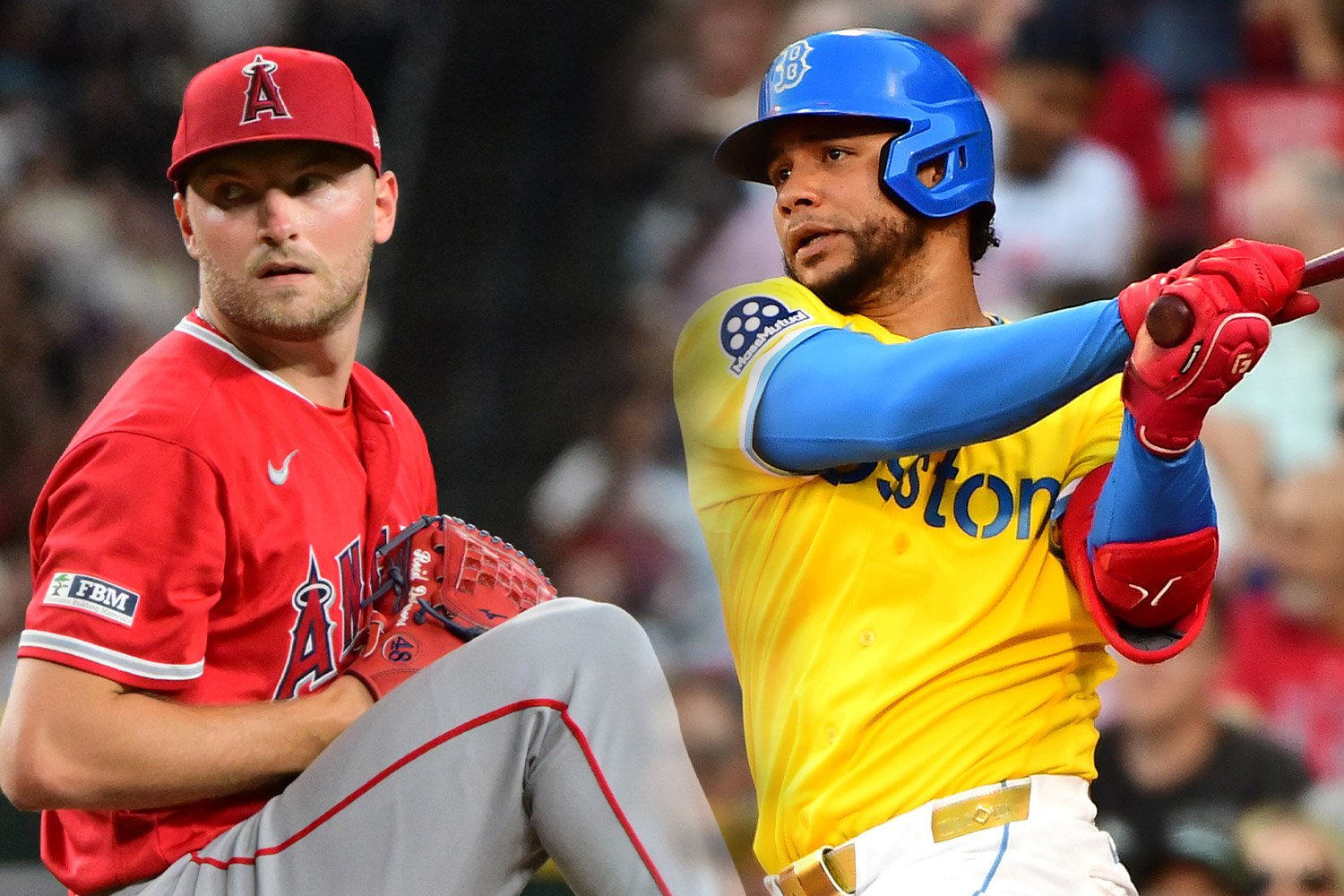 All stats are prior to the June 24 game. With the trade deadline a month away, the Toronto Blue Jays find themselves 8.5 games behind the New York Yankees in the AL East, but have a game lead for the last Wild Card spot. The Blue Jays' unexpectedly slow start isn’t only performance-based; injuries in the first half of the season have also decimated them. The starting rotation has seen José Berríos and Bowden Francis undergo Tommy John surgery, Cody Ponce tear his ACL in his first start, and Max Scherzer has already made two injury list stints this season, but has been abysmal in his six starts. Luckily, Shane Bieber made his season debut on June 23; however, the depth is depleted. That makes starting pitching a must-need to target at the trade deadline. Ross Atkins has already stated in a recent media interview that “he likes the current group, but has interest in more because you can never have enough starters." The good thing about how the standings look now is that it may be a seller's market. Many division leaders already have a sizeable lead, and though the Wild Card looks congested, teams likely won’t want to be buyers chasing a Wild Card spot with so many teams vying. The Blue Jays don’t need a Tarik Skubal-type front-end starter; they need a back-end inning eater that can be productive. They’ve shown in the past a preference for targeting controllable pitchers, which makes the Los Angeles Angels’ Reid Detmers a name to watch. He turns 27 a few weeks before the trade deadline and is under team control through the 2028 season. Another trade-deadline need is a power bat. Anthony Santander needed left shoulder labral surgery late in the offseason, which will keep him out until possibly late September or October. Though he struggled, hitting only six home runs over an injury-plagued 2025 season, the Blue Jays were hoping he’d be healthy and would show a glimpse of his 2024 form. That season, Santander hit 44 home runs with the Baltimore Orioles. Not having Santander isn’t the only issue for the Blue Jays, who rank 22nd in home runs. Vladimir Guerrero Jr. is going through a massive power drought with only four long balls through 318 plate appearances. His barrel percentage (6.9 percent) is a career low, and his 42.9 percent hard-hit rate is his lowest since Vladdy’s 2019 rookie season. Kazuma Okamoto is the only Blue Jay to have more than nine homers. His 17 is nine more than the second-best total from George Springer. There are five players with seven home runs, but everyone else has fewer than five. Addressing the power deficiency would greatly help a team that also ranks 22nd in runs per game (4.14). ESPN insider Jeff Passan has linked Toronto to a few different sluggers, who would add an instant boost. He has predicted a connection to CJ Abrams, who is under team control through the 2028 season; Willson Contreras, who is signed through the 2027 season with a club option for 2028; and Christian Walker, who is under contract through the 2027 season. Abrams and Contreras would be the ideal power threats to target because their team control exceeds 2027 when there’s a threat of a lockout, depending on how the Collective Bargaining Agreement is handled during the offseason. One thing is for sure: the Blue Jays need improvements at the trade deadline if they want to make another deep postseason run.
 -
All stats are prior to the June 24 game. With the trade deadline a month away, the Toronto Blue Jays find themselves 8.5 games behind the New York Yankees in the AL East, but have a game lead for the last Wild Card spot. The Blue Jays' unexpectedly slow start isn’t only performance-based; injuries in the first half of the season have also decimated them. The starting rotation has seen José Berríos and Bowden Francis undergo Tommy John surgery, Cody Ponce tear his ACL in his first start, and Max Scherzer has already made two injury list stints this season, but has been abysmal in his six starts. Luckily, Shane Bieber made his season debut on June 23; however, the depth is depleted. That makes starting pitching a must-need to target at the trade deadline. Ross Atkins has already stated in a recent media interview that “he likes the current group, but has interest in more because you can never have enough starters." The good thing about how the standings look now is that it may be a seller's market. Many division leaders already have a sizeable lead, and though the Wild Card looks congested, teams likely won’t want to be buyers chasing a Wild Card spot with so many teams vying. The Blue Jays don’t need a Tarik Skubal-type front-end starter; they need a back-end inning eater that can be productive. They’ve shown in the past a preference for targeting controllable pitchers, which makes the Los Angeles Angels’ Reid Detmers a name to watch. He turns 27 a few weeks before the trade deadline and is under team control through the 2028 season. Another trade-deadline need is a power bat. Anthony Santander needed left shoulder labral surgery late in the offseason, which will keep him out until possibly late September or October. Though he struggled, hitting only six home runs over an injury-plagued 2025 season, the Blue Jays were hoping he’d be healthy and would show a glimpse of his 2024 form. That season, Santander hit 44 home runs with the Baltimore Orioles. Not having Santander isn’t the only issue for the Blue Jays, who rank 22nd in home runs. Vladimir Guerrero Jr. is going through a massive power drought with only four long balls through 318 plate appearances. His barrel percentage (6.9 percent) is a career low, and his 42.9 percent hard-hit rate is his lowest since Vladdy’s 2019 rookie season. Kazuma Okamoto is the only Blue Jay to have more than nine homers. His 17 is nine more than the second-best total from George Springer. There are five players with seven home runs, but everyone else has fewer than five. Addressing the power deficiency would greatly help a team that also ranks 22nd in runs per game (4.14). ESPN insider Jeff Passan has linked Toronto to a few different sluggers, who would add an instant boost. He has predicted a connection to CJ Abrams, who is under team control through the 2028 season; Willson Contreras, who is signed through the 2027 season with a club option for 2028; and Christian Walker, who is under contract through the 2027 season. Abrams and Contreras would be the ideal power threats to target because their team control exceeds 2027 when there’s a threat of a lockout, depending on how the Collective Bargaining Agreement is handled during the offseason. One thing is for sure: the Blue Jays need improvements at the trade deadline if they want to make another deep postseason run. View full article
-
.jpg.add2c424313d48eade0bc1b86a0e71eb.jpg) The Toronto Blue Jays are seeing massive success from two of their trade acquisitions at last season's deadline. Louis Varland was acquired from the Minnesota Twins along with Ty France in exchange for Alan Roden and prospect Kendry Rojas. In a smaller-scale trade, the Blue Jays acquired Brandon Valenzuela from the San Diego Padres for Will Wagner. Although it's early in the season, Toronto looks like the clear winner of both deals, given how its acquisitions are performing. Varland has been one of the best relievers, if not the best, in the American League throughout the first 10 weeks of the season. Through 34 2/3 innings (as of June 8), he has an out-of-this-world 0.28 ERA, a 34.1 percent strikeout rate, and a 1.29 FIP. All three statistics would be career-best numbers if this were the end of the season. Due to his success, he has been called upon to replace Jeff Hoffman to close out games, and Varland has been exceptional. He's converted all 11 of his save opportunities. What's even more impressive is that the righty has pitched in 18 straight outings without allowing an earned run. His Baseball Savant profile is entirely red, with him ranking in the 90th percentile or higher across 10 statistics. Varland doesn't become a free agent until the 2031 season, which makes him a valuable long-term asset, and he is quickly making a case as one of the Blue Jays' greatest trade deadline acquisitions in team history. Obviously, some regression will come; he can't be this perfect all season long. Or can he? When Valenzuela was acquired last season, he was thought to be a defensive-minded catcher. In 2023, he had an .828 OPS after 156 High-A plate appearances. That was the last time he had an OPS above .715 at any professional level, and he's never had an ISO above .180 until this year. This season, he's slashing .252/.338/.471 with seven home runs, 17 runs, 16 runs driven in, a .809 OPS, and a .218 ISO. When Alejandro Kirk went on the injured list in early April, Valenzuela was called up to back up Tyler Heineman. However, Heineman's struggles at the plate led the Blue Jays to split the backstop role between Heineman and Valenzuela. Lately, though, Valenzuela has gotten the majority of starts each week due to his offensive success. With Kirk starting a rehab assignment, the Blue Jays will have to make a difficult choice about who to send down if all goes well. Do you keep Valenzuela, a rookie who is performing better offensively, or Heineman, a veteran who is just as strong defensively? Both catchers rank in the top four among MLB catchers in Fielding Run Value. Valenzuela ranks third with a +7 value, and Heineman ranks fourth with a +6 value. The tough decision about who to keep on the 26-man roster stems from Heineman no longer having any options available. So, he would have to be designated for assignment, and with his strong defensive skills, he's nearly guaranteed to be selected off waivers. It might be smart to keep Heineman on the 26-man roster, while Valenzuela gets regular at-bats in Triple-A rather than making a start or two each week in the big leagues. Keeping Heineman also strengthens the team's catching depth in case of an injury towards the end of the season. Kirk isn't expected to need many at-bats during his rehab stint, so a return could come this weekend in a series against the division rival New York Yankees. I would expect Heineman to stay and back up Kirk, but luckily, I'm not the one who makes these tough decisions. Stats updated prior to games on June 9.
The Toronto Blue Jays are seeing massive success from two of their trade acquisitions at last season's deadline. Louis Varland was acquired from the Minnesota Twins along with Ty France in exchange for Alan Roden and prospect Kendry Rojas. In a smaller-scale trade, the Blue Jays acquired Brandon Valenzuela from the San Diego Padres for Will Wagner. Although it's early in the season, Toronto looks like the clear winner of both deals, given how its acquisitions are performing. Varland has been one of the best relievers, if not the best, in the American League throughout the first 10 weeks of the season. Through 34 2/3 innings (as of June 8), he has an out-of-this-world 0.28 ERA, a 34.1 percent strikeout rate, and a 1.29 FIP. All three statistics would be career-best numbers if this were the end of the season. Due to his success, he has been called upon to replace Jeff Hoffman to close out games, and Varland has been exceptional. He's converted all 11 of his save opportunities. What's even more impressive is that the righty has pitched in 18 straight outings without allowing an earned run. His Baseball Savant profile is entirely red, with him ranking in the 90th percentile or higher across 10 statistics. Varland doesn't become a free agent until the 2031 season, which makes him a valuable long-term asset, and he is quickly making a case as one of the Blue Jays' greatest trade deadline acquisitions in team history. Obviously, some regression will come; he can't be this perfect all season long. Or can he? When Valenzuela was acquired last season, he was thought to be a defensive-minded catcher. In 2023, he had an .828 OPS after 156 High-A plate appearances. That was the last time he had an OPS above .715 at any professional level, and he's never had an ISO above .180 until this year. This season, he's slashing .252/.338/.471 with seven home runs, 17 runs, 16 runs driven in, a .809 OPS, and a .218 ISO. When Alejandro Kirk went on the injured list in early April, Valenzuela was called up to back up Tyler Heineman. However, Heineman's struggles at the plate led the Blue Jays to split the backstop role between Heineman and Valenzuela. Lately, though, Valenzuela has gotten the majority of starts each week due to his offensive success. With Kirk starting a rehab assignment, the Blue Jays will have to make a difficult choice about who to send down if all goes well. Do you keep Valenzuela, a rookie who is performing better offensively, or Heineman, a veteran who is just as strong defensively? Both catchers rank in the top four among MLB catchers in Fielding Run Value. Valenzuela ranks third with a +7 value, and Heineman ranks fourth with a +6 value. The tough decision about who to keep on the 26-man roster stems from Heineman no longer having any options available. So, he would have to be designated for assignment, and with his strong defensive skills, he's nearly guaranteed to be selected off waivers. It might be smart to keep Heineman on the 26-man roster, while Valenzuela gets regular at-bats in Triple-A rather than making a start or two each week in the big leagues. Keeping Heineman also strengthens the team's catching depth in case of an injury towards the end of the season. Kirk isn't expected to need many at-bats during his rehab stint, so a return could come this weekend in a series against the division rival New York Yankees. I would expect Heineman to stay and back up Kirk, but luckily, I'm not the one who makes these tough decisions. Stats updated prior to games on June 9. -
The Toronto Blue Jays are seeing massive success from two of their trade acquisitions at last season's deadline. Louis Varland was acquired from the Minnesota Twins along with Ty France in exchange for Alan Roden and prospect Kendry Rojas. In a smaller-scale trade, the Blue Jays acquired Brandon Valenzuela from the San Diego Padres for Will Wagner. Although it's early in the season, Toronto looks like the clear winner of both deals, given how its acquisitions are performing. Varland has been one of the best relievers, if not the best, in the American League throughout the first 10 weeks of the season. Through 34 2/3 innings (as of June 8), he has an out-of-this-world 0.28 ERA, a 34.1 percent strikeout rate, and a 1.29 FIP. All three statistics would be career-best numbers if this were the end of the season. Due to his success, he has been called upon to replace Jeff Hoffman to close out games, and Varland has been exceptional. He's converted all 11 of his save opportunities. What's even more impressive is that the righty has pitched in 18 straight outings without allowing an earned run. His Baseball Savant profile is entirely red, with him ranking in the 90th percentile or higher across 10 statistics. Varland doesn't become a free agent until the 2031 season, which makes him a valuable long-term asset, and he is quickly making a case as one of the Blue Jays' greatest trade deadline acquisitions in team history. Obviously, some regression will come; he can't be this perfect all season long. Or can he? When Valenzuela was acquired last season, he was thought to be a defensive-minded catcher. In 2023, he had an .828 OPS after 156 High-A plate appearances. That was the last time he had an OPS above .715 at any professional level, and he's never had an ISO above .180 until this year. This season, he's slashing .252/.338/.471 with seven home runs, 17 runs, 16 runs driven in, a .809 OPS, and a .218 ISO. When Alejandro Kirk went on the injured list in early April, Valenzuela was called up to back up Tyler Heineman. However, Heineman's struggles at the plate led the Blue Jays to split the backstop role between Heineman and Valenzuela. Lately, though, Valenzuela has gotten the majority of starts each week due to his offensive success. With Kirk starting a rehab assignment, the Blue Jays will have to make a difficult choice about who to send down if all goes well. Do you keep Valenzuela, a rookie who is performing better offensively, or Heineman, a veteran who is just as strong defensively? Both catchers rank in the top four among MLB catchers in Fielding Run Value. Valenzuela ranks third with a +7 value, and Heineman ranks fourth with a +6 value. The tough decision about who to keep on the 26-man roster stems from Heineman no longer having any options available. So, he would have to be designated for assignment, and with his strong defensive skills, he's nearly guaranteed to be selected off waivers. It might be smart to keep Heineman on the 26-man roster, while Valenzuela gets regular at-bats in Triple-A rather than making a start or two each week in the big leagues. Keeping Heineman also strengthens the team's catching depth in case of an injury towards the end of the season. Kirk isn't expected to need many at-bats during his rehab stint, so a return could come this weekend in a series against the division rival New York Yankees. I would expect Heineman to stay and back up Kirk, but luckily, I'm not the one who makes these tough decisions. Stats updated prior to games on June 9. View full article
-
.jpg.f9ae9e067c338b5a538b33a9cc17aeb1.jpg) Braydon Fisher has been one of the better relievers for the Blue Jays over the last two seasons. Last year, he posted a 2.70 ERA and had a 30.7 percent strikeout rate over 50 1/3 innings. He was a reliable option late in games for manager John Schneider, with a 21.3 percent strikeout-minus-walk rate and a .178 batting average against. This season, Fisher has been just as outstanding, posting a 2.62 ERA and holding hitters to a .174 average. His strikeout rate is slightly down, but it's still an impressive 27.1 percent. A possible reason for the decline is that he isn't getting as much horizontal break on his pitches. The righty has even changed how he throws his cutter, causing it to break slightly to his arm side rather than his glove side. Avg. Horizontal Break (in inches) Pitch 2025 2026 Curveball 5.0 gloveside 2.9 gloveside Cutter 2.0 gloveside 0.8 armside Slider 2.2 gloveside 1.0 gloveside 4-Seam Fastball 4.9 armside 4.6 armside Chart data is from Baseball Savant. I'm not sure what's causing the decline in movement other than a possible change in grip or release point, but Fisher is still finding ways to get outs. He's been more successful getting groundballs this season (47.5 percent) compared to last season (36.4 percent). This vast difference is a drastic improvement, and it's because he's getting batters to hit the top of the ball at a 37.5 percent rate, which is above the MLB average (32.3 percent). There is cause for concern, though, with Fisher having already pitched in 32 games (one behind Mason Fluharty) and on pace for 81 appearances. Being overworked is a massive concern for young pitchers, but the Blue Jays want to utilize their best relief arms. We saw the issue of less experienced arms being overworked last season with Brendon Little. He was the only reliable southpaw in the bullpen for most of the season after Eric Lauer moved to the starting rotation, while lefties Fluharty and Justin Bruihl also had their struggles. Last season, Little threw in 79 big league games, 30 more than in 2024, and pitched 68 1/3 innings. His ERA rose from 2.03 in the first half of the season to 4.88 in the second half, and the strikeout rate dropped from 44.8 percent to 24.1 percent over 20 fewer innings. The decline could have been due to decreased velocity from overuse or insufficient offseason preparation for the increased workload. When you pitch in that many games, it means you are getting up in the bullpen to warm up and then pitching in the game. This usage puts significant strain on a pitcher's arm, and there have been a few instances of pitchers throwing in back-to-back games. Fisher and Fluharty are both at risk of repeating Little's late-season collapse. The risk stems from the bullpen being heavily relied on right now, with the starting rotation bitten by the injury bug. José Berríos, Shane Bieber, Dylan Cease, Bowden Francis, Cody Ponce, and Max Scherzer are all on the injured list. However, Cease and Scherzer have completed rehab starts and may be returning to Toronto soon. Bieber is also on a rehab start assignment, but he's been out all season and will need a few more starts before returning to the big leagues. Ponce, Francis, and Berríos are out for the year. Yimi García has also begun a rehab stint in Single-A Dunedin and is eyeing a return to Toronto later this month. One thing is certain: The Blue Jays need to find a way, quick, to relieve the workload on their young relievers. That may mean making a move well before the trade deadline.
Braydon Fisher has been one of the better relievers for the Blue Jays over the last two seasons. Last year, he posted a 2.70 ERA and had a 30.7 percent strikeout rate over 50 1/3 innings. He was a reliable option late in games for manager John Schneider, with a 21.3 percent strikeout-minus-walk rate and a .178 batting average against. This season, Fisher has been just as outstanding, posting a 2.62 ERA and holding hitters to a .174 average. His strikeout rate is slightly down, but it's still an impressive 27.1 percent. A possible reason for the decline is that he isn't getting as much horizontal break on his pitches. The righty has even changed how he throws his cutter, causing it to break slightly to his arm side rather than his glove side. Avg. Horizontal Break (in inches) Pitch 2025 2026 Curveball 5.0 gloveside 2.9 gloveside Cutter 2.0 gloveside 0.8 armside Slider 2.2 gloveside 1.0 gloveside 4-Seam Fastball 4.9 armside 4.6 armside Chart data is from Baseball Savant. I'm not sure what's causing the decline in movement other than a possible change in grip or release point, but Fisher is still finding ways to get outs. He's been more successful getting groundballs this season (47.5 percent) compared to last season (36.4 percent). This vast difference is a drastic improvement, and it's because he's getting batters to hit the top of the ball at a 37.5 percent rate, which is above the MLB average (32.3 percent). There is cause for concern, though, with Fisher having already pitched in 32 games (one behind Mason Fluharty) and on pace for 81 appearances. Being overworked is a massive concern for young pitchers, but the Blue Jays want to utilize their best relief arms. We saw the issue of less experienced arms being overworked last season with Brendon Little. He was the only reliable southpaw in the bullpen for most of the season after Eric Lauer moved to the starting rotation, while lefties Fluharty and Justin Bruihl also had their struggles. Last season, Little threw in 79 big league games, 30 more than in 2024, and pitched 68 1/3 innings. His ERA rose from 2.03 in the first half of the season to 4.88 in the second half, and the strikeout rate dropped from 44.8 percent to 24.1 percent over 20 fewer innings. The decline could have been due to decreased velocity from overuse or insufficient offseason preparation for the increased workload. When you pitch in that many games, it means you are getting up in the bullpen to warm up and then pitching in the game. This usage puts significant strain on a pitcher's arm, and there have been a few instances of pitchers throwing in back-to-back games. Fisher and Fluharty are both at risk of repeating Little's late-season collapse. The risk stems from the bullpen being heavily relied on right now, with the starting rotation bitten by the injury bug. José Berríos, Shane Bieber, Dylan Cease, Bowden Francis, Cody Ponce, and Max Scherzer are all on the injured list. However, Cease and Scherzer have completed rehab starts and may be returning to Toronto soon. Bieber is also on a rehab start assignment, but he's been out all season and will need a few more starts before returning to the big leagues. Ponce, Francis, and Berríos are out for the year. Yimi García has also begun a rehab stint in Single-A Dunedin and is eyeing a return to Toronto later this month. One thing is certain: The Blue Jays need to find a way, quick, to relieve the workload on their young relievers. That may mean making a move well before the trade deadline. -
Braydon Fisher has been one of the better relievers for the Blue Jays over the last two seasons. Last year, he posted a 2.70 ERA and had a 30.7 percent strikeout rate over 50 1/3 innings. He was a reliable option late in games for manager John Schneider, with a 21.3 percent strikeout-to-walk rate and held batters to a .178 batting average. This season, Fisher has been just as outstanding, posting a 2.62 ERA and holding hitters to a .174 average. His strikeout rate is slightly down, but it's still an impressive 27.1 percent. A possible reason for the decline is that he isn't getting as much horizontal break on his pitches. The righty has even changed how he throws his cutter, causing it to break arm-side rather than glove-side Horizontal Break (in inches) Pitch 2025 2026 Curveball 5.0 gloveside 2.9 gloveside Cutter 2.0 gloveside 0.8 armside Slider 2.2 gloveside 1.0 gloveside 4-Seam Fastball 4.9 armside 4.6 armside Chart Data is from Baseball Savant I'm not sure what's causing the decline in movement other than a possible change in grip or release point, but Fisher is still finding ways to get outs. He's been more successful getting groundballs this season (47.5 percent) compared to 36.4 percent last season. This vast difference is a drastic improvement, but it's because he's getting batters to hit the top of the ball at a 37.5 percent rate, which is above the MLB average (32.3 percent). There is cause for concern, though, with Fisher already pitching in 32 games (one behind Mason Fluharty) and on pace for 82 games. Being overworked is a massive concern for young pitchers, but the Blue Jays want to utilize their best relief arms. We saw the issue of being overworked last season with Brendon Little. He was the only reliable southpaw in the bullpen for most of the season after Eric Lauer moved to the starting rotation and prospects Fluharty and Justin Bruihl struggled. Last season, Little threw in 79 games, 30 more than in 2024, and pitched in 68 1/3 innings. His ERA rose from 2.03 in the first half of the season to 4.88 in the second half, and the strikeout rate dropped from 44.8 percent to 24.1 percent over 20 fewer innings. The decline could be due to decreased velocity from overuse or insufficient offseason preparation for the increased workload. When you pitch in that many games, it means you are getting up in the bullpen to warm up and then pitching in the game. This usage puts significant strain on a pitcher's arm, and there are a few instances of pitching back-to-back games. Fisher and Fluharty are both at risk of repeating Little's last season's collapse. The risk stems from the bullpen being heavily relied on right now, with the starting rotation bitten by the injury bug. José Berríos, Shane Bieber, Dylan Cease, Bowden Francis, Cody Ponce, and Max Scherzer are all on the injury list. However, Cease and Scherzer have completed a rehab start and may be returning to Toronto soon. Bieber will make a rehab start with Triple-A Buffalo on June 6, but he's been out all season and will need a few more starts before returning to the big leagues. Ponce, Francis, and Berríos are out for the season. Yimi Garcia has also begun a rehab stint in Single-A Dunedin and is eyeing a return to Toronto later this month. One thing is certain: the Blue Jays need to find a way, quick, to relieve the workload on their young relievers. That may be making a move before the trade deadline. View full article
-
Mason Fluharty is having a roller coaster season so far. In March and April, he had a 7.36 ERA, a 1.73 WHIP, and a 16:7 strikeout-to-walk ratio while allowing batters to hit .286 over 11 innings. Since then, the lefty has been one of the best pitchers in the majors. Fluharty is sporting an astounding 0.69 ERA and 15:3 strikeout-to-walk ratio through 13 innings in May and the first few days of June. With his dominance lately, the Blue Jays have started taking an interesting approach with the lefty. That approach lets him see only three or four batters, then the team takes him out of the game regardless of whether he has finished a full inning. Of his 17 appearances since May 1, Fluharty has faced three or fewer batters in 11 of them, and in eight of those 11 appearances, he didn't complete a full inning. In 2020, MLB implemented a rule requiring relievers to face at least three batters or complete an inning before they could be replaced. So, Fluharty facing the bare minimum and then being replaced without completing an inning is the equivalent of being a LOOGY during the years before the rule change. LOOGY means "left-handed one-out guy," and it refers to the time in baseball when teams had lefty specialists who would come into the game to face a left-handed batter and then be replaced after the at-bat. Currently, Fluharty is on pace to throw 62 innings, but that would be over 85 games. He pitched 63.2 innings last year between Triple-A Buffalo and the majors and 67 innings for Buffalo the year before. Yet, that was over 66 games in 2025 and only 56 games in 2024. Even though the lefty is on pace to throw fewer innings than in either of those seasons, pitching him in 85 games, more than half of the season, would be risking an injury. Fluharty ranks first in MLB in games pitched (33), while teammate Brayden Fisher is tied for second (32). Pitching in that many games means they're warming up in the bullpen and entering the game, which puts a lot of strain on a pitcher's arm, even if it's only for three batters. It also means there will be a few times when Fluharty will be used on back-to-back days. This workload isn't sustainable over an entire season. The Blue Jays don't want to put their young reliever in danger of getting hurt, but they also can't afford to leave him sitting in the 'pen if the team wants to compete in the AL East. Fluharty ranks in the 92nd percentile or higher in expected ERA (2.16), expected batting average (.173), average exit velocity (85.7 mph), strikeout rate (29.8 percent), and hard-hit rate (32.3 percent), making him a valuable asset late in games. Another contributing factor to the increased workload on the bullpen's best arms is the starting rotation's injuries. José Berríos, Dylan Cease, Shane Bieber, Bowden Francis, Cody Ponce, and Max Scherzer are all on the injury list, which has forced Spencer Miles to move to a starting role. However, he hasn't thrown more than 4 1/3 innings in a game, meaning the bullpen is needed to cover the rest of the innings. Things get worse for manager John Schneider because he then has to follow up with a second bullpen game, since there are no viable starters available. The Blue Jays put a Band-Aid on the situation by trading for the recently DFA'd Simeon Woods Richardson for cash considerations. He has a 7.74 ERA over 47 2/3 innings and an abysmal 26:25 strikeout-to-walk ratio, making him a stopgap until real fixes arrive. The real fixes to the workload dilemma may be on their way. Scherzer and Cease are nearing the end of their rehab assignments with Triple-A Buffalo. Cease made a start on June 4, Scherzer will get a start on June 5, and Bieber, who has been out all season, will get the start on June 6 for the Bisons. Reliever Yimi García made a rehab appearance for Single-A Dunedin on June 3. Reinforcements can't come quickly enough to protect the young stars in the Blue Jays bullpen from being overworked and to keep them pitching well towards the end of the season. View full article
-
.jpg.7f607d53a80abe1ca88fe3396f17cf02.jpg) Mason Fluharty is having a roller coaster season so far. In March and April, he had a 7.36 ERA, a 1.73 WHIP, and a 16:7 strikeout-to-walk ratio while allowing batters to hit .286 over 11 innings. Since then, the lefty has been one of the best pitchers in the majors. Fluharty is sporting an astounding 0.69 ERA and 15:3 strikeout-to-walk ratio through 13 innings in May and the first few days of June. With his dominance lately, the Blue Jays have started taking an interesting approach with the lefty. That approach lets him see only three or four batters, then the team takes him out of the game regardless of whether he has finished a full inning. Of his 17 appearances since May 1, Fluharty has faced three or fewer batters in 11 of them, and in eight of those 11 appearances, he didn't complete a full inning. In 2020, MLB implemented a rule requiring relievers to face at least three batters or complete an inning before they could be replaced. So, Fluharty facing the bare minimum and then being replaced without completing an inning is the equivalent of being a LOOGY during the years before the rule change. LOOGY means "left-handed one-out guy," and it refers to the time in baseball when teams had lefty specialists who would come into the game to face a left-handed batter and then be replaced after the at-bat. Currently, Fluharty is on pace to throw 62 innings, but that would be over 85 games. He pitched 63.2 innings last year between Triple-A Buffalo and the majors and 67 innings for Buffalo the year before. Yet, that was over 66 games in 2025 and only 56 games in 2024. Even though the lefty is on pace to throw fewer innings than in either of those seasons, pitching him in 85 games, more than half of the season, would be risking an injury. Fluharty ranks first in MLB in games pitched (33), while teammate Brayden Fisher is tied for second (32). Pitching in that many games means they're warming up in the bullpen and entering the game, which puts a lot of strain on a pitcher's arm, even if it's only for three batters. It also means there will be a few times when Fluharty will be used on back-to-back days. This workload isn't sustainable over an entire season. The Blue Jays don't want to put their young reliever in danger of getting hurt, but they also can't afford to leave him sitting in the 'pen if the team wants to compete in the AL East. Fluharty ranks in the 92nd percentile or higher in expected ERA (2.16), expected batting average (.173), average exit velocity (85.7 mph), strikeout rate (29.8 percent), and hard-hit rate (32.3 percent), making him a valuable asset late in games. Another contributing factor to the increased workload on the bullpen's best arms is the starting rotation's injuries. José Berríos, Dylan Cease, Shane Bieber, Bowden Francis, Cody Ponce, and Max Scherzer are all on the injury list, which has forced Spencer Miles to move to a starting role. However, he hasn't thrown more than 4 1/3 innings in a game, meaning the bullpen is needed to cover the rest of the innings. Things get worse for manager John Schneider because he then has to follow up with a second bullpen game, since there are no viable starters available. The Blue Jays put a Band-Aid on the situation by trading for the recently DFA'd Simeon Woods Richardson for cash considerations. He has a 7.74 ERA over 47 2/3 innings and an abysmal 26:25 strikeout-to-walk ratio, making him a stopgap until real fixes arrive. The real fixes to the workload dilemma may be on their way. Scherzer and Cease are nearing the end of their rehab assignments with Triple-A Buffalo. Cease made a start on June 4, Scherzer will get a start on June 5, and Bieber, who has been out all season, will get the start on June 6 for the Bisons. Reliever Yimi García made a rehab appearance for Single-A Dunedin on June 3. Reinforcements can't come quickly enough to protect the young stars in the Blue Jays bullpen from being overworked and to keep them pitching well towards the end of the season.
Mason Fluharty is having a roller coaster season so far. In March and April, he had a 7.36 ERA, a 1.73 WHIP, and a 16:7 strikeout-to-walk ratio while allowing batters to hit .286 over 11 innings. Since then, the lefty has been one of the best pitchers in the majors. Fluharty is sporting an astounding 0.69 ERA and 15:3 strikeout-to-walk ratio through 13 innings in May and the first few days of June. With his dominance lately, the Blue Jays have started taking an interesting approach with the lefty. That approach lets him see only three or four batters, then the team takes him out of the game regardless of whether he has finished a full inning. Of his 17 appearances since May 1, Fluharty has faced three or fewer batters in 11 of them, and in eight of those 11 appearances, he didn't complete a full inning. In 2020, MLB implemented a rule requiring relievers to face at least three batters or complete an inning before they could be replaced. So, Fluharty facing the bare minimum and then being replaced without completing an inning is the equivalent of being a LOOGY during the years before the rule change. LOOGY means "left-handed one-out guy," and it refers to the time in baseball when teams had lefty specialists who would come into the game to face a left-handed batter and then be replaced after the at-bat. Currently, Fluharty is on pace to throw 62 innings, but that would be over 85 games. He pitched 63.2 innings last year between Triple-A Buffalo and the majors and 67 innings for Buffalo the year before. Yet, that was over 66 games in 2025 and only 56 games in 2024. Even though the lefty is on pace to throw fewer innings than in either of those seasons, pitching him in 85 games, more than half of the season, would be risking an injury. Fluharty ranks first in MLB in games pitched (33), while teammate Brayden Fisher is tied for second (32). Pitching in that many games means they're warming up in the bullpen and entering the game, which puts a lot of strain on a pitcher's arm, even if it's only for three batters. It also means there will be a few times when Fluharty will be used on back-to-back days. This workload isn't sustainable over an entire season. The Blue Jays don't want to put their young reliever in danger of getting hurt, but they also can't afford to leave him sitting in the 'pen if the team wants to compete in the AL East. Fluharty ranks in the 92nd percentile or higher in expected ERA (2.16), expected batting average (.173), average exit velocity (85.7 mph), strikeout rate (29.8 percent), and hard-hit rate (32.3 percent), making him a valuable asset late in games. Another contributing factor to the increased workload on the bullpen's best arms is the starting rotation's injuries. José Berríos, Dylan Cease, Shane Bieber, Bowden Francis, Cody Ponce, and Max Scherzer are all on the injury list, which has forced Spencer Miles to move to a starting role. However, he hasn't thrown more than 4 1/3 innings in a game, meaning the bullpen is needed to cover the rest of the innings. Things get worse for manager John Schneider because he then has to follow up with a second bullpen game, since there are no viable starters available. The Blue Jays put a Band-Aid on the situation by trading for the recently DFA'd Simeon Woods Richardson for cash considerations. He has a 7.74 ERA over 47 2/3 innings and an abysmal 26:25 strikeout-to-walk ratio, making him a stopgap until real fixes arrive. The real fixes to the workload dilemma may be on their way. Scherzer and Cease are nearing the end of their rehab assignments with Triple-A Buffalo. Cease made a start on June 4, Scherzer will get a start on June 5, and Bieber, who has been out all season, will get the start on June 6 for the Bisons. Reliever Yimi García made a rehab appearance for Single-A Dunedin on June 3. Reinforcements can't come quickly enough to protect the young stars in the Blue Jays bullpen from being overworked and to keep them pitching well towards the end of the season. -
The Toronto Blue Jays have struggled with power all season. As of Tuesday, they rank tied for 20th among MLB teams with 56 home runs and 25th in OPS (.690). The issue stems from injuries and struggles from the lineup's superstars. Anthony Santander has been out all season after shoulder surgery in February, but he's not due to return until August at the earliest. Alejandro Kirk has been out since April 7 after suffering a fractured thumb from a foul tip. He's on pace to begin a rehab assignment soon, with hopefully a return to Toronto by mid-to-late June. Another player the Blue Jays were depending on, Addison Barger, has already spent two separate stints on the 10-day injury list this season. On April 5, he injured both ankles on the same play while attempting to beat out an infield groundball. He missed more than a month before returning on May 9. However, on May 10, he returned to the injury list due to right elbow inflammation. There's no timetable for a return, but he has started swinging in the batting cage. Aside from injuries, the Blue Jays are seeing a lack of power from key players Vladimir Guerrero Jr., Daulton Varsho, and George Springer. They are each hitting fly balls at a rate over 30 percent, but they are producing their worst home run-to-fly-ball ratios. All of their HR/FB rates are under 10 percent for the first time in their careers, with Guerrero at an abysmal 5.2 percent. Despite their season-long struggles, the Blue Jays went 15-14 in May, which helped them jump into third place in the AL East, though they are still well behind the Tampa Bay Rays and New York Yankees. There haven't been many bright spots in the lineup lately, but here were the Blue Jays' top performers in May. Top Blue Jays Hitters In May Honorable Mention: George Springer May Stats: 107 PA, .208/.276/.344, 12 R, 3 HR, 7 RBI, .774 OPS, 75 wRC+ George Springer's performance last season, when he hit 32 home runs, is starting to look like a fluke. He is currently experiencing the worst statistical season of his 13-year career. Although it's only two months into the season, the Blue Jays' DH is hitting. 212/.289/.359 with a .648 OPS and an 84 wRC+. These statistics would all be career-worst numbers, including a -0.2 fWAR, which would mark the first time that Springer dropped into the negatives. The interesting thing is that the 36-year-old is actually crushing the ball when he pulls it. All five of his home runs are to left field, as well as nine of his 14 RBIs, and he is hitting .357 with a 1.036 OPS on pulled contact. His stats drop suddenly as you move toward right field. Hitting the ball up the middle, Springer is batting .214 with one RBI and a .475 OPS. Hitting to the opposite field, his average is .167, with four knocked in and a .458 OPS. At this rate and given his age, this may be the last season we see Springer in a Blue Jays uniform, as his contract expires at the end of the year. Honorable Mention: Jesús Sánchez May Stats: 81 PA, .329/.358/.500, 8 R, 2 HR, 13 RBI, .858 OPS, 139 wRC+ The trade acquisition after Santander's surgery news, Jesús Sánchez is currently on pace to have his best statistical season of his seven-year career. His .287 batting average would be a career best by nearly .30 points. He's seeing his best success hitting the ball into the air, with a career-best 56.1 air percentage, which is nearly split between fly balls and line drives. The increase in his launch angle is backed up by producing a 1.517 OPS on line drives and a 1.161 OPS on fly balls. Sánchez may not be the power producer that Santander has shown to be over his career, but he's been one of the most consistent contributors in the Blue Jays lineup. The one downfall for the team's right fielder is that he is a platoon player. In only 22 plate appearances, he has a .372 OPS against southpaws, compared to an .844 OPS over 160 plate appearances when facing a right-handed pitcher. The Blue Jays need Sánchez to keep hitting hot with so many of their other key stars struggling. No. 3: Yohendrick Piñango May Stats: 83 PA, .291/.325/.456, 7 R, 3 HR, 15 RBI, .781 OPS, 118 wRC+ April 26, Yohendrick Piñango made his much-anticipated MLB debut. He was called up when Nathan Lukes was placed on the 10-day injury list due to a hamstring injury. The former top prospect has burst onto the scene since his debut, with a 114.8 max exit velocity and 40.9 percent hard-hit rate. Like Sánchez, Piñango is a platoon player, with a .385 OPS in 13 plate appearances off lefties, compared to an .850 OPS in 77 plate appearances off righties. Lukes returned to the Blue Jays on May 25, and the 24-year-old survived not being demoted to make room for Lukes. Davis Schneider was sent down instead, although Piñango has moved to a more part-time role. Moving forward, his playing time will be largely limited to pinch-hitting or giving a day off to Varsho, Sánchez, or Lukes, who are also left-handed hitters. No. 2: Ernie Clement May Stats: 106 PA, .297/.321/.475, 15 R, 4 HR, 13 RBI, .796 OPS, 120 wRC+ Ernie Clement has continued his hot hitting from last season's postseason run and is now a reliable contributor this season. He became a full-time starter in 2024 and is on pace this season for a career year. The power is a nice surprise, since he is in the sixth percentile for average exit velocity (85.7 mph) and the third percentile for hard-hit rate (25.4 percent). However, he is in the 97th percentile for squared-up rate (36.2 percent). Clement's 15.6-degree average launch angle is a helpful contributor to the power display, as well. Another aspect of the utility player's success this season is his ability to put the ball in play. He ranks in the 99th percentile in strikeout percentage (8.1 percent) and has a .309 batting average on balls in play. Even though Clement bats toward the bottom of the lineup against right-handed pitchers and second versus southpaws, his success is much-needed. His outstanding hitting is a reason the Blue Jays are playing as well as they are lately. No. 1: Kazuma Okamoto May Stats: 115 PA, .210/.304/.470, 16 R, 7 HR, 18 RBI, .774 OPS, 115 wRC+ The lone power source for Toronto this season has been one of their offseason signees. Kazuma Okamoto has 12 home runs on the season, which is twice as many as the team's next-closest hitters, Sánchez and Andrés Giménez. The third baseman was also a decent contact hitter in Japan, hitting at least .260 in each of his eight seasons there. However, the contact hasn't translated to the MLB game. He was hot to start May, with four home runs in the first three days, and he had a hit in 10 straight games. That streak went cold right afterward, with him getting only two hits over the next 10 games. One reason Okamoto's batting average for the month is so low is that he has had only three multi-hit games in May, and all of them were before May 6. With the limited power around him, Okamoto needs to continue hitting the ball hard; he currently ranks in the 96th percentile for hard-hit rate (53.0 percent). The Blue Jays are desperate to keep up in the AL East; it wouldn't surprise me to see a power bat be a target at the trade deadline. View full article
-
.jpg.6fc9a8193d5fef8e9faa3417c125bfa6.jpg) The Toronto Blue Jays have struggled with power all season. As of Tuesday, they rank tied for 20th among MLB teams with 56 home runs and 25th in OPS (.690). The issue stems from injuries and struggles from the lineup's superstars. Anthony Santander has been out all season after shoulder surgery in February, but he's not due to return until August at the earliest. Alejandro Kirk has been out since April 7 after suffering a fractured thumb from a foul tip. He's on pace to begin a rehab assignment soon, with hopefully a return to Toronto by mid-to-late June. Another player the Blue Jays were depending on, Addison Barger, has already spent two separate stints on the 10-day injury list this season. On April 5, he injured both ankles on the same play while attempting to beat out an infield groundball. He missed more than a month before returning on May 9. However, on May 10, he returned to the injury list due to right elbow inflammation. There's no timetable for a return, but he has started swinging in the batting cage. Aside from injuries, the Blue Jays are seeing a lack of power from key players Vladimir Guerrero Jr., Daulton Varsho, and George Springer. They are each hitting fly balls at a rate over 30 percent, but they are producing their worst home run-to-fly-ball ratios. All of their HR/FB rates are under 10 percent for the first time in their careers, with Guerrero at an abysmal 5.2 percent. Despite their season-long struggles, the Blue Jays went 15-14 in May, which helped them jump into third place in the AL East, though they are still well behind the Tampa Bay Rays and New York Yankees. There haven't been many bright spots in the lineup lately, but here were the Blue Jays' top performers in May. Top Blue Jays Hitters In May Honorable Mention: George Springer May Stats: 107 PA, .208/.276/.344, 12 R, 3 HR, 7 RBI, .774 OPS, 75 wRC+ George Springer's performance last season, when he hit 32 home runs, is starting to look like a fluke. He is currently experiencing the worst statistical season of his 13-year career. Although it's only two months into the season, the Blue Jays' DH is hitting. 212/.289/.359 with a .648 OPS and an 84 wRC+. These statistics would all be career-worst numbers, including a -0.2 fWAR, which would mark the first time that Springer dropped into the negatives. The interesting thing is that the 36-year-old is actually crushing the ball when he pulls it. All five of his home runs are to left field, as well as nine of his 14 RBIs, and he is hitting .357 with a 1.036 OPS on pulled contact. His stats drop suddenly as you move toward right field. Hitting the ball up the middle, Springer is batting .214 with one RBI and a .475 OPS. Hitting to the opposite field, his average is .167, with four knocked in and a .458 OPS. At this rate and given his age, this may be the last season we see Springer in a Blue Jays uniform, as his contract expires at the end of the year. Honorable Mention: Jesús Sánchez May Stats: 81 PA, .329/.358/.500, 8 R, 2 HR, 13 RBI, .858 OPS, 139 wRC+ The trade acquisition after Santander's surgery news, Jesús Sánchez is currently on pace to have his best statistical season of his seven-year career. His .287 batting average would be a career best by nearly .30 points. He's seeing his best success hitting the ball into the air, with a career-best 56.1 air percentage, which is nearly split between fly balls and line drives. The increase in his launch angle is backed up by producing a 1.517 OPS on line drives and a 1.161 OPS on fly balls. Sánchez may not be the power producer that Santander has shown to be over his career, but he's been one of the most consistent contributors in the Blue Jays lineup. The one downfall for the team's right fielder is that he is a platoon player. In only 22 plate appearances, he has a .372 OPS against southpaws, compared to an .844 OPS over 160 plate appearances when facing a right-handed pitcher. The Blue Jays need Sánchez to keep hitting hot with so many of their other key stars struggling. No. 3: Yohendrick Piñango May Stats: 83 PA, .291/.325/.456, 7 R, 3 HR, 15 RBI, .781 OPS, 118 wRC+ April 26, Yohendrick Piñango made his much-anticipated MLB debut. He was called up when Nathan Lukes was placed on the 10-day injury list due to a hamstring injury. The former top prospect has burst onto the scene since his debut, with a 114.8 max exit velocity and 40.9 percent hard-hit rate. Like Sánchez, Piñango is a platoon player, with a .385 OPS in 13 plate appearances off lefties, compared to an .850 OPS in 77 plate appearances off righties. Lukes returned to the Blue Jays on May 25, and the 24-year-old survived not being demoted to make room for Lukes. Davis Schneider was sent down instead, although Piñango has moved to a more part-time role. Moving forward, his playing time will be largely limited to pinch-hitting or giving a day off to Varsho, Sánchez, or Lukes, who are also left-handed hitters. No. 2: Ernie Clement May Stats: 106 PA, .297/.321/.475, 15 R, 4 HR, 13 RBI, .796 OPS, 120 wRC+ Ernie Clement has continued his hot hitting from last season's postseason run and is now a reliable contributor this season. He became a full-time starter in 2024 and is on pace this season for a career year. The power is a nice surprise, since he is in the sixth percentile for average exit velocity (85.7 mph) and the third percentile for hard-hit rate (25.4 percent). However, he is in the 97th percentile for squared-up rate (36.2 percent). Clement's 15.6-degree average launch angle is a helpful contributor to the power display, as well. Another aspect of the utility player's success this season is his ability to put the ball in play. He ranks in the 99th percentile in strikeout percentage (8.1 percent) and has a .309 batting average on balls in play. Even though Clement bats toward the bottom of the lineup against right-handed pitchers and second versus southpaws, his success is much-needed. His outstanding hitting is a reason the Blue Jays are playing as well as they are lately. No. 1: Kazuma Okamoto May Stats: 115 PA, .210/.304/.470, 16 R, 7 HR, 18 RBI, .774 OPS, 115 wRC+ The lone power source for Toronto this season has been one of their offseason signees. Kazuma Okamoto has 12 home runs on the season, which is twice as many as the team's next-closest hitters, Sánchez and Andrés Giménez. The third baseman was also a decent contact hitter in Japan, hitting at least .260 in each of his eight seasons there. However, the contact hasn't translated to the MLB game. He was hot to start May, with four home runs in the first three days, and he had a hit in 10 straight games. That streak went cold right afterward, with him getting only two hits over the next 10 games. One reason Okamoto's batting average for the month is so low is that he has had only three multi-hit games in May, and all of them were before May 6. With the limited power around him, Okamoto needs to continue hitting the ball hard; he currently ranks in the 96th percentile for hard-hit rate (53.0 percent). The Blue Jays are desperate to keep up in the AL East; it wouldn't surprise me to see a power bat be a target at the trade deadline.
The Toronto Blue Jays have struggled with power all season. As of Tuesday, they rank tied for 20th among MLB teams with 56 home runs and 25th in OPS (.690). The issue stems from injuries and struggles from the lineup's superstars. Anthony Santander has been out all season after shoulder surgery in February, but he's not due to return until August at the earliest. Alejandro Kirk has been out since April 7 after suffering a fractured thumb from a foul tip. He's on pace to begin a rehab assignment soon, with hopefully a return to Toronto by mid-to-late June. Another player the Blue Jays were depending on, Addison Barger, has already spent two separate stints on the 10-day injury list this season. On April 5, he injured both ankles on the same play while attempting to beat out an infield groundball. He missed more than a month before returning on May 9. However, on May 10, he returned to the injury list due to right elbow inflammation. There's no timetable for a return, but he has started swinging in the batting cage. Aside from injuries, the Blue Jays are seeing a lack of power from key players Vladimir Guerrero Jr., Daulton Varsho, and George Springer. They are each hitting fly balls at a rate over 30 percent, but they are producing their worst home run-to-fly-ball ratios. All of their HR/FB rates are under 10 percent for the first time in their careers, with Guerrero at an abysmal 5.2 percent. Despite their season-long struggles, the Blue Jays went 15-14 in May, which helped them jump into third place in the AL East, though they are still well behind the Tampa Bay Rays and New York Yankees. There haven't been many bright spots in the lineup lately, but here were the Blue Jays' top performers in May. Top Blue Jays Hitters In May Honorable Mention: George Springer May Stats: 107 PA, .208/.276/.344, 12 R, 3 HR, 7 RBI, .774 OPS, 75 wRC+ George Springer's performance last season, when he hit 32 home runs, is starting to look like a fluke. He is currently experiencing the worst statistical season of his 13-year career. Although it's only two months into the season, the Blue Jays' DH is hitting. 212/.289/.359 with a .648 OPS and an 84 wRC+. These statistics would all be career-worst numbers, including a -0.2 fWAR, which would mark the first time that Springer dropped into the negatives. The interesting thing is that the 36-year-old is actually crushing the ball when he pulls it. All five of his home runs are to left field, as well as nine of his 14 RBIs, and he is hitting .357 with a 1.036 OPS on pulled contact. His stats drop suddenly as you move toward right field. Hitting the ball up the middle, Springer is batting .214 with one RBI and a .475 OPS. Hitting to the opposite field, his average is .167, with four knocked in and a .458 OPS. At this rate and given his age, this may be the last season we see Springer in a Blue Jays uniform, as his contract expires at the end of the year. Honorable Mention: Jesús Sánchez May Stats: 81 PA, .329/.358/.500, 8 R, 2 HR, 13 RBI, .858 OPS, 139 wRC+ The trade acquisition after Santander's surgery news, Jesús Sánchez is currently on pace to have his best statistical season of his seven-year career. His .287 batting average would be a career best by nearly .30 points. He's seeing his best success hitting the ball into the air, with a career-best 56.1 air percentage, which is nearly split between fly balls and line drives. The increase in his launch angle is backed up by producing a 1.517 OPS on line drives and a 1.161 OPS on fly balls. Sánchez may not be the power producer that Santander has shown to be over his career, but he's been one of the most consistent contributors in the Blue Jays lineup. The one downfall for the team's right fielder is that he is a platoon player. In only 22 plate appearances, he has a .372 OPS against southpaws, compared to an .844 OPS over 160 plate appearances when facing a right-handed pitcher. The Blue Jays need Sánchez to keep hitting hot with so many of their other key stars struggling. No. 3: Yohendrick Piñango May Stats: 83 PA, .291/.325/.456, 7 R, 3 HR, 15 RBI, .781 OPS, 118 wRC+ April 26, Yohendrick Piñango made his much-anticipated MLB debut. He was called up when Nathan Lukes was placed on the 10-day injury list due to a hamstring injury. The former top prospect has burst onto the scene since his debut, with a 114.8 max exit velocity and 40.9 percent hard-hit rate. Like Sánchez, Piñango is a platoon player, with a .385 OPS in 13 plate appearances off lefties, compared to an .850 OPS in 77 plate appearances off righties. Lukes returned to the Blue Jays on May 25, and the 24-year-old survived not being demoted to make room for Lukes. Davis Schneider was sent down instead, although Piñango has moved to a more part-time role. Moving forward, his playing time will be largely limited to pinch-hitting or giving a day off to Varsho, Sánchez, or Lukes, who are also left-handed hitters. No. 2: Ernie Clement May Stats: 106 PA, .297/.321/.475, 15 R, 4 HR, 13 RBI, .796 OPS, 120 wRC+ Ernie Clement has continued his hot hitting from last season's postseason run and is now a reliable contributor this season. He became a full-time starter in 2024 and is on pace this season for a career year. The power is a nice surprise, since he is in the sixth percentile for average exit velocity (85.7 mph) and the third percentile for hard-hit rate (25.4 percent). However, he is in the 97th percentile for squared-up rate (36.2 percent). Clement's 15.6-degree average launch angle is a helpful contributor to the power display, as well. Another aspect of the utility player's success this season is his ability to put the ball in play. He ranks in the 99th percentile in strikeout percentage (8.1 percent) and has a .309 batting average on balls in play. Even though Clement bats toward the bottom of the lineup against right-handed pitchers and second versus southpaws, his success is much-needed. His outstanding hitting is a reason the Blue Jays are playing as well as they are lately. No. 1: Kazuma Okamoto May Stats: 115 PA, .210/.304/.470, 16 R, 7 HR, 18 RBI, .774 OPS, 115 wRC+ The lone power source for Toronto this season has been one of their offseason signees. Kazuma Okamoto has 12 home runs on the season, which is twice as many as the team's next-closest hitters, Sánchez and Andrés Giménez. The third baseman was also a decent contact hitter in Japan, hitting at least .260 in each of his eight seasons there. However, the contact hasn't translated to the MLB game. He was hot to start May, with four home runs in the first three days, and he had a hit in 10 straight games. That streak went cold right afterward, with him getting only two hits over the next 10 games. One reason Okamoto's batting average for the month is so low is that he has had only three multi-hit games in May, and all of them were before May 6. With the limited power around him, Okamoto needs to continue hitting the ball hard; he currently ranks in the 96th percentile for hard-hit rate (53.0 percent). The Blue Jays are desperate to keep up in the AL East; it wouldn't surprise me to see a power bat be a target at the trade deadline. -
The Blue Jays' Bullpen's Success Comes at a Much-Needed Time
Bryan Jaeger posted an article in Blue Jays
.jpg.0d0818cafb02dfc6c32a958a64f693ec.jpg) The Toronto Blue Jays have been in a Dr. Jekyll and Mr. Hyde situation this season. Half of the bullpen has been outstanding; that's the good side, a.k.a. Dr. Jekyll. The other half has been atrocious; that's the dark side, a.k.a. Mr. Hyde. Below are the relievers channeling their evil Mr. Hyde alter ego: Player Innings ERA Roster Status Brendon Little 3 2/3 24.55 Optioned to Triple A Josh Fleming 3 12.00 DFA'd and re-signed. In Triple A Jeff Hoffman 10 2/3 7.59 (through April 21) Moved to a setup role Eric Lauer 36 6.69 DFA'd and traded Yariel Rodríguez 4 1/3 10.38 Added to the 26-man roster on May 11 Chase Lee 3 1/3 8.10 Added to the 26-man roster on May 19 Mason Fluharty 18 2/3 4.82 Made the Opening Day roster Since being removed from the official closer role, Hoffman has reduced his ERA to 5.09. This success is due to pitching nine shutout outings in his last 13. Even in the four games in which he surrendered a run, it was only one. He also earned two saves last week, his first in over a month. He struck out five of the six batters he faced in those two outings. The first save came the day after Louis Varland pitched two days in a row, and the second save came the day after Varland threw two innings. So Hoffman hasn't fully gotten back in the good graces of manager John Schneider, but it's a start. Thankfully, it's not all doom and gloom. There is a good side to the bullpen: the Dr. Jekylls. Varland has been stellar all season, and since taking over the ninth inning, he has converted all five of his save opportunities. Here are the other relievers who are sporting their Dr. Jekyll alter egos: Player Innings ERA Roster Status Louis Varland 27 2/3 0.65 Took over the closer role Tyler Rogers 23 1/3 1.54 Made the Opening Day roster Braydon Fisher 29 2/3 2.73 Made the Opening Day roster Tommy Nance 21 3.86 Made the Opening Day roster. On IL since May 16 Joe Mantiply 17 2/3 2.04 Added to the 26-man roster on April 5. On IL since May 17 Spencer Miles 29 2.17 Made the Opening Day roster Austin Voth 2 2/3 3.38 DFA'd and re-signed. In Triple A Adam Macko 3 1/3 0.00 Added to the 26-man roster on May 17 Tommy Nance (May 17) and Joe Mantiply (May 19) have joined the long list of pitchers on the injury list. However, the bullpen's success has been much-needed, as the relievers have had to fill a rotation spot due to the plethora of starting pitcher injuries. José Berríos, Max Scherzer, Shane Bieber, Bowden Francis, and Cody Ponce have been on the injured list for most of the year. These were all players who could have played key roles this season. Ponce is out for the season after suffering an ACL injury in his first outing this season, and Scherzer made five starts before going on the injured list with forearm tendinitis and ankle inflammation. Berríos, Bieber, and Francis have all been out since the start of the season. Bieber started a rehab assignment on May 24. The Blue Jays will ease the righty back into form, and his return may come in late June. Berríos and Francis will both miss the entire season after undergoing Tommy John surgery. The good news is that Toronto's first two bullpen games (with Miles filling a bulk relief role) went well. The Jays held the Detroit Tigers to seven hits and one run on May 16, striking out 14. Then they limited the New York Yankees to three hits in a shutout on May 21, striking out another 14. Yet, it seems that when things are going well, something bad comes along. The latest bad news is that Dylan Cease is now on the injured list after suffering a hamstring injury on May 24. Schneider has already been playing chess with all his moving pieces, and now the Blue Jays are once again trying to figure out how to fill an empty rotation spot. The team could let Miles properly join the rotation, given his recent success. He threw eight scoreless innings between the bullpen games on May 16 and 21. Then they could turn the other available rotation spot into a bullpen game. The Blue Jays would need to find someone who can go three or four innings since Miles would be unavailable, and that's likely Rodríguez. This injury crisis has been one of the worst situations that I can remember. Let's see how the Blue Jays adjust. Stats updated prior to games on May 25.
The Toronto Blue Jays have been in a Dr. Jekyll and Mr. Hyde situation this season. Half of the bullpen has been outstanding; that's the good side, a.k.a. Dr. Jekyll. The other half has been atrocious; that's the dark side, a.k.a. Mr. Hyde. Below are the relievers channeling their evil Mr. Hyde alter ego: Player Innings ERA Roster Status Brendon Little 3 2/3 24.55 Optioned to Triple A Josh Fleming 3 12.00 DFA'd and re-signed. In Triple A Jeff Hoffman 10 2/3 7.59 (through April 21) Moved to a setup role Eric Lauer 36 6.69 DFA'd and traded Yariel Rodríguez 4 1/3 10.38 Added to the 26-man roster on May 11 Chase Lee 3 1/3 8.10 Added to the 26-man roster on May 19 Mason Fluharty 18 2/3 4.82 Made the Opening Day roster Since being removed from the official closer role, Hoffman has reduced his ERA to 5.09. This success is due to pitching nine shutout outings in his last 13. Even in the four games in which he surrendered a run, it was only one. He also earned two saves last week, his first in over a month. He struck out five of the six batters he faced in those two outings. The first save came the day after Louis Varland pitched two days in a row, and the second save came the day after Varland threw two innings. So Hoffman hasn't fully gotten back in the good graces of manager John Schneider, but it's a start. Thankfully, it's not all doom and gloom. There is a good side to the bullpen: the Dr. Jekylls. Varland has been stellar all season, and since taking over the ninth inning, he has converted all five of his save opportunities. Here are the other relievers who are sporting their Dr. Jekyll alter egos: Player Innings ERA Roster Status Louis Varland 27 2/3 0.65 Took over the closer role Tyler Rogers 23 1/3 1.54 Made the Opening Day roster Braydon Fisher 29 2/3 2.73 Made the Opening Day roster Tommy Nance 21 3.86 Made the Opening Day roster. On IL since May 16 Joe Mantiply 17 2/3 2.04 Added to the 26-man roster on April 5. On IL since May 17 Spencer Miles 29 2.17 Made the Opening Day roster Austin Voth 2 2/3 3.38 DFA'd and re-signed. In Triple A Adam Macko 3 1/3 0.00 Added to the 26-man roster on May 17 Tommy Nance (May 17) and Joe Mantiply (May 19) have joined the long list of pitchers on the injury list. However, the bullpen's success has been much-needed, as the relievers have had to fill a rotation spot due to the plethora of starting pitcher injuries. José Berríos, Max Scherzer, Shane Bieber, Bowden Francis, and Cody Ponce have been on the injured list for most of the year. These were all players who could have played key roles this season. Ponce is out for the season after suffering an ACL injury in his first outing this season, and Scherzer made five starts before going on the injured list with forearm tendinitis and ankle inflammation. Berríos, Bieber, and Francis have all been out since the start of the season. Bieber started a rehab assignment on May 24. The Blue Jays will ease the righty back into form, and his return may come in late June. Berríos and Francis will both miss the entire season after undergoing Tommy John surgery. The good news is that Toronto's first two bullpen games (with Miles filling a bulk relief role) went well. The Jays held the Detroit Tigers to seven hits and one run on May 16, striking out 14. Then they limited the New York Yankees to three hits in a shutout on May 21, striking out another 14. Yet, it seems that when things are going well, something bad comes along. The latest bad news is that Dylan Cease is now on the injured list after suffering a hamstring injury on May 24. Schneider has already been playing chess with all his moving pieces, and now the Blue Jays are once again trying to figure out how to fill an empty rotation spot. The team could let Miles properly join the rotation, given his recent success. He threw eight scoreless innings between the bullpen games on May 16 and 21. Then they could turn the other available rotation spot into a bullpen game. The Blue Jays would need to find someone who can go three or four innings since Miles would be unavailable, and that's likely Rodríguez. This injury crisis has been one of the worst situations that I can remember. Let's see how the Blue Jays adjust. Stats updated prior to games on May 25. -
The Toronto Blue Jays have been in a Dr. Jekyll and Mr. Hyde situation this season. Half of the bullpen has been outstanding; that's the good side, a.k.a. Dr. Jekyll. The other half has been atrocious; that's the dark side, a.k.a. Mr. Hyde. Below are the relievers channeling their evil Mr. Hyde alter ego: Player Innings ERA Roster Status Brendon Little 3 2/3 24.55 Optioned to Triple A Josh Fleming 3 12.00 DFA'd and re-signed. In Triple A Jeff Hoffman 10 2/3 7.59 (through April 21) Moved to a setup role Eric Lauer 36 6.69 DFA'd and traded Yariel Rodríguez 4 1/3 10.38 Added to the 26-man roster on May 11 Chase Lee 3 1/3 8.10 Added to the 26-man roster on May 19 Mason Fluharty 18 2/3 4.82 Made the Opening Day roster Since being removed from the official closer role, Hoffman has reduced his ERA to 5.09. This success is due to pitching nine shutout outings in his last 13. Even in the four games in which he surrendered a run, it was only one. He also earned two saves last week, his first in over a month. He struck out five of the six batters he faced in those two outings. The first save came the day after Louis Varland pitched two days in a row, and the second save came the day after Varland threw two innings. So Hoffman hasn't fully gotten back in the good graces of manager John Schneider, but it's a start. Thankfully, it's not all doom and gloom. There is a good side to the bullpen: the Dr. Jekylls. Varland has been stellar all season, and since taking over the ninth inning, he has converted all five of his save opportunities. Here are the other relievers who are sporting their Dr. Jekyll alter egos: Player Innings ERA Roster Status Louis Varland 27 2/3 0.65 Took over the closer role Tyler Rogers 23 1/3 1.54 Made the Opening Day roster Braydon Fisher 29 2/3 2.73 Made the Opening Day roster Tommy Nance 21 3.86 Made the Opening Day roster. On IL since May 16 Joe Mantiply 17 2/3 2.04 Added to the 26-man roster on April 5. On IL since May 17 Spencer Miles 29 2.17 Made the Opening Day roster Austin Voth 2 2/3 3.38 DFA'd and re-signed. In Triple A Adam Macko 3 1/3 0.00 Added to the 26-man roster on May 17 Tommy Nance (May 17) and Joe Mantiply (May 19) have joined the long list of pitchers on the injury list. However, the bullpen's success has been much-needed, as the relievers have had to fill a rotation spot due to the plethora of starting pitcher injuries. José Berríos, Max Scherzer, Shane Bieber, Bowden Francis, and Cody Ponce have been on the injured list for most of the year. These were all players who could have played key roles this season. Ponce is out for the season after suffering an ACL injury in his first outing this season, and Scherzer made five starts before going on the injured list with forearm tendinitis and ankle inflammation. Berríos, Bieber, and Francis have all been out since the start of the season. Bieber started a rehab assignment on May 24. The Blue Jays will ease the righty back into form, and his return may come in late June. Berríos and Francis will both miss the entire season after undergoing Tommy John surgery. The good news is that Toronto's first two bullpen games (with Miles filling a bulk relief role) went well. The Jays held the Detroit Tigers to seven hits and one run on May 16, striking out 14. Then they limited the New York Yankees to three hits in a shutout on May 21, striking out another 14. Yet, it seems that when things are going well, something bad comes along. The latest bad news is that Dylan Cease is now on the injured list after suffering a hamstring injury on May 24. Schneider has already been playing chess with all his moving pieces, and now the Blue Jays are once again trying to figure out how to fill an empty rotation spot. The team could let Miles properly join the rotation, given his recent success. He threw eight scoreless innings between the bullpen games on May 16 and 21. Then they could turn the other available rotation spot into a bullpen game. The Blue Jays would need to find someone who can go three or four innings since Miles would be unavailable, and that's likely Rodríguez. This injury crisis has been one of the worst situations that I can remember. Let's see how the Blue Jays adjust. Stats updated prior to games on May 25. View full article
-
Is Spencer Miles the Answer to the Blue Jays’ Rotation Depth Problem?
Bryan Jaeger posted an article in Blue Jays
.jpg.3a8fe2b6f832eb5db537ac68287098a1.jpg) The Toronto Blue Jays have had unfortunate, unexpected bad luck with their starting rotation's health. José Berríos was expected to return to Toronto soon, but he has suffered a setback with his elbow injury. He recently met with Dr. Keith Meister, a renowned elbow surgeon, and they are continuing to discuss what approach they will take. Cody Ponce suffered an ACL injury in his first start back in MLB after four seasons overseas. Shane Bieber has been out all season recovering from elbow inflammation. He has thrown a few bullpens and is expected to face live hitters soon. This progress will allow his expected return in late May or early June, provided he continues taking steps in the right direction. Max Scherzer has made only five starts, and they were a roller coaster ride full of ups and downs. He's now on the injured list due to forearm tendinitis and swelling in his ankle. He received cortisone shots for both to see if he can return sooner rather than later. A timetable will be established once the team sees how his body reacts to the shots. Bowden Francis underwent UCL surgery in the offseason and won't return until next season. Eric Lauer was filling in the rotation void, but his performance was hideous. He has since been designated for assignment. There are no clear answers to address the opening in the rotation at the moment. The Blue Jays already hit the free agent market and added Patrick Corbin because they had no prospects that were ready to be called up. Ricky Tiedemann looked like an option for promotion during spring training, but he was shut down with elbow soreness. He's started throwing on a mound, but he's being eased in after missing all of 2025 recovering from Tommy John surgery. Tiedemann is unlikely to return until later in the second half of the season. However, there may be a solution to the rotation void currently on the Blue Jays roster. That option is Spencer Miles, who has been working as a long reliever this season. He's performed well in his rookie campaign, posting a 3.00 ERA over 21 innings with an 18:5 strikeout-to-walk ratio and a 3.36 FIP (entering play on May 15). Miles got the start on May 10 against the Los Angeles Angels, though he was really more of a "long opener" in that game. He threw 38 pitches over three scoreless innings, while allowing two hits and striking out two. The Blue Jays' coaching staff will have to tightly monitor his workload, as the Rule 5 draft pick only pitched 7.1 innings in each of his two seasons in the minors (2022 and '24). Miles missed the 2023 season due to back surgery and the 2025 season due to undergoing Tommy John surgery. With his success this season, Miles is the obvious choice to become the fifth starter, even if it's only for a few innings each outing before he turns things over to the bullpen. However, with his limited experience and production, the righty will need to be closely monitored. There have already been too many injuries to the starting rotation that the coaches and front office have had to try to solve. The season hasn't started the way the Blue Jays expected after a World Series trip last fall, but the beauty of Major League Baseball is that there are 162 games on the schedule, so the Jays have plenty of time to get their issues figured out.
The Toronto Blue Jays have had unfortunate, unexpected bad luck with their starting rotation's health. José Berríos was expected to return to Toronto soon, but he has suffered a setback with his elbow injury. He recently met with Dr. Keith Meister, a renowned elbow surgeon, and they are continuing to discuss what approach they will take. Cody Ponce suffered an ACL injury in his first start back in MLB after four seasons overseas. Shane Bieber has been out all season recovering from elbow inflammation. He has thrown a few bullpens and is expected to face live hitters soon. This progress will allow his expected return in late May or early June, provided he continues taking steps in the right direction. Max Scherzer has made only five starts, and they were a roller coaster ride full of ups and downs. He's now on the injured list due to forearm tendinitis and swelling in his ankle. He received cortisone shots for both to see if he can return sooner rather than later. A timetable will be established once the team sees how his body reacts to the shots. Bowden Francis underwent UCL surgery in the offseason and won't return until next season. Eric Lauer was filling in the rotation void, but his performance was hideous. He has since been designated for assignment. There are no clear answers to address the opening in the rotation at the moment. The Blue Jays already hit the free agent market and added Patrick Corbin because they had no prospects that were ready to be called up. Ricky Tiedemann looked like an option for promotion during spring training, but he was shut down with elbow soreness. He's started throwing on a mound, but he's being eased in after missing all of 2025 recovering from Tommy John surgery. Tiedemann is unlikely to return until later in the second half of the season. However, there may be a solution to the rotation void currently on the Blue Jays roster. That option is Spencer Miles, who has been working as a long reliever this season. He's performed well in his rookie campaign, posting a 3.00 ERA over 21 innings with an 18:5 strikeout-to-walk ratio and a 3.36 FIP (entering play on May 15). Miles got the start on May 10 against the Los Angeles Angels, though he was really more of a "long opener" in that game. He threw 38 pitches over three scoreless innings, while allowing two hits and striking out two. The Blue Jays' coaching staff will have to tightly monitor his workload, as the Rule 5 draft pick only pitched 7.1 innings in each of his two seasons in the minors (2022 and '24). Miles missed the 2023 season due to back surgery and the 2025 season due to undergoing Tommy John surgery. With his success this season, Miles is the obvious choice to become the fifth starter, even if it's only for a few innings each outing before he turns things over to the bullpen. However, with his limited experience and production, the righty will need to be closely monitored. There have already been too many injuries to the starting rotation that the coaches and front office have had to try to solve. The season hasn't started the way the Blue Jays expected after a World Series trip last fall, but the beauty of Major League Baseball is that there are 162 games on the schedule, so the Jays have plenty of time to get their issues figured out. -
The Toronto Blue Jays have had unfortunate, unexpected bad luck with their starting rotation's health. José Berríos was expected to return to Toronto soon, but he has suffered a setback with his elbow injury. He recently met with Dr. Keith Meister, a renowned elbow surgeon, and they are continuing to discuss what approach they will take. Cody Ponce suffered an ACL injury in his first start back in MLB after four seasons overseas. Shane Bieber has been out all season recovering from elbow inflammation. He has thrown a few bullpens and is expected to face live hitters soon. This progress will allow his expected return in late May or early June, provided he continues taking steps in the right direction. Max Scherzer has made only five starts, and they were a roller coaster ride full of ups and downs. He's now on the injured list due to forearm tendinitis and swelling in his ankle. He received cortisone shots for both to see if he can return sooner rather than later. A timetable will be established once the team sees how his body reacts to the shots. Bowden Francis underwent UCL surgery in the offseason and won't return until next season. Eric Lauer was filling in the rotation void, but his performance was hideous. He has since been designated for assignment. There are no clear answers to address the opening in the rotation at the moment. The Blue Jays already hit the free agent market and added Patrick Corbin because they had no prospects that were ready to be called up. Ricky Tiedemann looked like an option for promotion during spring training, but he was shut down with elbow soreness. He's started throwing on a mound, but he's being eased in after missing all of 2025 recovering from Tommy John surgery. Tiedemann is unlikely to return until later in the second half of the season. However, there may be a solution to the rotation void currently on the Blue Jays roster. That option is Spencer Miles, who has been working as a long reliever this season. He's performed well in his rookie campaign, posting a 3.00 ERA over 21 innings with an 18:5 strikeout-to-walk ratio and a 3.36 FIP (entering play on May 15). Miles got the start on May 10 against the Los Angeles Angels, though he was really more of a "long opener" in that game. He threw 38 pitches over three scoreless innings, while allowing two hits and striking out two. The Blue Jays' coaching staff will have to tightly monitor his workload, as the Rule 5 draft pick only pitched 7.1 innings in each of his two seasons in the minors (2022 and '24). Miles missed the 2023 season due to back surgery and the 2025 season due to undergoing Tommy John surgery. With his success this season, Miles is the obvious choice to become the fifth starter, even if it's only for a few innings each outing before he turns things over to the bullpen. However, with his limited experience and production, the righty will need to be closely monitored. There have already been too many injuries to the starting rotation that the coaches and front office have had to try to solve. The season hasn't started the way the Blue Jays expected after a World Series trip last fall, but the beauty of Major League Baseball is that there are 162 games on the schedule, so the Jays have plenty of time to get their issues figured out. View full article
-
Trey YesavageJoJo ParkerArjun NimmalaJohnny KingGage StaniferYohendrick PinangoRicky TiedemannJuan SanchezJake BlossRJ SchreckJosh KasevichJake CookVictor AriasSilvano HechavarriaBlaine BullardCharles McAdooSean KeysEdward DuranTim PiasentinAdam Macko
-
The Underrated Blue Jays Prospect Dominating Double-A Pitching
Bryan Jaeger posted an article in Minor Leagues
.jpg.09bd00e49933f4a894d240c06134bd34.jpg) The Toronto Blue Jays are around the middle of the pack in terms of farm system rankings. As a result, they don't have many players expected to make their MLB debuts soon. Fans know the names of the team's top prospects, including Trey Yesavage, who is thriving early in his MLB career, JoJo Parker, and Arjun Nimmala, but a few lesser-known prospects are starting to make a name for themselves. One of those players is Sean Keys, the No. 17 prospect in the Blue Jays organization. Keys is a left-handed power hitter who plays third base, but his 6-foot-2, 232-pound frame may be better suited for first base, due to his limited range. The Blue Jays selected him in the fourth round of the 2024 MLB Draft. In his first minor league season, he debuted at Single-A Dunedin, where the left-handed hitter displayed excellent plate vision and contact skills. He slashed .293/.378/.451 over 98 plate appearances with 11 runs, one home run, and 20 knocked in. His next year didn't go as smoothly, but he still showed promising skills. Keys was promoted to High-A Vancouver, where we got a glimpse of the power he possessed; he hit 19 home runs over 529 plate appearances. However, his slash dropped across the board to .217/.365/.408. Still, the slugger posted a 119 wRC+. Vancouver isn't known as a hitters' park, so it was encouraging to see him impact the ball solidly, even though they didn't always drop for hits. This season, Keys received an invitation to major league spring training, but he was never considered a serious contender to make the Opening Day roster. The 22-year-old was sent to Double-A New Hampshire, where he has been crushing the ball. It is a small sample, with him playing in only 27 games (entering play on May 8), but Keys has slashed .309/.427/.629 over 117 plate appearances. He has added 29 runs, 23 RBIs, and nine home runs to his totals, as well as a 167 wRC+. The fast start to his season has definitely helped this underrated player become a household name among Blue Jays fans. It's likely a long shot that Keys can make his MLB debut this season. The Blue Jays would want to see how he performs in Triple A before calling him up, as he is only 22. However, if he gets promoted to Buffalo sometime this summer, it increases the chances that the prospect could be a September call-up. Blue Jays fans, keep an eye on Keys. If he keeps tearing the hide off the ball, he may be one of the next promising prospects to make an MLB appearance. With the Blue Jays' power numbers down this season (they're tied for 23rd in home runs), the team could use more sluggers on its roster. We may not see Keys in the big leagues this season, but it will be sooner rather than later if he keeps performing the way he has.
The Toronto Blue Jays are around the middle of the pack in terms of farm system rankings. As a result, they don't have many players expected to make their MLB debuts soon. Fans know the names of the team's top prospects, including Trey Yesavage, who is thriving early in his MLB career, JoJo Parker, and Arjun Nimmala, but a few lesser-known prospects are starting to make a name for themselves. One of those players is Sean Keys, the No. 17 prospect in the Blue Jays organization. Keys is a left-handed power hitter who plays third base, but his 6-foot-2, 232-pound frame may be better suited for first base, due to his limited range. The Blue Jays selected him in the fourth round of the 2024 MLB Draft. In his first minor league season, he debuted at Single-A Dunedin, where the left-handed hitter displayed excellent plate vision and contact skills. He slashed .293/.378/.451 over 98 plate appearances with 11 runs, one home run, and 20 knocked in. His next year didn't go as smoothly, but he still showed promising skills. Keys was promoted to High-A Vancouver, where we got a glimpse of the power he possessed; he hit 19 home runs over 529 plate appearances. However, his slash dropped across the board to .217/.365/.408. Still, the slugger posted a 119 wRC+. Vancouver isn't known as a hitters' park, so it was encouraging to see him impact the ball solidly, even though they didn't always drop for hits. This season, Keys received an invitation to major league spring training, but he was never considered a serious contender to make the Opening Day roster. The 22-year-old was sent to Double-A New Hampshire, where he has been crushing the ball. It is a small sample, with him playing in only 27 games (entering play on May 8), but Keys has slashed .309/.427/.629 over 117 plate appearances. He has added 29 runs, 23 RBIs, and nine home runs to his totals, as well as a 167 wRC+. The fast start to his season has definitely helped this underrated player become a household name among Blue Jays fans. It's likely a long shot that Keys can make his MLB debut this season. The Blue Jays would want to see how he performs in Triple A before calling him up, as he is only 22. However, if he gets promoted to Buffalo sometime this summer, it increases the chances that the prospect could be a September call-up. Blue Jays fans, keep an eye on Keys. If he keeps tearing the hide off the ball, he may be one of the next promising prospects to make an MLB appearance. With the Blue Jays' power numbers down this season (they're tied for 23rd in home runs), the team could use more sluggers on its roster. We may not see Keys in the big leagues this season, but it will be sooner rather than later if he keeps performing the way he has. -
The Toronto Blue Jays are around the middle of the pack in terms of farm system rankings. As a result, they don't have many players expected to make their MLB debuts soon. Fans know the names of the team's top prospects, including Trey Yesavage, who is thriving early in his MLB career, JoJo Parker, and Arjun Nimmala, but a few lesser-known prospects are starting to make a name for themselves. One of those players is Sean Keys, the No. 17 prospect in the Blue Jays organization. Keys is a left-handed power hitter who plays third base, but his 6-foot-2, 232-pound frame may be better suited for first base, due to his limited range. The Blue Jays selected him in the fourth round of the 2024 MLB Draft. In his first minor league season, he debuted at Single-A Dunedin, where the left-handed hitter displayed excellent plate vision and contact skills. He slashed .293/.378/.451 over 98 plate appearances with 11 runs, one home run, and 20 knocked in. His next year didn't go as smoothly, but he still showed promising skills. Keys was promoted to High-A Vancouver, where we got a glimpse of the power he possessed; he hit 19 home runs over 529 plate appearances. However, his slash dropped across the board to .217/.365/.408. Still, the slugger posted a 119 wRC+. Vancouver isn't known as a hitters' park, so it was encouraging to see him impact the ball solidly, even though they didn't always drop for hits. This season, Keys received an invitation to major league spring training, but he was never considered a serious contender to make the Opening Day roster. The 22-year-old was sent to Double-A New Hampshire, where he has been crushing the ball. It is a small sample, with him playing in only 27 games (entering play on May 8), but Keys has slashed .309/.427/.629 over 117 plate appearances. He has added 29 runs, 23 RBIs, and nine home runs to his totals, as well as a 167 wRC+. The fast start to his season has definitely helped this underrated player become a household name among Blue Jays fans. It's likely a long shot that Keys can make his MLB debut this season. The Blue Jays would want to see how he performs in Triple A before calling him up, as he is only 22. However, if he gets promoted to Buffalo sometime this summer, it increases the chances that the prospect could be a September call-up. Blue Jays fans, keep an eye on Keys. If he keeps tearing the hide off the ball, he may be one of the next promising prospects to make an MLB appearance. With the Blue Jays' power numbers down this season (they're tied for 23rd in home runs), the team could use more sluggers on its roster. We may not see Keys in the big leagues this season, but it will be sooner rather than later if he keeps performing the way he has. View full article
-
Kazuma Okamoto Is Flexing His Muscles in the Month of May
Bryan Jaeger posted an article in Blue Jays
.jpg.f30f185de47c6f453839acf13eca64ce.jpg) Kazuma Okamoto displayed massive power in Japan's Nippon Professional Baseball, hitting 30 or more home runs in each season from 2018 through 2024. He was on pace to continue that trend last season, but an elbow injury forced him to miss half the season. He came over to MLB in the offseason, but struggled through March and April, slashing .218/.301/.373 with five home runs over 123 plate appearances. However, through the first six games in May, he has already doubled his home run total, giving him 10 on the season. Okamoto also has a significantly higher slash line through 28 May plate appearances, hitting .375/.464/1.042. To go along with his 10 home runs, the Blue Jays' third baseman has 19 runs and 23 runs knocked in. Okamoto's power is evident in his ranking towards the top of the league in many key metrics. Although the sample is small, the righty is in the 85th percentile or higher in expected slugging percentage (.515), average exit velocity (93.1 mph), barrel percentage (15.6 percent), and hard-hit percentage (52.2 percent). These rankings mean Okamoto is making solid contact, and his 18.7-degree average launch angle is helping him hit the ball into the outfield stands. Another thing that is helping Okamoto hit home runs is that he's pulling the ball more than 50 percent of the time. You pair that with his pull-air rate (25.6 percent), which is nearly 10 percentage points higher than the league average, and it's easy to see why Okamoto has flipped a switch offensively. The offensive surge has the third baseman shooting up the rankings in many major offensive statistics among his position mates. Okamoto is positioning himself exceptionally well to earn an All-Star Game nod in his rookie season if his success continues. Here is how he ranks among his fellow AL third basemen: .246 batting average - 6th 19 runs - T-5th 10 home runs - 1st 66 total bases - 1st 23 RBI - 1st .493 slugging percentage - 2nd It took Okamoto a while to adjust to the North American style of baseball, but since the season entered May, he has been one of the league's best hitters. After Bo Bichette left in free agency, Okamoto was looked at as the free agent signing who would fill Bichette's shoes in the lineup. It's looking like the Blue Jays made the right decision, although it's far too early to make an official judgment. It is safe to say that with the power drought from players like Vladimir Guerrero Jr., the team is glad to see their third baseman find his home run stroke.
Kazuma Okamoto displayed massive power in Japan's Nippon Professional Baseball, hitting 30 or more home runs in each season from 2018 through 2024. He was on pace to continue that trend last season, but an elbow injury forced him to miss half the season. He came over to MLB in the offseason, but struggled through March and April, slashing .218/.301/.373 with five home runs over 123 plate appearances. However, through the first six games in May, he has already doubled his home run total, giving him 10 on the season. Okamoto also has a significantly higher slash line through 28 May plate appearances, hitting .375/.464/1.042. To go along with his 10 home runs, the Blue Jays' third baseman has 19 runs and 23 runs knocked in. Okamoto's power is evident in his ranking towards the top of the league in many key metrics. Although the sample is small, the righty is in the 85th percentile or higher in expected slugging percentage (.515), average exit velocity (93.1 mph), barrel percentage (15.6 percent), and hard-hit percentage (52.2 percent). These rankings mean Okamoto is making solid contact, and his 18.7-degree average launch angle is helping him hit the ball into the outfield stands. Another thing that is helping Okamoto hit home runs is that he's pulling the ball more than 50 percent of the time. You pair that with his pull-air rate (25.6 percent), which is nearly 10 percentage points higher than the league average, and it's easy to see why Okamoto has flipped a switch offensively. The offensive surge has the third baseman shooting up the rankings in many major offensive statistics among his position mates. Okamoto is positioning himself exceptionally well to earn an All-Star Game nod in his rookie season if his success continues. Here is how he ranks among his fellow AL third basemen: .246 batting average - 6th 19 runs - T-5th 10 home runs - 1st 66 total bases - 1st 23 RBI - 1st .493 slugging percentage - 2nd It took Okamoto a while to adjust to the North American style of baseball, but since the season entered May, he has been one of the league's best hitters. After Bo Bichette left in free agency, Okamoto was looked at as the free agent signing who would fill Bichette's shoes in the lineup. It's looking like the Blue Jays made the right decision, although it's far too early to make an official judgment. It is safe to say that with the power drought from players like Vladimir Guerrero Jr., the team is glad to see their third baseman find his home run stroke. -
Kazuma Okamoto displayed massive power in Japan's Nippon Professional Baseball, hitting 30 or more home runs in each season from 2018 through 2024. He was on pace to continue that trend last season, but an elbow injury forced him to miss half the season. He came over to MLB in the offseason, but struggled through March and April, slashing .218/.301/.373 with five home runs over 123 plate appearances. However, through the first six games in May, he has already doubled his home run total, giving him 10 on the season. Okamoto also has a significantly higher slash line through 28 May plate appearances, hitting .375/.464/1.042. To go along with his 10 home runs, the Blue Jays' third baseman has 19 runs and 23 runs knocked in. Okamoto's power is evident in his ranking towards the top of the league in many key metrics. Although the sample is small, the righty is in the 85th percentile or higher in expected slugging percentage (.515), average exit velocity (93.1 mph), barrel percentage (15.6 percent), and hard-hit percentage (52.2 percent). These rankings mean Okamoto is making solid contact, and his 18.7-degree average launch angle is helping him hit the ball into the outfield stands. Another thing that is helping Okamoto hit home runs is that he's pulling the ball more than 50 percent of the time. You pair that with his pull-air rate (25.6 percent), which is nearly 10 percentage points higher than the league average, and it's easy to see why Okamoto has flipped a switch offensively. The offensive surge has the third baseman shooting up the rankings in many major offensive statistics among his position mates. Okamoto is positioning himself exceptionally well to earn an All-Star Game nod in his rookie season if his success continues. Here is how he ranks among his fellow AL third basemen: .246 batting average - 6th 19 runs - T-5th 10 home runs - 1st 66 total bases - 1st 23 RBI - 1st .493 slugging percentage - 2nd It took Okamoto a while to adjust to the North American style of baseball, but since the season entered May, he has been one of the league's best hitters. After Bo Bichette left in free agency, Okamoto was looked at as the free agent signing who would fill Bichette's shoes in the lineup. It's looking like the Blue Jays made the right decision, although it's far too early to make an official judgment. It is safe to say that with the power drought from players like Vladimir Guerrero Jr., the team is glad to see their third baseman find his home run stroke. View full article
-
.jpg.e45918260b32585397407108369a5bdb.jpg) All statistics from before first pitch on May 5. Vladimir Guerrero Jr. has been a productive offensive weapon for the Toronto Blue Jays, but his power numbers are near the worst of his eight-year career. This season, Guerrero is slashing .333/.421/.437 with 21 runs and 15 knocked in, but only two home runs. That number of home runs is fewer than Brandon Valenzuela's three, and he's a defense-first catcher who started the season in Triple-A. Vladdy is the face of the Blue Jays franchise and the team's $500 million man, even though he has never matched the 48 home runs he hit in 2021, ranging from 23 to 32 each season following. One of the main reasons for the power decrease since his breakout is that the righty batter has exceeded that season's 9.4-degree average launch angle only once. That one season was 2023, when Guerrero hit 26 home runs with a 10.5-degree average angle. Since then, he hasn't exceeded 8.2 degrees, which is his current mark. His fly ball rate is also the lowest it's been in several years. What's even more concerning is that Vladdy is posting some of his worst quality-of-contact numbers since his 2019 rookie season. His hard-hit rate (43.8 percent), barrel percentage (10.7 percent), and average exit velocity (91.2 mph) are his lowest since 2019 or 2020, his first two MLB seasons. These decreases, combined with his failure to elevate the ball, have led to Guerrero's struggles to hit home runs. While taking a deep dive into his statistics, it's important to remember that although his declines in some areas are concerning, the season is only a few weeks old, so the sample is small. Where the Blue Jays first baseman is thriving is in the contact department, with a career-best 12.1% strikeout rate. His expected batting average of .316 ranks in the 97th percentile and would tie his career high set in 2024. This metric is backed by his high line-drive rate and noticeable up-the-middle approach. The Blue Jays' highest-paid player has been more content driving the ball to center than pulling it, with a straightaway rate nearly 10 percentage points higher than his pull rate. With this strategy, it's harder to hit a home run, but it shows that his timing is near perfect. It seems his mentality at the plate is to be a top-of-the-order hitter trying to get on base, instead of a three or four-hole hitter who will use power to drive in runs. Though the mindset and mentality might be concerning, none of it means that Vladdy isn't an exceptional player. What's frustrating is that he is only 27 and has the natural talent to produce more power. The fix could be as simple as a slight mechanical change in his swing to pull the ball more often and generate more fly balls. If not, the Blue Jays will need to move forward with a plan to add power around Guerrero, as the current roster ranks 22nd in MLB in home runs. Kazuma Okamoto is carrying the load, with nine of the team's 33 home runs, but hopefully, answers are on their way. Addison Barger has begun a rehab stint in Single A, where he homered in his first game. The slugger struggled mightily to start the season, posting a .279 OPS and -16 wRC+ before he hit the injured list. The Blue Jays desperately need Barger to overcome his struggles and bring power to a roster that has no one besides Okamoto with more than four home runs this season. For Blue Jays fans, it may be time to change your expectations for the $500 million man. He might no longer be the slugger you once knew. Now, he looks like the "get on-base guy" that he used to drive in. He's still to be appreciated and cheered for, as he's the team's offensive leader and will be for many years to come.
All statistics from before first pitch on May 5. Vladimir Guerrero Jr. has been a productive offensive weapon for the Toronto Blue Jays, but his power numbers are near the worst of his eight-year career. This season, Guerrero is slashing .333/.421/.437 with 21 runs and 15 knocked in, but only two home runs. That number of home runs is fewer than Brandon Valenzuela's three, and he's a defense-first catcher who started the season in Triple-A. Vladdy is the face of the Blue Jays franchise and the team's $500 million man, even though he has never matched the 48 home runs he hit in 2021, ranging from 23 to 32 each season following. One of the main reasons for the power decrease since his breakout is that the righty batter has exceeded that season's 9.4-degree average launch angle only once. That one season was 2023, when Guerrero hit 26 home runs with a 10.5-degree average angle. Since then, he hasn't exceeded 8.2 degrees, which is his current mark. His fly ball rate is also the lowest it's been in several years. What's even more concerning is that Vladdy is posting some of his worst quality-of-contact numbers since his 2019 rookie season. His hard-hit rate (43.8 percent), barrel percentage (10.7 percent), and average exit velocity (91.2 mph) are his lowest since 2019 or 2020, his first two MLB seasons. These decreases, combined with his failure to elevate the ball, have led to Guerrero's struggles to hit home runs. While taking a deep dive into his statistics, it's important to remember that although his declines in some areas are concerning, the season is only a few weeks old, so the sample is small. Where the Blue Jays first baseman is thriving is in the contact department, with a career-best 12.1% strikeout rate. His expected batting average of .316 ranks in the 97th percentile and would tie his career high set in 2024. This metric is backed by his high line-drive rate and noticeable up-the-middle approach. The Blue Jays' highest-paid player has been more content driving the ball to center than pulling it, with a straightaway rate nearly 10 percentage points higher than his pull rate. With this strategy, it's harder to hit a home run, but it shows that his timing is near perfect. It seems his mentality at the plate is to be a top-of-the-order hitter trying to get on base, instead of a three or four-hole hitter who will use power to drive in runs. Though the mindset and mentality might be concerning, none of it means that Vladdy isn't an exceptional player. What's frustrating is that he is only 27 and has the natural talent to produce more power. The fix could be as simple as a slight mechanical change in his swing to pull the ball more often and generate more fly balls. If not, the Blue Jays will need to move forward with a plan to add power around Guerrero, as the current roster ranks 22nd in MLB in home runs. Kazuma Okamoto is carrying the load, with nine of the team's 33 home runs, but hopefully, answers are on their way. Addison Barger has begun a rehab stint in Single A, where he homered in his first game. The slugger struggled mightily to start the season, posting a .279 OPS and -16 wRC+ before he hit the injured list. The Blue Jays desperately need Barger to overcome his struggles and bring power to a roster that has no one besides Okamoto with more than four home runs this season. For Blue Jays fans, it may be time to change your expectations for the $500 million man. He might no longer be the slugger you once knew. Now, he looks like the "get on-base guy" that he used to drive in. He's still to be appreciated and cheered for, as he's the team's offensive leader and will be for many years to come.

.jpg.add2c424313d48eade0bc1b86a0e71eb.jpg)
.jpg.f9ae9e067c338b5a538b33a9cc17aeb1.jpg)
.jpg.7f607d53a80abe1ca88fe3396f17cf02.jpg)
.jpg.6fc9a8193d5fef8e9faa3417c125bfa6.jpg)
.jpg.0d0818cafb02dfc6c32a958a64f693ec.jpg)
.jpg.3a8fe2b6f832eb5db537ac68287098a1.jpg)
.jpg.09bd00e49933f4a894d240c06134bd34.jpg)
.jpg.f30f185de47c6f453839acf13eca64ce.jpg)
.jpg.e45918260b32585397407108369a5bdb.jpg)