


Bryan Jaeger
-
Posts
209 -
Joined
-
Last visited
Content Type
Profiles
Toronto Blue Jays Videos
2026 Toronto Blue Jays Top Prospects Ranking
Toronto Blue Jays Free Agent & Trade Rumors, Notes, & Tidbits
Guides & Resources
2025 Toronto Blue Jays Draft Pick Tracker
News
2026 Toronto Blue Jays Draft Tracker: Picks & Bonuses
Forums
Blogs
Events
Store
Downloads
Gallery
Everything posted by Bryan Jaeger
-
One Thing Each Blue Jays Starting Pitcher Can Improve Upon in 2026
Bryan Jaeger posted an article in Blue Jays
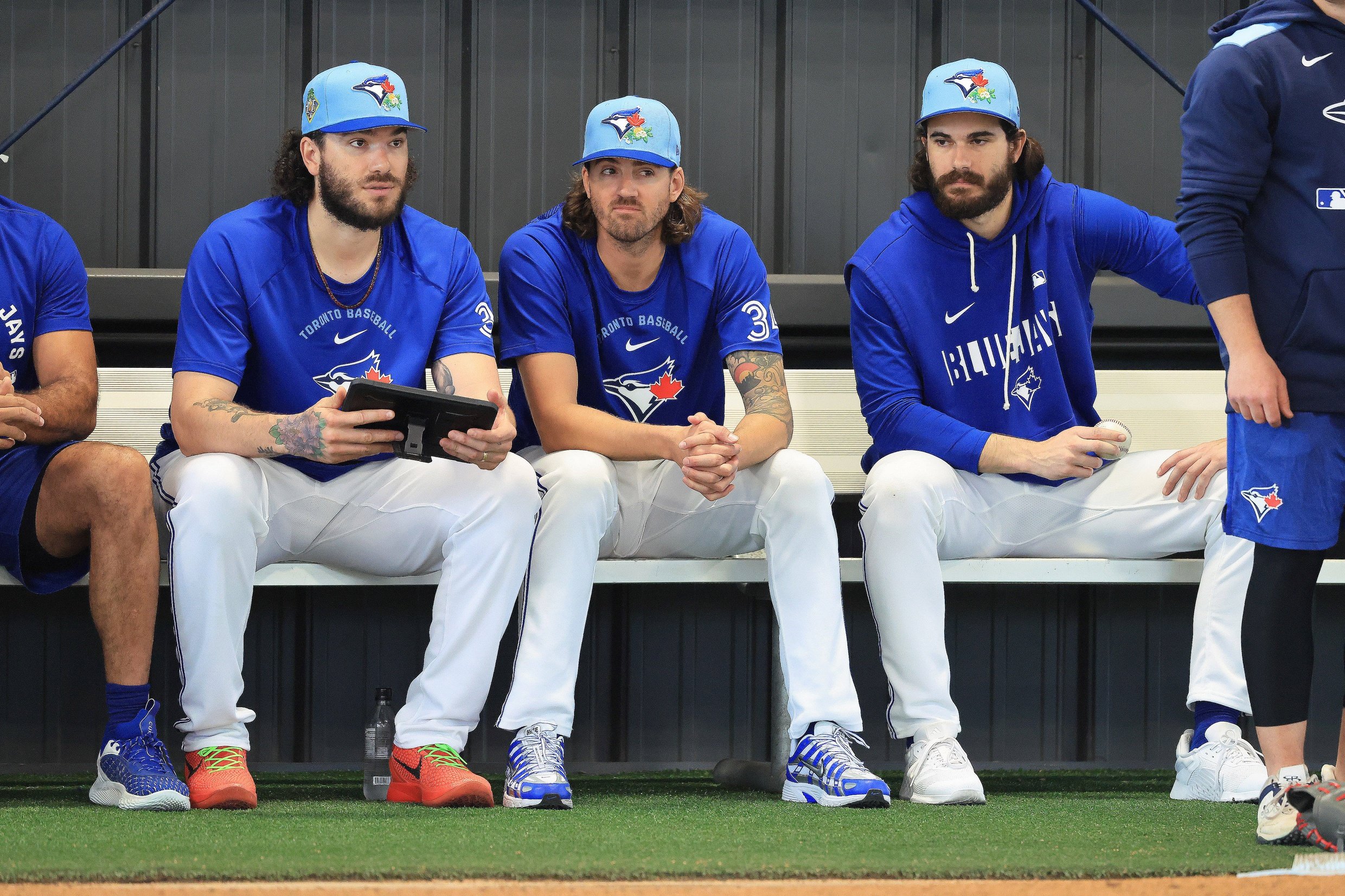 The Toronto Blue Jays were aggressive this offseason in their efforts to bolster their team in hopes of making another World Series trip, but with a different outcome. The starting rotation was a focus after it finished last season ranked 20th in ERA (4.34), 17th in WHIP (1.27), and 14th in strikeouts (786). They made an early splash by signing the best free agent starter available, Dylan Cease. The team then followed that move by bringing Cody Ponce back to America after he spent the last four seasons overseas. He's fresh off finishing as the KBO League MVP last season, posting a 17-1 record, a 1.89 ERA, and a KBO single-season record 252 strikeouts over 180 2/3 innings. Both additions join a rotation of familiar faces, with Shane Bieber exercising his player option to return and Max Scherzer recently re-signing. The only loss in the rotation was Chris Bassitt, who signed a free agent contract with AL East foe, the Baltimore Orioles. With most of the starting rotation still intact after an overall uneven 2025, each pitcher could make improvements to ensure better performance this season. It's unclear who will be in the rotation to start the year, and if it will be a six-man rotation or the traditional five-man group, but there is still time for the team to assess their performances and see if more injuries occur. In the meantime, let's take a look at the candidates and identify a tweak each of them can make to improve upon their past performances. This article was inspired by Randy Holt's piece about Cubs hitters on our sister site North Side Baseball. Kevin Gausman: Efficiency Kevin Gausman is a prototypical workhorse, throwing at least 170 innings in eight of the last 10 seasons. That amount of innings will take a significant toll on a pitcher, especially a 35-year-old. One thing Gausman could do even better is pitch deeper into games. In his 32 starts last regular season, he pitched seven or more complete innings only 10 times. Over his 193 innings, he faced 775 batters, an average of 4.02 per inning. You can compare that to two-time Cy Young Award winner Tarik Skubal, who faced 748 over 195 1/3 innings (3.83 per frame). If Gausman wants to be considered among the game's elite pitchers, he needs to find a way to throw fewer pitches but more innings. Considering the Blue Jays' bullpen struggles last season, one way to ease stress on the bullpen would be to have their ace throw deeper into games. Dylan Cease: Control The Blue Jays have paired one workhorse in Gausman with another. Dylan Cease has thrown 165 or more innings in each of the last five seasons. He's phenomenal at striking out batters, as he's the only pitcher with more than 200 strikeouts in each season over the same time span. However, he's been inconsistent in throwing strikes during his career. Last season, he finished in the 20th percentile in walk percentage, which he's only surpassed twice in his seven-year career. Despite his 9.8 walk percentage and 4.55 ERA last season, the righty had an expected ERA of 3.45. That means he pitched better than his ERA suggests when controlling for poor defense and poor luck. Cease brings an elite arm to Toronto, but unless he takes another step forward, fans should expect some inconsistency. Trey Yesavage: Workload Management It's evident from Trey Yesavage's postseason performance that the Blue Jays have a young star in their ranks. The important thing for him and the team is keeping him healthy. Last season was the first of Yesavage's professional career, and he threw 139 2/3 innings between the minors and MLB in the regular season and postseason. The 22-year-old should begin this season as the number three starter for the Blue Jays, but the team will need to monitor his innings. A midseason adjustment to Yesavage's pitching schedule could help lessen his workload; that could mean skipping a start here and there or stretching out the days between his appearances. José Berríos: Find Success the Third Time Through the Order José Berríos's struggles last season came the further he pitched into a game. He posted a 3.12 ERA in 66 1/3 innings, facing opponents for the first time. His ERA rose to 3.52 over 61 1/3 innings during the second time through the batting order, then climbed to 6.69 over 36 1/3 innings during the third time through. These struggles in the later innings have been a regular problem for the 31-year-old over his career, but the discrepancy hasn't been as drastic as it was last season. Maybe that was due to the biceps tendon injury he suffered around this time last season and pitched through for most of the year. Obviously, a third time through the lineup, a pitcher won't be as sharp, but a 3.17-point difference in ERA from the second to third time through the order is too large to ignore. Berríos is healthy now and ready for a rebound season, but his role remains uncertain. It will likely depend on whether Scherzer is ready for Opening Day, how long Bieber is unavailable, and how Ponce is ultimately used. Cody Ponce: Maintain KBO Success in MLB To go from a career MLB ERA of 5.86 to achieving one of the greatest seasons a KBO pitcher has ever had, you'd need to tweak your pitches and mechanics. In 2021 with the Pittsburgh Pirates, Cody Ponce's four-seam fastball averaged 93.2 mph. However, he raised that average to 95.5 mph and topped out at 98 last season. Along with the increased fastball velocity, the 31-year-old added a new kick changeup that ranges in the mid-to-high 80s. These two adjusted pitches highlight a five-pitch arsenal that also includes a cutter, slider, and curverball. In addition, Ponce was able to increase his groundball rate to 45.7 percent last season, which was a 5.3-point increase from the last time he threw in MLB. He most likely slots in as the number five starter right now, but he could also be useful coming out of the bullpen with the arsenal he throws. Eric Lauer: Leverage Breaking Balls With Two Strikes Eric Lauer's flexibility was clutch for the Toronto Blue Jays' pitching staff last season. He posted a 3.77 ERA over 74 innings as a starter and a 1.76 ERA over 30 2/3 innings in relief. Some of his success can be attributed to the increase in put-away percentage that he brought back from a brief KBO stint in 2024. Lauer isn't a fireballer by any means; his fastball averages 91.7 mph, his curveball sits in the mid-70s, and his cutter, slider, and changeup are all in the mid-80s. When you aren't a high-speed pitcher, you need to rely on your mechanics and off-speed movement to be deceptive and miss bats. In 2023, while with the Milwaukee Brewers, Lauer struck out 43 batters over 46 2/3 innings. He relied heavily on his four-seam fastball and cutter to miss bats. The lefty threw these pitches 78.5 percent of the time and had a 20 percent put-away rate for both. Lauer's off-speed pitches are where his put-away percentage suffered, producing far below-average rates. His curveball put away batters at just a 10 percent rate, his slider at a 5.7 percent rate, and his changeup at a 50 percent rate, though he only threw the pitch six times that season. He struggled with the Pirates' and the Astros' Triple-A teams in 2024, which led to his move to the KBO. While overseas, he leaned on his cutter less often (20.5 percent) and relied on his breaking balls to get his strikeouts. When he returned, his curveball's put-away percentage jumped to 23.2 percent, and the slider increased to 24.3 percent. Both were drastic improvements over his 2023 production. Lauer also threw 128 more changeups, but surprisingly, his put-away percentage was only 2.2 percent. The increase in put-away stuff led to 102 strikeouts over 104 2/3 innings. Regardless of what role Lauer plays this season, he will need to continue leaning on his breaking balls late in counts to keep batters off balance and miss bats. Shane Bieber: Continue Developing the Changeup The changeup had been an afterthought in Shane Bieber's five-pitch arsenal before the 2024 season. In his first six MLB seasons, he never threw the off-speed pitch more than nine percent of the time. During this period, he used the pitch primarily against left-handed batters because he could keep the ball hidden, and it dropped off the table due to its lower spin rate compared to his other pitches. Bieber threw the pitch 568 times to lefties compared to 43 times to righties. Last season, he started mixing in his changeup against batters on both sides of the plate more frequently (57 times to lefties and 26 times to righties). The increase in the pitch usage led to a 38.2 whiff percentage, the highest among all five of his pitches. His arm slot hides the ball from hitters, and the 1,396 rpm spin rate makes the pitch drop as it reaches the plate. This rpm is drastically lower than on Bieber's four-seam fastball (2,414 rpm) and slider (2,611 rpm). Bieber is 30 years old, which means his velocity could start to decline, though he averages only 92.6 mph on his fastball. This suspected decline will force the righty to lean on his changeup more than 13 percent of the time. Bieber has been dealing with forearm fatigue this offseason and won't start the season on the Opening Day roster. However, he's not expected to miss a significant amount of time. Max Scherzer: Bring the Mad Max Mentality Back Let's be honest, when it comes to a 41-year-old pitcher, there really aren't any major improvements you can ask for. At this point in a player's career, fans can only ask for a glimpse of the player's successful self. Last season, Max Scherzer threw 85 innings but posted the worst single-season ERA of his career (5.19). Despite the high ERA, Scherzer's velocity wasn't far off from where it was in 2017, the last time he won a Cy Young Award. The Blue Jays aren't expecting him to post Cy Young statistics; they only need him to stay healthy and give them innings when needed. It's uncertain what role Scherzer will have this season, but he can start games or join the bullpen. The Blue Jays will ease him into the season due to his age and the lack of urgency to use his arm. One thing the three-time Cy Young Award winner can control is his fiery mentality. This passion can be contagious, giving the rest of the team a boost. That's about all you can expect from a guy who has been in the big leagues since 2008.
 -
The Toronto Blue Jays have been aggressive this offseason to bolster their team in hopes of making another run at a World Series trip, but with a different outcome. The starting rotation was a focus after finishing last season ranked 20th in ERA (4.34), 17th in WHIP (1.27), and 14th in strikeouts (786). They made an early splash by signing the best free agent starter available, Dylan Cease. The team then followed that move by bringing Cody Ponce back to America after spending the last four seasons overseas. He's fresh off finishing as the KBO League MVP last season, posting a 17-1 record, 1.89 ERA, and a KBO single-season record of 252 strikeouts over 180 2/3 innings. Both additions join a rotation of familiar faces, with Shane Bieber exercising his player option to return and Max Scherzer recently re-signing. The only loss in the rotation was Chris Bassitt signing a free agency contract with AL East foe Baltimore Orioles. With most of the starting rotation still intact after finishing in the bottom half of most stats, each pitcher could make improvements to ensure better performance this season. It's unclear who will be in the rotation and if it'll start as a six-man rotation or the traditional five-man arsenal. There is still time for John Schneider to assess their performances and see if injuries play out. In the meantime, let's take a look at the possibilities and identify a tweak to improve each of their past performances. This article was inspired by Randy Holt's piece about Cubs hitters on our sister site North Side Baseball. Kevin Gausman: Efficiency Kevin Gausman is a prototypical workhorse, throwing at least 170 innings in eight of the last 10 seasons. That amount of innings takes a significant toll on a pitcher, especially for a 35-year-old. One thing Gausman has struggled with is going deep into games. So he's throwing more pitches but failing to make it into the seventh inning. In his 32 starts last regular season, he pitched seven or more complete innings only 10 times. Even more alarming is that, over his 193 innings, he faced 775 batters. The number of batters is greater than the 748 batters two-time Cy Young Award winner Tarik Skubal faced over 195 1/3 innings. If Gausman wants to be considered among the elite pitchers, he needs to find a way to throw fewer pitches but more innings. With the Blue Jays' bullpen struggles last season, one way to ease the stress on the bullpen is to have your ace throw deeper into games. Dylan Cease: Control The Blue Jays have paired one workhorse in Gausman with another. Cease has thrown 165 or more innings in each of the last five seasons. He's phenomenal at striking out batters, as he's the only pitcher with more than 200 strikeouts in each season over the same time span. However, he's been inconsistent in throwing strikes over his career. Last season, he finished in the 20th percentile in walk percentage, which he's only surpassed twice in his seven-year career. Despite his 9.8 walk percentage and 4.55 ERA last season, the righty had an expected ERA of 3.45. Meaning he pitched better than his ERA suggests by eliminating poor defense and poor luck. Cease brings an elite arm to Toronto, but fans should expect some inconsistency. Trey Yesavage: Workload Management It's evident from Trey Yesavage's postseason performance that the Blue Jays have a young star in their midst. The important thing for him and the team is keeping him healthy. Last season was the first of Yesavage's professional career, where he threw 139 2/3 innings between the minors and MLB in the regular season and postseason. The 22-year-old will begin this season as the number three starter for the Blue Jays, but the team will need to monitor his workload. A midseason adjustment to Yesavage's pitching schedule could help lessen his workload, including skipping a start here and there or stretching out the days between starts. José Berríos: Find Success the Third Time Through the Order José Berríos's struggles last season came the further he pitched into a game. He posted a 3.12 ERA in 66 1/3 innings, facing the batting order for the first time. His ERA dipped to 3.52 over 61 1/3 innings during the second time through, then rose to 6.69 over 36 1/3 innings during the third time through. These struggles deeper into games have been a common occurrence for the 31-year-old over his career, but the discrepancy hasn't been as drastic as it was last season. Maybe that was due to the biceps tendon injury he suffered this time last season, but he pitched through. Obviously, a third time through the lineup, a pitcher won't be as sharp, but having a 3.17 difference in ERA from the second to third time through the lineup is too large to ignore. Berríos is healthy now and ready for a rebound season, but his role remains uncertain to start the season. His role will likely depend on how long Shane Bieber is unavailable and how Ponce is used. Cody Ponce: Maintain KBO Success in MLB To go from a career MLB ERA of 5.86 to achieving one of the greatest seasons a KBO pitcher has ever had, you'd need to tweak your pitches and mechanics. In 2021 with the Pittsburgh Pirates, Ponce's four-seam fastball averaged 93.2 mph. However, he raised that average to 95.5 mph and topped out at 98 last season. With the increased velocity, the 31-year-old added a new kick changeup that ranges in the mid-to-high 80s. These two pitch adjustments round out a five-pitch arsenal that includes a cutter, slider, and curverball. Ponce was also able to increase his ground ball rate to 45.7 percent, which was a 5.3 percent increase from the last time he threw in MLB. He's slotted in as the number five starter, but he could also be useful coming out of the bullpen with the arsenal he throws. Eric Lauer: Leverage Breaking Balls With Two Strikes Eric Lauer's flexibility was clutch for the Toronto Blue Jays' pitching staff last season. He posted a 3.77 ERA over 74 innings as a starter and a 1.76 ERA over 30 2/3 innings in relief. However, some of his success can be attributed to the increase in put-away percentage that he brought back over from a brief KBO stint in 2024. Lauer isn't a fireballer by any means; his fastball averages 91.7 mph, his curveball sits around the mid-70s, and his cutter, slider, and changeup range in the mid-80s. When you aren't a high-speed pitcher, you need to rely on your mechanics and off-speed movement to be deceptive and miss bats. In 2023, while with the Milwaukee Brewers, Lauer struck out 43 batters over 46 2/3 innings. He relied heavily on his four-seam fastball and cutter to miss bats. The lefty threw these pitches 78.5 percent of the time and had a 20 percent put-away rate for both pitches. Lauer's off-speed pitches are where his put-away percentage drastically fell, producing far below-average rates. His curveball put away batters at a 10 percent rate, his slider at a 5.7 percent rate, and his changeup at a 50 percent rate, but he only threw the pitch six times that season. He struggled with the Pirates' and the Houston Astros' Triple-A teams in 2024, which led to a move to the KBO. While overseas, he leaned on his cutter less often (20.5 percent) and relied on his breaking balls to get his strikeouts. His curveball's put-away percentage jumped to 23.2 percent, and the slider increased to 24.3 percent. Both are drastic improvements over his 2023 production. Lauer also threw 128 more changeups, but surprisingly, his put-away percentage was only 2.2 percent. The increase in put-away stuff led to 102 strikeouts over 104 2/3 innings. Regardless of what role Lauer plays this season, he will need to continue leaning on his breaking balls late in counts to keep batters off balance and miss bats. Shane Bieber: Continue Developing the Changeup The changeup had been an afterthought in Shane Bieber's five-pitch arsenal before the 2024 season. In his first six MLB seasons, he never threw the offspeed pitch more than nine percent of the time. During this period, he used the pitch primarily against left-handed batters because he could keep the ball hidden, and it dropped off the table due to its lower spin rate compared to his other pitches. Bieber threw the pitch 568 times to lefties compared to 43 times to righties. Last season, he started mixing in his changeup against batters on both sides of the plate more frequently (57 times to lefties and 26 times to righties). The increase in the pitch amount led to a 38.2 whiff percentage, his highest amount among all five pitches. His arm slot hides the ball from hitters, and the 1,396 spin rate makes the pitch drop as it reaches the plate. This rpm is drastically lower than Bieber's four-seam fastball (2,414 rpm) and the slider (2,611 rpm). Bieber is 30 years old, which means his velocity will start to decline, though he averages only 92.6 mph on his fastball. This suspected decline will force the righty to lean on his changeup more than 13 percent of the time. Bieber is dealing with forearm fatigue this offseason and won't start the season on the Opening Day roster. However, he's not expected to miss a significant amount of time. Max Scherzer: Bring the Mad Max Mentality Back Let's be honest, when it comes to a 41-year-old pitcher, there really aren't any major improvements you can ask for. At this point in a player's career, fans can only ask for a glimpse of the player's successful self. Last season, he threw 85 innings but posted his worst career ERA (5.19). Despite the ERA increase, Scherzer's velocity remained in line with his 2017 level, the last time he won a Cy Young Award. The Blue Jays aren't expecting him to post Cy Young statistics; they only need him to stay healthy and give them innings when needed. It's uncertain what role Scherzer will have this season, but he can start games or join the bullpen. The Blue Jays will ease him into the season due to his age and the lack of urgency to use his arm. One thing the three-time Cy Young Award winner can control is his fiery mentality. This passion can be contagious, giving the rest of the team a boost. That's about all you can expect from a guy who has been in the big leagues since 2008. View full article
-
The Toronto Blue Jays seemed to have their starting rotation set. Then they decided to bring back a familiar face from last season. Max Scherzer has reunited with the Blue Jays on a one-year, $3 million contract. The three-time Cy Young Award winner is returning for his 19th MLB season. The addition of Scherzer was likely made to replenish the depth that took a hit after the news that Bowden Francis underwent season-ending Tommy John surgery and Shane Bieber, dealing with forearm fatigue, would miss the start of the season. Scherzer had been the definition of a workhorse before the 2024 season, when injuries held him to only nine starts. Before that season, the righty had pitched a minimum of 145 innings in each season from 2009 through 2023 (excluding the shortened 2020 season). The injuries he sustained in 2024 were complications from an offseason surgery to repair a herniated disc in his lower back. He returned to the big leagues on June 23, but his eight starts before going back on the injury list were marred by shoulder fatigue. Mad Max would make one more start on September 14 before his season was shut down due to a hamstring injury. Last season, he made one start to begin the season before he suffered a thumb injury that forced him to miss 75 games. He returned to the Blue Jays on June 30; however, he'd miss more time in July with the same injury. The injuries persisted, as back tightness forced Scherzer to take a step back in September. When the 41-year-old was healthy in 2025, he pitched 85 innings, posting an ERA above 4.00 for the first time since 2011. He finished last season with a 5.19 ERA and an 82:23 strikeout-to-walk ratio. The struggles and late-season injuries forced the Blue Jays to hold him out of the ALDS, though the emergence of Trey Yesavage helped ease that decision. However, Scherzer came up clutch in the ALCS, pitching 5 2/3 innings of two-run ball in Game 4, which evened the series against the Seattle Mariners. Scherzer's offseason has been focused on getting healthy. He received interest from a few other teams, but his daughter's wish came true regarding his eventual destination. With a 10-out-of-10 rating on the cuteness scale, his eight-year-old daughter wrote a letter to the Blue Jays in December asking them to re-sign her daddy. She has a strong future if she decides to become a sports agent. In her letter, she wrote: "Dear Blue Jays, I am so sorry that you didn't win the World Series. I hope that you win next time. I hope my dad is back on the team. My whole family loves spending time in Toronto with our dad. We loved the aquarium, CN Tower, and of course, the stadium. I am looking forward to coming back next season. Love, Max Scherzer's daughter" Although Scherzer signed for only $3 million, he can earn an additional $10 million in incentives based on the number of innings he throws. The incentive ladder begins with an extra $1 million for throwing 65 innings, and for every 10 additional innings thrown, he earns another $1 million. This ladder goes all the way to 155 innings, with that threshold being the last rung. Even a total salary of $13 million would be a discount if Scherzer can offer a glimpse of his Cy Young Award form. The major question regarding the righty is: If healthy, what expectations can Blue Jays fans have? Despite being 41, Scherzer hasn't lost velocity in his five-pitch arsenal; in fact, some of his pitches have gained speed compared to his 2023 season. Below is a table showing the difference in average pitch speed and BA against on his various pitches from the 2017 season, when he won the Cy Young Award; the 2023 season, when he last pitched 140 innings; and last season. 2017 2023 2025 Pitch type MPH BA Pitch type MPH BA Pitch type MPH BA Four-Seam 94.0 .237 Four-Seam 93.7 .255 Four-Seam 93.6 .248 Slider 85.4 .129 Slider 84.0 .250 Slider 86.3 .240 Changeup 84.6 .110 Changeup 83.8 .207 Changeup 84.9 .279 Curveball 77.4 .200 Curveball 75.4 .187 Curveball 76.7 .349 Cutter 87.9 .111 Cutter 88.4 .135 Cutter 88.1 .250 These numbers, which come from Baseball Savant, show that Scherzer still has the stuff to be successful at a high level. However, his BAA in 2023 and again in 2025 was worse on most of his offerings, with the exceptions being his fastball and slider in 2025, which improved slightly compared to 2023. Considering his injury struggles over the last two seasons, it is a luxury for the Blue Jays that they can ease him back into the starting rotation. However, even when he's healthy, it’s possibly the righty may best serve the team by moving to the bullpen. The Blue Jays look to have one of the best starting rotations among all MLB teams, with Kevin Gausman, Dylan Cease, Trey Yesavage, José Berríos, and Cody Ponce. Plus, they have Eric Lauer, who performed exceptionally well as a starter last season, waiting in the bullpen. As a starter in 2025, Lauer pitched 75 innings with a 3.77 ERA and a 74:18 strikeout-to-walk ratio. That said, he was far better as a reliever, posting a 1.76 ERA and 28:8 strikeout-to-walk ratio over 30 2/3 innings. The team also has Bieber, who isn't expected to miss much of the season. The Scherzer addition may mean either Berríos or Lauer gets traded to free up space, or that Scherzer will be a long reliever when he’s ready to pitch. Regardless of how everything plays out, the Blue Jays hit this signing out of the park. It'll be interesting to see how manager John Schneider plays all his pieces. One thing is for certain: The Blue Jays reloaded well, and with the talent they have, they should be at the top of the standings all season long. View full article
-
.jpg.98ffec417c69ef06de286c0563ecde0e.jpg) The Toronto Blue Jays seemed to have their starting rotation set. Then they decided to bring back a familiar face from last season. Max Scherzer has reunited with the Blue Jays on a one-year, $3 million contract. The three-time Cy Young Award winner is returning for his 19th MLB season. The addition of Scherzer was likely made to replenish the depth that took a hit after the news that Bowden Francis underwent season-ending Tommy John surgery and Shane Bieber, dealing with forearm fatigue, would miss the start of the season. Scherzer had been the definition of a workhorse before the 2024 season, when injuries held him to only nine starts. Before that season, the righty had pitched a minimum of 145 innings in each season from 2009 through 2023 (excluding the shortened 2020 season). The injuries he sustained in 2024 were complications from an offseason surgery to repair a herniated disc in his lower back. He returned to the big leagues on June 23, but his eight starts before going back on the injury list were marred by shoulder fatigue. Mad Max would make one more start on September 14 before his season was shut down due to a hamstring injury. Last season, he made one start to begin the season before he suffered a thumb injury that forced him to miss 75 games. He returned to the Blue Jays on June 30; however, he'd miss more time in July with the same injury. The injuries persisted, as back tightness forced Scherzer to take a step back in September. When the 41-year-old was healthy in 2025, he pitched 85 innings, posting an ERA above 4.00 for the first time since 2011. He finished last season with a 5.19 ERA and an 82:23 strikeout-to-walk ratio. The struggles and late-season injuries forced the Blue Jays to hold him out of the ALDS, though the emergence of Trey Yesavage helped ease that decision. However, Scherzer came up clutch in the ALCS, pitching 5 2/3 innings of two-run ball in Game 4, which evened the series against the Seattle Mariners. Scherzer's offseason has been focused on getting healthy. He received interest from a few other teams, but his daughter's wish came true regarding his eventual destination. With a 10-out-of-10 rating on the cuteness scale, his eight-year-old daughter wrote a letter to the Blue Jays in December asking them to re-sign her daddy. She has a strong future if she decides to become a sports agent. In her letter, she wrote: "Dear Blue Jays, I am so sorry that you didn't win the World Series. I hope that you win next time. I hope my dad is back on the team. My whole family loves spending time in Toronto with our dad. We loved the aquarium, CN Tower, and of course, the stadium. I am looking forward to coming back next season. Love, Max Scherzer's daughter" Although Scherzer signed for only $3 million, he can earn an additional $10 million in incentives based on the number of innings he throws. The incentive ladder begins with an extra $1 million for throwing 65 innings, and for every 10 additional innings thrown, he earns another $1 million. This ladder goes all the way to 155 innings, with that threshold being the last rung. Even a total salary of $13 million would be a discount if Scherzer can offer a glimpse of his Cy Young Award form. The major question regarding the righty is: If healthy, what expectations can Blue Jays fans have? Despite being 41, Scherzer hasn't lost velocity in his five-pitch arsenal; in fact, some of his pitches have gained speed compared to his 2023 season. Below is a table showing the difference in average pitch speed and BA against on his various pitches from the 2017 season, when he won the Cy Young Award; the 2023 season, when he last pitched 140 innings; and last season. 2017 2023 2025 Pitch type MPH BA Pitch type MPH BA Pitch type MPH BA Four-Seam 94.0 .237 Four-Seam 93.7 .255 Four-Seam 93.6 .248 Slider 85.4 .129 Slider 84.0 .250 Slider 86.3 .240 Changeup 84.6 .110 Changeup 83.8 .207 Changeup 84.9 .279 Curveball 77.4 .200 Curveball 75.4 .187 Curveball 76.7 .349 Cutter 87.9 .111 Cutter 88.4 .135 Cutter 88.1 .250 These numbers, which come from Baseball Savant, show that Scherzer still has the stuff to be successful at a high level. However, his BAA in 2023 and again in 2025 was worse on most of his offerings, with the exceptions being his fastball and slider in 2025, which improved slightly compared to 2023. Considering his injury struggles over the last two seasons, it is a luxury for the Blue Jays that they can ease him back into the starting rotation. However, even when he's healthy, it’s possibly the righty may best serve the team by moving to the bullpen. The Blue Jays look to have one of the best starting rotations among all MLB teams, with Kevin Gausman, Dylan Cease, Trey Yesavage, José Berríos, and Cody Ponce. Plus, they have Eric Lauer, who performed exceptionally well as a starter last season, waiting in the bullpen. As a starter in 2025, Lauer pitched 75 innings with a 3.77 ERA and a 74:18 strikeout-to-walk ratio. That said, he was far better as a reliever, posting a 1.76 ERA and 28:8 strikeout-to-walk ratio over 30 2/3 innings. The team also has Bieber, who isn't expected to miss much of the season. The Scherzer addition may mean either Berríos or Lauer gets traded to free up space, or that Scherzer will be a long reliever when he’s ready to pitch. Regardless of how everything plays out, the Blue Jays hit this signing out of the park. It'll be interesting to see how manager John Schneider plays all his pieces. One thing is for certain: The Blue Jays reloaded well, and with the talent they have, they should be at the top of the standings all season long.
The Toronto Blue Jays seemed to have their starting rotation set. Then they decided to bring back a familiar face from last season. Max Scherzer has reunited with the Blue Jays on a one-year, $3 million contract. The three-time Cy Young Award winner is returning for his 19th MLB season. The addition of Scherzer was likely made to replenish the depth that took a hit after the news that Bowden Francis underwent season-ending Tommy John surgery and Shane Bieber, dealing with forearm fatigue, would miss the start of the season. Scherzer had been the definition of a workhorse before the 2024 season, when injuries held him to only nine starts. Before that season, the righty had pitched a minimum of 145 innings in each season from 2009 through 2023 (excluding the shortened 2020 season). The injuries he sustained in 2024 were complications from an offseason surgery to repair a herniated disc in his lower back. He returned to the big leagues on June 23, but his eight starts before going back on the injury list were marred by shoulder fatigue. Mad Max would make one more start on September 14 before his season was shut down due to a hamstring injury. Last season, he made one start to begin the season before he suffered a thumb injury that forced him to miss 75 games. He returned to the Blue Jays on June 30; however, he'd miss more time in July with the same injury. The injuries persisted, as back tightness forced Scherzer to take a step back in September. When the 41-year-old was healthy in 2025, he pitched 85 innings, posting an ERA above 4.00 for the first time since 2011. He finished last season with a 5.19 ERA and an 82:23 strikeout-to-walk ratio. The struggles and late-season injuries forced the Blue Jays to hold him out of the ALDS, though the emergence of Trey Yesavage helped ease that decision. However, Scherzer came up clutch in the ALCS, pitching 5 2/3 innings of two-run ball in Game 4, which evened the series against the Seattle Mariners. Scherzer's offseason has been focused on getting healthy. He received interest from a few other teams, but his daughter's wish came true regarding his eventual destination. With a 10-out-of-10 rating on the cuteness scale, his eight-year-old daughter wrote a letter to the Blue Jays in December asking them to re-sign her daddy. She has a strong future if she decides to become a sports agent. In her letter, she wrote: "Dear Blue Jays, I am so sorry that you didn't win the World Series. I hope that you win next time. I hope my dad is back on the team. My whole family loves spending time in Toronto with our dad. We loved the aquarium, CN Tower, and of course, the stadium. I am looking forward to coming back next season. Love, Max Scherzer's daughter" Although Scherzer signed for only $3 million, he can earn an additional $10 million in incentives based on the number of innings he throws. The incentive ladder begins with an extra $1 million for throwing 65 innings, and for every 10 additional innings thrown, he earns another $1 million. This ladder goes all the way to 155 innings, with that threshold being the last rung. Even a total salary of $13 million would be a discount if Scherzer can offer a glimpse of his Cy Young Award form. The major question regarding the righty is: If healthy, what expectations can Blue Jays fans have? Despite being 41, Scherzer hasn't lost velocity in his five-pitch arsenal; in fact, some of his pitches have gained speed compared to his 2023 season. Below is a table showing the difference in average pitch speed and BA against on his various pitches from the 2017 season, when he won the Cy Young Award; the 2023 season, when he last pitched 140 innings; and last season. 2017 2023 2025 Pitch type MPH BA Pitch type MPH BA Pitch type MPH BA Four-Seam 94.0 .237 Four-Seam 93.7 .255 Four-Seam 93.6 .248 Slider 85.4 .129 Slider 84.0 .250 Slider 86.3 .240 Changeup 84.6 .110 Changeup 83.8 .207 Changeup 84.9 .279 Curveball 77.4 .200 Curveball 75.4 .187 Curveball 76.7 .349 Cutter 87.9 .111 Cutter 88.4 .135 Cutter 88.1 .250 These numbers, which come from Baseball Savant, show that Scherzer still has the stuff to be successful at a high level. However, his BAA in 2023 and again in 2025 was worse on most of his offerings, with the exceptions being his fastball and slider in 2025, which improved slightly compared to 2023. Considering his injury struggles over the last two seasons, it is a luxury for the Blue Jays that they can ease him back into the starting rotation. However, even when he's healthy, it’s possibly the righty may best serve the team by moving to the bullpen. The Blue Jays look to have one of the best starting rotations among all MLB teams, with Kevin Gausman, Dylan Cease, Trey Yesavage, José Berríos, and Cody Ponce. Plus, they have Eric Lauer, who performed exceptionally well as a starter last season, waiting in the bullpen. As a starter in 2025, Lauer pitched 75 innings with a 3.77 ERA and a 74:18 strikeout-to-walk ratio. That said, he was far better as a reliever, posting a 1.76 ERA and 28:8 strikeout-to-walk ratio over 30 2/3 innings. The team also has Bieber, who isn't expected to miss much of the season. The Scherzer addition may mean either Berríos or Lauer gets traded to free up space, or that Scherzer will be a long reliever when he’s ready to pitch. Regardless of how everything plays out, the Blue Jays hit this signing out of the park. It'll be interesting to see how manager John Schneider plays all his pieces. One thing is for certain: The Blue Jays reloaded well, and with the talent they have, they should be at the top of the standings all season long. -
The Toronto Blue Jays rode their narrow World Series defeat into an aggressive offseason push. Their front office put the pedal to the metal and hasn't let up. Sadly, though, for a third straight year, they pursued the top free agent available, only to be outbid by a bigger-market foe. This time, it was Kyle Tucker; it seemed he was choosing between the Blue Jays and the New York Mets before the Los Angeles Dodgers swooped in. The Mets then quickly signed Bo Bichette before a reunion in Toronto could come together. Despite those two swings and misses, the Blue Jays still flexed their financial muscles over the offseason. They beefed up their pitching staff by signing Dylan Cease, Tyler Rogers, and Cody Ponce. Offensively, the Blue Jays needed power bats, so they went overseas to sign Kazuma Okamoto, then traded for Jesús Sánchez. These acquisitions bolster a team that was already strong, but the bullpen could have used an upgrade at the closer position. Jeff Hoffman struggled mightily in his first full season as the ninth-inning arm. He posted a 4.37 ERA and 1.19 WHIP over 68 innings. The righty also allowed 15 home runs, the second most in his 10-year career, as well as a one-out solo home run to Miguel Rojas in the top of the ninth to tie up Game 7 of the World Series. Hoffman will likely resume his duties as the closer, but things could change during spring training. The Blue Jays have shown a willingness to improve, but are they a better team than the one that was two outs away from ending its 32-year World Series drought? They may not have added the big name that fans desired, but yes, the Blue Jays are a better team. Grading Every Blue Jays Offseason Move Free Agent Signing: Dylan Cease for seven years, $210 million The Blue Jays quickly found their weapon to bolster their pitching staff. This signing is the largest free agent deal in Blue Jays history, surpassing George Springer's six-year, $150 million contract during the 2020-21 offseason. Of course, both contracts are modest compared to Vladimir Guerrero Jr.'s monstrous $500 million extension. The big question is, did the Blue Jays overpay for a 30-year-old pitcher with control issues? The righty brings a powerful arm that has been durable over his last five seasons. In each of those seasons, Cease has struck out more than 210 batters. Though he has the skills to strike out batters, he struggles with his control, averaging 3.68 walks per nine innings over this time span. Walks weren't the only issue, with his ERA fluctuating from 3.47 to 4.58 in four of the five seasons, excluding his 2022 campaign, in which he pitched like a genuine ace and posted a 2.20 ERA. Up-and-down surface-level performances mean the fireballer has never earned an MLB All-Star appearance. Yet, Cease was the best starting pitcher available this offseason, and to acquire him quickly, the Blue Jays had to pay him more than expected. His $30 million annual salary is more than Max Fried's ($27.25 million) and Garrett Crochet's ($28.33 million) annual salaries, both of whom signed their deals last offseason. This comparison makes Cease's contract look like an overpayment for a pitcher who has never won a postseason start (four appearances) with an 8.74 ERA in October. The Blue Jays already had a strong starting rotation returning, so adding Cease wasn't a priority. An arm was needed to allow Eric Lauer to return to a long-relief role, though. All season, the question will be: Could the team have acquired Tucker if they had saved some of the money Cease received by, say, adding someone like Ranger Suárez instead? Suárez signed a five-year contract worth $130 million ($26 million annually) and has posted extremely comparable numbers to Cease, though Suárez doesn't have the durability or the strikeout skills that Cease possesses. The Blue Jays acquired the better pitcher, but if their power numbers don't improve from last season (11th in home runs), fans will wonder what might have happened if Tucker had landed in Toronto. Signing Grade: B+ Free Agent Signing: Cody Ponce for three years, $30 million If Ponce can maintain the excellence that he displayed in Korea last season, then the Blue Jays hit a home run with this free agent signing. Last season, he won the KBO MVP Award after striking out 252 batters and posting a 1.89 ERA over 180 2/3 innings. The 31-year-old does come with some reason for hesitation, though. Ponce's last time pitching in MLB was in 2021 with the Pittsburgh Pirates, when he posted a 7.04 ERA and a 36:11 strikeout-to-walk ratio over 38 1/3 innings. In between his time in MLB and the KBO, Ponce tried his hand in Japan. He was solid in 2022 and '23, posting ERAs of 3.35 and 3.66, respectively, but in 2024 the wheels fell off. During that season, he posted a 6.72 ERA and only struck out 56 batters across 67 innings. The KBO is known for having great contact hitters, so for Ponce to post a 36 percent strikeout rate, a 0.94 WHIP, and hold batters to a .197 batting average against him was quite the feat. There's little pressure on Ponce in his return to MLB, as the Blue Jays just need him to be a quality back-of-the-rotation pitcher. Kevin Gausman, Cease, rookie phenom Trey Yesavage, and (hopefully) Shane Bieber should be the top-end arms. Signing Grade: B Rule 5 Draft Pick: Spencer Miles The Blue Jays selected Miles in the Rule 5 draft this offseason from the San Francisco Giants. Although he was drafted in 2022, the righty has only thrown 14 2/3 innings in the minor leagues. The injury bug has been the 25-year-old's worst nightmare. He missed the entire 2023 season, needing back surgery, and only pitched seven innings in 2024 before requiring Tommy John surgery. The injury situation makes selecting Miles a low-risk, high-reward move for the Blue Jays. This acquisition only cost the team $100,000 to have a look at a right-handed pitcher who can throw a mid-to-upper 90s fastball that sinks before reaching the plate, resulting in groundballs. The prospect returned last season to throw in the Arizona Fall League, where he struck out 12 batters in 8 2/3 innings. As a Rule 5 pick, Miles will need to be on the Blue Jays' active 26-man roster all season long or else be offered back to the Giants. He will face competition from Angel Bastardo, who is in the same situation as another Rule 5 pick in Blue Jays camp. They won't both make the Opening Day roster, making spring training a head-to-head battle for a roster spot. However, with the Blue Jays' bullpen depth, it's possible neither prospect makes the team out of camp. That said, the news that Yimi García will miss the beginning of the season may have opened the door for Miles or Bastardo to break camp with the Blue Jays. The pressure just intensified for the two prospects. Signing Grade: N/A (minor move) Trade: Chase Lee for Johan Simon Lee was acquired in a trade with the Detroit Tigers. The swap occurred because the Tigers needed to move Lee to open a spot on their 40-man roster after signing Kyle Finnegan. The 27-year-old reliever gives the Blue Jays another bullpen depth arm with MLB experience. Lee is a sidearmer who posted a 4.10 ERA and 36 strikeouts over 37 1/3 innings last season in his MLB debut. It's a good trade for the Blue Jays to acquire depth in the bullpen after they struggled in that department in 2025. Their bullpen finished 16th in ERA (3.98) and 14th in WHIP (1.28) among MLB teams. Simon is only three years younger than Lee, but he spent three seasons in Rookie ball before finally advancing to Single A, High A, and Double A last season. So, the Blue Jays didn't give up much value to acquire an MLB-ready bullpen arm with the potential to play a significant role. Signing Grade: N/A (minor move) Free Agent Signing: Tyler Rogers for three years, $37 million Acquiring Rogers may wind up being the most impactful offseason move during this upcoming campaign. The Blue Jays' bullpen's 2025 struggles that I mentioned above make the signing of Rogers monumental. He was consistently outstanding throughout his seven-year career with the San Francisco Giants, before being traded to the New York Mets at last season's trade deadline. He continued to shine in New York. In 2025, Rogers posted a 1.98 ERA, a 0.94 WHIP, and a 38:4 strikeout-to-walk ratio over 77 1/3 innings. His success is due to his insanely low release point (1.33 feet off the ground). The submarine pitcher will continue to pitch in the setup role in which he's been highly effective throughout his career. In his seven seasons, he's converted 154 of 168 hold opportunities. This is the kind of stability the Blue Jays desperately needed in their bullpen last season, especially late in games. Signing Grade: A+ (Is there a grade higher than A+?) Free Agent Signing: Kazuma Okamoto for four years, $60 million The Blue Jays' power numbers last season left much to be desired. They finished in the top five among MLB teams in most offensive categories; however, they tied for 11th in home runs (191). Before they traded for Sánchez, Okamoto was the only power bat the Blue Jays added this offseason. He does bring a big bat with him over from Japan, where he's hit more than 30 home runs in six out of the last eight seasons. He was on pace to exceed 30 long balls last season, with 15 halfway through the season, but injuries derailed that plan. Okamoto will be compared to Bichette all season long. Offensively, the former should provide more power, even if the latter is the better hitter overall. However, defensively, the Japanese slugger holds a massive edge. Bichette's glove was a liability; he was tied for the worst outs above average (-13) among all MLB shortstops last season. Okamoto will be handling third base, but he can also handle first base if Guerrero needs a day off or a DH day. The main question revolving around Okamoto is how quickly he will adjust to the American game and pitchers. Signing Grade: A- Trade: Jesús Sánchez for Joey Loperfido The Blue Jays desperately needed a power bat after Anthony Santander underwent surgery to repair a torn labrum in his left shoulder; he is expected to be out for five to six months. The trade cost the Blue Jays a promising player with future value, but it was a necessary move. Sánchez had played six seasons with the Miami Marlins before being sent to the Houston Astros at last season's trade deadline. He's not the biggest power bat to have in the lineup, with between 13 and 18 home runs in each of the last five seasons, but the potential he possesses is why the Blue Jays acquired the right-handed bat. Sánchez ranked in the 93rd percentile last season in average bat speed (75.9 mph). This metric shows he's not going to get cheated on a swing. History tells us he'll probably only hit 15 home runs, but there might not be anyone else on the roster (besides Guerrero) that offers this kind of power potential. Sánchez closely resembles Addison Barger at the plate. Losing the switch-hitting Santander does hurt the lineup's flexibility, but the Blue Jays gained another weapon against right-handed pitchers. Sánchez will platoon with Davis Schneider or Myles Straw, and with the Blue Jays wanting to keep their World Series momentum going, acquiring a bat like Sánchez was a smart move. Trade Grade: B Blue Jays Offseason Overall Grade: A- View full article
-
- 1
-

-
- dylan cease
- cody ponce
- (and 4 more)
-
.jpg.aef552576e262874bd20b7316171e1e4.jpg) The Toronto Blue Jays rode their narrow World Series defeat into an aggressive offseason push. Their front office put the pedal to the metal and hasn't let up. Sadly, though, for a third straight year, they pursued the top free agent available, only to be outbid by a bigger-market foe. This time, it was Kyle Tucker; it seemed he was choosing between the Blue Jays and the New York Mets before the Los Angeles Dodgers swooped in. The Mets then quickly signed Bo Bichette before a reunion in Toronto could come together. Despite those two swings and misses, the Blue Jays still flexed their financial muscles over the offseason. They beefed up their pitching staff by signing Dylan Cease, Tyler Rogers, and Cody Ponce. Offensively, the Blue Jays needed power bats, so they went overseas to sign Kazuma Okamoto, then traded for Jesús Sánchez. These acquisitions bolster a team that was already strong, but the bullpen could have used an upgrade at the closer position. Jeff Hoffman struggled mightily in his first full season as the ninth-inning arm. He posted a 4.37 ERA and 1.19 WHIP over 68 innings. The righty also allowed 15 home runs, the second most in his 10-year career, as well as a one-out solo home run to Miguel Rojas in the top of the ninth to tie up Game 7 of the World Series. Hoffman will likely resume his duties as the closer, but things could change during spring training. The Blue Jays have shown a willingness to improve, but are they a better team than the one that was two outs away from ending its 32-year World Series drought? They may not have added the big name that fans desired, but yes, the Blue Jays are a better team. Grading Every Blue Jays Offseason Move Free Agent Signing: Dylan Cease for seven years, $210 million The Blue Jays quickly found their weapon to bolster their pitching staff. This signing is the largest free agent deal in Blue Jays history, surpassing George Springer's six-year, $150 million contract during the 2020-21 offseason. Of course, both contracts are modest compared to Vladimir Guerrero Jr.'s monstrous $500 million extension. The big question is, did the Blue Jays overpay for a 30-year-old pitcher with control issues? The righty brings a powerful arm that has been durable over his last five seasons. In each of those seasons, Cease has struck out more than 210 batters. Though he has the skills to strike out batters, he struggles with his control, averaging 3.68 walks per nine innings over this time span. Walks weren't the only issue, with his ERA fluctuating from 3.47 to 4.58 in four of the five seasons, excluding his 2022 campaign, in which he pitched like a genuine ace and posted a 2.20 ERA. Up-and-down surface-level performances mean the fireballer has never earned an MLB All-Star appearance. Yet, Cease was the best starting pitcher available this offseason, and to acquire him quickly, the Blue Jays had to pay him more than expected. His $30 million annual salary is more than Max Fried's ($27.25 million) and Garrett Crochet's ($28.33 million) annual salaries, both of whom signed their deals last offseason. This comparison makes Cease's contract look like an overpayment for a pitcher who has never won a postseason start (four appearances) with an 8.74 ERA in October. The Blue Jays already had a strong starting rotation returning, so adding Cease wasn't a priority. An arm was needed to allow Eric Lauer to return to a long-relief role, though. All season, the question will be: Could the team have acquired Tucker if they had saved some of the money Cease received by, say, adding someone like Ranger Suárez instead? Suárez signed a five-year contract worth $130 million ($26 million annually) and has posted extremely comparable numbers to Cease, though Suárez doesn't have the durability or the strikeout skills that Cease possesses. The Blue Jays acquired the better pitcher, but if their power numbers don't improve from last season (11th in home runs), fans will wonder what might have happened if Tucker had landed in Toronto. Signing Grade: B+ Free Agent Signing: Cody Ponce for three years, $30 million If Ponce can maintain the excellence that he displayed in Korea last season, then the Blue Jays hit a home run with this free agent signing. Last season, he won the KBO MVP Award after striking out 252 batters and posting a 1.89 ERA over 180 2/3 innings. The 31-year-old does come with some reason for hesitation, though. Ponce's last time pitching in MLB was in 2021 with the Pittsburgh Pirates, when he posted a 7.04 ERA and a 36:11 strikeout-to-walk ratio over 38 1/3 innings. In between his time in MLB and the KBO, Ponce tried his hand in Japan. He was solid in 2022 and '23, posting ERAs of 3.35 and 3.66, respectively, but in 2024 the wheels fell off. During that season, he posted a 6.72 ERA and only struck out 56 batters across 67 innings. The KBO is known for having great contact hitters, so for Ponce to post a 36 percent strikeout rate, a 0.94 WHIP, and hold batters to a .197 batting average against him was quite the feat. There's little pressure on Ponce in his return to MLB, as the Blue Jays just need him to be a quality back-of-the-rotation pitcher. Kevin Gausman, Cease, rookie phenom Trey Yesavage, and (hopefully) Shane Bieber should be the top-end arms. Signing Grade: B Rule 5 Draft Pick: Spencer Miles The Blue Jays selected Miles in the Rule 5 draft this offseason from the San Francisco Giants. Although he was drafted in 2022, the righty has only thrown 14 2/3 innings in the minor leagues. The injury bug has been the 25-year-old's worst nightmare. He missed the entire 2023 season, needing back surgery, and only pitched seven innings in 2024 before requiring Tommy John surgery. The injury situation makes selecting Miles a low-risk, high-reward move for the Blue Jays. This acquisition only cost the team $100,000 to have a look at a right-handed pitcher who can throw a mid-to-upper 90s fastball that sinks before reaching the plate, resulting in groundballs. The prospect returned last season to throw in the Arizona Fall League, where he struck out 12 batters in 8 2/3 innings. As a Rule 5 pick, Miles will need to be on the Blue Jays' active 26-man roster all season long or else be offered back to the Giants. He will face competition from Angel Bastardo, who is in the same situation as another Rule 5 pick in Blue Jays camp. They won't both make the Opening Day roster, making spring training a head-to-head battle for a roster spot. However, with the Blue Jays' bullpen depth, it's possible neither prospect makes the team out of camp. That said, the news that Yimi García will miss the beginning of the season may have opened the door for Miles or Bastardo to break camp with the Blue Jays. The pressure just intensified for the two prospects. Signing Grade: N/A (minor move) Trade: Chase Lee for Johan Simon Lee was acquired in a trade with the Detroit Tigers. The swap occurred because the Tigers needed to move Lee to open a spot on their 40-man roster after signing Kyle Finnegan. The 27-year-old reliever gives the Blue Jays another bullpen depth arm with MLB experience. Lee is a sidearmer who posted a 4.10 ERA and 36 strikeouts over 37 1/3 innings last season in his MLB debut. It's a good trade for the Blue Jays to acquire depth in the bullpen after they struggled in that department in 2025. Their bullpen finished 16th in ERA (3.98) and 14th in WHIP (1.28) among MLB teams. Simon is only three years younger than Lee, but he spent three seasons in Rookie ball before finally advancing to Single A, High A, and Double A last season. So, the Blue Jays didn't give up much value to acquire an MLB-ready bullpen arm with the potential to play a significant role. Signing Grade: N/A (minor move) Free Agent Signing: Tyler Rogers for three years, $37 million Acquiring Rogers may wind up being the most impactful offseason move during this upcoming campaign. The Blue Jays' bullpen's 2025 struggles that I mentioned above make the signing of Rogers monumental. He was consistently outstanding throughout his seven-year career with the San Francisco Giants, before being traded to the New York Mets at last season's trade deadline. He continued to shine in New York. In 2025, Rogers posted a 1.98 ERA, a 0.94 WHIP, and a 38:4 strikeout-to-walk ratio over 77 1/3 innings. His success is due to his insanely low release point (1.33 feet off the ground). The submarine pitcher will continue to pitch in the setup role in which he's been highly effective throughout his career. In his seven seasons, he's converted 154 of 168 hold opportunities. This is the kind of stability the Blue Jays desperately needed in their bullpen last season, especially late in games. Signing Grade: A+ (Is there a grade higher than A+?) Free Agent Signing: Kazuma Okamoto for four years, $60 million The Blue Jays' power numbers last season left much to be desired. They finished in the top five among MLB teams in most offensive categories; however, they tied for 11th in home runs (191). Before they traded for Sánchez, Okamoto was the only power bat the Blue Jays added this offseason. He does bring a big bat with him over from Japan, where he's hit more than 30 home runs in six out of the last eight seasons. He was on pace to exceed 30 long balls last season, with 15 halfway through the season, but injuries derailed that plan. Okamoto will be compared to Bichette all season long. Offensively, the former should provide more power, even if the latter is the better hitter overall. However, defensively, the Japanese slugger holds a massive edge. Bichette's glove was a liability; he was tied for the worst outs above average (-13) among all MLB shortstops last season. Okamoto will be handling third base, but he can also handle first base if Guerrero needs a day off or a DH day. The main question revolving around Okamoto is how quickly he will adjust to the American game and pitchers. Signing Grade: A- Trade: Jesús Sánchez for Joey Loperfido The Blue Jays desperately needed a power bat after Anthony Santander underwent surgery to repair a torn labrum in his left shoulder; he is expected to be out for five to six months. The trade cost the Blue Jays a promising player with future value, but it was a necessary move. Sánchez had played six seasons with the Miami Marlins before being sent to the Houston Astros at last season's trade deadline. He's not the biggest power bat to have in the lineup, with between 13 and 18 home runs in each of the last five seasons, but the potential he possesses is why the Blue Jays acquired the right-handed bat. Sánchez ranked in the 93rd percentile last season in average bat speed (75.9 mph). This metric shows he's not going to get cheated on a swing. History tells us he'll probably only hit 15 home runs, but there might not be anyone else on the roster (besides Guerrero) that offers this kind of power potential. Sánchez closely resembles Addison Barger at the plate. Losing the switch-hitting Santander does hurt the lineup's flexibility, but the Blue Jays gained another weapon against right-handed pitchers. Sánchez will platoon with Davis Schneider or Myles Straw, and with the Blue Jays wanting to keep their World Series momentum going, acquiring a bat like Sánchez was a smart move. Trade Grade: B Blue Jays Offseason Overall Grade: A-
The Toronto Blue Jays rode their narrow World Series defeat into an aggressive offseason push. Their front office put the pedal to the metal and hasn't let up. Sadly, though, for a third straight year, they pursued the top free agent available, only to be outbid by a bigger-market foe. This time, it was Kyle Tucker; it seemed he was choosing between the Blue Jays and the New York Mets before the Los Angeles Dodgers swooped in. The Mets then quickly signed Bo Bichette before a reunion in Toronto could come together. Despite those two swings and misses, the Blue Jays still flexed their financial muscles over the offseason. They beefed up their pitching staff by signing Dylan Cease, Tyler Rogers, and Cody Ponce. Offensively, the Blue Jays needed power bats, so they went overseas to sign Kazuma Okamoto, then traded for Jesús Sánchez. These acquisitions bolster a team that was already strong, but the bullpen could have used an upgrade at the closer position. Jeff Hoffman struggled mightily in his first full season as the ninth-inning arm. He posted a 4.37 ERA and 1.19 WHIP over 68 innings. The righty also allowed 15 home runs, the second most in his 10-year career, as well as a one-out solo home run to Miguel Rojas in the top of the ninth to tie up Game 7 of the World Series. Hoffman will likely resume his duties as the closer, but things could change during spring training. The Blue Jays have shown a willingness to improve, but are they a better team than the one that was two outs away from ending its 32-year World Series drought? They may not have added the big name that fans desired, but yes, the Blue Jays are a better team. Grading Every Blue Jays Offseason Move Free Agent Signing: Dylan Cease for seven years, $210 million The Blue Jays quickly found their weapon to bolster their pitching staff. This signing is the largest free agent deal in Blue Jays history, surpassing George Springer's six-year, $150 million contract during the 2020-21 offseason. Of course, both contracts are modest compared to Vladimir Guerrero Jr.'s monstrous $500 million extension. The big question is, did the Blue Jays overpay for a 30-year-old pitcher with control issues? The righty brings a powerful arm that has been durable over his last five seasons. In each of those seasons, Cease has struck out more than 210 batters. Though he has the skills to strike out batters, he struggles with his control, averaging 3.68 walks per nine innings over this time span. Walks weren't the only issue, with his ERA fluctuating from 3.47 to 4.58 in four of the five seasons, excluding his 2022 campaign, in which he pitched like a genuine ace and posted a 2.20 ERA. Up-and-down surface-level performances mean the fireballer has never earned an MLB All-Star appearance. Yet, Cease was the best starting pitcher available this offseason, and to acquire him quickly, the Blue Jays had to pay him more than expected. His $30 million annual salary is more than Max Fried's ($27.25 million) and Garrett Crochet's ($28.33 million) annual salaries, both of whom signed their deals last offseason. This comparison makes Cease's contract look like an overpayment for a pitcher who has never won a postseason start (four appearances) with an 8.74 ERA in October. The Blue Jays already had a strong starting rotation returning, so adding Cease wasn't a priority. An arm was needed to allow Eric Lauer to return to a long-relief role, though. All season, the question will be: Could the team have acquired Tucker if they had saved some of the money Cease received by, say, adding someone like Ranger Suárez instead? Suárez signed a five-year contract worth $130 million ($26 million annually) and has posted extremely comparable numbers to Cease, though Suárez doesn't have the durability or the strikeout skills that Cease possesses. The Blue Jays acquired the better pitcher, but if their power numbers don't improve from last season (11th in home runs), fans will wonder what might have happened if Tucker had landed in Toronto. Signing Grade: B+ Free Agent Signing: Cody Ponce for three years, $30 million If Ponce can maintain the excellence that he displayed in Korea last season, then the Blue Jays hit a home run with this free agent signing. Last season, he won the KBO MVP Award after striking out 252 batters and posting a 1.89 ERA over 180 2/3 innings. The 31-year-old does come with some reason for hesitation, though. Ponce's last time pitching in MLB was in 2021 with the Pittsburgh Pirates, when he posted a 7.04 ERA and a 36:11 strikeout-to-walk ratio over 38 1/3 innings. In between his time in MLB and the KBO, Ponce tried his hand in Japan. He was solid in 2022 and '23, posting ERAs of 3.35 and 3.66, respectively, but in 2024 the wheels fell off. During that season, he posted a 6.72 ERA and only struck out 56 batters across 67 innings. The KBO is known for having great contact hitters, so for Ponce to post a 36 percent strikeout rate, a 0.94 WHIP, and hold batters to a .197 batting average against him was quite the feat. There's little pressure on Ponce in his return to MLB, as the Blue Jays just need him to be a quality back-of-the-rotation pitcher. Kevin Gausman, Cease, rookie phenom Trey Yesavage, and (hopefully) Shane Bieber should be the top-end arms. Signing Grade: B Rule 5 Draft Pick: Spencer Miles The Blue Jays selected Miles in the Rule 5 draft this offseason from the San Francisco Giants. Although he was drafted in 2022, the righty has only thrown 14 2/3 innings in the minor leagues. The injury bug has been the 25-year-old's worst nightmare. He missed the entire 2023 season, needing back surgery, and only pitched seven innings in 2024 before requiring Tommy John surgery. The injury situation makes selecting Miles a low-risk, high-reward move for the Blue Jays. This acquisition only cost the team $100,000 to have a look at a right-handed pitcher who can throw a mid-to-upper 90s fastball that sinks before reaching the plate, resulting in groundballs. The prospect returned last season to throw in the Arizona Fall League, where he struck out 12 batters in 8 2/3 innings. As a Rule 5 pick, Miles will need to be on the Blue Jays' active 26-man roster all season long or else be offered back to the Giants. He will face competition from Angel Bastardo, who is in the same situation as another Rule 5 pick in Blue Jays camp. They won't both make the Opening Day roster, making spring training a head-to-head battle for a roster spot. However, with the Blue Jays' bullpen depth, it's possible neither prospect makes the team out of camp. That said, the news that Yimi García will miss the beginning of the season may have opened the door for Miles or Bastardo to break camp with the Blue Jays. The pressure just intensified for the two prospects. Signing Grade: N/A (minor move) Trade: Chase Lee for Johan Simon Lee was acquired in a trade with the Detroit Tigers. The swap occurred because the Tigers needed to move Lee to open a spot on their 40-man roster after signing Kyle Finnegan. The 27-year-old reliever gives the Blue Jays another bullpen depth arm with MLB experience. Lee is a sidearmer who posted a 4.10 ERA and 36 strikeouts over 37 1/3 innings last season in his MLB debut. It's a good trade for the Blue Jays to acquire depth in the bullpen after they struggled in that department in 2025. Their bullpen finished 16th in ERA (3.98) and 14th in WHIP (1.28) among MLB teams. Simon is only three years younger than Lee, but he spent three seasons in Rookie ball before finally advancing to Single A, High A, and Double A last season. So, the Blue Jays didn't give up much value to acquire an MLB-ready bullpen arm with the potential to play a significant role. Signing Grade: N/A (minor move) Free Agent Signing: Tyler Rogers for three years, $37 million Acquiring Rogers may wind up being the most impactful offseason move during this upcoming campaign. The Blue Jays' bullpen's 2025 struggles that I mentioned above make the signing of Rogers monumental. He was consistently outstanding throughout his seven-year career with the San Francisco Giants, before being traded to the New York Mets at last season's trade deadline. He continued to shine in New York. In 2025, Rogers posted a 1.98 ERA, a 0.94 WHIP, and a 38:4 strikeout-to-walk ratio over 77 1/3 innings. His success is due to his insanely low release point (1.33 feet off the ground). The submarine pitcher will continue to pitch in the setup role in which he's been highly effective throughout his career. In his seven seasons, he's converted 154 of 168 hold opportunities. This is the kind of stability the Blue Jays desperately needed in their bullpen last season, especially late in games. Signing Grade: A+ (Is there a grade higher than A+?) Free Agent Signing: Kazuma Okamoto for four years, $60 million The Blue Jays' power numbers last season left much to be desired. They finished in the top five among MLB teams in most offensive categories; however, they tied for 11th in home runs (191). Before they traded for Sánchez, Okamoto was the only power bat the Blue Jays added this offseason. He does bring a big bat with him over from Japan, where he's hit more than 30 home runs in six out of the last eight seasons. He was on pace to exceed 30 long balls last season, with 15 halfway through the season, but injuries derailed that plan. Okamoto will be compared to Bichette all season long. Offensively, the former should provide more power, even if the latter is the better hitter overall. However, defensively, the Japanese slugger holds a massive edge. Bichette's glove was a liability; he was tied for the worst outs above average (-13) among all MLB shortstops last season. Okamoto will be handling third base, but he can also handle first base if Guerrero needs a day off or a DH day. The main question revolving around Okamoto is how quickly he will adjust to the American game and pitchers. Signing Grade: A- Trade: Jesús Sánchez for Joey Loperfido The Blue Jays desperately needed a power bat after Anthony Santander underwent surgery to repair a torn labrum in his left shoulder; he is expected to be out for five to six months. The trade cost the Blue Jays a promising player with future value, but it was a necessary move. Sánchez had played six seasons with the Miami Marlins before being sent to the Houston Astros at last season's trade deadline. He's not the biggest power bat to have in the lineup, with between 13 and 18 home runs in each of the last five seasons, but the potential he possesses is why the Blue Jays acquired the right-handed bat. Sánchez ranked in the 93rd percentile last season in average bat speed (75.9 mph). This metric shows he's not going to get cheated on a swing. History tells us he'll probably only hit 15 home runs, but there might not be anyone else on the roster (besides Guerrero) that offers this kind of power potential. Sánchez closely resembles Addison Barger at the plate. Losing the switch-hitting Santander does hurt the lineup's flexibility, but the Blue Jays gained another weapon against right-handed pitchers. Sánchez will platoon with Davis Schneider or Myles Straw, and with the Blue Jays wanting to keep their World Series momentum going, acquiring a bat like Sánchez was a smart move. Trade Grade: B Blue Jays Offseason Overall Grade: A--
- 1
-
-
- dylan cease
- cody ponce
- (and 4 more)
-
.jpg.67b3ebe94982f1e31ba37f3cccb825fa.jpg) Max Scherzer has had an exceptional 18-year career, which includes three Cy Young Awards. However, his first season with the Toronto Blue Jays didn't live up to Mad Max's standards. He suffered a career-worst ERA (5.19) and his second-worst WHIP (1.29), and an injury was an issue. The 41-year-old made one start last season before going on the 60-day injury list with right thumb inflammation. Scherzer would return in late June, but he just wasn't his usual self. His up-and-down performance could have been due to the thumb injury or simply to the fact that he was 40. Despite the struggles, he still looked like his fiery self at times, including in a World Series Game 7 start, in which he threw 4 1/3 innings of one-run baseball against the Los Angeles Dodgers. News regarding Scherzer has been limited this offseason, as expected for a player of his age, but things may be heating up. Ben Nicholson-Smith of Sportsnet has reported, "The Blue Jays' talks with Max Scherzer have gotten more serious in the last week." This comes a day after the news that Shane Bieber, who will start the season on the injured list, is hoping to begin throwing off a mound in the next week or two. The Blue Jays have a loaded starting rotation, even with Bieber not throwing yet. Kevin Gausman, Dylan Cease, Trey Yesavage, José Berríos, and Cody Ponce currently form their starting five, with Eric Lauer available as depth. So, it will be interesting to see how the rotation works out if Scherzer is added. Will Ponce get moved to the bullpen, or will Berríos be traded? There are many different ways the Blue Jays could utilize Scherzer.
Max Scherzer has had an exceptional 18-year career, which includes three Cy Young Awards. However, his first season with the Toronto Blue Jays didn't live up to Mad Max's standards. He suffered a career-worst ERA (5.19) and his second-worst WHIP (1.29), and an injury was an issue. The 41-year-old made one start last season before going on the 60-day injury list with right thumb inflammation. Scherzer would return in late June, but he just wasn't his usual self. His up-and-down performance could have been due to the thumb injury or simply to the fact that he was 40. Despite the struggles, he still looked like his fiery self at times, including in a World Series Game 7 start, in which he threw 4 1/3 innings of one-run baseball against the Los Angeles Dodgers. News regarding Scherzer has been limited this offseason, as expected for a player of his age, but things may be heating up. Ben Nicholson-Smith of Sportsnet has reported, "The Blue Jays' talks with Max Scherzer have gotten more serious in the last week." This comes a day after the news that Shane Bieber, who will start the season on the injured list, is hoping to begin throwing off a mound in the next week or two. The Blue Jays have a loaded starting rotation, even with Bieber not throwing yet. Kevin Gausman, Dylan Cease, Trey Yesavage, José Berríos, and Cody Ponce currently form their starting five, with Eric Lauer available as depth. So, it will be interesting to see how the rotation works out if Scherzer is added. Will Ponce get moved to the bullpen, or will Berríos be traded? There are many different ways the Blue Jays could utilize Scherzer. -
Max Scherzer has had an exceptional 18-year career, which includes three Cy Young Awards. However, his first season with the Toronto Blue Jays didn't live up to Mad Max's standards. He suffered a career-worst ERA (5.19) and his second-worst WHIP (1.29), and an injury was an issue. The 41-year-old made one start last season before going on the 60-day injury list with right thumb inflammation. Scherzer would return in late June, but he just wasn't his usual self. His up-and-down performance could have been due to the thumb injury or simply to the fact that he was 40. Despite the struggles, he still looked like his fiery self at times, including in a World Series Game 7 start, in which he threw 4 1/3 innings of one-run baseball against the Los Angeles Dodgers. News regarding Scherzer has been limited this offseason, as expected for a player of his age, but things may be heating up. Ben Nicholson-Smith of Sportsnet has reported, "The Blue Jays' talks with Max Scherzer have gotten more serious in the last week." This comes a day after the news that Shane Bieber, who will start the season on the injured list, is hoping to begin throwing off a mound in the next week or two. The Blue Jays have a loaded starting rotation, even with Bieber not throwing yet. Kevin Gausman, Dylan Cease, Trey Yesavage, José Berríos, and Cody Ponce currently form their starting five, with Eric Lauer available as depth. So, it will be interesting to see how the rotation works out if Scherzer is added. Will Ponce get moved to the bullpen, or will Berríos be traded? There are many different ways the Blue Jays could utilize Scherzer. View full rumor
-
How Will the 2026 Blue Jays Offense Compare to the 2025 Version?
Bryan Jaeger posted an article in Blue Jays
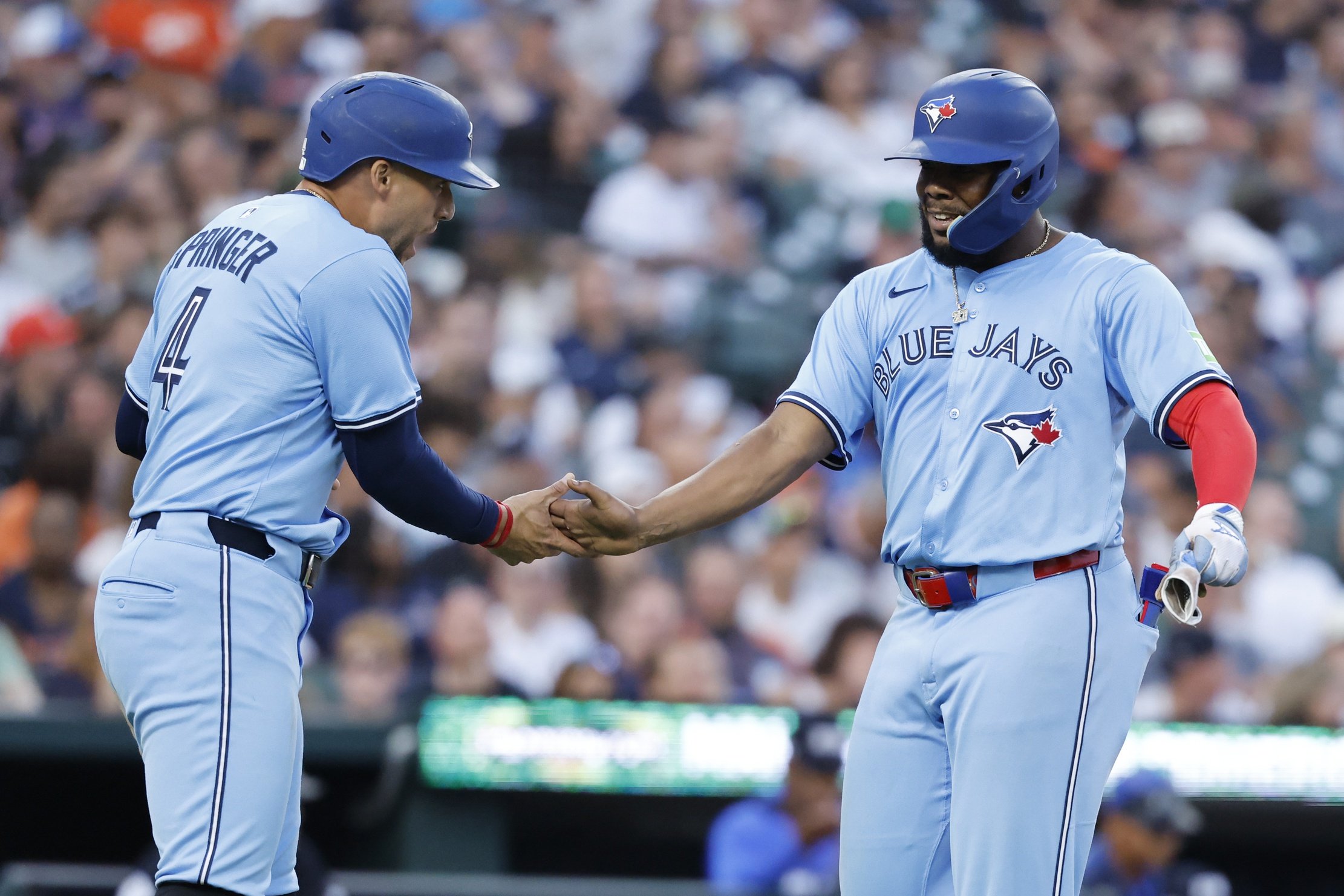 The 2025 Toronto Blue Jays went on a magical run that came within two outs of ending a 32-year World Series drought. The offense finished the season in the top five in most offensive categories while relying on a contact-heavy approach at the plate. The Jays hit more home runs than in 2024 (156), but their 191 long balls last season fell short of expectations, as they finished tied for 11th. Key hitters who were expected to be leaned on heavily in the power department struggled on the field and/or battled injuries all season long. Anthony Santander signed with the Blue Jays last offseason after hitting 44 home runs with the Baltimore Orioles in 2024. However, didn't have the same success in Toronto. He struggled at the plate at the beginning of the season and suffered a shoulder subluxation in May, which kept him out until the final week of the regular season. Fans and the organization were expecting far more than six home runs, 16 runs scored, and 18 driven in from Santander's bat, but he wasn't the only heavy-hitter to struggle staying on the field. Daulton Varsho was on pace to surpass his career-best statistics in many categories if it wasn't for his injury-plagued season. He started the year on the injury list, recovering from a shoulder injury. He returned towards the end of April, but a grade 2 hamstring strain forced him to miss all of June and July. Thanks to boosting his barrel percentage from 6.2 percent in 2024 to 15.9 percent in '25, Varsho hit 20 home runs in 271 plate appearances. That home run total was seven fewer than his career high in 2022; however, the center fielder had 321 fewer plate appearances this past season. He also had 19 fewer RBIs in 2025 (55) than in '22, when he hit 74. We could have witnessed an All-Star-caliber season out of the 29-year-old had he stayed healthy throughout the season. Vladimir Guerrero Jr. was also not in normal heavy-hitter form all year. With the question marks about his future looming over the superstar first baseman – and then the pressure of his massive contract – he wasn't his usual self out of the gate, not hitting his first home run until his 19th game. Overall, his average exit velocity dropped from 93.8 mph in 2024 to 92 mph in '25. Guerrero's hard-hit percentage also dropped from 54.9 percent to 50.7 percent. The Blue Jays' first baseman finished the season with 23 home runs and 84 runs driven in over 680 plate appearances. With how dominant he was in the playoffs, it can be easy to forget that his 2025 regular season was a step back from his 2024. The team will hope for a stronger regular season performance from him in 2026. Amid struggles from likely power sources, the Blue Jays received a power surge from an unlikely player. George Springer emerged as the heavy-hitter in the batting order, something he hasn't been referred to as since 2019 while with the Houston Astros. Last season, the 36-year-old set career-highs in barrel percentage (16.1 percent), average exit velocity (89.9 mph), and hard-hit percentage (47.6 percent). These impressive metrics helped the veteran hit 32 home runs and drive in 84 runs. Both were his highest totals since 2019. Despite inconsistent power production, the Blue Jays won the AL East and advanced to a deep postseason run. This success was boosted by inexperienced names like Nathan Lukes, Addison Barger, and Ernie Clement, who performed exceptionally in more meaningful roles than expected. Last season was Lukes's first full season in the big leagues, despite being 31. He posted a 103 wRC+ and a .730 OPS over 438 plate appearances. It was a steady performance the Blue Jays needed, as he was often hitting toward the top of the batting order. Barger has had a roller-coaster two-year MLB career. He was another much-needed power bat that broke out last season. He hit 21 home runs and posted a 107 wRC+ over 502 plate appearances. If he's going to continue being a power source, he needs to improve on his 22.9 flyball percentage (per Baseball Savant). Clement was a consistent contact hitter all season long. He posted a .296 BABIP, just below league average, but his excellence came in the postseason. The utility infielder set a single postseason record for hits (30). Clement will be called upon to maintain his contact success while hitting at the bottom of the batting order. How Will This Year's Offense Compare to Last Year's? After the magical 2025 season ended, fans were excited for an offseason of additions that could get the team back to the World Series. There's no doubt the pitching staff is better after several notable additions. However, the Blue Jays were once again outbid for the top free-agent bat, this time Kyle Tucker. The two-time World Series champion Los Angeles Dodgers swooped in late to sign the star outfielder. After Tucker signed, any chance of a reunion with Bo Bichette was quickly snuffed away by the New York Mets. The Blue Jays did add Kazuma Okamoto from Japan, but there's no guarantee he will adapt to MLB pitching quickly. He will be under pressure to fill the offensive void left by Bichette. Okamoto has the skills to hit the 20 home runs and record the 80 RBIs that Bichette would likely have contributed. The Japanese star hit 15 long balls last season but missed half the year with injuries. He hit 30 or more home runs in NPB every year from 2018 to 2023. All eyes will be on him throughout the season. Toronto's need for Okamoto's power has increased significantly with the latest news about Santander. The organization hoped a full offseason to get healthy would help the switch-hitter regain his power swing. However, he will now require left labral surgery, which will hold him out for five to six months. It's a devastating blow to the 2026 plans, especially with the Jays striking out on Tucker. The Blue Jays will likely turn to Lukes to take many of the left field opportunities that have opened up with Santander's injury. He will presumably play in a platoon with Davis Schneider, who will start against southpaws. Schneider didn't have a clear role before Santander's injury. However, now a platoon role makes sense for the 27-year-old. The righty-batting Schneider was not as effective against lefties last season, posting a .708 OPS compared to a .915 OPS against right-handers. That said, he was still able to produce offensively without the platoon advantage; his 106 wRC+ was six percent better than league average. While the Blue Jays have a band-aid they can use to patch up the loss of Santander for at least the first half of the season, it's also highly unlikely that Springer can repeat his monstrous power display. He's 36 now and dealt with several injuries in 2025. Hopefully, more playing time in the DH role (and less in the outfield) will help keep him healthy. Even when he hit 39 homers in 2019, Springer faced a slight regression in barrel and hard-hit percentages the following season. However, that season was the shortened 2020 campaign. Fans need to prepare themselves for Springer to still be productive at the top of the lineup, but there will likely be at least a slight regression in the power department. He could still finish in the mid-20s for home runs, which the Blue Jays will need since they are thin on heavy bats. The upcoming season will be when Guerrero needs to flex his muscles as the franchise player. The Blue Jays are counting on him to return to a mid-30s home run total. Just looking at the lineup on paper, he's the only name that will truly strike fear in opposing teams when it comes to hitting the long ball. Ultimately, health is the Blue Jays' primary concern right now. They can't afford another injury to a key player, or the offense will have to rely on inexperienced players again, as in 2025. That can work, as last proved, but it's risky. And while there's still a possibility the Blue Jays could add a bat, all the top-tier free agents are already on other teams.
 -
The Toronto Blue Jays in 2025 had a magical run that came within two outs of ending a 32-year World Series drought. The offense finished the season in the top five in most offensive categories because it had to rely more on a contact approach at the plate. The team hit more home runs than in 2024 (156), but the 191 long balls last season fell short of expectations as the Blue Jays finished tied for 11th. Key members who were expected to be leaned on heavily in the power department struggled on the field and/or battled injuries all season long. Anthony Santander signed with the Blue Jays last offseason after hitting 44 home runs with the Baltimore Orioles. However, the same success hasn't been shown in Toronto. He struggled at the plate at the beginning of the season and suffered a shoulder subluxation in May, which kept him out until the final week of the regular season. Fans and the organization were expecting far more than the six home runs, 16 runs scored, and 18 driven in from Santander's bat, but he wasn't the only heavy-hitter to struggle staying on the field. Daulton Varsho was on pace to surpass his career-best statistics if it wasn't for his injury-plagued season. He started the season on the injury list, recovering from a shoulder injury. He returned towards the end of April, but a grade 2 hamstring injury forced him to miss all of June and July. Thanks to boosting his barrel percentage from 6.2 percent in 2024 to 15.9 percent in '25, Varsho hit 20 home runs in 271 plate appearances. That home run total was seven fewer than his career high in 2022; however, the center fielder had 321 more plate appearances that season. He also had 19 fewer RBIs in 2025 (55) than in '22, when he hit 74. We could have witnessed an MVP-caliber season out of the 29-year-old had he stayed healthy throughout the season. Vladimir Guerrero Jr. was also not in normal heavy-hitter form. With the question marks around his future looming over the superstar first baseman, he struggled out of the gates, not hitting his first home run until his 19th game. His average exit velocity dropped from 93.8 mph in 2024 to 92 mph in '25. Guerrero Jr.'s hard-hit percentage also dropped in this time span from 54.9 percent to 50.7 percent. The Blue Jays' first baseman finished the season with 23 home runs and 84 runs driven in over 680 plate appearances. The team will need a stronger season from him in the upcoming season. Amid struggles from likely power sources, the Blue Jays received a power surge from an unlikely player. George Springer emerged as the heavy-hitter in the batting order, something he hasn't been referred to as since 2019 while with the Houston Astros. Last season, the 36-year-old set career-highs in barrel percentage (16.1 percent), exit velocity (90 mph), and hard-hit percentage (47.6 percent). These impressive metrics helped the veteran hit 31 home runs and drive in 84 runs. Both are his highest totals since 2019. Despite inconsistent power production, the Blue Jays won the AL East and advanced to a deep postseason run. This success was boosted by inexperienced names like Nathan Lukes, Addison Barger, and Ernie Clement, who performed exceptionally in more meaningful roles than expected. Last season was Lukes first full season in the big leagues, despite being 31. He posted a 103 wRC+ and a .730 OPS over 438 plate appearances. It was a steady performance the Blue Jays needed, as he was usually at the top of the batting order. Barger has had a roller-coaster two-year MLB career. He was another much-needed power bat that broke out last season. He hit 21 home runs and posted a 107 wRC+ over 502 plate appearances. If he's going to continue being a power source, he needs to improve on his 22.9 flyball percentage. Clement was a consistent contact hitter all season long. He posted a .296 BABIP, just below average, but his excellence came in the postseason. The utility infielder set a single postseason record for hits (30). Clement will be called upon to return his contact success while hitting at the bottom of the batting order. How Will This Year's Offense Compare to Last Year's? After the magical 2025 season ended, fans were excited for an offseason of additions that could get the team back to the World Series. However, those big additions fizzled away. The Blue Jays were once again outbid for the top free-agent bat, this time Kyle Tucker. The two-time World Series champion Los Angeles Dodgers swooped in late to add the star outfielder. After Tucker signed, any chance of a reunion with Bo Bichette was quickly snuffed away by the New York Mets. The Blue Jays did add Kazuma Okamoto from Japan, but there's no guarantee he will adapt to American pitching quickly. He will be under pressure to fill Bichette's offensive void. Okamoto has the skills to hit 20 or more home runs that Bichette would likely have contributed. The Japanese player hit 15 long balls last season but missed half the season with injuries. All eyes will be on him throughout the season. Toronto's need for Okamoto's power has increased significantly with the latest news about Santander. The organization hoped a full offseason to get healthy would help the switch-hitter regain his power swing. However, he will now require left labral surgery, which will hold him out for five to six months. It's a devastating blow to the 2026 plans, especially with striking out on Tucker. The Blue Jays will likely turn to Lukes to fill the left field hole that has opened up with Santander's injury. Lukes may even play in a platoon role with Davis Schneider batting against southpaws. Schneider didn't have a clear role before Santander's injury. However, now a platoon role makes sense for the 27-year-old. Schneider struggled against lefties last season, posting a .708 OPS compared to a .915 OPS against right-handers. Despite the low OPS while facing left-handers, he was able to be productive offensively, posting a 106 wRC+. While the Blue Jays have a band-aid to patch up losing Santander for the first half of the season, it's also highly unlikely that Springer can repeat his monstrous power display. He's 36 now, although the full transition to the DH role has aided in keeping Springer healthy. Even when he hit 39 homers in 2019, he faced a slight regression in barrel and hard-hit percentages the next season. However, the next season was the shortened 2020 campaign. Fans need to prepare themselves for Springer to still be productive at the top of the lineup, but there will likely be a slight regression in the power department. He could still hit in the mid-20s for home runs, which the Blue Jays will need since they are thin on heavy bats. The upcoming season will be where Guerrero Jr. will need to flex his muscles as the franchise player. The Blue Jays will need him to return to a mid-30 home run total. Just looking at the lineup on paper, he's the only name that strikes fear in opposing teams to hit the long ball. Ultimately, health is the Blue Jays' primary concern. They can't afford another injury to a key player, or the team will have to rely on inexperienced players again, as in 2025. There's still a possibility for the Blue Jays to add a free agency bat, but the top-tier players are already on a team. View full article
-
Anthony Santander was looking to have a redemption year after injuries derailed his 2025 season. He suffered a shoulder subluxation last May after crashing into the outfield wall. The injury kept him out until the last couple of weeks of the regular season. Santander made the postseason roster, but in the ALCS, he suffered a back injury and was replaced, ending his season. When the 31-year-old was on the field last season, he was a massive disappointment after his career-best 2024 campaign, in which he hit 44 home runs with 102 RBIs for the Baltimore Orioles. His success led him to sign a five-year, $92.5 million contract with the Toronto Blue Jays. However, in his 221 plate appearances last season, Santander hit just six home runs, scored 16 times, and drove in 18 runs. His underwhelming 61 wRC+ was his worst since his rookie cups of coffee in 2017 and '18. The Blue Jays were surely hoping that time to recover over the offseason would mean a bounce-back performance from Santander this year. However, the team just received devastating news about the left fielder. Mitch Bannon of The Athletic reports that Santander will need left labral surgery, likely keeping the switch-hitter out for five to six months. There's no way to sugarcoat it: This contract is turning into a massive bust for the Toronto Blue Jays organization. The Blue Jays finished 11th in home runs last season among MLB teams (191), making this injury news even more concerning. Bo Bichette left in free agency, and the Blue Jays struck out trying to add Kyle Tucker in free agency. Fans need to brace themselves for another year with less power than they'd like to see. Nathan Lukes looks to be the main recipient of the playing time that has opened up, and he's not exactly a big home run threat. Lukes has only hit 15 home runs in 560 career plate appearances, but he was a reliable top-of-the-order batter in 2025. He makes lots of contact and gets on base at an above-average rate. It will be interesting to see if the Blue Jays try to add another bat, though all of the big-name free agents have already signed. View full article
-
Anthony Santander To Miss Most of 2026 With Shoulder Injury
Bryan Jaeger posted an article in Blue Jays
.jpg.7425eec29eb5cddc3ac5b144b61c5ce2.jpg) Anthony Santander was looking to have a redemption year after injuries derailed his 2025 season. He suffered a shoulder subluxation last May after crashing into the outfield wall. The injury kept him out until the last couple of weeks of the regular season. Santander made the postseason roster, but in the ALCS, he suffered a back injury and was replaced, ending his season. When the 31-year-old was on the field last season, he was a massive disappointment after his career-best 2024 campaign, in which he hit 44 home runs with 102 RBIs for the Baltimore Orioles. His success led him to sign a five-year, $92.5 million contract with the Toronto Blue Jays. However, in his 221 plate appearances last season, Santander hit just six home runs, scored 16 times, and drove in 18 runs. His underwhelming 61 wRC+ was his worst since his rookie cups of coffee in 2017 and '18. The Blue Jays were surely hoping that time to recover over the offseason would mean a bounce-back performance from Santander this year. However, the team just received devastating news about the left fielder. Mitch Bannon of The Athletic reports that Santander will need left labral surgery, likely keeping the switch-hitter out for five to six months. There's no way to sugarcoat it: This contract is turning into a massive bust for the Toronto Blue Jays organization. The Blue Jays finished 11th in home runs last season among MLB teams (191), making this injury news even more concerning. Bo Bichette left in free agency, and the Blue Jays struck out trying to add Kyle Tucker in free agency. Fans need to brace themselves for another year with less power than they'd like to see. Nathan Lukes looks to be the main recipient of the playing time that has opened up, and he's not exactly a big home run threat. Lukes has only hit 15 home runs in 560 career plate appearances, but he was a reliable top-of-the-order batter in 2025. He makes lots of contact and gets on base at an above-average rate. It will be interesting to see if the Blue Jays try to add another bat, though all of the big-name free agents have already signed.
Anthony Santander was looking to have a redemption year after injuries derailed his 2025 season. He suffered a shoulder subluxation last May after crashing into the outfield wall. The injury kept him out until the last couple of weeks of the regular season. Santander made the postseason roster, but in the ALCS, he suffered a back injury and was replaced, ending his season. When the 31-year-old was on the field last season, he was a massive disappointment after his career-best 2024 campaign, in which he hit 44 home runs with 102 RBIs for the Baltimore Orioles. His success led him to sign a five-year, $92.5 million contract with the Toronto Blue Jays. However, in his 221 plate appearances last season, Santander hit just six home runs, scored 16 times, and drove in 18 runs. His underwhelming 61 wRC+ was his worst since his rookie cups of coffee in 2017 and '18. The Blue Jays were surely hoping that time to recover over the offseason would mean a bounce-back performance from Santander this year. However, the team just received devastating news about the left fielder. Mitch Bannon of The Athletic reports that Santander will need left labral surgery, likely keeping the switch-hitter out for five to six months. There's no way to sugarcoat it: This contract is turning into a massive bust for the Toronto Blue Jays organization. The Blue Jays finished 11th in home runs last season among MLB teams (191), making this injury news even more concerning. Bo Bichette left in free agency, and the Blue Jays struck out trying to add Kyle Tucker in free agency. Fans need to brace themselves for another year with less power than they'd like to see. Nathan Lukes looks to be the main recipient of the playing time that has opened up, and he's not exactly a big home run threat. Lukes has only hit 15 home runs in 560 career plate appearances, but he was a reliable top-of-the-order batter in 2025. He makes lots of contact and gets on base at an above-average rate. It will be interesting to see if the Blue Jays try to add another bat, though all of the big-name free agents have already signed. -
The World Baseball Classic begins March 5, and the opening round will be played in four locations. Pool play games will be held in Tokyo, Japan; San Juan, Puerto Rico; Houston, Texas; and Miami, Florida. The Toronto Blue Jays have 12 players and prospects participating in the WBC tournament. José Berríos intended to play, but he was denied an insurance policy. He participated in the last three classics, playing for Puerto Rico. The righty had an up-and-down MLB season last year, posting a 4.17 ERA with 138 strikeouts over 166 innings. In the first half of the season, he posted a 3.75 ERA and held batters to a .238 average over 115 1/3 innings. However, those numbers inflated over 50 2/3 innings in the second half, when he posted a 5.15 ERA and a .284 batting average against. He was sent to the bullpen, but he only threw two innings before he was placed on the 15-day injury list for the first time in his 10-year career with right elbow inflammation. Berríos was later revealed to be dealing with a biceps tendon issue. Japan is looking to repeat as WBC champions. However, the teams from the USA, Venezuela, Mexico, and the Dominican Republic will be stiff competition. There is also the chance of a surprise team making a run (What about that Canadian roster?). Blue Jays in the WBC Here are the Blue Jays players participating and the countries they will represent: Vladimir Guerrero Jr. - 1B, Dominican Republic Alejandro Kirk - C, Mexico Adam Macko - LHP, Canada Ernie Clement - INF, USA Kazuma Okamoto - 3B, Japan Andrés Giménez - SS, Venezuela Leo Jiménez - SS, Panama Yariel Rodríguez - RHP, Cuba CJ Stubbs - C, Israel RJ Schreck - OF, Israel Will Cresswell - C, Great Britain Ismael Munguia - OF, Nicaragua Guerrero will be making his first WBC appearance. He committed to play early after missing out on the 2023 tournament due to knee discomfort. Kirk will be the starting catcher for Team Mexico. He's also making his first WBC appearance after missing the 2023 event due to the birth of his child. Clement is still riding the high of a hot October, in which he set the record for hits in a single postseason (30). It'll be his first appearance for Team USA, and he'll offer versatility in the field. Clement can play any infield position for manager Mark DeRosa. Okamoto makes his second WBC appearance; he was a key contributor in Team Japan's 2023 WBC victory. He had a 1.278 OPS with two home runs and seven RBIs throughout the tournament. One of those home runs was against Team USA in the championship game. Giménez will also be making his second WBC appearance for Team Venezuela. In 2023, he slashed .294/.368/.294 with two runs and an RBI. However, he makes most of his impact with his glove. He is a three-time Gold Glove winner and won the Platinum Glove Award in 2023 while with the Cleveland Guardians. The Blue Jays' shortstop can play both middle infield positions, giving manager Omar López flexibility with the plethora of MLB infielders Team Venezuela has. Rodríguez will be making his second appearance for Team Cuba. During the 2023 tournament, he made two starts. He allowed two earned runs and struck out 10 batters over 7 1/3 innings. The Blue Jays also have several prospects participating in the classic. Stubbs is the only one with WBC experience. He played in the 2023 tournament for Team Israel. However, he played in only one game and went 0-for-3 at the plate. Of the notable minor leaguers participating, Macko is on the Blue Jays' 40-man roster. Rodríguez, Stubbs, and Schreck will be non-roster invitees in spring training. All four could make an appearance with the major league club during the season. If Macko or Schreck get called up, it would be their MLB debuts. Stubbs made a brief debut last season with the Washington Nationals, taking three plate appearances. Rodríguez has pitched in 87 big league games, but will also most likely be starting the season in Triple A. View full article
-
The Blue Jays Players To Follow in the World Baseball Classic
Bryan Jaeger posted an article in Blue Jays
(1).jpg.1cb09c9341e3596da63072a7abe83757.jpg) The World Baseball Classic begins March 5, and the opening round will be played in four locations. Pool play games will be held in Tokyo, Japan; San Juan, Puerto Rico; Houston, Texas; and Miami, Florida. The Toronto Blue Jays have 12 players and prospects participating in the WBC tournament. José Berríos intended to play, but he was denied an insurance policy. He participated in the last three classics, playing for Puerto Rico. The righty had an up-and-down MLB season last year, posting a 4.17 ERA with 138 strikeouts over 166 innings. In the first half of the season, he posted a 3.75 ERA and held batters to a .238 average over 115 1/3 innings. However, those numbers inflated over 50 2/3 innings in the second half, when he posted a 5.15 ERA and a .284 batting average against. He was sent to the bullpen, but he only threw two innings before he was placed on the 15-day injury list for the first time in his 10-year career with right elbow inflammation. Berríos was later revealed to be dealing with a biceps tendon issue. Japan is looking to repeat as WBC champions. However, the teams from the USA, Venezuela, Mexico, and the Dominican Republic will be stiff competition. There is also the chance of a surprise team making a run (What about that Canadian roster?). Blue Jays in the WBC Here are the Blue Jays players participating and the countries they will represent: Vladimir Guerrero Jr. - 1B, Dominican Republic Alejandro Kirk - C, Mexico Adam Macko - LHP, Canada Ernie Clement - INF, USA Kazuma Okamoto - 3B, Japan Andrés Giménez - SS, Venezuela Leo Jiménez - SS, Panama Yariel Rodríguez - RHP, Cuba CJ Stubbs - C, Israel RJ Schreck - OF, Israel Will Cresswell - C, Great Britain Ismael Munguia - OF, Nicaragua Guerrero will be making his first WBC appearance. He committed to play early after missing out on the 2023 tournament due to knee discomfort. Kirk will be the starting catcher for Team Mexico. He's also making his first WBC appearance after missing the 2023 event due to the birth of his child. Clement is still riding the high of a hot October, in which he set the record for hits in a single postseason (30). It'll be his first appearance for Team USA, and he'll offer versatility in the field. Clement can play any infield position for manager Mark DeRosa. Okamoto makes his second WBC appearance; he was a key contributor in Team Japan's 2023 WBC victory. He had a 1.278 OPS with two home runs and seven RBIs throughout the tournament. One of those home runs was against Team USA in the championship game. Giménez will also be making his second WBC appearance for Team Venezuela. In 2023, he slashed .294/.368/.294 with two runs and an RBI. However, he makes most of his impact with his glove. He is a three-time Gold Glove winner and won the Platinum Glove Award in 2023 while with the Cleveland Guardians. The Blue Jays' shortstop can play both middle infield positions, giving manager Omar López flexibility with the plethora of MLB infielders Team Venezuela has. Rodríguez will be making his second appearance for Team Cuba. During the 2023 tournament, he made two starts. He allowed two earned runs and struck out 10 batters over 7 1/3 innings. The Blue Jays also have several prospects participating in the classic. Stubbs is the only one with WBC experience. He played in the 2023 tournament for Team Israel. However, he played in only one game and went 0-for-3 at the plate. Of the notable minor leaguers participating, Macko is on the Blue Jays' 40-man roster. Rodríguez, Stubbs, and Schreck will be non-roster invitees in spring training. All four could make an appearance with the major league club during the season. If Macko or Schreck get called up, it would be their MLB debuts. Stubbs made a brief debut last season with the Washington Nationals, taking three plate appearances. Rodríguez has pitched in 87 big league games, but will also most likely be starting the season in Triple A.
The World Baseball Classic begins March 5, and the opening round will be played in four locations. Pool play games will be held in Tokyo, Japan; San Juan, Puerto Rico; Houston, Texas; and Miami, Florida. The Toronto Blue Jays have 12 players and prospects participating in the WBC tournament. José Berríos intended to play, but he was denied an insurance policy. He participated in the last three classics, playing for Puerto Rico. The righty had an up-and-down MLB season last year, posting a 4.17 ERA with 138 strikeouts over 166 innings. In the first half of the season, he posted a 3.75 ERA and held batters to a .238 average over 115 1/3 innings. However, those numbers inflated over 50 2/3 innings in the second half, when he posted a 5.15 ERA and a .284 batting average against. He was sent to the bullpen, but he only threw two innings before he was placed on the 15-day injury list for the first time in his 10-year career with right elbow inflammation. Berríos was later revealed to be dealing with a biceps tendon issue. Japan is looking to repeat as WBC champions. However, the teams from the USA, Venezuela, Mexico, and the Dominican Republic will be stiff competition. There is also the chance of a surprise team making a run (What about that Canadian roster?). Blue Jays in the WBC Here are the Blue Jays players participating and the countries they will represent: Vladimir Guerrero Jr. - 1B, Dominican Republic Alejandro Kirk - C, Mexico Adam Macko - LHP, Canada Ernie Clement - INF, USA Kazuma Okamoto - 3B, Japan Andrés Giménez - SS, Venezuela Leo Jiménez - SS, Panama Yariel Rodríguez - RHP, Cuba CJ Stubbs - C, Israel RJ Schreck - OF, Israel Will Cresswell - C, Great Britain Ismael Munguia - OF, Nicaragua Guerrero will be making his first WBC appearance. He committed to play early after missing out on the 2023 tournament due to knee discomfort. Kirk will be the starting catcher for Team Mexico. He's also making his first WBC appearance after missing the 2023 event due to the birth of his child. Clement is still riding the high of a hot October, in which he set the record for hits in a single postseason (30). It'll be his first appearance for Team USA, and he'll offer versatility in the field. Clement can play any infield position for manager Mark DeRosa. Okamoto makes his second WBC appearance; he was a key contributor in Team Japan's 2023 WBC victory. He had a 1.278 OPS with two home runs and seven RBIs throughout the tournament. One of those home runs was against Team USA in the championship game. Giménez will also be making his second WBC appearance for Team Venezuela. In 2023, he slashed .294/.368/.294 with two runs and an RBI. However, he makes most of his impact with his glove. He is a three-time Gold Glove winner and won the Platinum Glove Award in 2023 while with the Cleveland Guardians. The Blue Jays' shortstop can play both middle infield positions, giving manager Omar López flexibility with the plethora of MLB infielders Team Venezuela has. Rodríguez will be making his second appearance for Team Cuba. During the 2023 tournament, he made two starts. He allowed two earned runs and struck out 10 batters over 7 1/3 innings. The Blue Jays also have several prospects participating in the classic. Stubbs is the only one with WBC experience. He played in the 2023 tournament for Team Israel. However, he played in only one game and went 0-for-3 at the plate. Of the notable minor leaguers participating, Macko is on the Blue Jays' 40-man roster. Rodríguez, Stubbs, and Schreck will be non-roster invitees in spring training. All four could make an appearance with the major league club during the season. If Macko or Schreck get called up, it would be their MLB debuts. Stubbs made a brief debut last season with the Washington Nationals, taking three plate appearances. Rodríguez has pitched in 87 big league games, but will also most likely be starting the season in Triple A. -
Pitchers and catchers report for spring training in Dunedin, Florida, on February 11. The rest of the team reports on the 16, and games begin five days later. The Toronto Blue Jays may be done adding to their offense, as all the big-dollar free agents have signed elsewhere. They did add Kazuma Okamoto, who comes over from Japan on a four-year, $60 million contract. With him added, let's take a look at how the batting order may come together versus right and left-handed pitchers. Predicting the Blue Jays' Batting Order Against RHP George Springer, DH - R Addison Barger, RF - L Vladimir Guerrero Jr., 1B - R Anthony Santander, LF - S Kazuma Okamoto, 3B - R Daulton Varsho, CF - L Alejandro Kirk, C - R Ernie Clement, 2B - R Andrés Giménez, SS - L Springer will deservedly return to the leadoff spot, where he's had 4,787 career plate appearances. Batting first, he has a career .270/.354/.481 slash line, 221 home runs, 761 runs, and 80 stolen bases. Even though he's 36, there's no one on the roster who should be considered to replace Springer atop the batting order if he stays productive. Nathan Lukes was often seen in the second spot down the stretch last season, but with everyone healthy and Okamoto pushing Barger to the outfield, Lukes will find himself a bench player at the start of the season. Last year was full of ups and downs for Barger, but he will look to bring his 115 wRC+ against righties into the upcoming season. It'll be his third year in the big leagues, but he will find himself in a platoon at the beginning of the season, as he struggled against lefties in 2025 (69 wRC+). There's no question who will bat third. Guerrero is by far the best hitter on the Blue Jays and one of the best in MLB. After him is where the debate will begin. The fourth through seventh hitters can be interchangeable depending on production. If Santander can return to his 2024 form, that of a player who had 44 home runs and 102 RBIs for the Baltimore Orioles, then he'll stay slotted into the cleanup spot all season since he's a switch-hitter. But let's be honest, Blue Jay fans will take anything better than Santander's production in his debut season in Toronto. Spring training will be Okamoto's first chance to show the Blue Jays he can bring his power bat from Japan to America. If he adjusts to MLB pitchers, then this signing will be a home run. He hit 15 homers last season, but an elbow injury caused him to miss over three months. Okamoto had a career-high 41 home runs in 2023, so he could be a great protection bat behind Santander. If Santander struggles again, Varsho should move to the four-hole as a left-handed power hitter. However, to start the season, Varsho should slot into the sixth spot to break up the righties at the end of the lineup. He started last season on the injured list, recovering from a 2024 shoulder surgery, and missed two months halfway through the season with a hamstring injury. If Varsho can stay healthy, we could witness his best season yet. Despite the missed time, Varsho was on pace for a career season in 2025. He had 20 home runs over 271 plate appearances, which was short of the 27 he hit in 2022, but he had 321 more plate appearances that year. The center fielder did complete the season with a career high 123 wRC+. Kirk could bat fifth and move Okamoto to the seventh spot in the batting order. The drastic power discrepancy is why I put Okamoto fifth, though. The Blue Jays' catcher has never been a power hitter, but last season he set career highs in home runs (15) and RBIs (76). What Kirk does well is put the ball in play, backed by a .292 BABIP and only an 11.7 strikeout percentage in 2025. He'd be a great contact bat to help knock in whatever runs the powerful three through six hole batters leave on the basepaths. Clement can bat eighth after an outstanding 2025 postseason. He slashed .411/.416/.398, scored 13 runs, and posted an incredible 171 wRC+ over 77 plate appearances. His 30 hits set an MLB record in a single postseason. If he keeps making contact at such a high level, he could find himself slotted in the two hole if Barger starts slow. Giménez will bat ninth as he's a defensive specialist. He started hot last season, hitting three home runs in 22 March plate appearances; however, he only hit four more in his remaining 347 trips to the plate. His .598 OPS was a career-worst over his six MLB seasons. Predicting the Blue Jays' Batting Order Against LHP George Springer, DH - R Ernie Clement, 2B - R Vladimir Guerrero Jr., 1B - R Anthony Santander, RF - S Kazuma Okamoto, 3B - R Alejandro Kirk, C - R Davis Schneider, LF - R Myles Straw, CF - R Andrés Giménez, SS - L Against left-handed pitchers, the batting order only has a few changes, mainly replacing some of the left-handed hitters. I'd move Clement to the second spot because of the contact skills he possesses. I replaced Varsho with Straw to get a right-handed bat in the lineup. The Blue Jays limited Varsho's reps against lefties last season, as well; he only has 56 plate appearances against southpaws, compared to 215 appearances against right-handers. Straw won't provide substantial offensive production, but last season he had some success on balls in play (.308 BABIP), leading to his best wRC+ (91) since 2021. The final change is replacing Barger with Schneider. Schneider surprisingly struggled against southpaws last season with a .215 batting average, though he had a .708 OPS and a 106 wRC+ against them. I acknowledged Barger's struggles versus lefties earlier, which makes Schneider an obvious replacement. Though exactly how Schneidet fits in this lineup is a little head-scratching. The Blue Jays will also have Tyler Heineman (switch-hitter) and Lukes (left-handed bat) that they can utilize in games. However, if I were the manager, this is the batting order I'd roll out. The Blue Jays have the pleasure of having massive power potential this year. It could be an electric season as fans hope to witness another World Series run, but with a different final outcome. View full article
-
.jpg.75a82d86c5ade4dc0ca6db803fa97da0.jpg) Pitchers and catchers report for spring training in Dunedin, Florida, on February 11. The rest of the team reports on the 16, and games begin five days later. The Toronto Blue Jays may be done adding to their offense, as all the big-dollar free agents have signed elsewhere. They did add Kazuma Okamoto, who comes over from Japan on a four-year, $60 million contract. With him added, let's take a look at how the batting order may come together versus right and left-handed pitchers. Predicting the Blue Jays' Batting Order Against RHP George Springer, DH - R Addison Barger, RF - L Vladimir Guerrero Jr., 1B - R Anthony Santander, LF - S Kazuma Okamoto, 3B - R Daulton Varsho, CF - L Alejandro Kirk, C - R Ernie Clement, 2B - R Andrés Giménez, SS - L Springer will deservedly return to the leadoff spot, where he's had 4,787 career plate appearances. Batting first, he has a career .270/.354/.481 slash line, 221 home runs, 761 runs, and 80 stolen bases. Even though he's 36, there's no one on the roster who should be considered to replace Springer atop the batting order if he stays productive. Nathan Lukes was often seen in the second spot down the stretch last season, but with everyone healthy and Okamoto pushing Barger to the outfield, Lukes will find himself a bench player at the start of the season. Last year was full of ups and downs for Barger, but he will look to bring his 115 wRC+ against righties into the upcoming season. It'll be his third year in the big leagues, but he will find himself in a platoon at the beginning of the season, as he struggled against lefties in 2025 (69 wRC+). There's no question who will bat third. Guerrero is by far the best hitter on the Blue Jays and one of the best in MLB. After him is where the debate will begin. The fourth through seventh hitters can be interchangeable depending on production. If Santander can return to his 2024 form, that of a player who had 44 home runs and 102 RBIs for the Baltimore Orioles, then he'll stay slotted into the cleanup spot all season since he's a switch-hitter. But let's be honest, Blue Jay fans will take anything better than Santander's production in his debut season in Toronto. Spring training will be Okamoto's first chance to show the Blue Jays he can bring his power bat from Japan to America. If he adjusts to MLB pitchers, then this signing will be a home run. He hit 15 homers last season, but an elbow injury caused him to miss over three months. Okamoto had a career-high 41 home runs in 2023, so he could be a great protection bat behind Santander. If Santander struggles again, Varsho should move to the four-hole as a left-handed power hitter. However, to start the season, Varsho should slot into the sixth spot to break up the righties at the end of the lineup. He started last season on the injured list, recovering from a 2024 shoulder surgery, and missed two months halfway through the season with a hamstring injury. If Varsho can stay healthy, we could witness his best season yet. Despite the missed time, Varsho was on pace for a career season in 2025. He had 20 home runs over 271 plate appearances, which was short of the 27 he hit in 2022, but he had 321 more plate appearances that year. The center fielder did complete the season with a career high 123 wRC+. Kirk could bat fifth and move Okamoto to the seventh spot in the batting order. The drastic power discrepancy is why I put Okamoto fifth, though. The Blue Jays' catcher has never been a power hitter, but last season he set career highs in home runs (15) and RBIs (76). What Kirk does well is put the ball in play, backed by a .292 BABIP and only an 11.7 strikeout percentage in 2025. He'd be a great contact bat to help knock in whatever runs the powerful three through six hole batters leave on the basepaths. Clement can bat eighth after an outstanding 2025 postseason. He slashed .411/.416/.398, scored 13 runs, and posted an incredible 171 wRC+ over 77 plate appearances. His 30 hits set an MLB record in a single postseason. If he keeps making contact at such a high level, he could find himself slotted in the two hole if Barger starts slow. Giménez will bat ninth as he's a defensive specialist. He started hot last season, hitting three home runs in 22 March plate appearances; however, he only hit four more in his remaining 347 trips to the plate. His .598 OPS was a career-worst over his six MLB seasons. Predicting the Blue Jays' Batting Order Against LHP George Springer, DH - R Ernie Clement, 2B - R Vladimir Guerrero Jr., 1B - R Anthony Santander, RF - S Kazuma Okamoto, 3B - R Alejandro Kirk, C - R Davis Schneider, LF - R Myles Straw, CF - R Andrés Giménez, SS - L Against left-handed pitchers, the batting order only has a few changes, mainly replacing some of the left-handed hitters. I'd move Clement to the second spot because of the contact skills he possesses. I replaced Varsho with Straw to get a right-handed bat in the lineup. The Blue Jays limited Varsho's reps against lefties last season, as well; he only has 56 plate appearances against southpaws, compared to 215 appearances against right-handers. Straw won't provide substantial offensive production, but last season he had some success on balls in play (.308 BABIP), leading to his best wRC+ (91) since 2021. The final change is replacing Barger with Schneider. Schneider surprisingly struggled against southpaws last season with a .215 batting average, though he had a .708 OPS and a 106 wRC+ against them. I acknowledged Barger's struggles versus lefties earlier, which makes Schneider an obvious replacement. Though exactly how Schneidet fits in this lineup is a little head-scratching. The Blue Jays will also have Tyler Heineman (switch-hitter) and Lukes (left-handed bat) that they can utilize in games. However, if I were the manager, this is the batting order I'd roll out. The Blue Jays have the pleasure of having massive power potential this year. It could be an electric season as fans hope to witness another World Series run, but with a different final outcome.
Pitchers and catchers report for spring training in Dunedin, Florida, on February 11. The rest of the team reports on the 16, and games begin five days later. The Toronto Blue Jays may be done adding to their offense, as all the big-dollar free agents have signed elsewhere. They did add Kazuma Okamoto, who comes over from Japan on a four-year, $60 million contract. With him added, let's take a look at how the batting order may come together versus right and left-handed pitchers. Predicting the Blue Jays' Batting Order Against RHP George Springer, DH - R Addison Barger, RF - L Vladimir Guerrero Jr., 1B - R Anthony Santander, LF - S Kazuma Okamoto, 3B - R Daulton Varsho, CF - L Alejandro Kirk, C - R Ernie Clement, 2B - R Andrés Giménez, SS - L Springer will deservedly return to the leadoff spot, where he's had 4,787 career plate appearances. Batting first, he has a career .270/.354/.481 slash line, 221 home runs, 761 runs, and 80 stolen bases. Even though he's 36, there's no one on the roster who should be considered to replace Springer atop the batting order if he stays productive. Nathan Lukes was often seen in the second spot down the stretch last season, but with everyone healthy and Okamoto pushing Barger to the outfield, Lukes will find himself a bench player at the start of the season. Last year was full of ups and downs for Barger, but he will look to bring his 115 wRC+ against righties into the upcoming season. It'll be his third year in the big leagues, but he will find himself in a platoon at the beginning of the season, as he struggled against lefties in 2025 (69 wRC+). There's no question who will bat third. Guerrero is by far the best hitter on the Blue Jays and one of the best in MLB. After him is where the debate will begin. The fourth through seventh hitters can be interchangeable depending on production. If Santander can return to his 2024 form, that of a player who had 44 home runs and 102 RBIs for the Baltimore Orioles, then he'll stay slotted into the cleanup spot all season since he's a switch-hitter. But let's be honest, Blue Jay fans will take anything better than Santander's production in his debut season in Toronto. Spring training will be Okamoto's first chance to show the Blue Jays he can bring his power bat from Japan to America. If he adjusts to MLB pitchers, then this signing will be a home run. He hit 15 homers last season, but an elbow injury caused him to miss over three months. Okamoto had a career-high 41 home runs in 2023, so he could be a great protection bat behind Santander. If Santander struggles again, Varsho should move to the four-hole as a left-handed power hitter. However, to start the season, Varsho should slot into the sixth spot to break up the righties at the end of the lineup. He started last season on the injured list, recovering from a 2024 shoulder surgery, and missed two months halfway through the season with a hamstring injury. If Varsho can stay healthy, we could witness his best season yet. Despite the missed time, Varsho was on pace for a career season in 2025. He had 20 home runs over 271 plate appearances, which was short of the 27 he hit in 2022, but he had 321 more plate appearances that year. The center fielder did complete the season with a career high 123 wRC+. Kirk could bat fifth and move Okamoto to the seventh spot in the batting order. The drastic power discrepancy is why I put Okamoto fifth, though. The Blue Jays' catcher has never been a power hitter, but last season he set career highs in home runs (15) and RBIs (76). What Kirk does well is put the ball in play, backed by a .292 BABIP and only an 11.7 strikeout percentage in 2025. He'd be a great contact bat to help knock in whatever runs the powerful three through six hole batters leave on the basepaths. Clement can bat eighth after an outstanding 2025 postseason. He slashed .411/.416/.398, scored 13 runs, and posted an incredible 171 wRC+ over 77 plate appearances. His 30 hits set an MLB record in a single postseason. If he keeps making contact at such a high level, he could find himself slotted in the two hole if Barger starts slow. Giménez will bat ninth as he's a defensive specialist. He started hot last season, hitting three home runs in 22 March plate appearances; however, he only hit four more in his remaining 347 trips to the plate. His .598 OPS was a career-worst over his six MLB seasons. Predicting the Blue Jays' Batting Order Against LHP George Springer, DH - R Ernie Clement, 2B - R Vladimir Guerrero Jr., 1B - R Anthony Santander, RF - S Kazuma Okamoto, 3B - R Alejandro Kirk, C - R Davis Schneider, LF - R Myles Straw, CF - R Andrés Giménez, SS - L Against left-handed pitchers, the batting order only has a few changes, mainly replacing some of the left-handed hitters. I'd move Clement to the second spot because of the contact skills he possesses. I replaced Varsho with Straw to get a right-handed bat in the lineup. The Blue Jays limited Varsho's reps against lefties last season, as well; he only has 56 plate appearances against southpaws, compared to 215 appearances against right-handers. Straw won't provide substantial offensive production, but last season he had some success on balls in play (.308 BABIP), leading to his best wRC+ (91) since 2021. The final change is replacing Barger with Schneider. Schneider surprisingly struggled against southpaws last season with a .215 batting average, though he had a .708 OPS and a 106 wRC+ against them. I acknowledged Barger's struggles versus lefties earlier, which makes Schneider an obvious replacement. Though exactly how Schneidet fits in this lineup is a little head-scratching. The Blue Jays will also have Tyler Heineman (switch-hitter) and Lukes (left-handed bat) that they can utilize in games. However, if I were the manager, this is the batting order I'd roll out. The Blue Jays have the pleasure of having massive power potential this year. It could be an electric season as fans hope to witness another World Series run, but with a different final outcome. -
At last season's trade deadline, the Toronto Blue Jays were sitting atop the AL East with a narrow lead over the New York Yankees and Boston Red Sox. The Blue Jays' front office was gearing up to be aggressive after making only three postseason trips since 2016, which, at that time, was the last year they made it to the ALCS. Pitching was the focus, as Shane Bieber, Seranthony Domínguez, and Louis Varland joined the squad. As for the offense, Ty France was the only notable hitter the Jays acquired. Steven Kwan was ESPN's top hitter to be considered as a trade candidate, and he was linked to the Blue Jays due to injuries and inexperience in their outfield. Fortunately, general manager Ross Atkins was rewarded for sticking with the inexperienced Addison Barger, Nathan Lukes, and Joey Loperfido, who all logged meaningful innings in the outfield during the final stretch of last season. Daulton Varsho staying healthy for the last two months of the regular season and the postseason was also a massive contributor to the team's success. He hit 12 of his 20 home runs in August and September. Occasional outfielder George Springer, who produced his best statistics since 2019, was also a significant and unexpected factor in the Blue Jays' run to the World Series. The Cleveland Guardians avoided arbitration with Kwan earlier this month, as the two sides agreed to a one-year, $7.725 million contract. He still has an additional year of team control before becoming a free agent ahead of the 2028 season, when he will be 30. While his name has popped up in some trade rumors this winter, the 2026 trade deadline may be the prime time for the Guardians to trade the left fielder, presuming they don't intend to pay him when he becomes a free agent. Kwan has been one of the most consistent contact hitters since his debut in 2022. He lacks power, but he is the epitome of a traditional leadoff batter. The lefty can work his way on base and put the ball in play. Last season, though, he struggled to draw walks, posting a career-worst 7.9 walk percentage, but he also had a career-best 8.7 strikeout percentage. His .283 BABIP (batting average on balls in play) was also a career worst. Yet, once Kwan got on base, he was ready to advance – also typical of a leadoff hitter. He tied his career-high in stolen bases, stealing safely on 21 of 26 attempts. The left fielder was also superb in the field, winning his fourth consecutive AL Gold Glove Award. His 7.6 FanGraphs Def led to a 3.2 fWAR, despite finishing with the first negative offensive rating (-0.4) of his career. Obviously, the decision whether or not to target Kwan at the deadline would depend on the Blue Jays' health and performance during the first half of the 2026 season. The cost to acquire one of the Guardians' better players will also have to be considered. The latter may be the exact reason the Blue Jays do not ultimately acquire the left fielder. As Bleacher Report's Kerry Miller stated, "[Trading Kwan] only makes sense for the Guardians if they're getting multiple, MLB-caliber starting pitchers in the deal.” A trade package like that may eliminate the Blue Jays. The only prospects closest to qualifying for such a package would be Ricky Tiedemann, Adam Macko, Angel Bastardo, Lazaro Estrada, and maybe Gage Stanifer. All of these arms, except Stanifer, could make their MLB debuts this upcoming season. I'm not including Trey Yesavage, as he's the Blue Jays' future ace, and it would be insane to trade him for Kwan. Other teams vying for Kwan will likely have more enticing options to offer the Guardians, as these Blue Jays prospects aren't fully MLB battle-tested. Considering that five of the six starting pitchers on the Blue Jays' 26-man roster, including José Berríos, are over 30 years old, it doesn't make sense to trade away young pitchers who may be relied on more as soon as the 2027 season. Kevin Gausman and Bieber's contracts both expire after the upcoming season. The only way trading young pitchers would work out in the Blue Jays' favor would be if Kwan were a few years younger. He is a player who relies on his speed, but he will be 29 before the 2027 season. So, the possibility of his skill set deteriorating in his thirties could make an extension a bad idea. The Blue Jays have plenty of outfield help to get by without needing to hamper the organization's future. However, if injuries shorten the outfield depth, then the Blue Jays may be desperate to improve after a World Series runner-up finish last season. That's precisely why Kwan makes more sense as a possible mid-season acquisition, rather than a trade target right now. Regardless of when he's dealt, Steven Kwan could definitely help Toronto, but he will come at an extremely steep price. The cost may be more than the Blue Jays are willing to pay. View full article
-
.jpg.0925eed959f8633efd0db069e7f59b19.jpg) At last season's trade deadline, the Toronto Blue Jays were sitting atop the AL East with a narrow lead over the New York Yankees and Boston Red Sox. The Blue Jays' front office was gearing up to be aggressive after making only three postseason trips since 2016, which, at that time, was the last year they made it to the ALCS. Pitching was the focus, as Shane Bieber, Seranthony Domínguez, and Louis Varland joined the squad. As for the offense, Ty France was the only notable hitter the Jays acquired. Steven Kwan was ESPN's top hitter to be considered as a trade candidate, and he was linked to the Blue Jays due to injuries and inexperience in their outfield. Fortunately, general manager Ross Atkins was rewarded for sticking with the inexperienced Addison Barger, Nathan Lukes, and Joey Loperfido, who all logged meaningful innings in the outfield during the final stretch of last season. Daulton Varsho staying healthy for the last two months of the regular season and the postseason was also a massive contributor to the team's success. He hit 12 of his 20 home runs in August and September. Occasional outfielder George Springer, who produced his best statistics since 2019, was also a significant and unexpected factor in the Blue Jays' run to the World Series. The Cleveland Guardians avoided arbitration with Kwan earlier this month, as the two sides agreed to a one-year, $7.725 million contract. He still has an additional year of team control before becoming a free agent ahead of the 2028 season, when he will be 30. While his name has popped up in some trade rumors this winter, the 2026 trade deadline may be the prime time for the Guardians to trade the left fielder, presuming they don't intend to pay him when he becomes a free agent. Kwan has been one of the most consistent contact hitters since his debut in 2022. He lacks power, but he is the epitome of a traditional leadoff batter. The lefty can work his way on base and put the ball in play. Last season, though, he struggled to draw walks, posting a career-worst 7.9 walk percentage, but he also had a career-best 8.7 strikeout percentage. His .283 BABIP (batting average on balls in play) was also a career worst. Yet, once Kwan got on base, he was ready to advance – also typical of a leadoff hitter. He tied his career-high in stolen bases, stealing safely on 21 of 26 attempts. The left fielder was also superb in the field, winning his fourth consecutive AL Gold Glove Award. His 7.6 FanGraphs Def led to a 3.2 fWAR, despite finishing with the first negative offensive rating (-0.4) of his career. Obviously, the decision whether or not to target Kwan at the deadline would depend on the Blue Jays' health and performance during the first half of the 2026 season. The cost to acquire one of the Guardians' better players will also have to be considered. The latter may be the exact reason the Blue Jays do not ultimately acquire the left fielder. As Bleacher Report's Kerry Miller stated, "[Trading Kwan] only makes sense for the Guardians if they're getting multiple, MLB-caliber starting pitchers in the deal.” A trade package like that may eliminate the Blue Jays. The only prospects closest to qualifying for such a package would be Ricky Tiedemann, Adam Macko, Angel Bastardo, Lazaro Estrada, and maybe Gage Stanifer. All of these arms, except Stanifer, could make their MLB debuts this upcoming season. I'm not including Trey Yesavage, as he's the Blue Jays' future ace, and it would be insane to trade him for Kwan. Other teams vying for Kwan will likely have more enticing options to offer the Guardians, as these Blue Jays prospects aren't fully MLB battle-tested. Considering that five of the six starting pitchers on the Blue Jays' 26-man roster, including José Berríos, are over 30 years old, it doesn't make sense to trade away young pitchers who may be relied on more as soon as the 2027 season. Kevin Gausman and Bieber's contracts both expire after the upcoming season. The only way trading young pitchers would work out in the Blue Jays' favor would be if Kwan were a few years younger. He is a player who relies on his speed, but he will be 29 before the 2027 season. So, the possibility of his skill set deteriorating in his thirties could make an extension a bad idea. The Blue Jays have plenty of outfield help to get by without needing to hamper the organization's future. However, if injuries shorten the outfield depth, then the Blue Jays may be desperate to improve after a World Series runner-up finish last season. That's precisely why Kwan makes more sense as a possible mid-season acquisition, rather than a trade target right now. Regardless of when he's dealt, Steven Kwan could definitely help Toronto, but he will come at an extremely steep price. The cost may be more than the Blue Jays are willing to pay.
At last season's trade deadline, the Toronto Blue Jays were sitting atop the AL East with a narrow lead over the New York Yankees and Boston Red Sox. The Blue Jays' front office was gearing up to be aggressive after making only three postseason trips since 2016, which, at that time, was the last year they made it to the ALCS. Pitching was the focus, as Shane Bieber, Seranthony Domínguez, and Louis Varland joined the squad. As for the offense, Ty France was the only notable hitter the Jays acquired. Steven Kwan was ESPN's top hitter to be considered as a trade candidate, and he was linked to the Blue Jays due to injuries and inexperience in their outfield. Fortunately, general manager Ross Atkins was rewarded for sticking with the inexperienced Addison Barger, Nathan Lukes, and Joey Loperfido, who all logged meaningful innings in the outfield during the final stretch of last season. Daulton Varsho staying healthy for the last two months of the regular season and the postseason was also a massive contributor to the team's success. He hit 12 of his 20 home runs in August and September. Occasional outfielder George Springer, who produced his best statistics since 2019, was also a significant and unexpected factor in the Blue Jays' run to the World Series. The Cleveland Guardians avoided arbitration with Kwan earlier this month, as the two sides agreed to a one-year, $7.725 million contract. He still has an additional year of team control before becoming a free agent ahead of the 2028 season, when he will be 30. While his name has popped up in some trade rumors this winter, the 2026 trade deadline may be the prime time for the Guardians to trade the left fielder, presuming they don't intend to pay him when he becomes a free agent. Kwan has been one of the most consistent contact hitters since his debut in 2022. He lacks power, but he is the epitome of a traditional leadoff batter. The lefty can work his way on base and put the ball in play. Last season, though, he struggled to draw walks, posting a career-worst 7.9 walk percentage, but he also had a career-best 8.7 strikeout percentage. His .283 BABIP (batting average on balls in play) was also a career worst. Yet, once Kwan got on base, he was ready to advance – also typical of a leadoff hitter. He tied his career-high in stolen bases, stealing safely on 21 of 26 attempts. The left fielder was also superb in the field, winning his fourth consecutive AL Gold Glove Award. His 7.6 FanGraphs Def led to a 3.2 fWAR, despite finishing with the first negative offensive rating (-0.4) of his career. Obviously, the decision whether or not to target Kwan at the deadline would depend on the Blue Jays' health and performance during the first half of the 2026 season. The cost to acquire one of the Guardians' better players will also have to be considered. The latter may be the exact reason the Blue Jays do not ultimately acquire the left fielder. As Bleacher Report's Kerry Miller stated, "[Trading Kwan] only makes sense for the Guardians if they're getting multiple, MLB-caliber starting pitchers in the deal.” A trade package like that may eliminate the Blue Jays. The only prospects closest to qualifying for such a package would be Ricky Tiedemann, Adam Macko, Angel Bastardo, Lazaro Estrada, and maybe Gage Stanifer. All of these arms, except Stanifer, could make their MLB debuts this upcoming season. I'm not including Trey Yesavage, as he's the Blue Jays' future ace, and it would be insane to trade him for Kwan. Other teams vying for Kwan will likely have more enticing options to offer the Guardians, as these Blue Jays prospects aren't fully MLB battle-tested. Considering that five of the six starting pitchers on the Blue Jays' 26-man roster, including José Berríos, are over 30 years old, it doesn't make sense to trade away young pitchers who may be relied on more as soon as the 2027 season. Kevin Gausman and Bieber's contracts both expire after the upcoming season. The only way trading young pitchers would work out in the Blue Jays' favor would be if Kwan were a few years younger. He is a player who relies on his speed, but he will be 29 before the 2027 season. So, the possibility of his skill set deteriorating in his thirties could make an extension a bad idea. The Blue Jays have plenty of outfield help to get by without needing to hamper the organization's future. However, if injuries shorten the outfield depth, then the Blue Jays may be desperate to improve after a World Series runner-up finish last season. That's precisely why Kwan makes more sense as a possible mid-season acquisition, rather than a trade target right now. Regardless of when he's dealt, Steven Kwan could definitely help Toronto, but he will come at an extremely steep price. The cost may be more than the Blue Jays are willing to pay. -
The Blue Jays once again found themselves among the finalists for the offseason's top free agent, only to be outbid. A tale that has repeated itself three offseasons in a row. The heartbreaking trend began during the 2023-24 offseason when Shohei Ohtani was the prize. The Blue Jays were among the finalists for his services, but they were outbid by the Los Angeles Dodgers, who signed Ohtani to a 10-year, $700 million contract. Toronto fans found their team in the same scenario the very next offseason when Juan Soto was the top free agent. After the Blue Jays were outbid for Ohtani, they were aggressive in their pursuit of Soto. However, they were outbid at the end by the New York Mets, who gave Soto a 15-year, $765 million deal. This offseason, the Blue Jays hoped the third time would be the charm. Kyle Tucker was the top dog of the free agent list. All reports indicated that Tucker's market was down to the Blue Jays and Mets, but MLB Network's Jon Morosi said on January 7 that the smart move may be for Tucker to accept a shorter deal with the Dodgers. Only one fanbase wanted to hear that prediction. However, it appears Morosi has a crystal ball, as Tucker broke the hearts of every baseball fan in Canada and Queens, New York. Tucker signed for four years, $240 million, with opt-outs after year two and three. The deal includes a $64 million signing bonus. An opt-out after his second season would make sense, as he'd be 30 and could go after the long-term contract he wanted this offseason. The outfield was the only weakness on the two-time defending World Series champions' roster, and adding Tucker gives them the greatest team money could buy. The left-handed hitter will likely slot in behind Ohtani, Mookie Betts, and Freddie Freeman to form a scary top four in the batting order. To put the finishing touch on an offseason that has seen the Blue Jays add Dylan Cease, Cody Ponce, and Tyler Rogers to the pitching staff and Kazuma Okamoto to the lineup, the front office needs to turn its attention back to Bo Bichette. A reunion with the beloved infielder would go a long way to ease Blue Jays fans' minds. The Philadelphia Phillies have been in discussions with Bichette, but more interest from Toronto could complicate those negotiations. If it's not Bichette, then the only other free agent to appease fans would be Cody Bellinger. Despite everything they've already done, the Blue Jays need to sign one of these two players, or else the offseason will be a failure. To meaningfully increase their chances of a repeat trip to the World Series, the team needs another power bat, or else Anthony Santander will have a bright spotlight on him for a second straight season. We don't want a repeat of Santander under pressure. Stay tuned, Jays fans, the team is hopefully not done building this offseason. View full article
-
.jpg.a54198b1b0a2cc26dc89156032f78123.jpg) The Blue Jays once again found themselves among the finalists for the offseason's top free agent, only to be outbid. A tale that has repeated itself three offseasons in a row. The heartbreaking trend began during the 2023-24 offseason when Shohei Ohtani was the prize. The Blue Jays were among the finalists for his services, but they were outbid by the Los Angeles Dodgers, who signed Ohtani to a 10-year, $700 million contract. Toronto fans found their team in the same scenario the very next offseason when Juan Soto was the top free agent. After the Blue Jays were outbid for Ohtani, they were aggressive in their pursuit of Soto. However, they were outbid at the end by the New York Mets, who gave Soto a 15-year, $765 million deal. This offseason, the Blue Jays hoped the third time would be the charm. Kyle Tucker was the top dog of the free agent list. All reports indicated that Tucker's market was down to the Blue Jays and Mets, but MLB Network's Jon Morosi said on January 7 that the smart move may be for Tucker to accept a shorter deal with the Dodgers. Only one fanbase wanted to hear that prediction. However, it appears Morosi has a crystal ball, as Tucker broke the hearts of every baseball fan in Canada and Queens, New York. Tucker signed for four years, $240 million, with opt-outs after year two and three. The deal includes a $64 million signing bonus. An opt-out after his second season would make sense, as he'd be 30 and could go after the long-term contract he wanted this offseason. The outfield was the only weakness on the two-time defending World Series champions' roster, and adding Tucker gives them the greatest team money could buy. The left-handed hitter will likely slot in behind Ohtani, Mookie Betts, and Freddie Freeman to form a scary top four in the batting order. To put the finishing touch on an offseason that has seen the Blue Jays add Dylan Cease, Cody Ponce, and Tyler Rogers to the pitching staff and Kazuma Okamoto to the lineup, the front office needs to turn its attention back to Bo Bichette. A reunion with the beloved infielder would go a long way to ease Blue Jays fans' minds. The Philadelphia Phillies have been in discussions with Bichette, but more interest from Toronto could complicate those negotiations. If it's not Bichette, then the only other free agent to appease fans would be Cody Bellinger. Despite everything they've already done, the Blue Jays need to sign one of these two players, or else the offseason will be a failure. To meaningfully increase their chances of a repeat trip to the World Series, the team needs another power bat, or else Anthony Santander will have a bright spotlight on him for a second straight season. We don't want a repeat of Santander under pressure. Stay tuned, Jays fans, the team is hopefully not done building this offseason.
The Blue Jays once again found themselves among the finalists for the offseason's top free agent, only to be outbid. A tale that has repeated itself three offseasons in a row. The heartbreaking trend began during the 2023-24 offseason when Shohei Ohtani was the prize. The Blue Jays were among the finalists for his services, but they were outbid by the Los Angeles Dodgers, who signed Ohtani to a 10-year, $700 million contract. Toronto fans found their team in the same scenario the very next offseason when Juan Soto was the top free agent. After the Blue Jays were outbid for Ohtani, they were aggressive in their pursuit of Soto. However, they were outbid at the end by the New York Mets, who gave Soto a 15-year, $765 million deal. This offseason, the Blue Jays hoped the third time would be the charm. Kyle Tucker was the top dog of the free agent list. All reports indicated that Tucker's market was down to the Blue Jays and Mets, but MLB Network's Jon Morosi said on January 7 that the smart move may be for Tucker to accept a shorter deal with the Dodgers. Only one fanbase wanted to hear that prediction. However, it appears Morosi has a crystal ball, as Tucker broke the hearts of every baseball fan in Canada and Queens, New York. Tucker signed for four years, $240 million, with opt-outs after year two and three. The deal includes a $64 million signing bonus. An opt-out after his second season would make sense, as he'd be 30 and could go after the long-term contract he wanted this offseason. The outfield was the only weakness on the two-time defending World Series champions' roster, and adding Tucker gives them the greatest team money could buy. The left-handed hitter will likely slot in behind Ohtani, Mookie Betts, and Freddie Freeman to form a scary top four in the batting order. To put the finishing touch on an offseason that has seen the Blue Jays add Dylan Cease, Cody Ponce, and Tyler Rogers to the pitching staff and Kazuma Okamoto to the lineup, the front office needs to turn its attention back to Bo Bichette. A reunion with the beloved infielder would go a long way to ease Blue Jays fans' minds. The Philadelphia Phillies have been in discussions with Bichette, but more interest from Toronto could complicate those negotiations. If it's not Bichette, then the only other free agent to appease fans would be Cody Bellinger. Despite everything they've already done, the Blue Jays need to sign one of these two players, or else the offseason will be a failure. To meaningfully increase their chances of a repeat trip to the World Series, the team needs another power bat, or else Anthony Santander will have a bright spotlight on him for a second straight season. We don't want a repeat of Santander under pressure. Stay tuned, Jays fans, the team is hopefully not done building this offseason. -
How Can the Blue Jays Improve Their Bullpen Before Opening Day?
Bryan Jaeger posted an article in Blue Jays
.jpg.e414d84f91cac84606e4d3b0cb705ca8.jpg) The Toronto Blue Jays have been busy this offseason and still don't seem to be done, with rumors swirling about Kyle Tucker. Entering the winter, the bullpen was a massive area of need; however, Tyler Rogers is the only MLB-ready addition the front office has made. Chase Lee, Jorge Alcala, and Nic Enright were acquired but will likely begin the season in the minor leagues. The Jays also selected Spencer Miles in the Rule 5 draft. He'll need to be rostered for the entire season or be offered back to the San Francisco Giants for $50,000. Last season in the bullpen, Jeff Hoffman struggled as the closer, posting a 4.37 ERA and blowing seven of his 40 save opportunities. Home runs were an issue, as he gave up homers on 20 percent of his fly balls, which was his highest rate since 2019. Hoffman's 0.81 ground outs-to-air outs ratio was his second-worst in that same time span. An upgrade at the closer role would be a massive boost going into the upcoming season. Due to injuries, Eric Lauer was needed in the starting rotation for much of last year, so Brendon Little was the only consistent lefty presence in the bullpen for the majority of the season. Mason Fluharty and Justin Bruihl made appearances but struggled. Lauer and Little will return to the bullpen in 2026, but another high-leverage left-hander for depth to relieve the workload would be ideal. There are also questions surrounding José Berríos. He expressed his displeasure at being moved to the bullpen in late September. With the addition of Dylan Cease and Cody Ponce this offseason, there's no room for Berríos in the starting rotation. So his status for the upcoming season is up in the air. He could be a possible trade chip. There are still a few quality arms available in free agency to address the left-hander need. Danny Coulombe is 36, but still possesses the skills to get left-handed batters out. He's posted an ERA under 3.00 in each of the last three seasons, and last season, he threw 43 innings, holding batters to a .203 batting average. He excels when it comes to limiting hard contact, with just a 36.8% hard-hit rate and 5.6% barrel rate over the past three years. Andrew Chafin, 35, is also still on the market. He threw 33 2/3 combined innings last season for the Washington Nationals and Los Angeles Angels. He posted a 2.41 ERA and 3.40 xERA, while holding batters to a .238 batting average (and left-handed batters to a .136 batting average). Although his velocity has diminished, the 12-year MLB veteran continues to find ways to get batters out. Another lefty option is Justin Wilson, who is 38. Last season for the Boston Red Sox, he posted a 3.35 ERA and 3.67 xERA, holding left-handed batters to a .212 batting average. He struck out 27.5% of the batters he faced and gave up just three home runs. Wilson has the most big league experience of these three, with a career 3.59 ERA in 648 appearances dating back to 2012. Any of Coulombe, Chafin, or Wilson could be a great depth signing to help combat left-handed batters. Regarding the closer replacement, the team's best option may already be on the roster. Louis Varland could be the answer. He posted a 2.97 ERA and 3.95 xERA last season but struggled after coming over from the Minnesota Twins at the trade deadline. In 23 2/3 innings with Toronto, he posted a 4.94 ERA and 4.52 xERA; however, he struck out a career-best 10.65 per nine innings, despite walking a career-worst 3.42 per nine innings. He doesn't have experience closing games, but his stuff can be electric, as he demonstrated in the postseason. Even though he didn't have the best results in his regular season Toronto debut, he might be worth a look if the Blue Jays decide that Hoffman needs to be replaced. Despite the bullpen not being fully addressed yet, the Blue Jays have definitely taken a step forward in vying for another World Series trip – though hopefully with a different result. Whether Hoffman is replaced or not, another left-handed reliever would be ideal, especially if the Los Angeles Dodgers are again the foe. That would give John Schneider another weapon to combat the likes of Shohei Ohtani, Freddie Freeman, Max Muncy, and the other left-handed bats of the two-time reigning World Series champions.
The Toronto Blue Jays have been busy this offseason and still don't seem to be done, with rumors swirling about Kyle Tucker. Entering the winter, the bullpen was a massive area of need; however, Tyler Rogers is the only MLB-ready addition the front office has made. Chase Lee, Jorge Alcala, and Nic Enright were acquired but will likely begin the season in the minor leagues. The Jays also selected Spencer Miles in the Rule 5 draft. He'll need to be rostered for the entire season or be offered back to the San Francisco Giants for $50,000. Last season in the bullpen, Jeff Hoffman struggled as the closer, posting a 4.37 ERA and blowing seven of his 40 save opportunities. Home runs were an issue, as he gave up homers on 20 percent of his fly balls, which was his highest rate since 2019. Hoffman's 0.81 ground outs-to-air outs ratio was his second-worst in that same time span. An upgrade at the closer role would be a massive boost going into the upcoming season. Due to injuries, Eric Lauer was needed in the starting rotation for much of last year, so Brendon Little was the only consistent lefty presence in the bullpen for the majority of the season. Mason Fluharty and Justin Bruihl made appearances but struggled. Lauer and Little will return to the bullpen in 2026, but another high-leverage left-hander for depth to relieve the workload would be ideal. There are also questions surrounding José Berríos. He expressed his displeasure at being moved to the bullpen in late September. With the addition of Dylan Cease and Cody Ponce this offseason, there's no room for Berríos in the starting rotation. So his status for the upcoming season is up in the air. He could be a possible trade chip. There are still a few quality arms available in free agency to address the left-hander need. Danny Coulombe is 36, but still possesses the skills to get left-handed batters out. He's posted an ERA under 3.00 in each of the last three seasons, and last season, he threw 43 innings, holding batters to a .203 batting average. He excels when it comes to limiting hard contact, with just a 36.8% hard-hit rate and 5.6% barrel rate over the past three years. Andrew Chafin, 35, is also still on the market. He threw 33 2/3 combined innings last season for the Washington Nationals and Los Angeles Angels. He posted a 2.41 ERA and 3.40 xERA, while holding batters to a .238 batting average (and left-handed batters to a .136 batting average). Although his velocity has diminished, the 12-year MLB veteran continues to find ways to get batters out. Another lefty option is Justin Wilson, who is 38. Last season for the Boston Red Sox, he posted a 3.35 ERA and 3.67 xERA, holding left-handed batters to a .212 batting average. He struck out 27.5% of the batters he faced and gave up just three home runs. Wilson has the most big league experience of these three, with a career 3.59 ERA in 648 appearances dating back to 2012. Any of Coulombe, Chafin, or Wilson could be a great depth signing to help combat left-handed batters. Regarding the closer replacement, the team's best option may already be on the roster. Louis Varland could be the answer. He posted a 2.97 ERA and 3.95 xERA last season but struggled after coming over from the Minnesota Twins at the trade deadline. In 23 2/3 innings with Toronto, he posted a 4.94 ERA and 4.52 xERA; however, he struck out a career-best 10.65 per nine innings, despite walking a career-worst 3.42 per nine innings. He doesn't have experience closing games, but his stuff can be electric, as he demonstrated in the postseason. Even though he didn't have the best results in his regular season Toronto debut, he might be worth a look if the Blue Jays decide that Hoffman needs to be replaced. Despite the bullpen not being fully addressed yet, the Blue Jays have definitely taken a step forward in vying for another World Series trip – though hopefully with a different result. Whether Hoffman is replaced or not, another left-handed reliever would be ideal, especially if the Los Angeles Dodgers are again the foe. That would give John Schneider another weapon to combat the likes of Shohei Ohtani, Freddie Freeman, Max Muncy, and the other left-handed bats of the two-time reigning World Series champions. -
The Toronto Blue Jays have been busy this offseason and still don't seem to be done, with news swirling about Kyle Tucker. The bullpen was a massive need; however, Tyler Rogers is the only MLB-ready addition. Chase Lee, Jorge Alcala, and Nic Enright were acquired but will likely begin the season in the minor leagues. They also selected Spencer Miles in the Rule 5 Draft. He'll need to be rostered for the entire season or be offered back to the San Francisco Giants for $50,000. Last season in the bullpen, Jeff Hoffman struggled as the closer, posting a 4.37 ERA and blowing seven of his 40 save opportunities. Home runs were an issue with a 20 percent home run to fly ball ratio, which was his highest since 2019. His 0.81 ground outs to air outs was Hoffman's second-worst ratio in that same time span. An upgrade at the closer role would be a massive boost going into the upcoming season. Eric Lauer was needed in the starting rotation due to injuries, so Brendon Little was the only lefty in the bullpen for the majority of the season. Mason Fluharty and Justin Bruihl made appearances but struggled. Lauer and Little will return to the bullpen in 2026, but another high-leverage left-hander for depth to relieve the workload would be ideal. There are also questions surrounding José Berríos. He expressed his displeasure at being moved to the bullpen in late September. With the addition of Dylan Cease and Cody Ponce this offseason, there's no room for Berríos in the starting rotation. So his status for the upcoming season is up in the air. He could be a possible trade chip. There are still a few quality arms available to address the left-hander need. Danny Coulombe is 36, but still possesses the skills to get left-handed batters out. He's posted an ERA under 3.00 in each of the last three seasons, and last season he threw 42 innings in relief, holding batters to a .199 batting average. Kolby Allard, 35, is also still available in free agency. He threw 33 2/3 combined innings last season for the Washington Nationals and Los Angeles Angels. He posted a 2.41 ERA and held batters to a .238 batting average, including holding left-handed batters to a .136 batting average. Another lefty option is Justin Wilson, who is 38. Last season for the Boston Red Sox, he posted a 3.35 ERA and held left-handed batters to a .212 batting average. Any three of these would be great depth options and bullpen pieces to combat left-handed batters or serve as high-leverage late-inning arms. Regarding the closer replacement, the team's best option may already be on the team. Louis Varland could be the answer. He posted a 2.97 ERA last season, but struggled after coming over from the Minnesota Twins at the trade deadline. In 23 2/3 innings with Toronto, he posted a 4.94 ERA; however, he struck out a career-best 10.65 per nine innings while walking a career-worst 3.42 per nine innings. He hasn't had experience closing games, but even though he didn't have the best results in his Toronto debut, he would be worth a look if the Blue Jays decide that Hoffman needs to be replaced. Despite the bullpen not being fully addressed, the Blue Jays have definitely taken a step forward in vying for another World Series trip, but hopefully with a different result. Whether Hoffman gets replaced or not, another left-handed reliever would be ideal if the Los Angeles Dodgers are again the foe. That gives John Schneider another weapon to combat Shohei Ohtani, Freddie Freeman, Max Muncy, and other left-handed bats of the two-time World Series champions. View full article
-
Davis Schneider has been a utility player over his three-year MLB career with the Toronto Blue Jays. He's handled second and third base, as well as left field. Offensively, he's an adequate contact hitter who walks at a high rate and offers some power. Last season, he slashed .234/.361/.436 with 11 home runs, 33 runs, and 31 runs knocked in over 227 plate appearances. Despite the low batting average, he posted a .280 BABIP and had a 15.9 walk percentage. His .202 isolated power (slugging percentage minus batting average) was 25% better than league average. Surprisingly, as a right-handed hitter, he has struggled against left-handed pitchers over the last two seasons. He posted a .528 and .708 OPS against southpaws in 2024 and '25, respectively, compared to .667 and .915 marks against righties. Last season, 37 of his 60 strikeouts, and only four of his home runs, came against left-handers. These struggles complicate his opportunities for playing time as a right-handed hitter. The signing of Kazuma Okamoto has further muddied Schneider's path to playing time. Okamoto was a primary third baseman in NPB but also spent time at first base and in the outfield. Schneider is now blocked by three right-handed-hitting infielders: Vladimir Guerrero Jr., Ernie Clement, and Okamoto. In the outfield, left-handed hitters Addison Barger, Daulton Varsho, Nathan Lukes, and Anthony Santander (switch-hitter) will block Schneider from facing right-handed pitching. Varsho, Lukes, and Santander have outperformed Schneider against lefties over their careers, as well. The only clear-cut route for Schneider to get on the field is if Barger sits against southpaws. Barger has only taken 126 MLB plate appearances against southpaws due to his struggles against them the last two seasons, compared to 601 PA against righties. However, Myles Straw, who is a right-handed hitter and had a .683 OPS against left-handed pitchers last season, could be the preferred candidate to replace Barger. While he isn't likely to be a better hitter than Schneider, he is a far superior defender and baserunner. That means Schneider has no route to regular at-bats unless there's an injury. Toronto's lineup could become even more crowded for the utility player. USA Today's Bob Nightengale is among those to report that Kyle Tucker, Alex Bregman, and Bo Bichette are still on the table to be signed by the defending American League champions. Nightengale also stated that the Blue Jays' preference "is to make Okamoto a superutility player." If the Jays signed one of Tucker, Bregman, or Bichette, it would make a Schneider trade a near certainty. Schneider will only be 27 years old in 2026, and he has four years of team control remaining. That makes him an appealing trade target. There's a chance he could also be sent down to Triple A, but that would mean wasting his talent to keep him around in case of an injury. Ultimately, there doesn't seem to be a scenario where keeping Schneider makes sense for a team with World Series aspirations. View full article
-
.jpg.d648d8b0f716ac4ce34ad72cdc56b5ac.jpg) Davis Schneider has been a utility player over his three-year MLB career with the Toronto Blue Jays. He's handled second and third base, as well as left field. Offensively, he's an adequate contact hitter who walks at a high rate and offers some power. Last season, he slashed .234/.361/.436 with 11 home runs, 33 runs, and 31 runs knocked in over 227 plate appearances. Despite the low batting average, he posted a .280 BABIP and had a 15.9 walk percentage. His .202 isolated power (slugging percentage minus batting average) was 25% better than league average. Surprisingly, as a right-handed hitter, he has struggled against left-handed pitchers over the last two seasons. He posted a .528 and .708 OPS against southpaws in 2024 and '25, respectively, compared to .667 and .915 marks against righties. Last season, 37 of his 60 strikeouts, and only four of his home runs, came against left-handers. These struggles complicate his opportunities for playing time as a right-handed hitter. The signing of Kazuma Okamoto has further muddied Schneider's path to playing time. Okamoto was a primary third baseman in NPB but also spent time at first base and in the outfield. Schneider is now blocked by three right-handed-hitting infielders: Vladimir Guerrero Jr., Ernie Clement, and Okamoto. In the outfield, left-handed hitters Addison Barger, Daulton Varsho, Nathan Lukes, and Anthony Santander (switch-hitter) will block Schneider from facing right-handed pitching. Varsho, Lukes, and Santander have outperformed Schneider against lefties over their careers, as well. The only clear-cut route for Schneider to get on the field is if Barger sits against southpaws. Barger has only taken 126 MLB plate appearances against southpaws due to his struggles against them the last two seasons, compared to 601 PA against righties. However, Myles Straw, who is a right-handed hitter and had a .683 OPS against left-handed pitchers last season, could be the preferred candidate to replace Barger. While he isn't likely to be a better hitter than Schneider, he is a far superior defender and baserunner. That means Schneider has no route to regular at-bats unless there's an injury. Toronto's lineup could become even more crowded for the utility player. USA Today's Bob Nightengale is among those to report that Kyle Tucker, Alex Bregman, and Bo Bichette are still on the table to be signed by the defending American League champions. Nightengale also stated that the Blue Jays' preference "is to make Okamoto a superutility player." If the Jays signed one of Tucker, Bregman, or Bichette, it would make a Schneider trade a near certainty. Schneider will only be 27 years old in 2026, and he has four years of team control remaining. That makes him an appealing trade target. There's a chance he could also be sent down to Triple A, but that would mean wasting his talent to keep him around in case of an injury. Ultimately, there doesn't seem to be a scenario where keeping Schneider makes sense for a team with World Series aspirations.
Davis Schneider has been a utility player over his three-year MLB career with the Toronto Blue Jays. He's handled second and third base, as well as left field. Offensively, he's an adequate contact hitter who walks at a high rate and offers some power. Last season, he slashed .234/.361/.436 with 11 home runs, 33 runs, and 31 runs knocked in over 227 plate appearances. Despite the low batting average, he posted a .280 BABIP and had a 15.9 walk percentage. His .202 isolated power (slugging percentage minus batting average) was 25% better than league average. Surprisingly, as a right-handed hitter, he has struggled against left-handed pitchers over the last two seasons. He posted a .528 and .708 OPS against southpaws in 2024 and '25, respectively, compared to .667 and .915 marks against righties. Last season, 37 of his 60 strikeouts, and only four of his home runs, came against left-handers. These struggles complicate his opportunities for playing time as a right-handed hitter. The signing of Kazuma Okamoto has further muddied Schneider's path to playing time. Okamoto was a primary third baseman in NPB but also spent time at first base and in the outfield. Schneider is now blocked by three right-handed-hitting infielders: Vladimir Guerrero Jr., Ernie Clement, and Okamoto. In the outfield, left-handed hitters Addison Barger, Daulton Varsho, Nathan Lukes, and Anthony Santander (switch-hitter) will block Schneider from facing right-handed pitching. Varsho, Lukes, and Santander have outperformed Schneider against lefties over their careers, as well. The only clear-cut route for Schneider to get on the field is if Barger sits against southpaws. Barger has only taken 126 MLB plate appearances against southpaws due to his struggles against them the last two seasons, compared to 601 PA against righties. However, Myles Straw, who is a right-handed hitter and had a .683 OPS against left-handed pitchers last season, could be the preferred candidate to replace Barger. While he isn't likely to be a better hitter than Schneider, he is a far superior defender and baserunner. That means Schneider has no route to regular at-bats unless there's an injury. Toronto's lineup could become even more crowded for the utility player. USA Today's Bob Nightengale is among those to report that Kyle Tucker, Alex Bregman, and Bo Bichette are still on the table to be signed by the defending American League champions. Nightengale also stated that the Blue Jays' preference "is to make Okamoto a superutility player." If the Jays signed one of Tucker, Bregman, or Bichette, it would make a Schneider trade a near certainty. Schneider will only be 27 years old in 2026, and he has four years of team control remaining. That makes him an appealing trade target. There's a chance he could also be sent down to Triple A, but that would mean wasting his talent to keep him around in case of an injury. Ultimately, there doesn't seem to be a scenario where keeping Schneider makes sense for a team with World Series aspirations. -
Untangling the Uncertainty Around the Blue Jays’ Starting Rotation
Bryan Jaeger posted an article in Blue Jays
.jpg.0b255d45a63f17e634e3c08b53330cfe.jpg) The Toronto Blue Jays have had a clear focus this offseason: upgrading the pitching staff. They've boosted the starting rotation by signing Dylan Cease to a seven-year, $210 million contract and last season's Korea Baseball Organization MVP, Cody Ponce, to a three-year, $30 million contract. They join Kevin Gausman, Shane Bieber, Trey Yesavage, and José Berríos. With six starters in the mix, Berríos would seem like the obvious choice to move to the bullpen, considering he was sent there in September due to his struggles down the stretch. However, his role for next year is uncertain. In the first half of last season, he posted a 3.75 ERA, allowed a .238 batting average, and gave up 15 home runs. His struggles in the second half were highlighted by a 5.15 ERA, a .283 batting average against, and 11 home runs, despite his throwing 64.2 fewer innings after the trade deadline. The transition to the bullpen was not well received by the 31-year-old, who had been one of the league's most consistent starting pitchers over his 10-year career. He's thrown at least 145 innings in eight of those seasons; his rookie campaign and the shortened 2020 season were the only exceptions. Berríos threw two innings out of the 'pen before hitting the injury list and missing the rest of the season. He also missed the postseason, but Blue Jays' insider Keegan Matheson of MLB.com recently reported that the decision not to join the team in the clubhouse for the World Series run was Berríos's. He didn't want his displeasure to be a distraction. According to Matheson, general manager Ross Atkins "wants and expects" Berríos to return to the starting rotation next season. That muddies the picture, with Gausman, Cease, and Yesavage locked into spots, and Bieber week-to-week but expected to be ready for Opening Day. As for Ponce, manager John Schneider spoke to reporters (including DiamondCentric's John Bonnes) at the Winter Meetings about Ponce's role. Asked if Ponce was going to be a starter, the manager replied: "Definitely going to be a starter." With Berríos, that makes six starters, and it gets more complicated. Eric Lauer did an exceptional job last season filling in after Bowden Francis's injury. The Blue Jays will also have Francis fully healthy next season, and they added Jays Centre's No. 5 prospect, Ricky Tiedemann, to the 40-man roster to protect him from the Rule 5 draft. Tiedemann's addition to the roster likely means the team has plans for him to pitch in the big leagues next season. What's more, Toronto also selected Spencer Miles in the Rule 5 draft, meaning he will need to spend next season in the majors or be offered back to the San Francisco Giants for $50,000. That's a logjam of players, so what options do the Blue Jays have regarding their starting rotation next season? 1. Implement a Six-Man Rotation After acquiring Bieber at last season's trade deadline, the Blue Jays went with a six-man rotation once the former Cy Young Award winner was healthy. Gausman, Bieber, Berríos, Lauer, Chris Bassitt, and Max Scherzer formed the rotation to give Toronto's arms extra days off to keep them healthy for the postseason. The final few weeks of the season are when we saw Berríos and Lauer transition fully to the bullpen. Yesavage earned his much-anticipated MLB debut, and he didn't disappoint. If Berríos isn't traded before next season, his displeasure to be in the bullpen would seem to force a six-man rotation. This setup makes sense at the beginning of a season, while pitchers are working to get fully stretched out, to reduce early workload and protect against injuries. The other benefit is that if an injury occurs, the Jays would still have five starters who had pitched in the big league rotation all season. 2. Is the Hype Real or Strategic? A lot of times, a manager or front office executive's optimistic take on a player is strategic, especially when the hype doesn't seem to make sense. In this case, Atkins saying he "wants and expects" Berríos to be in the starting rotation could be more of a message to other teams that the Blue Jays pitcher is healthy, thereby making him more appealing in trade. Berríos is 32 and has three years and $67 million remaining on his contract, though he can opt out after next season. Plus, he's the odd man out of the five-man rotation if everyone is healthy. His being on the outside looking in at the rotation makes Berríos the most likely trade candidate. He could bring back a decent return if the Blue Jays are willing to absorb some of his salary, and financial relief if they aren't. Regardless of the team's intentions when it comes to recent comments about the starting rotation, the Blue Jays presumably have a plan that will benefit them. They are set up to defend their AL East title and pursue another World Series appearance.
The Toronto Blue Jays have had a clear focus this offseason: upgrading the pitching staff. They've boosted the starting rotation by signing Dylan Cease to a seven-year, $210 million contract and last season's Korea Baseball Organization MVP, Cody Ponce, to a three-year, $30 million contract. They join Kevin Gausman, Shane Bieber, Trey Yesavage, and José Berríos. With six starters in the mix, Berríos would seem like the obvious choice to move to the bullpen, considering he was sent there in September due to his struggles down the stretch. However, his role for next year is uncertain. In the first half of last season, he posted a 3.75 ERA, allowed a .238 batting average, and gave up 15 home runs. His struggles in the second half were highlighted by a 5.15 ERA, a .283 batting average against, and 11 home runs, despite his throwing 64.2 fewer innings after the trade deadline. The transition to the bullpen was not well received by the 31-year-old, who had been one of the league's most consistent starting pitchers over his 10-year career. He's thrown at least 145 innings in eight of those seasons; his rookie campaign and the shortened 2020 season were the only exceptions. Berríos threw two innings out of the 'pen before hitting the injury list and missing the rest of the season. He also missed the postseason, but Blue Jays' insider Keegan Matheson of MLB.com recently reported that the decision not to join the team in the clubhouse for the World Series run was Berríos's. He didn't want his displeasure to be a distraction. According to Matheson, general manager Ross Atkins "wants and expects" Berríos to return to the starting rotation next season. That muddies the picture, with Gausman, Cease, and Yesavage locked into spots, and Bieber week-to-week but expected to be ready for Opening Day. As for Ponce, manager John Schneider spoke to reporters (including DiamondCentric's John Bonnes) at the Winter Meetings about Ponce's role. Asked if Ponce was going to be a starter, the manager replied: "Definitely going to be a starter." With Berríos, that makes six starters, and it gets more complicated. Eric Lauer did an exceptional job last season filling in after Bowden Francis's injury. The Blue Jays will also have Francis fully healthy next season, and they added Jays Centre's No. 5 prospect, Ricky Tiedemann, to the 40-man roster to protect him from the Rule 5 draft. Tiedemann's addition to the roster likely means the team has plans for him to pitch in the big leagues next season. What's more, Toronto also selected Spencer Miles in the Rule 5 draft, meaning he will need to spend next season in the majors or be offered back to the San Francisco Giants for $50,000. That's a logjam of players, so what options do the Blue Jays have regarding their starting rotation next season? 1. Implement a Six-Man Rotation After acquiring Bieber at last season's trade deadline, the Blue Jays went with a six-man rotation once the former Cy Young Award winner was healthy. Gausman, Bieber, Berríos, Lauer, Chris Bassitt, and Max Scherzer formed the rotation to give Toronto's arms extra days off to keep them healthy for the postseason. The final few weeks of the season are when we saw Berríos and Lauer transition fully to the bullpen. Yesavage earned his much-anticipated MLB debut, and he didn't disappoint. If Berríos isn't traded before next season, his displeasure to be in the bullpen would seem to force a six-man rotation. This setup makes sense at the beginning of a season, while pitchers are working to get fully stretched out, to reduce early workload and protect against injuries. The other benefit is that if an injury occurs, the Jays would still have five starters who had pitched in the big league rotation all season. 2. Is the Hype Real or Strategic? A lot of times, a manager or front office executive's optimistic take on a player is strategic, especially when the hype doesn't seem to make sense. In this case, Atkins saying he "wants and expects" Berríos to be in the starting rotation could be more of a message to other teams that the Blue Jays pitcher is healthy, thereby making him more appealing in trade. Berríos is 32 and has three years and $67 million remaining on his contract, though he can opt out after next season. Plus, he's the odd man out of the five-man rotation if everyone is healthy. His being on the outside looking in at the rotation makes Berríos the most likely trade candidate. He could bring back a decent return if the Blue Jays are willing to absorb some of his salary, and financial relief if they aren't. Regardless of the team's intentions when it comes to recent comments about the starting rotation, the Blue Jays presumably have a plan that will benefit them. They are set up to defend their AL East title and pursue another World Series appearance.
.jpg.98ffec417c69ef06de286c0563ecde0e.jpg)
.jpg.aef552576e262874bd20b7316171e1e4.jpg)
.jpg.67b3ebe94982f1e31ba37f3cccb825fa.jpg)
.jpg.7425eec29eb5cddc3ac5b144b61c5ce2.jpg)
(1).jpg.1cb09c9341e3596da63072a7abe83757.jpg)
.jpg.75a82d86c5ade4dc0ca6db803fa97da0.jpg)
.jpg.0925eed959f8633efd0db069e7f59b19.jpg)
.jpg.a54198b1b0a2cc26dc89156032f78123.jpg)
.jpg.e414d84f91cac84606e4d3b0cb705ca8.jpg)
.jpg.d648d8b0f716ac4ce34ad72cdc56b5ac.jpg)
.jpg.0b255d45a63f17e634e3c08b53330cfe.jpg)