


Owen Hill
-
Posts
176 -
Joined
-
Last visited
-
Days Won
1
Content Type
Profiles
Toronto Blue Jays Videos
2026 Toronto Blue Jays Top Prospects Ranking
Toronto Blue Jays Free Agent & Trade Rumors, Notes, & Tidbits
Guides & Resources
2025 Toronto Blue Jays Draft Pick Tracker
News
2026 Toronto Blue Jays Draft Tracker: Picks & Bonuses
Forums
Blogs
Events
Store
Downloads
Gallery
Everything posted by Owen Hill
-
 Anthony Santander hit a bomb, Chris Bassitt held his own, and the Blue Jays shut out the Padres 3-0. It's the kind of clean win against a good team the Jays need a lot more of in 2025.
 -
Anthony Santander hit a bomb, Chris Bassitt held his own, and the Blue Jays shut out the Padres 3-0. It's the kind of clean win against a good team the Jays need a lot more of in 2025. View full video
-
.jpg.d822a26e6c4567369622597964226878.jpg) It’s hard to believe that we’re already talking this way, but we’re now more than a quarter of the way through the 2025 MLB season. After 46 games, the Blue Jays are 22-24, two games below .500. There have been a number of high points, including sweeps of the Nationals and first-place Mariners, but extended stretches of poor play, including losing eight of their last 10 to finish April, have made it feel like every time the Blue Jays take a step forward, a step backward is coming next. We can look at this in one of two ways. On the positive side, despite having yet to play their best baseball, the Jays have managed to keep their heads above water and find themselves half a game back of the Boston Red Sox for second place in the AL East. The Blue Jays are still in a position to have an extremely successful regular season and are firmly in the Wild Card race despite Anthony Santander's 64 wRC+ and -0.7 fWAR, some massive questions regarding starting rotation depth, injuries to key bullpen arms, and perhaps most notably, starting the season as the worst home run-hitting team in baseball. Instead of allowing all of these issues to compound and fester, the Jays have done well to pick up some important wins early in the season. On the other hand, we can look at this season so far and recognize that the Blue Jays are underperforming relative to their own expectations. According to Spotrac, they have the fifth highest payroll in MLB at over $246 million. All four teams above them in payroll are in first or second place in their division and well above .500, while the Blue Jays sit a couple of games under. The expectation among teams with payrolls well in excess of $200 million is not to hover around .500 and fight for Wild Card spots. It’s to coast to 90 wins and compete for a division title. The Jays have essentially been operating with a four-man rotation since Max Scherzer went down with thumb soreness three innings into his first start of the year, and while Easton Lucas, Eric Lauer, and bullpen days have looked like effective stopgaps at times, one more long-term injury could see the lack of starting pitching depth topple this season like a house of cards on a windy day. With Jake Bloss recently going down with season-ending UCL surgery, the Blue Jays are going to have to continue to rely on guys like Lucas and Lauer followed by a parade of bullpen arms to get through innings every fifth day, at least until Spencer Turnbull is built up or one of Alek Manoah or Scherzer is healthy enough to pitch in the big leagues. Position players like Alan Roden, Davis Schneider, and Will Wagner that made the Opening Day roster and were expected to play key roles in the offense have since been sent down to Triple A, and while names like Addison Barger, Nathan Lukes and Myles Straw have been able to step up and contribute in some big spots, the lineup is still clearly a bat or two short of being truly dangerous. The Blue Jays are far from being a juggernaut, but if we look around at their competition in the American League, they’re surrounded by a dozen other imperfect teams. There are playoff spots up for grabs, and teams that have obvious holes are going to fill them. The margins in the American League this year are as tight as ever, with 10 teams within five games of a Wild Card spot as of Monday. The difference in the American League playoff race is very likely going to boil down to which teams can do the best job of filling holes at the trade deadline to set themselves apart from the rest of the AL mediocrity. This is why it’s so important that the Blue Jays find a way to solidify themselves as an above .500 team, rather than float around the mark as they’ve done so far in 2025. They need to prove to the front office and ownership that they should continue to invest in the major league roster. The appetite to pour resources into the team, whether that be prospect capital, money, or both, will be a lot higher if the Jays can prove they’re an above .500 team than if they continue to sputter every time they string a few wins together. In Blue Jays land, the example always floats around that in 2015, the Jays were 50-51 after 101 games. Then, they got a boost from a historic trade deadline that saw David Price and Troy Tulowitzki join the team. Toronto finished the season on a 43-18 run and won a division title. Is a trade deadline like that possible for this year’s Blue Jays team? Sure, but with so many teams in the hunt for playoff spots, fewer will be out of the race by the deadline and willing to part with impact players in favour of prospects, something the Jays aren’t exactly overflowing with anyway. The other key difference between the 2015 team and this year’s Jays is that the 2015 club paired its 50-51 record with a +94 run differential. Already at a -28 run differential this season, the Jays are unlikely to put up a similar number and convince the front office that they’re a sleeping giant worthy of an all-in style trade deadline, meaning their record is going to have to speak for itself. If they are five games above .500 at the deadline, rather than a game or two below, that could end up making the difference as to whether or not the Jays pull the trigger on a trade that would add a big bat to the lineup or an ace to the rotation. Being above .500 by the end of July would all but guarantee an aggressive deadline for the Jays, whereas being below the mark would likely lead to a second straight year of a disappointing sell-off of pending free agents, or worse, standing pat and hoping the team can go on a run as is. A quarter of the way through the season, this team has proven itself to be good, but the Jays are going to need external help if they want to take the leap from good to great. The only way they’re going to be able to do that is if this group of players is able to bear down and prove to the front office that they’re worth parting ways with prospects for more big league talent.
It’s hard to believe that we’re already talking this way, but we’re now more than a quarter of the way through the 2025 MLB season. After 46 games, the Blue Jays are 22-24, two games below .500. There have been a number of high points, including sweeps of the Nationals and first-place Mariners, but extended stretches of poor play, including losing eight of their last 10 to finish April, have made it feel like every time the Blue Jays take a step forward, a step backward is coming next. We can look at this in one of two ways. On the positive side, despite having yet to play their best baseball, the Jays have managed to keep their heads above water and find themselves half a game back of the Boston Red Sox for second place in the AL East. The Blue Jays are still in a position to have an extremely successful regular season and are firmly in the Wild Card race despite Anthony Santander's 64 wRC+ and -0.7 fWAR, some massive questions regarding starting rotation depth, injuries to key bullpen arms, and perhaps most notably, starting the season as the worst home run-hitting team in baseball. Instead of allowing all of these issues to compound and fester, the Jays have done well to pick up some important wins early in the season. On the other hand, we can look at this season so far and recognize that the Blue Jays are underperforming relative to their own expectations. According to Spotrac, they have the fifth highest payroll in MLB at over $246 million. All four teams above them in payroll are in first or second place in their division and well above .500, while the Blue Jays sit a couple of games under. The expectation among teams with payrolls well in excess of $200 million is not to hover around .500 and fight for Wild Card spots. It’s to coast to 90 wins and compete for a division title. The Jays have essentially been operating with a four-man rotation since Max Scherzer went down with thumb soreness three innings into his first start of the year, and while Easton Lucas, Eric Lauer, and bullpen days have looked like effective stopgaps at times, one more long-term injury could see the lack of starting pitching depth topple this season like a house of cards on a windy day. With Jake Bloss recently going down with season-ending UCL surgery, the Blue Jays are going to have to continue to rely on guys like Lucas and Lauer followed by a parade of bullpen arms to get through innings every fifth day, at least until Spencer Turnbull is built up or one of Alek Manoah or Scherzer is healthy enough to pitch in the big leagues. Position players like Alan Roden, Davis Schneider, and Will Wagner that made the Opening Day roster and were expected to play key roles in the offense have since been sent down to Triple A, and while names like Addison Barger, Nathan Lukes and Myles Straw have been able to step up and contribute in some big spots, the lineup is still clearly a bat or two short of being truly dangerous. The Blue Jays are far from being a juggernaut, but if we look around at their competition in the American League, they’re surrounded by a dozen other imperfect teams. There are playoff spots up for grabs, and teams that have obvious holes are going to fill them. The margins in the American League this year are as tight as ever, with 10 teams within five games of a Wild Card spot as of Monday. The difference in the American League playoff race is very likely going to boil down to which teams can do the best job of filling holes at the trade deadline to set themselves apart from the rest of the AL mediocrity. This is why it’s so important that the Blue Jays find a way to solidify themselves as an above .500 team, rather than float around the mark as they’ve done so far in 2025. They need to prove to the front office and ownership that they should continue to invest in the major league roster. The appetite to pour resources into the team, whether that be prospect capital, money, or both, will be a lot higher if the Jays can prove they’re an above .500 team than if they continue to sputter every time they string a few wins together. In Blue Jays land, the example always floats around that in 2015, the Jays were 50-51 after 101 games. Then, they got a boost from a historic trade deadline that saw David Price and Troy Tulowitzki join the team. Toronto finished the season on a 43-18 run and won a division title. Is a trade deadline like that possible for this year’s Blue Jays team? Sure, but with so many teams in the hunt for playoff spots, fewer will be out of the race by the deadline and willing to part with impact players in favour of prospects, something the Jays aren’t exactly overflowing with anyway. The other key difference between the 2015 team and this year’s Jays is that the 2015 club paired its 50-51 record with a +94 run differential. Already at a -28 run differential this season, the Jays are unlikely to put up a similar number and convince the front office that they’re a sleeping giant worthy of an all-in style trade deadline, meaning their record is going to have to speak for itself. If they are five games above .500 at the deadline, rather than a game or two below, that could end up making the difference as to whether or not the Jays pull the trigger on a trade that would add a big bat to the lineup or an ace to the rotation. Being above .500 by the end of July would all but guarantee an aggressive deadline for the Jays, whereas being below the mark would likely lead to a second straight year of a disappointing sell-off of pending free agents, or worse, standing pat and hoping the team can go on a run as is. A quarter of the way through the season, this team has proven itself to be good, but the Jays are going to need external help if they want to take the leap from good to great. The only way they’re going to be able to do that is if this group of players is able to bear down and prove to the front office that they’re worth parting ways with prospects for more big league talent. -
It’s hard to believe that we’re already talking this way, but we’re now more than a quarter of the way through the 2025 MLB season. After 46 games, the Blue Jays are 22-24, two games below .500. There have been a number of high points, including sweeps of the Nationals and first-place Mariners, but extended stretches of poor play, including losing eight of their last 10 to finish April, have made it feel like every time the Blue Jays take a step forward, a step backward is coming next. We can look at this in one of two ways. On the positive side, despite having yet to play their best baseball, the Jays have managed to keep their heads above water and find themselves half a game back of the Boston Red Sox for second place in the AL East. The Blue Jays are still in a position to have an extremely successful regular season and are firmly in the Wild Card race despite Anthony Santander's 64 wRC+ and -0.7 fWAR, some massive questions regarding starting rotation depth, injuries to key bullpen arms, and perhaps most notably, starting the season as the worst home run-hitting team in baseball. Instead of allowing all of these issues to compound and fester, the Jays have done well to pick up some important wins early in the season. On the other hand, we can look at this season so far and recognize that the Blue Jays are underperforming relative to their own expectations. According to Spotrac, they have the fifth highest payroll in MLB at over $246 million. All four teams above them in payroll are in first or second place in their division and well above .500, while the Blue Jays sit a couple of games under. The expectation among teams with payrolls well in excess of $200 million is not to hover around .500 and fight for Wild Card spots. It’s to coast to 90 wins and compete for a division title. The Jays have essentially been operating with a four-man rotation since Max Scherzer went down with thumb soreness three innings into his first start of the year, and while Easton Lucas, Eric Lauer, and bullpen days have looked like effective stopgaps at times, one more long-term injury could see the lack of starting pitching depth topple this season like a house of cards on a windy day. With Jake Bloss recently going down with season-ending UCL surgery, the Blue Jays are going to have to continue to rely on guys like Lucas and Lauer followed by a parade of bullpen arms to get through innings every fifth day, at least until Spencer Turnbull is built up or one of Alek Manoah or Scherzer is healthy enough to pitch in the big leagues. Position players like Alan Roden, Davis Schneider, and Will Wagner that made the Opening Day roster and were expected to play key roles in the offense have since been sent down to Triple A, and while names like Addison Barger, Nathan Lukes and Myles Straw have been able to step up and contribute in some big spots, the lineup is still clearly a bat or two short of being truly dangerous. The Blue Jays are far from being a juggernaut, but if we look around at their competition in the American League, they’re surrounded by a dozen other imperfect teams. There are playoff spots up for grabs, and teams that have obvious holes are going to fill them. The margins in the American League this year are as tight as ever, with 10 teams within five games of a Wild Card spot as of Monday. The difference in the American League playoff race is very likely going to boil down to which teams can do the best job of filling holes at the trade deadline to set themselves apart from the rest of the AL mediocrity. This is why it’s so important that the Blue Jays find a way to solidify themselves as an above .500 team, rather than float around the mark as they’ve done so far in 2025. They need to prove to the front office and ownership that they should continue to invest in the major league roster. The appetite to pour resources into the team, whether that be prospect capital, money, or both, will be a lot higher if the Jays can prove they’re an above .500 team than if they continue to sputter every time they string a few wins together. In Blue Jays land, the example always floats around that in 2015, the Jays were 50-51 after 101 games. Then, they got a boost from a historic trade deadline that saw David Price and Troy Tulowitzki join the team. Toronto finished the season on a 43-18 run and won a division title. Is a trade deadline like that possible for this year’s Blue Jays team? Sure, but with so many teams in the hunt for playoff spots, fewer will be out of the race by the deadline and willing to part with impact players in favour of prospects, something the Jays aren’t exactly overflowing with anyway. The other key difference between the 2015 team and this year’s Jays is that the 2015 club paired its 50-51 record with a +94 run differential. Already at a -28 run differential this season, the Jays are unlikely to put up a similar number and convince the front office that they’re a sleeping giant worthy of an all-in style trade deadline, meaning their record is going to have to speak for itself. If they are five games above .500 at the deadline, rather than a game or two below, that could end up making the difference as to whether or not the Jays pull the trigger on a trade that would add a big bat to the lineup or an ace to the rotation. Being above .500 by the end of July would all but guarantee an aggressive deadline for the Jays, whereas being below the mark would likely lead to a second straight year of a disappointing sell-off of pending free agents, or worse, standing pat and hoping the team can go on a run as is. A quarter of the way through the season, this team has proven itself to be good, but the Jays are going to need external help if they want to take the leap from good to great. The only way they’re going to be able to do that is if this group of players is able to bear down and prove to the front office that they’re worth parting ways with prospects for more big league talent. View full article
-
- 1
-

-
Let's rant about the Blue Jays' 5-4 Loss to the Tigers on Friday night. Bowden Francis is still allowing too many home runs and while Daulton Varsho and Bo Bichette contributed homers of their own, it wasn't enough to counteract the Jays' pitching staff. View full video
-
Let's rant about the Blue Jays' 5-4 Loss to the Tigers on Friday night. Bowden Francis is still allowing too many home runs and while Daulton Varsho and Bo Bichette contributed homers of their own, it wasn't enough to counteract the Jays' pitching staff.
-
I break down and react to the Blue Jays' heartbreaking 11-9 loss to the Rays. The offense continued its roll, scoring nine runs, but closer Jeff Hoffman shows once again he is on the brink. View full video
-
I break down and react to the Blue Jays' heartbreaking 11-9 loss to the Rays. The offense continued its roll, scoring nine runs, but closer Jeff Hoffman shows once again he is on the brink.
-
The Jays capped off a three-game sweep of the Mariners in Seattle on Sunday with a nine-run explosion. The victory marked the first time Toronto has scored nine runs in a game this year and only the second time they’ve scored at least eight since the second day of the season (the other being their 8-5 win against the Angels on Thursday). As enjoyable as Sunday’s game was to watch, the impressive part of this weekend’s series was less the thumping on Sunday and more the consistent, relentless attack of Blue Jays hitters across multiple games, against many different pitchers. Coming into the series, the Mariners’ pitching staff was a perceived strong point and ranked 12th in baseball in ERA. However, it allowed a previously scuffling Blue Jays offence to put up crooked numbers in all three games, plating a total of 21 runs over the weekend. To get there, the Jays received production up and down the lineup, hitting .315 as a team with 11 extra base hits, four of them homers. As we typically see when an offence is rolling, the top of the lineup was very productive. Bo Bichette was 4-for-11 with three walks while mashing his second homer of the year to right-centre field on Saturday. George Springer continued his defiance of Father Time with three RBIs and four runs scored, including a mammoth homer on Sunday. Ernie Clement and Nathan Lukes also stood out as key contributors at the very productive bottom of the lineup, both reaching base six times in the series and both picking up multiple RBIs. Just about every Blue Jay with a bat chipped in one way or another, which speaks to just how dominant the lineup was this weekend. Yet, easily the most exciting development of the series was the breakout of Addison Barger. I wrote just last week that I thought Barger was showing signs of an offensive breakout, but I can’t take credit for believing that this was on the horizon. Barger put 11 balls in play against the Mariners, eight of which were hard-hit balls, qualified by having exit velocities of 95 mph or higher. Of Barger’s eight hard-hit balls, five of them came off the bat over 110 mph, including a 116.5-mph line drive double – the hardest-hit ball of his MLB career. Oh, and most importantly, all of those eviscerated baseballs turned into six hits, including three doubles and his first homer of 2025. As you can see below, Barger now finds himself nestled between Oneil Cruz and Aaron Judge on the average exit velocity leaderboard across baseball (as of Monday), albeit in a much smaller sample than those around him: It doesn’t take much analysis to tell you that that is one hell of a development. If Barger has truly unlocked something and can continue to produce elite exit velocities while keeping his strikeout rate low, he raises the offensive ceiling of this team in a big way. There’s not a whole lot a defence can do against baseballs that leave vapour trails. Barger’s production has clearly not gone unnoticed by manager John Schneider and the Jays, as he found himself hitting in the three spot between Vlad and Springer on Saturday and Sunday in the absence of Anthony Santander, who missed most of the weekend with lingering shoulder soreness from a crash into the stands on Friday night. I’m morally obligated to put the small sample size caveat on Barger here, but there is a whole lot to dream on going forward now that we’ve seen a little proof of concept that he is capable of producing at the top of the lineup at the big league level. Looking more broadly at the lineup and the season as a whole, it’s important to note that this weekend represented a run scoring outburst, not necessarily a power outburst. Even with a gaudy average of seven runs per game, the Jays had an ISO of just .171, which would currently be sixth in baseball if it held up over the full season. That’s a very encouraging number, but it tells us that the Jays still did the majority of their damage by stringing hits together, which may raise a few eyebrows when it comes to the sustainability of their newfound run-scoring prowess. Long story short, we’re going to need a larger sample to see if the process has truly changed in a way that would mark this weekend as a turning point for the Blue Jays’ offence. With this weekend in the rearview mirror, the Blue Jays now rank 14th in baseball with a 99 team wRC+ and 27th in both ISO (.119) and home runs (30). There is a lot of work to be done to prove that the most recent three games are more representative of what this lineup will be than the 37 games previous, but if they are, it’ll be easy to look back at the end of this season and note this weekend as a major turning point for the offence. Stats and rankings in article taken prior to games on Monday, May 12. View full article
- 1 reply
-
- 2
-
-
.jpg.3118f396375ecf38eaaf4df97e0e3eba.jpg) The Jays capped off a three-game sweep of the Mariners in Seattle on Sunday with a nine-run explosion. The victory marked the first time Toronto has scored nine runs in a game this year and only the second time they’ve scored at least eight since the second day of the season (the other being their 8-5 win against the Angels on Thursday). As enjoyable as Sunday’s game was to watch, the impressive part of this weekend’s series was less the thumping on Sunday and more the consistent, relentless attack of Blue Jays hitters across multiple games, against many different pitchers. Coming into the series, the Mariners’ pitching staff was a perceived strong point and ranked 12th in baseball in ERA. However, it allowed a previously scuffling Blue Jays offence to put up crooked numbers in all three games, plating a total of 21 runs over the weekend. To get there, the Jays received production up and down the lineup, hitting .315 as a team with 11 extra base hits, four of them homers. As we typically see when an offence is rolling, the top of the lineup was very productive. Bo Bichette was 4-for-11 with three walks while mashing his second homer of the year to right-centre field on Saturday. George Springer continued his defiance of Father Time with three RBIs and four runs scored, including a mammoth homer on Sunday. Ernie Clement and Nathan Lukes also stood out as key contributors at the very productive bottom of the lineup, both reaching base six times in the series and both picking up multiple RBIs. Just about every Blue Jay with a bat chipped in one way or another, which speaks to just how dominant the lineup was this weekend. Yet, easily the most exciting development of the series was the breakout of Addison Barger. I wrote just last week that I thought Barger was showing signs of an offensive breakout, but I can’t take credit for believing that this was on the horizon. Barger put 11 balls in play against the Mariners, eight of which were hard-hit balls, qualified by having exit velocities of 95 mph or higher. Of Barger’s eight hard-hit balls, five of them came off the bat over 110 mph, including a 116.5-mph line drive double – the hardest-hit ball of his MLB career. Oh, and most importantly, all of those eviscerated baseballs turned into six hits, including three doubles and his first homer of 2025. As you can see below, Barger now finds himself nestled between Oneil Cruz and Aaron Judge on the average exit velocity leaderboard across baseball (as of Monday), albeit in a much smaller sample than those around him: It doesn’t take much analysis to tell you that that is one hell of a development. If Barger has truly unlocked something and can continue to produce elite exit velocities while keeping his strikeout rate low, he raises the offensive ceiling of this team in a big way. There’s not a whole lot a defence can do against baseballs that leave vapour trails. Barger’s production has clearly not gone unnoticed by manager John Schneider and the Jays, as he found himself hitting in the three spot between Vlad and Springer on Saturday and Sunday in the absence of Anthony Santander, who missed most of the weekend with lingering shoulder soreness from a crash into the stands on Friday night. I’m morally obligated to put the small sample size caveat on Barger here, but there is a whole lot to dream on going forward now that we’ve seen a little proof of concept that he is capable of producing at the top of the lineup at the big league level. Looking more broadly at the lineup and the season as a whole, it’s important to note that this weekend represented a run scoring outburst, not necessarily a power outburst. Even with a gaudy average of seven runs per game, the Jays had an ISO of just .171, which would currently be sixth in baseball if it held up over the full season. That’s a very encouraging number, but it tells us that the Jays still did the majority of their damage by stringing hits together, which may raise a few eyebrows when it comes to the sustainability of their newfound run-scoring prowess. Long story short, we’re going to need a larger sample to see if the process has truly changed in a way that would mark this weekend as a turning point for the Blue Jays’ offence. With this weekend in the rearview mirror, the Blue Jays now rank 14th in baseball with a 99 team wRC+ and 27th in both ISO (.119) and home runs (30). There is a lot of work to be done to prove that the most recent three games are more representative of what this lineup will be than the 37 games previous, but if they are, it’ll be easy to look back at the end of this season and note this weekend as a major turning point for the offence. Stats and rankings in article taken prior to games on Monday, May 12.
The Jays capped off a three-game sweep of the Mariners in Seattle on Sunday with a nine-run explosion. The victory marked the first time Toronto has scored nine runs in a game this year and only the second time they’ve scored at least eight since the second day of the season (the other being their 8-5 win against the Angels on Thursday). As enjoyable as Sunday’s game was to watch, the impressive part of this weekend’s series was less the thumping on Sunday and more the consistent, relentless attack of Blue Jays hitters across multiple games, against many different pitchers. Coming into the series, the Mariners’ pitching staff was a perceived strong point and ranked 12th in baseball in ERA. However, it allowed a previously scuffling Blue Jays offence to put up crooked numbers in all three games, plating a total of 21 runs over the weekend. To get there, the Jays received production up and down the lineup, hitting .315 as a team with 11 extra base hits, four of them homers. As we typically see when an offence is rolling, the top of the lineup was very productive. Bo Bichette was 4-for-11 with three walks while mashing his second homer of the year to right-centre field on Saturday. George Springer continued his defiance of Father Time with three RBIs and four runs scored, including a mammoth homer on Sunday. Ernie Clement and Nathan Lukes also stood out as key contributors at the very productive bottom of the lineup, both reaching base six times in the series and both picking up multiple RBIs. Just about every Blue Jay with a bat chipped in one way or another, which speaks to just how dominant the lineup was this weekend. Yet, easily the most exciting development of the series was the breakout of Addison Barger. I wrote just last week that I thought Barger was showing signs of an offensive breakout, but I can’t take credit for believing that this was on the horizon. Barger put 11 balls in play against the Mariners, eight of which were hard-hit balls, qualified by having exit velocities of 95 mph or higher. Of Barger’s eight hard-hit balls, five of them came off the bat over 110 mph, including a 116.5-mph line drive double – the hardest-hit ball of his MLB career. Oh, and most importantly, all of those eviscerated baseballs turned into six hits, including three doubles and his first homer of 2025. As you can see below, Barger now finds himself nestled between Oneil Cruz and Aaron Judge on the average exit velocity leaderboard across baseball (as of Monday), albeit in a much smaller sample than those around him: It doesn’t take much analysis to tell you that that is one hell of a development. If Barger has truly unlocked something and can continue to produce elite exit velocities while keeping his strikeout rate low, he raises the offensive ceiling of this team in a big way. There’s not a whole lot a defence can do against baseballs that leave vapour trails. Barger’s production has clearly not gone unnoticed by manager John Schneider and the Jays, as he found himself hitting in the three spot between Vlad and Springer on Saturday and Sunday in the absence of Anthony Santander, who missed most of the weekend with lingering shoulder soreness from a crash into the stands on Friday night. I’m morally obligated to put the small sample size caveat on Barger here, but there is a whole lot to dream on going forward now that we’ve seen a little proof of concept that he is capable of producing at the top of the lineup at the big league level. Looking more broadly at the lineup and the season as a whole, it’s important to note that this weekend represented a run scoring outburst, not necessarily a power outburst. Even with a gaudy average of seven runs per game, the Jays had an ISO of just .171, which would currently be sixth in baseball if it held up over the full season. That’s a very encouraging number, but it tells us that the Jays still did the majority of their damage by stringing hits together, which may raise a few eyebrows when it comes to the sustainability of their newfound run-scoring prowess. Long story short, we’re going to need a larger sample to see if the process has truly changed in a way that would mark this weekend as a turning point for the Blue Jays’ offence. With this weekend in the rearview mirror, the Blue Jays now rank 14th in baseball with a 99 team wRC+ and 27th in both ISO (.119) and home runs (30). There is a lot of work to be done to prove that the most recent three games are more representative of what this lineup will be than the 37 games previous, but if they are, it’ll be easy to look back at the end of this season and note this weekend as a major turning point for the offence. Stats and rankings in article taken prior to games on Monday, May 12. -
Digging into Jeff Hoffman's recent struggles and dispelling the notion that he may be tipping his pitches. View full video
-
Digging into Jeff Hoffman's recent struggles and dispelling the notion that he may be tipping his pitches.
-
Aside from a (glorious) three-game blip at the end of last week, the Blue Jays' offense has been starving for power since the outset of the season. Even with the offseason acquisition of Anthony Santander, the consensus around the roster coming into the year was that the offense was going to be a weak spot, specifically when it came to hitting home runs. Now, even those who were lowest on the lineup didn’t expect the Jays to be dead last in baseball with just 25 homers more than a month into the season. In all fairness, I think you’d be hard-pressed to find experts who don't believe the Jays will pick up the pace and find themselves more in line with the major league average by the end of the season. Still, it’s clear that the formula of relying on Santander and Vladimir Guerrero Jr. to hit all of the team’s homers while everyone else tries to string hits together is not working. There’s been no shortage of opportunities for other players to prove to John Schneider that they can be the missing piece that brings the threat of extra-base hits with them to the plate, but to this point, nobody has taken the opportunity and run with it. Ernie Clement's .480 OPS across 92 plate appearances would likely make him unplayable if it weren't for his typically slick fielding at multiple infield positions. Meanwhile, after strong springs to get them on the Opening Day roster, Davis Schneider, and more recently, Will Wagner and Alan Roden, played their way down to Triple-A Buffalo, making way for Addison Barger to get some recent run as pretty close to an everyday player. In 39 plate appearances, Barger has yet to separate himself from his flailing peers in any meaningful way as far as results go, picking up just five hits. But if we dig a little deeper, there are some encouraging signs to indicate that some offensive production could be just around the corner. It’s been known for a few seasons now just how tooled up Barger is. He has the second-highest maximum exit velocity of any Blue Jay this year at 112.5 mph, and he swings the bat as fast as anyone. He is also an above-average runner and has one of the more impressive arms in baseball from both the outfield and the infield. Recognizing all of his loud tools, towards the end of 2024, the Blue Jays gave Barger a fairly extended opportunity to cement himself as a key piece of this team moving forward. Barger squandered it, as he finished the season hitting below .200 with a 26.7% strikeout rate. His poor big league performance in 2024 was a big factor in his starting in Triple A this season, but in a small sample since his call-up, 2025 Barger looks to have made some important changes to his offensive approach. In 2024, Barger was far too jumpy at the plate. Eager to show off his bat, he chased a very poor 31.5% of the time, leading to an inflated strikeout rate and deflated walk rate. Worse, the frequency with which he swung outside of the zone had a serious impact on his quality of contact. Despite his ability to hit baseballs in excess of 110 mph, Barger had an average exit velocity well below major league average at just 88.3 mph, very likely related to the number of pitches he was making contact with that were not in the strike zone. Coming into 2025, addressing his chase rate was one of the most important things Barger needed to do to overcome the “showcase player” tag given to those with loud tools that can’t seem to find their way into games. And so far, in a very small sample, he’s done exactly that. Between last year and this year, Barger has gone from well below to well above league average in chase percentage, currently sitting at just 20.8%. Addressing this seems to have led to better peripherals in a number of other areas, including his strikeout percentage, which is now below 18%, and his average exit velocity, which has jumped nearly five points to 93 mph (that’s just 0.1 mph less than Vladdy!). Because of how hard Barger is able to hit the baseball, he’s a threat to do damage whenever he’s at the plate, but despite taking steps in the right direction, he’s yet to do the most important thing: turn his tools into results. He has an OPS in the .400s and has yet to leave the yard. So far, he simply has not played well enough to help his team win games, and until he does, it doesn’t matter how promising his peripheral numbers might appear. As a part of the Blue Jays lineup, Barger possesses the key that could unlock some of the damage this team has been so desperately searching for. Yet, every day he plays without putting it all together, his leash in the big leagues gets a little bit shorter as the Blue Jays continue to hunt for power. Stats in article updated prior to games on May 7. View full article
-
.jpg.6b16970e47f84aabffa9cfe9ce816a9f.jpg) Aside from a (glorious) three-game blip at the end of last week, the Blue Jays' offense has been starving for power since the outset of the season. Even with the offseason acquisition of Anthony Santander, the consensus around the roster coming into the year was that the offense was going to be a weak spot, specifically when it came to hitting home runs. Now, even those who were lowest on the lineup didn’t expect the Jays to be dead last in baseball with just 25 homers more than a month into the season. In all fairness, I think you’d be hard-pressed to find experts who don't believe the Jays will pick up the pace and find themselves more in line with the major league average by the end of the season. Still, it’s clear that the formula of relying on Santander and Vladimir Guerrero Jr. to hit all of the team’s homers while everyone else tries to string hits together is not working. There’s been no shortage of opportunities for other players to prove to John Schneider that they can be the missing piece that brings the threat of extra-base hits with them to the plate, but to this point, nobody has taken the opportunity and run with it. Ernie Clement's .480 OPS across 92 plate appearances would likely make him unplayable if it weren't for his typically slick fielding at multiple infield positions. Meanwhile, after strong springs to get them on the Opening Day roster, Davis Schneider, and more recently, Will Wagner and Alan Roden, played their way down to Triple-A Buffalo, making way for Addison Barger to get some recent run as pretty close to an everyday player. In 39 plate appearances, Barger has yet to separate himself from his flailing peers in any meaningful way as far as results go, picking up just five hits. But if we dig a little deeper, there are some encouraging signs to indicate that some offensive production could be just around the corner. It’s been known for a few seasons now just how tooled up Barger is. He has the second-highest maximum exit velocity of any Blue Jay this year at 112.5 mph, and he swings the bat as fast as anyone. He is also an above-average runner and has one of the more impressive arms in baseball from both the outfield and the infield. Recognizing all of his loud tools, towards the end of 2024, the Blue Jays gave Barger a fairly extended opportunity to cement himself as a key piece of this team moving forward. Barger squandered it, as he finished the season hitting below .200 with a 26.7% strikeout rate. His poor big league performance in 2024 was a big factor in his starting in Triple A this season, but in a small sample since his call-up, 2025 Barger looks to have made some important changes to his offensive approach. In 2024, Barger was far too jumpy at the plate. Eager to show off his bat, he chased a very poor 31.5% of the time, leading to an inflated strikeout rate and deflated walk rate. Worse, the frequency with which he swung outside of the zone had a serious impact on his quality of contact. Despite his ability to hit baseballs in excess of 110 mph, Barger had an average exit velocity well below major league average at just 88.3 mph, very likely related to the number of pitches he was making contact with that were not in the strike zone. Coming into 2025, addressing his chase rate was one of the most important things Barger needed to do to overcome the “showcase player” tag given to those with loud tools that can’t seem to find their way into games. And so far, in a very small sample, he’s done exactly that. Between last year and this year, Barger has gone from well below to well above league average in chase percentage, currently sitting at just 20.8%. Addressing this seems to have led to better peripherals in a number of other areas, including his strikeout percentage, which is now below 18%, and his average exit velocity, which has jumped nearly five points to 93 mph (that’s just 0.1 mph less than Vladdy!). Because of how hard Barger is able to hit the baseball, he’s a threat to do damage whenever he’s at the plate, but despite taking steps in the right direction, he’s yet to do the most important thing: turn his tools into results. He has an OPS in the .400s and has yet to leave the yard. So far, he simply has not played well enough to help his team win games, and until he does, it doesn’t matter how promising his peripheral numbers might appear. As a part of the Blue Jays lineup, Barger possesses the key that could unlock some of the damage this team has been so desperately searching for. Yet, every day he plays without putting it all together, his leash in the big leagues gets a little bit shorter as the Blue Jays continue to hunt for power. Stats in article updated prior to games on May 7.
Aside from a (glorious) three-game blip at the end of last week, the Blue Jays' offense has been starving for power since the outset of the season. Even with the offseason acquisition of Anthony Santander, the consensus around the roster coming into the year was that the offense was going to be a weak spot, specifically when it came to hitting home runs. Now, even those who were lowest on the lineup didn’t expect the Jays to be dead last in baseball with just 25 homers more than a month into the season. In all fairness, I think you’d be hard-pressed to find experts who don't believe the Jays will pick up the pace and find themselves more in line with the major league average by the end of the season. Still, it’s clear that the formula of relying on Santander and Vladimir Guerrero Jr. to hit all of the team’s homers while everyone else tries to string hits together is not working. There’s been no shortage of opportunities for other players to prove to John Schneider that they can be the missing piece that brings the threat of extra-base hits with them to the plate, but to this point, nobody has taken the opportunity and run with it. Ernie Clement's .480 OPS across 92 plate appearances would likely make him unplayable if it weren't for his typically slick fielding at multiple infield positions. Meanwhile, after strong springs to get them on the Opening Day roster, Davis Schneider, and more recently, Will Wagner and Alan Roden, played their way down to Triple-A Buffalo, making way for Addison Barger to get some recent run as pretty close to an everyday player. In 39 plate appearances, Barger has yet to separate himself from his flailing peers in any meaningful way as far as results go, picking up just five hits. But if we dig a little deeper, there are some encouraging signs to indicate that some offensive production could be just around the corner. It’s been known for a few seasons now just how tooled up Barger is. He has the second-highest maximum exit velocity of any Blue Jay this year at 112.5 mph, and he swings the bat as fast as anyone. He is also an above-average runner and has one of the more impressive arms in baseball from both the outfield and the infield. Recognizing all of his loud tools, towards the end of 2024, the Blue Jays gave Barger a fairly extended opportunity to cement himself as a key piece of this team moving forward. Barger squandered it, as he finished the season hitting below .200 with a 26.7% strikeout rate. His poor big league performance in 2024 was a big factor in his starting in Triple A this season, but in a small sample since his call-up, 2025 Barger looks to have made some important changes to his offensive approach. In 2024, Barger was far too jumpy at the plate. Eager to show off his bat, he chased a very poor 31.5% of the time, leading to an inflated strikeout rate and deflated walk rate. Worse, the frequency with which he swung outside of the zone had a serious impact on his quality of contact. Despite his ability to hit baseballs in excess of 110 mph, Barger had an average exit velocity well below major league average at just 88.3 mph, very likely related to the number of pitches he was making contact with that were not in the strike zone. Coming into 2025, addressing his chase rate was one of the most important things Barger needed to do to overcome the “showcase player” tag given to those with loud tools that can’t seem to find their way into games. And so far, in a very small sample, he’s done exactly that. Between last year and this year, Barger has gone from well below to well above league average in chase percentage, currently sitting at just 20.8%. Addressing this seems to have led to better peripherals in a number of other areas, including his strikeout percentage, which is now below 18%, and his average exit velocity, which has jumped nearly five points to 93 mph (that’s just 0.1 mph less than Vladdy!). Because of how hard Barger is able to hit the baseball, he’s a threat to do damage whenever he’s at the plate, but despite taking steps in the right direction, he’s yet to do the most important thing: turn his tools into results. He has an OPS in the .400s and has yet to leave the yard. So far, he simply has not played well enough to help his team win games, and until he does, it doesn’t matter how promising his peripheral numbers might appear. As a part of the Blue Jays lineup, Barger possesses the key that could unlock some of the damage this team has been so desperately searching for. Yet, every day he plays without putting it all together, his leash in the big leagues gets a little bit shorter as the Blue Jays continue to hunt for power. Stats in article updated prior to games on May 7. -
Ross Atkins must have stayed in on Friday night, because he’s had a productive Saturday morning, reportedly agreeing to contracts with pitchers Spencer Turnbull and José Ureña. After mentioning to the media before Friday’s series opener against the Cleveland Guardians that the Jays were looking at free agent pitching that could impact the big league roster, Atkins made good on his promise by adding a pair of free agent swingmen in quick succession. Ben Nicholson-Smith of Sportsnet first reported that Spencer Turnbull has agreed to a major league deal with the Jays. Turnbull is a 32-year-old right-hander with major league experience both starting games and coming out of the bullpen. He spent 2024 with the Philadelphia Phillies and put together what is probably the best statistical season of his career to date, working a 2.65 ERA across seven starts and 10 relief appearances, before ending his season two months early with a lat strain. Turnbull will go at hitters with a steady diet of 92 mph four-seam fastballs, but his sweeper was the featured pitch in 2024, as opponents hit just .145 with a 30.8 whiff percentage against it. Turnbull also throws a sinker, curveball, change-up, and slider, all of which he can land for strikes. The Jays’ lack of starting pitching depth has been clear early in the season, and signing Turnbull is a solution to that problem. However, without a team until this point, Turnbull completely missed out on spring training and the first month of the season, so he will need to take some time to build up for major league games. It’s not yet clear if there’s a timeline for his first appearance as a Blue Jay, but I would expect the Jays to be relatively patient with Turnbull as he prepares to join the starting rotation or pitch bulk innings out of the bullpen. Before Turnbull is ready to go, we can expect José Ureńa, who also reportedly agreed to a major league contract with the Blue Jays on Saturday morning, to get some burn in a bulk role. Now 33 years old, Ureña has been around since 2015, working in a swingman role for most of that time. He began 2025 in Triple-A for the New York Mets, and was called up at the end of April, although just for just a single appearance, in which he gave up five runs across three innings, before getting DFA’d earlier this week. I wouldn’t put much stock into that outing, although Ureña’s arsenal doesn’t offer as much upside as Turnbull’s. He did see success for the Texas Rangers in 2024, keeping hitters off balance by mixing a slider and change-up with his mid-90’s sinker. He doesn’t rack up a whole lot of swings and misses, striking out just 15.1% of the hitters he faced in 2024, but when he’s successful he’s able to use the sinker to induce a ton of ground balls. Similar to Turnbull, Ureña offers some versatility with the ability to both start or throw multiple innings out of the bullpen. For the Rangers in 2024, he threw 64 2/3 innings in 32 appearances out of the bullpen to the tune of a 2.92 ERA, although he did get hit around in his nine starts, allowing opponents to hit .272 on route to a 5.08 ERA. With both reported deals being of the major league variety, subsequent roster moves will need to be made upon making these deals official. We can point the finger at guys like Eric Lauer, Josh Walker, and Dillon Tate on the 26-man roster as potential names that could lose their spot in favour of Turnbull or Ureña. However, both of them will need 40-man spots, meaning it won’t be enough to simply option two of the guys mentioned above. A final name that appears to remain in the mix to help the Blue Jays’ pitching depth is Casey Lawrence, whom the Jays claimed from the Seattle Mariners last week, although Lawrence was DFA’d and elected free agency before making an appearance for the Jays. The Jays would be hard-pressed to find him a 40-man spot, especially with Ureña and Turnbull now in the mix for a 26-man spot, but Lawrence would be another option with the ability to throw bulk innings. Regardless of the necessary roster casualties to get Turnbull and Ureña on the roster, these moves are an encouraging sign that Ross Atkins and the Blue Jays’ front office recognized a hole in the roster, and are showing a sense of urgency to fill it. View full article
-
 Ross Atkins must have stayed in on Friday night, because he’s had a productive Saturday morning, reportedly agreeing to contracts with pitchers Spencer Turnbull and José Ureña. After mentioning to the media before Friday’s series opener against the Cleveland Guardians that the Jays were looking at free agent pitching that could impact the big league roster, Atkins made good on his promise by adding a pair of free agent swingmen in quick succession. Ben Nicholson-Smith of Sportsnet first reported that Spencer Turnbull has agreed to a major league deal with the Jays. Turnbull is a 32-year-old right-hander with major league experience both starting games and coming out of the bullpen. He spent 2024 with the Philadelphia Phillies and put together what is probably the best statistical season of his career to date, working a 2.65 ERA across seven starts and 10 relief appearances, before ending his season two months early with a lat strain. Turnbull will go at hitters with a steady diet of 92 mph four-seam fastballs, but his sweeper was the featured pitch in 2024, as opponents hit just .145 with a 30.8 whiff percentage against it. Turnbull also throws a sinker, curveball, change-up, and slider, all of which he can land for strikes. The Jays’ lack of starting pitching depth has been clear early in the season, and signing Turnbull is a solution to that problem. However, without a team until this point, Turnbull completely missed out on spring training and the first month of the season, so he will need to take some time to build up for major league games. It’s not yet clear if there’s a timeline for his first appearance as a Blue Jay, but I would expect the Jays to be relatively patient with Turnbull as he prepares to join the starting rotation or pitch bulk innings out of the bullpen. Before Turnbull is ready to go, we can expect José Ureńa, who also reportedly agreed to a major league contract with the Blue Jays on Saturday morning, to get some burn in a bulk role. Now 33 years old, Ureña has been around since 2015, working in a swingman role for most of that time. He began 2025 in Triple-A for the New York Mets, and was called up at the end of April, although just for just a single appearance, in which he gave up five runs across three innings, before getting DFA’d earlier this week. I wouldn’t put much stock into that outing, although Ureña’s arsenal doesn’t offer as much upside as Turnbull’s. He did see success for the Texas Rangers in 2024, keeping hitters off balance by mixing a slider and change-up with his mid-90’s sinker. He doesn’t rack up a whole lot of swings and misses, striking out just 15.1% of the hitters he faced in 2024, but when he’s successful he’s able to use the sinker to induce a ton of ground balls. Similar to Turnbull, Ureña offers some versatility with the ability to both start or throw multiple innings out of the bullpen. For the Rangers in 2024, he threw 64 2/3 innings in 32 appearances out of the bullpen to the tune of a 2.92 ERA, although he did get hit around in his nine starts, allowing opponents to hit .272 on route to a 5.08 ERA. With both reported deals being of the major league variety, subsequent roster moves will need to be made upon making these deals official. We can point the finger at guys like Eric Lauer, Josh Walker, and Dillon Tate on the 26-man roster as potential names that could lose their spot in favour of Turnbull or Ureña. However, both of them will need 40-man spots, meaning it won’t be enough to simply option two of the guys mentioned above. A final name that appears to remain in the mix to help the Blue Jays’ pitching depth is Casey Lawrence, whom the Jays claimed from the Seattle Mariners last week, although Lawrence was DFA’d and elected free agency before making an appearance for the Jays. The Jays would be hard-pressed to find him a 40-man spot, especially with Ureña and Turnbull now in the mix for a 26-man spot, but Lawrence would be another option with the ability to throw bulk innings. Regardless of the necessary roster casualties to get Turnbull and Ureña on the roster, these moves are an encouraging sign that Ross Atkins and the Blue Jays’ front office recognized a hole in the roster, and are showing a sense of urgency to fill it.
 -
We break down the Vladimir Guerrero Jr plate appearance that resulted in him taking Boston starting pitcher Garrett Crochet deep. View full video
-
We break down the Vladimir Guerrero Jr plate appearance that resulted in him taking Boston starting pitcher Garrett Crochet deep.
-
Arjun NimmalaTrey YesavageRicky TiedemannJake BlossOrelvis MartinezKhal StephenCharles McAdooJosh KasevichAdam MackoKendry RojasEnmanuel BonillaFernando PerezAlan RodenLanden MaroudisJohnny KingJonatan ClaseEddinson PaulinoJuaron Watts-BrownYohendrick PinangoBrandon Barriera
-
.jpg.16029a3fd8de4012fb053d1124eb8d3a.jpg) Daulton Varsho made his much-anticipated season debut on Tuesday, coming off of the injured list with a fully rehabbed right shoulder. The return of their everyday centre fielder represents a refreshing jolt to a Blue Jays lineup that has struggled mightily to produce runs since the very start of the season. The offensive woes have been well documented, so I’ll refer you to Leo Morgenstern’s piece from this weekend for a deep dive into what exactly has gone wrong, but just for a quick recap: The Jays would likely benefit from sacrificing some contact for some power. Having Varsho’s bat in the lineup every day will be a shift towards this goal in and of itself, simply because his offensive profile comes with high bat speed (78th percentile in 2024) and a lot of swing and miss (whiffed 27% of the time in 2024). Most importantly, Varsho is a threat to leave the yard, making him a much-needed reinforcement for a lineup that ranks 29th in homers, with just 16 through their first 29 games. It’s asking a lot of Varsho, who has yet to put up a season with a league average OPS as a Blue Jay, to come off the IL, slot into the middle of the order and completely change the fortunes of one of the worst offenses in baseball. Further, if we take a (very quick) glance at his numbers across seven rehab games in the minor leagues, we can see that Varsho was just 3-for-25 without an extra base hit between Dunedin and Buffalo. It would be malpractice to look at minor league rehab numbers from seven games and make any sort of proclamation, but it is important to note that Varsho wasn't exactly setting the world on fire at the plate, and even if he were, he’s not going to single-handedly fix the offense. Interestingly enough, between the hot starts of George Springer and Myles Straw, Blue Jays centre fielders actually ranked fourth in baseball in wRC+ before Varsho’s season debut on Tuesday. It’s one of the few positions from which the Blue Jays have received above-average offensive production. With Varsho likely to own centre field for the rest of the season, it sparks up an interesting discussion about who gets displaced and what the best way is to deploy this roster. The corresponding move to Varsho’s addition to the 26-man roster was slightly surprising, as the Jays opted to send infielder Will Wagner to Triple A and carry six outfielders, rather than sending one of Nathan Lukes, Alan Roden or Addison Barger to Buffalo. This tells us that Barger is likely going to get some run at third base, a position he’s spent a lot of time at in the minor leagues. Barger could play the strong side of a third base platoon with Ernie Clement, another Blue Jay who’s limped out of the blocks this season. With Barger potentially getting the bulk of his playing time at third, and Varsho’s name set in stone as the centre fielder, we’re left with Lukes, Straw, Springer, and Anthony Santander to split time between the corners. Springer and Santander both need to be in the lineup every day, so we’ll see the two of them split time between right field and DH. However, on Sunday, John Schnieder did mention wanting to get Santander more time in the outfield, indicating we could sometimes see a lineup with Springer in left and Santander in right. This will be a little bit easier to digest now that Varsho's elite glove is back in centre field, but it makes things complicated for Straw and Lukes, who will lose playing time on days that both Springer and Santander start in the outfield. Although it might not be as sexy as talking about the home runs he’s going to hit, it’s important to mention what Varsho’s return is going to do for the Blue Jays’ defence. Prior to his return, they were completely neutral as a team according to outs above average (OAA), while they ranked eighth in baseball with 10 defensive runs saved (DRS) after leading the league in DRS each of the last two seasons. The bulk of Varsho’s value comes on the defensive side of the ball, and his return will reinforce one of the roster’s strongest attributes, which should make it easier for the pitching staff to keep the offense within striking distance in any given game. It didn't take long for him to flash the leather in his first game back: All things considered, the return of Daulton Varsho couldn’t be more timely, as the Blue Jays shore up their centre field defense and continue their search for home runs.
Daulton Varsho made his much-anticipated season debut on Tuesday, coming off of the injured list with a fully rehabbed right shoulder. The return of their everyday centre fielder represents a refreshing jolt to a Blue Jays lineup that has struggled mightily to produce runs since the very start of the season. The offensive woes have been well documented, so I’ll refer you to Leo Morgenstern’s piece from this weekend for a deep dive into what exactly has gone wrong, but just for a quick recap: The Jays would likely benefit from sacrificing some contact for some power. Having Varsho’s bat in the lineup every day will be a shift towards this goal in and of itself, simply because his offensive profile comes with high bat speed (78th percentile in 2024) and a lot of swing and miss (whiffed 27% of the time in 2024). Most importantly, Varsho is a threat to leave the yard, making him a much-needed reinforcement for a lineup that ranks 29th in homers, with just 16 through their first 29 games. It’s asking a lot of Varsho, who has yet to put up a season with a league average OPS as a Blue Jay, to come off the IL, slot into the middle of the order and completely change the fortunes of one of the worst offenses in baseball. Further, if we take a (very quick) glance at his numbers across seven rehab games in the minor leagues, we can see that Varsho was just 3-for-25 without an extra base hit between Dunedin and Buffalo. It would be malpractice to look at minor league rehab numbers from seven games and make any sort of proclamation, but it is important to note that Varsho wasn't exactly setting the world on fire at the plate, and even if he were, he’s not going to single-handedly fix the offense. Interestingly enough, between the hot starts of George Springer and Myles Straw, Blue Jays centre fielders actually ranked fourth in baseball in wRC+ before Varsho’s season debut on Tuesday. It’s one of the few positions from which the Blue Jays have received above-average offensive production. With Varsho likely to own centre field for the rest of the season, it sparks up an interesting discussion about who gets displaced and what the best way is to deploy this roster. The corresponding move to Varsho’s addition to the 26-man roster was slightly surprising, as the Jays opted to send infielder Will Wagner to Triple A and carry six outfielders, rather than sending one of Nathan Lukes, Alan Roden or Addison Barger to Buffalo. This tells us that Barger is likely going to get some run at third base, a position he’s spent a lot of time at in the minor leagues. Barger could play the strong side of a third base platoon with Ernie Clement, another Blue Jay who’s limped out of the blocks this season. With Barger potentially getting the bulk of his playing time at third, and Varsho’s name set in stone as the centre fielder, we’re left with Lukes, Straw, Springer, and Anthony Santander to split time between the corners. Springer and Santander both need to be in the lineup every day, so we’ll see the two of them split time between right field and DH. However, on Sunday, John Schnieder did mention wanting to get Santander more time in the outfield, indicating we could sometimes see a lineup with Springer in left and Santander in right. This will be a little bit easier to digest now that Varsho's elite glove is back in centre field, but it makes things complicated for Straw and Lukes, who will lose playing time on days that both Springer and Santander start in the outfield. Although it might not be as sexy as talking about the home runs he’s going to hit, it’s important to mention what Varsho’s return is going to do for the Blue Jays’ defence. Prior to his return, they were completely neutral as a team according to outs above average (OAA), while they ranked eighth in baseball with 10 defensive runs saved (DRS) after leading the league in DRS each of the last two seasons. The bulk of Varsho’s value comes on the defensive side of the ball, and his return will reinforce one of the roster’s strongest attributes, which should make it easier for the pitching staff to keep the offense within striking distance in any given game. It didn't take long for him to flash the leather in his first game back: All things considered, the return of Daulton Varsho couldn’t be more timely, as the Blue Jays shore up their centre field defense and continue their search for home runs. -
The Blue Jays have been desperate for power. Can Daulton Varsho's return be a turning point for the offense? Daulton Varsho made his much-anticipated season debut on Tuesday, coming off of the injured list with a fully rehabbed right shoulder. The return of their everyday centre fielder represents a refreshing jolt to a Blue Jays lineup that has struggled mightily to produce runs since the very start of the season. The offensive woes have been well documented, so I’ll refer you to Leo Morgenstern’s piece from this weekend for a deep dive into what exactly has gone wrong, but just for a quick recap: The Jays would likely benefit from sacrificing some contact for some power. Having Varsho’s bat in the lineup every day will be a shift towards this goal in and of itself, simply because his offensive profile comes with high bat speed (78th percentile in 2024) and a lot of swing and miss (whiffed 27% of the time in 2024). Most importantly, Varsho is a threat to leave the yard, making him a much-needed reinforcement for a lineup that ranks 29th in homers, with just 16 through their first 29 games. It’s asking a lot of Varsho, who has yet to put up a season with a league average OPS as a Blue Jay, to come off the IL, slot into the middle of the order and completely change the fortunes of one of the worst offenses in baseball. Further, if we take a (very quick) glance at his numbers across seven rehab games in the minor leagues, we can see that Varsho was just 3-for-25 without an extra base hit between Dunedin and Buffalo. It would be malpractice to look at minor league rehab numbers from seven games and make any sort of proclamation, but it is important to note that Varsho wasn't exactly setting the world on fire at the plate, and even if he were, he’s not going to single-handedly fix the offense. Interestingly enough, between the hot starts of George Springer and Myles Straw, Blue Jays centre fielders actually ranked fourth in baseball in wRC+ before Varsho’s season debut on Tuesday. It’s one of the few positions from which the Blue Jays have received above-average offensive production. With Varsho likely to own centre field for the rest of the season, it sparks up an interesting discussion about who gets displaced and what the best way is to deploy this roster. The corresponding move to Varsho’s addition to the 26-man roster was slightly surprising, as the Jays opted to send infielder Will Wagner to Triple A and carry six outfielders, rather than sending one of Nathan Lukes, Alan Roden or Addison Barger to Buffalo. This tells us that Barger is likely going to get some run at third base, a position he’s spent a lot of time at in the minor leagues. Barger could play the strong side of a third base platoon with Ernie Clement, another Blue Jay who’s limped out of the blocks this season. With Barger potentially getting the bulk of his playing time at third, and Varsho’s name set in stone as the centre fielder, we’re left with Lukes, Straw, Springer, and Anthony Santander to split time between the corners. Springer and Santander both need to be in the lineup every day, so we’ll see the two of them split time between right field and DH. However, on Sunday, John Schnieder did mention wanting to get Santander more time in the outfield, indicating we could sometimes see a lineup with Springer in left and Santander in right. This will be a little bit easier to digest now that Varsho's elite glove is back in centre field, but it makes things complicated for Straw and Lukes, who will lose playing time on days that both Springer and Santander start in the outfield. Although it might not be as sexy as talking about the home runs he’s going to hit, it’s important to mention what Varsho’s return is going to do for the Blue Jays’ defence. Prior to his return, they were completely neutral as a team according to outs above average (OAA), while they ranked eighth in baseball with 10 defensive runs saved (DRS) after leading the league in DRS each of the last two seasons. The bulk of Varsho’s value comes on the defensive side of the ball, and his return will reinforce one of the roster’s strongest attributes, which should make it easier for the pitching staff to keep the offense within striking distance in any given game. It didn't take long for him to flash the leather in his first game back: All things considered, the return of Daulton Varsho couldn’t be more timely, as the Blue Jays shore up their centre field defense and continue their search for home runs. View full article
-
The Braves must have been in a hurry to get out of town. Jays pitchers struck them out 19 times on Wednesday afternoon! Not that anybody should be looking too closely at the standings on April 16, but the Toronto Blue Jays’ 3-1 win over the Braves made the Jays the first team in the American League to win 11 games. Also significant in Wednesday afternoon’s victory, Blue Jays pitchers struck out 19 hitters, a franchise record for a nine-inning game. Chris Bassitt did much of the heavy lifting early on, punching out 10 Braves across his five innings of work. It was his game with first double-digit strikeouts since September 2023. Bassitt was great yet again in his fourth start of the season, holding Atlanta scoreless on two walks and three hits, lowering his early-season ERA to 0.77. When you looked at the pitching matchup and saw Spencer Strider going up against Chris Bassitt, I’m sure you might have been surprised to find out that Bassitt would not only outduel Strider but strike out twice as many batters. After all, Strider has a career average of 13.5 strikeouts per nine innings. Speaking of strikeouts, Strider picked up his 500th career K in just his 335th inning of work during the fifth inning. This start was his first since he underwent Tommy John surgery last spring. Based on some of the swings the Blue Jays were taking early on, he looks likely to return to notching double-digit strikeout games of his own very soon. Following a 30-pitch fifth inning from Bassitt, the broadcast picked up on some debate in the dugout between John Schneider, Pete Walker, Bassitt. After originally seeming to decide to send Bassitt out for the sixth, the manager decided to turn to his bullpen. Lefty Brendon Little came in to face the heart of the Braves lineup and brought some of the nastiest stuff we’ve seen from him all season. Despite throwing the ball in the strike zone on just three (yes, three) of his 20 pitches, Little struck out the side while mixing in a walk to Sean Murphy. His pitch chart does not look like that of a pitcher who had much success, but he forced hitters not only to chase, but to whiff on every one of their swings. Nick Sandlin came out of the ‘pen in the seventh. He induced a groundout, allowed a single, then started contributing to the strikeout total by punching out Orlando Arcia on a nasty slider. It was a two-run game at the time, and leadoff hitter Michael Harris II stpped up to the plate as the tying run. John Schneider bounced out of the dugout and called on his flamethrowing set-up man, Yimi García, hoping to get four outs. And that’s exactly what he got. In typical dominant fashion, García fanned all four hitters he faced, keeping them off balance with curveballs and blowing upper-90s heaters by them. When García’s work was done, the Blue Jays sat at 18 punchies, tied with the previous nine franchise record set against the Royals in August 1998. Jeff Hoffman came in for the save in the Bottom of the ninth. Given Hoffman’s high-octane stuff, the Jays were also within reach of the all-time nine-inning strikeout record of 20, which is shared by a number of teams, including three pitchers who did it individually. Hoffman induced a lineout before Drake Baldwin killed the shutout with a two-strike homer. The ball was pulled down the left field line at just 95 MPH and had an xBA of just .150. A Jarred Kelenic popout put 20 out of reach, but Hoffman got Eli White swinging, securing both the win and the franchise record.. Perhaps the most impressive part of the pitching staff’s work was the job they did against the top of the Atlanta lineup. The first three hitters, Michael Harris II, Austin Riley, and Matt Olson, finished a combined 1-for-12 with 11 K’s, including golden sombreros for both Harris II and Riley. Riley has been on a heater at the plate, with a 153 wRC+, and started the series against the Jays with three homers and six RBI in the first two games. It was impressive to see the Jays cool off such a hot hitter en route to another series victory. Courtesy of Blue Jays social, here’s a look at all 19 strikeouts in all their glory! View full article
-
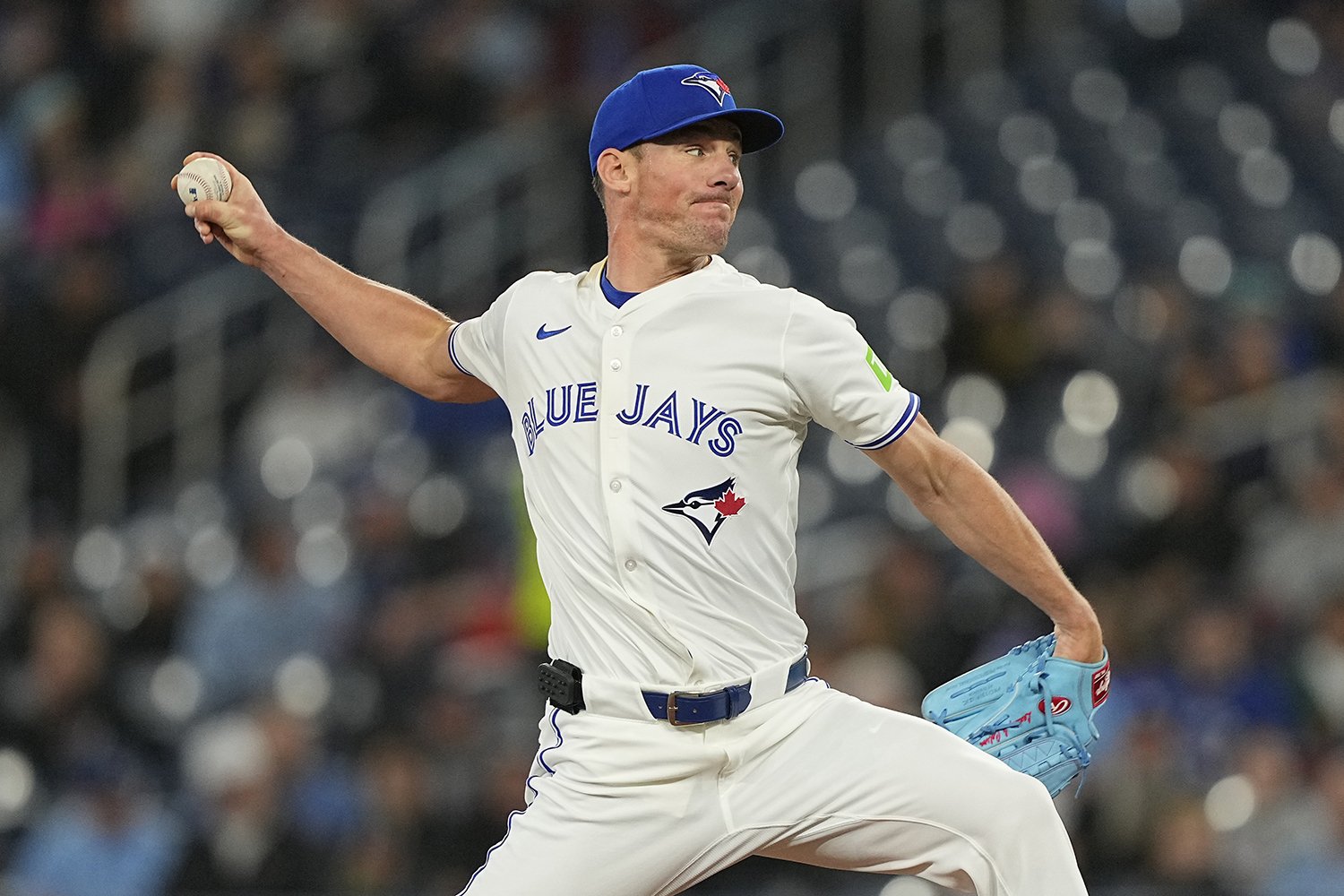 Not that anybody should be looking too closely at the standings on April 16, but the Toronto Blue Jays’ 3-1 win over the Braves made the Jays the first team in the American League to win 11 games. Also significant in Wednesday afternoon’s victory, Blue Jays pitchers struck out 19 hitters, a franchise record for a nine-inning game. Chris Bassitt did much of the heavy lifting early on, punching out 10 Braves across his five innings of work. It was his game with first double-digit strikeouts since September 2023. Bassitt was great yet again in his fourth start of the season, holding Atlanta scoreless on two walks and three hits, lowering his early-season ERA to 0.77. When you looked at the pitching matchup and saw Spencer Strider going up against Chris Bassitt, I’m sure you might have been surprised to find out that Bassitt would not only outduel Strider but strike out twice as many batters. After all, Strider has a career average of 13.5 strikeouts per nine innings. Speaking of strikeouts, Strider picked up his 500th career K in just his 335th inning of work during the fifth inning. This start was his first since he underwent Tommy John surgery last spring. Based on some of the swings the Blue Jays were taking early on, he looks likely to return to notching double-digit strikeout games of his own very soon. Following a 30-pitch fifth inning from Bassitt, the broadcast picked up on some debate in the dugout between John Schneider, Pete Walker, Bassitt. After originally seeming to decide to send Bassitt out for the sixth, the manager decided to turn to his bullpen. Lefty Brendon Little came in to face the heart of the Braves lineup and brought some of the nastiest stuff we’ve seen from him all season. Despite throwing the ball in the strike zone on just three (yes, three) of his 20 pitches, Little struck out the side while mixing in a walk to Sean Murphy. His pitch chart does not look like that of a pitcher who had much success, but he forced hitters not only to chase, but to whiff on every one of their swings. Nick Sandlin came out of the ‘pen in the seventh. He induced a groundout, allowed a single, then started contributing to the strikeout total by punching out Orlando Arcia on a nasty slider. It was a two-run game at the time, and leadoff hitter Michael Harris II stpped up to the plate as the tying run. John Schneider bounced out of the dugout and called on his flamethrowing set-up man, Yimi García, hoping to get four outs. And that’s exactly what he got. In typical dominant fashion, García fanned all four hitters he faced, keeping them off balance with curveballs and blowing upper-90s heaters by them. When García’s work was done, the Blue Jays sat at 18 punchies, tied with the previous nine franchise record set against the Royals in August 1998. Jeff Hoffman came in for the save in the Bottom of the ninth. Given Hoffman’s high-octane stuff, the Jays were also within reach of the all-time nine-inning strikeout record of 20, which is shared by a number of teams, including three pitchers who did it individually. Hoffman induced a lineout before Drake Baldwin killed the shutout with a two-strike homer. The ball was pulled down the left field line at just 95 MPH and had an xBA of just .150. A Jarred Kelenic popout put 20 out of reach, but Hoffman got Eli White swinging, securing both the win and the franchise record.. Perhaps the most impressive part of the pitching staff’s work was the job they did against the top of the Atlanta lineup. The first three hitters, Michael Harris II, Austin Riley, and Matt Olson, finished a combined 1-for-12 with 11 K’s, including golden sombreros for both Harris II and Riley. Riley has been on a heater at the plate, with a 153 wRC+, and started the series against the Jays with three homers and six RBI in the first two games. It was impressive to see the Jays cool off such a hot hitter en route to another series victory. Courtesy of Blue Jays social, here’s a look at all 19 strikeouts in all their glory!
- 3 comments
-
- 2
-
-
- chris bassitt
- yimi garcia
- (and 2 more)
-
Yes, of course it's too early. But Gausman showed some extremely encouraging signs, and they're the kinds of signs that tend to stabilize very quickly. On Wednesday, Kevin Gausman made his spring training debut in Bradenton, Florida against the Pirates. He immediately gave us a reason to let out a long sigh, as his first two pitches were four-seam fastballs that were clocked at 94.2 mph and 95.1, respectively. Gausman threw 38 pitches across an inning and two-thirds, sitting just under 95 mph with his four-seamer and working it up to just over 96. Gausman walked a batter but did not give up a hit or a run in an auspicious start to his 2025 season. Ordinarily, we can throw out almost anything a pitcher does in his first spring training game of a particular year, and we should err on the side of caution in this case as well. However, the velocity of Gausman’s fastball has been a specific area of concern for the last calendar year. He came into camp with shoulder fatigue, and after a shortened spring training colored by health concerns, and his fastball velocity remained inconsistent. Some days he’d get out of the gates hot and sit above 94.5 mph with easy velocity reminiscent of 2023, when he finished third in the Cy Young voting. Some days he’d be fighting and grunting to get the radar gun to show 93. Take a look at how drastically Gausman’s velocity fluctuated start to start last season: Not only was the velocity on his fastball extremely inconsistent, it also ended up with a season average of just 94 mph. That was 0.7 mph below his 2023 average, and his lowest mark since 2020. Gausman will mix in the occasional slider or changeup to righties, but he's essentially a two-pitch pitcher. He throws a rising four-seamer at the top of the zone, and his featured pitch is a devastating splitter that he uses at and below the bottom of the zone to rack up swings and misses. The pitches play off of each other. The threat of a hard fastball in the zone makes hitters susceptible to splitters below it, and vice versa. For Gausman to return to the elite form we've come to expect, he needs to be able to get hitters to swing under fastballs and over splitters. This is why every tick that Gausman loses on his four-seamer means so much. When hitters have an extra tick to discern between the two pitches, Gausman’s whiff percentage drops and he can get into trouble. A veteran pitcher at this point in his career, the 34-year-old Gausman managed to survive the decrease and inconsistencies in his fastball velocity, without too many catastrophic outings, but his overall performance suffered. His xERA (which uses exit velocity and launch angle to predict the ERA that the pitcher deserved) jumped almost a full run, and he lost almost 10 percentage points on his strikeout percentage. Gausman’s struggles beating hitters with the fastball is by far the most obvious symptom of these problems. Given the concerns surrounding his fastball velocity, it’s extremely encouraging to see Gausman average 94.9 mph on his four-seamer so early in spring training, especially considering that the pitch sat at just 94 last season. That's how Gausman sees it too. "Last spring, I think it was a lot harder to get to 86, especially those first couple of weeks," he told reporters. It’s also encouraging that the fastball registered five whiffs on 14 swings. His fastball averaged 17 inches of rise, just like it did last year, an excellent sign considering how much faster it came in. Gausman has clearly entered camp healthy, which is the most important thing for any player. We didn’t see Gausman show off the new cutter he hinted at late in the offseason, and during Thursday's game, the broadcast team mentioned that he has said he's still learning how to locate the pitch. That’s something to keep an eye on when he takes the mound again on Monday. If Gausman does indeed show it off, he’ll try to use it as another weapon to try and get in on the hands of lefties, and off the end of the bat against righties. Given the concerns with the four-seamer’s ability to miss bats as he gets older, I love to see Gausman trying to find a way to induce a little bit of weak contact. Well, we just overanalyzed the crap out of 38 meaningless pitches. It's way too early to worry about results, but Gausman’s first start of the spring still gave us a lot to be happy about. However, I am going to offer a grain of salt to every reader buying Gausman stock, because half of this article was spent highlighting his inability to keep it consistent in 2024! One good start it great, but two in a row would be a lot more meaningful. As he builds up his pitch count, be prepared to see some fluctuations in Gausman’s fastball velocity. But as we get closer to opening day, his ability to keep his four-seamer at or around 95 mph will be the biggest indicator of what 2025 will look like. View full article
-
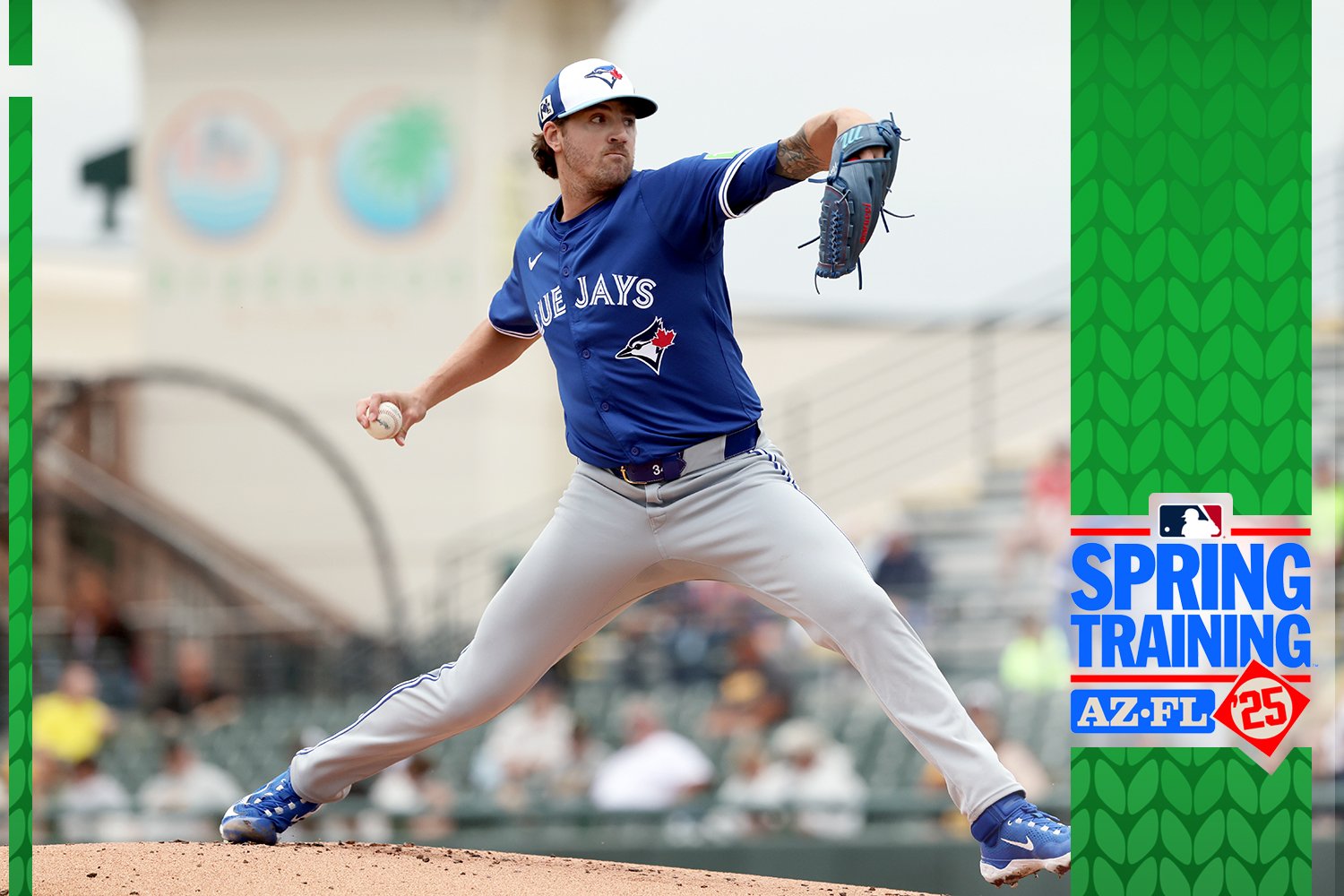 On Wednesday, Kevin Gausman made his spring training debut in Bradenton, Florida against the Pirates. He immediately gave us a reason to let out a long sigh, as his first two pitches were four-seam fastballs that were clocked at 94.2 mph and 95.1, respectively. Gausman threw 38 pitches across an inning and two-thirds, sitting just under 95 mph with his four-seamer and working it up to just over 96. Gausman walked a batter but did not give up a hit or a run in an auspicious start to his 2025 season. Ordinarily, we can throw out almost anything a pitcher does in his first spring training game of a particular year, and we should err on the side of caution in this case as well. However, the velocity of Gausman’s fastball has been a specific area of concern for the last calendar year. He came into camp with shoulder fatigue, and after a shortened spring training colored by health concerns, and his fastball velocity remained inconsistent. Some days he’d get out of the gates hot and sit above 94.5 mph with easy velocity reminiscent of 2023, when he finished third in the Cy Young voting. Some days he’d be fighting and grunting to get the radar gun to show 93. Take a look at how drastically Gausman’s velocity fluctuated start to start last season: Not only was the velocity on his fastball extremely inconsistent, it also ended up with a season average of just 94 mph. That was 0.7 mph below his 2023 average, and his lowest mark since 2020. Gausman will mix in the occasional slider or changeup to righties, but he's essentially a two-pitch pitcher. He throws a rising four-seamer at the top of the zone, and his featured pitch is a devastating splitter that he uses at and below the bottom of the zone to rack up swings and misses. The pitches play off of each other. The threat of a hard fastball in the zone makes hitters susceptible to splitters below it, and vice versa. For Gausman to return to the elite form we've come to expect, he needs to be able to get hitters to swing under fastballs and over splitters. This is why every tick that Gausman loses on his four-seamer means so much. When hitters have an extra tick to discern between the two pitches, Gausman’s whiff percentage drops and he can get into trouble. A veteran pitcher at this point in his career, the 34-year-old Gausman managed to survive the decrease and inconsistencies in his fastball velocity, without too many catastrophic outings, but his overall performance suffered. His xERA (which uses exit velocity and launch angle to predict the ERA that the pitcher deserved) jumped almost a full run, and he lost almost 10 percentage points on his strikeout percentage. Gausman’s struggles beating hitters with the fastball is by far the most obvious symptom of these problems. Given the concerns surrounding his fastball velocity, it’s extremely encouraging to see Gausman average 94.9 mph on his four-seamer so early in spring training, especially considering that the pitch sat at just 94 last season. That's how Gausman sees it too. "Last spring, I think it was a lot harder to get to 86, especially those first couple of weeks," he told reporters. It’s also encouraging that the fastball registered five whiffs on 14 swings. His fastball averaged 17 inches of rise, just like it did last year, an excellent sign considering how much faster it came in. Gausman has clearly entered camp healthy, which is the most important thing for any player. We didn’t see Gausman show off the new cutter he hinted at late in the offseason, and during Thursday's game, the broadcast team mentioned that he has said he's still learning how to locate the pitch. That’s something to keep an eye on when he takes the mound again on Monday. If Gausman does indeed show it off, he’ll try to use it as another weapon to try and get in on the hands of lefties, and off the end of the bat against righties. Given the concerns with the four-seamer’s ability to miss bats as he gets older, I love to see Gausman trying to find a way to induce a little bit of weak contact. Well, we just overanalyzed the crap out of 38 meaningless pitches. It's way too early to worry about results, but Gausman’s first start of the spring still gave us a lot to be happy about. However, I am going to offer a grain of salt to every reader buying Gausman stock, because half of this article was spent highlighting his inability to keep it consistent in 2024! One good start it great, but two in a row would be a lot more meaningful. As he builds up his pitch count, be prepared to see some fluctuations in Gausman’s fastball velocity. But as we get closer to opening day, his ability to keep his four-seamer at or around 95 mph will be the biggest indicator of what 2025 will look like.
.jpg.d822a26e6c4567369622597964226878.jpg)
.jpg.3118f396375ecf38eaaf4df97e0e3eba.jpg)
.jpg.6b16970e47f84aabffa9cfe9ce816a9f.jpg)
.jpg.16029a3fd8de4012fb053d1124eb8d3a.jpg)
