Owen Hill
-
Posts
176 -
Joined
-
Last visited
-
Days Won
1
Content Type
Profiles
Toronto Blue Jays Videos
2026 Toronto Blue Jays Top Prospects Ranking
Toronto Blue Jays Free Agent & Trade Rumors, Notes, & Tidbits
Guides & Resources
2025 Toronto Blue Jays Draft Pick Tracker
News
2026 Toronto Blue Jays Draft Tracker: Picks & Bonuses
Forums
Blogs
Events
Store
Downloads
Gallery
Everything posted by Owen Hill
-
 At this point, you’re probably wondering if I have any hotter takes surrounding the Jays’ recent rough stretch of play, and aside from some thoughts about starting pitching meant for a different article, I really don’t. Since July 28, the day on which George Springer left after being hit in the head with a 96-mph sinker from Kade Strowd, the Jays have lost three out of four series, and a lot of momentum seems to have dried up. That’s not to say the sky is falling. The Jays have now won their last two games against the Dodgers and Cubs. They still hold the best record in the American League, and they're flexing a 4.5-game lead over the Red Sox for the top spot in the AL East. As frustrating as it’s been to watch the Jays sputter towards losing eight of their last 15, they’ve only given up two games to the Red Sox, and they’ve actually gained half a game on the Yankees over that stretch. The failure of the Red Sox and Yankees to take advantage of the Blue Jays’ stumble doesn’t excuse the stumble itself, but it certainly makes it a lot easier to come to terms with. In the same breath, the longer the Jays allow this slump to go, the greater the chances of one of those two teams finding their footing and making a push to get past the Jays in the standings, a nightmare scenario considering the randomness of the AL Wild Card landscape. The first thing that needs to happen for the Jays to get back on the right track is that the offense needs to get back to doing its thing. The Jays have built this lead in the AL East on the backs of an elite position player group that leads baseball in fWAR and ranks third in wRC+. For as much time as we spend talking about the Blue Jays’ run prevention, the run scoring has been the greatest strength of this team, and Springer has been a massive part of that since the outset of the season. His 18 bombs have him tied with Addison Barger for the second most on the team, but perhaps the stat that best illustrates the type of season he's having is his 148 wRC+, which ties him with Vladimir Guerrero Jr. for the lead among Blue Jays (minimum 140 plate appearances) and puts him within the top 10 qualified players in MLB. Take a look at the top 10 and imagine what each player’s team would look like if he were removed from the lineup for an extended period of time. Player Team wRC+ Aaron Judge New York Yankees 202 Shohei Ohtani Los Angeles Dodgers 174 Kyle Schwarber Philadelphia Phillies 159 Ketel Marte Arizona Diamondbacks 158 Cal Raleigh Seattle Mariners 157 Vladimir Guerrero Jr. Toronto Blue Jays 148 George Springer Toronto Blue Jays 148 Kyle Stowers Miami Marlins 146 Byron Buxton Minnesota Twins 145 Pete Alonso New York Mets 146 Now, you could look at the Jays’ offensive numbers since July 28 – the day of Springer’s last game before hitting the concussion IL– and tell me that they still have the best wRC+ in the AL, the most homers in the AL, and have scored an impressive 6.2 runs per game since then, but obviously a 45-run outburst over three games in Colorado is going to skew those stats pretty heavily. As unfair as it may be, if we take those three games at the Rockies out of the picture, the Jays are averaging just 3.8 runs per game in 11 games since July 28, more than a full run lower than their season average of 4.9. An 11-game sample is hardly even worth writing about, especially when it purposely omits three games in the middle of that stretch, but it’s more than worth keeping an eye on, especially when it lines up perfectly with the loss of one of the team's best offensive players. The Jays' messaging surrounding Springer has been curious, to say the least. He’s supposedly participating in full baseball activities, but is still waiting to clear a final benchmark of MLB’s concussion protocol, and has been for some time now. He’s missed enough time at this point that he’s going to need at least a couple of appearances on a minor league rehab assignment, which will delay his return. Hopefully, John Schneider will be able to pencil George Springer into his lineup again soon, because the Blue Jays are a completely different team when he’s in the game. View full article
 -
.jpg.282bda7f1edeaf8016ee3ee64b639689.jpg) At this point, you’re probably wondering if I have any hotter takes surrounding the Jays’ recent rough stretch of play, and aside from some thoughts about starting pitching meant for a different article, I really don’t. Since July 28, the day on which George Springer left after being hit in the head with a 96-mph sinker from Kade Strowd, the Jays have lost three out of four series, and a lot of momentum seems to have dried up. That’s not to say the sky is falling. The Jays have now won their last two games against the Dodgers and Cubs. They still hold the best record in the American League, and they're flexing a 4.5-game lead over the Red Sox for the top spot in the AL East. As frustrating as it’s been to watch the Jays sputter towards losing eight of their last 15, they’ve only given up two games to the Red Sox, and they’ve actually gained half a game on the Yankees over that stretch. The failure of the Red Sox and Yankees to take advantage of the Blue Jays’ stumble doesn’t excuse the stumble itself, but it certainly makes it a lot easier to come to terms with. In the same breath, the longer the Jays allow this slump to go, the greater the chances of one of those two teams finding their footing and making a push to get past the Jays in the standings, a nightmare scenario considering the randomness of the AL Wild Card landscape. The first thing that needs to happen for the Jays to get back on the right track is that the offense needs to get back to doing its thing. The Jays have built this lead in the AL East on the backs of an elite position player group that leads baseball in fWAR and ranks third in wRC+. For as much time as we spend talking about the Blue Jays’ run prevention, the run scoring has been the greatest strength of this team, and Springer has been a massive part of that since the outset of the season. His 18 bombs have him tied with Addison Barger for the second most on the team, but perhaps the stat that best illustrates the type of season he's having is his 148 wRC+, which ties him with Vladimir Guerrero Jr. for the lead among Blue Jays (minimum 140 plate appearances) and puts him within the top 10 qualified players in MLB. Take a look at the top 10 and imagine what each player’s team would look like if he were removed from the lineup for an extended period of time. Player Team wRC+ Aaron Judge New York Yankees 202 Shohei Ohtani Los Angeles Dodgers 174 Kyle Schwarber Philadelphia Phillies 159 Ketel Marte Arizona Diamondbacks 158 Cal Raleigh Seattle Mariners 157 Vladimir Guerrero Jr. Toronto Blue Jays 148 George Springer Toronto Blue Jays 148 Kyle Stowers Miami Marlins 146 Byron Buxton Minnesota Twins 145 Pete Alonso New York Mets 146 Now, you could look at the Jays’ offensive numbers since July 28 – the day of Springer’s last game before hitting the concussion IL– and tell me that they still have the best wRC+ in the AL, the most homers in the AL, and have scored an impressive 6.2 runs per game since then, but obviously a 45-run outburst over three games in Colorado is going to skew those stats pretty heavily. As unfair as it may be, if we take those three games at the Rockies out of the picture, the Jays are averaging just 3.8 runs per game in 11 games since July 28, more than a full run lower than their season average of 4.9. An 11-game sample is hardly even worth writing about, especially when it purposely omits three games in the middle of that stretch, but it’s more than worth keeping an eye on, especially when it lines up perfectly with the loss of one of the team's best offensive players. The Jays' messaging surrounding Springer has been curious, to say the least. He’s supposedly participating in full baseball activities, but is still waiting to clear a final benchmark of MLB’s concussion protocol, and has been for some time now. He’s missed enough time at this point that he’s going to need at least a couple of appearances on a minor league rehab assignment, which will delay his return. Hopefully, John Schneider will be able to pencil George Springer into his lineup again soon, because the Blue Jays are a completely different team when he’s in the game.
At this point, you’re probably wondering if I have any hotter takes surrounding the Jays’ recent rough stretch of play, and aside from some thoughts about starting pitching meant for a different article, I really don’t. Since July 28, the day on which George Springer left after being hit in the head with a 96-mph sinker from Kade Strowd, the Jays have lost three out of four series, and a lot of momentum seems to have dried up. That’s not to say the sky is falling. The Jays have now won their last two games against the Dodgers and Cubs. They still hold the best record in the American League, and they're flexing a 4.5-game lead over the Red Sox for the top spot in the AL East. As frustrating as it’s been to watch the Jays sputter towards losing eight of their last 15, they’ve only given up two games to the Red Sox, and they’ve actually gained half a game on the Yankees over that stretch. The failure of the Red Sox and Yankees to take advantage of the Blue Jays’ stumble doesn’t excuse the stumble itself, but it certainly makes it a lot easier to come to terms with. In the same breath, the longer the Jays allow this slump to go, the greater the chances of one of those two teams finding their footing and making a push to get past the Jays in the standings, a nightmare scenario considering the randomness of the AL Wild Card landscape. The first thing that needs to happen for the Jays to get back on the right track is that the offense needs to get back to doing its thing. The Jays have built this lead in the AL East on the backs of an elite position player group that leads baseball in fWAR and ranks third in wRC+. For as much time as we spend talking about the Blue Jays’ run prevention, the run scoring has been the greatest strength of this team, and Springer has been a massive part of that since the outset of the season. His 18 bombs have him tied with Addison Barger for the second most on the team, but perhaps the stat that best illustrates the type of season he's having is his 148 wRC+, which ties him with Vladimir Guerrero Jr. for the lead among Blue Jays (minimum 140 plate appearances) and puts him within the top 10 qualified players in MLB. Take a look at the top 10 and imagine what each player’s team would look like if he were removed from the lineup for an extended period of time. Player Team wRC+ Aaron Judge New York Yankees 202 Shohei Ohtani Los Angeles Dodgers 174 Kyle Schwarber Philadelphia Phillies 159 Ketel Marte Arizona Diamondbacks 158 Cal Raleigh Seattle Mariners 157 Vladimir Guerrero Jr. Toronto Blue Jays 148 George Springer Toronto Blue Jays 148 Kyle Stowers Miami Marlins 146 Byron Buxton Minnesota Twins 145 Pete Alonso New York Mets 146 Now, you could look at the Jays’ offensive numbers since July 28 – the day of Springer’s last game before hitting the concussion IL– and tell me that they still have the best wRC+ in the AL, the most homers in the AL, and have scored an impressive 6.2 runs per game since then, but obviously a 45-run outburst over three games in Colorado is going to skew those stats pretty heavily. As unfair as it may be, if we take those three games at the Rockies out of the picture, the Jays are averaging just 3.8 runs per game in 11 games since July 28, more than a full run lower than their season average of 4.9. An 11-game sample is hardly even worth writing about, especially when it purposely omits three games in the middle of that stretch, but it’s more than worth keeping an eye on, especially when it lines up perfectly with the loss of one of the team's best offensive players. The Jays' messaging surrounding Springer has been curious, to say the least. He’s supposedly participating in full baseball activities, but is still waiting to clear a final benchmark of MLB’s concussion protocol, and has been for some time now. He’s missed enough time at this point that he’s going to need at least a couple of appearances on a minor league rehab assignment, which will delay his return. Hopefully, John Schneider will be able to pencil George Springer into his lineup again soon, because the Blue Jays are a completely different team when he’s in the game. -
Coming into the year, I don’t think many of you would have believed me if I told you that the Blue Jays would finish July with not only a 3.5-game lead in the American League East, but one of the best records in baseball. The Jays went on an absolute tear in July, highlighted by winning six out of seven against the New York Yankees. The Jays' position players led baseball in both the offensive and defensive components of FanGraphs WAR and were worth 7.9 total fWAR, nearly three full wins ahead of baseball’s second-place team, the Chicago Cubs. It’s no surprise that that led to a borderline dominant 18-8 month. A month like this takes contributions from literally every player on the roster, and that’s exactly what the Jays got. Ten out of 13 Blue Jays to get at least 30 plate appearances had a wRC+ over 100, and nine of them had a wRC+ over 120. Most notably, the Jays led baseball with 150 runs in July, The end of the month is the perfect time to shout out the Jays’ biggest offensive contributors, and they certainly made it tough on me to narrow it down to just five names. Honourable Mentions Addison Barger - .284/.387.568, 6 HR, 5 BB, 27 K, 141 wRC+, 0.8 fWAR He’s not quite setting the world on fire at the same pace he was when he broke out in May, but Addison Barger has really settled into the middle of the Blue Jays’ lineup. His walk rate dropped to just 4.9% in July, and his strikeout rate rose to 25.5%, which are concerning numbers, especially for a guy like Barger whose approach has been so closely monitored early on in his career. Fortunately for Barger and the Blue Jays, he’s still been able to get his A-swing off and get to his power. He crushed 14 extra-base hits in July, including six homers, which helped carry him to a .995 OPS. Barger’s left-handed bat completely transforms the Jays’ lineup against right-handed pitching, and he was a huge part of the Blue Jays offence that led baseball in runs this past month. Nathan Lukes - .247/.315/.494, 5 HR, 8 BB, 12 K, 123 wRC+, 0.5 fWAR Admittedly, I wasn’t a huge fan of John Schneider putting Nathan Lukes in the leadoff spot against righties. But in July, he proved me wrong. Lukes kind of embodies what made the Blue Jays so pesky in July. His 13.2% strikeout rate in July was actually up from his season average, and his 8.8% walk rate was actually down, which tells you a lot about the kind of season he’s been having. Putting the analysis to the side for a sentence here, it feels like when Lukes is in the box, he always has a chance to make something happen. Whether it’s getting a groundball down to the right side with a runner on second base, leading off an inning with a hit, or this 14-pitch at-bat in a crucial spot: A big part of Lukes earning this honourable mention was his ability to tap into a little bit more power in July. He hit five homers, doubling his season total heading into the month. He’s a great example of a guy who seems to be punching a bit above his weight class to lead this team to so many victories. 3. Vladimir Guerrero Jr. - .333/.443/.500, 3 HR, 19 BB, 17 K, 165 wRC+, 1.1 fWAR Through four months of baseball, Vladimir Guerrero Jr. is the only Blue Jay to have appeared in the top three in all of our Hitter of the Month articles. We’re still waiting for the power explosion to come for Vladdy, but he really has been consistently productive for essentially the entire season, aside from the first two weeks of July, which really says a lot about his production post-All-Star break. In 12 July games before the All-Star break: 238/.373/.286, 0 HR, 19.6 K% In 13 games after the All-Star break: .407/.500/.667, 3 HR, 10.9 K% It says a lot about the type of season the Jays are having that they went 9-3 in those 12 games before the break. Guerrero's wRC+ is now quietly at 142 on the season, and he’s been looking a lot more like himself at the plate since the break. I’m going to start and end with the point that the hope – as it has been all season – is that Vladdy is just around the corner from a big power surge. I’m talking about the kind where we see him go off for 10 extra base hits in a week, and hopefully he can get close to double-digit homers in both August and September. Blue Jays hitters have already been so good this season. Just imagine how many runs they’re going to score when Vlad finally goes on that extended superstar run. I’m happy to rank him third in July, but hopefully, when I write this article at the end of August, I have no choice but to put Guerrero first. 2. Bo Bichette - .357/.400/.541, 2 HR, 6 BB, 14 K, 161 wRC+, 1.1 fWAR Is this honour being bestowed upon Bo Bichette entirely because of a stretch of nine hits in nine straight at-bats? Not quite, but it certainly helped! Thanks to that run, and in part to Aaron Judge being stuck at 129 due to his IL stint, Bichette now leads baseball in hits with 132, which I think is fairly representative of the type of season he’s having on the whole; he looks just like he did in so many seasons before his injury-riddled 2024. The production with runners in scoring position has been well covered all season, but just to reiterate, his .374 average with RISP still ranks among baseball’s leaders and has led to a team-leading 67 RBI on the season. I tend to fall on the side of the fence that says clutch isn’t real, but it’s hard to deny the fact that Bichette has shown a knack for picking up hits at the right time this season. A final note on Bo: His defence at shortstop has been extremely passable this season. He doesn’t exactly grade out well as a shortstop – his -3 FRV is in just the 22nd percentile in baseball – but he’s made only six errors so far this season, and he’s passing my eye test with flying colours. I’m still not sure I’d give him a big bag of money to play shortstop for many seasons beyond this one, especially with his sprint speed having cratered to the 22nd percentile, but the solid defence has been very encouraging. 1. George Springer - .371/.451/.640, 7 HR, 12 BB, 14 K, 204 wRC+, 1.3 fWAR In the spirit of honesty, I’m running out of words to describe George Springer’s season. At 35 years old, he’s gone from a player we were essentially ready to send to an old age home to the MVP of the Blue Jays. If the season ended today, his 147 wRC+ this season would be one of the best marks of his career, second only to the 2019 season, when a juiced baseball aided him to 39 homers. His 18 homers lead the Blue Jays in 2025, and he’s just one away from matching his total from last season, despite having 200 fewer plate appearances. His OPS is 215 points higher than it was just a year ago, and at .889, it leads qualified Blue Jays. I’m having a hard time not writing extremely profane sentences to describe the way the offence looked without him when he missed three games towards the end of the month after being hit in the head with a 96-mph fastball. This team does not have half the July it had without Springer’s efforts, and he was an easy choice to top the Blue Jays Hitters of the Month list for July. View full article
-
.jpg.bc59d5786de59bb34afac4523212abc6.jpg) Coming into the year, I don’t think many of you would have believed me if I told you that the Blue Jays would finish July with not only a 3.5-game lead in the American League East, but one of the best records in baseball. The Jays went on an absolute tear in July, highlighted by winning six out of seven against the New York Yankees. The Jays' position players led baseball in both the offensive and defensive components of FanGraphs WAR and were worth 7.9 total fWAR, nearly three full wins ahead of baseball’s second-place team, the Chicago Cubs. It’s no surprise that that led to a borderline dominant 18-8 month. A month like this takes contributions from literally every player on the roster, and that’s exactly what the Jays got. Ten out of 13 Blue Jays to get at least 30 plate appearances had a wRC+ over 100, and nine of them had a wRC+ over 120. Most notably, the Jays led baseball with 150 runs in July, The end of the month is the perfect time to shout out the Jays’ biggest offensive contributors, and they certainly made it tough on me to narrow it down to just five names. Honourable Mentions Addison Barger - .284/.387.568, 6 HR, 5 BB, 27 K, 141 wRC+, 0.8 fWAR He’s not quite setting the world on fire at the same pace he was when he broke out in May, but Addison Barger has really settled into the middle of the Blue Jays’ lineup. His walk rate dropped to just 4.9% in July, and his strikeout rate rose to 25.5%, which are concerning numbers, especially for a guy like Barger whose approach has been so closely monitored early on in his career. Fortunately for Barger and the Blue Jays, he’s still been able to get his A-swing off and get to his power. He crushed 14 extra-base hits in July, including six homers, which helped carry him to a .995 OPS. Barger’s left-handed bat completely transforms the Jays’ lineup against right-handed pitching, and he was a huge part of the Blue Jays offence that led baseball in runs this past month. Nathan Lukes - .247/.315/.494, 5 HR, 8 BB, 12 K, 123 wRC+, 0.5 fWAR Admittedly, I wasn’t a huge fan of John Schneider putting Nathan Lukes in the leadoff spot against righties. But in July, he proved me wrong. Lukes kind of embodies what made the Blue Jays so pesky in July. His 13.2% strikeout rate in July was actually up from his season average, and his 8.8% walk rate was actually down, which tells you a lot about the kind of season he’s been having. Putting the analysis to the side for a sentence here, it feels like when Lukes is in the box, he always has a chance to make something happen. Whether it’s getting a groundball down to the right side with a runner on second base, leading off an inning with a hit, or this 14-pitch at-bat in a crucial spot: A big part of Lukes earning this honourable mention was his ability to tap into a little bit more power in July. He hit five homers, doubling his season total heading into the month. He’s a great example of a guy who seems to be punching a bit above his weight class to lead this team to so many victories. 3. Vladimir Guerrero Jr. - .333/.443/.500, 3 HR, 19 BB, 17 K, 165 wRC+, 1.1 fWAR Through four months of baseball, Vladimir Guerrero Jr. is the only Blue Jay to have appeared in the top three in all of our Hitter of the Month articles. We’re still waiting for the power explosion to come for Vladdy, but he really has been consistently productive for essentially the entire season, aside from the first two weeks of July, which really says a lot about his production post-All-Star break. In 12 July games before the All-Star break: 238/.373/.286, 0 HR, 19.6 K% In 13 games after the All-Star break: .407/.500/.667, 3 HR, 10.9 K% It says a lot about the type of season the Jays are having that they went 9-3 in those 12 games before the break. Guerrero's wRC+ is now quietly at 142 on the season, and he’s been looking a lot more like himself at the plate since the break. I’m going to start and end with the point that the hope – as it has been all season – is that Vladdy is just around the corner from a big power surge. I’m talking about the kind where we see him go off for 10 extra base hits in a week, and hopefully he can get close to double-digit homers in both August and September. Blue Jays hitters have already been so good this season. Just imagine how many runs they’re going to score when Vlad finally goes on that extended superstar run. I’m happy to rank him third in July, but hopefully, when I write this article at the end of August, I have no choice but to put Guerrero first. 2. Bo Bichette - .357/.400/.541, 2 HR, 6 BB, 14 K, 161 wRC+, 1.1 fWAR Is this honour being bestowed upon Bo Bichette entirely because of a stretch of nine hits in nine straight at-bats? Not quite, but it certainly helped! Thanks to that run, and in part to Aaron Judge being stuck at 129 due to his IL stint, Bichette now leads baseball in hits with 132, which I think is fairly representative of the type of season he’s having on the whole; he looks just like he did in so many seasons before his injury-riddled 2024. The production with runners in scoring position has been well covered all season, but just to reiterate, his .374 average with RISP still ranks among baseball’s leaders and has led to a team-leading 67 RBI on the season. I tend to fall on the side of the fence that says clutch isn’t real, but it’s hard to deny the fact that Bichette has shown a knack for picking up hits at the right time this season. A final note on Bo: His defence at shortstop has been extremely passable this season. He doesn’t exactly grade out well as a shortstop – his -3 FRV is in just the 22nd percentile in baseball – but he’s made only six errors so far this season, and he’s passing my eye test with flying colours. I’m still not sure I’d give him a big bag of money to play shortstop for many seasons beyond this one, especially with his sprint speed having cratered to the 22nd percentile, but the solid defence has been very encouraging. 1. George Springer - .371/.451/.640, 7 HR, 12 BB, 14 K, 204 wRC+, 1.3 fWAR In the spirit of honesty, I’m running out of words to describe George Springer’s season. At 35 years old, he’s gone from a player we were essentially ready to send to an old age home to the MVP of the Blue Jays. If the season ended today, his 147 wRC+ this season would be one of the best marks of his career, second only to the 2019 season, when a juiced baseball aided him to 39 homers. His 18 homers lead the Blue Jays in 2025, and he’s just one away from matching his total from last season, despite having 200 fewer plate appearances. His OPS is 215 points higher than it was just a year ago, and at .889, it leads qualified Blue Jays. I’m having a hard time not writing extremely profane sentences to describe the way the offence looked without him when he missed three games towards the end of the month after being hit in the head with a 96-mph fastball. This team does not have half the July it had without Springer’s efforts, and he was an easy choice to top the Blue Jays Hitters of the Month list for July.
Coming into the year, I don’t think many of you would have believed me if I told you that the Blue Jays would finish July with not only a 3.5-game lead in the American League East, but one of the best records in baseball. The Jays went on an absolute tear in July, highlighted by winning six out of seven against the New York Yankees. The Jays' position players led baseball in both the offensive and defensive components of FanGraphs WAR and were worth 7.9 total fWAR, nearly three full wins ahead of baseball’s second-place team, the Chicago Cubs. It’s no surprise that that led to a borderline dominant 18-8 month. A month like this takes contributions from literally every player on the roster, and that’s exactly what the Jays got. Ten out of 13 Blue Jays to get at least 30 plate appearances had a wRC+ over 100, and nine of them had a wRC+ over 120. Most notably, the Jays led baseball with 150 runs in July, The end of the month is the perfect time to shout out the Jays’ biggest offensive contributors, and they certainly made it tough on me to narrow it down to just five names. Honourable Mentions Addison Barger - .284/.387.568, 6 HR, 5 BB, 27 K, 141 wRC+, 0.8 fWAR He’s not quite setting the world on fire at the same pace he was when he broke out in May, but Addison Barger has really settled into the middle of the Blue Jays’ lineup. His walk rate dropped to just 4.9% in July, and his strikeout rate rose to 25.5%, which are concerning numbers, especially for a guy like Barger whose approach has been so closely monitored early on in his career. Fortunately for Barger and the Blue Jays, he’s still been able to get his A-swing off and get to his power. He crushed 14 extra-base hits in July, including six homers, which helped carry him to a .995 OPS. Barger’s left-handed bat completely transforms the Jays’ lineup against right-handed pitching, and he was a huge part of the Blue Jays offence that led baseball in runs this past month. Nathan Lukes - .247/.315/.494, 5 HR, 8 BB, 12 K, 123 wRC+, 0.5 fWAR Admittedly, I wasn’t a huge fan of John Schneider putting Nathan Lukes in the leadoff spot against righties. But in July, he proved me wrong. Lukes kind of embodies what made the Blue Jays so pesky in July. His 13.2% strikeout rate in July was actually up from his season average, and his 8.8% walk rate was actually down, which tells you a lot about the kind of season he’s been having. Putting the analysis to the side for a sentence here, it feels like when Lukes is in the box, he always has a chance to make something happen. Whether it’s getting a groundball down to the right side with a runner on second base, leading off an inning with a hit, or this 14-pitch at-bat in a crucial spot: A big part of Lukes earning this honourable mention was his ability to tap into a little bit more power in July. He hit five homers, doubling his season total heading into the month. He’s a great example of a guy who seems to be punching a bit above his weight class to lead this team to so many victories. 3. Vladimir Guerrero Jr. - .333/.443/.500, 3 HR, 19 BB, 17 K, 165 wRC+, 1.1 fWAR Through four months of baseball, Vladimir Guerrero Jr. is the only Blue Jay to have appeared in the top three in all of our Hitter of the Month articles. We’re still waiting for the power explosion to come for Vladdy, but he really has been consistently productive for essentially the entire season, aside from the first two weeks of July, which really says a lot about his production post-All-Star break. In 12 July games before the All-Star break: 238/.373/.286, 0 HR, 19.6 K% In 13 games after the All-Star break: .407/.500/.667, 3 HR, 10.9 K% It says a lot about the type of season the Jays are having that they went 9-3 in those 12 games before the break. Guerrero's wRC+ is now quietly at 142 on the season, and he’s been looking a lot more like himself at the plate since the break. I’m going to start and end with the point that the hope – as it has been all season – is that Vladdy is just around the corner from a big power surge. I’m talking about the kind where we see him go off for 10 extra base hits in a week, and hopefully he can get close to double-digit homers in both August and September. Blue Jays hitters have already been so good this season. Just imagine how many runs they’re going to score when Vlad finally goes on that extended superstar run. I’m happy to rank him third in July, but hopefully, when I write this article at the end of August, I have no choice but to put Guerrero first. 2. Bo Bichette - .357/.400/.541, 2 HR, 6 BB, 14 K, 161 wRC+, 1.1 fWAR Is this honour being bestowed upon Bo Bichette entirely because of a stretch of nine hits in nine straight at-bats? Not quite, but it certainly helped! Thanks to that run, and in part to Aaron Judge being stuck at 129 due to his IL stint, Bichette now leads baseball in hits with 132, which I think is fairly representative of the type of season he’s having on the whole; he looks just like he did in so many seasons before his injury-riddled 2024. The production with runners in scoring position has been well covered all season, but just to reiterate, his .374 average with RISP still ranks among baseball’s leaders and has led to a team-leading 67 RBI on the season. I tend to fall on the side of the fence that says clutch isn’t real, but it’s hard to deny the fact that Bichette has shown a knack for picking up hits at the right time this season. A final note on Bo: His defence at shortstop has been extremely passable this season. He doesn’t exactly grade out well as a shortstop – his -3 FRV is in just the 22nd percentile in baseball – but he’s made only six errors so far this season, and he’s passing my eye test with flying colours. I’m still not sure I’d give him a big bag of money to play shortstop for many seasons beyond this one, especially with his sprint speed having cratered to the 22nd percentile, but the solid defence has been very encouraging. 1. George Springer - .371/.451/.640, 7 HR, 12 BB, 14 K, 204 wRC+, 1.3 fWAR In the spirit of honesty, I’m running out of words to describe George Springer’s season. At 35 years old, he’s gone from a player we were essentially ready to send to an old age home to the MVP of the Blue Jays. If the season ended today, his 147 wRC+ this season would be one of the best marks of his career, second only to the 2019 season, when a juiced baseball aided him to 39 homers. His 18 homers lead the Blue Jays in 2025, and he’s just one away from matching his total from last season, despite having 200 fewer plate appearances. His OPS is 215 points higher than it was just a year ago, and at .889, it leads qualified Blue Jays. I’m having a hard time not writing extremely profane sentences to describe the way the offence looked without him when he missed three games towards the end of the month after being hit in the head with a 96-mph fastball. This team does not have half the July it had without Springer’s efforts, and he was an easy choice to top the Blue Jays Hitters of the Month list for July.-
- 1
-

-
- george springer
- bo bichette
- (and 1 more)
-
I break down why I think Jhoan Duran, Cade Smith, Ryan Helsley, and JoJo Romero should be top reliever targets for the Blue Jays at the deadline. View full video
-
I break down why I think Jhoan Duran, Cade Smith, Ryan Helsley, and JoJo Romero should be top reliever targets for the Blue Jays at the deadline.
-
I break down why I think Dylan Cease, Joe Ryan, and Michael Soroka would be perfect fits for the Blue Jays to target at the trade deadline.
-
- 1
-
-
- 2025 trade deadline
- dylan cease
- (and 2 more)
-
I break down why I think Dylan Cease, Joe Ryan, and Michael Soroka would be perfect fits for the Blue Jays to target at the trade deadline. View full video
-
We’re less than a week out from the trade deadline, and with a stranglehold on the top spot in the American League East, Ross Atkins and the Toronto Blue Jays front office surely have their deadline wish list solidified. In the last iteration of this article, I mentioned Steven Kwan as a top of the market position player that the Jays could target in a blockbuster deal. Now, I want to take it to the other side of the ball, and to the next big-ticket item the Jays could be targeting at the deadline: a top of the rotation starter. The need for back-end bullpen help and starting pitching depth has been well covered, and the expectation is that they'll both be addressed before the deadline passes on July 31. But, as Blue Jays fans know all too well, seasons like this don’t come around often, and this could be the year to push a couple extra chips into the middle and take a bigger swing. Shopping at the top of the position player market would certainly be that, but I think the consensus is that a more pressing need for the Jays is a high-end starter. We’re talking about the guy you’d give the ball to in the first or second game of a playoff series; a guy that slots in ahead of Kevin Gausman, José Berríos, Chris Bassitt, and Max Scherzer. I wrote earlier in the month about why it’s so important that the Jays go get a starter, and now I want to name a few guys who should be available, and could fit the Jays’ needs. Joe Ryan With two years of arbitration eligibility after this season, the likelihood that Ryan gets moved is pretty low. Still, given the lack of sellers, the price that controllable starting pitching goes for, and the fact that Ryan is in the midst of a career year, a contender may be willing to blow the Twins out of the water in order to get their hands on the All-Star. It doesn’t take much analysis to tell you that Ryan’s 2.51 ERA across 19 starts is really good, and his high-strikeout, low-walk profile would add a nice mix to a rotation that allows a lot of contact. The Jays and Twins have connected on similar deals in the past—think back to the 2021 trade deadline when the Jays acquired Berríos in exchange for Simeon Woods-Richardson and Austin Martin—and it’s not crazy to think that if Ryan ends up getting moved, it’s the Jays who come over the top to land him. Kris Bubic Another AL Central starter having a career year that could find a new home this week, Kris Bubic would be a fun add for a contending team. Similar to Ryan, Bubic has another year of arbitration eligibility after this season, so the price tag will be high. His 2.38 ERA in 19 starts earned him his first career All-Star appearance this season, and his ability to spin the ball, specifically with a nasty sweeper and slider, is something we’ve seen the Jays be tantalized with when it comes to the types of pitchers they like to acquire. He does a good job of limiting hard contact, and when he does give it up, it’s typically on the ground, which may play well in a playoff environment where homers become paramount. Bubic’s value is at an all-time high, and I’m not sure how the Jays would feel about adding a 27-year-old to lead their veteran rotation, but his stuff plays, and if the Jays were to pony up the prospects to acquire him, it would be an exciting move. Seth Lugo If the Kansas City Royals play hardball in Bubic negotiations, Seth Lugo may come at a more appetizing price. The 35-year-old is on the last year of his deal before contending with a $15 million player option that he’s likely to decline. The ceiling isn’t quite as high with Lugo as the other names on this list. He uses nine, yes nine, different pitches to get away with a mediocre strikeout rate. The numbers are always solid at the end of the season, even if he always seems to out perform his expected stats. He wouldn’t be the big-time ace coming in to lead the Jays as the guaranteed-win-every-fifth-day guy, but Lugo would certainly solidify the rotation down the stretch, and would be a strong option to start a playoff game, even if he wouldn't be the automatic first choice upon his arrival in Toronto. Edward Cabrera Another controllable starting pitcher that may be made available for the right price is Edward Cabrera. The Miami Marlins’ 27-year-old righty isn’t a free agent until after 2028, and while he’s been solid throughout his career, he hasn’t quite put together a season reflective of his high-90’s fastball and nasty breaking pitches. Cabrera is exactly the type of guy that, given a little bit of time with Pete Walker and the Blue Jays’ pitching development and an escape from Miami, could be a legitimate ace. The prospect price would likely be overwhelming despite his lack of elite results, but if the Blue Jays think they hold the key to unlocking the best version of Cabrera, he could come in and make an immediate impact, as well as solidify an aging rotation going into 2026 and beyond. He is certainly one of the highest upside pitchers that has a chance to be moved at the deadline, and he’d look good in a Blue Jays uniform. Dylan Cease The final name I’ll throw at you today is a weird one, especially considering the San Diego Padres are currently holding the third NL Wild Card spot, but earlier this week Buster Olney made this tweet: Contender-to-contender swaps are rare, especially at the trade deadline, but the Padres would likely want major-league-ready position player talent in return for Cease, which the Jays happen to be flush with. For his part, Cease has continued to struggle with walks, which has factored heavily into his 4.59 ERA this season, but his expected ERA sits in the mid-threes and his hard fastball-slider combination is electric as ever. As a Boras client, Cease is a true rental and will be testing the free agent market this upcoming winter, which might make the Padres a little bit more willing to trade him, and bring down the price a touch. He’d certainly be a guy I’d want starting a playoff game, and would be a heck of an addition if the Jays were able to get it done. View full article
-
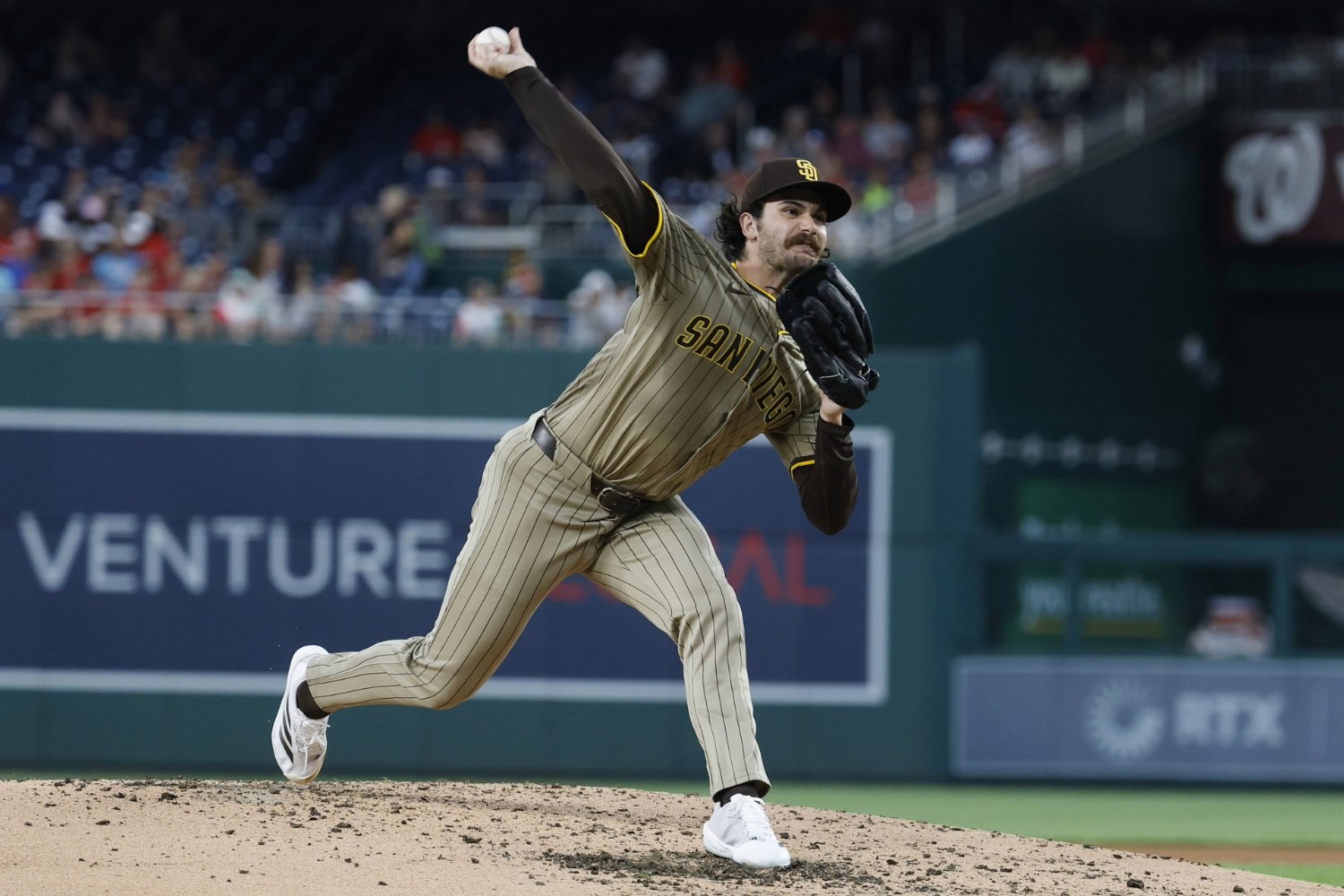 We’re less than a week out from the trade deadline, and with a stranglehold on the top spot in the American League East, Ross Atkins and the Toronto Blue Jays front office surely have their deadline wish list solidified. In the last iteration of this article, I mentioned Steven Kwan as a top of the market position player that the Jays could target in a blockbuster deal. Now, I want to take it to the other side of the ball, and to the next big-ticket item the Jays could be targeting at the deadline: a top of the rotation starter. The need for back-end bullpen help and starting pitching depth has been well covered, and the expectation is that they'll both be addressed before the deadline passes on July 31. But, as Blue Jays fans know all too well, seasons like this don’t come around often, and this could be the year to push a couple extra chips into the middle and take a bigger swing. Shopping at the top of the position player market would certainly be that, but I think the consensus is that a more pressing need for the Jays is a high-end starter. We’re talking about the guy you’d give the ball to in the first or second game of a playoff series; a guy that slots in ahead of Kevin Gausman, José Berríos, Chris Bassitt, and Max Scherzer. I wrote earlier in the month about why it’s so important that the Jays go get a starter, and now I want to name a few guys who should be available, and could fit the Jays’ needs. Joe Ryan With two years of arbitration eligibility after this season, the likelihood that Ryan gets moved is pretty low. Still, given the lack of sellers, the price that controllable starting pitching goes for, and the fact that Ryan is in the midst of a career year, a contender may be willing to blow the Twins out of the water in order to get their hands on the All-Star. It doesn’t take much analysis to tell you that Ryan’s 2.51 ERA across 19 starts is really good, and his high-strikeout, low-walk profile would add a nice mix to a rotation that allows a lot of contact. The Jays and Twins have connected on similar deals in the past—think back to the 2021 trade deadline when the Jays acquired Berríos in exchange for Simeon Woods-Richardson and Austin Martin—and it’s not crazy to think that if Ryan ends up getting moved, it’s the Jays who come over the top to land him. Kris Bubic Another AL Central starter having a career year that could find a new home this week, Kris Bubic would be a fun add for a contending team. Similar to Ryan, Bubic has another year of arbitration eligibility after this season, so the price tag will be high. His 2.38 ERA in 19 starts earned him his first career All-Star appearance this season, and his ability to spin the ball, specifically with a nasty sweeper and slider, is something we’ve seen the Jays be tantalized with when it comes to the types of pitchers they like to acquire. He does a good job of limiting hard contact, and when he does give it up, it’s typically on the ground, which may play well in a playoff environment where homers become paramount. Bubic’s value is at an all-time high, and I’m not sure how the Jays would feel about adding a 27-year-old to lead their veteran rotation, but his stuff plays, and if the Jays were to pony up the prospects to acquire him, it would be an exciting move. Seth Lugo If the Kansas City Royals play hardball in Bubic negotiations, Seth Lugo may come at a more appetizing price. The 35-year-old is on the last year of his deal before contending with a $15 million player option that he’s likely to decline. The ceiling isn’t quite as high with Lugo as the other names on this list. He uses nine, yes nine, different pitches to get away with a mediocre strikeout rate. The numbers are always solid at the end of the season, even if he always seems to out perform his expected stats. He wouldn’t be the big-time ace coming in to lead the Jays as the guaranteed-win-every-fifth-day guy, but Lugo would certainly solidify the rotation down the stretch, and would be a strong option to start a playoff game, even if he wouldn't be the automatic first choice upon his arrival in Toronto. Edward Cabrera Another controllable starting pitcher that may be made available for the right price is Edward Cabrera. The Miami Marlins’ 27-year-old righty isn’t a free agent until after 2028, and while he’s been solid throughout his career, he hasn’t quite put together a season reflective of his high-90’s fastball and nasty breaking pitches. Cabrera is exactly the type of guy that, given a little bit of time with Pete Walker and the Blue Jays’ pitching development and an escape from Miami, could be a legitimate ace. The prospect price would likely be overwhelming despite his lack of elite results, but if the Blue Jays think they hold the key to unlocking the best version of Cabrera, he could come in and make an immediate impact, as well as solidify an aging rotation going into 2026 and beyond. He is certainly one of the highest upside pitchers that has a chance to be moved at the deadline, and he’d look good in a Blue Jays uniform. Dylan Cease The final name I’ll throw at you today is a weird one, especially considering the San Diego Padres are currently holding the third NL Wild Card spot, but earlier this week Buster Olney made this tweet: Contender-to-contender swaps are rare, especially at the trade deadline, but the Padres would likely want major-league-ready position player talent in return for Cease, which the Jays happen to be flush with. For his part, Cease has continued to struggle with walks, which has factored heavily into his 4.59 ERA this season, but his expected ERA sits in the mid-threes and his hard fastball-slider combination is electric as ever. As a Boras client, Cease is a true rental and will be testing the free agent market this upcoming winter, which might make the Padres a little bit more willing to trade him, and bring down the price a touch. He’d certainly be a guy I’d want starting a playoff game, and would be a heck of an addition if the Jays were able to get it done.
 -
I think there's an argument to be made for sure, but Kwan is exactly the type of player this front office would ship out top prospects for and then extend on a big deal. And I think we have to realize just how good Kwan is, he'd be their second best player by fWAR this season.
-
The trade deadline is just one week away, and as sellers are starting to concede their playoff chances for this season, they’re making their expiring contracts available. At the same time, buyers are solidifying their wish lists, looking to make impact moves that will help them make a run deep into October. As the team with a current grasp on first place in the American League East, the Toronto Blue Jays are clearly in a position to check at least a couple of names off of that wish list. Pitching, both in the starting rotation and bullpen, is expected to be the focus of the Jays’ shopping ahead of the July 31 deadline, but if the opportunity arises, there is absolutely space for an upgrade in the lineup. The list of available position players is much shorter than the list of pitchers, but the impact of adding a star player to a lineup could completely transform a team’s chances down the stretch. One of those stars recently rumoured to be available for the right price is Steven Kwan of the Cleveland Guardians. It’s a bit of a surprise to see his name in trade rumours considering that he’s arbitration eligible for two seasons after this one, and the 50-50 Guardians probably don’t see themselves as that far out of the playoff mix in a wide-open American League. Nonetheless, when Jeff Passan’s most recent list of top trade candidates dropped earlier this week, Steven Kwan’s name sat in second place. Before we get too deep into the weeds and I convince you that Kwan would be the perfect Toronto Blue Jay, it’s important to be clear that Passan currently has the chances of Kwan getting moved at about 20 percent, and if it were to happen, the price in prospects would likely be nauseating for both fans and the Blue Jays front office. But! Don’t let that stop you from dreaming a little bit. Think of yourself as the 16-year-old that lists a car at the top of their Christmas list, even if it’s more likely you end up with a new bike. All 30 teams can look at a 27 year old that’s been an All-Star in back-to-back seasons and say he’d fit well on the roster, but Kwan’s fit with the Jays is particularly tantalizing for a few reasons: His style of play would fit seamlessly with what the Jays already do well, he hits left handed, and he’d immediately put a stop to the revolving door in the leadoff spot. Team Fit Given the connections between Toronto’s front office and Cleveland’s, as well as a recent history of the two sides completing trades, it wouldn’t surprise me if the two were able to hook up on another deal. Part of the reason that the two sides have been able to get trades like the Andrés Giménez and Myles Straw deals done is that they value similar profiles in players. Steven Kwan Idealizes that profile. The Jays are the best defensive team in baseball by many metrics, and adding Kwan who’s won three straight Gold Glove awards in the outfield would only build on that strength. The Jays are also the team with the lowest strikeout percentage in baseball. It’s a stat that’s not nearly as sexy as leading the league in homers, but has helped the Toronto offense to punch well above its weight class, especially against teams that hit more home runs than them. Kwan is the poster boy for not striking out. His 8.3 strikeout percentage is the fourth lowest mark in baseball this season, just one spot ahead of Alejandro Kirk. So much of the Blue Jays’ success this season has come from an unquantifiable buy-in from players up and down the roster to play clean baseball on both sides of the ball, and Kwan’s skillset would fit seamlessly. I could understand an argument that because the Blue Jays are already so strong in Kwan’s most valuable skills that what he brings may be redundant, especially for the prince, but I’d say there’s often a lot of benefit to improving in areas of strength. Left-Handed Hitter That’s not to say that Kwan wouldn’t bring anything new to the Blue Jays. His left-handed bat would be a dynamic addition to the lineup, and would fundamentally change the way opposing teams have to game plan for the Jays. And I mean literally the fact that he hits left handed. When you look at the Toronto lineup and see names like George Springer, Vladimir Guerrero Jr., Bo Bichette, and Alejandro Kirk hitting in the middle of it every day, it makes sense that their right handed hitters have the second highest wRC+ in baseball at 113, only second to the New York Yankees. However, while the Jays thrive in the right handed batter’s box, they leave a little bit to be desired from the left side. Their 101 wRC+ from lefties is just the 20th best mark in the league. It makes sense when you think about all of the games missed from Giménez, Anthony Santander, and Daulton Varsho, and it’s important to recognize how well those holes have been plugged by the ascent of Addison Barger, Nathan Lukes, and more recently Joey Loperfido and Will Wagner. Still, the injuries have left the Blue Jays without any real left handed hitting prowess, and certainly none that they trust against left handed pitching. Although he’s not exactly split proof (his average goes from .301 against righties to .266 against lefties, and he hasn’t homered off of a lefty this season), Kwan is an obvious upgrade over both Lukes and Loperfido, and would provide a different look at the top of the Jays’ lineup, bringing me to my final selling point. Leadoff Hitter The Blue Jays 107 wRC+ out of the leadoff spot in 2025 ranks 17th among Major League teams. Bichette spent the first 80 or so games as the everyday leadoff hitter, but more recently has dropped down to the middle of the order in an attempt to give the lineup some length. More recently, a platoon between Lukes against right handed starters and Clement against lefties has taken his place. In a small sample size of 43 plate appearances, Lukes has looked great in the role, but Clement has struggled to the tune of seven for 32. The result of having received contributions from so many players is that there isn’t a clear spot on the offensive side of the roster that looks desperate for an upgrade. There may be room for a right handed bench bat that can hit for power, that would essentially slide into the Davis Schneider role, but other than that, the lead off spot is the only non-solidified spot I see. Kwan’s combination of bat-to-ball skills, on base skills, and speed make him the prototypical leadoff hitter, and that’s exactly the role he plays for the Guardians. He’d slide right into an everyday role in left field, and would allow the Jays to protect Lukes from left handed pitching, and avoid Clement getting exposed at the top of the order. One final point to get you way too excited about the possibility of a Steven Kwan trade that’s very unlikely to happen: He gets it done in the playoffs. In 17 Postseason games, Kwan has hit .347 with an .830 OPS, exactly the type of numbers a contender wants to see when loading up for a run deep into the playoffs. View full article
-
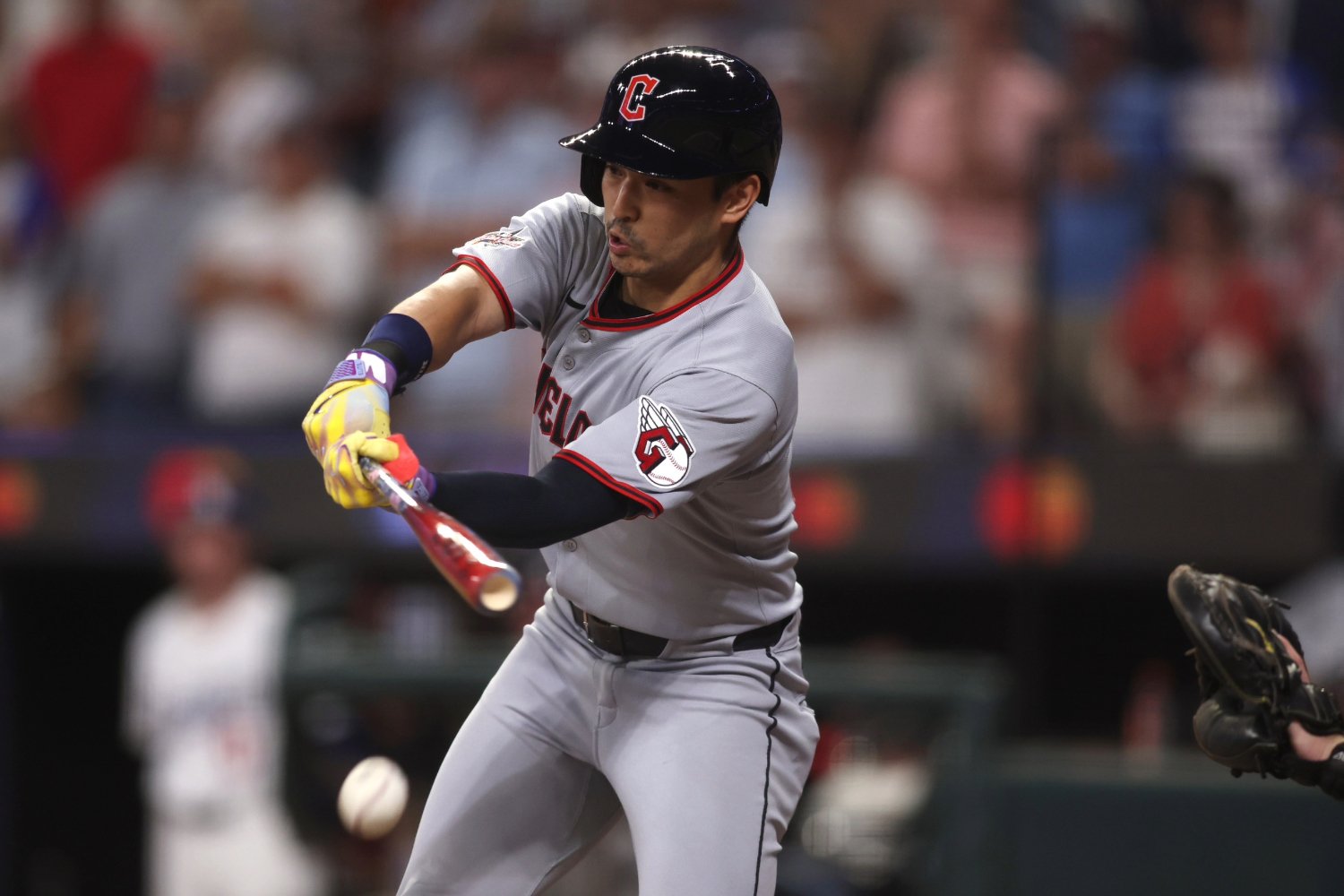 The trade deadline is just one week away, and as sellers are starting to concede their playoff chances for this season, they’re making their expiring contracts available. At the same time, buyers are solidifying their wish lists, looking to make impact moves that will help them make a run deep into October. As the team with a current grasp on first place in the American League East, the Toronto Blue Jays are clearly in a position to check at least a couple of names off of that wish list. Pitching, both in the starting rotation and bullpen, is expected to be the focus of the Jays’ shopping ahead of the July 31 deadline, but if the opportunity arises, there is absolutely space for an upgrade in the lineup. The list of available position players is much shorter than the list of pitchers, but the impact of adding a star player to a lineup could completely transform a team’s chances down the stretch. One of those stars recently rumoured to be available for the right price is Steven Kwan of the Cleveland Guardians. It’s a bit of a surprise to see his name in trade rumours considering that he’s arbitration eligible for two seasons after this one, and the 50-50 Guardians probably don’t see themselves as that far out of the playoff mix in a wide-open American League. Nonetheless, when Jeff Passan’s most recent list of top trade candidates dropped earlier this week, Steven Kwan’s name sat in second place. Before we get too deep into the weeds and I convince you that Kwan would be the perfect Toronto Blue Jay, it’s important to be clear that Passan currently has the chances of Kwan getting moved at about 20 percent, and if it were to happen, the price in prospects would likely be nauseating for both fans and the Blue Jays front office. But! Don’t let that stop you from dreaming a little bit. Think of yourself as the 16-year-old that lists a car at the top of their Christmas list, even if it’s more likely you end up with a new bike. All 30 teams can look at a 27 year old that’s been an All-Star in back-to-back seasons and say he’d fit well on the roster, but Kwan’s fit with the Jays is particularly tantalizing for a few reasons: His style of play would fit seamlessly with what the Jays already do well, he hits left handed, and he’d immediately put a stop to the revolving door in the leadoff spot. Team Fit Given the connections between Toronto’s front office and Cleveland’s, as well as a recent history of the two sides completing trades, it wouldn’t surprise me if the two were able to hook up on another deal. Part of the reason that the two sides have been able to get trades like the Andrés Giménez and Myles Straw deals done is that they value similar profiles in players. Steven Kwan Idealizes that profile. The Jays are the best defensive team in baseball by many metrics, and adding Kwan who’s won three straight Gold Glove awards in the outfield would only build on that strength. The Jays are also the team with the lowest strikeout percentage in baseball. It’s a stat that’s not nearly as sexy as leading the league in homers, but has helped the Toronto offense to punch well above its weight class, especially against teams that hit more home runs than them. Kwan is the poster boy for not striking out. His 8.3 strikeout percentage is the fourth lowest mark in baseball this season, just one spot ahead of Alejandro Kirk. So much of the Blue Jays’ success this season has come from an unquantifiable buy-in from players up and down the roster to play clean baseball on both sides of the ball, and Kwan’s skillset would fit seamlessly. I could understand an argument that because the Blue Jays are already so strong in Kwan’s most valuable skills that what he brings may be redundant, especially for the prince, but I’d say there’s often a lot of benefit to improving in areas of strength. Left-Handed Hitter That’s not to say that Kwan wouldn’t bring anything new to the Blue Jays. His left-handed bat would be a dynamic addition to the lineup, and would fundamentally change the way opposing teams have to game plan for the Jays. And I mean literally the fact that he hits left handed. When you look at the Toronto lineup and see names like George Springer, Vladimir Guerrero Jr., Bo Bichette, and Alejandro Kirk hitting in the middle of it every day, it makes sense that their right handed hitters have the second highest wRC+ in baseball at 113, only second to the New York Yankees. However, while the Jays thrive in the right handed batter’s box, they leave a little bit to be desired from the left side. Their 101 wRC+ from lefties is just the 20th best mark in the league. It makes sense when you think about all of the games missed from Giménez, Anthony Santander, and Daulton Varsho, and it’s important to recognize how well those holes have been plugged by the ascent of Addison Barger, Nathan Lukes, and more recently Joey Loperfido and Will Wagner. Still, the injuries have left the Blue Jays without any real left handed hitting prowess, and certainly none that they trust against left handed pitching. Although he’s not exactly split proof (his average goes from .301 against righties to .266 against lefties, and he hasn’t homered off of a lefty this season), Kwan is an obvious upgrade over both Lukes and Loperfido, and would provide a different look at the top of the Jays’ lineup, bringing me to my final selling point. Leadoff Hitter The Blue Jays 107 wRC+ out of the leadoff spot in 2025 ranks 17th among Major League teams. Bichette spent the first 80 or so games as the everyday leadoff hitter, but more recently has dropped down to the middle of the order in an attempt to give the lineup some length. More recently, a platoon between Lukes against right handed starters and Clement against lefties has taken his place. In a small sample size of 43 plate appearances, Lukes has looked great in the role, but Clement has struggled to the tune of seven for 32. The result of having received contributions from so many players is that there isn’t a clear spot on the offensive side of the roster that looks desperate for an upgrade. There may be room for a right handed bench bat that can hit for power, that would essentially slide into the Davis Schneider role, but other than that, the lead off spot is the only non-solidified spot I see. Kwan’s combination of bat-to-ball skills, on base skills, and speed make him the prototypical leadoff hitter, and that’s exactly the role he plays for the Guardians. He’d slide right into an everyday role in left field, and would allow the Jays to protect Lukes from left handed pitching, and avoid Clement getting exposed at the top of the order. One final point to get you way too excited about the possibility of a Steven Kwan trade that’s very unlikely to happen: He gets it done in the playoffs. In 17 Postseason games, Kwan has hit .347 with an .830 OPS, exactly the type of numbers a contender wants to see when loading up for a run deep into the playoffs.
 -
Arjun NimmalaTrey YesavageRicky TiedemannJoJo ParkerJohnny KingKhal StephenGage StaniferAlan RodenKendry RojasJake BlossYohendrick PinangoJuaron Watts-BrownOrelvis MartinezLanden MaroudisRJ SchreckJosh KasevichJonatan ClaseJake CookAdam MackoBrandon Barriera
-
Coming into 2025, it was clear that the Blue Jays’ success was going to hinge on bounce backs from some key players, and with a hold of first place at the All-Star break, it’s safe to say that, so far, the Jays have gotten the contributions they’ve needed. Alejandro Kirk’s renaissance has earned him a second career all-star selection, and George Springer has come back from the dead to put up a 137 wRC+ so far. Bo Bichette has also bounced back from a terrible 2024, but while his teammates have thrived, Bichette has flown under the radar. The most important thing is that he’s back to playing every day, but still, we’re waiting on Bichette to get back to being the offensive threat that made him a star between 2021 and 2023. That’s not to call him out for being useless at the plate—his 112 wRC+ is, of course, better than league average, and his .396 average with runners in scoring position has helped make up for his lack of success in lower leverage (even if you’re not a big believer in hitting with RISP being an actual skill). Still, it’s hard not to feel like something is missing in Bichette’s offensive game. He’s hitting just .282, which would be his lowest average in a healthy season, and it’s a similar story for his ISO, which is also the lowest of his healthy seasons at .160. His .767 OPS is fine, but, again, leaving a little bit to be desired for a bat that has been very important to team success in recent seasons. The weird thing is: His underlying data looks eerily similar to how it did two, three, and four years ago, all years where his OPS+ finished in the .800s. Comparing this season to his 2023 campaign, a year where he was an All-Star, hit 20 homers, and finished third for the American League batting title, Bo Bichette is currently hitting the ball harder, hitting the ball hard more often, and striking out less. Yet, his results are down across the board, despite his expected stats being up. In fact, if he was achieving his xwOBA of .377, it would be the highest of his entire career up to this point. The problem is that his actual wOBA is sitting at just .331. The obvious place to look is at his BABIP, and yes, at .314, there is a sizable gap between his number for 2025 and his previous norms in a healthy season. Given that this is the case, I was thinking that there was a chance that Bichette had been the victim of exceptional defence, but that’s simply not what’s happening. Opposing defenses have actually played to a negative one outs above average when Bichette is at the plate. One of my other early theories when trying to diagnose the reason for Bichette’s underperformance was that his decline in speed was making his slap-hitting offensive approach less effective, as he would be unable to steal as many infield hits, or turn singles into doubles, and there may be some merit to this idea. Bichette is running a 4.1 infield-hit percentage, calculated by dividing a player’s total number of infield hits by their total number of ground balls. The 4.1% mark is more than two percent lower than his career average, and six percent lower than his last healthy season in 2023, when he had the 11th-highest mark in baseball. In that time frame, Bichette’s sprint speed has declined considerably, although it’s important to note that even in 2023, he was a below average runner, averaging just 27.1 feet per second. In 2025, his sprint speed is now at just 26.1 feet per second, just in the 22nd percentile in baseball. We can’t attribute a 46 point difference in wOBA and xwOBA solely to Bichette missing out on a couple extra infield hits, although it may account for a touch of what’s been missing. I’d also say that his decline in speed is a direct indicator of a decline in athleticism, something I’d be concerned about when projecting ahead to future seasons and the type of contract Bichette is going to receive this offseason. Digging in even further, Bichette's batted ball profile doesn’t really help explain the drop in production either. He’s pulling the ball at his highest rate since 2020, has his lowest ground ball to fly ball ratio since 2020, and his line drive percentage is right in line with his career norms. These are all positive indicators, especially for a hitter like Bichette who produces great average exit velocities. I’ll leave you with one final theory. Bichette’s average exit velocity has climbed in 2025, but the majority of the difference is coming against fastballs. He’s hitting them at a career high average exit velocity, but he isn’t hitting breaking balls and off-speed pitches as hard as he did in prior successful years. Taking that into account, we can take a look at Bichette's average launch angle by pitch and see that he’s not hitting fastball’s, the pitch he hits the hardest, in the air: Now, expected stats do take into account both exit velocity and launch angle, but being unable to get his hardest hit balls in the air may explain some of his lack of power. If that changes, we could see a massive spike in actual production. Overall, there are a bunch of reasons to believe that Bo Bichette may be due for some positive regression, and I’m looking forward to seeing if he can shrink the gap between his expected stats and his actual stats in the second half. View full article
-
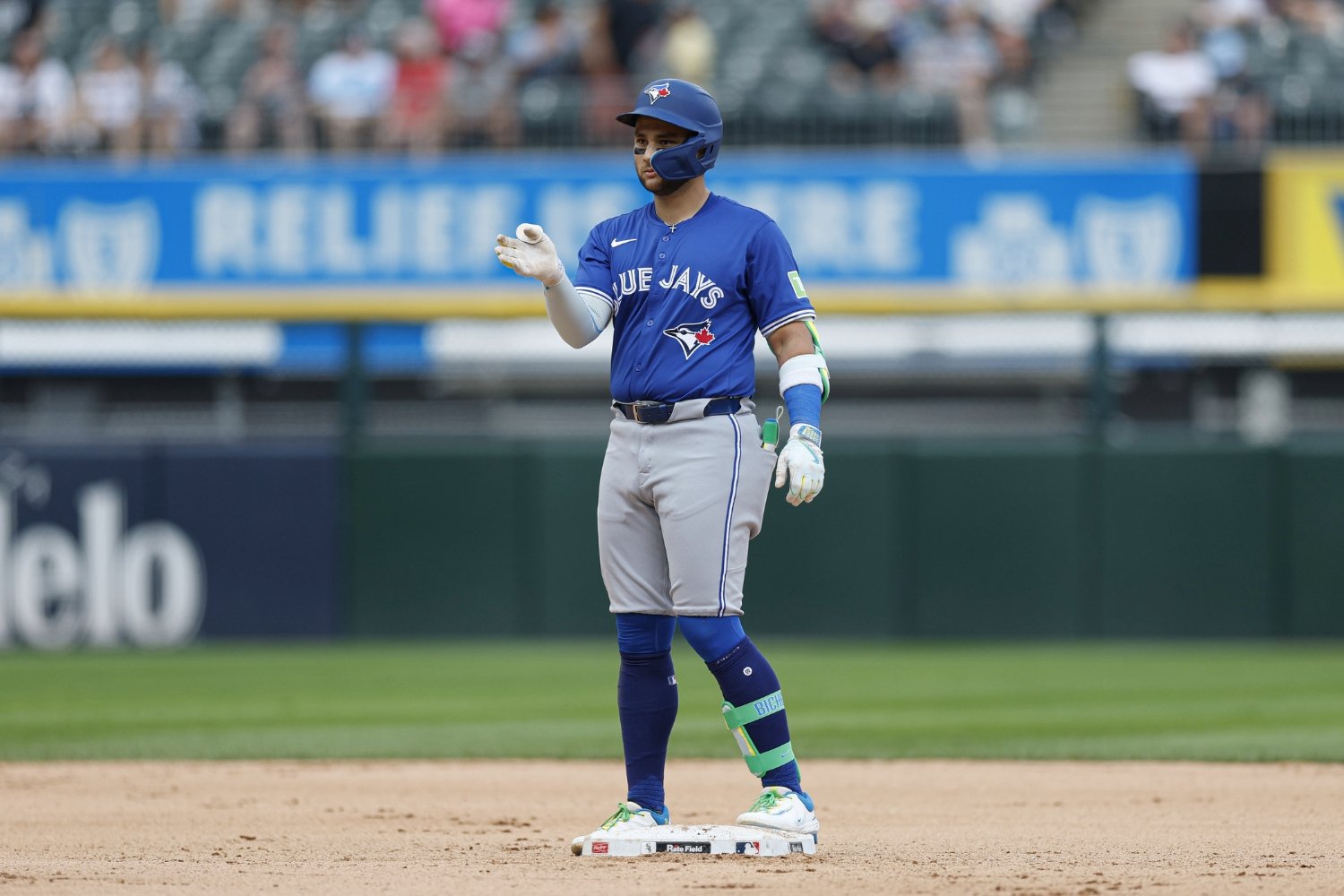 Coming into 2025, it was clear that the Blue Jays’ success was going to hinge on bounce backs from some key players, and with a hold of first place at the All-Star break, it’s safe to say that, so far, the Jays have gotten the contributions they’ve needed. Alejandro Kirk’s renaissance has earned him a second career all-star selection, and George Springer has come back from the dead to put up a 137 wRC+ so far. Bo Bichette has also bounced back from a terrible 2024, but while his teammates have thrived, Bichette has flown under the radar. The most important thing is that he’s back to playing every day, but still, we’re waiting on Bichette to get back to being the offensive threat that made him a star between 2021 and 2023. That’s not to call him out for being useless at the plate—his 112 wRC+ is, of course, better than league average, and his .396 average with runners in scoring position has helped make up for his lack of success in lower leverage (even if you’re not a big believer in hitting with RISP being an actual skill). Still, it’s hard not to feel like something is missing in Bichette’s offensive game. He’s hitting just .282, which would be his lowest average in a healthy season, and it’s a similar story for his ISO, which is also the lowest of his healthy seasons at .160. His .767 OPS is fine, but, again, leaving a little bit to be desired for a bat that has been very important to team success in recent seasons. The weird thing is: His underlying data looks eerily similar to how it did two, three, and four years ago, all years where his OPS+ finished in the .800s. Comparing this season to his 2023 campaign, a year where he was an All-Star, hit 20 homers, and finished third for the American League batting title, Bo Bichette is currently hitting the ball harder, hitting the ball hard more often, and striking out less. Yet, his results are down across the board, despite his expected stats being up. In fact, if he was achieving his xwOBA of .377, it would be the highest of his entire career up to this point. The problem is that his actual wOBA is sitting at just .331. The obvious place to look is at his BABIP, and yes, at .314, there is a sizable gap between his number for 2025 and his previous norms in a healthy season. Given that this is the case, I was thinking that there was a chance that Bichette had been the victim of exceptional defence, but that’s simply not what’s happening. Opposing defenses have actually played to a negative one outs above average when Bichette is at the plate. One of my other early theories when trying to diagnose the reason for Bichette’s underperformance was that his decline in speed was making his slap-hitting offensive approach less effective, as he would be unable to steal as many infield hits, or turn singles into doubles, and there may be some merit to this idea. Bichette is running a 4.1 infield-hit percentage, calculated by dividing a player’s total number of infield hits by their total number of ground balls. The 4.1% mark is more than two percent lower than his career average, and six percent lower than his last healthy season in 2023, when he had the 11th-highest mark in baseball. In that time frame, Bichette’s sprint speed has declined considerably, although it’s important to note that even in 2023, he was a below average runner, averaging just 27.1 feet per second. In 2025, his sprint speed is now at just 26.1 feet per second, just in the 22nd percentile in baseball. We can’t attribute a 46 point difference in wOBA and xwOBA solely to Bichette missing out on a couple extra infield hits, although it may account for a touch of what’s been missing. I’d also say that his decline in speed is a direct indicator of a decline in athleticism, something I’d be concerned about when projecting ahead to future seasons and the type of contract Bichette is going to receive this offseason. Digging in even further, Bichette's batted ball profile doesn’t really help explain the drop in production either. He’s pulling the ball at his highest rate since 2020, has his lowest ground ball to fly ball ratio since 2020, and his line drive percentage is right in line with his career norms. These are all positive indicators, especially for a hitter like Bichette who produces great average exit velocities. I’ll leave you with one final theory. Bichette’s average exit velocity has climbed in 2025, but the majority of the difference is coming against fastballs. He’s hitting them at a career high average exit velocity, but he isn’t hitting breaking balls and off-speed pitches as hard as he did in prior successful years. Taking that into account, we can take a look at Bichette's average launch angle by pitch and see that he’s not hitting fastball’s, the pitch he hits the hardest, in the air: Now, expected stats do take into account both exit velocity and launch angle, but being unable to get his hardest hit balls in the air may explain some of his lack of power. If that changes, we could see a massive spike in actual production. Overall, there are a bunch of reasons to believe that Bo Bichette may be due for some positive regression, and I’m looking forward to seeing if he can shrink the gap between his expected stats and his actual stats in the second half.
 -
Welcome to Jays Centre’s coverage of the 2025 MLB Draft! Here you can follow all of the day’s events, and join in on the conversation surrounding the newest Toronto Blue Jays. This year’s draft once again consists of 20 rounds. The first three took place on Sunday evening, and rounds four through 20 will be taking place on Monday beginning at 11:30 A.M. ET. The Blue Jays selected a pair of players, JoJo Parker eighth overall and Jake Cook 81st overall on Sunday night and will be on the clock 17 more times on Monday. There hasn't been a 17-round draft day in a while, but rest assured — there used to be 20-round days, so Jays Centre will have the capacity to cover the duration. The Blue Jays have a bonus pool of $10,314,600 to divide amongst their picks. As a reminder from Baseball America: "In the MLB draft, each pick inside the first 10 rounds comes with assigned slot values. The sum of those slot values creates each team’s bonus pool. From rounds 11-20, players can sign for up to $150,000 without counting towards the bonus pool. Anything beyond that value does count towards the pool." It's also important to remember that teams can exceed their bonus pool allotment by up to five percent before incurring any future pick penalties. No team in the bonus pool era has ever exceeded that additional five percent threshold. We're once again excited to show off the Blue Jays Draft Tracker, which will be kept up-to-date not only during the draft but through the entire signing period. So keep coming back for updates! The draft is a busy, fast paced event, and we’ll be updating articles and providing scouting reports on the Blue Jays picks as things happen, so stay tuned, and feel free to make your thoughts known in the comments! View full article
-
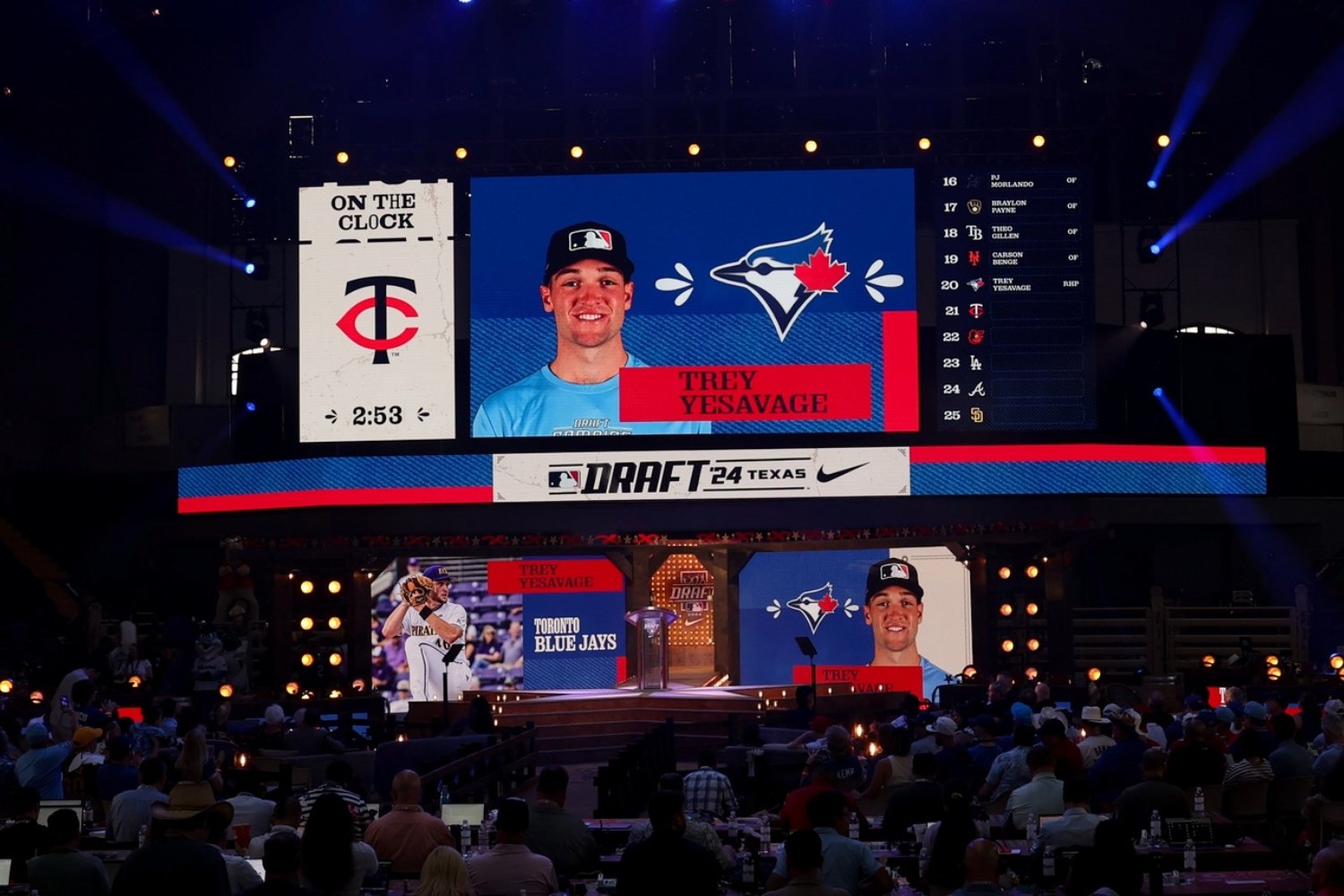 Welcome to Jays Centre’s coverage of the 2025 MLB Draft! Here you can follow all of the day’s events, and join in on the conversation surrounding the newest Toronto Blue Jays. This year’s draft once again consists of 20 rounds. The first three took place on Sunday evening, and rounds four through 20 will be taking place on Monday beginning at 11:30 A.M. ET. The Blue Jays selected a pair of players, JoJo Parker eighth overall and Jake Cook 81st overall on Sunday night and will be on the clock 17 more times on Monday. There hasn't been a 17-round draft day in a while, but rest assured — there used to be 20-round days, so Jays Centre will have the capacity to cover the duration. The Blue Jays have a bonus pool of $10,314,600 to divide amongst their picks. As a reminder from Baseball America: "In the MLB draft, each pick inside the first 10 rounds comes with assigned slot values. The sum of those slot values creates each team’s bonus pool. From rounds 11-20, players can sign for up to $150,000 without counting towards the bonus pool. Anything beyond that value does count towards the pool." It's also important to remember that teams can exceed their bonus pool allotment by up to five percent before incurring any future pick penalties. No team in the bonus pool era has ever exceeded that additional five percent threshold. We're once again excited to show off the Blue Jays Draft Tracker, which will be kept up-to-date not only during the draft but through the entire signing period. So keep coming back for updates! The draft is a busy, fast paced event, and we’ll be updating articles and providing scouting reports on the Blue Jays picks as things happen, so stay tuned, and feel free to make your thoughts known in the comments!
 -
The return of Bradley Zimmer?
-
With their first pick, and the eighth overall pick in the 2025 MLB Draft, The Blue Jays have selected JoJo Parker, an 18-year-old shortstop. He is 6’2, 195-pounds and from Purvis Highschool in Mississippi. He was ranked ninth overall on the Jays Centre’s Mock Board. The eighth overall pick comes with a slot value of $6,813,600. The biggest appeal to Parker’s profile is his ability to swing the bat, with an impressive hit-tool and already solid power, even as a prep player. At just 18 years old, Parker is built solid at 6’2, and nearly 200-pounds. His left handed swing starts with a narrow base, and the movements are smooth and quiet as he progresses through load, stride and contact. His ability to get bat on the ball is polished, and at times flashes some power. The rest of Parker’s tools are considered average, so his ability to hit will make or break his professional career, as it does with most position player prospects. Even still, there is hope that Parker will be able to stick at shortstop in the near-term, even if he ends up at second or third base by the time he ends up in the big leagues. There’s a lot of upside to JoJo Parker’s offensive profile, and if he develops into a legitimate power threat that some think he will, he could end up being the best hitter taken in the draft. JoJo’s twin brother Jacob Parker is ranked 88th on our Mock Board, which is right in the range of the Jays’ third round pick at 81st overall, so there is a (extremely unlikely) chance that the Blue Jays look to keep the brothers together in pro-ball. View full article
-
 With their first pick, and the eighth overall pick in the 2025 MLB Draft, The Blue Jays have selected JoJo Parker, an 18-year-old shortstop. He is 6’2, 195-pounds and from Purvis Highschool in Mississippi. He was ranked ninth overall on the Jays Centre’s Mock Board. The eighth overall pick comes with a slot value of $6,813,600. The biggest appeal to Parker’s profile is his ability to swing the bat, with an impressive hit-tool and already solid power, even as a prep player. At just 18 years old, Parker is built solid at 6’2, and nearly 200-pounds. His left handed swing starts with a narrow base, and the movements are smooth and quiet as he progresses through load, stride and contact. His ability to get bat on the ball is polished, and at times flashes some power. The rest of Parker’s tools are considered average, so his ability to hit will make or break his professional career, as it does with most position player prospects. Even still, there is hope that Parker will be able to stick at shortstop in the near-term, even if he ends up at second or third base by the time he ends up in the big leagues. There’s a lot of upside to JoJo Parker’s offensive profile, and if he develops into a legitimate power threat that some think he will, he could end up being the best hitter taken in the draft. JoJo’s twin brother Jacob Parker is ranked 88th on our Mock Board, which is right in the range of the Jays’ third round pick at 81st overall, so there is a (extremely unlikely) chance that the Blue Jays look to keep the brothers together in pro-ball.
 -
2025 MLB Draft Day 1 Thread
Owen Hill replied to Owen Hill's topic in MLB Draft, International Signings, Amateur Baseball
Claaaaasssssiiiiiiic Angels lol. -
Welcome to Jays Centre’s coverage of the 2025 MLB Draft! Here you can follow all of the day’s events, and join in on the conversation surrounding the newest Toronto Blue Jays. This year’s draft will once again consist of 20 rounds, the first three taking place on Sunday evening starting at 6 P.M. ET, and rounds four through 20 taking place on Monday. The Jays have just two picks on day one of the draft, the eighth overall selection in the first round and the 81st overall pick in the third round. The Jays forfeited their second round pick when signing Anthony Santander, who had received a qualifying offer from the Baltimore Orioles. The Blue Jays have a bonus pool of $10,314,600 to divide amongst their picks. We're excited to show off the Blue Jays Draft Tracker, which will be kept up-to-date not only during the draft but through the entire signing period. So keep coming back for updates! The draft is a busy, fast paced event, and we’ll be updating articles and providing scouting reports on the Blue Jays picks as things happen, so stay tuned, and feel free to make your thoughts known in the comments! The draft will continue with day two on Monday, starting at 11:30 A.M. ET. View full article
-
 Welcome to Jays Centre’s coverage of the 2025 MLB Draft! Here you can follow all of the day’s events, and join in on the conversation surrounding the newest Toronto Blue Jays. This year’s draft will once again consist of 20 rounds, the first three taking place on Sunday evening starting at 6 P.M. ET, and rounds four through 20 taking place on Monday. The Jays have just two picks on day one of the draft, the eighth overall selection in the first round and the 81st overall pick in the third round. The Jays forfeited their second round pick when signing Anthony Santander, who had received a qualifying offer from the Baltimore Orioles. The Blue Jays have a bonus pool of $10,314,600 to divide amongst their picks. We're excited to show off the Blue Jays Draft Tracker, which will be kept up-to-date not only during the draft but through the entire signing period. So keep coming back for updates! The draft is a busy, fast paced event, and we’ll be updating articles and providing scouting reports on the Blue Jays picks as things happen, so stay tuned, and feel free to make your thoughts known in the comments! The draft will continue with day two on Monday, starting at 11:30 A.M. ET.
 -
Vladimir Guerrero Jr. just picked up his 1000th career hit, so take a trip back in time and enjoy some of the best moments to this point in his career. View full video
.jpg.282bda7f1edeaf8016ee3ee64b639689.jpg)
.jpg.bc59d5786de59bb34afac4523212abc6.jpg)