


Jesse Burrill
-
Posts
262 -
Joined
-
Last visited
Content Type
Profiles
Toronto Blue Jays Videos
2026 Toronto Blue Jays Top Prospects Ranking
Toronto Blue Jays Free Agent & Trade Rumors, Notes, & Tidbits
Guides & Resources
2025 Toronto Blue Jays Draft Pick Tracker
News
2026 Toronto Blue Jays Draft Tracker: Picks & Bonuses
Forums
Blogs
Events
Store
Downloads
Gallery
Everything posted by Jesse Burrill
-
.jpg.c45959bfc48c21d290137c640abc51f9.jpg) The Toronto Blue Jays are a really good baseball team. There shouldn't be much debate about it either, following two straight series sweeps (including a four-game sweep against the New York Yankees) and four series victories in a row, the Blue Jays sit in first place in the AL East. They became the first team in the division to hit the 50-win mark, and they trail only the Houston Astros and the Detroit Tigers for the best record in the American League. There is a small subset of people out there (looking at you, Michael Kay) who don't believe the Blue Jays are for real, with the main argument being that their run differential has been quite poor throughout the season. Jamie Campbell threw some shade towards Kay and the Yankees after the Blue Jays swept them on Thursday, saying, "a certain Yankee broadcaster" is going to have to "go on his show tomorrow and admit that the Blue Jays are a first-place team because the standings prove it." Now, at the end of the day, run differential doesn't really matter. They don't hand out a trophy at the end of the season for the team that outscored their opponents the most, nor do they award playoff spots that way either. All that matters is whether you score more than your opponent each day, and the Blue Jays have done that more often than not this season. That said, run differential is usually a better predictor than current win-loss record of how a team is going to perform going forward. Blue Jays fans should know this well. Back in 2015, the Blue Jays were a game below .500 at the All-Star break despite their +84 run differential. Two weeks later, they added Troy Tulowitzki, David Price, and others, and they soared to a 48-23 record in the second half and marched right on to the ALCS. Alex Anthopoulos, Toronto's general manager at the time, cited the team's extreme run differential as a reason to push the chips in at the deadline, and it's safe to say it worked out. Now, getting back to the 2025 team, the run differential conversation has felt like throwing a wet blanket on a season that has been incredibly fun so far. With any luck, maybe the Blue Jays continue on their current tear and we soon forget all about this. Still, it's worth taking a look to see what history says about a team's success with such a “poor” run differential halfway through the season. At the end of June, the Blue Jays' run differential was -3. So, with that number in mind, we can take a look at how many clubs have gone on to make the playoffs after finishing June with a negative run differential since the league implemented a 10-team playoff structure in 2012: 2024: Tigers (-22) 2023: Marlins (-12), Brewers* (-22), Phillies (-8) 2022: None 2021: Cardinals (-42), Yankees (-3) 2020: N/A (COVID season) 2019: Brewers (-4), Cardinals* (-1) 2018: Rockies (-44) 2017: Twins (-55) 2016: None 2015: Mets* (-12) 2014: Pirates (-9) 2013: Dodgers* (-46) 2012: Orioles (-22), Tigers* (-9), Athletics*, (-4) *Team ended up winning the division It's quite an interesting list. In 11 of the past 13 seasons, there has been at least one team with a negative run differential at the end of June that made the postseason. In some cases, those teams had even more success. The 2015 Mets team, led by Jacob deGrom and Matt Harvey, went all the way to the World Series. In addition, the 2012 Tigers team, led by Justin Verlander, Max Scherzer, and Miguel Cabrera, also made it to the World Series. Turning back to 2025, it's possible that the Guardians, Twins, or Royals find their way into the playoffs, but there is a good chance that the Blue Jays may be the only team with a negative run differential coming into July to make the postseason. Making the postseason isn’t the only goal for this Blue Jays team; they’re going to want to win the division, and knowing that the Blue Jays have gone 0-6 in the Wild Card round since 2016, getting a first-round bye would be even more important for this team. So, that should be the goal, and the Jays are certainly making progress. As of this weekend, the Blue Jays overtook the Yankees as the favourites to win the division, according to FanGraphs' playoff odds: Graph updated following games on July 6. Run differential says something about a team, but it doesn't say everything. It doesn't tell you how clutch a team has been. It doesn't tell you that the Blue Jays are 16-10 in one-run games so far, or how they have been so good at moving runners over and getting them in when they need to late in games. All these things are key for helping teams, like the Blue Jays, win more games than expected. This might even be the last time this season we're thinking about this. In July so far, the Blue Jays have a +15 run differential, and if they keep winning ballgames at their current pace, this stat won't matter much anymore – no matter what Michael Kay and other Yankee media members say.
The Toronto Blue Jays are a really good baseball team. There shouldn't be much debate about it either, following two straight series sweeps (including a four-game sweep against the New York Yankees) and four series victories in a row, the Blue Jays sit in first place in the AL East. They became the first team in the division to hit the 50-win mark, and they trail only the Houston Astros and the Detroit Tigers for the best record in the American League. There is a small subset of people out there (looking at you, Michael Kay) who don't believe the Blue Jays are for real, with the main argument being that their run differential has been quite poor throughout the season. Jamie Campbell threw some shade towards Kay and the Yankees after the Blue Jays swept them on Thursday, saying, "a certain Yankee broadcaster" is going to have to "go on his show tomorrow and admit that the Blue Jays are a first-place team because the standings prove it." Now, at the end of the day, run differential doesn't really matter. They don't hand out a trophy at the end of the season for the team that outscored their opponents the most, nor do they award playoff spots that way either. All that matters is whether you score more than your opponent each day, and the Blue Jays have done that more often than not this season. That said, run differential is usually a better predictor than current win-loss record of how a team is going to perform going forward. Blue Jays fans should know this well. Back in 2015, the Blue Jays were a game below .500 at the All-Star break despite their +84 run differential. Two weeks later, they added Troy Tulowitzki, David Price, and others, and they soared to a 48-23 record in the second half and marched right on to the ALCS. Alex Anthopoulos, Toronto's general manager at the time, cited the team's extreme run differential as a reason to push the chips in at the deadline, and it's safe to say it worked out. Now, getting back to the 2025 team, the run differential conversation has felt like throwing a wet blanket on a season that has been incredibly fun so far. With any luck, maybe the Blue Jays continue on their current tear and we soon forget all about this. Still, it's worth taking a look to see what history says about a team's success with such a “poor” run differential halfway through the season. At the end of June, the Blue Jays' run differential was -3. So, with that number in mind, we can take a look at how many clubs have gone on to make the playoffs after finishing June with a negative run differential since the league implemented a 10-team playoff structure in 2012: 2024: Tigers (-22) 2023: Marlins (-12), Brewers* (-22), Phillies (-8) 2022: None 2021: Cardinals (-42), Yankees (-3) 2020: N/A (COVID season) 2019: Brewers (-4), Cardinals* (-1) 2018: Rockies (-44) 2017: Twins (-55) 2016: None 2015: Mets* (-12) 2014: Pirates (-9) 2013: Dodgers* (-46) 2012: Orioles (-22), Tigers* (-9), Athletics*, (-4) *Team ended up winning the division It's quite an interesting list. In 11 of the past 13 seasons, there has been at least one team with a negative run differential at the end of June that made the postseason. In some cases, those teams had even more success. The 2015 Mets team, led by Jacob deGrom and Matt Harvey, went all the way to the World Series. In addition, the 2012 Tigers team, led by Justin Verlander, Max Scherzer, and Miguel Cabrera, also made it to the World Series. Turning back to 2025, it's possible that the Guardians, Twins, or Royals find their way into the playoffs, but there is a good chance that the Blue Jays may be the only team with a negative run differential coming into July to make the postseason. Making the postseason isn’t the only goal for this Blue Jays team; they’re going to want to win the division, and knowing that the Blue Jays have gone 0-6 in the Wild Card round since 2016, getting a first-round bye would be even more important for this team. So, that should be the goal, and the Jays are certainly making progress. As of this weekend, the Blue Jays overtook the Yankees as the favourites to win the division, according to FanGraphs' playoff odds: Graph updated following games on July 6. Run differential says something about a team, but it doesn't say everything. It doesn't tell you how clutch a team has been. It doesn't tell you that the Blue Jays are 16-10 in one-run games so far, or how they have been so good at moving runners over and getting them in when they need to late in games. All these things are key for helping teams, like the Blue Jays, win more games than expected. This might even be the last time this season we're thinking about this. In July so far, the Blue Jays have a +15 run differential, and if they keep winning ballgames at their current pace, this stat won't matter much anymore – no matter what Michael Kay and other Yankee media members say. -
 For what feels like the first time in a long time, the Blue Jays seem to have some really exciting starting pitching prospects coming up through the system. Of the Blue Jays' top 30 prospects (per MLB Pipeline), 15 are pitchers, and several of them saw their stock rise in June. Here are the Blue Jays Minor League Starting Pitchers of the Month for June: Honorable Mentions Brandon Barriera, LHP (FCL) This one isn't about the results on the field; the nod here is simply for Barriera is taking the mound again. Barriera underwent Tommy John surgery shortly after only getting four outs in his only appearance in the system in 2024. He is now 21 years old, and the stats haven’t been there (22.09 ERA through four complex league starts). We can call it a win that the young lefty is back on the mound, and once he gets comfortable, the Blue Jays will hope to see more of the talent that made him a first-round pick in the 2022 draft. Landen Maroudis, RHP (Single-A Dunedin) Maroudis's June started late, as an injury had him on the IL in the early part of the month. But eventually, he returned from a rehab assignment, made his debut for the Dunedin Blue Jays, and looked good. He made two starts and did not allow a run, giving up just one hit over eight innings. That will always play, even though it came with the caveat of four walks (and a hit by pitch) and just six strikeouts. There is no question, though, that Maroudis has some really good stuff and is still just twenty years old. If he can harness that stuff, it's a safe bet that he will be higher on this list at the end of July. Juaron Watts-Brown, RHP (Double-A New Hampshire) I'm not going to lie, Juaron Watts-Brown might be a personal favourite of mine in the minor leagues right now. He's just 23 years old, and FanGraphs gives him a 60-grade slider, one of the best sliders in the Blue Jays system. Since his promotion to Double-A New Hampshire, he’s held his own, pitching to a 3.06 ERA over 35.1 IP. He was especially good in June, putting up a 2.08 ERA during in the month. He’s been logging a ton of innings so far (72.2 IP on the year) as the Blue Jays are gearing him up to be a starter long term. As long as he keeps producing, Watts-Brown will be major league-ready sooner rather than later. 5) Kendry Rojas, LHP (Single-A Dunedin) Rojas's month of June has got to be encouraging: He appeared in five games (four starts) and was impressive the whole way through. In total, he threw 16 innings, allowing just eight hits and only one earned run. It was even more impressive that he got better as the month went on. His most recent appearance was a 5.0 IP, 0 H, 2 BB, and 9 K performance. He’s ranked as Jays Center's #8 prospect, and he certainly did nothing in June to move him lower on the list. 4) Khal Stephen, RHP (High-A Vancouver) If you were impressed by Rojas’s June, then Khal Stephen's numbers should leave you with a similar feeling. In the month, he threw 28.1 innings with a 0.95 ERA and 33 strikeouts to just six walks. He lowered his season ERA from 3.21 to 1.73 during that time, throwing at least five innings in every start and posting strikeout totals of eight, nine, and eleven in his most dominant outings of the month. He’s only made seven starts for the Canadians, but if he keeps up the string of excellent starts, he could be in New Hampshire before long. via Sportsnet TV broadcast 3) Gage Stanifer, RHP (High-A Vancouver) There might not be a more “fun” pitching prospect in the Blue Jays system right now than Stanifer. He began by piggybacking Trey Yesavage in all of his starts, but now Stanifer has his own spotlight – and for good reason. After pitching 26 innings with a 0.69 ERA in Dunedin, he got the call to Vancouver and has continued to excel. His most notable skill has been his ability to rack up strikeouts. Since his call-up, he’s only had one appearance in which he struck out fewer than six batters. The walks may always be a bit of an issue, but when you have the ability to strike out as many as Stanifer can, it has to be noticed. Did we mention he has yet to allow a home run this season, either? 2) Johnny King, LHP (Single-A Dunedin) Speaking of Blue Jays who are striking out everyone, Johnny King says hello. The Jays' third-round pick in 2024 started out in the Florida Complex League, and he proved he was just too good for that level. A 1.13 ERA and a 41.8% K-rate are absurd for anyone, much less an 18-year-old in his first season in professional baseball. The Blue Jays thought the same thing and, earlier this month, gave him a promotion to Dunedin. In his first start at Single A, he faced 13 batters, struck out six of them, walked four and allowed just one hit. King is going to get a long run in Dunedin, but if he keeps up this level of dominance, who knows how high his ceiling could be? 1) Trey Yesavage, RHP (Double-A New Hampshire) Who else was it going to be? Yesavage was our number one last month and has done nothing to fall from the top spot. Since he got the call-up to New Hampshire this month, he’s thrown to a 3.86 ERA, but his FIP of 2.63 is still excellent, and so are the strikeout numbers: 16 over 11.2 IP to be exact. Although walks have been an issue (three in his first start, four in his second), he seemed to have figured it out in his most recent outing, tossing five innings, with just one walk and one hit while striking out eight. He’ll also be the Blue Jays representative in the Futures Game this year, and it's well deserved. Image via New Hampshire Fisher Cats on Instagram View full article
-
- 2
-

-
- kendry rojas
- khal stephen
- (and 3 more)
-
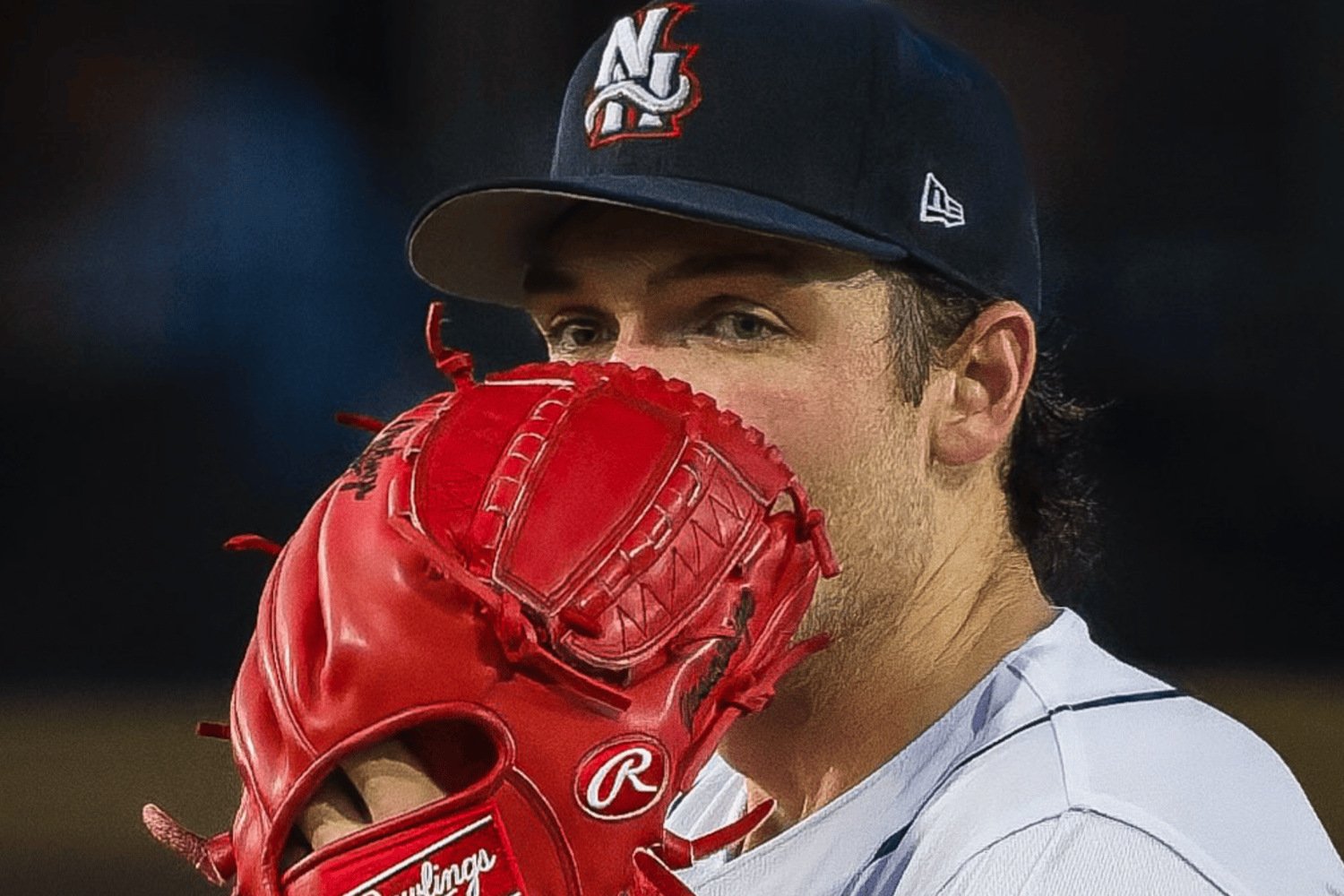 For what feels like the first time in a long time, the Blue Jays seem to have some really exciting starting pitching prospects coming up through the system. Of the Blue Jays' top 30 prospects (per MLB Pipeline), 15 are pitchers, and several of them saw their stock rise in June. Here are the Blue Jays Minor League Starting Pitchers of the Month for June: Honorable Mentions Brandon Barriera, LHP (FCL) This one isn't about the results on the field; the nod here is simply for Barriera is taking the mound again. Barriera underwent Tommy John surgery shortly after only getting four outs in his only appearance in the system in 2024. He is now 21 years old, and the stats haven’t been there (22.09 ERA through four complex league starts). We can call it a win that the young lefty is back on the mound, and once he gets comfortable, the Blue Jays will hope to see more of the talent that made him a first-round pick in the 2022 draft. Landen Maroudis, RHP (Single-A Dunedin) Maroudis's June started late, as an injury had him on the IL in the early part of the month. But eventually, he returned from a rehab assignment, made his debut for the Dunedin Blue Jays, and looked good. He made two starts and did not allow a run, giving up just one hit over eight innings. That will always play, even though it came with the caveat of four walks (and a hit by pitch) and just six strikeouts. There is no question, though, that Maroudis has some really good stuff and is still just twenty years old. If he can harness that stuff, it's a safe bet that he will be higher on this list at the end of July. Juaron Watts-Brown, RHP (Double-A New Hampshire) I'm not going to lie, Juaron Watts-Brown might be a personal favourite of mine in the minor leagues right now. He's just 23 years old, and FanGraphs gives him a 60-grade slider, one of the best sliders in the Blue Jays system. Since his promotion to Double-A New Hampshire, he’s held his own, pitching to a 3.06 ERA over 35.1 IP. He was especially good in June, putting up a 2.08 ERA during in the month. He’s been logging a ton of innings so far (72.2 IP on the year) as the Blue Jays are gearing him up to be a starter long term. As long as he keeps producing, Watts-Brown will be major league-ready sooner rather than later. 5) Kendry Rojas, LHP (Single-A Dunedin) Rojas's month of June has got to be encouraging: He appeared in five games (four starts) and was impressive the whole way through. In total, he threw 16 innings, allowing just eight hits and only one earned run. It was even more impressive that he got better as the month went on. His most recent appearance was a 5.0 IP, 0 H, 2 BB, and 9 K performance. He’s ranked as Jays Center's #8 prospect, and he certainly did nothing in June to move him lower on the list. 4) Khal Stephen, RHP (High-A Vancouver) If you were impressed by Rojas’s June, then Khal Stephen's numbers should leave you with a similar feeling. In the month, he threw 28.1 innings with a 0.95 ERA and 33 strikeouts to just six walks. He lowered his season ERA from 3.21 to 1.73 during that time, throwing at least five innings in every start and posting strikeout totals of eight, nine, and eleven in his most dominant outings of the month. He’s only made seven starts for the Canadians, but if he keeps up the string of excellent starts, he could be in New Hampshire before long. via Sportsnet TV broadcast 3) Gage Stanifer, RHP (High-A Vancouver) There might not be a more “fun” pitching prospect in the Blue Jays system right now than Stanifer. He began by piggybacking Trey Yesavage in all of his starts, but now Stanifer has his own spotlight – and for good reason. After pitching 26 innings with a 0.69 ERA in Dunedin, he got the call to Vancouver and has continued to excel. His most notable skill has been his ability to rack up strikeouts. Since his call-up, he’s only had one appearance in which he struck out fewer than six batters. The walks may always be a bit of an issue, but when you have the ability to strike out as many as Stanifer can, it has to be noticed. Did we mention he has yet to allow a home run this season, either? 2) Johnny King, LHP (Single-A Dunedin) Speaking of Blue Jays who are striking out everyone, Johnny King says hello. The Jays' third-round pick in 2024 started out in the Florida Complex League, and he proved he was just too good for that level. A 1.13 ERA and a 41.8% K-rate are absurd for anyone, much less an 18-year-old in his first season in professional baseball. The Blue Jays thought the same thing and, earlier this month, gave him a promotion to Dunedin. In his first start at Single A, he faced 13 batters, struck out six of them, walked four and allowed just one hit. King is going to get a long run in Dunedin, but if he keeps up this level of dominance, who knows how high his ceiling could be? 1) Trey Yesavage, RHP (Double-A New Hampshire) Who else was it going to be? Yesavage was our number one last month and has done nothing to fall from the top spot. Since he got the call-up to New Hampshire this month, he’s thrown to a 3.86 ERA, but his FIP of 2.63 is still excellent, and so are the strikeout numbers: 16 over 11.2 IP to be exact. Although walks have been an issue (three in his first start, four in his second), he seemed to have figured it out in his most recent outing, tossing five innings, with just one walk and one hit while striking out eight. He’ll also be the Blue Jays representative in the Futures Game this year, and it's well deserved. Image via New Hampshire Fisher Cats on Instagram
 -
If the Rockies would move Seth Halvorson he's the guy. The Jays could absolutely use another bullpen arm or two, but the question is assuming everyone is healthy, who is the odd man out?
-
I've always thought a good manager cant make your team, but a bad one can ruin it. John Schneider isnt ruining this team.
-
The 2025 Toronto Blue Jays season has been a wild ride so far. As the Blue Jays approach the midway point of the season later this week, it's worth taking a look at the bigger picture of the season so far. In 2024, the Blue Jays severely disappointed. They ended up being sellers at the trade deadline and finished with 74 wins. It felt like the team had more question marks than answers going into a pivotal 2025 season. Well, here we are getting close to the end of June, and the Blue Jays find themselves sitting in the second Wild Card spot and within striking distance of the New York Yankees for the division crown. It's quite remarkable when you factor in that the key pieces the Blue Jays added this offseason haven't done a lot to help them win. Anthony Santander had just a 65 wRC+ in his 50 games before getting hurt. Andrés Giménez's defence has been good, but he has just a 67 wRC+. Max Scherzer is set to return today, but so far, he’s only pitched three innings for the Jays. Jeff Hoffman has 17 saves, but a 5.29 ERA and -0.2 fWAR is certainly a disappointment, considering he was so good for Philadelphia the last few seasons. In fact, the Blue Jays' best offseason additions have been Eric Lauer and Myles Straw, and that would have surprised a lot of people coming into the season. Now, there are lots of reasons the Blue Jays are playing better. Bo Bichette looks healthy and is producing again, Addison Barger and Ernie Clement have broken out as impact players, George Springer and Alejandro Kirk have taken their offensive games to another level, and the bullpen has gone from being historically bad to ranking in the top half of the league. But some of the credit also needs to go to John Schneider. It's hard to pin down exactly how valuable having a good manager is to a team, but Schneider has done some things this season that should not only lead to the Blue Jays picking up his club option for 2026 but should also make him a candidate for an extension. Here’s why: 1) The clubhouse seems to be more comfortable Part of the role of a manager is being able to control the personalities of the clubhouse, something that not all managers across baseball have been able to do. Yet, all vibes seem to be good right now in the Blue Jays' clubhouse. Sure, part of the reason is because the Blue Jays are winning, but another part of it is that there is more communication and players are happy. Back in April, Sportsnet's David Singh wrote an article about how some of the veterans on the team felt in the clubhouse. You can read the whole thing at this link, but here are a few key quotes: "We are in it, maybe even more than we ever have been. We're all on the same page and we're just communicating better.” - Kevin Gausman "We're playing as a team, completely. Everybody understands where we want to go and what we want to do." - George Springer "For the first time since I've been here, I feel like everyone's really, really comfortable with how everything's working. So it's just a fun feeling coming to the yard." - Chris Bassitt That's a testament to the manager and the rest of the coaching staff; if the players are comfortable and happy to come to work, they will play better. It works in real life too, not just in baseball. 2) He hasn't been afraid to make some changes There were times in the past when it seemed like Schneider was hesitant to make changes. There could be many reasons why that was, but it seems like he’s now being more flexible. In the past, he seemed hesitant to move Springer out of the leadoff spot even when he wasn't performing well, simply because either Springer didn't want to or Schneider didn't want to upset him (or maybe a bit of both). Now, Schneider seems to be more flexible with adjusting his lineup. He’s recently moved Vladimir Guerrero Jr. back to the three hole, where, over the course of his career, he’s hit much better. (.744 career OPS from the two spot compared to a .916 OPS while hitting third). Schneider also moved Addison Barger up to the two hole, getting him more at-bats and also adding a lefty in between Bichette and Guerrero. So far, it seems to be working. 3) The Blue Jays are actually doing small ball well Say what you will about small ball. The best thing a batter can do in any particular plate appearance is hit a home run, but there is something to be said about a hitter doing what he can to get a guy over and bring him in when he needs to. Baseball Reference has a few stats that track situational hitting, and here’s where the Blue Jays rank in some of them. They're fifth in baseball in productive out rate, seventh in percentage of PAs with a runner on third and less than two out in which that runner scores, and second in advancing runners that are on second base with nobody out. For reference, in 2024, they were seventh, eighth, and 19th in those categories (via Baseball Reference). Part of this could just be that the Blue Jays are putting the ball in play more often, and this is a by product of that, but Schneider has gotten the Blue Jays to be productive and play for their team, and its probably related to why this club has 22 comeback wins and is 12-9 in one run games this year. Now, there is a lot more to it than just what I've laid out, and the Blue Jays don't have to make any decisions in a rush. The long-term futures of president Mark Shapiro and general manager Ross Atkins are still up in the air, and the team might be looking for security in those roles before turning attention to the manager. Yet, on merit alone, Schneider has done a lot this year to earn a longer leash with the Blue Jays, which would be another great development for a man who has been in the system since he was drafted in the 13th round in 2002. John Schneider has made mistakes, and he will continue to make mistakes. There will be times when he takes a pitcher out of the game too early, or chooses to use the wrong reliever in the wrong spot, or does not pinch hit for someone when the situation clearly calls for it. Managing a professional baseball team is hard, and no manager will ever be perfect. But he’s gotten better year after year, and the argument can be made that he’s just going to keep improving. If the Blue Jays don't think so, then some other team in baseball will be happy to have John Schneider on their staff, and that would be a loss for this franchise. Stats updated prior to games on June 24. View full article
-
.jpg.b9893a6767457637afc781b20a246101.jpg) The 2025 Toronto Blue Jays season has been a wild ride so far. As the Blue Jays approach the midway point of the season later this week, it's worth taking a look at the bigger picture of the season so far. In 2024, the Blue Jays severely disappointed. They ended up being sellers at the trade deadline and finished with 74 wins. It felt like the team had more question marks than answers going into a pivotal 2025 season. Well, here we are getting close to the end of June, and the Blue Jays find themselves sitting in the second Wild Card spot and within striking distance of the New York Yankees for the division crown. It's quite remarkable when you factor in that the key pieces the Blue Jays added this offseason haven't done a lot to help them win. Anthony Santander had just a 65 wRC+ in his 50 games before getting hurt. Andrés Giménez's defence has been good, but he has just a 67 wRC+. Max Scherzer is set to return today, but so far, he’s only pitched three innings for the Jays. Jeff Hoffman has 17 saves, but a 5.29 ERA and -0.2 fWAR is certainly a disappointment, considering he was so good for Philadelphia the last few seasons. In fact, the Blue Jays' best offseason additions have been Eric Lauer and Myles Straw, and that would have surprised a lot of people coming into the season. Now, there are lots of reasons the Blue Jays are playing better. Bo Bichette looks healthy and is producing again, Addison Barger and Ernie Clement have broken out as impact players, George Springer and Alejandro Kirk have taken their offensive games to another level, and the bullpen has gone from being historically bad to ranking in the top half of the league. But some of the credit also needs to go to John Schneider. It's hard to pin down exactly how valuable having a good manager is to a team, but Schneider has done some things this season that should not only lead to the Blue Jays picking up his club option for 2026 but should also make him a candidate for an extension. Here’s why: 1) The clubhouse seems to be more comfortable Part of the role of a manager is being able to control the personalities of the clubhouse, something that not all managers across baseball have been able to do. Yet, all vibes seem to be good right now in the Blue Jays' clubhouse. Sure, part of the reason is because the Blue Jays are winning, but another part of it is that there is more communication and players are happy. Back in April, Sportsnet's David Singh wrote an article about how some of the veterans on the team felt in the clubhouse. You can read the whole thing at this link, but here are a few key quotes: "We are in it, maybe even more than we ever have been. We're all on the same page and we're just communicating better.” - Kevin Gausman "We're playing as a team, completely. Everybody understands where we want to go and what we want to do." - George Springer "For the first time since I've been here, I feel like everyone's really, really comfortable with how everything's working. So it's just a fun feeling coming to the yard." - Chris Bassitt That's a testament to the manager and the rest of the coaching staff; if the players are comfortable and happy to come to work, they will play better. It works in real life too, not just in baseball. 2) He hasn't been afraid to make some changes There were times in the past when it seemed like Schneider was hesitant to make changes. There could be many reasons why that was, but it seems like he’s now being more flexible. In the past, he seemed hesitant to move Springer out of the leadoff spot even when he wasn't performing well, simply because either Springer didn't want to or Schneider didn't want to upset him (or maybe a bit of both). Now, Schneider seems to be more flexible with adjusting his lineup. He’s recently moved Vladimir Guerrero Jr. back to the three hole, where, over the course of his career, he’s hit much better. (.744 career OPS from the two spot compared to a .916 OPS while hitting third). Schneider also moved Addison Barger up to the two hole, getting him more at-bats and also adding a lefty in between Bichette and Guerrero. So far, it seems to be working. 3) The Blue Jays are actually doing small ball well Say what you will about small ball. The best thing a batter can do in any particular plate appearance is hit a home run, but there is something to be said about a hitter doing what he can to get a guy over and bring him in when he needs to. Baseball Reference has a few stats that track situational hitting, and here’s where the Blue Jays rank in some of them. They're fifth in baseball in productive out rate, seventh in percentage of PAs with a runner on third and less than two out in which that runner scores, and second in advancing runners that are on second base with nobody out. For reference, in 2024, they were seventh, eighth, and 19th in those categories (via Baseball Reference). Part of this could just be that the Blue Jays are putting the ball in play more often, and this is a by product of that, but Schneider has gotten the Blue Jays to be productive and play for their team, and its probably related to why this club has 22 comeback wins and is 12-9 in one run games this year. Now, there is a lot more to it than just what I've laid out, and the Blue Jays don't have to make any decisions in a rush. The long-term futures of president Mark Shapiro and general manager Ross Atkins are still up in the air, and the team might be looking for security in those roles before turning attention to the manager. Yet, on merit alone, Schneider has done a lot this year to earn a longer leash with the Blue Jays, which would be another great development for a man who has been in the system since he was drafted in the 13th round in 2002. John Schneider has made mistakes, and he will continue to make mistakes. There will be times when he takes a pitcher out of the game too early, or chooses to use the wrong reliever in the wrong spot, or does not pinch hit for someone when the situation clearly calls for it. Managing a professional baseball team is hard, and no manager will ever be perfect. But he’s gotten better year after year, and the argument can be made that he’s just going to keep improving. If the Blue Jays don't think so, then some other team in baseball will be happy to have John Schneider on their staff, and that would be a loss for this franchise. Stats updated prior to games on June 24.
The 2025 Toronto Blue Jays season has been a wild ride so far. As the Blue Jays approach the midway point of the season later this week, it's worth taking a look at the bigger picture of the season so far. In 2024, the Blue Jays severely disappointed. They ended up being sellers at the trade deadline and finished with 74 wins. It felt like the team had more question marks than answers going into a pivotal 2025 season. Well, here we are getting close to the end of June, and the Blue Jays find themselves sitting in the second Wild Card spot and within striking distance of the New York Yankees for the division crown. It's quite remarkable when you factor in that the key pieces the Blue Jays added this offseason haven't done a lot to help them win. Anthony Santander had just a 65 wRC+ in his 50 games before getting hurt. Andrés Giménez's defence has been good, but he has just a 67 wRC+. Max Scherzer is set to return today, but so far, he’s only pitched three innings for the Jays. Jeff Hoffman has 17 saves, but a 5.29 ERA and -0.2 fWAR is certainly a disappointment, considering he was so good for Philadelphia the last few seasons. In fact, the Blue Jays' best offseason additions have been Eric Lauer and Myles Straw, and that would have surprised a lot of people coming into the season. Now, there are lots of reasons the Blue Jays are playing better. Bo Bichette looks healthy and is producing again, Addison Barger and Ernie Clement have broken out as impact players, George Springer and Alejandro Kirk have taken their offensive games to another level, and the bullpen has gone from being historically bad to ranking in the top half of the league. But some of the credit also needs to go to John Schneider. It's hard to pin down exactly how valuable having a good manager is to a team, but Schneider has done some things this season that should not only lead to the Blue Jays picking up his club option for 2026 but should also make him a candidate for an extension. Here’s why: 1) The clubhouse seems to be more comfortable Part of the role of a manager is being able to control the personalities of the clubhouse, something that not all managers across baseball have been able to do. Yet, all vibes seem to be good right now in the Blue Jays' clubhouse. Sure, part of the reason is because the Blue Jays are winning, but another part of it is that there is more communication and players are happy. Back in April, Sportsnet's David Singh wrote an article about how some of the veterans on the team felt in the clubhouse. You can read the whole thing at this link, but here are a few key quotes: "We are in it, maybe even more than we ever have been. We're all on the same page and we're just communicating better.” - Kevin Gausman "We're playing as a team, completely. Everybody understands where we want to go and what we want to do." - George Springer "For the first time since I've been here, I feel like everyone's really, really comfortable with how everything's working. So it's just a fun feeling coming to the yard." - Chris Bassitt That's a testament to the manager and the rest of the coaching staff; if the players are comfortable and happy to come to work, they will play better. It works in real life too, not just in baseball. 2) He hasn't been afraid to make some changes There were times in the past when it seemed like Schneider was hesitant to make changes. There could be many reasons why that was, but it seems like he’s now being more flexible. In the past, he seemed hesitant to move Springer out of the leadoff spot even when he wasn't performing well, simply because either Springer didn't want to or Schneider didn't want to upset him (or maybe a bit of both). Now, Schneider seems to be more flexible with adjusting his lineup. He’s recently moved Vladimir Guerrero Jr. back to the three hole, where, over the course of his career, he’s hit much better. (.744 career OPS from the two spot compared to a .916 OPS while hitting third). Schneider also moved Addison Barger up to the two hole, getting him more at-bats and also adding a lefty in between Bichette and Guerrero. So far, it seems to be working. 3) The Blue Jays are actually doing small ball well Say what you will about small ball. The best thing a batter can do in any particular plate appearance is hit a home run, but there is something to be said about a hitter doing what he can to get a guy over and bring him in when he needs to. Baseball Reference has a few stats that track situational hitting, and here’s where the Blue Jays rank in some of them. They're fifth in baseball in productive out rate, seventh in percentage of PAs with a runner on third and less than two out in which that runner scores, and second in advancing runners that are on second base with nobody out. For reference, in 2024, they were seventh, eighth, and 19th in those categories (via Baseball Reference). Part of this could just be that the Blue Jays are putting the ball in play more often, and this is a by product of that, but Schneider has gotten the Blue Jays to be productive and play for their team, and its probably related to why this club has 22 comeback wins and is 12-9 in one run games this year. Now, there is a lot more to it than just what I've laid out, and the Blue Jays don't have to make any decisions in a rush. The long-term futures of president Mark Shapiro and general manager Ross Atkins are still up in the air, and the team might be looking for security in those roles before turning attention to the manager. Yet, on merit alone, Schneider has done a lot this year to earn a longer leash with the Blue Jays, which would be another great development for a man who has been in the system since he was drafted in the 13th round in 2002. John Schneider has made mistakes, and he will continue to make mistakes. There will be times when he takes a pitcher out of the game too early, or chooses to use the wrong reliever in the wrong spot, or does not pinch hit for someone when the situation clearly calls for it. Managing a professional baseball team is hard, and no manager will ever be perfect. But he’s gotten better year after year, and the argument can be made that he’s just going to keep improving. If the Blue Jays don't think so, then some other team in baseball will be happy to have John Schneider on their staff, and that would be a loss for this franchise. Stats updated prior to games on June 24. -
Weekly Snapshot: Mon, 6/16 through Sun, 6/22 *** Record Last Week: 3-3 (Overall: 41-36) Run Differential Last Week: +2 (Overall: -10) Standings: Third Place in AL East (4.0 GB), Fifth in AL (Currently in second Wild Card spot, 1.5 games back of TBR and 1.5 games up on CLE and SEA) Last Week’s Results Game 72: ARI 4 - TOR 5 (walk-off) Bassitt: 6.0 IP, 6 H, 3 ER, 1 BB, 5 K Guerrero Jr.: 3-4, HR (9), 3 RBI Bichette: 2-4, HR (9), RBI Barger: 2-5, HR (8), RBI Barger and Bichette with back-to-back HRs in the ninth to win Game 73: ARI 1 - TOR 8 Lauer: 5.0 IP, 4 H, 0 ER, 1 BB, 8 K Bichette: 3-5, HR (10), 2 RBI Barger: 3-4, BB, RBI Clement: 3-5, R Game 74: ARI 9 - TOR 5 Gausman: 4.1 IP, 7 H, 7 ER, 3 BB, 4 K Kirk: 3-4, 2 HR (6, 7), 3 RBI Clase: 1-3, HR (2) Robertson: 0-4, 3K Game 75: CWS 7 - TOR 1 Turnbull: 2.0 IP, 5 H, 4 ER, 2 BB, 2 K Fischer: 2.0 IP, 0 H, 0 ER, 0 BB, 4 K Clement: 2-4 Bichette: 3-4, RBI Game 76: CWS 1 - TOR 7 Berríos: 7.2 IP, 2 H, 0 ER, 3 BB, 5 K Bichette: 1-5, HR (11), RBI Guerrero Jr.: 1-4, HR (10) Schneider: 2-3, BB, 3 RBI Game 77: CWS 4 - TOR 2 Bassitt : 6.0 IP, 3 H, 1 ER, 1 BB, 7 K Bichette: 2-5 2 RBI Clement: 2-4 Highlights Bo Bichette: Don't look now, but Bichette has been heating up again. Over six games this week, he went deep in three of them, had multi-hit games in four of them, and accumulated 22 total bases. He now leads the Blue Jays with 11 home runs on the season, and his 47 RBI also lead the team. That is an impressive feat, as he’s spent the whole season batting out of the leadoff spot. Overall, in just this past week, he raised his OPS by 42 points and is showing no signs of slowing down. Bichette has been known to get extremely hot in the past, and this week looks like the start of one of those runs. Eric Lauer: Lauer has been officially named one of the five members of the starting rotation, and he took the opportunity and made an impressive first showing with it. In total, he threw five innings, allowed just four hits and struck out eight Diamondbacks on Wednesday. His performance continued a run of surprising success; he now has a 2.29 ERA and 36 strikeouts in his 35.1 innings pitched. This start was Lauer's first appearance of five or more innings this year, which the Blue Jays will likely want to see more of as he gets deeper into his season. As long as he can continue his run of allowing two earned runs or fewer (which has been the case in all but one of his appearances this year), then the Blue Jays might have found a pleasant surprise in Lauer. José Berríos: When Berríos is on his game, there aren’t many pitchers who look as comfortable and composed as he does on the mound. He was certainly on his game on Saturday against the White Sox, throwing into the eighth inning and allowing just two hits and no earned runs. According to Baseball Reference's game score metric, this start matched his six-inning, two-hit, nine-strikeout performance against the Athletics at the end of May. The Blue Jays' rotation has more question marks than was expected coming into the season, but Berríos has been a staple, and he’ll have to continue to be just that going forward. Lowlights Jeff Hoffman: Hoffman has certainly had a very uninspiring season to date. After he was an All-Star last season in Philadelphia, he signed a three-year, $33 million deal with the Blue Jays to be the closer, and he’s certainly had his ups and downs. That trend continued this week, as he allowed two baserunners to reach on Sunday, which ultimately lead to a series loss against the lowly White Sox, Hoffman's other two appearances were fine, (he threw two innings and allowed a walk and a hit batter) but his struggles have been enough of an ongoing trend for the Blue Jays that maybe they will look to consider someone else in the ninth inning. For what it's worth, John Schneider says, “We still trust the s*** out of him,” so that may not be happening any time soon. Andrés Giménez: Giménez really hasn't turned into the offensive threat at the plate that some people were thinking he could be this year. This week, he went 0-for-17 (with four HPB!!!) before getting a single in the fifth inning of Sunday's game. His OPS+ on the season now sits at a minuscule 61, which has fallen below the 82 and 96 he had in his final two years in Cleveland. In fact, out of all qualified hitters this week, Giménez was the only one in the majors that was held without a hit prior to games on Sunday. The defence has still been elite, but it's getting to the point where it's hard to justify having him bat any higher than eighth in the lineup until things start to turn around. Spencer Turnbull: Turnbull also struggled in his first start of the season. The Blue Jays were hoping to tap into the length he is able to offer, but it didn't happen in this start. He threw just two innings and allowed five hits and four runs before being lifted. With Lauer taking a spot in the rotation and Max Scherzer set to return at some point this week, it looks like Turnbull’s next outing will be coming from the bullpen. Random Stats of the Week José Berríos reached career inning number 1,500 this week. Bo Bichette and Vladimir Guerrero Jr. have now reached double-digit home runs this season, joining George Springer. Blue Jays hitters had a 25.7% line drive rate this week, which was the best in baseball (coming into the games on Sunday). Andrés Giménez's four HPBs were the most among all major leaguers this week. Will Robertson made his major league debut last Sunday. He’s the 44th different player the Blue Jays have used this season. Alan Roden’s triple yesterday was the Blue Jays' fourth of the season, moving them out of last place in that department. The Jays used four different center fielders in a game earlier this week, which is a franchise record. The Blue Jays' bullpen had an MLB-low 28.3% groundball rate this week. News, Notes, and Not Playing RHP Erik Swanson has been DFA’d. LHP Justin Bruihl was recalled and then sent back to the minors. RHP Nick Sandlin returned from the 15-day IL. OF Nathan Lukes returned from the 7-day IL. 10-Day IL: Anthony Santander, Daulton Varsho Anthony Santander still hasn't started hitting, as he’s recovering from his shoulder injury (via Keegan Matheson). Daulton Varsho should start rehab games at some point this upcoming week (via Matheson). 15-day IL: Yimi García, Bowden Francis Yimi García should get back into his first game action on Monday (via Matheson). Bowden Francis had a cortisone injection and will not be throwing for the next few days (via Matheson). 60-day IL: Max Scherzer, Ryan Burr, Alek Manoah, Max Scherzer finished his rehab assignment and, barring any last-minute setbacks, will take the mound on Wednesday in Cleveland (via Matheson). Ryan Burr has been pitching in Triple-A Buffalo on a rehab assignment, He’s allowed five earned runs over nine innings across three levels. Trending Storylines The Blue Jays finished their homestand with a 3-3 record, which might seem like a disappointment, especially after they took two out of three against the Diamondbacks, only to lose two out of three against the lowly White Sox. Overall, the Blue Jays haven't played that badly; the home run power has started to come around, with Alejandro Kirk, Bo Bichette, and Vladimir Guerrero Jr. all hitting multiple home runs this past week. The main culprit was the starting pitching. As you would expect in a week in which they won three and lost three, the Jays had some good and some bad starts. Lauer, Bassitt, and Berríos all pitched well, while Turnbull and Kevin Gausman struggled in their turns. The bullpen had some shaky moments, from Hoffman and Mason Fluharty in particular, but they also had some good moments. Yariel Rodríguez continued his dominant stretch by not allowing any runs this past week. Braydon Fischer and Chad Green both had good weeks out of the 'pen as well, continuing a trend of some good and some bad from the arm barn. The Blue Jays will look to get back to putting everything together and get back to their winning ways this coming week. Looking Ahead The Blue Jays look to continue their grind through a crowded American League playoff race with series against two teams that are just behind them in the standings. After an off day on Monday, the Blue Jays will head to Cleveland, where they will face the Guardians for the second time this year. Cleveland took two out of three against the Jays in Toronto earlier this season, with Daniel Schneemann's grand slam off Yimi García being the defining moment of that series. The Guardians are 5-5 in their last 10 games, but their offence scored an MLB-low 16 runs this past week, so the Jays pitchers will look to keep their offence ice cold. Eric Lauer, Kevin Gausman and Max Scherzer will get their chance to do so, After Cleveland, the Blue Jays will head to Fenway Park to get their first look at the Red Sox post-Rafael Devers. The Blue Jays have played well against the Red Sox this season, going 5-2 in seven games, including a sweep the last time they played in Fenway. This will be the last time the Jays see the Red Sox until the final week of the season, so these games could play a pivotal role in the playoff race, as getting wins against teams in one's own division are always key. It’ll help, too, that if probable pitchers stay on schedule, the Blue Jays will miss Garrett Crochet. View full article
-
Blue Jays Week in Review: A Strong Start and a Disappointing Ending
Jesse Burrill posted an article in Blue Jays
.jpg.5f579a505f01fcb82ecbcf23e2adae61.jpg) Weekly Snapshot: Mon, 6/16 through Sun, 6/22 *** Record Last Week: 3-3 (Overall: 41-36) Run Differential Last Week: +2 (Overall: -10) Standings: Third Place in AL East (4.0 GB), Fifth in AL (Currently in second Wild Card spot, 1.5 games back of TBR and 1.5 games up on CLE and SEA) Last Week’s Results Game 72: ARI 4 - TOR 5 (walk-off) Bassitt: 6.0 IP, 6 H, 3 ER, 1 BB, 5 K Guerrero Jr.: 3-4, HR (9), 3 RBI Bichette: 2-4, HR (9), RBI Barger: 2-5, HR (8), RBI Barger and Bichette with back-to-back HRs in the ninth to win Game 73: ARI 1 - TOR 8 Lauer: 5.0 IP, 4 H, 0 ER, 1 BB, 8 K Bichette: 3-5, HR (10), 2 RBI Barger: 3-4, BB, RBI Clement: 3-5, R Game 74: ARI 9 - TOR 5 Gausman: 4.1 IP, 7 H, 7 ER, 3 BB, 4 K Kirk: 3-4, 2 HR (6, 7), 3 RBI Clase: 1-3, HR (2) Robertson: 0-4, 3K Game 75: CWS 7 - TOR 1 Turnbull: 2.0 IP, 5 H, 4 ER, 2 BB, 2 K Fischer: 2.0 IP, 0 H, 0 ER, 0 BB, 4 K Clement: 2-4 Bichette: 3-4, RBI Game 76: CWS 1 - TOR 7 Berríos: 7.2 IP, 2 H, 0 ER, 3 BB, 5 K Bichette: 1-5, HR (11), RBI Guerrero Jr.: 1-4, HR (10) Schneider: 2-3, BB, 3 RBI Game 77: CWS 4 - TOR 2 Bassitt : 6.0 IP, 3 H, 1 ER, 1 BB, 7 K Bichette: 2-5 2 RBI Clement: 2-4 Highlights Bo Bichette: Don't look now, but Bichette has been heating up again. Over six games this week, he went deep in three of them, had multi-hit games in four of them, and accumulated 22 total bases. He now leads the Blue Jays with 11 home runs on the season, and his 47 RBI also lead the team. That is an impressive feat, as he’s spent the whole season batting out of the leadoff spot. Overall, in just this past week, he raised his OPS by 42 points and is showing no signs of slowing down. Bichette has been known to get extremely hot in the past, and this week looks like the start of one of those runs. Eric Lauer: Lauer has been officially named one of the five members of the starting rotation, and he took the opportunity and made an impressive first showing with it. In total, he threw five innings, allowed just four hits and struck out eight Diamondbacks on Wednesday. His performance continued a run of surprising success; he now has a 2.29 ERA and 36 strikeouts in his 35.1 innings pitched. This start was Lauer's first appearance of five or more innings this year, which the Blue Jays will likely want to see more of as he gets deeper into his season. As long as he can continue his run of allowing two earned runs or fewer (which has been the case in all but one of his appearances this year), then the Blue Jays might have found a pleasant surprise in Lauer. José Berríos: When Berríos is on his game, there aren’t many pitchers who look as comfortable and composed as he does on the mound. He was certainly on his game on Saturday against the White Sox, throwing into the eighth inning and allowing just two hits and no earned runs. According to Baseball Reference's game score metric, this start matched his six-inning, two-hit, nine-strikeout performance against the Athletics at the end of May. The Blue Jays' rotation has more question marks than was expected coming into the season, but Berríos has been a staple, and he’ll have to continue to be just that going forward. Lowlights Jeff Hoffman: Hoffman has certainly had a very uninspiring season to date. After he was an All-Star last season in Philadelphia, he signed a three-year, $33 million deal with the Blue Jays to be the closer, and he’s certainly had his ups and downs. That trend continued this week, as he allowed two baserunners to reach on Sunday, which ultimately lead to a series loss against the lowly White Sox, Hoffman's other two appearances were fine, (he threw two innings and allowed a walk and a hit batter) but his struggles have been enough of an ongoing trend for the Blue Jays that maybe they will look to consider someone else in the ninth inning. For what it's worth, John Schneider says, “We still trust the s*** out of him,” so that may not be happening any time soon. Andrés Giménez: Giménez really hasn't turned into the offensive threat at the plate that some people were thinking he could be this year. This week, he went 0-for-17 (with four HPB!!!) before getting a single in the fifth inning of Sunday's game. His OPS+ on the season now sits at a minuscule 61, which has fallen below the 82 and 96 he had in his final two years in Cleveland. In fact, out of all qualified hitters this week, Giménez was the only one in the majors that was held without a hit prior to games on Sunday. The defence has still been elite, but it's getting to the point where it's hard to justify having him bat any higher than eighth in the lineup until things start to turn around. Spencer Turnbull: Turnbull also struggled in his first start of the season. The Blue Jays were hoping to tap into the length he is able to offer, but it didn't happen in this start. He threw just two innings and allowed five hits and four runs before being lifted. With Lauer taking a spot in the rotation and Max Scherzer set to return at some point this week, it looks like Turnbull’s next outing will be coming from the bullpen. Random Stats of the Week José Berríos reached career inning number 1,500 this week. Bo Bichette and Vladimir Guerrero Jr. have now reached double-digit home runs this season, joining George Springer. Blue Jays hitters had a 25.7% line drive rate this week, which was the best in baseball (coming into the games on Sunday). Andrés Giménez's four HPBs were the most among all major leaguers this week. Will Robertson made his major league debut last Sunday. He’s the 44th different player the Blue Jays have used this season. Alan Roden’s triple yesterday was the Blue Jays' fourth of the season, moving them out of last place in that department. The Jays used four different center fielders in a game earlier this week, which is a franchise record. The Blue Jays' bullpen had an MLB-low 28.3% groundball rate this week. News, Notes, and Not Playing RHP Erik Swanson has been DFA’d. LHP Justin Bruihl was recalled and then sent back to the minors. RHP Nick Sandlin returned from the 15-day IL. OF Nathan Lukes returned from the 7-day IL. 10-Day IL: Anthony Santander, Daulton Varsho Anthony Santander still hasn't started hitting, as he’s recovering from his shoulder injury (via Keegan Matheson). Daulton Varsho should start rehab games at some point this upcoming week (via Matheson). 15-day IL: Yimi García, Bowden Francis Yimi García should get back into his first game action on Monday (via Matheson). Bowden Francis had a cortisone injection and will not be throwing for the next few days (via Matheson). 60-day IL: Max Scherzer, Ryan Burr, Alek Manoah, Max Scherzer finished his rehab assignment and, barring any last-minute setbacks, will take the mound on Wednesday in Cleveland (via Matheson). Ryan Burr has been pitching in Triple-A Buffalo on a rehab assignment, He’s allowed five earned runs over nine innings across three levels. Trending Storylines The Blue Jays finished their homestand with a 3-3 record, which might seem like a disappointment, especially after they took two out of three against the Diamondbacks, only to lose two out of three against the lowly White Sox. Overall, the Blue Jays haven't played that badly; the home run power has started to come around, with Alejandro Kirk, Bo Bichette, and Vladimir Guerrero Jr. all hitting multiple home runs this past week. The main culprit was the starting pitching. As you would expect in a week in which they won three and lost three, the Jays had some good and some bad starts. Lauer, Bassitt, and Berríos all pitched well, while Turnbull and Kevin Gausman struggled in their turns. The bullpen had some shaky moments, from Hoffman and Mason Fluharty in particular, but they also had some good moments. Yariel Rodríguez continued his dominant stretch by not allowing any runs this past week. Braydon Fischer and Chad Green both had good weeks out of the 'pen as well, continuing a trend of some good and some bad from the arm barn. The Blue Jays will look to get back to putting everything together and get back to their winning ways this coming week. Looking Ahead The Blue Jays look to continue their grind through a crowded American League playoff race with series against two teams that are just behind them in the standings. After an off day on Monday, the Blue Jays will head to Cleveland, where they will face the Guardians for the second time this year. Cleveland took two out of three against the Jays in Toronto earlier this season, with Daniel Schneemann's grand slam off Yimi García being the defining moment of that series. The Guardians are 5-5 in their last 10 games, but their offence scored an MLB-low 16 runs this past week, so the Jays pitchers will look to keep their offence ice cold. Eric Lauer, Kevin Gausman and Max Scherzer will get their chance to do so, After Cleveland, the Blue Jays will head to Fenway Park to get their first look at the Red Sox post-Rafael Devers. The Blue Jays have played well against the Red Sox this season, going 5-2 in seven games, including a sweep the last time they played in Fenway. This will be the last time the Jays see the Red Sox until the final week of the season, so these games could play a pivotal role in the playoff race, as getting wins against teams in one's own division are always key. It’ll help, too, that if probable pitchers stay on schedule, the Blue Jays will miss Garrett Crochet.
Weekly Snapshot: Mon, 6/16 through Sun, 6/22 *** Record Last Week: 3-3 (Overall: 41-36) Run Differential Last Week: +2 (Overall: -10) Standings: Third Place in AL East (4.0 GB), Fifth in AL (Currently in second Wild Card spot, 1.5 games back of TBR and 1.5 games up on CLE and SEA) Last Week’s Results Game 72: ARI 4 - TOR 5 (walk-off) Bassitt: 6.0 IP, 6 H, 3 ER, 1 BB, 5 K Guerrero Jr.: 3-4, HR (9), 3 RBI Bichette: 2-4, HR (9), RBI Barger: 2-5, HR (8), RBI Barger and Bichette with back-to-back HRs in the ninth to win Game 73: ARI 1 - TOR 8 Lauer: 5.0 IP, 4 H, 0 ER, 1 BB, 8 K Bichette: 3-5, HR (10), 2 RBI Barger: 3-4, BB, RBI Clement: 3-5, R Game 74: ARI 9 - TOR 5 Gausman: 4.1 IP, 7 H, 7 ER, 3 BB, 4 K Kirk: 3-4, 2 HR (6, 7), 3 RBI Clase: 1-3, HR (2) Robertson: 0-4, 3K Game 75: CWS 7 - TOR 1 Turnbull: 2.0 IP, 5 H, 4 ER, 2 BB, 2 K Fischer: 2.0 IP, 0 H, 0 ER, 0 BB, 4 K Clement: 2-4 Bichette: 3-4, RBI Game 76: CWS 1 - TOR 7 Berríos: 7.2 IP, 2 H, 0 ER, 3 BB, 5 K Bichette: 1-5, HR (11), RBI Guerrero Jr.: 1-4, HR (10) Schneider: 2-3, BB, 3 RBI Game 77: CWS 4 - TOR 2 Bassitt : 6.0 IP, 3 H, 1 ER, 1 BB, 7 K Bichette: 2-5 2 RBI Clement: 2-4 Highlights Bo Bichette: Don't look now, but Bichette has been heating up again. Over six games this week, he went deep in three of them, had multi-hit games in four of them, and accumulated 22 total bases. He now leads the Blue Jays with 11 home runs on the season, and his 47 RBI also lead the team. That is an impressive feat, as he’s spent the whole season batting out of the leadoff spot. Overall, in just this past week, he raised his OPS by 42 points and is showing no signs of slowing down. Bichette has been known to get extremely hot in the past, and this week looks like the start of one of those runs. Eric Lauer: Lauer has been officially named one of the five members of the starting rotation, and he took the opportunity and made an impressive first showing with it. In total, he threw five innings, allowed just four hits and struck out eight Diamondbacks on Wednesday. His performance continued a run of surprising success; he now has a 2.29 ERA and 36 strikeouts in his 35.1 innings pitched. This start was Lauer's first appearance of five or more innings this year, which the Blue Jays will likely want to see more of as he gets deeper into his season. As long as he can continue his run of allowing two earned runs or fewer (which has been the case in all but one of his appearances this year), then the Blue Jays might have found a pleasant surprise in Lauer. José Berríos: When Berríos is on his game, there aren’t many pitchers who look as comfortable and composed as he does on the mound. He was certainly on his game on Saturday against the White Sox, throwing into the eighth inning and allowing just two hits and no earned runs. According to Baseball Reference's game score metric, this start matched his six-inning, two-hit, nine-strikeout performance against the Athletics at the end of May. The Blue Jays' rotation has more question marks than was expected coming into the season, but Berríos has been a staple, and he’ll have to continue to be just that going forward. Lowlights Jeff Hoffman: Hoffman has certainly had a very uninspiring season to date. After he was an All-Star last season in Philadelphia, he signed a three-year, $33 million deal with the Blue Jays to be the closer, and he’s certainly had his ups and downs. That trend continued this week, as he allowed two baserunners to reach on Sunday, which ultimately lead to a series loss against the lowly White Sox, Hoffman's other two appearances were fine, (he threw two innings and allowed a walk and a hit batter) but his struggles have been enough of an ongoing trend for the Blue Jays that maybe they will look to consider someone else in the ninth inning. For what it's worth, John Schneider says, “We still trust the s*** out of him,” so that may not be happening any time soon. Andrés Giménez: Giménez really hasn't turned into the offensive threat at the plate that some people were thinking he could be this year. This week, he went 0-for-17 (with four HPB!!!) before getting a single in the fifth inning of Sunday's game. His OPS+ on the season now sits at a minuscule 61, which has fallen below the 82 and 96 he had in his final two years in Cleveland. In fact, out of all qualified hitters this week, Giménez was the only one in the majors that was held without a hit prior to games on Sunday. The defence has still been elite, but it's getting to the point where it's hard to justify having him bat any higher than eighth in the lineup until things start to turn around. Spencer Turnbull: Turnbull also struggled in his first start of the season. The Blue Jays were hoping to tap into the length he is able to offer, but it didn't happen in this start. He threw just two innings and allowed five hits and four runs before being lifted. With Lauer taking a spot in the rotation and Max Scherzer set to return at some point this week, it looks like Turnbull’s next outing will be coming from the bullpen. Random Stats of the Week José Berríos reached career inning number 1,500 this week. Bo Bichette and Vladimir Guerrero Jr. have now reached double-digit home runs this season, joining George Springer. Blue Jays hitters had a 25.7% line drive rate this week, which was the best in baseball (coming into the games on Sunday). Andrés Giménez's four HPBs were the most among all major leaguers this week. Will Robertson made his major league debut last Sunday. He’s the 44th different player the Blue Jays have used this season. Alan Roden’s triple yesterday was the Blue Jays' fourth of the season, moving them out of last place in that department. The Jays used four different center fielders in a game earlier this week, which is a franchise record. The Blue Jays' bullpen had an MLB-low 28.3% groundball rate this week. News, Notes, and Not Playing RHP Erik Swanson has been DFA’d. LHP Justin Bruihl was recalled and then sent back to the minors. RHP Nick Sandlin returned from the 15-day IL. OF Nathan Lukes returned from the 7-day IL. 10-Day IL: Anthony Santander, Daulton Varsho Anthony Santander still hasn't started hitting, as he’s recovering from his shoulder injury (via Keegan Matheson). Daulton Varsho should start rehab games at some point this upcoming week (via Matheson). 15-day IL: Yimi García, Bowden Francis Yimi García should get back into his first game action on Monday (via Matheson). Bowden Francis had a cortisone injection and will not be throwing for the next few days (via Matheson). 60-day IL: Max Scherzer, Ryan Burr, Alek Manoah, Max Scherzer finished his rehab assignment and, barring any last-minute setbacks, will take the mound on Wednesday in Cleveland (via Matheson). Ryan Burr has been pitching in Triple-A Buffalo on a rehab assignment, He’s allowed five earned runs over nine innings across three levels. Trending Storylines The Blue Jays finished their homestand with a 3-3 record, which might seem like a disappointment, especially after they took two out of three against the Diamondbacks, only to lose two out of three against the lowly White Sox. Overall, the Blue Jays haven't played that badly; the home run power has started to come around, with Alejandro Kirk, Bo Bichette, and Vladimir Guerrero Jr. all hitting multiple home runs this past week. The main culprit was the starting pitching. As you would expect in a week in which they won three and lost three, the Jays had some good and some bad starts. Lauer, Bassitt, and Berríos all pitched well, while Turnbull and Kevin Gausman struggled in their turns. The bullpen had some shaky moments, from Hoffman and Mason Fluharty in particular, but they also had some good moments. Yariel Rodríguez continued his dominant stretch by not allowing any runs this past week. Braydon Fischer and Chad Green both had good weeks out of the 'pen as well, continuing a trend of some good and some bad from the arm barn. The Blue Jays will look to get back to putting everything together and get back to their winning ways this coming week. Looking Ahead The Blue Jays look to continue their grind through a crowded American League playoff race with series against two teams that are just behind them in the standings. After an off day on Monday, the Blue Jays will head to Cleveland, where they will face the Guardians for the second time this year. Cleveland took two out of three against the Jays in Toronto earlier this season, with Daniel Schneemann's grand slam off Yimi García being the defining moment of that series. The Guardians are 5-5 in their last 10 games, but their offence scored an MLB-low 16 runs this past week, so the Jays pitchers will look to keep their offence ice cold. Eric Lauer, Kevin Gausman and Max Scherzer will get their chance to do so, After Cleveland, the Blue Jays will head to Fenway Park to get their first look at the Red Sox post-Rafael Devers. The Blue Jays have played well against the Red Sox this season, going 5-2 in seven games, including a sweep the last time they played in Fenway. This will be the last time the Jays see the Red Sox until the final week of the season, so these games could play a pivotal role in the playoff race, as getting wins against teams in one's own division are always key. It’ll help, too, that if probable pitchers stay on schedule, the Blue Jays will miss Garrett Crochet. -
.jpg.7d3cb949783afef999c8ad5075a5865d.jpg) Weekly Snapshot: Mon, 6/2 through Sun, 6/8 *** Record Last Week: 4-2 (Overall: 35-30) Run Differential Last Week: +4 (Overall: -1) Standings: Third Place in AL East (4.5 GB), Sixth in AL (Currently in a three-way tie for all three WC spots. 0.5 games up on CLE.) Last Week’s Results Game 60: PHI 8 - TOR 3 Francis: 1.2 IP, 7 H, 6 ER, 2 BB, 2 K Lauer: 4.0 IP, 0 H, 0 ER, 1 BB, 2 K Barger: 2-4, HR (6), 2 RBI Schneider: 2-3, HR (1), RBI Game 61: PHI 1 - TOR 2 Berríos: 6.0 IP, 4 H, 1 ER, 2 BB, 5 K Giménez: 2-3, R Guerrero Jr.: 1-4, SB Kirk: 1-4, RBI, walk-off hit against former Blue Jay Jordan Romano Game 62: PHI 1 - TOR 9 Bassitt: 7.0 IP, 5 H, 1 ER, 2 BB, 6 K Bichette: 2-4, HR (8), 2 RBI Kirk: 3-4, RBI Heineman: 2-4, 3 RBI Straw: 2-4, 3 RBI Game 63: TOR 6 - MIN 4 Lauer: 2.1 IP, 1 H, 0 ER, 1 BB, 2 K (Schultz started: 2.0 IP, 4 H, 3 ER) Barger: 1-4 HR (7), 2 RBI Springer: 1-4 HR (9), RBI Bichette: 1-4, 2 RBI Hoffman: 1.0 IP, 1 BB, 3 K, SV (14) Game 64: TOR 5 - MIN 4 Gausman: 6.0 IP, 4 H, 3 ER, 3 BB, 5 K Springer: 1-4, HR (10), 2 RBI Heineman: 3-4, HR (2), 2 R Game 65: TOR 3 - MIN 6 Francis: 3.1 IP, 5 H, 4 ER, 5 BB (career high), 2 K Roden: 1-3, 2B, RBI Springer 1-4, 3 K Highlights Tyler Heineman has been making his mark on every game he has played this season. This week, he only appeared in two games and got eight plate appearances, but he made the most of them. He went 5-for-8 with a double, a home run, and four RBI. He accumulated 0.4 fWAR in just those two games, which was in the top 30 for most fWAR gained by all MLB players this week (coming into games on Sunday). Not bad for just a two-game sample. The Blue Jays aren’t losing much when Heineman sees playing time, which could allow John Schneider to give Alejandro Kirk a few more breaks from behind the plate. Addison Barger continued his hot stretch that began at the end of last week, when he hit a home run in three straight games against the Athletics. He hit one against the Phillies on Tuesday and proceeded to hit another in the series opener against the Twins. On the week, it was a 5-for-18 total with three more extra base hits, as he has continued to provide the Blue Jays with some much-needed left-handed power. Schneider seems to believe in him as well, regularly batting him third in the order and finding a way to get him playing time in right field to keep the bat in the lineup with Andrés Giménez back from injury. Chris Bassitt took the mound again and put together another impressive start. Allowing just one earned run, he completed seven innings for the first time this season. Via Baseball Reference's game score statistic, it was his fourth-best start of the season and his second-best since April 16 against Atlanta. Bassitt was coming off back-to-back outings with five earned runs allowed, so getting that back down to just one was key. Most importantly, the Blue Jays have now won six of the last seven games that Bassitt has started. Lowlights Bowden Francis has really struggled to build on the success that he had in the second half of 2024. In his two starts this past week, he allowed 10 earned runs and four more home runs, which brought him to an MLB-worst 19 long balls allowed. On the season, it's a 50.3% hard-hit rate against him and a 12.2% barrel rate, both of which are in the bottom five in baseball. Post game, Francis took responsibility, saying, “I can't keep digging a hole. I've got to find a way to get out of it, turn the page, so I can post for the guys that are playing hard. I'm just not doing that right now. I've got to keep grinding it out” (per Sportsnet's Shi Davidi). As of now, no move has been made to replace Francis in the rotation. However, he has an option remaining, and it may be getting close to the time to let someone else take his spot. Jonatan Clase had been showing some encouraging signs lately, but this past week was not a good one for him. The stat line on the whole was 0-for-14 with one walk and five strikeouts. The Blue Jays have a crowded outfield situation already, with Nathan Lukes, Myles Straw, George Springer, Barger, Alan Roden, and Davis Schneider all able to play the outfield, and when either Anthony Santander or Daulton Varsho returns, it seems likely that Clase will be the odd man out and sent back to Buffalo. Random Stats of the Week Chris Bassitt recorded career strikeout number 1,100 in his start. Vladimir Guerrero Jr. had his 35-game on-base streak come to an end on Wednesday. It was the longest streak a Blue Jay has had this season. Eric Lauer faced 22 batters this week and allowed only one hit. George Springer became the first Blue Jay to reach double-digit home runs this season. The Blue Jays now have 19 come-from-behind wins this season, which is the most in the American League. Blue Jays hitters struck out at a 15.2% rate this week, which was the best in baseball. Per FanGraphs' Clutch metric, Blue Jays' hitters were the most clutch in baseball this week. Their 1.412 OPS in high-leverage plate appearances also led the league. News, Notes and Not Playing Spencer Turnbull has been recalled, RP Paxton Schultz has been sent to Triple-A. INF Michael Stefanic has cleared waivers and remains in the Blue Jays organization. C Ali Sánchez has re-signed with the Blue Jays and reported to Buffalo. RHP José Ureña has elected free agency. 10-Day IL: Anthony Santander, Daulton Varsho Anthony Santander had a PRP injection in his shoulder. He should start throwing and ramping up in another day or two (via The Athletic's Mitch Bannon). Daulton Varsho is hitting in the batting cages and playing catch but is not running yet (via Sportsnet's Arden Zwelling). 15-day IL: Yimi García, Nick Sandlin, Will Wagner Yimi García has resumed plating catch after receiving a cortisone shot (via Zwelling). Nick Sandlin pitched 1.1 IP in the Florida Complex League, throwing 23 pitches (via Zwelling). Will Wagner has begun rehabbing in the FCL as well (via Sportsnet's Ben Nicholson-Smith). 60-day IL: Max Scherzer, Ryan Burr, Alek Manoah, Adam Macko, Brandon Barriera Adam Macko has finished his rehab assignment and reported to Triple-A Buffalo. He threw four hitless innings in his first start (via Bannon). Max Scherzer threw 50 pitches in a simulated game. His next step is a side session (via Zwelling). Alek Manoah is expected to face live hitters on Tuesday (via Bannon). Ryan Burr has resumed playing catch (via Zwelling). Brandon Barriera (minor league IL) is joining the FCL for a rehab assignment (Via Bannon). Trending Storyline The Blue Jays' offence really looks like it's coming around again, especially in terms of power. On the season, the Blue Jays are now 18th in home runs after ranking in the bottom five of baseball during the early part of the year. The Jays have also shown their resilience in coming from behind to win ballgames. As previously mentioned, their 19 come-from-behind wins trail only the Dodgers for the most in baseball, backed by a bullpen that has a 3.27 ERA on the season, a mark that is fifth in MLB. Speaking of the bullpen, there have been some dominant performances as of late. Jeff Hoffman picked up two more saves this week (although he did give up a home run to the Twins), Yariel Rodríguez faced five more batters without allowing a hit, and none of Rodríguez, Chad Green, Lauer or Braydon Fisher allowed a run this week. It's quite the turnaround from a bullpen that was so dreadful in 2024. Looking Ahead The Blue Jays have now won four straight series and are 8-2 in their last ten games. They’re right in the hunt in the AL East, and every game is going to matter as the AL Wild Card race is incredibly tight. The Blue Jays will spend the next week on the road, as they have two interleague matchups on tap. They will begin the week with three games in St. Louis, a place they haven't been since the opening series of 2023. The Cardinals have been playing well, as they’re seven games above .500 and just one game out of a playoff spot, so that series will be tough. Following an off day, the Blue Jays will travel to Philadelphia, where the Phillies will look to get revenge on the Blue Jays after the Jays took two out of three against them at home. The probable pitchers could change, but if the schedule lines up as it does right now, the Blue Jays might miss Zack Wheeler again, which would be a significant break.
Weekly Snapshot: Mon, 6/2 through Sun, 6/8 *** Record Last Week: 4-2 (Overall: 35-30) Run Differential Last Week: +4 (Overall: -1) Standings: Third Place in AL East (4.5 GB), Sixth in AL (Currently in a three-way tie for all three WC spots. 0.5 games up on CLE.) Last Week’s Results Game 60: PHI 8 - TOR 3 Francis: 1.2 IP, 7 H, 6 ER, 2 BB, 2 K Lauer: 4.0 IP, 0 H, 0 ER, 1 BB, 2 K Barger: 2-4, HR (6), 2 RBI Schneider: 2-3, HR (1), RBI Game 61: PHI 1 - TOR 2 Berríos: 6.0 IP, 4 H, 1 ER, 2 BB, 5 K Giménez: 2-3, R Guerrero Jr.: 1-4, SB Kirk: 1-4, RBI, walk-off hit against former Blue Jay Jordan Romano Game 62: PHI 1 - TOR 9 Bassitt: 7.0 IP, 5 H, 1 ER, 2 BB, 6 K Bichette: 2-4, HR (8), 2 RBI Kirk: 3-4, RBI Heineman: 2-4, 3 RBI Straw: 2-4, 3 RBI Game 63: TOR 6 - MIN 4 Lauer: 2.1 IP, 1 H, 0 ER, 1 BB, 2 K (Schultz started: 2.0 IP, 4 H, 3 ER) Barger: 1-4 HR (7), 2 RBI Springer: 1-4 HR (9), RBI Bichette: 1-4, 2 RBI Hoffman: 1.0 IP, 1 BB, 3 K, SV (14) Game 64: TOR 5 - MIN 4 Gausman: 6.0 IP, 4 H, 3 ER, 3 BB, 5 K Springer: 1-4, HR (10), 2 RBI Heineman: 3-4, HR (2), 2 R Game 65: TOR 3 - MIN 6 Francis: 3.1 IP, 5 H, 4 ER, 5 BB (career high), 2 K Roden: 1-3, 2B, RBI Springer 1-4, 3 K Highlights Tyler Heineman has been making his mark on every game he has played this season. This week, he only appeared in two games and got eight plate appearances, but he made the most of them. He went 5-for-8 with a double, a home run, and four RBI. He accumulated 0.4 fWAR in just those two games, which was in the top 30 for most fWAR gained by all MLB players this week (coming into games on Sunday). Not bad for just a two-game sample. The Blue Jays aren’t losing much when Heineman sees playing time, which could allow John Schneider to give Alejandro Kirk a few more breaks from behind the plate. Addison Barger continued his hot stretch that began at the end of last week, when he hit a home run in three straight games against the Athletics. He hit one against the Phillies on Tuesday and proceeded to hit another in the series opener against the Twins. On the week, it was a 5-for-18 total with three more extra base hits, as he has continued to provide the Blue Jays with some much-needed left-handed power. Schneider seems to believe in him as well, regularly batting him third in the order and finding a way to get him playing time in right field to keep the bat in the lineup with Andrés Giménez back from injury. Chris Bassitt took the mound again and put together another impressive start. Allowing just one earned run, he completed seven innings for the first time this season. Via Baseball Reference's game score statistic, it was his fourth-best start of the season and his second-best since April 16 against Atlanta. Bassitt was coming off back-to-back outings with five earned runs allowed, so getting that back down to just one was key. Most importantly, the Blue Jays have now won six of the last seven games that Bassitt has started. Lowlights Bowden Francis has really struggled to build on the success that he had in the second half of 2024. In his two starts this past week, he allowed 10 earned runs and four more home runs, which brought him to an MLB-worst 19 long balls allowed. On the season, it's a 50.3% hard-hit rate against him and a 12.2% barrel rate, both of which are in the bottom five in baseball. Post game, Francis took responsibility, saying, “I can't keep digging a hole. I've got to find a way to get out of it, turn the page, so I can post for the guys that are playing hard. I'm just not doing that right now. I've got to keep grinding it out” (per Sportsnet's Shi Davidi). As of now, no move has been made to replace Francis in the rotation. However, he has an option remaining, and it may be getting close to the time to let someone else take his spot. Jonatan Clase had been showing some encouraging signs lately, but this past week was not a good one for him. The stat line on the whole was 0-for-14 with one walk and five strikeouts. The Blue Jays have a crowded outfield situation already, with Nathan Lukes, Myles Straw, George Springer, Barger, Alan Roden, and Davis Schneider all able to play the outfield, and when either Anthony Santander or Daulton Varsho returns, it seems likely that Clase will be the odd man out and sent back to Buffalo. Random Stats of the Week Chris Bassitt recorded career strikeout number 1,100 in his start. Vladimir Guerrero Jr. had his 35-game on-base streak come to an end on Wednesday. It was the longest streak a Blue Jay has had this season. Eric Lauer faced 22 batters this week and allowed only one hit. George Springer became the first Blue Jay to reach double-digit home runs this season. The Blue Jays now have 19 come-from-behind wins this season, which is the most in the American League. Blue Jays hitters struck out at a 15.2% rate this week, which was the best in baseball. Per FanGraphs' Clutch metric, Blue Jays' hitters were the most clutch in baseball this week. Their 1.412 OPS in high-leverage plate appearances also led the league. News, Notes and Not Playing Spencer Turnbull has been recalled, RP Paxton Schultz has been sent to Triple-A. INF Michael Stefanic has cleared waivers and remains in the Blue Jays organization. C Ali Sánchez has re-signed with the Blue Jays and reported to Buffalo. RHP José Ureña has elected free agency. 10-Day IL: Anthony Santander, Daulton Varsho Anthony Santander had a PRP injection in his shoulder. He should start throwing and ramping up in another day or two (via The Athletic's Mitch Bannon). Daulton Varsho is hitting in the batting cages and playing catch but is not running yet (via Sportsnet's Arden Zwelling). 15-day IL: Yimi García, Nick Sandlin, Will Wagner Yimi García has resumed plating catch after receiving a cortisone shot (via Zwelling). Nick Sandlin pitched 1.1 IP in the Florida Complex League, throwing 23 pitches (via Zwelling). Will Wagner has begun rehabbing in the FCL as well (via Sportsnet's Ben Nicholson-Smith). 60-day IL: Max Scherzer, Ryan Burr, Alek Manoah, Adam Macko, Brandon Barriera Adam Macko has finished his rehab assignment and reported to Triple-A Buffalo. He threw four hitless innings in his first start (via Bannon). Max Scherzer threw 50 pitches in a simulated game. His next step is a side session (via Zwelling). Alek Manoah is expected to face live hitters on Tuesday (via Bannon). Ryan Burr has resumed playing catch (via Zwelling). Brandon Barriera (minor league IL) is joining the FCL for a rehab assignment (Via Bannon). Trending Storyline The Blue Jays' offence really looks like it's coming around again, especially in terms of power. On the season, the Blue Jays are now 18th in home runs after ranking in the bottom five of baseball during the early part of the year. The Jays have also shown their resilience in coming from behind to win ballgames. As previously mentioned, their 19 come-from-behind wins trail only the Dodgers for the most in baseball, backed by a bullpen that has a 3.27 ERA on the season, a mark that is fifth in MLB. Speaking of the bullpen, there have been some dominant performances as of late. Jeff Hoffman picked up two more saves this week (although he did give up a home run to the Twins), Yariel Rodríguez faced five more batters without allowing a hit, and none of Rodríguez, Chad Green, Lauer or Braydon Fisher allowed a run this week. It's quite the turnaround from a bullpen that was so dreadful in 2024. Looking Ahead The Blue Jays have now won four straight series and are 8-2 in their last ten games. They’re right in the hunt in the AL East, and every game is going to matter as the AL Wild Card race is incredibly tight. The Blue Jays will spend the next week on the road, as they have two interleague matchups on tap. They will begin the week with three games in St. Louis, a place they haven't been since the opening series of 2023. The Cardinals have been playing well, as they’re seven games above .500 and just one game out of a playoff spot, so that series will be tough. Following an off day, the Blue Jays will travel to Philadelphia, where the Phillies will look to get revenge on the Blue Jays after the Jays took two out of three against them at home. The probable pitchers could change, but if the schedule lines up as it does right now, the Blue Jays might miss Zack Wheeler again, which would be a significant break. -
Weekly Snapshot: Mon, 6/2 through Sun, 6/8 *** Record Last Week: 4-2 (Overall: 35-30) Run Differential Last Week: +4 (Overall: -1) Standings: Third Place in AL East (4.5 GB), Sixth in AL (Currently in a three-way tie for all three WC spots. 0.5 games up on CLE.) Last Week’s Results Game 60: PHI 8 - TOR 3 Francis: 1.2 IP, 7 H, 6 ER, 2 BB, 2 K Lauer: 4.0 IP, 0 H, 0 ER, 1 BB, 2 K Barger: 2-4, HR (6), 2 RBI Schneider: 2-3, HR (1), RBI Game 61: PHI 1 - TOR 2 Berríos: 6.0 IP, 4 H, 1 ER, 2 BB, 5 K Giménez: 2-3, R Guerrero Jr.: 1-4, SB Kirk: 1-4, RBI, walk-off hit against former Blue Jay Jordan Romano Game 62: PHI 1 - TOR 9 Bassitt: 7.0 IP, 5 H, 1 ER, 2 BB, 6 K Bichette: 2-4, HR (8), 2 RBI Kirk: 3-4, RBI Heineman: 2-4, 3 RBI Straw: 2-4, 3 RBI Game 63: TOR 6 - MIN 4 Lauer: 2.1 IP, 1 H, 0 ER, 1 BB, 2 K (Schultz started: 2.0 IP, 4 H, 3 ER) Barger: 1-4 HR (7), 2 RBI Springer: 1-4 HR (9), RBI Bichette: 1-4, 2 RBI Hoffman: 1.0 IP, 1 BB, 3 K, SV (14) Game 64: TOR 5 - MIN 4 Gausman: 6.0 IP, 4 H, 3 ER, 3 BB, 5 K Springer: 1-4, HR (10), 2 RBI Heineman: 3-4, HR (2), 2 R Game 65: TOR 3 - MIN 6 Francis: 3.1 IP, 5 H, 4 ER, 5 BB (career high), 2 K Roden: 1-3, 2B, RBI Springer 1-4, 3 K Highlights Tyler Heineman has been making his mark on every game he has played this season. This week, he only appeared in two games and got eight plate appearances, but he made the most of them. He went 5-for-8 with a double, a home run, and four RBI. He accumulated 0.4 fWAR in just those two games, which was in the top 30 for most fWAR gained by all MLB players this week (coming into games on Sunday). Not bad for just a two-game sample. The Blue Jays aren’t losing much when Heineman sees playing time, which could allow John Schneider to give Alejandro Kirk a few more breaks from behind the plate. Addison Barger continued his hot stretch that began at the end of last week, when he hit a home run in three straight games against the Athletics. He hit one against the Phillies on Tuesday and proceeded to hit another in the series opener against the Twins. On the week, it was a 5-for-18 total with three more extra base hits, as he has continued to provide the Blue Jays with some much-needed left-handed power. Schneider seems to believe in him as well, regularly batting him third in the order and finding a way to get him playing time in right field to keep the bat in the lineup with Andrés Giménez back from injury. Chris Bassitt took the mound again and put together another impressive start. Allowing just one earned run, he completed seven innings for the first time this season. Via Baseball Reference's game score statistic, it was his fourth-best start of the season and his second-best since April 16 against Atlanta. Bassitt was coming off back-to-back outings with five earned runs allowed, so getting that back down to just one was key. Most importantly, the Blue Jays have now won six of the last seven games that Bassitt has started. Lowlights Bowden Francis has really struggled to build on the success that he had in the second half of 2024. In his two starts this past week, he allowed 10 earned runs and four more home runs, which brought him to an MLB-worst 19 long balls allowed. On the season, it's a 50.3% hard-hit rate against him and a 12.2% barrel rate, both of which are in the bottom five in baseball. Post game, Francis took responsibility, saying, “I can't keep digging a hole. I've got to find a way to get out of it, turn the page, so I can post for the guys that are playing hard. I'm just not doing that right now. I've got to keep grinding it out” (per Sportsnet's Shi Davidi). As of now, no move has been made to replace Francis in the rotation. However, he has an option remaining, and it may be getting close to the time to let someone else take his spot. Jonatan Clase had been showing some encouraging signs lately, but this past week was not a good one for him. The stat line on the whole was 0-for-14 with one walk and five strikeouts. The Blue Jays have a crowded outfield situation already, with Nathan Lukes, Myles Straw, George Springer, Barger, Alan Roden, and Davis Schneider all able to play the outfield, and when either Anthony Santander or Daulton Varsho returns, it seems likely that Clase will be the odd man out and sent back to Buffalo. Random Stats of the Week Chris Bassitt recorded career strikeout number 1,100 in his start. Vladimir Guerrero Jr. had his 35-game on-base streak come to an end on Wednesday. It was the longest streak a Blue Jay has had this season. Eric Lauer faced 22 batters this week and allowed only one hit. George Springer became the first Blue Jay to reach double-digit home runs this season. The Blue Jays now have 19 come-from-behind wins this season, which is the most in the American League. Blue Jays hitters struck out at a 15.2% rate this week, which was the best in baseball. Per FanGraphs' Clutch metric, Blue Jays' hitters were the most clutch in baseball this week. Their 1.412 OPS in high-leverage plate appearances also led the league. News, Notes and Not Playing Spencer Turnbull has been recalled, RP Paxton Schultz has been sent to Triple-A. INF Michael Stefanic has cleared waivers and remains in the Blue Jays organization. C Ali Sánchez has re-signed with the Blue Jays and reported to Buffalo. RHP José Ureña has elected free agency. 10-Day IL: Anthony Santander, Daulton Varsho Anthony Santander had a PRP injection in his shoulder. He should start throwing and ramping up in another day or two (via The Athletic's Mitch Bannon). Daulton Varsho is hitting in the batting cages and playing catch but is not running yet (via Sportsnet's Arden Zwelling). 15-day IL: Yimi García, Nick Sandlin, Will Wagner Yimi García has resumed plating catch after receiving a cortisone shot (via Zwelling). Nick Sandlin pitched 1.1 IP in the Florida Complex League, throwing 23 pitches (via Zwelling). Will Wagner has begun rehabbing in the FCL as well (via Sportsnet's Ben Nicholson-Smith). 60-day IL: Max Scherzer, Ryan Burr, Alek Manoah, Adam Macko, Brandon Barriera Adam Macko has finished his rehab assignment and reported to Triple-A Buffalo. He threw four hitless innings in his first start (via Bannon). Max Scherzer threw 50 pitches in a simulated game. His next step is a side session (via Zwelling). Alek Manoah is expected to face live hitters on Tuesday (via Bannon). Ryan Burr has resumed playing catch (via Zwelling). Brandon Barriera (minor league IL) is joining the FCL for a rehab assignment (Via Bannon). Trending Storyline The Blue Jays' offence really looks like it's coming around again, especially in terms of power. On the season, the Blue Jays are now 18th in home runs after ranking in the bottom five of baseball during the early part of the year. The Jays have also shown their resilience in coming from behind to win ballgames. As previously mentioned, their 19 come-from-behind wins trail only the Dodgers for the most in baseball, backed by a bullpen that has a 3.27 ERA on the season, a mark that is fifth in MLB. Speaking of the bullpen, there have been some dominant performances as of late. Jeff Hoffman picked up two more saves this week (although he did give up a home run to the Twins), Yariel Rodríguez faced five more batters without allowing a hit, and none of Rodríguez, Chad Green, Lauer or Braydon Fisher allowed a run this week. It's quite the turnaround from a bullpen that was so dreadful in 2024. Looking Ahead The Blue Jays have now won four straight series and are 8-2 in their last ten games. They’re right in the hunt in the AL East, and every game is going to matter as the AL Wild Card race is incredibly tight. The Blue Jays will spend the next week on the road, as they have two interleague matchups on tap. They will begin the week with three games in St. Louis, a place they haven't been since the opening series of 2023. The Cardinals have been playing well, as they’re seven games above .500 and just one game out of a playoff spot, so that series will be tough. Following an off day, the Blue Jays will travel to Philadelphia, where the Phillies will look to get revenge on the Blue Jays after the Jays took two out of three against them at home. The probable pitchers could change, but if the schedule lines up as it does right now, the Blue Jays might miss Zack Wheeler again, which would be a significant break. View full article
-
Blue Jays Minor League Hitter Of The Month, May 2025
Jesse Burrill posted an article in Minor Leagues
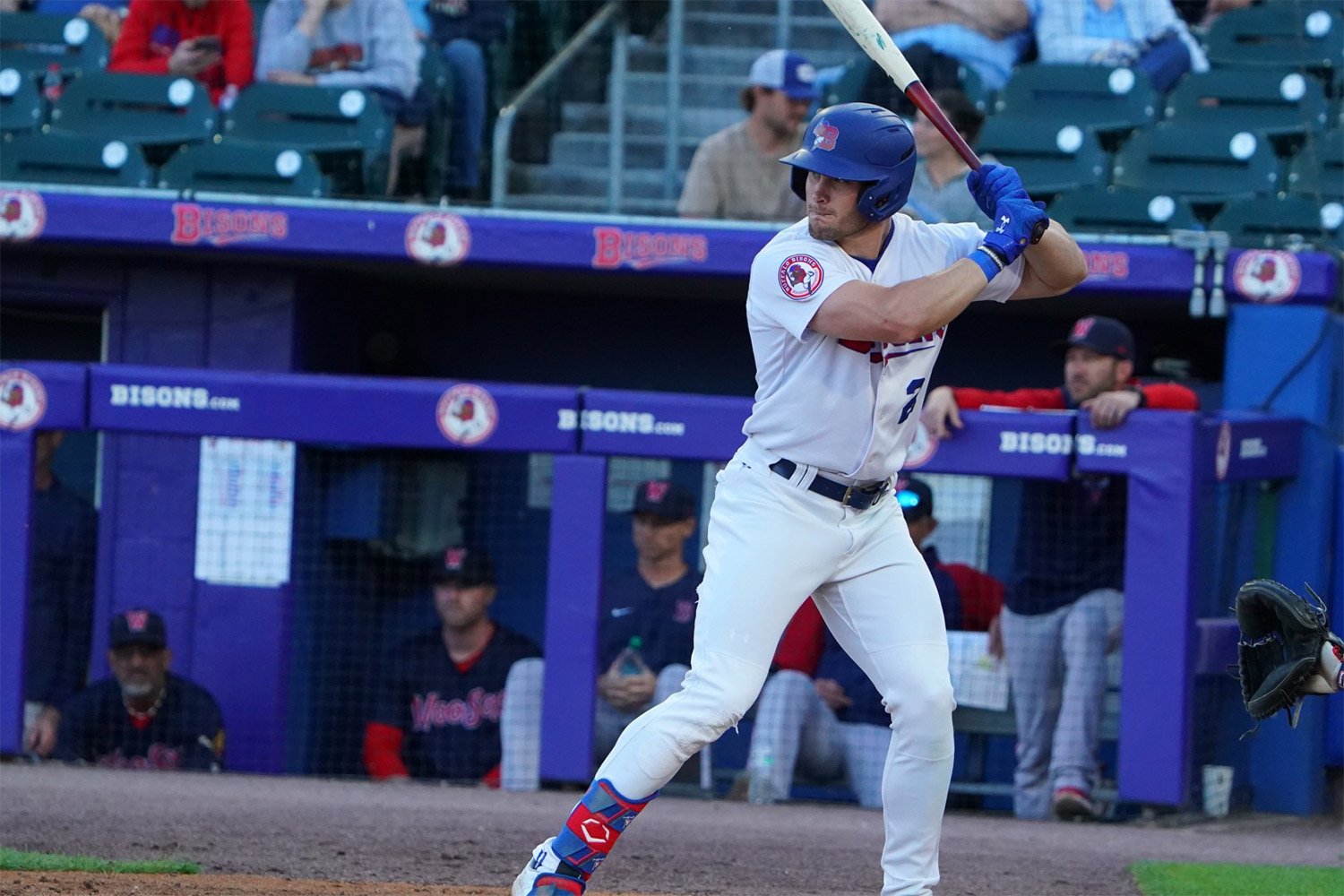 We’re officially now into June, and the Toronto Blue Jays baseball season is in full swing. The Blue Jays have had their share of surprises, both positive and negative, and in turn have them slightly over the .500 mark as we head into the summer months. The Blue Jays' minor league system is no exception, and for the first time in what feels like a long time, the Blue Jays are having some notable, and dare I say, exciting (!!!) position player prospects coming through the pipeline. Let's take a look at some of these players and crown one of them as Blue Jays hitting prospect of the month for May: Honorable Mentions: - Manuel Beltre: A, Dunedin Blue Jays - .269/.356/.368 .724 OPS, 2 HR, 21 BB, 28 K, 13 SB - Alan Roden: AAA. Buffalo Bisons - .361/.446/.583 1.029 OPS, 3 HR, 9 BB, 7 K, 3 SB (Currently back with Toronto) - Edward Duran: A, Dunedin Blue Jays - .301/.399/.486 .885 OPS, 4 HR, 20 BB, 38 K Top 5 Minor League Hitters for May 5. OF David Beckles CPX, DSL Blue Jays - .338/.483/.529 1.012 OPS, 2 HR, 19 BB, 21 K Beckles, just 21 years old, was originally an undrafted free agent by the New York Yankees. After two seasons, he was released and signed a minor league contract with the Blue Jays. After a cup of coffee in the system in 2024, he’s started 2025 with a bang. His 1.012 OPS leads all qualified Blue Jays minor leaguers out of all qualified hitters, and even though he’s not going to appear on anyone's top prospect list (at least as of now), Anyone who posts an OPS that high deserves a shoutout here. Additionally, he was named Florida Complex League Player of the Week on May 12th, which is worth celebrating. 4. Will Robertson: AAA, Buffalo Bisons: .278/.397/.500, .897 OPS, 7 HR, 24 BB, 36 K Now 27 years old, Will Robertson is quickly proving he doesn't have that much more to prove in the minor leagues, coming off back-to-back 19-homer seasons in 2023 with New Hampshire and in 2024 with Buffalo. He’s continued right where he left off, with an increase in walk rate between 2025 and 2024 (15.9%-10.8%) and a decrease in strikeout rate (23.8%-31.3%). Combine that with a rise in average exit velocity (93.1 mph, up from 90.5 mph). He’s doing everything you want to see a prospect do. Even though the Blue Jays outfield picture is quite crowded right now, don't be surprised if Robertson makes his way into the picture by season's end, and by the way, he ended the month of May with four home runs in four straight games: 3. Yohendrick Pinango: AA, New Hampshire Fisher Cats: .294/.403/.513, .916 OPS, 8 HR, 27 BB, 42 K Pinango came in at number three in our Prospects for March/April and has done nothing to remove himself from that list. Daniel Labude noted that a lot of the success was due to his improvement in plate discipline. Not only has that maintained, its actually jumped to a 14.1 walk rate, which has him on base at over 40% of the time. Combine that with five of his eight home runs coming in May and he’s chipped in with four stolen bases too, he’s continuing to look like one of the best hitters in Double A. Not a bad return for Nate Pearson at last year's deadline if he can continue this hot stretch. 2. RJ Schreck: AA, New Hampshire Fisher Cats: .277/.390/.546, .936 OPS 9 HR, 20 BB, 38 K If Pinango isn't one of the best hitters in Double A right now, it's probably because his teammate, RJ Schreck, is standing in his way. Acquired at the trade deadline in 2024 in part of the Justin Turner trade, Schreck has been on fire over the past month. Over the last 30 days, Schreck's nine home runs are the third highest in all of minor leagues, with only the Astros, Shay Whitcomb (who has now been called up), and the Rockies' Ryan Ritter having hit more. On top of that, his 31 hits led all Blue Jays minor leaguers over that time. The strikeouts may become an issue in the long run, but the power is real here, and that's been evident over the last month. 1. Arjun Nimmala: A+, Vancouver Canadians .288/.369/.531 .901 OPS, 9 HR, 21 BB, 36 K Get ready to buy the hype. Nimmala started the year in High-A Vancouver and has done nothing but hit. A first-round pick by the Blue Jays in 2023, he has taken the minor leagues by storm; his 24 extra-base hits are tied for first in the Northwest League. In May, he has an .898 OPS and has even chipped in four steals, all while playing shortstop at a professional level. The prospects lists are starting to take notice: Baseball America has updated its top 100 list, placing Nimmala at No. 57, while MLB Pipeline has him at 59. Kiley McDaniel of ESPN has Nimmala up to 29th on his list. It seems like the sky is the limit, and it won't be a surprise if he ends up first on this list for June and other months as well. Did we mention that he’s just nineteen years old?
-
- 2
-
-
- david beckles
- arjun nimmala
- (and 3 more)
-
We’re officially now into June, and the Toronto Blue Jays baseball season is in full swing. The Blue Jays have had their share of surprises, both positive and negative, and in turn have them slightly over the .500 mark as we head into the summer months. The Blue Jays' minor league system is no exception, and for the first time in what feels like a long time, the Blue Jays are having some notable, and dare I say, exciting (!!!) position player prospects coming through the pipeline. Let's take a look at some of these players and crown one of them as Blue Jays hitting prospect of the month for May: Honorable Mentions: - Manuel Beltre: A, Dunedin Blue Jays - .269/.356/.368 .724 OPS, 2 HR, 21 BB, 28 K, 13 SB - Alan Roden: AAA. Buffalo Bisons - .361/.446/.583 1.029 OPS, 3 HR, 9 BB, 7 K, 3 SB (Currently back with Toronto) - Edward Duran: A, Dunedin Blue Jays - .301/.399/.486 .885 OPS, 4 HR, 20 BB, 38 K Top 5 Minor League Hitters for May 5. OF David Beckles CPX, DSL Blue Jays - .338/.483/.529 1.012 OPS, 2 HR, 19 BB, 21 K Beckles, just 21 years old, was originally an undrafted free agent by the New York Yankees. After two seasons, he was released and signed a minor league contract with the Blue Jays. After a cup of coffee in the system in 2024, he’s started 2025 with a bang. His 1.012 OPS leads all qualified Blue Jays minor leaguers out of all qualified hitters, and even though he’s not going to appear on anyone's top prospect list (at least as of now), Anyone who posts an OPS that high deserves a shoutout here. Additionally, he was named Florida Complex League Player of the Week on May 12th, which is worth celebrating. 4. Will Robertson: AAA, Buffalo Bisons: .278/.397/.500, .897 OPS, 7 HR, 24 BB, 36 K Now 27 years old, Will Robertson is quickly proving he doesn't have that much more to prove in the minor leagues, coming off back-to-back 19-homer seasons in 2023 with New Hampshire and in 2024 with Buffalo. He’s continued right where he left off, with an increase in walk rate between 2025 and 2024 (15.9%-10.8%) and a decrease in strikeout rate (23.8%-31.3%). Combine that with a rise in average exit velocity (93.1 mph, up from 90.5 mph). He’s doing everything you want to see a prospect do. Even though the Blue Jays outfield picture is quite crowded right now, don't be surprised if Robertson makes his way into the picture by season's end, and by the way, he ended the month of May with four home runs in four straight games: 3. Yohendrick Pinango: AA, New Hampshire Fisher Cats: .294/.403/.513, .916 OPS, 8 HR, 27 BB, 42 K Pinango came in at number three in our Prospects for March/April and has done nothing to remove himself from that list. Daniel Labude noted that a lot of the success was due to his improvement in plate discipline. Not only has that maintained, its actually jumped to a 14.1 walk rate, which has him on base at over 40% of the time. Combine that with five of his eight home runs coming in May and he’s chipped in with four stolen bases too, he’s continuing to look like one of the best hitters in Double A. Not a bad return for Nate Pearson at last year's deadline if he can continue this hot stretch. 2. RJ Schreck: AA, New Hampshire Fisher Cats: .277/.390/.546, .936 OPS 9 HR, 20 BB, 38 K If Pinango isn't one of the best hitters in Double A right now, it's probably because his teammate, RJ Schreck, is standing in his way. Acquired at the trade deadline in 2024 in part of the Justin Turner trade, Schreck has been on fire over the past month. Over the last 30 days, Schreck's nine home runs are the third highest in all of minor leagues, with only the Astros, Shay Whitcomb (who has now been called up), and the Rockies' Ryan Ritter having hit more. On top of that, his 31 hits led all Blue Jays minor leaguers over that time. The strikeouts may become an issue in the long run, but the power is real here, and that's been evident over the last month. 1. Arjun Nimmala: A+, Vancouver Canadians .288/.369/.531 .901 OPS, 9 HR, 21 BB, 36 K Get ready to buy the hype. Nimmala started the year in High-A Vancouver and has done nothing but hit. A first-round pick by the Blue Jays in 2023, he has taken the minor leagues by storm; his 24 extra-base hits are tied for first in the Northwest League. In May, he has an .898 OPS and has even chipped in four steals, all while playing shortstop at a professional level. The prospects lists are starting to take notice: Baseball America has updated its top 100 list, placing Nimmala at No. 57, while MLB Pipeline has him at 59. Kiley McDaniel of ESPN has Nimmala up to 29th on his list. It seems like the sky is the limit, and it won't be a surprise if he ends up first on this list for June and other months as well. Did we mention that he’s just nineteen years old? View full article
-
- 4
-
-

-
- david beckles
- arjun nimmala
- (and 3 more)
-
What Will Andrés Giménez’s Return Mean for Ernie Clement?
Jesse Burrill posted an article in Blue Jays
.jpg.618e82ab38ee52d9c88aadcccacbdbd3.jpg) Trading for Andrés Giménez was the first real impact move the Blue Jays made this past offseason, acquiring him and RHP Nick Sandlin from the Guardians in exchange for Spencer Horwitz and outfield prospect Nick Mitchell. The Blue Jays acquiring Giménez really shouldn't have come as too much of a surprise. The Jays have been one of the best defensive teams in the league over the last few seasons, and Giménez added to an already elite defence. From 2022-2024, his 59 Defensive Runs Saved (DRS) were the best in baseball, while his 49 Outs Above Average trailed only Dansby Swanson for the best among qualified players over that time. It's no wonder he won the Gold Glove in three straight seasons. In addition, the Blue Jays believed they could get more out of his bat than what he had shown in the last few seasons. His OPS+ dropped from 141 in 2022, when he was an All-Star and finished sixth in MVP voting, down to 96 in 2023 and 81 in 2024. For context, 100 is league average. At the time of the trade, Ross Atkins said, “Everything about him was attractive. The work we did on his bat and the offensive impact that can be there” (via Keegan Matheson). And while Giménez's .195/.273/.305 season slash line and 65 OPS+ to date leave you wanting more, there is no question he is going to be a key part of this team going forward. Giménez has been out of the lineup since May 7 with a strained quad but has now begun a rehab assignment. In his first rehab game, he went 1-for-3 with a double and a walk. He is expected to be back with the Blue Jays before too long, presuming no setbacks. The assumption is that Giménez will return and be the everyday second baseman once he is ready to go. The question then becomes, what happens with the rest of the roster once he returns? When Giménez was sent to the IL, Michael Stefanic was called up. He has appeared in eight games, mostly at second base, but hasn't produced much with just three hits, all singles. He’s the most likely candidate to be sent down. Where it becomes trickier is figuring out what the Blue Jays can do with Ernie Clement. He has played in all 19 games since Giménez's injury, starting mostly at second, but has seen time at shortstop, third base, and first base as well. During this stretch, he’s hit a modest .273/.338/.333 with a home run and a stolen base. Perhaps the most interesting thing about Clement's bat is that he has some very extreme platoon splits this season: vs. LHP: 15-44 (.341), 1 HR, 6 BB, 6 K, with a 173 wRC+ vs. RHP: 23-111 (.207), 0 HR, 4 BB, 18 K with a 29 wRC+ So, it makes the most sense to have Clement get into the lineup against left-handed pitching, and he should probably be on the bench, or very low in the order, against right-handed pitching. You could make the argument that the Jays should just platoon Clement and Giménez at second base, as Giménez has hit better against righties than lefties in 2025 (82 wRC+ vs. RHP, 36 wRC+ vs. LHP). I'm sure that will happen on occasion, but Giménez was an everyday player before his injury this year, and it's likely that will continue to be the case. Clement also has the option to back up Vladimir Guerrero Jr. at first base or Bo Bichette at shortstop, and the latter may be coming true, as Bichette had the day off on Wednesday with “a little lower back tightness.” Although initial reports say Bichette has been feeling better, the Blue Jays are being “extra careful” (per Sportsnet's Shi Davidi). The next logical option for Clement, if he is going to continue receiving regular playing time, is that he steps in and plays a lot more third base. Before Giménez's injury, that's where Clement played most often. However, third is the position that Addison Barger has occupied lately, and he has an .864 OPS since Giménz went down, the highest mark on the team. Clement's value doesn't come entirely from his bat; his best tool, aside from his versatility, has got to be his glove, and it has been excellent again this season. In terms of OAA, Ernie Clement ranks second in all of baseball: Clement is clearly adding value, whether he's producing with the bat or not. It's hard to justify leaving a player who adds so much defensive value on the bench. The Blue Jays should look to use Clement in a mostly everyday role, bouncing him between infield positions. They could give Vlad and Bo more DH days, or this could force Barger back to right field on occasion, with George Springer moving to left or taking some more DH days himself. Either way, it seems like Nathan Lukes would lose playing time in this scenario, and he’s holding his own so far this season (.764 OPS with four home runs). So that might not be the best course of action. The other move that may happen is maybe the Blue Jays finally bite the bullet and give Anthony Santander an IL trip to deal with the shoulder/hip issues that he’s been playing through. On Wednesday, MLB.com's Keegan Matheson reported that Santander's injury issues have led him to limit his big swings in hopes of making more contact. Yet, contact was never Santander's game, and the Blue Jays need him to be more of a home run threat, as aside from a few exceptions, the Blue Jays don't have many hitters who have the same home run upside as Santander. Moving Santander to the IL would give him time to rest, reflect, and heal, and would also open up more DH at-bats for the rest of the roster. However, the Blue Jays have had opportunities to put Santander on the IL already and have refused to do so, so unless something else comes up, this might not be the route the Blue Jays go. No matter what the Blue Jays decide to do, Giménez's eventual return to the lineup may move things around more than originally expected. It will likely bring about the biggest change since Daulton Varsho returned to the lineup at the end of April. Giménez's return is likely to shake up the playing time for more players than just Clement, and that's pretty important for the Toronto Blue Jays going forward.
Trading for Andrés Giménez was the first real impact move the Blue Jays made this past offseason, acquiring him and RHP Nick Sandlin from the Guardians in exchange for Spencer Horwitz and outfield prospect Nick Mitchell. The Blue Jays acquiring Giménez really shouldn't have come as too much of a surprise. The Jays have been one of the best defensive teams in the league over the last few seasons, and Giménez added to an already elite defence. From 2022-2024, his 59 Defensive Runs Saved (DRS) were the best in baseball, while his 49 Outs Above Average trailed only Dansby Swanson for the best among qualified players over that time. It's no wonder he won the Gold Glove in three straight seasons. In addition, the Blue Jays believed they could get more out of his bat than what he had shown in the last few seasons. His OPS+ dropped from 141 in 2022, when he was an All-Star and finished sixth in MVP voting, down to 96 in 2023 and 81 in 2024. For context, 100 is league average. At the time of the trade, Ross Atkins said, “Everything about him was attractive. The work we did on his bat and the offensive impact that can be there” (via Keegan Matheson). And while Giménez's .195/.273/.305 season slash line and 65 OPS+ to date leave you wanting more, there is no question he is going to be a key part of this team going forward. Giménez has been out of the lineup since May 7 with a strained quad but has now begun a rehab assignment. In his first rehab game, he went 1-for-3 with a double and a walk. He is expected to be back with the Blue Jays before too long, presuming no setbacks. The assumption is that Giménez will return and be the everyday second baseman once he is ready to go. The question then becomes, what happens with the rest of the roster once he returns? When Giménez was sent to the IL, Michael Stefanic was called up. He has appeared in eight games, mostly at second base, but hasn't produced much with just three hits, all singles. He’s the most likely candidate to be sent down. Where it becomes trickier is figuring out what the Blue Jays can do with Ernie Clement. He has played in all 19 games since Giménez's injury, starting mostly at second, but has seen time at shortstop, third base, and first base as well. During this stretch, he’s hit a modest .273/.338/.333 with a home run and a stolen base. Perhaps the most interesting thing about Clement's bat is that he has some very extreme platoon splits this season: vs. LHP: 15-44 (.341), 1 HR, 6 BB, 6 K, with a 173 wRC+ vs. RHP: 23-111 (.207), 0 HR, 4 BB, 18 K with a 29 wRC+ So, it makes the most sense to have Clement get into the lineup against left-handed pitching, and he should probably be on the bench, or very low in the order, against right-handed pitching. You could make the argument that the Jays should just platoon Clement and Giménez at second base, as Giménez has hit better against righties than lefties in 2025 (82 wRC+ vs. RHP, 36 wRC+ vs. LHP). I'm sure that will happen on occasion, but Giménez was an everyday player before his injury this year, and it's likely that will continue to be the case. Clement also has the option to back up Vladimir Guerrero Jr. at first base or Bo Bichette at shortstop, and the latter may be coming true, as Bichette had the day off on Wednesday with “a little lower back tightness.” Although initial reports say Bichette has been feeling better, the Blue Jays are being “extra careful” (per Sportsnet's Shi Davidi). The next logical option for Clement, if he is going to continue receiving regular playing time, is that he steps in and plays a lot more third base. Before Giménez's injury, that's where Clement played most often. However, third is the position that Addison Barger has occupied lately, and he has an .864 OPS since Giménz went down, the highest mark on the team. Clement's value doesn't come entirely from his bat; his best tool, aside from his versatility, has got to be his glove, and it has been excellent again this season. In terms of OAA, Ernie Clement ranks second in all of baseball: Clement is clearly adding value, whether he's producing with the bat or not. It's hard to justify leaving a player who adds so much defensive value on the bench. The Blue Jays should look to use Clement in a mostly everyday role, bouncing him between infield positions. They could give Vlad and Bo more DH days, or this could force Barger back to right field on occasion, with George Springer moving to left or taking some more DH days himself. Either way, it seems like Nathan Lukes would lose playing time in this scenario, and he’s holding his own so far this season (.764 OPS with four home runs). So that might not be the best course of action. The other move that may happen is maybe the Blue Jays finally bite the bullet and give Anthony Santander an IL trip to deal with the shoulder/hip issues that he’s been playing through. On Wednesday, MLB.com's Keegan Matheson reported that Santander's injury issues have led him to limit his big swings in hopes of making more contact. Yet, contact was never Santander's game, and the Blue Jays need him to be more of a home run threat, as aside from a few exceptions, the Blue Jays don't have many hitters who have the same home run upside as Santander. Moving Santander to the IL would give him time to rest, reflect, and heal, and would also open up more DH at-bats for the rest of the roster. However, the Blue Jays have had opportunities to put Santander on the IL already and have refused to do so, so unless something else comes up, this might not be the route the Blue Jays go. No matter what the Blue Jays decide to do, Giménez's eventual return to the lineup may move things around more than originally expected. It will likely bring about the biggest change since Daulton Varsho returned to the lineup at the end of April. Giménez's return is likely to shake up the playing time for more players than just Clement, and that's pretty important for the Toronto Blue Jays going forward. -
Trading for Andrés Giménez was the first real impact move the Blue Jays made this past offseason, acquiring him and RHP Nick Sandlin from the Guardians in exchange for Spencer Horwitz and outfield prospect Nick Mitchell. The Blue Jays acquiring Giménez really shouldn't have come as too much of a surprise. The Jays have been one of the best defensive teams in the league over the last few seasons, and Giménez added to an already elite defence. From 2022-2024, his 59 Defensive Runs Saved (DRS) were the best in baseball, while his 49 Outs Above Average trailed only Dansby Swanson for the best among qualified players over that time. It's no wonder he won the Gold Glove in three straight seasons. In addition, the Blue Jays believed they could get more out of his bat than what he had shown in the last few seasons. His OPS+ dropped from 141 in 2022, when he was an All-Star and finished sixth in MVP voting, down to 96 in 2023 and 81 in 2024. For context, 100 is league average. At the time of the trade, Ross Atkins said, “Everything about him was attractive. The work we did on his bat and the offensive impact that can be there” (via Keegan Matheson). And while Giménez's .195/.273/.305 season slash line and 65 OPS+ to date leave you wanting more, there is no question he is going to be a key part of this team going forward. Giménez has been out of the lineup since May 7 with a strained quad but has now begun a rehab assignment. In his first rehab game, he went 1-for-3 with a double and a walk. He is expected to be back with the Blue Jays before too long, presuming no setbacks. The assumption is that Giménez will return and be the everyday second baseman once he is ready to go. The question then becomes, what happens with the rest of the roster once he returns? When Giménez was sent to the IL, Michael Stefanic was called up. He has appeared in eight games, mostly at second base, but hasn't produced much with just three hits, all singles. He’s the most likely candidate to be sent down. Where it becomes trickier is figuring out what the Blue Jays can do with Ernie Clement. He has played in all 19 games since Giménez's injury, starting mostly at second, but has seen time at shortstop, third base, and first base as well. During this stretch, he’s hit a modest .273/.338/.333 with a home run and a stolen base. Where things get really interesting with Clement is that he’s got some very extreme platoon splits: vs. LHP: 15-44 (.341), 1 HR, 6 BB, 6 K, with a 173 wRC+ vs. RHP: 22-107 (.206), 1 HR, 4 BB, 17 K with a 29 wRC+ It makes the most sense to have Clement get into the lineup against LHP, and probably should be on the bench, or very low in the order against RHP. You could make the argument that you could just platoon Clement and Giménez at second base, as Giménez does hit better against RHP than LHP (82 wRC+ vs righties, and 36 wRC+ vs lefties in 2025), and I'm sure some of that will happen, but Giménez was an everyday player while on the field this year, and it's likely that will continue. Ernie does have the option to back up Vladimir Guerrero Jr. at 1st base, or Bo Bichette at short stop, and the latter may be coming true, as Bo had the day off on Wednesday with “a little lower back tightness.” although initial reports say Bichette has been feeling better, the Blue Jays are being “extra careful.” The next logical option means that Ernie steps in and plays a lot more third base. A space that Addison Barger has been in, and he has an .853 OPS since the Giménez injury, which trails only Alejandro Kirk for the best on the team. Ernie’s value doesn't come entirely from his bat; his best tool, aside from his versatility, has got to be his glove, and it has been excellent again this season. In terms of baseball Savant's Outs above Average, Ernie Clement is second in all of baseball. With someone who adds so much defensive value, it's hard to justify leaving that player on the bench, too, and he is clearly adding value, whether or not the bat is producing. The Blue Jays should look to use Clement as a mostly everyday role, bouncing between Infield positions, and could look to give Vlad and Bo more DH days, or this could force Addison Barger back to RF, and use Springer in left, or give him some more DH days. Either way, it seems like Nathan Lukes would lose more playing time in this scenario, and he’s holding his own so far this season (.768 OPS with 4 HRs). So that might not be the best course of action. The other move that may happen is maybe the Blue Jays finally bite the bullet and give Anthony Santander an IL Trip to deal with some shoulder/hip issues that he’s been dealing with. Earlier on Wednesday Keegan Matheson reported that Santanders' issues are limiting his big swings in hope to make more contact, but contact was never Santanders' game, and the Blue Jays need him to be more of a home run threat as aside from a few exceptions, the Blue Jays don't have a many people who have the home run upside that Santander has. In doing this, it gives Santander time to rest, reflect, and heal, and also opens up more DH at-bats for the rest of the roster. The Blue Jays have had opportunities to put Santander on the IL already and have refused to do so, so unless something else comes up, this might not be the route the Blue Jays go. Either way, it shouldn't take too long, but Giménez's return to the lineup may move things around more than originally expected, and is likely the biggest change since Daulton Varsho returned to the lineup at the end of April. His return is likely to shake up the playing time for more people than just Ernie Clement, and that's pretty important for the Toronto Blue Jays going forward. View full article
-
Weekly Snapshot: Mon, 5/19 through Sun, 5/25 *** Record Last Week: 3-3 (Overall: 25-27) Run Differential Last Week: +1 (Overall: -27) Standings: Fourth Place in AL East (7.0 GB), 12th in AL (3.0 GB of Third Wild Card) Last Week’s Results Game 47: SD 0 - TOR 3 Bassitt: 6.0 IP, 4 H, 0 ER, 1 BB, 6 K Guerrero Jr.: 1-3, HR (6) Santander: 1-3, HR (6) Hoffman: 1.0 IP, K, SV (10) Game 48: SD 0 - TOR 14 Gausman: 7.0 IP, 3 H, 0 ER, 0 BB, 9 K Varsho: 1-5, HR (7), 4 RBI Lukes: 3-5, HR (4), 2 RBI Tied for the Blue Jays' highest-scoring shutout win in Rogers Centre history. Game 49: SD 6 - TOR 7 (11) Francis: 4.0 IP, 3 H, 2 ER, 3 BB, 4 K Barger: 3-4, RBI, 2 BB Varsho: 1-6, 3B, 2 RBI Yariel Rodríguez: 1.1 IP, 0 H, 3 K Game 50: TOR 1 - TB 3 Lauer: 4.1 IP, 6 H, 3 ER, 2 BB, 2 K Clase: 1-3, BB Springer: 0-2, 2 BB Fisher: 1.2 IP, 0 H, 4 K Game 51: TOR 1 - TB 3 Berríos: 6.0 IP, 3 H, 3 ER, 1 BB, 3 K Guerrero Jr.: 1-4, HR (7) Santander: 2-2, 2 BB Game 52: TOR 0 - TB 13 Bassitt: 4.0 IP, 9 H, 5 ER, 2 BB, 2 K Guerrero Jr.: 1-3, BB Santander: 0-4, 3 K Highlights Jonatan Clase quietly had a very strong week. He got into four games and recorded five hits. He had two doubles, four walks, drove in three runs, and also chipped in with a stolen base. He did get picked off first base in the finale against Tampa Bay and still has some things to work on, but he took advantage of the opportunities he had this week. Kevin Gausman turned in what was one of his best starts of the young season by allowing only three baserunners and striking out nine in his seven innings of work on Wednesday. His game score in this start was 80, which trails only his 82 game score from his eight-inning, 10-strikeout start at Fenway earlier this year. Most notably, his splitter seemed to return to peak Gausman levels, generating 13 whiffs on the 26 he threw. It had the lowest spin rate and most vertical movement (compared to horizontal movement) it has had all season, as Sportsnet's Blake Murphy pointed out. Jays Centre's Owen Hill made a nice video regarding Gausman and his plan of attack against Jackson Merrill, which you can watch here. If this trend continues, then Gausman might be about to go on a dominant run. Vladimir Guerrero Jr. was the only Blue Jay to hit multiple home runs this week. First, he knocked a 97-mph Dylan Cease fastball to the pull side for his sixth home run of the season, the first time he’s hit a pitch that fast to the pull side for a home run since September of 2022 (per Chris Black on X). Then, on Saturday, he crushed his seventh homer of the year off of Shane Baz with a scorching 112.7-mph exit velocity, sending the ball 423 feet. Prior to this week, he had only recorded one home run in his previous fifteen games. This could be a sign that more power is about to come. Lowlights Bowden Francis struggled once again. He threw just four innings on Thursday and gave up two runs on three walks and yet another home run. His ERA on the season now sits at 5.54, and his 15 home runs allowed are the most in the major leagues. The Blue Jays chose to pull him early in this start to avoid him facing the Padres a third time through the order with a rested bullpen behind him. Still, Francis needs to be better. Limiting walks and finding a way to keep the ball in the ballpark would be a good place to start. Bo Bichette has really been in a slump as of late. This week, he went 5-for-28 with all five of those hits being singles. His OPS dropped from .757 to .725, fueled by a 72.7% groundball rate and a team-low negative 8.1-degree average launch angle. Look for Bichette to start to elevate the ball more going forward as he attempts to get out of his slump. Random Stats of the Week Yariel Rodríguez struck out Luis Arraez this week. He’s only the fourth pitcher to set the three-time batting champ down on strikes this season. Blue Jays hitters had a 12.3% walk rate this week, which trailed only the Athletics for the highest in baseball. The Blue Jays' hitters' 51.6% groundball rate was the highest in baseball this week. Braydon Fisher collected his first MLB win in extras on Thursday against the Padres. Michael Stefanic threw a scoreless inning as a position player pitching in Sunday's blowout. Myles Straw saw some time at second base on Sunday. It was the first time since 2019 he had appeared at the position. News, Notes and Not Playing RP Paxton Schultz was recalled from Triple-A Buffalo. C Ali Sánchez had his contract selected from Triple-A Buffalo. LHP Josh Walker was been DFA’d. Day-to-day: Anthony Santander Santander was in and out of games all week. He made a pinch-hit appearance on Friday and was in the lineup on Saturday and Sunday, while still dealing with a cranky shoulder. 7-Day IL: Tyler Heineman C Tyler Heineman was placed on the seven-day concussion IL after taking a couple of foul tips off the mask in Thursday's finale against the Padres. 10-Day IL: Andrés Giménez Giménez did some running drills early in the week but is likely to need a rehab assignment before returning to games (per Sportnet's Shi Davidi). 15-day IL: Yimi García, Nick Sandlin Yimi García was placed on the 15-day IL with a right shoulder impingement. Nick Sandlin threw a bullpen early in the week and will get a couple more side sessions before facing live hitters (via Davidi). 60-day IL: Max Scherzer, Erik Swanson, Ryan Burr, Alek Manoah Scherzer threw bullpens near his house in Jupiter, Florida. He will rejoin the Blue Jays in Texas, and assuming all goes well, he will face some live hitters again. Then, he will head for a rehab assignment (via MLB.com's Keegan Matheson). Erik Swanson made a pair of rehab appearances at Single-A. He faced a total of six batters, giving up one hit and striking out two. Ryan Burr also appeared in a pair of rehab games, one in Dunedin and one in Buffalo. He threw two innings between the two appearances, allowing three runs on four hits and striking out three. Alek Manoah was with the Jays in Florida and has begun throwing. He hopes to rejoin the big league team in the second half of the season (via Matheson). Trending Storylines This really was a story of two series for the Blue Jays. First, they took care of business against a San Diego Padres team that had already been slumping, earning shutouts in the first two games and a walk-off win on Thursday to complete the sweep. Then, they showed up at George M. Steinbrenner Field in Tampa looking like a completely different team. They scored only two runs over three games, including a 13-0 loss on Sunday, continuing a trend of not playing well against the Rays in Tampa. Jeff Hoffman gave up a lead-off walk and a game-tying two-run home run on Thursday for his third blown save of the season, bringing his ERA up to 6.04. With Yimi García now on the 15-day IL, the Jays will need Hoffman to find some consistency in the ninth inning going forward. Looking Ahead The Blue Jays will continue a stretch of 13 games in 13 days as they head to Texas to face the Rangers. They will get their first look at Jacob deGrom and try to climb back to the .500 mark before they welcome the Athletics for a four-game weekend series at Rogers Centre. The Rangers are 3-7 in their last 10, and the A’s are 1-9. This, in theory, could be a good time for the Blue Jays to take advantage of their opponents who aren’t playing well, just like they did against the Padres earlier last week. View full article
-
.jpeg.301f5e3ae07ca78123d9a76c7e040b36.jpeg) Weekly Snapshot: Mon, 5/19 through Sun, 5/25 *** Record Last Week: 3-3 (Overall: 25-27) Run Differential Last Week: +1 (Overall: -27) Standings: Fourth Place in AL East (7.0 GB), 12th in AL (3.0 GB of Third Wild Card) Last Week’s Results Game 47: SD 0 - TOR 3 Bassitt: 6.0 IP, 4 H, 0 ER, 1 BB, 6 K Guerrero Jr.: 1-3, HR (6) Santander: 1-3, HR (6) Hoffman: 1.0 IP, K, SV (10) Game 48: SD 0 - TOR 14 Gausman: 7.0 IP, 3 H, 0 ER, 0 BB, 9 K Varsho: 1-5, HR (7), 4 RBI Lukes: 3-5, HR (4), 2 RBI Tied for the Blue Jays' highest-scoring shutout win in Rogers Centre history. Game 49: SD 6 - TOR 7 (11) Francis: 4.0 IP, 3 H, 2 ER, 3 BB, 4 K Barger: 3-4, RBI, 2 BB Varsho: 1-6, 3B, 2 RBI Yariel Rodríguez: 1.1 IP, 0 H, 3 K Game 50: TOR 1 - TB 3 Lauer: 4.1 IP, 6 H, 3 ER, 2 BB, 2 K Clase: 1-3, BB Springer: 0-2, 2 BB Fisher: 1.2 IP, 0 H, 4 K Game 51: TOR 1 - TB 3 Berríos: 6.0 IP, 3 H, 3 ER, 1 BB, 3 K Guerrero Jr.: 1-4, HR (7) Santander: 2-2, 2 BB Game 52: TOR 0 - TB 13 Bassitt: 4.0 IP, 9 H, 5 ER, 2 BB, 2 K Guerrero Jr.: 1-3, BB Santander: 0-4, 3 K Highlights Jonatan Clase quietly had a very strong week. He got into four games and recorded five hits. He had two doubles, four walks, drove in three runs, and also chipped in with a stolen base. He did get picked off first base in the finale against Tampa Bay and still has some things to work on, but he took advantage of the opportunities he had this week. Kevin Gausman turned in what was one of his best starts of the young season by allowing only three baserunners and striking out nine in his seven innings of work on Wednesday. His game score in this start was 80, which trails only his 82 game score from his eight-inning, 10-strikeout start at Fenway earlier this year. Most notably, his splitter seemed to return to peak Gausman levels, generating 13 whiffs on the 26 he threw. It had the lowest spin rate and most vertical movement (compared to horizontal movement) it has had all season, as Sportsnet's Blake Murphy pointed out. Jays Centre's Owen Hill made a nice video regarding Gausman and his plan of attack against Jackson Merrill, which you can watch here. If this trend continues, then Gausman might be about to go on a dominant run. Vladimir Guerrero Jr. was the only Blue Jay to hit multiple home runs this week. First, he knocked a 97-mph Dylan Cease fastball to the pull side for his sixth home run of the season, the first time he’s hit a pitch that fast to the pull side for a home run since September of 2022 (per Chris Black on X). Then, on Saturday, he crushed his seventh homer of the year off of Shane Baz with a scorching 112.7-mph exit velocity, sending the ball 423 feet. Prior to this week, he had only recorded one home run in his previous fifteen games. This could be a sign that more power is about to come. Lowlights Bowden Francis struggled once again. He threw just four innings on Thursday and gave up two runs on three walks and yet another home run. His ERA on the season now sits at 5.54, and his 15 home runs allowed are the most in the major leagues. The Blue Jays chose to pull him early in this start to avoid him facing the Padres a third time through the order with a rested bullpen behind him. Still, Francis needs to be better. Limiting walks and finding a way to keep the ball in the ballpark would be a good place to start. Bo Bichette has really been in a slump as of late. This week, he went 5-for-28 with all five of those hits being singles. His OPS dropped from .757 to .725, fueled by a 72.7% groundball rate and a team-low negative 8.1-degree average launch angle. Look for Bichette to start to elevate the ball more going forward as he attempts to get out of his slump. Random Stats of the Week Yariel Rodríguez struck out Luis Arraez this week. He’s only the fourth pitcher to set the three-time batting champ down on strikes this season. Blue Jays hitters had a 12.3% walk rate this week, which trailed only the Athletics for the highest in baseball. The Blue Jays' hitters' 51.6% groundball rate was the highest in baseball this week. Braydon Fisher collected his first MLB win in extras on Thursday against the Padres. Michael Stefanic threw a scoreless inning as a position player pitching in Sunday's blowout. Myles Straw saw some time at second base on Sunday. It was the first time since 2019 he had appeared at the position. News, Notes and Not Playing RP Paxton Schultz was recalled from Triple-A Buffalo. C Ali Sánchez had his contract selected from Triple-A Buffalo. LHP Josh Walker was been DFA’d. Day-to-day: Anthony Santander Santander was in and out of games all week. He made a pinch-hit appearance on Friday and was in the lineup on Saturday and Sunday, while still dealing with a cranky shoulder. 7-Day IL: Tyler Heineman C Tyler Heineman was placed on the seven-day concussion IL after taking a couple of foul tips off the mask in Thursday's finale against the Padres. 10-Day IL: Andrés Giménez Giménez did some running drills early in the week but is likely to need a rehab assignment before returning to games (per Sportnet's Shi Davidi). 15-day IL: Yimi García, Nick Sandlin Yimi García was placed on the 15-day IL with a right shoulder impingement. Nick Sandlin threw a bullpen early in the week and will get a couple more side sessions before facing live hitters (via Davidi). 60-day IL: Max Scherzer, Erik Swanson, Ryan Burr, Alek Manoah Scherzer threw bullpens near his house in Jupiter, Florida. He will rejoin the Blue Jays in Texas, and assuming all goes well, he will face some live hitters again. Then, he will head for a rehab assignment (via MLB.com's Keegan Matheson). Erik Swanson made a pair of rehab appearances at Single-A. He faced a total of six batters, giving up one hit and striking out two. Ryan Burr also appeared in a pair of rehab games, one in Dunedin and one in Buffalo. He threw two innings between the two appearances, allowing three runs on four hits and striking out three. Alek Manoah was with the Jays in Florida and has begun throwing. He hopes to rejoin the big league team in the second half of the season (via Matheson). Trending Storylines This really was a story of two series for the Blue Jays. First, they took care of business against a San Diego Padres team that had already been slumping, earning shutouts in the first two games and a walk-off win on Thursday to complete the sweep. Then, they showed up at George M. Steinbrenner Field in Tampa looking like a completely different team. They scored only two runs over three games, including a 13-0 loss on Sunday, continuing a trend of not playing well against the Rays in Tampa. Jeff Hoffman gave up a lead-off walk and a game-tying two-run home run on Thursday for his third blown save of the season, bringing his ERA up to 6.04. With Yimi García now on the 15-day IL, the Jays will need Hoffman to find some consistency in the ninth inning going forward. Looking Ahead The Blue Jays will continue a stretch of 13 games in 13 days as they head to Texas to face the Rangers. They will get their first look at Jacob deGrom and try to climb back to the .500 mark before they welcome the Athletics for a four-game weekend series at Rogers Centre. The Rangers are 3-7 in their last 10, and the A’s are 1-9. This, in theory, could be a good time for the Blue Jays to take advantage of their opponents who aren’t playing well, just like they did against the Padres earlier last week.
Weekly Snapshot: Mon, 5/19 through Sun, 5/25 *** Record Last Week: 3-3 (Overall: 25-27) Run Differential Last Week: +1 (Overall: -27) Standings: Fourth Place in AL East (7.0 GB), 12th in AL (3.0 GB of Third Wild Card) Last Week’s Results Game 47: SD 0 - TOR 3 Bassitt: 6.0 IP, 4 H, 0 ER, 1 BB, 6 K Guerrero Jr.: 1-3, HR (6) Santander: 1-3, HR (6) Hoffman: 1.0 IP, K, SV (10) Game 48: SD 0 - TOR 14 Gausman: 7.0 IP, 3 H, 0 ER, 0 BB, 9 K Varsho: 1-5, HR (7), 4 RBI Lukes: 3-5, HR (4), 2 RBI Tied for the Blue Jays' highest-scoring shutout win in Rogers Centre history. Game 49: SD 6 - TOR 7 (11) Francis: 4.0 IP, 3 H, 2 ER, 3 BB, 4 K Barger: 3-4, RBI, 2 BB Varsho: 1-6, 3B, 2 RBI Yariel Rodríguez: 1.1 IP, 0 H, 3 K Game 50: TOR 1 - TB 3 Lauer: 4.1 IP, 6 H, 3 ER, 2 BB, 2 K Clase: 1-3, BB Springer: 0-2, 2 BB Fisher: 1.2 IP, 0 H, 4 K Game 51: TOR 1 - TB 3 Berríos: 6.0 IP, 3 H, 3 ER, 1 BB, 3 K Guerrero Jr.: 1-4, HR (7) Santander: 2-2, 2 BB Game 52: TOR 0 - TB 13 Bassitt: 4.0 IP, 9 H, 5 ER, 2 BB, 2 K Guerrero Jr.: 1-3, BB Santander: 0-4, 3 K Highlights Jonatan Clase quietly had a very strong week. He got into four games and recorded five hits. He had two doubles, four walks, drove in three runs, and also chipped in with a stolen base. He did get picked off first base in the finale against Tampa Bay and still has some things to work on, but he took advantage of the opportunities he had this week. Kevin Gausman turned in what was one of his best starts of the young season by allowing only three baserunners and striking out nine in his seven innings of work on Wednesday. His game score in this start was 80, which trails only his 82 game score from his eight-inning, 10-strikeout start at Fenway earlier this year. Most notably, his splitter seemed to return to peak Gausman levels, generating 13 whiffs on the 26 he threw. It had the lowest spin rate and most vertical movement (compared to horizontal movement) it has had all season, as Sportsnet's Blake Murphy pointed out. Jays Centre's Owen Hill made a nice video regarding Gausman and his plan of attack against Jackson Merrill, which you can watch here. If this trend continues, then Gausman might be about to go on a dominant run. Vladimir Guerrero Jr. was the only Blue Jay to hit multiple home runs this week. First, he knocked a 97-mph Dylan Cease fastball to the pull side for his sixth home run of the season, the first time he’s hit a pitch that fast to the pull side for a home run since September of 2022 (per Chris Black on X). Then, on Saturday, he crushed his seventh homer of the year off of Shane Baz with a scorching 112.7-mph exit velocity, sending the ball 423 feet. Prior to this week, he had only recorded one home run in his previous fifteen games. This could be a sign that more power is about to come. Lowlights Bowden Francis struggled once again. He threw just four innings on Thursday and gave up two runs on three walks and yet another home run. His ERA on the season now sits at 5.54, and his 15 home runs allowed are the most in the major leagues. The Blue Jays chose to pull him early in this start to avoid him facing the Padres a third time through the order with a rested bullpen behind him. Still, Francis needs to be better. Limiting walks and finding a way to keep the ball in the ballpark would be a good place to start. Bo Bichette has really been in a slump as of late. This week, he went 5-for-28 with all five of those hits being singles. His OPS dropped from .757 to .725, fueled by a 72.7% groundball rate and a team-low negative 8.1-degree average launch angle. Look for Bichette to start to elevate the ball more going forward as he attempts to get out of his slump. Random Stats of the Week Yariel Rodríguez struck out Luis Arraez this week. He’s only the fourth pitcher to set the three-time batting champ down on strikes this season. Blue Jays hitters had a 12.3% walk rate this week, which trailed only the Athletics for the highest in baseball. The Blue Jays' hitters' 51.6% groundball rate was the highest in baseball this week. Braydon Fisher collected his first MLB win in extras on Thursday against the Padres. Michael Stefanic threw a scoreless inning as a position player pitching in Sunday's blowout. Myles Straw saw some time at second base on Sunday. It was the first time since 2019 he had appeared at the position. News, Notes and Not Playing RP Paxton Schultz was recalled from Triple-A Buffalo. C Ali Sánchez had his contract selected from Triple-A Buffalo. LHP Josh Walker was been DFA’d. Day-to-day: Anthony Santander Santander was in and out of games all week. He made a pinch-hit appearance on Friday and was in the lineup on Saturday and Sunday, while still dealing with a cranky shoulder. 7-Day IL: Tyler Heineman C Tyler Heineman was placed on the seven-day concussion IL after taking a couple of foul tips off the mask in Thursday's finale against the Padres. 10-Day IL: Andrés Giménez Giménez did some running drills early in the week but is likely to need a rehab assignment before returning to games (per Sportnet's Shi Davidi). 15-day IL: Yimi García, Nick Sandlin Yimi García was placed on the 15-day IL with a right shoulder impingement. Nick Sandlin threw a bullpen early in the week and will get a couple more side sessions before facing live hitters (via Davidi). 60-day IL: Max Scherzer, Erik Swanson, Ryan Burr, Alek Manoah Scherzer threw bullpens near his house in Jupiter, Florida. He will rejoin the Blue Jays in Texas, and assuming all goes well, he will face some live hitters again. Then, he will head for a rehab assignment (via MLB.com's Keegan Matheson). Erik Swanson made a pair of rehab appearances at Single-A. He faced a total of six batters, giving up one hit and striking out two. Ryan Burr also appeared in a pair of rehab games, one in Dunedin and one in Buffalo. He threw two innings between the two appearances, allowing three runs on four hits and striking out three. Alek Manoah was with the Jays in Florida and has begun throwing. He hopes to rejoin the big league team in the second half of the season (via Matheson). Trending Storylines This really was a story of two series for the Blue Jays. First, they took care of business against a San Diego Padres team that had already been slumping, earning shutouts in the first two games and a walk-off win on Thursday to complete the sweep. Then, they showed up at George M. Steinbrenner Field in Tampa looking like a completely different team. They scored only two runs over three games, including a 13-0 loss on Sunday, continuing a trend of not playing well against the Rays in Tampa. Jeff Hoffman gave up a lead-off walk and a game-tying two-run home run on Thursday for his third blown save of the season, bringing his ERA up to 6.04. With Yimi García now on the 15-day IL, the Jays will need Hoffman to find some consistency in the ninth inning going forward. Looking Ahead The Blue Jays will continue a stretch of 13 games in 13 days as they head to Texas to face the Rangers. They will get their first look at Jacob deGrom and try to climb back to the .500 mark before they welcome the Athletics for a four-game weekend series at Rogers Centre. The Rangers are 3-7 in their last 10, and the A’s are 1-9. This, in theory, could be a good time for the Blue Jays to take advantage of their opponents who aren’t playing well, just like they did against the Padres earlier last week. -
Stealing bases has always been one of the most thrilling aspects of the game of baseball. The mind games going on between the baserunner and the pitcher are fascinating. Picking the right pitch to run on is an art, and just the threat of being a menace on the bases can sometimes be enough to get in a pitcher's head and make him forget about the batter at the plate and serve up a meatball. There is also a reason Major League Baseball instituted several rule changes before the 2023 season in an effort to increase stolen bases. MLB introduced the pitch clock to the game, severely limited defensive shifts, and brought in larger bases, increasing the bags from 15 inches on all sides to 18 inches. Well, it worked. League-wide stolen bases jumped from 2486 in 2022 to 3503 in 2023 and 3617 in 2024. It's safe to say that the league has to be happy with the results. With that being said, Rob Manfred and company must not be thrilled with Alejandro Kirk and the Toronto Blue Jays this season. On the offensive side, things are going well. Through 49 games this season, the Blue Jays have 32 stolen bases. Andrés Giménez leads the way with nine, George Springer is next with six, and each of Bo Bichette, Myles Straw, Ernie Clement, and Tyler Heineman (!!!) has stolen multiple bases. The Jays are currently on pace for 106 stolen bases, which would be their highest total since 2013 when Rajai Davis and his 45 stolen bases led the charge. Yet, the Blue Jays have really excelled on the defensive side. In terms of runners caught stealing this year, their 16 are tied for second in the major leagues. They were tied for fifth in that category in 2024 and 21st the year prior. If their current pace holds, the Blue Jays will have their first 50 caught stealing season since the turn of the century. The wild thing about all this is Kirk and Heineman aren't necessarily known for their arm strength. Kirk’s average arm strength of 79.2 mph has him ranked 35th out of all qualified catchers, and Heineman’s 75.5 mph is much lower than that. In fact, the catcher with the best arm in the organization is Christian Bethancourt, who in 2024 averaged 85.3 mph with his arm. He’s currently in Buffalo. So the question becomes, how are the Blue Jays having so much success throwing out baserunners? Is it just luck or small sample noise? Maybe, but you also have to be good to be lucky, and the Blue Jays catchers are doing some good things. Let's take Kirk as an example. In 2024, he took his first real jump in preventing stolen bases. Heading into the season, Kirk met up with bullpen catcher Luis Hurtado and came up with a plan to better control the running game. This involved adding weighted balls into his throwing program. He’d throw several reps with a ten-ounce, six-ounce, and four-ounce ball before starting his usual throwing program. It's safe to say it worked. Kirk threw out as many runners in 2024 (27) as he had in 2022 and '23 combined. Kirk's improvements go beyond his arm. His average pop time (which takes into account a catcher's footwork and exchange, as well as the velo on his throw) has also gotten better. Here’s a look at his career numbers: Pop time data via Baseball Savant. Updated on May 21, 2025. In this case, the lower the number, the better. Kirk's average exchange time is roughly the same as it was in 2023 and '24, but his arm strength has significantly improved. It's likely his footwork behind the plate has also played a part in this as well. Add it all up, and Kirk has thrown out nine of the 30 baserunners who have attempted to steal against him. Tyler Heineman has also held his own behind the plate. His 75.5-mph average throw puts him among the bottom 10 on Statcast's catcher arm strength leaderboard. But where Heineman really excels is with his pop time and exchange time. Let's take that previous chart and add Heineman: Pop time data via Baseball Savant. Updated on May 21, 2025. Heineman has always had this skill throughout his major league career. His 0.54 exchange time is currently the best among qualified catchers on the Statcast leaderboard. This helps explain why he’s successfully thrown out seven of the 12 baserunners who have attempted to run against him. It's good stuff. But throwing out baserunners has to do with more than just catcher arm strength, exchange speed, and pop time. Most savvy baserunners will tell you that stolen bases are stolen off the pitcher, not the catcher. The Blue Jays pitchers have done a notable job controlling the running game, too. Here is a chart comparing how their pitchers have controlled the running game this season compared to last: Data via Baseball Savant. Updated on May 21, 2025. There is a lot to unpack here, but I want to draw your attention to two key points. The first one is the “Net Bases Prevented” stat, which Baseball Savant describes as the number of "advances prevented and outs added assigned to the pitcher." In 2024, the Blue Jays were the second-worst team in baseball with -19. So far in 2025? They’re 14th, right in the middle of the pack. The other number that stands out is their average "Lead Distance Gained," which is the average distance that opposing runners have advanced from the start of the pitcher's delivery to pitch release. As you can see, baserunners aren’t getting as big of leads off of Blue Jays pitchers this season. That's particularly impressive considering left-handed pitchers (who naturally face first base from the mound) have pitched a lower percentage of Toronto's innings this year. Simply put, the Blue Jays pitchers have been better at keeping runners close. The table below shows the average "Lead Distance Gained" against each qualified Blue Jays pitcher between 2024 and '25: Pitcher 2024 2025 Difference Bassitt 4.4 ft 4.0 ft 0.4 ft Berríos 4.5 ft 4.7 ft -0.2 ft Francis 3.5 ft 3.3 ft 0.2 ft Gausman 4.4 ft 4.1 ft 0.3 ft Green 4.9ft 5.3 ft -0.4 ft Little 3.1ft 2.7 ft 0.4 ft Y. Rodríguez 4.5ft 4.0 ft 0.5 ft Data via Baseball Savant. Updated on May 21, 2025. Two of this offseason's biggest signings, Jeff Hoffman (+0.3) and Yimi García (+0.4), have also seen this number improve in 2025. One reason for this might be how often Kirk has been throwing behind runners at first base this year. Maybe that shows up on other teams' scouting reports when they come to play the Blue Jays. One thing is for sure: The Blue Jays' catchers and pitchers have improved at controlling the running game. The Blue Jays are still far from a complete team, but for a team that hasn’t been scoring as many runs as they would like to, improving their run prevention will help them win more ball games. Every time you earn an extra out on the bases and/or prevent the other team from moving up a base goes a long way. Even if that means upsetting Rob Manfred and his new rules just a little bit. View full article
-
Base Theft Crackdown: How the Blue Jays Are Silencing the Running Game
Jesse Burrill posted an article in Blue Jays
.jpg.6f7d7970b0e938bd6f69f9bd6a7b494b.jpg) Stealing bases has always been one of the most thrilling aspects of the game of baseball. The mind games going on between the baserunner and the pitcher are fascinating. Picking the right pitch to run on is an art, and just the threat of being a menace on the bases can sometimes be enough to get in a pitcher's head and make him forget about the batter at the plate and serve up a meatball. There is also a reason Major League Baseball instituted several rule changes before the 2023 season in an effort to increase stolen bases. MLB introduced the pitch clock to the game, severely limited defensive shifts, and brought in larger bases, increasing the bags from 15 inches on all sides to 18 inches. Well, it worked. League-wide stolen bases jumped from 2486 in 2022 to 3503 in 2023 and 3617 in 2024. It's safe to say that the league has to be happy with the results. With that being said, Rob Manfred and company must not be thrilled with Alejandro Kirk and the Toronto Blue Jays this season. On the offensive side, things are going well. Through 49 games this season, the Blue Jays have 32 stolen bases. Andrés Giménez leads the way with nine, George Springer is next with six, and each of Bo Bichette, Myles Straw, Ernie Clement, and Tyler Heineman (!!!) has stolen multiple bases. The Jays are currently on pace for 106 stolen bases, which would be their highest total since 2013 when Rajai Davis and his 45 stolen bases led the charge. Yet, the Blue Jays have really excelled on the defensive side. In terms of runners caught stealing this year, their 16 are tied for second in the major leagues. They were tied for fifth in that category in 2024 and 21st the year prior. If their current pace holds, the Blue Jays will have their first 50 caught stealing season since the turn of the century. The wild thing about all this is Kirk and Heineman aren't necessarily known for their arm strength. Kirk’s average arm strength of 79.2 mph has him ranked 35th out of all qualified catchers, and Heineman’s 75.5 mph is much lower than that. In fact, the catcher with the best arm in the organization is Christian Bethancourt, who in 2024 averaged 85.3 mph with his arm. He’s currently in Buffalo. So the question becomes, how are the Blue Jays having so much success throwing out baserunners? Is it just luck or small sample noise? Maybe, but you also have to be good to be lucky, and the Blue Jays catchers are doing some good things. Let's take Kirk as an example. In 2024, he took his first real jump in preventing stolen bases. Heading into the season, Kirk met up with bullpen catcher Luis Hurtado and came up with a plan to better control the running game. This involved adding weighted balls into his throwing program. He’d throw several reps with a ten-ounce, six-ounce, and four-ounce ball before starting his usual throwing program. It's safe to say it worked. Kirk threw out as many runners in 2024 (27) as he had in 2022 and '23 combined. Kirk's improvements go beyond his arm. His average pop time (which takes into account a catcher's footwork and exchange, as well as the velo on his throw) has also gotten better. Here’s a look at his career numbers: Pop time data via Baseball Savant. Updated on May 21, 2025. In this case, the lower the number, the better. Kirk's average exchange time is roughly the same as it was in 2023 and '24, but his arm strength has significantly improved. It's likely his footwork behind the plate has also played a part in this as well. Add it all up, and Kirk has thrown out nine of the 30 baserunners who have attempted to steal against him. Tyler Heineman has also held his own behind the plate. His 75.5-mph average throw puts him among the bottom 10 on Statcast's catcher arm strength leaderboard. But where Heineman really excels is with his pop time and exchange time. Let's take that previous chart and add Heineman: Pop time data via Baseball Savant. Updated on May 21, 2025. Heineman has always had this skill throughout his major league career. His 0.54 exchange time is currently the best among qualified catchers on the Statcast leaderboard. This helps explain why he’s successfully thrown out seven of the 12 baserunners who have attempted to run against him. It's good stuff. But throwing out baserunners has to do with more than just catcher arm strength, exchange speed, and pop time. Most savvy baserunners will tell you that stolen bases are stolen off the pitcher, not the catcher. The Blue Jays pitchers have done a notable job controlling the running game, too. Here is a chart comparing how their pitchers have controlled the running game this season compared to last: Data via Baseball Savant. Updated on May 21, 2025. There is a lot to unpack here, but I want to draw your attention to two key points. The first one is the “Net Bases Prevented” stat, which Baseball Savant describes as the number of "advances prevented and outs added assigned to the pitcher." In 2024, the Blue Jays were the second-worst team in baseball with -19. So far in 2025? They’re 14th, right in the middle of the pack. The other number that stands out is their average "Lead Distance Gained," which is the average distance that opposing runners have advanced from the start of the pitcher's delivery to pitch release. As you can see, baserunners aren’t getting as big of leads off of Blue Jays pitchers this season. That's particularly impressive considering left-handed pitchers (who naturally face first base from the mound) have pitched a lower percentage of Toronto's innings this year. Simply put, the Blue Jays pitchers have been better at keeping runners close. The table below shows the average "Lead Distance Gained" against each qualified Blue Jays pitcher between 2024 and '25: Pitcher 2024 2025 Difference Bassitt 4.4 ft 4.0 ft 0.4 ft Berríos 4.5 ft 4.7 ft -0.2 ft Francis 3.5 ft 3.3 ft 0.2 ft Gausman 4.4 ft 4.1 ft 0.3 ft Green 4.9ft 5.3 ft -0.4 ft Little 3.1ft 2.7 ft 0.4 ft Y. Rodríguez 4.5ft 4.0 ft 0.5 ft Data via Baseball Savant. Updated on May 21, 2025. Two of this offseason's biggest signings, Jeff Hoffman (+0.3) and Yimi García (+0.4), have also seen this number improve in 2025. One reason for this might be how often Kirk has been throwing behind runners at first base this year. Maybe that shows up on other teams' scouting reports when they come to play the Blue Jays. One thing is for sure: The Blue Jays' catchers and pitchers have improved at controlling the running game. The Blue Jays are still far from a complete team, but for a team that hasn’t been scoring as many runs as they would like to, improving their run prevention will help them win more ball games. Every time you earn an extra out on the bases and/or prevent the other team from moving up a base goes a long way. Even if that means upsetting Rob Manfred and his new rules just a little bit.
Stealing bases has always been one of the most thrilling aspects of the game of baseball. The mind games going on between the baserunner and the pitcher are fascinating. Picking the right pitch to run on is an art, and just the threat of being a menace on the bases can sometimes be enough to get in a pitcher's head and make him forget about the batter at the plate and serve up a meatball. There is also a reason Major League Baseball instituted several rule changes before the 2023 season in an effort to increase stolen bases. MLB introduced the pitch clock to the game, severely limited defensive shifts, and brought in larger bases, increasing the bags from 15 inches on all sides to 18 inches. Well, it worked. League-wide stolen bases jumped from 2486 in 2022 to 3503 in 2023 and 3617 in 2024. It's safe to say that the league has to be happy with the results. With that being said, Rob Manfred and company must not be thrilled with Alejandro Kirk and the Toronto Blue Jays this season. On the offensive side, things are going well. Through 49 games this season, the Blue Jays have 32 stolen bases. Andrés Giménez leads the way with nine, George Springer is next with six, and each of Bo Bichette, Myles Straw, Ernie Clement, and Tyler Heineman (!!!) has stolen multiple bases. The Jays are currently on pace for 106 stolen bases, which would be their highest total since 2013 when Rajai Davis and his 45 stolen bases led the charge. Yet, the Blue Jays have really excelled on the defensive side. In terms of runners caught stealing this year, their 16 are tied for second in the major leagues. They were tied for fifth in that category in 2024 and 21st the year prior. If their current pace holds, the Blue Jays will have their first 50 caught stealing season since the turn of the century. The wild thing about all this is Kirk and Heineman aren't necessarily known for their arm strength. Kirk’s average arm strength of 79.2 mph has him ranked 35th out of all qualified catchers, and Heineman’s 75.5 mph is much lower than that. In fact, the catcher with the best arm in the organization is Christian Bethancourt, who in 2024 averaged 85.3 mph with his arm. He’s currently in Buffalo. So the question becomes, how are the Blue Jays having so much success throwing out baserunners? Is it just luck or small sample noise? Maybe, but you also have to be good to be lucky, and the Blue Jays catchers are doing some good things. Let's take Kirk as an example. In 2024, he took his first real jump in preventing stolen bases. Heading into the season, Kirk met up with bullpen catcher Luis Hurtado and came up with a plan to better control the running game. This involved adding weighted balls into his throwing program. He’d throw several reps with a ten-ounce, six-ounce, and four-ounce ball before starting his usual throwing program. It's safe to say it worked. Kirk threw out as many runners in 2024 (27) as he had in 2022 and '23 combined. Kirk's improvements go beyond his arm. His average pop time (which takes into account a catcher's footwork and exchange, as well as the velo on his throw) has also gotten better. Here’s a look at his career numbers: Pop time data via Baseball Savant. Updated on May 21, 2025. In this case, the lower the number, the better. Kirk's average exchange time is roughly the same as it was in 2023 and '24, but his arm strength has significantly improved. It's likely his footwork behind the plate has also played a part in this as well. Add it all up, and Kirk has thrown out nine of the 30 baserunners who have attempted to steal against him. Tyler Heineman has also held his own behind the plate. His 75.5-mph average throw puts him among the bottom 10 on Statcast's catcher arm strength leaderboard. But where Heineman really excels is with his pop time and exchange time. Let's take that previous chart and add Heineman: Pop time data via Baseball Savant. Updated on May 21, 2025. Heineman has always had this skill throughout his major league career. His 0.54 exchange time is currently the best among qualified catchers on the Statcast leaderboard. This helps explain why he’s successfully thrown out seven of the 12 baserunners who have attempted to run against him. It's good stuff. But throwing out baserunners has to do with more than just catcher arm strength, exchange speed, and pop time. Most savvy baserunners will tell you that stolen bases are stolen off the pitcher, not the catcher. The Blue Jays pitchers have done a notable job controlling the running game, too. Here is a chart comparing how their pitchers have controlled the running game this season compared to last: Data via Baseball Savant. Updated on May 21, 2025. There is a lot to unpack here, but I want to draw your attention to two key points. The first one is the “Net Bases Prevented” stat, which Baseball Savant describes as the number of "advances prevented and outs added assigned to the pitcher." In 2024, the Blue Jays were the second-worst team in baseball with -19. So far in 2025? They’re 14th, right in the middle of the pack. The other number that stands out is their average "Lead Distance Gained," which is the average distance that opposing runners have advanced from the start of the pitcher's delivery to pitch release. As you can see, baserunners aren’t getting as big of leads off of Blue Jays pitchers this season. That's particularly impressive considering left-handed pitchers (who naturally face first base from the mound) have pitched a lower percentage of Toronto's innings this year. Simply put, the Blue Jays pitchers have been better at keeping runners close. The table below shows the average "Lead Distance Gained" against each qualified Blue Jays pitcher between 2024 and '25: Pitcher 2024 2025 Difference Bassitt 4.4 ft 4.0 ft 0.4 ft Berríos 4.5 ft 4.7 ft -0.2 ft Francis 3.5 ft 3.3 ft 0.2 ft Gausman 4.4 ft 4.1 ft 0.3 ft Green 4.9ft 5.3 ft -0.4 ft Little 3.1ft 2.7 ft 0.4 ft Y. Rodríguez 4.5ft 4.0 ft 0.5 ft Data via Baseball Savant. Updated on May 21, 2025. Two of this offseason's biggest signings, Jeff Hoffman (+0.3) and Yimi García (+0.4), have also seen this number improve in 2025. One reason for this might be how often Kirk has been throwing behind runners at first base this year. Maybe that shows up on other teams' scouting reports when they come to play the Blue Jays. One thing is for sure: The Blue Jays' catchers and pitchers have improved at controlling the running game. The Blue Jays are still far from a complete team, but for a team that hasn’t been scoring as many runs as they would like to, improving their run prevention will help them win more ball games. Every time you earn an extra out on the bases and/or prevent the other team from moving up a base goes a long way. Even if that means upsetting Rob Manfred and his new rules just a little bit. -
Weekly Snapshot: Mon, 5/4 through Sun, 5/11 *** Record Last Week: 4-2 (Overall: 20-20) Run Differential Last Week: +11 (Overall: -22) Standings: Third Place in AL East (3.0 GB), 10th in AL (1.0 GB of Third Wild Card) Last Week’s Results Game 35: TOR 3 - LAA 8 Ureña: 4.1 IP, 4 H, 3 ER, 1 BB, 2 K (Jose Ureña's Blue Jays debut!) Springer: 2-4, HR (4) Santander: 1-4, HR (5) García and Hoffman combined for 6 ER allowed Game 36: TOR 4 - LAA 5 Berríos: 6.0 IP, 5 H, 2 ER, 5 BB, 9 K Bichette: 1-4, 2 RBI Straw: 2-4, RBI Game 37: TOR 8 - LAA 5 Bassitt: 6.0 IP, 8 H, 4 ER, 1 BB, 6 K Varsho: 3-5, HR (3) Guerrero: 3-4, 2 R Y. Rodríguez: 2.0 IP, 1 H, 5 K Game 38: TOR 6 - SEA 3 Gausman: 5.1 IP, 7 H, 3 ER, 0 BB, 3 K Barger: 3-4, 3 2B Lukes: 1-4, HR (2) Game 39: TOR 6 - SEA 3 Francis: 6.2 IP, 6 H, 3 ER, 1 BB, 9 K Bichette: 2-4, HR (2) Kirk: 4-5 Game 40: TOR 9 - SEA 1 Lauer: 4.2 IP, 1 H, 0 ER, 1 BB, 5 K (Ureña started: 2.0 IP, 2 H, 1 ER, 1 BB, 0 K) Barger: 2-4, HR (1), BB Springer: 2-5, HR (5), 3 RBI Highlights Addison Barger looked the best that he ever has as a big leaguer, going 7-for-14 with three doubles and his first home run, all with some extreme exit velocities. All three doubles had an exit velocity of at least 109 mph, with the hardest one at 116.5 mph, the hardest batted ball of his career. The home run was another solid 107 mph off the bat. Combine that all with his go-ahead RBI single on Saturday and holding his own defensively at third base, and Barger looks like a key part of this team going forward. Another week, another Daulton Varsho master class. Not only did he hit his third home run in as many games, he also had another elite catch, this time timing the jump perfectly to rob a home run from Ben Williamson. John Schneider is showing faith in his center field, as he had him hitting third in the lineup between Vladimir Guerrero Jr. and George Springer, and it has been working so far. The bullpen as a whole was pretty effective all week (with a few exceptions), but Yariel Rodríguez needs to be highlighted here. In his first outing, he faced five batters and got four of them out, striking out two. In the finale against the Angels, he faced seven batters and got six of them out, five via the strikeout. In fact, he earned more fWAR (0.3) than any other Blue Jays pitcher this week. He’s always been a streaky pitcher, but he has the ability to be a high-leverage shutdown reliever, and he showed that this week. Lowlights Yimi García was one of the lowlights in last week's recap, and this week started similarly. He came into the eighth inning on Tuesday to protect a one-run lead, and the rough patch continued, as a walk, an error, a strikeout and a base hit led to García being removed from the game. All the inherited runners ended up scoring, pushing his ERA up to 4.20. On Friday, it looked like it was going to be more of the same. The command wasn't there, and he allowed the first three Mariners to reach base, although this time he was able to work out of the jam without the runs scoring and ultimately helped the Jays win. Here’s hoping that his rough patch was just a quick blip and the dominant García is back to stay. Jeff Hoffman also started to show some vulnerability. While he came into this week with a 1.10 ERA and just one home run allowed on the season, the Angels got to him hard. He gave up two long balls in his first appearance of the week, which gave the Angels some insurance. Then, in game two, he took his first loss of the season, allowing four of the five batters he faced to reach base as the Angels walked off the Blue Jays. The blip didn't last long, as in his two outings against the Mariners, he threw two scoreless innings with six strikeouts. He’ll be just fine. Random Stats of the Week: The Blue Jays scored six or more runs four times this week. They had only done that six other times this season. The Blue Jays had ten or more hits in five straight games, setting a season high for consecutive games with double-digit hits. Vladimir Guerrero Jr. did not have an RBI this week. It's the second time this season he's gone six or more games without an RBI. Yariel Rodríguez accumulated 0.3 fWAR this week, second highest among all MLB relievers. Mason Fluharty and Brendon Little were fourth and fifth, respectively. Blue Jays hitters had an MLB-high .380 BAPIP this week. News, Notes and Not Playing The Blue Jays recalled INF Michael Stefanic and OF Jonatan Clase from Buffalo. RP Braydon Fischer was selected and added to the bullpen. OF Alan Roden and RP Josh Walker were sent to Triple A. RP Dillon Tate and OF Steward Berroa were DFA’d. SP Jake Bloss has been sent for imaging after a recent start. There is still no word on his diagnosis. Day-to-day: Anthony Santander, Alejandro Kirk Santander played right field in Anaheim and was seen shaking and stretching out his shoulder a few times in the outfield. He was then out of the lineup for the next two days, and John Schneider described the injury as a “cranky" shoulder (via Keegan Matheson of MLB.com). He’s day-to-day for now. Kirk was removed from Sunday's finale after a follow-through of a swing hit him on the ear, He has a head contusion and is considered day-to-day 15-day IL: Nick Sandlin, Andrés Giménez Giménez has a quad strain and will be out until at least May 18. Sandlin has been playing catch from up to 60 feet. 60-day IL: Max Scherzer, Erik Swanson, Ryan Burr Scherzer threw a bullpen session on Wednesday and then faced live hitters for 20 more pitches. Schneider said “his stuff was really good," and this is a "step in the right direction" (per Andrés Soto of MLB.com). Both Swanson and Burr threw in the Florida Complex League. Next stop will be in Buffalo (via Matheson). Trending Storylines Coming into the week, the storyline surrounding this team was a lack of power and overall production from the offence. With a strong weekend performance, the Blue Jays seem to be turning a bit of a corner. They hit seven more home runs this week and have eleven since May 1, which puts them 12th in MLB during that time. It's not that noticeable yet, but if their power numbers continue to improve, this may be the week we look back on as when it all began. Even with the struggles from García and Hoffman early in the week, the Blue Jays bullpen looks leaps and bounds better than in 2024. Their bullpen as a whole racked up 0.7 fWAR this week, which was the second most in baseball (behind the Twins). They also led the league in strikeouts and allowed the sixth fewest walks. Mason Fluharty, Brendon Little, Chad Green and Yariel Rodríguez all pitched scoreless relief outings this week, and the 'pen is rapidly becoming a strength of this team. Looking Ahead The Blue Jays have escaped the West Coast and will return home for a nine-game homestand. After an off day on Monday, they welcome the Tampa Bay Rays for three games and then the American League-leading Detroit Tigers for another three. The Blue Jays are 11-8 at home so far on the season and will need to keep that going against two tough teams coming into Rogers Centre this week. View full article
-
- 2
-
-
.jpg.055e4d6d5d0ddbbcf09a9310cf02a922.jpg) Weekly Snapshot: Mon, 5/4 through Sun, 5/11 *** Record Last Week: 4-2 (Overall: 20-20) Run Differential Last Week: +11 (Overall: -22) Standings: Third Place in AL East (3.0 GB), 10th in AL (1.0 GB of Third Wild Card) Last Week’s Results Game 35: TOR 3 - LAA 8 Ureña: 4.1 IP, 4 H, 3 ER, 1 BB, 2 K (Jose Ureña's Blue Jays debut!) Springer: 2-4, HR (4) Santander: 1-4, HR (5) García and Hoffman combined for 6 ER allowed Game 36: TOR 4 - LAA 5 Berríos: 6.0 IP, 5 H, 2 ER, 5 BB, 9 K Bichette: 1-4, 2 RBI Straw: 2-4, RBI Game 37: TOR 8 - LAA 5 Bassitt: 6.0 IP, 8 H, 4 ER, 1 BB, 6 K Varsho: 3-5, HR (3) Guerrero: 3-4, 2 R Y. Rodríguez: 2.0 IP, 1 H, 5 K Game 38: TOR 6 - SEA 3 Gausman: 5.1 IP, 7 H, 3 ER, 0 BB, 3 K Barger: 3-4, 3 2B Lukes: 1-4, HR (2) Game 39: TOR 6 - SEA 3 Francis: 6.2 IP, 6 H, 3 ER, 1 BB, 9 K Bichette: 2-4, HR (2) Kirk: 4-5 Game 40: TOR 9 - SEA 1 Lauer: 4.2 IP, 1 H, 0 ER, 1 BB, 5 K (Ureña started: 2.0 IP, 2 H, 1 ER, 1 BB, 0 K) Barger: 2-4, HR (1), BB Springer: 2-5, HR (5), 3 RBI Highlights Addison Barger looked the best that he ever has as a big leaguer, going 7-for-14 with three doubles and his first home run, all with some extreme exit velocities. All three doubles had an exit velocity of at least 109 mph, with the hardest one at 116.5 mph, the hardest batted ball of his career. The home run was another solid 107 mph off the bat. Combine that all with his go-ahead RBI single on Saturday and holding his own defensively at third base, and Barger looks like a key part of this team going forward. Another week, another Daulton Varsho master class. Not only did he hit his third home run in as many games, he also had another elite catch, this time timing the jump perfectly to rob a home run from Ben Williamson. John Schneider is showing faith in his center field, as he had him hitting third in the lineup between Vladimir Guerrero Jr. and George Springer, and it has been working so far. The bullpen as a whole was pretty effective all week (with a few exceptions), but Yariel Rodríguez needs to be highlighted here. In his first outing, he faced five batters and got four of them out, striking out two. In the finale against the Angels, he faced seven batters and got six of them out, five via the strikeout. In fact, he earned more fWAR (0.3) than any other Blue Jays pitcher this week. He’s always been a streaky pitcher, but he has the ability to be a high-leverage shutdown reliever, and he showed that this week. Lowlights Yimi García was one of the lowlights in last week's recap, and this week started similarly. He came into the eighth inning on Tuesday to protect a one-run lead, and the rough patch continued, as a walk, an error, a strikeout and a base hit led to García being removed from the game. All the inherited runners ended up scoring, pushing his ERA up to 4.20. On Friday, it looked like it was going to be more of the same. The command wasn't there, and he allowed the first three Mariners to reach base, although this time he was able to work out of the jam without the runs scoring and ultimately helped the Jays win. Here’s hoping that his rough patch was just a quick blip and the dominant García is back to stay. Jeff Hoffman also started to show some vulnerability. While he came into this week with a 1.10 ERA and just one home run allowed on the season, the Angels got to him hard. He gave up two long balls in his first appearance of the week, which gave the Angels some insurance. Then, in game two, he took his first loss of the season, allowing four of the five batters he faced to reach base as the Angels walked off the Blue Jays. The blip didn't last long, as in his two outings against the Mariners, he threw two scoreless innings with six strikeouts. He’ll be just fine. Random Stats of the Week: The Blue Jays scored six or more runs four times this week. They had only done that six other times this season. The Blue Jays had ten or more hits in five straight games, setting a season high for consecutive games with double-digit hits. Vladimir Guerrero Jr. did not have an RBI this week. It's the second time this season he's gone six or more games without an RBI. Yariel Rodríguez accumulated 0.3 fWAR this week, second highest among all MLB relievers. Mason Fluharty and Brendon Little were fourth and fifth, respectively. Blue Jays hitters had an MLB-high .380 BAPIP this week. News, Notes and Not Playing The Blue Jays recalled INF Michael Stefanic and OF Jonatan Clase from Buffalo. RP Braydon Fischer was selected and added to the bullpen. OF Alan Roden and RP Josh Walker were sent to Triple A. RP Dillon Tate and OF Steward Berroa were DFA’d. SP Jake Bloss has been sent for imaging after a recent start. There is still no word on his diagnosis. Day-to-day: Anthony Santander, Alejandro Kirk Santander played right field in Anaheim and was seen shaking and stretching out his shoulder a few times in the outfield. He was then out of the lineup for the next two days, and John Schneider described the injury as a “cranky" shoulder (via Keegan Matheson of MLB.com). He’s day-to-day for now. Kirk was removed from Sunday's finale after a follow-through of a swing hit him on the ear, He has a head contusion and is considered day-to-day 15-day IL: Nick Sandlin, Andrés Giménez Giménez has a quad strain and will be out until at least May 18. Sandlin has been playing catch from up to 60 feet. 60-day IL: Max Scherzer, Erik Swanson, Ryan Burr Scherzer threw a bullpen session on Wednesday and then faced live hitters for 20 more pitches. Schneider said “his stuff was really good," and this is a "step in the right direction" (per Andrés Soto of MLB.com). Both Swanson and Burr threw in the Florida Complex League. Next stop will be in Buffalo (via Matheson). Trending Storylines Coming into the week, the storyline surrounding this team was a lack of power and overall production from the offence. With a strong weekend performance, the Blue Jays seem to be turning a bit of a corner. They hit seven more home runs this week and have eleven since May 1, which puts them 12th in MLB during that time. It's not that noticeable yet, but if their power numbers continue to improve, this may be the week we look back on as when it all began. Even with the struggles from García and Hoffman early in the week, the Blue Jays bullpen looks leaps and bounds better than in 2024. Their bullpen as a whole racked up 0.7 fWAR this week, which was the second most in baseball (behind the Twins). They also led the league in strikeouts and allowed the sixth fewest walks. Mason Fluharty, Brendon Little, Chad Green and Yariel Rodríguez all pitched scoreless relief outings this week, and the 'pen is rapidly becoming a strength of this team. Looking Ahead The Blue Jays have escaped the West Coast and will return home for a nine-game homestand. After an off day on Monday, they welcome the Tampa Bay Rays for three games and then the American League-leading Detroit Tigers for another three. The Blue Jays are 11-8 at home so far on the season and will need to keep that going against two tough teams coming into Rogers Centre this week.
Weekly Snapshot: Mon, 5/4 through Sun, 5/11 *** Record Last Week: 4-2 (Overall: 20-20) Run Differential Last Week: +11 (Overall: -22) Standings: Third Place in AL East (3.0 GB), 10th in AL (1.0 GB of Third Wild Card) Last Week’s Results Game 35: TOR 3 - LAA 8 Ureña: 4.1 IP, 4 H, 3 ER, 1 BB, 2 K (Jose Ureña's Blue Jays debut!) Springer: 2-4, HR (4) Santander: 1-4, HR (5) García and Hoffman combined for 6 ER allowed Game 36: TOR 4 - LAA 5 Berríos: 6.0 IP, 5 H, 2 ER, 5 BB, 9 K Bichette: 1-4, 2 RBI Straw: 2-4, RBI Game 37: TOR 8 - LAA 5 Bassitt: 6.0 IP, 8 H, 4 ER, 1 BB, 6 K Varsho: 3-5, HR (3) Guerrero: 3-4, 2 R Y. Rodríguez: 2.0 IP, 1 H, 5 K Game 38: TOR 6 - SEA 3 Gausman: 5.1 IP, 7 H, 3 ER, 0 BB, 3 K Barger: 3-4, 3 2B Lukes: 1-4, HR (2) Game 39: TOR 6 - SEA 3 Francis: 6.2 IP, 6 H, 3 ER, 1 BB, 9 K Bichette: 2-4, HR (2) Kirk: 4-5 Game 40: TOR 9 - SEA 1 Lauer: 4.2 IP, 1 H, 0 ER, 1 BB, 5 K (Ureña started: 2.0 IP, 2 H, 1 ER, 1 BB, 0 K) Barger: 2-4, HR (1), BB Springer: 2-5, HR (5), 3 RBI Highlights Addison Barger looked the best that he ever has as a big leaguer, going 7-for-14 with three doubles and his first home run, all with some extreme exit velocities. All three doubles had an exit velocity of at least 109 mph, with the hardest one at 116.5 mph, the hardest batted ball of his career. The home run was another solid 107 mph off the bat. Combine that all with his go-ahead RBI single on Saturday and holding his own defensively at third base, and Barger looks like a key part of this team going forward. Another week, another Daulton Varsho master class. Not only did he hit his third home run in as many games, he also had another elite catch, this time timing the jump perfectly to rob a home run from Ben Williamson. John Schneider is showing faith in his center field, as he had him hitting third in the lineup between Vladimir Guerrero Jr. and George Springer, and it has been working so far. The bullpen as a whole was pretty effective all week (with a few exceptions), but Yariel Rodríguez needs to be highlighted here. In his first outing, he faced five batters and got four of them out, striking out two. In the finale against the Angels, he faced seven batters and got six of them out, five via the strikeout. In fact, he earned more fWAR (0.3) than any other Blue Jays pitcher this week. He’s always been a streaky pitcher, but he has the ability to be a high-leverage shutdown reliever, and he showed that this week. Lowlights Yimi García was one of the lowlights in last week's recap, and this week started similarly. He came into the eighth inning on Tuesday to protect a one-run lead, and the rough patch continued, as a walk, an error, a strikeout and a base hit led to García being removed from the game. All the inherited runners ended up scoring, pushing his ERA up to 4.20. On Friday, it looked like it was going to be more of the same. The command wasn't there, and he allowed the first three Mariners to reach base, although this time he was able to work out of the jam without the runs scoring and ultimately helped the Jays win. Here’s hoping that his rough patch was just a quick blip and the dominant García is back to stay. Jeff Hoffman also started to show some vulnerability. While he came into this week with a 1.10 ERA and just one home run allowed on the season, the Angels got to him hard. He gave up two long balls in his first appearance of the week, which gave the Angels some insurance. Then, in game two, he took his first loss of the season, allowing four of the five batters he faced to reach base as the Angels walked off the Blue Jays. The blip didn't last long, as in his two outings against the Mariners, he threw two scoreless innings with six strikeouts. He’ll be just fine. Random Stats of the Week: The Blue Jays scored six or more runs four times this week. They had only done that six other times this season. The Blue Jays had ten or more hits in five straight games, setting a season high for consecutive games with double-digit hits. Vladimir Guerrero Jr. did not have an RBI this week. It's the second time this season he's gone six or more games without an RBI. Yariel Rodríguez accumulated 0.3 fWAR this week, second highest among all MLB relievers. Mason Fluharty and Brendon Little were fourth and fifth, respectively. Blue Jays hitters had an MLB-high .380 BAPIP this week. News, Notes and Not Playing The Blue Jays recalled INF Michael Stefanic and OF Jonatan Clase from Buffalo. RP Braydon Fischer was selected and added to the bullpen. OF Alan Roden and RP Josh Walker were sent to Triple A. RP Dillon Tate and OF Steward Berroa were DFA’d. SP Jake Bloss has been sent for imaging after a recent start. There is still no word on his diagnosis. Day-to-day: Anthony Santander, Alejandro Kirk Santander played right field in Anaheim and was seen shaking and stretching out his shoulder a few times in the outfield. He was then out of the lineup for the next two days, and John Schneider described the injury as a “cranky" shoulder (via Keegan Matheson of MLB.com). He’s day-to-day for now. Kirk was removed from Sunday's finale after a follow-through of a swing hit him on the ear, He has a head contusion and is considered day-to-day 15-day IL: Nick Sandlin, Andrés Giménez Giménez has a quad strain and will be out until at least May 18. Sandlin has been playing catch from up to 60 feet. 60-day IL: Max Scherzer, Erik Swanson, Ryan Burr Scherzer threw a bullpen session on Wednesday and then faced live hitters for 20 more pitches. Schneider said “his stuff was really good," and this is a "step in the right direction" (per Andrés Soto of MLB.com). Both Swanson and Burr threw in the Florida Complex League. Next stop will be in Buffalo (via Matheson). Trending Storylines Coming into the week, the storyline surrounding this team was a lack of power and overall production from the offence. With a strong weekend performance, the Blue Jays seem to be turning a bit of a corner. They hit seven more home runs this week and have eleven since May 1, which puts them 12th in MLB during that time. It's not that noticeable yet, but if their power numbers continue to improve, this may be the week we look back on as when it all began. Even with the struggles from García and Hoffman early in the week, the Blue Jays bullpen looks leaps and bounds better than in 2024. Their bullpen as a whole racked up 0.7 fWAR this week, which was the second most in baseball (behind the Twins). They also led the league in strikeouts and allowed the sixth fewest walks. Mason Fluharty, Brendon Little, Chad Green and Yariel Rodríguez all pitched scoreless relief outings this week, and the 'pen is rapidly becoming a strength of this team. Looking Ahead The Blue Jays have escaped the West Coast and will return home for a nine-game homestand. After an off day on Monday, they welcome the Tampa Bay Rays for three games and then the American League-leading Detroit Tigers for another three. The Blue Jays are 11-8 at home so far on the season and will need to keep that going against two tough teams coming into Rogers Centre this week. -
.jpg.a6aeb530eba0e51821f5bacc27dcb24f.jpg) The Toronto Blue Jays aren't scoring enough runs, but that's not new news. The team's lack of offence has been the storyline of the young season, with several articles written about it. Back in early April, it was noted that the Blue Jays were just hitting the ball on the ground too much, and three weeks later, Leo Morgenstern followed up with a piece about how the Jays need to trade contact for impact. It reached the point where John Schneider was asked about the team's lack of power after an 8-3 loss to the Mariners in April. He said he was not concerned and that the power would come "fairly quickly." Well, here we are over two weeks later, and the Blue Jays' lack of power is still relevant. They rank 27th in baseball in runs scored, 28th in isolated power, and 30th in home runs hit. But as we all know, there are more ways to score runs in baseball than just hitting home runs. Getting guys on base, moving them over and bringing them in has been a recipe for success for baseball teams going back to the deadball era. I hate to be the bearer of bad news, but if you’ve been watching as many Blue Jays games as I have this season, then you know that they’ve been struggling to score runs that way too. Take last week's series against Cleveland as an example. Gavin Williams was very clearly not at his best in his start. He allowed a lead-off home run to Bo Bichette (the shortstop's first of the season), and when all was said and done, Williams had allowed seven hits and walked five (and allowed another runner to reach via a dropped third strike) through only four innings of work. If I were to tell you the Jays had 13 baserunners through four innings, you’d probably think they were off to the races. Instead, they eked out just two runs by the time Williams left the mound. Because the Blue Jays couldn't add more runs early in the game, it was close late, and Yimi García came in for the third time in four days, threw a season high 32 pitches and ultimately took the loss in a game that should have never been in that place in the first place. Game three featured a similar moment as well. In the eighth inning with the Jays down by one, they got a lead-off walk from George Springer and a base hit by Alejandro Kirk to get runners on first and second with no one out. The rest of the inning went as follows: Ernie Clement hits a sac bunt, moving the two runners to second and third. Myles Straw flies out to right. Nathan Lukes pops up to third. And just like that, the Jays were held off the scoreboard. In the ninth inning, by then down by two, the Blue Jays got off to a similar start. Andrés Giménez reached on an error, Bichette singled to right to set up runners at the corners, and then the Jays went: Vladimir Guerrero Jr. sac fly Anthony Santander groundout George Springer strikeout And just like that, the Jays lost by one and ultimately lost the three-game series against the Guardians, a series the Blue Jays felt they should have won. It wasn't just this series either. FanGraphs has a stat called RE24 (run expectancy based on the 24 base-out states), and I’ll leave a link to the complete definition here. But essentially, RE24 measures how many runs a team should expect to score in each plate appearance based on how many outs there are and where the baserunners are placed on the bases, using data from the previous year's season to determine the average run expectancy for each base-out state. Here’s what the run expectancy chart looks like using 2024 data, courtesy of FanGraphs' Ben Clemens: Run Expectancy, 2024 Bases/Outs 0 1 2 — .491 .265 .096 1– .890 .533 .228 12- 1.487 .930 .447 123 2.324 1.612 .821 1-3 1.910 1.224 .514 -2- 1.125 .689 .346 -23 2.031 1.408 .601 –3 1.403 .960 .356 Based on the two examples given prior, the Jays would be expected to score just shy of 1.5 runs in a situation with runners on first and second with zero out, or just shy of two runs with runners on first and third and zero out. In reality, they just scored one across both innings. RE24 tracks changes in run expectancy. For example, the average run expectancy (using 2024 data) leading off an inning is .491 runs scored. If the leadoff hitter reaches first, the run expectancy climbs to .890, so that hitter is credited with the difference between those two numbers (in this case, 0.399). That means the batter's RE24 would climb by 0.399. If the leadoff hitter made an out instead, the run expectancy would drop from .491 to .265, and this hitter would then be debited with the negative difference (-0.266 in this scenario). On the season, the Blue Jays have not done well in this category. Their -32.88 RE24 ranks 26th in the league, ahead of only the Rangers, Royals, Pirates and Rockies. That's not the company the Blue Jays imagined themselves amongst. FanGraphs also has a stat called REW, which takes RE24 and attempts to convert that number into wins above or below average. According to REW, the Blue Jays have cost themselves -3.43 wins so far this season, which makes sense considering they are currently three games below .500. On the individual player level, the RE24 leadboard makes for an interesting list. Springer leads the team, followed by Guerrero and Tyler Heineman. You can see the full list below: Player Games PA RE24 REW George Springer 32 119 6.32 0.63 Vladimir Guerrero Jr. 35 152 4.59 0.48 Tyler Heineman 13 34 4.06 0.39 Nathan Lukes 22 56 2.15 0.24 Bo Bichette 35 160 1.07 0.11 Daulton Varsho 6 21 -0.82 -0.08 Jonatan Clase 1 4 -0.90 -0.09 Will Wagner 20 68 -0.91 -0.11 Myles Straw 27 60 -3.91 -0.41 Davis Schneider 10 21 -3.92 -0.41 Addison Barger 14 39 -4.49 -0.48 Alejandro Kirk 27 109 -4.77 -0.48 Andrés Giménez 35 140 -5.01 -0.52 Alan Roden 28 84 -7.71 -0.77 Ernie Clement 33 92 -8.88 -0.91 Anthony Santander 34 150 -9.74 -1.00 Yikes. Santander, Clement and Alan Roden being at the bottom of this list is tough, especially because those three players were all expected to have an important impact on the offense going into the season. Instead, those three are all in the bottom 25 out of all players in MLB. More yikes. Per REW, just those three have cost the Blue Jays 2.69 wins on the season already. For a team that has goals of making the postseason, the Blue Jays need to do better in this department. On the pitching side, the Blue Jays rank 21st in baseball, and their RE24 dropped substantially after Tuesday night's lopsided loss to the Angels. Chris Bassitt and Jeff Hoffman are leading the way (5.55 and 3.48 RE24, respectively), while Easton Lucas (-6.02) and Bowden Francis (-8.45) are at the bottom of the list. If the Blue Jays are ever going to get the offence going, then they need to start hitting the ball out of the park, or they need to be better at just scoring the runs that they are supposed to. Either one will work fine, and the two of those naturally go hand in hand, but it's starting to get to be "now or never" for the Toronto Blue Jays' offence this season.
The Toronto Blue Jays aren't scoring enough runs, but that's not new news. The team's lack of offence has been the storyline of the young season, with several articles written about it. Back in early April, it was noted that the Blue Jays were just hitting the ball on the ground too much, and three weeks later, Leo Morgenstern followed up with a piece about how the Jays need to trade contact for impact. It reached the point where John Schneider was asked about the team's lack of power after an 8-3 loss to the Mariners in April. He said he was not concerned and that the power would come "fairly quickly." Well, here we are over two weeks later, and the Blue Jays' lack of power is still relevant. They rank 27th in baseball in runs scored, 28th in isolated power, and 30th in home runs hit. But as we all know, there are more ways to score runs in baseball than just hitting home runs. Getting guys on base, moving them over and bringing them in has been a recipe for success for baseball teams going back to the deadball era. I hate to be the bearer of bad news, but if you’ve been watching as many Blue Jays games as I have this season, then you know that they’ve been struggling to score runs that way too. Take last week's series against Cleveland as an example. Gavin Williams was very clearly not at his best in his start. He allowed a lead-off home run to Bo Bichette (the shortstop's first of the season), and when all was said and done, Williams had allowed seven hits and walked five (and allowed another runner to reach via a dropped third strike) through only four innings of work. If I were to tell you the Jays had 13 baserunners through four innings, you’d probably think they were off to the races. Instead, they eked out just two runs by the time Williams left the mound. Because the Blue Jays couldn't add more runs early in the game, it was close late, and Yimi García came in for the third time in four days, threw a season high 32 pitches and ultimately took the loss in a game that should have never been in that place in the first place. Game three featured a similar moment as well. In the eighth inning with the Jays down by one, they got a lead-off walk from George Springer and a base hit by Alejandro Kirk to get runners on first and second with no one out. The rest of the inning went as follows: Ernie Clement hits a sac bunt, moving the two runners to second and third. Myles Straw flies out to right. Nathan Lukes pops up to third. And just like that, the Jays were held off the scoreboard. In the ninth inning, by then down by two, the Blue Jays got off to a similar start. Andrés Giménez reached on an error, Bichette singled to right to set up runners at the corners, and then the Jays went: Vladimir Guerrero Jr. sac fly Anthony Santander groundout George Springer strikeout And just like that, the Jays lost by one and ultimately lost the three-game series against the Guardians, a series the Blue Jays felt they should have won. It wasn't just this series either. FanGraphs has a stat called RE24 (run expectancy based on the 24 base-out states), and I’ll leave a link to the complete definition here. But essentially, RE24 measures how many runs a team should expect to score in each plate appearance based on how many outs there are and where the baserunners are placed on the bases, using data from the previous year's season to determine the average run expectancy for each base-out state. Here’s what the run expectancy chart looks like using 2024 data, courtesy of FanGraphs' Ben Clemens: Run Expectancy, 2024 Bases/Outs 0 1 2 — .491 .265 .096 1– .890 .533 .228 12- 1.487 .930 .447 123 2.324 1.612 .821 1-3 1.910 1.224 .514 -2- 1.125 .689 .346 -23 2.031 1.408 .601 –3 1.403 .960 .356 Based on the two examples given prior, the Jays would be expected to score just shy of 1.5 runs in a situation with runners on first and second with zero out, or just shy of two runs with runners on first and third and zero out. In reality, they just scored one across both innings. RE24 tracks changes in run expectancy. For example, the average run expectancy (using 2024 data) leading off an inning is .491 runs scored. If the leadoff hitter reaches first, the run expectancy climbs to .890, so that hitter is credited with the difference between those two numbers (in this case, 0.399). That means the batter's RE24 would climb by 0.399. If the leadoff hitter made an out instead, the run expectancy would drop from .491 to .265, and this hitter would then be debited with the negative difference (-0.266 in this scenario). On the season, the Blue Jays have not done well in this category. Their -32.88 RE24 ranks 26th in the league, ahead of only the Rangers, Royals, Pirates and Rockies. That's not the company the Blue Jays imagined themselves amongst. FanGraphs also has a stat called REW, which takes RE24 and attempts to convert that number into wins above or below average. According to REW, the Blue Jays have cost themselves -3.43 wins so far this season, which makes sense considering they are currently three games below .500. On the individual player level, the RE24 leadboard makes for an interesting list. Springer leads the team, followed by Guerrero and Tyler Heineman. You can see the full list below: Player Games PA RE24 REW George Springer 32 119 6.32 0.63 Vladimir Guerrero Jr. 35 152 4.59 0.48 Tyler Heineman 13 34 4.06 0.39 Nathan Lukes 22 56 2.15 0.24 Bo Bichette 35 160 1.07 0.11 Daulton Varsho 6 21 -0.82 -0.08 Jonatan Clase 1 4 -0.90 -0.09 Will Wagner 20 68 -0.91 -0.11 Myles Straw 27 60 -3.91 -0.41 Davis Schneider 10 21 -3.92 -0.41 Addison Barger 14 39 -4.49 -0.48 Alejandro Kirk 27 109 -4.77 -0.48 Andrés Giménez 35 140 -5.01 -0.52 Alan Roden 28 84 -7.71 -0.77 Ernie Clement 33 92 -8.88 -0.91 Anthony Santander 34 150 -9.74 -1.00 Yikes. Santander, Clement and Alan Roden being at the bottom of this list is tough, especially because those three players were all expected to have an important impact on the offense going into the season. Instead, those three are all in the bottom 25 out of all players in MLB. More yikes. Per REW, just those three have cost the Blue Jays 2.69 wins on the season already. For a team that has goals of making the postseason, the Blue Jays need to do better in this department. On the pitching side, the Blue Jays rank 21st in baseball, and their RE24 dropped substantially after Tuesday night's lopsided loss to the Angels. Chris Bassitt and Jeff Hoffman are leading the way (5.55 and 3.48 RE24, respectively), while Easton Lucas (-6.02) and Bowden Francis (-8.45) are at the bottom of the list. If the Blue Jays are ever going to get the offence going, then they need to start hitting the ball out of the park, or they need to be better at just scoring the runs that they are supposed to. Either one will work fine, and the two of those naturally go hand in hand, but it's starting to get to be "now or never" for the Toronto Blue Jays' offence this season. -
The Jays' struggles at the plate continue, and it's not just a lack of power. They're failing to score runs that the data says they should be scoring, and it's costing them games. What's going on? The Toronto Blue Jays aren't scoring enough runs, but that's not new news. The team's lack of offence has been the storyline of the young season, with several articles written about it. Back in early April, it was noted that the Blue Jays were just hitting the ball on the ground too much, and three weeks later, Leo Morgenstern followed up with a piece about how the Jays need to trade contact for impact. It reached the point where John Schneider was asked about the team's lack of power after an 8-3 loss to the Mariners in April. He said he was not concerned and that the power would come "fairly quickly." Well, here we are over two weeks later, and the Blue Jays' lack of power is still relevant. They rank 27th in baseball in runs scored, 28th in isolated power, and 30th in home runs hit. But as we all know, there are more ways to score runs in baseball than just hitting home runs. Getting guys on base, moving them over and bringing them in has been a recipe for success for baseball teams going back to the deadball era. I hate to be the bearer of bad news, but if you’ve been watching as many Blue Jays games as I have this season, then you know that they’ve been struggling to score runs that way too. Take last week's series against Cleveland as an example. Gavin Williams was very clearly not at his best in his start. He allowed a lead-off home run to Bo Bichette (the shortstop's first of the season), and when all was said and done, Williams had allowed seven hits and walked five (and allowed another runner to reach via a dropped third strike) through only four innings of work. If I were to tell you the Jays had 13 baserunners through four innings, you’d probably think they were off to the races. Instead, they eked out just two runs by the time Williams left the mound. Because the Blue Jays couldn't add more runs early in the game, it was close late, and Yimi García came in for the third time in four days, threw a season high 32 pitches and ultimately took the loss in a game that should have never been in that place in the first place. Game three featured a similar moment as well. In the eighth inning with the Jays down by one, they got a lead-off walk from George Springer and a base hit by Alejandro Kirk to get runners on first and second with no one out. The rest of the inning went as follows: Ernie Clement hits a sac bunt, moving the two runners to second and third. Myles Straw flies out to right. Nathan Lukes pops up to third. And just like that, the Jays were held off the scoreboard. In the ninth inning, by then down by two, the Blue Jays got off to a similar start. Andrés Giménez reached on an error, Bichette singled to right to set up runners at the corners, and then the Jays went: Vladimir Guerrero Jr. sac fly Anthony Santander groundout George Springer strikeout And just like that, the Jays lost by one and ultimately lost the three-game series against the Guardians, a series the Blue Jays felt they should have won. It wasn't just this series either. FanGraphs has a stat called RE24 (run expectancy based on the 24 base-out states), and I’ll leave a link to the complete definition here. But essentially, RE24 measures how many runs a team should expect to score in each plate appearance based on how many outs there are and where the baserunners are placed on the bases, using data from the previous year's season to determine the average run expectancy for each base-out state. Here’s what the run expectancy chart looks like using 2024 data, courtesy of FanGraphs' Ben Clemens: Run Expectancy, 2024 Bases/Outs 0 1 2 — .491 .265 .096 1– .890 .533 .228 12- 1.487 .930 .447 123 2.324 1.612 .821 1-3 1.910 1.224 .514 -2- 1.125 .689 .346 -23 2.031 1.408 .601 –3 1.403 .960 .356 Based on the two examples given prior, the Jays would be expected to score just shy of 1.5 runs in a situation with runners on first and second with zero out, or just shy of two runs with runners on first and third and zero out. In reality, they just scored one across both innings. RE24 tracks changes in run expectancy. For example, the average run expectancy (using 2024 data) leading off an inning is .491 runs scored. If the leadoff hitter reaches first, the run expectancy climbs to .890, so that hitter is credited with the difference between those two numbers (in this case, 0.399). That means the batter's RE24 would climb by 0.399. If the leadoff hitter made an out instead, the run expectancy would drop from .491 to .265, and this hitter would then be debited with the negative difference (-0.266 in this scenario). On the season, the Blue Jays have not done well in this category. Their -32.88 RE24 ranks 26th in the league, ahead of only the Rangers, Royals, Pirates and Rockies. That's not the company the Blue Jays imagined themselves amongst. FanGraphs also has a stat called REW, which takes RE24 and attempts to convert that number into wins above or below average. According to REW, the Blue Jays have cost themselves -3.43 wins so far this season, which makes sense considering they are currently three games below .500. On the individual player level, the RE24 leadboard makes for an interesting list. Springer leads the team, followed by Guerrero and Tyler Heineman. You can see the full list below: Player Games PA RE24 REW George Springer 32 119 6.32 0.63 Vladimir Guerrero Jr. 35 152 4.59 0.48 Tyler Heineman 13 34 4.06 0.39 Nathan Lukes 22 56 2.15 0.24 Bo Bichette 35 160 1.07 0.11 Daulton Varsho 6 21 -0.82 -0.08 Jonatan Clase 1 4 -0.90 -0.09 Will Wagner 20 68 -0.91 -0.11 Myles Straw 27 60 -3.91 -0.41 Davis Schneider 10 21 -3.92 -0.41 Addison Barger 14 39 -4.49 -0.48 Alejandro Kirk 27 109 -4.77 -0.48 Andrés Giménez 35 140 -5.01 -0.52 Alan Roden 28 84 -7.71 -0.77 Ernie Clement 33 92 -8.88 -0.91 Anthony Santander 34 150 -9.74 -1.00 Yikes. Santander, Clement and Alan Roden being at the bottom of this list is tough, especially because those three players were all expected to have an important impact on the offense going into the season. Instead, those three are all in the bottom 25 out of all players in MLB. More yikes. Per REW, just those three have cost the Blue Jays 2.69 wins on the season already. For a team that has goals of making the postseason, the Blue Jays need to do better in this department. On the pitching side, the Blue Jays rank 21st in baseball, and their RE24 dropped substantially after Tuesday night's lopsided loss to the Angels. Chris Bassitt and Jeff Hoffman are leading the way (5.55 and 3.48 RE24, respectively), while Easton Lucas (-6.02) and Bowden Francis (-8.45) are at the bottom of the list. If the Blue Jays are ever going to get the offence going, then they need to start hitting the ball out of the park, or they need to be better at just scoring the runs that they are supposed to. Either one will work fine, and the two of those naturally go hand in hand, but it's starting to get to be "now or never" for the Toronto Blue Jays' offence this season. View full article
-
Article: Waiting for a Triple
Jesse Burrill replied to Leo Morgenstern's topic in Jays Centre Front Page News
I also like triples- 1 reply
-
- 1
-
-
 Over the first month of the season, the offence was a sour spot for the Toronto Blue Jays. They ranked among the bottom five teams in runs scored, home runs hit, isolated power, and slugging percentage. It wasn't the start the Blue Jays were hoping for at the plate, and they are in clear need of improvement going forward. With that being said, the Blue Jays have had some moments of success on the offensive side of the ball, and this is a good time to reflect on some of the positives that have occurred so far this season. These are the names that stand out the most. Honorable Mentions Tyler Heineman – .448/.467/.655, 1 HR, 1 BB, 5 K, 228 wRC+, 0.8 fWAR Here is a quick look at the Blue Jays' position player fWAR leaders through the end of April: Hands up if you had Tyler Heineman leading all Blue Jays in fWAR after the first month. I certainly didn't. It's a testament to two things: just how much the offense has struggled, but also the fact that Heineman has played quite well when he’s gotten into the lineup. Heineman has suited up ten times for the Blue Jays so far and has started eight games. In those eight games, he has a hit in seven of them, including two separate three-hit games and one where he even hit a home run, his first in the big leagues since 2019. Going forward, it's hard to imagine that Heineman has truly found another level to his game, especially as he has a career OPS of .625 and is in his age-33 season. But the Blue Jays will absolutely take every ounce of production they can get from the backup catcher spot. Myles Straw – .304/.347/.435, 1 HR, 3 BB, 10 K, 127 wRC+, 0.4 fWAR If you didn't have Heineman as number one on the position player fWAR list, then I'd bet you're also surprised to see Myles Straw in fifth. But credit where credit is due, Straw had a good spring and made the team out of camp, and that success has continued over the regular season. Straw started strong out of the gate. After going 0-3 in his first start of the season, he had a 10-game stretch where he had 11 hits, including three extra-base hits and his first home run. Add to that two stolen bases and some flawless outfield defence, and the Blue Jays have to be very happy with the production Straw has given them early in the season. His ability to provide a spark off the bench could be key at some point later in the season. 3. Bo Bichette – .295/.328/.364, 0 HR, 5 BB, 19 K, 99 wRC+, 0.2 fWAR Here we are, one month into the season, and it's a disappointment that the Blue Jays' no. 3 position player so far is roughly a league-average hitter, but that's just where we are. Bo Bichette has shown some signs of hope, and it has been an improvement on his 2024 season in which he only played 82 games and was a below-league-average hitter (71 wRC+), but his 2025 still leaves you wanting more. The most notable number is the zero in the home run column, especially after a spring training in which he hit four home runs. Bichette has taken his contact-heavy approach to the next level, as his walk rate has dropped to a career low 3.6% and his strikeout rate has also dropped to a career low 13.9% He has has been swinging early and often, and while he is still getting his hits, it's been mostly an empty batting average so far: 29 of his 38 hits in the month were singles. It's worth noting, too, that pitchers have taken note of Bichette's aggressive approach and are throwing him fewer first pitch strikes than ever before. There are some positives. For one, his line drive rate is at a career high, and his xwOBA is also a career high (.375), but the Blue Jays and Bichette alike would like to see things get better, especially in the power department, going forward. 2. Vladimir Guerrero Jr. – .268/.362/.402, 3 HR, 16 BB, 23 K, 123 wRC+, 0.6 fWAR Vladimir Guerrero Jr. has had a very eventful 2025 season so far, from entering the season without a long-term contract to quickly signing the longest and most lucrative deal in franchise history. A lot of pressure has been put on him to perform, and he’s done that for the most part. His lack of home runs (like the rest of the team) has been underwhelming, but he’s still doing a lot of things that have made him a successful big leaguer. The barrel rate is right in line with his recent averages, and the 123 wRC+ means he's still producing like a well-above-average hitter. Vlad still hits the ball hard. Very hard. In fact, no one in baseball has hit a ball harder this season than Vlad’s 120.4-mph exit velocity groundout against the Mariners on April 18. Since 2021, only Giancarlo Stanton, Oneil Cruz and Ronald Acuña Jr. have hit a ball harder. Guerrero still has to do more to be the MVP-type hitter he was in 2024, but the start has been promising. If you're a betting person, it's likely a safe bet that when this list comes out in May, Vlad is likely to be at the top. 1. George Springer – .306/.406/.482, 2 HR, 15 BB, 24 K, 157 wRC+, 0.6 fWAR What year is this?!? George Springer has had a renaissance at the plate, reaching base at a .400 clip and providing some much-needed thump at the plate. The profile has been extreme; he's striking out more often but is trying to do damage on the pitches he can handle. It's a message that new hitting coach David Popkins has brought over to the team, and Springer has been handling it well. MLB.com's Mike Petriello had a good thread on Bluesky explaining what is going on at the plate with Springer, but to summarize, he’s swinging a lot harder at fastballs and slower on off-speed pitches, and he is squaring up the baseball more often. It's something that is absolutely welcome, especially as a resurgence at age 35 for the veteran outfielder. He’s also added four stolen bases and has spent more time in center field than most people imagined. Springer ends the month of March/April with a 157 wRC+, making it the best offensive month he has had since August of 2022, when he was coming off an All-Star selection. Many Blue Jays fans, myself included, did not think that Springer had a month like this left in him. Now, he's locked into the clean-up spot in the lineup and should be there until he cools off. Just look at all the red on his Baseball Savant page: The Blue Jays certainly need more production at the plate as a team, but Springer is certainly doing his part.
.jpg.c45959bfc48c21d290137c640abc51f9.jpg)
.jpg.b9893a6767457637afc781b20a246101.jpg)
.jpg.5f579a505f01fcb82ecbcf23e2adae61.jpg)
.jpg.7d3cb949783afef999c8ad5075a5865d.jpg)
.jpg.618e82ab38ee52d9c88aadcccacbdbd3.jpg)
.jpeg.301f5e3ae07ca78123d9a76c7e040b36.jpeg)
.jpg.6f7d7970b0e938bd6f69f9bd6a7b494b.jpg)
.jpg.055e4d6d5d0ddbbcf09a9310cf02a922.jpg)
.jpg.a6aeb530eba0e51821f5bacc27dcb24f.jpg)
