


Jesse Burrill
-
Posts
262 -
Joined
-
Last visited
Content Type
Profiles
Toronto Blue Jays Videos
2026 Toronto Blue Jays Top Prospects Ranking
Toronto Blue Jays Free Agent & Trade Rumors, Notes, & Tidbits
Guides & Resources
2025 Toronto Blue Jays Draft Pick Tracker
News
2026 Toronto Blue Jays Draft Tracker: Picks & Bonuses
Forums
Blogs
Events
Store
Downloads
Gallery
Everything posted by Jesse Burrill
-

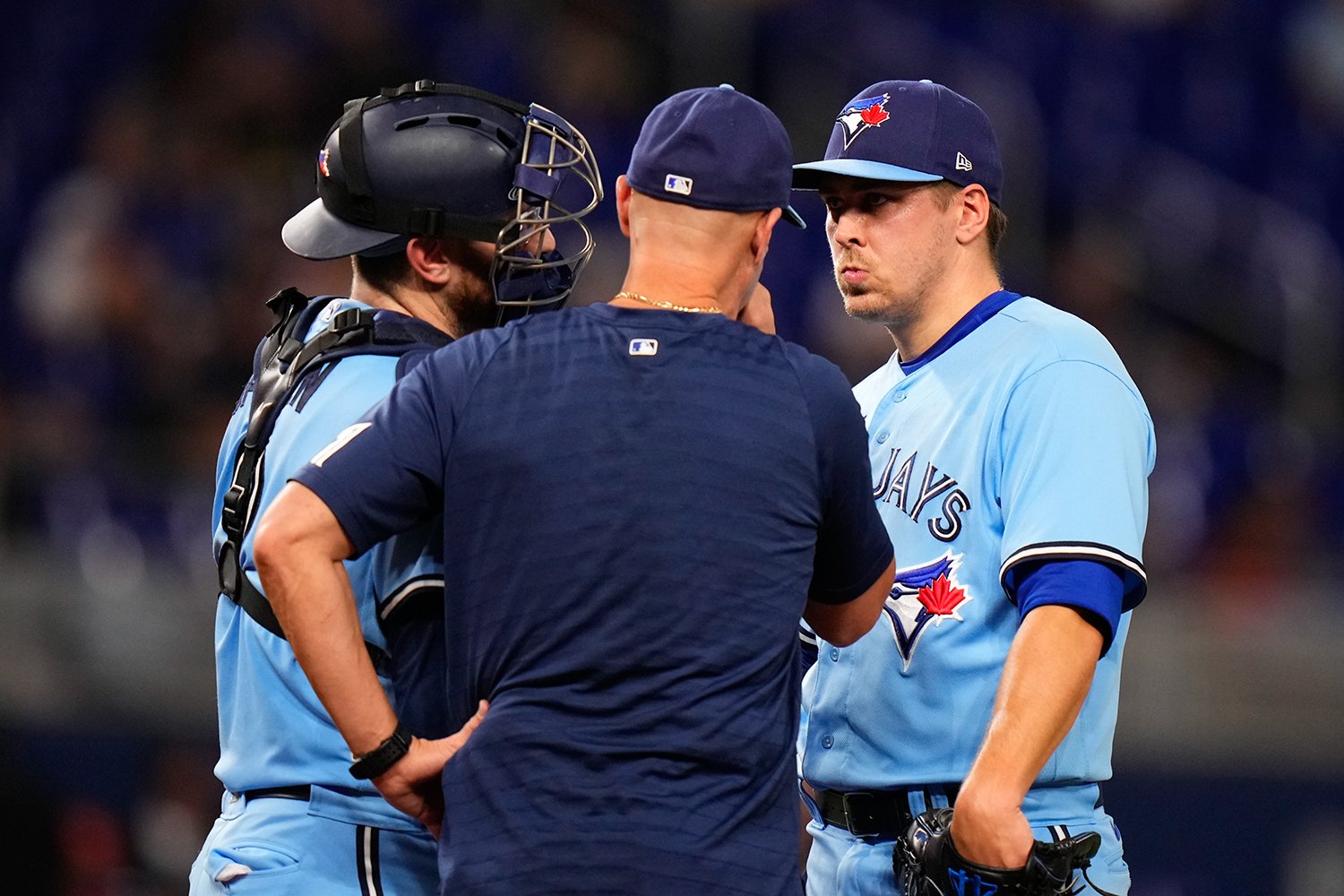 Baseball is full of unpredictable occurrences. Unlikely heroes can emerge at any point, unbreakable records can be shattered, and even Alejandro Kirk can make the impossible happen and hit a triple. It's part of the game's charm. The unpredictability makes the game unique and occasionally makes you frustrated enough to want to bang your head against the wall. Few things are more unpredictable or more frustrating than volatile relief arms, and the Bue Jays bullpen was a frequent source of frustration in 2025. It was supposed to be a strength for the team; in 2023, Jordan Romano was an All-Star and his 36 saves were second in the AL. Erik Swanson, Jordan Hicks, Jay Jackson, Bowden Francis, and Genesis Cabrera all had sub-3.00 ERA’s. And let's not forget Tim Mayza, whose 1.52 ERA was the sixth-lowest among all pitchers with at least 50 innings pitches. In fact, the pen as a whole was pretty good. Its 3.68 ERA ranked eighth, its 3.91 FIP ranked sixth, and its 3.11 strikeout-to-walk ratio was the absolute best. The Blue Jays definitely benefitted from having to throw fewer relief innings than most teams, which meant depending less on the back-end of the bullpen, but even so, Fangraphs projections had them as the tenth-ranked relief corps in baseball going into the 2024 season. That's not how the season played out. Romano was ineffective and only threw 13 2/3 innings before getting hurt. Swanson ran an ERA over 5.00 and earned a midseason demotion. Mayza, who had been so dominant the year prior, pitched to an 8.03 ERA before being designated for assignment at the end of June. Only Yimi García, Chad Green, and deadline acquisition Ryan Yarborough had a positive bWAR pitching predominantly out of the pen for the Blue Jays. That ultimately led to a negative WAR overall by the pen, dead last in all of baseball. Talk about frustrating. We’ve already seen the Blue Jays make some changes to help improve the bullpen, Romano was non-tendered, and Cabrera, Luis Frias, and Dillon Tate all elected free agency. They’ve also made some additions, Jeff Hoffman has been one of the best relievers in baseball over the past two seasons, and he will certainly help. So should the re-signing of García and the addition of Nick Sandlin in a trade with the Guardians earlier this off-season. But as things currently stand, Swanson, Green, Zach Pop, Brendon Little, and Tommy Nance are all currently projected to be in the 'pen and several others will make an appearance throughout the long season. ZiPS projections just ran over at FanGraphs, and they have the bullpen projected for 3.2 WAR (before the addition of Jeff Hoffman). If the Jays can get anywhere close to this number it will go a long way to improving on 2024's 74-win total. But just how much can we expect the Blue Jays bullpen to improve in 2024? Let's start by taking a look at how the Blue Jays bullpen has shaken up over its history. No matter how you look at it, 2024 was an outlier in every sense of the word. Not only was it the worst in baseball; it was also the worst in franchise history. Odds are, no matter what happens this year, the Blue Jays aren't going to repeat that. Throughout franchise history, they have averaged 2.67 RP WAR per season, that number should be a good goal to shoot for in 2025. The Blue Jays had a 6.1-win Drop from 2023 to 2024 and that simply just doesn't happen often in baseball. Since 2000 it has only happened eight times (and that number falls to six if you throw out the short 2020 season. Year Team Year 1 WAR Year 2 WAR Difference Year 3 WAR 2001-2002 Guardians 8.4 2.1 6.3 3.2 2006-2007 Twins 8.1 2.0 6.1 1.7 2009-2010 Athletics 8.4 1.2 7.2 3.4 2009-2010 Diamondbacks 2.5 -3.6 6.1 1.9 2012-2013 Astros 2.4 -5.1 7.5 0.6 2017-2018 Guardians 8.2 -0.1 8.3 3.7 Take a look at year three. After their disastrous drop-off, these six teams improved their WAR by an average of 3.0 wins the next season (and that number becomes 4.0 if you include the 2021 Red Sox and Yankees). Some of this is simple regression; in order to have a big enough drop to appear on this table, you need to start out great in year one, then fall off terribly in year two, so your true talent level is probably somewhere in the middle anyway. And teams with such bad bullpens don't just run back the same terrible squad the next season; as the Blue Jays have, they get rid of the worst performers and bring in reinforcements. Now, while this should be reassuring, it doesn't guarantee anything. The Blue Jays will still need their relievers to stay healthy pitch well, and they will likely need a one or two of them to step up with surprise performance. But even if they don't reach their franchise average of 2.67 RP WAR or the 3.2 WAR that ZiPS projects, history says that no matter what happens, the Jays are unlikely going to end up with a minus sign in front of their WAR again. That should make for a lot less frustration coming out of the bullpen in 2025.
- 1 comment
-
- 1
-

-
- tim mayza
- jordan romano
- (and 1 more)
-
No one lifts the ball more than Daulton Varsho. No one squares it up less. The path to success may lie in the middle. The Toronto Blue Jays have mentioned on several occasions that “internal improvement” will go a long way to improve the 74-game win total they had in 2024. That statement is true for all 30 teams in baseball, and the Blue Jays are no exception. In fact, they had several players who underperformed their expectations. George Springer, Davis Schneider, Alejandro Kirk, Ernie Clement, Daulton Varsho, and Bo Bichette all made at least 300 plate appearances wile running a wRC+ below 100. If you include the 83 wRC+ that Andrés Giménez put up in Cleveland, that makes seven players; only the Chicago White Sox had more. That's not where you want to be, and it's simply not good enough for a team that says it has playoff aspirations. The good news is all seven of the aforementioned players are projected to be much better than they were last year, according to Steamer. Even if that doesn't come to pass, getting above-average production from at least five of those seven players will go a long way toward helping this team score more runs and ultimately compete for a Wild Card spot. Varsho might be the most interesting of the bunch. His elite defence has made him one of the best outfielders in baseball. In fact, his 9.7 fWAR over the past three seasons ranks 14th among all outfielders, ahead of players like Christian Yelich, Teoscar Hernández, and Seiya Suzuki. It's pretty good company to be in. Varsho's bat has held him back. Despite hitting 38 home runs over the past two seasons, he has a combined 92 wRC+, making him 8% worse than the average hitter. These numbers are fine, but they pale in comparison to the 27 HRs and 106 wRC+ he put up in his final season in Arizona. So what happened over the last few seasons? Is there hope that Varsho can take his offensive game to another level in 2025? To answer those questions, let's look back into the 2022 season and see what he did well. The first number that pops up is his 10.2% barrel rate, which was roughly three percentage points higher that year than any other year in his career. Barrels are the designation given to balls hit at an ideal combination of exit velocity and launch angle. In 2024, the typical barrel produced a .719 Batting Average and a 2.402 slugging percentage. Varsho's barrel rate dropped to 7.3% in 2023 and to 6.2% in 2024, which put him in the 31st percentile in baseball. Let's start with his batted ball profile: Varsho has seen his flyball and popup rate increase dramatically over the last few seasons, while his line drive rate, normally a fairly volatile stat, has bounced up and down. Overall, the combination of fly balls and line drives (the balls that can end up as barrels) has stayed roughly the same, but it's clear that, like so many players in today's game, he's trying to get the ball in the air more. However, Varsho's popup rate is very concerning. In 2024, it was 18.2%, the highest of his career and the highest of any qualified player by a huge margin. Moreover, when Varsho does hit a fly ball or a line drive, he's not hitting the ball as hard as he used to. In 2021 and 2022, when Varshio hit one of those air balls, he had a 93.8-mph exit velocity and 55.8% hard-hit rate. Since he joined the Blue Jays, those numbers are 91.9 mph and 47.3%. Varsho may be getting carried away with trying to lift the ball. Could a simple mechanical adjustment be the key to getting Varsho to square up the baseball more? Maybe! Thanks to Statcast's new bat tracking information, we know that he has solid bat speed. The problem is in his squared-up rate: On a per-swing basis, Varsho squares the ball up less than nearly every player in baseball. If you look at how often he squares it up when he makes contact, he's dead last. There's a pretty clear connection here. Esteban Rivera has written about Varsho's attack angle over at FanGraphs. Varsho has turned himself into a master of lifting the ball; his 24.4-degree launch angle was the highest among all qualified players in 2024. However, the extremely steep bat angle necessary to hit virtually everything in the air also means that Varsho's bat doesn't spend much time on plane with the ball. He's not making much contact, and he's among the worst players in the league at making solid contact. In order to succeed at the plate, Varsho will likely need to strike a better balance in his attack angle. That may be a big ask; hitting a round ball with a round bat is one of the hardest things to do in sports. New hitting coach David Popkins is coming from the Twins, who have for years been deeply committed to pulling the ball in the air, the exact thing that Varsho's swing is designed to accomplish. If Popkins can help Varsho strike that balance, barreling up the baseball just a little bit more, his offensive numbers could combine with his elite defence and above-average base running, to make the complete player we've been hoping for since Varsho's arrival in 2023. The Blue Jays don't even need Varsho to become elite at squaring up the ball. If he can just improve from worst in baseball to somewhere in the middle of the pack, then we should see both the batting average and the power numbers take a step forward this season. For a team expecting internal improvements, the star center fielder is a good place to start. View full article
-
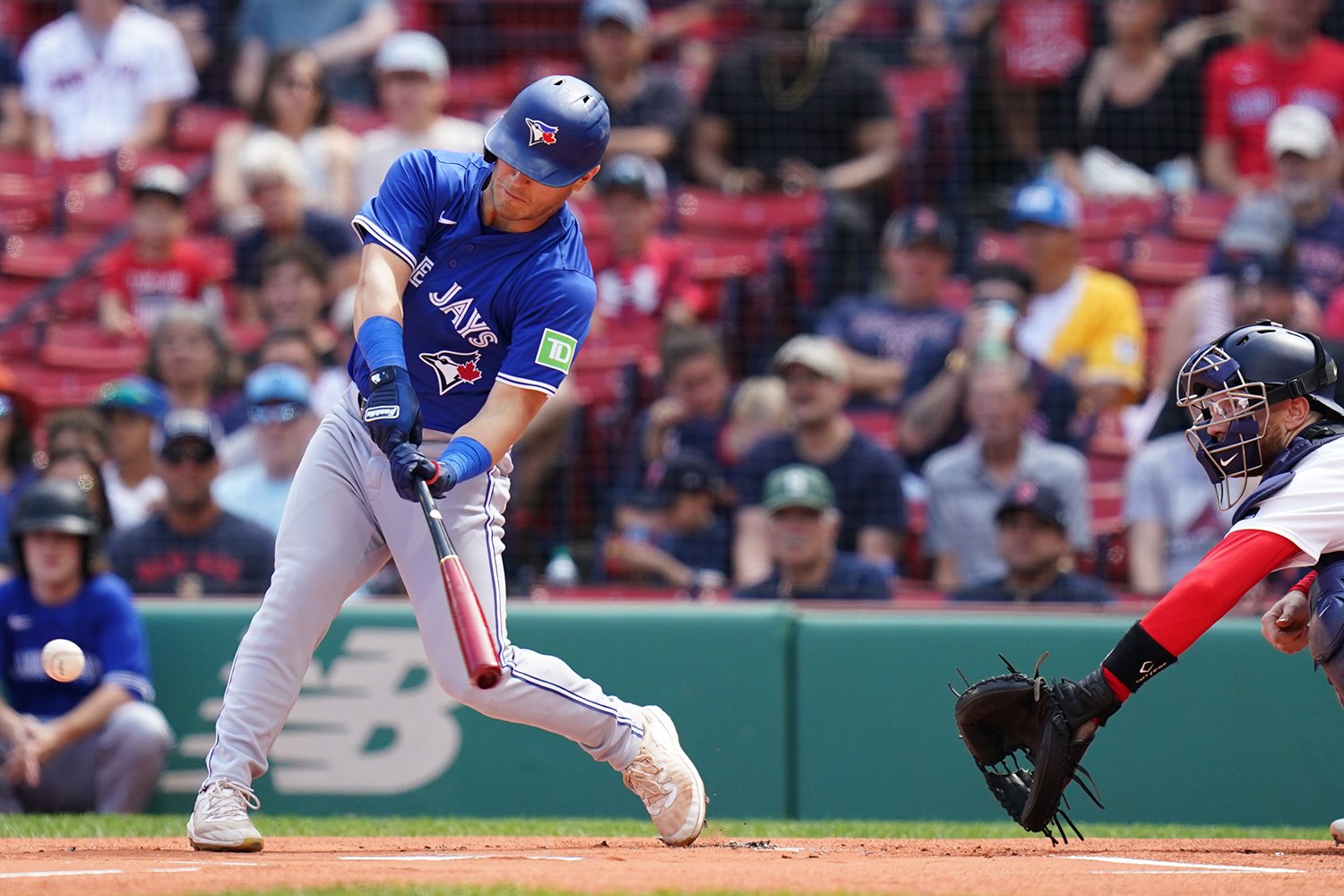 The Toronto Blue Jays have mentioned on several occasions that “internal improvement” will go a long way to improve the 74-game win total they had in 2024. That statement is true for all 30 teams in baseball, and the Blue Jays are no exception. In fact, they had several players who underperformed their expectations. George Springer, Davis Schneider, Alejandro Kirk, Ernie Clement, Daulton Varsho, and Bo Bichette all made at least 300 plate appearances wile running a wRC+ below 100. If you include the 83 wRC+ that Andrés Giménez put up in Cleveland, that makes seven players; only the Chicago White Sox had more. That's not where you want to be, and it's simply not good enough for a team that says it has playoff aspirations. The good news is all seven of the aforementioned players are projected to be much better than they were last year, according to Steamer. Even if that doesn't come to pass, getting above-average production from at least five of those seven players will go a long way toward helping this team score more runs and ultimately compete for a Wild Card spot. Varsho might be the most interesting of the bunch. His elite defence has made him one of the best outfielders in baseball. In fact, his 9.7 fWAR over the past three seasons ranks 14th among all outfielders, ahead of players like Christian Yelich, Teoscar Hernández, and Seiya Suzuki. It's pretty good company to be in. Varsho's bat has held him back. Despite hitting 38 home runs over the past two seasons, he has a combined 92 wRC+, making him 8% worse than the average hitter. These numbers are fine, but they pale in comparison to the 27 HRs and 106 wRC+ he put up in his final season in Arizona. So what happened over the last few seasons? Is there hope that Varsho can take his offensive game to another level in 2025? To answer those questions, let's look back into the 2022 season and see what he did well. The first number that pops up is his 10.2% barrel rate, which was roughly three percentage points higher that year than any other year in his career. Barrels are the designation given to balls hit at an ideal combination of exit velocity and launch angle. In 2024, the typical barrel produced a .719 Batting Average and a 2.402 slugging percentage. Varsho's barrel rate dropped to 7.3% in 2023 and to 6.2% in 2024, which put him in the 31st percentile in baseball. Let's start with his batted ball profile: Varsho has seen his flyball and popup rate increase dramatically over the last few seasons, while his line drive rate, normally a fairly volatile stat, has bounced up and down. Overall, the combination of fly balls and line drives (the balls that can end up as barrels) has stayed roughly the same, but it's clear that, like so many players in today's game, he's trying to get the ball in the air more. However, Varsho's popup rate is very concerning. In 2024, it was 18.2%, the highest of his career and the highest of any qualified player by a huge margin. Moreover, when Varsho does hit a fly ball or a line drive, he's not hitting the ball as hard as he used to. In 2021 and 2022, when Varshio hit one of those air balls, he had a 93.8-mph exit velocity and 55.8% hard-hit rate. Since he joined the Blue Jays, those numbers are 91.9 mph and 47.3%. Varsho may be getting carried away with trying to lift the ball. Could a simple mechanical adjustment be the key to getting Varsho to square up the baseball more? Maybe! Thanks to Statcast's new bat tracking information, we know that he has solid bat speed. The problem is in his squared-up rate: On a per-swing basis, Varsho squares the ball up less than nearly every player in baseball. If you look at how often he squares it up when he makes contact, he's dead last. There's a pretty clear connection here. Esteban Rivera has written about Varsho's attack angle over at FanGraphs. Varsho has turned himself into a master of lifting the ball; his 24.4-degree launch angle was the highest among all qualified players in 2024. However, the extremely steep bat angle necessary to hit virtually everything in the air also means that Varsho's bat doesn't spend much time on plane with the ball. He's not making much contact, and he's among the worst players in the league at making solid contact. In order to succeed at the plate, Varsho will likely need to strike a better balance in his attack angle. That may be a big ask; hitting a round ball with a round bat is one of the hardest things to do in sports. New hitting coach David Popkins is coming from the Twins, who have for years been deeply committed to pulling the ball in the air, the exact thing that Varsho's swing is designed to accomplish. If Popkins can help Varsho strike that balance, barreling up the baseball just a little bit more, his offensive numbers could combine with his elite defence and above-average base running, to make the complete player we've been hoping for since Varsho's arrival in 2023. The Blue Jays don't even need Varsho to become elite at squaring up the ball. If he can just improve from worst in baseball to somewhere in the middle of the pack, then we should see both the batting average and the power numbers take a step forward this season. For a team expecting internal improvements, the star center fielder is a good place to start.
 -
FanGraphs' Steamer projections for the 2025 Blue Jays have released. What can we glean from the information? The Toronto Blue Jays off-season has been mostly uneventful so far. Between a trade for Andrés Giménez and the signing of Yimi Garcia, the team hasn’t made many impact moves so far. There have been numerous reports of the Jays being interested in players, but ultimately, they have come up short. There are still many moves to be made, and we fully expect the Jays to add somebody to this roster. But until that happens, the Jays' success in 2025 will come down to getting some real productive baseball from the players they already have on the roster. As things stand, the Blue Jays have a very intriguing group of 26 guys on the roster. There is a mix of older players who have had very good major league careers, young players who still may have untapped potential, and a little of everything in between. Now, the real question is, where will that performance come from? Is George Springer going to prove he’s still got some high-level baseball left in him? Will Daulton Varsho tap into the power that saw him hit 27 home runs in Arizona? What version of Bo Bichette will appear in 2025? The one that got down-ballot MVP votes in 2021-23, or the one that struggled to a 71 OPS+ in 2024? There is no way anyone can know for certain (predicting the future is hard), but we have our next best thing. Every year, several websites release projections that estimate how well (or poorly) players will perform based on factors like previous track records, aging trends, and pitch tracking data. They then devise a median projection of what they expect a player to do. Projections aren’t perfect. They have no way of knowing if a player is suddenly going to throw two mph harder or make a swing change to add some bat speed or if a player is dealing with some sort of injury (these games are played by humans, after all). Still, they give us some baseline of what to expect from some players. Steamer has come out with their projections for all MLB players, and a few Blue Jays ones caught my attention. We’ll go over three of my favourites here: Will Wagner Will Wagner joined the Blue Jays and immediately made a great first impression. In his rookie season, he hit .305/.337/.451 with 4 home runs in just 86 plate appearances, which was good enough for 0.7 fWAR in that limited amount of time before ending his season early due to a knee injury. Early reports say he should be good to go for spring training and the projection systems, as they’ve seen from Wagner. Here’s what Wagner did in 2024 vs. the projections for 2025. For the most part, the projections seem to buy into what Wagner did in his rookie season; the 117 wRC+ is projected to be 4th highest on the team, and getting on base at a .351 clip would be impressive (only Vladimir Guerrero Jr and Horwitz did that last year, minimum 100 PAs). Playing time is still to be determined, as we expect the Jays to add more to the roster, and with the Gimenez trade, that might limit the amount of at-bats Wagner sees at second base, where he played all but two of his games last season. He was significantly better vs. RHP (149 wRC+) vs LHP (57 wRC+). There is something to be said from taking data from such a small sample, as Davis Schneider's hot streak in 2023 as an example, but even if he’s just a LH platoon bat, there could be some real impact from Wagner, and the projections seem to agree. George Springer Part of the reason the Blue Jays offence struggled so much last year was because George Springer also struggled. The downward offensive performance has been the trend over the last few seasons for the 35-year-old. Here is his OPS+ over the last 3 seasons: 2022: 132 2023: 102 2024: 94 His quality of contact numbers has also decreased, seeing a decline in stats like average exit velocity, wOBA, and hard hit percentage. All while seeing an increase in strikeout percentage and having the highest ground ball rate of his career. It's not ideal for a guy who was second in the Blue Jays in at-bats in 2024. But there is still hope; Steamer is projecting things to bounce back somewhat in 2025. Most notably, he was in the power department, with a .411 slugging percentage, which is 40 points higher than where he finished in 2024 and is projected as the fourth highest on the team. The Blue Jays have said at points in 2024 that they have stats that believe Springer will bounce back. Still, it will be hard for a now 35-year-old with an elevated ground ball rate and decreasing exit velocities to bounce back, but if the Blue Jays can get anything close to this projection, the front office (and fans) should be thrilled. Bowden Francis There are a lot of question marks surrounding the Blue Jays' pitching staff in 2025. Chris Bassitt, Jose Berrios, and Kevin Gausman are all on the wrong side of 30, and with Yariel Rodriguez, Jake Bloss, and injuries to Ricky Tiedemann and Alek Manoah, there are a lot of question marks behind them. One player who was a pleasant surprise down the stretch was the performance of Bowden Francis, who, since joining the rotation on AUG 7th after Yusei Kikuchi was traded to Houston, was phenomenal. Nine starts with a 1.53 ERA, allowing opposing batters to just a .422 OPS against him and twice taking a no-hitter into the 9th inning. This season, one of the burning questions for the Blue Jays is who the real Bowden Francis is. Is this who he is, or is it more so the guy who pitched out of the pen and had a 5.68 ERA (with a FIP to match) that we saw in the first half of the season? Steamer takes its best guess and thinks that the full-season numbers we saw are more predictive than the player we saw in the second half. The most notable jump here is that they expect the ERA to be a full run higher (maybe expecting the superb quality of contact he induced last year to regress to the mean), with walk and strikeout numbers holding steady; it is also worth noting that no matter what happens this season, Bowden Francis is going to have a dramatic leap in innings pitched this year and no one knows how that will affect his performance. It's worth noting that Marco Estrada consistently outperformed his peripherals, and Francis is a candidate to do just that. One thing is for sure: the 2025 Blue Jays season is going to be one of answering a lot of questions. The looming free agency of Vlad Jr and Bichette is the biggest one. Still, there are a lot of question marks with some of the other key players on the roster, too, and although we have six months to follow these players and ride the roller coaster of a long season, getting a look at these projections can be a quick way of getting a feel of what could happen this season with just 78 days until Opening Day. View full article
-
- 2
-
-
- will wagner
- george springer
- (and 1 more)
-
Three Takeaways From the Blue Jays’ 2025 Steamer Projections
Jesse Burrill posted an article in Blue Jays
 The Toronto Blue Jays off-season has been mostly uneventful so far. Between a trade for Andrés Giménez and the signing of Yimi Garcia, the team hasn’t made many impact moves so far. There have been numerous reports of the Jays being interested in players, but ultimately, they have come up short. There are still many moves to be made, and we fully expect the Jays to add somebody to this roster. But until that happens, the Jays' success in 2025 will come down to getting some real productive baseball from the players they already have on the roster. As things stand, the Blue Jays have a very intriguing group of 26 guys on the roster. There is a mix of older players who have had very good major league careers, young players who still may have untapped potential, and a little of everything in between. Now, the real question is, where will that performance come from? Is George Springer going to prove he’s still got some high-level baseball left in him? Will Daulton Varsho tap into the power that saw him hit 27 home runs in Arizona? What version of Bo Bichette will appear in 2025? The one that got down-ballot MVP votes in 2021-23, or the one that struggled to a 71 OPS+ in 2024? There is no way anyone can know for certain (predicting the future is hard), but we have our next best thing. Every year, several websites release projections that estimate how well (or poorly) players will perform based on factors like previous track records, aging trends, and pitch tracking data. They then devise a median projection of what they expect a player to do. Projections aren’t perfect. They have no way of knowing if a player is suddenly going to throw two mph harder or make a swing change to add some bat speed or if a player is dealing with some sort of injury (these games are played by humans, after all). Still, they give us some baseline of what to expect from some players. Steamer has come out with their projections for all MLB players, and a few Blue Jays ones caught my attention. We’ll go over three of my favourites here: Will Wagner Will Wagner joined the Blue Jays and immediately made a great first impression. In his rookie season, he hit .305/.337/.451 with 4 home runs in just 86 plate appearances, which was good enough for 0.7 fWAR in that limited amount of time before ending his season early due to a knee injury. Early reports say he should be good to go for spring training and the projection systems, as they’ve seen from Wagner. Here’s what Wagner did in 2024 vs. the projections for 2025. For the most part, the projections seem to buy into what Wagner did in his rookie season; the 117 wRC+ is projected to be 4th highest on the team, and getting on base at a .351 clip would be impressive (only Vladimir Guerrero Jr and Horwitz did that last year, minimum 100 PAs). Playing time is still to be determined, as we expect the Jays to add more to the roster, and with the Gimenez trade, that might limit the amount of at-bats Wagner sees at second base, where he played all but two of his games last season. He was significantly better vs. RHP (149 wRC+) vs LHP (57 wRC+). There is something to be said from taking data from such a small sample, as Davis Schneider's hot streak in 2023 as an example, but even if he’s just a LH platoon bat, there could be some real impact from Wagner, and the projections seem to agree. George Springer Part of the reason the Blue Jays offence struggled so much last year was because George Springer also struggled. The downward offensive performance has been the trend over the last few seasons for the 35-year-old. Here is his OPS+ over the last 3 seasons: 2022: 132 2023: 102 2024: 94 His quality of contact numbers has also decreased, seeing a decline in stats like average exit velocity, wOBA, and hard hit percentage. All while seeing an increase in strikeout percentage and having the highest ground ball rate of his career. It's not ideal for a guy who was second in the Blue Jays in at-bats in 2024. But there is still hope; Steamer is projecting things to bounce back somewhat in 2025. Most notably, he was in the power department, with a .411 slugging percentage, which is 40 points higher than where he finished in 2024 and is projected as the fourth highest on the team. The Blue Jays have said at points in 2024 that they have stats that believe Springer will bounce back. Still, it will be hard for a now 35-year-old with an elevated ground ball rate and decreasing exit velocities to bounce back, but if the Blue Jays can get anything close to this projection, the front office (and fans) should be thrilled. Bowden Francis There are a lot of question marks surrounding the Blue Jays' pitching staff in 2025. Chris Bassitt, Jose Berrios, and Kevin Gausman are all on the wrong side of 30, and with Yariel Rodriguez, Jake Bloss, and injuries to Ricky Tiedemann and Alek Manoah, there are a lot of question marks behind them. One player who was a pleasant surprise down the stretch was the performance of Bowden Francis, who, since joining the rotation on AUG 7th after Yusei Kikuchi was traded to Houston, was phenomenal. Nine starts with a 1.53 ERA, allowing opposing batters to just a .422 OPS against him and twice taking a no-hitter into the 9th inning. This season, one of the burning questions for the Blue Jays is who the real Bowden Francis is. Is this who he is, or is it more so the guy who pitched out of the pen and had a 5.68 ERA (with a FIP to match) that we saw in the first half of the season? Steamer takes its best guess and thinks that the full-season numbers we saw are more predictive than the player we saw in the second half. The most notable jump here is that they expect the ERA to be a full run higher (maybe expecting the superb quality of contact he induced last year to regress to the mean), with walk and strikeout numbers holding steady; it is also worth noting that no matter what happens this season, Bowden Francis is going to have a dramatic leap in innings pitched this year and no one knows how that will affect his performance. It's worth noting that Marco Estrada consistently outperformed his peripherals, and Francis is a candidate to do just that. One thing is for sure: the 2025 Blue Jays season is going to be one of answering a lot of questions. The looming free agency of Vlad Jr and Bichette is the biggest one. Still, there are a lot of question marks with some of the other key players on the roster, too, and although we have six months to follow these players and ride the roller coaster of a long season, getting a look at these projections can be a quick way of getting a feel of what could happen this season with just 78 days until Opening Day.
