


intentional wok
-
Posts
8,433 -
Joined
-
Last visited
Content Type
Profiles
Toronto Blue Jays Videos
2026 Toronto Blue Jays Top Prospects Ranking
Toronto Blue Jays Free Agent & Trade Rumors, Notes, & Tidbits
Guides & Resources
2025 Toronto Blue Jays Draft Pick Tracker
News
2026 Toronto Blue Jays Draft Tracker: Picks & Bonuses
Forums
Blogs
Events
Store
Downloads
Gallery
Everything posted by intentional wok
-
<3 David <3 Ortiz <3
-
David Ortiz on the new batter's box rule: I completely disagree with Papi but at the same time I f***ing love Papi for just calling it like he sees it. Ortiz has slowly become one of my favourite baseball personalities. Love this guy, don't even care if he's part of the Red Sox.
-
Would that have stopped you? Be honest.
-
Well, he's arrived at Dundein! Keep 'em in your pants this time, boys. I shone a black light on the page with the Stroman comps article and let me tell you it wasn't very pretty.
-
I love Jack talking about triple penetration. My kind of guy.
-
Dig up, stupid.
-

Marcus Stroman's Comps
intentional wok replied to burlingtonbandit's topic in Toronto Blue Jays Talk
Guys, Anyone down to start a men-only Stroman fanclub? We can rent out a whole section at Rogers Centre where we can be alone with our erections, free from judgment. The Stromen. -
I really have no desire to see Thole on this team. I've dubbed him Dickey's Wife. No one on the team or the organization wants him around, but if you want Dickey...
-
That makes all of us two degrees removed from David Bowie. Thanks, Deadpool! http://www.thestranger.com/binary/d5e1/1370902028-wornout-click2.jpg
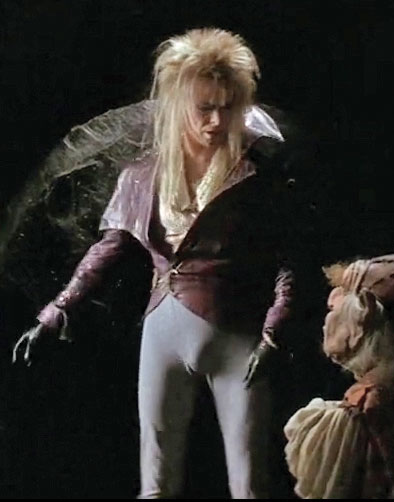
-
Man... I don't know a whole lot about basketball stats or strategy. Do you think JJ should be starting?
-
He spins everything in current Jays' players favour. When they leave for another club, he won't turn on them but he also won't defend them with the same gusto either (see: Melky < Saunders - an argument he'd probably never make before a few months ago). The only exception I can really think of is his reaction to Juan Francisco. He seemed to out-and-out hate the guy, always referencing his awful, awful stats. Now, he wasn't wrong, per se, but he very obviously doesn't talk about other underperforming players in the same way. I always took it as his way of belittling the fans who praised Francisco for his HRs, which leads me to believe most of Wilner's schtick is to be a smug contrarian. If he let fans outreason him, he'd look really bad at his job (his job, of course, being to sound like he knows what he's talking about).
-
What in the world...?
-
F'real, dude?
-
Janssen put out a thank you letter to the Toronto fans. Man, I'm going to miss that guy. Declining performance or not, I'm really glad I got to see his last game in a TO uniform this past September.
-
He said so in the post-game, right? I just took that with a grain of salt. It's bad form to throw your staff under the bus after a loss (and a SB loss to boot). Then again, Carroll's not infallible, so he could very well have made the call too, so.
-
Blue Jays sign Ronald Belisario and Ramon Santiago
intentional wok replied to TDotttt2005's topic in Toronto Blue Jays Talk
What in the actual f*** is going on in here? Truly a derail for the ages. -
Maybe just make one and give them both a half. No sense in wasting food.
-
Janssen to the Nats for 1year/5mil. Good call.
-
:(
-
I totally missed the game tonight. Good to hear it was a good one, though! Even that last win against the Pistons was... iffy.
-
^ I've been wondering why so many guys have been flying under the radar in the BP discussions. Turns out I'm not crazy - there is some significant talent left out there.
-
Good thing the team has an offense that will (hopefully) keep them ahead by at least 4 runs for a lot of wins.
-
What if they eat no cash but he agree to the face transplant? And what if the face transplant is YOUR FACE?
-
Alright, apologies to everyone getting sick of my f***ing dissertations. I can't help myself. I promise this will be the last one since I think I've made all my points. YES. It would be unfair because the bullpen is expected to perform with restrictions that no other player on the team has to. It's not about if every team has to use the same rules, it's the rules themselves. The 7-9th innings suddenly become the hurdle-jumping innings for every team. Universal restrictions do not necessarily equal fair rules. It is fair in the vague, external sense that every team has to play with the rules. But it isn't fair within the actual game itself that the relief staff should be hampered with rule-enforced disadvantages their opponents can immediately and obviously capitalize on. I know you already agree with me because you say this: This is exactly my beef. Again, yes, it's fair because it's applied to each. But the issue is that the rule is itself unfair within the game those teams will be playing. This is the important distinction - it's not that everyone is subject to the same rule, it's that the rule shifts the balance of the game and actively places a disadvantage on the bullpen. It is an artificial conceit because there are no other rules quite like it within the game. This obviously leads to your next question: Because the rules of the game all work in sync with one another. Players can be swapped in or out at any time and for any length of time. This is because the game works on a move-by-move basis. Each pitch has ramifications on the defensive alignment. Each new batter brings an entirely new challenge, which becomes complicated if there are runners on base (including the ability of those runners and whatever combination of bases they're standing on). Also, because every play - every pitch - comes with such an significant element of chance, the game is also about making small moves and adjustments to bolster the percentages in your side's favour. So, why then is a RP rule unfair? Because it removes the intricacy of management on which the rest of the game is built. It restricts decision making. It essentially forces the manager to miss three turns. It inherently rewards the opposing team and punishes the team who is going to the bullpen. Here is the problem. Your argument for this rule is based on your perception about the pace of the game, not its mechanical necessity to the game. The RP rule is not needed because a baseball game cannot be stopped. The broadcast sure can, and I don't blame you for getting impatient (I hate ads too), but you're introducing a rule because you're impatient. You don't feel the need to add batting lineup restrictions, but only because you're not put out by the pace of a pinch hitter swap. Every argument you're making is to justify a reduction in watching commercials, which are totally external to the game itself. I mean that a disadvantage is a disadvantage. A team will not ever be better off with a disadvantage. They're inherently less likely to succeed. Disadvantages aren't going to foster bullpen success. At the absolute most hopeful best, it can only be a neutral change. More likely (so likely that it's pretty much a certainty) is that teams are going to get burned over and over and over again. It's giving the offensive team the baseball equivalent of a NHL penalty shot - a situation in which they are disallowed from adapting to the game as it is normally played. No. It's not fair. No position player is forced to put in x amount of work. This is not how baseball works - the restrictions DO NOT apply equally. You argued that it's unfair that a manager can't re-use the same pinch hitter in different slots in the order. I'm saying that it's not unfair because the one-use-per-player rule is universal through the game. Once a guy is in – relief pitcher, pinch hitter, defensive replacement, whatever – he stays in for as long or as short a time as he's needed. Correct. Exactly. The natural restrictions of the game do in fact force an certain use of the roster. But the difference between these restrictions and the proposed RP rule is that the restrictions are universally applied from the start of every game. The RP rule only restricts the bullpen, and nothing can balance that. And no, before you say it again, “everyone facing the same rule” doesn't balance it. Baseball is not bullpens vs. bullpens. It's bullpens vs. hitters, and the hitters will get the edge every single time by the definition of this rule. Also, before anyone suggests that a PH must at least have one more plate appearance or some such, know that the opposing bullpen can easily counter the eventuality. Using Adam Lind as the PH for an example – if he were forced by the rules to require another plate appearance (despite there being a RHH still on the bench), the opposing bullpen prepping a LOOGY for Lind now gets an artificial advantage. It would just be another type of unfairness, this time against the hitters. Since the dynamics of a baseball game are about two completely differently-performing forces going against each other, the only way to balance it all is to just ensure that the personnel rules remain constant for both sides. It's pick your poison, yeah, but it's still just ends up being deciding when to let the rule-dictated disadvantage affect your team. But these rules are applied to every facet of the game, and are completely fair. Yes, Gibbons would be completely able to use his personnel effectively. He coult totally bring in McGowan if he wanted to. That's the point. He can make the decisions he wants when he wants, with the only caveat being that once a player exits the game he is done for the day (which universally applies to every player on the field). If McGowan botches it, or if Cecil botches it because Gibbons doesn't trust McGowan, the point is that he was free to make that decision to have the man he wants facing Ramirez. If your argument that a RP rule would be no different than standard player-swap rules, that's a weak support. The player-swap rule applies to every player on the two rosters. The RP rule applies to only about half of them. Standard player rules are about resource management. The RP rule is just an enforced imbalance. But the restrictions in baseball are crucial to how the game plays and for equal treatment for every player on the field. The restriction you're proposing imbalances the game, and, by your admission, all for the sake of eliminating too many commercial breaks. It is a bad thing.
-
My girlfriend would laugh right in your face at this comment. I'm basically a child in a man's (bigger child's?) body.

