


Leo Morgenstern
-
Posts
628 -
Joined
-
Last visited
Content Type
Profiles
Toronto Blue Jays Videos
2026 Toronto Blue Jays Top Prospects Ranking
Toronto Blue Jays Free Agent & Trade Rumors, Notes, & Tidbits
Guides & Resources
2025 Toronto Blue Jays Draft Pick Tracker
News
2026 Toronto Blue Jays Draft Tracker: Picks & Bonuses
Forums
Blogs
Events
Store
Downloads
Gallery
Everything posted by Leo Morgenstern
-
.jpg.fc949ee6db718deb7aec8324c6bd5c3c.jpg) Last Wednesday afternoon, I received an email from the Blue Jays’ marketing department asking me to vote for nine Blue Jays players to represent the team at this summer’s All-Star Game in Atlanta. You probably got the same one. What struck me about the email (besides the airplane theme; why is All-Star voting airplane themed?) was the most obvious omission from the graphic: Ernie Clement. I understand why Clement isn’t on the All-Star ballot. All-Star voting is broken down by position, and Clement doesn’t really have one. He started the year as Toronto's third baseman, but Addison Barger has taken over the hot corner. He also played a lot of second base while Andrés Giménez was injured, but now that the three-time Gold Glover is back, the keystone is covered. Clement can play shortstop and first base too, but needless to say, he isn’t usurping Bo Bichette or Vladimir Guerrero Jr. anytime soon. Thus, he is stuck in utilityman purgatory. As multi-positional players have become more prominent around the league, they’ve earned their own Gold Glove and Silver Slugger categories. The AL All-Star team, however, is an actual team that has to play an actual game. So, there’s no room for a utility category when it comes to All-Star voting. That’s too bad, because Clement is arguably the most deserving All-Star Toronto has. He has played in more games this year than every Blue Jay save for Vladdy and Bo. And he's been good! When that email hit my phone on Wednesday, Clement led the team in both the FanGraphs and Baseball Reference versions of WAR. Alejandro Kirk has since overtaken him on the FanGraphs leaderboard, but the point stands that Clement has been one of Toronto’s most valuable players so far in 2025. Clement is batting .275 on the season, thanks in large part to his 12.1% strikeout rate, the sixth-lowest among qualified AL hitters. He doesn’t offer much power, but his 12 doubles and three home runs have helped him keep his wRC+ right around league average. That said, his adequate offense really only matters insofar as it allows John Schneider to keep his glove on the field. You see, if there’s any case to be made that Clement is an All-Star, it’s because he’s been one of this year’s best defenders – not just on the Jays, but across Major League Baseball. Clement was a Gold Glove finalist at third base last season, alongside veteran stars Alex Bregman and José Ramírez. It was all the more impressive considering he played less than half a season’s worth of innings (661) at the position. So far in 2025, Clement’s defense has looked even better. Splitting his time between second and third base, with a handful of games at shortstop and first base for good measure, he has compiled 10 Defensive Runs Saved (DRS) and a +9 Fielding Run Value (FRV). The crux of his All-Star case, if he has one, is that he ranks third among all players in Statcast’s Outs Above Average, in between Bobby Witt Jr. and Pete Crow-Amstrong. It’s important to take defensive metrics with a grain of salt, especially this early in the season. A metric like OAA can be heavily influenced by a small sample of plays, and the chances of Clement maintaining his current pace and finishing the season with 27 OAA are slim to none. Regardless, no one can rack up 11 OAA in 62 games without playing some damn fine defense. Whether his performance is sustainable or not, I’m confident in saying Clement has been one of the best defenders in the league this year. His tremendous performance might not be rewarded with an All-Star selection (or even a spot on the ballot), but nonetheless, he deserves recognition for everything he’s done for the Blue Jays thus far. So, inspired by Mike LeSage’s recent piece about Daulton Varsho’s defensive wizardry, I decided to compile some of Clement’s best plays from 2025. Good defense isn’t always flashy; more often than not, the best defenders are the ones who make tough plays look easy. Still, Clement has made his fair share of highlight-reel stops, catches, and throws, and you can watch several of my favorites down below. First Base Versatility is one of Clement’s primary assets, and indeed, he has earned at least one OAA at all four infield positions. To reflect that, I decided to group his highlights by position. First base, as you might expect, offers the least exciting clips, but just remember that this compilation of solid glovework is merely an amuse-bouche for the true web gems to follow: Second Base Clement has played half as many games and about 100 fewer innings at second base than third base this year, but he’s racked up more defensive value at the keystone (5 DRS, 5 OAA) than any other spot. This first play might not look particularly difficult – Clement snaps it out of the air like he’s playing catch with a kid – but the ball came off the bat at 108.6 mph. With an .800 expected batting average (based on launch angle and exit velocity), this batted ball was the most unlikely out Clement has recorded all year: This next one is more classic highlight reel material. On a low liner up the middle with a .570 xBA off the bat, Clement lays out and makes a nice diving catch. Even more exciting than the play itself was the context. If this one had gotten past Clement, the tying run might have come around to score. Instead, the Blue Jays closed out a hard-fought win, their fourth in a row, to secure a series victory: Here’s a great example of the kind of play that looks easy for Clement, when a second baseman with worse instincts easily could have let it slip through into right field for a base hit. The ball shot off the bat at 105.3 mph, giving Clement limited time to run over and grab it before resetting himself and turning to make the throw: Meanwhile, this one might have been a routine play if it weren’t for the high stakes of the situation. The Blue Jays’ infield was playing in with a quick runner on third in a close game. Clement fields a weak tapper to second base with precision and gets the ball home just in time for Kirk to apply the tag: Here’s Clement getting the tag down to catch Cal Raleigh stealing second base after an uncharacteristically poor throw from Kirk. Clement has to jump way out in front of the bag to get to the ball, but he still manages to record the out – and finishes with a fun little 360 spin on his bum. Is this baseball or breakdancing? Last but certainly not least is a pair of terrific barehanded plays. The first requires Clement to run from the edge of the grass in right-center field to the opposite side of second base, where he scoops the ball up and makes an accurate side-armed throw to record the out: The other is perhaps an easier play but arguably more exciting, considering the runner in question. Chandler Simpson is one of the fastest players in professional baseball, and no one is better suited to convert a slow bouncer into an infield hit. Yet, Clement reads this one perfectly. He knows he has to barehand the ball if he wants any chance of catching Simpson. He doesn’t hesitate at all, and he gets the ball into Vladdy’s glove just in time to win the race: Shortstop It feels a little anticlimactic going from second base, where Clement has made so many strong plays, to shortstop, where Clement has only made two starts and played a total of 27 innings. Thankfully, the one highlight I have to show you from shortstop is a doozy. With yet another move that could be right out of Olympic breakdancing, Clement slides down on his knees, picks the ball out of the air, and continuing in one fluid motion, he stands up, spins around, and fires an underhand throw to second base to start a double play. I won’t tell you what Braydon Fisher appears to be saying after the play (this is a family-friendly website), but it’s the perfect reaction to glovework like this: Third Base Finally, let’s end off at third base, the position Clement has played more than any other in his big league tenure. In the first highlight I’ve chosen, which MLB Film Room describes as “nifty,” Clement steps back to field a groundball down the line. His arm is his weakest defensive tool, but you wouldn’t know it from this clip. Clement gets the ball to first base in plenty of time: On this one, Clement reaches the ball quickly, preventing it from slipping through the hole into left field. Bichette’s limited range at shortstop isn’t as much of a problem when you have a defender like Clement to pick up the slack: This diving stop from over the weekend speaks for itself. Once again, Clement ranges over to his right to steal a base hit: As for this next play, it probably shouldn’t have been Clement’s responsibility at all – he catches it in between second base and the pitcher’s mound – but everyone else lost the ball in the sun. Clement saw it coming down just in time to bolt for it and make a rare infield diving catch: As terrific as it is, the penultimate play I have for you doesn’t actually make for a great highlight. Jhonkensy Noel hit this ball so hard (115 mph) that Clement has already caught it by the time he appears on screen. Still, it’s clear from how he’s positioned when we first catch a glimpse of him (with the ball already in his glove) that he had to do some Gold Glove-caliber work to get there. This kind of play is a picture-perfect example of why they call it the hot corner: Finally, before I call it a day, I’ll leave you with my all-time favorite Ernie Clement highlight. This was from last September, but it’s simply too stunning not to include in a piece about Clement’s best defensive work. This could very well be the play that made him a Gold Glove finalist at third base in 2024: Holy smoke. I'm not sure what to say, other than: Ernie, if you’re reading this, I challenge you to top that. I don't know how you'd do it, but I want to see you try. The Blue Jays haven't been the most consistent team in 2025, but if there's one thing you can count on when it comes to this club, it's Ernie Clement's glove. Day in and day out, no matter where he's stationed, he's been one of the best defenders in the game. Stats and rankings updated prior to games on Sunday, June 8.
Last Wednesday afternoon, I received an email from the Blue Jays’ marketing department asking me to vote for nine Blue Jays players to represent the team at this summer’s All-Star Game in Atlanta. You probably got the same one. What struck me about the email (besides the airplane theme; why is All-Star voting airplane themed?) was the most obvious omission from the graphic: Ernie Clement. I understand why Clement isn’t on the All-Star ballot. All-Star voting is broken down by position, and Clement doesn’t really have one. He started the year as Toronto's third baseman, but Addison Barger has taken over the hot corner. He also played a lot of second base while Andrés Giménez was injured, but now that the three-time Gold Glover is back, the keystone is covered. Clement can play shortstop and first base too, but needless to say, he isn’t usurping Bo Bichette or Vladimir Guerrero Jr. anytime soon. Thus, he is stuck in utilityman purgatory. As multi-positional players have become more prominent around the league, they’ve earned their own Gold Glove and Silver Slugger categories. The AL All-Star team, however, is an actual team that has to play an actual game. So, there’s no room for a utility category when it comes to All-Star voting. That’s too bad, because Clement is arguably the most deserving All-Star Toronto has. He has played in more games this year than every Blue Jay save for Vladdy and Bo. And he's been good! When that email hit my phone on Wednesday, Clement led the team in both the FanGraphs and Baseball Reference versions of WAR. Alejandro Kirk has since overtaken him on the FanGraphs leaderboard, but the point stands that Clement has been one of Toronto’s most valuable players so far in 2025. Clement is batting .275 on the season, thanks in large part to his 12.1% strikeout rate, the sixth-lowest among qualified AL hitters. He doesn’t offer much power, but his 12 doubles and three home runs have helped him keep his wRC+ right around league average. That said, his adequate offense really only matters insofar as it allows John Schneider to keep his glove on the field. You see, if there’s any case to be made that Clement is an All-Star, it’s because he’s been one of this year’s best defenders – not just on the Jays, but across Major League Baseball. Clement was a Gold Glove finalist at third base last season, alongside veteran stars Alex Bregman and José Ramírez. It was all the more impressive considering he played less than half a season’s worth of innings (661) at the position. So far in 2025, Clement’s defense has looked even better. Splitting his time between second and third base, with a handful of games at shortstop and first base for good measure, he has compiled 10 Defensive Runs Saved (DRS) and a +9 Fielding Run Value (FRV). The crux of his All-Star case, if he has one, is that he ranks third among all players in Statcast’s Outs Above Average, in between Bobby Witt Jr. and Pete Crow-Amstrong. It’s important to take defensive metrics with a grain of salt, especially this early in the season. A metric like OAA can be heavily influenced by a small sample of plays, and the chances of Clement maintaining his current pace and finishing the season with 27 OAA are slim to none. Regardless, no one can rack up 11 OAA in 62 games without playing some damn fine defense. Whether his performance is sustainable or not, I’m confident in saying Clement has been one of the best defenders in the league this year. His tremendous performance might not be rewarded with an All-Star selection (or even a spot on the ballot), but nonetheless, he deserves recognition for everything he’s done for the Blue Jays thus far. So, inspired by Mike LeSage’s recent piece about Daulton Varsho’s defensive wizardry, I decided to compile some of Clement’s best plays from 2025. Good defense isn’t always flashy; more often than not, the best defenders are the ones who make tough plays look easy. Still, Clement has made his fair share of highlight-reel stops, catches, and throws, and you can watch several of my favorites down below. First Base Versatility is one of Clement’s primary assets, and indeed, he has earned at least one OAA at all four infield positions. To reflect that, I decided to group his highlights by position. First base, as you might expect, offers the least exciting clips, but just remember that this compilation of solid glovework is merely an amuse-bouche for the true web gems to follow: Second Base Clement has played half as many games and about 100 fewer innings at second base than third base this year, but he’s racked up more defensive value at the keystone (5 DRS, 5 OAA) than any other spot. This first play might not look particularly difficult – Clement snaps it out of the air like he’s playing catch with a kid – but the ball came off the bat at 108.6 mph. With an .800 expected batting average (based on launch angle and exit velocity), this batted ball was the most unlikely out Clement has recorded all year: This next one is more classic highlight reel material. On a low liner up the middle with a .570 xBA off the bat, Clement lays out and makes a nice diving catch. Even more exciting than the play itself was the context. If this one had gotten past Clement, the tying run might have come around to score. Instead, the Blue Jays closed out a hard-fought win, their fourth in a row, to secure a series victory: Here’s a great example of the kind of play that looks easy for Clement, when a second baseman with worse instincts easily could have let it slip through into right field for a base hit. The ball shot off the bat at 105.3 mph, giving Clement limited time to run over and grab it before resetting himself and turning to make the throw: Meanwhile, this one might have been a routine play if it weren’t for the high stakes of the situation. The Blue Jays’ infield was playing in with a quick runner on third in a close game. Clement fields a weak tapper to second base with precision and gets the ball home just in time for Kirk to apply the tag: Here’s Clement getting the tag down to catch Cal Raleigh stealing second base after an uncharacteristically poor throw from Kirk. Clement has to jump way out in front of the bag to get to the ball, but he still manages to record the out – and finishes with a fun little 360 spin on his bum. Is this baseball or breakdancing? Last but certainly not least is a pair of terrific barehanded plays. The first requires Clement to run from the edge of the grass in right-center field to the opposite side of second base, where he scoops the ball up and makes an accurate side-armed throw to record the out: The other is perhaps an easier play but arguably more exciting, considering the runner in question. Chandler Simpson is one of the fastest players in professional baseball, and no one is better suited to convert a slow bouncer into an infield hit. Yet, Clement reads this one perfectly. He knows he has to barehand the ball if he wants any chance of catching Simpson. He doesn’t hesitate at all, and he gets the ball into Vladdy’s glove just in time to win the race: Shortstop It feels a little anticlimactic going from second base, where Clement has made so many strong plays, to shortstop, where Clement has only made two starts and played a total of 27 innings. Thankfully, the one highlight I have to show you from shortstop is a doozy. With yet another move that could be right out of Olympic breakdancing, Clement slides down on his knees, picks the ball out of the air, and continuing in one fluid motion, he stands up, spins around, and fires an underhand throw to second base to start a double play. I won’t tell you what Braydon Fisher appears to be saying after the play (this is a family-friendly website), but it’s the perfect reaction to glovework like this: Third Base Finally, let’s end off at third base, the position Clement has played more than any other in his big league tenure. In the first highlight I’ve chosen, which MLB Film Room describes as “nifty,” Clement steps back to field a groundball down the line. His arm is his weakest defensive tool, but you wouldn’t know it from this clip. Clement gets the ball to first base in plenty of time: On this one, Clement reaches the ball quickly, preventing it from slipping through the hole into left field. Bichette’s limited range at shortstop isn’t as much of a problem when you have a defender like Clement to pick up the slack: This diving stop from over the weekend speaks for itself. Once again, Clement ranges over to his right to steal a base hit: As for this next play, it probably shouldn’t have been Clement’s responsibility at all – he catches it in between second base and the pitcher’s mound – but everyone else lost the ball in the sun. Clement saw it coming down just in time to bolt for it and make a rare infield diving catch: As terrific as it is, the penultimate play I have for you doesn’t actually make for a great highlight. Jhonkensy Noel hit this ball so hard (115 mph) that Clement has already caught it by the time he appears on screen. Still, it’s clear from how he’s positioned when we first catch a glimpse of him (with the ball already in his glove) that he had to do some Gold Glove-caliber work to get there. This kind of play is a picture-perfect example of why they call it the hot corner: Finally, before I call it a day, I’ll leave you with my all-time favorite Ernie Clement highlight. This was from last September, but it’s simply too stunning not to include in a piece about Clement’s best defensive work. This could very well be the play that made him a Gold Glove finalist at third base in 2024: Holy smoke. I'm not sure what to say, other than: Ernie, if you’re reading this, I challenge you to top that. I don't know how you'd do it, but I want to see you try. The Blue Jays haven't been the most consistent team in 2025, but if there's one thing you can count on when it comes to this club, it's Ernie Clement's glove. Day in and day out, no matter where he's stationed, he's been one of the best defenders in the game. Stats and rankings updated prior to games on Sunday, June 8. -

Article: Ernie Clement: Infield Wizard
Leo Morgenstern posted a topic in Jays Centre Front Page News
Last Wednesday afternoon, I received an email from the Blue Jays’ marketing department asking me to vote for nine Blue Jays players to represent the team at this summer’s All-Star Game in Atlanta. You probably got the same one. What struck me about the email (besides the airplane theme; why is All-Star voting airplane themed?) was the most obvious omission from the graphic: Ernie Clement. I understand why Clement isn’t on the All-Star ballot. All-Star voting is broken down by position, and Clement doesn’t really have one. He started the year as Toronto's third baseman, but Addison Barger has taken over the hot corner. He also played a lot of second base while Andrés Giménez was injured, but now that the three-time Gold Glover is back, the keystone is covered. Clement can play shortstop and first base too, but needless to say, he isn’t usurping Bo Bichette or Vladimir Guerrero Jr. anytime soon. Thus, he is stuck in utilityman purgatory. As multi-positional players have become more prominent around the league, they’ve earned their own Gold Glove and Silver Slugger categories. The AL All-Star team, however, is an actual team that has to play an actual game. So, there’s no room for a utility category when it comes to All-Star voting. That’s too bad, because Clement is arguably the most deserving All-Star Toronto has. He has played in more games this year than every Blue Jay save for Vladdy and Bo. And he's been good! When that email hit my phone on Wednesday, Clement led the team in both the FanGraphs and Baseball Reference versions of WAR. Alejandro Kirk has since overtaken him on the FanGraphs leaderboard, but the point stands that Clement has been one of Toronto’s most valuable players so far in 2025. Clement is batting .275 on the season, thanks in large part to his 12.1% strikeout rate, the sixth-lowest among qualified AL hitters. He doesn’t offer much power, but his 12 doubles and three home runs have helped him keep his wRC+ right around league average. That said, his adequate offense really only matters insofar as it allows John Schneider to keep his glove on the field. You see, if there’s any case to be made that Clement is an All-Star, it’s because he’s been one of this year’s best defenders – not just on the Jays, but across Major League Baseball. Clement was a Gold Glove finalist at third base last season, alongside veteran stars Alex Bregman and José Ramírez. It was all the more impressive considering he played less than half a season’s worth of innings (661) at the position. So far in 2025, Clement’s defense has looked even better. Splitting his time between second and third base, with a handful of games at shortstop and first base for good measure, he has compiled 10 Defensive Runs Saved (DRS) and a +9 Fielding Run Value (FRV). The crux of his All-Star case, if he has one, is that he ranks third among all players in Statcast’s Outs Above Average, in between Bobby Witt Jr. and Pete Crow-Amstrong. It’s important to take defensive metrics with a grain of salt, especially this early in the season. A metric like OAA can be heavily influenced by a small sample of plays, and the chances of Clement maintaining his current pace and finishing the season with 27 OAA are slim to none. Regardless, no one can rack up 11 OAA in 62 games without playing some damn fine defense. Whether his performance is sustainable or not, I’m confident in saying Clement has been one of the best defenders in the league this year. His tremendous performance might not be rewarded with an All-Star selection (or even a spot on the ballot), but nonetheless, he deserves recognition for everything he’s done for the Blue Jays thus far. So, inspired by Mike LeSage’s recent piece about Daulton Varsho’s defensive wizardry, I decided to compile some of Clement’s best plays from 2025. Good defense isn’t always flashy; more often than not, the best defenders are the ones who make tough plays look easy. Still, Clement has made his fair share of highlight-reel stops, catches, and throws, and you can watch several of my favorites down below. First Base Versatility is one of Clement’s primary assets, and indeed, he has earned at least one OAA at all four infield positions. To reflect that, I decided to group his highlights by position. First base, as you might expect, offers the least exciting clips, but just remember that this compilation of solid glovework is merely an amuse-bouche for the true web gems to follow: Second Base Clement has played half as many games and about 100 fewer innings at second base than third base this year, but he’s racked up more defensive value at the keystone (5 DRS, 5 OAA) than any other spot. This first play might not look particularly difficult – Clement snaps it out of the air like he’s playing catch with a kid – but the ball came off the bat at 108.6 mph. With an .800 expected batting average (based on launch angle and exit velocity), this batted ball was the most unlikely out Clement has recorded all year: This next one is more classic highlight reel material. On a low liner up the middle with a .570 xBA off the bat, Clement lays out and makes a nice diving catch. Even more exciting than the play itself was the context. If this one had gotten past Clement, the tying run might have come around to score. Instead, the Blue Jays closed out a hard-fought win, their fourth in a row, to secure a series victory: Here’s a great example of the kind of play that looks easy for Clement, when a second baseman with worse instincts easily could have let it slip through into right field for a base hit. The ball shot off the bat at 105.3 mph, giving Clement limited time to run over and grab it before resetting himself and turning to make the throw: Meanwhile, this one might have been a routine play if it weren’t for the high stakes of the situation. The Blue Jays’ infield was playing in with a quick runner on third in a close game. Clement fields a weak tapper to second base with precision and gets the ball home just in time for Kirk to apply the tag: Here’s Clement getting the tag down to catch Cal Raleigh stealing second base after an uncharacteristically poor throw from Kirk. Clement has to jump way out in front of the bag to get to the ball, but he still manages to record the out – and finishes with a fun little 360 spin on his bum. Is this baseball or breakdancing? Last but certainly not least is a pair of terrific barehanded plays. The first requires Clement to run from the edge of the grass in right-center field to the opposite side of second base, where he scoops the ball up and makes an accurate side-armed throw to record the out: The other is perhaps an easier play but arguably more exciting, considering the runner in question. Chandler Simpson is one of the fastest players in professional baseball, and no one is better suited to convert a slow bouncer into an infield hit. Yet, Clement reads this one perfectly. He knows he has to barehand the ball if he wants any chance of catching Simpson. He doesn’t hesitate at all, and he gets the ball into Vladdy’s glove just in time to win the race: Shortstop It feels a little anticlimactic going from second base, where Clement has made so many strong plays, to shortstop, where Clement has only made two starts and played a total of 27 innings. Thankfully, the one highlight I have to show you from shortstop is a doozy. With yet another move that could be right out of Olympic breakdancing, Clement slides down on his knees, picks the ball out of the air, and continuing in one fluid motion, he stands up, spins around, and fires an underhand throw to second base to start a double play. I won’t tell you what Braydon Fisher appears to be saying after the play (this is a family-friendly website), but it’s the perfect reaction to glovework like this: Third Base Finally, let’s end off at third base, the position Clement has played more than any other in his big league tenure. In the first highlight I’ve chosen, which MLB Film Room describes as “nifty,” Clement steps back to field a groundball down the line. His arm is his weakest defensive tool, but you wouldn’t know it from this clip. Clement gets the ball to first base in plenty of time: On this one, Clement reaches the ball quickly, preventing it from slipping through the hole into left field. Bichette’s limited range at shortstop isn’t as much of a problem when you have a defender like Clement to pick up the slack: This diving stop from over the weekend speaks for itself. Once again, Clement ranges over to his right to steal a base hit: As for this next play, it probably shouldn’t have been Clement’s responsibility at all – he catches it in between second base and the pitcher’s mound – but everyone else lost the ball in the sun. Clement saw it coming down just in time to bolt for it and make a rare infield diving catch: As terrific as it is, the penultimate play I have for you doesn’t actually make for a great highlight. Jhonkensy Noel hit this ball so hard (115 mph) that Clement has already caught it by the time he appears on screen. Still, it’s clear from how he’s positioned when we first catch a glimpse of him (with the ball already in his glove) that he had to do some Gold Glove-caliber work to get there. This kind of play is a picture-perfect example of why they call it the hot corner: Finally, before I call it a day, I’ll leave you with my all-time favorite Ernie Clement highlight. This was from last September, but it’s simply too stunning not to include in a piece about Clement’s best defensive work. This could very well be the play that made him a Gold Glove finalist at third base in 2024: Holy smoke. I'm not sure what to say, other than: Ernie, if you’re reading this, I challenge you to top that. I don't know how you'd do it, but I want to see you try. The Blue Jays haven't been the most consistent team in 2025, but if there's one thing you can count on when it comes to this club, it's Ernie Clement's glove. Day in and day out, no matter where he's stationed, he's been one of the best defenders in the game. Stats and rankings updated prior to games on Sunday, June 8. View full article -
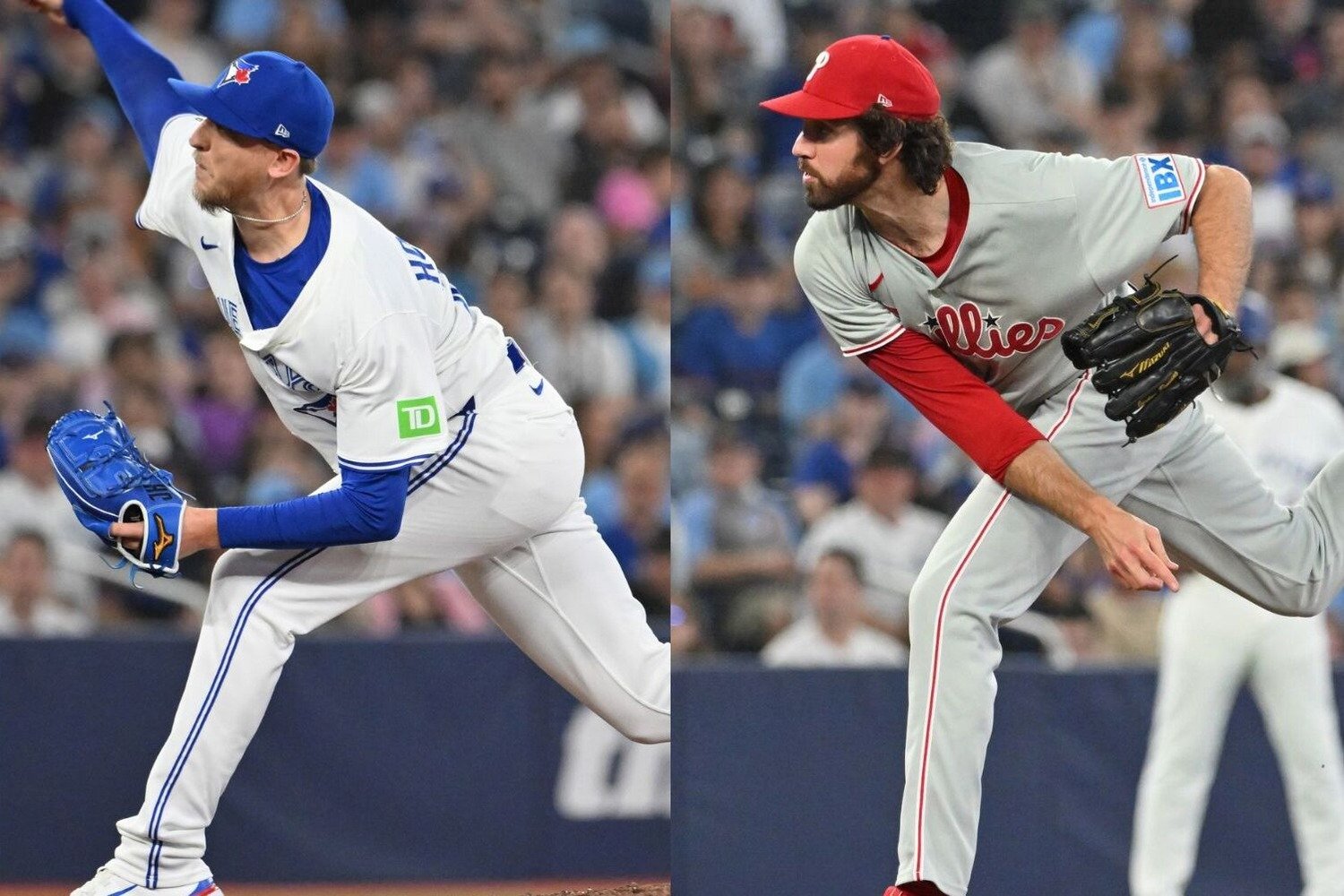 Jeff Hoffman and Jordan Romano have plenty in common. Born four months apart in 1993, they were each selected by the Blue Jays in the 2014 draft, Hoffman in the first round and Romano in the 10th. Both underwent Tommy John surgery early in their careers, Hoffman right before he was drafted and Romano not long after. Then, each bounced between multiple organizations before making his way back to the Jays. Romano was taken by the White Sox in the 2018 Rule 5 draft and subsequently traded to the Rangers, but Texas returned him to Toronto after a mediocre spring. It was the right decision by the Rangers – Romano wasn’t ready for the majors – but there’s no denying the Blue Jays caught a lucky break. A year later, Romano broke out as one of the game’s top relievers. He earned two All-Star nods with Toronto, while racking up more than 100 saves. Hoffman was the headlining prospect in the Troy Tulowitzki trade, and the Rockies later dealt him to the Reds. After a brief spring training stint with the Twins, Hoffman signed on with the Phillies in 2023. Over the next two years, he established himself as an All-Star reliever and gave the performance that ultimately earned him his three-year, $33 million contract from the Blue Jays last winter. Funnily enough, a month before Hoffman signed in Toronto, Romano (non-tendered by the Blue Jays after an injury-riddled 2024) inked a deal with Philadelphia. The two effectively switched places. Their fates are now intertwined. The Athletic’s Kaitlin McGrath reported the Blue Jays were “interested” in re-signing Romano before he joined the Phillies. Her colleague Matt Gelb reported the Phillies were “interested” in re-signing Hoffman before they pivoted to Romano. Yet, in the end, Philadelphia valued Romano more highly than Toronto did, while the Jays gave Hoffman the multi-year commitment the Phillies were hesitant to offer. At his best, Romano was lights out for the Blue Jays. Hoffman was nearly unhittable for the Phillies. But each team wanted what the other had. Of course, free agent signings aren’t a zero-sum game. One of these signings doesn’t need to be a failure for the other to be a success. Someday, we might look back and realize everyone involved – the Blue Jays and Hoffman and the Phillies and Romano – made the right decision from their point of view. Still, it’s impossible not to compare these two players, especially when they just faced off mano a mano. Or should I say, (Hoff)mano a (Ro)mano. Before I get to that faceoff, however, I should zoom out for a moment. We can't compare Hoffman's and Romano's performances this week without considering their performances all season. Hoffman started his Blue Jays tenure on the right foot, with a 1.10 ERA and 1.43 FIP through his first 14 games. Romano, meanwhile, gave up 15 runs (14 earned) before he reached the 10-inning mark with the Phillies. Yet, Hoffman suffered through several poor outings in May. He has a 13.06 ERA and 7.92 FIP in 13 games since May 6. As for Romano, he has finally settled in. Since April 27, he has a 3.38 ERA and a 2.25 FIP in 14 appearances. He’s starting to look more like the shutdown arm who protected leads for the Blue Jays from 2020-23. All told, through the first 62 games of the 2025 campaign, Hoffman and Romano have gotten off to similar starts. Hoffman has made 27 appearances, Romano 25. Hoffman has 13 saves, while Romano has eight saves and five holds (for a total of 13). Each pitcher has 11 shutdown outings and five meltdown outings, as defined by FanGraphs. Hoffman has two losses to his name, while the Blue Jays have lost six games in which he has appeared. Romano also has two losses to his name, and the Phillies have also lost six games in which he has appeared. According to FanGraphs WAR, they’ve provided their teams with roughly equivalent production; Hoffman has been two-hundredths of a win (i.e. a negligible amount) more valuable than Romano. And while Hoffman has more wins, more strikeouts, and a lower ERA, it’s worth keeping in mind that his average annual salary is $2.5 million higher than Romano’s, and the Blue Jays will be paying him in 2026 and ‘27 as well. He's supposed to be better. On Wednesday night, he was. Hoffman came in to face the Phillies for the first time since he left in free agency. Two batters later, Romano was pitching against the Blue Jays for the first time in his career. Hoffman got the job done against his former teammates. He entered with two out in the top of the ninth inning. Alec Bohm singled to put the winning run on first base, but Hoffman induced a groundout from Nick Castellanos on a slider down and away. He kept the game tied, with the top of the Blue Jays order due to bat in the bottom of the frame. Romano couldn’t do the same. While he got Bo Bichette to pop out, Vladimir Guerrero Jr. singled, and after Addison Barger struck out on seven pitches, Alejandro Kirk – Romano’s longtime batterymate – walked it off. He crushed a four-seam fastball for a double off the wall in right-center field. Hoffman was one of the first Blue Jays on the field to mob Kirk in celebration. Romano quietly made his way back to the visitors’ dugout. The jury is still out on which team won the closer swap. Both Hoffman and Romano have the stuff to be dominant back-end arms, but so far, neither the Blue Jays nor the Phillies have gotten the reliable ninth-inning presence they were hoping for. In their first head-to-head matchup, however, it was the Blue Jays who came out on top.
 -
Jeff Hoffman and Jordan Romano have plenty in common. Born four months apart in 1993, they were each selected by the Blue Jays in the 2014 draft, Hoffman in the first round and Romano in the 10th. Both underwent Tommy John surgery early in their careers, Hoffman right before he was drafted and Romano not long after. Then, each bounced between multiple organizations before making his way back to the Jays. Romano was taken by the White Sox in the 2018 Rule 5 draft and subsequently traded to the Rangers, but Texas returned him to Toronto after a mediocre spring. It was the right decision by the Rangers – Romano wasn’t ready for the majors – but there’s no denying the Blue Jays caught a lucky break. A year later, Romano broke out as one of the game’s top relievers. He earned two All-Star nods with Toronto, while racking up more than 100 saves. Hoffman was the headlining prospect in the Troy Tulowitzki trade, and the Rockies later dealt him to the Reds. After a brief spring training stint with the Twins, Hoffman signed on with the Phillies in 2023. Over the next two years, he established himself as an All-Star reliever and gave the performance that ultimately earned him his three-year, $33 million contract from the Blue Jays last winter. Funnily enough, a month before Hoffman signed in Toronto, Romano (non-tendered by the Blue Jays after an injury-riddled 2024) inked a deal with Philadelphia. The two effectively switched places. Their fates are now intertwined. The Athletic’s Kaitlin McGrath reported the Blue Jays were “interested” in re-signing Romano before he joined the Phillies. Her colleague Matt Gelb reported the Phillies were “interested” in re-signing Hoffman before they pivoted to Romano. Yet, in the end, Philadelphia valued Romano more highly than Toronto did, while the Jays gave Hoffman the multi-year commitment the Phillies were hesitant to offer. At his best, Romano was lights out for the Blue Jays. Hoffman was nearly unhittable for the Phillies. But each team wanted what the other had. Of course, free agent signings aren’t a zero-sum game. One of these signings doesn’t need to be a failure for the other to be a success. Someday, we might look back and realize everyone involved – the Blue Jays and Hoffman and the Phillies and Romano – made the right decision from their point of view. Still, it’s impossible not to compare these two players, especially when they just faced off mano a mano. Or should I say, (Hoff)mano a (Ro)mano. Before I get to that faceoff, however, I should zoom out for a moment. We can't compare Hoffman's and Romano's performances this week without considering their performances all season. Hoffman started his Blue Jays tenure on the right foot, with a 1.10 ERA and 1.43 FIP through his first 14 games. Romano, meanwhile, gave up 15 runs (14 earned) before he reached the 10-inning mark with the Phillies. Yet, Hoffman suffered through several poor outings in May. He has a 13.06 ERA and 7.92 FIP in 13 games since May 6. As for Romano, he has finally settled in. Since April 27, he has a 3.38 ERA and a 2.25 FIP in 14 appearances. He’s starting to look more like the shutdown arm who protected leads for the Blue Jays from 2020-23. All told, through the first 62 games of the 2025 campaign, Hoffman and Romano have gotten off to similar starts. Hoffman has made 27 appearances, Romano 25. Hoffman has 13 saves, while Romano has eight saves and five holds (for a total of 13). Each pitcher has 11 shutdown outings and five meltdown outings, as defined by FanGraphs. Hoffman has two losses to his name, while the Blue Jays have lost six games in which he has appeared. Romano also has two losses to his name, and the Phillies have also lost six games in which he has appeared. According to FanGraphs WAR, they’ve provided their teams with roughly equivalent production; Hoffman has been two-hundredths of a win (i.e. a negligible amount) more valuable than Romano. And while Hoffman has more wins, more strikeouts, and a lower ERA, it’s worth keeping in mind that his average annual salary is $2.5 million higher than Romano’s, and the Blue Jays will be paying him in 2026 and ‘27 as well. He's supposed to be better. On Wednesday night, he was. Hoffman came in to face the Phillies for the first time since he left in free agency. Two batters later, Romano was pitching against the Blue Jays for the first time in his career. Hoffman got the job done against his former teammates. He entered with two out in the top of the ninth inning. Alec Bohm singled to put the winning run on first base, but Hoffman induced a groundout from Nick Castellanos on a slider down and away. He kept the game tied, with the top of the Blue Jays order due to bat in the bottom of the frame. Romano couldn’t do the same. While he got Bo Bichette to pop out, Vladimir Guerrero Jr. singled, and after Addison Barger struck out on seven pitches, Alejandro Kirk – Romano’s longtime batterymate – walked it off. He crushed a four-seam fastball for a double off the wall in right-center field. Hoffman was one of the first Blue Jays on the field to mob Kirk in celebration. Romano quietly made his way back to the visitors’ dugout. The jury is still out on which team won the closer swap. Both Hoffman and Romano have the stuff to be dominant back-end arms, but so far, neither the Blue Jays nor the Phillies have gotten the reliable ninth-inning presence they were hoping for. In their first head-to-head matchup, however, it was the Blue Jays who came out on top. View full article
-
Article: Chris Bassitt's New-Ish Toy
Leo Morgenstern replied to Leo Morgenstern's topic in Jays Centre Front Page News
Thanks a lot, I really appreciate hearing that! -
On Friday, Chris Bassitt took the mound against the Athletics, his team from 2015 to 2021. His final year with the A’s was arguably the best he's ever had. He went 12-4 with a 3.15 ERA. He was an All-Star for the first (and so far only) time. His 4.0 Baseball Reference WAR ranked eighth among AL pitchers. His 3.3 FanGraphs WAR ranked 11th. Both were career-highs. Four years and two teams later, the veteran right-hander is a very different pitcher. His primary fastball is still a sinker, but his velocity is down by a mile and a half. Even accounting for the change in velocity, the pitch drops more than it used to. And that's just the tip of the iceberg. Bassitt's average arm angle is six degrees lower than it was in 2021, while his average release point is more than a foot closer to third base. He throws his curveball far more and his four-seam fastball much less. He no longer throws his changeup at all. Instead, his splitter has become his primary off-speed pitch – and that’s what I’d like to talk about today. Bassitt introduced a splitter to his arsenal when he joined the Blue Jays in 2023. If you've been paying close attention to the types of pitches this team likes to throw, that shouldn't come as a huge surprise. Over the past four seasons, the Jays have thrown significantly more splitters than any other club (per Statcast). Just under 7% of all pitches the Jays have thrown since 2022 have been splitters. The league median is 2.2%, while no other team is above 5% in that time. This is largely because of Kevin Gausman, who throws both a ton of innings and a ton of splitters. However, the Jays have acquired and developed several more splitter-throwers than just Gausman over the past few years (including Erik Swanson, Bowden Francis, Yariel Rodríguez) and encouraged many of them to use their splitters more regularly. Bassitt threw his splitter sparingly at first, and almost exclusively to opposite-handed hitters. He used his splitter 6.5% of the time against lefty batters in 2023 and 7.2% of the time in 2024. This year, that rate is up to 13.1%. Meanwhile, he only threw one lone splitter (that very well could have been miscategorized) to a righty batter in 2023 and only 15 (1.1%) in 2024. Twelve starts into 2025, he's already tossed 16 splitters to righty batters. That’s a low number, but it represents close to a threefold increase in splitter usage against righties compared to last season. All told, Bassitt has thrown his splitter 8.6% of the time this year, making it his fourth most common offering; last year, it was number eight. Here's what's strange about Bassitt throwing his splitter so much more this year: It's not a very good pitch. The table below shows how it has performed over the past three seasons. It's hard to look at these results and think, "That's a pitch he should be using more!" Season wOBA xwOBA Whiff% PutAway% Run Value 2023 .377 .353 22.6% 9.1% -2 2024 .313 .365 16.7% 11.5% -3 2025 .533 .437 21.1% 7.4% -5 It also grades out poorly according to all of the pitch modeling statistics at FanGraphs (Stuff+, Location+, & Pitching+ and PitchingBot Stuff, Command, and Overall) and Baseball Prospectus (PitchPro and StuffPro). To be fair, Bassitt's splitter is clearly still a work in progress. The pitch's velocity, spin rate, and movement profile have changed noticeably in each year he has thrown it. Yet, if anything, that only makes it more surprising to see him throwing his splitter twice as often in 2025. What made him decide it was ready for a more prominent role in his arsenal? Perhaps we can answer that question by looking at how he uses the pitch. Bassitt throws his splitter outside of the strike zone more than two-thirds of the time. That's unusually high, even for a pitch type that tends to be thrown as chase bait – and especially coming from a guy who tends to throw more strikes than the average pitcher. Over the last three years, Bassitt has thrown 52.5% of non-splitters in the strike zone, compared to a 49.9% league average. However, he has only thrown 30% of his splitters in the zone, compared to a 37.2% league average. Take a look at this chart from Baseball Savant that shows the in-zone rate for all of Bassitt's pitches. His splitter is the teal-colored line way below all the others: As you can tell from the full rainbow of colors in the graph, Bassitt is the type of pitcher who succeeds by keeping his opponents guessing with all sorts of different looks. One reason he uses his splitter is simply that it's different from his other pitches. Bassitt needs "different" to survive, even if "different" doesn't always mean "better" (or even "good"). To that point, Bassitt has dropped his changeup from his arsenal after giving up a career-worst 11.5% barrel rate, .440 wOBA, and .364 xwOBA on the pitch last year. His splitter is a different beast, but he throws it at about the same velocity and with a relatively similar movement profile. So, his increased splitter usage might not really be about the splitter at all. Rather, he might just need an offspeed pitch that tunnels well with his sinker, and he no longer trusts his changeup to fill that role. Like I said, Bassitt's modus operandi is keeping opponents on their toes by throwing different pitches in different locations at different speeds and with different movement profiles. His splitter is far from perfect, but ultimately, the fact that it's different might be good enough. Additionally, it's worth noting how many of his out-of-zone splitters have been in the area Statcast calls the shadow zone, which goes from roughly one baseball's width inside the zone to one baseball's width outside the zone. A lot of Bassitt's in-zone splitters have been in the shadow zone as well. All told, he's thrown 50% of his splitters in the shadow zone this year, the highest rate of any of his pitches. As I theorized a couple of weeks ago, living in the shadows seems to be helping Bassitt expand the strike zone as a means of inducing more chase. (That's something he can afford to do because of how well the Blue Jays' catchers frame pitches.) So, while his splitter might not look effective in and of itself, it could be part of a larger plan that is paying off. No matter what the numbers say about his splitter, you can't argue that Bassitt hasn't been successful this season. Indeed, Bassitt has not walked a batter on a splitter this year, even though he throws it outside of the strike zone so often. And despite throwing more splitters in 2025, his walk rate has never been lower. I think it's safe to presume that all these splitters outside the zone aren't just a matter of poor control. Bassitt locates his splitter where he does for a reason. Is it a good enough reason, considering how poorly the pitch has performed? I can't say for sure. Yet, given how well Bassitt has pitched this season, I'd say he's earned the benefit of the doubt. All stats in article updated prior to games on Sunday, June 1. View full article
-
.jpg.de24ed1072148019ea07742c38b31d07.jpg) On Friday, Chris Bassitt took the mound against the Athletics, his team from 2015 to 2021. His final year with the A’s was arguably the best he's ever had. He went 12-4 with a 3.15 ERA. He was an All-Star for the first (and so far only) time. His 4.0 Baseball Reference WAR ranked eighth among AL pitchers. His 3.3 FanGraphs WAR ranked 11th. Both were career-highs. Four years and two teams later, the veteran right-hander is a very different pitcher. His primary fastball is still a sinker, but his velocity is down by a mile and a half. Even accounting for the change in velocity, the pitch drops more than it used to. And that's just the tip of the iceberg. Bassitt's average arm angle is six degrees lower than it was in 2021, while his average release point is more than a foot closer to third base. He throws his curveball far more and his four-seam fastball much less. He no longer throws his changeup at all. Instead, his splitter has become his primary off-speed pitch – and that’s what I’d like to talk about today. Bassitt introduced a splitter to his arsenal when he joined the Blue Jays in 2023. If you've been paying close attention to the types of pitches this team likes to throw, that shouldn't come as a huge surprise. Over the past four seasons, the Jays have thrown significantly more splitters than any other club (per Statcast). Just under 7% of all pitches the Jays have thrown since 2022 have been splitters. The league median is 2.2%, while no other team is above 5% in that time. This is largely because of Kevin Gausman, who throws both a ton of innings and a ton of splitters. However, the Jays have acquired and developed several more splitter-throwers than just Gausman over the past few years (including Erik Swanson, Bowden Francis, Yariel Rodríguez) and encouraged many of them to use their splitters more regularly. Bassitt threw his splitter sparingly at first, and almost exclusively to opposite-handed hitters. He used his splitter 6.5% of the time against lefty batters in 2023 and 7.2% of the time in 2024. This year, that rate is up to 13.1%. Meanwhile, he only threw one lone splitter (that very well could have been miscategorized) to a righty batter in 2023 and only 15 (1.1%) in 2024. Twelve starts into 2025, he's already tossed 16 splitters to righty batters. That’s a low number, but it represents close to a threefold increase in splitter usage against righties compared to last season. All told, Bassitt has thrown his splitter 8.6% of the time this year, making it his fourth most common offering; last year, it was number eight. Here's what's strange about Bassitt throwing his splitter so much more this year: It's not a very good pitch. The table below shows how it has performed over the past three seasons. It's hard to look at these results and think, "That's a pitch he should be using more!" Season wOBA xwOBA Whiff% PutAway% Run Value 2023 .377 .353 22.6% 9.1% -2 2024 .313 .365 16.7% 11.5% -3 2025 .533 .437 21.1% 7.4% -5 It also grades out poorly according to all of the pitch modeling statistics at FanGraphs (Stuff+, Location+, & Pitching+ and PitchingBot Stuff, Command, and Overall) and Baseball Prospectus (PitchPro and StuffPro). To be fair, Bassitt's splitter is clearly still a work in progress. The pitch's velocity, spin rate, and movement profile have changed noticeably in each year he has thrown it. Yet, if anything, that only makes it more surprising to see him throwing his splitter twice as often in 2025. What made him decide it was ready for a more prominent role in his arsenal? Perhaps we can answer that question by looking at how he uses the pitch. Bassitt throws his splitter outside of the strike zone more than two-thirds of the time. That's unusually high, even for a pitch type that tends to be thrown as chase bait – and especially coming from a guy who tends to throw more strikes than the average pitcher. Over the last three years, Bassitt has thrown 52.5% of non-splitters in the strike zone, compared to a 49.9% league average. However, he has only thrown 30% of his splitters in the zone, compared to a 37.2% league average. Take a look at this chart from Baseball Savant that shows the in-zone rate for all of Bassitt's pitches. His splitter is the teal-colored line way below all the others: As you can tell from the full rainbow of colors in the graph, Bassitt is the type of pitcher who succeeds by keeping his opponents guessing with all sorts of different looks. One reason he uses his splitter is simply that it's different from his other pitches. Bassitt needs "different" to survive, even if "different" doesn't always mean "better" (or even "good"). To that point, Bassitt has dropped his changeup from his arsenal after giving up a career-worst 11.5% barrel rate, .440 wOBA, and .364 xwOBA on the pitch last year. His splitter is a different beast, but he throws it at about the same velocity and with a relatively similar movement profile. So, his increased splitter usage might not really be about the splitter at all. Rather, he might just need an offspeed pitch that tunnels well with his sinker, and he no longer trusts his changeup to fill that role. Like I said, Bassitt's modus operandi is keeping opponents on their toes by throwing different pitches in different locations at different speeds and with different movement profiles. His splitter is far from perfect, but ultimately, the fact that it's different might be good enough. Additionally, it's worth noting how many of his out-of-zone splitters have been in the area Statcast calls the shadow zone, which goes from roughly one baseball's width inside the zone to one baseball's width outside the zone. A lot of Bassitt's in-zone splitters have been in the shadow zone as well. All told, he's thrown 50% of his splitters in the shadow zone this year, the highest rate of any of his pitches. As I theorized a couple of weeks ago, living in the shadows seems to be helping Bassitt expand the strike zone as a means of inducing more chase. (That's something he can afford to do because of how well the Blue Jays' catchers frame pitches.) So, while his splitter might not look effective in and of itself, it could be part of a larger plan that is paying off. No matter what the numbers say about his splitter, you can't argue that Bassitt hasn't been successful this season. Indeed, Bassitt has not walked a batter on a splitter this year, even though he throws it outside of the strike zone so often. And despite throwing more splitters in 2025, his walk rate has never been lower. I think it's safe to presume that all these splitters outside the zone aren't just a matter of poor control. Bassitt locates his splitter where he does for a reason. Is it a good enough reason, considering how poorly the pitch has performed? I can't say for sure. Yet, given how well Bassitt has pitched this season, I'd say he's earned the benefit of the doubt. All stats in article updated prior to games on Sunday, June 1.
On Friday, Chris Bassitt took the mound against the Athletics, his team from 2015 to 2021. His final year with the A’s was arguably the best he's ever had. He went 12-4 with a 3.15 ERA. He was an All-Star for the first (and so far only) time. His 4.0 Baseball Reference WAR ranked eighth among AL pitchers. His 3.3 FanGraphs WAR ranked 11th. Both were career-highs. Four years and two teams later, the veteran right-hander is a very different pitcher. His primary fastball is still a sinker, but his velocity is down by a mile and a half. Even accounting for the change in velocity, the pitch drops more than it used to. And that's just the tip of the iceberg. Bassitt's average arm angle is six degrees lower than it was in 2021, while his average release point is more than a foot closer to third base. He throws his curveball far more and his four-seam fastball much less. He no longer throws his changeup at all. Instead, his splitter has become his primary off-speed pitch – and that’s what I’d like to talk about today. Bassitt introduced a splitter to his arsenal when he joined the Blue Jays in 2023. If you've been paying close attention to the types of pitches this team likes to throw, that shouldn't come as a huge surprise. Over the past four seasons, the Jays have thrown significantly more splitters than any other club (per Statcast). Just under 7% of all pitches the Jays have thrown since 2022 have been splitters. The league median is 2.2%, while no other team is above 5% in that time. This is largely because of Kevin Gausman, who throws both a ton of innings and a ton of splitters. However, the Jays have acquired and developed several more splitter-throwers than just Gausman over the past few years (including Erik Swanson, Bowden Francis, Yariel Rodríguez) and encouraged many of them to use their splitters more regularly. Bassitt threw his splitter sparingly at first, and almost exclusively to opposite-handed hitters. He used his splitter 6.5% of the time against lefty batters in 2023 and 7.2% of the time in 2024. This year, that rate is up to 13.1%. Meanwhile, he only threw one lone splitter (that very well could have been miscategorized) to a righty batter in 2023 and only 15 (1.1%) in 2024. Twelve starts into 2025, he's already tossed 16 splitters to righty batters. That’s a low number, but it represents close to a threefold increase in splitter usage against righties compared to last season. All told, Bassitt has thrown his splitter 8.6% of the time this year, making it his fourth most common offering; last year, it was number eight. Here's what's strange about Bassitt throwing his splitter so much more this year: It's not a very good pitch. The table below shows how it has performed over the past three seasons. It's hard to look at these results and think, "That's a pitch he should be using more!" Season wOBA xwOBA Whiff% PutAway% Run Value 2023 .377 .353 22.6% 9.1% -2 2024 .313 .365 16.7% 11.5% -3 2025 .533 .437 21.1% 7.4% -5 It also grades out poorly according to all of the pitch modeling statistics at FanGraphs (Stuff+, Location+, & Pitching+ and PitchingBot Stuff, Command, and Overall) and Baseball Prospectus (PitchPro and StuffPro). To be fair, Bassitt's splitter is clearly still a work in progress. The pitch's velocity, spin rate, and movement profile have changed noticeably in each year he has thrown it. Yet, if anything, that only makes it more surprising to see him throwing his splitter twice as often in 2025. What made him decide it was ready for a more prominent role in his arsenal? Perhaps we can answer that question by looking at how he uses the pitch. Bassitt throws his splitter outside of the strike zone more than two-thirds of the time. That's unusually high, even for a pitch type that tends to be thrown as chase bait – and especially coming from a guy who tends to throw more strikes than the average pitcher. Over the last three years, Bassitt has thrown 52.5% of non-splitters in the strike zone, compared to a 49.9% league average. However, he has only thrown 30% of his splitters in the zone, compared to a 37.2% league average. Take a look at this chart from Baseball Savant that shows the in-zone rate for all of Bassitt's pitches. His splitter is the teal-colored line way below all the others: As you can tell from the full rainbow of colors in the graph, Bassitt is the type of pitcher who succeeds by keeping his opponents guessing with all sorts of different looks. One reason he uses his splitter is simply that it's different from his other pitches. Bassitt needs "different" to survive, even if "different" doesn't always mean "better" (or even "good"). To that point, Bassitt has dropped his changeup from his arsenal after giving up a career-worst 11.5% barrel rate, .440 wOBA, and .364 xwOBA on the pitch last year. His splitter is a different beast, but he throws it at about the same velocity and with a relatively similar movement profile. So, his increased splitter usage might not really be about the splitter at all. Rather, he might just need an offspeed pitch that tunnels well with his sinker, and he no longer trusts his changeup to fill that role. Like I said, Bassitt's modus operandi is keeping opponents on their toes by throwing different pitches in different locations at different speeds and with different movement profiles. His splitter is far from perfect, but ultimately, the fact that it's different might be good enough. Additionally, it's worth noting how many of his out-of-zone splitters have been in the area Statcast calls the shadow zone, which goes from roughly one baseball's width inside the zone to one baseball's width outside the zone. A lot of Bassitt's in-zone splitters have been in the shadow zone as well. All told, he's thrown 50% of his splitters in the shadow zone this year, the highest rate of any of his pitches. As I theorized a couple of weeks ago, living in the shadows seems to be helping Bassitt expand the strike zone as a means of inducing more chase. (That's something he can afford to do because of how well the Blue Jays' catchers frame pitches.) So, while his splitter might not look effective in and of itself, it could be part of a larger plan that is paying off. No matter what the numbers say about his splitter, you can't argue that Bassitt hasn't been successful this season. Indeed, Bassitt has not walked a batter on a splitter this year, even though he throws it outside of the strike zone so often. And despite throwing more splitters in 2025, his walk rate has never been lower. I think it's safe to presume that all these splitters outside the zone aren't just a matter of poor control. Bassitt locates his splitter where he does for a reason. Is it a good enough reason, considering how poorly the pitch has performed? I can't say for sure. Yet, given how well Bassitt has pitched this season, I'd say he's earned the benefit of the doubt. All stats in article updated prior to games on Sunday, June 1. -
What Can Statcast’s New Swing Metrics Tell Us About the Blue Jays?
Leo Morgenstern posted an article in Blue Jays
.jpg.27488d43ab21cda5d2f3debae8f64504.jpg) The Blue Jays’ offense exploded for a 12-0 victory over the Athletics on Thursday. Everyone in the starting lineup reached base at least once. Altogether, the Jays went 18-for-41 (.439) with five walks, three doubles, and four home runs. They struck out just three times. It wasn’t Toronto’s most lopsided win of the season – that would be last week’s 14-0 drubbing of the Padres – but this was arguably a more impressive showing from the bats. They recorded more hits, more extra-base hits, more home runs, more walks, and fewer strikeouts in this one. The Blue Jays swung the bats harder than ever on Thursday (season-high 73.3 mph average bat speed), and it paid off in a big way. Even before last night, the Jays were hitting much better in May than they had in April. They came into Thursday’s contest with 28 home runs, a 109 wRC+, and an average of 4.2 runs per game since the calendar flipped to May. They left with 32 home runs, a 116 wRC+, and an average of 4.5 runs per game, all of which rank top-five in the AL. That’s a huge improvement from the first month of the season, when they ranked among the bottom five in all three categories. The Blue Jays have a solid pitching staff and one of the best defensive units in the league. Still, they need to score runs if they’re going to compete for a playoff spot. Throughout the first month of the season, more often than not, it seemed like that wasn’t going to happen. Now the question becomes: Which version of the Blue Jays offense are we going to see over the next four months? Was April or May more reflective of the lineup’s true talent? There’s no way to know for sure (that’s why they play the games!), but any and all additional data we can get our hands on will inform our expectations for this team going forward. So, I was excited when Statcast came out with several new metrics earlier this month that help us to assess and quantify swings better than ever before. These four new metrics are called swing path, attack angle, ideal attack angle rate, and attack direction. You can find them all on Baseball Savant, and you can read about them in Mike Petriello’s in-depth explainer on MLB.com. I also recommend reading these pieces by Matthew Trueblood of Baseball Prospectus and Davy Andrews of FanGraphs to learn more about all the new data at our disposal. I won't lie, it's complicated stuff, but the best way to learn how to use these numbers is to read about them and play around with them yourself. So, in an effort to further my own understanding, I decided to see what the new Statcast metrics had to say about the Blue Jays as a team. Here's what I found. The Blue Jays Have the Flattest Swings in MLB Swing path, also known as tilt, describes the angle of the bat’s path (in relation to the ground) during the final 40 milliseconds before contacting (or passing) the baseball. A swing that is perfectly parallel to the ground would have a 0-degree swing path, although you’re unlikely to see such a flat swing in a game. The flattest swing by any major league hitter so far this year was a one-degree hack by none other than Toronto’s Anthony Santander. On average, Blue Jays hitters have the flattest swings in the league, with a 30-degree average swing path. For context, the league median swing path is 32 degrees, while the team with the steepest swings, the Tigers, has an average tilt of 35 degrees. In other words, the range isn’t huge at the team level. Still, it’s interesting to see the Blue Jays at one extreme of the list. It’s critical to keep in mind that there isn’t such a thing as a “good” or “bad” swing path. It's not nearly that simple. As you might imagine, steeper swings are more closely correlated with whiffs, while flatter swings can lead to more contact and less power, but take that with a kosher-sized grain of salt. After all, the mighty (and strikeout-prone) Giancarlo Stanton had one of the flattest swings in the game last year, while contact king Luis Arraez had one of the steeper swings in the league. Still, the fact that the Blue Jays have flatter swings than any other team could help explain why they have the lowest strikeout rate in the AL and the lowest whiff rate in MLB. But might it also mean their recent power surge is more mirage than reality? Maybe. But like I said, it’s not really that simple. For instance, Toronto’s average swing path in May is just as flat as it was in April. Yet, this month in particular, the team average has been dragged down by a pair of hitters with two of the flattest swings in the game: Alejandro Kirk and Santander. Kirk has never been much of a power bat, while a slumping Santander has actually hit for less power in May than he did in April. Aggregate team numbers can only tell us so much. The Blue Jays Have the Lowest Average Attack Angle in the AL Attack angle describes the vertical angle at which the bat is travelling as it makes contact with (or passes by) the baseball. As MLB.com's Tom Tango explains, attack angle is “predominantly a function of timing” rather than swing path. In other words, it’s mostly about when during the swing the bat hits the ball, rather than the path the swing is taking. A late swing is more likely to have a negative attack angle, while an early swing is more likely to have a high attack angle. Once again, there isn’t really such a thing as a “good” or “bad” attack angle. However, as is the case with launch angle, most of the best contact comes in a sweet-spot range that’s neither too high nor too low. An attack angle too low will send the ball straight into the dirt, while an attack angle too high will pop it up. Statcast defines the “ideal” attack angle range as five to 20 degrees. Toronto’s eight-degree average attack angle is the lowest in the AL and the second-lowest in MLB. So is their ideal attack angle rate (the percentage of their swings that fall between five and 20 degrees) of 48.4%. The league averages are 10 degrees and 51.5%, respectively. This seems to suggest the Blue Jays have been late swingers this year. I'm not surprised by that, considering they have the lowest pull rate in the American League. What's more, opponents have attacked the Blue Jays with velocity all year. This team has seen four-seam fastballs or sinkers for 49.5% of pitches, compared to the 47.3% league average. On a related note, the average velocity of all pitches the Blue Jays have seen is 89.8 mph, the fastest average velocity in the AL. When it comes to individual players, the one who stands out the most (by far) is Vladimir Guerrero Jr. His average attack angle is the lowest among all qualified MLB hitters, while his ideal attack angle rate is the lowest in the AL. Among Blue Jays batters (min. 30 PA), his ideal attack angle rate is almost six points lower than anyone else's. It’s also about five points lower than it was last year. Guerrero might never be a guy with high attack angles, but it sure seems like poor timing is holding him back from reaching his full potential right now. The Blue Jays Rank in the Middle of the Pack in Attack Direction Attack direction is pretty much the horizontal companion to attack angle. It measures the angle at which the bat is travelling as it makes contact with (or passes by) the baseball, but it is measured in relation to the front of home plate rather than the ground. That means it tells us whether the bat is moving toward a hitter’s pull side or oppo side at the moment of contact. Toronto’s average attack direction is two degrees to the pull side, which is right around league average. As with all of the other metrics we’ve discussed, it’s not necessarily better or worse to have a heavy pull-side or heavy oppo-side average attack direction. That said, swings with a pull-side attack direction are going to lead to pulled contact, which usually results in more extra-base hits. It's interesting to find the Blue Jays sitting in the middle of the pack with a slight pull tendency according to this metric, considering they have such a low pull rate this season. However, one thing to consider is that their pull rate on fly balls is right around league average. So, when vertical angle isn't an issue, the Blue Jays are pulling the ball just fine. However, they're far more likely to be late (and therefore hit the ball to the opposite field) on the balls they hit into the ground. Among individual players, Tyler Heineman stands out with a 13-degree pull-side average attack angle. That’s the fifth most extreme pull-side swing in the league (min. 50 swings). The fact that Heineman is pulling the ball so much has played a big role in helping him maintain such ridiculous offensive numbers despite his slow swing speed and low exit velocities. *** I chose to dig into the Blue Jays' team-wide numbers as a fun way to get my feet wet, but I quickly realized that the new Statcast swing metrics are much more useful for analyzing individual players. For one thing, looking at team averages can hide extreme profiles on both ends of the spectrum. Moreover, what works for one player won’t necessarily work for another. The best swing for Vladdy isn't the best swing for Bo, so there's only so much we can learn from combining their swing data. I also realized that the best use for these metrics is comparing a player's swing from one season to the next, so as to better understand what he might be doing differently. Needless to say, there's a lot more for me (and all of us) to learn about how to use these new stats, and a lot more to learn about how the Blue Jays swing the bat. We're still just scratching the surface.
The Blue Jays’ offense exploded for a 12-0 victory over the Athletics on Thursday. Everyone in the starting lineup reached base at least once. Altogether, the Jays went 18-for-41 (.439) with five walks, three doubles, and four home runs. They struck out just three times. It wasn’t Toronto’s most lopsided win of the season – that would be last week’s 14-0 drubbing of the Padres – but this was arguably a more impressive showing from the bats. They recorded more hits, more extra-base hits, more home runs, more walks, and fewer strikeouts in this one. The Blue Jays swung the bats harder than ever on Thursday (season-high 73.3 mph average bat speed), and it paid off in a big way. Even before last night, the Jays were hitting much better in May than they had in April. They came into Thursday’s contest with 28 home runs, a 109 wRC+, and an average of 4.2 runs per game since the calendar flipped to May. They left with 32 home runs, a 116 wRC+, and an average of 4.5 runs per game, all of which rank top-five in the AL. That’s a huge improvement from the first month of the season, when they ranked among the bottom five in all three categories. The Blue Jays have a solid pitching staff and one of the best defensive units in the league. Still, they need to score runs if they’re going to compete for a playoff spot. Throughout the first month of the season, more often than not, it seemed like that wasn’t going to happen. Now the question becomes: Which version of the Blue Jays offense are we going to see over the next four months? Was April or May more reflective of the lineup’s true talent? There’s no way to know for sure (that’s why they play the games!), but any and all additional data we can get our hands on will inform our expectations for this team going forward. So, I was excited when Statcast came out with several new metrics earlier this month that help us to assess and quantify swings better than ever before. These four new metrics are called swing path, attack angle, ideal attack angle rate, and attack direction. You can find them all on Baseball Savant, and you can read about them in Mike Petriello’s in-depth explainer on MLB.com. I also recommend reading these pieces by Matthew Trueblood of Baseball Prospectus and Davy Andrews of FanGraphs to learn more about all the new data at our disposal. I won't lie, it's complicated stuff, but the best way to learn how to use these numbers is to read about them and play around with them yourself. So, in an effort to further my own understanding, I decided to see what the new Statcast metrics had to say about the Blue Jays as a team. Here's what I found. The Blue Jays Have the Flattest Swings in MLB Swing path, also known as tilt, describes the angle of the bat’s path (in relation to the ground) during the final 40 milliseconds before contacting (or passing) the baseball. A swing that is perfectly parallel to the ground would have a 0-degree swing path, although you’re unlikely to see such a flat swing in a game. The flattest swing by any major league hitter so far this year was a one-degree hack by none other than Toronto’s Anthony Santander. On average, Blue Jays hitters have the flattest swings in the league, with a 30-degree average swing path. For context, the league median swing path is 32 degrees, while the team with the steepest swings, the Tigers, has an average tilt of 35 degrees. In other words, the range isn’t huge at the team level. Still, it’s interesting to see the Blue Jays at one extreme of the list. It’s critical to keep in mind that there isn’t such a thing as a “good” or “bad” swing path. It's not nearly that simple. As you might imagine, steeper swings are more closely correlated with whiffs, while flatter swings can lead to more contact and less power, but take that with a kosher-sized grain of salt. After all, the mighty (and strikeout-prone) Giancarlo Stanton had one of the flattest swings in the game last year, while contact king Luis Arraez had one of the steeper swings in the league. Still, the fact that the Blue Jays have flatter swings than any other team could help explain why they have the lowest strikeout rate in the AL and the lowest whiff rate in MLB. But might it also mean their recent power surge is more mirage than reality? Maybe. But like I said, it’s not really that simple. For instance, Toronto’s average swing path in May is just as flat as it was in April. Yet, this month in particular, the team average has been dragged down by a pair of hitters with two of the flattest swings in the game: Alejandro Kirk and Santander. Kirk has never been much of a power bat, while a slumping Santander has actually hit for less power in May than he did in April. Aggregate team numbers can only tell us so much. The Blue Jays Have the Lowest Average Attack Angle in the AL Attack angle describes the vertical angle at which the bat is travelling as it makes contact with (or passes by) the baseball. As MLB.com's Tom Tango explains, attack angle is “predominantly a function of timing” rather than swing path. In other words, it’s mostly about when during the swing the bat hits the ball, rather than the path the swing is taking. A late swing is more likely to have a negative attack angle, while an early swing is more likely to have a high attack angle. Once again, there isn’t really such a thing as a “good” or “bad” attack angle. However, as is the case with launch angle, most of the best contact comes in a sweet-spot range that’s neither too high nor too low. An attack angle too low will send the ball straight into the dirt, while an attack angle too high will pop it up. Statcast defines the “ideal” attack angle range as five to 20 degrees. Toronto’s eight-degree average attack angle is the lowest in the AL and the second-lowest in MLB. So is their ideal attack angle rate (the percentage of their swings that fall between five and 20 degrees) of 48.4%. The league averages are 10 degrees and 51.5%, respectively. This seems to suggest the Blue Jays have been late swingers this year. I'm not surprised by that, considering they have the lowest pull rate in the American League. What's more, opponents have attacked the Blue Jays with velocity all year. This team has seen four-seam fastballs or sinkers for 49.5% of pitches, compared to the 47.3% league average. On a related note, the average velocity of all pitches the Blue Jays have seen is 89.8 mph, the fastest average velocity in the AL. When it comes to individual players, the one who stands out the most (by far) is Vladimir Guerrero Jr. His average attack angle is the lowest among all qualified MLB hitters, while his ideal attack angle rate is the lowest in the AL. Among Blue Jays batters (min. 30 PA), his ideal attack angle rate is almost six points lower than anyone else's. It’s also about five points lower than it was last year. Guerrero might never be a guy with high attack angles, but it sure seems like poor timing is holding him back from reaching his full potential right now. The Blue Jays Rank in the Middle of the Pack in Attack Direction Attack direction is pretty much the horizontal companion to attack angle. It measures the angle at which the bat is travelling as it makes contact with (or passes by) the baseball, but it is measured in relation to the front of home plate rather than the ground. That means it tells us whether the bat is moving toward a hitter’s pull side or oppo side at the moment of contact. Toronto’s average attack direction is two degrees to the pull side, which is right around league average. As with all of the other metrics we’ve discussed, it’s not necessarily better or worse to have a heavy pull-side or heavy oppo-side average attack direction. That said, swings with a pull-side attack direction are going to lead to pulled contact, which usually results in more extra-base hits. It's interesting to find the Blue Jays sitting in the middle of the pack with a slight pull tendency according to this metric, considering they have such a low pull rate this season. However, one thing to consider is that their pull rate on fly balls is right around league average. So, when vertical angle isn't an issue, the Blue Jays are pulling the ball just fine. However, they're far more likely to be late (and therefore hit the ball to the opposite field) on the balls they hit into the ground. Among individual players, Tyler Heineman stands out with a 13-degree pull-side average attack angle. That’s the fifth most extreme pull-side swing in the league (min. 50 swings). The fact that Heineman is pulling the ball so much has played a big role in helping him maintain such ridiculous offensive numbers despite his slow swing speed and low exit velocities. *** I chose to dig into the Blue Jays' team-wide numbers as a fun way to get my feet wet, but I quickly realized that the new Statcast swing metrics are much more useful for analyzing individual players. For one thing, looking at team averages can hide extreme profiles on both ends of the spectrum. Moreover, what works for one player won’t necessarily work for another. The best swing for Vladdy isn't the best swing for Bo, so there's only so much we can learn from combining their swing data. I also realized that the best use for these metrics is comparing a player's swing from one season to the next, so as to better understand what he might be doing differently. Needless to say, there's a lot more for me (and all of us) to learn about how to use these new stats, and a lot more to learn about how the Blue Jays swing the bat. We're still just scratching the surface. -
The Blue Jays’ offense exploded for a 12-0 victory over the Athletics on Thursday. Everyone in the starting lineup reached base at least once. Altogether, the Jays went 18-for-41 (.439) with five walks, three doubles, and four home runs. They struck out just three times. It wasn’t Toronto’s most lopsided win of the season – that would be last week’s 14-0 drubbing of the Padres – but this was arguably a more impressive showing from the bats. They recorded more hits, more extra-base hits, more home runs, more walks, and fewer strikeouts in this one. The Blue Jays swung the bats harder than ever on Thursday (season-high 73.3 mph average bat speed), and it paid off in a big way. Even before last night, the Jays were hitting much better in May than they had in April. They came into Thursday’s contest with 28 home runs, a 109 wRC+, and an average of 4.2 runs per game since the calendar flipped to May. They left with 32 home runs, a 116 wRC+, and an average of 4.5 runs per game, all of which rank top-five in the AL. That’s a huge improvement from the first month of the season, when they ranked among the bottom five in all three categories. The Blue Jays have a solid pitching staff and one of the best defensive units in the league. Still, they need to score runs if they’re going to compete for a playoff spot. Throughout the first month of the season, more often than not, it seemed like that wasn’t going to happen. Now the question becomes: Which version of the Blue Jays offense are we going to see over the next four months? Was April or May more reflective of the lineup’s true talent? There’s no way to know for sure (that’s why they play the games!), but any and all additional data we can get our hands on will inform our expectations for this team going forward. So, I was excited when Statcast came out with several new metrics earlier this month that help us to assess and quantify swings better than ever before. These four new metrics are called swing path, attack angle, ideal attack angle rate, and attack direction. You can find them all on Baseball Savant, and you can read about them in Mike Petriello’s in-depth explainer on MLB.com. I also recommend reading these pieces by Matthew Trueblood of Baseball Prospectus and Davy Andrews of FanGraphs to learn more about all the new data at our disposal. I won't lie, it's complicated stuff, but the best way to learn how to use these numbers is to read about them and play around with them yourself. So, in an effort to further my own understanding, I decided to see what the new Statcast metrics had to say about the Blue Jays as a team. Here's what I found. The Blue Jays Have the Flattest Swings in MLB Swing path, also known as tilt, describes the angle of the bat’s path (in relation to the ground) during the final 40 milliseconds before contacting (or passing) the baseball. A swing that is perfectly parallel to the ground would have a 0-degree swing path, although you’re unlikely to see such a flat swing in a game. The flattest swing by any major league hitter so far this year was a one-degree hack by none other than Toronto’s Anthony Santander. On average, Blue Jays hitters have the flattest swings in the league, with a 30-degree average swing path. For context, the league median swing path is 32 degrees, while the team with the steepest swings, the Tigers, has an average tilt of 35 degrees. In other words, the range isn’t huge at the team level. Still, it’s interesting to see the Blue Jays at one extreme of the list. It’s critical to keep in mind that there isn’t such a thing as a “good” or “bad” swing path. It's not nearly that simple. As you might imagine, steeper swings are more closely correlated with whiffs, while flatter swings can lead to more contact and less power, but take that with a kosher-sized grain of salt. After all, the mighty (and strikeout-prone) Giancarlo Stanton had one of the flattest swings in the game last year, while contact king Luis Arraez had one of the steeper swings in the league. Still, the fact that the Blue Jays have flatter swings than any other team could help explain why they have the lowest strikeout rate in the AL and the lowest whiff rate in MLB. But might it also mean their recent power surge is more mirage than reality? Maybe. But like I said, it’s not really that simple. For instance, Toronto’s average swing path in May is just as flat as it was in April. Yet, this month in particular, the team average has been dragged down by a pair of hitters with two of the flattest swings in the game: Alejandro Kirk and Santander. Kirk has never been much of a power bat, while a slumping Santander has actually hit for less power in May than he did in April. Aggregate team numbers can only tell us so much. The Blue Jays Have the Lowest Average Attack Angle in the AL Attack angle describes the vertical angle at which the bat is travelling as it makes contact with (or passes by) the baseball. As MLB.com's Tom Tango explains, attack angle is “predominantly a function of timing” rather than swing path. In other words, it’s mostly about when during the swing the bat hits the ball, rather than the path the swing is taking. A late swing is more likely to have a negative attack angle, while an early swing is more likely to have a high attack angle. Once again, there isn’t really such a thing as a “good” or “bad” attack angle. However, as is the case with launch angle, most of the best contact comes in a sweet-spot range that’s neither too high nor too low. An attack angle too low will send the ball straight into the dirt, while an attack angle too high will pop it up. Statcast defines the “ideal” attack angle range as five to 20 degrees. Toronto’s eight-degree average attack angle is the lowest in the AL and the second-lowest in MLB. So is their ideal attack angle rate (the percentage of their swings that fall between five and 20 degrees) of 48.4%. The league averages are 10 degrees and 51.5%, respectively. This seems to suggest the Blue Jays have been late swingers this year. I'm not surprised by that, considering they have the lowest pull rate in the American League. What's more, opponents have attacked the Blue Jays with velocity all year. This team has seen four-seam fastballs or sinkers for 49.5% of pitches, compared to the 47.3% league average. On a related note, the average velocity of all pitches the Blue Jays have seen is 89.8 mph, the fastest average velocity in the AL. When it comes to individual players, the one who stands out the most (by far) is Vladimir Guerrero Jr. His average attack angle is the lowest among all qualified MLB hitters, while his ideal attack angle rate is the lowest in the AL. Among Blue Jays batters (min. 30 PA), his ideal attack angle rate is almost six points lower than anyone else's. It’s also about five points lower than it was last year. Guerrero might never be a guy with high attack angles, but it sure seems like poor timing is holding him back from reaching his full potential right now. The Blue Jays Rank in the Middle of the Pack in Attack Direction Attack direction is pretty much the horizontal companion to attack angle. It measures the angle at which the bat is travelling as it makes contact with (or passes by) the baseball, but it is measured in relation to the front of home plate rather than the ground. That means it tells us whether the bat is moving toward a hitter’s pull side or oppo side at the moment of contact. Toronto’s average attack direction is two degrees to the pull side, which is right around league average. As with all of the other metrics we’ve discussed, it’s not necessarily better or worse to have a heavy pull-side or heavy oppo-side average attack direction. That said, swings with a pull-side attack direction are going to lead to pulled contact, which usually results in more extra-base hits. It's interesting to find the Blue Jays sitting in the middle of the pack with a slight pull tendency according to this metric, considering they have such a low pull rate this season. However, one thing to consider is that their pull rate on fly balls is right around league average. So, when vertical angle isn't an issue, the Blue Jays are pulling the ball just fine. However, they're far more likely to be late (and therefore hit the ball to the opposite field) on the balls they hit into the ground. Among individual players, Tyler Heineman stands out with a 13-degree pull-side average attack angle. That’s the fifth most extreme pull-side swing in the league (min. 50 swings). The fact that Heineman is pulling the ball so much has played a big role in helping him maintain such ridiculous offensive numbers despite his slow swing speed and low exit velocities. *** I chose to dig into the Blue Jays' team-wide numbers as a fun way to get my feet wet, but I quickly realized that the new Statcast swing metrics are much more useful for analyzing individual players. For one thing, looking at team averages can hide extreme profiles on both ends of the spectrum. Moreover, what works for one player won’t necessarily work for another. The best swing for Vladdy isn't the best swing for Bo, so there's only so much we can learn from combining their swing data. I also realized that the best use for these metrics is comparing a player's swing from one season to the next, so as to better understand what he might be doing differently. Needless to say, there's a lot more for me (and all of us) to learn about how to use these new stats, and a lot more to learn about how the Blue Jays swing the bat. We're still just scratching the surface. View full article
- 1 reply
-
- 4
-

-
The Blue Jays spent more money upgrading their bullpen over the 2024-25 offseason than any other AL team; only the Dodgers outspent the Jays on free agent relievers. It wasn’t hard to understand why. Blue Jays relievers had the highest ERA and the lowest strikeout rate in the Junior Circuit last year. According to FanGraphs, their bullpen was three wins worse than that of any other AL team. Heck, their -2.5 bullpen fWAR was the lowest for any AL club in more than a decade. Jeff Hoffman was the big-name signing. Widely considered the second-best bullpen arm on the market (after the southpaw Tanner Scott), Hoffman did indeed command the second-largest contract of any free agent reliever (second only to Scott), inking a three-year, $33 million deal with the Jays. Yimi García didn’t receive nearly as much attention. Many publications left him off their lists of the top free agents, and as far as I can tell, he wasn’t credibly linked to any other suitors before he signed with the Jays. Yet, he was one of just seven relief pitchers to sign a multi-year deal last winter, and his $15 million salary over two years was the sixth-highest guarantee for a free agent reliever. That’s not chump change. García threw 157 innings for the Jays from 2022-24 before they flipped him to the Mariners ahead of the deadline last summer. He then appeared in just 10 games for Seattle before a bout of elbow inflammation sent him to the IL. So, the Blue Jays arguably knew García better than any other team, and they signed him to a $15 million deal despite his age (he’ll be 35 in August), his struggles with Seattle (6 ER in 9.0 IP), and the elbow injury that prematurely ended his 2024 campaign. They were that sure he could be a difference-maker in their bullpen – a bullpen that desperately needed all the help it could get. Over his first 21 appearances in 2025, García was exactly what the Blue Jays hoped he could be. Seeing most of his work in the eighth and ninth innings, he pitched to a 3.15 ERA and 2.98 FIP. Now, he wasn’t always perfect. He earned losses in back-to-back appearances at the beginning of May, giving up a total of seven runs while recording just three outs. He has also issued nine unintentional walks this year, the same number as last year in about half as many innings. Still, by and large, García was effective through those first 21 outings, making use of his 96-mph fastball and deep arsenal of secondaries to earn whiffs and limit extra-base hits. In fact, one could make a case that he was the most trustworthy reliever in John Schneider’s ‘pen. Hoffman is the All-Star closer, but he has been uncharacteristically shaky in May. Conversely, fellow veteran Chad Green has had good results, but his underlying numbers are troubling – specifically his league-worst hard-hit rate. Meanwhile, Brendon Little has been nothing short of stellar, but the sample is still small, and his track record before this season is almost non-existent. García is the only pitcher in the Blue Jays bullpen with good stuff, good results, and a history of success. Or at least he was. Over the weekend, the Blue Jays placed García on the 15-day IL with a right shoulder impingement. He received a cortisone shot on Monday, and for what it's worth, he says he already feels better (per The Athletic’s Mitch Bannon). That said, the team won’t have a clear sense of his timeline until he starts throwing again in a few days. A shoulder impingement is a common cause of shoulder pain, and its severity can vary. Sometimes, all it takes is a little rest, a little ice, and maybe a few Advil to make the pain subside. Other times, however, surgery is the best course of action. In García’s case, it doesn’t seem like surgery will be necessary. Even so, it's very difficult to guess how long it will take before he's back on the field. Just as the severity of a shoulder impingement can vary widely, so can the amount of time it takes for a pitcher to return to the field. For example, Mets star closer Edwin Díaz went on the IL with a shoulder impingement around this time last year. He returned less than three weeks later and pitched to a 2.41 ERA and 2.07 FIP over the rest of the year. All he needed was a little rest, and he was back to being his dominant self. On the other hand, Díaz’s then-teammate (and former Blue Jay) Sean Reid-Foley also dealt with a shoulder impingement last season. He opened the year on the IL and returned in mid-April. However, the impingement came back and shut him down again in June. He spent the rest of the season on the injured list. Then, he failed to make the Mets out of camp this year, and after he struggled badly at Triple A, the Mets released him last week. You can't necessarily blame the shoulder impingement for all of that, but it's concerning all the same. Hopefully, García only needs a brief rest and reset period before he can get back to his pivotal late-inning role in the Blue Jays' bullpen. On top of that, perhaps this shoulder issue, which Schneider said has been simmering for a few weeks (per Sportsnet’s Arden Zwelling), explains some of García’s recent control issues, and the righty will be even better upon his return. At the same time, the Blue Jays have to prepare for the possibility that this could be a longer absence. Arm injuries are always worrisome, and especially so for a pitcher in his mid-thirties. In the meantime, for however long that is, the Blue Jays will have to hope that Hoffman can break out of his May funk and some of the less proven arms in the barn can step up too. (Don’t look now, but Yariel Rodríguez has been fantastic in May.) They'll also hope that Erik Swanson and Ryan Burr, both of whom are currently on rehab assignments, could be on their way back to reinforce the 'pen. That's far from a perfect plan, but right now, it's pretty much all the Jays can do. Relievers might be a dime a dozen in this day and age, but trusted relievers like García are never easy to replace. View full article
-
.jpg.c8b9ae40b19232d708814749cbb111c4.jpg) The Blue Jays spent more money upgrading their bullpen over the 2024-25 offseason than any other AL team; only the Dodgers outspent the Jays on free agent relievers. It wasn’t hard to understand why. Blue Jays relievers had the highest ERA and the lowest strikeout rate in the Junior Circuit last year. According to FanGraphs, their bullpen was three wins worse than that of any other AL team. Heck, their -2.5 bullpen fWAR was the lowest for any AL club in more than a decade. Jeff Hoffman was the big-name signing. Widely considered the second-best bullpen arm on the market (after the southpaw Tanner Scott), Hoffman did indeed command the second-largest contract of any free agent reliever (second only to Scott), inking a three-year, $33 million deal with the Jays. Yimi García didn’t receive nearly as much attention. Many publications left him off their lists of the top free agents, and as far as I can tell, he wasn’t credibly linked to any other suitors before he signed with the Jays. Yet, he was one of just seven relief pitchers to sign a multi-year deal last winter, and his $15 million salary over two years was the sixth-highest guarantee for a free agent reliever. That’s not chump change. García threw 157 innings for the Jays from 2022-24 before they flipped him to the Mariners ahead of the deadline last summer. He then appeared in just 10 games for Seattle before a bout of elbow inflammation sent him to the IL. So, the Blue Jays arguably knew García better than any other team, and they signed him to a $15 million deal despite his age (he’ll be 35 in August), his struggles with Seattle (6 ER in 9.0 IP), and the elbow injury that prematurely ended his 2024 campaign. They were that sure he could be a difference-maker in their bullpen – a bullpen that desperately needed all the help it could get. Over his first 21 appearances in 2025, García was exactly what the Blue Jays hoped he could be. Seeing most of his work in the eighth and ninth innings, he pitched to a 3.15 ERA and 2.98 FIP. Now, he wasn’t always perfect. He earned losses in back-to-back appearances at the beginning of May, giving up a total of seven runs while recording just three outs. He has also issued nine unintentional walks this year, the same number as last year in about half as many innings. Still, by and large, García was effective through those first 21 outings, making use of his 96-mph fastball and deep arsenal of secondaries to earn whiffs and limit extra-base hits. In fact, one could make a case that he was the most trustworthy reliever in John Schneider’s ‘pen. Hoffman is the All-Star closer, but he has been uncharacteristically shaky in May. Conversely, fellow veteran Chad Green has had good results, but his underlying numbers are troubling – specifically his league-worst hard-hit rate. Meanwhile, Brendon Little has been nothing short of stellar, but the sample is still small, and his track record before this season is almost non-existent. García is the only pitcher in the Blue Jays bullpen with good stuff, good results, and a history of success. Or at least he was. Over the weekend, the Blue Jays placed García on the 15-day IL with a right shoulder impingement. He received a cortisone shot on Monday, and for what it's worth, he says he already feels better (per The Athletic’s Mitch Bannon). That said, the team won’t have a clear sense of his timeline until he starts throwing again in a few days. A shoulder impingement is a common cause of shoulder pain, and its severity can vary. Sometimes, all it takes is a little rest, a little ice, and maybe a few Advil to make the pain subside. Other times, however, surgery is the best course of action. In García’s case, it doesn’t seem like surgery will be necessary. Even so, it's very difficult to guess how long it will take before he's back on the field. Just as the severity of a shoulder impingement can vary widely, so can the amount of time it takes for a pitcher to return to the field. For example, Mets star closer Edwin Díaz went on the IL with a shoulder impingement around this time last year. He returned less than three weeks later and pitched to a 2.41 ERA and 2.07 FIP over the rest of the year. All he needed was a little rest, and he was back to being his dominant self. On the other hand, Díaz’s then-teammate (and former Blue Jay) Sean Reid-Foley also dealt with a shoulder impingement last season. He opened the year on the IL and returned in mid-April. However, the impingement came back and shut him down again in June. He spent the rest of the season on the injured list. Then, he failed to make the Mets out of camp this year, and after he struggled badly at Triple A, the Mets released him last week. You can't necessarily blame the shoulder impingement for all of that, but it's concerning all the same. Hopefully, García only needs a brief rest and reset period before he can get back to his pivotal late-inning role in the Blue Jays' bullpen. On top of that, perhaps this shoulder issue, which Schneider said has been simmering for a few weeks (per Sportsnet’s Arden Zwelling), explains some of García’s recent control issues, and the righty will be even better upon his return. At the same time, the Blue Jays have to prepare for the possibility that this could be a longer absence. Arm injuries are always worrisome, and especially so for a pitcher in his mid-thirties. In the meantime, for however long that is, the Blue Jays will have to hope that Hoffman can break out of his May funk and some of the less proven arms in the barn can step up too. (Don’t look now, but Yariel Rodríguez has been fantastic in May.) They'll also hope that Erik Swanson and Ryan Burr, both of whom are currently on rehab assignments, could be on their way back to reinforce the 'pen. That's far from a perfect plan, but right now, it's pretty much all the Jays can do. Relievers might be a dime a dozen in this day and age, but trusted relievers like García are never easy to replace.
The Blue Jays spent more money upgrading their bullpen over the 2024-25 offseason than any other AL team; only the Dodgers outspent the Jays on free agent relievers. It wasn’t hard to understand why. Blue Jays relievers had the highest ERA and the lowest strikeout rate in the Junior Circuit last year. According to FanGraphs, their bullpen was three wins worse than that of any other AL team. Heck, their -2.5 bullpen fWAR was the lowest for any AL club in more than a decade. Jeff Hoffman was the big-name signing. Widely considered the second-best bullpen arm on the market (after the southpaw Tanner Scott), Hoffman did indeed command the second-largest contract of any free agent reliever (second only to Scott), inking a three-year, $33 million deal with the Jays. Yimi García didn’t receive nearly as much attention. Many publications left him off their lists of the top free agents, and as far as I can tell, he wasn’t credibly linked to any other suitors before he signed with the Jays. Yet, he was one of just seven relief pitchers to sign a multi-year deal last winter, and his $15 million salary over two years was the sixth-highest guarantee for a free agent reliever. That’s not chump change. García threw 157 innings for the Jays from 2022-24 before they flipped him to the Mariners ahead of the deadline last summer. He then appeared in just 10 games for Seattle before a bout of elbow inflammation sent him to the IL. So, the Blue Jays arguably knew García better than any other team, and they signed him to a $15 million deal despite his age (he’ll be 35 in August), his struggles with Seattle (6 ER in 9.0 IP), and the elbow injury that prematurely ended his 2024 campaign. They were that sure he could be a difference-maker in their bullpen – a bullpen that desperately needed all the help it could get. Over his first 21 appearances in 2025, García was exactly what the Blue Jays hoped he could be. Seeing most of his work in the eighth and ninth innings, he pitched to a 3.15 ERA and 2.98 FIP. Now, he wasn’t always perfect. He earned losses in back-to-back appearances at the beginning of May, giving up a total of seven runs while recording just three outs. He has also issued nine unintentional walks this year, the same number as last year in about half as many innings. Still, by and large, García was effective through those first 21 outings, making use of his 96-mph fastball and deep arsenal of secondaries to earn whiffs and limit extra-base hits. In fact, one could make a case that he was the most trustworthy reliever in John Schneider’s ‘pen. Hoffman is the All-Star closer, but he has been uncharacteristically shaky in May. Conversely, fellow veteran Chad Green has had good results, but his underlying numbers are troubling – specifically his league-worst hard-hit rate. Meanwhile, Brendon Little has been nothing short of stellar, but the sample is still small, and his track record before this season is almost non-existent. García is the only pitcher in the Blue Jays bullpen with good stuff, good results, and a history of success. Or at least he was. Over the weekend, the Blue Jays placed García on the 15-day IL with a right shoulder impingement. He received a cortisone shot on Monday, and for what it's worth, he says he already feels better (per The Athletic’s Mitch Bannon). That said, the team won’t have a clear sense of his timeline until he starts throwing again in a few days. A shoulder impingement is a common cause of shoulder pain, and its severity can vary. Sometimes, all it takes is a little rest, a little ice, and maybe a few Advil to make the pain subside. Other times, however, surgery is the best course of action. In García’s case, it doesn’t seem like surgery will be necessary. Even so, it's very difficult to guess how long it will take before he's back on the field. Just as the severity of a shoulder impingement can vary widely, so can the amount of time it takes for a pitcher to return to the field. For example, Mets star closer Edwin Díaz went on the IL with a shoulder impingement around this time last year. He returned less than three weeks later and pitched to a 2.41 ERA and 2.07 FIP over the rest of the year. All he needed was a little rest, and he was back to being his dominant self. On the other hand, Díaz’s then-teammate (and former Blue Jay) Sean Reid-Foley also dealt with a shoulder impingement last season. He opened the year on the IL and returned in mid-April. However, the impingement came back and shut him down again in June. He spent the rest of the season on the injured list. Then, he failed to make the Mets out of camp this year, and after he struggled badly at Triple A, the Mets released him last week. You can't necessarily blame the shoulder impingement for all of that, but it's concerning all the same. Hopefully, García only needs a brief rest and reset period before he can get back to his pivotal late-inning role in the Blue Jays' bullpen. On top of that, perhaps this shoulder issue, which Schneider said has been simmering for a few weeks (per Sportsnet’s Arden Zwelling), explains some of García’s recent control issues, and the righty will be even better upon his return. At the same time, the Blue Jays have to prepare for the possibility that this could be a longer absence. Arm injuries are always worrisome, and especially so for a pitcher in his mid-thirties. In the meantime, for however long that is, the Blue Jays will have to hope that Hoffman can break out of his May funk and some of the less proven arms in the barn can step up too. (Don’t look now, but Yariel Rodríguez has been fantastic in May.) They'll also hope that Erik Swanson and Ryan Burr, both of whom are currently on rehab assignments, could be on their way back to reinforce the 'pen. That's far from a perfect plan, but right now, it's pretty much all the Jays can do. Relievers might be a dime a dozen in this day and age, but trusted relievers like García are never easy to replace. -
In the bottom of the sixth inning on Sunday, Myles Straw made a terrific catch. With two outs, Rays batter Chandler Simpson lined a Paxton Schultz fastball to shallow center field. Straw made the sliding grab look easy, but, of course, it wasn’t. Even a slightly slower outfielder would have had to play it on a hop. And god forbid, if the ball had gone past Straw, the lightning-fast Simpson could have easily turned it into a triple. Instead, Toronto's center fielder recorded the final out of the inning like it was nothing. He slid for the ball and popped back up to jog toward the dugout in one fluid motion. It was just another day at the office for one of the best defensive outfielders in the league: Yet, the next time Straw got his hands on the ball, he was playing a whole new position. In the bottom of the seventh, Nathan Lukes came in to play left field. He took first baseman Vladimir Guerrero Jr.'s spot in the lineup. To make that work, a few more switcheroos were in order. Jonatan Clase went from left field to center. Michael Stefanic slid from second base to shortstop. Ernie Clement moved from shortstop to first base. That left Straw to play... second base? Yup, second base. Straw had not played the infield since 2020, when he played three innings at shortstop for the Astros in a blowout win. He hasn't played second base since 2019. In total, he has played 54 innings at the keystone in his major league and minor league careers combined. The last of those innings was on September 29, 2019. So, you can hardly blame Straw for looking a little rusty in the infield on Sunday. He only had to make one play at second base, and it was a routine groundball. However, he double-clutched on the throw before slowly lobbing it over to Clement at first base. Thankfully, Yandy Díaz was the one doing the running (if you can even call it that; it was more of a light jog), giving Straw plenty of time to make his awkward throw and record the assist: I can't help but wonder: How often does a Gold Glove-winning center fielder make a highlight-reel catch in the outfield to end one inning, only to find himself at second base – a position he hasn’t played in more than five years – the very next frame? How often do you see a player show such defensive acumen on one play, only to look completely unprepared the next time he touches the ball? Unfortunately, Stathead doesn't have a filter for a search that specific. Ah, well. Blowout losses like the 13-0 pounding the Blue Jays suffered on Sunday aren’t fun. Still, you can find some fun in even the toughest of losses if you’re willing to look for it. Straw playing second base was just one example. Another example? Let's turn to the player who started the game at second. Clement moved from second base to shortstop to first base back to shortstop in the span of three innings. Even for a player whose versatility is a key component of his skill set, that's rare to see. This was the first time he had ever played three different positions in the same game, and certainly the first time he had switched positions three times in three consecutive innings. (He also made outs at all three spots!) What's more, Clement became the first player in Blue Jays history to appear at first base, second base, and shortstop in the same game, and the first MLB player to do so since Brock Holt of the Red Sox in July 2019. Meanwhile, Stefanic became the first Blue Jay ever to appear at second base, shortstop, and pitcher in the same game. (The last MLB player to play those three positions in a game was Pablo Reyes, also of the Red Sox, in August 2023.) This was especially unusual considering Stefanic didn’t even start the game. He only played three defensive innings, and each was at a different spot on the diamond. In close to 150 years of MLB history, no one has ever before played each of those three positions in a game in which they had one plate appearance or fewer. This was Stefanic's second pitching appearance; he also pitched an inning last year with the Angels. Not only that, but it was his second scoreless pitching appearance. While he may have been lobbing the ball over the plate at 60 mph, Stefanic retired all three batters he faced on just seven pitches. He was then the first batter up in the top of the ninth, where he worked an eight-pitch at-bat for a single (giving him a perfect 0.00 ERA and 1.000 batting average on the day). That single was one of just four Blue Jays hits in the entire game, and the first hit by a "pitcher" on any team all season. Funnily enough, a Blue Jays utility infielder was also one of only three “pitchers” to have a hit last season; Isiah Kiner-Falefa played third base, shortstop, and pitcher in a blowout loss to the Dodgers last April and singled in the bottom of the ninth after pitching the top of the inning. All told, the Blue Jays had five different players switch positions and a total of eight positional switches in Sunday's game. In addition to Straw, Clement, Stefanic, and Clase, Anthony Santander moved from DH to first base, marking his first appearance in the infield with Toronto. There is no denying this was a crappy weekend for the Blue Jays. Hot off a sweep of the Padres, the Jays were swept themselves. To make matters worse, the games weren’t all they lost. They also lost their hot-hitting backup catcher, Tyler Heineman, and one of their most important relievers, Yimi García, to the injured list. Nevertheless, we as fans must continue to look for ways to enjoy these games. Even the most crushing defeats can come with little bits of fun and weirdness that make the losses worth watching. If you're going to make it through a 162-game season, sometimes you just have to ignore the score and embrace the strange. View full article
-
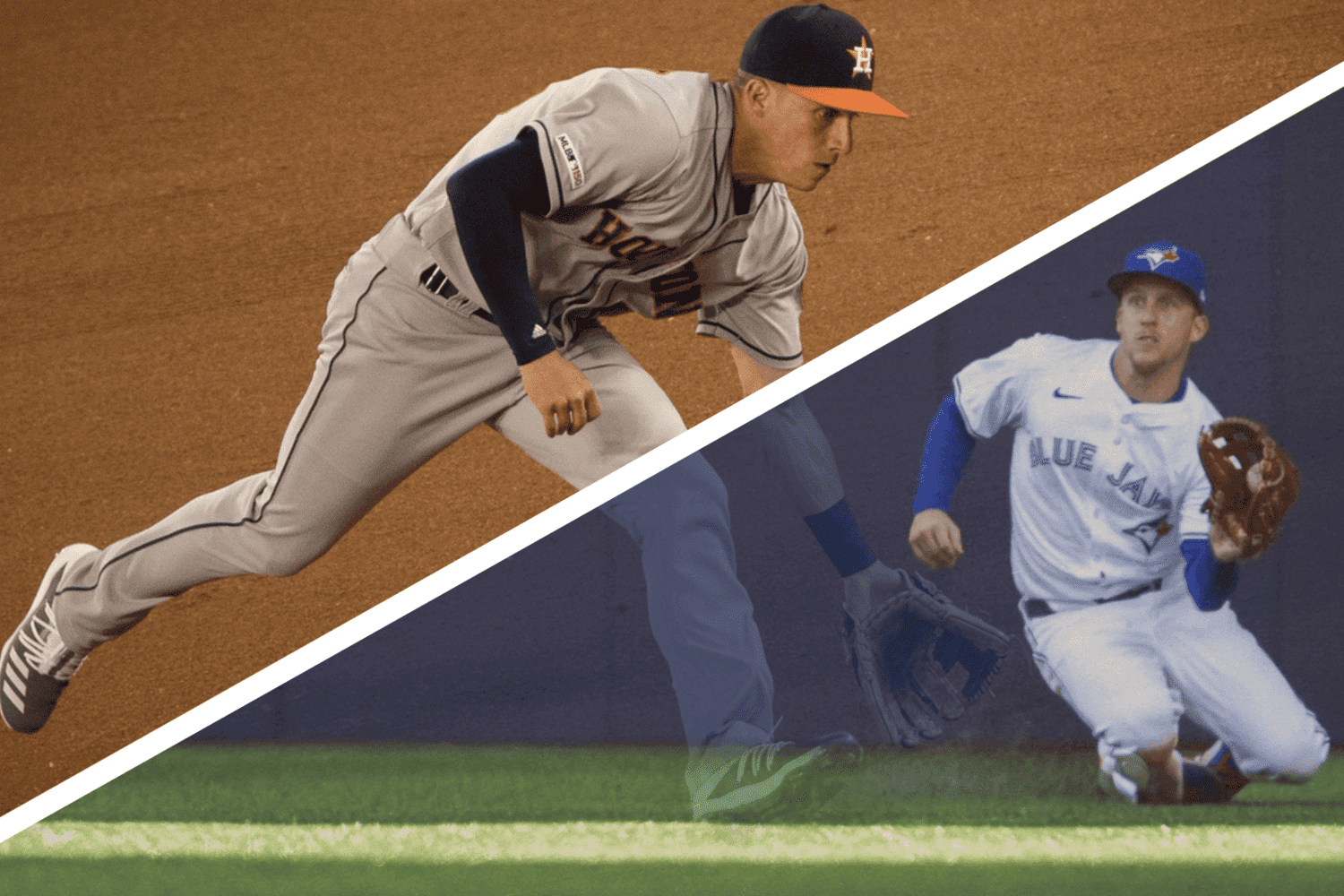 In the bottom of the sixth inning on Sunday, Myles Straw made a terrific catch. With two outs, Rays batter Chandler Simpson lined a Paxton Schultz fastball to shallow center field. Straw made the sliding grab look easy, but, of course, it wasn’t. Even a slightly slower outfielder would have had to play it on a hop. And god forbid, if the ball had gone past Straw, the lightning-fast Simpson could have easily turned it into a triple. Instead, Toronto's center fielder recorded the final out of the inning like it was nothing. He slid for the ball and popped back up to jog toward the dugout in one fluid motion. It was just another day at the office for one of the best defensive outfielders in the league: Yet, the next time Straw got his hands on the ball, he was playing a whole new position. In the bottom of the seventh, Nathan Lukes came in to play left field. He took first baseman Vladimir Guerrero Jr.'s spot in the lineup. To make that work, a few more switcheroos were in order. Jonatan Clase went from left field to center. Michael Stefanic slid from second base to shortstop. Ernie Clement moved from shortstop to first base. That left Straw to play... second base? Yup, second base. Straw had not played the infield since 2020, when he played three innings at shortstop for the Astros in a blowout win. He hasn't played second base since 2019. In total, he has played 54 innings at the keystone in his major league and minor league careers combined. The last of those innings was on September 29, 2019. So, you can hardly blame Straw for looking a little rusty in the infield on Sunday. He only had to make one play at second base, and it was a routine groundball. However, he double-clutched on the throw before slowly lobbing it over to Clement at first base. Thankfully, Yandy Díaz was the one doing the running (if you can even call it that; it was more of a light jog), giving Straw plenty of time to make his awkward throw and record the assist: I can't help but wonder: How often does a Gold Glove-winning center fielder make a highlight-reel catch in the outfield to end one inning, only to find himself at second base – a position he hasn’t played in more than five years – the very next frame? How often do you see a player show such defensive acumen on one play, only to look completely unprepared the next time he touches the ball? Unfortunately, Stathead doesn't have a filter for a search that specific. Ah, well. Blowout losses like the 13-0 pounding the Blue Jays suffered on Sunday aren’t fun. Still, you can find some fun in even the toughest of losses if you’re willing to look for it. Straw playing second base was just one example. Another example? Let's turn to the player who started the game at second. Clement moved from second base to shortstop to first base back to shortstop in the span of three innings. Even for a player whose versatility is a key component of his skill set, that's rare to see. This was the first time he had ever played three different positions in the same game, and certainly the first time he had switched positions three times in three consecutive innings. (He also made outs at all three spots!) What's more, Clement became the first player in Blue Jays history to appear at first base, second base, and shortstop in the same game, and the first MLB player to do so since Brock Holt of the Red Sox in July 2019. Meanwhile, Stefanic became the first Blue Jay ever to appear at second base, shortstop, and pitcher in the same game. (The last MLB player to play those three positions in a game was Pablo Reyes, also of the Red Sox, in August 2023.) This was especially unusual considering Stefanic didn’t even start the game. He only played three defensive innings, and each was at a different spot on the diamond. In close to 150 years of MLB history, no one has ever before played each of those three positions in a game in which they had one plate appearance or fewer. This was Stefanic's second pitching appearance; he also pitched an inning last year with the Angels. Not only that, but it was his second scoreless pitching appearance. While he may have been lobbing the ball over the plate at 60 mph, Stefanic retired all three batters he faced on just seven pitches. He was then the first batter up in the top of the ninth, where he worked an eight-pitch at-bat for a single (giving him a perfect 0.00 ERA and 1.000 batting average on the day). That single was one of just four Blue Jays hits in the entire game, and the first hit by a "pitcher" on any team all season. Funnily enough, a Blue Jays utility infielder was also one of only three “pitchers” to have a hit last season; Isiah Kiner-Falefa played third base, shortstop, and pitcher in a blowout loss to the Dodgers last April and singled in the bottom of the ninth after pitching the top of the inning. All told, the Blue Jays had five different players switch positions and a total of eight positional switches in Sunday's game. In addition to Straw, Clement, Stefanic, and Clase, Anthony Santander moved from DH to first base, marking his first appearance in the infield with Toronto. There is no denying this was a crappy weekend for the Blue Jays. Hot off a sweep of the Padres, the Jays were swept themselves. To make matters worse, the games weren’t all they lost. They also lost their hot-hitting backup catcher, Tyler Heineman, and one of their most important relievers, Yimi García, to the injured list. Nevertheless, we as fans must continue to look for ways to enjoy these games. Even the most crushing defeats can come with little bits of fun and weirdness that make the losses worth watching. If you're going to make it through a 162-game season, sometimes you just have to ignore the score and embrace the strange.
 -
.jpg.712aee6ec2f2df500cb068e46cd8d81d.jpg) When it comes to the Blue Jays’ rotation, most of the talk this season has revolved around the fifth starter (or really, the lack thereof). Fair enough. Max Scherzer lasted just three innings on March 29. He hasn’t pitched since. The Jays have filled the gap with a rotating crew of fungible depth arms. However, while Blue Jays starters not named Kevin Gausman, Chris Bassitt, José Berríos, and Bowden Francis have combined for a 6.53 ERA and 7.23 FIP in nine starts (prior to play on Friday), the team has gone 5-4 in those games. Meanwhile, they are 20-20 in games pitched by their top four starters. In other words, the lack of a true fifth starter hasn’t actually hurt the Jays, at least not yet. Perhaps they would have won more than five of those nine games with a more capable starter on the mound, but all things considered, you can’t complain about a .556 winning percentage in games started by your number five(s). What’s much more disappointing is that the Blue Jays are only .500 in games started by Gausman, Bassitt, Berríos, and Francis. I don’t expect either of these trends to continue. The Blue Jays should be better than they have been in games started by their top four arms. On the flip side, they can’t expect to continue winning so often when they start guys like José Ureña, Eric Lauer, and Easton Lucas. Ultimately, as I’ve said before, rotation depth could be what makes or breaks the Blue Jays' regular season. Whether or not they find a trustworthy fifth starter – be it Scherzer, Spencer Turnbull, Alek Manoah, or someone else – could be what makes the difference between the Jays earning a Wild Card berth or packing up their lockers come October. Yet, if the Blue Jays make the playoffs, their number five starter won’t matter anymore. Instead, the top of the rotation will be more important than ever. This makes me wonder if we’ve all spent too much time worrying about Toronto's lack of a fifth starter when we should be worrying that the Jays don’t have an ace. If Toronto is going to compete with the best of the best in the Wild Card race and into the playoffs, having a true stopper at the top of the rotation would go a long way. Which of this team’s three (healthy) veteran starters could best fill that role? Chris Bassitt Bassitt has pitched like an ace so far this season. He is 4-2 with a 2.83 ERA. The Blue Jays are 6-4 in his starts. Even better, his underlying numbers are similarly impressive. His FIP, xFIP, xERA, and SIERA all put him among the top 10 qualified AL starters. So do his strikeout-to-walk ratio, strikeout rate minus walk rate, and groundball rate. I wrote a piece earlier this month describing how Bassitt has improved his command, upped his chase rate, and decreased his walk rate to a career low. I’m not sure he has ever pitched this well in his career. But that’s just it. Bassitt has a long track record of pitching like a mid-rotation starter. He has a 3.57 ERA in just under 200 career starts. He’s also 36 years old and pitching with diminished velocity. He hasn’t dramatically changed his arsenal or any specific pitch within his arsenal. Everything we’ve seen so far has been terrific, but it’s just hard to believe that an aging Bassitt has really blossomed into an ace in his 11th big league season. In other words, it’s hard to believe he can maintain numbers like this throughout the summer, down the stretch, and into the playoffs. José Berríos Berríos has been with the Blue Jays for four Opening Days. He has started on three of them, including this year’s opener against the Orioles. That’s not for nothing. It was only two months ago that John Schneider looked at all the pitchers on his staff – including Gausman and Bassitt, the highest-paid pitchers on the team; Francis, who was Toronto’s best arm over the final two months of 2024; and even Scherzer, the three-time Cy Young winner who had the best numbers of any Blue Jays starter in spring training – and the skipper picked Berríos to lead the team into 2025. Unfortunately, Berríos just hasn’t looked sharp this year. His 4.19 ERA is perfectly acceptable, but it’s a big step back from his mid-3.00s ERAs in 2023 and ‘24. His 5.11 xERA and 4.72 FIP are even worse. To his credit, Berríos outperformed his xERA and FIP in each of the past two years, and perhaps he can do so again. Regardless, the fact that all of his ERA estimators are higher than his ERA suggests he probably isn't due for some positive regression. Indeed, his velocity is down, his chase rate is down, his walk rate is the highest it's been since his rookie season, and opposing hitters are barreling him up more than ever. There’s very little about his profile that says “ace” right now. Berríos was very effective from 2023-24, making 64 starts with a 3.63 ERA. He’s also significantly younger than Bassitt and Gausman. If I had to bet on a Blue Jays pitcher to make 32 starts this season, I’d pick Berríos in a heartbeat. Furthermore, it’s been less than two months since he made the third Opening Day start of his Blue Jays career. It’s clear the Blue Jays see his ace upside in Berríos. I’m just not sure I can say the same. Kevin Gausman As far as I’m concerned, Gausman is the no. 1 on this staff. I’ll be honest, I came up with the idea for this article last week, after Gausman gave up six runs on 10 hits (including three homers) against the Rays. Following that performance, I genuinely had my doubts about who this team’s best starter might be. Then, Gausman made me realize I was putting too much stock in a small sample. He twirled seven beautiful innings against the Padres on Wednesday, striking out nine and walking one. The Blue Jays scored 14 that day, but they could have scored just once and still won the game. I’d argue this performance was one of only two truly ace-like outings we’ve seen from a Blue Jays pitcher all year. Gausman threw both of them. (The other was his eight-inning gem against the Red Sox in April.) If you can overlook the wide gap between their ERAs, Gausman’s and Bassitt’s seasons don’t look all that different: Pitcher IP SO BB HBP HR FIP SIERA fWAR Bassitt 57 1/3 61 11 2 6 2.99 3.15 1.4 Gausman 58 55 12 0 7 3.37 3.51 1.1 I can’t deny that Bassitt has been the better pitcher thus far in 2025. Still, if I’m presented with numbers this similar, I’m going to lean toward the pitcher who has been a bona fide ace in the recent past. I’m going to lean toward the pitcher who is two years younger and hasn’t lost any velocity on his fastball. I’m going to lean toward the pitcher with the superior arsenal according to pitch models like PitchingBot, Pitching+, and PitchPro. Am I confident that Gausman can still be the true ace he was at his peak from 2020-23? No. He wasn’t that pitcher last year, and he hasn’t been that pitcher this year either. However, if anyone is going to step up and be the ace the Blue Jays need this season, Gausman is the best bet. Stats in article updated prior to games on May 23.
When it comes to the Blue Jays’ rotation, most of the talk this season has revolved around the fifth starter (or really, the lack thereof). Fair enough. Max Scherzer lasted just three innings on March 29. He hasn’t pitched since. The Jays have filled the gap with a rotating crew of fungible depth arms. However, while Blue Jays starters not named Kevin Gausman, Chris Bassitt, José Berríos, and Bowden Francis have combined for a 6.53 ERA and 7.23 FIP in nine starts (prior to play on Friday), the team has gone 5-4 in those games. Meanwhile, they are 20-20 in games pitched by their top four starters. In other words, the lack of a true fifth starter hasn’t actually hurt the Jays, at least not yet. Perhaps they would have won more than five of those nine games with a more capable starter on the mound, but all things considered, you can’t complain about a .556 winning percentage in games started by your number five(s). What’s much more disappointing is that the Blue Jays are only .500 in games started by Gausman, Bassitt, Berríos, and Francis. I don’t expect either of these trends to continue. The Blue Jays should be better than they have been in games started by their top four arms. On the flip side, they can’t expect to continue winning so often when they start guys like José Ureña, Eric Lauer, and Easton Lucas. Ultimately, as I’ve said before, rotation depth could be what makes or breaks the Blue Jays' regular season. Whether or not they find a trustworthy fifth starter – be it Scherzer, Spencer Turnbull, Alek Manoah, or someone else – could be what makes the difference between the Jays earning a Wild Card berth or packing up their lockers come October. Yet, if the Blue Jays make the playoffs, their number five starter won’t matter anymore. Instead, the top of the rotation will be more important than ever. This makes me wonder if we’ve all spent too much time worrying about Toronto's lack of a fifth starter when we should be worrying that the Jays don’t have an ace. If Toronto is going to compete with the best of the best in the Wild Card race and into the playoffs, having a true stopper at the top of the rotation would go a long way. Which of this team’s three (healthy) veteran starters could best fill that role? Chris Bassitt Bassitt has pitched like an ace so far this season. He is 4-2 with a 2.83 ERA. The Blue Jays are 6-4 in his starts. Even better, his underlying numbers are similarly impressive. His FIP, xFIP, xERA, and SIERA all put him among the top 10 qualified AL starters. So do his strikeout-to-walk ratio, strikeout rate minus walk rate, and groundball rate. I wrote a piece earlier this month describing how Bassitt has improved his command, upped his chase rate, and decreased his walk rate to a career low. I’m not sure he has ever pitched this well in his career. But that’s just it. Bassitt has a long track record of pitching like a mid-rotation starter. He has a 3.57 ERA in just under 200 career starts. He’s also 36 years old and pitching with diminished velocity. He hasn’t dramatically changed his arsenal or any specific pitch within his arsenal. Everything we’ve seen so far has been terrific, but it’s just hard to believe that an aging Bassitt has really blossomed into an ace in his 11th big league season. In other words, it’s hard to believe he can maintain numbers like this throughout the summer, down the stretch, and into the playoffs. José Berríos Berríos has been with the Blue Jays for four Opening Days. He has started on three of them, including this year’s opener against the Orioles. That’s not for nothing. It was only two months ago that John Schneider looked at all the pitchers on his staff – including Gausman and Bassitt, the highest-paid pitchers on the team; Francis, who was Toronto’s best arm over the final two months of 2024; and even Scherzer, the three-time Cy Young winner who had the best numbers of any Blue Jays starter in spring training – and the skipper picked Berríos to lead the team into 2025. Unfortunately, Berríos just hasn’t looked sharp this year. His 4.19 ERA is perfectly acceptable, but it’s a big step back from his mid-3.00s ERAs in 2023 and ‘24. His 5.11 xERA and 4.72 FIP are even worse. To his credit, Berríos outperformed his xERA and FIP in each of the past two years, and perhaps he can do so again. Regardless, the fact that all of his ERA estimators are higher than his ERA suggests he probably isn't due for some positive regression. Indeed, his velocity is down, his chase rate is down, his walk rate is the highest it's been since his rookie season, and opposing hitters are barreling him up more than ever. There’s very little about his profile that says “ace” right now. Berríos was very effective from 2023-24, making 64 starts with a 3.63 ERA. He’s also significantly younger than Bassitt and Gausman. If I had to bet on a Blue Jays pitcher to make 32 starts this season, I’d pick Berríos in a heartbeat. Furthermore, it’s been less than two months since he made the third Opening Day start of his Blue Jays career. It’s clear the Blue Jays see his ace upside in Berríos. I’m just not sure I can say the same. Kevin Gausman As far as I’m concerned, Gausman is the no. 1 on this staff. I’ll be honest, I came up with the idea for this article last week, after Gausman gave up six runs on 10 hits (including three homers) against the Rays. Following that performance, I genuinely had my doubts about who this team’s best starter might be. Then, Gausman made me realize I was putting too much stock in a small sample. He twirled seven beautiful innings against the Padres on Wednesday, striking out nine and walking one. The Blue Jays scored 14 that day, but they could have scored just once and still won the game. I’d argue this performance was one of only two truly ace-like outings we’ve seen from a Blue Jays pitcher all year. Gausman threw both of them. (The other was his eight-inning gem against the Red Sox in April.) If you can overlook the wide gap between their ERAs, Gausman’s and Bassitt’s seasons don’t look all that different: Pitcher IP SO BB HBP HR FIP SIERA fWAR Bassitt 57 1/3 61 11 2 6 2.99 3.15 1.4 Gausman 58 55 12 0 7 3.37 3.51 1.1 I can’t deny that Bassitt has been the better pitcher thus far in 2025. Still, if I’m presented with numbers this similar, I’m going to lean toward the pitcher who has been a bona fide ace in the recent past. I’m going to lean toward the pitcher who is two years younger and hasn’t lost any velocity on his fastball. I’m going to lean toward the pitcher with the superior arsenal according to pitch models like PitchingBot, Pitching+, and PitchPro. Am I confident that Gausman can still be the true ace he was at his peak from 2020-23? No. He wasn’t that pitcher last year, and he hasn’t been that pitcher this year either. However, if anyone is going to step up and be the ace the Blue Jays need this season, Gausman is the best bet. Stats in article updated prior to games on May 23. -
When it comes to the Blue Jays’ rotation, most of the talk this season has revolved around the fifth starter (or really, the lack thereof). Fair enough. Max Scherzer lasted just three innings on March 29. He hasn’t pitched since. The Jays have filled the gap with a rotating crew of fungible depth arms. However, while Blue Jays starters not named Kevin Gausman, Chris Bassitt, José Berríos, and Bowden Francis have combined for a 6.53 ERA and 7.23 FIP in nine starts (prior to play on Friday), the team has gone 5-4 in those games. Meanwhile, they are 20-20 in games pitched by their top four starters. In other words, the lack of a true fifth starter hasn’t actually hurt the Jays, at least not yet. Perhaps they would have won more than five of those nine games with a more capable starter on the mound, but all things considered, you can’t complain about a .556 winning percentage in games started by your number five(s). What’s much more disappointing is that the Blue Jays are only .500 in games started by Gausman, Bassitt, Berríos, and Francis. I don’t expect either of these trends to continue. The Blue Jays should be better than they have been in games started by their top four arms. On the flip side, they can’t expect to continue winning so often when they start guys like José Ureña, Eric Lauer, and Easton Lucas. Ultimately, as I’ve said before, rotation depth could be what makes or breaks the Blue Jays' regular season. Whether or not they find a trustworthy fifth starter – be it Scherzer, Spencer Turnbull, Alek Manoah, or someone else – could be what makes the difference between the Jays earning a Wild Card berth or packing up their lockers come October. Yet, if the Blue Jays make the playoffs, their number five starter won’t matter anymore. Instead, the top of the rotation will be more important than ever. This makes me wonder if we’ve all spent too much time worrying about Toronto's lack of a fifth starter when we should be worrying that the Jays don’t have an ace. If Toronto is going to compete with the best of the best in the Wild Card race and into the playoffs, having a true stopper at the top of the rotation would go a long way. Which of this team’s three (healthy) veteran starters could best fill that role? Chris Bassitt Bassitt has pitched like an ace so far this season. He is 4-2 with a 2.83 ERA. The Blue Jays are 6-4 in his starts. Even better, his underlying numbers are similarly impressive. His FIP, xFIP, xERA, and SIERA all put him among the top 10 qualified AL starters. So do his strikeout-to-walk ratio, strikeout rate minus walk rate, and groundball rate. I wrote a piece earlier this month describing how Bassitt has improved his command, upped his chase rate, and decreased his walk rate to a career low. I’m not sure he has ever pitched this well in his career. But that’s just it. Bassitt has a long track record of pitching like a mid-rotation starter. He has a 3.57 ERA in just under 200 career starts. He’s also 36 years old and pitching with diminished velocity. He hasn’t dramatically changed his arsenal or any specific pitch within his arsenal. Everything we’ve seen so far has been terrific, but it’s just hard to believe that an aging Bassitt has really blossomed into an ace in his 11th big league season. In other words, it’s hard to believe he can maintain numbers like this throughout the summer, down the stretch, and into the playoffs. José Berríos Berríos has been with the Blue Jays for four Opening Days. He has started on three of them, including this year’s opener against the Orioles. That’s not for nothing. It was only two months ago that John Schneider looked at all the pitchers on his staff – including Gausman and Bassitt, the highest-paid pitchers on the team; Francis, who was Toronto’s best arm over the final two months of 2024; and even Scherzer, the three-time Cy Young winner who had the best numbers of any Blue Jays starter in spring training – and the skipper picked Berríos to lead the team into 2025. Unfortunately, Berríos just hasn’t looked sharp this year. His 4.19 ERA is perfectly acceptable, but it’s a big step back from his mid-3.00s ERAs in 2023 and ‘24. His 5.11 xERA and 4.72 FIP are even worse. To his credit, Berríos outperformed his xERA and FIP in each of the past two years, and perhaps he can do so again. Regardless, the fact that all of his ERA estimators are higher than his ERA suggests he probably isn't due for some positive regression. Indeed, his velocity is down, his chase rate is down, his walk rate is the highest it's been since his rookie season, and opposing hitters are barreling him up more than ever. There’s very little about his profile that says “ace” right now. Berríos was very effective from 2023-24, making 64 starts with a 3.63 ERA. He’s also significantly younger than Bassitt and Gausman. If I had to bet on a Blue Jays pitcher to make 32 starts this season, I’d pick Berríos in a heartbeat. Furthermore, it’s been less than two months since he made the third Opening Day start of his Blue Jays career. It’s clear the Blue Jays see his ace upside in Berríos. I’m just not sure I can say the same. Kevin Gausman As far as I’m concerned, Gausman is the no. 1 on this staff. I’ll be honest, I came up with the idea for this article last week, after Gausman gave up six runs on 10 hits (including three homers) against the Rays. Following that performance, I genuinely had my doubts about who this team’s best starter might be. Then, Gausman made me realize I was putting too much stock in a small sample. He twirled seven beautiful innings against the Padres on Wednesday, striking out nine and walking one. The Blue Jays scored 14 that day, but they could have scored just once and still won the game. I’d argue this performance was one of only two truly ace-like outings we’ve seen from a Blue Jays pitcher all year. Gausman threw both of them. (The other was his eight-inning gem against the Red Sox in April.) If you can overlook the wide gap between their ERAs, Gausman’s and Bassitt’s seasons don’t look all that different: Pitcher IP SO BB HBP HR FIP SIERA fWAR Bassitt 57 1/3 61 11 2 6 2.99 3.15 1.4 Gausman 58 55 12 0 7 3.37 3.51 1.1 I can’t deny that Bassitt has been the better pitcher thus far in 2025. Still, if I’m presented with numbers this similar, I’m going to lean toward the pitcher who has been a bona fide ace in the recent past. I’m going to lean toward the pitcher who is two years younger and hasn’t lost any velocity on his fastball. I’m going to lean toward the pitcher with the superior arsenal according to pitch models like PitchingBot, Pitching+, and PitchPro. Am I confident that Gausman can still be the true ace he was at his peak from 2020-23? No. He wasn’t that pitcher last year, and he hasn’t been that pitcher this year either. However, if anyone is going to step up and be the ace the Blue Jays need this season, Gausman is the best bet. Stats in article updated prior to games on May 23. View full article
-
Tuesday was a pitchers duel. Wednesday was a blowout. Thursday was a nail-biter, capped off by a walk-off in extras. They were three very different victories, each satisfying in its own way. In the end, the Blue Jays came away with a sweep over one of the best teams in baseball. Entering play on Tuesday, May 20, the Padres were one of five clubs in either league with a winning percentage in the .600s. The Blue Jays ranked among the bottom third of teams at 22-24 (.478). By run differential, the matchup looked far more lopsided. The Padres had scored 20 more runs than the Blue Jays. Even worse, Toronto had given up 46 more runs than San Diego – one extra run per game. Chris Bassitt took the ball in the first game of the series and continued to do what he's done all season. The righty threw six scoreless innings, striking out six and walking just one. Dylan Cease pitched well himself, going seven innings for the Padres, but two of the three hits he allowed were home runs to Vladimir Guerrero Jr. and Anthony Santander. Thanks to Bassitt's excellent performance, followed by three equally excellent innings of relief from Brendon Little, Yariel Rodríguez, and Jeff Hoffman, those two home runs would be all the Blue Jays needed to beat the Padres 3-0. Toronto received another terrific pitching performance in game two. Indeed, it was arguably the most dominant showing we've seen from a Blue Jays starter all season. Kevin Gausman went seven scoreless, giving up just three hits and striking out nine. José Ureña pitched well too, closing out the game with a pair of scoreless innings of his own. It was his first outing of the year in which he didn't give up a run. With that said, this game was all about the bats. The Blue Jays absolutely pounded the Padres for their most commanding victory of the year, a 14-0 rout. Every player who stepped up to the plate reached base at least once. Nathan Lukes started the scoring with a two-run homer in the fifth. Jonatan Clase, George Springer, and Addison Barger hit doubles. Bo Bichette had two hits and two RBI. Daulton Varsho crushed a grand slam to deep center field. The last time the Blue Jays scored at least 14 runs and shut out an opponent with a winning record was... just last year, in a 15-0 victory over the Twins on August 31. However, they haven't pulled off a victory quite like this in front of a home crowd since they beat the Yankees 14-0 at what was then known as the SkyDome on September 4, 2001. After 19 shutout innings, Blue Jays pitching finally faltered in the second inning of game three, when Bowden Francis allowed a single to Jackson Merrill followed by a home run from Gavin Sheets. Not to be deterred, Toronto quickly retook the lead with back-to-back two-run innings in the third and fourth. The Jays kept the Padres' bats at bay from innings two through eight, holding a 4-2 lead into the ninth. However, Merrill and Sheets made things interesting once again. Merrill walked and Sheets homered off Hoffman to tie things up. (I'm going for positivity here, so let's blow past Hoffman's third blown save of the season for now.) Thankfully, the Blue Jays' hitters never stopped battling. Each team drove in the automatic runner in the 10th and 11th innings, but a triple from Varsho and a single from Lukes helped the Jays score the extra run they needed in the bottom of the 11th to walk off the game and secure the series sweep. Like I said, they were three very different victories, each satisfying in its own way. But Toronto's challenge isn't over. It's just beginning. Game one against the Padres was the beginning of a two-week stretch without a day off. The Blue Jays had an off day on Monday, May 19. They won't have another until Monday, June 2. Every other team in the league has at least one rest day during this period. Not the Jays. The Blue Jays were also scheduled to play 13 games in 13 days from April 4-16, but a rainout in Baltimore provided a bonus day off. Thus, this will be the longest run of interrupted baseball the Jays have played so far this season. Beating the Padres was the most daunting task of the stretch – the next ten games are against the Rays (3), Rangers (3), and Athletics (4) – but the Blue Jays were well-rested for this one. They hadn't been on the road since they returned from Seattle on May 11, and they had off days on May 12 and 19. Now, they will journey from Toronto to Tampa to Arlington before heading back home without a dedicated travel day. More than anything, this will be a test for the pitching staff. The veteran workhorses, Bassitt, Gausman, and José Berríos, should be fine. But Francis has already struggled this season, and his outing yesterday marked the first time since the summer of 2021 (a period beginning at Triple-A Nashville in the Brewers' system) that he has started 10 straight games in a season without a relief appearance in between. He may be 29 and pitching in his fourth MLB season, but Francis is still green. His first full season as a big league starter is reaching the point at which his durability will truly be tested. With a 5.54 ERA and 5.77 xERA through 10 starts, he could surely use an extra day off to help clear his head. Instead, he'll have to make his next two starts on four days' rest. Perhaps even more concerning is the question of the fifth spot in the rotation. Eric Lauer has pitched well so far, but he has mostly worked as part of a piggyback setup, and his recent track record beyond his four appearances in 2025 doesn't exactly instill a ton of confidence. Hopefully, he can provide a bit more length in his two upcoming starts. After all, the Blue Jays don't want to have to rely too heavily on either of their multi-inning relievers, Ureña and Rodríguez, to back up Lauer. This stretch will be just as taxing on the bullpen as it will be on the rotation. John Schneider will have to be meticulous with how he uses his arm barn. All eight men in the 'pen will be critical over the next 10 days. There is no doubt this long stretch of games will present a challenge to the Blue Jays. Thankfully, they got off on the best foot possible. These past three games against the Padres represented some of the best baseball we've seen from the Blue Jays all year. Let's hope they can maintain this momentum over their next three series View full article
-
The Blue Jays Kicked Off a Tough Stretch in the Best Way
Leo Morgenstern posted an article in Blue Jays
.jpg.388f51dd5ee7742ba912e64717d835ad.jpg) Tuesday was a pitchers duel. Wednesday was a blowout. Thursday was a nail-biter, capped off by a walk-off in extras. They were three very different victories, each satisfying in its own way. In the end, the Blue Jays came away with a sweep over one of the best teams in baseball. Entering play on Tuesday, May 20, the Padres were one of five clubs in either league with a winning percentage in the .600s. The Blue Jays ranked among the bottom third of teams at 22-24 (.478). By run differential, the matchup looked far more lopsided. The Padres had scored 20 more runs than the Blue Jays. Even worse, Toronto had given up 46 more runs than San Diego – one extra run per game. Chris Bassitt took the ball in the first game of the series and continued to do what he's done all season. The righty threw six scoreless innings, striking out six and walking just one. Dylan Cease pitched well himself, going seven innings for the Padres, but two of the three hits he allowed were home runs to Vladimir Guerrero Jr. and Anthony Santander. Thanks to Bassitt's excellent performance, followed by three equally excellent innings of relief from Brendon Little, Yariel Rodríguez, and Jeff Hoffman, those two home runs would be all the Blue Jays needed to beat the Padres 3-0. Toronto received another terrific pitching performance in game two. Indeed, it was arguably the most dominant showing we've seen from a Blue Jays starter all season. Kevin Gausman went seven scoreless, giving up just three hits and striking out nine. José Ureña pitched well too, closing out the game with a pair of scoreless innings of his own. It was his first outing of the year in which he didn't give up a run. With that said, this game was all about the bats. The Blue Jays absolutely pounded the Padres for their most commanding victory of the year, a 14-0 rout. Every player who stepped up to the plate reached base at least once. Nathan Lukes started the scoring with a two-run homer in the fifth. Jonatan Clase, George Springer, and Addison Barger hit doubles. Bo Bichette had two hits and two RBI. Daulton Varsho crushed a grand slam to deep center field. The last time the Blue Jays scored at least 14 runs and shut out an opponent with a winning record was... just last year, in a 15-0 victory over the Twins on August 31. However, they haven't pulled off a victory quite like this in front of a home crowd since they beat the Yankees 14-0 at what was then known as the SkyDome on September 4, 2001. After 19 shutout innings, Blue Jays pitching finally faltered in the second inning of game three, when Bowden Francis allowed a single to Jackson Merrill followed by a home run from Gavin Sheets. Not to be deterred, Toronto quickly retook the lead with back-to-back two-run innings in the third and fourth. The Jays kept the Padres' bats at bay from innings two through eight, holding a 4-2 lead into the ninth. However, Merrill and Sheets made things interesting once again. Merrill walked and Sheets homered off Hoffman to tie things up. (I'm going for positivity here, so let's blow past Hoffman's third blown save of the season for now.) Thankfully, the Blue Jays' hitters never stopped battling. Each team drove in the automatic runner in the 10th and 11th innings, but a triple from Varsho and a single from Lukes helped the Jays score the extra run they needed in the bottom of the 11th to walk off the game and secure the series sweep. Like I said, they were three very different victories, each satisfying in its own way. But Toronto's challenge isn't over. It's just beginning. Game one against the Padres was the beginning of a two-week stretch without a day off. The Blue Jays had an off day on Monday, May 19. They won't have another until Monday, June 2. Every other team in the league has at least one rest day during this period. Not the Jays. The Blue Jays were also scheduled to play 13 games in 13 days from April 4-16, but a rainout in Baltimore provided a bonus day off. Thus, this will be the longest run of interrupted baseball the Jays have played so far this season. Beating the Padres was the most daunting task of the stretch – the next ten games are against the Rays (3), Rangers (3), and Athletics (4) – but the Blue Jays were well-rested for this one. They hadn't been on the road since they returned from Seattle on May 11, and they had off days on May 12 and 19. Now, they will journey from Toronto to Tampa to Arlington before heading back home without a dedicated travel day. More than anything, this will be a test for the pitching staff. The veteran workhorses, Bassitt, Gausman, and José Berríos, should be fine. But Francis has already struggled this season, and his outing yesterday marked the first time since the summer of 2021 (a period beginning at Triple-A Nashville in the Brewers' system) that he has started 10 straight games in a season without a relief appearance in between. He may be 29 and pitching in his fourth MLB season, but Francis is still green. His first full season as a big league starter is reaching the point at which his durability will truly be tested. With a 5.54 ERA and 5.77 xERA through 10 starts, he could surely use an extra day off to help clear his head. Instead, he'll have to make his next two starts on four days' rest. Perhaps even more concerning is the question of the fifth spot in the rotation. Eric Lauer has pitched well so far, but he has mostly worked as part of a piggyback setup, and his recent track record beyond his four appearances in 2025 doesn't exactly instill a ton of confidence. Hopefully, he can provide a bit more length in his two upcoming starts. After all, the Blue Jays don't want to have to rely too heavily on either of their multi-inning relievers, Ureña and Rodríguez, to back up Lauer. This stretch will be just as taxing on the bullpen as it will be on the rotation. John Schneider will have to be meticulous with how he uses his arm barn. All eight men in the 'pen will be critical over the next 10 days. There is no doubt this long stretch of games will present a challenge to the Blue Jays. Thankfully, they got off on the best foot possible. These past three games against the Padres represented some of the best baseball we've seen from the Blue Jays all year. Let's hope they can maintain this momentum over their next three series
Tuesday was a pitchers duel. Wednesday was a blowout. Thursday was a nail-biter, capped off by a walk-off in extras. They were three very different victories, each satisfying in its own way. In the end, the Blue Jays came away with a sweep over one of the best teams in baseball. Entering play on Tuesday, May 20, the Padres were one of five clubs in either league with a winning percentage in the .600s. The Blue Jays ranked among the bottom third of teams at 22-24 (.478). By run differential, the matchup looked far more lopsided. The Padres had scored 20 more runs than the Blue Jays. Even worse, Toronto had given up 46 more runs than San Diego – one extra run per game. Chris Bassitt took the ball in the first game of the series and continued to do what he's done all season. The righty threw six scoreless innings, striking out six and walking just one. Dylan Cease pitched well himself, going seven innings for the Padres, but two of the three hits he allowed were home runs to Vladimir Guerrero Jr. and Anthony Santander. Thanks to Bassitt's excellent performance, followed by three equally excellent innings of relief from Brendon Little, Yariel Rodríguez, and Jeff Hoffman, those two home runs would be all the Blue Jays needed to beat the Padres 3-0. Toronto received another terrific pitching performance in game two. Indeed, it was arguably the most dominant showing we've seen from a Blue Jays starter all season. Kevin Gausman went seven scoreless, giving up just three hits and striking out nine. José Ureña pitched well too, closing out the game with a pair of scoreless innings of his own. It was his first outing of the year in which he didn't give up a run. With that said, this game was all about the bats. The Blue Jays absolutely pounded the Padres for their most commanding victory of the year, a 14-0 rout. Every player who stepped up to the plate reached base at least once. Nathan Lukes started the scoring with a two-run homer in the fifth. Jonatan Clase, George Springer, and Addison Barger hit doubles. Bo Bichette had two hits and two RBI. Daulton Varsho crushed a grand slam to deep center field. The last time the Blue Jays scored at least 14 runs and shut out an opponent with a winning record was... just last year, in a 15-0 victory over the Twins on August 31. However, they haven't pulled off a victory quite like this in front of a home crowd since they beat the Yankees 14-0 at what was then known as the SkyDome on September 4, 2001. After 19 shutout innings, Blue Jays pitching finally faltered in the second inning of game three, when Bowden Francis allowed a single to Jackson Merrill followed by a home run from Gavin Sheets. Not to be deterred, Toronto quickly retook the lead with back-to-back two-run innings in the third and fourth. The Jays kept the Padres' bats at bay from innings two through eight, holding a 4-2 lead into the ninth. However, Merrill and Sheets made things interesting once again. Merrill walked and Sheets homered off Hoffman to tie things up. (I'm going for positivity here, so let's blow past Hoffman's third blown save of the season for now.) Thankfully, the Blue Jays' hitters never stopped battling. Each team drove in the automatic runner in the 10th and 11th innings, but a triple from Varsho and a single from Lukes helped the Jays score the extra run they needed in the bottom of the 11th to walk off the game and secure the series sweep. Like I said, they were three very different victories, each satisfying in its own way. But Toronto's challenge isn't over. It's just beginning. Game one against the Padres was the beginning of a two-week stretch without a day off. The Blue Jays had an off day on Monday, May 19. They won't have another until Monday, June 2. Every other team in the league has at least one rest day during this period. Not the Jays. The Blue Jays were also scheduled to play 13 games in 13 days from April 4-16, but a rainout in Baltimore provided a bonus day off. Thus, this will be the longest run of interrupted baseball the Jays have played so far this season. Beating the Padres was the most daunting task of the stretch – the next ten games are against the Rays (3), Rangers (3), and Athletics (4) – but the Blue Jays were well-rested for this one. They hadn't been on the road since they returned from Seattle on May 11, and they had off days on May 12 and 19. Now, they will journey from Toronto to Tampa to Arlington before heading back home without a dedicated travel day. More than anything, this will be a test for the pitching staff. The veteran workhorses, Bassitt, Gausman, and José Berríos, should be fine. But Francis has already struggled this season, and his outing yesterday marked the first time since the summer of 2021 (a period beginning at Triple-A Nashville in the Brewers' system) that he has started 10 straight games in a season without a relief appearance in between. He may be 29 and pitching in his fourth MLB season, but Francis is still green. His first full season as a big league starter is reaching the point at which his durability will truly be tested. With a 5.54 ERA and 5.77 xERA through 10 starts, he could surely use an extra day off to help clear his head. Instead, he'll have to make his next two starts on four days' rest. Perhaps even more concerning is the question of the fifth spot in the rotation. Eric Lauer has pitched well so far, but he has mostly worked as part of a piggyback setup, and his recent track record beyond his four appearances in 2025 doesn't exactly instill a ton of confidence. Hopefully, he can provide a bit more length in his two upcoming starts. After all, the Blue Jays don't want to have to rely too heavily on either of their multi-inning relievers, Ureña and Rodríguez, to back up Lauer. This stretch will be just as taxing on the bullpen as it will be on the rotation. John Schneider will have to be meticulous with how he uses his arm barn. All eight men in the 'pen will be critical over the next 10 days. There is no doubt this long stretch of games will present a challenge to the Blue Jays. Thankfully, they got off on the best foot possible. These past three games against the Padres represented some of the best baseball we've seen from the Blue Jays all year. Let's hope they can maintain this momentum over their next three series -
.jpg.d81262888325441ab326b7c4b21ff892.jpg) Following a slow start to the season, Alejandro Kirk has been red-hot since the end of April. In his last 17 games, he is 24-for-65 (.369) with an .871 OPS and a 148 wRC+. That stretch includes the two most impactful hits of his career, at least according to Win Probability Added. On April 25, with the Blue Jays down by one in the ninth, he knocked a two-run double to deep center field to give Toronto the lead. Three weeks later, he crushed a three-run home run in the sixth that carried the Jays to a 3-1 victory. Due to his recent hot streak, Kirk's full-season numbers (.287 AVG, 95 wRC+) are perfectly respectable, despite his dreadful performance over the first four weeks of the year (.211 AVG, 51 wRC+). Meanwhile, Tyler Heineman has been hot since day one, albeit in a limited role. Through 18 games and 47 trips to the plate, he's batting .386 (17-for-44) with a .950 OPS and a 171 wRC+. He's hit four doubles and one home run, and he's stolen a couple of bases for good measure. Twenty-five AL catchers have taken more plate appearances than Heineman this year. Only one, Cal Raleigh, has outproduced Heineman in the offensive component of FanGraphs WAR. Now, Heineman's performance is absolutely, definitely, without a doubt unsustainable. For one thing, he's running a .457 batting average on balls in play (BABIP). No player in major league history has ever maintained a BABIP that high over more than 150 PA. What's more, he has only drawn two walks on the season, while he's chased at almost half the pitches he's seen outside the strike zone. That's not an approach that can sustain a .950 OPS. Finally, no hitter (min. 25 PA) has a larger gap between his wOBA (.409) and xwOBA (.270). All that to say, if you think Heineman has genuinely broken out as a middle-of-the-order threat, then boy, do I have a bridge to sell you. Yet, none of that takes away from what Heineman has accomplished thus far in the season. He's already been worth 1.0 fWAR, which is more than many teams get from their backup catcher all season. Even if he is nothing more than replacement level for the rest of the year, the Blue Jays would have no reason not to be happy with his performance. Thanks to Kirk heating up and Heineman not yet slowing down, the Blue Jays have gotten more offensive production from their catchers than all but three AL teams (per FanGraphs). They rank first among AL catchers in batting average, third in OBP, and fourth in slugging. They're second in OPS and fourth in wOBA, wRC+, and the offensive component of fWAR. Even better? Their catchers' production at the plate is nothing compared to what they've done behind it. Kirk has been a defensive stud for years. Since 2022, he has consistently ranked among the league leaders in every pitch framing metric out there. This season has been no exception. He also improved tremendously last year when it came to controlling the running game. He threw out 31% (27 out of 87) of would-be base-stealers and led the AL in Statcast's caught stealing runs above average. That was clearly no fluke, because he has continued to throw out runners at a 30% clip, and he's on pace to top his +8 Statcast caught stealing runs from last season. Kirk is taking on a heavier defensive workload than ever before, and so far, he's thriving. Heineman, too, has been impressive behind the dish. Indeed, while his bat has stolen the show this year, his glove is the real reason the Blue Jays keep bringing him back. The sample is small, but his framing has graded out well, much like it has throughout his brief career. He has also thrown out more than half of the baserunners (six of 11) who have tried to steal on him. Collectively, he and Kirk have the Blue Jays ranked second in the AL in framing runs, according to both FanGraphs and Statcast. The Blue Jays also lead AL teams in Statcast's caught stealing metric, and they lead all major league teams in the defensive component of FanGraphs WAR. Altogether, Blue Jays catchers have given their team 2.1 fWAR through the first 48 games of the season. That's a 7.2-win pace. The last time any team got more than 7.0 fWAR from its catchers was in 2022... when Blue Jays backstops led the league with 7.7. Kirk and Heineman (but mostly Kirk) were both a part of that effort, although they also had a lot of help from Danny Jansen, as well as Gabriel Moreno and Zack Collins. The last AL team that wasn't the Blue Jays to get more than 7.0 fWAR from its catchers was the Twins in 2009, Joe Mauer's MVP season. Right now, Blue Jays catchers rank second in the AL and third in the majors in fWAR, trailing the Mariners (3.4 fWAR) and Braves (2.4 fWAR). The only position at which the Blue Jays rank higher is center field; just the Cubs, led by Pete Crow-Armstrong, have outperformed the Jays in center. However, Blue Jays catchers have outproduced their center fielders by about a quarter of a win. The numbers at Baseball Prospectus point to the same conclusion; Kirk and Heineman edge out the center field quartet of Daulton Varsho, Myles Straw, George Springer, and Nathan Lukes. Of course, the fact that Toronto's catchers have fractionally more WAR than their center fielders isn't what's important. What matters is that this team's catchers have been an undeniable strength. Alejandro Kirk is showing why his five-year extension was such a bargain. Tyler Heineman has been a kick-ass backup in his third stint with Toronto. Together, they have made up one of the best catching tandems in the sport. Not everything has gone according to plan for the Jays this season, but their catchers have proven to be a real catch. All stats and rankings in article updated prior to games on Monday, May 19.
Following a slow start to the season, Alejandro Kirk has been red-hot since the end of April. In his last 17 games, he is 24-for-65 (.369) with an .871 OPS and a 148 wRC+. That stretch includes the two most impactful hits of his career, at least according to Win Probability Added. On April 25, with the Blue Jays down by one in the ninth, he knocked a two-run double to deep center field to give Toronto the lead. Three weeks later, he crushed a three-run home run in the sixth that carried the Jays to a 3-1 victory. Due to his recent hot streak, Kirk's full-season numbers (.287 AVG, 95 wRC+) are perfectly respectable, despite his dreadful performance over the first four weeks of the year (.211 AVG, 51 wRC+). Meanwhile, Tyler Heineman has been hot since day one, albeit in a limited role. Through 18 games and 47 trips to the plate, he's batting .386 (17-for-44) with a .950 OPS and a 171 wRC+. He's hit four doubles and one home run, and he's stolen a couple of bases for good measure. Twenty-five AL catchers have taken more plate appearances than Heineman this year. Only one, Cal Raleigh, has outproduced Heineman in the offensive component of FanGraphs WAR. Now, Heineman's performance is absolutely, definitely, without a doubt unsustainable. For one thing, he's running a .457 batting average on balls in play (BABIP). No player in major league history has ever maintained a BABIP that high over more than 150 PA. What's more, he has only drawn two walks on the season, while he's chased at almost half the pitches he's seen outside the strike zone. That's not an approach that can sustain a .950 OPS. Finally, no hitter (min. 25 PA) has a larger gap between his wOBA (.409) and xwOBA (.270). All that to say, if you think Heineman has genuinely broken out as a middle-of-the-order threat, then boy, do I have a bridge to sell you. Yet, none of that takes away from what Heineman has accomplished thus far in the season. He's already been worth 1.0 fWAR, which is more than many teams get from their backup catcher all season. Even if he is nothing more than replacement level for the rest of the year, the Blue Jays would have no reason not to be happy with his performance. Thanks to Kirk heating up and Heineman not yet slowing down, the Blue Jays have gotten more offensive production from their catchers than all but three AL teams (per FanGraphs). They rank first among AL catchers in batting average, third in OBP, and fourth in slugging. They're second in OPS and fourth in wOBA, wRC+, and the offensive component of fWAR. Even better? Their catchers' production at the plate is nothing compared to what they've done behind it. Kirk has been a defensive stud for years. Since 2022, he has consistently ranked among the league leaders in every pitch framing metric out there. This season has been no exception. He also improved tremendously last year when it came to controlling the running game. He threw out 31% (27 out of 87) of would-be base-stealers and led the AL in Statcast's caught stealing runs above average. That was clearly no fluke, because he has continued to throw out runners at a 30% clip, and he's on pace to top his +8 Statcast caught stealing runs from last season. Kirk is taking on a heavier defensive workload than ever before, and so far, he's thriving. Heineman, too, has been impressive behind the dish. Indeed, while his bat has stolen the show this year, his glove is the real reason the Blue Jays keep bringing him back. The sample is small, but his framing has graded out well, much like it has throughout his brief career. He has also thrown out more than half of the baserunners (six of 11) who have tried to steal on him. Collectively, he and Kirk have the Blue Jays ranked second in the AL in framing runs, according to both FanGraphs and Statcast. The Blue Jays also lead AL teams in Statcast's caught stealing metric, and they lead all major league teams in the defensive component of FanGraphs WAR. Altogether, Blue Jays catchers have given their team 2.1 fWAR through the first 48 games of the season. That's a 7.2-win pace. The last time any team got more than 7.0 fWAR from its catchers was in 2022... when Blue Jays backstops led the league with 7.7. Kirk and Heineman (but mostly Kirk) were both a part of that effort, although they also had a lot of help from Danny Jansen, as well as Gabriel Moreno and Zack Collins. The last AL team that wasn't the Blue Jays to get more than 7.0 fWAR from its catchers was the Twins in 2009, Joe Mauer's MVP season. Right now, Blue Jays catchers rank second in the AL and third in the majors in fWAR, trailing the Mariners (3.4 fWAR) and Braves (2.4 fWAR). The only position at which the Blue Jays rank higher is center field; just the Cubs, led by Pete Crow-Armstrong, have outperformed the Jays in center. However, Blue Jays catchers have outproduced their center fielders by about a quarter of a win. The numbers at Baseball Prospectus point to the same conclusion; Kirk and Heineman edge out the center field quartet of Daulton Varsho, Myles Straw, George Springer, and Nathan Lukes. Of course, the fact that Toronto's catchers have fractionally more WAR than their center fielders isn't what's important. What matters is that this team's catchers have been an undeniable strength. Alejandro Kirk is showing why his five-year extension was such a bargain. Tyler Heineman has been a kick-ass backup in his third stint with Toronto. Together, they have made up one of the best catching tandems in the sport. Not everything has gone according to plan for the Jays this season, but their catchers have proven to be a real catch. All stats and rankings in article updated prior to games on Monday, May 19. -
Following a slow start to the season, Alejandro Kirk has been red-hot since the end of April. In his last 17 games, he is 24-for-65 (.369) with an .871 OPS and a 148 wRC+. That stretch includes the two most impactful hits of his career, at least according to Win Probability Added. On April 25, with the Blue Jays down by one in the ninth, he knocked a two-run double to deep center field to give Toronto the lead. Three weeks later, he crushed a three-run home run in the sixth that carried the Jays to a 3-1 victory. Due to his recent hot streak, Kirk's full-season numbers (.287 AVG, 95 wRC+) are perfectly respectable, despite his dreadful performance over the first four weeks of the year (.211 AVG, 51 wRC+). Meanwhile, Tyler Heineman has been hot since day one, albeit in a limited role. Through 18 games and 47 trips to the plate, he's batting .386 (17-for-44) with a .950 OPS and a 171 wRC+. He's hit four doubles and one home run, and he's stolen a couple of bases for good measure. Twenty-five AL catchers have taken more plate appearances than Heineman this year. Only one, Cal Raleigh, has outproduced Heineman in the offensive component of FanGraphs WAR. Now, Heineman's performance is absolutely, definitely, without a doubt unsustainable. For one thing, he's running a .457 batting average on balls in play (BABIP). No player in major league history has ever maintained a BABIP that high over more than 150 PA. What's more, he has only drawn two walks on the season, while he's chased at almost half the pitches he's seen outside the strike zone. That's not an approach that can sustain a .950 OPS. Finally, no hitter (min. 25 PA) has a larger gap between his wOBA (.409) and xwOBA (.270). All that to say, if you think Heineman has genuinely broken out as a middle-of-the-order threat, then boy, do I have a bridge to sell you. Yet, none of that takes away from what Heineman has accomplished thus far in the season. He's already been worth 1.0 fWAR, which is more than many teams get from their backup catcher all season. Even if he is nothing more than replacement level for the rest of the year, the Blue Jays would have no reason not to be happy with his performance. Thanks to Kirk heating up and Heineman not yet slowing down, the Blue Jays have gotten more offensive production from their catchers than all but three AL teams (per FanGraphs). They rank first among AL catchers in batting average, third in OBP, and fourth in slugging. They're second in OPS and fourth in wOBA, wRC+, and the offensive component of fWAR. Even better? Their catchers' production at the plate is nothing compared to what they've done behind it. Kirk has been a defensive stud for years. Since 2022, he has consistently ranked among the league leaders in every pitch framing metric out there. This season has been no exception. He also improved tremendously last year when it came to controlling the running game. He threw out 31% (27 out of 87) of would-be base-stealers and led the AL in Statcast's caught stealing runs above average. That was clearly no fluke, because he has continued to throw out runners at a 30% clip, and he's on pace to top his +8 Statcast caught stealing runs from last season. Kirk is taking on a heavier defensive workload than ever before, and so far, he's thriving. Heineman, too, has been impressive behind the dish. Indeed, while his bat has stolen the show this year, his glove is the real reason the Blue Jays keep bringing him back. The sample is small, but his framing has graded out well, much like it has throughout his brief career. He has also thrown out more than half of the baserunners (six of 11) who have tried to steal on him. Collectively, he and Kirk have the Blue Jays ranked second in the AL in framing runs, according to both FanGraphs and Statcast. The Blue Jays also lead AL teams in Statcast's caught stealing metric, and they lead all major league teams in the defensive component of FanGraphs WAR. Altogether, Blue Jays catchers have given their team 2.1 fWAR through the first 48 games of the season. That's a 7.2-win pace. The last time any team got more than 7.0 fWAR from its catchers was in 2022... when Blue Jays backstops led the league with 7.7. Kirk and Heineman (but mostly Kirk) were both a part of that effort, although they also had a lot of help from Danny Jansen, as well as Gabriel Moreno and Zack Collins. The last AL team that wasn't the Blue Jays to get more than 7.0 fWAR from its catchers was the Twins in 2009, Joe Mauer's MVP season. Right now, Blue Jays catchers rank second in the AL and third in the majors in fWAR, trailing the Mariners (3.4 fWAR) and Braves (2.4 fWAR). The only position at which the Blue Jays rank higher is center field; just the Cubs, led by Pete Crow-Armstrong, have outperformed the Jays in center. However, Blue Jays catchers have outproduced their center fielders by about a quarter of a win. The numbers at Baseball Prospectus point to the same conclusion; Kirk and Heineman edge out the center field quartet of Daulton Varsho, Myles Straw, George Springer, and Nathan Lukes. Of course, the fact that Toronto's catchers have fractionally more WAR than their center fielders isn't what's important. What matters is that this team's catchers have been an undeniable strength. Alejandro Kirk is showing why his five-year extension was such a bargain. Tyler Heineman has been a kick-ass backup in his third stint with Toronto. Together, they have made up one of the best catching tandems in the sport. Not everything has gone according to plan for the Jays this season, but their catchers have proven to be a real catch. All stats and rankings in article updated prior to games on Monday, May 19. View full article
-
Just in A ball on a rehab assignment after a shoulder injury. He should be back at Triple A soon enough
-
Good point. I was hesitant to bring either of them up because I feel like I haven't heard much in the way of concrete updates about either of them in a while. But every extra depth arm matters right now!
-
Jake Bloss Injury Is Another Hit to Blue Jays’ Starting Depth
Leo Morgenstern posted an article in Blue Jays
.jpg.5de160af91e6cedc8c531be24ed5483b.jpg) Entering the 2025 season, it felt like every prospect evaluator had a slightly different opinion about Jake Bloss’s potential. That’s not uncommon, especially when it comes to a young pitcher with tremendous skills and equally un-tremendous numbers from his first showing in the major leagues. The team at FanGraphs ranked Bloss as the no. 1 prospect in the Blue Jays system and the 59th-overall prospect in baseball. They grouped him among the “fully baked no. 4 starters” on their list, giving him a 50 Future Value (FV) grade. Meanwhile, the Baseball Prospectus staff ranked Bloss third in Toronto’s system and left him off of their Top 101 list entirely. However, their overall write-up of Bloss was more optimistic than the evaluation from FanGraphs. BP gave him a 55 FV and said he looked like a future “no. 3 starter.” Baseball America ranked him no. 5 in the organization but called him a “quality” fifth starter. Keith Law of The Athletic agreed with FanGraphs that Bloss could be “a quality fourth starter,” but ranked him no. 6. Scott Mitchell of TSN described him as a future “mid-rotation” starting pitcher but only ranked him fourth among Blue Jays pitching prospects and no. 7 overall. Did Bloss have a future as a third, fourth, or fifth starter? Was he the Blue Jays’ best pitching prospect? Second, third, or fourth best? It all depended on who you asked. Yet, there was one recurring theme throughout many of his pre-season prospect write-ups: He would contribute meaningful innings to the Blue Jays’ rotation in 2025. “The rate at which Bloss has developed and, for the most part, succeeded is exciting, and he should entrench himself toward the back of Toronto’s rotation at some point in 2025.” -Eric Longenhagen, FanGraphs “Bloss looks like a quality No. 5 starter ready to contribute in 2025.” -Baseball America “Bloss is likely to start at Triple-A and be one of the first arms on call when a starter is needed.” -Mitchell, TSN Of course, there are no guarantees when it comes to prospects. There are no guarantees when it comes to baseball. On Tuesday, the Blue Jays found out that Bloss will not contribute to the big league effort in 2025. The 23-year-old needs surgery to repair his UCL. It’s not yet clear what kind of surgery he needs – it could be traditional Tommy John or an internal brace procedure – so it’s not yet clear how much time he’ll miss. One thing that is clear? His season is done. There's no way to sugarcoat this. It's a terrible setback for a promising young pitcher. Bloss is 23 right now. He could be 25 before he starts another game. All that he and the Blue Jays can do now is work toward his healthy return in 2026. After the Astros selected him in the third round of the 2023 draft, Bloss quickly got to work dominating the minor leagues. Over his first 19 professional games, from the Complex League up to Double A, he pitched to a 2.01 ERA and 3.21 FIP in 80 ⅔ innings. Then, on June 21, less than a year from the day he was drafted, he got the call to Houston to make his MLB debut. The excitement was palpable, but it didn’t last long. Bloss exited his first big league start with shoulder discomfort. It wasn't a serious injury, and he was back from the IL in less than three weeks. However, he wasn't the same from that point on. Bloss gave up seven runs in eight innings over two more starts with the 'Stros. After joining the Blue Jays in the Yusei Kikuchi trade, he pitched to a 6.71 ERA in 14 starts at Triple A. His upside was still there, but it no longer jumped off the page. His latest injury isn’t directly related to his last one – it’s in his elbow this time, not his shoulder – but it's hard not to wonder if Bloss has been pitching through pain for a while. Hopefully, surgery and a long, thorough rehab are exactly what he needs to return to full strength. In the meantime, the Blue Jays will be down another option for their starting staff. With Max Scherzer on the IL, the Jays have essentially operated with a four-man rotation plus a rotating crew of depth arms since the first week of the season. Bloss could have been a more permanent solution. Indeed, when Scherzer first hit the IL, MLB.com’s Keegan Matheson wrote, "If the Blue Jays get the sense that this is a long-term issue for Scherzer that could stretch beyond a month, that’s when [Bloss] enters the picture.” To that point, general manager Ross Atkins suggested the team was more seriously considering calling up Bloss earlier this month. "Bloss is an option right now," the GM told reporters, including Matheson. "I would be comfortable with him coming here tomorrow if that needed to be.” While Bloss's numbers at Triple A weren’t great, he pitched his two best games since joining the organization back-to-back at the end of April. The Athletic’s Mitch Bannon reported that Bloss had made "minor delivery tweaks and impressed Toronto’s development staff with a step forward in command.” That's all moot now. Bloss is no longer an option. Scherzer has no clear timeline to return. On the contrary, Matheson recently reported that Scherzer “ran into some mid-back tightness coming out of his last throwing session." It might be weeks or it might be months until Scherzer is healthy again. We just don't know. In the meantime, the Blue Jays will continue to rely on José Ureña and Eric Lauer. That's worked well enough so far, but it's a band-aid solution at best that feels like it could blow up in Toronto's face at any time. Spencer Turnbull offers more upside but also more uncertainty. The same can be said of Alek Manoah, who is tracking to return at some point this summer. Perhaps Ureña and Lauer can hold down the fort until one of Turnbull, Manoah, or Scherzer is ready to take over. That plan could work. It could also prove disastrous. There is a world in which Turnbull comes up and looks like the pitcher he was for the Phillies last April. There is a world in which Manoah returns and finally looks like his old self. There is a world in which Scherzer puts his thumb and back injuries behind him and stays healthy for the rest of the year. There is also a world in which none of that happens, and the lack of a proper fifth starter is what ultimately sinks this team. Jake Bloss was no more of a sure thing than any of Toronto's other options. But when a sure thing isn't available, the best way to increase your odds of success is through depth; the more tickets you buy, the more likely you are to win the lottery. With Bloss out for the year, the Blue Jays are down a lottery ticket. We don't know if he would have had the winning numbers, but now we'll have to wait even longer to find out.
Entering the 2025 season, it felt like every prospect evaluator had a slightly different opinion about Jake Bloss’s potential. That’s not uncommon, especially when it comes to a young pitcher with tremendous skills and equally un-tremendous numbers from his first showing in the major leagues. The team at FanGraphs ranked Bloss as the no. 1 prospect in the Blue Jays system and the 59th-overall prospect in baseball. They grouped him among the “fully baked no. 4 starters” on their list, giving him a 50 Future Value (FV) grade. Meanwhile, the Baseball Prospectus staff ranked Bloss third in Toronto’s system and left him off of their Top 101 list entirely. However, their overall write-up of Bloss was more optimistic than the evaluation from FanGraphs. BP gave him a 55 FV and said he looked like a future “no. 3 starter.” Baseball America ranked him no. 5 in the organization but called him a “quality” fifth starter. Keith Law of The Athletic agreed with FanGraphs that Bloss could be “a quality fourth starter,” but ranked him no. 6. Scott Mitchell of TSN described him as a future “mid-rotation” starting pitcher but only ranked him fourth among Blue Jays pitching prospects and no. 7 overall. Did Bloss have a future as a third, fourth, or fifth starter? Was he the Blue Jays’ best pitching prospect? Second, third, or fourth best? It all depended on who you asked. Yet, there was one recurring theme throughout many of his pre-season prospect write-ups: He would contribute meaningful innings to the Blue Jays’ rotation in 2025. “The rate at which Bloss has developed and, for the most part, succeeded is exciting, and he should entrench himself toward the back of Toronto’s rotation at some point in 2025.” -Eric Longenhagen, FanGraphs “Bloss looks like a quality No. 5 starter ready to contribute in 2025.” -Baseball America “Bloss is likely to start at Triple-A and be one of the first arms on call when a starter is needed.” -Mitchell, TSN Of course, there are no guarantees when it comes to prospects. There are no guarantees when it comes to baseball. On Tuesday, the Blue Jays found out that Bloss will not contribute to the big league effort in 2025. The 23-year-old needs surgery to repair his UCL. It’s not yet clear what kind of surgery he needs – it could be traditional Tommy John or an internal brace procedure – so it’s not yet clear how much time he’ll miss. One thing that is clear? His season is done. There's no way to sugarcoat this. It's a terrible setback for a promising young pitcher. Bloss is 23 right now. He could be 25 before he starts another game. All that he and the Blue Jays can do now is work toward his healthy return in 2026. After the Astros selected him in the third round of the 2023 draft, Bloss quickly got to work dominating the minor leagues. Over his first 19 professional games, from the Complex League up to Double A, he pitched to a 2.01 ERA and 3.21 FIP in 80 ⅔ innings. Then, on June 21, less than a year from the day he was drafted, he got the call to Houston to make his MLB debut. The excitement was palpable, but it didn’t last long. Bloss exited his first big league start with shoulder discomfort. It wasn't a serious injury, and he was back from the IL in less than three weeks. However, he wasn't the same from that point on. Bloss gave up seven runs in eight innings over two more starts with the 'Stros. After joining the Blue Jays in the Yusei Kikuchi trade, he pitched to a 6.71 ERA in 14 starts at Triple A. His upside was still there, but it no longer jumped off the page. His latest injury isn’t directly related to his last one – it’s in his elbow this time, not his shoulder – but it's hard not to wonder if Bloss has been pitching through pain for a while. Hopefully, surgery and a long, thorough rehab are exactly what he needs to return to full strength. In the meantime, the Blue Jays will be down another option for their starting staff. With Max Scherzer on the IL, the Jays have essentially operated with a four-man rotation plus a rotating crew of depth arms since the first week of the season. Bloss could have been a more permanent solution. Indeed, when Scherzer first hit the IL, MLB.com’s Keegan Matheson wrote, "If the Blue Jays get the sense that this is a long-term issue for Scherzer that could stretch beyond a month, that’s when [Bloss] enters the picture.” To that point, general manager Ross Atkins suggested the team was more seriously considering calling up Bloss earlier this month. "Bloss is an option right now," the GM told reporters, including Matheson. "I would be comfortable with him coming here tomorrow if that needed to be.” While Bloss's numbers at Triple A weren’t great, he pitched his two best games since joining the organization back-to-back at the end of April. The Athletic’s Mitch Bannon reported that Bloss had made "minor delivery tweaks and impressed Toronto’s development staff with a step forward in command.” That's all moot now. Bloss is no longer an option. Scherzer has no clear timeline to return. On the contrary, Matheson recently reported that Scherzer “ran into some mid-back tightness coming out of his last throwing session." It might be weeks or it might be months until Scherzer is healthy again. We just don't know. In the meantime, the Blue Jays will continue to rely on José Ureña and Eric Lauer. That's worked well enough so far, but it's a band-aid solution at best that feels like it could blow up in Toronto's face at any time. Spencer Turnbull offers more upside but also more uncertainty. The same can be said of Alek Manoah, who is tracking to return at some point this summer. Perhaps Ureña and Lauer can hold down the fort until one of Turnbull, Manoah, or Scherzer is ready to take over. That plan could work. It could also prove disastrous. There is a world in which Turnbull comes up and looks like the pitcher he was for the Phillies last April. There is a world in which Manoah returns and finally looks like his old self. There is a world in which Scherzer puts his thumb and back injuries behind him and stays healthy for the rest of the year. There is also a world in which none of that happens, and the lack of a proper fifth starter is what ultimately sinks this team. Jake Bloss was no more of a sure thing than any of Toronto's other options. But when a sure thing isn't available, the best way to increase your odds of success is through depth; the more tickets you buy, the more likely you are to win the lottery. With Bloss out for the year, the Blue Jays are down a lottery ticket. We don't know if he would have had the winning numbers, but now we'll have to wait even longer to find out. -
Entering the 2025 season, it felt like every prospect evaluator had a slightly different opinion about Jake Bloss’s potential. That’s not uncommon, especially when it comes to a young pitcher with tremendous skills and equally un-tremendous numbers from his first showing in the major leagues. The team at FanGraphs ranked Bloss as the no. 1 prospect in the Blue Jays system and the 59th-overall prospect in baseball. They grouped him among the “fully baked no. 4 starters” on their list, giving him a 50 Future Value (FV) grade. Meanwhile, the Baseball Prospectus staff ranked Bloss third in Toronto’s system and left him off of their Top 101 list entirely. However, their overall write-up of Bloss was more optimistic than the evaluation from FanGraphs. BP gave him a 55 FV and said he looked like a future “no. 3 starter.” Baseball America ranked him no. 5 in the organization but called him a “quality” fifth starter. Keith Law of The Athletic agreed with FanGraphs that Bloss could be “a quality fourth starter,” but ranked him no. 6. Scott Mitchell of TSN described him as a future “mid-rotation” starting pitcher but only ranked him fourth among Blue Jays pitching prospects and no. 7 overall. Did Bloss have a future as a third, fourth, or fifth starter? Was he the Blue Jays’ best pitching prospect? Second, third, or fourth best? It all depended on who you asked. Yet, there was one recurring theme throughout many of his pre-season prospect write-ups: He would contribute meaningful innings to the Blue Jays’ rotation in 2025. “The rate at which Bloss has developed and, for the most part, succeeded is exciting, and he should entrench himself toward the back of Toronto’s rotation at some point in 2025.” -Eric Longenhagen, FanGraphs “Bloss looks like a quality No. 5 starter ready to contribute in 2025.” -Baseball America “Bloss is likely to start at Triple-A and be one of the first arms on call when a starter is needed.” -Mitchell, TSN Of course, there are no guarantees when it comes to prospects. There are no guarantees when it comes to baseball. On Tuesday, the Blue Jays found out that Bloss will not contribute to the big league effort in 2025. The 23-year-old needs surgery to repair his UCL. It’s not yet clear what kind of surgery he needs – it could be traditional Tommy John or an internal brace procedure – so it’s not yet clear how much time he’ll miss. One thing that is clear? His season is done. There's no way to sugarcoat this. It's a terrible setback for a promising young pitcher. Bloss is 23 right now. He could be 25 before he starts another game. All that he and the Blue Jays can do now is work toward his healthy return in 2026. After the Astros selected him in the third round of the 2023 draft, Bloss quickly got to work dominating the minor leagues. Over his first 19 professional games, from the Complex League up to Double A, he pitched to a 2.01 ERA and 3.21 FIP in 80 ⅔ innings. Then, on June 21, less than a year from the day he was drafted, he got the call to Houston to make his MLB debut. The excitement was palpable, but it didn’t last long. Bloss exited his first big league start with shoulder discomfort. It wasn't a serious injury, and he was back from the IL in less than three weeks. However, he wasn't the same from that point on. Bloss gave up seven runs in eight innings over two more starts with the 'Stros. After joining the Blue Jays in the Yusei Kikuchi trade, he pitched to a 6.71 ERA in 14 starts at Triple A. His upside was still there, but it no longer jumped off the page. His latest injury isn’t directly related to his last one – it’s in his elbow this time, not his shoulder – but it's hard not to wonder if Bloss has been pitching through pain for a while. Hopefully, surgery and a long, thorough rehab are exactly what he needs to return to full strength. In the meantime, the Blue Jays will be down another option for their starting staff. With Max Scherzer on the IL, the Jays have essentially operated with a four-man rotation plus a rotating crew of depth arms since the first week of the season. Bloss could have been a more permanent solution. Indeed, when Scherzer first hit the IL, MLB.com’s Keegan Matheson wrote, "If the Blue Jays get the sense that this is a long-term issue for Scherzer that could stretch beyond a month, that’s when [Bloss] enters the picture.” To that point, general manager Ross Atkins suggested the team was more seriously considering calling up Bloss earlier this month. "Bloss is an option right now," the GM told reporters, including Matheson. "I would be comfortable with him coming here tomorrow if that needed to be.” While Bloss's numbers at Triple A weren’t great, he pitched his two best games since joining the organization back-to-back at the end of April. The Athletic’s Mitch Bannon reported that Bloss had made "minor delivery tweaks and impressed Toronto’s development staff with a step forward in command.” That's all moot now. Bloss is no longer an option. Scherzer has no clear timeline to return. On the contrary, Matheson recently reported that Scherzer “ran into some mid-back tightness coming out of his last throwing session." It might be weeks or it might be months until Scherzer is healthy again. We just don't know. In the meantime, the Blue Jays will continue to rely on José Ureña and Eric Lauer. That's worked well enough so far, but it's a band-aid solution at best that feels like it could blow up in Toronto's face at any time. Spencer Turnbull offers more upside but also more uncertainty. The same can be said of Alek Manoah, who is tracking to return at some point this summer. Perhaps Ureña and Lauer can hold down the fort until one of Turnbull, Manoah, or Scherzer is ready to take over. That plan could work. It could also prove disastrous. There is a world in which Turnbull comes up and looks like the pitcher he was for the Phillies last April. There is a world in which Manoah returns and finally looks like his old self. There is a world in which Scherzer puts his thumb and back injuries behind him and stays healthy for the rest of the year. There is also a world in which none of that happens, and the lack of a proper fifth starter is what ultimately sinks this team. Jake Bloss was no more of a sure thing than any of Toronto's other options. But when a sure thing isn't available, the best way to increase your odds of success is through depth; the more tickets you buy, the more likely you are to win the lottery. With Bloss out for the year, the Blue Jays are down a lottery ticket. We don't know if he would have had the winning numbers, but now we'll have to wait even longer to find out. View full article
-
.jpg.469a269546d9c5f176f3242db4577a45.jpg) Eric Lauer made his Blue Jays debut on April 30, 2025. It was a long time in the making. In the summer of 2013, the Jays saw something they couldn’t resist in Lauer. Days after his 18th birthday, the southpaw heard his name called in the 17th round of the MLB draft. The Blue Jays must have known it was a long shot, but they pulled the trigger anyway. Lauer had already committed to play college ball – that’s precisely why he fell so low in the draft – and even Toronto’s seven-figure offer couldn’t change his mind. Three years later, the Padres selected him 25th overall. More than a decade after they drafted him, the Blue Jays still saw something to like in Lauer. His stock was low when Toronto signed him this past winter. He had been a solid mid-rotation arm for the Brewers from 2021-22, pitching to a 3.47 ERA with 2.8 FanGraphs WAR in 53 games. Yet, he struggled so badly in 2023 that he ended up making as many starts at Triple A as he did in the majors. Milwaukee cut him loose at the end of the year. It wasn’t until March of 2024 that Lauer inked a minor league deal with the Pirates, and he failed to make it back to the majors with either the Pirates or later the Astros. The lefty ultimately finished the 2024 campaign in the KBO, where he pitched to a roughly league-average ERA in seven starts. He won the Korean Series with the Kia Tigers, but the Tigers chose not to keep him around for 2025. Despite his rough go of it in each of the two years prior, the Blue Jays signed Lauer relatively early in the 2024-25 offseason. They offered him $2.2 million if he made the roster, with playing time incentives that could increase the value of the deal. That’s not a huge expense for a team like Toronto, but it’s on the higher end for a minor league deal. All this to say, the Blue Jays didn’t just pick Lauer up off the scrap heap for lack of a better option. They must have seen something in his arm to make them want to take a chance on him, much like they did all those years ago. Though it took a month for Lauer to earn the call to Toronto, he has done exactly what he's needed to do through his first three Blue Jays appearances. In his first and third outings, he piggybacked off of an opener. Coming in after Yariel Rodríguez to face the Red Sox on April 30, Lauer gave up two runs in his first inning of work. He settled in after that, tossing three more scoreless frames. The Blue Jays went on to win on a walkoff in the 10th. Then, this past Sunday, he entered in the third inning after José Ureña had faced the Mariners’ order once through. Lauer cruised through the outing, facing the minimum through 4 2/3. He struck out five. Toronto trounced Seattle 9-1. In between those two pseudo-starts, Lauer made a more traditional relief appearance. John Schneider might have been planning to piggyback him with Ureña that day, but Ureña pitched into the fifth, and with the game tied 2-2, the skipper opted to use his best bullpen arms to try to secure a win. Toronto took a one-run lead in the top of the eighth, and setup man Yimi García came in for the bottom of the frame. Yet, eight batters, six runs, and one pitching change later, Schneider was handing the ball to Lauer. Thankfully, Lauer accomplished what García and Jeff Hoffman couldn’t; he finished the inning with a single pitch. Lauer has been nothing short of excellent so far. There's no doubt about it, particularly after his performance on Sunday. If his first three outings with the Blue Jays were one start, he’d have thrown a complete game, facing only five batters more than the minimum. He has nine strikeouts and 18 whiffs. He’s given up two runs on four hits, three walks, and a hit-by-pitch. I'm certainly not suggesting Lauer is going to maintain a 2.00 ERA all season. He's just not that kind of arm. This is a guy with a career 4.26 ERA. He had a 5.26 ERA at Triple A last year and a 5.63 ERA this spring. He had a 4.50 ERA in five starts for the Buffalo Bisons before his call-up to the Jays. His days as a coveted draft prospect are far behind him. Indeed, pitch models like PitchingBot and Stuff+ suggest Lauer has been one of the more hittable pitchers in the league this year – even if his opponents haven’t actually managed many hits yet. His track record? Less than stellar. His stuff? Even less so. So, when I say the Blue Jays saw something they liked in Lauer, I'm not saying they have a plan to turn him into an ace, or even a mid-rotation arm, or heck, even a number five starter. All I mean is that he can be a guy who gives them some innings in more than a last resort, mop-up capacity. Every contending team needs arms like that to make it through the season, and they aren't as easy to find as you might think. Two weeks since his call-up, Lauer has already contributed to a couple of wins. He also saved the bullpen from further embarrassment in a tough loss. In other words, he has gotten the job done, and the Jays will hope he continues to do so in whatever role they need him to fill. Lauer joining the Blue Jays was a long time in the making. If he can play just a small part in getting them into the playoffs this year, he'll have been worth the wait.
Eric Lauer made his Blue Jays debut on April 30, 2025. It was a long time in the making. In the summer of 2013, the Jays saw something they couldn’t resist in Lauer. Days after his 18th birthday, the southpaw heard his name called in the 17th round of the MLB draft. The Blue Jays must have known it was a long shot, but they pulled the trigger anyway. Lauer had already committed to play college ball – that’s precisely why he fell so low in the draft – and even Toronto’s seven-figure offer couldn’t change his mind. Three years later, the Padres selected him 25th overall. More than a decade after they drafted him, the Blue Jays still saw something to like in Lauer. His stock was low when Toronto signed him this past winter. He had been a solid mid-rotation arm for the Brewers from 2021-22, pitching to a 3.47 ERA with 2.8 FanGraphs WAR in 53 games. Yet, he struggled so badly in 2023 that he ended up making as many starts at Triple A as he did in the majors. Milwaukee cut him loose at the end of the year. It wasn’t until March of 2024 that Lauer inked a minor league deal with the Pirates, and he failed to make it back to the majors with either the Pirates or later the Astros. The lefty ultimately finished the 2024 campaign in the KBO, where he pitched to a roughly league-average ERA in seven starts. He won the Korean Series with the Kia Tigers, but the Tigers chose not to keep him around for 2025. Despite his rough go of it in each of the two years prior, the Blue Jays signed Lauer relatively early in the 2024-25 offseason. They offered him $2.2 million if he made the roster, with playing time incentives that could increase the value of the deal. That’s not a huge expense for a team like Toronto, but it’s on the higher end for a minor league deal. All this to say, the Blue Jays didn’t just pick Lauer up off the scrap heap for lack of a better option. They must have seen something in his arm to make them want to take a chance on him, much like they did all those years ago. Though it took a month for Lauer to earn the call to Toronto, he has done exactly what he's needed to do through his first three Blue Jays appearances. In his first and third outings, he piggybacked off of an opener. Coming in after Yariel Rodríguez to face the Red Sox on April 30, Lauer gave up two runs in his first inning of work. He settled in after that, tossing three more scoreless frames. The Blue Jays went on to win on a walkoff in the 10th. Then, this past Sunday, he entered in the third inning after José Ureña had faced the Mariners’ order once through. Lauer cruised through the outing, facing the minimum through 4 2/3. He struck out five. Toronto trounced Seattle 9-1. In between those two pseudo-starts, Lauer made a more traditional relief appearance. John Schneider might have been planning to piggyback him with Ureña that day, but Ureña pitched into the fifth, and with the game tied 2-2, the skipper opted to use his best bullpen arms to try to secure a win. Toronto took a one-run lead in the top of the eighth, and setup man Yimi García came in for the bottom of the frame. Yet, eight batters, six runs, and one pitching change later, Schneider was handing the ball to Lauer. Thankfully, Lauer accomplished what García and Jeff Hoffman couldn’t; he finished the inning with a single pitch. Lauer has been nothing short of excellent so far. There's no doubt about it, particularly after his performance on Sunday. If his first three outings with the Blue Jays were one start, he’d have thrown a complete game, facing only five batters more than the minimum. He has nine strikeouts and 18 whiffs. He’s given up two runs on four hits, three walks, and a hit-by-pitch. I'm certainly not suggesting Lauer is going to maintain a 2.00 ERA all season. He's just not that kind of arm. This is a guy with a career 4.26 ERA. He had a 5.26 ERA at Triple A last year and a 5.63 ERA this spring. He had a 4.50 ERA in five starts for the Buffalo Bisons before his call-up to the Jays. His days as a coveted draft prospect are far behind him. Indeed, pitch models like PitchingBot and Stuff+ suggest Lauer has been one of the more hittable pitchers in the league this year – even if his opponents haven’t actually managed many hits yet. His track record? Less than stellar. His stuff? Even less so. So, when I say the Blue Jays saw something they liked in Lauer, I'm not saying they have a plan to turn him into an ace, or even a mid-rotation arm, or heck, even a number five starter. All I mean is that he can be a guy who gives them some innings in more than a last resort, mop-up capacity. Every contending team needs arms like that to make it through the season, and they aren't as easy to find as you might think. Two weeks since his call-up, Lauer has already contributed to a couple of wins. He also saved the bullpen from further embarrassment in a tough loss. In other words, he has gotten the job done, and the Jays will hope he continues to do so in whatever role they need him to fill. Lauer joining the Blue Jays was a long time in the making. If he can play just a small part in getting them into the playoffs this year, he'll have been worth the wait. -
Eric Lauer made his Blue Jays debut on April 30, 2025. It was a long time in the making. In the summer of 2013, the Jays saw something they couldn’t resist in Lauer. Days after his 18th birthday, the southpaw heard his name called in the 17th round of the MLB draft. The Blue Jays must have known it was a long shot, but they pulled the trigger anyway. Lauer had already committed to play college ball – that’s precisely why he fell so low in the draft – and even Toronto’s seven-figure offer couldn’t change his mind. Three years later, the Padres selected him 25th overall. More than a decade after they drafted him, the Blue Jays still saw something to like in Lauer. His stock was low when Toronto signed him this past winter. He had been a solid mid-rotation arm for the Brewers from 2021-22, pitching to a 3.47 ERA with 2.8 FanGraphs WAR in 53 games. Yet, he struggled so badly in 2023 that he ended up making as many starts at Triple A as he did in the majors. Milwaukee cut him loose at the end of the year. It wasn’t until March of 2024 that Lauer inked a minor league deal with the Pirates, and he failed to make it back to the majors with either the Pirates or later the Astros. The lefty ultimately finished the 2024 campaign in the KBO, where he pitched to a roughly league-average ERA in seven starts. He won the Korean Series with the Kia Tigers, but the Tigers chose not to keep him around for 2025. Despite his rough go of it in each of the two years prior, the Blue Jays signed Lauer relatively early in the 2024-25 offseason. They offered him $2.2 million if he made the roster, with playing time incentives that could increase the value of the deal. That’s not a huge expense for a team like Toronto, but it’s on the higher end for a minor league deal. All this to say, the Blue Jays didn’t just pick Lauer up off the scrap heap for lack of a better option. They must have seen something in his arm to make them want to take a chance on him, much like they did all those years ago. Though it took a month for Lauer to earn the call to Toronto, he has done exactly what he's needed to do through his first three Blue Jays appearances. In his first and third outings, he piggybacked off of an opener. Coming in after Yariel Rodríguez to face the Red Sox on April 30, Lauer gave up two runs in his first inning of work. He settled in after that, tossing three more scoreless frames. The Blue Jays went on to win on a walkoff in the 10th. Then, this past Sunday, he entered in the third inning after José Ureña had faced the Mariners’ order once through. Lauer cruised through the outing, facing the minimum through 4 2/3. He struck out five. Toronto trounced Seattle 9-1. In between those two pseudo-starts, Lauer made a more traditional relief appearance. John Schneider might have been planning to piggyback him with Ureña that day, but Ureña pitched into the fifth, and with the game tied 2-2, the skipper opted to use his best bullpen arms to try to secure a win. Toronto took a one-run lead in the top of the eighth, and setup man Yimi García came in for the bottom of the frame. Yet, eight batters, six runs, and one pitching change later, Schneider was handing the ball to Lauer. Thankfully, Lauer accomplished what García and Jeff Hoffman couldn’t; he finished the inning with a single pitch. Lauer has been nothing short of excellent so far. There's no doubt about it, particularly after his performance on Sunday. If his first three outings with the Blue Jays were one start, he’d have thrown a complete game, facing only five batters more than the minimum. He has nine strikeouts and 18 whiffs. He’s given up two runs on four hits, three walks, and a hit-by-pitch. I'm certainly not suggesting Lauer is going to maintain a 2.00 ERA all season. He's just not that kind of arm. This is a guy with a career 4.26 ERA. He had a 5.26 ERA at Triple A last year and a 5.63 ERA this spring. He had a 4.50 ERA in five starts for the Buffalo Bisons before his call-up to the Jays. His days as a coveted draft prospect are far behind him. Indeed, pitch models like PitchingBot and Stuff+ suggest Lauer has been one of the more hittable pitchers in the league this year – even if his opponents haven’t actually managed many hits yet. His track record? Less than stellar. His stuff? Even less so. So, when I say the Blue Jays saw something they liked in Lauer, I'm not saying they have a plan to turn him into an ace, or even a mid-rotation arm, or heck, even a number five starter. All I mean is that he can be a guy who gives them some innings in more than a last resort, mop-up capacity. Every contending team needs arms like that to make it through the season, and they aren't as easy to find as you might think. Two weeks since his call-up, Lauer has already contributed to a couple of wins. He also saved the bullpen from further embarrassment in a tough loss. In other words, he has gotten the job done, and the Jays will hope he continues to do so in whatever role they need him to fill. Lauer joining the Blue Jays was a long time in the making. If he can play just a small part in getting them into the playoffs this year, he'll have been worth the wait. View full article
.jpg.fc949ee6db718deb7aec8324c6bd5c3c.jpg)

.jpg.de24ed1072148019ea07742c38b31d07.jpg)
.jpg.27488d43ab21cda5d2f3debae8f64504.jpg)
.jpg.c8b9ae40b19232d708814749cbb111c4.jpg)
.jpg.712aee6ec2f2df500cb068e46cd8d81d.jpg)
.jpg.388f51dd5ee7742ba912e64717d835ad.jpg)
.jpg.d81262888325441ab326b7c4b21ff892.jpg)
.jpg.5de160af91e6cedc8c531be24ed5483b.jpg)
.jpg.469a269546d9c5f176f3242db4577a45.jpg)