


Leo Morgenstern
-
Posts
628 -
Joined
-
Last visited
Content Type
Profiles
Toronto Blue Jays Videos
2026 Toronto Blue Jays Top Prospects Ranking
Toronto Blue Jays Free Agent & Trade Rumors, Notes, & Tidbits
Guides & Resources
2025 Toronto Blue Jays Draft Pick Tracker
News
2026 Toronto Blue Jays Draft Tracker: Picks & Bonuses
Forums
Blogs
Events
Store
Downloads
Gallery
Everything posted by Leo Morgenstern
-
 When the Blue Jays designated Ali Sánchez for assignment on Tuesday, they were surely hoping he'd pass through waivers and eventually make his way back to their minor league system. Unfortunately, their division rivals in Boston put in a claim. Sánchez signed a minor league deal with Toronto in December. Over 54 games at Triple-A Buffalo, he hit .279 with a .766 OPS and 107 wRC+, perfectly acceptable numbers for a glove-first catcher. He also earned two call-ups to the big league squad, one in May and the other just last week. Out of options, Sánchez had to be DFA'd for the Blue Jays to remove him from their active roster. The first time they did so, he passed through waivers unclaimed, and after rejecting an outright assignment, he re-signed on a new minor league contract days later. This time, however, the Blue Jays weren't so lucky. Toronto has one of the best catching tandems in the game in All-Star Alejandro Kirk and shockingly productive backup Tyler Heineman. Still, the team clearly valued Sánchez as a depth piece, as demonstrated by the fact that they briefly kept him around as a third catcher on their 26-man roster when they were worried Heineman might have suffered a concussion. Now, the Jays no longer have Sánchez as an option should Kirk or Heineman miss time. Instead, veteran Christian Bethancourt or prospect Brandon Valenzuela is likely the next man up. Bethancourt, 33, has played in parts of eight big league seasons, while Valenzuela, acquired from the Padres at the trade deadline, has yet to make his MLB debut. The Jays have a little less depth without Sánchez, but they will hope not to need any catchers other than Kirk and Heineman down the stretch. If they do, it could be our first chance to see what Valenzuela can do in Blue Jays blue. Featured image courtesy of Kevin Jairaj, Imagn Images. View full rumor
 -
Fun Facts From the Most Dominant Series in Blue Jays History
Leo Morgenstern posted an article in Blue Jays
.jpg.154343fe9f233adcffed24b1e630bc42.jpg) It doesn't matter that Coors Field is a hitter's paradise. It doesn't matter that the Rockies are the worst team in baseball. What the Blue Jays' lineup accomplished over the past three days was nothing short of historic. The Blue Jays hit .453 with 13 home runs, a 1.346 OPS, and 3.8 FanGraphs WAR in 153 trips to the plate. Each of their 13 hitters who stepped up to bat scored a run. All but one finished the series batting at least .400 with an OPS north of .900. The results? A 15-1 win on Monday. A 10-4 victory on Tuesday. A 20-1 gut punch on Wednesday to secure the sweep. When all was said and done, Toronto had outscored Colorado 45-6. If that sounds unusual, unprecedented, or simply unbelievable, that's because it is. The Blue Jays have never scored so much in a three-game series. They've never outscored their opponents by so many runs in a three-game span. Indeed, Toronto's 39-run margin of victory in this series was the largest by any team in a three-game series since the Brooklyn Superbas outscored the Cincinnati Reds by 40 runs in September of 1901. September of 1901. September of 1901. So, as you surely will have guessed, this series was chock-full of Blue Jays franchise records and fascinating trivia. I know you want the fun facts, and I know I want to give them to you, so let's dive right in. Run Differential Yesterday’s 20-1 victory marked just the third time in Blue Jays history that they’ve won a game by a margin of 19 runs or more. Funnily enough, all three such games have come within the past four seasons. The Jays beat the Rays by an identical score of 20-1 in May 2023, while they trounced the Red Sox 28-5 in July 2022. Vladimir Guerrero Jr. and Bo Bichette are the only players who appeared in all three games. Unfortunately for Toronto fans, all three of those victories came on the road. The team’s most resounding pounding at the Rogers Centre was a 17-1 win over Cleveland in July 2016. Russell Martin went 3-for-4 that day with a home run and five RBI, while J.A. Happ twirled an 11-strikeout gem. As for the Blue Jays’ most embarrassing loss? That would be a 24-2 thrashing at the hands of the California Angels in August 1979. The Blue Jays have now won a game by at least 15 runs in each of the past five seasons. No other team has done so. In fact, nine teams have not won so much as a single game by 15 runs in the past five years: the White Sox, Guardians, Rockies, Tigers, Royals, Marlins, Twins, Mets, and Mariners. The Blue Jays are also one of only seven teams that have not lost a game by 15 or more runs in the past five years. The others are the Braves, Tigers, Angels, Padres, Royals, and Rangers. Toronto has now won four games by 10 or more runs this season. The franchise record for most double-digit victories in a season is nine, a record set in 1987. Needless to say, the Jays aren't likely to break that record this year. However, their victory on Wednesday was their third win by at least 14 runs this season, tying a franchise record set in 2021. This week marked the first time the Blue Jays have ever won multiple games by 10 or more runs in the same series. Runs Scored The Blue Jays are the only team to have scored at least 10 runs in three straight games this year. They had other such three-game streaks in 2000, 2001, 2003, 2013, and 2021. They’ve never scored 10 runs in more than three consecutive games in a season. The last team to score at least 10 runs in four straight games was the Cubs in 2018, while the last team to do so in five straight games was the Braves in 2006. The all-time MLB record is six straight games, shared by the 1929 Giants and 1901 Pirates. The Blue Jays are the first team since the 2019 Cubs to score at least 45 runs in a three-game span. It is a feat that has only been accomplished seven times in the 21st century and 36 times in major league history. The record for most runs scored in a three-game span is 56, set by the 1950 Red Sox. As previously mentioned, 45 runs in a three-game span is a new franchise record for the Blue Jays. However, it is only one run more than the club's previous high of 44 set in September 2021. Hits, Extra-Base Hits, and Total Bases With 63 hits in this series, the Blue Jays annihilated their franchise record for most hits in a three-game span. Their previous high was 52, set in 1999. Since then, they have only topped 50 hits in a three-game span one other time (July 2022). The all-time MLB record for hits in a three-game span is 68, set by the Pirates in August 1922. The Blue Jays’ 63 is the most by any team since the 1933 Giants and the most by any American League team in recorded history. Previously, the Red Sox had held the AL record for more than 75 years; they had 62 hits in a three-game span in June 1950. Toronto’s 28 extra-base hits in the Rockies series also set a new franchise record for a three-game span. The all-time MLB record is 33, shared by the 1950 Red Sox and 2019 Red Sox. After everything you've read, you won’t be surprised to learn that Toronto’s 119 total bases in the Rockies series also set a franchise record for a three-game span. The previous franchise record was 101, set in September 1987. The 2025 Blue Jays now rank second all-time in total bases in a three-game span, trailing only the Red Sox, who recorded 124 total bases in June 1950. A huge thank you to Stathead baseball, without which I couldn't have found any of the fun facts in this article.
It doesn't matter that Coors Field is a hitter's paradise. It doesn't matter that the Rockies are the worst team in baseball. What the Blue Jays' lineup accomplished over the past three days was nothing short of historic. The Blue Jays hit .453 with 13 home runs, a 1.346 OPS, and 3.8 FanGraphs WAR in 153 trips to the plate. Each of their 13 hitters who stepped up to bat scored a run. All but one finished the series batting at least .400 with an OPS north of .900. The results? A 15-1 win on Monday. A 10-4 victory on Tuesday. A 20-1 gut punch on Wednesday to secure the sweep. When all was said and done, Toronto had outscored Colorado 45-6. If that sounds unusual, unprecedented, or simply unbelievable, that's because it is. The Blue Jays have never scored so much in a three-game series. They've never outscored their opponents by so many runs in a three-game span. Indeed, Toronto's 39-run margin of victory in this series was the largest by any team in a three-game series since the Brooklyn Superbas outscored the Cincinnati Reds by 40 runs in September of 1901. September of 1901. September of 1901. So, as you surely will have guessed, this series was chock-full of Blue Jays franchise records and fascinating trivia. I know you want the fun facts, and I know I want to give them to you, so let's dive right in. Run Differential Yesterday’s 20-1 victory marked just the third time in Blue Jays history that they’ve won a game by a margin of 19 runs or more. Funnily enough, all three such games have come within the past four seasons. The Jays beat the Rays by an identical score of 20-1 in May 2023, while they trounced the Red Sox 28-5 in July 2022. Vladimir Guerrero Jr. and Bo Bichette are the only players who appeared in all three games. Unfortunately for Toronto fans, all three of those victories came on the road. The team’s most resounding pounding at the Rogers Centre was a 17-1 win over Cleveland in July 2016. Russell Martin went 3-for-4 that day with a home run and five RBI, while J.A. Happ twirled an 11-strikeout gem. As for the Blue Jays’ most embarrassing loss? That would be a 24-2 thrashing at the hands of the California Angels in August 1979. The Blue Jays have now won a game by at least 15 runs in each of the past five seasons. No other team has done so. In fact, nine teams have not won so much as a single game by 15 runs in the past five years: the White Sox, Guardians, Rockies, Tigers, Royals, Marlins, Twins, Mets, and Mariners. The Blue Jays are also one of only seven teams that have not lost a game by 15 or more runs in the past five years. The others are the Braves, Tigers, Angels, Padres, Royals, and Rangers. Toronto has now won four games by 10 or more runs this season. The franchise record for most double-digit victories in a season is nine, a record set in 1987. Needless to say, the Jays aren't likely to break that record this year. However, their victory on Wednesday was their third win by at least 14 runs this season, tying a franchise record set in 2021. This week marked the first time the Blue Jays have ever won multiple games by 10 or more runs in the same series. Runs Scored The Blue Jays are the only team to have scored at least 10 runs in three straight games this year. They had other such three-game streaks in 2000, 2001, 2003, 2013, and 2021. They’ve never scored 10 runs in more than three consecutive games in a season. The last team to score at least 10 runs in four straight games was the Cubs in 2018, while the last team to do so in five straight games was the Braves in 2006. The all-time MLB record is six straight games, shared by the 1929 Giants and 1901 Pirates. The Blue Jays are the first team since the 2019 Cubs to score at least 45 runs in a three-game span. It is a feat that has only been accomplished seven times in the 21st century and 36 times in major league history. The record for most runs scored in a three-game span is 56, set by the 1950 Red Sox. As previously mentioned, 45 runs in a three-game span is a new franchise record for the Blue Jays. However, it is only one run more than the club's previous high of 44 set in September 2021. Hits, Extra-Base Hits, and Total Bases With 63 hits in this series, the Blue Jays annihilated their franchise record for most hits in a three-game span. Their previous high was 52, set in 1999. Since then, they have only topped 50 hits in a three-game span one other time (July 2022). The all-time MLB record for hits in a three-game span is 68, set by the Pirates in August 1922. The Blue Jays’ 63 is the most by any team since the 1933 Giants and the most by any American League team in recorded history. Previously, the Red Sox had held the AL record for more than 75 years; they had 62 hits in a three-game span in June 1950. Toronto’s 28 extra-base hits in the Rockies series also set a new franchise record for a three-game span. The all-time MLB record is 33, shared by the 1950 Red Sox and 2019 Red Sox. After everything you've read, you won’t be surprised to learn that Toronto’s 119 total bases in the Rockies series also set a franchise record for a three-game span. The previous franchise record was 101, set in September 1987. The 2025 Blue Jays now rank second all-time in total bases in a three-game span, trailing only the Red Sox, who recorded 124 total bases in June 1950. A huge thank you to Stathead baseball, without which I couldn't have found any of the fun facts in this article. -
It doesn't matter that Coors Field is a hitter's paradise. It doesn't matter that the Rockies are the worst team in baseball. What the Blue Jays' lineup accomplished over the past three days was nothing short of historic. The Blue Jays hit .453 with 13 home runs, a 1.346 OPS, and 3.8 FanGraphs WAR in 153 trips to the plate. Each of their 13 hitters who stepped up to bat scored a run. All but one finished the series batting at least .400 with an OPS north of .900. The results? A 15-1 win on Monday. A 10-4 victory on Tuesday. A 20-1 gut punch on Wednesday to secure the sweep. When all was said and done, Toronto had outscored Colorado 45-6. If that sounds unusual, unprecedented, or simply unbelievable, that's because it is. The Blue Jays have never scored so much in a three-game series. They've never outscored their opponents by so many runs in a three-game span. Indeed, Toronto's 39-run margin of victory in this series was the largest by any team in a three-game series since the Brooklyn Superbas outscored the Cincinnati Reds by 40 runs in September of 1901. September of 1901. September of 1901. So, as you surely will have guessed, this series was chock-full of Blue Jays franchise records and fascinating trivia. I know you want the fun facts, and I know I want to give them to you, so let's dive right in. Run Differential Yesterday’s 20-1 victory marked just the third time in Blue Jays history that they’ve won a game by a margin of 19 runs or more. Funnily enough, all three such games have come within the past four seasons. The Jays beat the Rays by an identical score of 20-1 in May 2023, while they trounced the Red Sox 28-5 in July 2022. Vladimir Guerrero Jr. and Bo Bichette are the only players who appeared in all three games. Unfortunately for Toronto fans, all three of those victories came on the road. The team’s most resounding pounding at the Rogers Centre was a 17-1 win over Cleveland in July 2016. Russell Martin went 3-for-4 that day with a home run and five RBI, while J.A. Happ twirled an 11-strikeout gem. As for the Blue Jays’ most embarrassing loss? That would be a 24-2 thrashing at the hands of the California Angels in August 1979. The Blue Jays have now won a game by at least 15 runs in each of the past five seasons. No other team has done so. In fact, nine teams have not won so much as a single game by 15 runs in the past five years: the White Sox, Guardians, Rockies, Tigers, Royals, Marlins, Twins, Mets, and Mariners. The Blue Jays are also one of only seven teams that have not lost a game by 15 or more runs in the past five years. The others are the Braves, Tigers, Angels, Padres, Royals, and Rangers. Toronto has now won four games by 10 or more runs this season. The franchise record for most double-digit victories in a season is nine, a record set in 1987. Needless to say, the Jays aren't likely to break that record this year. However, their victory on Wednesday was their third win by at least 14 runs this season, tying a franchise record set in 2021. This week marked the first time the Blue Jays have ever won multiple games by 10 or more runs in the same series. Runs Scored The Blue Jays are the only team to have scored at least 10 runs in three straight games this year. They had other such three-game streaks in 2000, 2001, 2003, 2013, and 2021. They’ve never scored 10 runs in more than three consecutive games in a season. The last team to score at least 10 runs in four straight games was the Cubs in 2018, while the last team to do so in five straight games was the Braves in 2006. The all-time MLB record is six straight games, shared by the 1929 Giants and 1901 Pirates. The Blue Jays are the first team since the 2019 Cubs to score at least 45 runs in a three-game span. It is a feat that has only been accomplished seven times in the 21st century and 36 times in major league history. The record for most runs scored in a three-game span is 56, set by the 1950 Red Sox. As previously mentioned, 45 runs in a three-game span is a new franchise record for the Blue Jays. However, it is only one run more than the club's previous high of 44 set in September 2021. Hits, Extra-Base Hits, and Total Bases With 63 hits in this series, the Blue Jays annihilated their franchise record for most hits in a three-game span. Their previous high was 52, set in 1999. Since then, they have only topped 50 hits in a three-game span one other time (July 2022). The all-time MLB record for hits in a three-game span is 68, set by the Pirates in August 1922. The Blue Jays’ 63 is the most by any team since the 1933 Giants and the most by any American League team in recorded history. Previously, the Red Sox had held the AL record for more than 75 years; they had 62 hits in a three-game span in June 1950. Toronto’s 28 extra-base hits in the Rockies series also set a new franchise record for a three-game span. The all-time MLB record is 33, shared by the 1950 Red Sox and 2019 Red Sox. After everything you've read, you won’t be surprised to learn that Toronto’s 119 total bases in the Rockies series also set a franchise record for a three-game span. The previous franchise record was 101, set in September 1987. The 2025 Blue Jays now rank second all-time in total bases in a three-game span, trailing only the Red Sox, who recorded 124 total bases in June 1950. A huge thank you to Stathead baseball, without which I couldn't have found any of the fun facts in this article. View full article
-
It’s Scherzer vs. Kershaw as the Blue Jays Take On the Dodgers
Leo Morgenstern posted an article in Blue Jays
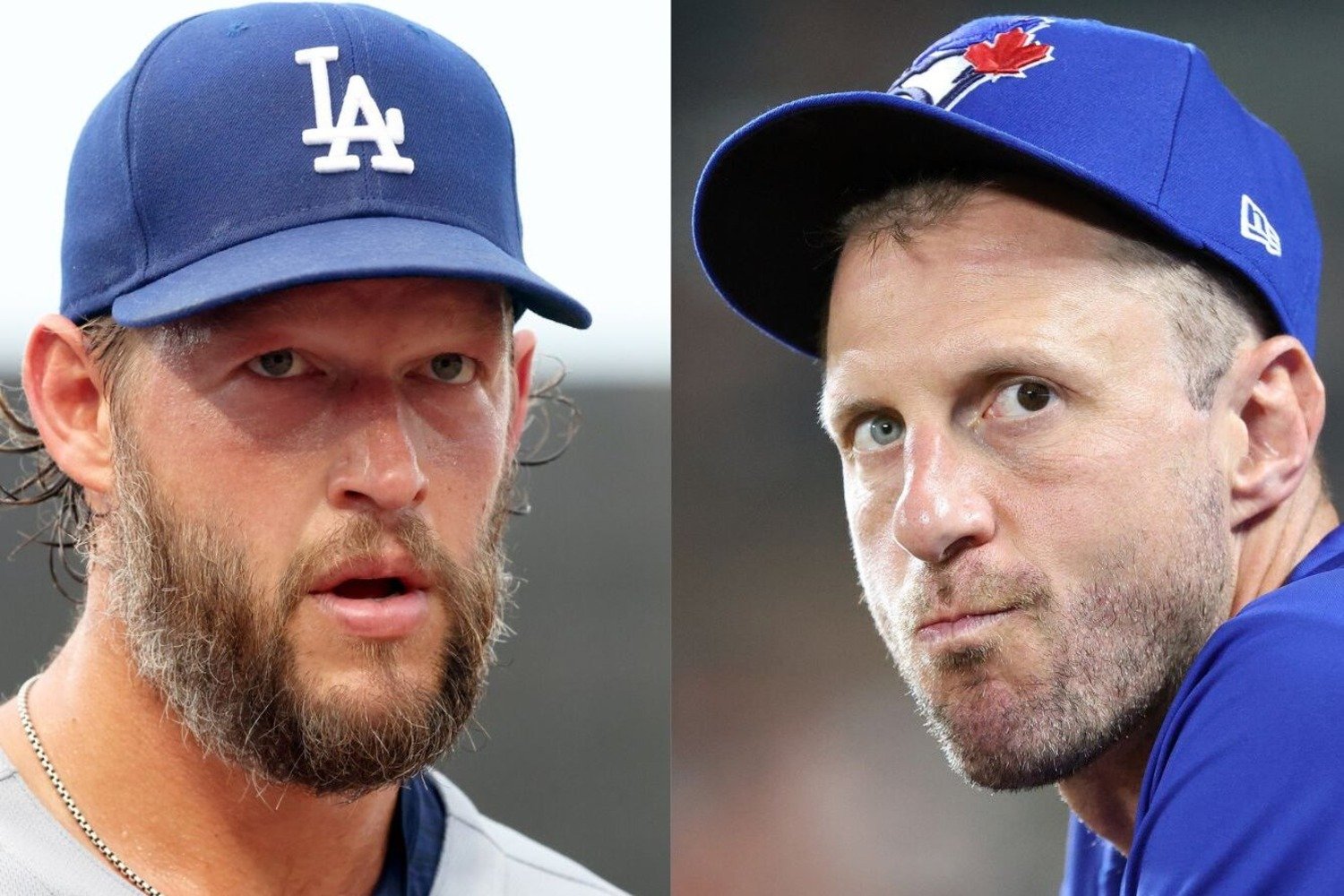 No matter which of the 30 teams you root for, tomorrow night’s contest between the Blue Jays and Dodgers will be the must-watch matchup of the day. For one thing, it could be an early World Series preview. According to FanGraphs, Toronto and L.A. have the highest odds of representing the AL and NL, respectively, in this year’s Fall Classic. The Dodgers have been the NL favorites all season, while the Blue Jays just climbed into the AL lead. Yet, that storyline is only the second most compelling reason to tune in on Friday night. The number one reason? The starting pitchers. Barring a last-minute schedule change, the Blue Jays will send three-time Cy Young winner Max Scherzer to the hill. The Dodgers will counter with a three-time Cy Young winner of their own, Clayton Kershaw. It could very well be the fifth and final time the two superstars go head-to-head. The first time Scherzer and Kershaw faced one another was September 9, 2008. George W. Bush was the President of the United States. Instagram didn’t exist. Vernon Wells hit cleanup for the Blue Jays that day, and B.J. Ryan picked up the save. Eli Willits, this year’s first overall draft pick, was nine months old. No one else on the Jays’ or Dodgers’ current rosters had appeared in the big leagues. In fact, no one else on the Blue Jays was even playing in the minors at that point, and only two Dodgers, Freddie Freeman and Miguel Rojas, had begun their professional careers. To make the matchup that day all the more interesting, neither Kershaw nor Scherzer was originally scheduled to pitch. At one point, the Dodgers had intended to send Greg Maddux to the mound, while the Diamondbacks planned to start Randy Johnson. Fans with tickets to the game were surely disappointed by the change; little did they know they were still going to see two future Hall of Famers duke it out. Scherzer was the better of the two rookies that day, striking out 11 and walking only one in five innings of work. Nevertheless, it was Kershaw’s Dodgers that came out on top. The two have since faced one another twice more in the regular season and once in the playoffs. They also appeared in the same game (but not at the same time) on two other occasions. Kershaw came on in relief for the Dodgers in a 2016 NLDS game that Scherzer started for the Nationals. Three years later, it was Scherzer who threw an inning of relief for the Nationals in an NLDS game Kershaw had started for the Dodgers. All told, Kershaw’s Dodgers have won four of the six games in which both have pitched. However, Scherzer has outpitched Kershaw, with a 3.00 ERA and 40 strikeouts to Kershaw’s 4.08 ERA and 26 K’s. Moreover, if we include All-Star Games, Scherzer ties things up. His AL All-Stars beat Kershaw’s NL squad in both the 2013 and ‘14 Midsummer Classics. Turning to the other side of the ball, Scherzer also has the statistical edge with the stick. In six plate appearances against Scherzer (regular season and playoffs), Kershaw is 0-for-4 with two sacrifice bunts. Meanwhile, Scherzer is 1-for-8 with a single against Kershaw. Each has struck the other out three times. Max Scherzer knocks a bloop single off of Clayton Kershaw. April 20, 2018. Of course, Scherzer and Kershaw haven’t always been adversaries. From August to October of 2021, they were teammates in L.A. Kershaw was injured for much of that stretch, but the two started back-to-back games twice, including September 18 and 19, when they picked up consecutive wins against the Reds. In addition, they were both NL All-Stars from 2015-17 and again in 2019. However, Scherzer did not play in the 2015 and ‘19 games, while Kershaw sat out in ‘16 and ‘17. Funnily enough, Kershaw only made the team in 2015 as a replacement for Scherzer. Thus, the two have never played for the same team in the same game. Over the past few years, both pitchers have seen their careers wind down at a similar pace. Neither is the overpowering ace he once was, but each remains a capable big league starter as he chases down milestones to pad his Hall of Fame case. Kershaw is one quality start away from 300 for his career. Scherzer is nearing 10th place on the all-time strikeouts leaderboard. On Friday, we’ll watch them face off, perhaps for the very last time. Or, as True Blue LA’s Eric Stephen joked on Bluesky, perhaps the Blue Jays and Dodgers will scratch the future Hall of Famers and start a couple of rookies instead, starting the cycle all over again.
 -
No matter which of the 30 teams you root for, tomorrow night’s contest between the Blue Jays and Dodgers will be the must-watch matchup of the day. For one thing, it could be an early World Series preview. According to FanGraphs, Toronto and L.A. have the highest odds of representing the AL and NL, respectively, in this year’s Fall Classic. The Dodgers have been the NL favorites all season, while the Blue Jays just climbed into the AL lead. Yet, that storyline is only the second most compelling reason to tune in on Friday night. The number one reason? The starting pitchers. Barring a last-minute schedule change, the Blue Jays will send three-time Cy Young winner Max Scherzer to the hill. The Dodgers will counter with a three-time Cy Young winner of their own, Clayton Kershaw. It could very well be the fifth and final time the two superstars go head-to-head. The first time Scherzer and Kershaw faced one another was September 9, 2008. George W. Bush was the President of the United States. Instagram didn’t exist. Vernon Wells hit cleanup for the Blue Jays that day, and B.J. Ryan picked up the save. Eli Willits, this year’s first overall draft pick, was nine months old. No one else on the Jays’ or Dodgers’ current rosters had appeared in the big leagues. In fact, no one else on the Blue Jays was even playing in the minors at that point, and only two Dodgers, Freddie Freeman and Miguel Rojas, had begun their professional careers. To make the matchup that day all the more interesting, neither Kershaw nor Scherzer was originally scheduled to pitch. At one point, the Dodgers had intended to send Greg Maddux to the mound, while the Diamondbacks planned to start Randy Johnson. Fans with tickets to the game were surely disappointed by the change; little did they know they were still going to see two future Hall of Famers duke it out. Scherzer was the better of the two rookies that day, striking out 11 and walking only one in five innings of work. Nevertheless, it was Kershaw’s Dodgers that came out on top. The two have since faced one another twice more in the regular season and once in the playoffs. They also appeared in the same game (but not at the same time) on two other occasions. Kershaw came on in relief for the Dodgers in a 2016 NLDS game that Scherzer started for the Nationals. Three years later, it was Scherzer who threw an inning of relief for the Nationals in an NLDS game Kershaw had started for the Dodgers. All told, Kershaw’s Dodgers have won four of the six games in which both have pitched. However, Scherzer has outpitched Kershaw, with a 3.00 ERA and 40 strikeouts to Kershaw’s 4.08 ERA and 26 K’s. Moreover, if we include All-Star Games, Scherzer ties things up. His AL All-Stars beat Kershaw’s NL squad in both the 2013 and ‘14 Midsummer Classics. Turning to the other side of the ball, Scherzer also has the statistical edge with the stick. In six plate appearances against Scherzer (regular season and playoffs), Kershaw is 0-for-4 with two sacrifice bunts. Meanwhile, Scherzer is 1-for-8 with a single against Kershaw. Each has struck the other out three times. Max Scherzer knocks a bloop single off of Clayton Kershaw. April 20, 2018. Of course, Scherzer and Kershaw haven’t always been adversaries. From August to October of 2021, they were teammates in L.A. Kershaw was injured for much of that stretch, but the two started back-to-back games twice, including September 18 and 19, when they picked up consecutive wins against the Reds. In addition, they were both NL All-Stars from 2015-17 and again in 2019. However, Scherzer did not play in the 2015 and ‘19 games, while Kershaw sat out in ‘16 and ‘17. Funnily enough, Kershaw only made the team in 2015 as a replacement for Scherzer. Thus, the two have never played for the same team in the same game. Over the past few years, both pitchers have seen their careers wind down at a similar pace. Neither is the overpowering ace he once was, but each remains a capable big league starter as he chases down milestones to pad his Hall of Fame case. Kershaw is one quality start away from 300 for his career. Scherzer is nearing 10th place on the all-time strikeouts leaderboard. On Friday, we’ll watch them face off, perhaps for the very last time. Or, as True Blue LA’s Eric Stephen joked on Bluesky, perhaps the Blue Jays and Dodgers will scratch the future Hall of Famers and start a couple of rookies instead, starting the cycle all over again. View full article
-
Huh, not sure what happened there. The article wasn't scheduled to publish until just now. Thanks for the kind words, and there shouldn't be any more point-form notes in there!
-
Tyler Heineman Is On His Way To Making Backup Catcher History
Leo Morgenstern posted an article in Blue Jays
.jpg.020c7b7db6019272058ae5c64deefbbb.jpg) When the Blue Jays designated catcher Ali Sánchez for assignment yesterday, it was a bad day for Sánchez but great news for the fanbase. One might have expected the Jays to DFA Sánchez two days earlier, when their All-Star backstop Alejandro Kirk returned from the injured list. However, the club was concerned about backup Tyler Heineman, who took a foul tip off the mask on Saturday and had to be evaluated for concussion symptoms. Fans held their breath as the Blue Jays kept all three of Kirk, Heineman, and Sánchez on the active roster for more than 48 hours; the longer Sánchez stuck around, the more it seemed like something must be wrong with Heineman. So, with no disrespect toward Sánchez, Blue Jays fans let out a collective sigh of relief on Tuesday afternoon when the team tweeted out the words "ROSTER MOVES" in all caps, followed by "C Ali Sánchez designated for assignment." Heineman's surprising success is a big reason why the Blue Jays find themselves sitting atop the AL East 115 games into the year. He's been nothing short of exceptional. After slashing .212/.298/.273 (65 wRC+) in 112 games over his first five big league seasons, the 34-year-old has a .330/.397/.500 slash line (151 wRC+) across 45 games in 2025. Despite his limited playing time, he also ranks among the league's top 10 catchers in Defensive Runs Saved (DRS) and Fielding Run Value (FRV). Of course, the Blue Jays already knew Heineman was a great defender. His glove is the reason they've acquired him three separate times and given him MLB playing time in each of the past four seasons. His offensive production, on the other hand, has been a delightful surprise. By the calculations at FanGraphs, he has been Toronto's fifth-most productive offensive player, behind only George Springer, Vladimir Guerrero Jr., Bo Bichette, and Addison Barger. Heineman doesn't just stand out among his teammates. His 2.2 FanGraphs WAR ranks him just outside of the top 10 among all primary catchers. In other words, as far as fWAR is concerned, 20 teams – that's two-thirds of the league – have received less from their starting catcher than the Blue Jays have gotten out of their backup. Indeed, 20 teams have received less production from all their catchers combined than the Blue Jays have been gifted by Heineman alone. Is Heineman likely to keep this up? No. Everything we know about small samples, past performance, and the aging curve tells us otherwise. He's outhitting his expected wOBA by 100 points, and his .395 BABIP is wholly unsustainable. Still, his phenomenal season has gone on long enough that we simply cannot continue to write it off as a quirky statistical oddity. It's time to start talking about the fact that Heineman is enjoying one of the best seasons by a backup catcher that many of us have ever seen. Here's a fun way to contextualize how well Heineman has played. With 2.2 fWAR in 45 games, he's playing at a 7.8-fWAR full-season pace. In the last decade, only 19 position players have produced at least 7.8 WAR in a single season. Nine of them won an MVP (including Josh Donaldson in 2015), while another six finished as the runner-up. All 19 earned MVP votes. Needless to say, Heineman isn't going to play 162 games this season. Not only is that impossible (he's already sat out 70 games), but no primary catcher has ever played 162 games in a season. But that's not the point. The reason I'm writing about Heineman is that he's a backup. At his current pace, he'll finish the season with 63 games played and 175 trips to the plate. Entering play on August 6, Heineman's 2.2 fWAR this year ranks 11th all-time among catchers with fewer than 200 PA in a season. And he still has almost 30% of the schedule left to play! The table below lists (almost) every catcher who has finished a season with more than 2.0 fWAR in fewer than 200 PA. In an effort to limit the results to true backups, I only included players from the NL and AL, and I excluded shortened seasons. Otherwise, Josh Gibson would dominate the rankings, and Salvador Perez's strong 2020 campaign would also sneak onto the list. Heineman is featured twice. The row highlighted in yellow shows his current 2025 numbers, while the row highlighted in green shows what those numbers will look like at the end of the year if he keeps up this pace: Catcher Season Team G PA WAR Tyler Heineman 2025 TOR 63 175 3.2 José Molina 2010 TOR 57 183 3.1 David Ross 2009 ATL 54 151 3.1 Jay Clarke 1906 CLE 57 195 2.8 David Ross 2012 ATL 62 196 2.7 Chris Stewart 2011 SFG 67 183 2.6 José Molina 2011 TOR 55 191 2.4 Jack Lapp 1911 PHA 68 196 2.4 David Ross 2008 CIN/BOS 60 182 2.4 David Ross 2011 ATL 52 171 2.2 David Ross 2010 ATL 59 145 2.2 Tyler Heineman 2025 TOR 44 123 2.2 Gene Tenace 1982 STL 66 165 2.1 Erik Kratz 2012 PHI 50 157 2.1 Data via FanGraphs. AL and NL only. Partial seasons excluded. You might notice that 10 of the 13 seasons on that list came after 2008. That's because catcher fWAR did not take pitch framing into account until the 2008 campaign. So, perhaps it's only fair to compare Heineman's season to those from the past 18 years. Even so, it's impressive that he's already the first catcher since 2012 to surpass 2.0 fWAR in a season with fewer than 200 PA, and it's beyond impressive that he's on pace to unseat José Molina at the top of the list. (On a side note, it's fun to remember how successful Molina was in his two-year stint with Toronto as a backup to John Buck and J.P. Arencibia. In both seasons, one could argue he was far more successful than the starter he was backing up. Anyway, back to Heineman.) Switching over to look at Baseball Reference WAR, Heineman currently ranks 15th all-time among catchers with fewer than 200 PA in a season: Catcher Season Team G PA WAR Jay Clarke 1906 CLE 57 199 3.2 Tyler Heineman 2025 TOR 44 123 2.4 Gene Tenace 1982 STL 66 165 2.2 Carlos Santana 2010 CLE 46 192 2.0 David Ross 2009 ATL 54 151 2.0 Bill Salkeld 1946 PIT 69 200 2.0 Eddie Pérez 1998 ATL 61 167 1.9 Rick Dempsey 1988 LAD 77 198 1.9 Jake Gibbs 1970 NYY 49 163 1.9 Frank Fernández 1968 NYY 51 171 1.9 Alva Williams 1912 WSH 60 172 1.9 Mike Zunino 2016 SEA 55 192 1.8 Ron Karkovice 1991 CHW 75 193 1.8 Gene Tenace 1970 OAK 38 128 1.8 Jack Lapp 1911 PHA 68 199 1.8 Tyler Heineman 2025 TOR 44 123 1.7 Data via Stathead Baseball. AL and NL only. Partial seasons excluded. On FanGraphs, I simply selected "catcher" from the "primary position" drop-down menu on their website. I had to be a little more specific on Baseball Reference. For the list above, I defined a "catcher" as anyone who played at least 75% of his games behind the plate that season. If I set the minimum at 90% instead, Heineman would move up to 12th place. Baseball Reference WAR has never included framing, so it's better for comparing catchers of all eras. At the same time, it fails to capture one of the most important aspects of Heineman's game. Nevertheless, if he keeps up his current pace, he'll move up to second place on the list above by the end of the season. The backup catcher history books don't get checked out of the library all that often. After all, it's rather oxymoronic to talk about the best backups at any position. Yet, what Tyler Heineman is doing for the Blue Jays this year is truly unusual. He's demanding our attention from a role that's often entirely overlooked. Stats updated prior to games on August 6.
When the Blue Jays designated catcher Ali Sánchez for assignment yesterday, it was a bad day for Sánchez but great news for the fanbase. One might have expected the Jays to DFA Sánchez two days earlier, when their All-Star backstop Alejandro Kirk returned from the injured list. However, the club was concerned about backup Tyler Heineman, who took a foul tip off the mask on Saturday and had to be evaluated for concussion symptoms. Fans held their breath as the Blue Jays kept all three of Kirk, Heineman, and Sánchez on the active roster for more than 48 hours; the longer Sánchez stuck around, the more it seemed like something must be wrong with Heineman. So, with no disrespect toward Sánchez, Blue Jays fans let out a collective sigh of relief on Tuesday afternoon when the team tweeted out the words "ROSTER MOVES" in all caps, followed by "C Ali Sánchez designated for assignment." Heineman's surprising success is a big reason why the Blue Jays find themselves sitting atop the AL East 115 games into the year. He's been nothing short of exceptional. After slashing .212/.298/.273 (65 wRC+) in 112 games over his first five big league seasons, the 34-year-old has a .330/.397/.500 slash line (151 wRC+) across 45 games in 2025. Despite his limited playing time, he also ranks among the league's top 10 catchers in Defensive Runs Saved (DRS) and Fielding Run Value (FRV). Of course, the Blue Jays already knew Heineman was a great defender. His glove is the reason they've acquired him three separate times and given him MLB playing time in each of the past four seasons. His offensive production, on the other hand, has been a delightful surprise. By the calculations at FanGraphs, he has been Toronto's fifth-most productive offensive player, behind only George Springer, Vladimir Guerrero Jr., Bo Bichette, and Addison Barger. Heineman doesn't just stand out among his teammates. His 2.2 FanGraphs WAR ranks him just outside of the top 10 among all primary catchers. In other words, as far as fWAR is concerned, 20 teams – that's two-thirds of the league – have received less from their starting catcher than the Blue Jays have gotten out of their backup. Indeed, 20 teams have received less production from all their catchers combined than the Blue Jays have been gifted by Heineman alone. Is Heineman likely to keep this up? No. Everything we know about small samples, past performance, and the aging curve tells us otherwise. He's outhitting his expected wOBA by 100 points, and his .395 BABIP is wholly unsustainable. Still, his phenomenal season has gone on long enough that we simply cannot continue to write it off as a quirky statistical oddity. It's time to start talking about the fact that Heineman is enjoying one of the best seasons by a backup catcher that many of us have ever seen. Here's a fun way to contextualize how well Heineman has played. With 2.2 fWAR in 45 games, he's playing at a 7.8-fWAR full-season pace. In the last decade, only 19 position players have produced at least 7.8 WAR in a single season. Nine of them won an MVP (including Josh Donaldson in 2015), while another six finished as the runner-up. All 19 earned MVP votes. Needless to say, Heineman isn't going to play 162 games this season. Not only is that impossible (he's already sat out 70 games), but no primary catcher has ever played 162 games in a season. But that's not the point. The reason I'm writing about Heineman is that he's a backup. At his current pace, he'll finish the season with 63 games played and 175 trips to the plate. Entering play on August 6, Heineman's 2.2 fWAR this year ranks 11th all-time among catchers with fewer than 200 PA in a season. And he still has almost 30% of the schedule left to play! The table below lists (almost) every catcher who has finished a season with more than 2.0 fWAR in fewer than 200 PA. In an effort to limit the results to true backups, I only included players from the NL and AL, and I excluded shortened seasons. Otherwise, Josh Gibson would dominate the rankings, and Salvador Perez's strong 2020 campaign would also sneak onto the list. Heineman is featured twice. The row highlighted in yellow shows his current 2025 numbers, while the row highlighted in green shows what those numbers will look like at the end of the year if he keeps up this pace: Catcher Season Team G PA WAR Tyler Heineman 2025 TOR 63 175 3.2 José Molina 2010 TOR 57 183 3.1 David Ross 2009 ATL 54 151 3.1 Jay Clarke 1906 CLE 57 195 2.8 David Ross 2012 ATL 62 196 2.7 Chris Stewart 2011 SFG 67 183 2.6 José Molina 2011 TOR 55 191 2.4 Jack Lapp 1911 PHA 68 196 2.4 David Ross 2008 CIN/BOS 60 182 2.4 David Ross 2011 ATL 52 171 2.2 David Ross 2010 ATL 59 145 2.2 Tyler Heineman 2025 TOR 44 123 2.2 Gene Tenace 1982 STL 66 165 2.1 Erik Kratz 2012 PHI 50 157 2.1 Data via FanGraphs. AL and NL only. Partial seasons excluded. You might notice that 10 of the 13 seasons on that list came after 2008. That's because catcher fWAR did not take pitch framing into account until the 2008 campaign. So, perhaps it's only fair to compare Heineman's season to those from the past 18 years. Even so, it's impressive that he's already the first catcher since 2012 to surpass 2.0 fWAR in a season with fewer than 200 PA, and it's beyond impressive that he's on pace to unseat José Molina at the top of the list. (On a side note, it's fun to remember how successful Molina was in his two-year stint with Toronto as a backup to John Buck and J.P. Arencibia. In both seasons, one could argue he was far more successful than the starter he was backing up. Anyway, back to Heineman.) Switching over to look at Baseball Reference WAR, Heineman currently ranks 15th all-time among catchers with fewer than 200 PA in a season: Catcher Season Team G PA WAR Jay Clarke 1906 CLE 57 199 3.2 Tyler Heineman 2025 TOR 44 123 2.4 Gene Tenace 1982 STL 66 165 2.2 Carlos Santana 2010 CLE 46 192 2.0 David Ross 2009 ATL 54 151 2.0 Bill Salkeld 1946 PIT 69 200 2.0 Eddie Pérez 1998 ATL 61 167 1.9 Rick Dempsey 1988 LAD 77 198 1.9 Jake Gibbs 1970 NYY 49 163 1.9 Frank Fernández 1968 NYY 51 171 1.9 Alva Williams 1912 WSH 60 172 1.9 Mike Zunino 2016 SEA 55 192 1.8 Ron Karkovice 1991 CHW 75 193 1.8 Gene Tenace 1970 OAK 38 128 1.8 Jack Lapp 1911 PHA 68 199 1.8 Tyler Heineman 2025 TOR 44 123 1.7 Data via Stathead Baseball. AL and NL only. Partial seasons excluded. On FanGraphs, I simply selected "catcher" from the "primary position" drop-down menu on their website. I had to be a little more specific on Baseball Reference. For the list above, I defined a "catcher" as anyone who played at least 75% of his games behind the plate that season. If I set the minimum at 90% instead, Heineman would move up to 12th place. Baseball Reference WAR has never included framing, so it's better for comparing catchers of all eras. At the same time, it fails to capture one of the most important aspects of Heineman's game. Nevertheless, if he keeps up his current pace, he'll move up to second place on the list above by the end of the season. The backup catcher history books don't get checked out of the library all that often. After all, it's rather oxymoronic to talk about the best backups at any position. Yet, what Tyler Heineman is doing for the Blue Jays this year is truly unusual. He's demanding our attention from a role that's often entirely overlooked. Stats updated prior to games on August 6. -
When the Blue Jays designated catcher Ali Sánchez for assignment yesterday, it was a bad day for Sánchez but great news for the fanbase. One might have expected the Jays to DFA Sánchez two days earlier, when their All-Star backstop Alejandro Kirk returned from the injured list. However, the club was concerned about backup Tyler Heineman, who took a foul tip off the mask on Saturday and had to be evaluated for concussion symptoms. Fans held their breath as the Blue Jays kept all three of Kirk, Heineman, and Sánchez on the active roster for more than 48 hours; the longer Sánchez stuck around, the more it seemed like something must be wrong with Heineman. So, with no disrespect toward Sánchez, Blue Jays fans let out a collective sigh of relief on Tuesday afternoon when the team tweeted out the words "ROSTER MOVES" in all caps, followed by "C Ali Sánchez designated for assignment." Heineman's surprising success is a big reason why the Blue Jays find themselves sitting atop the AL East 115 games into the year. He's been nothing short of exceptional. After slashing .212/.298/.273 (65 wRC+) in 112 games over his first five big league seasons, the 34-year-old has a .330/.397/.500 slash line (151 wRC+) across 45 games in 2025. Despite his limited playing time, he also ranks among the league's top 10 catchers in Defensive Runs Saved (DRS) and Fielding Run Value (FRV). Of course, the Blue Jays already knew Heineman was a great defender. His glove is the reason they've acquired him three separate times and given him MLB playing time in each of the past four seasons. His offensive production, on the other hand, has been a delightful surprise. By the calculations at FanGraphs, he has been Toronto's fifth-most productive offensive player, behind only George Springer, Vladimir Guerrero Jr., Bo Bichette, and Addison Barger. Heineman doesn't just stand out among his teammates. His 2.2 FanGraphs WAR ranks him just outside of the top 10 among all primary catchers. In other words, as far as fWAR is concerned, 20 teams – that's two-thirds of the league – have received less from their starting catcher than the Blue Jays have gotten out of their backup. Indeed, 20 teams have received less production from all their catchers combined than the Blue Jays have been gifted by Heineman alone. Is Heineman likely to keep this up? No. Everything we know about small samples, past performance, and the aging curve tells us otherwise. He's outhitting his expected wOBA by 100 points, and his .395 BABIP is wholly unsustainable. Still, his phenomenal season has gone on long enough that we simply cannot continue to write it off as a quirky statistical oddity. It's time to start talking about the fact that Heineman is enjoying one of the best seasons by a backup catcher that many of us have ever seen. Here's a fun way to contextualize how well Heineman has played. With 2.2 fWAR in 45 games, he's playing at a 7.8-fWAR full-season pace. In the last decade, only 19 position players have produced at least 7.8 WAR in a single season. Nine of them won an MVP (including Josh Donaldson in 2015), while another six finished as the runner-up. All 19 earned MVP votes. Needless to say, Heineman isn't going to play 162 games this season. Not only is that impossible (he's already sat out 70 games), but no primary catcher has ever played 162 games in a season. But that's not the point. The reason I'm writing about Heineman is that he's a backup. At his current pace, he'll finish the season with 63 games played and 175 trips to the plate. Entering play on August 6, Heineman's 2.2 fWAR this year ranks 11th all-time among catchers with fewer than 200 PA in a season. And he still has almost 30% of the schedule left to play! The table below lists (almost) every catcher who has finished a season with more than 2.0 fWAR in fewer than 200 PA. In an effort to limit the results to true backups, I only included players from the NL and AL, and I excluded shortened seasons. Otherwise, Josh Gibson would dominate the rankings, and Salvador Perez's strong 2020 campaign would also sneak onto the list. Heineman is featured twice. The row highlighted in yellow shows his current 2025 numbers, while the row highlighted in green shows what those numbers will look like at the end of the year if he keeps up this pace: Catcher Season Team G PA WAR Tyler Heineman 2025 TOR 63 175 3.2 José Molina 2010 TOR 57 183 3.1 David Ross 2009 ATL 54 151 3.1 Jay Clarke 1906 CLE 57 195 2.8 David Ross 2012 ATL 62 196 2.7 Chris Stewart 2011 SFG 67 183 2.6 José Molina 2011 TOR 55 191 2.4 Jack Lapp 1911 PHA 68 196 2.4 David Ross 2008 CIN/BOS 60 182 2.4 David Ross 2011 ATL 52 171 2.2 David Ross 2010 ATL 59 145 2.2 Tyler Heineman 2025 TOR 44 123 2.2 Gene Tenace 1982 STL 66 165 2.1 Erik Kratz 2012 PHI 50 157 2.1 Data via FanGraphs. AL and NL only. Partial seasons excluded. You might notice that 10 of the 13 seasons on that list came after 2008. That's because catcher fWAR did not take pitch framing into account until the 2008 campaign. So, perhaps it's only fair to compare Heineman's season to those from the past 18 years. Even so, it's impressive that he's already the first catcher since 2012 to surpass 2.0 fWAR in a season with fewer than 200 PA, and it's beyond impressive that he's on pace to unseat José Molina at the top of the list. (On a side note, it's fun to remember how successful Molina was in his two-year stint with Toronto as a backup to John Buck and J.P. Arencibia. In both seasons, one could argue he was far more successful than the starter he was backing up. Anyway, back to Heineman.) Switching over to look at Baseball Reference WAR, Heineman currently ranks 15th all-time among catchers with fewer than 200 PA in a season: Catcher Season Team G PA WAR Jay Clarke 1906 CLE 57 199 3.2 Tyler Heineman 2025 TOR 44 123 2.4 Gene Tenace 1982 STL 66 165 2.2 Carlos Santana 2010 CLE 46 192 2.0 David Ross 2009 ATL 54 151 2.0 Bill Salkeld 1946 PIT 69 200 2.0 Eddie Pérez 1998 ATL 61 167 1.9 Rick Dempsey 1988 LAD 77 198 1.9 Jake Gibbs 1970 NYY 49 163 1.9 Frank Fernández 1968 NYY 51 171 1.9 Alva Williams 1912 WSH 60 172 1.9 Mike Zunino 2016 SEA 55 192 1.8 Ron Karkovice 1991 CHW 75 193 1.8 Gene Tenace 1970 OAK 38 128 1.8 Jack Lapp 1911 PHA 68 199 1.8 Tyler Heineman 2025 TOR 44 123 1.7 Data via Stathead Baseball. AL and NL only. Partial seasons excluded. On FanGraphs, I simply selected "catcher" from the "primary position" drop-down menu on their website. I had to be a little more specific on Baseball Reference. For the list above, I defined a "catcher" as anyone who played at least 75% of his games behind the plate that season. If I set the minimum at 90% instead, Heineman would move up to 12th place. Baseball Reference WAR has never included framing, so it's better for comparing catchers of all eras. At the same time, it fails to capture one of the most important aspects of Heineman's game. Nevertheless, if he keeps up his current pace, he'll move up to second place on the list above by the end of the season. The backup catcher history books don't get checked out of the library all that often. After all, it's rather oxymoronic to talk about the best backups at any position. Yet, what Tyler Heineman is doing for the Blue Jays this year is truly unusual. He's demanding our attention from a role that's often entirely overlooked. Stats updated prior to games on August 6. View full article
-
.jpg.80f2b9182162436812ba50956b619f31.jpg) The Toronto Blue Jays announced today that veteran reliever Chad Green has cleared waivers and been released. He is now a free agent. Green, 34, was designated for assignment on Tuesday to make room on the roster for trade acquisition Seranthony Domínguez. Any of the league's 29 other teams could have put in a claim for Green, but with approximately $3.15 million remaining on his contract this season, it's no surprise he cleared waivers. The right-hander was one of the better relief pitchers in baseball during his years with the Yankees from 2016-22 (3.17 ERA in 383.2 IP), but he's never looked quite the same since his return from Tommy John surgery in 2023. In 2025, he's been one of the least effective relievers in the game. His 5.56 ERA is the fifth-highest among qualified AL bullpen arms, and no pitcher in MLB has given up more home runs than Green (14) out of the 'pen. Did the Blue Jays make the right call to part ways with Green? Should they have done it sooner? Have your say in the comments section below. Featured image courtesy of Jeff Curry, Imagn Images.
The Toronto Blue Jays announced today that veteran reliever Chad Green has cleared waivers and been released. He is now a free agent. Green, 34, was designated for assignment on Tuesday to make room on the roster for trade acquisition Seranthony Domínguez. Any of the league's 29 other teams could have put in a claim for Green, but with approximately $3.15 million remaining on his contract this season, it's no surprise he cleared waivers. The right-hander was one of the better relief pitchers in baseball during his years with the Yankees from 2016-22 (3.17 ERA in 383.2 IP), but he's never looked quite the same since his return from Tommy John surgery in 2023. In 2025, he's been one of the least effective relievers in the game. His 5.56 ERA is the fifth-highest among qualified AL bullpen arms, and no pitcher in MLB has given up more home runs than Green (14) out of the 'pen. Did the Blue Jays make the right call to part ways with Green? Should they have done it sooner? Have your say in the comments section below. Featured image courtesy of Jeff Curry, Imagn Images. -
The Toronto Blue Jays announced today that veteran reliever Chad Green has cleared waivers and been released. He is now a free agent. Green, 34, was designated for assignment on Tuesday to make room on the roster for trade acquisition Seranthony Domínguez. Any of the league's 29 other teams could have put in a claim for Green, but with approximately $3.15 million remaining on his contract this season, it's no surprise he cleared waivers. The right-hander was one of the better relief pitchers in baseball during his years with the Yankees from 2016-22 (3.17 ERA in 383.2 IP), but he's never looked quite the same since his return from Tommy John surgery in 2023. In 2025, he's been one of the least effective relievers in the game. His 5.56 ERA is the fifth-highest among qualified AL bullpen arms, and no pitcher in MLB has given up more home runs than Green (14) out of the 'pen. Did the Blue Jays make the right call to part ways with Green? Should they have done it sooner? Have your say in the comments section below. Featured image courtesy of Jeff Curry, Imagn Images. View full rumor
-
The Toronto Blue Jays entered deadline day tied with the Detroit Tigers for the best record in the American League. They had sat atop the AL East for close to a month, giving them plenty of time to prepare to make some aggressive moves. It might sound dramatic, but a good trade deadline can make the difference between a deep postseason run and a late-season collapse. For the Blue Jays, the moves they made and the moves they didn't make (as well as those their competitors did and did not make) could very well be the difference between winning their division for the first time in a decade and (hopefully) securing a first-round bye... or being forced to play in the dreaded Wild Card Series. Jays fans need no reminder that their team has been swept in the Wild Card round in each of the last three postseasons in which they've appeared (2020, 2022-23). With July in the books and the dust settled on the trade deadline, here are all the moves the Blue Jays made, in chronological order: Traded Juaron Watts-Brown for Seranthony Domínguez (Orioles) Read: Blue Jays Acquiring Seranthony Domínguez and Cash for Juaron Watts-Brown Traded Khal Stephen for Shane Bieber (Guardians) Read: Blue Jays Give Up Top-100 Prospect Khal Stephen in Trade for Starter Shane Bieber Read: Who Is Shane Bieber and What Can He Bring to the Blue Jays? Traded Will Wagner for Brandon Valenzuela (Padres) Traded Kendry Rojas and Alan Roden for Louis Varland and Ty France (Twins) Read: Last-Minute Trade: Blue Jays Acquire RHP Louis Varland and 1B Ty France from Minnesota Meanwhile, here is a breakdown of notable players acquired by Toronto's closest competition: AL East New York Yankees Boston Red Sox Tampa Bay Rays David Bednar Dustin May Griffin Jax Camilo Doval Steven Matz Adrian Houser Jake Bird Bryan Baker Ryan McMahon Nick Fortes Jose Caballero Amed Rosario Austin Slater American League Detroit Tigers Houston Astros Seattle Mariners Texas Rangers Kansas City Royals Charlie Morton Carlos Correa Eugenio Suárez Merrill Kelly Bailey Falter Chris Paddack Jesús Sánchez Josh Naylor Danny Coulombe Mike Yastrzemski Kyle Finnegan Ramón Urías Caleb Ferguson Phil Maton Randal Grichuk Paul Sewald Adam Frazier First things first, I have to give credit where it's due. Ross Atkins accomplished all of his major goals. Domínguez and Varland will bolster the bullpen. France deepens the lineup from the right-hand side of the plate. Bieber offers high-upside rotation depth. He won't displace anyone in the current starting five quite yet (he's still rehabbing from Tommy John surgery), but when he does, it will likely be Eric Lauer, who can become the swingman the Jays were said to be seeking. Finally, Valenzuela provides the organization with catching depth in the high minors. Adding a backstop wasn't at the top of the team's priority list, but with Alejandro Kirk on the concussion IL, it was a move worth making. Atkins also included two major league position players, Roden and Wagner, in the deals he swung. Both are still promising hitters, and they will be missed in the organization. Yet, neither was doing much to help the big league club in 2025, and by shipping them off, Atkins freed up a pair of 40-man roster spots and reduced the overall prospect cost of his deadline shopping. One thing missing from Toronto's deadline was the acquisition of a true stopper for the back-end of the bullpen. The Jays were linked to both David Bednar (link) and Griffin Jax (link), each of whom ended up joining one of their division rivals. Toronto was also connected to Ryan Helsley (link), who ultimately landed with the Mets. There's a lot to like about Domínguez and Varland, but neither one is a ninth-inning stud that strikes terror into opposing lineups – a type of player that becomes infinitely more valuable in the playoffs. While the bullpen additions might feel slightly underwhelming, Bieber is a far more exciting rotation pickup than, say, Michael Soroka or any other swingman the Jays could have pursued. Khal Stephen, Jays Centre's no. 5 prospect prior to the trade, was a steep price to pay, but it will be well worth it if Bieber can be the no. 1 starter we've long said the Blue Jays needed for a postseason series. Trading for France was perhaps the most unsatisfying of Toronto's deadline moves. He has not been an impact bat against left or right-handed pitching since 2022. Over the past three years, he has a 99 wRC+ with the platoon "advantage" and a 98 wRC+ against same-handed opponents. And while he has played second and third base in the past, he should be limited to first base or DH, unless as a last resort. The best way for the Blue Jays to use France, at least until Anthony Santander returns, is as a DH against left-handed pitching. That's not because France hits lefties well, but because he'll be far less of a liability than some of Toronto's platoon-challenged lefty batters. Could Atkins have found a better bat? Absolutely. But the Blue Jays are better with France than they were without. While trade season is over, our coverage of the deadline at Jays Centre is not. Check back in the coming days for more trade analysis from our writers, as we take a closer look at the players the Blue Jays added – and those they gave up. View full article
-
.jpg.5c1be1923b2dbabbf2ae85deee8cc87d.jpg) The Toronto Blue Jays entered deadline day tied with the Detroit Tigers for the best record in the American League. They had sat atop the AL East for close to a month, giving them plenty of time to prepare to make some aggressive moves. It might sound dramatic, but a good trade deadline can make the difference between a deep postseason run and a late-season collapse. For the Blue Jays, the moves they made and the moves they didn't make (as well as those their competitors did and did not make) could very well be the difference between winning their division for the first time in a decade and (hopefully) securing a first-round bye... or being forced to play in the dreaded Wild Card Series. Jays fans need no reminder that their team has been swept in the Wild Card round in each of the last three postseasons in which they've appeared (2020, 2022-23). With July in the books and the dust settled on the trade deadline, here are all the moves the Blue Jays made, in chronological order: Traded Juaron Watts-Brown for Seranthony Domínguez (Orioles) Read: Blue Jays Acquiring Seranthony Domínguez and Cash for Juaron Watts-Brown Traded Khal Stephen for Shane Bieber (Guardians) Read: Blue Jays Give Up Top-100 Prospect Khal Stephen in Trade for Starter Shane Bieber Read: Who Is Shane Bieber and What Can He Bring to the Blue Jays? Traded Will Wagner for Brandon Valenzuela (Padres) Traded Kendry Rojas and Alan Roden for Louis Varland and Ty France (Twins) Read: Last-Minute Trade: Blue Jays Acquire RHP Louis Varland and 1B Ty France from Minnesota Meanwhile, here is a breakdown of notable players acquired by Toronto's closest competition: AL East New York Yankees Boston Red Sox Tampa Bay Rays David Bednar Dustin May Griffin Jax Camilo Doval Steven Matz Adrian Houser Jake Bird Bryan Baker Ryan McMahon Nick Fortes Jose Caballero Amed Rosario Austin Slater American League Detroit Tigers Houston Astros Seattle Mariners Texas Rangers Kansas City Royals Charlie Morton Carlos Correa Eugenio Suárez Merrill Kelly Bailey Falter Chris Paddack Jesús Sánchez Josh Naylor Danny Coulombe Mike Yastrzemski Kyle Finnegan Ramón Urías Caleb Ferguson Phil Maton Randal Grichuk Paul Sewald Adam Frazier First things first, I have to give credit where it's due. Ross Atkins accomplished all of his major goals. Domínguez and Varland will bolster the bullpen. France deepens the lineup from the right-hand side of the plate. Bieber offers high-upside rotation depth. He won't displace anyone in the current starting five quite yet (he's still rehabbing from Tommy John surgery), but when he does, it will likely be Eric Lauer, who can become the swingman the Jays were said to be seeking. Finally, Valenzuela provides the organization with catching depth in the high minors. Adding a backstop wasn't at the top of the team's priority list, but with Alejandro Kirk on the concussion IL, it was a move worth making. Atkins also included two major league position players, Roden and Wagner, in the deals he swung. Both are still promising hitters, and they will be missed in the organization. Yet, neither was doing much to help the big league club in 2025, and by shipping them off, Atkins freed up a pair of 40-man roster spots and reduced the overall prospect cost of his deadline shopping. One thing missing from Toronto's deadline was the acquisition of a true stopper for the back-end of the bullpen. The Jays were linked to both David Bednar (link) and Griffin Jax (link), each of whom ended up joining one of their division rivals. Toronto was also connected to Ryan Helsley (link), who ultimately landed with the Mets. There's a lot to like about Domínguez and Varland, but neither one is a ninth-inning stud that strikes terror into opposing lineups – a type of player that becomes infinitely more valuable in the playoffs. While the bullpen additions might feel slightly underwhelming, Bieber is a far more exciting rotation pickup than, say, Michael Soroka or any other swingman the Jays could have pursued. Khal Stephen, Jays Centre's no. 5 prospect prior to the trade, was a steep price to pay, but it will be well worth it if Bieber can be the no. 1 starter we've long said the Blue Jays needed for a postseason series. Trading for France was perhaps the most unsatisfying of Toronto's deadline moves. He has not been an impact bat against left or right-handed pitching since 2022. Over the past three years, he has a 99 wRC+ with the platoon "advantage" and a 98 wRC+ against same-handed opponents. And while he has played second and third base in the past, he should be limited to first base or DH, unless as a last resort. The best way for the Blue Jays to use France, at least until Anthony Santander returns, is as a DH against left-handed pitching. That's not because France hits lefties well, but because he'll be far less of a liability than some of Toronto's platoon-challenged lefty batters. Could Atkins have found a better bat? Absolutely. But the Blue Jays are better with France than they were without. While trade season is over, our coverage of the deadline at Jays Centre is not. Check back in the coming days for more trade analysis from our writers, as we take a closer look at the players the Blue Jays added – and those they gave up.
The Toronto Blue Jays entered deadline day tied with the Detroit Tigers for the best record in the American League. They had sat atop the AL East for close to a month, giving them plenty of time to prepare to make some aggressive moves. It might sound dramatic, but a good trade deadline can make the difference between a deep postseason run and a late-season collapse. For the Blue Jays, the moves they made and the moves they didn't make (as well as those their competitors did and did not make) could very well be the difference between winning their division for the first time in a decade and (hopefully) securing a first-round bye... or being forced to play in the dreaded Wild Card Series. Jays fans need no reminder that their team has been swept in the Wild Card round in each of the last three postseasons in which they've appeared (2020, 2022-23). With July in the books and the dust settled on the trade deadline, here are all the moves the Blue Jays made, in chronological order: Traded Juaron Watts-Brown for Seranthony Domínguez (Orioles) Read: Blue Jays Acquiring Seranthony Domínguez and Cash for Juaron Watts-Brown Traded Khal Stephen for Shane Bieber (Guardians) Read: Blue Jays Give Up Top-100 Prospect Khal Stephen in Trade for Starter Shane Bieber Read: Who Is Shane Bieber and What Can He Bring to the Blue Jays? Traded Will Wagner for Brandon Valenzuela (Padres) Traded Kendry Rojas and Alan Roden for Louis Varland and Ty France (Twins) Read: Last-Minute Trade: Blue Jays Acquire RHP Louis Varland and 1B Ty France from Minnesota Meanwhile, here is a breakdown of notable players acquired by Toronto's closest competition: AL East New York Yankees Boston Red Sox Tampa Bay Rays David Bednar Dustin May Griffin Jax Camilo Doval Steven Matz Adrian Houser Jake Bird Bryan Baker Ryan McMahon Nick Fortes Jose Caballero Amed Rosario Austin Slater American League Detroit Tigers Houston Astros Seattle Mariners Texas Rangers Kansas City Royals Charlie Morton Carlos Correa Eugenio Suárez Merrill Kelly Bailey Falter Chris Paddack Jesús Sánchez Josh Naylor Danny Coulombe Mike Yastrzemski Kyle Finnegan Ramón Urías Caleb Ferguson Phil Maton Randal Grichuk Paul Sewald Adam Frazier First things first, I have to give credit where it's due. Ross Atkins accomplished all of his major goals. Domínguez and Varland will bolster the bullpen. France deepens the lineup from the right-hand side of the plate. Bieber offers high-upside rotation depth. He won't displace anyone in the current starting five quite yet (he's still rehabbing from Tommy John surgery), but when he does, it will likely be Eric Lauer, who can become the swingman the Jays were said to be seeking. Finally, Valenzuela provides the organization with catching depth in the high minors. Adding a backstop wasn't at the top of the team's priority list, but with Alejandro Kirk on the concussion IL, it was a move worth making. Atkins also included two major league position players, Roden and Wagner, in the deals he swung. Both are still promising hitters, and they will be missed in the organization. Yet, neither was doing much to help the big league club in 2025, and by shipping them off, Atkins freed up a pair of 40-man roster spots and reduced the overall prospect cost of his deadline shopping. One thing missing from Toronto's deadline was the acquisition of a true stopper for the back-end of the bullpen. The Jays were linked to both David Bednar (link) and Griffin Jax (link), each of whom ended up joining one of their division rivals. Toronto was also connected to Ryan Helsley (link), who ultimately landed with the Mets. There's a lot to like about Domínguez and Varland, but neither one is a ninth-inning stud that strikes terror into opposing lineups – a type of player that becomes infinitely more valuable in the playoffs. While the bullpen additions might feel slightly underwhelming, Bieber is a far more exciting rotation pickup than, say, Michael Soroka or any other swingman the Jays could have pursued. Khal Stephen, Jays Centre's no. 5 prospect prior to the trade, was a steep price to pay, but it will be well worth it if Bieber can be the no. 1 starter we've long said the Blue Jays needed for a postseason series. Trading for France was perhaps the most unsatisfying of Toronto's deadline moves. He has not been an impact bat against left or right-handed pitching since 2022. Over the past three years, he has a 99 wRC+ with the platoon "advantage" and a 98 wRC+ against same-handed opponents. And while he has played second and third base in the past, he should be limited to first base or DH, unless as a last resort. The best way for the Blue Jays to use France, at least until Anthony Santander returns, is as a DH against left-handed pitching. That's not because France hits lefties well, but because he'll be far less of a liability than some of Toronto's platoon-challenged lefty batters. Could Atkins have found a better bat? Absolutely. But the Blue Jays are better with France than they were without. While trade season is over, our coverage of the deadline at Jays Centre is not. Check back in the coming days for more trade analysis from our writers, as we take a closer look at the players the Blue Jays added – and those they gave up. -
.jpg.51c24cd95b047a7a4b623e97b94fccc5.jpg) According to Derrick Goold of the St. Louis Post-Dispatch, right-handed reliever Phil Maton remains a top trade candidate with hours to go before this evening's deadline. Goold writes that "talks involving" Maton continued late into the night yesterday and names the Blue Jays as one team involved in those discussions. The Blue Jays had been linked to former Cardinals closer Ryan Helsley before the Mets acquired his services on Wednesday. Meanwhile, I suggested earlier this week that former Blue Jay (and now former Cardinal) Steven Matz would be a great trade target for Toronto, but he has since become the newest member of the Red Sox. That leaves Maton as the top trade chip left in St. Louis's bullpen. So, could the Jays strike a deal to bring Maton to Toronto? The righty might not be a Helsley or Jhoan Duran-level acquisition, but he has a 2.35 ERA and 2.55 xERA in 40 games this year and a 3.10 ERA in 179 appearances over the past three seasons. There is little doubt he would improve the Jays' bullpen, and it's no secret that Ross Atkins is looking to do exactly that ahead of the deadline. Should the Blue Jays try to strike a deal with the Cardinals for Phil Maton? Or is there another bullpen arm you'd rather they target? Join the conversation in our comments section. Featured image courtesy of Jerome Miron, Imagn Images.
According to Derrick Goold of the St. Louis Post-Dispatch, right-handed reliever Phil Maton remains a top trade candidate with hours to go before this evening's deadline. Goold writes that "talks involving" Maton continued late into the night yesterday and names the Blue Jays as one team involved in those discussions. The Blue Jays had been linked to former Cardinals closer Ryan Helsley before the Mets acquired his services on Wednesday. Meanwhile, I suggested earlier this week that former Blue Jay (and now former Cardinal) Steven Matz would be a great trade target for Toronto, but he has since become the newest member of the Red Sox. That leaves Maton as the top trade chip left in St. Louis's bullpen. So, could the Jays strike a deal to bring Maton to Toronto? The righty might not be a Helsley or Jhoan Duran-level acquisition, but he has a 2.35 ERA and 2.55 xERA in 40 games this year and a 3.10 ERA in 179 appearances over the past three seasons. There is little doubt he would improve the Jays' bullpen, and it's no secret that Ross Atkins is looking to do exactly that ahead of the deadline. Should the Blue Jays try to strike a deal with the Cardinals for Phil Maton? Or is there another bullpen arm you'd rather they target? Join the conversation in our comments section. Featured image courtesy of Jerome Miron, Imagn Images. -
According to Derrick Goold of the St. Louis Post-Dispatch, right-handed reliever Phil Maton remains a top trade candidate with hours to go before this evening's deadline. Goold writes that "talks involving" Maton continued late into the night yesterday and names the Blue Jays as one team involved in those discussions. The Blue Jays had been linked to former Cardinals closer Ryan Helsley before the Mets acquired his services on Wednesday. Meanwhile, I suggested earlier this week that former Blue Jay (and now former Cardinal) Steven Matz would be a great trade target for Toronto, but he has since become the newest member of the Red Sox. That leaves Maton as the top trade chip left in St. Louis's bullpen. So, could the Jays strike a deal to bring Maton to Toronto? The righty might not be a Helsley or Jhoan Duran-level acquisition, but he has a 2.35 ERA and 2.55 xERA in 40 games this year and a 3.10 ERA in 179 appearances over the past three seasons. There is little doubt he would improve the Jays' bullpen, and it's no secret that Ross Atkins is looking to do exactly that ahead of the deadline. Should the Blue Jays try to strike a deal with the Cardinals for Phil Maton? Or is there another bullpen arm you'd rather they target? Join the conversation in our comments section. Featured image courtesy of Jerome Miron, Imagn Images. View full rumor
-
.jpg.11e522cb58e9cee30e226ed41f12c1a6.jpg) Over the past couple of weeks, we’ve written a lot more about pitchers than hitters here at Jays Centre in our pre-trade deadline coverage. That makes sense. Numerous reports have suggested the Blue Jays are prioritizing pitching upgrades, and it’s also a lot easier to imagine how a new pitcher could fit in on the roster. Still, if the Jays are looking to stay on top of the American League down the stretch, they’ll need to look down every possible avenue for improvement before the deadline. In other words, they need to consider bats as well as arms. The front office knows as much. A month ago, Ross Atkins told reporters (including MLB.com's Keegan Matheson) that he was looking to add a right-handed bat. Of course, he made those comments before the Blue Jays led the majors in hits, runs, OPS, and wRC+ over the first 30 days of July, but nonetheless, I do expect Toronto to add at least one position player before six o'clock tomorrow evening. The most prominent hitter they have been linked to so far is Steven Kwan of the Guardians, but they're also rumored to have checked in on Harrison Bader and Willi Castro of the Twins, and there are several other bats on the market they could consider adding over the next 30 hours. Yet, if the Blue Jays are going to add a hitter, it's fair to wonder how they'll make room on the roster. As the active roster stands right now, the Jays could option any of Leo Jiménez, Will Wagner, or Joey Loperfido to free up space. The situation could get far more complicated, however, if/when all three of Daulton Varsho, Andrés Giménez, and Anthony Santander return from the injured list. Here is what Toronto's lineup and bench would look like if everyone on the roster were healthy: Starting Lineup Alejandro Kirk - C Vladimir Guerrero Jr. - 1B Andrés Giménez - 2B Bo Bichette - SS Ernie Clement - 3B George Springer - LF Daulton Varsho - CF Addison Barger - RF Anthony Santander - DH Bench Tyler Heineman - C Davis Schneider - OF/INF Nathan Lukes - OF Myles Straw - OF Looking at this picture, I'd argue the most straightforward way for Toronto to improve the lineup is to look for an upgrade at third base or in the outfield. A third baseman would supplant Ernie Clement, while an outfield addition would force Addison Barger back into the infield. In either case, Clement would go from being the theoretical everyday third baseman back into a utility role (for which he's best suited anyway). The question then becomes, whose spot would Clement take on the bench? Davis Schneider is hitting too well to be sent down right now. Indeed, he's hitting well enough that you could argue he belongs in that starting lineup I drew up, at least on days when a lefty starter takes on the mound for the opposition. Meanwhile, Myles Straw is one of the only Blue Jays who isn't hitting well right now, but he is an elite defensive center fielder and a far better backup option at the position (defensively speaking) than Nathan Lukes. What's more, Straw, unlike Lukes, cannot be optioned to the minor leagues. To remove Straw from the roster, the Blue Jays would have to designate him for assignment and pass him through waivers. The money left on his contract (about $10 million) would surely prevent any other teams from claiming him. However, once he passed through waivers, he would have the right to reject an outright assignment in favor of free agency. A year ago, he never would have made that choice; he'd be sacrificing all the guaranteed salary remaining on his deal. Earlier this season, however, he surpassed five years of MLB service time, which means he can now reject an outright assignment without forfeiting any money. That means the Blue Jays would most likely lose Straw's services and still be on the hook for his salary. Do the Blue Jays like Lukes more than Straw? Yes, I'm pretty confident they do. But if forced to decide between losing Straw entirely or optioning Lukes to Triple-A, I think they'd choose the latter. That would be a tough blow for Lukes, who has done nothing to deserve a demotion. Yet, from Toronto's perspective, it would hardly be the worst thing to have a player like Lukes available as depth – especially since the hypothetical situation I'm considering, one in which every hitter on the roster is healthy, is unlikely to transpire. Another option Atkins and Co. could consider is trading Lukes. After all, he has proven this season that he is a capable major leaguer, and he might be more valuable in a trade than he would be twiddling his thumbs in Buffalo. To that point, The Athletic's Mitch Bannon recently reported that the Jays have "indicated a willingness to trade big league position players" ahead of the deadline. That could refer to players with more recent prospect status, like Alan Roden, Jonatan Clase, Loperfido, Wagner, or Jiménez, but it could also end up being someone like Lukes. Indeed, if we're talking about a player who has genuinely cemented himself as a "big league player," I can't really imagine it being anyone other than Lukes. (Or, at least, I don't want to imagine it. I'm begging you Ross, please don't trade Barger or Clement!) One more path for the Jays, if they're particularly inclined to keep Lukes in Toronto, would be to make a trade that lets them feel comfortable parting ways with Straw. Specifically, I'm imagining the Jays trading for Harrison Bader. He would fill the same niche as Straw – he's an elite defensive center fielder - but he's also a significantly better hitter, and he's in the midst of a career-best year at the plate. Bader could be the right-handed bat the Jays are looking for, and with Bader and Varsho playing alongside one another in the outfield, Toronto's already excellent defense would become that much better. Moreover, with Bader on the roster, the Jays really wouldn't have any need for Straw anymore. That might make them feel better about eating the money remaining on his contract. In fact, I even wonder if they could convince Minnesota to take Straw as part of the return package for Bader, provided Toronto covered almost all of his remaining salary. After all, the Twins could use a center fielder with Byron Buxton on the injured list. All this to say, the Blue Jays have ways to make room for an upgrade to the lineup, even if they eventually have to make some difficult decisions. With the deadline coming up tomorrow evening, it won't be long before we have a much better idea of what those difficult decisions might be.
Over the past couple of weeks, we’ve written a lot more about pitchers than hitters here at Jays Centre in our pre-trade deadline coverage. That makes sense. Numerous reports have suggested the Blue Jays are prioritizing pitching upgrades, and it’s also a lot easier to imagine how a new pitcher could fit in on the roster. Still, if the Jays are looking to stay on top of the American League down the stretch, they’ll need to look down every possible avenue for improvement before the deadline. In other words, they need to consider bats as well as arms. The front office knows as much. A month ago, Ross Atkins told reporters (including MLB.com's Keegan Matheson) that he was looking to add a right-handed bat. Of course, he made those comments before the Blue Jays led the majors in hits, runs, OPS, and wRC+ over the first 30 days of July, but nonetheless, I do expect Toronto to add at least one position player before six o'clock tomorrow evening. The most prominent hitter they have been linked to so far is Steven Kwan of the Guardians, but they're also rumored to have checked in on Harrison Bader and Willi Castro of the Twins, and there are several other bats on the market they could consider adding over the next 30 hours. Yet, if the Blue Jays are going to add a hitter, it's fair to wonder how they'll make room on the roster. As the active roster stands right now, the Jays could option any of Leo Jiménez, Will Wagner, or Joey Loperfido to free up space. The situation could get far more complicated, however, if/when all three of Daulton Varsho, Andrés Giménez, and Anthony Santander return from the injured list. Here is what Toronto's lineup and bench would look like if everyone on the roster were healthy: Starting Lineup Alejandro Kirk - C Vladimir Guerrero Jr. - 1B Andrés Giménez - 2B Bo Bichette - SS Ernie Clement - 3B George Springer - LF Daulton Varsho - CF Addison Barger - RF Anthony Santander - DH Bench Tyler Heineman - C Davis Schneider - OF/INF Nathan Lukes - OF Myles Straw - OF Looking at this picture, I'd argue the most straightforward way for Toronto to improve the lineup is to look for an upgrade at third base or in the outfield. A third baseman would supplant Ernie Clement, while an outfield addition would force Addison Barger back into the infield. In either case, Clement would go from being the theoretical everyday third baseman back into a utility role (for which he's best suited anyway). The question then becomes, whose spot would Clement take on the bench? Davis Schneider is hitting too well to be sent down right now. Indeed, he's hitting well enough that you could argue he belongs in that starting lineup I drew up, at least on days when a lefty starter takes on the mound for the opposition. Meanwhile, Myles Straw is one of the only Blue Jays who isn't hitting well right now, but he is an elite defensive center fielder and a far better backup option at the position (defensively speaking) than Nathan Lukes. What's more, Straw, unlike Lukes, cannot be optioned to the minor leagues. To remove Straw from the roster, the Blue Jays would have to designate him for assignment and pass him through waivers. The money left on his contract (about $10 million) would surely prevent any other teams from claiming him. However, once he passed through waivers, he would have the right to reject an outright assignment in favor of free agency. A year ago, he never would have made that choice; he'd be sacrificing all the guaranteed salary remaining on his deal. Earlier this season, however, he surpassed five years of MLB service time, which means he can now reject an outright assignment without forfeiting any money. That means the Blue Jays would most likely lose Straw's services and still be on the hook for his salary. Do the Blue Jays like Lukes more than Straw? Yes, I'm pretty confident they do. But if forced to decide between losing Straw entirely or optioning Lukes to Triple-A, I think they'd choose the latter. That would be a tough blow for Lukes, who has done nothing to deserve a demotion. Yet, from Toronto's perspective, it would hardly be the worst thing to have a player like Lukes available as depth – especially since the hypothetical situation I'm considering, one in which every hitter on the roster is healthy, is unlikely to transpire. Another option Atkins and Co. could consider is trading Lukes. After all, he has proven this season that he is a capable major leaguer, and he might be more valuable in a trade than he would be twiddling his thumbs in Buffalo. To that point, The Athletic's Mitch Bannon recently reported that the Jays have "indicated a willingness to trade big league position players" ahead of the deadline. That could refer to players with more recent prospect status, like Alan Roden, Jonatan Clase, Loperfido, Wagner, or Jiménez, but it could also end up being someone like Lukes. Indeed, if we're talking about a player who has genuinely cemented himself as a "big league player," I can't really imagine it being anyone other than Lukes. (Or, at least, I don't want to imagine it. I'm begging you Ross, please don't trade Barger or Clement!) One more path for the Jays, if they're particularly inclined to keep Lukes in Toronto, would be to make a trade that lets them feel comfortable parting ways with Straw. Specifically, I'm imagining the Jays trading for Harrison Bader. He would fill the same niche as Straw – he's an elite defensive center fielder - but he's also a significantly better hitter, and he's in the midst of a career-best year at the plate. Bader could be the right-handed bat the Jays are looking for, and with Bader and Varsho playing alongside one another in the outfield, Toronto's already excellent defense would become that much better. Moreover, with Bader on the roster, the Jays really wouldn't have any need for Straw anymore. That might make them feel better about eating the money remaining on his contract. In fact, I even wonder if they could convince Minnesota to take Straw as part of the return package for Bader, provided Toronto covered almost all of his remaining salary. After all, the Twins could use a center fielder with Byron Buxton on the injured list. All this to say, the Blue Jays have ways to make room for an upgrade to the lineup, even if they eventually have to make some difficult decisions. With the deadline coming up tomorrow evening, it won't be long before we have a much better idea of what those difficult decisions might be. -
Over the past couple of weeks, we’ve written a lot more about pitchers than hitters here at Jays Centre in our pre-trade deadline coverage. That makes sense. Numerous reports have suggested the Blue Jays are prioritizing pitching upgrades, and it’s also a lot easier to imagine how a new pitcher could fit in on the roster. Still, if the Jays are looking to stay on top of the American League down the stretch, they’ll need to look down every possible avenue for improvement before the deadline. In other words, they need to consider bats as well as arms. The front office knows as much. A month ago, Ross Atkins told reporters (including MLB.com's Keegan Matheson) that he was looking to add a right-handed bat. Of course, he made those comments before the Blue Jays led the majors in hits, runs, OPS, and wRC+ over the first 30 days of July, but nonetheless, I do expect Toronto to add at least one position player before six o'clock tomorrow evening. The most prominent hitter they have been linked to so far is Steven Kwan of the Guardians, but they're also rumored to have checked in on Harrison Bader and Willi Castro of the Twins, and there are several other bats on the market they could consider adding over the next 30 hours. Yet, if the Blue Jays are going to add a hitter, it's fair to wonder how they'll make room on the roster. As the active roster stands right now, the Jays could option any of Leo Jiménez, Will Wagner, or Joey Loperfido to free up space. The situation could get far more complicated, however, if/when all three of Daulton Varsho, Andrés Giménez, and Anthony Santander return from the injured list. Here is what Toronto's lineup and bench would look like if everyone on the roster were healthy: Starting Lineup Alejandro Kirk - C Vladimir Guerrero Jr. - 1B Andrés Giménez - 2B Bo Bichette - SS Ernie Clement - 3B George Springer - LF Daulton Varsho - CF Addison Barger - RF Anthony Santander - DH Bench Tyler Heineman - C Davis Schneider - OF/INF Nathan Lukes - OF Myles Straw - OF Looking at this picture, I'd argue the most straightforward way for Toronto to improve the lineup is to look for an upgrade at third base or in the outfield. A third baseman would supplant Ernie Clement, while an outfield addition would force Addison Barger back into the infield. In either case, Clement would go from being the theoretical everyday third baseman back into a utility role (for which he's best suited anyway). The question then becomes, whose spot would Clement take on the bench? Davis Schneider is hitting too well to be sent down right now. Indeed, he's hitting well enough that you could argue he belongs in that starting lineup I drew up, at least on days when a lefty starter takes on the mound for the opposition. Meanwhile, Myles Straw is one of the only Blue Jays who isn't hitting well right now, but he is an elite defensive center fielder and a far better backup option at the position (defensively speaking) than Nathan Lukes. What's more, Straw, unlike Lukes, cannot be optioned to the minor leagues. To remove Straw from the roster, the Blue Jays would have to designate him for assignment and pass him through waivers. The money left on his contract (about $10 million) would surely prevent any other teams from claiming him. However, once he passed through waivers, he would have the right to reject an outright assignment in favor of free agency. A year ago, he never would have made that choice; he'd be sacrificing all the guaranteed salary remaining on his deal. Earlier this season, however, he surpassed five years of MLB service time, which means he can now reject an outright assignment without forfeiting any money. That means the Blue Jays would most likely lose Straw's services and still be on the hook for his salary. Do the Blue Jays like Lukes more than Straw? Yes, I'm pretty confident they do. But if forced to decide between losing Straw entirely or optioning Lukes to Triple-A, I think they'd choose the latter. That would be a tough blow for Lukes, who has done nothing to deserve a demotion. Yet, from Toronto's perspective, it would hardly be the worst thing to have a player like Lukes available as depth – especially since the hypothetical situation I'm considering, one in which every hitter on the roster is healthy, is unlikely to transpire. Another option Atkins and Co. could consider is trading Lukes. After all, he has proven this season that he is a capable major leaguer, and he might be more valuable in a trade than he would be twiddling his thumbs in Buffalo. To that point, The Athletic's Mitch Bannon recently reported that the Jays have "indicated a willingness to trade big league position players" ahead of the deadline. That could refer to players with more recent prospect status, like Alan Roden, Jonatan Clase, Loperfido, Wagner, or Jiménez, but it could also end up being someone like Lukes. Indeed, if we're talking about a player who has genuinely cemented himself as a "big league player," I can't really imagine it being anyone other than Lukes. (Or, at least, I don't want to imagine it. I'm begging you Ross, please don't trade Barger or Clement!) One more path for the Jays, if they're particularly inclined to keep Lukes in Toronto, would be to make a trade that lets them feel comfortable parting ways with Straw. Specifically, I'm imagining the Jays trading for Harrison Bader. He would fill the same niche as Straw – he's an elite defensive center fielder - but he's also a significantly better hitter, and he's in the midst of a career-best year at the plate. Bader could be the right-handed bat the Jays are looking for, and with Bader and Varsho playing alongside one another in the outfield, Toronto's already excellent defense would become that much better. Moreover, with Bader on the roster, the Jays really wouldn't have any need for Straw anymore. That might make them feel better about eating the money remaining on his contract. In fact, I even wonder if they could convince Minnesota to take Straw as part of the return package for Bader, provided Toronto covered almost all of his remaining salary. After all, the Twins could use a center fielder with Byron Buxton on the injured list. All this to say, the Blue Jays have ways to make room for an upgrade to the lineup, even if they eventually have to make some difficult decisions. With the deadline coming up tomorrow evening, it won't be long before we have a much better idea of what those difficult decisions might be. View full article
-
Steven Matz has pitched 11 big league seasons, none of which was more successful than his lone campaign with the Toronto Blue Jays in 2021. In 29 starts and 150.2 innings, the left-hander won a career-high 14 games, while pitching to a 3.82 ERA. He racked up 2.7 FanGraphs WAR, putting him among the top 20 starting pitchers in the American League. Matz’s performance that year earned him a four-year, $44 million pact with the St. Louis Cardinals the following winter, and he is currently playing out the final season of that contract. His tenure with the Cardinals has had its ups and downs, to say the least, marred by several trips to the injured list and frequent shuttling between the starting rotation and the bullpen. In 2025, however, Matz has taken on a primary relief role for the first time in his career, and he’s thriving. He has pitched in 31 games, including two spot starts and 29 bullpen appearances. Over 54 innings, the veteran southpaw has a 3.17 ERA, a 3.10 xERA, and 1.2 fWAR. The Cardinals have gone 22-9 in his outings. Best of all, he has, to this point, avoided the injured list entirely for the first time in his 11-year big league career. Entering play on Tuesday, the Cardinals are 55-53 and only 3.5 games back of a Wild Card berth. However, with the trade deadline two days away, they seem more likely to be sellers than buyers. Several Cardinals players have come up in trade rumors in recent weeks, including utility player Brendan Donovan and closer Ryan Helsley (who has been linked to the Blue Jays). Helsley went so far as to say that the “likelihood is probably as great as it’s ever been” that he will be dealt before Thursday (per The Athletic’s Katie Woo). Matz is another name that has been caught up in the rumor mill. Derrick Goold of the St. Louis Post-Dispatch recently reported that “a handful of teams” have expressed some degree of interest in Matz, in part due to his versatility. The lefty has proven this season that he has the chops to succeed as a high-leverage reliever, but he also has 172 career starts under his belt, including two as recent as this past April. After Matz’s struggles in 2024 – he pitched to a 5.08 ERA in 44.1 innings on either side of a four-month IL stint – the Cardinals may very well have come into 2025 thinking of his $12.5 million salary as all but dead money. That's no longer the case. Still, if they’re selling at all, they would surely be happy to get the $4.17 million they still owe him for the final third of the season off their books. Meanwhile, Toronto should be more than willing to take that salary on. As The Athletic’s Mitch Bannon pointed out earlier today, a swingman type makes a ton of sense for the Blue Jays right now. They need bullpen help, no doubt about it. As for the rotation, if they’re not going to make a huge splash and add a frontline starter, they still need extra depth to survive the final two months of the season. Matz would instantly upgrade the bullpen, and he’d give the Jays a solid backup plan for the rotation. Bannon identified Matz and Michael Soroka (whom Jim Scott wrote about as a potential trade target last week) as two strong examples of this type of player. Matz doesn’t come without his downsides. The fact that he has stayed healthy so far in 2025 does not erase his injury-prone reputation. And while he has been outstanding this year, 54 innings make for a tiny sample compared to the 927.2 innings he threw before this season. Regression in the wrong direction is a very real possibility. With that said, there’s no such thing as a risk-free trade, especially for a pitcher. The Blue Jays should absolutely be playing at the top of the market, competing to land difference-makers like Helsley, David Bednar, and others of their caliber. However, the Blue Jays shouldn’t only be shopping for stars, and Matz is exactly the kind of complementary piece they need. He’s a versatile veteran pitcher enjoying a terrific season, and it certainly helps that we have seen him succeed in Toronto before. View full article
-
.jpg.c73c0379194199c1eb861075271776be.jpg) Steven Matz has pitched 11 big league seasons, none of which was more successful than his lone campaign with the Toronto Blue Jays in 2021. In 29 starts and 150.2 innings, the left-hander won a career-high 14 games, while pitching to a 3.82 ERA. He racked up 2.7 FanGraphs WAR, putting him among the top 20 starting pitchers in the American League. Matz’s performance that year earned him a four-year, $44 million pact with the St. Louis Cardinals the following winter, and he is currently playing out the final season of that contract. His tenure with the Cardinals has had its ups and downs, to say the least, marred by several trips to the injured list and frequent shuttling between the starting rotation and the bullpen. In 2025, however, Matz has taken on a primary relief role for the first time in his career, and he’s thriving. He has pitched in 31 games, including two spot starts and 29 bullpen appearances. Over 54 innings, the veteran southpaw has a 3.17 ERA, a 3.10 xERA, and 1.2 fWAR. The Cardinals have gone 22-9 in his outings. Best of all, he has, to this point, avoided the injured list entirely for the first time in his 11-year big league career. Entering play on Tuesday, the Cardinals are 55-53 and only 3.5 games back of a Wild Card berth. However, with the trade deadline two days away, they seem more likely to be sellers than buyers. Several Cardinals players have come up in trade rumors in recent weeks, including utility player Brendan Donovan and closer Ryan Helsley (who has been linked to the Blue Jays). Helsley went so far as to say that the “likelihood is probably as great as it’s ever been” that he will be dealt before Thursday (per The Athletic’s Katie Woo). Matz is another name that has been caught up in the rumor mill. Derrick Goold of the St. Louis Post-Dispatch recently reported that “a handful of teams” have expressed some degree of interest in Matz, in part due to his versatility. The lefty has proven this season that he has the chops to succeed as a high-leverage reliever, but he also has 172 career starts under his belt, including two as recent as this past April. After Matz’s struggles in 2024 – he pitched to a 5.08 ERA in 44.1 innings on either side of a four-month IL stint – the Cardinals may very well have come into 2025 thinking of his $12.5 million salary as all but dead money. That's no longer the case. Still, if they’re selling at all, they would surely be happy to get the $4.17 million they still owe him for the final third of the season off their books. Meanwhile, Toronto should be more than willing to take that salary on. As The Athletic’s Mitch Bannon pointed out earlier today, a swingman type makes a ton of sense for the Blue Jays right now. They need bullpen help, no doubt about it. As for the rotation, if they’re not going to make a huge splash and add a frontline starter, they still need extra depth to survive the final two months of the season. Matz would instantly upgrade the bullpen, and he’d give the Jays a solid backup plan for the rotation. Bannon identified Matz and Michael Soroka (whom Jim Scott wrote about as a potential trade target last week) as two strong examples of this type of player. Matz doesn’t come without his downsides. The fact that he has stayed healthy so far in 2025 does not erase his injury-prone reputation. And while he has been outstanding this year, 54 innings make for a tiny sample compared to the 927.2 innings he threw before this season. Regression in the wrong direction is a very real possibility. With that said, there’s no such thing as a risk-free trade, especially for a pitcher. The Blue Jays should absolutely be playing at the top of the market, competing to land difference-makers like Helsley, David Bednar, and others of their caliber. However, the Blue Jays shouldn’t only be shopping for stars, and Matz is exactly the kind of complementary piece they need. He’s a versatile veteran pitcher enjoying a terrific season, and it certainly helps that we have seen him succeed in Toronto before.
Steven Matz has pitched 11 big league seasons, none of which was more successful than his lone campaign with the Toronto Blue Jays in 2021. In 29 starts and 150.2 innings, the left-hander won a career-high 14 games, while pitching to a 3.82 ERA. He racked up 2.7 FanGraphs WAR, putting him among the top 20 starting pitchers in the American League. Matz’s performance that year earned him a four-year, $44 million pact with the St. Louis Cardinals the following winter, and he is currently playing out the final season of that contract. His tenure with the Cardinals has had its ups and downs, to say the least, marred by several trips to the injured list and frequent shuttling between the starting rotation and the bullpen. In 2025, however, Matz has taken on a primary relief role for the first time in his career, and he’s thriving. He has pitched in 31 games, including two spot starts and 29 bullpen appearances. Over 54 innings, the veteran southpaw has a 3.17 ERA, a 3.10 xERA, and 1.2 fWAR. The Cardinals have gone 22-9 in his outings. Best of all, he has, to this point, avoided the injured list entirely for the first time in his 11-year big league career. Entering play on Tuesday, the Cardinals are 55-53 and only 3.5 games back of a Wild Card berth. However, with the trade deadline two days away, they seem more likely to be sellers than buyers. Several Cardinals players have come up in trade rumors in recent weeks, including utility player Brendan Donovan and closer Ryan Helsley (who has been linked to the Blue Jays). Helsley went so far as to say that the “likelihood is probably as great as it’s ever been” that he will be dealt before Thursday (per The Athletic’s Katie Woo). Matz is another name that has been caught up in the rumor mill. Derrick Goold of the St. Louis Post-Dispatch recently reported that “a handful of teams” have expressed some degree of interest in Matz, in part due to his versatility. The lefty has proven this season that he has the chops to succeed as a high-leverage reliever, but he also has 172 career starts under his belt, including two as recent as this past April. After Matz’s struggles in 2024 – he pitched to a 5.08 ERA in 44.1 innings on either side of a four-month IL stint – the Cardinals may very well have come into 2025 thinking of his $12.5 million salary as all but dead money. That's no longer the case. Still, if they’re selling at all, they would surely be happy to get the $4.17 million they still owe him for the final third of the season off their books. Meanwhile, Toronto should be more than willing to take that salary on. As The Athletic’s Mitch Bannon pointed out earlier today, a swingman type makes a ton of sense for the Blue Jays right now. They need bullpen help, no doubt about it. As for the rotation, if they’re not going to make a huge splash and add a frontline starter, they still need extra depth to survive the final two months of the season. Matz would instantly upgrade the bullpen, and he’d give the Jays a solid backup plan for the rotation. Bannon identified Matz and Michael Soroka (whom Jim Scott wrote about as a potential trade target last week) as two strong examples of this type of player. Matz doesn’t come without his downsides. The fact that he has stayed healthy so far in 2025 does not erase his injury-prone reputation. And while he has been outstanding this year, 54 innings make for a tiny sample compared to the 927.2 innings he threw before this season. Regression in the wrong direction is a very real possibility. With that said, there’s no such thing as a risk-free trade, especially for a pitcher. The Blue Jays should absolutely be playing at the top of the market, competing to land difference-makers like Helsley, David Bednar, and others of their caliber. However, the Blue Jays shouldn’t only be shopping for stars, and Matz is exactly the kind of complementary piece they need. He’s a versatile veteran pitcher enjoying a terrific season, and it certainly helps that we have seen him succeed in Toronto before. -
.jpg.4a8a9ce4a97319929a851b8602819ada.jpg) When ESPN's Jeff Passan included Steven Kwan on his list of this summer's top trade candidates, he noted that "Cleveland doesn't want to deal him" but acknowledged that "the Guardians at the very least will listen to see if teams are willing to blow them away with offers." Unsurprisingly, several teams have already come up in trade rumors involving the two-time All-Star and three-time Gold Glove winner, who remains under team control via arbitration through the 2027 season. The Athletic's Ken Rosenthal reports that the Blue Jays, as well as the Dodgers, Phillies, and Padres, are "in the mix" to land Kwan. Jays Centre's Owen Hill recently wrote about the possibility of Toronto trading for Kwan, noting that "his style of play would fit seamlessly with what the Jays already do well" and that he would "immediately put a stop to the revolving door in the leadoff spot." Meanwhile, Jays Centre's Jesse Burrill included Kwan in his piece about the pros and cons of various potential trade deadline targets. Burrill pointed out that "you don’t have to squint very hard to see why the Blue Jays would be interested in a player like Kwan," but also recognized that this team already has a crowded outfield, and a player like Kwan certainly won't come cheap. So, do you think the Blue Jays should target Kwan ahead of Thursday's trade deadline? Or are you concerned his price tag will be too high and think the Jays would be better off pursuing other upgrades? Join the discussion in the comments section! Featured image courtesy of Denny Medley-Imagn Images.
When ESPN's Jeff Passan included Steven Kwan on his list of this summer's top trade candidates, he noted that "Cleveland doesn't want to deal him" but acknowledged that "the Guardians at the very least will listen to see if teams are willing to blow them away with offers." Unsurprisingly, several teams have already come up in trade rumors involving the two-time All-Star and three-time Gold Glove winner, who remains under team control via arbitration through the 2027 season. The Athletic's Ken Rosenthal reports that the Blue Jays, as well as the Dodgers, Phillies, and Padres, are "in the mix" to land Kwan. Jays Centre's Owen Hill recently wrote about the possibility of Toronto trading for Kwan, noting that "his style of play would fit seamlessly with what the Jays already do well" and that he would "immediately put a stop to the revolving door in the leadoff spot." Meanwhile, Jays Centre's Jesse Burrill included Kwan in his piece about the pros and cons of various potential trade deadline targets. Burrill pointed out that "you don’t have to squint very hard to see why the Blue Jays would be interested in a player like Kwan," but also recognized that this team already has a crowded outfield, and a player like Kwan certainly won't come cheap. So, do you think the Blue Jays should target Kwan ahead of Thursday's trade deadline? Or are you concerned his price tag will be too high and think the Jays would be better off pursuing other upgrades? Join the discussion in the comments section! Featured image courtesy of Denny Medley-Imagn Images. -
When ESPN's Jeff Passan included Steven Kwan on his list of this summer's top trade candidates, he noted that "Cleveland doesn't want to deal him" but acknowledged that "the Guardians at the very least will listen to see if teams are willing to blow them away with offers." Unsurprisingly, several teams have already come up in trade rumors involving the two-time All-Star and three-time Gold Glove winner, who remains under team control via arbitration through the 2027 season. The Athletic's Ken Rosenthal reports that the Blue Jays, as well as the Dodgers, Phillies, and Padres, are "in the mix" to land Kwan. Jays Centre's Owen Hill recently wrote about the possibility of Toronto trading for Kwan, noting that "his style of play would fit seamlessly with what the Jays already do well" and that he would "immediately put a stop to the revolving door in the leadoff spot." Meanwhile, Jays Centre's Jesse Burrill included Kwan in his piece about the pros and cons of various potential trade deadline targets. Burrill pointed out that "you don’t have to squint very hard to see why the Blue Jays would be interested in a player like Kwan," but also recognized that this team already has a crowded outfield, and a player like Kwan certainly won't come cheap. So, do you think the Blue Jays should target Kwan ahead of Thursday's trade deadline? Or are you concerned his price tag will be too high and think the Jays would be better off pursuing other upgrades? Join the discussion in the comments section! Featured image courtesy of Denny Medley-Imagn Images. View full rumor
-
The Blue Jays Are Good? Yes, the Blue Jays Are Good (Part 2)
Leo Morgenstern posted an article in Blue Jays
.jpg.bbbbef52a46f5eb3177d412b56c7814f.jpg) Welcome back! The first half of the 2025 season is nearly over, and no, your eyes aren't deceiving you, the Blue Jays really are in first place in the AL East. I understand this must be a disorienting experience for many, so I'm here to help. I've put together a detailed guide to explain how and why the Toronto Blue Jays have been consistently winning baseball games. If you're just joining us, I highly recommend checking out part one of this series, in which I introduced the concept and wrote about the individual players who have been most critical in helping the Jays exceed expectations. Today, I'm turning my focus to a few larger team-wide trends. The stats and rankings in this article were updated prior to games on July 9. The Blue Jays Don't Strike Out The Blue Jays have had more success scoring runs than preventing them, both throughout the season and during their recent hot streak. Their offense ranks ninth out of 30 teams in runs scored per game, while their pitching staff and defense have allowed more runs to cross the plate than all but nine other teams. As the bats have powered the Jays to the top of the AL East, their defining trait has been how rarely they swing and miss, and, for precisely that reason, how rarely they strike out. The Blue Jays have done well at limiting strikeouts for several years, but the 2025 team is taking that approach to a new level. The Blue Jays have the highest rate of contact per swing and the lowest rate of strikeouts per plate appearance in the majors this season. In fact, they have the lowest strikeout rate of any team in a single season since the 2017 (World Series-winning) Astros. Still not sufficiently impressed? Toronto's strikeout rate is about five percentage points lower (i.e., better) than the league average. If you're not sure what to make of that number, just trust me – five percentage points is a lot at the team level. The Blue Jays' 2025 strikeout rate, as compared to the league average strikeout rate, is one of the 10 best in MLB history since the turn of the 20th century. Not the 21st century, the 20th. To state the obvious, avoiding strikeouts is a good strategy. The Blue Jays really aren't that special when they put the ball in play. They rank in the middle of the pack in almost every statistic that measures quality of contact. However, they make contact so often that their offense is still comfortably above average. Here's the downside: A contact-oriented approach is, by nature, a streakier approach. Singles and doubles are less predictable than strikeouts and home runs. That means teams that make a lot of contact, but not necessarily high-quality contact, are prone to hot streaks and slumps. We saw such a slump in April, when the Jays lost 11 of 17 games over the last three weeks of the month. They barely averaged three runs per game. Fortunately, we're seeing the opposite right now. Don't Ignore the Defense Preventing runs matters just as much as scoring them, and pitchers can't prevent runs all on their own. Yet, I've found that fans, analysts, and, heck, even a lot of teams don't value defense as highly as they should. Thankfully, the Blue Jays aren't one of those teams. Defense has been a top priority in Toronto for years. It's why the Jays traded their first-ranked prospect for Daulton Varsho in 2022. It's why they took on Andrés Giménez and Myles Straw from the Guardians when plenty of other teams would have called their contracts bad money. It's why they extended Alejandro Kirk in March, even though he was coming off two consecutive down years at the plate. It's why they've kept coming back to Tyler Heineman as a backup catcher. And it's paying off. The Blue Jays place first among all teams in the comprehensive defense metric Fielding Run Value (FRV). They also rank within the top five in Outs Above Average (OAA) and Defensive Runs Saved (DRS). That's despite the fact that Varsho and Giménez, arguably their two best defenders, have each missed significant time this year with injuries. Toronto's pitching staff doesn't look all that impressive right now. That's something general manager will have to address ahead of the trade deadline on July 31. Nonetheless, a mediocre group of pitchers that lacks both depth and top-end talent hasn't hurt this team nearly as much as it could have. That's thanks to all the defenders – including Varsho, Giménez, Straw, Kirk, Heineman, Ernie Clement, and Addison Barger – who have kept runners off the bases and runs off the scoreboard. Elite contact skills have helped the Blue Jays gain leads. An impenetrable defense has helped them stay ahead. However, the Jays are still facing a long road between where they stand now and where they need to be to reach the playoffs. They have no shortage of questions to answer over the final months of the year. Will their surprise contributors continue exceeding expectations? Can a streaky offense become a little more consistent? Is the defense strong enough to compensate down the stretch if the pitching staff doesn't improve? I don't have the answers. All we can do is wait and see. Baseball is always hard to predict, and the Blue Jays especially so. Yet, I'm a heck of a lot more confident in this club than I was just a few months back. That brand new feeling in your gut? It's called optimism. The Toronto Blue Jays, yes, those Toronto Blue Jays, are a good baseball team. Let's enjoy it for as long as it lasts.
Welcome back! The first half of the 2025 season is nearly over, and no, your eyes aren't deceiving you, the Blue Jays really are in first place in the AL East. I understand this must be a disorienting experience for many, so I'm here to help. I've put together a detailed guide to explain how and why the Toronto Blue Jays have been consistently winning baseball games. If you're just joining us, I highly recommend checking out part one of this series, in which I introduced the concept and wrote about the individual players who have been most critical in helping the Jays exceed expectations. Today, I'm turning my focus to a few larger team-wide trends. The stats and rankings in this article were updated prior to games on July 9. The Blue Jays Don't Strike Out The Blue Jays have had more success scoring runs than preventing them, both throughout the season and during their recent hot streak. Their offense ranks ninth out of 30 teams in runs scored per game, while their pitching staff and defense have allowed more runs to cross the plate than all but nine other teams. As the bats have powered the Jays to the top of the AL East, their defining trait has been how rarely they swing and miss, and, for precisely that reason, how rarely they strike out. The Blue Jays have done well at limiting strikeouts for several years, but the 2025 team is taking that approach to a new level. The Blue Jays have the highest rate of contact per swing and the lowest rate of strikeouts per plate appearance in the majors this season. In fact, they have the lowest strikeout rate of any team in a single season since the 2017 (World Series-winning) Astros. Still not sufficiently impressed? Toronto's strikeout rate is about five percentage points lower (i.e., better) than the league average. If you're not sure what to make of that number, just trust me – five percentage points is a lot at the team level. The Blue Jays' 2025 strikeout rate, as compared to the league average strikeout rate, is one of the 10 best in MLB history since the turn of the 20th century. Not the 21st century, the 20th. To state the obvious, avoiding strikeouts is a good strategy. The Blue Jays really aren't that special when they put the ball in play. They rank in the middle of the pack in almost every statistic that measures quality of contact. However, they make contact so often that their offense is still comfortably above average. Here's the downside: A contact-oriented approach is, by nature, a streakier approach. Singles and doubles are less predictable than strikeouts and home runs. That means teams that make a lot of contact, but not necessarily high-quality contact, are prone to hot streaks and slumps. We saw such a slump in April, when the Jays lost 11 of 17 games over the last three weeks of the month. They barely averaged three runs per game. Fortunately, we're seeing the opposite right now. Don't Ignore the Defense Preventing runs matters just as much as scoring them, and pitchers can't prevent runs all on their own. Yet, I've found that fans, analysts, and, heck, even a lot of teams don't value defense as highly as they should. Thankfully, the Blue Jays aren't one of those teams. Defense has been a top priority in Toronto for years. It's why the Jays traded their first-ranked prospect for Daulton Varsho in 2022. It's why they took on Andrés Giménez and Myles Straw from the Guardians when plenty of other teams would have called their contracts bad money. It's why they extended Alejandro Kirk in March, even though he was coming off two consecutive down years at the plate. It's why they've kept coming back to Tyler Heineman as a backup catcher. And it's paying off. The Blue Jays place first among all teams in the comprehensive defense metric Fielding Run Value (FRV). They also rank within the top five in Outs Above Average (OAA) and Defensive Runs Saved (DRS). That's despite the fact that Varsho and Giménez, arguably their two best defenders, have each missed significant time this year with injuries. Toronto's pitching staff doesn't look all that impressive right now. That's something general manager will have to address ahead of the trade deadline on July 31. Nonetheless, a mediocre group of pitchers that lacks both depth and top-end talent hasn't hurt this team nearly as much as it could have. That's thanks to all the defenders – including Varsho, Giménez, Straw, Kirk, Heineman, Ernie Clement, and Addison Barger – who have kept runners off the bases and runs off the scoreboard. Elite contact skills have helped the Blue Jays gain leads. An impenetrable defense has helped them stay ahead. However, the Jays are still facing a long road between where they stand now and where they need to be to reach the playoffs. They have no shortage of questions to answer over the final months of the year. Will their surprise contributors continue exceeding expectations? Can a streaky offense become a little more consistent? Is the defense strong enough to compensate down the stretch if the pitching staff doesn't improve? I don't have the answers. All we can do is wait and see. Baseball is always hard to predict, and the Blue Jays especially so. Yet, I'm a heck of a lot more confident in this club than I was just a few months back. That brand new feeling in your gut? It's called optimism. The Toronto Blue Jays, yes, those Toronto Blue Jays, are a good baseball team. Let's enjoy it for as long as it lasts. -
Welcome back! The first half of the 2025 season is nearly over, and no, your eyes aren't deceiving you, the Blue Jays really are in first place in the AL East. I understand this must be a disorienting experience for many, so I'm here to help. I've put together a detailed guide to explain how and why the Toronto Blue Jays have been consistently winning baseball games. If you're just joining us, I highly recommend checking out part one of this series, in which I introduced the concept and wrote about the individual players who have been most critical in helping the Jays exceed expectations. Today, I'm turning my focus to a few larger team-wide trends. The stats and rankings in this article were updated prior to games on July 9. The Blue Jays Don't Strike Out The Blue Jays have had more success scoring runs than preventing them, both throughout the season and during their recent hot streak. Their offense ranks ninth out of 30 teams in runs scored per game, while their pitching staff and defense have allowed more runs to cross the plate than all but nine other teams. As the bats have powered the Jays to the top of the AL East, their defining trait has been how rarely they swing and miss, and, for precisely that reason, how rarely they strike out. The Blue Jays have done well at limiting strikeouts for several years, but the 2025 team is taking that approach to a new level. The Blue Jays have the highest rate of contact per swing and the lowest rate of strikeouts per plate appearance in the majors this season. In fact, they have the lowest strikeout rate of any team in a single season since the 2017 (World Series-winning) Astros. Still not sufficiently impressed? Toronto's strikeout rate is about five percentage points lower (i.e., better) than the league average. If you're not sure what to make of that number, just trust me – five percentage points is a lot at the team level. The Blue Jays' 2025 strikeout rate, as compared to the league average strikeout rate, is one of the 10 best in MLB history since the turn of the 20th century. Not the 21st century, the 20th. To state the obvious, avoiding strikeouts is a good strategy. The Blue Jays really aren't that special when they put the ball in play. They rank in the middle of the pack in almost every statistic that measures quality of contact. However, they make contact so often that their offense is still comfortably above average. Here's the downside: A contact-oriented approach is, by nature, a streakier approach. Singles and doubles are less predictable than strikeouts and home runs. That means teams that make a lot of contact, but not necessarily high-quality contact, are prone to hot streaks and slumps. We saw such a slump in April, when the Jays lost 11 of 17 games over the last three weeks of the month. They barely averaged three runs per game. Fortunately, we're seeing the opposite right now. Don't Ignore the Defense Preventing runs matters just as much as scoring them, and pitchers can't prevent runs all on their own. Yet, I've found that fans, analysts, and, heck, even a lot of teams don't value defense as highly as they should. Thankfully, the Blue Jays aren't one of those teams. Defense has been a top priority in Toronto for years. It's why the Jays traded their first-ranked prospect for Daulton Varsho in 2022. It's why they took on Andrés Giménez and Myles Straw from the Guardians when plenty of other teams would have called their contracts bad money. It's why they extended Alejandro Kirk in March, even though he was coming off two consecutive down years at the plate. It's why they've kept coming back to Tyler Heineman as a backup catcher. And it's paying off. The Blue Jays place first among all teams in the comprehensive defense metric Fielding Run Value (FRV). They also rank within the top five in Outs Above Average (OAA) and Defensive Runs Saved (DRS). That's despite the fact that Varsho and Giménez, arguably their two best defenders, have each missed significant time this year with injuries. Toronto's pitching staff doesn't look all that impressive right now. That's something general manager will have to address ahead of the trade deadline on July 31. Nonetheless, a mediocre group of pitchers that lacks both depth and top-end talent hasn't hurt this team nearly as much as it could have. That's thanks to all the defenders – including Varsho, Giménez, Straw, Kirk, Heineman, Ernie Clement, and Addison Barger – who have kept runners off the bases and runs off the scoreboard. Elite contact skills have helped the Blue Jays gain leads. An impenetrable defense has helped them stay ahead. However, the Jays are still facing a long road between where they stand now and where they need to be to reach the playoffs. They have no shortage of questions to answer over the final months of the year. Will their surprise contributors continue exceeding expectations? Can a streaky offense become a little more consistent? Is the defense strong enough to compensate down the stretch if the pitching staff doesn't improve? I don't have the answers. All we can do is wait and see. Baseball is always hard to predict, and the Blue Jays especially so. Yet, I'm a heck of a lot more confident in this club than I was just a few months back. That brand new feeling in your gut? It's called optimism. The Toronto Blue Jays, yes, those Toronto Blue Jays, are a good baseball team. Let's enjoy it for as long as it lasts. View full article
-
- 1
-

-
Hi there! Are you a Torontonian whose relationship with the Blue Jays starts and ends with Loonie Dog Night? Do you know the name Vladimir Guerrero Jr., but you're more familiar with his work in the Uncrustables commercials than on the baseball diamond? Or perhaps you're a dedicated fan who's watched every game, and you're still confused as to how the Jays have built a comfortable lead atop the AL East. Either way, this guide is for you. The last time the Blue Jays held sole possession of first place in their division this late in the season was September 2016. The last time they won 10 games in a row was a year before that. They're on pace for their highest win total in a season since 1993. (Was that a special year? I can't remember.) So, if you're surprised or skeptical, you aren't alone. It's only been two years since the Blue Jays last made the playoffs, but last season's slow start and subsequent summer sell-off are fresher in all of our minds. And while the Blue Jays were good in 2022 and '23, they haven't been this good in close to a decade. How are they doing it? This is part one of a two-part series. Today, I'll take a look at the individual players who have been most critical in helping the Blue Jays exceed expectations. Come back tomorrow for part two, in which I'll discuss a pair of significant team-wide trends. The stats and rankings in this article were updated prior to games on July 9. Starting the Clock and Turning It Back Several of Toronto's most valuable contributors this year are just starting the clocks on their major league careers. Addison Barger is playing in his second MLB campaign and first full season. After struggling to make an impact in 69 games last year, he has been one of the Blue Jays' best hitters over his first 69 games in 2025. The 25-year-old boasts one of the fastest swings in the league, and, accordingly, he hits the ball harder than almost anyone. His average exit velocity (the speed at which balls come off his bat) leads the team and ranks second among qualified AL hitters, behind only the presumptive MVP Aaron Judge. His hard-hit rate (the percentage of his batted balls hit at 95 mph or faster) is also first on the Jays and third in the AL, trailing only Judge and All-Star Jonathan Aranda. Barger has put his tremendous strength to excellent use, slugging 21 doubles and 12 home runs. That's an average of one extra-base hit (double, triple, or home run) every 7.6 trips to the plate. The only AL batters (min. 200 plate appearances) who have hit for extra bases more often are Judge and MLB home run leader Cal Raleigh. I hope you're picking up on a pattern here: Barger has given us numerous legitimate reasons to utter his name in the same breath as generational superstar and future Hall of Famer Aaron Judge. A hitter of that calibre coming out of almost nowhere (Barger opened the season with the Triple-A Buffalo Bisons) to join the middle of Toronto's lineup is one of the primary reasons the offense is thriving. Meanwhile, the bullpen has prospered thanks to three breakout arms: Brendon Little, Yariel Rodríguez, and Braydon Fisher. Little and Rodríguez are in their sophomore seasons, although Rodríguez is pitching out of the bullpen for the first time. Fisher is a rookie who made his MLB debut in May. All three have done a phenomenal job preventing runs, and they have slowly gained more of manager John Schneider's trust. The veteran relievers who were supposed to anchor the bullpen haven't lived up to expectations. Jeff Hoffman has been wildly inconsistent. Yimi García has hurt himself twice; most recently, he slipped and sprained his ankle while getting into the tub. Erik Swanson has already been designated for assignment (i.e., cut), and Chad Green is teetering on the edge of a DFA himself. Yet, Little, Rodriguez, and Fisher have stepped up, and a Blue Jays bullpen that ranked among the worst in the game last year has transformed into a true strength. Ernie Clement isn't a new big leaguer. He's in his fifth MLB season and his third with Toronto. However, he is a full-time player for the first time, and he's making a name for himself as one of the game's premier infield defenders. He has offered the Blue Jays strong defense at all four infield positions, and his versatility has been extraordinarily valuable to Schneider as the manager fills out his lineup cards. Various online sources calculate a comprehensive value statistic called Wins Above Replacement (WAR). WAR attempts to capture all of a player's contributions in one simple number. According to each of the two most prominent versions of WAR (from FanGraphs and Baseball Reference), Clement has been the second most productive player on the team, and he's the only player who ranks in the top three of both versions. He may not have a set role in the starting lineup, but Clement is one of the most indispensable members of this ballclub. The final player who demands recognition is the farthest thing from a breakout youngster. George Springer leads the Blue Jays in several offensive categories, including home runs, runs batted in (RBI), and stolen bases, as well as the comprehensive batting stats OPS and wRC+. The multi-time All-Star is approaching his 36th birthday, and from 2023-24, he seemed to be showing his age. In 2025, he has turned back the clock, and he's hitting as well as ever. If we're talking about contributions from unexpected places, Springer's resurgent showing has been just as important as any younger player's performance. These six aren't the only talented players on the Blue Jays, and they aren't the only reasons the team is succeeding. Vladimir Guerrero Jr. and Alejandro Kirk were recently named All-Stars, and rightly so, for their strong first-half performances. Kevin Gausman, José Berríos, and Chris Bassitt might not be flashy, but they are three of the most durable and reliable starting pitchers in the league. Tyler Heineman has been better than any backup catcher has any right to be. However, it's no big surprise that Vladdy and Captain Kirk are heading to the All-Star Game. They've been there before. As for Gausman, Berríos, and Bassit, they're doing their jobs and doing them well, but they aren't knocking anyone's socks off. Heineman has been a delightful surprise, but no one believes he'll keep hitting like this all year long. Barger, Little, Rodríguez, Fisher, Clement, and Springer have proven to be significantly more valuable contributors than almost any of us thought they would be. They're all exceeding expectations, and if they continue to do so, the Blue Jays will too. View full article
-
- 1
-
-
.jpg.fb998767bbb43a2eede82c8bea1046c1.jpg) Hi there! Are you a Torontonian whose relationship with the Blue Jays starts and ends with Loonie Dog Night? Do you know the name Vladimir Guerrero Jr., but you're more familiar with his work in the Uncrustables commercials than on the baseball diamond? Or perhaps you're a dedicated fan who's watched every game, and you're still confused as to how the Jays have built a comfortable lead atop the AL East. Either way, this guide is for you. The last time the Blue Jays held sole possession of first place in their division this late in the season was September 2016. The last time they won 10 games in a row was a year before that. They're on pace for their highest win total in a season since 1993. (Was that a special year? I can't remember.) So, if you're surprised or skeptical, you aren't alone. It's only been two years since the Blue Jays last made the playoffs, but last season's slow start and subsequent summer sell-off are fresher in all of our minds. And while the Blue Jays were good in 2022 and '23, they haven't been this good in close to a decade. How are they doing it? This is part one of a two-part series. Today, I'll take a look at the individual players who have been most critical in helping the Blue Jays exceed expectations. Come back tomorrow for part two, in which I'll discuss a pair of significant team-wide trends. The stats and rankings in this article were updated prior to games on July 9. Starting the Clock and Turning It Back Several of Toronto's most valuable contributors this year are just starting the clocks on their major league careers. Addison Barger is playing in his second MLB campaign and first full season. After struggling to make an impact in 69 games last year, he has been one of the Blue Jays' best hitters over his first 69 games in 2025. The 25-year-old boasts one of the fastest swings in the league, and, accordingly, he hits the ball harder than almost anyone. His average exit velocity (the speed at which balls come off his bat) leads the team and ranks second among qualified AL hitters, behind only the presumptive MVP Aaron Judge. His hard-hit rate (the percentage of his batted balls hit at 95 mph or faster) is also first on the Jays and third in the AL, trailing only Judge and All-Star Jonathan Aranda. Barger has put his tremendous strength to excellent use, slugging 21 doubles and 12 home runs. That's an average of one extra-base hit (double, triple, or home run) every 7.6 trips to the plate. The only AL batters (min. 200 plate appearances) who have hit for extra bases more often are Judge and MLB home run leader Cal Raleigh. I hope you're picking up on a pattern here: Barger has given us numerous legitimate reasons to utter his name in the same breath as generational superstar and future Hall of Famer Aaron Judge. A hitter of that calibre coming out of almost nowhere (Barger opened the season with the Triple-A Buffalo Bisons) to join the middle of Toronto's lineup is one of the primary reasons the offense is thriving. Meanwhile, the bullpen has prospered thanks to three breakout arms: Brendon Little, Yariel Rodríguez, and Braydon Fisher. Little and Rodríguez are in their sophomore seasons, although Rodríguez is pitching out of the bullpen for the first time. Fisher is a rookie who made his MLB debut in May. All three have done a phenomenal job preventing runs, and they have slowly gained more of manager John Schneider's trust. The veteran relievers who were supposed to anchor the bullpen haven't lived up to expectations. Jeff Hoffman has been wildly inconsistent. Yimi García has hurt himself twice; most recently, he slipped and sprained his ankle while getting into the tub. Erik Swanson has already been designated for assignment (i.e., cut), and Chad Green is teetering on the edge of a DFA himself. Yet, Little, Rodriguez, and Fisher have stepped up, and a Blue Jays bullpen that ranked among the worst in the game last year has transformed into a true strength. Ernie Clement isn't a new big leaguer. He's in his fifth MLB season and his third with Toronto. However, he is a full-time player for the first time, and he's making a name for himself as one of the game's premier infield defenders. He has offered the Blue Jays strong defense at all four infield positions, and his versatility has been extraordinarily valuable to Schneider as the manager fills out his lineup cards. Various online sources calculate a comprehensive value statistic called Wins Above Replacement (WAR). WAR attempts to capture all of a player's contributions in one simple number. According to each of the two most prominent versions of WAR (from FanGraphs and Baseball Reference), Clement has been the second most productive player on the team, and he's the only player who ranks in the top three of both versions. He may not have a set role in the starting lineup, but Clement is one of the most indispensable members of this ballclub. The final player who demands recognition is the farthest thing from a breakout youngster. George Springer leads the Blue Jays in several offensive categories, including home runs, runs batted in (RBI), and stolen bases, as well as the comprehensive batting stats OPS and wRC+. The multi-time All-Star is approaching his 36th birthday, and from 2023-24, he seemed to be showing his age. In 2025, he has turned back the clock, and he's hitting as well as ever. If we're talking about contributions from unexpected places, Springer's resurgent showing has been just as important as any younger player's performance. These six aren't the only talented players on the Blue Jays, and they aren't the only reasons the team is succeeding. Vladimir Guerrero Jr. and Alejandro Kirk were recently named All-Stars, and rightly so, for their strong first-half performances. Kevin Gausman, José Berríos, and Chris Bassitt might not be flashy, but they are three of the most durable and reliable starting pitchers in the league. Tyler Heineman has been better than any backup catcher has any right to be. However, it's no big surprise that Vladdy and Captain Kirk are heading to the All-Star Game. They've been there before. As for Gausman, Berríos, and Bassit, they're doing their jobs and doing them well, but they aren't knocking anyone's socks off. Heineman has been a delightful surprise, but no one believes he'll keep hitting like this all year long. Barger, Little, Rodríguez, Fisher, Clement, and Springer have proven to be significantly more valuable contributors than almost any of us thought they would be. They're all exceeding expectations, and if they continue to do so, the Blue Jays will too.
Hi there! Are you a Torontonian whose relationship with the Blue Jays starts and ends with Loonie Dog Night? Do you know the name Vladimir Guerrero Jr., but you're more familiar with his work in the Uncrustables commercials than on the baseball diamond? Or perhaps you're a dedicated fan who's watched every game, and you're still confused as to how the Jays have built a comfortable lead atop the AL East. Either way, this guide is for you. The last time the Blue Jays held sole possession of first place in their division this late in the season was September 2016. The last time they won 10 games in a row was a year before that. They're on pace for their highest win total in a season since 1993. (Was that a special year? I can't remember.) So, if you're surprised or skeptical, you aren't alone. It's only been two years since the Blue Jays last made the playoffs, but last season's slow start and subsequent summer sell-off are fresher in all of our minds. And while the Blue Jays were good in 2022 and '23, they haven't been this good in close to a decade. How are they doing it? This is part one of a two-part series. Today, I'll take a look at the individual players who have been most critical in helping the Blue Jays exceed expectations. Come back tomorrow for part two, in which I'll discuss a pair of significant team-wide trends. The stats and rankings in this article were updated prior to games on July 9. Starting the Clock and Turning It Back Several of Toronto's most valuable contributors this year are just starting the clocks on their major league careers. Addison Barger is playing in his second MLB campaign and first full season. After struggling to make an impact in 69 games last year, he has been one of the Blue Jays' best hitters over his first 69 games in 2025. The 25-year-old boasts one of the fastest swings in the league, and, accordingly, he hits the ball harder than almost anyone. His average exit velocity (the speed at which balls come off his bat) leads the team and ranks second among qualified AL hitters, behind only the presumptive MVP Aaron Judge. His hard-hit rate (the percentage of his batted balls hit at 95 mph or faster) is also first on the Jays and third in the AL, trailing only Judge and All-Star Jonathan Aranda. Barger has put his tremendous strength to excellent use, slugging 21 doubles and 12 home runs. That's an average of one extra-base hit (double, triple, or home run) every 7.6 trips to the plate. The only AL batters (min. 200 plate appearances) who have hit for extra bases more often are Judge and MLB home run leader Cal Raleigh. I hope you're picking up on a pattern here: Barger has given us numerous legitimate reasons to utter his name in the same breath as generational superstar and future Hall of Famer Aaron Judge. A hitter of that calibre coming out of almost nowhere (Barger opened the season with the Triple-A Buffalo Bisons) to join the middle of Toronto's lineup is one of the primary reasons the offense is thriving. Meanwhile, the bullpen has prospered thanks to three breakout arms: Brendon Little, Yariel Rodríguez, and Braydon Fisher. Little and Rodríguez are in their sophomore seasons, although Rodríguez is pitching out of the bullpen for the first time. Fisher is a rookie who made his MLB debut in May. All three have done a phenomenal job preventing runs, and they have slowly gained more of manager John Schneider's trust. The veteran relievers who were supposed to anchor the bullpen haven't lived up to expectations. Jeff Hoffman has been wildly inconsistent. Yimi García has hurt himself twice; most recently, he slipped and sprained his ankle while getting into the tub. Erik Swanson has already been designated for assignment (i.e., cut), and Chad Green is teetering on the edge of a DFA himself. Yet, Little, Rodriguez, and Fisher have stepped up, and a Blue Jays bullpen that ranked among the worst in the game last year has transformed into a true strength. Ernie Clement isn't a new big leaguer. He's in his fifth MLB season and his third with Toronto. However, he is a full-time player for the first time, and he's making a name for himself as one of the game's premier infield defenders. He has offered the Blue Jays strong defense at all four infield positions, and his versatility has been extraordinarily valuable to Schneider as the manager fills out his lineup cards. Various online sources calculate a comprehensive value statistic called Wins Above Replacement (WAR). WAR attempts to capture all of a player's contributions in one simple number. According to each of the two most prominent versions of WAR (from FanGraphs and Baseball Reference), Clement has been the second most productive player on the team, and he's the only player who ranks in the top three of both versions. He may not have a set role in the starting lineup, but Clement is one of the most indispensable members of this ballclub. The final player who demands recognition is the farthest thing from a breakout youngster. George Springer leads the Blue Jays in several offensive categories, including home runs, runs batted in (RBI), and stolen bases, as well as the comprehensive batting stats OPS and wRC+. The multi-time All-Star is approaching his 36th birthday, and from 2023-24, he seemed to be showing his age. In 2025, he has turned back the clock, and he's hitting as well as ever. If we're talking about contributions from unexpected places, Springer's resurgent showing has been just as important as any younger player's performance. These six aren't the only talented players on the Blue Jays, and they aren't the only reasons the team is succeeding. Vladimir Guerrero Jr. and Alejandro Kirk were recently named All-Stars, and rightly so, for their strong first-half performances. Kevin Gausman, José Berríos, and Chris Bassitt might not be flashy, but they are three of the most durable and reliable starting pitchers in the league. Tyler Heineman has been better than any backup catcher has any right to be. However, it's no big surprise that Vladdy and Captain Kirk are heading to the All-Star Game. They've been there before. As for Gausman, Berríos, and Bassit, they're doing their jobs and doing them well, but they aren't knocking anyone's socks off. Heineman has been a delightful surprise, but no one believes he'll keep hitting like this all year long. Barger, Little, Rodríguez, Fisher, Clement, and Springer have proven to be significantly more valuable contributors than almost any of us thought they would be. They're all exceeding expectations, and if they continue to do so, the Blue Jays will too. -
As of July 7, the Blue Jays rank fourth in the majors in OPS from their right-handed hitters. They rank second in wRC+. Unfortunately, their left-handed batters have not enjoyed nearly as much success; they rank 23rd in both of the aforementioned metrics. It's a good thing, then, that righty batters have taken 63% of the team's plate appearances, the fifth-highest rate in the majors. On a closely related note, the Blue Jays have performed notably better against left-handed pitchers this year. Their 110 wRC+ against southpaws ranks seventh in MLB, while their 104 wRC+ against righties ranks 13th. With all that in mind, you might be wondering why I'm writing about Toronto's need for another right-handed bat. That's a fair question. It seems like the Jays already have plenty of righties, and as a group, they've performed pretty darn well. For one thing, keep in mind that George Springer and Vladimir Guerrero Jr. are doing a lot of the heavy lifting from the right-hand side. The real crux of the issue, however, has nothing to do with right-handed bats at all. Take a look at this Punnett square of platoon splits: Blue Jays wRC+ Splits Handedness RHP LHP RHH 106 128 LHH 102 36 Data via FanGraphs, prior to games on July 7. Even against left-handed pitching, the Blue Jays have received better production from their right-handed bats. That's partly because they have two of the best righty batters in the game atop their lineup, but the bigger problem is that their lefty batters, collectively speaking, just haven't gotten the job done. So, why aren't I writing this article about a left-handed bat as a trade deadline priority? I can explain. But let's start by running through the lefty bats Toronto already has. Neither Andrés Giménez nor Daulton Varsho is on this team for his bat. They are Gold Glove winners, and the Blue Jays aren't looking to upgrade at second base or center field. On the contrary, they're hoping both players will soon return from the injured list and retake their spots in the starting lineup. Addison Barger has struggled against left-handed pitching (78 wRC+ in 39 PA), but he has been so good against righties (140 wRC+ in 205 PA). He's not going anywhere. Nathan Lukes hasn't been as productive as Barger, but he falls into a similar category of player. With a 119 wRC+ in 176 PA against righties, he has been a valuable contributor to the offense even though he's rarely allowed to face lefties (51 wRC+ in 18 PA). If/when the Blue Jays are at full strength, those are the four lefty batters on their roster. The Jays also have switch-hitters Anthony Santander and Tyler Heineman, and they won't be looking to replace Santander or Heineman either. Santander struggled before he hit the IL, but it's far too soon for the Jays to even think of giving up on the Silver Slugger winner they signed last offseason. Indeed, one of the best ways the Blue Jays can hope to upgrade their offense is if Tony Taters comes back from the IL and starts swinging like he did in 2024. As for Heineman, he has far exceeded expectations as the backup catcher. His job is safe. As I hope I've made clear, none of these are players the Blue Jays should move on from. But they do have a weakness. These six hitters have combined for a .198 batting average, .555 OPS, and 59 wRC+ against left-handed pitching in 2025. So, the Jays don't need better left-handed hitters. What they need are enough right-handed bats so that John Schneider can shield his left-handed hitters from left-handed pitching as often as possible. Myles Straw is a right-handed hitter with elite defensive skills in center field. Ernie Clement is another righty who can play anywhere in the infield. They have important platoon roles to play. Still, the Jays could use one more right-handed bat that Schneider can slot in against southpaw starters or sub in against lefty relievers. Ideally, such a player would be able to cover some outfield and some infield. In other words, ideally, such a player would be Davis Schneider. Schneider bats from the right side of the plate. He has been much better against lefties than righties throughout his career. He can play second base, third base, and left field. If he can be the right-handed bench bat the Blue Jays require, Ross Atkins would be free to focus on other areas of need ahead of the deadline. But that's a big if. Every Blue Jays fan wants Schneider to hit like Babe again. Yet, his disappointing performance in 2024 (79 wRC+ in 454 PA) is fresher in all of our minds. He continued to struggle over the first few weeks of 2025, with the Jays eventually sending him down to Triple-A Buffalo. Schneider has hit much better since he was recalled, with an .828 OPS and 136 wRC+ over the last six weeks. However, while he has gotten his wRC+ on the season up to 115, his xwOBA remains a deeply concerning .277. That's even worse than it was in 2024. He's also running a .324 BABIP since June 1, compared to a .278 career BABIP prior. The regression monster is hot on his tail. I would love nothing more than for Schneider to be the answer here, but I'm just not convinced he is. The only other option from the 40-man roster who could potentially fill the right-handed bench bat role is Orelvis Martinez. However, he's not getting the call anytime soon with the way he's struggling for the Bisons. Looking past the 40-man, Riley Tirotta is a righty who is absolutely mashing in Buffalo. The only problem? He is completely unproven at the big league level. It wouldn't be fair for the Blue Jays to call him up and expect him to be an upgrade over Schneider. Tirotta is a lottery ticket, not an insurance policy. So, it certainly seems like another right-handed bat will be on Ross Atkins's shopping list ahead of the trade deadline. As it becomes clearer which teams are buying and which teams are selling, we'll soon have a better idea of who the best available righty bats might be. View full article
.jpg.154343fe9f233adcffed24b1e630bc42.jpg)
.jpg.020c7b7db6019272058ae5c64deefbbb.jpg)
.jpg.80f2b9182162436812ba50956b619f31.jpg)
.jpg.5c1be1923b2dbabbf2ae85deee8cc87d.jpg)

.jpg.51c24cd95b047a7a4b623e97b94fccc5.jpg)
.jpg.11e522cb58e9cee30e226ed41f12c1a6.jpg)
.jpg.c73c0379194199c1eb861075271776be.jpg)
.jpg.4a8a9ce4a97319929a851b8602819ada.jpg)
.jpg.bbbbef52a46f5eb3177d412b56c7814f.jpg)
.jpg.fb998767bbb43a2eede82c8bea1046c1.jpg)