


Leo Morgenstern
-
Posts
628 -
Joined
-
Last visited
Content Type
Profiles
Toronto Blue Jays Videos
2026 Toronto Blue Jays Top Prospects Ranking
Toronto Blue Jays Free Agent & Trade Rumors, Notes, & Tidbits
Guides & Resources
2025 Toronto Blue Jays Draft Pick Tracker
News
2026 Toronto Blue Jays Draft Tracker: Picks & Bonuses
Forums
Blogs
Events
Store
Downloads
Gallery
Everything posted by Leo Morgenstern
-
 The beauty of Wins Above Replacement, or WAR, lies in the metric's simplicity. It's one number that aims to sum up all of a player's quantifiable contributions on the baseball field. You can use WAR to compare sluggers to speedsters to defensive wizards. You can use it to compare hitters and pitchers. You can use it to compare players across every era of Major League Baseball, from the pre-modern period of the nineteenth century to the present day. WAR isn't perfect. It's inherently subjective and imprecise, but when understood and applied correctly, it is an incredibly useful tool in the baseball fan's statistical toolbox. Yet, while WAR might be simple to use, it's definitely not simple to calculate. What's more, different sources have varying opinions about the best way to make those calculations. That means you can find a stat called WAR on multiple websites, but unlike batting average or ERA, a player's WAR won't be the same number everywhere you look. To make things all the more confusing, far too many newspapers, blogs, TV broadcasts, and social media accounts fail to specify which version they're using when they cite WAR. You might be watching a game and hear the commentator say a certain player has 3.5 WAR this season, and the next morning, when you're reading about the same player in the paper, you'll see that number has all of a sudden dropped down to 2.4. I couldn't blame anyone who has had that experience for thinking the whole concept is arbitrary and useless. The complexity of calculating WAR, the numerous ways in which it's calculated, and a lack of clarity about those various calculations can be enough to put plenty of fans off the metric entirely. That's a shame, because the whole purpose of WAR is to make the fan experience simpler and easier. So, I thought it might be helpful to write about some of the Blue Jays players with the widest gaps between their FanGraphs WAR (fWAR) and Baseball Reference WAR (bWAR). Let me be clear, however, that I'm not here to say which version is better. I'll lay out the differences as they pertain to these three players, and you can decide for yourself which of fWAR or bWAR is the metric you prefer to use. Alejandro Kirk fWAR: 3.8 (Second among catchers) bWAR: 2.1 (12th among catchers) Kirk is the player who initially inspired this article. FanGraphs will tell you he’s been one of the best catchers in the sport and one of the best players on the Blue Jays. Baseball Reference paints a much more mediocre picture. What’s the explanation? When it comes to catchers, the biggest difference between the versions of WAR from FanGraphs and Baseball Reference is that fWAR incorporates pitch framing and bWAR does not. Pitch framing is the ability to convert borderline pitches into called strikes, and some catchers are much better at doing this than others. Kirk is one of them. FanGraphs gives him a lot of credit for that – 8.6 runs of credit, to be exact. This is the number one reason why his fWAR is so much higher than his bWAR. Framing aside, the defensive metrics that FanGraphs uses to calculate WAR are higher on Kirk’s glovework than the metrics that Baseball Reference uses. In particular, fWAR values his blocking and stolen base prevention skills more highly than bWAR. FanGraphs and Baseball Reference also calculate positional adjustments differently. In simplest terms, positional adjustments account for the fact that some defensive positions are harder to play than others. FanGraphs values a full season (1,458 innings) of play behind the plate at an additional 12.5 runs, while Baseball Reference would only credit a catcher with 9.7 additional runs worth of value for the same number of defensive innings. Finally, on the offensive side of the ball, Kirk’s bWAR suffers from his propensity to ground into double plays, while fWAR no longer penalizes players for GIDP. Eric Lauer fWAR: 1.5 (Fourth among Blue Jays pitchers) bWAR: 2.7 (First among Blue Jays pitchers) FanGraphs WAR will tell you Lauer has had a really solid year for the Blue Jays. Baseball Reference WAR will tell you he’d be a dark horse Cy Young contender if he could pitch at this pace over a full season. In other words, there’s a good chance that fWAR more accurately describes what you think about Lauer’s true talent, but his bWAR better reflects the success we’ve watched him enjoy. That’s because fWAR is based on the metric FIP, or Fielding Independent Pitching. So, fWAR doesn’t care how many runs a pitcher gives up. Instead, it’s concerned with the elements of the game that a pitcher can more directly control: strikeouts, walks, hit-by-pitches, and home runs, as well as the number of innings he pitches. In all of those areas, Lauer has been more good than great, hence his good-not-great fWAR. In contrast, bWAR is based on a pitcher’s RA/9, a.k.a. runs allowed per nine innings. The idea is to compare the actual number of runs the pitcher in question has allowed to how many runs a theoretical "average pitcher" would have given up in the same situations. Lauer’s RA/9 is three-quarters of a run lower than his FIP, and it ranks him among the top 10 AL pitchers (min. 80 IP). It would be almost impossible to imagine an "average pitcher" allowing fewer runs to cross the plate. Lauer’s WAR gap is the more extreme example, but a wide difference between FIP and RA/9 also explains why a pitcher like Yariel Rodríguez has 1.0 bWAR and only 0.1 fWAR. Myles Straw fWAR: 1.6 bWAR: 2.3 The batting and baserunning components of both fWAR and bWAR largely agree that Straw has been a slightly below-average offensive player; his bat is a weakness, but when he manages to reach base, he compensates with terrific speed. The fielding components of both fWAR and bWAR also agree that Straw is a fabulous outfield defender. However, evaluating the extent of his greatness is where they differ. DRS (Defensive Runs Saved) is the fielding component of bWAR. According to this metric, Straw has been the best outfielder in baseball this year, at least on a per-inning basis (min. 400). He has racked up 14 DRS in 592.1 innings, mostly in center field. Pete Crow-Armstrong leads the majors with 20 DRS, but he’s played almost twice as many innings as Straw. FRV (Statcast’s Fielding Run Value) also loves Straw’s glove, but not quite as much as DRS, and it’s FRV that feeds into fWAR. Straw’s 8 FRV is still elite, especially considering he’s only played about half a season, but the six-run difference between his DRS and FRV is the primary explanation as to why his bWAR is about three-quarters of a run higher than his fWAR. View full article
- 1 reply
-
- 1
-

-
- alejandro kirk
- myles straw
- (and 1 more)
-
Why Do fWAR and bWAR See Certain Blue Jays So Differently?
Leo Morgenstern posted an article in Blue Jays
.jpg.5d0c4a8783eb078183d95bf1798baf9d.jpg) The beauty of Wins Above Replacement, or WAR, lies in the metric's simplicity. It's one number that aims to sum up all of a player's quantifiable contributions on the baseball field. You can use WAR to compare sluggers to speedsters to defensive wizards. You can use it to compare hitters and pitchers. You can use it to compare players across every era of Major League Baseball, from the pre-modern period of the nineteenth century to the present day. WAR isn't perfect. It's inherently subjective and imprecise, but when understood and applied correctly, it is an incredibly useful tool in the baseball fan's statistical toolbox. Yet, while WAR might be simple to use, it's definitely not simple to calculate. What's more, different sources have varying opinions about the best way to make those calculations. That means you can find a stat called WAR on multiple websites, but unlike batting average or ERA, a player's WAR won't be the same number everywhere you look. To make things all the more confusing, far too many newspapers, blogs, TV broadcasts, and social media accounts fail to specify which version they're using when they cite WAR. You might be watching a game and hear the commentator say a certain player has 3.5 WAR this season, and the next morning, when you're reading about the same player in the paper, you'll see that number has all of a sudden dropped down to 2.4. I couldn't blame anyone who has had that experience for thinking the whole concept is arbitrary and useless. The complexity of calculating WAR, the numerous ways in which it's calculated, and a lack of clarity about those various calculations can be enough to put plenty of fans off the metric entirely. That's a shame, because the whole purpose of WAR is to make the fan experience simpler and easier. So, I thought it might be helpful to write about some of the Blue Jays players with the widest gaps between their FanGraphs WAR (fWAR) and Baseball Reference WAR (bWAR). Let me be clear, however, that I'm not here to say which version is better. I'll lay out the differences as they pertain to these three players, and you can decide for yourself which of fWAR or bWAR is the metric you prefer to use. Alejandro Kirk fWAR: 3.8 (Second among catchers) bWAR: 2.1 (12th among catchers) Kirk is the player who initially inspired this article. FanGraphs will tell you he’s been one of the best catchers in the sport and one of the best players on the Blue Jays. Baseball Reference paints a much more mediocre picture. What’s the explanation? When it comes to catchers, the biggest difference between the versions of WAR from FanGraphs and Baseball Reference is that fWAR incorporates pitch framing and bWAR does not. Pitch framing is the ability to convert borderline pitches into called strikes, and some catchers are much better at doing this than others. Kirk is one of them. FanGraphs gives him a lot of credit for that – 8.6 runs of credit, to be exact. This is the number one reason why his fWAR is so much higher than his bWAR. Framing aside, the defensive metrics that FanGraphs uses to calculate WAR are higher on Kirk’s glovework than the metrics that Baseball Reference uses. In particular, fWAR values his blocking and stolen base prevention skills more highly than bWAR. FanGraphs and Baseball Reference also calculate positional adjustments differently. In simplest terms, positional adjustments account for the fact that some defensive positions are harder to play than others. FanGraphs values a full season (1,458 innings) of play behind the plate at an additional 12.5 runs, while Baseball Reference would only credit a catcher with 9.7 additional runs worth of value for the same number of defensive innings. Finally, on the offensive side of the ball, Kirk’s bWAR suffers from his propensity to ground into double plays, while fWAR no longer penalizes players for GIDP. Eric Lauer fWAR: 1.5 (Fourth among Blue Jays pitchers) bWAR: 2.7 (First among Blue Jays pitchers) FanGraphs WAR will tell you Lauer has had a really solid year for the Blue Jays. Baseball Reference WAR will tell you he’d be a dark horse Cy Young contender if he could pitch at this pace over a full season. In other words, there’s a good chance that fWAR more accurately describes what you think about Lauer’s true talent, but his bWAR better reflects the success we’ve watched him enjoy. That’s because fWAR is based on the metric FIP, or Fielding Independent Pitching. So, fWAR doesn’t care how many runs a pitcher gives up. Instead, it’s concerned with the elements of the game that a pitcher can more directly control: strikeouts, walks, hit-by-pitches, and home runs, as well as the number of innings he pitches. In all of those areas, Lauer has been more good than great, hence his good-not-great fWAR. In contrast, bWAR is based on a pitcher’s RA/9, a.k.a. runs allowed per nine innings. The idea is to compare the actual number of runs the pitcher in question has allowed to how many runs a theoretical "average pitcher" would have given up in the same situations. Lauer’s RA/9 is three-quarters of a run lower than his FIP, and it ranks him among the top 10 AL pitchers (min. 80 IP). It would be almost impossible to imagine an "average pitcher" allowing fewer runs to cross the plate. Lauer’s WAR gap is the more extreme example, but a wide difference between FIP and RA/9 also explains why a pitcher like Yariel Rodríguez has 1.0 bWAR and only 0.1 fWAR. Myles Straw fWAR: 1.6 bWAR: 2.3 The batting and baserunning components of both fWAR and bWAR largely agree that Straw has been a slightly below-average offensive player; his bat is a weakness, but when he manages to reach base, he compensates with terrific speed. The fielding components of both fWAR and bWAR also agree that Straw is a fabulous outfield defender. However, evaluating the extent of his greatness is where they differ. DRS (Defensive Runs Saved) is the fielding component of bWAR. According to this metric, Straw has been the best outfielder in baseball this year, at least on a per-inning basis (min. 400). He has racked up 14 DRS in 592.1 innings, mostly in center field. Pete Crow-Armstrong leads the majors with 20 DRS, but he’s played almost twice as many innings as Straw. FRV (Statcast’s Fielding Run Value) also loves Straw’s glove, but not quite as much as DRS, and it’s FRV that feeds into fWAR. Straw’s 8 FRV is still elite, especially considering he’s only played about half a season, but the six-run difference between his DRS and FRV is the primary explanation as to why his bWAR is about three-quarters of a run higher than his fWAR.
The beauty of Wins Above Replacement, or WAR, lies in the metric's simplicity. It's one number that aims to sum up all of a player's quantifiable contributions on the baseball field. You can use WAR to compare sluggers to speedsters to defensive wizards. You can use it to compare hitters and pitchers. You can use it to compare players across every era of Major League Baseball, from the pre-modern period of the nineteenth century to the present day. WAR isn't perfect. It's inherently subjective and imprecise, but when understood and applied correctly, it is an incredibly useful tool in the baseball fan's statistical toolbox. Yet, while WAR might be simple to use, it's definitely not simple to calculate. What's more, different sources have varying opinions about the best way to make those calculations. That means you can find a stat called WAR on multiple websites, but unlike batting average or ERA, a player's WAR won't be the same number everywhere you look. To make things all the more confusing, far too many newspapers, blogs, TV broadcasts, and social media accounts fail to specify which version they're using when they cite WAR. You might be watching a game and hear the commentator say a certain player has 3.5 WAR this season, and the next morning, when you're reading about the same player in the paper, you'll see that number has all of a sudden dropped down to 2.4. I couldn't blame anyone who has had that experience for thinking the whole concept is arbitrary and useless. The complexity of calculating WAR, the numerous ways in which it's calculated, and a lack of clarity about those various calculations can be enough to put plenty of fans off the metric entirely. That's a shame, because the whole purpose of WAR is to make the fan experience simpler and easier. So, I thought it might be helpful to write about some of the Blue Jays players with the widest gaps between their FanGraphs WAR (fWAR) and Baseball Reference WAR (bWAR). Let me be clear, however, that I'm not here to say which version is better. I'll lay out the differences as they pertain to these three players, and you can decide for yourself which of fWAR or bWAR is the metric you prefer to use. Alejandro Kirk fWAR: 3.8 (Second among catchers) bWAR: 2.1 (12th among catchers) Kirk is the player who initially inspired this article. FanGraphs will tell you he’s been one of the best catchers in the sport and one of the best players on the Blue Jays. Baseball Reference paints a much more mediocre picture. What’s the explanation? When it comes to catchers, the biggest difference between the versions of WAR from FanGraphs and Baseball Reference is that fWAR incorporates pitch framing and bWAR does not. Pitch framing is the ability to convert borderline pitches into called strikes, and some catchers are much better at doing this than others. Kirk is one of them. FanGraphs gives him a lot of credit for that – 8.6 runs of credit, to be exact. This is the number one reason why his fWAR is so much higher than his bWAR. Framing aside, the defensive metrics that FanGraphs uses to calculate WAR are higher on Kirk’s glovework than the metrics that Baseball Reference uses. In particular, fWAR values his blocking and stolen base prevention skills more highly than bWAR. FanGraphs and Baseball Reference also calculate positional adjustments differently. In simplest terms, positional adjustments account for the fact that some defensive positions are harder to play than others. FanGraphs values a full season (1,458 innings) of play behind the plate at an additional 12.5 runs, while Baseball Reference would only credit a catcher with 9.7 additional runs worth of value for the same number of defensive innings. Finally, on the offensive side of the ball, Kirk’s bWAR suffers from his propensity to ground into double plays, while fWAR no longer penalizes players for GIDP. Eric Lauer fWAR: 1.5 (Fourth among Blue Jays pitchers) bWAR: 2.7 (First among Blue Jays pitchers) FanGraphs WAR will tell you Lauer has had a really solid year for the Blue Jays. Baseball Reference WAR will tell you he’d be a dark horse Cy Young contender if he could pitch at this pace over a full season. In other words, there’s a good chance that fWAR more accurately describes what you think about Lauer’s true talent, but his bWAR better reflects the success we’ve watched him enjoy. That’s because fWAR is based on the metric FIP, or Fielding Independent Pitching. So, fWAR doesn’t care how many runs a pitcher gives up. Instead, it’s concerned with the elements of the game that a pitcher can more directly control: strikeouts, walks, hit-by-pitches, and home runs, as well as the number of innings he pitches. In all of those areas, Lauer has been more good than great, hence his good-not-great fWAR. In contrast, bWAR is based on a pitcher’s RA/9, a.k.a. runs allowed per nine innings. The idea is to compare the actual number of runs the pitcher in question has allowed to how many runs a theoretical "average pitcher" would have given up in the same situations. Lauer’s RA/9 is three-quarters of a run lower than his FIP, and it ranks him among the top 10 AL pitchers (min. 80 IP). It would be almost impossible to imagine an "average pitcher" allowing fewer runs to cross the plate. Lauer’s WAR gap is the more extreme example, but a wide difference between FIP and RA/9 also explains why a pitcher like Yariel Rodríguez has 1.0 bWAR and only 0.1 fWAR. Myles Straw fWAR: 1.6 bWAR: 2.3 The batting and baserunning components of both fWAR and bWAR largely agree that Straw has been a slightly below-average offensive player; his bat is a weakness, but when he manages to reach base, he compensates with terrific speed. The fielding components of both fWAR and bWAR also agree that Straw is a fabulous outfield defender. However, evaluating the extent of his greatness is where they differ. DRS (Defensive Runs Saved) is the fielding component of bWAR. According to this metric, Straw has been the best outfielder in baseball this year, at least on a per-inning basis (min. 400). He has racked up 14 DRS in 592.1 innings, mostly in center field. Pete Crow-Armstrong leads the majors with 20 DRS, but he’s played almost twice as many innings as Straw. FRV (Statcast’s Fielding Run Value) also loves Straw’s glove, but not quite as much as DRS, and it’s FRV that feeds into fWAR. Straw’s 8 FRV is still elite, especially considering he’s only played about half a season, but the six-run difference between his DRS and FRV is the primary explanation as to why his bWAR is about three-quarters of a run higher than his fWAR.- 1 comment
-
- 1
-
-
- alejandro kirk
- myles straw
- (and 1 more)
-
.jpg.ed4bfcebeddbadbf4cb895d9f46252b2.jpg) The Blue Jays and Marlins have just kicked off a three-game set in Miami. The big story of the day is Shane Bieber returning from the injured list to make his Blue Jays debut, but it's also worth talking about one player who won't be taking the field for Toronto. Vladimir Guerrero Jr. is out of the lineup for a third straight game after leaving early on Monday with tightness in his left hamstring. Needless to say, it's concerning that Guerrero has missed so much time, especially since the Jays initially suggested his exit on Monday was only precautionary. Thankfully, however, manager John Schneider provided a positive update on his star player this afternoon, even though he didn't write his name on the lineup card. Speaking to Sportnet's Jeff Blair and Kevin Barker, the skipper made clear that Guerrero's injury is "not IL worthy" and noted that the first baseman has been feeling better "every single day." Sportnet's Ben Nicholson-Smith suggests Guerrero could even be available off the bench tonight. If not, a return later this weekend certainly seems to be in play. So, what do Jays fans think of all this? Are you still concerned about Guerrero's status, despite Schneider's comments? Join the discussion in the comments or tonight's game thread! Featured image courtesy of Charles LeClaire, Imagn Images.
The Blue Jays and Marlins have just kicked off a three-game set in Miami. The big story of the day is Shane Bieber returning from the injured list to make his Blue Jays debut, but it's also worth talking about one player who won't be taking the field for Toronto. Vladimir Guerrero Jr. is out of the lineup for a third straight game after leaving early on Monday with tightness in his left hamstring. Needless to say, it's concerning that Guerrero has missed so much time, especially since the Jays initially suggested his exit on Monday was only precautionary. Thankfully, however, manager John Schneider provided a positive update on his star player this afternoon, even though he didn't write his name on the lineup card. Speaking to Sportnet's Jeff Blair and Kevin Barker, the skipper made clear that Guerrero's injury is "not IL worthy" and noted that the first baseman has been feeling better "every single day." Sportnet's Ben Nicholson-Smith suggests Guerrero could even be available off the bench tonight. If not, a return later this weekend certainly seems to be in play. So, what do Jays fans think of all this? Are you still concerned about Guerrero's status, despite Schneider's comments? Join the discussion in the comments or tonight's game thread! Featured image courtesy of Charles LeClaire, Imagn Images. -
The Blue Jays and Marlins have just kicked off a three-game set in Miami. The big story of the day is Shane Bieber returning from the injured list to make his Blue Jays debut, but it's also worth talking about one player who won't be taking the field for Toronto. Vladimir Guerrero Jr. is out of the lineup for a third straight game after leaving early on Monday with tightness in his left hamstring. Needless to say, it's concerning that Guerrero has missed so much time, especially since the Jays initially suggested his exit on Monday was only precautionary. Thankfully, however, manager John Schneider provided a positive update on his star player this afternoon, even though he didn't write his name on the lineup card. Speaking to Sportnet's Jeff Blair and Kevin Barker, the skipper made clear that Guerrero's injury is "not IL worthy" and noted that the first baseman has been feeling better "every single day." Sportnet's Ben Nicholson-Smith suggests Guerrero could even be available off the bench tonight. If not, a return later this weekend certainly seems to be in play. So, what do Jays fans think of all this? Are you still concerned about Guerrero's status, despite Schneider's comments? Join the discussion in the comments or tonight's game thread! Featured image courtesy of Charles LeClaire, Imagn Images. View full rumor
-
The Bieber You’ve Been Waiting for Has Finally Arrived
Leo Morgenstern posted an article in Blue Jays
(1).jpg.2ffc3bdbdd8d2cb7c82c6e7cd68685b6.jpg) Technically, Shane Bieber became a Toronto Blue Jay three weeks ago. Today, however, is when he really joins the team. For the first time in his major league career, he'll don a uniform and step on a mound for a team other than the Cleveland Guardians. As the Blue Jays begin a three-game set with the Miami Marlins, Bieber will begin his Blue Jays tenure. He will look to prove that he's the same ace-caliber pitcher he was before a torn UCL stole most of his 2024 and '25 campaigns. Meanwhile, the Blue Jays will look to ride that ace-caliber pitcher to an AL East title, a first-round bye, and who knows, maybe even a World Series title. But I'm getting ahead of myself. What matters right now, for both Bieber and the Blue Jays, is today. The Blue Jays are still sitting pretty with a 4.5-game lead over the New York Yankees in the AL East and a four-game lead over the Houston Astros for a first-round bye in the playoffs. However, they're coming off a series loss to the 54-74 Pittsburgh Pirates, so they could really use a win. Bieber, too, could really use a victory. He won his final rehab outing with seven shutout innings against the Lehigh Valley IronPigs, but he hasn't won a major league game since April 2024. Everything he's done in the minors over the past five weeks suggests he's back to full strength (26.2 IP, 2.02 ERA, 32 K, 3 BB), but neither he nor the Jays really know what to expect until he's shown what he can do against the highest level of competition. There's no perfect way to simulate facing MLB hitters in MLB games. We've written plenty about Bieber here at Jays Centre since the trade deadline. We've written about who he is and what he can bring to the Jays. We've written about how he fits in with his new club. Yet, all of that was speculative. Now, we finally get to see what Bieber has to offer the Blue Jays. Then, over the next five weeks, we'll get to watch as John Schneider determines how to best align his rotation. Eventually, we'll learn what kind of rotation this team can put together for a postseason series. We'll have a much better sense of just how competitive the Blue Jays can be. And it all starts tonight.
Technically, Shane Bieber became a Toronto Blue Jay three weeks ago. Today, however, is when he really joins the team. For the first time in his major league career, he'll don a uniform and step on a mound for a team other than the Cleveland Guardians. As the Blue Jays begin a three-game set with the Miami Marlins, Bieber will begin his Blue Jays tenure. He will look to prove that he's the same ace-caliber pitcher he was before a torn UCL stole most of his 2024 and '25 campaigns. Meanwhile, the Blue Jays will look to ride that ace-caliber pitcher to an AL East title, a first-round bye, and who knows, maybe even a World Series title. But I'm getting ahead of myself. What matters right now, for both Bieber and the Blue Jays, is today. The Blue Jays are still sitting pretty with a 4.5-game lead over the New York Yankees in the AL East and a four-game lead over the Houston Astros for a first-round bye in the playoffs. However, they're coming off a series loss to the 54-74 Pittsburgh Pirates, so they could really use a win. Bieber, too, could really use a victory. He won his final rehab outing with seven shutout innings against the Lehigh Valley IronPigs, but he hasn't won a major league game since April 2024. Everything he's done in the minors over the past five weeks suggests he's back to full strength (26.2 IP, 2.02 ERA, 32 K, 3 BB), but neither he nor the Jays really know what to expect until he's shown what he can do against the highest level of competition. There's no perfect way to simulate facing MLB hitters in MLB games. We've written plenty about Bieber here at Jays Centre since the trade deadline. We've written about who he is and what he can bring to the Jays. We've written about how he fits in with his new club. Yet, all of that was speculative. Now, we finally get to see what Bieber has to offer the Blue Jays. Then, over the next five weeks, we'll get to watch as John Schneider determines how to best align his rotation. Eventually, we'll learn what kind of rotation this team can put together for a postseason series. We'll have a much better sense of just how competitive the Blue Jays can be. And it all starts tonight. -
Technically, Shane Bieber became a Toronto Blue Jay three weeks ago. Today, however, is when he really joins the team. For the first time in his major league career, he'll don a uniform and step on a mound for a team other than the Cleveland Guardians. As the Blue Jays begin a three-game set with the Miami Marlins, Bieber will begin his Blue Jays tenure. He will look to prove that he's the same ace-caliber pitcher he was before a torn UCL stole most of his 2024 and '25 campaigns. Meanwhile, the Blue Jays will look to ride that ace-caliber pitcher to an AL East title, a first-round bye, and who knows, maybe even a World Series title. But I'm getting ahead of myself. What matters right now, for both Bieber and the Blue Jays, is today. The Blue Jays are still sitting pretty with a 4.5-game lead over the New York Yankees in the AL East and a four-game lead over the Houston Astros for a first-round bye in the playoffs. However, they're coming off a series loss to the 54-74 Pittsburgh Pirates, so they could really use a win. Bieber, too, could really use a victory. He won his final rehab outing with seven shutout innings against the Lehigh Valley IronPigs, but he hasn't won a major league game since April 2024. Everything he's done in the minors over the past five weeks suggests he's back to full strength (26.2 IP, 2.02 ERA, 32 K, 3 BB), but neither he nor the Jays really know what to expect until he's shown what he can do against the highest level of competition. There's no perfect way to simulate facing MLB hitters in MLB games. We've written plenty about Bieber here at Jays Centre since the trade deadline. We've written about who he is and what he can bring to the Jays. We've written about how he fits in with his new club. Yet, all of that was speculative. Now, we finally get to see what Bieber has to offer the Blue Jays. Then, over the next five weeks, we'll get to watch as John Schneider determines how to best align his rotation. Eventually, we'll learn what kind of rotation this team can put together for a postseason series. We'll have a much better sense of just how competitive the Blue Jays can be. And it all starts tonight. View full article
-
Alek Manoah’s Uphill Battle Back to the Blue Jays Continues
Leo Morgenstern posted an article in Blue Jays
.jpg.c950f2d829416feddc6f572f16b6945a.jpg) Alek Manoah and Ryan Yarbrough were technically teammates last year, although Yarbrough’s arrival in Toronto came a couple of months after Manoah’s season-ending Tommy John procedure. Today, the two will face off in Buffalo, with Manoah pitching for the Bisons and Yarbrough toeing the rubber for the Yankees’ Triple-A affiliate, the Scranton/Wilkes-Barre RailRiders. Yarbrough has been out since June with a strained oblique. Manoah is looking to redeem himself after a disastrous outing last week. He failed to escape the second inning, as he gave up three earned runs on three walks, two hits, and a hit-by-pitch. He only struck out one of the 11 Triple-A batters he faced. All the more concerning? That wasn’t even the worst of his four rehab outings so far. Across a total of seven innings against four different levels of minor league competition, he’s given up 10 runs (nine earned) on 11 hits and 11 free passes (eight walks and three HBP). On the bright side, he has yet to give up a home run, but that’s a pretty thin silver lining for a pitcher who has only struck out six of 43 batters – batters who are supposed to be a lesser level of competition. Some will tell you that stats from rehab assignments, much like stats from spring training, are best left ignored. As hard as that may be to actually do, it's pretty good advice. It’s wiser to focus on scouting reports and comments from those within the organization. Unfortunately for Manoah, neither scouting reports nor organizational comments paint any prettier of a picture. Blue Jays manager John Schneider didn’t offer much optimism after the righty’s last outing. He wasn’t overtly critical, but it wasn’t hard to read between the lines. “You want to see kind of the desired result,” Schneider told Mitch Bannon of The Athletic. “And with him, he’s always been a little scattered...But you always want to see more strikes.” The manager added, “I think when you’re so focused on the health, you can probably lose sight of your delivery and mechanics.” Meanwhile, Eric Longenhagen of FanGraphs offered some worrisome observations. I highly encourage you to read his thoughts in full, especially because the article I linked also includes some much more encouraging scouting notes about Shane Bieber. The gist of Longenhagen's report, however, is this: “[Manoah] doesn’t appear to be in position to contribute to the big league rotation as he and it are currently constituted.” Hopefully, Manoah will start to change the narrative with a much stronger performance this afternoon. But whether he’s successful or not, the Blue Jays will soon have some difficult questions to answer. Most rehab assignments last a maximum of 30 days. Manoah passed that point last week. As a Tommy John recoveree, he has some additional leeway. The Blue Jays can extend his rehab assignment in 10-day increments up to a maximum of 60 days. Still, by September 12 at the latest, the Jays will have to choose whether to (a) reinstate him on the active roster, (b) option him to the minors, or (c) return him to the injured list. With the way he’s pitching right now, option B seems the most likely of the three, though I wouldn’t rule out the possibility that he’s pitching through pain and requires another IL stint. That said, if Manoah turns things around over the next few weeks, it’s more than possible he makes his way back to the majors in September, when the Jays can roster an extra pitcher. In terms of healthy right-handed depth on the 40-man, Toronto’s options currently include Paxton Schultz, Lazaro Estrada, and Robinson Piña. If Manoah can even start to resemble his old self, he’s certainly a higher-upside multi-inning option than any of those three. Indeed, his biggest competition for a call-up could end up being top pitching prospect Trey Yesavage, and Manoah (once reinstated) would have the advantage of already being on the 40-man roster. For now, though, all Manoah and the Blue Jays need to worry about is his next rehab start. If it goes well, he’ll make another. If it goes poorly, they will have to reassess. A couple of months ago, I wrote a piece about Alek Manoah and fellow injured starter Bowden Francis, wondering which would play a bigger role for the Blue Jays down the stretch. Now, however, with the Blue Jays thriving and their rotation full, the real question seems to be: Will Manoah pitch for the Blue Jays at all in 2025?
Alek Manoah and Ryan Yarbrough were technically teammates last year, although Yarbrough’s arrival in Toronto came a couple of months after Manoah’s season-ending Tommy John procedure. Today, the two will face off in Buffalo, with Manoah pitching for the Bisons and Yarbrough toeing the rubber for the Yankees’ Triple-A affiliate, the Scranton/Wilkes-Barre RailRiders. Yarbrough has been out since June with a strained oblique. Manoah is looking to redeem himself after a disastrous outing last week. He failed to escape the second inning, as he gave up three earned runs on three walks, two hits, and a hit-by-pitch. He only struck out one of the 11 Triple-A batters he faced. All the more concerning? That wasn’t even the worst of his four rehab outings so far. Across a total of seven innings against four different levels of minor league competition, he’s given up 10 runs (nine earned) on 11 hits and 11 free passes (eight walks and three HBP). On the bright side, he has yet to give up a home run, but that’s a pretty thin silver lining for a pitcher who has only struck out six of 43 batters – batters who are supposed to be a lesser level of competition. Some will tell you that stats from rehab assignments, much like stats from spring training, are best left ignored. As hard as that may be to actually do, it's pretty good advice. It’s wiser to focus on scouting reports and comments from those within the organization. Unfortunately for Manoah, neither scouting reports nor organizational comments paint any prettier of a picture. Blue Jays manager John Schneider didn’t offer much optimism after the righty’s last outing. He wasn’t overtly critical, but it wasn’t hard to read between the lines. “You want to see kind of the desired result,” Schneider told Mitch Bannon of The Athletic. “And with him, he’s always been a little scattered...But you always want to see more strikes.” The manager added, “I think when you’re so focused on the health, you can probably lose sight of your delivery and mechanics.” Meanwhile, Eric Longenhagen of FanGraphs offered some worrisome observations. I highly encourage you to read his thoughts in full, especially because the article I linked also includes some much more encouraging scouting notes about Shane Bieber. The gist of Longenhagen's report, however, is this: “[Manoah] doesn’t appear to be in position to contribute to the big league rotation as he and it are currently constituted.” Hopefully, Manoah will start to change the narrative with a much stronger performance this afternoon. But whether he’s successful or not, the Blue Jays will soon have some difficult questions to answer. Most rehab assignments last a maximum of 30 days. Manoah passed that point last week. As a Tommy John recoveree, he has some additional leeway. The Blue Jays can extend his rehab assignment in 10-day increments up to a maximum of 60 days. Still, by September 12 at the latest, the Jays will have to choose whether to (a) reinstate him on the active roster, (b) option him to the minors, or (c) return him to the injured list. With the way he’s pitching right now, option B seems the most likely of the three, though I wouldn’t rule out the possibility that he’s pitching through pain and requires another IL stint. That said, if Manoah turns things around over the next few weeks, it’s more than possible he makes his way back to the majors in September, when the Jays can roster an extra pitcher. In terms of healthy right-handed depth on the 40-man, Toronto’s options currently include Paxton Schultz, Lazaro Estrada, and Robinson Piña. If Manoah can even start to resemble his old self, he’s certainly a higher-upside multi-inning option than any of those three. Indeed, his biggest competition for a call-up could end up being top pitching prospect Trey Yesavage, and Manoah (once reinstated) would have the advantage of already being on the 40-man roster. For now, though, all Manoah and the Blue Jays need to worry about is his next rehab start. If it goes well, he’ll make another. If it goes poorly, they will have to reassess. A couple of months ago, I wrote a piece about Alek Manoah and fellow injured starter Bowden Francis, wondering which would play a bigger role for the Blue Jays down the stretch. Now, however, with the Blue Jays thriving and their rotation full, the real question seems to be: Will Manoah pitch for the Blue Jays at all in 2025? -
Alek Manoah and Ryan Yarbrough were technically teammates last year, although Yarbrough’s arrival in Toronto came a couple of months after Manoah’s season-ending Tommy John procedure. Today, the two will face off in Buffalo, with Manoah pitching for the Bisons and Yarbrough toeing the rubber for the Yankees’ Triple-A affiliate, the Scranton/Wilkes-Barre RailRiders. Yarbrough has been out since June with a strained oblique. Manoah is looking to redeem himself after a disastrous outing last week. He failed to escape the second inning, as he gave up three earned runs on three walks, two hits, and a hit-by-pitch. He only struck out one of the 11 Triple-A batters he faced. All the more concerning? That wasn’t even the worst of his four rehab outings so far. Across a total of seven innings against four different levels of minor league competition, he’s given up 10 runs (nine earned) on 11 hits and 11 free passes (eight walks and three HBP). On the bright side, he has yet to give up a home run, but that’s a pretty thin silver lining for a pitcher who has only struck out six of 43 batters – batters who are supposed to be a lesser level of competition. Some will tell you that stats from rehab assignments, much like stats from spring training, are best left ignored. As hard as that may be to actually do, it's pretty good advice. It’s wiser to focus on scouting reports and comments from those within the organization. Unfortunately for Manoah, neither scouting reports nor organizational comments paint any prettier of a picture. Blue Jays manager John Schneider didn’t offer much optimism after the righty’s last outing. He wasn’t overtly critical, but it wasn’t hard to read between the lines. “You want to see kind of the desired result,” Schneider told Mitch Bannon of The Athletic. “And with him, he’s always been a little scattered...But you always want to see more strikes.” The manager added, “I think when you’re so focused on the health, you can probably lose sight of your delivery and mechanics.” Meanwhile, Eric Longenhagen of FanGraphs offered some worrisome observations. I highly encourage you to read his thoughts in full, especially because the article I linked also includes some much more encouraging scouting notes about Shane Bieber. The gist of Longenhagen's report, however, is this: “[Manoah] doesn’t appear to be in position to contribute to the big league rotation as he and it are currently constituted.” Hopefully, Manoah will start to change the narrative with a much stronger performance this afternoon. But whether he’s successful or not, the Blue Jays will soon have some difficult questions to answer. Most rehab assignments last a maximum of 30 days. Manoah passed that point last week. As a Tommy John recoveree, he has some additional leeway. The Blue Jays can extend his rehab assignment in 10-day increments up to a maximum of 60 days. Still, by September 12 at the latest, the Jays will have to choose whether to (a) reinstate him on the active roster, (b) option him to the minors, or (c) return him to the injured list. With the way he’s pitching right now, option B seems the most likely of the three, though I wouldn’t rule out the possibility that he’s pitching through pain and requires another IL stint. That said, if Manoah turns things around over the next few weeks, it’s more than possible he makes his way back to the majors in September, when the Jays can roster an extra pitcher. In terms of healthy right-handed depth on the 40-man, Toronto’s options currently include Paxton Schultz, Lazaro Estrada, and Robinson Piña. If Manoah can even start to resemble his old self, he’s certainly a higher-upside multi-inning option than any of those three. Indeed, his biggest competition for a call-up could end up being top pitching prospect Trey Yesavage, and Manoah (once reinstated) would have the advantage of already being on the 40-man roster. For now, though, all Manoah and the Blue Jays need to worry about is his next rehab start. If it goes well, he’ll make another. If it goes poorly, they will have to reassess. A couple of months ago, I wrote a piece about Alek Manoah and fellow injured starter Bowden Francis, wondering which would play a bigger role for the Blue Jays down the stretch. Now, however, with the Blue Jays thriving and their rotation full, the real question seems to be: Will Manoah pitch for the Blue Jays at all in 2025? View full article
-
.jpg.c75f9a1a37209e338ea59dd4daf092f0.jpg) Vladimir Guerrero Jr. exited early on Monday after injuring his left hamstring on a play at first base. He went for testing last night (per MLB.com's Keegan Matheson), but the Blue Jays are hopeful that both his exit and his MRI were only precautionary. You can watch the offending play below: Needless to say, losing Guerrero for any amount of time would be a massive blow for this team. Their offense has carried them to the top of the AL East, and Guerrero has been the most important piece of the puzzle. Hopefully, the Blue Jays will provide an update shortly. Even if it's good news, it wouldn't be surprising to see Guerrero sitting tonight against the Pirates. Featured image courtesy of Charles LeClaire, Imagn Images.
Vladimir Guerrero Jr. exited early on Monday after injuring his left hamstring on a play at first base. He went for testing last night (per MLB.com's Keegan Matheson), but the Blue Jays are hopeful that both his exit and his MRI were only precautionary. You can watch the offending play below: Needless to say, losing Guerrero for any amount of time would be a massive blow for this team. Their offense has carried them to the top of the AL East, and Guerrero has been the most important piece of the puzzle. Hopefully, the Blue Jays will provide an update shortly. Even if it's good news, it wouldn't be surprising to see Guerrero sitting tonight against the Pirates. Featured image courtesy of Charles LeClaire, Imagn Images. -
Vladimir Guerrero Jr. exited early on Monday after injuring his left hamstring on a play at first base. He went for testing last night (per MLB.com's Keegan Matheson), but the Blue Jays are hopeful that both his exit and his MRI were only precautionary. You can watch the offending play below: Needless to say, losing Guerrero for any amount of time would be a massive blow for this team. Their offense has carried them to the top of the AL East, and Guerrero has been the most important piece of the puzzle. Hopefully, the Blue Jays will provide an update shortly. Even if it's good news, it wouldn't be surprising to see Guerrero sitting tonight against the Pirates. Featured image courtesy of Charles LeClaire, Imagn Images. View full rumor
-
Article: It’s Nice To Have a Superstar
Leo Morgenstern posted a topic in Jays Centre Front Page News
Editor's Note: I wrote this article before Guerrero exited early on Monday with left hamstring tightness. Let's hope we don't have to find out just how important he is to this team by watching them play without him. Old friend Matthew Boyd was brilliant last Thursday afternoon. It’s been a decade since the Blue Jays dealt him to the Tigers in the David Price trade. He’s faced his fair share of ups and downs in that time, but the southpaw has finally blossomed into an ace in his mid-thirties. That was easy to see as he dominated his former team last week at the Rogers Centre. Boyd faced the minimum through six, with the only hit he allowed – a single to Tyler Heineman – erased on a double play two pitches later. He entered the seventh with a pitch count under 60 and a chance to pick up a much-needed win. The last time the Cubs won one of Boyd’s starts, they were still in first place in the NL Central. They had since fallen 7.5 games back. They would drop another half game back of the Brewers that afternoon. Boyd only slipped up once all game, in the seventh inning. Luckily for the Blue Jays, Vladimir Guerrero Jr. was at the plate when he did. No one punishes slip-ups like Vladdy. Ahead 0-2, Boyd tried to make Guerrero chase a curveball in the dirt. It didn’t work. The Cubs’ ace missed his spot, and the Blue Jays’ three-hole hitter took advantage, crushing the ball to the seats in centre field. Boyd’s 77.2-mph curve was the slowest pitch (by a real pitcher, not a position player) that Guerrero has ever hit more than 400 feet. There’s no doubt the pitch was a mistake. Boyd admitted as much after the game. At the same time, it's not like it was a jumbo meatball. Right-handed hitters have a .216 wOBA and .052 ISO against curveballs over the lower outside corner of the plate this year. As for Boyd, he’s only given up 11 home runs on his curveball in his career. Before Guerrero’s home run, Boyd had thrown 323 curveballs (between the regular season and the playoffs) without letting one leave the yard. So yes, Boyd made a mistake. But it was the kind of mistake he could usually get away with. Not against Vlad. Guerrero’s home run scored Davis Schneider, who walked two batters earlier, and gave Toronto a 2-1 lead. The Jays would hold on to win the game by the same score. Their offense couldn’t muster much against Boyd and the Cubs, but that day, Guerrero was all they needed. When no one else could quite get it done, Guerrero stepped up. He's been doing that a lot lately. As I watched Guerrero round the bases to collect the home run jacket he’s worn more often than any other Blue Jays hitter, I thought to myself, “Wow, it’s nice to have a superstar.” Then I thought that would make for a pretty great title for an article. It’s not that Guerrero was ever slumping this year, at least not for a prolonged period of time. Yet, since the All-Star break, he’s turned the dial up to 11. The Blue Jays' superstar is reminding us why he deserves that label – and the $500 million mega-deal that came with it. In 29 games since the break, Guerrero is batting .368/.442/.702 with nine home runs and a 215 wRC+. He’s been the best hitter in baseball outside of Sacramento, and no one, not even the Athletics’ Nick Kurtz or Shea Langeliers, has a higher Win Probability Added (WPA). Mason Fluharty ranks second on the Blue Jays with a 0.83 WPA in the second half. Davis Schneider is second among position players at 0.61. Guerrero's WPA is 1.91. That's more than half of the entire team's total. Similarly, since the All-Star break, Guerrero has produced 17.4 weighted runs above average (wRAA) according to FanGraphs. The rest of Toronto's hitters have a combined 41.7 wRAA. Excluding the Rockies series, however, Guerrero still has a 13.6 wRAA, but the rest of the lineup has combined for just a 15.1 mark. Outside of that series, he's been almost as productive as all the rest of his teammates put together. The Blue Jays are good. Vladimir Guerrero Jr. is really good. This team isn't leading the AL East because of any one player alone. George Springer, Alejandro Kirk, and Bo Bichette have played huge roles this year, as have less expected contributors like Addison Barger, Tyler Heineman, and Ernie Clement. The starting rotation is loaded with proven, reliable arms, while the bullpen has no shortage of stuff or talent. You might not have believed this four months ago, but the Toronto Blue Jays are one of the more complete clubs in the American League. Even so, one player on this team stands above the rest. As nice as it is to root for a team of underdogs, comeback kids, and breakout stories, and as nice as it is to root for a team where all the little guys do their part, it's just as nice to have a true superstar to rally around. If anyone needed a reminder that Vladimir Guerrero Jr. is the Blue Jays' very own superstar, he's offering one up on a silver platter right now. And this article is your reminder to enjoy it for as long as it lasts. Stats updated prior to games on Monday, August 18. View full article -
.jpg.bbd05e33701bf3938d58ffb6a2f748f2.jpg) Editor's Note: I wrote this article before Guerrero exited early on Monday with left hamstring tightness. Let's hope we don't have to find out just how important he is to this team by watching them play without him. Old friend Matthew Boyd was brilliant last Thursday afternoon. It’s been a decade since the Blue Jays dealt him to the Tigers in the David Price trade. He’s faced his fair share of ups and downs in that time, but the southpaw has finally blossomed into an ace in his mid-thirties. That was easy to see as he dominated his former team last week at the Rogers Centre. Boyd faced the minimum through six, with the only hit he allowed – a single to Tyler Heineman – erased on a double play two pitches later. He entered the seventh with a pitch count under 60 and a chance to pick up a much-needed win. The last time the Cubs won one of Boyd’s starts, they were still in first place in the NL Central. They had since fallen 7.5 games back. They would drop another half game back of the Brewers that afternoon. Boyd only slipped up once all game, in the seventh inning. Luckily for the Blue Jays, Vladimir Guerrero Jr. was at the plate when he did. No one punishes slip-ups like Vladdy. Ahead 0-2, Boyd tried to make Guerrero chase a curveball in the dirt. It didn’t work. The Cubs’ ace missed his spot, and the Blue Jays’ three-hole hitter took advantage, crushing the ball to the seats in centre field. Boyd’s 77.2-mph curve was the slowest pitch (by a real pitcher, not a position player) that Guerrero has ever hit more than 400 feet. There’s no doubt the pitch was a mistake. Boyd admitted as much after the game. At the same time, it's not like it was a jumbo meatball. Right-handed hitters have a .216 wOBA and .052 ISO against curveballs over the lower outside corner of the plate this year. As for Boyd, he’s only given up 11 home runs on his curveball in his career. Before Guerrero’s home run, Boyd had thrown 323 curveballs (between the regular season and the playoffs) without letting one leave the yard. So yes, Boyd made a mistake. But it was the kind of mistake he could usually get away with. Not against Vlad. Guerrero’s home run scored Davis Schneider, who walked two batters earlier, and gave Toronto a 2-1 lead. The Jays would hold on to win the game by the same score. Their offense couldn’t muster much against Boyd and the Cubs, but that day, Guerrero was all they needed. When no one else could quite get it done, Guerrero stepped up. He's been doing that a lot lately. As I watched Guerrero round the bases to collect the home run jacket he’s worn more often than any other Blue Jays hitter, I thought to myself, “Wow, it’s nice to have a superstar.” Then I thought that would make for a pretty great title for an article. It’s not that Guerrero was ever slumping this year, at least not for a prolonged period of time. Yet, since the All-Star break, he’s turned the dial up to 11. The Blue Jays' superstar is reminding us why he deserves that label – and the $500 million mega-deal that came with it. In 29 games since the break, Guerrero is batting .368/.442/.702 with nine home runs and a 215 wRC+. He’s been the best hitter in baseball outside of Sacramento, and no one, not even the Athletics’ Nick Kurtz or Shea Langeliers, has a higher Win Probability Added (WPA). Mason Fluharty ranks second on the Blue Jays with a 0.83 WPA in the second half. Davis Schneider is second among position players at 0.61. Guerrero's WPA is 1.91. That's more than half of the entire team's total. Similarly, since the All-Star break, Guerrero has produced 17.4 weighted runs above average (wRAA) according to FanGraphs. The rest of Toronto's hitters have a combined 41.7 wRAA. Excluding the Rockies series, however, Guerrero still has a 13.6 wRAA, but the rest of the lineup has combined for just a 15.1 mark. Outside of that series, he's been almost as productive as all the rest of his teammates put together. The Blue Jays are good. Vladimir Guerrero Jr. is really good. This team isn't leading the AL East because of any one player alone. George Springer, Alejandro Kirk, and Bo Bichette have played huge roles this year, as have less expected contributors like Addison Barger, Tyler Heineman, and Ernie Clement. The starting rotation is loaded with proven, reliable arms, while the bullpen has no shortage of stuff or talent. You might not have believed this four months ago, but the Toronto Blue Jays are one of the more complete clubs in the American League. Even so, one player on this team stands above the rest. As nice as it is to root for a team of underdogs, comeback kids, and breakout stories, and as nice as it is to root for a team where all the little guys do their part, it's just as nice to have a true superstar to rally around. If anyone needed a reminder that Vladimir Guerrero Jr. is the Blue Jays' very own superstar, he's offering one up on a silver platter right now. And this article is your reminder to enjoy it for as long as it lasts. Stats updated prior to games on Monday, August 18.
Editor's Note: I wrote this article before Guerrero exited early on Monday with left hamstring tightness. Let's hope we don't have to find out just how important he is to this team by watching them play without him. Old friend Matthew Boyd was brilliant last Thursday afternoon. It’s been a decade since the Blue Jays dealt him to the Tigers in the David Price trade. He’s faced his fair share of ups and downs in that time, but the southpaw has finally blossomed into an ace in his mid-thirties. That was easy to see as he dominated his former team last week at the Rogers Centre. Boyd faced the minimum through six, with the only hit he allowed – a single to Tyler Heineman – erased on a double play two pitches later. He entered the seventh with a pitch count under 60 and a chance to pick up a much-needed win. The last time the Cubs won one of Boyd’s starts, they were still in first place in the NL Central. They had since fallen 7.5 games back. They would drop another half game back of the Brewers that afternoon. Boyd only slipped up once all game, in the seventh inning. Luckily for the Blue Jays, Vladimir Guerrero Jr. was at the plate when he did. No one punishes slip-ups like Vladdy. Ahead 0-2, Boyd tried to make Guerrero chase a curveball in the dirt. It didn’t work. The Cubs’ ace missed his spot, and the Blue Jays’ three-hole hitter took advantage, crushing the ball to the seats in centre field. Boyd’s 77.2-mph curve was the slowest pitch (by a real pitcher, not a position player) that Guerrero has ever hit more than 400 feet. There’s no doubt the pitch was a mistake. Boyd admitted as much after the game. At the same time, it's not like it was a jumbo meatball. Right-handed hitters have a .216 wOBA and .052 ISO against curveballs over the lower outside corner of the plate this year. As for Boyd, he’s only given up 11 home runs on his curveball in his career. Before Guerrero’s home run, Boyd had thrown 323 curveballs (between the regular season and the playoffs) without letting one leave the yard. So yes, Boyd made a mistake. But it was the kind of mistake he could usually get away with. Not against Vlad. Guerrero’s home run scored Davis Schneider, who walked two batters earlier, and gave Toronto a 2-1 lead. The Jays would hold on to win the game by the same score. Their offense couldn’t muster much against Boyd and the Cubs, but that day, Guerrero was all they needed. When no one else could quite get it done, Guerrero stepped up. He's been doing that a lot lately. As I watched Guerrero round the bases to collect the home run jacket he’s worn more often than any other Blue Jays hitter, I thought to myself, “Wow, it’s nice to have a superstar.” Then I thought that would make for a pretty great title for an article. It’s not that Guerrero was ever slumping this year, at least not for a prolonged period of time. Yet, since the All-Star break, he’s turned the dial up to 11. The Blue Jays' superstar is reminding us why he deserves that label – and the $500 million mega-deal that came with it. In 29 games since the break, Guerrero is batting .368/.442/.702 with nine home runs and a 215 wRC+. He’s been the best hitter in baseball outside of Sacramento, and no one, not even the Athletics’ Nick Kurtz or Shea Langeliers, has a higher Win Probability Added (WPA). Mason Fluharty ranks second on the Blue Jays with a 0.83 WPA in the second half. Davis Schneider is second among position players at 0.61. Guerrero's WPA is 1.91. That's more than half of the entire team's total. Similarly, since the All-Star break, Guerrero has produced 17.4 weighted runs above average (wRAA) according to FanGraphs. The rest of Toronto's hitters have a combined 41.7 wRAA. Excluding the Rockies series, however, Guerrero still has a 13.6 wRAA, but the rest of the lineup has combined for just a 15.1 mark. Outside of that series, he's been almost as productive as all the rest of his teammates put together. The Blue Jays are good. Vladimir Guerrero Jr. is really good. This team isn't leading the AL East because of any one player alone. George Springer, Alejandro Kirk, and Bo Bichette have played huge roles this year, as have less expected contributors like Addison Barger, Tyler Heineman, and Ernie Clement. The starting rotation is loaded with proven, reliable arms, while the bullpen has no shortage of stuff or talent. You might not have believed this four months ago, but the Toronto Blue Jays are one of the more complete clubs in the American League. Even so, one player on this team stands above the rest. As nice as it is to root for a team of underdogs, comeback kids, and breakout stories, and as nice as it is to root for a team where all the little guys do their part, it's just as nice to have a true superstar to rally around. If anyone needed a reminder that Vladimir Guerrero Jr. is the Blue Jays' very own superstar, he's offering one up on a silver platter right now. And this article is your reminder to enjoy it for as long as it lasts. Stats updated prior to games on Monday, August 18. -
Francys Romero of Beisbol FR and KBO Insider Daniel Kim have both reported that the Blue Jays are "expected" to sign international free agent Seo-jun Moon to a contract with a signing bonus of more than $1 million. The right-handed pitcher is considered one of the top high school prospects in Korea. This is a noteworthy signing, not only because of the lucrative bonus but also because it is unusual to see a Korean prospect opt to sign with an MLB organization rather than enter the KBO draft. The Jays seem to be taking advantage of their particularly deep pockets this year; the $2 million they added to their international bonus pool in the Myles Straw trade gave them the largest bonus pool for the current signing period of all 30 teams. What do Jays fans think of this report? Join the conversation in the comments below. Featured image courtesy of Andrew West, The USA Today Network via Imagn Content Services, LLC. View full rumor
-
.jpg.37b8dfbd3e343a2426866477b134a34b.jpg) Francys Romero of Beisbol FR and KBO Insider Daniel Kim have both reported that the Blue Jays are "expected" to sign international free agent Seo-jun Moon to a contract with a signing bonus of more than $1 million. The right-handed pitcher is considered one of the top high school prospects in Korea. This is a noteworthy signing, not only because of the lucrative bonus but also because it is unusual to see a Korean prospect opt to sign with an MLB organization rather than enter the KBO draft. The Jays seem to be taking advantage of their particularly deep pockets this year; the $2 million they added to their international bonus pool in the Myles Straw trade gave them the largest bonus pool for the current signing period of all 30 teams. What do Jays fans think of this report? Join the conversation in the comments below. Featured image courtesy of Andrew West, The USA Today Network via Imagn Content Services, LLC.
Francys Romero of Beisbol FR and KBO Insider Daniel Kim have both reported that the Blue Jays are "expected" to sign international free agent Seo-jun Moon to a contract with a signing bonus of more than $1 million. The right-handed pitcher is considered one of the top high school prospects in Korea. This is a noteworthy signing, not only because of the lucrative bonus but also because it is unusual to see a Korean prospect opt to sign with an MLB organization rather than enter the KBO draft. The Jays seem to be taking advantage of their particularly deep pockets this year; the $2 million they added to their international bonus pool in the Myles Straw trade gave them the largest bonus pool for the current signing period of all 30 teams. What do Jays fans think of this report? Join the conversation in the comments below. Featured image courtesy of Andrew West, The USA Today Network via Imagn Content Services, LLC. -
George Springer played in a rehab game on Thursday. It doesn't look like he'll need many more. Starting at DH for the Buffalo Bisons, he went 1-for-2 with a double, a walk, and two runs scored. According to John Schneider, he could rejoin the Blue Jays as soon as tonight. There's no doubt the Jays want Springer back ASAP. It's not that they haven't survived in his absence (they've gone 8-7 since he hit the IL), but surviving isn't the goal. This team is fighting to secure a first-round bye in the playoffs. Springer and his 18 home runs, .291 batting average, .889 OPS, and 148 wRC+ can play a big part in that fight down the stretch. However, Springer's return will prompt a difficult decision. One man in means one man out. I don't think it's hard to guess who the roster casualty will be – his name rhymes with Schmoperfido – but it will be hard to see him go. Five position players on the Blue Jays' roster have minor league options: Alejandro Kirk, Addison Barger, Nathan Lukes, Davis Schneider, and Joey Loperfido. I don't have to tell you that Kirk won't be going down. Neither will Barger. He's been the team's most productive lefty bat on the season, and he's needed at third base. That leaves Lukes, Schneider, and Loperfido. Alternatively, the Jays could choose to DFA a veteran instead – namely, Myles Straw or Ty France – but that seems far less likely. France has been terrific since he came over at the trade deadline. Straw has his niche on the roster as an elite baserunner and center fielder. The Jays won't want to risk losing either of them (while still paying their salaries), especially not with active rosters set to expand from 26 to 28 in just over two weeks. So, that brings us back to Lukes, Schneider, and Loperfido. All three have played well this season. Loperfido has the best offensive numbers (.919 OPS, 161 wRC+) while Lukes has the worst (.755 OPS, 111 wRC+). Yet, Lukes is the only one who has been with the big league club all year. He has more than twice as many plate appearances as Schneider and more than three times as many as Loperfido. And while Lukes hasn't been playing his best baseball as of late, he has continued to receive more playing time than either of those other two, often as Toronto's leadoff man. I don't think he's going anywhere. As for Schneider vs. Loperfido? The strongest argument in Loperfido's favor is that he bats left-handed, as opposed to the righty-batting Springer. Keeping him around would maintain the current lefty-righty balance. Meanwhile, optioning him would prevent John Schneider from running out the leftiest lineup possible: Loperfido, Lukes, and Daulton Varsho in the outfield, with Barger at third base and Andrés Giménez at second. Conversely, however, optioning Schneider would limit the skipper's right-handed hitting choices. The versatile Schneider can sub in for Giménez at second while Clement plays third, giving the Jays an all-righty infield. He can also play left field, allowing him to form an all-righty outfield with Springer and Straw. With (Davis) Schneider around, (John) Schneider can choose which one of his lefties – Varsho, Lukes, Giménez, or Barger – he wants to play against each right-handed starter the Jays face. Without (Davis) Schneider, (John) Schneider would have to play at least two of his lefty bats every day – one in the infield and one in the outfield – limiting his ability to play the matchups. On top of all that, Schneider has simply been the better hitter lately. Loperfido was red-hot when he first came up in July. Yet, since the All-Star break, he and Schneider have similar numbers, and Schneider has been the vastly superior hitter since the trade deadline. That could have something to do with the right knee contusion Loperfido suffered on a hit-by-pitch earlier this month, but if that is indeed the reason for his recent slump, it's all the more reason he could use some time at Triple-A. Schneider has also demonstrated much better plate discipline, and, relatedly, he's been making higher-quality contact. Both his walk rate and barrel rate are more than three times higher than Loperfido's. Add that to the fact that Schneider has far more big league experience, and I trust his success a lot more. Joey Loperfido has been nothing short of tremendous for the Blue Jays in 2025. He looks like a whole new hitter compared to the overmatched rookie we first saw in 2024. Unfortunately, sometimes good isn't just good enough, and as good as he's been, Loperfido is likely headed back to Buffalo sometime this weekend. On the bright side, he doesn't have to be gone for long. If he hits well at Triple-A, the Blue Jays can call him back up on September 1 when they have an extra two roster spots to work with. Hopefully, the lessons he learned over the past six weeks stay with him. If they do, he'll be a nice left-handed spark for Toronto as the regular season winds down. View full article
-
.jpg.bd58289dde16f1929658dded38ae50bc.jpg) George Springer played in a rehab game on Thursday. It doesn't look like he'll need many more. Starting at DH for the Buffalo Bisons, he went 1-for-2 with a double, a walk, and two runs scored. According to John Schneider, he could rejoin the Blue Jays as soon as tonight. There's no doubt the Jays want Springer back ASAP. It's not that they haven't survived in his absence (they've gone 8-7 since he hit the IL), but surviving isn't the goal. This team is fighting to secure a first-round bye in the playoffs. Springer and his 18 home runs, .291 batting average, .889 OPS, and 148 wRC+ can play a big part in that fight down the stretch. However, Springer's return will prompt a difficult decision. One man in means one man out. I don't think it's hard to guess who the roster casualty will be – his name rhymes with Schmoperfido – but it will be hard to see him go. Five position players on the Blue Jays' roster have minor league options: Alejandro Kirk, Addison Barger, Nathan Lukes, Davis Schneider, and Joey Loperfido. I don't have to tell you that Kirk won't be going down. Neither will Barger. He's been the team's most productive lefty bat on the season, and he's needed at third base. That leaves Lukes, Schneider, and Loperfido. Alternatively, the Jays could choose to DFA a veteran instead – namely, Myles Straw or Ty France – but that seems far less likely. France has been terrific since he came over at the trade deadline. Straw has his niche on the roster as an elite baserunner and center fielder. The Jays won't want to risk losing either of them (while still paying their salaries), especially not with active rosters set to expand from 26 to 28 in just over two weeks. So, that brings us back to Lukes, Schneider, and Loperfido. All three have played well this season. Loperfido has the best offensive numbers (.919 OPS, 161 wRC+) while Lukes has the worst (.755 OPS, 111 wRC+). Yet, Lukes is the only one who has been with the big league club all year. He has more than twice as many plate appearances as Schneider and more than three times as many as Loperfido. And while Lukes hasn't been playing his best baseball as of late, he has continued to receive more playing time than either of those other two, often as Toronto's leadoff man. I don't think he's going anywhere. As for Schneider vs. Loperfido? The strongest argument in Loperfido's favor is that he bats left-handed, as opposed to the righty-batting Springer. Keeping him around would maintain the current lefty-righty balance. Meanwhile, optioning him would prevent John Schneider from running out the leftiest lineup possible: Loperfido, Lukes, and Daulton Varsho in the outfield, with Barger at third base and Andrés Giménez at second. Conversely, however, optioning Schneider would limit the skipper's right-handed hitting choices. The versatile Schneider can sub in for Giménez at second while Clement plays third, giving the Jays an all-righty infield. He can also play left field, allowing him to form an all-righty outfield with Springer and Straw. With (Davis) Schneider around, (John) Schneider can choose which one of his lefties – Varsho, Lukes, Giménez, or Barger – he wants to play against each right-handed starter the Jays face. Without (Davis) Schneider, (John) Schneider would have to play at least two of his lefty bats every day – one in the infield and one in the outfield – limiting his ability to play the matchups. On top of all that, Schneider has simply been the better hitter lately. Loperfido was red-hot when he first came up in July. Yet, since the All-Star break, he and Schneider have similar numbers, and Schneider has been the vastly superior hitter since the trade deadline. That could have something to do with the right knee contusion Loperfido suffered on a hit-by-pitch earlier this month, but if that is indeed the reason for his recent slump, it's all the more reason he could use some time at Triple-A. Schneider has also demonstrated much better plate discipline, and, relatedly, he's been making higher-quality contact. Both his walk rate and barrel rate are more than three times higher than Loperfido's. Add that to the fact that Schneider has far more big league experience, and I trust his success a lot more. Joey Loperfido has been nothing short of tremendous for the Blue Jays in 2025. He looks like a whole new hitter compared to the overmatched rookie we first saw in 2024. Unfortunately, sometimes good isn't just good enough, and as good as he's been, Loperfido is likely headed back to Buffalo sometime this weekend. On the bright side, he doesn't have to be gone for long. If he hits well at Triple-A, the Blue Jays can call him back up on September 1 when they have an extra two roster spots to work with. Hopefully, the lessons he learned over the past six weeks stay with him. If they do, he'll be a nice left-handed spark for Toronto as the regular season winds down.
George Springer played in a rehab game on Thursday. It doesn't look like he'll need many more. Starting at DH for the Buffalo Bisons, he went 1-for-2 with a double, a walk, and two runs scored. According to John Schneider, he could rejoin the Blue Jays as soon as tonight. There's no doubt the Jays want Springer back ASAP. It's not that they haven't survived in his absence (they've gone 8-7 since he hit the IL), but surviving isn't the goal. This team is fighting to secure a first-round bye in the playoffs. Springer and his 18 home runs, .291 batting average, .889 OPS, and 148 wRC+ can play a big part in that fight down the stretch. However, Springer's return will prompt a difficult decision. One man in means one man out. I don't think it's hard to guess who the roster casualty will be – his name rhymes with Schmoperfido – but it will be hard to see him go. Five position players on the Blue Jays' roster have minor league options: Alejandro Kirk, Addison Barger, Nathan Lukes, Davis Schneider, and Joey Loperfido. I don't have to tell you that Kirk won't be going down. Neither will Barger. He's been the team's most productive lefty bat on the season, and he's needed at third base. That leaves Lukes, Schneider, and Loperfido. Alternatively, the Jays could choose to DFA a veteran instead – namely, Myles Straw or Ty France – but that seems far less likely. France has been terrific since he came over at the trade deadline. Straw has his niche on the roster as an elite baserunner and center fielder. The Jays won't want to risk losing either of them (while still paying their salaries), especially not with active rosters set to expand from 26 to 28 in just over two weeks. So, that brings us back to Lukes, Schneider, and Loperfido. All three have played well this season. Loperfido has the best offensive numbers (.919 OPS, 161 wRC+) while Lukes has the worst (.755 OPS, 111 wRC+). Yet, Lukes is the only one who has been with the big league club all year. He has more than twice as many plate appearances as Schneider and more than three times as many as Loperfido. And while Lukes hasn't been playing his best baseball as of late, he has continued to receive more playing time than either of those other two, often as Toronto's leadoff man. I don't think he's going anywhere. As for Schneider vs. Loperfido? The strongest argument in Loperfido's favor is that he bats left-handed, as opposed to the righty-batting Springer. Keeping him around would maintain the current lefty-righty balance. Meanwhile, optioning him would prevent John Schneider from running out the leftiest lineup possible: Loperfido, Lukes, and Daulton Varsho in the outfield, with Barger at third base and Andrés Giménez at second. Conversely, however, optioning Schneider would limit the skipper's right-handed hitting choices. The versatile Schneider can sub in for Giménez at second while Clement plays third, giving the Jays an all-righty infield. He can also play left field, allowing him to form an all-righty outfield with Springer and Straw. With (Davis) Schneider around, (John) Schneider can choose which one of his lefties – Varsho, Lukes, Giménez, or Barger – he wants to play against each right-handed starter the Jays face. Without (Davis) Schneider, (John) Schneider would have to play at least two of his lefty bats every day – one in the infield and one in the outfield – limiting his ability to play the matchups. On top of all that, Schneider has simply been the better hitter lately. Loperfido was red-hot when he first came up in July. Yet, since the All-Star break, he and Schneider have similar numbers, and Schneider has been the vastly superior hitter since the trade deadline. That could have something to do with the right knee contusion Loperfido suffered on a hit-by-pitch earlier this month, but if that is indeed the reason for his recent slump, it's all the more reason he could use some time at Triple-A. Schneider has also demonstrated much better plate discipline, and, relatedly, he's been making higher-quality contact. Both his walk rate and barrel rate are more than three times higher than Loperfido's. Add that to the fact that Schneider has far more big league experience, and I trust his success a lot more. Joey Loperfido has been nothing short of tremendous for the Blue Jays in 2025. He looks like a whole new hitter compared to the overmatched rookie we first saw in 2024. Unfortunately, sometimes good isn't just good enough, and as good as he's been, Loperfido is likely headed back to Buffalo sometime this weekend. On the bright side, he doesn't have to be gone for long. If he hits well at Triple-A, the Blue Jays can call him back up on September 1 when they have an extra two roster spots to work with. Hopefully, the lessons he learned over the past six weeks stay with him. If they do, he'll be a nice left-handed spark for Toronto as the regular season winds down. -
The Blue Jays aren’t afraid to swing, but they hate to swing and miss. They lead the league in contact rate inside and outside the strike zone. Their hitters only whiff on one out of every five swings. The league average is one in four. That might not sound like a big difference, but it adds up quickly. The Blue Jays will swing more than 11,000 times this year. They’ll make contact hundreds more times than the average team. Thanks to their excellent contact skills, the Jays have the lowest strikeout rate in the majors. In fact, they have the lowest strikeout rate of any team in a single season since 2016. Moreover, strikeouts are more plentiful now than they were nine years ago. Compared to league average, the 2025 Blue Jays have the lowest strikeout rate since the 1986 Boston Red Sox, who struck out 11.3% of the time. Funnily enough, the Blue Jays ranked second that year with a 13.4% rate. Next to those low numbers, Toronto’s 17.3% strikeout rate this year doesn’t really seem all that impressive. I assure you it is. Avoiding strikeouts is a huge reason why the Blue Jays lead the majors in batting average and on-base percentage. It’s a huge reason why they sit at the AL standings with less than seven weeks to play. But if you only tuned in for the Dodgers series over the weekend, you’d have no idea what I’m talking about. In game one last Friday, the Blue Jays struck out seven times in 35 trips to the plate. That’s a little high by their own exceptional standards, but nothing to stop the presses for. Then came game two. Blake Snell took the bump for the Dodgers. The two-time Cy Young winner was making just his second start since April and his fourth of the year. By the end of the night, he had turned in the best outing of his brief Dodgers career, striking out 10 of the 21 Blue Jays he faced over five scoreless innings. The southpaw became the first pitcher to strike out double-digit Blue Jays in a single game at any point this season. Snell, it should be said, is one of the best pitchers in the game. He’s a dominant strikeout artist. But it wasn’t just Snell. After he exited, Toronto’s hitters struck out another four times over the final four innings. The Blue Jays have a 17.9% strikeout rate against relievers in 2025, slightly higher than their 16.9% rate against starting pitchers. The Dodgers’ relievers struck them out 25% of the Jays they faced on both Friday and Saturday. And it wasn’t over. Game three saw Tyler Glasnow take the mound for L.A. He might not have Snell’s resume, but if Snell is a strikeout artist, then Glasnow is a strikeout Michelangelo. Lo and behold, he struck out eight Blue Jays in his 5.2 frames of work. Even more impressive, however, was the bullpen that struck out six Toronto hitters over the final 3.1 innings of the game. Unlike Snell and Glasnow, it’s not as if the Dodgers' bullpen is known as a strikeout factory. Their 23.5% strikeout rate ranks ninth in MLB. The eight relievers they deployed against Toronto have a 24.7% strikeout rate on the year. That’s good, but not exactly terrifying, least of all for the lineup with the best contact skills in the league. Yet, by the end of the game, the Blue Jays had struck out 14 times for the second day in a row. Those two contests in L.A. represent their two worst performances by strikeout rate all season. Their overall 31.8% strikeout rate in the series was easily their worst in any series all year. Including those final two games against the Dodgers, the Blue Jays have only played six individual games all year in which they had a higher strikeout rate than they did in that three-game set. Don’t worry, though. There’s good news. The Blue Jays aren’t broken. After escaping Chavez Ravine, they struck out only twice in Tuesday’s 5-1 victory over the Cubs. It was the ninth time this year they’ve struck out no more than twice in a game. The rest of the league combined has a total of 43 such games. No one else has more than five, and nine teams have none at all. We also can’t forget the three games that preceded the Dodgers series. In a dominant showing against the Rockies, the Blue Jays struck out just 15 times in more than 150 chances. In other words, I’m not concerned that the Blue Jays have suddenly lost the magic. Their extraordinary contact skills haven’t disappeared. The Dodgers just got to them, plain and simple. They came up with a strategy (or, more likely, strategies) to neutralize Toronto’s greatest strength. They took advantage, and they took the series. So no, I’m not worried about the Blue Jays suddenly losing their way at the plate. But I will say this: If the Toronto and L.A. end up facing off again this season, it will be in a much more important series. And the Blue Jays can’t let what happened over the weekend happen again. Stats updated prior to games on August 13. View full article
-
- 1
-
-
.jpg.5db3a0bc4ed67c64be072a3e14c49b5a.jpg) The Blue Jays aren’t afraid to swing, but they hate to swing and miss. They lead the league in contact rate inside and outside the strike zone. Their hitters only whiff on one out of every five swings. The league average is one in four. That might not sound like a big difference, but it adds up quickly. The Blue Jays will swing more than 11,000 times this year. They’ll make contact hundreds more times than the average team. Thanks to their excellent contact skills, the Jays have the lowest strikeout rate in the majors. In fact, they have the lowest strikeout rate of any team in a single season since 2016. Moreover, strikeouts are more plentiful now than they were nine years ago. Compared to league average, the 2025 Blue Jays have the lowest strikeout rate since the 1986 Boston Red Sox, who struck out 11.3% of the time. Funnily enough, the Blue Jays ranked second that year with a 13.4% rate. Next to those low numbers, Toronto’s 17.3% strikeout rate this year doesn’t really seem all that impressive. I assure you it is. Avoiding strikeouts is a huge reason why the Blue Jays lead the majors in batting average and on-base percentage. It’s a huge reason why they sit at the AL standings with less than seven weeks to play. But if you only tuned in for the Dodgers series over the weekend, you’d have no idea what I’m talking about. In game one last Friday, the Blue Jays struck out seven times in 35 trips to the plate. That’s a little high by their own exceptional standards, but nothing to stop the presses for. Then came game two. Blake Snell took the bump for the Dodgers. The two-time Cy Young winner was making just his second start since April and his fourth of the year. By the end of the night, he had turned in the best outing of his brief Dodgers career, striking out 10 of the 21 Blue Jays he faced over five scoreless innings. The southpaw became the first pitcher to strike out double-digit Blue Jays in a single game at any point this season. Snell, it should be said, is one of the best pitchers in the game. He’s a dominant strikeout artist. But it wasn’t just Snell. After he exited, Toronto’s hitters struck out another four times over the final four innings. The Blue Jays have a 17.9% strikeout rate against relievers in 2025, slightly higher than their 16.9% rate against starting pitchers. The Dodgers’ relievers struck them out 25% of the Jays they faced on both Friday and Saturday. And it wasn’t over. Game three saw Tyler Glasnow take the mound for L.A. He might not have Snell’s resume, but if Snell is a strikeout artist, then Glasnow is a strikeout Michelangelo. Lo and behold, he struck out eight Blue Jays in his 5.2 frames of work. Even more impressive, however, was the bullpen that struck out six Toronto hitters over the final 3.1 innings of the game. Unlike Snell and Glasnow, it’s not as if the Dodgers' bullpen is known as a strikeout factory. Their 23.5% strikeout rate ranks ninth in MLB. The eight relievers they deployed against Toronto have a 24.7% strikeout rate on the year. That’s good, but not exactly terrifying, least of all for the lineup with the best contact skills in the league. Yet, by the end of the game, the Blue Jays had struck out 14 times for the second day in a row. Those two contests in L.A. represent their two worst performances by strikeout rate all season. Their overall 31.8% strikeout rate in the series was easily their worst in any series all year. Including those final two games against the Dodgers, the Blue Jays have only played six individual games all year in which they had a higher strikeout rate than they did in that three-game set. Don’t worry, though. There’s good news. The Blue Jays aren’t broken. After escaping Chavez Ravine, they struck out only twice in Tuesday’s 5-1 victory over the Cubs. It was the ninth time this year they’ve struck out no more than twice in a game. The rest of the league combined has a total of 43 such games. No one else has more than five, and nine teams have none at all. We also can’t forget the three games that preceded the Dodgers series. In a dominant showing against the Rockies, the Blue Jays struck out just 15 times in more than 150 chances. In other words, I’m not concerned that the Blue Jays have suddenly lost the magic. Their extraordinary contact skills haven’t disappeared. The Dodgers just got to them, plain and simple. They came up with a strategy (or, more likely, strategies) to neutralize Toronto’s greatest strength. They took advantage, and they took the series. So no, I’m not worried about the Blue Jays suddenly losing their way at the plate. But I will say this: If the Toronto and L.A. end up facing off again this season, it will be in a much more important series. And the Blue Jays can’t let what happened over the weekend happen again. Stats updated prior to games on August 13.
The Blue Jays aren’t afraid to swing, but they hate to swing and miss. They lead the league in contact rate inside and outside the strike zone. Their hitters only whiff on one out of every five swings. The league average is one in four. That might not sound like a big difference, but it adds up quickly. The Blue Jays will swing more than 11,000 times this year. They’ll make contact hundreds more times than the average team. Thanks to their excellent contact skills, the Jays have the lowest strikeout rate in the majors. In fact, they have the lowest strikeout rate of any team in a single season since 2016. Moreover, strikeouts are more plentiful now than they were nine years ago. Compared to league average, the 2025 Blue Jays have the lowest strikeout rate since the 1986 Boston Red Sox, who struck out 11.3% of the time. Funnily enough, the Blue Jays ranked second that year with a 13.4% rate. Next to those low numbers, Toronto’s 17.3% strikeout rate this year doesn’t really seem all that impressive. I assure you it is. Avoiding strikeouts is a huge reason why the Blue Jays lead the majors in batting average and on-base percentage. It’s a huge reason why they sit at the AL standings with less than seven weeks to play. But if you only tuned in for the Dodgers series over the weekend, you’d have no idea what I’m talking about. In game one last Friday, the Blue Jays struck out seven times in 35 trips to the plate. That’s a little high by their own exceptional standards, but nothing to stop the presses for. Then came game two. Blake Snell took the bump for the Dodgers. The two-time Cy Young winner was making just his second start since April and his fourth of the year. By the end of the night, he had turned in the best outing of his brief Dodgers career, striking out 10 of the 21 Blue Jays he faced over five scoreless innings. The southpaw became the first pitcher to strike out double-digit Blue Jays in a single game at any point this season. Snell, it should be said, is one of the best pitchers in the game. He’s a dominant strikeout artist. But it wasn’t just Snell. After he exited, Toronto’s hitters struck out another four times over the final four innings. The Blue Jays have a 17.9% strikeout rate against relievers in 2025, slightly higher than their 16.9% rate against starting pitchers. The Dodgers’ relievers struck them out 25% of the Jays they faced on both Friday and Saturday. And it wasn’t over. Game three saw Tyler Glasnow take the mound for L.A. He might not have Snell’s resume, but if Snell is a strikeout artist, then Glasnow is a strikeout Michelangelo. Lo and behold, he struck out eight Blue Jays in his 5.2 frames of work. Even more impressive, however, was the bullpen that struck out six Toronto hitters over the final 3.1 innings of the game. Unlike Snell and Glasnow, it’s not as if the Dodgers' bullpen is known as a strikeout factory. Their 23.5% strikeout rate ranks ninth in MLB. The eight relievers they deployed against Toronto have a 24.7% strikeout rate on the year. That’s good, but not exactly terrifying, least of all for the lineup with the best contact skills in the league. Yet, by the end of the game, the Blue Jays had struck out 14 times for the second day in a row. Those two contests in L.A. represent their two worst performances by strikeout rate all season. Their overall 31.8% strikeout rate in the series was easily their worst in any series all year. Including those final two games against the Dodgers, the Blue Jays have only played six individual games all year in which they had a higher strikeout rate than they did in that three-game set. Don’t worry, though. There’s good news. The Blue Jays aren’t broken. After escaping Chavez Ravine, they struck out only twice in Tuesday’s 5-1 victory over the Cubs. It was the ninth time this year they’ve struck out no more than twice in a game. The rest of the league combined has a total of 43 such games. No one else has more than five, and nine teams have none at all. We also can’t forget the three games that preceded the Dodgers series. In a dominant showing against the Rockies, the Blue Jays struck out just 15 times in more than 150 chances. In other words, I’m not concerned that the Blue Jays have suddenly lost the magic. Their extraordinary contact skills haven’t disappeared. The Dodgers just got to them, plain and simple. They came up with a strategy (or, more likely, strategies) to neutralize Toronto’s greatest strength. They took advantage, and they took the series. So no, I’m not worried about the Blue Jays suddenly losing their way at the plate. But I will say this: If the Toronto and L.A. end up facing off again this season, it will be in a much more important series. And the Blue Jays can’t let what happened over the weekend happen again. Stats updated prior to games on August 13. -
.jpg.710c79df87afd50cdcea77f712ef885c.jpg) Sportsnet's Arden Zwelling reports that the Blue Jays will activate second basemen Andrés Giménez ahead of tonight's game against the Cubs. He'll get the start at second base, batting ninth in the order. In a corresponding move to make room for Giménez on the active roster, the Jays are designating Buddy Kennedy for assignment. Giménez has been on the injured list with a sprained ankle since early July. He also spent time on the IL with a quad strain earlier in the season. Between those IL stints, the three-time Gold Glove winner appeared in 61 games. While his defense was excellent as usual, he struggled to make an impact at the plate. In Giménez's place, the Jays have relied on Ernie Clement at the keystone, as well as Davis Schneider and Leo Jiménez. It will be worth watching to see how manager John Schneider finds playing time for Clement and Schneider now that Giménez will presumably return to regular stolen base duties. As for Kennedy, he was called up last week and appeared in two games with Toronto, going 1-for-5 with a double, a walk, and a run scored. Featured image courtesy of Nick Turchiaro, Imagn Images.
Sportsnet's Arden Zwelling reports that the Blue Jays will activate second basemen Andrés Giménez ahead of tonight's game against the Cubs. He'll get the start at second base, batting ninth in the order. In a corresponding move to make room for Giménez on the active roster, the Jays are designating Buddy Kennedy for assignment. Giménez has been on the injured list with a sprained ankle since early July. He also spent time on the IL with a quad strain earlier in the season. Between those IL stints, the three-time Gold Glove winner appeared in 61 games. While his defense was excellent as usual, he struggled to make an impact at the plate. In Giménez's place, the Jays have relied on Ernie Clement at the keystone, as well as Davis Schneider and Leo Jiménez. It will be worth watching to see how manager John Schneider finds playing time for Clement and Schneider now that Giménez will presumably return to regular stolen base duties. As for Kennedy, he was called up last week and appeared in two games with Toronto, going 1-for-5 with a double, a walk, and a run scored. Featured image courtesy of Nick Turchiaro, Imagn Images. -
Sportsnet's Arden Zwelling reports that the Blue Jays will activate second basemen Andrés Giménez ahead of tonight's game against the Cubs. He'll get the start at second base, batting ninth in the order. In a corresponding move to make room for Giménez on the active roster, the Jays are designating Buddy Kennedy for assignment. Giménez has been on the injured list with a sprained ankle since early July. He also spent time on the IL with a quad strain earlier in the season. Between those IL stints, the three-time Gold Glove winner appeared in 61 games. While his defense was excellent as usual, he struggled to make an impact at the plate. In Giménez's place, the Jays have relied on Ernie Clement at the keystone, as well as Davis Schneider and Leo Jiménez. It will be worth watching to see how manager John Schneider finds playing time for Clement and Schneider now that Giménez will presumably return to regular stolen base duties. As for Kennedy, he was called up last week and appeared in two games with Toronto, going 1-for-5 with a double, a walk, and a run scored. Featured image courtesy of Nick Turchiaro, Imagn Images. View full rumor
-
The Athletic’s Mitch Bannon reports that the Blue Jays were “open to discussing their best prospects” as trade chips ahead of the July 31 MLB trade deadline. The Jays ultimately acquired Shane Bieber, Louis Varland, Ty France, Seranthony Domínguez, and Brandon Valenzuela without giving up either shortstop Arjun Nimmala or right-hander Trey Yesavage, widely considered their top two minor leaguers. Bannon mentions left-hander Johnny King as another high-ranked prospect the club held onto. However, Ross Atkins and Co did trade several promising youngsters, including pitching prospects Khal Stephen, Juaron Watts-Brown, and Kendry Rojas, as well as major league position players Alan Roden and Will Wagner. Jays Centre's Bryan Jaeger recently wrote about what the team gave up in Stephen, while Simon Li did the same for Rojas and Roden. What do you make of the report that the Blue Jays were open to trading their top-ranked prospects? Do you wish Atkins was more aggressive at the deadline, or are you glad he kept the likes of Nimmala, Yesavage, and King in the organization? Share your thoughts in the comments below. Featured image courtesy of the Vancouver Canadians. View full rumor
-
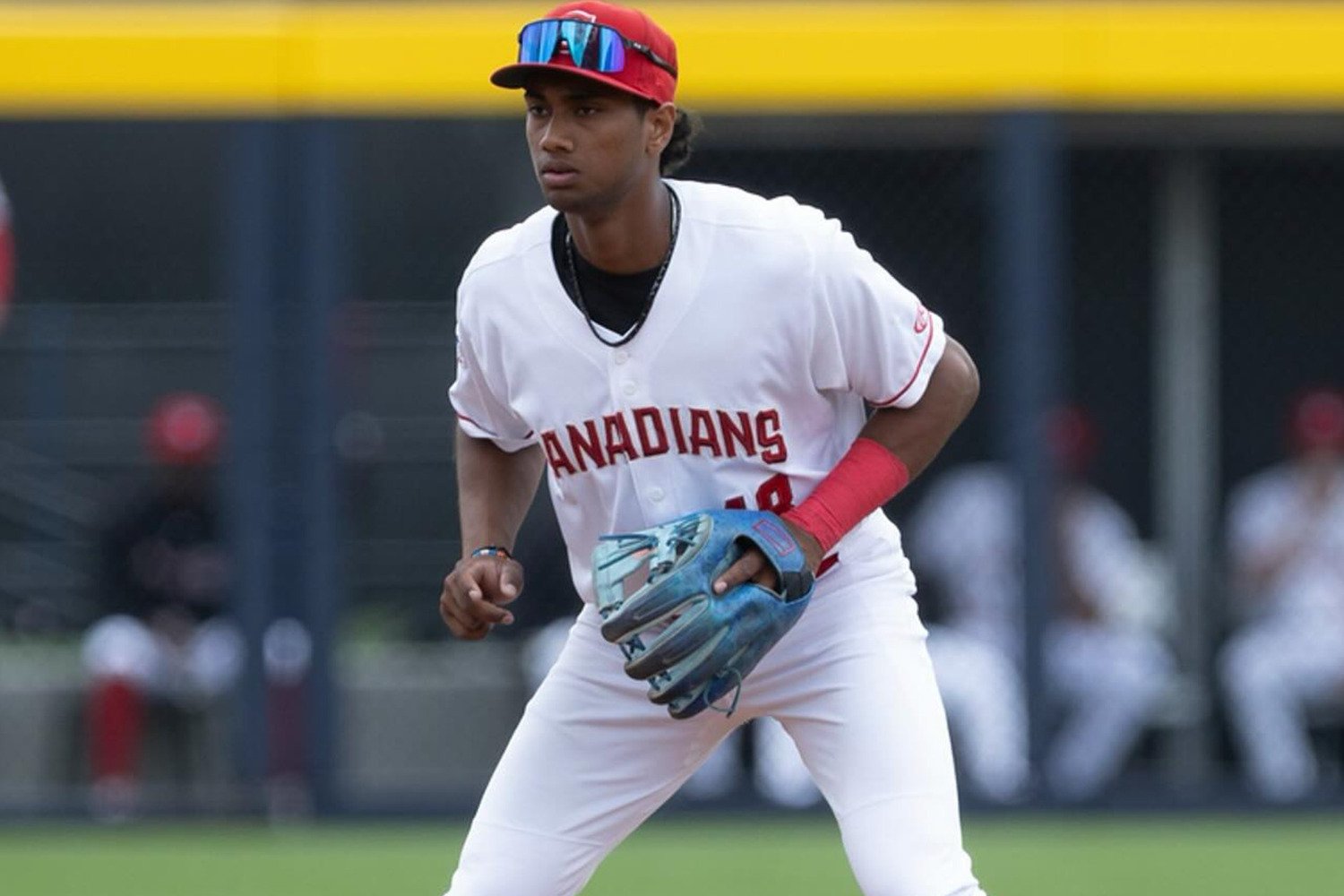 The Athletic’s Mitch Bannon reports that the Blue Jays were “open to discussing their best prospects” as trade chips ahead of the July 31 MLB trade deadline. The Jays ultimately acquired Shane Bieber, Louis Varland, Ty France, Seranthony Domínguez, and Brandon Valenzuela without giving up either shortstop Arjun Nimmala or right-hander Trey Yesavage, widely considered their top two minor leaguers. Bannon mentions left-hander Johnny King as another high-ranked prospect the club held onto. However, Ross Atkins and Co did trade several promising youngsters, including pitching prospects Khal Stephen, Juaron Watts-Brown, and Kendry Rojas, as well as major league position players Alan Roden and Will Wagner. Jays Centre's Bryan Jaeger recently wrote about what the team gave up in Stephen, while Simon Li did the same for Rojas and Roden. What do you make of the report that the Blue Jays were open to trading their top-ranked prospects? Do you wish Atkins was more aggressive at the deadline, or are you glad he kept the likes of Nimmala, Yesavage, and King in the organization? Share your thoughts in the comments below. Featured image courtesy of the Vancouver Canadians.
 -
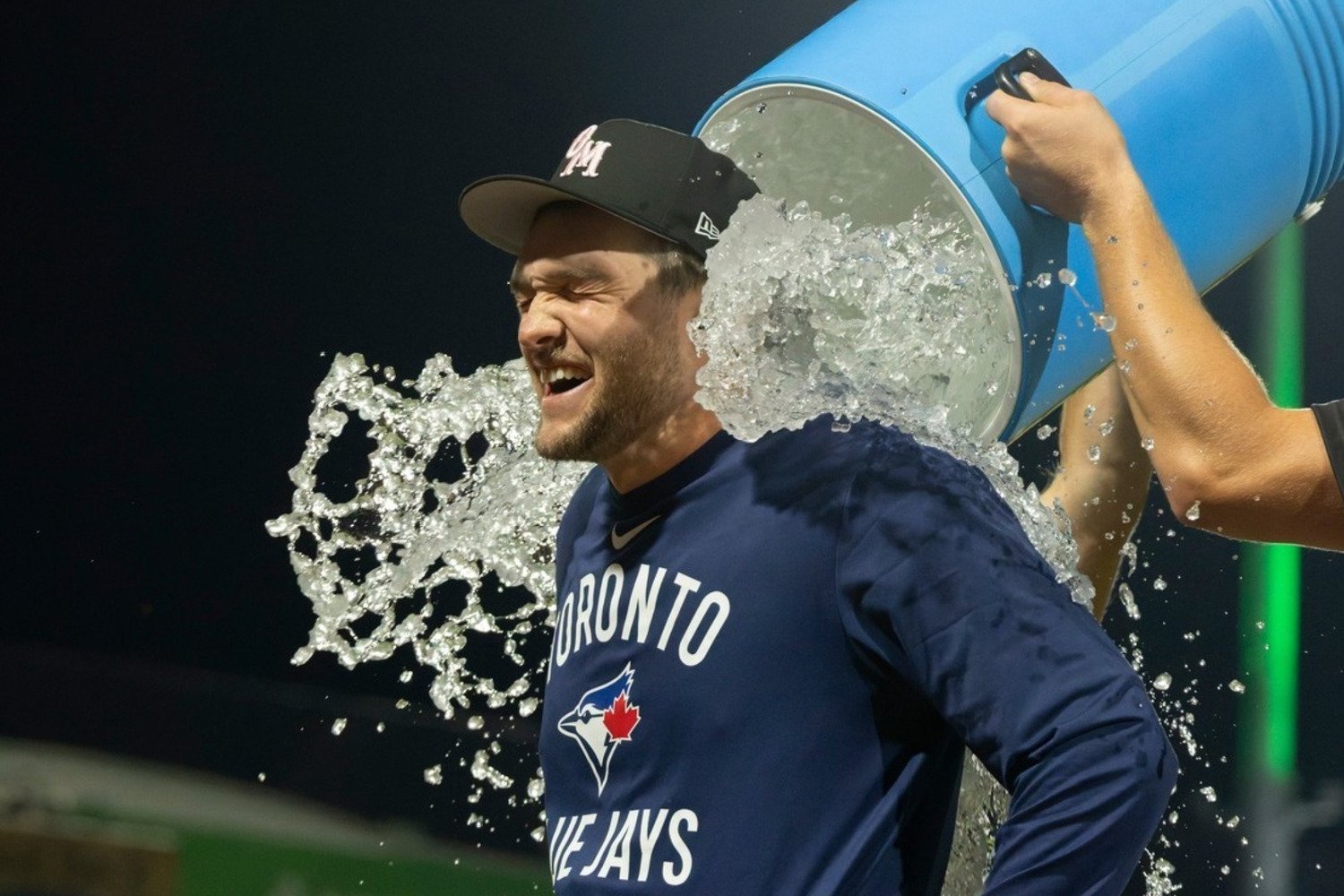 According to a report from MLB.com's Keegan Matheson, the Blue Jays are promoting Trey Yesavage to Triple-A Buffalo. The 22-year-old right-hander is Jays Centre's no. 2 prospect in the organization. Yesavage was Toronto's first-round pick in the 2024 draft. He began his professional career earlier this year at Single-A Dunedin, and after stops at High-A Vancouver and Double-A New Hampshire, he has received his third promotion of the year. While it's unusual to see a player rise up the minor league ranks so quickly, it's hardly surprising considering how well Yesavage has performed at every step along the way. In 19 games (18 starts) across three levels, he has a 3.01 ERA, a 2.50 FIP, and an utterly ridiculous 42.3% strikeout rate. While his ERA was a little higher with New Hampshire, he continued missing bats and limiting hard contact. Earlier this month, manager John Schneider named Yesavage as a possible candidate to offer some right-handed depth for the major league club (per The Athletic's Mitch Bannon). He is now one step closer to reaching the show. Featured image courtesy of the New Hampshire Fisher Cats.
 -
According to a report from MLB.com's Keegan Matheson, the Blue Jays are promoting Trey Yesavage to Triple-A Buffalo. The 22-year-old right-hander is Jays Centre's no. 2 prospect in the organization. Yesavage was Toronto's first-round pick in the 2024 draft. He began his professional career earlier this year at Single-A Dunedin, and after stops at High-A Vancouver and Double-A New Hampshire, he has received his third promotion of the year. While it's unusual to see a player rise up the minor league ranks so quickly, it's hardly surprising considering how well Yesavage has performed at every step along the way. In 19 games (18 starts) across three levels, he has a 3.01 ERA, a 2.50 FIP, and an utterly ridiculous 42.3% strikeout rate. While his ERA was a little higher with New Hampshire, he continued missing bats and limiting hard contact. Earlier this month, manager John Schneider named Yesavage as a possible candidate to offer some right-handed depth for the major league club (per The Athletic's Mitch Bannon). He is now one step closer to reaching the show. Featured image courtesy of the New Hampshire Fisher Cats. View full rumor
-
.jpg.7886495bb2c88ef1b3aae50cd20586c0.jpg) When the Blue Jays designated Ali Sánchez for assignment on Tuesday, they were surely hoping he'd pass through waivers and eventually make his way back to their minor league system. Unfortunately, their division rivals in Boston put in a claim. Sánchez signed a minor league deal with Toronto in December. Over 54 games at Triple-A Buffalo, he hit .279 with a .766 OPS and 107 wRC+, perfectly acceptable numbers for a glove-first catcher. He also earned two call-ups to the big league squad, one in May and the other just last week. Out of options, Sánchez had to be DFA'd for the Blue Jays to remove him from their active roster. The first time they did so, he passed through waivers unclaimed, and after rejecting an outright assignment, he re-signed on a new minor league contract days later. This time, however, the Blue Jays weren't so lucky. Toronto has one of the best catching tandems in the game in All-Star Alejandro Kirk and shockingly productive backup Tyler Heineman. Still, the team clearly valued Sánchez as a depth piece, as demonstrated by the fact that they briefly kept him around as a third catcher on their 26-man roster when they were worried Heineman might have suffered a concussion. Now, the Jays no longer have Sánchez as an option should Kirk or Heineman miss time. Instead, veteran Christian Bethancourt or prospect Brandon Valenzuela is likely the next man up. Bethancourt, 33, has played in parts of eight big league seasons, while Valenzuela, acquired from the Padres at the trade deadline, has yet to make his MLB debut. The Jays have a little less depth without Sánchez, but they will hope not to need any catchers other than Kirk and Heineman down the stretch. If they do, it could be our first chance to see what Valenzuela can do in Blue Jays blue. Featured image courtesy of Kevin Jairaj, Imagn Images.
When the Blue Jays designated Ali Sánchez for assignment on Tuesday, they were surely hoping he'd pass through waivers and eventually make his way back to their minor league system. Unfortunately, their division rivals in Boston put in a claim. Sánchez signed a minor league deal with Toronto in December. Over 54 games at Triple-A Buffalo, he hit .279 with a .766 OPS and 107 wRC+, perfectly acceptable numbers for a glove-first catcher. He also earned two call-ups to the big league squad, one in May and the other just last week. Out of options, Sánchez had to be DFA'd for the Blue Jays to remove him from their active roster. The first time they did so, he passed through waivers unclaimed, and after rejecting an outright assignment, he re-signed on a new minor league contract days later. This time, however, the Blue Jays weren't so lucky. Toronto has one of the best catching tandems in the game in All-Star Alejandro Kirk and shockingly productive backup Tyler Heineman. Still, the team clearly valued Sánchez as a depth piece, as demonstrated by the fact that they briefly kept him around as a third catcher on their 26-man roster when they were worried Heineman might have suffered a concussion. Now, the Jays no longer have Sánchez as an option should Kirk or Heineman miss time. Instead, veteran Christian Bethancourt or prospect Brandon Valenzuela is likely the next man up. Bethancourt, 33, has played in parts of eight big league seasons, while Valenzuela, acquired from the Padres at the trade deadline, has yet to make his MLB debut. The Jays have a little less depth without Sánchez, but they will hope not to need any catchers other than Kirk and Heineman down the stretch. If they do, it could be our first chance to see what Valenzuela can do in Blue Jays blue. Featured image courtesy of Kevin Jairaj, Imagn Images.
.jpg.5d0c4a8783eb078183d95bf1798baf9d.jpg)
.jpg.ed4bfcebeddbadbf4cb895d9f46252b2.jpg)
(1).jpg.2ffc3bdbdd8d2cb7c82c6e7cd68685b6.jpg)
.jpg.c950f2d829416feddc6f572f16b6945a.jpg)
.jpg.c75f9a1a37209e338ea59dd4daf092f0.jpg)
.jpg.bbd05e33701bf3938d58ffb6a2f748f2.jpg)

.jpg.37b8dfbd3e343a2426866477b134a34b.jpg)
.jpg.bd58289dde16f1929658dded38ae50bc.jpg)
.jpg.5db3a0bc4ed67c64be072a3e14c49b5a.jpg)
.jpg.710c79df87afd50cdcea77f712ef885c.jpg)
.jpg.7886495bb2c88ef1b3aae50cd20586c0.jpg)