


Leo Morgenstern
-
Posts
628 -
Joined
-
Last visited
Content Type
Profiles
Toronto Blue Jays Videos
2026 Toronto Blue Jays Top Prospects Ranking
Toronto Blue Jays Free Agent & Trade Rumors, Notes, & Tidbits
Guides & Resources
2025 Toronto Blue Jays Draft Pick Tracker
News
2026 Toronto Blue Jays Draft Tracker: Picks & Bonuses
Forums
Blogs
Events
Store
Downloads
Gallery
Everything posted by Leo Morgenstern
-
.jpg.4e6041847f56fce1e0775aa9741e2fb1.jpg) Fifty-five fastballs, thirty-seven splitters, and eight sliders. Those 100 pitches were all it took for Kevin Gausman to sit down 27 Astros on Thursday afternoon. He struck out nine and faced just three batters over the minimum as he led the Blue Jays to a 6-0 victory and a satisfying series win. When all was said and done, Gausman joined Tarik Skubal, Garrett Crochet, and Nathan Eovaldi as the only AL pitchers with a shutout in 2025. The Blue Jays righty is the only pitcher in either league with a shutout in each of the past two seasons. Game score is a metric designed to evaluate a starting pitcher's performance in an individual outing. There are a couple of different variations – Bill James's original creation, housed at Baseball Reference, and Tom Tango's updated version (GSv2), housed at FanGraphs – but they're pretty similar, and they serve the same goal. The higher the game score, the better the start. According to both versions of game score, Gausman's start against the Astros wasn't just his best of the season. It wasn’t just the best start of his Blue Jays tenure. It was the best start of his 13-year major league career. Gausman's Best Starts (by Game Score and GSv2) Date Opponent IP R H BB SO Game Score GSv2 Sept. 11, 2025 Astros 9.0 0 2 1 9 91 96 Aug. 2, 2022 Rays 8.0 0 1 1 10 89 93 May 5, 2018 Athletics 9.0 0 2 2 6 87 92 June 8, 2024 Athletics 9.0 0 5 1 10 86 91 Gausman has thrown four complete games in his career, but only two have been shutouts. The first came last summer against the A's. He struck out 10, but he also gave up five hits. That's three more than he allowed on Thursday – hence his lower game score that day. Interestingly, Gausman's second-best start by game score (both versions) wasn't any of his complete games. Instead, it was a one-hit effort against the Rays in 2022, when he struck out 10 and walked only one in eight scoreless innings. Thursday's matchup with the Astros was also the best start of Gausman's career by Baseball Savant's context-neutral run value metric. According to RV, he provided the Blue Jays with six runs of value, which, funnily enough, was also their margin of victory on the day. Gausman's second-best start by RV wasn't any of his other complete games, nor was it that eight-inning showing against Tampa Bay. No, it was all the way back in 2018, his final season with the Orioles. On May 5, 2018, Gausman threw nine shutout innings against the A's, striking out six, walking two, and allowing two base hits. Unfortunately, he didn't earn a shutout because the Orioles failed to score behind him. It wasn't until the bottom of the 12th, long after Gausman had left for the day, that the A's finally scored and ended the ballgame. Yesterday's game was also arguably the most efficient outing of Gausman's big league tenure. In terms of pitches per inning, it was only his second most efficient start. However, his most efficient start by that metric was an eight-inning, 88-pitch performance (against the Red Sox in 2021). He retired three more batters this time around, and he was only one pitch off his most efficient pace. On a related note, this game was one of Gausman's top five starts in both strike percentage and total strikes. The only outing of his career in which he threw more strikes and threw strikes at a higher rate was on May 11, 2018, a 7.1-inning quality start against the Rays. There is no doubt that Gausman's performance was the very best we've seen from a Blue Jays starter all season. In fact, one could make a pretty solid case that it was the best start we've seen from a Blue Jay since Brandon Morrow's ridiculous 17-strikeout shutout against the Rays in 2010. Here's a list of every Blue Jays start with a game score of 90 or higher (per Baseball Reference) in the 21st century. Morrow's outing is in a class of its own, but Gausman's gem stacks up nicely against all the others: Player Year GmSc IP R H BB SO HBP BF Pit Strike% Brandon Morrow 2010 100 9.0 0 1 2 17 0 31 137 70.8% Roy Halladay 2005 93 9.0 0 2 0 10 1 30 99 72.7% Ted Lilly 2004 92 9.0 0 3 2 13 1 33 126 63.5% Dave Bush 2004 91 9.0 0 2 3 11 1 32 117 65.0% Kevin Gausman 2025 91 9.0 0 2 1 9 0 30 100 79.0% Roy Halladay 2001 91 9.0 0 2 0 8 0 29 83 72.3% Roy Halladay 2009 91 9.0 0 1 3 9 0 31 111 65.8% Dustin McGowan 2007 91 9.0 0 1 1 7 0 29 109 67.0% Mark Buehrle 2013 90 9.0 0 2 2 9 1 31 108 68.5% Marco Estrada 2015 90 8.2 0 2 0 10 0 28 129 66.7% Roy Halladay 2003 90 10.0 0 3 1 5 1 35 99 70.7% Roy Halladay 2008 90 9.0 0 2 1 8 2 31 113 67.3% Esteban Loaiza 2002 90 9.0 0 2 0 7 0 28 110 71.8% Alek Manoah 2021 90 8.0 0 1 0 10 1 26 97 63.9% Gausman has started 358 games in his major league career. Since his first full season as a starter in 2016, only one pitcher, Patrick Corbin, has started more games or thrown more innings. Considering Gausman's age (he'll be 35 in January) and the sheer number of starts under his belt, basic probability would have suggested his best start was already behind him. Yet, I'm sure Gausman himself would have disagreed. And he would have been right. With 55 fastballs, 37 splitters, and eight sliders, Kevin Gausman made his 358th start the very best of them all... ...so far.
Fifty-five fastballs, thirty-seven splitters, and eight sliders. Those 100 pitches were all it took for Kevin Gausman to sit down 27 Astros on Thursday afternoon. He struck out nine and faced just three batters over the minimum as he led the Blue Jays to a 6-0 victory and a satisfying series win. When all was said and done, Gausman joined Tarik Skubal, Garrett Crochet, and Nathan Eovaldi as the only AL pitchers with a shutout in 2025. The Blue Jays righty is the only pitcher in either league with a shutout in each of the past two seasons. Game score is a metric designed to evaluate a starting pitcher's performance in an individual outing. There are a couple of different variations – Bill James's original creation, housed at Baseball Reference, and Tom Tango's updated version (GSv2), housed at FanGraphs – but they're pretty similar, and they serve the same goal. The higher the game score, the better the start. According to both versions of game score, Gausman's start against the Astros wasn't just his best of the season. It wasn’t just the best start of his Blue Jays tenure. It was the best start of his 13-year major league career. Gausman's Best Starts (by Game Score and GSv2) Date Opponent IP R H BB SO Game Score GSv2 Sept. 11, 2025 Astros 9.0 0 2 1 9 91 96 Aug. 2, 2022 Rays 8.0 0 1 1 10 89 93 May 5, 2018 Athletics 9.0 0 2 2 6 87 92 June 8, 2024 Athletics 9.0 0 5 1 10 86 91 Gausman has thrown four complete games in his career, but only two have been shutouts. The first came last summer against the A's. He struck out 10, but he also gave up five hits. That's three more than he allowed on Thursday – hence his lower game score that day. Interestingly, Gausman's second-best start by game score (both versions) wasn't any of his complete games. Instead, it was a one-hit effort against the Rays in 2022, when he struck out 10 and walked only one in eight scoreless innings. Thursday's matchup with the Astros was also the best start of Gausman's career by Baseball Savant's context-neutral run value metric. According to RV, he provided the Blue Jays with six runs of value, which, funnily enough, was also their margin of victory on the day. Gausman's second-best start by RV wasn't any of his other complete games, nor was it that eight-inning showing against Tampa Bay. No, it was all the way back in 2018, his final season with the Orioles. On May 5, 2018, Gausman threw nine shutout innings against the A's, striking out six, walking two, and allowing two base hits. Unfortunately, he didn't earn a shutout because the Orioles failed to score behind him. It wasn't until the bottom of the 12th, long after Gausman had left for the day, that the A's finally scored and ended the ballgame. Yesterday's game was also arguably the most efficient outing of Gausman's big league tenure. In terms of pitches per inning, it was only his second most efficient start. However, his most efficient start by that metric was an eight-inning, 88-pitch performance (against the Red Sox in 2021). He retired three more batters this time around, and he was only one pitch off his most efficient pace. On a related note, this game was one of Gausman's top five starts in both strike percentage and total strikes. The only outing of his career in which he threw more strikes and threw strikes at a higher rate was on May 11, 2018, a 7.1-inning quality start against the Rays. There is no doubt that Gausman's performance was the very best we've seen from a Blue Jays starter all season. In fact, one could make a pretty solid case that it was the best start we've seen from a Blue Jay since Brandon Morrow's ridiculous 17-strikeout shutout against the Rays in 2010. Here's a list of every Blue Jays start with a game score of 90 or higher (per Baseball Reference) in the 21st century. Morrow's outing is in a class of its own, but Gausman's gem stacks up nicely against all the others: Player Year GmSc IP R H BB SO HBP BF Pit Strike% Brandon Morrow 2010 100 9.0 0 1 2 17 0 31 137 70.8% Roy Halladay 2005 93 9.0 0 2 0 10 1 30 99 72.7% Ted Lilly 2004 92 9.0 0 3 2 13 1 33 126 63.5% Dave Bush 2004 91 9.0 0 2 3 11 1 32 117 65.0% Kevin Gausman 2025 91 9.0 0 2 1 9 0 30 100 79.0% Roy Halladay 2001 91 9.0 0 2 0 8 0 29 83 72.3% Roy Halladay 2009 91 9.0 0 1 3 9 0 31 111 65.8% Dustin McGowan 2007 91 9.0 0 1 1 7 0 29 109 67.0% Mark Buehrle 2013 90 9.0 0 2 2 9 1 31 108 68.5% Marco Estrada 2015 90 8.2 0 2 0 10 0 28 129 66.7% Roy Halladay 2003 90 10.0 0 3 1 5 1 35 99 70.7% Roy Halladay 2008 90 9.0 0 2 1 8 2 31 113 67.3% Esteban Loaiza 2002 90 9.0 0 2 0 7 0 28 110 71.8% Alek Manoah 2021 90 8.0 0 1 0 10 1 26 97 63.9% Gausman has started 358 games in his major league career. Since his first full season as a starter in 2016, only one pitcher, Patrick Corbin, has started more games or thrown more innings. Considering Gausman's age (he'll be 35 in January) and the sheer number of starts under his belt, basic probability would have suggested his best start was already behind him. Yet, I'm sure Gausman himself would have disagreed. And he would have been right. With 55 fastballs, 37 splitters, and eight sliders, Kevin Gausman made his 358th start the very best of them all... ...so far. -

.jpg.fc73af0e07e6a3ca9e6eee36b6022075.jpg) The Gold Glove Team Award was introduced in 2020 to recognize, in the words of Rawlings, “the best team defense over the course of the regular season.” Unlike the individual Gold Gloves, this award is determined solely by the SABR Defensive Index (SDI). The exact formula for the SDI is not publicly available, but according to Rawlings, “The SDI draws on and aggregates two types of existing defensive metrics: those derived from batted ball location-based data and those collected from play-by-play accounts. SDI utilizes MLBAM’s Statcast, Sports Information Solutions data, and STATS, LLC data, as well as traditional statistics with advanced analysis.” The Toronto Blue Jays have been lucky enough to win the AL Gold Glove Team Award in each of the past two seasons. They’re the only AL club to have won more than once. It’s no secret how highly the Blue Jays value defense. This year alone, they’ve acquired four Gold Glove winners: second baseman Andrés Giménez, center fielder Myles Straw, utility man Isiah Kiner-Falefa, and starter Shane Bieber. I’ll concede that Ross Atkins probably wasn’t thinking much about Bieber’s glove when he acquired the former Cy Young winner, but defense is certainly the number one asset that Giménez, Straw, and Kiner-Falefa bring to the table. [Related: Andrés Giménez Is Going To Lose the Gold Glove on a Technicality] The Blue Jays also had defense in mind when they traded for Daulton Varsho three years ago, when they extended Alejandro Kirk earlier this season, and when they brought Tyler Heineman back into the organization for a third time last September. (As for why Bo Bichette is still an everyday shortstop? Uh… well… I guess there’s an exception that proves every rule.) In 2023, a Blue Jays defense led by Kevin Kiermaier and Matt Chapman paced the American League in Defensive Runs Saved (DRS) and Ultimate Zone Rating (UZR). They only ranked third in Fielding Run Value (FRV) and fifth in Outs Above Average (OAA) – and third in fielding percentage, for those who prefer more traditional stats – but their lead in DRS was so enormous that they cruised to the Gold Glove Team Award at the end of the season. DRS estimated that the Blue Jays’ defenders saved their club 85 runs more than an average group of players would have. No other team even came within half of that number. The Rangers ranked second with 35 DRS. (More on the Rangers momentarily…) In 2024, the Blue Jays led the Junior Circuit in DRS once again, this time with 102. They also led the AL in FRV and ranked fourth in OAA. Their fielding percentage was fourth-worst, but evidently, that didn’t matter (despite Rawlings’s claim that “traditional statistics” are also included in the SDI). Once again, the Jays earned Gold Glove honours. Now, the question is whether the Blue Jays can make it three in a row. As far as Baseball Savant’s FRV is concerned, the Blue Jays have a case. Their 39 FRV is nine runs better than that of the Rangers in second place. However, Toronto only ranks fifth with 10 OAA. Why the huge difference? Because catcher defense isn’t included in OAA, and Baseball Savant loves what Kirk and Heineman have done behind the plate this year. The Blue Jays’ 42 DRS is right in line with their 39 FRV. DRS isn’t quite as high on Kirk, but it’s even higher on Heineman, and it absolutely loves Straw and Ernie Clement. Unfortunately, the Blue Jays aren’t leading the league in DRS. Not even close. You could double their DRS and they’d still be trailing the Rangers, who lead the AL (and MLB) with 97 DRS. The difference between the Rangers in first place and the Blue Jays in second is 55 runs. Texas’s top three defensive players, Corey Seager (16 DRS), Adolis García (16 DRS), and Wyatt Langford (11 DRS), have combined for more DRS than the entire Blue Jays roster. We know the SDI considers data from Baseball Savant (the home of OAA and FRV) and Sports Info Solutions (the home of DRS), as well as other sources of both traditional and advanced metrics. But that’s all we know. All 10 clubs that have won the Gold Glove Team Award in its brief history have ranked top-three in their league in both DRS and FRV. So, it’s safe to presume the Blue Jays’ lead in FRV will work in their favor. It’s also fair to worry that the Rangers are a lot closer to the Blue Jays in FRV than the Blue Jays are to the Rangers in DRS. Keep in mind, however, that the White Sox lost the Gold Glove Team Award to the Guardians in 2020 despite leading the AL in both DRS and FRV. The same thing happened to the Rangers (who lost to the Astros) in 2021. All that to say, the SDI formula is clearly more complicated than just mashing together a few metrics. That means the Blue Jays are very much in the running to win their third consecutive Gold Glove Team Award. But the Rangers are going to give them some stiff competition, and we can’t count out the Red Sox (31 DRS, 24 FRV), Guardians (32 DRS, 23 FRV), or Royals (24 DRS, 17 FRV) either. The Blue Jays have a terrific defense, but they aren't the only team that does. Stats updated prior to games on September 11.
The Gold Glove Team Award was introduced in 2020 to recognize, in the words of Rawlings, “the best team defense over the course of the regular season.” Unlike the individual Gold Gloves, this award is determined solely by the SABR Defensive Index (SDI). The exact formula for the SDI is not publicly available, but according to Rawlings, “The SDI draws on and aggregates two types of existing defensive metrics: those derived from batted ball location-based data and those collected from play-by-play accounts. SDI utilizes MLBAM’s Statcast, Sports Information Solutions data, and STATS, LLC data, as well as traditional statistics with advanced analysis.” The Toronto Blue Jays have been lucky enough to win the AL Gold Glove Team Award in each of the past two seasons. They’re the only AL club to have won more than once. It’s no secret how highly the Blue Jays value defense. This year alone, they’ve acquired four Gold Glove winners: second baseman Andrés Giménez, center fielder Myles Straw, utility man Isiah Kiner-Falefa, and starter Shane Bieber. I’ll concede that Ross Atkins probably wasn’t thinking much about Bieber’s glove when he acquired the former Cy Young winner, but defense is certainly the number one asset that Giménez, Straw, and Kiner-Falefa bring to the table. [Related: Andrés Giménez Is Going To Lose the Gold Glove on a Technicality] The Blue Jays also had defense in mind when they traded for Daulton Varsho three years ago, when they extended Alejandro Kirk earlier this season, and when they brought Tyler Heineman back into the organization for a third time last September. (As for why Bo Bichette is still an everyday shortstop? Uh… well… I guess there’s an exception that proves every rule.) In 2023, a Blue Jays defense led by Kevin Kiermaier and Matt Chapman paced the American League in Defensive Runs Saved (DRS) and Ultimate Zone Rating (UZR). They only ranked third in Fielding Run Value (FRV) and fifth in Outs Above Average (OAA) – and third in fielding percentage, for those who prefer more traditional stats – but their lead in DRS was so enormous that they cruised to the Gold Glove Team Award at the end of the season. DRS estimated that the Blue Jays’ defenders saved their club 85 runs more than an average group of players would have. No other team even came within half of that number. The Rangers ranked second with 35 DRS. (More on the Rangers momentarily…) In 2024, the Blue Jays led the Junior Circuit in DRS once again, this time with 102. They also led the AL in FRV and ranked fourth in OAA. Their fielding percentage was fourth-worst, but evidently, that didn’t matter (despite Rawlings’s claim that “traditional statistics” are also included in the SDI). Once again, the Jays earned Gold Glove honours. Now, the question is whether the Blue Jays can make it three in a row. As far as Baseball Savant’s FRV is concerned, the Blue Jays have a case. Their 39 FRV is nine runs better than that of the Rangers in second place. However, Toronto only ranks fifth with 10 OAA. Why the huge difference? Because catcher defense isn’t included in OAA, and Baseball Savant loves what Kirk and Heineman have done behind the plate this year. The Blue Jays’ 42 DRS is right in line with their 39 FRV. DRS isn’t quite as high on Kirk, but it’s even higher on Heineman, and it absolutely loves Straw and Ernie Clement. Unfortunately, the Blue Jays aren’t leading the league in DRS. Not even close. You could double their DRS and they’d still be trailing the Rangers, who lead the AL (and MLB) with 97 DRS. The difference between the Rangers in first place and the Blue Jays in second is 55 runs. Texas’s top three defensive players, Corey Seager (16 DRS), Adolis García (16 DRS), and Wyatt Langford (11 DRS), have combined for more DRS than the entire Blue Jays roster. We know the SDI considers data from Baseball Savant (the home of OAA and FRV) and Sports Info Solutions (the home of DRS), as well as other sources of both traditional and advanced metrics. But that’s all we know. All 10 clubs that have won the Gold Glove Team Award in its brief history have ranked top-three in their league in both DRS and FRV. So, it’s safe to presume the Blue Jays’ lead in FRV will work in their favor. It’s also fair to worry that the Rangers are a lot closer to the Blue Jays in FRV than the Blue Jays are to the Rangers in DRS. Keep in mind, however, that the White Sox lost the Gold Glove Team Award to the Guardians in 2020 despite leading the AL in both DRS and FRV. The same thing happened to the Rangers (who lost to the Astros) in 2021. All that to say, the SDI formula is clearly more complicated than just mashing together a few metrics. That means the Blue Jays are very much in the running to win their third consecutive Gold Glove Team Award. But the Rangers are going to give them some stiff competition, and we can’t count out the Red Sox (31 DRS, 24 FRV), Guardians (32 DRS, 23 FRV), or Royals (24 DRS, 17 FRV) either. The Blue Jays have a terrific defense, but they aren't the only team that does. Stats updated prior to games on September 11. -
The Gold Glove Team Award was introduced in 2020 to recognize, in the words of Rawlings, “the best team defense over the course of the regular season.” Unlike the individual Gold Gloves, this award is determined solely by the SABR Defensive Index (SDI). The exact formula for the SDI is not publicly available, but according to Rawlings, “The SDI draws on and aggregates two types of existing defensive metrics: those derived from batted ball location-based data and those collected from play-by-play accounts. SDI utilizes MLBAM’s Statcast, Sports Information Solutions data, and STATS, LLC data, as well as traditional statistics with advanced analysis.” The Toronto Blue Jays have been lucky enough to win the AL Gold Glove Team Award in each of the past two seasons. They’re the only AL club to have won more than once. It’s no secret how highly the Blue Jays value defense. This year alone, they’ve acquired four Gold Glove winners: second baseman Andrés Giménez, center fielder Myles Straw, utility man Isiah Kiner-Falefa, and starter Shane Bieber. I’ll concede that Ross Atkins probably wasn’t thinking much about Bieber’s glove when he acquired the former Cy Young winner, but defense is certainly the number one asset that Giménez, Straw, and Kiner-Falefa bring to the table. [Related: Andrés Giménez Is Going To Lose the Gold Glove on a Technicality] The Blue Jays also had defense in mind when they traded for Daulton Varsho three years ago, when they extended Alejandro Kirk earlier this season, and when they brought Tyler Heineman back into the organization for a third time last September. (As for why Bo Bichette is still an everyday shortstop? Uh… well… I guess there’s an exception that proves every rule.) In 2023, a Blue Jays defense led by Kevin Kiermaier and Matt Chapman paced the American League in Defensive Runs Saved (DRS) and Ultimate Zone Rating (UZR). They only ranked third in Fielding Run Value (FRV) and fifth in Outs Above Average (OAA) – and third in fielding percentage, for those who prefer more traditional stats – but their lead in DRS was so enormous that they cruised to the Gold Glove Team Award at the end of the season. DRS estimated that the Blue Jays’ defenders saved their club 85 runs more than an average group of players would have. No other team even came within half of that number. The Rangers ranked second with 35 DRS. (More on the Rangers momentarily…) In 2024, the Blue Jays led the Junior Circuit in DRS once again, this time with 102. They also led the AL in FRV and ranked fourth in OAA. Their fielding percentage was fourth-worst, but evidently, that didn’t matter (despite Rawlings’s claim that “traditional statistics” are also included in the SDI). Once again, the Jays earned Gold Glove honours. Now, the question is whether the Blue Jays can make it three in a row. As far as Baseball Savant’s FRV is concerned, the Blue Jays have a case. Their 39 FRV is nine runs better than that of the Rangers in second place. However, Toronto only ranks fifth with 10 OAA. Why the huge difference? Because catcher defense isn’t included in OAA, and Baseball Savant loves what Kirk and Heineman have done behind the plate this year. The Blue Jays’ 42 DRS is right in line with their 39 FRV. DRS isn’t quite as high on Kirk, but it’s even higher on Heineman, and it absolutely loves Straw and Ernie Clement. Unfortunately, the Blue Jays aren’t leading the league in DRS. Not even close. You could double their DRS and they’d still be trailing the Rangers, who lead the AL (and MLB) with 97 DRS. The difference between the Rangers in first place and the Blue Jays in second is 55 runs. Texas’s top three defensive players, Corey Seager (16 DRS), Adolis García (16 DRS), and Wyatt Langford (11 DRS), have combined for more DRS than the entire Blue Jays roster. We know the SDI considers data from Baseball Savant (the home of OAA and FRV) and Sports Info Solutions (the home of DRS), as well as other sources of both traditional and advanced metrics. But that’s all we know. All 10 clubs that have won the Gold Glove Team Award in its brief history have ranked top-three in their league in both DRS and FRV. So, it’s safe to presume the Blue Jays’ lead in FRV will work in their favor. It’s also fair to worry that the Rangers are a lot closer to the Blue Jays in FRV than the Blue Jays are to the Rangers in DRS. Keep in mind, however, that the White Sox lost the Gold Glove Team Award to the Guardians in 2020 despite leading the AL in both DRS and FRV. The same thing happened to the Rangers (who lost to the Astros) in 2021. All that to say, the SDI formula is clearly more complicated than just mashing together a few metrics. That means the Blue Jays are very much in the running to win their third consecutive Gold Glove Team Award. But the Rangers are going to give them some stiff competition, and we can’t count out the Red Sox (31 DRS, 24 FRV), Guardians (32 DRS, 23 FRV), or Royals (24 DRS, 17 FRV) either. The Blue Jays have a terrific defense, but they aren't the only team that does. Stats updated prior to games on September 11. View full article
-
- 1
-

-
.jpg.d92d4135f26eec187047a7af0401c5b5.jpg) With less than three weeks left to play in the regular season, most of the major end-of-year awards are still up for grabs – and plenty of Blue Jays are in the running. I've sorted all of Toronto's award candidates into five tiers: Likely Winners, Strong Contenders, In the Running, It's Possible, and Unlikely But Worth Discussing. I think those names are all pretty self-explanatory, so let's dive right in. Stats updated prior to games on September 10. Likely Winners George Springer: Silver Slugger (DH) Toronto has plenty of award contenders, but there's only one award I'm highly confident will go to a Blue Jay. George Springer is far and away the best choice for the Silver Slugger at DH. It is now the position at which he's played more than half his games, and among primary designated hitters in the American League, no one else can touch Springer statistically. Aaron Judge is really his only competition, and that's only if we wind up with another 2018 J.D. Martinez situation. Unless Judge wins at both positions, his Silver Slugger will be for right field, not DH. Strong Contenders John Schneider: Manager of the Year Alejandro Kirk: Gold Glove (C) Ty France: Gold Glove (1B) Vladimir Guerrero Jr.: All-MLB Second Team (1B) There are two clear favourites for the AL Manager of the Year Award: John Schneider and Tigers manager A.J. Hinch. Ultimately, I think it will come down to whether the Blue Jays or Tigers finish with the best record in the American League. Alejandro Kirk is just as deserving of the Gold Glove as any other AL catcher. Among Gold Glove-eligible AL catchers, he ranks first in FRV (by a wide margin) and third in DRS. He's a more famous name than other contenders like Dillon Dingler and Carlos Narvaez, and his superior offensive numbers will give him an edge over guys like Adley Rutschman and Austin Wells. (Neither reputation nor offense is supposed to matter in Gold Glove voting, but they often do.) Ultimately, I think Kirk's biggest competition is Cal Raleigh. Raleigh has worse metrics across the board, but he's the reigning winner, and his eye-popping offensive numbers will definitely win him some votes. Ty France might not be a full-time starting first baseman anymore, but he was for most of the season in Minnesota, giving him more than enough playing time to qualify for Gold Glove consideration. He leads AL first basemen in FRV, and his DRS ranks second only to Carlos Santana – who plays for the Cubs now. I'm not saying Vladimir Guerrero Jr. won't make the All-MLB First Team, but he has tough competition in the form of A's rookie Nick Kurtz. Presuming Kurtz beats Guerrero for the First Team first base spot, Toronto's superstar should be the clear choice for the Second Team, though Pete Alonso, Freddie Freeman, and Matt Olson will also be in the running. In the Running Ernie Clement: Gold Glove (Utility) George Springer: Comeback Player of the Year Bo Bichette: Comeback Player of the Year Alejandro Kirk: All-MLB Second Team (C) Ernie Clement has spent a good amount of time at both second and third base this season, and he's going to get more reps at shortstop while Bo Bichette is on the IL. He has been a full-time player this season without a full-time position, and he's been excellent in that role, racking up 11 OAA, a +8 FRV, and 17 DRS. That's precisely the kind of player the utility Gold Glove was established to celebrate. Unfortunately, he'll have a tough time beating out Mauricio Dubón, a previous winner who has the edge in most metrics. Springer and Bichette both have a strong case for the Comeback Player of the Year Award. Springer has rebounded in his age-35 campaign after a couple of years of decline, while Bichette has bounced back to his typical form following an injury-marred disappointment of a season. However, as strong as their cases might be, I don't see how anyone other than Jacob deGrom could take home this honour. Kirk doesn't have a shot at the All-MLB First Team – Raleigh has that one in the bag – but he's in the running for the Second Team. According to FanGraphs WAR, Kirk and Dodgers catcher Will Smith have been similarly valuable this season. It will probably come down to whether voters prioritize offense or defense; Smith has far superior offensive numbers, but Kirk is far more productive with the glove. It's Possible Vladimir Guerrero Jr.: Silver Slugger (1B), All-MLB First Team (1B) Bo Bichette: Silver Slugger (SS) George Springer: All-MLB Second Team (DH) Alejandro Kirk: Platinum Glove (C) As I mentioned above, Guerrero is in competition with Kurtz for the AL Silver Slugger and All-MLB First Team honours at first base. Kurtz has the superior rate stats, but Guerrero has the edge in several counting stat categories, since he's played 138 games to Kurtz's 101. If Kurtz slows down at all over the final weeks of the season, Guerrero could absolutely overtake him as the favourite for both prizes. I would have put Bichette in the "Strong Contender" category if it weren't for his recent injury that very likely took him out of the running for the Silver Slugger at shortstop. Bichette has been every bit as productive at the plate as other top contenders Bobby Witt Jr. and Jeremy Peña, but the more time he misses, the more time Witt and Peña have to pull ahead. It's going to be Springer vs. Schwarber for the DH spot on the All-MLB Second Team, with Shohei Ohtani the obvious favourite for the First Team spot. With all due respect to Springer and the season he's having, I think Schwarber is more deserving – he has 648 plate appearances to Springer's 505 – but their rate stats are similar, and I could see it going either way. If Kirk wins the Gold Glove, a Platinum Glove is a real possibility, too. I'd argue Ceddanne Rafaela is the most deserving candidate, but Kirk definitely has a case. That said, the Platinum Glove is hard to predict. Not only do players have to win a Gold Glove to be eligible, but the Platinum Glove is a partially fan-voted award. Unlikely But Worth Discussing George Springer: Edgar Martínez Award The Outstanding DH Award is Ohtani's to lose, but there will surely be conversations in the coming months about Springer and Schwarber's candidacy. Ohtani has the superior numbers, no doubt about it, but he's also won three years in a row, and voter fatigue is a very real issue. There is absolutely no reason Springer or Schwarber should win, but the topic will come up, so I'm getting ahead of it.
With less than three weeks left to play in the regular season, most of the major end-of-year awards are still up for grabs – and plenty of Blue Jays are in the running. I've sorted all of Toronto's award candidates into five tiers: Likely Winners, Strong Contenders, In the Running, It's Possible, and Unlikely But Worth Discussing. I think those names are all pretty self-explanatory, so let's dive right in. Stats updated prior to games on September 10. Likely Winners George Springer: Silver Slugger (DH) Toronto has plenty of award contenders, but there's only one award I'm highly confident will go to a Blue Jay. George Springer is far and away the best choice for the Silver Slugger at DH. It is now the position at which he's played more than half his games, and among primary designated hitters in the American League, no one else can touch Springer statistically. Aaron Judge is really his only competition, and that's only if we wind up with another 2018 J.D. Martinez situation. Unless Judge wins at both positions, his Silver Slugger will be for right field, not DH. Strong Contenders John Schneider: Manager of the Year Alejandro Kirk: Gold Glove (C) Ty France: Gold Glove (1B) Vladimir Guerrero Jr.: All-MLB Second Team (1B) There are two clear favourites for the AL Manager of the Year Award: John Schneider and Tigers manager A.J. Hinch. Ultimately, I think it will come down to whether the Blue Jays or Tigers finish with the best record in the American League. Alejandro Kirk is just as deserving of the Gold Glove as any other AL catcher. Among Gold Glove-eligible AL catchers, he ranks first in FRV (by a wide margin) and third in DRS. He's a more famous name than other contenders like Dillon Dingler and Carlos Narvaez, and his superior offensive numbers will give him an edge over guys like Adley Rutschman and Austin Wells. (Neither reputation nor offense is supposed to matter in Gold Glove voting, but they often do.) Ultimately, I think Kirk's biggest competition is Cal Raleigh. Raleigh has worse metrics across the board, but he's the reigning winner, and his eye-popping offensive numbers will definitely win him some votes. Ty France might not be a full-time starting first baseman anymore, but he was for most of the season in Minnesota, giving him more than enough playing time to qualify for Gold Glove consideration. He leads AL first basemen in FRV, and his DRS ranks second only to Carlos Santana – who plays for the Cubs now. I'm not saying Vladimir Guerrero Jr. won't make the All-MLB First Team, but he has tough competition in the form of A's rookie Nick Kurtz. Presuming Kurtz beats Guerrero for the First Team first base spot, Toronto's superstar should be the clear choice for the Second Team, though Pete Alonso, Freddie Freeman, and Matt Olson will also be in the running. In the Running Ernie Clement: Gold Glove (Utility) George Springer: Comeback Player of the Year Bo Bichette: Comeback Player of the Year Alejandro Kirk: All-MLB Second Team (C) Ernie Clement has spent a good amount of time at both second and third base this season, and he's going to get more reps at shortstop while Bo Bichette is on the IL. He has been a full-time player this season without a full-time position, and he's been excellent in that role, racking up 11 OAA, a +8 FRV, and 17 DRS. That's precisely the kind of player the utility Gold Glove was established to celebrate. Unfortunately, he'll have a tough time beating out Mauricio Dubón, a previous winner who has the edge in most metrics. Springer and Bichette both have a strong case for the Comeback Player of the Year Award. Springer has rebounded in his age-35 campaign after a couple of years of decline, while Bichette has bounced back to his typical form following an injury-marred disappointment of a season. However, as strong as their cases might be, I don't see how anyone other than Jacob deGrom could take home this honour. Kirk doesn't have a shot at the All-MLB First Team – Raleigh has that one in the bag – but he's in the running for the Second Team. According to FanGraphs WAR, Kirk and Dodgers catcher Will Smith have been similarly valuable this season. It will probably come down to whether voters prioritize offense or defense; Smith has far superior offensive numbers, but Kirk is far more productive with the glove. It's Possible Vladimir Guerrero Jr.: Silver Slugger (1B), All-MLB First Team (1B) Bo Bichette: Silver Slugger (SS) George Springer: All-MLB Second Team (DH) Alejandro Kirk: Platinum Glove (C) As I mentioned above, Guerrero is in competition with Kurtz for the AL Silver Slugger and All-MLB First Team honours at first base. Kurtz has the superior rate stats, but Guerrero has the edge in several counting stat categories, since he's played 138 games to Kurtz's 101. If Kurtz slows down at all over the final weeks of the season, Guerrero could absolutely overtake him as the favourite for both prizes. I would have put Bichette in the "Strong Contender" category if it weren't for his recent injury that very likely took him out of the running for the Silver Slugger at shortstop. Bichette has been every bit as productive at the plate as other top contenders Bobby Witt Jr. and Jeremy Peña, but the more time he misses, the more time Witt and Peña have to pull ahead. It's going to be Springer vs. Schwarber for the DH spot on the All-MLB Second Team, with Shohei Ohtani the obvious favourite for the First Team spot. With all due respect to Springer and the season he's having, I think Schwarber is more deserving – he has 648 plate appearances to Springer's 505 – but their rate stats are similar, and I could see it going either way. If Kirk wins the Gold Glove, a Platinum Glove is a real possibility, too. I'd argue Ceddanne Rafaela is the most deserving candidate, but Kirk definitely has a case. That said, the Platinum Glove is hard to predict. Not only do players have to win a Gold Glove to be eligible, but the Platinum Glove is a partially fan-voted award. Unlikely But Worth Discussing George Springer: Edgar Martínez Award The Outstanding DH Award is Ohtani's to lose, but there will surely be conversations in the coming months about Springer and Schwarber's candidacy. Ohtani has the superior numbers, no doubt about it, but he's also won three years in a row, and voter fatigue is a very real issue. There is absolutely no reason Springer or Schwarber should win, but the topic will come up, so I'm getting ahead of it. -
With less than three weeks left to play in the regular season, most of the major end-of-year awards are still up for grabs – and plenty of Blue Jays are in the running. I've sorted all of Toronto's award candidates into five tiers: Likely Winners, Strong Contenders, In the Running, It's Possible, and Unlikely But Worth Discussing. I think those names are all pretty self-explanatory, so let's dive right in. Stats updated prior to games on September 10. Likely Winners George Springer: Silver Slugger (DH) Toronto has plenty of award contenders, but there's only one award I'm highly confident will go to a Blue Jay. George Springer is far and away the best choice for the Silver Slugger at DH. It is now the position at which he's played more than half his games, and among primary designated hitters in the American League, no one else can touch Springer statistically. Aaron Judge is really his only competition, and that's only if we wind up with another 2018 J.D. Martinez situation. Unless Judge wins at both positions, his Silver Slugger will be for right field, not DH. Strong Contenders John Schneider: Manager of the Year Alejandro Kirk: Gold Glove (C) Ty France: Gold Glove (1B) Vladimir Guerrero Jr.: All-MLB Second Team (1B) There are two clear favourites for the AL Manager of the Year Award: John Schneider and Tigers manager A.J. Hinch. Ultimately, I think it will come down to whether the Blue Jays or Tigers finish with the best record in the American League. Alejandro Kirk is just as deserving of the Gold Glove as any other AL catcher. Among Gold Glove-eligible AL catchers, he ranks first in FRV (by a wide margin) and third in DRS. He's a more famous name than other contenders like Dillon Dingler and Carlos Narvaez, and his superior offensive numbers will give him an edge over guys like Adley Rutschman and Austin Wells. (Neither reputation nor offense is supposed to matter in Gold Glove voting, but they often do.) Ultimately, I think Kirk's biggest competition is Cal Raleigh. Raleigh has worse metrics across the board, but he's the reigning winner, and his eye-popping offensive numbers will definitely win him some votes. Ty France might not be a full-time starting first baseman anymore, but he was for most of the season in Minnesota, giving him more than enough playing time to qualify for Gold Glove consideration. He leads AL first basemen in FRV, and his DRS ranks second only to Carlos Santana – who plays for the Cubs now. I'm not saying Vladimir Guerrero Jr. won't make the All-MLB First Team, but he has tough competition in the form of A's rookie Nick Kurtz. Presuming Kurtz beats Guerrero for the First Team first base spot, Toronto's superstar should be the clear choice for the Second Team, though Pete Alonso, Freddie Freeman, and Matt Olson will also be in the running. In the Running Ernie Clement: Gold Glove (Utility) George Springer: Comeback Player of the Year Bo Bichette: Comeback Player of the Year Alejandro Kirk: All-MLB Second Team (C) Ernie Clement has spent a good amount of time at both second and third base this season, and he's going to get more reps at shortstop while Bo Bichette is on the IL. He has been a full-time player this season without a full-time position, and he's been excellent in that role, racking up 11 OAA, a +8 FRV, and 17 DRS. That's precisely the kind of player the utility Gold Glove was established to celebrate. Unfortunately, he'll have a tough time beating out Mauricio Dubón, a previous winner who has the edge in most metrics. Springer and Bichette both have a strong case for the Comeback Player of the Year Award. Springer has rebounded in his age-35 campaign after a couple of years of decline, while Bichette has bounced back to his typical form following an injury-marred disappointment of a season. However, as strong as their cases might be, I don't see how anyone other than Jacob deGrom could take home this honour. Kirk doesn't have a shot at the All-MLB First Team – Raleigh has that one in the bag – but he's in the running for the Second Team. According to FanGraphs WAR, Kirk and Dodgers catcher Will Smith have been similarly valuable this season. It will probably come down to whether voters prioritize offense or defense; Smith has far superior offensive numbers, but Kirk is far more productive with the glove. It's Possible Vladimir Guerrero Jr.: Silver Slugger (1B), All-MLB First Team (1B) Bo Bichette: Silver Slugger (SS) George Springer: All-MLB Second Team (DH) Alejandro Kirk: Platinum Glove (C) As I mentioned above, Guerrero is in competition with Kurtz for the AL Silver Slugger and All-MLB First Team honours at first base. Kurtz has the superior rate stats, but Guerrero has the edge in several counting stat categories, since he's played 138 games to Kurtz's 101. If Kurtz slows down at all over the final weeks of the season, Guerrero could absolutely overtake him as the favourite for both prizes. I would have put Bichette in the "Strong Contender" category if it weren't for his recent injury that very likely took him out of the running for the Silver Slugger at shortstop. Bichette has been every bit as productive at the plate as other top contenders Bobby Witt Jr. and Jeremy Peña, but the more time he misses, the more time Witt and Peña have to pull ahead. It's going to be Springer vs. Schwarber for the DH spot on the All-MLB Second Team, with Shohei Ohtani the obvious favourite for the First Team spot. With all due respect to Springer and the season he's having, I think Schwarber is more deserving – he has 648 plate appearances to Springer's 505 – but their rate stats are similar, and I could see it going either way. If Kirk wins the Gold Glove, a Platinum Glove is a real possibility, too. I'd argue Ceddanne Rafaela is the most deserving candidate, but Kirk definitely has a case. That said, the Platinum Glove is hard to predict. Not only do players have to win a Gold Glove to be eligible, but the Platinum Glove is a partially fan-voted award. Unlikely But Worth Discussing George Springer: Edgar Martínez Award The Outstanding DH Award is Ohtani's to lose, but there will surely be conversations in the coming months about Springer and Schwarber's candidacy. Ohtani has the superior numbers, no doubt about it, but he's also won three years in a row, and voter fatigue is a very real issue. There is absolutely no reason Springer or Schwarber should win, but the topic will come up, so I'm getting ahead of it. View full article
-
What initially seemed like a very minor ailment for Bo Bichette has turned out to be at least a bit more serious. The shortstop hurt himself on a play at the plate on Saturday. He remained in the game (a rain delay gave him some time to rest), and while his left leg was apparently "cut up pretty good," X-rays came back negative. Yet, while Bichette finished out the game on Saturday, he was not in Sunday's lineup. Sportsnet's Shi Davidi reported at the time that the Jays were "hoping" their shortstop would be ready to play on Tuesday. Clearly, that's no longer the case. As the team relayed to reporters this afternoon, Bichette continued to feel discomfort in his left leg, and an MRI revealed the sprain. He has been placed on the 10-day IL retroactive to September 7. There is currently no timeline for his return; he will take the next few days to rest before the Blue Jays decide what's next. Joey Loperfido was recalled from Triple-A Buffalo to take Bichette's place on the active roster, while Ernie Clement is expected to take over as Toronto's primary shortstop in the interim. Featured image courtesy of John Jones, Imagn Images. View full rumor
-
.jpg.5bc5afdbf282e84582df9bffbf8b0d46.jpg) What initially seemed like a very minor ailment for Bo Bichette has turned out to be at least a bit more serious. The shortstop hurt himself on a play at the plate on Saturday. He remained in the game (a rain delay gave him some time to rest), and while his left leg was apparently "cut up pretty good," X-rays came back negative. Yet, while Bichette finished out the game on Saturday, he was not in Sunday's lineup. Sportsnet's Shi Davidi reported at the time that the Jays were "hoping" their shortstop would be ready to play on Tuesday. Clearly, that's no longer the case. As the team relayed to reporters this afternoon, Bichette continued to feel discomfort in his left leg, and an MRI revealed the sprain. He has been placed on the 10-day IL retroactive to September 7. There is currently no timeline for his return; he will take the next few days to rest before the Blue Jays decide what's next. Joey Loperfido was recalled from Triple-A Buffalo to take Bichette's place on the active roster, while Ernie Clement is expected to take over as Toronto's primary shortstop in the interim. Featured image courtesy of John Jones, Imagn Images.
What initially seemed like a very minor ailment for Bo Bichette has turned out to be at least a bit more serious. The shortstop hurt himself on a play at the plate on Saturday. He remained in the game (a rain delay gave him some time to rest), and while his left leg was apparently "cut up pretty good," X-rays came back negative. Yet, while Bichette finished out the game on Saturday, he was not in Sunday's lineup. Sportsnet's Shi Davidi reported at the time that the Jays were "hoping" their shortstop would be ready to play on Tuesday. Clearly, that's no longer the case. As the team relayed to reporters this afternoon, Bichette continued to feel discomfort in his left leg, and an MRI revealed the sprain. He has been placed on the 10-day IL retroactive to September 7. There is currently no timeline for his return; he will take the next few days to rest before the Blue Jays decide what's next. Joey Loperfido was recalled from Triple-A Buffalo to take Bichette's place on the active roster, while Ernie Clement is expected to take over as Toronto's primary shortstop in the interim. Featured image courtesy of John Jones, Imagn Images. -
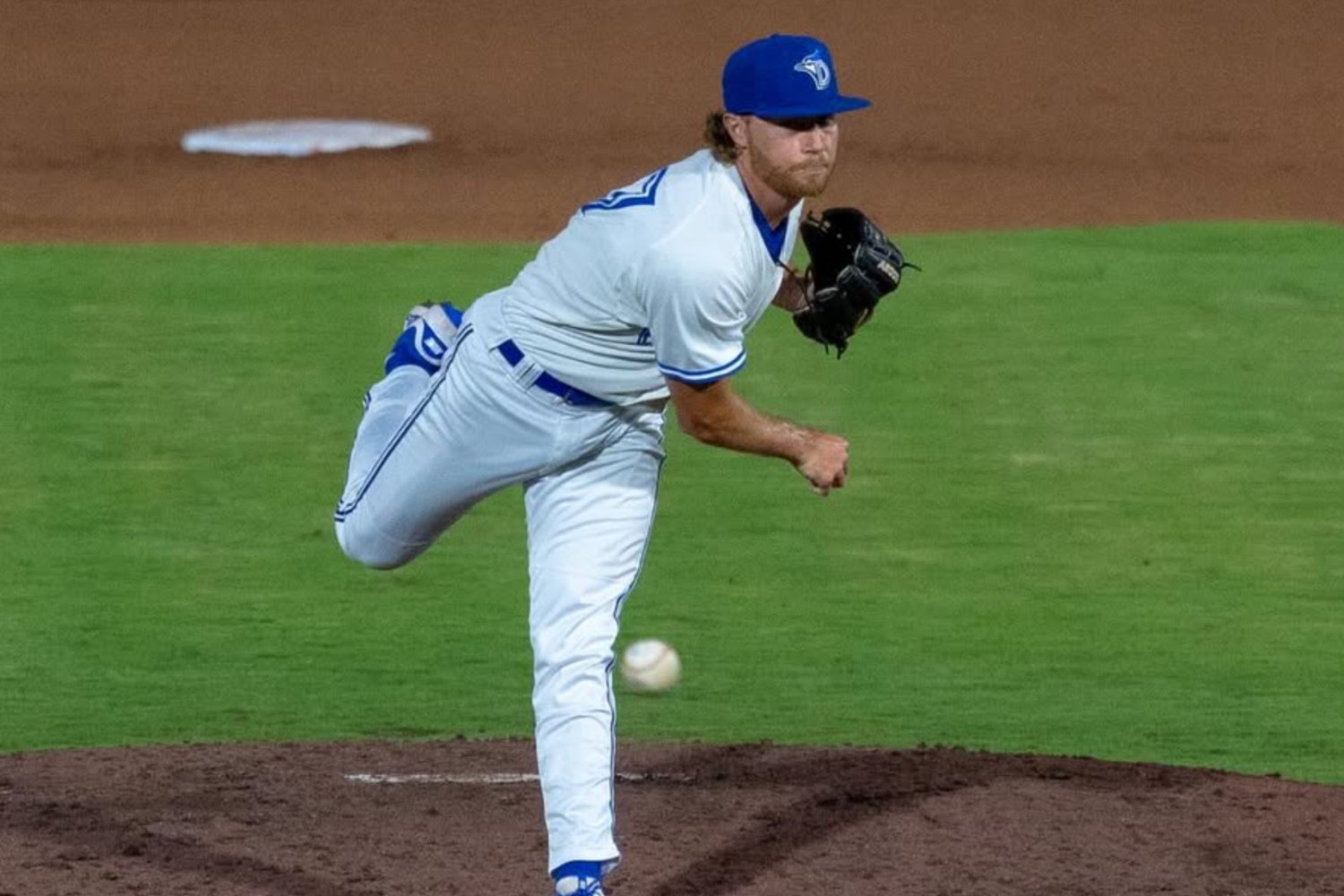 This isn’t the first time I’ll say this, and it won’t be the last time either, but it bears repeating: Starting pitching has been a strength throughout the Blue Jays’ minor league system all year. Great starting pitching naturally leads to fewer opportunities for relievers. Still, there are plenty of bullpen arms in this organization who have made the most of the opportunities they’ve had. These were the best of the best in August. Honourable Mentions Julio Ortiz, RHP (High-A Vancouver) August Stats: 1-0 (6 G), 8.2 IP, 2.08 ERA, 20 K, 10 BB Other pitchers in the system threw more innings with a lower ERA than Julio Ortiz, but the 24-year-old earned this honourable mention by striking out 20 of the 37 batters he faced – that’s a 54.1% rate. The only problem was that he also walked 10; in one particularly poor outing, he walked four of the six hitters he saw. Control issues have plagued Ortiz throughout his pro career, but if he keeps overpowering opponents like he did in August, perhaps it will be enough to compensate for his wildness. Nate Garkow, RHP (Double-A New Hampshire) August Stats: 2-0 (9 G), 12,1 IP, 2.19 ERA, 20 K, 5 BB On May 18, Nate Garkow gave up three earned runs in less than an inning of work. His ERA ballooned to 7.56. Two days later, he was promoted from High-A Vancouver to Double-A New Hampshire. At the time, any fan would have been perfectly justified in questioning his promotion. Yet, it turns out the Blue Jays knew exactly what they were doing. Since joining the Fisher Cats, Garkow has continued racking up strikeouts, and he has refined his control too, dropping his walk rate from 17.1% to 12.1%. That’s still high, but it’s manageable for a pitcher who strikes out close to 40% of his opponents. As hard as it is to believe, Garkow has been so good for New Hampshire that his excellent August performance actually increased his ERA and FIP. Altogether, he now owns a career 2.96 ERA and 2.74 FIP across three minor league levels. It’s starting to look like the Blue Jays discovered a real diamond in the rough when they signed a then 26-year-old Garkow out of independent ball last summer. 3. Devereaux Harrison, RHP (Double-A New Hampshire) August Stats: 1-2 (10 G), 16.2 IP, 2.70 ERA, 22 K, 9 BB Devereaux Harrison was exclusively a starting pitcher for more than two years, but he took on a bullpen role this past July after earning a promotion to Triple-A Buffalo. Unfortunately, he struggled badly against the higher level of competition, giving up nine runs (seven earned) on 14 hits and nine walks. While he didn’t give up any home runs, he only struck out seven, and almost 40% of the baserunners he allowed came around to score. So, the righty returned to New Hampshire in August. You could call it a demotion, but in truth, it proved to be exactly the reset he needed. Harrison got his walks in check, while his strikeout rate on the month rose to over 30% for the first time in his career. Harrison narrowly beat out his teammate Garkow for this spot on the podium. His resilience after a tough month in Buffalo helped his case, but ultimately, it was the fact that Harrison faced an additional 21 batters in August and didn’t give up any home runs that set him apart. 2. Andrew Bash, RHP (Triple-A Buffalo) August Stats: 2-0 (6 G), 11.2 IP, 0.77 ERA, 15 K, 6 BB At 29, Andrew Bash is the oldest of this month’s honourees. He owns a 15-3 record and a 2.70 ERA in 243 minor league innings over the last three years, but his less-than-impressive strikeout and walk rates in that time (21.0% and 11.2%, respectively), and the fact that he’s yet to make his MLB debut, make one wonder if he’ll be stuck in Quad-A purgatory forever – too good for the minor leagues but not good enough for the majors. If his August performance was any indication, it’s about time the Blue Jays give him a chance to shed that Quad-A label. From March to July, Bash struck out 16.2% of the batters he faced. In August, that rate rose to 31.3%. With the big league bullpen cycling through low-leverage arms faster than Tadej Pogačar cycles through the mountains of France, perhaps they ought to give this multi-inning minor league veteran a shot at the highest level. 1. Danny Thompson Jr., RHP (Single-A Dunedin) August Stats: 0-0 (8 G), 10.2 IP, 0.00 ERA, 12 K, 2 BB Danny Thompson Jr. didn’t look sharp in his professional debut. On July 30, barely two weeks after the Blue Jays selected him in the eighth round of the draft, he gave up a walk and two hits, including a solo home run. However, the right-hander quickly put that outing behind him and made a terrific impression in August. Over eight appearances, Thompson faced 39 hitters and didn’t give up so much as a lone run. Only one of the six hits he allowed went for extra bases (a double), and only nine batters he faced reached base – and he erased two of those baserunners with double plays. As sharp as he looked in his first seven outings of the month, what secured Thompson the top spot on this list was his latest appearance on August 30. Facing the Fort Myers Mighty Mussels, he saw seven batters over two innings, and all six outs he recorded were strikeouts.
 -
This isn’t the first time I’ll say this, and it won’t be the last time either, but it bears repeating: Starting pitching has been a strength throughout the Blue Jays’ minor league system all year. Great starting pitching naturally leads to fewer opportunities for relievers. Still, there are plenty of bullpen arms in this organization who have made the most of the opportunities they’ve had. These were the best of the best in August. Honourable Mentions Julio Ortiz, RHP (High-A Vancouver) August Stats: 1-0 (6 G), 8.2 IP, 2.08 ERA, 20 K, 10 BB Other pitchers in the system threw more innings with a lower ERA than Julio Ortiz, but the 24-year-old earned this honourable mention by striking out 20 of the 37 batters he faced – that’s a 54.1% rate. The only problem was that he also walked 10; in one particularly poor outing, he walked four of the six hitters he saw. Control issues have plagued Ortiz throughout his pro career, but if he keeps overpowering opponents like he did in August, perhaps it will be enough to compensate for his wildness. Nate Garkow, RHP (Double-A New Hampshire) August Stats: 2-0 (9 G), 12,1 IP, 2.19 ERA, 20 K, 5 BB On May 18, Nate Garkow gave up three earned runs in less than an inning of work. His ERA ballooned to 7.56. Two days later, he was promoted from High-A Vancouver to Double-A New Hampshire. At the time, any fan would have been perfectly justified in questioning his promotion. Yet, it turns out the Blue Jays knew exactly what they were doing. Since joining the Fisher Cats, Garkow has continued racking up strikeouts, and he has refined his control too, dropping his walk rate from 17.1% to 12.1%. That’s still high, but it’s manageable for a pitcher who strikes out close to 40% of his opponents. As hard as it is to believe, Garkow has been so good for New Hampshire that his excellent August performance actually increased his ERA and FIP. Altogether, he now owns a career 2.96 ERA and 2.74 FIP across three minor league levels. It’s starting to look like the Blue Jays discovered a real diamond in the rough when they signed a then 26-year-old Garkow out of independent ball last summer. 3. Devereaux Harrison, RHP (Double-A New Hampshire) August Stats: 1-2 (10 G), 16.2 IP, 2.70 ERA, 22 K, 9 BB Devereaux Harrison was exclusively a starting pitcher for more than two years, but he took on a bullpen role this past July after earning a promotion to Triple-A Buffalo. Unfortunately, he struggled badly against the higher level of competition, giving up nine runs (seven earned) on 14 hits and nine walks. While he didn’t give up any home runs, he only struck out seven, and almost 40% of the baserunners he allowed came around to score. So, the righty returned to New Hampshire in August. You could call it a demotion, but in truth, it proved to be exactly the reset he needed. Harrison got his walks in check, while his strikeout rate on the month rose to over 30% for the first time in his career. Harrison narrowly beat out his teammate Garkow for this spot on the podium. His resilience after a tough month in Buffalo helped his case, but ultimately, it was the fact that Harrison faced an additional 21 batters in August and didn’t give up any home runs that set him apart. 2. Andrew Bash, RHP (Triple-A Buffalo) August Stats: 2-0 (6 G), 11.2 IP, 0.77 ERA, 15 K, 6 BB At 29, Andrew Bash is the oldest of this month’s honourees. He owns a 15-3 record and a 2.70 ERA in 243 minor league innings over the last three years, but his less-than-impressive strikeout and walk rates in that time (21.0% and 11.2%, respectively), and the fact that he’s yet to make his MLB debut, make one wonder if he’ll be stuck in Quad-A purgatory forever – too good for the minor leagues but not good enough for the majors. If his August performance was any indication, it’s about time the Blue Jays give him a chance to shed that Quad-A label. From March to July, Bash struck out 16.2% of the batters he faced. In August, that rate rose to 31.3%. With the big league bullpen cycling through low-leverage arms faster than Tadej Pogačar cycles through the mountains of France, perhaps they ought to give this multi-inning minor league veteran a shot at the highest level. 1. Danny Thompson Jr., RHP (Single-A Dunedin) August Stats: 0-0 (8 G), 10.2 IP, 0.00 ERA, 12 K, 2 BB Danny Thompson Jr. didn’t look sharp in his professional debut. On July 30, barely two weeks after the Blue Jays selected him in the eighth round of the draft, he gave up a walk and two hits, including a solo home run. However, the right-hander quickly put that outing behind him and made a terrific impression in August. Over eight appearances, Thompson faced 39 hitters and didn’t give up so much as a lone run. Only one of the six hits he allowed went for extra bases (a double), and only nine batters he faced reached base – and he erased two of those baserunners with double plays. As sharp as he looked in his first seven outings of the month, what secured Thompson the top spot on this list was his latest appearance on August 30. Facing the Fort Myers Mighty Mussels, he saw seven batters over two innings, and all six outs he recorded were strikeouts. View full article
-
The Toronto Blue Jays have signed catcher René Pinto to a minor league contract. He will report to the Triple-A Buffalo Bisons, where he will offer catching depth alongside veteran Christian Bethancourt and prospect Brandon Valenzuela. Update: The Buffalo Bisons released Christian Bethancourt earlier this week. The 28-year-old Pinto has three seasons of MLB experience with the Tampa Bay Rays. In 83 games from 2022-24, he slashed .231/.263/.404 with an 87 wRC+. While he hit for a fair bit of power, poor plate discipline and contact skills held him back. Similarly, he flashed some terrific tools on defense – his pop times were elite and his framing was solid – but he gave up way too many passed balls and stolen bases. Pinto spent most of 2025 in the Diamondbacks' system, where he produced a .268/.324/.517 slash line and a 92 wRC+ in 54 games at Triple-A. He had hit well early in the year (117 wRC+ in April), but after spending May on the injured list, he struggled to a 79 wRC+ from June to August. Arizona granted him his release last week. The Blue Jays now have one more insurance policy in case of an injury to Alejandro Kirk or Tyler Heineman. With the way both Bethancourt and Valenzuela have struggled at the plate lately, it's hardly surprising that Toronto wanted another option. In additional Blue Jays transaction news, the team has reunited with infielder Buddy Kennedy. The 26-year-old played in two games for the Jays earlier this year, going 1-for-5 with a walk and a run scored. The Dodgers claimed Kennedy off waivers when the Blue Jays DFA'd him in August, but after just seven games with L.A., he was DFA'd once more. This time, he cleared waivers, elected free agency, and chose to return to the Blue Jays organization. Featured image courtesy of Kim Klement Neitzel, Imagn Images. View full rumor
-
.jpg.85c0751fbad893e9f7e0e40a0d1e4286.jpg) The Toronto Blue Jays have signed catcher René Pinto to a minor league contract. He will report to the Triple-A Buffalo Bisons, where he will offer catching depth alongside veteran Christian Bethancourt and prospect Brandon Valenzuela. Update: The Buffalo Bisons released Christian Bethancourt earlier this week. The 28-year-old Pinto has three seasons of MLB experience with the Tampa Bay Rays. In 83 games from 2022-24, he slashed .231/.263/.404 with an 87 wRC+. While he hit for a fair bit of power, poor plate discipline and contact skills held him back. Similarly, he flashed some terrific tools on defense – his pop times were elite and his framing was solid – but he gave up way too many passed balls and stolen bases. Pinto spent most of 2025 in the Diamondbacks' system, where he produced a .268/.324/.517 slash line and a 92 wRC+ in 54 games at Triple-A. He had hit well early in the year (117 wRC+ in April), but after spending May on the injured list, he struggled to a 79 wRC+ from June to August. Arizona granted him his release last week. The Blue Jays now have one more insurance policy in case of an injury to Alejandro Kirk or Tyler Heineman. With the way both Bethancourt and Valenzuela have struggled at the plate lately, it's hardly surprising that Toronto wanted another option. In additional Blue Jays transaction news, the team has reunited with infielder Buddy Kennedy. The 26-year-old played in two games for the Jays earlier this year, going 1-for-5 with a walk and a run scored. The Dodgers claimed Kennedy off waivers when the Blue Jays DFA'd him in August, but after just seven games with L.A., he was DFA'd once more. This time, he cleared waivers, elected free agency, and chose to return to the Blue Jays organization. Featured image courtesy of Kim Klement Neitzel, Imagn Images.
The Toronto Blue Jays have signed catcher René Pinto to a minor league contract. He will report to the Triple-A Buffalo Bisons, where he will offer catching depth alongside veteran Christian Bethancourt and prospect Brandon Valenzuela. Update: The Buffalo Bisons released Christian Bethancourt earlier this week. The 28-year-old Pinto has three seasons of MLB experience with the Tampa Bay Rays. In 83 games from 2022-24, he slashed .231/.263/.404 with an 87 wRC+. While he hit for a fair bit of power, poor plate discipline and contact skills held him back. Similarly, he flashed some terrific tools on defense – his pop times were elite and his framing was solid – but he gave up way too many passed balls and stolen bases. Pinto spent most of 2025 in the Diamondbacks' system, where he produced a .268/.324/.517 slash line and a 92 wRC+ in 54 games at Triple-A. He had hit well early in the year (117 wRC+ in April), but after spending May on the injured list, he struggled to a 79 wRC+ from June to August. Arizona granted him his release last week. The Blue Jays now have one more insurance policy in case of an injury to Alejandro Kirk or Tyler Heineman. With the way both Bethancourt and Valenzuela have struggled at the plate lately, it's hardly surprising that Toronto wanted another option. In additional Blue Jays transaction news, the team has reunited with infielder Buddy Kennedy. The 26-year-old played in two games for the Jays earlier this year, going 1-for-5 with a walk and a run scored. The Dodgers claimed Kennedy off waivers when the Blue Jays DFA'd him in August, but after just seven games with L.A., he was DFA'd once more. This time, he cleared waivers, elected free agency, and chose to return to the Blue Jays organization. Featured image courtesy of Kim Klement Neitzel, Imagn Images. -
The arms in the Blue Jays’ minor league system have stolen a lot of the spotlight this year, and deservedly so. Still, there’s no shortage of position player prospects who have earned some attention too. Today, I’m here to highlight the top-performing position players in the organization in August. Honourable Mentions Nick Goodwin, INF (High-A Vancouver) August Stats: 20 G, 87 PA, 2 HR, 9 RBI, 4 SB, .319/.437/.486, 159 wRC+ Nick Goodwin has settled in at second base after splitting his time between third base and shortstop in 2024. He also seems to be settling in at the plate. While he’s still streaky, the hot streaks – including a red-hot month of August – have outweighed the cold streaks so far, and his full-season numbers have improved in just about every area this year. That said, his splits against left-handed pitching are doing a lot of the heavy lifting, and he’ll need to prove he can be more than the short side of a platoon. Eddie Micheletti Jr., OF (High-A Vancouver) August Stats: 19 G, 90 PA, 0 HR, 12 RBI, 1 SB, .303/.478/.409, 159 wRC+ Eddie Micheletti Jr. busted out of a late July slump with a phenomenal showing in August. While he didn’t hit for much power, he drew 18 walks in 19 games. He also took five hit-by-pitches, helping him reach base in nearly half of his trips to the plate. Meanwhile, he only struck out 11 times. If Micheletti can continue to refine his plate discipline and combine it with the plus power he showed earlier in the season, he’ll certainly be ready for a promotion. George Springer, DH (Triple-A Buffalo) August Stats: 2 G, 6 PA, 1 HR, 1 RBI, 0 SB, .400/.500/1.200, 313 wRC+ Am I joking with this pick? Yes, of course. But there's no denying that George Springer was absolutely fantastic during his two-game rehab stint with the Buffalo Bisons in mid-August. He walked, doubled, and scored twice in his first game, and he followed that up with a home run the next day. It's always fun to see a major league star tear it up against minor league competition. 3. Riley Tirotta, 1B/3B/OF (Triple-A Buffalo) August Stats: 20 G, 86 PA, 3 HR, 11 RBI, 1 SB, .324/.419/.527, 155 wRC+ Riley Tirotta earned a hit in all but three of the games he played in August. On a related note, he struck out less than 20% of the time. The last time he struck out so rarely in a month was May 2024, most of which he spent at Double-A New Hampshire. It will take more than a 20-game sample for Tirotta to prove his strikeout issues are behind him, but this was certainly a step in the right direction. 2. RJ Schreck, OF (Triple-A Buffalo) August Stats: 26 G, 106 PA, 5 HR, 19 RBI, 1 SB, .247/.390/.482, 134 wRC+ RJ Schreck’s rate stats don’t jump off the page quite like Tirotta’s, but he earned this spot by playing more often and putting up better counting stats. His 17 runs scored and 19 driven in were impressive, but what stood out the most from his August performance was his 20 walks. Even when he slumps, Schreck never stops taking bases on balls. There might be questions about how well his power will hold up against big league pitching, but strong contract skills and plate discipline raise his floor. At 25, he’s on the slightly older side for a prospect, but he’s doing everything he can to earn his MLB debut. 1. Charles McAdoo, 3B (Double-A New Hampshire) August Stats: 28 G, 117 PA, 6 HR, 17 RBI, 10 SB, .277/.376/.505, 156 wRC+ Charles McAdoo has had two different 2025 seasons. Through June 12, he was batting .199 with a .550 OPS and a 62 wRC+. Combine that with his poor performance for New Hampshire in 2024, and it was starting to look like the promising young hitter from the Pirates’ system had disappeared after his trade to the Jays. Since June 13, however, McAdoo has been one of the hottest hitters in the minor leagues. August was the best month of his season so far, as he continued to show off his exciting blend of power and speed. With a 156 wRC+ in 28 games, he raised his full-season mark from 104 to 118. View full article
-
- 3
-
-
Toronto Blue Jays Minor League Hitters of the Month - August 2025
Leo Morgenstern posted an article in Blue Jays
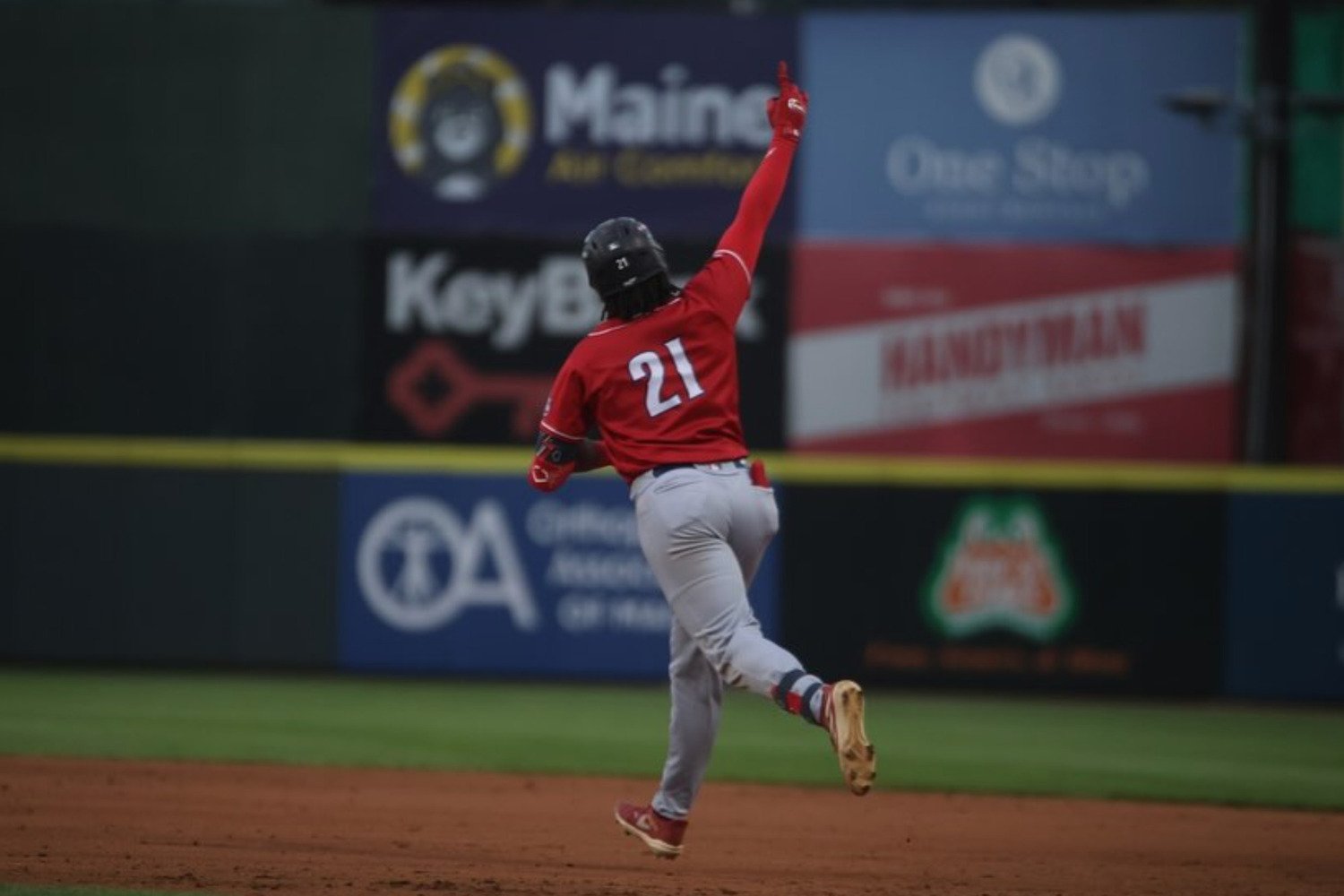 The arms in the Blue Jays’ minor league system have stolen a lot of the spotlight this year, and deservedly so. Still, there’s no shortage of position player prospects who have earned some attention too. Today, I’m here to highlight the top-performing position players in the organization in August. Honourable Mentions Nick Goodwin, INF (High-A Vancouver) August Stats: 20 G, 87 PA, 2 HR, 9 RBI, 4 SB, .319/.437/.486, 159 wRC+ Nick Goodwin has settled in at second base after splitting his time between third base and shortstop in 2024. He also seems to be settling in at the plate. While he’s still streaky, the hot streaks – including a red-hot month of August – have outweighed the cold streaks so far, and his full-season numbers have improved in just about every area this year. That said, his splits against left-handed pitching are doing a lot of the heavy lifting, and he’ll need to prove he can be more than the short side of a platoon. Eddie Micheletti Jr., OF (High-A Vancouver) August Stats: 19 G, 90 PA, 0 HR, 12 RBI, 1 SB, .303/.478/.409, 159 wRC+ Eddie Micheletti Jr. busted out of a late July slump with a phenomenal showing in August. While he didn’t hit for much power, he drew 18 walks in 19 games. He also took five hit-by-pitches, helping him reach base in nearly half of his trips to the plate. Meanwhile, he only struck out 11 times. If Micheletti can continue to refine his plate discipline and combine it with the plus power he showed earlier in the season, he’ll certainly be ready for a promotion. George Springer, DH (Triple-A Buffalo) August Stats: 2 G, 6 PA, 1 HR, 1 RBI, 0 SB, .400/.500/1.200, 313 wRC+ Am I joking with this pick? Yes, of course. But there's no denying that George Springer was absolutely fantastic during his two-game rehab stint with the Buffalo Bisons in mid-August. He walked, doubled, and scored twice in his first game, and he followed that up with a home run the next day. It's always fun to see a major league star tear it up against minor league competition. 3. Riley Tirotta, 1B/3B/OF (Triple-A Buffalo) August Stats: 20 G, 86 PA, 3 HR, 11 RBI, 1 SB, .324/.419/.527, 155 wRC+ Riley Tirotta earned a hit in all but three of the games he played in August. On a related note, he struck out less than 20% of the time. The last time he struck out so rarely in a month was May 2024, most of which he spent at Double-A New Hampshire. It will take more than a 20-game sample for Tirotta to prove his strikeout issues are behind him, but this was certainly a step in the right direction. 2. RJ Schreck, OF (Triple-A Buffalo) August Stats: 26 G, 106 PA, 5 HR, 19 RBI, 1 SB, .247/.390/.482, 134 wRC+ RJ Schreck’s rate stats don’t jump off the page quite like Tirotta’s, but he earned this spot by playing more often and putting up better counting stats. His 17 runs scored and 19 driven in were impressive, but what stood out the most from his August performance was his 20 walks. Even when he slumps, Schreck never stops taking bases on balls. There might be questions about how well his power will hold up against big league pitching, but strong contract skills and plate discipline raise his floor. At 25, he’s on the slightly older side for a prospect, but he’s doing everything he can to earn his MLB debut. 1. Charles McAdoo, 3B (Double-A New Hampshire) August Stats: 28 G, 117 PA, 6 HR, 17 RBI, 10 SB, .277/.376/.505, 156 wRC+ Charles McAdoo has had two different 2025 seasons. Through June 12, he was batting .199 with a .550 OPS and a 62 wRC+. Combine that with his poor performance for New Hampshire in 2024, and it was starting to look like the promising young hitter from the Pirates’ system had disappeared after his trade to the Jays. Since June 13, however, McAdoo has been one of the hottest hitters in the minor leagues. August was the best month of his season so far, as he continued to show off his exciting blend of power and speed. With a 156 wRC+ in 28 games, he raised his full-season mark from 104 to 118.
 -
On September 1, MLB active rosters expand from 26 to 28. That means the Toronto Blue Jays now have two additional roster spots to work with. At least for now, one of those spots is going to right-handed reliever Dillon Tate, while the other belongs to recently acquired utility man Isiah Kiner-Falefa. To make room for Tate on their 40-man roster, the Blue Jays moved fellow righty reliever Nick Sandlin from the 15-day injured list to the 60-day injured list. Kiner-Falefa was added to he 40-man on Sunday. Tate, 31, first joined the Blue Jays one year ago today, when they claimed him off waivers from the Baltimore Orioles. He owns a career 4.11 ERA and 4.05 FIP in 221 innings from 2019-25. In 8.2 innings with Toronto, he has given up five earned runs on 11 hits, striking out 11 but walking nine. On the bright side, the righty has looked much sharper in the minor leagues. In 56.2 MiLB innings over the past two years, he has pitched to a 2.06 ERA and a 3.57 FIP. Tate will offer low-leverage depth to a bullpen that has seen plenty of turnover lately; a six-man starting rotation has forced the Blue Jays to cycle through relievers at a faster-than-normal rate. Featured image courtesy of Dan Hamilton, Imagn Images. View full rumor
-
.jpg.2837f9cdc97f0a3e26850b90c70047ff.jpg) On September 1, MLB active rosters expand from 26 to 28. That means the Toronto Blue Jays now have two additional roster spots to work with. At least for now, one of those spots is going to right-handed reliever Dillon Tate, while the other belongs to recently acquired utility man Isiah Kiner-Falefa. To make room for Tate on their 40-man roster, the Blue Jays moved fellow righty reliever Nick Sandlin from the 15-day injured list to the 60-day injured list. Kiner-Falefa was added to he 40-man on Sunday. Tate, 31, first joined the Blue Jays one year ago today, when they claimed him off waivers from the Baltimore Orioles. He owns a career 4.11 ERA and 4.05 FIP in 221 innings from 2019-25. In 8.2 innings with Toronto, he has given up five earned runs on 11 hits, striking out 11 but walking nine. On the bright side, the righty has looked much sharper in the minor leagues. In 56.2 MiLB innings over the past two years, he has pitched to a 2.06 ERA and a 3.57 FIP. Tate will offer low-leverage depth to a bullpen that has seen plenty of turnover lately; a six-man starting rotation has forced the Blue Jays to cycle through relievers at a faster-than-normal rate. Featured image courtesy of Dan Hamilton, Imagn Images.
On September 1, MLB active rosters expand from 26 to 28. That means the Toronto Blue Jays now have two additional roster spots to work with. At least for now, one of those spots is going to right-handed reliever Dillon Tate, while the other belongs to recently acquired utility man Isiah Kiner-Falefa. To make room for Tate on their 40-man roster, the Blue Jays moved fellow righty reliever Nick Sandlin from the 15-day injured list to the 60-day injured list. Kiner-Falefa was added to he 40-man on Sunday. Tate, 31, first joined the Blue Jays one year ago today, when they claimed him off waivers from the Baltimore Orioles. He owns a career 4.11 ERA and 4.05 FIP in 221 innings from 2019-25. In 8.2 innings with Toronto, he has given up five earned runs on 11 hits, striking out 11 but walking nine. On the bright side, the righty has looked much sharper in the minor leagues. In 56.2 MiLB innings over the past two years, he has pitched to a 2.06 ERA and a 3.57 FIP. Tate will offer low-leverage depth to a bullpen that has seen plenty of turnover lately; a six-man starting rotation has forced the Blue Jays to cycle through relievers at a faster-than-normal rate. Featured image courtesy of Dan Hamilton, Imagn Images. -
Blue Jays Bring Isiah Kiner-Falefa Back Into the Fold
Leo Morgenstern posted an article in Blue Jays
(1).jpg.b310c00ded07ad336003d7aeb34adac5.jpg) After just over a year in Pittsburgh, Isiah Kiner-Falefa is coming back to Toronto. The Pirates placed the utility man on outright waivers on Friday, hoping to get his remaining salary off their books. The Blue Jays put in a claim. They opened a spot on their 40-man roster by transferring Yimi García (elbow surgery) to the 60-day IL, and they will be able to add Kiner-Falefa to the big league roster today when active rosters increase from 26 to 28. The Blue Jays signed Kiner-Falefa to a two-year, $15 million deal during the 2023-24 offseason, and he took the field at third base on Opening Day 2024. Over the next three months, he produced some of the best numbers of his career, slashing .292/.338/.420 (117 wRC+) in 83 games, all while showing off his excellent defense at second base, third base, and shortstop. Unfortunately, a left knee sprain interrupted Kiner-Falefa's strong season and forced him to the injured list in July. Despite that, the Jays were still able to sell high on their biggest offseason signing, flipping IKF and cash to the Pirates for third base prospect Charles McAdoo. On the day the Pirates traded for Kiner-Falefa, they were 55-52, putting them just two games back of the final NL Wild Card spot. As for the Blue Jays, a 51-58 record had them sitting last in the AL East and 8.5 games back of a postseason berth. In hindsight, the Blue Jays pulled off a steal. Kiner-Falefa saw his numbers come crashing down, while the Pirates plummeted in the NL standings. He finished with a .269/.306/.376 slash line (93 wRC+), and the Pirates finished 76-88 – only two games better than the Blue Jays. This year, the Pirates are basement-dwellers once again, while the Blue Jays have climbed back atop the AL East. McAdoo, Jays Centre's No. 17 prospect, is enjoying a promising year with Double-A New Hampshire. Finally, as a cherry on top, the Jays have taken Kiner-Falefa back from the Pirates, and all it will cost them is what's left of his salary – a salary they were more than willing to pay when they signed him in the first place, and of which they were already paying a small portion anyway, as part of the terms of their initial trade with Pittsburgh. Kiner-Falefa is unlikely to hit the way he did during his first stint in Toronto; he's currently slashing .264/.300/.332 with a 75 wRC+. But, of course, it's not as if the Blue Jays were ever interested in him for his bat. In the three seasons before he signed with the Jays (2021-23), he hit .261/.311/.343 with an 83 wRC+. Only one hitter had more plate appearances and a lower wRC+ in that span, and, funnily enough, he's a Blue Jay now as well: Myles Straw. Kiner-Falefa, like Straw, is a Gold Glove-winning defender, and excellent defense is precisely what the Blue Jays want to see from him in September and October. Anything he can offer at the plate is just a bonus. He is a better defensive option at second base than Davis Schneider and a better defensive option at third base than Addison Barger. In other words, he is a second Ernie Clement. If John Schneider wants to keep Andrés Giménez out of the lineup against a left-handed starter, he will still have two strong defensive players to position on either side of Bo Bichette. Kiner-Falefa can also play the outfield if necessary. He shouldn't have to do so very often, but – at risk of sounding like a broken record – he's a better defensive choice than George Springer. If Schneider wants to sit the lefties Barger, Daulton Varsho, and Nathan Lukes, he can run an all-righty outfield while keeping Springer at DH. For little more than the loose change left in their pockets, the Blue Jays made a stellar defense even stronger. Claiming Kiner-Falefa off waivers isn't the move that's going to make or break this club come October. Still, it was a nice pickup to make one of the most well-rounded teams in the AL even more complete.
After just over a year in Pittsburgh, Isiah Kiner-Falefa is coming back to Toronto. The Pirates placed the utility man on outright waivers on Friday, hoping to get his remaining salary off their books. The Blue Jays put in a claim. They opened a spot on their 40-man roster by transferring Yimi García (elbow surgery) to the 60-day IL, and they will be able to add Kiner-Falefa to the big league roster today when active rosters increase from 26 to 28. The Blue Jays signed Kiner-Falefa to a two-year, $15 million deal during the 2023-24 offseason, and he took the field at third base on Opening Day 2024. Over the next three months, he produced some of the best numbers of his career, slashing .292/.338/.420 (117 wRC+) in 83 games, all while showing off his excellent defense at second base, third base, and shortstop. Unfortunately, a left knee sprain interrupted Kiner-Falefa's strong season and forced him to the injured list in July. Despite that, the Jays were still able to sell high on their biggest offseason signing, flipping IKF and cash to the Pirates for third base prospect Charles McAdoo. On the day the Pirates traded for Kiner-Falefa, they were 55-52, putting them just two games back of the final NL Wild Card spot. As for the Blue Jays, a 51-58 record had them sitting last in the AL East and 8.5 games back of a postseason berth. In hindsight, the Blue Jays pulled off a steal. Kiner-Falefa saw his numbers come crashing down, while the Pirates plummeted in the NL standings. He finished with a .269/.306/.376 slash line (93 wRC+), and the Pirates finished 76-88 – only two games better than the Blue Jays. This year, the Pirates are basement-dwellers once again, while the Blue Jays have climbed back atop the AL East. McAdoo, Jays Centre's No. 17 prospect, is enjoying a promising year with Double-A New Hampshire. Finally, as a cherry on top, the Jays have taken Kiner-Falefa back from the Pirates, and all it will cost them is what's left of his salary – a salary they were more than willing to pay when they signed him in the first place, and of which they were already paying a small portion anyway, as part of the terms of their initial trade with Pittsburgh. Kiner-Falefa is unlikely to hit the way he did during his first stint in Toronto; he's currently slashing .264/.300/.332 with a 75 wRC+. But, of course, it's not as if the Blue Jays were ever interested in him for his bat. In the three seasons before he signed with the Jays (2021-23), he hit .261/.311/.343 with an 83 wRC+. Only one hitter had more plate appearances and a lower wRC+ in that span, and, funnily enough, he's a Blue Jay now as well: Myles Straw. Kiner-Falefa, like Straw, is a Gold Glove-winning defender, and excellent defense is precisely what the Blue Jays want to see from him in September and October. Anything he can offer at the plate is just a bonus. He is a better defensive option at second base than Davis Schneider and a better defensive option at third base than Addison Barger. In other words, he is a second Ernie Clement. If John Schneider wants to keep Andrés Giménez out of the lineup against a left-handed starter, he will still have two strong defensive players to position on either side of Bo Bichette. Kiner-Falefa can also play the outfield if necessary. He shouldn't have to do so very often, but – at risk of sounding like a broken record – he's a better defensive choice than George Springer. If Schneider wants to sit the lefties Barger, Daulton Varsho, and Nathan Lukes, he can run an all-righty outfield while keeping Springer at DH. For little more than the loose change left in their pockets, the Blue Jays made a stellar defense even stronger. Claiming Kiner-Falefa off waivers isn't the move that's going to make or break this club come October. Still, it was a nice pickup to make one of the most well-rounded teams in the AL even more complete. -
After just over a year in Pittsburgh, Isiah Kiner-Falefa is coming back to Toronto. The Pirates placed the utility man on outright waivers on Friday, hoping to get his remaining salary off their books. The Blue Jays put in a claim. They opened a spot on their 40-man roster by transferring Yimi García (elbow surgery) to the 60-day IL, and they will be able to add Kiner-Falefa to the big league roster today when active rosters increase from 26 to 28. The Blue Jays signed Kiner-Falefa to a two-year, $15 million deal during the 2023-24 offseason, and he took the field at third base on Opening Day 2024. Over the next three months, he produced some of the best numbers of his career, slashing .292/.338/.420 (117 wRC+) in 83 games, all while showing off his excellent defense at second base, third base, and shortstop. Unfortunately, a left knee sprain interrupted Kiner-Falefa's strong season and forced him to the injured list in July. Despite that, the Jays were still able to sell high on their biggest offseason signing, flipping IKF and cash to the Pirates for third base prospect Charles McAdoo. On the day the Pirates traded for Kiner-Falefa, they were 55-52, putting them just two games back of the final NL Wild Card spot. As for the Blue Jays, a 51-58 record had them sitting last in the AL East and 8.5 games back of a postseason berth. In hindsight, the Blue Jays pulled off a steal. Kiner-Falefa saw his numbers come crashing down, while the Pirates plummeted in the NL standings. He finished with a .269/.306/.376 slash line (93 wRC+), and the Pirates finished 76-88 – only two games better than the Blue Jays. This year, the Pirates are basement-dwellers once again, while the Blue Jays have climbed back atop the AL East. McAdoo, Jays Centre's No. 17 prospect, is enjoying a promising year with Double-A New Hampshire. Finally, as a cherry on top, the Jays have taken Kiner-Falefa back from the Pirates, and all it will cost them is what's left of his salary – a salary they were more than willing to pay when they signed him in the first place, and of which they were already paying a small portion anyway, as part of the terms of their initial trade with Pittsburgh. Kiner-Falefa is unlikely to hit the way he did during his first stint in Toronto; he's currently slashing .264/.300/.332 with a 75 wRC+. But, of course, it's not as if the Blue Jays were ever interested in him for his bat. In the three seasons before he signed with the Jays (2021-23), he hit .261/.311/.343 with an 83 wRC+. Only one hitter had more plate appearances and a lower wRC+ in that span, and, funnily enough, he's a Blue Jay now as well: Myles Straw. Kiner-Falefa, like Straw, is a Gold Glove-winning defender, and excellent defense is precisely what the Blue Jays want to see from him in September and October. Anything he can offer at the plate is just a bonus. He is a better defensive option at second base than Davis Schneider and a better defensive option at third base than Addison Barger. In other words, he is a second Ernie Clement. If John Schneider wants to keep Andrés Giménez out of the lineup against a left-handed starter, he will still have two strong defensive players to position on either side of Bo Bichette. Kiner-Falefa can also play the outfield if necessary. He shouldn't have to do so very often, but – at risk of sounding like a broken record – he's a better defensive choice than George Springer. If Schneider wants to sit the lefties Barger, Daulton Varsho, and Nathan Lukes, he can run an all-righty outfield while keeping Springer at DH. For little more than the loose change left in their pockets, the Blue Jays made a stellar defense even stronger. Claiming Kiner-Falefa off waivers isn't the move that's going to make or break this club come October. Still, it was a nice pickup to make one of the most well-rounded teams in the AL even more complete. View full article
-
Yesterday, I published the first part of this two-part series, in which I tried to assemble the best possible lineup of former Blue Jays position players. Today, I’m moving on to pitchers. Here’s a reminder of the challenge, the criteria, and the position players I chose. The Challenge: Put together the best possible 26-man roster made up of former Blue Jays. Specifically, I was looking for the most talented group of players in 2025. That means I wasn’t concerned about contract status or future potential, and I only cared about injury status or current stats insofar as either might inform my opinion of a player’s true talent The Criteria: Each player must have played at least one MLB game for the Blue Jays, simple as that. I didn’t consider any players the Blue Jays traded before their MLB debuts, but everyone else was fair game. Starting Lineup Catcher: Gabriel Moreno First Base: Spencer Horwitz Second Base: Marcus Semien Shortstop: Otto Lopez Third Base: Matt Chapman Right Field: Teoscar Hernández Center Field: Isiah Kiner-Falefa Left Field: Lourdes Gurriel Jr. Designated Hitter: Rob Refsnyder/Rowdy Tellez Bench Catcher: Danny Jansen Infield: Santiago Espinal Outfield: Randal Grichuk Now that you’re all caught up, let’s move on to the pitching staff. Starting Rotation Matthew Boyd (2 games with TOR in 2015) Robbie Ray (32 games with TOR in 2021) Yusei Kikuchi (86 games with TOR from 2022-24) Taijuan Walker (6 games with TOR in 2020) Steven Matz (29 games with TOR in 2021) This might just be a postseason-caliber starting five, depending on how much you believe in Matz and Walker – and how much you’d trust such a lefty-heavy rotation. Ten years after the Blue Jays dealt him away in the David Price trade deadline blockbuster, Boyd is enjoying a Cy Young-caliber campaign for the Cubs. Meanwhile, Ray finally looks like his old self again after a couple of injury-marred seasons. In case you need reminding, that’s the old self who won the 2021 AL Cy Young with Toronto. Kikuchi joined Ray and Boyd at the All-Star Game this summer. In his first year with the Angels, he has continued to demonstrate why he was in such high demand at last year’s trade deadline and again in the offseason. This rotation drops off quite a bit after the top three (as many rotations do), but Walker has done an impressive job of shaking off his dreadful 2024 season. He has provided the Phillies with some much-needed innings as a swingman in 2025, with a mid-3.00s ERA as both a starter and a reliever. Matz has moved into a full-time bullpen role this year, but he was a starter for much of his career. He’s been so successful out of the ‘pen for the Cardinals and Red Sox that I’m confident he’s a better choice to round out this rotation than anyone else I could have picked. Just for fun, here’s how the combination of Boyd/Ray/Kikuchi/Walker/Matz compares to Gausman/Berríos/Bassitt/Scherzer/Lauer/Bieber in 2025. (Stats updated prior to play on August 26.) Pitchers IP K-BB% ERA FIP SIERA fWAR Former Jays 619.2 14.4% 3.06 3.81 4.08 9.7 Current Jays 610.1 16.0% 3.77 4.07 3.96 8.5 I’d also like to give a quick honorable mention to Hyun Jin Ryu (60 games with TOR from 2020-23). At 38 years old, he’s still pitching well for the Hanwha Eagles in the KBO. If I hadn’t decided to convert Matz back into a starting pitcher, I was considering giving Ryu a call to join this team. Bullpen Jason Adam (23 games with TOR in 2019) Brock Stewart (10 games with TOR in 2019) Mark Leiter Jr. (8 games with TOR in 2018) Bryan Baker (1 game with TOR in 2021) Anthony Banda (7 games with TOR in 2022) Jordan Hicks (25 games with TOR in 2023) Ryan Yarbrough (12 games with TOR in 2024) Matt Gage (11 games with TOR in 2022) While there’s no proven closer among this group, Adam is the obvious choice to take on the role. The right-hander the Blue Jays non-tendered after the 2019 season has been one of the best relievers in the sport across the past four years. Stewart and Leiter give this ‘pen another couple of options for late in games, while Baker and Banda are fine choices to cover the middle innings. Yarbrough gives this group a veteran swingman. Hicks has struggled moving back and forth between the rotation and the bullpen over the last two years, but the Jays saw how dominant he and his triple-digit fastball could be as a full-time reliever down the stretch in 2023. Finally, the inexperienced Gage is a bit of a wild card choice for the final bullpen spot, but he’s only given up two runs in 22 innings of work this year. He was also excellent at Triple A. Perhaps this pick will come back to haunt me, but I say, without any great options, why not make the most fun choice? Here’s how these eight pitchers have performed over the past four seasons. In nothing else, their consistency is impressive. (Stats updated prior to play on August 26.) Season IP K-BB% ERA FIP SIERA fWAR 2025 395.2 15.6% 3.64 3.83 3.67 3.9 2024 428.2 14.8% 3.55 3.92 3.79 3.7 2023 360.1 17.5% 3.47 3.79 3.68 4.2 2022 381.2 15.3% 3.84 3.85 3.61 3.3 For context, here’s how the actual Blue Jays’ bullpen has performed in all of those same categories since 2022: Season IP K-BB% ERA FIP SIERA fWAR 2025 481.2 15.4% 4.00 3.99 3.65 2.9 2024 565.2 11.3% 4.82 4.84 4.14 -2.1 2023 557.0 17.6% 3.68 3.91 3.65 5.0 2022 613.2 15.4% 3.77 4.03 3.55 2.3 It’s not entirely fair to compare the collective stats of the best eight relievers I could find to the collective stats of an actual bullpen. It takes a lot more than just eight arms for a big league bullpen to get through a season. However, while depth might be a problem for the All Former Jays, the stats suggest that a bullpen comprising Adam, Stewart, Leiter, Banda, Baker, Yarbrough, Hicks, and Gage would be a pretty solid unit. It might even be stronger than the bullpen Toronto currently has. ***** Now that I’ve laid out the full 26-man roster, what do you think of my All Former Jays team? How do you think this team would fare in the 2025 season? Share your thoughts with me and the rest of the Jays Centre community in the comments below! View full article
-
Building the Best Roster of Former Blue Jays: Pitchers
Leo Morgenstern posted an article in Blue Jays
.jpg.6f510dc89b09c5ecc286286be3e65b1d.jpg) Yesterday, I published the first part of this two-part series, in which I tried to assemble the best possible lineup of former Blue Jays position players. Today, I’m moving on to pitchers. Here’s a reminder of the challenge, the criteria, and the position players I chose. The Challenge: Put together the best possible 26-man roster made up of former Blue Jays. Specifically, I was looking for the most talented group of players in 2025. That means I wasn’t concerned about contract status or future potential, and I only cared about injury status or current stats insofar as either might inform my opinion of a player’s true talent The Criteria: Each player must have played at least one MLB game for the Blue Jays, simple as that. I didn’t consider any players the Blue Jays traded before their MLB debuts, but everyone else was fair game. Starting Lineup Catcher: Gabriel Moreno First Base: Spencer Horwitz Second Base: Marcus Semien Shortstop: Otto Lopez Third Base: Matt Chapman Right Field: Teoscar Hernández Center Field: Isiah Kiner-Falefa Left Field: Lourdes Gurriel Jr. Designated Hitter: Rob Refsnyder/Rowdy Tellez Bench Catcher: Danny Jansen Infield: Santiago Espinal Outfield: Randal Grichuk Now that you’re all caught up, let’s move on to the pitching staff. Starting Rotation Matthew Boyd (2 games with TOR in 2015) Robbie Ray (32 games with TOR in 2021) Yusei Kikuchi (86 games with TOR from 2022-24) Taijuan Walker (6 games with TOR in 2020) Steven Matz (29 games with TOR in 2021) This might just be a postseason-caliber starting five, depending on how much you believe in Matz and Walker – and how much you’d trust such a lefty-heavy rotation. Ten years after the Blue Jays dealt him away in the David Price trade deadline blockbuster, Boyd is enjoying a Cy Young-caliber campaign for the Cubs. Meanwhile, Ray finally looks like his old self again after a couple of injury-marred seasons. In case you need reminding, that’s the old self who won the 2021 AL Cy Young with Toronto. Kikuchi joined Ray and Boyd at the All-Star Game this summer. In his first year with the Angels, he has continued to demonstrate why he was in such high demand at last year’s trade deadline and again in the offseason. This rotation drops off quite a bit after the top three (as many rotations do), but Walker has done an impressive job of shaking off his dreadful 2024 season. He has provided the Phillies with some much-needed innings as a swingman in 2025, with a mid-3.00s ERA as both a starter and a reliever. Matz has moved into a full-time bullpen role this year, but he was a starter for much of his career. He’s been so successful out of the ‘pen for the Cardinals and Red Sox that I’m confident he’s a better choice to round out this rotation than anyone else I could have picked. Just for fun, here’s how the combination of Boyd/Ray/Kikuchi/Walker/Matz compares to Gausman/Berríos/Bassitt/Scherzer/Lauer/Bieber in 2025. (Stats updated prior to play on August 26.) Pitchers IP K-BB% ERA FIP SIERA fWAR Former Jays 619.2 14.4% 3.06 3.81 4.08 9.7 Current Jays 610.1 16.0% 3.77 4.07 3.96 8.5 I’d also like to give a quick honorable mention to Hyun Jin Ryu (60 games with TOR from 2020-23). At 38 years old, he’s still pitching well for the Hanwha Eagles in the KBO. If I hadn’t decided to convert Matz back into a starting pitcher, I was considering giving Ryu a call to join this team. Bullpen Jason Adam (23 games with TOR in 2019) Brock Stewart (10 games with TOR in 2019) Mark Leiter Jr. (8 games with TOR in 2018) Bryan Baker (1 game with TOR in 2021) Anthony Banda (7 games with TOR in 2022) Jordan Hicks (25 games with TOR in 2023) Ryan Yarbrough (12 games with TOR in 2024) Matt Gage (11 games with TOR in 2022) While there’s no proven closer among this group, Adam is the obvious choice to take on the role. The right-hander the Blue Jays non-tendered after the 2019 season has been one of the best relievers in the sport across the past four years. Stewart and Leiter give this ‘pen another couple of options for late in games, while Baker and Banda are fine choices to cover the middle innings. Yarbrough gives this group a veteran swingman. Hicks has struggled moving back and forth between the rotation and the bullpen over the last two years, but the Jays saw how dominant he and his triple-digit fastball could be as a full-time reliever down the stretch in 2023. Finally, the inexperienced Gage is a bit of a wild card choice for the final bullpen spot, but he’s only given up two runs in 22 innings of work this year. He was also excellent at Triple A. Perhaps this pick will come back to haunt me, but I say, without any great options, why not make the most fun choice? Here’s how these eight pitchers have performed over the past four seasons. In nothing else, their consistency is impressive. (Stats updated prior to play on August 26.) Season IP K-BB% ERA FIP SIERA fWAR 2025 395.2 15.6% 3.64 3.83 3.67 3.9 2024 428.2 14.8% 3.55 3.92 3.79 3.7 2023 360.1 17.5% 3.47 3.79 3.68 4.2 2022 381.2 15.3% 3.84 3.85 3.61 3.3 For context, here’s how the actual Blue Jays’ bullpen has performed in all of those same categories since 2022: Season IP K-BB% ERA FIP SIERA fWAR 2025 481.2 15.4% 4.00 3.99 3.65 2.9 2024 565.2 11.3% 4.82 4.84 4.14 -2.1 2023 557.0 17.6% 3.68 3.91 3.65 5.0 2022 613.2 15.4% 3.77 4.03 3.55 2.3 It’s not entirely fair to compare the collective stats of the best eight relievers I could find to the collective stats of an actual bullpen. It takes a lot more than just eight arms for a big league bullpen to get through a season. However, while depth might be a problem for the All Former Jays, the stats suggest that a bullpen comprising Adam, Stewart, Leiter, Banda, Baker, Yarbrough, Hicks, and Gage would be a pretty solid unit. It might even be stronger than the bullpen Toronto currently has. ***** Now that I’ve laid out the full 26-man roster, what do you think of my All Former Jays team? How do you think this team would fare in the 2025 season? Share your thoughts with me and the rest of the Jays Centre community in the comments below!
Yesterday, I published the first part of this two-part series, in which I tried to assemble the best possible lineup of former Blue Jays position players. Today, I’m moving on to pitchers. Here’s a reminder of the challenge, the criteria, and the position players I chose. The Challenge: Put together the best possible 26-man roster made up of former Blue Jays. Specifically, I was looking for the most talented group of players in 2025. That means I wasn’t concerned about contract status or future potential, and I only cared about injury status or current stats insofar as either might inform my opinion of a player’s true talent The Criteria: Each player must have played at least one MLB game for the Blue Jays, simple as that. I didn’t consider any players the Blue Jays traded before their MLB debuts, but everyone else was fair game. Starting Lineup Catcher: Gabriel Moreno First Base: Spencer Horwitz Second Base: Marcus Semien Shortstop: Otto Lopez Third Base: Matt Chapman Right Field: Teoscar Hernández Center Field: Isiah Kiner-Falefa Left Field: Lourdes Gurriel Jr. Designated Hitter: Rob Refsnyder/Rowdy Tellez Bench Catcher: Danny Jansen Infield: Santiago Espinal Outfield: Randal Grichuk Now that you’re all caught up, let’s move on to the pitching staff. Starting Rotation Matthew Boyd (2 games with TOR in 2015) Robbie Ray (32 games with TOR in 2021) Yusei Kikuchi (86 games with TOR from 2022-24) Taijuan Walker (6 games with TOR in 2020) Steven Matz (29 games with TOR in 2021) This might just be a postseason-caliber starting five, depending on how much you believe in Matz and Walker – and how much you’d trust such a lefty-heavy rotation. Ten years after the Blue Jays dealt him away in the David Price trade deadline blockbuster, Boyd is enjoying a Cy Young-caliber campaign for the Cubs. Meanwhile, Ray finally looks like his old self again after a couple of injury-marred seasons. In case you need reminding, that’s the old self who won the 2021 AL Cy Young with Toronto. Kikuchi joined Ray and Boyd at the All-Star Game this summer. In his first year with the Angels, he has continued to demonstrate why he was in such high demand at last year’s trade deadline and again in the offseason. This rotation drops off quite a bit after the top three (as many rotations do), but Walker has done an impressive job of shaking off his dreadful 2024 season. He has provided the Phillies with some much-needed innings as a swingman in 2025, with a mid-3.00s ERA as both a starter and a reliever. Matz has moved into a full-time bullpen role this year, but he was a starter for much of his career. He’s been so successful out of the ‘pen for the Cardinals and Red Sox that I’m confident he’s a better choice to round out this rotation than anyone else I could have picked. Just for fun, here’s how the combination of Boyd/Ray/Kikuchi/Walker/Matz compares to Gausman/Berríos/Bassitt/Scherzer/Lauer/Bieber in 2025. (Stats updated prior to play on August 26.) Pitchers IP K-BB% ERA FIP SIERA fWAR Former Jays 619.2 14.4% 3.06 3.81 4.08 9.7 Current Jays 610.1 16.0% 3.77 4.07 3.96 8.5 I’d also like to give a quick honorable mention to Hyun Jin Ryu (60 games with TOR from 2020-23). At 38 years old, he’s still pitching well for the Hanwha Eagles in the KBO. If I hadn’t decided to convert Matz back into a starting pitcher, I was considering giving Ryu a call to join this team. Bullpen Jason Adam (23 games with TOR in 2019) Brock Stewart (10 games with TOR in 2019) Mark Leiter Jr. (8 games with TOR in 2018) Bryan Baker (1 game with TOR in 2021) Anthony Banda (7 games with TOR in 2022) Jordan Hicks (25 games with TOR in 2023) Ryan Yarbrough (12 games with TOR in 2024) Matt Gage (11 games with TOR in 2022) While there’s no proven closer among this group, Adam is the obvious choice to take on the role. The right-hander the Blue Jays non-tendered after the 2019 season has been one of the best relievers in the sport across the past four years. Stewart and Leiter give this ‘pen another couple of options for late in games, while Baker and Banda are fine choices to cover the middle innings. Yarbrough gives this group a veteran swingman. Hicks has struggled moving back and forth between the rotation and the bullpen over the last two years, but the Jays saw how dominant he and his triple-digit fastball could be as a full-time reliever down the stretch in 2023. Finally, the inexperienced Gage is a bit of a wild card choice for the final bullpen spot, but he’s only given up two runs in 22 innings of work this year. He was also excellent at Triple A. Perhaps this pick will come back to haunt me, but I say, without any great options, why not make the most fun choice? Here’s how these eight pitchers have performed over the past four seasons. In nothing else, their consistency is impressive. (Stats updated prior to play on August 26.) Season IP K-BB% ERA FIP SIERA fWAR 2025 395.2 15.6% 3.64 3.83 3.67 3.9 2024 428.2 14.8% 3.55 3.92 3.79 3.7 2023 360.1 17.5% 3.47 3.79 3.68 4.2 2022 381.2 15.3% 3.84 3.85 3.61 3.3 For context, here’s how the actual Blue Jays’ bullpen has performed in all of those same categories since 2022: Season IP K-BB% ERA FIP SIERA fWAR 2025 481.2 15.4% 4.00 3.99 3.65 2.9 2024 565.2 11.3% 4.82 4.84 4.14 -2.1 2023 557.0 17.6% 3.68 3.91 3.65 5.0 2022 613.2 15.4% 3.77 4.03 3.55 2.3 It’s not entirely fair to compare the collective stats of the best eight relievers I could find to the collective stats of an actual bullpen. It takes a lot more than just eight arms for a big league bullpen to get through a season. However, while depth might be a problem for the All Former Jays, the stats suggest that a bullpen comprising Adam, Stewart, Leiter, Banda, Baker, Yarbrough, Hicks, and Gage would be a pretty solid unit. It might even be stronger than the bullpen Toronto currently has. ***** Now that I’ve laid out the full 26-man roster, what do you think of my All Former Jays team? How do you think this team would fare in the 2025 season? Share your thoughts with me and the rest of the Jays Centre community in the comments below! -
Andrés Giménez is the best defensive second baseman in the American League. He has been for years. That's why the Blue Jays were willing to part with Spencer Horwitz to acquire him last offseason. It's why they were happy to take on the nearly $100 million remaining on his contract over the next five years. It's why FanGraphs and Baseball Reference agree he's been worth 1.2 WAR despite missing more than two months with injuries and producing some of the worst offensive numbers of his career. Yet, Giménez won't be taking home a fourth consecutive Gold Glove Award this year – and it's not because he won't deserve it. Although he's only played 75 games at the keystone this season, Giménez leads AL second basemen in OAA (Outs Above Average) and DRP (Deserved Runs Prevented). He ranks second in DRS (Defensive Runs Saved), FRV (Fielding Run Value), and fielding percentage (min. 400 innings). The only players who lead him in any of those metrics are Marcus Semien, who will most likely miss the rest of the season with a foot injury, and Mauricio Dubón, who has only played 40 games at second base. Giménez has plenty of time to usurp Semien atop the DRS and fielding percentage leaderboards. Meanwhile, Dubón is a strong candidate for the utility Gold Glove but unlikely to earn votes as a second baseman. All that to say, there is a strong statistical case for Giménez to take home yet another Gold Glove. Unfortunately, he won't even be eligible. To be eligible for a Gold Glove in either the infield or the outfield, a player must have taken the field for at least 698 innings (at any position) through his team’s 138th game. Rawlings claims this is to ensure that "only full-time players are considered" for the honor. However, the real effect is privileging players who might miss time later in the season over those who miss time earlier on. As I sit and write this piece on Wednesday afternoon, the Blue Jays have played 133 games. Presuming Giménez starts and finishes each of Toronto's next five contests (and presuming no extra-inning affairs), he will have played 669.1 innings through his team's 138th game. That's 28.2 fewer innings than he needs to be Gold Glove eligible. That's just over three games. That's it. I understand wanting to prioritize full-time players who play full seasons. But a strict cutoff point like this one leaves no room for nuance. Giménez has played more innings than all but six AL second basemen in 2025. Five of them – Jackson Holliday, Gleyber Torres, Brandon Lowe, Luis Urías, and Lenyn Sosa – have negative defensive metrics across the board. That leaves only a few real contenders for the Gold Glove at second base. Semien currently looks like the favorite, though Jazz Chisholm Jr. is another name to keep in mind. He doesn't have the necessary 698 innings at second, but he's played enough third base to cross that threshold. Luis Rengifo is another player with strong defensive metrics at second base and enough innings combined between second and third. Yet, because he has played third base slightly more often this season, he will most likely be eligible to receive votes at the hot corner, not the keystone. So, I'm not even sure I could identify three eligible, deserving candidates to be the finalists this year. Semien and Chisholm make two, but after them, the next-best name I can come up with is Daniel Schneemann of the Guardians, who is really more of a utility player. He's played more often at second base than anywhere else this year, but he's also spent time at third base, shortstop, and all three outfield positions. More to the point, he hasn't started a game at second in almost four weeks. It would be one thing if there were several full-time second basemen with solid defensive numbers to consider. This season, however, Giménez is likely to finish with more innings at second than any serious Gold Glove contender except for Semien. Giménez will almost surely have the most impressive metrics of anyone to play the position. There's no question he'll pass the eye test with flying colors. None of that will be enough. Maybe Semien would win even if Giménez were eligible. Or maybe the award is Chisholm's to lose; the flexibility he's shown moving back and forth between second and third base is no doubt impressive. Yet, I can't help but think that Giménez would soon be adding a fourth Gold Glove to his mantle if he had only returned from each of his IL stints a couple of days earlier. Now, we'll never know. Stats updated prior to games on August 27. View full article
-
Andrés Giménez Is Going To Lose the Gold Glove on a Technicality
Leo Morgenstern posted an article in Blue Jays
.jpg.67275dae8bf117e44162bf54f8b297d9.jpg) Andrés Giménez is the best defensive second baseman in the American League. He has been for years. That's why the Blue Jays were willing to part with Spencer Horwitz to acquire him last offseason. It's why they were happy to take on the nearly $100 million remaining on his contract over the next five years. It's why FanGraphs and Baseball Reference agree he's been worth 1.2 WAR despite missing more than two months with injuries and producing some of the worst offensive numbers of his career. Yet, Giménez won't be taking home a fourth consecutive Gold Glove Award this year – and it's not because he won't deserve it. Although he's only played 75 games at the keystone this season, Giménez leads AL second basemen in OAA (Outs Above Average) and DRP (Deserved Runs Prevented). He ranks second in DRS (Defensive Runs Saved), FRV (Fielding Run Value), and fielding percentage (min. 400 innings). The only players who lead him in any of those metrics are Marcus Semien, who will most likely miss the rest of the season with a foot injury, and Mauricio Dubón, who has only played 40 games at second base. Giménez has plenty of time to usurp Semien atop the DRS and fielding percentage leaderboards. Meanwhile, Dubón is a strong candidate for the utility Gold Glove but unlikely to earn votes as a second baseman. All that to say, there is a strong statistical case for Giménez to take home yet another Gold Glove. Unfortunately, he won't even be eligible. To be eligible for a Gold Glove in either the infield or the outfield, a player must have taken the field for at least 698 innings (at any position) through his team’s 138th game. Rawlings claims this is to ensure that "only full-time players are considered" for the honor. However, the real effect is privileging players who might miss time later in the season over those who miss time earlier on. As I sit and write this piece on Wednesday afternoon, the Blue Jays have played 133 games. Presuming Giménez starts and finishes each of Toronto's next five contests (and presuming no extra-inning affairs), he will have played 669.1 innings through his team's 138th game. That's 28.2 fewer innings than he needs to be Gold Glove eligible. That's just over three games. That's it. I understand wanting to prioritize full-time players who play full seasons. But a strict cutoff point like this one leaves no room for nuance. Giménez has played more innings than all but six AL second basemen in 2025. Five of them – Jackson Holliday, Gleyber Torres, Brandon Lowe, Luis Urías, and Lenyn Sosa – have negative defensive metrics across the board. That leaves only a few real contenders for the Gold Glove at second base. Semien currently looks like the favorite, though Jazz Chisholm Jr. is another name to keep in mind. He doesn't have the necessary 698 innings at second, but he's played enough third base to cross that threshold. Luis Rengifo is another player with strong defensive metrics at second base and enough innings combined between second and third. Yet, because he has played third base slightly more often this season, he will most likely be eligible to receive votes at the hot corner, not the keystone. So, I'm not even sure I could identify three eligible, deserving candidates to be the finalists this year. Semien and Chisholm make two, but after them, the next-best name I can come up with is Daniel Schneemann of the Guardians, who is really more of a utility player. He's played more often at second base than anywhere else this year, but he's also spent time at third base, shortstop, and all three outfield positions. More to the point, he hasn't started a game at second in almost four weeks. It would be one thing if there were several full-time second basemen with solid defensive numbers to consider. This season, however, Giménez is likely to finish with more innings at second than any serious Gold Glove contender except for Semien. Giménez will almost surely have the most impressive metrics of anyone to play the position. There's no question he'll pass the eye test with flying colors. None of that will be enough. Maybe Semien would win even if Giménez were eligible. Or maybe the award is Chisholm's to lose; the flexibility he's shown moving back and forth between second and third base is no doubt impressive. Yet, I can't help but think that Giménez would soon be adding a fourth Gold Glove to his mantle if he had only returned from each of his IL stints a couple of days earlier. Now, we'll never know. Stats updated prior to games on August 27.
Andrés Giménez is the best defensive second baseman in the American League. He has been for years. That's why the Blue Jays were willing to part with Spencer Horwitz to acquire him last offseason. It's why they were happy to take on the nearly $100 million remaining on his contract over the next five years. It's why FanGraphs and Baseball Reference agree he's been worth 1.2 WAR despite missing more than two months with injuries and producing some of the worst offensive numbers of his career. Yet, Giménez won't be taking home a fourth consecutive Gold Glove Award this year – and it's not because he won't deserve it. Although he's only played 75 games at the keystone this season, Giménez leads AL second basemen in OAA (Outs Above Average) and DRP (Deserved Runs Prevented). He ranks second in DRS (Defensive Runs Saved), FRV (Fielding Run Value), and fielding percentage (min. 400 innings). The only players who lead him in any of those metrics are Marcus Semien, who will most likely miss the rest of the season with a foot injury, and Mauricio Dubón, who has only played 40 games at second base. Giménez has plenty of time to usurp Semien atop the DRS and fielding percentage leaderboards. Meanwhile, Dubón is a strong candidate for the utility Gold Glove but unlikely to earn votes as a second baseman. All that to say, there is a strong statistical case for Giménez to take home yet another Gold Glove. Unfortunately, he won't even be eligible. To be eligible for a Gold Glove in either the infield or the outfield, a player must have taken the field for at least 698 innings (at any position) through his team’s 138th game. Rawlings claims this is to ensure that "only full-time players are considered" for the honor. However, the real effect is privileging players who might miss time later in the season over those who miss time earlier on. As I sit and write this piece on Wednesday afternoon, the Blue Jays have played 133 games. Presuming Giménez starts and finishes each of Toronto's next five contests (and presuming no extra-inning affairs), he will have played 669.1 innings through his team's 138th game. That's 28.2 fewer innings than he needs to be Gold Glove eligible. That's just over three games. That's it. I understand wanting to prioritize full-time players who play full seasons. But a strict cutoff point like this one leaves no room for nuance. Giménez has played more innings than all but six AL second basemen in 2025. Five of them – Jackson Holliday, Gleyber Torres, Brandon Lowe, Luis Urías, and Lenyn Sosa – have negative defensive metrics across the board. That leaves only a few real contenders for the Gold Glove at second base. Semien currently looks like the favorite, though Jazz Chisholm Jr. is another name to keep in mind. He doesn't have the necessary 698 innings at second, but he's played enough third base to cross that threshold. Luis Rengifo is another player with strong defensive metrics at second base and enough innings combined between second and third. Yet, because he has played third base slightly more often this season, he will most likely be eligible to receive votes at the hot corner, not the keystone. So, I'm not even sure I could identify three eligible, deserving candidates to be the finalists this year. Semien and Chisholm make two, but after them, the next-best name I can come up with is Daniel Schneemann of the Guardians, who is really more of a utility player. He's played more often at second base than anywhere else this year, but he's also spent time at third base, shortstop, and all three outfield positions. More to the point, he hasn't started a game at second in almost four weeks. It would be one thing if there were several full-time second basemen with solid defensive numbers to consider. This season, however, Giménez is likely to finish with more innings at second than any serious Gold Glove contender except for Semien. Giménez will almost surely have the most impressive metrics of anyone to play the position. There's no question he'll pass the eye test with flying colors. None of that will be enough. Maybe Semien would win even if Giménez were eligible. Or maybe the award is Chisholm's to lose; the flexibility he's shown moving back and forth between second and third base is no doubt impressive. Yet, I can't help but think that Giménez would soon be adding a fourth Gold Glove to his mantle if he had only returned from each of his IL stints a couple of days earlier. Now, we'll never know. Stats updated prior to games on August 27. -
Building the Best Roster of Former Blue Jays: Hitters
Leo Morgenstern posted an article in Blue Jays
.jpg.cbd2684d9f480b8a3278cb656c29ebc3.jpg) I recently got to wondering if I could make up an entire big league roster with active major leaguers who used to play for the Toronto Blue Jays. Well, really, I was confident I could find enough players to fill out a roster. My real question was if that roster would be any good. Now, it’s time to find out. The Challenge: Put together the best possible 26-man roster made up of former Blue Jays. Specifically, I was looking for the most talented group of players in 2025. That means I wasn’t concerned about contract status or future potential, and I only cared about injury status or current stats insofar as either might inform my opinion of a player’s true talent The Criteria: Each player must have played at least one MLB game for the Blue Jays, simple as that. I didn’t consider any players the Blue Jays traded before their MLB debuts, but everyone else was fair game. This is part one in a two-part series. Come back later this week to check out the pitching staff on my All Former Jays teams, but first, let’s take a look at the position players. Starting Lineup Catcher: Gabriel Moreno (25 games with TOR in 2022) This one was easy. Injuries have limited his playing time and prevented Moreno from blossoming into the All-Star catcher he has the skills to become, but he’s proven himself to be a terrific defender and at least a slightly-above-average bat. First Base: Spencer Horwitz (112 games with TOR from 2023-24) Horwitz hasn’t been as productive in his first season with the Pirates as he was in his breakout campaign for the Blue Jays last year, but he’s been hitting better lately. While a slow start is still skewing his overall numbers, we know he has the potential to be a middle-of-the-order bat. Second Base: Marcus Semien (162 games with TOR in 2021) Semien might be slowing down in his mid-thirties, but he’s still a strong defender. What’s more, it wasn’t so long ago that he was one of the best second basemen in the game. At his peak – which included one phenomenal year for the Blue Jays in 2021 – he was better than anyone else on this roster. Shortstop: Otto Lopez (9 games with TOR from 2021-22) Lopez established himself as a premier defender at second base last year, compiling 9 DRS and 16 OAA in 103 games at the keystone, en route to a 2.5-fWAR season. He moved over to shortstop earlier this season, where he has continued to thrive. His bat has been below average so far, but he’s making more contact (and better contact) than he did last year. Even if his bat never improves, his glove is enough to make him a valuable everyday player. The Blue Jays have to be regretting designating Lopez for assignment in 2024. Third Base: Matt Chapman (295 games with TOR from 2022-23) Here’s another choice that shouldn’t come as any surprise. Chapman is a defensive stud and a middle-of-the-order bat enjoying another strong season. I’m not sure what else there is to say. Right Field: Teoscar Hernández (609 games with TOR from 2017-22) Hernández played more games for the Blue Jays than anyone else on this roster, and it’s not particularly close. He has cooled down after a hot start earlier this year, but he’s still an impact power bat. At his best, Hernández is a game-changing slugger, hence the two Silver Slugger Awards he won with the Blue Jays and the third he added to his collection with the Dodgers last year. Center Field: Isiah Kiner-Falefa (83 games with TOR in 2024) There’s no perfect choice for center field, so I’m thinking outside the box here. Kiner-Falefa has only played a little bit of center field (including one inning with the Blue Jays in 2024), but he’s a talented and extremely versatile defender. The only other center field option I could think of was begging Kevin Kiermaier to come out of retirement, so I’m going to give IKF a shot. Left Field: Lourdes Gurriel Jr. (468 games with TOR from 2018-22) Gurriel isn’t a star, but he’s been a solid role player for years, first with the Blue Jays to begin his career and more recently with the Diamondbacks. He does a little bit of everything without standing out in any one particular area. Designated Hitter: Rob Refsnyder (32 games with TOR in 2017) & Rowdy Tellez (219 games with TOR from 2018-21) Since he joined the Red Sox in 2022, Refsnyder has been one of the more underappreciated right-handed bench bats in the league. The lefty masher has an .801 OPS and a 123 wRC+ with 3.6 fWAR in 293 games. As for Tellez, well, I needed a left-handed platoon partner for Refsnyder, and my options were limited. At least Tellez has roughly average career numbers against right-handed pitching, and he brings some pop to this lineup. Bench Danny Jansen (472 games with TOR from 2018-23) Santiago Espinal (347 games with TOR from 2020-23) Randal Grichuk (479 games with TOR from 2018-21) Jansen is an overqualified backup, and the Moreno/Jansen tandem means catching is a genuine strength for this team. After Jansen, however, this bench is thin. With IKF already pencilled in to play center field, options for a utility infielder were slim pickings. At least Espinal offers value with his versatility, even if he’s been a replacement-level player since his All-Star first half in 2022. Grichuk fills a similar niche to Refsnyder as a lefty-mashing corner outfielder, but he also brings significant experience playing center field. Considering how good Grichuk’s bat was just last year, I couldn’t justify leaving him off the roster. ***** Altogether, this group of position players hasn’t hit very well in 2025, with a collective .702 OPS and 95 wRC+. Yet, they were substantially better just last year, posting a .744 OPS and 108 wRC+. For context, an offense with a .702 OPS and 95 wRC+ would rank among the bottom third of teams this year. An offense with a .744 OPS and 108 wRC+ would rank among the top 10. It’s also worth noting that this group has a surprisingly low .276 BABIP in 2025. That’s well below league average this year, and it’s well below their collective average in each of the five seasons prior. Moreover, this group of hitters is currently underperforming their collective xwOBA by 17 points. An unusually low BABIP and a wide xwOBA-wOBA gulf are two strong indicators of positive regression to come. So, I’m reasonably confident that these 13 hitters would make for an above-average offense – perhaps even a playoff-caliber offense. That said, they’d still be a downgrade from Toronto’s current lineup. The Blue Jays enter play on August 26 with a .764 OPS and 113 wRC+, both of which rank third in MLB. On the other side of the ball, the All Former Jays have a strong defense on the dirt, with the likes of Chapman, Moreno, Lopez, and Semien leading the way. However, an outfield made up of Kiner-Falefa, Hernández, Gurriel, and Grichuk wouldn’t hold a candle to the group the Jays currently have patrolling the grass, led by Daulton Varsho and Myles Straw. ***** So, what do you think of the 13 position players I chose? Is there anything you would have done differently? Please let me know in the comments, and don’t forget to check back later this week to see the pitching staff I’ve put together.
I recently got to wondering if I could make up an entire big league roster with active major leaguers who used to play for the Toronto Blue Jays. Well, really, I was confident I could find enough players to fill out a roster. My real question was if that roster would be any good. Now, it’s time to find out. The Challenge: Put together the best possible 26-man roster made up of former Blue Jays. Specifically, I was looking for the most talented group of players in 2025. That means I wasn’t concerned about contract status or future potential, and I only cared about injury status or current stats insofar as either might inform my opinion of a player’s true talent The Criteria: Each player must have played at least one MLB game for the Blue Jays, simple as that. I didn’t consider any players the Blue Jays traded before their MLB debuts, but everyone else was fair game. This is part one in a two-part series. Come back later this week to check out the pitching staff on my All Former Jays teams, but first, let’s take a look at the position players. Starting Lineup Catcher: Gabriel Moreno (25 games with TOR in 2022) This one was easy. Injuries have limited his playing time and prevented Moreno from blossoming into the All-Star catcher he has the skills to become, but he’s proven himself to be a terrific defender and at least a slightly-above-average bat. First Base: Spencer Horwitz (112 games with TOR from 2023-24) Horwitz hasn’t been as productive in his first season with the Pirates as he was in his breakout campaign for the Blue Jays last year, but he’s been hitting better lately. While a slow start is still skewing his overall numbers, we know he has the potential to be a middle-of-the-order bat. Second Base: Marcus Semien (162 games with TOR in 2021) Semien might be slowing down in his mid-thirties, but he’s still a strong defender. What’s more, it wasn’t so long ago that he was one of the best second basemen in the game. At his peak – which included one phenomenal year for the Blue Jays in 2021 – he was better than anyone else on this roster. Shortstop: Otto Lopez (9 games with TOR from 2021-22) Lopez established himself as a premier defender at second base last year, compiling 9 DRS and 16 OAA in 103 games at the keystone, en route to a 2.5-fWAR season. He moved over to shortstop earlier this season, where he has continued to thrive. His bat has been below average so far, but he’s making more contact (and better contact) than he did last year. Even if his bat never improves, his glove is enough to make him a valuable everyday player. The Blue Jays have to be regretting designating Lopez for assignment in 2024. Third Base: Matt Chapman (295 games with TOR from 2022-23) Here’s another choice that shouldn’t come as any surprise. Chapman is a defensive stud and a middle-of-the-order bat enjoying another strong season. I’m not sure what else there is to say. Right Field: Teoscar Hernández (609 games with TOR from 2017-22) Hernández played more games for the Blue Jays than anyone else on this roster, and it’s not particularly close. He has cooled down after a hot start earlier this year, but he’s still an impact power bat. At his best, Hernández is a game-changing slugger, hence the two Silver Slugger Awards he won with the Blue Jays and the third he added to his collection with the Dodgers last year. Center Field: Isiah Kiner-Falefa (83 games with TOR in 2024) There’s no perfect choice for center field, so I’m thinking outside the box here. Kiner-Falefa has only played a little bit of center field (including one inning with the Blue Jays in 2024), but he’s a talented and extremely versatile defender. The only other center field option I could think of was begging Kevin Kiermaier to come out of retirement, so I’m going to give IKF a shot. Left Field: Lourdes Gurriel Jr. (468 games with TOR from 2018-22) Gurriel isn’t a star, but he’s been a solid role player for years, first with the Blue Jays to begin his career and more recently with the Diamondbacks. He does a little bit of everything without standing out in any one particular area. Designated Hitter: Rob Refsnyder (32 games with TOR in 2017) & Rowdy Tellez (219 games with TOR from 2018-21) Since he joined the Red Sox in 2022, Refsnyder has been one of the more underappreciated right-handed bench bats in the league. The lefty masher has an .801 OPS and a 123 wRC+ with 3.6 fWAR in 293 games. As for Tellez, well, I needed a left-handed platoon partner for Refsnyder, and my options were limited. At least Tellez has roughly average career numbers against right-handed pitching, and he brings some pop to this lineup. Bench Danny Jansen (472 games with TOR from 2018-23) Santiago Espinal (347 games with TOR from 2020-23) Randal Grichuk (479 games with TOR from 2018-21) Jansen is an overqualified backup, and the Moreno/Jansen tandem means catching is a genuine strength for this team. After Jansen, however, this bench is thin. With IKF already pencilled in to play center field, options for a utility infielder were slim pickings. At least Espinal offers value with his versatility, even if he’s been a replacement-level player since his All-Star first half in 2022. Grichuk fills a similar niche to Refsnyder as a lefty-mashing corner outfielder, but he also brings significant experience playing center field. Considering how good Grichuk’s bat was just last year, I couldn’t justify leaving him off the roster. ***** Altogether, this group of position players hasn’t hit very well in 2025, with a collective .702 OPS and 95 wRC+. Yet, they were substantially better just last year, posting a .744 OPS and 108 wRC+. For context, an offense with a .702 OPS and 95 wRC+ would rank among the bottom third of teams this year. An offense with a .744 OPS and 108 wRC+ would rank among the top 10. It’s also worth noting that this group has a surprisingly low .276 BABIP in 2025. That’s well below league average this year, and it’s well below their collective average in each of the five seasons prior. Moreover, this group of hitters is currently underperforming their collective xwOBA by 17 points. An unusually low BABIP and a wide xwOBA-wOBA gulf are two strong indicators of positive regression to come. So, I’m reasonably confident that these 13 hitters would make for an above-average offense – perhaps even a playoff-caliber offense. That said, they’d still be a downgrade from Toronto’s current lineup. The Blue Jays enter play on August 26 with a .764 OPS and 113 wRC+, both of which rank third in MLB. On the other side of the ball, the All Former Jays have a strong defense on the dirt, with the likes of Chapman, Moreno, Lopez, and Semien leading the way. However, an outfield made up of Kiner-Falefa, Hernández, Gurriel, and Grichuk wouldn’t hold a candle to the group the Jays currently have patrolling the grass, led by Daulton Varsho and Myles Straw. ***** So, what do you think of the 13 position players I chose? Is there anything you would have done differently? Please let me know in the comments, and don’t forget to check back later this week to see the pitching staff I’ve put together. -
I recently got to wondering if I could make up an entire big league roster with active major leaguers who used to play for the Toronto Blue Jays. Well, really, I was confident I could find enough players to fill out a roster. My real question was if that roster would be any good. Now, it’s time to find out. The Challenge: Put together the best possible 26-man roster made up of former Blue Jays. Specifically, I was looking for the most talented group of players in 2025. That means I wasn’t concerned about contract status or future potential, and I only cared about injury status or current stats insofar as either might inform my opinion of a player’s true talent The Criteria: Each player must have played at least one MLB game for the Blue Jays, simple as that. I didn’t consider any players the Blue Jays traded before their MLB debuts, but everyone else was fair game. This is part one in a two-part series. Come back later this week to check out the pitching staff on my All Former Jays teams, but first, let’s take a look at the position players. Starting Lineup Catcher: Gabriel Moreno (25 games with TOR in 2022) This one was easy. Injuries have limited his playing time and prevented Moreno from blossoming into the All-Star catcher he has the skills to become, but he’s proven himself to be a terrific defender and at least a slightly-above-average bat. First Base: Spencer Horwitz (112 games with TOR from 2023-24) Horwitz hasn’t been as productive in his first season with the Pirates as he was in his breakout campaign for the Blue Jays last year, but he’s been hitting better lately. While a slow start is still skewing his overall numbers, we know he has the potential to be a middle-of-the-order bat. Second Base: Marcus Semien (162 games with TOR in 2021) Semien might be slowing down in his mid-thirties, but he’s still a strong defender. What’s more, it wasn’t so long ago that he was one of the best second basemen in the game. At his peak – which included one phenomenal year for the Blue Jays in 2021 – he was better than anyone else on this roster. Shortstop: Otto Lopez (9 games with TOR from 2021-22) Lopez established himself as a premier defender at second base last year, compiling 9 DRS and 16 OAA in 103 games at the keystone, en route to a 2.5-fWAR season. He moved over to shortstop earlier this season, where he has continued to thrive. His bat has been below average so far, but he’s making more contact (and better contact) than he did last year. Even if his bat never improves, his glove is enough to make him a valuable everyday player. The Blue Jays have to be regretting designating Lopez for assignment in 2024. Third Base: Matt Chapman (295 games with TOR from 2022-23) Here’s another choice that shouldn’t come as any surprise. Chapman is a defensive stud and a middle-of-the-order bat enjoying another strong season. I’m not sure what else there is to say. Right Field: Teoscar Hernández (609 games with TOR from 2017-22) Hernández played more games for the Blue Jays than anyone else on this roster, and it’s not particularly close. He has cooled down after a hot start earlier this year, but he’s still an impact power bat. At his best, Hernández is a game-changing slugger, hence the two Silver Slugger Awards he won with the Blue Jays and the third he added to his collection with the Dodgers last year. Center Field: Isiah Kiner-Falefa (83 games with TOR in 2024) There’s no perfect choice for center field, so I’m thinking outside the box here. Kiner-Falefa has only played a little bit of center field (including one inning with the Blue Jays in 2024), but he’s a talented and extremely versatile defender. The only other center field option I could think of was begging Kevin Kiermaier to come out of retirement, so I’m going to give IKF a shot. Left Field: Lourdes Gurriel Jr. (468 games with TOR from 2018-22) Gurriel isn’t a star, but he’s been a solid role player for years, first with the Blue Jays to begin his career and more recently with the Diamondbacks. He does a little bit of everything without standing out in any one particular area. Designated Hitter: Rob Refsnyder (32 games with TOR in 2017) & Rowdy Tellez (219 games with TOR from 2018-21) Since he joined the Red Sox in 2022, Refsnyder has been one of the more underappreciated right-handed bench bats in the league. The lefty masher has an .801 OPS and a 123 wRC+ with 3.6 fWAR in 293 games. As for Tellez, well, I needed a left-handed platoon partner for Refsnyder, and my options were limited. At least Tellez has roughly average career numbers against right-handed pitching, and he brings some pop to this lineup. Bench Danny Jansen (472 games with TOR from 2018-23) Santiago Espinal (347 games with TOR from 2020-23) Randal Grichuk (479 games with TOR from 2018-21) Jansen is an overqualified backup, and the Moreno/Jansen tandem means catching is a genuine strength for this team. After Jansen, however, this bench is thin. With IKF already pencilled in to play center field, options for a utility infielder were slim pickings. At least Espinal offers value with his versatility, even if he’s been a replacement-level player since his All-Star first half in 2022. Grichuk fills a similar niche to Refsnyder as a lefty-mashing corner outfielder, but he also brings significant experience playing center field. Considering how good Grichuk’s bat was just last year, I couldn’t justify leaving him off the roster. ***** Altogether, this group of position players hasn’t hit very well in 2025, with a collective .702 OPS and 95 wRC+. Yet, they were substantially better just last year, posting a .744 OPS and 108 wRC+. For context, an offense with a .702 OPS and 95 wRC+ would rank among the bottom third of teams this year. An offense with a .744 OPS and 108 wRC+ would rank among the top 10. It’s also worth noting that this group has a surprisingly low .276 BABIP in 2025. That’s well below league average this year, and it’s well below their collective average in each of the five seasons prior. Moreover, this group of hitters is currently underperforming their collective xwOBA by 17 points. An unusually low BABIP and a wide xwOBA-wOBA gulf are two strong indicators of positive regression to come. So, I’m reasonably confident that these 13 hitters would make for an above-average offense – perhaps even a playoff-caliber offense. That said, they’d still be a downgrade from Toronto’s current lineup. The Blue Jays enter play on August 26 with a .764 OPS and 113 wRC+, both of which rank third in MLB. On the other side of the ball, the All Former Jays have a strong defense on the dirt, with the likes of Chapman, Moreno, Lopez, and Semien leading the way. However, an outfield made up of Kiner-Falefa, Hernández, Gurriel, and Grichuk wouldn’t hold a candle to the group the Jays currently have patrolling the grass, led by Daulton Varsho and Myles Straw. ***** So, what do you think of the 13 position players I chose? Is there anything you would have done differently? Please let me know in the comments, and don’t forget to check back later this week to see the pitching staff I’ve put together. View full article
-
.jpg.fff6308014be91fd7cb9dfca9b7376ec.jpg) Ryan Borucki is back. Following parts of five seasons with the Blue Jays from 2018-22, the left-hander briefly suited up for the Mariners and Cubs before settling in with the Pirates in 2023. However, after spending much of the last three seasons with Pittsburgh, Borucki was released last week. It didn't take long for his former team to scoop him up, and he will be active today for the Buffalo Bisons. Borucki has appeared in each of the last eight MLB seasons, tossing 252 career innings with a 4.36 ERA and 4.35 FIP. He is neither a dominating strikeout arm nor a control artist, but he's always been able to induce weak contact on the ground, especially from same-handed opponents. While the southpaw will report to Buffalo for now, it wouldn't be surprising to see him join the Blue Jays' bullpen, at least briefly, at some point soon. The Jays will be one man down in the arm barn for as long as they stick with a six-man rotation. That means fans can expect plenty of roster churn to ensure the bullpen always has a fresh arm. In the past few days, Toronto has already optioned Braydon Fisher and Mason Fluharty, recalled and subsequently optioned Paxton Schultz, and recalled Justin Bruihl. Featured image courtesy of Nathan Ray Seebeck-Imagn Images.
Ryan Borucki is back. Following parts of five seasons with the Blue Jays from 2018-22, the left-hander briefly suited up for the Mariners and Cubs before settling in with the Pirates in 2023. However, after spending much of the last three seasons with Pittsburgh, Borucki was released last week. It didn't take long for his former team to scoop him up, and he will be active today for the Buffalo Bisons. Borucki has appeared in each of the last eight MLB seasons, tossing 252 career innings with a 4.36 ERA and 4.35 FIP. He is neither a dominating strikeout arm nor a control artist, but he's always been able to induce weak contact on the ground, especially from same-handed opponents. While the southpaw will report to Buffalo for now, it wouldn't be surprising to see him join the Blue Jays' bullpen, at least briefly, at some point soon. The Jays will be one man down in the arm barn for as long as they stick with a six-man rotation. That means fans can expect plenty of roster churn to ensure the bullpen always has a fresh arm. In the past few days, Toronto has already optioned Braydon Fisher and Mason Fluharty, recalled and subsequently optioned Paxton Schultz, and recalled Justin Bruihl. Featured image courtesy of Nathan Ray Seebeck-Imagn Images. -
Ryan Borucki is back. Following parts of five seasons with the Blue Jays from 2018-22, the left-hander briefly suited up for the Mariners and Cubs before settling in with the Pirates in 2023. However, after spending much of the last three seasons with Pittsburgh, Borucki was released last week. It didn't take long for his former team to scoop him up, and he will be active today for the Buffalo Bisons. Borucki has appeared in each of the last eight MLB seasons, tossing 252 career innings with a 4.36 ERA and 4.35 FIP. He is neither a dominating strikeout arm nor a control artist, but he's always been able to induce weak contact on the ground, especially from same-handed opponents. While the southpaw will report to Buffalo for now, it wouldn't be surprising to see him join the Blue Jays' bullpen, at least briefly, at some point soon. The Jays will be one man down in the arm barn for as long as they stick with a six-man rotation. That means fans can expect plenty of roster churn to ensure the bullpen always has a fresh arm. In the past few days, Toronto has already optioned Braydon Fisher and Mason Fluharty, recalled and subsequently optioned Paxton Schultz, and recalled Justin Bruihl. Featured image courtesy of Nathan Ray Seebeck-Imagn Images. View full rumor
.jpg.4e6041847f56fce1e0775aa9741e2fb1.jpg)

.jpg.fc73af0e07e6a3ca9e6eee36b6022075.jpg)
.jpg.d92d4135f26eec187047a7af0401c5b5.jpg)

.jpg.5bc5afdbf282e84582df9bffbf8b0d46.jpg)
.jpg.85c0751fbad893e9f7e0e40a0d1e4286.jpg)
.jpg.2837f9cdc97f0a3e26850b90c70047ff.jpg)
(1).jpg.b310c00ded07ad336003d7aeb34adac5.jpg)
.jpg.6f510dc89b09c5ecc286286be3e65b1d.jpg)
.jpg.67275dae8bf117e44162bf54f8b297d9.jpg)
.jpg.cbd2684d9f480b8a3278cb656c29ebc3.jpg)
.jpg.fff6308014be91fd7cb9dfca9b7376ec.jpg)