


Mac
-
Posts
104 -
Joined
-
Last visited
Content Type
Profiles
Toronto Blue Jays Videos
2026 Toronto Blue Jays Top Prospects Ranking
Toronto Blue Jays Free Agent & Trade Rumors, Notes, & Tidbits
Guides & Resources
2025 Toronto Blue Jays Draft Pick Tracker
News
2026 Toronto Blue Jays Draft Tracker: Picks & Bonuses
Forums
Blogs
Events
Store
Downloads
Gallery
Everything posted by Mac
-
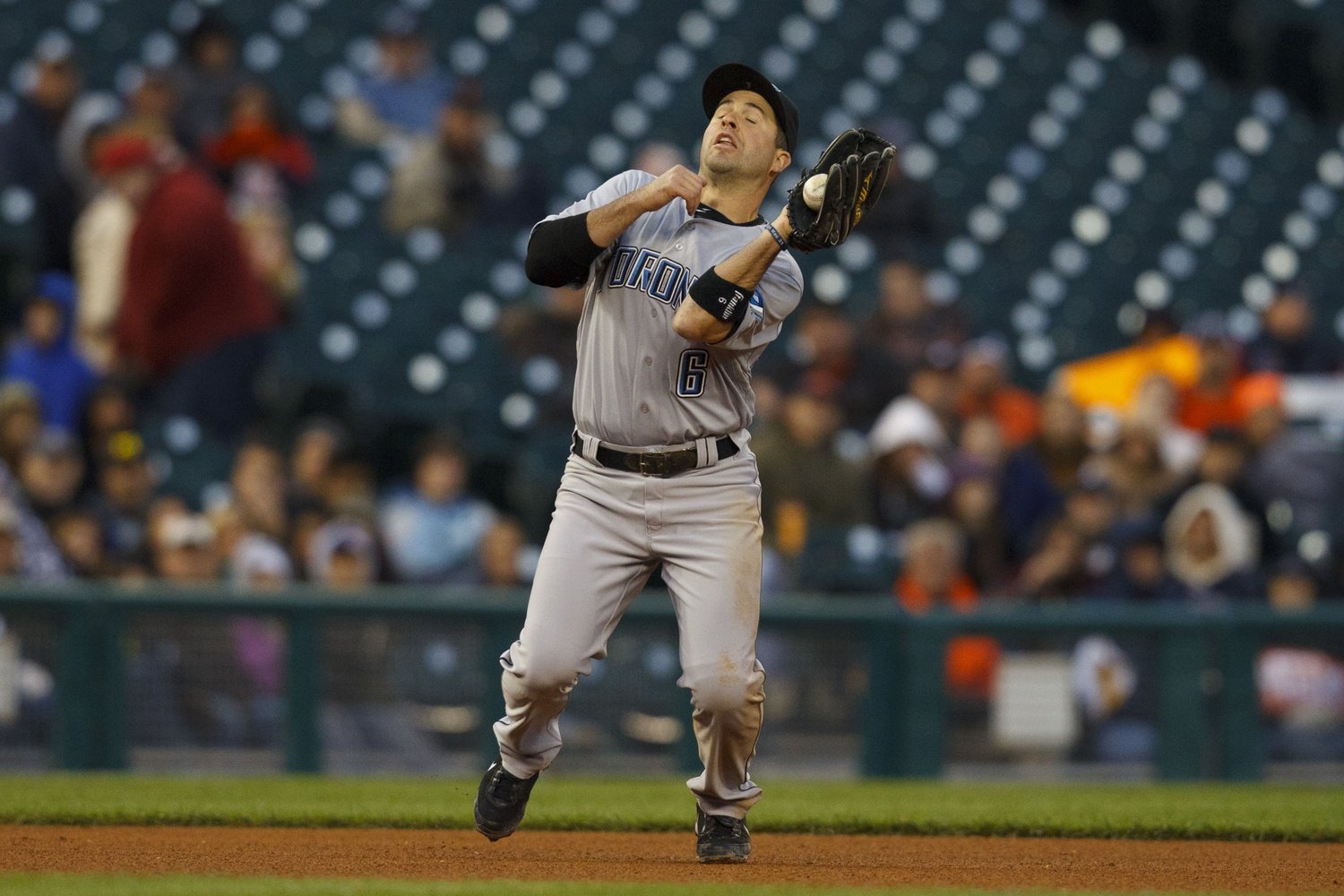
.jpg.d37079aa64235070ff30e2cce93e1395.jpg) Following the departure of Brian McNamee, the Toronto Blue Jays unveiled a new alternate logo featuring an, um, enhanced bird. Striking a resemblance to Toronto’s new, yet-to-be-named mascot Ace, the logo was mostly bird bicep and a touch of some of the cream and the clear. The logo adorned spring training and batting practice gear before eventually working its way onto an alternate jersey. The Blue Jays made the logo their primary mark in 2003, but plans were already underway for a more extensive rebrand the next season as the team sensibly went back to their classic look. “The grey is kind of...grey,” said Carlos Delgado after those were unveiled. “It’s going to have to grow on me.” His OPS dropped 100 points wearing 15 shades of charcoal in his final season as a Blue Jay. (photo credit: J.P. Moczulski/The Canadian Press) After Ace evaded being named in the Mitchell Report, and to potentially mark 10 years of him going ham on top of the dugout during the seventh inning, the team brought the logo back this year for a spring training lid. It didn’t go far enough. It is time to re-embrace the cartoony vibes of the early aughts with an alternate that brings back the logo, one that maybe just owed Jason Grimsley some money. Thanks to everyone who has voted so far, and if you haven’t, you can cast your votes on the first half of the bracket here. Now for the last eight finalists: (2) Munenori Kawasaki vs. (15) Ezequiel Carrera A player that needs no introduction, although he does give himself a great one. Thanks to his research on primates, we now know how many bananas are required to prevent cramping, although it’s merely a suggestion during pennant celebrations, or a Muni-preferred bush party. Kawasaki's .627 OPS across three seasons with Toronto was offset by his better-than-Jose-and-Edwin golf game, reporting abilities, and dance moves. Zeke went about his business a little quieter but was just as much of a beloved role player during Toronto’s playoff runs in the 2010s. He hit better than his teammate, but Carrera filled the bench role for the outfield much as Kawasaki did in the infield. Both light-hitting but reliable players, Kawasaki and Carrera brought welcomed energy onto those brooding contending teams. (7) Matt Stairs vs. (10) Travis Snider Stairs debuted in 1992 for the Montreal Expos and returned to his home country 15 years later to play for the Blue Jays at age 39. Lumbering between the lines like the lefty masher on your local senior team, Stairs had one of his best seasons in ‘07, posting a team-leading OPS+ of 138. When his outfield glove needed to be unlaced the next season, the Blue Jays were comfortable enough in the bat of the New Brunswick native that they initiated a quick, messy divorce with The Big Hurt to free up DH at-bats. Stairs would fall below replacement level in 2008, but a late-season trade made him a cult hero in the City of Brotherly Love. There were mixed emotions when Travis Snider jogged off Safeco Field during the seventh inning in 2012, having been dealt mid-game to Pittsburgh. There was a sadness that the likeable Snider would no longer be around, but also a relief in not having to watch the former top prospect trying to find his swing any longer. We stayed optimistic for years, but Snider never arrived, here or elsewhere, partly thanks to some bungling by his manager and the front office. Very few top prospects that fail to materialize maintain their popularity with fans, but Lunch Box Hero was an exception. Cam’s Place might be closed, but you can still honour Snider by eating his second-favourite nachos in Toronto. (3) Dustin McGowan vs. (14) Jesse Litsch One of Gord Ash’s final draft picks, McGowan might be the most tantalizing pitching prospect Toronto has had since the turn of the millennium. Injuries delayed his debut until 2005, and the following year, McGowan had nearly as many walks (25) and earned runs (22) as innings pitched (27.1). Starting 2007 in Triple-A, he found a groove and eventually started 27 games that year for the Jays, winning a dozen. His finest career start came in June, when he carried a no-hitter into the ninth against Colorado. People remember that McGowan, but also the McGowan that followed. The pitcher was sidelined for over three years after shoulder surgery in 2008, and for every setback that followed, there was fan support for the return of a healthy McGowan. Those who wished the pitcher well were rewarded with a fine farewell tour in 2014. The right-hander started the home opener after winning the final spot in the rotation during spring, and while he only started eight times, he made 45 other appearances out of the bullpen and left to pitch in three more major league seasons. Jesse Litsch’s arrival in the major leagues had none of the pomp that had come with McGowan. A 24th-round pick in 2004, Litsch was 6-1 with a 0.97 ERA in Double-A when he was called up to replace an injured Roy Halladay early in the 2007 season. Litsch recorded 26 outs in Toronto’s 2-1 win, 21 of which came by groundball. Originally ticketed to go back to the minors, Litsch started 48 games over the next two seasons. But like McGowan, arm troubles came for Litsch. His next two seasons were interrupted by Tommy John surgery, and shoulder problems would end his career after 2011. (6) Frank Catalanotto vs. (11) Adam Lind Frank Catalanotto had to pee. With a few hits already, the Cat ran into the clubhouse to relieve himself when he bumped into his super-platoon mate Reed Johnson. “I don’t know how many at-bats I’m going to get today,” Catalanotto recalls saying. “But however many it is, that’s how many hits I’m going to get.” Catalanotto went 6-for-6, the last of which set a Toronto single-game record for hits. In total, the Cat hit .299 over four seasons with the Blue Jays and was as consistent as anyone on those mid-2000s teams. Johnson would outplay the platoon in the second half of 2006, and when Toronto signed Frank Thomas in the offseason, it closed the book on Catalanotto’s Jays tenure, even as Richard Griffin bemoaned signing “a former White Sox clubhouse cancer” while letting Catalanotto’s clubhouse presence walk out the door. Lind debuted as a top prospect just as Catalanotto was leaving. For all the guff Cito has taken for his handling of Travis Snider, it was Gaston who gave Lind his first real run after he had been taken out of the lineup by John Gibbons. Managing for his job, Gibbons played veterans Brad Wilkerson and Kevin Mench repeatedly in left field. When that sent Gibby back to his ranch, Lind found a rhythm with regular playing time under Gaston. Lind never again reached the apex of his 2009 (.305/.370/.562 with 35 home runs), but he stuck around until 2014, swatting 146 big flies as a Blue Jay, placing him 10th all-time on the club's home run leaderboard. We will keep all the polls open for a bit before revealing the eight players that will move on to round two of voting. (Here's the link for the first half of the bracket again.) With my apologies to Brad Fullmer and Ryan Goins, let me know who I missed in the comments below.
Following the departure of Brian McNamee, the Toronto Blue Jays unveiled a new alternate logo featuring an, um, enhanced bird. Striking a resemblance to Toronto’s new, yet-to-be-named mascot Ace, the logo was mostly bird bicep and a touch of some of the cream and the clear. The logo adorned spring training and batting practice gear before eventually working its way onto an alternate jersey. The Blue Jays made the logo their primary mark in 2003, but plans were already underway for a more extensive rebrand the next season as the team sensibly went back to their classic look. “The grey is kind of...grey,” said Carlos Delgado after those were unveiled. “It’s going to have to grow on me.” His OPS dropped 100 points wearing 15 shades of charcoal in his final season as a Blue Jay. (photo credit: J.P. Moczulski/The Canadian Press) After Ace evaded being named in the Mitchell Report, and to potentially mark 10 years of him going ham on top of the dugout during the seventh inning, the team brought the logo back this year for a spring training lid. It didn’t go far enough. It is time to re-embrace the cartoony vibes of the early aughts with an alternate that brings back the logo, one that maybe just owed Jason Grimsley some money. Thanks to everyone who has voted so far, and if you haven’t, you can cast your votes on the first half of the bracket here. Now for the last eight finalists: (2) Munenori Kawasaki vs. (15) Ezequiel Carrera A player that needs no introduction, although he does give himself a great one. Thanks to his research on primates, we now know how many bananas are required to prevent cramping, although it’s merely a suggestion during pennant celebrations, or a Muni-preferred bush party. Kawasaki's .627 OPS across three seasons with Toronto was offset by his better-than-Jose-and-Edwin golf game, reporting abilities, and dance moves. Zeke went about his business a little quieter but was just as much of a beloved role player during Toronto’s playoff runs in the 2010s. He hit better than his teammate, but Carrera filled the bench role for the outfield much as Kawasaki did in the infield. Both light-hitting but reliable players, Kawasaki and Carrera brought welcomed energy onto those brooding contending teams. (7) Matt Stairs vs. (10) Travis Snider Stairs debuted in 1992 for the Montreal Expos and returned to his home country 15 years later to play for the Blue Jays at age 39. Lumbering between the lines like the lefty masher on your local senior team, Stairs had one of his best seasons in ‘07, posting a team-leading OPS+ of 138. When his outfield glove needed to be unlaced the next season, the Blue Jays were comfortable enough in the bat of the New Brunswick native that they initiated a quick, messy divorce with The Big Hurt to free up DH at-bats. Stairs would fall below replacement level in 2008, but a late-season trade made him a cult hero in the City of Brotherly Love. There were mixed emotions when Travis Snider jogged off Safeco Field during the seventh inning in 2012, having been dealt mid-game to Pittsburgh. There was a sadness that the likeable Snider would no longer be around, but also a relief in not having to watch the former top prospect trying to find his swing any longer. We stayed optimistic for years, but Snider never arrived, here or elsewhere, partly thanks to some bungling by his manager and the front office. Very few top prospects that fail to materialize maintain their popularity with fans, but Lunch Box Hero was an exception. Cam’s Place might be closed, but you can still honour Snider by eating his second-favourite nachos in Toronto. (3) Dustin McGowan vs. (14) Jesse Litsch One of Gord Ash’s final draft picks, McGowan might be the most tantalizing pitching prospect Toronto has had since the turn of the millennium. Injuries delayed his debut until 2005, and the following year, McGowan had nearly as many walks (25) and earned runs (22) as innings pitched (27.1). Starting 2007 in Triple-A, he found a groove and eventually started 27 games that year for the Jays, winning a dozen. His finest career start came in June, when he carried a no-hitter into the ninth against Colorado. People remember that McGowan, but also the McGowan that followed. The pitcher was sidelined for over three years after shoulder surgery in 2008, and for every setback that followed, there was fan support for the return of a healthy McGowan. Those who wished the pitcher well were rewarded with a fine farewell tour in 2014. The right-hander started the home opener after winning the final spot in the rotation during spring, and while he only started eight times, he made 45 other appearances out of the bullpen and left to pitch in three more major league seasons. Jesse Litsch’s arrival in the major leagues had none of the pomp that had come with McGowan. A 24th-round pick in 2004, Litsch was 6-1 with a 0.97 ERA in Double-A when he was called up to replace an injured Roy Halladay early in the 2007 season. Litsch recorded 26 outs in Toronto’s 2-1 win, 21 of which came by groundball. Originally ticketed to go back to the minors, Litsch started 48 games over the next two seasons. But like McGowan, arm troubles came for Litsch. His next two seasons were interrupted by Tommy John surgery, and shoulder problems would end his career after 2011. (6) Frank Catalanotto vs. (11) Adam Lind Frank Catalanotto had to pee. With a few hits already, the Cat ran into the clubhouse to relieve himself when he bumped into his super-platoon mate Reed Johnson. “I don’t know how many at-bats I’m going to get today,” Catalanotto recalls saying. “But however many it is, that’s how many hits I’m going to get.” Catalanotto went 6-for-6, the last of which set a Toronto single-game record for hits. In total, the Cat hit .299 over four seasons with the Blue Jays and was as consistent as anyone on those mid-2000s teams. Johnson would outplay the platoon in the second half of 2006, and when Toronto signed Frank Thomas in the offseason, it closed the book on Catalanotto’s Jays tenure, even as Richard Griffin bemoaned signing “a former White Sox clubhouse cancer” while letting Catalanotto’s clubhouse presence walk out the door. Lind debuted as a top prospect just as Catalanotto was leaving. For all the guff Cito has taken for his handling of Travis Snider, it was Gaston who gave Lind his first real run after he had been taken out of the lineup by John Gibbons. Managing for his job, Gibbons played veterans Brad Wilkerson and Kevin Mench repeatedly in left field. When that sent Gibby back to his ranch, Lind found a rhythm with regular playing time under Gaston. Lind never again reached the apex of his 2009 (.305/.370/.562 with 35 home runs), but he stuck around until 2014, swatting 146 big flies as a Blue Jay, placing him 10th all-time on the club's home run leaderboard. We will keep all the polls open for a bit before revealing the eight players that will move on to round two of voting. (Here's the link for the first half of the bracket again.) With my apologies to Brad Fullmer and Ryan Goins, let me know who I missed in the comments below. -
 Twins Daily recently ran a list of the top nine cult hero, fan favourite Minnesota players since the 2000 season. Trying to come up with a similar list of Blue Jays was difficult. Not lacking for names, determining how certain Jays resonate with us is incomplete without input from you. In order to do that, we’ve created a bracket of 16 Blue Jays who can be looked at as cult heroes of the fan base within the last 25 years. There is no logic to the seeding (everything's made up and the points don't matter!), so you can use any criteria you wish in voting: vibes, hustle, trying to throw hands with Shea Hillenbrand, etc. We have split the bracket into two, starting off with eight guys, as well as a few names you might have been expecting to see that were left out: Orlando Hudson, Reed Johnson, Kevin Pillar, Marco Scutaro - All fan favourites, and while three of them were hard to omit personally, I had to draw a line somewhere, one I placed at having had a 5+ WAR season as a Blue Jay. Kevin Pillar - deemed too good for this list Marco Estrada, Justin Smoak - I'm drawing said line at All-Star appearances as a Blue Jay as well. Davis Schneider, Ernie Clement - I am sure these guys will be in a future iteration of this list, but their body of work isn’t finished. Let’s hope their resumes get padded this fall. Onto the round one matchups for the Loonie Dogs Region! (1) John McDonald vs. (16) Joe Inglett When he was traded to Detroit in July 2005, Johnny Mac was nowhere near the top of this list. That ascent began when he returned to the Blue Jays as the player to be named later in November. Continuing to wow Jays’ fans with his defensive abilities, McDonald stepped into the starting shortstop role midway through 2006 when Russ Adams was deemed no longer it. Royce Clayton and David Eckstein arrived in following years to take the job, but the Prime Minister of Defence outlasted each. For all the defensive wizardry, everyone remembers Father’s Day 2010. McDonald took time away in June to be with his father Jack, who passed away from cancer. Two days after the funeral, McDonald returned and stepped to the plate for a pinch-hit appearance in the ninth. After a warm welcome back from the crowd, McDonald took an 0-1 pitch over the wall in left, leading to an emotional home run trot with a final wish from Jack (“Hit your next one for me”) fresh in mind. Nicknamed “Voodoo Joe” by manager John Gibbons for avoiding being sent down to the minors due to others’ misfortunes, Inglett made the most of his biggest opportunity in 2008. With an injury to Aaron Hill, playing time opened up for Inglett, and his bat vaulted him into Toronto’s lead-off spot for the majority of the second half. Inglett finished with a .297 average and played every position for Toronto outside the battery and first base. (8) Shaun Marcum vs. (9) The Molina Brothers If Nick Markakis had a say, Marcum would win this thing. Pitching with an unacceptable amount of velocity for present times, the right-handed Marcum cut and sank the ball to the tune of a sub-4.00 ERA across 95 starts between 2006 and 2010. He missed 2009 after Tommy John surgery before returning to be Toronto’s Opening Day starter the next season. It was his best and last year with the Blue Jays before he was dealt to Milwaukee for Brett Lawrie, leaving Markakis to fend for himself against the remaining pitchers in the American League: Nick Markakis vs. Shaun Marcum: Year-by-Year Totals Table Year PA AB H 2B HR RBI BB SO BA OBP SLG OPS 2006 5 4 1 0 1 1 1 0 .250 .400 1.000 1.400 2007 7 6 3 0 2 2 1 1 .500 .571 1.500 2.071 2008 11 8 5 1 2 3 3 1 .625 .727 1.500 2.227 2010 12 11 3 2 0 0 1 1 .273 .333 .455 .788 Totals 35 29 12 3 5 6 6 3 .414 .514 1.034 1.549 Provided by Stathead.com: Found with Stathead. See Full Results. Two-thirds of the world’s most famous catching family spent time in Toronto; brief but memorable stints for each. One of the best defensive catchers of his generation, José slashed a career best .281/.342/.425 in 2011, the final of his two seasons as a Blue Jay. Bengie came to Toronto in 2006 on a one-year deal after eight seasons and a World Series title with the Angels. In over 7,350 at-bats during 28 combined major league seasons, the lead-footed brothers hit just nine triples, but each had one during his time with Toronto. Bengie finished a double shy of the cycle on August 17 in Tampa, when he sent the dugout into hysterics after he slid safely into third base in the second inning of a Blue Jays win. The third and final triple of José’s career also came at the Trop in his last season with Toronto during a fun game in which Jon Rauch and Shawn Camp each blew save chances. (5) John Gibbons vs. (12) Tim Leiper The return of Gibbons as manager before the 2013 season was a major surprise in an offseason full of activity. Gibby spent parts of five seasons as the skipper before he was fired in 2008 to give way to Cito Gaston and John Farrell. The ensuing years of mutiny and M*sshole only helped mythicize Gibbons in Blue Jays lore, but a return? Longtime Toronto Star writer Richard Griffin didn’t have Gibby in his top 50 guesses as Farrell’s would-be replacement. It is now hard to imagine those 2015 and 2016 teams being led by anyone else. He famously fought Ted Lilly in the middle of an 87-win season in 2006 but didn’t get his nose bloodied smelling Josh Donaldson’s cologne ten years later. The Gibby that returned was laid-back (he’s smoooakin’) but still authentic, and a good game manager as well. While Gaston: Part Deux was a sad exercise in needing to leave the past in the past, Gibbons returned to lead the most exciting Blue Jays squads since the World Series. No one smacked asses and yelled attababe quite like his first base coach, Leiper. He spent three decades playing and coaching in the minors before Gibbons hired him to coach first base in 2014, a position Leips held for Canada in the 2004 Olympics. Despite years of Brian Butterfield, Leiper proved that base coaches can be loved by this fan base, and even a higher power (but not by San Diego). (4) Billy Koch vs. (13) Jason Grilli My childhood Blue Jays fandom was briefly interrupted by Rod Smith telling me on TSN’s newly minted SportsCentre that Billy Koch had been traded. Koch was the quintessential closer at the turn of the century, staring down opposing hitters with his wispy soul patch before snarling 100 mph fastballs at them. Koch posted three 30+ save seasons for Toronto before he was sent away for Eric Hinske, and it would be a decade until the Blue Jays found stability in the ninth inning again. Moving on from Koch turned out to be the right play. Billy Beane did the same thing after getting an AL-leading 84 appearances from Koch in 2002, dealing him to Chicago for Keith Foulke. Three years later, Koch washed back to Dunedin for one last hurrah as a Blue Jay and professional pitcher. After four dismal outings in the spring, Koch was gone, only to momentarily return to yell at Scott Schoeneweis from the Tropicana Field stands. Toronto had Roberto Osuna closing in 2016, but with nothing reliable between the rotation and the ninth, Ross Atkins acquired Grilli from Atlanta two months into the season. Coming off an Achilles injury and struggling since his return, Grilli arrived in Toronto with few expectations. After five straight clean appearances to start, Grilli earned the trust of his manager and pitched well in high-leverage situations throughout the dog days of that summer. Grilli faltered down the stretch but rebounded for another five scoreless appearances in the postseason. It’s best not to talk about 2017, but Grill Cheese was a moment. The final eight names will be revealed in the coming days, so let me know who had better be among the last set of names in the comments.
 -
 Twins Daily recently ran a list of the top nine cult hero, fan favourite Minnesota players since the 2000 season. Trying to come up with a similar list of Blue Jays was difficult. Not lacking for names, determining how certain Jays resonate with us is incomplete without input from you. In order to do that, we’ve created a bracket of 16 Blue Jays who can be looked at as cult heroes of the fan base within the last 25 years. There is no logic to the seeding (everything's made up and the points don't matter!), so you can use any criteria you wish in voting: vibes, hustle, trying to throw hands with Shea Hillenbrand, etc. We have split the bracket into two, starting off with eight guys, as well as a few names you might have been expecting to see that were left out: Orlando Hudson, Reed Johnson, Kevin Pillar, Marco Scutaro - All fan favourites, and while three of them were hard to omit personally, I had to draw a line somewhere, one I placed at having had a 5+ WAR season as a Blue Jay. Kevin Pillar - deemed too good for this list Marco Estrada, Justin Smoak - I'm drawing said line at All-Star appearances as a Blue Jay as well. Davis Schneider, Ernie Clement - I am sure these guys will be in a future iteration of this list, but their body of work isn’t finished. Let’s hope their resumes get padded this fall. Onto the round one matchups for the Loonie Dogs Region! (1) John McDonald vs. (16) Joe Inglett When he was traded to Detroit in July 2005, Johnny Mac was nowhere near the top of this list. That ascent began when he returned to the Blue Jays as the player to be named later in November. Continuing to wow Jays’ fans with his defensive abilities, McDonald stepped into the starting shortstop role midway through 2006 when Russ Adams was deemed no longer it. Royce Clayton and David Eckstein arrived in following years to take the job, but the Prime Minister of Defence outlasted each. For all the defensive wizardry, everyone remembers Father’s Day 2010. McDonald took time away in June to be with his father Jack, who passed away from cancer. Two days after the funeral, McDonald returned and stepped to the plate for a pinch-hit appearance in the ninth. After a warm welcome back from the crowd, McDonald took an 0-1 pitch over the wall in left, leading to an emotional home run trot with a final wish from Jack (“Hit your next one for me”) fresh in mind. Nicknamed “Voodoo Joe” by manager John Gibbons for avoiding being sent down to the minors due to others’ misfortunes, Inglett made the most of his biggest opportunity in 2008. With an injury to Aaron Hill, playing time opened up for Inglett, and his bat vaulted him into Toronto’s lead-off spot for the majority of the second half. Inglett finished with a .297 average and played every position for Toronto outside the battery and first base. (8) Shaun Marcum vs. (9) The Molina Brothers If Nick Markakis had a say, Marcum would win this thing. Pitching with an unacceptable amount of velocity for present times, the right-handed Marcum cut and sank the ball to the tune of a sub-4.00 ERA across 95 starts between 2006 and 2010. He missed 2009 after Tommy John surgery before returning to be Toronto’s Opening Day starter the next season. It was his best and last year with the Blue Jays before he was dealt to Milwaukee for Brett Lawrie, leaving Markakis to fend for himself against the remaining pitchers in the American League: Nick Markakis vs. Shaun Marcum: Year-by-Year Totals Table Year PA AB H 2B HR RBI BB SO BA OBP SLG OPS 2006 5 4 1 0 1 1 1 0 .250 .400 1.000 1.400 2007 7 6 3 0 2 2 1 1 .500 .571 1.500 2.071 2008 11 8 5 1 2 3 3 1 .625 .727 1.500 2.227 2010 12 11 3 2 0 0 1 1 .273 .333 .455 .788 Totals 35 29 12 3 5 6 6 3 .414 .514 1.034 1.549 Provided by Stathead.com: Found with Stathead. See Full Results. Two-thirds of the world’s most famous catching family spent time in Toronto; brief but memorable stints for each. One of the best defensive catchers of his generation, José slashed a career best .281/.342/.425 in 2011, the final of his two seasons as a Blue Jay. Bengie came to Toronto in 2006 on a one-year deal after eight seasons and a World Series title with the Angels. In over 7,350 at-bats during 28 combined major league seasons, the lead-footed brothers hit just nine triples, but each had one during his time with Toronto. Bengie finished a double shy of the cycle on August 17 in Tampa, when he sent the dugout into hysterics after he slid safely into third base in the second inning of a Blue Jays win. The third and final triple of José’s career also came at the Trop in his last season with Toronto during a fun game in which Jon Rauch and Shawn Camp each blew save chances. (5) John Gibbons vs. (12) Tim Leiper The return of Gibbons as manager before the 2013 season was a major surprise in an offseason full of activity. Gibby spent parts of five seasons as the skipper before he was fired in 2008 to give way to Cito Gaston and John Farrell. The ensuing years of mutiny and M*sshole only helped mythicize Gibbons in Blue Jays lore, but a return? Longtime Toronto Star writer Richard Griffin didn’t have Gibby in his top 50 guesses as Farrell’s would-be replacement. It is now hard to imagine those 2015 and 2016 teams being led by anyone else. He famously fought Ted Lilly in the middle of an 87-win season in 2006 but didn’t get his nose bloodied smelling Josh Donaldson’s cologne ten years later. The Gibby that returned was laid-back (he’s smoooakin’) but still authentic, and a good game manager as well. While Gaston: Part Deux was a sad exercise in needing to leave the past in the past, Gibbons returned to lead the most exciting Blue Jays squads since the World Series. No one smacked asses and yelled attababe quite like his first base coach, Leiper. He spent three decades playing and coaching in the minors before Gibbons hired him to coach first base in 2014, a position Leips held for Canada in the 2004 Olympics. Despite years of Brian Butterfield, Leiper proved that base coaches can be loved by this fan base, and even a higher power (but not by San Diego). (4) Billy Koch vs. (13) Jason Grilli My childhood Blue Jays fandom was briefly interrupted by Rod Smith telling me on TSN’s newly minted SportsCentre that Billy Koch had been traded. Koch was the quintessential closer at the turn of the century, staring down opposing hitters with his wispy soul patch before snarling 100 mph fastballs at them. Koch posted three 30+ save seasons for Toronto before he was sent away for Eric Hinske, and it would be a decade until the Blue Jays found stability in the ninth inning again. Moving on from Koch turned out to be the right play. Billy Beane did the same thing after getting an AL-leading 84 appearances from Koch in 2002, dealing him to Chicago for Keith Foulke. Three years later, Koch washed back to Dunedin for one last hurrah as a Blue Jay and professional pitcher. After four dismal outings in the spring, Koch was gone, only to momentarily return to yell at Scott Schoeneweis from the Tropicana Field stands. Toronto had Roberto Osuna closing in 2016, but with nothing reliable between the rotation and the ninth, Ross Atkins acquired Grilli from Atlanta two months into the season. Coming off an Achilles injury and struggling since his return, Grilli arrived in Toronto with few expectations. After five straight clean appearances to start, Grilli earned the trust of his manager and pitched well in high-leverage situations throughout the dog days of that summer. Grilli faltered down the stretch but rebounded for another five scoreless appearances in the postseason. It’s best not to talk about 2017, but Grill Cheese was a moment. The final eight names will be revealed in the coming days, so let me know who had better be among the last set of names in the comments. View full article
 -
Through no fault of his own, David Cone’s return to Toronto had not gone to plan. Cone first arrived in Toronto late in the 1992 season and, after helping the Blue Jays win their first World Series, the Kansas City native signed a three-year deal to pitch for his hometown Royals. He was his usual terrific self and won the Cy Young Award in 1994’s strike-abbreviated season. As a union representative, Cone sat in as little progress towards a deal was made through the winter, and when the strike came to an end in April, the Royals were looking to downsize their payroll. It was at this time that Gord Ash was able to get to his long-awaited work. After spending years serving under Pat Gillick, Ash finally ascended to Toronto’s big chair when Gillick stepped aside as general manager in the early days of the strike. Ash had made a few minor deals during the winter, but days after baseball resumed business, Ash struck his first big trade. “A Pat Gillick special,” Ash declared, “I just did it five months early, that’s all.” “It says we’re not going to be retooling this year...we’re going to try and win.” If Ash knew what would happen in less than five months, he might have toned down the bravado. Ash held the press conference and started by announcing he had signed six minor league players, including Chris Stynes. Then, he said the Mets were coming to play an exhibition game at SkyDome before the season started. And oh, by the way, we also traded Stynes for David Cone. The man was feeling himself. (photo credit: Carlo Allegri/AFP via Getty Images) Cone pitched like an ace for Toronto, a team that struggled once the season began. Cone had a no-hit bid broken up in the ninth inning of a start in June, his finest of the year, but the Blue Jays responded by winning just five of their next 18, dropping to 24-39 and a dozen games out of the division. Cone was one of the few players keeping the Blue Jays from truly bottoming out. He threw eight innings of one-run ball in Seattle on July 14; the win marked his sixth victorious start following a Toronto loss on the season. By then, trade rumours had picked up around the Blue Jays and, specifically, Cone. The Blue Jays had interest in working out a contract extension with the pitcher, something that Cone’s worth and baseball’s cloudy economic picture were making difficult. If Ash did decide to trade the right-hander, he would be asking for a premium, and with good reason. At least nine teams expressed interest in Cone, and when Texas made a final offer, Ash told them they had the fourth-best proposal. Ash was also fielding calls on other veterans, including Joe Carter. The hero of the 1993 World Series was hitting .330 entering June but had since fallen off a cliff. A 4-for-51 stretch in July plummeted his average to .249 and, likewise, any interest from San Diego in a reunion. Not exclusive to Cone, Ash was thought to be asking for a heavy return on Carter, as well as Paul Molitor or John Olerud. “We’re not seeking anything that we haven’t given up in the past,” said Ash. “Nobody knows better than us what you have to give up to become a contender.” Baltimore was realistically the only spot for Carter leading up to the deadline, but the O’s ended up acquiring Bobby Bonilla from the Mets. Carter was owed $5.5 million in 1996, and the market for non-rentals in the immediate aftermath of the strike was murky. Fine by Carter, who was all smiles in saying, “I’m still here” after the deadline passed. On July 28, manager Cito Gaston walked up behind Cone and tapped the pitcher on the shoulder. Summoned to Gaston’s office, Cone was told he had been traded to the Yankees, who sat 4.5 games behind Boston in the division. In return, Toronto received three right-handed pitching prospects: Jason Jarvis, Mike Gordon, and Marty Janzen. For his part, Ash said he never retreated from his high return demands and that the Yankees including Janzen was the “key” to the deal. Thinking otherwise, Richard Griffin penned in the Toronto Star: If Ash blinked, Roberto Alomar fumed. The impending free agent was already dealing with a lot. During a day game earlier that month, Alomar was pulled off the field and met by Toronto police officers in the Blue Jays' clubhouse. He lived in the SkyDome’s hotel, and that weekend, a 31-year-old woman checked in and brought a gun. She intended to kill Alomar. “It could be the end of me in Toronto,” an emotional Alomar said afterwards, “I have to think if I want to stay here.” Now this. ‘92 and ‘93 felt like a lifetime ago for Alomar. No more Toronto and no more Ash, who refused to negotiate a new deal during the season, adding to the second baseman’s frustration. “I’ve already made a decision about whether to come back here or go for free agency,” Alomar declared after the trade. “It makes me think the Blue Jays are trying to rebuild. If you’re a free agent, you have to go to a winning team.” The next stage of David Cone trade grief took the form of pouting. A day after the trade, Alomar asked out of the lineup, in what would turn out to be an 18-11 win over Oakland. He was in uniform but didn’t even head out to the dugout, departing quickly after the final out amid trade speculation. He wished. Buck Martinez, then of TSN, said while Alomar was disappointed in the Cone trade, his real disappointment lay in not being traded himself. “I want the fans to know that if I’m not here, it’s not because I didn’t want to be,” he expressed, but added that Ash’s refusal to discuss a contract made it "tough for me to come back here.” For his part, Ash called his second baseman an integral part of the team’s future but was holding off on any contract extensions until baseball’s new revenue sharing and free agency plans were finalized. If Alomar was trying to force his way out of Toronto at the deadline, it was not going to work. “I don't anticipate any more trades,” Ash correctly predicted 24 hours before the deadline. “If we can get what we consider fair value, we'll make a deal, but right now it doesn't look like that's going to happen.” Value so fair even Wikipedia is bringing its citation game. Janzen had dominated the Florida State League prior to the trade and would hop into the Blue Jays’ organization in Double A, where he won five of seven starts with a 2.63 ERA to close out 1995. He failed to make the team out of spring training in 1996 before eventually having a disastrous run in Toronto’s rotation, being battered for 95 hits and 60 earned runs across 73 innings. He returned for one more season, pitching 12 games out of the bullpen, before the upstart Arizona selected him in the expansion draft. By that time, Jarvis had already departed the organization, and Gordon would leave the following year; neither would progress past Double A. At the time of the trade, Ash had asked fans for patience, comparing the deal to Gillick’s trade with San Diego that brought Alomar and Carter to Toronto. It aged worse than his “Pat Gillick special” boast. If the 1995 trade deadline was Ash’s first chance to steer the ship, he veered off onto a course that never improved much over his tenure. The Blue Jays should have traded Alomar after they dealt Cone, but, considering the return on the latter, Toronto was just as well to play out the final few months of Alomar’s contract. View full article
-
.jpg.69ea18e742c990cb446f4598fa7c8025.jpg) Through no fault of his own, David Cone’s return to Toronto had not gone to plan. Cone first arrived in Toronto late in the 1992 season and, after helping the Blue Jays win their first World Series, the Kansas City native signed a three-year deal to pitch for his hometown Royals. He was his usual terrific self and won the Cy Young Award in 1994’s strike-abbreviated season. As a union representative, Cone sat in as little progress towards a deal was made through the winter, and when the strike came to an end in April, the Royals were looking to downsize their payroll. It was at this time that Gord Ash was able to get to his long-awaited work. After spending years serving under Pat Gillick, Ash finally ascended to Toronto’s big chair when Gillick stepped aside as general manager in the early days of the strike. Ash had made a few minor deals during the winter, but days after baseball resumed business, Ash struck his first big trade. “A Pat Gillick special,” Ash declared, “I just did it five months early, that’s all.” “It says we’re not going to be retooling this year...we’re going to try and win.” If Ash knew what would happen in less than five months, he might have toned down the bravado. Ash held the press conference and started by announcing he had signed six minor league players, including Chris Stynes. Then, he said the Mets were coming to play an exhibition game at SkyDome before the season started. And oh, by the way, we also traded Stynes for David Cone. The man was feeling himself. (photo credit: Carlo Allegri/AFP via Getty Images) Cone pitched like an ace for Toronto, a team that struggled once the season began. Cone had a no-hit bid broken up in the ninth inning of a start in June, his finest of the year, but the Blue Jays responded by winning just five of their next 18, dropping to 24-39 and a dozen games out of the division. Cone was one of the few players keeping the Blue Jays from truly bottoming out. He threw eight innings of one-run ball in Seattle on July 14; the win marked his sixth victorious start following a Toronto loss on the season. By then, trade rumours had picked up around the Blue Jays and, specifically, Cone. The Blue Jays had interest in working out a contract extension with the pitcher, something that Cone’s worth and baseball’s cloudy economic picture were making difficult. If Ash did decide to trade the right-hander, he would be asking for a premium, and with good reason. At least nine teams expressed interest in Cone, and when Texas made a final offer, Ash told them they had the fourth-best proposal. Ash was also fielding calls on other veterans, including Joe Carter. The hero of the 1993 World Series was hitting .330 entering June but had since fallen off a cliff. A 4-for-51 stretch in July plummeted his average to .249 and, likewise, any interest from San Diego in a reunion. Not exclusive to Cone, Ash was thought to be asking for a heavy return on Carter, as well as Paul Molitor or John Olerud. “We’re not seeking anything that we haven’t given up in the past,” said Ash. “Nobody knows better than us what you have to give up to become a contender.” Baltimore was realistically the only spot for Carter leading up to the deadline, but the O’s ended up acquiring Bobby Bonilla from the Mets. Carter was owed $5.5 million in 1996, and the market for non-rentals in the immediate aftermath of the strike was murky. Fine by Carter, who was all smiles in saying, “I’m still here” after the deadline passed. On July 28, manager Cito Gaston walked up behind Cone and tapped the pitcher on the shoulder. Summoned to Gaston’s office, Cone was told he had been traded to the Yankees, who sat 4.5 games behind Boston in the division. In return, Toronto received three right-handed pitching prospects: Jason Jarvis, Mike Gordon, and Marty Janzen. For his part, Ash said he never retreated from his high return demands and that the Yankees including Janzen was the “key” to the deal. Thinking otherwise, Richard Griffin penned in the Toronto Star: If Ash blinked, Roberto Alomar fumed. The impending free agent was already dealing with a lot. During a day game earlier that month, Alomar was pulled off the field and met by Toronto police officers in the Blue Jays' clubhouse. He lived in the SkyDome’s hotel, and that weekend, a 31-year-old woman checked in and brought a gun. She intended to kill Alomar. “It could be the end of me in Toronto,” an emotional Alomar said afterwards, “I have to think if I want to stay here.” Now this. ‘92 and ‘93 felt like a lifetime ago for Alomar. No more Toronto and no more Ash, who refused to negotiate a new deal during the season, adding to the second baseman’s frustration. “I’ve already made a decision about whether to come back here or go for free agency,” Alomar declared after the trade. “It makes me think the Blue Jays are trying to rebuild. If you’re a free agent, you have to go to a winning team.” The next stage of David Cone trade grief took the form of pouting. A day after the trade, Alomar asked out of the lineup, in what would turn out to be an 18-11 win over Oakland. He was in uniform but didn’t even head out to the dugout, departing quickly after the final out amid trade speculation. He wished. Buck Martinez, then of TSN, said while Alomar was disappointed in the Cone trade, his real disappointment lay in not being traded himself. “I want the fans to know that if I’m not here, it’s not because I didn’t want to be,” he expressed, but added that Ash’s refusal to discuss a contract made it "tough for me to come back here.” For his part, Ash called his second baseman an integral part of the team’s future but was holding off on any contract extensions until baseball’s new revenue sharing and free agency plans were finalized. If Alomar was trying to force his way out of Toronto at the deadline, it was not going to work. “I don't anticipate any more trades,” Ash correctly predicted 24 hours before the deadline. “If we can get what we consider fair value, we'll make a deal, but right now it doesn't look like that's going to happen.” Value so fair even Wikipedia is bringing its citation game. Janzen had dominated the Florida State League prior to the trade and would hop into the Blue Jays’ organization in Double A, where he won five of seven starts with a 2.63 ERA to close out 1995. He failed to make the team out of spring training in 1996 before eventually having a disastrous run in Toronto’s rotation, being battered for 95 hits and 60 earned runs across 73 innings. He returned for one more season, pitching 12 games out of the bullpen, before the upstart Arizona selected him in the expansion draft. By that time, Jarvis had already departed the organization, and Gordon would leave the following year; neither would progress past Double A. At the time of the trade, Ash had asked fans for patience, comparing the deal to Gillick’s trade with San Diego that brought Alomar and Carter to Toronto. It aged worse than his “Pat Gillick special” boast. If the 1995 trade deadline was Ash’s first chance to steer the ship, he veered off onto a course that never improved much over his tenure. The Blue Jays should have traded Alomar after they dealt Cone, but, considering the return on the latter, Toronto was just as well to play out the final few months of Alomar’s contract.
Through no fault of his own, David Cone’s return to Toronto had not gone to plan. Cone first arrived in Toronto late in the 1992 season and, after helping the Blue Jays win their first World Series, the Kansas City native signed a three-year deal to pitch for his hometown Royals. He was his usual terrific self and won the Cy Young Award in 1994’s strike-abbreviated season. As a union representative, Cone sat in as little progress towards a deal was made through the winter, and when the strike came to an end in April, the Royals were looking to downsize their payroll. It was at this time that Gord Ash was able to get to his long-awaited work. After spending years serving under Pat Gillick, Ash finally ascended to Toronto’s big chair when Gillick stepped aside as general manager in the early days of the strike. Ash had made a few minor deals during the winter, but days after baseball resumed business, Ash struck his first big trade. “A Pat Gillick special,” Ash declared, “I just did it five months early, that’s all.” “It says we’re not going to be retooling this year...we’re going to try and win.” If Ash knew what would happen in less than five months, he might have toned down the bravado. Ash held the press conference and started by announcing he had signed six minor league players, including Chris Stynes. Then, he said the Mets were coming to play an exhibition game at SkyDome before the season started. And oh, by the way, we also traded Stynes for David Cone. The man was feeling himself. (photo credit: Carlo Allegri/AFP via Getty Images) Cone pitched like an ace for Toronto, a team that struggled once the season began. Cone had a no-hit bid broken up in the ninth inning of a start in June, his finest of the year, but the Blue Jays responded by winning just five of their next 18, dropping to 24-39 and a dozen games out of the division. Cone was one of the few players keeping the Blue Jays from truly bottoming out. He threw eight innings of one-run ball in Seattle on July 14; the win marked his sixth victorious start following a Toronto loss on the season. By then, trade rumours had picked up around the Blue Jays and, specifically, Cone. The Blue Jays had interest in working out a contract extension with the pitcher, something that Cone’s worth and baseball’s cloudy economic picture were making difficult. If Ash did decide to trade the right-hander, he would be asking for a premium, and with good reason. At least nine teams expressed interest in Cone, and when Texas made a final offer, Ash told them they had the fourth-best proposal. Ash was also fielding calls on other veterans, including Joe Carter. The hero of the 1993 World Series was hitting .330 entering June but had since fallen off a cliff. A 4-for-51 stretch in July plummeted his average to .249 and, likewise, any interest from San Diego in a reunion. Not exclusive to Cone, Ash was thought to be asking for a heavy return on Carter, as well as Paul Molitor or John Olerud. “We’re not seeking anything that we haven’t given up in the past,” said Ash. “Nobody knows better than us what you have to give up to become a contender.” Baltimore was realistically the only spot for Carter leading up to the deadline, but the O’s ended up acquiring Bobby Bonilla from the Mets. Carter was owed $5.5 million in 1996, and the market for non-rentals in the immediate aftermath of the strike was murky. Fine by Carter, who was all smiles in saying, “I’m still here” after the deadline passed. On July 28, manager Cito Gaston walked up behind Cone and tapped the pitcher on the shoulder. Summoned to Gaston’s office, Cone was told he had been traded to the Yankees, who sat 4.5 games behind Boston in the division. In return, Toronto received three right-handed pitching prospects: Jason Jarvis, Mike Gordon, and Marty Janzen. For his part, Ash said he never retreated from his high return demands and that the Yankees including Janzen was the “key” to the deal. Thinking otherwise, Richard Griffin penned in the Toronto Star: If Ash blinked, Roberto Alomar fumed. The impending free agent was already dealing with a lot. During a day game earlier that month, Alomar was pulled off the field and met by Toronto police officers in the Blue Jays' clubhouse. He lived in the SkyDome’s hotel, and that weekend, a 31-year-old woman checked in and brought a gun. She intended to kill Alomar. “It could be the end of me in Toronto,” an emotional Alomar said afterwards, “I have to think if I want to stay here.” Now this. ‘92 and ‘93 felt like a lifetime ago for Alomar. No more Toronto and no more Ash, who refused to negotiate a new deal during the season, adding to the second baseman’s frustration. “I’ve already made a decision about whether to come back here or go for free agency,” Alomar declared after the trade. “It makes me think the Blue Jays are trying to rebuild. If you’re a free agent, you have to go to a winning team.” The next stage of David Cone trade grief took the form of pouting. A day after the trade, Alomar asked out of the lineup, in what would turn out to be an 18-11 win over Oakland. He was in uniform but didn’t even head out to the dugout, departing quickly after the final out amid trade speculation. He wished. Buck Martinez, then of TSN, said while Alomar was disappointed in the Cone trade, his real disappointment lay in not being traded himself. “I want the fans to know that if I’m not here, it’s not because I didn’t want to be,” he expressed, but added that Ash’s refusal to discuss a contract made it "tough for me to come back here.” For his part, Ash called his second baseman an integral part of the team’s future but was holding off on any contract extensions until baseball’s new revenue sharing and free agency plans were finalized. If Alomar was trying to force his way out of Toronto at the deadline, it was not going to work. “I don't anticipate any more trades,” Ash correctly predicted 24 hours before the deadline. “If we can get what we consider fair value, we'll make a deal, but right now it doesn't look like that's going to happen.” Value so fair even Wikipedia is bringing its citation game. Janzen had dominated the Florida State League prior to the trade and would hop into the Blue Jays’ organization in Double A, where he won five of seven starts with a 2.63 ERA to close out 1995. He failed to make the team out of spring training in 1996 before eventually having a disastrous run in Toronto’s rotation, being battered for 95 hits and 60 earned runs across 73 innings. He returned for one more season, pitching 12 games out of the bullpen, before the upstart Arizona selected him in the expansion draft. By that time, Jarvis had already departed the organization, and Gordon would leave the following year; neither would progress past Double A. At the time of the trade, Ash had asked fans for patience, comparing the deal to Gillick’s trade with San Diego that brought Alomar and Carter to Toronto. It aged worse than his “Pat Gillick special” boast. If the 1995 trade deadline was Ash’s first chance to steer the ship, he veered off onto a course that never improved much over his tenure. The Blue Jays should have traded Alomar after they dealt Cone, but, considering the return on the latter, Toronto was just as well to play out the final few months of Alomar’s contract. -
The name sitting atop the Toronto Blue Jays’ draft board was notable. It was a logical pick. Heading into their sixth ever amateur draft in 1982, Toronto felt their minor league system was still lagging behind others in overall talent. Prior to the draft, executive Elliott Wahle told the Toronto Star that the Blue Jays would “take the best available (player) according to our scouting reports." Toronto stayed true to Wahle’s word with the draft’s second pick, and as the team went to make their next selection at 30, the player topping those reports was Barry Bonds. As fun as it is to imagine a timeline where Bonds' eyes pop out at Damien Cox for another question because the last one was stupid, the Blue Jays did have one glaring need. Faced with “a choice between two pitchers of equal ability, we would take a left-hander over a right-hander,” said Wahle, and for good reason. Over five-plus seasons of play, Toronto employed little southpaw pitching outside of Jerry Garvin, who was in the midst of playing his final games with the team. When it was time to make the pick, the Blue Jays pivoted and took their highest-rated lefty. For all the feats Bonds accomplished on a major league field, throwing a half-cut perfect game isn’t one to claim. That belongs exclusively to Toronto’s pick, David Wells. He landed on the Blue Jays' radar by striking out 164 batters in 94 innings as a high school senior in San Diego, posting a 12-1 record that included a perfect game and four one-hitters. The pick, according to Neil MacCarl of the Star, was Toronto targeting their need, “otherwise, they would have taken Barry Bonds.” A few weeks after the draft, Bonds fell asleep in the bullpen during an all-star team tryout after a late night at senior prom. No way he could pull through after a post-SNL party like Boomer and Jim Leyland’s office couch in Pittsburgh can attest. Lots of Bonds’ info is from the great Jeff Pearlman’s Love Me, Hate Me. If organizational depth influenced the selection of Wells over Bonds, it hadn’t impacted Toronto’s first-round plans. The jewel of their system, 19-year-old shortstop Tony Fernández, was tearing up Triple-A and was well on his way to being Tony bleeping Fernández. However, as Gillick narrowed down the names for the second overall selection, he landed upon two shortstops. Toronto was not alone in wanting Shawon Dunston, a Brooklyn high school player who would go with the first pick to the Chicago Cubs. Outside of Dunston, the Blue Jays had been linked to the two top right-handed pitchers, Jimmy Jones and Dwight Gooden. Neither pitcher impressed Toronto enough for the team to chose either over Augie Schmidt. 1982’s eventual Golden Spikes winner as the top American amateur player, Schmidt hit .372 for the University of New Orleans and his plate discipline (165 walks in 190 career college games) had impressed Toronto scouts. Some had questioned Schmidt’s arm and his long-term viability as a defender, but Schmidt had played elsewhere as an infielder during international competitions. “He’s a very mature kid with a good make-up,” said scouting supervisor Bob Engle. “He has good baseball instincts.” By 1984, Schmidt failed to impress and struggled defensively. He split the season between Double-A and Triple-A; meanwhile Gooden, picked fifth overall by the Mets, debuted and was an instant success. At season’s end, Gooden was an all-star, rookie of the year, and a near Cy Young award winner while Schmidt was told he was moving to second base to begin 1985. Instead, Schmidt was moved in the offseason to the Giants in a deal for a left-handed pitcher, Gary Lavelle. Lavelle would appear in 92 games out of Toronto’s bullpen in the next two seasons. Toronto had tried to acquire him during the ‘84 season but the brakes were put on any deal when San Francisco insisted a deal include Fernández. (photo credit: TCDB) This is where the what-if game with Bonds begins. Had Toronto taken Gooden with their first pick, would they have felt comfortable forgoing a pitcher to select Barry second? There is also the question if Toronto would have been able to sign Bonds. He had already committed to Arizona State but was turning professional for the right price. San Francisco took Bonds with the 39th pick but didn’t sign their future star when they came up $5,000 short of his $75,000 bonus demand. Meanwhile, the Blue Jays were able to sign Boomer with a $50,000 bonus. Wells would eventually debut with Toronto in 1987, by which time Jimmy Key had already become an all-star. Toronto’s third round pick was their best; Key turned into the lefty Gillick had been seeking for his team. He was the second-best pitcher in the American League in 1987, the peak of his eight years in Toronto’s rotation. His performance in Game 4 of the 1992 World Series gave Toronto a 3-1 series lead and Key would pitch in the clincher, leaving that final out for Mike Timlin. Wells pitched in four games himself that series but neither would be around to repeat as champions. Key left as a free agent for the Yankees while Wells was released at the end of spring training. Seth never seen Jimmy pitch in Toronto. The only 1982 draft pick to be on both World Series teams was Pat Borders, whom the Blue Jays selected in the sixth round. Borders hit well in the minors and after converting to catcher, he began to quickly ascend upon a promotion to Double-A in 1987. He was in Toronto the next season and while we’re throwing 1992 bona fides around, he was the series MVP and also hit .304 the following year in the win over Philadelphia. 1982 would be the final year Toronto’s draft room was headed by Gillick and Wahle. The two had worked together with the Yankees and when Gillick was hired by upstart Toronto, he convinced Wahle to join him in the front office. The pair built the early Blue Jays through the expansion and ensuing amateur and Rule 5 drafts. Gillick would stay on through eleven straight 85+ win seasons starting in 1983, but Wahle left baseball entirely to head up Toys-R-Us’ expansion into Canada, a fate some Yankee fans wish they could befall on Brian Cashman. View full article
-
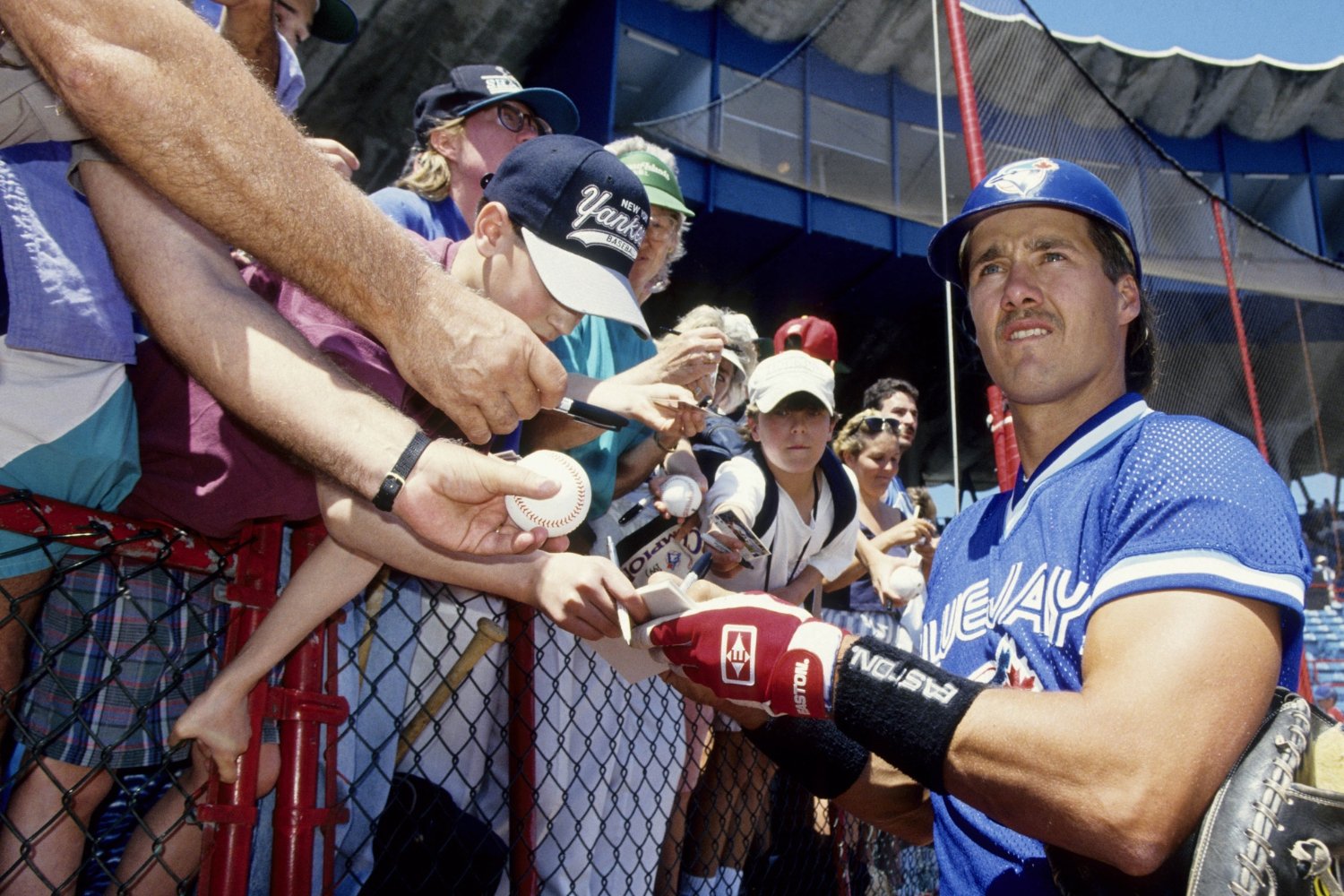 The name sitting atop the Toronto Blue Jays’ draft board was notable. It was a logical pick. Heading into their sixth ever amateur draft in 1982, Toronto felt their minor league system was still lagging behind others in overall talent. Prior to the draft, executive Elliott Wahle told the Toronto Star that the Blue Jays would “take the best available (player) according to our scouting reports." Toronto stayed true to Wahle’s word with the draft’s second pick, and as the team went to make their next selection at 30, the player topping those reports was Barry Bonds. As fun as it is to imagine a timeline where Bonds' eyes pop out at Damien Cox for another question because the last one was stupid, the Blue Jays did have one glaring need. Faced with “a choice between two pitchers of equal ability, we would take a left-hander over a right-hander,” said Wahle, and for good reason. Over five-plus seasons of play, Toronto employed little southpaw pitching outside of Jerry Garvin, who was in the midst of playing his final games with the team. When it was time to make the pick, the Blue Jays pivoted and took their highest-rated lefty. For all the feats Bonds accomplished on a major league field, throwing a half-cut perfect game isn’t one to claim. That belongs exclusively to Toronto’s pick, David Wells. He landed on the Blue Jays' radar by striking out 164 batters in 94 innings as a high school senior in San Diego, posting a 12-1 record that included a perfect game and four one-hitters. The pick, according to Neil MacCarl of the Star, was Toronto targeting their need, “otherwise, they would have taken Barry Bonds.” A few weeks after the draft, Bonds fell asleep in the bullpen during an all-star team tryout after a late night at senior prom. No way he could pull through after a post-SNL party like Boomer and Jim Leyland’s office couch in Pittsburgh can attest. Lots of Bonds’ info is from the great Jeff Pearlman’s Love Me, Hate Me. If organizational depth influenced the selection of Wells over Bonds, it hadn’t impacted Toronto’s first-round plans. The jewel of their system, 19-year-old shortstop Tony Fernández, was tearing up Triple-A and was well on his way to being Tony bleeping Fernández. However, as Gillick narrowed down the names for the second overall selection, he landed upon two shortstops. Toronto was not alone in wanting Shawon Dunston, a Brooklyn high school player who would go with the first pick to the Chicago Cubs. Outside of Dunston, the Blue Jays had been linked to the two top right-handed pitchers, Jimmy Jones and Dwight Gooden. Neither pitcher impressed Toronto enough for the team to chose either over Augie Schmidt. 1982’s eventual Golden Spikes winner as the top American amateur player, Schmidt hit .372 for the University of New Orleans and his plate discipline (165 walks in 190 career college games) had impressed Toronto scouts. Some had questioned Schmidt’s arm and his long-term viability as a defender, but Schmidt had played elsewhere as an infielder during international competitions. “He’s a very mature kid with a good make-up,” said scouting supervisor Bob Engle. “He has good baseball instincts.” By 1984, Schmidt failed to impress and struggled defensively. He split the season between Double-A and Triple-A; meanwhile Gooden, picked fifth overall by the Mets, debuted and was an instant success. At season’s end, Gooden was an all-star, rookie of the year, and a near Cy Young award winner while Schmidt was told he was moving to second base to begin 1985. Instead, Schmidt was moved in the offseason to the Giants in a deal for a left-handed pitcher, Gary Lavelle. Lavelle would appear in 92 games out of Toronto’s bullpen in the next two seasons. Toronto had tried to acquire him during the ‘84 season but the brakes were put on any deal when San Francisco insisted a deal include Fernández. (photo credit: TCDB) This is where the what-if game with Bonds begins. Had Toronto taken Gooden with their first pick, would they have felt comfortable forgoing a pitcher to select Barry second? There is also the question if Toronto would have been able to sign Bonds. He had already committed to Arizona State but was turning professional for the right price. San Francisco took Bonds with the 39th pick but didn’t sign their future star when they came up $5,000 short of his $75,000 bonus demand. Meanwhile, the Blue Jays were able to sign Boomer with a $50,000 bonus. Wells would eventually debut with Toronto in 1987, by which time Jimmy Key had already become an all-star. Toronto’s third round pick was their best; Key turned into the lefty Gillick had been seeking for his team. He was the second-best pitcher in the American League in 1987, the peak of his eight years in Toronto’s rotation. His performance in Game 4 of the 1992 World Series gave Toronto a 3-1 series lead and Key would pitch in the clincher, leaving that final out for Mike Timlin. Wells pitched in four games himself that series but neither would be around to repeat as champions. Key left as a free agent for the Yankees while Wells was released at the end of spring training. Seth never seen Jimmy pitch in Toronto. The only 1982 draft pick to be on both World Series teams was Pat Borders, whom the Blue Jays selected in the sixth round. Borders hit well in the minors and after converting to catcher, he began to quickly ascend upon a promotion to Double-A in 1987. He was in Toronto the next season and while we’re throwing 1992 bona fides around, he was the series MVP and also hit .304 the following year in the win over Philadelphia. 1982 would be the final year Toronto’s draft room was headed by Gillick and Wahle. The two had worked together with the Yankees and when Gillick was hired by upstart Toronto, he convinced Wahle to join him in the front office. The pair built the early Blue Jays through the expansion and ensuing amateur and Rule 5 drafts. Gillick would stay on through eleven straight 85+ win seasons starting in 1983, but Wahle left baseball entirely to head up Toys-R-Us’ expansion into Canada, a fate some Yankee fans wish they could befall on Brian Cashman.
 -
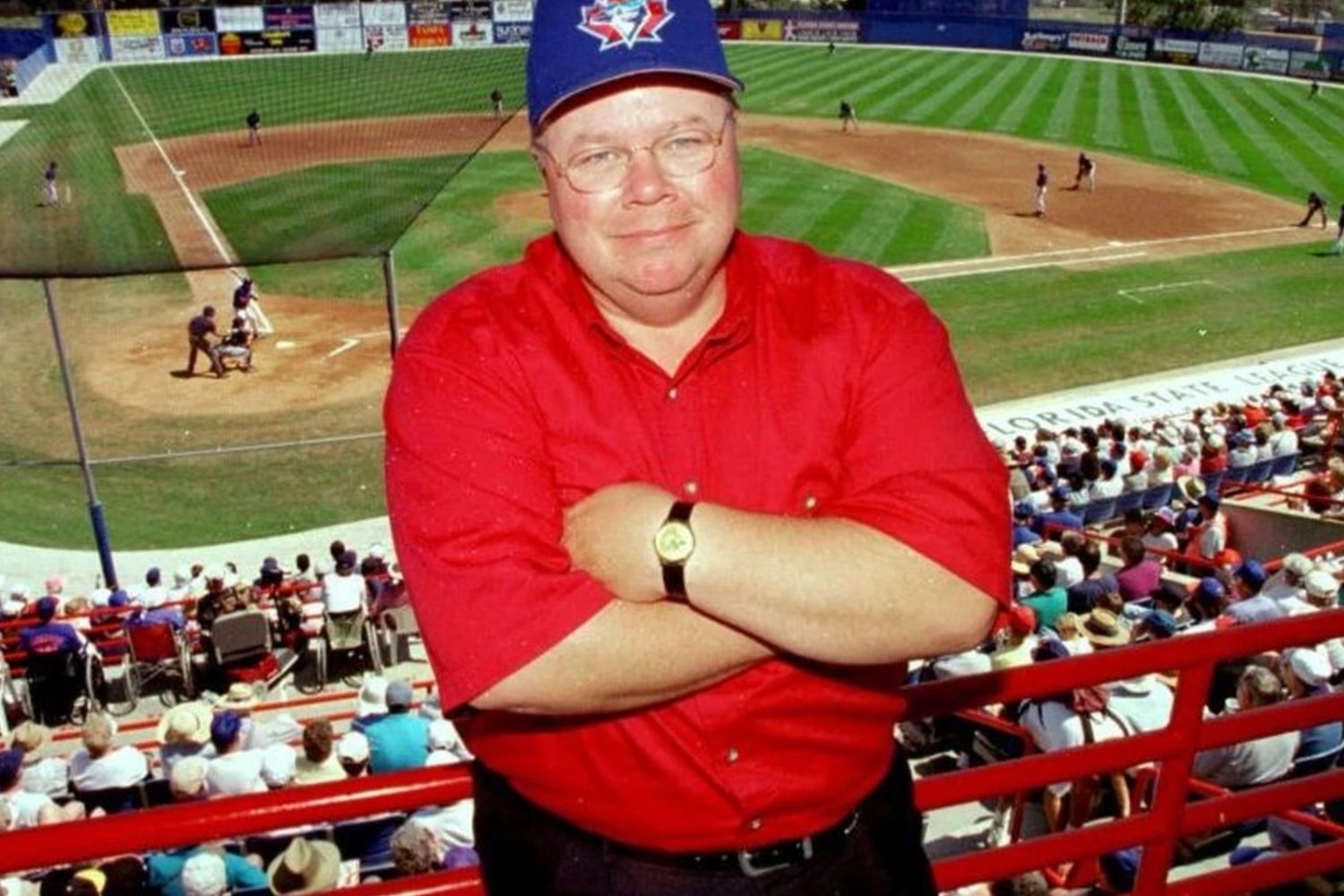 The name at the bottom of Gord Ash’s cheque had not changed, so neither had the names on his draft board. Ted Rogers would buy control of the Toronto Blue Jays in August, which couldn’t have come soon enough for Ash and everyone involved. Belgian-brewer Interbrew had owned the team for five soulless years, and the allowance given to Ash to run Toronto’s baseball operations grew smaller by the year. With the Blue Jays publicly for sale on the day of the 2000 amateur draft, Dave Perkins wrote in the Toronto Star, “a local man with deep pockets is needed to save it from beating the Montreal Expos to Virginia.” That certainly wasn’t Interbrew front man Hugo Powell who, on the right, looks exactly like he sounds. Later in the month, he told the Star that any buyer needed to bring something to the table that Interbrew didn’t already, bemoaning “at this point I have not seen a proposal that meets the test.” (photo credit: WSJ) The first round of the draft was one of the few days in the calendar year where Ash shined. While he admitted “player evaluations are not my strong suit” when he took over as the club’s general manager, Ash selected Roy Halladay with his first ever draft choice in 1995. Next to Ash on the pick was Tim Wilken, a trusted voice in many great draft picks during his 17 years to date with the team. Wilken was made scouting director in 1996 and with the fourth overall pick, Toronto went with Clemson right-hander Billy Koch. In the next three drafts, Toronto used its first pick on a teenage hitter, adding Vernon Wells, Felipe Lopez, and Alexis Rios. After years of pitcher-focused drafts, Ash said the team’s philosophy going forward was to take the best athlete available. What Ash didn’t say out loud was that he had also been financially kneecapped by the sniveling Hugo. Toronto’s selection of Rios with the 19th pick was seen as a way around having to pay the escalating bonus money being demanded by top prospects. Rios had quickly agreed to terms with Toronto on a $845,000 signing bonus, an amount that was eclipsed by the next 18 picks. That draft philosophy, both spoken and unspoken, led the Blue Jays to select Miguel Negron with the 18th overall pick in 2000. Negron grew up in Puerto Rico and starred on a team coached by longtime Toronto scout Jorge Rivera, who had signed Rios the year before. Wilken said Negron was a first-round player but few did; Baseball America did not have him in their top 100 prospects prior to the draft. ESPN columnist John Sickels called the selection “distasteful” and said the team “pulled the same stunt last year” with Rios. Wilken offered up another theory, suggesting that the Blue Jays were after a top left-handed pitcher in the draft, but it was nothing but a post-draft smokescreen. Mike Stodolka (4th, Royals), Mark Phillips (9th, Padres), and Joe Torres (10th, Angels) were likely to be gone by the time the draft reached Toronto at 18, and all three signed bonuses exceeding $2 million. For his part, Negron said he “had a lot of faith that Toronto was going to take me in the first round” and like Rios, quickly signed below market value. Left-hander Billy Traber, taken two picks before Rios, signed the lowest signing bonus of the first round but only after it was discovered it had significant arm damage. I don’t think the Blue Jays’ medical team had the wherewithal to foresee that. Negron flew west to Medicine Hat to start his pro career, a lengthy one that never reached the major leagues. Many wondered if his bat would ever develop power, but he showed enough for Toronto to add him to their 40-man roster before the 2005 season. He would hit a career high 12 home runs in Double-A that year, but when the Blue Jays needed roster space to add Ty Taubenheim to their bullpen the next season, the developmentally-lagging Negron was gone. He bounced around and would eventually reach Triple-A, but by 2011, his career was winding down. He tried pitching, throwing in seven games in Single-A that season, and retired after brief stops in winter and independent ball the following year. Toronto’s next two selections kept a branch of the Roger Clemens trade tree alive. Graeme Lloyd, the tall Australian lefty who was a member of Yankee championship bullpens in ‘96 and ‘98, pitched one season in Toronto before leaving for criminally-run Montreal. Coming off a 68-win season, Loria and his son-in-law gave the 33-year-old setup man a three year contract and surrendered their second-round selection to Toronto for the privilege. Under MLB’s rules, Toronto also received a pick at the end of the first round, and the compensatory pick is how Dustin McGowan became a member of the Blue Jays. If they ever met, Hugo Powell seems like a guy that has a good chance at becoming first-off-the-island David Samson’s fourth friend. (photo credit: CBS) Toronto’s most notable choice in the draft, McGowan remains beloved by me and hopefully you too. He ascended to the top of prospect lists in 2004 but underwent Tommy John surgery that season. He debuted in the majors the following year and joined the rotation full-time in 2007. He would have his best season (12-10, 4.08 ERA, 27 GS), showing glimpses of the tantalizing talent that followed his scouting reports post-draft but the rest of McGowan’s career was riddled with injuries and inconsistencies. He pitched in parts of seven seasons for the Blue Jays, the last coming in 2014. Three other signed picks in 2000 would reach the major leagues. Fifth-rounder Mike Smith pitched in 14 games for Toronto two years later before he was returned to the minor leagues. He made one final major league start in 2006 for the Twins. Sixth-rounder Rich Thompson was dealt to Pittsburgh in 2003 for John Wasdin. Next to McGowan as the most notable name selected was Vinnie Chulk. The 12th-rounder found a role in Toronto’s bullpen before he was sent off on Shea Hillenbrand’s life-raft to San Francisco in 2006 for Jeremy Accardo. The 2000 season was Wilken’s final draft as a scouting director; he was given a larger title in a pre-planned front office shuffle and left the organization a few years later. Ash remained in charge for the 2001 draft under Rogers' ownership and with the financial restraints off, the Blue Jays took former Auburn quarterback Gabe Gross, who signed for close to $2 million. It was the final first-round pick made by Ash, who was let go in the offseason. Wearing #22, the freshman Gross made his college debut in the second half of a 17-9 loss to Peyton Manning-led #3 Tennessee. He played nine games that year, throwing under a 50% completion rate for a terrible Auburn team and left football behind the following year to play baseball full time. (photo credit: al.com) “I don’t know if anybody could have made the Blue Jays a success during the Interbrew years, but I do know that Ash couldn’t,” finished Andrew Stoeten in an Ash-era review for The Athletic. It is a great summation of Ash’s tenure, where his draft choices stood out as a sparse bright spot and even the selection of Negron doesn’t feel like a mark on the GM. Rios developed into an All-Star and became a multi-millionaire in Toronto, before Kenny Williams just simply took him. While he never reached the big stage, Negron developed his talents into a lengthy professional career. It was the same bet on a similar player and given Rios’ success and his overall track record, Ash and company shouldn’t be criticized for this selection. Pick something else, you don’t need to look far.
 -
The name at the bottom of Gord Ash’s cheque had not changed, so neither had the names on his draft board. Ted Rogers would buy control of the Toronto Blue Jays in August, which couldn’t have come soon enough for Ash and everyone involved. Belgian-brewer Interbrew had owned the team for five soulless years, and the allowance given to Ash to run Toronto’s baseball operations grew smaller by the year. With the Blue Jays publicly for sale on the day of the 2000 amateur draft, Dave Perkins wrote in the Toronto Star, “a local man with deep pockets is needed to save it from beating the Montreal Expos to Virginia.” That certainly wasn’t Interbrew front man Hugo Powell who, on the right, looks exactly like he sounds. Later in the month, he told the Star that any buyer needed to bring something to the table that Interbrew didn’t already, bemoaning “at this point I have not seen a proposal that meets the test.” (photo credit: WSJ) The first round of the draft was one of the few days in the calendar year where Ash shined. While he admitted “player evaluations are not my strong suit” when he took over as the club’s general manager, Ash selected Roy Halladay with his first ever draft choice in 1995. Next to Ash on the pick was Tim Wilken, a trusted voice in many great draft picks during his 17 years to date with the team. Wilken was made scouting director in 1996 and with the fourth overall pick, Toronto went with Clemson right-hander Billy Koch. In the next three drafts, Toronto used its first pick on a teenage hitter, adding Vernon Wells, Felipe Lopez, and Alexis Rios. After years of pitcher-focused drafts, Ash said the team’s philosophy going forward was to take the best athlete available. What Ash didn’t say out loud was that he had also been financially kneecapped by the sniveling Hugo. Toronto’s selection of Rios with the 19th pick was seen as a way around having to pay the escalating bonus money being demanded by top prospects. Rios had quickly agreed to terms with Toronto on a $845,000 signing bonus, an amount that was eclipsed by the next 18 picks. That draft philosophy, both spoken and unspoken, led the Blue Jays to select Miguel Negron with the 18th overall pick in 2000. Negron grew up in Puerto Rico and starred on a team coached by longtime Toronto scout Jorge Rivera, who had signed Rios the year before. Wilken said Negron was a first-round player but few did; Baseball America did not have him in their top 100 prospects prior to the draft. ESPN columnist John Sickels called the selection “distasteful” and said the team “pulled the same stunt last year” with Rios. Wilken offered up another theory, suggesting that the Blue Jays were after a top left-handed pitcher in the draft, but it was nothing but a post-draft smokescreen. Mike Stodolka (4th, Royals), Mark Phillips (9th, Padres), and Joe Torres (10th, Angels) were likely to be gone by the time the draft reached Toronto at 18, and all three signed bonuses exceeding $2 million. For his part, Negron said he “had a lot of faith that Toronto was going to take me in the first round” and like Rios, quickly signed below market value. Left-hander Billy Traber, taken two picks before Rios, signed the lowest signing bonus of the first round but only after it was discovered it had significant arm damage. I don’t think the Blue Jays’ medical team had the wherewithal to foresee that. Negron flew west to Medicine Hat to start his pro career, a lengthy one that never reached the major leagues. Many wondered if his bat would ever develop power, but he showed enough for Toronto to add him to their 40-man roster before the 2005 season. He would hit a career high 12 home runs in Double-A that year, but when the Blue Jays needed roster space to add Ty Taubenheim to their bullpen the next season, the developmentally-lagging Negron was gone. He bounced around and would eventually reach Triple-A, but by 2011, his career was winding down. He tried pitching, throwing in seven games in Single-A that season, and retired after brief stops in winter and independent ball the following year. Toronto’s next two selections kept a branch of the Roger Clemens trade tree alive. Graeme Lloyd, the tall Australian lefty who was a member of Yankee championship bullpens in ‘96 and ‘98, pitched one season in Toronto before leaving for criminally-run Montreal. Coming off a 68-win season, Loria and his son-in-law gave the 33-year-old setup man a three year contract and surrendered their second-round selection to Toronto for the privilege. Under MLB’s rules, Toronto also received a pick at the end of the first round, and the compensatory pick is how Dustin McGowan became a member of the Blue Jays. If they ever met, Hugo Powell seems like a guy that has a good chance at becoming first-off-the-island David Samson’s fourth friend. (photo credit: CBS) Toronto’s most notable choice in the draft, McGowan remains beloved by me and hopefully you too. He ascended to the top of prospect lists in 2004 but underwent Tommy John surgery that season. He debuted in the majors the following year and joined the rotation full-time in 2007. He would have his best season (12-10, 4.08 ERA, 27 GS), showing glimpses of the tantalizing talent that followed his scouting reports post-draft but the rest of McGowan’s career was riddled with injuries and inconsistencies. He pitched in parts of seven seasons for the Blue Jays, the last coming in 2014. Three other signed picks in 2000 would reach the major leagues. Fifth-rounder Mike Smith pitched in 14 games for Toronto two years later before he was returned to the minor leagues. He made one final major league start in 2006 for the Twins. Sixth-rounder Rich Thompson was dealt to Pittsburgh in 2003 for John Wasdin. Next to McGowan as the most notable name selected was Vinnie Chulk. The 12th-rounder found a role in Toronto’s bullpen before he was sent off on Shea Hillenbrand’s life-raft to San Francisco in 2006 for Jeremy Accardo. The 2000 season was Wilken’s final draft as a scouting director; he was given a larger title in a pre-planned front office shuffle and left the organization a few years later. Ash remained in charge for the 2001 draft under Rogers' ownership and with the financial restraints off, the Blue Jays took former Auburn quarterback Gabe Gross, who signed for close to $2 million. It was the final first-round pick made by Ash, who was let go in the offseason. Wearing #22, the freshman Gross made his college debut in the second half of a 17-9 loss to Peyton Manning-led #3 Tennessee. He played nine games that year, throwing under a 50% completion rate for a terrible Auburn team and left football behind the following year to play baseball full time. (photo credit: al.com) “I don’t know if anybody could have made the Blue Jays a success during the Interbrew years, but I do know that Ash couldn’t,” finished Andrew Stoeten in an Ash-era review for The Athletic. It is a great summation of Ash’s tenure, where his draft choices stood out as a sparse bright spot and even the selection of Negron doesn’t feel like a mark on the GM. Rios developed into an All-Star and became a multi-millionaire in Toronto, before Kenny Williams just simply took him. While he never reached the big stage, Negron developed his talents into a lengthy professional career. It was the same bet on a similar player and given Rios’ success and his overall track record, Ash and company shouldn’t be criticized for this selection. Pick something else, you don’t need to look far. View full article
-
Before fans began filing into Houston’s Minute Maid Park, it had already been an interesting day at field level for the visiting Toronto Blue Jays. In the away dugout, José Bautista spoke freely with reporters about the sourness of the occasion. Fresh off sweeping the Red Sox at Fenway, Toronto trailed in the division by a small margin when they arrived in Houston on 2014’s trade deadline day. Rumours swirled around the Blue Jays, with fans and players alike hoping for the addition of a big arm (or Martin Prado), but when the deadline came and went without a move, Bautista expressed his disappointment: Casey Janssen voiced similar frustrations, and the two veterans were speaking for their teammates, who were likewise frustrated by the inactivity. It was also a clubhouse that Colby Rasmus had been absent from earlier in the day. Rasmus took his time getting back from lunch, and his tardiness cost him a spot in John Gibbons’ lineup. As Nolan Reimold made his way onto the field for batting practice, he was told he would be starting in Rasmus’ place. A few days later, Tony Rasmus went on the Toronto airwaves and spoke wisdom about Colby, including this gem about his son’s early career with the Cardinals: “I feel like he had a huge ego, and I felt like he was a real [unintelligible] - he reminded me a lot of Brett Lawrie.” (photo credit: NBC Sports) Indirectly, Reimold was going to be linked to the quiet deadline, being one of the few players general manager Alex Anthopoulos did bring in during the month of July. A waiver claim from Baltimore, Reimold had debuted as one of the hottest bats in the junior circuit back in 2009 with the Orioles. He won AL Rookie of the Month in June, and before an injury ended his season prematurely, Reimold established himself as a middle-of-the-order bat for the 64-win Orioles. His rookie year production (.279/.365/.831 with 15 home runs) vanished at the start of 2010, a year he would spend most of in Triple A before working his way back into the Orioles’ starting outfield the following season. Reimold’s 2012 was cut short after he dove into the stands for a foul ball in April. He underwent surgery for a herniated disc, but the injury would cloud the rest of his career. He struggled mightily at the plate the following season before it was discovered that a corrective, season-ending surgery was required. (Reimold eventually reached a settlement with Johns Hopkins over the first procedure.) Reimold had yet to appear in the majors during the 2014 season, but that would change when Toronto acquired him on July 6. Injuries to Bautista, Edwin Encarnacion, and Adam Lind had shifted Joey Bats temporarily to first base. This plan created a growing void in an outfield that already saw starts from the likes of Brad Glenn, Cole Gillespie, and Darin Mastroianni in July. Reimold took advantage of his opportunity to play. He started every game in his first series as a Blue Jay, hitting two doubles in the middle contest and finishing with a two-hit, three-RBI day in the finale. Just as his Jays' tenure was taking flight, Reimold suffered another injury setback. Starting his fourth straight game, Reimold pulled up while running the bases and was forced to leave the game. He would miss a few weeks with a calf strain before returning prior to the deadline. He had yet to play a home game, so the injury delayed the Toronto debut of an all-time great walk-up song, with Reimold striding to the plate to the nWo Wolfpac theme. I am a big advocate for more wrestling themes in pro sports. Game ops at Rogers Centre missed an opportunity to use Ken Shamrock’s Titantron theme to warn the home crowd when Kevin Gregg entered in the ninth inning. For fans distressed by Toronto's muted deadline, Reimold’s previous success, albeit brief, provided some hope as the team moved forward, starting in Houston. Toronto was down 4-2 when Reimold came to the plate in the fifth inning, and he cut the Astros' lead in half with a solo shot to left. The Blue Jays fought back twice to tie the game leading into the ninth, with Reimold due up second. Danny Valencia, acquired by Toronto three days earlier, led off the inning and struck out against Chad Qualls, who tried to get a first-pitch fastball by Reimold: Gibbons took the two big flies as a chance to save face for Rasmus by claiming credit for good managerial instincts. “I had a hunch that Reimold would have a big day.” Reimold’s second Crawford Box-bound baseball of the evening gave Toronto a 6-5 lead, one they closed out for the win. But any thoughts of Reimold continuing to mash were quickly tempered with a 3-for-22 stretch at the plate. One of those hits did walk off Detroit on August 9 after a pitching duel between Marcus Stroman and Max Scherzer. In the 10th, Reimold caused some mass destruction with a double into the left-centre gap, scoring Valencia all the way from first for a 3-2 win. Gibbons reduced Reimold’s playing time following his slump, but he was not the only Blue Jay struggling. On August 24, Toronto looked for a series win against Tampa Bay, much needed with a 6-13 record so far in the month. The Blue Jays’ playoff hopes had faded, and they sat 4.5 games back of the final Wild Card spot. They were without a run in the sixth inning when Bautista laid off a full count slider from Chris Archer that was called strike three by Bill Welke behind the plate. The pitch was borderline, but Bautista was thrown out for expressing otherwise. “I didn't use curse words!” pleaded Joey Bats, to which Welke responded that he didn’t, but “I told you twice to go!” (photo credit: MLB) Gibbons was not impressed with his slugger, and with Reimold taking his place in right field, maybe the manager had a premonition. In the 10th, Reimold misplayed a flyball by the line to give the Rays runners on second and third with no outs. Tampa Bay went ahead on the unearned run off Sergio Santos, but Toronto had a chance to answer and extend the game in their half. Down to their last out, the tying run stood 90 feet away with Bautista’s spot up. In lieu, Reimold struck out to end the game and ultimately his time with the Blue Jays. Reimold made one more appearance before being designated for assignment. He finished out the year with Arizona before returning to Baltimore in 2015, where he would remain for the 2016 American League Wild Card Game: a game that needs little introduction, and the stakes of the game needed little introduction to Reimold. In his first stint with Baltimore, Reimold started the final game of the 2011 regular season, a night for baseball’s history books. The Orioles were dreadful, but their finale against Boston had major playoff implications, with the Red Sox tied for the final AL playoff spot with Tampa Bay. Boston went ahead and looked to be postseason-bound with the Rays down seven to the Yankees. However, the Rays clawed back to force extra innings, while Boston was simultaneously having trouble getting the final out at Camden Yards. With two outs, Sox closer Jonathan Papelbon gave up a double to bring Reimold to the plate. Down to his last strike, Reimold belted a game-tying ground-rule double off the warning track in centre. He would come around to score the winning run, and minutes later, the Red Sox's season came to a sudden, hilarious, just perfect end when Evan Longoria’s home run sent Tampa Bay to the playoffs. In 2016, Reimold had a .664 OPS in 227 plate appearances and had been playing off the bench for Buck Showalter as Baltimore’s season came down to one game in Toronto. Showalter was about to short-circuit, but his prior move brought Reimold into the game for his first career postseason at-bat. With the left-handed Francisco Liriano on the mound in the 11th, Showalter pinch-hit Reimold for Hyun Soo Kim. Kim had been shielded against lefties all season, with no hits in 18 at-bats, but Reimold fared no better against Liriano, striking out on three pitches. He headed out to field a position for the first time all night, soon to be joined by Ubaldo Jiménez. This is what the Fingerpoke of Doom means in Baltimore. (photo credit: Eutaw Street Report) Reimold took Kim’s place in left field and didn’t merely watch as Baltimore’s season went down in flames. He was forced to play Devon Travis’ sharp single off Jiménez on a hop, and then he bobbled the subsequent Josh Donaldson hit to allow Travis to reach third. In the next at-bat, all Reimold could do was take a few meaningless steps and watch the ball sail off the bat of Edwin Encarnacion towards the left field stands: The Wild Card loss was the final game of Reimold’s major league career. He signed with the independent Long Island Ducks to start the 2017 season, where his teammates included 34-year-old Rubén Gotay, 40-year-old Lew Ford, and 41-year-old Eric Gagné. Reimold retired two months into the season, and a promising career that was cut down by surgeries was officially over. View full article
-
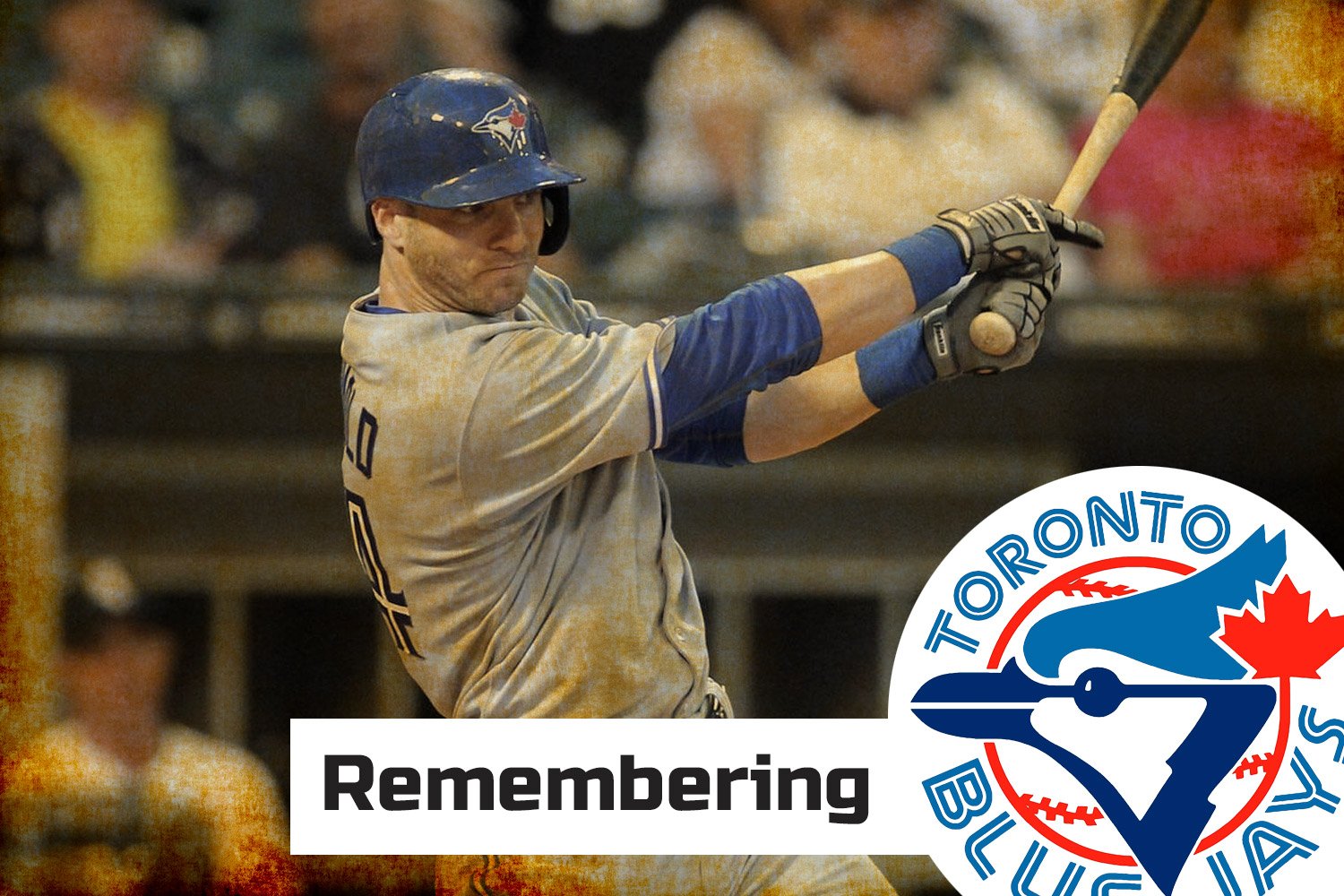 Before fans began filing into Houston’s Minute Maid Park, it had already been an interesting day at field level for the visiting Toronto Blue Jays. In the away dugout, José Bautista spoke freely with reporters about the sourness of the occasion. Fresh off sweeping the Red Sox at Fenway, Toronto trailed in the division by a small margin when they arrived in Houston on 2014’s trade deadline day. Rumours swirled around the Blue Jays, with fans and players alike hoping for the addition of a big arm (or Martin Prado), but when the deadline came and went without a move, Bautista expressed his disappointment: Casey Janssen voiced similar frustrations, and the two veterans were speaking for their teammates, who were likewise frustrated by the inactivity. It was also a clubhouse that Colby Rasmus had been absent from earlier in the day. Rasmus took his time getting back from lunch, and his tardiness cost him a spot in John Gibbons’ lineup. As Nolan Reimold made his way onto the field for batting practice, he was told he would be starting in Rasmus’ place. A few days later, Tony Rasmus went on the Toronto airwaves and spoke wisdom about Colby, including this gem about his son’s early career with the Cardinals: “I feel like he had a huge ego, and I felt like he was a real [unintelligible] - he reminded me a lot of Brett Lawrie.” (photo credit: NBC Sports) Indirectly, Reimold was going to be linked to the quiet deadline, being one of the few players general manager Alex Anthopoulos did bring in during the month of July. A waiver claim from Baltimore, Reimold had debuted as one of the hottest bats in the junior circuit back in 2009 with the Orioles. He won AL Rookie of the Month in June, and before an injury ended his season prematurely, Reimold established himself as a middle-of-the-order bat for the 64-win Orioles. His rookie year production (.279/.365/.831 with 15 home runs) vanished at the start of 2010, a year he would spend most of in Triple A before working his way back into the Orioles’ starting outfield the following season. Reimold’s 2012 was cut short after he dove into the stands for a foul ball in April. He underwent surgery for a herniated disc, but the injury would cloud the rest of his career. He struggled mightily at the plate the following season before it was discovered that a corrective, season-ending surgery was required. (Reimold eventually reached a settlement with Johns Hopkins over the first procedure.) Reimold had yet to appear in the majors during the 2014 season, but that would change when Toronto acquired him on July 6. Injuries to Bautista, Edwin Encarnacion, and Adam Lind had shifted Joey Bats temporarily to first base. This plan created a growing void in an outfield that already saw starts from the likes of Brad Glenn, Cole Gillespie, and Darin Mastroianni in July. Reimold took advantage of his opportunity to play. He started every game in his first series as a Blue Jay, hitting two doubles in the middle contest and finishing with a two-hit, three-RBI day in the finale. Just as his Jays' tenure was taking flight, Reimold suffered another injury setback. Starting his fourth straight game, Reimold pulled up while running the bases and was forced to leave the game. He would miss a few weeks with a calf strain before returning prior to the deadline. He had yet to play a home game, so the injury delayed the Toronto debut of an all-time great walk-up song, with Reimold striding to the plate to the nWo Wolfpac theme. I am a big advocate for more wrestling themes in pro sports. Game ops at Rogers Centre missed an opportunity to use Ken Shamrock’s Titantron theme to warn the home crowd when Kevin Gregg entered in the ninth inning. For fans distressed by Toronto's muted deadline, Reimold’s previous success, albeit brief, provided some hope as the team moved forward, starting in Houston. Toronto was down 4-2 when Reimold came to the plate in the fifth inning, and he cut the Astros' lead in half with a solo shot to left. The Blue Jays fought back twice to tie the game leading into the ninth, with Reimold due up second. Danny Valencia, acquired by Toronto three days earlier, led off the inning and struck out against Chad Qualls, who tried to get a first-pitch fastball by Reimold: Gibbons took the two big flies as a chance to save face for Rasmus by claiming credit for good managerial instincts. “I had a hunch that Reimold would have a big day.” Reimold’s second Crawford Box-bound baseball of the evening gave Toronto a 6-5 lead, one they closed out for the win. But any thoughts of Reimold continuing to mash were quickly tempered with a 3-for-22 stretch at the plate. One of those hits did walk off Detroit on August 9 after a pitching duel between Marcus Stroman and Max Scherzer. In the 10th, Reimold caused some mass destruction with a double into the left-centre gap, scoring Valencia all the way from first for a 3-2 win. Gibbons reduced Reimold’s playing time following his slump, but he was not the only Blue Jay struggling. On August 24, Toronto looked for a series win against Tampa Bay, much needed with a 6-13 record so far in the month. The Blue Jays’ playoff hopes had faded, and they sat 4.5 games back of the final Wild Card spot. They were without a run in the sixth inning when Bautista laid off a full count slider from Chris Archer that was called strike three by Bill Welke behind the plate. The pitch was borderline, but Bautista was thrown out for expressing otherwise. “I didn't use curse words!” pleaded Joey Bats, to which Welke responded that he didn’t, but “I told you twice to go!” (photo credit: MLB) Gibbons was not impressed with his slugger, and with Reimold taking his place in right field, maybe the manager had a premonition. In the 10th, Reimold misplayed a flyball by the line to give the Rays runners on second and third with no outs. Tampa Bay went ahead on the unearned run off Sergio Santos, but Toronto had a chance to answer and extend the game in their half. Down to their last out, the tying run stood 90 feet away with Bautista’s spot up. In lieu, Reimold struck out to end the game and ultimately his time with the Blue Jays. Reimold made one more appearance before being designated for assignment. He finished out the year with Arizona before returning to Baltimore in 2015, where he would remain for the 2016 American League Wild Card Game: a game that needs little introduction, and the stakes of the game needed little introduction to Reimold. In his first stint with Baltimore, Reimold started the final game of the 2011 regular season, a night for baseball’s history books. The Orioles were dreadful, but their finale against Boston had major playoff implications, with the Red Sox tied for the final AL playoff spot with Tampa Bay. Boston went ahead and looked to be postseason-bound with the Rays down seven to the Yankees. However, the Rays clawed back to force extra innings, while Boston was simultaneously having trouble getting the final out at Camden Yards. With two outs, Sox closer Jonathan Papelbon gave up a double to bring Reimold to the plate. Down to his last strike, Reimold belted a game-tying ground-rule double off the warning track in centre. He would come around to score the winning run, and minutes later, the Red Sox's season came to a sudden, hilarious, just perfect end when Evan Longoria’s home run sent Tampa Bay to the playoffs. In 2016, Reimold had a .664 OPS in 227 plate appearances and had been playing off the bench for Buck Showalter as Baltimore’s season came down to one game in Toronto. Showalter was about to short-circuit, but his prior move brought Reimold into the game for his first career postseason at-bat. With the left-handed Francisco Liriano on the mound in the 11th, Showalter pinch-hit Reimold for Hyun Soo Kim. Kim had been shielded against lefties all season, with no hits in 18 at-bats, but Reimold fared no better against Liriano, striking out on three pitches. He headed out to field a position for the first time all night, soon to be joined by Ubaldo Jiménez. This is what the Fingerpoke of Doom means in Baltimore. (photo credit: Eutaw Street Report) Reimold took Kim’s place in left field and didn’t merely watch as Baltimore’s season went down in flames. He was forced to play Devon Travis’ sharp single off Jiménez on a hop, and then he bobbled the subsequent Josh Donaldson hit to allow Travis to reach third. In the next at-bat, all Reimold could do was take a few meaningless steps and watch the ball sail off the bat of Edwin Encarnacion towards the left field stands: The Wild Card loss was the final game of Reimold’s major league career. He signed with the independent Long Island Ducks to start the 2017 season, where his teammates included 34-year-old Rubén Gotay, 40-year-old Lew Ford, and 41-year-old Eric Gagné. Reimold retired two months into the season, and a promising career that was cut down by surgeries was officially over.
 -
Felipe Crespo was part of Toronto’s 1990 draft class, which was lauded thanks to the Blue Jays opening up their wallet. 22nd overall pick Steve Karsay received top dollar from Toronto to turn down a scholarship from LSU, and it took even more cash for future Heisman Trophy winner Chris Weinke to put his football dreams on hold to pursue a career in professional baseball. In the third round, the Blue Jays took Crespo, a high schooler from Puerto Rico whose talents had him projected to be drafted long before. That year’s fifth-round pick, Scott Burrell, made his SkyDome debut in 1998, scoring 20 off the bench for the Chicago Bulls in a 123-86 win over the Raptors. Assigned to Toronto’s rookie ball affiliate in Medicine Hat, Crespo wasn’t quite Gavin McKenna in the Gas City, but he slashed .310/.397/.478 as an 18-year-old. As the Blue Jays won World Series titles in 1992 and 1993, Crespo continued to show promise as a player who could keep the machine rolling. He followed his debut season by hitting .281 for pre-Kenny-Powers Single-A Myrtle Beach and then produced an .830 OPS in Advanced-A the following year. Crespo played second base in his first three seasons, but when he showed up in Dunedin for spring training in 1994, he had a new assignment. Crespo was assigned to Double-A Knoxville and would play third base, swapping positions with Chris Stynes, his teammate from the previous two seasons. Stynes took to second base and played well enough to be named Baseball America’s top fielder at the position in the Southern League. The same could not be said for Crespo. He committed 11 errors in his first 20 games at the position, and while his play did improve, a season-ending thumb injury kept him eight errors shy of the all-time league record for errors at third, finishing with 42. Chris Stynes was Knoxville’s MVP in 1994, had a ten-year career, and is an immaculate grid god. Thank me later. Weeks before baseball resumed after the 1994 strike, new general manager Gord Ash made a splash by re-acquiring David Cone from the Royals. Among the players sent away for Cone was Stynes, which meant Crespo’s well-earned promotion to Triple-A Syracuse came with a relieving move back to second base. Crespo impressed the Blue Jays with a strong spring training that year and hit .294 for Syracuse, putting himself on the major league radar heading into 1996. Toronto had finished at the bottom of the AL East at 56-88, and the departure of Roberto Alomar in the off-season put a giant hole at second base. Crespo would fight for playing time with three players: Domingo Cedeno, who had been the backup the previous few seasons, and fellow prospects Miguel Cairo and Tilson Brito. Crespo was viewed as the best hitter of the bunch, but understandable questions remained about his defence. Cedeno appeared to be the betting favourite for the position, and while he maintained front-runner status to start at second throughout spring, Crespo was having the month of his career. Crespo hit .444 in spring, and as Opening Day drew close, he was named the starting second baseman by manager Cito Gaston. It was a spot he would not be able to take. While stretching on the on-deck circle in the spring training finale, Crespo pulled his hamstring, forcing him to miss the opener. He would not debut until April 28, when Cito decided to let him on the field by replacing Ed Sprague in a 17-3 drubbing by Cleveland. Debuting at third, Crespo was solid with the glove, handling a groundout in his first inning of work and then rolling a 5-4-3 double play off the bat of Manny Ramirez to end the seventh inning. At the plate, Crespo was 0-for-2 in his debut, and the bat would not get going when he had the chance to play. Cito told reporters he wanted to play Crespo but said Cedeno, who had factored in so greatly that he was jettisoned before the season’s end, was playing too well. Crespo’s first major league hit came in his second career start on May 16 in Minneapolis. The natural progression from this was for Cito not to start him for five days and then bat him leadoff for two games. Felipe, Travis. Travis, Felipe. Gaston’s lineups in 1996 are aggravating present-day me. For the first two months, the second hitter was the second baseman except on the rarest of occasions. Cedeno? Brito? Crespo? Didn’t matter, even with John Olerud batting sixth. Wait, John Olerud batting sixth? A different John Olerud? Standard Batting Table Season Age Team Lg WAR G PA AB R H 2B 3B HR RBI BB SO BA OBP SLG OPS OPS+ 1991 22 TOR AL 1.8 139 541 454 64 116 30 1 17 68 68 84 .256 .353 .438 .791 115 1992 23 TOR AL 3.4 138 537 458 68 130 28 0 16 66 70 61 .284 .375 .450 .825 127 1993 24 TOR AL 7.8 158 679 551 109 200 54 2 24 107 114 65 .363 .473 .599 1.072 186 1994 25 TOR AL 3.2 108 453 384 47 114 29 2 12 67 61 53 .297 .393 .477 .869 124 1995 26 TOR AL 2.2 135 581 492 72 143 32 0 8 54 84 54 .291 .398 .404 .802 111 1996 27 TOR AL 2.5 125 469 398 59 109 25 0 18 61 60 37 .274 .382 .472 .854 116 Provided by Baseball-Reference.com: View Original Table No, same guy. I don’t care what baseball in 1996 was, I am ready to re-mutiny Cito. Crespo was sent down after recording two hits in 23 at-bats but hit better when he was called back up in September. He was in the mix for a spot on the roster, which was further crowded when the Jays added Carlos Garcia in free agency, with a little less pomp than the signing of Roger Clemens. Crespo added in defensive reps at first base (tell ‘em, Wash) and in the outfield during spring as the team tried to figure out what to do with him defensively. He played well enough to beat out Mike Aldrete for one of the final spots on the Blue Jays bench. Emphasis on bench. He pinch hit on April 15, pinch ran on April 21, and then was send down to Triple-A when Toronto needed an extra pitcher. Toronto went with Garcia at second base in the first half, who produced a god awful slash of .220/.253/.309, good for a solid, round -2.0 WAR. When Toronto finally moved away from starting Garcia, they turned to 34-year-old Mariano Duncan, who had a similarly feeble slash of .228/.267/.263. And yes, they both hit second in the order for good chunks of the season. Crespo hit well enough in Triple A, going .259/.366/.424 with 12 home runs. He was called up in September again and hit his first career big league home run off Jamie Moyer at the Kingdome that month. As Toronto headed into 1998 under new manager Tim Johnson, Crespo again had momentum building to make the team in some capacity, especially with Garcia and Duncan gone from the roster. Future guest writer Tim Johnson. I’ll add a few disclaimers to anything he decides to remember. Crespo’s 1998 would prove to be a more consistent version of his previous two seasons. He made his way into the lineup throughout the season with his bat and versatility but neither overly impressed. Crespo slashed .262/.342/.362 in a career high 153 plate appearances. He played all four infield positions and all three outfield spots throughout the season but his defensive struggles continued. Playing second on September 27 against Detroit, Crespo committed an error in the fifth inning that cost Roy Halladay a chance at a perfect game in THAT Roy Halladay game. Out of options in 1999, Crespo lasted about a week into spring training before the Blue Jays designated him for assignment. He would go on to sign with San Francisco, spending 1999 in Triple-A before returning to the majors in 2000 with the Giants. He split the following season with the Giants and Phillies, went to Japan in 2002, and retired following comeback bids with the Reds and Marlins. View full article
- 2 replies
-
- 1
-

-
- felipe crespo
- remembering blue jays
- (and 5 more)
-
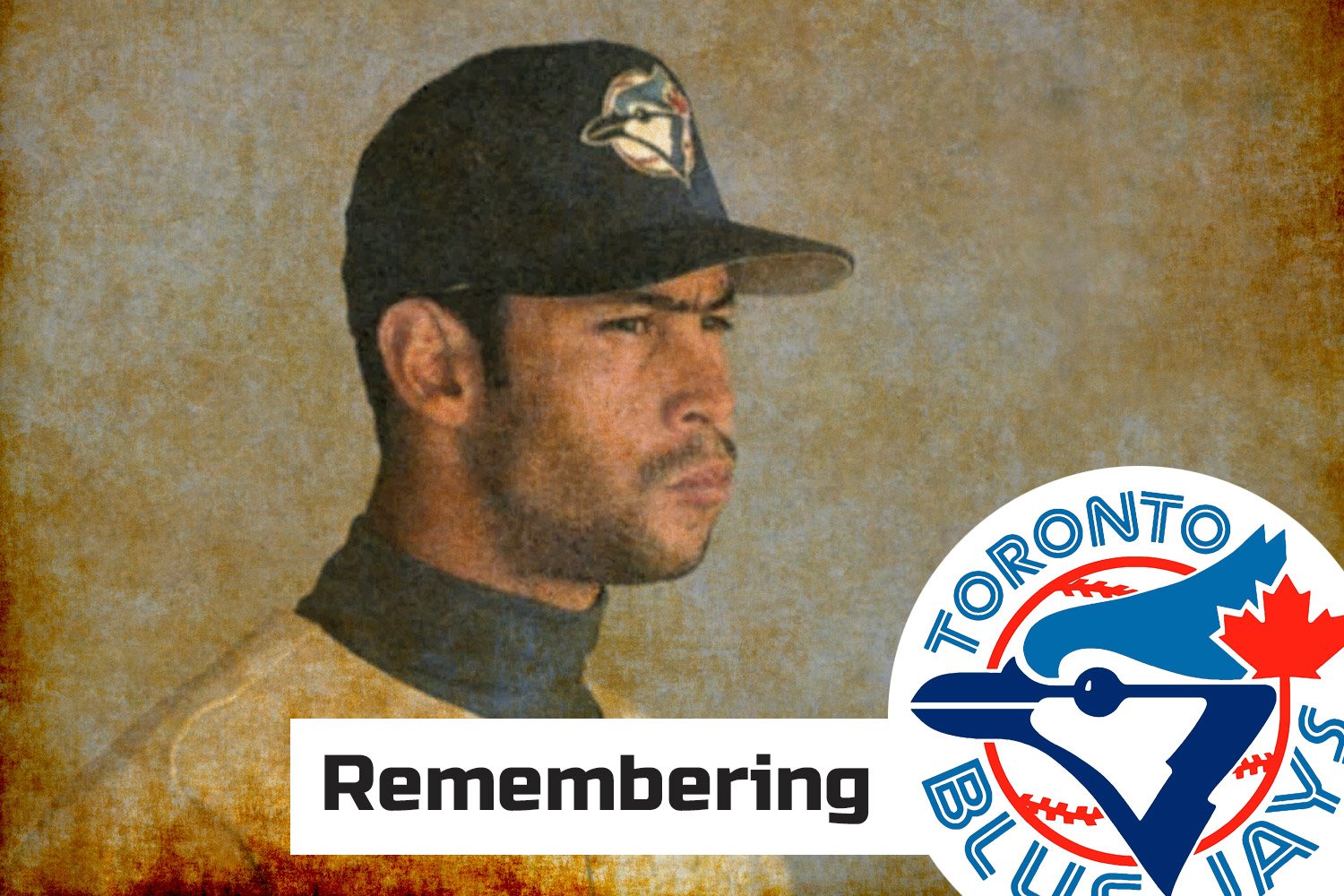 Felipe Crespo was part of Toronto’s 1990 draft class, which was lauded thanks to the Blue Jays opening up their wallet. 22nd overall pick Steve Karsay received top dollar from Toronto to turn down a scholarship from LSU, and it took even more cash for future Heisman Trophy winner Chris Weinke to put his football dreams on hold to pursue a career in professional baseball. In the third round, the Blue Jays took Crespo, a high schooler from Puerto Rico whose talents had him projected to be drafted long before. That year’s fifth-round pick, Scott Burrell, made his SkyDome debut in 1998, scoring 20 off the bench for the Chicago Bulls in a 123-86 win over the Raptors. Assigned to Toronto’s rookie ball affiliate in Medicine Hat, Crespo wasn’t quite Gavin McKenna in the Gas City, but he slashed .310/.397/.478 as an 18-year-old. As the Blue Jays won World Series titles in 1992 and 1993, Crespo continued to show promise as a player who could keep the machine rolling. He followed his debut season by hitting .281 for pre-Kenny-Powers Single-A Myrtle Beach and then produced an .830 OPS in Advanced-A the following year. Crespo played second base in his first three seasons, but when he showed up in Dunedin for spring training in 1994, he had a new assignment. Crespo was assigned to Double-A Knoxville and would play third base, swapping positions with Chris Stynes, his teammate from the previous two seasons. Stynes took to second base and played well enough to be named Baseball America’s top fielder at the position in the Southern League. The same could not be said for Crespo. He committed 11 errors in his first 20 games at the position, and while his play did improve, a season-ending thumb injury kept him eight errors shy of the all-time league record for errors at third, finishing with 42. Chris Stynes was Knoxville’s MVP in 1994, had a ten-year career, and is an immaculate grid god. Thank me later. Weeks before baseball resumed after the 1994 strike, new general manager Gord Ash made a splash by re-acquiring David Cone from the Royals. Among the players sent away for Cone was Stynes, which meant Crespo’s well-earned promotion to Triple-A Syracuse came with a relieving move back to second base. Crespo impressed the Blue Jays with a strong spring training that year and hit .294 for Syracuse, putting himself on the major league radar heading into 1996. Toronto had finished at the bottom of the AL East at 56-88, and the departure of Roberto Alomar in the off-season put a giant hole at second base. Crespo would fight for playing time with three players: Domingo Cedeno, who had been the backup the previous few seasons, and fellow prospects Miguel Cairo and Tilson Brito. Crespo was viewed as the best hitter of the bunch, but understandable questions remained about his defence. Cedeno appeared to be the betting favourite for the position, and while he maintained front-runner status to start at second throughout spring, Crespo was having the month of his career. Crespo hit .444 in spring, and as Opening Day drew close, he was named the starting second baseman by manager Cito Gaston. It was a spot he would not be able to take. While stretching on the on-deck circle in the spring training finale, Crespo pulled his hamstring, forcing him to miss the opener. He would not debut until April 28, when Cito decided to let him on the field by replacing Ed Sprague in a 17-3 drubbing by Cleveland. Debuting at third, Crespo was solid with the glove, handling a groundout in his first inning of work and then rolling a 5-4-3 double play off the bat of Manny Ramirez to end the seventh inning. At the plate, Crespo was 0-for-2 in his debut, and the bat would not get going when he had the chance to play. Cito told reporters he wanted to play Crespo but said Cedeno, who had factored in so greatly that he was jettisoned before the season’s end, was playing too well. Crespo’s first major league hit came in his second career start on May 16 in Minneapolis. The natural progression from this was for Cito not to start him for five days and then bat him leadoff for two games. Felipe, Travis. Travis, Felipe. Gaston’s lineups in 1996 are aggravating present-day me. For the first two months, the second hitter was the second baseman except on the rarest of occasions. Cedeno? Brito? Crespo? Didn’t matter, even with John Olerud batting sixth. Wait, John Olerud batting sixth? A different John Olerud? Standard Batting Table Season Age Team Lg WAR G PA AB R H 2B 3B HR RBI BB SO BA OBP SLG OPS OPS+ 1991 22 TOR AL 1.8 139 541 454 64 116 30 1 17 68 68 84 .256 .353 .438 .791 115 1992 23 TOR AL 3.4 138 537 458 68 130 28 0 16 66 70 61 .284 .375 .450 .825 127 1993 24 TOR AL 7.8 158 679 551 109 200 54 2 24 107 114 65 .363 .473 .599 1.072 186 1994 25 TOR AL 3.2 108 453 384 47 114 29 2 12 67 61 53 .297 .393 .477 .869 124 1995 26 TOR AL 2.2 135 581 492 72 143 32 0 8 54 84 54 .291 .398 .404 .802 111 1996 27 TOR AL 2.5 125 469 398 59 109 25 0 18 61 60 37 .274 .382 .472 .854 116 Provided by Baseball-Reference.com: View Original Table No, same guy. I don’t care what baseball in 1996 was, I am ready to re-mutiny Cito. Crespo was sent down after recording two hits in 23 at-bats but hit better when he was called back up in September. He was in the mix for a spot on the roster, which was further crowded when the Jays added Carlos Garcia in free agency, with a little less pomp than the signing of Roger Clemens. Crespo added in defensive reps at first base (tell ‘em, Wash) and in the outfield during spring as the team tried to figure out what to do with him defensively. He played well enough to beat out Mike Aldrete for one of the final spots on the Blue Jays bench. Emphasis on bench. He pinch hit on April 15, pinch ran on April 21, and then was send down to Triple-A when Toronto needed an extra pitcher. Toronto went with Garcia at second base in the first half, who produced a god awful slash of .220/.253/.309, good for a solid, round -2.0 WAR. When Toronto finally moved away from starting Garcia, they turned to 34-year-old Mariano Duncan, who had a similarly feeble slash of .228/.267/.263. And yes, they both hit second in the order for good chunks of the season. Crespo hit well enough in Triple A, going .259/.366/.424 with 12 home runs. He was called up in September again and hit his first career big league home run off Jamie Moyer at the Kingdome that month. As Toronto headed into 1998 under new manager Tim Johnson, Crespo again had momentum building to make the team in some capacity, especially with Garcia and Duncan gone from the roster. Future guest writer Tim Johnson. I’ll add a few disclaimers to anything he decides to remember. Crespo’s 1998 would prove to be a more consistent version of his previous two seasons. He made his way into the lineup throughout the season with his bat and versatility but neither overly impressed. Crespo slashed .262/.342/.362 in a career high 153 plate appearances. He played all four infield positions and all three outfield spots throughout the season but his defensive struggles continued. Playing second on September 27 against Detroit, Crespo committed an error in the fifth inning that cost Roy Halladay a chance at a perfect game in THAT Roy Halladay game. Out of options in 1999, Crespo lasted about a week into spring training before the Blue Jays designated him for assignment. He would go on to sign with San Francisco, spending 1999 in Triple-A before returning to the majors in 2000 with the Giants. He split the following season with the Giants and Phillies, went to Japan in 2002, and retired following comeback bids with the Reds and Marlins.
- 2 comments
-
- 1
-

-
- felipe crespo
- remembering blue jays
- (and 5 more)
-
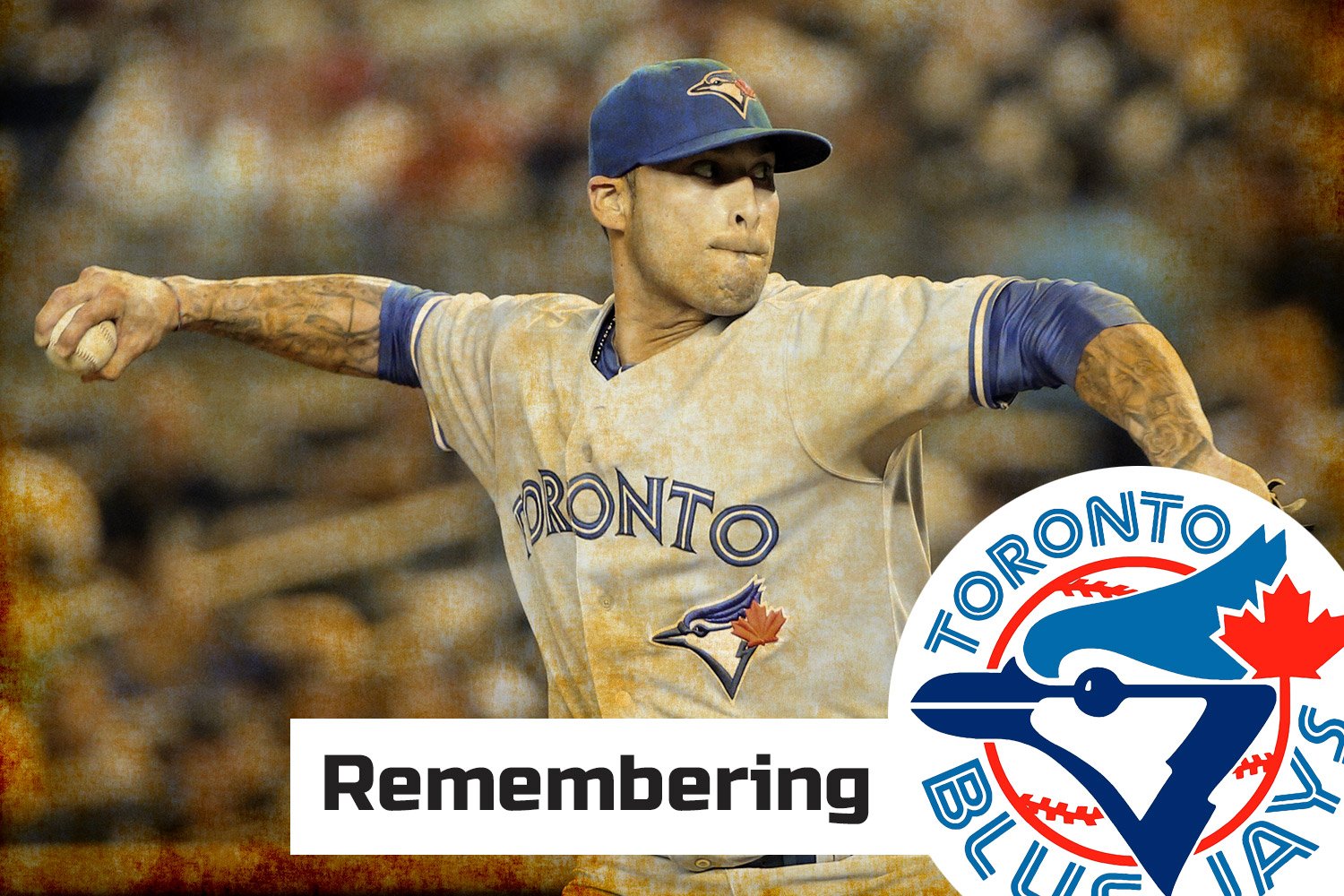 It was a question Sergio Santos had been asked before. Scuffling in his seventh professional season as an infielder, Santos won a bet with his Twins’ minor league teammates by hitting 97 on the radar gun. Minnesota asked him to try the mound for real, but Santos had dreamed of his first major league hit since childhood. Just as when Toronto had asked him to make the switch a few years before, Santos said no, and he was released at the end of the season. Santos had intrigued the Blue Jays’ development staff when he arrived via JP Riccardi in the Troy Glaus trade with Arizona in the winter of 2005. A first-round pick out of high school as a shortstop, Santos moved quickly through the D-Backs system but struggled in his first stop at Triple-A the season before the trade. Toronto thought the strong-armed, 6-foot-3 Santos could be better suited for third base or, eventually, pitching, but when the bat didn’t perform and unwilling to pitch, Santos was an early spring cut in 2008. After the season with the Twins, Santos tried to catch on with the White Sox in 2009 but was again confronted with the same proposition. Asking for one more opportunity, Santos was traded, but he promised to come back and try pitching if he failed to make the Giants. Ten days later, Santos returned to the White Sox and began what would finally be his way into the major leagues. He pitched in four levels in 2009 and would make Chicago’s Opening Day roster the next season. After a successful debut season on the mound (2.96 ERA in 56 games), Santos would save 30 games for the White Sox in 2011, inking a three-year, $8.25 million extension as the season came to a close. A nasty slider accompanied his high-90s fastball, which was deemed the best strikeout pitch in baseball at the end of the season by ESPN Stats and Info. This made him the perfect under-the-radar target for Alex Anthopoulos, who wooed Kenny Williams with top pitching prospect Nestor Molina and made a trade that surprised baseball’s winter meetings. Molina had a live arm but only threw two pitches with consistency and never reached the majors. (photo credit Meridiano) Installed immediately as Toronto’s closer, Santos debuted to record the final two outs in Toronto’s marathon opener in Cleveland. He blew his first save opportunity two days later, leaving a fastball up to Asdrubal Cabrera with a one-run lead in the ninth. Two days later, things got rockier. Henderson Alvarez, the youngest Blue Jay to start a home opener, pitched six innings of one-run ball, leading up to Santos’ entrance in the ninth with a 2-1 lead. Santos’s command was nowhere to be found. Dustin Pedroia hit another sloppy fastball for a double to lead off the inning and would score the tying run on a sacrifice fly. Santos struck out the next batter but issued back-to-back walks to extend the inning. After a base hit gave Boston the lead, Santos yielded another run on a wild pitch. That was it for Santos, who departed to rousing boos from a sold out crowd in his home debut, a 4-2 loss. Santos recorded his first save as a Blue Jay in the series finale after a pitching duel between lefties Ricky Romero and Jon Lester. Romero remained in for the ninth inning with Toronto leading 3-1, but walked the first two batters. They were in scoring position when Santos entered with one out and working off his slider, struck out Kevin Youkilis before ending the game with a David Ortiz groundout. Santos was able to enjoy a different reaction after the final out from the crowd, who were able to redirect their ire towards Joffrey Lupul. Santos heard the jeering from the bullpen, “Rough, huh?” he laughed afterwards. Santos pitched twice more before being placed on the injured list with shoulder inflammation. The initial prognosis was a few weeks of rest, but weeks turned into months as Santos suffered setbacks trying to get back on the mound, and the timetable for his return vanished. His season was officially wiped out near the All-Star break when the pitcher elected to undergo surgery on his shoulder. In Santos’ absence, the Blue Jays initially turned to Francisco Cordero, but ninth-inning duties were eventually taken over by Casey Janssen. With 22 saves and a 2.54 ERA, Janssen was named the closer by new-ish manager John Gibbons as the team reported for spring training in 2013. The good news for Santos was that his velocity was back, and the shoulder discomfort was gone. Unfortunately, that would not last for long. Santos dealt with tricep soreness during spring training, and after appearing in five games, the issue landed him on the injured list. An MRI revealed a strain and bone chips, requiring another surgery that sidelined Santos until August. Upon his return, Santos was excellent, keeping opponents to a lowly .131 average for the rest of the season. In September, the moment he had been waiting for would finally happen. Playing in Arizona, Santos came on in the seventh inning and got Eric Chavez to hit into an inning-ending double play to keep Toronto in front 2-0. Due up second in the next inning, John Gibbons let Santos make the walk to the batter’s box. Facing Brandon McCarthy, Santos grounded out to Chavez on the second pitch of the at-bat. Steve Delabar would pitch the eighth, and Gibbons’ gesture led to Santos's only major league plate appearance. In 25+ innings in 2013, Santos’ command had been locked in, but the injury concerns weren’t going away, and Anthopoulos tried to sell high in the off-season. Toronto had discussed deals involving Santos with Texas and with Oakland for Brett Anderson. While a deal for Ian Kinsler never gained traction, a three-way trade with the Rangers and A’s was reportedly reached that sent Santos to Texas with Anderson heading to Toronto before the trade was nixed when Anderson failed a physical. With Janssen injured to open the 2014 season, Santos resumed closing duties and struck out three Rays in the ninth to secure the save on April 1. Santos secured saves in four of his first five appearances, striking out ten of 19 batters faced. Things came unglued when the Blue Jays visited a chilly Minneapolis for a series against the Twins. The teams played a doubleheader after postponing the previous night's game. After clearing inches of snow off Target Field overnight, Kyle Gibson threw the first pitch in sub-zero temperatures, the coldest game in Twins history at 31°F. Santos entered the second game in the eighth inning with the Jays up 5-3 but in a frigid pickle with two runners on and one away. After a walk to load the bases, Santos uncorked a wild pitch facing Kurt Suzuki, allowing a run to score. Santos spiked a pitch four pitches later to walk Suzuki, allowing another run to plate when the ball eluded Dioner Navarro. Another batter led to another run-scoring wild pitch, and the at-bat ended again with a walk. Santos delivered only four strikes in 16 pitches; the photo says more than I could. Santos, Delabar, and J.A. Happ issued EIGHT walks in the inning. Minnesota scored six for the 9-5 win. (photo credit Brian Blanco/SBNation) A road trip at the end of the month would ultimately spell the end for Santos as a Blue Jay. He was charged with three earned runs in a disastrous eighth inning appearance in Kansas City, and his next appearance came in Pittsburgh a few days later. Santos entered in the ninth with a two-run lead, but after a lead-off hit, he gave up the game-tying home run to Pedro Álvarez before Starling Marte walked it off two batters later. It was the final save opportunity for Santos as a Blue Jay, as he was removed from the closer role the next day and hid on the injured list a while later. Santos’ command never returned. He rejoined the Blue Jays in June, walked hitters in five of his ten appearances, and was designated for assignment. Toronto hoped Santos would figure it out in the minors, and they got their wish when Santos cleared waivers and pitched scoreless baseball in 10+ innings in Triple-A Buffalo. Despite thinking he should have been called up sooner, Santos was back in the majors, but it would be brief. He surrendered the game-winning base hit to Evan Longoria in the 10th inning of a 2-1 loss to Tampa, and two days later, he gave up two home runs in extras against Boston, including this monstrosity to Mike Napoli: That was the final appearance for Santos as a Jay. He was designated for assignment again and did not report to Double-A; Toronto would decline the options on his contract, leaving Santos a free agent. He pitched for the Dodgers and Yankees the following year before Tommy John surgery ended his career. Santos is still working his way back to the major leagues. Back with the White Sox organization, Santos managed in Double-A last season and is now the manager for Triple-A Charlotte. I don’t know Sergio, if Chris Getz offers to call you up, you might want to pull a page from Lou Brown.
 -
It was a question Sergio Santos had been asked before. Scuffling in his seventh professional season as an infielder, Santos won a bet with his Twins’ minor league teammates by hitting 97 on the radar gun. Minnesota asked him to try the mound for real, but Santos had dreamed of his first major league hit since childhood. Just as when Toronto had asked him to make the switch a few years before, Santos said no, and he was released at the end of the season. Santos had intrigued the Blue Jays’ development staff when he arrived via JP Riccardi in the Troy Glaus trade with Arizona in the winter of 2005. A first-round pick out of high school as a shortstop, Santos moved quickly through the D-Backs system but struggled in his first stop at Triple-A the season before the trade. Toronto thought the strong-armed, 6-foot-3 Santos could be better suited for third base or, eventually, pitching, but when the bat didn’t perform and unwilling to pitch, Santos was an early spring cut in 2008. After the season with the Twins, Santos tried to catch on with the White Sox in 2009 but was again confronted with the same proposition. Asking for one more opportunity, Santos was traded, but he promised to come back and try pitching if he failed to make the Giants. Ten days later, Santos returned to the White Sox and began what would finally be his way into the major leagues. He pitched in four levels in 2009 and would make Chicago’s Opening Day roster the next season. After a successful debut season on the mound (2.96 ERA in 56 games), Santos would save 30 games for the White Sox in 2011, inking a three-year, $8.25 million extension as the season came to a close. A nasty slider accompanied his high-90s fastball, which was deemed the best strikeout pitch in baseball at the end of the season by ESPN Stats and Info. This made him the perfect under-the-radar target for Alex Anthopoulos, who wooed Kenny Williams with top pitching prospect Nestor Molina and made a trade that surprised baseball’s winter meetings. Molina had a live arm but only threw two pitches with consistency and never reached the majors. (photo credit Meridiano) Installed immediately as Toronto’s closer, Santos debuted to record the final two outs in Toronto’s marathon opener in Cleveland. He blew his first save opportunity two days later, leaving a fastball up to Asdrubal Cabrera with a one-run lead in the ninth. Two days later, things got rockier. Henderson Alvarez, the youngest Blue Jay to start a home opener, pitched six innings of one-run ball, leading up to Santos’ entrance in the ninth with a 2-1 lead. Santos’s command was nowhere to be found. Dustin Pedroia hit another sloppy fastball for a double to lead off the inning and would score the tying run on a sacrifice fly. Santos struck out the next batter but issued back-to-back walks to extend the inning. After a base hit gave Boston the lead, Santos yielded another run on a wild pitch. That was it for Santos, who departed to rousing boos from a sold out crowd in his home debut, a 4-2 loss. Santos recorded his first save as a Blue Jay in the series finale after a pitching duel between lefties Ricky Romero and Jon Lester. Romero remained in for the ninth inning with Toronto leading 3-1, but walked the first two batters. They were in scoring position when Santos entered with one out and working off his slider, struck out Kevin Youkilis before ending the game with a David Ortiz groundout. Santos was able to enjoy a different reaction after the final out from the crowd, who were able to redirect their ire towards Joffrey Lupul. Santos heard the jeering from the bullpen, “Rough, huh?” he laughed afterwards. Santos pitched twice more before being placed on the injured list with shoulder inflammation. The initial prognosis was a few weeks of rest, but weeks turned into months as Santos suffered setbacks trying to get back on the mound, and the timetable for his return vanished. His season was officially wiped out near the All-Star break when the pitcher elected to undergo surgery on his shoulder. In Santos’ absence, the Blue Jays initially turned to Francisco Cordero, but ninth-inning duties were eventually taken over by Casey Janssen. With 22 saves and a 2.54 ERA, Janssen was named the closer by new-ish manager John Gibbons as the team reported for spring training in 2013. The good news for Santos was that his velocity was back, and the shoulder discomfort was gone. Unfortunately, that would not last for long. Santos dealt with tricep soreness during spring training, and after appearing in five games, the issue landed him on the injured list. An MRI revealed a strain and bone chips, requiring another surgery that sidelined Santos until August. Upon his return, Santos was excellent, keeping opponents to a lowly .131 average for the rest of the season. In September, the moment he had been waiting for would finally happen. Playing in Arizona, Santos came on in the seventh inning and got Eric Chavez to hit into an inning-ending double play to keep Toronto in front 2-0. Due up second in the next inning, John Gibbons let Santos make the walk to the batter’s box. Facing Brandon McCarthy, Santos grounded out to Chavez on the second pitch of the at-bat. Steve Delabar would pitch the eighth, and Gibbons’ gesture led to Santos's only major league plate appearance. In 25+ innings in 2013, Santos’ command had been locked in, but the injury concerns weren’t going away, and Anthopoulos tried to sell high in the off-season. Toronto had discussed deals involving Santos with Texas and with Oakland for Brett Anderson. While a deal for Ian Kinsler never gained traction, a three-way trade with the Rangers and A’s was reportedly reached that sent Santos to Texas with Anderson heading to Toronto before the trade was nixed when Anderson failed a physical. With Janssen injured to open the 2014 season, Santos resumed closing duties and struck out three Rays in the ninth to secure the save on April 1. Santos secured saves in four of his first five appearances, striking out ten of 19 batters faced. Things came unglued when the Blue Jays visited a chilly Minneapolis for a series against the Twins. The teams played a doubleheader after postponing the previous night's game. After clearing inches of snow off Target Field overnight, Kyle Gibson threw the first pitch in sub-zero temperatures, the coldest game in Twins history at 31°F. Santos entered the second game in the eighth inning with the Jays up 5-3 but in a frigid pickle with two runners on and one away. After a walk to load the bases, Santos uncorked a wild pitch facing Kurt Suzuki, allowing a run to score. Santos spiked a pitch four pitches later to walk Suzuki, allowing another run to plate when the ball eluded Dioner Navarro. Another batter led to another run-scoring wild pitch, and the at-bat ended again with a walk. Santos delivered only four strikes in 16 pitches; the photo says more than I could. Santos, Delabar, and J.A. Happ issued EIGHT walks in the inning. Minnesota scored six for the 9-5 win. (photo credit Brian Blanco/SBNation) A road trip at the end of the month would ultimately spell the end for Santos as a Blue Jay. He was charged with three earned runs in a disastrous eighth inning appearance in Kansas City, and his next appearance came in Pittsburgh a few days later. Santos entered in the ninth with a two-run lead, but after a lead-off hit, he gave up the game-tying home run to Pedro Álvarez before Starling Marte walked it off two batters later. It was the final save opportunity for Santos as a Blue Jay, as he was removed from the closer role the next day and hid on the injured list a while later. Santos’ command never returned. He rejoined the Blue Jays in June, walked hitters in five of his ten appearances, and was designated for assignment. Toronto hoped Santos would figure it out in the minors, and they got their wish when Santos cleared waivers and pitched scoreless baseball in 10+ innings in Triple-A Buffalo. Despite thinking he should have been called up sooner, Santos was back in the majors, but it would be brief. He surrendered the game-winning base hit to Evan Longoria in the 10th inning of a 2-1 loss to Tampa, and two days later, he gave up two home runs in extras against Boston, including this monstrosity to Mike Napoli: That was the final appearance for Santos as a Jay. He was designated for assignment again and did not report to Double-A; Toronto would decline the options on his contract, leaving Santos a free agent. He pitched for the Dodgers and Yankees the following year before Tommy John surgery ended his career. Santos is still working his way back to the major leagues. Back with the White Sox organization, Santos managed in Double-A last season and is now the manager for Triple-A Charlotte. I don’t know Sergio, if Chris Getz offers to call you up, you might want to pull a page from Lou Brown. View full article
-
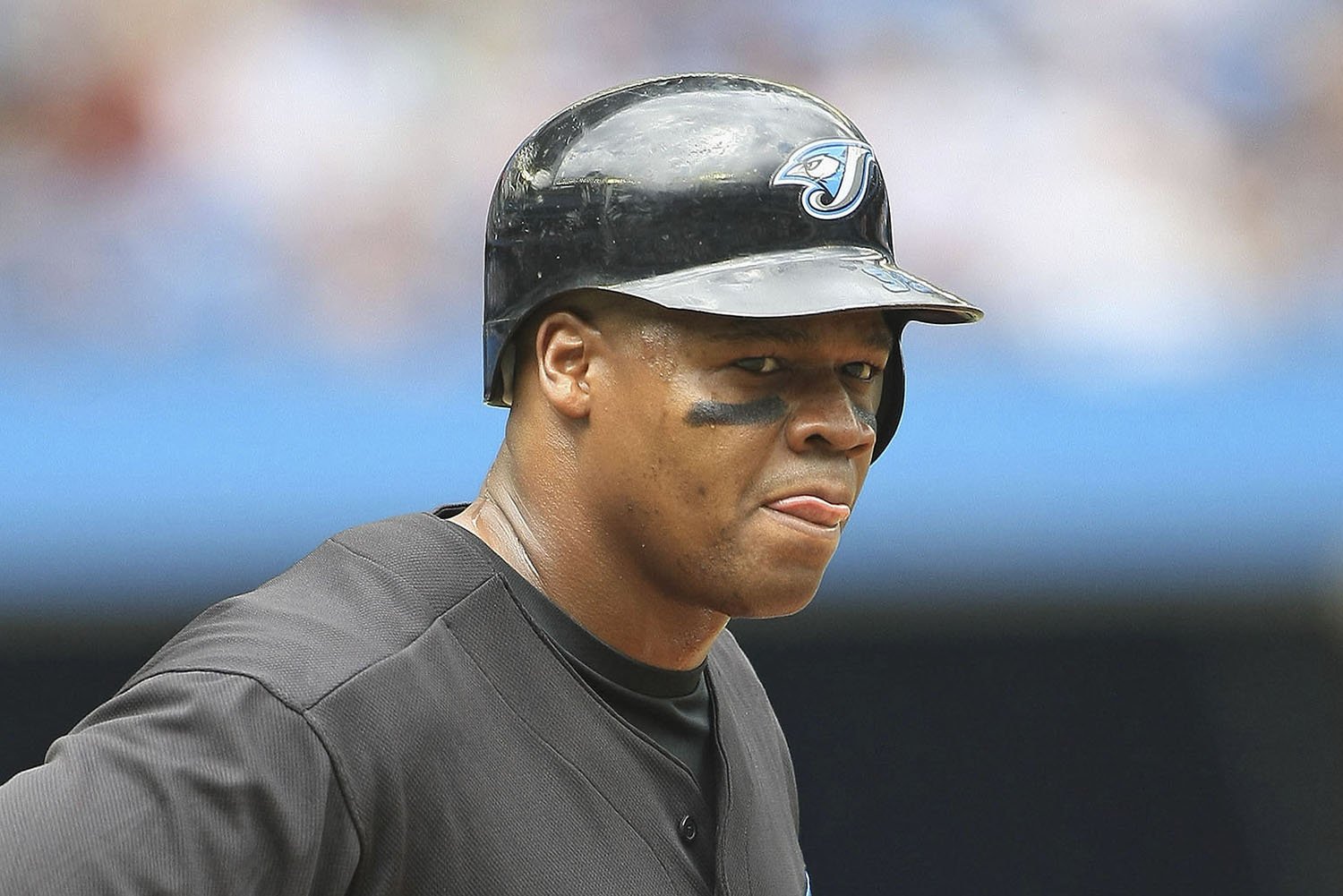 Things escalated quickly between Frank Thomas and the Blue Jays at the start of the 2008 season. Thomas was entering the second season of a three-year contract with a vesting option for the following season. The contract would void if Thomas did not collect 350 at-bats, leaving the Big Hurt out $10 million and headed towards the unemployment line at age 41. So when John Gibbons told Thomas that Joe Inglett was replacing him in the lineup on April 19 and that he would be benched for the foreseeable future, Thomas was not happy. He stormed out of Gibbons’ office before the game, left without shaking hands with teammates, and, before he left for good, made his feelings known to reporters. In the chaotic environment that was the start of the downfall of the J.P. Ricciardi era, the team responded the next day by simply dumping Thomas. Best to stop any Anchorman references before we tell Thomas he looked like a blueberry. The release was a sudden end to what would amount to a footnote in Thomas’ storied career. He signed with the Jays in 2007, coming off a resurgent year in Oakland. Playing in his first season away from the White Sox, Thomas hit 39 home runs for the A’s and finished fourth in AL MVP voting. The Jays-Thomas pairing was a fit given Toronto’s need to improve its lineup, and the Jays were hoping the aging Thomas would continue to produce in the front end of his contract. His first month with the Jays started with a highlight as he hit his 500th home run in Minnesota. He also filmed this commercial, absolutely housing a kid in a pillow fight and prompting an outcry from The Television Bureau of Canada. It got to the point where the Blue Jays had to add a “do not attempt this at home” disclaimer to the commercial. The episode led to this line from president Paul Godfrey, who said, “it took a kid getting hit by a pillow to knock the Leafs off the front page.” A sickening display of promoting violence towards children. Despite a slow start, Thomas turned it around and had a strong second half for the Blue Jays. The lineup needed power, and Thomas hit a team-leading 26 home runs. His league-adjusted OPS+ of 125 was second to only Matt Stairs on a finished-in-September, 83-win Toronto team. He finished 23rd in the MVP voting. In all, the Blue Jays could not have expected more from their newly signed 40-year-old slugger. Inside the Metrodome wearing the what-are-those Jays uniforms; can’t rank historically great on the best aesthetic #500 ball trots. But manager John Gibbons wasn’t ready to endure another slow start. With expectations mounting in Toronto (Gibbons would be fired before the end of the season), the manager told Ricciardi that the team could not wait for Thomas to get going. Despite hitting home runs in three straight games in the first week of the season, Thomas was hitting below .200 in the early going. In his biography, Gibbons said he approached Ricciardi early about reducing Thomas’s playing time. Matt Stairs was manning left field, but the manager wanted some DH at-bats to go to him because, well, Matt Stairs was manning left field. Ricciardi insisted the team and player work through any early-season struggles. However, after an 0-for-4 night in a loss to Detroit that dropped the team's record to 8-9, the general manager changed his tune. He told Gibbons to play who he wanted. The manager, flanked by Brian Butterfield, called Thomas into his office and told him he would be benched for the foreseeable future. Thomas immediately made it clear that he believed the benching wasn’t about performance, but about the option year in his contract. Gibbons responded that he himself did not have a contract for next year, and he “sure as hell ain’t worried about yours.” Thomas felt he was owed a little extra latitude and was rightfully hurt by a move that could have ended his career. Boomhauer’s older brother just told me I’m benched for Joe Inglett? After the game, an “angry” Thomas told reporters on the way out of the clubhouse that it was obvious his contract was behind the decision to bench him. He said that "sixty at-bats isn't enough” to make the call, and that his “career isn't going to end like this.” After storming out of the manager’s office, Thomas met with Ricciardi, and the two sides agreed to a release. Hours before first pitch in the Sunday series finale against Detroit, Thomas’s spot in the clubhouse was gone and he was no longer a Blue Jay. Understandable frustration aside, Thomas said he had respected how the situation was ultimately handled and that he and the Jays parted ways peacefully. To Thomas’s credit, his career didn’t end on a sour note. Within hours of clearing waivers, Thomas was back in an Oakland uniform and produced a .751 OPS as a part-time player. After the season, Thomas retired and began his five-year countdown clock to Cooperstown. He was inducted into the Hall of Fame in 2014. Thomas is one of 10 Hall of Famers to play for the Blue Jays. His tenure isn’t even the shortest amongst them; his 171 games as a Jay beat Rickey Henderson, Dave Winfield, and Phil Niekro. While Thomas himself may not look back fondly at this time in Toronto (save for home run 500 and maybe the pillow fight), today we remember the Big Hurt as a Blue Jay.
 -
Seventeen years ago this weekend, the first ballot hall of famer’s career in Toronto came to an unceremonious close. Things escalated quickly between Frank Thomas and the Blue Jays at the start of the 2008 season. Thomas was entering the second season of a three-year contract with a vesting option for the following season. The contract would void if Thomas did not collect 350 at-bats, leaving the Big Hurt out $10 million and headed towards the unemployment line at age 41. So when John Gibbons told Thomas that Joe Inglett was replacing him in the lineup on April 19 and that he would be benched for the foreseeable future, Thomas was not happy. He stormed out of Gibbons’ office before the game, left without shaking hands with teammates, and, before he left for good, made his feelings known to reporters. In the chaotic environment that was the start of the downfall of the J.P. Ricciardi era, the team responded the next day by simply dumping Thomas. Best to stop any Anchorman references before we tell Thomas he looked like a blueberry. The release was a sudden end to what would amount to a footnote in Thomas’ storied career. He signed with the Jays in 2007, coming off a resurgent year in Oakland. Playing in his first season away from the White Sox, Thomas hit 39 home runs for the A’s and finished fourth in AL MVP voting. The Jays-Thomas pairing was a fit given Toronto’s need to improve its lineup, and the Jays were hoping the aging Thomas would continue to produce in the front end of his contract. His first month with the Jays started with a highlight as he hit his 500th home run in Minnesota. He also filmed this commercial, absolutely housing a kid in a pillow fight and prompting an outcry from The Television Bureau of Canada. It got to the point where the Blue Jays had to add a “do not attempt this at home” disclaimer to the commercial. The episode led to this line from president Paul Godfrey, who said, “it took a kid getting hit by a pillow to knock the Leafs off the front page.” A sickening display of promoting violence towards children. Despite a slow start, Thomas turned it around and had a strong second half for the Blue Jays. The lineup needed power, and Thomas hit a team-leading 26 home runs. His league-adjusted OPS+ of 125 was second to only Matt Stairs on a finished-in-September, 83-win Toronto team. He finished 23rd in the MVP voting. In all, the Blue Jays could not have expected more from their newly signed 40-year-old slugger. Inside the Metrodome wearing the what-are-those Jays uniforms; can’t rank historically great on the best aesthetic #500 ball trots. But manager John Gibbons wasn’t ready to endure another slow start. With expectations mounting in Toronto (Gibbons would be fired before the end of the season), the manager told Ricciardi that the team could not wait for Thomas to get going. Despite hitting home runs in three straight games in the first week of the season, Thomas was hitting below .200 in the early going. In his biography, Gibbons said he approached Ricciardi early about reducing Thomas’s playing time. Matt Stairs was manning left field, but the manager wanted some DH at-bats to go to him because, well, Matt Stairs was manning left field. Ricciardi insisted the team and player work through any early-season struggles. However, after an 0-for-4 night in a loss to Detroit that dropped the team's record to 8-9, the general manager changed his tune. He told Gibbons to play who he wanted. The manager, flanked by Brian Butterfield, called Thomas into his office and told him he would be benched for the foreseeable future. Thomas immediately made it clear that he believed the benching wasn’t about performance, but about the option year in his contract. Gibbons responded that he himself did not have a contract for next year, and he “sure as hell ain’t worried about yours.” Thomas felt he was owed a little extra latitude and was rightfully hurt by a move that could have ended his career. Boomhauer’s older brother just told me I’m benched for Joe Inglett? After the game, an “angry” Thomas told reporters on the way out of the clubhouse that it was obvious his contract was behind the decision to bench him. He said that "sixty at-bats isn't enough” to make the call, and that his “career isn't going to end like this.” After storming out of the manager’s office, Thomas met with Ricciardi, and the two sides agreed to a release. Hours before first pitch in the Sunday series finale against Detroit, Thomas’s spot in the clubhouse was gone and he was no longer a Blue Jay. Understandable frustration aside, Thomas said he had respected how the situation was ultimately handled and that he and the Jays parted ways peacefully. To Thomas’s credit, his career didn’t end on a sour note. Within hours of clearing waivers, Thomas was back in an Oakland uniform and produced a .751 OPS as a part-time player. After the season, Thomas retired and began his five-year countdown clock to Cooperstown. He was inducted into the Hall of Fame in 2014. Thomas is one of 10 Hall of Famers to play for the Blue Jays. His tenure isn’t even the shortest amongst them; his 171 games as a Jay beat Rickey Henderson, Dave Winfield, and Phil Niekro. While Thomas himself may not look back fondly at this time in Toronto (save for home run 500 and maybe the pillow fight), today we remember the Big Hurt as a Blue Jay. View full article
-
 Leon Roberts left his home in Arlington, pool freshly in, for a ten-day road trip with Texas following the 1982 All-Star break. The team spent the night in Toronto before the second half, starting against the Blue Jays. The outfielder was summoned to manager Don Zimmer’s hotel room in the morning. Roberts knew his time with the Rangers was up; he hadn’t played in weeks, and Zimmer last put him on the lineup card over a month ago. Roberts had been a productive major league hitter up until this point. He broke out with Seattle in 1979, where he had a career year, winning the team’s MVP award with 22 home runs and an OPS of .879. Dealt to Texas in 1981, his role was reduced right before Opening Day the following season, following the this-was-a-thing interleague trade deadline. With deals forbidden between American and National League teams after April 1, the Rangers shored up their offence before Opening Day, dealing for Mets outfielder Lee Mazzilli following a trade for Expos third baseman Larry Parrish, whom Texas acquired to play right field. Toronto inquired about Parrish during the winter meetings, but the Expos were said to have asked for any trade, including Dave Stieb. The moves caught the attention of Blue Jays general manager Pat Gillick, who was in the market for a right-handed bat. It was a need becoming more urgent due to the struggles of Otto Velez. Entering his third season as Toronto’s primary designated hitter and sixth as a Jay, Velez hit a career-low .213 the year before. He went 3-for-24 with 11 strikeouts in spring training and was hobbling around with a bad hamstring. In the interim, Gillick acquired Wayne Nordhagen from the White Sox, but Toronto kept their eye on Roberts. Roberts had gotten Gillick and manager Bobby Cox’s attention in the old-fashioned way: simply bashing the ball anytime he played in Toronto. Roberts was a .295 lifetime hitter against Toronto, including back-to-back three-hit games the previous season. The Blue Jays played in Texas in early July, and Cox talked to Zimmer about Roberts. Toronto’s interest was out in the open, and when Nordhagen hit the injured list, the start of Roberts’ road trip turned into a destination when the Blue Jays purchased his contract. “If I play tonight, I'll already have played more than I did in Texas,” Roberts quipped before his Toronto debut, and Cox obligated the newcomer. Donning #3 in left field, Roberts singled and struck out twice while batting fifth between Jesse Barfield and Willie Upshaw. The playing time that eluded Roberts in Texas was available in Toronto, and he quickly settled into a platoon with the left-handed Al Woods. Suddenly, I’m getting the itch to look into that early 2008 left field (photo credit). Cox took some of those platoon responsibilities away in the following series. Kansas City started a trio of lefties, and the manager put his new right-handed hitter in the left-field lineup. Roberts had rewarded Cox by reaching base twice when called upon off the bench against Texas, and in the series opener, Roberts stayed hot by homering off Bud Black. The next night, his on-base streak ended with a pair of strikeouts against an otherwise-batted-around Larry Gura, and he was hitless in the series finale off Vida Blue. Working with a 7-3 lead in the seventh, Blue gave up a leadoff single and then ASWINGANDADRIVE; a Buck Martinez blast to deep left cut Kansas City’s lead in half. Roberts was back in the outfield for the eighth as the leadoff batter walked, and the next Royal hit a sinking liner toward him. Charging in to make the catch, the ball got past Roberts, hitting the surface at Exhibition Stadium and heading towards the wall. Racing faster was the man who hit it, Willie Wilson, whose ninth career inside-the-park home run sealed a Royals win. Cox would not put Roberts back in the outfield until mid-September, with the 65-78 Blue Jays playing out the stretch. Bought a signed 8x10 from Wilson at a spring training game a while ago. When we told him we were from Canada, he asked if “they still play that f***in’ OK, Blue Jays song.” Yes, they do, Willie. Relegated to at-bats as a DH, Roberts also tailed off at the plate and finished the season with a .229/.274/.295 slash in 113 plate appearances. Toronto waited all season for Roberts, Velez, Nordhagen, and Woods... Hosken Powell... Tony Johnson... maaaaaybe Glenn Adams; just somebody to hit. Nobody did. The Blue Jays finished last in the AL East in 1982, partly due to league-worst production from their outfield (-4.9 WAR) and designated hitter (-4.2) spots. Roberts was out of Toronto’s plans in the offseason, and Gillick could send him to the Royals, getting teenage slugger Cecil Fielder in return. His time with Toronto was about the worst Roberts hit during his 11-year major league career, and the fact he got anywhere near one at-bat, let alone 2,737, is astonishing. Roberts had harboured a secret he told not a soul his entire career: he couldn’t really see. It was bad enough that he needed to cheat the vision test each spring training. Despite the impairment, Roberts managed 731 career hits in a career that ended two years later with Kansas City.
 -
Leon Roberts barely got to enjoy the pool. Roberts left his home in Arlington, pool freshly in, for a ten day road trip with Texas following the 1982 all-star break. The team spent the night in Toronto ahead of the second half starting against the Blue Jays and in the morning, the outfielder was summoned to manager Don Zimmer’s hotel room. Roberts knew his time with the Rangers was up; he hadn’t played in weeks and Zimmer last put him on the lineup card over a month ago. Roberts had been a productive major league hitter up until this point. He broke out with Seattle in 1979 where he had a career year, winning the team’s MVP award with 22 home runs and an OPS of .879. Dealt to Texas in 1981, his role was reduced right before Opening Day the next season, following the this-was-a-thing interleague trade deadline. With deals forbidden between American and National League teams after April 1, the Rangers shored up their offence before Opening Day, dealing for Mets outfielder Lee Mazzilli following a trade for Expos third baseman Larry Parrish, whom Texas acquired to play right field. Toronto inquired about Parrish during the winter meetings but the Expos were said to have asked any trade include Dave Stieb. The moves caught the attention of Blue Jays general manager Pat Gillick, who was in a market for a right-handed bat. It was a need becoming more urgent due to the struggles of Otto Velez. Entering his third season as Toronto’s primary designated hitter and sixth as a Jay, Velez hit a career low .213 a year ago. He went 3-for-24 with 11 strikeouts in spring training and was hobbling around with a bad hamstring. Gillick acquired Wayne Nordhagen from the White Sox in the interim but Toronto kept their eye on Roberts. Roberts had gotten Gillick and manager Bobby Cox’s attention the old-fashioned way: by simply bashing the ball anytime he played Toronto. Roberts was a .295 lifetime hitter against Toronto, including back-to-back three hit games the previous season. The Blue Jays played in Texas in early July and Cox made a point to talk to Zimmer about Roberts. Toronto’s interest was out in the open and when Nordhagen hit the injured list, the start of Roberts’ road trip turned into his destination when the Blue Jays purchased his contract. “If I play tonight, I'll already have played more than I did in Texas,” Roberts quipped before his Toronto debut and Cox obligated the newcomer. Donning #3 in left field, Roberts singled and struck out twice while batting fifth between Jesse Barfield and Willie Upshaw. The playing time that eluded Roberts in Texas was available in Toronto and he quickly settled into a platoon with the left-handed Al Woods. Suddenly, I’m getting the itch to look into that early 2008 left field (photo credit). Cox took some of those platoon responsibilities away in the following series. Kansas City started a trio of lefties and the manager put his new right-handed hitter to work in the lineup in left field. Roberts had rewarded Cox by reaching base twice when called upon off the bench against Texas and in the series opener, Roberts stayed hot by homering off Bud Black. The next night, his on-base streak ended with a pair of strikeouts against an otherwise-batted around Larry Gura and he was hitless in the series finale off Vida Blue. Working with a 7-3 lead in the seventh, Blue gave up a leadoff single and then ASWINGANDADRIVE; a Buck Martinez blast to deep left cut Kansas City’s lead in half. Roberts was back in the outfield for the eighth as the leadoff batter walked and the next Royal hit a sinking liner towards him. Charging in to make the catch, the ball got past Roberts and it hit the surface at Exhibition Stadium, heading towards the wall. Racing faster was the man who hit it, Willie Wilson, whose ninth career inside-the-park home run sealed a Royals win. Cox would not put Roberts back in the outfield until mid-September, with the then-65-78 Blue Jays playing out the stretch. Bought a signed 8x10 from Wilson at a spring training game a while ago. When we told him we were from Canada, he asked if “they still play that f***in’ OK, Blue Jays song.” Yes they do, Willie. Relegated to at-bats as a DH, Roberts also tailed off at the plate and finished the season with a .229/.274/.295 slash in 113 plate appearances. Toronto waited all season for Roberts, Velez, Nordhagen, Woods... Hosken Powell..... Tony Johnson....... maaaaaybe Glenn Adams; just somebody to hit. Nobody did. The Blue Jays finished last in the AL East in 1982, in part to league-worst production from their outfield (-4.9 WAR) and designated hitter (-4.2) spots. Roberts was out of Toronto’s plans in the offseason and Gillick was able to sent him to the Royals, getting teenage slugger Cecil Fielder in return. His time with Toronto was about the worst Roberts hit during his 11 year major league career and the fact he got anywhere near one at-bat, let alone 2,737, is astonishing. Roberts had harboured a secret he told not a soul his entire career: he couldn’t really see. It was bad enough he needed to cheat the vision test each spring training. Despite the impairment, Roberts managed 731 career hits in a career that ended two years later with Kansas City. View full article
-
 Brett Lawrie was far from the only one to be excited for the start of the season. The Blue Jays won the Golden Grapefruit with a club record 24 wins in spring, and as the regular season neared, Ricky Romero also itched with optimism. Drawing the Opening Day start for the second straight year, Romero starred in his turn as Blue Jays’ ace in 2011, being named an All-Star, finishing 10th in the Cy Young voting, and going 15-11 with a 2.92 ERA. Romero final spring start came in the rain, limiting him to two innings (and three simulated innings inside the Phillies’ facility). Despite the shortened outing, Romero said that it was the best he felt all spring and that the Blue Jays were ready to do special things. Oh boy. Romero started shaky in Cleveland and that would turn out to be a bad omen for the rest of time. In the second inning, Romero gave up one run, then prolonged the inning by issuing a two-out walk to Jason Kipnis. With two on, Jack Hannahan went deep for the third time on Opening Day in his career. Cleveland led 4-0, and that was more than enough cushion for starter Justin Masterson. After striking out the Blue Jays in order to start the game, Masterson threw the Opening Day start that a pitcher dreams of. He struck out 10 over eight innings of work, allowing only two hits and a walk while throwing 99 pitches. The only blemish came in the fourth, when José Bautista went over the wall in left to put Toronto on the board. With three outs to go and Cleveland bringing All-Star closer Chris Pérez into the game, no one would have guessed the game was only getting started. Yunel Escobar and Kelly Johnson were a combined 0-for-6 with four strikeouts against Masterson, but they hit back-to-back singles to start the ninth. A sacrifice fly brought Toronto to within two, and after a walk, Pérez faced face Edwin Encarnación. While the season opener was the beginning of the downfall for Romero (and Pérez), it was also the start of Encarnación’s star turn. Now in his third full season with the Blue Jays, Encarnación was coming off a 17-home run campaign and made changes to his swing in the offseason. With an opportunity to make an early impact, he delivered Toronto’s first big hit of the season. Toronto had an opportunity to finally go ahead in an eventful 12th inning but Cleveland manager Manny Acta got ballsy. After a walk put runners on first and second with two out, Acta quickly flashed four fingers from his spot in the dugout as Bautista walked to the plate. Standing behind the slugger was Rajai Davis, having pinch-run for Adam Lind in the ninth ahead of Encarnación’s game-tying double. The decision paid off when Davis flew out to the warning track in left to end the inning. Cleveland loaded the bases in the home half of the inning ,and that is how Omar Vizquel’s 24th major league season officially started. A nine-time Gold Glove winner with Cleveland, Vizquel came into the game as a fifth infielder as Toronto manager John Farrell prepared his defence to face Asdrúbal Cabrera with one out. Vizquel got a pre-game ovation and his few warm-up tosses across the infield got a roar from the remaining crowd at Progressive Field. As his counterpart had in the top half, Farrell’s move was successful; Cabrera grounded into a Escobar-Johnson-Bautista double play to finally end the inning. Gotta think Cleveland would have went full Elijah Dukes on their skipper if the intentional pass backfired. Never go full Elijah Dukes. The game meandered until the 15th, when Shin-Soo Choo got the teams out of their seats. Choo had been drilled in the back by a Romero pitch in the third, and when the first pitch from Luis Pérez whistled by his face, Choo hopped up in a hurry towards Pérez. Toronto catcher J.P. Arencibia quickly got in Choo’s path, but the edgy dugouts and few remaining members of each bullpen had already begun to empty. Pérez walked Choo but got out of the inning, and the game trudged along. Hopped up on Lord knows how many Red Bulls, Brett Lawrie walked to the lead off the 16th. With Vizquel at the plate and a bunt expected, Farrell put Lawrie in motion. Vizquel instead grounded a ball back to Jairo Asencio on the mound. Asencio quickly turned to second, where the covering Kipnis tried to get his pitcher to pivot to the out at first base. Asencio had committed to the play at second and rushed his throw, pulling Kipnis off the bag and giving the Blue Jays a prime opportunity to go ahead. This time, Toronto did bunt, which came as a surprise to Farrell. After a swing and a miss to bring the count to 1-1, Arencibia peered down for the signs at third base and then asked Brian Butterfield to go through them once more. The resulting poor bunt attempt put Arencibia behind in the count, but the missed sign would end up being something to laugh about. On the next pitch, Arencibia went yard to give Toronto their first lead of a game that just became the longest in MLB Opening Day history. Toronto’s comeback victory was secured by Sergio Santos, and the 7-4 win clocked in at five hours and 14 minutes. The excitement surrounding the team didn’t last. Toronto finished 73-89 in Farrell’s last season,n and when they opened 2013 under John Gibbons, Romero was not on the roster. He spent the entire 2012 season in the rotation but finished 9-14 with a 5.77 ERA, walking a major league-leading 105 batters. On the other hand, Encarnación fed off his start, finishing with a career-high 42 home runs en route to legend status in Toronto while Brett Lawrie kept on party rockin'.
 -
Brett Lawrie was preparing for the first pitch of the 2012 season just how you might imagine: belting out LMFAO’s "Party Rock Anthem" in the Toronto Blue Jays’ clubhouse. Brett Lawrie was far from the only one to be excited for the start of the season. The Blue Jays won the Golden Grapefruit with a club record 24 wins in spring, and as the regular season neared, Ricky Romero also itched with optimism. Drawing the Opening Day start for the second straight year, Romero starred in his turn as Blue Jays’ ace in 2011, being named an All-Star, finishing 10th in the Cy Young voting, and going 15-11 with a 2.92 ERA. Romero final spring start came in the rain, limiting him to two innings (and three simulated innings inside the Phillies’ facility). Despite the shortened outing, Romero said that it was the best he felt all spring and that the Blue Jays were ready to do special things. Oh boy. Romero started shaky in Cleveland and that would turn out to be a bad omen for the rest of time. In the second inning, Romero gave up one run, then prolonged the inning by issuing a two-out walk to Jason Kipnis. With two on, Jack Hannahan went deep for the third time on Opening Day in his career. Cleveland led 4-0, and that was more than enough cushion for starter Justin Masterson. After striking out the Blue Jays in order to start the game, Masterson threw the Opening Day start that a pitcher dreams of. He struck out 10 over eight innings of work, allowing only two hits and a walk while throwing 99 pitches. The only blemish came in the fourth, when José Bautista went over the wall in left to put Toronto on the board. With three outs to go and Cleveland bringing All-Star closer Chris Pérez into the game, no one would have guessed the game was only getting started. Yunel Escobar and Kelly Johnson were a combined 0-for-6 with four strikeouts against Masterson, but they hit back-to-back singles to start the ninth. A sacrifice fly brought Toronto to within two, and after a walk, Pérez faced face Edwin Encarnación. While the season opener was the beginning of the downfall for Romero (and Pérez), it was also the start of Encarnación’s star turn. Now in his third full season with the Blue Jays, Encarnación was coming off a 17-home run campaign and made changes to his swing in the offseason. With an opportunity to make an early impact, he delivered Toronto’s first big hit of the season. Toronto had an opportunity to finally go ahead in an eventful 12th inning but Cleveland manager Manny Acta got ballsy. After a walk put runners on first and second with two out, Acta quickly flashed four fingers from his spot in the dugout as Bautista walked to the plate. Standing behind the slugger was Rajai Davis, having pinch-run for Adam Lind in the ninth ahead of Encarnación’s game-tying double. The decision paid off when Davis flew out to the warning track in left to end the inning. Cleveland loaded the bases in the home half of the inning ,and that is how Omar Vizquel’s 24th major league season officially started. A nine-time Gold Glove winner with Cleveland, Vizquel came into the game as a fifth infielder as Toronto manager John Farrell prepared his defence to face Asdrúbal Cabrera with one out. Vizquel got a pre-game ovation and his few warm-up tosses across the infield got a roar from the remaining crowd at Progressive Field. As his counterpart had in the top half, Farrell’s move was successful; Cabrera grounded into a Escobar-Johnson-Bautista double play to finally end the inning. Gotta think Cleveland would have went full Elijah Dukes on their skipper if the intentional pass backfired. Never go full Elijah Dukes. The game meandered until the 15th, when Shin-Soo Choo got the teams out of their seats. Choo had been drilled in the back by a Romero pitch in the third, and when the first pitch from Luis Pérez whistled by his face, Choo hopped up in a hurry towards Pérez. Toronto catcher J.P. Arencibia quickly got in Choo’s path, but the edgy dugouts and few remaining members of each bullpen had already begun to empty. Pérez walked Choo but got out of the inning, and the game trudged along. Hopped up on Lord knows how many Red Bulls, Brett Lawrie walked to the lead off the 16th. With Vizquel at the plate and a bunt expected, Farrell put Lawrie in motion. Vizquel instead grounded a ball back to Jairo Asencio on the mound. Asencio quickly turned to second, where the covering Kipnis tried to get his pitcher to pivot to the out at first base. Asencio had committed to the play at second and rushed his throw, pulling Kipnis off the bag and giving the Blue Jays a prime opportunity to go ahead. This time, Toronto did bunt, which came as a surprise to Farrell. After a swing and a miss to bring the count to 1-1, Arencibia peered down for the signs at third base and then asked Brian Butterfield to go through them once more. The resulting poor bunt attempt put Arencibia behind in the count, but the missed sign would end up being something to laugh about. On the next pitch, Arencibia went yard to give Toronto their first lead of a game that just became the longest in MLB Opening Day history. Toronto’s comeback victory was secured by Sergio Santos, and the 7-4 win clocked in at five hours and 14 minutes. The excitement surrounding the team didn’t last. Toronto finished 73-89 in Farrell’s last season,n and when they opened 2013 under John Gibbons, Romero was not on the roster. He spent the entire 2012 season in the rotation but finished 9-14 with a 5.77 ERA, walking a major league-leading 105 batters. On the other hand, Encarnación fed off his start, finishing with a career-high 42 home runs en route to legend status in Toronto while Brett Lawrie kept on party rockin'. View full article
- 2 replies
-
- 2
-
-
- brett lawrie
- jp arencibia
- (and 1 more)
-
The clock was getting louder by the second inside the TSN control room. The Toronto Blue Jays had been two outs away from an Opening Day victory. More importantly for those at TSN, the game had been on track to finish on time. Now, extra innings loomed and on a busy day for Toronto’s professional sports teams, the network was minutes away from a scheduled Maple Leafs broadcast. In the absence of today's streaming options, TSN faced a decision: split screen the games or anger a fanbase. It was a decision that never required an answer. Well, we know what they would’ve done, right? Funny enough, Dave Hodge was TSN’s on-air host for Opening Day 2000. Making the decision easier inside the TSN control room was that while the Leafs were leading their division, the Blue Jays weren’t exactly swimming in popularity, at least not in Toronto. Season ticket sales had plummeted to around 11,000, about the same amount that attended SkyDome to boo Shawn Green as a Dodger when the Blue Jays played their final few spring training games up north before the season. There were just over 40,000 in the ballpark for the midday Monday opener, but about a quarter of those in attendance were there thanks to free tickets that had been distributed to local schools. The season was starting under the microscope for both general manager Gord Ash and manager Jim Fergosi. An offseason overhaul saw talent like Green, Tony Fernandez, and Pat Hentgen leave, and only third base coach Terry Bevington survived a mass firing on Fergosi’s staff over the winter. Still, there was hype about the arrival of Raul Mondesi in the Green trade and the team was optimistic about its playoff hopes. "At least we have a plan,” said Fergosi. Tabby won the prediction battle with Buck as he correctly guessed the Jays would miss the playoffs, albeit just 4.5 games short of Martinez’s division winning take. The 83-79 record led Fergosi’s plan to have a van der Lindean-finish as he was fired at year’s end (photo credit). Fergosi gave the ball to David Wells, who would make the first Opening Day start in his 14-year career. Questions surrounded the veteran lefty as he readied for the season, throwing only a dozen innings in spring training while dealing with back issues. Still, Wells had thrown a light workload the previous spring and wound up throwing an American League-leading 232 innings for Toronto. Wells had heard the criticism during spring and knew himself to be ready for the season opener against the Kansas City Royals, against whom he entered the game with a 14-3 career record. Wells gave the Blue Jays a clean 1-2-3 to start the game and in the bottom of the first, Shannon Stewart drilled Jeff Suppan's third pitch over the wall in right-centre, his first of two off the Royals starter. Batista who hit a two run shot in the fourth and Toronto built a 4-0 lead. Wells would depart to a standing ovation in the seventh, but left with the Jays in a jam. Paul Quantrill gave up an RBI single, then set the Royals down in order to keep the Jays in front, 4-2. That was the score in the ninth when second-year closer Billy Koch ran into the game to "Fuel" by Metallica. There was little reason to think the game would continue. Koch was coming off a 31-save debut, and after Mike Sweeney, the bottom of the Royals lineup approached. Koch retired Sweeney on the first pitch, but he walked Joe Randa, who ended up at third when Mark Quinn hit a double on a ball that scooted past Batista at third and never would have stopped rolling on the green concrete if not for the wall. With the tying run in scoring position and the eighth and ninth spots in his lineup due, Royals manager Tony Muser turned to his limited bench to try and complete the rally. First up was 32-year-old journeyman Scott Pose, who brought a 60 OPS+ in 265 career at-bats to the plate. Choking up a few inches on his bat against Koch, Pose was overmatched and struck out for the second out of the inning. Down to his last out, Muser put the game in the hands of a newcomer, one whose Zauntourage had not yet formed. Gregg Zaun hadn’t yet won over Blue Jays fans for his play on the field or lost them as Dollarama Don Cherry (and much worse), but he was already no stranger to big moments in Toronto. Zaun’s first career home run came in 1995 with Baltimore trailing, 7-0, in Toronto in the eighth, a game the Jays eventually kicked away, 9-7. Five years later, Zaun silenced the home crowd by ripping a base hit off Koch through the right side, scoring both runners and tying the game. Zaun stole second off the inattentive closer on the very next pitch but was stranded there when Johnny Damon flew out to end the inning. With a bullpen as limited as his bench, Muser turned the game over to Jerry Spradlin, a 33-year-old who had posted an round 6.00 ERA with Cleveland and San Francisco the previous season. Touching the upper 90s, Spradlin struck out Carlos Delgado and then retired Brad Fullmer on a foul pop-out. As decision time loomed at TSN, Batista dug his right foot into the batters box, kept his left foot out, and swiveled towards Spradlin on the mound. After a pair of breaking balls left the count 1-1, Spradlin put one on a tee for Batista. Batista’s home run came six minutes to the top of the hour and the start of the hockey game. While TSN never needed to make the decision, the Toronto Star had the benefit of a whole night to decide which game was most important. Leading the sports section the next morning: Sabres 3, Maple Leafs 2. View full article
-
 The Toronto Blue Jays had been two outs away from an Opening Day victory. More importantly for those at TSN, the game had been on track to finish on time. Now, extra innings loomed and on a busy day for Toronto’s professional sports teams, the network was minutes away from a scheduled Maple Leafs broadcast. In the absence of today's streaming options, TSN faced a decision: split screen the games or anger a fanbase. It was a decision that never required an answer. Well, we know what they would’ve done, right? Funny enough, Dave Hodge was TSN’s on-air host for Opening Day 2000. Making the decision easier inside the TSN control room was that while the Leafs were leading their division, the Blue Jays weren’t exactly swimming in popularity, at least not in Toronto. Season ticket sales had plummeted to around 11,000, about the same amount that attended SkyDome to boo Shawn Green as a Dodger when the Blue Jays played their final few spring training games up north before the season. There were just over 40,000 in the ballpark for the midday Monday opener, but about a quarter of those in attendance were there thanks to free tickets that had been distributed to local schools. The season was starting under the microscope for both general manager Gord Ash and manager Jim Fergosi. An offseason overhaul saw talent like Green, Tony Fernandez, and Pat Hentgen leave, and only third base coach Terry Bevington survived a mass firing on Fergosi’s staff over the winter. Still, there was hype about the arrival of Raul Mondesi in the Green trade and the team was optimistic about its playoff hopes. "At least we have a plan,” said Fergosi. Tabby won the prediction battle with Buck as he correctly guessed the Jays would miss the playoffs, albeit just 4.5 games short of Martinez’s division winning take. The 83-79 record led Fergosi’s plan to have a van der Lindean-finish as he was fired at year’s end (photo credit). Fergosi gave the ball to David Wells, who would make the first Opening Day start in his 14-year career. Questions surrounded the veteran lefty as he readied for the season, throwing only a dozen innings in spring training while dealing with back issues. Still, Wells had thrown a light workload the previous spring and wound up throwing an American League-leading 232 innings for Toronto. Wells had heard the criticism during spring and knew himself to be ready for the season opener against the Kansas City Royals, against whom he entered the game with a 14-3 career record. Wells gave the Blue Jays a clean 1-2-3 to start the game and in the bottom of the first, Shannon Stewart drilled Jeff Suppan's third pitch over the wall in right-centre, his first of two off the Royals starter. Batista who hit a two run shot in the fourth and Toronto built a 4-0 lead. Wells would depart to a standing ovation in the seventh, but left with the Jays in a jam. Paul Quantrill gave up an RBI single, then set the Royals down in order to keep the Jays in front, 4-2. That was the score in the ninth when second-year closer Billy Koch ran into the game to "Fuel" by Metallica. There was little reason to think the game would continue. Koch was coming off a 31-save debut, and after Mike Sweeney, the bottom of the Royals lineup approached. Koch retired Sweeney on the first pitch, but he walked Joe Randa, who ended up at third when Mark Quinn hit a double on a ball that scooted past Batista at third and never would have stopped rolling on the green concrete if not for the wall. With the tying run in scoring position and the eighth and ninth spots in his lineup due, Royals manager Tony Muser turned to his limited bench to try and complete the rally. First up was 32-year-old journeyman Scott Pose, who brought a 60 OPS+ in 265 career at-bats to the plate. Choking up a few inches on his bat against Koch, Pose was overmatched and struck out for the second out of the inning. Down to his last out, Muser put the game in the hands of a newcomer, one whose Zauntourage had not yet formed. Gregg Zaun hadn’t yet won over Blue Jays fans for his play on the field or lost them as Dollarama Don Cherry (and much worse), but he was already no stranger to big moments in Toronto. Zaun’s first career home run came in 1995 with Baltimore trailing, 7-0, in Toronto in the eighth, a game the Jays eventually kicked away, 9-7. Five years later, Zaun silenced the home crowd by ripping a base hit off Koch through the right side, scoring both runners and tying the game. Zaun stole second off the inattentive closer on the very next pitch but was stranded there when Johnny Damon flew out to end the inning. With a bullpen as limited as his bench, Muser turned the game over to Jerry Spradlin, a 33-year-old who had posted an round 6.00 ERA with Cleveland and San Francisco the previous season. Touching the upper 90s, Spradlin struck out Carlos Delgado and then retired Brad Fullmer on a foul pop-out. As decision time loomed at TSN, Batista dug his right foot into the batters box, kept his left foot out, and swiveled towards Spradlin on the mound. After a pair of breaking balls left the count 1-1, Spradlin put one on a tee for Batista. Batista’s home run came six minutes to the top of the hour and the start of the hockey game. While TSN never needed to make the decision, the Toronto Star had the benefit of a whole night to decide which game was most important. Leading the sports section the next morning: Sabres 3, Maple Leafs 2.
 -
The trouble started the day George Bell signed the contract. George Bell and the Toronto Blue Jays were discussing a long-term deal in the lead-up to the 1988 season but had remained in a standoff, leading to an arbitration hearing. Fresh off winning the American League MVP award in 1987 and one season away from free agency, Bell wanted a yearly salary of over $2 million, more than Toronto was willing to settle for. Blue Jays general manager Pat Gillick told Bell the team would only sign onto a multi-year pact if Bell became the team’s full-time designated hitter, which Bell agreed to – if his salary demand was met. Tom Henke jokingly told Bell and Tony Fernandez to "get a gun" for their cases following his arbitration hearing a week earlier, one Henke lost to Gillick and the Jays. (Toronto Star) A last-minute deal seemed unlikely, but less than an hour after the hearing was to begin, Bell emerged from the midtown Manhattan offices smiling, having avoided the sourness of the arbitration experience by signing a new three-year contract. Gillick agreed to pay Bell a guaranteed salary of $1.9 million in 1988 and 1989, with an extra $200,000 in incentives attainable each season to reach Bell’s arbitration ask. Gillick believed he locked up manager Jimy Williams’ designated hitter, but to George Bell, just short of becoming baseball's first $2 million man, that deal was off. He was not going to DH. Yet on Opening Day in Kansas City, Bell was in Williams’ lineup as the designated hitter, although not without protest. The issue had boiled over a few weeks earlier during a spring training game on St. Patrick’s Day. Bell was scheduled to be the designated hitter, but upon finding out, he told hitting coach Cito Gaston he would not play. Gaston informed Williams, who, sans conversation with Bell, put him in the lineup anyway. When Bell’s name was announced to the plate in the first inning, the MVP was sitting hundreds of feet from the plate in Toronto’s bullpen, earning him a day’s suspension. Bell’s stunt turned the spat into an even bigger story as the 1988 season drew near, but he wasn’t the only Blue Jay player miffed in a new position. When Lloyd Moseby arrived for spring training, Williams told the centrefielder he was shifting to Bell’s previous spot in left, leading Moseby to say he’d "rather play on Mars.” The changes would allow Williams to try two rookies, Rob Ducey and Sil Campusano, in centre. While Bell was unhappy with the Blue Jays, he was seen working extensively in the batting cage with a struggling Campusano, who would rebound, make the team, and bat ninth on Opening Day. That meant Williams proceeded as planned on Opening Day with Moseby in left and Bell DHing. The two changes were the first things Fergie Olver mentioned on-field from Royals Stadium to lead off CTV’s Labatt’s Blue Jays Baseball. He cautioned fans to get set for what had “started as the most controversial season in Toronto Blue Jays history.” As a pretaped interview by Olver with Williams discussing Bell aired to start the second inning, Bell took the first pitch from Bret Saberhagen over the wall in left. His second home run of the day came in his next at-bat in the fourth inning, scoring Moseby and giving Toronto a 3-2 lead. Should we go back to charging for takes? Venmo $2.50 to joeinglettfan1 for your say! Bell faced Saberhagen for a fourth time in the eighth inning, with the Jays now leading 4-3. On a 2-0 pitch, Bell popped up a ball towards the home plate side of the first base dugout. Saberhagen lost his hat while sprinting for the potential final out of the inning, but the ball landed foul. Bell might have given himself a second life when his backswing struck Royals catcher Mike Macfarlane in the shoulder. Macfarlane, the closest player to the ball, did not give chase after being struck by the barrel of the bat, and following a brief delay to check on the catcher, Bell made history on the next pitch as the only player in major league history to hit three home runs on Opening Day, powering Toronto to a 5-3 win. After the historic performance, Bell stood before reporters and told them he was really happy. As the silence lingered for a few seconds, Bell dropped the face and admitted he had “too many things on (his) mind to be happy right now.” He went 5-for-5 the next night (back in left with Moseby banged up) and homered in Minnesota before the Blue Jays returned to Toronto for their home opener. Bell thought the home crowd would boo him, but he ended up acknowledging cheers all afternoon with three doubles in a 17-9 win over the Yankees. Bell DHed the next two games, but Williams would bench a struggling Campusano from the starting lineup, although the lineup reset came one day after the rookie hit his first major league home run. This shifted Bell and Moseby back into their spots in the famed outfield trio with Jesse Barfield, which mainly stayed intact for the rest of the season. Bell would play in left field 149 times in 1988, the most out of anyone in the American League. Campusano managed a 79 OPS+ in 142 at-bats for Toronto in 1988, his lone season as a Blue Jay. He spent the next season in Triple-A and was taken by the Phillies as a Rule 5 pick in 1990. He played his final two major league seasons in Philadelphia as a deep reserve for two managers who would become future Blue Jays - Nick Leyva and Jim Fregosi. This did not mean that the player and manager patched things up. As the season went on, Bell asked for Williams to be fired, and Gillick responded by openly trying to trade Bell. In the middle of this, Williams yanked Bell out of a game after an errant throw and vowed to bench Bell indefinitely, a stretch lasting all three days. Williams was eventually fired in 1989, and the animosity fueled by the manager trying to remove Bell from the outfield never went away, except for nine innings on Opening Day 1988. View full article
-
 George Bell and the Toronto Blue Jays were discussing a long-term deal in the lead-up to the 1988 season but had remained in a standoff, leading to an arbitration hearing. Fresh off winning the American League MVP award in 1987 and one season away from free agency, Bell wanted a yearly salary of over $2 million, more than Toronto was willing to settle for. Blue Jays general manager Pat Gillick told Bell the team would only sign onto a multi-year pact if Bell became the team’s full-time designated hitter, which Bell agreed to – if his salary demand was met. Tom Henke jokingly told Bell and Tony Fernandez to "get a gun" for their cases following his arbitration hearing a week earlier, one Henke lost to Gillick and the Jays. (Toronto Star) A last-minute deal seemed unlikely, but less than an hour after the hearing was to begin, Bell emerged from the midtown Manhattan offices smiling, having avoided the sourness of the arbitration experience by signing a new three-year contract. Gillick agreed to pay Bell a guaranteed salary of $1.9 million in 1988 and 1989, with an extra $200,000 in incentives attainable each season to reach Bell’s arbitration ask. Gillick believed he locked up manager Jimy Williams’ designated hitter, but to George Bell, just short of becoming baseball's first $2 million man, that deal was off. He was not going to DH. Yet on Opening Day in Kansas City, Bell was in Williams’ lineup as the designated hitter, although not without protest. The issue had boiled over a few weeks earlier during a spring training game on St. Patrick’s Day. Bell was scheduled to be the designated hitter, but upon finding out, he told hitting coach Cito Gaston he would not play. Gaston informed Williams, who, sans conversation with Bell, put him in the lineup anyway. When Bell’s name was announced to the plate in the first inning, the MVP was sitting hundreds of feet from the plate in Toronto’s bullpen, earning him a day’s suspension. Bell’s stunt turned the spat into an even bigger story as the 1988 season drew near, but he wasn’t the only Blue Jay player miffed in a new position. When Lloyd Moseby arrived for spring training, Williams told the centrefielder he was shifting to Bell’s previous spot in left, leading Moseby to say he’d "rather play on Mars.” The changes would allow Williams to try two rookies, Rob Ducey and Sil Campusano, in centre. While Bell was unhappy with the Blue Jays, he was seen working extensively in the batting cage with a struggling Campusano, who would rebound, make the team, and bat ninth on Opening Day. That meant Williams proceeded as planned on Opening Day with Moseby in left and Bell DHing. The two changes were the first things Fergie Olver mentioned on-field from Royals Stadium to lead off CTV’s Labatt’s Blue Jays Baseball. He cautioned fans to get set for what had “started as the most controversial season in Toronto Blue Jays history.” As a pretaped interview by Olver with Williams discussing Bell aired to start the second inning, Bell took the first pitch from Bret Saberhagen over the wall in left. His second home run of the day came in his next at-bat in the fourth inning, scoring Moseby and giving Toronto a 3-2 lead. Should we go back to charging for takes? Venmo $2.50 to joeinglettfan1 for your say! Bell faced Saberhagen for a fourth time in the eighth inning, with the Jays now leading 4-3. On a 2-0 pitch, Bell popped up a ball towards the home plate side of the first base dugout. Saberhagen lost his hat while sprinting for the potential final out of the inning, but the ball landed foul. Bell might have given himself a second life when his backswing struck Royals catcher Mike Macfarlane in the shoulder. Macfarlane, the closest player to the ball, did not give chase after being struck by the barrel of the bat, and following a brief delay to check on the catcher, Bell made history on the next pitch as the only player in major league history to hit three home runs on Opening Day, powering Toronto to a 5-3 win. After the historic performance, Bell stood before reporters and told them he was really happy. As the silence lingered for a few seconds, Bell dropped the face and admitted he had “too many things on (his) mind to be happy right now.” He went 5-for-5 the next night (back in left with Moseby banged up) and homered in Minnesota before the Blue Jays returned to Toronto for their home opener. Bell thought the home crowd would boo him, but he ended up acknowledging cheers all afternoon with three doubles in a 17-9 win over the Yankees. Bell DHed the next two games, but Williams would bench a struggling Campusano from the starting lineup, although the lineup reset came one day after the rookie hit his first major league home run. This shifted Bell and Moseby back into their spots in the famed outfield trio with Jesse Barfield, which mainly stayed intact for the rest of the season. Bell would play in left field 149 times in 1988, the most out of anyone in the American League. Campusano managed a 79 OPS+ in 142 at-bats for Toronto in 1988, his lone season as a Blue Jay. He spent the next season in Triple-A and was taken by the Phillies as a Rule 5 pick in 1990. He played his final two major league seasons in Philadelphia as a deep reserve for two managers who would become future Blue Jays - Nick Leyva and Jim Fregosi. This did not mean that the player and manager patched things up. As the season went on, Bell asked for Williams to be fired, and Gillick responded by openly trying to trade Bell. In the middle of this, Williams yanked Bell out of a game after an errant throw and vowed to bench Bell indefinitely, a stretch lasting all three days. Williams was eventually fired in 1989, and the animosity fueled by the manager trying to remove Bell from the outfield never went away, except for nine innings on Opening Day 1988.
.jpg.d37079aa64235070ff30e2cce93e1395.jpg)
.jpg.69ea18e742c990cb446f4598fa7c8025.jpg)

