


Mac
-
Posts
104 -
Joined
-
Last visited
Content Type
Profiles
Toronto Blue Jays Videos
2026 Toronto Blue Jays Top Prospects Ranking
Toronto Blue Jays Free Agent & Trade Rumors, Notes, & Tidbits
Guides & Resources
2025 Toronto Blue Jays Draft Pick Tracker
News
2026 Toronto Blue Jays Draft Tracker: Picks & Bonuses
Forums
Blogs
Events
Store
Downloads
Gallery
Everything posted by Mac
-
 Always love to hear when these guys are beauties off the field as well, thanks for sharing Sparky and I appreciate your comments on the story!
 -
When Canada hit the field for the inaugural World Baseball Classic with the most talent the country had ever assembled, there was no surprise in seeing Stubby Clapp take his usual place at second base. Clapp will be inducted into the Canadian Baseball Hall of Fame this summer and deservedly so, with an ongoing and decorated career in international baseball for his country. He is serving as Ernie Whitt’s third base coach for this year’s Classic. It's a relationship that goes back to the ‘90s, a decade Clapp bookended with huge successes with the national program. Clapp was a part of the 1991 Canadian national junior team that captured gold on home soil near the 100th meridian in Brandon, and in ‘99, he returned to Manitoba as a member of the Canadian team competing in the Pan American Games being held in Winnipeg. 1991 is the only time Canada has captured the now-named U-18 Baseball World Cup, and the championship was voted as the top moment in Baseball Canada’s 50-year history in 2014. The gold medal game was not televised, so you needed to be among the 5,000 (!) fans that packed the still-best amateur baseball diamond in the country to see the 5-2 win. (photo credit: SaskToday/Jason G. Antonio) Clapp said the ‘99 Games became a “changing” moment for the national program. Whitt was managing Canada for the first time, and at stake were two spots in the upcoming Sydney Olympics, spots expected to go to the U.S. and Cuba. Clapp was having a good season in the Cardinals’ system at Triple-A Memphis and joined his fellow countrymen in a 16-4 win over Brazil in the new downtown ballpark by The Forks. The next afternoon, Canada faced the Americans in an 11-inning game that took over four hours to play because of that 11th inning. Things had soured for Canada when Whitt walked to the mound to speak to his pitcher, Chad Ricketts, who just surrendered a home run to give the U.S. a 6-3 lead. Whitt had made a mound visit the previous inning Ricketts pitched, and the crack international umpiring crew ruled the Canadians had to make a pitching change for Whitt’s second-but-actually-first mound visit. A fuming Whitt was ejected and filed a protest that took over a half hour to go unresolved. When play resumed, catcher Andy Stewart stepped up to be the first Canadian hero. With two on and two outs, Stewart hit a game-tying home run and unraveled the Americans, who quickly loaded the bases with two walks and a hit batter. At the plate with a full count, Clapp poked a ball into shallow left, where a miscommunication allowed the Canadians to walk off in victory. The Canadians finished the round robin undefeated before losing 3-2 to Cuba in the semi-finals. The team missed out on the Olympics but finished strong with a bronze medal win and, more importantly, injected energy into the national team program. Canada advanced to the semi-finals in the 2004 Olympics, and the upcoming WBC would give the program a chance to continue to impress on the international stage. For the first time, Whitt would build his Canadian side with active major leaguers, but there would be some notable omissions. Larry Walker had retired after an injury-riddled ‘05 season, and after thinking about coming back to play for Canada in the tournament, the legend from Maple Ridge decided to join only the coaching staff. Rich Harden and Éric Gagné would also be left off the roster on the pitching side, the latter recovering from an injury that would end his stretch of pure dominance of the National League. Even without Walker, the Canadians would bring some offensive punch to the first-ever Classic. Jason Bay would fill an outfield spot coming off his first All-Star season with Pittsburgh and would be joined in the middle of the lineup by incoming AL MVP Justin Morneau. Veterans Matt Stairs and Corey Koskie would be there, as well as major league outfielders Aaron Guiel and Adam Stern. While some returnees to the national team would be relegated to lesser roles, second base still belonged to Clapp. While his brief major league days were over, Clapp was now peppering the ball alongside up-and-coming indy ball legend Aharon Eggleston for the Northern League’s Edmonton Cracker-Cats. Clapp, along with Pete Orr, would play up the middle and set the table in Whitt’s batting orders. The Canadians began round robin play against one of the tournament’s weaker entrants. South Africa was last seen on the international stage in the 2000 Olympics, where they finished last, scoring only 11 runs over seven games. The opening game felt like a tune-up going the right way, but with a 3-0 lead in the sixth, veteran reliever Paul Quantrill coughed up four runs behind some shaky defending. A two-run blast from Koskie put Canada back in front in the seventh, but Canada’s bullpen faltered, and they trailed 7-6 heading into the ninth in a game that, if left unanswered, would go down as the tournament’s first major upset. Clapp was due fourth, and while it wasn’t his turn for the spotlight again, a teammate from ‘99 helped kick-start Canada’s effort to avoid embarrassment. When he arrived at the Pan-Am Games seven years earlier, Ryan Radmanovich was trying to work his way back into Seattle’s outfield mix after 75 plate appearances with the Mariners the year before. He never returned to the majors, and by 2002, his affiliated ball career was over, but he had become a star in the Atlantic League. Coming into the game earlier as a defensive sub, Radmanovich led off and hit a triple to the deepest part of Scottsdale Stadium. He would score the tying run on a double by Stern, and Canada would keep scoring to escape with an 11-8 win. The result barely registered with Dontrelle Willis across the Phoenix metro. The American starter watched on as his team started the tournament with a 2-0 win over Mexico in front of a rowdy, 50-50 crowd at Chase Field, where Willis would start the following day against the Canadians. The Marlins lefty was excited to represent his country and play with the high-caliber talent around him, saying he felt like “a kid at a candy store” walking around the clubhouse. Canada? Pfft. “We briefly went over the hitters,” Willis said, “I got a chance to play against Jason Bay and Peter Orr and what have you.” Willis started the contest with a four-pitch strikeout of Orr before Clapp hit a triple into the right field corner. The Windsor native would score the game’s first run on a Morneau groundout, giving an early lead to a young Adam Loewen. With ace Jeff Francis set to face Mexico in the final game of the round robin, Whitt decided to open the tournament with the more established Érik Bédard, whose six strikeouts over four innings of work went largely wasted against South Africa. As Loewen walked a pair of batters to load the bases in the first, that decision loomed over the Canadians early, but Chipper Jones ended the threat by bouncing into an inning-ending double play. Loewen settled in and was steady through 3.2 innings as the Canadian what-have-you’s introduced themselves to Willis. Back-to-back triples from Guiel and Stern made it 2-0 in the second before Stern drove in two more charged to Willis with a base hit off Al Leiter in the third. As reigning NBA MVP Steve Nash watched on from the stands, the Canadian onslaught continued with two more runs in the fourth on a double by Stairs. In the fifth, Stern put what looked to be the exclamation point on the game with an inside-the-park home run that put Canada up 8-0. Chris Begg had come on for Canada to record the final out of the fourth inning, and Whitt would leave him out for the fifth. Begg would stay out to face seven hitters, five of whom would reach. When Whitt finally pulled the plug, the Americans had scored two runs, and Begg had left the bases loaded with Jason Varitek up. Oncoming lefty Eric Cyr switched Varitek around, and from the right side, the Red Sox catcher hit a gigantic blast into the concourse in center field. The star-powered Americans had answered, and the remaining two-run lead felt as small as it could with four innings left. Cyr settled in and would give Canada three-up, three-down innings in the sixth and seventh. With the score still 8-6, Scott Mathieson entered and walked Vernon Wells and Johnny Damon between a pair of flyouts to start the eighth. Wielding his bat next as the go-ahead run, Chase Utley thought for a second he may have done it. Utley spat on a 2-1 pitch, and the ball sailed into the vast Arizona outfield space, but not at the clip of Varitek’s. Stern raced back immediately, reached the warning track, and had a split-second to spin and make a game-saving catch. Sans Gagné, Whitt tasked Steve Green with the final three outs. Green was another player on the WBC team who had been a bronze medalist at the Pan-Am Games. His major league career had lasted one Saturday afternoon in Oakland, when he took a no-decision, allowing two runs over six innings for the Angels on April 7, 2001. Green was still bouncing around Triple-A organization to organization, hoping this year to make the Orioles after previously failing with Cleveland and Detroit. Green would start the ninth by getting a pair of weak groundouts off the bats of Jeff Francoeur and Derrek Lee. Canada was an out away from victory as universal villain Alex Rodriguez strode to the plate. Rodriguez took two pitches for strikes to start the at-bat before watching another two off the plate, as Green tried to end it with an A-Rod whiff. The 2-2 offering was another breaking pitch off the plate, and Rodriguez got wood on it out towards shallow center. Racing in this time, Stern extended and caught the ball only for it to pop out as he hit the outfield grass. “The United States has life,” Gary Thorne exclaimed on the broadcast, as millions of fans up north dreaded the worst in a game that was feeling elusive. Rodriguez would weasel his way to second base on indifference on a first pitch strike to Mark Teixeira. Green would get Teixeira to roll over on the next pitch, an easy hopper fielded by Morneau a few feet from first base. Morneau would touch the base and embrace Green as the rest of Team Canada spilled onto the field in celebration. There were many contributions in the upset win, but none were louder than Stern’s, with some early run-scoring hits, the inside-the-park home run, and the game-saving catch in the eighth. “I just put my head down, ran to a spot and said, 'Come on, baby, don't hit the facing.’” Yet, here we are in 2026, and Canada has yet to qualify for the second round of a World Baseball Classic. Francis was bashed by Mexico in a 9-1 loss, and with three teams tied at 2-1, the Canadians' performance against South Africa cost them as they were eliminated on run differential. It was as close as Canada has gotten to reaching the second round prior to their eliminating loss to Mexico in the last WBC. Clapp would play for Canada again at the 2008 Olympics and the 2009 WBC before joining the coaching staff. Now in his fourth decade with the national program, he will maybe see it reach new heights again this month. View full article
-
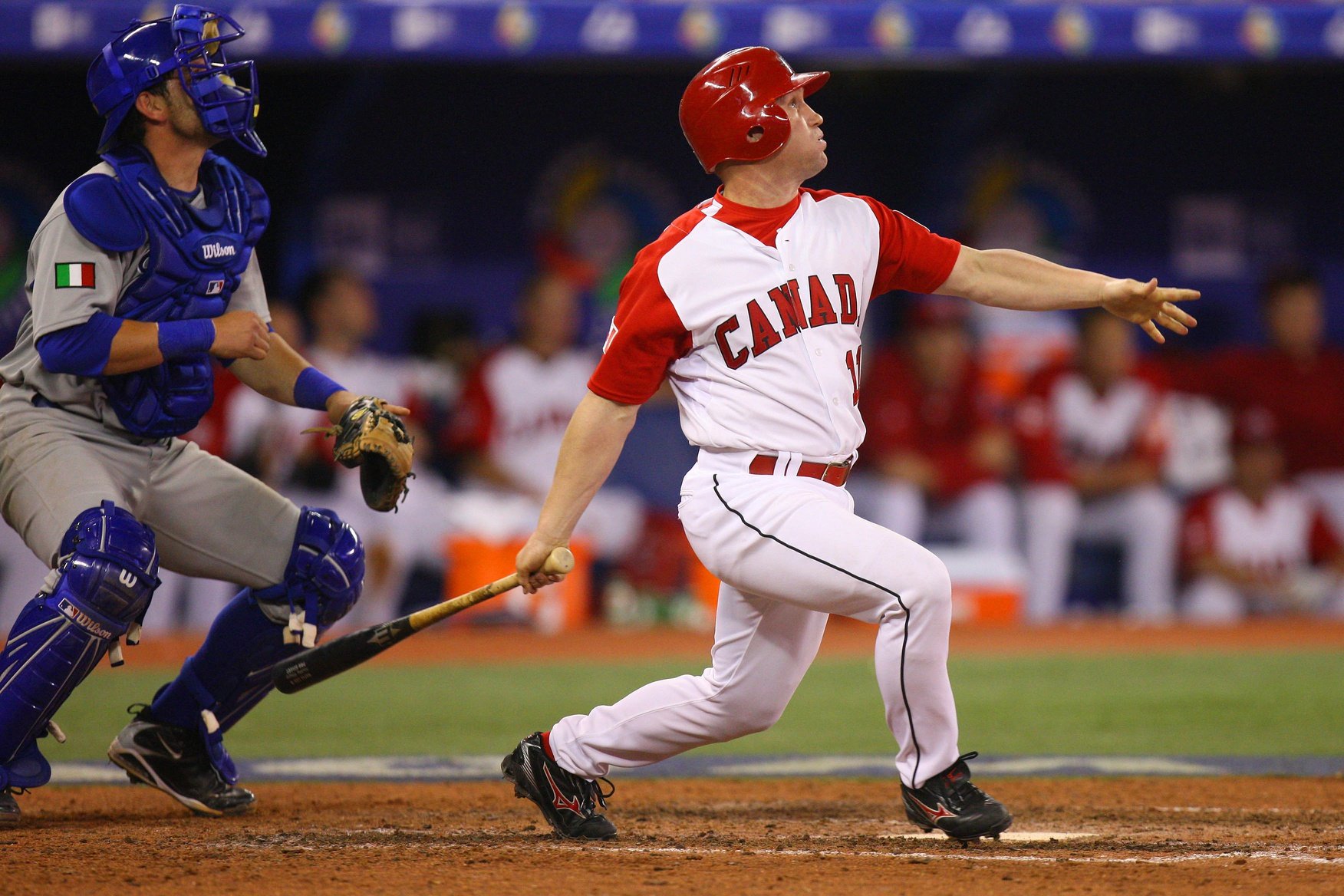 When Canada hit the field for the inaugural World Baseball Classic with the most talent the country had ever assembled, there was no surprise in seeing Stubby Clapp take his usual place at second base. Clapp will be inducted into the Canadian Baseball Hall of Fame this summer and deservedly so, with an ongoing and decorated career in international baseball for his country. He is serving as Ernie Whitt’s third base coach for this year’s Classic. It's a relationship that goes back to the ‘90s, a decade Clapp bookended with huge successes with the national program. Clapp was a part of the 1991 Canadian national junior team that captured gold on home soil near the 100th meridian in Brandon, and in ‘99, he returned to Manitoba as a member of the Canadian team competing in the Pan American Games being held in Winnipeg. 1991 is the only time Canada has captured the now-named U-18 Baseball World Cup, and the championship was voted as the top moment in Baseball Canada’s 50-year history in 2014. The gold medal game was not televised, so you needed to be among the 5,000 (!) fans that packed the still-best amateur baseball diamond in the country to see the 5-2 win. (photo credit: SaskToday/Jason G. Antonio) Clapp said the ‘99 Games became a “changing” moment for the national program. Whitt was managing Canada for the first time, and at stake were two spots in the upcoming Sydney Olympics, spots expected to go to the U.S. and Cuba. Clapp was having a good season in the Cardinals’ system at Triple-A Memphis and joined his fellow countrymen in a 16-4 win over Brazil in the new downtown ballpark by The Forks. The next afternoon, Canada faced the Americans in an 11-inning game that took over four hours to play because of that 11th inning. Things had soured for Canada when Whitt walked to the mound to speak to his pitcher, Chad Ricketts, who just surrendered a home run to give the U.S. a 6-3 lead. Whitt had made a mound visit the previous inning Ricketts pitched, and the crack international umpiring crew ruled the Canadians had to make a pitching change for Whitt’s second-but-actually-first mound visit. A fuming Whitt was ejected and filed a protest that took over a half hour to go unresolved. When play resumed, catcher Andy Stewart stepped up to be the first Canadian hero. With two on and two outs, Stewart hit a game-tying home run and unraveled the Americans, who quickly loaded the bases with two walks and a hit batter. At the plate with a full count, Clapp poked a ball into shallow left, where a miscommunication allowed the Canadians to walk off in victory. The Canadians finished the round robin undefeated before losing 3-2 to Cuba in the semi-finals. The team missed out on the Olympics but finished strong with a bronze medal win and, more importantly, injected energy into the national team program. Canada advanced to the semi-finals in the 2004 Olympics, and the upcoming WBC would give the program a chance to continue to impress on the international stage. For the first time, Whitt would build his Canadian side with active major leaguers, but there would be some notable omissions. Larry Walker had retired after an injury-riddled ‘05 season, and after thinking about coming back to play for Canada in the tournament, the legend from Maple Ridge decided to join only the coaching staff. Rich Harden and Éric Gagné would also be left off the roster on the pitching side, the latter recovering from an injury that would end his stretch of pure dominance of the National League. Even without Walker, the Canadians would bring some offensive punch to the first-ever Classic. Jason Bay would fill an outfield spot coming off his first All-Star season with Pittsburgh and would be joined in the middle of the lineup by incoming AL MVP Justin Morneau. Veterans Matt Stairs and Corey Koskie would be there, as well as major league outfielders Aaron Guiel and Adam Stern. While some returnees to the national team would be relegated to lesser roles, second base still belonged to Clapp. While his brief major league days were over, Clapp was now peppering the ball alongside up-and-coming indy ball legend Aharon Eggleston for the Northern League’s Edmonton Cracker-Cats. Clapp, along with Pete Orr, would play up the middle and set the table in Whitt’s batting orders. The Canadians began round robin play against one of the tournament’s weaker entrants. South Africa was last seen on the international stage in the 2000 Olympics, where they finished last, scoring only 11 runs over seven games. The opening game felt like a tune-up going the right way, but with a 3-0 lead in the sixth, veteran reliever Paul Quantrill coughed up four runs behind some shaky defending. A two-run blast from Koskie put Canada back in front in the seventh, but Canada’s bullpen faltered, and they trailed 7-6 heading into the ninth in a game that, if left unanswered, would go down as the tournament’s first major upset. Clapp was due fourth, and while it wasn’t his turn for the spotlight again, a teammate from ‘99 helped kick-start Canada’s effort to avoid embarrassment. When he arrived at the Pan-Am Games seven years earlier, Ryan Radmanovich was trying to work his way back into Seattle’s outfield mix after 75 plate appearances with the Mariners the year before. He never returned to the majors, and by 2002, his affiliated ball career was over, but he had become a star in the Atlantic League. Coming into the game earlier as a defensive sub, Radmanovich led off and hit a triple to the deepest part of Scottsdale Stadium. He would score the tying run on a double by Stern, and Canada would keep scoring to escape with an 11-8 win. The result barely registered with Dontrelle Willis across the Phoenix metro. The American starter watched on as his team started the tournament with a 2-0 win over Mexico in front of a rowdy, 50-50 crowd at Chase Field, where Willis would start the following day against the Canadians. The Marlins lefty was excited to represent his country and play with the high-caliber talent around him, saying he felt like “a kid at a candy store” walking around the clubhouse. Canada? Pfft. “We briefly went over the hitters,” Willis said, “I got a chance to play against Jason Bay and Peter Orr and what have you.” Willis started the contest with a four-pitch strikeout of Orr before Clapp hit a triple into the right field corner. The Windsor native would score the game’s first run on a Morneau groundout, giving an early lead to a young Adam Loewen. With ace Jeff Francis set to face Mexico in the final game of the round robin, Whitt decided to open the tournament with the more established Érik Bédard, whose six strikeouts over four innings of work went largely wasted against South Africa. As Loewen walked a pair of batters to load the bases in the first, that decision loomed over the Canadians early, but Chipper Jones ended the threat by bouncing into an inning-ending double play. Loewen settled in and was steady through 3.2 innings as the Canadian what-have-you’s introduced themselves to Willis. Back-to-back triples from Guiel and Stern made it 2-0 in the second before Stern drove in two more charged to Willis with a base hit off Al Leiter in the third. As reigning NBA MVP Steve Nash watched on from the stands, the Canadian onslaught continued with two more runs in the fourth on a double by Stairs. In the fifth, Stern put what looked to be the exclamation point on the game with an inside-the-park home run that put Canada up 8-0. Chris Begg had come on for Canada to record the final out of the fourth inning, and Whitt would leave him out for the fifth. Begg would stay out to face seven hitters, five of whom would reach. When Whitt finally pulled the plug, the Americans had scored two runs, and Begg had left the bases loaded with Jason Varitek up. Oncoming lefty Eric Cyr switched Varitek around, and from the right side, the Red Sox catcher hit a gigantic blast into the concourse in center field. The star-powered Americans had answered, and the remaining two-run lead felt as small as it could with four innings left. Cyr settled in and would give Canada three-up, three-down innings in the sixth and seventh. With the score still 8-6, Scott Mathieson entered and walked Vernon Wells and Johnny Damon between a pair of flyouts to start the eighth. Wielding his bat next as the go-ahead run, Chase Utley thought for a second he may have done it. Utley spat on a 2-1 pitch, and the ball sailed into the vast Arizona outfield space, but not at the clip of Varitek’s. Stern raced back immediately, reached the warning track, and had a split-second to spin and make a game-saving catch. Sans Gagné, Whitt tasked Steve Green with the final three outs. Green was another player on the WBC team who had been a bronze medalist at the Pan-Am Games. His major league career had lasted one Saturday afternoon in Oakland, when he took a no-decision, allowing two runs over six innings for the Angels on April 7, 2001. Green was still bouncing around Triple-A organization to organization, hoping this year to make the Orioles after previously failing with Cleveland and Detroit. Green would start the ninth by getting a pair of weak groundouts off the bats of Jeff Francoeur and Derrek Lee. Canada was an out away from victory as universal villain Alex Rodriguez strode to the plate. Rodriguez took two pitches for strikes to start the at-bat before watching another two off the plate, as Green tried to end it with an A-Rod whiff. The 2-2 offering was another breaking pitch off the plate, and Rodriguez got wood on it out towards shallow center. Racing in this time, Stern extended and caught the ball only for it to pop out as he hit the outfield grass. “The United States has life,” Gary Thorne exclaimed on the broadcast, as millions of fans up north dreaded the worst in a game that was feeling elusive. Rodriguez would weasel his way to second base on indifference on a first pitch strike to Mark Teixeira. Green would get Teixeira to roll over on the next pitch, an easy hopper fielded by Morneau a few feet from first base. Morneau would touch the base and embrace Green as the rest of Team Canada spilled onto the field in celebration. There were many contributions in the upset win, but none were louder than Stern’s, with some early run-scoring hits, the inside-the-park home run, and the game-saving catch in the eighth. “I just put my head down, ran to a spot and said, 'Come on, baby, don't hit the facing.’” Yet, here we are in 2026, and Canada has yet to qualify for the second round of a World Baseball Classic. Francis was bashed by Mexico in a 9-1 loss, and with three teams tied at 2-1, the Canadians' performance against South Africa cost them as they were eliminated on run differential. It was as close as Canada has gotten to reaching the second round prior to their eliminating loss to Mexico in the last WBC. Clapp would play for Canada again at the 2008 Olympics and the 2009 WBC before joining the coaching staff. Now in his fourth decade with the national program, he will maybe see it reach new heights again this month.
 -
Looking in for the sign atop the rubber, Josh Towers stood a strike away from getting his year off on the right track. It was the third game of spring training, and Towers had Phillies leadoff hitter Shane Victorino in a two-strike hole to start the game. Bengie Molina called for a curveball to put away the Flyin’ Hawaiian, and Towers delivered...an absolute cement mixer. The ball spun aimlessly over the top half of the plate but somehow found its way into Molina’s glove. Swing and a miss. “I’m not going to get that lucky that often,” said the right-hander afterwards, an unfortunately prophetic quote for his upcoming season. Towers would begin the 2006 season in the Blue Jays' rotation, the third straight year he would break camp as a starter. He signed a minor league deal with Toronto prior to 2003, and after joining the rotation in August, he won four of his final five starts. He started slow in ‘04 and got no better than bland (9-9, 5.11 ERA) but arrived to spring the following year with his spot safe when Toronto decided to move Miguel Batista into ninth inning duties. While the top of Toronto’s rotation fell off with injury or performance issues in ‘05, Towers stepped up to be an unsung workhorse, throwing a team-leading 208.2 innings and walking only 29 hitters across 33 starts. So there was no hesitation in letting Towers step up again when Toronto left Dunedin a little thin in the rotation. Roy Halladay would get his usual game one assignment, but with A.J. Burnett and Ted Lilly injured, manager John Gibbons slotted Towers into the second spot behind his ace. Following the renditions of the national anthems by Blue Man Group to a sold-out crowd on Opening Day, Halladay was terrific, pitching into the eighth while his new battery-mate Molina’s fourth inning home run powered Toronto to a 6-3 victory. The Blue Jays also honoured Tom Cheek, who had passed away the previous October. In the previous year’s opener in Tampa, a gravely ill Cheek sat in with Jerry Howarth and Warren Sawkiw for his final play-by-play appearance during the fourth inning. The Blue Jays scored three in the frame and beat the Devil Rays 5-2. With his dad being acknowledged before the game, Cheek’s son Jeff joined the radio broadcast for the fourth, another three-run inning, with Molina’s home run sailing over Cheek’s name on the Level of Excellence. (photo credit: Sportsnet) Towers made his season debut the next night in front of a much smaller crowd, who roared early thanks to back-to-back home runs from new Jays Troy Glaus and Lyle Overbay. Towers retired the first eight Twins he faced but ran into trouble in the fourth. The Twins had used four hits to cut the lead to 4-2 and had two runners in scoring position with two away. An 0-1 pitch to Jason Kubel was hit right back at Towers and deflected off the pitcher towards shortstop Russ Adams. With no chance of getting Kubel or the runner at home, Adams instead pivoted cross-body and threw the ball past Glaus’ glove at third and into the home dugout to tie the score. When Shannon Stewart took Towers deep to lead off the fifth, Minnesota grabbed the lead and never looked back. As the Jays walked off the field in a 13-4 defeat, the dwindled crowd of 18,156 chanted ‘Go Leafs Go’ in support of their local 10th-place team who would miss the upcoming NHL playoffs. An injury to Gregg Zaun to start the season had opened the door ever-so-slightly for Jason Phillips, and the third catcher in camp did his best to get fully in. Up with two outs and the bases loaded in the sixth in the series finale, Phillips lined a first pitch over the glove of a leaping Nick Punto at short, kick-starting a four-run rally in an eventual 6-3 win. Phillips’ clutch hit and his work with starter Gustavo Chacin, who pitched into the seventh wearing a dab of his newly-released cologne, earned the catcher big marks with his skipper. “Nobody knows,” Gibbons said in a mock-spooky voice when asked what would happen with Zaun’s impending return. “Maybe we could send Glaus down. He may have an option.” Phillips watched from the bench as Toronto’s bullpen blew a 6-2 lead after a solid spot start from Scott Downs in the series opener with Tampa Bay. Phillips, not Glaus, would be sent down after to make room for Zaun, whose fifth inning home run the following afternoon put Toronto ahead in an 8-4 win. Starring for the Blue Jays was Brian Tallet, who earned a spot on the roster with a sparkling spring. In his second appearance, Tallet pitched out of a bases-loaded mess left by a season-debuting Lilly in the third and stayed on for two more scoreless innings to the delight of his catcher. “I’m back there cracking up,” said Zaun. “The stirrups, I absolutely love ‘em. The chops are awesome...it’s just a tremendous look. He should’ve pitched yesterday on Flashback Friday.” It was the first major league win for Tallet since his major league debut on September 16, 2002, when he shut out the Red Sox over six innings in the second game of a doubleheader. “My first hitter was Rickey Henderson, and I walked him on a 3-2. I remember thinking, ‘I just started my career by walking a guy with 1,000 stolen bases. Not too good.’...got a double play to get out of the inning. It was so surreal.” (photo credit: Yahoo Sports) After a loss in the series finale, Toronto headed to Boston for the Red Sox’s home opener. Towers started and found trouble early in a four-run second inning. The Blue Jays lost and would also lose Towers’ next start in the final game of the six-game road trip in Chicago, one in which the starter only lasted six outs. Jermaine Dye and Jim Thome hit a pair of two-run blasts in the first inning on a soggy night at The Cell, a 6-4 White Sox win in an abbreviated five innings to drop the Blue Jays to 6-6. “I need to figure out what is wrong and fix it,” lamented Towers. Fortunately for the Blue Jays, the struggles hadn’t extended to their offence. After drying off, Toronto returned home for a two-game set with New York, and with over 48,000 inside Rogers Centre, the Blue Jays responded to an early deficit with three runs in each of the first two innings, highlighted by two-run longballs from Glaus and Alex Rios. The crowd cheered when New York starter Randy Johnson departed during the fourth and delighted even further when Gary Sheffield fumbled a one-handed catch. Glaus hit another home run in the eighth inning in the 10-5 win, giving him five and 13 RBI on the season, hitting cleanup behind Reed Johnson (.458 on the year), Rios (.395), and Vernon Wells (.389). Toronto was held to a run by Mike Mussina the next night but put up some crooked innings in wins to follow over the Red Sox. The opportunity for a series sweep lay in the hands of Towers and vanished seven batters into the game. Towers hit the leadoff hitter and gave up three runs on four hits in the first, the big blow coming on a David Ortiz opposite-field home run. The Blue Jays could not overcome the rough beginning in a 6-3 loss that dropped Towers to 0-4. He threw only 58 of 95 pitches for strikes, a worrying trend after Towers had been so good with his command in ‘05. In four starts, Towers had walked eight hitters, a number he reached on June 2 last year. “He’s not missing by much,” said Gibbons, literal and maybe figurative glass half full of Bud. “I would say that what’s hurting him is a few too many mistakes...like keeping the ball up.” When Towers’ turn came back up, the Blue Jays found themselves atop the AL East with a red-hot Shea Hillenbrand at the plate. Toronto’s designated hitter went 7-for-9 as the Blue Jays took two of three from the Orioles, and in the next game, Hillenbrand went deep twice for the first-place Blue Jays in a 7-2 win over the Yankees. Hillenbrand had started the year slowly, and you would hope the hits would turn Eeyore around because, yeah, he was not sounding great about his role on the team. “I decided to just accept it and move on because the only person I'm hurting otherwise is myself,” Hillenbrand said about DHing before the opener in New York. “The team isn't going to care. For them, it's all about winning. How I feel isn't really that important in everything, and that's one of the things I've had to come to terms with.” In first place with the slimmest of leads, the Blue Jays received, in the words of Gibbons, “the first kicking we’ve taken all year.” Trouble would find Towers early and often, chaos that had symbolized his month. With runners on the corners with one out in the first, Towers fielded a high chopper and turned to second base, only to be greeted by an already sliding-and-arriving Sheffield, who was running on the pitch. “That's just typical for me of what's been going on," Towers said afterwards. “I don't even know why I looked at second base. I know that at 3-2 (count) with one out, he's running. I've got to look (the runner back to third) and take the out at first.” What followed was also, sadly, typical for how the month had gone for Towers. The next hitter, Jason Giambi, went deep for a now three-run shot to put the Yankees in front 4-2. Another solo blast in the second widened the lead, but Toronto continued to find success against the Big Unit, tying the game with three runs off New York’s starter in the third. Then the train wreck started. Towers recorded only one more out, departing after an RBI double by Hideki Matsui that started the Yankees towards a 17-6 blowout. In the win, New York became the sixth team in American League history to score in every inning of a game. In his first five starts, Towers allowed the opposition to slash a first ballot-worthy .388/.450/.643 and finished the month with a 10.45 ERA. For Gibbons, his starting options were few. Recent call-ups Dustin McGowan and Shaun Marcum were part of the Yankees making history, and worse, Burnett was back on the injured list. On April 22, Burnett left after four innings of his second start, jumped on a plane, and flew to see Dr. James Andrews. A former fourth-round pick from UCLA would debut to replace Burnett, and as the season flipped to May with Toronto sitting at 12-11, Casey Janssen would start picking up starts in a way Towers couldn’t. View full article
-
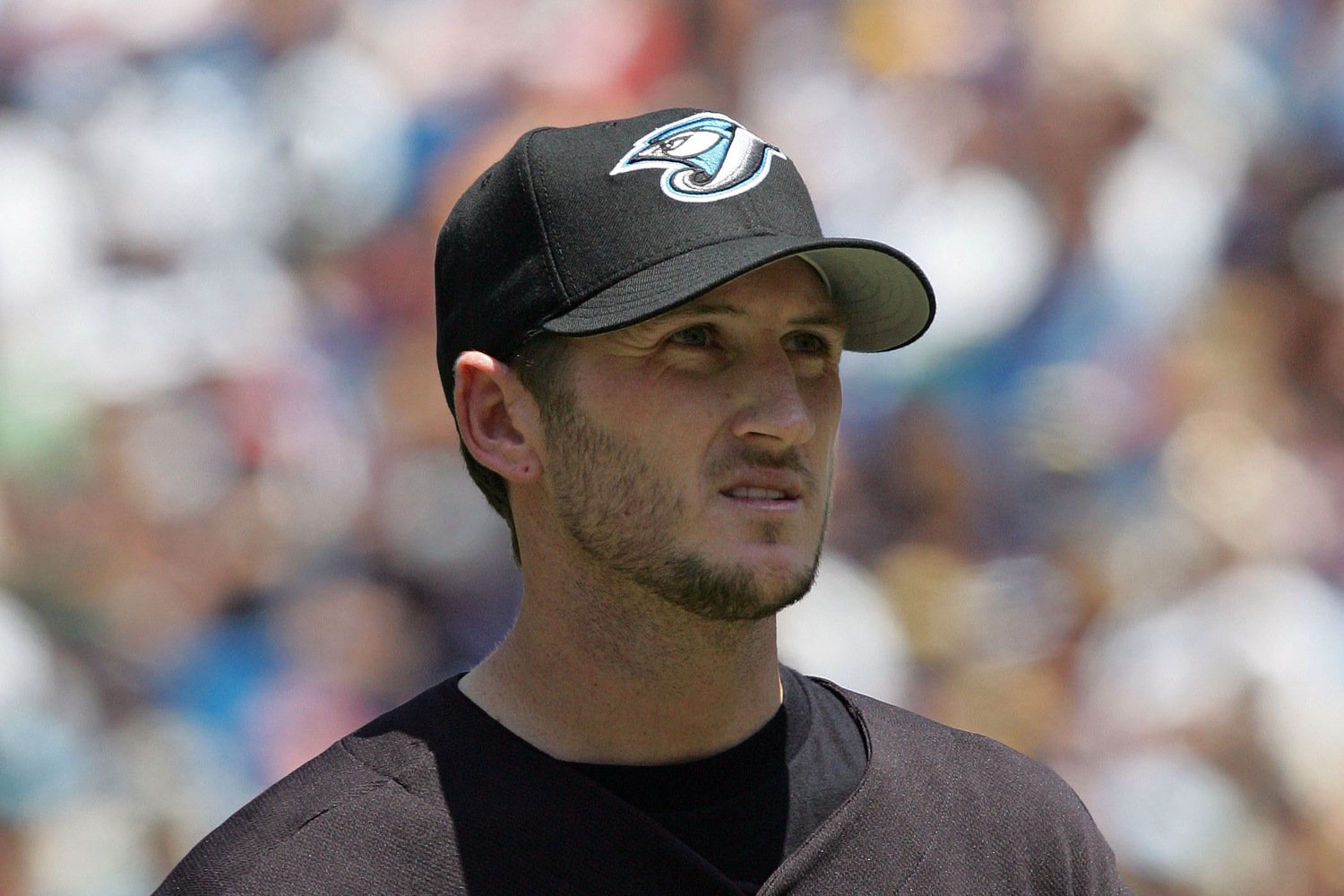 Looking in for the sign atop the rubber, Josh Towers stood a strike away from getting his year off on the right track. It was the third game of spring training, and Towers had Phillies leadoff hitter Shane Victorino in a two-strike hole to start the game. Bengie Molina called for a curveball to put away the Flyin’ Hawaiian, and Towers delivered...an absolute cement mixer. The ball spun aimlessly over the top half of the plate but somehow found its way into Molina’s glove. Swing and a miss. “I’m not going to get that lucky that often,” said the right-hander afterwards, an unfortunately prophetic quote for his upcoming season. Towers would begin the 2006 season in the Blue Jays' rotation, the third straight year he would break camp as a starter. He signed a minor league deal with Toronto prior to 2003, and after joining the rotation in August, he won four of his final five starts. He started slow in ‘04 and got no better than bland (9-9, 5.11 ERA) but arrived to spring the following year with his spot safe when Toronto decided to move Miguel Batista into ninth inning duties. While the top of Toronto’s rotation fell off with injury or performance issues in ‘05, Towers stepped up to be an unsung workhorse, throwing a team-leading 208.2 innings and walking only 29 hitters across 33 starts. So there was no hesitation in letting Towers step up again when Toronto left Dunedin a little thin in the rotation. Roy Halladay would get his usual game one assignment, but with A.J. Burnett and Ted Lilly injured, manager John Gibbons slotted Towers into the second spot behind his ace. Following the renditions of the national anthems by Blue Man Group to a sold-out crowd on Opening Day, Halladay was terrific, pitching into the eighth while his new battery-mate Molina’s fourth inning home run powered Toronto to a 6-3 victory. The Blue Jays also honoured Tom Cheek, who had passed away the previous October. In the previous year’s opener in Tampa, a gravely ill Cheek sat in with Jerry Howarth and Warren Sawkiw for his final play-by-play appearance during the fourth inning. The Blue Jays scored three in the frame and beat the Devil Rays 5-2. With his dad being acknowledged before the game, Cheek’s son Jeff joined the radio broadcast for the fourth, another three-run inning, with Molina’s home run sailing over Cheek’s name on the Level of Excellence. (photo credit: Sportsnet) Towers made his season debut the next night in front of a much smaller crowd, who roared early thanks to back-to-back home runs from new Jays Troy Glaus and Lyle Overbay. Towers retired the first eight Twins he faced but ran into trouble in the fourth. The Twins had used four hits to cut the lead to 4-2 and had two runners in scoring position with two away. An 0-1 pitch to Jason Kubel was hit right back at Towers and deflected off the pitcher towards shortstop Russ Adams. With no chance of getting Kubel or the runner at home, Adams instead pivoted cross-body and threw the ball past Glaus’ glove at third and into the home dugout to tie the score. When Shannon Stewart took Towers deep to lead off the fifth, Minnesota grabbed the lead and never looked back. As the Jays walked off the field in a 13-4 defeat, the dwindled crowd of 18,156 chanted ‘Go Leafs Go’ in support of their local 10th-place team who would miss the upcoming NHL playoffs. An injury to Gregg Zaun to start the season had opened the door ever-so-slightly for Jason Phillips, and the third catcher in camp did his best to get fully in. Up with two outs and the bases loaded in the sixth in the series finale, Phillips lined a first pitch over the glove of a leaping Nick Punto at short, kick-starting a four-run rally in an eventual 6-3 win. Phillips’ clutch hit and his work with starter Gustavo Chacin, who pitched into the seventh wearing a dab of his newly-released cologne, earned the catcher big marks with his skipper. “Nobody knows,” Gibbons said in a mock-spooky voice when asked what would happen with Zaun’s impending return. “Maybe we could send Glaus down. He may have an option.” Phillips watched from the bench as Toronto’s bullpen blew a 6-2 lead after a solid spot start from Scott Downs in the series opener with Tampa Bay. Phillips, not Glaus, would be sent down after to make room for Zaun, whose fifth inning home run the following afternoon put Toronto ahead in an 8-4 win. Starring for the Blue Jays was Brian Tallet, who earned a spot on the roster with a sparkling spring. In his second appearance, Tallet pitched out of a bases-loaded mess left by a season-debuting Lilly in the third and stayed on for two more scoreless innings to the delight of his catcher. “I’m back there cracking up,” said Zaun. “The stirrups, I absolutely love ‘em. The chops are awesome...it’s just a tremendous look. He should’ve pitched yesterday on Flashback Friday.” It was the first major league win for Tallet since his major league debut on September 16, 2002, when he shut out the Red Sox over six innings in the second game of a doubleheader. “My first hitter was Rickey Henderson, and I walked him on a 3-2. I remember thinking, ‘I just started my career by walking a guy with 1,000 stolen bases. Not too good.’...got a double play to get out of the inning. It was so surreal.” (photo credit: Yahoo Sports) After a loss in the series finale, Toronto headed to Boston for the Red Sox’s home opener. Towers started and found trouble early in a four-run second inning. The Blue Jays lost and would also lose Towers’ next start in the final game of the six-game road trip in Chicago, one in which the starter only lasted six outs. Jermaine Dye and Jim Thome hit a pair of two-run blasts in the first inning on a soggy night at The Cell, a 6-4 White Sox win in an abbreviated five innings to drop the Blue Jays to 6-6. “I need to figure out what is wrong and fix it,” lamented Towers. Fortunately for the Blue Jays, the struggles hadn’t extended to their offence. After drying off, Toronto returned home for a two-game set with New York, and with over 48,000 inside Rogers Centre, the Blue Jays responded to an early deficit with three runs in each of the first two innings, highlighted by two-run longballs from Glaus and Alex Rios. The crowd cheered when New York starter Randy Johnson departed during the fourth and delighted even further when Gary Sheffield fumbled a one-handed catch. Glaus hit another home run in the eighth inning in the 10-5 win, giving him five and 13 RBI on the season, hitting cleanup behind Reed Johnson (.458 on the year), Rios (.395), and Vernon Wells (.389). Toronto was held to a run by Mike Mussina the next night but put up some crooked innings in wins to follow over the Red Sox. The opportunity for a series sweep lay in the hands of Towers and vanished seven batters into the game. Towers hit the leadoff hitter and gave up three runs on four hits in the first, the big blow coming on a David Ortiz opposite-field home run. The Blue Jays could not overcome the rough beginning in a 6-3 loss that dropped Towers to 0-4. He threw only 58 of 95 pitches for strikes, a worrying trend after Towers had been so good with his command in ‘05. In four starts, Towers had walked eight hitters, a number he reached on June 2 last year. “He’s not missing by much,” said Gibbons, literal and maybe figurative glass half full of Bud. “I would say that what’s hurting him is a few too many mistakes...like keeping the ball up.” When Towers’ turn came back up, the Blue Jays found themselves atop the AL East with a red-hot Shea Hillenbrand at the plate. Toronto’s designated hitter went 7-for-9 as the Blue Jays took two of three from the Orioles, and in the next game, Hillenbrand went deep twice for the first-place Blue Jays in a 7-2 win over the Yankees. Hillenbrand had started the year slowly, and you would hope the hits would turn Eeyore around because, yeah, he was not sounding great about his role on the team. “I decided to just accept it and move on because the only person I'm hurting otherwise is myself,” Hillenbrand said about DHing before the opener in New York. “The team isn't going to care. For them, it's all about winning. How I feel isn't really that important in everything, and that's one of the things I've had to come to terms with.” In first place with the slimmest of leads, the Blue Jays received, in the words of Gibbons, “the first kicking we’ve taken all year.” Trouble would find Towers early and often, chaos that had symbolized his month. With runners on the corners with one out in the first, Towers fielded a high chopper and turned to second base, only to be greeted by an already sliding-and-arriving Sheffield, who was running on the pitch. “That's just typical for me of what's been going on," Towers said afterwards. “I don't even know why I looked at second base. I know that at 3-2 (count) with one out, he's running. I've got to look (the runner back to third) and take the out at first.” What followed was also, sadly, typical for how the month had gone for Towers. The next hitter, Jason Giambi, went deep for a now three-run shot to put the Yankees in front 4-2. Another solo blast in the second widened the lead, but Toronto continued to find success against the Big Unit, tying the game with three runs off New York’s starter in the third. Then the train wreck started. Towers recorded only one more out, departing after an RBI double by Hideki Matsui that started the Yankees towards a 17-6 blowout. In the win, New York became the sixth team in American League history to score in every inning of a game. In his first five starts, Towers allowed the opposition to slash a first ballot-worthy .388/.450/.643 and finished the month with a 10.45 ERA. For Gibbons, his starting options were few. Recent call-ups Dustin McGowan and Shaun Marcum were part of the Yankees making history, and worse, Burnett was back on the injured list. On April 22, Burnett left after four innings of his second start, jumped on a plane, and flew to see Dr. James Andrews. A former fourth-round pick from UCLA would debut to replace Burnett, and as the season flipped to May with Toronto sitting at 12-11, Casey Janssen would start picking up starts in a way Towers couldn’t.
 -
When the Blue Jays arrived in Baltimore for the final three games of their dismal 2009 season, the team was in complete disarray. A variety of resentments towards manager Cito Gaston and his coaching staff boiled over into a “mutiny,” the funniest recorded level of clubhouse revolt. As team president Paul Beeston flew in to be a featured guest at a players-only meeting the next day, José Bautista quietly homered in his fourth straight game. It was the first sighting of the José Bautista that Blue Jays fans would come to know and love. He appeared in just 21 games for Toronto in 2008 after being acquired from Pittsburgh, but behind the scenes, Bautista was beginning a makeover that changed his career. Gaston and hitting coach Gene Tenace encouraged Bautista to pull driveable pitches and start his swing earlier. The changes were anything but small, and it took Bautista some time to adapt. “The way that I would compare it would be if somebody tells you to brush your teeth with your left hand and not your right hand,” recalled the right-handed Bautista. After hitting only two home runs in the first half of 2009, Bautista was given an opportunity in the weeks following the All-Star Game. After the break, the disappointing Blue Jays dealt third baseman Scott Rolen to Cincinnati before letting White Sox GM Kenny Williams shoplift Alex Rios from the waiver wire. As a result, Bautista found himself with more playing time, and by September, the switch had flipped. As his leg kick heightened at the plate, so did his power: Bautista hit more home runs in September (10) than he did the rest of the season (three). Bautista’s swing transformation throughout the 2009 season is fun to watch; you can see the difference in his early-season blasts compared to September. At least stay for the first 25 seconds, featuring a depressed-at-his-best Hawk Harrelson calling Bautista’s first home run of the year in a drubbing of the White Sox. Other than Bautista (“I 100 per cent felt different”) and perhaps his manager, no one knew that the player’s transformation into Joey Bats had already taken place. Bautista avoided arbitration with Toronto and its new general manager Alex Anthopoulos, returning on a $2.4 million deal for 2010. After his Grapefruit League batting average hovered around .500 all spring, Gaston penciled Bautista into the leadoff spot on Opening Day. Still, when Bautista hit his first home run of the year on April 11 in Baltimore, no one knew what was to come. Bautista erupted for 54 home runs that season to lead the major leagues and set a new Blue Jays single-season record. After Toronto’s 85th win of the year in the season finale in Minneapolis, Bautista was embraced near the top of the dugout by Gaston. Suffering through “one of the worst winters of his life,” Gaston returned for one more season and watched as his last protégé set fire to the American League. A year before, a worn-down Gaston was asked about Bautista during the season’s final weekend in Baltimore. If José were an everyday player, the manager said, “He’d have a chance to do some damage.” One day, I’m going to write 30,000 words about the mutiny at the end of the 2009 season, but Bautista’s breakout gave Gaston’s woeful second tenure some positive and lasting meaning. (photo credit: Sportsnet/CP) Bautista’s emergence left Anthopoulos at a crossroads in the offseason. Bautista would be arbitration-eligible one final time. Left with a year of control, Anthopoulos explored his options. On the trade market, Bautista’s name was met with skepticism. No general manager wanted to acquire the second coming of Brady Anderson and told Anthopoulos as much. Plus, the Blue Jays were coming off a winning season despite trading Roy Halladay the previous winter. Would trading a fan favourite for a second straight offseason be palatable to the fans? A trade was not going to happen. Anthopoulos didn’t feel much urgency in addressing his emerged slugger’s contract, and neither did Bautista. Prior to Game 4 of the World Series, Bautista was named the Hank Aaron Award winner as the American League’s top offensive player and said he had not yet received any offers from the Blue Jays. “I’m not worried by any concern the team might have whether I can repeat it or not,” said Bautista. “I have no problems with an arbitration deal and going back out there and hopefully doing as well as I did last year.” Bautista would also win a Silver Slugger award in 2010, and while he was hopeful in a wide-open AL MVP race, he finished fourth, with one first-place vote courtesy of Shi Davidi, then of the Canadian Press. (photo credit: Sportsnet) Arbitration seemed to be the way things were headed. When the deadline to file for arbitration came in January, Bautista sought a $10.5 million salary, nearly $3 million more than Toronto offered. Anthopoulos refused to negotiate one-year pacts with players once arbitration numbers were filed, but door number three, a long-term deal, was still on the table. Richard Griffin of the Toronto Star felt the team intended to extend Bautista all along and was “content to lose the arbitration decision” if it came to it. On Valentine’s Day, a panel was scheduled to hear the arbitration case before the two sides decided to postpone the hearing. Negotiations on an extension were ongoing, said Anthopoulos, and the Blue Jays’ payroll situation had also changed recently. Having failed to land Adrian Beltré or Carl Crawford as free agents, the Angels foolishly traded for Toronto outfielder Vernon Wells. The subtractions of Rios and then Wells had taken nearly $39 million off Toronto’s payroll for the 2011 season alone. Bautista and the Blue Jays agreed to delay the arbitration hearing until the last possible minute. Two nights before the deadline, Enrique Rojas of ESPN Deportes dropped the big news: Bautista and the Blue Jays were in agreement on a five-year, $65 million extension with a team option for a sixth season. The contract was official the next day. “We could have paid him for one year, and we could have waited to see what he does this season,” Anthopoulos said, “But I believe it’s the right time to sign him, and that’s my job.” When news of the extension broke, several player agents called Toronto’s general manager asking if he had lost his mind. Even the pro-extension crowd recognized the risk in the commitment to Bautista, owner of one great season and a bunch of meh previous. Anthopoulos didn’t shy away from criticisms, but they found a way to eat at him. “I remember on my daily drive to the ballpark in Dunedin two or three days after the fact just thinking, ‘Did we do the right thing, did we make a mistake?’,” he recounted to Shi Davidi, “You can’t help it when there’s an avalanche of criticism and second-guessing.” When the newly wealthy Bautista arrived in Dunedin to start spring, it was easy to forget this would be the first time the new face of the franchise wouldn’t spend his March fighting for a roster spot. Playing under new expectations, Bautista followed up his 54 home run season with the most complete offensive performance of his career. Once again leading the majors in home runs (43), Bautista also posted a major-league best OPS (1.056) and drew more walks (132) than anyone else in baseball. It was production the Blue Jays happily came to expect from Bautista as his contract continued forward. Standard Batting Table Season Age Team WAR G PA AB R H 2B 3B HR RBI BB SO BA OBP SLG OPS OPS+ Awards 2011 30 TOR 8.3 149 655 513 105 155 24 2 43 103 132 111 .302 .447 .608 1.056 182 AS,MVP-3,SS 2012 31 TOR 3.8 92 399 332 64 80 14 0 27 65 59 63 .241 .358 .527 .886 138 AS 2013 32 TOR 4.5 118 528 452 82 117 24 0 28 73 69 84 .259 .358 .498 .856 132 AS 2014 33 TOR 6.9 155 673 553 101 158 27 0 35 103 104 96 .286 .403 .524 .928 162 AS,MVP-6,SS 2015 34 TOR 4.8 153 666 543 108 136 29 3 40 114 110 106 .250 .377 .536 .913 145 AS,MVP-8 2016 35 TOR 1.3 116 517 423 68 99 24 1 22 69 87 103 .234 .366 .452 .817 118 Provided by Baseball-Reference.com: View Original Table Generated 2/7/2026. The extension of Bautista remains one of the most important moves the Blue Jays have made in the 21st century. After trading Halladay and enduring a final year with Gaston, Anthopoulos had cued the Blue Jays to enter a new era in 2011. Bautista getting traded in the name of asset accumulation would have made some unsavoury sense, but the general manager believed in the breakout. It was Anthopoulos at his best, and as Toronto worked towards its postseason return in 2015, Bautista helped power it all, providing one memorable moment after another. There was the ALDS-deciding home run, of course, but there was also throwing out Billy Butler at first from the outfield and that tweet at Steve Simmons. Bautista getting the nod to throw out the first pitch for Game 6 of this year’s ALCS signified his stature among the franchise’s greats, and the response from the sold-out crowd showed why. 54 home runs let everyone know the name José Bautista; the six seasons afterwards put it in the Level of Excellence. View full article
-
.jpg.8801403f45ac3831997344f472708d0d.jpg) When the Blue Jays arrived in Baltimore for the final three games of their dismal 2009 season, the team was in complete disarray. A variety of resentments towards manager Cito Gaston and his coaching staff boiled over into a “mutiny,” the funniest recorded level of clubhouse revolt. As team president Paul Beeston flew in to be a featured guest at a players-only meeting the next day, José Bautista quietly homered in his fourth straight game. It was the first sighting of the José Bautista that Blue Jays fans would come to know and love. He appeared in just 21 games for Toronto in 2008 after being acquired from Pittsburgh, but behind the scenes, Bautista was beginning a makeover that changed his career. Gaston and hitting coach Gene Tenace encouraged Bautista to pull driveable pitches and start his swing earlier. The changes were anything but small, and it took Bautista some time to adapt. “The way that I would compare it would be if somebody tells you to brush your teeth with your left hand and not your right hand,” recalled the right-handed Bautista. After hitting only two home runs in the first half of 2009, Bautista was given an opportunity in the weeks following the All-Star Game. After the break, the disappointing Blue Jays dealt third baseman Scott Rolen to Cincinnati before letting White Sox GM Kenny Williams shoplift Alex Rios from the waiver wire. As a result, Bautista found himself with more playing time, and by September, the switch had flipped. As his leg kick heightened at the plate, so did his power: Bautista hit more home runs in September (10) than he did the rest of the season (three). Bautista’s swing transformation throughout the 2009 season is fun to watch; you can see the difference in his early-season blasts compared to September. At least stay for the first 25 seconds, featuring a depressed-at-his-best Hawk Harrelson calling Bautista’s first home run of the year in a drubbing of the White Sox. Other than Bautista (“I 100 per cent felt different”) and perhaps his manager, no one knew that the player’s transformation into Joey Bats had already taken place. Bautista avoided arbitration with Toronto and its new general manager Alex Anthopoulos, returning on a $2.4 million deal for 2010. After his Grapefruit League batting average hovered around .500 all spring, Gaston penciled Bautista into the leadoff spot on Opening Day. Still, when Bautista hit his first home run of the year on April 11 in Baltimore, no one knew what was to come. Bautista erupted for 54 home runs that season to lead the major leagues and set a new Blue Jays single-season record. After Toronto’s 85th win of the year in the season finale in Minneapolis, Bautista was embraced near the top of the dugout by Gaston. Suffering through “one of the worst winters of his life,” Gaston returned for one more season and watched as his last protégé set fire to the American League. A year before, a worn-down Gaston was asked about Bautista during the season’s final weekend in Baltimore. If José were an everyday player, the manager said, “He’d have a chance to do some damage.” One day, I’m going to write 30,000 words about the mutiny at the end of the 2009 season, but Bautista’s breakout gave Gaston’s woeful second tenure some positive and lasting meaning. (photo credit: Sportsnet/CP) Bautista’s emergence left Anthopoulos at a crossroads in the offseason. Bautista would be arbitration-eligible one final time. Left with a year of control, Anthopoulos explored his options. On the trade market, Bautista’s name was met with skepticism. No general manager wanted to acquire the second coming of Brady Anderson and told Anthopoulos as much. Plus, the Blue Jays were coming off a winning season despite trading Roy Halladay the previous winter. Would trading a fan favourite for a second straight offseason be palatable to the fans? A trade was not going to happen. Anthopoulos didn’t feel much urgency in addressing his emerged slugger’s contract, and neither did Bautista. Prior to Game 4 of the World Series, Bautista was named the Hank Aaron Award winner as the American League’s top offensive player and said he had not yet received any offers from the Blue Jays. “I’m not worried by any concern the team might have whether I can repeat it or not,” said Bautista. “I have no problems with an arbitration deal and going back out there and hopefully doing as well as I did last year.” Bautista would also win a Silver Slugger award in 2010, and while he was hopeful in a wide-open AL MVP race, he finished fourth, with one first-place vote courtesy of Shi Davidi, then of the Canadian Press. (photo credit: Sportsnet) Arbitration seemed to be the way things were headed. When the deadline to file for arbitration came in January, Bautista sought a $10.5 million salary, nearly $3 million more than Toronto offered. Anthopoulos refused to negotiate one-year pacts with players once arbitration numbers were filed, but door number three, a long-term deal, was still on the table. Richard Griffin of the Toronto Star felt the team intended to extend Bautista all along and was “content to lose the arbitration decision” if it came to it. On Valentine’s Day, a panel was scheduled to hear the arbitration case before the two sides decided to postpone the hearing. Negotiations on an extension were ongoing, said Anthopoulos, and the Blue Jays’ payroll situation had also changed recently. Having failed to land Adrian Beltré or Carl Crawford as free agents, the Angels foolishly traded for Toronto outfielder Vernon Wells. The subtractions of Rios and then Wells had taken nearly $39 million off Toronto’s payroll for the 2011 season alone. Bautista and the Blue Jays agreed to delay the arbitration hearing until the last possible minute. Two nights before the deadline, Enrique Rojas of ESPN Deportes dropped the big news: Bautista and the Blue Jays were in agreement on a five-year, $65 million extension with a team option for a sixth season. The contract was official the next day. “We could have paid him for one year, and we could have waited to see what he does this season,” Anthopoulos said, “But I believe it’s the right time to sign him, and that’s my job.” When news of the extension broke, several player agents called Toronto’s general manager asking if he had lost his mind. Even the pro-extension crowd recognized the risk in the commitment to Bautista, owner of one great season and a bunch of meh previous. Anthopoulos didn’t shy away from criticisms, but they found a way to eat at him. “I remember on my daily drive to the ballpark in Dunedin two or three days after the fact just thinking, ‘Did we do the right thing, did we make a mistake?’,” he recounted to Shi Davidi, “You can’t help it when there’s an avalanche of criticism and second-guessing.” When the newly wealthy Bautista arrived in Dunedin to start spring, it was easy to forget this would be the first time the new face of the franchise wouldn’t spend his March fighting for a roster spot. Playing under new expectations, Bautista followed up his 54 home run season with the most complete offensive performance of his career. Once again leading the majors in home runs (43), Bautista also posted a major-league best OPS (1.056) and drew more walks (132) than anyone else in baseball. It was production the Blue Jays happily came to expect from Bautista as his contract continued forward. Standard Batting Table Season Age Team WAR G PA AB R H 2B 3B HR RBI BB SO BA OBP SLG OPS OPS+ Awards 2011 30 TOR 8.3 149 655 513 105 155 24 2 43 103 132 111 .302 .447 .608 1.056 182 AS,MVP-3,SS 2012 31 TOR 3.8 92 399 332 64 80 14 0 27 65 59 63 .241 .358 .527 .886 138 AS 2013 32 TOR 4.5 118 528 452 82 117 24 0 28 73 69 84 .259 .358 .498 .856 132 AS 2014 33 TOR 6.9 155 673 553 101 158 27 0 35 103 104 96 .286 .403 .524 .928 162 AS,MVP-6,SS 2015 34 TOR 4.8 153 666 543 108 136 29 3 40 114 110 106 .250 .377 .536 .913 145 AS,MVP-8 2016 35 TOR 1.3 116 517 423 68 99 24 1 22 69 87 103 .234 .366 .452 .817 118 Provided by Baseball-Reference.com: View Original Table Generated 2/7/2026. The extension of Bautista remains one of the most important moves the Blue Jays have made in the 21st century. After trading Halladay and enduring a final year with Gaston, Anthopoulos had cued the Blue Jays to enter a new era in 2011. Bautista getting traded in the name of asset accumulation would have made some unsavoury sense, but the general manager believed in the breakout. It was Anthopoulos at his best, and as Toronto worked towards its postseason return in 2015, Bautista helped power it all, providing one memorable moment after another. There was the ALDS-deciding home run, of course, but there was also throwing out Billy Butler at first from the outfield and that tweet at Steve Simmons. Bautista getting the nod to throw out the first pitch for Game 6 of this year’s ALCS signified his stature among the franchise’s greats, and the response from the sold-out crowd showed why. 54 home runs let everyone know the name José Bautista; the six seasons afterwards put it in the Level of Excellence.
When the Blue Jays arrived in Baltimore for the final three games of their dismal 2009 season, the team was in complete disarray. A variety of resentments towards manager Cito Gaston and his coaching staff boiled over into a “mutiny,” the funniest recorded level of clubhouse revolt. As team president Paul Beeston flew in to be a featured guest at a players-only meeting the next day, José Bautista quietly homered in his fourth straight game. It was the first sighting of the José Bautista that Blue Jays fans would come to know and love. He appeared in just 21 games for Toronto in 2008 after being acquired from Pittsburgh, but behind the scenes, Bautista was beginning a makeover that changed his career. Gaston and hitting coach Gene Tenace encouraged Bautista to pull driveable pitches and start his swing earlier. The changes were anything but small, and it took Bautista some time to adapt. “The way that I would compare it would be if somebody tells you to brush your teeth with your left hand and not your right hand,” recalled the right-handed Bautista. After hitting only two home runs in the first half of 2009, Bautista was given an opportunity in the weeks following the All-Star Game. After the break, the disappointing Blue Jays dealt third baseman Scott Rolen to Cincinnati before letting White Sox GM Kenny Williams shoplift Alex Rios from the waiver wire. As a result, Bautista found himself with more playing time, and by September, the switch had flipped. As his leg kick heightened at the plate, so did his power: Bautista hit more home runs in September (10) than he did the rest of the season (three). Bautista’s swing transformation throughout the 2009 season is fun to watch; you can see the difference in his early-season blasts compared to September. At least stay for the first 25 seconds, featuring a depressed-at-his-best Hawk Harrelson calling Bautista’s first home run of the year in a drubbing of the White Sox. Other than Bautista (“I 100 per cent felt different”) and perhaps his manager, no one knew that the player’s transformation into Joey Bats had already taken place. Bautista avoided arbitration with Toronto and its new general manager Alex Anthopoulos, returning on a $2.4 million deal for 2010. After his Grapefruit League batting average hovered around .500 all spring, Gaston penciled Bautista into the leadoff spot on Opening Day. Still, when Bautista hit his first home run of the year on April 11 in Baltimore, no one knew what was to come. Bautista erupted for 54 home runs that season to lead the major leagues and set a new Blue Jays single-season record. After Toronto’s 85th win of the year in the season finale in Minneapolis, Bautista was embraced near the top of the dugout by Gaston. Suffering through “one of the worst winters of his life,” Gaston returned for one more season and watched as his last protégé set fire to the American League. A year before, a worn-down Gaston was asked about Bautista during the season’s final weekend in Baltimore. If José were an everyday player, the manager said, “He’d have a chance to do some damage.” One day, I’m going to write 30,000 words about the mutiny at the end of the 2009 season, but Bautista’s breakout gave Gaston’s woeful second tenure some positive and lasting meaning. (photo credit: Sportsnet/CP) Bautista’s emergence left Anthopoulos at a crossroads in the offseason. Bautista would be arbitration-eligible one final time. Left with a year of control, Anthopoulos explored his options. On the trade market, Bautista’s name was met with skepticism. No general manager wanted to acquire the second coming of Brady Anderson and told Anthopoulos as much. Plus, the Blue Jays were coming off a winning season despite trading Roy Halladay the previous winter. Would trading a fan favourite for a second straight offseason be palatable to the fans? A trade was not going to happen. Anthopoulos didn’t feel much urgency in addressing his emerged slugger’s contract, and neither did Bautista. Prior to Game 4 of the World Series, Bautista was named the Hank Aaron Award winner as the American League’s top offensive player and said he had not yet received any offers from the Blue Jays. “I’m not worried by any concern the team might have whether I can repeat it or not,” said Bautista. “I have no problems with an arbitration deal and going back out there and hopefully doing as well as I did last year.” Bautista would also win a Silver Slugger award in 2010, and while he was hopeful in a wide-open AL MVP race, he finished fourth, with one first-place vote courtesy of Shi Davidi, then of the Canadian Press. (photo credit: Sportsnet) Arbitration seemed to be the way things were headed. When the deadline to file for arbitration came in January, Bautista sought a $10.5 million salary, nearly $3 million more than Toronto offered. Anthopoulos refused to negotiate one-year pacts with players once arbitration numbers were filed, but door number three, a long-term deal, was still on the table. Richard Griffin of the Toronto Star felt the team intended to extend Bautista all along and was “content to lose the arbitration decision” if it came to it. On Valentine’s Day, a panel was scheduled to hear the arbitration case before the two sides decided to postpone the hearing. Negotiations on an extension were ongoing, said Anthopoulos, and the Blue Jays’ payroll situation had also changed recently. Having failed to land Adrian Beltré or Carl Crawford as free agents, the Angels foolishly traded for Toronto outfielder Vernon Wells. The subtractions of Rios and then Wells had taken nearly $39 million off Toronto’s payroll for the 2011 season alone. Bautista and the Blue Jays agreed to delay the arbitration hearing until the last possible minute. Two nights before the deadline, Enrique Rojas of ESPN Deportes dropped the big news: Bautista and the Blue Jays were in agreement on a five-year, $65 million extension with a team option for a sixth season. The contract was official the next day. “We could have paid him for one year, and we could have waited to see what he does this season,” Anthopoulos said, “But I believe it’s the right time to sign him, and that’s my job.” When news of the extension broke, several player agents called Toronto’s general manager asking if he had lost his mind. Even the pro-extension crowd recognized the risk in the commitment to Bautista, owner of one great season and a bunch of meh previous. Anthopoulos didn’t shy away from criticisms, but they found a way to eat at him. “I remember on my daily drive to the ballpark in Dunedin two or three days after the fact just thinking, ‘Did we do the right thing, did we make a mistake?’,” he recounted to Shi Davidi, “You can’t help it when there’s an avalanche of criticism and second-guessing.” When the newly wealthy Bautista arrived in Dunedin to start spring, it was easy to forget this would be the first time the new face of the franchise wouldn’t spend his March fighting for a roster spot. Playing under new expectations, Bautista followed up his 54 home run season with the most complete offensive performance of his career. Once again leading the majors in home runs (43), Bautista also posted a major-league best OPS (1.056) and drew more walks (132) than anyone else in baseball. It was production the Blue Jays happily came to expect from Bautista as his contract continued forward. Standard Batting Table Season Age Team WAR G PA AB R H 2B 3B HR RBI BB SO BA OBP SLG OPS OPS+ Awards 2011 30 TOR 8.3 149 655 513 105 155 24 2 43 103 132 111 .302 .447 .608 1.056 182 AS,MVP-3,SS 2012 31 TOR 3.8 92 399 332 64 80 14 0 27 65 59 63 .241 .358 .527 .886 138 AS 2013 32 TOR 4.5 118 528 452 82 117 24 0 28 73 69 84 .259 .358 .498 .856 132 AS 2014 33 TOR 6.9 155 673 553 101 158 27 0 35 103 104 96 .286 .403 .524 .928 162 AS,MVP-6,SS 2015 34 TOR 4.8 153 666 543 108 136 29 3 40 114 110 106 .250 .377 .536 .913 145 AS,MVP-8 2016 35 TOR 1.3 116 517 423 68 99 24 1 22 69 87 103 .234 .366 .452 .817 118 Provided by Baseball-Reference.com: View Original Table Generated 2/7/2026. The extension of Bautista remains one of the most important moves the Blue Jays have made in the 21st century. After trading Halladay and enduring a final year with Gaston, Anthopoulos had cued the Blue Jays to enter a new era in 2011. Bautista getting traded in the name of asset accumulation would have made some unsavoury sense, but the general manager believed in the breakout. It was Anthopoulos at his best, and as Toronto worked towards its postseason return in 2015, Bautista helped power it all, providing one memorable moment after another. There was the ALDS-deciding home run, of course, but there was also throwing out Billy Butler at first from the outfield and that tweet at Steve Simmons. Bautista getting the nod to throw out the first pitch for Game 6 of this year’s ALCS signified his stature among the franchise’s greats, and the response from the sold-out crowd showed why. 54 home runs let everyone know the name José Bautista; the six seasons afterwards put it in the Level of Excellence. -
With his eighth big league camp over a week away, Vernon Wells already felt a spark for the upcoming season. Wells and a dozen other Blue Jays showed up in Dunedin well before their scheduled check-ins to get a head start on their preseason work at the Bobby Mattick Training Center. Wells’ early arrival was partly to get ready for the inaugural World Baseball Classic, but Toronto’s starting center fielder was also feeling enthused about this season’s team. An aggressive offseason (see 2006 Rewind Part 1 and Part 2) had improved Toronto’s roster and put the Jays in the conversation to win the American League East. For all of the acquisitions made over the winter, the Blue Jays would need the best version of Wells in order to stay in contention. The year before, Wells was expected to shoulder more of the load offensively following the loss of Carlos Delgado, but he came out of the gates flat. Manager John Gibbons dropped Wells from third in the lineup just two weeks into April, a month in which he hit under the Mendoza line. Wells picked up the pace as the season rolled into summer but struggled again after the All-Star break, collecting only 15 extra-base hits over the season’s final two months. As he put 2005 behind him, Wells was energized by the moves his front office made. “We’re being talked about from coast to coast, said Wells. “It’s fun to talk about possibly winning this year.” Wells would be in Team USA manager Buck Martinez’s lineup on March 8 when they were upset 8-6 by Canada in what is remembered as the Adam Stern game. (photo credit: Baseball Canada) Not arriving in Dunedin in as good of a mood was Gregg Zaun, and it was hard to fault the Blue Jays’ catcher. In 2004, Zaun was exiled by the exiled when he was an early spring cut of the Montreal Expos. Toronto had been looking for catching depth, and then-manager Carlos Tosca remembered Zaun from their days in Florida when Tosca was heading the Marlins’ Triple-A affiliate. The Blue Jays signed Zaun in April, and when Greg Myers severely sprained his ankle on newly-installed turf at the Metrodome a few weeks later, Zaun was given an opportunity with his eighth organization. It was one he made last: Data from Baseball-Reference.com. View original table, generated 2/4/2026. Season Age Team Lg WAR G PA AB R H 2B 3B HR RBI BB SO BA OBP SLG OPS OPS+ 2004 33 TOR AL 2.3 107 392 338 46 91 24 0 6 36 47 61 .269 .367 .393 .761 96 2005 34 TOR AL 3.6 133 512 434 61 109 18 1 11 61 73 70 .251 .355 .373 .729 94 For the first time in his career, Zaun headed into the offseason preparing, expecting, to catch every day. Weeks before he was set to depart for Dunedin, Zaun received a call from Gibbons: the Blue Jays were signing Bengie Molina. Zaun was not happy, though he had a sympathetic ear from his manager. “I told him if he needs to vent, he can call me anytime,” said Gibbons. “I’ll take care of it. I’ll get him his playing time. He waited so long for that job, and he did a great job. We owe him the at-bats.” For general manager J.P. Ricciardi, the addition of Molina simply made the team better, potential disharmony aside. Early in the offseason, the Blue Jays made Molina an offer of $4 million for one season, but entering free agency for the first time and coming off his best year at the plate, the two-time Gold Glove-winning backstop was seeking a big payday. It would not come. Toronto’s offer to Molina stood through the winter, and by February, it was basically all that remained of his market. About two months after Baltimore gave Ramón Hernández $27.5 million over four years, Molina signed a one-year deal with Toronto for $4.5 million. With another starting-calibre catcher in camp, Zaun joined Shea Hillenbrand as the less-than-chipper returnees who were relegated to lesser roles. Ricciardi spent a good chunk of his offseason trying to replace Hillenbrand, who, despite being an All-Star in ‘05, the team felt was too inconsistent throughout the year. Hillenbrand somewhat agreed, feeling that he had “fought [his] mechanics” all year, and he spent the winter tweaking his stance, turning his stride leg inward to combat stepping out. While the results weren’t showing up early on in Grapefruit League play, Hillenbrand felt he was taking quality at-bats and was encouraged by the changes. Another player who revamped his approach at the urging of the Blue Jays was Zaun, who started spring hot at the dish. Zaun had six hits in his first 12 at-bats after he “slowed his feet down” over the winter, delaying his stride to temper swing aggressiveness. Ironically, Zaun said he felt confident enough to work through those changes, as he felt assured he would return as the number one catcher for the first time in his career. Molina or not, Zaun was determined to make it hard for Gibbons to keep him off the lineup card. In the end, Molina chose the Jays over an offer from the Dodgers due to reported concerns about losing playing time to Los Angeles’s two young catchers, Dioner Navarro and Russell Martin. Molina’s contract with Toronto also had a mutual option for the 2007 season. (photo credit: Rick Madonik/Toronto Star) Another player who arrived in Dunedin with an improved swing was Alex Rios. On the second day of camp, Rios launched several home runs in an intra-squad game, one clipping a yellow Hummer belonging to a Jays’ executive in the parking lot. Rios was working on mechanical changes after his power disappeared the season prior. Digging into the box with a widened stance and lower hand placement, everything looked great early, but no one ever really knew what Rios was feeling. 2005 had been a frustrating year for all involved in the Alex Rios business. In July, he stopped running after a batted ball that was ruled fair, leading to a costly run in a loss against the Royals. It was the play that stood out most in a season of frustrating moments for his manager, Gibbons, who benched Rios for parts of September. “How can they just justify keeping him out there?” a teammate wondered aloud over the winter. “He doesn’t run balls out. He hasn’t been around long enough to start playing the game that way.” No one was as experienced in dealing with Rios as Marty Pevey. The veteran Blue Jays minor league coach had managed Rios in Double A and had taken the outfielder out of games for not running balls out before. In the final month of the ‘05 season, Toronto made Pevey the big league first base coach, and while he watched Rios’ struggles along with the rest of the staff, Pevey saw the player differently than most. To Pevey, Rios was just as hard on himself, aware of the expectations he carried and how he wasn’t meeting them. “I was just surprised at how he was letting all of it affect him,” said Pevey. Pevey joined the Blue Jays in 1999, hired by Tim Johnson as the bullpen coach before Johnson was, uh, let go. He lasted one year on Jim Fregosi’s staff before being reassigned to coach High A. “I did know when (Fregosi) walked in, we were all in trouble...and eventually we were in trouble.” (photo credit: Chicago Cubs) Rios would soon be off to play for Puerto Rico in the World Baseball Classic, allowing his potential platoon partner in right to have a loud start to camp. Eric Hinske hit a meager .545 OPS against left-handed pitching in 2005 and lost any semblance of a role on the infield over the offseason. Toronto asked Hinske to learn the outfield in spring in hopes of platooning him with Rios in right, allowing the Blue Jays to hopefully salvage some production out of Hinske’s near-$5 million price tag. Hinske tagged six home runs in spring and played well enough in the field that Gibbons would start the regular season with a platoon in right field. The player with the largest spotlight on him in Dunedin was Toronto’s big free agent signing, A.J. Burnett, who threw two scoreless innings in his spring debut against Team Canada. In his second start, Burnett attempted to add an overhead windup to his delivery and was taken for four runs in three innings before returning to form in his subsequent turn, striking out six Astros across four frames. It was his next outing that gave Blue Jays fans their first scare of the season. Burnett took himself out of the game with discomfort in his right elbow, the same one that required Tommy John surgery three years prior. The follow-up MRI allowed a big sigh of relief. The discomfort was just loose scar tissue from the prior surgery. There was no serious issue, and Burnett would be able to resume throwing in a few days. Still, with Opening Day on the horizon, the Blue Jays opted to start Burnett on the injured list. In his absence, Gibbons moved Scott Downs from the bullpen to the rotation, opening a roster spot for another lefty who put together quite the spring. In January, Ricciardi acquired Brian Tallet from Cleveland for a right-hander named Bubbie Buzachero. Gibbons declared early on that there would be little competition in spring training, and Tallet was one of the six pitchers in camp who figured to be on the outside looking in. As spring rolled through, all Tallet did was get outs. The 6-foot-7 (with 4-inch sideburns) lefty allowed no runs over nine appearances, outperforming the last gasp veterans (James Baldwin and Ben Weber) and trio of young homegrown prospects (Dustin McGowan, Brandon League, and Shaun Marcum). When final cut-down day came, Tallet had a ticket for the flight north as the 12th and final member of the Blue Jays’ pitching staff. Also making the Opening Day roster was Jason Phillips. After being let go by the Dodgers, Phillips called Gibbons, his former minor league manager in the Mets organization, and all but begged for a job. Gibbons went to Ricciardi, and the general manager signed Phillips as a favour to his manager. Phillips was expected to compete with Guillermo Quiroz for the backup job behind Zaun before the Molina signing, which left his chances of making the team near nil. However, Zaun would start the season on the injured list, and Phillips would win the roster spot over Quiroz. Signed as a 17-year-old out of Venezuela, Quiroz was once Toronto’s top catching prospect but looked out of place in 29 games over two seasons. He was claimed off waivers by Seattle after being designated for assignment. (photo credit: MLB) After a pair of games against Triple-A Syracuse, the Blue Jays arrived home in Toronto ahead of a Tuesday night opener against the Minnesota Twins. Over 50,000 tickets were sold for the first game of Toronto’s 30th season, and after a somewhat low-key spring, everyone was finally about to see what the new look Blue Jays were made of. View full article
-
.jpg.363b40504e982096d07465c51f1cc562.jpg) With his eighth big league camp over a week away, Vernon Wells already felt a spark for the upcoming season. Wells and a dozen other Blue Jays showed up in Dunedin well before their scheduled check-ins to get a head start on their preseason work at the Bobby Mattick Training Center. Wells’ early arrival was partly to get ready for the inaugural World Baseball Classic, but Toronto’s starting center fielder was also feeling enthused about this season’s team. An aggressive offseason (see 2006 Rewind Part 1 and Part 2) had improved Toronto’s roster and put the Jays in the conversation to win the American League East. For all of the acquisitions made over the winter, the Blue Jays would need the best version of Wells in order to stay in contention. The year before, Wells was expected to shoulder more of the load offensively following the loss of Carlos Delgado, but he came out of the gates flat. Manager John Gibbons dropped Wells from third in the lineup just two weeks into April, a month in which he hit under the Mendoza line. Wells picked up the pace as the season rolled into summer but struggled again after the All-Star break, collecting only 15 extra-base hits over the season’s final two months. As he put 2005 behind him, Wells was energized by the moves his front office made. “We’re being talked about from coast to coast, said Wells. “It’s fun to talk about possibly winning this year.” Wells would be in Team USA manager Buck Martinez’s lineup on March 8 when they were upset 8-6 by Canada in what is remembered as the Adam Stern game. (photo credit: Baseball Canada) Not arriving in Dunedin in as good of a mood was Gregg Zaun, and it was hard to fault the Blue Jays’ catcher. In 2004, Zaun was exiled by the exiled when he was an early spring cut of the Montreal Expos. Toronto had been looking for catching depth, and then-manager Carlos Tosca remembered Zaun from their days in Florida when Tosca was heading the Marlins’ Triple-A affiliate. The Blue Jays signed Zaun in April, and when Greg Myers severely sprained his ankle on newly-installed turf at the Metrodome a few weeks later, Zaun was given an opportunity with his eighth organization. It was one he made last: Data from Baseball-Reference.com. View original table, generated 2/4/2026. Season Age Team Lg WAR G PA AB R H 2B 3B HR RBI BB SO BA OBP SLG OPS OPS+ 2004 33 TOR AL 2.3 107 392 338 46 91 24 0 6 36 47 61 .269 .367 .393 .761 96 2005 34 TOR AL 3.6 133 512 434 61 109 18 1 11 61 73 70 .251 .355 .373 .729 94 For the first time in his career, Zaun headed into the offseason preparing, expecting, to catch every day. Weeks before he was set to depart for Dunedin, Zaun received a call from Gibbons: the Blue Jays were signing Bengie Molina. Zaun was not happy, though he had a sympathetic ear from his manager. “I told him if he needs to vent, he can call me anytime,” said Gibbons. “I’ll take care of it. I’ll get him his playing time. He waited so long for that job, and he did a great job. We owe him the at-bats.” For general manager J.P. Ricciardi, the addition of Molina simply made the team better, potential disharmony aside. Early in the offseason, the Blue Jays made Molina an offer of $4 million for one season, but entering free agency for the first time and coming off his best year at the plate, the two-time Gold Glove-winning backstop was seeking a big payday. It would not come. Toronto’s offer to Molina stood through the winter, and by February, it was basically all that remained of his market. About two months after Baltimore gave Ramón Hernández $27.5 million over four years, Molina signed a one-year deal with Toronto for $4.5 million. With another starting-calibre catcher in camp, Zaun joined Shea Hillenbrand as the less-than-chipper returnees who were relegated to lesser roles. Ricciardi spent a good chunk of his offseason trying to replace Hillenbrand, who, despite being an All-Star in ‘05, the team felt was too inconsistent throughout the year. Hillenbrand somewhat agreed, feeling that he had “fought [his] mechanics” all year, and he spent the winter tweaking his stance, turning his stride leg inward to combat stepping out. While the results weren’t showing up early on in Grapefruit League play, Hillenbrand felt he was taking quality at-bats and was encouraged by the changes. Another player who revamped his approach at the urging of the Blue Jays was Zaun, who started spring hot at the dish. Zaun had six hits in his first 12 at-bats after he “slowed his feet down” over the winter, delaying his stride to temper swing aggressiveness. Ironically, Zaun said he felt confident enough to work through those changes, as he felt assured he would return as the number one catcher for the first time in his career. Molina or not, Zaun was determined to make it hard for Gibbons to keep him off the lineup card. In the end, Molina chose the Jays over an offer from the Dodgers due to reported concerns about losing playing time to Los Angeles’s two young catchers, Dioner Navarro and Russell Martin. Molina’s contract with Toronto also had a mutual option for the 2007 season. (photo credit: Rick Madonik/Toronto Star) Another player who arrived in Dunedin with an improved swing was Alex Rios. On the second day of camp, Rios launched several home runs in an intra-squad game, one clipping a yellow Hummer belonging to a Jays’ executive in the parking lot. Rios was working on mechanical changes after his power disappeared the season prior. Digging into the box with a widened stance and lower hand placement, everything looked great early, but no one ever really knew what Rios was feeling. 2005 had been a frustrating year for all involved in the Alex Rios business. In July, he stopped running after a batted ball that was ruled fair, leading to a costly run in a loss against the Royals. It was the play that stood out most in a season of frustrating moments for his manager, Gibbons, who benched Rios for parts of September. “How can they just justify keeping him out there?” a teammate wondered aloud over the winter. “He doesn’t run balls out. He hasn’t been around long enough to start playing the game that way.” No one was as experienced in dealing with Rios as Marty Pevey. The veteran Blue Jays minor league coach had managed Rios in Double A and had taken the outfielder out of games for not running balls out before. In the final month of the ‘05 season, Toronto made Pevey the big league first base coach, and while he watched Rios’ struggles along with the rest of the staff, Pevey saw the player differently than most. To Pevey, Rios was just as hard on himself, aware of the expectations he carried and how he wasn’t meeting them. “I was just surprised at how he was letting all of it affect him,” said Pevey. Pevey joined the Blue Jays in 1999, hired by Tim Johnson as the bullpen coach before Johnson was, uh, let go. He lasted one year on Jim Fregosi’s staff before being reassigned to coach High A. “I did know when (Fregosi) walked in, we were all in trouble...and eventually we were in trouble.” (photo credit: Chicago Cubs) Rios would soon be off to play for Puerto Rico in the World Baseball Classic, allowing his potential platoon partner in right to have a loud start to camp. Eric Hinske hit a meager .545 OPS against left-handed pitching in 2005 and lost any semblance of a role on the infield over the offseason. Toronto asked Hinske to learn the outfield in spring in hopes of platooning him with Rios in right, allowing the Blue Jays to hopefully salvage some production out of Hinske’s near-$5 million price tag. Hinske tagged six home runs in spring and played well enough in the field that Gibbons would start the regular season with a platoon in right field. The player with the largest spotlight on him in Dunedin was Toronto’s big free agent signing, A.J. Burnett, who threw two scoreless innings in his spring debut against Team Canada. In his second start, Burnett attempted to add an overhead windup to his delivery and was taken for four runs in three innings before returning to form in his subsequent turn, striking out six Astros across four frames. It was his next outing that gave Blue Jays fans their first scare of the season. Burnett took himself out of the game with discomfort in his right elbow, the same one that required Tommy John surgery three years prior. The follow-up MRI allowed a big sigh of relief. The discomfort was just loose scar tissue from the prior surgery. There was no serious issue, and Burnett would be able to resume throwing in a few days. Still, with Opening Day on the horizon, the Blue Jays opted to start Burnett on the injured list. In his absence, Gibbons moved Scott Downs from the bullpen to the rotation, opening a roster spot for another lefty who put together quite the spring. In January, Ricciardi acquired Brian Tallet from Cleveland for a right-hander named Bubbie Buzachero. Gibbons declared early on that there would be little competition in spring training, and Tallet was one of the six pitchers in camp who figured to be on the outside looking in. As spring rolled through, all Tallet did was get outs. The 6-foot-7 (with 4-inch sideburns) lefty allowed no runs over nine appearances, outperforming the last gasp veterans (James Baldwin and Ben Weber) and trio of young homegrown prospects (Dustin McGowan, Brandon League, and Shaun Marcum). When final cut-down day came, Tallet had a ticket for the flight north as the 12th and final member of the Blue Jays’ pitching staff. Also making the Opening Day roster was Jason Phillips. After being let go by the Dodgers, Phillips called Gibbons, his former minor league manager in the Mets organization, and all but begged for a job. Gibbons went to Ricciardi, and the general manager signed Phillips as a favour to his manager. Phillips was expected to compete with Guillermo Quiroz for the backup job behind Zaun before the Molina signing, which left his chances of making the team near nil. However, Zaun would start the season on the injured list, and Phillips would win the roster spot over Quiroz. Signed as a 17-year-old out of Venezuela, Quiroz was once Toronto’s top catching prospect but looked out of place in 29 games over two seasons. He was claimed off waivers by Seattle after being designated for assignment. (photo credit: MLB) After a pair of games against Triple-A Syracuse, the Blue Jays arrived home in Toronto ahead of a Tuesday night opener against the Minnesota Twins. Over 50,000 tickets were sold for the first game of Toronto’s 30th season, and after a somewhat low-key spring, everyone was finally about to see what the new look Blue Jays were made of.
With his eighth big league camp over a week away, Vernon Wells already felt a spark for the upcoming season. Wells and a dozen other Blue Jays showed up in Dunedin well before their scheduled check-ins to get a head start on their preseason work at the Bobby Mattick Training Center. Wells’ early arrival was partly to get ready for the inaugural World Baseball Classic, but Toronto’s starting center fielder was also feeling enthused about this season’s team. An aggressive offseason (see 2006 Rewind Part 1 and Part 2) had improved Toronto’s roster and put the Jays in the conversation to win the American League East. For all of the acquisitions made over the winter, the Blue Jays would need the best version of Wells in order to stay in contention. The year before, Wells was expected to shoulder more of the load offensively following the loss of Carlos Delgado, but he came out of the gates flat. Manager John Gibbons dropped Wells from third in the lineup just two weeks into April, a month in which he hit under the Mendoza line. Wells picked up the pace as the season rolled into summer but struggled again after the All-Star break, collecting only 15 extra-base hits over the season’s final two months. As he put 2005 behind him, Wells was energized by the moves his front office made. “We’re being talked about from coast to coast, said Wells. “It’s fun to talk about possibly winning this year.” Wells would be in Team USA manager Buck Martinez’s lineup on March 8 when they were upset 8-6 by Canada in what is remembered as the Adam Stern game. (photo credit: Baseball Canada) Not arriving in Dunedin in as good of a mood was Gregg Zaun, and it was hard to fault the Blue Jays’ catcher. In 2004, Zaun was exiled by the exiled when he was an early spring cut of the Montreal Expos. Toronto had been looking for catching depth, and then-manager Carlos Tosca remembered Zaun from their days in Florida when Tosca was heading the Marlins’ Triple-A affiliate. The Blue Jays signed Zaun in April, and when Greg Myers severely sprained his ankle on newly-installed turf at the Metrodome a few weeks later, Zaun was given an opportunity with his eighth organization. It was one he made last: Data from Baseball-Reference.com. View original table, generated 2/4/2026. Season Age Team Lg WAR G PA AB R H 2B 3B HR RBI BB SO BA OBP SLG OPS OPS+ 2004 33 TOR AL 2.3 107 392 338 46 91 24 0 6 36 47 61 .269 .367 .393 .761 96 2005 34 TOR AL 3.6 133 512 434 61 109 18 1 11 61 73 70 .251 .355 .373 .729 94 For the first time in his career, Zaun headed into the offseason preparing, expecting, to catch every day. Weeks before he was set to depart for Dunedin, Zaun received a call from Gibbons: the Blue Jays were signing Bengie Molina. Zaun was not happy, though he had a sympathetic ear from his manager. “I told him if he needs to vent, he can call me anytime,” said Gibbons. “I’ll take care of it. I’ll get him his playing time. He waited so long for that job, and he did a great job. We owe him the at-bats.” For general manager J.P. Ricciardi, the addition of Molina simply made the team better, potential disharmony aside. Early in the offseason, the Blue Jays made Molina an offer of $4 million for one season, but entering free agency for the first time and coming off his best year at the plate, the two-time Gold Glove-winning backstop was seeking a big payday. It would not come. Toronto’s offer to Molina stood through the winter, and by February, it was basically all that remained of his market. About two months after Baltimore gave Ramón Hernández $27.5 million over four years, Molina signed a one-year deal with Toronto for $4.5 million. With another starting-calibre catcher in camp, Zaun joined Shea Hillenbrand as the less-than-chipper returnees who were relegated to lesser roles. Ricciardi spent a good chunk of his offseason trying to replace Hillenbrand, who, despite being an All-Star in ‘05, the team felt was too inconsistent throughout the year. Hillenbrand somewhat agreed, feeling that he had “fought [his] mechanics” all year, and he spent the winter tweaking his stance, turning his stride leg inward to combat stepping out. While the results weren’t showing up early on in Grapefruit League play, Hillenbrand felt he was taking quality at-bats and was encouraged by the changes. Another player who revamped his approach at the urging of the Blue Jays was Zaun, who started spring hot at the dish. Zaun had six hits in his first 12 at-bats after he “slowed his feet down” over the winter, delaying his stride to temper swing aggressiveness. Ironically, Zaun said he felt confident enough to work through those changes, as he felt assured he would return as the number one catcher for the first time in his career. Molina or not, Zaun was determined to make it hard for Gibbons to keep him off the lineup card. In the end, Molina chose the Jays over an offer from the Dodgers due to reported concerns about losing playing time to Los Angeles’s two young catchers, Dioner Navarro and Russell Martin. Molina’s contract with Toronto also had a mutual option for the 2007 season. (photo credit: Rick Madonik/Toronto Star) Another player who arrived in Dunedin with an improved swing was Alex Rios. On the second day of camp, Rios launched several home runs in an intra-squad game, one clipping a yellow Hummer belonging to a Jays’ executive in the parking lot. Rios was working on mechanical changes after his power disappeared the season prior. Digging into the box with a widened stance and lower hand placement, everything looked great early, but no one ever really knew what Rios was feeling. 2005 had been a frustrating year for all involved in the Alex Rios business. In July, he stopped running after a batted ball that was ruled fair, leading to a costly run in a loss against the Royals. It was the play that stood out most in a season of frustrating moments for his manager, Gibbons, who benched Rios for parts of September. “How can they just justify keeping him out there?” a teammate wondered aloud over the winter. “He doesn’t run balls out. He hasn’t been around long enough to start playing the game that way.” No one was as experienced in dealing with Rios as Marty Pevey. The veteran Blue Jays minor league coach had managed Rios in Double A and had taken the outfielder out of games for not running balls out before. In the final month of the ‘05 season, Toronto made Pevey the big league first base coach, and while he watched Rios’ struggles along with the rest of the staff, Pevey saw the player differently than most. To Pevey, Rios was just as hard on himself, aware of the expectations he carried and how he wasn’t meeting them. “I was just surprised at how he was letting all of it affect him,” said Pevey. Pevey joined the Blue Jays in 1999, hired by Tim Johnson as the bullpen coach before Johnson was, uh, let go. He lasted one year on Jim Fregosi’s staff before being reassigned to coach High A. “I did know when (Fregosi) walked in, we were all in trouble...and eventually we were in trouble.” (photo credit: Chicago Cubs) Rios would soon be off to play for Puerto Rico in the World Baseball Classic, allowing his potential platoon partner in right to have a loud start to camp. Eric Hinske hit a meager .545 OPS against left-handed pitching in 2005 and lost any semblance of a role on the infield over the offseason. Toronto asked Hinske to learn the outfield in spring in hopes of platooning him with Rios in right, allowing the Blue Jays to hopefully salvage some production out of Hinske’s near-$5 million price tag. Hinske tagged six home runs in spring and played well enough in the field that Gibbons would start the regular season with a platoon in right field. The player with the largest spotlight on him in Dunedin was Toronto’s big free agent signing, A.J. Burnett, who threw two scoreless innings in his spring debut against Team Canada. In his second start, Burnett attempted to add an overhead windup to his delivery and was taken for four runs in three innings before returning to form in his subsequent turn, striking out six Astros across four frames. It was his next outing that gave Blue Jays fans their first scare of the season. Burnett took himself out of the game with discomfort in his right elbow, the same one that required Tommy John surgery three years prior. The follow-up MRI allowed a big sigh of relief. The discomfort was just loose scar tissue from the prior surgery. There was no serious issue, and Burnett would be able to resume throwing in a few days. Still, with Opening Day on the horizon, the Blue Jays opted to start Burnett on the injured list. In his absence, Gibbons moved Scott Downs from the bullpen to the rotation, opening a roster spot for another lefty who put together quite the spring. In January, Ricciardi acquired Brian Tallet from Cleveland for a right-hander named Bubbie Buzachero. Gibbons declared early on that there would be little competition in spring training, and Tallet was one of the six pitchers in camp who figured to be on the outside looking in. As spring rolled through, all Tallet did was get outs. The 6-foot-7 (with 4-inch sideburns) lefty allowed no runs over nine appearances, outperforming the last gasp veterans (James Baldwin and Ben Weber) and trio of young homegrown prospects (Dustin McGowan, Brandon League, and Shaun Marcum). When final cut-down day came, Tallet had a ticket for the flight north as the 12th and final member of the Blue Jays’ pitching staff. Also making the Opening Day roster was Jason Phillips. After being let go by the Dodgers, Phillips called Gibbons, his former minor league manager in the Mets organization, and all but begged for a job. Gibbons went to Ricciardi, and the general manager signed Phillips as a favour to his manager. Phillips was expected to compete with Guillermo Quiroz for the backup job behind Zaun before the Molina signing, which left his chances of making the team near nil. However, Zaun would start the season on the injured list, and Phillips would win the roster spot over Quiroz. Signed as a 17-year-old out of Venezuela, Quiroz was once Toronto’s top catching prospect but looked out of place in 29 games over two seasons. He was claimed off waivers by Seattle after being designated for assignment. (photo credit: MLB) After a pair of games against Triple-A Syracuse, the Blue Jays arrived home in Toronto ahead of a Tuesday night opener against the Minnesota Twins. Over 50,000 tickets were sold for the first game of Toronto’s 30th season, and after a somewhat low-key spring, everyone was finally about to see what the new look Blue Jays were made of. -
The second day of the 2005 Winter Meetings would see just how aggressive J.P. Ricciardi was willing to be in his efforts to revamp the Toronto Blue Jays. The signing of A.J. Burnett was official, but not after a tiresome back-and-forth through the early morning hours, with the pitcher’s camp all but begging the St. Louis Cardinals to pony up a bit more money. Ricciardi raised his offer and provided Burnett with an opt-out clause, two concessions that helped Toronto's general manager secure the high-profile starter. With Burnett and fellow newcomer B.J. Ryan shoring up the pitching staff, Ricciardi quickly concentrated his full efforts on improving the lineup. Toronto had been linked to a few bats already in the offseason, most notably Brian Giles, who ultimately re-signed in San Diego. The Blue Jays were returning four productive outfielders, and their interest in adding to the group with Giles showed Ricciardi was entertaining all options for his team. One of those options was a player that Ricciardi called “an exorbitant amount of money for us” just weeks before, and now, he was having one more conversation with an old friend of ours. Pat Gillick arrived in Philadelphia with a mandate to do something. The Phillies had won 88 games the year before but missed the playoffs for the 12th straight season, costing Ed Wade his job running the team. Gillick got to work right away, sending Jim Thome to the White Sox, and left many wondering if Bobby Abreu was the next out the door. A mainstay in right field since arriving in Philadelphia in ‘98, Abreu was at the end of a costly extension, one that was now feeling like an anchor around the Phillies’ payroll. Having discussed Abreu earlier in the offseason, the two general managers decided to come back to the table on day two of the meetings. If Ricciardi was able to move past the salary concerns, he remained hesitant over Gillick’s asking price: Vernon Wells. Having just turned 27, Wells was in the midst of his prime, an All-Star who just captured his second straight Gold Glove. Gillick's demand was a non-starter. Ricciardi tried to counter with a package built around Alex Rios, but nothing more came of the talks. When Wells’ costly extension became an anchor around the Blue Jays’ payroll after 2010, he was sent to Anaheim. He would push Abreu out of the Angels’ outfield and into the primary DH role, where he would enjoy the final productive season of his greatly underrated career. (photo credit: The Baseball Scholar) After crossing out Abreu and moving down his list of targets, Ricciardi got the seed of an idea that would have surely ruined the upcoming season, a seed that eventually sprouted and stunk up a future season. Kevin Mench and Brad Wilkerson. Ricciardi would sign the pair two years later; they would produce a craptastic .226/.305/.341 in 323 platooned at-bats. The season prior, it was the buffalo-headed Mench that hit Roy Halladay with a comeback line drive, breaking Doc’s leg and ending his season in July. For Wilkerson, his numbers were down in 2005, but teams were interested, and Toronto offered a package to Washington involving by-then-obsolete closer Miguel Batista. The deal was promptly turned down by an unimpressed Jim Bowden days before the Nationals general manager sent Wilkerson to Texas in a trade for Alfonso Soriano. Ricciardi’s own talks with Texas about Mench were moving along. The Rangers were after two players: Rios and Brandon League, a pitcher that Texas general manager Jon Daniels admired. Rangers pitching coach Mark Connor was previously with the Blue Jays and had worked with League in the minors. The two sides kept exchanging names. Ricciardi asked for 23-year-old first baseman Adrian Gonzalez; Daniels wanted second baseman Orlando Hudson. Talks fizzled, and, fortunately for Blue Jays fans, the already-functioning platoon of Reed Johnson and Frank Catalanotto would have to do in left field for another year. If Toronto truly wanted to contend in 2006, the team was going to need better production from its corner infielders. Eric Hinske had grown stale, and the first year of Corey Koskie’s contract showed little more than injuries and signs of decline. Shea Hillenbrand was an All-Star in his first season with Toronto and finished ‘05 as the primary first baseman, but Ricciardi wasn’t completely enamoured with bringing him back. Hillenbrand finished the season weighing over 230 pounds and admitted playing on the Rogers Centre turf took its toll, leading him to drop 18 pounds over 10 weeks after the season in hopes of remaining in the general manager’s plans for 2006. Well, this didn’t work. (photo credit: Toronto Star) By then, Hillenbrand’s name had been shopped around half of the majors. The Dodgers had won 71 games the year before with no third baseman (seriously, Óscar Robles? Mike Edwards?), but even they passed on Hillenbrand and Koskie. Hillenbrand’s upcoming raise in his final year of arbitration would be enough that it made sense for Toronto to move off his contract to free up the money for another upgrade. So, in his pursuit of Milwaukee first baseman Lyle Overbay, Ricciardi first checked to see if the Brewers were interested in Hillenbrand. Overbay was the upgrade Toronto sought at first base. Acquired by the Brewers in 2004, he led the National League with 53 doubles in his first full season as a starter and had a solid follow-up campaign. Ricciardi initially offered Hillenbrand and pitcher Dave Bush but really got Milwaukee’s attention by adding pitching prospect Zach Jackson to the deal. With talks on standby, Ricciardi got unsettling news on day three of the meetings. Overbay was going to be sent to division rival Boston for pitcher Matt Clement. Placed in a corner, Ricciardi resorted to a tried-and-true front office trick of the ‘90s: waving the shiny side of something rusty at Gord Ash. Having been replaced by Ricciardi in Toronto, Ash was brought into the Milwaukee front office by Brewers GM (and fellow Canadian) Doug Melvin. Ash’s last first-round pick running the Blue Jays was Gabe Gross, who had impressed little in his first two seasons playing in the Jays’ outfield. When Boston chaffed at the amount of Clement’s contract Milwaukee wanted to be retained in a trade, Ricciardi swapped out Hillenbrand for Gross, and that offer made Overbay a Blue Jay. Ricciardi left the Winter Meetings having improved his lineup with the addition of Overbay, but he also left with Hillenbrand, Koskie, and Hinske still on the roster. The infield picture was further muddled a few days before Christmas when Ricciardi struck a deal for his final offseason bang, Troy Glaus, who immediately became Toronto’s best option at third base. Adding to the complicated situation in the infield was that the Gold Glove-winning Hudson would head to Arizona in return, along with the condition that the D-backs please take Miguel Batista off our baseball team. In an offseason that had come fast with news, landing Glaus seemed to take an eternity. The third baseman had a no-trade clause and carried no fondness for Toronto’s turf from his time with the Angels. Glaus reached out to a former Little League rival in Blue Jays outfielder Reed Johnson, who offered assurance that the new playing surface was not like the old stuff. Glaus headed to Toronto to see for himself, was delayed in arriving, and when he officially signed off on the deal a day later, Arizona was running behind on finishing Hudson’s physical. The press conference to announce the deal was delayed over an hour, but by the end of the day, the Blue Jays finally acquired their power bat. The loss of Hudson was mitigated by the emergence of Aaron Hill. Filling in for an injured Koskie early in 2005, Hill impressed and earned a look as an everyday player, an opportunity he would now get at second base. That still left way too many bodies on the corners. Hillenbrand offered some punch, and Hinske offered some versatility, which left the Koskie contract from a year before feeling even more regrettable. A few days into the new year, Koskie was sent in a salary dump to Milwaukee, a team that had gone after him a year ago in free agency. Before sending Koskie to Milwaukee, Ricciardi reached out to the Twins to see if Minnesota was interested in a reunion. “We never heard back from them,” Riccardi said, and the Twins went with free agent Tony Batista, who was returning to the majors following a year in Japan. No good options here. (photo credit: The Athletic) With an impressive offseason already compiled, Ricciardi looked at a few of his remaining options to fortify the roster. He would check in with Pittsburgh about the availability of Craig Wilson following the Pirates’ signing of Jeromy Burnitz. His interest in free agent catcher Bengie Molina would only be for the right price. Whatever else happened, the Blue Jays would be walking into Dunedin a better baseball team in the coming spring. View full article
-
.jpg.6f7ab3ea4f55298471bb3d56ad7bc72f.jpg) The second day of the 2005 Winter Meetings would see just how aggressive J.P. Ricciardi was willing to be in his efforts to revamp the Toronto Blue Jays. The signing of A.J. Burnett was official, but not after a tiresome back-and-forth through the early morning hours, with the pitcher’s camp all but begging the St. Louis Cardinals to pony up a bit more money. Ricciardi raised his offer and provided Burnett with an opt-out clause, two concessions that helped Toronto's general manager secure the high-profile starter. With Burnett and fellow newcomer B.J. Ryan shoring up the pitching staff, Ricciardi quickly concentrated his full efforts on improving the lineup. Toronto had been linked to a few bats already in the offseason, most notably Brian Giles, who ultimately re-signed in San Diego. The Blue Jays were returning four productive outfielders, and their interest in adding to the group with Giles showed Ricciardi was entertaining all options for his team. One of those options was a player that Ricciardi called “an exorbitant amount of money for us” just weeks before, and now, he was having one more conversation with an old friend of ours. Pat Gillick arrived in Philadelphia with a mandate to do something. The Phillies had won 88 games the year before but missed the playoffs for the 12th straight season, costing Ed Wade his job running the team. Gillick got to work right away, sending Jim Thome to the White Sox, and left many wondering if Bobby Abreu was the next out the door. A mainstay in right field since arriving in Philadelphia in ‘98, Abreu was at the end of a costly extension, one that was now feeling like an anchor around the Phillies’ payroll. Having discussed Abreu earlier in the offseason, the two general managers decided to come back to the table on day two of the meetings. If Ricciardi was able to move past the salary concerns, he remained hesitant over Gillick’s asking price: Vernon Wells. Having just turned 27, Wells was in the midst of his prime, an All-Star who just captured his second straight Gold Glove. Gillick's demand was a non-starter. Ricciardi tried to counter with a package built around Alex Rios, but nothing more came of the talks. When Wells’ costly extension became an anchor around the Blue Jays’ payroll after 2010, he was sent to Anaheim. He would push Abreu out of the Angels’ outfield and into the primary DH role, where he would enjoy the final productive season of his greatly underrated career. (photo credit: The Baseball Scholar) After crossing out Abreu and moving down his list of targets, Ricciardi got the seed of an idea that would have surely ruined the upcoming season, a seed that eventually sprouted and stunk up a future season. Kevin Mench and Brad Wilkerson. Ricciardi would sign the pair two years later; they would produce a craptastic .226/.305/.341 in 323 platooned at-bats. The season prior, it was the buffalo-headed Mench that hit Roy Halladay with a comeback line drive, breaking Doc’s leg and ending his season in July. For Wilkerson, his numbers were down in 2005, but teams were interested, and Toronto offered a package to Washington involving by-then-obsolete closer Miguel Batista. The deal was promptly turned down by an unimpressed Jim Bowden days before the Nationals general manager sent Wilkerson to Texas in a trade for Alfonso Soriano. Ricciardi’s own talks with Texas about Mench were moving along. The Rangers were after two players: Rios and Brandon League, a pitcher that Texas general manager Jon Daniels admired. Rangers pitching coach Mark Connor was previously with the Blue Jays and had worked with League in the minors. The two sides kept exchanging names. Ricciardi asked for 23-year-old first baseman Adrian Gonzalez; Daniels wanted second baseman Orlando Hudson. Talks fizzled, and, fortunately for Blue Jays fans, the already-functioning platoon of Reed Johnson and Frank Catalanotto would have to do in left field for another year. If Toronto truly wanted to contend in 2006, the team was going to need better production from its corner infielders. Eric Hinske had grown stale, and the first year of Corey Koskie’s contract showed little more than injuries and signs of decline. Shea Hillenbrand was an All-Star in his first season with Toronto and finished ‘05 as the primary first baseman, but Ricciardi wasn’t completely enamoured with bringing him back. Hillenbrand finished the season weighing over 230 pounds and admitted playing on the Rogers Centre turf took its toll, leading him to drop 18 pounds over 10 weeks after the season in hopes of remaining in the general manager’s plans for 2006. Well, this didn’t work. (photo credit: Toronto Star) By then, Hillenbrand’s name had been shopped around half of the majors. The Dodgers had won 71 games the year before with no third baseman (seriously, Óscar Robles? Mike Edwards?), but even they passed on Hillenbrand and Koskie. Hillenbrand’s upcoming raise in his final year of arbitration would be enough that it made sense for Toronto to move off his contract to free up the money for another upgrade. So, in his pursuit of Milwaukee first baseman Lyle Overbay, Ricciardi first checked to see if the Brewers were interested in Hillenbrand. Overbay was the upgrade Toronto sought at first base. Acquired by the Brewers in 2004, he led the National League with 53 doubles in his first full season as a starter and had a solid follow-up campaign. Ricciardi initially offered Hillenbrand and pitcher Dave Bush but really got Milwaukee’s attention by adding pitching prospect Zach Jackson to the deal. With talks on standby, Ricciardi got unsettling news on day three of the meetings. Overbay was going to be sent to division rival Boston for pitcher Matt Clement. Placed in a corner, Ricciardi resorted to a tried-and-true front office trick of the ‘90s: waving the shiny side of something rusty at Gord Ash. Having been replaced by Ricciardi in Toronto, Ash was brought into the Milwaukee front office by Brewers GM (and fellow Canadian) Doug Melvin. Ash’s last first-round pick running the Blue Jays was Gabe Gross, who had impressed little in his first two seasons playing in the Jays’ outfield. When Boston chaffed at the amount of Clement’s contract Milwaukee wanted to be retained in a trade, Ricciardi swapped out Hillenbrand for Gross, and that offer made Overbay a Blue Jay. Ricciardi left the Winter Meetings having improved his lineup with the addition of Overbay, but he also left with Hillenbrand, Koskie, and Hinske still on the roster. The infield picture was further muddled a few days before Christmas when Ricciardi struck a deal for his final offseason bang, Troy Glaus, who immediately became Toronto’s best option at third base. Adding to the complicated situation in the infield was that the Gold Glove-winning Hudson would head to Arizona in return, along with the condition that the D-backs please take Miguel Batista off our baseball team. In an offseason that had come fast with news, landing Glaus seemed to take an eternity. The third baseman had a no-trade clause and carried no fondness for Toronto’s turf from his time with the Angels. Glaus reached out to a former Little League rival in Blue Jays outfielder Reed Johnson, who offered assurance that the new playing surface was not like the old stuff. Glaus headed to Toronto to see for himself, was delayed in arriving, and when he officially signed off on the deal a day later, Arizona was running behind on finishing Hudson’s physical. The press conference to announce the deal was delayed over an hour, but by the end of the day, the Blue Jays finally acquired their power bat. The loss of Hudson was mitigated by the emergence of Aaron Hill. Filling in for an injured Koskie early in 2005, Hill impressed and earned a look as an everyday player, an opportunity he would now get at second base. That still left way too many bodies on the corners. Hillenbrand offered some punch, and Hinske offered some versatility, which left the Koskie contract from a year before feeling even more regrettable. A few days into the new year, Koskie was sent in a salary dump to Milwaukee, a team that had gone after him a year ago in free agency. Before sending Koskie to Milwaukee, Ricciardi reached out to the Twins to see if Minnesota was interested in a reunion. “We never heard back from them,” Riccardi said, and the Twins went with free agent Tony Batista, who was returning to the majors following a year in Japan. No good options here. (photo credit: The Athletic) With an impressive offseason already compiled, Ricciardi looked at a few of his remaining options to fortify the roster. He would check in with Pittsburgh about the availability of Craig Wilson following the Pirates’ signing of Jeromy Burnitz. His interest in free agent catcher Bengie Molina would only be for the right price. Whatever else happened, the Blue Jays would be walking into Dunedin a better baseball team in the coming spring.
The second day of the 2005 Winter Meetings would see just how aggressive J.P. Ricciardi was willing to be in his efforts to revamp the Toronto Blue Jays. The signing of A.J. Burnett was official, but not after a tiresome back-and-forth through the early morning hours, with the pitcher’s camp all but begging the St. Louis Cardinals to pony up a bit more money. Ricciardi raised his offer and provided Burnett with an opt-out clause, two concessions that helped Toronto's general manager secure the high-profile starter. With Burnett and fellow newcomer B.J. Ryan shoring up the pitching staff, Ricciardi quickly concentrated his full efforts on improving the lineup. Toronto had been linked to a few bats already in the offseason, most notably Brian Giles, who ultimately re-signed in San Diego. The Blue Jays were returning four productive outfielders, and their interest in adding to the group with Giles showed Ricciardi was entertaining all options for his team. One of those options was a player that Ricciardi called “an exorbitant amount of money for us” just weeks before, and now, he was having one more conversation with an old friend of ours. Pat Gillick arrived in Philadelphia with a mandate to do something. The Phillies had won 88 games the year before but missed the playoffs for the 12th straight season, costing Ed Wade his job running the team. Gillick got to work right away, sending Jim Thome to the White Sox, and left many wondering if Bobby Abreu was the next out the door. A mainstay in right field since arriving in Philadelphia in ‘98, Abreu was at the end of a costly extension, one that was now feeling like an anchor around the Phillies’ payroll. Having discussed Abreu earlier in the offseason, the two general managers decided to come back to the table on day two of the meetings. If Ricciardi was able to move past the salary concerns, he remained hesitant over Gillick’s asking price: Vernon Wells. Having just turned 27, Wells was in the midst of his prime, an All-Star who just captured his second straight Gold Glove. Gillick's demand was a non-starter. Ricciardi tried to counter with a package built around Alex Rios, but nothing more came of the talks. When Wells’ costly extension became an anchor around the Blue Jays’ payroll after 2010, he was sent to Anaheim. He would push Abreu out of the Angels’ outfield and into the primary DH role, where he would enjoy the final productive season of his greatly underrated career. (photo credit: The Baseball Scholar) After crossing out Abreu and moving down his list of targets, Ricciardi got the seed of an idea that would have surely ruined the upcoming season, a seed that eventually sprouted and stunk up a future season. Kevin Mench and Brad Wilkerson. Ricciardi would sign the pair two years later; they would produce a craptastic .226/.305/.341 in 323 platooned at-bats. The season prior, it was the buffalo-headed Mench that hit Roy Halladay with a comeback line drive, breaking Doc’s leg and ending his season in July. For Wilkerson, his numbers were down in 2005, but teams were interested, and Toronto offered a package to Washington involving by-then-obsolete closer Miguel Batista. The deal was promptly turned down by an unimpressed Jim Bowden days before the Nationals general manager sent Wilkerson to Texas in a trade for Alfonso Soriano. Ricciardi’s own talks with Texas about Mench were moving along. The Rangers were after two players: Rios and Brandon League, a pitcher that Texas general manager Jon Daniels admired. Rangers pitching coach Mark Connor was previously with the Blue Jays and had worked with League in the minors. The two sides kept exchanging names. Ricciardi asked for 23-year-old first baseman Adrian Gonzalez; Daniels wanted second baseman Orlando Hudson. Talks fizzled, and, fortunately for Blue Jays fans, the already-functioning platoon of Reed Johnson and Frank Catalanotto would have to do in left field for another year. If Toronto truly wanted to contend in 2006, the team was going to need better production from its corner infielders. Eric Hinske had grown stale, and the first year of Corey Koskie’s contract showed little more than injuries and signs of decline. Shea Hillenbrand was an All-Star in his first season with Toronto and finished ‘05 as the primary first baseman, but Ricciardi wasn’t completely enamoured with bringing him back. Hillenbrand finished the season weighing over 230 pounds and admitted playing on the Rogers Centre turf took its toll, leading him to drop 18 pounds over 10 weeks after the season in hopes of remaining in the general manager’s plans for 2006. Well, this didn’t work. (photo credit: Toronto Star) By then, Hillenbrand’s name had been shopped around half of the majors. The Dodgers had won 71 games the year before with no third baseman (seriously, Óscar Robles? Mike Edwards?), but even they passed on Hillenbrand and Koskie. Hillenbrand’s upcoming raise in his final year of arbitration would be enough that it made sense for Toronto to move off his contract to free up the money for another upgrade. So, in his pursuit of Milwaukee first baseman Lyle Overbay, Ricciardi first checked to see if the Brewers were interested in Hillenbrand. Overbay was the upgrade Toronto sought at first base. Acquired by the Brewers in 2004, he led the National League with 53 doubles in his first full season as a starter and had a solid follow-up campaign. Ricciardi initially offered Hillenbrand and pitcher Dave Bush but really got Milwaukee’s attention by adding pitching prospect Zach Jackson to the deal. With talks on standby, Ricciardi got unsettling news on day three of the meetings. Overbay was going to be sent to division rival Boston for pitcher Matt Clement. Placed in a corner, Ricciardi resorted to a tried-and-true front office trick of the ‘90s: waving the shiny side of something rusty at Gord Ash. Having been replaced by Ricciardi in Toronto, Ash was brought into the Milwaukee front office by Brewers GM (and fellow Canadian) Doug Melvin. Ash’s last first-round pick running the Blue Jays was Gabe Gross, who had impressed little in his first two seasons playing in the Jays’ outfield. When Boston chaffed at the amount of Clement’s contract Milwaukee wanted to be retained in a trade, Ricciardi swapped out Hillenbrand for Gross, and that offer made Overbay a Blue Jay. Ricciardi left the Winter Meetings having improved his lineup with the addition of Overbay, but he also left with Hillenbrand, Koskie, and Hinske still on the roster. The infield picture was further muddled a few days before Christmas when Ricciardi struck a deal for his final offseason bang, Troy Glaus, who immediately became Toronto’s best option at third base. Adding to the complicated situation in the infield was that the Gold Glove-winning Hudson would head to Arizona in return, along with the condition that the D-backs please take Miguel Batista off our baseball team. In an offseason that had come fast with news, landing Glaus seemed to take an eternity. The third baseman had a no-trade clause and carried no fondness for Toronto’s turf from his time with the Angels. Glaus reached out to a former Little League rival in Blue Jays outfielder Reed Johnson, who offered assurance that the new playing surface was not like the old stuff. Glaus headed to Toronto to see for himself, was delayed in arriving, and when he officially signed off on the deal a day later, Arizona was running behind on finishing Hudson’s physical. The press conference to announce the deal was delayed over an hour, but by the end of the day, the Blue Jays finally acquired their power bat. The loss of Hudson was mitigated by the emergence of Aaron Hill. Filling in for an injured Koskie early in 2005, Hill impressed and earned a look as an everyday player, an opportunity he would now get at second base. That still left way too many bodies on the corners. Hillenbrand offered some punch, and Hinske offered some versatility, which left the Koskie contract from a year before feeling even more regrettable. A few days into the new year, Koskie was sent in a salary dump to Milwaukee, a team that had gone after him a year ago in free agency. Before sending Koskie to Milwaukee, Ricciardi reached out to the Twins to see if Minnesota was interested in a reunion. “We never heard back from them,” Riccardi said, and the Twins went with free agent Tony Batista, who was returning to the majors following a year in Japan. No good options here. (photo credit: The Athletic) With an impressive offseason already compiled, Ricciardi looked at a few of his remaining options to fortify the roster. He would check in with Pittsburgh about the availability of Craig Wilson following the Pirates’ signing of Jeromy Burnitz. His interest in free agent catcher Bengie Molina would only be for the right price. Whatever else happened, the Blue Jays would be walking into Dunedin a better baseball team in the coming spring. -
"So, we've got J.P. and now, maybe B.J., and maybe we get A.J. too. Let's get all those guys with the initials." - John Gibbons The Boston Red Sox were not going to persuade J.P. Ricciardi away from his plans for the Toronto Blue Jays. After his friend Theo Epstein shocked the baseball world by quitting his post as general manager of the Red Sox on Halloween, Ricciardi made it clear he was committed to the same position he held in Toronto. The Massachusetts-native said his relationship with Blue Jays’ president Paul Godfrey was “hard to put a price tag on” and that ownership was willing to increase spending to make Toronto more competitive in 2006. “I have no interest in that job, none whatsoever,” Ricciardi said, a day before he met the first of his three high-profile free agent targets for the offseason. Ricciardi felt Toronto could contend with its current payroll of around $50 million, but the team finished 80-82 in 2005, and starting pitching was one of the areas the team sought to improve in with an expanded payroll. Roy Halladay (12-4, 2.41 ERA) had been spectacular before his season ended with a broken leg, and in his absence, Josh Towers (13-12, 3.71) and rookie Gustavo Chacin (13-9, 3.72) were leaned on, with each logging over 200 innings. Dave Bush (5-11, 4.49) and Ted Lilly (10-11, 5.56) were also due to return, but Ricciardi dreamed of adding A.J. Burnett to Toronto’s staff. A cocksure right-hander with a high-90s fastball, Burnett supplemented his reputation in the final days of the 2005 season. “We manage scared, we coach scared, and we play scared,” Burnett said of the Florida Marlins, a day before 75-year-old manager Jack McKeon sent Burnett home with a few games left on the schedule. Despite the kerfuffle, Burnett headed to free agency as one of the top players on the market. He was considered by insiders a long shot to land with Toronto, with his childhood-favourite team, the St. Louis Cardinals, expected to be the front-runners for his services. If they could not swing Burnett, Ricciardi had interest in free agent lefty Jarrod Washburn, who did NOT reciprocate. The Wisconsin native not only preferred to play in the Midwest, but grew “visibly upset” when reports of Toronto’s interest first circled in September. Washburn wound up signing in Seattle and posted a 31-49 record across four seasons. (photo credit: Associated Press / The Spokesman-Review) The Blue Jays sent their best recruiting effort at Burnett, who arrived in Toronto and was greeted at the stadium by Halladay. Afterwards, at a local steakhouse, Doc told Burnett about the closeness between players and coaches alike inside the Blue Jays clubhouse. Toronto pitching coach Brad Arnsberg was in Florida with Burnett from 2002-2003, and the free agent pitcher told Halladay he wished to meet Ricciardi and Gibbons as well. Later, at a Raptors game, Burnett said Toronto looked “night and day” from his time in Florida. The Blue Jays had inserted themselves at the front of Burnett’s market, which was shaping up to be a four-to-five year pact worth around $10 million annually. As the Winter Meetings neared, Ricciardi discussed contracts with his other two targets: Brian Giles and B.J. Ryan. The 34-year-old Giles had seen his power numbers drop since being traded from Pittsburgh to San Diego but finished ninth in NL MVP voting in 2005 with a .301/.423/.483 slash. The hard-throwing southpaw Ryan was coming off his first All-Star appearance, saving 36 games for Baltimore in his first season as a closer. Toronto’s willingness to spend appeared to be the only thing keeping them linked to the three free agents. Ryan’s free agent visit resonated so much for Geoff Baker that he led his story in the Toronto Star by saying the meeting “will likely be as close as (Ryan) gets to playing baseball in this city.” So, when the New York Daily News reported that Ryan and the Blue Jays agreed to terms on November 25, it was the first bombshell of the offseason. Replacing the beleaguered Miguel Batista as Toronto’s closer would net Ryan a five-year, $47 million contract, according to the report, figures that exceeded any contract ever given to a reliever – figures that were denied by the general manager. “As far as I know, we haven’t signed anyone yet,” said Ricciardi, with yet being the key word. Born Robert Victor Ryan on December 28, 1975 in Bossier City, Louisiana, Ryan explained he went by B.J. or Bo Junior after his father: “That’s just straight redneck-ology right there.” (Photo credit: Jamie Squire/Getty Images, via SB Nation) The deal was finalized two days later. It was a stunner, “almost laughable” to Ken Rosenthal, but the deal sent a message to Burnett, Giles, and the rest of the baseball world that the Blue Jays were serious. Burnett’s market had narrowed to a handful of teams, with Toronto growing in appeal to the right-hander and others. “When you look at what the Blue Jays are trying to do here, you’ve got to be impressed,” said Giles’ agent Joe Bicks. “I can tell you Toronto’s getting serious consideration.” Giles was reported to have received a five-year contract worth $55 million from Toronto, a report that wasn’t true. Ricciardi acknowledged his club had made Giles an offer but would not go that high in term for the aging outfielder. As Giles neared his decision, Ricciardi had a “gut feeling” the California native would return home. The outfielder was leaning towards a deal with the Dodgers before the Padres upped their offer by nearly $5 million, re-signing Giles on a three-year, $30 million contract. Burnett remained unsigned as the baseball world headed to Dallas for the Winter Meetings. His agent Darek Braunecker said they had received final offers from all interested teams, including the betting-favourite Cardinals, who came in with a four-year deal worth $10 million annually. The coveted fifth season in the St. Louis offer was only an option year. With insiders feeling the decision was down to the Cardinals and Blue Jays, Toronto ponying up a guaranteed fifth year would be a difference maker. “We’ve got things that we’re working on right now, but we’re still waiting to see what happens with A.J.,” said assistant GM Tony LaCava as he, Ricciardi, and the rest of the front office checked into the Wyndham Anatole Hotel in the afternoon. If Toronto struck out on Burnett, they were rumoured to be interested in discussing a trade with Oakland for Barry Zito, who had one year left on his contract. He signed with San Francisco the next offseason. (photo credit: The Associated Press, via The Globe and Mail) A few hours later, Braunecker arrived at the hotel, signalling the meetings were about to get underway. The suspense would not last long; Toronto’s offer of five guaranteed years for $55 million sat atop Burnett’s list. Burnett desired to pitch in a Cardinals uniform, and Braunecker went back to St. Louis that evening. Walt Jocketty and the rest of the Cardinals' brain trust met and would make their final, final offer: four years, $44 or $48 million. Either way, Burnett was heading north. No one was willing to make the financial commitment that the Blue Jays were, something the free agent took advantage of. Toronto’s first offer to Burnett was for five years and $50 million, which was met with a $60 million ask over the same length. While the two sides split the difference on money, the Blue Jays gave Burnett a no-trade clause as well as an opt-out after year three. Some felt the Blue Jays overpaid for not one, but two pitchers, in a span of eight days, but for the first time in a decade, Ricciardi had landed the free agent big fish for Toronto. And the Winter Meetings had only just begun. View full article
-
.jpg.faef180ff341add8644004c37f4ee919.jpg) "So, we've got J.P. and now, maybe B.J., and maybe we get A.J. too. Let's get all those guys with the initials." - John Gibbons The Boston Red Sox were not going to persuade J.P. Ricciardi away from his plans for the Toronto Blue Jays. After his friend Theo Epstein shocked the baseball world by quitting his post as general manager of the Red Sox on Halloween, Ricciardi made it clear he was committed to the same position he held in Toronto. The Massachusetts-native said his relationship with Blue Jays’ president Paul Godfrey was “hard to put a price tag on” and that ownership was willing to increase spending to make Toronto more competitive in 2006. “I have no interest in that job, none whatsoever,” Ricciardi said, a day before he met the first of his three high-profile free agent targets for the offseason. Ricciardi felt Toronto could contend with its current payroll of around $50 million, but the team finished 80-82 in 2005, and starting pitching was one of the areas the team sought to improve in with an expanded payroll. Roy Halladay (12-4, 2.41 ERA) had been spectacular before his season ended with a broken leg, and in his absence, Josh Towers (13-12, 3.71) and rookie Gustavo Chacin (13-9, 3.72) were leaned on, with each logging over 200 innings. Dave Bush (5-11, 4.49) and Ted Lilly (10-11, 5.56) were also due to return, but Ricciardi dreamed of adding A.J. Burnett to Toronto’s staff. A cocksure right-hander with a high-90s fastball, Burnett supplemented his reputation in the final days of the 2005 season. “We manage scared, we coach scared, and we play scared,” Burnett said of the Florida Marlins, a day before 75-year-old manager Jack McKeon sent Burnett home with a few games left on the schedule. Despite the kerfuffle, Burnett headed to free agency as one of the top players on the market. He was considered by insiders a long shot to land with Toronto, with his childhood-favourite team, the St. Louis Cardinals, expected to be the front-runners for his services. If they could not swing Burnett, Ricciardi had interest in free agent lefty Jarrod Washburn, who did NOT reciprocate. The Wisconsin native not only preferred to play in the Midwest, but grew “visibly upset” when reports of Toronto’s interest first circled in September. Washburn wound up signing in Seattle and posted a 31-49 record across four seasons. (photo credit: Associated Press / The Spokesman-Review) The Blue Jays sent their best recruiting effort at Burnett, who arrived in Toronto and was greeted at the stadium by Halladay. Afterwards, at a local steakhouse, Doc told Burnett about the closeness between players and coaches alike inside the Blue Jays clubhouse. Toronto pitching coach Brad Arnsberg was in Florida with Burnett from 2002-2003, and the free agent pitcher told Halladay he wished to meet Ricciardi and Gibbons as well. Later, at a Raptors game, Burnett said Toronto looked “night and day” from his time in Florida. The Blue Jays had inserted themselves at the front of Burnett’s market, which was shaping up to be a four-to-five year pact worth around $10 million annually. As the Winter Meetings neared, Ricciardi discussed contracts with his other two targets: Brian Giles and B.J. Ryan. The 34-year-old Giles had seen his power numbers drop since being traded from Pittsburgh to San Diego but finished ninth in NL MVP voting in 2005 with a .301/.423/.483 slash. The hard-throwing southpaw Ryan was coming off his first All-Star appearance, saving 36 games for Baltimore in his first season as a closer. Toronto’s willingness to spend appeared to be the only thing keeping them linked to the three free agents. Ryan’s free agent visit resonated so much for Geoff Baker that he led his story in the Toronto Star by saying the meeting “will likely be as close as (Ryan) gets to playing baseball in this city.” So, when the New York Daily News reported that Ryan and the Blue Jays agreed to terms on November 25, it was the first bombshell of the offseason. Replacing the beleaguered Miguel Batista as Toronto’s closer would net Ryan a five-year, $47 million contract, according to the report, figures that exceeded any contract ever given to a reliever – figures that were denied by the general manager. “As far as I know, we haven’t signed anyone yet,” said Ricciardi, with yet being the key word. Born Robert Victor Ryan on December 28, 1975 in Bossier City, Louisiana, Ryan explained he went by B.J. or Bo Junior after his father: “That’s just straight redneck-ology right there.” (Photo credit: Jamie Squire/Getty Images, via SB Nation) The deal was finalized two days later. It was a stunner, “almost laughable” to Ken Rosenthal, but the deal sent a message to Burnett, Giles, and the rest of the baseball world that the Blue Jays were serious. Burnett’s market had narrowed to a handful of teams, with Toronto growing in appeal to the right-hander and others. “When you look at what the Blue Jays are trying to do here, you’ve got to be impressed,” said Giles’ agent Joe Bicks. “I can tell you Toronto’s getting serious consideration.” Giles was reported to have received a five-year contract worth $55 million from Toronto, a report that wasn’t true. Ricciardi acknowledged his club had made Giles an offer but would not go that high in term for the aging outfielder. As Giles neared his decision, Ricciardi had a “gut feeling” the California native would return home. The outfielder was leaning towards a deal with the Dodgers before the Padres upped their offer by nearly $5 million, re-signing Giles on a three-year, $30 million contract. Burnett remained unsigned as the baseball world headed to Dallas for the Winter Meetings. His agent Darek Braunecker said they had received final offers from all interested teams, including the betting-favourite Cardinals, who came in with a four-year deal worth $10 million annually. The coveted fifth season in the St. Louis offer was only an option year. With insiders feeling the decision was down to the Cardinals and Blue Jays, Toronto ponying up a guaranteed fifth year would be a difference maker. “We’ve got things that we’re working on right now, but we’re still waiting to see what happens with A.J.,” said assistant GM Tony LaCava as he, Ricciardi, and the rest of the front office checked into the Wyndham Anatole Hotel in the afternoon. If Toronto struck out on Burnett, they were rumoured to be interested in discussing a trade with Oakland for Barry Zito, who had one year left on his contract. He signed with San Francisco the next offseason. (photo credit: The Associated Press, via The Globe and Mail) A few hours later, Braunecker arrived at the hotel, signalling the meetings were about to get underway. The suspense would not last long; Toronto’s offer of five guaranteed years for $55 million sat atop Burnett’s list. Burnett desired to pitch in a Cardinals uniform, and Braunecker went back to St. Louis that evening. Walt Jocketty and the rest of the Cardinals' brain trust met and would make their final, final offer: four years, $44 or $48 million. Either way, Burnett was heading north. No one was willing to make the financial commitment that the Blue Jays were, something the free agent took advantage of. Toronto’s first offer to Burnett was for five years and $50 million, which was met with a $60 million ask over the same length. While the two sides split the difference on money, the Blue Jays gave Burnett a no-trade clause as well as an opt-out after year three. Some felt the Blue Jays overpaid for not one, but two pitchers, in a span of eight days, but for the first time in a decade, Ricciardi had landed the free agent big fish for Toronto. And the Winter Meetings had only just begun.
"So, we've got J.P. and now, maybe B.J., and maybe we get A.J. too. Let's get all those guys with the initials." - John Gibbons The Boston Red Sox were not going to persuade J.P. Ricciardi away from his plans for the Toronto Blue Jays. After his friend Theo Epstein shocked the baseball world by quitting his post as general manager of the Red Sox on Halloween, Ricciardi made it clear he was committed to the same position he held in Toronto. The Massachusetts-native said his relationship with Blue Jays’ president Paul Godfrey was “hard to put a price tag on” and that ownership was willing to increase spending to make Toronto more competitive in 2006. “I have no interest in that job, none whatsoever,” Ricciardi said, a day before he met the first of his three high-profile free agent targets for the offseason. Ricciardi felt Toronto could contend with its current payroll of around $50 million, but the team finished 80-82 in 2005, and starting pitching was one of the areas the team sought to improve in with an expanded payroll. Roy Halladay (12-4, 2.41 ERA) had been spectacular before his season ended with a broken leg, and in his absence, Josh Towers (13-12, 3.71) and rookie Gustavo Chacin (13-9, 3.72) were leaned on, with each logging over 200 innings. Dave Bush (5-11, 4.49) and Ted Lilly (10-11, 5.56) were also due to return, but Ricciardi dreamed of adding A.J. Burnett to Toronto’s staff. A cocksure right-hander with a high-90s fastball, Burnett supplemented his reputation in the final days of the 2005 season. “We manage scared, we coach scared, and we play scared,” Burnett said of the Florida Marlins, a day before 75-year-old manager Jack McKeon sent Burnett home with a few games left on the schedule. Despite the kerfuffle, Burnett headed to free agency as one of the top players on the market. He was considered by insiders a long shot to land with Toronto, with his childhood-favourite team, the St. Louis Cardinals, expected to be the front-runners for his services. If they could not swing Burnett, Ricciardi had interest in free agent lefty Jarrod Washburn, who did NOT reciprocate. The Wisconsin native not only preferred to play in the Midwest, but grew “visibly upset” when reports of Toronto’s interest first circled in September. Washburn wound up signing in Seattle and posted a 31-49 record across four seasons. (photo credit: Associated Press / The Spokesman-Review) The Blue Jays sent their best recruiting effort at Burnett, who arrived in Toronto and was greeted at the stadium by Halladay. Afterwards, at a local steakhouse, Doc told Burnett about the closeness between players and coaches alike inside the Blue Jays clubhouse. Toronto pitching coach Brad Arnsberg was in Florida with Burnett from 2002-2003, and the free agent pitcher told Halladay he wished to meet Ricciardi and Gibbons as well. Later, at a Raptors game, Burnett said Toronto looked “night and day” from his time in Florida. The Blue Jays had inserted themselves at the front of Burnett’s market, which was shaping up to be a four-to-five year pact worth around $10 million annually. As the Winter Meetings neared, Ricciardi discussed contracts with his other two targets: Brian Giles and B.J. Ryan. The 34-year-old Giles had seen his power numbers drop since being traded from Pittsburgh to San Diego but finished ninth in NL MVP voting in 2005 with a .301/.423/.483 slash. The hard-throwing southpaw Ryan was coming off his first All-Star appearance, saving 36 games for Baltimore in his first season as a closer. Toronto’s willingness to spend appeared to be the only thing keeping them linked to the three free agents. Ryan’s free agent visit resonated so much for Geoff Baker that he led his story in the Toronto Star by saying the meeting “will likely be as close as (Ryan) gets to playing baseball in this city.” So, when the New York Daily News reported that Ryan and the Blue Jays agreed to terms on November 25, it was the first bombshell of the offseason. Replacing the beleaguered Miguel Batista as Toronto’s closer would net Ryan a five-year, $47 million contract, according to the report, figures that exceeded any contract ever given to a reliever – figures that were denied by the general manager. “As far as I know, we haven’t signed anyone yet,” said Ricciardi, with yet being the key word. Born Robert Victor Ryan on December 28, 1975 in Bossier City, Louisiana, Ryan explained he went by B.J. or Bo Junior after his father: “That’s just straight redneck-ology right there.” (Photo credit: Jamie Squire/Getty Images, via SB Nation) The deal was finalized two days later. It was a stunner, “almost laughable” to Ken Rosenthal, but the deal sent a message to Burnett, Giles, and the rest of the baseball world that the Blue Jays were serious. Burnett’s market had narrowed to a handful of teams, with Toronto growing in appeal to the right-hander and others. “When you look at what the Blue Jays are trying to do here, you’ve got to be impressed,” said Giles’ agent Joe Bicks. “I can tell you Toronto’s getting serious consideration.” Giles was reported to have received a five-year contract worth $55 million from Toronto, a report that wasn’t true. Ricciardi acknowledged his club had made Giles an offer but would not go that high in term for the aging outfielder. As Giles neared his decision, Ricciardi had a “gut feeling” the California native would return home. The outfielder was leaning towards a deal with the Dodgers before the Padres upped their offer by nearly $5 million, re-signing Giles on a three-year, $30 million contract. Burnett remained unsigned as the baseball world headed to Dallas for the Winter Meetings. His agent Darek Braunecker said they had received final offers from all interested teams, including the betting-favourite Cardinals, who came in with a four-year deal worth $10 million annually. The coveted fifth season in the St. Louis offer was only an option year. With insiders feeling the decision was down to the Cardinals and Blue Jays, Toronto ponying up a guaranteed fifth year would be a difference maker. “We’ve got things that we’re working on right now, but we’re still waiting to see what happens with A.J.,” said assistant GM Tony LaCava as he, Ricciardi, and the rest of the front office checked into the Wyndham Anatole Hotel in the afternoon. If Toronto struck out on Burnett, they were rumoured to be interested in discussing a trade with Oakland for Barry Zito, who had one year left on his contract. He signed with San Francisco the next offseason. (photo credit: The Associated Press, via The Globe and Mail) A few hours later, Braunecker arrived at the hotel, signalling the meetings were about to get underway. The suspense would not last long; Toronto’s offer of five guaranteed years for $55 million sat atop Burnett’s list. Burnett desired to pitch in a Cardinals uniform, and Braunecker went back to St. Louis that evening. Walt Jocketty and the rest of the Cardinals' brain trust met and would make their final, final offer: four years, $44 or $48 million. Either way, Burnett was heading north. No one was willing to make the financial commitment that the Blue Jays were, something the free agent took advantage of. Toronto’s first offer to Burnett was for five years and $50 million, which was met with a $60 million ask over the same length. While the two sides split the difference on money, the Blue Jays gave Burnett a no-trade clause as well as an opt-out after year three. Some felt the Blue Jays overpaid for not one, but two pitchers, in a span of eight days, but for the first time in a decade, Ricciardi had landed the free agent big fish for Toronto. And the Winter Meetings had only just begun. -
.jpg.46224ac6ca2efc8bc3cf300ffdf4c220.jpg) The already-memorable 2025 Toronto Blue Jays further cemented their legacy with a victory over the Seattle Mariners in Game 7 of the ALCS. George Springer, Jeff Hoffman, and others continued to create playoff moments we will always remember for the now-American League champions, but there were smaller plays in the series' final two games that speak to how this team plays and why they are four wins away from baseball’s ultimate prize. One of the guys who embodies the spirit of this team is Daulton Varsho. Despite being limited to 71 games this year, any lingering negativity from fans over the trade that brought him to Toronto has finally been put in the rearview mirror. Like many of his teammates, Varsho seemingly has only one speed on the diamond, and even though he had a relatively quiet series, his energy was all over the final two games against Seattle. After Springer’s seventh-inning heroics put Toronto ahead 4-3 in Game 7, the Blue Jays had an opportunity to widen their lead in the eighth. Varsho led off and hit a first-pitch slider off the newly finally-inserted Andrés Muñoz for a base hit. Ernie Clement followed with a seeing-eye single, and as Varsho takes second base, he glances back and notices Victor Robles picking up the ball as urgently as a nickel that fell out of his pocket. One look at Robles' positioning was all Varsho needed to make his decision to take third base. It was a perfect read that gave Toronto a runner at third with no outs, something that felt crucial at that point in the game, although a bad luck double play off the bat of Addison Barger prevented Varsho from being cashed. Hoffman didn’t need the insurance run anyway, but Varsho’s baserunning almost became a difference maker, much like it was in the previous night’s Game 6. A good baserunner busts down the line to put himself in a position to advance should the unexpected happen, which is exactly what Varsho did when he singled to start the second inning. Varsho kept his eye on Julio Rodríguez, as the Mariners center fielder moved to his left to field the sharp line drive off the Rogers Centre turf. As Rodríguez played the high-bouncing ball, Varsho already had momentum towards second base and could quickly read and react to the play, which is what he did as soon as the ball clanked off the glove of Rodríguez. Varsho didn't have to wait to see how far the ball deflected; the botched fielding was all he needed to decide to continue another 90 feet, and with ease. Standing at second, he provided somewhat of a distraction to Eugenio Suárez, who booted an otherwise ordinary groundball off the bat of Clement in the next at-bat. Varsho and Clement came around to score the first two runs of the ballgame that inning, giving the Blue Jays an early lead in the must-win. When the game rolled into the top half of the third, it was Varsho’s celebrated defence that helped keep the Mariners in check, albeit in a way that won't add to his highlight reel. Shane Bieber walked J.P. Crawford to lead off the third, and with one away, Leo Rivas hit a ball deep towards Barger in right field. Crawford had to hold up to ensure the ball wasn't caught, but any thought he might have had of moving up to third when the ball went off the wall was rendered moot by Varsho. You might be saying to yourself, Mac, this is the ALCS, wasn’t everyone doing this? Not really! Neither ball-off-the-wall play had a direct impact on the result; Seattle stranded the bases loaded in the third, and Clement would have scored from anywhere when Barger followed with a home run. Instead, these plays highlight how the Blue Jays play and why they’ve come this far in the postseason. Barger nailed Josh Naylor at third base with a laser throw from right field in a big moment in Game 4, and Toronto's crisp play in the ALDS served in contrast to that of the defeated Yankees. As any team does, the Blue Jays need their best hitting and pitching performances to win the World Series, but the one thing every player can continue to control is the intensity with which they run and defend the basepaths.
The already-memorable 2025 Toronto Blue Jays further cemented their legacy with a victory over the Seattle Mariners in Game 7 of the ALCS. George Springer, Jeff Hoffman, and others continued to create playoff moments we will always remember for the now-American League champions, but there were smaller plays in the series' final two games that speak to how this team plays and why they are four wins away from baseball’s ultimate prize. One of the guys who embodies the spirit of this team is Daulton Varsho. Despite being limited to 71 games this year, any lingering negativity from fans over the trade that brought him to Toronto has finally been put in the rearview mirror. Like many of his teammates, Varsho seemingly has only one speed on the diamond, and even though he had a relatively quiet series, his energy was all over the final two games against Seattle. After Springer’s seventh-inning heroics put Toronto ahead 4-3 in Game 7, the Blue Jays had an opportunity to widen their lead in the eighth. Varsho led off and hit a first-pitch slider off the newly finally-inserted Andrés Muñoz for a base hit. Ernie Clement followed with a seeing-eye single, and as Varsho takes second base, he glances back and notices Victor Robles picking up the ball as urgently as a nickel that fell out of his pocket. One look at Robles' positioning was all Varsho needed to make his decision to take third base. It was a perfect read that gave Toronto a runner at third with no outs, something that felt crucial at that point in the game, although a bad luck double play off the bat of Addison Barger prevented Varsho from being cashed. Hoffman didn’t need the insurance run anyway, but Varsho’s baserunning almost became a difference maker, much like it was in the previous night’s Game 6. A good baserunner busts down the line to put himself in a position to advance should the unexpected happen, which is exactly what Varsho did when he singled to start the second inning. Varsho kept his eye on Julio Rodríguez, as the Mariners center fielder moved to his left to field the sharp line drive off the Rogers Centre turf. As Rodríguez played the high-bouncing ball, Varsho already had momentum towards second base and could quickly read and react to the play, which is what he did as soon as the ball clanked off the glove of Rodríguez. Varsho didn't have to wait to see how far the ball deflected; the botched fielding was all he needed to decide to continue another 90 feet, and with ease. Standing at second, he provided somewhat of a distraction to Eugenio Suárez, who booted an otherwise ordinary groundball off the bat of Clement in the next at-bat. Varsho and Clement came around to score the first two runs of the ballgame that inning, giving the Blue Jays an early lead in the must-win. When the game rolled into the top half of the third, it was Varsho’s celebrated defence that helped keep the Mariners in check, albeit in a way that won't add to his highlight reel. Shane Bieber walked J.P. Crawford to lead off the third, and with one away, Leo Rivas hit a ball deep towards Barger in right field. Crawford had to hold up to ensure the ball wasn't caught, but any thought he might have had of moving up to third when the ball went off the wall was rendered moot by Varsho. You might be saying to yourself, Mac, this is the ALCS, wasn’t everyone doing this? Not really! Neither ball-off-the-wall play had a direct impact on the result; Seattle stranded the bases loaded in the third, and Clement would have scored from anywhere when Barger followed with a home run. Instead, these plays highlight how the Blue Jays play and why they’ve come this far in the postseason. Barger nailed Josh Naylor at third base with a laser throw from right field in a big moment in Game 4, and Toronto's crisp play in the ALDS served in contrast to that of the defeated Yankees. As any team does, the Blue Jays need their best hitting and pitching performances to win the World Series, but the one thing every player can continue to control is the intensity with which they run and defend the basepaths. -
The already-memorable 2025 Toronto Blue Jays further cemented their legacy with a victory over the Seattle Mariners in Game 7 of the ALCS. George Springer, Jeff Hoffman, and others continued to create playoff moments we will always remember for the now-American League champions, but there were smaller plays in the series' final two games that speak to how this team plays and why they are four wins away from baseball’s ultimate prize. One of the guys who embodies the spirit of this team is Daulton Varsho. Despite being limited to 71 games this year, any lingering negativity from fans over the trade that brought him to Toronto has finally been put in the rearview mirror. Like many of his teammates, Varsho seemingly has only one speed on the diamond, and even though he had a relatively quiet series, his energy was all over the final two games against Seattle. After Springer’s seventh-inning heroics put Toronto ahead 4-3 in Game 7, the Blue Jays had an opportunity to widen their lead in the eighth. Varsho led off and hit a first-pitch slider off the newly finally-inserted Andrés Muñoz for a base hit. Ernie Clement followed with a seeing-eye single, and as Varsho takes second base, he glances back and notices Victor Robles picking up the ball as urgently as a nickel that fell out of his pocket. One look at Robles' positioning was all Varsho needed to make his decision to take third base. It was a perfect read that gave Toronto a runner at third with no outs, something that felt crucial at that point in the game, although a bad luck double play off the bat of Addison Barger prevented Varsho from being cashed. Hoffman didn’t need the insurance run anyway, but Varsho’s baserunning almost became a difference maker, much like it was in the previous night’s Game 6. A good baserunner busts down the line to put himself in a position to advance should the unexpected happen, which is exactly what Varsho did when he singled to start the second inning. Varsho kept his eye on Julio Rodríguez, as the Mariners center fielder moved to his left to field the sharp line drive off the Rogers Centre turf. As Rodríguez played the high-bouncing ball, Varsho already had momentum towards second base and could quickly read and react to the play, which is what he did as soon as the ball clanked off the glove of Rodríguez. Varsho didn't have to wait to see how far the ball deflected; the botched fielding was all he needed to decide to continue another 90 feet, and with ease. Standing at second, he provided somewhat of a distraction to Eugenio Suárez, who booted an otherwise ordinary groundball off the bat of Clement in the next at-bat. Varsho and Clement came around to score the first two runs of the ballgame that inning, giving the Blue Jays an early lead in the must-win. When the game rolled into the top half of the third, it was Varsho’s celebrated defence that helped keep the Mariners in check, albeit in a way that won't add to his highlight reel. Shane Bieber walked J.P. Crawford to lead off the third, and with one away, Leo Rivas hit a ball deep towards Barger in right field. Crawford had to hold up to ensure the ball wasn't caught, but any thought he might have had of moving up to third when the ball went off the wall was rendered moot by Varsho. You might be saying to yourself, Mac, this is the ALCS, wasn’t everyone doing this? Not really! Neither ball-off-the-wall play had a direct impact on the result; Seattle stranded the bases loaded in the third, and Clement would have scored from anywhere when Barger followed with a home run. Instead, these plays highlight how the Blue Jays play and why they’ve come this far in the postseason. Barger nailed Josh Naylor at third base with a laser throw from right field in a big moment in Game 4, and Toronto's crisp play in the ALDS served in contrast to that of the defeated Yankees. As any team does, the Blue Jays need their best hitting and pitching performances to win the World Series, but the one thing every player can continue to control is the intensity with which they run and defend the basepaths. View full article
-
General Blue Jays Discussion Thread (2025)
Mac replied to Ryu In My House's topic in Toronto Blue Jays Talk
I thought of this on Sunday night but executed with very, very sub-standard photo-editing skills. -
Awesome job with the recaps all series Mike! These have been great reads the morning after.
- 3 replies
-
- 2
-

-

-
- george springer
- shane bieber
- (and 3 more)
-
.jpg.c91fdf7fab2ae1ba81cdc59f66844e8c.jpg) Happy Thanksgiving, Canada, and boy, am I thankful for this baseball team. With the team from Bronx County dealt with, the Toronto Blue Jays are still playing baseball. Even as my heart palpitated through the first games of the 2025 playoffs, I reminded myself that this experience is the reward for being a fan of a good baseball team. Game 2 of this year's ALCS takes place on Canadian Thanksgiving, marking only the third time Toronto has played on the holiday; the last was in 2015, when the Blue Jays scored a bunch off Derek Holland to force a fifth and batflip-deciding game against Texas in the ALDS. Chris Colabello hit one of three Toronto home runs off Holland that afternoon and was so close to being one of the 16 names in this bracket. Thank you for participating in our bracket so far, as your votes have narrowed the field down to four remaining names for the title of this century’s Blue Jays cult hero. Let's move on to this week’s remaining matchups: (1) John McDonald vs. (5) John Gibbons Aaron Hill made a costly error at shortstop in a 5-3 loss to Seattle on July 14, 2006, one that prompted John Gibbons to make a change at the key defensive position. After going between the better-at-second Hill and better-in-Triple-A Russ Adams to that point of the season, Gibbons told John McDonald that he would be the starting shortstop moving forward. “You’re not going to win at this level unless you’re strong defensively,” the manager said. “He is an igniter in a lot of ways. Here’s his chance.” In his first game as a starter, McDonald collected a pair of hits, including his first ever home run as a Blue Jay. Johnny Mac’s next home run came two weeks later in a return trip to then-Safeco Field; his first career grand slam capped off a 12-3 victory. McDonald had taken the opportunity to play and would outlast his manager, remaining a steady hand in Toronto’s infield until 2011, when he hit his lone career walk-off home run. Blue Jays’ fans continue to show love for their two-time ex-manager, but we will see how far that support goes against the Prime Minister of Defence, the bracket's one seed for a reason. (2) Munenori Kawasaki vs. (11) Adam Lind This is an interesting showdown between two players who had stints with the Mariners on opposite ends of their career-defining seasons in Toronto. Kawasaki spent his first major league season in Seattle before joining Toronto during spring training in 2013. His signing barely made a blip when it happened in March, but when José Reyes went down with injury early on, Kawasaki gave the Blue Jays their first spark in an already disappointing season. In his third game with the team, Kawasaki tripled and scored the winning run in a 4-3 victory over the White Sox. In the series finale, Chicago starter Jose Quintana dominated Toronto’s first eight hitters but could not get Kawasaki out in the nine hole. After getting the Blue Jays’ first hit in the third inning, Kawasaki grinded an 11-pitch walk in the fifth before chasing Quintana in the seventh with another base knock. The Blue Jays mustered only six hits in the 7-0 shutout, but the Cult of Kawasaki was officially born. The charming on-and-off-field energy Kawasaki brought to the Blue Jays is the reason for his enduring popularity, but he will be tested in this round. For starters, all of Kawasaki’s various hijinks moved a spot down on the list of unforgettable Blue Jays fun after Vladdy and Papi gave us the live television moment of the year. And with the field narrowed to four, Kawasaki also gets his toughest matchup in a player who is remembered very fondly. Shortly after being named the MVP of the Eastern League in 2006, Lind joined the Blue Jays to make his major league debut as a September call-up. He was hitting over .400 in his first five games when Toronto headed to Seattle to finish a quick West Coast road trip. Lind went 6-for-11 in the series, the start of a solid career batting against the Mariners. In 46 career games against Seattle, Lind hit 10 home runs and posted an OPS of .883. However, he could not replicate the success he had against Seattle as a member of the Mariners in 2016. So, while Lind awaits your support in this round, it should be noted that the Jays likely have his in the much more important final four matchup happening against the Mariners. Lind loves Canada and is married to Lakeyshia Bertie-Lind, a Richmond Hill resident he met at a restaurant on Yonge Street near the start of his nine years with the Blue Jays. Lind has spent the last two seasons as a minor league hitting coach in the Phillies’ organization, but with Red October already over, he is free to sing "OK, Blue Jays" for the rest of the fall.
Happy Thanksgiving, Canada, and boy, am I thankful for this baseball team. With the team from Bronx County dealt with, the Toronto Blue Jays are still playing baseball. Even as my heart palpitated through the first games of the 2025 playoffs, I reminded myself that this experience is the reward for being a fan of a good baseball team. Game 2 of this year's ALCS takes place on Canadian Thanksgiving, marking only the third time Toronto has played on the holiday; the last was in 2015, when the Blue Jays scored a bunch off Derek Holland to force a fifth and batflip-deciding game against Texas in the ALDS. Chris Colabello hit one of three Toronto home runs off Holland that afternoon and was so close to being one of the 16 names in this bracket. Thank you for participating in our bracket so far, as your votes have narrowed the field down to four remaining names for the title of this century’s Blue Jays cult hero. Let's move on to this week’s remaining matchups: (1) John McDonald vs. (5) John Gibbons Aaron Hill made a costly error at shortstop in a 5-3 loss to Seattle on July 14, 2006, one that prompted John Gibbons to make a change at the key defensive position. After going between the better-at-second Hill and better-in-Triple-A Russ Adams to that point of the season, Gibbons told John McDonald that he would be the starting shortstop moving forward. “You’re not going to win at this level unless you’re strong defensively,” the manager said. “He is an igniter in a lot of ways. Here’s his chance.” In his first game as a starter, McDonald collected a pair of hits, including his first ever home run as a Blue Jay. Johnny Mac’s next home run came two weeks later in a return trip to then-Safeco Field; his first career grand slam capped off a 12-3 victory. McDonald had taken the opportunity to play and would outlast his manager, remaining a steady hand in Toronto’s infield until 2011, when he hit his lone career walk-off home run. Blue Jays’ fans continue to show love for their two-time ex-manager, but we will see how far that support goes against the Prime Minister of Defence, the bracket's one seed for a reason. (2) Munenori Kawasaki vs. (11) Adam Lind This is an interesting showdown between two players who had stints with the Mariners on opposite ends of their career-defining seasons in Toronto. Kawasaki spent his first major league season in Seattle before joining Toronto during spring training in 2013. His signing barely made a blip when it happened in March, but when José Reyes went down with injury early on, Kawasaki gave the Blue Jays their first spark in an already disappointing season. In his third game with the team, Kawasaki tripled and scored the winning run in a 4-3 victory over the White Sox. In the series finale, Chicago starter Jose Quintana dominated Toronto’s first eight hitters but could not get Kawasaki out in the nine hole. After getting the Blue Jays’ first hit in the third inning, Kawasaki grinded an 11-pitch walk in the fifth before chasing Quintana in the seventh with another base knock. The Blue Jays mustered only six hits in the 7-0 shutout, but the Cult of Kawasaki was officially born. The charming on-and-off-field energy Kawasaki brought to the Blue Jays is the reason for his enduring popularity, but he will be tested in this round. For starters, all of Kawasaki’s various hijinks moved a spot down on the list of unforgettable Blue Jays fun after Vladdy and Papi gave us the live television moment of the year. And with the field narrowed to four, Kawasaki also gets his toughest matchup in a player who is remembered very fondly. Shortly after being named the MVP of the Eastern League in 2006, Lind joined the Blue Jays to make his major league debut as a September call-up. He was hitting over .400 in his first five games when Toronto headed to Seattle to finish a quick West Coast road trip. Lind went 6-for-11 in the series, the start of a solid career batting against the Mariners. In 46 career games against Seattle, Lind hit 10 home runs and posted an OPS of .883. However, he could not replicate the success he had against Seattle as a member of the Mariners in 2016. So, while Lind awaits your support in this round, it should be noted that the Jays likely have his in the much more important final four matchup happening against the Mariners. Lind loves Canada and is married to Lakeyshia Bertie-Lind, a Richmond Hill resident he met at a restaurant on Yonge Street near the start of his nine years with the Blue Jays. Lind has spent the last two seasons as a minor league hitting coach in the Phillies’ organization, but with Red October already over, he is free to sing "OK, Blue Jays" for the rest of the fall.- 2 comments
-
- 1
-
-
- adam lind
- john gibbons
- (and 2 more)
-
Happy Thanksgiving, Canada, and boy, am I thankful for this baseball team. With the team from Bronx County dealt with, the Toronto Blue Jays are still playing baseball. Even as my heart palpitated through the first games of the 2025 playoffs, I reminded myself that this experience is the reward for being a fan of a good baseball team. Game 2 of this year's ALCS takes place on Canadian Thanksgiving, marking only the third time Toronto has played on the holiday; the last was in 2015, when the Blue Jays scored a bunch off Derek Holland to force a fifth and batflip-deciding game against Texas in the ALDS. Chris Colabello hit one of three Toronto home runs off Holland that afternoon and was so close to being one of the 16 names in this bracket. Thank you for participating in our bracket so far, as your votes have narrowed the field down to four remaining names for the title of this century’s Blue Jays cult hero. Let's move on to this week’s remaining matchups: (1) John McDonald vs. (5) John Gibbons Aaron Hill made a costly error at shortstop in a 5-3 loss to Seattle on July 14, 2006, one that prompted John Gibbons to make a change at the key defensive position. After going between the better-at-second Hill and better-in-Triple-A Russ Adams to that point of the season, Gibbons told John McDonald that he would be the starting shortstop moving forward. “You’re not going to win at this level unless you’re strong defensively,” the manager said. “He is an igniter in a lot of ways. Here’s his chance.” In his first game as a starter, McDonald collected a pair of hits, including his first ever home run as a Blue Jay. Johnny Mac’s next home run came two weeks later in a return trip to then-Safeco Field; his first career grand slam capped off a 12-3 victory. McDonald had taken the opportunity to play and would outlast his manager, remaining a steady hand in Toronto’s infield until 2011, when he hit his lone career walk-off home run. Blue Jays’ fans continue to show love for their two-time ex-manager, but we will see how far that support goes against the Prime Minister of Defence, the bracket's one seed for a reason. (2) Munenori Kawasaki vs. (11) Adam Lind This is an interesting showdown between two players who had stints with the Mariners on opposite ends of their career-defining seasons in Toronto. Kawasaki spent his first major league season in Seattle before joining Toronto during spring training in 2013. His signing barely made a blip when it happened in March, but when José Reyes went down with injury early on, Kawasaki gave the Blue Jays their first spark in an already disappointing season. In his third game with the team, Kawasaki tripled and scored the winning run in a 4-3 victory over the White Sox. In the series finale, Chicago starter Jose Quintana dominated Toronto’s first eight hitters but could not get Kawasaki out in the nine hole. After getting the Blue Jays’ first hit in the third inning, Kawasaki grinded an 11-pitch walk in the fifth before chasing Quintana in the seventh with another base knock. The Blue Jays mustered only six hits in the 7-0 shutout, but the Cult of Kawasaki was officially born. The charming on-and-off-field energy Kawasaki brought to the Blue Jays is the reason for his enduring popularity, but he will be tested in this round. For starters, all of Kawasaki’s various hijinks moved a spot down on the list of unforgettable Blue Jays fun after Vladdy and Papi gave us the live television moment of the year. And with the field narrowed to four, Kawasaki also gets his toughest matchup in a player who is remembered very fondly. Shortly after being named the MVP of the Eastern League in 2006, Lind joined the Blue Jays to make his major league debut as a September call-up. He was hitting over .400 in his first five games when Toronto headed to Seattle to finish a quick West Coast road trip. Lind went 6-for-11 in the series, the start of a solid career batting against the Mariners. In 46 career games against Seattle, Lind hit 10 home runs and posted an OPS of .883. However, he could not replicate the success he had against Seattle as a member of the Mariners in 2016. So, while Lind awaits your support in this round, it should be noted that the Jays likely have his in the much more important final four matchup happening against the Mariners. Lind loves Canada and is married to Lakeyshia Bertie-Lind, a Richmond Hill resident he met at a restaurant on Yonge Street near the start of his nine years with the Blue Jays. Lind has spent the last two seasons as a minor league hitting coach in the Phillies’ organization, but with Red October already over, he is free to sing "OK, Blue Jays" for the rest of the fall. View full article
-
General Blue Jays Discussion Thread (2025)
Mac replied to Ryu In My House's topic in Toronto Blue Jays Talk
Me too. Bruihl over Max and Bassitt? Ehhh but those veteran starters didn't have me confident they'd contribute meaningfully in this series anyway. If having four lefties available gives Schneider more comfort in managing loose, I'm here for it. IIRC, Buehrle was off the roster in '15 but was still in the dugout. -
I have seen a few people mention it but Varland/Lauer looked so good against Boston last week, I think that's the duo you roll with if they choose to have an opener for a game.
-
I feel like I'm waffling on who I would like to see get the ball in game two and how that sets up the rest of the series. Bassitt's splits are enough to make me want to avoid him pitching in New York but I would give the ball to Yesavage for Sunday's game with Lauer following behind and possibly Max/bullpen game for Game 4. As of now, I think the play is to give the rookie the start at home but like you, I feel like my answer changes on the hour.
-
.jpg.65e1efa1c3547a9ab50df58fb42b93d6.jpg) The Toronto Blue Jays won the American League East on the final day of the regular season, something that might not have happened with Jonatan Clase on their active roster. Clase wasn’t productive at the plate this season (.588 OPS in 112 PA), but it’s the number stitched onto his uniform that may have prevented the Blue Jays from capturing the division, had he returned to the majors in September. The number eight was in the first set of Blue Jays’ uniforms issued, with Alan Ashby donning it for the team’s inaugural season. The jersey number remained in use until 1982, when it went unclaimed following the departure of Ken Macha. The Blue Jays would win five division titles without an eight on their roster and were seeking their fourth straight in 1994, when top prospect Alex Gonzalez made the Opening Day roster and wore the potentially cursed digit. With the exception of the 2003 season, Gonzalez and others kept a #8 listed Toronto’s roster as the top of the AL East remained elusive season after season. On November 13, 2014, Toronto traded eight-in-the-program Anthony Gose to Detroit for second baseman Devon Travis. The Blue Jays played their most exciting baseball of the millennium in the following two seasons, finally retaking the AL East pennant in 2015 and 2016. Ross Atkins has not gone on record about his views on numerology, but history suggests he disregards it. By signing Kendrys Morales that offseason, Toronto once again had both an eight in their lineup and another skid on the horizon. .generated-table { width: 50%; border-collapse: collapse; margin: 20px 0; font-family: sans-serif; } .generated-table th, .generated-table td { border: 1px solid #dee2e6; padding: 8px 10px; text-align: left; background-color: transparent; color: inherit; } .generated-table th { font-weight: bold; } .generated-table .tgp-style-1 { position: relative; font-size: 11px; padding: 8px 10px; border: 1px solid rgb(222, 226, 230); } .generated-table th { background-color: #f2f8ff; color: #1d3557; } #8s in Toronto Blue Jays History 1977-1978 Alan Ashby 1979-1980 Bob Davis 1981 Ken Macha 1994-2001 Alex Gonzalez 2002 Pedro Swann 2004-2009 Russ Adams 2010-2011 José Molina 2012 Yorvit Torrealba and Ben Francisco 2013-2014 Anthony Gose 2017-2018 Kendrys Morales 2019-2024 Cavan Biggio 2024-2025 Jonatan Clase We are on to round two of our cult heroes bracket. Thank you to everyone who has participated so far, and if you didn’t vote in the first round, you can read about the 16 finalists here and here. The first round wasn't all chalk, so please continue to have your say in this round of matchups: (1) John McDonald vs. (8) Shaun Marcum Unlike Johnny Mac, who returned to Toronto in a trade for himself, Marcum never got the opportunity to re-enter the Blue Jays’ universe. Marcum was traded to Milwaukee after the 2010 season and looked like his usual steady self through 44 starts with the Brewers. His next start was to come against the Blue Jays, but Marcum, battling shoulder soreness all season, was scratched and eventually placed on the 60-day DL. As an impending free agent, the starter was linked to Toronto as a possible offseason re-acquisition, and the pitcher said he was open to a return. It was not known if Toronto reciprocated. Jeff Blair felt there was little chance, alluding to “extenuating circumstances” as reasoning. Not only was Marcum suspected to be a chief mutineer against Cito in 2009, Ian Hunter floated the theory that Marcum was the problem player on whom general manager Alex Anthopoulos had sought counsel from his Maple Leafs counterpart, Brian Burke. The simple answer is that there was no room for a second stint. Marcum eventually signed with the Mets in the offseason, plugging the hole left in New York’s rotation from the trade of R.A. Dickey to the Blue Jays, but there is no reason the answer can’t also be fun. I really hope these inter-sport consultations were limited to Burkie, although I now have to wonder if J.P.'s 2006 signings of the aging Frank Thomas and Matt Stairs were at all influenced by JFJ's Eric Lindros/Jason Allison plan the year before. (photo credit: Sportsnet) (5) John Gibbons vs. (13) Jason Grilli Continuing to feel love from this fanbase, Grill Cheese is the lowest seed to advance from the first round, in a maybe-not-so upset of Billy Koch. It was a magical 2016 season for the 39-year-old Grilli, who became an instantly reliable member of a struggling bullpen when he was acquired midseason. In a sparkling 38-game stretch, Grilli allowed just five runs and struck out 53 batters across 36+ innings. For Grilli, it was also a chance to shine for a team he grew up cheering for. After three seasons in the Tigers’ bullpen, Steve Grilli signed with the Blue Jays’ organization before the 1978 season. After a great ‘79 with Triple-A Syracuse, Grilli was called up near the end of the season and recorded seven outs in the second game of a doubleheader against Boston at Exhibition Stadium. Turning 30, Grilli didn’t fit in the major league team’s future plans but stuck around in Syracuse for parts of the next two seasons, allowing dad to take Jason to the stadium he would eventually pitch in. (3) Dustin McGowan vs. (11) Adam Lind How much do we love Adam Lind? The lefty masher had nearly double the votes of the well-regarded Frank Catalanotto in their first round matchup and now faces McGowan, who barely had enough of your votes to squeak by Jesse Litsch. I was recently reminded of the apex of Lindsanity at the end of 2009. Lind entered the final weekend home stand with a career-high 30 home runs. With Toronto trailing 4-2 to Seattle on a Saturday afternoon, Lind tied the game with a two-run home run in the eighth inning before walking it off with a solo shot off Shawn Kelley in extras. Three days later in Boston, Lind continued the power display, but with a chance to hit his fourth big fly of the game in the ninth, he was drilled in the elbow by Jonathan Papelbon and did not appear in any of the remaining games. (2) Munenori Kawasaki vs. (7) Matt Stairs Stairs played parts of 19 seasons in the majors, the most by any Canadian-born position player, and he did it in as Canadian a way as possible. The New Brunswick-born Stairs was his home province's MVP at the senior level at just 17 before heading across the Maritimes to capture the MVP award in Nova Scotia in ‘87 and ‘88. By that time, Stairs had already represented the country on the junior and national levels and made his way to Vancouver to attend the then-prestigious National Baseball Institute. From there, Stairs signed with the Expos, playing games in both the ‘92 and ‘93 seasons while also spending time with Montreal’s Triple-A affiliate in Ottawa. After a stint in Japan, a breakthrough with his swing came in Edmonton in 1996, while playing for the Triple-A Trappers in the Oakland organization. After finding his footing in the majors with the A's, he made his return to his home country in 2007 to play parts of two seasons with the Blue Jays before eventually retiring in 2011. Stairs could only stay away for so long. In 2013, he returned to play for his hometown Fredericton Royals. No longer the shortstop he was nearly three decades earlier, Stairs mostly DH’d for the Royals and played for the team at that year’s Senior Men's National Championship in Windsor. As of last season, Stairs had returned to Alberta to work as a hitting coach for the Okotoks Dawgs, but it appears he is no longer listed on their staff. Whether Stairs moves on in this bracket is up to you, but there is a good chance the Canadian baseball legend will be on a diamond somewhere in the country next summer.
The Toronto Blue Jays won the American League East on the final day of the regular season, something that might not have happened with Jonatan Clase on their active roster. Clase wasn’t productive at the plate this season (.588 OPS in 112 PA), but it’s the number stitched onto his uniform that may have prevented the Blue Jays from capturing the division, had he returned to the majors in September. The number eight was in the first set of Blue Jays’ uniforms issued, with Alan Ashby donning it for the team’s inaugural season. The jersey number remained in use until 1982, when it went unclaimed following the departure of Ken Macha. The Blue Jays would win five division titles without an eight on their roster and were seeking their fourth straight in 1994, when top prospect Alex Gonzalez made the Opening Day roster and wore the potentially cursed digit. With the exception of the 2003 season, Gonzalez and others kept a #8 listed Toronto’s roster as the top of the AL East remained elusive season after season. On November 13, 2014, Toronto traded eight-in-the-program Anthony Gose to Detroit for second baseman Devon Travis. The Blue Jays played their most exciting baseball of the millennium in the following two seasons, finally retaking the AL East pennant in 2015 and 2016. Ross Atkins has not gone on record about his views on numerology, but history suggests he disregards it. By signing Kendrys Morales that offseason, Toronto once again had both an eight in their lineup and another skid on the horizon. .generated-table { width: 50%; border-collapse: collapse; margin: 20px 0; font-family: sans-serif; } .generated-table th, .generated-table td { border: 1px solid #dee2e6; padding: 8px 10px; text-align: left; background-color: transparent; color: inherit; } .generated-table th { font-weight: bold; } .generated-table .tgp-style-1 { position: relative; font-size: 11px; padding: 8px 10px; border: 1px solid rgb(222, 226, 230); } .generated-table th { background-color: #f2f8ff; color: #1d3557; } #8s in Toronto Blue Jays History 1977-1978 Alan Ashby 1979-1980 Bob Davis 1981 Ken Macha 1994-2001 Alex Gonzalez 2002 Pedro Swann 2004-2009 Russ Adams 2010-2011 José Molina 2012 Yorvit Torrealba and Ben Francisco 2013-2014 Anthony Gose 2017-2018 Kendrys Morales 2019-2024 Cavan Biggio 2024-2025 Jonatan Clase We are on to round two of our cult heroes bracket. Thank you to everyone who has participated so far, and if you didn’t vote in the first round, you can read about the 16 finalists here and here. The first round wasn't all chalk, so please continue to have your say in this round of matchups: (1) John McDonald vs. (8) Shaun Marcum Unlike Johnny Mac, who returned to Toronto in a trade for himself, Marcum never got the opportunity to re-enter the Blue Jays’ universe. Marcum was traded to Milwaukee after the 2010 season and looked like his usual steady self through 44 starts with the Brewers. His next start was to come against the Blue Jays, but Marcum, battling shoulder soreness all season, was scratched and eventually placed on the 60-day DL. As an impending free agent, the starter was linked to Toronto as a possible offseason re-acquisition, and the pitcher said he was open to a return. It was not known if Toronto reciprocated. Jeff Blair felt there was little chance, alluding to “extenuating circumstances” as reasoning. Not only was Marcum suspected to be a chief mutineer against Cito in 2009, Ian Hunter floated the theory that Marcum was the problem player on whom general manager Alex Anthopoulos had sought counsel from his Maple Leafs counterpart, Brian Burke. The simple answer is that there was no room for a second stint. Marcum eventually signed with the Mets in the offseason, plugging the hole left in New York’s rotation from the trade of R.A. Dickey to the Blue Jays, but there is no reason the answer can’t also be fun. I really hope these inter-sport consultations were limited to Burkie, although I now have to wonder if J.P.'s 2006 signings of the aging Frank Thomas and Matt Stairs were at all influenced by JFJ's Eric Lindros/Jason Allison plan the year before. (photo credit: Sportsnet) (5) John Gibbons vs. (13) Jason Grilli Continuing to feel love from this fanbase, Grill Cheese is the lowest seed to advance from the first round, in a maybe-not-so upset of Billy Koch. It was a magical 2016 season for the 39-year-old Grilli, who became an instantly reliable member of a struggling bullpen when he was acquired midseason. In a sparkling 38-game stretch, Grilli allowed just five runs and struck out 53 batters across 36+ innings. For Grilli, it was also a chance to shine for a team he grew up cheering for. After three seasons in the Tigers’ bullpen, Steve Grilli signed with the Blue Jays’ organization before the 1978 season. After a great ‘79 with Triple-A Syracuse, Grilli was called up near the end of the season and recorded seven outs in the second game of a doubleheader against Boston at Exhibition Stadium. Turning 30, Grilli didn’t fit in the major league team’s future plans but stuck around in Syracuse for parts of the next two seasons, allowing dad to take Jason to the stadium he would eventually pitch in. (3) Dustin McGowan vs. (11) Adam Lind How much do we love Adam Lind? The lefty masher had nearly double the votes of the well-regarded Frank Catalanotto in their first round matchup and now faces McGowan, who barely had enough of your votes to squeak by Jesse Litsch. I was recently reminded of the apex of Lindsanity at the end of 2009. Lind entered the final weekend home stand with a career-high 30 home runs. With Toronto trailing 4-2 to Seattle on a Saturday afternoon, Lind tied the game with a two-run home run in the eighth inning before walking it off with a solo shot off Shawn Kelley in extras. Three days later in Boston, Lind continued the power display, but with a chance to hit his fourth big fly of the game in the ninth, he was drilled in the elbow by Jonathan Papelbon and did not appear in any of the remaining games. (2) Munenori Kawasaki vs. (7) Matt Stairs Stairs played parts of 19 seasons in the majors, the most by any Canadian-born position player, and he did it in as Canadian a way as possible. The New Brunswick-born Stairs was his home province's MVP at the senior level at just 17 before heading across the Maritimes to capture the MVP award in Nova Scotia in ‘87 and ‘88. By that time, Stairs had already represented the country on the junior and national levels and made his way to Vancouver to attend the then-prestigious National Baseball Institute. From there, Stairs signed with the Expos, playing games in both the ‘92 and ‘93 seasons while also spending time with Montreal’s Triple-A affiliate in Ottawa. After a stint in Japan, a breakthrough with his swing came in Edmonton in 1996, while playing for the Triple-A Trappers in the Oakland organization. After finding his footing in the majors with the A's, he made his return to his home country in 2007 to play parts of two seasons with the Blue Jays before eventually retiring in 2011. Stairs could only stay away for so long. In 2013, he returned to play for his hometown Fredericton Royals. No longer the shortstop he was nearly three decades earlier, Stairs mostly DH’d for the Royals and played for the team at that year’s Senior Men's National Championship in Windsor. As of last season, Stairs had returned to Alberta to work as a hitting coach for the Okotoks Dawgs, but it appears he is no longer listed on their staff. Whether Stairs moves on in this bracket is up to you, but there is a good chance the Canadian baseball legend will be on a diamond somewhere in the country next summer. -
The Toronto Blue Jays won the American League East on the final day of the regular season, something that might not have happened with Jonatan Clase on their active roster. Clase wasn’t productive at the plate this season (.588 OPS in 112 PA), but it’s the number stitched onto his uniform that may have prevented the Blue Jays from capturing the division, had he returned to the majors in September. The number eight was in the first set of Blue Jays’ uniforms issued, with Alan Ashby donning it for the team’s inaugural season. The jersey number remained in use until 1982, when it went unclaimed following the departure of Ken Macha. The Blue Jays would win five division titles without an eight on their roster and were seeking their fourth straight in 1994, when top prospect Alex Gonzalez made the Opening Day roster and wore the potentially cursed digit. With the exception of the 2003 season, Gonzalez and others kept a #8 listed Toronto’s roster as the top of the AL East remained elusive season after season. On November 13, 2014, Toronto traded eight-in-the-program Anthony Gose to Detroit for second baseman Devon Travis. The Blue Jays played their most exciting baseball of the millennium in the following two seasons, finally retaking the AL East pennant in 2015 and 2016. Ross Atkins has not gone on record about his views on numerology, but history suggests he disregards it. By signing Kendrys Morales that offseason, Toronto once again had both an eight in their lineup and another skid on the horizon. .generated-table { width: 50%; border-collapse: collapse; margin: 20px 0; font-family: sans-serif; } .generated-table th, .generated-table td { border: 1px solid #dee2e6; padding: 8px 10px; text-align: left; background-color: transparent; color: inherit; } .generated-table th { font-weight: bold; } .generated-table .tgp-style-1 { position: relative; font-size: 11px; padding: 8px 10px; border: 1px solid rgb(222, 226, 230); } .generated-table th { background-color: #f2f8ff; color: #1d3557; } #8s in Toronto Blue Jays History 1977-1978 Alan Ashby 1979-1980 Bob Davis 1981 Ken Macha 1994-2001 Alex Gonzalez 2002 Pedro Swann 2004-2009 Russ Adams 2010-2011 José Molina 2012 Yorvit Torrealba and Ben Francisco 2013-2014 Anthony Gose 2017-2018 Kendrys Morales 2019-2024 Cavan Biggio 2024-2025 Jonatan Clase We are on to round two of our cult heroes bracket. Thank you to everyone who has participated so far, and if you didn’t vote in the first round, you can read about the 16 finalists here and here. The first round wasn't all chalk, so please continue to have your say in this round of matchups: (1) John McDonald vs. (8) Shaun Marcum Unlike Johnny Mac, who returned to Toronto in a trade for himself, Marcum never got the opportunity to re-enter the Blue Jays’ universe. Marcum was traded to Milwaukee after the 2010 season and looked like his usual steady self through 44 starts with the Brewers. His next start was to come against the Blue Jays, but Marcum, battling shoulder soreness all season, was scratched and eventually placed on the 60-day DL. As an impending free agent, the starter was linked to Toronto as a possible offseason re-acquisition, and the pitcher said he was open to a return. It was not known if Toronto reciprocated. Jeff Blair felt there was little chance, alluding to “extenuating circumstances” as reasoning. Not only was Marcum suspected to be a chief mutineer against Cito in 2009, Ian Hunter floated the theory that Marcum was the problem player on whom general manager Alex Anthopoulos had sought counsel from his Maple Leafs counterpart, Brian Burke. The simple answer is that there was no room for a second stint. Marcum eventually signed with the Mets in the offseason, plugging the hole left in New York’s rotation from the trade of R.A. Dickey to the Blue Jays, but there is no reason the answer can’t also be fun. I really hope these inter-sport consultations were limited to Burkie, although I now have to wonder if J.P.'s 2006 signings of the aging Frank Thomas and Matt Stairs were at all influenced by JFJ's Eric Lindros/Jason Allison plan the year before. (photo credit: Sportsnet) (5) John Gibbons vs. (13) Jason Grilli Continuing to feel love from this fanbase, Grill Cheese is the lowest seed to advance from the first round, in a maybe-not-so upset of Billy Koch. It was a magical 2016 season for the 39-year-old Grilli, who became an instantly reliable member of a struggling bullpen when he was acquired midseason. In a sparkling 38-game stretch, Grilli allowed just five runs and struck out 53 batters across 36+ innings. For Grilli, it was also a chance to shine for a team he grew up cheering for. After three seasons in the Tigers’ bullpen, Steve Grilli signed with the Blue Jays’ organization before the 1978 season. After a great ‘79 with Triple-A Syracuse, Grilli was called up near the end of the season and recorded seven outs in the second game of a doubleheader against Boston at Exhibition Stadium. Turning 30, Grilli didn’t fit in the major league team’s future plans but stuck around in Syracuse for parts of the next two seasons, allowing dad to take Jason to the stadium he would eventually pitch in. (3) Dustin McGowan vs. (11) Adam Lind How much do we love Adam Lind? The lefty masher had nearly double the votes of the well-regarded Frank Catalanotto in their first round matchup and now faces McGowan, who barely had enough of your votes to squeak by Jesse Litsch. I was recently reminded of the apex of Lindsanity at the end of 2009. Lind entered the final weekend home stand with a career-high 30 home runs. With Toronto trailing 4-2 to Seattle on a Saturday afternoon, Lind tied the game with a two-run home run in the eighth inning before walking it off with a solo shot off Shawn Kelley in extras. Three days later in Boston, Lind continued the power display, but with a chance to hit his fourth big fly of the game in the ninth, he was drilled in the elbow by Jonathan Papelbon and did not appear in any of the remaining games. (2) Munenori Kawasaki vs. (7) Matt Stairs Stairs played parts of 19 seasons in the majors, the most by any Canadian-born position player, and he did it in as Canadian a way as possible. The New Brunswick-born Stairs was his home province's MVP at the senior level at just 17 before heading across the Maritimes to capture the MVP award in Nova Scotia in ‘87 and ‘88. By that time, Stairs had already represented the country on the junior and national levels and made his way to Vancouver to attend the then-prestigious National Baseball Institute. From there, Stairs signed with the Expos, playing games in both the ‘92 and ‘93 seasons while also spending time with Montreal’s Triple-A affiliate in Ottawa. After a stint in Japan, a breakthrough with his swing came in Edmonton in 1996, while playing for the Triple-A Trappers in the Oakland organization. After finding his footing in the majors with the A's, he made his return to his home country in 2007 to play parts of two seasons with the Blue Jays before eventually retiring in 2011. Stairs could only stay away for so long. In 2013, he returned to play for his hometown Fredericton Royals. No longer the shortstop he was nearly three decades earlier, Stairs mostly DH’d for the Royals and played for the team at that year’s Senior Men's National Championship in Windsor. As of last season, Stairs had returned to Alberta to work as a hitting coach for the Okotoks Dawgs, but it appears he is no longer listed on their staff. Whether Stairs moves on in this bracket is up to you, but there is a good chance the Canadian baseball legend will be on a diamond somewhere in the country next summer. View full article
-
.jpg.d37079aa64235070ff30e2cce93e1395.jpg) Following the departure of Brian McNamee, the Toronto Blue Jays unveiled a new alternate logo featuring an, um, enhanced bird. Striking a resemblance to Toronto’s new, yet-to-be-named mascot Ace, the logo was mostly bird bicep and a touch of some of the cream and the clear. The logo adorned spring training and batting practice gear before eventually working its way onto an alternate jersey. The Blue Jays made the logo their primary mark in 2003, but plans were already underway for a more extensive rebrand the next season as the team sensibly went back to their classic look. “The grey is kind of...grey,” said Carlos Delgado after those were unveiled. “It’s going to have to grow on me.” His OPS dropped 100 points wearing 15 shades of charcoal in his final season as a Blue Jay. (photo credit: J.P. Moczulski/The Canadian Press) After Ace evaded being named in the Mitchell Report, and to potentially mark 10 years of him going ham on top of the dugout during the seventh inning, the team brought the logo back this year for a spring training lid. It didn’t go far enough. It is time to re-embrace the cartoony vibes of the early aughts with an alternate that brings back the logo, one that maybe just owed Jason Grimsley some money. Thanks to everyone who has voted so far, and if you haven’t, you can cast your votes on the first half of the bracket here. Now for the last eight finalists: (2) Munenori Kawasaki vs. (15) Ezequiel Carrera A player that needs no introduction, although he does give himself a great one. Thanks to his research on primates, we now know how many bananas are required to prevent cramping, although it’s merely a suggestion during pennant celebrations, or a Muni-preferred bush party. Kawasaki's .627 OPS across three seasons with Toronto was offset by his better-than-Jose-and-Edwin golf game, reporting abilities, and dance moves. Zeke went about his business a little quieter but was just as much of a beloved role player during Toronto’s playoff runs in the 2010s. He hit better than his teammate, but Carrera filled the bench role for the outfield much as Kawasaki did in the infield. Both light-hitting but reliable players, Kawasaki and Carrera brought welcomed energy onto those brooding contending teams. (7) Matt Stairs vs. (10) Travis Snider Stairs debuted in 1992 for the Montreal Expos and returned to his home country 15 years later to play for the Blue Jays at age 39. Lumbering between the lines like the lefty masher on your local senior team, Stairs had one of his best seasons in ‘07, posting a team-leading OPS+ of 138. When his outfield glove needed to be unlaced the next season, the Blue Jays were comfortable enough in the bat of the New Brunswick native that they initiated a quick, messy divorce with The Big Hurt to free up DH at-bats. Stairs would fall below replacement level in 2008, but a late-season trade made him a cult hero in the City of Brotherly Love. There were mixed emotions when Travis Snider jogged off Safeco Field during the seventh inning in 2012, having been dealt mid-game to Pittsburgh. There was a sadness that the likeable Snider would no longer be around, but also a relief in not having to watch the former top prospect trying to find his swing any longer. We stayed optimistic for years, but Snider never arrived, here or elsewhere, partly thanks to some bungling by his manager and the front office. Very few top prospects that fail to materialize maintain their popularity with fans, but Lunch Box Hero was an exception. Cam’s Place might be closed, but you can still honour Snider by eating his second-favourite nachos in Toronto. (3) Dustin McGowan vs. (14) Jesse Litsch One of Gord Ash’s final draft picks, McGowan might be the most tantalizing pitching prospect Toronto has had since the turn of the millennium. Injuries delayed his debut until 2005, and the following year, McGowan had nearly as many walks (25) and earned runs (22) as innings pitched (27.1). Starting 2007 in Triple-A, he found a groove and eventually started 27 games that year for the Jays, winning a dozen. His finest career start came in June, when he carried a no-hitter into the ninth against Colorado. People remember that McGowan, but also the McGowan that followed. The pitcher was sidelined for over three years after shoulder surgery in 2008, and for every setback that followed, there was fan support for the return of a healthy McGowan. Those who wished the pitcher well were rewarded with a fine farewell tour in 2014. The right-hander started the home opener after winning the final spot in the rotation during spring, and while he only started eight times, he made 45 other appearances out of the bullpen and left to pitch in three more major league seasons. Jesse Litsch’s arrival in the major leagues had none of the pomp that had come with McGowan. A 24th-round pick in 2004, Litsch was 6-1 with a 0.97 ERA in Double-A when he was called up to replace an injured Roy Halladay early in the 2007 season. Litsch recorded 26 outs in Toronto’s 2-1 win, 21 of which came by groundball. Originally ticketed to go back to the minors, Litsch started 48 games over the next two seasons. But like McGowan, arm troubles came for Litsch. His next two seasons were interrupted by Tommy John surgery, and shoulder problems would end his career after 2011. (6) Frank Catalanotto vs. (11) Adam Lind Frank Catalanotto had to pee. With a few hits already, the Cat ran into the clubhouse to relieve himself when he bumped into his super-platoon mate Reed Johnson. “I don’t know how many at-bats I’m going to get today,” Catalanotto recalls saying. “But however many it is, that’s how many hits I’m going to get.” Catalanotto went 6-for-6, the last of which set a Toronto single-game record for hits. In total, the Cat hit .299 over four seasons with the Blue Jays and was as consistent as anyone on those mid-2000s teams. Johnson would outplay the platoon in the second half of 2006, and when Toronto signed Frank Thomas in the offseason, it closed the book on Catalanotto’s Jays tenure, even as Richard Griffin bemoaned signing “a former White Sox clubhouse cancer” while letting Catalanotto’s clubhouse presence walk out the door. Lind debuted as a top prospect just as Catalanotto was leaving. For all the guff Cito has taken for his handling of Travis Snider, it was Gaston who gave Lind his first real run after he had been taken out of the lineup by John Gibbons. Managing for his job, Gibbons played veterans Brad Wilkerson and Kevin Mench repeatedly in left field. When that sent Gibby back to his ranch, Lind found a rhythm with regular playing time under Gaston. Lind never again reached the apex of his 2009 (.305/.370/.562 with 35 home runs), but he stuck around until 2014, swatting 146 big flies as a Blue Jay, placing him 10th all-time on the club's home run leaderboard. We will keep all the polls open for a bit before revealing the eight players that will move on to round two of voting. (Here's the link for the first half of the bracket again.) With my apologies to Brad Fullmer and Ryan Goins, let me know who I missed in the comments below.
Following the departure of Brian McNamee, the Toronto Blue Jays unveiled a new alternate logo featuring an, um, enhanced bird. Striking a resemblance to Toronto’s new, yet-to-be-named mascot Ace, the logo was mostly bird bicep and a touch of some of the cream and the clear. The logo adorned spring training and batting practice gear before eventually working its way onto an alternate jersey. The Blue Jays made the logo their primary mark in 2003, but plans were already underway for a more extensive rebrand the next season as the team sensibly went back to their classic look. “The grey is kind of...grey,” said Carlos Delgado after those were unveiled. “It’s going to have to grow on me.” His OPS dropped 100 points wearing 15 shades of charcoal in his final season as a Blue Jay. (photo credit: J.P. Moczulski/The Canadian Press) After Ace evaded being named in the Mitchell Report, and to potentially mark 10 years of him going ham on top of the dugout during the seventh inning, the team brought the logo back this year for a spring training lid. It didn’t go far enough. It is time to re-embrace the cartoony vibes of the early aughts with an alternate that brings back the logo, one that maybe just owed Jason Grimsley some money. Thanks to everyone who has voted so far, and if you haven’t, you can cast your votes on the first half of the bracket here. Now for the last eight finalists: (2) Munenori Kawasaki vs. (15) Ezequiel Carrera A player that needs no introduction, although he does give himself a great one. Thanks to his research on primates, we now know how many bananas are required to prevent cramping, although it’s merely a suggestion during pennant celebrations, or a Muni-preferred bush party. Kawasaki's .627 OPS across three seasons with Toronto was offset by his better-than-Jose-and-Edwin golf game, reporting abilities, and dance moves. Zeke went about his business a little quieter but was just as much of a beloved role player during Toronto’s playoff runs in the 2010s. He hit better than his teammate, but Carrera filled the bench role for the outfield much as Kawasaki did in the infield. Both light-hitting but reliable players, Kawasaki and Carrera brought welcomed energy onto those brooding contending teams. (7) Matt Stairs vs. (10) Travis Snider Stairs debuted in 1992 for the Montreal Expos and returned to his home country 15 years later to play for the Blue Jays at age 39. Lumbering between the lines like the lefty masher on your local senior team, Stairs had one of his best seasons in ‘07, posting a team-leading OPS+ of 138. When his outfield glove needed to be unlaced the next season, the Blue Jays were comfortable enough in the bat of the New Brunswick native that they initiated a quick, messy divorce with The Big Hurt to free up DH at-bats. Stairs would fall below replacement level in 2008, but a late-season trade made him a cult hero in the City of Brotherly Love. There were mixed emotions when Travis Snider jogged off Safeco Field during the seventh inning in 2012, having been dealt mid-game to Pittsburgh. There was a sadness that the likeable Snider would no longer be around, but also a relief in not having to watch the former top prospect trying to find his swing any longer. We stayed optimistic for years, but Snider never arrived, here or elsewhere, partly thanks to some bungling by his manager and the front office. Very few top prospects that fail to materialize maintain their popularity with fans, but Lunch Box Hero was an exception. Cam’s Place might be closed, but you can still honour Snider by eating his second-favourite nachos in Toronto. (3) Dustin McGowan vs. (14) Jesse Litsch One of Gord Ash’s final draft picks, McGowan might be the most tantalizing pitching prospect Toronto has had since the turn of the millennium. Injuries delayed his debut until 2005, and the following year, McGowan had nearly as many walks (25) and earned runs (22) as innings pitched (27.1). Starting 2007 in Triple-A, he found a groove and eventually started 27 games that year for the Jays, winning a dozen. His finest career start came in June, when he carried a no-hitter into the ninth against Colorado. People remember that McGowan, but also the McGowan that followed. The pitcher was sidelined for over three years after shoulder surgery in 2008, and for every setback that followed, there was fan support for the return of a healthy McGowan. Those who wished the pitcher well were rewarded with a fine farewell tour in 2014. The right-hander started the home opener after winning the final spot in the rotation during spring, and while he only started eight times, he made 45 other appearances out of the bullpen and left to pitch in three more major league seasons. Jesse Litsch’s arrival in the major leagues had none of the pomp that had come with McGowan. A 24th-round pick in 2004, Litsch was 6-1 with a 0.97 ERA in Double-A when he was called up to replace an injured Roy Halladay early in the 2007 season. Litsch recorded 26 outs in Toronto’s 2-1 win, 21 of which came by groundball. Originally ticketed to go back to the minors, Litsch started 48 games over the next two seasons. But like McGowan, arm troubles came for Litsch. His next two seasons were interrupted by Tommy John surgery, and shoulder problems would end his career after 2011. (6) Frank Catalanotto vs. (11) Adam Lind Frank Catalanotto had to pee. With a few hits already, the Cat ran into the clubhouse to relieve himself when he bumped into his super-platoon mate Reed Johnson. “I don’t know how many at-bats I’m going to get today,” Catalanotto recalls saying. “But however many it is, that’s how many hits I’m going to get.” Catalanotto went 6-for-6, the last of which set a Toronto single-game record for hits. In total, the Cat hit .299 over four seasons with the Blue Jays and was as consistent as anyone on those mid-2000s teams. Johnson would outplay the platoon in the second half of 2006, and when Toronto signed Frank Thomas in the offseason, it closed the book on Catalanotto’s Jays tenure, even as Richard Griffin bemoaned signing “a former White Sox clubhouse cancer” while letting Catalanotto’s clubhouse presence walk out the door. Lind debuted as a top prospect just as Catalanotto was leaving. For all the guff Cito has taken for his handling of Travis Snider, it was Gaston who gave Lind his first real run after he had been taken out of the lineup by John Gibbons. Managing for his job, Gibbons played veterans Brad Wilkerson and Kevin Mench repeatedly in left field. When that sent Gibby back to his ranch, Lind found a rhythm with regular playing time under Gaston. Lind never again reached the apex of his 2009 (.305/.370/.562 with 35 home runs), but he stuck around until 2014, swatting 146 big flies as a Blue Jay, placing him 10th all-time on the club's home run leaderboard. We will keep all the polls open for a bit before revealing the eight players that will move on to round two of voting. (Here's the link for the first half of the bracket again.) With my apologies to Brad Fullmer and Ryan Goins, let me know who I missed in the comments below.
.jpg.8801403f45ac3831997344f472708d0d.jpg)
.jpg.363b40504e982096d07465c51f1cc562.jpg)
.jpg.6f7ab3ea4f55298471bb3d56ad7bc72f.jpg)
.jpg.faef180ff341add8644004c37f4ee919.jpg)
.jpg.46224ac6ca2efc8bc3cf300ffdf4c220.jpg)
.jpg.c91fdf7fab2ae1ba81cdc59f66844e8c.jpg)
.jpg.65e1efa1c3547a9ab50df58fb42b93d6.jpg)
.jpg.d37079aa64235070ff30e2cce93e1395.jpg)