Sam Charles
-
Posts
162 -
Joined
-
Last visited
Content Type
Profiles
Toronto Blue Jays Videos
2026 Toronto Blue Jays Top Prospects Ranking
Toronto Blue Jays Free Agent & Trade Rumors, Notes, & Tidbits
Guides & Resources
2025 Toronto Blue Jays Draft Pick Tracker
News
2026 Toronto Blue Jays Draft Tracker: Picks & Bonuses
Forums
Blogs
Events
Store
Downloads
Gallery
Everything posted by Sam Charles
-
As speculation intensifies about what the Blue Jays will do after missing out on star free agents Kyle Tucker and Bo Bichette, the conversation has naturally drifted toward Cody Bellinger. But focusing on a marquee outfielder isn’t what this situation calls for. The Jays don’t need another outfielder, not when the outfield is already crowded with elite defenders and established starters. What the team truly needs is a left-handed hitting infielder with legitimate on-base ability, sneaky pop, positional versatility and club control. A player who deepens the roster while reshaping the lineup’s identity. That player is Brendan Donovan of the St. Louis Cardinals. Donovan isn’t a flashy superstar, nor is he the type of player who breaks jersey-sales records or anchors marketing campaigns. He’s something far more valuable. He is a high-IQ grinder who offers a left-handed high-contact bat, a relentless on-base presence, and a Swiss Army knife defence. He can credibly play almost anywhere on the diamond. In many ways, he represents the modern version of Ben Zobrist, the player who quietly made every team he joined better, not by posting big numbers but by elevating the entire lineup through consistency, discipline and versatility. Last season, he was sidelined a bit with injuries but still managed to hit .287 in 118 games with 10 homeruns, 50 RBIs and a .775 OPS. By comparison, Bichette hit .311 with 18 homeruns, 94 RBIs and a .840 OPS. Sliding Donovan into the top of the lineup, whether in the leadoff spot or hitting second, would instantly change the complexion of Toronto’s offense. The Jays have become a team defined by streakiness, bouts of impatience and an over-reliance on power production. Last season exposed those flaws in painful detail. Even in their most successful stretches, the club struggled with situational hitting and failed repeatedly to move runners across the diamond. The heartbreaking bottom of the ninth in Game 7 of the World Series last year only underscored how glaring these issues were. But those moments weren’t isolated, they were a recurring theme. Now, after missing out on both Tucker and Bichette, the Jays remain competitive but unbalanced. The lineup lacks aggression, contact ability and left-handed steadiness. Sure, a rebound season from Anthony Santander could help in the power department, but hinging the entire offensive resurgence on one player is a shaky proposition. Donovan represents stability. He is the counterweight to Toronto’s long-standing offensive volatility. He extends innings, grinds out tough at-bats, and forces pitchers to work. He doesn’t chase out of the zone, he hits line drives consistently, and he brings the exact offensive profile the Jays have been trying and failing to acquire for years. They targeted Michael Brantley twice. They tried internal options like Cavan Biggio. They attempted to patch the imbalance with platoons and part-time role players. None of those experiments produced the reliability or the well-rounded skillset that Donovan already provides. Donovan is Daulton Varsho without the strikeouts. A contact-and-discipline-first lefty bat with sneaky power and elite bat-to-ball skills. Those players don’t become available often. Apart from his hitting, Donovan’s value is his defensive versatility. Over his young career, he has played every position on the diamond except catcher and centre field. That opens the door to endless lineup configurations, late-game adjustments and injury insurance options. His versatility would also allow the team to keep veterans rested and avoid overexposing prospects without sacrificing lineup strength. Few players offer that kind of roster elasticity. Even fewer offer it while hitting near .300 with elite plate discipline and club control through 2027. If Toronto is trying to build not just a strong 2026 team but a sustainable competitive core, Donovan fits that blueprint perfectly. Of course, acquiring a player like Donovan won’t be cheap. He is coveted across the league. The Mariners, Giants, Red Sox, Royals and Astros have all been linked to him. The Cardinals have made it clear they want to complete a deal before Spring Training, but no trade has materialized, which would indicated that their asking price is steep. The Cardinals are deep in a retooling phase after dealing Sonny Gray, Willson Contreras, and Nolan Arenado. Their needs to appear to be pitching and power. Their rotation has been a revolving door of bargain-bin veterans, pitch-to-contact gambles and reclamation experiments. Without Contreras and Arenado in the lineup, they need some pop. The Jays’ winter has created a roster with both surplus and solutions. Their pitching depth is immense, especially after the additions of Dylan Cease and Cody Ponce. José Berríos, once the Jays’ co-ace, now projects as their fourth or even fifth starter. That’s an enviable problem for Toronto, and an opportunity for St. Louis. The Jays could headline a deal with José Berríos, packaging him with Ernie Clement, Clement is a cheap, useful, contact-oriented utility player who offers St. Louis a lighter version of Donovan. Some back-and-forth prospects would likely be required to balance money and organizational needs, but the fundamentals make sense. St. Louis gets a true front-line starter to stabilize their rotation and the Jays converts a surplus into an ideal lineup fit without weakening the pitching depth chart. Berríos expressed visible frustration near the end of last season, and with his role shrinking, a change of scenery may benefit both sides. If the Jays prefer to keep their MLB core intact, they could offer Adam Macko and David Schneider. Macko is a high-upside left-handed pitching prospect. They might also include a secondary lower-tier prospect. In return, they’d aim for Donovan plus a minor-league arm. This version of the deal would allow both clubs to re-balance their systems without radically altering their major-league foundations. The Cardinals, like most teams chatting with the Jays about potential trades, would want to replace Macko with Ricky Tiedemann. Donovan could help take the Jays to the next level (and a championship). He elevates stars by getting on base ahead of them. He raises the floor of the offense, stabilizes the defense and all while bringing years of affordable control. Toronto has the assets. St. Louis has the need. The fit is there. Missing out on Tucker and Bichette dampened the mood around an otherwise outstanding offseason for Toronto. While the Jays remain one move short of being truly complete, Donovan could be the finishing touch. His presence would balance the lineup, diversify offensive approaches and fortify the infield while giving Manager John Schneider even more flexibility when building the lineup day in and day out. For a club aiming to contend in 2026 and beyond, Donovan isn’t just an option, he’s the answer. View full article
-
Will Tommy Nance Continue His Journey With the Blue Jays?
Sam Charles posted an article in Blue Jays
.jpg.7b35066e94c590091f2cade1d176d240.jpg) Tommy Nance played a small role in the Jays’ 2025 success, but whether that will guarantee him a spot in 2026 is uncertain. The future of a fringe‑roster big league pitcher is rarely straightforward, and in the case of Nance, the Jays face a particularly intricate decision. The right‑hander finds himself standing on the thinnest edge of the roster bubble, fighting not just for innings, but for his place in the majors. Nance has an inspiring story. Going from an undrafted, independent league arm to a late‑career MLB contributor, he has been defined by perseverance, flashes of effectiveness and stretches of inconsistency. His career has been built on the margins, in the shadows, in the places where baseball dreams often go to die. And yet, somehow, he has always found a way to keep going. As the Jays continue to reshape their roster heading into the 2026 season, Nance’s role within the organization is up in the air. His lack of minor league options, the team’s increasingly crowded bullpen picture and his age all contribute to a complex evaluation process for Toronto's front office. Baseball is a sport with a short memory and an even shorter patience for fringe contributors. Whatever goodwill Nance built last season does not guarantee him anything in 2026. In fact, it may not even guarantee him a locker in Dunedin by the end of March. With Nance being out of minor league options, he can’t be demoted without first passing through waivers. And because he has already been sent outright to the minors twice before in his career, he would have to agree to another minor league assignment. There's a good chance he'd opt for free agency instead. The Jays have added to the bullpen this offseason with Tyler Rogers and Chase Lee. While they lost Paxton Schultz to the Nationals following the signing of Kazuma Okamoto, the bullpen depth chart is already filling up, with Rogers, Lee, and the returning Yimi García joining the core of relievers that John Schneider leaned on during the postseason. Given roster constraints, combined with the team’s offseason bullpen acquisitions and internal pitching depth, Nance is in a precarious spot as the team approaches the upcoming season. His professional baseball story is one of resilience. Before joining the Blue Jays, he spent years bouncing between levels in the Cubs, Marlins, and Padres organizations. He is used to fighting for opportunities, but with mixed results. His MLB debut came relatively late – not long after his 30th birthday – and most of his career has been marked by inconsistency and limited innings. Tommy Nance is not supposed to be in the major leagues. Not by traditional standards, at least. Not by scouting logic. Not by the impersonal, analytical machinery that governs modern baseball. He has been optioned, DFA’d, traded for cash, and written off more times than he can probably count. He has never surpassed 45 innings in any of his major league seasons. In 2023, he was sidelined after Tommy John surgery, but he rebounded and has shown glimpses of effectiveness, improved command and a refined pitching arsenal. The Blue Jays acquired Nance from the Padres in 2024 for cash. That season, he was relatively successful in August and September. His 4.09 ERA with 19 strikeouts in 22 innings earned him a spot on the 40‑man roster through the winter. While those numbers aren’t dominant, they are good enough for a middle reliever. In particular, his ability to induce groundballs has stood out throughout his career. In 2025, Nance produced a 52.9% groundball rate. That is exactly what you want from a reliever, especially one who doesn’t have overpowering stuff. Nance has three main weapons: a sinking fastball with late arm-side run, a sweeping slider that generates weak contact and a changeup that is intended to disrupt timing and keep batters honest. He also has a cutter. His ability to induce groundballs, in theory, makes him a potential fit for high‑leverage situations, but that hasn’t come to fruition with the Jays. Meanwhile, his career strikeout rate (25.5%) is slightly better than league average, but his walk rate (9.2%) is slightly worse. All told, his 2.76 strikeout-to-walk ratio and 16.2% strikeout minus walk rate are solid but not spectacular. That might be the deciding factor for the coaching staff when they are eyeing up matchups or for the front office when they are deciding on the roster. The most significant factor shaping Nance’s future is the Blue Jays’ bullpen depth. The front office has assembled a relief corps that leaves little room for fringe arms. Returning higher-leverage right-handed relievers include Louis Varland, Jeff Hoffman, Braydon Fisher and Yimi García. If you add Tyler Rogers and José Berríos into that mix (not to mention the lefties), things are awfully crowded in the bullpen. Younger pitchers with minor league options offer more flexibility, and the Jays, like other teams, tend to prioritize roster flexibility. With seven or eight bullpen spots typically available, and most already spoken for, Nance faces an uphill battle. He turns 35 in March. That will make him one of the oldest pitchers in camp. Age isn’t a disqualifier, but it does limit upside. Teams like the Jays tend to bet on youth unless the veteran is clearly superior. With those factors in place, it seems likely that the Jays will elect not to include Nance on the Opening Day roster, thereby guaranteeing he’ll be placed on outright waivers. If another team claims him, then the Jays would not be entitled to any compensation. A rebuilding club could take a chance on him. A team with bullpen injuries could scoop him up. A club that values groundball arms like the Cardinals, Giants, or Pirates might see him as a fit. He is cheap and healthy, so those are two factors that are in his favour, whether with the Jays or another team. Nance will have a lot riding on spring training in Dunedin, presuming he gets there without being traded or getting hurt. If he does, he’ll need to pitch lights-out to force the team’s hand. A player like Nance is competent but not irreplaceable for the Blue Jays. With some younger, higher‑upside arms on the near horizon and a bunch of veterans with guaranteed contracts, the math would indicate that Nance’s inspiring MLB journey will most likely continue elsewhere.
Tommy Nance played a small role in the Jays’ 2025 success, but whether that will guarantee him a spot in 2026 is uncertain. The future of a fringe‑roster big league pitcher is rarely straightforward, and in the case of Nance, the Jays face a particularly intricate decision. The right‑hander finds himself standing on the thinnest edge of the roster bubble, fighting not just for innings, but for his place in the majors. Nance has an inspiring story. Going from an undrafted, independent league arm to a late‑career MLB contributor, he has been defined by perseverance, flashes of effectiveness and stretches of inconsistency. His career has been built on the margins, in the shadows, in the places where baseball dreams often go to die. And yet, somehow, he has always found a way to keep going. As the Jays continue to reshape their roster heading into the 2026 season, Nance’s role within the organization is up in the air. His lack of minor league options, the team’s increasingly crowded bullpen picture and his age all contribute to a complex evaluation process for Toronto's front office. Baseball is a sport with a short memory and an even shorter patience for fringe contributors. Whatever goodwill Nance built last season does not guarantee him anything in 2026. In fact, it may not even guarantee him a locker in Dunedin by the end of March. With Nance being out of minor league options, he can’t be demoted without first passing through waivers. And because he has already been sent outright to the minors twice before in his career, he would have to agree to another minor league assignment. There's a good chance he'd opt for free agency instead. The Jays have added to the bullpen this offseason with Tyler Rogers and Chase Lee. While they lost Paxton Schultz to the Nationals following the signing of Kazuma Okamoto, the bullpen depth chart is already filling up, with Rogers, Lee, and the returning Yimi García joining the core of relievers that John Schneider leaned on during the postseason. Given roster constraints, combined with the team’s offseason bullpen acquisitions and internal pitching depth, Nance is in a precarious spot as the team approaches the upcoming season. His professional baseball story is one of resilience. Before joining the Blue Jays, he spent years bouncing between levels in the Cubs, Marlins, and Padres organizations. He is used to fighting for opportunities, but with mixed results. His MLB debut came relatively late – not long after his 30th birthday – and most of his career has been marked by inconsistency and limited innings. Tommy Nance is not supposed to be in the major leagues. Not by traditional standards, at least. Not by scouting logic. Not by the impersonal, analytical machinery that governs modern baseball. He has been optioned, DFA’d, traded for cash, and written off more times than he can probably count. He has never surpassed 45 innings in any of his major league seasons. In 2023, he was sidelined after Tommy John surgery, but he rebounded and has shown glimpses of effectiveness, improved command and a refined pitching arsenal. The Blue Jays acquired Nance from the Padres in 2024 for cash. That season, he was relatively successful in August and September. His 4.09 ERA with 19 strikeouts in 22 innings earned him a spot on the 40‑man roster through the winter. While those numbers aren’t dominant, they are good enough for a middle reliever. In particular, his ability to induce groundballs has stood out throughout his career. In 2025, Nance produced a 52.9% groundball rate. That is exactly what you want from a reliever, especially one who doesn’t have overpowering stuff. Nance has three main weapons: a sinking fastball with late arm-side run, a sweeping slider that generates weak contact and a changeup that is intended to disrupt timing and keep batters honest. He also has a cutter. His ability to induce groundballs, in theory, makes him a potential fit for high‑leverage situations, but that hasn’t come to fruition with the Jays. Meanwhile, his career strikeout rate (25.5%) is slightly better than league average, but his walk rate (9.2%) is slightly worse. All told, his 2.76 strikeout-to-walk ratio and 16.2% strikeout minus walk rate are solid but not spectacular. That might be the deciding factor for the coaching staff when they are eyeing up matchups or for the front office when they are deciding on the roster. The most significant factor shaping Nance’s future is the Blue Jays’ bullpen depth. The front office has assembled a relief corps that leaves little room for fringe arms. Returning higher-leverage right-handed relievers include Louis Varland, Jeff Hoffman, Braydon Fisher and Yimi García. If you add Tyler Rogers and José Berríos into that mix (not to mention the lefties), things are awfully crowded in the bullpen. Younger pitchers with minor league options offer more flexibility, and the Jays, like other teams, tend to prioritize roster flexibility. With seven or eight bullpen spots typically available, and most already spoken for, Nance faces an uphill battle. He turns 35 in March. That will make him one of the oldest pitchers in camp. Age isn’t a disqualifier, but it does limit upside. Teams like the Jays tend to bet on youth unless the veteran is clearly superior. With those factors in place, it seems likely that the Jays will elect not to include Nance on the Opening Day roster, thereby guaranteeing he’ll be placed on outright waivers. If another team claims him, then the Jays would not be entitled to any compensation. A rebuilding club could take a chance on him. A team with bullpen injuries could scoop him up. A club that values groundball arms like the Cardinals, Giants, or Pirates might see him as a fit. He is cheap and healthy, so those are two factors that are in his favour, whether with the Jays or another team. Nance will have a lot riding on spring training in Dunedin, presuming he gets there without being traded or getting hurt. If he does, he’ll need to pitch lights-out to force the team’s hand. A player like Nance is competent but not irreplaceable for the Blue Jays. With some younger, higher‑upside arms on the near horizon and a bunch of veterans with guaranteed contracts, the math would indicate that Nance’s inspiring MLB journey will most likely continue elsewhere. -
Tommy Nance played a small role in the Jays’ 2025 success, but whether that will guarantee him a spot in 2026 is uncertain. The future of a fringe‑roster big league pitcher is rarely straightforward, and in the case of Nance, the Jays face a particularly intricate decision. The right‑hander finds himself standing on the thinnest edge of the roster bubble, fighting not just for innings, but for his place in the majors. Nance has an inspiring story. Going from an undrafted, independent league arm to a late‑career MLB contributor, he has been defined by perseverance, flashes of effectiveness and stretches of inconsistency. His career has been built on the margins, in the shadows, in the places where baseball dreams often go to die. And yet, somehow, he has always found a way to keep going. As the Jays continue to reshape their roster heading into the 2026 season, Nance’s role within the organization is up in the air. His lack of minor league options, the team’s increasingly crowded bullpen picture and his age all contribute to a complex evaluation process for Toronto's front office. Baseball is a sport with a short memory and an even shorter patience for fringe contributors. Whatever goodwill Nance built last season does not guarantee him anything in 2026. In fact, it may not even guarantee him a locker in Dunedin by the end of March. With Nance being out of minor league options, he can’t be demoted to the minors without first passing through waivers. The team has already lost Paxton Schultz to the Nationals after they did some roster shuffling following the signing of Kazuma Okamoto. The Jays have added to the bullpen this offseason with Tyler Rogers and Chase Lee. That 'pen is already filling up with the return of Yimi Garcia and the core of relievers that John Schneider leaned on during the postseason. Based on roster constraints, combined with the team’s offseason bullpen acquisitions and internal pitching depth, Nance is in a precarious spot as the team approaches the upcoming season. Tommy Nance’s professional baseball story is one of resilience. Before joining the Blue Jays, he spent years bouncing between minor‑league affiliates and independent leagues. He is used to fighting for opportunities, but with mixed results. His MLB debut came relatively late, and most of his career has been marked by inconsistency and limited innings. Tommy Nance is not supposed to be in the Major Leagues. Not by traditional standards, at least. Not by scouting logic. Not by the impersonal, analytical machinery that governs modern baseball. He has been optioned, DFA’d, traded for cash, and written off more times than he can probably count. He has rarely surpassed 45 innings in any of his Major League seasons. In 2023, he was sidelined after Tommy John surgery, but he rebounded and has shown glimpses of effectiveness, improved command and a refined pitching arsenal. Nance was acquired from the Padres in 2024 for cash. That season, he was relatively successful. His 4.09 ERA with 19 strikeouts in 22 innings earned him a spot on the 40‑man roster through the winter. While those numbers aren’t dominant, they are good enough for a middle reliever. His ground‑ball rate has stood out during his time in the organization. In 2025, MLB Trade Rumors reported that Nance produced a 52.4% ground‑ball rate. That is exactly what you want from a reliever, especially one who doesn’t have overpowering stuff. Nance has three main weapons: a sinking fastball with late arm-side run, a sweeping slider that generates weak contact and his changeup that is intended to disrupt timing and keep batters honest. He also has a cutter. His ability to induce groundballs, in theory, makes him a potential fit for high‑leverage situations, but that hasn’t come to fruition with the Jays. Meanwhile, his strikeout rate (20.4%) and walk rate (9.7%) are slightly below league average. That might be the deciding factor for the coaching staff when they are eyeing up match-ups or for the front office when they are deciding on the roster. The most significant factor shaping Nance’s future is the Blue Jays’ bullpen depth. Heading to Spring Training, the Jays have assembled a relief corps that leaves little room for fringe arms. Returning higher leverage right-handed relievers include Louis Varland, Braydon Fisher, Jeff Hoffman and Yimi García. If you add José Berríos into that mix (not to mention the lefties), things are awfully crowded in the bullpen. Younger pitchers with minor‑league options offer more flexibility, and the Jays, like other teams, tend to prioritize roster flexibility. With seven or eight bullpen spots typically available, and most already spoken for, Nance faces an uphill battle. He turns 35 in March. That will make him one of the oldest pitchers in camp. Age isn’t a disqualifier, but it does limit upside. Teams like the Jays tend to bet on youth unless the veteran is clearly superior. With those factors in place, it seems likely that the Jays will elect not to include Nance on the Opening Day roster, thereby guaranteeing he’ll be placed on outright waivers. If another team claims him, then the Jays would not be entitled to any compensation. A rebuilding club could take a chance on him. A team with bullpen injuries could scoop him up. A club that values ground‑ball arms like the Cardinals, Giants, or Pirates might see him as a fit. He is cheap and healthy, so those are two factors that are in his favour, whether with the Jays or another team. If no team claims him. He would report to Triple-A Buffalo, as he doesn’t have enough service time to decline an outright assignment. His contract would convert to a Triple‑A salary unless he’s later re‑selected to the MLB roster. Nance will have a lot riding on spring training, if he gets there, presuming no trade or release. If he does, he’ll need to pitch lights-out to force the team’s hand. A player like Nance is competent but not irreplaceable. With some younger, higher‑upside arms on the near horizon and a bunch of veterans with guaranteed contracts, the math would indicate that the Nance’s inspiring MLB journey will most likely continue elsewhere. View full article
-
Everything has been coming up roses for the Blue Jays this offseason, but there is one small blemish that will work its way through the arbitration process in the next month or so. The Jays came to agreements with Daulton Varsho ($10.75 million), Ernie Clement ($4.6 million) and Tyler Heineman ($1.2375 million) prior to the filing deadline, but Eric Lauer’s arbitration case remains unresolved. Like most teams, the Jays have often been cautious about hearings and aim to settle before the filing deadline. With Lauer, that approach did not work out, and the two sides will be joining up to 17 other players and their respective teams in front of an arbitration panel in February. While some of those cases could still be resolved without a hearing, that’s not likely to be the case for Toronto and Lauer. The 18 unresolved cases across MLB are up one from last season’s 17, but not the most ever. In 2023, 33 cases saw sides exchange numbers, though only 19 went to a hearing. Clubs won more than twice as many of those cases as players. Lauer’s camp filed at $5.75 million while the Blue Jays filed at $4.4 million for the 2026 season. This spread, though not enormous in absolute terms, is meaningful within the structure of arbitration proceedings. That said, this isn’t Tarik Skubal. Skubal is asking for a record $32 million in arbitration, while the Tigers have countered with $19 million. The gap between the proposals from Lauer and the Jays seems to be an issue of whether Lauer, a hybrid pitcher, is more of a starter or a long reliever. Starters and closers make the money, while journeyman middle-relievers don’t tend to cash in. For Lauer, this process is unwinding prior to his final season of club control before free agency. The decision will shape not only his 2026 compensation but will likely impact his role and future market value. For Toronto, winning this arbitration case will help keep the payroll total down within a competitive window that has recently included aggressive additions and contract extensions elsewhere on the roster. After signing a minor league deal with the Jays last season, Lauer started at Triple-A Buffalo and was then called up in late April, becoming a flexible rotation-bullpen swingman. He logged 104.2 innings across 28 appearances (15 starts), posting a 3.18 ERA, 102 strikeouts, and a 1.11 WHIP. He was a glue in the rotation and the bullpen that kept the team above water through injuries and low points during the season. His contributions extended into October, when Lauer made five postseason appearances for Toronto. He totalled 8.2 innings with a 3.12 ERA, including a high-leverage, extra-innings relief stint during the World Series that amplified his reputation in that long relief role. Playoff work is not directly calculated as part of arbitration-estimate formulas, which traditionally favor regular season counting stats, role classifications, and service-time cohorts. Still, it can shape perceived value and, therefore, organizational strategy. Lauer’s MLB arc began with the Padres, followed by a multi-year tenure with the Brewers. In 2023, he earned $5.075 million via arbitration. He then decided to rebuild his value in 2024 with a stint in Korea’s KBO with the Kia Tigers. Through the end of the 2025 season, Lauer carries a career MLB record of 45–39 with a 4.13 ERA across 148 appearances (127 starts). Players who return to MLB from playing overseas in Korea or Japan generally have their previous MLB service time reinstated, which determines their arbitration and free agent eligibility. That’s the case for Lauer. Last season, Lauer signed with the Jays for a $2.2 million base salary if he made the big league club. He ended up earning a prorated portion of that figure, $1,897,856. That was quite a drop from his last MLB salary with the Brewers. Historically, players who succeed overseas see a bump in salary after their international foray. A distant example includes Cecil Fielder, who earned $125,000 with the Jays in 1988, played one year in Japan, then returned to the majors with the Tigers for $1.5 million. More recently, former first-round pick Erick Fedde went to the KBO in 2023 after he initially struggled to a 5.86 ERA in the majors over several seasons with the Nationals. He returned to MLB in 2024 on a two-year, $15 million contract with the White Sox. After putting up a 5.86 ERA in MLB from 2020-21, Cody Ponce had a strong season in the KBO in 2025. That experience secured him a three-year, $30 million deal with the Jays. In his last season with the Pirates, Ponce’s salary was $240,317. The structure of the salary arbitration process mandates that, after the tender and exchange deadlines, the player and club submit single-year salary proposals to a three-person panel. Hearings typically occur in early February. The panel must pick either the club’s or the player’s proposal after considering evidence such as role, playing time, statistics, service time, and comparable players’ salaries. Negotiations can continue until the moment of hearing, although “file-and-trial” philosophies limit such flexibility for some clubs, including the Jays. In 2024, Vladimir Guerrero Jr. and the Jays went to a hearing. The panel sided with Guerrero and awarded him $19.9 million. The team had offered $18.05 million. It was the first hearing for the Jays since 2019, when they appeared before a panel with Ryan Tepera. The team won that case with their offer of $1.525 million after he asked for $1.8 million. In Lauer’s case, the team will most likely argue that his 28 appearances and 15 starts define him as a hybrid pitcher whose earnings should align with those of bulk relievers rather than stable mid-rotation starters. Lauer is most likely countering by highlighting his mid-season run as a starter, where he had a sub-3.20 ERA with strong strikeout-to-walk efficiency. When called upon, Lauer was ready to contribute. Beyond next season, Toronto’s left-handed depth looms large: Brendon Little and Mason Fluharty, as well as prospects like Ricky Tiedemann, Adam Macko, Johnny King and Brandon Barriera are under control for years. That surplus could explain the Jays’ hardline stance of spending discipline after a costly offseason. Lauer’s role in 2026 will probably be less of a hybrid and focused more on long relief. That said, the question marks in the starting rotation could impact Lauer’s usage, such as Shane Bieber’s health and how José Berríos responds after a tough end to his 2025 and his first IL stint. Arbitration hearings are inherently adversarial. Teams present arguments downplaying certain aspects of a player's performance or inflating role-based constraints. For the Blue Jays, whose 2026 arbitration slate is otherwise settled and whose competitive window is open, Lauer’s ultimate number will fine-tune budget allocations but not redefine roster plans. For Lauer, the hearing (and the season ahead) will help shape his free agency trajectory and clarify the market’s view of his role. View full article
-
 Everything has been coming up roses for the Blue Jays this offseason, but there is one small blemish that will work its way through the arbitration process in the next month or so. The Jays came to agreements with Daulton Varsho ($10.75 million), Ernie Clement ($4.6 million) and Tyler Heineman ($1.2375 million) prior to the filing deadline, but Eric Lauer’s arbitration case remains unresolved. Like most teams, the Jays have often been cautious about hearings and aim to settle before the filing deadline. With Lauer, that approach did not work out, and the two sides will be joining up to 17 other players and their respective teams in front of an arbitration panel in February. While some of those cases could still be resolved without a hearing, that’s not likely to be the case for Toronto and Lauer. The 18 unresolved cases across MLB are up one from last season’s 17, but not the most ever. In 2023, 33 cases saw sides exchange numbers, though only 19 went to a hearing. Clubs won more than twice as many of those cases as players. Lauer’s camp filed at $5.75 million while the Blue Jays filed at $4.4 million for the 2026 season. This spread, though not enormous in absolute terms, is meaningful within the structure of arbitration proceedings. That said, this isn’t Tarik Skubal. Skubal is asking for a record $32 million in arbitration, while the Tigers have countered with $19 million. The gap between the proposals from Lauer and the Jays seems to be an issue of whether Lauer, a hybrid pitcher, is more of a starter or a long reliever. Starters and closers make the money, while journeyman middle-relievers don’t tend to cash in. For Lauer, this process is unwinding prior to his final season of club control before free agency. The decision will shape not only his 2026 compensation but will likely impact his role and future market value. For Toronto, winning this arbitration case will help keep the payroll total down within a competitive window that has recently included aggressive additions and contract extensions elsewhere on the roster. After signing a minor league deal with the Jays last season, Lauer started at Triple-A Buffalo and was then called up in late April, becoming a flexible rotation-bullpen swingman. He logged 104.2 innings across 28 appearances (15 starts), posting a 3.18 ERA, 102 strikeouts, and a 1.11 WHIP. He was a glue in the rotation and the bullpen that kept the team above water through injuries and low points during the season. His contributions extended into October, when Lauer made five postseason appearances for Toronto. He totalled 8.2 innings with a 3.12 ERA, including a high-leverage, extra-innings relief stint during the World Series that amplified his reputation in that long relief role. Playoff work is not directly calculated as part of arbitration-estimate formulas, which traditionally favor regular season counting stats, role classifications, and service-time cohorts. Still, it can shape perceived value and, therefore, organizational strategy. Lauer’s MLB arc began with the Padres, followed by a multi-year tenure with the Brewers. In 2023, he earned $5.075 million via arbitration. He then decided to rebuild his value in 2024 with a stint in Korea’s KBO with the Kia Tigers. Through the end of the 2025 season, Lauer carries a career MLB record of 45–39 with a 4.13 ERA across 148 appearances (127 starts). Players who return to MLB from playing overseas in Korea or Japan generally have their previous MLB service time reinstated, which determines their arbitration and free agent eligibility. That’s the case for Lauer. Last season, Lauer signed with the Jays for a $2.2 million base salary if he made the big league club. He ended up earning a prorated portion of that figure, $1,897,856. That was quite a drop from his last MLB salary with the Brewers. Historically, players who succeed overseas see a bump in salary after their international foray. A distant example includes Cecil Fielder, who earned $125,000 with the Jays in 1988, played one year in Japan, then returned to the majors with the Tigers for $1.5 million. More recently, former first-round pick Erick Fedde went to the KBO in 2023 after he initially struggled to a 5.86 ERA in the majors over several seasons with the Nationals. He returned to MLB in 2024 on a two-year, $15 million contract with the White Sox. After putting up a 5.86 ERA in MLB from 2020-21, Cody Ponce had a strong season in the KBO in 2025. That experience secured him a three-year, $30 million deal with the Jays. In his last season with the Pirates, Ponce’s salary was $240,317. The structure of the salary arbitration process mandates that, after the tender and exchange deadlines, the player and club submit single-year salary proposals to a three-person panel. Hearings typically occur in early February. The panel must pick either the club’s or the player’s proposal after considering evidence such as role, playing time, statistics, service time, and comparable players’ salaries. Negotiations can continue until the moment of hearing, although “file-and-trial” philosophies limit such flexibility for some clubs, including the Jays. In 2024, Vladimir Guerrero Jr. and the Jays went to a hearing. The panel sided with Guerrero and awarded him $19.9 million. The team had offered $18.05 million. It was the first hearing for the Jays since 2019, when they appeared before a panel with Ryan Tepera. The team won that case with their offer of $1.525 million after he asked for $1.8 million. In Lauer’s case, the team will most likely argue that his 28 appearances and 15 starts define him as a hybrid pitcher whose earnings should align with those of bulk relievers rather than stable mid-rotation starters. Lauer is most likely countering by highlighting his mid-season run as a starter, where he had a sub-3.20 ERA with strong strikeout-to-walk efficiency. When called upon, Lauer was ready to contribute. Beyond next season, Toronto’s left-handed depth looms large: Brendon Little and Mason Fluharty, as well as prospects like Ricky Tiedemann, Adam Macko, Johnny King and Brandon Barriera are under control for years. That surplus could explain the Jays’ hardline stance of spending discipline after a costly offseason. Lauer’s role in 2026 will probably be less of a hybrid and focused more on long relief. That said, the question marks in the starting rotation could impact Lauer’s usage, such as Shane Bieber’s health and how José Berríos responds after a tough end to his 2025 and his first IL stint. Arbitration hearings are inherently adversarial. Teams present arguments downplaying certain aspects of a player's performance or inflating role-based constraints. For the Blue Jays, whose 2026 arbitration slate is otherwise settled and whose competitive window is open, Lauer’s ultimate number will fine-tune budget allocations but not redefine roster plans. For Lauer, the hearing (and the season ahead) will help shape his free agency trajectory and clarify the market’s view of his role.
 -
The Toronto Blue Jays are about to enter the 2026 season with a roster built for contention, headlined by elite pitching acquisitions and the addition of Japanese slugger Kazuma Okamoto. However, despite these upgrades, one question persists: Do the Jays need one more offensive free agent signing, specifically a left-handed bat? Sure, what Jays fan wouldn’t want both Bo Bichette and Kyle Tucker, but one of those players would put more of a fright into opposing teams than the other. The projected lineup, as it stands right now, skews to the right. It’s an issue the team has been dealing with over the past several years. Righty-heavy lineups tend to see more same-handed breaking balls, elevated fastballs, and pitch-to-contact sequences that exploit typical same-side vulnerabilities. Adding a high-impact lefty in the heart of the order would complicate these patterns and force opposing pitching staffs to distribute their best right-handed options more thinly. The Jays have often been right-handed dominant when it comes to hitting. Even in seasons in which they attempted to even out that distribution, with players like Brandon Belt and Kevin Kiermaier, the matchup concern persisted when injuries or role changes reduced the consistent presence of left-handed impact hitters in the lineup. If the season were to start tomorrow, only three true left-handed hitters (Daulton Varsho, Andrés Giménez and Addison Barger) and one switch-hitter (Anthony Santander) are projected as regulars. Based on their numbers last season, Giménez and Santander aren’t putting a scare into opponents. The issue of imbalance in the lineup, especially at the heart of the lineup, tends to play out over the course of a game when opposing teams start to consider bullpen matchups. Teams with right-heavy lineups are easier to neutralize by elite right-handed pitchers who dominate same-handed hitters. In postseason play, where rotations feature more aces, this vulnerability is magnified. A balanced lineup and roster force opposing managers into tougher decisions. Left-handed hitters generally fare better against right-handed pitching, which constitutes roughly 70% of MLB innings. Adding a strong left-handed bat maximizes offensive output against the most common pitching profile. Without another left-handed bat, Vladimir Guerrero Jr. could be pitched around in high-leverage spots. A left-handed power bat would force pitchers to attack rather than nibble. Out of the active roster, the Jays have eight right-handed batters, five left-handed batters and four switch hitters. Yet, if the season started tomorrow, the outfield would most likely include Santander in left, Varsho in centre and Barger in right. Two more lefty-batting outfielders could be on the bench: Nathan Lukes and Joey Loperfido. So, another left-handed bat for the outfield wouldn't necessarily help to balance things out. Of course, adding a hitter like Tucker wouldn't just be about balancing the lineup. It would be about impact. If it isn’t Tucker, then who else could it be? And where would they play? Cody Bellinger seems to be the backup option to Tucker for a bunch of teams. Bellinger is a slightly more versatile outfielder with less pop. One of the enticing things about Cardinals second baseman Brendan Donovan is his left-handed pop. He could be on the trade block this offseason, with lots of interest across baseball, but no team has been able to land him. It's likely the asking price has been higher than teams have been willing to go. The Jays do have some young controllable pitching and upside bats that could fit the bill of what the Cardinals are looking for in return for Donovan. However, it seems like the Mariners and Giants are the frontrunners in trade talks with St. Louis, with the Royals and Red Sox also in the mix. As for any other options? The key is having an impact left-handed bat in an available position, and free agents like Willi Castro, Adam Frazier, Rowdy Tellez, Nathaniel Lowe or Alex Verdugo don’t really fit that description. With an eventful offseason already, the Jays have made themselves better through additions and subtractions. Whether or not this new version of the Jays can gel and over-achieve like last season's group still needs to be seen. Expectations will be sky high, and managing that pressure will be one of the many new challenges ahead for this team. In the meantime, as one senior leader in the front office recently told me, the Jays are prioritizing players’ needs and thinking every day about how they can get better through finding small edges, whether in facilities, analytics, development or acquisitions. The distribution of left and right bats in a balanced lineup is an important component in the structure of a successful ballclub. Ideally, every batter hits .300 with an OPS closing in on 1.000, but that simply isn’t a reality. Instead, teams need to put out a lineup that requires opponents to constantly be adjusting and responding. If there are no further additions or subtractions for the 2026 edition of the Jays, the starting lineup will look something like this: George Springer, DH Addison Barger, RF Vladimir Guerrero Jr., 1B Anthony Santander, LF Alejandro Kirk, C Daulton Varsho, CF Kazuma Okamoto, 3B Ernie Clement, 2B Andrés Giménez, SS On the bench, the Jays will probably have Lukes, Tyler Heineman, Myles Straw and Davis Schneider. That is a lineup that can do some damage day in and day out. One more offensive weapon right in the heart of the lineup would ignite the potential even more. On the flip side, maybe Santander and Giménez find their groove and let their poor offensive outputs in 2025 slide off their backs. If they can return to their top form, or close to it, the lineup as it stands today has a chance to be stronger than it was last season. But wouldn’t one more impact lefty bat make things even better? View full article
-
One More Impact Bat Could Put the Blue Jays' Lineup Over the Top
Sam Charles posted an article in Blue Jays
.jpg.d36408460a5743a5d6091883445e5787.jpg) The Toronto Blue Jays are about to enter the 2026 season with a roster built for contention, headlined by elite pitching acquisitions and the addition of Japanese slugger Kazuma Okamoto. However, despite these upgrades, one question persists: Do the Jays need one more offensive free agent signing, specifically a left-handed bat? Sure, what Jays fan wouldn’t want both Bo Bichette and Kyle Tucker, but one of those players would put more of a fright into opposing teams than the other. The projected lineup, as it stands right now, skews to the right. It’s an issue the team has been dealing with over the past several years. Righty-heavy lineups tend to see more same-handed breaking balls, elevated fastballs, and pitch-to-contact sequences that exploit typical same-side vulnerabilities. Adding a high-impact lefty in the heart of the order would complicate these patterns and force opposing pitching staffs to distribute their best right-handed options more thinly. The Jays have often been right-handed dominant when it comes to hitting. Even in seasons in which they attempted to even out that distribution, with players like Brandon Belt and Kevin Kiermaier, the matchup concern persisted when injuries or role changes reduced the consistent presence of left-handed impact hitters in the lineup. If the season were to start tomorrow, only three true left-handed hitters (Daulton Varsho, Andrés Giménez and Addison Barger) and one switch-hitter (Anthony Santander) are projected as regulars. Based on their numbers last season, Giménez and Santander aren’t putting a scare into opponents. The issue of imbalance in the lineup, especially at the heart of the lineup, tends to play out over the course of a game when opposing teams start to consider bullpen matchups. Teams with right-heavy lineups are easier to neutralize by elite right-handed pitchers who dominate same-handed hitters. In postseason play, where rotations feature more aces, this vulnerability is magnified. A balanced lineup and roster force opposing managers into tougher decisions. Left-handed hitters generally fare better against right-handed pitching, which constitutes roughly 70% of MLB innings. Adding a strong left-handed bat maximizes offensive output against the most common pitching profile. Without another left-handed bat, Vladimir Guerrero Jr. could be pitched around in high-leverage spots. A left-handed power bat would force pitchers to attack rather than nibble. Out of the active roster, the Jays have eight right-handed batters, five left-handed batters and four switch hitters. Yet, if the season started tomorrow, the outfield would most likely include Santander in left, Varsho in centre and Barger in right. Two more lefty-batting outfielders could be on the bench: Nathan Lukes and Joey Loperfido. So, another left-handed bat for the outfield wouldn't necessarily help to balance things out. Of course, adding a hitter like Tucker wouldn't just be about balancing the lineup. It would be about impact. If it isn’t Tucker, then who else could it be? And where would they play? Cody Bellinger seems to be the backup option to Tucker for a bunch of teams. Bellinger is a slightly more versatile outfielder with less pop. One of the enticing things about Cardinals second baseman Brendan Donovan is his left-handed pop. He could be on the trade block this offseason, with lots of interest across baseball, but no team has been able to land him. It's likely the asking price has been higher than teams have been willing to go. The Jays do have some young controllable pitching and upside bats that could fit the bill of what the Cardinals are looking for in return for Donovan. However, it seems like the Mariners and Giants are the frontrunners in trade talks with St. Louis, with the Royals and Red Sox also in the mix. As for any other options? The key is having an impact left-handed bat in an available position, and free agents like Willi Castro, Adam Frazier, Rowdy Tellez, Nathaniel Lowe or Alex Verdugo don’t really fit that description. With an eventful offseason already, the Jays have made themselves better through additions and subtractions. Whether or not this new version of the Jays can gel and over-achieve like last season's group still needs to be seen. Expectations will be sky high, and managing that pressure will be one of the many new challenges ahead for this team. In the meantime, as one senior leader in the front office recently told me, the Jays are prioritizing players’ needs and thinking every day about how they can get better through finding small edges, whether in facilities, analytics, development or acquisitions. The distribution of left and right bats in a balanced lineup is an important component in the structure of a successful ballclub. Ideally, every batter hits .300 with an OPS closing in on 1.000, but that simply isn’t a reality. Instead, teams need to put out a lineup that requires opponents to constantly be adjusting and responding. If there are no further additions or subtractions for the 2026 edition of the Jays, the starting lineup will look something like this: George Springer, DH Addison Barger, RF Vladimir Guerrero Jr., 1B Anthony Santander, LF Alejandro Kirk, C Daulton Varsho, CF Kazuma Okamoto, 3B Ernie Clement, 2B Andrés Giménez, SS On the bench, the Jays will probably have Lukes, Tyler Heineman, Myles Straw and Davis Schneider. That is a lineup that can do some damage day in and day out. One more offensive weapon right in the heart of the lineup would ignite the potential even more. On the flip side, maybe Santander and Giménez find their groove and let their poor offensive outputs in 2025 slide off their backs. If they can return to their top form, or close to it, the lineup as it stands today has a chance to be stronger than it was last season. But wouldn’t one more impact lefty bat make things even better?
The Toronto Blue Jays are about to enter the 2026 season with a roster built for contention, headlined by elite pitching acquisitions and the addition of Japanese slugger Kazuma Okamoto. However, despite these upgrades, one question persists: Do the Jays need one more offensive free agent signing, specifically a left-handed bat? Sure, what Jays fan wouldn’t want both Bo Bichette and Kyle Tucker, but one of those players would put more of a fright into opposing teams than the other. The projected lineup, as it stands right now, skews to the right. It’s an issue the team has been dealing with over the past several years. Righty-heavy lineups tend to see more same-handed breaking balls, elevated fastballs, and pitch-to-contact sequences that exploit typical same-side vulnerabilities. Adding a high-impact lefty in the heart of the order would complicate these patterns and force opposing pitching staffs to distribute their best right-handed options more thinly. The Jays have often been right-handed dominant when it comes to hitting. Even in seasons in which they attempted to even out that distribution, with players like Brandon Belt and Kevin Kiermaier, the matchup concern persisted when injuries or role changes reduced the consistent presence of left-handed impact hitters in the lineup. If the season were to start tomorrow, only three true left-handed hitters (Daulton Varsho, Andrés Giménez and Addison Barger) and one switch-hitter (Anthony Santander) are projected as regulars. Based on their numbers last season, Giménez and Santander aren’t putting a scare into opponents. The issue of imbalance in the lineup, especially at the heart of the lineup, tends to play out over the course of a game when opposing teams start to consider bullpen matchups. Teams with right-heavy lineups are easier to neutralize by elite right-handed pitchers who dominate same-handed hitters. In postseason play, where rotations feature more aces, this vulnerability is magnified. A balanced lineup and roster force opposing managers into tougher decisions. Left-handed hitters generally fare better against right-handed pitching, which constitutes roughly 70% of MLB innings. Adding a strong left-handed bat maximizes offensive output against the most common pitching profile. Without another left-handed bat, Vladimir Guerrero Jr. could be pitched around in high-leverage spots. A left-handed power bat would force pitchers to attack rather than nibble. Out of the active roster, the Jays have eight right-handed batters, five left-handed batters and four switch hitters. Yet, if the season started tomorrow, the outfield would most likely include Santander in left, Varsho in centre and Barger in right. Two more lefty-batting outfielders could be on the bench: Nathan Lukes and Joey Loperfido. So, another left-handed bat for the outfield wouldn't necessarily help to balance things out. Of course, adding a hitter like Tucker wouldn't just be about balancing the lineup. It would be about impact. If it isn’t Tucker, then who else could it be? And where would they play? Cody Bellinger seems to be the backup option to Tucker for a bunch of teams. Bellinger is a slightly more versatile outfielder with less pop. One of the enticing things about Cardinals second baseman Brendan Donovan is his left-handed pop. He could be on the trade block this offseason, with lots of interest across baseball, but no team has been able to land him. It's likely the asking price has been higher than teams have been willing to go. The Jays do have some young controllable pitching and upside bats that could fit the bill of what the Cardinals are looking for in return for Donovan. However, it seems like the Mariners and Giants are the frontrunners in trade talks with St. Louis, with the Royals and Red Sox also in the mix. As for any other options? The key is having an impact left-handed bat in an available position, and free agents like Willi Castro, Adam Frazier, Rowdy Tellez, Nathaniel Lowe or Alex Verdugo don’t really fit that description. With an eventful offseason already, the Jays have made themselves better through additions and subtractions. Whether or not this new version of the Jays can gel and over-achieve like last season's group still needs to be seen. Expectations will be sky high, and managing that pressure will be one of the many new challenges ahead for this team. In the meantime, as one senior leader in the front office recently told me, the Jays are prioritizing players’ needs and thinking every day about how they can get better through finding small edges, whether in facilities, analytics, development or acquisitions. The distribution of left and right bats in a balanced lineup is an important component in the structure of a successful ballclub. Ideally, every batter hits .300 with an OPS closing in on 1.000, but that simply isn’t a reality. Instead, teams need to put out a lineup that requires opponents to constantly be adjusting and responding. If there are no further additions or subtractions for the 2026 edition of the Jays, the starting lineup will look something like this: George Springer, DH Addison Barger, RF Vladimir Guerrero Jr., 1B Anthony Santander, LF Alejandro Kirk, C Daulton Varsho, CF Kazuma Okamoto, 3B Ernie Clement, 2B Andrés Giménez, SS On the bench, the Jays will probably have Lukes, Tyler Heineman, Myles Straw and Davis Schneider. That is a lineup that can do some damage day in and day out. One more offensive weapon right in the heart of the lineup would ignite the potential even more. On the flip side, maybe Santander and Giménez find their groove and let their poor offensive outputs in 2025 slide off their backs. If they can return to their top form, or close to it, the lineup as it stands today has a chance to be stronger than it was last season. But wouldn’t one more impact lefty bat make things even better? -
Jeff Hoffman and the Ninth Inning Question
Sam Charles posted a topic in Jays Centre Front Page News
A little more movement on the fastball, a little more break on the slider, and Jeff Hoffman’s 2025 season would have been very different. Instead of uncertainty and frustration, there would be a fair share of joy and anticipation heading into 2026. While the organization and, in particular, John Schneider and Ross Atkins have voiced confidence in Hoffman, he isn’t locked into the closer role as we approach pitchers and catchers reporting to Dunedin for spring training. Few roles in professional sports carry as much symbolic weight as baseball's closer. The ninth inning is both a stage and a psychological test, and in 2025, Hoffman became the embodiment of that stress for a team that reached Game 7 of the World Series, only to see the outcome turn with one pitch. Heading into 2026, Hoffman's status straddles high-leverage trust and the on-field inconsistency that is forcing the Jays to keep their options open. Atkins and his front office have publicly hedged their bets. They’ve been praising Hoffman’s team-first flexibility while making clear he is not “married” to the closer role. That nuanced approach highlights modern bullpen philosophies. Every team, not just the Jays, focuses on matchups, redundancy, and contingency when it comes to its bullpen. Similarly to why we don’t see as many complete games in modern-day baseball, dominant closers don’t rack up more than 50 saves in a season like they used to. The all-time, single-season record for saves is 62, set by Francisco Rodríguez in 2008 while pitching for the Los Angeles Angels. In 2025, Carlos Estévez led the majors with 42 saves for the Royals. By comparison, Hoffman had 33. Hoffman has two years remaining on his three-year, $33 million deal with the Jays. His contract was both a reunion and a bet on a late-career reinvention. Drafted ninth overall by Toronto in 2014, traded to the Rockies in 2015, and then rebuilt as a high-leverage reliever with the Phillies from 2023–24, Hoffman arrived back in Toronto to close. For two years in Philadelphia, his numbers were elite. His ERA, strikeout rate and control earned him his first All-Star nod in 2024. His arrival in Toronto wasn’t without a bit of controversy. There were reports that he had agreed to a three-year, $40 million contract with Baltimore. However, the Orioles apparently backed out after the physical. Throughout his career, Hoffman has been known for his stuff. His splitter, slider and fastball, when on-time and well-located, miss bats at a high clip. That sort of arsenal is precisely what teams look for when they crown a closer. Hoffman’s 2025 season was a roller coaster. The highlight was his 33 saves, but his 4.37 ERA across 68 innings with a 1.19 WHIP indicated some potential cracks in the armour. He gave up 15 home runs, second-most among all MLB relievers and the most among closers of similar save volume. He blew seven saves, tied for fourth-most in MLB, underscoring a season marked by peaks and valleys rather than steady state performance. When things worked, they worked well. Hoffman carried a respectable strikeouts per nine innings of 11.12. That number was consistent with what he’d done with the Phillies, but the relinquished home run numbers last year were closing in on some of the challenges he’d had in that department when he played for the Rockies. In the thin air of Denver in 2019, Hoffman gave up 2.70 home runs every nine innings and only managed 8.74 strikeouts per nine. Across baseball, it is hard to find primary closers with more than 30 saves who allow double-digital homers, let alone 15. Observers thought maybe Hoffman's shoulder was giving him trouble as the season wore on, but then came the playoffs, where he was lights out. He appeared in 10 games, picked up two saves, struck out 18 batters and had an ERA of 1.46. Yet, one really bad pitch to Miguel Rojas basically wiped out that playoff dominance. As Hoffman put it himself, “I cost everybody in here a World Series ring.” One pitch can change a career. There was another closer who gave up a big home run in a pivotal game that took place in Toronto. Phillies’ closer Mitch Williams gave up Joe Carter’s clinching home run in the 1993 World Series. Williams didn’t fade right away – he pitched for the Astros (1994), Angels ('95), and Royals ('97) – but he was never able to regain his All-Star form. To suggest the Jays aren’t mulling over their options when it comes to their 2026 closer is simply not realistic. Internal and external options are on the table. Louis Varland took the ball in every situation possible during the playoffs (he pitched an MLB-record 15 times in one postseason), and there is no question that the coaching staff trusts him. He might be the team’s plan B option for the closer role. This offseason has seen the Jays focus on bullpen redundancy. By signing Tyler Rogers to a multi-year deal, Toronto acquired an ultra-durable, submarine right-hander whose profile of groundball dominance, walk suppression, and late-inning inning-eating makes him a stabilizer in leverage. Rogers projects as the top setup option and might be another possible closer if Hoffman’s home run problem persists. Before Edwin Díaz signed with the Dodgers, there had been rumours that the Jays were interested in signing him. They had also been in discussions for the services of Ryan Helsley, Pete Fairbanks and Robert Suarez. Unless a trade occurs prior to spring training, one would assume that Hoffman is the closer. However, he’ll have a short leash if he isn’t able to regain his command and cut down on the home runs. A closer has a swagger and confidence that is often on full display. While Hoffman’s accountability was admirable following Game 7, it is crucial that he reestablishes himself heading into 2026; otherwise, he won’t be the closer for long. The Jays have a short list of fill-ins should he falter. Schneider and Pete Walker will no doubt consider load management for Hoffman during the season to try to keep his arm as fresh as possible with the possibility of another long run in the playoffs ahead. The 2026 season offers Hoffman a chance to recalibrate. It offers an opportunity to turn the memory of a poorly delivered pitch into the preface of a redemption arc built on precise command, smarter usage, and resilient psychology. The closer title may rest with Hoffman on Opening Day, but the true story will be the collective late-inning machine the Blue Jays have engineered around him. If he can cut the home run rate, lean into pitch-mix unpredictability and sustain playoff-level velocity and execution throughout the season, Hoffman’s 2026 could be a story of redemption. Either way, Jeff Hoffman’s 2026 will be one of Major League Baseball’s most closely watched bullpen stories. View full article -
.jpg.06631a8eed293956a54ff78a6c237377.jpg) A little more movement on the fastball, a little more break on the slider, and Jeff Hoffman’s 2025 season would have been very different. Instead of uncertainty and frustration, there would be a fair share of joy and anticipation heading into 2026. While the organization and, in particular, John Schneider and Ross Atkins have voiced confidence in Hoffman, he isn’t locked into the closer role as we approach pitchers and catchers reporting to Dunedin for spring training. Few roles in professional sports carry as much symbolic weight as baseball's closer. The ninth inning is both a stage and a psychological test, and in 2025, Hoffman became the embodiment of that stress for a team that reached Game 7 of the World Series, only to see the outcome turn with one pitch. Heading into 2026, Hoffman's status straddles high-leverage trust and the on-field inconsistency that is forcing the Jays to keep their options open. Atkins and his front office have publicly hedged their bets. They’ve been praising Hoffman’s team-first flexibility while making clear he is not “married” to the closer role. That nuanced approach highlights modern bullpen philosophies. Every team, not just the Jays, focuses on matchups, redundancy, and contingency when it comes to its bullpen. Similarly to why we don’t see as many complete games in modern-day baseball, dominant closers don’t rack up more than 50 saves in a season like they used to. The all-time, single-season record for saves is 62, set by Francisco Rodríguez in 2008 while pitching for the Los Angeles Angels. In 2025, Carlos Estévez led the majors with 42 saves for the Royals. By comparison, Hoffman had 33. Hoffman has two years remaining on his three-year, $33 million deal with the Jays. His contract was both a reunion and a bet on a late-career reinvention. Drafted ninth overall by Toronto in 2014, traded to the Rockies in 2015, and then rebuilt as a high-leverage reliever with the Phillies from 2023–24, Hoffman arrived back in Toronto to close. For two years in Philadelphia, his numbers were elite. His ERA, strikeout rate and control earned him his first All-Star nod in 2024. His arrival in Toronto wasn’t without a bit of controversy. There were reports that he had agreed to a three-year, $40 million contract with Baltimore. However, the Orioles apparently backed out after the physical. Throughout his career, Hoffman has been known for his stuff. His splitter, slider and fastball, when on-time and well-located, miss bats at a high clip. That sort of arsenal is precisely what teams look for when they crown a closer. Hoffman’s 2025 season was a roller coaster. The highlight was his 33 saves, but his 4.37 ERA across 68 innings with a 1.19 WHIP indicated some potential cracks in the armour. He gave up 15 home runs, second-most among all MLB relievers and the most among closers of similar save volume. He blew seven saves, tied for fourth-most in MLB, underscoring a season marked by peaks and valleys rather than steady state performance. When things worked, they worked well. Hoffman carried a respectable strikeouts per nine innings of 11.12. That number was consistent with what he’d done with the Phillies, but the relinquished home run numbers last year were closing in on some of the challenges he’d had in that department when he played for the Rockies. In the thin air of Denver in 2019, Hoffman gave up 2.70 home runs every nine innings and only managed 8.74 strikeouts per nine. Across baseball, it is hard to find primary closers with more than 30 saves who allow double-digital homers, let alone 15. Observers thought maybe Hoffman's shoulder was giving him trouble as the season wore on, but then came the playoffs, where he was lights out. He appeared in 10 games, picked up two saves, struck out 18 batters and had an ERA of 1.46. Yet, one really bad pitch to Miguel Rojas basically wiped out that playoff dominance. As Hoffman put it himself, “I cost everybody in here a World Series ring.” One pitch can change a career. There was another closer who gave up a big home run in a pivotal game that took place in Toronto. Phillies’ closer Mitch Williams gave up Joe Carter’s clinching home run in the 1993 World Series. Williams didn’t fade right away – he pitched for the Astros (1994), Angels ('95), and Royals ('97) – but he was never able to regain his All-Star form. To suggest the Jays aren’t mulling over their options when it comes to their 2026 closer is simply not realistic. Internal and external options are on the table. Louis Varland took the ball in every situation possible during the playoffs (he pitched an MLB-record 15 times in one postseason), and there is no question that the coaching staff trusts him. He might be the team’s plan B option for the closer role. This offseason has seen the Jays focus on bullpen redundancy. By signing Tyler Rogers to a multi-year deal, Toronto acquired an ultra-durable, submarine right-hander whose profile of groundball dominance, walk suppression, and late-inning inning-eating makes him a stabilizer in leverage. Rogers projects as the top setup option and might be another possible closer if Hoffman’s home run problem persists. Before Edwin Díaz signed with the Dodgers, there had been rumours that the Jays were interested in signing him. They had also been in discussions for the services of Ryan Helsley, Pete Fairbanks and Robert Suarez. Unless a trade occurs prior to spring training, one would assume that Hoffman is the closer. However, he’ll have a short leash if he isn’t able to regain his command and cut down on the home runs. A closer has a swagger and confidence that is often on full display. While Hoffman’s accountability was admirable following Game 7, it is crucial that he reestablishes himself heading into 2026; otherwise, he won’t be the closer for long. The Jays have a short list of fill-ins should he falter. Schneider and Pete Walker will no doubt consider load management for Hoffman during the season to try to keep his arm as fresh as possible with the possibility of another long run in the playoffs ahead. The 2026 season offers Hoffman a chance to recalibrate. It offers an opportunity to turn the memory of a poorly delivered pitch into the preface of a redemption arc built on precise command, smarter usage, and resilient psychology. The closer title may rest with Hoffman on Opening Day, but the true story will be the collective late-inning machine the Blue Jays have engineered around him. If he can cut the home run rate, lean into pitch-mix unpredictability and sustain playoff-level velocity and execution throughout the season, Hoffman’s 2026 could be a story of redemption. Either way, Jeff Hoffman’s 2026 will be one of Major League Baseball’s most closely watched bullpen stories.
A little more movement on the fastball, a little more break on the slider, and Jeff Hoffman’s 2025 season would have been very different. Instead of uncertainty and frustration, there would be a fair share of joy and anticipation heading into 2026. While the organization and, in particular, John Schneider and Ross Atkins have voiced confidence in Hoffman, he isn’t locked into the closer role as we approach pitchers and catchers reporting to Dunedin for spring training. Few roles in professional sports carry as much symbolic weight as baseball's closer. The ninth inning is both a stage and a psychological test, and in 2025, Hoffman became the embodiment of that stress for a team that reached Game 7 of the World Series, only to see the outcome turn with one pitch. Heading into 2026, Hoffman's status straddles high-leverage trust and the on-field inconsistency that is forcing the Jays to keep their options open. Atkins and his front office have publicly hedged their bets. They’ve been praising Hoffman’s team-first flexibility while making clear he is not “married” to the closer role. That nuanced approach highlights modern bullpen philosophies. Every team, not just the Jays, focuses on matchups, redundancy, and contingency when it comes to its bullpen. Similarly to why we don’t see as many complete games in modern-day baseball, dominant closers don’t rack up more than 50 saves in a season like they used to. The all-time, single-season record for saves is 62, set by Francisco Rodríguez in 2008 while pitching for the Los Angeles Angels. In 2025, Carlos Estévez led the majors with 42 saves for the Royals. By comparison, Hoffman had 33. Hoffman has two years remaining on his three-year, $33 million deal with the Jays. His contract was both a reunion and a bet on a late-career reinvention. Drafted ninth overall by Toronto in 2014, traded to the Rockies in 2015, and then rebuilt as a high-leverage reliever with the Phillies from 2023–24, Hoffman arrived back in Toronto to close. For two years in Philadelphia, his numbers were elite. His ERA, strikeout rate and control earned him his first All-Star nod in 2024. His arrival in Toronto wasn’t without a bit of controversy. There were reports that he had agreed to a three-year, $40 million contract with Baltimore. However, the Orioles apparently backed out after the physical. Throughout his career, Hoffman has been known for his stuff. His splitter, slider and fastball, when on-time and well-located, miss bats at a high clip. That sort of arsenal is precisely what teams look for when they crown a closer. Hoffman’s 2025 season was a roller coaster. The highlight was his 33 saves, but his 4.37 ERA across 68 innings with a 1.19 WHIP indicated some potential cracks in the armour. He gave up 15 home runs, second-most among all MLB relievers and the most among closers of similar save volume. He blew seven saves, tied for fourth-most in MLB, underscoring a season marked by peaks and valleys rather than steady state performance. When things worked, they worked well. Hoffman carried a respectable strikeouts per nine innings of 11.12. That number was consistent with what he’d done with the Phillies, but the relinquished home run numbers last year were closing in on some of the challenges he’d had in that department when he played for the Rockies. In the thin air of Denver in 2019, Hoffman gave up 2.70 home runs every nine innings and only managed 8.74 strikeouts per nine. Across baseball, it is hard to find primary closers with more than 30 saves who allow double-digital homers, let alone 15. Observers thought maybe Hoffman's shoulder was giving him trouble as the season wore on, but then came the playoffs, where he was lights out. He appeared in 10 games, picked up two saves, struck out 18 batters and had an ERA of 1.46. Yet, one really bad pitch to Miguel Rojas basically wiped out that playoff dominance. As Hoffman put it himself, “I cost everybody in here a World Series ring.” One pitch can change a career. There was another closer who gave up a big home run in a pivotal game that took place in Toronto. Phillies’ closer Mitch Williams gave up Joe Carter’s clinching home run in the 1993 World Series. Williams didn’t fade right away – he pitched for the Astros (1994), Angels ('95), and Royals ('97) – but he was never able to regain his All-Star form. To suggest the Jays aren’t mulling over their options when it comes to their 2026 closer is simply not realistic. Internal and external options are on the table. Louis Varland took the ball in every situation possible during the playoffs (he pitched an MLB-record 15 times in one postseason), and there is no question that the coaching staff trusts him. He might be the team’s plan B option for the closer role. This offseason has seen the Jays focus on bullpen redundancy. By signing Tyler Rogers to a multi-year deal, Toronto acquired an ultra-durable, submarine right-hander whose profile of groundball dominance, walk suppression, and late-inning inning-eating makes him a stabilizer in leverage. Rogers projects as the top setup option and might be another possible closer if Hoffman’s home run problem persists. Before Edwin Díaz signed with the Dodgers, there had been rumours that the Jays were interested in signing him. They had also been in discussions for the services of Ryan Helsley, Pete Fairbanks and Robert Suarez. Unless a trade occurs prior to spring training, one would assume that Hoffman is the closer. However, he’ll have a short leash if he isn’t able to regain his command and cut down on the home runs. A closer has a swagger and confidence that is often on full display. While Hoffman’s accountability was admirable following Game 7, it is crucial that he reestablishes himself heading into 2026; otherwise, he won’t be the closer for long. The Jays have a short list of fill-ins should he falter. Schneider and Pete Walker will no doubt consider load management for Hoffman during the season to try to keep his arm as fresh as possible with the possibility of another long run in the playoffs ahead. The 2026 season offers Hoffman a chance to recalibrate. It offers an opportunity to turn the memory of a poorly delivered pitch into the preface of a redemption arc built on precise command, smarter usage, and resilient psychology. The closer title may rest with Hoffman on Opening Day, but the true story will be the collective late-inning machine the Blue Jays have engineered around him. If he can cut the home run rate, lean into pitch-mix unpredictability and sustain playoff-level velocity and execution throughout the season, Hoffman’s 2026 could be a story of redemption. Either way, Jeff Hoffman’s 2026 will be one of Major League Baseball’s most closely watched bullpen stories. -
Did the Jays just get their man? A potential big bat, locked in at a reduced rate. Reports say the Jays’ agreement with Japanese slugger Kazuma Okamoto, a six-time NPB All-Star and three-time home run champion with the Yomiuri Giants, is valued at well under the four-year initially projected worth of $78.5 million when he entered the market. The deal positions Okamoto to become Toronto’s primary third baseman and adds his high-contact, high-power, right-handed bat to a lineup that continues to be aggressively retooled after the club’s success last season. While the terms won’t be made public until the deal is officially announced, Associated Press reported it is for four years, $60 million total, including a $5 million signing bonus, a $7 million salary in 2026, and $16 million in each of the next three seasons. Okamoto’s negotiating window was set to close on Sunday at 5pm ET, so there were many factors at play as the clock ticked down. Okamoto, who is 29 years old, has been one of NPB’s most consistent power hitters for nearly a decade. Beginning with a breakout as a 22-year-old in 2018, he logged six consecutive 30-homer seasons from 2018–2023, capped by a career-high 41 home runs in 2023. Across 11 seasons with Yomiuri, he posted a .277/.361/.521 slash line with 248 home runs and 717 RBI. He has also won Golden Gloves in Japan at both third base and first base, highlighting a defensive profile that doesn’t hurt his offensive attributes. His ability to consistently pull and lift the ball should position him well at Rogers Centre, and a low strikeout rate also aligns him with the Jays’ contact-first philosophy. Whether or not Okamoto can truly be the Toronto middle of the line-up answer will play out next season as he adjusts to MLB pitching. The four-year deal includes a $5 million signing bonus, a $7 million salary in 2026, and $16 million in each remaining year of the contract. Under the posting agreement with the NPB, the Jays are also on the hook for $10,875,000 that will go directly to Okamoto's now-former team, the Yomiuri Giants. The addition of Okamoto most likely means that he will push Ernie Clement to second base and take the majority of starts at third. He may also spell Vladimir Guerrero Jr. at first when Vladdy needs a day off. There was some talk over the past few days that his ability to play left field might have made him more enticing to a team like the Jays (who value versatility and flexibility among their position players). Okamoto’s blend of contact quality, plate discipline, and pull-side power fits a Jays offense that, in 2025, embraced bat-to-ball improvements as a pathway to sustainable run production. Scouting reports say that because of his contact-first approach, Okamoto’s transition to MLB pitching might be smoother than that of other Japanese players, including Munetaka Murakami, who recently signed with the White Sox. Since news broke of Okamoto’s signing, social media has been flooded with 2023 World Baseball Classic highlights, where he homered in the championship game against the United States. It will be that kind of high-impact production that the Jays will be hoping to see over the next four years. While he is known for his power and plate control, some scouts cautioned about his ability to handle velocity. With that said, the way Toronto prepared hitters in 2025 bodes well for Okamoto’s transition to MLB. The deal for Okamoto is still good for the Jays when it comes to the finances. Even when you add in the nearly $11 million posting fee with the $60 million deal, at $70.875 million, it is still nearly $10 million below the projected salary when the window opened. By concentrating the heaviest salary years after 2026, the Jays can push their payroll commitments as broader roster moves resolve in the years to come. A club-friendly $7 million first-year salary for a middle-of-the-order bat is a cap-friendly entry point that suggests the Jays might still be able to nab one more big bat if they choose to do so. Whether you choose to believe it or not, this deal is a value play for the Jays. If Okamoto can produce, then it's gravy. If not, it isn’t as much of a negative hit on the payroll as, say, the Anthony Santander deal from a year ago. Most analysts are slotting Okamoto in the 5-7 range of the Jays’ lineup for Opening Day. His ability to handle first base and even left field on occasion creates opportunities for John Schneider to manage rest days and matchups without compromising offense. For a team that mixed and matched across corners in 2025, this is more than marginal value. Okamoto turns 30 during the 2026 season, making him a bit of an anomaly for international free agents. The risk is that adaptation must happen quickly to fully realize the real value in his four-year deal. The upside is that his experience and seemingly refined approach may minimize the downside. Last season, despite being sidelined with an elbow injury, Okamoto still managed 15 home runs in under 80 games. A healthy Okamoto, if he adjusts quickly to the majors, might be able to return to a form that saw him log six straight 30-homer seasons between 2018 and 2023. If anything, this signing removes the pressure that was percolating for the Jays’ front office. If Bo Bichette elects to sign elsewhere, then the Jays' infield is now set. If Bichette re-signs, then the front office can be creative in finding a new home for Clement or Andrés Giménez. As for Kyle Tucker, the finances of this deal still keep the Jays in the conversation. Waiting to sign Okamoto until the portal window was nearly closed demonstrates that he wasn’t their first choice (or the first choice of any other MLB team), but the deal the Jays managed to get done does address some needs and might indicate the team isn’t done with their off-season wheeling and dealing just yet. View full article
-
What The Okamoto Signing Means For The Rest Of The Blue Jays' Offseason
Sam Charles posted an article in Blue Jays
 Did the Jays just get their man? A potential big bat, locked in at a reduced rate. Reports say the Jays’ agreement with Japanese slugger Kazuma Okamoto, a six-time NPB All-Star and three-time home run champion with the Yomiuri Giants, is valued at well under the four-year initially projected worth of $78.5 million when he entered the market. The deal positions Okamoto to become Toronto’s primary third baseman and adds his high-contact, high-power, right-handed bat to a lineup that continues to be aggressively retooled after the club’s success last season. While the terms won’t be made public until the deal is officially announced, Associated Press reported it is for four years, $60 million total, including a $5 million signing bonus, a $7 million salary in 2026, and $16 million in each of the next three seasons. Okamoto’s negotiating window was set to close on Sunday at 5pm ET, so there were many factors at play as the clock ticked down. Okamoto, who is 29 years old, has been one of NPB’s most consistent power hitters for nearly a decade. Beginning with a breakout as a 22-year-old in 2018, he logged six consecutive 30-homer seasons from 2018–2023, capped by a career-high 41 home runs in 2023. Across 11 seasons with Yomiuri, he posted a .277/.361/.521 slash line with 248 home runs and 717 RBI. He has also won Golden Gloves in Japan at both third base and first base, highlighting a defensive profile that doesn’t hurt his offensive attributes. His ability to consistently pull and lift the ball should position him well at Rogers Centre, and a low strikeout rate also aligns him with the Jays’ contact-first philosophy. Whether or not Okamoto can truly be the Toronto middle of the line-up answer will play out next season as he adjusts to MLB pitching. The four-year deal includes a $5 million signing bonus, a $7 million salary in 2026, and $16 million in each remaining year of the contract. Under the posting agreement with the NPB, the Jays are also on the hook for $10,875,000 that will go directly to Okamoto's now-former team, the Yomiuri Giants. The addition of Okamoto most likely means that he will push Ernie Clement to second base and take the majority of starts at third. He may also spell Vladimir Guerrero Jr. at first when Vladdy needs a day off. There was some talk over the past few days that his ability to play left field might have made him more enticing to a team like the Jays (who value versatility and flexibility among their position players). Okamoto’s blend of contact quality, plate discipline, and pull-side power fits a Jays offense that, in 2025, embraced bat-to-ball improvements as a pathway to sustainable run production. Scouting reports say that because of his contact-first approach, Okamoto’s transition to MLB pitching might be smoother than that of other Japanese players, including Munetaka Murakami, who recently signed with the White Sox. Since news broke of Okamoto’s signing, social media has been flooded with 2023 World Baseball Classic highlights, where he homered in the championship game against the United States. It will be that kind of high-impact production that the Jays will be hoping to see over the next four years. While he is known for his power and plate control, some scouts cautioned about his ability to handle velocity. With that said, the way Toronto prepared hitters in 2025 bodes well for Okamoto’s transition to MLB. The deal for Okamoto is still good for the Jays when it comes to the finances. Even when you add in the nearly $11 million posting fee with the $60 million deal, at $70.875 million, it is still nearly $10 million below the projected salary when the window opened. By concentrating the heaviest salary years after 2026, the Jays can push their payroll commitments as broader roster moves resolve in the years to come. A club-friendly $7 million first-year salary for a middle-of-the-order bat is a cap-friendly entry point that suggests the Jays might still be able to nab one more big bat if they choose to do so. Whether you choose to believe it or not, this deal is a value play for the Jays. If Okamoto can produce, then it's gravy. If not, it isn’t as much of a negative hit on the payroll as, say, the Anthony Santander deal from a year ago. Most analysts are slotting Okamoto in the 5-7 range of the Jays’ lineup for Opening Day. His ability to handle first base and even left field on occasion creates opportunities for John Schneider to manage rest days and matchups without compromising offense. For a team that mixed and matched across corners in 2025, this is more than marginal value. Okamoto turns 30 during the 2026 season, making him a bit of an anomaly for international free agents. The risk is that adaptation must happen quickly to fully realize the real value in his four-year deal. The upside is that his experience and seemingly refined approach may minimize the downside. Last season, despite being sidelined with an elbow injury, Okamoto still managed 15 home runs in under 80 games. A healthy Okamoto, if he adjusts quickly to the majors, might be able to return to a form that saw him log six straight 30-homer seasons between 2018 and 2023. If anything, this signing removes the pressure that was percolating for the Jays’ front office. If Bo Bichette elects to sign elsewhere, then the Jays' infield is now set. If Bichette re-signs, then the front office can be creative in finding a new home for Clement or Andrés Giménez. As for Kyle Tucker, the finances of this deal still keep the Jays in the conversation. Waiting to sign Okamoto until the portal window was nearly closed demonstrates that he wasn’t their first choice (or the first choice of any other MLB team), but the deal the Jays managed to get done does address some needs and might indicate the team isn’t done with their off-season wheeling and dealing just yet.
 -
American League East teams have already delivered a busy and consequential winter so far. Baltimore has overhauled its lineup and bullpen, Boston has reconfigured its rotation and will have a new look infield, Tampa Bay has done what it normally does by cycling assets and uncovering value in the market, and New York has largely focused on retaining its composition and strengthening its depth. The Jays have been building upon last season’s success by moving aggressively on pitching while searching for at least one bat. Here’s a detailed, team-by-team look at all the division's moves and an analysis of what it all means for the Jays. Baltimore Orioles After their forgettable 75-87 last-place finish in 2025, the Orioles' front office has been busy this offseason. Baltimore has added big bats and late‑inning muscle, and reshuffled its rotation. The team added some big names relatively early in the offseason. Pete Alonso signed a five-year deal, adding right‑handed power to the middle of a retooled order. He’ll be joined by Taylor Ward, who was traded from the Angels. Ward is an above-average bat who tends to punish lefties. Baltimore traded long-time center fielder Cedric Mullins to the Mets at the deadline last summer. Ward should provide more power than Mullins, but defensively, the Orioles will suffer, with Ward in a corner and Colton Cowser presumably the everyday center fielder. Turning to the pitching staff, the Orioles re-signed Zach Eflin to a one-year deal with a mutual option for 2027. He had an injury-shortened season last year and is looking to bounce back. The Orioles also acquired Shane Baz from the Rays. His addition offsets the loss of Grayson Rodriguez, who was traded to the Angels in the deal for Ward. As for the bullpen, the Orioles signed a two-year deal with Ryan Helsley. Helsely is a former All‑Star closer with elite stuff seeking a rebound. Last year, he started the season with the Cardinals and was good (3.00 ERA with 21 saves) until he was traded to the Mets, with whom he posted a 7.20 ERA. The bullpen will be further improved by the return of Andrew Kittredge. He returns to Baltimore after a brief stint post-deadline with the Cubs. For the Orioles, the choices were to slowly rebuild or act decisively this offseason, and it looks like they decided to bypass the long-term rebuild. It’s a decisive pivot from 2025’s hiccup and squarely positions Baltimore to rejoin the division race. If there's one thing left for the O's to do, it's to add a no‑doubt ace to lead that rotation. Boston Red Sox Two early moves this offseason indicated the Red Sox were not in the mood to wait things out either. Boston acquired Sonny Gray from the Cardinals and further stabilized its rotation by trading for Johan Oviedo of the Pirates. The Red Sox's rotation is anchored by Garrett Crochet, and any additions only improved what was already a relative strength. The Red Sox finished third in the AL East with a record of 89-73 in 2025, and their starters ranked sixth in the AL with a 3.92 ERA. In a somewhat surprising move, the Red Sox acquired Willson Contreras from the Cardinals. It was surprising in that the team already had a capable starter at the position in injury-prone Triston Casas. Casas is under club control until 2029. In the trade, Boston shipped starters Hunter Dobbins, Yhoiker Fajardo (their No. 23 prospect in MLB Pipeline rankings), and Blake Aita to St. Louis. According to reports, Contreras will be the team’s primary first baseman. Boston’s front office has prioritized rotation competence and multi‑positional roster strength so far, and it looks like their 2026 is shaping up for a slight improvement over last season. The team also appears to be searching for at least one more impact bat. That could be a return of Alex Bregman, whose fate is still undecided, or someone else. There was speculation that they were considering Bo Bichette, but those rumours seem to have cooled as of late. Yet, all things considered, the Red Sox are already in a pretty good spot. Indeed, their outfield is so overflowing with talent that there have been several rumblings that the team is considering offers for Jarren Duran. Tampa Bay Rays Every season, the dark horse in the AL East is the Tampa Bay Rays. Their 2025 season was a disappointment. Apart from playing at the Yankees’ spring training complex due to the ongoing restoration of Tropicana Field, the team struggled to a fourth-place finish in the division with a 77-85 record. In 2026, the team will return to Tropicana Field with something of a new-look roster. The Rays have kept true to form this offseason through their regular roster churn, a major trade and a low‑cost outfield addition. The addition of Mullins, on a one-year deal, provides a value play for speed, defense, and a bit of left-handed pop to complement their platoon structure. Not long after that addition, the Rays traded infielder Brandon Lowe, outfielder Jake Mangum and reliever Mason Montgomery to the Pirates. In that same multi-team trade, the Rays acquired outfielder Jacob Melton and pitcher Anderson Brito from the Astros. Meanwhile, veteran left-hander Steven Matz signed a two-year deal with Tampa. Known for his control and versatility, Matz joins his fifth MLB team. The Rays added a minor league pitcher, Tommy McCollum, through a trade with the Phillies for Yoniel Curet. They also claimed reliever Osvaldo Bido off waivers from the Braves. Although they traded away Baz, the Rays got quite the trove of players in return. Heading to Florida are catcher Caden Bodine, outfielder Slater de Brun, pitcher Michael Forret, outfielder Austin Overn and a draft pick. Tampa Bay continues its commitment to keeping costs down while building flexibility through position platooning and short-term contracts. Whether or not they can find success seems to be a bit of a coin flip every season. With that said, they always play the Jays tough. New York Yankees The Yankees finished with the same record as the Jays last season at 94-68. The Jays won the tiebreaker thanks to a better head-to-head record in the regular season. Things have been quiet for the Yankees this offseason, especially compared to last season. One year ago, New York had added Max Fried, Devin Williams, Cody Bellinger and Paul Goldschmidt. This time around, the team seems to be focused more on maintenance. So far, their moves have stabilized depth, left flexibility and seemed to point to a willingness to wait out the market. Among the returning players are Trent Grisham, who accepted a qualifying offer. Ryan Yarbrough, Amed Rosario and Paul Blackburn, all signed one-year deals. Together, this group of players offers outfield depth, swingman innings and some flexibility in the infield. The Yankee bullpen will look quite different in 2026 after Williams and Luke Weaver signed with the Mets. Also leaving the organization are veteran right-hander Mark Leiter Jr. (signed with the Athletics) and Ian Hamilton (signed with the Braves). The team has been content to focus on re‑signings and lower‑leverage roster hedges so far this offseason to complement what it has rather than taking a wholesale upheaval approach. Big news could be on the horizon, however, as New York has been mentioned as a possible landing spot for Bichette and Kyle Tucker. ***** Every team, with the exception of the Rays, seems to be chasing the Blue Jays this offseason. Toronto has made a big splash so far, signing Dylan Cease, Cody Ponce and Tyler Rogers, as well as trading for Chase Lee. Now, with the days dwindling before pitchers and catchers report, every team in the division is still seeking to add an impact bat and strengthen its bullpen. If the Jays land someone like Tucker, Bichette or Bregman then their run prevention and run creation balance would become division‑leading. The rotation, as currently constructed, with Cease as the top dog, suggests the best aggregate strikeout staff in the division. Pairing that with elite run scoring and defense would make Toronto the AL East favorite. While it is way too early to accurately project the final 2026 American League East, since there are a lot of potential additions and subtractions that can occur over the next several weeks, here is my crystal ball prediction for the upcoming season: Toronto Blue Jays: 96-66 Baltimore Orioles: 92-70 Boston Red Sox: 88-74 New York Yankees: 86-76 Tampa Bay Rays: 82-80 Obviously, injuries, late‑winter signings and deadline moves will impact what actually comes to fruition in 2026. View full article
-
The AL East Is Shaping Up To Be Even More Competitive in 2026
Sam Charles posted an article in Blue Jays
 American League East teams have already delivered a busy and consequential winter so far. Baltimore has overhauled its lineup and bullpen, Boston has reconfigured its rotation and will have a new look infield, Tampa Bay has done what it normally does by cycling assets and uncovering value in the market, and New York has largely focused on retaining its composition and strengthening its depth. The Jays have been building upon last season’s success by moving aggressively on pitching while searching for at least one bat. Here’s a detailed, team-by-team look at all the division's moves and an analysis of what it all means for the Jays. Baltimore Orioles After their forgettable 75-87 last-place finish in 2025, the Orioles' front office has been busy this offseason. Baltimore has added big bats and late‑inning muscle, and reshuffled its rotation. The team added some big names relatively early in the offseason. Pete Alonso signed a five-year deal, adding right‑handed power to the middle of a retooled order. He’ll be joined by Taylor Ward, who was traded from the Angels. Ward is an above-average bat who tends to punish lefties. Baltimore traded long-time center fielder Cedric Mullins to the Mets at the deadline last summer. Ward should provide more power than Mullins, but defensively, the Orioles will suffer, with Ward in a corner and Colton Cowser presumably the everyday center fielder. Turning to the pitching staff, the Orioles re-signed Zach Eflin to a one-year deal with a mutual option for 2027. He had an injury-shortened season last year and is looking to bounce back. The Orioles also acquired Shane Baz from the Rays. His addition offsets the loss of Grayson Rodriguez, who was traded to the Angels in the deal for Ward. As for the bullpen, the Orioles signed a two-year deal with Ryan Helsley. Helsely is a former All‑Star closer with elite stuff seeking a rebound. Last year, he started the season with the Cardinals and was good (3.00 ERA with 21 saves) until he was traded to the Mets, with whom he posted a 7.20 ERA. The bullpen will be further improved by the return of Andrew Kittredge. He returns to Baltimore after a brief stint post-deadline with the Cubs. For the Orioles, the choices were to slowly rebuild or act decisively this offseason, and it looks like they decided to bypass the long-term rebuild. It’s a decisive pivot from 2025’s hiccup and squarely positions Baltimore to rejoin the division race. If there's one thing left for the O's to do, it's to add a no‑doubt ace to lead that rotation. Boston Red Sox Two early moves this offseason indicated the Red Sox were not in the mood to wait things out either. Boston acquired Sonny Gray from the Cardinals and further stabilized its rotation by trading for Johan Oviedo of the Pirates. The Red Sox's rotation is anchored by Garrett Crochet, and any additions only improved what was already a relative strength. The Red Sox finished third in the AL East with a record of 89-73 in 2025, and their starters ranked sixth in the AL with a 3.92 ERA. In a somewhat surprising move, the Red Sox acquired Willson Contreras from the Cardinals. It was surprising in that the team already had a capable starter at the position in injury-prone Triston Casas. Casas is under club control until 2029. In the trade, Boston shipped starters Hunter Dobbins, Yhoiker Fajardo (their No. 23 prospect in MLB Pipeline rankings), and Blake Aita to St. Louis. According to reports, Contreras will be the team’s primary first baseman. Boston’s front office has prioritized rotation competence and multi‑positional roster strength so far, and it looks like their 2026 is shaping up for a slight improvement over last season. The team also appears to be searching for at least one more impact bat. That could be a return of Alex Bregman, whose fate is still undecided, or someone else. There was speculation that they were considering Bo Bichette, but those rumours seem to have cooled as of late. Yet, all things considered, the Red Sox are already in a pretty good spot. Indeed, their outfield is so overflowing with talent that there have been several rumblings that the team is considering offers for Jarren Duran. Tampa Bay Rays Every season, the dark horse in the AL East is the Tampa Bay Rays. Their 2025 season was a disappointment. Apart from playing at the Yankees’ spring training complex due to the ongoing restoration of Tropicana Field, the team struggled to a fourth-place finish in the division with a 77-85 record. In 2026, the team will return to Tropicana Field with something of a new-look roster. The Rays have kept true to form this offseason through their regular roster churn, a major trade and a low‑cost outfield addition. The addition of Mullins, on a one-year deal, provides a value play for speed, defense, and a bit of left-handed pop to complement their platoon structure. Not long after that addition, the Rays traded infielder Brandon Lowe, outfielder Jake Mangum and reliever Mason Montgomery to the Pirates. In that same multi-team trade, the Rays acquired outfielder Jacob Melton and pitcher Anderson Brito from the Astros. Meanwhile, veteran left-hander Steven Matz signed a two-year deal with Tampa. Known for his control and versatility, Matz joins his fifth MLB team. The Rays added a minor league pitcher, Tommy McCollum, through a trade with the Phillies for Yoniel Curet. They also claimed reliever Osvaldo Bido off waivers from the Braves. Although they traded away Baz, the Rays got quite the trove of players in return. Heading to Florida are catcher Caden Bodine, outfielder Slater de Brun, pitcher Michael Forret, outfielder Austin Overn and a draft pick. Tampa Bay continues its commitment to keeping costs down while building flexibility through position platooning and short-term contracts. Whether or not they can find success seems to be a bit of a coin flip every season. With that said, they always play the Jays tough. New York Yankees The Yankees finished with the same record as the Jays last season at 94-68. The Jays won the tiebreaker thanks to a better head-to-head record in the regular season. Things have been quiet for the Yankees this offseason, especially compared to last season. One year ago, New York had added Max Fried, Devin Williams, Cody Bellinger and Paul Goldschmidt. This time around, the team seems to be focused more on maintenance. So far, their moves have stabilized depth, left flexibility and seemed to point to a willingness to wait out the market. Among the returning players are Trent Grisham, who accepted a qualifying offer. Ryan Yarbrough, Amed Rosario and Paul Blackburn, all signed one-year deals. Together, this group of players offers outfield depth, swingman innings and some flexibility in the infield. The Yankee bullpen will look quite different in 2026 after Williams and Luke Weaver signed with the Mets. Also leaving the organization are veteran right-hander Mark Leiter Jr. (signed with the Athletics) and Ian Hamilton (signed with the Braves). The team has been content to focus on re‑signings and lower‑leverage roster hedges so far this offseason to complement what it has rather than taking a wholesale upheaval approach. Big news could be on the horizon, however, as New York has been mentioned as a possible landing spot for Bichette and Kyle Tucker. ***** Every team, with the exception of the Rays, seems to be chasing the Blue Jays this offseason. Toronto has made a big splash so far, signing Dylan Cease, Cody Ponce and Tyler Rogers, as well as trading for Chase Lee. Now, with the days dwindling before pitchers and catchers report, every team in the division is still seeking to add an impact bat and strengthen its bullpen. If the Jays land someone like Tucker, Bichette or Bregman then their run prevention and run creation balance would become division‑leading. The rotation, as currently constructed, with Cease as the top dog, suggests the best aggregate strikeout staff in the division. Pairing that with elite run scoring and defense would make Toronto the AL East favorite. While it is way too early to accurately project the final 2026 American League East, since there are a lot of potential additions and subtractions that can occur over the next several weeks, here is my crystal ball prediction for the upcoming season: Toronto Blue Jays: 96-66 Baltimore Orioles: 92-70 Boston Red Sox: 88-74 New York Yankees: 86-76 Tampa Bay Rays: 82-80 Obviously, injuries, late‑winter signings and deadline moves will impact what actually comes to fruition in 2026.
 -
As the calendar turns to 2026, the Jays are about to embark on a season they hope will play out similarly to last season… but with a different outcome. This offseason has been a busy one for Toronto’s front office as they try to maintain some consistency in the roster while strengthening areas they hope will make a difference. A lot of headlines are focusing on the Jays “going all in,” but one of the many question marks is whether the team is building solely for 2026 or whether the success can be sustained. Is it all in for 2026 or bust? Or will it just be a start? By 2027, the Jays will be the product of several converging storylines: the maturation of Vladimir Guerrero Jr., a bridge class of pitching additions, and a wave of prospects, particularly on the mound. Layered atop that baseball story is the club’s evolving financial profile. Rogers seems content to spend after a sensational season, but does that approach continue? The 2026 starting pitching staff is structured as a bridge to youth. In late 2025, the Jays spent aggressively to sign Dylan Cease (seven years, $210 million), brought in Shane Bieber on a short-term arrangement (through 2026 with a player option), and elevated Trey Yesavage into an October role that signaled a near‑term rotation track. Cody Ponce (three-year, $30 million contract) also signed while Kevin Gausman wraps up the final year of his (five-year, $110 million signed in 2021) and José Berríos is signed through 2028 with a player opt-out at the end of 2026. By Opening Day in 2027, the starting rotation will be something like Yesavage, Cease, Ponce, and Berríos. Likely, Ricky Tiedemann will have worked his way into the rotation. All signs point to him joining the team at some point in 2026. Prospects Stephen, Watts‑Brown, Gage Stanifer, and Johnny King might also make the jump by 2027. Every bullpen sees highs and lows throughout a season. 2026 will see a somewhat new look back-end for the Jays. One would assume the same for 2027. By then, Jeff Hoffman might still be the closer and in the final year of his three-year, $33 million deal. Tyler Rogers will be in the second year of a three-year, $37 million deal. Chase Lee, who was acquired from the Tigers, has some options and will be arbitration eligible in 2027. Will Yimi Garcia return? His current deal expires after 2026. Brendon Little will be arbitration-eligible potentially in 2028 and can hit free agency in 2031. Mason Fluharty’s current deal (3-year, $33 million) wraps up in 2027. Braydon Fisher and Paxton Schultz will be eligible for arbitration in 2029 and free agency in 2032. Eric Lauer is under club control for 2026, and there has been no word on whether they will extend him. There will undoubtedly be questions for 2027 and beyond when it comes to the bullpen. Offensively, the team will be led by Vladimir Guerrero Jr., who will be under contract through 2039. In 2025, the team’s season was defined by universal offensive upticks versus 2024, including a higher batting average, OBP, and slugging percentage. It still isn’t clear whether 2026 and the team's long-term outlook will emphasize contact quality, but it does seem likely given 2025’s success. Signing Bo Bichette and/or Kyle Tucker to long-term contracts would signal that the team will maintain this approach. Around the infield, into 2027, will include Andrés Giménez at second or short. Giménez has a club option in 2030. Ernie Clement will play a role in the infield until 2029, having been tendered a contract for that year. Clement is arbitration-eligible, meaning he'll be controlled by the team until becoming a free agent in 2029. At the start of last season, Alejandro Kirk signed a 5-year, $58 million contract extension that will keep him with the team through 2030. Tyler Heineman is signed through 2028 and is arbitration-eligible. Prospect Edward Duran is projected to be ready for the majors by 2027. Outside of free agency or trades, there’s a chance that Arjun Nimmala, who surged into the Top‑100 status as the youngest regular in the Northwest League this past season, might be ready for the majors by 2027 (although projections suggest the #3-ranked prospect in the Jays system will arrive in Toronto in 2028). #2-ranked prospect JoJo Parker, who was drafted 8th overall by the Toronto Blue Jays in the 2025 MLB Draft, is projected to get to the Majors by 2029. In the outfield, prospects might also be in the mix by 2027. Prospects Yohendrick Pinango, Victor Arias, and RJ Schreck are projected to be ready by then. George Springer wraps up his 6-year ($150 million) contract in 2026. Daulton Varsho will hit free agency at the same time. Addison Barger is under club control until 2030, as is Nathan Lukes, and potentially Anthony Satander (club option in 2030). Myles Straw has team options for 2027 ($8M) and 2028 ($8.5M) and a $1.75M buyout in 2027. If Tucker signs a long-term deal with the Jays, that would probably mean the front office will start moving around those pieces a bit. Nothing about 2027 happens in a vacuum. The AL East remains the sport’s elasticity test: multiple 90‑win entrants, back-and-forth winters, and tiny margins. FanGraphs’ depth charts and projection snapshots around late 2025–26 consistently put the Yankees, Blue Jays, and Red Sox in the 90‑win bandwidth for 2026, with the Orioles and Rays oscillating based on youth graduation and payroll posture. The lesson for 2027: roster quality isn’t enough; optionality is the currency. That means sixth/seventh starter depth, RHP/LHP relief symmetry, platoon bats, etc. Can the Jays build a dynasty based on their 2025 season success? It won’t be easy, or cheap. Every successful team needs talent, a strong culture, and a bit of luck. The first two seem to be mainly in place, not just for 2026 but also for 2027. Can the existing and new pieces maintain the winning culture that propelled them within two outs of a world championship? Right now, everyone is focusing on 2026, but 2027 is already taking shape. If the team sputters in 2026, then it might throw 2027 into flux as players on expiring contracts will likely be traded for prospects, and even the coaching staff might change. The result might be a shift in chemistry and culture, maybe for the better but maybe for the worse. A disappointing 2026 might also tighten Rogers’ purse strings and shift the approach from “win it now” to “tread water.” Here’s hoping that 2026 mirrors 2025, and the Jays don’t stop. 2025 might just have been the start of something special, and two seasons from now might see that momentum continue. If the pieces fall into place, 2027 could be the year Toronto turns momentum into a lasting legacy. View full article
-
Bridge Year To Big Dreams: How 2026 Will Shape The Blue Jays’ Future
Sam Charles posted an article in Blue Jays
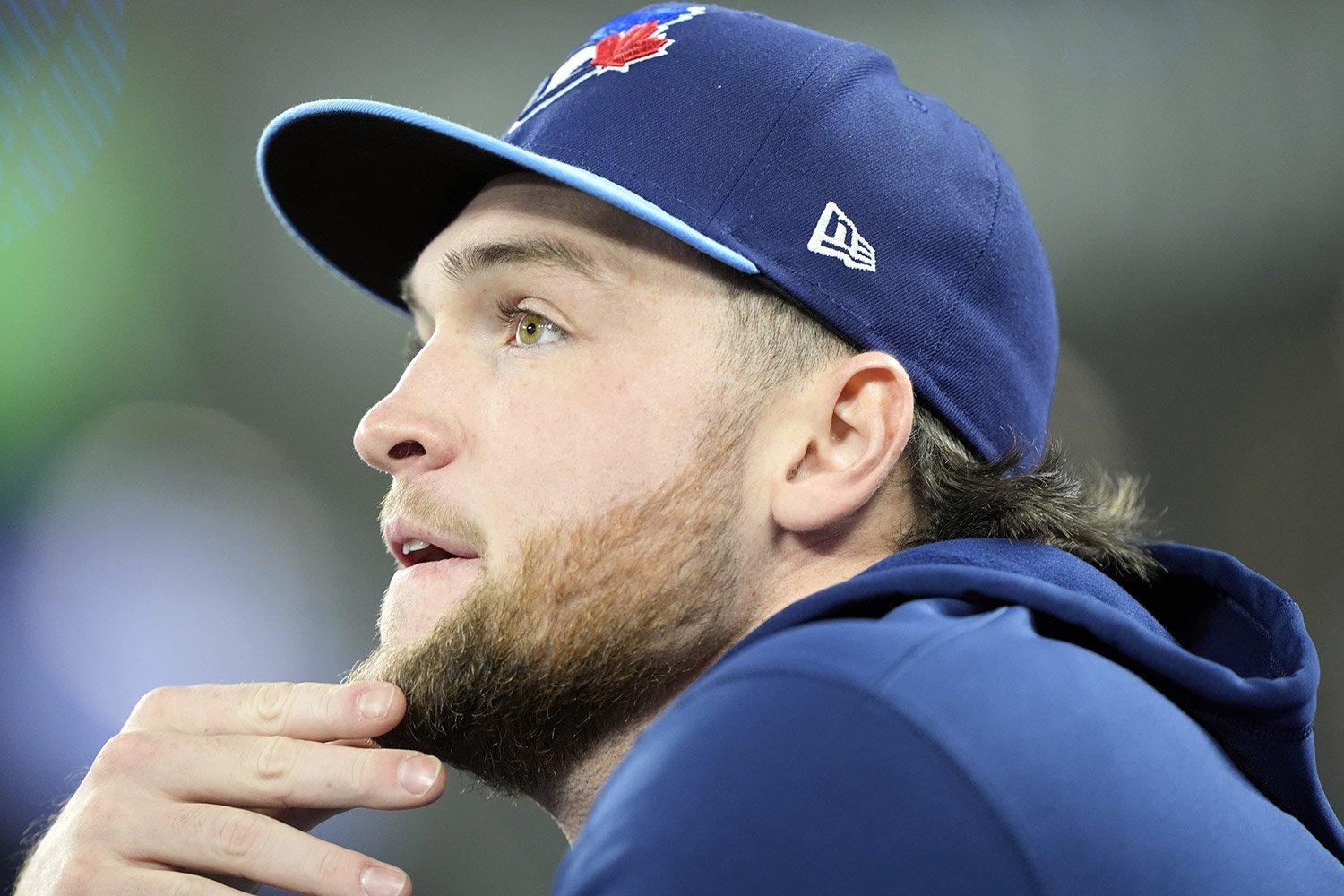 As the calendar turns to 2026, the Jays are about to embark on a season they hope will play out similarly to last season… but with a different outcome. This offseason has been a busy one for Toronto’s front office as they try to maintain some consistency in the roster while strengthening areas they hope will make a difference. A lot of headlines are focusing on the Jays “going all in,” but one of the many question marks is whether the team is building solely for 2026 or whether the success can be sustained. Is it all in for 2026 or bust? Or will it just be a start? By 2027, the Jays will be the product of several converging storylines: the maturation of Vladimir Guerrero Jr., a bridge class of pitching additions, and a wave of prospects, particularly on the mound. Layered atop that baseball story is the club’s evolving financial profile. Rogers seems content to spend after a sensational season, but does that approach continue? The 2026 starting pitching staff is structured as a bridge to youth. In late 2025, the Jays spent aggressively to sign Dylan Cease (seven years, $210 million), brought in Shane Bieber on a short-term arrangement (through 2026 with a player option), and elevated Trey Yesavage into an October role that signaled a near‑term rotation track. Cody Ponce (three-year, $30 million contract) also signed while Kevin Gausman wraps up the final year of his (five-year, $110 million signed in 2021) and José Berríos is signed through 2028 with a player opt-out at the end of 2026. By Opening Day in 2027, the starting rotation will be something like Yesavage, Cease, Ponce, and Berríos. Likely, Ricky Tiedemann will have worked his way into the rotation. All signs point to him joining the team at some point in 2026. Prospects Stephen, Watts‑Brown, Gage Stanifer, and Johnny King might also make the jump by 2027. Every bullpen sees highs and lows throughout a season. 2026 will see a somewhat new look back-end for the Jays. One would assume the same for 2027. By then, Jeff Hoffman might still be the closer and in the final year of his three-year, $33 million deal. Tyler Rogers will be in the second year of a three-year, $37 million deal. Chase Lee, who was acquired from the Tigers, has some options and will be arbitration eligible in 2027. Will Yimi Garcia return? His current deal expires after 2026. Brendon Little will be arbitration-eligible potentially in 2028 and can hit free agency in 2031. Mason Fluharty’s current deal (3-year, $33 million) wraps up in 2027. Braydon Fisher and Paxton Schultz will be eligible for arbitration in 2029 and free agency in 2032. Eric Lauer is under club control for 2026, and there has been no word on whether they will extend him. There will undoubtedly be questions for 2027 and beyond when it comes to the bullpen. Offensively, the team will be led by Vladimir Guerrero Jr., who will be under contract through 2039. In 2025, the team’s season was defined by universal offensive upticks versus 2024, including a higher batting average, OBP, and slugging percentage. It still isn’t clear whether 2026 and the team's long-term outlook will emphasize contact quality, but it does seem likely given 2025’s success. Signing Bo Bichette and/or Kyle Tucker to long-term contracts would signal that the team will maintain this approach. Around the infield, into 2027, will include Andrés Giménez at second or short. Giménez has a club option in 2030. Ernie Clement will play a role in the infield until 2029, having been tendered a contract for that year. Clement is arbitration-eligible, meaning he'll be controlled by the team until becoming a free agent in 2029. At the start of last season, Alejandro Kirk signed a 5-year, $58 million contract extension that will keep him with the team through 2030. Tyler Heineman is signed through 2028 and is arbitration-eligible. Prospect Edward Duran is projected to be ready for the majors by 2027. Outside of free agency or trades, there’s a chance that Arjun Nimmala, who surged into the Top‑100 status as the youngest regular in the Northwest League this past season, might be ready for the majors by 2027 (although projections suggest the #3-ranked prospect in the Jays system will arrive in Toronto in 2028). #2-ranked prospect JoJo Parker, who was drafted 8th overall by the Toronto Blue Jays in the 2025 MLB Draft, is projected to get to the Majors by 2029. In the outfield, prospects might also be in the mix by 2027. Prospects Yohendrick Pinango, Victor Arias, and RJ Schreck are projected to be ready by then. George Springer wraps up his 6-year ($150 million) contract in 2026. Daulton Varsho will hit free agency at the same time. Addison Barger is under club control until 2030, as is Nathan Lukes, and potentially Anthony Satander (club option in 2030). Myles Straw has team options for 2027 ($8M) and 2028 ($8.5M) and a $1.75M buyout in 2027. If Tucker signs a long-term deal with the Jays, that would probably mean the front office will start moving around those pieces a bit. Nothing about 2027 happens in a vacuum. The AL East remains the sport’s elasticity test: multiple 90‑win entrants, back-and-forth winters, and tiny margins. FanGraphs’ depth charts and projection snapshots around late 2025–26 consistently put the Yankees, Blue Jays, and Red Sox in the 90‑win bandwidth for 2026, with the Orioles and Rays oscillating based on youth graduation and payroll posture. The lesson for 2027: roster quality isn’t enough; optionality is the currency. That means sixth/seventh starter depth, RHP/LHP relief symmetry, platoon bats, etc. Can the Jays build a dynasty based on their 2025 season success? It won’t be easy, or cheap. Every successful team needs talent, a strong culture, and a bit of luck. The first two seem to be mainly in place, not just for 2026 but also for 2027. Can the existing and new pieces maintain the winning culture that propelled them within two outs of a world championship? Right now, everyone is focusing on 2026, but 2027 is already taking shape. If the team sputters in 2026, then it might throw 2027 into flux as players on expiring contracts will likely be traded for prospects, and even the coaching staff might change. The result might be a shift in chemistry and culture, maybe for the better but maybe for the worse. A disappointing 2026 might also tighten Rogers’ purse strings and shift the approach from “win it now” to “tread water.” Here’s hoping that 2026 mirrors 2025, and the Jays don’t stop. 2025 might just have been the start of something special, and two seasons from now might see that momentum continue. If the pieces fall into place, 2027 could be the year Toronto turns momentum into a lasting legacy.
 -
Edwin Encarnación had maybe the most famous parrot outside of a pirate’s when he played for the Blue Jays. He was also pivotal to returning the franchise to October relevance. A three-time All-Star, an American League RBI leader, and the author of one of the most important home runs in Jays’ history, Encarnación appears for the first time (and most likely the last) on the Hall of Fame ballot this year. I watched him once in a spring training game in Sarasota, Florida, when he played for the Cincinnati Reds. He wasn’t a great fielder at third, but man, he could hit. His 16-year career included stops with the Guardians, Mariners, Yankees, and White Sox, but he made a name for himself with the Jays. Alongside José Bautista, they formed Toronto’s version of the “Bash Brothers.” Encarnación’s basic career ledger is imposing: 424 home runs, 1,261 RBIs, an .846 OPS, and a 123 OPS+. His overall Baseball Reference WAR rests at 35.3. For context, that’s comfortably above-average, and considering he played a lot of DH, his value was concentrated almost entirely in the batter’s box. Following a mid-2009 trade from Cincinnati in the Scott Rolen deal, Encarnación initially played third base for Toronto before later moving between first and DH. Earlier in his career with the Jays, they nearly let him go. In 2010, he was designated for assignment. Oakland claimed him on waivers, then non‑tendered him a few weeks later. Toronto eventually re-signed him. I'm not sure if it was ever directly attributed to Bautista, but Encarnación eventually found his power in Toronto. In 2012, he crushed 42 homers and had a .941 OPS. It was a season that saw him finish 11th in MVP voting and start a multi-year run of elite production. The start of that year also earned him a contract extension with the Jays. He signed a three-year, $27 million deal (with a $10 million club option for 2016) in July 2012. When you consider some of the Jays' hitting greats like George Bell, Carlos Delgado, Vernon Wells, Joe Carter and Bautista, it might be surprising to learn that Encarnación finished his time with the Jays third in home runs (239), while ranking among the top 10 in several other categories, including RBIs and OPS. He wasn’t just about power either. Encarnación paired his power with consistent plate discipline, maintaining walk rates of between 10-13%. That is much better than most sluggers when it comes to patience at the plate. There is no question that he is best known for his walk-off, three-run homer in the bottom of the 11th inning of the 2016 American League Wild Card Game against the Baltimore Orioles. If he had been able to maintain what he did in 2015 and 2016 throughout his career, his chances of being inducted into Cooperstown would have been improved substantially. He hit 39 home runs with 111 RBIs in 2015 along with a .929 OPS. The following year, he upped his home run output to 42 and increased his RBIs to 127. Those seasons were a bit of an anomaly for Encarnación. Sure, he drove in 100 runs or more in six seasons, but didn’t really get close to that output in most of the other 10. Encarnación was primarily a DH and first baseman for the majority of his career, so if you are looking for recent comparisons that would include Delgado, Mark Teixeira, and maybe even Don Mattingly. Teixeira had 409 career home runs and finished well above Encarnación in WAR at around 50. He only garnered 1.5% of the vote in his first year of eligibility to enter the Hall of Fame and fell off the ballot. Given that Delgado and Mattingly were both recently reconsidered by a Cooperstown special committee and fell short of the 12 votes needed for induction, the odds are not in Encarnación’s favour. One of the biggest hurdles for Encarnación’s Hall of Fame case is positional value. Voters have historically undervalued designated hitters, even those with elite offensive numbers. David Ortiz is the rare exception, and his induction was buoyed by postseason heroics and a larger-than-life persona. Encarnación’s career, while impressive, lacks that same narrative weight beyond his Wild Card walk-off. Bigger names like Cole Hamels, Ryan Braun and Matt Kemp are among the 12 newcomers on the National Baseball Hall of Fame ballot this year. Encarnación is also joined by Howie Kendrick, Daniel Murphy, Rick Porcello, Shin-Soo Choo, Gio González, Alex Gordon, Nick Markakis and Hunter Pence. Carlos Beltrán is among 15 players who carried over from last year. He came 19 votes shy in last year’s balloting. While Edwin Encarnación left the Jays in 2016 for a big contract with Cleveland, then proceeded to the Mariners, Yankees and White Sox, he will always be remembered for his contributions in Toronto. No doubt, part of that productivity resulted in him returning to the organization, where he continues to serve as a special advisor and assistant. Like a lot of former Jays, including Bell, Delgado, Bautista, and Dave Stieb, Encarnación’s contributions won’t be recognized by Cooperstown. Instead, we can look back fondly at his parrot and remember him and the teams he led during the 2010s. Ultimately, Encarnación’s story isn’t about a Hall of Fame plaque. It’s about moments that mattered for Toronto. From his 2012 breakout to his 2016 heroics, he helped define an era of Blue Jays baseball that reignited the franchise. For a generation of Toronto fans, his name evokes packed stadiums, deafening roars, and the thrill of meaningful October baseball. Edwin Encarnación won’t get a plaque on the wall in Cooperstown, but he gave Toronto something just as rare. He gave the franchise hope, excitement, and a return to the playoffs after two decades. In the end, that’s a legacy no ballot can define. If you watched the Blue Jays this past season, you might have noticed that Encarnación was frequently in the dugout as part of his current role with the club. He continues to mentor Vladimir Guerrero Jr. and others in the franchise, and that might ultimately be even more impactful than his playing contributions. View full article
-
.jpg.ee55cc297ec0a58088c49cd5d95d359b.jpg) Edwin Encarnación had maybe the most famous parrot outside of a pirate’s when he played for the Blue Jays. He was also pivotal to returning the franchise to October relevance. A three-time All-Star, an American League RBI leader, and the author of one of the most important home runs in Jays’ history, Encarnación appears for the first time (and most likely the last) on the Hall of Fame ballot this year. I watched him once in a spring training game in Sarasota, Florida, when he played for the Cincinnati Reds. He wasn’t a great fielder at third, but man, he could hit. His 16-year career included stops with the Guardians, Mariners, Yankees, and White Sox, but he made a name for himself with the Jays. Alongside José Bautista, they formed Toronto’s version of the “Bash Brothers.” Encarnación’s basic career ledger is imposing: 424 home runs, 1,261 RBIs, an .846 OPS, and a 123 OPS+. His overall Baseball Reference WAR rests at 35.3. For context, that’s comfortably above-average, and considering he played a lot of DH, his value was concentrated almost entirely in the batter’s box. Following a mid-2009 trade from Cincinnati in the Scott Rolen deal, Encarnación initially played third base for Toronto before later moving between first and DH. Earlier in his career with the Jays, they nearly let him go. In 2010, he was designated for assignment. Oakland claimed him on waivers, then non‑tendered him a few weeks later. Toronto eventually re-signed him. I'm not sure if it was ever directly attributed to Bautista, but Encarnación eventually found his power in Toronto. In 2012, he crushed 42 homers and had a .941 OPS. It was a season that saw him finish 11th in MVP voting and start a multi-year run of elite production. The start of that year also earned him a contract extension with the Jays. He signed a three-year, $27 million deal (with a $10 million club option for 2016) in July 2012. When you consider some of the Jays' hitting greats like George Bell, Carlos Delgado, Vernon Wells, Joe Carter and Bautista, it might be surprising to learn that Encarnación finished his time with the Jays third in home runs (239), while ranking among the top 10 in several other categories, including RBIs and OPS. He wasn’t just about power either. Encarnación paired his power with consistent plate discipline, maintaining walk rates of between 10-13%. That is much better than most sluggers when it comes to patience at the plate. There is no question that he is best known for his walk-off, three-run homer in the bottom of the 11th inning of the 2016 American League Wild Card Game against the Baltimore Orioles. If he had been able to maintain what he did in 2015 and 2016 throughout his career, his chances of being inducted into Cooperstown would have been improved substantially. He hit 39 home runs with 111 RBIs in 2015 along with a .929 OPS. The following year, he upped his home run output to 42 and increased his RBIs to 127. Those seasons were a bit of an anomaly for Encarnación. Sure, he drove in 100 runs or more in six seasons, but didn’t really get close to that output in most of the other 10. Encarnación was primarily a DH and first baseman for the majority of his career, so if you are looking for recent comparisons that would include Delgado, Mark Teixeira, and maybe even Don Mattingly. Teixeira had 409 career home runs and finished well above Encarnación in WAR at around 50. He only garnered 1.5% of the vote in his first year of eligibility to enter the Hall of Fame and fell off the ballot. Given that Delgado and Mattingly were both recently reconsidered by a Cooperstown special committee and fell short of the 12 votes needed for induction, the odds are not in Encarnación’s favour. One of the biggest hurdles for Encarnación’s Hall of Fame case is positional value. Voters have historically undervalued designated hitters, even those with elite offensive numbers. David Ortiz is the rare exception, and his induction was buoyed by postseason heroics and a larger-than-life persona. Encarnación’s career, while impressive, lacks that same narrative weight beyond his Wild Card walk-off. Bigger names like Cole Hamels, Ryan Braun and Matt Kemp are among the 12 newcomers on the National Baseball Hall of Fame ballot this year. Encarnación is also joined by Howie Kendrick, Daniel Murphy, Rick Porcello, Shin-Soo Choo, Gio González, Alex Gordon, Nick Markakis and Hunter Pence. Carlos Beltrán is among 15 players who carried over from last year. He came 19 votes shy in last year’s balloting. While Edwin Encarnación left the Jays in 2016 for a big contract with Cleveland, then proceeded to the Mariners, Yankees and White Sox, he will always be remembered for his contributions in Toronto. No doubt, part of that productivity resulted in him returning to the organization, where he continues to serve as a special advisor and assistant. Like a lot of former Jays, including Bell, Delgado, Bautista, and Dave Stieb, Encarnación’s contributions won’t be recognized by Cooperstown. Instead, we can look back fondly at his parrot and remember him and the teams he led during the 2010s. Ultimately, Encarnación’s story isn’t about a Hall of Fame plaque. It’s about moments that mattered for Toronto. From his 2012 breakout to his 2016 heroics, he helped define an era of Blue Jays baseball that reignited the franchise. For a generation of Toronto fans, his name evokes packed stadiums, deafening roars, and the thrill of meaningful October baseball. Edwin Encarnación won’t get a plaque on the wall in Cooperstown, but he gave Toronto something just as rare. He gave the franchise hope, excitement, and a return to the playoffs after two decades. In the end, that’s a legacy no ballot can define. If you watched the Blue Jays this past season, you might have noticed that Encarnación was frequently in the dugout as part of his current role with the club. He continues to mentor Vladimir Guerrero Jr. and others in the franchise, and that might ultimately be even more impactful than his playing contributions.
Edwin Encarnación had maybe the most famous parrot outside of a pirate’s when he played for the Blue Jays. He was also pivotal to returning the franchise to October relevance. A three-time All-Star, an American League RBI leader, and the author of one of the most important home runs in Jays’ history, Encarnación appears for the first time (and most likely the last) on the Hall of Fame ballot this year. I watched him once in a spring training game in Sarasota, Florida, when he played for the Cincinnati Reds. He wasn’t a great fielder at third, but man, he could hit. His 16-year career included stops with the Guardians, Mariners, Yankees, and White Sox, but he made a name for himself with the Jays. Alongside José Bautista, they formed Toronto’s version of the “Bash Brothers.” Encarnación’s basic career ledger is imposing: 424 home runs, 1,261 RBIs, an .846 OPS, and a 123 OPS+. His overall Baseball Reference WAR rests at 35.3. For context, that’s comfortably above-average, and considering he played a lot of DH, his value was concentrated almost entirely in the batter’s box. Following a mid-2009 trade from Cincinnati in the Scott Rolen deal, Encarnación initially played third base for Toronto before later moving between first and DH. Earlier in his career with the Jays, they nearly let him go. In 2010, he was designated for assignment. Oakland claimed him on waivers, then non‑tendered him a few weeks later. Toronto eventually re-signed him. I'm not sure if it was ever directly attributed to Bautista, but Encarnación eventually found his power in Toronto. In 2012, he crushed 42 homers and had a .941 OPS. It was a season that saw him finish 11th in MVP voting and start a multi-year run of elite production. The start of that year also earned him a contract extension with the Jays. He signed a three-year, $27 million deal (with a $10 million club option for 2016) in July 2012. When you consider some of the Jays' hitting greats like George Bell, Carlos Delgado, Vernon Wells, Joe Carter and Bautista, it might be surprising to learn that Encarnación finished his time with the Jays third in home runs (239), while ranking among the top 10 in several other categories, including RBIs and OPS. He wasn’t just about power either. Encarnación paired his power with consistent plate discipline, maintaining walk rates of between 10-13%. That is much better than most sluggers when it comes to patience at the plate. There is no question that he is best known for his walk-off, three-run homer in the bottom of the 11th inning of the 2016 American League Wild Card Game against the Baltimore Orioles. If he had been able to maintain what he did in 2015 and 2016 throughout his career, his chances of being inducted into Cooperstown would have been improved substantially. He hit 39 home runs with 111 RBIs in 2015 along with a .929 OPS. The following year, he upped his home run output to 42 and increased his RBIs to 127. Those seasons were a bit of an anomaly for Encarnación. Sure, he drove in 100 runs or more in six seasons, but didn’t really get close to that output in most of the other 10. Encarnación was primarily a DH and first baseman for the majority of his career, so if you are looking for recent comparisons that would include Delgado, Mark Teixeira, and maybe even Don Mattingly. Teixeira had 409 career home runs and finished well above Encarnación in WAR at around 50. He only garnered 1.5% of the vote in his first year of eligibility to enter the Hall of Fame and fell off the ballot. Given that Delgado and Mattingly were both recently reconsidered by a Cooperstown special committee and fell short of the 12 votes needed for induction, the odds are not in Encarnación’s favour. One of the biggest hurdles for Encarnación’s Hall of Fame case is positional value. Voters have historically undervalued designated hitters, even those with elite offensive numbers. David Ortiz is the rare exception, and his induction was buoyed by postseason heroics and a larger-than-life persona. Encarnación’s career, while impressive, lacks that same narrative weight beyond his Wild Card walk-off. Bigger names like Cole Hamels, Ryan Braun and Matt Kemp are among the 12 newcomers on the National Baseball Hall of Fame ballot this year. Encarnación is also joined by Howie Kendrick, Daniel Murphy, Rick Porcello, Shin-Soo Choo, Gio González, Alex Gordon, Nick Markakis and Hunter Pence. Carlos Beltrán is among 15 players who carried over from last year. He came 19 votes shy in last year’s balloting. While Edwin Encarnación left the Jays in 2016 for a big contract with Cleveland, then proceeded to the Mariners, Yankees and White Sox, he will always be remembered for his contributions in Toronto. No doubt, part of that productivity resulted in him returning to the organization, where he continues to serve as a special advisor and assistant. Like a lot of former Jays, including Bell, Delgado, Bautista, and Dave Stieb, Encarnación’s contributions won’t be recognized by Cooperstown. Instead, we can look back fondly at his parrot and remember him and the teams he led during the 2010s. Ultimately, Encarnación’s story isn’t about a Hall of Fame plaque. It’s about moments that mattered for Toronto. From his 2012 breakout to his 2016 heroics, he helped define an era of Blue Jays baseball that reignited the franchise. For a generation of Toronto fans, his name evokes packed stadiums, deafening roars, and the thrill of meaningful October baseball. Edwin Encarnación won’t get a plaque on the wall in Cooperstown, but he gave Toronto something just as rare. He gave the franchise hope, excitement, and a return to the playoffs after two decades. In the end, that’s a legacy no ballot can define. If you watched the Blue Jays this past season, you might have noticed that Encarnación was frequently in the dugout as part of his current role with the club. He continues to mentor Vladimir Guerrero Jr. and others in the franchise, and that might ultimately be even more impactful than his playing contributions. -
The Blue Jays are in the thick of the offseason rumour mill, supposedly chasing both Bo Bichette and Kyle Tucker. Fans are refreshing their social feeds like they're life-support machines. So, I asked four AI platforms to tell me when and where these stars will sign. The results? A comedy of contradictions. MetaAI basically shrugged and said, “Let’s wait and see.” Thanks, Meta. Groundbreaking stuff. It did toss out a Bichette-to-Jays scenario for seven years and $210 million (the exact terms of Dylan Cease's contract), and Tucker juggling a short-term Dodgers deal versus a 10-year Blue Jays mega-contract. I read this as he’ll sign somewhere, sometime, for a lot of money. Riveting stuff. Thanks, Meta. After some additional prompts to ChatGPT, it boldly predicted Tucker would sign first, later this month or early January, maybe with the Jays or Yankees. Bichette? Somewhere between $180-225 million over seven or eight years. Basically, what every human analyst has been saying for months. Insight level was slightly ahead of a fortune cookie. (Although, as a product, offseason Blue Jays fortune cookies might do well, especially after a season like last year.) Also needing a bit more prodding, Copilot went full crystal ball. It gave exact dates. Tucker signs December 23 with the Jays, Bichette January 8 with the Yankees. It even threw in a Jazz Chisholm Jr. trade rumour for spice. If this happens, Copilot deserves a plaque, or at least a shot at becoming the GM for the White Sox or Rockies. If not, well, it’ll just say “data changed.” Grok AI was the least impressive of all the platforms. It thought Tucker still played for the Astros (he was traded to the Cubs in 2024). Oops. It predicted Tucker would sign February 1 for $180 million and Bichette January 15 for $150 million. Bargain-bin prices compared to all the other predictions. Does AI have more insight than human analysts or MLB GMs? The short answer is no. AI is regurgitating public rumours and projections, while actual GMs are negotiating behind closed doors with real budgets, egos, and spreadsheets. AI can’t read the room, gauge a player’s loyalty, or know if an owner woke up feeling generous. It’s guessing. Sometimes confidently, sometimes hilariously incorrectly. Most analysts consider Tucker to be the top free agent on the market. Lots of teams have expressed interest outside the Jays, Dodgers and Yankees. The Mets and Giants are also considered potential suitors. Our friends in the AI world didn’t really take any of those outside teams seriously. Aside from the Mets, the same teams have been rumoured to be part of the Bichette sweepstakes. After a Zoom call earlier this month with Bichette, the Red Sox remain in the hunt. There are rumours that the Mariners and Rangers have also reached out. ESPN’s Jeff Passan has suggested that the Jays could still land both Tucker and Bichette, but that seems highly unlikely considering the amount of spending they have committed to already. Most market predictions point to the majority of free agents signing by early January, giving some buffer room before pitchers and catchers report. Based on past seasons, sometimes more complex negotiations extend into February. The odds are that both Bichette and Tucker are waiting to see how the league responds to the first big signing. Neither wants to be first. If another team signs Tucker, then the Jays will pivot and pursue Bichette a bit harder, probably increasing their offer as they look to lock him up. Once both sign, others will follow suit. Teams that were in the hunt will adjust and fill voids through different free agents or trades. The list of available free agents remains long. The position player free agents who can put up big wins above replacement (WAR) numbers are few and far between now. Cody Bellinger (7.0 fWAR from 2024-25) and Tucker (8.7 fWAR from 2024-25) are the two biggest names on the outfield free agent board. There has been some talk that the Jays and Yankees are waiting for Tucker’s decision before following up with Bellinger. The Mets and Giants could be some of the front-runners for Bellinger. Alex Bregman (7.7 fWAR from 2024-25) and Eugenio Suárez (7.6 fWAR from 2024-25) are the biggest names outside of Bichette and the NPB free agents in the infield. Bregman and Suárez are both in their thirties, and have drawn plenty of interest. The Tigers, Cubs, Diamondbacks, and Red Sox are among those courting Bregman, while Suárez looks destined to head back to the National League, perhaps with the Pirates, although the Red Sox have been linked to him as well. At the end of the day, AI’s predictions about MLB free agency are entertaining, but they’re hardly gospel. These platforms can crunch numbers, scrape rumours, and spit out contract figures, but they lack the human nuance that drives real negotiations. General managers like Ross Atkins (love him or hate him) aren’t just balancing WAR numbers and payroll. They’re navigating egos, clubhouse chemistry, and ownership whims. AI can’t predict if a player’s spouse prefers Manhattan over Toronto or if a team’s billionaire owner suddenly decides to splurge after a successful weekend in Vegas. What this experiment really shows is that AI can be good for sparking conversation, but not for setting your betting lines. It’s a tool, not a crystal ball. The fact that one platform suggested Tucker still played for the Astros says it all. Data without context is just noise. Meanwhile, the real decision-makers are working phones, making offers, and playing the long game. So, will Bichette and Tucker sign with the Blue Jays? Maybe. Will AI ever replace MLB GMs? Not a chance. Until then, enjoy the speculation, laugh at the algorithms, and remember that baseball’s biggest moves are still made by humans, not AI. View full article
-
I Asked AI To Tell Me When Bo Bichette and Kyle Tucker Will Sign
Sam Charles posted an article in Just For Fun
 The Blue Jays are in the thick of the offseason rumour mill, supposedly chasing both Bo Bichette and Kyle Tucker. Fans are refreshing their social feeds like they're life-support machines. So, I asked four AI platforms to tell me when and where these stars will sign. The results? A comedy of contradictions. MetaAI basically shrugged and said, “Let’s wait and see.” Thanks, Meta. Groundbreaking stuff. It did toss out a Bichette-to-Jays scenario for seven years and $210 million (the exact terms of Dylan Cease's contract), and Tucker juggling a short-term Dodgers deal versus a 10-year Blue Jays mega-contract. I read this as he’ll sign somewhere, sometime, for a lot of money. Riveting stuff. Thanks, Meta. After some additional prompts to ChatGPT, it boldly predicted Tucker would sign first, later this month or early January, maybe with the Jays or Yankees. Bichette? Somewhere between $180-225 million over seven or eight years. Basically, what every human analyst has been saying for months. Insight level was slightly ahead of a fortune cookie. (Although, as a product, offseason Blue Jays fortune cookies might do well, especially after a season like last year.) Also needing a bit more prodding, Copilot went full crystal ball. It gave exact dates. Tucker signs December 23 with the Jays, Bichette January 8 with the Yankees. It even threw in a Jazz Chisholm Jr. trade rumour for spice. If this happens, Copilot deserves a plaque, or at least a shot at becoming the GM for the White Sox or Rockies. If not, well, it’ll just say “data changed.” Grok AI was the least impressive of all the platforms. It thought Tucker still played for the Astros (he was traded to the Cubs in 2024). Oops. It predicted Tucker would sign February 1 for $180 million and Bichette January 15 for $150 million. Bargain-bin prices compared to all the other predictions. Does AI have more insight than human analysts or MLB GMs? The short answer is no. AI is regurgitating public rumours and projections, while actual GMs are negotiating behind closed doors with real budgets, egos, and spreadsheets. AI can’t read the room, gauge a player’s loyalty, or know if an owner woke up feeling generous. It’s guessing. Sometimes confidently, sometimes hilariously incorrectly. Most analysts consider Tucker to be the top free agent on the market. Lots of teams have expressed interest outside the Jays, Dodgers and Yankees. The Mets and Giants are also considered potential suitors. Our friends in the AI world didn’t really take any of those outside teams seriously. Aside from the Mets, the same teams have been rumoured to be part of the Bichette sweepstakes. After a Zoom call earlier this month with Bichette, the Red Sox remain in the hunt. There are rumours that the Mariners and Rangers have also reached out. ESPN’s Jeff Passan has suggested that the Jays could still land both Tucker and Bichette, but that seems highly unlikely considering the amount of spending they have committed to already. Most market predictions point to the majority of free agents signing by early January, giving some buffer room before pitchers and catchers report. Based on past seasons, sometimes more complex negotiations extend into February. The odds are that both Bichette and Tucker are waiting to see how the league responds to the first big signing. Neither wants to be first. If another team signs Tucker, then the Jays will pivot and pursue Bichette a bit harder, probably increasing their offer as they look to lock him up. Once both sign, others will follow suit. Teams that were in the hunt will adjust and fill voids through different free agents or trades. The list of available free agents remains long. The position player free agents who can put up big wins above replacement (WAR) numbers are few and far between now. Cody Bellinger (7.0 fWAR from 2024-25) and Tucker (8.7 fWAR from 2024-25) are the two biggest names on the outfield free agent board. There has been some talk that the Jays and Yankees are waiting for Tucker’s decision before following up with Bellinger. The Mets and Giants could be some of the front-runners for Bellinger. Alex Bregman (7.7 fWAR from 2024-25) and Eugenio Suárez (7.6 fWAR from 2024-25) are the biggest names outside of Bichette and the NPB free agents in the infield. Bregman and Suárez are both in their thirties, and have drawn plenty of interest. The Tigers, Cubs, Diamondbacks, and Red Sox are among those courting Bregman, while Suárez looks destined to head back to the National League, perhaps with the Pirates, although the Red Sox have been linked to him as well. At the end of the day, AI’s predictions about MLB free agency are entertaining, but they’re hardly gospel. These platforms can crunch numbers, scrape rumours, and spit out contract figures, but they lack the human nuance that drives real negotiations. General managers like Ross Atkins (love him or hate him) aren’t just balancing WAR numbers and payroll. They’re navigating egos, clubhouse chemistry, and ownership whims. AI can’t predict if a player’s spouse prefers Manhattan over Toronto or if a team’s billionaire owner suddenly decides to splurge after a successful weekend in Vegas. What this experiment really shows is that AI can be good for sparking conversation, but not for setting your betting lines. It’s a tool, not a crystal ball. The fact that one platform suggested Tucker still played for the Astros says it all. Data without context is just noise. Meanwhile, the real decision-makers are working phones, making offers, and playing the long game. So, will Bichette and Tucker sign with the Blue Jays? Maybe. Will AI ever replace MLB GMs? Not a chance. Until then, enjoy the speculation, laugh at the algorithms, and remember that baseball’s biggest moves are still made by humans, not AI.
 -
The waiting game continues for the Blue Jays and other teams across baseball as they consider their options when it comes to solidifying their infield. There was a league-wide sense of excitement when Kazuma Okamoto was posted by his Nippon Professional Baseball team, the Yomiuri Giants, back in November. Reports suggest the Blue Jays, Red Sox, and Pirates have all expressed interest in signing Okamoto over the past month. The 29-year-old had six straight 30-home run seasons between 2018 and 2023 in Japan. His 2024 season broke his streak, as he finished off with only 27 homers, down from the 41 he hit the year before. Okamoto was limited to just 69 games this past season due to an elbow injury but still managed 15 home runs and a .992 OPS. Okamoto is known for his power, contact and low strikeout rate. Last season, his strikeout rate was only 11.3%, compared to a 19.5% league average. Since 2020, it hasn’t been higher than 20%. His contact-first style would seamlessly blend into the Jays’ lineup, suiting the offensive philosophy that propelled them to their best season in more than thirty years. According to Baseball America, he is also an "above-average" fielder at third base and a "plus-plus defender" at first. However, Eric Longenhagen and James Fegan of FanGraphs disagree, calling his defense "below-average" at third base. Ultimately, the Jays do not need a Matt Chapman‑level glove at third to win. All they need is a reliable enough fielder at the hot corner. If Okamoto’s third base defense is passable, and he can spell Vladimir Guerrero Jr. at first occasionally, then his bat will make up for the rest. Toronto’s roster features athletic defenders Andrés Giménez and Ernie Clement in the middle infield, allowing for a bat‑first third baseman whose glove won’t cost outs disproportionately. What might be delaying Okamoto's signing is a logjam of corner infielders yet to be signed or traded. The same is true for fellow Japanese infielder Munetaka Murakami. Teams could be waiting to see where names like Alex Bregman and Nolan Arenado end up. A quick note on Murakami, who is three years younger than Okamoto: He is vying for a longer-term contract, perhaps in the range of seven or eight years at around $20 million per season. Evaluators predict that in their first two or three years in MLB, Okamoto will be more successful, but in the long term, Murakami has more potential. That rationale is why teams with immediate postseason aspirations might prefer Okamoto, while those with longer-term outlooks could be more interested in Murakami. For a team like the Jays, there is something to be said about going with what you know rather than the unknown. If signed by an MLB club, Okamoto is projected to fetch about $68 million over four years. That is a little less annually than Eugenio Suárez, who is a bit older at 34 years old. DiamondCentric projects Suárez to sign for $55 million over three years. If Okamoto does sign in that range, the Jays (or whoever signs him) would also be on the hook for a posting fee to the Yomiuri Giants equal to 20% of the first $25 million, 17.5% of the next $25 million, and 15% of any amount over $50 million. Okamoto will turn 30 in June, so he is older than some recent Japanese imports. His workload across NBP games prior to 2025 would suggest durability, and even an injury-shortened 2025 didn’t seem to negatively impact his production. Part of the rationale for the Myles Straw trade last offseason was to add international bonus pool space. The hope was that the Jays could entice Roki Sasaki to sign in Toronto. That move not only illustrated their interest in Sasaki, who eventually signed with the Dodgers, but also that they are interested in talent coming out of Japan. Munenori Kawasaki was a fan-favourite in Toronto but not exactly a superstar. The Jays' courting of Sasaki, and Shohei Ohtani before him, illustrates their interest in adding former NBP players to their roster. Earlier this offseason, the Jays made headlines for a bold marketing decision, displaying their logo prominently during a title boxing match in Tokyo, which sparked scrutiny from the commissioner's office about international marketing permissions. The episode might suggest the team is trying to subtly increase its Japanese visibility and fanbase in an effort to build brand awareness in Japan and perhaps court a major NPB star in the future (or right now). The Jays still have some tough decisions to make this offseason. Okamoto might not be their top pick, but he would be a capable fit for the infield and the lineup at a reasonable cost. If they can’t re-sign Bo Bichette, they still need to add some reliable offense behind Guerrero, and Okamoto fits the bill. It's also not impossible that the Jays could sign both Okamoto and Bichette. Based on Ross Atkins and the front office’s public posture this winter, and the club’s recent push to engage Japanese fans, the organization is motivated to bring in top NPB talent. The market for the top free agents seems to have cooled a bit after the Winter Meetings, but Murakami's posting window will close soon, and once he signs, other moves could follow quickly. Time is ticking on Okamoto, too, as his 45-day negotiation window with MLB teams runs until January 4, 2026. Okamoto might be a gamble, but one that could pay off for the Blue Jays. Signing him now would provide some insurance if the other dominoes don’t fall in Toronto's favour. View full article
-
Could Kazuma Okamoto Solve the Blue Jays' Infield Dilemma?
Sam Charles posted an article in Blue Jays
.jpg.759f39ee6340142a122c8ad2826426f4.jpg) The waiting game continues for the Blue Jays and other teams across baseball as they consider their options when it comes to solidifying their infield. There was a league-wide sense of excitement when Kazuma Okamoto was posted by his Nippon Professional Baseball team, the Yomiuri Giants, back in November. Reports suggest the Blue Jays, Red Sox, and Pirates have all expressed interest in signing Okamoto over the past month. The 29-year-old had six straight 30-home run seasons between 2018 and 2023 in Japan. His 2024 season broke his streak, as he finished off with only 27 homers, down from the 41 he hit the year before. Okamoto was limited to just 69 games this past season due to an elbow injury but still managed 15 home runs and a .992 OPS. Okamoto is known for his power, contact and low strikeout rate. Last season, his strikeout rate was only 11.3%, compared to a 19.5% league average. Since 2020, it hasn’t been higher than 20%. His contact-first style would seamlessly blend into the Jays’ lineup, suiting the offensive philosophy that propelled them to their best season in more than thirty years. According to Baseball America, he is also an "above-average" fielder at third base and a "plus-plus defender" at first. However, Eric Longenhagen and James Fegan of FanGraphs disagree, calling his defense "below-average" at third base. Ultimately, the Jays do not need a Matt Chapman‑level glove at third to win. All they need is a reliable enough fielder at the hot corner. If Okamoto’s third base defense is passable, and he can spell Vladimir Guerrero Jr. at first occasionally, then his bat will make up for the rest. Toronto’s roster features athletic defenders Andrés Giménez and Ernie Clement in the middle infield, allowing for a bat‑first third baseman whose glove won’t cost outs disproportionately. What might be delaying Okamoto's signing is a logjam of corner infielders yet to be signed or traded. The same is true for fellow Japanese infielder Munetaka Murakami. Teams could be waiting to see where names like Alex Bregman and Nolan Arenado end up. A quick note on Murakami, who is three years younger than Okamoto: He is vying for a longer-term contract, perhaps in the range of seven or eight years at around $20 million per season. Evaluators predict that in their first two or three years in MLB, Okamoto will be more successful, but in the long term, Murakami has more potential. That rationale is why teams with immediate postseason aspirations might prefer Okamoto, while those with longer-term outlooks could be more interested in Murakami. For a team like the Jays, there is something to be said about going with what you know rather than the unknown. If signed by an MLB club, Okamoto is projected to fetch about $68 million over four years. That is a little less annually than Eugenio Suárez, who is a bit older at 34 years old. DiamondCentric projects Suárez to sign for $55 million over three years. If Okamoto does sign in that range, the Jays (or whoever signs him) would also be on the hook for a posting fee to the Yomiuri Giants equal to 20% of the first $25 million, 17.5% of the next $25 million, and 15% of any amount over $50 million. Okamoto will turn 30 in June, so he is older than some recent Japanese imports. His workload across NBP games prior to 2025 would suggest durability, and even an injury-shortened 2025 didn’t seem to negatively impact his production. Part of the rationale for the Myles Straw trade last offseason was to add international bonus pool space. The hope was that the Jays could entice Roki Sasaki to sign in Toronto. That move not only illustrated their interest in Sasaki, who eventually signed with the Dodgers, but also that they are interested in talent coming out of Japan. Munenori Kawasaki was a fan-favourite in Toronto but not exactly a superstar. The Jays' courting of Sasaki, and Shohei Ohtani before him, illustrates their interest in adding former NBP players to their roster. Earlier this offseason, the Jays made headlines for a bold marketing decision, displaying their logo prominently during a title boxing match in Tokyo, which sparked scrutiny from the commissioner's office about international marketing permissions. The episode might suggest the team is trying to subtly increase its Japanese visibility and fanbase in an effort to build brand awareness in Japan and perhaps court a major NPB star in the future (or right now). The Jays still have some tough decisions to make this offseason. Okamoto might not be their top pick, but he would be a capable fit for the infield and the lineup at a reasonable cost. If they can’t re-sign Bo Bichette, they still need to add some reliable offense behind Guerrero, and Okamoto fits the bill. It's also not impossible that the Jays could sign both Okamoto and Bichette. Based on Ross Atkins and the front office’s public posture this winter, and the club’s recent push to engage Japanese fans, the organization is motivated to bring in top NPB talent. The market for the top free agents seems to have cooled a bit after the Winter Meetings, but Murakami's posting window will close soon, and once he signs, other moves could follow quickly. Time is ticking on Okamoto, too, as his 45-day negotiation window with MLB teams runs until January 4, 2026. Okamoto might be a gamble, but one that could pay off for the Blue Jays. Signing him now would provide some insurance if the other dominoes don’t fall in Toronto's favour.
The waiting game continues for the Blue Jays and other teams across baseball as they consider their options when it comes to solidifying their infield. There was a league-wide sense of excitement when Kazuma Okamoto was posted by his Nippon Professional Baseball team, the Yomiuri Giants, back in November. Reports suggest the Blue Jays, Red Sox, and Pirates have all expressed interest in signing Okamoto over the past month. The 29-year-old had six straight 30-home run seasons between 2018 and 2023 in Japan. His 2024 season broke his streak, as he finished off with only 27 homers, down from the 41 he hit the year before. Okamoto was limited to just 69 games this past season due to an elbow injury but still managed 15 home runs and a .992 OPS. Okamoto is known for his power, contact and low strikeout rate. Last season, his strikeout rate was only 11.3%, compared to a 19.5% league average. Since 2020, it hasn’t been higher than 20%. His contact-first style would seamlessly blend into the Jays’ lineup, suiting the offensive philosophy that propelled them to their best season in more than thirty years. According to Baseball America, he is also an "above-average" fielder at third base and a "plus-plus defender" at first. However, Eric Longenhagen and James Fegan of FanGraphs disagree, calling his defense "below-average" at third base. Ultimately, the Jays do not need a Matt Chapman‑level glove at third to win. All they need is a reliable enough fielder at the hot corner. If Okamoto’s third base defense is passable, and he can spell Vladimir Guerrero Jr. at first occasionally, then his bat will make up for the rest. Toronto’s roster features athletic defenders Andrés Giménez and Ernie Clement in the middle infield, allowing for a bat‑first third baseman whose glove won’t cost outs disproportionately. What might be delaying Okamoto's signing is a logjam of corner infielders yet to be signed or traded. The same is true for fellow Japanese infielder Munetaka Murakami. Teams could be waiting to see where names like Alex Bregman and Nolan Arenado end up. A quick note on Murakami, who is three years younger than Okamoto: He is vying for a longer-term contract, perhaps in the range of seven or eight years at around $20 million per season. Evaluators predict that in their first two or three years in MLB, Okamoto will be more successful, but in the long term, Murakami has more potential. That rationale is why teams with immediate postseason aspirations might prefer Okamoto, while those with longer-term outlooks could be more interested in Murakami. For a team like the Jays, there is something to be said about going with what you know rather than the unknown. If signed by an MLB club, Okamoto is projected to fetch about $68 million over four years. That is a little less annually than Eugenio Suárez, who is a bit older at 34 years old. DiamondCentric projects Suárez to sign for $55 million over three years. If Okamoto does sign in that range, the Jays (or whoever signs him) would also be on the hook for a posting fee to the Yomiuri Giants equal to 20% of the first $25 million, 17.5% of the next $25 million, and 15% of any amount over $50 million. Okamoto will turn 30 in June, so he is older than some recent Japanese imports. His workload across NBP games prior to 2025 would suggest durability, and even an injury-shortened 2025 didn’t seem to negatively impact his production. Part of the rationale for the Myles Straw trade last offseason was to add international bonus pool space. The hope was that the Jays could entice Roki Sasaki to sign in Toronto. That move not only illustrated their interest in Sasaki, who eventually signed with the Dodgers, but also that they are interested in talent coming out of Japan. Munenori Kawasaki was a fan-favourite in Toronto but not exactly a superstar. The Jays' courting of Sasaki, and Shohei Ohtani before him, illustrates their interest in adding former NBP players to their roster. Earlier this offseason, the Jays made headlines for a bold marketing decision, displaying their logo prominently during a title boxing match in Tokyo, which sparked scrutiny from the commissioner's office about international marketing permissions. The episode might suggest the team is trying to subtly increase its Japanese visibility and fanbase in an effort to build brand awareness in Japan and perhaps court a major NPB star in the future (or right now). The Jays still have some tough decisions to make this offseason. Okamoto might not be their top pick, but he would be a capable fit for the infield and the lineup at a reasonable cost. If they can’t re-sign Bo Bichette, they still need to add some reliable offense behind Guerrero, and Okamoto fits the bill. It's also not impossible that the Jays could sign both Okamoto and Bichette. Based on Ross Atkins and the front office’s public posture this winter, and the club’s recent push to engage Japanese fans, the organization is motivated to bring in top NPB talent. The market for the top free agents seems to have cooled a bit after the Winter Meetings, but Murakami's posting window will close soon, and once he signs, other moves could follow quickly. Time is ticking on Okamoto, too, as his 45-day negotiation window with MLB teams runs until January 4, 2026. Okamoto might be a gamble, but one that could pay off for the Blue Jays. Signing him now would provide some insurance if the other dominoes don’t fall in Toronto's favour. -
The Toronto Blue Jays are preparing for a significant shift in their infield alignment heading into next season. As reported by Sportsnet earlier this month, the team wants to assign Andres Giménez one role next season. Whether Bo Bichette re-signs or not, it appears Giménez won’t be returning to second base anytime soon. The Jays have decided to assign him one position and stick with it; it will be a departure from their recent strategy of shuffling players around the diamond to maximize lineup flexibility. The comment seemed strange since the Jays spent last season shuffling players between positions. The versatility provided John Schneider with plenty of options for putting together line-ups that best positioned the team to win. Obviously, the linchpin when it comes to who will be Toronto’s primary shortstop will be whether Bichette and the Jays come to terms. Even if he does sign, his defensive proficiency at the position has diminished in recent years; Bichette has always been an offence-first player. Andres Giménez, on the other hand, is a defensive specialist. When he was traded to the Jays, there was hope that he’d be able to regain the offensive output he had in 2022. It was a season that earned him a big contract with Cleveland, but that pop never materialized, and he was shipped to the Jays before the 2025 season. Giménez is one of the best defensive second basemen in baseball, ranking in the top five in defensive runs saved. He won three Gold Gloves with the Guardians (2022–24), a 2023 Platinum Glove, and offered top‑tier Outs Above Average (OAA), accumulating a +59 mark for his career. For the first one and a half months of 2025, it seemed like Giménez might have figured things out at the plate, too, posting a .622 OPS in the first half of the season. As the season went on and injuries mounted, he returned to his offensive struggles, as he slid to a .556 OPS in the second half. He did have an impactful home run in the ALCS and countless defensive plays during the season. Does his offensive output matter in the end? Not so much. For the Blue Jays, this defensive excellence is not a luxury but a necessity. Over the past several years, Toronto has built its roster around run prevention. Strong defense has been the backbone of their success, carrying them to the cusp of a World Series title. With Bichette’s late-season injury last season, the Jays were forced to expedite their experiment of whether or not Giménez could handle shortstop. He didn’t always look comfortable, but he filled in admirably, posting a neutral zero OAA in 119 innings. Giménez has experience at short from his first year with the Mets in 2020 and played there intermittently in Cleveland and last season. His range metrics to cover more ground, and arm strength suggest he can easily make routine plays from the position. Playing defense is all about reps. Slight differences in routine and positioning can be challenging for even the top major leaguer. If you look across the majors, there aren’t a lot of players who have successfully transitioned from being an established, everyday second baseman to a successful, everyday shortstop. It is usually the opposite; as players age, they shift from short to third. Players like Cal Ripken Jr. made that transition in the past, and Carlos Correa is doing it now. That isn’t to say utility players can’t swap between positions. Last season, Ernie Clement played every infield position. Other players have done the same. In recent memory, Ben Zobrist and Tony Womack played significant time at both second and short throughout their careers. They were often valued for their defensive versatility rather than for handling either position permanently. Don’t overlook Mookie Betts, who moved from right field to second, then shortstop for the Dodgers. First in 2024 and then again last season. Other examples highlight the rarity of such transitions. Most teams prefer to groom natural shortstops from the minor leagues rather than convert established veterans. The Jays’ willingness to buck convention underscores their confidence in Giménez’s abilities and their commitment to defence-first roster construction. If Giménez takes over shortstop permanently, there is good reason to believe he will develop into a top-tier defender at the position. With his physical tools, such as range, sprint speed, and average‑plus arm, why wouldn’t he? His consistent defensive play could not only help the Blue Jays win more games but also alleviate some of the pressure on their pitchers. So, it comes down to where Bichette would play if he re-signs. The Jays could certainly give him the choice of playing second or third. They could use it as a bargaining chip, an extra perk because they value his defensive contributions (just not at short). Clement is flexible enough to play whichever position Bichette declines. The deal for Giménez was all run prevention up the middle. The big question now for the organization is which alignment maximizes total wins, not just which individual is best in a vacuum. The Jays’ decision on who will take over at short will continue to reflect a broader organizational philosophy. Rather than chasing offensive fireworks, they are building a team that wins with pitching and defense. This approach may not always generate headlines, but it has proven effective. With Giménez at shortstop, the Jays will strengthen their run prevention edge and maximize their chances of winning close games. Giménez is signed through 2029 with a 2030 club option, escalating to $23 million average annual salary in the late years. Shortstop should be a team’s most valuable defender. That player is often considered the captain of the infield, responsible for directing traffic, making split-second decisions, and maintaining consistency both defensively and offensively. With that argument, Giménez, as the team’s best fielder, should take that role. His elite defense will yield the biggest return, preserving the team’s run-prevention edge. In the end, the Jays’ decision to install Andres Giménez as their everyday shortstop is a calculated gamble. Toronto is betting that defence wins championships. It nearly did last year, and just might in 2026. With Giménez at shortstop, they are doubling down on that philosophy. Whether Bichette stays or goes, the Jays have made their choice: the captain of their infield will be Andres Giménez. View full article
-
Will Andres Giménez Be The Blue Jays' Starting Shortstop In 2026?
Sam Charles posted an article in Blue Jays
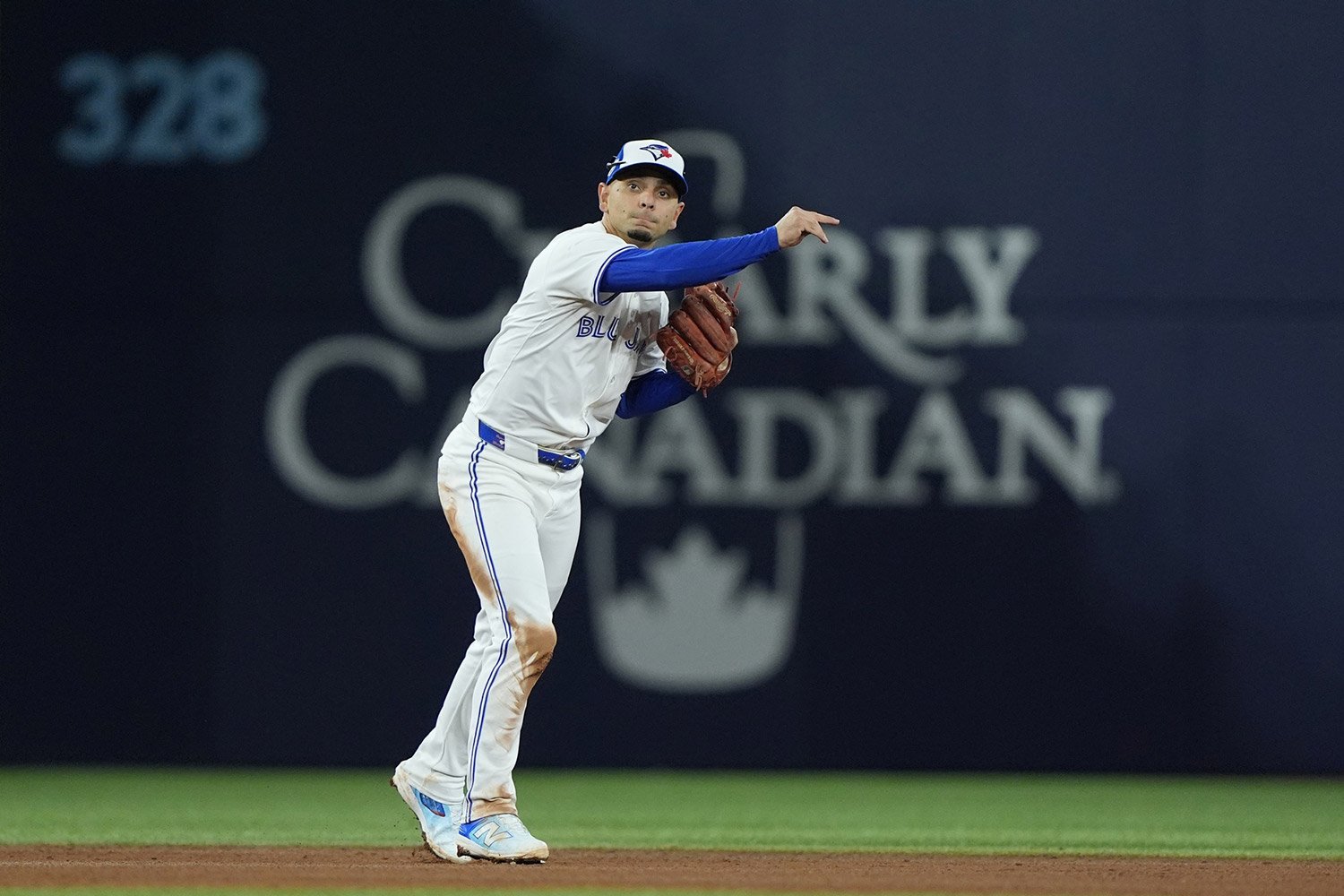 The Toronto Blue Jays are preparing for a significant shift in their infield alignment heading into next season. As reported by Sportsnet earlier this month, the team wants to assign Andres Giménez one role next season. Whether Bo Bichette re-signs or not, it appears Giménez won’t be returning to second base anytime soon. The Jays have decided to assign him one position and stick with it; it will be a departure from their recent strategy of shuffling players around the diamond to maximize lineup flexibility. The comment seemed strange since the Jays spent last season shuffling players between positions. The versatility provided John Schneider with plenty of options for putting together line-ups that best positioned the team to win. Obviously, the linchpin when it comes to who will be Toronto’s primary shortstop will be whether Bichette and the Jays come to terms. Even if he does sign, his defensive proficiency at the position has diminished in recent years; Bichette has always been an offence-first player. Andres Giménez, on the other hand, is a defensive specialist. When he was traded to the Jays, there was hope that he’d be able to regain the offensive output he had in 2022. It was a season that earned him a big contract with Cleveland, but that pop never materialized, and he was shipped to the Jays before the 2025 season. Giménez is one of the best defensive second basemen in baseball, ranking in the top five in defensive runs saved. He won three Gold Gloves with the Guardians (2022–24), a 2023 Platinum Glove, and offered top‑tier Outs Above Average (OAA), accumulating a +59 mark for his career. For the first one and a half months of 2025, it seemed like Giménez might have figured things out at the plate, too, posting a .622 OPS in the first half of the season. As the season went on and injuries mounted, he returned to his offensive struggles, as he slid to a .556 OPS in the second half. He did have an impactful home run in the ALCS and countless defensive plays during the season. Does his offensive output matter in the end? Not so much. For the Blue Jays, this defensive excellence is not a luxury but a necessity. Over the past several years, Toronto has built its roster around run prevention. Strong defense has been the backbone of their success, carrying them to the cusp of a World Series title. With Bichette’s late-season injury last season, the Jays were forced to expedite their experiment of whether or not Giménez could handle shortstop. He didn’t always look comfortable, but he filled in admirably, posting a neutral zero OAA in 119 innings. Giménez has experience at short from his first year with the Mets in 2020 and played there intermittently in Cleveland and last season. His range metrics to cover more ground, and arm strength suggest he can easily make routine plays from the position. Playing defense is all about reps. Slight differences in routine and positioning can be challenging for even the top major leaguer. If you look across the majors, there aren’t a lot of players who have successfully transitioned from being an established, everyday second baseman to a successful, everyday shortstop. It is usually the opposite; as players age, they shift from short to third. Players like Cal Ripken Jr. made that transition in the past, and Carlos Correa is doing it now. That isn’t to say utility players can’t swap between positions. Last season, Ernie Clement played every infield position. Other players have done the same. In recent memory, Ben Zobrist and Tony Womack played significant time at both second and short throughout their careers. They were often valued for their defensive versatility rather than for handling either position permanently. Don’t overlook Mookie Betts, who moved from right field to second, then shortstop for the Dodgers. First in 2024 and then again last season. Other examples highlight the rarity of such transitions. Most teams prefer to groom natural shortstops from the minor leagues rather than convert established veterans. The Jays’ willingness to buck convention underscores their confidence in Giménez’s abilities and their commitment to defence-first roster construction. If Giménez takes over shortstop permanently, there is good reason to believe he will develop into a top-tier defender at the position. With his physical tools, such as range, sprint speed, and average‑plus arm, why wouldn’t he? His consistent defensive play could not only help the Blue Jays win more games but also alleviate some of the pressure on their pitchers. So, it comes down to where Bichette would play if he re-signs. The Jays could certainly give him the choice of playing second or third. They could use it as a bargaining chip, an extra perk because they value his defensive contributions (just not at short). Clement is flexible enough to play whichever position Bichette declines. The deal for Giménez was all run prevention up the middle. The big question now for the organization is which alignment maximizes total wins, not just which individual is best in a vacuum. The Jays’ decision on who will take over at short will continue to reflect a broader organizational philosophy. Rather than chasing offensive fireworks, they are building a team that wins with pitching and defense. This approach may not always generate headlines, but it has proven effective. With Giménez at shortstop, the Jays will strengthen their run prevention edge and maximize their chances of winning close games. Giménez is signed through 2029 with a 2030 club option, escalating to $23 million average annual salary in the late years. Shortstop should be a team’s most valuable defender. That player is often considered the captain of the infield, responsible for directing traffic, making split-second decisions, and maintaining consistency both defensively and offensively. With that argument, Giménez, as the team’s best fielder, should take that role. His elite defense will yield the biggest return, preserving the team’s run-prevention edge. In the end, the Jays’ decision to install Andres Giménez as their everyday shortstop is a calculated gamble. Toronto is betting that defence wins championships. It nearly did last year, and just might in 2026. With Giménez at shortstop, they are doubling down on that philosophy. Whether Bichette stays or goes, the Jays have made their choice: the captain of their infield will be Andres Giménez.
 -
.jpg.0818841bbb7ea3da068e40824d5aeb92.jpg) Good deals aren't always easy to come by in Major League Baseball. Free agent signings don't always work out. It can take years to determine if one team bettered the other in a trade, and sometimes there’s no winner. The Blue Jays don’t seem to be done with their offseason activities. In search of good deals, they appear to be in the conversation with and for everyone. On their radar are free agents like Kyle Tucker, Robert Suarez, and Bo Bichette, and trade targets like Ketel Marte. They have been doing their due diligence throughout the market. Free agents are one thing – money talks – but trades are another. The Jays have shown a willingness to spend when the fit is right. But trades are something entirely. To acquire talent via trade, the Jays must be willing to part with something of value as well. Even if they are interested in certain available players, who could they offer in return? If you think about the 40-man roster and beyond, the pieces that Jays fans might consider expendable won’t necessarily fetch a big return. There are some exciting prospects in the system, but if traded, the Jays would hamper their ability to sustain success in the long term. This balancing act could define the offseason. GM Ross Atkins must weigh immediate needs and chemistry with future stability. Do the Jays mortgage tomorrow for a shot at glory today, or do they hold firm, trusting their farm system to deliver reinforcements in the years ahead? Another path the Jays could consider is trading from their major league roster. Could they trade Anthony Santander? Santander is entering year two of his five-year $92.5 million deal (of which $61.75 million is deferred). There’s also a sixth-year team option. If the Jays could manage a deal, it would reduce the logjam in the outfield and at DH. Yet, after an injury-plagued season, his value on the market can’t be high, especially considering his contract. The Jays would likely need to absorb salary or package him with prospects to entice a buyer. What about José Berríos? Berríos has an opt-out after the 2026 season, but based on his recent body of work, he isn’t likely to exercise it. He has three years and $67 million remaining on his seven-year contract. His departure would unclutter the starting rotation, but at what cost? As with Santander, the Jays would likely have to eat a significant portion of Berríos's salary or package him with prospects to bring back a meaningful return. Moreover, Berríos has been a stabilizing force, a pitcher capable of eating innings and delivering quality starts. Removing him from the equation would leave a significant hole. Clearly, he wasn't happy with the way his role evolved last season. Can the relationship be salvaged? The Jays must also ask themselves: Is any potential return worth the risk of destabilizing their pitching staff? Fan favourites like Ernie Clement, Addison Barger, Davis Schneider, Myles Straw, Nathan Lukes, and Jeff Hoffman won't be nearly as sought-after as the top prospects in the Jays’ system. These players are valuable within the organization because they provide depth, versatility, leadership, and clubhouse chemistry, but they are not the kind of assets that move the needle in blockbuster negotiations. To land a star, Toronto must consider bigger chips. It is highly unlikely that the Jays would trade Trey Yesavage, but it's not inconceivable to think they could consider a trade that includes Kevin Gausman, especially with Dylan Cease under contract. Gausman is entering the final year of a five-year, $110 million deal. His value lies not only in his performance but also in his contract, which could appeal to teams seeking short‑term pitching help without long‑term financial commitments. Of course, you’d have to think that such a deal would need to be lopsided in favour of the Jays for them to consider it at all. Obviously, there are examples of the Jays making blockbuster trades in the past... Mind you, when they were under different leadership. In 1990, the Jays acquired Roberto Alomar and Joe Carter from the Padres for Fred McGriff and Tony Fernandez. They would eventually lead the team to two World Championships. In 2012, the Jays made a trade with the Mets for R.A. Dickey in exchange for Noah Syndergaard and Travis d’Arnaud. And in 2014, the Jays swapped Brett Lawrie, Sean Nolin, Kendall Graveman and Franklin Barreto for Josh Donaldson. Syndergaard and d’Arnaud were top prospects in the Jays’ system when they were traded. It all comes back to prospects. Former general manager Alex Anthopolous was criticized by some for trades that emptied out the farm system. Since Mark Shapiro and Ross Atkins have been in their roles, the franchise has been slowly building the system back up. Yesavage would be a good example, albeit a rare one, of a draft pick who has made an immediate impact. There is no question that several of Toronto's top prospects would be of interest to other teams. The Jays’ farm system boasts some exciting names. Players who could be part of the next wave of stars. Trading them might yield immediate help, but at the expense of long‑term sustainability. The Jays must decide which prospects are truly untouchable and which can be leveraged to acquire established talent. Scouting, analytics, and gut instinct converge when it comes to prospects. A prospect’s value is not just in their potential but in how the organization projects their fit on rosters down the line. Do they address a future need? Do they align with the team’s timeline? These questions shape the calculus of every trade discussion. As the offseason unfolds, the Jays will continue to face tough decisions. Their willingness to explore every option is exciting, but they need to be decisive when it comes time to pull the trigger. The path to contention is narrow, requiring precision, patience, and courage. Whether through free agency or trades, the Jays must craft a roster that balances immediate competitiveness with long‑term viability. Outside of that equation, the team needs to ensure that the chemistry inside the clubhouse remains strong. Every move (and non-move) in the offseason is a gamble. Some pay off, others backfire, and many linger in ambiguity. For the Jays, this offseason feels like a particularly defining moment. The choices they make now will reverberate for years, shaping the franchise. The question is not whether the Jays will make moves, but it is whether those moves will propel them to a World Series championship.
Good deals aren't always easy to come by in Major League Baseball. Free agent signings don't always work out. It can take years to determine if one team bettered the other in a trade, and sometimes there’s no winner. The Blue Jays don’t seem to be done with their offseason activities. In search of good deals, they appear to be in the conversation with and for everyone. On their radar are free agents like Kyle Tucker, Robert Suarez, and Bo Bichette, and trade targets like Ketel Marte. They have been doing their due diligence throughout the market. Free agents are one thing – money talks – but trades are another. The Jays have shown a willingness to spend when the fit is right. But trades are something entirely. To acquire talent via trade, the Jays must be willing to part with something of value as well. Even if they are interested in certain available players, who could they offer in return? If you think about the 40-man roster and beyond, the pieces that Jays fans might consider expendable won’t necessarily fetch a big return. There are some exciting prospects in the system, but if traded, the Jays would hamper their ability to sustain success in the long term. This balancing act could define the offseason. GM Ross Atkins must weigh immediate needs and chemistry with future stability. Do the Jays mortgage tomorrow for a shot at glory today, or do they hold firm, trusting their farm system to deliver reinforcements in the years ahead? Another path the Jays could consider is trading from their major league roster. Could they trade Anthony Santander? Santander is entering year two of his five-year $92.5 million deal (of which $61.75 million is deferred). There’s also a sixth-year team option. If the Jays could manage a deal, it would reduce the logjam in the outfield and at DH. Yet, after an injury-plagued season, his value on the market can’t be high, especially considering his contract. The Jays would likely need to absorb salary or package him with prospects to entice a buyer. What about José Berríos? Berríos has an opt-out after the 2026 season, but based on his recent body of work, he isn’t likely to exercise it. He has three years and $67 million remaining on his seven-year contract. His departure would unclutter the starting rotation, but at what cost? As with Santander, the Jays would likely have to eat a significant portion of Berríos's salary or package him with prospects to bring back a meaningful return. Moreover, Berríos has been a stabilizing force, a pitcher capable of eating innings and delivering quality starts. Removing him from the equation would leave a significant hole. Clearly, he wasn't happy with the way his role evolved last season. Can the relationship be salvaged? The Jays must also ask themselves: Is any potential return worth the risk of destabilizing their pitching staff? Fan favourites like Ernie Clement, Addison Barger, Davis Schneider, Myles Straw, Nathan Lukes, and Jeff Hoffman won't be nearly as sought-after as the top prospects in the Jays’ system. These players are valuable within the organization because they provide depth, versatility, leadership, and clubhouse chemistry, but they are not the kind of assets that move the needle in blockbuster negotiations. To land a star, Toronto must consider bigger chips. It is highly unlikely that the Jays would trade Trey Yesavage, but it's not inconceivable to think they could consider a trade that includes Kevin Gausman, especially with Dylan Cease under contract. Gausman is entering the final year of a five-year, $110 million deal. His value lies not only in his performance but also in his contract, which could appeal to teams seeking short‑term pitching help without long‑term financial commitments. Of course, you’d have to think that such a deal would need to be lopsided in favour of the Jays for them to consider it at all. Obviously, there are examples of the Jays making blockbuster trades in the past... Mind you, when they were under different leadership. In 1990, the Jays acquired Roberto Alomar and Joe Carter from the Padres for Fred McGriff and Tony Fernandez. They would eventually lead the team to two World Championships. In 2012, the Jays made a trade with the Mets for R.A. Dickey in exchange for Noah Syndergaard and Travis d’Arnaud. And in 2014, the Jays swapped Brett Lawrie, Sean Nolin, Kendall Graveman and Franklin Barreto for Josh Donaldson. Syndergaard and d’Arnaud were top prospects in the Jays’ system when they were traded. It all comes back to prospects. Former general manager Alex Anthopolous was criticized by some for trades that emptied out the farm system. Since Mark Shapiro and Ross Atkins have been in their roles, the franchise has been slowly building the system back up. Yesavage would be a good example, albeit a rare one, of a draft pick who has made an immediate impact. There is no question that several of Toronto's top prospects would be of interest to other teams. The Jays’ farm system boasts some exciting names. Players who could be part of the next wave of stars. Trading them might yield immediate help, but at the expense of long‑term sustainability. The Jays must decide which prospects are truly untouchable and which can be leveraged to acquire established talent. Scouting, analytics, and gut instinct converge when it comes to prospects. A prospect’s value is not just in their potential but in how the organization projects their fit on rosters down the line. Do they address a future need? Do they align with the team’s timeline? These questions shape the calculus of every trade discussion. As the offseason unfolds, the Jays will continue to face tough decisions. Their willingness to explore every option is exciting, but they need to be decisive when it comes time to pull the trigger. The path to contention is narrow, requiring precision, patience, and courage. Whether through free agency or trades, the Jays must craft a roster that balances immediate competitiveness with long‑term viability. Outside of that equation, the team needs to ensure that the chemistry inside the clubhouse remains strong. Every move (and non-move) in the offseason is a gamble. Some pay off, others backfire, and many linger in ambiguity. For the Jays, this offseason feels like a particularly defining moment. The choices they make now will reverberate for years, shaping the franchise. The question is not whether the Jays will make moves, but it is whether those moves will propel them to a World Series championship. -
Good deals aren't always easy to come by in Major League Baseball. Free agent signings don't always work out. It can take years to determine if one team bettered the other in a trade, and sometimes there’s no winner. The Blue Jays don’t seem to be done with their offseason activities. In search of good deals, they appear to be in the conversation with and for everyone. On their radar are free agents like Kyle Tucker, Robert Suarez, and Bo Bichette, and trade targets like Ketel Marte. They have been doing their due diligence throughout the market. Free agents are one thing – money talks – but trades are another. The Jays have shown a willingness to spend when the fit is right. But trades are something entirely. To acquire talent via trade, the Jays must be willing to part with something of value as well. Even if they are interested in certain available players, who could they offer in return? If you think about the 40-man roster and beyond, the pieces that Jays fans might consider expendable won’t necessarily fetch a big return. There are some exciting prospects in the system, but if traded, the Jays would hamper their ability to sustain success in the long term. This balancing act could define the offseason. GM Ross Atkins must weigh immediate needs and chemistry with future stability. Do the Jays mortgage tomorrow for a shot at glory today, or do they hold firm, trusting their farm system to deliver reinforcements in the years ahead? Another path the Jays could consider is trading from their major league roster. Could they trade Anthony Santander? Santander is entering year two of his five-year $92.5 million deal (of which $61.75 million is deferred). There’s also a sixth-year team option. If the Jays could manage a deal, it would reduce the logjam in the outfield and at DH. Yet, after an injury-plagued season, his value on the market can’t be high, especially considering his contract. The Jays would likely need to absorb salary or package him with prospects to entice a buyer. What about José Berríos? Berríos has an opt-out after the 2026 season, but based on his recent body of work, he isn’t likely to exercise it. He has three years and $67 million remaining on his seven-year contract. His departure would unclutter the starting rotation, but at what cost? As with Santander, the Jays would likely have to eat a significant portion of Berríos's salary or package him with prospects to bring back a meaningful return. Moreover, Berríos has been a stabilizing force, a pitcher capable of eating innings and delivering quality starts. Removing him from the equation would leave a significant hole. Clearly, he wasn't happy with the way his role evolved last season. Can the relationship be salvaged? The Jays must also ask themselves: Is any potential return worth the risk of destabilizing their pitching staff? Fan favourites like Ernie Clement, Addison Barger, Davis Schneider, Myles Straw, Nathan Lukes, and Jeff Hoffman won't be nearly as sought-after as the top prospects in the Jays’ system. These players are valuable within the organization because they provide depth, versatility, leadership, and clubhouse chemistry, but they are not the kind of assets that move the needle in blockbuster negotiations. To land a star, Toronto must consider bigger chips. It is highly unlikely that the Jays would trade Trey Yesavage, but it's not inconceivable to think they could consider a trade that includes Kevin Gausman, especially with Dylan Cease under contract. Gausman is entering the final year of a five-year, $110 million deal. His value lies not only in his performance but also in his contract, which could appeal to teams seeking short‑term pitching help without long‑term financial commitments. Of course, you’d have to think that such a deal would need to be lopsided in favour of the Jays for them to consider it at all. Obviously, there are examples of the Jays making blockbuster trades in the past... Mind you, when they were under different leadership. In 1990, the Jays acquired Roberto Alomar and Joe Carter from the Padres for Fred McGriff and Tony Fernandez. They would eventually lead the team to two World Championships. In 2012, the Jays made a trade with the Mets for R.A. Dickey in exchange for Noah Syndergaard and Travis d’Arnaud. And in 2014, the Jays swapped Brett Lawrie, Sean Nolin, Kendall Graveman and Franklin Barreto for Josh Donaldson. Syndergaard and d’Arnaud were top prospects in the Jays’ system when they were traded. It all comes back to prospects. Former general manager Alex Anthopolous was criticized by some for trades that emptied out the farm system. Since Mark Shapiro and Ross Atkins have been in their roles, the franchise has been slowly building the system back up. Yesavage would be a good example, albeit a rare one, of a draft pick who has made an immediate impact. There is no question that several of Toronto's top prospects would be of interest to other teams. The Jays’ farm system boasts some exciting names. Players who could be part of the next wave of stars. Trading them might yield immediate help, but at the expense of long‑term sustainability. The Jays must decide which prospects are truly untouchable and which can be leveraged to acquire established talent. Scouting, analytics, and gut instinct converge when it comes to prospects. A prospect’s value is not just in their potential but in how the organization projects their fit on rosters down the line. Do they address a future need? Do they align with the team’s timeline? These questions shape the calculus of every trade discussion. As the offseason unfolds, the Jays will continue to face tough decisions. Their willingness to explore every option is exciting, but they need to be decisive when it comes time to pull the trigger. The path to contention is narrow, requiring precision, patience, and courage. Whether through free agency or trades, the Jays must craft a roster that balances immediate competitiveness with long‑term viability. Outside of that equation, the team needs to ensure that the chemistry inside the clubhouse remains strong. Every move (and non-move) in the offseason is a gamble. Some pay off, others backfire, and many linger in ambiguity. For the Jays, this offseason feels like a particularly defining moment. The choices they make now will reverberate for years, shaping the franchise. The question is not whether the Jays will make moves, but it is whether those moves will propel them to a World Series championship. View full article
.jpg.7b35066e94c590091f2cade1d176d240.jpg)

.jpg.d36408460a5743a5d6091883445e5787.jpg)
.jpg.06631a8eed293956a54ff78a6c237377.jpg)

.jpg.ee55cc297ec0a58088c49cd5d95d359b.jpg)
.jpg.759f39ee6340142a122c8ad2826426f4.jpg)
.jpg.0818841bbb7ea3da068e40824d5aeb92.jpg)