


Matthew Creally
-
Posts
126 -
Joined
-
Last visited
Content Type
Profiles
Toronto Blue Jays Videos
2026 Toronto Blue Jays Top Prospects Ranking
Toronto Blue Jays Free Agent & Trade Rumors, Notes, & Tidbits
Guides & Resources
2025 Toronto Blue Jays Draft Pick Tracker
News
2026 Toronto Blue Jays Draft Tracker: Picks & Bonuses
Forums
Blogs
Events
Store
Downloads
Gallery
Everything posted by Matthew Creally
-
Welcome to Shape of the Blue Jays, my column where I dig into Statcast numbers to analyze recent pitch shape and swing shape trends for Toronto Blue Jays players and discuss how they have impacted their performance. Click here to read the last edition. Quick Hits: Roster Shuffle The periphery of the Jays' roster is going to look a little different this weekend in Baltimore. The team announced Wednesday afternoon they'd traded for old friend Connor Seabold, who was recently DFA'd by the Tigers. Seabold, a right-handed pitcher, was with Toronto in spring training and has spent the past two years as a single-inning reliever but is capable of starting as well. In 11 appearances spanning 15.2 innings for Detroit, he was working on a 3.45 ERA, 20.3% K rate, and 7.2% BB rate, allowing two homers before getting cut loose. With Dylan Cease hitting the IL, the Jays needed another arm who can eat multiple innings as a spot starter/bulk reliever. Seabold figures to factor into their pitching plans this weekend. Later Wednesday evening, Jeff Passan reported that the Blue Jays were going to call up Charles McAdoo from Triple-A Buffalo. The team made the move official on Thursday afternoon. McAdoo was ranked by Baseball America as Toronto's 24th-best prospect before the season but got bumped up to 19th in their first midseason revision after a strong start in Buffalo (.250/.356/.436). He had plus raw power coming into the year and stole a career-high 34 bases in 2025, but BA gave his hit tool an underwhelming 30 grade in their preseason report. While he knows how to lay off pitches out of the zone, his approach borders on being too passive. However, he struck out less than 20% of the time at Buffalo this year, and his zone contact rate was up to 89.3%. McAdoo is a natural third baseman who can play first and has started to get game reps at second base this year. Kevin Gausman Kevin Gausman threw a season-high 19.1% sliders two starts ago against the Pirates. He mentioned to Jays broadcasters in an in-game interview a couple of days later that he'd been fighting a lack of feel for his splitter, although Pittsburgh isn't a good slider-hitting team, so it was a defensible adjustment from a game-planning standpoint as well. It worked, as he pitched into the seventh and also recorded a season-high 39% swing-and-miss rate. Wednesday's start against the Marlins was different as he dialed his fastball usage up to 62.1%, good for second-highest in a single game this year, but he was fighting himself the whole time. His first batter of the game, Xavier Edwards, worked a 10-pitch double, which would become a common theme throughout the afternoon. Just five days after setting that new season-high, Gausman had a single-game low on the swing-and-miss front. Miami put a ton of balls in play, spoiled pitches, and Gausman battled his command about as much as we've seen. Despite all that, he earned a hard-fought no-decision (5 IP, 1 ER, 6 H, 5 K, 2 BB, 95 P), inducing a couple of key double plays and getting out of multiple jams. For a pitching staff as shorthanded as Toronto's right now, Gausman powering through on Wednesday and completing that fifth inning was crucial. Jesús Sánchez Jesús Sánchez's 136 wRC+ in May (entering play on May 28) is second only to Brandon Valenzuela among Blue Jay hitters. His SLG on the season is up to .456 after his big weekend against the Pirates and the grand slam he hit off former teammate Sandy Alcantara on Tuesday. I gave Sánchez a spot in this column a few weeks ago, noting he was tied for the largest year-over-year decline in the majors in bat speed at the time. Good news: He's swinging harder this month. His average bat speed is up 1.5 mph in May compared to April, and he's doing a better job of catching up to fastballs in particular. The glass-half-empty prognosis of Sánchez's performance is that his hard-hit rate is down nearly 10% from April, his chase rate is up over 40% for the month of May, and his zone contact rate is down below 80% this month too. His walk rate on the season is a minuscule 4%, and while he's hitting plenty of line drives, which appears to be intentional, his May BABIP is an inflated .408, and he's outperforming his xwOBA by about 40 points. It's nice to see the bat speed rebounding, and the extra-base hits he's been bringing lately have been much needed, but I can't foresee him sustaining a 136 wRC+ if he continues to swing this much. Spencer Miles Spencer Miles has easily been this team's feel-good story of the year so far. When the Jays took him in the Rule 5 draft, he had never pitched above A-ball or thrown more than 7.1 innings in a season since his senior year at Missouri, thanks to a checkered injury history. Considering all that, concerns about overworking him are always going to be warranted, but as a bulk reliever every fifth day, he has gone above and beyond everything that was expected of him coming in. This month, his ERA is a pristine 1.53 (1.70 FIP, 2.75 xFIP). He's slated to pitch in the Sunday finale of the four-game set against the Orioles opposite Kyle Bradish. Last week at Yankee Stadium (4.1 IP, 0 R, 2 H, 6 K, 1 BB), Miles went sinker-slider-heavy to righties and suffocated lefties with his curveball. To both sides, the curve returned a 55% swing-and-miss rate on the evening. On Tuesday against the Marlins, he threw sinkers to righties 48.3% of the time, a mark he only reached twice prior, and used the sinker and curve in perfect tandem to lefties. Ever since he started getting stretched out, he's been laying off the four-seamer and turning to the sinker as his primary fastball while his curveball and slider play off it. All four of his pitch types grade out as above-average according to PitchingBot's stuff model. He doesn't get much swing and miss but owns a 63rd-percentile K rate because his arsenal lends itself to plenty of called strikes. The curveball is his only offering that isn't running a groundball rate above 55%, and his quality contact suppression is up there with the best in baseball right now. All stats entering May 28, 2026. View full article
-
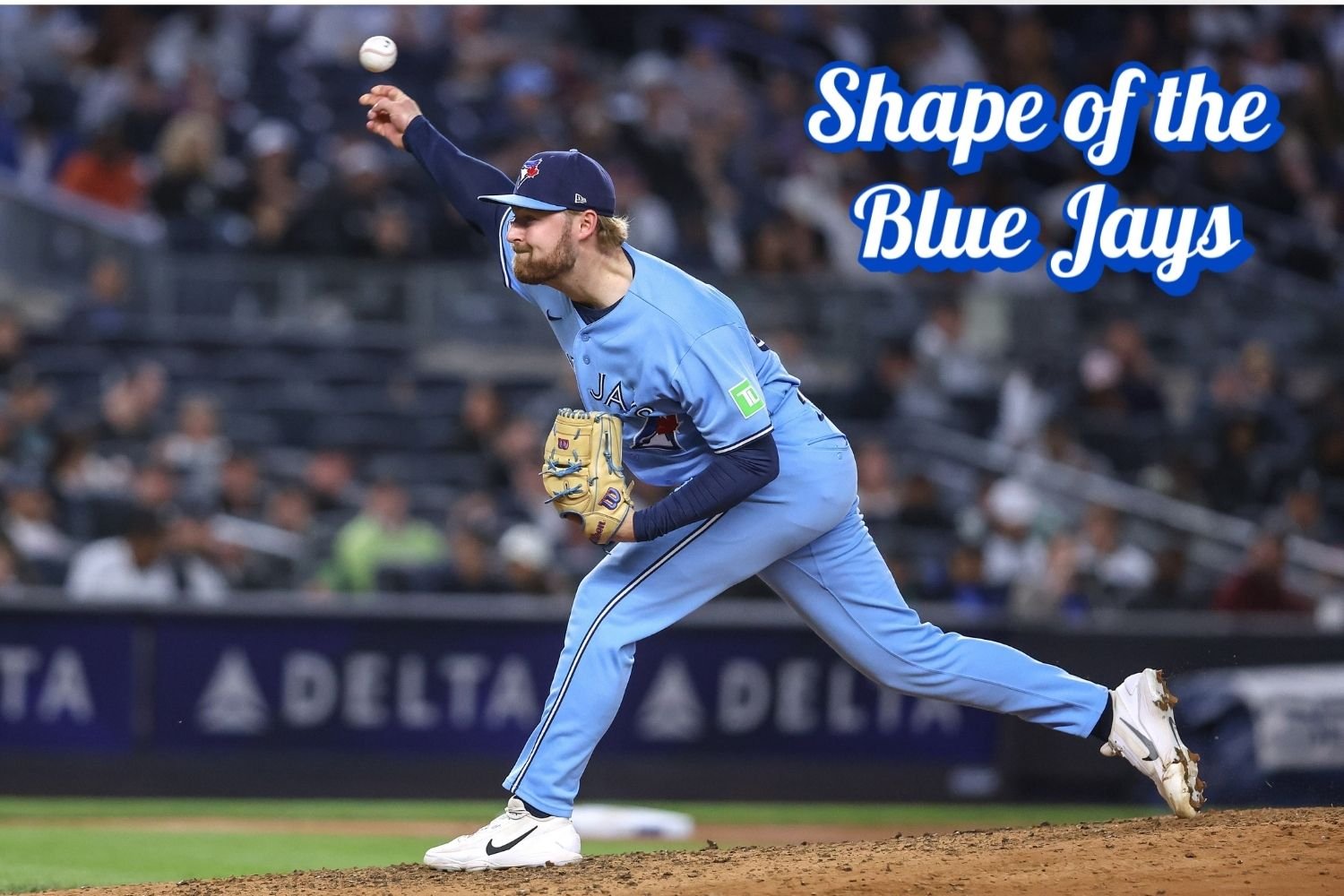 Welcome to Shape of the Blue Jays, my column where I dig into Statcast numbers to analyze recent pitch shape and swing shape trends for Toronto Blue Jays players and discuss how they have impacted their performance. Click here to read the last edition. Quick Hits: Roster Shuffle The periphery of the Jays' roster is going to look a little different this weekend in Baltimore. The team announced Wednesday afternoon they'd traded for old friend Connor Seabold, who was recently DFA'd by the Tigers. Seabold, a right-handed pitcher, was with Toronto in spring training and has spent the past two years as a single-inning reliever but is capable of starting as well. In 11 appearances spanning 15.2 innings for Detroit, he was working on a 3.45 ERA, 20.3% K rate, and 7.2% BB rate, allowing two homers before getting cut loose. With Dylan Cease hitting the IL, the Jays needed another arm who can eat multiple innings as a spot starter/bulk reliever. Seabold figures to factor into their pitching plans this weekend. Later Wednesday evening, Jeff Passan reported that the Blue Jays were going to call up Charles McAdoo from Triple-A Buffalo. The team made the move official on Thursday afternoon. McAdoo was ranked by Baseball America as Toronto's 24th-best prospect before the season but got bumped up to 19th in their first midseason revision after a strong start in Buffalo (.250/.356/.436). He had plus raw power coming into the year and stole a career-high 34 bases in 2025, but BA gave his hit tool an underwhelming 30 grade in their preseason report. While he knows how to lay off pitches out of the zone, his approach borders on being too passive. However, he struck out less than 20% of the time at Buffalo this year, and his zone contact rate was up to 89.3%. McAdoo is a natural third baseman who can play first and has started to get game reps at second base this year. Kevin Gausman Kevin Gausman threw a season-high 19.1% sliders two starts ago against the Pirates. He mentioned to Jays broadcasters in an in-game interview a couple of days later that he'd been fighting a lack of feel for his splitter, although Pittsburgh isn't a good slider-hitting team, so it was a defensible adjustment from a game-planning standpoint as well. It worked, as he pitched into the seventh and also recorded a season-high 39% swing-and-miss rate. Wednesday's start against the Marlins was different as he dialed his fastball usage up to 62.1%, good for second-highest in a single game this year, but he was fighting himself the whole time. His first batter of the game, Xavier Edwards, worked a 10-pitch double, which would become a common theme throughout the afternoon. Just five days after setting that new season-high, Gausman had a single-game low on the swing-and-miss front. Miami put a ton of balls in play, spoiled pitches, and Gausman battled his command about as much as we've seen. Despite all that, he earned a hard-fought no-decision (5 IP, 1 ER, 6 H, 5 K, 2 BB, 95 P), inducing a couple of key double plays and getting out of multiple jams. For a pitching staff as shorthanded as Toronto's right now, Gausman powering through on Wednesday and completing that fifth inning was crucial. Jesús Sánchez Jesús Sánchez's 136 wRC+ in May (entering play on May 28) is second only to Brandon Valenzuela among Blue Jay hitters. His SLG on the season is up to .456 after his big weekend against the Pirates and the grand slam he hit off former teammate Sandy Alcantara on Tuesday. I gave Sánchez a spot in this column a few weeks ago, noting he was tied for the largest year-over-year decline in the majors in bat speed at the time. Good news: He's swinging harder this month. His average bat speed is up 1.5 mph in May compared to April, and he's doing a better job of catching up to fastballs in particular. The glass-half-empty prognosis of Sánchez's performance is that his hard-hit rate is down nearly 10% from April, his chase rate is up over 40% for the month of May, and his zone contact rate is down below 80% this month too. His walk rate on the season is a minuscule 4%, and while he's hitting plenty of line drives, which appears to be intentional, his May BABIP is an inflated .408, and he's outperforming his xwOBA by about 40 points. It's nice to see the bat speed rebounding, and the extra-base hits he's been bringing lately have been much needed, but I can't foresee him sustaining a 136 wRC+ if he continues to swing this much. Spencer Miles Spencer Miles has easily been this team's feel-good story of the year so far. When the Jays took him in the Rule 5 draft, he had never pitched above A-ball or thrown more than 7.1 innings in a season since his senior year at Missouri, thanks to a checkered injury history. Considering all that, concerns about overworking him are always going to be warranted, but as a bulk reliever every fifth day, he has gone above and beyond everything that was expected of him coming in. This month, his ERA is a pristine 1.53 (1.70 FIP, 2.75 xFIP). He's slated to pitch in the Sunday finale of the four-game set against the Orioles opposite Kyle Bradish. Last week at Yankee Stadium (4.1 IP, 0 R, 2 H, 6 K, 1 BB), Miles went sinker-slider-heavy to righties and suffocated lefties with his curveball. To both sides, the curve returned a 55% swing-and-miss rate on the evening. On Tuesday against the Marlins, he threw sinkers to righties 48.3% of the time, a mark he only reached twice prior, and used the sinker and curve in perfect tandem to lefties. Ever since he started getting stretched out, he's been laying off the four-seamer and turning to the sinker as his primary fastball while his curveball and slider play off it. All four of his pitch types grade out as above-average according to PitchingBot's stuff model. He doesn't get much swing and miss but owns a 63rd-percentile K rate because his arsenal lends itself to plenty of called strikes. The curveball is his only offering that isn't running a groundball rate above 55%, and his quality contact suppression is up there with the best in baseball right now. All stats entering May 28, 2026.
 -
Welcome back to Blue Jays Clutch Plays, a recurring post that highlights the six most pivotal plays (three pitching, three hitting) from the past week of Blue Jays baseball, according to MLB's win probability model. Click here to read last week's edition. Just five days ago, the Blue Jays had dropped the first two games of a series at Yankee Stadium and were staring down the barrel of four consecutive games against Cam Schlittler, Carlos Rodón, Bubba Chandler, and Paul Skenes. Naturally, they won all four of those contests, marking their longest winning streak of the season. They had a chance to sweep the Pirates at home and lost the series finale on Sunday, but after salvaging their road trip and taking two out of three on the weekend, they aren't in a bad spot heading into a winnable stretch against the Marlins and Orioles. Here are the biggest moments from the week that was. Pitching 3. Tyler Rogers: Aaron Judge GIDP, Bot 8, 5/21 (+11.0% WPA) Toronto's pitchers had Aaron Judge figured out all series, as the Yankees' hulking slugger went 1-for-15 with eight strikeouts across the four games. In one of Judge's biggest opportunities to make something happen, Tyler Rogers whipped a sinker that dropped below the zone, and Judge rolled it over to the left side in a double play situation. Andrés Giménez positioned himself to field the ball perfectly, and Vladimir Guerrero Jr. made a nice scoop at first base to execute the twin killing and end the frame. 2. Kevin Gausman: Jake Mangum Groundout, Top 7, 5/22 (+11.7% WPA) Kevin Gausman's biggest out of the night happened to come on his last batter. The odds were shifting in favour of the Pirates as the contact-oriented Jake Mangum came to the plate with the tying run on second in a two-run game. Not only did Gausman keep the ball on the ground, but the fact that it was hit to first with the corner infielders drawn in meant that no runs scored on the play. Vlad Jr. stepped on first, paving the way for Mason Fluharty to come in and complete the inning. 1. Louis Varland: Amed Rosario Strikeout, Bot 9, 5/20 (+14.8% WPA) The Jays had to fight for every inch last Wednesday in New York after a lengthy rain delay gave way to an outstanding pitcher's duel between Trey Yesavage and Cam Schlittler. Things didn't come easy in the ninth, as Louis Varland allowed the tying run to get into scoring position before finding himself a strike away from making the save. With Jazz Chisholm Jr. running on the play, Varland got Amed Rosario to make a half-hearted offer at a fastball way above the zone to seal the victory. Hitting 3. Jesús Sánchez: RBI Double, Bot 6, 5/23 (+15.1% WPA) Jesús Sánchez had himself a solid week, as this was the second big double he recorded in a key spot. He had Paul Skenes's number on Saturday, going 2-for-3 against him with two doubles and a 106-mph lineout. Earlier in this at-bat, Sánchez was the benefactor of a fortuitous missed check swing call by the third base umpire, but he didn't hesitate to swing at a 3-2 changeup way below the zone from Skenes, roping it into the right field corner for the go-ahead RBI. 2. Jesús Sánchez: RBI Double, Top 9, 5/18 (+21.8% WPA) As important as it was to take the final two games of the Yankees series and earn the split, the Blue Jays were painfully close to sweeping them, losing each of the first couple games by one and stranding the tying run at third in both contests. The margins were particularly thin in Monday's back-and-forth opener, but things were looking up after Sánchez chopped one over the head of Paul Goldschmidt at first and all the way down the line to score Ernie Clement and bring the Blue Jays to within a run. 1. Ernie Clement: 3-run HR, Top 4, 5/18 (+34.6% WPA) Had Toronto hung on to their earlier lead or completed their ninth-inning comeback attempt, this would've gone down as the Ernie Clement Flu Game. Battling a bad case of strep throat, Ernie found himself in a two-strike, two-out situation with men on the corners and the Jays down by a run. He got a changeup that Ryan Weathers did a decent job locating, but he lofted it to left-center and it carried through the unseasonably hot air all the way over the fence. This was the Jays' fourth-most clutch hit, and Clement's biggest, of the season by WPA, surpassing his walk-off single back on opening weekend. View full article
-
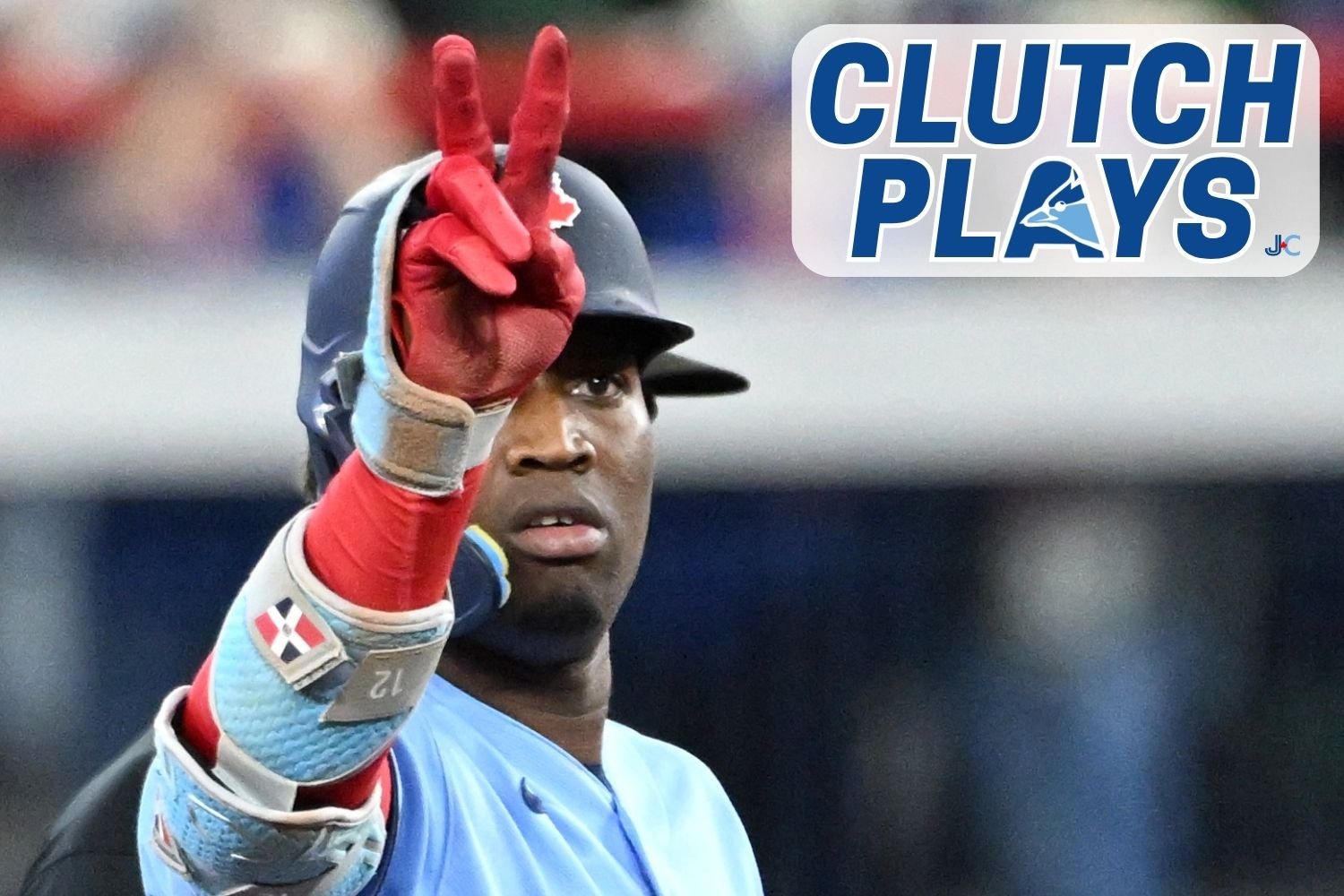 Welcome back to Blue Jays Clutch Plays, a recurring post that highlights the six most pivotal plays (three pitching, three hitting) from the past week of Blue Jays baseball, according to MLB's win probability model. Click here to read last week's edition. Just five days ago, the Blue Jays had dropped the first two games of a series at Yankee Stadium and were staring down the barrel of four consecutive games against Cam Schlittler, Carlos Rodón, Bubba Chandler, and Paul Skenes. Naturally, they won all four of those contests, marking their longest winning streak of the season. They had a chance to sweep the Pirates at home and lost the series finale on Sunday, but after salvaging their road trip and taking two out of three on the weekend, they aren't in a bad spot heading into a winnable stretch against the Marlins and Orioles. Here are the biggest moments from the week that was. Pitching 3. Tyler Rogers: Aaron Judge GIDP, Bot 8, 5/21 (+11.0% WPA) Toronto's pitchers had Aaron Judge figured out all series, as the Yankees' hulking slugger went 1-for-15 with eight strikeouts across the four games. In one of Judge's biggest opportunities to make something happen, Tyler Rogers whipped a sinker that dropped below the zone, and Judge rolled it over to the left side in a double play situation. Andrés Giménez positioned himself to field the ball perfectly, and Vladimir Guerrero Jr. made a nice scoop at first base to execute the twin killing and end the frame. 2. Kevin Gausman: Jake Mangum Groundout, Top 7, 5/22 (+11.7% WPA) Kevin Gausman's biggest out of the night happened to come on his last batter. The odds were shifting in favour of the Pirates as the contact-oriented Jake Mangum came to the plate with the tying run on second in a two-run game. Not only did Gausman keep the ball on the ground, but the fact that it was hit to first with the corner infielders drawn in meant that no runs scored on the play. Vlad Jr. stepped on first, paving the way for Mason Fluharty to come in and complete the inning. 1. Louis Varland: Amed Rosario Strikeout, Bot 9, 5/20 (+14.8% WPA) The Jays had to fight for every inch last Wednesday in New York after a lengthy rain delay gave way to an outstanding pitcher's duel between Trey Yesavage and Cam Schlittler. Things didn't come easy in the ninth, as Louis Varland allowed the tying run to get into scoring position before finding himself a strike away from making the save. With Jazz Chisholm Jr. running on the play, Varland got Amed Rosario to make a half-hearted offer at a fastball way above the zone to seal the victory. Hitting 3. Jesús Sánchez: RBI Double, Bot 6, 5/23 (+15.1% WPA) Jesús Sánchez had himself a solid week, as this was the second big double he recorded in a key spot. He had Paul Skenes's number on Saturday, going 2-for-3 against him with two doubles and a 106-mph lineout. Earlier in this at-bat, Sánchez was the benefactor of a fortuitous missed check swing call by the third base umpire, but he didn't hesitate to swing at a 3-2 changeup way below the zone from Skenes, roping it into the right field corner for the go-ahead RBI. 2. Jesús Sánchez: RBI Double, Top 9, 5/18 (+21.8% WPA) As important as it was to take the final two games of the Yankees series and earn the split, the Blue Jays were painfully close to sweeping them, losing each of the first couple games by one and stranding the tying run at third in both contests. The margins were particularly thin in Monday's back-and-forth opener, but things were looking up after Sánchez chopped one over the head of Paul Goldschmidt at first and all the way down the line to score Ernie Clement and bring the Blue Jays to within a run. 1. Ernie Clement: 3-run HR, Top 4, 5/18 (+34.6% WPA) Had Toronto hung on to their earlier lead or completed their ninth-inning comeback attempt, this would've gone down as the Ernie Clement Flu Game. Battling a bad case of strep throat, Ernie found himself in a two-strike, two-out situation with men on the corners and the Jays down by a run. He got a changeup that Ryan Weathers did a decent job locating, but he lofted it to left-center and it carried through the unseasonably hot air all the way over the fence. This was the Jays' fourth-most clutch hit, and Clement's biggest, of the season by WPA, surpassing his walk-off single back on opening weekend.
 -
Even after a two-hour rain delay, there was a sense of predictability around the third game of the Blue Jays-Yankees series last Wednesday night in the Bronx. Cam Schlittler, the MLB leader in ERA and FIP among qualified pitchers, was set to take the hill against a Toronto offense that had slashed a cringeworthy .243/.306/.369 as a unit so far in the month of May. The Jays also left the tying run on third base in each of the first two games of the series. What happened against Schlittler and the Yankees was unsurprising, as they only scored two runs and managed just one extra-base hit. Thanks to Trey Yesavage, it didn't matter. The 22-year-old, in his first start at Yankee Stadium, outdueled Schlittler, going six shutout innings, striking out eight, walking none, and allowing just two hits on 95 pitches. The Blue Jays won 2-1. Yesavage's season started a month late as he recovered from an impingement in his throwing shoulder, but through five starts, his ERA is a sparkling 1.07. He was forecasted by most publicly available projection systems to have an ERA in the mid-to-high 3.00s, which would be perfectly acceptable for a rookie his age but also an indication that the pitcher who set the world on fire last October wouldn't sustain that pace. So far, he has. Rain delays can often throw a wrench into a team's pitching plans. Starters need to follow particular routines and time themselves up to be ready for the first pitch, but when that comes two hours later than expected, it can sometimes put unforeseen limits on their availability that evening. The big story on Wednesday was not only Yesavage's 95 pitches, the second-most he has ever thrown in a major league outing after Game 5 of the World Series, but that his velocity was way up. His fastball sat 95.2 mph, the second-hardest single-game average of his young career, and his slider and splitter were also more than 1.0 mph higher than their season averages. Perhaps he has three cans of Red Bull to thank for that. Until last night, Yesavage had more postseason strikeouts than regular season strikeouts to his name. While his ability to miss bats was on full display against the Yankees, his strikeout rate has slightly fallen back down to earth in 2026. Again, this isn't a cause for concern – it's still in the high 20s, and he was never going to repeat his 35.8% postseason K rate over 20-25 starts. The thing he has done extremely well this year, though, is limit quality contact. Pitchers don't exert much control over how hard opponents hit the ball, but location and launch angle are highly correlated, and Yesavage is hitting the right spots to induce sub-optimal batted ball angles. Trey Yesavage Batted Ball Metrics, 2025 vs 2026 Year GB% PU% Pull Fly Ball% Barrel% BIP% < -3° LA + BIP% > 38° LA 2025 56.4% 0.0% 2.6% 7.7% 43.6% 2026 34.9% 14.3% 1.6% 3.2% 54.0% I like looking at the percentage of batted balls outside that -3° to 38° launch angle range. Not all grounders and fly balls are created equally, and hits outside of that boundary resulted in an average wOBA of less than .300 from 2023 to 2025. It's essentially an adjusted sum of groundball rate and popup rate that only shows the least threatening batted balls possible. Over half of the balls in play that Yesavage has induced this year fall into that category. No one's barreling anything or pulling any fly balls. It's hard to do damage without checking at least one of those boxes. The drop in groundball rate is quite fascinating, but he's compensating for it by running one of the highest popup rates in the league. Splitting his groundballs up by pitch type, there isn't a considerable decrease this year with the splitter or slider: It's mostly happening on the fastball, and it appears to be a direct byproduct of a change in location. Yesavage's fastball averages over 20" of induced vertical break (IVB) thanks to his high release point, so it defies gravity and gives the illusion that it's rising more than almost every four-seamer in the game, meaning hitters are bound to swing under it. In 2026, he's throwing a lot more fastballs down in the zone. Trey Yesavage Fastball Location, 2025 vs 2026 Top left: LHB 2025; top right: RHB 2025; bottom left: LHB 2026; bottom right: RHB 2026 Normally, fastballs with high IVB are more effective when they're elevated because if pitchers aim for a low strike, they run the risk of generating carry upward into the middle of the zone, making them more prone to damage. However, it's working for Yesavage, and I think this is partially a result of hitters being wary of the splitter, which requires steep, uppercut swings to counteract its downward movement. Pitcher List's Anthony Licciardi recently profiled Kevin Gausman's longevity and found that Gausman has sustained success despite also consistently locating his fastball down in the zone. Maybe fastball-splitter pitchers can get away with this kind of approach because hitters on both sides of the plate always have to respect the possibility of seeing a splitter? Fundamentally, not much has changed about Yesavage since he first donned a Blue Jays uniform in September of last year. The sky-high release point is still there. The fastball still carries, and it hasn't lost any velocity since his shoulder injury. The splitter still has plenty of vertical separation from the fastball and induces ugly swings from lefties. The slider still moves the wrong way. His stuff is still electric, he's still missing bats, and now he's becoming a weak contact pitcher too. His development over the past calendar year has become even more remarkable than it already was. The only considerable change we've seen to his profile this year is a decrease in slider usage. He's throwing way more fastballs to righties and more splitters to lefties, with the slider taking a tertiary role to both sides of the plate. As a result, his strikeout rate against righties has nearly doubled compared to last regular season. However, none of this stopped him from reintroducing the slider on Wednesday night. He threw it 27% of the time to Yankee hitters, a single-game high on the young season, and the fact that they chased 70% of the sliders they saw out of the zone suggests they weren't ready for it at all. Trey Yesavage Pitch Usage by Handedness, 2025 vs 2026 Pitch Type 2025 vs LHB 2026 vs LHB 2025 vs RHB 2026 vs RHB FF 50% 44% 39% 51% FS 34% 46% 16% 22% SL 16% 10% 45% 27% As much as I'd rather not pour some cold water on a guy who has been nothing but dominant since he came to the big leagues, especially considering how difficult it is to put a positive spin on the Jays' season right now, there are some things about the way Yesavage's first eight regular season starts have unfolded that seem impossible to continue. He has yet to surrender a non-playoff home run in his career, having induced 27 fly balls that have all stayed in the yard. If he keeps generating this many popups and prevents opponents from getting the barrel to the ball or pulling anything in the air, I don't doubt he'll maintain a low HR/FB% in the long run, but the postseason proved that it's possible to take him deep from time to time. I also don't know how I feel about his command at the moment. On one hand, his walk rate is down from last year, sitting at 7.9% after Wednesday night. On the other, the zone rate on his splitter is down almost 10 points to 34.5%, and command grades from both pitch quality models hosted on FanGraphs suggest the precision of his fastball and his splitter have waned slightly compared to 2025. The splitter is always going to be a chase pitch for him, but pitchers walk a fine line when zone rates on a given offering sink below 35% and they become overly reliant on poor discipline (remember what happened when people stopped swinging against Brendon Little?). Against lefties, his walk rate is only 3.4%, which is probably going to go up if the pitch that he throws 46% of the time against them is out of the zone this much. It can be puzzling when a pitcher's walk rate decreases despite throwing fewer pitches in the zone. It's hard to picture Yesavage's walk rate staying this far below 10% for much longer, but even when he battled his control last year, he got enough strikeouts to make it work, and his stuff is still good enough that it seems like a sustainable combination in the long term. In the 2025 postseason, Yesavage didn't have to steal games for the Blue Jays because of how many runs they scored. This year, the current state of the offense probably means he'll have to pitch in way tighter contests, and early indications suggest he's up to the task. He almost single-handedly won Wednesday night's game for them, and since his MLB debut, his 2.05 FIP leads all starting pitchers with at least 30 innings. He might not pitch like a Cy Young candidate indefinitely, but there's no denying that he has quickly established himself as one of the better starting pitchers in the game. All stats entering May 21, 2026. View full article
-
.jpg.3407a7a3128c23d897763199f04f07a1.jpg) Even after a two-hour rain delay, there was a sense of predictability around the third game of the Blue Jays-Yankees series last Wednesday night in the Bronx. Cam Schlittler, the MLB leader in ERA and FIP among qualified pitchers, was set to take the hill against a Toronto offense that had slashed a cringeworthy .243/.306/.369 as a unit so far in the month of May. The Jays also left the tying run on third base in each of the first two games of the series. What happened against Schlittler and the Yankees was unsurprising, as they only scored two runs and managed just one extra-base hit. Thanks to Trey Yesavage, it didn't matter. The 22-year-old, in his first start at Yankee Stadium, outdueled Schlittler, going six shutout innings, striking out eight, walking none, and allowing just two hits on 95 pitches. The Blue Jays won 2-1. Yesavage's season started a month late as he recovered from an impingement in his throwing shoulder, but through five starts, his ERA is a sparkling 1.07. He was forecasted by most publicly available projection systems to have an ERA in the mid-to-high 3.00s, which would be perfectly acceptable for a rookie his age but also an indication that the pitcher who set the world on fire last October wouldn't sustain that pace. So far, he has. Rain delays can often throw a wrench into a team's pitching plans. Starters need to follow particular routines and time themselves up to be ready for the first pitch, but when that comes two hours later than expected, it can sometimes put unforeseen limits on their availability that evening. The big story on Wednesday was not only Yesavage's 95 pitches, the second-most he has ever thrown in a major league outing after Game 5 of the World Series, but that his velocity was way up. His fastball sat 95.2 mph, the second-hardest single-game average of his young career, and his slider and splitter were also more than 1.0 mph higher than their season averages. Perhaps he has three cans of Red Bull to thank for that. Until last night, Yesavage had more postseason strikeouts than regular season strikeouts to his name. While his ability to miss bats was on full display against the Yankees, his strikeout rate has slightly fallen back down to earth in 2026. Again, this isn't a cause for concern – it's still in the high 20s, and he was never going to repeat his 35.8% postseason K rate over 20-25 starts. The thing he has done extremely well this year, though, is limit quality contact. Pitchers don't exert much control over how hard opponents hit the ball, but location and launch angle are highly correlated, and Yesavage is hitting the right spots to induce sub-optimal batted ball angles. Trey Yesavage Batted Ball Metrics, 2025 vs 2026 Year GB% PU% Pull Fly Ball% Barrel% BIP% < -3° LA + BIP% > 38° LA 2025 56.4% 0.0% 2.6% 7.7% 43.6% 2026 34.9% 14.3% 1.6% 3.2% 54.0% I like looking at the percentage of batted balls outside that -3° to 38° launch angle range. Not all grounders and fly balls are created equally, and hits outside of that boundary resulted in an average wOBA of less than .300 from 2023 to 2025. It's essentially an adjusted sum of groundball rate and popup rate that only shows the least threatening batted balls possible. Over half of the balls in play that Yesavage has induced this year fall into that category. No one's barreling anything or pulling any fly balls. It's hard to do damage without checking at least one of those boxes. The drop in groundball rate is quite fascinating, but he's compensating for it by running one of the highest popup rates in the league. Splitting his groundballs up by pitch type, there isn't a considerable decrease this year with the splitter or slider: It's mostly happening on the fastball, and it appears to be a direct byproduct of a change in location. Yesavage's fastball averages over 20" of induced vertical break (IVB) thanks to his high release point, so it defies gravity and gives the illusion that it's rising more than almost every four-seamer in the game, meaning hitters are bound to swing under it. In 2026, he's throwing a lot more fastballs down in the zone. Trey Yesavage Fastball Location, 2025 vs 2026 Top left: LHB 2025; top right: RHB 2025; bottom left: LHB 2026; bottom right: RHB 2026 Normally, fastballs with high IVB are more effective when they're elevated because if pitchers aim for a low strike, they run the risk of generating carry upward into the middle of the zone, making them more prone to damage. However, it's working for Yesavage, and I think this is partially a result of hitters being wary of the splitter, which requires steep, uppercut swings to counteract its downward movement. Pitcher List's Anthony Licciardi recently profiled Kevin Gausman's longevity and found that Gausman has sustained success despite also consistently locating his fastball down in the zone. Maybe fastball-splitter pitchers can get away with this kind of approach because hitters on both sides of the plate always have to respect the possibility of seeing a splitter? Fundamentally, not much has changed about Yesavage since he first donned a Blue Jays uniform in September of last year. The sky-high release point is still there. The fastball still carries, and it hasn't lost any velocity since his shoulder injury. The splitter still has plenty of vertical separation from the fastball and induces ugly swings from lefties. The slider still moves the wrong way. His stuff is still electric, he's still missing bats, and now he's becoming a weak contact pitcher too. His development over the past calendar year has become even more remarkable than it already was. The only considerable change we've seen to his profile this year is a decrease in slider usage. He's throwing way more fastballs to righties and more splitters to lefties, with the slider taking a tertiary role to both sides of the plate. As a result, his strikeout rate against righties has nearly doubled compared to last regular season. However, none of this stopped him from reintroducing the slider on Wednesday night. He threw it 27% of the time to Yankee hitters, a single-game high on the young season, and the fact that they chased 70% of the sliders they saw out of the zone suggests they weren't ready for it at all. Trey Yesavage Pitch Usage by Handedness, 2025 vs 2026 Pitch Type 2025 vs LHB 2026 vs LHB 2025 vs RHB 2026 vs RHB FF 50% 44% 39% 51% FS 34% 46% 16% 22% SL 16% 10% 45% 27% As much as I'd rather not pour some cold water on a guy who has been nothing but dominant since he came to the big leagues, especially considering how difficult it is to put a positive spin on the Jays' season right now, there are some things about the way Yesavage's first eight regular season starts have unfolded that seem impossible to continue. He has yet to surrender a non-playoff home run in his career, having induced 27 fly balls that have all stayed in the yard. If he keeps generating this many popups and prevents opponents from getting the barrel to the ball or pulling anything in the air, I don't doubt he'll maintain a low HR/FB% in the long run, but the postseason proved that it's possible to take him deep from time to time. I also don't know how I feel about his command at the moment. On one hand, his walk rate is down from last year, sitting at 7.9% after Wednesday night. On the other, the zone rate on his splitter is down almost 10 points to 34.5%, and command grades from both pitch quality models hosted on FanGraphs suggest the precision of his fastball and his splitter have waned slightly compared to 2025. The splitter is always going to be a chase pitch for him, but pitchers walk a fine line when zone rates on a given offering sink below 35% and they become overly reliant on poor discipline (remember what happened when people stopped swinging against Brendon Little?). Against lefties, his walk rate is only 3.4%, which is probably going to go up if the pitch that he throws 46% of the time against them is out of the zone this much. It can be puzzling when a pitcher's walk rate decreases despite throwing fewer pitches in the zone. It's hard to picture Yesavage's walk rate staying this far below 10% for much longer, but even when he battled his control last year, he got enough strikeouts to make it work, and his stuff is still good enough that it seems like a sustainable combination in the long term. In the 2025 postseason, Yesavage didn't have to steal games for the Blue Jays because of how many runs they scored. This year, the current state of the offense probably means he'll have to pitch in way tighter contests, and early indications suggest he's up to the task. He almost single-handedly won Wednesday night's game for them, and since his MLB debut, his 2.05 FIP leads all starting pitchers with at least 30 innings. He might not pitch like a Cy Young candidate indefinitely, but there's no denying that he has quickly established himself as one of the better starting pitchers in the game. All stats entering May 21, 2026.
Even after a two-hour rain delay, there was a sense of predictability around the third game of the Blue Jays-Yankees series last Wednesday night in the Bronx. Cam Schlittler, the MLB leader in ERA and FIP among qualified pitchers, was set to take the hill against a Toronto offense that had slashed a cringeworthy .243/.306/.369 as a unit so far in the month of May. The Jays also left the tying run on third base in each of the first two games of the series. What happened against Schlittler and the Yankees was unsurprising, as they only scored two runs and managed just one extra-base hit. Thanks to Trey Yesavage, it didn't matter. The 22-year-old, in his first start at Yankee Stadium, outdueled Schlittler, going six shutout innings, striking out eight, walking none, and allowing just two hits on 95 pitches. The Blue Jays won 2-1. Yesavage's season started a month late as he recovered from an impingement in his throwing shoulder, but through five starts, his ERA is a sparkling 1.07. He was forecasted by most publicly available projection systems to have an ERA in the mid-to-high 3.00s, which would be perfectly acceptable for a rookie his age but also an indication that the pitcher who set the world on fire last October wouldn't sustain that pace. So far, he has. Rain delays can often throw a wrench into a team's pitching plans. Starters need to follow particular routines and time themselves up to be ready for the first pitch, but when that comes two hours later than expected, it can sometimes put unforeseen limits on their availability that evening. The big story on Wednesday was not only Yesavage's 95 pitches, the second-most he has ever thrown in a major league outing after Game 5 of the World Series, but that his velocity was way up. His fastball sat 95.2 mph, the second-hardest single-game average of his young career, and his slider and splitter were also more than 1.0 mph higher than their season averages. Perhaps he has three cans of Red Bull to thank for that. Until last night, Yesavage had more postseason strikeouts than regular season strikeouts to his name. While his ability to miss bats was on full display against the Yankees, his strikeout rate has slightly fallen back down to earth in 2026. Again, this isn't a cause for concern – it's still in the high 20s, and he was never going to repeat his 35.8% postseason K rate over 20-25 starts. The thing he has done extremely well this year, though, is limit quality contact. Pitchers don't exert much control over how hard opponents hit the ball, but location and launch angle are highly correlated, and Yesavage is hitting the right spots to induce sub-optimal batted ball angles. Trey Yesavage Batted Ball Metrics, 2025 vs 2026 Year GB% PU% Pull Fly Ball% Barrel% BIP% < -3° LA + BIP% > 38° LA 2025 56.4% 0.0% 2.6% 7.7% 43.6% 2026 34.9% 14.3% 1.6% 3.2% 54.0% I like looking at the percentage of batted balls outside that -3° to 38° launch angle range. Not all grounders and fly balls are created equally, and hits outside of that boundary resulted in an average wOBA of less than .300 from 2023 to 2025. It's essentially an adjusted sum of groundball rate and popup rate that only shows the least threatening batted balls possible. Over half of the balls in play that Yesavage has induced this year fall into that category. No one's barreling anything or pulling any fly balls. It's hard to do damage without checking at least one of those boxes. The drop in groundball rate is quite fascinating, but he's compensating for it by running one of the highest popup rates in the league. Splitting his groundballs up by pitch type, there isn't a considerable decrease this year with the splitter or slider: It's mostly happening on the fastball, and it appears to be a direct byproduct of a change in location. Yesavage's fastball averages over 20" of induced vertical break (IVB) thanks to his high release point, so it defies gravity and gives the illusion that it's rising more than almost every four-seamer in the game, meaning hitters are bound to swing under it. In 2026, he's throwing a lot more fastballs down in the zone. Trey Yesavage Fastball Location, 2025 vs 2026 Top left: LHB 2025; top right: RHB 2025; bottom left: LHB 2026; bottom right: RHB 2026 Normally, fastballs with high IVB are more effective when they're elevated because if pitchers aim for a low strike, they run the risk of generating carry upward into the middle of the zone, making them more prone to damage. However, it's working for Yesavage, and I think this is partially a result of hitters being wary of the splitter, which requires steep, uppercut swings to counteract its downward movement. Pitcher List's Anthony Licciardi recently profiled Kevin Gausman's longevity and found that Gausman has sustained success despite also consistently locating his fastball down in the zone. Maybe fastball-splitter pitchers can get away with this kind of approach because hitters on both sides of the plate always have to respect the possibility of seeing a splitter? Fundamentally, not much has changed about Yesavage since he first donned a Blue Jays uniform in September of last year. The sky-high release point is still there. The fastball still carries, and it hasn't lost any velocity since his shoulder injury. The splitter still has plenty of vertical separation from the fastball and induces ugly swings from lefties. The slider still moves the wrong way. His stuff is still electric, he's still missing bats, and now he's becoming a weak contact pitcher too. His development over the past calendar year has become even more remarkable than it already was. The only considerable change we've seen to his profile this year is a decrease in slider usage. He's throwing way more fastballs to righties and more splitters to lefties, with the slider taking a tertiary role to both sides of the plate. As a result, his strikeout rate against righties has nearly doubled compared to last regular season. However, none of this stopped him from reintroducing the slider on Wednesday night. He threw it 27% of the time to Yankee hitters, a single-game high on the young season, and the fact that they chased 70% of the sliders they saw out of the zone suggests they weren't ready for it at all. Trey Yesavage Pitch Usage by Handedness, 2025 vs 2026 Pitch Type 2025 vs LHB 2026 vs LHB 2025 vs RHB 2026 vs RHB FF 50% 44% 39% 51% FS 34% 46% 16% 22% SL 16% 10% 45% 27% As much as I'd rather not pour some cold water on a guy who has been nothing but dominant since he came to the big leagues, especially considering how difficult it is to put a positive spin on the Jays' season right now, there are some things about the way Yesavage's first eight regular season starts have unfolded that seem impossible to continue. He has yet to surrender a non-playoff home run in his career, having induced 27 fly balls that have all stayed in the yard. If he keeps generating this many popups and prevents opponents from getting the barrel to the ball or pulling anything in the air, I don't doubt he'll maintain a low HR/FB% in the long run, but the postseason proved that it's possible to take him deep from time to time. I also don't know how I feel about his command at the moment. On one hand, his walk rate is down from last year, sitting at 7.9% after Wednesday night. On the other, the zone rate on his splitter is down almost 10 points to 34.5%, and command grades from both pitch quality models hosted on FanGraphs suggest the precision of his fastball and his splitter have waned slightly compared to 2025. The splitter is always going to be a chase pitch for him, but pitchers walk a fine line when zone rates on a given offering sink below 35% and they become overly reliant on poor discipline (remember what happened when people stopped swinging against Brendon Little?). Against lefties, his walk rate is only 3.4%, which is probably going to go up if the pitch that he throws 46% of the time against them is out of the zone this much. It can be puzzling when a pitcher's walk rate decreases despite throwing fewer pitches in the zone. It's hard to picture Yesavage's walk rate staying this far below 10% for much longer, but even when he battled his control last year, he got enough strikeouts to make it work, and his stuff is still good enough that it seems like a sustainable combination in the long term. In the 2025 postseason, Yesavage didn't have to steal games for the Blue Jays because of how many runs they scored. This year, the current state of the offense probably means he'll have to pitch in way tighter contests, and early indications suggest he's up to the task. He almost single-handedly won Wednesday night's game for them, and since his MLB debut, his 2.05 FIP leads all starting pitchers with at least 30 innings. He might not pitch like a Cy Young candidate indefinitely, but there's no denying that he has quickly established himself as one of the better starting pitchers in the game. All stats entering May 21, 2026. -
Welcome to Shape of the Blue Jays, my column where I dig into Statcast numbers to analyze recent pitch shape and swing shape trends for Toronto Blue Jays players and discuss how they have impacted their performance. Click here to read the last edition. Quick Hits: Prospects Prospect heads will know that Nolan Perry is already authoring a season to remember. The former 12th-round pick hit the ground running in his return from injury, and his strong start earned him a promotion to High-A Vancouver at the start of May. On Wednesday night, he outdid himself with 10 strikeouts across five shutout innings. In three starts since getting called up, his ERA is a minuscule 0.60, and his strikeout rate is a monstrous 50.9%. Perry, who won Jays Centre's Minor League Starting Pitcher of the Month award for April, boasts a mid-90s fastball that has deceptive carry and a flat approach from a low arm slot. FanGraphs prospect guru Eric Longenhagen said last Friday that he believes Perry could be a top-100 prospect by season's end if he stays healthy. Toronto's pitching pipeline has made some big strides over the past couple of years with the ascension of Trey Yesavage and the consistent growth of Johnny King, who should be headed to Double-A New Hampshire soon. If Perry keeps moving like this, he'll join that group as one of the most valuable young pitchers in the organization. Daulton Varsho Daulton Varsho has gotten hot again, with a walk-off grand slam last week against Tampa, a game-winning hit in the 10th inning in Detroit, and a three-hit night in the Yankees series. The sudden departure from his slug-based pull-air approach that paid massive dividends in a limited sample in 2025 has been a surprise, but it's working. Entering Thursday, his 120 wRC+ nearly matches his 123 wRC+ from last year despite decreases of nearly 3.0 mph in bat speed, 3" in swing length, and 3° in swing tilt. Varsho has never been a successful contact hitter before at the big league level, but he's getting more bat to ball, hitting more line drives, and striking out less than he ever has before. Daulton Varsho, 2026 vs Previous Career Bests Zone Contact% xBA LD% K% 2026 85.1% 0.269 32.8% 19.1% Previous Career High 82.9% 0.245 25.0% 21.3% As our very own Jesse Burrill noted in a recent article, the Jays' lack of slug is frustrating, and they don't exactly need another contact hitter right now, but these changes seem to be a product of Varsho changing his approach based on how he's being pitched. Burrill pointed out that Varsho is seeing fewer pitches down in the zone, especially down and away. The natural plan of attack against a guy with a high attack angle who likes to lift and pull is to pound fastballs at the top of the zone, and Varsho has done well to quickly adjust. Only 11.2% of the pitches he has seen this year have been of the off-speed variety (changeups and splitters, which he has historically crushed). That would be a single-season career low. Tyler Rogers Every time I write about Tyler Rogers, it serves as an important reminder that submarine pitchers with his command simply do not live by the same rules as all other pitchers. So far, he has already appeared in 23 games and has a 1.61 ERA, a first-percentile whiff rate, a 100th-percentile groundball rate, and a 99th-percentile hard-hit rate. Exactly as advertised! A weird quirk has emerged in his statistical profile, though: Hitters have stopped chasing against him. He's walking more than 7% of the batters he's facing for the first time since 2022. Tyler Rogers Chase Rate Breakdown, 2025 vs 2026 Pitch Type 2025 2026 Sinker 27.6% 23.6% Slider 33.3% 25.5% Overall 29.6% 24.3% Overall Percentile 67 9 There are a couple of reasons for this. Most importantly, opposing hitters' zone swing rate against him is down to 67.8% after sitting just above 70% for the past three years, which is likely a testament to his delivery and movement being so confusing that it's easier to decide not to swing at all. Also, the zone rate on his slider is down to 34.7% when it's never been below 45% in a season. Maybe the one-of-a-kind ride-cut shape makes it easier for hitters to lay off compared to his sinker, which falls off the table? He has gone through similar weeks-long stretches of not zoning the slider before, so hopefully it's just small-sample weirdness or a temporary lack of feel. He throws the sinker 77% of the time anyway, so this hasn't affected his overall results much. George Springer George Springer had an entire fanbase scratching their heads when, after jumping out to a 3-0 count in Monday's series opener against the Yankees with the tying run at third base, one out in the ninth, and Vladimir Guerrero Jr. on deck, he swung at three straight splitters out of the zone and struck out. He homered earlier in the game, and the big toe he fractured in early April probably hasn't fully healed yet, so I'm sympathetic to his plight, but the MVP-caliber player we saw last year is nowhere to be found. George Springer Baseball Savant Hitting Summary, 2025 vs 2026 His batting average is down over 100 points, and his OPS is down nearly 400 points from 2025. His sprint speed has also dropped from the 66th to the 31st percentile, so he's clearly still going through it with the toe injury. Like most of the team, he's chasing more and walking less, but in terms of his swing specifically, his average attack angle is down from 13° to 10°, which has led to an 8.5% hike in groundball rate, the same thing that plagued him in 2024. His pull rate is also up around 8%, so he's not timing his swing optimally such that the sweet spot of the bat is travelling upward at contact. As a result, he's rolling over everything to the left side of the infield. It's not wise to jump to early conclusions about a guy who isn't 100%, but if the Jays were otherwise healthy, they'd probably be able to afford the 36-year-old more time to get right. All stats entering May 21, 2026. View full article
-
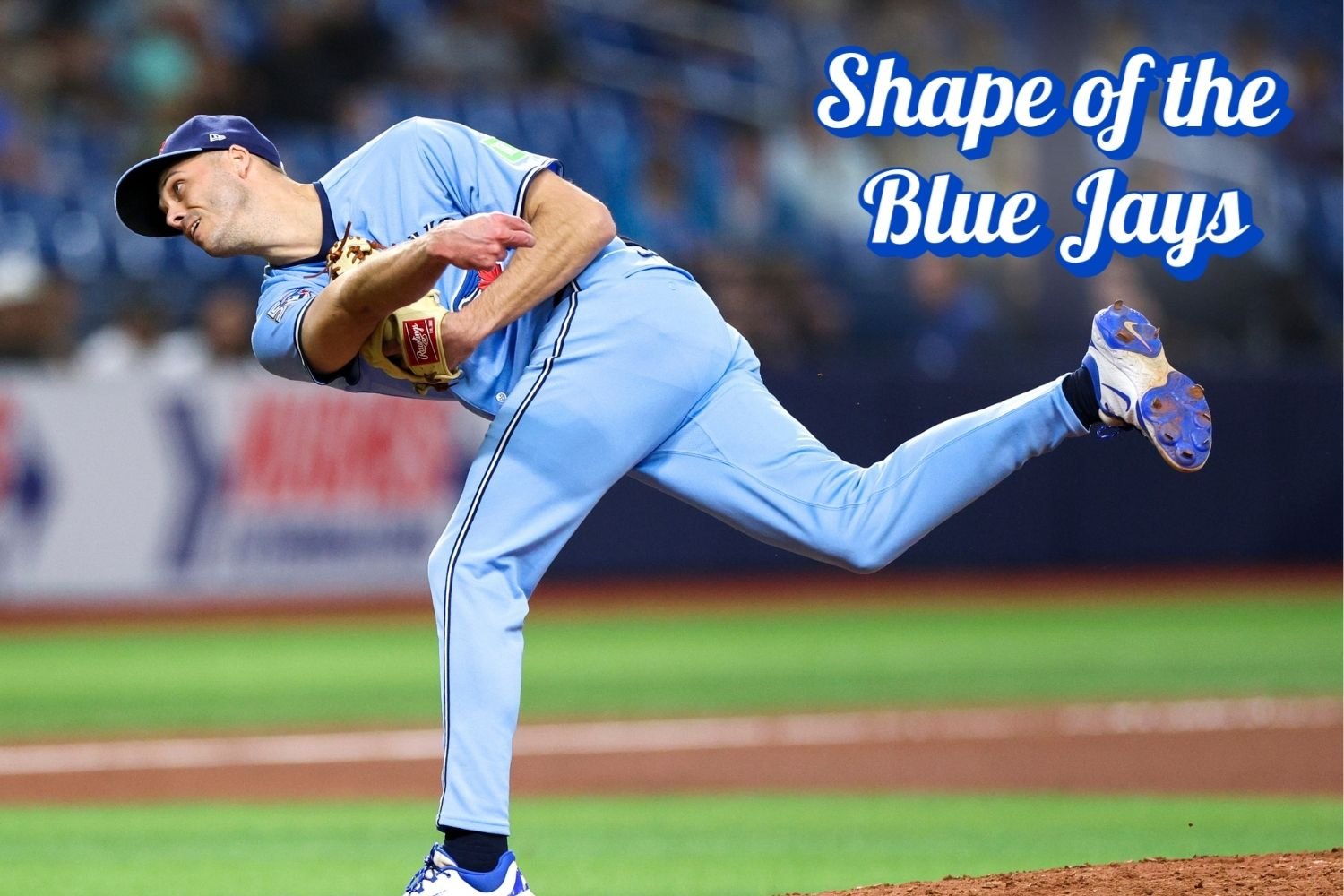 Welcome to Shape of the Blue Jays, my column where I dig into Statcast numbers to analyze recent pitch shape and swing shape trends for Toronto Blue Jays players and discuss how they have impacted their performance. Click here to read the last edition. Quick Hits: Prospects Prospect heads will know that Nolan Perry is already authoring a season to remember. The former 12th-round pick hit the ground running in his return from injury, and his strong start earned him a promotion to High-A Vancouver at the start of May. On Wednesday night, he outdid himself with 10 strikeouts across five shutout innings. In three starts since getting called up, his ERA is a minuscule 0.60, and his strikeout rate is a monstrous 50.9%. Perry, who won Jays Centre's Minor League Starting Pitcher of the Month award for April, boasts a mid-90s fastball that has deceptive carry and a flat approach from a low arm slot. FanGraphs prospect guru Eric Longenhagen said last Friday that he believes Perry could be a top-100 prospect by season's end if he stays healthy. Toronto's pitching pipeline has made some big strides over the past couple of years with the ascension of Trey Yesavage and the consistent growth of Johnny King, who should be headed to Double-A New Hampshire soon. If Perry keeps moving like this, he'll join that group as one of the most valuable young pitchers in the organization. Daulton Varsho Daulton Varsho has gotten hot again, with a walk-off grand slam last week against Tampa, a game-winning hit in the 10th inning in Detroit, and a three-hit night in the Yankees series. The sudden departure from his slug-based pull-air approach that paid massive dividends in a limited sample in 2025 has been a surprise, but it's working. Entering Thursday, his 120 wRC+ nearly matches his 123 wRC+ from last year despite decreases of nearly 3.0 mph in bat speed, 3" in swing length, and 3° in swing tilt. Varsho has never been a successful contact hitter before at the big league level, but he's getting more bat to ball, hitting more line drives, and striking out less than he ever has before. Daulton Varsho, 2026 vs Previous Career Bests Zone Contact% xBA LD% K% 2026 85.1% 0.269 32.8% 19.1% Previous Career High 82.9% 0.245 25.0% 21.3% As our very own Jesse Burrill noted in a recent article, the Jays' lack of slug is frustrating, and they don't exactly need another contact hitter right now, but these changes seem to be a product of Varsho changing his approach based on how he's being pitched. Burrill pointed out that Varsho is seeing fewer pitches down in the zone, especially down and away. The natural plan of attack against a guy with a high attack angle who likes to lift and pull is to pound fastballs at the top of the zone, and Varsho has done well to quickly adjust. Only 11.2% of the pitches he has seen this year have been of the off-speed variety (changeups and splitters, which he has historically crushed). That would be a single-season career low. Tyler Rogers Every time I write about Tyler Rogers, it serves as an important reminder that submarine pitchers with his command simply do not live by the same rules as all other pitchers. So far, he has already appeared in 23 games and has a 1.61 ERA, a first-percentile whiff rate, a 100th-percentile groundball rate, and a 99th-percentile hard-hit rate. Exactly as advertised! A weird quirk has emerged in his statistical profile, though: Hitters have stopped chasing against him. He's walking more than 7% of the batters he's facing for the first time since 2022. Tyler Rogers Chase Rate Breakdown, 2025 vs 2026 Pitch Type 2025 2026 Sinker 27.6% 23.6% Slider 33.3% 25.5% Overall 29.6% 24.3% Overall Percentile 67 9 There are a couple of reasons for this. Most importantly, opposing hitters' zone swing rate against him is down to 67.8% after sitting just above 70% for the past three years, which is likely a testament to his delivery and movement being so confusing that it's easier to decide not to swing at all. Also, the zone rate on his slider is down to 34.7% when it's never been below 45% in a season. Maybe the one-of-a-kind ride-cut shape makes it easier for hitters to lay off compared to his sinker, which falls off the table? He has gone through similar weeks-long stretches of not zoning the slider before, so hopefully it's just small-sample weirdness or a temporary lack of feel. He throws the sinker 77% of the time anyway, so this hasn't affected his overall results much. George Springer George Springer had an entire fanbase scratching their heads when, after jumping out to a 3-0 count in Monday's series opener against the Yankees with the tying run at third base, one out in the ninth, and Vladimir Guerrero Jr. on deck, he swung at three straight splitters out of the zone and struck out. He homered earlier in the game, and the big toe he fractured in early April probably hasn't fully healed yet, so I'm sympathetic to his plight, but the MVP-caliber player we saw last year is nowhere to be found. George Springer Baseball Savant Hitting Summary, 2025 vs 2026 His batting average is down over 100 points, and his OPS is down nearly 400 points from 2025. His sprint speed has also dropped from the 66th to the 31st percentile, so he's clearly still going through it with the toe injury. Like most of the team, he's chasing more and walking less, but in terms of his swing specifically, his average attack angle is down from 13° to 10°, which has led to an 8.5% hike in groundball rate, the same thing that plagued him in 2024. His pull rate is also up around 8%, so he's not timing his swing optimally such that the sweet spot of the bat is travelling upward at contact. As a result, he's rolling over everything to the left side of the infield. It's not wise to jump to early conclusions about a guy who isn't 100%, but if the Jays were otherwise healthy, they'd probably be able to afford the 36-year-old more time to get right. All stats entering May 21, 2026.
 -
Welcome back to Blue Jays Clutch Plays, a recurring post that highlights the six most pivotal plays (three pitching, three hitting) from the past week of Blue Jays baseball, according to MLB's win probability model. Click here to read last week's edition. The Toronto Blue Jays remained a tough watch for most of the past week, but after a couple more losing efforts against the Rays, a walk-off grand slam from Daulton Varsho prevented another sweep before the Jays prevailed in a three-day war of attrition in Detroit. It hasn't been a pretty month, but the AL is such a logjam that the Blue Jays' 21-25 record puts them only one game back of the final Wild Card spot. Opportunity awaits in the form of their upcoming four-game set versus the Yankees, who are 6.5 games up on the Jays after dropping a series against their crosstown rival Mets over the weekend. Pitching 3. Louis Varland: Cedric Mullins Popout, Top 9, 5/12 (+15.0% wPA) Tuesday night's loss to Tampa Bay was a 10-inning nailbiter, and Louis Varland's scoreless ninth didn't come easy. With the go-ahead run at third and two outs in the frame, Varland went with a 98-mph fastball as his payoff pitch to Cedric Mullins and elevated it enough that Mullins skied it harmlessly to shallow center. Daulton Varsho had a lot of ground to cover, but he got there in time to make a sliding backhanded catch. 2. Louis Varland: Jake Rogers Groundout, Bot 10, 5/16 (+15.8% wPA) Varland's biggest performance of the year came on Saturday afternoon as he authored a six-out save on 26 pitches to steal a victory on a bullpen day. The offense didn't manage to score anyone besides the ghost-runner in the top half, but "The Committee" needed just one pitch to start closing the door in the bottom half as this outside fastball incinerated Jake Rogers's bat before rolling slowly into Ernie Clement's glove at shortstop. 1. Louis Varland: Dillon Dingler Strikeout, Bot 10, 5/16 (+16.8% wPA) The final punch from Varland's latest herculean effort was a tumbling knuckle curve to get Dillon Dingler swinging after the tying run had moved up 90 feet. Following this week, Varland now has the eighth, ninth, and 10th-most clutch plays of the season amongst Blue Jay pitchers, which are worth a combined 47.6% wPA on their own...and don't even include the plays at No. 1, 4, and 7 on that list, for which he was also on the mound. If this team rights the ship, we may talk about this Varland performance alongside the Mason Fluharty game at Dodger Stadium from last August. Hitters 3. Vladimir Guerrero Jr.: Reached on Error, Bot 7, 5/12 (+22.1% wPA) Vladimir Guerrero Jr. finally broke out of his weeks-long home run drought on Sunday, but early in the week, he was still searching for that big break. Junior Caminero gifted it to him with two outs in the bottom of the seventh and the Jays down by one on Tuesday, failing to come up with the groundball to his left. Yohendrick Piñango scored from second, and for a moment, the baseball gods smiled upon the Blue Jays instead of their rivals to the south. 2. Daulton Varsho: RBI Single, Top 10, 5/16 (+25.2% wPA) For the second time in three games, Varsho delivered the decisive blow in extra innings for an otherwise struggling offense. In a lefty-lefty matchup with Detroit reliever Tyler Holton, Varsho got a pitch in his wheelhouse down in the zone and stayed on it long enough to line it up the middle and score Guerrero from second. Toronto's center fielder has had an inconsistent year, but his timely hits last week have helped his wRC+ tilt back to the right side of league average. 1. Daulton Varsho: Walk-Off Grand Slam, Bot 10, 5/13 (+68.4% wPA) It doesn't get much more dramatic than a come-from-behind victory on a walk-off slam. The Jays would be incredibly fortunate if one of their hitters comes up with another swing as big as this at any point the rest of the season. At the time, it was the ninth-biggest single-play change in wPA in the major leagues in 2026. The Blue Jays have only had eight offensive plays worth at least a 60% jump in wPA since the start of 2021. Here's an eerie fun fact: The team's most clutch play of 2025? A go-ahead home run by Varsho in the eighth inning...also against the Rays at the Rogers Centre...exactly one year before this grand slam on May 13. View full article
-
Blue Jays Clutch Plays: Varsho Shines, Bullpen Turns It Around
Matthew Creally posted an article in Blue Jays
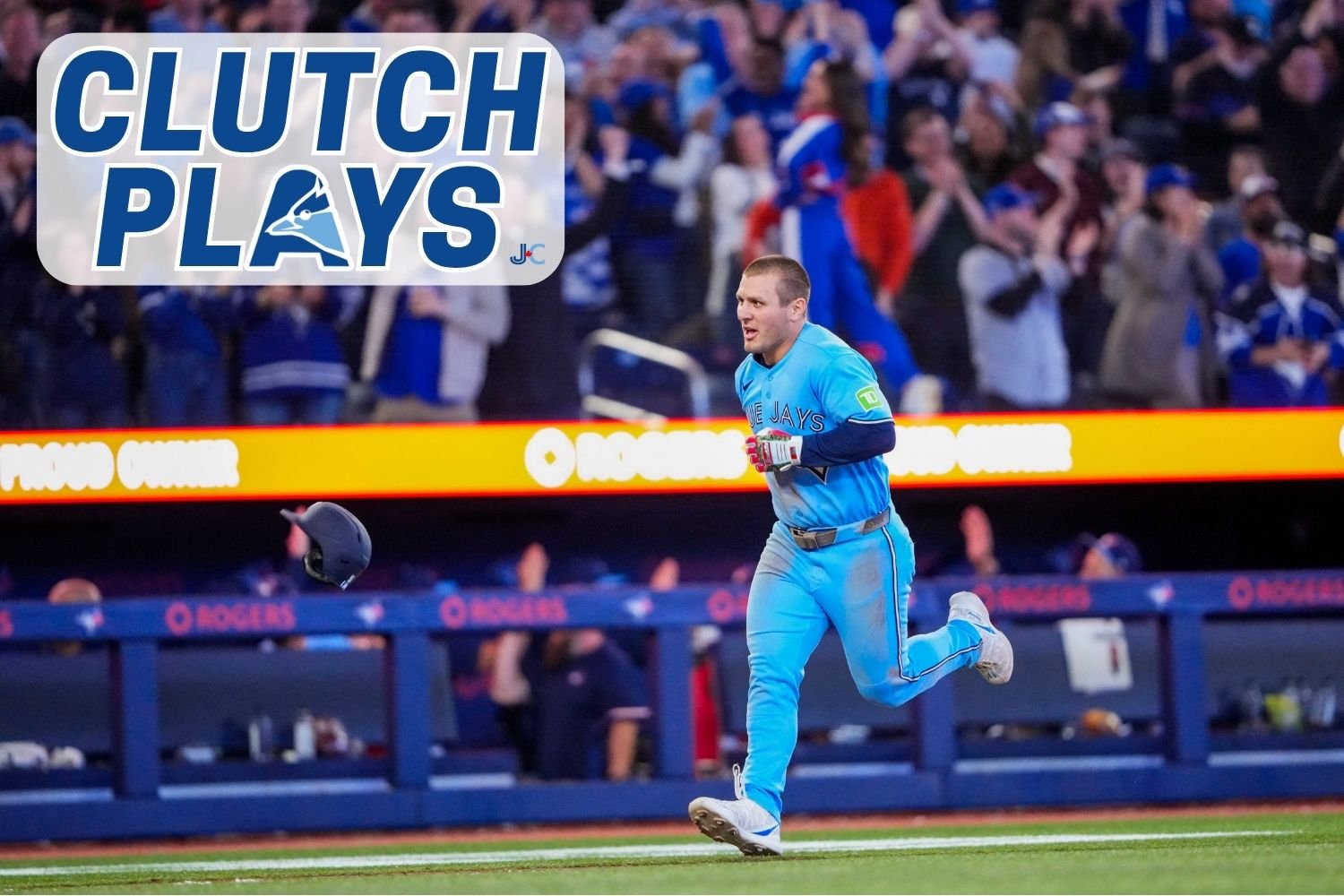 Welcome back to Blue Jays Clutch Plays, a recurring post that highlights the six most pivotal plays (three pitching, three hitting) from the past week of Blue Jays baseball, according to MLB's win probability model. Click here to read last week's edition. The Toronto Blue Jays remained a tough watch for most of the past week, but after a couple more losing efforts against the Rays, a walk-off grand slam from Daulton Varsho prevented another sweep before the Jays prevailed in a three-day war of attrition in Detroit. It hasn't been a pretty month, but the AL is such a logjam that the Blue Jays' 21-25 record puts them only one game back of the final Wild Card spot. Opportunity awaits in the form of their upcoming four-game set versus the Yankees, who are 6.5 games up on the Jays after dropping a series against their crosstown rival Mets over the weekend. Pitching 3. Louis Varland: Cedric Mullins Popout, Top 9, 5/12 (+15.0% wPA) Tuesday night's loss to Tampa Bay was a 10-inning nailbiter, and Louis Varland's scoreless ninth didn't come easy. With the go-ahead run at third and two outs in the frame, Varland went with a 98-mph fastball as his payoff pitch to Cedric Mullins and elevated it enough that Mullins skied it harmlessly to shallow center. Daulton Varsho had a lot of ground to cover, but he got there in time to make a sliding backhanded catch. 2. Louis Varland: Jake Rogers Groundout, Bot 10, 5/16 (+15.8% wPA) Varland's biggest performance of the year came on Saturday afternoon as he authored a six-out save on 26 pitches to steal a victory on a bullpen day. The offense didn't manage to score anyone besides the ghost-runner in the top half, but "The Committee" needed just one pitch to start closing the door in the bottom half as this outside fastball incinerated Jake Rogers's bat before rolling slowly into Ernie Clement's glove at shortstop. 1. Louis Varland: Dillon Dingler Strikeout, Bot 10, 5/16 (+16.8% wPA) The final punch from Varland's latest herculean effort was a tumbling knuckle curve to get Dillon Dingler swinging after the tying run had moved up 90 feet. Following this week, Varland now has the eighth, ninth, and 10th-most clutch plays of the season amongst Blue Jay pitchers, which are worth a combined 47.6% wPA on their own...and don't even include the plays at No. 1, 4, and 7 on that list, for which he was also on the mound. If this team rights the ship, we may talk about this Varland performance alongside the Mason Fluharty game at Dodger Stadium from last August. Hitters 3. Vladimir Guerrero Jr.: Reached on Error, Bot 7, 5/12 (+22.1% wPA) Vladimir Guerrero Jr. finally broke out of his weeks-long home run drought on Sunday, but early in the week, he was still searching for that big break. Junior Caminero gifted it to him with two outs in the bottom of the seventh and the Jays down by one on Tuesday, failing to come up with the groundball to his left. Yohendrick Piñango scored from second, and for a moment, the baseball gods smiled upon the Blue Jays instead of their rivals to the south. 2. Daulton Varsho: RBI Single, Top 10, 5/16 (+25.2% wPA) For the second time in three games, Varsho delivered the decisive blow in extra innings for an otherwise struggling offense. In a lefty-lefty matchup with Detroit reliever Tyler Holton, Varsho got a pitch in his wheelhouse down in the zone and stayed on it long enough to line it up the middle and score Guerrero from second. Toronto's center fielder has had an inconsistent year, but his timely hits last week have helped his wRC+ tilt back to the right side of league average. 1. Daulton Varsho: Walk-Off Grand Slam, Bot 10, 5/13 (+68.4% wPA) It doesn't get much more dramatic than a come-from-behind victory on a walk-off slam. The Jays would be incredibly fortunate if one of their hitters comes up with another swing as big as this at any point the rest of the season. At the time, it was the ninth-biggest single-play change in wPA in the major leagues in 2026. The Blue Jays have only had eight offensive plays worth at least a 60% jump in wPA since the start of 2021. Here's an eerie fun fact: The team's most clutch play of 2025? A go-ahead home run by Varsho in the eighth inning...also against the Rays at the Rogers Centre...exactly one year before this grand slam on May 13.
 -
Welcome to Shape of the Blue Jays, my column where I dig into Statcast numbers to analyze recent pitch shape and swing shape trends for Toronto Blue Jays players and discuss how they have impacted their performance. Click here to read the last edition. Quick Hits: Prospects When Eric Lauer was designated for assignment on Monday, Yariel Rodríguez was recalled to take his spot on the active roster. The immediate plan for that fifth spot in the rotation seems to be a piggyback situation with Spencer Miles and Rodríguez, but John Schneider also mentioned CJ Van Eyk and Chad Dallas, two starters with the Buffalo Bisons, as internal candidates to fill the role. Van Eyk, 27, is a former second-round pick from the 2020 draft. The righty has a 3.13 ERA through seven starts in Triple A so far. He has a 30° arm angle and sits 93 mph with his four-seamer. He makes use of seven different pitch types, with a low-80s two-plane curveball standing out from a results standpoint in 2026 (.163 xwOBA, 43.5% swing and miss). To lefties, he has been throwing his four-seam, curveball, cutter, and changeup each between 19% and 28% of the time. To righties, his approach centers around his cutter and curveball, with a sinker and sweeper as secondaries. He'll also mix in the odd gyro slider. Van Eyk is an arsenal-over-stuff guy who won't blow anyone away but thrives as a called-strike machine. Dallas, 25, was taken in the fourth round in 2021 and recently returned from an elbow injury that sidelined him for the entire 2025 season. This year, he has a 3.60 ERA in seven appearances (six starts) for Buffalo. He has a more over-the-top delivery and a very unique profile. Like Van Eyk, his fastball sits around 93 mph, but his calling card is a monstrous sweeper that generates around 17" of glove-side action, a rarity for someone with a higher-than-average arm angle. From a stuff perspective, his 12-6 curveball and low-90s cutter are also plus pitches that are instrumental to his strategy against lefties. In 2026, he's using the sweeper 44% of the time to righties. Dylan Cease Toronto's big signing from the offseason is on a heater, going seven innings in each of his past two starts after going that distance only twice last year. It appears the Blue Jays are making good on their vow to help Dylan Cease add to his repertoire, and it's paying off in a big way. Last Friday (7 IP, 0 ER, 5 H, 10 K, 0 BB), he put the Angels in a blender by coming out with distinct approaches each time through the order. In the early innings, he frequently called upon his changeup and sinker to supplement the primary fastball-slider combo. The second time through, his slider usage shot up to 45%, giving the Angels a healthy dose of spin before he hit the gas in the later innings. His four-seam usage was up to 43% his third time through, averaging 99 mph in the seventh inning as he moved back off his slider, using it and the knuckle curve on a near-interchangeable basis. On Wednesday against the Rays (7 IP, 1 ER, 3 H, 9 K, 3 BB), Cease used his four-seamer just 30% of the time against lefties, his lowest single-game mark of the season so far. Instead, he pushed his knuckle curve and sinker in those matchups more than he has all season. Overall, his walk rate is still hovering around 10%, but we're seeing in real time just how unhittable a starter becomes when he combines nasty stuff with a polished arsenal. Cease's 2.2 fWAR now ranks second among all qualified starting pitchers. This is a Cy Young frontrunner. Vladimir Guerrero Jr. Vladimir Guerrero Jr. hasn't recorded an extra-base hit since he doubled on April 28 against Boston, a career-long drought. His .381 OBP is now outpacing his .372 SLG, and he's slashing just .116/.235/.116 in the month of May. It's hard to feel optimistic about the offense when he's hitting like this. When he has struggled in the past, he has usually underperformed his expected numbers thanks to an inconsistent ability to lift the ball. Not only is he not lifting this year, but his 55th-percentile hard hit rate would be his lowest since his rookie year in 2019. Besides that, he has never finished a season with a hard-hit rate worse than the 89th percentile. Part of the reason this is happening is that he's chasing more. Last year, Guerrero showed the best plate discipline of his career, swinging at only 21.5% of pitches outside the zone. This year, that number is up to 30.3%, above league average and the highest we've seen from him since 2022. The last time I gave him a segment in this column, I noted that the league was pitching him differently in the wake of last postseason, which is still true. He hasn't seen such a lack of pitches in the zone since 2019, and the amount of hittable fastballs and changeups he's getting has dropped precipitously compared to 2024 and 2025. Last year was a perfect storm: He saw more in-zone fastballs and chased less than he ever had. We're still waiting to see how he'll counter. Kevin Gausman The Blue Jays' Opening Day starter became the sixth active pitcher to reach 2,000 career strikeouts on Monday against Tampa, a testament to how well his contract has worked out for both sides as we progress through its final year. Still, he got tagged for six earned runs on 10 hits across 4.2 innings. Kevin Gausman hasn't looked quite as sharp in recent outings as he did to start the year; part of the story on Monday was bad luck (the Rays hit .435 against him with an xBA of .290), but even by expected batting average, it was his second-worst outing of 2026. The Rays put six lefties in their lineup, which makes it fascinating that Gausman only threw his signature splitter 33% of the time in those matchups, a new season low...which surpassed the low he previously set last week, also against Tampa. He threw them a ton of four-seamers instead, which may seem counterintuitive given the Rays' lineup has the flattest average swing path in MLB. Flat swings are usually good for making contact and slugging against high fastballs, but they can be vulnerable against low secondaries. However, I think this was intentional. Eno Sarris of The Athletic noted on his podcast last week that at the time, the Rays were 30th in MLB in weighted value against four-seamers because most of their hitters don't catch them out in front, leading to a lack of power. Theoretically, locating four-seamers down in the zone against them as Gausman did on Monday would lead to a lot of swings over the top of the ball. Yet, he got burned on plays such as a pair of weakly hit singles by speedster Chandler Simpson and a well-placed groundball single by Richie Palacios. He only gave up two extra-base hits the entire outing. Both were barrels hit by lefties, and both came on fastballs that missed in - you guessed it - the upper part of the zone. That's baseball! Gausman's Four-Seam Location vs LHB - Catcher's View 5/11/2026 vs TB (left) and 2026 overall (right) All data from Baseball Savant and FanGraphs, as of May 14, 2026. View full article
-
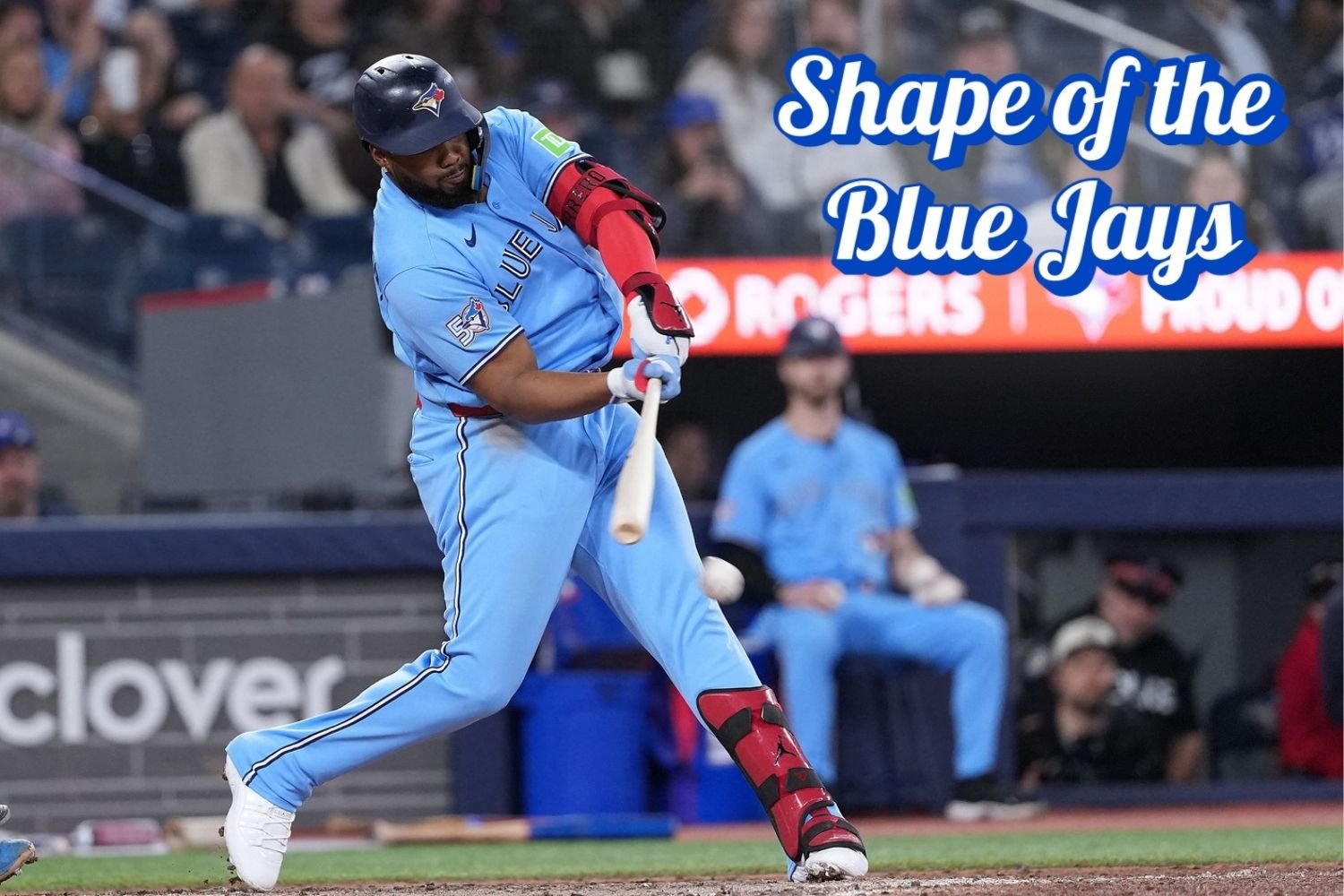 Welcome to Shape of the Blue Jays, my column where I dig into Statcast numbers to analyze recent pitch shape and swing shape trends for Toronto Blue Jays players and discuss how they have impacted their performance. Click here to read the last edition. Quick Hits: Prospects When Eric Lauer was designated for assignment on Monday, Yariel Rodríguez was recalled to take his spot on the active roster. The immediate plan for that fifth spot in the rotation seems to be a piggyback situation with Spencer Miles and Rodríguez, but John Schneider also mentioned CJ Van Eyk and Chad Dallas, two starters with the Buffalo Bisons, as internal candidates to fill the role. Van Eyk, 27, is a former second-round pick from the 2020 draft. The righty has a 3.13 ERA through seven starts in Triple A so far. He has a 30° arm angle and sits 93 mph with his four-seamer. He makes use of seven different pitch types, with a low-80s two-plane curveball standing out from a results standpoint in 2026 (.163 xwOBA, 43.5% swing and miss). To lefties, he has been throwing his four-seam, curveball, cutter, and changeup each between 19% and 28% of the time. To righties, his approach centers around his cutter and curveball, with a sinker and sweeper as secondaries. He'll also mix in the odd gyro slider. Van Eyk is an arsenal-over-stuff guy who won't blow anyone away but thrives as a called-strike machine. Dallas, 25, was taken in the fourth round in 2021 and recently returned from an elbow injury that sidelined him for the entire 2025 season. This year, he has a 3.60 ERA in seven appearances (six starts) for Buffalo. He has a more over-the-top delivery and a very unique profile. Like Van Eyk, his fastball sits around 93 mph, but his calling card is a monstrous sweeper that generates around 17" of glove-side action, a rarity for someone with a higher-than-average arm angle. From a stuff perspective, his 12-6 curveball and low-90s cutter are also plus pitches that are instrumental to his strategy against lefties. In 2026, he's using the sweeper 44% of the time to righties. Dylan Cease Toronto's big signing from the offseason is on a heater, going seven innings in each of his past two starts after going that distance only twice last year. It appears the Blue Jays are making good on their vow to help Dylan Cease add to his repertoire, and it's paying off in a big way. Last Friday (7 IP, 0 ER, 5 H, 10 K, 0 BB), he put the Angels in a blender by coming out with distinct approaches each time through the order. In the early innings, he frequently called upon his changeup and sinker to supplement the primary fastball-slider combo. The second time through, his slider usage shot up to 45%, giving the Angels a healthy dose of spin before he hit the gas in the later innings. His four-seam usage was up to 43% his third time through, averaging 99 mph in the seventh inning as he moved back off his slider, using it and the knuckle curve on a near-interchangeable basis. On Wednesday against the Rays (7 IP, 1 ER, 3 H, 9 K, 3 BB), Cease used his four-seamer just 30% of the time against lefties, his lowest single-game mark of the season so far. Instead, he pushed his knuckle curve and sinker in those matchups more than he has all season. Overall, his walk rate is still hovering around 10%, but we're seeing in real time just how unhittable a starter becomes when he combines nasty stuff with a polished arsenal. Cease's 2.2 fWAR now ranks second among all qualified starting pitchers. This is a Cy Young frontrunner. Vladimir Guerrero Jr. Vladimir Guerrero Jr. hasn't recorded an extra-base hit since he doubled on April 28 against Boston, a career-long drought. His .381 OBP is now outpacing his .372 SLG, and he's slashing just .116/.235/.116 in the month of May. It's hard to feel optimistic about the offense when he's hitting like this. When he has struggled in the past, he has usually underperformed his expected numbers thanks to an inconsistent ability to lift the ball. Not only is he not lifting this year, but his 55th-percentile hard hit rate would be his lowest since his rookie year in 2019. Besides that, he has never finished a season with a hard-hit rate worse than the 89th percentile. Part of the reason this is happening is that he's chasing more. Last year, Guerrero showed the best plate discipline of his career, swinging at only 21.5% of pitches outside the zone. This year, that number is up to 30.3%, above league average and the highest we've seen from him since 2022. The last time I gave him a segment in this column, I noted that the league was pitching him differently in the wake of last postseason, which is still true. He hasn't seen such a lack of pitches in the zone since 2019, and the amount of hittable fastballs and changeups he's getting has dropped precipitously compared to 2024 and 2025. Last year was a perfect storm: He saw more in-zone fastballs and chased less than he ever had. We're still waiting to see how he'll counter. Kevin Gausman The Blue Jays' Opening Day starter became the sixth active pitcher to reach 2,000 career strikeouts on Monday against Tampa, a testament to how well his contract has worked out for both sides as we progress through its final year. Still, he got tagged for six earned runs on 10 hits across 4.2 innings. Kevin Gausman hasn't looked quite as sharp in recent outings as he did to start the year; part of the story on Monday was bad luck (the Rays hit .435 against him with an xBA of .290), but even by expected batting average, it was his second-worst outing of 2026. The Rays put six lefties in their lineup, which makes it fascinating that Gausman only threw his signature splitter 33% of the time in those matchups, a new season low...which surpassed the low he previously set last week, also against Tampa. He threw them a ton of four-seamers instead, which may seem counterintuitive given the Rays' lineup has the flattest average swing path in MLB. Flat swings are usually good for making contact and slugging against high fastballs, but they can be vulnerable against low secondaries. However, I think this was intentional. Eno Sarris of The Athletic noted on his podcast last week that at the time, the Rays were 30th in MLB in weighted value against four-seamers because most of their hitters don't catch them out in front, leading to a lack of power. Theoretically, locating four-seamers down in the zone against them as Gausman did on Monday would lead to a lot of swings over the top of the ball. Yet, he got burned on plays such as a pair of weakly hit singles by speedster Chandler Simpson and a well-placed groundball single by Richie Palacios. He only gave up two extra-base hits the entire outing. Both were barrels hit by lefties, and both came on fastballs that missed in - you guessed it - the upper part of the zone. That's baseball! Gausman's Four-Seam Location vs LHB - Catcher's View 5/11/2026 vs TB (left) and 2026 overall (right) All data from Baseball Savant and FanGraphs, as of May 14, 2026.
 -
Welcome back to Blue Jays Clutch Plays, a recurring post that highlights the six most pivotal plays (three pitching, three hitting) from the past week of Blue Jays baseball, according to MLB's win probability model. Click here to read last week's edition. After recovering enough to undo their early-April struggles, the Blue Jays went down without much of a fight in St. Petersburg, getting swept in their first set at Tropicana Field since 2024. A series win against the Angels over the weekend may sound like a relief, but they let slip an opportunity to sweep them on Sunday afternoon. After jumping out to a 1-0 lead and forcing José Soriano to throw 25 pitches in the bottom of the first, the bats proceeded to shut down as Soriano only needed 78 pitches to get through the next 6.2 innings. The long ball continued to haunt Eric Lauer, who gave up six runs in five innings to take the loss. They're 18-22, the Rays are coming to town next, and the sense of urgency is climbing. Pitching 3. Patrick Corbin: Junior Caminero GIDP, Bot 1, 5/6 (+10.6% WPA) The offense once again squandered a respectable effort by Patrick Corbin, whose advanced metrics suggest his days with an ERA under 4.00 might be numbered. After getting into early trouble on Wednesday, he located this sinker beautifully off the outer half of the plate, getting Junior Caminero, the most dangerous power threat in the Rays' lineup, to ground into an easy unassisted 4-3 double play. 2. Trey Yesavage: Vaughn Grissom LIDP, Top 2, 5/9 (+11.0% WPA) Vaughn Grissom didn't put a bad swing on this Trey Yesavage fastball, turning it around on a line to right field, but Addison Barger ensured that no run would score on the play thanks to a dazzling 101-mph outfield assist. This clutch play might've come with a curse, though, as Barger was scratched with elbow soreness on Sunday, just a day after getting activated from the IL. He'll be getting an MRI on that elbow shortly. The injuries just keep piling onto each other. 1. Trey Yesavage: Sebastian Rivero GIDP, Top 4, 5/9 (+19.4% WPA) Yesavage exited Saturday's start without giving up a run, but he didn't have his best stuff, as the Angels knocked him out after he threw 87 pitches through four innings. Despite that, he continues to have a knack for well-timed double plays. On a full count with the bases loaded, Sebastian Rivero chased a fastball below the zone and grounded it harmlessly to Ernie Clement, who turned the inning-ender himself. According to win probability, this was the fifth-most clutch play by a Toronto pitcher this season so far. Hitting 3. Kazuma Okamoto: RBI Single, Bot 3, 5/8 (+12.0% WPA) Kazuma Okamoto's monstrous stretch (254 wRC+ in May) is showing no signs of slowing down, as this RBI single on Friday night proved to be the eventual winner in a 2-0 Blue Jays victory. It was one of only three hits they got on the night, which, along with his 26 RBIs being eight more than the next closest hitter on the team, indicates how much he has been carrying the lineup. 2. Yohendrick Piñango: RBI Single, Top 5, 5/5 (+12.3% WPA) This was an impressive piece of hitting from Yohendrick Piñango, who was unfortunately the odd man out when Barger returned on Saturday but is likely to be the first call-up if the MRI on Barger's elbow reveals any sort of bad news. Drew Rasmussen, who owns one of the best cut fastballs in the game, bunched him up with a first-pitch cutter in on the hands. Piñango fought it off and took it right back up the middle to score Clement and give the Blue Jays the lead, one they would not hold after the baseball gods conjured an evil force to hex Tyler Rogers in the bottom of the eighth. 1. Andrés Giménez: RBI Single, Top 2, 5/5 (+12.3% WPA) The Blue Jays went 2-4 this week. One of those wins was by a 2-0 score, in which they scored both runs early, and the other was a 14-1 rout. As such, it was a quiet stretch in terms of truly impactful swings, as this Andrés Giménez single doesn't even crack the top 40 biggest WPA changes on the season for the offense. Giménez's bouncing ball up the middle scored Daulton Varsho from second to put the Jays up 2-0, which was about as good as things got at any point during the Tampa series. They'll try to get their revenge at home this week. View full article
-
 Welcome back to Blue Jays Clutch Plays, a recurring post that highlights the six most pivotal plays (three pitching, three hitting) from the past week of Blue Jays baseball, according to MLB's win probability model. Click here to read last week's edition. After recovering enough to undo their early-April struggles, the Blue Jays went down without much of a fight in St. Petersburg, getting swept in their first set at Tropicana Field since 2024. A series win against the Angels over the weekend may sound like a relief, but they let slip an opportunity to sweep them on Sunday afternoon. After jumping out to a 1-0 lead and forcing José Soriano to throw 25 pitches in the bottom of the first, the bats proceeded to shut down as Soriano only needed 78 pitches to get through the next 6.2 innings. The long ball continued to haunt Eric Lauer, who gave up six runs in five innings to take the loss. They're 18-22, the Rays are coming to town next, and the sense of urgency is climbing. Pitching 3. Patrick Corbin: Junior Caminero GIDP, Bot 1, 5/6 (+10.6% WPA) The offense once again squandered a respectable effort by Patrick Corbin, whose advanced metrics suggest his days with an ERA under 4.00 might be numbered. After getting into early trouble on Wednesday, he located this sinker beautifully off the outer half of the plate, getting Junior Caminero, the most dangerous power threat in the Rays' lineup, to ground into an easy unassisted 4-3 double play. 2. Trey Yesavage: Vaughn Grissom LIDP, Top 2, 5/9 (+11.0% WPA) Vaughn Grissom didn't put a bad swing on this Trey Yesavage fastball, turning it around on a line to right field, but Addison Barger ensured that no run would score on the play thanks to a dazzling 101-mph outfield assist. This clutch play might've come with a curse, though, as Barger was scratched with elbow soreness on Sunday, just a day after getting activated from the IL. He'll be getting an MRI on that elbow shortly. The injuries just keep piling onto each other. 1. Trey Yesavage: Sebastian Rivero GIDP, Top 4, 5/9 (+19.4% WPA) Yesavage exited Saturday's start without giving up a run, but he didn't have his best stuff, as the Angels knocked him out after he threw 87 pitches through four innings. Despite that, he continues to have a knack for well-timed double plays. On a full count with the bases loaded, Sebastian Rivero chased a fastball below the zone and grounded it harmlessly to Ernie Clement, who turned the inning-ender himself. According to win probability, this was the fifth-most clutch play by a Toronto pitcher this season so far. Hitting 3. Kazuma Okamoto: RBI Single, Bot 3, 5/8 (+12.0% WPA) Kazuma Okamoto's monstrous stretch (254 wRC+ in May) is showing no signs of slowing down, as this RBI single on Friday night proved to be the eventual winner in a 2-0 Blue Jays victory. It was one of only three hits they got on the night, which, along with his 26 RBIs being eight more than the next closest hitter on the team, indicates how much he has been carrying the lineup. 2. Yohendrick Piñango: RBI Single, Top 5, 5/5 (+12.3% WPA) This was an impressive piece of hitting from Yohendrick Piñango, who was unfortunately the odd man out when Barger returned on Saturday but is likely to be the first call-up if the MRI on Barger's elbow reveals any sort of bad news. Drew Rasmussen, who owns one of the best cut fastballs in the game, bunched him up with a first-pitch cutter in on the hands. Piñango fought it off and took it right back up the middle to score Clement and give the Blue Jays the lead, one they would not hold after the baseball gods conjured an evil force to hex Tyler Rogers in the bottom of the eighth. 1. Andrés Giménez: RBI Single, Top 2, 5/5 (+12.3% WPA) The Blue Jays went 2-4 this week. One of those wins was by a 2-0 score, in which they scored both runs early, and the other was a 14-1 rout. As such, it was a quiet stretch in terms of truly impactful swings, as this Andrés Giménez single doesn't even crack the top 40 biggest WPA changes on the season for the offense. Giménez's bouncing ball up the middle scored Daulton Varsho from second to put the Jays up 2-0, which was about as good as things got at any point during the Tampa series. They'll try to get their revenge at home this week.
 -
Welcome to Shape of the Blue Jays, my column where I dig into Statcast numbers to analyze recent pitch shape and swing shape trends for Toronto Blue Jays players and discuss how they have impacted their performance. Click here to read the last edition. Quick Hits: Baserunning The state of the offense is dire at the moment, but the Blue Jays aren't doing themselves any favors on the basepaths. According to Statcast's baserunning run value, they've been the second-worst team in the AL, ahead of only the Guardians. Baserunning wasn't a strength of last year's team, as they ranked inside the bottom 10 in this category as well, but when runs are this hard to come by, they can't afford to give away the few opportunities they do get. The Jays have the second-slowest average sprint speed of any team in the majors as well, but a lack of fast runners doesn't always equal bad baserunning. Other slow teams like the Mariners, Twins, and even the Yankees have been able to overcome it through good instincts and a strategic understanding of when to take the extra base on a ball in play. For Toronto, it has been the worst of both worlds. On an individual level, Vladimir Guerrero Jr., Myles Straw (ironic given how fast he is), Ernie Clement, and Kazuma Okamoto (insignificant given how well he's hitting) have been the culprits here. For how multifaceted this lineup is when things are going well, the Jays simply aren't built to win games on the bases, which is problematic when they're chasing everything and relying on hitting singles as much as they are. All of this further underscores the growing urgency they face to start slugging. Yohendrick Piñango Beyond Okamoto, Yohendrick Piñango has been one of the only other positives amidst this latest offensive lull. His production through the first 26 plate appearances of his big league career is putting the front office in a conundrum in terms of roster moves when Addison Barger returns Friday, as Jays Centre's Sam Charles recently outlined. Piñango is hitting .400 and has struck out just three times since his debut. It's worth noting he's hitting .583 against fastballs, which he has seen around half the time, and doing way worse against secondaries, so I'd imagine he'll start seeing more soft stuff the longer he sticks around. Piñango has an enviable toolset. His bat speed is 4 mph higher than league average and would be among the top 25 in the league if he were qualified, while his swing is slightly shorter than average. He has very quick hands and has already hit a ball 111 mph, while his zone contact rate is an elite 93.5%. As frustrating as it would be to see one of the only hot hitters on the roster get demoted upon Barger's reinstatement from the IL, Piñango is doing a lot of the things that are hampering the rest of the lineup: chasing a ton (39.1%) and not lifting whatsoever (1.7° avg. LA). Much like his teammate Vladimir Guerrero Jr., his timing is much more of an issue than his swing plane. He's worth keeping in the team's short-term plans, but I worry about his lack of discipline and his poor batted ball angles becoming sore spots once he starts seeing more secondaries. Yohendrick Piñango Swing Mechanics Comps, 2026 Player Bat Speed Swing Length Swing Tilt Attack Angle Attack Direction Ryan Vilade 75.7 mph 7.45 ft 31.8° 3.1° 1.1° Vladimir Guerrero Jr. 76.4 mph 7.49 ft 28.7° 3.4° -3.2° Denzel Clarke 76.4 mph 7.59 ft 30.4° 4.3° -1.3° Curtis Mead 72.1 mph 7.05 ft 31.9° 3.8° -2.4° Bobby Witt Jr. 73.2 mph 6.98 ft 27.7° 5.1° -1.2° Jeff Hoffman It's possible to be both bad and unlucky at the same time, an apt summary of how the season started for Jeff Hoffman. Things have taken a turn for the better since he was officially removed from the closer's role on April 24: In 5 innings since that date, he has given up one earned run, struck out five, walked one, and done a much better job at keeping the ball on the ground. His fastball velocity is up, averaging at least 96.5 mph in every appearance he has made in the month of May so far. In his scoreless seventh inning on Tuesday, it reached a new single-game high of 98 mph for his tenure as a Blue Jay. He wasn't kidding when he said the Tropicana Field mound was his favourite to pitch on. Earlier in the year, he showed an increased liking for his devastating splitter, and as the control issues mounted throughout April, he lost confidence in his fastball. The fact that he has thrown it harder and more often over the past couple of weeks is a welcome sign that he's regaining confidence. Despite his shaky ninth innings, there were signs that positive regression was imminent from every direction: a K-BB near 30%, a BABIP north of .500, a strand rate below 70%, and an xFIP and SIERA in the low 2.00s. That has come to fruition of late, but he's making his own luck too. Jesús Sanchez After starting the year on the right foot, Jesús Sánchez has gone ice-cold. His wRC+ on the season is down to 78. The injuries to George Springer and Addison Barger in April have made the slump feel like a missed opportunity to earn more playing time and a central role in the lineup. There are a lot of factors at play here. His .381 SLG indicates the 2.8-mph drop in bat speed we've seen compared to last year (second-largest in the majors by the way, yikes) has not been a worthwhile endeavor. Intertwined with that has been the further shortening of his swing. All this has done is bring his contact rate to the 54th percentile, a marginal improvement over the 39th-percentile mark he posted in 2025. We can also add Sánchez to the group of Jays hitters that is currently way too undisciplined to be productive. His chase rate against fastballs has jumped nine percentage points. Even worse, it's up nearly 17 points on breaking balls. Throw in some bad luck (.286 wOBA, .325 xwOBA), and this is how you end up with a talented hitter on pace for a career-worst season. Jesús Sánchez Chase Rate by Pitch Group, 2025 vs. 2026 Pitch Group 2025 2026 Breaking Balls 42.4% 59.1% Fastballs 22.5% 31.5% On the bright side, Sánchez isn't pounding the ball into the ground as much as in years past, but that doesn't mean much when it isn't coming off the bat with as much authority. I'm not sure whether this is a coaching thing, the result of something he's playing through, or just the trials and tribulations of a 162-game schedule, the latter of which is more responsible for the various misfortunes of our favourite players and teams than we'd like to admit. Either way, it's hard to picture this lineup getting going without him. View full article
-
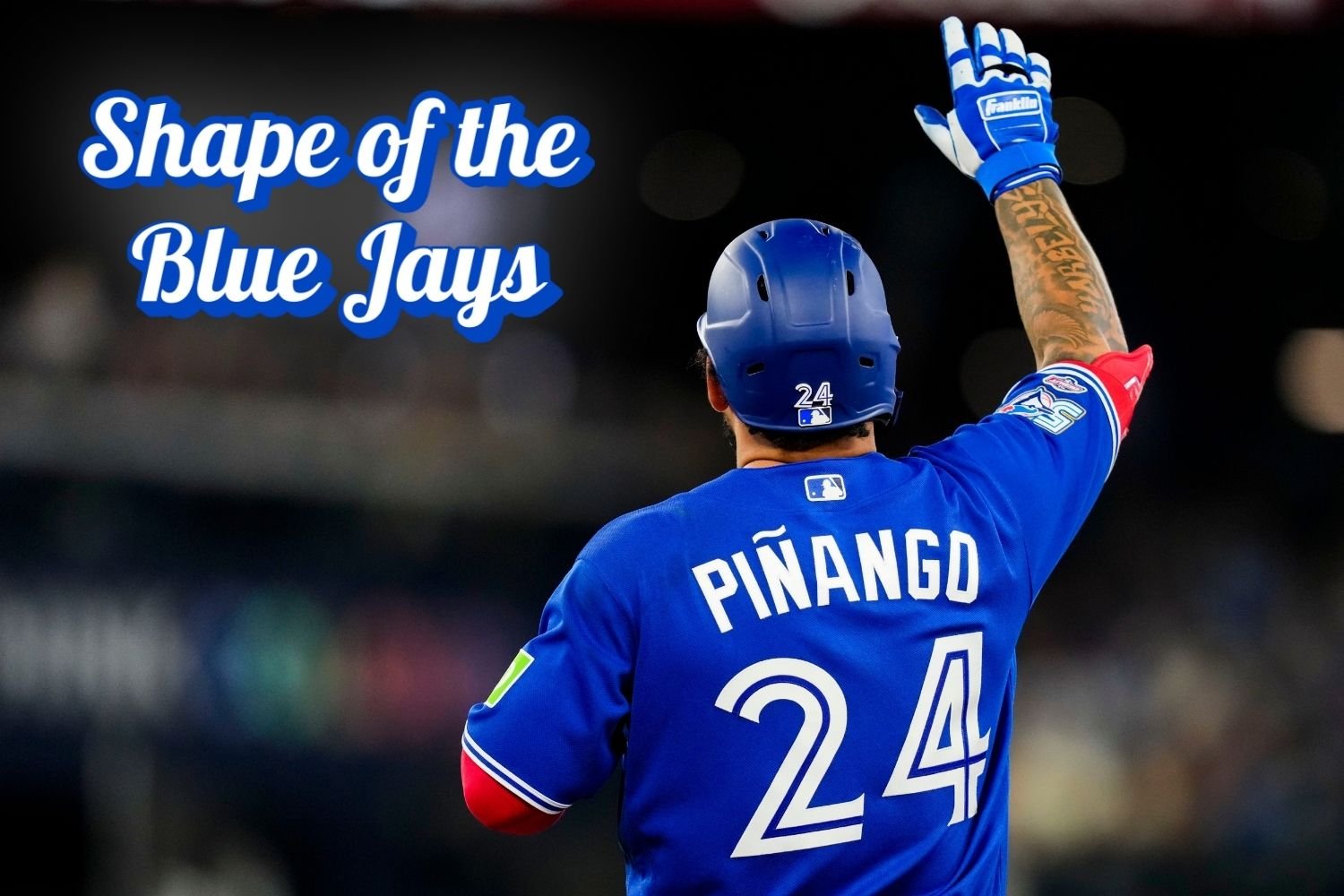 Welcome to Shape of the Blue Jays, my column where I dig into Statcast numbers to analyze recent pitch shape and swing shape trends for Toronto Blue Jays players and discuss how they have impacted their performance. Click here to read the last edition. Quick Hits: Baserunning The state of the offense is dire at the moment, but the Blue Jays aren't doing themselves any favors on the basepaths. According to Statcast's baserunning run value, they've been the second-worst team in the AL, ahead of only the Guardians. Baserunning wasn't a strength of last year's team, as they ranked inside the bottom 10 in this category as well, but when runs are this hard to come by, they can't afford to give away the few opportunities they do get. The Jays have the second-slowest average sprint speed of any team in the majors as well, but a lack of fast runners doesn't always equal bad baserunning. Other slow teams like the Mariners, Twins, and even the Yankees have been able to overcome it through good instincts and a strategic understanding of when to take the extra base on a ball in play. For Toronto, it has been the worst of both worlds. On an individual level, Vladimir Guerrero Jr., Myles Straw (ironic given how fast he is), Ernie Clement, and Kazuma Okamoto (insignificant given how well he's hitting) have been the culprits here. For how multifaceted this lineup is when things are going well, the Jays simply aren't built to win games on the bases, which is problematic when they're chasing everything and relying on hitting singles as much as they are. All of this further underscores the growing urgency they face to start slugging. Yohendrick Piñango Beyond Okamoto, Yohendrick Piñango has been one of the only other positives amidst this latest offensive lull. His production through the first 26 plate appearances of his big league career is putting the front office in a conundrum in terms of roster moves when Addison Barger returns Friday, as Jays Centre's Sam Charles recently outlined. Piñango is hitting .400 and has struck out just three times since his debut. It's worth noting he's hitting .583 against fastballs, which he has seen around half the time, and doing way worse against secondaries, so I'd imagine he'll start seeing more soft stuff the longer he sticks around. Piñango has an enviable toolset. His bat speed is 4 mph higher than league average and would be among the top 25 in the league if he were qualified, while his swing is slightly shorter than average. He has very quick hands and has already hit a ball 111 mph, while his zone contact rate is an elite 93.5%. As frustrating as it would be to see one of the only hot hitters on the roster get demoted upon Barger's reinstatement from the IL, Piñango is doing a lot of the things that are hampering the rest of the lineup: chasing a ton (39.1%) and not lifting whatsoever (1.7° avg. LA). Much like his teammate Vladimir Guerrero Jr., his timing is much more of an issue than his swing plane. He's worth keeping in the team's short-term plans, but I worry about his lack of discipline and his poor batted ball angles becoming sore spots once he starts seeing more secondaries. Yohendrick Piñango Swing Mechanics Comps, 2026 Player Bat Speed Swing Length Swing Tilt Attack Angle Attack Direction Ryan Vilade 75.7 mph 7.45 ft 31.8° 3.1° 1.1° Vladimir Guerrero Jr. 76.4 mph 7.49 ft 28.7° 3.4° -3.2° Denzel Clarke 76.4 mph 7.59 ft 30.4° 4.3° -1.3° Curtis Mead 72.1 mph 7.05 ft 31.9° 3.8° -2.4° Bobby Witt Jr. 73.2 mph 6.98 ft 27.7° 5.1° -1.2° Jeff Hoffman It's possible to be both bad and unlucky at the same time, an apt summary of how the season started for Jeff Hoffman. Things have taken a turn for the better since he was officially removed from the closer's role on April 24: In 5 innings since that date, he has given up one earned run, struck out five, walked one, and done a much better job at keeping the ball on the ground. His fastball velocity is up, averaging at least 96.5 mph in every appearance he has made in the month of May so far. In his scoreless seventh inning on Tuesday, it reached a new single-game high of 98 mph for his tenure as a Blue Jay. He wasn't kidding when he said the Tropicana Field mound was his favourite to pitch on. Earlier in the year, he showed an increased liking for his devastating splitter, and as the control issues mounted throughout April, he lost confidence in his fastball. The fact that he has thrown it harder and more often over the past couple of weeks is a welcome sign that he's regaining confidence. Despite his shaky ninth innings, there were signs that positive regression was imminent from every direction: a K-BB near 30%, a BABIP north of .500, a strand rate below 70%, and an xFIP and SIERA in the low 2.00s. That has come to fruition of late, but he's making his own luck too. Jesús Sanchez After starting the year on the right foot, Jesús Sánchez has gone ice-cold. His wRC+ on the season is down to 78. The injuries to George Springer and Addison Barger in April have made the slump feel like a missed opportunity to earn more playing time and a central role in the lineup. There are a lot of factors at play here. His .381 SLG indicates the 2.8-mph drop in bat speed we've seen compared to last year (second-largest in the majors by the way, yikes) has not been a worthwhile endeavor. Intertwined with that has been the further shortening of his swing. All this has done is bring his contact rate to the 54th percentile, a marginal improvement over the 39th-percentile mark he posted in 2025. We can also add Sánchez to the group of Jays hitters that is currently way too undisciplined to be productive. His chase rate against fastballs has jumped nine percentage points. Even worse, it's up nearly 17 points on breaking balls. Throw in some bad luck (.286 wOBA, .325 xwOBA), and this is how you end up with a talented hitter on pace for a career-worst season. Jesús Sánchez Chase Rate by Pitch Group, 2025 vs. 2026 Pitch Group 2025 2026 Breaking Balls 42.4% 59.1% Fastballs 22.5% 31.5% On the bright side, Sánchez isn't pounding the ball into the ground as much as in years past, but that doesn't mean much when it isn't coming off the bat with as much authority. I'm not sure whether this is a coaching thing, the result of something he's playing through, or just the trials and tribulations of a 162-game schedule, the latter of which is more responsible for the various misfortunes of our favourite players and teams than we'd like to admit. Either way, it's hard to picture this lineup getting going without him.
 -
Welcome back to Blue Jays Clutch Plays, a recurring post that highlights the six most pivotal plays (three pitching, three hitting) from the past week of Blue Jays baseball, according to MLB's win probability model. Click here to read last week's edition. For the second consecutive week, the Blue Jays climbed a little closer to .500 after digging themselves quite a hole in early April. Things started well with a key series win against a divisional opponent in the form of the hapless Red Sox, and they had a chance to take 3 of 4 from the Twins on the weekend but were stymied on Sunday by a bullpen they spent the previous two games feasting on. After settling for the split, they're now 16-18 and are 9-5 in their last 14 games. Here are the plays most worth remembering from this past week. Pitching 3. Dylan Cease: Ceddanne Rafaela Groundout, Top 4, 4/27 (+5.5% wPA) Last Monday's opener against Boston had the makings of an all-time pitcher's duel, but Dylan Cease ultimately failed to outdo Ranger Suárez in the end. At the time of this play, though, the Jays were still very much in it. Even against the bottom of the order, a 3-2 pitch with runners on the corners and two outs in a 1-0 game is highly consequential, and Cease got Ceddanne Rafaela to roll over a slider just off the high-and-outside corner to escape the threat. 2. Dylan Cease: Ryan Jeffers Flyout, Bot 3, 5/2 (+5.8% wPA) With a runner on third and one out, Cease was not looking to induce anything in the air past the infield, especially with his team already down by a run, although a sac fly might've been considered a victory against Ryan Jeffers, who tormented the Blue Jays in April. And yet, even with Daulton Varsho's weaker throwing arm in center field, Jeffers couldn't quite get this one deep enough to score Trevor Larnach, and the game remained 3-2. 1. Braydon Fisher: Willson Contreras GIDP, Top 5, 4/29 (+11.7% wPA) It wasn't the most notable week for Jays pitchers in the single-play win probability department, due to the way the club's wins played out on the scoreboard, so Braydon Fisher getting Willson Contreras to ground into a double play on Wednesday afternoon stands as the Clutch Play of the Week for the staff. Of course, had Contreras even singled, Toronto's lead would've gotten uncomfortable in a hurry, so this was a timely grounder that set the stage for the offense to break the game open in the later innings. Hitters 3. Kazuma Okamoto: 2-RBI Single, Bot 3, 4/29 (+16.1% wPA) Kazuma Okamoto's stance adjustment to cover the outer half of the plate paid dividends here, as Brayan Bello's backdoor sinker leaked a little too far into the zone. He didn't try to do too much with it, rifling it into left-center field for a base hit to give the Blue Jays a lead they wouldn't relinquish. These bases-loaded situations gave Okamoto fits at the outset of his MLB career, but after this week, it's safe to say he's built for the moment. 2. Kazuma Okamoto: 2-RBI Single, Bot 3, 4/28 (+17.5% wPA) Red Sox lefty Payton Tolle made Okamoto look silly the pitch before this, blowing a perfectly located fastball by him to even the count. He doubled down with two strikes but couldn't elevate, and his reaction as soon as he let it go says it all. Okamoto turned on it, lacing it over the head of Roman Anthony and off the left field wall on a bounce. He tried to stretch it into a double but was thrown out, a call which surprisingly wasn't overturned after video review. Still, this hit was all the pitching staff needed; they shut Boston out and evened the series. 1. Kazuma Okamoto: RBI Single, Top 8, 5/2 (+25.4% wPA) It's a clean sweep for Okamoto, who was a man possessed last week. This wasn't even close to his farthest hit of the week, but by WPA, it was the most important, tying the game in the eighth and setting the stage for what would become an eight-run inning as the Jays stormed back to win 11-4 on Saturday. What's ironic is that Luis Garcia got the groundball he wanted here, but Okamoto hit it hard enough and took it right back up the middle to avoid the double play. The Jays simply wouldn't have been able to make it a winning week if it weren't for his efforts. View full article
-
Blue Jays Clutch Plays: Kazuma Okamoto Is Taking Charge
Matthew Creally posted an article in Blue Jays
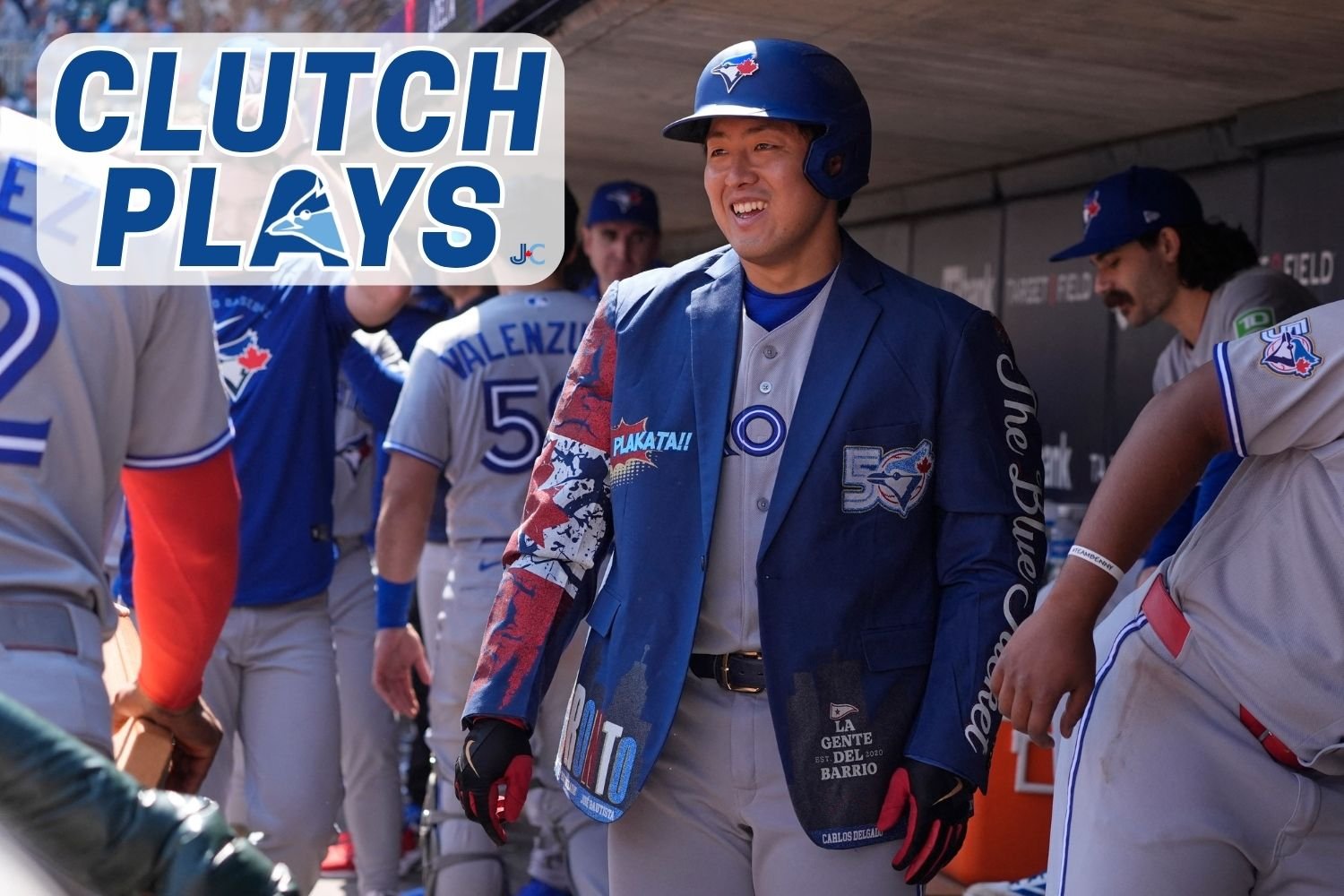 Welcome back to Blue Jays Clutch Plays, a recurring post that highlights the six most pivotal plays (three pitching, three hitting) from the past week of Blue Jays baseball, according to MLB's win probability model. Click here to read last week's edition. For the second consecutive week, the Blue Jays climbed a little closer to .500 after digging themselves quite a hole in early April. Things started well with a key series win against a divisional opponent in the form of the hapless Red Sox, and they had a chance to take 3 of 4 from the Twins on the weekend but were stymied on Sunday by a bullpen they spent the previous two games feasting on. After settling for the split, they're now 16-18 and are 9-5 in their last 14 games. Here are the plays most worth remembering from this past week. Pitching 3. Dylan Cease: Ceddanne Rafaela Groundout, Top 4, 4/27 (+5.5% wPA) Last Monday's opener against Boston had the makings of an all-time pitcher's duel, but Dylan Cease ultimately failed to outdo Ranger Suárez in the end. At the time of this play, though, the Jays were still very much in it. Even against the bottom of the order, a 3-2 pitch with runners on the corners and two outs in a 1-0 game is highly consequential, and Cease got Ceddanne Rafaela to roll over a slider just off the high-and-outside corner to escape the threat. 2. Dylan Cease: Ryan Jeffers Flyout, Bot 3, 5/2 (+5.8% wPA) With a runner on third and one out, Cease was not looking to induce anything in the air past the infield, especially with his team already down by a run, although a sac fly might've been considered a victory against Ryan Jeffers, who tormented the Blue Jays in April. And yet, even with Daulton Varsho's weaker throwing arm in center field, Jeffers couldn't quite get this one deep enough to score Trevor Larnach, and the game remained 3-2. 1. Braydon Fisher: Willson Contreras GIDP, Top 5, 4/29 (+11.7% wPA) It wasn't the most notable week for Jays pitchers in the single-play win probability department, due to the way the club's wins played out on the scoreboard, so Braydon Fisher getting Willson Contreras to ground into a double play on Wednesday afternoon stands as the Clutch Play of the Week for the staff. Of course, had Contreras even singled, Toronto's lead would've gotten uncomfortable in a hurry, so this was a timely grounder that set the stage for the offense to break the game open in the later innings. Hitters 3. Kazuma Okamoto: 2-RBI Single, Bot 3, 4/29 (+16.1% wPA) Kazuma Okamoto's stance adjustment to cover the outer half of the plate paid dividends here, as Brayan Bello's backdoor sinker leaked a little too far into the zone. He didn't try to do too much with it, rifling it into left-center field for a base hit to give the Blue Jays a lead they wouldn't relinquish. These bases-loaded situations gave Okamoto fits at the outset of his MLB career, but after this week, it's safe to say he's built for the moment. 2. Kazuma Okamoto: 2-RBI Single, Bot 3, 4/28 (+17.5% wPA) Red Sox lefty Payton Tolle made Okamoto look silly the pitch before this, blowing a perfectly located fastball by him to even the count. He doubled down with two strikes but couldn't elevate, and his reaction as soon as he let it go says it all. Okamoto turned on it, lacing it over the head of Roman Anthony and off the left field wall on a bounce. He tried to stretch it into a double but was thrown out, a call which surprisingly wasn't overturned after video review. Still, this hit was all the pitching staff needed; they shut Boston out and evened the series. 1. Kazuma Okamoto: RBI Single, Top 8, 5/2 (+25.4% wPA) It's a clean sweep for Okamoto, who was a man possessed last week. This wasn't even close to his farthest hit of the week, but by WPA, it was the most important, tying the game in the eighth and setting the stage for what would become an eight-run inning as the Jays stormed back to win 11-4 on Saturday. What's ironic is that Luis Garcia got the groundball he wanted here, but Okamoto hit it hard enough and took it right back up the middle to avoid the double play. The Jays simply wouldn't have been able to make it a winning week if it weren't for his efforts.
 -
Welcome to the season's first installment of Minor League Starting Pitchers of the Month here on Jays Centre! While Toronto's farm system hasn't exactly been at the top of the league for a few years now, things definitely appear to be trending upward, especially on the pitching side. Lately, the Blue Jays have acquired and developed arms like Trey Yesavage, Mason Fluharty, and Braydon Fisher in short order. Now, thanks in part to the work of key figures in the front office such as veteran amateur scouting director Marc Tramuta and pitching director Justin Lehr, their prospect pool is full of intriguing starters, especially in the lower levels of the minors. Here's who stood out from the first month of games in 2026. Honourable Mentions Richard Gallardo, RHP (AA): 4 GS, 17.0 IP, 1.06 ERA, 4.28 FIP, 4.77 xFIP, 24.4% CSW The underlying numbers suggest the 24-year-old Gallardo's microscopic ERA is a bit of a red herring, but he has still been the centerpiece for a New Hampshire rotation that doesn't currently have anyone else with an ERA under 4.20. The Blue Jays took him from the Cubs in the minor league portion of the 2024 Rule 5 draft, and he missed all of 2025 with an elbow injury, but he has come back strong. Thanks to his ability to pound the zone with a mid-90s sinker, he's running a 60% groundball rate for the Fisher Cats, and opponents are hitting just .176 against him. Landen Maroudis, RHP (A+): 5 GS, 16.0 IP, 1.69 ERA, 3.23 FIP, 5.07 xFIP, 24.2% CSW After losing more than a calendar year due to elbow surgery, the 2023 fourth-round pick has fared well in his first stretch outside the player development complex in Florida. FanGraphs gave him 55 future value grades on his sinker, changeup, and slider, and the fact that his walk rate is down to ~7% after control issues plagued him following his return from injury is a good sign. He's not overpowering and gets hitters out in a variety of different ways, although a next step for him would be to keep the ball down, as opposing hitters are elevating, hence the bloated xFIP. Still, this is a promising development for a pitcher coming off a major injury who wasn't quite himself upon his immediate return. Hitters are 5 for their last 32 against him. Top 3 #3. Daniel Guerra, RHP (A+): 5 GS, 24.1 IP, 2.22 ERA, 3.63 FIP, 3.50 xFIP, 32.6% CSW Signed as an 18-year-old minor league free agent from Venezuela back in 2022, Guerra has quickly become a riser on the edges of Toronto's system and a workhorse for the Vancouver Canadians. He first broke out last season with a solid year in Dunedin, and his promotion to the Northwest League, where he's still younger than the average pitcher, has been quite the success so far. Standing at 6-foot-6 and 230 lbs, he's striking out 34.7% of opposing hitters so far, armed with a powerful high-90s fastball. He failed to crack FanGraphs' preseason top 40 Jays prospects list due to his underdeveloped secondaries and high walk rates, but he's turning heads after an excellent start that included an 11-strikeout performance on April 16 and an 18-whiff outing on the 27th. #2. Johnny King, LHP (A+): 5 GS, 14.1 IP, 0.63 ERA, 2.61 FIP, 3.29 xFIP, 33.1% CSW It's been a while since the Blue Jays have drafted and developed a lefty starter. The jury's still out on whether hot draft commodities Ricky Tiedemann and Brandon Barriera can make the leap, but it's looking more and more like Johnny King could be that guy. The 2024 third-round pick out of high school jumped all the way to No. 4 in Baseball America's latest preseason ranking of the Jays' top 30 prospects, with BA diagnosing him as a viable mid-rotation option once he gets to the big leagues. He's walking too many batters at the moment but has been effective thanks to a 38.6% K rate in Vancouver. In Dunedin last year, his mid-90s fastball averaged 17.6" of iVB from a low slot, making it a swing-and-miss pitch thanks to its deceptive flight path. He doesn't even turn 20 until late July, but he already looks like the class of the pitching prospect pool now that Yesavage is back in the big leagues. #1. Nolan Perry, RHP (A): 4 GS (5 G), 21.0 IP, 1.71 ERA, 2.43 FIP, 2.58 xFIP, 33.0% CSW The unanimously unranked Perry is bursting onto the scene with Dunedin in 2026. If this keeps up, it'll be a remarkable player development victory for the Blue Jays, who drafted him out of high school in the 12th round in 2022 and signed him to a bonus worth only $200,000. He had Tommy John surgery late in 2024 and has taken off since his return, with a ludicrous 38.7% K-BB% so far. The movement on his 94-mph fastball might be even more deceptive than King's at the moment, with 18.1" of iVB from a similarly low slot on the other side of the mound. His mid-80s slider and massive high-70s curveball are both running swing-and-miss rates over 50% on the young season as well. We're still quite early into his ascension, but making the most out of late-round picks is a hallmark of a successful front office. Let's hope Perry continues to dominate. View full article
-
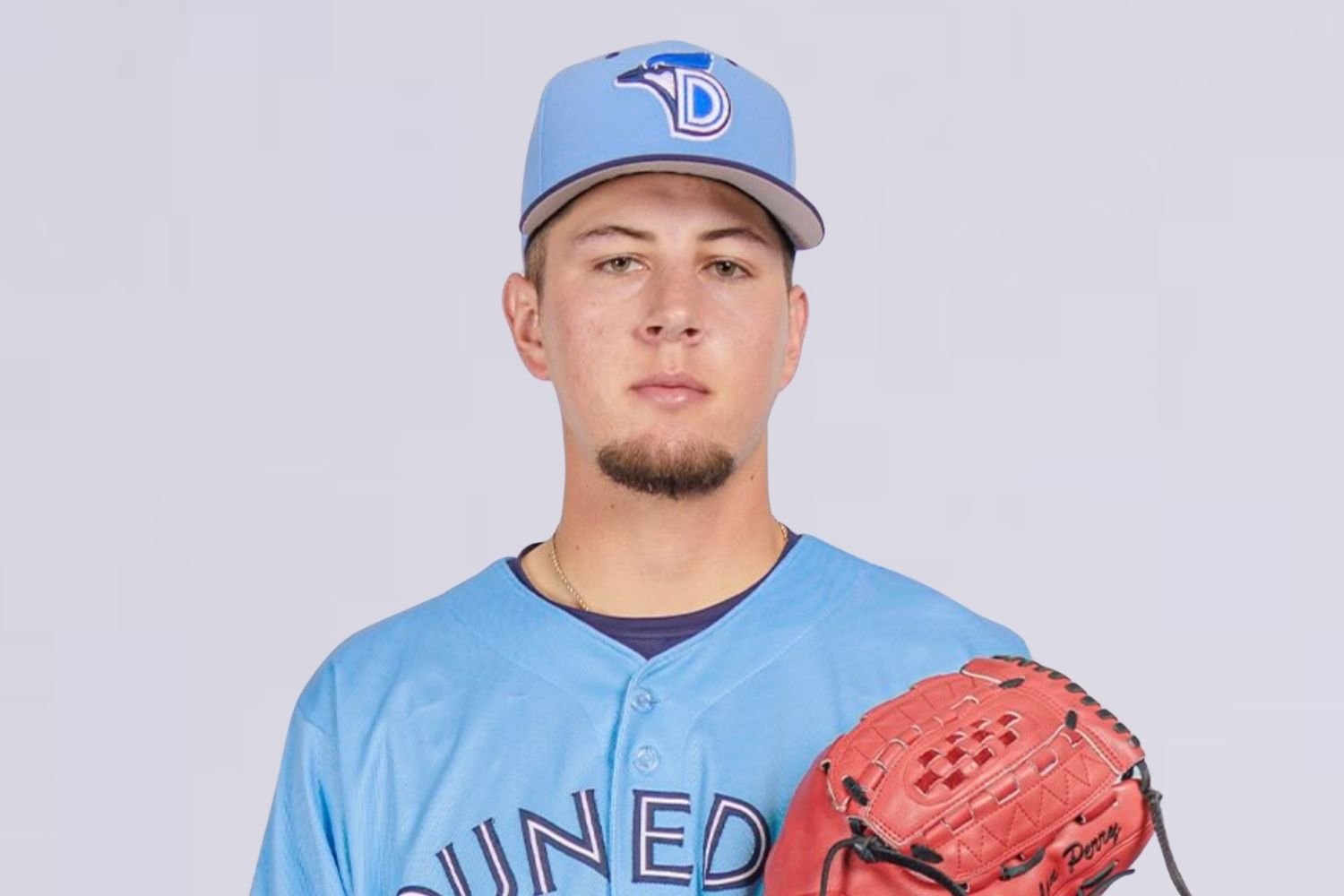 Welcome to the season's first installment of Minor League Starting Pitchers of the Month here on Jays Centre! While Toronto's farm system hasn't exactly been at the top of the league for a few years now, things definitely appear to be trending upward, especially on the pitching side. Lately, the Blue Jays have acquired and developed arms like Trey Yesavage, Mason Fluharty, and Braydon Fisher in short order. Now, thanks in part to the work of key figures in the front office such as veteran amateur scouting director Marc Tramuta and pitching director Justin Lehr, their prospect pool is full of intriguing starters, especially in the lower levels of the minors. Here's who stood out from the first month of games in 2026. Honourable Mentions Richard Gallardo, RHP (AA): 4 GS, 17.0 IP, 1.06 ERA, 4.28 FIP, 4.77 xFIP, 24.4% CSW The underlying numbers suggest the 24-year-old Gallardo's microscopic ERA is a bit of a red herring, but he has still been the centerpiece for a New Hampshire rotation that doesn't currently have anyone else with an ERA under 4.20. The Blue Jays took him from the Cubs in the minor league portion of the 2024 Rule 5 draft, and he missed all of 2025 with an elbow injury, but he has come back strong. Thanks to his ability to pound the zone with a mid-90s sinker, he's running a 60% groundball rate for the Fisher Cats, and opponents are hitting just .176 against him. Landen Maroudis, RHP (A+): 5 GS, 16.0 IP, 1.69 ERA, 3.23 FIP, 5.07 xFIP, 24.2% CSW After losing more than a calendar year due to elbow surgery, the 2023 fourth-round pick has fared well in his first stretch outside the player development complex in Florida. FanGraphs gave him 55 future value grades on his sinker, changeup, and slider, and the fact that his walk rate is down to ~7% after control issues plagued him following his return from injury is a good sign. He's not overpowering and gets hitters out in a variety of different ways, although a next step for him would be to keep the ball down, as opposing hitters are elevating, hence the bloated xFIP. Still, this is a promising development for a pitcher coming off a major injury who wasn't quite himself upon his immediate return. Hitters are 5 for their last 32 against him. Top 3 #3. Daniel Guerra, RHP (A+): 5 GS, 24.1 IP, 2.22 ERA, 3.63 FIP, 3.50 xFIP, 32.6% CSW Signed as an 18-year-old minor league free agent from Venezuela back in 2022, Guerra has quickly become a riser on the edges of Toronto's system and a workhorse for the Vancouver Canadians. He first broke out last season with a solid year in Dunedin, and his promotion to the Northwest League, where he's still younger than the average pitcher, has been quite the success so far. Standing at 6-foot-6 and 230 lbs, he's striking out 34.7% of opposing hitters so far, armed with a powerful high-90s fastball. He failed to crack FanGraphs' preseason top 40 Jays prospects list due to his underdeveloped secondaries and high walk rates, but he's turning heads after an excellent start that included an 11-strikeout performance on April 16 and an 18-whiff outing on the 27th. #2. Johnny King, LHP (A+): 5 GS, 14.1 IP, 0.63 ERA, 2.61 FIP, 3.29 xFIP, 33.1% CSW It's been a while since the Blue Jays have drafted and developed a lefty starter. The jury's still out on whether hot draft commodities Ricky Tiedemann and Brandon Barriera can make the leap, but it's looking more and more like Johnny King could be that guy. The 2024 third-round pick out of high school jumped all the way to No. 4 in Baseball America's latest preseason ranking of the Jays' top 30 prospects, with BA diagnosing him as a viable mid-rotation option once he gets to the big leagues. He's walking too many batters at the moment but has been effective thanks to a 38.6% K rate in Vancouver. In Dunedin last year, his mid-90s fastball averaged 17.6" of iVB from a low slot, making it a swing-and-miss pitch thanks to its deceptive flight path. He doesn't even turn 20 until late July, but he already looks like the class of the pitching prospect pool now that Yesavage is back in the big leagues. #1. Nolan Perry, RHP (A): 4 GS (5 G), 21.0 IP, 1.71 ERA, 2.43 FIP, 2.58 xFIP, 33.0% CSW The unanimously unranked Perry is bursting onto the scene with Dunedin in 2026. If this keeps up, it'll be a remarkable player development victory for the Blue Jays, who drafted him out of high school in the 12th round in 2022 and signed him to a bonus worth only $200,000. He had Tommy John surgery late in 2024 and has taken off since his return, with a ludicrous 38.7% K-BB% so far. The movement on his 94-mph fastball might be even more deceptive than King's at the moment, with 18.1" of iVB from a similarly low slot on the other side of the mound. His mid-80s slider and massive high-70s curveball are both running swing-and-miss rates over 50% on the young season as well. We're still quite early into his ascension, but making the most out of late-round picks is a hallmark of a successful front office. Let's hope Perry continues to dominate.
 -
Welcome to Shape of the Blue Jays, my column where I dig into Statcast numbers to analyze recent pitch shape and swing shape trends for Toronto Blue Jays players and discuss how they have impacted their performance. Click here to read the last edition. Quick Hits: ABS Brandon Valenzuela went a perfect 3-for-3 challenging ball calls behind the plate in Wednesday's series finale against the Red Sox. He also homered in the contest as an added bonus. One month into the ABS era, the Blue Jays have been one of the better teams in baseball at using the challenge system to their benefit when they're fielding (this is entirely thanks to their catchers; no Toronto pitcher has challenged a call yet). Statcast uses a model to predict the challenge probability of a given pitch based on location, number of challenges remaining, runners on, the count, and the number of outs in the inning. Based on that model, the Jays are 13th out of 30 in overturns above expected. They are eighth out of 30 in run value gained from their overturns above expected. Valenzuela has proven to be a very adept defensive catcher to start his MLB career; he and Tyler Heineman are doing a good job getting extra strikes for their pitching staff. Trey Yesavage Last year's postseason hero returned to action on Tuesday against Boston, and it was a resounding success (5.1 IP, 0 ER, 4 H, 3 K, 0 BB). Trey Yesavage didn't record his first strikeout until the fourth inning, a stark contrast to the copious amounts of swing-and-miss he generated last October, but he didn't walk anyone and induced tons of weak contact. Of the 17 batted balls he allowed, only one had an expected batting average over .500. Only three were hard hit (>95 MPH exit velocity). The average xBA of those 17 batted balls was a meager .160. The best one was a first-inning double by Willson Contreras, which, even though it technically qualified as a barrel, was not hit high enough to be a home run in any MLB stadium. There's no problem with a lack of swing and miss if the balls in play are that non-threatening. Nothing about Yesavage's velocity was out of the ordinary, and the movement on both the fastball and splitter was also standard. If I have one question about his outing, it's about the lack of his signature "wrong-way" slider. He threw it just six times, five of them to righties. Now, it was responsible for one of his three strikeouts, but was it a lack of feel for it coming off the injury or a deliberate part of his gameplan? He threw it frequently during his last rehab start, so I'm inclined to say the latter. His next start is scheduled for Sunday in Minnesota. They've been a very good slider-hitting team this year, but then again, not many sliders in this league move like Yesavage's. Kazuma Okamoto Kazuma Okamoto struggled mightily to put bat on ball and drive in runs in the first couple weeks of his career. He finally had a huge day on April 19 in Arizona with a home run and a double (this was the day the Jays put up an eight-spot in the first inning). Since the start of that game, he's hitting .265, slugging .559, and only striking out 28% of the time, way down from the dangerous low-40s territory he was occupying earlier. What changed? Most of Okamoto's initial problems had to do with secondary pitches. Eno Sarris of The Athletic noted that he recently changed his stance in such a way that it gives him more time to detect pitch types while also putting him in a better position to cover the outside half of the plate. His hot streak is no accident. This doesn't automatically mean Okamoto is still going to get to every down-and-away slider he sees, but it will force pitchers to think differently about him. Last weekend, he launched home runs above the Rogers Centre batter's eye and into the WestJet Flight Deck on back-to-back days. Both of them were on middle-away fastballs. He hooked a down-and-away fastball for a 2-RBI double off Payton Tolle on Tuesday as well. Pitchers exploited a weakness of his in early April, and he adjusted. Now they'll have to adjust back. Spencer Miles Spencer Miles was a name shrouded in mystery when the Blue Jays selected him in the Rule 5 draft. He had never pitched above A-ball before, a level he reached in 2022. Talks of a high-90s sinker and MLB-quality stuff were encouraging, but he had a lot to prove coming into the year. So far so good! Miles has a 2.87 ERA, 3.82 FIP, and a 3.44 xFIP through his first nine outings. He has pitched 15.2 innings in those outings, and I'd love to see the Jays take advantage of his multi-inning capabilities more often so as to preserve the high-leverage arms on the staff. With how good pitchers are these days, a 96-mph sinker with 16 inches of arm-side tail isn't as special as it used to be. Both stuff models on FanGraphs (Stuff+, PitchingBot) see Miles's sinker, and his arsenal in general, as run-of-the-mill. The models do think higher of his command. From a results standpoint, he has a 55th-percentile K rate, a 64th-percentile BB rate, and a 90th-percentile hard-hit rate. Nothing special, but it gets the job done. In addition to his location, I believe his arsenal is quite advanced for a reliever and is also helping his stuff play up. He uses all four of his pitch types enough that hitters on both sides can't discount them, and he mixes both velocity and movement well in doing so. Check out his repertoire through this screenshot from the Paired Pitches tool on FanGraphs Lab: His sinker gets enough separation from his four-seamer that, hypothetically, if a lefty hitter thinks he's getting a middle-middle four-seamer but it's actually a sinker, it would wind up perfectly on the lower outside corner of the zone. All stats from FanGraphs and Baseball Savant, through games on April 29, 2026. View full article
-
 Welcome to Shape of the Blue Jays, my column where I dig into Statcast numbers to analyze recent pitch shape and swing shape trends for Toronto Blue Jays players and discuss how they have impacted their performance. Click here to read the last edition. Quick Hits: ABS Brandon Valenzuela went a perfect 3-for-3 challenging ball calls behind the plate in Wednesday's series finale against the Red Sox. He also homered in the contest as an added bonus. One month into the ABS era, the Blue Jays have been one of the better teams in baseball at using the challenge system to their benefit when they're fielding (this is entirely thanks to their catchers; no Toronto pitcher has challenged a call yet). Statcast uses a model to predict the challenge probability of a given pitch based on location, number of challenges remaining, runners on, the count, and the number of outs in the inning. Based on that model, the Jays are 13th out of 30 in overturns above expected. They are eighth out of 30 in run value gained from their overturns above expected. Valenzuela has proven to be a very adept defensive catcher to start his MLB career; he and Tyler Heineman are doing a good job getting extra strikes for their pitching staff. Trey Yesavage Last year's postseason hero returned to action on Tuesday against Boston, and it was a resounding success (5.1 IP, 0 ER, 4 H, 3 K, 0 BB). Trey Yesavage didn't record his first strikeout until the fourth inning, a stark contrast to the copious amounts of swing-and-miss he generated last October, but he didn't walk anyone and induced tons of weak contact. Of the 17 batted balls he allowed, only one had an expected batting average over .500. Only three were hard hit (>95 MPH exit velocity). The average xBA of those 17 batted balls was a meager .160. The best one was a first-inning double by Willson Contreras, which, even though it technically qualified as a barrel, was not hit high enough to be a home run in any MLB stadium. There's no problem with a lack of swing and miss if the balls in play are that non-threatening. Nothing about Yesavage's velocity was out of the ordinary, and the movement on both the fastball and splitter was also standard. If I have one question about his outing, it's about the lack of his signature "wrong-way" slider. He threw it just six times, five of them to righties. Now, it was responsible for one of his three strikeouts, but was it a lack of feel for it coming off the injury or a deliberate part of his gameplan? He threw it frequently during his last rehab start, so I'm inclined to say the latter. His next start is scheduled for Sunday in Minnesota. They've been a very good slider-hitting team this year, but then again, not many sliders in this league move like Yesavage's. Kazuma Okamoto Kazuma Okamoto struggled mightily to put bat on ball and drive in runs in the first couple weeks of his career. He finally had a huge day on April 19 in Arizona with a home run and a double (this was the day the Jays put up an eight-spot in the first inning). Since the start of that game, he's hitting .265, slugging .559, and only striking out 28% of the time, way down from the dangerous low-40s territory he was occupying earlier. What changed? Most of Okamoto's initial problems had to do with secondary pitches. Eno Sarris of The Athletic noted that he recently changed his stance in such a way that it gives him more time to detect pitch types while also putting him in a better position to cover the outside half of the plate. His hot streak is no accident. This doesn't automatically mean Okamoto is still going to get to every down-and-away slider he sees, but it will force pitchers to think differently about him. Last weekend, he launched home runs above the Rogers Centre batter's eye and into the WestJet Flight Deck on back-to-back days. Both of them were on middle-away fastballs. He hooked a down-and-away fastball for a 2-RBI double off Payton Tolle on Tuesday as well. Pitchers exploited a weakness of his in early April, and he adjusted. Now they'll have to adjust back. Spencer Miles Spencer Miles was a name shrouded in mystery when the Blue Jays selected him in the Rule 5 draft. He had never pitched above A-ball before, a level he reached in 2022. Talks of a high-90s sinker and MLB-quality stuff were encouraging, but he had a lot to prove coming into the year. So far so good! Miles has a 2.87 ERA, 3.82 FIP, and a 3.44 xFIP through his first nine outings. He has pitched 15.2 innings in those outings, and I'd love to see the Jays take advantage of his multi-inning capabilities more often so as to preserve the high-leverage arms on the staff. With how good pitchers are these days, a 96-mph sinker with 16 inches of arm-side tail isn't as special as it used to be. Both stuff models on FanGraphs (Stuff+, PitchingBot) see Miles's sinker, and his arsenal in general, as run-of-the-mill. The models do think higher of his command. From a results standpoint, he has a 55th-percentile K rate, a 64th-percentile BB rate, and a 90th-percentile hard-hit rate. Nothing special, but it gets the job done. In addition to his location, I believe his arsenal is quite advanced for a reliever and is also helping his stuff play up. He uses all four of his pitch types enough that hitters on both sides can't discount them, and he mixes both velocity and movement well in doing so. Check out his repertoire through this screenshot from the Paired Pitches tool on FanGraphs Lab: His sinker gets enough separation from his four-seamer that, hypothetically, if a lefty hitter thinks he's getting a middle-middle four-seamer but it's actually a sinker, it would wind up perfectly on the lower outside corner of the zone. All stats from FanGraphs and Baseball Savant, through games on April 29, 2026.
-
- 1
-

-
- trey yesavage
- kazuma okamoto
- (and 1 more)
-
Welcome back to Blue Jays Clutch Plays, a recurring post that highlights the six most pivotal plays (three pitching, three hitting) from the past week of Blue Jays baseball, according to MLB's win probability model. Click here to read last week's edition. At long last, the Blue Jays finally started to look like themselves again this week, finishing off their lengthy road trip with a series win in Anaheim and then taking two of three from the Guardians at home. This is despite their nightmarish injury bug refusing to go away, as Nathan Lukes wound up on the IL after pulling his hamstring running out of the box on Friday. Still, they fought through it and have been getting consistent timely hitting for about a week now, a good sign ahead of their upcoming matchup against the Red Sox. Here are the moments that mattered most from this past week. Pitching 3. Louis Varland: Brayan Rocchio Strikeout, Top 9, 4/25 (+12.6% wPA) In his first inning of work since Jeff Hoffman was officially removed from the closer role, Louis Varland found himself in an immensely precarious situation. Toronto led 5-2 when he entered the game, but a string of great at-bats by Cleveland brought the Guardians to within two runs with the bases loaded and just 1 out. Varland struck out Bo Naylor, and then, with the count at 2-2, he dialed it up to 98 to put Brayan Rocchio away and seal the win. 2. Patrick Corbin: Steven Kwan GIDP, Top 5, 4/26 (+14.8% wPA) Unfortunately, Angel Martínez would double in the tying run immediately after this, but the things that Patrick Corbin has done for this team over the past few weeks shouldn't be discounted. In the fifth inning on Sunday, he got Steven Kwan, one of the best bat-to-ball and line drive hitters in the game, to roll a perfectly placed front-door sinker directly to Davis Schneider at second base for the twin killing. Corbin failed to finish the frame, but the bullpen luckily picked him up on the way to a series win. 1. Louis Varland: Nolan Schanuel GIDP, Bot 9, 4/21 (+34.0% wPA) We have a new frontrunner for Clutch Pitching Play of the Season. With the winning run on first base and one out in the ninth inning, Varland came into a bases-loaded situation and promptly induced a game-ending double play from Nolan Schanuel. Soon after, Leo Morgenstern put out a great piece that emphasizes just how rare and impressive a one-pitch, two-out save is, especially for Varland, who had essentially no experience closing games before last week. According to win probability added, this would've been the second-most pivotal play of 2025 for the Jays' pitching staff. Hitting 3. Ernie Clement: RBI Single, Top 7, 4/22 (+18.6% wPA) This at-bat beautifully personifies the essence of Ernie Clement as a hitter. With two strikes against him, he reached for a well-located sweeper just off the corner down and away and snuck it up the middle to tie the game. The Blue Jays would give up four runs in the bottom half, but this was a huge hit at the time. They entered the top of the seventh down 3-0 and tied it against the bullpen after Angels ace José Soriano was removed following yet another quality start. 2. Vladimir Guerrero Jr.: 2-run HR, Top 3, 4/20 (+19.4% wPA) Vladimir Guerrero Jr. has been on fire lately, but he hasn't quite tapped into his home run power on a consistent basis. Last Monday, though, he got a changeup from Reid Detmers that caught a little too much of the plate and walloped it deep into the southern California sky. The pitch, the swing, and the result were quite reminiscent of his moonshot off Carlos Rodón in Game 3 of the 2025 ALDS. This one propelled the Jays to a series-opening win that would set the tone for the week ahead. 1. Lenyn Sosa: 2-RBI Double, Top 8, 4/21 (+30.7% wPA) The newcomer Lenyn Sosa made his mark in the Angels series, slamming a pinch-hit double off the wall in right to break a 1-1 tie in the eighth inning on Tuesday. This is exactly what the coaching staff hopes he'll be able to do at the plate: come up with a big hit off the other team's best lefty reliever. Sosa is a very aggressive hitter, and Drew Pomeranz probably wanted this fastball to end up a little more outside than it did. The former White Sox were all over this game, as Eloy Jiménez later singled Sosa home to make it a three-run inning. View full article
-
 Welcome back to Blue Jays Clutch Plays, a recurring post that highlights the six most pivotal plays (three pitching, three hitting) from the past week of Blue Jays baseball, according to MLB's win probability model. Click here to read last week's edition. At long last, the Blue Jays finally started to look like themselves again this week, finishing off their lengthy road trip with a series win in Anaheim and then taking two of three from the Guardians at home. This is despite their nightmarish injury bug refusing to go away, as Nathan Lukes wound up on the IL after pulling his hamstring running out of the box on Friday. Still, they fought through it and have been getting consistent timely hitting for about a week now, a good sign ahead of their upcoming matchup against the Red Sox. Here are the moments that mattered most from this past week. Pitching 3. Louis Varland: Brayan Rocchio Strikeout, Top 9, 4/25 (+12.6% wPA) In his first inning of work since Jeff Hoffman was officially removed from the closer role, Louis Varland found himself in an immensely precarious situation. Toronto led 5-2 when he entered the game, but a string of great at-bats by Cleveland brought the Guardians to within two runs with the bases loaded and just 1 out. Varland struck out Bo Naylor, and then, with the count at 2-2, he dialed it up to 98 to put Brayan Rocchio away and seal the win. 2. Patrick Corbin: Steven Kwan GIDP, Top 5, 4/26 (+14.8% wPA) Unfortunately, Angel Martínez would double in the tying run immediately after this, but the things that Patrick Corbin has done for this team over the past few weeks shouldn't be discounted. In the fifth inning on Sunday, he got Steven Kwan, one of the best bat-to-ball and line drive hitters in the game, to roll a perfectly placed front-door sinker directly to Davis Schneider at second base for the twin killing. Corbin failed to finish the frame, but the bullpen luckily picked him up on the way to a series win. 1. Louis Varland: Nolan Schanuel GIDP, Bot 9, 4/21 (+34.0% wPA) We have a new frontrunner for Clutch Pitching Play of the Season. With the winning run on first base and one out in the ninth inning, Varland came into a bases-loaded situation and promptly induced a game-ending double play from Nolan Schanuel. Soon after, Leo Morgenstern put out a great piece that emphasizes just how rare and impressive a one-pitch, two-out save is, especially for Varland, who had essentially no experience closing games before last week. According to win probability added, this would've been the second-most pivotal play of 2025 for the Jays' pitching staff. Hitting 3. Ernie Clement: RBI Single, Top 7, 4/22 (+18.6% wPA) This at-bat beautifully personifies the essence of Ernie Clement as a hitter. With two strikes against him, he reached for a well-located sweeper just off the corner down and away and snuck it up the middle to tie the game. The Blue Jays would give up four runs in the bottom half, but this was a huge hit at the time. They entered the top of the seventh down 3-0 and tied it against the bullpen after Angels ace José Soriano was removed following yet another quality start. 2. Vladimir Guerrero Jr.: 2-run HR, Top 3, 4/20 (+19.4% wPA) Vladimir Guerrero Jr. has been on fire lately, but he hasn't quite tapped into his home run power on a consistent basis. Last Monday, though, he got a changeup from Reid Detmers that caught a little too much of the plate and walloped it deep into the southern California sky. The pitch, the swing, and the result were quite reminiscent of his moonshot off Carlos Rodón in Game 3 of the 2025 ALDS. This one propelled the Jays to a series-opening win that would set the tone for the week ahead. 1. Lenyn Sosa: 2-RBI Double, Top 8, 4/21 (+30.7% wPA) The newcomer Lenyn Sosa made his mark in the Angels series, slamming a pinch-hit double off the wall in right to break a 1-1 tie in the eighth inning on Tuesday. This is exactly what the coaching staff hopes he'll be able to do at the plate: come up with a big hit off the other team's best lefty reliever. Sosa is a very aggressive hitter, and Drew Pomeranz probably wanted this fastball to end up a little more outside than it did. The former White Sox were all over this game, as Eloy Jiménez later singled Sosa home to make it a three-run inning.
 -
Welcome to Shape of the Blue Jays, my column where I dig into Statcast numbers to analyze recent pitch shape and swing shape trends for Toronto Blue Jays players and discuss how they have impacted their performance. Click here to read the last edition. Quick Hits: Reinforcements Trey Yesavage made another rehab start for Triple-A Buffalo on Tuesday. It didn't go great (2.1 IP, 4 R, 2 ER, 2 H, 2 K, 4 BB), and he failed to reach his 75-pitch target. Either way, it was his fourth rehab start of the year, as he continues to work his way back from the right shoulder impingement that he reported to camp with. The following day, John Schneider said the goal for Yesavage's next outing will be 80 pitches. It's just a matter of whether that start happens with Toronto or with Buffalo again. He seems to be one more rehab start away, at most, from rejoining the team. Most importantly, his stuff doesn't seem to be affected by the injury. His fastball averaged 94.3 mph and 19-20" of iVB on Tuesday, right in line with what we saw last year. His splitter averaged about 82 mph, which is a couple of ticks slower than it was in the 2025 postseason, but it also had almost 200 fewer RPM and three more inches of drop. This would bring the vertical separation between the fastball and splitter to nearly 15 inches. If that helps him induce more ugly swings like the ones we saw all throughout his magical October, then so be it. The Jays won three in a row earlier this week to salvage some ground, but they still need to get healthy. Hopefully, Yesavage isn't the only key reinforcement to arrive over the next few weeks. In terms of who could be on the hot seat when the time comes, Patrick Corbin has outpitched Eric Lauer in each of the past two turns through the rotation, but the jury's still out. Vladimir Guerrero Jr. I can't believe I'm saying this, but Vladimir Guerrero Jr.'s results are matching his expected numbers. He's hitting for a 151 wRC+ through his first 24 games, and his wOBA and xwOBA are within seven points of each other. Among Blue Jays with at least 50 PA, Daulton Varsho is the only other hitter with a wRC+ over 110. Vlad is the best hitter in this lineup, and he's performing like it. His production might even be a little unsustainable given his peripherals. His groundball rate is over 55% for the first time in his career, his average launch angle is lower than it's been since 2022, and he only has two home runs on the young season. He's finding a way despite lifting the ball less than he ever has, which was never a lot to begin with. On the other hand, his swing tilt and attack angle are both up from last year, so maybe this is something that will naturally work itself out. Vladimir Guerrero Jr. Batted Balls, 2025 vs. 2026 (Statcast) Stat 2025 2026 GB% 47.1% 55.3% LA° 7.8° 4.5° xSLG .506 .486 Barrel% 12.2% 11.8% Pitchers around the league took notice after he bludgeoned his way through the postseason. Guerrero is seeing more breaking balls this year (34.1%) than he has at any point during his time in the big leagues. A similar pattern developed in 2022 following his MVP runner-up season in 2021. Due to his reputation around the league, as well as the current state of the Jays' lineup around him, that isn't likely to change anytime soon. Let's see how he punches back. Tyler Rogers Absolutely nothing has surprised us about Tyler Rogers in the season's early going (12.1 IP, 0.73 ERA). The king of soft contact has taken things to another level in 2026: His groundball rate has eclipsed 70%, his hard hit rate is under 20%, and opposing hitters' average exit velocity is 82 mph. This is the submariner at his peak. A week and a half ago, the Brewers scored two runs in the eighth inning off him to win the game. One of those runs was unearned, and not a single batted ball left the infield. That outing remains the only blemish on his season. Tyler Rogers sinker location vs. RHB, 2025 (left) and 2026 (right) - Statcast I'm not sure if this is intentional or small-sample weirdness, but Rogers has been throwing his sinker up in the zone more to right-handed hitters. Thankfully, the conventional laws of baseball do not apply to a man with a -61° arm angle, so rather than facilitating more damage from opponents, this has actually had the opposite effect. Looking at his bat tracking splits tells us he has righties in knots right now. Their average attack angle against his sinker is down to -6°, attack direction is up to 17° toward the opposite field, and contact depth is three inches closer to the plate. These are all indicators that they're so absurdly late, even though the pitch is only 83 mph on average. Exactly how he wants it. Ernie Clement Ernie Clement is enjoying his best run of the year so far. He's hit safely in each of his last seven games and collected multiple hits in four of his last five. His slash line is up to .320/.327/.420 on the year. I'm not worried by the fact that he has only drawn a single walk through his first 101 PA; he walked just 4.6% of the time last year, and he's always chased a lot. Besides, that all becomes easier to swallow when he's hitting .320. He has struck out just seven times to that one walk, his zone contact rate is 94.5%, and he has 97th-percentile collision efficiency according to Statcast. He's squaring everything up. Can this continue over a full season? Only 29 qualified hitters in baseball (from a sample of 283) have a bigger positive difference between their wOBA and their xwOBA than Clement. His BABIP is currently .344, compared to a career BABIP of .282. At the same time, he seems like the type of hitter that can reasonably outperform expectations because he hits so many line drives and puts the ball in play a lot. Like Guerrero, Clement is seeing way more breaking balls than he ever has after his record-setting October. Much of his success last year came against fastballs, both in the regular season and the postseason. It's not easy to hit after the whole world is exposed to your game plan on the biggest stage. Hopefully, he can keep them coming. Ernie Clement Line Drive% Ranking Among 278 Qualified Hitters, 2026 (Statcast) Rank Hitter LD% 17 Ildemaro Vargas 31.6% 18 Troy Johnston 31.6% 19 Ernie Clement 31.2% 20 Ezequiel Tovar 31.1% 21 Jorge Polanco 31.1% All visuals and figures courtesy of Baseball Savant and FanGraphs. Up to date as of April 23, 2026. View full article
.jpg.3407a7a3128c23d897763199f04f07a1.jpg)
