


Leo Morgenstern
-
Posts
626 -
Joined
-
Last visited
Content Type
Profiles
Toronto Blue Jays Videos
2026 Toronto Blue Jays Top Prospects Ranking
Toronto Blue Jays Free Agent & Trade Rumors, Notes, & Tidbits
Guides & Resources
2025 Toronto Blue Jays Draft Pick Tracker
News
2026 Toronto Blue Jays Draft Tracker: Picks & Bonuses
Forums
Blogs
Events
Store
Downloads
Gallery
Everything posted by Leo Morgenstern
-

Toronto Blue Jays Defensive Plays of the Month - May 2026
Leo Morgenstern posted an article in Blue Jays
.jpg.90ce5db348be34462d95c7b99e4340ad.jpg) Even without Alejandro Kirk, the Blue Jays have the best defensive catchers in baseball, at least according to Statcast's metrics. For the second month in a row, Blue Jays catchers led the majors with a +7 fielding run value (FRV) in May, thanks to stellar performances from Brandon Valenzuela and Tyler Heinman. The rest of their fielders, however, were surprisingly poor, finishing the month with -8 Outs Above Average (OAA). We can all think of some moments in the field that should have gone differently. Be that as it may, the Jays still made their fair share of highlight-reel plays in May, and I'm here to celebrate the best (or at least the most enjoyable) of them. You can find my picks for March/April's defensive plays of the month here. That's the Varsho We Know and Love Last month, I wrote about this Addison Barger grab, noting it was Toronto's first five-star catch of the season. Apparently, it has since been downgraded to four stars, but the Blue Jays still have one five-star catch in 2026 thanks to Daulton Varsho. The center fielder hasn't always been the elite defender we're used to seeing this year, but he covered a ton of ground in a couple of seconds to make this diving grab. Two for the Price of One... But Was It Worth It? Addison Barger is so cool. In his first game back from the injured list, he made a run-saving double play, and he made it look as easy as throwing to first on a routine groundball. I don't even think Jorge Soler considered the fact that he could be doubled up as he tried to tag and score on this play. Unfortunately, Barger landed back on the injured list the next day with elbow inflammation in his powerful right arm. Andrés Giménez Is So Damn Smooth As accomplished a defender as he is, it's important not to forget that Andrés Giménez is still settling in at shortstop. By the test eye, he looked more comfortable at his new position in May, and the numbers back that up: He led the Blue Jays with 4 OAA in the month. I could have picked several of his highlights to feature here, but this bang-bang play against the Orioles was my favourite. Varsho Holds On What's impressive here isn't so much the catch itself, but the fact that Varsho holds on after smacking into the wall at full speed, falling over, and doing a backward somersault. They say if you look closely, you can still see the imprint of his face on the center field wall. What, Like It's Hard? I'm so impressed by the nonchalance with which Patrick Corbin made this behind-the-back grab. It almost looks like he just happened to put his glove in the perfect spot, and the ball bounced in. Either that or there was some magnet trickery going on here. Don't Run on Heiny Heineman caught nine runners stealing in May, including four in one game against the Marlins. He's now tied for third in MLB on the season with 11 caught stealing. I chose the clip above from that game against Miami (a) because Heineman caught the blistering-fast Esteury Ruiz, and (b) because of how cool Giménez looks laying down the tag. Have I mentioned I love watching Andrés Giménez? They Call Him a Catcher for a Reason Brandon Valenzuela provides most of his defensive value with excellent pitch-framing, which rarely makes the highlight reels. However, there was no way I wasn't going to include Toronto's most important defensive player in a piece about the team's defense. Valenzuela made a pair of excellent catches on tough pop-ups in May. I already wrote about one of them, so I included the other one here. At first, it looked like he lost this one in the sun, and he easily could have just given up. Instead, he located the ball and made a mad dash for the backstop and pulled off the sliding catch. Kudos to the camera crew for capturing this so well. Ladies and Gentlemen, Trey Yesavage You knew this was coming. How else could I end this piece but with one of the greatest examples of pitcher defense I've ever seen? Let's break it down. Act I: Trey Yesavage leaps for a high bouncer, but the ball clips off the top of his glove. Act II: He can't locate the ball until it hits the brim of his cap on the way down. Act III: He goes to snap it up, and once again, it pops out of his glove. Act IV: In a last-ditch effort to make the play, he uses his glove like something in between a shovel and a tennis racket to half-scoop, half-slap the ball to first base. Act V: Somehow, it works. Any Blue Jays defensive moments from May that you think I missed? Please share them in the comments below!
Even without Alejandro Kirk, the Blue Jays have the best defensive catchers in baseball, at least according to Statcast's metrics. For the second month in a row, Blue Jays catchers led the majors with a +7 fielding run value (FRV) in May, thanks to stellar performances from Brandon Valenzuela and Tyler Heinman. The rest of their fielders, however, were surprisingly poor, finishing the month with -8 Outs Above Average (OAA). We can all think of some moments in the field that should have gone differently. Be that as it may, the Jays still made their fair share of highlight-reel plays in May, and I'm here to celebrate the best (or at least the most enjoyable) of them. You can find my picks for March/April's defensive plays of the month here. That's the Varsho We Know and Love Last month, I wrote about this Addison Barger grab, noting it was Toronto's first five-star catch of the season. Apparently, it has since been downgraded to four stars, but the Blue Jays still have one five-star catch in 2026 thanks to Daulton Varsho. The center fielder hasn't always been the elite defender we're used to seeing this year, but he covered a ton of ground in a couple of seconds to make this diving grab. Two for the Price of One... But Was It Worth It? Addison Barger is so cool. In his first game back from the injured list, he made a run-saving double play, and he made it look as easy as throwing to first on a routine groundball. I don't even think Jorge Soler considered the fact that he could be doubled up as he tried to tag and score on this play. Unfortunately, Barger landed back on the injured list the next day with elbow inflammation in his powerful right arm. Andrés Giménez Is So Damn Smooth As accomplished a defender as he is, it's important not to forget that Andrés Giménez is still settling in at shortstop. By the test eye, he looked more comfortable at his new position in May, and the numbers back that up: He led the Blue Jays with 4 OAA in the month. I could have picked several of his highlights to feature here, but this bang-bang play against the Orioles was my favourite. Varsho Holds On What's impressive here isn't so much the catch itself, but the fact that Varsho holds on after smacking into the wall at full speed, falling over, and doing a backward somersault. They say if you look closely, you can still see the imprint of his face on the center field wall. What, Like It's Hard? I'm so impressed by the nonchalance with which Patrick Corbin made this behind-the-back grab. It almost looks like he just happened to put his glove in the perfect spot, and the ball bounced in. Either that or there was some magnet trickery going on here. Don't Run on Heiny Heineman caught nine runners stealing in May, including four in one game against the Marlins. He's now tied for third in MLB on the season with 11 caught stealing. I chose the clip above from that game against Miami (a) because Heineman caught the blistering-fast Esteury Ruiz, and (b) because of how cool Giménez looks laying down the tag. Have I mentioned I love watching Andrés Giménez? They Call Him a Catcher for a Reason Brandon Valenzuela provides most of his defensive value with excellent pitch-framing, which rarely makes the highlight reels. However, there was no way I wasn't going to include Toronto's most important defensive player in a piece about the team's defense. Valenzuela made a pair of excellent catches on tough pop-ups in May. I already wrote about one of them, so I included the other one here. At first, it looked like he lost this one in the sun, and he easily could have just given up. Instead, he located the ball and made a mad dash for the backstop and pulled off the sliding catch. Kudos to the camera crew for capturing this so well. Ladies and Gentlemen, Trey Yesavage You knew this was coming. How else could I end this piece but with one of the greatest examples of pitcher defense I've ever seen? Let's break it down. Act I: Trey Yesavage leaps for a high bouncer, but the ball clips off the top of his glove. Act II: He can't locate the ball until it hits the brim of his cap on the way down. Act III: He goes to snap it up, and once again, it pops out of his glove. Act IV: In a last-ditch effort to make the play, he uses his glove like something in between a shovel and a tennis racket to half-scoop, half-slap the ball to first base. Act V: Somehow, it works. Any Blue Jays defensive moments from May that you think I missed? Please share them in the comments below! -
Blue Jays Trade for Simeon Woods Richardson
Leo Morgenstern posted a topic in Toronto Blue Jays Talk
The Blue Jays have acquired pitcher Simeon Woods Richardson in a trade with the Twins, according to Mitch Bannon of The Athletic. Minnesota will send cash considerations back to Toronto. Woods Richardson, 25, was a prospect in the Blue Jays' system from 2019-21. Toronto acquired him from the Mets in the Marcus Stroman trade and later sent him to the Twins in the José Berríos deal. The righty was designated for assignment over the weekend. He pitched well for the Twins from 2024-25, putting up a 4.11 ERA over 51 games (50 starts). However, he has struggled in 2026, with a 7.74 ERA in 47.2 innings. Jays Centre's Jim Scott recently wrote about Woods Richardson as a potential target for the Blue Jays. View full rumor -
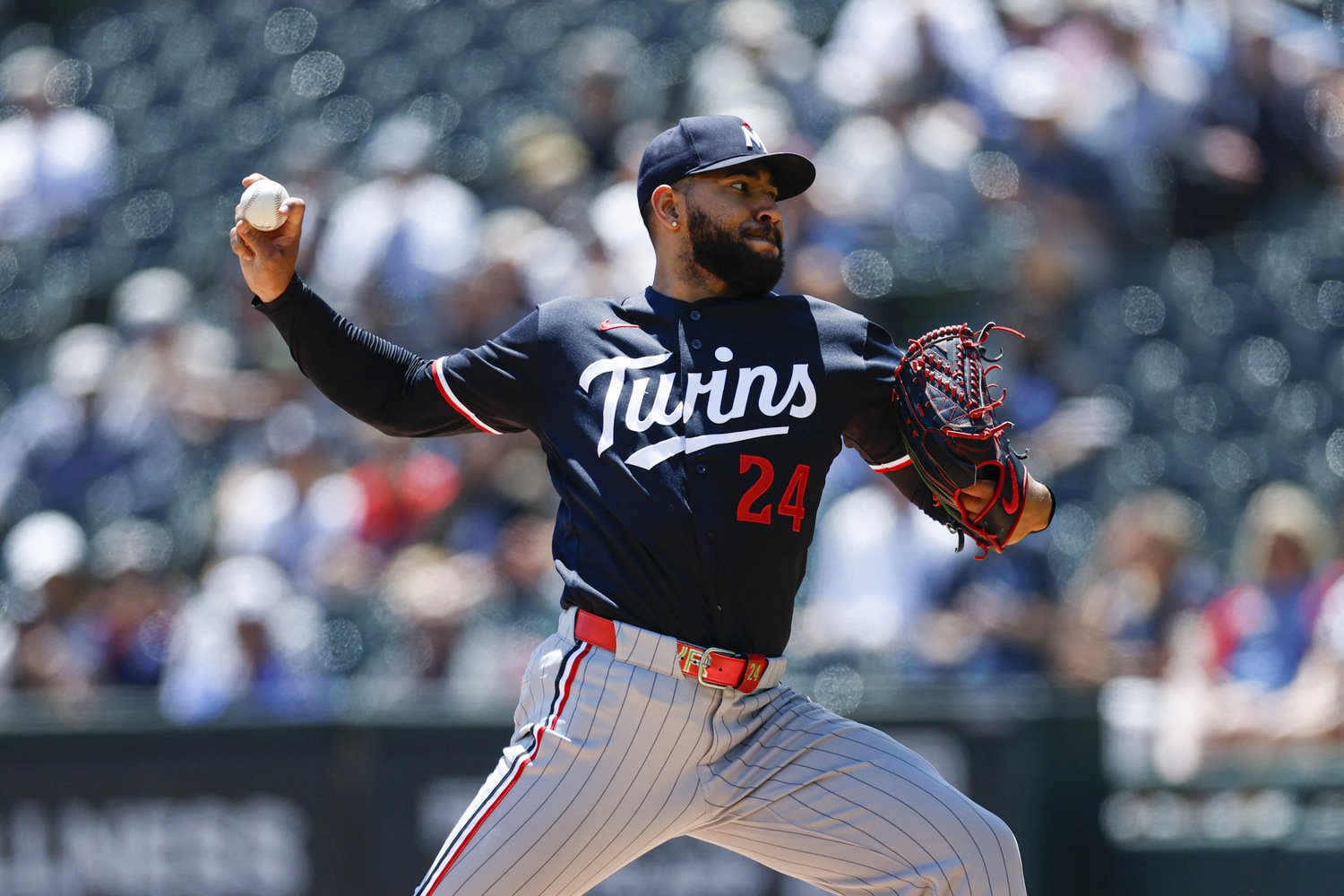 The Blue Jays have acquired pitcher Simeon Woods Richardson in a trade with the Twins, according to Mitch Bannon of The Athletic. Minnesota will send cash considerations back to Toronto. Woods Richardson, 25, was a prospect in the Blue Jays' system from 2019-21. Toronto acquired him from the Mets in the Marcus Stroman trade and later sent him to the Twins in the José Berríos deal. The righty was designated for assignment over the weekend. He pitched well for the Twins from 2024-25, putting up a 4.11 ERA over 51 games (50 starts). However, he has struggled in 2026, with a 7.74 ERA in 47.2 innings. Jays Centre's Jim Scott recently wrote about Woods Richardson as a potential target for the Blue Jays.
 -
.jpg.9dca6e8e11f7ea125ed163d72311f4bc.jpg) The Toronto Blue Jays have acquired more right-handed depth in the form of veteran reliever Justin Topa. Topa, 35, has seven seasons of MLB experience with the Brewers, Mariners, and Twins. He owns a 4.27 ERA in 172 career appearances, with nine saves and 32 holds. The righty struggled badly for Minnesota earlier this year (8.05 ERA, 5.97 xERA in 19 IP), prompting his release. However, he was solid for the Twins in 2025, pitching to a 3.90 ERA (4.42 xERA) in 60 frames. The Blue Jays have 10 pitchers on their major league injured list, and they're currently counting on bullpen games to fill two of the five slots in their rotation. So, it makes sense that they're stockpiling pitching depth, and it wouldn't be surprising to see Topa get a shot with Toronto in the coming weeks.
The Toronto Blue Jays have acquired more right-handed depth in the form of veteran reliever Justin Topa. Topa, 35, has seven seasons of MLB experience with the Brewers, Mariners, and Twins. He owns a 4.27 ERA in 172 career appearances, with nine saves and 32 holds. The righty struggled badly for Minnesota earlier this year (8.05 ERA, 5.97 xERA in 19 IP), prompting his release. However, he was solid for the Twins in 2025, pitching to a 3.90 ERA (4.42 xERA) in 60 frames. The Blue Jays have 10 pitchers on their major league injured list, and they're currently counting on bullpen games to fill two of the five slots in their rotation. So, it makes sense that they're stockpiling pitching depth, and it wouldn't be surprising to see Topa get a shot with Toronto in the coming weeks. -
The Toronto Blue Jays have acquired more right-handed depth in the form of veteran reliever Justin Topa. Topa, 35, has seven seasons of MLB experience with the Brewers, Mariners, and Twins. He owns a 4.27 ERA in 172 career appearances, with nine saves and 32 holds. The righty struggled badly for Minnesota earlier this year (8.05 ERA, 5.97 xERA in 19 IP), prompting his release. However, he was solid for the Twins in 2025, pitching to a 3.90 ERA (4.42 xERA) in 60 frames. The Blue Jays have 10 pitchers on their major league injured list, and they're currently counting on bullpen games to fill two of the five slots in their rotation. So, it makes sense that they're stockpiling pitching depth, and it wouldn't be surprising to see Topa get a shot with Toronto in the coming weeks. View full rumor
-
Two months into 2026, the Blue Jays have had to dip into their farm system several times to address injuries to position players like Alejandro Kirk, Addison Barger, and Lenyn Sosa. That isn't ideal, but things have gone about as well as anyone could have possibly hoped for the rookie hitters. Brandon Valenzuela has the poise of a veteran behind the plate, Yohendrick Piñango has the highest OPS and wRC+ on the team (min. 50 PA), and Charles McAdoo hit a huge home run in his very first big league game. Even better, the success stories of the Blue Jays' farm system go beyond just what we've seen at the big league level. Many of Toronto's position player prospects are enjoying strong seasons. Let's talk about the best of those hitters from May. Honourable Mention: Franklin Rojas (FCL) May Stats: 16 G, 68 PA, 1 HR, .316/.426/.439, 130 wRC+ Franklin Rojas was Toronto's top international signing in 2024, and he made his pro debut in the Dominican Summer League later that year. After two seasons in the DSL, the catcher made his stateside debut in 2026 and started off strong, batting .316 with a .426 OBP in May. Honourable Mention: Sam White (FCL) May Stats: 20 G, 72 PA, 4 HR, .328/.444/.603, 161 wRC+ Ontario native Sam White signed with the Blue Jays as an undrafted free agent last summer. He moved all around the field in college, from catcher to third base to left field, but he has primarily played first base in his first professional season. The odds might be stacked against him as a 22-year-old first baseman in the Complex League, but White couldn't have asked for a better start to his career. He slugged four home runs and four doubles in his first 20 games. Honourable Mention: Je'Von Ward May Stats: 17 G, 53 PA, 5 HR, .319/.396/.681, 176 wRC+ Je'Von Ward earned a promotion to Triple-A Buffalo in mid-April, and after taking a couple of weeks to adjust to the new level, he started mashing for the Bisons. Ward hit five home runs in the month, despite only taking 53 trips to the plate. At 26, he's on the older side for a player making his Triple-A debut, and as a lefty-batting outfielder, he doesn't exactly have a clear path to the majors. That said, if he can maintain his power and cut down on the strikeouts, the Jays will have to take notice eventually. No. 3: Alexis Hernandez May Stats: 24 G, 105 PA, 7 HR, .318/.398/.648, 174 wRC+ Alexis Hernandez is a name to watch. Never a top-ranked prospect, he joined the Blue Jays a few years back in the minor league portion of the Rule 5 draft. The young outfielder didn't make a name for himself immediately, but in 68 games for High-A Vancouver over the last two seasons, he is hitting .290 with 10 home runs, 27 extra-base hits, eight stolen bases, and a 132 wRC+. He looked better than ever this past May, clubbing seven of those 10 home runs and finishing the month with a 174 wRC+. No. 2: Jay Harry May Stats: 25 G, 96 PA, 7 HR, .323/.333/.667, 152 wRC+ If you're wondering where this version of Jay Harry came from, you aren't alone. Over his first 127 games in the Blue Jays system, the utility man hit .202 with a .598 OPS and a 71 wRC+. He looked particularly lost after his promotion to Double-A New Hampshire last year (46 wRC+ in 44 games), and the Jays sent him back down to High-A Vancouver to finish the season. To say his second stint with the Fisher Cats has gone better would be the understatement of the century. Harry hit .357 with a 130 wRC+ in April, although only three of his 15 hits went for extra bases and none went over the fence. He remedied that issue in May with seven home runs and 16 extra-base hits. He also cut his strikeout rate down from 32.6% to 21.9%. The sample is still small, but all of a sudden, Harry is looking like a prospect you need to know. No. 1: RJ Schreck May Stats: 27 G, 115 PA, 4 HR, .297/.435/.516, 156 wRC+ Plenty of Blue Jays prospects looked good in May, but RJ Schreck gets the top spot because he's the most likely to make his way to the majors at some point this year. Early this spring, there were even rumblings that Schreck could compete for a spot on the Opening Day roster. That was before the Jays traded for Jesús Sánchez, and before Schreck went 3-for-21 in spring training. Yet, after what we saw from Schreck in May, it's clear why those rumblings were there in the first place. The outfielder hit .297 on the month with four home runs, eight doubles, and 18 walks. The Blue Jays already have a surplus of lefty-batting outfielders on their active roster, but Schreck's ability to play center field could earn him a shot if he keeps hitting like this. View full article
-
Toronto Blue Jays Minor League Hitters of the Month - May 2026
Leo Morgenstern posted an article in Minor Leagues
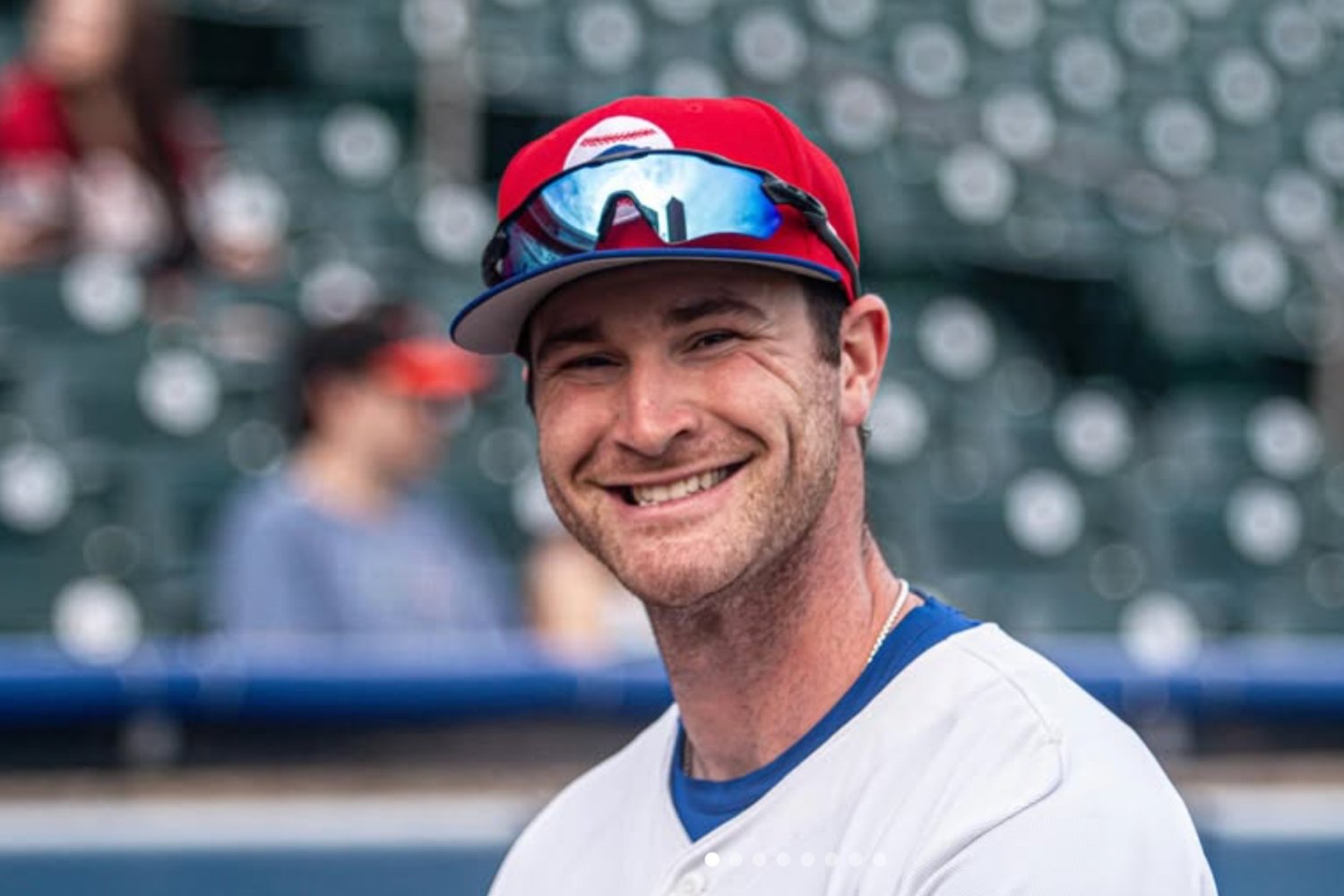 Two months into 2026, the Blue Jays have had to dip into their farm system several times to address injuries to position players like Alejandro Kirk, Addison Barger, and Lenyn Sosa. That isn't ideal, but things have gone about as well as anyone could have possibly hoped for the rookie hitters. Brandon Valenzuela has the poise of a veteran behind the plate, Yohendrick Piñango has the highest OPS and wRC+ on the team (min. 50 PA), and Charles McAdoo hit a huge home run in his very first big league game. Even better, the success stories of the Blue Jays' farm system go beyond just what we've seen at the big league level. Many of Toronto's position player prospects are enjoying strong seasons. Let's talk about the best of those hitters from May. Honourable Mention: Franklin Rojas (FCL) May Stats: 16 G, 68 PA, 1 HR, .316/.426/.439, 130 wRC+ Franklin Rojas was Toronto's top international signing in 2024, and he made his pro debut in the Dominican Summer League later that year. After two seasons in the DSL, the catcher made his stateside debut in 2026 and started off strong, batting .316 with a .426 OBP in May. Honourable Mention: Sam White (FCL) May Stats: 20 G, 72 PA, 4 HR, .328/.444/.603, 161 wRC+ Ontario native Sam White signed with the Blue Jays as an undrafted free agent last summer. He moved all around the field in college, from catcher to third base to left field, but he has primarily played first base in his first professional season. The odds might be stacked against him as a 22-year-old first baseman in the Complex League, but White couldn't have asked for a better start to his career. He slugged four home runs and four doubles in his first 20 games. Honourable Mention: Je'Von Ward May Stats: 17 G, 53 PA, 5 HR, .319/.396/.681, 176 wRC+ Je'Von Ward earned a promotion to Triple-A Buffalo in mid-April, and after taking a couple of weeks to adjust to the new level, he started mashing for the Bisons. Ward hit five home runs in the month, despite only taking 53 trips to the plate. At 26, he's on the older side for a player making his Triple-A debut, and as a lefty-batting outfielder, he doesn't exactly have a clear path to the majors. That said, if he can maintain his power and cut down on the strikeouts, the Jays will have to take notice eventually. No. 3: Alexis Hernandez May Stats: 24 G, 105 PA, 7 HR, .318/.398/.648, 174 wRC+ Alexis Hernandez is a name to watch. Never a top-ranked prospect, he joined the Blue Jays a few years back in the minor league portion of the Rule 5 draft. The young outfielder didn't make a name for himself immediately, but in 68 games for High-A Vancouver over the last two seasons, he is hitting .290 with 10 home runs, 27 extra-base hits, eight stolen bases, and a 132 wRC+. He looked better than ever this past May, clubbing seven of those 10 home runs and finishing the month with a 174 wRC+. No. 2: Jay Harry May Stats: 25 G, 96 PA, 7 HR, .323/.333/.667, 152 wRC+ If you're wondering where this version of Jay Harry came from, you aren't alone. Over his first 127 games in the Blue Jays system, the utility man hit .202 with a .598 OPS and a 71 wRC+. He looked particularly lost after his promotion to Double-A New Hampshire last year (46 wRC+ in 44 games), and the Jays sent him back down to High-A Vancouver to finish the season. To say his second stint with the Fisher Cats has gone better would be the understatement of the century. Harry hit .357 with a 130 wRC+ in April, although only three of his 15 hits went for extra bases and none went over the fence. He remedied that issue in May with seven home runs and 16 extra-base hits. He also cut his strikeout rate down from 32.6% to 21.9%. The sample is still small, but all of a sudden, Harry is looking like a prospect you need to know. No. 1: RJ Schreck May Stats: 27 G, 115 PA, 4 HR, .297/.435/.516, 156 wRC+ Plenty of Blue Jays prospects looked good in May, but RJ Schreck gets the top spot because he's the most likely to make his way to the majors at some point this year. Early this spring, there were even rumblings that Schreck could compete for a spot on the Opening Day roster. That was before the Jays traded for Jesús Sánchez, and before Schreck went 3-for-21 in spring training. Yet, after what we saw from Schreck in May, it's clear why those rumblings were there in the first place. The outfielder hit .297 on the month with four home runs, eight doubles, and 18 walks. The Blue Jays already have a surplus of lefty-batting outfielders on their active roster, but Schreck's ability to play center field could earn him a shot if he keeps hitting like this.
 -
It's more bad news for yet another Toronto Blue Jays pitcher. Left-hander Joe Mantiply, who has already been on the IL for the past two weeks, needs surgery to repair the damage in his left knee. It will be an arthroscopic procedure. The good news is that the Jays expect to have Mantiply back at some point later this year, although it might be toward the end of the season. The 35-year-old pitched well for Toronto before he hit the shelf, tossing 17.2 innings with a 2.04 ERA. He struck out 16 and walked four, generating groundballs at a 48.9% rate. While Mantiply is out, the Blue Jays will continue to lean heavily on fellow left-hander Mason Fluharty. Rookie southpaw Adam Macko will also have a chance to carve out a more permanent role in Toronto's bullpen if he continues to succeed. View full rumor
-
.jpg.0c8cf5d0187cc63fddeed601cc4a7dcb.jpg) It's more bad news for yet another Toronto Blue Jays pitcher. Left-hander Joe Mantiply, who has already been on the IL for the past two weeks, needs surgery to repair the damage in his left knee. It will be an arthroscopic procedure. The good news is that the Jays expect to have Mantiply back at some point later this year, although it might be toward the end of the season. The 35-year-old pitched well for Toronto before he hit the shelf, tossing 17.2 innings with a 2.04 ERA. He struck out 16 and walked four, generating groundballs at a 48.9% rate. While Mantiply is out, the Blue Jays will continue to lean heavily on fellow left-hander Mason Fluharty. Rookie southpaw Adam Macko will also have a chance to carve out a more permanent role in Toronto's bullpen if he continues to succeed.
It's more bad news for yet another Toronto Blue Jays pitcher. Left-hander Joe Mantiply, who has already been on the IL for the past two weeks, needs surgery to repair the damage in his left knee. It will be an arthroscopic procedure. The good news is that the Jays expect to have Mantiply back at some point later this year, although it might be toward the end of the season. The 35-year-old pitched well for Toronto before he hit the shelf, tossing 17.2 innings with a 2.04 ERA. He struck out 16 and walked four, generating groundballs at a 48.9% rate. While Mantiply is out, the Blue Jays will continue to lean heavily on fellow left-hander Mason Fluharty. Rookie southpaw Adam Macko will also have a chance to carve out a more permanent role in Toronto's bullpen if he continues to succeed. -
It's more bad news for yet another Toronto Blue Jays pitcher. Left-hander Joe Mantiply, who has already been on the IL for the past two weeks, needs surgery to repair the damage in his left knee. It will be an arthroscopic procedure. The good news is that the Jays expect to have Mantiply back at some point later this year, although it might be toward the end of the season. The 35-year-old pitched well for Toronto before he hit the shelf, tossing 17.2 innings with a 2.04 ERA. He struck out 16 and walked four, generating groundballs at a 48.9% rate. While Mantiply is out, the Blue Jays will continue to lean heavily on fellow left-hander Mason Fluharty. Rookie southpaw Adam Macko will also have a chance to carve out a more permanent role in Toronto's bullpen if he continues to succeed. View full rumor
-
.jpg.57a79728cf11233d7420e42d4a722cbe.jpg) The Toronto Blue Jays have officially selected infield prospect Charles McAdoo to their active roster. He will replace fellow righty-batting infielder Lenyn Sosa, who heads to the IL with a right wrist contusion after getting hit by a pitch on Tuesday. Lazaro Estrada (shoulder impingement) has been transferred to the 60-day IL to open space on the 40-man roster; the right-hander had been on the 15-day IL since April 4. The Jays will hope McAdoo (Jays Centre's No. 14 prospect) can be a spark for their offense, which has struggled against left-handed pitching in 2026. In addition, Connor Seabold has reported to the Jays. He will be available out of the bullpen tonight, giving the Jays a much-needed fresh arm. Fellow right-hander Chase Lee has been optioned to make room on the active roster. Toronto already freed up a 40-man slot for Seabold when they traded for him yesterday.
The Toronto Blue Jays have officially selected infield prospect Charles McAdoo to their active roster. He will replace fellow righty-batting infielder Lenyn Sosa, who heads to the IL with a right wrist contusion after getting hit by a pitch on Tuesday. Lazaro Estrada (shoulder impingement) has been transferred to the 60-day IL to open space on the 40-man roster; the right-hander had been on the 15-day IL since April 4. The Jays will hope McAdoo (Jays Centre's No. 14 prospect) can be a spark for their offense, which has struggled against left-handed pitching in 2026. In addition, Connor Seabold has reported to the Jays. He will be available out of the bullpen tonight, giving the Jays a much-needed fresh arm. Fellow right-hander Chase Lee has been optioned to make room on the active roster. Toronto already freed up a 40-man slot for Seabold when they traded for him yesterday. -
The Toronto Blue Jays have officially selected infield prospect Charles McAdoo to their active roster. He will replace fellow righty-batting infielder Lenyn Sosa, who heads to the IL with a right wrist contusion after getting hit by a pitch on Tuesday. Lazaro Estrada (shoulder impingement) has been transferred to the 60-day IL to open space on the 40-man roster; the right-hander had been on the 15-day IL since April 4. The Jays will hope McAdoo (Jays Centre's No. 14 prospect) can be a spark for their offense, which has struggled against left-handed pitching in 2026. In addition, Connor Seabold has reported to the Jays. He will be available out of the bullpen tonight, giving the Jays a much-needed fresh arm. Fellow right-hander Chase Lee has been optioned to make room on the active roster. Toronto already freed up a 40-man slot for Seabold when they traded for him yesterday. View full rumor
-
Note: I wrote this story yesterday, before the news broke that the Blue Jays will call up Charles McAdoo. While they haven't officially announced that Sosa will be cut to make room for McAdoo, it seems like the inevitable corresponding move. Lenyn Sosa is celebrating a home run in the picture you see above. He hit that home run on May 2. It was his first (and remains his only) home run of the season. Yet, until last night, Sosa somehow had more home runs than walks on the year. The infielder didn't earn a base on balls until his 113th plate appearance of 2026. Sosa's walk rate still starts with a goose egg, but at least it doesn't end with a zero anymore. Sitting at 0.9%, it ranks last among major league hitters with at least 50 PA. (Tyler Heineman ranks second-to-last. Nathan Lukes ranks sixth from the bottom. The Blue Jays as a team have the third-worst walk rate in baseball.) In the grand scheme of things, the difference between one and zero walks is negligible. But I love anything odd and unusual, and Sosa's long walk-less streak definitely fits into that category. It took him 38 games (excluding one in which he only appeared as a pinch-runner) to draw his first free pass. That's the longest such streak to start a season since Willians Astudillo in 2021, who didn't draw a walk until his 40th game of that year. It's also the longest walk-less streak to start a season in Blue Jays history, although that comes with an asterisk, since Sosa played his first 12 games of 2026 with the White Sox. The longest walk-less streak at any point in Blue Jays history belongs to Alfredo Griffin. The shortstop didn't walk at all in his final 56 games of the 1984 season. He was then traded to Oakland and spent the next seven seasons with the A's and Dodgers. When he returned to the Blue Jays in 1992, he appeared in another 10 games (with at least one PA) before he drew a walk, so technically, his walk-less streak with Toronto lasted an incredible 66 games – and almost eight years. For the sake of remembering guys, other Blue Jays with long walk-less streaks include Dámaso García, John McDonald, Darwin Barney, Tony Fernández, Pat Borders, and Garth Iorg. McDonald, one of my favourite remembersome guys, holds the team record for lowest walk rate in a season (min. 100). In 2009, the infielder walked just once in 156 trips to the plate, a 0.6% rate. Among hitters who played a more regular role, Griffin holds the record with a 0.9% walk rate over 442 PA in 1984. No other Blue Jay with even 300 PA in a season has ever finished with a walk rate under 2.0%. Turning back to Sosa, his walk-less streak actually extended several games back into 2025. From last September to this May, he went 175 PA without a base on balls. So, how does something like this happen? Are opposing pitchers so unafraid of Sosa that they only throw him pitches in the strike zone? Not at all. Sosa ranks third among all batters this season (min. 50 PA) in out-of-zone rate. Almost 60% of the pitches he's seen have been outside the zone, according to Statcast. The MLB average is 52.6%. The only two batters who have seen more out-of-zone pitches than Sosa are Moisés Ballesteros and Junior Caminero. And unlike those two, Sosa isn't a serious power threat. He just has really poor plate discipline, and, well, pitchers know it. The righty batter is one of only four hitters (min. 50 PA) with a chase rate over 50%. His opponents are taking advantage. Let me summarize. About 60% of the pitches Sosa gets are outside the strike zone. He has swung at just over half of them. That means 30% of all pitches opposing pitchers have thrown to Sosa have resulted in a swing on a pitch outside the zone. No wonder he never walks! It's hard to overstate how much good Sosa could do himself by just keeping the bat on his shoulder more often. It wouldn't work forever. Eventually, opposing pitchers would start challenging him in the zone. Temporarily, however, I think he should just try mentally flipping a coin. Heads, he swings; tails, he lays off. It might sound dumb, but we're talking about a guy with a .207 on-base percentage and a 32 wRC+ this season. Do you really think the coin flip approach would be any worse than whatever approach he's trying right now? I'll leave you with the sequence of pitches that led to Sosa's first (and who knows, maybe his only) walk of 2026: It was a garbage time plate appearance – the Jays were down six in the bottom of the ninth – but to his credit, Sosa worked back from an 0-2 hole. That said, all four balls from Marlins lefty Cade Gibson were so far outside that even you or I could have drawn the walk. Hopefully, that walk helped Sosa remember how nice it is to trot to first base unencumbered. (He got hit by his first pitch of the season the next day, but I'm sure he prefers reaching base without any searing pain.) The fact that he can bat right-handed and play multiple infield positions has kept him on the roster to this point, but the Blue Jays won't be willing to stomach his .207 OBP forever. View full article
-
.jpg.e8514162716e210678597ae018820488.jpg) Note: I wrote this story yesterday, before the news broke that the Blue Jays will call up Charles McAdoo. While they haven't officially announced that Sosa will be cut to make room for McAdoo, it seems like the inevitable corresponding move. Lenyn Sosa is celebrating a home run in the picture you see above. He hit that home run on May 2. It was his first (and remains his only) home run of the season. Yet, until last night, Sosa somehow had more home runs than walks on the year. The infielder didn't earn a base on balls until his 113th plate appearance of 2026. Sosa's walk rate still starts with a goose egg, but at least it doesn't end with a zero anymore. Sitting at 0.9%, it ranks last among major league hitters with at least 50 PA. (Tyler Heineman ranks second-to-last. Nathan Lukes ranks sixth from the bottom. The Blue Jays as a team have the third-worst walk rate in baseball.) In the grand scheme of things, the difference between one and zero walks is negligible. But I love anything odd and unusual, and Sosa's long walk-less streak definitely fits into that category. It took him 38 games (excluding one in which he only appeared as a pinch-runner) to draw his first free pass. That's the longest such streak to start a season since Willians Astudillo in 2021, who didn't draw a walk until his 40th game of that year. It's also the longest walk-less streak to start a season in Blue Jays history, although that comes with an asterisk, since Sosa played his first 12 games of 2026 with the White Sox. The longest walk-less streak at any point in Blue Jays history belongs to Alfredo Griffin. The shortstop didn't walk at all in his final 56 games of the 1984 season. He was then traded to Oakland and spent the next seven seasons with the A's and Dodgers. When he returned to the Blue Jays in 1992, he appeared in another 10 games (with at least one PA) before he drew a walk, so technically, his walk-less streak with Toronto lasted an incredible 66 games – and almost eight years. For the sake of remembering guys, other Blue Jays with long walk-less streaks include Dámaso García, John McDonald, Darwin Barney, Tony Fernández, Pat Borders, and Garth Iorg. McDonald, one of my favourite remembersome guys, holds the team record for lowest walk rate in a season (min. 100). In 2009, the infielder walked just once in 156 trips to the plate, a 0.6% rate. Among hitters who played a more regular role, Griffin holds the record with a 0.9% walk rate over 442 PA in 1984. No other Blue Jay with even 300 PA in a season has ever finished with a walk rate under 2.0%. Turning back to Sosa, his walk-less streak actually extended several games back into 2025. From last September to this May, he went 175 PA without a base on balls. So, how does something like this happen? Are opposing pitchers so unafraid of Sosa that they only throw him pitches in the strike zone? Not at all. Sosa ranks third among all batters this season (min. 50 PA) in out-of-zone rate. Almost 60% of the pitches he's seen have been outside the zone, according to Statcast. The MLB average is 52.6%. The only two batters who have seen more out-of-zone pitches than Sosa are Moisés Ballesteros and Junior Caminero. And unlike those two, Sosa isn't a serious power threat. He just has really poor plate discipline, and, well, pitchers know it. The righty batter is one of only four hitters (min. 50 PA) with a chase rate over 50%. His opponents are taking advantage. Let me summarize. About 60% of the pitches Sosa gets are outside the strike zone. He has swung at just over half of them. That means 30% of all pitches opposing pitchers have thrown to Sosa have resulted in a swing on a pitch outside the zone. No wonder he never walks! It's hard to overstate how much good Sosa could do himself by just keeping the bat on his shoulder more often. It wouldn't work forever. Eventually, opposing pitchers would start challenging him in the zone. Temporarily, however, I think he should just try mentally flipping a coin. Heads, he swings; tails, he lays off. It might sound dumb, but we're talking about a guy with a .207 on-base percentage and a 32 wRC+ this season. Do you really think the coin flip approach would be any worse than whatever approach he's trying right now? I'll leave you with the sequence of pitches that led to Sosa's first (and who knows, maybe his only) walk of 2026: It was a garbage time plate appearance – the Jays were down six in the bottom of the ninth – but to his credit, Sosa worked back from an 0-2 hole. That said, all four balls from Marlins lefty Cade Gibson were so far outside that even you or I could have drawn the walk. Hopefully, that walk helped Sosa remember how nice it is to trot to first base unencumbered. (He got hit by his first pitch of the season the next day, but I'm sure he prefers reaching base without any searing pain.) The fact that he can bat right-handed and play multiple infield positions has kept him on the roster to this point, but the Blue Jays won't be willing to stomach his .207 OBP forever.
Note: I wrote this story yesterday, before the news broke that the Blue Jays will call up Charles McAdoo. While they haven't officially announced that Sosa will be cut to make room for McAdoo, it seems like the inevitable corresponding move. Lenyn Sosa is celebrating a home run in the picture you see above. He hit that home run on May 2. It was his first (and remains his only) home run of the season. Yet, until last night, Sosa somehow had more home runs than walks on the year. The infielder didn't earn a base on balls until his 113th plate appearance of 2026. Sosa's walk rate still starts with a goose egg, but at least it doesn't end with a zero anymore. Sitting at 0.9%, it ranks last among major league hitters with at least 50 PA. (Tyler Heineman ranks second-to-last. Nathan Lukes ranks sixth from the bottom. The Blue Jays as a team have the third-worst walk rate in baseball.) In the grand scheme of things, the difference between one and zero walks is negligible. But I love anything odd and unusual, and Sosa's long walk-less streak definitely fits into that category. It took him 38 games (excluding one in which he only appeared as a pinch-runner) to draw his first free pass. That's the longest such streak to start a season since Willians Astudillo in 2021, who didn't draw a walk until his 40th game of that year. It's also the longest walk-less streak to start a season in Blue Jays history, although that comes with an asterisk, since Sosa played his first 12 games of 2026 with the White Sox. The longest walk-less streak at any point in Blue Jays history belongs to Alfredo Griffin. The shortstop didn't walk at all in his final 56 games of the 1984 season. He was then traded to Oakland and spent the next seven seasons with the A's and Dodgers. When he returned to the Blue Jays in 1992, he appeared in another 10 games (with at least one PA) before he drew a walk, so technically, his walk-less streak with Toronto lasted an incredible 66 games – and almost eight years. For the sake of remembering guys, other Blue Jays with long walk-less streaks include Dámaso García, John McDonald, Darwin Barney, Tony Fernández, Pat Borders, and Garth Iorg. McDonald, one of my favourite remembersome guys, holds the team record for lowest walk rate in a season (min. 100). In 2009, the infielder walked just once in 156 trips to the plate, a 0.6% rate. Among hitters who played a more regular role, Griffin holds the record with a 0.9% walk rate over 442 PA in 1984. No other Blue Jay with even 300 PA in a season has ever finished with a walk rate under 2.0%. Turning back to Sosa, his walk-less streak actually extended several games back into 2025. From last September to this May, he went 175 PA without a base on balls. So, how does something like this happen? Are opposing pitchers so unafraid of Sosa that they only throw him pitches in the strike zone? Not at all. Sosa ranks third among all batters this season (min. 50 PA) in out-of-zone rate. Almost 60% of the pitches he's seen have been outside the zone, according to Statcast. The MLB average is 52.6%. The only two batters who have seen more out-of-zone pitches than Sosa are Moisés Ballesteros and Junior Caminero. And unlike those two, Sosa isn't a serious power threat. He just has really poor plate discipline, and, well, pitchers know it. The righty batter is one of only four hitters (min. 50 PA) with a chase rate over 50%. His opponents are taking advantage. Let me summarize. About 60% of the pitches Sosa gets are outside the strike zone. He has swung at just over half of them. That means 30% of all pitches opposing pitchers have thrown to Sosa have resulted in a swing on a pitch outside the zone. No wonder he never walks! It's hard to overstate how much good Sosa could do himself by just keeping the bat on his shoulder more often. It wouldn't work forever. Eventually, opposing pitchers would start challenging him in the zone. Temporarily, however, I think he should just try mentally flipping a coin. Heads, he swings; tails, he lays off. It might sound dumb, but we're talking about a guy with a .207 on-base percentage and a 32 wRC+ this season. Do you really think the coin flip approach would be any worse than whatever approach he's trying right now? I'll leave you with the sequence of pitches that led to Sosa's first (and who knows, maybe his only) walk of 2026: It was a garbage time plate appearance – the Jays were down six in the bottom of the ninth – but to his credit, Sosa worked back from an 0-2 hole. That said, all four balls from Marlins lefty Cade Gibson were so far outside that even you or I could have drawn the walk. Hopefully, that walk helped Sosa remember how nice it is to trot to first base unencumbered. (He got hit by his first pitch of the season the next day, but I'm sure he prefers reaching base without any searing pain.) The fact that he can bat right-handed and play multiple infield positions has kept him on the roster to this point, but the Blue Jays won't be willing to stomach his .207 OBP forever. -
.jpg.239e6d950d1063e018385ebac70c6ac2.jpg) Charles McAdoo is heading to Baltimore. Jays Centre's No. 14 prospect will join the Blue Jays tomorrow as they start a series against the Orioles, according to ESPN's Jeff Passan. He'll be making his MLB debut when he first gets in a game. The Jays can free up space for McAdoo on the active and 40-man rosters by designating Lenyn Sosa for assignment. While I'm only speculating, it's all but certain that's how they're going to do it (unless there's been another injury we don't know about). McAdoo, like Sosa, is a right-handed-hitting infielder. He is primarily a third baseman but has recently started getting reps in at second base, which is Sosa's primary position. And while Sosa is hitting beyond poorly this season (.195 with a .490 OPS), McAdoo has hit well down in Triple-A Buffalo. He has eight home runs and a 13.9% walk rate, and his wRC+ is 12% better than league average. The Blue Jays will hope McAdoo can keep it up at the MLB level, much like his former Bisons teammates Yohendrick Piñango and Brandon Valenzuela.
Charles McAdoo is heading to Baltimore. Jays Centre's No. 14 prospect will join the Blue Jays tomorrow as they start a series against the Orioles, according to ESPN's Jeff Passan. He'll be making his MLB debut when he first gets in a game. The Jays can free up space for McAdoo on the active and 40-man rosters by designating Lenyn Sosa for assignment. While I'm only speculating, it's all but certain that's how they're going to do it (unless there's been another injury we don't know about). McAdoo, like Sosa, is a right-handed-hitting infielder. He is primarily a third baseman but has recently started getting reps in at second base, which is Sosa's primary position. And while Sosa is hitting beyond poorly this season (.195 with a .490 OPS), McAdoo has hit well down in Triple-A Buffalo. He has eight home runs and a 13.9% walk rate, and his wRC+ is 12% better than league average. The Blue Jays will hope McAdoo can keep it up at the MLB level, much like his former Bisons teammates Yohendrick Piñango and Brandon Valenzuela. -
Charles McAdoo is heading to Baltimore. Jays Centre's No. 14 prospect will join the Blue Jays tomorrow as they start a series against the Orioles, according to ESPN's Jeff Passan. He'll be making his MLB debut when he first gets in a game. The Jays can free up space for McAdoo on the active and 40-man rosters by designating Lenyn Sosa for assignment. While I'm only speculating, it's all but certain that's how they're going to do it (unless there's been another injury we don't know about). McAdoo, like Sosa, is a right-handed-hitting infielder. He is primarily a third baseman but has recently started getting reps in at second base, which is Sosa's primary position. And while Sosa is hitting beyond poorly this season (.195 with a .490 OPS), McAdoo has hit well down in Triple-A Buffalo. He has eight home runs and a 13.9% walk rate, and his wRC+ is 12% better than league average. The Blue Jays will hope McAdoo can keep it up at the MLB level, much like his former Bisons teammates Yohendrick Piñango and Brandon Valenzuela. View full rumor
-
.jpg.bcc10f751958d026e1fd605cec44fa71.jpg) On Monday, the Blue Jays selected the contract of right-hander Tanner Andrews from Triple-A Buffalo. The next day, they signed a new arm to replenish their right-handed minor league relief depth. Matt Bowman, 35 on Sunday, has appeared in 231 games over seven major league seasons. From 2016-19, he pitched to a 4.02 ERA and 3.20 xERA in 183 games for the Cardinals and Reds. He underwent Tommy John surgery in 2020 and did not return to the majors until September 2023. Since then, he has tossed 59.1 innings with a 5.46 ERA and 5.05 xERA for the Yankees, Twins, Diamondbacks, Mariners, and Orioles. While Bowman hasn't had much success since his surgery, he's been an interesting pitcher to watch. If you're curious to learn more about Bowman, Michael Rosen of FanGraphs wrote a great piece about the unusual right-hander last season. This past winter, Bowman signed a minor league deal with the Twins. Although he pitched to a 1.69 ERA with 25 strikeouts in 21.1 innings at Triple-A St. Paul, he never got a call-up to the majors. Last week, he exercised an opt-out clause in his contract, prompting Minnesota to grant him his release. Matt Bowman will now report to the Buffalo Bisons, and it wouldn't be surprising to see him pitching for the Blue Jays at some point this year.
On Monday, the Blue Jays selected the contract of right-hander Tanner Andrews from Triple-A Buffalo. The next day, they signed a new arm to replenish their right-handed minor league relief depth. Matt Bowman, 35 on Sunday, has appeared in 231 games over seven major league seasons. From 2016-19, he pitched to a 4.02 ERA and 3.20 xERA in 183 games for the Cardinals and Reds. He underwent Tommy John surgery in 2020 and did not return to the majors until September 2023. Since then, he has tossed 59.1 innings with a 5.46 ERA and 5.05 xERA for the Yankees, Twins, Diamondbacks, Mariners, and Orioles. While Bowman hasn't had much success since his surgery, he's been an interesting pitcher to watch. If you're curious to learn more about Bowman, Michael Rosen of FanGraphs wrote a great piece about the unusual right-hander last season. This past winter, Bowman signed a minor league deal with the Twins. Although he pitched to a 1.69 ERA with 25 strikeouts in 21.1 innings at Triple-A St. Paul, he never got a call-up to the majors. Last week, he exercised an opt-out clause in his contract, prompting Minnesota to grant him his release. Matt Bowman will now report to the Buffalo Bisons, and it wouldn't be surprising to see him pitching for the Blue Jays at some point this year. -
On Monday, the Blue Jays selected the contract of right-hander Tanner Andrews from Triple-A Buffalo. The next day, they signed a new arm to replenish their right-handed minor league relief depth. Matt Bowman, 35 on Sunday, has appeared in 231 games over seven major league seasons. From 2016-19, he pitched to a 4.02 ERA and 3.20 xERA in 183 games for the Cardinals and Reds. He underwent Tommy John surgery in 2020 and did not return to the majors until September 2023. Since then, he has tossed 59.1 innings with a 5.46 ERA and 5.05 xERA for the Yankees, Twins, Diamondbacks, Mariners, and Orioles. While Bowman hasn't had much success since his surgery, he's been an interesting pitcher to watch. If you're curious to learn more about Bowman, Michael Rosen of FanGraphs wrote a great piece about the unusual right-hander last season. This past winter, Bowman signed a minor league deal with the Twins. Although he pitched to a 1.69 ERA with 25 strikeouts in 21.1 innings at Triple-A St. Paul, he never got a call-up to the majors. Last week, he exercised an opt-out clause in his contract, prompting Minnesota to grant him his release. Matt Bowman will now report to the Buffalo Bisons, and it wouldn't be surprising to see him pitching for the Blue Jays at some point this year. View full rumor
-
Blue Jays Place Dylan Cease on the Injured List
Leo Morgenstern replied to Leo Morgenstern's topic in Toronto Blue Jays Talk
Looks like I published this minutes too soon. Tanner Andrews is the corresponding move. 30-year-old righty. He has a 1.35 ERA in 15 games (20 IP) at Triple-A Buffalo this season. He's never pitched in the majors before. Jays already had a 40-man opening, so no more transactions are necessary. Although they can move Berríos to the 60-day IL when they do need another 40-man spot. -
Blue Jays Place Dylan Cease on the Injured List
Leo Morgenstern posted a rumor in Major League Notes
.jpg.65ed6d40b5c72196cb1527c52102d053.jpg) So much for day to day. Dylan Cease is heading to the injured list after straining his left hamstring in Sunday's series finale against the Pirates. There's no timeline for his return as of yet, but John Schneider is hopeful that it's a "minimal stay." The earliest Cease could return is June 9. The Blue Jays were already working a less-than-full rotation before Cease's injury. In addition to Cease, Kevin Gausman, Trey Yesavage, and Patrick Corbin, rookie Spencer Miles has been filling a bulk role in pseudo bullpen games. It isn't clear yet who the Blue Jays will call up to replace Cease right away or how they'll get through the next couple of weeks without him. As for Cease, this will likely end his streak of five straight seasons with at least 32 starts. This is the first non-COVID-related IL stint of his eight-year MLB career.
So much for day to day. Dylan Cease is heading to the injured list after straining his left hamstring in Sunday's series finale against the Pirates. There's no timeline for his return as of yet, but John Schneider is hopeful that it's a "minimal stay." The earliest Cease could return is June 9. The Blue Jays were already working a less-than-full rotation before Cease's injury. In addition to Cease, Kevin Gausman, Trey Yesavage, and Patrick Corbin, rookie Spencer Miles has been filling a bulk role in pseudo bullpen games. It isn't clear yet who the Blue Jays will call up to replace Cease right away or how they'll get through the next couple of weeks without him. As for Cease, this will likely end his streak of five straight seasons with at least 32 starts. This is the first non-COVID-related IL stint of his eight-year MLB career. -
So much for day to day. Dylan Cease is heading to the injured list after straining his left hamstring in Sunday's series finale against the Pirates. There's no timeline for his return as of yet, but John Schneider is hopeful that it's a "minimal stay." The earliest Cease could return is June 9. The Blue Jays were already working a less-than-full rotation before Cease's injury. In addition to Cease, Kevin Gausman, Trey Yesavage, and Patrick Corbin, rookie Spencer Miles has been filling a bulk role in pseudo bullpen games. It isn't clear yet who the Blue Jays will call up to replace Cease right away or how they'll get through the next couple of weeks without him. As for Cease, this will likely end his streak of five straight seasons with at least 32 starts. This is the first non-COVID-related IL stint of his eight-year MLB career. View full rumor
-
Vladimir Guerrero Jr. and Dylan Cease left Sunday's game early, while several of their teammates are working their way back from the injured list. Let's dive right in. Dylan Cease (Hamstring) Cease was dealing as usual on Sunday before discomfort in his left hamstring forced him from the game. With eight strikeouts through 4.2 innings (on 76 pitches), the MLB Ks leader was well on his way to his fourth double-digit strikeout game. With that said, he also gave up two home runs to the Pirates. He's now given up four homers in his last two starts, compared to just one in his first nine. When the discomfort first set in, John Schneider initially let Cease stay in the game. However, the righty only lasted a few more pitches before he got the hook. The abruptness with which he was pulled – in the middle of an at-bat – was concerning. Thankfully, the messaging right now is that the injury is mild, and Cease only left the game out of an abundance of caution. We'll know more later today after he goes for an MRI, but it's possible he'll be able to make his next scheduled start on Friday against the Orioles. Vladimir Guerrero Jr. (Elbow) There was no hemming and hawing before Vladdy left the game in the bottom of the fifth. The first baseman quickly went from frustrated to forlorn after a 92-mph sinker from Mitch Keller hit him in the right elbow. He walked straight to the dugout, shaking his head at John Schneider and trainer Voon Chong. “I followed him, and he just said, ‘I can’t feel my hand,'" Schneider told reporters post-game. "It was kind of like [hitting] a funny bone, but travelling at 90-plus miles an hour.” X-rays were negative, and the team is calling the injury an elbow contusion. Presuming that's really all it is, an IL stint is unlikely (thank goodness). Indeed, Schneider suggested Guerrero could even play today against the Marlins, although I think it's more likely he takes at least one day off to let the pain reside. Nathan Lukes (Hamstring) Nathan Lukes has been on the IL for a month with a left hamstring strain. He played his fourth rehab game for the Dunedin Blue Jays on Sunday, and he's expected to travel back to Toronto today, as reported by Sportsnet's Arden Zwelling on Friday. If the Jays activate the outfielder today, it will be interesting to see how they make room on the roster. Optioning the struggling Davis Schneider to Triple-A Buffalo would be the easiest way to do it, but that would leave the offense quite left-handed-heavy. Max Scherzer (Forearm, Ankle) The veteran hit the injured list at the end of April with right forearm tendinitis and left ankle inflammation. The arm injury sounds scarier, but he was pitching through forearm discomfort for a while; the ankle injury was the straw that broke the camel's back and sent him to the IL. Max Scherzer is throwing again now. He started with bullpen sessions last week, and he will progress to facing live hitters before eventually going on a rehab assignment. Barring any setbacks, it seems like a return at some point in mid-June is most likely. That's good news, but it means the Jays will still need to survive at least three or four more turns through the rotation before they have a proper fifth starter again. Shane Bieber (Elbow) We've gotten shockingly little information about Shane Bieber's health from the very beginning, so I won't get my hopes up until I actually see him on a mound. And by that I mean a major league mound, because Bieber is set to take the mound for the FCL Blue Jays this afternoon. It will be his first rehab start of the year. Although Bieber is starting his rehab assignment before Scherzer, the latter is still expected to return sooner. The plan seems to be for Bieber to ramp slowly across four or five rehab outings, which puts his estimated 2026 debut somewhere around the end of June. More Blue Jays Injury Updates Right-handed reliever Yimi García has been out all season recovering from elbow surgery. He is throwing again, and he's set to face live hitters this week. Catcher Alejandro Kirk has been out since early April with a fractured thumb. John Schneider says he could start a minor league rehab assignment by the end of this week. Outfielder Addison Barger returned from the IL for one game earlier this month before elbow inflammation sent him back to the shelf. He reportedly resumed baseball activities (everyone's favourite vague injury update) this weekend. View full article
-
Blue Jays Injury Updates: Guerrero, Cease, Lukes, Scherzer, Bieber
Leo Morgenstern posted an article in Blue Jays
(1).jpg.5f189e037a716e3a1fb873bc10b7c6c5.jpg) Vladimir Guerrero Jr. and Dylan Cease left Sunday's game early, while several of their teammates are working their way back from the injured list. Let's dive right in. Dylan Cease (Hamstring) Cease was dealing as usual on Sunday before discomfort in his left hamstring forced him from the game. With eight strikeouts through 4.2 innings (on 76 pitches), the MLB Ks leader was well on his way to his fourth double-digit strikeout game. With that said, he also gave up two home runs to the Pirates. He's now given up four homers in his last two starts, compared to just one in his first nine. When the discomfort first set in, John Schneider initially let Cease stay in the game. However, the righty only lasted a few more pitches before he got the hook. The abruptness with which he was pulled – in the middle of an at-bat – was concerning. Thankfully, the messaging right now is that the injury is mild, and Cease only left the game out of an abundance of caution. We'll know more later today after he goes for an MRI, but it's possible he'll be able to make his next scheduled start on Friday against the Orioles. Vladimir Guerrero Jr. (Elbow) There was no hemming and hawing before Vladdy left the game in the bottom of the fifth. The first baseman quickly went from frustrated to forlorn after a 92-mph sinker from Mitch Keller hit him in the right elbow. He walked straight to the dugout, shaking his head at John Schneider and trainer Voon Chong. “I followed him, and he just said, ‘I can’t feel my hand,'" Schneider told reporters post-game. "It was kind of like [hitting] a funny bone, but travelling at 90-plus miles an hour.” X-rays were negative, and the team is calling the injury an elbow contusion. Presuming that's really all it is, an IL stint is unlikely (thank goodness). Indeed, Schneider suggested Guerrero could even play today against the Marlins, although I think it's more likely he takes at least one day off to let the pain reside. Nathan Lukes (Hamstring) Nathan Lukes has been on the IL for a month with a left hamstring strain. He played his fourth rehab game for the Dunedin Blue Jays on Sunday, and he's expected to travel back to Toronto today, as reported by Sportsnet's Arden Zwelling on Friday. If the Jays activate the outfielder today, it will be interesting to see how they make room on the roster. Optioning the struggling Davis Schneider to Triple-A Buffalo would be the easiest way to do it, but that would leave the offense quite left-handed-heavy. Max Scherzer (Forearm, Ankle) The veteran hit the injured list at the end of April with right forearm tendinitis and left ankle inflammation. The arm injury sounds scarier, but he was pitching through forearm discomfort for a while; the ankle injury was the straw that broke the camel's back and sent him to the IL. Max Scherzer is throwing again now. He started with bullpen sessions last week, and he will progress to facing live hitters before eventually going on a rehab assignment. Barring any setbacks, it seems like a return at some point in mid-June is most likely. That's good news, but it means the Jays will still need to survive at least three or four more turns through the rotation before they have a proper fifth starter again. Shane Bieber (Elbow) We've gotten shockingly little information about Shane Bieber's health from the very beginning, so I won't get my hopes up until I actually see him on a mound. And by that I mean a major league mound, because Bieber is set to take the mound for the FCL Blue Jays this afternoon. It will be his first rehab start of the year. Although Bieber is starting his rehab assignment before Scherzer, the latter is still expected to return sooner. The plan seems to be for Bieber to ramp slowly across four or five rehab outings, which puts his estimated 2026 debut somewhere around the end of June. More Blue Jays Injury Updates Right-handed reliever Yimi García has been out all season recovering from elbow surgery. He is throwing again, and he's set to face live hitters this week. Catcher Alejandro Kirk has been out since early April with a fractured thumb. John Schneider says he could start a minor league rehab assignment by the end of this week. Outfielder Addison Barger returned from the IL for one game earlier this month before elbow inflammation sent him back to the shelf. He reportedly resumed baseball activities (everyone's favourite vague injury update) this weekend.
Vladimir Guerrero Jr. and Dylan Cease left Sunday's game early, while several of their teammates are working their way back from the injured list. Let's dive right in. Dylan Cease (Hamstring) Cease was dealing as usual on Sunday before discomfort in his left hamstring forced him from the game. With eight strikeouts through 4.2 innings (on 76 pitches), the MLB Ks leader was well on his way to his fourth double-digit strikeout game. With that said, he also gave up two home runs to the Pirates. He's now given up four homers in his last two starts, compared to just one in his first nine. When the discomfort first set in, John Schneider initially let Cease stay in the game. However, the righty only lasted a few more pitches before he got the hook. The abruptness with which he was pulled – in the middle of an at-bat – was concerning. Thankfully, the messaging right now is that the injury is mild, and Cease only left the game out of an abundance of caution. We'll know more later today after he goes for an MRI, but it's possible he'll be able to make his next scheduled start on Friday against the Orioles. Vladimir Guerrero Jr. (Elbow) There was no hemming and hawing before Vladdy left the game in the bottom of the fifth. The first baseman quickly went from frustrated to forlorn after a 92-mph sinker from Mitch Keller hit him in the right elbow. He walked straight to the dugout, shaking his head at John Schneider and trainer Voon Chong. “I followed him, and he just said, ‘I can’t feel my hand,'" Schneider told reporters post-game. "It was kind of like [hitting] a funny bone, but travelling at 90-plus miles an hour.” X-rays were negative, and the team is calling the injury an elbow contusion. Presuming that's really all it is, an IL stint is unlikely (thank goodness). Indeed, Schneider suggested Guerrero could even play today against the Marlins, although I think it's more likely he takes at least one day off to let the pain reside. Nathan Lukes (Hamstring) Nathan Lukes has been on the IL for a month with a left hamstring strain. He played his fourth rehab game for the Dunedin Blue Jays on Sunday, and he's expected to travel back to Toronto today, as reported by Sportsnet's Arden Zwelling on Friday. If the Jays activate the outfielder today, it will be interesting to see how they make room on the roster. Optioning the struggling Davis Schneider to Triple-A Buffalo would be the easiest way to do it, but that would leave the offense quite left-handed-heavy. Max Scherzer (Forearm, Ankle) The veteran hit the injured list at the end of April with right forearm tendinitis and left ankle inflammation. The arm injury sounds scarier, but he was pitching through forearm discomfort for a while; the ankle injury was the straw that broke the camel's back and sent him to the IL. Max Scherzer is throwing again now. He started with bullpen sessions last week, and he will progress to facing live hitters before eventually going on a rehab assignment. Barring any setbacks, it seems like a return at some point in mid-June is most likely. That's good news, but it means the Jays will still need to survive at least three or four more turns through the rotation before they have a proper fifth starter again. Shane Bieber (Elbow) We've gotten shockingly little information about Shane Bieber's health from the very beginning, so I won't get my hopes up until I actually see him on a mound. And by that I mean a major league mound, because Bieber is set to take the mound for the FCL Blue Jays this afternoon. It will be his first rehab start of the year. Although Bieber is starting his rehab assignment before Scherzer, the latter is still expected to return sooner. The plan seems to be for Bieber to ramp slowly across four or five rehab outings, which puts his estimated 2026 debut somewhere around the end of June. More Blue Jays Injury Updates Right-handed reliever Yimi García has been out all season recovering from elbow surgery. He is throwing again, and he's set to face live hitters this week. Catcher Alejandro Kirk has been out since early April with a fractured thumb. John Schneider says he could start a minor league rehab assignment by the end of this week. Outfielder Addison Barger returned from the IL for one game earlier this month before elbow inflammation sent him back to the shelf. He reportedly resumed baseball activities (everyone's favourite vague injury update) this weekend. -
The Blue Jays needed innings, and no one had thrown more of them over the past decade than Patrick Corbin. It was a perfect fit. Indeed, with Shane Bieber, Cody Ponce, José Berríos, and Max Scherzer on the injured list, Corbin has been a key addition for the Blue Jays in 2026. His 38.1 innings pitched rank third on the team, behind only Kevin Gausman and Dylan Cease. He has given the Jays a chance to win in all eight games he's started, and he's helped to preserve a bullpen that's been called upon heavily early in the year. The southpaw owns a perfectly respectable 4.23 ERA, and the Blue Jays are 4-4 in his eight appearances. Yet, I can't help but worry that the other shoe is bound to drop. And I don't know what the Blue Jays are going to do when it does. Corbin doesn't look like a pitcher who should have a league-average ERA. His last great season was in 2019. Over the next six years, he pitched to a 5.41 ERA. He struck out his opponents at an 18.2% rate and induced grounders on 44.2% of his batted balls. That's an 18.2% K-rate and a 44.2% groundball rate. Those are the numbers that resulted in a 5.41 ERA. Keep that in mind. So far in 2026, his strikeout rate is down to a career-worst 15.0%. Similarly, his groundball rate is down to a career-low 37.1%. Those aren't the numbers of a pitcher who should be able to maintain an ERA under 5.00. Heck, I'm not sure I'd trust someone with those numbers to post an ERA under 6.00. Baseball Savant and Baseball Prospectus agree with me. Despite his 4.23 ERA, Corbin owns a 6.41 xERA and a 5.97 DRA. Indeed, he is showing all the classic warning signs of a pitcher whose numbers are too good to be true. His home run-to-fly ball ratio from 2020-25 was 15.9%. This year, it's a career-low 9.5%. Meanwhile, his left-on-base rate is currently 77.6%, compared to a 69.0% average over the previous six seasons. And though you may look at his .331 BABIP and think "that's awfully high," it isn't actually anything out of the ordinary. His BABIP from 2020-25 was .327, and considering all the groundballs he's given up this year, I'm honestly surprised his BABIP isn't higher. Soon, Corbin is going to start giving up more home runs. He's going to start allowing more baserunners, and more of those baserunners are going to come around to score. Like I said, the other shoe is bound to drop. If I were going to believe that Corbin could keep giving the Blue Jays league-average innings, I’d need evidence that his stuff was meaningfully better than it has been for the last several years. Instead, it might be worse. Corbin is a stopgap. And to his credit, he’s filled that role with aplomb. Even so, he just isn’t a pitcher that a team with serious playoff aspirations can keep running out there every five days. Maybe he can keep giving the Blue Jays innings, but they won’t be the kind of innings that can help the team win games. Unfortunately, there might not be an end in sight for the Corbin era in Toronto. Ponce is out for at least the rest of the regular season. Berríos just had Tommy John. Eric Lauer is a Dodger. Scherzer and Bieber are supposedly nearing their returns, but they both feel like huge wild cards right now. I wouldn’t count on anything from either of them until we see it. Even if Scherzer and Bieber both come back healthy, I wonder if Toronto would use a six-man rotation – Gausman, Cease, Yesavage, Bieber, Scherzer, and Corbin – at least temporarily. Yesavage could certainly benefit from a lighter workload, as could Scherzer and Bieber. A six-man setup would also allow the Blue Jays to keep Corbin in the mix, in case another injury comes up. I don't love the idea of Corbin starting more games for the Jays, but I'm even more concerned about the alternative. We don't want to end up in a situation where the team is left with no choice but to cross its fingers and hope that Spencer Miles — who has already thrown more innings this season than he has in his minor league career — can handle a proper role in the rotation. So, where does this leave us? Well, it’s still early in the season, but it’s not too early to start thinking about the trade deadline. The Jays don’t need to make a move right away, but this rotation is going to need reinforcements eventually. Patrick Corbin is doing great, but he can’t keep doing this all year. View full article
-
.jpg.d1f0039221b22197db236e64094c53e8.jpg) The Blue Jays needed innings, and no one had thrown more of them over the past decade than Patrick Corbin. It was a perfect fit. Indeed, with Shane Bieber, Cody Ponce, José Berríos, and Max Scherzer on the injured list, Corbin has been a key addition for the Blue Jays in 2026. His 38.1 innings pitched rank third on the team, behind only Kevin Gausman and Dylan Cease. He has given the Jays a chance to win in all eight games he's started, and he's helped to preserve a bullpen that's been called upon heavily early in the year. The southpaw owns a perfectly respectable 4.23 ERA, and the Blue Jays are 4-4 in his eight appearances. Yet, I can't help but worry that the other shoe is bound to drop. And I don't know what the Blue Jays are going to do when it does. Corbin doesn't look like a pitcher who should have a league-average ERA. His last great season was in 2019. Over the next six years, he pitched to a 5.41 ERA. He struck out his opponents at an 18.2% rate and induced grounders on 44.2% of his batted balls. That's an 18.2% K-rate and a 44.2% groundball rate. Those are the numbers that resulted in a 5.41 ERA. Keep that in mind. So far in 2026, his strikeout rate is down to a career-worst 15.0%. Similarly, his groundball rate is down to a career-low 37.1%. Those aren't the numbers of a pitcher who should be able to maintain an ERA under 5.00. Heck, I'm not sure I'd trust someone with those numbers to post an ERA under 6.00. Baseball Savant and Baseball Prospectus agree with me. Despite his 4.23 ERA, Corbin owns a 6.41 xERA and a 5.97 DRA. Indeed, he is showing all the classic warning signs of a pitcher whose numbers are too good to be true. His home run-to-fly ball ratio from 2020-25 was 15.9%. This year, it's a career-low 9.5%. Meanwhile, his left-on-base rate is currently 77.6%, compared to a 69.0% average over the previous six seasons. And though you may look at his .331 BABIP and think "that's awfully high," it isn't actually anything out of the ordinary. His BABIP from 2020-25 was .327, and considering all the groundballs he's given up this year, I'm honestly surprised his BABIP isn't higher. Soon, Corbin is going to start giving up more home runs. He's going to start allowing more baserunners, and more of those baserunners are going to come around to score. Like I said, the other shoe is bound to drop. If I were going to believe that Corbin could keep giving the Blue Jays league-average innings, I’d need evidence that his stuff was meaningfully better than it has been for the last several years. Instead, it might be worse. Corbin is a stopgap. And to his credit, he’s filled that role with aplomb. Even so, he just isn’t a pitcher that a team with serious playoff aspirations can keep running out there every five days. Maybe he can keep giving the Blue Jays innings, but they won’t be the kind of innings that can help the team win games. Unfortunately, there might not be an end in sight for the Corbin era in Toronto. Ponce is out for at least the rest of the regular season. Berríos just had Tommy John. Eric Lauer is a Dodger. Scherzer and Bieber are supposedly nearing their returns, but they both feel like huge wild cards right now. I wouldn’t count on anything from either of them until we see it. Even if Scherzer and Bieber both come back healthy, I wonder if Toronto would use a six-man rotation – Gausman, Cease, Yesavage, Bieber, Scherzer, and Corbin – at least temporarily. Yesavage could certainly benefit from a lighter workload, as could Scherzer and Bieber. A six-man setup would also allow the Blue Jays to keep Corbin in the mix, in case another injury comes up. I don't love the idea of Corbin starting more games for the Jays, but I'm even more concerned about the alternative. We don't want to end up in a situation where the team is left with no choice but to cross its fingers and hope that Spencer Miles — who has already thrown more innings this season than he has in his minor league career — can handle a proper role in the rotation. So, where does this leave us? Well, it’s still early in the season, but it’s not too early to start thinking about the trade deadline. The Jays don’t need to make a move right away, but this rotation is going to need reinforcements eventually. Patrick Corbin is doing great, but he can’t keep doing this all year.
The Blue Jays needed innings, and no one had thrown more of them over the past decade than Patrick Corbin. It was a perfect fit. Indeed, with Shane Bieber, Cody Ponce, José Berríos, and Max Scherzer on the injured list, Corbin has been a key addition for the Blue Jays in 2026. His 38.1 innings pitched rank third on the team, behind only Kevin Gausman and Dylan Cease. He has given the Jays a chance to win in all eight games he's started, and he's helped to preserve a bullpen that's been called upon heavily early in the year. The southpaw owns a perfectly respectable 4.23 ERA, and the Blue Jays are 4-4 in his eight appearances. Yet, I can't help but worry that the other shoe is bound to drop. And I don't know what the Blue Jays are going to do when it does. Corbin doesn't look like a pitcher who should have a league-average ERA. His last great season was in 2019. Over the next six years, he pitched to a 5.41 ERA. He struck out his opponents at an 18.2% rate and induced grounders on 44.2% of his batted balls. That's an 18.2% K-rate and a 44.2% groundball rate. Those are the numbers that resulted in a 5.41 ERA. Keep that in mind. So far in 2026, his strikeout rate is down to a career-worst 15.0%. Similarly, his groundball rate is down to a career-low 37.1%. Those aren't the numbers of a pitcher who should be able to maintain an ERA under 5.00. Heck, I'm not sure I'd trust someone with those numbers to post an ERA under 6.00. Baseball Savant and Baseball Prospectus agree with me. Despite his 4.23 ERA, Corbin owns a 6.41 xERA and a 5.97 DRA. Indeed, he is showing all the classic warning signs of a pitcher whose numbers are too good to be true. His home run-to-fly ball ratio from 2020-25 was 15.9%. This year, it's a career-low 9.5%. Meanwhile, his left-on-base rate is currently 77.6%, compared to a 69.0% average over the previous six seasons. And though you may look at his .331 BABIP and think "that's awfully high," it isn't actually anything out of the ordinary. His BABIP from 2020-25 was .327, and considering all the groundballs he's given up this year, I'm honestly surprised his BABIP isn't higher. Soon, Corbin is going to start giving up more home runs. He's going to start allowing more baserunners, and more of those baserunners are going to come around to score. Like I said, the other shoe is bound to drop. If I were going to believe that Corbin could keep giving the Blue Jays league-average innings, I’d need evidence that his stuff was meaningfully better than it has been for the last several years. Instead, it might be worse. Corbin is a stopgap. And to his credit, he’s filled that role with aplomb. Even so, he just isn’t a pitcher that a team with serious playoff aspirations can keep running out there every five days. Maybe he can keep giving the Blue Jays innings, but they won’t be the kind of innings that can help the team win games. Unfortunately, there might not be an end in sight for the Corbin era in Toronto. Ponce is out for at least the rest of the regular season. Berríos just had Tommy John. Eric Lauer is a Dodger. Scherzer and Bieber are supposedly nearing their returns, but they both feel like huge wild cards right now. I wouldn’t count on anything from either of them until we see it. Even if Scherzer and Bieber both come back healthy, I wonder if Toronto would use a six-man rotation – Gausman, Cease, Yesavage, Bieber, Scherzer, and Corbin – at least temporarily. Yesavage could certainly benefit from a lighter workload, as could Scherzer and Bieber. A six-man setup would also allow the Blue Jays to keep Corbin in the mix, in case another injury comes up. I don't love the idea of Corbin starting more games for the Jays, but I'm even more concerned about the alternative. We don't want to end up in a situation where the team is left with no choice but to cross its fingers and hope that Spencer Miles — who has already thrown more innings this season than he has in his minor league career — can handle a proper role in the rotation. So, where does this leave us? Well, it’s still early in the season, but it’s not too early to start thinking about the trade deadline. The Jays don’t need to make a move right away, but this rotation is going to need reinforcements eventually. Patrick Corbin is doing great, but he can’t keep doing this all year.
.jpg.90ce5db348be34462d95c7b99e4340ad.jpg)
.jpg.9dca6e8e11f7ea125ed163d72311f4bc.jpg)
.jpg.0c8cf5d0187cc63fddeed601cc4a7dcb.jpg)
.jpg.57a79728cf11233d7420e42d4a722cbe.jpg)
.jpg.e8514162716e210678597ae018820488.jpg)
.jpg.239e6d950d1063e018385ebac70c6ac2.jpg)
.jpg.bcc10f751958d026e1fd605cec44fa71.jpg)
.jpg.65ed6d40b5c72196cb1527c52102d053.jpg)
(1).jpg.5f189e037a716e3a1fb873bc10b7c6c5.jpg)
.jpg.d1f0039221b22197db236e64094c53e8.jpg)