Jim Scott
-
Posts
60 -
Joined
-
Last visited
-
Days Won
1
Content Type
Profiles
Toronto Blue Jays Videos
2026 Toronto Blue Jays Top Prospects Ranking
Toronto Blue Jays Free Agent & Trade Rumors, Notes, & Tidbits
Guides & Resources
2025 Toronto Blue Jays Draft Pick Tracker
News
2026 Toronto Blue Jays Draft Tracker: Picks & Bonuses
Forums
Blogs
Events
Store
Downloads
Gallery
Everything posted by Jim Scott
-
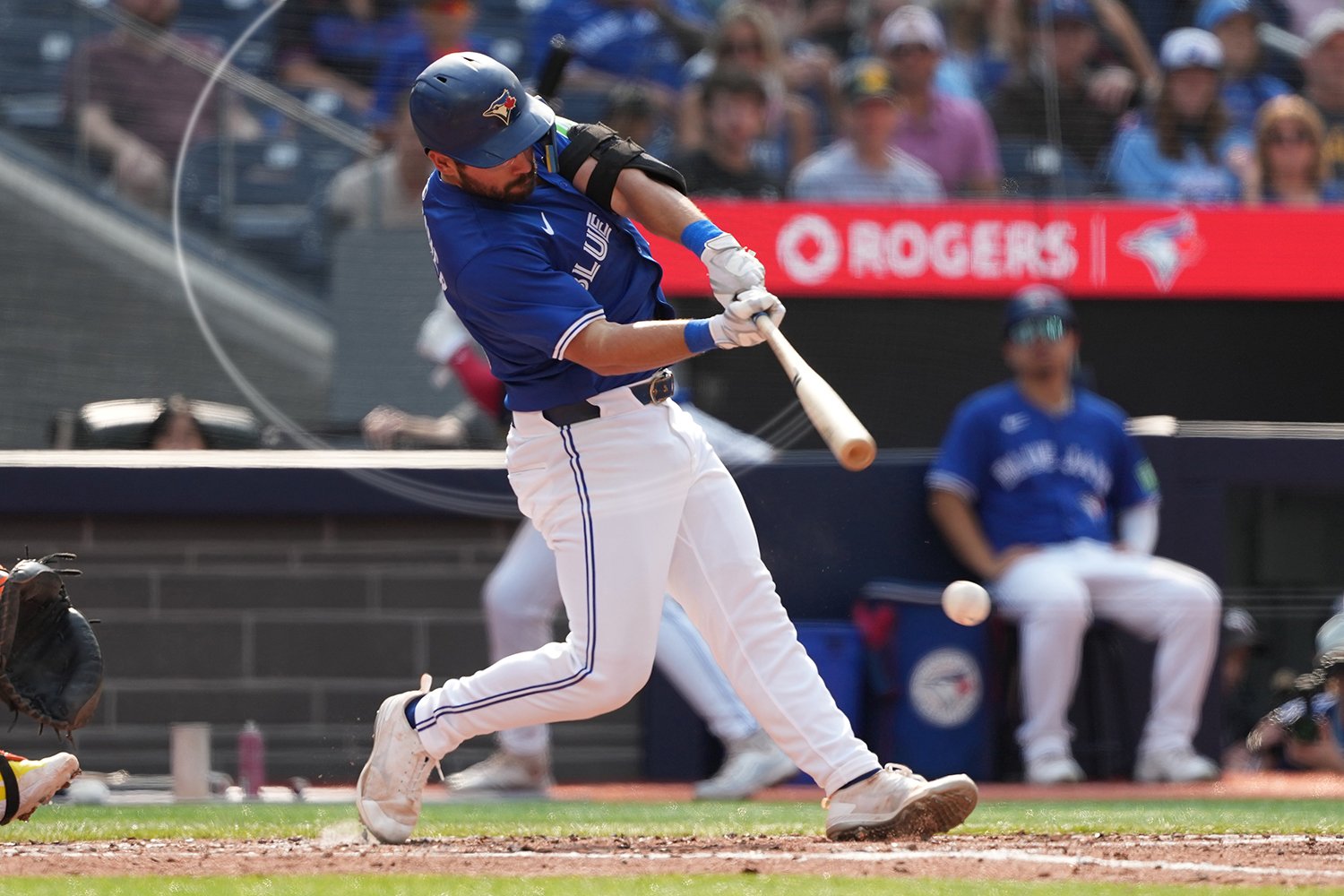 Orelvis Martinez could be a significant contributor to the Jays in 2025 if he can only manage his strikeouts. The Jays were patient with Joey Loperfido in 2024 "despite an abysmal strikeout rate." And one of Alan Roden's top "things to like" is his great plate discipline, as evidenced by his 89th percentile strikeout rate. This fascination with strikeouts is understandable. Strikeouts are very visible, and clearly do nothing to help the team. But are strikeouts really that much worse than any other kind of out? Conventional wisdom has it that strikeouts are evil. The batter did not advance the runner or give the fielders a chance to make an error. Or the ball could disappear into a drainage hole, or lose its cover, or the fielder could be attacked by a gang of seagulls. All these opportunities are lost when a player strikes out. Of course, the catcher could drop the third strike and the batter could reach first. But that is rare – far more rare than a fielding error on a groundball. True, that groundball or liner to an infielder could also result in a double play, but double plays are also relatively rare. Teams turn double plays, on average, in only 10-12% of potential double-play situations. So what is the answer? Does a strikeout hurt a team more than a different type of out, on average? And how would you answer that question? Way back in 1963, an ahead-of-his-time baseball statistician named George Lindsey created a tool called a “run expectancy matrix.” That matrix (also called a RE24 matrix) shows the average expected number of runs for each combination of outs and men on base. Here is an RE24 matrix for 2022 (with thanks to Pitcher List) So for example, when a team has a man on first with nobody out, they will on average score 0.865 runs. If the next player strikes out, the run expectancy of the situation (now man on first, one out) decreases to 0.508. If, instead of striking out, the batter grounds out but advances the runner to second, the run expectancy drops less, to 0.667. And if the batter grounds into a double play, it falls all the way to .097. So advancing the runner decreases the run expectancy by 0.159 but a double play is nearly three times as costly. To use this RE24 tool to calculate the relative impact of strikeouts to other outs in all situations, it would be necessary to calculate the impact of every possible situation, and to then to weight those situations by their probability. So while a fly ball is far better than a strikeout with the bases loaded and no outs, that situation is relatively rare, so it would get lesser weight. Sounds like a lot of math? In their book The Book: Playing The Percentages In Baseball, Tom Tango, Mitchel Lichtman and Andrew Dolphin (“the Gurus”) did the math. For each possible combination of outs and men on base, they calculated the effect on expected runs of a strikeout and of a non-strikeout out based on thousands of actual plays. Their finding are summarized in this table: Most of their findings are highly intuitive. When there is nobody on base, it does not matter; an out is an out, so the incremental cost of a strikeout is zero. And when there are two outs, it also does not matter; an out ends the inning, regardless. They found that a strikeout was better than a garden variety out with runners on first, or first and second, due to the higher risk of a double play. But a groundball or fly ball out is significantly better than a strikeout with a man on third. It would be easy to take the average of the plusses and minuses in this table. But that would be misleading. It is far more common for a player to come to bat with the bases empty – or with a man on first – than it is to come up with the bases loaded. And hitters in different spots in the batting order frequently face different on-base situations with different frequencies. So the Gurus took it one step further, and calculated the average difference between a strikeout and a non-K out for each position in the batting order, based on the probability distribution of on-base situations that a person batting in that position would face. Their finding are summarized in this table" The bottom line? The effect on expected runs of a strikeout is basically the same as a non-strikeout out. The Book was published in 2006. The results are generally still valid, but there have been developments since then that make strikeouts potentially even more attractive (or at least less unattractive?). The first such development is pitcher usage. In 2008, starting pitchers averaged 93.5 pitches per start. By 2024, that figure had decreased to 86.2 pitches. A strikeout takes, on average, 50% more pitches than an out from a ball in play. Running up a starter’s pitch count in 2024 is, if anything, even more important now than it has been in the past. The second change is in the number of home runs. In 2006, American League batters hit 2,546 homers. In 2024, that total had increased to 2,714. As the number of home runs increases, the value of advancing the runner decreases and the negative impact of eliminating a runner (through a double play) increases. This makes groundouts even less attractive than they were in the past. So how does this specifically apply to the Blue Jays? The RE24 tables were prepared based on averages: average hitting, average pitching, and average baserunning. But the Jays are far from an average baserunning team. In 2024, Baseball Savant graded them as the second-worst baserunning team in baseball , and below-average in team sprint speed. So, as an example, if the Jays have Alejandro Kirk (-3 baserunning runs in 2024) or Vladimir Guerrero Jr. (-6 baserunning runs in 2024 - dead last among all qualified players) at first base with less than two outs, would the manager prefer a strikeout or a grounder to short? The Bottom Line It is dangerous to place too much weight on a single player metric. For any individual player, strikeouts might be the reason that their overall offensive profile doesn't work. However, strikeouts need to be evaluated relative to on-base percentage and other measures. It's possible to be productive while striking out frequently, and as swings and missess also tend to go in hand with all-out swings, a high strikeout rate is often the unavoidable side effect of the ability to produce runs through slugging. A pretty fair player - who was once the all-time career strikeout leader - once said that you should not let the fear of striking out hold you back. Perhaps the Jays should not let the fear of a high strikeout rate hold them back when they make roster decisions.
 -
Not sure I agree about Bo. From 2021-23 he averaged a .298/.339/.476 line with a 125 wRC+ and led the AL in total hits twice. He averaged a 4.5 fWAR, despite playing SS (where his poor stats likely outweighed the positional adjustment). If he had played full-time 2B over those 3 years, his wRC+ and fangraphs OFF would have been second only to Altuve among full-time 2B. If I were the Jays, I would be very tempted to try to "buy low" after his poor 2024.
-
Could the Jays approach the extensions for Vladdy and Bo from another angle? Coming into the 2018 draft, the Jays had picks 12, 52, and 88 in the first three rounds. They had their eyes on two young players from Magnolia High School in Texas: Jordan Groshans and Adam Kloffenstein. Problem is, both players were expecting first-round level signing bonuses. But the Jays had an idea. Groshans and Kloffenstein were close friends and they wanted to play together in professional ball. So the Jays drafted Groshans in the first round and Kloffenstein in the third. Groshans agreed to sign for $3.4 million - $800,000 under the pick value of $4.2 million - and Kloffenstein signed for $2.45 million, roughly $1.8 million over slot value. In effect, Jo-Gro's discount partially subsidized Kloff's overslot. Which brings us to Vladimir Guerrero Jr. and Bo Bichette. The two stars have been vocal about their friendship and desire to spend the rest of their careers on the same team. But there are not many teams who would be willing to spend the money necessary to land both players in free agency, and of the few who would be willing, not all have openings at both first base and shortstop (or second base). Toronto has both the money and the need, and both players have expressed a desire to remain with the Jays. So how about this, as an only-slightly-crazy idea? Go to the two agents and say that the Jays would like to keep both players (possibly conditional on Bo moving to second base, but that is another story). Say that the total budget for a 10-year deal for both players is $750 million, and that they can decide between themselves how it should be allocated. It is entirely possible that the players' expressed desire to remain with the Jays is just good public relations. What agent would ever advise his client to badmouth his current team when he might be entering the free agent market in the near future? So maybe the potential for a home-team discount is not high. And similarly, it is one thing to value hanging with your buddy but something altogether different to potentially sacrifice millions of dollars for that privilege. A larger question might be whether the Jays would consider signing both players, even under these terms. $750 million over 10 years would be $75 million per year for only two players (and it would still be less than the contract Juan Soto just signed with the Mets). That would represent almost one-third of the team's total current budget, and could limit its ability to fulfill other needs. But with the inflation of star-level salaries, it is possible that five years from now, $75 million might seem a bargain. The Bottom Line There's a long list of reasons that this idea won't end up as reality. It's slightly crazy and might not even be legal under the collective bargaining agreement. When it comes to contact negotiations, big league players have a lot more rights than high schoolers. But the underlying concept might make sense. If (and this is a big IF) the Jays would want to extend both players, would there be merit in asking them if they would give more favourable terms if they could play together? I remember when the 2010-11 Miami Heat of the NBA signed LeBron James, Dwyane Wade, and Chris Bosh. Each player signed at a discount because they wanted to be part of a superteam. The 2025 Jays might not be a superteam, even with Bichette and Guerrero, but extending those two players could definitely point the franchise in that direction. View full article
-
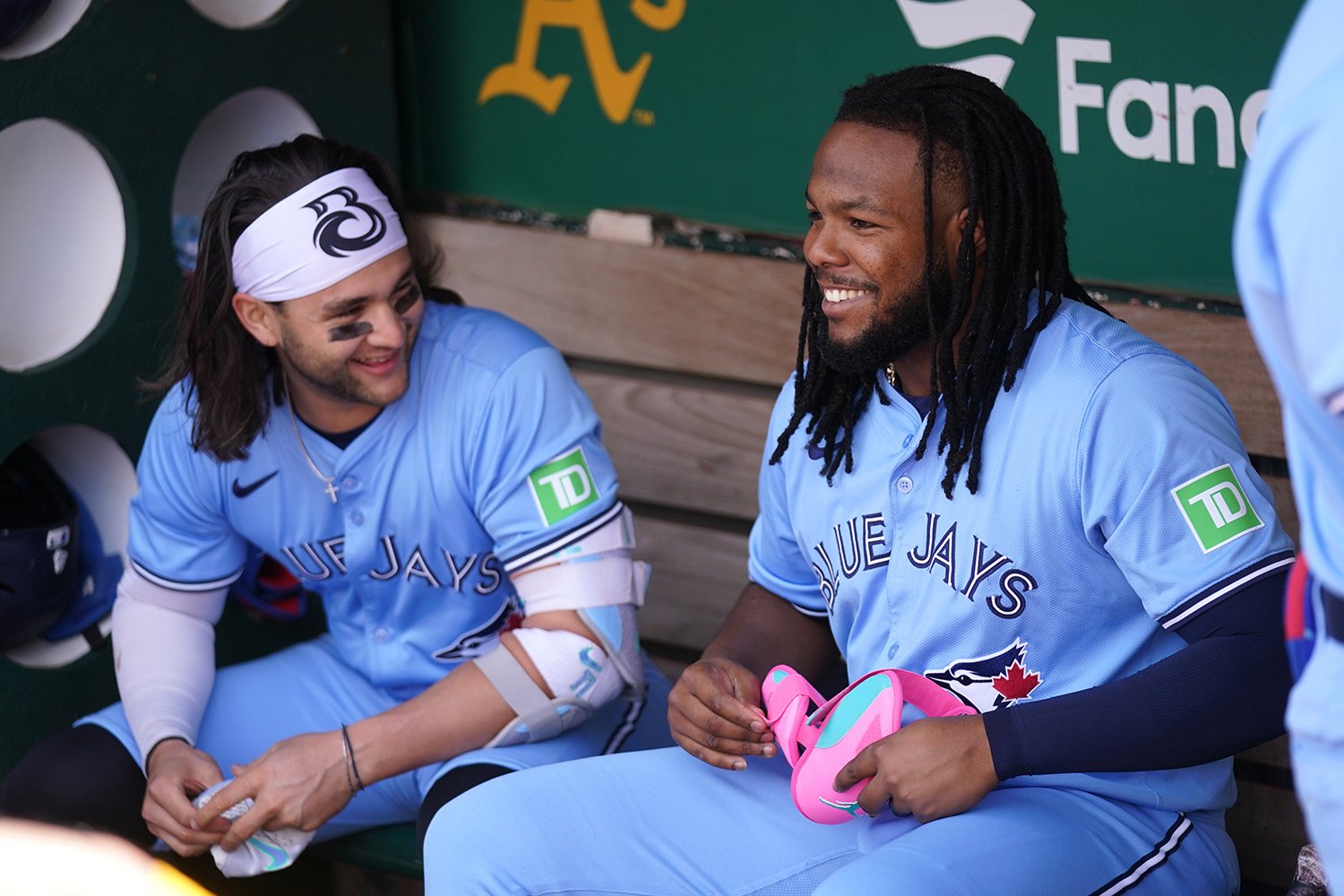 Coming into the 2018 draft, the Jays had picks 12, 52, and 88 in the first three rounds. They had their eyes on two young players from Magnolia High School in Texas: Jordan Groshans and Adam Kloffenstein. Problem is, both players were expecting first-round level signing bonuses. But the Jays had an idea. Groshans and Kloffenstein were close friends and they wanted to play together in professional ball. So the Jays drafted Groshans in the first round and Kloffenstein in the third. Groshans agreed to sign for $3.4 million - $800,000 under the pick value of $4.2 million - and Kloffenstein signed for $2.45 million, roughly $1.8 million over slot value. In effect, Jo-Gro's discount partially subsidized Kloff's overslot. Which brings us to Vladimir Guerrero Jr. and Bo Bichette. The two stars have been vocal about their friendship and desire to spend the rest of their careers on the same team. But there are not many teams who would be willing to spend the money necessary to land both players in free agency, and of the few who would be willing, not all have openings at both first base and shortstop (or second base). Toronto has both the money and the need, and both players have expressed a desire to remain with the Jays. So how about this, as an only-slightly-crazy idea? Go to the two agents and say that the Jays would like to keep both players (possibly conditional on Bo moving to second base, but that is another story). Say that the total budget for a 10-year deal for both players is $750 million, and that they can decide between themselves how it should be allocated. It is entirely possible that the players' expressed desire to remain with the Jays is just good public relations. What agent would ever advise his client to badmouth his current team when he might be entering the free agent market in the near future? So maybe the potential for a home-team discount is not high. And similarly, it is one thing to value hanging with your buddy but something altogether different to potentially sacrifice millions of dollars for that privilege. A larger question might be whether the Jays would consider signing both players, even under these terms. $750 million over 10 years would be $75 million per year for only two players (and it would still be less than the contract Juan Soto just signed with the Mets). That would represent almost one-third of the team's total current budget, and could limit its ability to fulfill other needs. But with the inflation of star-level salaries, it is possible that five years from now, $75 million might seem a bargain. The Bottom Line There's a long list of reasons that this idea won't end up as reality. It's slightly crazy and might not even be legal under the collective bargaining agreement. When it comes to contact negotiations, big league players have a lot more rights than high schoolers. But the underlying concept might make sense. If (and this is a big IF) the Jays would want to extend both players, would there be merit in asking them if they would give more favourable terms if they could play together? I remember when the 2010-11 Miami Heat of the NBA signed LeBron James, Dwyane Wade, and Chris Bosh. Each player signed at a discount because they wanted to be part of a superteam. The 2025 Jays might not be a superteam, even with Bichette and Guerrero, but extending those two players could definitely point the franchise in that direction.
 -
Is Toronto's focus on defense a new efficiency? A way to add high-floor, high-ceiling players that other teams overlooked or undervalued? Back in the day, the bullpen was considered of secondary importance. A team might spend big on an elite closer (*whimper,* B.J. Ryan, *whimper*) but the remainder of the ‘pen was reserved for aging starters or pitchers who were never quite good enough for a rotation spot. In 2014, the Kansas City Royals were looking to contend. But as a small-market team, they could not just buy their way to success. Instead, they had to find value where other teams did not. Thus, the three-headed monster was born. The Royals signed Wade Davis to go with standouts Kelvin Herrera and Greg Holland, giving the back of their bullpen three of the best arms in baseball. Other teams scoffed, saying spending $22 million out of a $110-million total payroll on three bullpen arms was crazy. But Kansas City was crazy like a fox. They went 72-1 when they had the lead after seven innings, and made the Wild Card (by only two games – if they had gone 69-4, they would have missed the playoffs). They rode their elite bullpen all the way to the World Series in 2014, and won it in 2015. Since then, other teams have placed greater value on the bullpen, and have been looking for the next big efficiency – something that can help a team win but is underappreciated by other teams and therefore undervalued on the market. Is it possible that the Jays have found it? Wins Above Replacement (WAR) has become the catch-all baseball stat. Each major website (and each team) has its own version. The formulae they use to calculate WAR are similar but not identical, which is why we have fWAR (FanGraphs), bWAR (Baseball Reference), and WARP (Baseball Prospectus). One of the largest sources of difference between fWAR and bWAR measures is the metrics the two sites use to award credit for defence. It is an old adage that a run saved equals a run earned, but bWAR (which uses Sports Info Systems' Defensive Runs Saved to measure defense and fWAR (which uses Statcast's Fielding Run Value) can sometimes differ quite a bit in their evaluations of the same playe. Suppose that the Jays internal defensive metrics hew closer to the grades of DRS, and therefore bWAR. What does this mean for player value? Well, consider the last three seasons. Which players had the highest total bWAR? If you guessed names like Aaron Judge, Mookie Betts, Juan Soto, and Shohei Ohtani in the top four, you would be right. But would you have guessed Andrés Giménez at number 10, or Daulton Varsho at number 20? (Remember, this is in all of baseball). And if you only look at defensive WAR, the top two players in baseball in that period were (surprise, surprise) Giménez at 8.0 and Varsho at 7.8 (in case you were curious, Ke’Bryan Hayes was third at 6.7). The Jays’ defensive excellence does not stop there. It is said that a team needs defence most “up the middle” – catcher, shortstop and centre field. So if the Jays were emphasizing defence, you would expect “Captain” Kirk to be no slouch either. No surprise – among full-time catchers, Kirk’s defensive bWAR over those three years is tied for third in baseball. But defence alone does not win ballgames. Ideally, you would want your elite defensive players to also have the potential to contribute with the bat – though, from an acquisition standpoint, it would help keep the price down if they had not yet achieved that potential, or if they were coming off a down year. And all three of the Jays defensive stalwarts have that upside. As recently as 2022, Kirk was at 129 wRC+, Giménez was at 141(!) and Varsho was at 106. But in 2024, all three struggled – Kirk at a 94 wRC+, Giménez at 83, and Varsho at 99. The Jays are in a good position with these three players. If they only maintain 2024 batting levels, their elite defence ensures solid production: in 2024, Giménez put up 4.0 bWAR, Kirk put up 2.0 in just 398 PAs, and Varsho put up 5.0. But if their offense regresses to the mean at all, then all three could well be All-Stars. It is rare to find a high-floor, high-ceiling player – the Jays have three of them. The Bottom Line It is easy to suggest that a team improve by signing all the big-name Ohtanis and Sotos, and extending the Guerreros (or, in my opinion better yet, the Bichettes – but that is another story) but the reality is that players of that calibre have many options and do not come cheaply or easily. For a team (not named the Dodgers) to succeed, they need to resource intelligently and efficiently. And that means finding value where others don’t. That can be difficult, but as an old baseball fan once said, in difficulty there is opportunity. View full article
-
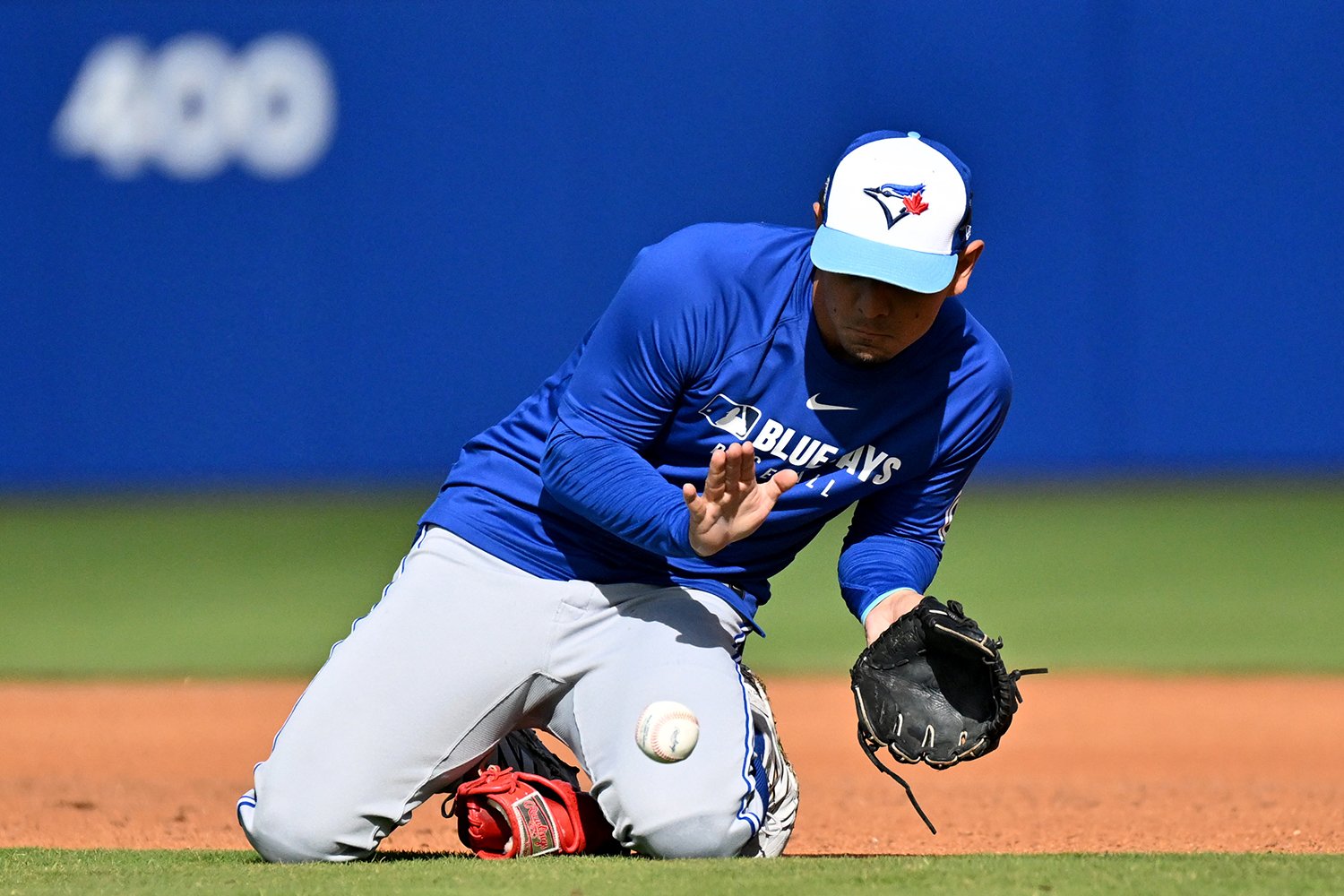 Back in the day, the bullpen was considered of secondary importance. A team might spend big on an elite closer (*whimper,* B.J. Ryan, *whimper*) but the remainder of the ‘pen was reserved for aging starters or pitchers who were never quite good enough for a rotation spot. In 2014, the Kansas City Royals were looking to contend. But as a small-market team, they could not just buy their way to success. Instead, they had to find value where other teams did not. Thus, the three-headed monster was born. The Royals signed Wade Davis to go with standouts Kelvin Herrera and Greg Holland, giving the back of their bullpen three of the best arms in baseball. Other teams scoffed, saying spending $22 million out of a $110-million total payroll on three bullpen arms was crazy. But Kansas City was crazy like a fox. They went 72-1 when they had the lead after seven innings, and made the Wild Card (by only two games – if they had gone 69-4, they would have missed the playoffs). They rode their elite bullpen all the way to the World Series in 2014, and won it in 2015. Since then, other teams have placed greater value on the bullpen, and have been looking for the next big efficiency – something that can help a team win but is underappreciated by other teams and therefore undervalued on the market. Is it possible that the Jays have found it? Wins Above Replacement (WAR) has become the catch-all baseball stat. Each major website (and each team) has its own version. The formulae they use to calculate WAR are similar but not identical, which is why we have fWAR (FanGraphs), bWAR (Baseball Reference), and WARP (Baseball Prospectus). One of the largest sources of difference between fWAR and bWAR measures is the metrics the two sites use to award credit for defence. It is an old adage that a run saved equals a run earned, but bWAR (which uses Sports Info Systems' Defensive Runs Saved to measure defense and fWAR (which uses Statcast's Fielding Run Value) can sometimes differ quite a bit in their evaluations of the same playe. Suppose that the Jays internal defensive metrics hew closer to the grades of DRS, and therefore bWAR. What does this mean for player value? Well, consider the last three seasons. Which players had the highest total bWAR? If you guessed names like Aaron Judge, Mookie Betts, Juan Soto, and Shohei Ohtani in the top four, you would be right. But would you have guessed Andrés Giménez at number 10, or Daulton Varsho at number 20? (Remember, this is in all of baseball). And if you only look at defensive WAR, the top two players in baseball in that period were (surprise, surprise) Giménez at 8.0 and Varsho at 7.8 (in case you were curious, Ke’Bryan Hayes was third at 6.7). The Jays’ defensive excellence does not stop there. It is said that a team needs defence most “up the middle” – catcher, shortstop and centre field. So if the Jays were emphasizing defence, you would expect “Captain” Kirk to be no slouch either. No surprise – among full-time catchers, Kirk’s defensive bWAR over those three years is tied for third in baseball. But defence alone does not win ballgames. Ideally, you would want your elite defensive players to also have the potential to contribute with the bat – though, from an acquisition standpoint, it would help keep the price down if they had not yet achieved that potential, or if they were coming off a down year. And all three of the Jays defensive stalwarts have that upside. As recently as 2022, Kirk was at 129 wRC+, Giménez was at 141(!) and Varsho was at 106. But in 2024, all three struggled – Kirk at a 94 wRC+, Giménez at 83, and Varsho at 99. The Jays are in a good position with these three players. If they only maintain 2024 batting levels, their elite defence ensures solid production: in 2024, Giménez put up 4.0 bWAR, Kirk put up 2.0 in just 398 PAs, and Varsho put up 5.0. But if their offense regresses to the mean at all, then all three could well be All-Stars. It is rare to find a high-floor, high-ceiling player – the Jays have three of them. The Bottom Line It is easy to suggest that a team improve by signing all the big-name Ohtanis and Sotos, and extending the Guerreros (or, in my opinion better yet, the Bichettes – but that is another story) but the reality is that players of that calibre have many options and do not come cheaply or easily. For a team (not named the Dodgers) to succeed, they need to resource intelligently and efficiently. And that means finding value where others don’t. That can be difficult, but as an old baseball fan once said, in difficulty there is opportunity.
 -
Take yourself back to Feb 2024. Bo is coming off another ~4 fWAR year, after posting 4.8 and 4.9 fWAR in 2021 and 2022 and leading the AL in hits in both years. This despite playing SS - a position for which he is clearly not suited. Meanwhile, Vladdy is coming off a 1.3 fWAR year (i.e. below mlb average) in 2023 and 3.3 in 2022. Two questions: 1. If I had asked you then which of the two the Jays should extend, assuming you could only extend one, which would you have picked? 2. Should one year make that much difference? IMO, as soon as it became clear that Vladdy wanted $400m++, the Jays should have shifted focus to Bo - on condition that he move to 2B
-
I am a big fan of old-school swingmen (like Chavez, or Estrada). I would hope that the Jays would give Y-Rod 5-10 starts in 2025, though perhaps limiting him to 4-5 innings, Use him on doubleheader days, or when a scheduled starter has minor pains, or when a matchup is unfavourable. Total of maybe 120 IP. That way, they will know whether he has rotation potential - and if the Jays *do* want to stretch him to ~150 IP and ~25 starts in 2026, he will be ready. I agree completely with Jesse that the 6th and 7th starters are important. I did a mini-study a few years ago and found that the average mlb team got 125 starts from their top 5 starters, and even the top 10 teams (i.e. the ones with the most starts from their top-5 starters) only averaged 135. So a team needs ~30 starts from the swingmen, bullpen, and MiLB callups. And those 30 games count just as much as the ones when the team's ace is starting.
-
I am not keen on Bregman at 6/$180m or anything close to that. Some reasons: His stats are already in decline. 137 wRC+ in 2022, 126 in 2023, 118 in 2024. And his 2024 hitting stats are suspect: his batting line of .260/.331/.453 was decent (albeit not spectacular) but his Statcast expected line was .257/.319/.417. MLB average line was .243/.310/.399 And his 2024 batted ball stats were very cromulent. Of the 252 players who qualified, his 89.1 mph average exit velo was 125th, his E50 of 99mph was 167th, his hard hit % of 40.5% was 125th, and his barrels/BBE of 6.4% was 166th. A writer named Ritchie something-or-other did an analysis a while back of the speed at which elite 3B decline once they hit their 30s. It was not pretty. I think it is telling that Team Alex have (so far) expressed no interest in a 2021-Marcus-Semien-style one-year show-me contract. There is a time when it makes sense for a player to bet on himself. And there is a time when not.