


Jim Scott
-
Posts
60 -
Joined
-
Last visited
-
Days Won
1
Content Type
Profiles
Toronto Blue Jays Videos
2026 Toronto Blue Jays Top Prospects Ranking
Toronto Blue Jays Free Agent & Trade Rumors, Notes, & Tidbits
Guides & Resources
2025 Toronto Blue Jays Draft Pick Tracker
News
2026 Toronto Blue Jays Draft Tracker: Picks & Bonuses
Forums
Blogs
Events
Store
Downloads
Gallery
Everything posted by Jim Scott
-
.jpg.049c289fff3a8e81256710ebbd07a63d.jpg) Sports writers and fans frequently refer to the “magic number” of a playoff-bound team as a simple measure of how close the team is to clinching a playoff position (or a divisional championship). This represents the number of wins (by the leading team) or losses (by the next-closest competitor) required before the first-place team clinches. (There is also a flipside number, called an “elimination number” or “tragic number.” This is the number of wins or losses required for a second-place team to be eliminated from the playoffs or to lose the divisional championship.) The history of the “magic number” goes back to 1947: So what is a magic number? How is it calculated (and miscalculated!)? Let’s use the example of the Toronto Blue Jays and the New York Yankees. At the time of writing this article, the Jays have a record of 83 wins and 61 losses, and the Yankees are in second place with an 80-64 record. So the Jays have a three-game lead. If the Jays were to win 16 of their remaining 18 games, they would finish with a record of 99-63. Even if the Yankees won every one of their remaining games, they would only finish with 98 wins and would finish second. Alternatively, if the Jays were to go 15-3 and the Yankees went 17-1, the Jays would still win. So every Jays win – or Yankees loss – brings the Jays closer to a clinch. This gives rise to the conventional formula for magic numbers, which is: 163 minus the first-place team’s wins and second-place team’s losses. Applying this formula to the current Jays would give a magic number of 16 (163 - 83 - 64 = 16). This would have been the correct magic number up to 2022. In those prior years, if two teams tied for the division lead (or the final Wild Card spot), they would play a one-game playoff to determine the winner. But that rule changed for the 2022 and subsequent seasons, following the introduction of the third Wild Card team. The rule now is that if two teams are tied for the division lead (or the final Wild Card spot) at the end of the season, a series of tiebreakers is applied. The first such tiebreaker is the two teams’ head-to-head record. So, consider a scenario in which the Jays go 9-9 in the last 18 games and the Yankees go 12-6. At first glance, it would appear that the Jays did not clinch: Their nine wins plus the Yankees’ six losses equals 15, which is less than the magic number of 16. But here is where the new rules kick in. If the Jays finish 9-9, they will end the season with a record of 92-70. If the Yankees finish 12-6, they will finish with the same 92-70 record. A tie, initially – but then the tiebreakers are applied. The Blue Jays won the season series against the Yankees eight games to five. Since head-to-head record is the first tiebreaker, in this scenario, the Jays win the division. So, their magic number against New York is actually 15, not 16. Head-to-head record also affects the calculation of magic numbers for the other divisional races in 2025. In the AL Central, Detroit has an 83-62 record, and the Guardians are in second place at 74-70. So, Detroit's simple magic number would appear to be 10 (163 - 83 - 70 = 10). But the Tigers are currently 4-3 against the Guardians, with a three-game series coming up next week. If the Tigers win that series and finish with a winning record against Cleveland, their effective magic number will decrease by one. In the AL West, the Astros are 78-67 and the Mariners are 77-68. Houston's simple magic number is 17. Right now, the Astros and Mariners are 5-5 in their season series, with three games left to play. If the Astros win that series, their effective magic number will also decrease by one. The Phillies lead the NL East with an 85-60 record, with the 75-69 Mets in second place. The Phils’ simple magic number is nine (163 - 85 - 69 = 9). But in this case, the Phillies are currently 4-7 against the Mets with only two games left to play. So, even if the Phils sweep the last two games, they will still have a losing record against New York. The tiebreaker rules will therefore not affect their magic number. In the NL Central, the Brewers are 89-57 and the Cubs are 82-63. So, the Brewers’ magic number is 11. As the Brew Crew has already lost the season series against Chicago 6-7 (with no games left to play), their magic number does not change. Finally, in the NL West, the 81-64 Dodgers have a magic number of 16 over the 79-66 Padres. That reduces to 15 due to L.A.'s 9-4 head-to-head record against San Diego in 2025. The Bottom Line There are many statistics in baseball that present a simplified, single-figure answer to a complex question. A player’s overall value to his team can be measured by WAR (wins above replacement). His defensive contributions can be measured by OAA (outs above average) or DRS (defensive runs saved). And it is straightforward (and fun!) to watch your favourite team’s magic number drop – in Toronto’s case, hopefully to zero!
Sports writers and fans frequently refer to the “magic number” of a playoff-bound team as a simple measure of how close the team is to clinching a playoff position (or a divisional championship). This represents the number of wins (by the leading team) or losses (by the next-closest competitor) required before the first-place team clinches. (There is also a flipside number, called an “elimination number” or “tragic number.” This is the number of wins or losses required for a second-place team to be eliminated from the playoffs or to lose the divisional championship.) The history of the “magic number” goes back to 1947: So what is a magic number? How is it calculated (and miscalculated!)? Let’s use the example of the Toronto Blue Jays and the New York Yankees. At the time of writing this article, the Jays have a record of 83 wins and 61 losses, and the Yankees are in second place with an 80-64 record. So the Jays have a three-game lead. If the Jays were to win 16 of their remaining 18 games, they would finish with a record of 99-63. Even if the Yankees won every one of their remaining games, they would only finish with 98 wins and would finish second. Alternatively, if the Jays were to go 15-3 and the Yankees went 17-1, the Jays would still win. So every Jays win – or Yankees loss – brings the Jays closer to a clinch. This gives rise to the conventional formula for magic numbers, which is: 163 minus the first-place team’s wins and second-place team’s losses. Applying this formula to the current Jays would give a magic number of 16 (163 - 83 - 64 = 16). This would have been the correct magic number up to 2022. In those prior years, if two teams tied for the division lead (or the final Wild Card spot), they would play a one-game playoff to determine the winner. But that rule changed for the 2022 and subsequent seasons, following the introduction of the third Wild Card team. The rule now is that if two teams are tied for the division lead (or the final Wild Card spot) at the end of the season, a series of tiebreakers is applied. The first such tiebreaker is the two teams’ head-to-head record. So, consider a scenario in which the Jays go 9-9 in the last 18 games and the Yankees go 12-6. At first glance, it would appear that the Jays did not clinch: Their nine wins plus the Yankees’ six losses equals 15, which is less than the magic number of 16. But here is where the new rules kick in. If the Jays finish 9-9, they will end the season with a record of 92-70. If the Yankees finish 12-6, they will finish with the same 92-70 record. A tie, initially – but then the tiebreakers are applied. The Blue Jays won the season series against the Yankees eight games to five. Since head-to-head record is the first tiebreaker, in this scenario, the Jays win the division. So, their magic number against New York is actually 15, not 16. Head-to-head record also affects the calculation of magic numbers for the other divisional races in 2025. In the AL Central, Detroit has an 83-62 record, and the Guardians are in second place at 74-70. So, Detroit's simple magic number would appear to be 10 (163 - 83 - 70 = 10). But the Tigers are currently 4-3 against the Guardians, with a three-game series coming up next week. If the Tigers win that series and finish with a winning record against Cleveland, their effective magic number will decrease by one. In the AL West, the Astros are 78-67 and the Mariners are 77-68. Houston's simple magic number is 17. Right now, the Astros and Mariners are 5-5 in their season series, with three games left to play. If the Astros win that series, their effective magic number will also decrease by one. The Phillies lead the NL East with an 85-60 record, with the 75-69 Mets in second place. The Phils’ simple magic number is nine (163 - 85 - 69 = 9). But in this case, the Phillies are currently 4-7 against the Mets with only two games left to play. So, even if the Phils sweep the last two games, they will still have a losing record against New York. The tiebreaker rules will therefore not affect their magic number. In the NL Central, the Brewers are 89-57 and the Cubs are 82-63. So, the Brewers’ magic number is 11. As the Brew Crew has already lost the season series against Chicago 6-7 (with no games left to play), their magic number does not change. Finally, in the NL West, the 81-64 Dodgers have a magic number of 16 over the 79-66 Padres. That reduces to 15 due to L.A.'s 9-4 head-to-head record against San Diego in 2025. The Bottom Line There are many statistics in baseball that present a simplified, single-figure answer to a complex question. A player’s overall value to his team can be measured by WAR (wins above replacement). His defensive contributions can be measured by OAA (outs above average) or DRS (defensive runs saved). And it is straightforward (and fun!) to watch your favourite team’s magic number drop – in Toronto’s case, hopefully to zero! -
Sports writers and fans frequently refer to the “magic number” of a playoff-bound team as a simple measure of how close the team is to clinching a playoff position (or a divisional championship). This represents the number of wins (by the leading team) or losses (by the next-closest competitor) required before the first-place team clinches. (There is also a flipside number, called an “elimination number” or “tragic number.” This is the number of wins or losses required for a second-place team to be eliminated from the playoffs or to lose the divisional championship.) The history of the “magic number” goes back to 1947: So what is a magic number? How is it calculated (and miscalculated!)? Let’s use the example of the Toronto Blue Jays and the New York Yankees. At the time of writing this article, the Jays have a record of 83 wins and 61 losses, and the Yankees are in second place with an 80-64 record. So the Jays have a three-game lead. If the Jays were to win 16 of their remaining 18 games, they would finish with a record of 99-63. Even if the Yankees won every one of their remaining games, they would only finish with 98 wins and would finish second. Alternatively, if the Jays were to go 15-3 and the Yankees went 17-1, the Jays would still win. So every Jays win – or Yankees loss – brings the Jays closer to a clinch. This gives rise to the conventional formula for magic numbers, which is: 163 minus the first-place team’s wins and second-place team’s losses. Applying this formula to the current Jays would give a magic number of 16 (163 - 83 - 64 = 16). This would have been the correct magic number up to 2022. In those prior years, if two teams tied for the division lead (or the final Wild Card spot), they would play a one-game playoff to determine the winner. But that rule changed for the 2022 and subsequent seasons, following the introduction of the third Wild Card team. The rule now is that if two teams are tied for the division lead (or the final Wild Card spot) at the end of the season, a series of tiebreakers is applied. The first such tiebreaker is the two teams’ head-to-head record. So, consider a scenario in which the Jays go 9-9 in the last 18 games and the Yankees go 12-6. At first glance, it would appear that the Jays did not clinch: Their nine wins plus the Yankees’ six losses equals 15, which is less than the magic number of 16. But here is where the new rules kick in. If the Jays finish 9-9, they will end the season with a record of 92-70. If the Yankees finish 12-6, they will finish with the same 92-70 record. A tie, initially – but then the tiebreakers are applied. The Blue Jays won the season series against the Yankees eight games to five. Since head-to-head record is the first tiebreaker, in this scenario, the Jays win the division. So, their magic number against New York is actually 15, not 16. Head-to-head record also affects the calculation of magic numbers for the other divisional races in 2025. In the AL Central, Detroit has an 83-62 record, and the Guardians are in second place at 74-70. So, Detroit's simple magic number would appear to be 10 (163 - 83 - 70 = 10). But the Tigers are currently 4-3 against the Guardians, with a three-game series coming up next week. If the Tigers win that series and finish with a winning record against Cleveland, their effective magic number will decrease by one. In the AL West, the Astros are 78-67 and the Mariners are 77-68. Houston's simple magic number is 17. Right now, the Astros and Mariners are 5-5 in their season series, with three games left to play. If the Astros win that series, their effective magic number will also decrease by one. The Phillies lead the NL East with an 85-60 record, with the 75-69 Mets in second place. The Phils’ simple magic number is nine (163 - 85 - 69 = 9). But in this case, the Phillies are currently 4-7 against the Mets with only two games left to play. So, even if the Phils sweep the last two games, they will still have a losing record against New York. The tiebreaker rules will therefore not affect their magic number. In the NL Central, the Brewers are 89-57 and the Cubs are 82-63. So, the Brewers’ magic number is 11. As the Brew Crew has already lost the season series against Chicago 6-7 (with no games left to play), their magic number does not change. Finally, in the NL West, the 81-64 Dodgers have a magic number of 16 over the 79-66 Padres. That reduces to 15 due to L.A.'s 9-4 head-to-head record against San Diego in 2025. The Bottom Line There are many statistics in baseball that present a simplified, single-figure answer to a complex question. A player’s overall value to his team can be measured by WAR (wins above replacement). His defensive contributions can be measured by OAA (outs above average) or DRS (defensive runs saved). And it is straightforward (and fun!) to watch your favourite team’s magic number drop – in Toronto’s case, hopefully to zero! View full article
-
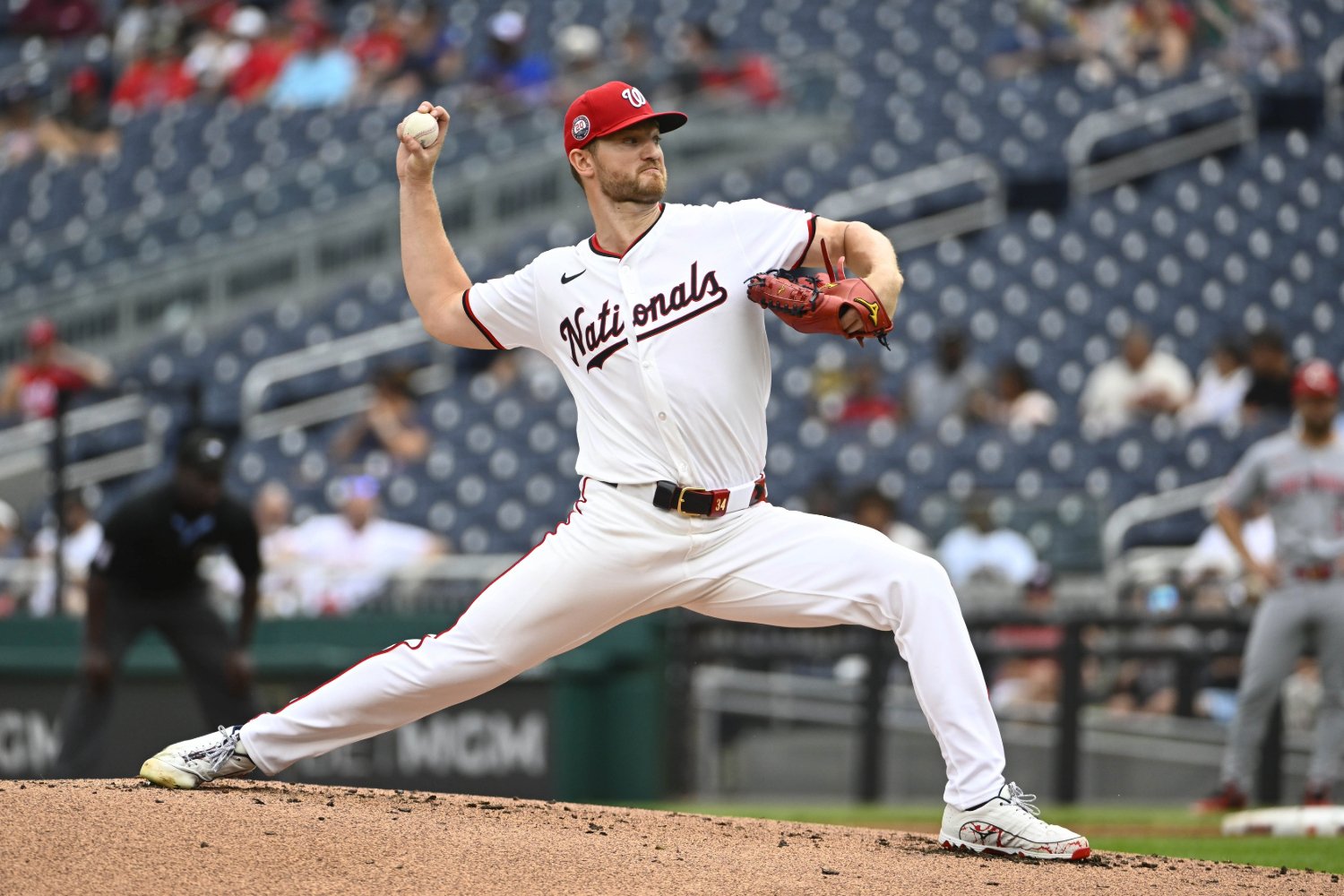 The Blue Jays need pitching help. The current rotation is surviving, but Kevin Gausman, Jose Berrios and Chris Bassitt are racking up the innings, Eric Lauer seems too good to be true, and Max Scherzer is another injury waiting to happen. Toronto does not have —and could badly use—a quality sixth starter who would be ready to step up in case of injury, or if one of the current starters could just use another day of rest. But the bullpen could use another arm too. Yimi Garcia, Ryan Burr and Nick Sandlin are all hurt (to varying degrees) and while Brendon Little and Braydon Fisher are pitching well, it is dangerous to have to rely on pitchers with only 120 major league innings (combined) in their careers. What the Jays could really use is a quality swingman. Someone who has demonstrated the ability to work out of the bullpen in a high-leverage role, but who also can start games at the major league level. It would help if his trade cost were not that high. He could even be a rental, and possibly a player whose conventional stats were sufficiently cromulent to keep his price down, but whose advanced stats (and prior performance) gave reason for optimism. Someone like Michael Soroka of the Nationals. In 2024, Soroka pitched primarily out of the White Sox's bullpen. He had a 2.75 ERA in 36 innings, holding opponents to a .189/.303/.291 batting line. He also started nine games, but with an ugly 6.39 ERA over 44 innings. So far in 2025, Soroka has started 14 games with a 5.10 ERA over 72 innings. So far, “The Rock” seems like a better-than-decent bullpen addition but a poor addition to the starting rotation. But a deeper look gives a different picture. Soroka’s 5.10 ERA comes with a 3.22 xERA, a 3.90 xFIP and a 3.57 SIERA. The difference of 1.88 between his ERA and his xERA is the third highest among pitchers with 150+ balls in play. So, he has either been very unlucky (possible) or the victim of, ahem, “unfortunate” defence (did I mention that Washington’s year-to-date DEF rating of -30.7 is the second worst in baseball?) Even Soroka’s red flags are a potential fit for the Jays. He has a history of injuries, having only pitched 100 innings once in his six-year MLB career. So, if the Jays were looking for a 200+ inning workhorse, he might not be a good fit. But, as a swingman, he would likely not be asked to contribute too many innings over the remaining 62 games of the season, and he has only pitched 72 innings to date. Plus, he would slide beautifully into a bullpen role when (not if!) the Jays make the playoffs. Soroka is a rental—he will be a free agent after this year. As a result (and in part due to his $9 million 2025 salary), his estimated Baseball Trade Value is only $3 million. So, the prospect cost should be something like an Emmanuel Bonilla or RJ Schreck. Good prospects, but not untouchable. The beauty of landing a swingman like Soroka is that it does not limit the Jays in other moves. If, after they deal for him, the opportunity arises to trade for an Edward Cabrera or Mitch Keller, Toronto can just slide Soroka into a (still very valuable!) full-time, high-leverage bullpen role. And having a good swingman creates other opportunities. Maybe Gausman prefers to pitch on six days rest? Maybe Scherzer should miss a start now and then to recharge his batteries? Maybe Bassitt is pitching better at home than on the road, and so would happily trade an away start for a SkyDome one? There has been much speculation about the Jays pursuing a near-elite starter (like Keller) or reliever (like Bednar). But those players will be prohibitively expensive, and there is no guarantee that the Jays would ultimately be the highest bidders. Acquiring a player like Soroka, ideally early in the trade window over the next few days, provides Toronto with a backup plan, and reduces the urgency and desperation associated with additional trades.
 -
The Blue Jays need pitching help. The current rotation is surviving, but Kevin Gausman, Jose Berrios and Chris Bassitt are racking up the innings, Eric Lauer seems too good to be true, and Max Scherzer is another injury waiting to happen. Toronto does not have —and could badly use—a quality sixth starter who would be ready to step up in case of injury, or if one of the current starters could just use another day of rest. But the bullpen could use another arm too. Yimi Garcia, Ryan Burr and Nick Sandlin are all hurt (to varying degrees) and while Brendon Little and Braydon Fisher are pitching well, it is dangerous to have to rely on pitchers with only 120 major league innings (combined) in their careers. What the Jays could really use is a quality swingman. Someone who has demonstrated the ability to work out of the bullpen in a high-leverage role, but who also can start games at the major league level. It would help if his trade cost were not that high. He could even be a rental, and possibly a player whose conventional stats were sufficiently cromulent to keep his price down, but whose advanced stats (and prior performance) gave reason for optimism. Someone like Michael Soroka of the Nationals. In 2024, Soroka pitched primarily out of the White Sox's bullpen. He had a 2.75 ERA in 36 innings, holding opponents to a .189/.303/.291 batting line. He also started nine games, but with an ugly 6.39 ERA over 44 innings. So far in 2025, Soroka has started 14 games with a 5.10 ERA over 72 innings. So far, “The Rock” seems like a better-than-decent bullpen addition but a poor addition to the starting rotation. But a deeper look gives a different picture. Soroka’s 5.10 ERA comes with a 3.22 xERA, a 3.90 xFIP and a 3.57 SIERA. The difference of 1.88 between his ERA and his xERA is the third highest among pitchers with 150+ balls in play. So, he has either been very unlucky (possible) or the victim of, ahem, “unfortunate” defence (did I mention that Washington’s year-to-date DEF rating of -30.7 is the second worst in baseball?) Even Soroka’s red flags are a potential fit for the Jays. He has a history of injuries, having only pitched 100 innings once in his six-year MLB career. So, if the Jays were looking for a 200+ inning workhorse, he might not be a good fit. But, as a swingman, he would likely not be asked to contribute too many innings over the remaining 62 games of the season, and he has only pitched 72 innings to date. Plus, he would slide beautifully into a bullpen role when (not if!) the Jays make the playoffs. Soroka is a rental—he will be a free agent after this year. As a result (and in part due to his $9 million 2025 salary), his estimated Baseball Trade Value is only $3 million. So, the prospect cost should be something like an Emmanuel Bonilla or RJ Schreck. Good prospects, but not untouchable. The beauty of landing a swingman like Soroka is that it does not limit the Jays in other moves. If, after they deal for him, the opportunity arises to trade for an Edward Cabrera or Mitch Keller, Toronto can just slide Soroka into a (still very valuable!) full-time, high-leverage bullpen role. And having a good swingman creates other opportunities. Maybe Gausman prefers to pitch on six days rest? Maybe Scherzer should miss a start now and then to recharge his batteries? Maybe Bassitt is pitching better at home than on the road, and so would happily trade an away start for a SkyDome one? There has been much speculation about the Jays pursuing a near-elite starter (like Keller) or reliever (like Bednar). But those players will be prohibitively expensive, and there is no guarantee that the Jays would ultimately be the highest bidders. Acquiring a player like Soroka, ideally early in the trade window over the next few days, provides Toronto with a backup plan, and reduces the urgency and desperation associated with additional trades. View full article
-
.jpg.f10c9ed93d6d156082efa1d9cf9bcd4e.jpg) Daulton Varsho might well be the best defensive outfielder in baseball. Over the three years from 2022-24, his 44 Outs Above Average (OAA) led all outfielders in MLB. Similarly, Andrés Giménez is one of the best defensive infielders in the game. His 52 OAA over the last three years ranks second among all fielders, trailing only Dansby Swanson, while his 39 OAA over the last two years is the highest in baseball at any position. Varsho, who is currently on the IL for the second time this season, struggled mightily against left-handed pitching when he was healthy this year (-60 wRC+ in 19 PA), while Giménez has only been marginally better against same-handed pitchers, with a +22 wRC+ in 66 PA. The usual small sample size caveats definitely apply, but Varsho and Giménez both have below-average career wRC+ figures against lefties. Yet, their defence is so elite that it makes no sense to platoon them against left-handed pitching – what the Jays would gain with the lumber would be more than offset by what they'd lose with the leather. Or would it? Let's start with Varsho. There are very few centre fielders who are even close to Varsho's level, defensively. But it is possible that Myles Straw is one of them. So far in 2025, Straw has 6 OAA. That extrapolates to roughly 20 OAA/400 (OAA/400 is a player's OAA extrapolated to 400 attempts, which approximates a full season). For reference, in 2024, the top outfielder in OAA in all of baseball was Jacob Young with an OAA of … +20. Straw is hardly an elite hitter. So far in 2025, he has a wRC+ of 67. But that wRC+ is composed of a 53 mark against right-handed pitching and an 84 mark against lefties. In addition, his overall expected stat line of .260/.295/.385 is substantially better than his actual year-to-date line of .248/.284/.214, and his expected stat line against left-handed pitching is even better: .296/.333/.446. His .338 xwOBA against left-handed pitching is significantly higher than the league average. So, having Straw platoon with Varsho (once he's healthy) against left-handed pitching would only be a modest downgrade defensively but potentially a substantial upgrade offensively, at least until Varsho figures out how to do more damage against southpaws. Now consider Giménez. Again, he is an absolute defensive stud. And again, his defensive wizardry would ordinarily more than compensate for his struggles against left-handers, making him unplatoonable (hey, if Shakespeare can invent new words …). Yet, Ernie Clement is no ordinary backup. He was a Gold Glove finalist at third base in 2024, and in 2025, his 4 OAA at second base is sixth best in MLB. What's more, he has earned that OAA in only 69 attempts; if he played the position more regularly, he could easily be top three. So, replacing Giménez with Clement at second base is not as much of a defensive downgrade as you might expect. And Clement is absolutely raking against left-handed pitching this year, with a 207 wRC+ in 98 PA. Admittedly, the small sample size caveat applies once again, but even if Clement’s wRC+ dropped 80 points, he would still be a significant upgrade at the plate against lefties. Imagine a game where Straw and Clement start against an opposing left-handed pitcher. Not only would that enhance the Jays’ offense to start the game, but it would mean that Toronto had Varsho and his 144 wRC+ and .653 slugging percentage (against righties) on the bench for when the opposition brings in a right-handed reliever. (Straw has a 53 wRC+ and a .296 SLG against RHP.) As for Clement, his 68 wRC+ and .291 slugging percentage against righties becomes a lot less problematic when the Jays have a Giménez (career 103 wRC+ and .396 slugging against RHP) on the bench. The Bottom Line It is still relatively early in the season, particularly for Varsho and Giménez, who have both struggled with injuries. It seems clear that Varsho will not be this bad against left-handed pitching long-term … and that Clement will not continue to be this good. But until the felix felicis wears off, the Jays would be well advised to take full advantage. Statistics updated prior to games on July 3.
Daulton Varsho might well be the best defensive outfielder in baseball. Over the three years from 2022-24, his 44 Outs Above Average (OAA) led all outfielders in MLB. Similarly, Andrés Giménez is one of the best defensive infielders in the game. His 52 OAA over the last three years ranks second among all fielders, trailing only Dansby Swanson, while his 39 OAA over the last two years is the highest in baseball at any position. Varsho, who is currently on the IL for the second time this season, struggled mightily against left-handed pitching when he was healthy this year (-60 wRC+ in 19 PA), while Giménez has only been marginally better against same-handed pitchers, with a +22 wRC+ in 66 PA. The usual small sample size caveats definitely apply, but Varsho and Giménez both have below-average career wRC+ figures against lefties. Yet, their defence is so elite that it makes no sense to platoon them against left-handed pitching – what the Jays would gain with the lumber would be more than offset by what they'd lose with the leather. Or would it? Let's start with Varsho. There are very few centre fielders who are even close to Varsho's level, defensively. But it is possible that Myles Straw is one of them. So far in 2025, Straw has 6 OAA. That extrapolates to roughly 20 OAA/400 (OAA/400 is a player's OAA extrapolated to 400 attempts, which approximates a full season). For reference, in 2024, the top outfielder in OAA in all of baseball was Jacob Young with an OAA of … +20. Straw is hardly an elite hitter. So far in 2025, he has a wRC+ of 67. But that wRC+ is composed of a 53 mark against right-handed pitching and an 84 mark against lefties. In addition, his overall expected stat line of .260/.295/.385 is substantially better than his actual year-to-date line of .248/.284/.214, and his expected stat line against left-handed pitching is even better: .296/.333/.446. His .338 xwOBA against left-handed pitching is significantly higher than the league average. So, having Straw platoon with Varsho (once he's healthy) against left-handed pitching would only be a modest downgrade defensively but potentially a substantial upgrade offensively, at least until Varsho figures out how to do more damage against southpaws. Now consider Giménez. Again, he is an absolute defensive stud. And again, his defensive wizardry would ordinarily more than compensate for his struggles against left-handers, making him unplatoonable (hey, if Shakespeare can invent new words …). Yet, Ernie Clement is no ordinary backup. He was a Gold Glove finalist at third base in 2024, and in 2025, his 4 OAA at second base is sixth best in MLB. What's more, he has earned that OAA in only 69 attempts; if he played the position more regularly, he could easily be top three. So, replacing Giménez with Clement at second base is not as much of a defensive downgrade as you might expect. And Clement is absolutely raking against left-handed pitching this year, with a 207 wRC+ in 98 PA. Admittedly, the small sample size caveat applies once again, but even if Clement’s wRC+ dropped 80 points, he would still be a significant upgrade at the plate against lefties. Imagine a game where Straw and Clement start against an opposing left-handed pitcher. Not only would that enhance the Jays’ offense to start the game, but it would mean that Toronto had Varsho and his 144 wRC+ and .653 slugging percentage (against righties) on the bench for when the opposition brings in a right-handed reliever. (Straw has a 53 wRC+ and a .296 SLG against RHP.) As for Clement, his 68 wRC+ and .291 slugging percentage against righties becomes a lot less problematic when the Jays have a Giménez (career 103 wRC+ and .396 slugging against RHP) on the bench. The Bottom Line It is still relatively early in the season, particularly for Varsho and Giménez, who have both struggled with injuries. It seems clear that Varsho will not be this bad against left-handed pitching long-term … and that Clement will not continue to be this good. But until the felix felicis wears off, the Jays would be well advised to take full advantage. Statistics updated prior to games on July 3.- 3 comments
-
- 2
-

-

-
- daulton varsho
- andres gimenez
- (and 2 more)
-
Daulton Varsho might well be the best defensive outfielder in baseball. Over the three years from 2022-24, his 44 Outs Above Average (OAA) led all outfielders in MLB. Similarly, Andrés Giménez is one of the best defensive infielders in the game. His 52 OAA over the last three years ranks second among all fielders, trailing only Dansby Swanson, while his 39 OAA over the last two years is the highest in baseball at any position. Varsho, who is currently on the IL for the second time this season, struggled mightily against left-handed pitching when he was healthy this year (-60 wRC+ in 19 PA), while Giménez has only been marginally better against same-handed pitchers, with a +22 wRC+ in 66 PA. The usual small sample size caveats definitely apply, but Varsho and Giménez both have below-average career wRC+ figures against lefties. Yet, their defence is so elite that it makes no sense to platoon them against left-handed pitching – what the Jays would gain with the lumber would be more than offset by what they'd lose with the leather. Or would it? Let's start with Varsho. There are very few centre fielders who are even close to Varsho's level, defensively. But it is possible that Myles Straw is one of them. So far in 2025, Straw has 6 OAA. That extrapolates to roughly 20 OAA/400 (OAA/400 is a player's OAA extrapolated to 400 attempts, which approximates a full season). For reference, in 2024, the top outfielder in OAA in all of baseball was Jacob Young with an OAA of … +20. Straw is hardly an elite hitter. So far in 2025, he has a wRC+ of 67. But that wRC+ is composed of a 53 mark against right-handed pitching and an 84 mark against lefties. In addition, his overall expected stat line of .260/.295/.385 is substantially better than his actual year-to-date line of .248/.284/.214, and his expected stat line against left-handed pitching is even better: .296/.333/.446. His .338 xwOBA against left-handed pitching is significantly higher than the league average. So, having Straw platoon with Varsho (once he's healthy) against left-handed pitching would only be a modest downgrade defensively but potentially a substantial upgrade offensively, at least until Varsho figures out how to do more damage against southpaws. Now consider Giménez. Again, he is an absolute defensive stud. And again, his defensive wizardry would ordinarily more than compensate for his struggles against left-handers, making him unplatoonable (hey, if Shakespeare can invent new words …). Yet, Ernie Clement is no ordinary backup. He was a Gold Glove finalist at third base in 2024, and in 2025, his 4 OAA at second base is sixth best in MLB. What's more, he has earned that OAA in only 69 attempts; if he played the position more regularly, he could easily be top three. So, replacing Giménez with Clement at second base is not as much of a defensive downgrade as you might expect. And Clement is absolutely raking against left-handed pitching this year, with a 207 wRC+ in 98 PA. Admittedly, the small sample size caveat applies once again, but even if Clement’s wRC+ dropped 80 points, he would still be a significant upgrade at the plate against lefties. Imagine a game where Straw and Clement start against an opposing left-handed pitcher. Not only would that enhance the Jays’ offense to start the game, but it would mean that Toronto had Varsho and his 144 wRC+ and .653 slugging percentage (against righties) on the bench for when the opposition brings in a right-handed reliever. (Straw has a 53 wRC+ and a .296 SLG against RHP.) As for Clement, his 68 wRC+ and .291 slugging percentage against righties becomes a lot less problematic when the Jays have a Giménez (career 103 wRC+ and .396 slugging against RHP) on the bench. The Bottom Line It is still relatively early in the season, particularly for Varsho and Giménez, who have both struggled with injuries. It seems clear that Varsho will not be this bad against left-handed pitching long-term … and that Clement will not continue to be this good. But until the felix felicis wears off, the Jays would be well advised to take full advantage. Statistics updated prior to games on July 3. View full article
- 3 replies
-
- 1
-
-
- daulton varsho
- andres gimenez
- (and 2 more)
-
.jpg.4d5ced1c3dda738d9dcedd654601db2b.jpg) There are plenty of mock drafts circulating the internet that project who the Blue Jays will select with their #8 pick in the first round of the upcoming MLB draft. These picks are intelligent, logical, and sane. But sanity is overrated. What if the Jays were to go outside the box and pick a player almost nobody expects? Who could that player be? Let's start by talking about what a dark horse looks like. It could be a player with huge upside but a major red flag. For example, consider when the Jays took Jeff Hoffman in 2014, despite his having blown out his elbow and requiring reconstructive surgery. Or it could be a pitcher with an unconventional body, like 2019 first-rounder Alek Manoah’s 6-foot-6, 260-pound frame. Or it could be a pick that opens other doors, like how drafting Jordan Groshans in 2018 might have made the signing of Adam Kloffenstein possible. In each case, the pick was somewhat unconventional but far from crazy. So, who could be unconventional but uncrazy for the Blue Jays in 2025? Jace LaViolette, CF/RF – 21 years old, Texas A&M (currently Baseball America's #9 draft prospect) Hit 50 / Power 70 / Run 60 / Field 55 / Arm 50 (per Baseball America) In an early Baseball America mock draft, LaViolette was projected to go #1 overall, with BA saying: But LaViolette had a poor 2025 – at least, poor by the standards of a top draft pick. His line was .258/.427/.576, which does not seem that bad until you compare it to the average stat line of a college hitter taken within the top 15 picks: .364/.475/.668. Scouts have also expressed concerns about his 25% strikeout percentage in 2025 (again, not inherently terrible except by the standards of a first-round pick). Though, as an aside, there are those who believe that a strikeout is not that much worse than an ordinary out. Still, the combination of plus-plus power with the potential for above-average defense in right field is tantalizing. And college players never reproduce their video-game stats in the big leagues anyway. So might a team like the Jays take a chance on a player with high risk but Judgian upside? Kruz Schoolcraft, 1B/LHP – 18 years old, Sunset High School (BA #20) Hit 40 / Power 55 / Run 40 / Field 55 / Arm 60 - Fastball 60 / Slider 55 / Changeup 55 / Control 50 Conventional wisdom in sports is a funny thing. The three-point shot in basketball was considered high-risk and to be used sparingly – and then came Steph Curry. Japanese players were considered inferior because they came from a league that did not have the same top-to-bottom talent – and then came Ichiro. And a player could not both hit and pitch – and then came Ohtani. The funny thing about two-way players is that high defensive skills can actually prove to be an impediment. Take the case of Billy Carlson in the upcoming draft. He could well be drafted as a starting pitcher if he were not possibly the best defensive shortstop in this year’s class. But shortstop is an exceptionally difficult position to learn to play well, requiring considerable focus. If he did become a starting shortstop, allowing him to pitch would mean losing his glove in the field. The ideal two-way player would be one who could pitch and DH, or pitch and play a much less demanding position. Like a high school player with a 97-mph fastball (which should get even faster) and plus-plus power upside, who plays an above-average first base. Kruz Schoolcraft is a beast. Regarding his stuff on the mound, MLB.com notes: But he is no slouch in the batter’s box or the field either, as Baseball America notes: Might an intelligent young player be able to learn both first base and starting pitching? Is first base a position that most teams could backfill on the days when he is starting? And – the most important question of all – would the Jays be willing to gamble on a two-way Schoolcraft, knowing that the downside is limited by his potential to succeed as either a pitcher or a hitter, even if he is not able to do both? Ike Irish, C/OF – 21 years old, Auburn (BA #13) Hit 50 / Power 55 / Run 40 / Field 45 / Arm 65 Stop me if you’ve heard this one. The Jays sign a young backstop whose catching skills are still a work in progress but who shows exceptional upside with the bat. Their thinking is that if he stays at catcher, his bat could make him an All-Star. But even if he moves to the outfield or first base, his bat could still be something special. Am I talking about Carlos Delgado in 1988? Or Ike Irish in 2025? Irish has been one of the top “helium plays” in the draft, mostly due to his bat. Baseball America describes him like this: Catchers who can consistently hit with power are a rare commodity. Pop quiz: How many catchers hit at least 20 home runs in 2024 with a wRC+ higher than 115? Answer: only two, Cal Raleigh and William Contreras. In 2023? Only four: Sean Murphy, Yainer Diaz, Willson Contreras, and Adley Rutschman. In 2022? One five: Raleigh, both Contreras brothers, Will Smith, and J.T. Realmuto. What's more, the number of players who meet those criteria is only that high if you include home runs hit while pinch-hitting, DH-ing, or playing other positions. If you look only at home runs hit while catching, the number is much smaller. The Bottom Line The 2025 draft is unusual in that, after the first few names, there is considerable uncertainty as to when certain players will be taken. The Blue Jays could choose to go with a conventional pick, like Eli Willits or Kyson Witherspoon; a dark horse, like LaViolette, Schoolcraft, or Irish; or a higher-ranked player, like Jamie Arnold or Liam Doyle, who might fall to them at #8. (Remember how Matthew Liberatore was a consensus top-5 prospect in 2018, but fell to the Rays at #16?) The only certainty about this draft is the uncertainty.
There are plenty of mock drafts circulating the internet that project who the Blue Jays will select with their #8 pick in the first round of the upcoming MLB draft. These picks are intelligent, logical, and sane. But sanity is overrated. What if the Jays were to go outside the box and pick a player almost nobody expects? Who could that player be? Let's start by talking about what a dark horse looks like. It could be a player with huge upside but a major red flag. For example, consider when the Jays took Jeff Hoffman in 2014, despite his having blown out his elbow and requiring reconstructive surgery. Or it could be a pitcher with an unconventional body, like 2019 first-rounder Alek Manoah’s 6-foot-6, 260-pound frame. Or it could be a pick that opens other doors, like how drafting Jordan Groshans in 2018 might have made the signing of Adam Kloffenstein possible. In each case, the pick was somewhat unconventional but far from crazy. So, who could be unconventional but uncrazy for the Blue Jays in 2025? Jace LaViolette, CF/RF – 21 years old, Texas A&M (currently Baseball America's #9 draft prospect) Hit 50 / Power 70 / Run 60 / Field 55 / Arm 50 (per Baseball America) In an early Baseball America mock draft, LaViolette was projected to go #1 overall, with BA saying: But LaViolette had a poor 2025 – at least, poor by the standards of a top draft pick. His line was .258/.427/.576, which does not seem that bad until you compare it to the average stat line of a college hitter taken within the top 15 picks: .364/.475/.668. Scouts have also expressed concerns about his 25% strikeout percentage in 2025 (again, not inherently terrible except by the standards of a first-round pick). Though, as an aside, there are those who believe that a strikeout is not that much worse than an ordinary out. Still, the combination of plus-plus power with the potential for above-average defense in right field is tantalizing. And college players never reproduce their video-game stats in the big leagues anyway. So might a team like the Jays take a chance on a player with high risk but Judgian upside? Kruz Schoolcraft, 1B/LHP – 18 years old, Sunset High School (BA #20) Hit 40 / Power 55 / Run 40 / Field 55 / Arm 60 - Fastball 60 / Slider 55 / Changeup 55 / Control 50 Conventional wisdom in sports is a funny thing. The three-point shot in basketball was considered high-risk and to be used sparingly – and then came Steph Curry. Japanese players were considered inferior because they came from a league that did not have the same top-to-bottom talent – and then came Ichiro. And a player could not both hit and pitch – and then came Ohtani. The funny thing about two-way players is that high defensive skills can actually prove to be an impediment. Take the case of Billy Carlson in the upcoming draft. He could well be drafted as a starting pitcher if he were not possibly the best defensive shortstop in this year’s class. But shortstop is an exceptionally difficult position to learn to play well, requiring considerable focus. If he did become a starting shortstop, allowing him to pitch would mean losing his glove in the field. The ideal two-way player would be one who could pitch and DH, or pitch and play a much less demanding position. Like a high school player with a 97-mph fastball (which should get even faster) and plus-plus power upside, who plays an above-average first base. Kruz Schoolcraft is a beast. Regarding his stuff on the mound, MLB.com notes: But he is no slouch in the batter’s box or the field either, as Baseball America notes: Might an intelligent young player be able to learn both first base and starting pitching? Is first base a position that most teams could backfill on the days when he is starting? And – the most important question of all – would the Jays be willing to gamble on a two-way Schoolcraft, knowing that the downside is limited by his potential to succeed as either a pitcher or a hitter, even if he is not able to do both? Ike Irish, C/OF – 21 years old, Auburn (BA #13) Hit 50 / Power 55 / Run 40 / Field 45 / Arm 65 Stop me if you’ve heard this one. The Jays sign a young backstop whose catching skills are still a work in progress but who shows exceptional upside with the bat. Their thinking is that if he stays at catcher, his bat could make him an All-Star. But even if he moves to the outfield or first base, his bat could still be something special. Am I talking about Carlos Delgado in 1988? Or Ike Irish in 2025? Irish has been one of the top “helium plays” in the draft, mostly due to his bat. Baseball America describes him like this: Catchers who can consistently hit with power are a rare commodity. Pop quiz: How many catchers hit at least 20 home runs in 2024 with a wRC+ higher than 115? Answer: only two, Cal Raleigh and William Contreras. In 2023? Only four: Sean Murphy, Yainer Diaz, Willson Contreras, and Adley Rutschman. In 2022? One five: Raleigh, both Contreras brothers, Will Smith, and J.T. Realmuto. What's more, the number of players who meet those criteria is only that high if you include home runs hit while pinch-hitting, DH-ing, or playing other positions. If you look only at home runs hit while catching, the number is much smaller. The Bottom Line The 2025 draft is unusual in that, after the first few names, there is considerable uncertainty as to when certain players will be taken. The Blue Jays could choose to go with a conventional pick, like Eli Willits or Kyson Witherspoon; a dark horse, like LaViolette, Schoolcraft, or Irish; or a higher-ranked player, like Jamie Arnold or Liam Doyle, who might fall to them at #8. (Remember how Matthew Liberatore was a consensus top-5 prospect in 2018, but fell to the Rays at #16?) The only certainty about this draft is the uncertainty.- 1 comment
-
- 1
-
-
- jace laviolette
- kruz schoolcraft
- (and 1 more)
-
There are plenty of mock drafts circulating the internet that project who the Blue Jays will select with their #8 pick in the first round of the upcoming MLB draft. These picks are intelligent, logical, and sane. But sanity is overrated. What if the Jays were to go outside the box and pick a player almost nobody expects? Who could that player be? Let's start by talking about what a dark horse looks like. It could be a player with huge upside but a major red flag. For example, consider when the Jays took Jeff Hoffman in 2014, despite his having blown out his elbow and requiring reconstructive surgery. Or it could be a pitcher with an unconventional body, like 2019 first-rounder Alek Manoah’s 6-foot-6, 260-pound frame. Or it could be a pick that opens other doors, like how drafting Jordan Groshans in 2018 might have made the signing of Adam Kloffenstein possible. In each case, the pick was somewhat unconventional but far from crazy. So, who could be unconventional but uncrazy for the Blue Jays in 2025? Jace LaViolette, CF/RF – 21 years old, Texas A&M (currently Baseball America's #9 draft prospect) Hit 50 / Power 70 / Run 60 / Field 55 / Arm 50 (per Baseball America) In an early Baseball America mock draft, LaViolette was projected to go #1 overall, with BA saying: But LaViolette had a poor 2025 – at least, poor by the standards of a top draft pick. His line was .258/.427/.576, which does not seem that bad until you compare it to the average stat line of a college hitter taken within the top 15 picks: .364/.475/.668. Scouts have also expressed concerns about his 25% strikeout percentage in 2025 (again, not inherently terrible except by the standards of a first-round pick). Though, as an aside, there are those who believe that a strikeout is not that much worse than an ordinary out. Still, the combination of plus-plus power with the potential for above-average defense in right field is tantalizing. And college players never reproduce their video-game stats in the big leagues anyway. So might a team like the Jays take a chance on a player with high risk but Judgian upside? Kruz Schoolcraft, 1B/LHP – 18 years old, Sunset High School (BA #20) Hit 40 / Power 55 / Run 40 / Field 55 / Arm 60 - Fastball 60 / Slider 55 / Changeup 55 / Control 50 Conventional wisdom in sports is a funny thing. The three-point shot in basketball was considered high-risk and to be used sparingly – and then came Steph Curry. Japanese players were considered inferior because they came from a league that did not have the same top-to-bottom talent – and then came Ichiro. And a player could not both hit and pitch – and then came Ohtani. The funny thing about two-way players is that high defensive skills can actually prove to be an impediment. Take the case of Billy Carlson in the upcoming draft. He could well be drafted as a starting pitcher if he were not possibly the best defensive shortstop in this year’s class. But shortstop is an exceptionally difficult position to learn to play well, requiring considerable focus. If he did become a starting shortstop, allowing him to pitch would mean losing his glove in the field. The ideal two-way player would be one who could pitch and DH, or pitch and play a much less demanding position. Like a high school player with a 97-mph fastball (which should get even faster) and plus-plus power upside, who plays an above-average first base. Kruz Schoolcraft is a beast. Regarding his stuff on the mound, MLB.com notes: But he is no slouch in the batter’s box or the field either, as Baseball America notes: Might an intelligent young player be able to learn both first base and starting pitching? Is first base a position that most teams could backfill on the days when he is starting? And – the most important question of all – would the Jays be willing to gamble on a two-way Schoolcraft, knowing that the downside is limited by his potential to succeed as either a pitcher or a hitter, even if he is not able to do both? Ike Irish, C/OF – 21 years old, Auburn (BA #13) Hit 50 / Power 55 / Run 40 / Field 45 / Arm 65 Stop me if you’ve heard this one. The Jays sign a young backstop whose catching skills are still a work in progress but who shows exceptional upside with the bat. Their thinking is that if he stays at catcher, his bat could make him an All-Star. But even if he moves to the outfield or first base, his bat could still be something special. Am I talking about Carlos Delgado in 1988? Or Ike Irish in 2025? Irish has been one of the top “helium plays” in the draft, mostly due to his bat. Baseball America describes him like this: Catchers who can consistently hit with power are a rare commodity. Pop quiz: How many catchers hit at least 20 home runs in 2024 with a wRC+ higher than 115? Answer: only two, Cal Raleigh and William Contreras. In 2023? Only four: Sean Murphy, Yainer Diaz, Willson Contreras, and Adley Rutschman. In 2022? One five: Raleigh, both Contreras brothers, Will Smith, and J.T. Realmuto. What's more, the number of players who meet those criteria is only that high if you include home runs hit while pinch-hitting, DH-ing, or playing other positions. If you look only at home runs hit while catching, the number is much smaller. The Bottom Line The 2025 draft is unusual in that, after the first few names, there is considerable uncertainty as to when certain players will be taken. The Blue Jays could choose to go with a conventional pick, like Eli Willits or Kyson Witherspoon; a dark horse, like LaViolette, Schoolcraft, or Irish; or a higher-ranked player, like Jamie Arnold or Liam Doyle, who might fall to them at #8. (Remember how Matthew Liberatore was a consensus top-5 prospect in 2018, but fell to the Rays at #16?) The only certainty about this draft is the uncertainty. View full article
-
.jpg.182e70d6c82cf21719c149502682926c.jpg) The top three pitchers in the Blue Jays' 2025 rotation have done everything expected of them. Kevin Gausman, Chris Bassitt and José Berríos all have ERAs under 4.00 and are averaging close to six innings per start. But the team has not been as fortunate with their #4 and #5 starters. Bowden Francis was expected (hoped?) to be a strong #4 in 2025. But he has underperformed, with a 6.12 ERA (5.76 xERA) and a negative WAR. And the Jays' luck with the #5 starter position – where they hoped to have some depth, entering 2025 – has not been much better. Max Scherzer has been hurt, Jake Bloss had UCL surgery on his right (pitching) elbow, Yariel Rodríguez seems better suited to a relief role, and other potential options like Alek Manoah, Ricky Tiedemann, Adam Macko and Spencer Turnbull all have injury, durability or bullpen questions. This means that acquiring another strong starting pitcher, either at the trade deadline or earlier, could be a Blue Jays priority. There are several kinds of options available. Some writers have suggested that the Jays try for an expensive rental – someone like Chris Sale of Atlanta. Others have suggested that Toronto trade for an ace who is currently struggling, looking for a rebound – someone like Sandy Alcantara of Miami or Germán Márquez of Colorado. All are valid options and would be worth a phone call if the Jays were looking to upgrade at the very top end. But what if Toronto were looking for something different, like a strong, solid #3-4 starter, someone not too expensive, with multiple years of team control and ideally some upside? Someone like Edward Cabrera. Cabrera was signed as a 17-year-old international free agent by the Marlins in 2015. He made his MLB debut in 2021 and made 20 starts for Miami in 2023 and 2024 with an ERA in the mid-4.00s. Cabrera has an unusually strong five-pitch mix. But, surprisingly, his 96-mph four-seam fastball has the lowest rating of the five (see the chart below) with a Stuff+ of 90 in 2024 (89 so far in 2025) and an opponents' batting average of .316 in 2024 (.382 so far in 2025). Yet, from 2023-24, he was using it roughly 30% of the time. Data from FanGraphs Starting in 2025, Cabrera has significantly reduced the use of the four-seamer, from 30.12% in 2024 to only 14.64% in 2025. In its place, he has increased usage of his sinker (two-seam fastball) from 8% to 24% and his slider from 10% to 17%. This increased emphasis on his better pitches, along with improvements in command, has increased his overall Stuff+ and Location+, with the result that his Pitching+ is now a very good 106. For comparison, so far in 2025, Gausman has a 108 Pitching+, which is considered excellent (18th among qualified pitchers in MLB). Neither Bassitt nor Berríos has a Pitching+ over 100. So far in 2025, Cabrera has four pitches with a Stuff+ of 100 or better. That is very rare, and very valuable. Only a handful of players can say the same so far in 2025, and they have names like Skenes, Skubal, and Fried. So why is Cabrera still flying somewhat under the radar? There are a few reasons. First, his innings. He has never started more than 20 games in a season in his MLB career, and he has never pitched more than 100 MLB innings. So, he may not be seen as having the stamina to perform as a full-time starter at the MLB level. Second, when he has pitched, he has averaged just under five innings per start. This is possibly due to his performance the third time through (“TTT”) the order. The chart below shows his opponents' batting average the first, second and third+ times through the order: From Brooks Baseball But this TTT performance might be less of an issue going forward. First, his decreased use of his four-seam fastball makes the jump in batting average for that pitch less problematic – and it is significant that the two-seamer (sinker) with which he has replaced it does not show as significant a TTT jump. Second, most pitchers have some degree of difficulty the third time through, so Cabrera’s TTT decline might not be that unusual. Third, Cabrera is not an ace. Even with his major step forward in 2025, he still has a 3.99 ERA and a 4.30 xERA. Which would make him a solid #3 starter. So, if the Jays choose to prioritize 2025, a Sale or Alcantara with #1 starter upside might be a more logical priority target. But Cabrera’s ERA was 7.23 in March/April, 2.00 in May and is 2.25 so far in June. The usual small sample size caveat applies, but if the Jays believe that May and June are more epiphany than statistical blip, perhaps Cabrera does have #1 starter upside. Even if Cabrera’s long-term potential is only as a #3-ish starter, he might still be very attractive. Despite his being 27 years old, he had only 2.147 years of service as of the start of 2025 and is only making $1.95 million. He will be arbitration-eligible again in 2026 and will not be a free agent until after the 2028 season. So while he is arguably not a Sale or even a Márquez-level talent, he would be a cheaper and longer-term solution. With many teams looking for starting pitching this year, it is difficult to predict what it would cost the Jays to acquire Cabrera. Baseball Trade Values estimates his trade value at $14.4 million. So they estimate that he would be worth a Tiedemann or Josh Kasevich, even up. Or if the Marlins wanted multiple prospects or young MLB-ers (as is probable), something like three of Bloss / Davis Schneider / Landen Maroudis / Leo Jiménez / Khal Stephen / Joey Loperfido could get it done. The Bottom Line If the Jays are looking for a solid #4-3 starter with some success in MLB and some real upside, Edward Cabrera should be a very attractive target. But if they are looking to capitalize on the last year of Bassitt, Scherzer, Chad Green and Bo Bichette, they might have their eyes on a more immediate and significant pitching upgrade – one that Cabrera is less likely to provide, at least in 2025. Stats updated prior to games on June 12.
The top three pitchers in the Blue Jays' 2025 rotation have done everything expected of them. Kevin Gausman, Chris Bassitt and José Berríos all have ERAs under 4.00 and are averaging close to six innings per start. But the team has not been as fortunate with their #4 and #5 starters. Bowden Francis was expected (hoped?) to be a strong #4 in 2025. But he has underperformed, with a 6.12 ERA (5.76 xERA) and a negative WAR. And the Jays' luck with the #5 starter position – where they hoped to have some depth, entering 2025 – has not been much better. Max Scherzer has been hurt, Jake Bloss had UCL surgery on his right (pitching) elbow, Yariel Rodríguez seems better suited to a relief role, and other potential options like Alek Manoah, Ricky Tiedemann, Adam Macko and Spencer Turnbull all have injury, durability or bullpen questions. This means that acquiring another strong starting pitcher, either at the trade deadline or earlier, could be a Blue Jays priority. There are several kinds of options available. Some writers have suggested that the Jays try for an expensive rental – someone like Chris Sale of Atlanta. Others have suggested that Toronto trade for an ace who is currently struggling, looking for a rebound – someone like Sandy Alcantara of Miami or Germán Márquez of Colorado. All are valid options and would be worth a phone call if the Jays were looking to upgrade at the very top end. But what if Toronto were looking for something different, like a strong, solid #3-4 starter, someone not too expensive, with multiple years of team control and ideally some upside? Someone like Edward Cabrera. Cabrera was signed as a 17-year-old international free agent by the Marlins in 2015. He made his MLB debut in 2021 and made 20 starts for Miami in 2023 and 2024 with an ERA in the mid-4.00s. Cabrera has an unusually strong five-pitch mix. But, surprisingly, his 96-mph four-seam fastball has the lowest rating of the five (see the chart below) with a Stuff+ of 90 in 2024 (89 so far in 2025) and an opponents' batting average of .316 in 2024 (.382 so far in 2025). Yet, from 2023-24, he was using it roughly 30% of the time. Data from FanGraphs Starting in 2025, Cabrera has significantly reduced the use of the four-seamer, from 30.12% in 2024 to only 14.64% in 2025. In its place, he has increased usage of his sinker (two-seam fastball) from 8% to 24% and his slider from 10% to 17%. This increased emphasis on his better pitches, along with improvements in command, has increased his overall Stuff+ and Location+, with the result that his Pitching+ is now a very good 106. For comparison, so far in 2025, Gausman has a 108 Pitching+, which is considered excellent (18th among qualified pitchers in MLB). Neither Bassitt nor Berríos has a Pitching+ over 100. So far in 2025, Cabrera has four pitches with a Stuff+ of 100 or better. That is very rare, and very valuable. Only a handful of players can say the same so far in 2025, and they have names like Skenes, Skubal, and Fried. So why is Cabrera still flying somewhat under the radar? There are a few reasons. First, his innings. He has never started more than 20 games in a season in his MLB career, and he has never pitched more than 100 MLB innings. So, he may not be seen as having the stamina to perform as a full-time starter at the MLB level. Second, when he has pitched, he has averaged just under five innings per start. This is possibly due to his performance the third time through (“TTT”) the order. The chart below shows his opponents' batting average the first, second and third+ times through the order: From Brooks Baseball But this TTT performance might be less of an issue going forward. First, his decreased use of his four-seam fastball makes the jump in batting average for that pitch less problematic – and it is significant that the two-seamer (sinker) with which he has replaced it does not show as significant a TTT jump. Second, most pitchers have some degree of difficulty the third time through, so Cabrera’s TTT decline might not be that unusual. Third, Cabrera is not an ace. Even with his major step forward in 2025, he still has a 3.99 ERA and a 4.30 xERA. Which would make him a solid #3 starter. So, if the Jays choose to prioritize 2025, a Sale or Alcantara with #1 starter upside might be a more logical priority target. But Cabrera’s ERA was 7.23 in March/April, 2.00 in May and is 2.25 so far in June. The usual small sample size caveat applies, but if the Jays believe that May and June are more epiphany than statistical blip, perhaps Cabrera does have #1 starter upside. Even if Cabrera’s long-term potential is only as a #3-ish starter, he might still be very attractive. Despite his being 27 years old, he had only 2.147 years of service as of the start of 2025 and is only making $1.95 million. He will be arbitration-eligible again in 2026 and will not be a free agent until after the 2028 season. So while he is arguably not a Sale or even a Márquez-level talent, he would be a cheaper and longer-term solution. With many teams looking for starting pitching this year, it is difficult to predict what it would cost the Jays to acquire Cabrera. Baseball Trade Values estimates his trade value at $14.4 million. So they estimate that he would be worth a Tiedemann or Josh Kasevich, even up. Or if the Marlins wanted multiple prospects or young MLB-ers (as is probable), something like three of Bloss / Davis Schneider / Landen Maroudis / Leo Jiménez / Khal Stephen / Joey Loperfido could get it done. The Bottom Line If the Jays are looking for a solid #4-3 starter with some success in MLB and some real upside, Edward Cabrera should be a very attractive target. But if they are looking to capitalize on the last year of Bassitt, Scherzer, Chad Green and Bo Bichette, they might have their eyes on a more immediate and significant pitching upgrade – one that Cabrera is less likely to provide, at least in 2025. Stats updated prior to games on June 12. -
The top three pitchers in the Blue Jays' 2025 rotation have done everything expected of them. Kevin Gausman, Chris Bassitt and José Berríos all have ERAs under 4.00 and are averaging close to six innings per start. But the team has not been as fortunate with their #4 and #5 starters. Bowden Francis was expected (hoped?) to be a strong #4 in 2025. But he has underperformed, with a 6.12 ERA (5.76 xERA) and a negative WAR. And the Jays' luck with the #5 starter position – where they hoped to have some depth, entering 2025 – has not been much better. Max Scherzer has been hurt, Jake Bloss had UCL surgery on his right (pitching) elbow, Yariel Rodríguez seems better suited to a relief role, and other potential options like Alek Manoah, Ricky Tiedemann, Adam Macko and Spencer Turnbull all have injury, durability or bullpen questions. This means that acquiring another strong starting pitcher, either at the trade deadline or earlier, could be a Blue Jays priority. There are several kinds of options available. Some writers have suggested that the Jays try for an expensive rental – someone like Chris Sale of Atlanta. Others have suggested that Toronto trade for an ace who is currently struggling, looking for a rebound – someone like Sandy Alcantara of Miami or Germán Márquez of Colorado. All are valid options and would be worth a phone call if the Jays were looking to upgrade at the very top end. But what if Toronto were looking for something different, like a strong, solid #3-4 starter, someone not too expensive, with multiple years of team control and ideally some upside? Someone like Edward Cabrera. Cabrera was signed as a 17-year-old international free agent by the Marlins in 2015. He made his MLB debut in 2021 and made 20 starts for Miami in 2023 and 2024 with an ERA in the mid-4.00s. Cabrera has an unusually strong five-pitch mix. But, surprisingly, his 96-mph four-seam fastball has the lowest rating of the five (see the chart below) with a Stuff+ of 90 in 2024 (89 so far in 2025) and an opponents' batting average of .316 in 2024 (.382 so far in 2025). Yet, from 2023-24, he was using it roughly 30% of the time. Data from FanGraphs Starting in 2025, Cabrera has significantly reduced the use of the four-seamer, from 30.12% in 2024 to only 14.64% in 2025. In its place, he has increased usage of his sinker (two-seam fastball) from 8% to 24% and his slider from 10% to 17%. This increased emphasis on his better pitches, along with improvements in command, has increased his overall Stuff+ and Location+, with the result that his Pitching+ is now a very good 106. For comparison, so far in 2025, Gausman has a 108 Pitching+, which is considered excellent (18th among qualified pitchers in MLB). Neither Bassitt nor Berríos has a Pitching+ over 100. So far in 2025, Cabrera has four pitches with a Stuff+ of 100 or better. That is very rare, and very valuable. Only a handful of players can say the same so far in 2025, and they have names like Skenes, Skubal, and Fried. So why is Cabrera still flying somewhat under the radar? There are a few reasons. First, his innings. He has never started more than 20 games in a season in his MLB career, and he has never pitched more than 100 MLB innings. So, he may not be seen as having the stamina to perform as a full-time starter at the MLB level. Second, when he has pitched, he has averaged just under five innings per start. This is possibly due to his performance the third time through (“TTT”) the order. The chart below shows his opponents' batting average the first, second and third+ times through the order: From Brooks Baseball But this TTT performance might be less of an issue going forward. First, his decreased use of his four-seam fastball makes the jump in batting average for that pitch less problematic – and it is significant that the two-seamer (sinker) with which he has replaced it does not show as significant a TTT jump. Second, most pitchers have some degree of difficulty the third time through, so Cabrera’s TTT decline might not be that unusual. Third, Cabrera is not an ace. Even with his major step forward in 2025, he still has a 3.99 ERA and a 4.30 xERA. Which would make him a solid #3 starter. So, if the Jays choose to prioritize 2025, a Sale or Alcantara with #1 starter upside might be a more logical priority target. But Cabrera’s ERA was 7.23 in March/April, 2.00 in May and is 2.25 so far in June. The usual small sample size caveat applies, but if the Jays believe that May and June are more epiphany than statistical blip, perhaps Cabrera does have #1 starter upside. Even if Cabrera’s long-term potential is only as a #3-ish starter, he might still be very attractive. Despite his being 27 years old, he had only 2.147 years of service as of the start of 2025 and is only making $1.95 million. He will be arbitration-eligible again in 2026 and will not be a free agent until after the 2028 season. So while he is arguably not a Sale or even a Márquez-level talent, he would be a cheaper and longer-term solution. With many teams looking for starting pitching this year, it is difficult to predict what it would cost the Jays to acquire Cabrera. Baseball Trade Values estimates his trade value at $14.4 million. So they estimate that he would be worth a Tiedemann or Josh Kasevich, even up. Or if the Marlins wanted multiple prospects or young MLB-ers (as is probable), something like three of Bloss / Davis Schneider / Landen Maroudis / Leo Jiménez / Khal Stephen / Joey Loperfido could get it done. The Bottom Line If the Jays are looking for a solid #4-3 starter with some success in MLB and some real upside, Edward Cabrera should be a very attractive target. But if they are looking to capitalize on the last year of Bassitt, Scherzer, Chad Green and Bo Bichette, they might have their eyes on a more immediate and significant pitching upgrade – one that Cabrera is less likely to provide, at least in 2025. Stats updated prior to games on June 12. View full article
-
And the scary thing is: the Jays have perhaps the best defensive infielder in baseball in Giménez and the best defensive outfielder in Varsho. Both have been out. If the Jays are a plus-to-elite defensive team *without* those two ...
- 1 reply
-
- 3
-
-
- kevin gausman
- chris bassitt
- (and 7 more)
-
In the first part of this series, I looked at the two position players that numerous mock drafts identified as possibilities for the Blue Jays to select with the #8 pick in the first round of the MLB draft. But what if they choose to select a pitcher instead? The following summarizes the players that a handful of mock drafts predicted the Jays would select: Mock Draft Source Date Posted Blue Jays' Projected Top Pick (#8) Baseball America May 12 Kade Anderson, LHP MLB.com (Mayo) May 15 Eli Willits, SS MLB.com (Callis) May 6 Billy Carlson, SS The Athletic (Law) May 8 Billy Carlson, SS Bleacher Nation May 21 Eli Willits, SS My MLB Draft May 14 Eli Willits, SS ESPN (McDaniel) May 28 Kyson Witherspoon, RHP Prospects Live April 30 Jace LaViolette, OF Sportsnaut April 22 Marek Houston, SS Bleacher Report April 25 Billy Carlson, SS Perfect Game March 28 Xavier Neyens, SS/3B Just Baseball May 15 Kade Anderson, LHP The Sports Bank May 21 Tyler Bremmer, RHP Call to the Pen April 13 Tyler Bremmer, RHP Flo Baseball May 16 Kyson Witherspoon, RHP Jays Centre Draft Board May 28 Liam Doyle, LHP Three pitchers were named among Toronto's potential targets, and each was named in two separate mock drafts: Kade Anderson, Kyson Witherspoon, and Tyler Bremner. Before we delve into those prospects, a word about pitcher rating nomenclature. Some years ago, a colleague of mine (hat tip to Bob Ritchie) noted that terms like “#1 starter” had different meanings to different writers and fans. Based on research over a number of years, he came up with a standard definition (the “r-scale”) under which a #1 pitcher has an ERA (and underlying metrics) of 3.25 or better, a #2 has an ERA between 3.25-3.75, and a #3 has an ERA between 3.75-4.25. (The exact numbers vary year-to-year, but you get the idea.) When he described a pitcher, he would use a one or two-digit rating based on this scale. So, a “#3 starter” is one who would be expected to perform at a #3 level, with little upside or downside. A “#3-4” starter is one who is expected to perform at a #3 level, but has a risk of declining to a #4 level. Similarly, a “#3-2” pitcher would be expected to perform at a #3 level but has the upside (perhaps if he improves his control, or if he develops a new pitch) to perform at a #2 level. Kade Anderson - Age 20, LHP, Louisiana State Scouting grades (per MLB.com): Fastball: 60 / Curveball: 50 / Slider: 55 / Changeup: 60 / Control: 55 / Overall: 60 Stop me if you've heard this one: A pitcher had a decent but unspectacular year before his draft year. He was projected to be drafted, but not in the first round. Then, in his draft year, he exploded, becoming not only an early first-rounder but one of the top helium plays in the draft. Am I talking about Alek Manoah in 2019? Or Kade Anderson in 2025? Anderson had Tommy John surgery in 2022, which cost him his 2023 year. In 2024, Louisiana State eased him back in, with only 38 innings pitched and only nine games started. But in 2025, Anderson's 145 strikeouts (in 89 innings pitched) led the country. And he did it with a clean, traditional delivery (which could require less tweaking at the professional level), a solid four-pitch mix, and solid control (his K/BB ratio was over 6.00 – that is Chris Sale territory). Plus – and this is a big plus – he is left-handed. It is rare that a lefty can be this dominant. Anderson is not a finished product (as few pitchers are at age 20). His fastball has good movement, but it sits at 92-94 mph (the 2025 MLB average is 94.3). But at 6-foot-2 and only 179 pounds, he has plenty of room to add muscle and strength. While he has three other pitches, the curve and slider are still works in progress, though all three have plus upside. So we are looking at a #2-3 starter. If he manages to add a few ticks to his fastball, keeps his changeup at an above-average stuff level and solidifies his curve and slider to MLB-average-ish, think Yusei Kikuchi or 2024 MacKenzie Gore. But if he can take all three of his secondaries to plus-ish, could we be talking Carlos Rodón-lite? Kyson Witherspoon – Age 20, RHP, Oklahoma Scouting grades (per MLB.com): Fastball: 65 / Curveball: 55 / Slider: 60 / Cutter: 60 / Changeup: 45 / Control: 50 / Overall: 55 Up until 2025, Kyson was less well known than his twin brother, Malachi, whom the Diamondbacks tried to sign out of high school in 2022. But Kyson has passed his brother (Baseball America ranks Malachi as the 111th prospect for the draft) based on a strong showing with the Sooners in 2025 (Kyson's 2.47 ERA led the SEC). From MLB.com: While he does not walk many batters, there are concerns about Witherspoon's command. Scouts have said that he leaves too many pitches in the zone, but he has survived due to the quality of his stuff. This will need to improve at the professional level, but at 20 years old, there is plenty of time for polishing. To that end, he showed significant improvement from 2024 to 2025 – cutting his 11.2% walk rate more than in half, and going from a basically two-pitch hurler with significant reliever risk (in 2024, he used his fastball and slider 89% of the time) to a true four-pitch pitcher (he only used his fastball and slider 60% of the time in 2025). Like Anderson, this makes Witherspoon a helium play: a player teams could draft in the hopes that his rapid improvement continues. But that trajectory adds to his upside as well as his risk. So, if he manages to keep all four pitches, perhaps he could be a #2-3 à la Freddy Peralta with a slightly better fastball? And if (big IF) he can keep his fastball and slider at their current plus level and bring the curve and change to MLB-average levels, is a 2023 Spencer Strider comparison too crazy? Tyler Bremner – Age 21, RHP, UC Santa Barbera Scouting grades (per MLB.com): Fastball: 65 / Slider: 50 / Changeup: 65 / Control: 55 / Overall: 55 OK, so this one is more of a long shot. Going into 2025, Bremner was considered by many to be one of the top three pitchers in this year’s draft class. His 2.54 ERA was third in the Big West among starters with 50+ innings pitched, and his 104 strikeouts and 4.95 K/BB both led the league. But despite generally good results in 2025 (an ERA of 3.49, and his 111 strikeouts again led the league), Bremner struggled with his slider, unable to consistently throw it for strikes, raising concerns that he could end up a two-pitch pitcher (which increases his bullpen risk). As a result, he has fallen to #10-15 on most mock draft boards. What makes Bremner interesting is that the 2025 draft is considered relatively weak, especially at the top. As ESPN's Kiley McDaniel put it: So what if the players that fall to the Jays at pick number eight are not all that exciting? Might the Jays choose to gamble on a player with a possibly lower floor, but higher ceiling, if by doing so they could pay an under-slot bonus and pay over-slot when they pick next at #81? Bremner is a rarity in that he has an unusually wide range of potential outcomes. He looks like both a #3-4 *and* a #3-2. So his downside might be 2021 Tarik Skubal, but with a 2022 (or even 2024!) Tarik Skubal upside. The Bottom Line There is a good chance Anderson and Witherspoon will both be gone by the time the Jays draft at #8. But there are always players who slide, and as McDaniel says, the difference between the top players in this year’s draft is “razor thin.” So the chance of an Anderson or Witherspoon (or even a Jamie Arnold, currently ranked #5 by Baseball America) dropping to the Jays at #8 is very real. I would hope that Toronto would be opportunistic and be ready to take the best player available, even if that player is unexpected. View full article
-
.jpg.8e6c849f73e3d2b9041e910f9d544886.jpg) In the first part of this series, I looked at the two position players that numerous mock drafts identified as possibilities for the Blue Jays to select with the #8 pick in the first round of the MLB draft. But what if they choose to select a pitcher instead? The following summarizes the players that a handful of mock drafts predicted the Jays would select: Mock Draft Source Date Posted Blue Jays' Projected Top Pick (#8) Baseball America May 12 Kade Anderson, LHP MLB.com (Mayo) May 15 Eli Willits, SS MLB.com (Callis) May 6 Billy Carlson, SS The Athletic (Law) May 8 Billy Carlson, SS Bleacher Nation May 21 Eli Willits, SS My MLB Draft May 14 Eli Willits, SS ESPN (McDaniel) May 28 Kyson Witherspoon, RHP Prospects Live April 30 Jace LaViolette, OF Sportsnaut April 22 Marek Houston, SS Bleacher Report April 25 Billy Carlson, SS Perfect Game March 28 Xavier Neyens, SS/3B Just Baseball May 15 Kade Anderson, LHP The Sports Bank May 21 Tyler Bremmer, RHP Call to the Pen April 13 Tyler Bremmer, RHP Flo Baseball May 16 Kyson Witherspoon, RHP Jays Centre Draft Board May 28 Liam Doyle, LHP Three pitchers were named among Toronto's potential targets, and each was named in two separate mock drafts: Kade Anderson, Kyson Witherspoon, and Tyler Bremner. Before we delve into those prospects, a word about pitcher rating nomenclature. Some years ago, a colleague of mine (hat tip to Bob Ritchie) noted that terms like “#1 starter” had different meanings to different writers and fans. Based on research over a number of years, he came up with a standard definition (the “r-scale”) under which a #1 pitcher has an ERA (and underlying metrics) of 3.25 or better, a #2 has an ERA between 3.25-3.75, and a #3 has an ERA between 3.75-4.25. (The exact numbers vary year-to-year, but you get the idea.) When he described a pitcher, he would use a one or two-digit rating based on this scale. So, a “#3 starter” is one who would be expected to perform at a #3 level, with little upside or downside. A “#3-4” starter is one who is expected to perform at a #3 level, but has a risk of declining to a #4 level. Similarly, a “#3-2” pitcher would be expected to perform at a #3 level but has the upside (perhaps if he improves his control, or if he develops a new pitch) to perform at a #2 level. Kade Anderson - Age 20, LHP, Louisiana State Scouting grades (per MLB.com): Fastball: 60 / Curveball: 50 / Slider: 55 / Changeup: 60 / Control: 55 / Overall: 60 Stop me if you've heard this one: A pitcher had a decent but unspectacular year before his draft year. He was projected to be drafted, but not in the first round. Then, in his draft year, he exploded, becoming not only an early first-rounder but one of the top helium plays in the draft. Am I talking about Alek Manoah in 2019? Or Kade Anderson in 2025? Anderson had Tommy John surgery in 2022, which cost him his 2023 year. In 2024, Louisiana State eased him back in, with only 38 innings pitched and only nine games started. But in 2025, Anderson's 145 strikeouts (in 89 innings pitched) led the country. And he did it with a clean, traditional delivery (which could require less tweaking at the professional level), a solid four-pitch mix, and solid control (his K/BB ratio was over 6.00 – that is Chris Sale territory). Plus – and this is a big plus – he is left-handed. It is rare that a lefty can be this dominant. Anderson is not a finished product (as few pitchers are at age 20). His fastball has good movement, but it sits at 92-94 mph (the 2025 MLB average is 94.3). But at 6-foot-2 and only 179 pounds, he has plenty of room to add muscle and strength. While he has three other pitches, the curve and slider are still works in progress, though all three have plus upside. So we are looking at a #2-3 starter. If he manages to add a few ticks to his fastball, keeps his changeup at an above-average stuff level and solidifies his curve and slider to MLB-average-ish, think Yusei Kikuchi or 2024 MacKenzie Gore. But if he can take all three of his secondaries to plus-ish, could we be talking Carlos Rodón-lite? Kyson Witherspoon – Age 20, RHP, Oklahoma Scouting grades (per MLB.com): Fastball: 65 / Curveball: 55 / Slider: 60 / Cutter: 60 / Changeup: 45 / Control: 50 / Overall: 55 Up until 2025, Kyson was less well known than his twin brother, Malachi, whom the Diamondbacks tried to sign out of high school in 2022. But Kyson has passed his brother (Baseball America ranks Malachi as the 111th prospect for the draft) based on a strong showing with the Sooners in 2025 (Kyson's 2.47 ERA led the SEC). From MLB.com: While he does not walk many batters, there are concerns about Witherspoon's command. Scouts have said that he leaves too many pitches in the zone, but he has survived due to the quality of his stuff. This will need to improve at the professional level, but at 20 years old, there is plenty of time for polishing. To that end, he showed significant improvement from 2024 to 2025 – cutting his 11.2% walk rate more than in half, and going from a basically two-pitch hurler with significant reliever risk (in 2024, he used his fastball and slider 89% of the time) to a true four-pitch pitcher (he only used his fastball and slider 60% of the time in 2025). Like Anderson, this makes Witherspoon a helium play: a player teams could draft in the hopes that his rapid improvement continues. But that trajectory adds to his upside as well as his risk. So, if he manages to keep all four pitches, perhaps he could be a #2-3 à la Freddy Peralta with a slightly better fastball? And if (big IF) he can keep his fastball and slider at their current plus level and bring the curve and change to MLB-average levels, is a 2023 Spencer Strider comparison too crazy? Tyler Bremner – Age 21, RHP, UC Santa Barbera Scouting grades (per MLB.com): Fastball: 65 / Slider: 50 / Changeup: 65 / Control: 55 / Overall: 55 OK, so this one is more of a long shot. Going into 2025, Bremner was considered by many to be one of the top three pitchers in this year’s draft class. His 2.54 ERA was third in the Big West among starters with 50+ innings pitched, and his 104 strikeouts and 4.95 K/BB both led the league. But despite generally good results in 2025 (an ERA of 3.49, and his 111 strikeouts again led the league), Bremner struggled with his slider, unable to consistently throw it for strikes, raising concerns that he could end up a two-pitch pitcher (which increases his bullpen risk). As a result, he has fallen to #10-15 on most mock draft boards. What makes Bremner interesting is that the 2025 draft is considered relatively weak, especially at the top. As ESPN's Kiley McDaniel put it: So what if the players that fall to the Jays at pick number eight are not all that exciting? Might the Jays choose to gamble on a player with a possibly lower floor, but higher ceiling, if by doing so they could pay an under-slot bonus and pay over-slot when they pick next at #81? Bremner is a rarity in that he has an unusually wide range of potential outcomes. He looks like both a #3-4 *and* a #3-2. So his downside might be 2021 Tarik Skubal, but with a 2022 (or even 2024!) Tarik Skubal upside. The Bottom Line There is a good chance Anderson and Witherspoon will both be gone by the time the Jays draft at #8. But there are always players who slide, and as McDaniel says, the difference between the top players in this year’s draft is “razor thin.” So the chance of an Anderson or Witherspoon (or even a Jamie Arnold, currently ranked #5 by Baseball America) dropping to the Jays at #8 is very real. I would hope that Toronto would be opportunistic and be ready to take the best player available, even if that player is unexpected.
In the first part of this series, I looked at the two position players that numerous mock drafts identified as possibilities for the Blue Jays to select with the #8 pick in the first round of the MLB draft. But what if they choose to select a pitcher instead? The following summarizes the players that a handful of mock drafts predicted the Jays would select: Mock Draft Source Date Posted Blue Jays' Projected Top Pick (#8) Baseball America May 12 Kade Anderson, LHP MLB.com (Mayo) May 15 Eli Willits, SS MLB.com (Callis) May 6 Billy Carlson, SS The Athletic (Law) May 8 Billy Carlson, SS Bleacher Nation May 21 Eli Willits, SS My MLB Draft May 14 Eli Willits, SS ESPN (McDaniel) May 28 Kyson Witherspoon, RHP Prospects Live April 30 Jace LaViolette, OF Sportsnaut April 22 Marek Houston, SS Bleacher Report April 25 Billy Carlson, SS Perfect Game March 28 Xavier Neyens, SS/3B Just Baseball May 15 Kade Anderson, LHP The Sports Bank May 21 Tyler Bremmer, RHP Call to the Pen April 13 Tyler Bremmer, RHP Flo Baseball May 16 Kyson Witherspoon, RHP Jays Centre Draft Board May 28 Liam Doyle, LHP Three pitchers were named among Toronto's potential targets, and each was named in two separate mock drafts: Kade Anderson, Kyson Witherspoon, and Tyler Bremner. Before we delve into those prospects, a word about pitcher rating nomenclature. Some years ago, a colleague of mine (hat tip to Bob Ritchie) noted that terms like “#1 starter” had different meanings to different writers and fans. Based on research over a number of years, he came up with a standard definition (the “r-scale”) under which a #1 pitcher has an ERA (and underlying metrics) of 3.25 or better, a #2 has an ERA between 3.25-3.75, and a #3 has an ERA between 3.75-4.25. (The exact numbers vary year-to-year, but you get the idea.) When he described a pitcher, he would use a one or two-digit rating based on this scale. So, a “#3 starter” is one who would be expected to perform at a #3 level, with little upside or downside. A “#3-4” starter is one who is expected to perform at a #3 level, but has a risk of declining to a #4 level. Similarly, a “#3-2” pitcher would be expected to perform at a #3 level but has the upside (perhaps if he improves his control, or if he develops a new pitch) to perform at a #2 level. Kade Anderson - Age 20, LHP, Louisiana State Scouting grades (per MLB.com): Fastball: 60 / Curveball: 50 / Slider: 55 / Changeup: 60 / Control: 55 / Overall: 60 Stop me if you've heard this one: A pitcher had a decent but unspectacular year before his draft year. He was projected to be drafted, but not in the first round. Then, in his draft year, he exploded, becoming not only an early first-rounder but one of the top helium plays in the draft. Am I talking about Alek Manoah in 2019? Or Kade Anderson in 2025? Anderson had Tommy John surgery in 2022, which cost him his 2023 year. In 2024, Louisiana State eased him back in, with only 38 innings pitched and only nine games started. But in 2025, Anderson's 145 strikeouts (in 89 innings pitched) led the country. And he did it with a clean, traditional delivery (which could require less tweaking at the professional level), a solid four-pitch mix, and solid control (his K/BB ratio was over 6.00 – that is Chris Sale territory). Plus – and this is a big plus – he is left-handed. It is rare that a lefty can be this dominant. Anderson is not a finished product (as few pitchers are at age 20). His fastball has good movement, but it sits at 92-94 mph (the 2025 MLB average is 94.3). But at 6-foot-2 and only 179 pounds, he has plenty of room to add muscle and strength. While he has three other pitches, the curve and slider are still works in progress, though all three have plus upside. So we are looking at a #2-3 starter. If he manages to add a few ticks to his fastball, keeps his changeup at an above-average stuff level and solidifies his curve and slider to MLB-average-ish, think Yusei Kikuchi or 2024 MacKenzie Gore. But if he can take all three of his secondaries to plus-ish, could we be talking Carlos Rodón-lite? Kyson Witherspoon – Age 20, RHP, Oklahoma Scouting grades (per MLB.com): Fastball: 65 / Curveball: 55 / Slider: 60 / Cutter: 60 / Changeup: 45 / Control: 50 / Overall: 55 Up until 2025, Kyson was less well known than his twin brother, Malachi, whom the Diamondbacks tried to sign out of high school in 2022. But Kyson has passed his brother (Baseball America ranks Malachi as the 111th prospect for the draft) based on a strong showing with the Sooners in 2025 (Kyson's 2.47 ERA led the SEC). From MLB.com: While he does not walk many batters, there are concerns about Witherspoon's command. Scouts have said that he leaves too many pitches in the zone, but he has survived due to the quality of his stuff. This will need to improve at the professional level, but at 20 years old, there is plenty of time for polishing. To that end, he showed significant improvement from 2024 to 2025 – cutting his 11.2% walk rate more than in half, and going from a basically two-pitch hurler with significant reliever risk (in 2024, he used his fastball and slider 89% of the time) to a true four-pitch pitcher (he only used his fastball and slider 60% of the time in 2025). Like Anderson, this makes Witherspoon a helium play: a player teams could draft in the hopes that his rapid improvement continues. But that trajectory adds to his upside as well as his risk. So, if he manages to keep all four pitches, perhaps he could be a #2-3 à la Freddy Peralta with a slightly better fastball? And if (big IF) he can keep his fastball and slider at their current plus level and bring the curve and change to MLB-average levels, is a 2023 Spencer Strider comparison too crazy? Tyler Bremner – Age 21, RHP, UC Santa Barbera Scouting grades (per MLB.com): Fastball: 65 / Slider: 50 / Changeup: 65 / Control: 55 / Overall: 55 OK, so this one is more of a long shot. Going into 2025, Bremner was considered by many to be one of the top three pitchers in this year’s draft class. His 2.54 ERA was third in the Big West among starters with 50+ innings pitched, and his 104 strikeouts and 4.95 K/BB both led the league. But despite generally good results in 2025 (an ERA of 3.49, and his 111 strikeouts again led the league), Bremner struggled with his slider, unable to consistently throw it for strikes, raising concerns that he could end up a two-pitch pitcher (which increases his bullpen risk). As a result, he has fallen to #10-15 on most mock draft boards. What makes Bremner interesting is that the 2025 draft is considered relatively weak, especially at the top. As ESPN's Kiley McDaniel put it: So what if the players that fall to the Jays at pick number eight are not all that exciting? Might the Jays choose to gamble on a player with a possibly lower floor, but higher ceiling, if by doing so they could pay an under-slot bonus and pay over-slot when they pick next at #81? Bremner is a rarity in that he has an unusually wide range of potential outcomes. He looks like both a #3-4 *and* a #3-2. So his downside might be 2021 Tarik Skubal, but with a 2022 (or even 2024!) Tarik Skubal upside. The Bottom Line There is a good chance Anderson and Witherspoon will both be gone by the time the Jays draft at #8. But there are always players who slide, and as McDaniel says, the difference between the top players in this year’s draft is “razor thin.” So the chance of an Anderson or Witherspoon (or even a Jamie Arnold, currently ranked #5 by Baseball America) dropping to the Jays at #8 is very real. I would hope that Toronto would be opportunistic and be ready to take the best player available, even if that player is unexpected.-
- 1
-
-
- kade anderson
- kyson witherspoon
- (and 1 more)
-
Every year, prior to the summer's MLB draft, many sources publish "mock" drafts in which they try to predict which players will be chosen by which teams. In the upcoming draft, the Blue Jays have the eighth pick in the first round. Who do the various mocks predict that Toronto will take, and what makes those prospects so attractive? Mock Draft Source Date Posted Blue Jays' Projected Top Pick (#8) Baseball America May 12 Kade Anderson, LHP MLB.com (Mayo) May 15 Eli Willits, SS MLB.com (Callis) May 6 Billy Carlson, SS The Athletic (Law) May 8 Billy Carlson, SS Bleacher Nation May 21 Eli Willits, SS My MLB Draft May 14 Eli Willits, SS ESPN (McDaniel) May 28 Kyson Witherspoon, RHP Prospects Live April 30 Jace LaViolette, OF Sportsnaut April 22 Marek Houston, SS Bleacher Report April 25 Billy Carlson, SS Perfect Game March 28 Xavier Neyens, SS/3B Just Baseball May 15 Kade Anderson, LHP The Sports Bank May 21 Tyler Bremmer, RHP Call to the Pen April 13 Tyler Bremmer, RHP Flo Baseball May 16 Kyson Witherspoon, RHP Jays Centre Draft Board May 28 Liam Doyle, LHP 2025 is an unusual year for the mock drafts. In prior years, there have generally been a wide range of players considered, with only a few predicted by more than one site. This year, there are two players with three mentions, Billy Carlson and Eli Willits, and three others with two mentions, Kade Anderson, Kyson Witherspoon, and Tyler Bremner. So, to keep this analysis manageable, I will be breaking my review into a few articles. This first piece will discuss the two players named three times: Billy Carlson and Eli Willits. The second will discuss the three pitchers named twice. Finally, a third article will discuss the “dark horses” – intriguing players who might make the Jays draft out of the box. A hat tip to my colleague, Jamie Cameron, for his suggestions and for his excellent MLB Mock Draft Consensus Board. Billy Carlson - 18 years old, SS, Corona High School Scouting grades (per MLB.com): Hit 50 / Power 50 / Run 55 / Arm 65 / Field 70 / Overall 55 Carlson could be a first-round pick as a right-handed pitcher, with a 96-mph fastball, a curveball with 18 inches of horizontal break, and an above-average changeup. If he played the field at a less valuable position, or if he were a below-average defender, we might be having that discussion. But Carlson not only plays shortstop, he plays it well enough to stick at the major league level. Some scouts even consider him the best defensive shortstop in this year's draft class. On his bat, Baseball America notes: Could the Jays try to turn him into a two-way Ohtani-lite? Unlikely, as he projects to be an everyday shortstop (and as good as he is, it is very difficult to pitch and play short at the same time!). But even if he never discovers more power, the potential exists for Carlson to be a valuable glove-first player with a below-average ISO but enough OBP to keep him on the field – think Dansby Swanson, or 2023 Orlando Arcia. And if he does grow into more power (he is currently listed at 6-foot-1 and 160 pounds), could he have Elly De La Cruz-level upside? Eli Willits - 17 years old, SS, Fort Cobb-Broxton HS Scouting grades (per MLB.com): Hit 60 / Power 45 / Run 60 / Arm 55 / Field 55 / Overall 60 The Jays have a history of drafting and acquiring prospects with a baseball pedigree. Not only does this include Vladimir Guerrero Jr. and Bo Bichette, but also players like Cavan Biggio, Kacy Clemens and Will Wagner. Some analysts believe that it is all coincidence, while others believe that a young man who has grown up surrounded by elite baseball talent will display greater baseball maturity and that the Jays value that maturity. Eli's father is Reggie Willits, who played six seasons with the Angels and then served as first base coach for the Yankees. Could this play a role in the Jays' assessment? Willits is an unusual prospect in several ways. First, he does not turn 18 until December, which will make him one of the youngest prospects in the 2025 draft class. As such, his tools (and his body!) are still very much developing, which makes him a major projection play. Second, he has an unusually polished and complete game for a high school player. He is unlikely to be a potential Gold Glover like Billy Carlson or a home run machine like Ethan Holliday, but he has the arm and the instincts to stay at shortstop (or possibly centre field), and he is a true switch-hitter who has a strong chance to remain one at the major league level. On his hit tool and power potential, MLB.com notes: So, which would the Jays prefer: A player with a few elite-level tools, or one with a solid, well-rounded game that is already mature beyond his years? Consider Masyn Winn of the Cardinals, who put up a 3.6 fWAR in 2024 with only 15 home runs and a below-average .148 ISO. And of course, if Willits's physical tools develop to the same point as his baseball intelligence, he could be something very special (like a Francisco Lindor-lite?). The Bottom Line Evaluating mock drafts is fun, but it is relatively rare that the mocks accurately predict the player the Jays will pick. With five players picked more than once this year, it may be more probable that one of these prognosticators will “get it right.” But one thing we can say with certainty is that at least four of them will get it wrong! View full article
-
.jpg.c796643a0ff506fcdb3320e26b06005c.jpg) Every year, prior to the summer's MLB draft, many sources publish "mock" drafts in which they try to predict which players will be chosen by which teams. In the upcoming draft, the Blue Jays have the eighth pick in the first round. Who do the various mocks predict that Toronto will take, and what makes those prospects so attractive? Mock Draft Source Date Posted Blue Jays' Projected Top Pick (#8) Baseball America May 12 Kade Anderson, LHP MLB.com (Mayo) May 15 Eli Willits, SS MLB.com (Callis) May 6 Billy Carlson, SS The Athletic (Law) May 8 Billy Carlson, SS Bleacher Nation May 21 Eli Willits, SS My MLB Draft May 14 Eli Willits, SS ESPN (McDaniel) May 28 Kyson Witherspoon, RHP Prospects Live April 30 Jace LaViolette, OF Sportsnaut April 22 Marek Houston, SS Bleacher Report April 25 Billy Carlson, SS Perfect Game March 28 Xavier Neyens, SS/3B Just Baseball May 15 Kade Anderson, LHP The Sports Bank May 21 Tyler Bremmer, RHP Call to the Pen April 13 Tyler Bremmer, RHP Flo Baseball May 16 Kyson Witherspoon, RHP Jays Centre Draft Board May 28 Liam Doyle, LHP 2025 is an unusual year for the mock drafts. In prior years, there have generally been a wide range of players considered, with only a few predicted by more than one site. This year, there are two players with three mentions, Billy Carlson and Eli Willits, and three others with two mentions, Kade Anderson, Kyson Witherspoon, and Tyler Bremner. So, to keep this analysis manageable, I will be breaking my review into a few articles. This first piece will discuss the two players named three times: Billy Carlson and Eli Willits. The second will discuss the three pitchers named twice. Finally, a third article will discuss the “dark horses” – intriguing players who might make the Jays draft out of the box. A hat tip to my colleague, Jamie Cameron, for his suggestions and for his excellent MLB Mock Draft Consensus Board. Billy Carlson - 18 years old, SS, Corona High School Scouting grades (per MLB.com): Hit 50 / Power 50 / Run 55 / Arm 65 / Field 70 / Overall 55 Carlson could be a first-round pick as a right-handed pitcher, with a 96-mph fastball, a curveball with 18 inches of horizontal break, and an above-average changeup. If he played the field at a less valuable position, or if he were a below-average defender, we might be having that discussion. But Carlson not only plays shortstop, he plays it well enough to stick at the major league level. Some scouts even consider him the best defensive shortstop in this year's draft class. On his bat, Baseball America notes: Could the Jays try to turn him into a two-way Ohtani-lite? Unlikely, as he projects to be an everyday shortstop (and as good as he is, it is very difficult to pitch and play short at the same time!). But even if he never discovers more power, the potential exists for Carlson to be a valuable glove-first player with a below-average ISO but enough OBP to keep him on the field – think Dansby Swanson, or 2023 Orlando Arcia. And if he does grow into more power (he is currently listed at 6-foot-1 and 160 pounds), could he have Elly De La Cruz-level upside? Eli Willits - 17 years old, SS, Fort Cobb-Broxton HS Scouting grades (per MLB.com): Hit 60 / Power 45 / Run 60 / Arm 55 / Field 55 / Overall 60 The Jays have a history of drafting and acquiring prospects with a baseball pedigree. Not only does this include Vladimir Guerrero Jr. and Bo Bichette, but also players like Cavan Biggio, Kacy Clemens and Will Wagner. Some analysts believe that it is all coincidence, while others believe that a young man who has grown up surrounded by elite baseball talent will display greater baseball maturity and that the Jays value that maturity. Eli's father is Reggie Willits, who played six seasons with the Angels and then served as first base coach for the Yankees. Could this play a role in the Jays' assessment? Willits is an unusual prospect in several ways. First, he does not turn 18 until December, which will make him one of the youngest prospects in the 2025 draft class. As such, his tools (and his body!) are still very much developing, which makes him a major projection play. Second, he has an unusually polished and complete game for a high school player. He is unlikely to be a potential Gold Glover like Billy Carlson or a home run machine like Ethan Holliday, but he has the arm and the instincts to stay at shortstop (or possibly centre field), and he is a true switch-hitter who has a strong chance to remain one at the major league level. On his hit tool and power potential, MLB.com notes: So, which would the Jays prefer: A player with a few elite-level tools, or one with a solid, well-rounded game that is already mature beyond his years? Consider Masyn Winn of the Cardinals, who put up a 3.6 fWAR in 2024 with only 15 home runs and a below-average .148 ISO. And of course, if Willits's physical tools develop to the same point as his baseball intelligence, he could be something very special (like a Francisco Lindor-lite?). The Bottom Line Evaluating mock drafts is fun, but it is relatively rare that the mocks accurately predict the player the Jays will pick. With five players picked more than once this year, it may be more probable that one of these prognosticators will “get it right.” But one thing we can say with certainty is that at least four of them will get it wrong!
Every year, prior to the summer's MLB draft, many sources publish "mock" drafts in which they try to predict which players will be chosen by which teams. In the upcoming draft, the Blue Jays have the eighth pick in the first round. Who do the various mocks predict that Toronto will take, and what makes those prospects so attractive? Mock Draft Source Date Posted Blue Jays' Projected Top Pick (#8) Baseball America May 12 Kade Anderson, LHP MLB.com (Mayo) May 15 Eli Willits, SS MLB.com (Callis) May 6 Billy Carlson, SS The Athletic (Law) May 8 Billy Carlson, SS Bleacher Nation May 21 Eli Willits, SS My MLB Draft May 14 Eli Willits, SS ESPN (McDaniel) May 28 Kyson Witherspoon, RHP Prospects Live April 30 Jace LaViolette, OF Sportsnaut April 22 Marek Houston, SS Bleacher Report April 25 Billy Carlson, SS Perfect Game March 28 Xavier Neyens, SS/3B Just Baseball May 15 Kade Anderson, LHP The Sports Bank May 21 Tyler Bremmer, RHP Call to the Pen April 13 Tyler Bremmer, RHP Flo Baseball May 16 Kyson Witherspoon, RHP Jays Centre Draft Board May 28 Liam Doyle, LHP 2025 is an unusual year for the mock drafts. In prior years, there have generally been a wide range of players considered, with only a few predicted by more than one site. This year, there are two players with three mentions, Billy Carlson and Eli Willits, and three others with two mentions, Kade Anderson, Kyson Witherspoon, and Tyler Bremner. So, to keep this analysis manageable, I will be breaking my review into a few articles. This first piece will discuss the two players named three times: Billy Carlson and Eli Willits. The second will discuss the three pitchers named twice. Finally, a third article will discuss the “dark horses” – intriguing players who might make the Jays draft out of the box. A hat tip to my colleague, Jamie Cameron, for his suggestions and for his excellent MLB Mock Draft Consensus Board. Billy Carlson - 18 years old, SS, Corona High School Scouting grades (per MLB.com): Hit 50 / Power 50 / Run 55 / Arm 65 / Field 70 / Overall 55 Carlson could be a first-round pick as a right-handed pitcher, with a 96-mph fastball, a curveball with 18 inches of horizontal break, and an above-average changeup. If he played the field at a less valuable position, or if he were a below-average defender, we might be having that discussion. But Carlson not only plays shortstop, he plays it well enough to stick at the major league level. Some scouts even consider him the best defensive shortstop in this year's draft class. On his bat, Baseball America notes: Could the Jays try to turn him into a two-way Ohtani-lite? Unlikely, as he projects to be an everyday shortstop (and as good as he is, it is very difficult to pitch and play short at the same time!). But even if he never discovers more power, the potential exists for Carlson to be a valuable glove-first player with a below-average ISO but enough OBP to keep him on the field – think Dansby Swanson, or 2023 Orlando Arcia. And if he does grow into more power (he is currently listed at 6-foot-1 and 160 pounds), could he have Elly De La Cruz-level upside? Eli Willits - 17 years old, SS, Fort Cobb-Broxton HS Scouting grades (per MLB.com): Hit 60 / Power 45 / Run 60 / Arm 55 / Field 55 / Overall 60 The Jays have a history of drafting and acquiring prospects with a baseball pedigree. Not only does this include Vladimir Guerrero Jr. and Bo Bichette, but also players like Cavan Biggio, Kacy Clemens and Will Wagner. Some analysts believe that it is all coincidence, while others believe that a young man who has grown up surrounded by elite baseball talent will display greater baseball maturity and that the Jays value that maturity. Eli's father is Reggie Willits, who played six seasons with the Angels and then served as first base coach for the Yankees. Could this play a role in the Jays' assessment? Willits is an unusual prospect in several ways. First, he does not turn 18 until December, which will make him one of the youngest prospects in the 2025 draft class. As such, his tools (and his body!) are still very much developing, which makes him a major projection play. Second, he has an unusually polished and complete game for a high school player. He is unlikely to be a potential Gold Glover like Billy Carlson or a home run machine like Ethan Holliday, but he has the arm and the instincts to stay at shortstop (or possibly centre field), and he is a true switch-hitter who has a strong chance to remain one at the major league level. On his hit tool and power potential, MLB.com notes: So, which would the Jays prefer: A player with a few elite-level tools, or one with a solid, well-rounded game that is already mature beyond his years? Consider Masyn Winn of the Cardinals, who put up a 3.6 fWAR in 2024 with only 15 home runs and a below-average .148 ISO. And of course, if Willits's physical tools develop to the same point as his baseball intelligence, he could be something very special (like a Francisco Lindor-lite?). The Bottom Line Evaluating mock drafts is fun, but it is relatively rare that the mocks accurately predict the player the Jays will pick. With five players picked more than once this year, it may be more probable that one of these prognosticators will “get it right.” But one thing we can say with certainty is that at least four of them will get it wrong! -
 Through his first 17 games, Daulton “Darth” Varsho has a .400 ISO (which would be the highest in baseball if he had enough plate appearances to qualify), a .615 slugging percentage (fourth in MLB if he qualified), and seven home runs (the most on the Blue Jays). All this from a player whose career high slugging to this point was a cromulent .443. Is this just a small sample size statistical blip, a temporary hot streak that will soon cool off, or are these stats the result of a real change that might be at least partially sustainable? 2025 Vs Career Daulton Varsho has been a good but not spectacular hitter throughout his career. But 2025 is a definite outlier. Consider the following chart of his percentile rankings from 2022 to 2025 (note that 2025 is an estimate, as he has not yet officially qualified): Data from Statcast Clearly, Daulton is excelling in multiple statistical categories, both relative to his career norms and relative to MLB as a whole. His batting average has never been outstanding, and 2025 is no exception. But his xwOBA (expected weighted On Base Average) is actually above league average, for the first time in his career, and his expected slugging is elite. So what happened? How did this come about? It does not appear to be mere luck, as Statcast x-stats (at least in theory) normalize batting statistics for defence and luck. Consider the following (again, on a percentile basis – 2025 estimated) Thanks again, Statcast In many ways, Varsho’s 2025 is worse than his career. He is chasing more, whiffing more, striking out more, and walking less. His bat speed has always been good, and continues to be so in 2025, but the improvement is marginal. So, if his goal is to be a second Bo Bichette and lead the league in hits, he doesn't look good. But his sweet spot launch angle shows massive improvement – when he *does* hit the ball, he hits it well (more on this later) Could the change be due to improved plate discipline? Is he hitting smarter, laying off more bad pitches? Per FanGraphs So far in 2025, Daulton is seeing roughly the same percentage of pitches in the strike zone, but he has been more aggressive, swinging at a higher percentage of pitches both inside the zone (Z-swing%) and outside the zone (O-Strike%). This is reflected in his lower walk rate in 2025. His contact rate is down slightly, which contributes to his higher strikeout rate. So Varsho is more aggressive. But how does that translate into the vastly improved statistics we are seeing? Contact is good, but the quality of that contact is even more critical. Per Statcast So far in 2025, Daulton has taken his weak and topped contact (which has averaged 34% of batted balls from 2022-24) and reduced it to 23%. He has transferred that difference to barreled balls, which have gone from an average of 8% of batted balls from 2022-24 to over 20% in 2025. So what do we have so far? Daulton is swinging more aggressively at pitches in and outside the zone, and he is swinging more efficiently, given his much higher exit velocities, barrels, and hard hit percentages. When he connects, he does so at good launch angles (remember when Vladimir Guerrero Jr. was smoking the ball, but always on the ground?) This has resulted in more power, which has led to a higher slugging percentage and, as a result, a high xwOBA. So instead of trying to be another Bichette hit machine, he appears to be emulating a low-average-but-significant-power Tony Taters Santander. Is It Sustainable? One way to evaluate whether Daulton’s epiphany is sustainable is to look at his underlying batting statistics. Are his hits squib singles and fence-scraper homers, or do the metrics suggest (cautious?) optimism? Start with his hitting. Of 400 major league players with 25 batted ball events or more in 2025, his: Barrels per plate attempt of 12.7 is tied for 6th, just ahead of some fellow named Alonso EV50 (average exit velocity of his top 50% of hit balls) is 22nd, tied with some guy named Rafael Devers Average exist velocity of 92.0 mph is 48th, just 0.1 behind some player named Guerrero Jr. So Varsho’s underlying numbers support his performance. But how about his home run totals? Has he been lucky there? The lefty-swinging Varsho has seven home runs on the year. Has he been lucky, hitting fence scrapers that would not be homers in larger parks? While it is true that the number of homers he would have hit would vary with park (from only four in Boston to eight in nine other parks), the average number of home runs he would have hit across all 30 parks is 6.7. So, his seven home runs reflect roughly average “park luck.” But What About The Caveats? The first caveat is obvious – Daulton’s low game (17) and plate appearance (71) totals. Players can get hot over such a short span and can produce above their natural talent. The limited time on the field raises another caveat. Opposing pitchers have not yet had a chance to adapt to the new holy-cow-Batman Varsho. Once they study his new technique and adapt to it, he may face new challenges. And Varsho’s splits are also problematic. Of his 71 plate appearances in 2025, 12 have come against left-handed pitching. His batting average in those 12 PAs is… zero. Daulton has struggled against left-handed pitching throughout his career, with a career wRC+ against left-handed pitchers of 86, compared to 100 against right-handed pitchers. So as he faces more left-handers, his hitting may decline – though it is hard to imagine that his average against them can do anything but improve. Lastly, some may find Varsho’s strikeout rate troubling. But some believe that a strikeout is not much worse than a regular out. So as long as his xwOBA remains high, perhaps the strikeouts are less of an issue. The Bottom Line Daulton Varsho appears to have had an epiphany, significantly increasing his power. His underlying stats give reason for optimism that at least a large part of this gain is sustainable. But given the small sample size, we will just have to wait and see. With Varsho’s uber defense, however, if he can sustain anything close to his current 123 wRC+, he could well be getting MVP votes.
 -
Through his first 17 games, Daulton “Darth” Varsho has a .400 ISO (which would be the highest in baseball if he had enough plate appearances to qualify), a .615 slugging percentage (fourth in MLB if he qualified), and seven home runs (the most on the Blue Jays). All this from a player whose career high slugging to this point was a cromulent .443. Is this just a small sample size statistical blip, a temporary hot streak that will soon cool off, or are these stats the result of a real change that might be at least partially sustainable? 2025 Vs Career Daulton Varsho has been a good but not spectacular hitter throughout his career. But 2025 is a definite outlier. Consider the following chart of his percentile rankings from 2022 to 2025 (note that 2025 is an estimate, as he has not yet officially qualified): Data from Statcast Clearly, Daulton is excelling in multiple statistical categories, both relative to his career norms and relative to MLB as a whole. His batting average has never been outstanding, and 2025 is no exception. But his xwOBA (expected weighted On Base Average) is actually above league average, for the first time in his career, and his expected slugging is elite. So what happened? How did this come about? It does not appear to be mere luck, as Statcast x-stats (at least in theory) normalize batting statistics for defence and luck. Consider the following (again, on a percentile basis – 2025 estimated) Thanks again, Statcast In many ways, Varsho’s 2025 is worse than his career. He is chasing more, whiffing more, striking out more, and walking less. His bat speed has always been good, and continues to be so in 2025, but the improvement is marginal. So, if his goal is to be a second Bo Bichette and lead the league in hits, he doesn't look good. But his sweet spot launch angle shows massive improvement – when he *does* hit the ball, he hits it well (more on this later) Could the change be due to improved plate discipline? Is he hitting smarter, laying off more bad pitches? Per FanGraphs So far in 2025, Daulton is seeing roughly the same percentage of pitches in the strike zone, but he has been more aggressive, swinging at a higher percentage of pitches both inside the zone (Z-swing%) and outside the zone (O-Strike%). This is reflected in his lower walk rate in 2025. His contact rate is down slightly, which contributes to his higher strikeout rate. So Varsho is more aggressive. But how does that translate into the vastly improved statistics we are seeing? Contact is good, but the quality of that contact is even more critical. Per Statcast So far in 2025, Daulton has taken his weak and topped contact (which has averaged 34% of batted balls from 2022-24) and reduced it to 23%. He has transferred that difference to barreled balls, which have gone from an average of 8% of batted balls from 2022-24 to over 20% in 2025. So what do we have so far? Daulton is swinging more aggressively at pitches in and outside the zone, and he is swinging more efficiently, given his much higher exit velocities, barrels, and hard hit percentages. When he connects, he does so at good launch angles (remember when Vladimir Guerrero Jr. was smoking the ball, but always on the ground?) This has resulted in more power, which has led to a higher slugging percentage and, as a result, a high xwOBA. So instead of trying to be another Bichette hit machine, he appears to be emulating a low-average-but-significant-power Tony Taters Santander. Is It Sustainable? One way to evaluate whether Daulton’s epiphany is sustainable is to look at his underlying batting statistics. Are his hits squib singles and fence-scraper homers, or do the metrics suggest (cautious?) optimism? Start with his hitting. Of 400 major league players with 25 batted ball events or more in 2025, his: Barrels per plate attempt of 12.7 is tied for 6th, just ahead of some fellow named Alonso EV50 (average exit velocity of his top 50% of hit balls) is 22nd, tied with some guy named Rafael Devers Average exist velocity of 92.0 mph is 48th, just 0.1 behind some player named Guerrero Jr. So Varsho’s underlying numbers support his performance. But how about his home run totals? Has he been lucky there? The lefty-swinging Varsho has seven home runs on the year. Has he been lucky, hitting fence scrapers that would not be homers in larger parks? While it is true that the number of homers he would have hit would vary with park (from only four in Boston to eight in nine other parks), the average number of home runs he would have hit across all 30 parks is 6.7. So, his seven home runs reflect roughly average “park luck.” But What About The Caveats? The first caveat is obvious – Daulton’s low game (17) and plate appearance (71) totals. Players can get hot over such a short span and can produce above their natural talent. The limited time on the field raises another caveat. Opposing pitchers have not yet had a chance to adapt to the new holy-cow-Batman Varsho. Once they study his new technique and adapt to it, he may face new challenges. And Varsho’s splits are also problematic. Of his 71 plate appearances in 2025, 12 have come against left-handed pitching. His batting average in those 12 PAs is… zero. Daulton has struggled against left-handed pitching throughout his career, with a career wRC+ against left-handed pitchers of 86, compared to 100 against right-handed pitchers. So as he faces more left-handers, his hitting may decline – though it is hard to imagine that his average against them can do anything but improve. Lastly, some may find Varsho’s strikeout rate troubling. But some believe that a strikeout is not much worse than a regular out. So as long as his xwOBA remains high, perhaps the strikeouts are less of an issue. The Bottom Line Daulton Varsho appears to have had an epiphany, significantly increasing his power. His underlying stats give reason for optimism that at least a large part of this gain is sustainable. But given the small sample size, we will just have to wait and see. With Varsho’s uber defense, however, if he can sustain anything close to his current 123 wRC+, he could well be getting MVP votes. View full article
-
.jpg.3bf70eec48f1c35586390401f6b99989.jpg) It is no secret that the Jays have been struggling to find a fifth starter. Max Scherzer is hurt, Yariel Rodríguez seems more suited to the bullpen, Jake Bloss is struggling in Buffalo, and Easton Lucas’ first two outstanding starts were not sustainable. Toronto’s signing of Spencer Turnbull has largely been seen as a stopgap measure, to provide support until a longer-term solution can be found. But is it possible that the “Orange Bull” could prove more than a band-aid? Consider what an ideal fifth starter would look like. He would need to pitch at an acceptable but not necessarily elite level. Paul Skenes would be ideal, but he would be just a bit overqualified. A colleague of mine performed an analysis some years ago (hat tip to Bob Ritchie) and determined that a sustainable ERA of 4.50-5.00 would be more than sufficient for an “r-scale” fifth starter. A fifth starter should ideally also be a swingman, able to move to the bullpen when not needed in the rotation (or when another rotation option emerges). He should be able to give a decent number of innings when he does start and have bullpen experience for when he pitches in relief. Turnbull does not have an overpowering fastball. His velocity of 92-93 mph was below major league average (24th percentile) in 2024. Last season, his fastballs ranked in the 38th percentile in Baseball Savant run value, and his four-seamer has a career Stuff+ of 89. But his slider and curve are at a very different level. His breaking ball run value in 2024 was in the 95th percentile (!), and his offspeed run value was in the 68th, giving him an overall pitching run value in the 75th percentile. (For comparison, last year, José Berríos, Kevin Gausman and Chris Bassitt had pitching run values in the 65th, 58th, and 7th percentiles.) And his 2024 Stuff+ of 122 on his slider (career 115) and 105 on his curve (career 108) were both solidly above-average. In fact, his 122 slider Stuff+ in 2024 ranked 41st in baseball (min. 50 IP). Furthermore, 2024 Turnbull matched his overall 101 Stuff+ with a 101 Location+ for a Pitching+ of 103. That is the same Pitching+ as 2024 Gausman. Looking at more conventional statistics, Turnbull’s career ERA of 4.26 positions him as a weak no. 3/strong no. 4 r-scale starter. His 2025 projections are consistent with his career, with the Steamer and ZiPS projection systems both projecting an ERA between 3.95-4.39. That's more than sufficient for a no. 5. What's more, Turnbull’s statistics are consistent across different roles. His career ERA as a starter is 4.28, which is quite similar to his career 4.05 ERA as a reliever. Turnbull also provides a decent number of innings per start. In 67 career starts, he has pitched 337 innings, or just over five innings per start (he averaged the same 5.0 IP per start in 2024). That's not bad when you consider that the average full-time MLB starter averaged only 5.3 innings per start in 2024. But can Turnbull be counted on in high-pressure situations? FanGraphs has a statistic they call “clutch.” It represents how well a pitcher performed in high-leverage situations as compared to regular or low-leverage ones. Turnbull’s 2024 clutch score was +0.72. Of 351 pitchers with fifty or more innings pitched, he ranked 38th – higher than any Blue Jay other than Génesis Cabrera. The Bottom Line There are plenty of caveats when it comes to projecting Spencer Turnbull’s future value to the Blue Jays. Past performance is no guarantee of future success, particularly when a player is coming off a major injury. And Turnbull only pitched 54 1/3 innings in Philadelphia in 2024 (with only 7 starts) before his injury, so the usual small sample size warnings are especially valid. Other reasons for concern include his 92-mph fastball, having only pitched more than 60 innings once in his career, and his age; he turns 33 in September. But the upside potential is also there. Sometimes, to succeed, a team needs to gamble. And the “Orange Bull” could be a gamble with a handsome payoff.
It is no secret that the Jays have been struggling to find a fifth starter. Max Scherzer is hurt, Yariel Rodríguez seems more suited to the bullpen, Jake Bloss is struggling in Buffalo, and Easton Lucas’ first two outstanding starts were not sustainable. Toronto’s signing of Spencer Turnbull has largely been seen as a stopgap measure, to provide support until a longer-term solution can be found. But is it possible that the “Orange Bull” could prove more than a band-aid? Consider what an ideal fifth starter would look like. He would need to pitch at an acceptable but not necessarily elite level. Paul Skenes would be ideal, but he would be just a bit overqualified. A colleague of mine performed an analysis some years ago (hat tip to Bob Ritchie) and determined that a sustainable ERA of 4.50-5.00 would be more than sufficient for an “r-scale” fifth starter. A fifth starter should ideally also be a swingman, able to move to the bullpen when not needed in the rotation (or when another rotation option emerges). He should be able to give a decent number of innings when he does start and have bullpen experience for when he pitches in relief. Turnbull does not have an overpowering fastball. His velocity of 92-93 mph was below major league average (24th percentile) in 2024. Last season, his fastballs ranked in the 38th percentile in Baseball Savant run value, and his four-seamer has a career Stuff+ of 89. But his slider and curve are at a very different level. His breaking ball run value in 2024 was in the 95th percentile (!), and his offspeed run value was in the 68th, giving him an overall pitching run value in the 75th percentile. (For comparison, last year, José Berríos, Kevin Gausman and Chris Bassitt had pitching run values in the 65th, 58th, and 7th percentiles.) And his 2024 Stuff+ of 122 on his slider (career 115) and 105 on his curve (career 108) were both solidly above-average. In fact, his 122 slider Stuff+ in 2024 ranked 41st in baseball (min. 50 IP). Furthermore, 2024 Turnbull matched his overall 101 Stuff+ with a 101 Location+ for a Pitching+ of 103. That is the same Pitching+ as 2024 Gausman. Looking at more conventional statistics, Turnbull’s career ERA of 4.26 positions him as a weak no. 3/strong no. 4 r-scale starter. His 2025 projections are consistent with his career, with the Steamer and ZiPS projection systems both projecting an ERA between 3.95-4.39. That's more than sufficient for a no. 5. What's more, Turnbull’s statistics are consistent across different roles. His career ERA as a starter is 4.28, which is quite similar to his career 4.05 ERA as a reliever. Turnbull also provides a decent number of innings per start. In 67 career starts, he has pitched 337 innings, or just over five innings per start (he averaged the same 5.0 IP per start in 2024). That's not bad when you consider that the average full-time MLB starter averaged only 5.3 innings per start in 2024. But can Turnbull be counted on in high-pressure situations? FanGraphs has a statistic they call “clutch.” It represents how well a pitcher performed in high-leverage situations as compared to regular or low-leverage ones. Turnbull’s 2024 clutch score was +0.72. Of 351 pitchers with fifty or more innings pitched, he ranked 38th – higher than any Blue Jay other than Génesis Cabrera. The Bottom Line There are plenty of caveats when it comes to projecting Spencer Turnbull’s future value to the Blue Jays. Past performance is no guarantee of future success, particularly when a player is coming off a major injury. And Turnbull only pitched 54 1/3 innings in Philadelphia in 2024 (with only 7 starts) before his injury, so the usual small sample size warnings are especially valid. Other reasons for concern include his 92-mph fastball, having only pitched more than 60 innings once in his career, and his age; he turns 33 in September. But the upside potential is also there. Sometimes, to succeed, a team needs to gamble. And the “Orange Bull” could be a gamble with a handsome payoff. -
The Jays have needs in the rotation and the bullpen. The Spencer Turnbull acquisition could prove more beneficial to both than expected. It is no secret that the Jays have been struggling to find a fifth starter. Max Scherzer is hurt, Yariel Rodríguez seems more suited to the bullpen, Jake Bloss is struggling in Buffalo, and Easton Lucas’ first two outstanding starts were not sustainable. Toronto’s signing of Spencer Turnbull has largely been seen as a stopgap measure, to provide support until a longer-term solution can be found. But is it possible that the “Orange Bull” could prove more than a band-aid? Consider what an ideal fifth starter would look like. He would need to pitch at an acceptable but not necessarily elite level. Paul Skenes would be ideal, but he would be just a bit overqualified. A colleague of mine performed an analysis some years ago (hat tip to Bob Ritchie) and determined that a sustainable ERA of 4.50-5.00 would be more than sufficient for an “r-scale” fifth starter. A fifth starter should ideally also be a swingman, able to move to the bullpen when not needed in the rotation (or when another rotation option emerges). He should be able to give a decent number of innings when he does start and have bullpen experience for when he pitches in relief. Turnbull does not have an overpowering fastball. His velocity of 92-93 mph was below major league average (24th percentile) in 2024. Last season, his fastballs ranked in the 38th percentile in Baseball Savant run value, and his four-seamer has a career Stuff+ of 89. But his slider and curve are at a very different level. His breaking ball run value in 2024 was in the 95th percentile (!), and his offspeed run value was in the 68th, giving him an overall pitching run value in the 75th percentile. (For comparison, last year, José Berríos, Kevin Gausman and Chris Bassitt had pitching run values in the 65th, 58th, and 7th percentiles.) And his 2024 Stuff+ of 122 on his slider (career 115) and 105 on his curve (career 108) were both solidly above-average. In fact, his 122 slider Stuff+ in 2024 ranked 41st in baseball (min. 50 IP). Furthermore, 2024 Turnbull matched his overall 101 Stuff+ with a 101 Location+ for a Pitching+ of 103. That is the same Pitching+ as 2024 Gausman. Looking at more conventional statistics, Turnbull’s career ERA of 4.26 positions him as a weak no. 3/strong no. 4 r-scale starter. His 2025 projections are consistent with his career, with the Steamer and ZiPS projection systems both projecting an ERA between 3.95-4.39. That's more than sufficient for a no. 5. What's more, Turnbull’s statistics are consistent across different roles. His career ERA as a starter is 4.28, which is quite similar to his career 4.05 ERA as a reliever. Turnbull also provides a decent number of innings per start. In 67 career starts, he has pitched 337 innings, or just over five innings per start (he averaged the same 5.0 IP per start in 2024). That's not bad when you consider that the average full-time MLB starter averaged only 5.3 innings per start in 2024. But can Turnbull be counted on in high-pressure situations? FanGraphs has a statistic they call “clutch.” It represents how well a pitcher performed in high-leverage situations as compared to regular or low-leverage ones. Turnbull’s 2024 clutch score was +0.72. Of 351 pitchers with fifty or more innings pitched, he ranked 38th – higher than any Blue Jay other than Génesis Cabrera. The Bottom Line There are plenty of caveats when it comes to projecting Spencer Turnbull’s future value to the Blue Jays. Past performance is no guarantee of future success, particularly when a player is coming off a major injury. And Turnbull only pitched 54 1/3 innings in Philadelphia in 2024 (with only 7 starts) before his injury, so the usual small sample size warnings are especially valid. Other reasons for concern include his 92-mph fastball, having only pitched more than 60 innings once in his career, and his age; he turns 33 in September. But the upside potential is also there. Sometimes, to succeed, a team needs to gamble. And the “Orange Bull” could be a gamble with a handsome payoff. View full article
-
.jpg.ff0fc780fbd8c43bf61ee3611cf083f0.jpg) The Jays' hitters have struggled so far in 2025. The team ranks 11th in the American league in wRC+, 14th in home runs, and 12th in runs scored. Not an auspicious beginning, and not the statistics of a playoff-bound team. But there is room for optimism that this hitting drought is temporary. The X-Factor The Statcast website calculates “expected” values for statistics such as batting average, weighted on-base average and slugging percentage. These “x-stats” attempt to remove the impact of chance from a player’s performance, leaving a value that would be expected had the player experienced average luck and defense. Vladimir Guerrero Jr. is expected to be one of the strongest power hitters on the Jays (and in the league). But his current slash line (batting average/on-base/slugging) of .268/.362/.402 is well below these expectations. His x-stats tell another story, however, with an excellent line of .314/.399/.521. This is consistent with his outstanding 2024 season, when Vladdy had a line of .323/.398/.544. So, if his x-stats represent his “true” performance, they project a return to his 2024 production levels. Bo Bichette is not a power hitter at the same level as Vladdy. But he has been an outstanding hitter for the early part of his career, leading the American League in hits in both 2021 and 2022. Bichette had an uncharacteristically poor year in 2024, with a .225/.264/.322 hitting line and a 71 wRC+. So far in 2025, Bichette has a .295/.328/.364 batting line – better than 2024, but still below major league average. But, like Vladdy, his x-stats tell a different story, with an excellent .333/.363/.505 line. Again, the x-stats project major improvement. Like Vladdy and Bo, Addison Barger has had a slow start to 2025, with a .185/214/.296 stat line. But his x-stats also tell a more promising story, with an x-line of .285/311/.478. Not spectacular, but above major league average – not bad for a player who entered 2025 with fewer than 70 major league games under his belt George Springer is one of the few Blue Jays who has had a strong start at the plate, with a .306/.406/.482 line so far in 2025 for a holy-cow-Batman 157 wRC+. But some fans have looked at his declining performance in recent years (133 wRC+ in 2022, 104 in 2023, 95 in 2024) and assumed that his current production is a mirage and he is due for major regression. Statcast would disagree. His x-stats line of .266/.366/.478 is below his current production, but his xwOBA still puts him among the top quartile of MLB hitters. Spring Fever Certain players are at their best early in the season, while others take time to get fully up to speed. A classic example is Anthony Santander. “Tony Taters” is a classic slow starter. In March and April, throughout his career, he has averaged a stat line of .204/.285/.360 for a wRC+ of 82. Not great. But in May (over 409 career plate appearances), he has averaged a .263/.337/.488 slash line with a 131 wRC+. And this improvement was not limited to singles. In the months of March and April, Santander has averaged one home run per 36 plate appearances. In May, that average is one home run in every 20 appearances. Alejandro Kirk’s career is not as long as Santander’s, so the usual small sample size caveats apply even more. But his career March/April wRC+ is 88, compared to 121 in May, 141 (!) in June, and 110 in July. A Run Saved Is a Run Earned OK, so defense is not hitting. But if a run saved really is equal to a run earned, the Jays have upside here as well. In 2024, the top fielder in the majors in Outs Above Average was Andrés Giménez, with 21. Daulton Varsho was eighth with 16, and Bo Bichette was improving as a shortstop with 1. So far this year, Giménez only has 1 OAA, Bo has -3, and Varsho has only played two games. If these players can return to their 2024 levels, the Jays could “earn” many more runs. The Bottom Line No single statistic can accurately predict future performance. The Jays' hitting could take off in May and beyond … or it might never leave the ground. But past tendencies and x-stats are favourable – and at the very least, good excuses for optimism!
The Jays' hitters have struggled so far in 2025. The team ranks 11th in the American league in wRC+, 14th in home runs, and 12th in runs scored. Not an auspicious beginning, and not the statistics of a playoff-bound team. But there is room for optimism that this hitting drought is temporary. The X-Factor The Statcast website calculates “expected” values for statistics such as batting average, weighted on-base average and slugging percentage. These “x-stats” attempt to remove the impact of chance from a player’s performance, leaving a value that would be expected had the player experienced average luck and defense. Vladimir Guerrero Jr. is expected to be one of the strongest power hitters on the Jays (and in the league). But his current slash line (batting average/on-base/slugging) of .268/.362/.402 is well below these expectations. His x-stats tell another story, however, with an excellent line of .314/.399/.521. This is consistent with his outstanding 2024 season, when Vladdy had a line of .323/.398/.544. So, if his x-stats represent his “true” performance, they project a return to his 2024 production levels. Bo Bichette is not a power hitter at the same level as Vladdy. But he has been an outstanding hitter for the early part of his career, leading the American League in hits in both 2021 and 2022. Bichette had an uncharacteristically poor year in 2024, with a .225/.264/.322 hitting line and a 71 wRC+. So far in 2025, Bichette has a .295/.328/.364 batting line – better than 2024, but still below major league average. But, like Vladdy, his x-stats tell a different story, with an excellent .333/.363/.505 line. Again, the x-stats project major improvement. Like Vladdy and Bo, Addison Barger has had a slow start to 2025, with a .185/214/.296 stat line. But his x-stats also tell a more promising story, with an x-line of .285/311/.478. Not spectacular, but above major league average – not bad for a player who entered 2025 with fewer than 70 major league games under his belt George Springer is one of the few Blue Jays who has had a strong start at the plate, with a .306/.406/.482 line so far in 2025 for a holy-cow-Batman 157 wRC+. But some fans have looked at his declining performance in recent years (133 wRC+ in 2022, 104 in 2023, 95 in 2024) and assumed that his current production is a mirage and he is due for major regression. Statcast would disagree. His x-stats line of .266/.366/.478 is below his current production, but his xwOBA still puts him among the top quartile of MLB hitters. Spring Fever Certain players are at their best early in the season, while others take time to get fully up to speed. A classic example is Anthony Santander. “Tony Taters” is a classic slow starter. In March and April, throughout his career, he has averaged a stat line of .204/.285/.360 for a wRC+ of 82. Not great. But in May (over 409 career plate appearances), he has averaged a .263/.337/.488 slash line with a 131 wRC+. And this improvement was not limited to singles. In the months of March and April, Santander has averaged one home run per 36 plate appearances. In May, that average is one home run in every 20 appearances. Alejandro Kirk’s career is not as long as Santander’s, so the usual small sample size caveats apply even more. But his career March/April wRC+ is 88, compared to 121 in May, 141 (!) in June, and 110 in July. A Run Saved Is a Run Earned OK, so defense is not hitting. But if a run saved really is equal to a run earned, the Jays have upside here as well. In 2024, the top fielder in the majors in Outs Above Average was Andrés Giménez, with 21. Daulton Varsho was eighth with 16, and Bo Bichette was improving as a shortstop with 1. So far this year, Giménez only has 1 OAA, Bo has -3, and Varsho has only played two games. If these players can return to their 2024 levels, the Jays could “earn” many more runs. The Bottom Line No single statistic can accurately predict future performance. The Jays' hitting could take off in May and beyond … or it might never leave the ground. But past tendencies and x-stats are favourable – and at the very least, good excuses for optimism! -
The Jays' hitters have struggled so far in 2025. The team ranks 11th in the American league in wRC+, 14th in home runs, and 12th in runs scored. Not an auspicious beginning, and not the statistics of a playoff-bound team. But there is room for optimism that this hitting drought is temporary. The X-Factor The Statcast website calculates “expected” values for statistics such as batting average, weighted on-base average and slugging percentage. These “x-stats” attempt to remove the impact of chance from a player’s performance, leaving a value that would be expected had the player experienced average luck and defense. Vladimir Guerrero Jr. is expected to be one of the strongest power hitters on the Jays (and in the league). But his current slash line (batting average/on-base/slugging) of .268/.362/.402 is well below these expectations. His x-stats tell another story, however, with an excellent line of .314/.399/.521. This is consistent with his outstanding 2024 season, when Vladdy had a line of .323/.398/.544. So, if his x-stats represent his “true” performance, they project a return to his 2024 production levels. Bo Bichette is not a power hitter at the same level as Vladdy. But he has been an outstanding hitter for the early part of his career, leading the American League in hits in both 2021 and 2022. Bichette had an uncharacteristically poor year in 2024, with a .225/.264/.322 hitting line and a 71 wRC+. So far in 2025, Bichette has a .295/.328/.364 batting line – better than 2024, but still below major league average. But, like Vladdy, his x-stats tell a different story, with an excellent .333/.363/.505 line. Again, the x-stats project major improvement. Like Vladdy and Bo, Addison Barger has had a slow start to 2025, with a .185/214/.296 stat line. But his x-stats also tell a more promising story, with an x-line of .285/311/.478. Not spectacular, but above major league average – not bad for a player who entered 2025 with fewer than 70 major league games under his belt George Springer is one of the few Blue Jays who has had a strong start at the plate, with a .306/.406/.482 line so far in 2025 for a holy-cow-Batman 157 wRC+. But some fans have looked at his declining performance in recent years (133 wRC+ in 2022, 104 in 2023, 95 in 2024) and assumed that his current production is a mirage and he is due for major regression. Statcast would disagree. His x-stats line of .266/.366/.478 is below his current production, but his xwOBA still puts him among the top quartile of MLB hitters. Spring Fever Certain players are at their best early in the season, while others take time to get fully up to speed. A classic example is Anthony Santander. “Tony Taters” is a classic slow starter. In March and April, throughout his career, he has averaged a stat line of .204/.285/.360 for a wRC+ of 82. Not great. But in May (over 409 career plate appearances), he has averaged a .263/.337/.488 slash line with a 131 wRC+. And this improvement was not limited to singles. In the months of March and April, Santander has averaged one home run per 36 plate appearances. In May, that average is one home run in every 20 appearances. Alejandro Kirk’s career is not as long as Santander’s, so the usual small sample size caveats apply even more. But his career March/April wRC+ is 88, compared to 121 in May, 141 (!) in June, and 110 in July. A Run Saved Is a Run Earned OK, so defense is not hitting. But if a run saved really is equal to a run earned, the Jays have upside here as well. In 2024, the top fielder in the majors in Outs Above Average was Andrés Giménez, with 21. Daulton Varsho was eighth with 16, and Bo Bichette was improving as a shortstop with 1. So far this year, Giménez only has 1 OAA, Bo has -3, and Varsho has only played two games. If these players can return to their 2024 levels, the Jays could “earn” many more runs. The Bottom Line No single statistic can accurately predict future performance. The Jays' hitting could take off in May and beyond … or it might never leave the ground. But past tendencies and x-stats are favourable – and at the very least, good excuses for optimism! View full article
- 1 reply
-
- 3
-
-
 Some pitches are nasty: Nolan Ryan’s fastball, Randy Johnson’s slider, Mariano Rivera’s cutter, Sandy Koufax’s 12-6 curveball. But until recently, there was no real statistical measure of “nastiness”.Fans would talk about velocity, and generally about movement, but such discussions were largely subjective. The technology did not exist to allow for precise measurements. But in recent years, technology has allowed us to quantify all the aspects of a pitch, a group of sabermetricians took advantage of advances in baseball technology to develop a new metric called Stuff+. The definition below is from a FanGraphs’ primer on the new metric.“stuff+”. There are some important takeaways from this definition. First, velocity is not everything.A major league batter can hit a 100-mph fastball, if that fastball is laser-straight and without deception. And second, that the effectiveness of a pitcher’s secondary pitches is highly dependent on their fastball. An 88-mph changeup thrown by a pitcher with a 93 mph fastball might not be as knee-buckling as the same pitch when it follows a 98 mph fastball. Stuff+ is not the only advanced stuff metric out there. Different teams, training facilities, and websites all have their own models, but it's our focus for this article.. Stuff+ was developed in conjunction with Location+, which measures (surprise, surprise) a pitcher’s ability to locate pitches, and Pitching+, which puts Stuff+, Location+ and other variables together to determine the overall quality. So what do these stats say about Blue Jays pitching? Let’s start with 2024. Here is a chart (courtesy of FanGraphs) of Blue Jays’ stuff+ in the 2024 season: Some context: a score of 100 in any stat is league average, and the higher the number, the better. In 2024, Chris Bassett’s changeup (79) was below average, his curve (100) was exactly league average, and his slider (107) was above average. In terms of individual pitches, the highest stuff+ for a fastball is Jared Koenig of Milwaukee with a score of 153. Yimi García’s score of 136 was seventh-highest in baseball. Not surprisingly, most of the top fastball scores were earned by relievers, who can give full effort over a shorter time. The highest slider was some fellow named Paul Skenes, with a 155 score (García’s 147 was fourth-highest). And the highest curve was Matt, passed-on-by-the-Jays-in-the-draft-to-take-Jordan-Groshans, Liberatore, with a 151. Some interesting (and largely predictable) observations on the Blue Jays ratings: In terms of raw stuff, Yimi García leads the Jays pitchers. No surprise, a 97-mph fastball (136 Stuff+) makes his 86-mph slider (147) all the more effective. And locating his well (103 location+) gives him an excellent 134 Pitching+. Nate Pearson had excellent stuff poor control (hardly a revelation). Kevin Gausman was the anti-Pearson. His stuff last year was not great, but his location and pitching savvy were. Jays pitchers are no fools. Chad Green had a 108 Stuff+ on his slider and a 101 on his fastball, but only an 81 on his cutter. Guess which pitch he used less than 1% of the time in 2024. Brendon Little’s knuckle curve really is that good. Its 126 Stuff+ ranks fifth in baseball. And now, let’s look at 2025. The usual caveats about small sample size still apply this early in the season, but one of the real benefits of stuff metrics is that they stabilize very quickly. Some observations: Brendon Little’s knuckle curve is as good as ever. It had a 134 Stuff+ in 2023 as well. But he is struggling with control. His Location+ of 85 is less than his 2024.Hopefully not another Pearson situation. García continues to impress, with a combination of stuff, location, and smarts. Mason Fluharty, like Little, is showing good stuff but poor location. Hoffman is showing above-average stuff on three different pitches, strong location judgement, and good pitching smarts. The stats say that he is for real! Easton Lucas’s stats indicate that the sub-1.00 ERA he posted at the beginning of the season might be a mirage. Unfortunate, but hardly unexpected. Bowden Francis is struggling. Not only is his Stuff+ down (sinker 102 in 2024, 88 in 2025; curve 107 in 2024, 91 in 2025), but his Location+ has decreased from an above-average 103 to 97. Hopefully only early-season rust. And even though Max Scherzer’s early season stuff (in a tiny sample) was well below his standard, he was still good with location and an overall good pitcher. If (big if) he comes back healthy and his stuff returns to anything close to his 2024 levels, he will be pitching at a no. 3 starter level and could easily be the best no. 5 starter in baseball. The Bottom Line No single statistic is perfect, and no single statistic tells the whole story. But advanced stuff metrics give teams (and fans!) valuable information. Case in point: in 2024, Brendon Little used his knuckle curve 31.8% of the time. So far in 2025, he has used it 37.8% of the time. And his Stuff+ has actually increased despite the more frequent usage, from 126 to 134. It will be very interesting to see how these new stats affect team decisions – pitching, trading, development, and drafting – in years to come.
 -
What does the Stuff+ say about the Blue Jays pitching staff? Some pitches are nasty: Nolan Ryan’s fastball, Randy Johnson’s slider, Mariano Rivera’s cutter, Sandy Koufax’s 12-6 curveball. But until recently, there was no real statistical measure of “nastiness”.Fans would talk about velocity, and generally about movement, but such discussions were largely subjective. The technology did not exist to allow for precise measurements. But in recent years, technology has allowed us to quantify all the aspects of a pitch, a group of sabermetricians took advantage of advances in baseball technology to develop a new metric called Stuff+. The definition below is from a FanGraphs’ primer on the new metric.“stuff+”. There are some important takeaways from this definition. First, velocity is not everything.A major league batter can hit a 100-mph fastball, if that fastball is laser-straight and without deception. And second, that the effectiveness of a pitcher’s secondary pitches is highly dependent on their fastball. An 88-mph changeup thrown by a pitcher with a 93 mph fastball might not be as knee-buckling as the same pitch when it follows a 98 mph fastball. Stuff+ is not the only advanced stuff metric out there. Different teams, training facilities, and websites all have their own models, but it's our focus for this article.. Stuff+ was developed in conjunction with Location+, which measures (surprise, surprise) a pitcher’s ability to locate pitches, and Pitching+, which puts Stuff+, Location+ and other variables together to determine the overall quality. So what do these stats say about Blue Jays pitching? Let’s start with 2024. Here is a chart (courtesy of FanGraphs) of Blue Jays’ stuff+ in the 2024 season: Some context: a score of 100 in any stat is league average, and the higher the number, the better. In 2024, Chris Bassett’s changeup (79) was below average, his curve (100) was exactly league average, and his slider (107) was above average. In terms of individual pitches, the highest stuff+ for a fastball is Jared Koenig of Milwaukee with a score of 153. Yimi García’s score of 136 was seventh-highest in baseball. Not surprisingly, most of the top fastball scores were earned by relievers, who can give full effort over a shorter time. The highest slider was some fellow named Paul Skenes, with a 155 score (García’s 147 was fourth-highest). And the highest curve was Matt, passed-on-by-the-Jays-in-the-draft-to-take-Jordan-Groshans, Liberatore, with a 151. Some interesting (and largely predictable) observations on the Blue Jays ratings: In terms of raw stuff, Yimi García leads the Jays pitchers. No surprise, a 97-mph fastball (136 Stuff+) makes his 86-mph slider (147) all the more effective. And locating his well (103 location+) gives him an excellent 134 Pitching+. Nate Pearson had excellent stuff poor control (hardly a revelation). Kevin Gausman was the anti-Pearson. His stuff last year was not great, but his location and pitching savvy were. Jays pitchers are no fools. Chad Green had a 108 Stuff+ on his slider and a 101 on his fastball, but only an 81 on his cutter. Guess which pitch he used less than 1% of the time in 2024. Brendon Little’s knuckle curve really is that good. Its 126 Stuff+ ranks fifth in baseball. And now, let’s look at 2025. The usual caveats about small sample size still apply this early in the season, but one of the real benefits of stuff metrics is that they stabilize very quickly. Some observations: Brendon Little’s knuckle curve is as good as ever. It had a 134 Stuff+ in 2023 as well. But he is struggling with control. His Location+ of 85 is less than his 2024.Hopefully not another Pearson situation. García continues to impress, with a combination of stuff, location, and smarts. Mason Fluharty, like Little, is showing good stuff but poor location. Hoffman is showing above-average stuff on three different pitches, strong location judgement, and good pitching smarts. The stats say that he is for real! Easton Lucas’s stats indicate that the sub-1.00 ERA he posted at the beginning of the season might be a mirage. Unfortunate, but hardly unexpected. Bowden Francis is struggling. Not only is his Stuff+ down (sinker 102 in 2024, 88 in 2025; curve 107 in 2024, 91 in 2025), but his Location+ has decreased from an above-average 103 to 97. Hopefully only early-season rust. And even though Max Scherzer’s early season stuff (in a tiny sample) was well below his standard, he was still good with location and an overall good pitcher. If (big if) he comes back healthy and his stuff returns to anything close to his 2024 levels, he will be pitching at a no. 3 starter level and could easily be the best no. 5 starter in baseball. The Bottom Line No single statistic is perfect, and no single statistic tells the whole story. But advanced stuff metrics give teams (and fans!) valuable information. Case in point: in 2024, Brendon Little used his knuckle curve 31.8% of the time. So far in 2025, he has used it 37.8% of the time. And his Stuff+ has actually increased despite the more frequent usage, from 126 to 134. It will be very interesting to see how these new stats affect team decisions – pitching, trading, development, and drafting – in years to come. View full article
-
How do you feel about giving one of the kids a shot? Adam Macko has four 55-60 grade pitches. His long-term role is hopefully as a starter, but I like the idea (given his injury history) of giving him a taste of the bigs in a bullpen role, possibly with some long relief and a spot start or two. Arguably the best pitching coaches in the Jays organization are in mlb, so relief there might > starting in Buffalo. And Jake Bloss has a Stuff+ of 112 on his sinker and 127 on his slider - likely more than good enough for a relief role.
-
Many baseball writers see high strikeout rates as a major negative. But is a strikeout that much worse than another kind of out? Orelvis Martinez could be a significant contributor to the Jays in 2025 if he can only manage his strikeouts. The Jays were patient with Joey Loperfido in 2024 "despite an abysmal strikeout rate." And one of Alan Roden's top "things to like" is his great plate discipline, as evidenced by his 89th percentile strikeout rate. This fascination with strikeouts is understandable. Strikeouts are very visible, and clearly do nothing to help the team. But are strikeouts really that much worse than any other kind of out? Conventional wisdom has it that strikeouts are evil. The batter did not advance the runner or give the fielders a chance to make an error. Or the ball could disappear into a drainage hole, or lose its cover, or the fielder could be attacked by a gang of seagulls. All these opportunities are lost when a player strikes out. Of course, the catcher could drop the third strike and the batter could reach first. But that is rare – far more rare than a fielding error on a groundball. True, that groundball or liner to an infielder could also result in a double play, but double plays are also relatively rare. Teams turn double plays, on average, in only 10-12% of potential double-play situations. So what is the answer? Does a strikeout hurt a team more than a different type of out, on average? And how would you answer that question? Way back in 1963, an ahead-of-his-time baseball statistician named George Lindsey created a tool called a “run expectancy matrix.” That matrix (also called a RE24 matrix) shows the average expected number of runs for each combination of outs and men on base. Here is an RE24 matrix for 2022 (with thanks to Pitcher List) So for example, when a team has a man on first with nobody out, they will on average score 0.865 runs. If the next player strikes out, the run expectancy of the situation (now man on first, one out) decreases to 0.508. If, instead of striking out, the batter grounds out but advances the runner to second, the run expectancy drops less, to 0.667. And if the batter grounds into a double play, it falls all the way to .097. So advancing the runner decreases the run expectancy by 0.159 but a double play is nearly three times as costly. To use this RE24 tool to calculate the relative impact of strikeouts to other outs in all situations, it would be necessary to calculate the impact of every possible situation, and to then to weight those situations by their probability. So while a fly ball is far better than a strikeout with the bases loaded and no outs, that situation is relatively rare, so it would get lesser weight. Sounds like a lot of math? In their book The Book: Playing The Percentages In Baseball, Tom Tango, Mitchel Lichtman and Andrew Dolphin (“the Gurus”) did the math. For each possible combination of outs and men on base, they calculated the effect on expected runs of a strikeout and of a non-strikeout out based on thousands of actual plays. Their finding are summarized in this table: Most of their findings are highly intuitive. When there is nobody on base, it does not matter; an out is an out, so the incremental cost of a strikeout is zero. And when there are two outs, it also does not matter; an out ends the inning, regardless. They found that a strikeout was better than a garden variety out with runners on first, or first and second, due to the higher risk of a double play. But a groundball or fly ball out is significantly better than a strikeout with a man on third. It would be easy to take the average of the plusses and minuses in this table. But that would be misleading. It is far more common for a player to come to bat with the bases empty – or with a man on first – than it is to come up with the bases loaded. And hitters in different spots in the batting order frequently face different on-base situations with different frequencies. So the Gurus took it one step further, and calculated the average difference between a strikeout and a non-K out for each position in the batting order, based on the probability distribution of on-base situations that a person batting in that position would face. Their finding are summarized in this table" The bottom line? The effect on expected runs of a strikeout is basically the same as a non-strikeout out. The Book was published in 2006. The results are generally still valid, but there have been developments since then that make strikeouts potentially even more attractive (or at least less unattractive?). The first such development is pitcher usage. In 2008, starting pitchers averaged 93.5 pitches per start. By 2024, that figure had decreased to 86.2 pitches. A strikeout takes, on average, 50% more pitches than an out from a ball in play. Running up a starter’s pitch count in 2024 is, if anything, even more important now than it has been in the past. The second change is in the number of home runs. In 2006, American League batters hit 2,546 homers. In 2024, that total had increased to 2,714. As the number of home runs increases, the value of advancing the runner decreases and the negative impact of eliminating a runner (through a double play) increases. This makes groundouts even less attractive than they were in the past. So how does this specifically apply to the Blue Jays? The RE24 tables were prepared based on averages: average hitting, average pitching, and average baserunning. But the Jays are far from an average baserunning team. In 2024, Baseball Savant graded them as the second-worst baserunning team in baseball , and below-average in team sprint speed. So, as an example, if the Jays have Alejandro Kirk (-3 baserunning runs in 2024) or Vladimir Guerrero Jr. (-6 baserunning runs in 2024 - dead last among all qualified players) at first base with less than two outs, would the manager prefer a strikeout or a grounder to short? The Bottom Line It is dangerous to place too much weight on a single player metric. For any individual player, strikeouts might be the reason that their overall offensive profile doesn't work. However, strikeouts need to be evaluated relative to on-base percentage and other measures. It's possible to be productive while striking out frequently, and as swings and missess also tend to go in hand with all-out swings, a high strikeout rate is often the unavoidable side effect of the ability to produce runs through slugging. A pretty fair player - who was once the all-time career strikeout leader - once said that you should not let the fear of striking out hold you back. Perhaps the Jays should not let the fear of a high strikeout rate hold them back when they make roster decisions. View full article
.jpg.049c289fff3a8e81256710ebbd07a63d.jpg)
.jpg.f10c9ed93d6d156082efa1d9cf9bcd4e.jpg)
.jpg.4d5ced1c3dda738d9dcedd654601db2b.jpg)
.jpg.182e70d6c82cf21719c149502682926c.jpg)
.jpg.8e6c849f73e3d2b9041e910f9d544886.jpg)
.jpg.c796643a0ff506fcdb3320e26b06005c.jpg)
.jpg.3bf70eec48f1c35586390401f6b99989.jpg)
.jpg.ff0fc780fbd8c43bf61ee3611cf083f0.jpg)
