


Simon Li
-
Posts
269 -
Joined
-
Last visited
Content Type
Profiles
Toronto Blue Jays Videos
2026 Toronto Blue Jays Top Prospects Ranking
Toronto Blue Jays Free Agent & Trade Rumors, Notes, & Tidbits
Guides & Resources
2025 Toronto Blue Jays Draft Pick Tracker
News
2026 Toronto Blue Jays Draft Tracker: Picks & Bonuses
Forums
Blogs
Events
Store
Downloads
Gallery
Everything posted by Simon Li
-
.jpg.07b5a9e133e8d260e9693ab6f104c41f.jpg) The Toronto Blue Jays had a great year on the farm in 2025, and although there were some key subtractions as they added at the deadline to compete for the division, the minor league system is in a stronger place than it was this same time last year. Here are the prospects ranked 16th to 20th in the Jays organization, as voted on by JaysCentre writers. 20. RHP Landen Maroudis (FCL, Dunedin Blue Jays) ERA FIP xFIP IP G GS K% BB% K-BB% HR/9 SwStr% Whiff% WHIP BABIP LOB% LD% GB% FB% IFFB% HR/FB 6.55 6.11 6.88 45.1 18 17 15.7% 20.8% -5.1% 0.2 10.1% 24.9% 1.79 .282 63.3% 14.6% 46.3% 39.% 12.5% 2.1% Landen Maroudis was a name to watch at the beginning of the 2024 season. He had a promising showing in an appearance in the MLB Spring Breakout game and pitched in just three games in Single-A Dunedin before heading to the injured list with an elbow injury. After more than a year of rehab and recovery, Maroudis was back pitching, but things had changed significantly. His velocity on his fastball, once sitting at 94 mph, only sat at 90 mph. The pitch dropped from 13 inches of vertical break down to 11, but did gain four inches of run. His control disappeared, as he walked more batters than he struck out and had a strike rate of just 51.8%. Maroudis will only be 21 years old in the 2026 season, and despite the setback to his health, pitch quality, velocity, and command, there’s practically nowhere for him to go but up. With a full offseason not spent rehabbing, there’s reason to believe that he’ll rediscover the velocity that he had prior to the elbow surgery, and that he’ll find some semblance of command as well. His pitches looked mediocre due to the lack of velocity, but when he was able to find the zone, Single-A hitters didn’t make great contact, and his curveball had a whiff rate of over 40%. Maroudis’ future looks much shakier than ever before, but the athleticism and potential from when the Jays gave him a $1.5 million signing bonus in 2023 can still prevail if he returns to form. Maroudis will get another chance to pitch in Dunedin this season, and reportedly, his velocity is back up to the 93-95 mph range. 19. OF Yeuni Munoz (FCL, Dunedin Blue Jays) PA H 2B 3B HR OPS wRC+ wOBA K% BB% SwStr% Whiff% PULL% CENT% OPPO% LD% GB% FB% IFFB% SB CS SB% 90th EV 127 28 8 0 6 .809 125 .380 29.9% 9.4% 16.6% 33.6% 56.9% 25.0% 18.1% 18.6% 50.0% 31.4% 27.3% 2 1 66.67% 107.1 Yeuni Munoz was signed out of the Dominican Republic in 2021, and although he hit decently in the Dominican Summer League as a 17-year-old, he hasn’t been able to put together a season worth remembering since, as he has struggled with inconsistency and injuries. However, as a 21-year-old in his second trip to Single-A, he really found his footing out of the gate, hitting .323/.408/.645 for a 186 wRC+ in April, with extremely strong batted ball data to back up the performance. He was consistently at the top of the exit velocity leaderboards after every game. Unfortunately for Munoz, he hurt his knee, which sidelined him until August. He struggled to make contact as effectively upon his return, resulting in a quieter end to his season. Yet, Munoz showed improved contact metrics; his 67.8% contact rate was still poor, but a 10% increase from his 2024 season. His power was on display as well, with a max exit velocity of 112.2 mph, a 107.1 mph 90th percentile exit velocity, and a 92.4 mph average exit velocity. Munoz was seemingly on the pathway to being a breakout prospect for the Jays, but the expectations have dampened due to his inability to stay healthy. He will project to have plus power given his strong exit velocities as a 21-year-old, but he’s already only a corner outfielder at this stage of his career, and he isn’t much of a runner with his hulking frame, meaning that the majority of his value will have to come from his bat. His strikeout issues are still a large concern, as he ran nearly a 30% K rate even with improved contact metrics. If Munoz can make just enough contact, he has a path to being a platoon hitter with power; he’ll just need to stay healthy enough to get enough reps to prove it. 18. LHP Brandon Barriera (FCL) ERA FIP xFIP IP G GS K% BB% K-BB% HR/9 SwStr% Whiff% WHIP BABIP LOB% LD% GB% FB% IFFB% HR/FB 14.29 6.21 6.64 5.2 5 5 21.4% 28.6% -7.10% 0.0 15.9% N/A 1.94 0.231 25.0% 10.0% 60.0% 30.0% 33.3% 0.0% Brandon Barriera has been snake-bitten ever since he was drafted by the Toronto Blue Jays back in 2022 as their first-round pick. He dealt with multiple arm injuries in his first professional season and had issues with his conditioning. He then had elbow surgery in 2024 after making just one start, leading to another injury-plagued season. Despite the injuries, reports came out on Barriera looking really good on the backfields, showing much improved stuff. He returned to pitching in the Florida Complex League, where he only pitched five and a third of an inning, with extremely wild command, walking nearly 30% of the batters that he faced. Adding on to his injury woes, he then fractured his elbow, putting him on the injured list for the rest of the season. Despite the poor results, and another season cut short by injury, Barriera’s fastball reached 99 mph, and his cutter and slider both looked great despite the wildness. Barriera has a ton of reliever risk, given his prolonged injury history and inability to throw strikes, and his future outlook will highly depend on if he can stay on the field or not. The Jays will take it slow with him to ensure that he can stay healthy. If he can figure out a consistent release point that allows him to throw strikes, he’ll jump up this list. 17. 1B/3B Sean Keys (Vancouver Canadians) PA H 2B 3B HR OPS wRC+ wOBA K% BB% SwStr% Whiff% PULL% CENT% OPPO% LD% GB% FB% IFFB% SB CS SB% 90th EV 529 92 22 1 19 .773 119 .360 22.1% 16.3% 8.4% 27.4% 53.4% 22.0% 24.6% 19.7% 38.8% 41.4% 25.8% 8 1 88.9% 102.7 Sean Keys was selected in the fourth round of the 2024 draft by the Blue Jays out of Bucknell. In his first stint in Single-A Dunedin, he showed an advanced approach, with a 134 wRC+ in 98 plate appearances. The Jays then sent him up to Vancouver the following year, where Keys performed solidly but didn’t have numbers that jumped off the page, hitting .217/.365/.408 for a 119 wRC+ in 529 plate appearances. Vancouver is one of the toughest parks in which to hit in the minor leagues, however, and Keys showed underlying metrics that signified he had a much better season than his results showed, with strong barrel rates and plate discipline. Keys is strong bodied, standing 6-foot-2 and weighing 232 pounds, and when he made contact, he had strong exit velocities that translated to above-average raw power, as he was adept at turning on pitches at optimal launch angles, leading to a Vancouver Canadians record 19 homers in a single season. Defensively, Keys is most suited to first base. Although he has the arm for third, the range can be a little stretched thin at the position. He’s still new at first, and it shows a bit, but he’s a smart player and has taken to it pretty well. His glove is secondary to his bat, which is where he will derive most, if not all of his value. He’ll most likely get a chance to see more advanced pitching soon, as he’s on track to start the season off with Double-A New Hampshire. 16. OF RJ Schreck (New Hampshire FisherCats, Buffalo Bisons) PA H 2B 3B HR OPS wRC+ wOBA K% BB% SwStr% Whiff% PULL% CENT% OPPO% LD% GB% FB% IFFB% SB CS SB% 90th EV 427 85 14 2 18 .854 143 .393 21.3% 16.4% 8.2% 22.1% 55.4% 21.1% 23.5% 21.9% 35.6% 42.5% 31.4% 9 1 90.0% 103.3 RJ Schreck was acquired from the Seattle Mariners at the 2024 trade deadline for the old vet Justin Turner after breaking out with their High-A team. He continued that momentum with the Jays organization, with a strong finish to the year at Double-A for the New Hampshire Fisher Cats, slashing .255/.377/.521 in 114 plate appearances. He was even better in 2025, continuing his success with a .266/.396/.518 slash line before getting promoted to Triple-A Buffalo. Schreck did deal with an injury after his promotion to Buffalo but still performed well after coming back. He capped off his season in Triple-A with a 129 wRC+. Schreck’s offensive production is backed by solid swing decisions that may be a little passive, with a 22.3% chase rate as well as an innate ability to barrel the ball in the air to the pull side. His raw exit velocities do not jump off the page, and although he’s stronger than he was just a few years ago, his average exit velocities were below average in Triple-A. His max and 90th percentile exit velocities were fringe-average as well, although he did set a new career high max velocity at 111.9 mph in Double-A. Although the data looks very good for Schreck, there are some concerns with his swing being a little too long and stiff to match up to higher velocities. The Jays have found success with similar style hitters to Schreck — older prospects carried by a strong approach more than significant tools like Davis Schneider and Spencer Horwitz —which gives him a solid floor as a platoon bat/fourth outfielder, but the ceiling may also be limited in the same vein. Defensively, Schreck is more suited to the corners, especially as an average runner, but the Jays like to throw him out in center field anyway. There’s a bit of a crowded outfield situation, even with the injury to Anthony Santander, as the Jays just acquired Jesús Sánchez, but there’s definitely a path forward for Schreck as a fourth outfielder. Schreck will be a part of Team Israel in the 2026 WBC, which will give him a chance to face MLB-level talent.
The Toronto Blue Jays had a great year on the farm in 2025, and although there were some key subtractions as they added at the deadline to compete for the division, the minor league system is in a stronger place than it was this same time last year. Here are the prospects ranked 16th to 20th in the Jays organization, as voted on by JaysCentre writers. 20. RHP Landen Maroudis (FCL, Dunedin Blue Jays) ERA FIP xFIP IP G GS K% BB% K-BB% HR/9 SwStr% Whiff% WHIP BABIP LOB% LD% GB% FB% IFFB% HR/FB 6.55 6.11 6.88 45.1 18 17 15.7% 20.8% -5.1% 0.2 10.1% 24.9% 1.79 .282 63.3% 14.6% 46.3% 39.% 12.5% 2.1% Landen Maroudis was a name to watch at the beginning of the 2024 season. He had a promising showing in an appearance in the MLB Spring Breakout game and pitched in just three games in Single-A Dunedin before heading to the injured list with an elbow injury. After more than a year of rehab and recovery, Maroudis was back pitching, but things had changed significantly. His velocity on his fastball, once sitting at 94 mph, only sat at 90 mph. The pitch dropped from 13 inches of vertical break down to 11, but did gain four inches of run. His control disappeared, as he walked more batters than he struck out and had a strike rate of just 51.8%. Maroudis will only be 21 years old in the 2026 season, and despite the setback to his health, pitch quality, velocity, and command, there’s practically nowhere for him to go but up. With a full offseason not spent rehabbing, there’s reason to believe that he’ll rediscover the velocity that he had prior to the elbow surgery, and that he’ll find some semblance of command as well. His pitches looked mediocre due to the lack of velocity, but when he was able to find the zone, Single-A hitters didn’t make great contact, and his curveball had a whiff rate of over 40%. Maroudis’ future looks much shakier than ever before, but the athleticism and potential from when the Jays gave him a $1.5 million signing bonus in 2023 can still prevail if he returns to form. Maroudis will get another chance to pitch in Dunedin this season, and reportedly, his velocity is back up to the 93-95 mph range. 19. OF Yeuni Munoz (FCL, Dunedin Blue Jays) PA H 2B 3B HR OPS wRC+ wOBA K% BB% SwStr% Whiff% PULL% CENT% OPPO% LD% GB% FB% IFFB% SB CS SB% 90th EV 127 28 8 0 6 .809 125 .380 29.9% 9.4% 16.6% 33.6% 56.9% 25.0% 18.1% 18.6% 50.0% 31.4% 27.3% 2 1 66.67% 107.1 Yeuni Munoz was signed out of the Dominican Republic in 2021, and although he hit decently in the Dominican Summer League as a 17-year-old, he hasn’t been able to put together a season worth remembering since, as he has struggled with inconsistency and injuries. However, as a 21-year-old in his second trip to Single-A, he really found his footing out of the gate, hitting .323/.408/.645 for a 186 wRC+ in April, with extremely strong batted ball data to back up the performance. He was consistently at the top of the exit velocity leaderboards after every game. Unfortunately for Munoz, he hurt his knee, which sidelined him until August. He struggled to make contact as effectively upon his return, resulting in a quieter end to his season. Yet, Munoz showed improved contact metrics; his 67.8% contact rate was still poor, but a 10% increase from his 2024 season. His power was on display as well, with a max exit velocity of 112.2 mph, a 107.1 mph 90th percentile exit velocity, and a 92.4 mph average exit velocity. Munoz was seemingly on the pathway to being a breakout prospect for the Jays, but the expectations have dampened due to his inability to stay healthy. He will project to have plus power given his strong exit velocities as a 21-year-old, but he’s already only a corner outfielder at this stage of his career, and he isn’t much of a runner with his hulking frame, meaning that the majority of his value will have to come from his bat. His strikeout issues are still a large concern, as he ran nearly a 30% K rate even with improved contact metrics. If Munoz can make just enough contact, he has a path to being a platoon hitter with power; he’ll just need to stay healthy enough to get enough reps to prove it. 18. LHP Brandon Barriera (FCL) ERA FIP xFIP IP G GS K% BB% K-BB% HR/9 SwStr% Whiff% WHIP BABIP LOB% LD% GB% FB% IFFB% HR/FB 14.29 6.21 6.64 5.2 5 5 21.4% 28.6% -7.10% 0.0 15.9% N/A 1.94 0.231 25.0% 10.0% 60.0% 30.0% 33.3% 0.0% Brandon Barriera has been snake-bitten ever since he was drafted by the Toronto Blue Jays back in 2022 as their first-round pick. He dealt with multiple arm injuries in his first professional season and had issues with his conditioning. He then had elbow surgery in 2024 after making just one start, leading to another injury-plagued season. Despite the injuries, reports came out on Barriera looking really good on the backfields, showing much improved stuff. He returned to pitching in the Florida Complex League, where he only pitched five and a third of an inning, with extremely wild command, walking nearly 30% of the batters that he faced. Adding on to his injury woes, he then fractured his elbow, putting him on the injured list for the rest of the season. Despite the poor results, and another season cut short by injury, Barriera’s fastball reached 99 mph, and his cutter and slider both looked great despite the wildness. Barriera has a ton of reliever risk, given his prolonged injury history and inability to throw strikes, and his future outlook will highly depend on if he can stay on the field or not. The Jays will take it slow with him to ensure that he can stay healthy. If he can figure out a consistent release point that allows him to throw strikes, he’ll jump up this list. 17. 1B/3B Sean Keys (Vancouver Canadians) PA H 2B 3B HR OPS wRC+ wOBA K% BB% SwStr% Whiff% PULL% CENT% OPPO% LD% GB% FB% IFFB% SB CS SB% 90th EV 529 92 22 1 19 .773 119 .360 22.1% 16.3% 8.4% 27.4% 53.4% 22.0% 24.6% 19.7% 38.8% 41.4% 25.8% 8 1 88.9% 102.7 Sean Keys was selected in the fourth round of the 2024 draft by the Blue Jays out of Bucknell. In his first stint in Single-A Dunedin, he showed an advanced approach, with a 134 wRC+ in 98 plate appearances. The Jays then sent him up to Vancouver the following year, where Keys performed solidly but didn’t have numbers that jumped off the page, hitting .217/.365/.408 for a 119 wRC+ in 529 plate appearances. Vancouver is one of the toughest parks in which to hit in the minor leagues, however, and Keys showed underlying metrics that signified he had a much better season than his results showed, with strong barrel rates and plate discipline. Keys is strong bodied, standing 6-foot-2 and weighing 232 pounds, and when he made contact, he had strong exit velocities that translated to above-average raw power, as he was adept at turning on pitches at optimal launch angles, leading to a Vancouver Canadians record 19 homers in a single season. Defensively, Keys is most suited to first base. Although he has the arm for third, the range can be a little stretched thin at the position. He’s still new at first, and it shows a bit, but he’s a smart player and has taken to it pretty well. His glove is secondary to his bat, which is where he will derive most, if not all of his value. He’ll most likely get a chance to see more advanced pitching soon, as he’s on track to start the season off with Double-A New Hampshire. 16. OF RJ Schreck (New Hampshire FisherCats, Buffalo Bisons) PA H 2B 3B HR OPS wRC+ wOBA K% BB% SwStr% Whiff% PULL% CENT% OPPO% LD% GB% FB% IFFB% SB CS SB% 90th EV 427 85 14 2 18 .854 143 .393 21.3% 16.4% 8.2% 22.1% 55.4% 21.1% 23.5% 21.9% 35.6% 42.5% 31.4% 9 1 90.0% 103.3 RJ Schreck was acquired from the Seattle Mariners at the 2024 trade deadline for the old vet Justin Turner after breaking out with their High-A team. He continued that momentum with the Jays organization, with a strong finish to the year at Double-A for the New Hampshire Fisher Cats, slashing .255/.377/.521 in 114 plate appearances. He was even better in 2025, continuing his success with a .266/.396/.518 slash line before getting promoted to Triple-A Buffalo. Schreck did deal with an injury after his promotion to Buffalo but still performed well after coming back. He capped off his season in Triple-A with a 129 wRC+. Schreck’s offensive production is backed by solid swing decisions that may be a little passive, with a 22.3% chase rate as well as an innate ability to barrel the ball in the air to the pull side. His raw exit velocities do not jump off the page, and although he’s stronger than he was just a few years ago, his average exit velocities were below average in Triple-A. His max and 90th percentile exit velocities were fringe-average as well, although he did set a new career high max velocity at 111.9 mph in Double-A. Although the data looks very good for Schreck, there are some concerns with his swing being a little too long and stiff to match up to higher velocities. The Jays have found success with similar style hitters to Schreck — older prospects carried by a strong approach more than significant tools like Davis Schneider and Spencer Horwitz —which gives him a solid floor as a platoon bat/fourth outfielder, but the ceiling may also be limited in the same vein. Defensively, Schreck is more suited to the corners, especially as an average runner, but the Jays like to throw him out in center field anyway. There’s a bit of a crowded outfield situation, even with the injury to Anthony Santander, as the Jays just acquired Jesús Sánchez, but there’s definitely a path forward for Schreck as a fourth outfielder. Schreck will be a part of Team Israel in the 2026 WBC, which will give him a chance to face MLB-level talent. -
Silvano Hechavarria was an overshadowed part of the Blue Jays' excellent 2025 season on the pitching end, as the Cuban righty put together a great campaign in his first year stateside. The 6-foot-4 righty was a man among boys, as he pitched to a 2.28 ERA/3.55 FIP with a 17.1% K-BB% in 86 2/3 innings pitched. Hechavarria utilized a strong three-pitch mix in 2025, with his four-seam fastball sitting 92-95 and touching 97 with average carry and strong arm-side run. His main secondary was his cut slider that sat in the upper 80s with strong whiff rates; hitters failed to make solid contact on the pitch. His third offering, deployed more to lefties, was a changeup with around nine inches of vertical separation from his fastball, sitting in the mid-80s. The stuff did not jump off the page despite the solid velocity, but it was able to play up given Hechavarria’s advanced command for his age. Graphic via @TJstats Here are Silvano’s three main pitches by location in 2025 in Single-A Dunedin. He was able to land his changeup in a really nice spot for lefties to miss, his sliders were consistently on the edge of the zone, and he was able to consistently land his four-seam fastball for strikes at the top of the zone. The results were there, with Hechavarria having only a 5.9% walk rate in Dunedin, as lower-level hitters were unable to do much with his pitches at those locations. Locations for Hechavarria's changeup, four-seam fastball, and slider/cutter, respectively. Hechavarria still has some developing to do, as although he was able to dominate lower-minors hitters, the arsenal may not be as effective against more advanced hitters, who will be less likely to chase pitches even with good location. Hechavarria’s command will still allow his pitches to play up, but without a true standout pitch, he may not have the highest upside, barring some advancement to the velocity or shape of his current arsenal. For now, the odds are more likely that he’ll be a solid fifth starter in the majors. The Jays are good at building strength, and despite Hechavarria already being 6-foot-4 and over 200 lbs, he still could add strength to his frame. Hechavarria is only turning 23 in March, and with his advanced command for his age and average stuff, there is some projection to dream on as he advances to the upper minors, where he could start the 2026 season. Hechavarria has been named a potential Blue Jays breakout prospect by Geoff Pontes from Baseball America, and in FanGraphs’ latest "Picks to Click" article, an anonymous scout named Hechavarria as a candidate to become a top-100 overall prospect in 2027. If he can prove that he can continue to get hitters out when he reaches the upper minors, he may very well fulfill that lofty evaluation. View full article
-
Is Silvano Hechavarria the Blue Jays' Next Top-100 Prospect?
Simon Li posted an article in Minor Leagues
 Silvano Hechavarria was an overshadowed part of the Blue Jays' excellent 2025 season on the pitching end, as the Cuban righty put together a great campaign in his first year stateside. The 6-foot-4 righty was a man among boys, as he pitched to a 2.28 ERA/3.55 FIP with a 17.1% K-BB% in 86 2/3 innings pitched. Hechavarria utilized a strong three-pitch mix in 2025, with his four-seam fastball sitting 92-95 and touching 97 with average carry and strong arm-side run. His main secondary was his cut slider that sat in the upper 80s with strong whiff rates; hitters failed to make solid contact on the pitch. His third offering, deployed more to lefties, was a changeup with around nine inches of vertical separation from his fastball, sitting in the mid-80s. The stuff did not jump off the page despite the solid velocity, but it was able to play up given Hechavarria’s advanced command for his age. Graphic via @TJstats Here are Silvano’s three main pitches by location in 2025 in Single-A Dunedin. He was able to land his changeup in a really nice spot for lefties to miss, his sliders were consistently on the edge of the zone, and he was able to consistently land his four-seam fastball for strikes at the top of the zone. The results were there, with Hechavarria having only a 5.9% walk rate in Dunedin, as lower-level hitters were unable to do much with his pitches at those locations. Locations for Hechavarria's changeup, four-seam fastball, and slider/cutter, respectively. Hechavarria still has some developing to do, as although he was able to dominate lower-minors hitters, the arsenal may not be as effective against more advanced hitters, who will be less likely to chase pitches even with good location. Hechavarria’s command will still allow his pitches to play up, but without a true standout pitch, he may not have the highest upside, barring some advancement to the velocity or shape of his current arsenal. For now, the odds are more likely that he’ll be a solid fifth starter in the majors. The Jays are good at building strength, and despite Hechavarria already being 6-foot-4 and over 200 lbs, he still could add strength to his frame. Hechavarria is only turning 23 in March, and with his advanced command for his age and average stuff, there is some projection to dream on as he advances to the upper minors, where he could start the 2026 season. Hechavarria has been named a potential Blue Jays breakout prospect by Geoff Pontes from Baseball America, and in FanGraphs’ latest "Picks to Click" article, an anonymous scout named Hechavarria as a candidate to become a top-100 overall prospect in 2027. If he can prove that he can continue to get hitters out when he reaches the upper minors, he may very well fulfill that lofty evaluation.
 -
Leo Jiménez has been a prospect in the Blue Jays system for a while now. Acquired as a teenager out of Panama in international amateur free agency, Jiménez has been in the organization for over six years. Despite missing time due to injury and the COVID year, Jiménez steadily climbed his way up the org, with strong on-base skills while playing a solid shortstop. That culminated in a “breakout” 2024, when Bo Bichette missed time due to injuries. Jiménez appeared in 63 games and took 210 PA; he was a league-average hitter (101 wRC+) and played solid defense at second base and shortstop. 2025 was a setback, however, for Jiménez, as although he was granted an additional option year due to his previous injury history, he struggled once again to stay healthy, only playing a combined 44 games across the major and minor leagues. In a short cup of coffee with the Jays, Jiménez slashed .069/.129/.172 for a -19 wRC+. It wasn’t all negatives, however, as when Jiménez was healthy and playing in Triple-A Buffalo, he showcased why the Jays have kept him around over all these years, with strong bat-to-ball skills with an 88.6% zone contact rate, as well as strong average exit velocities and hard hit numbers. He is mostly a line drive and groundball hitter, and instead of pulling the ball in the air, he sprays it to all fields instead, limiting his power production. Jiménez also showed solid plate discipline, leading to a high walk rate of 15.5%, but was passive, only swinging 39.3% of the time. He has a reputation as a ball magnet as well, as he’s had multiple seasons of 20+ hit by pitches, which adds to his on-base percentage. Jiménez's Triple-A season seems more representative of his abilities as a hitter, and despite his poor results in MLB in 2025, he still showed a knack for squaring up the ball. The biggest question for Jiménez is if he can break camp with Toronto, as he’s out of options now. The Jays' starting infield is already set, with Andrés Giménez at shortstop, Ernie Clement manning second base, and a platoon of Kazuma Okamoto and Addison Barger at third, leaving little room for Jiménez. However, with Clement thrust into a starting role, due to Bichette's departure and Giménez becoming the full-time shortstop, there is room for a backup middle infielder, and Jiménez is primed to take over. Toronto's recent trade for Jesús Sánchez, however, means another roster spot is locked in, as Sánchez is also out of options and will need to be on the MLB roster. Right now, FanGraphs' RosterResource has these position players projected to be on the MLB roster: C: Alejandro Kirk, Tyler Heineman INF: Vladimir Guerrero Jr., Kazuma Okamoto, Ernie Clement, Andrés Giménez, Addison Barger OF: Nathan Lukes, Davis Schneider, George Springer, Daulton Varsho, Myles Straw, Jesús Sánchez Unfortunately for Jiménez, that is 13 hitters. Although the Jays could choose to roster only 12 pitchers and add an extra hitter, with the strenuous MLB season, teams usually roster the maximum number of pitchers. The outfield situation for the Jays is a little crowded, however. Even if Springer primarily plays DH while Anthony Santander is out for five to six months, there are five primary outfielders for three spots, in addition to Barger, who will move back and forth between third base and right field. The Jays could afford to option an outfielder so that they could bolster their infield depth. Lukes and Schneider both have at least one option remaining, as does Barger. Optioning one of them or trading one away could allow Clement to shift over to shortstop against tough lefties, while the righty-batting Jiménez steps in for the lefty-batting Giménez in the lineup. If Leo Jiménez cannot make the Opening Day roster, the Jays will be forced to make a similar decision to the one they made a few years ago with Otto Lopez, another right-handed hitting infielder who was granted an extra option year. Lopez has turned out to be a solid second division regular with the Marlins after being traded to the Giants and then DFA’d by San Francisco before Miami picked him up. Lopez has now had two straight seasons with over 2.0 fWAR for the Marlins, and Jiménez has the capability to be a similar player. There’s a spot on the Blue Jays roster for a right-handed hitting utility player; Jiménez just needs to take it. View full article
-
.jpg.7a3ef3adafb739dd4036fbd7e065346e.jpg) Leo Jiménez has been a prospect in the Blue Jays system for a while now. Acquired as a teenager out of Panama in international amateur free agency, Jiménez has been in the organization for over six years. Despite missing time due to injury and the COVID year, Jiménez steadily climbed his way up the org, with strong on-base skills while playing a solid shortstop. That culminated in a “breakout” 2024, when Bo Bichette missed time due to injuries. Jiménez appeared in 63 games and took 210 PA; he was a league-average hitter (101 wRC+) and played solid defense at second base and shortstop. 2025 was a setback, however, for Jiménez, as although he was granted an additional option year due to his previous injury history, he struggled once again to stay healthy, only playing a combined 44 games across the major and minor leagues. In a short cup of coffee with the Jays, Jiménez slashed .069/.129/.172 for a -19 wRC+. It wasn’t all negatives, however, as when Jiménez was healthy and playing in Triple-A Buffalo, he showcased why the Jays have kept him around over all these years, with strong bat-to-ball skills with an 88.6% zone contact rate, as well as strong average exit velocities and hard hit numbers. He is mostly a line drive and groundball hitter, and instead of pulling the ball in the air, he sprays it to all fields instead, limiting his power production. Jiménez also showed solid plate discipline, leading to a high walk rate of 15.5%, but was passive, only swinging 39.3% of the time. He has a reputation as a ball magnet as well, as he’s had multiple seasons of 20+ hit by pitches, which adds to his on-base percentage. Jiménez's Triple-A season seems more representative of his abilities as a hitter, and despite his poor results in MLB in 2025, he still showed a knack for squaring up the ball. The biggest question for Jiménez is if he can break camp with Toronto, as he’s out of options now. The Jays' starting infield is already set, with Andrés Giménez at shortstop, Ernie Clement manning second base, and a platoon of Kazuma Okamoto and Addison Barger at third, leaving little room for Jiménez. However, with Clement thrust into a starting role, due to Bichette's departure and Giménez becoming the full-time shortstop, there is room for a backup middle infielder, and Jiménez is primed to take over. Toronto's recent trade for Jesús Sánchez, however, means another roster spot is locked in, as Sánchez is also out of options and will need to be on the MLB roster. Right now, FanGraphs' RosterResource has these position players projected to be on the MLB roster: C: Alejandro Kirk, Tyler Heineman INF: Vladimir Guerrero Jr., Kazuma Okamoto, Ernie Clement, Andrés Giménez, Addison Barger OF: Nathan Lukes, Davis Schneider, George Springer, Daulton Varsho, Myles Straw, Jesús Sánchez Unfortunately for Jiménez, that is 13 hitters. Although the Jays could choose to roster only 12 pitchers and add an extra hitter, with the strenuous MLB season, teams usually roster the maximum number of pitchers. The outfield situation for the Jays is a little crowded, however. Even if Springer primarily plays DH while Anthony Santander is out for five to six months, there are five primary outfielders for three spots, in addition to Barger, who will move back and forth between third base and right field. The Jays could afford to option an outfielder so that they could bolster their infield depth. Lukes and Schneider both have at least one option remaining, as does Barger. Optioning one of them or trading one away could allow Clement to shift over to shortstop against tough lefties, while the righty-batting Jiménez steps in for the lefty-batting Giménez in the lineup. If Leo Jiménez cannot make the Opening Day roster, the Jays will be forced to make a similar decision to the one they made a few years ago with Otto Lopez, another right-handed hitting infielder who was granted an extra option year. Lopez has turned out to be a solid second division regular with the Marlins after being traded to the Giants and then DFA’d by San Francisco before Miami picked him up. Lopez has now had two straight seasons with over 2.0 fWAR for the Marlins, and Jiménez has the capability to be a similar player. There’s a spot on the Blue Jays roster for a right-handed hitting utility player; Jiménez just needs to take it.
Leo Jiménez has been a prospect in the Blue Jays system for a while now. Acquired as a teenager out of Panama in international amateur free agency, Jiménez has been in the organization for over six years. Despite missing time due to injury and the COVID year, Jiménez steadily climbed his way up the org, with strong on-base skills while playing a solid shortstop. That culminated in a “breakout” 2024, when Bo Bichette missed time due to injuries. Jiménez appeared in 63 games and took 210 PA; he was a league-average hitter (101 wRC+) and played solid defense at second base and shortstop. 2025 was a setback, however, for Jiménez, as although he was granted an additional option year due to his previous injury history, he struggled once again to stay healthy, only playing a combined 44 games across the major and minor leagues. In a short cup of coffee with the Jays, Jiménez slashed .069/.129/.172 for a -19 wRC+. It wasn’t all negatives, however, as when Jiménez was healthy and playing in Triple-A Buffalo, he showcased why the Jays have kept him around over all these years, with strong bat-to-ball skills with an 88.6% zone contact rate, as well as strong average exit velocities and hard hit numbers. He is mostly a line drive and groundball hitter, and instead of pulling the ball in the air, he sprays it to all fields instead, limiting his power production. Jiménez also showed solid plate discipline, leading to a high walk rate of 15.5%, but was passive, only swinging 39.3% of the time. He has a reputation as a ball magnet as well, as he’s had multiple seasons of 20+ hit by pitches, which adds to his on-base percentage. Jiménez's Triple-A season seems more representative of his abilities as a hitter, and despite his poor results in MLB in 2025, he still showed a knack for squaring up the ball. The biggest question for Jiménez is if he can break camp with Toronto, as he’s out of options now. The Jays' starting infield is already set, with Andrés Giménez at shortstop, Ernie Clement manning second base, and a platoon of Kazuma Okamoto and Addison Barger at third, leaving little room for Jiménez. However, with Clement thrust into a starting role, due to Bichette's departure and Giménez becoming the full-time shortstop, there is room for a backup middle infielder, and Jiménez is primed to take over. Toronto's recent trade for Jesús Sánchez, however, means another roster spot is locked in, as Sánchez is also out of options and will need to be on the MLB roster. Right now, FanGraphs' RosterResource has these position players projected to be on the MLB roster: C: Alejandro Kirk, Tyler Heineman INF: Vladimir Guerrero Jr., Kazuma Okamoto, Ernie Clement, Andrés Giménez, Addison Barger OF: Nathan Lukes, Davis Schneider, George Springer, Daulton Varsho, Myles Straw, Jesús Sánchez Unfortunately for Jiménez, that is 13 hitters. Although the Jays could choose to roster only 12 pitchers and add an extra hitter, with the strenuous MLB season, teams usually roster the maximum number of pitchers. The outfield situation for the Jays is a little crowded, however. Even if Springer primarily plays DH while Anthony Santander is out for five to six months, there are five primary outfielders for three spots, in addition to Barger, who will move back and forth between third base and right field. The Jays could afford to option an outfielder so that they could bolster their infield depth. Lukes and Schneider both have at least one option remaining, as does Barger. Optioning one of them or trading one away could allow Clement to shift over to shortstop against tough lefties, while the righty-batting Jiménez steps in for the lefty-batting Giménez in the lineup. If Leo Jiménez cannot make the Opening Day roster, the Jays will be forced to make a similar decision to the one they made a few years ago with Otto Lopez, another right-handed hitting infielder who was granted an extra option year. Lopez has turned out to be a solid second division regular with the Marlins after being traded to the Giants and then DFA’d by San Francisco before Miami picked him up. Lopez has now had two straight seasons with over 2.0 fWAR for the Marlins, and Jiménez has the capability to be a similar player. There’s a spot on the Blue Jays roster for a right-handed hitting utility player; Jiménez just needs to take it. -
Trey Yesavage took the world by storm in 2025 with his high release point that led to a high rising fastball and a devastating splitter to pair alongside it. His third pitch is a harder gyro slider that sits in between the velo of his fastball and splitter, which forces hitters to guess when a pitch will be lower in the zone. The quirk of Yesavage’s arsenal is that none of his pitches break to the glove side, largely due to his release point and delivery, which make him such a nightmare for hitters to face. That does raise a concern, however, as if hitters know which direction his pitches are always going to move, will they figure him out faster than a pitcher with a more traditional four-pitch mix with pitches that break in both directions? And even if Yesavage remains effective with his current style of pitching, will he be able to stave off the three times through the order effect with just three pitches, or will he be able to get outs when one of his pitches isn’t 'on' on a certain day? Will he be able to maintain effectiveness over 30-ish starts, when division rivals are likely to see him multiple times? Graphic via @TJStats Meet the ‘new’ pitch, which is really an old pitch. Yesavage threw a low-80s 12-6 curveball in college, but since his three main pitches were so polished, it was a clear fourth pitch for him. Shape-wise, the curveball had little depth, with -7 inches of induced vertical break, and once again broke to the arm side. Baseball America gave the pitch a 45 FV grade, and with his limited usage of it in college, Yesavage wasn’t able to get a good enough feel for it to throw it in professional baseball. However, this didn’t mean that he completely left the curveball to rot. In August 2024, Mitch Bannon (now the Blue Jays beat reporter for The Athletic) reported that Yesavage was tinkering with a cutter and a curveball that he wanted to add prior to the 2025 season. This offseason, Yesavage has done more of the same, talking about adding a new pitch. Specifically, he mentioned bringing the curveball back to his arsenal in a recent interview with Jays reporters. The 22-year-old said that he “would love something that moves glove side.” So, what would this curveball look like for Yesavage? Given the uniqueness of his release point, it’s difficult to imagine how exactly a curve would look shape-wise, but a key to it being an effective pitch for Yesavage will be depth and movement to the glove side. Yesavage’s delivery allows him to be very behind the baseball when he throws his fastball, leading to the fifth highest active spin for four-seamers in 2025. This, however, creates an issue when he’s throwing his breaking balls, as not having cut-ride characteristics makes it difficult for Yesavage to supinate and get the glove side movement that pitchers like Justin Verlander and Nick Pivetta do. Both are high arm angle pitchers with high release points. Verlander and Pivetta were the only two pitchers in 2025 with an average release height of at least 6.8 feet that threw at least 100 curveballs at that release height, but Yesavage would find it difficult to replicate the shape of their breaking balls due to how efficient his four-seamer is. Verlander and Pivetta both have curveballs with at least 7 inches of glove side movement as well as over -12 inches of induced vertical break, which is a different beast compared to Yesavage's college curveball shape. There is a pitcher who has a similar profile to Yesavage, with a curveball that might be more similar to one Yesavage should be able to throw, and that is Bradley Blalock, recently traded from the Rockies to the Marlins. Another north-south pitcher with a high arm angle, Blalock has seen tough results due to pitching in Colorado. Yet, similar to Yesavage, he has > 99% active spin on his four-seamer, making it more difficult to supinate and get significant glove-side break. Blalock’s shapes were depressed by pitching in Coors, but on the road, he was able to get 1.4 inches of glove side movement and -11.3 inches of vertical break in 2025. Similar to Yesavage's in college, Blalock’s curveball sat in the low 80s as well. It’s weird looking at a pitcher with a 9.31 ERA and 7.31 FIP as someone Yesavage should replicate, but given the limitations of Yesavage's delivery, it’s difficult to find a shape that would work for him without changing what he’s best at. Here’s how his movement profile will look with a curveball similar to Blalock’s: Adding a curveball with this shape will help Yesavage perform much better against right-handed hitters. Although his slider and splitter were both effective, he performed much better against lefties than righties in 2025, with a 20.0 K-BB% against lefties compared to just a 7.4 K-BB% against same-handed hitters. A curveball that moves even slightly to the glove side will prevent hitters from knowing that all his pitches move to the arm side, and it should add an extra split-second to their decision-making process. Although Yesavage's funky delivery should help suppress familiarity, adding a fourth solid pitch will also make third time through the order penalties less severe and give him more options in pitch sequencing. The curveball is something that Yesavage has been tinkering with for years, however, and even if he can get its shape to a point where it will enhance his arsenal, he’ll still have to learn how to command it and get a feel for it. If he’s able to do that successfully, he'll have added another weapon to a devastating arsenal. View full article
-
.jpg.d86f20aa272cbfa0ea5d347a9f1def8b.jpg) Trey Yesavage took the world by storm in 2025 with his high release point that led to a high rising fastball and a devastating splitter to pair alongside it. His third pitch is a harder gyro slider that sits in between the velo of his fastball and splitter, which forces hitters to guess when a pitch will be lower in the zone. The quirk of Yesavage’s arsenal is that none of his pitches break to the glove side, largely due to his release point and delivery, which make him such a nightmare for hitters to face. That does raise a concern, however, as if hitters know which direction his pitches are always going to move, will they figure him out faster than a pitcher with a more traditional four-pitch mix with pitches that break in both directions? And even if Yesavage remains effective with his current style of pitching, will he be able to stave off the three times through the order effect with just three pitches, or will he be able to get outs when one of his pitches isn’t 'on' on a certain day? Will he be able to maintain effectiveness over 30-ish starts, when division rivals are likely to see him multiple times? Graphic via @TJStats Meet the ‘new’ pitch, which is really an old pitch. Yesavage threw a low-80s 12-6 curveball in college, but since his three main pitches were so polished, it was a clear fourth pitch for him. Shape-wise, the curveball had little depth, with -7 inches of induced vertical break, and once again broke to the arm side. Baseball America gave the pitch a 45 FV grade, and with his limited usage of it in college, Yesavage wasn’t able to get a good enough feel for it to throw it in professional baseball. However, this didn’t mean that he completely left the curveball to rot. In August 2024, Mitch Bannon (now the Blue Jays beat reporter for The Athletic) reported that Yesavage was tinkering with a cutter and a curveball that he wanted to add prior to the 2025 season. This offseason, Yesavage has done more of the same, talking about adding a new pitch. Specifically, he mentioned bringing the curveball back to his arsenal in a recent interview with Jays reporters. The 22-year-old said that he “would love something that moves glove side.” So, what would this curveball look like for Yesavage? Given the uniqueness of his release point, it’s difficult to imagine how exactly a curve would look shape-wise, but a key to it being an effective pitch for Yesavage will be depth and movement to the glove side. Yesavage’s delivery allows him to be very behind the baseball when he throws his fastball, leading to the fifth highest active spin for four-seamers in 2025. This, however, creates an issue when he’s throwing his breaking balls, as not having cut-ride characteristics makes it difficult for Yesavage to supinate and get the glove side movement that pitchers like Justin Verlander and Nick Pivetta do. Both are high arm angle pitchers with high release points. Verlander and Pivetta were the only two pitchers in 2025 with an average release height of at least 6.8 feet that threw at least 100 curveballs at that release height, but Yesavage would find it difficult to replicate the shape of their breaking balls due to how efficient his four-seamer is. Verlander and Pivetta both have curveballs with at least 7 inches of glove side movement as well as over -12 inches of induced vertical break, which is a different beast compared to Yesavage's college curveball shape. There is a pitcher who has a similar profile to Yesavage, with a curveball that might be more similar to one Yesavage should be able to throw, and that is Bradley Blalock, recently traded from the Rockies to the Marlins. Another north-south pitcher with a high arm angle, Blalock has seen tough results due to pitching in Colorado. Yet, similar to Yesavage, he has > 99% active spin on his four-seamer, making it more difficult to supinate and get significant glove-side break. Blalock’s shapes were depressed by pitching in Coors, but on the road, he was able to get 1.4 inches of glove side movement and -11.3 inches of vertical break in 2025. Similar to Yesavage's in college, Blalock’s curveball sat in the low 80s as well. It’s weird looking at a pitcher with a 9.31 ERA and 7.31 FIP as someone Yesavage should replicate, but given the limitations of Yesavage's delivery, it’s difficult to find a shape that would work for him without changing what he’s best at. Here’s how his movement profile will look with a curveball similar to Blalock’s: Adding a curveball with this shape will help Yesavage perform much better against right-handed hitters. Although his slider and splitter were both effective, he performed much better against lefties than righties in 2025, with a 20.0 K-BB% against lefties compared to just a 7.4 K-BB% against same-handed hitters. A curveball that moves even slightly to the glove side will prevent hitters from knowing that all his pitches move to the arm side, and it should add an extra split-second to their decision-making process. Although Yesavage's funky delivery should help suppress familiarity, adding a fourth solid pitch will also make third time through the order penalties less severe and give him more options in pitch sequencing. The curveball is something that Yesavage has been tinkering with for years, however, and even if he can get its shape to a point where it will enhance his arsenal, he’ll still have to learn how to command it and get a feel for it. If he’s able to do that successfully, he'll have added another weapon to a devastating arsenal.
Trey Yesavage took the world by storm in 2025 with his high release point that led to a high rising fastball and a devastating splitter to pair alongside it. His third pitch is a harder gyro slider that sits in between the velo of his fastball and splitter, which forces hitters to guess when a pitch will be lower in the zone. The quirk of Yesavage’s arsenal is that none of his pitches break to the glove side, largely due to his release point and delivery, which make him such a nightmare for hitters to face. That does raise a concern, however, as if hitters know which direction his pitches are always going to move, will they figure him out faster than a pitcher with a more traditional four-pitch mix with pitches that break in both directions? And even if Yesavage remains effective with his current style of pitching, will he be able to stave off the three times through the order effect with just three pitches, or will he be able to get outs when one of his pitches isn’t 'on' on a certain day? Will he be able to maintain effectiveness over 30-ish starts, when division rivals are likely to see him multiple times? Graphic via @TJStats Meet the ‘new’ pitch, which is really an old pitch. Yesavage threw a low-80s 12-6 curveball in college, but since his three main pitches were so polished, it was a clear fourth pitch for him. Shape-wise, the curveball had little depth, with -7 inches of induced vertical break, and once again broke to the arm side. Baseball America gave the pitch a 45 FV grade, and with his limited usage of it in college, Yesavage wasn’t able to get a good enough feel for it to throw it in professional baseball. However, this didn’t mean that he completely left the curveball to rot. In August 2024, Mitch Bannon (now the Blue Jays beat reporter for The Athletic) reported that Yesavage was tinkering with a cutter and a curveball that he wanted to add prior to the 2025 season. This offseason, Yesavage has done more of the same, talking about adding a new pitch. Specifically, he mentioned bringing the curveball back to his arsenal in a recent interview with Jays reporters. The 22-year-old said that he “would love something that moves glove side.” So, what would this curveball look like for Yesavage? Given the uniqueness of his release point, it’s difficult to imagine how exactly a curve would look shape-wise, but a key to it being an effective pitch for Yesavage will be depth and movement to the glove side. Yesavage’s delivery allows him to be very behind the baseball when he throws his fastball, leading to the fifth highest active spin for four-seamers in 2025. This, however, creates an issue when he’s throwing his breaking balls, as not having cut-ride characteristics makes it difficult for Yesavage to supinate and get the glove side movement that pitchers like Justin Verlander and Nick Pivetta do. Both are high arm angle pitchers with high release points. Verlander and Pivetta were the only two pitchers in 2025 with an average release height of at least 6.8 feet that threw at least 100 curveballs at that release height, but Yesavage would find it difficult to replicate the shape of their breaking balls due to how efficient his four-seamer is. Verlander and Pivetta both have curveballs with at least 7 inches of glove side movement as well as over -12 inches of induced vertical break, which is a different beast compared to Yesavage's college curveball shape. There is a pitcher who has a similar profile to Yesavage, with a curveball that might be more similar to one Yesavage should be able to throw, and that is Bradley Blalock, recently traded from the Rockies to the Marlins. Another north-south pitcher with a high arm angle, Blalock has seen tough results due to pitching in Colorado. Yet, similar to Yesavage, he has > 99% active spin on his four-seamer, making it more difficult to supinate and get significant glove-side break. Blalock’s shapes were depressed by pitching in Coors, but on the road, he was able to get 1.4 inches of glove side movement and -11.3 inches of vertical break in 2025. Similar to Yesavage's in college, Blalock’s curveball sat in the low 80s as well. It’s weird looking at a pitcher with a 9.31 ERA and 7.31 FIP as someone Yesavage should replicate, but given the limitations of Yesavage's delivery, it’s difficult to find a shape that would work for him without changing what he’s best at. Here’s how his movement profile will look with a curveball similar to Blalock’s: Adding a curveball with this shape will help Yesavage perform much better against right-handed hitters. Although his slider and splitter were both effective, he performed much better against lefties than righties in 2025, with a 20.0 K-BB% against lefties compared to just a 7.4 K-BB% against same-handed hitters. A curveball that moves even slightly to the glove side will prevent hitters from knowing that all his pitches move to the arm side, and it should add an extra split-second to their decision-making process. Although Yesavage's funky delivery should help suppress familiarity, adding a fourth solid pitch will also make third time through the order penalties less severe and give him more options in pitch sequencing. The curveball is something that Yesavage has been tinkering with for years, however, and even if he can get its shape to a point where it will enhance his arsenal, he’ll still have to learn how to command it and get a feel for it. If he’s able to do that successfully, he'll have added another weapon to a devastating arsenal. -
Josh Kasevich was seemingly the next man up at the end of the 2024 MiLB season. He capped off a strong campaign with a 120 wRC+ in 41 games and 173 plate appearances at Triple A, showing the strong contact skills that he was known for while playing solid defense around the diamond. Although there were a few infielders ahead of him on the depth chart, especially after the trade for Andrés Giménez, Kasevich was seen as an MLB-ready prospect who was just knocking on the doors for a major league spot and a top-10 Jays Centre prospect. That went out the window early in spring training 2025. Although Kasevich appeared in a handful of games, he had a stress reaction in his back that made him miss the majority of the MiLB season. Kasevich was able to return to game action in May before aggravating his wrist and going down for another few months. When he did return to Buffalo, he did not perform well. In 29 games, he slashed just .173/.272/.184 for a 34 wRC+. In the Arizona Fall League, he also struggled in a high-offense environment, producing a .419 OBP but not getting a single extra-base hit. In that time, Ernie Clement established himself as what many hoped Kasevich would turn out to be: an elite defender at second and third base with elite contact skills. Although Bo Bichette has not re-signed with the Jays yet, they still have made some significant additions that may prevent Kasevich from making his MLB debut in 2026, with the addition of Kazuma Okamoto, an infielder who mans the corners but also adds another talented player ahead of Kasevich on the depth charts. Here are depth charts for the Blue Jays in 2026 at Kasevich’s best positions: 2B 3B SS Andrés Giménez Addison Barger Bo Bichette* Ernie Clement Kazuma Okamoto Andrés Giménez Davis Schneider Ernie Clement Ernie Clement Leo Jiménez Josh Kasevich Leo Jiménez (Out of Options) Josh Kasevich Note: Bo Bichette has not signed with a team yet and is included in case he signs with the Blue Jays before spring training. Bichette and Giménez may also swap positions if Bichette re-signs. Bichette has not signed with a team yet, and I have included him in case he does sign with the Jays before spring training starts. Bichette and Giménez may also swap positions if he does re-sign with the Blue Jays. As you can see, not only is Kasevich blocked at multiple key positions, but also, the players above him all share the same-handedness with him. There are a few factors that may allow for some playing time to creep in, however. If Bichette does not return to the Blue Jays, that allows Kasevich to bump up a spot on the depth charts. Leo Jiménez is Kasevich’s main competition for the “third” shortstop role on the team, and despite having an injury-plagued 2025 as well, with a poor showing in a small cup of coffee in the majors, Jiménez has also had a stretch in the majors with average offensive production. However, he is out of options, and as a result, he will need to be DFA’d or traded if he does not make the Opening Day roster. Another wrinkle is Davis Schneider’s playing time after the Jays signed Kazuma Okamoto. The Jays have described Okamoto as a super-utility player, according to Bob Nightengale, and although he mainly played the hot corner in Japan, he also gained outfield experience with the Yomiuri Giants. This addition could greatly reduce Schneider’s playing time, and the Jays may want to turn to a more defensively capable 13th man to play the infield instead of Schneider. Kasevich was described as the best defensive infielder in the Blue Jays' minor league system by Baseball America in 2025. One surprise that happened earlier in the offseason was the Jays' decision not to protect Kasevich before the Rule 5 Draft by adding him to the 40-man roster. Typically, defensively capable players are highly sought after by rebuilding teams in the Rule 5. Yet, Kasevich's offensive struggles and injuries prevented him from getting selected. This means that he will have all his options available when he does come up, which gives him time to rebuild his value as one of the Jays’ top prospects. However, not being added to the 40-man roster will also make it more difficult for him to get called up, unless significant injuries or trades clear space for him. So, he’ll face an uphill battle in a fight for playing time, especially if the Jays sign one of the remaining star position players on the market, Kyle Tucker or Bichette. Still, this year could be the one in which Kasevich breaks the major league roster and produces. As a high-contact, versatile infielder, he’ll fit right into the Blue Jays lineup and core. View full article
-
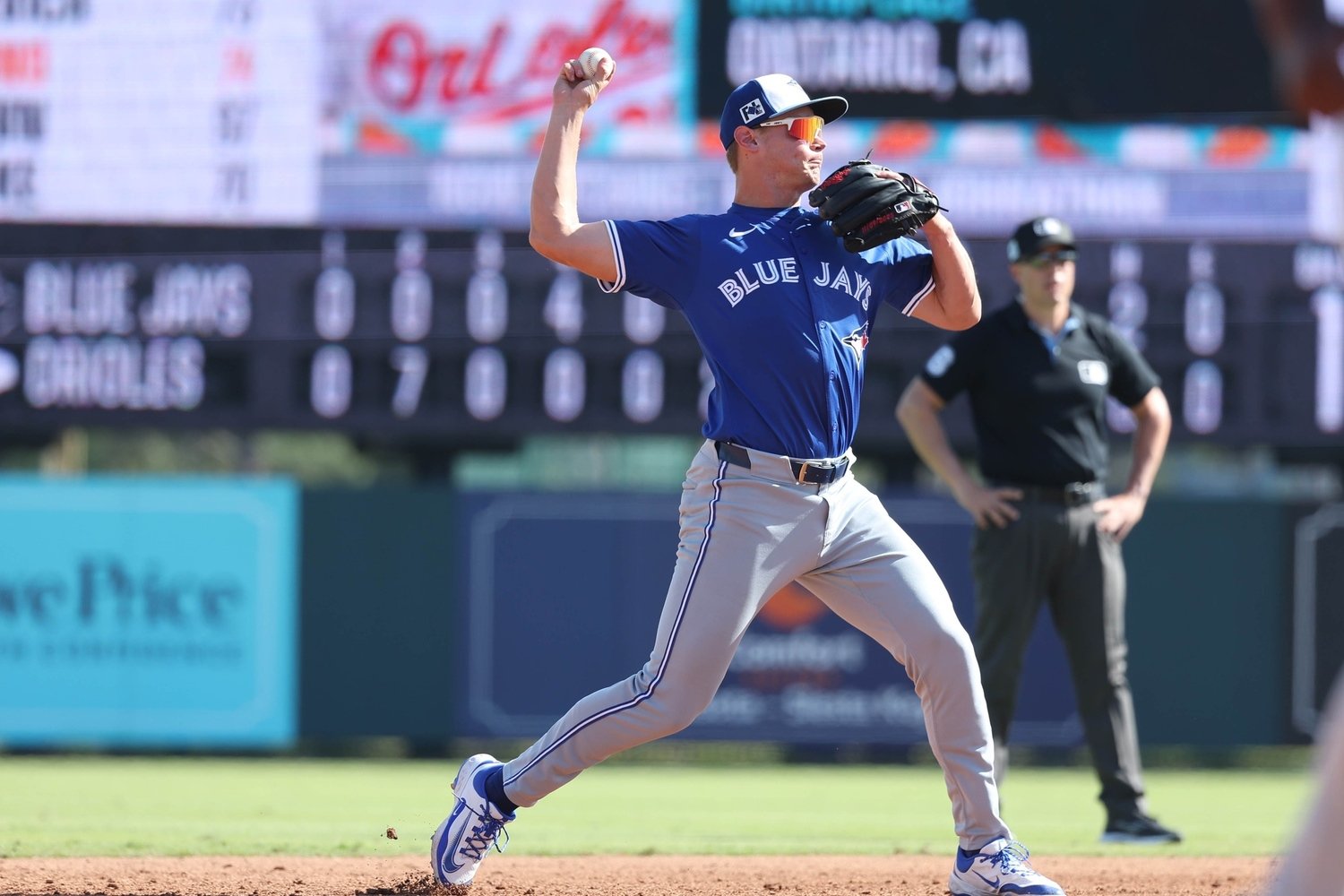 Josh Kasevich was seemingly the next man up at the end of the 2024 MiLB season. He capped off a strong campaign with a 120 wRC+ in 41 games and 173 plate appearances at Triple A, showing the strong contact skills that he was known for while playing solid defense around the diamond. Although there were a few infielders ahead of him on the depth chart, especially after the trade for Andrés Giménez, Kasevich was seen as an MLB-ready prospect who was just knocking on the doors for a major league spot and a top-10 Jays Centre prospect. That went out the window early in spring training 2025. Although Kasevich appeared in a handful of games, he had a stress reaction in his back that made him miss the majority of the MiLB season. Kasevich was able to return to game action in May before aggravating his wrist and going down for another few months. When he did return to Buffalo, he did not perform well. In 29 games, he slashed just .173/.272/.184 for a 34 wRC+. In the Arizona Fall League, he also struggled in a high-offense environment, producing a .419 OBP but not getting a single extra-base hit. In that time, Ernie Clement established himself as what many hoped Kasevich would turn out to be: an elite defender at second and third base with elite contact skills. Although Bo Bichette has not re-signed with the Jays yet, they still have made some significant additions that may prevent Kasevich from making his MLB debut in 2026, with the addition of Kazuma Okamoto, an infielder who mans the corners but also adds another talented player ahead of Kasevich on the depth charts. Here are depth charts for the Blue Jays in 2026 at Kasevich’s best positions: 2B 3B SS Andrés Giménez Addison Barger Bo Bichette* Ernie Clement Kazuma Okamoto Andrés Giménez Davis Schneider Ernie Clement Ernie Clement Leo Jiménez Josh Kasevich Leo Jiménez (Out of Options) Josh Kasevich Note: Bo Bichette has not signed with a team yet and is included in case he signs with the Blue Jays before spring training. Bichette and Giménez may also swap positions if Bichette re-signs. Bichette has not signed with a team yet, and I have included him in case he does sign with the Jays before spring training starts. Bichette and Giménez may also swap positions if he does re-sign with the Blue Jays. As you can see, not only is Kasevich blocked at multiple key positions, but also, the players above him all share the same-handedness with him. There are a few factors that may allow for some playing time to creep in, however. If Bichette does not return to the Blue Jays, that allows Kasevich to bump up a spot on the depth charts. Leo Jiménez is Kasevich’s main competition for the “third” shortstop role on the team, and despite having an injury-plagued 2025 as well, with a poor showing in a small cup of coffee in the majors, Jiménez has also had a stretch in the majors with average offensive production. However, he is out of options, and as a result, he will need to be DFA’d or traded if he does not make the Opening Day roster. Another wrinkle is Davis Schneider’s playing time after the Jays signed Kazuma Okamoto. The Jays have described Okamoto as a super-utility player, according to Bob Nightengale, and although he mainly played the hot corner in Japan, he also gained outfield experience with the Yomiuri Giants. This addition could greatly reduce Schneider’s playing time, and the Jays may want to turn to a more defensively capable 13th man to play the infield instead of Schneider. Kasevich was described as the best defensive infielder in the Blue Jays' minor league system by Baseball America in 2025. One surprise that happened earlier in the offseason was the Jays' decision not to protect Kasevich before the Rule 5 Draft by adding him to the 40-man roster. Typically, defensively capable players are highly sought after by rebuilding teams in the Rule 5. Yet, Kasevich's offensive struggles and injuries prevented him from getting selected. This means that he will have all his options available when he does come up, which gives him time to rebuild his value as one of the Jays’ top prospects. However, not being added to the 40-man roster will also make it more difficult for him to get called up, unless significant injuries or trades clear space for him. So, he’ll face an uphill battle in a fight for playing time, especially if the Jays sign one of the remaining star position players on the market, Kyle Tucker or Bichette. Still, this year could be the one in which Kasevich breaks the major league roster and produces. As a high-contact, versatile infielder, he’ll fit right into the Blue Jays lineup and core.
 -
The Toronto Blue Jays have made a couple of surprising moves recently, including the very recent DFA of Yariel Rodríguez. This led to some speculation that they may select a player in today's Rule 5 draft. Once again, the Jays surprised people, not only by making a selection, but because they selected a pitcher with only 14 2/3 IP in his minor league career. Spencer Miles was a fourth-round pick for the San Francisco Giants in 2022, signing for a $347,500 bonus. He pitched 7 1/3 innings in 2022 before being sidelined for all of 2023. He once again threw 7 1/3 innings in 2024 before Tommy John surgery shelved him for all of 2025. However, Miles did make a return to pitching in the Arizona Fall League this October. He showcased an impressive four-pitch mix with strong results in 8 2/3 IP, striking out over 30% of the batters he faced and walking only 2.7%. Graphic via @TJStats Although Miles has a starter's arsenal, with a fastball, changeup, cutter and curveball, the Jays will definitely use him as a low-leverage reliever if he remains on the roster, as he has never pitched more than 10 innings in a professional season. This is the second consecutive starting pitching prospect the Jays have selected in the Rule 5 draft that recently underwent Tommy John surgery. Angel Bastardo, last year's selection, will still need to be rostered on the 26-man for at least 90 continuous days in 2026, barring another injury. He was not able to burn off his Rule 5 clock in 2025. The Jays can also breathe a sigh of relief, as their unprotected prospects, such as Yohendrick Pinango (Jays Centre's No. 7 prospect), Yondrei Rojas, and Victor Arias (Jays Centre's No. 8 prospect), were all left unselected. Ricky Tiedemann, Jays Centre's No. 5 prospect, was the only Rule 5-eligible player the team protected ahead of the draft. View full article
- 2 replies
-
- 1
-

-
- spencer miles
- dc analysis
- (and 1 more)
-
Blue Jays Select Right-Hander Spencer Miles in Rule 5 Draft
Simon Li posted an article in Minor Leagues
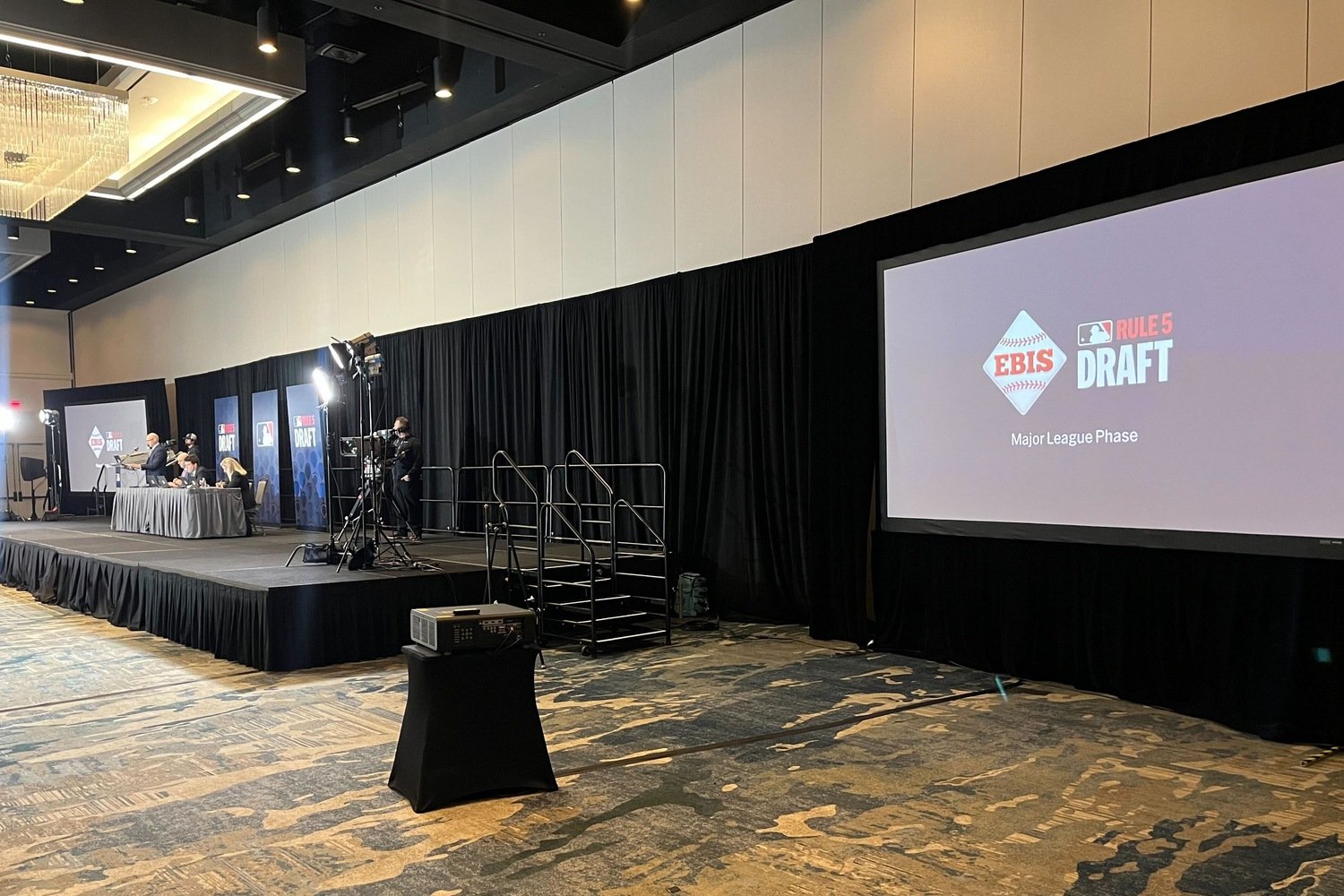 The Toronto Blue Jays have made a couple of surprising moves recently, including the very recent DFA of Yariel Rodríguez. This led to some speculation that they may select a player in today's Rule 5 draft. Once again, the Jays surprised people, not only by making a selection, but because they selected a pitcher with only 14 2/3 IP in his minor league career. Spencer Miles was a fourth-round pick for the San Francisco Giants in 2022, signing for a $347,500 bonus. He pitched 7 1/3 innings in 2022 before being sidelined for all of 2023. He once again threw 7 1/3 innings in 2024 before Tommy John surgery shelved him for all of 2025. However, Miles did make a return to pitching in the Arizona Fall League this October. He showcased an impressive four-pitch mix with strong results in 8 2/3 IP, striking out over 30% of the batters he faced and walking only 2.7%. Graphic via @TJStats Although Miles has a starter's arsenal, with a fastball, changeup, cutter and curveball, the Jays will definitely use him as a low-leverage reliever if he remains on the roster, as he has never pitched more than 10 innings in a professional season. This is the second consecutive starting pitching prospect the Jays have selected in the Rule 5 draft that recently underwent Tommy John surgery. Angel Bastardo, last year's selection, will still need to be rostered on the 26-man for at least 90 continuous days in 2026, barring another injury. He was not able to burn off his Rule 5 clock in 2025. The Jays can also breathe a sigh of relief, as their unprotected prospects, such as Yohendrick Pinango (Jays Centre's No. 7 prospect), Yondrei Rojas, and Victor Arias (Jays Centre's No. 8 prospect), were all left unselected. Ricky Tiedemann, Jays Centre's No. 5 prospect, was the only Rule 5-eligible player the team protected ahead of the draft.
 -
.jpg.7ba10073dd0a3e1437d719d59ef6da68.jpg) The 2024 season was the last in which Shane Farrell was the Blue Jays’ scouting director, but the 2024 draft class was the second in a row from which the draftees have already started to show significant dividends. Although it is still early in all of these prospects’ professional careers, the 2025 season was able to show us some trends for Toronto’s early-round picks. This article was inspired by Cody Christie, who wrote a great piece about the Twins’ 2024 Draft Class on our sister site, Twins Daily. RHP Trey Yesavage (1st Round, 20th overall) The 2024 first-rounder for the Blue Jays really does not need to be talked about, as the 22-year-old burst onto the world stage with dominant performances in the 2025 playoffs. Yesavage was one of the more MLB-ready pitchers drafted in the first round, but his meteoric rise from Single-A Dunedin to starting Game 1 of the World Series is still extremely astonishing. He’s now the runaway favourite for the 2026 AL Rookie of the Year. Stock: To the Moon RHP Khal Stephen (2nd Round, 59th overall) - Traded to Guardians The Jays’ 2024 second-rounder was overshadowed by some big names in the system, but the big righty was performing as much as Yesavage at almost every step of the way. He, too, started off in Single-A, making it all the way to Double-A before getting shelved with a shoulder impingement. He eventually was traded for 2020 AL Cy Young winner Shane Bieber, but has still been in consideration for the bottom end of top 100 prospect lists. For the 2025 season, Stephen pitched just over 100 innings with a 2.53 ERA and a 2.60 FIP. Stock: Up LHP Johnny King (3rd Round, 95th overall) Johnny King was drafted out of high school as a raw 17-year-old and did not pitch until the start of the Florida Complex League. He adjusted rather quickly, dominating rookie ball hitters, striking out 41.8% of the hitters he faced. He was then promoted to Single-A Dunedin, where he continued his strikeout dominance, K-ing 38.1% of A-ball hitters, although his walk rate also jumped as he struggled to repeat his delivery. King definitely proved that his stuff was immaculate, and although he still needs to figure out his command and needs to develop a third pitch, he has also earned consideration to be a top-100 prospect. Stock: Way Up 3B/1B Sean Keys (4th Round, 125th overall) Keys was drafted out of Bucknell and immediately produced in 22 G and 98 PA in Single-A Dunedin in 2024. He showed off his strong plate discipline, walking over 13% of the time, leading to a 134 wRC+. He earned his promotion to High-A Vancouver, where he quietly produced a strong season, showing off his strengths well. Keys continued to get on base, producing a .365 OBP carried by a 16.3% walk rate. He also showed off some real power, with 19 homers, 22 doubles and a triple to give him a .191 ISO. He got a little unlucky in terms of BABIP, as did many of the hitters in Vancouver. He’s been looked at as a potential breakout candidate for 2026. Stock: Up OF Nick Mitchell (4th Round, 136th overall) - Traded to Guardians Nick Mitchell was the compensation pick for Matt Chapman, and the outfielder performed well in 2024 and was subsequently traded to the Guardians with Spencer Horwitz for Andrés Giménez and Nick Sandlin. I will not comment on his stock, given that he was not in the Jays organization at all this past season, but he performed well with the Guardians, posting a 122 wRC+ across Single and High-A. RHP Jackson Wentworth (5th Round, 158th overall) It was a mixed bag for Jackson Wentworth, who had stretches of absolute dominance and also periods where he really struggled. The righty out of Kansas State made 26 starts with a slightly above-average FIP, but was overshadowed by many of his teammates who were able to make the jump to Double-A or who dominated coming out of Single-A. Still, Wentworth only started 16 games in college, so showing the capability to go out there and pitch every six days, whilst taking on the challenge of going straight to High-A out of college, was still not an easy feat. His season didn’t do too much to hurt his stock, but also did not let him establish himself as one of the better pitching prospects for the Jays. Stock: Neither Up nor Down While the top picks from the Jays' 2024 draft class have all performed well, quite a few of their later-round picks are trending in the right direction as well. Later-round picks or undrafted free agents who were able to raise their stocks include: RHP Austin Cates (7th Round, 217th pick) Austin Cates has been viewed as a breakout candidate since his velo started to tick up late in the season and he pitched to a sub-2.00 ERA and FIP in five starts for Vancouver. OF Eddie Micheletti Jr. (8th Round, 247th pick) Eddie Micheletti Jr. was the best qualified hitter for the Vancouver Canadians, and although his defensive fit is questionable, he has shown strong power and plate discipline from the left-hand side. RHP Troy Guthrie (11th round, 337th overall) Trot Guthrie was the best pitcher for the championship-winning FCL Jays in the complex league, showing advanced command for a teenager. OF/2B J.R. Freethy (14th Round, 427th overall) Although he had an injury mid-way through the season, J.R. Freethy’s on-base ability earned him a promotion to Double-A, and he was also able to get a highlight piece from me. LHP Javen Coleman (UDFA) Javen Coleman was a strikeout machine for Dunedin and Vancouver, as the lefty reliever struck out over 38% of the batters he faced. He also threw an immaculate inning early in the season and almost had another on August 15, falling one strike short. The Blue Jays are beginning to develop a penchant for lefty arms, and Coleman is another example of such. Although most of these players may not have the impact that Trey Yesavage has already had, this season was another step in the right direction for the Jays’ drafting and development. After struggling to find success in the early parts of Shapiro and Atkins’ term with the Blue Jays, their stock is finally starting to rise in the minor leagues.
The 2024 season was the last in which Shane Farrell was the Blue Jays’ scouting director, but the 2024 draft class was the second in a row from which the draftees have already started to show significant dividends. Although it is still early in all of these prospects’ professional careers, the 2025 season was able to show us some trends for Toronto’s early-round picks. This article was inspired by Cody Christie, who wrote a great piece about the Twins’ 2024 Draft Class on our sister site, Twins Daily. RHP Trey Yesavage (1st Round, 20th overall) The 2024 first-rounder for the Blue Jays really does not need to be talked about, as the 22-year-old burst onto the world stage with dominant performances in the 2025 playoffs. Yesavage was one of the more MLB-ready pitchers drafted in the first round, but his meteoric rise from Single-A Dunedin to starting Game 1 of the World Series is still extremely astonishing. He’s now the runaway favourite for the 2026 AL Rookie of the Year. Stock: To the Moon RHP Khal Stephen (2nd Round, 59th overall) - Traded to Guardians The Jays’ 2024 second-rounder was overshadowed by some big names in the system, but the big righty was performing as much as Yesavage at almost every step of the way. He, too, started off in Single-A, making it all the way to Double-A before getting shelved with a shoulder impingement. He eventually was traded for 2020 AL Cy Young winner Shane Bieber, but has still been in consideration for the bottom end of top 100 prospect lists. For the 2025 season, Stephen pitched just over 100 innings with a 2.53 ERA and a 2.60 FIP. Stock: Up LHP Johnny King (3rd Round, 95th overall) Johnny King was drafted out of high school as a raw 17-year-old and did not pitch until the start of the Florida Complex League. He adjusted rather quickly, dominating rookie ball hitters, striking out 41.8% of the hitters he faced. He was then promoted to Single-A Dunedin, where he continued his strikeout dominance, K-ing 38.1% of A-ball hitters, although his walk rate also jumped as he struggled to repeat his delivery. King definitely proved that his stuff was immaculate, and although he still needs to figure out his command and needs to develop a third pitch, he has also earned consideration to be a top-100 prospect. Stock: Way Up 3B/1B Sean Keys (4th Round, 125th overall) Keys was drafted out of Bucknell and immediately produced in 22 G and 98 PA in Single-A Dunedin in 2024. He showed off his strong plate discipline, walking over 13% of the time, leading to a 134 wRC+. He earned his promotion to High-A Vancouver, where he quietly produced a strong season, showing off his strengths well. Keys continued to get on base, producing a .365 OBP carried by a 16.3% walk rate. He also showed off some real power, with 19 homers, 22 doubles and a triple to give him a .191 ISO. He got a little unlucky in terms of BABIP, as did many of the hitters in Vancouver. He’s been looked at as a potential breakout candidate for 2026. Stock: Up OF Nick Mitchell (4th Round, 136th overall) - Traded to Guardians Nick Mitchell was the compensation pick for Matt Chapman, and the outfielder performed well in 2024 and was subsequently traded to the Guardians with Spencer Horwitz for Andrés Giménez and Nick Sandlin. I will not comment on his stock, given that he was not in the Jays organization at all this past season, but he performed well with the Guardians, posting a 122 wRC+ across Single and High-A. RHP Jackson Wentworth (5th Round, 158th overall) It was a mixed bag for Jackson Wentworth, who had stretches of absolute dominance and also periods where he really struggled. The righty out of Kansas State made 26 starts with a slightly above-average FIP, but was overshadowed by many of his teammates who were able to make the jump to Double-A or who dominated coming out of Single-A. Still, Wentworth only started 16 games in college, so showing the capability to go out there and pitch every six days, whilst taking on the challenge of going straight to High-A out of college, was still not an easy feat. His season didn’t do too much to hurt his stock, but also did not let him establish himself as one of the better pitching prospects for the Jays. Stock: Neither Up nor Down While the top picks from the Jays' 2024 draft class have all performed well, quite a few of their later-round picks are trending in the right direction as well. Later-round picks or undrafted free agents who were able to raise their stocks include: RHP Austin Cates (7th Round, 217th pick) Austin Cates has been viewed as a breakout candidate since his velo started to tick up late in the season and he pitched to a sub-2.00 ERA and FIP in five starts for Vancouver. OF Eddie Micheletti Jr. (8th Round, 247th pick) Eddie Micheletti Jr. was the best qualified hitter for the Vancouver Canadians, and although his defensive fit is questionable, he has shown strong power and plate discipline from the left-hand side. RHP Troy Guthrie (11th round, 337th overall) Trot Guthrie was the best pitcher for the championship-winning FCL Jays in the complex league, showing advanced command for a teenager. OF/2B J.R. Freethy (14th Round, 427th overall) Although he had an injury mid-way through the season, J.R. Freethy’s on-base ability earned him a promotion to Double-A, and he was also able to get a highlight piece from me. LHP Javen Coleman (UDFA) Javen Coleman was a strikeout machine for Dunedin and Vancouver, as the lefty reliever struck out over 38% of the batters he faced. He also threw an immaculate inning early in the season and almost had another on August 15, falling one strike short. The Blue Jays are beginning to develop a penchant for lefty arms, and Coleman is another example of such. Although most of these players may not have the impact that Trey Yesavage has already had, this season was another step in the right direction for the Jays’ drafting and development. After struggling to find success in the early parts of Shapiro and Atkins’ term with the Blue Jays, their stock is finally starting to rise in the minor leagues. -
The 2024 season was the last in which Shane Farrell was the Blue Jays’ scouting director, but the 2024 draft class was the second in a row from which the draftees have already started to show significant dividends. Although it is still early in all of these prospects’ professional careers, the 2025 season was able to show us some trends for Toronto’s early-round picks. This article was inspired by Cody Christie, who wrote a great piece about the Twins’ 2024 Draft Class on our sister site, Twins Daily. RHP Trey Yesavage (1st Round, 20th overall) The 2024 first-rounder for the Blue Jays really does not need to be talked about, as the 22-year-old burst onto the world stage with dominant performances in the 2025 playoffs. Yesavage was one of the more MLB-ready pitchers drafted in the first round, but his meteoric rise from Single-A Dunedin to starting Game 1 of the World Series is still extremely astonishing. He’s now the runaway favourite for the 2026 AL Rookie of the Year. Stock: To the Moon RHP Khal Stephen (2nd Round, 59th overall) - Traded to Guardians The Jays’ 2024 second-rounder was overshadowed by some big names in the system, but the big righty was performing as much as Yesavage at almost every step of the way. He, too, started off in Single-A, making it all the way to Double-A before getting shelved with a shoulder impingement. He eventually was traded for 2020 AL Cy Young winner Shane Bieber, but has still been in consideration for the bottom end of top 100 prospect lists. For the 2025 season, Stephen pitched just over 100 innings with a 2.53 ERA and a 2.60 FIP. Stock: Up LHP Johnny King (3rd Round, 95th overall) Johnny King was drafted out of high school as a raw 17-year-old and did not pitch until the start of the Florida Complex League. He adjusted rather quickly, dominating rookie ball hitters, striking out 41.8% of the hitters he faced. He was then promoted to Single-A Dunedin, where he continued his strikeout dominance, K-ing 38.1% of A-ball hitters, although his walk rate also jumped as he struggled to repeat his delivery. King definitely proved that his stuff was immaculate, and although he still needs to figure out his command and needs to develop a third pitch, he has also earned consideration to be a top-100 prospect. Stock: Way Up 3B/1B Sean Keys (4th Round, 125th overall) Keys was drafted out of Bucknell and immediately produced in 22 G and 98 PA in Single-A Dunedin in 2024. He showed off his strong plate discipline, walking over 13% of the time, leading to a 134 wRC+. He earned his promotion to High-A Vancouver, where he quietly produced a strong season, showing off his strengths well. Keys continued to get on base, producing a .365 OBP carried by a 16.3% walk rate. He also showed off some real power, with 19 homers, 22 doubles and a triple to give him a .191 ISO. He got a little unlucky in terms of BABIP, as did many of the hitters in Vancouver. He’s been looked at as a potential breakout candidate for 2026. Stock: Up OF Nick Mitchell (4th Round, 136th overall) - Traded to Guardians Nick Mitchell was the compensation pick for Matt Chapman, and the outfielder performed well in 2024 and was subsequently traded to the Guardians with Spencer Horwitz for Andrés Giménez and Nick Sandlin. I will not comment on his stock, given that he was not in the Jays organization at all this past season, but he performed well with the Guardians, posting a 122 wRC+ across Single and High-A. RHP Jackson Wentworth (5th Round, 158th overall) It was a mixed bag for Jackson Wentworth, who had stretches of absolute dominance and also periods where he really struggled. The righty out of Kansas State made 26 starts with a slightly above-average FIP, but was overshadowed by many of his teammates who were able to make the jump to Double-A or who dominated coming out of Single-A. Still, Wentworth only started 16 games in college, so showing the capability to go out there and pitch every six days, whilst taking on the challenge of going straight to High-A out of college, was still not an easy feat. His season didn’t do too much to hurt his stock, but also did not let him establish himself as one of the better pitching prospects for the Jays. Stock: Neither Up nor Down While the top picks from the Jays' 2024 draft class have all performed well, quite a few of their later-round picks are trending in the right direction as well. Later-round picks or undrafted free agents who were able to raise their stocks include: RHP Austin Cates (7th Round, 217th pick) Austin Cates has been viewed as a breakout candidate since his velo started to tick up late in the season and he pitched to a sub-2.00 ERA and FIP in five starts for Vancouver. OF Eddie Micheletti Jr. (8th Round, 247th pick) Eddie Micheletti Jr. was the best qualified hitter for the Vancouver Canadians, and although his defensive fit is questionable, he has shown strong power and plate discipline from the left-hand side. RHP Troy Guthrie (11th round, 337th overall) Trot Guthrie was the best pitcher for the championship-winning FCL Jays in the complex league, showing advanced command for a teenager. OF/2B J.R. Freethy (14th Round, 427th overall) Although he had an injury mid-way through the season, J.R. Freethy’s on-base ability earned him a promotion to Double-A, and he was also able to get a highlight piece from me. LHP Javen Coleman (UDFA) Javen Coleman was a strikeout machine for Dunedin and Vancouver, as the lefty reliever struck out over 38% of the batters he faced. He also threw an immaculate inning early in the season and almost had another on August 15, falling one strike short. The Blue Jays are beginning to develop a penchant for lefty arms, and Coleman is another example of such. Although most of these players may not have the impact that Trey Yesavage has already had, this season was another step in the right direction for the Jays’ drafting and development. After struggling to find success in the early parts of Shapiro and Atkins’ term with the Blue Jays, their stock is finally starting to rise in the minor leagues. View full article
-
 Munetaka Murakami is a powerhouse slugger who has broken homer records in a dead-ball era and was posted by his NPB team, the Tokyo Yakult Swallows, and will have 45 days to sign with an MLB team. Murakami will be 26 years old in the 2026 season, which makes it more likely he will get a longer-term deal, as he has not yet reached his physical prime. Murakami’s calling card is obvious; he absolutely demolishes baseballs. In seven NPB seasons, he hit 246 homers, including a shortened 2025 season where he was shelved early with an oblique injury in March. Murakami’s best season came in 2022, when he broke the record for most home runs by a Japanese-born player with 56, posting a 225 wRC+. He walked over 19% of the time and struck out a little over 20% of the time; however, it was below average, only within the 25th percentile, as NPB hitters typically strike out much less. After that season, a pressure-filled WBC tournament got the better of Murakami, where he notably struggled to live up to his vaunted 2022 season, which carried over into the next two seasons. The prodigious slugger’s low water mark for ISO (Isolated Power) was .228 in 2024, which was a “down” year for him as he “only” had a 156 wRC+. His strikeout rate ballooned from during that stretch to nearly 30%. On a rate basis, when healthy, Murakami was remarkably similar in 2025, but his strikeout rate continued to hover above 28% which was the bottom third percentile. Although he strikes out a ton, his plate discipline is firm, with an above-average chase rate and a 99th percentile walk rate. His strengths are glaring, but so are his weaknesses. As we saw, his strikeout rate was one of the worst in NPB, and that is more concerning given that he’s coming to MLB, where pitchers throw harder and have more advanced stuff overall. Murakami also struggled heavily with “velocity,” as James Schiano noted, “Murakami had a .095 batting average against pitches 93 MPH or harder last season in NPB.” Of course, that’s still a small sample, as NPB doesn't have many pitchers who throw that hard, but adding in Murakami’s contact issues and strikeout concerns will give teams pause in how they evaluate his ability to hit MLB pitchers, where the average fastball velocity clears 94 mph. His contact issues cannot be overblown either, as his contact rate of 63.9% and Swinging Strike Rate of 17.3% would be the worst among all qualified hitters in MLB. In addition to the concerns on the offensive end, Murakami also has significant concerns on the defensive end. He was a third baseman with the Swallows, but had a -8.4 Total Zone Rating (position adjusted), which was significantly below average. If the Jays were to sign him, his positional fit would immediately come into question, as the Blue Jays value defense quite highly, and Vladimir Guerrero Jr. also occupies first base for the next 13 years. George Springer and Anthony Santander are also more likely to fill the designated hitter role in 2026, which means that Murakami will be forced to play mostly at third base. The Jays will do their due diligence and check in on Murakami as a free-agent target. Still, concerns about his offensive game will be a significant problem for a team trying to compete for a World Series title, as they may not have the time to let him figure out major league pitching. Although he does have 70 grade power that most teams would love, the margins of error are very slim for him, as evidenced by Joey Gallo, who went from a solid above-average hitter to out of the league in just a few seasons. Given the youth and productivity in NPB, Murakami will most likely seek a longer-term contract, which may also be harder for the Jays to swallow in terms of risk mitigation. ZIPS projects Murakami to have a 126 wRC+ with a 3.4 fWAR, but the range of outcomes is going to be super-high, depending on whether he can adjust to velocity and if his strikeout rate can be managed. With the poor defensive fit, however, the Jays may look to other free-agent options to fill a defensive need. Still, they also have the defensive flexibility to hide Murakami’s shortcomings. The Blue Jays would love an injection of power, and the potential for Murakami's massive power is intriguing; however, the concerns may outweigh the benefits for the Jays' front office. The Jays prioritize defensive flexibility and strong bat-to-ball skills, which Murakami cannot fit into, but which may, in turn, allow them to handle Murakami’s shortcomings. The ultimate question is whether Murakami’s youth and potential will spark a bidding war or whether the Jays can get him on a reasonable contract if they choose to pursue him, thereby mitigating the risk.
 -
Munetaka Murakami is a powerhouse slugger who has broken homer records in a dead-ball era and was posted by his NPB team, the Tokyo Yakult Swallows, and will have 45 days to sign with an MLB team. Murakami will be 26 years old in the 2026 season, which makes it more likely he will get a longer-term deal, as he has not yet reached his physical prime. Murakami’s calling card is obvious; he absolutely demolishes baseballs. In seven NPB seasons, he hit 246 homers, including a shortened 2025 season where he was shelved early with an oblique injury in March. Murakami’s best season came in 2022, when he broke the record for most home runs by a Japanese-born player with 56, posting a 225 wRC+. He walked over 19% of the time and struck out a little over 20% of the time; however, it was below average, only within the 25th percentile, as NPB hitters typically strike out much less. After that season, a pressure-filled WBC tournament got the better of Murakami, where he notably struggled to live up to his vaunted 2022 season, which carried over into the next two seasons. The prodigious slugger’s low water mark for ISO (Isolated Power) was .228 in 2024, which was a “down” year for him as he “only” had a 156 wRC+. His strikeout rate ballooned from during that stretch to nearly 30%. On a rate basis, when healthy, Murakami was remarkably similar in 2025, but his strikeout rate continued to hover above 28% which was the bottom third percentile. Although he strikes out a ton, his plate discipline is firm, with an above-average chase rate and a 99th percentile walk rate. His strengths are glaring, but so are his weaknesses. As we saw, his strikeout rate was one of the worst in NPB, and that is more concerning given that he’s coming to MLB, where pitchers throw harder and have more advanced stuff overall. Murakami also struggled heavily with “velocity,” as James Schiano noted, “Murakami had a .095 batting average against pitches 93 MPH or harder last season in NPB.” Of course, that’s still a small sample, as NPB doesn't have many pitchers who throw that hard, but adding in Murakami’s contact issues and strikeout concerns will give teams pause in how they evaluate his ability to hit MLB pitchers, where the average fastball velocity clears 94 mph. His contact issues cannot be overblown either, as his contact rate of 63.9% and Swinging Strike Rate of 17.3% would be the worst among all qualified hitters in MLB. In addition to the concerns on the offensive end, Murakami also has significant concerns on the defensive end. He was a third baseman with the Swallows, but had a -8.4 Total Zone Rating (position adjusted), which was significantly below average. If the Jays were to sign him, his positional fit would immediately come into question, as the Blue Jays value defense quite highly, and Vladimir Guerrero Jr. also occupies first base for the next 13 years. George Springer and Anthony Santander are also more likely to fill the designated hitter role in 2026, which means that Murakami will be forced to play mostly at third base. The Jays will do their due diligence and check in on Murakami as a free-agent target. Still, concerns about his offensive game will be a significant problem for a team trying to compete for a World Series title, as they may not have the time to let him figure out major league pitching. Although he does have 70 grade power that most teams would love, the margins of error are very slim for him, as evidenced by Joey Gallo, who went from a solid above-average hitter to out of the league in just a few seasons. Given the youth and productivity in NPB, Murakami will most likely seek a longer-term contract, which may also be harder for the Jays to swallow in terms of risk mitigation. ZIPS projects Murakami to have a 126 wRC+ with a 3.4 fWAR, but the range of outcomes is going to be super-high, depending on whether he can adjust to velocity and if his strikeout rate can be managed. With the poor defensive fit, however, the Jays may look to other free-agent options to fill a defensive need. Still, they also have the defensive flexibility to hide Murakami’s shortcomings. The Blue Jays would love an injection of power, and the potential for Murakami's massive power is intriguing; however, the concerns may outweigh the benefits for the Jays' front office. The Jays prioritize defensive flexibility and strong bat-to-ball skills, which Murakami cannot fit into, but which may, in turn, allow them to handle Murakami’s shortcomings. The ultimate question is whether Murakami’s youth and potential will spark a bidding war or whether the Jays can get him on a reasonable contract if they choose to pursue him, thereby mitigating the risk. View full article
-
Alejandro Kirk was a bat-first player when he arrived in the big leagues. The diminutive but stocky catcher soared through the minors off the strength of his bat, and at just 21 years old, debuted in the big leagues in the COVID-shortened 2020 season. He produced a 165 wRC+ in 25 plate appearances but had a -1.2 FanGraphs Def with a -2 Fielding Run Value. In 2021, Kirk dealt with a hip flexor strain early in the season that shortened his year, but he was still able to catch 338 innings and remained below average as a framer and backstop in general, with -3 Defensive Runs Saved and a -3 Fielding Run Value. He still was an above-average hitter during the 60 games he played, with a 106 wRC+, but at this point in his career, Kirk would be known as a player who only played catcher because he couldn’t play anywhere else. That would change in 2022, when Kirk had his breakout season, winning his first Silver Slugger and making his first All-Star appearance, hitting .285/.372/.415 for a 129 wRC+. The offensive numbers were spectacular and gaudy, but the most interesting thing about his season was not that he could hit, as he had already proved that throughout his short professional career up to that point, but that his defense took a massive leap forward. His Fielding Run Value jumped to 11, and he showed above-average abilities in blocking the ball with his athleticism and great positioning. He also became a great framer, with eight framing runs according to Statcast. Although Kirk wasn’t the best fielding catcher in the AL, he established himself in the upper echelons as a defender. The following year, he proved it wasn’t a fluke, almost repeating the same performance defensively in 2023, with a slightly lower fielding run value, although he caught over 100 more innings. The bat, however, took a step back, as he was a slightly below-average hitter. His woes on the hitting end continued in 2024, but his glove continued to trend upwards, as his framing improved again (12 framing runs), and he had a career high four throwing runs, according to Statcast. Although Cal Raleigh won the AL Gold Glove Award at catcher, as well as the Platinum Glove, some metrics pointed to Alejandro Kirk as the better defender that year. Kirk was a better defender according to Statcast’s Fielding Run Value, with 17 to Raleigh’s 14, but DRS preferred Raleigh over Kirk. The metrics being mixed as to who was better made the snub sting a little less, but Kirk should have won the award that year as well. In addition to voting, Rawlings uses a metric known as the SABR Defensive Index for awarding Gold Gloves. According to Rawlings, the SABR Defensive Index combines six different defensive data sources and includes factors such as arm strength & accuracy and range & sure-handedness, along with the number of “excellent” and “poor” fielding plays a fielder makes. For catchers, fielding bunts, blocking balls in the dirt, and stolen bases/caught stealing are included. There is one glaring part of catching that is missing from that list: Framing. Framing is 100% the most important part of a catcher’s defense. The highest number of stolen base attempts on any catcher this season was 89 on Yainer Diaz, which means that on only 89 plays did Diaz’s arm make any sort of direct impact. And sometimes, based on the runner or the pitcher, a catcher actually has zero impact on a base-stealing play. That’s why Statcast uses Caught Stealing Above Average, which translates to Catcher Stealing Runs. The best catcher in 2025 at throwing out runners was Luis Torrens with 12 CS above average. That equates to 8 Catcher Stealing Runs. On the other hand, the catcher who caught the most pitches this season was J.T. Realmuto with 9,714. Around 4,000 of those pitches were caught in the Chase/Waste areas, which are so far from the zone that framing makes minimal impact, and around 1,000 of those pitches were in the heart of the zone. Still, that leaves a few thousand pitches in the shadow of the zone. Not only do catchers need to help pitchers turn pitches one or two inches out of the zone into strikes, but they also help to ensure that pitches just one or two inches inside the zone are called strikes as well. One strike or ball call can make the difference between an 0-1 count or a 1-0 count, and each count has an assigned run value. Baseball Savant's Catcher Framing Runs converts strikes into runs on a .125 run/strike basis, taking park and pitcher adjustments into account. The best catcher in all of baseball in this metric was Patrick Bailey, who had a 47.7 shadow strike percentage, which converted to 25 Catcher Framing Runs. Kirk lagged behind with a 47.1 shadow strike percent, which made for “only” 16 Catcher Framing Runs. However, that shows the difference in the importance of each role a catcher plays. The best guy at throwing out runners only contributed half as many runs as the second-best framer in baseball. Defensive metrics are not a perfect science and are still improving every year, but the sheer volume of pitches a catcher receives makes the value of excellent framing outweigh a slightly stronger arm. When the 2025 season concluded, Alejandro Kirk stood at the peak of almost every catching metric: first in the AL in Statcast Catcher Framing Runs with 16 and first in the league in Blocking Runs with five, albeit with zero Throwing Runs. Still, he was easily the second-best catcher in the league in total Fielding Run Value at 22. DRS was lower on Kirk, but he still finished tied for eighth in DRS among catchers with 9, just below Carlos Narvaez among the finalists for the Gold Glove. Although, I’m not a fan of DRS because it uses catcher’s ERA as a component, which dinged Kirk for a -4. Catcher’s ERA is extremely misleading as a statistic, and although I would love to dive into why I think it is a poor metric, I’ve already rambled on long enough. Despite Kirk getting dinged on that front, he still finished ahead of the winner Dillon Dingler, who only had six Defensive Runs Saved. Dingler is an incredible catcher, and being the second or third best catcher in the AL is no small feat, but he was not better than Kirk. He was better at throwing out runners, and his 30% CS rate did dwarf Kirk’s 17%. However, he was a worse blocker by a significant amount and a worse framer by an even bigger amount. Dingler finished with a 12 FRV to Kirk’s 22. The stats were not comparable, and Kirk’s body of work showed why he should have won the award. Unfortunately, flaws within the voting system and the metrics used to determine the winner have now prevented Kirk from winning not one, but two Gold Gloves, and this loss was easily the more egregious of the two. Lastly, human beings are inherently biased. The way that we are brought up, the conventional wisdom of the past and what we consider common sense all play a part in how we view people and evaluate athletes. I have no idea what precisely led to Kirk’s unfortunate Gold Glove snub; it may have been SDI being a flawed metric, but it also may have been the coaches who vote not respecting his ability as a defensive catcher, despite him constantly proving himself as one of the best in the game. Kirk is unconventionally sized as a professional athlete, and the inherent biases of managers and coaches could have given Dingler a leg up in the voting. Even now, with a magnitude of evidence showcasing that one-knee catching is more effective than catching with two knees down, our beloved commentators like Buck Martinez cannot help themselves from sticking with tradition and thinking a worse method is better. What I implore people to do is move past what we think is right and instead look at the empirical evidence and see that this teapot-shaped looking fellow is, in fact, the best defensive catcher in the entire American League, and it isn’t even close. View full article
-
.jpg.8b610dac59d6f838a9436cad65848e3e.jpg) Alejandro Kirk was a bat-first player when he arrived in the big leagues. The diminutive but stocky catcher soared through the minors off the strength of his bat, and at just 21 years old, debuted in the big leagues in the COVID-shortened 2020 season. He produced a 165 wRC+ in 25 plate appearances but had a -1.2 FanGraphs Def with a -2 Fielding Run Value. In 2021, Kirk dealt with a hip flexor strain early in the season that shortened his year, but he was still able to catch 338 innings and remained below average as a framer and backstop in general, with -3 Defensive Runs Saved and a -3 Fielding Run Value. He still was an above-average hitter during the 60 games he played, with a 106 wRC+, but at this point in his career, Kirk would be known as a player who only played catcher because he couldn’t play anywhere else. That would change in 2022, when Kirk had his breakout season, winning his first Silver Slugger and making his first All-Star appearance, hitting .285/.372/.415 for a 129 wRC+. The offensive numbers were spectacular and gaudy, but the most interesting thing about his season was not that he could hit, as he had already proved that throughout his short professional career up to that point, but that his defense took a massive leap forward. His Fielding Run Value jumped to 11, and he showed above-average abilities in blocking the ball with his athleticism and great positioning. He also became a great framer, with eight framing runs according to Statcast. Although Kirk wasn’t the best fielding catcher in the AL, he established himself in the upper echelons as a defender. The following year, he proved it wasn’t a fluke, almost repeating the same performance defensively in 2023, with a slightly lower fielding run value, although he caught over 100 more innings. The bat, however, took a step back, as he was a slightly below-average hitter. His woes on the hitting end continued in 2024, but his glove continued to trend upwards, as his framing improved again (12 framing runs), and he had a career high four throwing runs, according to Statcast. Although Cal Raleigh won the AL Gold Glove Award at catcher, as well as the Platinum Glove, some metrics pointed to Alejandro Kirk as the better defender that year. Kirk was a better defender according to Statcast’s Fielding Run Value, with 17 to Raleigh’s 14, but DRS preferred Raleigh over Kirk. The metrics being mixed as to who was better made the snub sting a little less, but Kirk should have won the award that year as well. In addition to voting, Rawlings uses a metric known as the SABR Defensive Index for awarding Gold Gloves. According to Rawlings, the SABR Defensive Index combines six different defensive data sources and includes factors such as arm strength & accuracy and range & sure-handedness, along with the number of “excellent” and “poor” fielding plays a fielder makes. For catchers, fielding bunts, blocking balls in the dirt, and stolen bases/caught stealing are included. There is one glaring part of catching that is missing from that list: Framing. Framing is 100% the most important part of a catcher’s defense. The highest number of stolen base attempts on any catcher this season was 89 on Yainer Diaz, which means that on only 89 plays did Diaz’s arm make any sort of direct impact. And sometimes, based on the runner or the pitcher, a catcher actually has zero impact on a base-stealing play. That’s why Statcast uses Caught Stealing Above Average, which translates to Catcher Stealing Runs. The best catcher in 2025 at throwing out runners was Luis Torrens with 12 CS above average. That equates to 8 Catcher Stealing Runs. On the other hand, the catcher who caught the most pitches this season was J.T. Realmuto with 9,714. Around 4,000 of those pitches were caught in the Chase/Waste areas, which are so far from the zone that framing makes minimal impact, and around 1,000 of those pitches were in the heart of the zone. Still, that leaves a few thousand pitches in the shadow of the zone. Not only do catchers need to help pitchers turn pitches one or two inches out of the zone into strikes, but they also help to ensure that pitches just one or two inches inside the zone are called strikes as well. One strike or ball call can make the difference between an 0-1 count or a 1-0 count, and each count has an assigned run value. Baseball Savant's Catcher Framing Runs converts strikes into runs on a .125 run/strike basis, taking park and pitcher adjustments into account. The best catcher in all of baseball in this metric was Patrick Bailey, who had a 47.7 shadow strike percentage, which converted to 25 Catcher Framing Runs. Kirk lagged behind with a 47.1 shadow strike percent, which made for “only” 16 Catcher Framing Runs. However, that shows the difference in the importance of each role a catcher plays. The best guy at throwing out runners only contributed half as many runs as the second-best framer in baseball. Defensive metrics are not a perfect science and are still improving every year, but the sheer volume of pitches a catcher receives makes the value of excellent framing outweigh a slightly stronger arm. When the 2025 season concluded, Alejandro Kirk stood at the peak of almost every catching metric: first in the AL in Statcast Catcher Framing Runs with 16 and first in the league in Blocking Runs with five, albeit with zero Throwing Runs. Still, he was easily the second-best catcher in the league in total Fielding Run Value at 22. DRS was lower on Kirk, but he still finished tied for eighth in DRS among catchers with 9, just below Carlos Narvaez among the finalists for the Gold Glove. Although, I’m not a fan of DRS because it uses catcher’s ERA as a component, which dinged Kirk for a -4. Catcher’s ERA is extremely misleading as a statistic, and although I would love to dive into why I think it is a poor metric, I’ve already rambled on long enough. Despite Kirk getting dinged on that front, he still finished ahead of the winner Dillon Dingler, who only had six Defensive Runs Saved. Dingler is an incredible catcher, and being the second or third best catcher in the AL is no small feat, but he was not better than Kirk. He was better at throwing out runners, and his 30% CS rate did dwarf Kirk’s 17%. However, he was a worse blocker by a significant amount and a worse framer by an even bigger amount. Dingler finished with a 12 FRV to Kirk’s 22. The stats were not comparable, and Kirk’s body of work showed why he should have won the award. Unfortunately, flaws within the voting system and the metrics used to determine the winner have now prevented Kirk from winning not one, but two Gold Gloves, and this loss was easily the more egregious of the two. Lastly, human beings are inherently biased. The way that we are brought up, the conventional wisdom of the past and what we consider common sense all play a part in how we view people and evaluate athletes. I have no idea what precisely led to Kirk’s unfortunate Gold Glove snub; it may have been SDI being a flawed metric, but it also may have been the coaches who vote not respecting his ability as a defensive catcher, despite him constantly proving himself as one of the best in the game. Kirk is unconventionally sized as a professional athlete, and the inherent biases of managers and coaches could have given Dingler a leg up in the voting. Even now, with a magnitude of evidence showcasing that one-knee catching is more effective than catching with two knees down, our beloved commentators like Buck Martinez cannot help themselves from sticking with tradition and thinking a worse method is better. What I implore people to do is move past what we think is right and instead look at the empirical evidence and see that this teapot-shaped looking fellow is, in fact, the best defensive catcher in the entire American League, and it isn’t even close.
Alejandro Kirk was a bat-first player when he arrived in the big leagues. The diminutive but stocky catcher soared through the minors off the strength of his bat, and at just 21 years old, debuted in the big leagues in the COVID-shortened 2020 season. He produced a 165 wRC+ in 25 plate appearances but had a -1.2 FanGraphs Def with a -2 Fielding Run Value. In 2021, Kirk dealt with a hip flexor strain early in the season that shortened his year, but he was still able to catch 338 innings and remained below average as a framer and backstop in general, with -3 Defensive Runs Saved and a -3 Fielding Run Value. He still was an above-average hitter during the 60 games he played, with a 106 wRC+, but at this point in his career, Kirk would be known as a player who only played catcher because he couldn’t play anywhere else. That would change in 2022, when Kirk had his breakout season, winning his first Silver Slugger and making his first All-Star appearance, hitting .285/.372/.415 for a 129 wRC+. The offensive numbers were spectacular and gaudy, but the most interesting thing about his season was not that he could hit, as he had already proved that throughout his short professional career up to that point, but that his defense took a massive leap forward. His Fielding Run Value jumped to 11, and he showed above-average abilities in blocking the ball with his athleticism and great positioning. He also became a great framer, with eight framing runs according to Statcast. Although Kirk wasn’t the best fielding catcher in the AL, he established himself in the upper echelons as a defender. The following year, he proved it wasn’t a fluke, almost repeating the same performance defensively in 2023, with a slightly lower fielding run value, although he caught over 100 more innings. The bat, however, took a step back, as he was a slightly below-average hitter. His woes on the hitting end continued in 2024, but his glove continued to trend upwards, as his framing improved again (12 framing runs), and he had a career high four throwing runs, according to Statcast. Although Cal Raleigh won the AL Gold Glove Award at catcher, as well as the Platinum Glove, some metrics pointed to Alejandro Kirk as the better defender that year. Kirk was a better defender according to Statcast’s Fielding Run Value, with 17 to Raleigh’s 14, but DRS preferred Raleigh over Kirk. The metrics being mixed as to who was better made the snub sting a little less, but Kirk should have won the award that year as well. In addition to voting, Rawlings uses a metric known as the SABR Defensive Index for awarding Gold Gloves. According to Rawlings, the SABR Defensive Index combines six different defensive data sources and includes factors such as arm strength & accuracy and range & sure-handedness, along with the number of “excellent” and “poor” fielding plays a fielder makes. For catchers, fielding bunts, blocking balls in the dirt, and stolen bases/caught stealing are included. There is one glaring part of catching that is missing from that list: Framing. Framing is 100% the most important part of a catcher’s defense. The highest number of stolen base attempts on any catcher this season was 89 on Yainer Diaz, which means that on only 89 plays did Diaz’s arm make any sort of direct impact. And sometimes, based on the runner or the pitcher, a catcher actually has zero impact on a base-stealing play. That’s why Statcast uses Caught Stealing Above Average, which translates to Catcher Stealing Runs. The best catcher in 2025 at throwing out runners was Luis Torrens with 12 CS above average. That equates to 8 Catcher Stealing Runs. On the other hand, the catcher who caught the most pitches this season was J.T. Realmuto with 9,714. Around 4,000 of those pitches were caught in the Chase/Waste areas, which are so far from the zone that framing makes minimal impact, and around 1,000 of those pitches were in the heart of the zone. Still, that leaves a few thousand pitches in the shadow of the zone. Not only do catchers need to help pitchers turn pitches one or two inches out of the zone into strikes, but they also help to ensure that pitches just one or two inches inside the zone are called strikes as well. One strike or ball call can make the difference between an 0-1 count or a 1-0 count, and each count has an assigned run value. Baseball Savant's Catcher Framing Runs converts strikes into runs on a .125 run/strike basis, taking park and pitcher adjustments into account. The best catcher in all of baseball in this metric was Patrick Bailey, who had a 47.7 shadow strike percentage, which converted to 25 Catcher Framing Runs. Kirk lagged behind with a 47.1 shadow strike percent, which made for “only” 16 Catcher Framing Runs. However, that shows the difference in the importance of each role a catcher plays. The best guy at throwing out runners only contributed half as many runs as the second-best framer in baseball. Defensive metrics are not a perfect science and are still improving every year, but the sheer volume of pitches a catcher receives makes the value of excellent framing outweigh a slightly stronger arm. When the 2025 season concluded, Alejandro Kirk stood at the peak of almost every catching metric: first in the AL in Statcast Catcher Framing Runs with 16 and first in the league in Blocking Runs with five, albeit with zero Throwing Runs. Still, he was easily the second-best catcher in the league in total Fielding Run Value at 22. DRS was lower on Kirk, but he still finished tied for eighth in DRS among catchers with 9, just below Carlos Narvaez among the finalists for the Gold Glove. Although, I’m not a fan of DRS because it uses catcher’s ERA as a component, which dinged Kirk for a -4. Catcher’s ERA is extremely misleading as a statistic, and although I would love to dive into why I think it is a poor metric, I’ve already rambled on long enough. Despite Kirk getting dinged on that front, he still finished ahead of the winner Dillon Dingler, who only had six Defensive Runs Saved. Dingler is an incredible catcher, and being the second or third best catcher in the AL is no small feat, but he was not better than Kirk. He was better at throwing out runners, and his 30% CS rate did dwarf Kirk’s 17%. However, he was a worse blocker by a significant amount and a worse framer by an even bigger amount. Dingler finished with a 12 FRV to Kirk’s 22. The stats were not comparable, and Kirk’s body of work showed why he should have won the award. Unfortunately, flaws within the voting system and the metrics used to determine the winner have now prevented Kirk from winning not one, but two Gold Gloves, and this loss was easily the more egregious of the two. Lastly, human beings are inherently biased. The way that we are brought up, the conventional wisdom of the past and what we consider common sense all play a part in how we view people and evaluate athletes. I have no idea what precisely led to Kirk’s unfortunate Gold Glove snub; it may have been SDI being a flawed metric, but it also may have been the coaches who vote not respecting his ability as a defensive catcher, despite him constantly proving himself as one of the best in the game. Kirk is unconventionally sized as a professional athlete, and the inherent biases of managers and coaches could have given Dingler a leg up in the voting. Even now, with a magnitude of evidence showcasing that one-knee catching is more effective than catching with two knees down, our beloved commentators like Buck Martinez cannot help themselves from sticking with tradition and thinking a worse method is better. What I implore people to do is move past what we think is right and instead look at the empirical evidence and see that this teapot-shaped looking fellow is, in fact, the best defensive catcher in the entire American League, and it isn’t even close. -
Reports from Shi Davidi of Sportsnet indicate that Trey Yesavage is being called up to the big leagues. He is expected to be activated on Monday and should provide some additional firepower to the bullpen. The Jays must make a corresponding move when Yesavage is added, and will need to make a decision to remove someone from the 40-man roster to make room. The Blue Jays' bullpen was one of the strengths early in the season, but as the season went on, there have been a few notable meltdowns in the second half of the season. The Jays' bullpen had the 10th-worst WPA since August 1st, and had a below-average ERA. The bullpen additions have not performed up to expectations, and bullpen mainstays like Brendon Little, Jeff Hoffman, and Yariel Rodriguez all have struggled since the deadline. Trey Yesavage has recently seen work in the bullpen, with three relief appearances in his last seven outings, as the Jays aim to acclimate him to not starting. This puts a feather in the cap of Trey Yesavage's first pro campaign, and he's done nothing but excel since joining the Jays organization. There is one interesting thing to look out for, however; each first appearance in a new level is a struggle for the 2024 first-rounder. He walked four batters in his Triple-A debut, four in his first Double-A appearance, three in his first High-A outing, and six in his professional debut in Dunedin. Hopefully, he's able to shake off his first game jitters in his first time pitching for the Toronto Blue Jays. View full rumor
-
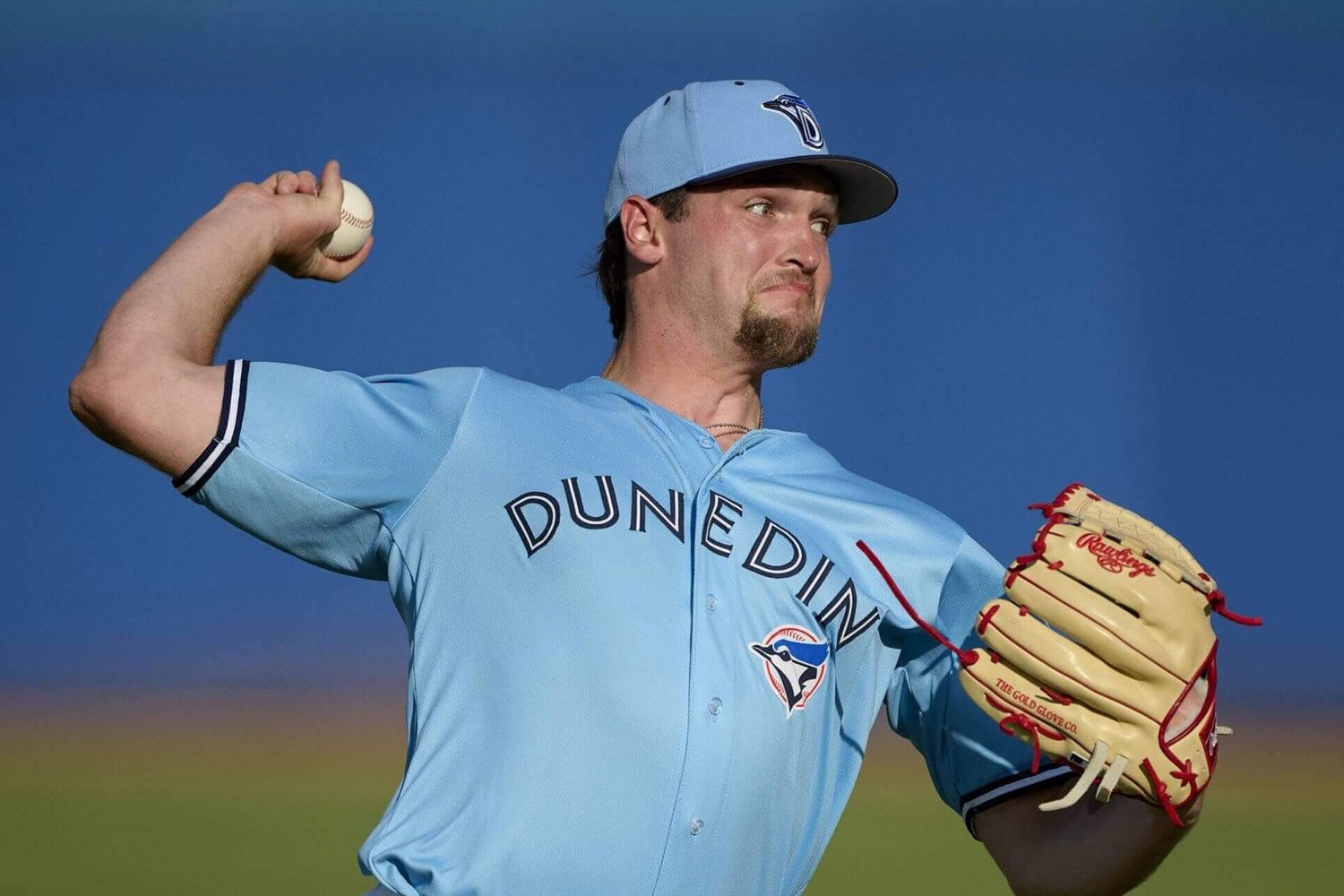 Reports from Shi Davidi of Sportsnet indicate that Trey Yesavage is being called up to the big leagues. He is expected to be activated on Monday and should provide some additional firepower to the bullpen. The Jays must make a corresponding move when Yesavage is added, and will need to make a decision to remove someone from the 40-man roster to make room. The Blue Jays' bullpen was one of the strengths early in the season, but as the season went on, there have been a few notable meltdowns in the second half of the season. The Jays' bullpen had the 10th-worst WPA since August 1st, and had a below-average ERA. The bullpen additions have not performed up to expectations, and bullpen mainstays like Brendon Little, Jeff Hoffman, and Yariel Rodriguez all have struggled since the deadline. Trey Yesavage has recently seen work in the bullpen, with three relief appearances in his last seven outings, as the Jays aim to acclimate him to not starting. This puts a feather in the cap of Trey Yesavage's first pro campaign, and he's done nothing but excel since joining the Jays organization. There is one interesting thing to look out for, however; each first appearance in a new level is a struggle for the 2024 first-rounder. He walked four batters in his Triple-A debut, four in his first Double-A appearance, three in his first High-A outing, and six in his professional debut in Dunedin. Hopefully, he's able to shake off his first game jitters in his first time pitching for the Toronto Blue Jays.
 -
With Alek Manoah nearing the end of his rehab assignment, the Toronto Blue Jays had to make a decision about adding him to the major league roster, as well as back on the 40-man roster. Ultimately, they announced that Manoah was reinstated from the 60-day IL and then optioned to Triple-A Buffalo. As the corresponding move, former top prospect Orelvis Martinez was designated for assignment in order to make room on the 40-man roster. Martinez made his major league debut with the Blue Jays in June of 2024 and quickly earned his first hit, but shortly after, he was suspended by Major League Baseball for 80 games for testing positive for a prohibited substance. This put into question the validity of Martinez's top prospect status, as his performance was potentially tainted by PED use. After serving his suspension, Martinez came into the 2025 season ice cold, as he hit just .147/.237/.279 while striking out near 40% of the time in April. He was hitting much better in May, cutting his strikeout rate to 23.5% and hitting .259/.340/.471 for a 115 wRC+, which signaled a possible turnaround for the 23-year-old infielder. Unfortunately for the Blue Jays and Martinez, that month was the last time he hit in Buffalo, as his remaining months were similarly disastrous as his April. He hit .148/.282/.317 for the rest of the year and showed little of the promise that he displayed prior to his suspension. The Jays will have to face another difficult 40-man roster decision in the near future as well, as Anthony Santander has just started his rehab assignment with the Bisons. The team will need to make another cut from the roster to add him back from the 60-day IL. In the offseason, the Jays will also need to add a few prospects to the 40-man, which would result in more hard decisions about how to free up the space. Featured image courtesy of Nathan Ray Seebeck-Imagn Images. View full rumor
-
.jpg.2f49282bdf93f9c18aafc8eed7901ae4.jpg) With Alek Manoah nearing the end of his rehab assignment, the Toronto Blue Jays had to make a decision about adding him to the major league roster, as well as back on the 40-man roster. Ultimately, they announced that Manoah was reinstated from the 60-day IL and then optioned to Triple-A Buffalo. As the corresponding move, former top prospect Orelvis Martinez was designated for assignment in order to make room on the 40-man roster. Martinez made his major league debut with the Blue Jays in June of 2024 and quickly earned his first hit, but shortly after, he was suspended by Major League Baseball for 80 games for testing positive for a prohibited substance. This put into question the validity of Martinez's top prospect status, as his performance was potentially tainted by PED use. After serving his suspension, Martinez came into the 2025 season ice cold, as he hit just .147/.237/.279 while striking out near 40% of the time in April. He was hitting much better in May, cutting his strikeout rate to 23.5% and hitting .259/.340/.471 for a 115 wRC+, which signaled a possible turnaround for the 23-year-old infielder. Unfortunately for the Blue Jays and Martinez, that month was the last time he hit in Buffalo, as his remaining months were similarly disastrous as his April. He hit .148/.282/.317 for the rest of the year and showed little of the promise that he displayed prior to his suspension. The Jays will have to face another difficult 40-man roster decision in the near future as well, as Anthony Santander has just started his rehab assignment with the Bisons. The team will need to make another cut from the roster to add him back from the 60-day IL. In the offseason, the Jays will also need to add a few prospects to the 40-man, which would result in more hard decisions about how to free up the space. Featured image courtesy of Nathan Ray Seebeck-Imagn Images.
With Alek Manoah nearing the end of his rehab assignment, the Toronto Blue Jays had to make a decision about adding him to the major league roster, as well as back on the 40-man roster. Ultimately, they announced that Manoah was reinstated from the 60-day IL and then optioned to Triple-A Buffalo. As the corresponding move, former top prospect Orelvis Martinez was designated for assignment in order to make room on the 40-man roster. Martinez made his major league debut with the Blue Jays in June of 2024 and quickly earned his first hit, but shortly after, he was suspended by Major League Baseball for 80 games for testing positive for a prohibited substance. This put into question the validity of Martinez's top prospect status, as his performance was potentially tainted by PED use. After serving his suspension, Martinez came into the 2025 season ice cold, as he hit just .147/.237/.279 while striking out near 40% of the time in April. He was hitting much better in May, cutting his strikeout rate to 23.5% and hitting .259/.340/.471 for a 115 wRC+, which signaled a possible turnaround for the 23-year-old infielder. Unfortunately for the Blue Jays and Martinez, that month was the last time he hit in Buffalo, as his remaining months were similarly disastrous as his April. He hit .148/.282/.317 for the rest of the year and showed little of the promise that he displayed prior to his suspension. The Jays will have to face another difficult 40-man roster decision in the near future as well, as Anthony Santander has just started his rehab assignment with the Bisons. The team will need to make another cut from the roster to add him back from the 60-day IL. In the offseason, the Jays will also need to add a few prospects to the 40-man, which would result in more hard decisions about how to free up the space. Featured image courtesy of Nathan Ray Seebeck-Imagn Images. -
The Toronto Blue Jays are sending a group of prospects to the Arizona Fall League, who will play for the Glendale Desert Dogs. Their manager will be Toronto Blue Jays minor league field coordinator Eric Duncan. The main headliner is Angel Bastardo, whom the Jays stole from the Boston Red Sox in the 2025 Rule 5 Draft, as he was left unprotected after undergoing Tommy John surgery. This will be his first taste of action with the Jays, as he hasn't pitched since last June. Josh Kasevich is Jays Centre's highest-ranked prospect going to Arizona, as the infielder struggled with injuries throughout the season and will surely appreciate the extra reps that the AFL provides. Catching prospect Edward Duran was heating up at the end of the season for the High-A Vancouver Canadians and will hopefully maintain that momentum in Arizona. The 21-year-old catcher has turned heads and established himself as the best catching prospect within the system. In addition to those three prospects, the Jays are also sending over four relief prospects who excelled in the 2025 minor league season. Right-handers Alex Amalfi and Chay Yeager have already made their way to Double A and will most likely get a shot at Triple A next season. Meanwhile, right-hander Yondrei Rojas and left-hander Kai Peterson were mainstays in the Vancouver bullpen in High A, and both had a taste of Double A as well. Unfortunately, Ricky Tiedemann doesn't seem to be ready for reps, as he's not attending the AFL season. So, the calibre of prospects being sent over is lighter than usual, but it will still be exciting to see Bastardo in action. Featured image courtesy of Nathan Ray Seebeck, Imagn Images. View full rumor
-
.jpg.daf7680c9beeb3e7fef6c8b39b7856c4.jpg) The Toronto Blue Jays are sending a group of prospects to the Arizona Fall League, who will play for the Glendale Desert Dogs. Their manager will be Toronto Blue Jays minor league field coordinator Eric Duncan. The main headliner is Angel Bastardo, whom the Jays stole from the Boston Red Sox in the 2025 Rule 5 Draft, as he was left unprotected after undergoing Tommy John surgery. This will be his first taste of action with the Jays, as he hasn't pitched since last June. Josh Kasevich is Jays Centre's highest-ranked prospect going to Arizona, as the infielder struggled with injuries throughout the season and will surely appreciate the extra reps that the AFL provides. Catching prospect Edward Duran was heating up at the end of the season for the High-A Vancouver Canadians and will hopefully maintain that momentum in Arizona. The 21-year-old catcher has turned heads and established himself as the best catching prospect within the system. In addition to those three prospects, the Jays are also sending over four relief prospects who excelled in the 2025 minor league season. Right-handers Alex Amalfi and Chay Yeager have already made their way to Double A and will most likely get a shot at Triple A next season. Meanwhile, right-hander Yondrei Rojas and left-hander Kai Peterson were mainstays in the Vancouver bullpen in High A, and both had a taste of Double A as well. Unfortunately, Ricky Tiedemann doesn't seem to be ready for reps, as he's not attending the AFL season. So, the calibre of prospects being sent over is lighter than usual, but it will still be exciting to see Bastardo in action. Featured image courtesy of Nathan Ray Seebeck, Imagn Images.
The Toronto Blue Jays are sending a group of prospects to the Arizona Fall League, who will play for the Glendale Desert Dogs. Their manager will be Toronto Blue Jays minor league field coordinator Eric Duncan. The main headliner is Angel Bastardo, whom the Jays stole from the Boston Red Sox in the 2025 Rule 5 Draft, as he was left unprotected after undergoing Tommy John surgery. This will be his first taste of action with the Jays, as he hasn't pitched since last June. Josh Kasevich is Jays Centre's highest-ranked prospect going to Arizona, as the infielder struggled with injuries throughout the season and will surely appreciate the extra reps that the AFL provides. Catching prospect Edward Duran was heating up at the end of the season for the High-A Vancouver Canadians and will hopefully maintain that momentum in Arizona. The 21-year-old catcher has turned heads and established himself as the best catching prospect within the system. In addition to those three prospects, the Jays are also sending over four relief prospects who excelled in the 2025 minor league season. Right-handers Alex Amalfi and Chay Yeager have already made their way to Double A and will most likely get a shot at Triple A next season. Meanwhile, right-hander Yondrei Rojas and left-hander Kai Peterson were mainstays in the Vancouver bullpen in High A, and both had a taste of Double A as well. Unfortunately, Ricky Tiedemann doesn't seem to be ready for reps, as he's not attending the AFL season. So, the calibre of prospects being sent over is lighter than usual, but it will still be exciting to see Bastardo in action. Featured image courtesy of Nathan Ray Seebeck, Imagn Images. -
CURRENT W-L Records Buffalo Bisons: 54-76 New Hampshire Fisher Cats: 50-77 Vancouver Canadians: 73-55 Dunedin Blue Jays: 59-64 FCL Blue Jays: Season Complete DSL Blue Jays Blue: Season Complete DSL Blue Jays Red: Season Complete Transactions 09/03/25: Buffalo Bisons released 1B Rainer Nunez. 09/03/25: 1B Buddy Kennedy assigned to Buffalo Bisons. 09/03/25: Buffalo Bisons placed 2B Orelvis Martinez on the 7-day injured list retroactive to September 2, 2025. 09/03/25: Buffalo Bisons activated C René Pinto. 09/03/25: Buffalo Bisons released C Christian Bethancourt. 09/02/25: Toronto Blue Jays recalled RHP Robinson Piña from Buffalo Bisons. 09/02/25: Toronto Blue Jays optioned LHP Easton Lucas to Buffalo Bisons. 09/02/25: CF Dasan Brown assigned to Buffalo Bisons from New Hampshire Fisher Cats. 09/02/25: Toronto Blue Jays selected the contract of LHP Ryan Borucki from Buffalo Bisons. 09/02/25: Dunedin Blue Jays placed OF Yeuni Munoz on the temporarily inactive list. 09/02/25: New Hampshire Fisher Cats placed CF Victor Arias on the 7-day injured list. 09/02/25: New Hampshire Fisher Cats activated OF Jace Bohrofen from the 7-day injured list. 09/02/25: New Hampshire Fisher Cats activated 1B Peyton Williams. Buffalo Bisons Buffalo (4), Syracuse (3) - 9/2 Box Score The Buffalo Bisons kicked off their series against the Syracuse Mets on Tuesday. The Mets started things off quickly, getting two runs off of Buffalo starting pitcher Paxton Schultz in the first inning. Ryan Clifford hit an RBI single to score Jose Siri and Carson Benge hit a fly ball to right field for a sacrifice fly. Coming in for the second inning, Trey Yesavage took over for Schultz and was completely dominating. He struck out two batters in the second inning, three batters in the third inning, and one in the fourth inning. He had six strikeouts total over three innings. He was using his fastball well, location-wise, and his splitter was dropping below bats for whiffs. In the fifth inning, Benge had an RBI single to extend the Mets' lead. In the bottom half of the inning, Joey Loperfido got Buffalo on the scoreboard with an RBI double. Then, RJ Schreck singled home Loperfido, and Riley Tirotta scored Michael Stefanic on a single to tie the game. Everything was quiet after that until the bottom of the ninth inning. Josh Rivera came to the plate and smacked a walk-off home run to left field, giving Buffalo the win, 4-3. Josh Rivera - 2-4, 2 R, 1 RBI, 0 BB, 1 K, 1 HR Trey Yesavage - 3 IP, 2 H, 0 ER, 1 BB, 6 K Buffalo (2), Syracuse (10) - 9/3 Box Score Buffalo struggled on Wednesday versus Syracuse, and it was at the plate, on the mound, and in the field. Siri had two RBI groundouts in the third and fourth innings to go with a Clifford sacrifice fly. The big hit in the game also came in the fourth inning when Francisco Alvarez crushed a grand slam home run to give the Mets a seven-run lead. Schreck gave Buffalo some life in the fifth inning on a two-run RBI single to center field. Jett Williams roped a line drive home run in the eighth inning to cap off the scoring. Buffalo only managed six hits in this one and had as many errors and runs, as they went on to lose this game 10-2. RJ Schreck - 1-3, 0 R, 2 RBI, 1 BB, 2 K CJ Van Eyk - 3.2 IP, 6 H, 7 R, 2 ER, 4 BB, 3 K New Hampshire Fisher Cats New Hampshire (0), Somerset (1) - 9/2 Box Score With Sunday's loss, New Hampshire opened a new series against Somerset on a seven-game losing streak, with nine losses in their last 11 games. It has been an absolutely brutal couple of weeks for the Fisher Cats, as they head into the final stretch of the season. On Tuesday, their chances of ending the losing streak looked bleak, with one of the top pitching prospects in baseball on the mound for Somerset, Elmer Rodriguez-Cruz. The Fisher Cats sent Fernando Perez to toe the rubber for them and hopefully match or better the ace-level talent opposing him. Rodriguez-Cruz was as advertised in his skill and talent level, as he cruised through the New Hampshire batting order with ease. He went six innings and allowed only one hit, as well as one walk, striking out eight and not surrendering a run. A tall task for sure to match, let alone better. Yet, Perez dropped the mic, so to speak, on the Somerset lineup, as he made a monster statement. He not only went six innings but made it through seven. He gave up some more baserunners (three hits and one walk), but did so without allowing a run to cross home plate. Unfortunately for New Hampshire, Perez could not make it any deeper in the game. Devereaux Harrison came in for him to start the bottom of the eighth. He got two quick outs, but then walked Brendan Jones, before coughing up an RBI double to George Lombard Jr. New Hampshire would go on to lose this one 1-0, extending their losing streak to eight games. Ryan McCarty: 1-3, 1 K, 1 2B Fernando Perez: 7 IP, 3 H, 0 ER, 1 BB, 8 K New Hampshire (4), Somerset (8) - 9/3 Box Score With the losing streak up to eight games, with 10 losses in their last 12, New Hampshire turned to Grant Rogers and his knack for tossing quality starts to end their woes. In the top of the fourth inning, New Hampshire got back-to-back walks from Jackson Hornung and Charles McAdoo. A couple of batters later, Cade Doughty singled, and the Fisher Cats took a 1-0 lead when Hornung crossed home plate. Eddinson Paulino then singled home McAdoo and stole second base. It was followed by a timely two-RBI double from Gabriel Martinez. Things were looking up for the down-but-not-out Fisher Cats. Rogers completed four shutout innings, and they were well on their way to snapping a long losing streak. Then came the bottom of the fifth. With the bases loaded, Lombard singled in two runs, Jace Avina doubled home two more, Dylan Jasso doubled to score one, and Tyler Hardman capped the inning off with an RBI single. In the sixth, Garrett Martin added to Somerset's lead with a solo home run to left, and then in the eighth, they got another run on a balk. New Hampshire's bats went ice cold after the fourth, as they lost again and extended the losing streak to nine. Gabriel Martinez: 2-4, 2 RBI, 1 2B Conor Larkin: 1 IP, 0 H, 0 ER, 0 BB, 3 K Vancouver Canadians Vancouver (1), Everett (8) - 9/2 Box Score The Canadians' pitching had the walk bug in this game, as every pitcher for Vancouver allowed a walk, and the staff also gave up two hit-by-pitches. Chris McElvain again had a mediocre start, giving up seven hits and three walks, as three runs scored against him in the second inning. Irv Carter struck out five batters, but a wild pitch in the fifth allowed a fourth run to score for the AquaSox. Hayden Gilliland got a run to score with an RBI single, but that was all she wrote for the Canadians. Carter allowed two more runs to score, and then Juanmi Vasquez allowed another two runs. The Canadians lost a tough one, 8-1. Carter Cunningham - 3-3, 1 R, 1 BB, 1 2B Brett Garcia - 2 IP, 1 H, - ER, 1 BB, 3 K Vancouver (8), Everett (2) - 9/3 Box Score The Canadians almost reversed the score of the previous game, as Silvano Hechavarria had a good start, and the offense had a bunch of extra-base hits. Cutter Coffey’s first hit was a double to score Nick Goodwin in the first, and then Arjun Nimmala had himself a sac fly to score Coffey after that. Hechavarria let in a homer to Charlie Pagliarini in the fourth, and then Anthony Donofrio tied it up with a single. Coffey had other plans though, as in the bottom of the fifth, he broke the tie with a two-run homer. Sean Keys and Edward Duran both joined in with homers of their own, with Duran’s being a three-run homer for a nice 8-2 win for Vancouver. Cutter Coffey - 2-5, 2 R, 3 RBI, 1 2B, 1 HR, 1 SB Coffey was the DH in this one and performed, hitting his 26th double of the season and his 11th homer as well. His OPS is now .800. One of the returns for Danny Jansen, he’s been one of the best pickups from last season’s trade deadline. Silvano Hechavarria - 5.1 IP, 3 H, 2 ER, 3 BB, 7 K Hechavarria had 18 whiffs on the night, as the righty continued to excel in his first pro season. This earned him his third win of the year already in Vancouver. Dunedin Blue Jays Dunedin (7), Bradenton (5) - 9/2 Box Score This was a night for Jean Joseph, whose three-hit performance helped carry the D-Jays to a win. Holden Wilkerson’s struggles after being promoted continued, with his ERA now eclipsing seven, as he allowed three runs in 2.1 innings pitched. Mason Olson was excellent in relief after him though, as he was able to hold the lead for the D-Jays for his third win of the season. The D-Jays got most of their runs in the second inning, tagging Jeter Martinez for five runs with contributions from Joseph, Maddox Latta, and Manuel Beltre. Although the Marauders brought it within two in the third inning, Jaxson West hit his first double of the season to score Eric Snow, and Joseph had another single to make it seven runs. Lluveres Severino allowed two runs to score, but Jack Eshleman was able to get his fourth save for a nice win for Dunedin. Jean Joseph - 3-4, 1 R, 3 RBI, 1 BB Mason Olson - 4.1 IP, 3 H, 0 ER, 0 BB, 6 K Dunedin (5), Bradenton (8) - 9/3 Box Score The D-Jays had to overcome poor outings from Dayne Pengelly and Eliander Alcalde, as they allowed three earned runs and five earned runs, respectively. They also allowed a combined 11 hits as they dealt with some bad BABIP. The offense was able to get some runs on the board, as the D-Jays scored five runs by the third inning. However, after those runs were scored, they couldn’t get anything else on the board, resulting in an 8-5 loss to the Marauders. Braden Barry - 2-4, 1 RBI, 2 SB Diego Dominguez - 2.2 IP, 0 H, 0 ER, 2 BB, 1 K Toronto Blue Jays Minor League Players of the Period Pitcher of the Period: RHP Fernando Perez (New Hampshire): 7 IP, 3 H, 0 ER, 1 BB, 8 K Hitter of the Period: OF Jean Joseph (Dunedin): 5-8, 2 R, 4 RBI, 1 BB, 1 2B Prospect Summary (Last 2 Days) Toronto Blue Jays Top 20 Hitters Rank Player Team PA R H 2B 3B HR RBI BB K SB CS 1 JoJo Parker N/A 2 Arjun Nimmala Vancouver 8 0 1 0 1 0 1 0 2 0 0 9 Yohendrick Pinango Buffalo 7 0 1 0 0 0 0 1 0 0 0 10 Victor Arias New Hampshire 0 0 0 0 0 0 0 0 0 0 0 11 RJ Schreck Buffalo 8 0 2 0 0 0 3 1 3 0 0 13 Juan Sanchez DSL Blue Jays 0 0 0 0 0 0 0 0 0 0 0 16 Josh Kasevich Buffalo 8 0 0 0 0 0 0 1 2 0 0 17 Orelvis Martinez Buffalo 0 0 0 0 0 0 0 0 0 0 0 19 Charles McAdoo New Hampshire 7 1 0 0 0 0 0 1 2 0 0 19 Yeuni Munoz Dunedin 0 0 0 0 0 0 0 0 0 0 0 19 Tim Piasentin N/A 19 Blaine Bullard N/A Toronto Blue Jays Top 20 Pitchers Rank Player Team BF G GS IP H HR ER BB K 3 Trey Yesavage Buffalo 12 1 0 3 2 0 0 1 6 4 Johnny King Dunedin 0 0 0 0 0 0 0 0 0 5 Ricky Tiedemann Buffalo 0 0 0 0 0 0 0 0 0 6 Gage Stanifer New Hampshire 0 0 0 0 0 0 0 0 0 7 Jake Bloss Buffalo 0 0 0 0 0 0 0 0 0 8 Landen Maroudis Dunedin 0 0 0 0 0 0 0 0 0 12 Brandon Barriera FCL Jays 0 0 0 0 0 0 0 0 0 14 Fernando Perez New Hampshire 25 1 1 7 3 0 0 1 4 View full article
-
 CURRENT W-L Records Buffalo Bisons: 54-76 New Hampshire Fisher Cats: 50-77 Vancouver Canadians: 73-55 Dunedin Blue Jays: 59-64 FCL Blue Jays: Season Complete DSL Blue Jays Blue: Season Complete DSL Blue Jays Red: Season Complete Transactions 09/03/25: Buffalo Bisons released 1B Rainer Nunez. 09/03/25: 1B Buddy Kennedy assigned to Buffalo Bisons. 09/03/25: Buffalo Bisons placed 2B Orelvis Martinez on the 7-day injured list retroactive to September 2, 2025. 09/03/25: Buffalo Bisons activated C René Pinto. 09/03/25: Buffalo Bisons released C Christian Bethancourt. 09/02/25: Toronto Blue Jays recalled RHP Robinson Piña from Buffalo Bisons. 09/02/25: Toronto Blue Jays optioned LHP Easton Lucas to Buffalo Bisons. 09/02/25: CF Dasan Brown assigned to Buffalo Bisons from New Hampshire Fisher Cats. 09/02/25: Toronto Blue Jays selected the contract of LHP Ryan Borucki from Buffalo Bisons. 09/02/25: Dunedin Blue Jays placed OF Yeuni Munoz on the temporarily inactive list. 09/02/25: New Hampshire Fisher Cats placed CF Victor Arias on the 7-day injured list. 09/02/25: New Hampshire Fisher Cats activated OF Jace Bohrofen from the 7-day injured list. 09/02/25: New Hampshire Fisher Cats activated 1B Peyton Williams. Buffalo Bisons Buffalo (4), Syracuse (3) - 9/2 Box Score The Buffalo Bisons kicked off their series against the Syracuse Mets on Tuesday. The Mets started things off quickly, getting two runs off of Buffalo starting pitcher Paxton Schultz in the first inning. Ryan Clifford hit an RBI single to score Jose Siri and Carson Benge hit a fly ball to right field for a sacrifice fly. Coming in for the second inning, Trey Yesavage took over for Schultz and was completely dominating. He struck out two batters in the second inning, three batters in the third inning, and one in the fourth inning. He had six strikeouts total over three innings. He was using his fastball well, location-wise, and his splitter was dropping below bats for whiffs. In the fifth inning, Benge had an RBI single to extend the Mets' lead. In the bottom half of the inning, Joey Loperfido got Buffalo on the scoreboard with an RBI double. Then, RJ Schreck singled home Loperfido, and Riley Tirotta scored Michael Stefanic on a single to tie the game. Everything was quiet after that until the bottom of the ninth inning. Josh Rivera came to the plate and smacked a walk-off home run to left field, giving Buffalo the win, 4-3. Josh Rivera - 2-4, 2 R, 1 RBI, 0 BB, 1 K, 1 HR Trey Yesavage - 3 IP, 2 H, 0 ER, 1 BB, 6 K Buffalo (2), Syracuse (10) - 9/3 Box Score Buffalo struggled on Wednesday versus Syracuse, and it was at the plate, on the mound, and in the field. Siri had two RBI groundouts in the third and fourth innings to go with a Clifford sacrifice fly. The big hit in the game also came in the fourth inning when Francisco Alvarez crushed a grand slam home run to give the Mets a seven-run lead. Schreck gave Buffalo some life in the fifth inning on a two-run RBI single to center field. Jett Williams roped a line drive home run in the eighth inning to cap off the scoring. Buffalo only managed six hits in this one and had as many errors and runs, as they went on to lose this game 10-2. RJ Schreck - 1-3, 0 R, 2 RBI, 1 BB, 2 K CJ Van Eyk - 3.2 IP, 6 H, 7 R, 2 ER, 4 BB, 3 K New Hampshire Fisher Cats New Hampshire (0), Somerset (1) - 9/2 Box Score With Sunday's loss, New Hampshire opened a new series against Somerset on a seven-game losing streak, with nine losses in their last 11 games. It has been an absolutely brutal couple of weeks for the Fisher Cats, as they head into the final stretch of the season. On Tuesday, their chances of ending the losing streak looked bleak, with one of the top pitching prospects in baseball on the mound for Somerset, Elmer Rodriguez-Cruz. The Fisher Cats sent Fernando Perez to toe the rubber for them and hopefully match or better the ace-level talent opposing him. Rodriguez-Cruz was as advertised in his skill and talent level, as he cruised through the New Hampshire batting order with ease. He went six innings and allowed only one hit, as well as one walk, striking out eight and not surrendering a run. A tall task for sure to match, let alone better. Yet, Perez dropped the mic, so to speak, on the Somerset lineup, as he made a monster statement. He not only went six innings but made it through seven. He gave up some more baserunners (three hits and one walk), but did so without allowing a run to cross home plate. Unfortunately for New Hampshire, Perez could not make it any deeper in the game. Devereaux Harrison came in for him to start the bottom of the eighth. He got two quick outs, but then walked Brendan Jones, before coughing up an RBI double to George Lombard Jr. New Hampshire would go on to lose this one 1-0, extending their losing streak to eight games. Ryan McCarty: 1-3, 1 K, 1 2B Fernando Perez: 7 IP, 3 H, 0 ER, 1 BB, 8 K New Hampshire (4), Somerset (8) - 9/3 Box Score With the losing streak up to eight games, with 10 losses in their last 12, New Hampshire turned to Grant Rogers and his knack for tossing quality starts to end their woes. In the top of the fourth inning, New Hampshire got back-to-back walks from Jackson Hornung and Charles McAdoo. A couple of batters later, Cade Doughty singled, and the Fisher Cats took a 1-0 lead when Hornung crossed home plate. Eddinson Paulino then singled home McAdoo and stole second base. It was followed by a timely two-RBI double from Gabriel Martinez. Things were looking up for the down-but-not-out Fisher Cats. Rogers completed four shutout innings, and they were well on their way to snapping a long losing streak. Then came the bottom of the fifth. With the bases loaded, Lombard singled in two runs, Jace Avina doubled home two more, Dylan Jasso doubled to score one, and Tyler Hardman capped the inning off with an RBI single. In the sixth, Garrett Martin added to Somerset's lead with a solo home run to left, and then in the eighth, they got another run on a balk. New Hampshire's bats went ice cold after the fourth, as they lost again and extended the losing streak to nine. Gabriel Martinez: 2-4, 2 RBI, 1 2B Conor Larkin: 1 IP, 0 H, 0 ER, 0 BB, 3 K Vancouver Canadians Vancouver (1), Everett (8) - 9/2 Box Score The Canadians' pitching had the walk bug in this game, as every pitcher for Vancouver allowed a walk, and the staff also gave up two hit-by-pitches. Chris McElvain again had a mediocre start, giving up seven hits and three walks, as three runs scored against him in the second inning. Irv Carter struck out five batters, but a wild pitch in the fifth allowed a fourth run to score for the AquaSox. Hayden Gilliland got a run to score with an RBI single, but that was all she wrote for the Canadians. Carter allowed two more runs to score, and then Juanmi Vasquez allowed another two runs. The Canadians lost a tough one, 8-1. Carter Cunningham - 3-3, 1 R, 1 BB, 1 2B Brett Garcia - 2 IP, 1 H, - ER, 1 BB, 3 K Vancouver (8), Everett (2) - 9/3 Box Score The Canadians almost reversed the score of the previous game, as Silvano Hechavarria had a good start, and the offense had a bunch of extra-base hits. Cutter Coffey’s first hit was a double to score Nick Goodwin in the first, and then Arjun Nimmala had himself a sac fly to score Coffey after that. Hechavarria let in a homer to Charlie Pagliarini in the fourth, and then Anthony Donofrio tied it up with a single. Coffey had other plans though, as in the bottom of the fifth, he broke the tie with a two-run homer. Sean Keys and Edward Duran both joined in with homers of their own, with Duran’s being a three-run homer for a nice 8-2 win for Vancouver. Cutter Coffey - 2-5, 2 R, 3 RBI, 1 2B, 1 HR, 1 SB Coffey was the DH in this one and performed, hitting his 26th double of the season and his 11th homer as well. His OPS is now .800. One of the returns for Danny Jansen, he’s been one of the best pickups from last season’s trade deadline. Silvano Hechavarria - 5.1 IP, 3 H, 2 ER, 3 BB, 7 K Hechavarria had 18 whiffs on the night, as the righty continued to excel in his first pro season. This earned him his third win of the year already in Vancouver. Dunedin Blue Jays Dunedin (7), Bradenton (5) - 9/2 Box Score This was a night for Jean Joseph, whose three-hit performance helped carry the D-Jays to a win. Holden Wilkerson’s struggles after being promoted continued, with his ERA now eclipsing seven, as he allowed three runs in 2.1 innings pitched. Mason Olson was excellent in relief after him though, as he was able to hold the lead for the D-Jays for his third win of the season. The D-Jays got most of their runs in the second inning, tagging Jeter Martinez for five runs with contributions from Joseph, Maddox Latta, and Manuel Beltre. Although the Marauders brought it within two in the third inning, Jaxson West hit his first double of the season to score Eric Snow, and Joseph had another single to make it seven runs. Lluveres Severino allowed two runs to score, but Jack Eshleman was able to get his fourth save for a nice win for Dunedin. Jean Joseph - 3-4, 1 R, 3 RBI, 1 BB Mason Olson - 4.1 IP, 3 H, 0 ER, 0 BB, 6 K Dunedin (5), Bradenton (8) - 9/3 Box Score The D-Jays had to overcome poor outings from Dayne Pengelly and Eliander Alcalde, as they allowed three earned runs and five earned runs, respectively. They also allowed a combined 11 hits as they dealt with some bad BABIP. The offense was able to get some runs on the board, as the D-Jays scored five runs by the third inning. However, after those runs were scored, they couldn’t get anything else on the board, resulting in an 8-5 loss to the Marauders. Braden Barry - 2-4, 1 RBI, 2 SB Diego Dominguez - 2.2 IP, 0 H, 0 ER, 2 BB, 1 K Toronto Blue Jays Minor League Players of the Period Pitcher of the Period: RHP Fernando Perez (New Hampshire): 7 IP, 3 H, 0 ER, 1 BB, 8 K Hitter of the Period: OF Jean Joseph (Dunedin): 5-8, 2 R, 4 RBI, 1 BB, 1 2B Prospect Summary (Last 2 Days) Toronto Blue Jays Top 20 Hitters Rank Player Team PA R H 2B 3B HR RBI BB K SB CS 1 JoJo Parker N/A 2 Arjun Nimmala Vancouver 8 0 1 0 1 0 1 0 2 0 0 9 Yohendrick Pinango Buffalo 7 0 1 0 0 0 0 1 0 0 0 10 Victor Arias New Hampshire 0 0 0 0 0 0 0 0 0 0 0 11 RJ Schreck Buffalo 8 0 2 0 0 0 3 1 3 0 0 13 Juan Sanchez DSL Blue Jays 0 0 0 0 0 0 0 0 0 0 0 16 Josh Kasevich Buffalo 8 0 0 0 0 0 0 1 2 0 0 17 Orelvis Martinez Buffalo 0 0 0 0 0 0 0 0 0 0 0 19 Charles McAdoo New Hampshire 7 1 0 0 0 0 0 1 2 0 0 19 Yeuni Munoz Dunedin 0 0 0 0 0 0 0 0 0 0 0 19 Tim Piasentin N/A 19 Blaine Bullard N/A Toronto Blue Jays Top 20 Pitchers Rank Player Team BF G GS IP H HR ER BB K 3 Trey Yesavage Buffalo 12 1 0 3 2 0 0 1 6 4 Johnny King Dunedin 0 0 0 0 0 0 0 0 0 5 Ricky Tiedemann Buffalo 0 0 0 0 0 0 0 0 0 6 Gage Stanifer New Hampshire 0 0 0 0 0 0 0 0 0 7 Jake Bloss Buffalo 0 0 0 0 0 0 0 0 0 8 Landen Maroudis Dunedin 0 0 0 0 0 0 0 0 0 12 Brandon Barriera FCL Jays 0 0 0 0 0 0 0 0 0 14 Fernando Perez New Hampshire 25 1 1 7 3 0 0 1 4
.jpg.07b5a9e133e8d260e9693ab6f104c41f.jpg)
.jpg.7a3ef3adafb739dd4036fbd7e065346e.jpg)
.jpg.d86f20aa272cbfa0ea5d347a9f1def8b.jpg)
.jpg.7ba10073dd0a3e1437d719d59ef6da68.jpg)
.jpg.8b610dac59d6f838a9436cad65848e3e.jpg)
.jpg.2f49282bdf93f9c18aafc8eed7901ae4.jpg)
.jpg.daf7680c9beeb3e7fef6c8b39b7856c4.jpg)
