


Simon Li
-
Posts
269 -
Joined
-
Last visited
Content Type
Profiles
Toronto Blue Jays Videos
2026 Toronto Blue Jays Top Prospects Ranking
Toronto Blue Jays Free Agent & Trade Rumors, Notes, & Tidbits
Guides & Resources
2025 Toronto Blue Jays Draft Pick Tracker
News
2026 Toronto Blue Jays Draft Tracker: Picks & Bonuses
Forums
Blogs
Events
Store
Downloads
Gallery
Everything posted by Simon Li
-
Blue Jays Affiliate Overview (September 8-9) Triple-A Buffalo Bisons Series vs Charlotte Knights (Chicago White Sox): 0-2 Season Record: 65-73 Double-A New Hampshire Fisher Cats Series vs Harrisburg Senators (Washington Senators): 0-1 Season Record: 58-73 High-A Vancouver Canadians Championship Series vs Eugene Emeralds (San Francisco Giants): 2-0 Season Record: 64-66 Single-A Dunedin Blue Jays: Season Complete FCL Blue Jays: Season Complete DSL Blue Jays Blue: Season Complete DSL Blue Jays Red: Season Complete Triple-A Buffalo Bisons Season Record: 65-73 Series vs Charlotte Knights (Chicago White Sox) September 8: On Tuesday, Buffalo opened up a new series, this one against the Charlotte Knights. With Drew Thorpe on the mound opposing Bisons hitters, the optimism was high for a good offensive game against a soft-tossing right-handed pitcher. What unfolded was anything but success for the Buffalo bats. Thorpe got plenty of whiffs from Buffalo hitters and induced a bunch of ground balls, all with elite changeups and well-placed fastballs. Yohendrick Piñango, Jay Harry, and Josh Kasevich all fell victim to Thorpe's changeup, while Lenyn Sosa whiffed and struck out on a rare slider. While Buffalo hitters were lost at the plate, their pitching was somewhat solid. Josh Stephan started and almost had a quality start, giving up four runs across six innings of work. Tim Elko and Junior Perez each homered off of Stephen. As the game rolled into the ninth inning, Charlotte held a 4-0 lead and was coasting. In the ninth, Rhylan Thomas singled and Kasevich doubled to get a rally going. Piñango would ground out and score Thomas from third base. Unfortunately for Buffalo, that would be all they would get, as they lost 4-1. September 9: Wednesday was a day for Buffalo's offense to rebound after not doing much of anything on Tuesday against Charlotte. Rudy Martin Jr. started the game right for the Bisons, smacking a solo home run in the top of the first inning. Buffalo's pitching was going well, getting three scoreless innings from Lazaro Estrada. Pat Gallagher came on to replace Estrada and immediately got into trouble, coughing up a two-run home run in the fourth and an RBI single in the fifth. Martin was locked in, though, ripping another home run in the top of the eighth, this one a two-run blast. Davis Schneider followed it with a solo shot of his own, giving Buffalo the 4-3 lead after the top of the eighth. Unfortunately for the Bisons, all of the great production they got from Martin at the plate was wiped out in the bottom of the eighth. Elko hit a ball to Martin in center for a sacrifice fly, but Martin would commit a throwing error on the play and allow a second run to score. The second run gave Charlotte the lead that they would not relinquish. Buffalo fell 5-4 on the error from Martin, wiping out his two-home run game. Double-A New Hampshire Season Record: 58-73 Series vs Harrisburg Senators (Washington Senators) September 8: New Hampshire kicked off a series with the Harrisburg Senators on Tuesday night. Johnny King was on the mound getting the start, and he saw some really good moments and then hit a few bumps in the road. King hit the first batter and gave up a double later in the inning, but was able to strike out three batters in the first: Eli Willits, Devin Fitz-Gerald, and Ethan Petry. In the second, a walk was then followed by a short home run to the opposite field by T.J. White on a pitch over the plate. Two seeing-eye singles later in the inning were erased by a lineout and a double-play groundout. In the third, King was back on track, getting a groundout and two more strikeouts. The fourth inning saw some bumps again as the Senators started with a single, double, and single for two more runs and finished King's day with a lineout. Peyton Williams homered in the ninth inning for New Hampshire, their lone run on just four hits. New Hampshire lost this one 11-1. September 9: Cancelled High-A Vancouver Season Record: 64-66 Championship Series vs Eugene Emeralds (San Francisco Giants) September 8: The Vancouver Canadians had the best record in the second half of the season, and that earned them the right to face the best team in the first half of the season, the Eugene Emeralds. Dasan Hill took the pill for game one, and he pitched a near-clean first inning, but he faced trouble in the second inning, as Jean Joseph made a fielding error then a throwing error on the same play. Hill gave up two doubles to allow two runs to score before finally getting out of the inning, striking out two more batters to bring his total to four. Holden Wilkerson replaced Hill in the third inning, and he did not pitch great, giving up six hits and three walks. In the third inning, he gave up another run, putting the Canadians down three. Maddox Latta got the Canadians on the board with a sac fly in the bottom of that inning, then in the fifth inning, Austin Smith came up to the plate with the bases loaded and hit a towering grand slam to take the lead! Wilkerson gave up the lead right back as Charlie Muniz hit a three-run homer in the sixth, and Wilkerson’s inherited run ended up scoring as Jack Eshleman gave up an RBI single to make it a two-run lead for Eugene. David Calabrese started a rally in the bottom of the sixth with a triple, then Jaxson West hit a clutch double to bring the lead to one, and then the Jays Centre number one prospect JoJo Parker tied it up with a double of his own. Eshleman kept the game tied over the next two innings, and after Jaxson West advanced to third on an error in the eighth, Ryan Sprock knocked in the winning run with a sac fly. Bradley Wilson finished the game off with the save after walking the first batter, getting a lineout, then two strikeouts to scrape by with the win in Game 1, 8-7. September 9: Troy Guthrie took the mound in Game 2 and was excellent for the Canadians, as he struck out seven batters over five innings of work. The Canadians had themselves an early one-run lead after a Gable Mitchell sac fly in the second inning, but Guthrie made a mistake pitch after allowing a batter to reach on a single, as Cam Maldonado took him deep to give the Emeralds the lead. The Canadians regularly had traffic on the bases, as they got into scoring position in almost every inning, but runs could not score due to some untimely double plays. They finally broke through in the fifth inning, as Maddox Latta hit an RBI single to even the game up. Brandon Barriera replaced Guthrie in the sixth and had a quick 1-2-3 inning, and the Canadians got some help from the Emeralds as a wild pitch gave them the lead, and a clutch Ryan Sprock single doubled it that same inning. However, once again with the bases loaded, the Canadians made an out. Barriera came back out in the seventh, and he pitched the opposite of his first inning, walking two batters and loading the bases without getting an out. Reece Wissinger came in a tough spot; he struck out the first batter, although he allowed a run to come home on a sac fly. Wissinger got a hard grounder that Dameury Pena was able to knock down, but an errant throw allowed the batter to reach first, scoring another run and evening the game right back up. Then, Wissinger got the final out to end the inning. The game continued to be tied at four as both bullpens kept runners from scoring, and Wissinger went two more scoreless innings. Carson Myers was able to prevent the ghost runner from advancing in the 10th inning, getting two flyouts and a groundout, giving the Canadians a great chance to walk it off. Dariel Ramon came in to pinch-run as the ghost runner, and Calabrese almost walked it off with a drive to deep center field, but was able to advance Ramon to third as the center fielder made a great diving catch. Mitchell got ahead with some good takes, but Ryan Slater got him to two strikes. Mitchell fouled off some tough pitches to stay alive, and then hit a deep fly ball to right field to score the winning run with a walk-off sac fly as the C’s won the second game of the series to be one game away from winning the whole thing! Single-A Dunedin Season Record: 62-66 Season Completed FCL Blue Jays Season Record: 38-20 Season Completed DSL Blue Jays Blue Season Record: 20-35 Season Completed DSL Blue Jays Red Season Record: 33-18 Playoffs (2-1) Season Completed Transactions 09/09/26 Toronto Blue Jays sent RF Anthony Santander on a rehab assignment to Buffalo Bisons. 09/08/26 Buffalo Bisons activated RF Rudy Martin Jr. from the 7-day IL. 09/08/26 Buffalo Bisons transferred RHP Tanner Andrews from the 7-day IL to the 60-day IL. 09/08/26 Buffalo Bisons activated C Shawn Ross. 09/08/26 Buffalo Bisons activated LF RJ Schreck from the 60-day IL. 09/08/26 1B Peyton Williams assigned to New Hampshire Fisher Cats from Buffalo Bisons. 09/08/26 RHP Gage Stanifer assigned to Buffalo Bisons from New Hampshire Fisher Cats. 09/08/26 Dunedin Blue Jays placed SS Owen Gregg on the full-season IL. 09/08/26 SS Josh Rivera assigned to New Hampshire Fisher Cats. 09/08/26 New Hampshire Fisher Cats transferred C Jacob Sharp from the 7-day IL to the 60-day IL. 09/08/26 Vancouver Canadians transferred RHP Dylan Watts from the 7-day IL to the 60-day IL. View full article
-
 Blue Jays Affiliate Overview (September 8-9) Triple-A Buffalo Bisons Series vs Charlotte Knights (Chicago White Sox): 0-2 Season Record: 65-73 Double-A New Hampshire Fisher Cats Series vs Harrisburg Senators (Washington Senators): 0-1 Season Record: 58-73 High-A Vancouver Canadians Championship Series vs Eugene Emeralds (San Francisco Giants): 2-0 Season Record: 64-66 Single-A Dunedin Blue Jays: Season Complete FCL Blue Jays: Season Complete DSL Blue Jays Blue: Season Complete DSL Blue Jays Red: Season Complete Triple-A Buffalo Bisons Season Record: 65-73 Series vs Charlotte Knights (Chicago White Sox) September 8: On Tuesday, Buffalo opened up a new series, this one against the Charlotte Knights. With Drew Thorpe on the mound opposing Bisons hitters, the optimism was high for a good offensive game against a soft-tossing right-handed pitcher. What unfolded was anything but success for the Buffalo bats. Thorpe got plenty of whiffs from Buffalo hitters and induced a bunch of ground balls, all with elite changeups and well-placed fastballs. Yohendrick Piñango, Jay Harry, and Josh Kasevich all fell victim to Thorpe's changeup, while Lenyn Sosa whiffed and struck out on a rare slider. While Buffalo hitters were lost at the plate, their pitching was somewhat solid. Josh Stephan started and almost had a quality start, giving up four runs across six innings of work. Tim Elko and Junior Perez each homered off of Stephen. As the game rolled into the ninth inning, Charlotte held a 4-0 lead and was coasting. In the ninth, Rhylan Thomas singled and Kasevich doubled to get a rally going. Piñango would ground out and score Thomas from third base. Unfortunately for Buffalo, that would be all they would get, as they lost 4-1. September 9: Wednesday was a day for Buffalo's offense to rebound after not doing much of anything on Tuesday against Charlotte. Rudy Martin Jr. started the game right for the Bisons, smacking a solo home run in the top of the first inning. Buffalo's pitching was going well, getting three scoreless innings from Lazaro Estrada. Pat Gallagher came on to replace Estrada and immediately got into trouble, coughing up a two-run home run in the fourth and an RBI single in the fifth. Martin was locked in, though, ripping another home run in the top of the eighth, this one a two-run blast. Davis Schneider followed it with a solo shot of his own, giving Buffalo the 4-3 lead after the top of the eighth. Unfortunately for the Bisons, all of the great production they got from Martin at the plate was wiped out in the bottom of the eighth. Elko hit a ball to Martin in center for a sacrifice fly, but Martin would commit a throwing error on the play and allow a second run to score. The second run gave Charlotte the lead that they would not relinquish. Buffalo fell 5-4 on the error from Martin, wiping out his two-home run game. Double-A New Hampshire Season Record: 58-73 Series vs Harrisburg Senators (Washington Senators) September 8: New Hampshire kicked off a series with the Harrisburg Senators on Tuesday night. Johnny King was on the mound getting the start, and he saw some really good moments and then hit a few bumps in the road. King hit the first batter and gave up a double later in the inning, but was able to strike out three batters in the first: Eli Willits, Devin Fitz-Gerald, and Ethan Petry. In the second, a walk was then followed by a short home run to the opposite field by T.J. White on a pitch over the plate. Two seeing-eye singles later in the inning were erased by a lineout and a double-play groundout. In the third, King was back on track, getting a groundout and two more strikeouts. The fourth inning saw some bumps again as the Senators started with a single, double, and single for two more runs and finished King's day with a lineout. Peyton Williams homered in the ninth inning for New Hampshire, their lone run on just four hits. New Hampshire lost this one 11-1. September 9: Cancelled High-A Vancouver Season Record: 64-66 Championship Series vs Eugene Emeralds (San Francisco Giants) September 8: The Vancouver Canadians had the best record in the second half of the season, and that earned them the right to face the best team in the first half of the season, the Eugene Emeralds. Dasan Hill took the pill for game one, and he pitched a near-clean first inning, but he faced trouble in the second inning, as Jean Joseph made a fielding error then a throwing error on the same play. Hill gave up two doubles to allow two runs to score before finally getting out of the inning, striking out two more batters to bring his total to four. Holden Wilkerson replaced Hill in the third inning, and he did not pitch great, giving up six hits and three walks. In the third inning, he gave up another run, putting the Canadians down three. Maddox Latta got the Canadians on the board with a sac fly in the bottom of that inning, then in the fifth inning, Austin Smith came up to the plate with the bases loaded and hit a towering grand slam to take the lead! Wilkerson gave up the lead right back as Charlie Muniz hit a three-run homer in the sixth, and Wilkerson’s inherited run ended up scoring as Jack Eshleman gave up an RBI single to make it a two-run lead for Eugene. David Calabrese started a rally in the bottom of the sixth with a triple, then Jaxson West hit a clutch double to bring the lead to one, and then the Jays Centre number one prospect JoJo Parker tied it up with a double of his own. Eshleman kept the game tied over the next two innings, and after Jaxson West advanced to third on an error in the eighth, Ryan Sprock knocked in the winning run with a sac fly. Bradley Wilson finished the game off with the save after walking the first batter, getting a lineout, then two strikeouts to scrape by with the win in Game 1, 8-7. September 9: Troy Guthrie took the mound in Game 2 and was excellent for the Canadians, as he struck out seven batters over five innings of work. The Canadians had themselves an early one-run lead after a Gable Mitchell sac fly in the second inning, but Guthrie made a mistake pitch after allowing a batter to reach on a single, as Cam Maldonado took him deep to give the Emeralds the lead. The Canadians regularly had traffic on the bases, as they got into scoring position in almost every inning, but runs could not score due to some untimely double plays. They finally broke through in the fifth inning, as Maddox Latta hit an RBI single to even the game up. Brandon Barriera replaced Guthrie in the sixth and had a quick 1-2-3 inning, and the Canadians got some help from the Emeralds as a wild pitch gave them the lead, and a clutch Ryan Sprock single doubled it that same inning. However, once again with the bases loaded, the Canadians made an out. Barriera came back out in the seventh, and he pitched the opposite of his first inning, walking two batters and loading the bases without getting an out. Reece Wissinger came in a tough spot; he struck out the first batter, although he allowed a run to come home on a sac fly. Wissinger got a hard grounder that Dameury Pena was able to knock down, but an errant throw allowed the batter to reach first, scoring another run and evening the game right back up. Then, Wissinger got the final out to end the inning. The game continued to be tied at four as both bullpens kept runners from scoring, and Wissinger went two more scoreless innings. Carson Myers was able to prevent the ghost runner from advancing in the 10th inning, getting two flyouts and a groundout, giving the Canadians a great chance to walk it off. Dariel Ramon came in to pinch-run as the ghost runner, and Calabrese almost walked it off with a drive to deep center field, but was able to advance Ramon to third as the center fielder made a great diving catch. Mitchell got ahead with some good takes, but Ryan Slater got him to two strikes. Mitchell fouled off some tough pitches to stay alive, and then hit a deep fly ball to right field to score the winning run with a walk-off sac fly as the C’s won the second game of the series to be one game away from winning the whole thing! Single-A Dunedin Season Record: 62-66 Season Completed FCL Blue Jays Season Record: 38-20 Season Completed DSL Blue Jays Blue Season Record: 20-35 Season Completed DSL Blue Jays Red Season Record: 33-18 Playoffs (2-1) Season Completed Transactions 09/09/26 Toronto Blue Jays sent RF Anthony Santander on a rehab assignment to Buffalo Bisons. 09/08/26 Buffalo Bisons activated RF Rudy Martin Jr. from the 7-day IL. 09/08/26 Buffalo Bisons transferred RHP Tanner Andrews from the 7-day IL to the 60-day IL. 09/08/26 Buffalo Bisons activated C Shawn Ross. 09/08/26 Buffalo Bisons activated LF RJ Schreck from the 60-day IL. 09/08/26 1B Peyton Williams assigned to New Hampshire Fisher Cats from Buffalo Bisons. 09/08/26 RHP Gage Stanifer assigned to Buffalo Bisons from New Hampshire Fisher Cats. 09/08/26 Dunedin Blue Jays placed SS Owen Gregg on the full-season IL. 09/08/26 SS Josh Rivera assigned to New Hampshire Fisher Cats. 09/08/26 New Hampshire Fisher Cats transferred C Jacob Sharp from the 7-day IL to the 60-day IL. 09/08/26 Vancouver Canadians transferred RHP Dylan Watts from the 7-day IL to the 60-day IL.
 -
Blue Jays Affiliate Overview (September 1-2) Triple-A Buffalo Bisons Series vs Worcester Red Sox (Boston Red Sox): 0-1 Season Record: 64-68 Double-A New Hampshire Fisher Cats Series vs Birmingham Rumble Ponies (New York Mets): 0-2 Season Record: 56-70 High-A Vancouver Canadians Series vs Tri-City Dust Devils (Los Angeles Angels): 2-0 Season Record: 63-65 Single-A Dunedin Blue Jays Series vs Tampa Tarpons (New York Yankees): 0-1 Season Record: 60-63 FCL Blue Jays: Season Complete DSL Blue Jays Blue: Season Complete DSL Blue Jays Red: Season Complete Triple-A Buffalo Bisons Season Record: 64-68 Series vs Worcester Red Sox (Boston Red Sox) September 1: While the calendar turned over to September, Buffalo opened the final month of baseball with renewed hope they could get back to a .500 record by the end of the season. They began the day just three games under .500 and have a real chance to finish the year over the mark they have hovered just below for most of the season. Both Worcester and Buffalo plated runs in the first inning, with the Red Sox loading the bases and getting a run on a groundball double play. Meanwhile, Buffalo got a double from Rhylan Thomas, then an RBI single by Yohendrick Piñango. The Bisons starting pitcher Josh Stephan induced a second groundball double play in the second inning, but after Worcester scored two on a double by Mikey Romero. The game went back and forth from that point with not a lot of action, that is, until Romy Gonzalez ripped a three-run home run off of Pat Gallagher in the seventh. A two-RBI double and a sacrifice fly off of Buffalo's Sam Gardner and Chase Lee in the ninth gave Worcester a massive 9-1 lead. Buffalo's offense was just stagnant all game, getting just five hits, with Davis Schneider accounting for two of them (a double and a single). The Bisons limped across the finish line in this one, losing 9-1. Double-A New Hampshire Season Record: 56-70 Series vs Birmingham Rumble Ponies (New York Mets) September 1: New Hampshire kicked off their Tuesday night with the series opener against the Binghamton Rumble Ponies. Mason Olson was on the mound and worked a pretty solid appearance over 4.1 innings. He only gave up two hits and one run, but did strike out three. Carter Cunningham drove in the first run with an RBI groundout, and Mathieu Vallee had an RBI single in the fourth inning to put the Fisher Cats up two. Binghamton took the lead with an RBI double from John Bay and a two-run double by Corey Collins in the fifth and seventh innings. A sacrifice bunt would put Binghamton up two, and Vallee would bring that down to one in the ninth inning when he put a ball in play that resulted in an error. New Hampshire lost this one 4-3. Alexis Hernandez went 3-for-5, with a double and two singles. He upped his Double-A batting average to .361. September 2: Johnny King was on the mound for New Hampshire when they took on Binghamton on Wednesday night. King was exceptional, as he put forth his best Double-A start so far. Over five innings and just 71 pitches, he had hitters confused with his pitch mix, and he peppered the zone with fastballs. He allowed just three hits, gave up only one walk, didn't allow a run, and struck out eight hitters. He induced 14 whiffs and caught two of the batters looking for strikeouts. Unfortunately, after King left the game, Angel Obando surrendered a home run to John Bay, which would be the lone run scored in the game. Gage Stanifer came in after Obando and pitched a scoreless inning. Stanifer walked one batter and struck out one as well in his inning. New Hampshire was shut out and only managed six hits on their way to losing this game 1-0. High-A Vancouver Season Record: 63-65 Series vs Tri-City Dust Devils (Los Angeles Angels) September 1: A pair of Canadians (nationality) were vital to this victory. Connor O’Halloran, hailing from Mississauga, Ontario, went four innings of one-run ball, with the one run coming off a solo homer given up to Kendrey Maduro in the first inning. David Calabrese from Richmond Hill, Ontario got on base with a single in the second, and Gable Mitchell took the lead with a two-run homer. The bullpen was also great, as Reece Fields, Dax Dathe and Jack Eshleman combined for five scoreless innings, combining for five strikeouts, only giving up a couple of walks and four hits. Calabrese’s revenge game continued as the former Dust Devil hit a homer for an insurance run to make the final score 3-1. This put the Canadians one win from clinching the final playoff spot. September 2: The Canadians ran away with this one early. Dasan Hill took the bump again, and despite only pitching three innings, he was effective, striking out four batters and allowing one earned run. The offense really had it going, thanks to David Calabrese, who started the game off with one of his four hits with a two-RBI double. Jean Joseph added one of his own, before Dameury Pena capped off the inning with an RBI single for a five-run second inning. Dariel Ramon added an RBI double in the third, then in the fourth inning the Canadians added five more runs to put the game out of reach. Holden Wilkerson gave up four runs in four innings pitched in relief, but with such a large lead it didn’t matter, as the Canadians clinched the best record in the second half in the Northwest League, as well as a playoff berth. Single-A Dunedin Season Record: 60-63 Series vs Tampa Tarpons (New York Yankees) September 1: Postponed September 2, Game 1: Sann Omosako took the loss as the Tarpons shut out the D-Jays in a game that was called due to rain. Omosako pitched five innings of one-run ball as the 20-year-old Brazilian has been pounding the zone as he’s been known for. The Jays could only get three hits on the offensive end, and Karson Ligon’s performance has suffered after his early-season injury, with three earned runs in the sixth given up on four hits and two homers. The Jays lost this one 4-0. September 2, Game 2: Postponed FCL Blue Jays Season Record: 38-20 Season Completed DSL Blue Jays Blue Season Record: 20-35 Season Completed DSL Blue Jays Red Season Record: 33-18 Playoffs (2-1) Season Completed Transactions 09/02/26 Buffalo Bisons sent SS Josh Rivera on a rehab assignment to Dunedin Blue Jays. 09/01/26 RHP José Rodríguez assigned to Buffalo Bisons. 09/01/26 RHP Simeon Woods Richardson elected free agency. 09/01/26 Toronto Blue Jays recalled LHP Ricky Tiedemann from Buffalo Bisons. 09/01/26 Toronto Blue Jays recalled DH Sean Keys from Buffalo Bisons. 09/01/26 LF Rhylan Thomas assigned to Buffalo Bisons from Dunedin Blue Jays. View full article
-
 Blue Jays Affiliate Overview (September 1-2) Triple-A Buffalo Bisons Series vs Worcester Red Sox (Boston Red Sox): 0-1 Season Record: 64-68 Double-A New Hampshire Fisher Cats Series vs Birmingham Rumble Ponies (New York Mets): 0-2 Season Record: 56-70 High-A Vancouver Canadians Series vs Tri-City Dust Devils (Los Angeles Angels): 2-0 Season Record: 63-65 Single-A Dunedin Blue Jays Series vs Tampa Tarpons (New York Yankees): 0-1 Season Record: 60-63 FCL Blue Jays: Season Complete DSL Blue Jays Blue: Season Complete DSL Blue Jays Red: Season Complete Triple-A Buffalo Bisons Season Record: 64-68 Series vs Worcester Red Sox (Boston Red Sox) September 1: While the calendar turned over to September, Buffalo opened the final month of baseball with renewed hope they could get back to a .500 record by the end of the season. They began the day just three games under .500 and have a real chance to finish the year over the mark they have hovered just below for most of the season. Both Worcester and Buffalo plated runs in the first inning, with the Red Sox loading the bases and getting a run on a groundball double play. Meanwhile, Buffalo got a double from Rhylan Thomas, then an RBI single by Yohendrick Piñango. The Bisons starting pitcher Josh Stephan induced a second groundball double play in the second inning, but after Worcester scored two on a double by Mikey Romero. The game went back and forth from that point with not a lot of action, that is, until Romy Gonzalez ripped a three-run home run off of Pat Gallagher in the seventh. A two-RBI double and a sacrifice fly off of Buffalo's Sam Gardner and Chase Lee in the ninth gave Worcester a massive 9-1 lead. Buffalo's offense was just stagnant all game, getting just five hits, with Davis Schneider accounting for two of them (a double and a single). The Bisons limped across the finish line in this one, losing 9-1. Double-A New Hampshire Season Record: 56-70 Series vs Birmingham Rumble Ponies (New York Mets) September 1: New Hampshire kicked off their Tuesday night with the series opener against the Binghamton Rumble Ponies. Mason Olson was on the mound and worked a pretty solid appearance over 4.1 innings. He only gave up two hits and one run, but did strike out three. Carter Cunningham drove in the first run with an RBI groundout, and Mathieu Vallee had an RBI single in the fourth inning to put the Fisher Cats up two. Binghamton took the lead with an RBI double from John Bay and a two-run double by Corey Collins in the fifth and seventh innings. A sacrifice bunt would put Binghamton up two, and Vallee would bring that down to one in the ninth inning when he put a ball in play that resulted in an error. New Hampshire lost this one 4-3. Alexis Hernandez went 3-for-5, with a double and two singles. He upped his Double-A batting average to .361. September 2: Johnny King was on the mound for New Hampshire when they took on Binghamton on Wednesday night. King was exceptional, as he put forth his best Double-A start so far. Over five innings and just 71 pitches, he had hitters confused with his pitch mix, and he peppered the zone with fastballs. He allowed just three hits, gave up only one walk, didn't allow a run, and struck out eight hitters. He induced 14 whiffs and caught two of the batters looking for strikeouts. Unfortunately, after King left the game, Angel Obando surrendered a home run to John Bay, which would be the lone run scored in the game. Gage Stanifer came in after Obando and pitched a scoreless inning. Stanifer walked one batter and struck out one as well in his inning. New Hampshire was shut out and only managed six hits on their way to losing this game 1-0. High-A Vancouver Season Record: 63-65 Series vs Tri-City Dust Devils (Los Angeles Angels) September 1: A pair of Canadians (nationality) were vital to this victory. Connor O’Halloran, hailing from Mississauga, Ontario, went four innings of one-run ball, with the one run coming off a solo homer given up to Kendrey Maduro in the first inning. David Calabrese from Richmond Hill, Ontario got on base with a single in the second, and Gable Mitchell took the lead with a two-run homer. The bullpen was also great, as Reece Fields, Dax Dathe and Jack Eshleman combined for five scoreless innings, combining for five strikeouts, only giving up a couple of walks and four hits. Calabrese’s revenge game continued as the former Dust Devil hit a homer for an insurance run to make the final score 3-1. This put the Canadians one win from clinching the final playoff spot. September 2: The Canadians ran away with this one early. Dasan Hill took the bump again, and despite only pitching three innings, he was effective, striking out four batters and allowing one earned run. The offense really had it going, thanks to David Calabrese, who started the game off with one of his four hits with a two-RBI double. Jean Joseph added one of his own, before Dameury Pena capped off the inning with an RBI single for a five-run second inning. Dariel Ramon added an RBI double in the third, then in the fourth inning the Canadians added five more runs to put the game out of reach. Holden Wilkerson gave up four runs in four innings pitched in relief, but with such a large lead it didn’t matter, as the Canadians clinched the best record in the second half in the Northwest League, as well as a playoff berth. Single-A Dunedin Season Record: 60-63 Series vs Tampa Tarpons (New York Yankees) September 1: Postponed September 2, Game 1: Sann Omosako took the loss as the Tarpons shut out the D-Jays in a game that was called due to rain. Omosako pitched five innings of one-run ball as the 20-year-old Brazilian has been pounding the zone as he’s been known for. The Jays could only get three hits on the offensive end, and Karson Ligon’s performance has suffered after his early-season injury, with three earned runs in the sixth given up on four hits and two homers. The Jays lost this one 4-0. September 2, Game 2: Postponed FCL Blue Jays Season Record: 38-20 Season Completed DSL Blue Jays Blue Season Record: 20-35 Season Completed DSL Blue Jays Red Season Record: 33-18 Playoffs (2-1) Season Completed Transactions 09/02/26 Buffalo Bisons sent SS Josh Rivera on a rehab assignment to Dunedin Blue Jays. 09/01/26 RHP José Rodríguez assigned to Buffalo Bisons. 09/01/26 RHP Simeon Woods Richardson elected free agency. 09/01/26 Toronto Blue Jays recalled LHP Ricky Tiedemann from Buffalo Bisons. 09/01/26 Toronto Blue Jays recalled DH Sean Keys from Buffalo Bisons. 09/01/26 LF Rhylan Thomas assigned to Buffalo Bisons from Dunedin Blue Jays.
 -
Toronto Blue Jays Minor League Hitters of the Month - August 2026
Simon Li posted an article in Minor Leagues
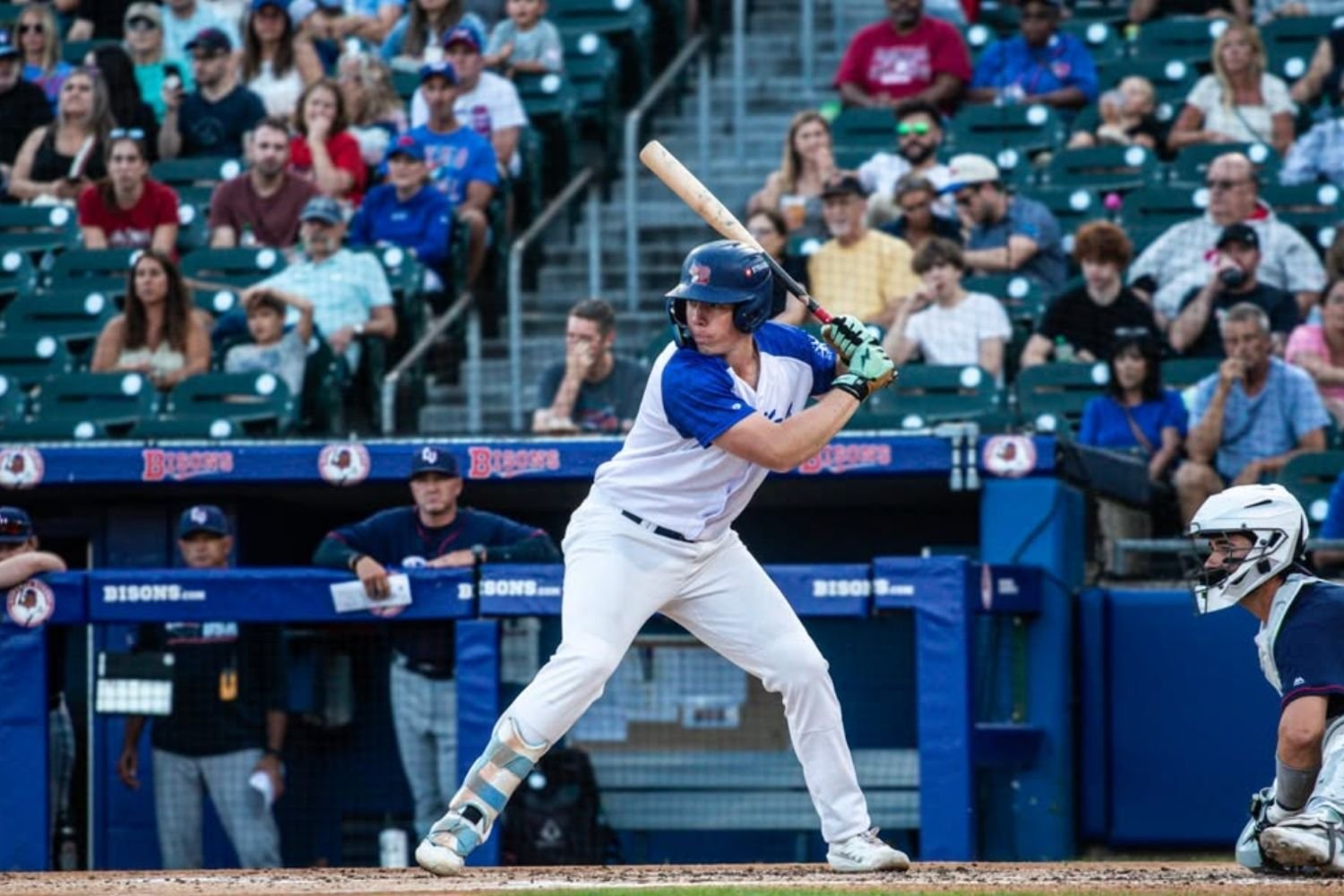 August always brings changes to the minor league system, as the aftermath of the trade deadline begins to take shape, while the most recent draftees begin to get their footing. The Jays farm system really hit this past month, with 30 hitters (min. 30 PA) being at least 20% better than league average, and nearly 20 being at least 40% better than the league average. As such, it was quite difficult to nail down the best hitters, and if I were more lenient in my honourable mentions section, it could be over 10 players long. Here were the best hitters in the system in the month of August. Blue Jays Minor League Hitters of the Month - Honourable Mentions Elaineiker Coronado - DSL Blue Jays Red 8 G, 34 PA, 11 H, 2 2B, 1 3B, 1 HR, .440/.588/.720, 214 wRC+, 23.5 BB%, 8.8 K% The sample was very small, but this undersized and underrated prospect helped the DSL Blue Jays Red clinch a playoff berth, showing off his advanced hit tool in another dominant season from the teenager. Dunedin Power Bats These four hitters absolutely demolished the Florida State League in the month of August, as these power bats combined for 23 homers, showing a sign that the Jays may be targeting power-hitting prospects more often recently. Owen Carapellotti 13 G, 52 PA, 12 H, 1 2B, 6 HR, 159 wRC+, 13.5 BB%, 26.9 K% Carapellotti was a catcher acquired from the A’s for Hayden Juenger and has adjusted nicely to the Jays system, including a stretch in which he homered six times in seven games. Jake Bennett 17 G, 61 PA, 14 H, 2 2B, 1 3B, 5 HR, 1 SB, 146 wRC+, 6.6 BB%, 36.1 K% Jake Bennett was a senior sign out of Dallas Baptist, and the Jays signed him for just $1,000 in the eighth round of the 2026 draft. He started off his pro career with a bang, as his first pro homer was a grand slam. Giaconino Lasaracina 13 G, 53 PA, 14 H, 3 2B, 5 HR, .311/.415/.711, 180 wRC+, 15.5 BB%, 20.8K% Giaconino Lasaracina is an Italian-Venezuelan, and he was promoted along with Giacomo Taschin to create an all-Italian battery for Dunedin. The 6-foot-3 catcher had the hardest-hit tracked homer for Dunedin with a 112.4-mph, 457-foot bomb in August. Aldo Gaxiola 19 G, 78 PA, 23 H, 4 2B, 7 HR, .338/.410/.706, 178 wRC+, 6.4 BB%, 25.6 K% Mexican corner infielder Aldo Gaxiola had a middling first half of the season; he displayed some pop but without much to show for it. However, Gaxiola finished August with a bang, as he homered five times in his last seven games, including a grand slam to cap off the month. No. 3 Jake Casey High-A Vancouver Canadians 24 G, 112 PA, 27 H, 9 2B, 1 3B, 8 HR, 4 SB, .281/.366/.646, 152 wRC+, 10.7 BB%, 28.6 K% Jake ‘Rake’ Casey, son of Sean Casey, started the 2026 season on the IL after a ripping hot start to his pro career. He was good after returning on rehab assignment in Dunedin and was solid in July, but he really picked it up in August, as he was an extra-base hit machine, with a combined 19 of them in August alone. The contact rates are quite poor, but the outfielder makes up for it with his raw power. He’s been a revelation for a 15th-rounder signed for just $150,000. No. 2 JoJo Parker Single-A Dunedin Blue Jays/High-A Vancouver Canadians 21 G, 94 PA, 29 H, 6 2B, 1 3B, 2 HR, .358/447/.531, 161 wRC+, 12.8 BB%, 18.1 K% After Arjun Nimmala was traded at the deadline, JoJo Parker became the de facto best hitting prospect in the Jays minor league system. He lived up to the occasion, earning a promotion from Dunedin to Vancouver, where he hasn’t been outmatched. The power has yet to show up since he was promoted, with only three doubles and a triple to his name in Vancouver, but he’s been an on-base machine. He’s been walking over 13% of the time, and he’s had four multi-hit performances in his past five games. He’s been crucial in the Canadians’ second-half playoff push. No. 1 Sean Keys Triple-A Buffalo Bisons 25 G, 118 PA, 34 H, 6 2B, 7 HR, .358/.470/.684, 198 wRC+, 13.6 BB%, 19.5K% Sean Keys struggled in his short stint with the big league club, only getting six hits and a homer while striking out over 35% of the time. Returning to the minors after such a tough stretch didn’t make him disheartened, as the slugger from Bucknell picked up where he left off, adding seven more homers to bring his season total up to 29. He even got some defensive run in left field. as the Jays must be considering him to be one of their main options for a September call-up. He’s become a little more selective in August, swinging 5% less often, leading to less chase and fewer whiffs, upping his zone contact from 82.4% to 86.5%. Hopefully Keys can continue his hot hitting with the big league club in September.
 -
August brings many changes to the minor league system as the aftermath of the trade deadline begins to take place while the most recent draftees begin to get their footing. The Jays farm system really hit during this month, with 30 hitters with over 30 PAs being 20% better than league average as hitters, with nearly 20 of them being 40% better than the league average. As such, it was quite difficult nailing down the best hitters and if I were more lenient in my honourable mentions section, it could be over 10 players long. Here are the best hitters in the system in the month of August. Honourable Mentions: Elaineiker Coronado - DSL Blue Jays Red - 8 G, 34 PA, 11 H, 2 2B, 1 3B, 1 HR, .440/.588/.720, 214 wRC+, 23.5 BB%, 8.8 K% The sample was very small but this undersized and underrated prospect helped the DSL Blue Jays Red clinch a playoff berth, showing off his advanced hit tool in another dominating season from the teenager. Dunedin Power Bats These four hitters absolutely demolished the Florida State League in the month of August, as these power bats combined for 23 homers, showing a sign that the Jays may be targeting power hitting prospects more often recently. Owen Carapellotti - 13 G, 52 PA, 12 H, 1 2B, 6 HR, 159 wRC+, 13.5 BB%, 26.9 K% Carapellotti was a catcher acquired from the A’s for Hayden Juenger, and has adjusted nicely to the Jays system, including a stretch where he homered six times in seven games. Jake Bennett - 17 G, 61 PA, 14 H, 2 2B, 1 3B, 5 HR, 1 SB, 146 wRC+, 6.6 BB%, 36.1 K% Jake Bennett was a senior sign out of Dallas Baptist, and the Jays signed him for just $1,000 in the eighth round of the 2026 draft. He started off his pro career with a bang as his first pro homer was a grand slam. Giaconino Lasaracina - 13 G, 53 PA, 14 H, 3 2B, 5 HR, .311/.415/.711, 180 wRC+, 15.5 BB%, 20.8K% Giaconino Lasaracina is an Italian-Venezuelan, and he was promoted along with Giacomo Taschin to create an all Italian battery for Dunedin. The 6ft 3 catcher had the hardest hit tracked homer for Dunedin with a 112.4 MPH, 457 ft bomb in August. Aldo Gaxiola - 19 G, 78 PA, 23 H, 4 2B, 7 HR, .338/.410/.706, 178 wRC+, 6.4 BB%, 25.6 K% Mexican corner infielder Gaxiola had a middling first half of the season, as he showed some pop but had not much to show for it, however Gaxiola capped off August with a bang, as he homered five times in his last seven games including a grand slam to cap off the month. 3 Jake Casey - High-A Vancouver Canadians - 24 G, 112 PA, 27 H, 9 2B, 1 3B, 8 HR, 4 SB, .281/.366/.646, 152 wRC+, 10.7 BB%, 28.6 K% Jake ‘Rake’ Casey, son of Sean Casey, started the 2026 season on the IL after a ripping hot start to his pro career after getting drafted. He was good after returning on rehab assignment in Dunedin and was solid in July, but he really picked it up in August, as he was an extra base hit machine, with a combined 19 of them in August alone. The contact rates are quite poor, but the outfielder makes up for it with his raw power. He’s been a revelation for a 15th rounder signed for just $150,000. 2 JoJo Parker - Low-A Dunedin Blue Jays, High-A Vancouver Canadians - 21 G, 94 PA, 29 H, 6 2B, 1 3B, 2 HR, .358/447/.531, 161 wRC+, 12.8 BB%, 18.1 K% After Arjun Nimmala was traded at the deadline, JoJo Parker became the de facto best hitting prospect in the Jays minor league system, and he lived up to the occasion, earning a promotion from Dunedin to Vancouver, where he hasn’t been outmatched. The power has yet to show up since getting promoted, with only three doubles and a triple to his name in Vancouver, but he’s been an on-base machine, he’s been walking over 13% of the time and he’s had four multi-hit games in his past five games. He’s been crucial in the Canadians’ 2nd half playoff push. 1 Sean Keys - Triple-A Buffalo Bisons - 25 G, 118 PA, 34 H, 6 2B, 7 HR, .358/.470/.684, 198 wRC+, 13.6 BB%, 19.5K% Sean Keys struggled in his short stint with the big league club, only getting six hits and a homer while striking out over 35% of the time. Returning to the minors after such a tough stretch didn’t make him disheartened, as the slugger from Bucknell returned where he left off, adding seven more homers to his season total of 29, and even getting some defensive run in left field, as the Jays must be considering him to be one of their main options as a September call-up. He’s become a little more selective in August, swinging 5% less leading to less chase and less whiffs, upping his zone contact from 82.4% to 86.5%. Hopefully Keys can continue his hot hitting with the big league club in September. View full article
- 1 reply
-
- 1
-

-
- sean keys
- jojo parker
- (and 1 more)
-
 Blue Jays Affiliate Overview (August 25-26) Triple-A Buffalo Bisons Series vs Rochester Red Wings (Washington Nationals): 1-1 Season Record: 63-64 Double-A New Hampshire Fisher Cats Series vs Hartford Yard Goats (Colorado Rockies): 1-1 Season Record: 55-65 High-A Vancouver Canadians Series vs Spokane (Colorado Rockies): 1-1 Season Record: 58-64 Single-A Dunedin Blue Jays Series vs Palm Beach Cardinals (St. Louis Cardinals): 1-1 Season Record: 57-61 FCL Blue Jays: Season Complete DSL Blue Jays Blue: Season Complete DSL Blue Jays Red: Season Complete Triple-A Buffalo Bisons Season Record: 63-64 Series vs Rochester Red Wings (Washington Nationals) August 25: Tuesday opened a new series for Buffalo against the Rochester Red Wings. With it came a Grant Rogers special. Rogers had his routine quality start on tap for the Bisons; he went six innings, gave up four hits, just two runs, and struck out four. It was his usual contact-oriented game. He didn't strike out many batters and walked none. The ball was put into play plenty, and Buffalo was up to the task, not committing any errors in the game. While Rogers had the Red Wings bats locked down, Buffalo jumped out to a quick lead in the first inning. Rudy Martin Jr. opened the game with a leadoff walk, followed by a single from Jay Harry, then Sean Keys smacked a ball to second base for an RBI groundout. Yohendrick Piñango then singled home Harry, giving Buffalo a 2-0 lead after the top of the first inning. With the game tied at two in the sixth, Buffalo loaded the bases with three straight walks, followed by Lenyn Sosa ripping a single to center, scoring Keys. Two more runs would score on a Rochester error, as well as a third run on a double play. Buffalo left the frame with a 6-2 lead and wouldn't relinquish it the rest of the game. Buffalo got a team effort to take the win, 6-2. August 26: On Wednesday, Buffalo had Josh Stephan on the mound looking for a bounce-back performance. Buffalo jumped on a rehabbing DJ Herz for Rochester, getting an RBI single by Sean Keys in the top of the first. Stephan then had a perfect bottom of the first, striking out two batters en route to a clean inning. The second inning for Stephan was the exact opposite of perfect; lead-off hitter Cayden Wallace homered to left, Leandro Pineda went back-to-back with Wallace, and then Liover Peguero would hit the third blast of the inning a few batters later. Two solo home runs and a two-run blast put Buffalo in a 4-1 hole. Josh Kasevich had an RBI single in the fifth, and Jay Harry added an RBI on a sacrifice fly in the eighth, bringing the deficit down to 5-3. Ricky Tiedemann threw 1.1 innings out of the bullpen for Buffalo, striking out two and keeping all of the balls in play on the infield. Daniel Guerra made his Triple-A Buffalo debut, pitching one inning out of the bullpen following Tiedemann. Guerra struck out the first batter he faced, walked a batter (who was erased on a caught stealing), gave up a solo home run, and got a flyout to right field to wrap up his outing. His fastball topped out at 99.5 mph, which you can round up to 100 mph – it looks better. Buffalo just couldn't climb out of the early hole they got put in, losing this game 6-3. Double-A New Hampshire Season Record: 55-65 Series vs Hartford Yard Goats (Colorado Rockies) August 25: Tuesday kicked off a series between New Hampshire and Hartford. Austin Cates was on the mound and had a successful start. He pitched five innings, allowing two earned runs, surrendered one walk, and struck out seven. Alexis Hernandez kicked off the scoring for the Fisher Cats in the fourth inning, as he crushed a two-run double to the left-center gap. Hernandez raised his average at Double-A New Hampshire to .368 in the game with three hits, half the hits New Hampshire had overall. Hartford would score six straight runs as the relief pitching for New Hampshire couldn't hold the game close. With the offense struggling, New Hampshire lost this one 8-2. August 26: In the Wednesday game between Hartford and New Hampshire, the Fisher Cats fared much better offensively. Dub Gleed continued his hot hitting by driving in a run with an RBI single in the first inning. In the second inning, Roynier Hernandez and Cole Messina added RBI singles for Hartford for them to take the lead. In the bottom of the inning, Carter Cunningham hit an RBI double, and Victor Arias grounded out, scoring a second run. After a two-run single by Hartford in the third inning, Cunningham answered again, this time with a solo shot to tie the game. Mathieu Vallee doubled home a run for New Hampshire in the eighth inning for them to take the lead for good. Gage Stanifer pitched the seventh and eighth innings for the Fisher Cats again and made quick work of Hartford, shutting them out over his outing. He threw the two innings, struck out four batters, and only allowed one hit and one walk. New Hampshire won this one 5-4. High-A Vancouver Season Record: 58-63 Series vs Spokane (Colorado Rockies) August 25: Silvano Hechavarria had a season to forget, as he never really found his footing after starting the season on the injured list. This was a start to be proud of, as he went six innings and had his first scoreless start since June. He struck out five batters, only allowing one walk and three hits. On the offensive end, JoJo Parker supplied most of the offense, as he had three hits, driving in two of the six runs scored by Vancouver. Dariel Ramon also had two RBIs, and the Canadians were leading 6-0, until Bradley Wilson lost the shutout in the ninth. However, he pitched three solid innings and earned his first save as a Canadian in a dominating 6-1 game. August 26: JoJo Parker once again scored in the first inning, this time on a wild pitch, but in the second inning, Robert Calaz hit a homer off of Vancouver's starter Connor O'Halloran. The Mississaugan gave up six hits but only allowed that single run in 3.2 innings. He was replaced in the fourth by Reece Fields, who gave up three runs in the fifth inning to make it a three-run lead for Spokane. The Canadians scored their second run on a wild pitch in the eighth, then Gable Mitchell had the Canadians' only RBI of the night on a groundout, but they were just not able to get a consistent offense going as they fell 5-3. Single-A Dunedin Season Record: 57-61 Series vs Palm Beach Cardinals (St. Louis Cardinals) August 25: Josh Winckowski returned to Dunedin after being involved in the Steven Matz trade, getting sent to Boston, then getting injured and signing with the Jays on a minor league contract. He returned to Dunedin for the first time since 2019, when the Dunedin Blue Jays were the Jays’ High-A minor league affiliate. He gave up a homer on the very first pitch of the game, but struck out a batter going 1.2 innings. Owen Carapellotti had his sixth homer in seven games to tie it up in the fourth, and Aldo Gaxiola went back-to-back, hitting a homer in three straight games to take the lead for good. Jack Nedrow replaced Winckowski in the second inning and tossed 5.1 innings of no-run ball, striking out six batters. The Jays added a five-run sixth inning to prevent a comeback, as Gaxiola had his second RBI with a single this time, and Raimundo De Los Santos cleared the bases with a double to make it 7-1. Landon Waters pitched two no-hit innings to finish the game off. August 26: Karson Ligon has struggled since returning from the injured list, as the righty from Mississippi State has given up 11 earned runs in just 6.2 innings, including three earned runs this outing. Aldo Gaxiola homered in his fourth straight game with a 107.4 mph liner to center field, but Edrwin Veras gave that run back on an RBI single from Gabe Camacho. Sann Omosako made his debut for Dunedin, as the Brazilian righty had one of his best outings of the season, going four innings, striking out seven batters, and allowing only one unearned run due to a Raimundo De Los Santos fielding error. Isaac Williams added more good pitching from the 'pen, as he went six up, six down with four strikeouts. The offense was able to generate a couple of runs, as Dean West scored on a wild pitch, and in the bottom of the sixth, Giaconino Lasaracina had his eighth homer as a D-Jay to bring it within two runs, but the comeback didn’t fully bear fruit, as the Jays lost 5-3. FCL Blue Jays Season Record: 38-20 Season Completed DSL Blue Jays Blue Season Record: 20-35 Season Completed DSL Blue Jays Red Season Record: 33-18 Playoffs (2-1) Season Completed Transactions 08/26/26 Buffalo Bisons sent LF RJ Schreck on a rehab assignment to Dunedin Blue Jays. 08/25/26 Toronto Blue Jays sent LHP Joe Mantiply on a rehab assignment to Buffalo Bisons. 08/25/26 RHP Daniel Guerra assigned to Buffalo Bisons from New Hampshire Fisher Cats. 08/25/26 Toronto Blue Jays recalled RHP Chad Dallas from Buffalo Bisons. 08/25/26 Buffalo Bisons sent RHP Josh Winckowski on a rehab assignment to Dunedin Blue Jays. 08/25/26 Dunedin Blue Jays activated OF Enmanuel Bonilla from the temporarily inactive list. 08/25/26 RHP Sann Omosako assigned to Dunedin Blue Jays from FCL Blue Jays. 08/25/26 RHP Victor Espiritu assigned to Dunedin Blue Jays from FCL Blue Jays. 08/25/26 RHP Daniel Guerra assigned to Buffalo Bisons from New Hampshire Fisher Cats.
 -
Blue Jays Affiliate Overview (August 25-26) Triple-A Buffalo Bisons Series vs Rochester Red Wings (Washington Nationals): 1-1 Season Record: 63-64 Double-A New Hampshire Fisher Cats Series vs Hartford Yard Goats (Colorado Rockies): 1-1 Season Record: 55-65 High-A Vancouver Canadians Series vs Spokane (Colorado Rockies): 1-1 Season Record: 58-64 Single-A Dunedin Blue Jays Series vs Palm Beach Cardinals (St. Louis Cardinals): 1-1 Season Record: 57-61 FCL Blue Jays: Season Complete DSL Blue Jays Blue: Season Complete DSL Blue Jays Red: Season Complete Triple-A Buffalo Bisons Season Record: 63-64 Series vs Rochester Red Wings (Washington Nationals) August 25: Tuesday opened a new series for Buffalo against the Rochester Red Wings. With it came a Grant Rogers special. Rogers had his routine quality start on tap for the Bisons; he went six innings, gave up four hits, just two runs, and struck out four. It was his usual contact-oriented game. He didn't strike out many batters and walked none. The ball was put into play plenty, and Buffalo was up to the task, not committing any errors in the game. While Rogers had the Red Wings bats locked down, Buffalo jumped out to a quick lead in the first inning. Rudy Martin Jr. opened the game with a leadoff walk, followed by a single from Jay Harry, then Sean Keys smacked a ball to second base for an RBI groundout. Yohendrick Piñango then singled home Harry, giving Buffalo a 2-0 lead after the top of the first inning. With the game tied at two in the sixth, Buffalo loaded the bases with three straight walks, followed by Lenyn Sosa ripping a single to center, scoring Keys. Two more runs would score on a Rochester error, as well as a third run on a double play. Buffalo left the frame with a 6-2 lead and wouldn't relinquish it the rest of the game. Buffalo got a team effort to take the win, 6-2. August 26: On Wednesday, Buffalo had Josh Stephan on the mound looking for a bounce-back performance. Buffalo jumped on a rehabbing DJ Herz for Rochester, getting an RBI single by Sean Keys in the top of the first. Stephan then had a perfect bottom of the first, striking out two batters en route to a clean inning. The second inning for Stephan was the exact opposite of perfect; lead-off hitter Cayden Wallace homered to left, Leandro Pineda went back-to-back with Wallace, and then Liover Peguero would hit the third blast of the inning a few batters later. Two solo home runs and a two-run blast put Buffalo in a 4-1 hole. Josh Kasevich had an RBI single in the fifth, and Jay Harry added an RBI on a sacrifice fly in the eighth, bringing the deficit down to 5-3. Ricky Tiedemann threw 1.1 innings out of the bullpen for Buffalo, striking out two and keeping all of the balls in play on the infield. Daniel Guerra made his Triple-A Buffalo debut, pitching one inning out of the bullpen following Tiedemann. Guerra struck out the first batter he faced, walked a batter (who was erased on a caught stealing), gave up a solo home run, and got a flyout to right field to wrap up his outing. His fastball topped out at 99.5 mph, which you can round up to 100 mph – it looks better. Buffalo just couldn't climb out of the early hole they got put in, losing this game 6-3. Double-A New Hampshire Season Record: 55-65 Series vs Hartford Yard Goats (Colorado Rockies) August 25: Tuesday kicked off a series between New Hampshire and Hartford. Austin Cates was on the mound and had a successful start. He pitched five innings, allowing two earned runs, surrendered one walk, and struck out seven. Alexis Hernandez kicked off the scoring for the Fisher Cats in the fourth inning, as he crushed a two-run double to the left-center gap. Hernandez raised his average at Double-A New Hampshire to .368 in the game with three hits, half the hits New Hampshire had overall. Hartford would score six straight runs as the relief pitching for New Hampshire couldn't hold the game close. With the offense struggling, New Hampshire lost this one 8-2. August 26: In the Wednesday game between Hartford and New Hampshire, the Fisher Cats fared much better offensively. Dub Gleed continued his hot hitting by driving in a run with an RBI single in the first inning. In the second inning, Roynier Hernandez and Cole Messina added RBI singles for Hartford for them to take the lead. In the bottom of the inning, Carter Cunningham hit an RBI double, and Victor Arias grounded out, scoring a second run. After a two-run single by Hartford in the third inning, Cunningham answered again, this time with a solo shot to tie the game. Mathieu Vallee doubled home a run for New Hampshire in the eighth inning for them to take the lead for good. Gage Stanifer pitched the seventh and eighth innings for the Fisher Cats again and made quick work of Hartford, shutting them out over his outing. He threw the two innings, struck out four batters, and only allowed one hit and one walk. New Hampshire won this one 5-4. High-A Vancouver Season Record: 58-63 Series vs Spokane (Colorado Rockies) August 25: Silvano Hechavarria had a season to forget, as he never really found his footing after starting the season on the injured list. This was a start to be proud of, as he went six innings and had his first scoreless start since June. He struck out five batters, only allowing one walk and three hits. On the offensive end, JoJo Parker supplied most of the offense, as he had three hits, driving in two of the six runs scored by Vancouver. Dariel Ramon also had two RBIs, and the Canadians were leading 6-0, until Bradley Wilson lost the shutout in the ninth. However, he pitched three solid innings and earned his first save as a Canadian in a dominating 6-1 game. August 26: JoJo Parker once again scored in the first inning, this time on a wild pitch, but in the second inning, Robert Calaz hit a homer off of Vancouver's starter Connor O'Halloran. The Mississaugan gave up six hits but only allowed that single run in 3.2 innings. He was replaced in the fourth by Reece Fields, who gave up three runs in the fifth inning to make it a three-run lead for Spokane. The Canadians scored their second run on a wild pitch in the eighth, then Gable Mitchell had the Canadians' only RBI of the night on a groundout, but they were just not able to get a consistent offense going as they fell 5-3. Single-A Dunedin Season Record: 57-61 Series vs Palm Beach Cardinals (St. Louis Cardinals) August 25: Josh Winckowski returned to Dunedin after being involved in the Steven Matz trade, getting sent to Boston, then getting injured and signing with the Jays on a minor league contract. He returned to Dunedin for the first time since 2019, when the Dunedin Blue Jays were the Jays’ High-A minor league affiliate. He gave up a homer on the very first pitch of the game, but struck out a batter going 1.2 innings. Owen Carapellotti had his sixth homer in seven games to tie it up in the fourth, and Aldo Gaxiola went back-to-back, hitting a homer in three straight games to take the lead for good. Jack Nedrow replaced Winckowski in the second inning and tossed 5.1 innings of no-run ball, striking out six batters. The Jays added a five-run sixth inning to prevent a comeback, as Gaxiola had his second RBI with a single this time, and Raimundo De Los Santos cleared the bases with a double to make it 7-1. Landon Waters pitched two no-hit innings to finish the game off. August 26: Karson Ligon has struggled since returning from the injured list, as the righty from Mississippi State has given up 11 earned runs in just 6.2 innings, including three earned runs this outing. Aldo Gaxiola homered in his fourth straight game with a 107.4 mph liner to center field, but Edrwin Veras gave that run back on an RBI single from Gabe Camacho. Sann Omosako made his debut for Dunedin, as the Brazilian righty had one of his best outings of the season, going four innings, striking out seven batters, and allowing only one unearned run due to a Raimundo De Los Santos fielding error. Isaac Williams added more good pitching from the 'pen, as he went six up, six down with four strikeouts. The offense was able to generate a couple of runs, as Dean West scored on a wild pitch, and in the bottom of the sixth, Giaconino Lasaracina had his eighth homer as a D-Jay to bring it within two runs, but the comeback didn’t fully bear fruit, as the Jays lost 5-3. FCL Blue Jays Season Record: 38-20 Season Completed DSL Blue Jays Blue Season Record: 20-35 Season Completed DSL Blue Jays Red Season Record: 33-18 Playoffs (2-1) Season Completed Transactions 08/26/26 Buffalo Bisons sent LF RJ Schreck on a rehab assignment to Dunedin Blue Jays. 08/25/26 Toronto Blue Jays sent LHP Joe Mantiply on a rehab assignment to Buffalo Bisons. 08/25/26 RHP Daniel Guerra assigned to Buffalo Bisons from New Hampshire Fisher Cats. 08/25/26 Toronto Blue Jays recalled RHP Chad Dallas from Buffalo Bisons. 08/25/26 Buffalo Bisons sent RHP Josh Winckowski on a rehab assignment to Dunedin Blue Jays. 08/25/26 Dunedin Blue Jays activated OF Enmanuel Bonilla from the temporarily inactive list. 08/25/26 RHP Sann Omosako assigned to Dunedin Blue Jays from FCL Blue Jays. 08/25/26 RHP Victor Espiritu assigned to Dunedin Blue Jays from FCL Blue Jays. 08/25/26 RHP Daniel Guerra assigned to Buffalo Bisons from New Hampshire Fisher Cats. View full article
-
 Blue Jays Affiliate Overview (August 18- 19) Triple-A Buffalo Bisons Series vs Lehigh Valley IronPigs (Philadelphia Phillies): 0-2 Season Record: 60-62 Double-A New Hampshire Fisher Cats Series vs Erie SeaWolves (Detroit Tigers): 1-1 Season Record: 53-61 High-A Vancouver Canadians Series vs Eugene Emeralds (San Francisco Giants): 1-1 Season Record: 55-61 Single-A Dunedin Blue Jays Series vs Clearwater Threshers (Philadelphia Phillies): 1-2 Season Record: 53-60 FCL Blue Jays: Season Complete DSL Blue Jays Blue Week Record: 0-1 Season Record: 20-35 DSL Blue Jays Red Week Record: 1-0 Season Record: 34-18 Triple-A Buffalo Bisons Season Record: 60-62 Series vs Lehigh Valley IronPigs (Philadelphia Phillies) August 18: Tuesday was the start of a new series for Buffalo, this one against the Lehigh Valley IronPigs. The Bisons sent Grant Rogers to the mound, who did a fairly decent job of holding the bats from Lehigh in check. Rogers had one of his usual starts, giving up a bunch of hits (eight), but limiting the walks (one). He would have to pitch around traffic on the basepaths all game, which he has become accustomed to. He did well the first three innings, not allowing any of the base runners to cross home plate. In the fourth, though, the IronPigs finally broke through with an RBI double by Christian Cairo. In the fifth, Rogers surrendered a two-run home run to Kameron Misner. After Lehigh Valley got an out and a double in the seventh, Rogers gave way to Javen Coleman, who couldn't keep the runner off the board, as the IronPigs' lead jumped to 4-0. Following another run in the top of the eighth inning by Lehigh Valley, Buffalo finally got a run on the board in the bottom half of the inning. Josh Kasevich singled, then Sean Keys ripped a ball to right field for an RBI triple, scoring Kasevich. In the bottom of the ninth, Jay Harry doubled and Carlos Mendoza singled, but they were left stranded on the basepaths when Rudy Martin Jr. grounded out to end the game. Buffalo fell 5-1. August 19: Josh Stephan was on the mound for Buffalo on Wednesday, trying to right the ship and get the Bisons in the win column for the series against Lehigh Valley. Stephan came out of the gates locked in, striking out all three batters in the first inning, only throwing one straight pitch (a sinker). In the second inning, he started out throwing the sinker and got two ground outs on the pitch and a strikeout with the cutter. In the third inning, Lehigh Valley finally got to Stephan, with two singles and a two-RBI double by Tommy Pham. Stephan would end his outing throwing six innings, giving up just the two runs, and striking out seven. The Buffalo bats were stymied again by the IronPigs pitching. Their lone run came in the bottom of the seventh, as Ismael Munguia and William Simoneit each singled to open the frame. The base knocks were followed by a sacrifice bunt from Carlos Mendoza and a sacrifice by Yohendrick Piñango. In the bottom of the eighth, Buffalo had a great scoring chance, leading off the inning with three consecutive walks to load the bases. Then Kirby Snead came into the game for Lehigh Valley and proceeded to strike out Nick Goodwin, Munguia, and Simoneit all in a row, without a ball being put into play. Buffalo fell again, this time 2-1. Double-A New Hampshire Season Record: 53-61 Series vs Erie SeaWolves (Detroit Tigers) August 18: Nolan Perry got the start Tuesday in the opener of the week-long series between New Hampshire and Erie. He worked hitters well and didn't give up a lot of hard contact. He struck out just two on the day and gave up a two-run home run to Zyhir Hope in the third inning. Perry also surrendered a walk and four hits total over his four innings. Down one in the fourth, Edward Duran and Cutter Coffey drove in three runs on RBI singles from each. Gage Stanifer came in for the eighth inning again and surrendered one run as well. He gave up singles to Hope and Thayron Liranzo before a wild pitch scored Hope. After walking a batter, Stanifer locked in with two strikeouts in between another wild pitch. In the ninth, Hope tied the game with an RBI single to send the game into extra innings. After the two teams exchanged runs in the 10th inning, Victor Arias hit an RBI triple in the eleventh inning, which was the winning run because Erie failed to score in their half of the frame. New Hampshire won 6-5. August 19: Erie took the early lead in the Wednesday game with New Hampshire. Zyhir Hope had a sacrifice fly in the first and Luke Shliger hit an RBI double in the second inning. J.R. Freethy got New Hampshire on the board in the fifth inning, and they kept it rolling in the sixth. Carter Cunningham drove in Dub Gleed (who had three hits on the day) and then was followed by Alexis Hernandez driving in a run on a single, followed by a bases-loaded walk. Thayron Liranzo answered, though, crushing a home run in the Erie half of the sixth. Erie would then score the next two more runs and hold off New Hampshire. The Fisher Cats lost this one 6-5. High-A Vancouver Season Record: 55-61 Series vs Eugene Emeralds (San Francisco Giants) August 18: The Canadians face off against the league-leading Emeralds once again, and some early plate discipline and solid baserunning let the Canadians strike first after an early error by the shortstop. Maddox Latta’s fourth homer in the month of August made it a 4-0 lead, as the undrafted free agent has been on fire. Landen Maroudis also looked decent, going five innings for the sixth start in a row, but in the third inning with two outs, Maroudis made a mistake pitch that allowed the Emeralds to bring it within one with a three-run homer. Despite the blemish, Maroudis was able to strike out six batters and ended up getting the win thanks to some timely homers from Jake Casey, as he homered in the sixth to double the lead to two, and then in the sixth inning had a two-run homer to make it a five-run game. He added another sac fly in the eighth to make it four total RBIs in the game, almost matching the Emeralds’ total runs scored. The bullpen also struck out seven batters to close out the game, allowing only two runs as they won this one 10-5. August 19: Silvano Hechavarria struck out five of the first six batters he faced, but then faced disaster in the third inning, as the big Cuban righty allowed five runs to put the Canadians in a big hole. Ramon Marquez was also excellent for Eugene, as he pitched a quality start and allowed two runs on a JoJo Parker two-RBI double in the sixth. Austin Smith had himself a two-homer night to bring it closer, but they couldn’t get over the hump of the five runs Hechavarria gave up in the third, resulting in a 6-4 loss for Vancouver. Single-A Dunedin Season Record: 53-60 Series vs Clearwater Threshers (Philadelphia Phillies) August 18: Jack Nedrow pitched another strong start, although he only struck out one batter, allowing two runs, with one of them being unearned. The big bats in the Dunedin lineup gave them the lead as Giaconino Lasaracina hit a 105.7 mph homer to tie it in the fifth, and Jake Bennett’s homer barrage continued as he hit a two-run homer in the sixth to make it a two-run lead. Unfortunately for the Jays, Edrwin Veras gave up the equivalent of batting practice to the Threshers, as the reliever gave up 10 hits and six runs over two innings, without striking out a batter nor walking one. The offense could not recover from the thrashing on the other end, so the Jays ended up losing this one 8-4. August 19, Game 1: Miguel Pantoja got his first start in Dunedin after performing well in the Florida Complex League, and he pitched 3.2 innings, allowing two runs, but only one of them was earned. Owen Carapellotti homered in the second inning, which made it a tie ballgame, but he made a throwing error in the fourth, which gave the Threshers the lead. The D-Jays got a couple of runs back on a sac fly and an RBI groundout. After Pantajo was taken out, however, the dam broke loose, as they scored five runs on Nolan Higgins in the fifth inning. Carapellotti hit his second homer of the night to bring it within two, and Joe Mantiply pitched a 1-2-3 inning on rehab assignment, but the Jays couldn’t bring it back, falling 7-5. Game 2: This was a make-up game for a missing game from July, and Karson Ligon was once again the starter. He struck out the side in the first inning, but faced traffic in the second inning due to a catcher’s interference as well as a throwing error from Dameury Pena, which resulted in two runs being scored. Giaconino Lasaracina hit a mammoth tank 112.4 mph and 457 feet for the Jays’ first run, and Raimundo De Los Santos took the lead with a two-run homer in the same inning. Ligon was taken out in the fourth, and Landon Waters and Reese Bassinger both pitched two scoreless innings each to clinch the win for the Jays. Lasaracina had the cherry on top, as he hit another homer in the fourth for an insurance run at 109.4 mph this time. FCL Blue Jays Season Record: 38-20 Season Completed DSL Blue Jays Blue Season Record: 19-35 August 18: BJB wrapped up their season down on the island with two big innings and some fireworks as well. Down 3-0 headed into the top of the fifth inning, BJB loaded up the bases with two walks and a hit by pitch, then Isay Veras came to the plate. After his at-bat was over, BJB had the lead, as Veras sent a ball over the right field fence for a grand slam; the blast was his fourth of the season. After surrendering the lead back to the Giants Orange (GIO) team, BJB was in a one-run hole to begin the seventh. After Deret Gonzalez struck out, Cristopher Polanco launched his second home run of the season to right field, a solo shot. Later in the inning, Fabian Gonzalez ripped a ball to left and cleared the bases for a three-run triple. The three-run lead stuck, as BJB won their final game of the season, 8-5. DSL Blue Jays Red Season Record: 33-18 August 18: BJR put up enough runs on the scoreboard Tuesday to get the win and end the regular season on a high note. In the first, BJR scored on a wild pitch, an RBI groundout by Darwin Nuñez, and then a double steal of home and second by Aneudi Severino and Elian Reyes. Reyes then doubled home a run in the third inning on a fly ball to right field. Jose Gori would add an RBI on a groundout to third base later in the inning. Reyes would cap off his big game with another RBI single in the fifth. The six runs were enough for BJR to take home the win 6-4 and move on to the playoffs that began Thursday. Transactions 08/19/26 Toronto Blue Jays sent LHP Joe Mantiply on a rehab assignment to Dunedin Blue Jays. 08/19/26 RHP Miguel Pantoja assigned to Dunedin Blue Jays from FCL Blue Jays.
 -
Blue Jays Affiliate Overview (August 18- 19) Triple-A Buffalo Bisons Series vs Lehigh Valley IronPigs (Philadelphia Phillies): 0-2 Season Record: 60-62 Double-A New Hampshire Fisher Cats Series vs Erie SeaWolves (Detroit Tigers): 1-1 Season Record: 53-61 High-A Vancouver Canadians Series vs Eugene Emeralds (San Francisco Giants): 1-1 Season Record: 55-61 Single-A Dunedin Blue Jays Series vs Clearwater Threshers (Philadelphia Phillies): 1-2 Season Record: 53-60 FCL Blue Jays: Season Complete DSL Blue Jays Blue Week Record: 0-1 Season Record: 20-35 DSL Blue Jays Red Week Record: 1-0 Season Record: 34-18 Triple-A Buffalo Bisons Season Record: 60-62 Series vs Lehigh Valley IronPigs (Philadelphia Phillies) August 18: Tuesday was the start of a new series for Buffalo, this one against the Lehigh Valley IronPigs. The Bisons sent Grant Rogers to the mound who did a fairly decent jump of holding the bats from Lehigh in check. Rogers had one of his usual starts, giving up a bunch of hits (eight), but limiting the walks (one). He would have to pitch around traffic on the basepaths all game, which he has become accustomed too. He did well the first three innings, not allowing any of the base runners to cross home plate. In the fourth though, the IronPigs finally broke through with an RBI double by Christian Cairo. In the fifth, Rogers surrendered a two-run home run to Kamreron Misner. After Lehigh Valley got an out and a double in the seventh, Rogers gave way to Javen Coleman who couldn't keep the runner off the board, as the IronPigs lead jumped to 4-0. Following another run in the top of the eighth inning by Lehigh Valley, Buffalo finally got a run on the board in the bottom half of the inning. Josh Kasevich singled, then Sean Keys ripped a ball to right field for an RBI triple, scoring Kasevich. In the bottom of the ninth, Jay Harry doubled and Carlos Mendoza singled, but they were left stranded on the basepaths when Rudy Martin Jr. grounded out to end the game. Buffalo fell 5-1. August 19: Josh Stephan was on the mound for Buffalo on Wednesday, trying to right the ship and get the Bisons in the win column for the series against Lehigh Valley. Stephan came out of the gates locked in, striking out all three batters in the first inning, only throwing one straight pitch (a sinker). In the second inning he started out throwing the sinker and got two ground outs on the pitch and a strikeout with the cutter. In the third inning, Lehigh Valley finally got to Stephan, with two singles and a two-RBI double by Tommy Pham. Stephan would end his outing throwing six innings, giving up just the two runs, and striking out seven. The Buffalo bats were stymied again by the IronPigs pitching. Their lone run came in the bottom of the seventh, as Ismael Munguia and William Simoneit each singled to open the frame. They base knocks were followed by a sacrifice bunt from Carlos Mendoza and a sacrifice by Yohendrick Piñango. In the bottom of the eighth Buffalo had a great scoring chance, leading off the inning with three consecutive walks to load the bases. Then Kirby Snead came into the game for Lehigh Valley and proceeded to strikeout Nick Goodwin, Munguia, and Simoneit all in a row, without a balk being put into play. Buffalo fell again, this time 2-1. Double-A New Hampshire Season Record: 53-61 Series vs Erie SeaWolves (Detroit Tigers) August 18: Nolan Perry got the start Tuesday in the opener of the week-long series between New Hampshire and Erie. He worked hitters well and didn't give up a lot of hard contact. He struck out just two on the day and gave up a two-run home run to Zyhir Hope in the third inning. Perry also surrendered a walk and four hits total over his four innings. Down one in the fourth, Edward Duran and Cutter Coffey drove in three runs on RBI singles from each. Gage Stanifer came in for the eighth inning again and surrendered one run as well. He gave up singles to Hope and Thayron Liranzo, before a wild pitch scored Hope. After walking a batter, Stanifer locked in with two strikeouts in between another wild pitch. In the ninth Hope tied the game with an RBI single to send the game into innings. After exchanging runs in the tenth inning, Victor Arias hit an RBI triple in the eleventh inning, which was the winning run because Erie failed to score in their half of the frame. New Hampshire won 6-5. August 19: Erie took the early lead in the Wednesday game with New Hampshire. Zyhir Hope had a sacrifice fly in the first and Luke Shingler hit an RBI double in the second inning. J.R. Freethy got New Hampshire on the board in the fifth inning and they kept it rolling in the sixth. Carter Cunningham drove in Dub Gleed (who had three hits on the day) and then was followed by Alexis Hernandez driving in a run on a single, followed by a bases loaded walk. Thayron Liranzo answered though, crushing a home run in the Erie half of the sixth. Erie would then score the next two more runs and hold off New Hampshire. As the Fisher Cats lost this one 6-5. High-A Vancouver Season Record: 55-61 Series vs Eugene Emeralds (San Francisco Giants) August 18: The Canadians face off against the league leading Emeralds once again, and some early plate discipline and solid baserunning let the Canadians strike first after an early error by the shortstop. Maddox Latta’s fourth homer in the month of August made it a four to nothing lead, as the undrafted free agent has been on fire. Landen Maroudis also looked decent, going five innings for the sixth start in the row, but in the third inning with two outs, Maroudis made a mistake pitch that allowed the Emeralds to bring it within one with a three run homer. Despite the blemish, Maroudis was able to strike out six batters and ended up getting the win thanks to some timely homers from Jake Casey, as he homered in the sixth to double the lead to two, and then in the sixth inning had a two-run homer to make it a five run game. He added another sac fly in the eighth to make it four total RBIs in the game, almost matching the Emeralds’ total runs scored. The bullpen also struck out seven batters to close out the game, allowing only two runs as they won this one 10-5. August 19: Silvano Hechavarria struck out five of the first six batters he faced, but then faced disaster in the third inning, as the big Cuban righty allowed five runs to put the Canadians in a big hole. Ramon Marquez was also excellent for Eugene, as he pitched a quality start and allowed two runs on a JoJo Parker 2-RBI double in the sixth. Austin Smith had himself a two-homer night to bring it closer, but they couldn’t get over the hump of the five runs Hechavarria gave up in the third, resulting in a 6-4 loss for Vancouver. Single-A Dunedin Season Record: 53-60 Series vs Clearwater Threshers (Philadelphia Phillies) August 18: Jack Nedrow pitched another strong start although he only struck out one batter, allowing two runs, with one of them being unearned. The big bats in the Dunedin lineup gave them the lead as Giaconino Lasaracina hit a 105.7 mph homer to tie it in the fifth, and Jake Bennett’s homer barrage continued as he hit a two run homer in the sixth to make it a two run lead. Unfortunately for the Jays, Edrwin Veras gave up the equivalent of batting practice to the Threshers, as the reliever gave up 10 hits and six runs over two innings, without striking out a batter nor walking one. The offense could not recover from the thrashing on the other end, so the Jays ended up losing this one 8-4. August 19, Game 1: Miguel Pantoja got his first start in Dunedin after performing well in the Florida Complex League, and he pitched three and two thirds innings, allowing two runs, but only one of them being earned. Owen Carapellotti homered in the second inning which made it a tie ball-game, but he made a throwing error in the fourth which gave the Threshers the lead. The D-Jays got a couple of runs back on a sac fly and an RBI groundout. After Pantajo was taken out however, the dam broke loose, as they scored five runs on Nolan Higgins in the fifth inning. Carapellotti hit his second homer of the night to bring it within two, and Joe Mantiply pitched a 1-2-3 inning on rehab assignment, but the Jays couldn’t bring it back, falling 5 to 7. Game 2: This was a make up game for a missing game from July, and Karson Ligon was once again the starter. He struck out the side in the first inning, but faced traffic in the second inning due to a catcher’s interference as well as a throwing error from Daumery Pena, which ended resulting in two runs being scored. Giaconino Lasaracina hit a mammoth tank 112.4 mph and 457 feet for the Jays’ first run, and Raimundo De Los Santos took the lead with a two run homer in the same inning. Ligon was taken out in the fourth and Landon Waters and Reese Bassinger both pitched two scoreless innings each, to clinch the win for the Jays. Lasaracina had the cherry on top, as he hit another homer in the fourth for an insurance run at 109.4 mph this time. FCL Blue Jays Season Record: 38-20 Season Completed DSL Blue Jays Blue Season Record: 19-35 August 18: BJB wrapped up their season down on the island with two big innings and some fireworks as well. Down 3-0 headed into the top of the fifth inning, BJB loaded up the bases with two walks and a hit by pitch, then Isay Veras came to the plate. After his at-bat was over, BJB had the lead, as Veras sent a ball over the right field fence for a grand slam, the blast was his fourth of the season. After surrendering the lead back to the Giants Orange (GIO) team, BJB was in a one run hole to begin the seventh. After Deret Gonzalez struck out, Cristopher Polanco launched his second home run of the season to right field, a solo shot. Later in the inning, Fabian Gonzalez ripped a ball to left and cleared the bases for a three-run triple. The three-run lead stuck, as BJB won their final game of the season, 8-5. DSL Blue Jays Red Season Record: 33-18 August 18: BJR put up enough runs on the scoreboard Tuesday to get the win and end the regular season on a high note. In the first, BJR scored on a wild pitch, an RBI groundout by Darwin Nuñez, and then a double steal of home and second by Aneudi Severino and Elian Reyes. Reyes then doubled home a run in the third inning on a fly ball to right field. Jose Gori would add an RBI on a ground out to third base later in the inning. Reyes would cap off his big game with another RBI single in the fifth. The six runs were enough for BJR to take home the win 6-4 and move on to the playoffs that begin Thursday. Transactions 08/19/26 Toronto Blue Jays sent LHP Joe Mantiply on a rehab assignment to Dunedin Blue Jays. 08/19/26 RHP Miguel Pantoja assigned to Dunedin Blue Jays from FCL Blue Jays. View full article
-
 Blue Jays Affiliate Overview (August 12-13) Triple-A Buffalo Bisons Series vs Worcester Red Sox (Boston Red Sox): 1-1 Season Record: 57-59 Double-A New Hampshire Fisher Cats Series vs Somerset Patriots (New York Yankees): 0-2 Season Record: 51-57 High-A Vancouver Canadians Series vs Tri-City Dust Devils (Los Angeles Angels): 2-0 Season Record: 51-59 Single-A Dunedin Blue Jays Series vs Tampa Tarpons (New York Yankees): 2-0 Season Record: 52-54 FCL Blue Jays: Season Complete DSL Blue Jays Blue Week Record: 0-1 Season Record: 18-32 DSL Blue Jays Red Week Record: 0-0 Season Record: 28-18 Triple-A Buffalo Bisons Season Record: 57-59 Series vs Worcester Red Sox (Boston Red Sox) August 11: Buffalo opened a new series on Tuesday, this one against the Worcester Red Sox. They would have to face a couple of the top arms that the Red Sox could throw at them, John Holobetz and Eduardo Rivera. The Bisons' bats were up for the challenge, though, and then some. Three players would collect three hits in the game, as Buffalo racked up 15 on the day. Sean Keys was trouble for Holobetz in the first inning, squaring up a 96 mph fastball that was up at the top of the zone and sending it over the right field fence with flames coming off the ball. The home run came off of Keys’ bat at 110.5 mph and went 417 feet, resulting in a three-run shot for Buffalo to open up the scoring. In the fourth inning, Holobetz's replacement, Rivera, was met with the same greeting; Rudy Martin Jr., Keys, and CJ Stubbs had RBI singles. In between their singles, Carlos Mendoza scored on an error, and Yohendrick Piñango knocked in a run on a sacrifice fly to center. The eight-run lead was enough for Buffalo to hold on to, despite Grant Rogers, Ricky Tiedemann, and Javen Coleman all giving up runs in the final five frames. The Bisons cruised to a victory, 9-6. August 12: On Wednesday, Buffalo jumped out to an early lead against Worcester. Davis Schneider singled, moved to second when Sean Keys walked, and then scored on Nick Goodwin's double to left field. Franklin Arias tied the game up at one in the third inning when he knocked in a run with an RBI groundout. From there, the game went back and forth with a hit or two in an inning, but neither team could get a runner across home plate. In the seventh, Worcester broke through and scored a run to take the lead 2-1. In the top of the eighth, Buffalo tried to even the score. They got a leadoff double by Yohendrick Piñango, a walk by Keys, then Goodwin tried to move them over with a sacrifice bunt. Instead, he popped up the bunt to the catcher, Peyton Williams popped up to third base, and Ismael Munguia struck out to end the inning and the threat. Buffalo didn't get any more chances and lost to Worcester, 2-1. Double-A New Hampshire Season Record: 51-57 Series vs Somerset Patriots (New York Yankees) August 11: New Hampshire kicked off a week-long series against the Somerset Patriots on Tuesday, and it was one to forget. Home runs from DJ Gladney and Coby Morales put the Patriots up five in the first inning. The second inning was worse for New Hampshire. Gladney homered again, and Manuel Palencia added a solo shot to put the Patriots up 11. Down 12 in the sixth inning, New Hampshire finally got on the scoreboard when Carter Cunningham hit an RBI single. That was all of the offense for the day, but on the mound, Gage Stanifer came in to pitch the seventh and eighth innings. His command was still not that smooth, but he got through both innings without giving up a run and only allowing a single and two walks. He did strike out three hitters in his appearance. New Hampshire lost this one 12-1. August 12: Nolan Perry was on the mound for the Wednesday game between New Hampshire and Somerset. He pitched well, taking the Fisher Cats into the fourth inning. He only allowed an infield single and walked three batters. The last of which would come around to score in the fourth inning after he left the game. He struck out four batters on the day and was good, but not as crisp with his command at times. New Hampshire got off to a 4-1 lead by the fifth inning, on the back of Dub Gleed, who hammered his ninth Double-A home run. Carter Cunningham and Eric Snow added RBI singles. Hedbert Perez launched a home run in the fifth before things fell off for the Fisher Cats. A grand slam and a solo home run would put the Patriots ahead for good. Daniel Guerra made his Double-A debut out of the pen, pitching the seventh and eighth innings. He struck out four and allowed one hit, a solo home run. His stuff looked really good over 27 pitches and 19 strikes. New Hampshire lost the game though, 7-4. High-A Vancouver Season Record: 51-59 Series vs Tri-City Dust Devils (Los Angeles Angels) August 11: This was a classic pitching duel, as Troy Guthrie and Zachary Redner both had scoreless starts. Redner went into the sixth inning without allowing a walk, and Guthrie pitched five no-hit innings before getting taken out in the sixth. Gilberto Batista lost the no-hitter in the sixth inning, but pitched three scoreless innings, striking out two batters and allowing four hits. In the seventh, Maddox Latta walked and was moved over to second on a sac bunt, which brought up Edward Duran, who drove in Latta with a single, but was caught heading to second on the throw home. Gable Mitchell added an insurance run with a sac fly in the eighth, and Reece Wissinger earned his second save as a Canadian to complete the shutout. JoJo Parker had his first hit as a Canadian in this game as well. August 12: Landen Maroudis had another strong start in a row, with his fifth straight start going five innings, this time only allowing a single run and striking out four. The Canadians' offense also had it going, as Richmond Hill native and former Angels prospect David Calabrese walked to start the second inning, then stole a base. Dariel Ramon was hit by a pitch, then Bryce Chance drove Calabrese in with a single. Chance stole second, then Ty Southisene walked, leading to JoJo Parker coming up with RISP, driving in his first runs as a Canadian with a 2-RBI single. Reece Fields replaced Maroudis in the sixth and pitched two innings, striking out four, but a throwing error by Southisene brought the lead within one. Franly Urena blew the save in the eighth inning, giving up a single to Ryan Nicholson to tie the game up. Jack Eshleman pitched a scoreless ninth inning, and with the game tied in the bottom of the ninth, and Chance and Southisene both walking, Jake Casey came up to the plate and blasted a homer to right field to walk it off in a 6-3 victory. Single-A Dunedin Season Record: 52-54 Series vs Tampa Tarpons (New York Yankees) August 11: Brandon Barriera had his best start since 2023, when he also went four innings pitched without allowing a hit. The talented but oft-injured lefty struck out six batters despite diminished velocity, using his wicked slider to great effectiveness. The Jays pieced together a few runs in the first four innings for an early three-run lead, and Barriera was replaced by Brayden Heidel, who was effectively wild, walking three batters but striking out as many in three innings of work. He did allow a run, but a three-run inning from the Jays in the sixth took the lead to five. Dameury Pena, received in the Jeff Hoffman trade, showed off his bat-to-ball skills, with three hits on the night. Nolan Higgins allowed two runs in the eighth inning, but the Jays were able to get those runs back as well, with Ryan Cooney hitting his first professional homer and Blaine Bullard capping it off with an RBI single as the Jays won it 8-3. August 12: The Jays offense once again kept it firing as they looked to win their fourth straight game. Power-hitting Aldo Gaxiola started it off. With the bases loaded, the third baseman cleared the bases with a 106.3 mph double to left field. Enmanuel Bonilla added another RBI double in the fourth inning for an early four-run lead. Jack Nedrow struggled after being promoted to Vancouver, but is once again pitching well in Dunedin, going five strong innings and only allowing one run in the fifth inning. Owen Carapellotti had himself a great game, as the catcher from the A’s organization homered once in the sixth inning to make it 6-1 for the Jays, and in the seventh inning, he and Ryan Cooney both homered, adding three more runs to the lead. Dameury Pena had his second three-hit game in a row, as he singled in the eighth inning to make it double digits for the Jays' offense in a dominating win. FCL Blue Jays Season Record: 38-20 Season Completed DSL Blue Jays Blue Season Record: 18-32 August 11: It was a real rough game for BJB down on the island Tuesday. They only managed to get two hits in the game, both by Michael Mesa. He had a single in the fourth, but was thrown out going to second on the play, but it did move Juan Caricote to third base. Caricote would score when the next batter, Yariel Cordero, grounded out, tying the game up at one. Trailing by a run in the sixth, Mesa's second single of the game brought in Cristopher Polanco to tie the score up at two. From there, BJB pitching would give up six runs in the bottom of the sixth, three RBI singles and then three runs from a passed ball and two wild pitches. BJB fell 8-2 in a game that was close until poor command from their pitchers did them in. DSL Blue Jays Red Season Record: 28-18 August 11: Postponed Transactions 08/12/26 Toronto Blue Jays recalled RHP Jake Bloss from Buffalo Bisons. 08/12/26 New Hampshire Fisher Cats activated 2B Adrian Pinto from the 7-day injured list. 08/12/26 OF David Calabrese assigned to Vancouver Canadians. 08/12/26 Toronto Blue Jays signed free agent OF David Calabrese to a minor league contract. 08/11/26 Toronto Blue Jays recalled RHP Chase Lee from Buffalo Bisons. 08/11/26 SS Nick Goodwin assigned to Buffalo Bisons from New Hampshire Fisher Cats. 08/11/26 RHP Austin Marozas assigned to Buffalo Bisons from New Hampshire Fisher Cats. 08/11/26 1B Peyton Williams assigned to Buffalo Bisons from Vancouver Canadians. 08/11/26 RHP Tomoya Kinjo assigned to DSL Blue Jays Red from DSL Blue Jays Blue. 08/11/26 Toronto Blue Jays sent 2B Lenyn Sosa on a rehab assignment to Dunedin Blue Jays. 08/11/26 RHP Deiker Pineda assigned to Dunedin Blue Jays from FCL Blue Jays. 08/11/26 SS Raimundo De Los Santos assigned to Dunedin Blue Jays from Vancouver Canadians. 08/11/26 SS Max Viera assigned to Vancouver Canadians from FCL Blue Jays. 08/11/26 LHP Johnny King assigned to New Hampshire Fisher Cats from Vancouver Canadians. 08/11/26 RHP Daniel Guerra assigned to New Hampshire Fisher Cats from Vancouver Canadians. 08/11/26 LHP Johnny King assigned to New Hampshire Fisher Cats from Vancouver Canadians.
 -
Blue Jays Affiliate Overview (August 12-13) Triple-A Buffalo Bisons Series vs Worcester Red Sox (Boston Red Sox): 1-1 Season Record: 57-59 Double-A New Hampshire Fisher Cats Series vs Somerset Patriots (New York Yankees): 0-2 Season Record: 51-57 High-A Vancouver Canadians Series vs Tri-City Dust Devils (Los Angeles Angels): 2-0 Season Record: 51-59 Single-A Dunedin Blue Jays Series vs Tampa Tarpons (New York Yankees): 2-0 Season Record: 52-54 FCL Blue Jays: Season Complete DSL Blue Jays Blue Week Record: 0-1 Season Record: 18-32 DSL Blue Jays Red Week Record: 0-0 Season Record: 28-18 Triple-A Buffalo Bisons Season Record: 57-59 Series vs Worcester Red Sox (Boston Red Sox) August 11: Buffalo opened a new series on Tuesday, this one against the Worcester Red Sox. They would have to face a couple of the top arms that the Red Sox could throw at them, John Holobetz and Eduardo Rivera. The Bisons' bats were up for the challenge, though, and then some. Three players would collect three hits in the game, as Buffalo racked up 15 on the day. Sean Keys was trouble for Holobetz in the first inning, squaring up a 96 mph fastball that was up at the top of the zone and sending it over the right field fence with flames coming off the ball. The home run came off of Keys’ bat at 110.5 mph and went 417 feet, resulting in a three-run shot for Buffalo to open up the scoring. In the fourth inning, Holobetz's replacement, Rivera, was met with the same greeting; Rudy Martin Jr., Keys, and CJ Stubbs had RBI singles. In between their singles, Carlos Mendoza scored on an error, and Yohendrick Piñango knocked in a run on a sacrifice fly to center. The eight-run lead was enough for Buffalo to hold on to, despite Grant Rogers, Ricky Tiedemann, and Javen Coleman all giving up runs in the final five frames. The Bisons cruised to a victory, 9-6. August 12: On Wednesday, Buffalo jumped out to an early lead against Worcester. Davis Schneider singled, moved to second when Sean Keys walked, and then scored on Nick Goodwin's double to left field. Franklin Arias tied the game up at one in the third inning when he knocked in a run with an RBI groundout. From there, the game went back and forth with a hit or two in an inning, but neither team could get a runner across home plate. In the seventh, Worcester broke through and scored a run to take the lead 2-1. In the top of the eighth, Buffalo tried to even the score. They got a leadoff double by Yohendrick Piñango, a walk by Keys, then Goodwin tried to move them over with a sacrifice bunt. Instead, he popped up the bunt to the catcher, Peyton Williams popped up to third base, and Ismael Munguia struck out to end the inning and the threat. Buffalo didn't get any more chances and lost to Worcester, 2-1. Double-A New Hampshire Season Record: 51-57 Series vs Somerset Patriots (New York Yankees) August 11: New Hampshire kicked off a week-long series against the Somerset Patriots on Tuesday, and it was one to forget. Home runs from DJ Gladney and Coby Morales put the Patriots up five in the first inning. The second inning was worse for New Hampshire. Gladney homered again, and Manuel Palencia added a solo shot to put the Patriots up 11. Down 12 in the sixth inning, New Hampshire finally got on the scoreboard when Carter Cunningham hit an RBI single. That was all of the offense for the day, but on the mound, Gage Stanifer came in to pitch the seventh and eighth innings. His command was still not that smooth, but he got through both innings without giving up a run and only allowing a single and two walks. He did strike out three hitters in his appearance. New Hampshire lost this one 12-1. August 12: Nolan Perry was on the mound for the Wednesday game between New Hampshire and Somerset. He pitched well, taking the Fisher Cats into the fourth inning. He only allowed an infield single and walked three batters. The last of which would come around to score in the fourth inning after he left the game. He struck out four batters on the day and was good, but not as crisp with his command at times. New Hampshire got off to a 4-1 lead by the fifth inning, on the back of Dub Gleed, who hammered his ninth Double-A home run. Carter Cunningham and Eric Snow added RBI singles. Hedbert Perez launched a home run in the fifth before things fell off for the Fisher Cats. A grand slam and a solo home run would put the Patriots ahead for good. Daniel Guerra made his Double-A debut out of the pen, pitching the seventh and eighth innings. He struck out four and allowed one hit, a solo home run. His stuff looked really good over 27 pitches and 19 strikes. New Hampshire lost the game though, 7-4. High-A Vancouver Season Record: 51-59 Series vs Tri-City Dust Devils (Los Angeles Angels) August 11: This was a classic pitching duel, as Troy Guthrie and Zachary Redner both had scoreless starts. Redner went into the sixth inning without allowing a walk, and Guthrie pitched five no-hit innings before getting taken out in the sixth. Gilberto Batista lost the no-hitter in the sixth inning, but pitched three scoreless innings, striking out two batters and allowing four hits. In the seventh, Maddox Latta walked and was moved over to second on a sac bunt, which brought up Edward Duran, who drove in Latta with a single, but was caught heading to second on the throw home. Gable Mitchell added an insurance run with a sac fly in the eighth, and Reece Wissinger earned his second save as a Canadian to complete the shutout. JoJo Parker had his first hit as a Canadian in this game as well. August 12: Landen Maroudis had another strong start in a row, with his fifth straight start going five innings, this time only allowing a single run and striking out four. The Canadians' offense also had it going, as Richmond Hill native and former Angels prospect David Calabrese walked to start the second inning, then stole a base. Dariel Ramon was hit by a pitch, then Bryce Chance drove Calabrese in with a single. Chance stole second, then Ty Southisene walked, leading to JoJo Parker coming up with RISP, driving in his first runs as a Canadian with a 2-RBI single. Reece Fields replaced Maroudis in the sixth and pitched two innings, striking out four, but a throwing error by Southisene brought the lead within one. Franly Urena blew the save in the eighth inning, giving up a single to Ryan Nicholson to tie the game up. Jack Eshleman pitched a scoreless ninth inning, and with the game tied in the bottom of the ninth, and Chance and Southisene both walking, Jake Casey came up to the plate and blasted a homer to right field to walk it off in a 6-3 victory. Single-A Dunedin Season Record: 52-54 Series vs Tampa Tarpons (New York Yankees) August 11: Brandon Barriera had his best start since 2023, when he also went four innings pitched without allowing a hit. The talented but oft-injured lefty struck out six batters despite diminished velocity, using his wicked slider to great effectiveness. The Jays pieced together a few runs in the first four innings for an early three-run lead, and Barriera was replaced by Brayden Heidel, who was effectively wild, walking three batters but striking out as many in three innings of work. He did allow a run, but a three-run inning from the Jays in the sixth took the lead to five. Dameury Pena, received in the Jeff Hoffman trade, showed off his bat-to-ball skills, with three hits on the night. Nolan Higgins allowed two runs in the eighth inning, but the Jays were able to get those runs back as well, with Ryan Cooney hitting his first professional homer and Blaine Bullard capping it off with an RBI single as the Jays won it 8-3. August 12: The Jays offense once again kept it firing as they looked to win their fourth straight game. Power-hitting Aldo Gaxiola started it off. With the bases loaded, the third baseman cleared the bases with a 106.3 mph double to left field. Enmanuel Bonilla added another RBI double in the fourth inning for an early four-run lead. Jack Nedrow struggled after being promoted to Vancouver, but is once again pitching well in Dunedin, going five strong innings and only allowing one run in the fifth inning. Owen Carapellotti had himself a great game, as the catcher from the A’s organization homered once in the sixth inning to make it 6-1 for the Jays, and in the seventh inning, he and Ryan Cooney both homered, adding three more runs to the lead. Dameury Pena had his second three-hit game in a row, as he singled in the eighth inning to make it double digits for the Jays' offense in a dominating win. FCL Blue Jays Season Record: 38-20 Season Completed DSL Blue Jays Blue Season Record: 18-32 August 11: It was a real rough game for BJB down on the island Tuesday. They only managed to get two hits in the game, both by Michael Mesa. He had a single in the fourth, but was thrown out going to second on the play, but it did move Juan Caricote to third base. Caricote would score when the next batter, Yariel Cordero, grounded out, tying the game up at one. Trailing by a run in the sixth, Mesa's second single of the game brought in Cristopher Polanco to tie the score up at two. From there, BJB pitching would give up six runs in the bottom of the sixth, three RBI singles and then three runs from a passed ball and two wild pitches. BJB fell 8-2 in a game that was close until poor command from their pitchers did them in. DSL Blue Jays Red Season Record: 28-18 August 11: Postponed Transactions 08/12/26 Toronto Blue Jays recalled RHP Jake Bloss from Buffalo Bisons. 08/12/26 New Hampshire Fisher Cats activated 2B Adrian Pinto from the 7-day injured list. 08/12/26 OF David Calabrese assigned to Vancouver Canadians. 08/12/26 Toronto Blue Jays signed free agent OF David Calabrese to a minor league contract. 08/11/26 Toronto Blue Jays recalled RHP Chase Lee from Buffalo Bisons. 08/11/26 SS Nick Goodwin assigned to Buffalo Bisons from New Hampshire Fisher Cats. 08/11/26 RHP Austin Marozas assigned to Buffalo Bisons from New Hampshire Fisher Cats. 08/11/26 1B Peyton Williams assigned to Buffalo Bisons from Vancouver Canadians. 08/11/26 RHP Tomoya Kinjo assigned to DSL Blue Jays Red from DSL Blue Jays Blue. 08/11/26 Toronto Blue Jays sent 2B Lenyn Sosa on a rehab assignment to Dunedin Blue Jays. 08/11/26 RHP Deiker Pineda assigned to Dunedin Blue Jays from FCL Blue Jays. 08/11/26 SS Raimundo De Los Santos assigned to Dunedin Blue Jays from Vancouver Canadians. 08/11/26 SS Max Viera assigned to Vancouver Canadians from FCL Blue Jays. 08/11/26 LHP Johnny King assigned to New Hampshire Fisher Cats from Vancouver Canadians. 08/11/26 RHP Daniel Guerra assigned to New Hampshire Fisher Cats from Vancouver Canadians. 08/11/26 LHP Johnny King assigned to New Hampshire Fisher Cats from Vancouver Canadians. View full article
-
- 1
-
-
- jojo parker
- dub gleed
- (and 1 more)
-
JoJo ParkerJohnny KingNolan PerryJuan SanchezSean KeysWill BrickDasan HillCole CarlonGage StaniferBlaine BullardRicky TiedemannDaniel GuerraJake BlossVictor AriasCarson MessinaDanny Thompson Jr.Josh KasevichAustin CatesSam ShawJake Cook
-
 Blue Jays Affiliate Overview (August 4-5) Triple-A Buffalo Bisons Series vs Norfolk Tides (Baltimore Orioles): 1-1 Season Record: 53-57 Double-A New Hampshire Fisher Cats Series vs Portland Sea Dogs (Boston Red Sox): 1-1 Season Record: 49-53 High-A Vancouver Canadians Series vs Everett AquaSox (Seattle Mariners): 1-1 Season Record: 46-58 Single-A Dunedin Blue Jays Series vs Lakeland Flying Tigers (Detroit Tigers): 1-1 Season Record: 48-53 FCL Blue Jays: Season Complete DSL Blue Jays Blue Week Record: 0-1 Season Record: 18-27 DSL Blue Jays Red Week Record: 0-0 Season Record: 26-17 Triple-A Buffalo Season Record: 53-57 Series vs Norfolk Tides (Baltimore Orioles) August 4: The Bisons opened up a new series with Norfolk on Tuesday in Buffalo and sent Grant Rogers to the mound in the hopes he would get them started with a win. Unfortunately, Rogers put them in a hole from the very start, and it just kept getting worse in each and every inning he pitched. Rogers gave up an RBI triple and an RBI groundout in the top of the first inning. Then in the second, two walks and a hit by pitch put him in a bind. Before it was over, that inning would see Norfolk get a run from a sacrifice fly, a run from an RBI single, and another run on Willie MacIver's throwing error. In the third, it was a two-RBI double that would extend the Norfolk lead to 7-1. Buffalo's only run through the first three frames came from a wild pitch that Daz Cameron scored on. Down 10-1 in the bottom of the seventh, Buffalo finally started to show some life at the plate. Josh Rivera, Carlos Mendoza, and Rudy Martin Jr. walked to load the bases, then Josh Kasevich grounded out to bring a run home. Charles McAdoo added a two-RBI single, followed by Cameron with an RBI single of his own. Sean Keys cut the deficit to four in the ninth with a solo home run to right field. The blast was smoked at 110.2 mph off the bat and went 411 feet. Despite the rough day for the Bisons, Cameron shined through, going 4-5 with the run scored, an RBI, and a stolen base. Buffalo would lose, though, in a mostly non-competitive game, 10-6. August 5: Wednesday's day game against Norfolk was a good one for a number of players. Daz Cameron continued to swing a hot bat; he went 3-for-4, with two runs scored and a stolen base. He already has seven hits in the first two games of the series. The most important performance of the game wasn't from Cameron or any of the bats, though. It was from Ricky Tiedemann. Tiedemann pitched a scoreless inning out of the bullpen, walking one. His fastball looked pretty good and topped out at 97.8 mph. Buffalo would trail by four runs heading into the bottom of the ninth, when their bats came alive. Ismael Munguia doubled home two runs and Charles McAdoo singled in two to tie the game up at six. Newly acquired center fielder Brett Bateman would then score the walk-off winning run by sprinting home on a wild pitch. Buffalo won 7-6 in a crazy comeback in the ninth. Double-A New Hampshire Season Record: 49-53 Series vs Portland Sea Dogs (Boston Red Sox) August 4: New Hampshire took on the Portland Sea Dogs on Tuesday in the week-long series opener. The Fisher Cats burst out to a big lead in the third inning. A wild pitch scored Carter Cunningham, followed by J.R. Freethy doubling in a run. Nick Goodwin roped a double to score a run as well, and Hedbert Perez capped off the inning with an RBI single. Portland came back in the fourth, though, scoring two runs on a Johanfran Garcia home run and a Miguel Bleis single. In the seventh inning, a groundout made it a one-run game before Dub Gleed launched his seventh home run at Double-A, giving New Hampshire a three-run lead. Bleis would again come through for Portland, this time with a home run. It wasn't enough, though, as New Hampshire won this game 6-4. August 5: The Wednesday game between New Hampshire and Portland wasn't a good one at all for the Fisher Cats. Nick Goodwin would go 4-5, including a double. Matt Olson had a solid game on the mound, only allowing two runs over 4.2 innings. The rest of the game was pretty much a throwaway, though. After the game was three to three in the third inning, Portland outscored New Hampshire by eleven the rest of the way, including eight runs in the ninth inning. Tyler McDonough had two home runs in the game for Portland. The big hit for New Hampshire came from Goodwin's hitting an RBI double. Cutter Coffey also had an RBI single. The Fisher Cats lost this game 15-4. High-A Vancouver Season Record: 45-58 Series vs Everett AquaSox (Seattle Mariners) August 4: After going 5 innings or more in his past 8 starts, Troy Guthrie had his worst performance of his professional career, going only 1.2 innings, allowing seven hits and five runs. The offense also struggled, as although Gable Mitchell had a two-hit night, the rest of the team combined for only three more hits, and the team went 0-for-7 with runners in scoring position. The bullpen also got lit up as Holden Wilkerson was unable to finish an inning, allowing four more runs. Gilberto Batista and Colby Holcombe were better relative to the first two pitchers, as they only allowed two runs apiece, but that was enough for Vancouver to fall 13-0. August 5: Daniel Guerra had his second start since returning from the IL, and he pitched well in three innings of work. He struck out three batters, only allowing a single run. Ty Southisene made his debut after being the return for Kevin Gausman, and was hit by a pitch and got a hit. In the fourth inning, the Canadians added four runs to take the lead, thanks to a Gable Mitchell RBI double, then Edward Duran drove in two more runs with a single, and Jean Joseph added the fourth run with a sac fly. Jake Casey drove in Southisene for his first run as a Canadian, and Ryan Sprock added another run with an RBI groundout to make it a 6-1 game. Connor O’Halloran allowed only one run despite some shaky command in 2.2 innings to earn the win, and Jack Eshleman earned the save in a little over three innings pitched. Single-A Dunedin Season Record: 47-52 Series vs Lakeland Flying Tigers (Detroit Tigers) August 4: Postponed August 5, Game 1: Early game heroics from Juan Sanchez and Aldo Gaxiola earned the Dunedin Blue Jays the win in the first game of this series. Sanchez hit a clutch two-run double in the first inning before Gaxiola drove him and Adrian Pinto in with a three-run blast to make it five to nothing in just the first inning. Brandon Barriera once again took the mound, and he walked the bases loaded in the first inning, but was able to get out of the jam. That boded well for the rest of his start, as he went 2.2 scoreless innings with four Ks. Edwin Veras went for 3.1 innings without allowing a run, striking out five batters, before Nolan Higgins completed the shutout with a scoreless inning to win the first game of the doubleheader and the first strikeout of his pro career. JoJo Parker had a big double in the fourth to score a couple of runs, and Giaconino Lasaracina had his 10th homer of the season to extend the lead to double digits in the seventh. Game 2: The second game of the doubleheader did not go nearly as well for the Jays as Brayden Heidel gave up three runs in just the second inning alone, as he allowed a triple, which was driven in, then he gave up a two-run homer to put the Jays down three. The Jays managed to even it up in the third inning, as they loaded the bases and scored runs on a wild pitch and a bases-loaded walk, and Owen Carapellotti hit a single to even it up with runners on second and third. They loaded the bases again the next inning, but JoJo Parker struck out, and Juan Sanchez popped out to strand them all. Josbel Garcia replaced Heidel, and he gave up a two-run homer to Zach MacDonald in the fourth inning, which ended up being the winning runs for the Flying Tigers. The Jays fell 6-3 in the second game of the doubleheader. FCL Blue Jays Season Record: 38-20 Season Completed DSL Blue Jays Blue Season Record: 18-26 August 4: Celwin Hurkmans pitched in his second game on Tuesday, and it went terribly for him and BJB. He pitched just 1.2 innings, but by the time he and David Hernandez had left the game, BJB was in a massive hole, down 11-0. Juan Caricote and Michael Mesa each had RBI singles in the third inning, where BJB also got a run from an RBI groundout by Ruben Sanchez. Cristopher Polanco would double home another run for BJB in the seventh. Polanco then knocked in another in the ninth with a single to left field. Polanco and Mesa had huge days at the plate, combining for seven hits and accounting for three of the five RBI for BJB on the day. It was not even close to enough, though, as BJB fell big 15-5. DSL Blue Jays Red Season Record: 26-17 August 5: Postponed Transactions 08/05/26 Buffalo Bisons activated RHP John Klein. 08/05/26 Buffalo Bisons activated RHP Josh Stephan. 08/05/26 Buffalo Bisons activated CF Brett Bateman. 08/05/26 Buffalo Bisons activated LHP Ricky Tiedemann from the 7-day injured list. 08/05/26 Toronto Blue Jays recalled RHP Lazaro Estrada from Buffalo Bisons. 08/05/26 Toronto Blue Jays optioned RHP Chad Dallas to Buffalo Bisons. 08/05/26 Toronto Blue Jays recalled RHP Chase Lee from Buffalo Bisons. 08/05/26 New Hampshire Fisher Cats sent 2B Adrian Pinto on a rehab assignment to Dunedin Blue Jays. 08/05/26 Dunedin Blue Jays activated RHP Karson Ligon from the 7-day injured list. 08/05/26 Vancouver Canadians activated LHP Dasan Hill. 08/05/26 Vancouver Canadians activated SS Ty Southisene. 08/04/26 Buffalo Bisons released DH Eloy Jiménez. 08/04/26 Buffalo Bisons activated RHP Devereaux Harrison from the temporarily inactive list. 08/04/26 Buffalo Bisons released RHP Jorge Alcala. 08/04/26 Buffalo Bisons activated RHP Grant Rogers from the temporarily inactive list. 08/04/26 Buffalo Bisons activated RHP Jorge Alcala from the 7-day injured list. 08/04/26 Buffalo Bisons released RHP Caleb Freeman. 08/04/26 Buffalo Bisons released RHP Conor Larkin. 08/04/26 Buffalo Bisons activated C William Simoneit from the temporarily inactive list. 08/04/26 LHP Mason Olson assigned to New Hampshire Fisher Cats from Buffalo Bisons. 08/04/26 RHP Jack Nedrow assigned to Dunedin Blue Jays from Buffalo Bisons. 08/04/26 Toronto Blue Jays optioned RHP Lazaro Estrada to Buffalo Bisons. 08/04/26 SS Nick Goodwin assigned to New Hampshire Fisher Cats from Buffalo Bisons. 08/04/26 Dunedin Blue Jays activated RHP Jack Nedrow. 08/04/26 RHP Jake Faherty assigned to FCL Blue Jays. 08/04/26 New Hampshire Fisher Cats released 2B Cade Doughty. 08/04/26 New Hampshire Fisher Cats activated SS Tucker Toman. 08/04/26 New Hampshire Fisher Cats released CF Jorge Burgos. 08/04/26 New Hampshire Fisher Cats activated LF Alexis Hernandez. 08/04/26 New Hampshire Fisher Cats activated SS Eric Snow. 08/04/26 New Hampshire Fisher Cats released RHP Chris McElvain. 08/04/26 SS Eric Snow assigned to New Hampshire Fisher Cats from Vancouver Canadians. 08/04/26 SS Tucker Toman assigned to New Hampshire Fisher Cats from Vancouver Canadians. 08/04/26 LHP Mason Olson assigned to New Hampshire Fisher Cats from Buffalo Bisons. 08/04/26 LF Alexis Hernandez assigned to New Hampshire Fisher Cats from Vancouver Canadians. 08/04/26 SS Nick Goodwin assigned to New Hampshire Fisher Cats from Buffalo Bisons.
 -
Blue Jays Affiliate Overview (August 4-5) Triple-A Buffalo Bisons Series vs Norfolk Tides (Baltimore Orioles): 1-1 Season Record: 53-57 Double-A New Hampshire Fisher Cats Series vs Portland Sea Dogs (Boston Red Sox): 1-1 Season Record: 49-53 High-A Vancouver Canadians Series vs Everett AquaSox (Seattle Mariners): 1-1 Season Record: 46-58 Single-A Dunedin Blue Jays Series vs Lakeland Flying Tigers (Detroit Tigers): 1-1 Season Record: 48-53 FCL Blue Jays: Season Complete DSL Blue Jays Blue Week Record: 0-1 Season Record: 18-27 DSL Blue Jays Red Week Record: 0-0 Season Record: 26-17 Triple-A Buffalo Season Record: 53-57 Series vs Norfolk Tides (Baltimore Orioles) August 4: The Bisons opened up a new series with Norfolk on Tuesday in Buffalo and sent Grant Rogers to the mound in the hopes he would get them started with a win. Unfortunately, Rogers put them in a hole from the very start, and it just kept getting worse in each and every inning he pitched. Rogers gave up an RBI triple and an RBI groundout in the top of the first inning. Then in the second, two walks and a hit by pitch put him in a bind. Before it was over, that inning would see Norfolk get a run from a sacrifice fly, a run from an RBI single, and another run on Willie MacIver's throwing error. In the third, it was a two-RBI double that would extend the Norfolk lead to 7-1. Buffalo's only run through the first three frames came from a wild pitch that Daz Cameron scored on. Down 10-1 in the bottom of the seventh, Buffalo finally started to show some life at the plate. Josh Rivera, Carlos Mendoza, and Rudy Martin Jr. walked to load the bases, then Josh Kasevich grounded out to bring a run home. Charles McAdoo added a two-RBI single, followed by Cameron with an RBI single of his own. Sean Keys cut the deficit to four in the ninth with a solo home run to right field. The blast was smoked at 110.2 mph off the bat and went 411 feet. Despite the rough day for the Bisons, Cameron shined through, going 4-5 with the run scored, an RBI, and a stolen base. Buffalo would lose, though, in a mostly non-competitive game, 10-6. August 5: Wednesday's day game against Norfolk was a good one for a number of players. Daz Cameron continued to swing a hot bat; he went 3-for-4, with two runs scored and a stolen base. He already has seven hits in the first two games of the series. The most important performance of the game wasn't from Cameron or any of the bats, though. It was from Ricky Tiedemann. Tiedemann pitched a scoreless inning out of the bullpen, walking one. His fastball looked pretty good and topped out at 97.8 mph. Buffalo would trail by four runs heading into the bottom of the ninth, when their bats came alive. Ismael Munguia doubled home two runs and Charles McAdoo singled in two to tie the game up at six. Newly acquired center fielder Brett Bateman would then score the walk-off winning run by sprinting home on a wild pitch. Buffalo won 7-6 in a crazy comeback in the ninth. Double-A New Hampshire Season Record: 49-53 Series vs Portland Sea Dogs (Boston Red Sox) August 4: New Hampshire took on the Portland Sea Dogs on Tuesday in the week-long series opener. The Fisher Cats burst out to a big lead in the third inning. A wild pitch scored Carter Cunningham, followed by J.R. Freethy doubling in a run. Nick Goodwin roped a double to score a run as well, and Hedbert Perez capped off the inning with an RBI single. Portland came back in the fourth, though, scoring two runs on a Johanfran Garcia home run and a Miguel Bleis single. In the seventh inning, a groundout made it a one-run game before Dub Gleed launched his seventh home run at Double-A, giving New Hampshire a three-run lead. Bleis would again come through for Portland, this time with a home run. It wasn't enough, though, as New Hampshire won this game 6-4. August 5: The Wednesday game between New Hampshire and Portland wasn't a good one at all for the Fisher Cats. Nick Goodwin would go 4-5, including a double. Matt Olson had a solid game on the mound, only allowing two runs over 4.2 innings. The rest of the game was pretty much a throwaway, though. After the game was three to three in the third inning, Portland outscored New Hampshire by eleven the rest of the way, including eight runs in the ninth inning. Tyler McDonough had two home runs in the game for Portland. The big hit for New Hampshire came from Goodwin's hitting an RBI double. Cutter Coffey also had an RBI single. The Fisher Cats lost this game 15-4. High-A Vancouver Season Record: 45-58 Series vs Everett AquaSox (Seattle Mariners) August 4: After going 5 innings or more in his past 8 starts, Troy Guthrie had his worst performance of his professional career, going only 1.2 innings, allowing seven hits and five runs. The offense also struggled, as although Gable Mitchell had a two-hit night, the rest of the team combined for only three more hits, and the team went 0-for-7 with runners in scoring position. The bullpen also got lit up as Holden Wilkerson was unable to finish an inning, allowing four more runs. Gilberto Batista and Colby Holcombe were better relative to the first two pitchers, as they only allowed two runs apiece, but that was enough for Vancouver to fall 13-0. August 5: Daniel Guerra had his second start since returning from the IL, and he pitched well in three innings of work. He struck out three batters, only allowing a single run. Ty Southisene made his debut after being the return for Kevin Gausman, and was hit by a pitch and got a hit. In the fourth inning, the Canadians added four runs to take the lead, thanks to a Gable Mitchell RBI double, then Edward Duran drove in two more runs with a single, and Jean Joseph added the fourth run with a sac fly. Jake Casey drove in Southisene for his first run as a Canadian, and Ryan Sprock added another run with an RBI groundout to make it a 6-1 game. Connor O’Halloran allowed only one run despite some shaky command in 2.2 innings to earn the win, and Jack Eshleman earned the save in a little over three innings pitched. Single-A Dunedin Season Record: 47-52 Series vs Lakeland Flying Tigers (Detroit Tigers) August 4: Postponed August 5, Game 1: Early game heroics from Juan Sanchez and Aldo Gaxiola earned the Dunedin Blue Jays the win in the first game of this series. Sanchez hit a clutch two-run double in the first inning before Gaxiola drove him and Adrian Pinto in with a three-run blast to make it five to nothing in just the first inning. Brandon Barriera once again took the mound, and he walked the bases loaded in the first inning, but was able to get out of the jam. That boded well for the rest of his start, as he went 2.2 scoreless innings with four Ks. Edwin Veras went for 3.1 innings without allowing a run, striking out five batters, before Nolan Higgins completed the shutout with a scoreless inning to win the first game of the doubleheader and the first strikeout of his pro career. JoJo Parker had a big double in the fourth to score a couple of runs, and Giaconino Lasaracina had his 10th homer of the season to extend the lead to double digits in the seventh. Game 2: The second game of the doubleheader did not go nearly as well for the Jays as Brayden Heidel gave up three runs in just the second inning alone, as he allowed a triple, which was driven in, then he gave up a two-run homer to put the Jays down three. The Jays managed to even it up in the third inning, as they loaded the bases and scored runs on a wild pitch and a bases-loaded walk, and Owen Carapellotti hit a single to even it up with runners on second and third. They loaded the bases again the next inning, but JoJo Parker struck out, and Juan Sanchez popped out to strand them all. Josbel Garcia replaced Heidel, and he gave up a two-run homer to Zach MacDonald in the fourth inning, which ended up being the winning runs for the Flying Tigers. The Jays fell 6-3 in the second game of the doubleheader. FCL Blue Jays Season Record: 38-20 Season Completed DSL Blue Jays Blue Season Record: 18-26 August 4: Celwin Hurkmans pitched in his second game on Tuesday, and it went terribly for him and BJB. He pitched just 1.2 innings, but by the time he and David Hernandez had left the game, BJB was in a massive hole, down 11-0. Juan Caricote and Michael Mesa each had RBI singles in the third inning, where BJB also got a run from an RBI groundout by Ruben Sanchez. Cristopher Polanco would double home another run for BJB in the seventh. Polanco then knocked in another in the ninth with a single to left field. Polanco and Mesa had huge days at the plate, combining for seven hits and accounting for three of the five RBI for BJB on the day. It was not even close to enough, though, as BJB fell big 15-5. DSL Blue Jays Red Season Record: 26-17 August 5: Postponed Transactions 08/05/26 Buffalo Bisons activated RHP John Klein. 08/05/26 Buffalo Bisons activated RHP Josh Stephan. 08/05/26 Buffalo Bisons activated CF Brett Bateman. 08/05/26 Buffalo Bisons activated LHP Ricky Tiedemann from the 7-day injured list. 08/05/26 Toronto Blue Jays recalled RHP Lazaro Estrada from Buffalo Bisons. 08/05/26 Toronto Blue Jays optioned RHP Chad Dallas to Buffalo Bisons. 08/05/26 Toronto Blue Jays recalled RHP Chase Lee from Buffalo Bisons. 08/05/26 New Hampshire Fisher Cats sent 2B Adrian Pinto on a rehab assignment to Dunedin Blue Jays. 08/05/26 Dunedin Blue Jays activated RHP Karson Ligon from the 7-day injured list. 08/05/26 Vancouver Canadians activated LHP Dasan Hill. 08/05/26 Vancouver Canadians activated SS Ty Southisene. 08/04/26 Buffalo Bisons released DH Eloy Jiménez. 08/04/26 Buffalo Bisons activated RHP Devereaux Harrison from the temporarily inactive list. 08/04/26 Buffalo Bisons released RHP Jorge Alcala. 08/04/26 Buffalo Bisons activated RHP Grant Rogers from the temporarily inactive list. 08/04/26 Buffalo Bisons activated RHP Jorge Alcala from the 7-day injured list. 08/04/26 Buffalo Bisons released RHP Caleb Freeman. 08/04/26 Buffalo Bisons released RHP Conor Larkin. 08/04/26 Buffalo Bisons activated C William Simoneit from the temporarily inactive list. 08/04/26 LHP Mason Olson assigned to New Hampshire Fisher Cats from Buffalo Bisons. 08/04/26 RHP Jack Nedrow assigned to Dunedin Blue Jays from Buffalo Bisons. 08/04/26 Toronto Blue Jays optioned RHP Lazaro Estrada to Buffalo Bisons. 08/04/26 SS Nick Goodwin assigned to New Hampshire Fisher Cats from Buffalo Bisons. 08/04/26 Dunedin Blue Jays activated RHP Jack Nedrow. 08/04/26 RHP Jake Faherty assigned to FCL Blue Jays. 08/04/26 New Hampshire Fisher Cats released 2B Cade Doughty. 08/04/26 New Hampshire Fisher Cats activated SS Tucker Toman. 08/04/26 New Hampshire Fisher Cats released CF Jorge Burgos. 08/04/26 New Hampshire Fisher Cats activated LF Alexis Hernandez. 08/04/26 New Hampshire Fisher Cats activated SS Eric Snow. 08/04/26 New Hampshire Fisher Cats released RHP Chris McElvain. 08/04/26 SS Eric Snow assigned to New Hampshire Fisher Cats from Vancouver Canadians. 08/04/26 SS Tucker Toman assigned to New Hampshire Fisher Cats from Vancouver Canadians. 08/04/26 LHP Mason Olson assigned to New Hampshire Fisher Cats from Buffalo Bisons. 08/04/26 LF Alexis Hernandez assigned to New Hampshire Fisher Cats from Vancouver Canadians. 08/04/26 SS Nick Goodwin assigned to New Hampshire Fisher Cats from Buffalo Bisons. View full article
-
 Blue Jays Affiliate Overview (July 28-29) Triple-A Buffalo Bisons Series vs Lehigh Valley Iron Pigs (Philadelphia Phillies): 1-0 Season Record: 50-53 Double-A New Hampshire Fisher Cats Series vs Hartford Yard Goats (Colorado Rockies): 0-1 Season Record: 46-49 High-A Vancouver Canadians Series vs Spokane (Colorado Rockies): 2-0 Season Record: 45-54 Single-A Dunedin Blue Jays Series vs St. Lucie Mets (New York Mets): 1-1 Season Record: 45-51 FCL Blue Jays Week Record: Season Record: 38-20 DSL Blue Jays Blue Week Record: 0-1 Season Record: 17-24 DSL Blue Jays Red Week Record: 1-0 Season Record: 23-17 Triple-A Buffalo Bisons Season Record: 50-53 Series vs Lehigh Valley Iron Pigs (Philadelphia Phillies) July 28: Postponed July 29: Buffalo traveled to Coca-Cola Park to open up a new series against Lehigh Valley. Tuesday's opener was postponed due to rain and would force Jesús Sánchez's rehab appearance back a day. While he finally started his rehab assignment on Wednesday and went 2-for-3, the spotlight was on Willie MacIver instead. In fact, MacIver was the one who made sure he had the spotlight, sending out a solo shot in the top of the second inning at 105.1 mph, giving Buffalo the early lead. MacIver wasn't done though. He squared another ball up in the fourth inning, 105.1 mph again. This time, it went further, 404 feet to left to be exact. The blast extended Buffalo's lead by one and gave them a little breathing room. Well, what's the saying? “Third time's the charm,” is that it? It must be for MacIver, as he crushed another ball, this one 102.6 mph and 414 feet, for a two-run home run in the fifth. A Sean Keys bases-loaded walk in the seventh would give Buffalo a 5-0 lead, and they would need every bit of the cushion to stay on top. After a four-inning scoreless and hitless effort on the mound from Lazaro Estrada, Pat Gallagher, Javen Coleman, and Tanner Andrews would combine to give up four runs, as Buffalo escaped with the victory 5-4. Double-A New Hampshire Season Record: 46-49 Series vs Hartford Yard Goats (Colorado Rockies) July 28: New Hampshire started a series against the Hartford Yard Goats on Tuesday. Hartford owned the first inning, which has been a huge problem recently for the Fisher Cats. The Yard Goats scored three runs on two RBI singles. In the second inning, Jorge Burgos brought the game closer with a two-run double and was followed in the fifth inning by an RBI double from Arjun Nimmala. From there, the Yard Goats took over. GJ Hill added an RBI double of his own in the sixth inning. The next inning saw Hartford add three more runs, this time from a wild pitch, an RBI groundout, and an RBI single by Aidan Longwell. New Hampshire couldn't string together enough hits the rest of the way, as they fell in this one 8-3. July 29: Postponed High-A Vancouver Season Record: 45-54 Series vs Spokane (Colorado Rockies) July 28: A lot of changes happened within the organization, as newly drafted players began to make their way onto rosters, resulting in former top prospects getting released and new faces getting moved up. A new face for the Canadians is the oft-injured Jean Joseph, who immediately made an impact with a solo homer in the second to put the Canadians up one. Peyton Williams added one of his own in the fourth inning, and in the fifth inning Alexis Hernandez added one more run with a sac fly. Johnny King was once again excellent, going five scoreless innings, walking only two batters and allowing only two hits. Jack Eshleman replaced him in the sixth, and despite Eshleman allowing a run, the Canadians remained in the lead. The Canadians then had a big seventh inning, where they scored four runs on bases-loaded walks, and an RBI groundout from Maddox Latta scored another to cap off a big five-run inning and put the game out of reach. Reece Wissinger closed it out with two scoreless innings with three Ks for a big 8-1 win. July 29: Sixth-round pick Gable Mitchell (who ended up with his first hit and run) and 10th-rounder Bryce Chance both made their professional debuts with the Canadians in this game, and the Canadians were able to get out early in this game with an Alexis Hernandez double in the first. Troy Guthrie had a decent game, striking out five batters in five innings, but allowed the game to be tied up in the fourth on a sac fly (which also was a double play at the same time). Peyton Williams and Edward Duran took the lead right back with a pair of RBI doubles to give Vancouver a two-run cushion, but Guthrie faced traffic again in the fifth, allowing those runs to come right back. Hernandez and Williams both drove in a run in the fifth to give them a two-run lead again, and Holden Wilkerson shut the door with four no-hit innings to earn the save. Single-A Dunedin Season Record: 45-51 Series vs St. Lucie Mets (New York Mets) July 28: Blake Purnell got lit up by the St. Lucie Mets as he squared off against the rehabbing Clay Holmes. Holmes went four scoreless but allowed a couple of hits to some new draftees making their professional debuts, as third-round pick Ryan Cooney and seventh-rounder Dean West both notched their first hits on a solid MLB pitcher. Purnell allowed eight runs on the night, although he went five innings, and three of the runs were unearned thanks to a missed catch from JoJo Parker. Reese Bassinger had a successful debut as well, striking out two batters in his one inning in relief, but the Mets kept it pouring on Landon Waters and Mason Davenport, as they fell to the Mets 14-6. July 29: Brandon Barriera made his return to Dunedin, and some new faces made their Dunedin debuts in the lineup. Things did not go great for Barriera in his return, as he gave up four hits, two walks and five runs in just 1.1 innings pitched. JoJo Parker had himself a night with two homers that gave the D-Jays the lead. Juan Sanchez had a big double in the fourth to put the Jays up three, but Brady Heidel and Noah Palmese squandered the lead, as the Mets took the lead right back in the fifth. Parker and Sanchez could not be denied, as the two top prospects both had clutch RBI singles to take the lead back from the Mets for good. The bullpen then locked it in as well, as Ricky Tiedemann had another scoreless inning in rehab, and Dax Dathe and Isaac Williams both had scoreless outings in their Dunedin debuts. The Jays won this one 14-8. FCL Blue Jays Season Record: 38-20 Season Completed DSL Blue Jays Blue Season Record: 17-24 July 28: BJB faced off against the pesky DSL White Sox on Tuesday, and it was mostly a pitchers' duel. BJB only managed to get four hits in the game, two from Isay Veras and one each from Juarlin Soto and Fabian Gonzalez. The only scoring for BJB came when Gonzalez hit a ball to center, driving home Veras and Frelian Flores. The best pitcher for BJB was Johan Figuera, who threw two hitless and scoreless innings, while striking out four. BJB lost the game though, 3-2. DSL Blue Jays Red Season Record: 23-17 July 28: BJR didn't muster many hits on Tuesday, just five, but they were on the basepaths a ton with 13 walks. While on the bases, they used their speed and stole seven bases, two by Alex Linares and three by Darwin Nuñez. BJR took the early lead in the first inning. Gabriel Porras had an RBI single, followed by Aneudi Severino's RBI single. They also scored in the inning on a double play ball and a wild pitch. BJR would add another run in the ninth inning, bringing their lead to 5-1, where it would stay after a clean ninth. BJR won 5-1. Transactions 07/29/26 Toronto Blue Jays optioned RHP CJ Van Eyk to Buffalo Bisons. 07/29/26 Toronto Blue Jays recalled RHP Chad Dallas from Buffalo Bisons. 07/29/26 Dunedin Blue Jays activated LHP Brandon Barriera from the 7-day injured list. 07/29/26 Dunedin Blue Jays activated RHP Brayden Heidel from the 7-day injured list. 07/29/26 FCL Blue Jays activated LHP Santiago Garcia. 07/29/26 FCL Blue Jays activated LHP Cole Carlon. 07/29/26 FCL Blue Jays activated OF Ian Taylor. 07/29/26 FCL Blue Jays activated RHP Mathis Nayral. 07/29/26 FCL Blue Jays activated RHP Isaiah Magdaleno. 07/29/26 FCL Blue Jays activated OF Joey Urban. 07/29/26 FCL Blue Jays activated RHP Connor Kelley. 07/29/26 FCL Blue Jays activated RHP Carson Cormier. 07/29/26 FCL Blue Jays activated RHP Oliver de la Torre. 07/29/26 FCL Blue Jays activated LF Rhylan Thomas. 07/29/26 FCL Blue Jays activated OF Eddie Rosado Jr. 07/29/26 FCL Blue Jays activated RHP Devon King. 07/29/26 FCL Blue Jays activated C Will Brick. 07/29/26 Vancouver Canadians activated RHP Daniel Guerra from the 7-day injured list. 07/28/26 Buffalo Bisons placed 2B Jay Harry on the 7-day injured list. 07/28/26 Buffalo Bisons sent RHP Jorge Alcala on a rehab assignment to Dunedin Blue Jays. 07/28/26 Buffalo Bisons placed SS Josh Kasevich on the temporarily inactive list. 07/28/26 Toronto Blue Jays sent RF Jesús Sánchez on a rehab assignment to Buffalo Bisons. 07/28/26 RHP Caleb Freeman assigned to Buffalo Bisons from New Hampshire Fisher Cats. 07/28/26 RHP Beau Philip assigned to Buffalo Bisons from New Hampshire Fisher Cats. 07/28/26 SS Nick Goodwin assigned to Buffalo Bisons from New Hampshire Fisher Cats. 07/28/26 2B Frelian Flores assigned to DSL Blue Jays Blue from DSL Blue Jays Red. 07/28/26 OF Deret Gonzalez assigned to DSL Blue Jays Red from DSL Blue Jays Blue. 07/28/26 2B Frelian Flores assigned to DSL Blue Jays Blue from DSL Blue Jays Red. 07/28/26 OF Deret Gonzalez assigned to DSL Blue Jays Red from DSL Blue Jays Blue. 07/28/26 Dunedin Blue Jays released RHP Luis Victorino. 07/28/26 Dunedin Blue Jays activated RHP Dax Dathe. 07/28/26 Dunedin Blue Jays activated C Charlie Saum from the 7-day injured list. 07/28/26 Dunedin Blue Jays released RHP Lluveres Severino. 07/28/26 Dunedin Blue Jays released C Brock Tibbitts. 07/28/26 Dunedin Blue Jays released LHP Luis Fonseca. 07/28/26 RHP Reese Bassinger assigned to Dunedin Blue Jays. 07/28/26 Dunedin Blue Jays released C Will Cresswell. 07/28/26 Dunedin Blue Jays released RHP Diego Dominguez. 07/28/26 RHP Gavin Seebold assigned to Dunedin Blue Jays from FCL Blue Jays. 07/28/26 C Jake Bennett assigned to Dunedin Blue Jays from FCL Blue Jays. 07/28/26 LHP Connor O'Halloran assigned to Vancouver Canadians from Dunedin Blue Jays. 07/28/26 OF Dean West assigned to Dunedin Blue Jays from FCL Blue Jays. 07/28/26 3B Ryan Franden assigned to Dunedin Blue Jays from FCL Blue Jays. 07/28/26 RHP Landon Waters assigned to Dunedin Blue Jays from FCL Blue Jays. 07/28/26 SS Raimundo De Los Santos assigned to Vancouver Canadians from Dunedin Blue Jays. 07/28/26 RHP Nolan Higgins assigned to Dunedin Blue Jays from FCL Blue Jays. 07/28/26 SS Ryan Cooney assigned to Dunedin Blue Jays from FCL Blue Jays.
 -
Blue Jays Affiliate Overview (July 28-29) Triple-A Buffalo Bisons Series vs Lehigh Valley Iron Pigs (Philadelphia Phillies): 1-0 Season Record: 50-53 Double-A New Hampshire Fisher Cats Series vs Hartford Yard Goats (Colorado Rockies): 0-1 Season Record: 46-49 High-A Vancouver Canadians Series vs Spokane (Colorado Rockies): 2-0 Season Record: 45-54 Single-A Dunedin Blue Jays Series vs St. Lucie Mets (New York Mets): 1-1 Season Record: 45-51 FCL Blue Jays Week Record: Season Record: 38-20 DSL Blue Jays Blue Week Record: 0-1 Season Record: 17-24 DSL Blue Jays Red Week Record: 1-0 Season Record: 23-17 Triple-A Buffalo Bisons Season Record: 50-53 Series vs Lehigh Valley Iron Pigs (Philadelphia Phillies) July 28: Postponed July 29: Buffalo traveled to Coca-Cola Park to open up a new series against Lehigh Valley. Tuesday's opener was postponed due to rain and would force Jesús Sánchez's rehab appearance back a day. While he finally started his rehab assignment on Wednesday and went 2-for-3, the spotlight was on Willie MacIver instead. In fact, MacIver was the one who made sure he had the spotlight, sending out a solo shot in the top of the second inning at 105.1 mph, giving Buffalo the early lead. MacIver wasn't done though. He squared another ball up in the fourth inning, 105.1 mph again. This time, it went further, 404 feet to left to be exact. The blast extended Buffalo's lead by one and gave them a little breathing room. Well, what's the saying? “Third time's the charm,” is that it? It must be for MacIver, as he crushed another ball, this one 102.6 mph and 414 feet, for a two-run home run in the fifth. A Sean Keys bases-loaded walk in the seventh would give Buffalo a 5-0 lead, and they would need every bit of the cushion to stay on top. After a four-inning scoreless and hitless effort on the mound from Lazaro Estrada, Pat Gallagher, Javen Coleman, and Tanner Andrews would combine to give up four runs, as Buffalo escaped with the victory 5-4. Double-A New Hampshire Season Record: 46-49 Series vs Hartford Yard Goats (Colorado Rockies) July 28: New Hampshire started a series against the Hartford Yard Goats on Tuesday. Hartford owned the first inning, which has been a huge problem recently for the Fisher Cats. The Yard Goats scored three runs on two RBI singles. In the second inning, Jorge Burgos brought the game closer with a two-run double and was followed in the fifth inning by an RBI double from Arjun Nimmala. From there, the Yard Goats took over. GJ Hill added an RBI double of his own in the sixth inning. The next inning saw Hartford add three more runs, this time from a wild pitch, an RBI groundout, and an RBI single by Aidan Longwell. New Hampshire couldn't string together enough hits the rest of the way, as they fell in this one 8-3. July 29: Postponed High-A Vancouver Season Record: 45-54 Series vs Spokane (Colorado Rockies) July 28: A lot of changes happened within the organization, as newly drafted players began to make their way onto rosters, resulting in former top prospects getting released and new faces getting moved up. A new face for the Canadians is the oft-injured Jean Joseph, who immediately made an impact with a solo homer in the second to put the Canadians up one. Peyton Williams added one of his own in the fourth inning, and in the fifth inning Alexis Hernandez added one more run with a sac fly. Johnny King was once again excellent, going five scoreless innings, walking only two batters and allowing only two hits. Jack Eshleman replaced him in the sixth, and despite Eshleman allowing a run, the Canadians remained in the lead. The Canadians then had a big seventh inning, where they scored four runs on bases-loaded walks, and an RBI groundout from Maddox Latta scored another to cap off a big five-run inning and put the game out of reach. Reece Wissinger closed it out with two scoreless innings with three Ks for a big 8-1 win. July 29: Sixth-round pick Gable Mitchell (who ended up with his first hit and run) and 10th-rounder Bryce Chance both made their professional debuts with the Canadians in this game, and the Canadians were able to get out early in this game with an Alexis Hernandez double in the first. Troy Guthrie had a decent game, striking out five batters in five innings, but allowed the game to be tied up in the fourth on a sac fly (which also was a double play at the same time). Peyton Williams and Edward Duran took the lead right back with a pair of RBI doubles to give Vancouver a two-run cushion, but Guthrie faced traffic again in the fifth, allowing those runs to come right back. Hernandez and Williams both drove in a run in the fifth to give them a two-run lead again, and Holden Wilkerson shut the door with four no-hit innings to earn the save. Single-A Dunedin Season Record: 45-51 Series vs St. Lucie Mets (New York Mets) July 28: Blake Purnell got lit up by the St. Lucie Mets as he squared off against the rehabbing Clay Holmes. Holmes went four scoreless but allowed a couple of hits to some new draftees making their professional debuts, as third-round pick Ryan Cooney and seventh-rounder Dean West both notched their first hits on a solid MLB pitcher. Purnell allowed eight runs on the night, although he went five innings, and three of the runs were unearned thanks to a missed catch from JoJo Parker. Reese Bassinger had a successful debut as well, striking out two batters in his one inning in relief, but the Mets kept it pouring on Landon Waters and Mason Davenport, as they fell to the Mets 14-6. July 29: Brandon Barriera made his return to Dunedin, and some new faces made their Dunedin debuts in the lineup. Things did not go great for Barriera in his return, as he gave up four hits, two walks and five runs in just 1.1 innings pitched. JoJo Parker had himself a night with two homers that gave the D-Jays the lead. Juan Sanchez had a big double in the fourth to put the Jays up three, but Brady Heidel and Noah Palmese squandered the lead, as the Mets took the lead right back in the fifth. Parker and Sanchez could not be denied, as the two top prospects both had clutch RBI singles to take the lead back from the Mets for good. The bullpen then locked it in as well, as Ricky Tiedemann had another scoreless inning in rehab, and Dax Dathe and Isaac Williams both had scoreless outings in their Dunedin debuts. The Jays won this one 14-8. FCL Blue Jays Season Record: 38-20 Season Completed DSL Blue Jays Blue Season Record: 17-24 July 28: BJB faced off against the pesky DSL White Sox on Tuesday, and it was mostly a pitchers' duel. BJB only managed to get four hits in the game, two from Isay Veras and one each from Juarlin Soto and Fabian Gonzalez. The only scoring for BJB came when Gonzalez hit a ball to center, driving home Veras and Frelian Flores. The best pitcher for BJB was Johan Figuera, who threw two hitless and scoreless innings, while striking out four. BJB lost the game though, 3-2. DSL Blue Jays Red Season Record: 23-17 July 28: BJR didn't muster many hits on Tuesday, just five, but they were on the basepaths a ton with 13 walks. While on the bases, they used their speed and stole seven bases, two by Alex Linares and three by Darwin Nuñez. BJR took the early lead in the first inning. Gabriel Porras had an RBI single, followed by Aneudi Severino's RBI single. They also scored in the inning on a double play ball and a wild pitch. BJR would add another run in the ninth inning, bringing their lead to 5-1, where it would stay after a clean ninth. BJR won 5-1. Transactions 07/29/26 Toronto Blue Jays optioned RHP CJ Van Eyk to Buffalo Bisons. 07/29/26 Toronto Blue Jays recalled RHP Chad Dallas from Buffalo Bisons. 07/29/26 Dunedin Blue Jays activated LHP Brandon Barriera from the 7-day injured list. 07/29/26 Dunedin Blue Jays activated RHP Brayden Heidel from the 7-day injured list. 07/29/26 FCL Blue Jays activated LHP Santiago Garcia. 07/29/26 FCL Blue Jays activated LHP Cole Carlon. 07/29/26 FCL Blue Jays activated OF Ian Taylor. 07/29/26 FCL Blue Jays activated RHP Mathis Nayral. 07/29/26 FCL Blue Jays activated RHP Isaiah Magdaleno. 07/29/26 FCL Blue Jays activated OF Joey Urban. 07/29/26 FCL Blue Jays activated RHP Connor Kelley. 07/29/26 FCL Blue Jays activated RHP Carson Cormier. 07/29/26 FCL Blue Jays activated RHP Oliver de la Torre. 07/29/26 FCL Blue Jays activated LF Rhylan Thomas. 07/29/26 FCL Blue Jays activated OF Eddie Rosado Jr. 07/29/26 FCL Blue Jays activated RHP Devon King. 07/29/26 FCL Blue Jays activated C Will Brick. 07/29/26 Vancouver Canadians activated RHP Daniel Guerra from the 7-day injured list. 07/28/26 Buffalo Bisons placed 2B Jay Harry on the 7-day injured list. 07/28/26 Buffalo Bisons sent RHP Jorge Alcala on a rehab assignment to Dunedin Blue Jays. 07/28/26 Buffalo Bisons placed SS Josh Kasevich on the temporarily inactive list. 07/28/26 Toronto Blue Jays sent RF Jesús Sánchez on a rehab assignment to Buffalo Bisons. 07/28/26 RHP Caleb Freeman assigned to Buffalo Bisons from New Hampshire Fisher Cats. 07/28/26 RHP Beau Philip assigned to Buffalo Bisons from New Hampshire Fisher Cats. 07/28/26 SS Nick Goodwin assigned to Buffalo Bisons from New Hampshire Fisher Cats. 07/28/26 2B Frelian Flores assigned to DSL Blue Jays Blue from DSL Blue Jays Red. 07/28/26 OF Deret Gonzalez assigned to DSL Blue Jays Red from DSL Blue Jays Blue. 07/28/26 2B Frelian Flores assigned to DSL Blue Jays Blue from DSL Blue Jays Red. 07/28/26 OF Deret Gonzalez assigned to DSL Blue Jays Red from DSL Blue Jays Blue. 07/28/26 Dunedin Blue Jays released RHP Luis Victorino. 07/28/26 Dunedin Blue Jays activated RHP Dax Dathe. 07/28/26 Dunedin Blue Jays activated C Charlie Saum from the 7-day injured list. 07/28/26 Dunedin Blue Jays released RHP Lluveres Severino. 07/28/26 Dunedin Blue Jays released C Brock Tibbitts. 07/28/26 Dunedin Blue Jays released LHP Luis Fonseca. 07/28/26 RHP Reese Bassinger assigned to Dunedin Blue Jays. 07/28/26 Dunedin Blue Jays released C Will Cresswell. 07/28/26 Dunedin Blue Jays released RHP Diego Dominguez. 07/28/26 RHP Gavin Seebold assigned to Dunedin Blue Jays from FCL Blue Jays. 07/28/26 C Jake Bennett assigned to Dunedin Blue Jays from FCL Blue Jays. 07/28/26 LHP Connor O'Halloran assigned to Vancouver Canadians from Dunedin Blue Jays. 07/28/26 OF Dean West assigned to Dunedin Blue Jays from FCL Blue Jays. 07/28/26 3B Ryan Franden assigned to Dunedin Blue Jays from FCL Blue Jays. 07/28/26 RHP Landon Waters assigned to Dunedin Blue Jays from FCL Blue Jays. 07/28/26 SS Raimundo De Los Santos assigned to Vancouver Canadians from Dunedin Blue Jays. 07/28/26 RHP Nolan Higgins assigned to Dunedin Blue Jays from FCL Blue Jays. 07/28/26 SS Ryan Cooney assigned to Dunedin Blue Jays from FCL Blue Jays. View full article
-
Blue Jays Affiliate Overview (July 21-22) Triple-A Buffalo Bisons Series vs Rochester Red Wings (Washington Nationals): 1-1 Season Record: 47-51 Double-A New Hampshire Fisher Cats Series vs Somerset Patriots (New York Yankees): 1-0 Season Record: 46-43 High-A Vancouver Canadians Series vs Hillsboro Hops (Arizona Diamondbacks): 1-1 Season Record: 41-51 Single-A Dunedin Blue Jays Series vs Bradenton Marauders (Pittsburgh Pirates): 2-0 Season Record: 43-47 FCL Blue Jays Week Record: 1-0 Season Record: 37-20 DSL Blue Jays Blue Week Record: 0-1 Season Record: 15-21 DSL Blue Jays Red Week Record: 1-0 Season Record: 18-17 Triple-A Buffalo Bisons Season Record: 47-51 Series vs Rochester Red Wings (Washington Nationals) July 21: On Tuesday, Buffalo opened up a new series, this one with the Rochester Red Wings. Simeon Woods Richardson had the mound and had an up-and-down start. The good came in the form of strikeouts and his ability to keep hitters from making quality contact. He only pitched three innings, but struck out five, only gave up one hit, and didn't allow a run. The bad was with his command at times. Across the three innings, he walked four, and in the at-bats, the misses were not competitive at all. While Woods Richardson was on a roller coaster, Josh Kasevich and Ismael Munguia led the offense. Charles McAdoo started the scoring for Buffalo with an RBI single that brought home Munguia in the bottom of the first inning. Later in the inning, Jay Harry continued his excellent season with an RBI single, scoring Kasevich. Carlos Mendoza added to the Bisons' lead by grounding out to first base, but Davis Schneider crossed home on the play. From there, the Buffalo bullpen imploded, yet again, highlighted by Abimelec Ortiz bringing home three runs on two doubles in the eighth and ninth innings. In all, Rochester scored six runs in the ninth, all charged to Pat Gallagher. Buffalo dropped the game 7-3, after leading 3-1 going into the final frame. July 22: It was the Max Scherzer show on Wednesday afternoon for the Bisons. Scherzer was making another rehab start and made this one count in a big way. Scherzer threw five perfect innings, no hits, no walks, no runs, and struck out seven. The start was perfect for Buffalo, as their bats were hot as well. Josh Kasevich and Jay Harry each had two-RBI doubles in the bottom of the second inning. Davis Schneider blasted a solo shot in the third on a first-pitch fastball. Then William Simoneit added to the Bisons' lead with an RBI single in the fifth. Finally, Buffalo scored two on a wild pitch in the fifth as well. The Bisons cruised to a 9-2 win, as Scherzer looks primed to be activated off of the IL before his next start. Double-A New Hampshire Season Record: 46-43 Series vs Somerset Patriots (New York Yankees) July 21: Postponed July 22: Wednesday was the first game of the series between New Hampshire and Somerset. Arjun Nimmala got things going in the bottom of the first. He doubled to left field and then scored on an Eddie Micheletti Jr. RBI single. DJ Gladney launched a home run for Somerset to tie the game in the second inning. In the third inning, it was Nimmala again, but this time he crushed an opposite-field home run. The exit velocity was 106 mph, and it went 432 feet. The next inning saw Josh Moylan homer to give the Patriots a one-run lead. Carter Cunningham tied things up in the seventh inning with his fourth Double-A home run. The eighth inning saw New Hampshire break things wide open. With the bases loaded, Jorge Burgos got all of a 1-0 pitch over the plate and crushed a grand slam to right field. New Hampshire would go on to win 7-4. High-A Vancouver Season Record: 42-50 Series vs Hillsboro Hops (Arizona Diamondbacks) July 21: The Canadians met up at Hops Ballpark with Hillsboro and were able to stave off a late-inning comeback from the opposition. A throwing error in the first inning on a pick-off attempt allowed J.R. Freethy to score the first run of the game, but the Hops responded with a two-run second inning off of Silvano Hechavarria. The game went back and forth until the seventh inning, where Jake Casey came up to the plate with two outs and hammered his third homer of the season that netted the Canadians two runs and the lead, for Casey’s fourth time on base of the game. Edward Duran quickly followed that up with a homer of his own, making it a 6-3 lead. Jack Nedrow came in the eighth inning and allowed a run-scoring double, but the Canadians had another multi-run inning in the ninth, as the Iowa Meat Truck Peyton Williams added a run with a ringing double, then Tucker Toman drove him home with his 10th homer of the season. That turned out to be just enough runs to survive the onslaught from the Hops, as they fired back with four runs against Nedrow in the ninth before Jonathan Todd shut the door for the save and the win. July 22: The Canadians once again rallied in the ninth inning in another close game against the Hops. Johnny King wasn’t his best in this start, giving up four runs, with three of them being earned. He did show some good stuff, with six strikeouts over his four innings pitched, but that put the Canadians in a hole early. Mathieu Vallee was able to get some runs across for the Canadians with a two RBI-single, but Austin Marozas couldn’t stop the bleeding as he allowed two more runs. The Canadians had the Hops on the ropes in the eighth, as they loaded the bases with no outs, but they were unable to fully capitalize, as Manuel Beltre drove in one run on an RBI single and Vallee was able to move another runner across with an RBI groundout, but the Canadians still trailed by two heading into the ninth. Gilberto Batista continues to do well as a short-inning reliever, allowing no runs in his two innings, and in the ninth inning, the Canadians showed life, with Ryan Sprock hitting a ball that bounced and hit the top of the wall, so Slade Caldwell assumed that it went over the fence, then bounced back in. However, Sprock kept on chugging and managed to get an inside-the-park homer. This must have shaken the Hops, as with two outs and runners on first and second, recently promoted Jaxson West had himself a clutch single to tie the game up. Jake Casey pinch hit for Beltre and took the lead with a single of his own, and Vallee had his fourth RBI of the night to give the Canadians the lead for good. Single-A Dunedin Season Record: 43-47 Series vs Bradenton Marauders (Pittsburgh Pirates) July 21: This was a barnburner, as the Jays and Marauders traded runs back and forth. Denis Samudio did not have his best command, walking four batters in just under three innings, and was punished in the first inning, as rehabbing old friend Spencer Horwitz was able to walk and score on Brent Iredale’s two-run single. Aldo Gaxiola was able to hit an RBI triple to get the Jays on the board. The Jays tied it up after JoJo Parker hit a double, then advanced on a balk, and after Juan Sanchez got on base with a walk, he stole second, leading to a throwing error that allowed Parker to go home. The wind got an assist as Jean Joseph’s pop-up evaded Horwitz’s glove, putting the Jays up one. T.J. Brock made his return for the Jays on rehab assignment, and although the stuff was popping, he gave up a hit to Horwitz, then was taken deep to lose the lead. He gave up two hits but decided enough was enough, striking the last two batters swinging. Sanchez answered right back with a homer of his own for his seventh of the season, and another Gaxiola extra-base hit put the Jays up by four. The Marauders were hot on the Jays’ tail, as Josbel Garcia gave up three runs in the seventh and eighth, bringing it back to a one-run game. Gaxiola could not be denied, as he had his fourth and fifth RBIs of the game to put the Jays up three, and that was just what the doctor ordered, as Lluveres Severino gave up two runs in the bottom of the ninth, narrowly escaping with a victory. July 22: This was a laugher for the Dunedin Blue Jays, as they got ahead early and really pulled away at the end of the game. Blake Purnell went six innings for a quality start, striking out four batters and allowing two runs. Although he gave up the first run of the game, the Jays quickly answered with a Jake Cook two-run double and a Blaine Bullard single, making it 3-1. Giaconino Lasaracina smoked one to center field, making it 4-1, and Bullard added to the extra-base hit fiesta with a two-RBI double in the sixth. Colby Holcombe returned on rehab assignment, but allowed a two-run homer to make it within two runs, but Raimundo De Los Santos had his second homer of the season to take a run back. JoJo Parker singled in the ninth, and after two quick outs, it looked like they were just going to head into the bottom of the ninth with a three-run lead, but the Jays just could not get out. They went single, double, single, single, walk, double, double, double, double, which ended up making for a nine-spot inning. FCL Blue Jays Season Record: 37-20 July 22: It was not a good day for the FCL Blue Jays against the FCL Tigers on Tuesday. The Blue Jays only managed one hit and surrendered 16. Seojun Moon got the start for the Blue Jays and was doing well until the third and fourth innings. He allowed a solo home run to Cris Rodriguez in the third inning and a run on a single in the fourth. He left with two men on, and the Tigers immediately got to the next pitcher, Edgar Gallegos. Gallegos allowed a three-run home run, and things kept going downhill. In the sixth inning, the Tigers got two more home runs, including one from Rodriguez again. The Blue Jays lost this one big, 13-2. DSL Blue Jays Blue Season Record: 15-21 July 21: Tuesday's game for BJB started out rough and only got worse. Tomoya Kinjo was on the mound to start the game for BJB and didn't make it out of the first inning. In fact, he didn't even record an out; he walked all three hitters he faced. Manuel Parra replaced Kinjo and gave up two runs. BJB pitching did have one bright spot: They struck out 10 White Sox batters in the seven-inning game. Unfortunately, the strikeouts were overshadowed by 14 walks, five hits, and nine runs allowed. Sebastian Casanova continued his sizzling season with two more hits, bringing his batting average up to .363 for the season. BJB scored four runs in the game, three in the third and one in the sixth. In the third, Casanova had an RBI single, then Ruben Sanchez scored on an RBI groundout by Juan Caricote, and finally Casanova crossed home on a wild pitch. In the sixth, Isay Veras singled in Casanova. It was all for not through, as BJB pitchers couldn't find the strike zone all game. BJB lost 9-4. DSL Blue Jays Red Season Record: 18-17 July 21: While BJB got a terrible game from their pitchers, it was a vastly different story for BJR on Tuesday. BJR almost pitched a full nine-inning no-hitter, getting five no-hit innings from Alieski Torres and three no-hit innings from Jose Melo. Torres drops his ERA to 0.95 for the season and looks like he might have a real shot to come stateside next year to start playing Rookie ball. Diego Arce launched his first home run of the season, while Alex Linares, Gabriel Porras, and Aneudi Severino each had two hits in the game. BJR cruised to an 11-1 win, allowing just one hit in the game. Transactions 07/22/26 Toronto Blue Jays recalled RHP CJ Van Eyk from Buffalo Bisons. 07/22/26 Toronto Blue Jays recalled LF Yohendrick Piñango from Buffalo Bisons. 07/22/26 Toronto Blue Jays optioned RHP Lazaro Estrada to Buffalo Bisons. 07/22/26 Vancouver Canadians sent RHP Colby Holcombe on a rehab assignment to Dunedin Blue Jays. 07/21/26 LHP Mason Olson assigned to New Hampshire Fisher Cats from Buffalo Bisons. 07/21/26 LHP Javen Coleman assigned to Buffalo Bisons from New Hampshire Fisher Cats. 07/21/26 Dunedin Blue Jays activated C Owen Carapellotti from the 7-day injured list. 07/21/26 New Hampshire Fisher Cats activated C Aaron Parker from the 7-day injured list. 07/21/26 New Hampshire Fisher Cats sent RHP T.J. Brock on a rehab assignment to Dunedin Blue Jays. 07/21/26 New Hampshire Fisher Cats released C Adam Hackenberg. 07/21/26 C Jacob Sharp assigned to New Hampshire Fisher Cats from Vancouver Canadians. 07/21/26 LHP Javen Coleman assigned to Buffalo Bisons from New Hampshire Fisher Cats. 07/21/26 LHP Mason Olson assigned to New Hampshire Fisher Cats from Buffalo Bisons. 07/21/26 Vancouver Canadians activated LF Alexis Hernandez from the 7-day injured list. 07/21/26 Vancouver Canadians released C Alex Stone. 07/21/26 C Jaxson West assigned to Vancouver Canadians from Dunedin Blue Jays. View full article
-
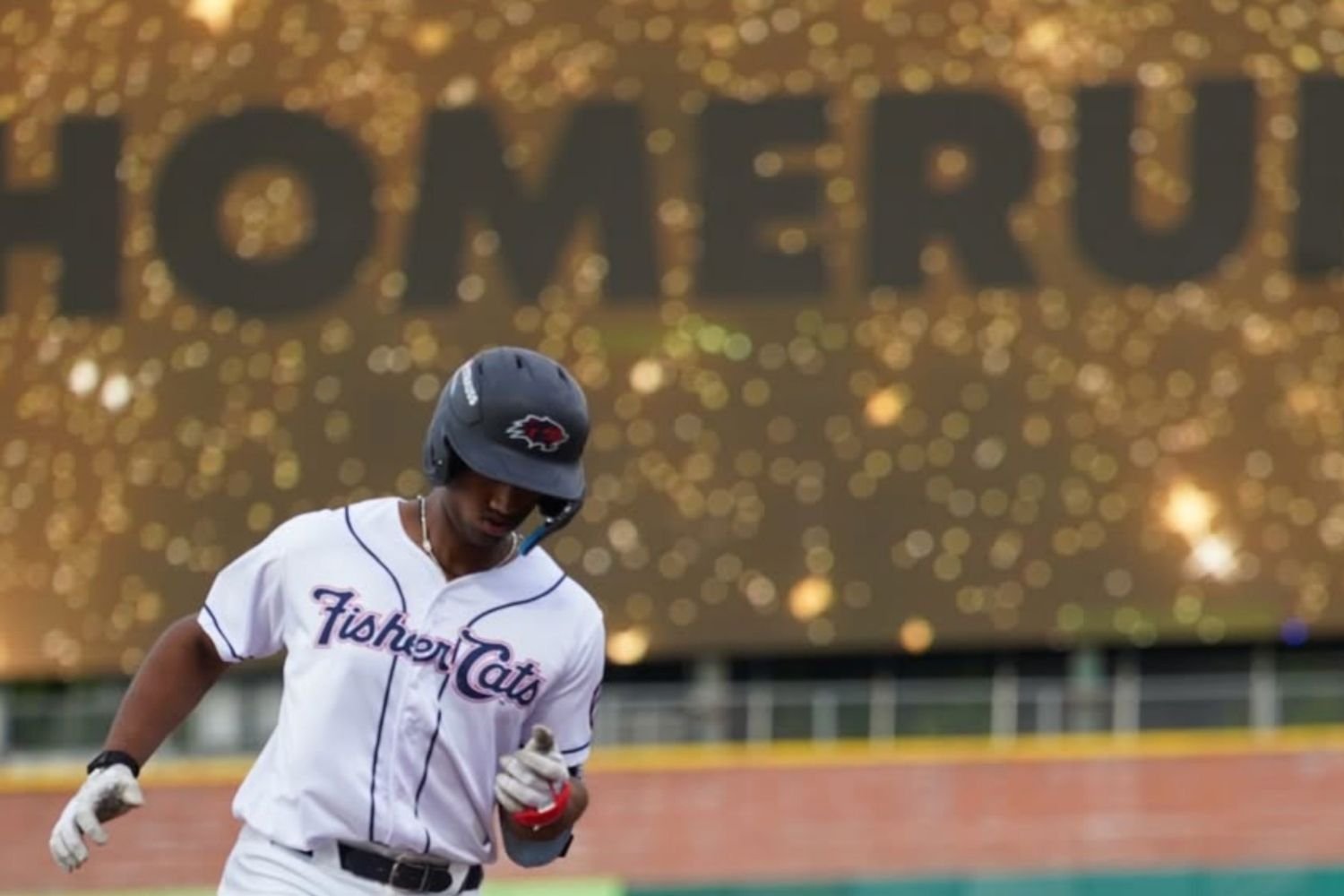 Blue Jays Affiliate Overview (July 21-22) Triple-A Buffalo Bisons Series vs Rochester Red Wings (Washington Nationals): 1-1 Season Record: 47-51 Double-A New Hampshire Fisher Cats Series vs Somerset Patriots (New York Yankees): 1-0 Season Record: 46-43 High-A Vancouver Canadians Series vs Hillsboro Hops (Arizona Diamondbacks): 1-1 Season Record: 41-51 Single-A Dunedin Blue Jays Series vs Bradenton Marauders (Pittsburgh Pirates): 2-0 Season Record: 43-47 FCL Blue Jays Week Record: 1-0 Season Record: 37-20 DSL Blue Jays Blue Week Record: 0-1 Season Record: 15-21 DSL Blue Jays Red Week Record: 1-0 Season Record: 18-17 Triple-A Buffalo Bisons Season Record: 47-51 Series vs Rochester Red Wings (Washington Nationals) July 21: On Tuesday, Buffalo opened up a new series, this one with the Rochester Red Wings. Simeon Woods Richardson had the mound and had an up-and-down start. The good came in the form of strikeouts and his ability to keep hitters from making quality contact. He only pitched three innings, but struck out five, only gave up one hit, and didn't allow a run. The bad was with his command at times. Across the three innings, he walked four, and in the at-bats, the misses were not competitive at all. While Woods Richardson was on a roller coaster, Josh Kasevich and Ismael Munguia led the offense. Charles McAdoo started the scoring for Buffalo with an RBI single that brought home Munguia in the bottom of the first inning. Later in the inning, Jay Harry continued his excellent season with an RBI single, scoring Kasevich. Carlos Mendoza added to the Bisons' lead by grounding out to first base, but Davis Schneider crossed home on the play. From there, the Buffalo bullpen imploded, yet again, highlighted by Abimelec Ortiz bringing home three runs on two doubles in the eighth and ninth innings. In all, Rochester scored six runs in the ninth, all charged to Pat Gallagher. Buffalo dropped the game 7-3, after leading 3-1 going into the final frame. July 22: It was the Max Scherzer show on Wednesday afternoon for the Bisons. Scherzer was making another rehab start and made this one count in a big way. Scherzer threw five perfect innings, no hits, no walks, no runs, and struck out seven. The start was perfect for Buffalo, as their bats were hot as well. Josh Kasevich and Jay Harry each had two-RBI doubles in the bottom of the second inning. Davis Schneider blasted a solo shot in the third on a first-pitch fastball. Then William Simoneit added to the Bisons' lead with an RBI single in the fifth. Finally, Buffalo scored two on a wild pitch in the fifth as well. The Bisons cruised to a 9-2 win, as Scherzer looks primed to be activated off of the IL before his next start. Double-A New Hampshire Season Record: 46-43 Series vs Somerset Patriots (New York Yankees) July 21: Postponed July 22: Wednesday was the first game of the series between New Hampshire and Somerset. Arjun Nimmala got things going in the bottom of the first. He doubled to left field and then scored on an Eddie Micheletti Jr. RBI single. DJ Gladney launched a home run for Somerset to tie the game in the second inning. In the third inning, it was Nimmala again, but this time he crushed an opposite-field home run. The exit velocity was 106 mph, and it went 432 feet. The next inning saw Josh Moylan homer to give the Patriots a one-run lead. Carter Cunningham tied things up in the seventh inning with his fourth Double-A home run. The eighth inning saw New Hampshire break things wide open. With the bases loaded, Jorge Burgos got all of a 1-0 pitch over the plate and crushed a grand slam to right field. New Hampshire would go on to win 7-4. High-A Vancouver Season Record: 42-50 Series vs Hillsboro Hops (Arizona Diamondbacks) July 21: The Canadians met up at Hops Ballpark with Hillsboro and were able to stave off a late-inning comeback from the opposition. A throwing error in the first inning on a pick-off attempt allowed J.R. Freethy to score the first run of the game, but the Hops responded with a two-run second inning off of Silvano Hechavarria. The game went back and forth until the seventh inning, where Jake Casey came up to the plate with two outs and hammered his third homer of the season that netted the Canadians two runs and the lead, for Casey’s fourth time on base of the game. Edward Duran quickly followed that up with a homer of his own, making it a 6-3 lead. Jack Nedrow came in the eighth inning and allowed a run-scoring double, but the Canadians had another multi-run inning in the ninth, as the Iowa Meat Truck Peyton Williams added a run with a ringing double, then Tucker Toman drove him home with his 10th homer of the season. That turned out to be just enough runs to survive the onslaught from the Hops, as they fired back with four runs against Nedrow in the ninth before Jonathan Todd shut the door for the save and the win. July 22: The Canadians once again rallied in the ninth inning in another close game against the Hops. Johnny King wasn’t his best in this start, giving up four runs, with three of them being earned. He did show some good stuff, with six strikeouts over his four innings pitched, but that put the Canadians in a hole early. Mathieu Vallee was able to get some runs across for the Canadians with a two RBI-single, but Austin Marozas couldn’t stop the bleeding as he allowed two more runs. The Canadians had the Hops on the ropes in the eighth, as they loaded the bases with no outs, but they were unable to fully capitalize, as Manuel Beltre drove in one run on an RBI single and Vallee was able to move another runner across with an RBI groundout, but the Canadians still trailed by two heading into the ninth. Gilberto Batista continues to do well as a short-inning reliever, allowing no runs in his two innings, and in the ninth inning, the Canadians showed life, with Ryan Sprock hitting a ball that bounced and hit the top of the wall, so Slade Caldwell assumed that it went over the fence, then bounced back in. However, Sprock kept on chugging and managed to get an inside-the-park homer. This must have shaken the Hops, as with two outs and runners on first and second, recently promoted Jaxson West had himself a clutch single to tie the game up. Jake Casey pinch hit for Beltre and took the lead with a single of his own, and Vallee had his fourth RBI of the night to give the Canadians the lead for good. Single-A Dunedin Season Record: 43-47 Series vs Bradenton Marauders (Pittsburgh Pirates) July 21: This was a barnburner, as the Jays and Marauders traded runs back and forth. Denis Samudio did not have his best command, walking four batters in just under three innings, and was punished in the first inning, as rehabbing old friend Spencer Horwitz was able to walk and score on Brent Iredale’s two-run single. Aldo Gaxiola was able to hit an RBI triple to get the Jays on the board. The Jays tied it up after JoJo Parker hit a double, then advanced on a balk, and after Juan Sanchez got on base with a walk, he stole second, leading to a throwing error that allowed Parker to go home. The wind got an assist as Jean Joseph’s pop-up evaded Horwitz’s glove, putting the Jays up one. T.J. Brock made his return for the Jays on rehab assignment, and although the stuff was popping, he gave up a hit to Horwitz, then was taken deep to lose the lead. He gave up two hits but decided enough was enough, striking the last two batters swinging. Sanchez answered right back with a homer of his own for his seventh of the season, and another Gaxiola extra-base hit put the Jays up by four. The Marauders were hot on the Jays’ tail, as Josbel Garcia gave up three runs in the seventh and eighth, bringing it back to a one-run game. Gaxiola could not be denied, as he had his fourth and fifth RBIs of the game to put the Jays up three, and that was just what the doctor ordered, as Lluveres Severino gave up two runs in the bottom of the ninth, narrowly escaping with a victory. July 22: This was a laugher for the Dunedin Blue Jays, as they got ahead early and really pulled away at the end of the game. Blake Purnell went six innings for a quality start, striking out four batters and allowing two runs. Although he gave up the first run of the game, the Jays quickly answered with a Jake Cook two-run double and a Blaine Bullard single, making it 3-1. Giaconino Lasaracina smoked one to center field, making it 4-1, and Bullard added to the extra-base hit fiesta with a two-RBI double in the sixth. Colby Holcombe returned on rehab assignment, but allowed a two-run homer to make it within two runs, but Raimundo De Los Santos had his second homer of the season to take a run back. JoJo Parker singled in the ninth, and after two quick outs, it looked like they were just going to head into the bottom of the ninth with a three-run lead, but the Jays just could not get out. They went single, double, single, single, walk, double, double, double, double, which ended up making for a nine-spot inning. FCL Blue Jays Season Record: 37-20 July 22: It was not a good day for the FCL Blue Jays against the FCL Tigers on Tuesday. The Blue Jays only managed one hit and surrendered 16. Seojun Moon got the start for the Blue Jays and was doing well until the third and fourth innings. He allowed a solo home run to Cris Rodriguez in the third inning and a run on a single in the fourth. He left with two men on, and the Tigers immediately got to the next pitcher, Edgar Gallegos. Gallegos allowed a three-run home run, and things kept going downhill. In the sixth inning, the Tigers got two more home runs, including one from Rodriguez again. The Blue Jays lost this one big, 13-2. DSL Blue Jays Blue Season Record: 15-21 July 21: Tuesday's game for BJB started out rough and only got worse. Tomoya Kinjo was on the mound to start the game for BJB and didn't make it out of the first inning. In fact, he didn't even record an out; he walked all three hitters he faced. Manuel Parra replaced Kinjo and gave up two runs. BJB pitching did have one bright spot: They struck out 10 White Sox batters in the seven-inning game. Unfortunately, the strikeouts were overshadowed by 14 walks, five hits, and nine runs allowed. Sebastian Casanova continued his sizzling season with two more hits, bringing his batting average up to .363 for the season. BJB scored four runs in the game, three in the third and one in the sixth. In the third, Casanova had an RBI single, then Ruben Sanchez scored on an RBI groundout by Juan Caricote, and finally Casanova crossed home on a wild pitch. In the sixth, Isay Veras singled in Casanova. It was all for not through, as BJB pitchers couldn't find the strike zone all game. BJB lost 9-4. DSL Blue Jays Red Season Record: 18-17 July 21: While BJB got a terrible game from their pitchers, it was a vastly different story for BJR on Tuesday. BJR almost pitched a full nine-inning no-hitter, getting five no-hit innings from Alieski Torres and three no-hit innings from Jose Melo. Torres drops his ERA to 0.95 for the season and looks like he might have a real shot to come stateside next year to start playing Rookie ball. Diego Arce launched his first home run of the season, while Alex Linares, Gabriel Porras, and Aneudi Severino each had two hits in the game. BJR cruised to an 11-1 win, allowing just one hit in the game. Transactions 07/22/26 Toronto Blue Jays recalled RHP CJ Van Eyk from Buffalo Bisons. 07/22/26 Toronto Blue Jays recalled LF Yohendrick Piñango from Buffalo Bisons. 07/22/26 Toronto Blue Jays optioned RHP Lazaro Estrada to Buffalo Bisons. 07/22/26 Vancouver Canadians sent RHP Colby Holcombe on a rehab assignment to Dunedin Blue Jays. 07/21/26 LHP Mason Olson assigned to New Hampshire Fisher Cats from Buffalo Bisons. 07/21/26 LHP Javen Coleman assigned to Buffalo Bisons from New Hampshire Fisher Cats. 07/21/26 Dunedin Blue Jays activated C Owen Carapellotti from the 7-day injured list. 07/21/26 New Hampshire Fisher Cats activated C Aaron Parker from the 7-day injured list. 07/21/26 New Hampshire Fisher Cats sent RHP T.J. Brock on a rehab assignment to Dunedin Blue Jays. 07/21/26 New Hampshire Fisher Cats released C Adam Hackenberg. 07/21/26 C Jacob Sharp assigned to New Hampshire Fisher Cats from Vancouver Canadians. 07/21/26 LHP Javen Coleman assigned to Buffalo Bisons from New Hampshire Fisher Cats. 07/21/26 LHP Mason Olson assigned to New Hampshire Fisher Cats from Buffalo Bisons. 07/21/26 Vancouver Canadians activated LF Alexis Hernandez from the 7-day injured list. 07/21/26 Vancouver Canadians released C Alex Stone. 07/21/26 C Jaxson West assigned to Vancouver Canadians from Dunedin Blue Jays.
 -
JoJo ParkerArjun NimmalaJohnny KingNolan PerryJuan SanchezWill BrickSean KeysGage StaniferJake BlossBlaine BullardVictor AriasCole CarlonSam ShawRicky TiedemannCarson MessinaRJ SchreckDaniel GuerraCharles McAdooDanny Thompson Jr.Jake Cook
-
Blue Jays Minor League Recap: Nimmala Homers in New Hampshire Return
Simon Li posted an article in Minor Leagues
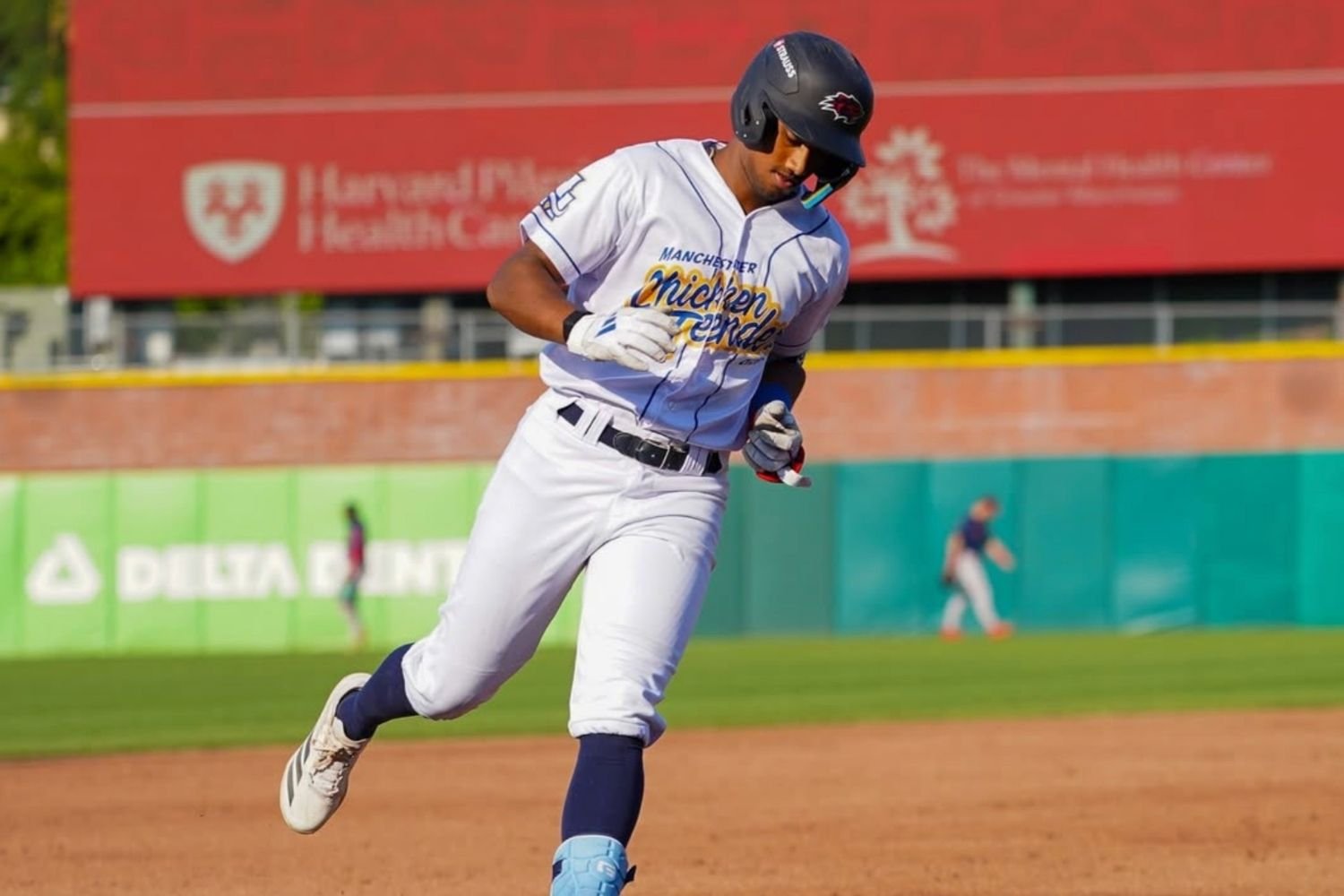 Blue Jays Affiliate Overview (July 7-8) Triple-A Buffalo Bisons Series vs Scranton Wilkes-Barre RailRiders (New York Yankees): 0-2 Season Record: 42-47 Double-A New Hampshire Fisher Cats Series vs Portland Sea Dogs (Boston Red Sox): 1-1 Season Record: 42-39 High-A Vancouver Canadians Series vs Everett AquaSox (Seattle Mariners): 1-1 Season Record: 35-48 Single-A Dunedin Blue Jays Series vs Lakeland Flying Tigers (Detroit Tigers): 0-2 Season Record: 38-44 FCL Blue Jays Week Record: 0-1 Season Record: 31-17 DSL Blue Jays Blue Week Record: 1-1 Season Record: 12-16 DSL Blue Jays Red Week Record: 1-0 Season Record: 13-13 Triple-A Buffalo Bisons Season Record: 42-47 Series vs Scranton Wilkes-Barre RailRiders (New York Yankees) July 7: Buffalo opened a new series on Tuesday, this one against the Scranton Wilkes-Barre RailRiders. It was a game that the Bisons will want to forget immediately. They used six pitchers to get through nine innings, and every one of them gave up at least one run, with five of them surrendering at least two runs each. Davis Schneider would provide all of the runs on the scoreboard for Buffalo. He drew a bases-loaded walk in the third inning, scoring Jay Harry. Then in the bottom of the eighth inning, Schneider connected on a fastball down the middle for a two-run home run. The blast came off the bat at 103.7 mph and went 426 feet to center. While the bats were relatively quiet, the RailRiders brought the fireworks; they hit six home runs, including a grand slam. Buffalo dropped this one 18-3. July 8: On Wednesday, it was Max Scherzer taking the mound for another rehab start; it went south from the very beginning. Scherzer gave up three singles in the top of the first inning, followed by a sacrifice fly and then a soul-crushing 426-foot, three-run home run. In the second inning, it was a single, stolen base, an error and another sacrifice fly that brought home the fifth run of the game for the RailRiders. For the game, Scherzer threw four innings, gave up six hits, five runs (four earned), and struck out five. CJ Van Eyk came in for Scherzer to begin the fifth and threw five scoreless innings to keep the game somewhat close. Unfortunately for Buffalo, they would get a single by Carlos Mendoza and then head into the ninth still with just that one hit. In the ninth, though, they would get on the scoreboard. Davis Schneider singled, moved to third on two passed balls, and then scored on Je'Von Ward's sacrifice fly to center. After a hot stretch last week with the bats, Buffalo falls in back-to-back games with almost no fight from the lineup at the plate. The final score was 5-1, with the Bisons losing. Double-A New Hampshire Season Record: 42-39 Series vs Portland Sea Dogs (Boston Red Sox) July 7: Postponed July 8, Game 1: In the first game of the series against the Portland Sea Dogs, Gage Stanifer was on the mound for New Hampshire. He started off well; he struck out the second batter of the game and got a double play to end the first inning. He never really had good control of his slider or splitter, so much of his time was using the fastball a lot. He hung a slider to the first batter of the second inning, who hit it well for a solo home run. In the third inning, he got behind the second batter of the inning 2-0 and left a fastball over the plate that again was hit for a solo home run. In the fourth inning, Stanifer again fell behind the first batter 2-0 and ended up leaving a fastball over the middle of the plate two pitches later; it was deposited over the fence for the third solo home run he gave up. He came out a few batters later after allowing a soft single, getting a pop-up, then walking two after the third error in the field. His day was done at 80 pitches. The fastball was again very good at times, but he needed all of his pitches to get further in the game. He went 3.1 innings, gave up four hits, three runs, allowed four walks, and struck out five again. Offensively, Nick Goodwin led off the first inning with a solo home run and was followed by Arjun Nimmala hitting a solo shot in the third inning. That was all the offense for New Hampshire who had just three hits in seven innings. New Hampshire lost this one 3-2. July 8, Game 2: In the second game of the doubleheader, the offense was much better and again led by Nick Goodwin. He went 3-for-3 in the game, with two doubles. Dub Gleed doubled in a run in the second inning and was then brought home by a two-run blast from Carter Cunningham. Eddie Micheletti Jr. added a sacrifice fly the next inning, with Patrick Winkel hitting an RBI single in the fourth along with Victor Arias bringing in a run on a groundout. New Hampshire would go on to win 6-2. High-A Vancouver Season Record: 35-48 Series vs Everett AquaSox (Seattle Mariners) July 7: Eric Snow and Sam Shaw each had three-hit nights as the two hitters have been some of the best hitters for Vancouver since joining the team this season. Snow drove in the first two runs of the game in the first inning for Vancouver, and then scored for a three-run first inning. Dylan Watts walked three batters for the fifth start in a row, but was able to limit the damage, only allowing one run in four innings. The Canadians added some power in the second inning, with Alex Stone leading off the second with a solo homer, before Shaw added two more runs with a homer of his own. Peyton Williams joined in the fun with the third homer of the inning, and the Canadians got ahead with an eight-run lead. Watts gave up his only run of the game with a homer to Luis Suisbel in the fourth, and Jack Nedrow replaced him in the fifth. Suisbel homered on him in the sixth, and then Nedrow gave up his second homer in the seventh inning, which made it a four-run game. Shaw gave an insurance run, walking with the bases loaded, which was well needed as Nedrow gave up two more runs in the eighth inning. Jonathan Todd was able to help the Canadians win after replacing Nedrow and getting the five outs needed to get out of the eighth and the ninth. July 8: It was a really close game as Holden Wilkerson and Adam Maier had a pitching duel, as both starters had a quality start, allowing a single run each. The Canadians had a chance to add more after Manuel Beltre drove in their first run in the third, but Eric Snow grounded out into a double play, which ruined the rally. Things took a turn for the worse when the bullpen replaced Wilkerson, who had his longest outing of the season, as Jay Schueler gave up five runs in the seventh inning, including a grand slam to Josh Caron. The offense was not able to give a response as the Canadians lost the second game of the series. Single-A Dunedin Blue Jays Season Record: 38-44 Series vs Lakeland Flying Tigers (Detroit Tigers) July 7: The Jays’ pitching faltered in the first game of the series against Lakeland, as the best pitcher of the evening for them was the position player Dariel Ramon, who pitched two scoreless innings in relief. The Jays were the first to strike on offense with Juan Sanchez driving in Jake Cook in the first, and despite the Tigers taking the lead in the second, the Jays were able to bounce back with an RBI groundout from Raimundo De Los Santos. Blake Purnell, Luis Victorino, and Diego Dominguez subsequently gave up 13 runs in three innings, putting Dunedin way behind, and even after Blaine Bullard’s three-RBI night with a homer and a double, there was nothing the offense could do to recover from that deficit, for a disappointing start to the series. July 8: The Tigers just seemed to have the number of Dunedin’s pitching, as although they didn’t go for double-digit runs like the previous game, no pitcher for the Jays was able to get out unscathed, as each one gave up two runs or more. Giacomo Taschin gave up three homers to start the game, and despite a Blaine Bullard RBI double in the third, the Jays were already down four to one in the fourth inning. Angel Obando gave up two runs in the sixth, and the Jays were only able to score one more run on a Will Cresswell single. Lluveres Severino gave up a two-run homer in the eighth, and the Jays lost the second game of the series despite outhitting the Tigers 13 to 11, as they left 15 men on base. FCL Blue Jays Season Record: 31-17 July 7: Tuesday saw the FCL Blue Jays and FCL Yankees face off. Colby Holcombe got the start on the mound in a rehab appearance and went two innings, only allowing a lone hit and striking out one. Seojun Moon came on in the fourth inning and had probably his worst game of the year. He allowed a home run to Wilberson De Pena, as well as a sacrifice fly and a two-run double in the inning. The Blue Jays started chipping away at the deficit, though. Enmanuel Bonilla stole home in a double steal to get the scoring started. In the sixth inning, the Blue Jays got two bases-loaded walks, a bases-loaded balk, and an RBI groundout from Andres Arias. A wild pitch in the seventh tied the game for the Blue Jays. An RBI groundout from David Guzman tied the game again in the eighth inning, before the game eventually landed in extra innings. A sacrifice fly by the Yankees would be the only run scored in the extra frame, though, as the Blue Jays lost this one 8-7. Guzman was the best hitter for the Blue Jays, going 3-5, with two runs, an RBI, and a walk. DSL Blue Jays Blue Season Record: 12-16 July 7: Jose Andrades had the mound on Tuesday for BJB in the game against the White Sox DSL team (WSX). While Andrades did run into some trouble in the second and fourth innings, he managed to escape each inning just giving up one run: an RBI double and an RBI single off the bat of Felix Lebron. Outside of those two hits, Andrades struck out seven batters in his four innings and put BJB in a good position to win the game, as they had the lead 3-2 when he exited the game. In the first inning, Fabian Gonzalez scored on a fielder's choice to give BJB the early lead. In the second, Luis Felipe tripled home Isay Veras to give BJB the lead back. A throwing error in the fourth allowed Randy Soto to score and gave BJB the lead for good. Both Caricote and Soto had RBI singles in the fifth, giving BJB some much-needed insurance runs, as they coughed one up in the seventh. BJB would win this one 5-3. July 8: Tomoya Kinjo continued to struggle in a big way on Wednesday, so much so that it is becoming worrisome whether he will put things together. Kinjo is already 23 years old and should be doing much better against 17- and 18-year-olds. Kinjo walked six and gave up three runs in his two innings of work. After the game, he has an ERA of 9.45 and a ridiculous WHIP of 2.70 in 13.1 innings for the season. He wasn't the only pitcher shuffling with his command, as BJB pitchers walked 13 in the game. You can imagine what happened with all of the walks: They would come around and score in bunches. BJB saw 11 Pirates Gold runners cross home plate in the game. The bats struggled just as much, only managing five hits, and they struck out 10 times. Juan Caricote continued to be a bright spot. He went 2-for-3 with an RBI double in the third inning. The other two runs BJB would score in the game came from a wild pitch and a balk. BJB fell 11-3. DSL Blue Jays Red Season Record: 13-13 July 7: Postponed July 8: Darwin Nuñez and Ayberson Ortega led the way with their bats on Wednesday for BJR. Both had two hits in the game. Nuñez went 2-for-3, with an RBI double in the fifth, and Ortega went 2-for-3 with a two-RBI single in the fourth inning. Alieski Torres started the game and threw three scoreless innings, keeping his ERA for the season at zero. He has been one of the better pitchers in the DSL for the Blue Jays. BJR needed a Luis Nunez sacrifice fly in the top of the sixth inning to win the game, as their bullpen coughed up a run late into the game. BJR won the game 4-3. Transactions 07/08/26 Toronto Blue Jays sent RHP Max Scherzer on a rehab assignment to Buffalo Bisons. 07/07/26 Buffalo Bisons activated C William Simoneit from the Development List. 07/07/26 Toronto Blue Jays optioned LF Yohendrick Piñango to Buffalo Bisons. 07/07/26 Toronto Blue Jays recalled RHP Chad Dallas from Buffalo Bisons. 07/07/26 Dunedin Blue Jays activated 3B Aldo Gaxiola from the 7-day injured list. 07/07/26 Sent C Owen Carapellotti on a rehab assignment to FCL Blue Jays. 07/07/26 New Hampshire Fisher Cats activated SS Arjun Nimmala from the 7-day injured list.
 -
Blue Jays Affiliate Overview (July 7-8) Triple-A Buffalo Bisons Series vs Scranton Wilkes-Barre RailRiders (New York Yankees): 0-2 Season Record: 42-47 Double-A New Hampshire Fisher Cats Series vs Portland Sea Dogs (Boston Red Sox): 1-1 Season Record: 42-39 High-A Vancouver Canadians Series vs Everett AquaSox (Seattle Mariners): 1-1 Season Record: 35-48 Single-A Dunedin Blue Jays Series vs Lakeland Flying Tigers (Detroit Tigers): 0-2 Season Record: 38-44 FCL Blue Jays Week Record: 0-1 Season Record: 31-17 DSL Blue Jays Blue Week Record: 1-1 Season Record: 12-16 DSL Blue Jays Red Week Record: 1-0 Season Record: 13-13 Triple-A Buffalo Bisons Season Record: 42-47 Series vs Scranton Wilkes-Barre RailRiders (New York Yankees) July 7: Buffalo opened a new series on Tuesday, this one against the Scranton Wilkes-Barre RailRiders. It was a game that the Bisons will want to forget immediately. They used six pitchers to get through nine innings, and every one of them gave up at least one run, with five of them surrendering at least two runs each. Davis Schneider would provide all of the runs on the scoreboard for Buffalo. He drew a bases-loaded walk in the third inning, scoring Jay Harry. Then in the bottom of the eighth inning, Schneider connected on a fastball down the middle for a two-run home run. The blast came off the bat at 103.7 mph and went 426 feet to center. While the bats were relatively quiet, the RailRiders brought the fireworks; they hit six home runs, including a grand slam. Buffalo dropped this one 18-3. July 8: On Wednesday, it was Max Scherzer taking the mound for another rehab start; it went south from the very beginning. Scherzer gave up three singles in the top of the first inning, followed by a sacrifice fly and then a soul-crushing 426-foot, three-run home run. In the second inning, it was a single, stolen base, an error and another sacrifice fly that brought home the fifth run of the game for the RailRiders. For the game, Scherzer threw four innings, gave up six hits, five runs (four earned), and struck out five. CJ Van Eyk came in for Scherzer to begin the fifth and threw five scoreless innings to keep the game somewhat close. Unfortunately for Buffalo, they would get a single by Carlos Mendoza and then head into the ninth still with just that one hit. In the ninth, though, they would get on the scoreboard. Davis Schneider singled, moved to third on two passed balls, and then scored on Je'Von Ward's sacrifice fly to center. After a hot stretch last week with the bats, Buffalo falls in back-to-back games with almost no fight from the lineup at the plate. The final score was 5-1, with the Bisons losing. Double-A New Hampshire Season Record: 42-39 Series vs Portland Sea Dogs (Boston Red Sox) July 7: Postponed July 8, Game 1: In the first game of the series against the Portland Sea Dogs, Gage Stanifer was on the mound for New Hampshire. He started off well; he struck out the second batter of the game and got a double play to end the first inning. He never really had good control of his slider or splitter, so much of his time was using the fastball a lot. He hung a slider to the first batter of the second inning, who hit it well for a solo home run. In the third inning, he got behind the second batter of the inning 2-0 and left a fastball over the plate that again was hit for a solo home run. In the fourth inning, Stanifer again fell behind the first batter 2-0 and ended up leaving a fastball over the middle of the plate two pitches later; it was deposited over the fence for the third solo home run he gave up. He came out a few batters later after allowing a soft single, getting a pop-up, then walking two after the third error in the field. His day was done at 80 pitches. The fastball was again very good at times, but he needed all of his pitches to get further in the game. He went 3.1 innings, gave up four hits, three runs, allowed four walks, and struck out five again. Offensively, Nick Goodwin led off the first inning with a solo home run and was followed by Arjun Nimmala hitting a solo shot in the third inning. That was all the offense for New Hampshire who had just three hits in seven innings. New Hampshire lost this one 3-2. July 8, Game 2: In the second game of the doubleheader, the offense was much better and again led by Nick Goodwin. He went 3-for-3 in the game, with two doubles. Dub Gleed doubled in a run in the second inning and was then brought home by a two-run blast from Carter Cunningham. Eddie Micheletti Jr. added a sacrifice fly the next inning, with Patrick Winkel hitting an RBI single in the fourth along with Victor Arias bringing in a run on a groundout. New Hampshire would go on to win 6-2. High-A Vancouver Season Record: 35-48 Series vs Everett AquaSox (Seattle Mariners) July 7: Eric Snow and Sam Shaw each had three-hit nights as the two hitters have been some of the best hitters for Vancouver since joining the team this season. Snow drove in the first two runs of the game in the first inning for Vancouver, and then scored for a three-run first inning. Dylan Watts walked three batters for the fifth start in a row, but was able to limit the damage, only allowing one run in four innings. The Canadians added some power in the second inning, with Alex Stone leading off the second with a solo homer, before Shaw added two more runs with a homer of his own. Peyton Williams joined in the fun with the third homer of the inning, and the Canadians got ahead with an eight-run lead. Watts gave up his only run of the game with a homer to Luis Suisbel in the fourth, and Jack Nedrow replaced him in the fifth. Suisbel homered on him in the sixth, and then Nedrow gave up his second homer in the seventh inning, which made it a four-run game. Shaw gave an insurance run, walking with the bases loaded, which was well needed as Nedrow gave up two more runs in the eighth inning. Jonathan Todd was able to help the Canadians win after replacing Nedrow and getting the five outs needed to get out of the eighth and the ninth. July 8: It was a really close game as Holden Wilkerson and Adam Maier had a pitching duel, as both starters had a quality start, allowing a single run each. The Canadians had a chance to add more after Manuel Beltre drove in their first run in the third, but Eric Snow grounded out into a double play, which ruined the rally. Things took a turn for the worse when the bullpen replaced Wilkerson, who had his longest outing of the season, as Jay Schueler gave up five runs in the seventh inning, including a grand slam to Josh Caron. The offense was not able to give a response as the Canadians lost the second game of the series. Single-A Dunedin Blue Jays Season Record: 38-44 Series vs Lakeland Flying Tigers (Detroit Tigers) July 7: The Jays’ pitching faltered in the first game of the series against Lakeland, as the best pitcher of the evening for them was the position player Dariel Ramon, who pitched two scoreless innings in relief. The Jays were the first to strike on offense with Juan Sanchez driving in Jake Cook in the first, and despite the Tigers taking the lead in the second, the Jays were able to bounce back with an RBI groundout from Raimundo De Los Santos. Blake Purnell, Luis Victorino, and Diego Dominguez subsequently gave up 13 runs in three innings, putting Dunedin way behind, and even after Blaine Bullard’s three-RBI night with a homer and a double, there was nothing the offense could do to recover from that deficit, for a disappointing start to the series. July 8: The Tigers just seemed to have the number of Dunedin’s pitching, as although they didn’t go for double-digit runs like the previous game, no pitcher for the Jays was able to get out unscathed, as each one gave up two runs or more. Giacomo Taschin gave up three homers to start the game, and despite a Blaine Bullard RBI double in the third, the Jays were already down four to one in the fourth inning. Angel Obando gave up two runs in the sixth, and the Jays were only able to score one more run on a Will Cresswell single. Lluveres Severino gave up a two-run homer in the eighth, and the Jays lost the second game of the series despite outhitting the Tigers 13 to 11, as they left 15 men on base. FCL Blue Jays Season Record: 31-17 July 7: Tuesday saw the FCL Blue Jays and FCL Yankees face off. Colby Holcombe got the start on the mound in a rehab appearance and went two innings, only allowing a lone hit and striking out one. Seojun Moon came on in the fourth inning and had probably his worst game of the year. He allowed a home run to Wilberson De Pena, as well as a sacrifice fly and a two-run double in the inning. The Blue Jays started chipping away at the deficit, though. Enmanuel Bonilla stole home in a double steal to get the scoring started. In the sixth inning, the Blue Jays got two bases-loaded walks, a bases-loaded balk, and an RBI groundout from Andres Arias. A wild pitch in the seventh tied the game for the Blue Jays. An RBI groundout from David Guzman tied the game again in the eighth inning, before the game eventually landed in extra innings. A sacrifice fly by the Yankees would be the only run scored in the extra frame, though, as the Blue Jays lost this one 8-7. Guzman was the best hitter for the Blue Jays, going 3-5, with two runs, an RBI, and a walk. DSL Blue Jays Blue Season Record: 12-16 July 7: Jose Andrades had the mound on Tuesday for BJB in the game against the White Sox DSL team (WSX). While Andrades did run into some trouble in the second and fourth innings, he managed to escape each inning just giving up one run: an RBI double and an RBI single off the bat of Felix Lebron. Outside of those two hits, Andrades struck out seven batters in his four innings and put BJB in a good position to win the game, as they had the lead 3-2 when he exited the game. In the first inning, Fabian Gonzalez scored on a fielder's choice to give BJB the early lead. In the second, Luis Felipe tripled home Isay Veras to give BJB the lead back. A throwing error in the fourth allowed Randy Soto to score and gave BJB the lead for good. Both Caricote and Soto had RBI singles in the fifth, giving BJB some much-needed insurance runs, as they coughed one up in the seventh. BJB would win this one 5-3. July 8: Tomoya Kinjo continued to struggle in a big way on Wednesday, so much so that it is becoming worrisome whether he will put things together. Kinjo is already 23 years old and should be doing much better against 17- and 18-year-olds. Kinjo walked six and gave up three runs in his two innings of work. After the game, he has an ERA of 9.45 and a ridiculous WHIP of 2.70 in 13.1 innings for the season. He wasn't the only pitcher shuffling with his command, as BJB pitchers walked 13 in the game. You can imagine what happened with all of the walks: They would come around and score in bunches. BJB saw 11 Pirates Gold runners cross home plate in the game. The bats struggled just as much, only managing five hits, and they struck out 10 times. Juan Caricote continued to be a bright spot. He went 2-for-3 with an RBI double in the third inning. The other two runs BJB would score in the game came from a wild pitch and a balk. BJB fell 11-3. DSL Blue Jays Red Season Record: 13-13 July 7: Postponed July 8: Darwin Nuñez and Ayberson Ortega led the way with their bats on Wednesday for BJR. Both had two hits in the game. Nuñez went 2-for-3, with an RBI double in the fifth, and Ortega went 2-for-3 with a two-RBI single in the fourth inning. Alieski Torres started the game and threw three scoreless innings, keeping his ERA for the season at zero. He has been one of the better pitchers in the DSL for the Blue Jays. BJR needed a Luis Nunez sacrifice fly in the top of the sixth inning to win the game, as their bullpen coughed up a run late into the game. BJR won the game 4-3. Transactions 07/08/26 Toronto Blue Jays sent RHP Max Scherzer on a rehab assignment to Buffalo Bisons. 07/07/26 Buffalo Bisons activated C William Simoneit from the Development List. 07/07/26 Toronto Blue Jays optioned LF Yohendrick Piñango to Buffalo Bisons. 07/07/26 Toronto Blue Jays recalled RHP Chad Dallas from Buffalo Bisons. 07/07/26 Dunedin Blue Jays activated 3B Aldo Gaxiola from the 7-day injured list. 07/07/26 Sent C Owen Carapellotti on a rehab assignment to FCL Blue Jays. 07/07/26 New Hampshire Fisher Cats activated SS Arjun Nimmala from the 7-day injured list. View full article
-
 Blue Jays Affiliate Overview (June 30 - July 1) Triple-A Buffalo Bisons Series vs St. Paul Saints (Minnesota Twins): 1-1 Season Record: 40-43 Double-A New Hampshire Fisher Cats Series vs Reading Fightin Phils (Philadelphia Phillies): 1-1 Season Record: 38-35 High-A Vancouver Canadians Series vs Eugene Emeralds (San Francisco Giants): 1-1 Season Record: 32-45 Single-A Dunedin Blue Jays Series vs Jupiter Hammerheads (Miami Marlins): 2-0 Season Record: 35-41 FCL Blue Jays Week Record: 1-0 Season Record: 29-13 DSL Blue Jays Blue Week Record: 0-1 Season Record: 9-13 DSL Blue Jays Red Week Record: 1-1 Season Record: 9-13 Triple-A Buffalo Bisons Season Record: 40-43 Series vs St. Paul Saints (Minnesota Twins) June 30: The end of June and beginning of July brought with it a new series for the Buffalo Bisons, this one against the St. Paul Saints. Jay Harry and Josh Kasevich stayed hot for Buffalo. While Harry had a two-hit, two-run, two-RBI game out of the leadoff spot in the lineup, Kasevich provided the power with his third home run of the season. Harry had a two-RBI single in the third inning, with Willie MacIver adding an RBI single of his own as well. Davis Schneider continued to work his way back towards the major leagues; he had an RBI double to left in the fifth inning, then scored on a single by Kasevich. Kasevich's home run came in the eighth, a solo shot to left. While the offense was clicking, the pitching was abysmal, well mostly just one pitcher. Jake Bloss started the game, and after the first inning, he probably needed some therapy to erase the trauma he brought on himself. He gave up two home runs in the bottom of the first inning, including a soul-crushing grand slam to Cody Morissette. In the third, he gave up another solo home run, and in the fourth it was an RBI double and a two-run home run. All told, he gave up 11 runs in just four innings of work, and Buffalo never stood a chance to come back. They would lose 12-6. July 1: Wednesday's game for Buffalo had a much better performance from the pitchers than Tuesday's game did. Chad Dallas had the mound for Buffalo, and he threw a really good game. He struck out just four, but gave up only one run across his five innings of work. He would turn it over to the bullpen, and they nearly matched him, combining to throw four innings and also gave up just one run. Brendon Little looked the best of the bullpen arms, as he threw 1.1 innings and struck out three. With the pitching keeping Buffalo in the game, they jumped out to an early lead, 2-0 in the first inning, thanks to an RBI groundout by Jay Harry and a sacrifice fly from Davis Schneider. That was all of the scoring in the game for Buffalo until the ninth inning. With the game tied up at two, Carlos Mendoza played hero and smoked a 2-2 changeup over the right field wall for what would be the game-winning home run. Buffalo won a close game, 3-2. Double-A New Hampshire Season Record: 38-35 Series vs Reading Fightin Phils (Philadelphia Phillies) June 30: Nolan Perry was promoted to New Hampshire and got the start for the Fisher Cats on Tuesday in the first game of the week against the Reading Fightin Phils. Aaron Parker started the scoring with a first-inning home run for New Hampshire, then Perry took over on the mound. He went three innings, struck out seven, allowed just one hit and walked two batters. He didn't allow a run, but the two walks in the first and double in the second saw his pitch count get high. He threw 59 pitches in the three innings, and his command hasn't returned to the top-end mark we were seeing before his brief pause in the season. It was much better in this game, though. Cade Doughty homered, then later in the game Nick Goodwin doubled in a run, along with Hedbert Perez doing the same in the ninth. Unfortunately, Reading hit four home runs in the seventh and eighth innings to take a commanding lead. New Hampshire lost this one 9-6. July 1: In the Wednesday matchup between New Hampshire and Reading, Gage Stanifer was on the mound. It was a short outing for Stanifer on the hot day (felt close to 110° F). He pitched just two innings, gave up five hits, three runs, but didn't walk anyone and struck out five. One run scored due to a defensive gaffe and the other two from two doubles. His slider was great, and the fastball was pretty solid again. Definite signs of improvement still, despite the short outing. Offensively, Cutter Coffey started the scoring with a two-run triple in the second inning, which was followed by two runs scoring on an Aaron Parker double and Eddie Micheletti Jr. single in the third inning. Nick Goodwin and Parker both homered in the fourth, followed by an RBI single from Goodwin in the sixth and another home run by Parker. In the ninth, Jackson Hornung singled home the eleventh run of the game for New Hampshire, who would hold on to win a crazy game in the hot weather, 11-10. High-A Vancouver Season Record: 32-45 Series vs Eugene Emeralds (San Francisco Giants) June 30: Johnny King did not have his best stuff today against the Emeralds, as he walked five batters and only struck out three in just over four innings of work. He allowed two runs in the third, one in the fourth, and after allowing a hit in the fifth, Jack Eshleman replaced him, who allowed a homer, making it five to nothing for the Emeralds. The Canadians had the bases loaded in the sixth inning, and Peyton Williams came up to the dish but only got a groundout, which allowed one run to score, but the inning ended shortly after. They had another shot in the seventh, and a smart pinch-hit substitution swapping in Tucker Toman for Manuel Beltre led to an RBI single. J.R. Freethy came up right after him, and brought the game within one with a massive two-run double. Eshleman was great after allowing the homer, and went three innings more with three strikeouts, only allowing one more hit. Reece Wissinger replaced him and kept the score close, and with the Canadians trailing by one, down to their final out with the bases loaded, just like it was in the sixth inning. Williams delivered this time with a walk-off two-run single. July 1: Vancouver got off to an early lead on Canada Day as J.R. Freethy was able to score on a passed ball in the first, and Edward Duran then drove in two runners in the third inning with his second double of the season. Dylan Watts’ command once again failed him in his third start in Vancouver, as he walked six batters after walking five in his last start. He gave up all four of his earned runs in the fifth inning after being fine in the first four, giving up two walks and two singles. Gilberto Batista replaced him, and all hell broke loose, as he gave up eight earned runs and only got one out and had to be replaced by Jay Schueler to get out of the inning. The Canadians didn’t give up, however, as Freethy scored his third run of the game and Eric Snow scored another to claw back a couple of runs. Peyton Williams and Sam Shaw added two more runs in the seventh with a couple of RBI singles, and in the eighth inning the lead was cut to just three as Freethy scored his fourth run of the game. However, the fifth inning was simply too disastrous, as the Canadians fell on Canada Day 12-1. Single-A Dunedin Season Record: 35-41 Series vs Jupiter Hammerheads (Miami Marlins) June 30: JoJo Parker continued to do damage, and in the first inning he drove in the first run of the game with an RBI double to knock in Blaine Bullard. Denis Samudio was the starter for Dunedin, and he allowed just one run in four innings of work, walking three and striking out the same amount, with five whiffs on the night. It was a team offensive effort for the Jays, as eight of the nine hitters had themselves a hit, and the team combined for nine walks as well. They took advantage of some shaky defense and a wild pitch to score four runs in the first two innings, and in the seventh added on three insurance runs for a solid 7-1 victory, as Luis Fonseca and Josbel Garcia pitched five innings of two-hit baseball in relief. July 1: There was a bit of déjà vu, as the Blue Jays ended up with the exact same score as the previous game, with another 7-1 victory, this time with a great start from Blake Purnell. Adam Hackenberg was the designated hitter for Dunedin, and he definitely hit, as he went 3-for-4, driving in the first run of the game in the first inning. Purnell gave up his only run of the game on a homer in the third, which evened the game up, but he pitched five strong innings other than that blemish. Will Cresswell took the lead for the Jays, driving in two runs in the fourth with a two-RBI single. Austin Marozas returned to Dunedin after rehabbing in the Florida Complex League and pitched 2.1 no-hit innings with four strikeouts, and Lluveres Severino added three more strikeouts for four straight scoreless innings in relief. The Jays got a few insurance runs as well in the eighth, as Raimundo De Los Santos and Jake Cook both had some ribbies for a 7-1 victory for Dunedin. FCL Blue Jays Season Record: 29-14 June 30: It was a wild one for the FCL Blue Jays against the FCL Phillies on Tuesday night. Seojun Moon got things going on the mound, where he completed four innings again, striking out three, not allowing a hit, but giving up a run on three walks. He did strike out Tommy Pham. Offensively, the Blue Jays had an 8-1 lead in the fifth inning. They were led by a rehabbing Arjun Nimmala, who had three balls hit over 100 mph on the day. Angel Guzman was great again as well, going 2-for-3, with a 106 MPH double to lead off the game, and he added three walks to reach base five times. The big hit came from Pascual Archila, who hit his sixth home run of the year. The runs scored on two bases-loaded walks, a bases-loaded hit-by-pitch, an error, two sacrifice flies, a wild pitch, and the home run. Things flipped though in the sixth inning, when the Phillies scored 10 runs in the next four frames. The Blue Jays scored on a balk, but lost this one in the end 11-9. DSL Blue Jays Blue Season Record: 9-13 June 30: On Tuesday, BJB took on the Chicago White Sox DSL team, and it would be a battle. BJB got on the scoreboard first, with a wild pitch scoring Cristopher Polanco in the top of the first inning. Down 2-1 in the third, BJB had a big scoring inning to take the lead back. Sebastian Casanova had an RBI single, Juan Caricote added two runs on his single, and Michael Mesa knocked in one with a sacrifice fly. Sebastian Romero and Carlos Vielma of the White Sox would each homer in the third and fourth, giving them the lead back at 7-5. In the sixth, Polanco tried to help BJB mount a comeback with a sacrifice fly to cut the White Sox lead to one, but that would be as close as BJB would get. BJB lost 7-6. DSL Blue Jays Red Season Record: 9-13 June 30: On Tuesday, BJR faced off against the Colorado Rockies DSL team, and the game did not feature many runs scored. Elaineiker Coronado had three of BJR's seven hits, two were doubles and one was a single. One of Coronado's doubles came in the sixth, and it scored Alex Linares. On the mound for BJR was Franiel Severino, and he continued his stellar first season in professional baseball. He threw four scoreless innings and struck out two. Unfortunately for BJR, they gave up an unearned run in the sixth, and the game would head into extra innings. In the extra frames, the Rockies scored their ghost runner, while BJR did not. They would lose 2-1 in 10 innings. July 1: BJR played a game against the New York Mets Orange team on Wednesday, one of two games that would be played down on the island. BJR used two big hits in the third inning to take an early lead; Gabriel Porras doubled home Diego Arce and Jose Gori, then Darwin Núñez hit a three-run home run to left field. The home run was the first of his season and the first of his career. BJR would add on in the fifth, getting a bases-loaded walk from Arce. They scored another run in the sixth on a groundout by Nuñez. On the mound, Alieski Torres paced the pitches, throwing three innings, striking out four, and not allowing a hit or a run. His ERA for the season still sits at zero. The 18-year-old might be someone to watch if he comes stateside next year. BJR won pretty easily, 7-3. Transactions 06/30/26 Buffalo Bisons activated RHP Lazaro Estrada. 06/30/26 Buffalo Bisons transferred 2B Carlos Mendoza to the Development List. 06/30/26 Buffalo Bisons activated DH Eloy Jiménez from the 7-day injured list. 06/30/26 Buffalo Bisons transferred C William Simoneit to the Development List. 06/30/26 Buffalo Bisons activated LF Ismael Munguia from the 7-day injured list. 06/30/26 Buffalo Bisons activated LF Davis Schneider. 06/30/26 IF Darwin Nuñez assigned to DSL Blue Jays Red from DSL Blue Jays Blue. 06/30/26 RHP Silvano Hechavarria assigned to Vancouver Canadians from Dunedin Blue Jays. 06/30/26 RHP Nolan Perry assigned to New Hampshire Fisher Cats from Vancouver Canadians. 07/01/26 Buffalo Bisons activated 2B Carlos Mendoza from the Development List. 07/01/26 Buffalo Bisons placed RHP Matt Bowman on the temporarily inactive list. 07/01/26 Toronto Blue Jays sent RHP Simeon Woods Richardson outright to Buffalo Bisons. 07/01/26 Toronto Blue Jays recalled LF Jonatan Clase from Buffalo Bisons. 07/01/26 New Hampshire Fisher Cats sent SS Arjun Nimmala on a rehab assignment to Dunedin Blue Jays. 07/01/26 New Hampshire Fisher Cats sent RHP Austin Marozas on a rehab assignment to Dunedin Blue Jays.
 -
Blue Jays Affiliate Overview (June 30 - July 1) Triple-A Buffalo Bisons Series vs St. Paul Saints (Minnesota Twins): 1-1 Season Record: 40-43 Double-A New Hampshire Fisher Cats Series vs Reading Fightin Phils (Philadelphia Phillies): 1-1 Season Record: 38-35 High-A Vancouver Canadians Series vs Eugene Emeralds (San Francisco Giants): 1-1 Season Record: 32-45 Single-A Dunedin Blue Jays Series vs Jupiter Hammerheads (Miami Marlins): 2-0 Season Record: 35-41 FCL Blue Jays Week Record: 1-0 Season Record: 29-13 DSL Blue Jays Blue Week Record: 0-1 Season Record: 9-13 DSL Blue Jays Red Week Record: 1-1 Season Record: 9-13 Triple-A Buffalo Bisons Season Record: 40-43 Series vs St. Paul Saints (Minnesota Twins) June 30: The end of June and beginning of July brought with it a new series for the Buffalo Bisons, this one against the St. Paul Saints. Jay Harry and Josh Kasevich stayed hot for Buffalo. While Harry had a two-hit, two-run, two-RBI game out of the leadoff spot in the lineup, Kasevich provided the power with his third home run of the season. Harry had a two-RBI single in the third inning, with Willie MacIver adding an RBI single of his own as well. Davis Schneider continued to work his way back towards the major leagues; he had an RBI double to left in the fifth inning, then scored on a single by Kasevich. Kasevich's home run came in the eighth, a solo shot to left. While the offense was clicking, the pitching was abysmal, well mostly just one pitcher. Jake Bloss started the game, and after the first inning, he probably needed some therapy to erase the trauma he brought on himself. He gave up two home runs in the bottom of the first inning, including a soul-crushing grand slam to Cody Morissette. In the third, he gave up another solo home run, and in the fourth it was an RBI double and a two-run home run. All told, he gave up 11 runs in just four innings of work, and Buffalo never stood a chance to come back. They would lose 12-6. July 1: Wednesday's game for Buffalo had a much better performance from the pitchers than Tuesday's game did. Chad Dallas had the mound for Buffalo, and he threw a really good game. He struck out just four, but gave up only one run across his five innings of work. He would turn it over to the bullpen, and they nearly matched him, combining to throw four innings and also gave up just one run. Brendon Little looked the best of the bullpen arms, as he threw 1.1 innings and struck out three. With the pitching keeping Buffalo in the game, they jumped out to an early lead, 2-0 in the first inning, thanks to an RBI groundout by Jay Harry and a sacrifice fly from Davis Schneider. That was all of the scoring in the game for Buffalo until the ninth inning. With the game tied up at two, Carlos Mendoza played hero and smoked a 2-2 changeup over the right field wall for what would be the game-winning home run. Buffalo won a close game, 3-2. Double-A New Hampshire Season Record: 38-35 Series vs Reading Fightin Phils (Philadelphia Phillies) June 30: Nolan Perry was promoted to New Hampshire and got the start for the Fisher Cats on Tuesday in the first game of the week against the Reading Fightin Phils. Aaron Parker started the scoring with a first-inning home run for New Hampshire, then Perry took over on the mound. He went three innings, struck out seven, allowed just one hit and walked two batters. He didn't allow a run, but the two walks in the first and double in the second saw his pitch count get high. He threw 59 pitches in the three innings, and his command hasn't returned to the top-end mark we were seeing before his brief pause in the season. It was much better in this game, though. Cade Doughty homered, then later in the game Nick Goodwin doubled in a run, along with Hedbert Perez doing the same in the ninth. Unfortunately, Reading hit four home runs in the seventh and eighth innings to take a commanding lead. New Hampshire lost this one 9-6. July 1: In the Wednesday matchup between New Hampshire and Reading, Gage Stanifer was on the mound. It was a short outing for Stanifer on the hot day (felt close to 110° F). He pitched just two innings, gave up five hits, three runs, but didn't walk anyone and struck out five. One run scored due to a defensive gaffe and the other two from two doubles. His slider was great, and the fastball was pretty solid again. Definite signs of improvement still, despite the short outing. Offensively, Cutter Coffey started the scoring with a two-run triple in the second inning, which was followed by two runs scoring on an Aaron Parker double and Eddie Micheletti Jr. single in the third inning. Nick Goodwin and Parker both homered in the fourth, followed by an RBI single from Goodwin in the sixth and another home run by Parker. In the ninth, Jackson Hornung singled home the eleventh run of the game for New Hampshire, who would hold on to win a crazy game in the hot weather, 11-10. High-A Vancouver Season Record: 32-45 Series vs Eugene Emeralds (San Francisco Giants) June 30: Johnny King did not have his best stuff today against the Emeralds, as he walked five batters and only struck out three in just over four innings of work. He allowed two runs in the third, one in the fourth, and after allowing a hit in the fifth, Jack Eshleman replaced him, who allowed a homer, making it five to nothing for the Emeralds. The Canadians had the bases loaded in the sixth inning, and Peyton Williams came up to the dish but only got a groundout, which allowed one run to score, but the inning ended shortly after. They had another shot in the seventh, and a smart pinch-hit substitution swapping in Tucker Toman for Manuel Beltre led to an RBI single. J.R. Freethy came up right after him, and brought the game within one with a massive two-run double. Eshleman was great after allowing the homer, and went three innings more with three strikeouts, only allowing one more hit. Reece Wissinger replaced him and kept the score close, and with the Canadians trailing by one, down to their final out with the bases loaded, just like it was in the sixth inning. Williams delivered this time with a walk-off two-run single. July 1: Vancouver got off to an early lead on Canada Day as J.R. Freethy was able to score on a passed ball in the first, and Edward Duran then drove in two runners in the third inning with his second double of the season. Dylan Watts’ command once again failed him in his third start in Vancouver, as he walked six batters after walking five in his last start. He gave up all four of his earned runs in the fifth inning after being fine in the first four, giving up two walks and two singles. Gilberto Batista replaced him, and all hell broke loose, as he gave up eight earned runs and only got one out and had to be replaced by Jay Schueler to get out of the inning. The Canadians didn’t give up, however, as Freethy scored his third run of the game and Eric Snow scored another to claw back a couple of runs. Peyton Williams and Sam Shaw added two more runs in the seventh with a couple of RBI singles, and in the eighth inning the lead was cut to just three as Freethy scored his fourth run of the game. However, the fifth inning was simply too disastrous, as the Canadians fell on Canada Day 12-1. Single-A Dunedin Season Record: 35-41 Series vs Jupiter Hammerheads (Miami Marlins) June 30: JoJo Parker continued to do damage, and in the first inning he drove in the first run of the game with an RBI double to knock in Blaine Bullard. Denis Samudio was the starter for Dunedin, and he allowed just one run in four innings of work, walking three and striking out the same amount, with five whiffs on the night. It was a team offensive effort for the Jays, as eight of the nine hitters had themselves a hit, and the team combined for nine walks as well. They took advantage of some shaky defense and a wild pitch to score four runs in the first two innings, and in the seventh added on three insurance runs for a solid 7-1 victory, as Luis Fonseca and Josbel Garcia pitched five innings of two-hit baseball in relief. July 1: There was a bit of déjà vu, as the Blue Jays ended up with the exact same score as the previous game, with another 7-1 victory, this time with a great start from Blake Purnell. Adam Hackenberg was the designated hitter for Dunedin, and he definitely hit, as he went 3-for-4, driving in the first run of the game in the first inning. Purnell gave up his only run of the game on a homer in the third, which evened the game up, but he pitched five strong innings other than that blemish. Will Cresswell took the lead for the Jays, driving in two runs in the fourth with a two-RBI single. Austin Marozas returned to Dunedin after rehabbing in the Florida Complex League and pitched 2.1 no-hit innings with four strikeouts, and Lluveres Severino added three more strikeouts for four straight scoreless innings in relief. The Jays got a few insurance runs as well in the eighth, as Raimundo De Los Santos and Jake Cook both had some ribbies for a 7-1 victory for Dunedin. FCL Blue Jays Season Record: 29-14 June 30: It was a wild one for the FCL Blue Jays against the FCL Phillies on Tuesday night. Seojun Moon got things going on the mound, where he completed four innings again, striking out three, not allowing a hit, but giving up a run on three walks. He did strike out Tommy Pham. Offensively, the Blue Jays had an 8-1 lead in the fifth inning. They were led by a rehabbing Arjun Nimmala, who had three balls hit over 100 mph on the day. Angel Guzman was great again as well, going 2-for-3, with a 106 MPH double to lead off the game, and he added three walks to reach base five times. The big hit came from Pascual Archila, who hit his sixth home run of the year. The runs scored on two bases-loaded walks, a bases-loaded hit-by-pitch, an error, two sacrifice flies, a wild pitch, and the home run. Things flipped though in the sixth inning, when the Phillies scored 10 runs in the next four frames. The Blue Jays scored on a balk, but lost this one in the end 11-9. DSL Blue Jays Blue Season Record: 9-13 June 30: On Tuesday, BJB took on the Chicago White Sox DSL team, and it would be a battle. BJB got on the scoreboard first, with a wild pitch scoring Cristopher Polanco in the top of the first inning. Down 2-1 in the third, BJB had a big scoring inning to take the lead back. Sebastian Casanova had an RBI single, Juan Caricote added two runs on his single, and Michael Mesa knocked in one with a sacrifice fly. Sebastian Romero and Carlos Vielma of the White Sox would each homer in the third and fourth, giving them the lead back at 7-5. In the sixth, Polanco tried to help BJB mount a comeback with a sacrifice fly to cut the White Sox lead to one, but that would be as close as BJB would get. BJB lost 7-6. DSL Blue Jays Red Season Record: 9-13 June 30: On Tuesday, BJR faced off against the Colorado Rockies DSL team, and the game did not feature many runs scored. Elaineiker Coronado had three of BJR's seven hits, two were doubles and one was a single. One of Coronado's doubles came in the sixth, and it scored Alex Linares. On the mound for BJR was Franiel Severino, and he continued his stellar first season in professional baseball. He threw four scoreless innings and struck out two. Unfortunately for BJR, they gave up an unearned run in the sixth, and the game would head into extra innings. In the extra frames, the Rockies scored their ghost runner, while BJR did not. They would lose 2-1 in 10 innings. July 1: BJR played a game against the New York Mets Orange team on Wednesday, one of two games that would be played down on the island. BJR used two big hits in the third inning to take an early lead; Gabriel Porras doubled home Diego Arce and Jose Gori, then Darwin Núñez hit a three-run home run to left field. The home run was the first of his season and the first of his career. BJR would add on in the fifth, getting a bases-loaded walk from Arce. They scored another run in the sixth on a groundout by Nuñez. On the mound, Alieski Torres paced the pitches, throwing three innings, striking out four, and not allowing a hit or a run. His ERA for the season still sits at zero. The 18-year-old might be someone to watch if he comes stateside next year. BJR won pretty easily, 7-3. Transactions 06/30/26 Buffalo Bisons activated RHP Lazaro Estrada. 06/30/26 Buffalo Bisons transferred 2B Carlos Mendoza to the Development List. 06/30/26 Buffalo Bisons activated DH Eloy Jiménez from the 7-day injured list. 06/30/26 Buffalo Bisons transferred C William Simoneit to the Development List. 06/30/26 Buffalo Bisons activated LF Ismael Munguia from the 7-day injured list. 06/30/26 Buffalo Bisons activated LF Davis Schneider. 06/30/26 IF Darwin Nuñez assigned to DSL Blue Jays Red from DSL Blue Jays Blue. 06/30/26 RHP Silvano Hechavarria assigned to Vancouver Canadians from Dunedin Blue Jays. 06/30/26 RHP Nolan Perry assigned to New Hampshire Fisher Cats from Vancouver Canadians. 07/01/26 Buffalo Bisons activated 2B Carlos Mendoza from the Development List. 07/01/26 Buffalo Bisons placed RHP Matt Bowman on the temporarily inactive list. 07/01/26 Toronto Blue Jays sent RHP Simeon Woods Richardson outright to Buffalo Bisons. 07/01/26 Toronto Blue Jays recalled LF Jonatan Clase from Buffalo Bisons. 07/01/26 New Hampshire Fisher Cats sent SS Arjun Nimmala on a rehab assignment to Dunedin Blue Jays. 07/01/26 New Hampshire Fisher Cats sent RHP Austin Marozas on a rehab assignment to Dunedin Blue Jays. View full article
-
Toronto Blue Jays Minor League Hitters of the Month - June 2026
Simon Li posted an article in Minor Leagues
.jpg.4fd6e6ac2256cd953e0ec6dfeca315a2.jpg) The summer months have now arrived, and so have some of these Blue Jays prospects. Although the power numbers might be slightly inflated by potential reduced drag on the baseballs, these players have taken big advantage of that and broken out. Honourable Mentions Sam Shaw - Dunedin, Vancouver - 18 G, .211/.438/.474, 152 wRC+, 28.7 BB%, 17.5 K%, 12 H, 1 2B, 1 3B, 4 HR Shaw was put on the injured list near the end of last season due to some circulation issues, and that persisted into the beginning of the season. Shaw returned on a rehab assignment in Dunedin, then hit the ground running as he was promoted to Vancouver. His production has come from mostly his near-30% walk rate rather than strong power production or a high batting average, but it’s very nice to see him return with such discipline. Eric Snow - Dunedin, Vancouver - 20 G, .338/.409/.538, 151 wRC+, 11.8 BB%, 9.7 K%, 27 H, 4 2B, 4 HR Snow wasn’t known as much for the bat after getting drafted out of Auburn, with his glove being his main selling point. He made a lot of noise with his bat in June, however, as the infielder earned a promotion to Vancouver and started hitting even more than in the lower levels of the Florida State League, reducing his strikeout rate to just 6.1% and hitting for more power. 4. JoJo Parker - Dunedin 21 G, .297/.430/.662, 174 wRC+, 19.4 BB%, 20.4 BB%, 22 H, 5 2B, 2 3B, 6 HR Toronto’s 2025 first-round pick’s results didn’t match his peripherals in the first couple of months of the season, but the bat has come around with a lot of authority. JoJo Parker hit six homers in June while maintaining his excellent chase and walk rates, leading to an incredible month. He’ll be knocking on the door to Vancouver sooner than later if he continues to keep this performance up. He was making a lot of contact on pitches he swung at, and when he did, he was able to barrel the ball or pull it in the air. Parker was just named as a representative for the Blue Jays in the Futures Game as well. 3. Jay Harry - New Hampshire, Buffalo 24 G, .354/.407/.626, 167 wRC+, 6.5 BB%, 18.5 K%, 24 H, 10 2B, 1 3B, 5 HR I already spoke about Jay Harry in a recent article I wrote, but the utility man has been one of the biggest surprises in the Jays’ farm system. From a non-prospect to knocking on the door to the majors with some of the hottest hitting that I’ve seen, it’s been an incredible story for the young man. He’ll need to reduce his chase tendencies, but his aggressive approach has worked for him in the past month. 2. Tucker Toman - Vancouver 21 G, .338/.457/.716, 204 wRC+, 13.0 BB%, 22.8 K%, 204 wRC+, 25 H, 7 2B, 7 HR Tucker Toman was the second subject of the article I wrote alongside Harry, but the 2022 second-round compensation pick mashed in the month of June, with seven homers, seven doubles, and a solid BB-to-K ratio. After dropping switch-hitting, Toman may actually be an impactful player with the bat, and with his increasing defensive versatility, he now has a pathway to success for the future. Really nice to see a once-struggling prospect become one of the hottest in the system. 1. Sean Keys - New Hampshire, Buffalo 21 G, .301/.427/.781, 199 wRC+, 14.6 BB%, 21.3 K%, 22 H, 6 2B, 1 3B, 9 HR Sean Keys’ numbers weren’t spectacular in 2025, although he set a Vancouver Canadians record with 19 homers in a season, but his underlying metrics were a lot better than his results. He was chosen as a breakout pick by many pundits, and that proved to be prescient, as the Bucknell University alum has not only surpassed the homer total he set last season, but he’s earned a promotion to the major leagues. Keys could just not stop homering. With an organization-leading nine homers on the month, he slugged just over .780, with the hard-hit numbers and exit velocities to match. It has come with a slightly increased chase rate, but if he’s continuing to mash like this, it’s a great trade-off for Keys to make. Hopefully, he can inject some power into the major league lineup.
The summer months have now arrived, and so have some of these Blue Jays prospects. Although the power numbers might be slightly inflated by potential reduced drag on the baseballs, these players have taken big advantage of that and broken out. Honourable Mentions Sam Shaw - Dunedin, Vancouver - 18 G, .211/.438/.474, 152 wRC+, 28.7 BB%, 17.5 K%, 12 H, 1 2B, 1 3B, 4 HR Shaw was put on the injured list near the end of last season due to some circulation issues, and that persisted into the beginning of the season. Shaw returned on a rehab assignment in Dunedin, then hit the ground running as he was promoted to Vancouver. His production has come from mostly his near-30% walk rate rather than strong power production or a high batting average, but it’s very nice to see him return with such discipline. Eric Snow - Dunedin, Vancouver - 20 G, .338/.409/.538, 151 wRC+, 11.8 BB%, 9.7 K%, 27 H, 4 2B, 4 HR Snow wasn’t known as much for the bat after getting drafted out of Auburn, with his glove being his main selling point. He made a lot of noise with his bat in June, however, as the infielder earned a promotion to Vancouver and started hitting even more than in the lower levels of the Florida State League, reducing his strikeout rate to just 6.1% and hitting for more power. 4. JoJo Parker - Dunedin 21 G, .297/.430/.662, 174 wRC+, 19.4 BB%, 20.4 BB%, 22 H, 5 2B, 2 3B, 6 HR Toronto’s 2025 first-round pick’s results didn’t match his peripherals in the first couple of months of the season, but the bat has come around with a lot of authority. JoJo Parker hit six homers in June while maintaining his excellent chase and walk rates, leading to an incredible month. He’ll be knocking on the door to Vancouver sooner than later if he continues to keep this performance up. He was making a lot of contact on pitches he swung at, and when he did, he was able to barrel the ball or pull it in the air. Parker was just named as a representative for the Blue Jays in the Futures Game as well. 3. Jay Harry - New Hampshire, Buffalo 24 G, .354/.407/.626, 167 wRC+, 6.5 BB%, 18.5 K%, 24 H, 10 2B, 1 3B, 5 HR I already spoke about Jay Harry in a recent article I wrote, but the utility man has been one of the biggest surprises in the Jays’ farm system. From a non-prospect to knocking on the door to the majors with some of the hottest hitting that I’ve seen, it’s been an incredible story for the young man. He’ll need to reduce his chase tendencies, but his aggressive approach has worked for him in the past month. 2. Tucker Toman - Vancouver 21 G, .338/.457/.716, 204 wRC+, 13.0 BB%, 22.8 K%, 204 wRC+, 25 H, 7 2B, 7 HR Tucker Toman was the second subject of the article I wrote alongside Harry, but the 2022 second-round compensation pick mashed in the month of June, with seven homers, seven doubles, and a solid BB-to-K ratio. After dropping switch-hitting, Toman may actually be an impactful player with the bat, and with his increasing defensive versatility, he now has a pathway to success for the future. Really nice to see a once-struggling prospect become one of the hottest in the system. 1. Sean Keys - New Hampshire, Buffalo 21 G, .301/.427/.781, 199 wRC+, 14.6 BB%, 21.3 K%, 22 H, 6 2B, 1 3B, 9 HR Sean Keys’ numbers weren’t spectacular in 2025, although he set a Vancouver Canadians record with 19 homers in a season, but his underlying metrics were a lot better than his results. He was chosen as a breakout pick by many pundits, and that proved to be prescient, as the Bucknell University alum has not only surpassed the homer total he set last season, but he’s earned a promotion to the major leagues. Keys could just not stop homering. With an organization-leading nine homers on the month, he slugged just over .780, with the hard-hit numbers and exit velocities to match. It has come with a slightly increased chase rate, but if he’s continuing to mash like this, it’s a great trade-off for Keys to make. Hopefully, he can inject some power into the major league lineup.
.jpg.4fd6e6ac2256cd953e0ec6dfeca315a2.jpg)