


Simon Li
-
Posts
269 -
Joined
-
Last visited
Content Type
Profiles
Toronto Blue Jays Videos
2026 Toronto Blue Jays Top Prospects Ranking
Toronto Blue Jays Free Agent & Trade Rumors, Notes, & Tidbits
Guides & Resources
2025 Toronto Blue Jays Draft Pick Tracker
News
2026 Toronto Blue Jays Draft Tracker: Picks & Bonuses
Forums
Blogs
Events
Store
Downloads
Gallery
Everything posted by Simon Li
-
The summer months have now arrived, and so have some of these Blue Jays prospects. Although the power numbers might be slightly inflated by potential reduced drag on the baseballs, these players have taken big advantage of that and broken out. Honourable Mentions Sam Shaw - Dunedin, Vancouver - 18 G, .211/.438/.474, 152 wRC+, 28.7 BB%, 17.5 K%, 12 H, 1 2B, 1 3B, 4 HR Shaw was put on the injured list near the end of last season due to some circulation issues, and that persisted into the beginning of the season. Shaw returned on a rehab assignment in Dunedin, then hit the ground running as he was promoted to Vancouver. His production has come from mostly his near-30% walk rate rather than strong power production or a high batting average, but it’s very nice to see him return with such discipline. Eric Snow - Dunedin, Vancouver - 20 G, .338/.409/.538, 151 wRC+, 11.8 BB%, 9.7 K%, 27 H, 4 2B, 4 HR Snow wasn’t known as much for the bat after getting drafted out of Auburn, with his glove being his main selling point. He made a lot of noise with his bat in June, however, as the infielder earned a promotion to Vancouver and started hitting even more than in the lower levels of the Florida State League, reducing his strikeout rate to just 6.1% and hitting for more power. 4. JoJo Parker - Dunedin 21 G, .297/.430/.662, 174 wRC+, 19.4 BB%, 20.4 BB%, 22 H, 5 2B, 2 3B, 6 HR Toronto’s 2025 first-round pick’s results didn’t match his peripherals in the first couple of months of the season, but the bat has come around with a lot of authority. JoJo Parker hit six homers in June while maintaining his excellent chase and walk rates, leading to an incredible month. He’ll be knocking on the door to Vancouver sooner than later if he continues to keep this performance up. He was making a lot of contact on pitches he swung at, and when he did, he was able to barrel the ball or pull it in the air. Parker was just named as a representative for the Blue Jays in the Futures Game as well. 3. Jay Harry - New Hampshire, Buffalo 24 G, .354/.407/.626, 167 wRC+, 6.5 BB%, 18.5 K%, 24 H, 10 2B, 1 3B, 5 HR I already spoke about Jay Harry in a recent article I wrote, but the utility man has been one of the biggest surprises in the Jays’ farm system. From a non-prospect to knocking on the door to the majors with some of the hottest hitting that I’ve seen, it’s been an incredible story for the young man. He’ll need to reduce his chase tendencies, but his aggressive approach has worked for him in the past month. 2. Tucker Toman - Vancouver 21 G, .338/.457/.716, 204 wRC+, 13.0 BB%, 22.8 K%, 204 wRC+, 25 H, 7 2B, 7 HR Tucker Toman was the second subject of the article I wrote alongside Harry, but the 2022 second-round compensation pick mashed in the month of June, with seven homers, seven doubles, and a solid BB-to-K ratio. After dropping switch-hitting, Toman may actually be an impactful player with the bat, and with his increasing defensive versatility, he now has a pathway to success for the future. Really nice to see a once-struggling prospect become one of the hottest in the system. 1. Sean Keys - New Hampshire, Buffalo 21 G, .301/.427/.781, 199 wRC+, 14.6 BB%, 21.3 K%, 22 H, 6 2B, 1 3B, 9 HR Sean Keys’ numbers weren’t spectacular in 2025, although he set a Vancouver Canadians record with 19 homers in a season, but his underlying metrics were a lot better than his results. He was chosen as a breakout pick by many pundits, and that proved to be prescient, as the Bucknell University alum has not only surpassed the homer total he set last season, but he’s earned a promotion to the major leagues. Keys could just not stop homering. With an organization-leading nine homers on the month, he slugged just over .780, with the hard-hit numbers and exit velocities to match. It has come with a slightly increased chase rate, but if he’s continuing to mash like this, it’s a great trade-off for Keys to make. Hopefully, he can inject some power into the major league lineup. View full article
-
The headlines have surrounded Sean Keys and his 20 homers in just 280 plate appearances, and for good reason. He’ll be in consideration for the major league roster with how well he’s hitting the ball and the major league team's scuffles at the plate. I want to take a look at the two guys who haven’t hit as well as Keys, but have been the second and third best hitters in the Jays' minor league system so far this season. Meet Jay Harry and Tucker Toman, two batters with wildly different pedigrees and prospect status when they first came into the league, but were both considered almost non-prospects in the offseason prior to this year. Jay Harry was the Twins’ sixth-round draft pick in 2023, and despite having a name that matched the team name of the major league team he played for, he was an afterthought in the whirlwind 2024 trade deadline, as the confounding reliever Trevor Richards was sent to Minnesota to acquire him. Harry bounced between High-A Vancouver and Double-A New Hampshire, hitting under the Mendoza line with a sub-.300 OBP and SLG, and was primarily touted for his defensive versatility. Tucker Toman came to the Jays in a much different way, as one of the bigger signing bonuses that the Jays gave out in the 2022 MLB draft as their second round compensation pick for $2 million out of high school. He was known for having a solid hit tool with power potential as a switch hitter, but his prospect status quickly dwindled as he spent three years in Low-A Dunedin, where he was a below-average hitter until last season, when he earned a promotion to Vancouver and had 12 games of solid production. Things have taken a huge turn for those two this season, as Jay Harry has posted a 145 wRC+ in 223 PAs, slashing .330/.360/.592. Tucker Toman has been just as good with a 142 wRC+ in 238 PAs, with a .284/.403/.490 triple slash. As much as I would like to only celebrate their production, there are reasonable concerns regarding the sustainability of their production. First, let’s take a look at Jay Harry. The biggest thing that stands out about his profile is that he’s now walking just 3.6% of the time. A lot of it is in-zone aggression, although we don’t have his Double-A pitch-by-pitch data. In the small sample of 10 games in Triple-A, he swings at 84.7% of pitches he sees in the zone. Only Elias Diaz has swung at more than that in the major leagues (min 50 PAs). Harry is not at all selective, though, as he equally chases at an absurd amount, with a 51.8% chase rate, which is 4% higher than the swing-happy Ernie Clement. While Harry does do damage when he makes contact, with a 48.5% hard hit rate and a 90.4 mph average exit velocity, he actually whiffs a lot at the pitches he swings at out of the zone. His contact rate for pitches out of the zone was just 60.5%, and although his in-zone contact was good at 88.5%, it isn’t elite like a lot of swing-happy hitters. Despite the solid hard hit rate, Jay Harry also doesn’t have the best raw power either, with him having just a 106.1 mph Max exit velocity and a 103.6 90th percentile exit velocity being just slightly above average in Triple-A. He makes up for the lack of raw power with a pulled air-approach, which lets his power play up, but the question remains if his swing-heavy approach can be sustained against more advanced pitching. Right now, he’s buoyed by a .397 BABIP, and he’s normally been more than .100 points of BABIP lower than that throughout his minor-league career. Harry was never going to sustain a 140 wRC+, but he does have some makings of a good hitter in him. The biggest question is whether he can be a productive hitter despite his aggressive approach. A comparison that seems apt is with Edmundo Sosa of the Phillies, despite being a right-handed hitter instead of left-handed like Harry, their contact and batted ball metrics are remarkably similar, except Harry has better Air-Pull rates and swung at more pitches in the zone. For Harry to carve his way into a major league role, Sosa would be a great player to replicate as a platoon infielder with great defensive versatility, except Harry would be a strong-side platoon bat as a lefty. Harry has much better numbers against righties than lefties. Name O-Swing% Z-Swing% Swing% O-Contact% Z-Contact% Contact% EV EV90 maxEV HardHit% CStr% CSW% BB% K% SwStr% Pull Air% Edmundo Sosa 53.99% 72.68% 61.39% 64.50% 89.93% 76.42% 87.4 105.7 111.6 40.59% 12.91% 27.36% 2.16% 22.30% 14.45% 12.00% Jay Harry 51.80% 84.70% 60.80% 60.50% 88.50% 75.80% 90.4 103.6 106.1 48.50% 11.90% 26.60% 3.60% 22.90% 14.70% 21.20% (Data via FanGraphs, TJstats.ca) Moving on to Tucker Toman, the infielder finally made the decision to drop switch-hitting as his righty swing heavily lagged behind his more advanced lefty swing. This has led to an uptick in performance and has made his breakout much more compelling. The best part about Toman’s game is his plate discipline. Toman, despite his struggles, constantly ran near 10% walk rates or above, and he’s been walking at a career best 13.9% of the time. He’s not just walking because of passivity either; he’s been good at not chasing but also with reasonable amounts of in-zone swings at 68.4% of the time. Toman’s production has been carried by a stretch of nine games where he homered six times and added another six doubles, but there are legitimate qualms about Toman’s raw power. Although we don’t have publicly available batted ball metrics for this season, Toman’s data last season wasn’t very impressive, with his Max Exit Velocity at 108.7mph and his 90th percentile at 102.2mph. Some would assume that Toman dropping switch-hitting may have impacted his power numbers and that his power production was mostly from that, but there are other factors at play that need to be considered. As reported by JJ Cooper from Baseball America , the minor leagues have had an offensive explosion that we haven’t seen in a while, most likely due to changes in minor league baseball. Many hitters are experiencing gains in exit velocities and hard hit rates, perhaps not due to improvements as a hitter but due to changes in the baseball. Toman seems to be one of the bigger beneficiaries of those changes, as his batted ball profile is not conducive to hitting for power. He doesn’t lift the ball well at all with a 51.1% groundball rate, and when he does lift the ball, it’s often not pulled. With pulled flyballs being the easiest source of power for most hitters, it’s either that Toman has significantly improved his batted ball metrics or that he’s gotten really lucky with his flyballs. Prior to this season, Toman homered on around 7% of the flyballs that he’s hit, but this season he’s up to a 22.5% HR/FB rate (as of June 25th, 2026). Another problem for Toman is that although his patient approach works for him, he’s not very adept at hitting for contact, with just a 75.8% Z-Contact rate and a near 30% whiff rate, which has resulted in a below-average K rate. He is also running a quite high BABIP with a .365, although he seems to be a batter who naturally runs higher BABIPs. His middling contact rates mean that for Toman to continue to be a productive hitter, he needs to hit for power, or more advanced pitchers will challenge him in the zone as he moves up. I find it more unlikely for Toman to continue hitting for power at this rate with his prior middling raw power, whilst also having the same batted ball distribution that he has now. Those things need to have changed significantly for me to fully believe in the breakout. He has pulled the ball in the air more in previous seasons, and his worse results prior may mean that this works for him, but I’m still a bit skeptical about his abilities as a hitter. Harry's ultra-aggressive approach and Toman's questionable power indicators suggest that some regression is likely, but we should appreciate how much they've improved so far this season, as the two of them were afterthoughts in an improving Jays system. The remainder of the season will help determine how much of this breakout is actually real, and even if they aren't 140 wRC+ hitters by the end of the season, their development is another example of the progress that the Jays' development system has made. View full article
-
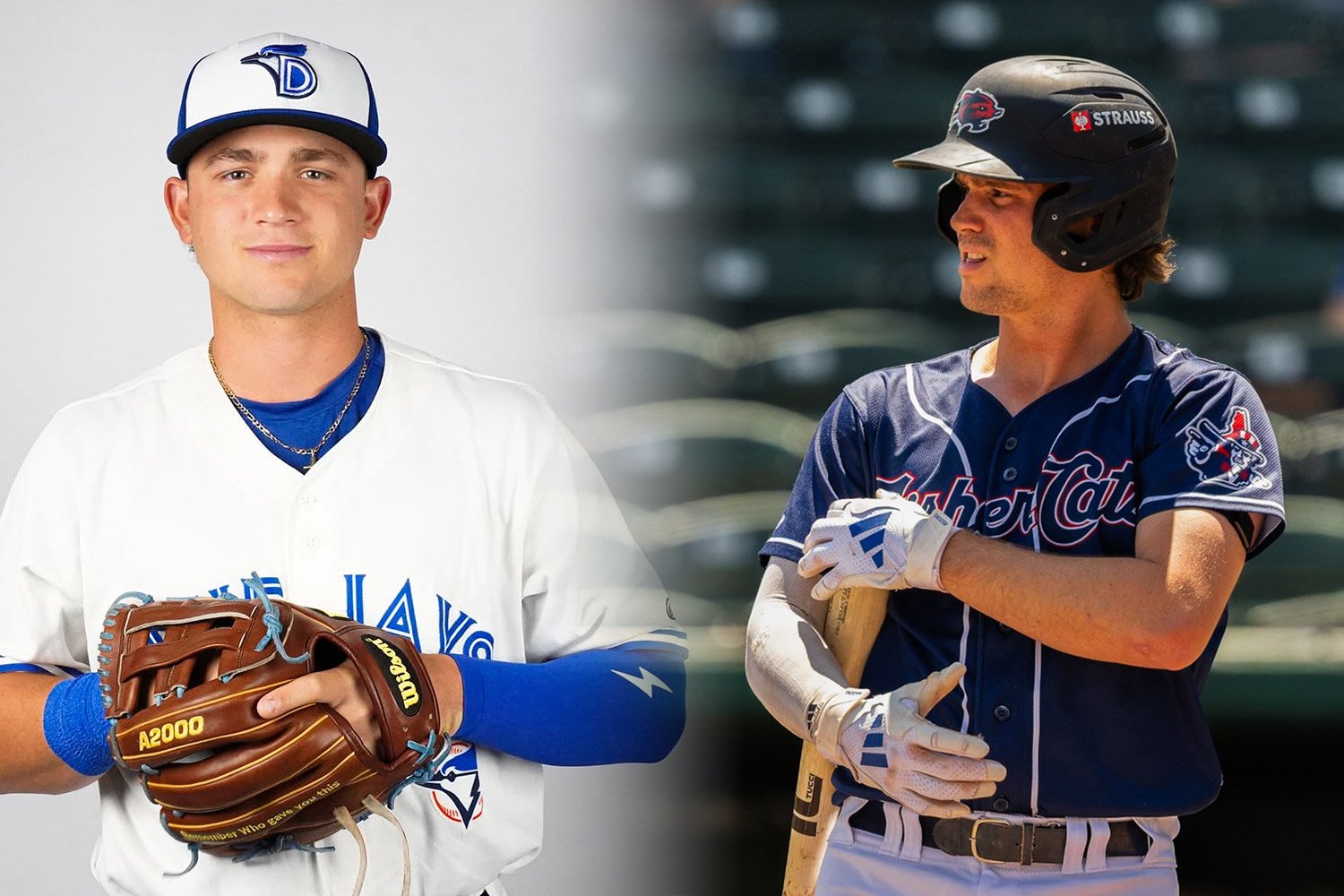 The headlines have surrounded Sean Keys and his 20 homers in just 280 plate appearances, and for good reason. He’ll be in consideration for the major league roster with how well he’s hitting the ball and the major league team's scuffles at the plate. I want to take a look at the two guys who haven’t hit as well as Keys, but have been the second and third best hitters in the Jays' minor league system so far this season. Meet Jay Harry and Tucker Toman, two batters with wildly different pedigrees and prospect status when they first came into the league, but were both considered almost non-prospects in the offseason prior to this year. Jay Harry was the Twins’ sixth-round draft pick in 2023, and despite having a name that matched the team name of the major league team he played for, he was an afterthought in the whirlwind 2024 trade deadline, as the confounding reliever Trevor Richards was sent to Minnesota to acquire him. Harry bounced between High-A Vancouver and Double-A New Hampshire, hitting under the Mendoza line with a sub-.300 OBP and SLG, and was primarily touted for his defensive versatility. Tucker Toman came to the Jays in a much different way, as one of the bigger signing bonuses that the Jays gave out in the 2022 MLB draft as their second round compensation pick for $2 million out of high school. He was known for having a solid hit tool with power potential as a switch hitter, but his prospect status quickly dwindled as he spent three years in Low-A Dunedin, where he was a below-average hitter until last season, when he earned a promotion to Vancouver and had 12 games of solid production. Things have taken a huge turn for those two this season, as Jay Harry has posted a 145 wRC+ in 223 PAs, slashing .330/.360/.592. Tucker Toman has been just as good with a 142 wRC+ in 238 PAs, with a .284/.403/.490 triple slash. As much as I would like to only celebrate their production, there are reasonable concerns regarding the sustainability of their production. First, let’s take a look at Jay Harry. The biggest thing that stands out about his profile is that he’s now walking just 3.6% of the time. A lot of it is in-zone aggression, although we don’t have his Double-A pitch-by-pitch data. In the small sample of 10 games in Triple-A, he swings at 84.7% of pitches he sees in the zone. Only Elias Diaz has swung at more than that in the major leagues (min 50 PAs). Harry is not at all selective, though, as he equally chases at an absurd amount, with a 51.8% chase rate, which is 4% higher than the swing-happy Ernie Clement. While Harry does do damage when he makes contact, with a 48.5% hard hit rate and a 90.4 mph average exit velocity, he actually whiffs a lot at the pitches he swings at out of the zone. His contact rate for pitches out of the zone was just 60.5%, and although his in-zone contact was good at 88.5%, it isn’t elite like a lot of swing-happy hitters. Despite the solid hard hit rate, Jay Harry also doesn’t have the best raw power either, with him having just a 106.1 mph Max exit velocity and a 103.6 90th percentile exit velocity being just slightly above average in Triple-A. He makes up for the lack of raw power with a pulled air-approach, which lets his power play up, but the question remains if his swing-heavy approach can be sustained against more advanced pitching. Right now, he’s buoyed by a .397 BABIP, and he’s normally been more than .100 points of BABIP lower than that throughout his minor-league career. Harry was never going to sustain a 140 wRC+, but he does have some makings of a good hitter in him. The biggest question is whether he can be a productive hitter despite his aggressive approach. A comparison that seems apt is with Edmundo Sosa of the Phillies, despite being a right-handed hitter instead of left-handed like Harry, their contact and batted ball metrics are remarkably similar, except Harry has better Air-Pull rates and swung at more pitches in the zone. For Harry to carve his way into a major league role, Sosa would be a great player to replicate as a platoon infielder with great defensive versatility, except Harry would be a strong-side platoon bat as a lefty. Harry has much better numbers against righties than lefties. Name O-Swing% Z-Swing% Swing% O-Contact% Z-Contact% Contact% EV EV90 maxEV HardHit% CStr% CSW% BB% K% SwStr% Pull Air% Edmundo Sosa 53.99% 72.68% 61.39% 64.50% 89.93% 76.42% 87.4 105.7 111.6 40.59% 12.91% 27.36% 2.16% 22.30% 14.45% 12.00% Jay Harry 51.80% 84.70% 60.80% 60.50% 88.50% 75.80% 90.4 103.6 106.1 48.50% 11.90% 26.60% 3.60% 22.90% 14.70% 21.20% (Data via FanGraphs, TJstats.ca) Moving on to Tucker Toman, the infielder finally made the decision to drop switch-hitting as his righty swing heavily lagged behind his more advanced lefty swing. This has led to an uptick in performance and has made his breakout much more compelling. The best part about Toman’s game is his plate discipline. Toman, despite his struggles, constantly ran near 10% walk rates or above, and he’s been walking at a career best 13.9% of the time. He’s not just walking because of passivity either; he’s been good at not chasing but also with reasonable amounts of in-zone swings at 68.4% of the time. Toman’s production has been carried by a stretch of nine games where he homered six times and added another six doubles, but there are legitimate qualms about Toman’s raw power. Although we don’t have publicly available batted ball metrics for this season, Toman’s data last season wasn’t very impressive, with his Max Exit Velocity at 108.7mph and his 90th percentile at 102.2mph. Some would assume that Toman dropping switch-hitting may have impacted his power numbers and that his power production was mostly from that, but there are other factors at play that need to be considered. As reported by JJ Cooper from Baseball America , the minor leagues have had an offensive explosion that we haven’t seen in a while, most likely due to changes in minor league baseball. Many hitters are experiencing gains in exit velocities and hard hit rates, perhaps not due to improvements as a hitter but due to changes in the baseball. Toman seems to be one of the bigger beneficiaries of those changes, as his batted ball profile is not conducive to hitting for power. He doesn’t lift the ball well at all with a 51.1% groundball rate, and when he does lift the ball, it’s often not pulled. With pulled flyballs being the easiest source of power for most hitters, it’s either that Toman has significantly improved his batted ball metrics or that he’s gotten really lucky with his flyballs. Prior to this season, Toman homered on around 7% of the flyballs that he’s hit, but this season he’s up to a 22.5% HR/FB rate (as of June 25th, 2026). Another problem for Toman is that although his patient approach works for him, he’s not very adept at hitting for contact, with just a 75.8% Z-Contact rate and a near 30% whiff rate, which has resulted in a below-average K rate. He is also running a quite high BABIP with a .365, although he seems to be a batter who naturally runs higher BABIPs. His middling contact rates mean that for Toman to continue to be a productive hitter, he needs to hit for power, or more advanced pitchers will challenge him in the zone as he moves up. I find it more unlikely for Toman to continue hitting for power at this rate with his prior middling raw power, whilst also having the same batted ball distribution that he has now. Those things need to have changed significantly for me to fully believe in the breakout. He has pulled the ball in the air more in previous seasons, and his worse results prior may mean that this works for him, but I’m still a bit skeptical about his abilities as a hitter. Harry's ultra-aggressive approach and Toman's questionable power indicators suggest that some regression is likely, but we should appreciate how much they've improved so far this season, as the two of them were afterthoughts in an improving Jays system. The remainder of the season will help determine how much of this breakout is actually real, and even if they aren't 140 wRC+ hitters by the end of the season, their development is another example of the progress that the Jays' development system has made.
 -
 Blue Jays Affiliate Overview (June 23 - June 24) Triple-A Buffalo Bisons Series vs Iowa Cubs (Chicago White Sox): 1-1 Season Record: 36-41 Double-A New Hampshire Fisher Cats Series vs Somerset Patriots (New York Yankees): 1-1 Season Record: 35-34 High-A Vancouver Canadians Series vs Hillsboro Hops (Arizona Diamondbacks): 0-1 Season Record: 29-42 Single-A Dunedin Blue Jays Series vs Tampa Tarpons (New York Yankees): 0-2 Season Record: 32-38 FCL Blue Jays Week Record: 1-0 Season Record: 27-11 DSL Blue Jays Blue Week Record: 0-1 Season Record: 6-11 DSL Blue Jays Red Week Record: 0-1 Season Record: 5-12 Triple-A Buffalo Bisons Season Record: 36-41 Series vs Iowa Cubs (Chicago Cubs) June 23: The Buffalo Bisons had themselves a power surge on Tuesday to open up a new series against the Iowa Cubs. Jay Harry was moved into the lead-off spot in the batting order and rewarded Buffalo with a big game. He went 3-5, scoring two runs, and knocking in four runs. His big hit came in the fifth inning, when he crushed a pitch up and away to right for a three-run home run. Je'Von joined him with a big blast of his own, a solo shot to center field in the seventh, which was smoked at 110 mph off the bat. While the bats were scoring left and right, the pitching was an utter disappointment. Richard Gallardo gave up two runs as the starting pitcher, CJ Van Eyk coughed up five in just 0.2 innings pitched, and then Justin Topa and Chase Lee each surrendered runs as well. The Bisons found themselves down two in the top of the ninth inning, when Carlos Mendoza came to the plate, following a Josh Rivera double. Mendoza lofted a pitch, at 38° launch angle, over the right field wall for a game-tying two-run home run. In the tenth, Sean Keys and Charles McAdoo each had RBI doubles, then Willie MacIver tacked in a big shot of his own. He roped a fastball 108.8 mph off the bat for a solo home run, giving the Bisons a three-run lead headed into the bottom of the tenth. Lee would get touched up in the tenth for the two runs he allowed, before giving way to Matt Bowman, who came up clutch for Buffalo. Up just one, with two on and nobody out, Bowman got a double play and a groundout to end the threat and the game. Buffalo squeaked out an 11-10 win in a game with a ton of fireworks and excitement. June 24: Wednesday's game against Iowa had just as many, if not more, fireworks on the field. Jonatan Clase joined the fun, smacking a two-run home run in the first inning. C.J. Stubbs would get one of his own in the ninth, a solo shot to center. It was the hardest hit home run for the Bisons over the last two days, a 111.8 mph rope that went 426 feet. Jay Harry even added two more hits out of the lead-off spot, chipping in two RBI, and scoring once. The standout of the day at the plate wouldn't be any of those Bisons, though; it would be Sean Keys. He continues to push towards a call-up to the big league club, knocking two more home runs in this game, both of the two-run variety. While the bats were alive and thriving for Buffalo, their pitching was even worse than on Tuesday. Jake Bloss surrendered five runs over his 3.1 innings, Devereaux and Conor Larkin each gave up six, and Yariel Rodriguez also coughed up a run. The Bisons scored a ton, but Iowa dropped 18 runs on them to take the win 18-11. Double-A New Hampshire Season Record: 35-34 Series vs Somerset Patriots (New York Yankees) June 23: Tuesday saw New Hampshire kick off a series against the Somerset Patriots. Jackson Wentworth was on the mound and put up one of his best starts at Double-A. He pitched six innings, only allowed three hits, didn't give up a run, walked three, and struck out five. Victor Arias broke open a 0-0 game in the sixth inning with a long home run to right field, his sixth of the year at Double-A. In the eighth inning, it was Arias again, this time with a two-run double. Later in the inning, Nick Goodwin brought Arias home with a single to right field. New Hampshire won this one 4-0. June 24: In the Wednesday game between New Hampshire and Somerset, it was the Patriots who got out to an early lead in the second inning. Jackson Castillo brought in two runs on a line drive double to left field. In the bottom half of the inning, Nick Goodwin hit a deep fly ball off the right field wall, which he was able to turn into a triple, scoring a run for New Hampshire. Somerset went on a scoring run after that, though, scoring eight straight on an RBI double, two home runs, and an RBI single. Cutter Coffey singled on a fly ball to right field in the ninth inning to make it an eight-run game. New Hampshire only managed three hits and two runs in the game, as they lost this one 10-2. High-A Vancouver Season Record: 29-42 Series vs Hillsboro Hops (Arizona Diamondbacks) June 23: Nolan Perry had his second mediocre start in a row, as he allowed five hits and a walk in just three innings to allow three runs. Jack Eshelman also gave up three runs, but one of them was unearned due to a throwing error by him. Down six to nothing, the Canadians fought back, with Alexis Hernandez with his 10th homer of the season to get it within four. Peyton Williams added another homer in the seventh inning, but a fielding error from Kendry Chirinos led to an unearned run scoring for the second time this game. That run turned out to be the difference between a loss and extra innings, as Alexis Hernandez’s second homer of the game brought it within one as he drove in three runners in the eighth inning. Unfortunately for the Canadians, they couldn’t score in the ninth, which led to a loss caused by some shaky defense. June 24: Johnny King once again faced traffic in the first inning, allowing the first two runners to get on with singles. He was able to get a groundout to shortstop, but after Maddox Latta threw it to second to get the forceout, Eric Snow made an ill-advised throw that skipped past the first baseman and allowed a run to score. King once again settled in, going five strong innings, only allowing that one run in the first inning to score, to go with six strikeouts. Jack Nedrow replaced King in the sixth, and allowed two runs to score on a triple. He gave up another triple in the eighth inning, and the runner ended up scoring, which was three runs given up by the righty. The Canadians loaded the bases in the top of the ninth, and Sam Shaw was able to put Vancouver on the board with a bases-loaded walk. Alexis Hernandez battled back from a 0-2 count with an eight-pitch walk to score another run. Peyton Williams couldn’t keep it going as he struck out, ending the game. Single-A Dunedin Season Record: 32-36 Series vs Tampa Tarpons (New York Yankees) June 23: The Tarpons ruined Carson Messina’s strong start, as Messina pitched four no-hit innings, with a run scored only due to Lenyn Sosa making a fielding error in the second inning. The Jays' offense didn’t do Messina any favors either, as they scored their only run of the ballgame with Adam Hackenberg’s RBI single in the second. Denis Samudio replaced Messina in the fifth inning, and although he allowed two runs, he settled in, striking out five batters in less than four innings pitched. Ricky Tiedemann was supposed to pitch in relief, but was not able to due to neck soreness. Samudio ended up with the loss, as no one else was able to score despite the Jays out-hitting the Tarpons five to four. June 24: It was a tough day for Dunedin Pitching, as Blake Purnell and Bradley Wilson combined for seven runs given up in just the first five innings, with Purnell giving up three homers. It was a total shellacking as the Tarpons doubled the Jays' hit total with fifteen compared to just seven. JoJo Parker was one of the lone bright spots for the D-Jays as he hit a homer in the sixth for his eighth of the year and fifth of just this month. Luis Victorino allowed two more runs, and Blaine Bullard was able to get those back with a two-run double, but there was nothing else for the Jays. FCL Blue Jays Season Record: 27-11 June 23: The FCL Blue Jays and FCL Phillies squared off against each other on Tuesday. Seojun Moon was on the mound for the Blue Jays, and he had one of his best games. He finished with 3.2 innings, gave up three hits, one run, walked one, and struck out six batters. Austin Marozas came in for Moon and pitched 1.1 innings and didn't give up a hit or run. Sann Omosako was next, and he put up a hitless performance. He went three perfect innings and struck out three batters. Nosh Palmese finished off the game with one inning; he gave up one hit and struck out one batter. Offensively, the Blue Jays scored all five of their runs in the fourth inning. A bases-loaded walk scored one run, and then David Guzman crushed a grand slam. The Blue Jays only had two hits in the game, but they made them count, as they won this one 5-1. DSL Blue Jays Blue Season Record: 6-11 June 23: BJB was facing off against the Arizona Black team on Tuesday. Sebastian Casanova and Juan Caricote each had two singles, and each scored a run. Daret Gonzalez also had a single and scored a run. Gonzalez is someone to keep an eye on; he has just 22 at-bats for the season, but he does have one of the biggest bodies in the DSL, being listed at 6-foot-5 and 225 pounds. He has the type of frame scouts dream of for a 17-year-old. He will need to start hitting, though; his single today was just his second hit of the short season. While the bats slept at the plate, the pitching surrendered 13 runs, en route to the 13-3 loss. DSL Blue Jays Red Season Record: 5-12 June 23: On Tuesday, BJR had a very forgettable game against the Arizona Red team in the DSL. Jose Gori had a single and Alex Linares drew a walk; that was it for the offense, just two baserunners for the entirety of the game. They would take the loss 1-0, in a game that neither team had more than two hits. Transactions 06/24/26 Dunedin Blue Jays activated CF Jean Joseph from the 7-day injured list. 06/23/26 Buffalo Bisons sent LHP Ricky Tiedemann on a rehab assignment to Dunedin Blue Jays. 06/23/26 Buffalo Bisons sent LF Ismael Munguia on a rehab assignment to Dunedin Blue Jays. 06/23/26 Toronto Blue Jays sent 2B Lenyn Sosa on a rehab assignment to Dunedin Blue Jays. 06/23/26 C Giaconino Lasaracina assigned to Dunedin Blue Jays from FCL Blue Jays. 06/23/26 C Juan Rosas assigned to FCL Blue Jays from Dunedin Blue Jays.
 -
Blue Jays Affiliate Overview (June 23 - June 24) Triple-A Buffalo Bisons Series vs Iowa Cubs (Chicago White Sox): 1-1 Season Record: 36-41 Double-A New Hampshire Fisher Cats Series vs Somerset Patriots (New York Yankees): 1-1 Season Record: 35-34 High-A Vancouver Canadians Series vs Hillsboro Hops (Arizona Diamondbacks): 0-1 Season Record: 29-42 Single-A Dunedin Blue Jays Series vs Tampa Tarpons (New York Yankees): 0-2 Season Record: 32-38 FCL Blue Jays Week Record: 1-0 Season Record: 27-11 DSL Blue Jays Blue Week Record: 0-1 Season Record: 6-11 DSL Blue Jays Red Week Record: 0-1 Season Record: 5-12 Triple-A Buffalo Bisons Season Record: 36-41 Series vs Iowa Cubs (Chicago Cubs) June 23: The Buffalo Bisons had themselves a power surge on Tuesday to open up a new series against the Iowa Cubs. Jay Harry was moved into the lead-off spot in the batting order and rewarded Buffalo with a big game. He went 3-5, scoring two runs, and knocking in four runs. His big hit came in the fifth inning, when he crushed a pitch up and away to right for a three-run home run. Je'Von joined him with a big blast of his own, a solo shot to center field in the seventh, which was smoked at 110 mph off the bat. While the bats were scoring left and right, the pitching was an utter disappointment. Richard Gallardo gave up two runs as the starting pitcher, CJ Van Eyk coughed up five in just 0.2 innings pitched, and then Justin Topa and Chase Lee each surrendered runs as well. The Bisons found themselves down two in the top of the ninth inning, when Carlos Mendoza came to the plate, following a Josh Rivera double. Mendoza lofted a pitch, at 38° launch angle, over the right field wall for a game-tying two-run home run. In the tenth, Sean Keys and Charles McAdoo each had RBI doubles, then Willie MacIver tacked in a big shot of his own. He roped a fastball 108.8 mph off the bat for a solo home run, giving the Bisons a three-run lead headed into the bottom of the tenth. Lee would get touched up in the tenth for the two runs he allowed, before giving way to Matt Bowman, who came up clutch for Buffalo. Up just one, with two on and nobody out, Bowman got a double play and a groundout to end the threat and the game. Buffalo squeaked out an 11-10 win in a game with a ton of fireworks and excitement. June 24: Wednesday's game against Iowa had just as many, if not more, fireworks on the field. Jonatan Clase joined the fun, smacking a two-run home run in the first inning. C.J. Stubbs would get one of his own in the ninth, a solo shot to center. It was the hardest hit home run for the Bisons over the last two days, a 111.8 mph rope that went 426 feet. Jay Harry even added two more hits out of the lead-off spot, chipping in two RBI, and scoring once. The standout of the day at the plate wouldn't be any of those Bisons, though; it would be Sean Keys. He continues to push towards a call-up to the big league club, knocking two more home runs in this game, both of the two-run variety. While the bats were alive and thriving for Buffalo, their pitching was even worse than on Tuesday. Jake Bloss surrendered five runs over his 3.1 innings, Devereaux and Conor Larkin each gave up six, and Yariel Rodriguez also coughed up a run. The Bisons scored a ton, but Iowa dropped 18 runs on them to take the win 18-11. Double-A New Hampshire Season Record: 35-34 Series vs Somerset Patriots (New York Yankees) June 23: Tuesday saw New Hampshire kick off a series against the Somerset Patriots. Jackson Wentworth was on the mound and put up one of his best starts at Double-A. He pitched six innings, only allowed three hits, didn't give up a run, walked three, and struck out five. Victor Arias broke open a 0-0 game in the sixth inning with a long home run to right field, his sixth of the year at Double-A. In the eighth inning, it was Arias again, this time with a two-run double. Later in the inning, Nick Goodwin brought Arias home with a single to right field. New Hampshire won this one 4-0. June 24: In the Wednesday game between New Hampshire and Somerset, it was the Patriots who got out to an early lead in the second inning. Jackson Castillo brought in two runs on a line drive double to left field. In the bottom half of the inning, Nick Goodwin hit a deep fly ball off the right field wall, which he was able to turn into a triple, scoring a run for New Hampshire. Somerset went on a scoring run after that, though, scoring eight straight on an RBI double, two home runs, and an RBI single. Cutter Coffey singled on a fly ball to right field in the ninth inning to make it an eight-run game. New Hampshire only managed three hits and two runs in the game, as they lost this one 10-2. High-A Vancouver Season Record: 29-42 Series vs Hillsboro Hops (Arizona Diamondbacks) June 23: Nolan Perry had his second mediocre start in a row, as he allowed five hits and a walk in just three innings to allow three runs. Jack Eshelman also gave up three runs, but one of them was unearned due to a throwing error by him. Down six to nothing, the Canadians fought back, with Alexis Hernandez with his 10th homer of the season to get it within four. Peyton Williams added another homer in the seventh inning, but a fielding error from Kendry Chirinos led to an unearned run scoring for the second time this game. That run turned out to be the difference between a loss and extra innings, as Alexis Hernandez’s second homer of the game brought it within one as he drove in three runners in the eighth inning. Unfortunately for the Canadians, they couldn’t score in the ninth, which led to a loss caused by some shaky defense. June 24: Johnny King once again faced traffic in the first inning, allowing the first two runners to get on with singles. He was able to get a groundout to shortstop, but after Maddox Latta threw it to second to get the forceout, Eric Snow made an ill-advised throw that skipped past the first baseman and allowed a run to score. King once again settled in, going five strong innings, only allowing that one run in the first inning to score, to go with six strikeouts. Jack Nedrow replaced King in the sixth, and allowed two runs to score on a triple. He gave up another triple in the eighth inning, and the runner ended up scoring, which was three runs given up by the righty. The Canadians loaded the bases in the top of the ninth, and Sam Shaw was able to put Vancouver on the board with a bases-loaded walk. Alexis Hernandez battled back from a 0-2 count with an eight-pitch walk to score another run. Peyton Williams couldn’t keep it going as he struck out, ending the game. Single-A Dunedin Season Record: 32-36 Series vs Tampa Tarpons (New York Yankees) June 23: The Tarpons ruined Carson Messina’s strong start, as Messina pitched four no-hit innings, with a run scored only due to Lenyn Sosa making a fielding error in the second inning. The Jays' offense didn’t do Messina any favors either, as they scored their only run of the ballgame with Adam Hackenberg’s RBI single in the second. Denis Samudio replaced Messina in the fifth inning, and although he allowed two runs, he settled in, striking out five batters in less than four innings pitched. Ricky Tiedemann was supposed to pitch in relief, but was not able to due to neck soreness. Samudio ended up with the loss, as no one else was able to score despite the Jays out-hitting the Tarpons five to four. June 24: It was a tough day for Dunedin Pitching, as Blake Purnell and Bradley Wilson combined for seven runs given up in just the first five innings, with Purnell giving up three homers. It was a total shellacking as the Tarpons doubled the Jays' hit total with fifteen compared to just seven. JoJo Parker was one of the lone bright spots for the D-Jays as he hit a homer in the sixth for his eighth of the year and fifth of just this month. Luis Victorino allowed two more runs, and Blaine Bullard was able to get those back with a two-run double, but there was nothing else for the Jays. FCL Blue Jays Season Record: 27-11 June 23: The FCL Blue Jays and FCL Phillies squared off against each other on Tuesday. Seojun Moon was on the mound for the Blue Jays, and he had one of his best games. He finished with 3.2 innings, gave up three hits, one run, walked one, and struck out six batters. Austin Marozas came in for Moon and pitched 1.1 innings and didn't give up a hit or run. Sann Omosako was next, and he put up a hitless performance. He went three perfect innings and struck out three batters. Nosh Palmese finished off the game with one inning; he gave up one hit and struck out one batter. Offensively, the Blue Jays scored all five of their runs in the fourth inning. A bases-loaded walk scored one run, and then David Guzman crushed a grand slam. The Blue Jays only had two hits in the game, but they made them count, as they won this one 5-1. DSL Blue Jays Blue Season Record: 6-11 June 23: BJB was facing off against the Arizona Black team on Tuesday. Sebastian Casanova and Juan Caricote each had two singles, and each scored a run. Daret Gonzalez also had a single and scored a run. Gonzalez is someone to keep an eye on; he has just 22 at-bats for the season, but he does have one of the biggest bodies in the DSL, being listed at 6-foot-5 and 225 pounds. He has the type of frame scouts dream of for a 17-year-old. He will need to start hitting, though; his single today was just his second hit of the short season. While the bats slept at the plate, the pitching surrendered 13 runs, en route to the 13-3 loss. DSL Blue Jays Red Season Record: 5-12 June 23: On Tuesday, BJR had a very forgettable game against the Arizona Red team in the DSL. Jose Gori had a single and Alex Linares drew a walk; that was it for the offense, just two baserunners for the entirety of the game. They would take the loss 1-0, in a game that neither team had more than two hits. Transactions 06/24/26 Dunedin Blue Jays activated CF Jean Joseph from the 7-day injured list. 06/23/26 Buffalo Bisons sent LHP Ricky Tiedemann on a rehab assignment to Dunedin Blue Jays. 06/23/26 Buffalo Bisons sent LF Ismael Munguia on a rehab assignment to Dunedin Blue Jays. 06/23/26 Toronto Blue Jays sent 2B Lenyn Sosa on a rehab assignment to Dunedin Blue Jays. 06/23/26 C Giaconino Lasaracina assigned to Dunedin Blue Jays from FCL Blue Jays. 06/23/26 C Juan Rosas assigned to FCL Blue Jays from Dunedin Blue Jays. View full article
-
Blue Jays Top 20 Prospects, June 2026 JoJo Parker SS - Dunedin Johnny King LHP - Vancouver Arjun Nimmala SS - New Hampshire Juan Sanchez 3B/SS - Dunedin (Previously #6) Ricky Tiedemann LHP - Buffalo (on Rehab assignment) Gage Stanifer RHP - New Hampshire (Previously #4) Sean Keys 1B/3B - Buffalo (Previously #9) Nolan Perry RHP - Vancouver (Previously #16) Blaine Bullard OF - Dunedin (Previously #8) Jake Bloss RHP - Buffalo (Previously #12) Victor Arias OF - New Hampshire Daniel Guerra RHP - Vancouver (Previously Unranked) Carson Messina RHP - Dunedin (Previously Unranked) Jake Cook OF - Dunedin (Previously #17) Josh Kasevich SS - Buffalo (Previously #10) Austin Cates RHP - New Hampshire (Previously Unranked) Tim Piasentin 3B - FCL (Previously #14) Charles McAdoo 3B - Buffalo (Previously #13) RJ Schreck OF - Buffalo (Previously #18) Adrian Pinto 2B - New Hampshire (Previously Unranked) The Jays’ prospect rankings looked quite a bit different after the graduations of both Trey Yesavage and Yohendrick Pinango, giving room for a few new faces. On the other hand, Landen Maroudis, Dylan Watts, and Silvano Hechavarria all fell off the list in place of four new faces. Hechavarria and Maroudis have struggled immensely since the start of the season, both with an ERA over 6 on the season. Watts, on the other hand, earned a promotion to Vancouver, but was lit up in his first start. He mostly fell off due to a number’s game, as his stuff is intriguing enough to warrant top 20 consideration. Juan Sanchez and Gage Stanifer swapped places due to Sanchez’s hot June, where he slashed .333/.371/.544 for a 140 wRC+. Sean Keys also took a slight jump after getting promoted to Buffalo and still mashed, with an elite pulled fly ball ability paired with 99th percentile 90th percentile exit velocities. The biggest jump, however, was from Nolan Perry from 16th all the way to 8th. He’s gone from a relatively unknown pitching prospect to a top 100 prospect in baseball, showing extremely strong stuff with a starter’s arsenal with decent command. Perry is now running a 39.2 K% despite a shaky start in his last outing. A pair of Jakes also saw rises, with Bloss showing very strong stuff after returning from injury. Jake Cook rose despite not showing impressive raw stats, but his speed has been impressive, stealing 12 bags in 29 games. Gage Stanifer has actually looked impressive, but fell more because of Sanchez’s excellence than any of his shortcomings. Tim Piasentin has walked a lot in the complex league, but hasn’t been able to make solid contact when challenged in the zone, causing him to fall three spots. Josh Kasevich, Charles McAdoo, and RJ Schreck have all performed decently but have been jumped over by the new, talented arms that have been added to the list. McAdoo had a short cup of coffee in the major leagues after some injuries to Lenyn Sosa and Addison Barger got hurt, and accumulated -0.2 fWAR, but was able to hit his first major league homer. RHP Daniel Guerra - #12 Daniel Guerra was an international signee out of Venezuela in 2022, and he slowly made his way stateside, making his Low-A debut in Dunedin in 2024. At age 21 he pitched a full season in Low-A Dunedin, and although he struggled a little bit in the first few months of that season, he began to really pick it up at the end of the 2025 season, the stuff jumped as he went later on in the season, where he capped off his season with a six perfect innings against the Mighty Mussels on August 30th, 2025. Guerra was promoted to Vancouver in the 2026 season and immediately made an impact, as heading into early June, Guerra was in the top five in all of the minors in strikeouts. Unfortunately for him, he was taken out early in a game on June 9th and was put on the 7-day IL to put a damper on his breakout season. Guerra has a prototypical starter's build, standing 6ft 6 inches and weighing 230 pounds. His delivery comes more over the top, leading to funky angles for opposing hitters, and with his increased mid-to-high 90s fastball velocity is very tough for hitters. Given his high slot, Guerra generates elite ride on his fastball, and he was able to get on it as well. His main secondary is a cut-slider that also jumped in velocity this season, into the high 80s, which was a great whiff generator for him. He has a developing third pitch with a changeup as well, but he’s still figuring out the feel for it. With two plus pitches and shaky command, Guerra’s future seems more likely in the back end of a bullpen, but if he can reign in the control and sharpen up the changeup there’s some rotation upside as well. RHP Carson Messina - #13 Carson Messina was a highly anticipated high school signing out of Summerville High School and pitched just two innings in 2025 before getting put on the injured list. His return to the mound in 2026 was domination, as he ranked near the top of many pitching leaderboards, before earning a promotion to Dunedin in June. He frequently touched the upper 90s in the Florida Complex League, but in his couple of starts in Low-A Dunedin his velocity was only sitting 93-94 mph, but he has shown the capability of reaching back for more topping out at 96 mph. The results haven’t been the prettiest with a 6.35 ERA in a tiny sample, but his stuff looked great despite the diminished velocity. His fastball showed plus ride with a -4.5 vertical approach angle which makes it harder for hitters to square up and he has an 80 mph curveball with a more than 34 inch vertical separation from his fastball that has generated a lot of whiffs. He does have a cut slider as well in the mid 80s. With the positive shape and movement of his pitches, Messina has carried a 32.2% K rate so far this season, but he also has struggled with his command, as more advanced Low-A hitters are less susceptible to swinging at his pitches out of the zone. The 6ft 3 righty has mid-rotation upside if he can continue his velocity uptick and improve his command. RHP - Austin Cates #16 Austin Cates was the Jays 7th round pick in 2024 out of UNLV, and had a very successful first professional season, pitching over 100 innings to a 3.12 ERA/3.55 FIP and finished the season stronger than he started after getting promoted to Vancouver. Cates got 24 innings in Vancouver before earning a callup to New Hampshire, where he has a 4.58 ERA/4.14 FIP with a 21.9 K% to a 12.6 BB%. Despite the middling numbers, the offensive environment in the minors has taken a jump so that’s actually a better than average performance in the Eastern League. The standout traits for Cates don’t really exist, as he’s an average sized pitcher with middling stuff, but he has a devastating splitter that he uses quite effectively. The fastball is only in the 91-93 range, but he’s topped out at 95 here and there with decent ride. The slider shape isn’t the greatest and doesn’t generate many whiffs, but is a pitch he can command. He introduced a curveball that he could use as a get me over pitch, but hasn’t shown much else. The main star of the show is the splitter in the mid 80s, and when it’s on can generate a ton of whiffs and chases. Cates’ command is just average, and with his middling fastball velocity, needs more than just one good pitch to be a rotation piece, but can work as a depth starter or multi-inning reliever if he progresses well. A bump in velocity or better breaking balls could put him in back-end rotation talks. 2B/OF Adrian Pinto - #20 The oft-injured player once again started the season on the injured list, but in his return, he has performed just enough to hop onto the list at the bottom rung. After returning from rehab assignment in Dunedin, Pinto has hit .245/.351/.439 in New Hampshire for a 110 wRC+, while walking just as much as he’s struck out at 13.8%. He wasn’t hitting homers at the rate he did in the small sample he posted in the previous season, but he’s shown some juice with four homers of the season to pair with a solid contact rate of 78.6%. Pinto’s ability to control his small zone, make hard contact when he makes contact whilst having a solid contact rate makes him an intriguing prospect in the system, and since he’s at least an average second baseman defensively with the capability of playing the outfield with solid speed despite not playing their yet this season, he’s an interesting look for a Jays team that’s lacking up the middle bats that hit righty with upside like this. The profile is unique and despite being traded for four years ago, he’ll turn just 24 this season. He will need to be added to the 40-man roster as he is rule-5 eligible, and the health will need to hold up for Pinto to have a path to the majors. With 147 PAs he’s already played more than he did in any season since 2023, and if he continues to hit like this very well might get added to the 40-man. View full article
- 1 reply
-
- 1
-

-
- daniel guerra
- carson messina
- (and 3 more)
-
Blue Jays Prospect Rankings, June 2026 Update: Many New Faces Arrive
Simon Li posted an article in Minor Leagues
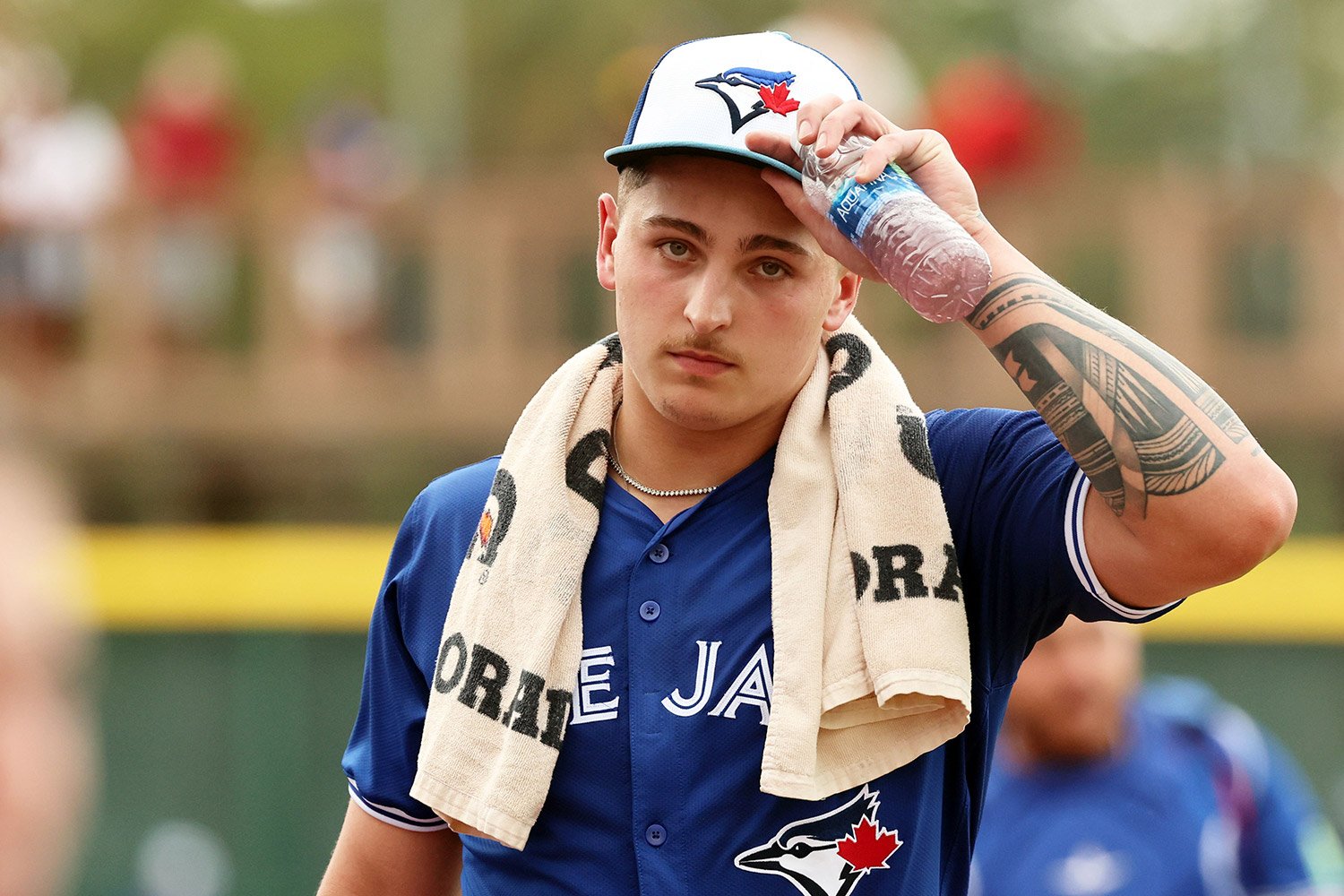 Blue Jays Top 20 Prospects, June 2026 JoJo Parker SS - Dunedin Johnny King LHP - Vancouver Arjun Nimmala SS - New Hampshire Juan Sanchez 3B/SS - Dunedin (Previously #6) Ricky Tiedemann LHP - Buffalo (on Rehab assignment) Gage Stanifer RHP - New Hampshire (Previously #4) Sean Keys 1B/3B - Buffalo (Previously #9) Nolan Perry RHP - Vancouver (Previously #16) Blaine Bullard OF - Dunedin (Previously #8) Jake Bloss RHP - Buffalo (Previously #12) Victor Arias OF - New Hampshire Daniel Guerra RHP - Vancouver (Previously Unranked) Carson Messina RHP - Dunedin (Previously Unranked) Jake Cook OF - Dunedin (Previously #17) Josh Kasevich SS - Buffalo (Previously #10) Austin Cates RHP - New Hampshire (Previously Unranked) Tim Piasentin 3B - FCL (Previously #14) Charles McAdoo 3B - Buffalo (Previously #13) RJ Schreck OF - Buffalo (Previously #18) Adrian Pinto 2B - New Hampshire (Previously Unranked) The Jays’ prospect rankings looked quite a bit different after the graduations of both Trey Yesavage and Yohendrick Pinango, giving room for a few new faces. On the other hand, Landen Maroudis, Dylan Watts, and Silvano Hechavarria all fell off the list in place of four new faces. Hechavarria and Maroudis have struggled immensely since the start of the season, both with an ERA over 6 on the season. Watts, on the other hand, earned a promotion to Vancouver, but was lit up in his first start. He mostly fell off due to a number’s game, as his stuff is intriguing enough to warrant top 20 consideration. Juan Sanchez and Gage Stanifer swapped places due to Sanchez’s hot June, where he slashed .333/.371/.544 for a 140 wRC+. Sean Keys also took a slight jump after getting promoted to Buffalo and still mashed, with an elite pulled fly ball ability paired with 99th percentile 90th percentile exit velocities. The biggest jump, however, was from Nolan Perry from 16th all the way to 8th. He’s gone from a relatively unknown pitching prospect to a top 100 prospect in baseball, showing extremely strong stuff with a starter’s arsenal with decent command. Perry is now running a 39.2 K% despite a shaky start in his last outing. A pair of Jakes also saw rises, with Bloss showing very strong stuff after returning from injury. Jake Cook rose despite not showing impressive raw stats, but his speed has been impressive, stealing 12 bags in 29 games. Gage Stanifer has actually looked impressive, but fell more because of Sanchez’s excellence than any of his shortcomings. Tim Piasentin has walked a lot in the complex league, but hasn’t been able to make solid contact when challenged in the zone, causing him to fall three spots. Josh Kasevich, Charles McAdoo, and RJ Schreck have all performed decently but have been jumped over by the new, talented arms that have been added to the list. McAdoo had a short cup of coffee in the major leagues after some injuries to Lenyn Sosa and Addison Barger got hurt, and accumulated -0.2 fWAR, but was able to hit his first major league homer. RHP Daniel Guerra - #12 Daniel Guerra was an international signee out of Venezuela in 2022, and he slowly made his way stateside, making his Low-A debut in Dunedin in 2024. At age 21 he pitched a full season in Low-A Dunedin, and although he struggled a little bit in the first few months of that season, he began to really pick it up at the end of the 2025 season, the stuff jumped as he went later on in the season, where he capped off his season with a six perfect innings against the Mighty Mussels on August 30th, 2025. Guerra was promoted to Vancouver in the 2026 season and immediately made an impact, as heading into early June, Guerra was in the top five in all of the minors in strikeouts. Unfortunately for him, he was taken out early in a game on June 9th and was put on the 7-day IL to put a damper on his breakout season. Guerra has a prototypical starter's build, standing 6ft 6 inches and weighing 230 pounds. His delivery comes more over the top, leading to funky angles for opposing hitters, and with his increased mid-to-high 90s fastball velocity is very tough for hitters. Given his high slot, Guerra generates elite ride on his fastball, and he was able to get on it as well. His main secondary is a cut-slider that also jumped in velocity this season, into the high 80s, which was a great whiff generator for him. He has a developing third pitch with a changeup as well, but he’s still figuring out the feel for it. With two plus pitches and shaky command, Guerra’s future seems more likely in the back end of a bullpen, but if he can reign in the control and sharpen up the changeup there’s some rotation upside as well. RHP Carson Messina - #13 Carson Messina was a highly anticipated high school signing out of Summerville High School and pitched just two innings in 2025 before getting put on the injured list. His return to the mound in 2026 was domination, as he ranked near the top of many pitching leaderboards, before earning a promotion to Dunedin in June. He frequently touched the upper 90s in the Florida Complex League, but in his couple of starts in Low-A Dunedin his velocity was only sitting 93-94 mph, but he has shown the capability of reaching back for more topping out at 96 mph. The results haven’t been the prettiest with a 6.35 ERA in a tiny sample, but his stuff looked great despite the diminished velocity. His fastball showed plus ride with a -4.5 vertical approach angle which makes it harder for hitters to square up and he has an 80 mph curveball with a more than 34 inch vertical separation from his fastball that has generated a lot of whiffs. He does have a cut slider as well in the mid 80s. With the positive shape and movement of his pitches, Messina has carried a 32.2% K rate so far this season, but he also has struggled with his command, as more advanced Low-A hitters are less susceptible to swinging at his pitches out of the zone. The 6ft 3 righty has mid-rotation upside if he can continue his velocity uptick and improve his command. RHP - Austin Cates #16 Austin Cates was the Jays 7th round pick in 2024 out of UNLV, and had a very successful first professional season, pitching over 100 innings to a 3.12 ERA/3.55 FIP and finished the season stronger than he started after getting promoted to Vancouver. Cates got 24 innings in Vancouver before earning a callup to New Hampshire, where he has a 4.58 ERA/4.14 FIP with a 21.9 K% to a 12.6 BB%. Despite the middling numbers, the offensive environment in the minors has taken a jump so that’s actually a better than average performance in the Eastern League. The standout traits for Cates don’t really exist, as he’s an average sized pitcher with middling stuff, but he has a devastating splitter that he uses quite effectively. The fastball is only in the 91-93 range, but he’s topped out at 95 here and there with decent ride. The slider shape isn’t the greatest and doesn’t generate many whiffs, but is a pitch he can command. He introduced a curveball that he could use as a get me over pitch, but hasn’t shown much else. The main star of the show is the splitter in the mid 80s, and when it’s on can generate a ton of whiffs and chases. Cates’ command is just average, and with his middling fastball velocity, needs more than just one good pitch to be a rotation piece, but can work as a depth starter or multi-inning reliever if he progresses well. A bump in velocity or better breaking balls could put him in back-end rotation talks. 2B/OF Adrian Pinto - #20 The oft-injured player once again started the season on the injured list, but in his return, he has performed just enough to hop onto the list at the bottom rung. After returning from rehab assignment in Dunedin, Pinto has hit .245/.351/.439 in New Hampshire for a 110 wRC+, while walking just as much as he’s struck out at 13.8%. He wasn’t hitting homers at the rate he did in the small sample he posted in the previous season, but he’s shown some juice with four homers of the season to pair with a solid contact rate of 78.6%. Pinto’s ability to control his small zone, make hard contact when he makes contact whilst having a solid contact rate makes him an intriguing prospect in the system, and since he’s at least an average second baseman defensively with the capability of playing the outfield with solid speed despite not playing their yet this season, he’s an interesting look for a Jays team that’s lacking up the middle bats that hit righty with upside like this. The profile is unique and despite being traded for four years ago, he’ll turn just 24 this season. He will need to be added to the 40-man roster as he is rule-5 eligible, and the health will need to hold up for Pinto to have a path to the majors. With 147 PAs he’s already played more than he did in any season since 2023, and if he continues to hit like this very well might get added to the 40-man.
- 1 comment
-
- 1
-
-
- daniel guerra
- carson messina
- (and 3 more)
-
 Blue Jays Affiliate Overview (June 13-15) Triple-A Buffalo Bisons Series vs Charlotte Knights (Chicago White Sox): 1-1 Season Record: 34-37 Double-A New Hampshire Fisher Cats Series vs Birmingham Rumble Ponies (New York Mets): 2-0 Season Record: 33-30 High-A Vancouver Canadians Series vs Spokane (Colorado Rockies): 0-1 Season Record: 26-39 Single-A Dunedin Blue Jays Series vs Lakeland Flying Tigers (Detroit Tigers): 2-0 Season Record: 30-34 FCL Blue Jays Week Record: 0-1 Season Record: 22-10 DSL Blue Jays Blue Week Record: 0-1 Season Record: 3-9 DSL Blue Jays Red Week Record: 0-1 Season Record: 4-8 Triple-A Buffalo Bisons Season Record: 34-37 Series vs Charlotte Knights (Chicago White Sox) June 16: Buffalo faced off against a Charlotte Knights squad on Tuesday that featured a number of major league players on rehab assignments. Noah Schultz, Kyle Teel, and Jordan Hicks would all be in the game for the Knights, but Buffalo had an answer for most of them. Teel did get a hold of a pitch from Lazaro Estrada in the top of the first inning for a two-run home run, but Buffalo answered with a two-run blast of their own from Sean Keys off of Schultz in the bottom half of the inning. Jonatan Clase then unloaded on a pitch from Hicks in the fourth inning for a three-run home run. C.J. Stubbs got in on the home run party in the bottom of the fifth with a solo home run to left, his first of the season at Triple-A. The Knights got two solo home runs as well in the top of the sixth inning that cut the Buffalo lead down to 6-4. Buffalo would pull away, though; they scored three more runs in the bottom of the sixth, highlighted by Keys’ RBI single to left. Buffalo ran away with this game and won 9-5 against some of the Chicago White Sox's major league players. June 17: Shane Bieber was on the mound Wednesday for Buffalo, in a start that will hopefully be the last of his rehab assignment. He looked serviceable in the first inning, getting a fly out and a double play, following a lead-off walk. It went south in the second, he gave up an RBI single and a three-run home run, putting Buffalo in a big 4-0 hole early in the game. In the third, Bieber again needed a double play to wipe out a walk. In the fourth, Bieber loaded up the bases before getting a strikeout to end the inning. While in the fifth, it was again a double play that aided him in working around runners on base. Buffalo did send Bieber out to start the sixth inning, but yanked him after he gave up a lead-off home run to Ryan Gelanie. The bats were about as bad as Bieber was on the mound. They only managed six hits and one run, the lone run being a Sean Keys solo shot to right. Buffalo fell in a game that was rough all around, 5-1. Double-A New Hampshire Season Record: 33-30 Series vs Birmingham Rumble Ponies (New York Mets) June 16: Danny Thompson Jr. was on the mound for New Hampshire as they kicked off their series against the Binghamton Rumble Ponies on Tuesday. It was his first Double-A start, and he was fantastic, going four innings and not allowing a hit, with one walk holding him back from being perfect over those innings. He also struck out three batters. Alex Amalfi came in for Thompson and was almost equally good. He threw four innings as well and only allowed one hit, a solo home run, while striking out five. The double great pitching performance set the tone for New Hampshire, who hit two home runs in the fourth inning. A solo home run from Aaron Parker and a two-run shot from Hedbert Perez in his first Double-A game. Carter Cunningham doubled home a run in the seventh, as New Hampshire held on to win this one 4-1. June 17: New Hampshire found themselves in an early hole in the Wednesday game against Binghamton. Vincent Perozo hit a solo home run to right field in the bottom of the second inning, which was answered in the next half inning by Jorge Burgos’ RBI single for the Fisher Cats. In the bottom of the third, Binghamton took the lead again, this time by a two-run double to center field. Dub Gleed responded with a solo home run to bring New Hampshire within one run. In the fifth inning, Victor Arias and Cade Doughty teamed up to bring in three runs for the Fisher Cats, when Arias hit an RBI single, and Doughty drove in two runs on an infield single and an error. JT Schwartz drove in a run for Binghamton the next half inning, but that is where the scoring halted. New Hampshire held on for the 5-4 victory. High-A Vancouver Season Record: 26-39 Series vs Spokane (Colorado Rockies) June 16: It was a high-scoring affair between Spokane and Vancouver in the first game of the series. Nolan Perry skipped his last start due to workload reasons, and he must have felt rusty. He had his first bad start of the season, allowing six hits and five runs in 2.1 innings, striking out only two batters. Jack Nedrow wasn’t much better, as he replaced Perry in the third inning, striking out five batters, but also giving up five runs in three innings, including two homers. The Canadians were able to get three runs in, but when Reece Wissinger came in, he also gave up three runs to make it 13-3. The Canadians roared back in the eighth inning, as Kendry Chirinos and Manuel Beltre hit two RBI singles before Sam Shaw hit his second homer of the season to make it 13-8. Matt Scannell then joined Shaw with another three-run homer to bring the game within two runs. Unfortunately for the Canadians, the comeback was spoiled as Jay Schueler gave up a two-run homer to make it a four-run game, and the offense couldn’t score in the ninth for a tough 15-11 loss. June 17: Johnny King had yet another solid start for Vancouver, although he yet again had a shaky first inning, allowing two runs. The Canadians kept it close with some extra base hits, however, as Maddox Latta hit a run-scoring double in the second to bring it within one, and Peyton Williams and Eric Snow both hit homers in the fourth inning to take the lead. King gave up a homer in the fifth inning, which evened it up again, but still struck out seven batters in the five innings he pitched. Sam Shaw hit a clutch go-ahead homer in the eighth inning for his third homer in just eight games back in Vancouver, but Jonathan Todd couldn’t close the game out in the ninth inning, allowing a run-scoring single, which sent the game to extras. The Canadians couldn’t get the ghost runner in, and Carson Myers was unable to prevent the ghost runner from scoring in another close loss for Vancouver. Single-A Dunedin Season Record: 30-34 Series vs Lakeland Flying Tigers (Detroit Tigers) June 16: Jake Casey made his return to Dunedin, as he was out at the beginning of the season due to injury. The Jays were able to get on the board early, with Blaine Bullard hitting his 10th double of the season to score Jake Cook in the first and Aldo Gaxiola hitting his ninth homer of the season in the second inning. Troy Guthrie had an excellent start for Dunedin, allowing only one run in the fourth inning after allowing runners on the corners with no outs, but was able to limit the damage, giving up a run for a double play. Guthrie went six innings, getting his second quality start of the season, but Angel Obando blew the save in the seventh, giving up a three-run homer to Nick Dumesnil, giving Guthrie a no-decision. Casey immediately made his presence known, as with runners on second and third, he hit a two-run double to tie the game up in the eighth, then scored to take the lead as Yendy Gomez balked him in. Will Cresswell gave them an insurance run in the ninth, and Franly Urena got the save for a solid 6-4 win. June 17: The D-Jays rallied off another win with strong performances from their two, three and four hitters, as Blaine Bullard, JoJo Parker, and Juan Sanchez each knocked in two runs and had at least two hits each. Parker hit his fifth homer of the season in the third inning to give the Jays the lead in the third. On the pitching end, Carson Messina hasn’t had the velocity that he displayed in Rookie ball, but he showed strong stuff despite allowing three runs in just over three innings pitched. Denis Samudio also made his debut for the Jays organization, as he just came over from the Pirates in exchange for Connor Seabold. He went four innings and struck out seven batters, but also allowed two homers. He ended up getting the win in his first appearance with Dunedin, as the Jays had a big five-run inning in the seventh, with Bullard, Sanchez, and Adam Hackenberg each hitting singles that drove in runs that inning. The Jays would maintain that lead thanks to Samudio, and Lluveres Severino closed it out with a scoreless ninth inning. FCL Blue Jays Season Record: 22-10 June 16: It was Ricky Tiedemann day for the FCL Blue Jays, and that was the biggest story there was in the organization on Tuesday. Tiedemann pitched the first inning for the Blue Jays squad, and it was his first time on the mound in 706 days. He gave up a double to the first batter, struck out star prospect Cris Rodriguez, gave up a run-scoring double, then finished the inning with a groundout to himself and another strikeout. The results weren't that significant for his first appearance, but two strikeouts are a good sign, and the fact that he is pitching again. Offensively, Giaconino Lasaracina had a double and a solo home run for the Blue Jays. Alex Stone had two hits as well, but the Blue Jays were looking up at the scoreboard most of the game, as they gave up 15 runs and 17 hits on their way to losing 15-2. DSL Blue Jays Blue Season Record: 3-9 June 16: BJB faced off against Cubs Red (CUR) on Tuesday in the Dominican Summer League. Michael Mesa continues to be a bright spot for the team; he went 3-for-3 with a double and three RBI in the game. He had an RBI single in the third and a two-RBI single in the fourth. In that fourth inning, BJB scored four runs: Mesa's single scored two, Samuel Orellana had a double that scored one, and Cristopher Polanco had an RBI single. Unfortunately for BJB, their bullpen got tagged in the last inning again. They gave up a walk-off two-run home run in the bottom of the seventh to lose 6-5. DSL Blue Jays Red Season Record: 4-8 June 16: BJR had a very forgettable game on Tuesday against the Nationals DSL team. They only had three hits in the game and were shut out until they got a rally going in the bottom of the seventh inning. Alex Linares doubled and then scored on Elian Reyes’ single. Unfortunately for BJR, Fabian Gonzalez popped out to end the game, with BJR losing 2-1 in a lackluster game. Transactions 06/17/26 Toronto Blue Jays recalled RHP Chad Dallas from Buffalo Bisons. 06/16/26 Buffalo Bisons activated C C.J. Stubbs from the 7-day injured list. 06/16/26 Buffalo Bisons transferred RHP Conor Larkin to the Development List. 06/16/26 Buffalo Bisons sent LHP Ricky Tiedemann on a rehab assignment to FCL Blue Jays. 06/16/26 Buffalo Bisons released SS Ryan McCarty. 06/16/26 Buffalo Bisons released RHP Nate Garkow. 06/16/26 Dunedin Blue Jays activated RHP Denis Samudio. 06/16/26 Dunedin Blue Jays placed CF Jean Joseph on the 7-day injured list. 06/16/26 Vancouver Canadians sent OF Jake Casey on a rehab assignment to Dunedin Blue Jays. 06/16/26 LHP Giacomo Taschin assigned to Dunedin Blue Jays from FCL Blue Jays. 06/16/26 RHP Dylan Watts assigned to Vancouver Canadians from Dunedin Blue Jays. 06/16/26 Buffalo Bisons sent LHP Ricky Tiedemann on a rehab assignment to FCL Blue Jays. 06/16/26 FCL Blue Jays placed RHP Michael De La Cruz on the 7-day injured list. 006/16/26 New Hampshire Fisher Cats activated LF Hedbert Perez from the 7-day injured list. 06/16/26 New Hampshire Fisher Cats transferred OF Jackson Hornung to the Development List. 06/16/26 New Hampshire Fisher Cats activated 2B Cade Doughty from the 7-day injured list. 06/16/26 New Hampshire Fisher Cats placed RHP Austin Cates on the temporarily inactive list. 06/16/26 RHP Danny Thompson Jr. assigned to New Hampshire Fisher Cats from Vancouver Canadians. 06/16/26 Vancouver Canadians sent OF Jake Casey on a rehab assignment to Dunedin 06/15/26 Buffalo Bisons sent LF Ismael Munguia on a rehab assignment to FCL Blue Jays.
 -
Blue Jays Affiliate Overview (June 13-15) Triple-A Buffalo Bisons Series vs Charlotte Knights (Chicago White Sox): 1-1 Season Record: 34-37 Double-A New Hampshire Fisher Cats Series vs Birmingham Rumble Ponies (New York Mets): 2-0 Season Record: 33-30 High-A Vancouver Canadians Series vs Spokane (Colorado Rockies): 0-1 Season Record: 26-39 Single-A Dunedin Blue Jays Series vs Lakeland Flying Tigers (Detroit Tigers): 2-0 Season Record: 30-34 FCL Blue Jays Week Record: 0-1 Season Record: 22-10 DSL Blue Jays Blue Week Record: 0-1 Season Record: 3-9 DSL Blue Jays Red Week Record: 0-1 Season Record: 4-8 Triple-A Buffalo Bisons Season Record: 34-37 Series vs Charlotte Knights (Chicago White Sox) June 16: Buffalo faced off against a Charlotte Knights squad on Tuesday that featured a number of major league players on rehab assignments. Noah Schultz, Kyle Teel, and Jordan Hicks would all be in the game for the Knights, but Buffalo had an answer for most of them. Teel did get a hold of a pitch from Lazaro Estrada in the top of the first inning for a two-run home run, but Buffalo answered with a two-run blast of their own from Sean Keys off of Schultz in the bottom half of the inning. Jonatan Clase then unloaded on a pitch from Hicks in the fourth inning for a three-run home run. C.J. Stubbs got in on the home run party in the bottom of the fifth with a solo home run to left, his first of the season at Triple-A. The Knights got two solo home runs as well in the top of the sixth inning that cut the Buffalo lead down to 6-4. Buffalo would pull away, though; they scored three more runs in the bottom of the sixth, highlighted by Keys’ RBI single to left. Buffalo ran away with this game and won 9-5 against some of the Chicago White Sox's major league players. June 17: Shane Bieber was on the mound Wednesday for Buffalo, in a start that will hopefully be the last of his rehab assignment. He looked serviceable in the first inning, getting a fly out and a double play, following a lead-off walk. It went south in the second, he gave up an RBI single and a three-run home run, putting Buffalo in a big 4-0 hole early in the game. In the third, Bieber again needed a double play to wipe out a walk. In the fourth, Bieber loaded up the bases before getting a strikeout to end the inning. While in the fifth, it was again a double play that aided him in working around runners on base. Buffalo did send Bieber out to start the sixth inning, but yanked him after he gave up a lead-off home run to Ryan Gelanie. The bats were about as bad as Bieber was on the mound. They only managed six hits and one run, the lone run being a Sean Keys solo shot to right. Buffalo fell in a game that was rough all around, 5-1. Double-A New Hampshire Season Record: 33-30 Series vs Birmingham Rumble Ponies (New York Mets) June 16: Danny Thompson Jr. was on the mound for New Hampshire as they kicked off their series against the Binghamton Rumble Ponies on Tuesday. It was his first Double-A start, and he was fantastic, going four innings and not allowing a hit, with one walk holding him back from being perfect over those innings. He also struck out three batters. Alex Amalfi came in for Thompson and was almost equally good. He threw four innings as well and only allowed one hit, a solo home run, while striking out five. The double great pitching performance set the tone for New Hampshire, who hit two home runs in the fourth inning. A solo home run from Aaron Parker and a two-run shot from Hedbert Perez in his first Double-A game. Carter Cunningham doubled home a run in the seventh, as New Hampshire held on to win this one 4-1. June 17: New Hampshire found themselves in an early hole in the Wednesday game against Binghamton. Vincent Perozo hit a solo home run to right field in the bottom of the second inning, which was answered in the next half inning by Jorge Burgos’ RBI single for the Fisher Cats. In the bottom of the third, Binghamton took the lead again, this time by a two-run double to center field. Dub Gleed responded with a solo home run to bring New Hampshire within one run. In the fifth inning, Victor Arias and Cade Doughty teamed up to bring in three runs for the Fisher Cats, when Arias hit an RBI single, and Doughty drove in two runs on an infield single and an error. JT Schwartz drove in a run for Binghamton the next half inning, but that is where the scoring halted. New Hampshire held on for the 5-4 victory. High-A Vancouver Season Record: 26-39 Series vs Spokane (Colorado Rockies) June 16: It was a high-scoring affair between Spokane and Vancouver in the first game of the series. Nolan Perry skipped his last start due to workload reasons, and he must have felt rusty. He had his first bad start of the season, allowing six hits and five runs in 2.1 innings, striking out only two batters. Jack Nedrow wasn’t much better, as he replaced Perry in the third inning, striking out five batters, but also giving up five runs in three innings, including two homers. The Canadians were able to get three runs in, but when Reece Wissinger came in, he also gave up three runs to make it 13-3. The Canadians roared back in the eighth inning, as Kendry Chirinos and Manuel Beltre hit two RBI singles before Sam Shaw hit his second homer of the season to make it 13-8. Matt Scannell then joined Shaw with another three-run homer to bring the game within two runs. Unfortunately for the Canadians, the comeback was spoiled as Jay Schueler gave up a two-run homer to make it a four-run game, and the offense couldn’t score in the ninth for a tough 15-11 loss. June 17: Johnny King had yet another solid start for Vancouver, although he yet again had a shaky first inning, allowing two runs. The Canadians kept it close with some extra base hits, however, as Maddox Latta hit a run-scoring double in the second to bring it within one, and Peyton Williams and Eric Snow both hit homers in the fourth inning to take the lead. King gave up a homer in the fifth inning, which evened it up again, but still struck out seven batters in the five innings he pitched. Sam Shaw hit a clutch go-ahead homer in the eighth inning for his third homer in just eight games back in Vancouver, but Jonathan Todd couldn’t close the game out in the ninth inning, allowing a run-scoring single, which sent the game to extras. The Canadians couldn’t get the ghost runner in, and Carson Myers was unable to prevent the ghost runner from scoring in another close loss for Vancouver. Single-A Dunedin Season Record: 30-34 Series vs Lakeland Flying Tigers (Detroit Tigers) June 16: Jake Casey made his return to Dunedin, as he was out at the beginning of the season due to injury. The Jays were able to get on the board early, with Blaine Bullard hitting his 10th double of the season to score Jake Cook in the first and Aldo Gaxiola hitting his ninth homer of the season in the second inning. Troy Guthrie had an excellent start for Dunedin, allowing only one run in the fourth inning after allowing runners on the corners with no outs, but was able to limit the damage, giving up a run for a double play. Guthrie went six innings, getting his second quality start of the season, but Angel Obando blew the save in the seventh, giving up a three-run homer to Nick Dumesnil, giving Guthrie a no-decision. Casey immediately made his presence known, as with runners on second and third, he hit a two-run double to tie the game up in the eighth, then scored to take the lead as Yendy Gomez balked him in. Will Cresswell gave them an insurance run in the ninth, and Franly Urena got the save for a solid 6-4 win. June 17: The D-Jays rallied off another win with strong performances from their two, three and four hitters, as Blaine Bullard, JoJo Parker, and Juan Sanchez each knocked in two runs and had at least two hits each. Parker hit his fifth homer of the season in the third inning to give the Jays the lead in the third. On the pitching end, Carson Messina hasn’t had the velocity that he displayed in Rookie ball, but he showed strong stuff despite allowing three runs in just over three innings pitched. Denis Samudio also made his debut for the Jays organization, as he just came over from the Pirates in exchange for Connor Seabold. He went four innings and struck out seven batters, but also allowed two homers. He ended up getting the win in his first appearance with Dunedin, as the Jays had a big five-run inning in the seventh, with Bullard, Sanchez, and Adam Hackenberg each hitting singles that drove in runs that inning. The Jays would maintain that lead thanks to Samudio, and Lluveres Severino closed it out with a scoreless ninth inning. FCL Blue Jays Season Record: 22-10 June 16: It was Ricky Tiedemann day for the FCL Blue Jays, and that was the biggest story there was in the organization on Tuesday. Tiedemann pitched the first inning for the Blue Jays squad, and it was his first time on the mound in 706 days. He gave up a double to the first batter, struck out star prospect Cris Rodriguez, gave up a run-scoring double, then finished the inning with a groundout to himself and another strikeout. The results weren't that significant for his first appearance, but two strikeouts are a good sign, and the fact that he is pitching again. Offensively, Giaconino Lasaracina had a double and a solo home run for the Blue Jays. Alex Stone had two hits as well, but the Blue Jays were looking up at the scoreboard most of the game, as they gave up 15 runs and 17 hits on their way to losing 15-2. DSL Blue Jays Blue Season Record: 3-9 June 16: BJB faced off against Cubs Red (CUR) on Tuesday in the Dominican Summer League. Michael Mesa continues to be a bright spot for the team; he went 3-for-3 with a double and three RBI in the game. He had an RBI single in the third and a two-RBI single in the fourth. In that fourth inning, BJB scored four runs: Mesa's single scored two, Samuel Orellana had a double that scored one, and Cristopher Polanco had an RBI single. Unfortunately for BJB, their bullpen got tagged in the last inning again. They gave up a walk-off two-run home run in the bottom of the seventh to lose 6-5. DSL Blue Jays Red Season Record: 4-8 June 16: BJR had a very forgettable game on Tuesday against the Nationals DSL team. They only had three hits in the game and were shut out until they got a rally going in the bottom of the seventh inning. Alex Linares doubled and then scored on Elian Reyes’ single. Unfortunately for BJR, Fabian Gonzalez popped out to end the game, with BJR losing 2-1 in a lackluster game. Transactions 06/17/26 Toronto Blue Jays recalled RHP Chad Dallas from Buffalo Bisons. 06/16/26 Buffalo Bisons activated C C.J. Stubbs from the 7-day injured list. 06/16/26 Buffalo Bisons transferred RHP Conor Larkin to the Development List. 06/16/26 Buffalo Bisons sent LHP Ricky Tiedemann on a rehab assignment to FCL Blue Jays. 06/16/26 Buffalo Bisons released SS Ryan McCarty. 06/16/26 Buffalo Bisons released RHP Nate Garkow. 06/16/26 Dunedin Blue Jays activated RHP Denis Samudio. 06/16/26 Dunedin Blue Jays placed CF Jean Joseph on the 7-day injured list. 06/16/26 Vancouver Canadians sent OF Jake Casey on a rehab assignment to Dunedin Blue Jays. 06/16/26 LHP Giacomo Taschin assigned to Dunedin Blue Jays from FCL Blue Jays. 06/16/26 RHP Dylan Watts assigned to Vancouver Canadians from Dunedin Blue Jays. 06/16/26 Buffalo Bisons sent LHP Ricky Tiedemann on a rehab assignment to FCL Blue Jays. 06/16/26 FCL Blue Jays placed RHP Michael De La Cruz on the 7-day injured list. 006/16/26 New Hampshire Fisher Cats activated LF Hedbert Perez from the 7-day injured list. 06/16/26 New Hampshire Fisher Cats transferred OF Jackson Hornung to the Development List. 06/16/26 New Hampshire Fisher Cats activated 2B Cade Doughty from the 7-day injured list. 06/16/26 New Hampshire Fisher Cats placed RHP Austin Cates on the temporarily inactive list. 06/16/26 RHP Danny Thompson Jr. assigned to New Hampshire Fisher Cats from Vancouver Canadians. 06/16/26 Vancouver Canadians sent OF Jake Casey on a rehab assignment to Dunedin 06/15/26 Buffalo Bisons sent LF Ismael Munguia on a rehab assignment to FCL Blue Jays. View full article
-
- 2
-
-
Arjun NimmalaJoJo ParkerJohnny KingJuan SanchezJake BlossNolan PerryGage StaniferRicky TiedemannSean KeysVictor AriasBlaine BullardJake CookCarson MessinaRJ SchreckDaniel GuerraCharles McAdooJosh KasevichAustin CatesDylan WattsDanny Thompson Jr.
-
Arjun NimmalaJoJo ParkerJohnny KingJuan SanchezJake BlossNolan PerryGage StaniferRicky TiedemannSean KeysVictor AriasBlaine BullardJake CookCarson MessinaRJ SchreckDaniel GuerraCharles McAdooJosh KasevichAustin CatesDylan WattsDanny Thompson Jr.
-
 Blue Jays Affiliate Overview (June 9-10) Triple-A Buffalo Bisons Series vs Syracuse Mets (New York Mets): 1-1 Season Record: 29-36 Double-A New Hampshire Fisher Cats Series vs Hartford Yard Goats (Colorado Rockies): 1-2 Season Record: 30-27 High-A Vancouver Canadians Series vs Everett AquaSox (Seattle Mariners): 2-0 Season Record: 25-34 Single-A Dunedin Blue Jays Series vs Fort Myers Mighty Mussels (Minnesota Twins): 1-0 Season Record: 26-32 FCL Blue Jays Week Record: 0-1 Season Record: 20-8 DSL Blue Jays Blue Week Record: 0-1 Season Record: 3-4 DSL Blue Jays Red Week Record: 1-0 Season Record: 2-5 Triple-A Buffalo Bisons Season Record: 29-36 Series vs Syracuse Mets (New York Mets) June 9: Buffalo opened a new series on Tuesday, this one against the Syracuse Mets. CJ Van Eyk would be the first starting pitcher to tackle their potent lineup that features top-100 prospect Ryan Clifford. Opposing Van Eyk on the mound was a fellow elite prospect for the Mets, Jonah Tong. Andy Ibáñez got to Van Eyk first, knocking home a run on an RBI single in the opening frame of the game. In the bottom half of the inning, Davis Schneider continued his stretch of being in the middle of the action for Buffalo; he tied the game up with a sacrifice fly to center field. Tong then continued to be a little wild, walking another batter, and a run scored on a wild pitch. For Buffalo, Clase would get to Tong again in the bottom of the third. After a hit-by-pitch and a double by Sean Keys, Case singled to left, scoring both runners. The Bisons added more runs in the bottom of the fifth. Willie MacIver singled in Schneider (who had walked), then Je'Von Ward added two more from his two-RBI double. The lead was enough for Buffalo to take the win, as Van Eyk completed five innings and only allowed one run. The game was marred by rain before, during, and at its conclusion, with it being called in the top of the sixth. Buffalo won 7-2. June 10: While Buffalo's pitching held down the Mets’ bats on Tuesday, Wednesday was the exact opposite. Syracuse scored four to open up the game, getting two runs from Andy Ibáñez's single, another run from a balk, and the fourth on a groundout. Buffalo tried to claw back, getting an RBI triple from Sean Keys in the bottom of the fourth inning. A bases-loaded walk in the fifth would get three under back for the Mets, though. Josh Kasevich tried as well, getting an RBI single in the sixth. Unfortunately for Buffalo, the Mets loaded up the bases in the seventh and got a groundout to score a run and then two more runs on an RBI single. Buffalo could not cut the lead anymore, as they fell to Syracuse 8-2. Eloy Jiménez did make his return for Buffalo, collecting a single in his first game for them since April 11. Double-A New Hampshire Season Record: 30-27 Series vs Hartford Yard Goats (Colorado Rockies) June 9: Tuesday kicked off a series between the New Hampshire Fisher Cats and the Hartford Yard Goats. There wasn't much offense going for either side, and Fisher Cats starter Austin Cates was a big reason why. He threw five no-hit innings, not allowing a run, walking two batters and striking out seven. It was his third start allowing two runs or less. Jay Harry continued his great season in the third inning, this time launching his eighth home run of the year. In the fifth inning, Jorge Burgos hit a home run as well, giving New Hampshire a two-run lead. Things were quiet until the ninth, when Nick Goodwin hit a home run to center field. With the Fisher Cats up three, things fell apart. Bryant Betancourt hit a game-tying three-run home run in the bottom of the inning. In extras, New Hampshire failed to score, and then Hartford walked off on a wild pitch. The Fisher Cats lost 4-3. June 10, Game 1: In the first game of the doubleheader on Wednesday, the New Hampshire offense struggled overall. Aaron Parker crushed a first-inning two-run home run, and Nick Goodwin added a double later in the game, scoring on a bases-loaded walk. That was it for the offense. Hartford grabbed the lead for good in the sixth inning with an RBI groundout and a two-run double by Benny Montgomery. New Hampshire lost this one 4-3 again. June 10, Game 2: In the second game of the doubleheader, New Hampshire had more of their traditional offense working. In the third inning, they came out swinging with a Jay Harry RBI single, followed by a run on a throwing error, and then a blast from Victor Arias – his fourth on the season. Eddie Micheletti Jr. crushed his ninth home run of the year in the next inning to put the Fisher Cats up six. Cole Messina added a couple of RBI hits for Hartford, but it wasn't enough, with the Fisher Cats winning this one 7-5. High-A Vancouver Season Record: 25-34 Series vs Everett AquaSox (Seattle Mariners) June 9: It was once again Daniel Guerra bump day, and despite getting taken out after only three innings pitched, he once again was excellent, only allowing two hits and striking out three batters without allowing a run. British Columbia’s very own Sam Shaw gave Vancouver an early three-run lead with his first homer as a Vancouver Canadian, after dealing with a circulation issue earlier on in the season. Kendry Chirinos joined in on the fun with a homer of his own in the second inning. Jay Schueler replaced Guerra and was also good, but gave up a solo shot in the fourth for the first run of the game for the AquaSox. But the homers continued for the Canadians, with Dub Gleed hitting his eighth of the year to bring it back to a four-run lead. The 23-year-old infielder took a step back down to Single-A after arriving from the Marlins, but has raised his ISO by over .100. The Canadians had a four-run sixth inning as well, taking advantage of a bases-loaded situation with a hit-by-pitch, a walk, a single, and a sac fly. And in the seventh, Alexis Hernandez made it double-digit runs for Vancouver with another RBI single. NDFA Carson Myers struggled a bit adjusting to Vancouver after being promoted, but once again had a strong outing, earning the save with three scoreless innings and striking out six batters, as the Canadians won 10-1. June 10: The Canadians had their second straight game of good pitching and good hitting, with Danny Thompson Jr. once again taking the mound. He went 4.2 innings and struck out six batters, but struggled a little bit with his command, walking four. He allowed a run in the third on a sac fly, but the Canadians took the lead with RBI singles from both Sam Shaw and Maddox Latta. Thompson walked the first batter in the fifth, then, after a passed ball from Jacob Sharp, allowed a single to have runners on the corners with no outs. He struck out the next batter, but then subsequently gave up a hit, which tied the game up. Thompson struck out another batter before getting taken out for Gilberto Batista, who piggybacked off of someone new for a change, and was able to get out of the inning. The Canadians took the lead right back again, with a two-run double from Alexis Hernandez. Batista had his first scoreless outing since April 21, and Jonathan Todd earned the save with two scoreless innings of his own. The Canadians added on three insurance runs in the eighth, as with the bases loaded, J.R. Freethy was able to drive in a run with a single. Peyton Williams then drew an RBI walk before they scored the third run of the inning on a balk, for a dominant 7-2 win. Single-A Dunedin Season Record: 26-32 Series vs Fort Myers Mighty Mussels (Minnesota Twins) June 9: The Jays got the first run of the game with an Adam Hackenberg RBI single in the second inning. Troy Guthrie was the starter for the Jays, and after three scoreless innings, he allowed two singles in the fourth before striking out the next two batters. He just needed one more out to get out of the inning, but then he allowed a double to Merphy Hernandez, which tied the game up, then allowed another hit to Dameury Pena, which scored two more runs after Blaine Bullard made a throwing error. Old friend Alan Roden was on rehab assignment and reached on a throwing error from JoJo Parker, which allowed the fourth run of the inning to score. Luis Victorino replaced Guthrie and kept the score 4-1 until the bottom of the sixth, where he made a throwing error on a pickoff attempt, allowing a run to score on a sac fly immediately after. A passed ball allowed Hackenberg to score in the seventh inning, as the Jays slowly clawed their way back, and Eric Snow’s hot stretch continued with another RBI-single to bring it within two. Jake Cook’s speed forced an error, and then Hedbert Perez, who’s in Dunedin for a rehab assignment, knocked in a run with a double. Parker tied it up with an RBI single for a four-run inning for the Jays. The Jays' bullpen pitched well, not allowing a run as the game headed to extras, with Franly Urena pitching the bulk with 2.1 innings with four strikeouts, without allowing a hit. In the 10th inning, Raimundo De Los Santos moved Juan Sanchez to third on a bunt single, then as De Los Santos went to steal second, Juan Sanchez stole home as the Mighty Mussels threw to second, which ended up being the winning run. Josbel Garcia earned the save in the 10th inning for a close nailbiter win. June 10: Postponed FCL Blue Jays Season Record: 20-8 June 9: Seojun Moon got the start in this one for the FCL Blue Jays and was a bit up and down. His fastball sat between 90 and 93 mph, and he also threw a curveball, cutter, and changeup. He was a bit off in his command and left a fastball over the plate for a home run and a changeup for an RBI double. Overall, he was still solid, going 2.2 innings and striking out three batters. Jake Casey got the FCL Blue Jays on the board in the first inning with a 103.4 mph home run. In the bottom of the fourth, Franklin Rojas added a 105.1 mph RBI single to move the Blue Jays team closer to the Tigers. The Tigers team would add another two-run home run in the eighth inning, as the FCL Blue Jays lost this one 7-4. Angel Guzman continued his good stretch with another hard-hit single and two walks. DSL Blue Jays Blue Season Record: 3-4 June 9: Jose Andrades couldn't keep the Cubs Red (CUR) team off the scoreboard; he gave up four runs. What he did do was flash some serious strikeout stuff. He sat down eight opposing batters via the strikeout over his 3.1 innings. BJB managed to have one big inning, but it wasn't enough. In the third, they scored three runs, with Michael Mesa continuing his hot start to the season with an RBI double and Sebastian Casanova knocking in two with a single. BJB just didn't have it going outside of the third, as they fell 4-3 to CUR. DSL Blue Jays Red Season Record: 2-5 June 9: BJR was well on their way to losing another game on Wednesday. That was until the top of the seventh inning began. BJR exploded for seven runs in the inning, thanks in part due to wildness from the Rockies' pitchers. Down 1-0, they started the inning with two hit-by-pitches and a walk to load the bases up. Then, Frelian Flores knocked in two runs with a single to give BJR the lead. Elaineiker Coronado added a run from his ground out, Alex Linares put one across with his single, Aneudi Severino tripled home a run and then scored on a wild pitch, and finally Diego Arce scored the final run of the inning on his RBI double. BJR began the inning down one and left it up six. They would win 7-1 and move to 2-5 on the season. Transactions 06/10/26 Dunedin Blue Jays activated C Will Cresswell from the 7-day injured list. 06/09/26 Dunedin Blue Jays activated LHP Luis Fonseca. 06/09/26 New Hampshire Fisher Cats sent LF Hedbert Perez on a rehab assignment to Dunedin Blue Jays. 06/09/26 New Hampshire Fisher Cats sent 2B Cade Doughty on a rehab assignment to Dunedin Blue Jays. 06/09/26 LHP Luis Fonseca assigned to Dunedin Blue Jays from FCL Blue Jays. 06/09/26 LHP Ramon Suarez assigned to FCL Blue Jays from Dunedin Blue Jays.
 -
Blue Jays Affiliate Overview (June 9-10) Triple-A Buffalo Bisons Series vs Syracuse Mets (New York Mets): 1-1 Season Record: 29-36 Double-A New Hampshire Fisher Cats Series vs Hartford Yard Goats (Colorado Rockies): 1-2 Season Record: 30-27 High-A Vancouver Canadians Series vs Everett AquaSox (Seattle Mariners): 2-0 Season Record: 25-34 Single-A Dunedin Blue Jays Series vs Fort Myers Mighty Mussels (Minnesota Twins): 1-0 Season Record: 26-32 FCL Blue Jays Week Record: 0-1 Season Record: 20-8 DSL Blue Jays Blue Week Record: 0-1 Season Record: 3-4 DSL Blue Jays Red Week Record: 1-0 Season Record: 2-5 Triple-A Buffalo Bisons Season Record: 29-36 Series vs Syracuse Mets (New York Mets) June 9: Buffalo opened a new series on Tuesday, this one against the Syracuse Mets. CJ Van Eyk would be the first starting pitcher to tackle their potent lineup that features top-100 prospect Ryan Clifford. Opposing Van Eyk on the mound was a fellow elite prospect for the Mets, Jonah Tong. Andy Ibáñez got to Van Eyk first, knocking home a run on an RBI single in the opening frame of the game. In the bottom half of the inning, Davis Schneider continued his stretch of being in the middle of the action for Buffalo; he tied the game up with a sacrifice fly to center field. Tong then continued to be a little wild, walking another batter, and a run scored on a wild pitch. For Buffalo, Clase would get to Tong again in the bottom of the third. After a hit-by-pitch and a double by Sean Keys, Case singled to left, scoring both runners. The Bisons added more runs in the bottom of the fifth. Willie MacIver singled in Schneider (who had walked), then Je'Von Ward added two more from his two-RBI double. The lead was enough for Buffalo to take the win, as Van Eyk completed five innings and only allowed one run. The game was marred by rain before, during, and at its conclusion, with it being called in the top of the sixth. Buffalo won 7-2. June 10: While Buffalo's pitching held down the Mets’ bats on Tuesday, Wednesday was the exact opposite. Syracuse scored four to open up the game, getting two runs from Andy Ibáñez's single, another run from a balk, and the fourth on a groundout. Buffalo tried to claw back, getting an RBI triple from Sean Keys in the bottom of the fourth inning. A bases-loaded walk in the fifth would get three under back for the Mets, though. Josh Kasevich tried as well, getting an RBI single in the sixth. Unfortunately for Buffalo, the Mets loaded up the bases in the seventh and got a groundout to score a run and then two more runs on an RBI single. Buffalo could not cut the lead anymore, as they fell to Syracuse 8-2. Eloy Jiménez did make his return for Buffalo, collecting a single in his first game for them since April 11. Double-A New Hampshire Season Record: 30-27 Series vs Hartford Yard Goats (Colorado Rockies) June 9: Tuesday kicked off a series between the New Hampshire Fisher Cats and the Hartford Yard Goats. There wasn't much offense going for either side, and Fisher Cats starter Austin Cates was a big reason why. He threw five no-hit innings, not allowing a run, walking two batters and striking out seven. It was his third start allowing two runs or less. Jay Harry continued his great season in the third inning, this time launching his eighth home run of the year. In the fifth inning, Jorge Burgos hit a home run as well, giving New Hampshire a two-run lead. Things were quiet until the ninth, when Nick Goodwin hit a home run to center field. With the Fisher Cats up three, things fell apart. Bryant Betancourt hit a game-tying three-run home run in the bottom of the inning. In extras, New Hampshire failed to score, and then Hartford walked off on a wild pitch. The Fisher Cats lost 4-3. June 10, Game 1: In the first game of the doubleheader on Wednesday, the New Hampshire offense struggled overall. Aaron Parker crushed a first-inning two-run home run, and Nick Goodwin added a double later in the game, scoring on a bases-loaded walk. That was it for the offense. Hartford grabbed the lead for good in the sixth inning with an RBI groundout and a two-run double by Benny Montgomery. New Hampshire lost this one 4-3 again. June 10, Game 2: In the second game of the doubleheader, New Hampshire had more of their traditional offense working. In the third inning, they came out swinging with a Jay Harry RBI single, followed by a run on a throwing error, and then a blast from Victor Arias – his fourth on the season. Eddie Micheletti Jr. crushed his ninth home run of the year in the next inning to put the Fisher Cats up six. Cole Messina added a couple of RBI hits for Hartford, but it wasn't enough, with the Fisher Cats winning this one 7-5. High-A Vancouver Season Record: 25-34 Series vs Everett AquaSox (Seattle Mariners) June 9: It was once again Daniel Guerra bump day, and despite getting taken out after only three innings pitched, he once again was excellent, only allowing two hits and striking out three batters without allowing a run. British Columbia’s very own Sam Shaw gave Vancouver an early three-run lead with his first homer as a Vancouver Canadian, after dealing with a circulation issue earlier on in the season. Kendry Chirinos joined in on the fun with a homer of his own in the second inning. Jay Schueler replaced Guerra and was also good, but gave up a solo shot in the fourth for the first run of the game for the AquaSox. But the homers continued for the Canadians, with Dub Gleed hitting his eighth of the year to bring it back to a four-run lead. The 23-year-old infielder took a step back down to Single-A after arriving from the Marlins, but has raised his ISO by over .100. The Canadians had a four-run sixth inning as well, taking advantage of a bases-loaded situation with a hit-by-pitch, a walk, a single, and a sac fly. And in the seventh, Alexis Hernandez made it double-digit runs for Vancouver with another RBI single. NDFA Carson Myers struggled a bit adjusting to Vancouver after being promoted, but once again had a strong outing, earning the save with three scoreless innings and striking out six batters, as the Canadians won 10-1. June 10: The Canadians had their second straight game of good pitching and good hitting, with Danny Thompson Jr. once again taking the mound. He went 4.2 innings and struck out six batters, but struggled a little bit with his command, walking four. He allowed a run in the third on a sac fly, but the Canadians took the lead with RBI singles from both Sam Shaw and Maddox Latta. Thompson walked the first batter in the fifth, then, after a passed ball from Jacob Sharp, allowed a single to have runners on the corners with no outs. He struck out the next batter, but then subsequently gave up a hit, which tied the game up. Thompson struck out another batter before getting taken out for Gilberto Batista, who piggybacked off of someone new for a change, and was able to get out of the inning. The Canadians took the lead right back again, with a two-run double from Alexis Hernandez. Batista had his first scoreless outing since April 21, and Jonathan Todd earned the save with two scoreless innings of his own. The Canadians added on three insurance runs in the eighth, as with the bases loaded, J.R. Freethy was able to drive in a run with a single. Peyton Williams then drew an RBI walk before they scored the third run of the inning on a balk, for a dominant 7-2 win. Single-A Dunedin Season Record: 26-32 Series vs Fort Myers Mighty Mussels (Minnesota Twins) June 9: The Jays got the first run of the game with an Adam Hackenberg RBI single in the second inning. Troy Guthrie was the starter for the Jays, and after three scoreless innings, he allowed two singles in the fourth before striking out the next two batters. He just needed one more out to get out of the inning, but then he allowed a double to Merphy Hernandez, which tied the game up, then allowed another hit to Dameury Pena, which scored two more runs after Blaine Bullard made a throwing error. Old friend Alan Roden was on rehab assignment and reached on a throwing error from JoJo Parker, which allowed the fourth run of the inning to score. Luis Victorino replaced Guthrie and kept the score 4-1 until the bottom of the sixth, where he made a throwing error on a pickoff attempt, allowing a run to score on a sac fly immediately after. A passed ball allowed Hackenberg to score in the seventh inning, as the Jays slowly clawed their way back, and Eric Snow’s hot stretch continued with another RBI-single to bring it within two. Jake Cook’s speed forced an error, and then Hedbert Perez, who’s in Dunedin for a rehab assignment, knocked in a run with a double. Parker tied it up with an RBI single for a four-run inning for the Jays. The Jays' bullpen pitched well, not allowing a run as the game headed to extras, with Franly Urena pitching the bulk with 2.1 innings with four strikeouts, without allowing a hit. In the 10th inning, Raimundo De Los Santos moved Juan Sanchez to third on a bunt single, then as De Los Santos went to steal second, Juan Sanchez stole home as the Mighty Mussels threw to second, which ended up being the winning run. Josbel Garcia earned the save in the 10th inning for a close nailbiter win. June 10: Postponed FCL Blue Jays Season Record: 20-8 June 9: Seojun Moon got the start in this one for the FCL Blue Jays and was a bit up and down. His fastball sat between 90 and 93 mph, and he also threw a curveball, cutter, and changeup. He was a bit off in his command and left a fastball over the plate for a home run and a changeup for an RBI double. Overall, he was still solid, going 2.2 innings and striking out three batters. Jake Casey got the FCL Blue Jays on the board in the first inning with a 103.4 mph home run. In the bottom of the fourth, Franklin Rojas added a 105.1 mph RBI single to move the Blue Jays team closer to the Tigers. The Tigers team would add another two-run home run in the eighth inning, as the FCL Blue Jays lost this one 7-4. Angel Guzman continued his good stretch with another hard-hit single and two walks. DSL Blue Jays Blue Season Record: 3-4 June 9: Jose Andrades couldn't keep the Cubs Red (CUR) team off the scoreboard; he gave up four runs. What he did do was flash some serious strikeout stuff. He sat down eight opposing batters via the strikeout over his 3.1 innings. BJB managed to have one big inning, but it wasn't enough. In the third, they scored three runs, with Michael Mesa continuing his hot start to the season with an RBI double and Sebastian Casanova knocking in two with a single. BJB just didn't have it going outside of the third, as they fell 4-3 to CUR. DSL Blue Jays Red Season Record: 2-5 June 9: BJR was well on their way to losing another game on Wednesday. That was until the top of the seventh inning began. BJR exploded for seven runs in the inning, thanks in part due to wildness from the Rockies' pitchers. Down 1-0, they started the inning with two hit-by-pitches and a walk to load the bases up. Then, Frelian Flores knocked in two runs with a single to give BJR the lead. Elaineiker Coronado added a run from his ground out, Alex Linares put one across with his single, Aneudi Severino tripled home a run and then scored on a wild pitch, and finally Diego Arce scored the final run of the inning on his RBI double. BJR began the inning down one and left it up six. They would win 7-1 and move to 2-5 on the season. Transactions 06/10/26 Dunedin Blue Jays activated C Will Cresswell from the 7-day injured list. 06/09/26 Dunedin Blue Jays activated LHP Luis Fonseca. 06/09/26 New Hampshire Fisher Cats sent LF Hedbert Perez on a rehab assignment to Dunedin Blue Jays. 06/09/26 New Hampshire Fisher Cats sent 2B Cade Doughty on a rehab assignment to Dunedin Blue Jays. 06/09/26 LHP Luis Fonseca assigned to Dunedin Blue Jays from FCL Blue Jays. 06/09/26 LHP Ramon Suarez assigned to FCL Blue Jays from Dunedin Blue Jays. View full article
-
Blue Jays Affiliate Overview (June 2 - June 3) Triple-A Buffalo Bisons Series vs Worcester Red Sox (Boston Red Sox): 1-1 Season Record: 28-31 Double-A New Hampshire Fisher Cats Series vs Altoona Curve (Pittsburgh Pirates): 1-1 Season Record: 27-23 High-A Vancouver Canadians Series vs Tri-City Dust Devils (Los Angeles Angels): 1-1 Season Record: 23-31 Single-A Dunedin Blue Jays Series vs Daytona Tirtougas (Cincinnati Reds): 1-1 Season Record: 21-32 FCL Blue Jays Week Record: 0-1 Season Record: 17-6 DSL Blue Jays Blue Week Record: 1-1 Season Record: 1-2 DSL Blue Jays Red Week Record: 0-1 Season Record: 0-2 Triple-A Buffalo Bisons Season Record: 28-31 Series vs Worcester Red Sox (Boston Red Sox) June 2: Buffalo opened a new series against Worcester on Tuesday, but they seemed to leave their bats in Lehigh Valley. The Bisons only managed to scrape together five hits, but they offset that by tallying six walks. Davis Schneider has settled into the lead-off role the last few games. In this one, he walked three times and scored a run. He would get by a pitch in the sixth, steal second base, and then come around to get the first run of the game on the scoreboard for Buffalo. The run tied the game up at one and was thanks to an RBI double from Josh Kasevich. RJ Schreck was the next batter, and he singled to center field and brought home Kasevich, giving the Bisons the lead. Buffalo held the 2-1 lead as the bottom of the ninth inning began. CJ Van Eyk, who was on his fifth inning of work out of the bullpen, started the inning off poorly by giving up a lead-off double to Anthony Seigler. A batter later, Mikey Romeo got a hold of a pitch for an RBI triple to tie the game. After a groundout. Van Eyk threw a wild pitch, allowing Romero to score from third, as Buffalo lost on the walk-off 3-2. June 3: Wednesday's game against Worcester began much the same way as Tuesday's game did: The bats were missing, and runs were rarer than an extinct dodo bird. Going into the seventh inning, the game was all square at zero, as Josh Fleming had his best start of the season for Buffalo. He would end his day throwing seven innings, walking none, not giving up a run, and striking out five. His strong effort on the mound would be rewarded with a win, with the bats deciding to take over the game in the final three innings. Josh Rivera got the scoring started with a bases-loaded single that scored two runs in the seventh. Carlos Mendoza would double home a run in the frame as well. In the eighth, Buffalo loaded up the bases with two singles and a walk, setting up the stage for a monster six-run inning. They scored two runs on bases-loaded walks, a run off of a sacrifice fly by William Simoneit, as well as three more on RBI singles by Rivera, Mendoza, and Josh Kasevich. In the ninth, Mendoza had the cherry on top of his monster game, a three-run home run to right field. Buffalo pulled away in this game to win 12-0. Double-A New Hampshire Season Record: 27-23 Series vs Altoona Curve (Pittsburgh Pirates) June 2: Gage Stanifer was on the mound for the start of the series between New Hampshire and Altoona. He was fantastic and continued making a push toward Triple A. He went five innings, struck out eight batters, gave up four hits, two earned runs, and allowed two walks. His slider was almost perfection on the night, as it was the best version of the slider he has had in a while. He used it frequently, while mixing in his splitter and fastball. His command was still off at times with the fastball, but better than it has been. A definite step in the right direction. Altoona got a leadoff walk and a double later in the inning to take the early lead in the first inning, but New Hampshire flipped that quickly. Jace Bohrofen hit his 12th home run of the season in the bottom of the inning, and was immediately followed by Sean Keys, crushing his 13th home run of the year. In the third inning, Altoona tied the game after a single that hit Stanifer and a double brought in a run. That would be all they could get off of Stanifer, though, as he finished the third, fourth, and fifth innings, only allowing a walk and a hit-by-pitch. In the seventh, Nick Goodwin drove in Jay Harry, who had hit his fourth triple of the season earlier in the inning. In the ninth, New Hampshire couldn't hold onto the lead, with Altoona scoring six in the inning. The Fisher Cats lost this one 8-3. June 3: In the Wednesday game between New Hampshire and Altoona, the Fisher Cats had their hitting shoes on. They began the game scoring six runs over the first two innings, with the big hits coming on a Jace Bohrofen RBI double and two RBI singles from Victor Arias and Adrian Pinto. Altoona got their two lone runs off of starter Austin Cates in the fifth inning on two RBI groundouts. Things flipped to a complete blowout of a game in the bottom of the eighth, as Sean Keys homered, Arias hit another RBI single, then Cutter Coffey and Patrick Winkel added home runs. New Hampshire scored eight in the inning, as the Fisher Cats won big this time, 14-3. High-A Vancouver Season Record: 23-31 Series vs Tri-City Dust Devils (Los Angeles Angels) June 2: The Canadians once again faced the Tri-City Dust Devils, and this time, Landen Maroudis went head-to-head with 2025 second overall pick Tyler Bremner. Bremner pitched just 1.2 innings before getting taken out in the second inning, and Carter Cunningham gave the Canadians their first two runs with a two-RBI single in the third inning off of Bremner’s replacement. Maroudis started off well with two scoreless innings, before giving up a two-run homer in the third, and another run off an RBI triple before getting taken out of the ball game himself for Gilberto Batista. Batista had a shaky fifth inning, allowing a bunt single to advance to second on a throwing error, then allowing the runner to score, but he was able to keep the game close. J.R. Freethy brought the game within one on a sac fly in the seventh inning, but the wheels fell off for Batista in the seventh inning, as he allowed four runs to score after getting two quick outs, putting the Canadians behind by five runs, which eventually led to a Dust Devils victory. June 3: It was a Daniel Guerra masterclass to get the Canadians back on track. The Canadians took the lead early as Brennan Orf hit a sac fly in the first, before Dub Gleed had homer number six in the third to make it 2-0 for the Canadians. Guerra had his third start of the season with 10 strikeouts or more, and his only blemish was a two-run homer given up in the third inning to even up the game. The high-powered righty was able to blow past hitters with 28 whiffs on the night, and Guerra is tied for fourth in the minor leagues with 70 strikeouts on the season. Gleed was the story on the offensive end, as the infielder had a four-hit night, and he drove in his second run of the game in the fifth inning to give the Canadians the lead, which they wouldn’t relinquish. Orf had his second ribbie of the day on an RBI double in the sixth, and Carter Cunningham drove Orf in with one of his own. Carson Myers also is getting settled in Vancouver, with his first save in the Northwest League with three innings of one-run ball to clinch a solid victory. Single-A Dunedin Season Record: 21-32 Series vs Daytona Tirtougas (Cincinnati Reds) June 2: The two teams with the worst records in the Florida State League went head-to-head. Silvano Hechavarria was the starter once again, but still struggled, with his ERA still hovering above 10 after last year’s strong performance. After a scoreless first inning, he gave up a walk and two doubles, which led to two runs scoring. The D-Jays evened it up after Juan Sanchez hit his third homer of the season, and the Jays loaded the bases with two outs and scored a run on a balk. Hechavarria allowed another two runs in the third, with two more doubles and a balk. The Jays got another run in after Blaine Bullard made some good base running and scored on a wild pitch. Josbel Garcia replaced Hechavarria in the fourth inning and gave up a solo homer to Bernard Moon in the fifth inning, which gave the Tortugas a two-run lead. Bradley Wilson then gave up another two runs after replacing Garcia, despite striking out six batters, and he also walked four. Sanchez hit another bomb in the eighth to get two runs back, and Eric Snow had his first pro homer in the ninth inning, but the Jays just fell short. June 3: It was the return of two important players for the Blue Jays, as Alejandro Kirk and Yimi García both were put on rehab assignments on the same night, and both performed. Blaine Bullard started it off with his sixth homer of the season, and he’s shown more power than people thought early on in his professional career, to go with great speed. Kirk followed up with a homer in the third inning, and Adam Hackenberg drove in a run on a single to make it three to nothing for the D-Jays. On the pitching end, it was the best start of Troy Guthrie’s young professional career as the young righty was able to use his fastball and solid command to get 12 whiffs on the night. It was the second quality start of his career, and first of the season, as he went six scoreless with eight strikeouts. García looked solid in his first rehab outing back as the veteran reliever averaged 94 mph on his fastball and touched 96. He struck out one batter in a no-hit seventh inning. It got a little dicey as Ramon Suarez was unable to get out of the eighth inning as he walked the bases loaded, then allowed two sac flies, but Franly Urena held it down and struck out four batters in 1.2 innings to earn the save. Eric Snow added an insurance run in the ninth to make the save a bit easier as well, with his ninth double of the season. FCL Blue Jays Season Record: 17-6 June 2: The FCL Blue Jays were on the road on Tuesday against the New York Yankees FCL squad. It was a game dominated by pitching, and no one was better than Carson Messina again. He went four innings, while striking out seven batters, only allowing two hits and a walk. He didn't surrender a run and lowered his ERA on the year down to 1.69. Cade Doughty homered in the first inning to give the Blue Jays team a lead. Andres Arias stole home in the seventh on a double steal to put the Blue Jays up two, but a three-run homer by David McCann in the bottom of the inning gave the Yankees the lead right back. That was where the scoring would end, as the FCL Blue Jays lost this one 4-3. DSL Blue Jays Blue Season Record: 1-2 June 2: Jose Andrades was on the mound for BJB on Tuesday. He was signed back in 2025, during the J15 international signing period. He was dominant for the Blue Jays, throwing five innings in his debut, striking out four; he didn't walk anyone and didn't give up a run. They would win the game on the backs of two gift runs, one scored on a groundball double play and the other on a wild pitch. Catcher Isay Veras was the best hitter on the day, going 2-for-4 with two singles. The two base knocks brought his batting average up to .300 for the season. BJB won their first game of the year 2-1 in seven innings. June 3: The DSL Blue team for the Blue Jays took on the Angels DSL team on Wednesday. BJB scored the first run in the third inning, when Isay Veras grounded out, scoring Daniel Dominguez. In the fourth, an RBI single and a sacrifice fly gave the Angels squad the lead. In the fifth, they would add to that lead with an RBI single from Anderson Rodriguez and another RBI single from Adonanfer Reyes. Juan Caricote drove in the second BJB run in the fifth inning with an RBI single (he also had three HBP on the day). Veras would score on a wild pitch as well. In the seventh, a balk and wild pitch gave the Angels two more runs and a commanding lead. In the bottom of the inning, Michael Mesa hit a line drive double, scoring a run, and Samuel Orellana drove in two with a double. That is where it ended, as BJB lost this one 7-6. DSL Blue Jays Red Season Record: 0-2 June 2: The BJR game on Tuesday was marred by errors. They committed four errors in the game, which led to five unearned runs. On offense, they walked seven times in the game, but only managed three hits and were never able to get a run across home plate. Gabriel Porras was the best hitter for BJB, going 1-for-2 with two walks. They lost their second game in a row to start the season. Transactions 06/03/26 RHP Chad Dallas roster status changed by Buffalo Bisons. 06/03/26 RHP Justin Topa assigned to Buffalo Bisons. 06/03/26 Toronto Blue Jays sent C Alejandro Kirk on a rehab assignment to Dunedin Blue Jays. 06/03/26 Toronto Blue Jays sent RHP Yimi García on a rehab assignment to Dunedin Blue Jays. 06/02/26 Toronto Blue Jays sent RHP Lazaro Estrada on a rehab assignment to Buffalo Bisons. 06/02/26 RHP Yancarlos Vasquez assigned to DSL Blue Jays Blue. View full article
-
- 1
-
-
- juan sanchez
- gage stanifer
- (and 2 more)
-
 Blue Jays Affiliate Overview (June 2 - June 3) Triple-A Buffalo Bisons Series vs Worcester Red Sox (Boston Red Sox): 1-1 Season Record: 28-31 Double-A New Hampshire Fisher Cats Series vs Altoona Curve (Pittsburgh Pirates): 1-1 Season Record: 27-23 High-A Vancouver Canadians Series vs Tri-City Dust Devils (Los Angeles Angels): 1-1 Season Record: 23-31 Single-A Dunedin Blue Jays Series vs Daytona Tirtougas (Cincinnati Reds): 1-1 Season Record: 21-32 FCL Blue Jays Week Record: 0-1 Season Record: 17-6 DSL Blue Jays Blue Week Record: 1-1 Season Record: 1-2 DSL Blue Jays Red Week Record: 0-1 Season Record: 0-2 Triple-A Buffalo Bisons Season Record: 28-31 Series vs Worcester Red Sox (Boston Red Sox) June 2: Buffalo opened a new series against Worcester on Tuesday, but they seemed to leave their bats in Lehigh Valley. The Bisons only managed to scrape together five hits, but they offset that by tallying six walks. Davis Schneider has settled into the lead-off role the last few games. In this one, he walked three times and scored a run. He would get by a pitch in the sixth, steal second base, and then come around to get the first run of the game on the scoreboard for Buffalo. The run tied the game up at one and was thanks to an RBI double from Josh Kasevich. RJ Schreck was the next batter, and he singled to center field and brought home Kasevich, giving the Bisons the lead. Buffalo held the 2-1 lead as the bottom of the ninth inning began. CJ Van Eyk, who was on his fifth inning of work out of the bullpen, started the inning off poorly by giving up a lead-off double to Anthony Seigler. A batter later, Mikey Romeo got a hold of a pitch for an RBI triple to tie the game. After a groundout. Van Eyk threw a wild pitch, allowing Romero to score from third, as Buffalo lost on the walk-off 3-2. June 3: Wednesday's game against Worcester began much the same way as Tuesday's game did: The bats were missing, and runs were rarer than an extinct dodo bird. Going into the seventh inning, the game was all square at zero, as Josh Fleming had his best start of the season for Buffalo. He would end his day throwing seven innings, walking none, not giving up a run, and striking out five. His strong effort on the mound would be rewarded with a win, with the bats deciding to take over the game in the final three innings. Josh Rivera got the scoring started with a bases-loaded single that scored two runs in the seventh. Carlos Mendoza would double home a run in the frame as well. In the eighth, Buffalo loaded up the bases with two singles and a walk, setting up the stage for a monster six-run inning. They scored two runs on bases-loaded walks, a run off of a sacrifice fly by William Simoneit, as well as three more on RBI singles by Rivera, Mendoza, and Josh Kasevich. In the ninth, Mendoza had the cherry on top of his monster game, a three-run home run to right field. Buffalo pulled away in this game to win 12-0. Double-A New Hampshire Season Record: 27-23 Series vs Altoona Curve (Pittsburgh Pirates) June 2: Gage Stanifer was on the mound for the start of the series between New Hampshire and Altoona. He was fantastic and continued making a push toward Triple A. He went five innings, struck out eight batters, gave up four hits, two earned runs, and allowed two walks. His slider was almost perfection on the night, as it was the best version of the slider he has had in a while. He used it frequently, while mixing in his splitter and fastball. His command was still off at times with the fastball, but better than it has been. A definite step in the right direction. Altoona got a leadoff walk and a double later in the inning to take the early lead in the first inning, but New Hampshire flipped that quickly. Jace Bohrofen hit his 12th home run of the season in the bottom of the inning, and was immediately followed by Sean Keys, crushing his 13th home run of the year. In the third inning, Altoona tied the game after a single that hit Stanifer and a double brought in a run. That would be all they could get off of Stanifer, though, as he finished the third, fourth, and fifth innings, only allowing a walk and a hit-by-pitch. In the seventh, Nick Goodwin drove in Jay Harry, who had hit his fourth triple of the season earlier in the inning. In the ninth, New Hampshire couldn't hold onto the lead, with Altoona scoring six in the inning. The Fisher Cats lost this one 8-3. June 3: In the Wednesday game between New Hampshire and Altoona, the Fisher Cats had their hitting shoes on. They began the game scoring six runs over the first two innings, with the big hits coming on a Jace Bohrofen RBI double and two RBI singles from Victor Arias and Adrian Pinto. Altoona got their two lone runs off of starter Austin Cates in the fifth inning on two RBI groundouts. Things flipped to a complete blowout of a game in the bottom of the eighth, as Sean Keys homered, Arias hit another RBI single, then Cutter Coffey and Patrick Winkel added home runs. New Hampshire scored eight in the inning, as the Fisher Cats won big this time, 14-3. High-A Vancouver Season Record: 23-31 Series vs Tri-City Dust Devils (Los Angeles Angels) June 2: The Canadians once again faced the Tri-City Dust Devils, and this time, Landen Maroudis went head-to-head with 2025 second overall pick Tyler Bremner. Bremner pitched just 1.2 innings before getting taken out in the second inning, and Carter Cunningham gave the Canadians their first two runs with a two-RBI single in the third inning off of Bremner’s replacement. Maroudis started off well with two scoreless innings, before giving up a two-run homer in the third, and another run off an RBI triple before getting taken out of the ball game himself for Gilberto Batista. Batista had a shaky fifth inning, allowing a bunt single to advance to second on a throwing error, then allowing the runner to score, but he was able to keep the game close. J.R. Freethy brought the game within one on a sac fly in the seventh inning, but the wheels fell off for Batista in the seventh inning, as he allowed four runs to score after getting two quick outs, putting the Canadians behind by five runs, which eventually led to a Dust Devils victory. June 3: It was a Daniel Guerra masterclass to get the Canadians back on track. The Canadians took the lead early as Brennan Orf hit a sac fly in the first, before Dub Gleed had homer number six in the third to make it 2-0 for the Canadians. Guerra had his third start of the season with 10 strikeouts or more, and his only blemish was a two-run homer given up in the third inning to even up the game. The high-powered righty was able to blow past hitters with 28 whiffs on the night, and Guerra is tied for fourth in the minor leagues with 70 strikeouts on the season. Gleed was the story on the offensive end, as the infielder had a four-hit night, and he drove in his second run of the game in the fifth inning to give the Canadians the lead, which they wouldn’t relinquish. Orf had his second ribbie of the day on an RBI double in the sixth, and Carter Cunningham drove Orf in with one of his own. Carson Myers also is getting settled in Vancouver, with his first save in the Northwest League with three innings of one-run ball to clinch a solid victory. Single-A Dunedin Season Record: 21-32 Series vs Daytona Tirtougas (Cincinnati Reds) June 2: The two teams with the worst records in the Florida State League went head-to-head. Silvano Hechavarria was the starter once again, but still struggled, with his ERA still hovering above 10 after last year’s strong performance. After a scoreless first inning, he gave up a walk and two doubles, which led to two runs scoring. The D-Jays evened it up after Juan Sanchez hit his third homer of the season, and the Jays loaded the bases with two outs and scored a run on a balk. Hechavarria allowed another two runs in the third, with two more doubles and a balk. The Jays got another run in after Blaine Bullard made some good base running and scored on a wild pitch. Josbel Garcia replaced Hechavarria in the fourth inning and gave up a solo homer to Bernard Moon in the fifth inning, which gave the Tortugas a two-run lead. Bradley Wilson then gave up another two runs after replacing Garcia, despite striking out six batters, and he also walked four. Sanchez hit another bomb in the eighth to get two runs back, and Eric Snow had his first pro homer in the ninth inning, but the Jays just fell short. June 3: It was the return of two important players for the Blue Jays, as Alejandro Kirk and Yimi García both were put on rehab assignments on the same night, and both performed. Blaine Bullard started it off with his sixth homer of the season, and he’s shown more power than people thought early on in his professional career, to go with great speed. Kirk followed up with a homer in the third inning, and Adam Hackenberg drove in a run on a single to make it three to nothing for the D-Jays. On the pitching end, it was the best start of Troy Guthrie’s young professional career as the young righty was able to use his fastball and solid command to get 12 whiffs on the night. It was the second quality start of his career, and first of the season, as he went six scoreless with eight strikeouts. García looked solid in his first rehab outing back as the veteran reliever averaged 94 mph on his fastball and touched 96. He struck out one batter in a no-hit seventh inning. It got a little dicey as Ramon Suarez was unable to get out of the eighth inning as he walked the bases loaded, then allowed two sac flies, but Franly Urena held it down and struck out four batters in 1.2 innings to earn the save. Eric Snow added an insurance run in the ninth to make the save a bit easier as well, with his ninth double of the season. FCL Blue Jays Season Record: 17-6 June 2: The FCL Blue Jays were on the road on Tuesday against the New York Yankees FCL squad. It was a game dominated by pitching, and no one was better than Carson Messina again. He went four innings, while striking out seven batters, only allowing two hits and a walk. He didn't surrender a run and lowered his ERA on the year down to 1.69. Cade Doughty homered in the first inning to give the Blue Jays team a lead. Andres Arias stole home in the seventh on a double steal to put the Blue Jays up two, but a three-run homer by David McCann in the bottom of the inning gave the Yankees the lead right back. That was where the scoring would end, as the FCL Blue Jays lost this one 4-3. DSL Blue Jays Blue Season Record: 1-2 June 2: Jose Andrades was on the mound for BJB on Tuesday. He was signed back in 2025, during the J15 international signing period. He was dominant for the Blue Jays, throwing five innings in his debut, striking out four; he didn't walk anyone and didn't give up a run. They would win the game on the backs of two gift runs, one scored on a groundball double play and the other on a wild pitch. Catcher Isay Veras was the best hitter on the day, going 2-for-4 with two singles. The two base knocks brought his batting average up to .300 for the season. BJB won their first game of the year 2-1 in seven innings. June 3: The DSL Blue team for the Blue Jays took on the Angels DSL team on Wednesday. BJB scored the first run in the third inning, when Isay Veras grounded out, scoring Daniel Dominguez. In the fourth, an RBI single and a sacrifice fly gave the Angels squad the lead. In the fifth, they would add to that lead with an RBI single from Anderson Rodriguez and another RBI single from Adonanfer Reyes. Juan Caricote drove in the second BJB run in the fifth inning with an RBI single (he also had three HBP on the day). Veras would score on a wild pitch as well. In the seventh, a balk and wild pitch gave the Angels two more runs and a commanding lead. In the bottom of the inning, Michael Mesa hit a line drive double, scoring a run, and Samuel Orellana drove in two with a double. That is where it ended, as BJB lost this one 7-6. DSL Blue Jays Red Season Record: 0-2 June 2: The BJR game on Tuesday was marred by errors. They committed four errors in the game, which led to five unearned runs. On offense, they walked seven times in the game, but only managed three hits and were never able to get a run across home plate. Gabriel Porras was the best hitter for BJB, going 1-for-2 with two walks. They lost their second game in a row to start the season. Transactions 06/03/26 RHP Chad Dallas roster status changed by Buffalo Bisons. 06/03/26 RHP Justin Topa assigned to Buffalo Bisons. 06/03/26 Toronto Blue Jays sent C Alejandro Kirk on a rehab assignment to Dunedin Blue Jays. 06/03/26 Toronto Blue Jays sent RHP Yimi García on a rehab assignment to Dunedin Blue Jays. 06/02/26 Toronto Blue Jays sent RHP Lazaro Estrada on a rehab assignment to Buffalo Bisons. 06/02/26 RHP Yancarlos Vasquez assigned to DSL Blue Jays Blue.
 -
The Blue Jays' major league pitching staff has been excellent, but it has also been decimated by injuries. These were the minor league system’s pitching standouts for the month of May. Some of them could eventually come up to Toronto as potential replacements for the Jays, while others are arms that fans can look forward to watching in years to come. Honourable Mention: RHP Jack Nedrow May Stats: 2 GS (4 G), 21 IP, 1.71 IP, 3.81 FIP, 20.0 K%, 7.5 BB% (Dunedin Blue Jays) Signed out of Indy Ball after the Jays' pitching depth was decimated by injuries, Jack Nedrow immediately pitched well for Dunedin, and despite the lack of strikeout stuff, he was able to limit runs. He allowed only four runs in the four appearances he made and averaged over five innings per appearance. The 23-year-old may not reach the major leagues, but he is providing useful innings down on the farm. Honourable Mention: RHP Aaron Munson May Stats: 15.0 IP, 3.94 ERA, 4.06 FIP, 26.3 K%, 7.9 BB% (New Hampshire Fisher Cats) Aaron Munson made six straight scoreless appearances, but a rough few outings to end the month ballooned his ERA. Munson still deserved to be honoured for strong pitching during this stretch, and he’s shown the capability to throw multiple innings while still pitching effectively. He’s been an interesting arm despite being drafted in the 19th round back in 2023. Honourable Mention: RHP Jake Bloss May Stats: 4 GS, 11.2 IP, 3.86 ERA, 4.72 FIP, 32.7 K%, 2 BB% (Florida Complex League, Dunedin Blue Jays) Jake Bloss returned on a rehab assignment after missing nearly the entirety of the 2025 season due to elbow surgery. The righty looked sharp upon returning, sitting in the mid-to-upper 90s with his fastball and striking out over 32 percent of the batters that he faced, only walking one. He had a rough last start on the 30th, as he’s still shaking off some of the rust, but Bloss could provide useful reinforcement to a hurting Jays pitching staff. Honourable Mention: RHP Dylan Watts May Stats: 3 GS, 20 IP, 3.15 ERA, 3.86 FIP, 21 K%, 6,2 BB% (Dunedin Blue Jays) The 2025 seventh-rounder has had himself a mini breakout in his first professional season for the Blue Jays. Dylan Watts didn't generate as many strikeouts as he did in April, but the righty is still sitting 95 mph with his fastball and was effective in each May appearance, capped off by 5.1 no-hit innings that earned him Florida State League Pitcher of the Week honours. No. 5: LHP Josh Fleming May Stats: 4 GS, 23 ⅔ IP, 1.90 ERA, 3.69 FIP, 17.2 K%, 4.0 BB% (Buffalo Bisons) Josh Fleming struggled in his one appearance for the Blue Jays, but after getting outrighted and re-signed to a minor league deal, he’s been stretched out and has pitched well as a starter for the Bisons. His stuff might not be major league quality, but he provides value for the Jays as depth, as well as having the ability to eat innings for a young staff down in Buffalo. No. 4: LHP Johnny King May Stats: 5 GS, 18 ⅓ IP, 3.44 ERA, 4.06 FIP, 29.4 K%, 15.3 BB% (Vancouver Canadians) Johnny King looked like he would be the number one pitcher in the Jays' minor league system for the month of May before a blowup start against Spokane in his penultimate game of the month. The rest of the month was so excellent that he made the list anyway, but King’s command issues have popped up here and there to ruin otherwise excellent pitching. No. 3: RHP Carson Messina May Stats: 3 GS, 12 IP, 2.25 ERA, 3.42 FIP, 28.9 K%, 13.3 BB% (Florida Complex League) Carson Messina, younger brother of Rockies prospect Cole Messina, pitched just two innings in 2025 before getting shut down for the season. The righty already displayed upper echelon velocity and has touched 99 mph multiple times with his fastball so far this season. He’s still on a rehab assignment, but he’ll return to Dunedin soon. No. 2: RHP Gage Stanifer May Stats: 4 GS, 19 ⅔ IP, 1.37 ERA, 3.73 FIP, 23.2 K%, 11.0 BB% (New Hampshire Fisher Cats) Gage Stanifer had a rough start to the season, in large part due to poor command, as he walked over 18% of the batters that he faced. He lowered that to 11% percent in May, and although his strikeout rate also dipped in turn, he was much more effective. If Stanifer can figure out a way to generate strikeouts while keeping the walks down, he’ll be up in the majors sooner than later. No. 1: RHP Nolan Perry May Stats: 5 GS, 25 IP, 1.08 ERA, 2.67 FIP, 41.7 K%, 9.4 BB% (Vancouver Canadians) Nolan Perry’s breakout campaign carried over even after getting promoted to High-A Vancouver. The 2022 12th-rounder didn’t miss a beat, as he continued to strike out over 40% of the batters that he faced while walking less than 10%. He gave up just three earned runs on the month, going five innings or more in four of his five starts. The righty relies heavily on his high-riding fastball that sits in the mid-90s, as well as two distinct breaking balls. He also has developed a solid feel for a newfound splitter that he’s using to great effectiveness against lefty hitters. He’s going to be the Jays’ next big pitching prospect and should be a fixture on top 100 lists. This is his second month straight as Jays Centre's Minor League Pitcher of the Month! View full article
-
- 1
-
-
- nolan perry
- carson messina
- (and 2 more)
-
Toronto Blue Jays Minor League Pitchers of the Month - May 2026
Simon Li posted an article in Minor Leagues
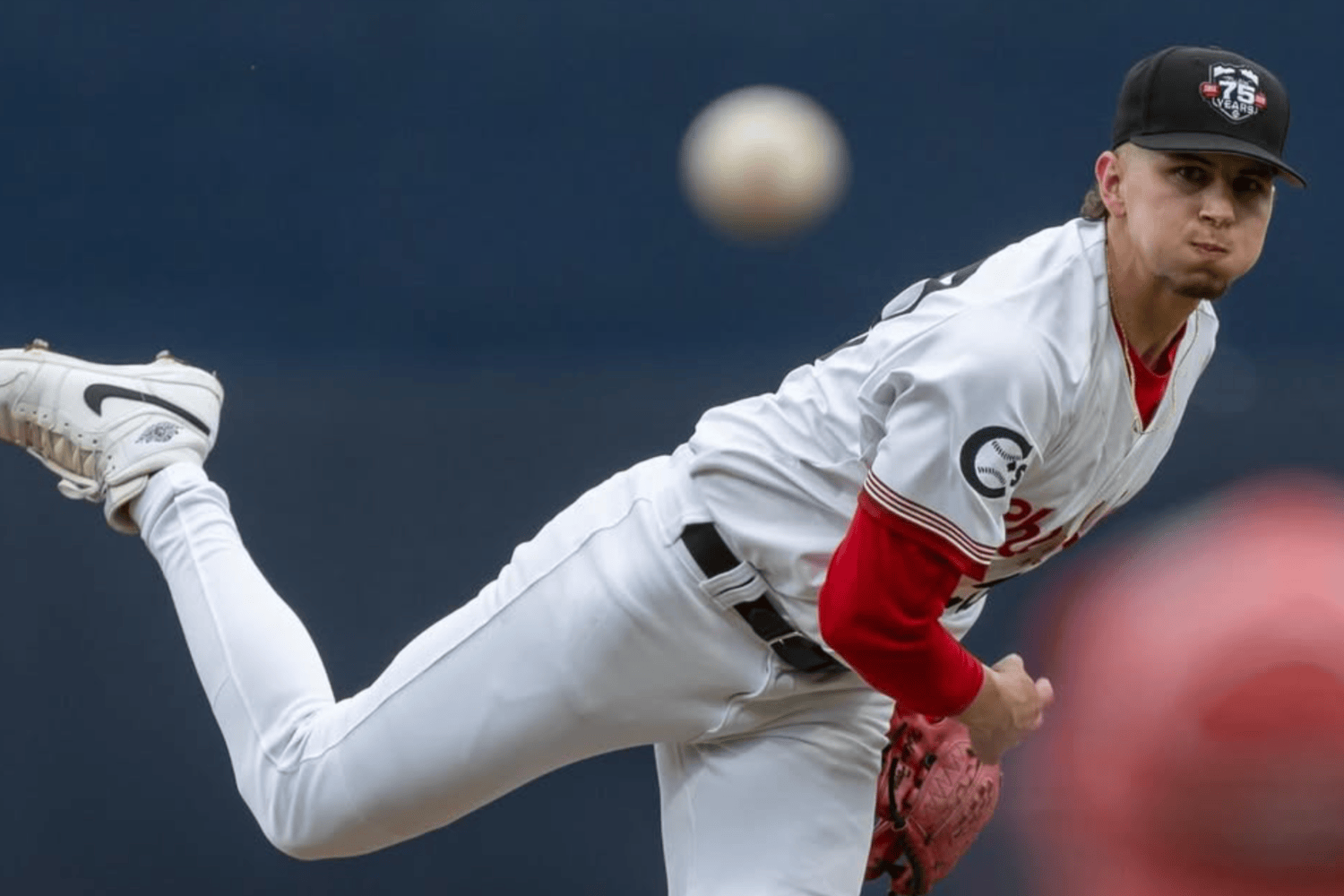 The Blue Jays' major league pitching staff has been excellent, but it has also been decimated by injuries. These were the minor league system’s pitching standouts for the month of May. Some of them could eventually come up to Toronto as potential replacements for the Jays, while others are arms that fans can look forward to watching in years to come. Honourable Mention: RHP Jack Nedrow May Stats: 2 GS (4 G), 21 IP, 1.71 IP, 3.81 FIP, 20.0 K%, 7.5 BB% (Dunedin Blue Jays) Signed out of Indy Ball after the Jays' pitching depth was decimated by injuries, Jack Nedrow immediately pitched well for Dunedin, and despite the lack of strikeout stuff, he was able to limit runs. He allowed only four runs in the four appearances he made and averaged over five innings per appearance. The 23-year-old may not reach the major leagues, but he is providing useful innings down on the farm. Honourable Mention: RHP Aaron Munson May Stats: 15.0 IP, 3.94 ERA, 4.06 FIP, 26.3 K%, 7.9 BB% (New Hampshire Fisher Cats) Aaron Munson made six straight scoreless appearances, but a rough few outings to end the month ballooned his ERA. Munson still deserved to be honoured for strong pitching during this stretch, and he’s shown the capability to throw multiple innings while still pitching effectively. He’s been an interesting arm despite being drafted in the 19th round back in 2023. Honourable Mention: RHP Jake Bloss May Stats: 4 GS, 11.2 IP, 3.86 ERA, 4.72 FIP, 32.7 K%, 2 BB% (Florida Complex League, Dunedin Blue Jays) Jake Bloss returned on a rehab assignment after missing nearly the entirety of the 2025 season due to elbow surgery. The righty looked sharp upon returning, sitting in the mid-to-upper 90s with his fastball and striking out over 32 percent of the batters that he faced, only walking one. He had a rough last start on the 30th, as he’s still shaking off some of the rust, but Bloss could provide useful reinforcement to a hurting Jays pitching staff. Honourable Mention: RHP Dylan Watts May Stats: 3 GS, 20 IP, 3.15 ERA, 3.86 FIP, 21 K%, 6,2 BB% (Dunedin Blue Jays) The 2025 seventh-rounder has had himself a mini breakout in his first professional season for the Blue Jays. Dylan Watts didn't generate as many strikeouts as he did in April, but the righty is still sitting 95 mph with his fastball and was effective in each May appearance, capped off by 5.1 no-hit innings that earned him Florida State League Pitcher of the Week honours. No. 5: LHP Josh Fleming May Stats: 4 GS, 23 ⅔ IP, 1.90 ERA, 3.69 FIP, 17.2 K%, 4.0 BB% (Buffalo Bisons) Josh Fleming struggled in his one appearance for the Blue Jays, but after getting outrighted and re-signed to a minor league deal, he’s been stretched out and has pitched well as a starter for the Bisons. His stuff might not be major league quality, but he provides value for the Jays as depth, as well as having the ability to eat innings for a young staff down in Buffalo. No. 4: LHP Johnny King May Stats: 5 GS, 18 ⅓ IP, 3.44 ERA, 4.06 FIP, 29.4 K%, 15.3 BB% (Vancouver Canadians) Johnny King looked like he would be the number one pitcher in the Jays' minor league system for the month of May before a blowup start against Spokane in his penultimate game of the month. The rest of the month was so excellent that he made the list anyway, but King’s command issues have popped up here and there to ruin otherwise excellent pitching. No. 3: RHP Carson Messina May Stats: 3 GS, 12 IP, 2.25 ERA, 3.42 FIP, 28.9 K%, 13.3 BB% (Florida Complex League) Carson Messina, younger brother of Rockies prospect Cole Messina, pitched just two innings in 2025 before getting shut down for the season. The righty already displayed upper echelon velocity and has touched 99 mph multiple times with his fastball so far this season. He’s still on a rehab assignment, but he’ll return to Dunedin soon. No. 2: RHP Gage Stanifer May Stats: 4 GS, 19 ⅔ IP, 1.37 ERA, 3.73 FIP, 23.2 K%, 11.0 BB% (New Hampshire Fisher Cats) Gage Stanifer had a rough start to the season, in large part due to poor command, as he walked over 18% of the batters that he faced. He lowered that to 11% percent in May, and although his strikeout rate also dipped in turn, he was much more effective. If Stanifer can figure out a way to generate strikeouts while keeping the walks down, he’ll be up in the majors sooner than later. No. 1: RHP Nolan Perry May Stats: 5 GS, 25 IP, 1.08 ERA, 2.67 FIP, 41.7 K%, 9.4 BB% (Vancouver Canadians) Nolan Perry’s breakout campaign carried over even after getting promoted to High-A Vancouver. The 2022 12th-rounder didn’t miss a beat, as he continued to strike out over 40% of the batters that he faced while walking less than 10%. He gave up just three earned runs on the month, going five innings or more in four of his five starts. The righty relies heavily on his high-riding fastball that sits in the mid-90s, as well as two distinct breaking balls. He also has developed a solid feel for a newfound splitter that he’s using to great effectiveness against lefty hitters. He’s going to be the Jays’ next big pitching prospect and should be a fixture on top 100 lists. This is his second month straight as Jays Centre's Minor League Pitcher of the Month!
 -
Blue Jays Affiliate Overview (May 26-May 27) Triple-A Buffalo Bisons Series vs Lehigh Valley IronPigs (Philadelphia Phillies): 1-1 Season Record: 26-27 Double-A New Hampshire Fisher Cats Series vs Somerset Patriots (New York Yankees): 1-1 Season Record: 24-20 High-A Vancouver Canadians Series vs Eugene Emeralds (San Francisco Giants): 1-1 Season Record: 19-28 Single-A Dunedin Blue Jays Series vs Clearwater Threshers (Philadelphia Phillies): 0-2 Season Record: 19-28 FCL Blue Jays Week Record: 3-2 Season Record: 14-3 Triple-A Buffalo Bisons Season Record: 26-27 Series vs Lehigh Valley IronPigs (Philadelphia Phillies) May 26: On Tuesday, Buffalo opened a series against Lehigh Valley. It was a bullpen game, but they were more than up to the task. Pat Gallagher got the nod to start, and he kicked things off with three nearly perfect innings. He ended his day after three innings, giving up just one hit, not walking anyone, and striking out three. In the fourth, Devereaux Harrison took over for Gallagher, and Lehigh Valley was able to manufacture a run against him right away. He gave up a walk, a stolen base, a groundout, and then a sacrifice fly. He would settle down from there, pitching well over the next two innings, and wouldn't allow another run. Despite having a bunch of runners on the basepaths all game (10 hits and nine walks), the bats couldn't get a ton of runs to cross home plate. They took the lead back in the sixth, with an RBI triple from Josh Kasevich and an RBI single from Willie MacIver. Kasevich continued his big game, knocking in another run in the bottom of the seventh inning and an RBI single. The back half of the bullpen would falter late, though, surrendering a run each eighth and ninth innings, as Jesse Hahn got the blown save. Hayden Juenger then came into the game to pitch the tenth inning and allowed only the ghost runner to score. In the bottom half of the innings, Josh Rivera came up clutch with a two-run walk-off single. The 5-4 win brought Buffalo's record back to .500. May 27: Wednesday's game would be a special one for Charles McAdoo, as he was informed following the game that his services were no longer needed in Buffalo; the team across the border in Canada is now in need of his bat. McAdoo is now headed to Baltimore, as he will be called up to the big league club before Thursday's game against the Orioles. In his final game with Buffalo, he had a single and a stolen base, his seventh of the season. William Simoneit and Riley Tirotta each had home runs; they came in back-to-back innings, the second and third. Simoneit's blast was a two-run shot and had an exit velocity of 106 mph and went 411 feet. Tirotta's home run was a two-run blast as well and gave Buffalo a 5-2 lead in the bottom of the third inning. CJ Van Eyk had himself a good game on the mound, going six innings and recording a quality start. He allowed three runs and struck out just three. With a 6-4 lead, Buffalo turned to Matt Bowman, who made his first appearance in the Blue Jays organization. It went about as badly as one could imagine. In the inning, he gave up a walk, an RBI double, and a two-run home run to Felix Reyes. After the half inning was over, Buffalo was down 7-6 and wouldn't make a comeback in the bottom of the ninth, as they would lose and fall back to a game under 500. Double-A New Hampshire Season Record: 24-20 Series vs Somerset Patriots (New York Yankees) May 26: New Hampshire got out in front quickly for the Tuesday game of the series against the Somerset Patriots. A double steal in the second inning resulted in Victor Arias stealing home for a run. Aaron Parker would later score in that inning, when Jorge Burgos launched a two-run home run. In the bottom half of the inning, DJ Gladney crushed a home run for Somerset to bring them within two. Gladney would again homer in the seventh inning, a two-run shot to put Somerset up by one. Arias drove in the tying run in the top of the eighth inning on a ground ball to center field. Jay Harry would clear the bases later in the inning for a two-run double. New Hampshire went to the bottom of the ninth up one run, but couldn't hold on. Coby Morales singled in the tying run, and then Manuel Palencia hit a walk-off single. The Fisher Cats lost a heartbreaker in this one, 8-7. May 27: In the 11:00 AM early game of the week, Gage Stanifer was on the mound against Somerset. Things started a bit on a roller coaster ride, as Stanifer got two quick groundouts to begin the first inning, but then walked three batters in a row. His fastball command was still shaky at times, and he continued working on his split/change-up. He got a third groundout to end the inning, though, avoiding any damage. In the top of the second inning, Cutter Coffey crushed his first Double-A home run, a two-run shot to left field to give New Hampshire the lead. In the bottom of the second inning, Stanifer again was not locked in with his command, giving up a double, a walk, and then a single for a run. He would settle down and get another groundout to end the inning. Jace Bohrofen drove in a run with a single during the third inning, after which Stanifer locked in on the mound. He would only allow a single the rest of the way, as he completed the third, fourth, and fifth innings very easily. His final line was five innings, three hits, one run, four walks, and three strikeouts. He got up to 85 pitches on the day and used his slider and split/change-up well throughout the game. In the fourth inning, Eddie Micheletti Jr. extended the Fisher Cats' lead to five with a home run, and Jackson Hornung would up it to six with a home run as well in the sixth inning. New Hampshire would go on to win this one 7-3. Note: Arjun Nimmala left the game in the fourth inning with a hamstring issue. High-A Vancouver Season Record: 19-28 Series vs Eugene Emeralds (San Francisco Giants) May 26: The Canadians once again faced the top team in the Northwest League, the Eugene Emeralds. Breakout pitching prospect Nolan Perry once again dominated, with his now fourth straight start of eight strikeouts or more since getting promoted to High A. The righty went six innings, not allowing a run, with just four hits and one walk. The Canadians’ offense was able to load the bases in the bottom of the third inning, and Jacob Sharp got a run in on a force out. Carter Cunningham walked the next inning, then got to second on a wild pitch before stealing third base. He then scored on another wild pitch to add another run on some good baserunning. Cunningham then hit double digits with his homer count in the bottom of the sixth inning, 100 mph off the bat. Jonathan Todd replaced Perry in the seventh inning and earned a three-inning save for his fourth of the season, with three perfect innings to end the game. May 27: The Canadians tried to keep the momentum going against the Emeralds, and they scored two early runs in the first inning after Maddox Latta hit a double, was moved over to third on a sac bunt, then scored on a wild pitch from Yunior Marte. Tucker Toman then drove in a runner on a single for the second run of the inning. Landen Maroudis was the starter for this game, and he gave a run back in the second inning on a lead-off homer to Zander Darby, but the Canadians continued to hold the lead going into the fourth inning. Maroudis got a lineout and a groundout, despite giving up a single, and looked like he could get out of the fourth unscathed. However, he then gave up a hit to Walker Martin, and then a passed ball from Edward Duran allowed a runner to score. Maroudis then walked a batter and gave up a three-run homer to Jean Carlos Sio before getting out of the inning, and the Emeralds took a 5-2 lead. J.R. Freethy got on with a single, then stole second before getting driven in by Brennan Orf to reduce the lead to two. Maroudis was then replaced by Gilberto Batista, who’s been a dedicated piggyback partner for him. Batista hasn’t pitched well this season, and he immediately gave up a hit and two walks before giving up a grand slam in the first inning he came in. The Canadians tried to claw their way back, as Freethy hit a two run homer in the fifth, and Alexis Hernandez and one of his own in the sixth, but the lead proved to be insurmountable. Single-A Dunedin Season Record: 19-28 Series vs Clearwater Threshers (Philadelphia Phillies) May 26: The Dunedin Blue Jays once again face the Threshers, this time at BayCare Ballpark. Blake Purnell was the starter for the D-Jays, and he gave up a bunch of hits. In the second inning, he gave up four hits, leading to a two-run deficit early on. However, the Jays bounced back with a big inning in the third, starting off with a Yorman Licourt two-run homer to tie it up, then a two-RBI triple from Juan Sanchez, and lastly an Eric Snow RBI single to make it a five-run inning. The Threshers brought it within one as Blake Purnell gave up a two-run shot to Nolan Beltran in the fourth inning, but was able to make it through five innings in line for the win. Luis Victorino came in the sixth inning and gave up two doubles to even up the game, but once again, some good hitting for the Jays returned the lead in their favour, this time with an Aldo Gaxiola three-run homer to make it eight to five. A JoJo Parker error in the seventh inning led to trouble, though, as the Threshers were able to get two runs in to make it a one-run game. Josbel Garcia then blew the save in the eighth inning as the Blue Jays lost a close one. May 27: This game got out of hand in a hurry, as Silvano Hechavarria and Sam Shaw both were on minor league rehab assignments. Hechavarria has really struggled since returning from injury, and this game was no different, as he gave up a run on a dropped third strike in the first inning. The Jays tied it up with an Adam Hackenberg sac fly the inning after, but Hechavarria gave up four runs in the second inning off of a force out with the bases loaded, into a three-run homer. JoJo Parker had his 12th double of the season in the third to score two runs, but Eduar Gonzalez continued the poor pitching for the Jays, as the Threshers scored another run in the bottom of the third. Then, in the fourth inning, the Threshers loaded the bases and cleared them with a double, before they hit another double to make it 10-3. The Threshers just kept piling it on, as after Gonzalez was taken out, they scored six runs on Bradley Wilson for 16 runs on the night. Adam Hackenberg hit his first homer as a Jay in the sixth inning, and the Jays got two more runs in the seventh inning on hits from Aldo Gaxiola and Hackenberg, but with such a gigantic deficit, there really was no coming back in this one. Juan Sanchez had a three-hit night as well. FCL Blue Jays Season Record: 15-3 May 26: The top five in the batting order for the FCL Blue Jays again did the heavy lifting on Tuesday against the Yankees' squad. They collected all eight of the Blue Jays' hits, with Franklin Rojas hitting a home run in the first inning, a three-run shot. Then, in the third inning, Brock Tibbitts hit his third home run of the season to give the Blue Jays' team a five-run lead. That would be all the Blue Jays needed, as Carson Messina was on the mound and he pitched well over 3.2 innings. Only giving up two hits and two walks, while striking out three. He didn't give up a run, lowering his ERA to 2.25. The FCL Blue Jays held on and won this one 7-6. Transactions 05/27/26 RHP Matt Bowman assigned to Buffalo Bisons. 05/27/26 Toronto Blue Jays optioned RHP Tanner Andrews to Buffalo Bisons. 05/27/26 Toronto Blue Jays selected the contract of RHP Austin Voth from Buffalo Bisons. 05/27/26 Vancouver Canadians sent OF Sam Shaw on a rehab assignment to Dunedin Blue Jays. 05/27/26 RHP Jack Eshleman assigned to Vancouver Canadians from Dunedin Blue Jays. 05/27/26 Vancouver Canadians activated C Edward Duran from the 7-day injured list. 05/26/26 Buffalo Bisons sent C C.J. Stubbs on a rehab assignment to FCL Blue Jays. 05/26/26 RHP Richard Gallardo assigned to Buffalo Bisons from New Hampshire Fisher Cats. 05/26/26 RHP Nate Garkow assigned to Buffalo Bisons from New Hampshire Fisher Cats. View full article
-
 Blue Jays Affiliate Overview (May 26-May 27) Triple-A Buffalo Bisons Series vs Lehigh Valley IronPigs (Philadelphia Phillies): 1-1 Season Record: 26-27 Double-A New Hampshire Fisher Cats Series vs Somerset Patriots (New York Yankees): 1-1 Season Record: 24-20 High-A Vancouver Canadians Series vs Eugene Emeralds (San Francisco Giants): 1-1 Season Record: 19-28 Single-A Dunedin Blue Jays Series vs Clearwater Threshers (Philadelphia Phillies): 0-2 Season Record: 19-28 FCL Blue Jays Week Record: 3-2 Season Record: 14-3 Triple-A Buffalo Bisons Season Record: 26-27 Series vs Lehigh Valley IronPigs (Philadelphia Phillies) May 26: On Tuesday, Buffalo opened a series against Lehigh Valley. It was a bullpen game, but they were more than up to the task. Pat Gallagher got the nod to start, and he kicked things off with three nearly perfect innings. He ended his day after three innings, giving up just one hit, not walking anyone, and striking out three. In the fourth, Devereaux Harrison took over for Gallagher, and Lehigh Valley was able to manufacture a run against him right away. He gave up a walk, a stolen base, a groundout, and then a sacrifice fly. He would settle down from there, pitching well over the next two innings, and wouldn't allow another run. Despite having a bunch of runners on the basepaths all game (10 hits and nine walks), the bats couldn't get a ton of runs to cross home plate. They took the lead back in the sixth, with an RBI triple from Josh Kasevich and an RBI single from Willie MacIver. Kasevich continued his big game, knocking in another run in the bottom of the seventh inning and an RBI single. The back half of the bullpen would falter late, though, surrendering a run each eighth and ninth innings, as Jesse Hahn got the blown save. Hayden Juenger then came into the game to pitch the tenth inning and allowed only the ghost runner to score. In the bottom half of the innings, Josh Rivera came up clutch with a two-run walk-off single. The 5-4 win brought Buffalo's record back to .500. May 27: Wednesday's game would be a special one for Charles McAdoo, as he was informed following the game that his services were no longer needed in Buffalo; the team across the border in Canada is now in need of his bat. McAdoo is now headed to Baltimore, as he will be called up to the big league club before Thursday's game against the Orioles. In his final game with Buffalo, he had a single and a stolen base, his seventh of the season. William Simoneit and Riley Tirotta each had home runs; they came in back-to-back innings, the second and third. Simoneit's blast was a two-run shot and had an exit velocity of 106 mph and went 411 feet. Tirotta's home run was a two-run blast as well and gave Buffalo a 5-2 lead in the bottom of the third inning. CJ Van Eyk had himself a good game on the mound, going six innings and recording a quality start. He allowed three runs and struck out just three. With a 6-4 lead, Buffalo turned to Matt Bowman, who made his first appearance in the Blue Jays organization. It went about as badly as one could imagine. In the inning, he gave up a walk, an RBI double, and a two-run home run to Felix Reyes. After the half inning was over, Buffalo was down 7-6 and wouldn't make a comeback in the bottom of the ninth, as they would lose and fall back to a game under 500. Double-A New Hampshire Season Record: 24-20 Series vs Somerset Patriots (New York Yankees) May 26: New Hampshire got out in front quickly for the Tuesday game of the series against the Somerset Patriots. A double steal in the second inning resulted in Victor Arias stealing home for a run. Aaron Parker would later score in that inning, when Jorge Burgos launched a two-run home run. In the bottom half of the inning, DJ Gladney crushed a home run for Somerset to bring them within two. Gladney would again homer in the seventh inning, a two-run shot to put Somerset up by one. Arias drove in the tying run in the top of the eighth inning on a ground ball to center field. Jay Harry would clear the bases later in the inning for a two-run double. New Hampshire went to the bottom of the ninth up one run, but couldn't hold on. Coby Morales singled in the tying run, and then Manuel Palencia hit a walk-off single. The Fisher Cats lost a heartbreaker in this one, 8-7. May 27: In the 11:00 AM early game of the week, Gage Stanifer was on the mound against Somerset. Things started a bit on a roller coaster ride, as Stanifer got two quick groundouts to begin the first inning, but then walked three batters in a row. His fastball command was still shaky at times, and he continued working on his split/change-up. He got a third groundout to end the inning, though, avoiding any damage. In the top of the second inning, Cutter Coffey crushed his first Double-A home run, a two-run shot to left field to give New Hampshire the lead. In the bottom of the second inning, Stanifer again was not locked in with his command, giving up a double, a walk, and then a single for a run. He would settle down and get another groundout to end the inning. Jace Bohrofen drove in a run with a single during the third inning, after which Stanifer locked in on the mound. He would only allow a single the rest of the way, as he completed the third, fourth, and fifth innings very easily. His final line was five innings, three hits, one run, four walks, and three strikeouts. He got up to 85 pitches on the day and used his slider and split/change-up well throughout the game. In the fourth inning, Eddie Micheletti Jr. extended the Fisher Cats' lead to five with a home run, and Jackson Hornung would up it to six with a home run as well in the sixth inning. New Hampshire would go on to win this one 7-3. Note: Arjun Nimmala left the game in the fourth inning with a hamstring issue. High-A Vancouver Season Record: 19-28 Series vs Eugene Emeralds (San Francisco Giants) May 26: The Canadians once again faced the top team in the Northwest League, the Eugene Emeralds. Breakout pitching prospect Nolan Perry once again dominated, with his now fourth straight start of eight strikeouts or more since getting promoted to High A. The righty went six innings, not allowing a run, with just four hits and one walk. The Canadians’ offense was able to load the bases in the bottom of the third inning, and Jacob Sharp got a run in on a force out. Carter Cunningham walked the next inning, then got to second on a wild pitch before stealing third base. He then scored on another wild pitch to add another run on some good baserunning. Cunningham then hit double digits with his homer count in the bottom of the sixth inning, 100 mph off the bat. Jonathan Todd replaced Perry in the seventh inning and earned a three-inning save for his fourth of the season, with three perfect innings to end the game. May 27: The Canadians tried to keep the momentum going against the Emeralds, and they scored two early runs in the first inning after Maddox Latta hit a double, was moved over to third on a sac bunt, then scored on a wild pitch from Yunior Marte. Tucker Toman then drove in a runner on a single for the second run of the inning. Landen Maroudis was the starter for this game, and he gave a run back in the second inning on a lead-off homer to Zander Darby, but the Canadians continued to hold the lead going into the fourth inning. Maroudis got a lineout and a groundout, despite giving up a single, and looked like he could get out of the fourth unscathed. However, he then gave up a hit to Walker Martin, and then a passed ball from Edward Duran allowed a runner to score. Maroudis then walked a batter and gave up a three-run homer to Jean Carlos Sio before getting out of the inning, and the Emeralds took a 5-2 lead. J.R. Freethy got on with a single, then stole second before getting driven in by Brennan Orf to reduce the lead to two. Maroudis was then replaced by Gilberto Batista, who’s been a dedicated piggyback partner for him. Batista hasn’t pitched well this season, and he immediately gave up a hit and two walks before giving up a grand slam in the first inning he came in. The Canadians tried to claw their way back, as Freethy hit a two run homer in the fifth, and Alexis Hernandez and one of his own in the sixth, but the lead proved to be insurmountable. Single-A Dunedin Season Record: 19-28 Series vs Clearwater Threshers (Philadelphia Phillies) May 26: The Dunedin Blue Jays once again face the Threshers, this time at BayCare Ballpark. Blake Purnell was the starter for the D-Jays, and he gave up a bunch of hits. In the second inning, he gave up four hits, leading to a two-run deficit early on. However, the Jays bounced back with a big inning in the third, starting off with a Yorman Licourt two-run homer to tie it up, then a two-RBI triple from Juan Sanchez, and lastly an Eric Snow RBI single to make it a five-run inning. The Threshers brought it within one as Blake Purnell gave up a two-run shot to Nolan Beltran in the fourth inning, but was able to make it through five innings in line for the win. Luis Victorino came in the sixth inning and gave up two doubles to even up the game, but once again, some good hitting for the Jays returned the lead in their favour, this time with an Aldo Gaxiola three-run homer to make it eight to five. A JoJo Parker error in the seventh inning led to trouble, though, as the Threshers were able to get two runs in to make it a one-run game. Josbel Garcia then blew the save in the eighth inning as the Blue Jays lost a close one. May 27: This game got out of hand in a hurry, as Silvano Hechavarria and Sam Shaw both were on minor league rehab assignments. Hechavarria has really struggled since returning from injury, and this game was no different, as he gave up a run on a dropped third strike in the first inning. The Jays tied it up with an Adam Hackenberg sac fly the inning after, but Hechavarria gave up four runs in the second inning off of a force out with the bases loaded, into a three-run homer. JoJo Parker had his 12th double of the season in the third to score two runs, but Eduar Gonzalez continued the poor pitching for the Jays, as the Threshers scored another run in the bottom of the third. Then, in the fourth inning, the Threshers loaded the bases and cleared them with a double, before they hit another double to make it 10-3. The Threshers just kept piling it on, as after Gonzalez was taken out, they scored six runs on Bradley Wilson for 16 runs on the night. Adam Hackenberg hit his first homer as a Jay in the sixth inning, and the Jays got two more runs in the seventh inning on hits from Aldo Gaxiola and Hackenberg, but with such a gigantic deficit, there really was no coming back in this one. Juan Sanchez had a three-hit night as well. FCL Blue Jays Season Record: 15-3 May 26: The top five in the batting order for the FCL Blue Jays again did the heavy lifting on Tuesday against the Yankees' squad. They collected all eight of the Blue Jays' hits, with Franklin Rojas hitting a home run in the first inning, a three-run shot. Then, in the third inning, Brock Tibbitts hit his third home run of the season to give the Blue Jays' team a five-run lead. That would be all the Blue Jays needed, as Carson Messina was on the mound and he pitched well over 3.2 innings. Only giving up two hits and two walks, while striking out three. He didn't give up a run, lowering his ERA to 2.25. The FCL Blue Jays held on and won this one 7-6. Transactions 05/27/26 RHP Matt Bowman assigned to Buffalo Bisons. 05/27/26 Toronto Blue Jays optioned RHP Tanner Andrews to Buffalo Bisons. 05/27/26 Toronto Blue Jays selected the contract of RHP Austin Voth from Buffalo Bisons. 05/27/26 Vancouver Canadians sent OF Sam Shaw on a rehab assignment to Dunedin Blue Jays. 05/27/26 RHP Jack Eshleman assigned to Vancouver Canadians from Dunedin Blue Jays. 05/27/26 Vancouver Canadians activated C Edward Duran from the 7-day injured list. 05/26/26 Buffalo Bisons sent C C.J. Stubbs on a rehab assignment to FCL Blue Jays. 05/26/26 RHP Richard Gallardo assigned to Buffalo Bisons from New Hampshire Fisher Cats. 05/26/26 RHP Nate Garkow assigned to Buffalo Bisons from New Hampshire Fisher Cats.
 -
Blue Jays Affiliate Overview (May 19-May 20) Triple-A Buffalo Bisons Series vs Syracuse Mets (New York Mets): 0-2 Season Record: 23-24 Double-A New Hampshire Fisher Cats Series vs Hartford Yard Goats (Colorado Rockies): 1-1 Season Record: 23-16 High-A Vancouver Canadians Series vs Spokane Indians (Colorado Rockies): 1-1 Season Record: 17-24 Single-A Dunedin Blue Jays Series vs Fort Myers Mighty Mussels (Minnesota Twins): 0-1 Season Record: 15-25 FCL Blue Jays Week Record: 0-1 Season Record: 11-2 Triple-A Buffalo Bisons Season Record: 23-24 Series vs Syracuse Mets (New York Mets) May 19: On Tuesday, Buffalo opened a new series, this one with the Syracuse Mets. Grant Rogers was on the mound for the Bisons, and he was looking around for the do-over button from the very start. He threw a cutter that hung in the middle of the plate, and Christian Arroyo took him deep for a solo home run to lead off the bottom of the first. Unfortunately, Syracuse was just getting started in the inning. With two outs and down 1-0, Rogers surrendered two singles and then a triple to Ji Hwan Bae, bringing the lead for the Mets to 3-0. Next, Cristian Pache singled home Bae, and Ben Rortvedt smacked the second home run of the inning off of Rogers, a two-run blast. Buffalo was in a big hole early and tried to fight out of it. In the third inning, Je'Von Ward stayed hot at the plate for Buffalo, launching his third home run in his last four games, a two-run shot to right center. Ward kept the comeback going in the fifth inning, hitting a lead-off double and coming around to score on Josh Kasevich's single. The next batter, Charles McAdoo, would bring Buffalo to within one of Syracuse, with his monster two-run home run, 424 feet to center field. The Bisons wouldn't get the chance to tie the game, though. Devereaux Harrison and Michael Plassmeyer combined to give up three runs in the bottom of the seventh, putting the game out of reach. Buffalo fell 9-5 in a game in which they fought hard to come back from a big deficit early on. May 20: Wednesday's day game had the beginnings of a promising bounce-back contest. Buffalo had Chad Dallas on the mound, who has continued to get better as the season has progressed, and some of their bats have been warming up after early struggles. Dallas would not be the savior Buffalo was hoping for, though; he stumbled often in this game. Across three innings, he coughed up eight hits and five runs, only striking out two. The damage from Syracuse started in the bottom of the first inning. After Dallas allowed a single and a walk, Eric Wagaman singled home the first run of the ballgame. William Simoneit quickly tied the game back up in the top of the second, with a 393-foot solo home run. Dallas was in more trouble in the bottom half of the second inning, hitting his second batter of the game, allowing a single, and then Christian Arroyo knocked in both runners with a single of his own. In the bottom of the third, it was an RBI triple and another RBI single from Arroyo that put two more runs on the scoreboard for Syracuse. Carlos Mendoza singled home a run for Buffalo in the next half inning, and Josh Rivera added a run from a sacrifice fly, as Buffalo pulled back to within one run at 5-4. Unfortunately for Buffalo, the bullpen once again imploded, giving up five runs between the fifth and sixth innings. With Buffalo down big again, they only managed to add on an RBI single by Riley Tirotta and lost the game 10-5. Double-A New Hampshire Season Record: 23-16 Series vs Hartford Yard Goats (Colorado Rockies): May 19: Mason Olson got the start on the mound to begin the series between the New Hampshire Fisher Cats and the Hartford Yard Goats. He went five innings, only allowing four hits and one run. Bryant Betancourt drove in the first run of the game in the fourth inning for Hartford. In the sixth, Eddie Micheletti Jr. launched his seventh home run of the season to tie the game up. A throwing error would give Hartford the lead in the seventh inning, and the score would hold until the ninth. In the bottom of the ninth, Adrian Pinto added to his good game by tying things up at two with an RBI double. In the bottom of the 10th, a bases-loaded walk from Aaron Parker tied the game at three, before Jay Harry walked the game off with an RBI groundout to win the game for New Hampshire, 4-3. May 20: The Wednesday game between Hartford and New Hampshire was a wild one. Hartford took the big lead early and kept adding to the scoreboard, bringing at least one run across the plate in the second, third, fourth, and fifth innings. They scored eight runs and took the commanding lead in the game. Benny Montgomery homered, GJ Hill hit an interesting inside-the-park home run, and Bryant Betancourt homered in that span. In the bottom of the eighth inning, things flipped for New Hampshire. Jay Harry came up to the plate with the bases loaded and crushed a ball over the right field fence for a grand slam. Patrick Winkel added a home run in the inning as well, as the Fisher Cats scored eight in the frame. Quickly though, Hartford put another run on the board, this time with another Montgomery home run. New Hampshire lost this one 10-8. High-A Vancouver Season Record: 17-24 Series vs Spokane Indians (Colorado Rockies) May 19: Spokane ruined another great Johnny King start, who pitched five innings for the second time this season, striking out five batters and only allowing one run. The offense for Vancouver had a solid start as well, with Jacob Sharp hitting his third homer of the season to make it 2-0. Those two runs were the only runs scored for Vancouver, and Holden Wilkerson had his first truly bad appearance, giving up five runs in the seventh inning himself. Carson Pierce also gave up a run that same inning. That led to the loss in the first game of the series against Spokane. May 20: The awesome pitching performances for Vancouver continued with Nolan Perry taking the bump once again. This time, he struck out double-digit batters for the third time this season, and he didn’t allow a run in five innings. Perry has begun to establish himself as the next big Jays pitching prospect. The offense didn’t slack either, as Alexis Hernandez and Dub Gleed carried the way. Hernandez had two homers and three walks, while Gleed had a four-hit night with a double and a homer. The Canadians faced a scare when Carson Myers made his Vancouver debut and struggled, giving up five runs to make it a more competitive game, but Jonathan Todd stopped the bleeding with a save. Single-A Dunedin Season Record: 15-25 Series vs Fort Myers Mighty Mussels (Minnesota Twins) May 19: Postponed May 20: Nathan Lukes finally was able to play on rehab assignment, as the previous game was rained out. Despite finishing with zero at-bats, he was able to walk and hit a sac fly in two plate appearances. Aldo Gaxiola continues to hit, getting the second run of the game with a 100-mph single. This was also the professional debut for Blake Purnell, whom the Jays recently signed out of independent ball. He had a solid start, going five innings and allowing two earned runs while striking out four batters, but unfortunately, he took the loss as a Juan Sanchez error in the fifth led to an unearned run, putting the Jays behind 3-2. The bullpen let the game get out of hand as well, as Jack Eshleman allowed two runs in three innings of work despite striking out six batters, and Lluveres Severino allowed another, making it six runs for the Mighty Mussels. The Jays' offense was able to bring it within two with RBI singles from Raimundo De Los Santos and JoJo Parker, but it was too little too late. FCL Blue Jays Season Record: 11-2 May 19: Tuesday was a big day for a few of the key players on the FCL Blue Jays squad. Carson Messina was on the mound and made easy work of the FCL Phillies. He went three innings and didn't allow a hit, only surrendered one walk, and struck out four batters. On the offensive side, Tim Piasentin launched his first professional home run in the sixth inning and added a double later in the game. Also in the sixth inning, Andres Arias crushed his first home run of the season as well, also in the sixth inning. After tying the game in the ninth on a bases-loaded walk from Arias, the Blue Jays squad couldn't hold on, as they lost the game in the 10th inning; the Phillies scored three, and the Jays could only muster an RBI groundout in their half of extras. The FCL Blue Jays lost this one, 8-6. Transactions 05/20/26 SS Nick Goodwin assigned to Buffalo Bisons from New Hampshire Fisher Cats. 05/20/26 RHP Conor Larkin assigned to Buffalo Bisons from New Hampshire Fisher Cats. 05/20/26 Dunedin Blue Jays activated SS Raimundo De Los Santos from the 7-day injured list. 05/20/26 New Hampshire Fisher Cats activated OF Jace Bohrofen from the 7-day injured list. 05/20/26 New Hampshire Fisher Cats placed RHP Irv Carter on the 7-day injured list. 05/20/26 RHP Kelena Sauer assigned to New Hampshire Fisher Cats from Vancouver Canadians. 05/19/26 Toronto Blue Jays recalled RHP Chase Lee from Buffalo Bisons. 05/19/26 Toronto Blue Jays sent RF Nathan Lukes on a rehab assignment to Dunedin Blue Jays. 05/19/26 RHP Bradley Wilson assigned to Dunedin Blue Jays. 05/19/26 RHP Blake Purnell assigned to Dunedin Blue Jays. 05/19/26 RHP Edgar Gallegos assigned to FCL Blue Jays from Dunedin Blue Jays. 05/19/26 LHP Luis Fonseca assigned to FCL Blue Jays from Dunedin Blue Jays. 05/19/26 New Hampshire Fisher Cats activated RHP Caleb Freeman from the 7-day injured list. 05/19/26 Toronto Blue Jays signed free agent RHP Bradley Wilson to a minor league contract. View full article
-
- 1
-
-
- johnny king
- tim piasentin
- (and 1 more)
-
 Blue Jays Affiliate Overview (May 19-May 20) Triple-A Buffalo Bisons Series vs Syracuse Mets (New York Mets): 0-2 Season Record: 23-24 Double-A New Hampshire Fisher Cats Series vs Hartford Yard Goats (Colorado Rockies): 1-1 Season Record: 23-16 High-A Vancouver Canadians Series vs Spokane Indians (Colorado Rockies): 1-1 Season Record: 17-24 Single-A Dunedin Blue Jays Series vs Fort Myers Mighty Mussels (Minnesota Twins): 0-1 Season Record: 15-25 FCL Blue Jays Week Record: 0-1 Season Record: 11-2 Triple-A Buffalo Bisons Season Record: 23-24 Series vs Syracuse Mets (New York Mets) May 19: On Tuesday, Buffalo opened a new series, this one with the Syracuse Mets. Grant Rogers was on the mound for the Bisons, and he was looking around for the do-over button from the very start. He threw a cutter that hung in the middle of the plate, and Christian Arroyo took him deep for a solo home run to lead off the bottom of the first. Unfortunately, Syracuse was just getting started in the inning. With two outs and down 1-0, Rogers surrendered two singles and then a triple to Ji Hwan Bae, bringing the lead for the Mets to 3-0. Next, Cristian Pache singled home Bae, and Ben Rortvedt smacked the second home run of the inning off of Rogers, a two-run blast. Buffalo was in a big hole early and tried to fight out of it. In the third inning, Je'Von Ward stayed hot at the plate for Buffalo, launching his third home run in his last four games, a two-run shot to right center. Ward kept the comeback going in the fifth inning, hitting a lead-off double and coming around to score on Josh Kasevich's single. The next batter, Charles McAdoo, would bring Buffalo to within one of Syracuse, with his monster two-run home run, 424 feet to center field. The Bisons wouldn't get the chance to tie the game, though. Devereaux Harrison and Michael Plassmeyer combined to give up three runs in the bottom of the seventh, putting the game out of reach. Buffalo fell 9-5 in a game in which they fought hard to come back from a big deficit early on. May 20: Wednesday's day game had the beginnings of a promising bounce-back contest. Buffalo had Chad Dallas on the mound, who has continued to get better as the season has progressed, and some of their bats have been warming up after early struggles. Dallas would not be the savior Buffalo was hoping for, though; he stumbled often in this game. Across three innings, he coughed up eight hits and five runs, only striking out two. The damage from Syracuse started in the bottom of the first inning. After Dallas allowed a single and a walk, Eric Wagaman singled home the first run of the ballgame. William Simoneit quickly tied the game back up in the top of the second, with a 393-foot solo home run. Dallas was in more trouble in the bottom half of the second inning, hitting his second batter of the game, allowing a single, and then Christian Arroyo knocked in both runners with a single of his own. In the bottom of the third, it was an RBI triple and another RBI single from Arroyo that put two more runs on the scoreboard for Syracuse. Carlos Mendoza singled home a run for Buffalo in the next half inning, and Josh Rivera added a run from a sacrifice fly, as Buffalo pulled back to within one run at 5-4. Unfortunately for Buffalo, the bullpen once again imploded, giving up five runs between the fifth and sixth innings. With Buffalo down big again, they only managed to add on an RBI single by Riley Tirotta and lost the game 10-5. Double-A New Hampshire Season Record: 23-16 Series vs Hartford Yard Goats (Colorado Rockies): May 19: Mason Olson got the start on the mound to begin the series between the New Hampshire Fisher Cats and the Hartford Yard Goats. He went five innings, only allowing four hits and one run. Bryant Betancourt drove in the first run of the game in the fourth inning for Hartford. In the sixth, Eddie Micheletti Jr. launched his seventh home run of the season to tie the game up. A throwing error would give Hartford the lead in the seventh inning, and the score would hold until the ninth. In the bottom of the ninth, Adrian Pinto added to his good game by tying things up at two with an RBI double. In the bottom of the 10th, a bases-loaded walk from Aaron Parker tied the game at three, before Jay Harry walked the game off with an RBI groundout to win the game for New Hampshire, 4-3. May 20: The Wednesday game between Hartford and New Hampshire was a wild one. Hartford took the big lead early and kept adding to the scoreboard, bringing at least one run across the plate in the second, third, fourth, and fifth innings. They scored eight runs and took the commanding lead in the game. Benny Montgomery homered, GJ Hill hit an interesting inside-the-park home run, and Bryant Betancourt homered in that span. In the bottom of the eighth inning, things flipped for New Hampshire. Jay Harry came up to the plate with the bases loaded and crushed a ball over the right field fence for a grand slam. Patrick Winkel added a home run in the inning as well, as the Fisher Cats scored eight in the frame. Quickly though, Hartford put another run on the board, this time with another Montgomery home run. New Hampshire lost this one 10-8. High-A Vancouver Season Record: 17-24 Series vs Spokane Indians (Colorado Rockies) May 19: Spokane ruined another great Johnny King start, who pitched five innings for the second time this season, striking out five batters and only allowing one run. The offense for Vancouver had a solid start as well, with Jacob Sharp hitting his third homer of the season to make it 2-0. Those two runs were the only runs scored for Vancouver, and Holden Wilkerson had his first truly bad appearance, giving up five runs in the seventh inning himself. Carson Pierce also gave up a run that same inning. That led to the loss in the first game of the series against Spokane. May 20: The awesome pitching performances for Vancouver continued with Nolan Perry taking the bump once again. This time, he struck out double-digit batters for the third time this season, and he didn’t allow a run in five innings. Perry has begun to establish himself as the next big Jays pitching prospect. The offense didn’t slack either, as Alexis Hernandez and Dub Gleed carried the way. Hernandez had two homers and three walks, while Gleed had a four-hit night with a double and a homer. The Canadians faced a scare when Carson Myers made his Vancouver debut and struggled, giving up five runs to make it a more competitive game, but Jonathan Todd stopped the bleeding with a save. Single-A Dunedin Season Record: 15-25 Series vs Fort Myers Mighty Mussels (Minnesota Twins) May 19: Postponed May 20: Nathan Lukes finally was able to play on rehab assignment, as the previous game was rained out. Despite finishing with zero at-bats, he was able to walk and hit a sac fly in two plate appearances. Aldo Gaxiola continues to hit, getting the second run of the game with a 100-mph single. This was also the professional debut for Blake Purnell, whom the Jays recently signed out of independent ball. He had a solid start, going five innings and allowing two earned runs while striking out four batters, but unfortunately, he took the loss as a Juan Sanchez error in the fifth led to an unearned run, putting the Jays behind 3-2. The bullpen let the game get out of hand as well, as Jack Eshleman allowed two runs in three innings of work despite striking out six batters, and Lluveres Severino allowed another, making it six runs for the Mighty Mussels. The Jays' offense was able to bring it within two with RBI singles from Raimundo De Los Santos and JoJo Parker, but it was too little too late. FCL Blue Jays Season Record: 11-2 May 19: Tuesday was a big day for a few of the key players on the FCL Blue Jays squad. Carson Messina was on the mound and made easy work of the FCL Phillies. He went three innings and didn't allow a hit, only surrendered one walk, and struck out four batters. On the offensive side, Tim Piasentin launched his first professional home run in the sixth inning and added a double later in the game. Also in the sixth inning, Andres Arias crushed his first home run of the season as well, also in the sixth inning. After tying the game in the ninth on a bases-loaded walk from Arias, the Blue Jays squad couldn't hold on, as they lost the game in the 10th inning; the Phillies scored three, and the Jays could only muster an RBI groundout in their half of extras. The FCL Blue Jays lost this one, 8-6. Transactions 05/20/26 SS Nick Goodwin assigned to Buffalo Bisons from New Hampshire Fisher Cats. 05/20/26 RHP Conor Larkin assigned to Buffalo Bisons from New Hampshire Fisher Cats. 05/20/26 Dunedin Blue Jays activated SS Raimundo De Los Santos from the 7-day injured list. 05/20/26 New Hampshire Fisher Cats activated OF Jace Bohrofen from the 7-day injured list. 05/20/26 New Hampshire Fisher Cats placed RHP Irv Carter on the 7-day injured list. 05/20/26 RHP Kelena Sauer assigned to New Hampshire Fisher Cats from Vancouver Canadians. 05/19/26 Toronto Blue Jays recalled RHP Chase Lee from Buffalo Bisons. 05/19/26 Toronto Blue Jays sent RF Nathan Lukes on a rehab assignment to Dunedin Blue Jays. 05/19/26 RHP Bradley Wilson assigned to Dunedin Blue Jays. 05/19/26 RHP Blake Purnell assigned to Dunedin Blue Jays. 05/19/26 RHP Edgar Gallegos assigned to FCL Blue Jays from Dunedin Blue Jays. 05/19/26 LHP Luis Fonseca assigned to FCL Blue Jays from Dunedin Blue Jays. 05/19/26 New Hampshire Fisher Cats activated RHP Caleb Freeman from the 7-day injured list. 05/19/26 Toronto Blue Jays signed free agent RHP Bradley Wilson to a minor league contract.
 -
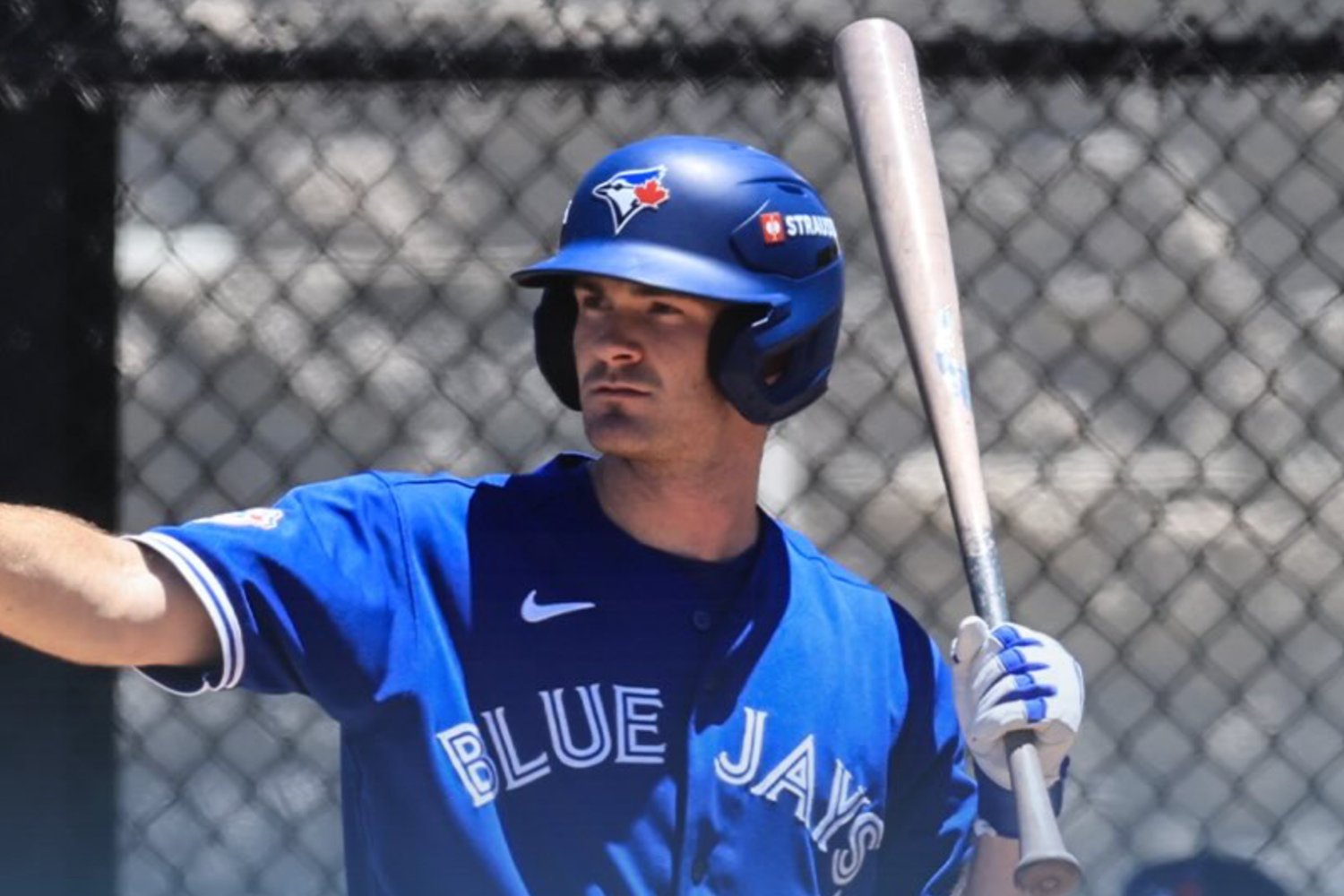 Blue Jays Affiliate Overview (May 12-May 13) Triple-A Buffalo Bisons Series vs Worcester Red Sox (Boston Red Sox): 1-1: Season Record: 20-21 Double-A New Hampshire Fisher Cats Series vs Reading Fighting Phils (Philadelphia Phillies): 2-0 Season Record: 21-11 High-A Vancouver Canadians Series vs Everett AquaSox (Seattle Mariners): 1-1 Season Record: 14-21 Single-A Dunedin Blue Jays Series vs Tampa Tarpons (New York Yankees): 0-2 Season Record: 13-22 FCL Blue Jays Week Record: 1-0 Season Record: 8-0 Triple-A Buffalo Bisons Season Record: 20-21 Series vs Worcester Red Sox May 12: It was the start of a new series for Buffalo on Tuesday, but the hot bats stayed sizzling, as they jumped on the Worcester Red Sox early in the game. Ismael Munguia has been a giant bright spot for the Bisons and he kept it going on Tuesday, leading off with a single and then, a couple of batters later, he came around to score on Josh Kasevich's groundout. In the bottom of the second, two more runs would score after Worcester catcher Jason Delay had a passed ball and a throwing error on the same play. After the Red Sox cut the lead to one, Carlos Mendoza extended the lead by two with a 104.3 mph two-run home run in the bottom of the sixth. Buffalo would get some insurance runs in the seventh and eighth from RBI singles by Kasevich and Rafael Lantigua. The bullpen pitched well after relieving Austin Voth, once he completed five innings, giving up only two runs. Adam Macko had his best game, going 2.1 innings and surrendering just one walk and one hit, no runs. It would be Tanner Andrews for the ninth inning, and he was perfect, having a 1-2-3 inning and lowering his ERA to 1.65. Buffalo rolled in this one to a 7-2 win and finally reached the elusive .500 mark on the season. May 13: Well, it was a short-lived stay at the .500 mark for the Bisons, as the bats went with the weather in Buffalo. Much like the big league club, it was a singles factory on Wednesday, and Buffalo couldn't really get any runs across home plate. In the fifth inning, Jonatan Clase laced a single to right field, which would score the only runs of the game for Buffalo. The pitching wasn't great for Buffalo, but Worcester did a great job of manufacturing runs and scoring opportunities. In the first inning, Grant Rogers surrendered a run on a sacrifice fly, and then two innings later, another run on a single following a stolen base. Later in the inning, a Josh Kasevich error would allow a third run to cross home plate. In the eighth, Hayden Juenger gave up back-to-back singles before Michael Plassmeyer came into the game and hit the first batter to load the bases. From there, a passed ball by catcher Willie MacIver and another sacrifice fly would add two insurance runs for Worcester. Buffalo fell 6-2 in a lackluster game and fell back below the .500 mark. Double-A New Hampshire Season Record: 19-11 Series vs Reading Fighting Phils (Philadelphia Phillies) May 12: New Hampshire kicked off their week series with Reading on Tuesday. The Fightin Phils struck first with a home run by Bryan Rincon. In the bottom of the first, Jay Harry pinch-hit for Jace Bohrofen and crushed a two-run home run to right field. In the top of the second inning, Raylin Heredia launched a home run of his own for Reading. Patrick Winkel would have the answer for the Fisher Cats, a three-run homer to put them up two in the fourth inning of this back-and-forth contest. Kehden Hettiger homered in the sixth to bring Reading within one, but Adrian Pinto continued being an RBI machine with a bases-clearing double that brought in three runs for New Hampshire. Harry would add another RBI late for the Fisher Cats, who went on to win this one 9-5. May 13, Game 1: In the first game of the doubleheader, Richard Gallardo was on the mound for New Hampshire and continued his hot stretch. This time, he went six innings and only allowed two runs on five hits, while striking out four batters. He gave up two runs in the fourth inning on an RBI double and an RBI single. The Fisher Cats quickly answered, though, when Victor Arias crushed his second home run at Double A this season. In the sixth, Jay Harry tripled in a run, and Jackson Hornung had an RBI single for New Hampshire to take the lead. Yondrei Rojas came on for the seventh and got the last three outs for the save and the Fisher Cats victory, 3-2. Game 2: Postponed High-A Vancouver Season Record: 14-21 Series vs Everett AquaSox (Seattle Mariners) May 12: Danny Thompson Jr. has started to be figured out by Northwest League hitters, as this was his third start giving up two or more runs, and he lost his control, giving up four walks in 3.1 innings. This gave the AquaSox an early four-run lead as they were able to take advantage of the baserunners with extra-base hits. The Canadians clawed their way back, as Jacob Sharp got them on the board with his second homer of the season, and Kendry Chirinos brought the lead within two on an RBI double that same inning. The score didn’t change until the bottom of the seventh inning, when Dub Gleed and Maddox Latta both got on base, and Peyton Williams drove them both in on a two-RBI double to even it up. A throwing error from Luis Suisbel allowed Williams to score, and Vancouver finally had the lead. The Canadians kept the lead with good innings from Kelena Sauer and Jay Schueler, but in the bottom of the ninth, Schueler allowed a game-tying homer, which sent the game to extras. Trace Baker struck out two batters without allowing a baserunner in the 10th, and Jacob Sharp walked it off with a single for Vancouver. May 13: The second game of the series was a little anticlimactic, as the Canadians could not string together any hits, with only two on the night. It spoiled Johnny King’s best start as a professional, where he went five shutout innings, allowing only one walk and three hits while striking out eight batters, lowering his season ERA to just 0.81. Holden Wilkerson didn’t have his best appearance, going four innings and allowing three runs, but even if he was near perfect, it wouldn’t have mattered as there were only three baserunners all game for the Canadians in a quick 3-0 loss. Single-A Dunedin Season Record: 13-22 Series vs Tampa Tarpons (New York Yankees) May 12: The Dunedin Blue Jays fought the Yankees' affiliate for the first time this season, and despite a run scoring in the first inning on a groundout, the score remained close thanks to strong pitching from Brayden Heidel and new signee Jack Nedrow, who pitched four scoreless innings with six Ks in his professional debut. JoJo Parker was also able to even it up in the fourth with an absolutely crushed homer to centerfield at 109 mph that went 406 feet. The game remained tied heading into the ninth inning, but Lluveres Severino faced trouble and loaded the bases with two outs. He gave up a single to Jackson Lovich that Juan Sanchez wasn’t able to get a glove on, leading to a walkoff win for the Tarpons. May 13: Jake Cook was called up from the FCL and led off, playing center field. Brandon Barriera took the mound and was effective, allowing only one unearned run, but he had to be removed due to what looked like an oblique injury in the third inning. Diego Dominguez was sent in to replace him and immediately gave up a homer to put the Jays down two. The Jays had a big fourth inning, as after a Blaine Bullard double and a JoJo Parker walk, Juan Sanchez took the lead with his second homer of the season, an oppo shot 96.6 mph off the bat. Edward Duran started his rehab assignment and hit a single, then David Beckles hit a single, before Cook had his first hit as a D-Jay for a 2-RBI double to make it 5-2. Dominguez allowed another run, so he was replaced by Franly Urena, who didn’t allow a run despite four walks in 1.2 innings. Ramon Suarez blew the save after a fielding error from Sanchez, as Suarez couldn’t recover, giving up two home runs and a triple to put the Jays behind by two. The offense couldn't get a run in even after loading the bases in the seventh inning, leading to the second loss of the series. https://x.com/DunedinBlueJays/status/2054687327176298963?s=20 FCL Blue Jays Season Record: 8-0 May 12: The FCL Blue Jays took on the FCL Phillies on Tuesday, and Jake Bloss was on the mound for a rehab start. Bloss looked pretty good for his first rehab start, going 2.1 innings and striking out four, while giving up two hits and no runs. He mixed his pitches well and had his fastball working north of 95 mph most of the time. Carson Messina came on after him and was looking equally good. He sat mostly 93-95 mph on the fastball but frequently ran it up to 97 and 98 mph. He had a big curveball that was really good, which he dropped in there for two of his three strikeouts. He lost his command in his third inning and left the bases loaded. Those three runs would come in to score after he was pulled. On the offensive side, the FCL Blue Jays were hitting everything or getting on base via walk. They punched 15 hits and took 10 walks on their way to a 12-5 victory. Tim Piasentin had two hits and three walks, while Franklin Rojas went 5-for-6 with five RBIs. Transactions 05/13/26 Vancouver Canadians sent C Edward Duran on a rehab assignment to Dunedin Blue Jays. 05/13/26 OF Jake Cook assigned to Dunedin Blue Jays from FCL Blue Jays. 05/12/26 Buffalo Bisons sent RHP Jake Bloss on a rehab assignment to FCL Blue Jays. 05/12/26 Buffalo Bisons activated RF Je'Von Ward from the Development List. 05/12/26 C Adam Hackenberg assigned to Dunedin Blue Jays from Buffalo Bisons. 05/12/26 RHP Josbel Garcia assigned to Dunedin Blue Jays from FCL Blue Jays.
 -
Blue Jays Affiliate Overview (May 12-May 13) Triple-A Buffalo Bisons Series vs Worcester Red Sox (Boston Red Sox): 1-1: Season Record: 20-21 Double-A New Hampshire Fisher Cats Series vs Reading Fighting Phils (Philadelphia Phillies): 2-0 Season Record: 21-11 High-A Vancouver Canadians Series vs Everett AquaSox (Seattle Mariners): 1-1 Season Record: 14-21 Single-A Dunedin Blue Jays Series vs Tampa Tarpons (New York Yankees): 0-2 Season Record: 13-22 FCL Blue Jays Week Record: 1-0 Season Record: 8-0 Triple-A Buffalo Bisons Season Record: 20-21 Series vs Worcester Red Sox May 12: It was the start of a new series for Buffalo on Tuesday, but the hot bats stayed sizzling, as they jumped on the Worcester Red Sox early in the game. Ismael Munguia has been a giant bright spot for the Bisons and he kept it going on Tuesday, leading off with a single and then, a couple of batters later, he came around to score on Josh Kasevich's groundout. In the bottom of the second, two more runs would score after Worcester catcher Jason Delay had a passed ball and a throwing error on the same play. After the Red Sox cut the lead to one, Carlos Mendoza extended the lead by two with a 104.3 mph two-run home run in the bottom of the sixth. Buffalo would get some insurance runs in the seventh and eighth from RBI singles by Kasevich and Rafael Lantigua. The bullpen pitched well after relieving Austin Voth, once he completed five innings, giving up only two runs. Adam Macko had his best game, going 2.1 innings and surrendering just one walk and one hit, no runs. It would be Tanner Andrews for the ninth inning, and he was perfect, having a 1-2-3 inning and lowering his ERA to 1.65. Buffalo rolled in this one to a 7-2 win and finally reached the elusive .500 mark on the season. May 13: Well, it was a short-lived stay at the .500 mark for the Bisons, as the bats went with the weather in Buffalo. Much like the big league club, it was a singles factory on Wednesday, and Buffalo couldn't really get any runs across home plate. In the fifth inning, Jonatan Clase laced a single to right field, which would score the only runs of the game for Buffalo. The pitching wasn't great for Buffalo, but Worcester did a great job of manufacturing runs and scoring opportunities. In the first inning, Grant Rogers surrendered a run on a sacrifice fly, and then two innings later, another run on a single following a stolen base. Later in the inning, a Josh Kasevich error would allow a third run to cross home plate. In the eighth, Hayden Juenger gave up back-to-back singles before Michael Plassmeyer came into the game and hit the first batter to load the bases. From there, a passed ball by catcher Willie MacIver and another sacrifice fly would add two insurance runs for Worcester. Buffalo fell 6-2 in a lackluster game and fell back below the .500 mark. Double-A New Hampshire Season Record: 19-11 Series vs Reading Fighting Phils (Philadelphia Phillies) May 12: New Hampshire kicked off their week series with Reading on Tuesday. The Fightin Phils struck first with a home run by Bryan Rincon. In the bottom of the first, Jay Harry pinch-hit for Jace Bohrofen and crushed a two-run home run to right field. In the top of the second inning, Raylin Heredia launched a home run of his own for Reading. Patrick Winkel would have the answer for the Fisher Cats, a three-run homer to put them up two in the fourth inning of this back-and-forth contest. Kehden Hettiger homered in the sixth to bring Reading within one, but Adrian Pinto continued being an RBI machine with a bases-clearing double that brought in three runs for New Hampshire. Harry would add another RBI late for the Fisher Cats, who went on to win this one 9-5. May 13, Game 1: In the first game of the doubleheader, Richard Gallardo was on the mound for New Hampshire and continued his hot stretch. This time, he went six innings and only allowed two runs on five hits, while striking out four batters. He gave up two runs in the fourth inning on an RBI double and an RBI single. The Fisher Cats quickly answered, though, when Victor Arias crushed his second home run at Double A this season. In the sixth, Jay Harry tripled in a run, and Jackson Hornung had an RBI single for New Hampshire to take the lead. Yondrei Rojas came on for the seventh and got the last three outs for the save and the Fisher Cats victory, 3-2. Game 2: Postponed High-A Vancouver Season Record: 14-21 Series vs Everett AquaSox (Seattle Mariners) May 12: Danny Thompson Jr. has started to be figured out by Northwest League hitters, as this was his third start giving up two or more runs, and he lost his control, giving up four walks in 3.1 innings. This gave the AquaSox an early four-run lead as they were able to take advantage of the baserunners with extra-base hits. The Canadians clawed their way back, as Jacob Sharp got them on the board with his second homer of the season, and Kendry Chirinos brought the lead within two on an RBI double that same inning. The score didn’t change until the bottom of the seventh inning, when Dub Gleed and Maddox Latta both got on base, and Peyton Williams drove them both in on a two-RBI double to even it up. A throwing error from Luis Suisbel allowed Williams to score, and Vancouver finally had the lead. The Canadians kept the lead with good innings from Kelena Sauer and Jay Schueler, but in the bottom of the ninth, Schueler allowed a game-tying homer, which sent the game to extras. Trace Baker struck out two batters without allowing a baserunner in the 10th, and Jacob Sharp walked it off with a single for Vancouver. May 13: The second game of the series was a little anticlimactic, as the Canadians could not string together any hits, with only two on the night. It spoiled Johnny King’s best start as a professional, where he went five shutout innings, allowing only one walk and three hits while striking out eight batters, lowering his season ERA to just 0.81. Holden Wilkerson didn’t have his best appearance, going four innings and allowing three runs, but even if he was near perfect, it wouldn’t have mattered as there were only three baserunners all game for the Canadians in a quick 3-0 loss. Single-A Dunedin Season Record: 13-22 Series vs Tampa Tarpons (New York Yankees) May 12: The Dunedin Blue Jays fought the Yankees' affiliate for the first time this season, and despite a run scoring in the first inning on a groundout, the score remained close thanks to strong pitching from Brayden Heidel and new signee Jack Nedrow, who pitched four scoreless innings with six Ks in his professional debut. JoJo Parker was also able to even it up in the fourth with an absolutely crushed homer to centerfield at 109 mph that went 406 feet. The game remained tied heading into the ninth inning, but Lluveres Severino faced trouble and loaded the bases with two outs. He gave up a single to Jackson Lovich that Juan Sanchez wasn’t able to get a glove on, leading to a walkoff win for the Tarpons. May 13: Jake Cook was called up from the FCL and led off, playing center field. Brandon Barriera took the mound and was effective, allowing only one unearned run, but he had to be removed due to what looked like an oblique injury in the third inning. Diego Dominguez was sent in to replace him and immediately gave up a homer to put the Jays down two. The Jays had a big fourth inning, as after a Blaine Bullard double and a JoJo Parker walk, Juan Sanchez took the lead with his second homer of the season, an oppo shot 96.6 mph off the bat. Edward Duran started his rehab assignment and hit a single, then David Beckles hit a single, before Cook had his first hit as a D-Jay for a 2-RBI double to make it 5-2. Dominguez allowed another run, so he was replaced by Franly Urena, who didn’t allow a run despite four walks in 1.2 innings. Ramon Suarez blew the save after a fielding error from Sanchez, as Suarez couldn’t recover, giving up two home runs and a triple to put the Jays behind by two. The offense couldn't get a run in even after loading the bases in the seventh inning, leading to the second loss of the series. https://x.com/DunedinBlueJays/status/2054687327176298963?s=20 FCL Blue Jays Season Record: 8-0 May 12: The FCL Blue Jays took on the FCL Phillies on Tuesday, and Jake Bloss was on the mound for a rehab start. Bloss looked pretty good for his first rehab start, going 2.1 innings and striking out four, while giving up two hits and no runs. He mixed his pitches well and had his fastball working north of 95 mph most of the time. Carson Messina came on after him and was looking equally good. He sat mostly 93-95 mph on the fastball but frequently ran it up to 97 and 98 mph. He had a big curveball that was really good, which he dropped in there for two of his three strikeouts. He lost his command in his third inning and left the bases loaded. Those three runs would come in to score after he was pulled. On the offensive side, the FCL Blue Jays were hitting everything or getting on base via walk. They punched 15 hits and took 10 walks on their way to a 12-5 victory. Tim Piasentin had two hits and three walks, while Franklin Rojas went 5-for-6 with five RBIs. Transactions 05/13/26 Vancouver Canadians sent C Edward Duran on a rehab assignment to Dunedin Blue Jays. 05/13/26 OF Jake Cook assigned to Dunedin Blue Jays from FCL Blue Jays. 05/12/26 Buffalo Bisons sent RHP Jake Bloss on a rehab assignment to FCL Blue Jays. 05/12/26 Buffalo Bisons activated RF Je'Von Ward from the Development List. 05/12/26 C Adam Hackenberg assigned to Dunedin Blue Jays from Buffalo Bisons. 05/12/26 RHP Josbel Garcia assigned to Dunedin Blue Jays from FCL Blue Jays. View full article
-
- 2
-
-
- jake bloss
- juan sanchez
- (and 2 more)
-
Trey YesavageJoJo ParkerArjun NimmalaJohnny KingRicky TiedemannGage StaniferJuan SanchezYohendrick PinangoBlaine BullardSean KeysJosh KasevichJake BlossVictor AriasSilvano HechavarriaRJ SchreckJake CookNolan PerryCharles McAdooTim PiasentinLanden Maroudis
-
Trey YesavageJoJo ParkerArjun NimmalaJohnny KingRicky TiedemannGage StaniferJuan SanchezYohendrick PinangoBlaine BullardSean KeysJosh KasevichJake BlossVictor AriasSilvano HechavarriaRJ SchreckJake CookNolan PerryCharles McAdooTim PiasentinLanden Maroudis
